December 23 -24, 2013 from Xining to Lhasa. Trains, Altitude Climb, Arrival in Lhasa.
Greetings initially from Xining and then from the 25-hour Train to Lhasa, Tibet: Monday, December 23, 2013
Xining (morning)
Began the day in Xining… breakfast at the Sanwant Hotel.. a strange mixture of east and west with neither being too appetizing… congees, some very doughy steamed buns, fish salads, fried rice, noodles, lots of condiments, French toast that had ham in it, fruit, etc. We opted for lots of fruit (safe) and Mike had Cheerios which he said had less air in them than American Cheerios; I had some fried rice with veggies. Then we set off to do a little food shopping to take things on the train with us, since we are pretty unsure of food service en route. Our goal was cheese, bread, tomatoes, oranges… We lucked out on the oranges/tangerines; got some bread but really not sure if it will hold up; couldn’t find any cheese and never saw any vegetables (only fruit). We were in the downtown area close to the hotel and walked through a huge market that seemed to sell very random things and lots of stalls with the exact same stuff. Lots of spices, nuts, and fruit.. and whole carcasses of beef and pig… indeed they were carrying in whole cows to be carved (many lying on the ground waiting to be picked up for carving).. but no veggies. Must be on another street. But it’s really really cold here in Xining (coldest yet) and lots of pollution so we decided that we just may not have any proteins for 24 hours.. But I’m confident we’ll eat in the dining car. The travel books say that you need reservations for the dining car and that it is difficult to do this as a foreigner, but I’m assuming that’s in summer and fall.. not winter when there will be fewer travelers. We shall see.
Anyway, we then headed back to the hotel to pack things up and wait for the person who will take us to the train and give us all of our travel papers for Tibet. It’s a long and complicated story about the Tibet part of the trip.. but in a nutshell. You cannot get a “travel permit” to go to Tibet until you have a China Visa; you cannot get a China Visa until you show that you have a flight into China and a flight out of China and hotels throughout your stay. Since our hoped-for itinerary has us leaving China via Lhasa, Tibet we needed to get a plane ticket from Lhasa to Kathmandu, but they will not sell you a ticket for Lhasa-Kathmandu until you have a Tibet Travel Permit and you cannot get the Travel Permit until you have the China Visa.. and so it kept going.
So finally, we are hopeful that all will go smoothly.
I think I may have a mild case of frostbite since my fingers (tips) have this weird tingling sensation.. and also my cheeks (but to a lesser degree).. I just finished soaking my fingers but that only helped a little bit. At first I thought the tingling might be a reaction to the altitude pills we started taking yesterday (tingling started a few hours after that).. but now I think it could just be from taking gloves on and off all the time in order to photograph.
According to the Internet, weather in Lhasa should actually be warmer than what we had in Beijing during the day.. with temperatures hitting the 50s but dipping to the teens at night… We shall see.
Signing off now as we head to the train… If they really have WIFI (as advertised) I will continue this note from the train en route to Lhasa. If not, you’ll have a delay in information.
December 24, 2013. Written on the train — Xining to Lhasa. 3:30 a.m. (in the middle of nowhere)
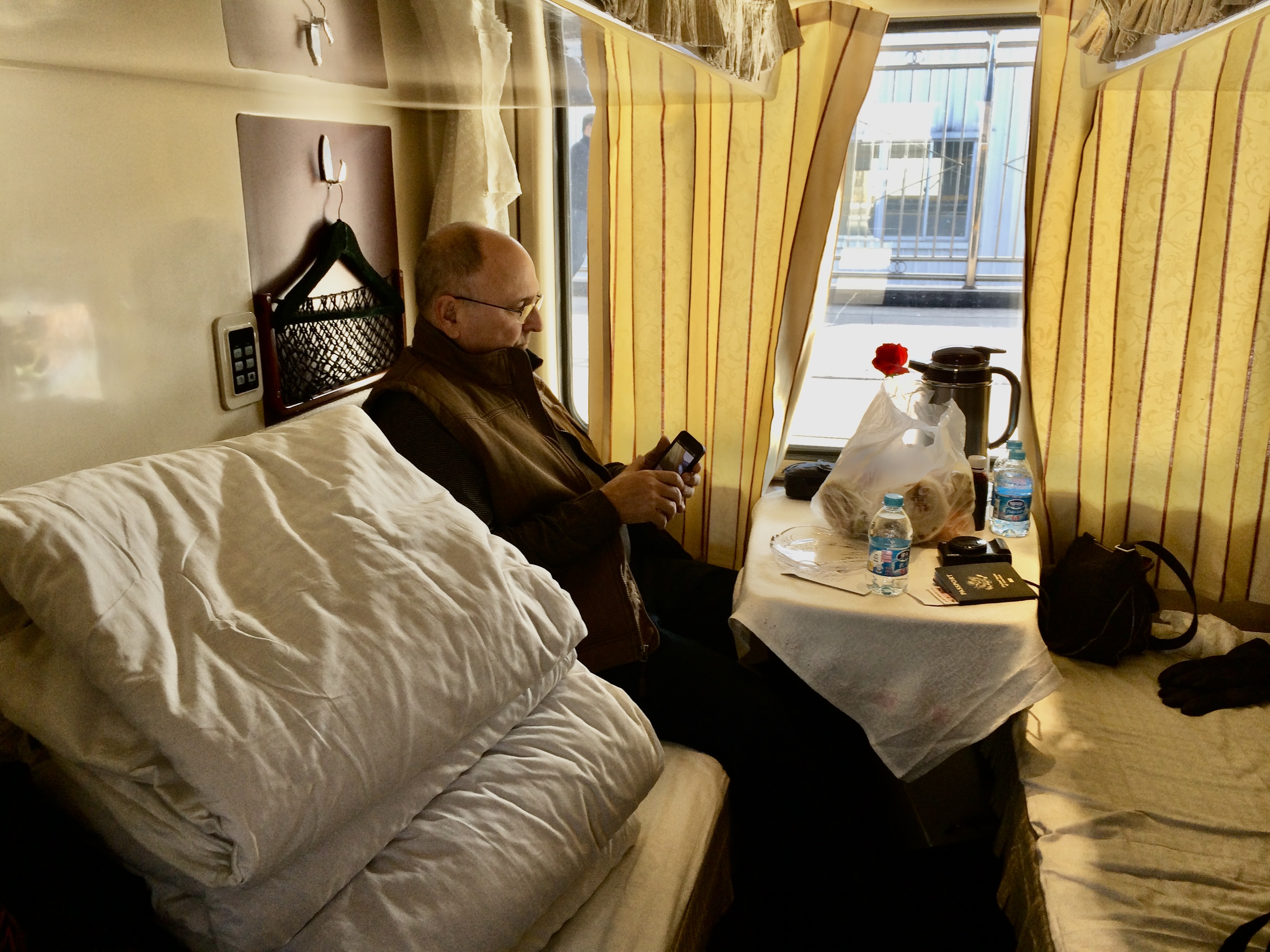
I’m writing this from our little 60sq ft. cabin on the train. It has two bunk beds, intended to sleep four but we purchased all four so that we’d have privacy. The two sets of bunk beds are separated by about a two-foot space. There is a little table between the beds at the window end and a mirror on the back of the cabin door. And that’s it. It’s smaller than most walk-in closets. And yes… no facilities inside the private cabins… everything down the hall, but that’s another story. I can’t believe we considered starting the train in Beijing which would have meant nearly 3 days on the train. Wisdom prevailed.
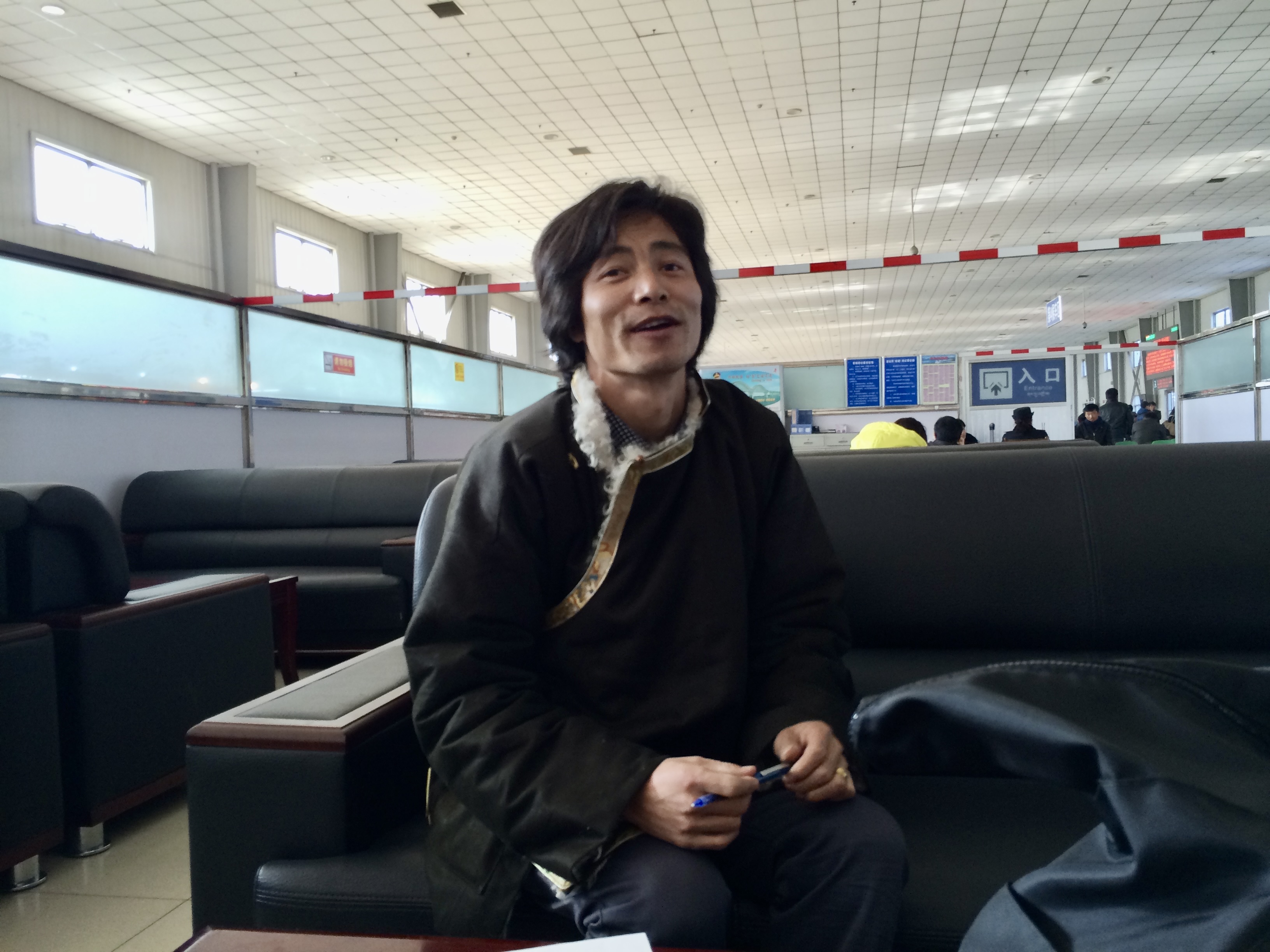
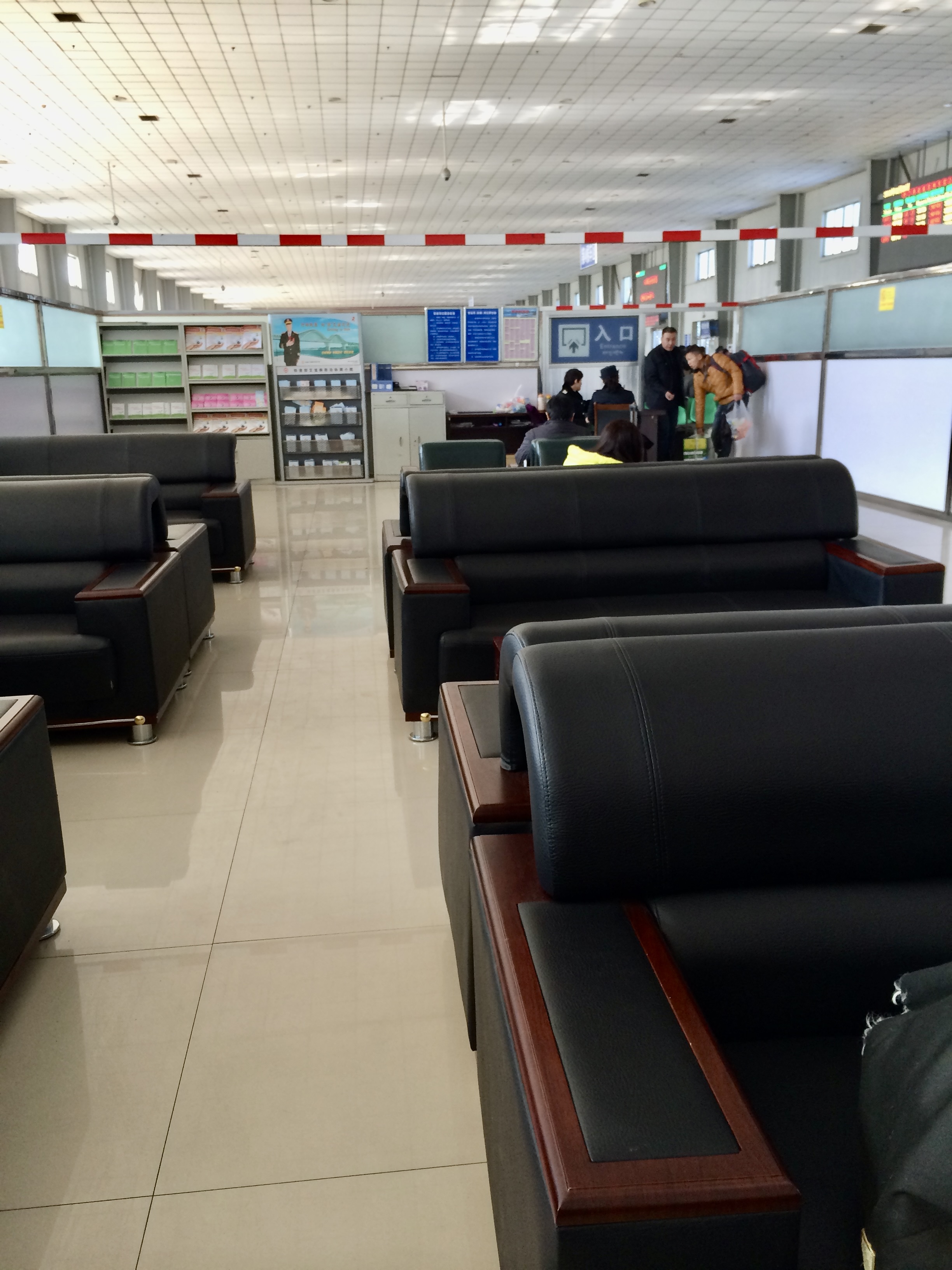
OK… “Bem” came to pick us up at the hotel to get us to the train (We had arranged this through a Chinese travel agency in San Francisco who had never before dealt with anyone who wasn’t traveling in a group.) He was to meet us in the lobby of the hotel and would have a sign with our names, but we all laughed since we were clearly the only non-Chinese people in the hotel. So off we went to the train station which was about 25 km from the center of town. It’s a huge sprawling place and apparently a temporary station as Xining awaits a brand new station to be inaugurated in 2014 – hopefully. Bem walked really fast and we ran to catch up.. and he led us to the VIP lounge where only people who have purchased “soft sleepers” can wait for the train. As we went through the station it was obvious that the majority of people waiting for the train were Tibetans headed home and just about everyone was Chinese except us.
We had about 90 minutes to wait so that gave us a lot of time to chat with Bem who was surprisingly open about the Tibetan situation, his family, and himself. His parents and brother are nomadic farmers or “animal grazers” — 100 sheep, 60 yak, a few horses and dogs.. and recently a motorcycle (which he called “Tibet’s new horse”). Since his family had two sons, it is expected that one will continue the family’s work (especially since working people seem to retire at around 50) and the other son will become a monk. So Bem was destined to be a monk, but there were problems with the monastery in his village — Monks are higher status than “ordinary people,” but if you leave the monastery then you are “lower class” than ordinary people. A lot of people were leaving the monastery at that time (he didn’t explain why) so his parents protected him and helped him leave Tibet to go the university in Xining. There, he studied Tibetan language and history and is qualified to be a teacher. But he decided to become a guide. He’s amazingly warm and friendly so it was probably a good idea to have made the link with him.
He talked a little about the issues facing Tibet and China. Apparently Tibet has 80% of the minerals that China needs. He is not from Lhasa. He described the train ride pretty well, except that he made it a lot more visually exciting than it is in reality. He helped us board the train which was a godsend as we probably would never have been able to figure out which car and cabin we were in (since everything is written in Chinese). He also explained that at the other end (once we reach Lhasa), the person who would meet us and take us to the hotel would not be inside the station or even just outside. Rather, he (I guess the officials are all “he”) would probably be about 100 meters from the station. (Again, no problem since no other Anglos were anywhere close to the station). Bem then left us, as we got settled on the train.
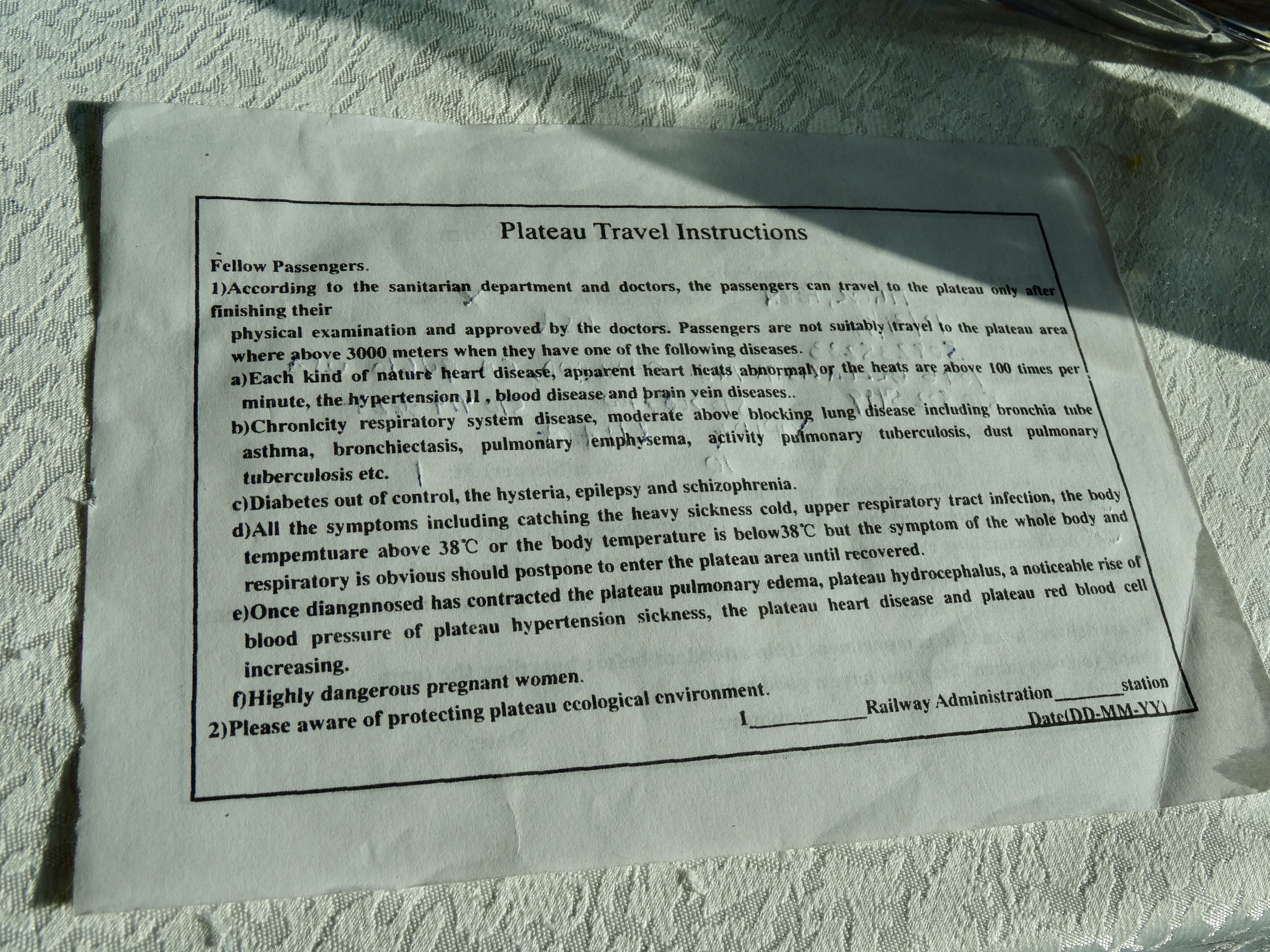
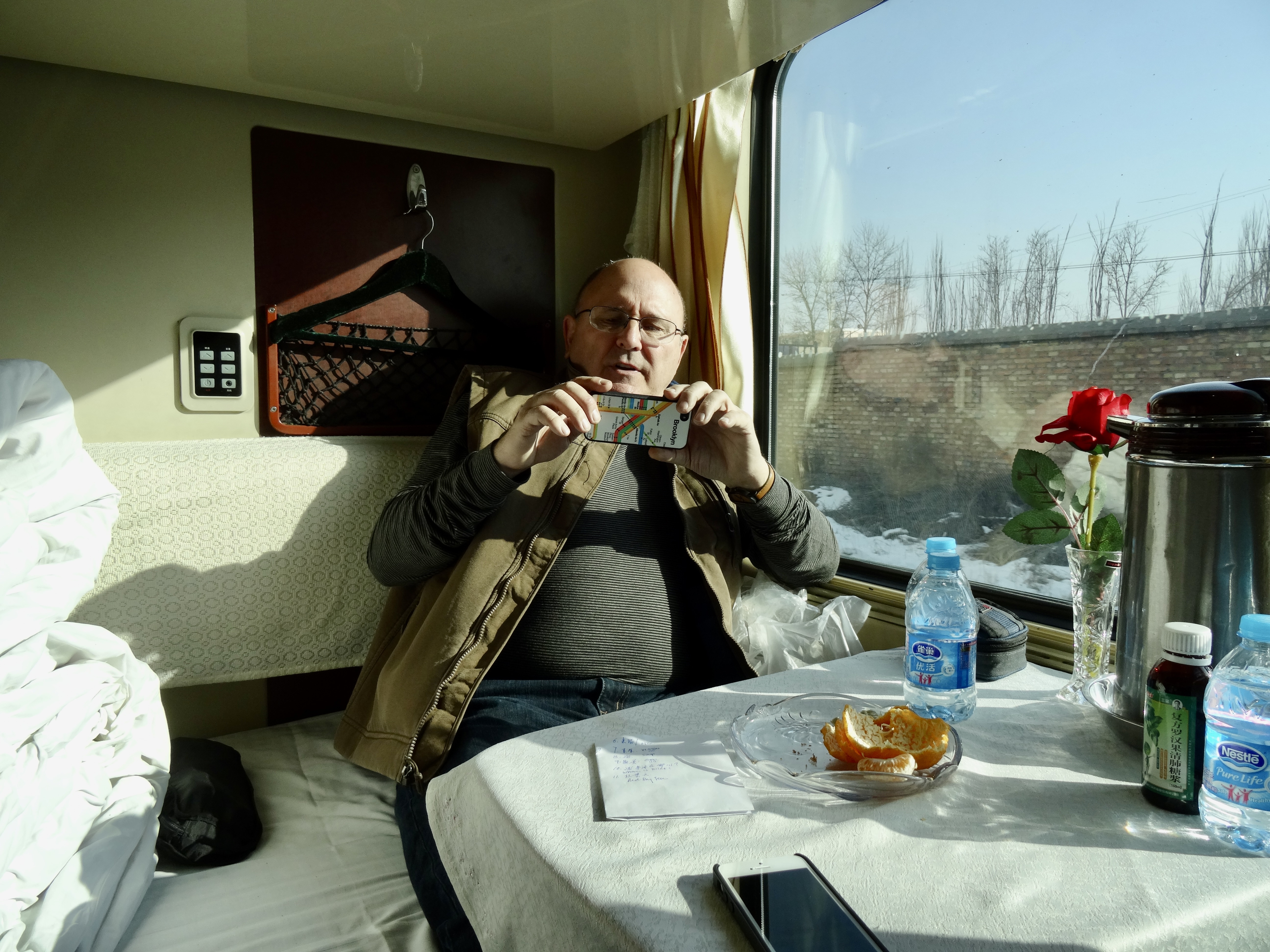
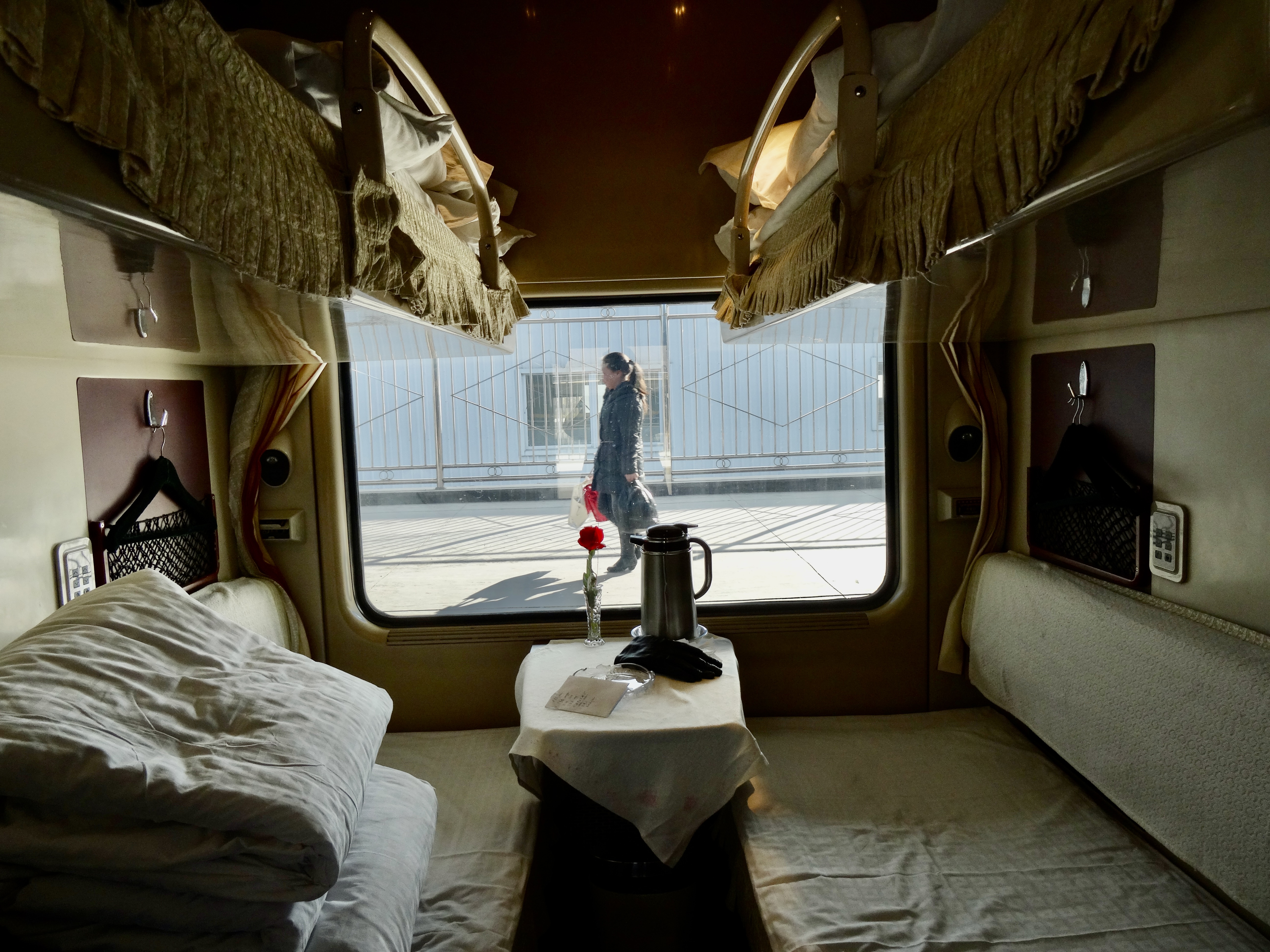
The system is a little strange. We got four tickets (one for each bed) although they only “checked” two of them because they count people not beds, I think. But we held tightly to all four tickets in case someone tried to come into the cabin and use one of the beds. Then once we were in the cabin (as described above) a woman in uniform (actually a lot of people in uniform on the train) came by with a leather book with slits and page She asked for the tickets and carefully placed the four tickets on one page in the slits and handed us plastic tickets sort of like credit cards. We didn’t really understand but in very few English words we think she said that at the end she gives us back the paper tickets and we give her the plastic ones. Seemed like a very unnecessary step, but a policing process. It was now about 3:30 pm.
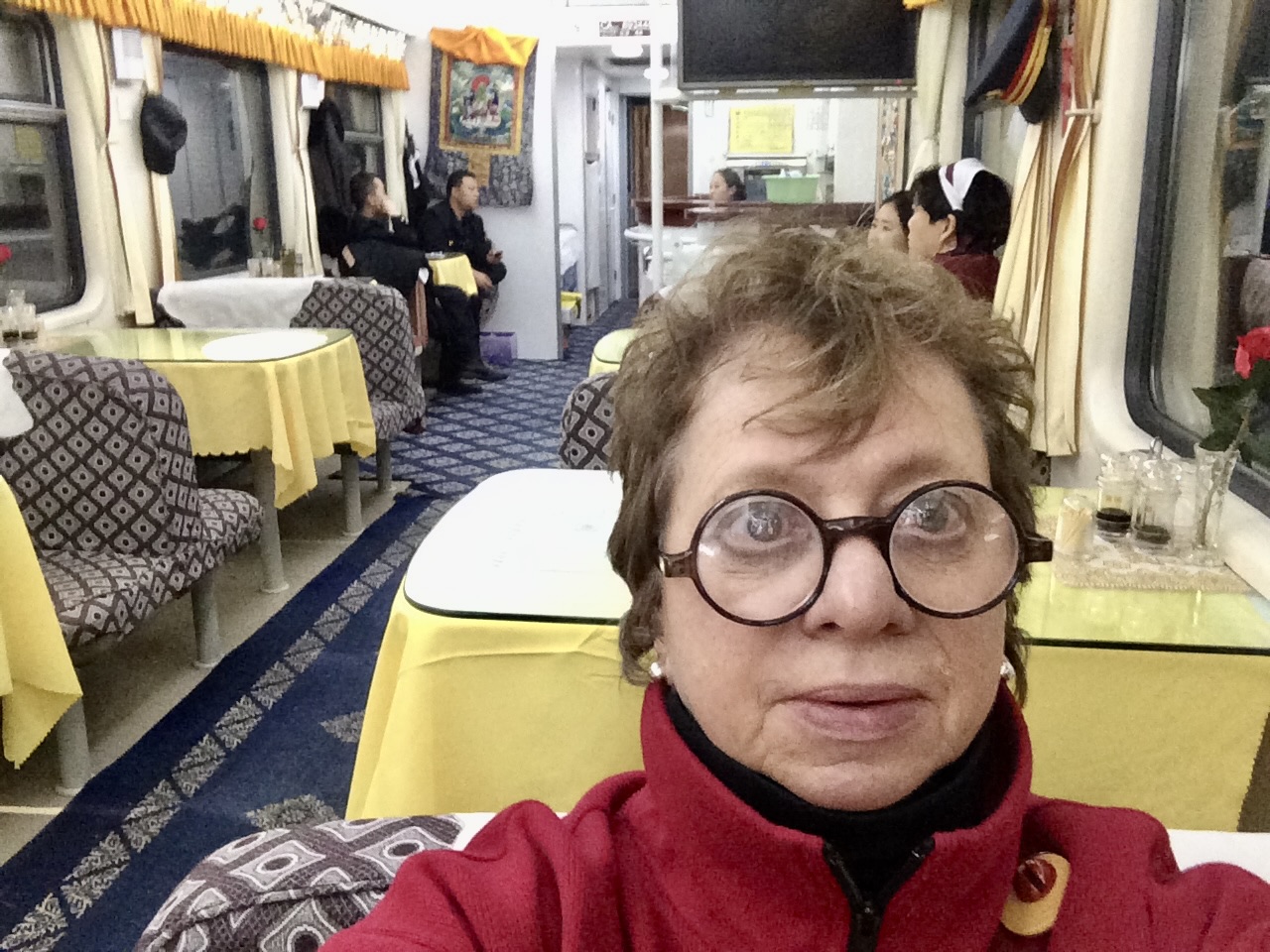
Before Bem left, he wrote some useful phrases on a paper for us.. things like “I have a headache.” “Tea” “Rice” “chicken” “Where is the toilet?” etc. — many of which came in very useful. He also introduced us to Vong who is a waitress in the dining car. She said we should come for dinner at 7:00, which we did. Dinner was unexciting as you’d imagine… we had a chicken and pepper dish, a pork and scallion dish, some simple soup, and rice, and beer. Napkins are really rare to find (as is toilet paper and paper towels in the washroom).. really glad we had lots of tissues and Purell! We actually had brought tangerines and some bread and some excellent jam that was given to us as a gift by the Temple Restaurant in Beijing.. so we had a little lunch snack before dinner which was a lifesaver.
They said dinner was from 6 – 8 and we came at 7. At 7:30, we were shooed out of the dining car. Don’t know why, but we obeyed and went to our little cabin, where we stayed until morning. Never really slept soundly, but did nap on and off. Beds were hard, pillows hard and quilts very very heavy. We had both also developed little tingling feelings in our fingers which we attributed to the altitude pills, but after some research think it might be from the altitude itself. My cold continues but it’s less extreme… cough nearly gone; now just a little stuffed up and intermittent laryngitis. And Mike has a headache.
We went to the dining car for lunch; same menu as dinner. Finally, at about 2:30 pm the train pulled into Lhasa. Then getting from the train through the station to meet the new guy who would drive us to the hotel.. That was another story. We joined the mobs of people converging into some narrow doorways (everyone Tibetan and Chinese — and lots of people staring at us, especially the Tibetan kids who seemed totally fascinated by us — how we looked and what we were wearing).
As we approached the doorway with our Tibetan Travel Permit and US Passport in hand (and the little train ticket), the guard motioned for us to step aside and he took the travel permit from us. No one seemed to care about the train ticket. And they left us holding our passports which we were happy about. They pulled over other people as well, but we couldn’t figure out the logic. Some were Tibetans, some were foreigners from other parts of China.. and us. Then a woman who walked really really fast took all those papers and motioned for everyone to follow her into a little shed which we did. When we got inside (luggage and all) everyone was going into a second room, but they told us to wait in a different room which had a few chairs. After a few minutes they motioned for us to leave and gave us the papers. who knows!
Anyway, once we were about 100 meters from the station we found Pemba (the guy who will show us around each morning). Since Tibet requires non-Chinese and non-Tibetan visitors to have a guide, we had little choice but to oblige. However we requested to be left alone in the afternoons. We told the officials we needed to take a nap in the afternoon. We are required to have a guide and a list of places where we will go, so doing this every morning with Pemba will satisfy that. Our paperwork says that the afternoons we will nap and take walk leisurely by ourselves. That will give us time to explore on our own and to find places for dinner on our own.
Pemba and Tashi the driver took us to the hotel. We had planned to stay at Shambhala — a little 9-room place that seemed very funky and cute. But it, like all the small hotels in Lhasa, was closed for the season because there are too few tourists. So we booked ourselves into the Lhasa St. Regis! Initially, we were disappointed to have to stay in both a fancy and non-locally-owned place. But it turned out to be the perfect decision.
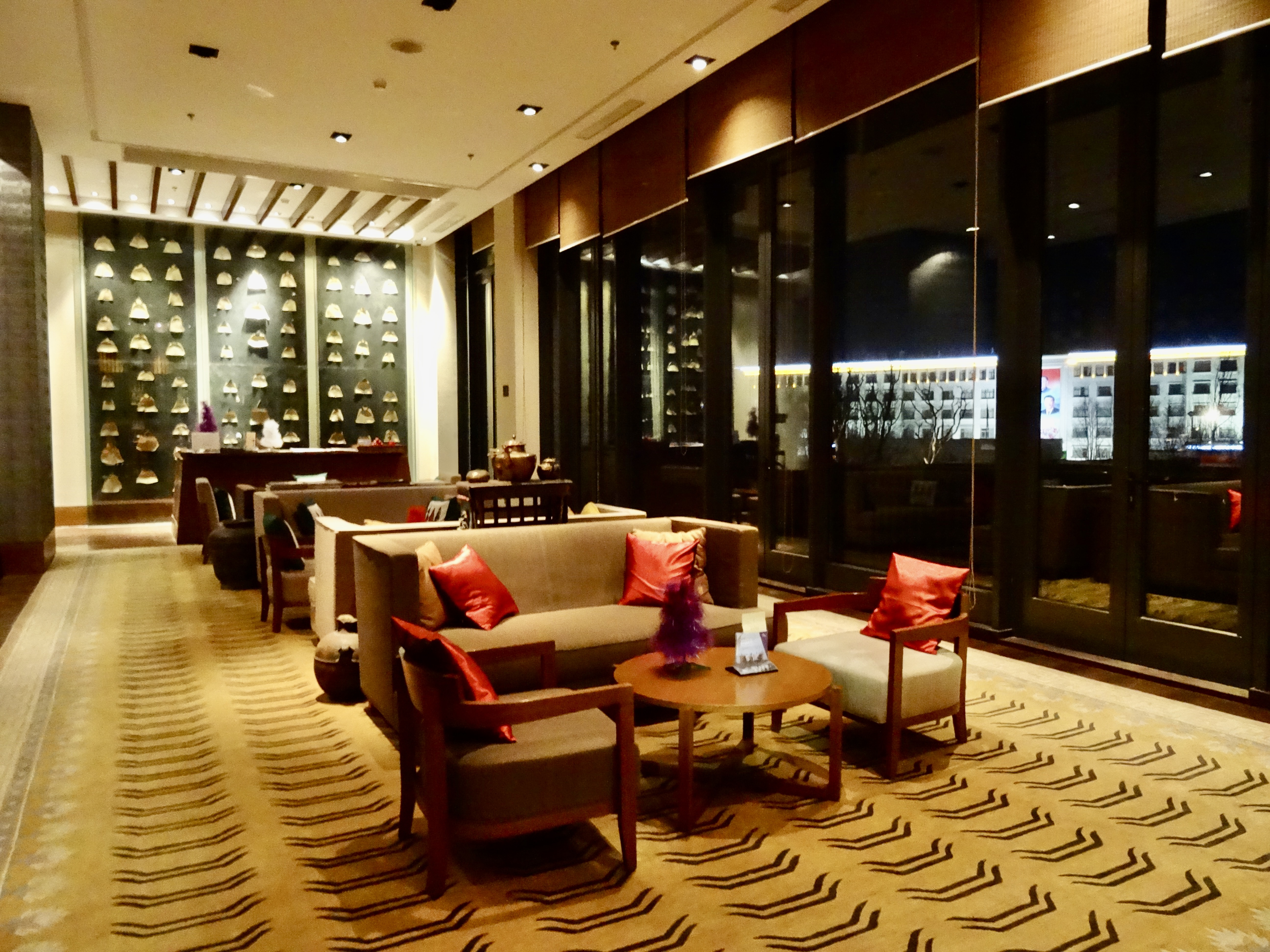
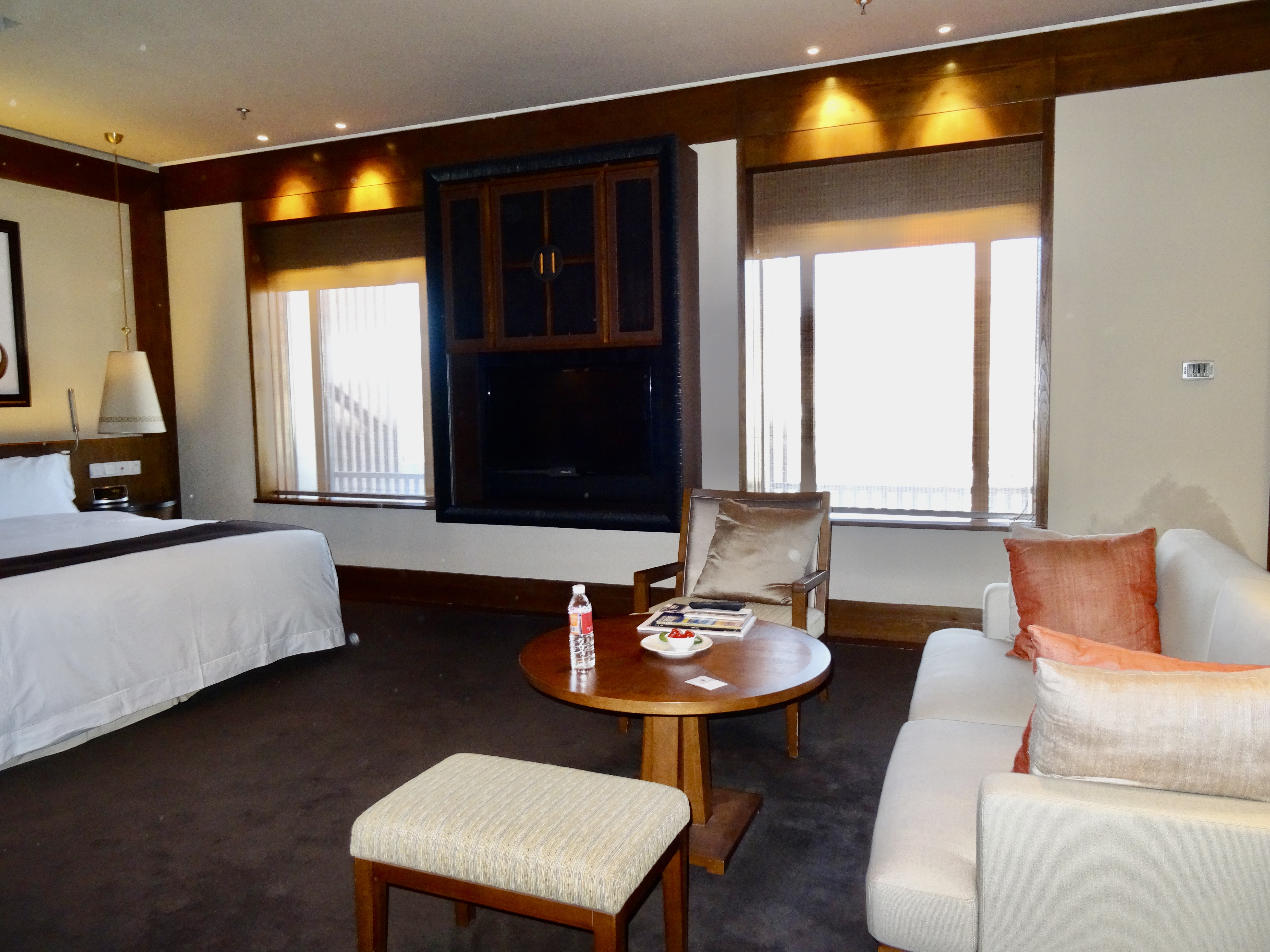
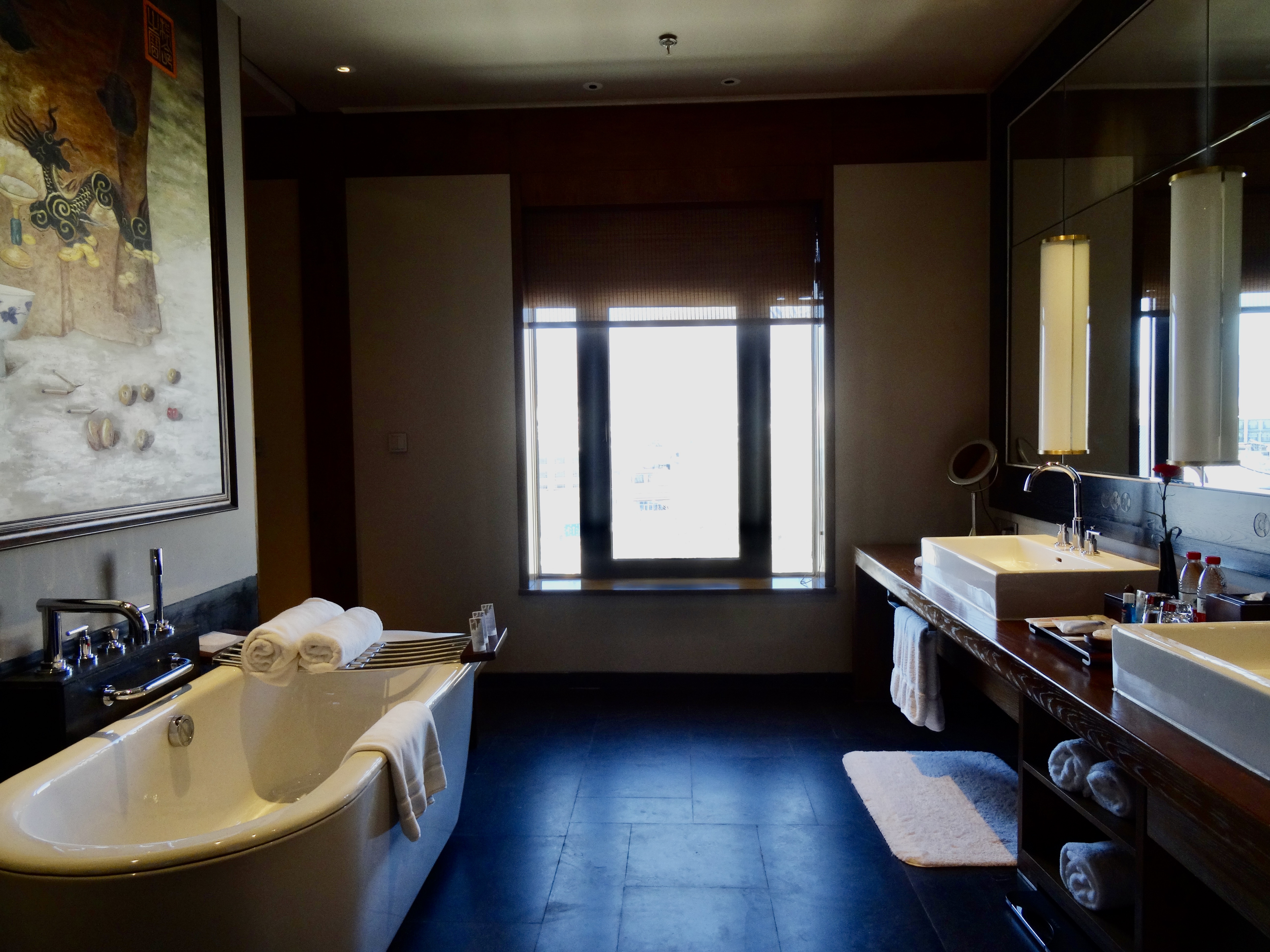
And here we are in a suite (they upgraded us because of my Starwood status and probably because the hotel is empty.) Our room overlooks the Portola Palace.. It’s about 1,200 sq. ft. which is about 20x as large as our train cabin… the bathroom suite alone is about 300 sq. ft.. Mike says he can house a family of about six in this room.
We are resting and then will take a walk and have dinner. But first, relaxing shower and much needed shampoo.
Fern
 Fern's Travel Notes