December 26 – 27, 2013 Lhasa Tibet

December 27, 2013. Lhasa Tibet – Tashi Delek
Thanks to all of you for asking what happened on December 26th since I didn’t issue any daily report (glad you noticed).
On the 25th, after coming back to the hotel (following the climb to the top of Potola Palace equivalent to climbing about a 30-story building up and then down again, and then walking for several hours in the little alleyways that comprise what’s known as Old Lhasa), we both felt pretty awful — congested, coughing, and weak. So we opted to have dinner in a very wonderful Chinese restaurant inside the hotel (well, it’s actually on the grounds of the hotel, but you need to go outside the hotel and in through another door) which was probably a wise choice. Hot and sour soup seemed to be a good antidote, followed by a lamb dish with rice and vegetables. After that we zonked out (for short periods as the coughing kept both of us up a bit).
On Thursday, December 26th — yesterday— Pemba was going to take us to some cave to see a giant Buddha (Frankly I was Buddha-ed out after the first hour at Potola), but we decided to decline and hang out at the hotel and maybe take a walk into the old section again on our own — just doing what we could without strain. The altitude really does take its toll. (I don’t recall having any trouble when we were at Machu Pichu with Cuzco being at 11,500 ft. and Machu Pichu being at about 10,000 ft., but I suppose we were about 15 years younger?)
So after a late breakfast, we did things like download photos (we’ve shot about 400 each already) and work on our courses for winter quarter, and catch up on CNN news, we decided that the hot and sour soup treatment should probably be repeated so we had it brought to our room. Then at about 8:00 pm we finally ventured outside the hotel walls… and headed for dinner at a place called Snowland. Pure Tibetan restaurants are really hard to find; most restaurants serve a combination of Tibetan, Nepali, and Chinese cuisines (with none of them being that fantastic). According to what we’ve read Tibetan food is pretty bland — barley based — so I think restaurants just combine these different cuisines. Many restaurants are closed now, because this is such a low tourist season. Additionally, yesterday and tonight are some kind of official holidays marking the death of some religious figure.
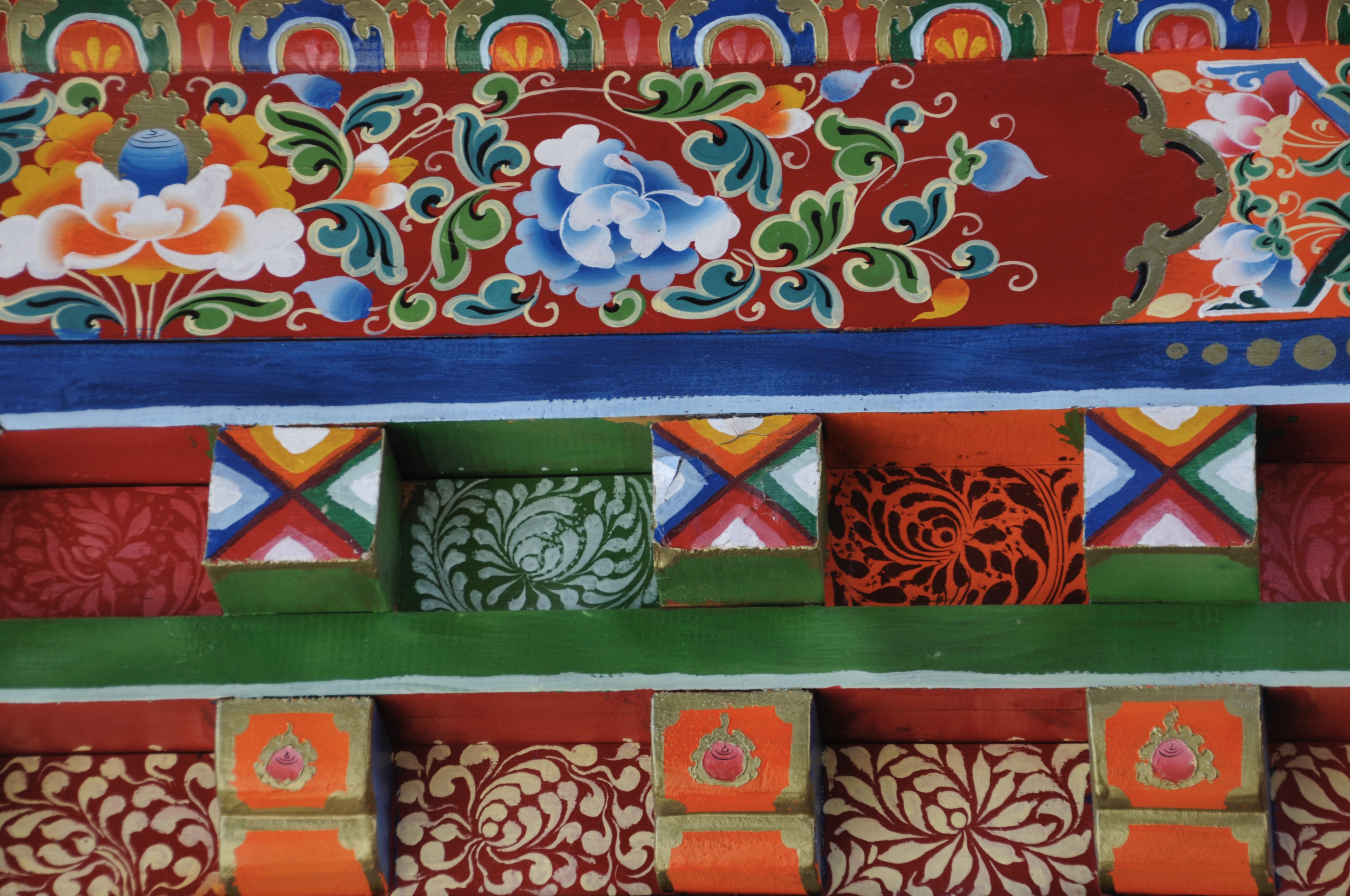
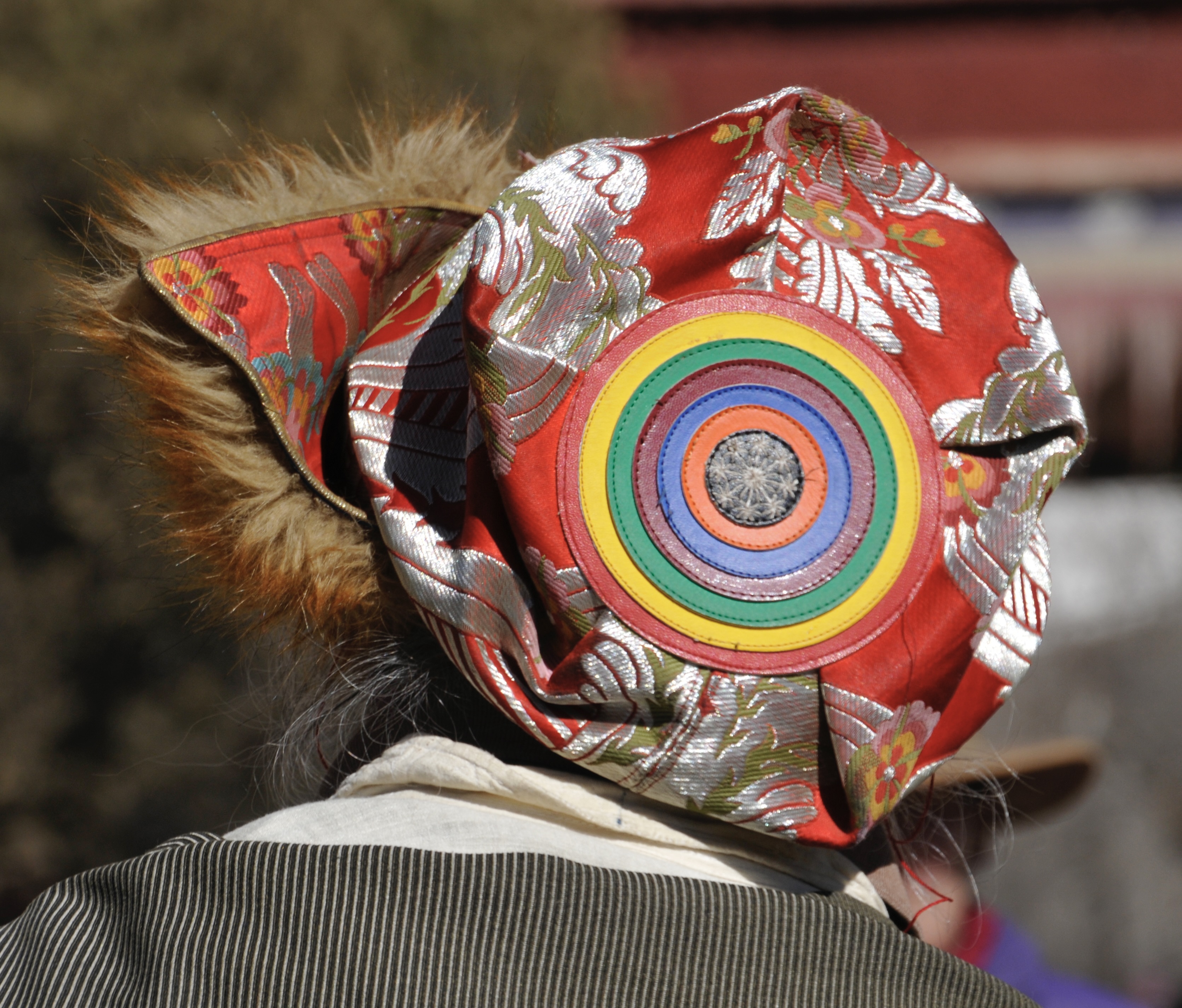
Anyway, last night we ventured out by rickshaw (our favorite transportation mode, and the only ones willing to pick us up) to a restaurant we had read about called Snowland, in a different part of town. Turns out it’s on a walking street, so even the rickshaw couldn’t get in so we walked down the street and found the place. Food was fair to middling, but lots of fun. Many young women working there or maybe some worked there and others were friends keeping the others company. Place was pretty empty; only about three other tables. While we ate, the girls played loud music (couldn’t discern the language) and they danced and danced — a little like a line dance; seemed to be having a great time.
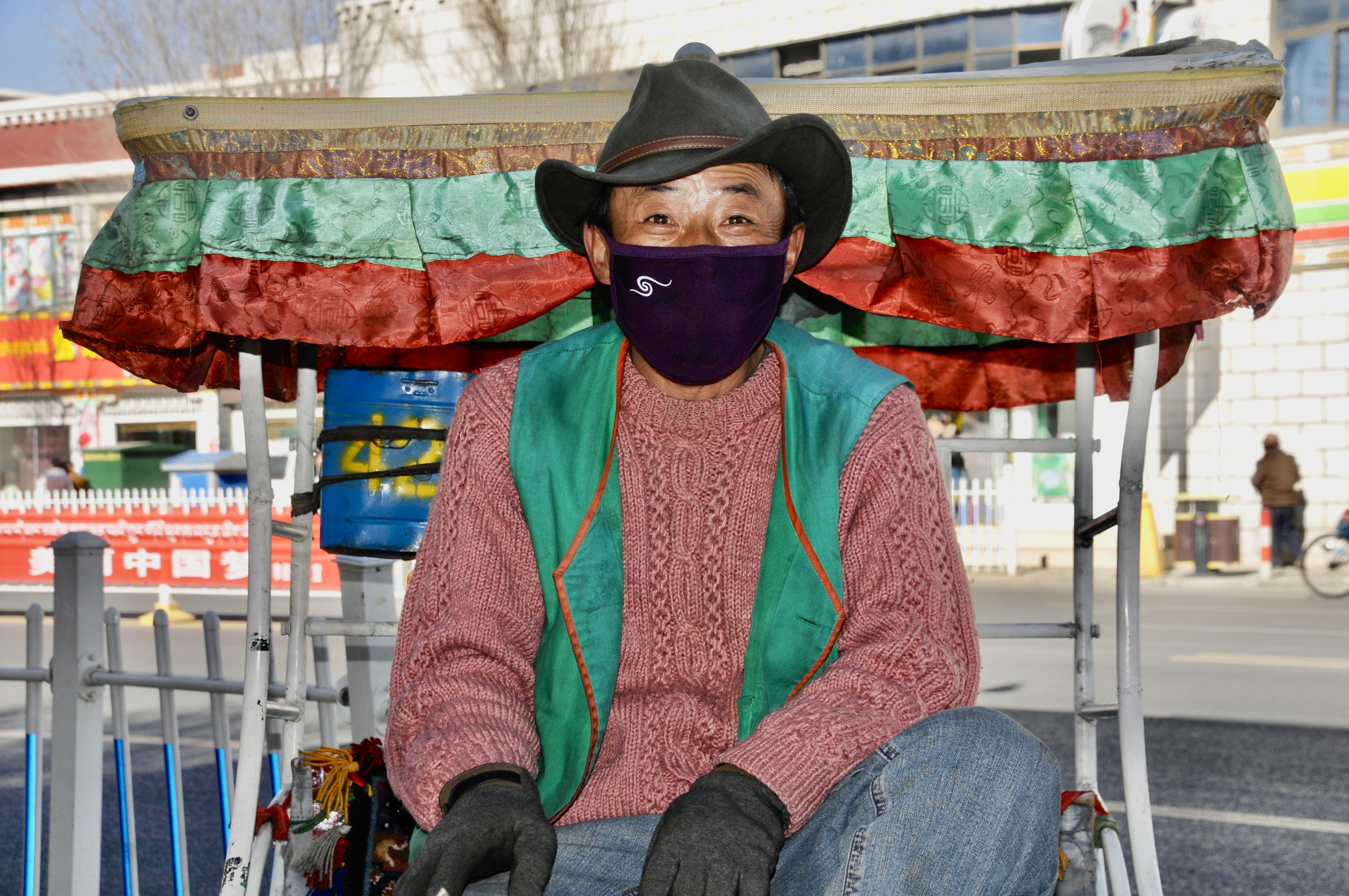

Then we ventured out to the main street to find a taxi, but wound up with a rickshaw again. Here’s what we’ve been told. Taxis don’t like to take just a single fare; they like to do “cab-sharing” where they let you into the cab and then in a few blocks they pick someone else up, but they think foreigners won’t do that so they just opt to say no to us. The rickshaw drivers can only fit two people so we are perfect customers. And although we have learned the bargaining tricks (which they love), at the end we are so guilt-ridden about having these guys pedal us around that we have been doubling the amounts. Since we are the only westerners we see, the other rickshaws are occupied by Tibetans. Trust me, the amounts are so low it really doesn’t matter. These guys have to cross four lanes of traffic, but they seem to be pros (although this morning we had some questions about the guy’s brakes as they screeched and moaned and groaned pretty badly — like a dying horse — whenever he tried to stop, which was often to avoid cars and trucks).
OK.. so that was last night (December 26).
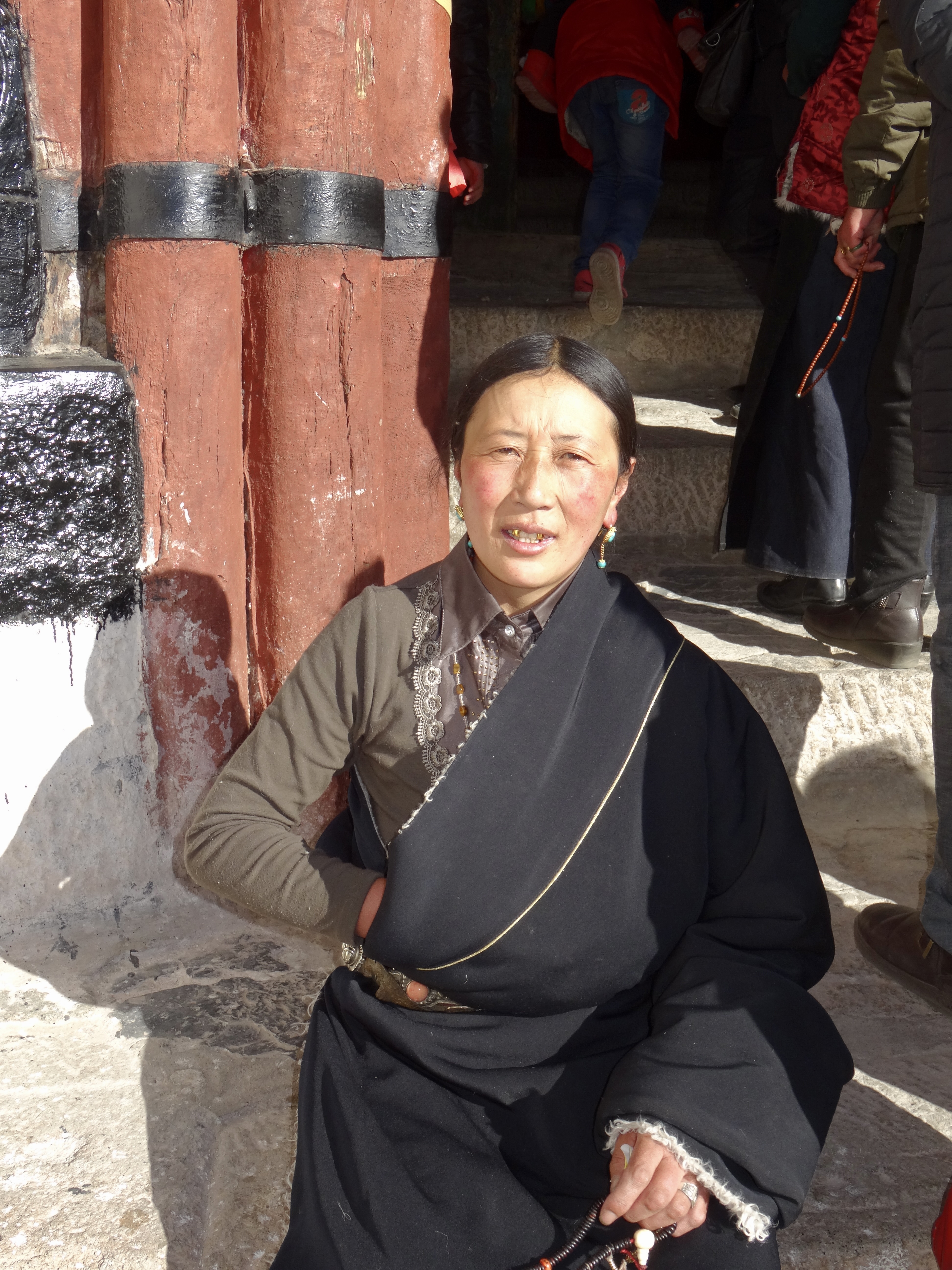
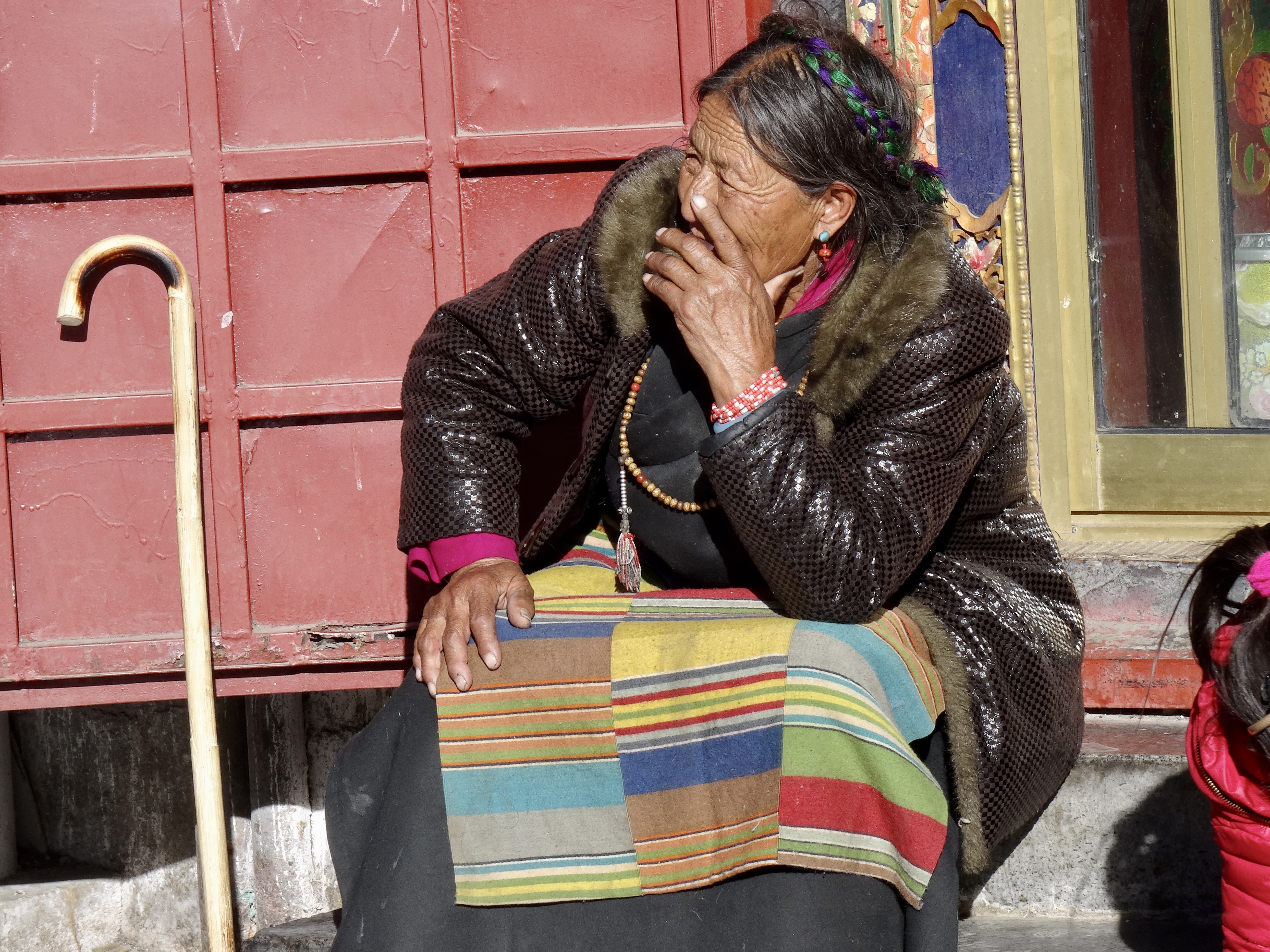
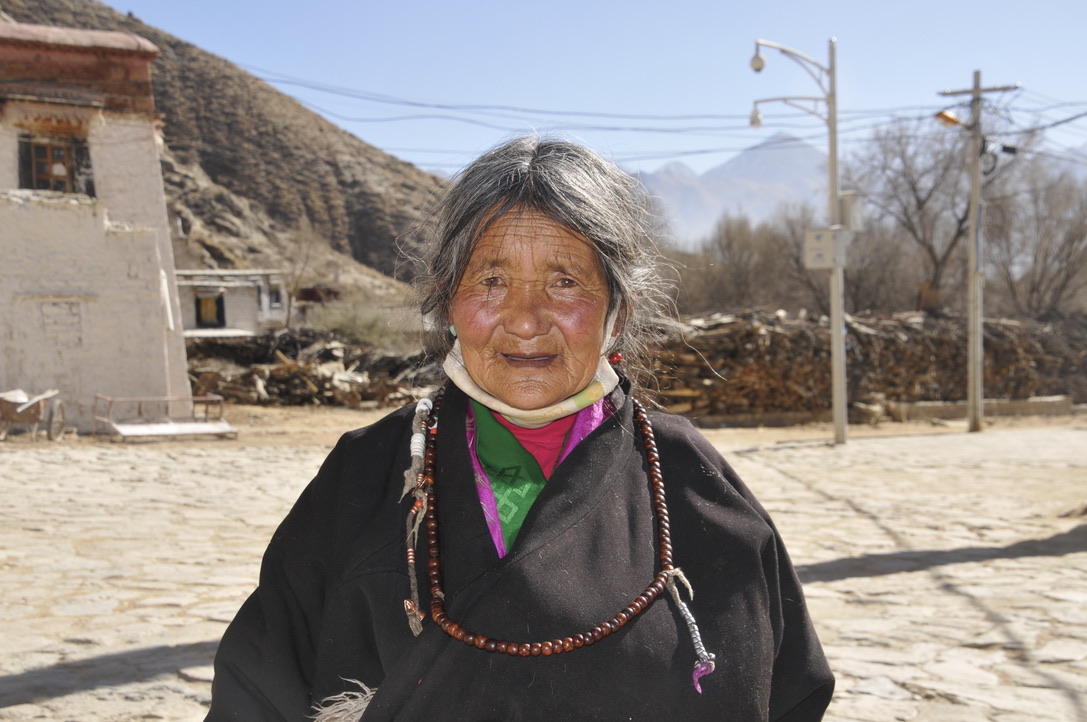
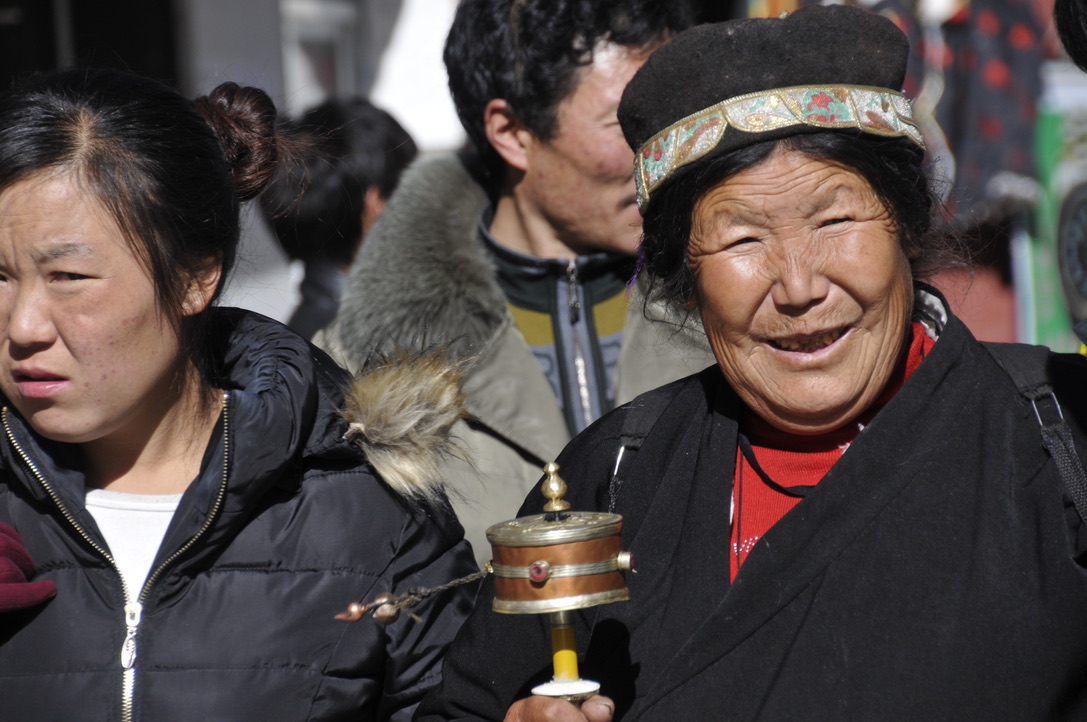
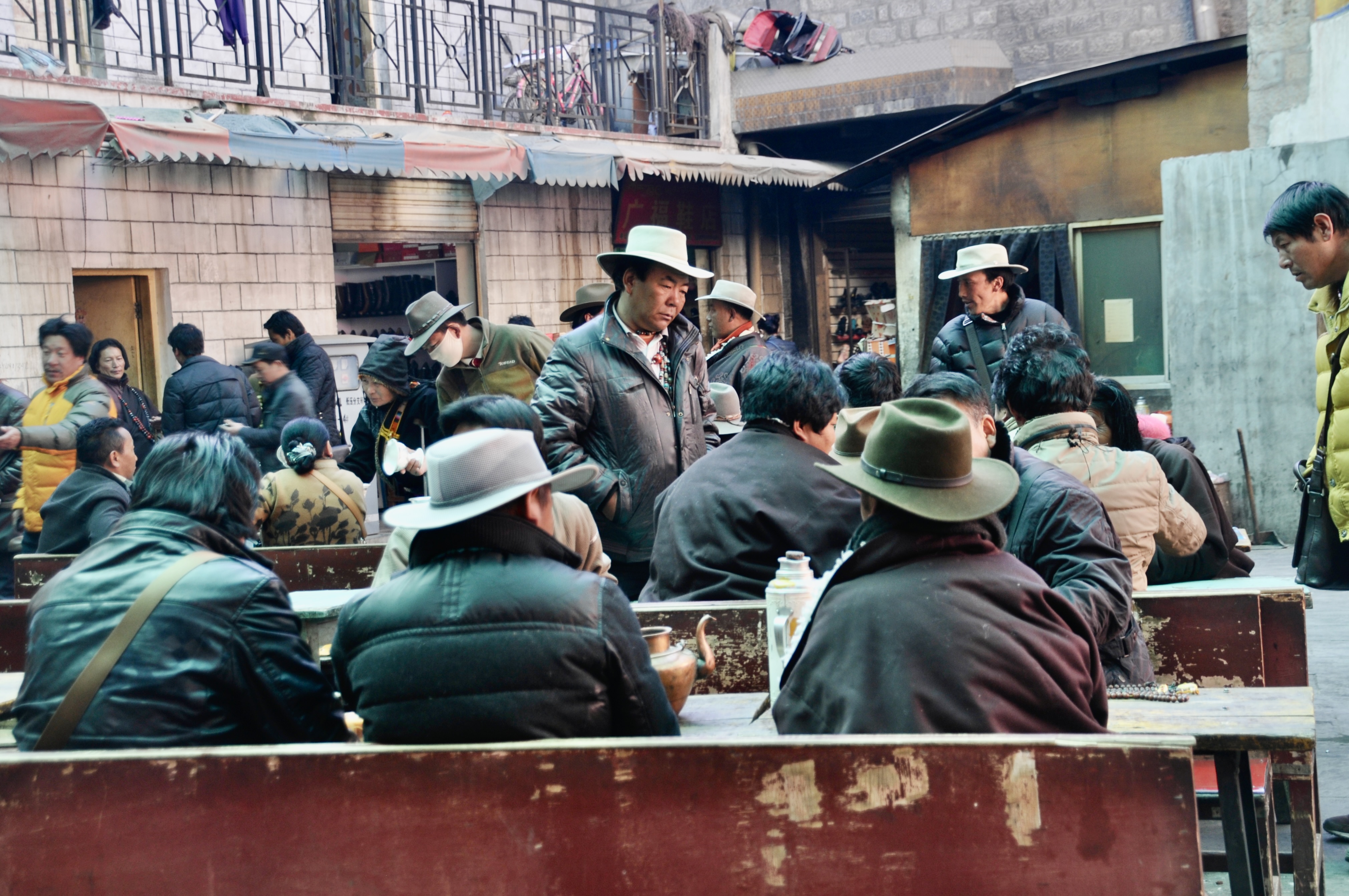
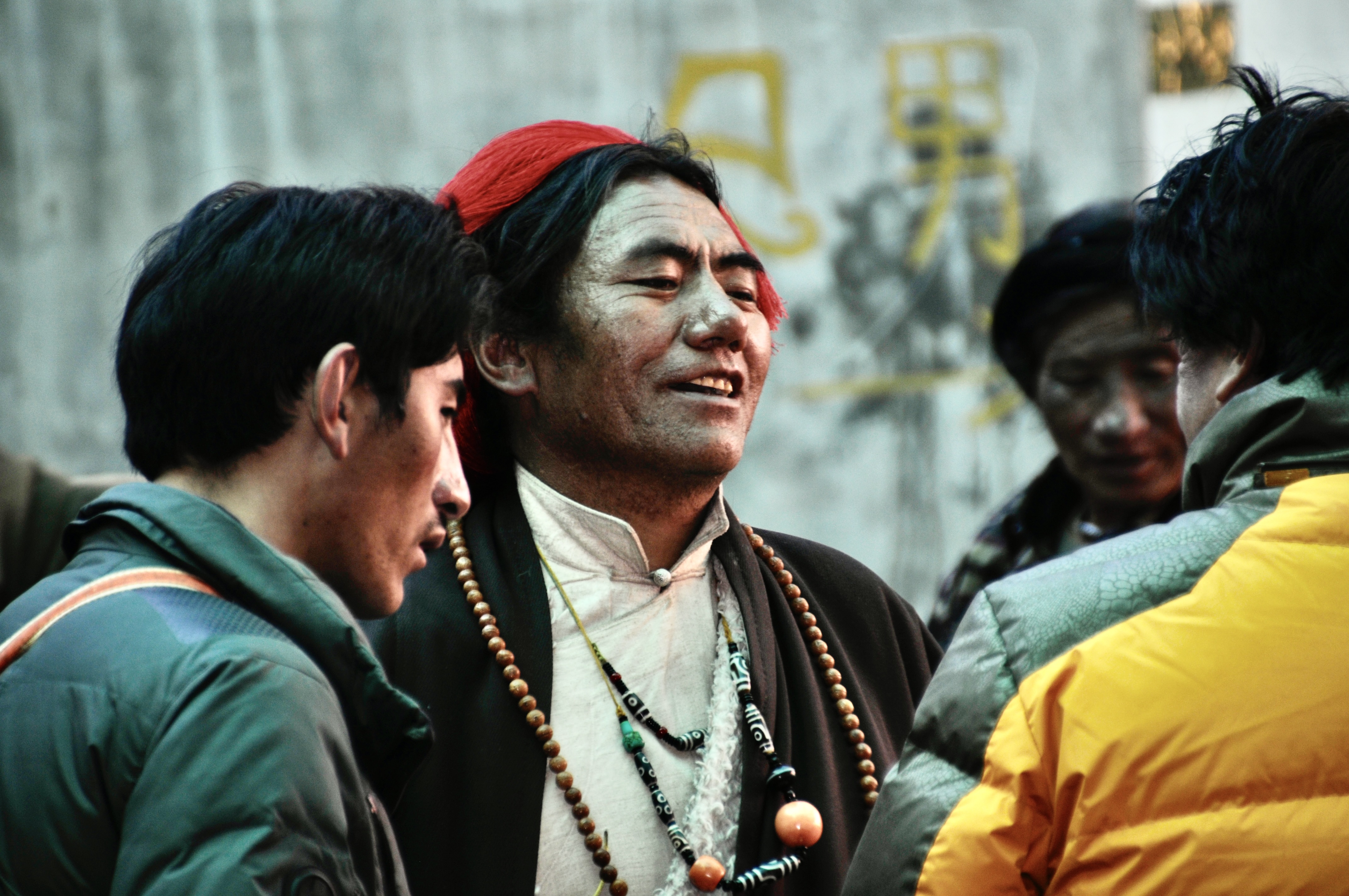
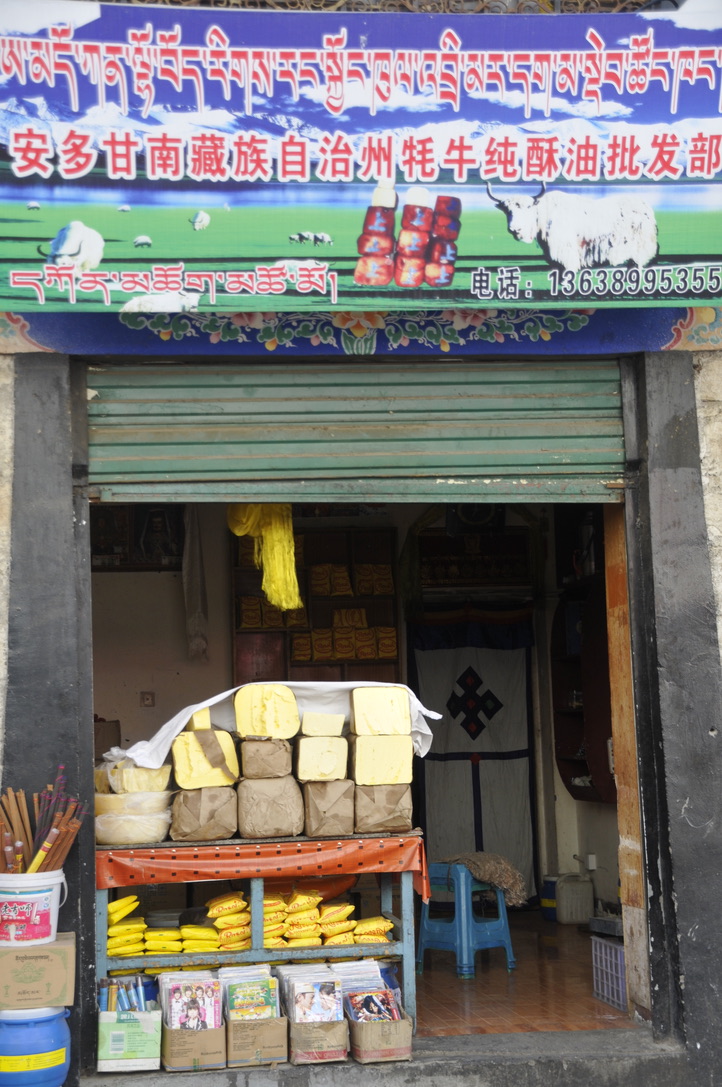
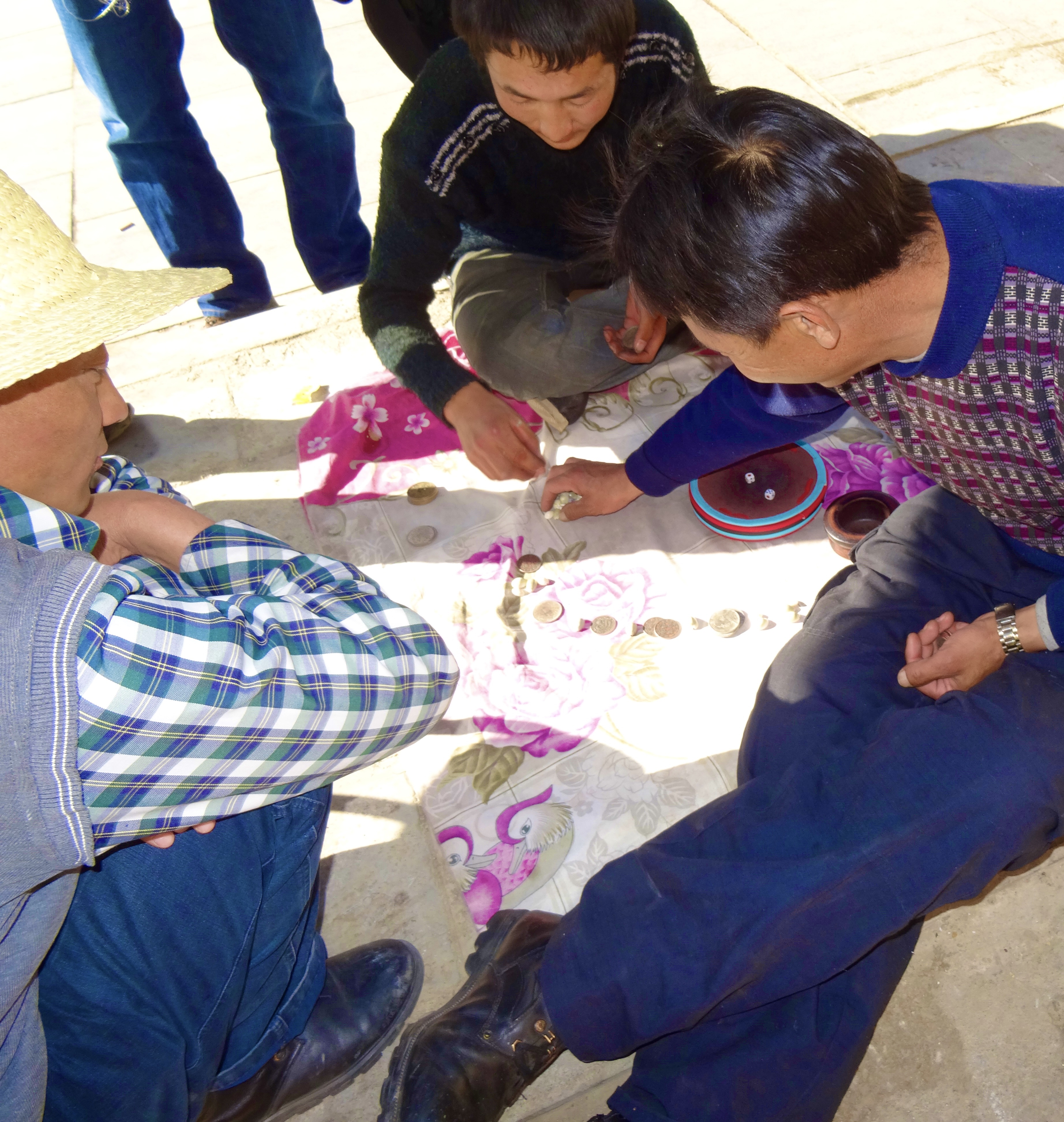
Woke up this morning and thought we were feeling a lot better (less coughing, still phlegm, but on the mend). So off we went to the old section to explore yet different alleys and passageways and see the life during the morning hours. Strolled the streets mingling with the people (many of whom are already circumambulating the Jokang Temple carrying their prayer wheels) and others just doing basic shopping. It’s a bizarre mix of teeny shops selling things like just yak butter (more on that later) or just cheese adjacent to shops selling commercially made boots and down coats (and some little stalls – really just a woman with an old-fashioned sewing machine – where you can have your down jacket mended). In the streets, men are bargaining for caterpillar worms which they feed to the yaks and also playing a game called Sho. Everyone was extremely friendly although no one can talk to us, but they smile and wave and some take our pictures with their iPhones, which seem to be ubiquitous. Naturally we find that pretty funny, but hey — we are the odd ones here.


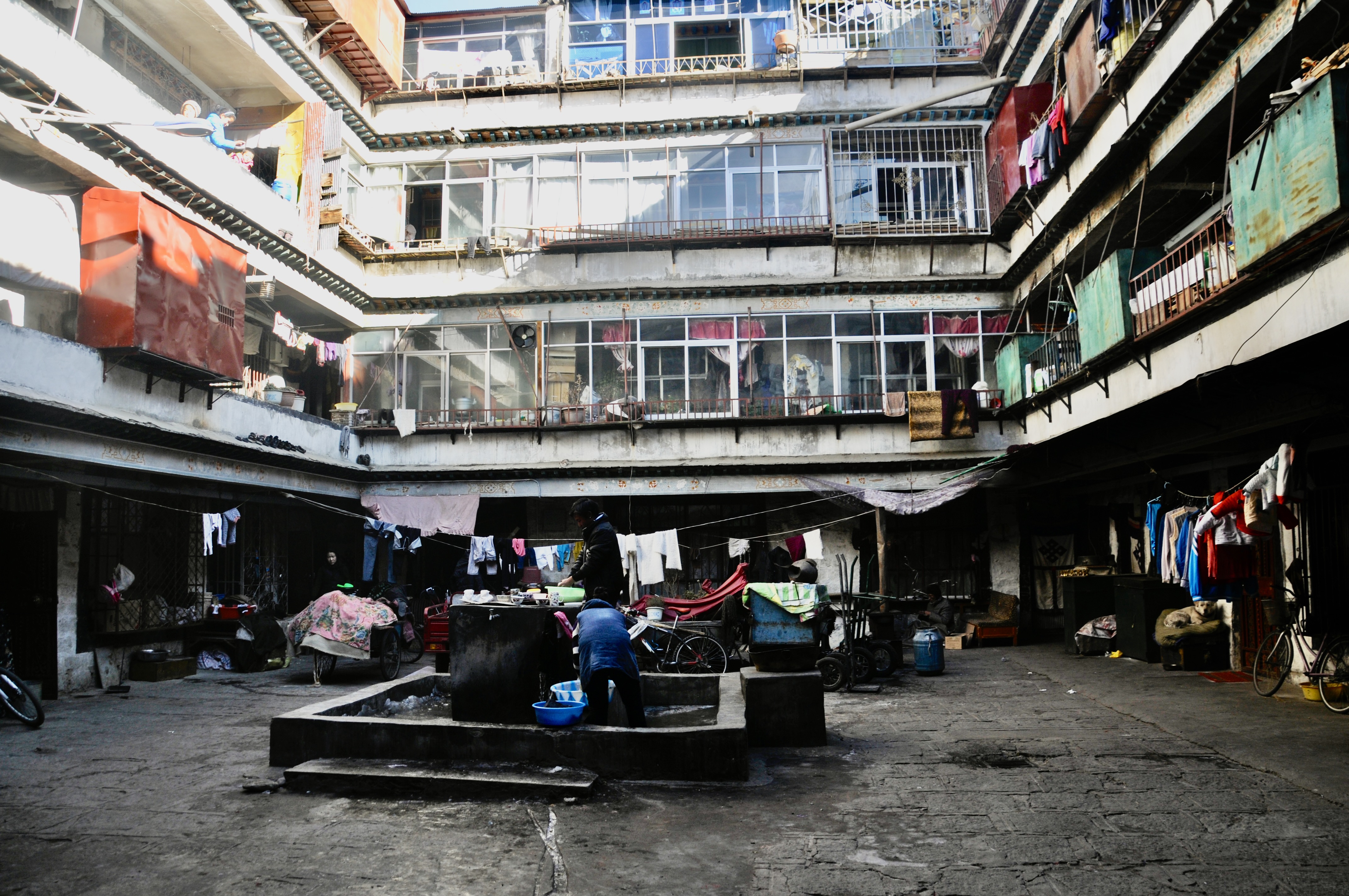
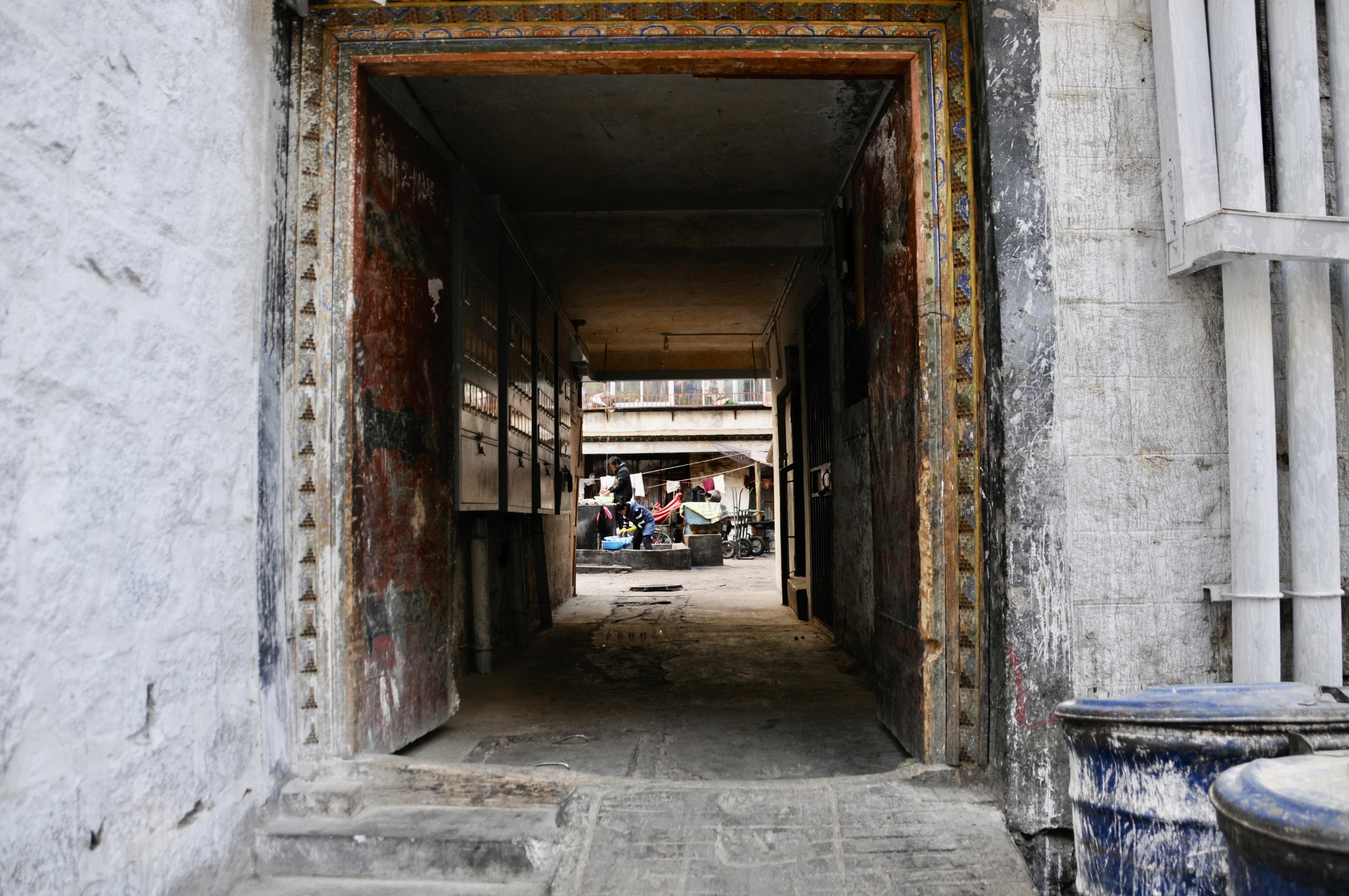
It’s also an amazing mix of people in traditional garb of all sorts and people wearing totally western clothing. Oh, and amid all of the shops are very frequent police (or army) outposts taking up shop space or just in temporary structures on the street. So, yes, there is an ever-present sense of “control.” Indeed there also appear to be spontaneous street blockages with police then checking people coming in and out (they leave us alone and just wave us on).
We eventually meandered to a main street outside the old section and got into — you guessed it — a rickshaw, because no taxi would stop. This was the guy with the very very bad brakes. Had a very quick lunch (hot and sour soup again — our medicine) and then Pemba picked us up at 2:15pm.
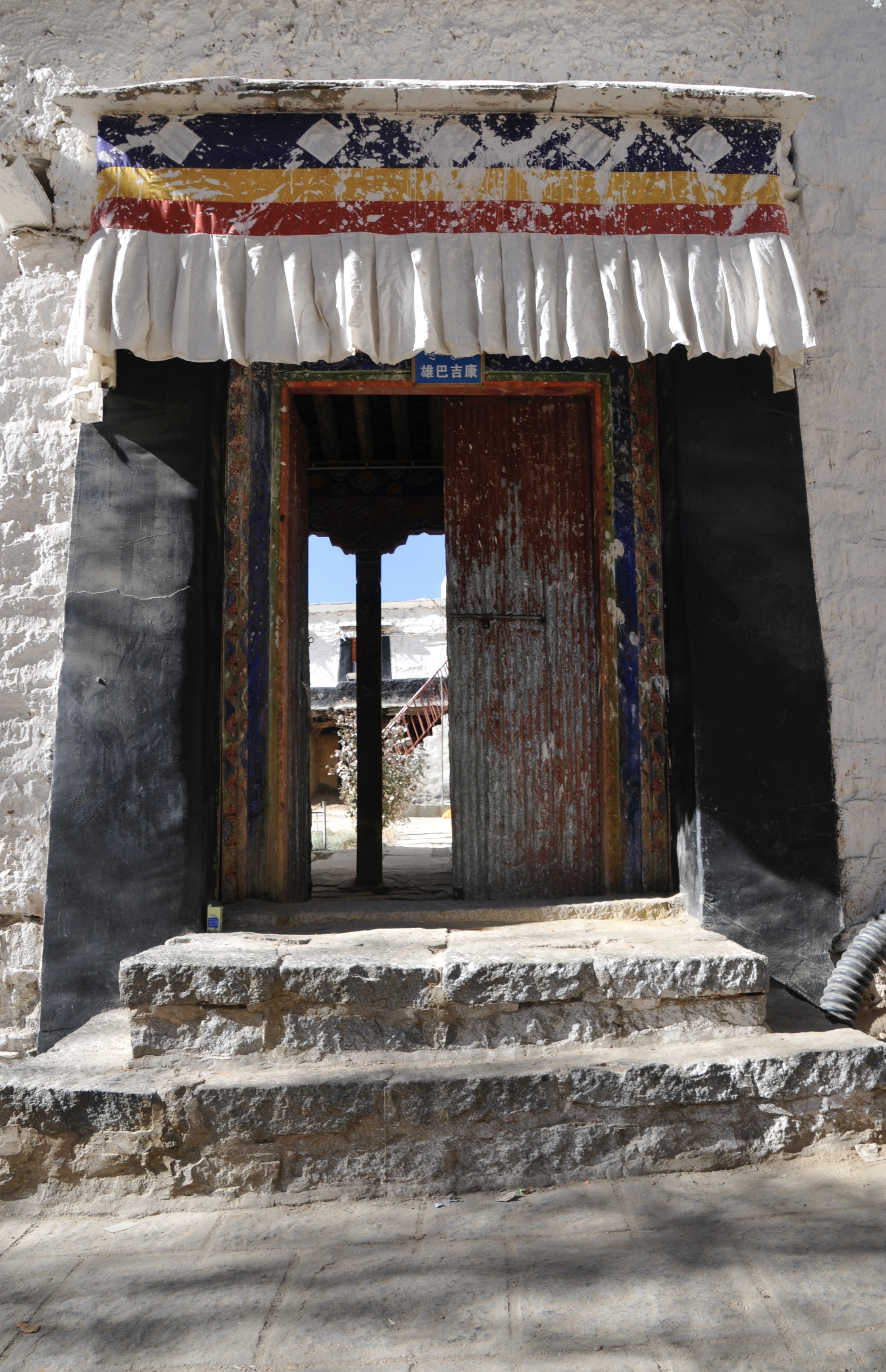
We then met up with Pemba and headed to the Sera Monastery — about 600 years old and built like a little village in the hill with a sprawling complex of structures — all whitewashed (as was Potola Palace — which gets re-whitewashed once a year… peasants go to the top of each section and just pour the paint which has some yak milk in it — as does everything else here .. and then a crew paints the trim). On most days, the monks (600 of them are at Sera now — but in its heyday it had 3,000?? ) do debates and they are open to the public. We had read about this. They debate what the “teacher” taught them that morning, so the topic is always changing. They are in small groups and when they get something right they clap one another’s hand.. and the teacher roams around with prayer beads and if you get something wrong spins the beads above your head and laughingly says you need to study more, or at least that is what we think it all means.
Anyway, we got to Sera Monastery, but there was no debate today (guess they don’t post the schedule on any website).. but it didn’t really matter.. It’s a renowned place of scholarly learning, and trains many scholars, many of whom are famous in other Buddhist nations. Like all of the monasteries, lots of pilgrims are strolling about — leaving money in every conceivable corner and at every shrine and fresco. We went to visit one of the four “colleges”.. and the large assembly hall. Oh, forgot to mention that you need to go through security devices for all the monasteries.. but no one seems to pay any attention since things are buzzing away all the time and the guards are playing games on their cell phones.
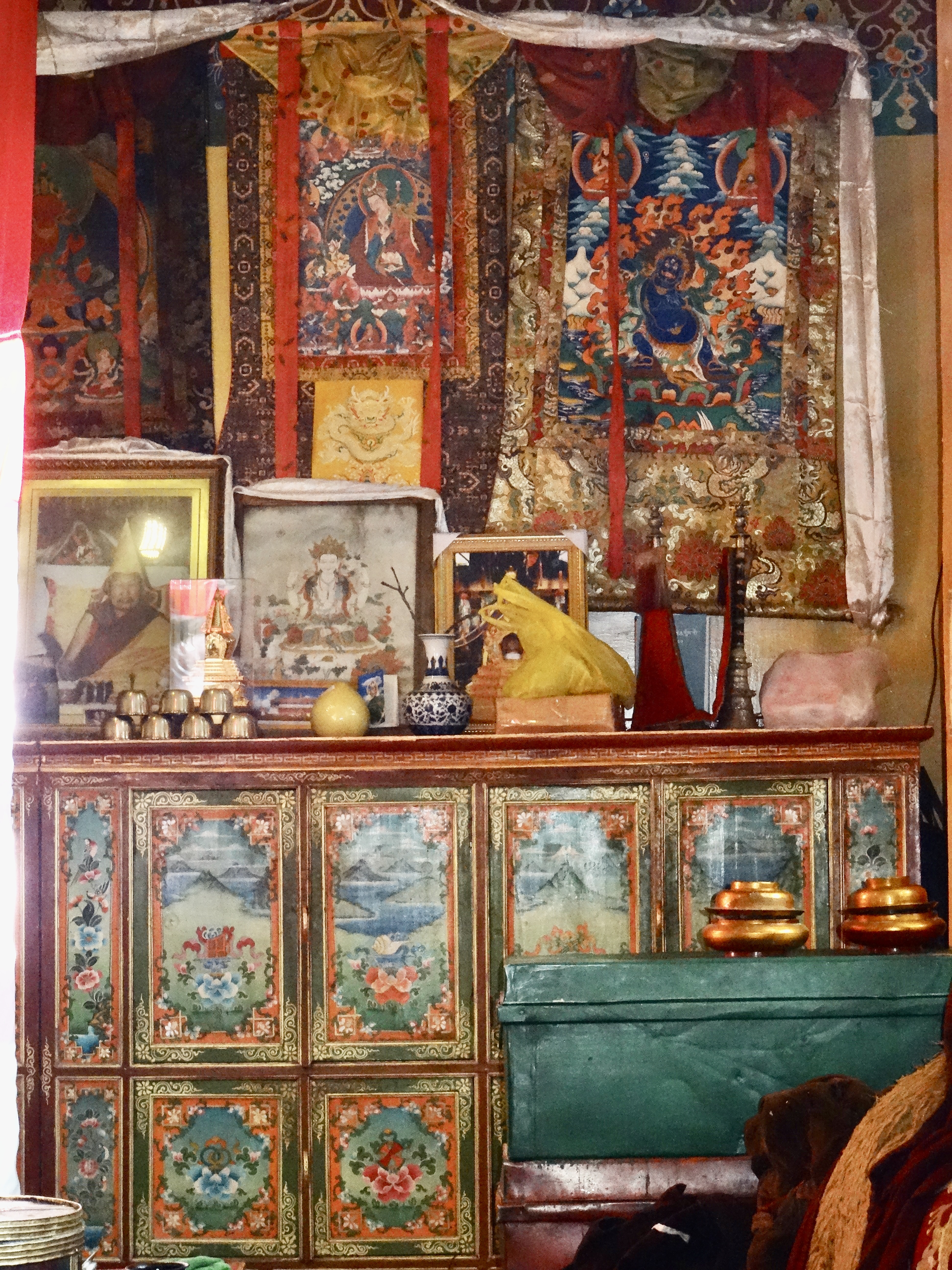
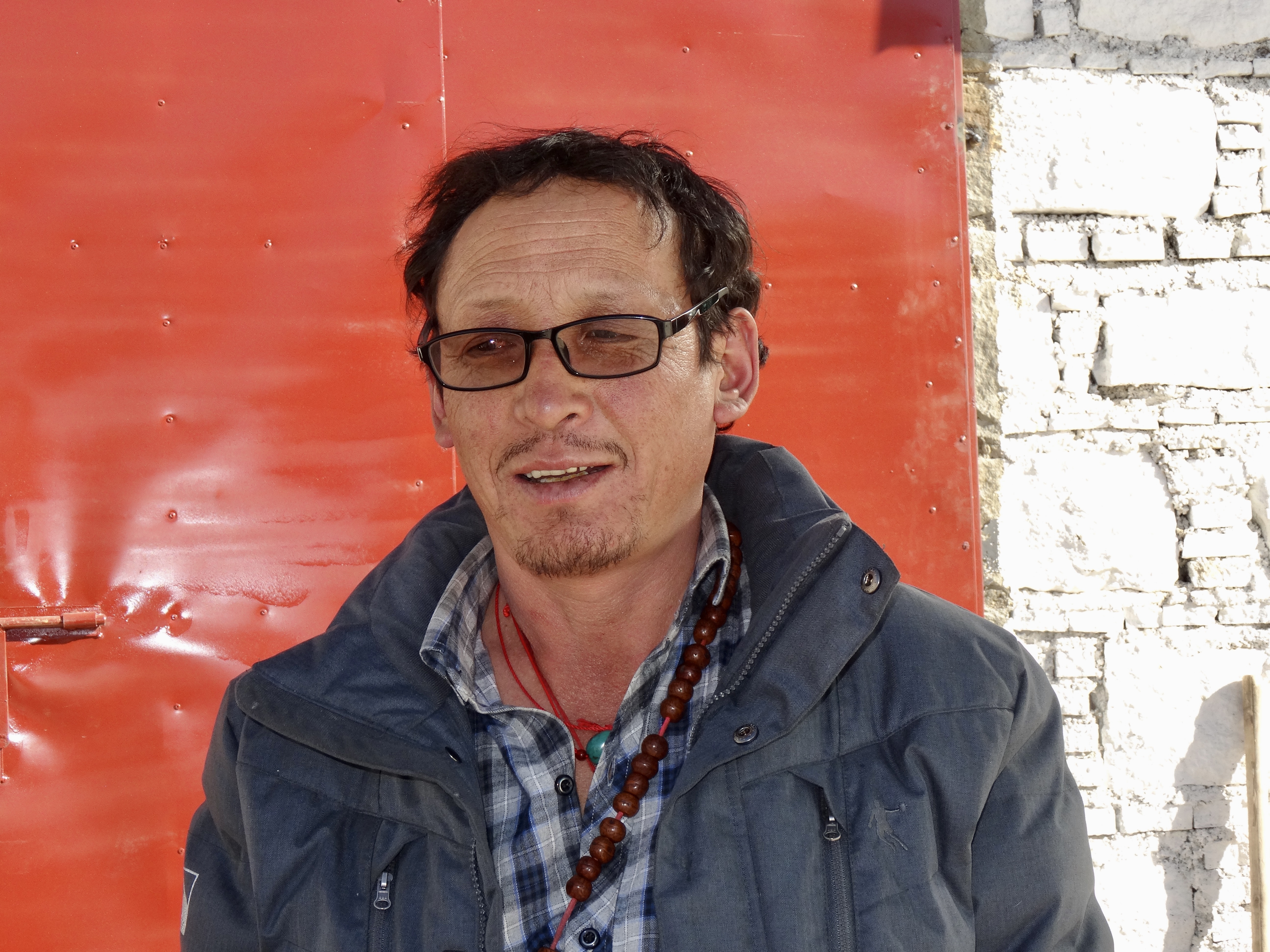
It turns out that Pemba went into that particular monastery (Sera Monastery) when he was just 5 years old and stayed for 14 years, leaving when he was 19, having learned English and other languages and having been outside the monastery numerous times. So, he kept running into monks he knew from his days there. After we finished walking through the complex (28 acres), he met up with a friend whom we didn’t realize was a monk at the monastery because he was in non-monk garb. Pemba told us he was the head of the kitchen and we could get a tour of the kitchen. Thought that would be cool (and hopefully no more Buddhas and religious statues), so we jumped at the chance. It was really great .. about 2,000 sq. ft. on a platform with wood ovens under the platform.. Scores of scoopers and pots hanging above and three very very large vats where most of the food is cooked and served. The vats are sunk into that platform. They now have an electric machine that churns the yak butter. The space had amazing light streaming in — very very photogenic with ceilings about 30′ high. Seeing we were very taken by the kitchen (that cooks for the 600 monks), the same monk invited us for yak butter tea in a little private room off the kitchen.
While I was very suspect of the yak butter tea, it seemed like a great adventure so naturally we said “yes.” We were escorted to a little rectangular room with about six monks.. two of whom were counting money! They served us the tea and when I asked what was in it they explained the yak butter and salt and water, but it was very very creamy. .. I told them I had high blood pressure and that neither the butter nor salt was good for me but that I’d have a little taste. Tasted like drinking melted butter. This prompted a big discussion about life expectancy in Tibet (80 years old they say) and very little cancer, no diabetes, and no problems with blood pressure !! They also have 3,000 hours of sunshine and no one uses sunblock and no one has skin cancer.
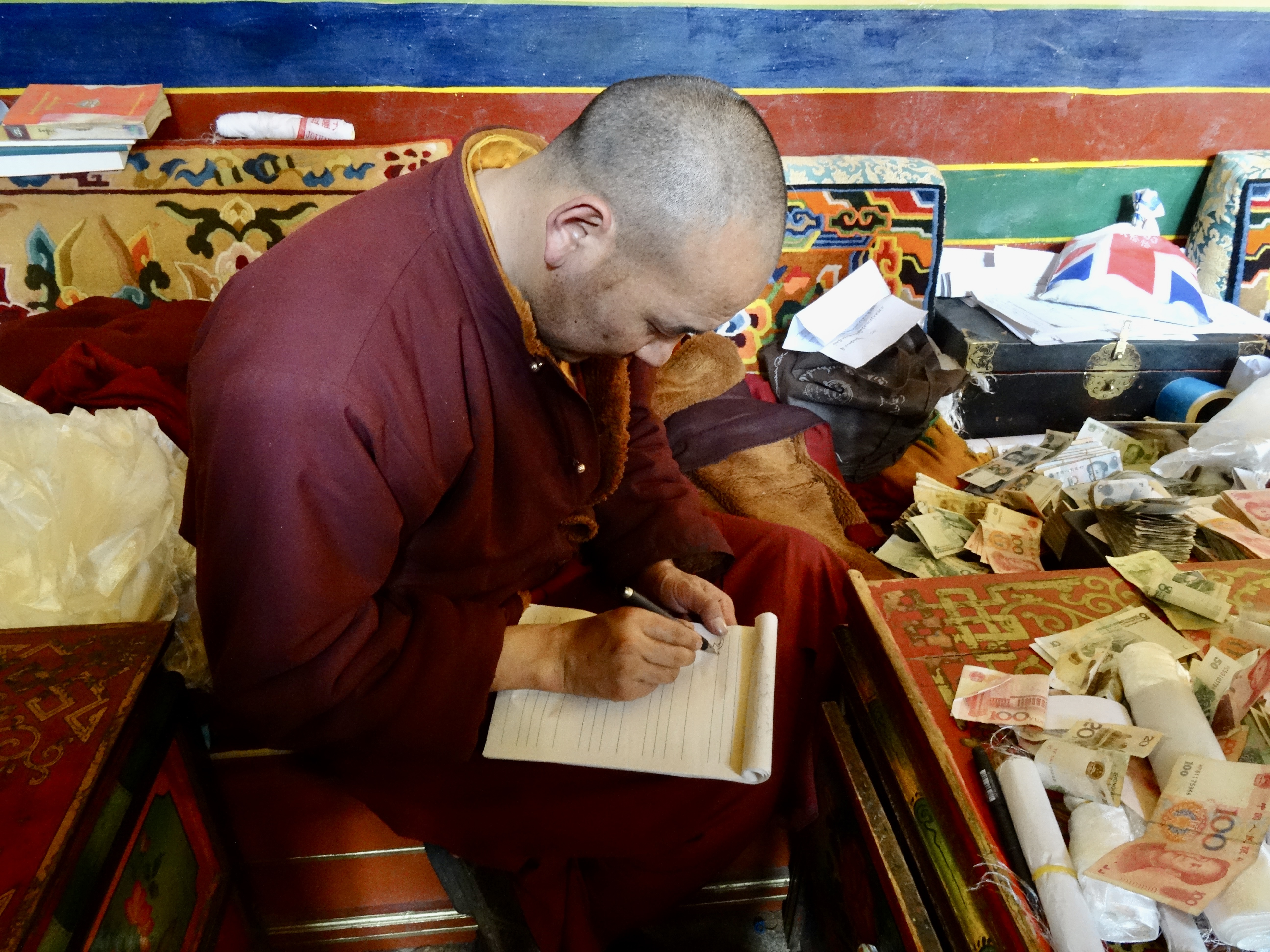
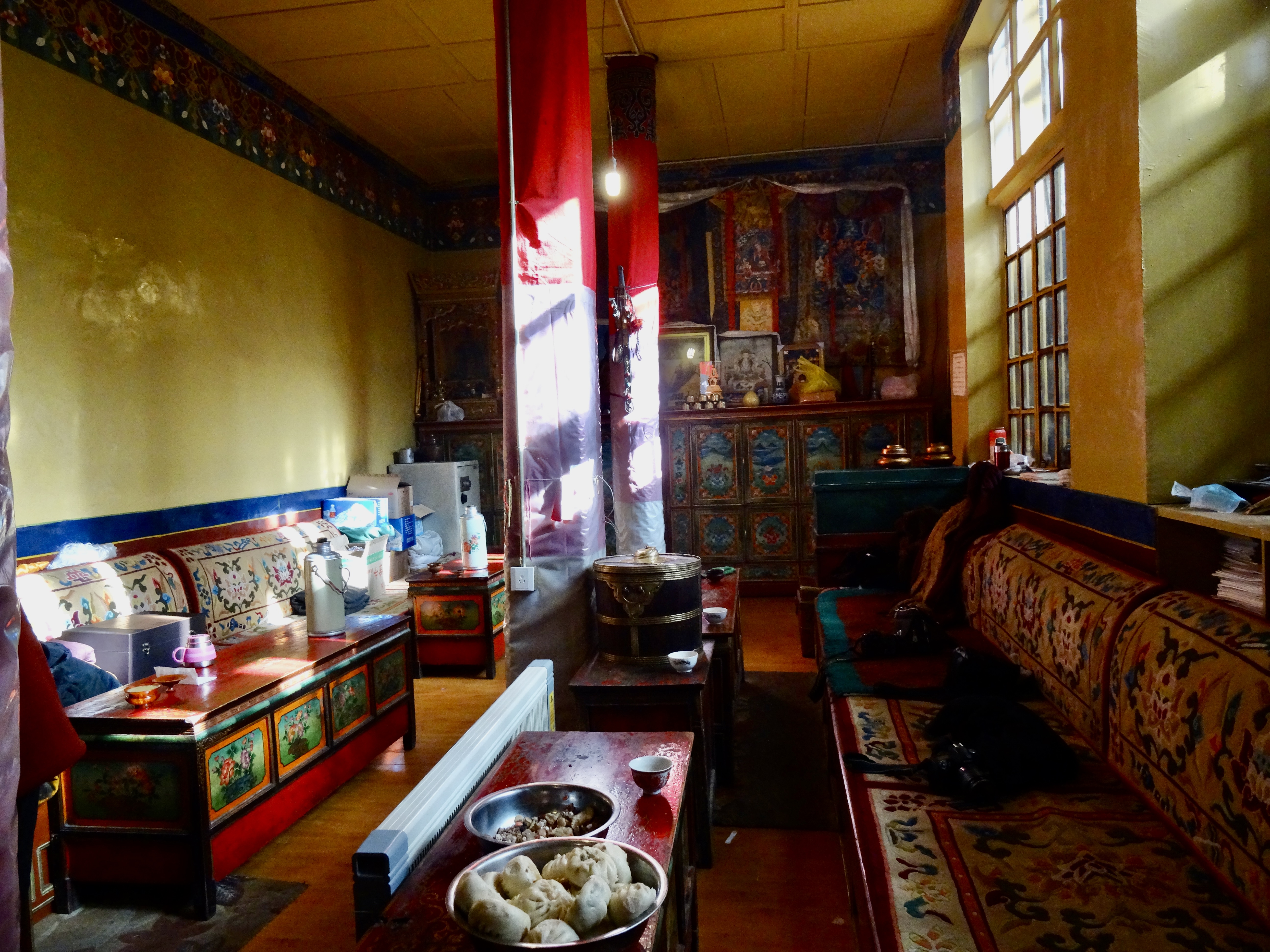


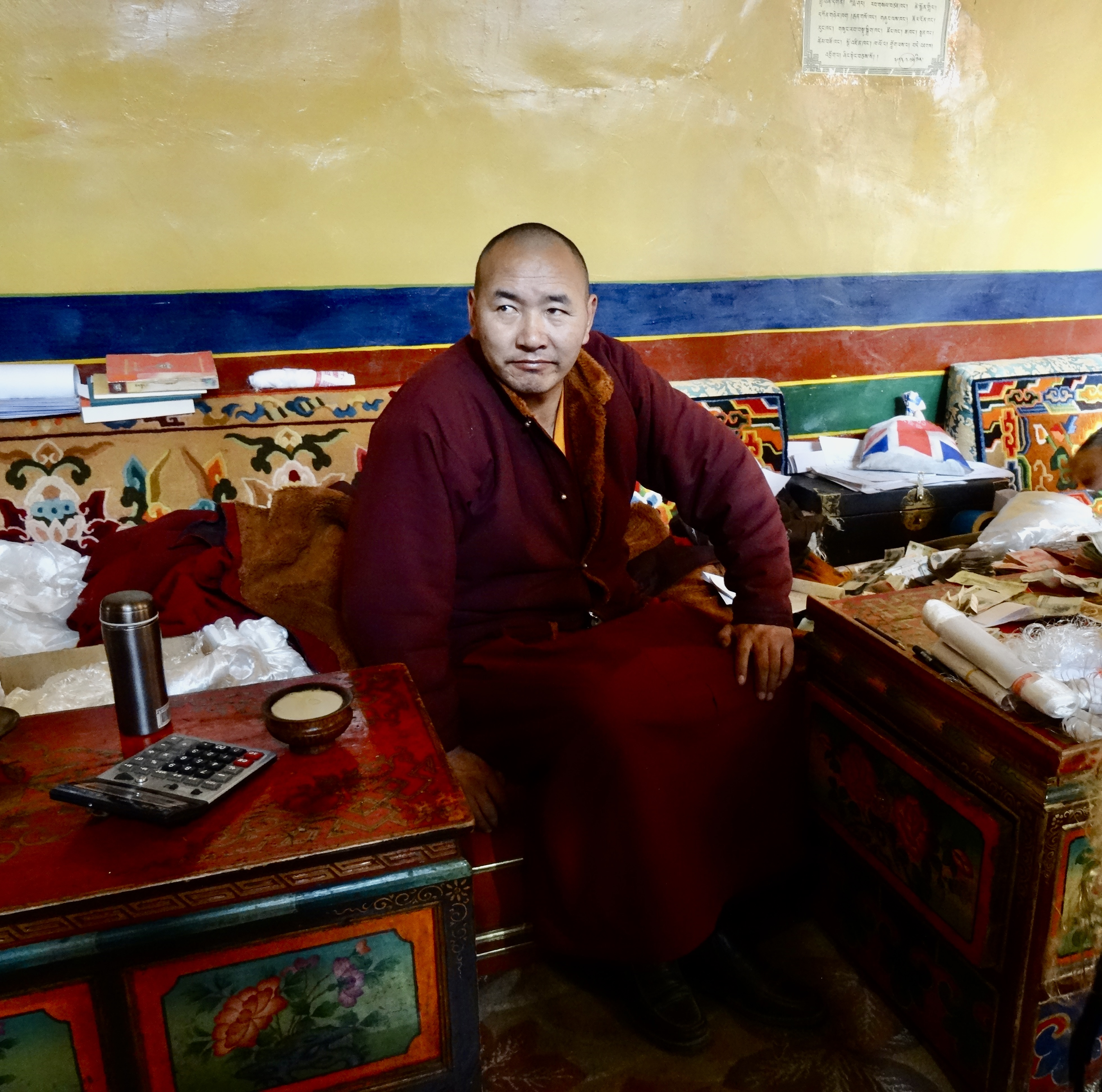
Anyway, we sat with the six monks for about 30 minutes and they were very friendly even broached some unusual topics. We also laughed because we spied the same medications that the pharmacy had given Mike in a little pile on one table — seems one of the monks has the same symptoms as Mike. We learned that the monasteries take in a lot of money from all of the “offerings” (natch) and they are substantial owners of real estate (and beginning to do some development); the individual monks get the monies that are donated by “sponsors” and also their share on each of the four monthly “ritual days.” People kept coming in one at a time to give the main monk money to pray for someone or celebrate a special occasion. Apparently they read the names of the people four times on a particular ritual day.
We decided to make an offering to pray for two friends with cancer.. while I’m definitely not a believer (as you all well know), I figured — can’t hurt! So, I’m hoping that all of the faith that Pemba and these monks have will come to bear.
After making the donation the head monk blessed us and wrapped the traditional white “silk” scarf around our necks in a particular way with a knot and bowed and we bowed with hands in prayer and said something in Tibetan that they taught us (momentarily. We told them to come to California; they laughed.
It was a great experience. And off we went back to the hotel, intending to head to a Szechuan restaurant on Baeku Road.. But Mike is really still under the weather, so we’ll eat dinner at the hotel. We now have three different Chinese medications from the pharmacy here.. and have talked with the pharmacist via the concierge (who is Swiss/Malaysian) and many Chinese and Tibetan assistant concierges. We’re a little concerned about what they suggested so we’re now in touch with our own doctor for advice as to whether or not to take any of the medications. I’m feeling a lot better so I’m opting to decline any medications. Mike is leaning toward taking one of the three, but which one is a dilemma.
Here’s to speedy recovery.
Best to everyone.
Fern
PS A few other tidbits — Tibetans rarely eat fish, because they think they could be eating their relatives as they put dead bodies in the waters and also in the forests.
 Fern's Travel Notes