January 4, 2014 — Amazing and Exhausting Day in Delhi
Saturday, January 4, 2014. Delhi
We got picked up at the hotel at 10:30 sharp, as planned, by Pradeep’s driver. Mike met Pradeep this past summer when he visited Mike’s office in Oakland. Pradeep is a friend of one of our friends (an American trained at Harvard and MIT, who went to India in the early 1970s to work as an architect and to create a school of planning at Ahmdebad. In the late 70s he established some kind of a center and also an architectural and planning firm in Pune). Pradeep came to Berkeley to drop off his son who is in the Graduate Landscape Architecture Program at UCB. Mike mentioned to Pradeep at that time that we would most likely be coming to Delhi at the end of the year.
Pradeep reached out several times to be certain that we would connect when in Delhi. So, Pradeep’s driver picked us up at the hotel and off we went to the outer edge of the southern part of Delhi to a very small village where Pradeep has built his nationally-known architectural and urban planning practice. The practice of having a “driver,” by the way, is very very common for professionals in India. (We had already experienced this when we visited friends in Mumbai more than 15 years ago.) Pradeep owns the car and Krishna drives the car. Most likely Pradeep never drives himself, although I cannot be certain. Driving in India is an absolute “art” and a skill that is probably best left to those who do it for a living.
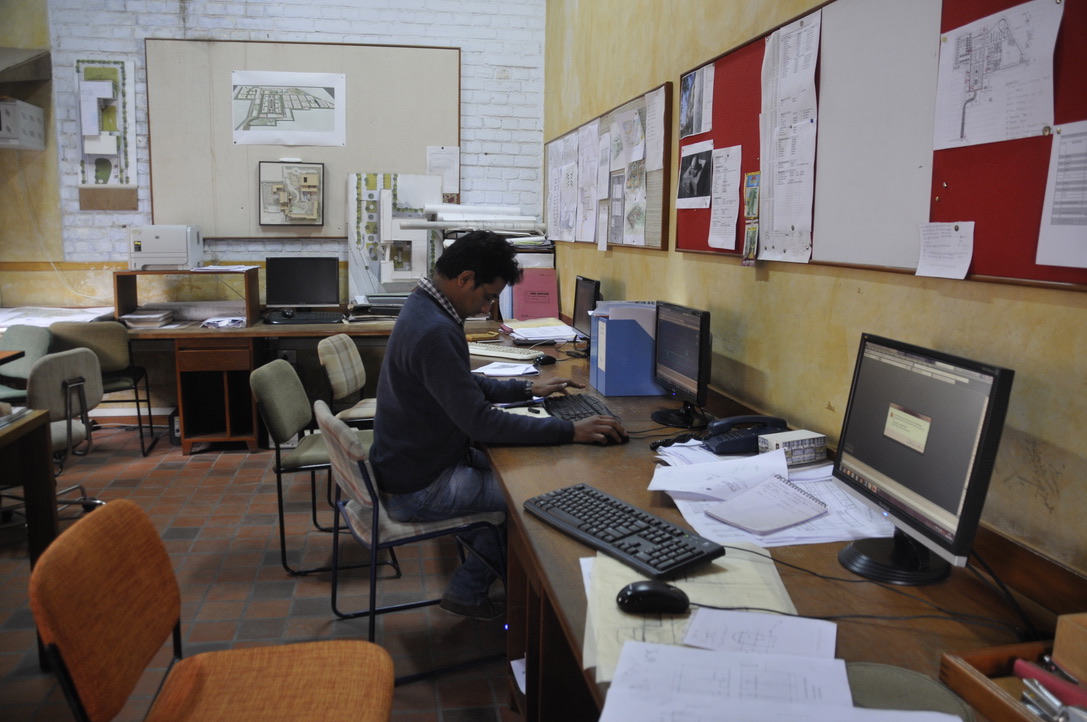
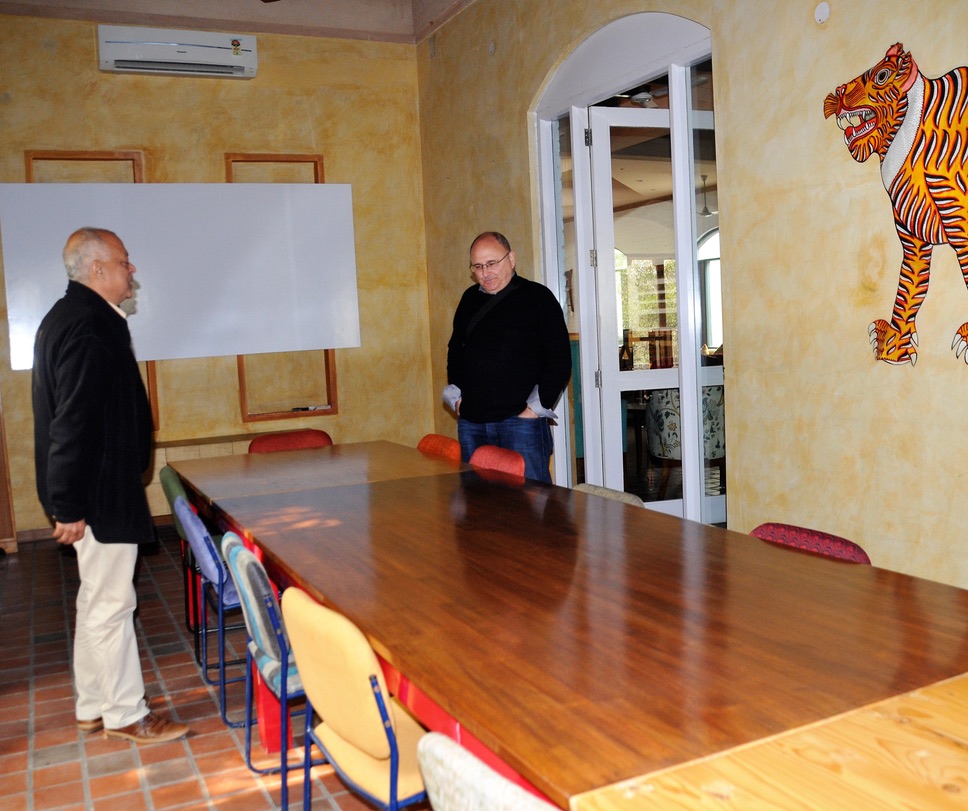
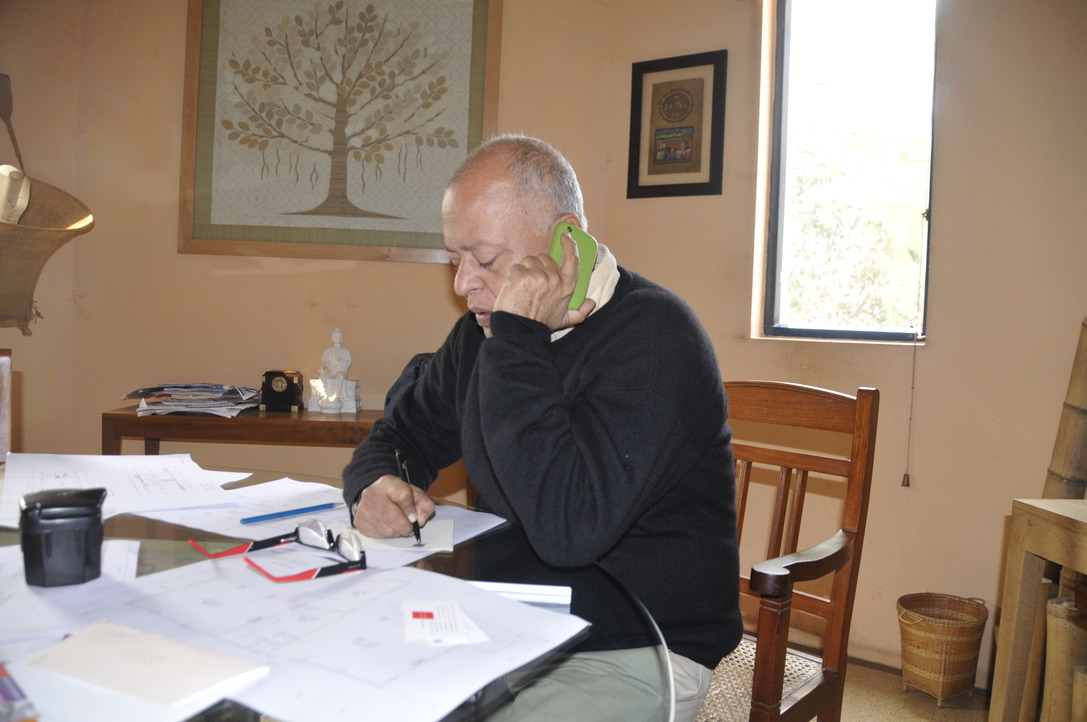
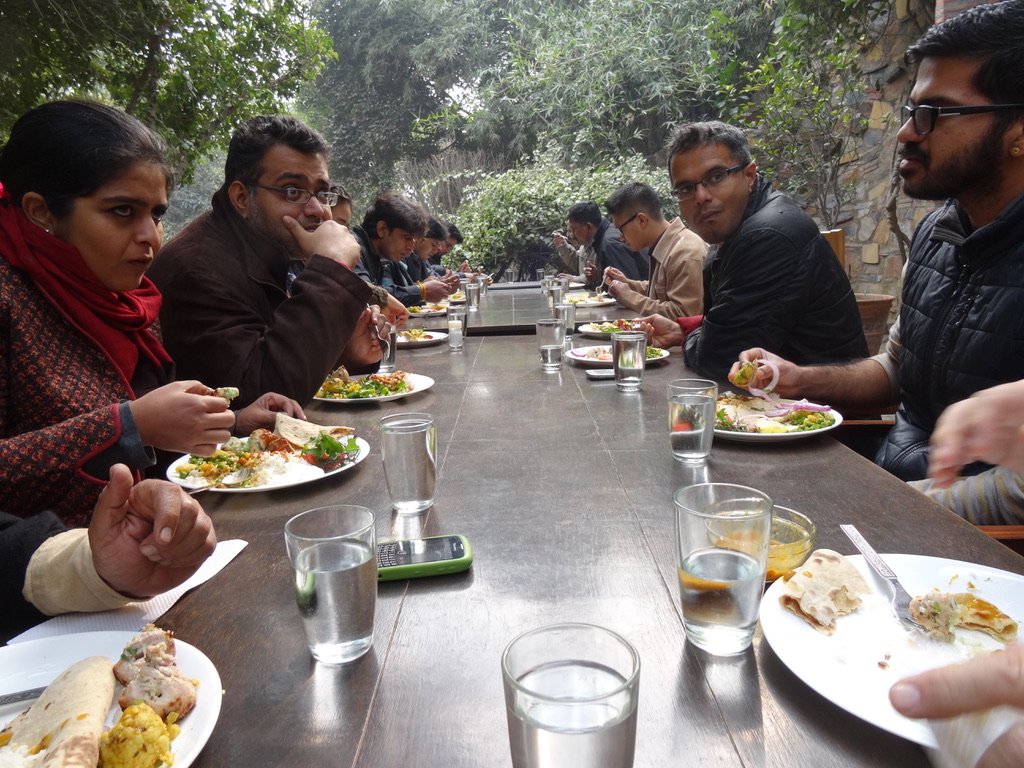
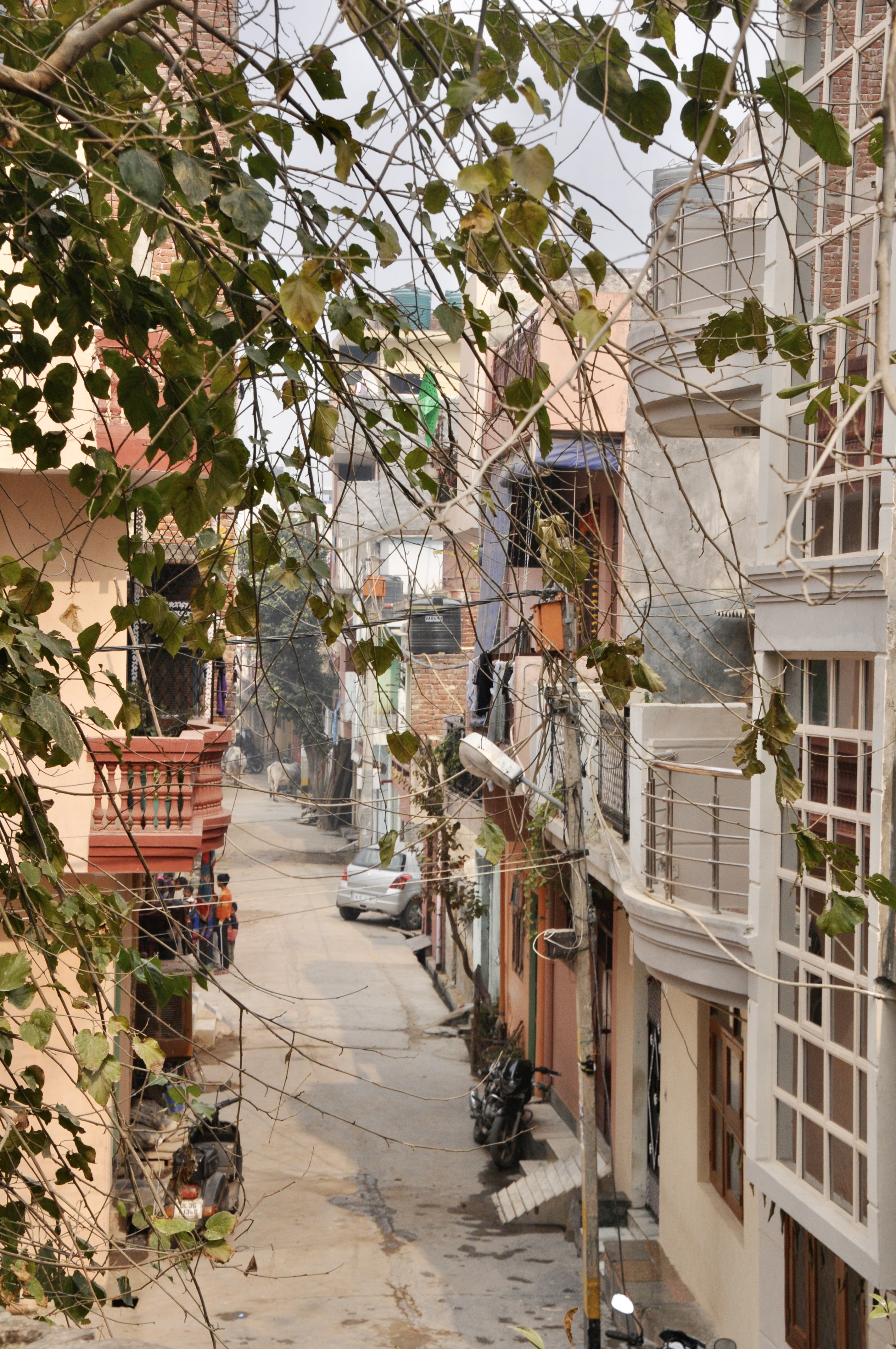
Anyway, the drive from the hotel to the small village of Aya Nagar took about an hour. The “village” is outside of the urban planning zone for the city of Delhi — meaning that Aya Nagar is sort of left on its own — garbage is only picked up when those newer residents complain; there are no guidelines for planning; there are no government offices that check construction. Essentially it is even more of a free-for-all than the rest of Delhi. Pradeep lives within the center of Delhi and “commutes” (with driver) daily about 40 minutes each way. Initially he opened his office in central Delhi, but about 15 years ago — as the prices of real estate and office space zoomed — he decided to look for larger space and also to create a workspace that met his many interests and needs. Somehow, he wound up buying property in Aya Nagar and built a rambling and wonderful complex that includes his architecture/planning firm (with about 30 employees); a wood shop downstairs where furniture is designed and built to order; a café-like space where staff eats together each day for lunch (with the food coming from an NGO in the town that is a training ground for women to get employment); an outdoor snaking channel of waters and fish ponds and plants that purifies their gray and black water that is eventually used for irrigation; a set of about 8 geese, some dogs, and more. The “building” is really a complex of several structures and you move from one to the other by a series of outdoor bridges that link the buildings at each floor level. We got the royal tour of the place and then went for a walk in the “village” — together with the cows, sleepy dogs, and village people — many of whom Pradeep knew.
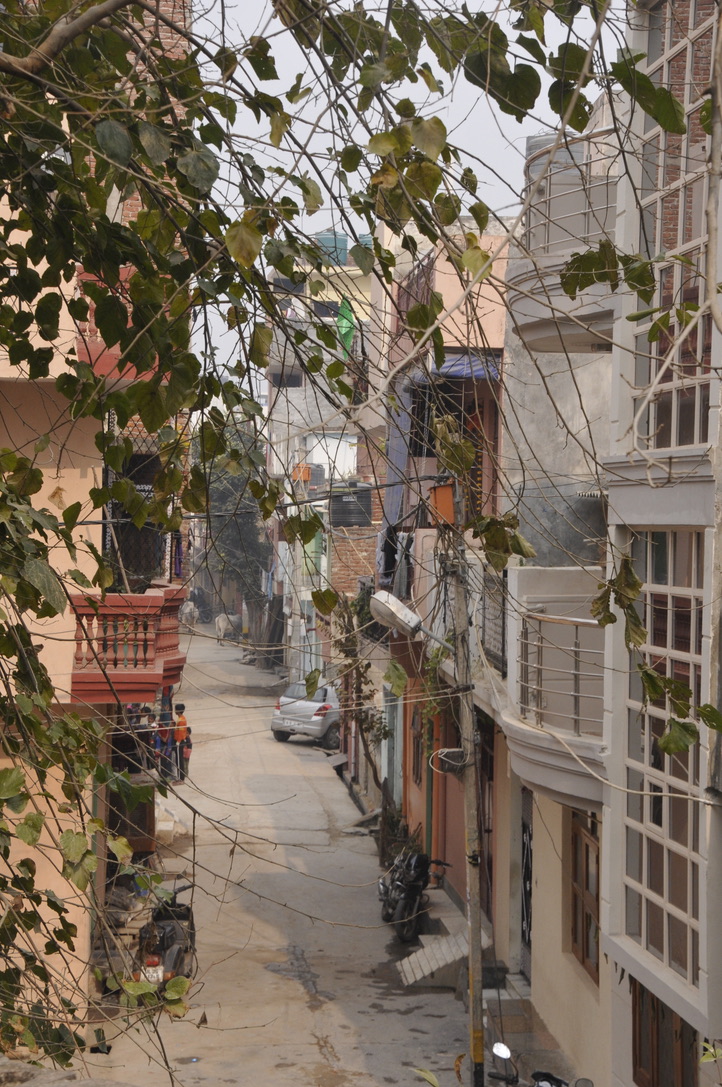

We stopped off to visit the NGO where the lunches are made, met the director, and watched a group of women making butterflies out of paper to sell at a craft fair coming up in February. Chatted a bit to better understand their funding structure and then continued our “stroll” in the completely unpaved, dusty village. According to Pradeep, 10 years ago there was virtually nothing in Aya Nagar and now it’s built up — of its own efforts. There are little shops everywhere, and people migrating from the south to Delhi — where there are more jobs — are coming to the town. Pradeep says that it will gradually be incorporated into the city of Delhi and then will have the usual restrictions… for the better and also for the worse.
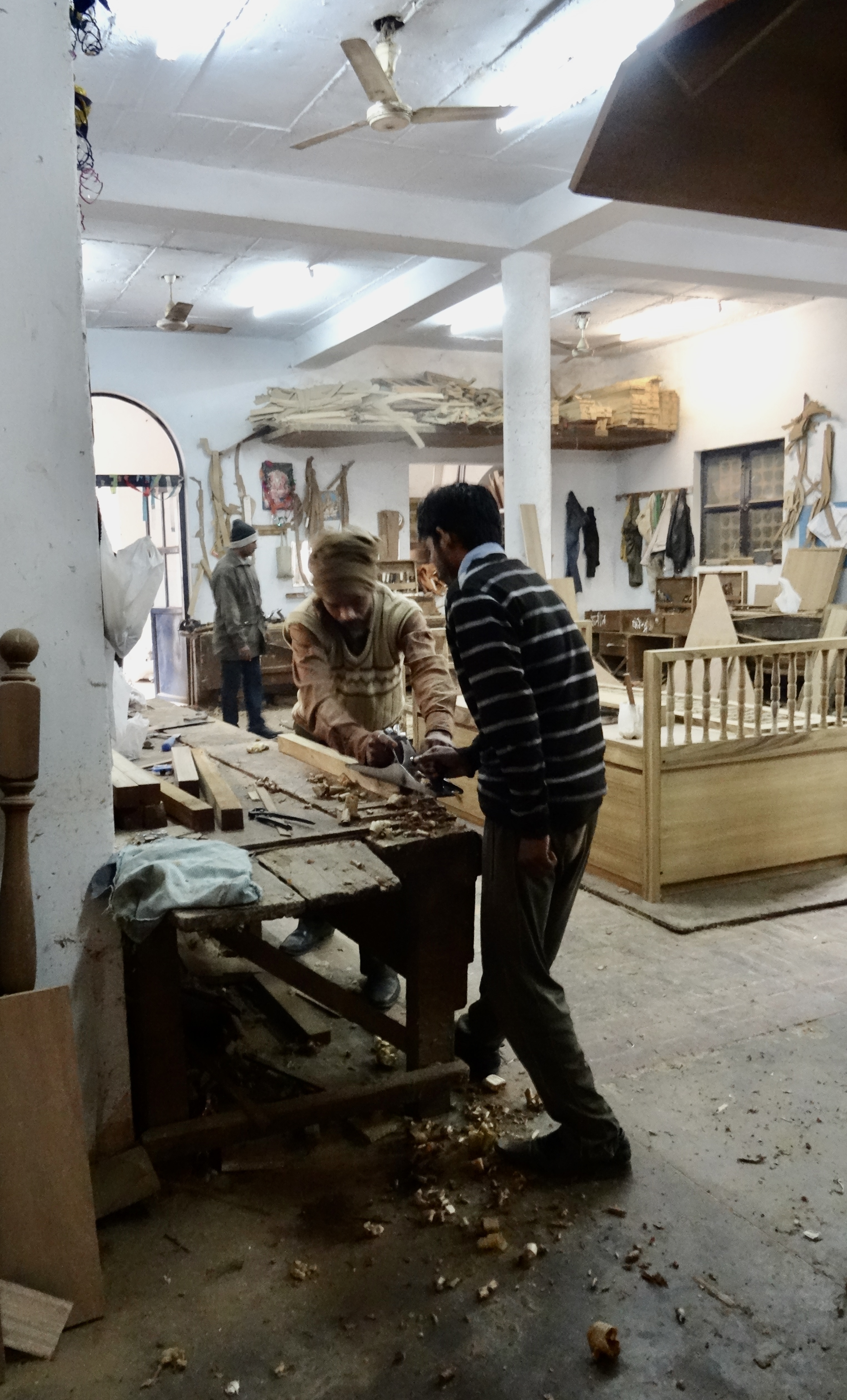
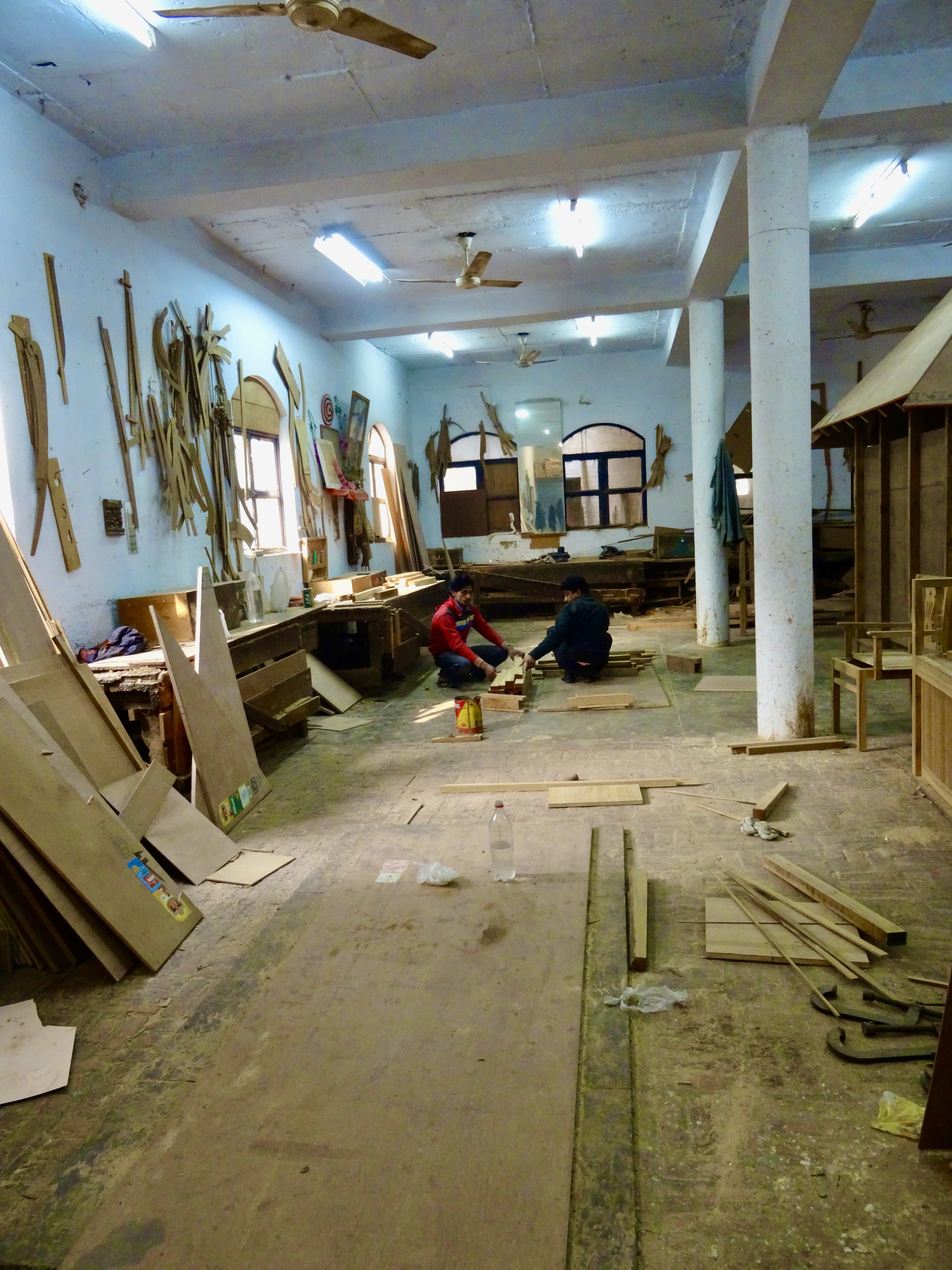
At the office, we were greeted by the whole staff (all Indians) — and also three other people — who are probably all in their early to mid-30s:
- Aditi – a furniture and interior designer trained at the National Institute for Design in India — a university begun by Charles and Ray Eames at the request of the highest level of Indian government in the late 1950s. The government wanted recommendations as to how best to develop a design training program that could help small industries throughout the country and that could preserve high quality Indian design of consumer goods. As I understand it (and I remember reading a bit of this history years ago), the Eameses came to India through Ford Foundation funding and stayed many months to prepare the recommendations. They traveled throughout India, studying different centers of design, handicrafts, and manufacturing, and eventually issued an important report which led to the establishment of the National Institute of Design in the very early 1960s. It was developed to be an autonomous national institution for research, service, and training in Industrial Design and Visual Communication. Once graduating, Aditi realized that her training was really not sensitive to India’s materials and needs.
- Her husband who is a documentary filmmaker (with a film airing on their public television station next week, I think).
- Pankaj, her brother who was visiting for a month — from Oakland!!! Turns out that he graduated in urban design in India and then went to MIT for his Masters in Urban Planning.. and stayed in Boston, later DC — working as a consultant to large companies. He began to realize that he had no interest serving the corporate class and headed to San Francisco where he briefly worked for the city of San Francisco’s environmental department.. and continued to search for what he considered to be a more “meaningful” position and something that matched his politics (left). So, for the past 18 months he has been part of the Arizmendi cooperative bakery, first in the Oakland branch and now in the Mission District. (As Pradeep described him — an MIT-trained baker!).. We had a lot to talk about, especially since Mike and I are big fans of Arizmendi. What a very very small world it is.
So, Aditi and her husband own and live in an amazing house down the road from Pradeep’s office, designed by Pradeep a few years ago. In it she has created her own little world — a great living space; a work space for her small staff who help her develop and produce her own line of wonderful bags and purses made of special fabrics that she sources from small villages throughout India; the staff are all village people, most of whom sat on the floor in tiny spaces working when we arrived; and a “showroom.” Aditi was trained much like me in a post-Bauhaus method so we had a lot in common — the good and the bad of this kind of aesthetic training. Her product line uses all sorts of recycled materials and she collects every scrap of fabric that is a “byproduct” of the bags. Then she takes these tiny, teeny scraps and the women in the village sew them together to make yet other bags using these “throw-away” pieces.
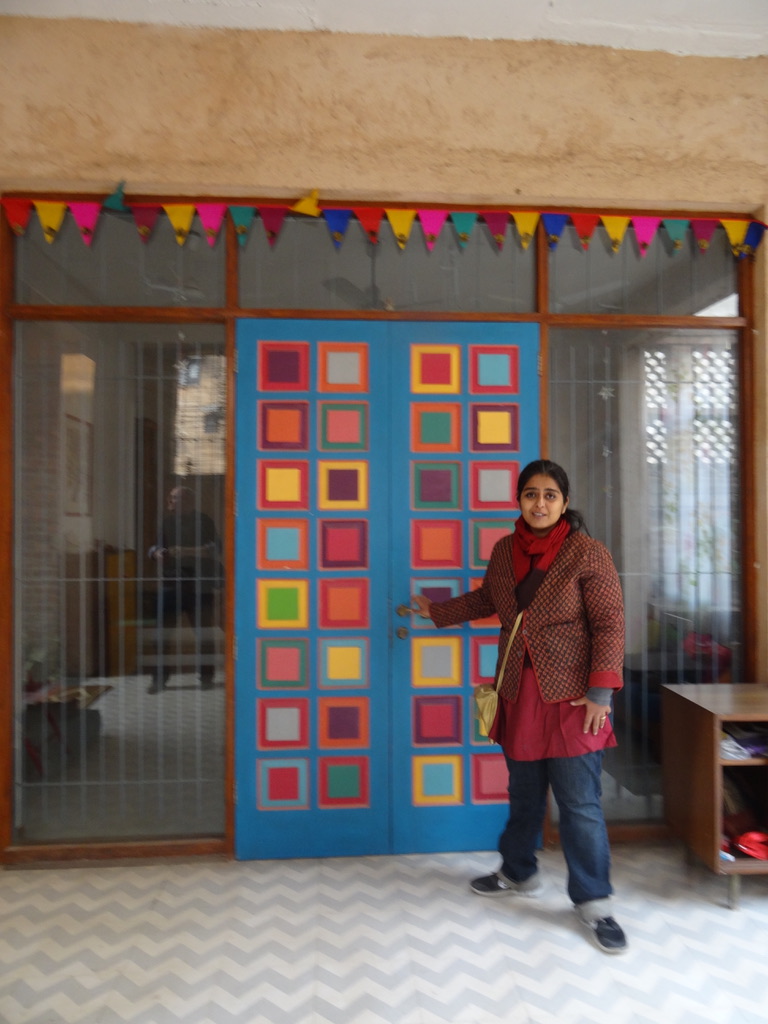
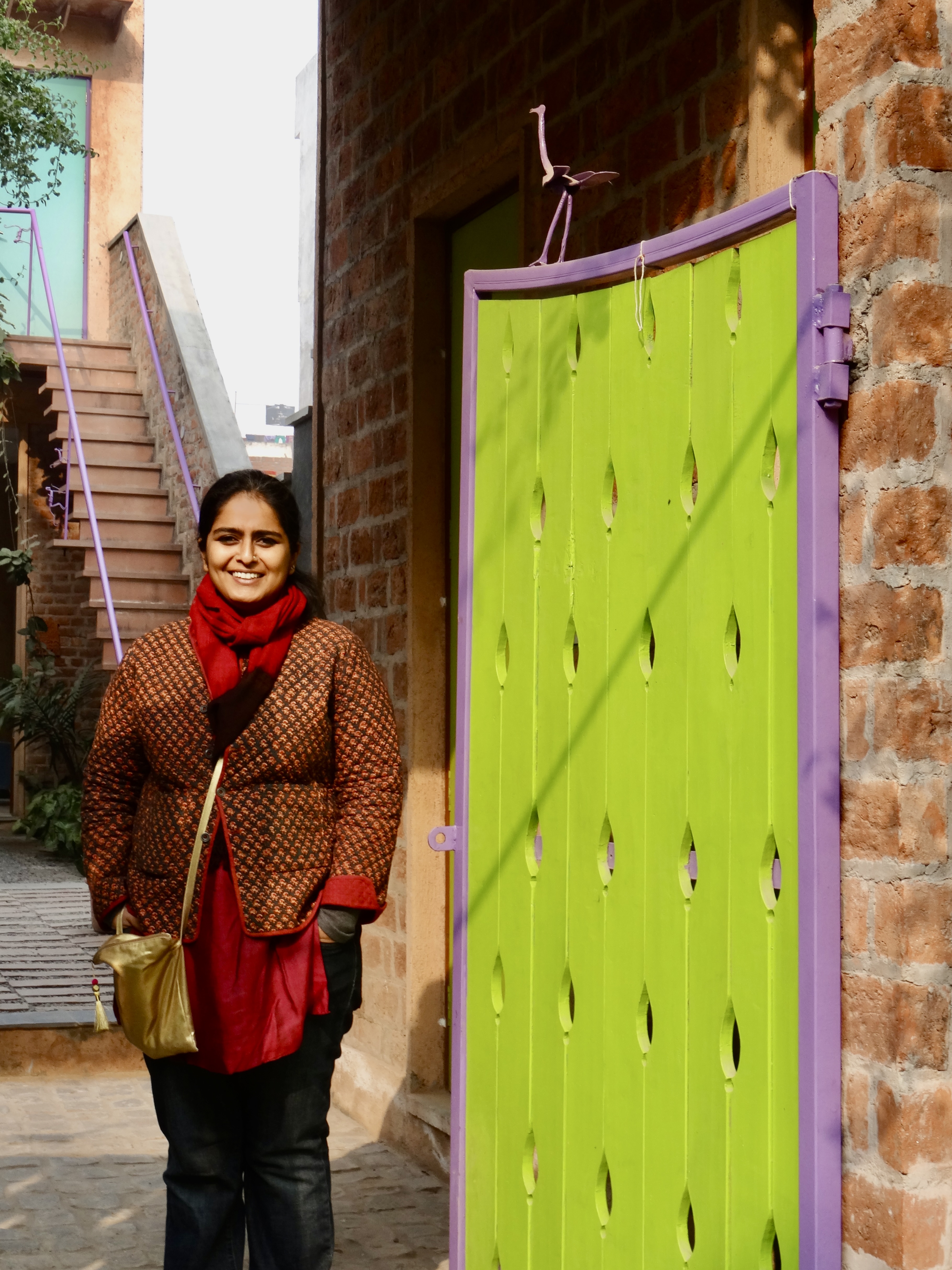
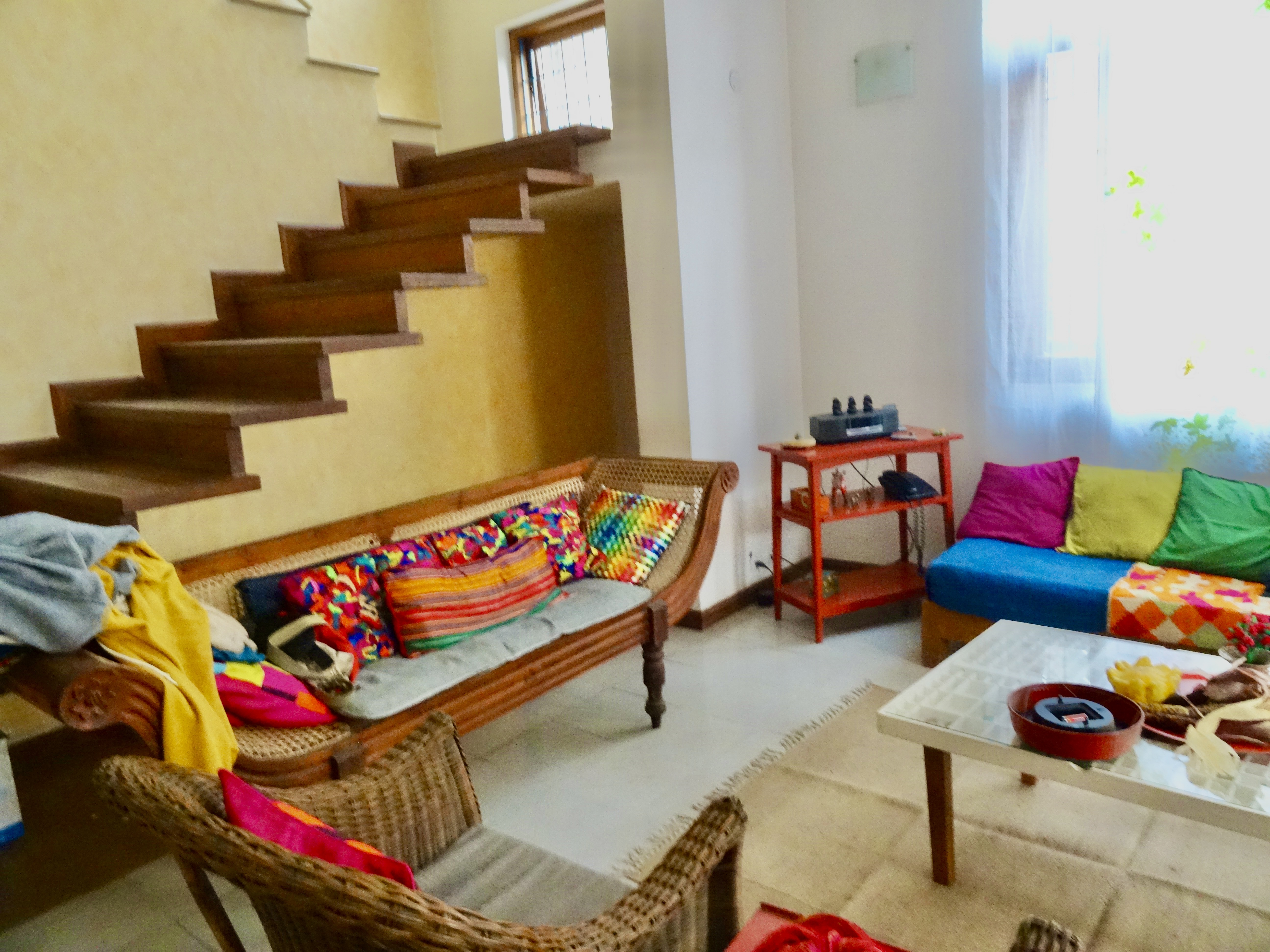
The brick house has all sorts of bright colored trim reflecting Aditi’s wonderful sense of style and taste — chartreuse doors and bright green edges, etc. There is a complex of three houses that Pradeep designed. Two of the others are owned by architects on his staff.
The office served us an Indian lunch (except for the carrot cake they had for dessert — made in India, but not very traditional — as a happy new year cake).. Everyone took lots of pictures — we of them, them of us, them with us, us with them.. seemed like everyone had a camera going at one time or another.
At about 3:30, they suggested that we go to a special craft exhibition and sale back in the city. Pradeep offered his driver again, but we insisted on taking the Delhi Metro (to try it out).. So the driver took us to the closest station (about 10 minutes from the office).. but of course Pradeep would not really let us on the Metro alone (in the end, it was probably a good decision). He sent a staffer with us who literally shepherded us into the train station, bought the Metro tickets, and went with us for about 30 minutes on the absolutely jam-packed train and then got off with us and walked us to the exhibit/open air craft center. Once safely inside the exhibit area, he bid us farewell.
The Metro line that we were on begins as an above ground line and eventually tunnels underground as it reaches deeper into the city.
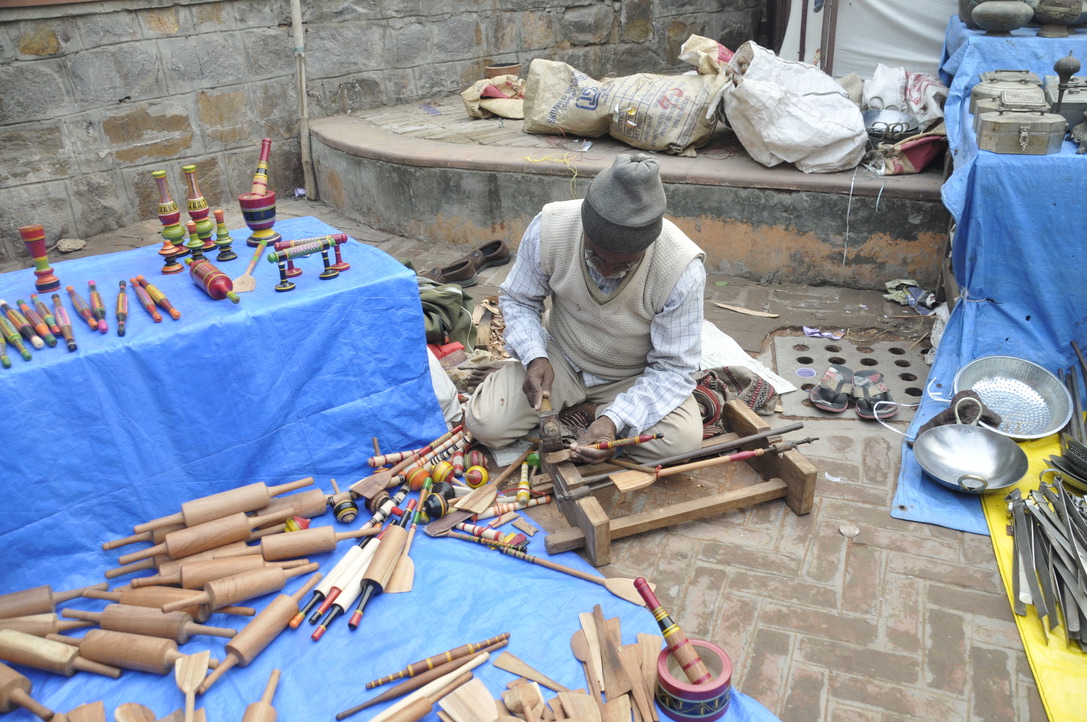
So, turns out that the exhibit and craft show/fair was organized on a huge urban space that Pradeep designed. The basic plan remains the same, but every two weeks the shopkeepers change so that crafts people from all over India have an opportunity to display and sell their goods. For these two weeks it was crafts from all over India, displayed in little stalls — curated by an Indian woman and friend of Pradeep who had just completed a book about craft in India! We were supposed to go up to meet her as she was giving a little speech but it was crowded so we walked the fair instead — and I’m afraid made way too many purchases.
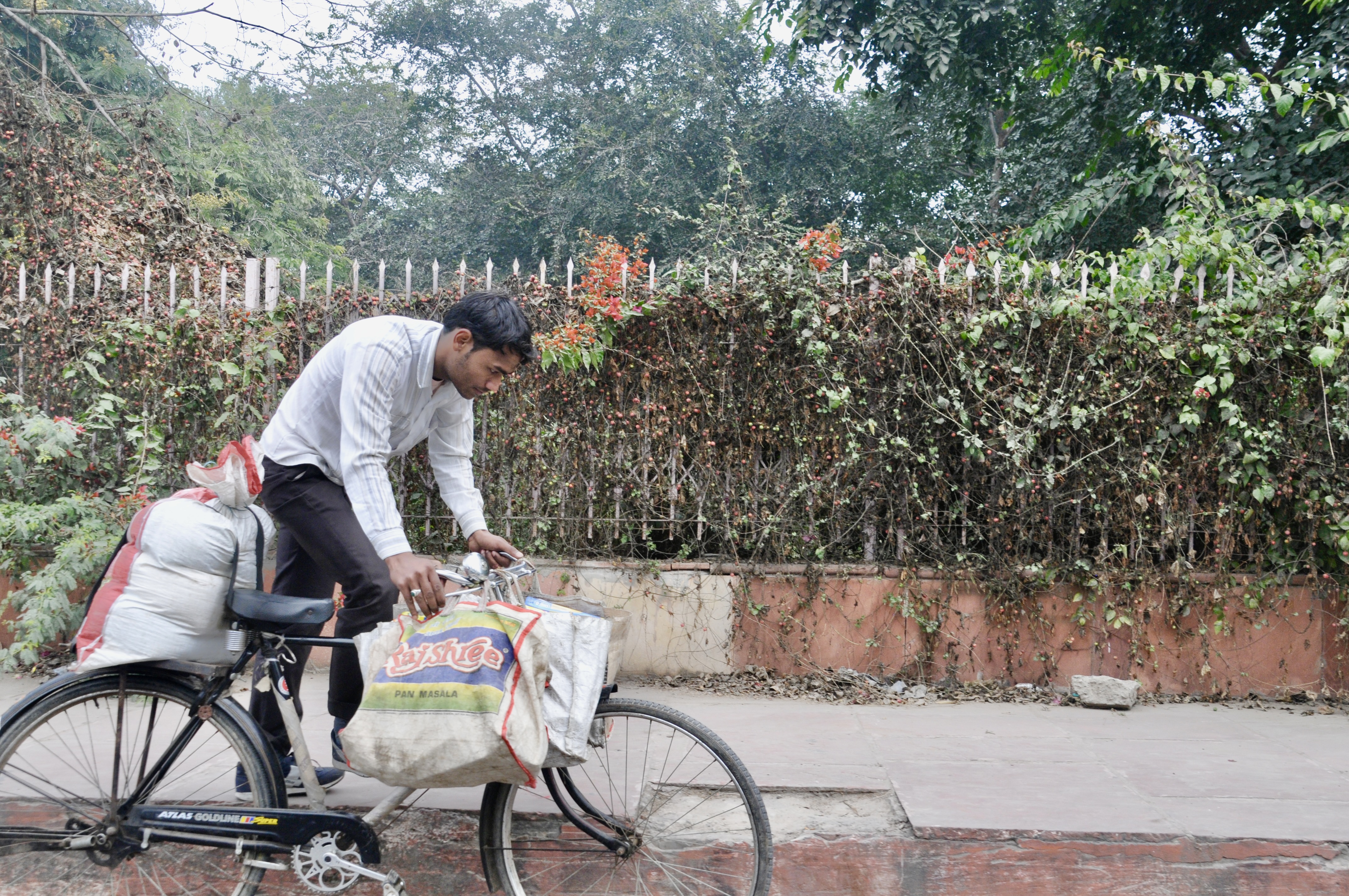
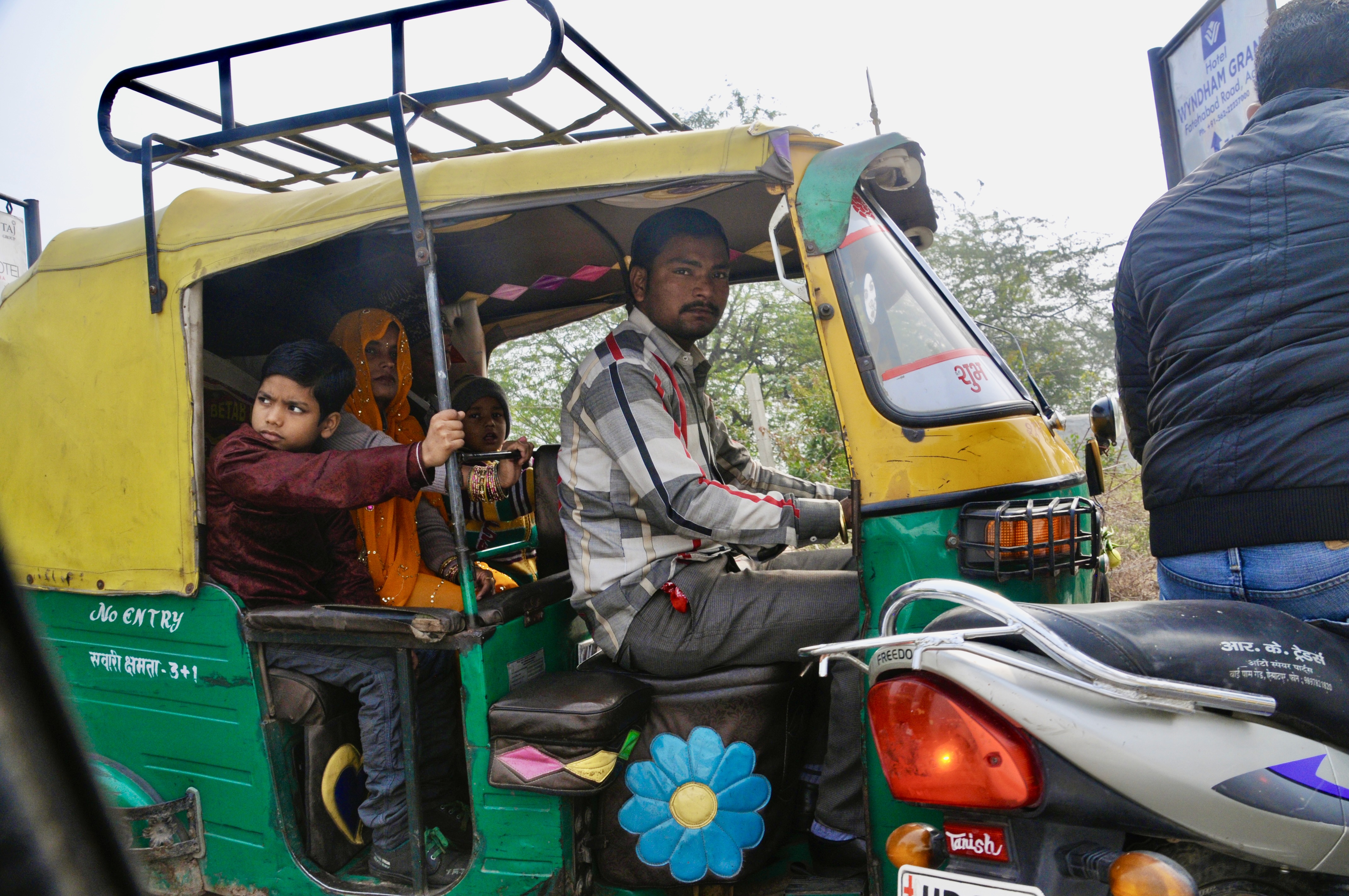
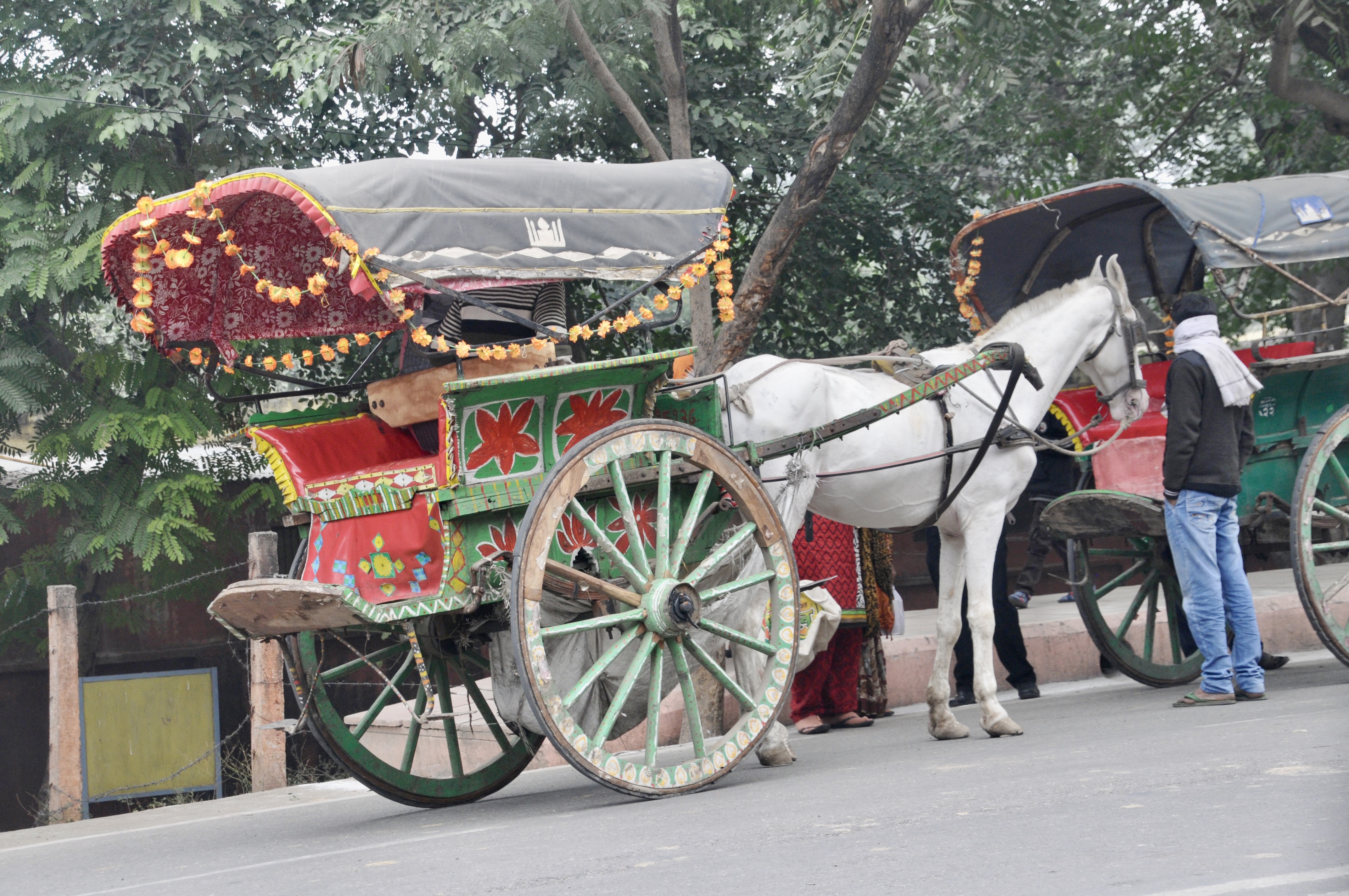
By the time we left the craft fair it was getting dark and cold, so we opted for a taxi.. and here we are at the hotel. Tomorrow we do the tourist bit — going to the Taj Mahal. We really considered skipping it, but that would be weird. We’ve linked up with one of the taxi drivers that we had a day or so ago… He’s coming in a “white car” — not the taxi; they refer a lot to “white cars” which I think are meant to describe more comfortable cars with good cushioned seats. The hotel also has a service for taking people to the Taj (which is a three-hour drive in each direction). But the hotel arrangements are a third more than our “deal.” So that’s tomorrow.. six hours in a car; two at the Taj and lunch somewhere in Agra (the city where the Taj is located). Then we’ve made reservations for dinner for tomorrow night at one of Delhi’s best restaurants (Bukhara).. It will be another exhausting day. We leave very late on Monday.. and have no plans for Monday except to get some work done to be prepared for our arrival on Tuesday and travel to Seattle on Wednesday.
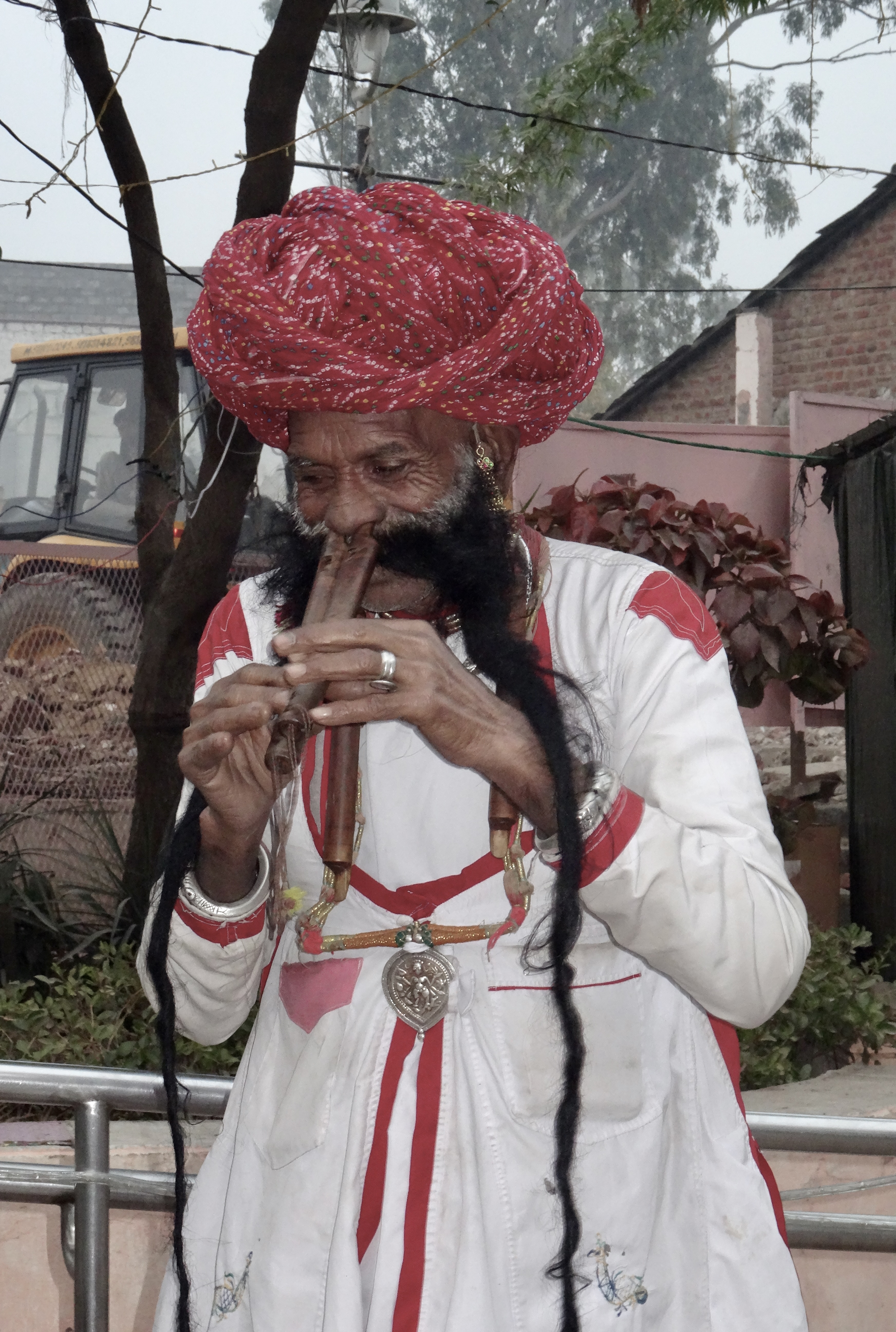
One last thing, I forgot to mention — everywhere you go — into the hotel, into shopping districts, into the craft exhibition, into monuments, into the Metro — you have to walk through security screening devices and also open your bags. When we come to the hotel by taxi, the taxi must open his trunk to be checked out. It’s all very casual and seems rather lax, but it’s there and done none the less.
Best — Fern
 Fern's Travel Notes