Tage Drei – August 24 2014. Berlin and Dessau
Hallo —
Sunday, August 24, 2014 :: Close to Midnight
We’re wrapping up our short, four-day visit to Berlin — just a few hours to stroll around in the morning and then we are off to Helsinki…
Today we all ventured to Dessau… took the train from the Haupt Bahnhopf (main train station — last time we were in the train station we were headed for Prague)… for the short ride (less than two hours) to Dessau. Train was packed with all sorts of people coming and going. Our destination was the Dessau Bauhaus. The train ride was rather uneventful — passing through farmland and small German villages. The weather was a bit precarious — raining on and off, but in between it was bright sun and clear blue skies.
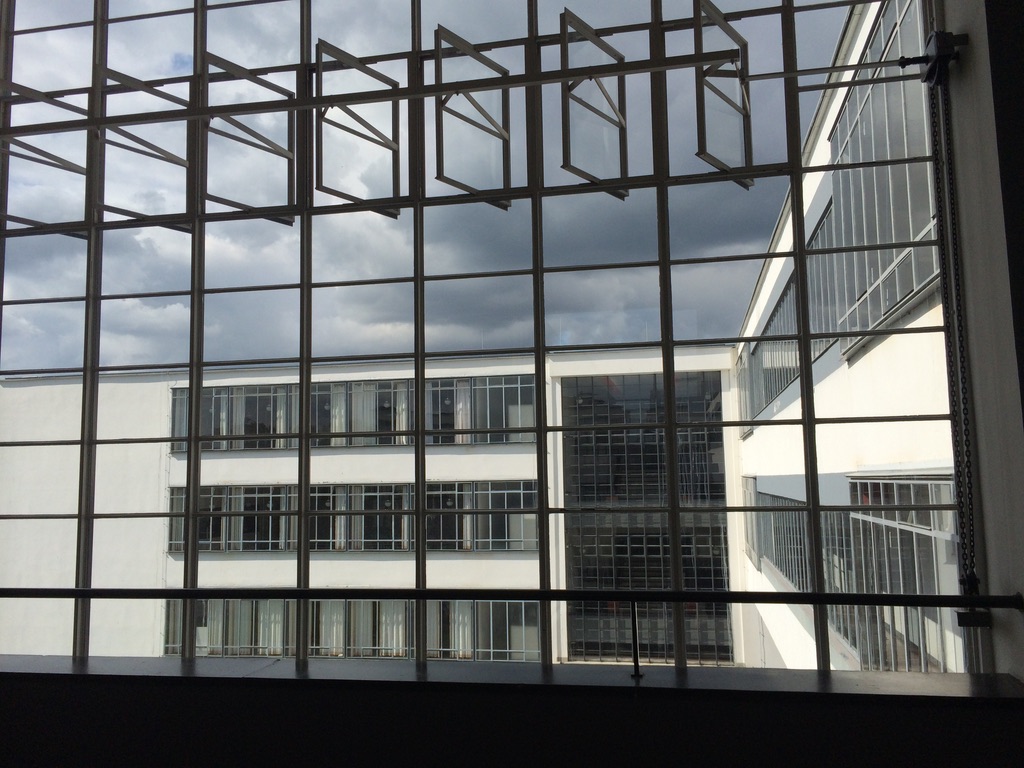

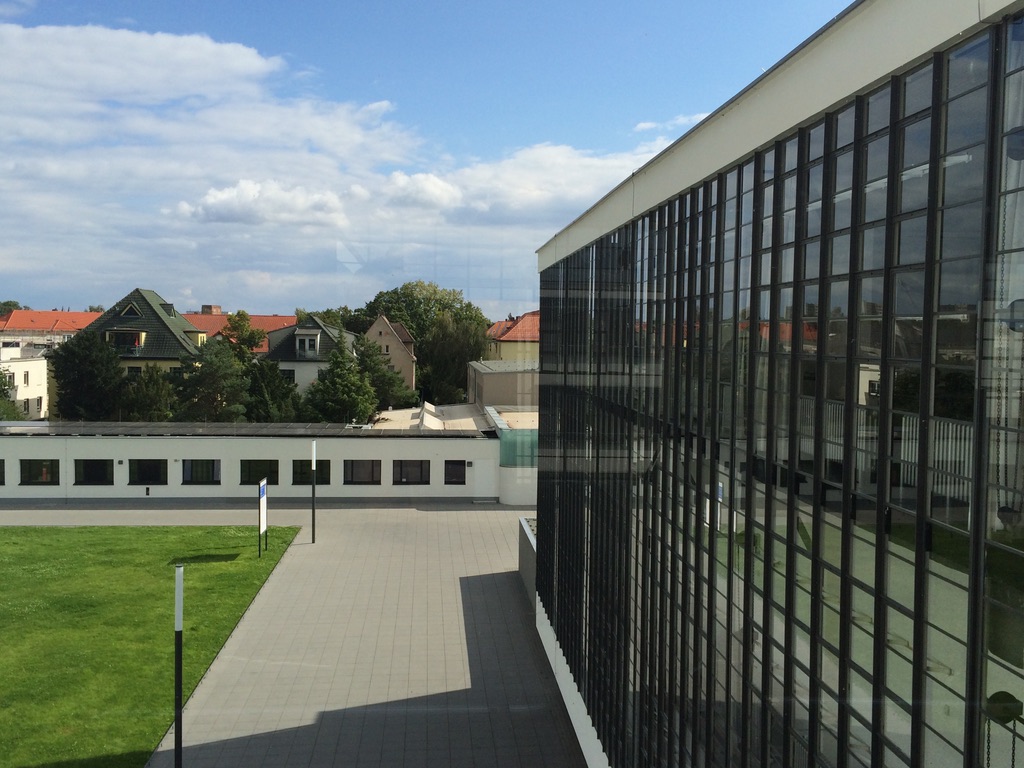
Dessau is a delightful small city of 80,000 people with sweet meandering tree-lined streets and roads. It’s famous for being the home of the Bauhaus which moved to the city in the mid-1920s after it was forced to relocate from Weimar. Gropius, Klee, Kandinsky, and Moholy Nagy were all located here for some period of time.. until the Nazis closed the Dessau Bauhaus in 1931, and it was not reopened until 1986. The city was pretty much destroyed by the Allied air raids during WWII.. The city had become the center for the manufacture of arms during the war. The city was rebuilt and became a major industrial center of the GDR (East Germany). In the past 20 years many historic buildings were restored including the Bauhaus.
Kurt Weill was born in Dessau and the city now hosts an annual Kurt Weill Festival, so wherever you go you see signs about Weill.
Before heading to the Bauhaus, we wandered to the Elbe River (on the edge of the city) for lunch at the 1930s-built Kornhaus Restaurant, which has great views of the river. The building is an original Bauhaus construction. After a leisurely lunch, we went to visit the Bauhaus.. I won’t go into the complex history of the Bauhaus including its effort to stay out of the political fray and the impossibility of doing so, because we visited the Bauhaus in Berlin in 2012 and I wrote quite a bit about the Bauhaus history during that trip… which you can find on this travel blog… But in a nutshell — the Bauhaus was a state-sponsored effort to integrate the artist and the craftsman and bridge the gap between art and industry. But the Bauhaus embraced technology, mass production, and the machine. The school had three homes.. Weimar beginning in 1919 under Walter Gropius.. but it was forced to leave Weimar in 1925 because it was considered too liberal. It moved to Dessau in 1925 — a city with industry that the school could partner with. The buildings in Dessau used concrete, steel, and glass.. and the plan created a “community” with housing and workshops. The Dessau period was dominated by the thinking of Hannes Meyer, who was removed in the early 1930s because of his political views and was replaced by the more conservative Mies Van de Rohe.. The Bauhaus was then located in Berlin but had no real time to function as the Nazis shut it down in 1932. All three locations have been turned into museums.
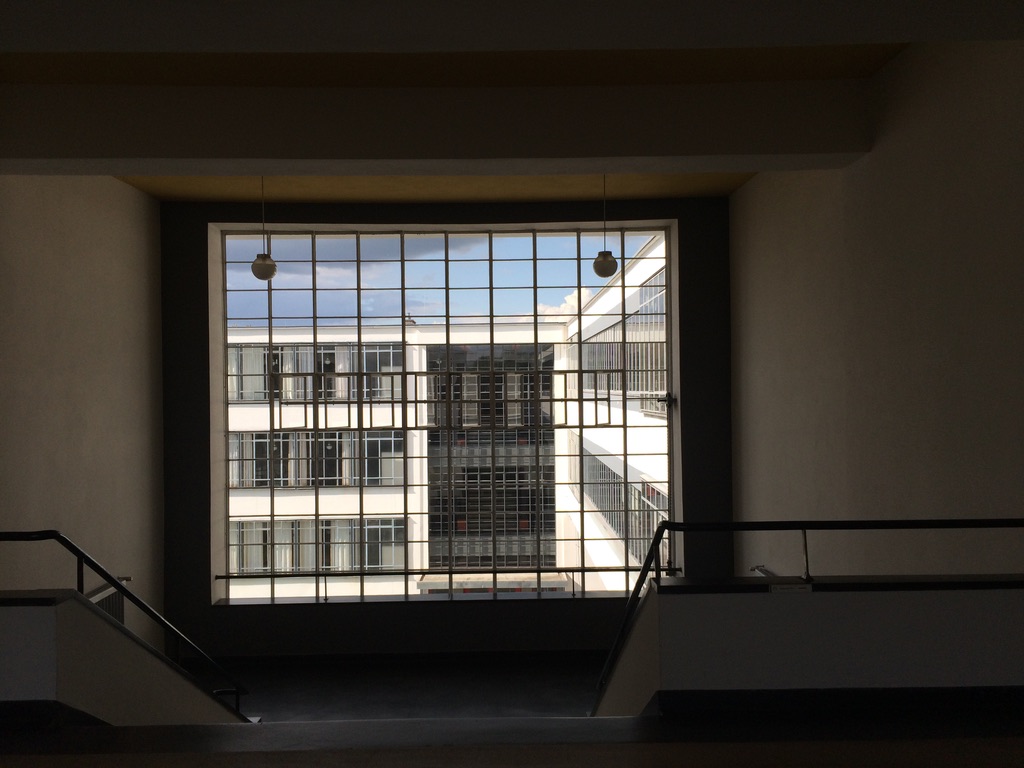
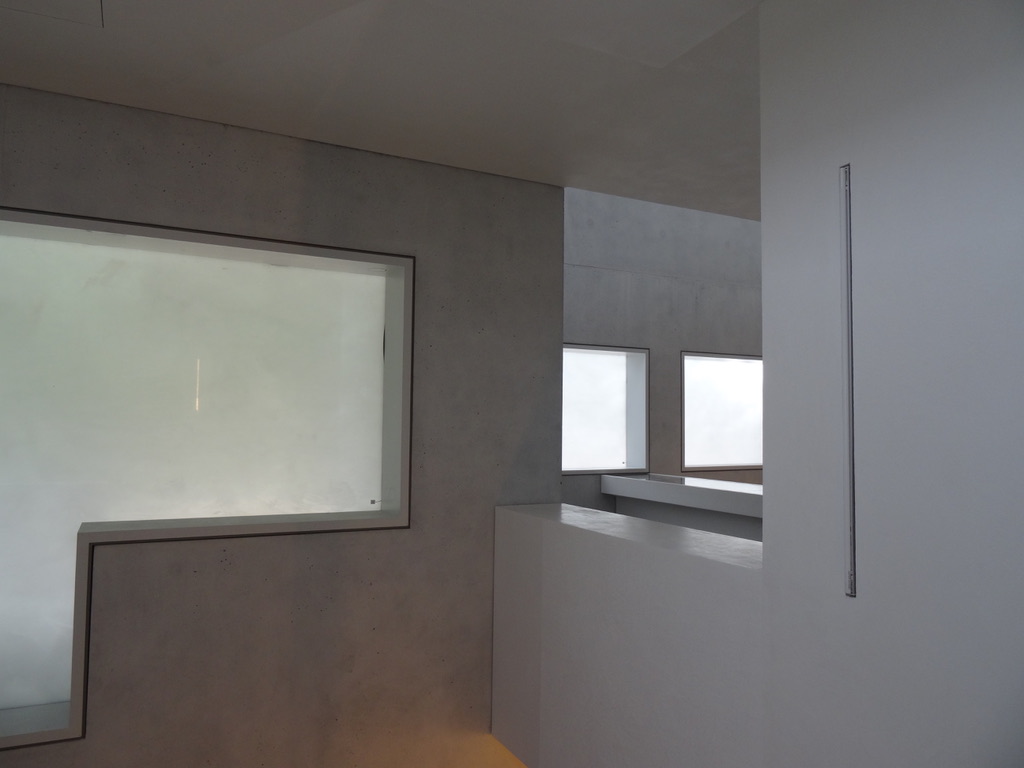
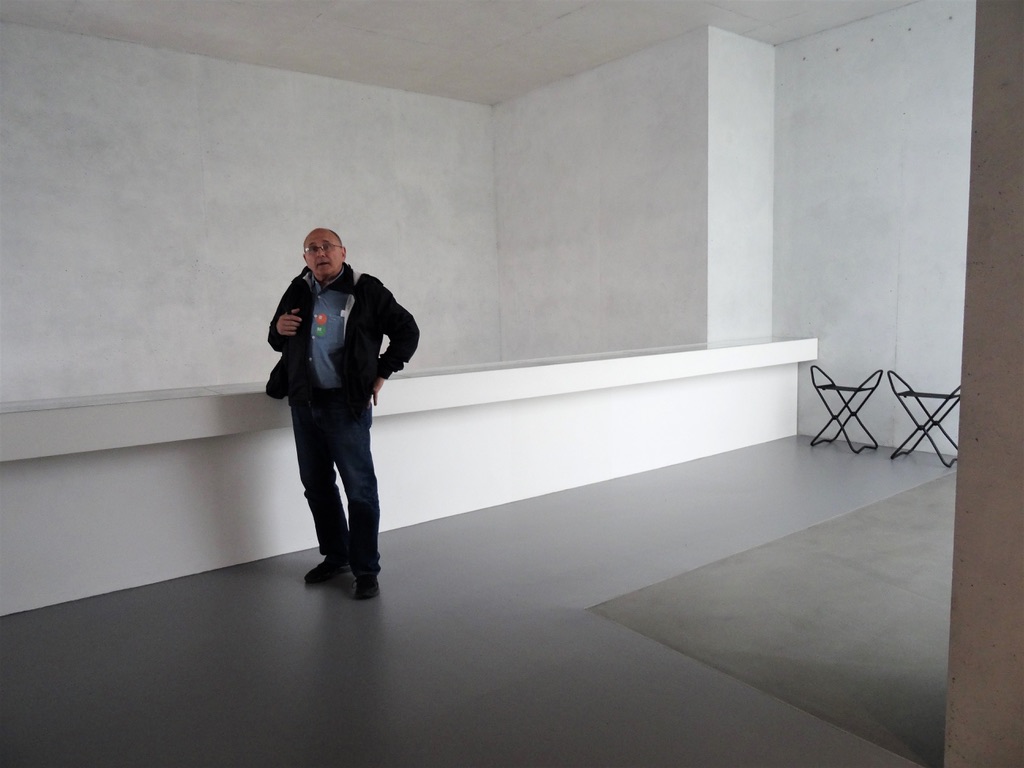
Unlike the Berlin Bauhaus which has ongoing exhibits of the work of the Bauhas, the Dessau exhibit is really just about the Dessau buildings — initial concepts, construction, destruction, and rebuilding of the Dessau structures. Still it’s an interesting story. And the buildings are all pristine, white, and ornament-less. Great to photograph against the very blue sky.
We strolled (trying to keep out of the rain) to the “Masters’ Houses” where the teachers at the Bauhaus lived… walked around the town a bit.. and then headed to the train to get back to Berlin.
Long day.. Gotta pack now.. Tomorrow we’ll walk around a bit.. maybe go to the Unsung Heroes Memorial Center.. and then off to catch a plane to Finland.
More tomorrow.
Fern
 Fern's Travel Notes