Wrap up — Helsinki . August 28 2014

Terve Terve –
I’m sitting at the Frankfurt Airport waiting for our flight to SFO. It’s already been a long day — wake up call at 4:30 am; out the door at 5:30 to what we thought would be a taxi — but it turned out that all taxis were occupied as were all “comfort cars (limos)” and so the company sent a bus! An 18-seater for just the two of us. Seemed ridiculous, but no choice. So off we went in the bus that had dark windows. Very cushy.. but totally crazy.
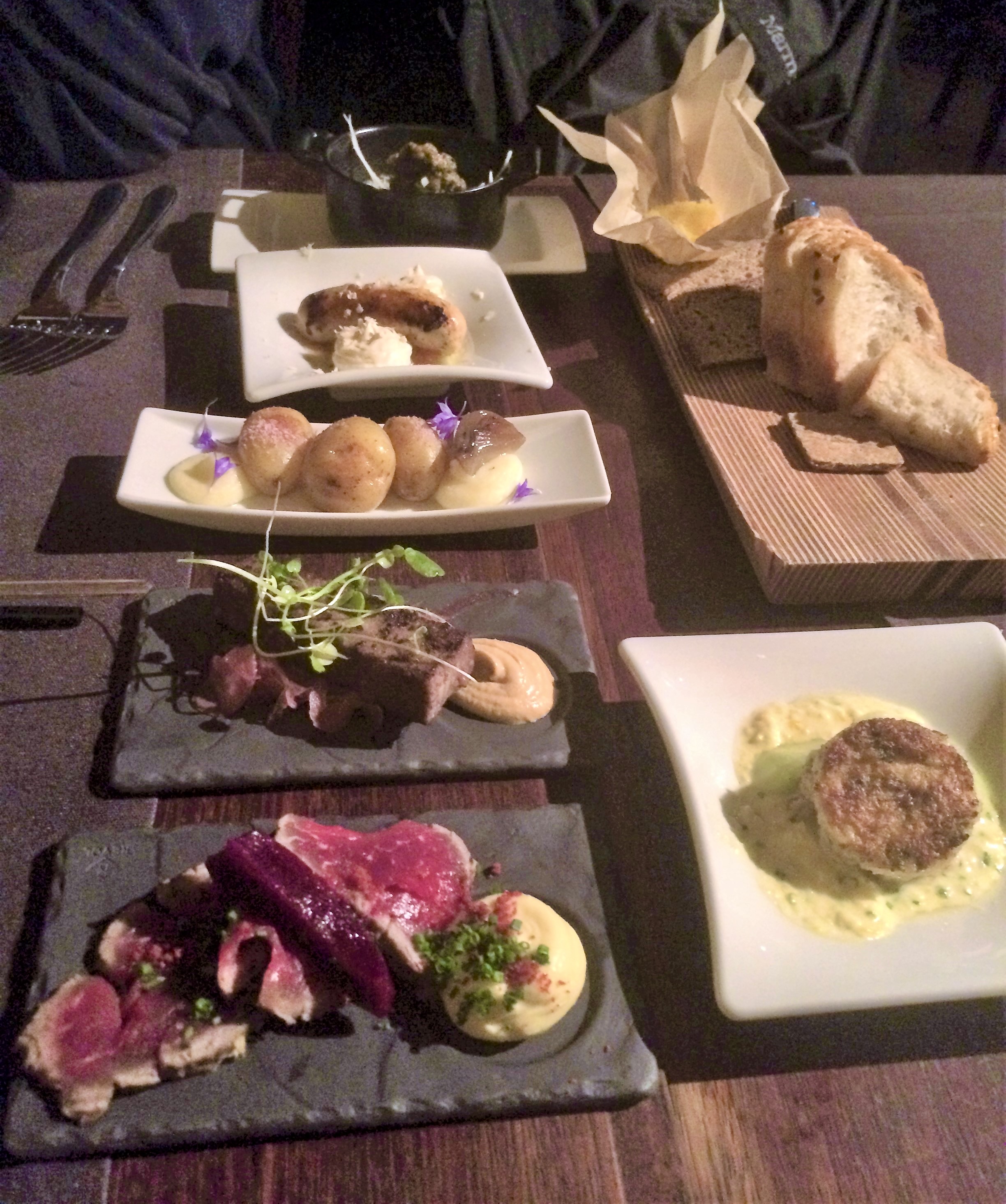
Our last dinner was quite wonderful — at Boulevard Social — a modern twist on Mediterranean cooking with recipes from Tunisia, Greece, Morocco, Lebanon… Started with some of their signature drinks. I had the Tsatziki Stan (vodka, yogurt liqueur, cucumber, pepper, lemon). Started with some small plates including a Moroccan “pizza”, green gazpacho shrimp cocktail, and mini lamb kebabs… For main course we chose the beef tartare MUHAMMARA (with roasted walnuts, red pepper, garlic, capers, and crispy bread). Dashed to the hotel by about 11 and packed.. so it was a tough night and morning..
OK.. the wrap up on Helsinki and Finland. Briefly…

First what’s different and changed over the years (progressively over the decades, not necessarily since 2009):
- it’s more diverse (when we lived in Helsinki everyone was a Finn; I can remember that one African American guy – an artist – moved to Helsinki from the US and he was so exotic that he practically attracted crowds in the streets and the Finnish women with their fair skin and blonde hair were all over him) — diverse racially and ethnically.. Not huge numbers but it is pretty common now to see Africans, Muslims, Indians, Pakistanis, Asians.
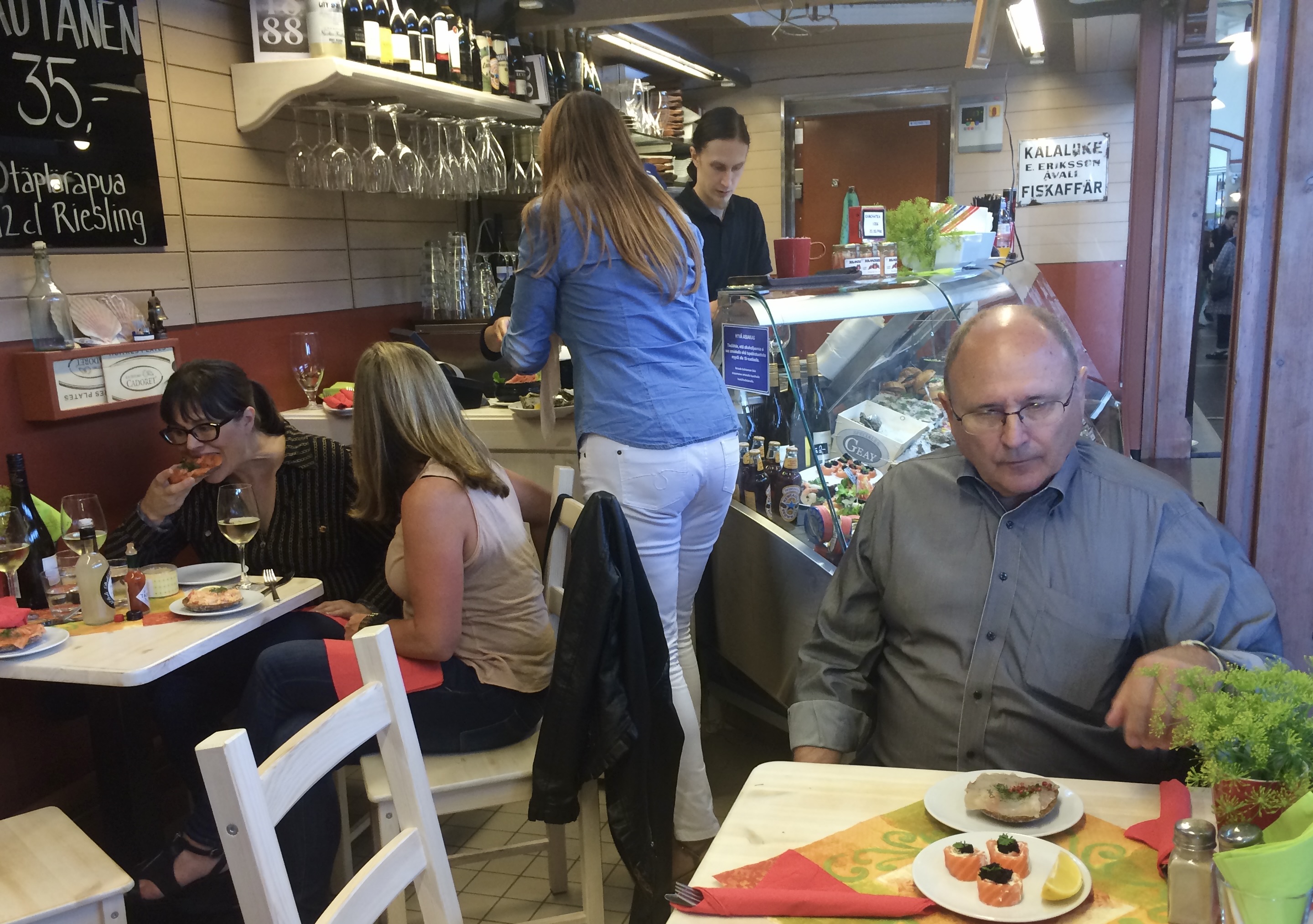
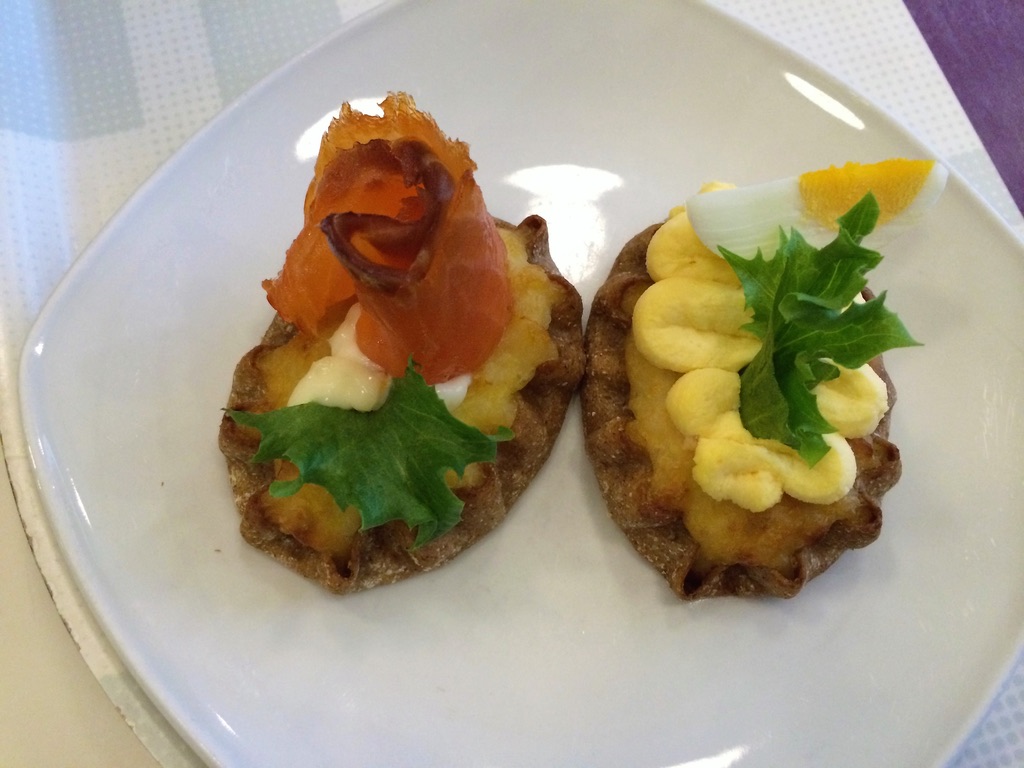
- more diverse food and very good restaurants (when we lived in Helsinki the only non-Finnish food was in one or two Russian restaurants); food was always fresh but not very inventive.. and the staples were potatoes and cauliflower (and naturally lots of fish but always baked with lemon and herbs); and they had a lot of stews and also reindeer. But now, it’s got really inventive food and great restaurants — always using locally sourced ingredients
- it’s impossibly expensive. Europe on the whole (big cities, London, Paris, Berlin, etc. ) are all expensive, but Scandinavia is shocking. A simple taxi — base price before having the taxi move one iota — starts at 9 EU (about $11); simple Metro ticket for the day is about $4 (and remember that the Metro has only one line going back and forth); coffee and simple breakfast pastry is about $8; Iitala (glassware made in Finland that was unbelievably cheap when we lived there).. a simple glass runs about $25… Dinner for two with two glasses of wine (one each), two small plates, one main course to share, one dessert to share comes to about $120 in a nice (but not most elegant) restaurant.. a simple lunch in a basic café is about $50. So, if you plan to visit Helsinki — and you should — start saving now! (a University of Helsinki tee shirt in the student bookstore costs $30)
- some things have disappeared — corner flower stalls that used to proliferate in every neighborhood are gone; little “baaris” that were at nearly every corner (serving coffee or wine or beer, simple sandwiches, pastries) are gone — replaced by more upscale cafes.
- more people overall — while the nation’s population has not increased much, the population of Helsinki has increased significantly.. people are moving from rural areas into the cities
- Metro (when we lived there, the Metro hadn’t yet been built)
- Waterfront small boats that pull to the shore and sell fish right off the boat replaced by larger ships picking up tourists to cruise to Scandinavia and Russia
- Everyone can speak English (especially in the city), as well as an assortment of several other languages
Second what’s stayed the same:
- It’s a wonderfully thoughtful country that maintains a steady position
- The preservation of design and keeping crafts alive are secure and respected
- A sense of place and purpose, a concern about the environment, a strong K-12 education system
- Financial support for the arts, architecture, healthcare, publishing (One of our friends who recently retired as a Professor of Sociology was funded to write a book on his evolution of his thinking methods as a sociologist)
- Bookstores everywhere, including one of the largest in the world — Akateeminen Kirjakauppa..
- A prevailing sense of calm, although there is a wide variety of activities in which to partake (music, theater, art, outdoor activities)
- It’s clean; you never see trash or graffiti (unless it’s purposeful art), no litter, and if there is homelessness it’s very very tiny..(and with services)
- Low income people live side by side with wealthier people in wonderfully designed housing
- No sprawl and no “fake communities”
- Finland has a strong multi-party system and coalition governments that form as a result of the largest party. Parties not part of the government are called opposition parties. The system has been stable for about 100 years..
But what you really realize is that with a 35 – 45% tax rate on income (for professionals and those in the middle class — higher percentage for those making more money) and no military budget to speak of and no wars to support, Finland is able to be an amazingly human and humanistic nation. They can fund a superb healthcare system, public education (K-12 cited over and again as the model for the world — although I’d have some questions about that), a strong university system, the arts, infrastructure, etc. Of course it’s a small country.. 5,000,000 people +/-.. .. And the spread between the rich and poor is not like in the US.. and you don’t see the trappings of wealth and/or poverty like you see easily in the US. I don’t think there’s a lot of “old money” and the few highly successful and very very well paid entrepreneurs (like the founder of Rovio – Angry Birds or the founder of Nokkia) don’t seem to be the models for what one wants to be). To live in Finland (to really live in Finland) means to love the countryside, to revel in the small nation’s successes, to agree that healthcare, child care, and good housing are rights, and to see the arts (poetry, visual, audio, etc.) as an important ingredient for life. In Finland, women get an automatic 6 months with pay for maternity leave; 6 additional months if you want with 50% pay, and up to 18 months’ time off with your job secured for your return. University faculty are part of the civil employees union. So it’s easy to see where your tax dollars go, and that must feel good.
It was good to return to Helsinki even for such a short time. We know the city well and we’ve traveled throughout the country several times. So it feels like home.. but a very different home than we have in the US. Everyone should experience it, but it’s a difficult place to visit for just a short time as I’ve always felt that without the particular excitement and focused attractions of other cities (London’s theater and Paris’ food, etc.), Helsinki may at first appear dull.. But it’s definitely not that once you know it.
Take care..
Headed to board the Frankfurt to SFO flight
 Fern's Travel Notes