Finding My Roots – September 27 2014
September 27, 2014 (#3 in the Poland Travelogue). Rzeszow – Lesko – Bukowsko, Poland and parts in between.
First a bit of background explanation before telling you about today’s expedition.
As the time got closer to my departure to Poland and I thought about whether to add a few days onto the conference (which would end on a Friday so it made sense to go somewhere for the weekend), I began to think about the fact that I was last in Poland when it was part of the Eastern Bloc under control of the Russians, then called Soviets.. and the fact that I was told as a child that my grandparents on my father’s side were Polish. So while I really wanted to visit Torun (and I sort of planned a driving trip from Gdansk to Torun to Lodz to Krakow), I decided to see if I could find out anything about where in Poland my paternal grandparents were from. This little genealogy study began about six weeks ago. My father died at the age of 60, before I turned 30 and as a family we were much closer to my mother’s side — so I started with just about zero information. My paternal grandfather died before I was born; my paternal grandmother didn’t speak much English and she wasn’t a very warm, nurturing grandmother. Indeed, I only saw her a few times a year and I know I thought she came from another century (which she did). In any case, my starting point was pretty minimal.
So I began by seeking out my cousins on my father’s side. While I’m very close to the cousins on my mother’s side, I hadn’t seen or heard from my other cousins in years — in fact decades. My brother and I are the youngest of the six grandchildren on my father’s side. About six years ago I was in Philadelphia and contacted the oldest cousin who I knew had gone to U-Penn and on to Penn Law School and remained in Philly his whole life. I hadn’t seen him since I was a child. We had a pleasant dinner and I gave him a publication about my office, and that was the last time I had any contact with anyone from that family. Well a few years ago he died and I got an email from his daughter. She said that when she was clearing out his things she found this publication and she figured we must be related because of the last name.. and so she wanted me to know the news. I thanked her and that was it.
Now, I thought I should ask her. Maybe her father or her grandparents (my aunt and uncle) who lived longer than my father, told her things about the family roots. Most important, I wanted to know the name before it got changed to “Tiger,” since I always figured this was not the original name and was given to my grandfather at Ellis Island. She responded quickly saying she had no information, but that she forwarded my email to another cousin (her first cousin, my second cousin, I believe) whom she said knew some facts because her son (relation to me?) had to do a family history when he was having his bar mitzvah. This information was forwarded to me — imagine starting out with heavy research done by a 13-year-old who is now at Tulane! Well the kid found out what year and what boat my grandparents came on and also the years of birth and death. From that I went searching on ancestry.com and some Jewish genealogy site for Poland.. and found the name of the town where my grandparents (both of them, as far as I can figure out) came from. I also learned that the name might actually have been “Tiger” well before they came to the US (although I don’t really trust that information). It appeared that my grandparents were from a place called Bukowsko. After googling and finding more than one Bukowsko my life got complicated. But eventually, it became obvious that it was a very small village in southeast Poland — extremely rural and impoverished, but with a very long history of Jews (dating back to the 16th century). This all made sense since my mom always said that while her parents came from big cities and were therefore supposedly “sophisticated,” my dad’s parents came from a little shtetl in a rural part of Poland.
With that information, I decided to ditch Turon (a UN Heritage city) and Lodz and Krakow.. and go to Bukowsko, in spite of the fact that clearly there was absolutely nothing to see in Bukowsko! I did learn that there is a very large Jewish cemetery in Lesko which is about 20 minutes away. So I added that to my itinerary. Initially I planned to fly from Gdansk to Krakow and drive to Bukowsko (about 3 hours or more), but then I searched and found out that there was an airport in Rzeszow (remember pronounced jeshjue) and that would make my drive to Bukowsko only about 1.5 hours. I was set. Then as the date came closer and I looked at my “booted” foot, I thought I might need another driver or at the least someone to come along and share the driving. But who? I decided to contact the University of Rzeszow and see if any faculty member might be interested in spending the day with me. Actually, I figured that they might suggest a graduate student who would want to practice English. i said I would pay. This led me to Anna, with whom I began an email conversation. .. and then today at 8 am she and her cousin Mihal and I ventured to Bukowsko and Lesko. (Anna is a PhD in Political Science and a lecturer at the University — 31 years old, extremely bright with an amazing capacity to speak English and quite knowledgeable about both Polish social issues as well as EU programs being implemented in Poland. Mihal is probably about the same age and is in the Polish Army. His English was halting but he was quite friendly and pleasant — and he had the car!) Initially I said I’d rent the car and I could drive if she just gave me directions. But she said the roads are bad and that if would be difficult for me, so her cousin was the answer. Anna does not drive.
First about the journey and then later more about Anna and Mihal.
We left the center of Rzeszow and headed southeast, through many small towns and villages and agricultural communities — frankly pretty non-descript through what they refer to as the Sub Carpathian (or Podkarpacie Province) Area. .. Anna and me talking the whole time — finding out about how the University works, her research topics, life in Poland today, the region we were traveling, etc. While she and Mihal were from cities only about two hours from Bukowsko and Lesko, neither of them had ever been there, so it was in many ways an adventure for them as well as for me.
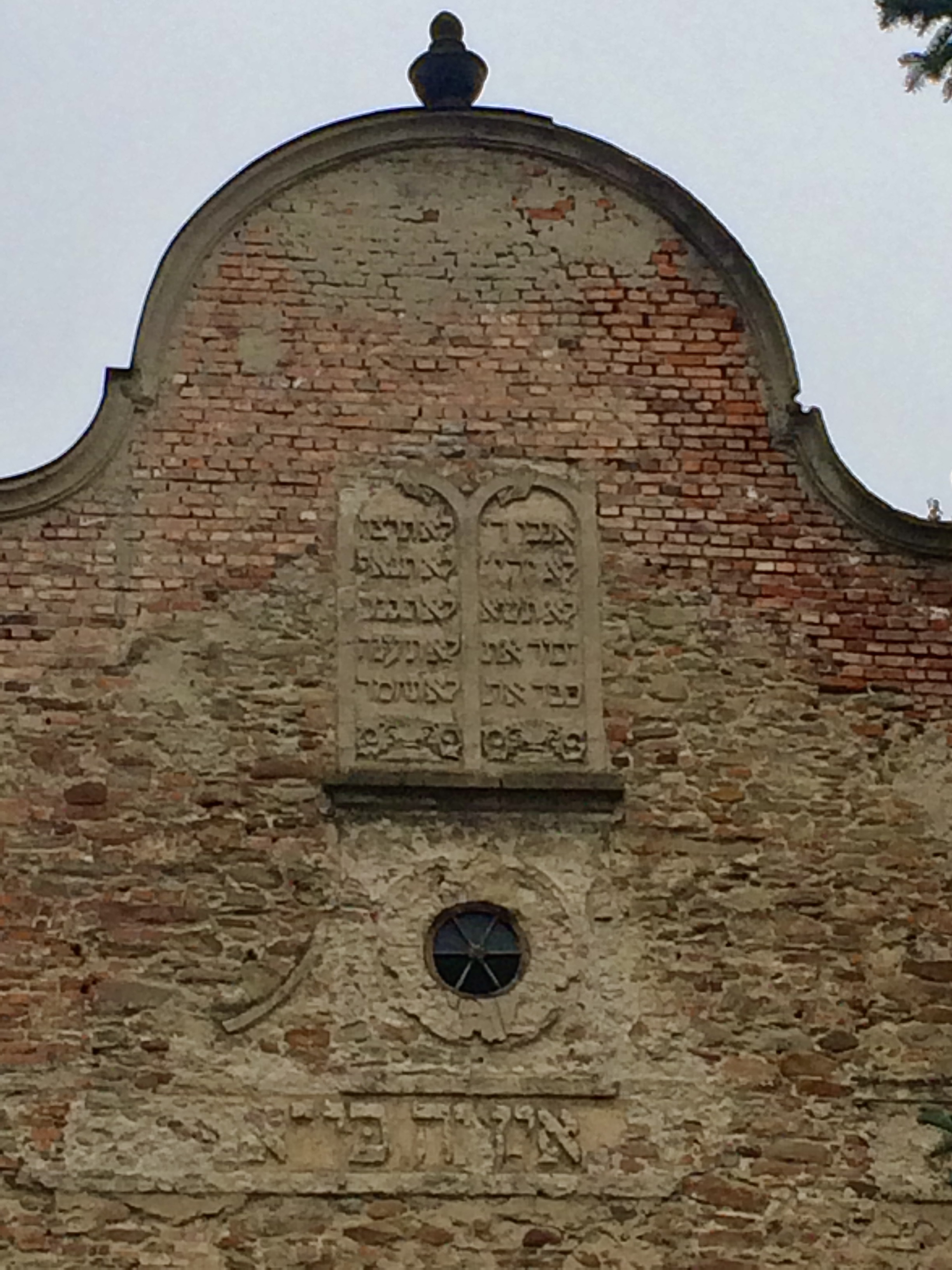
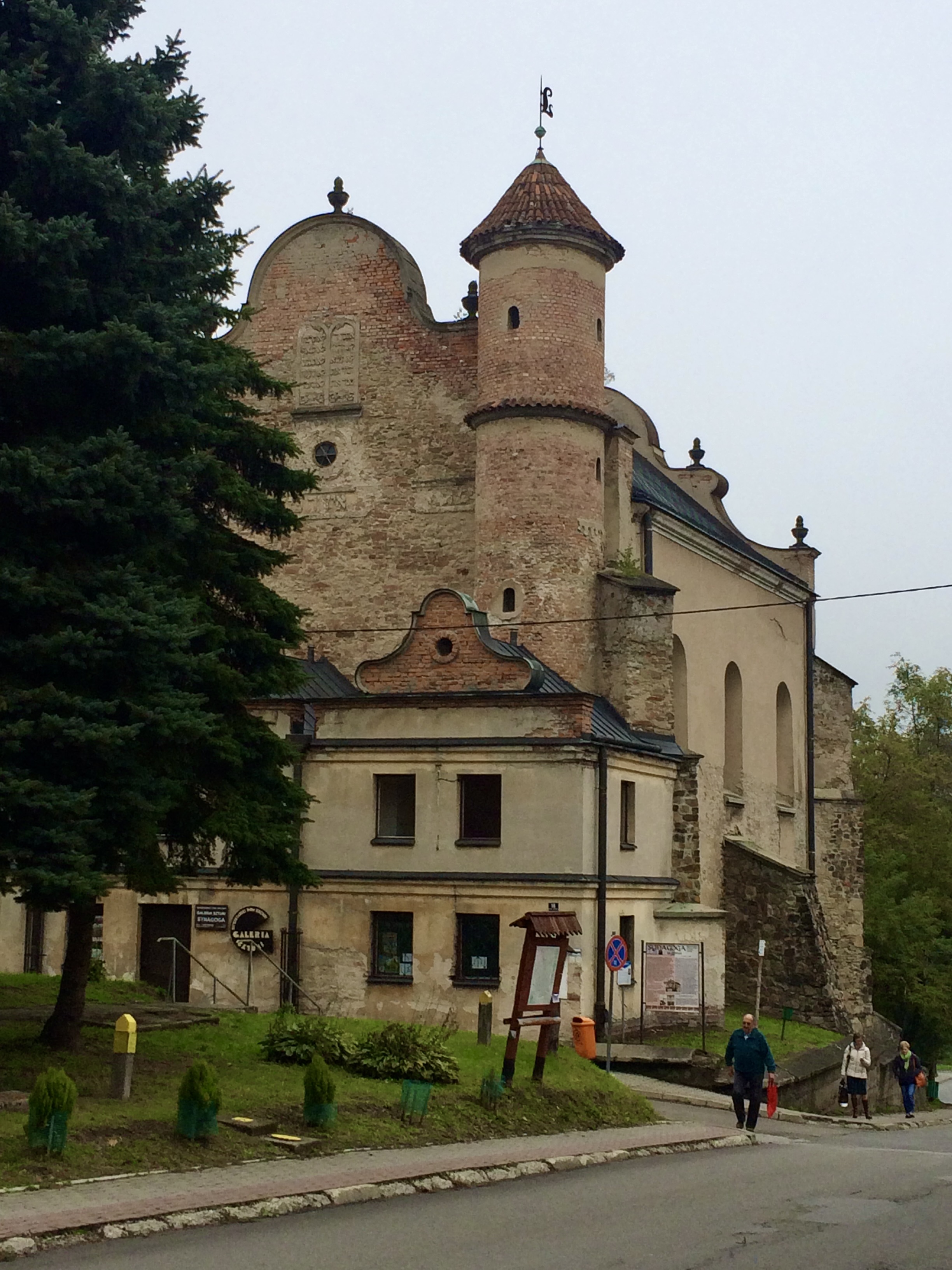
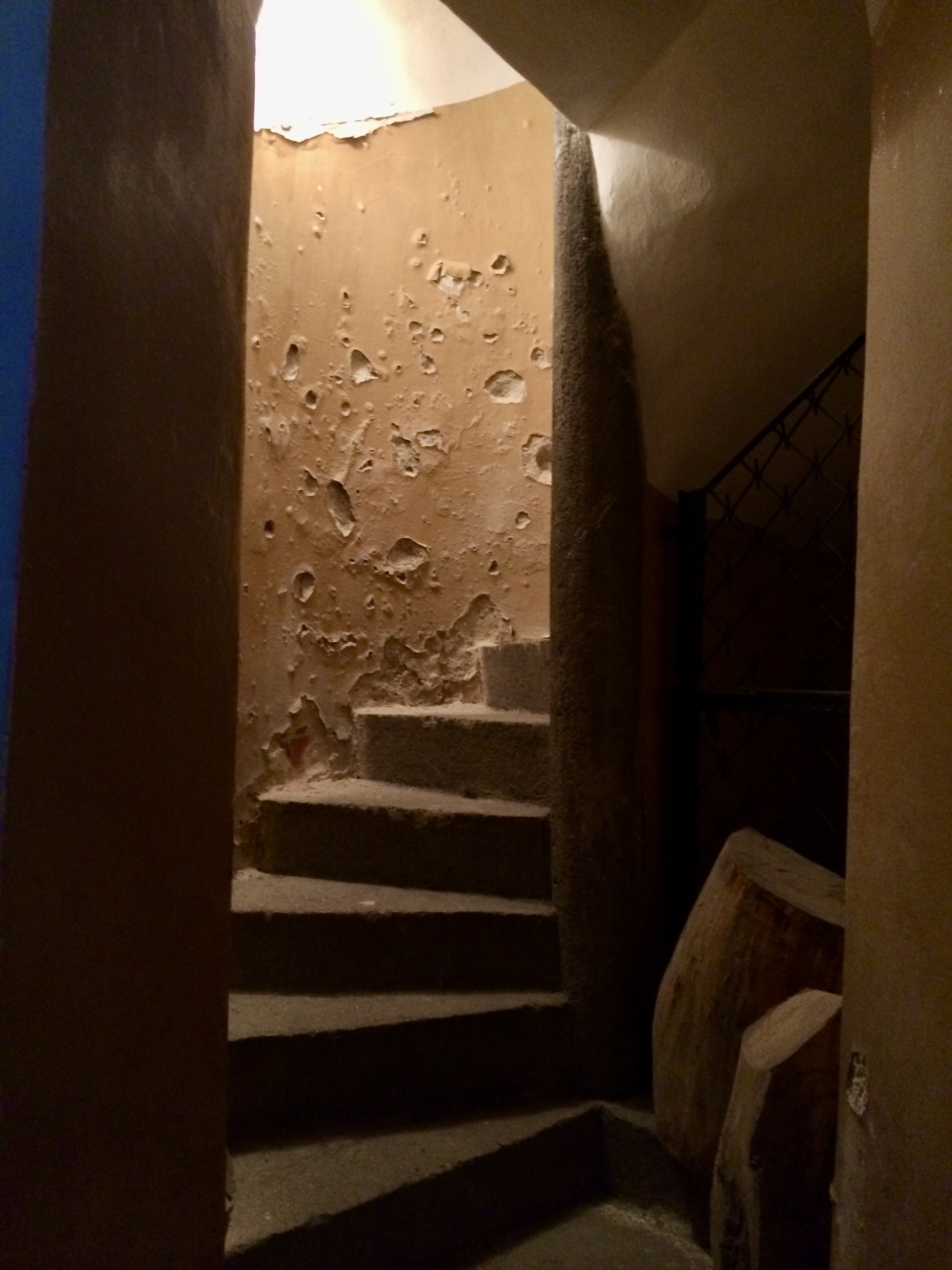
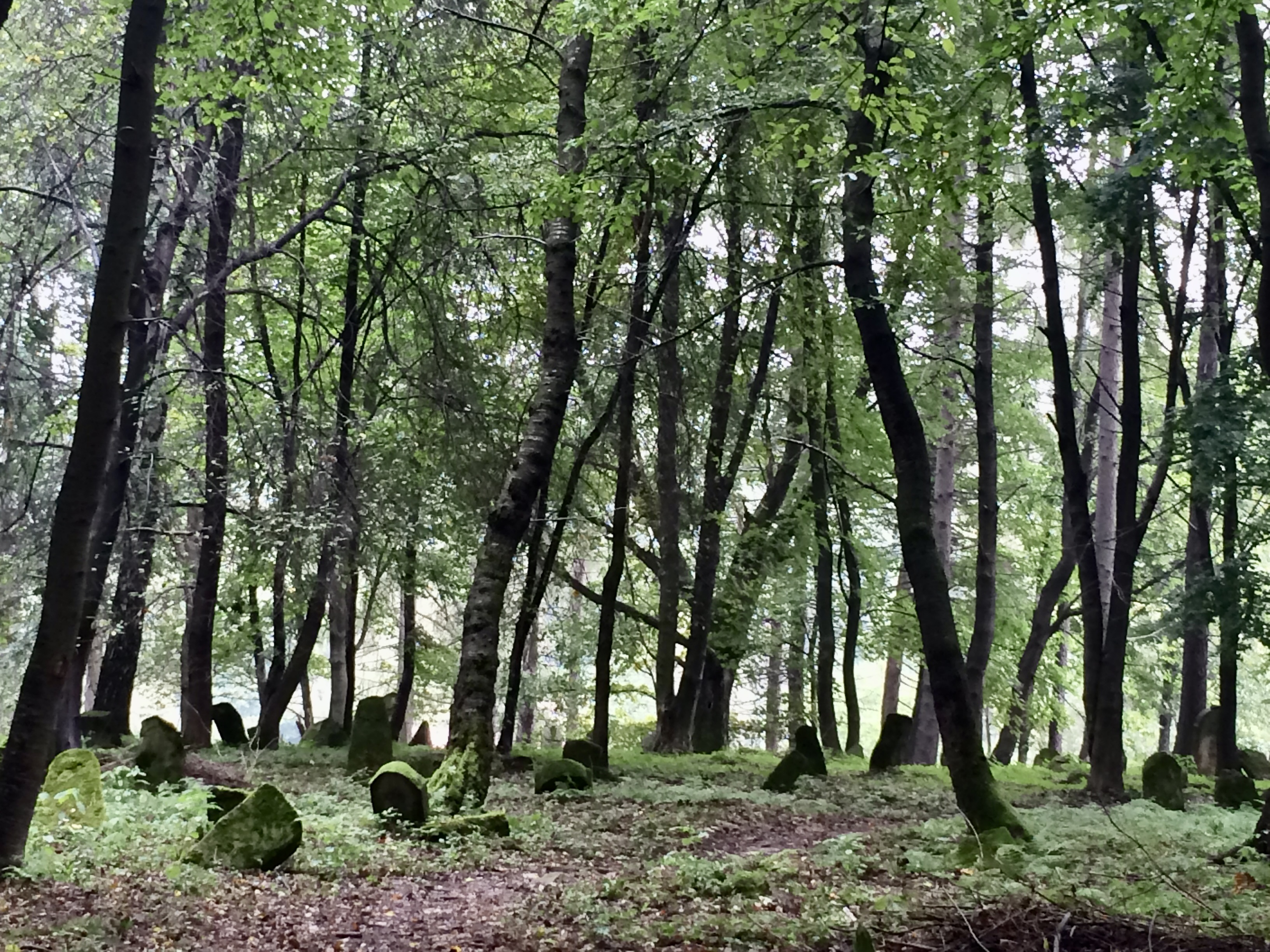
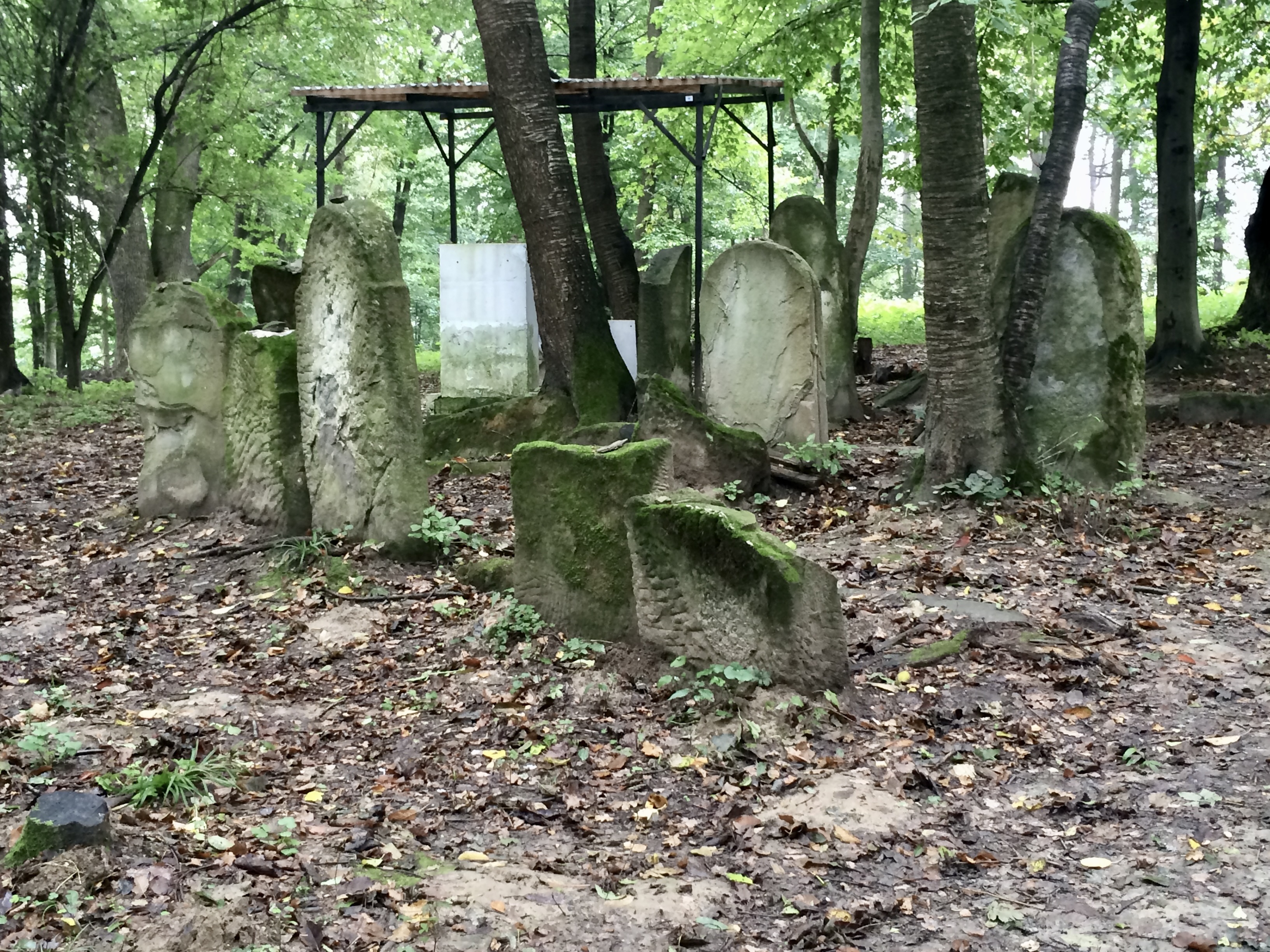
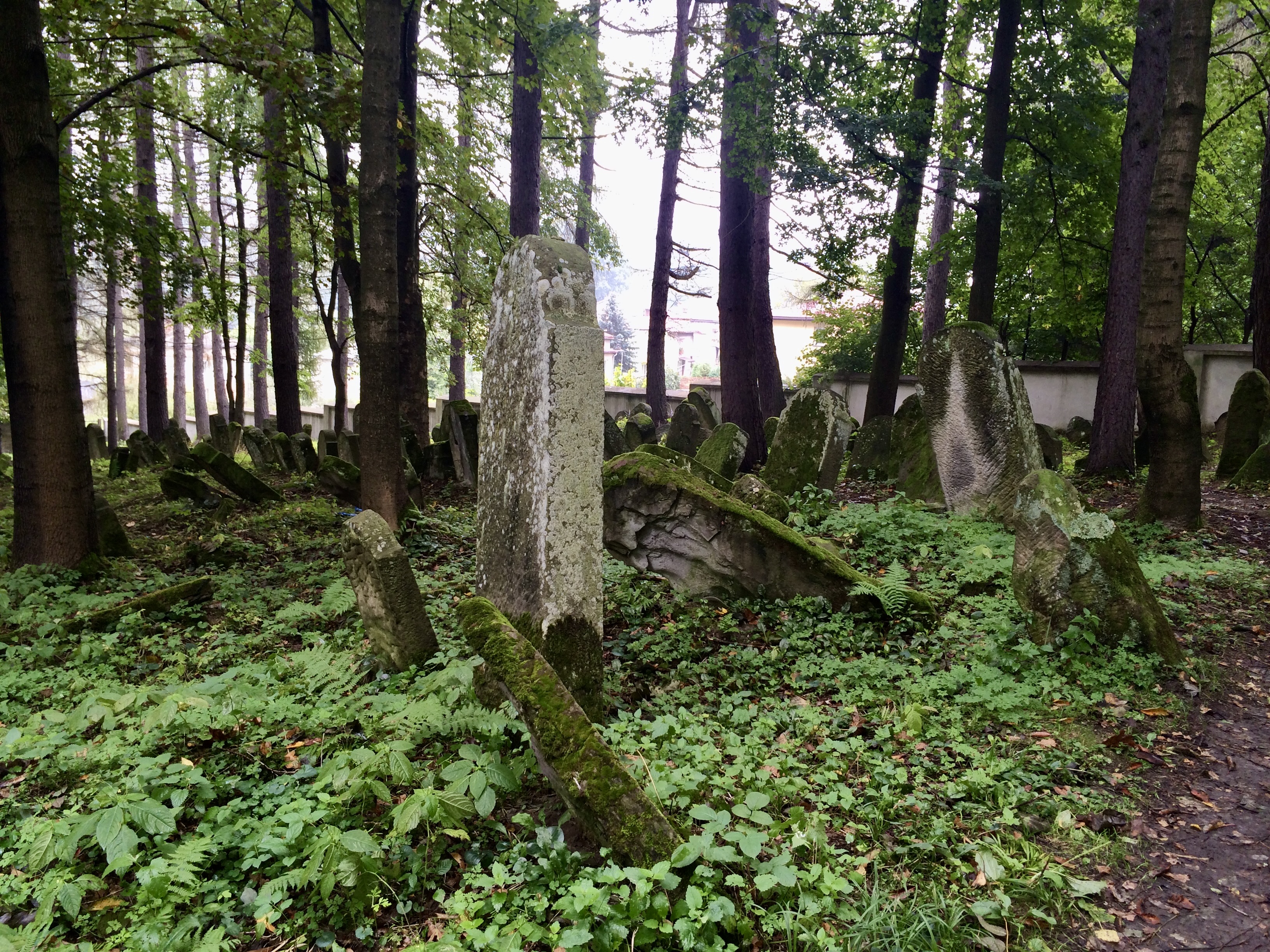
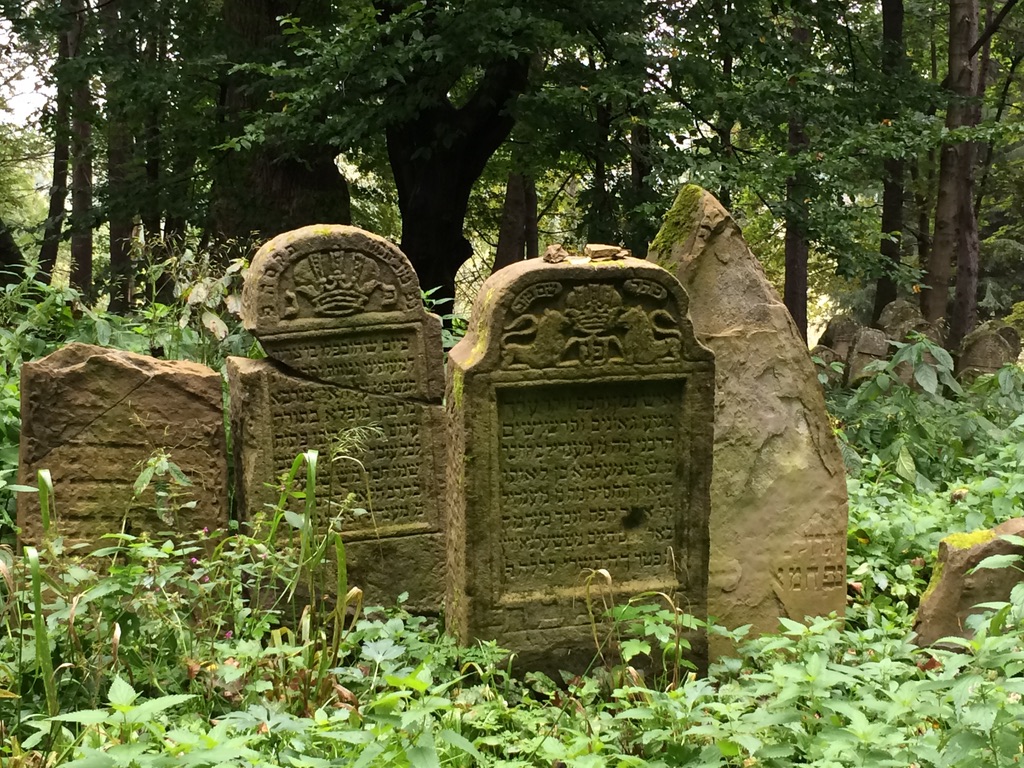
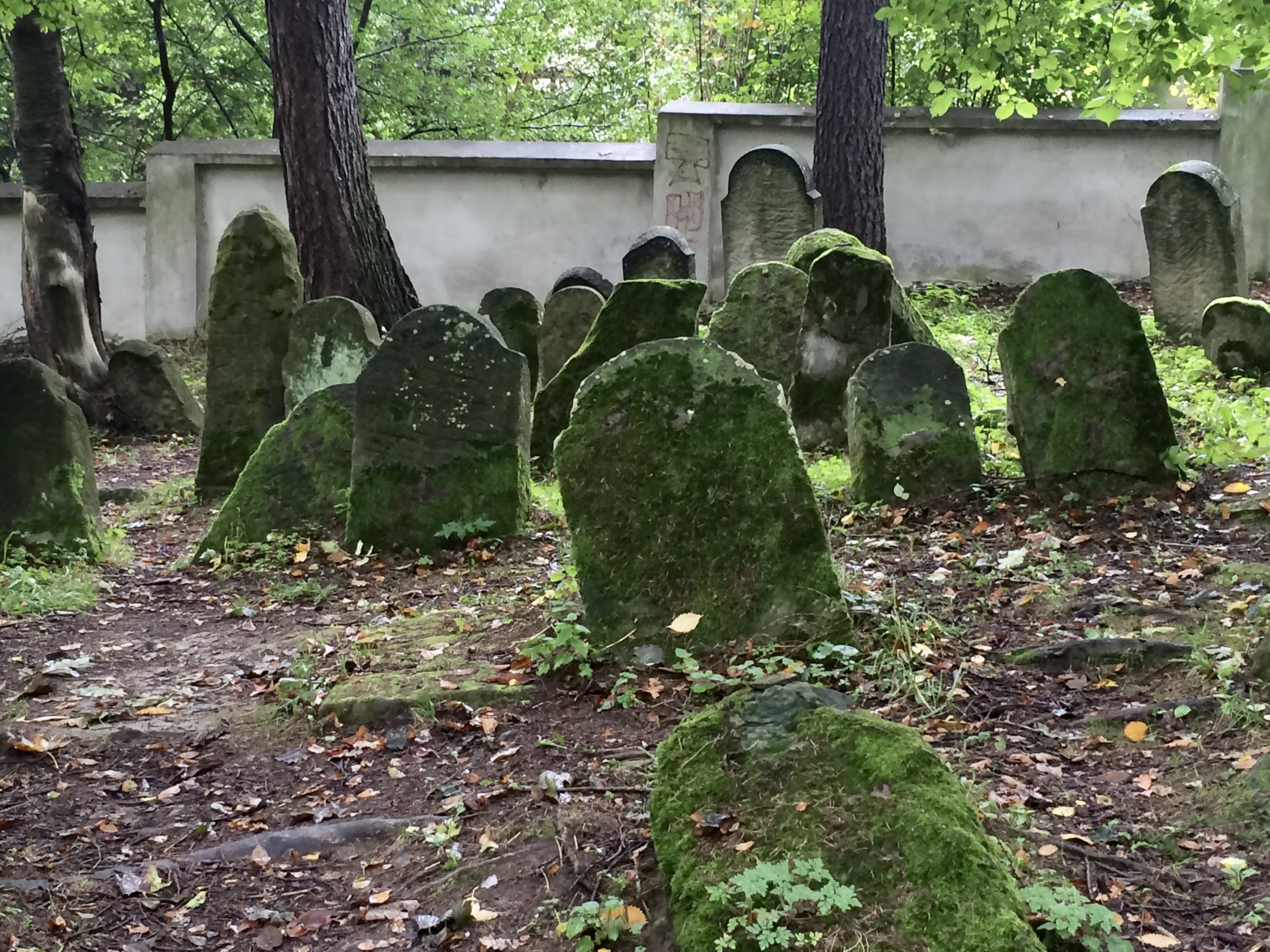
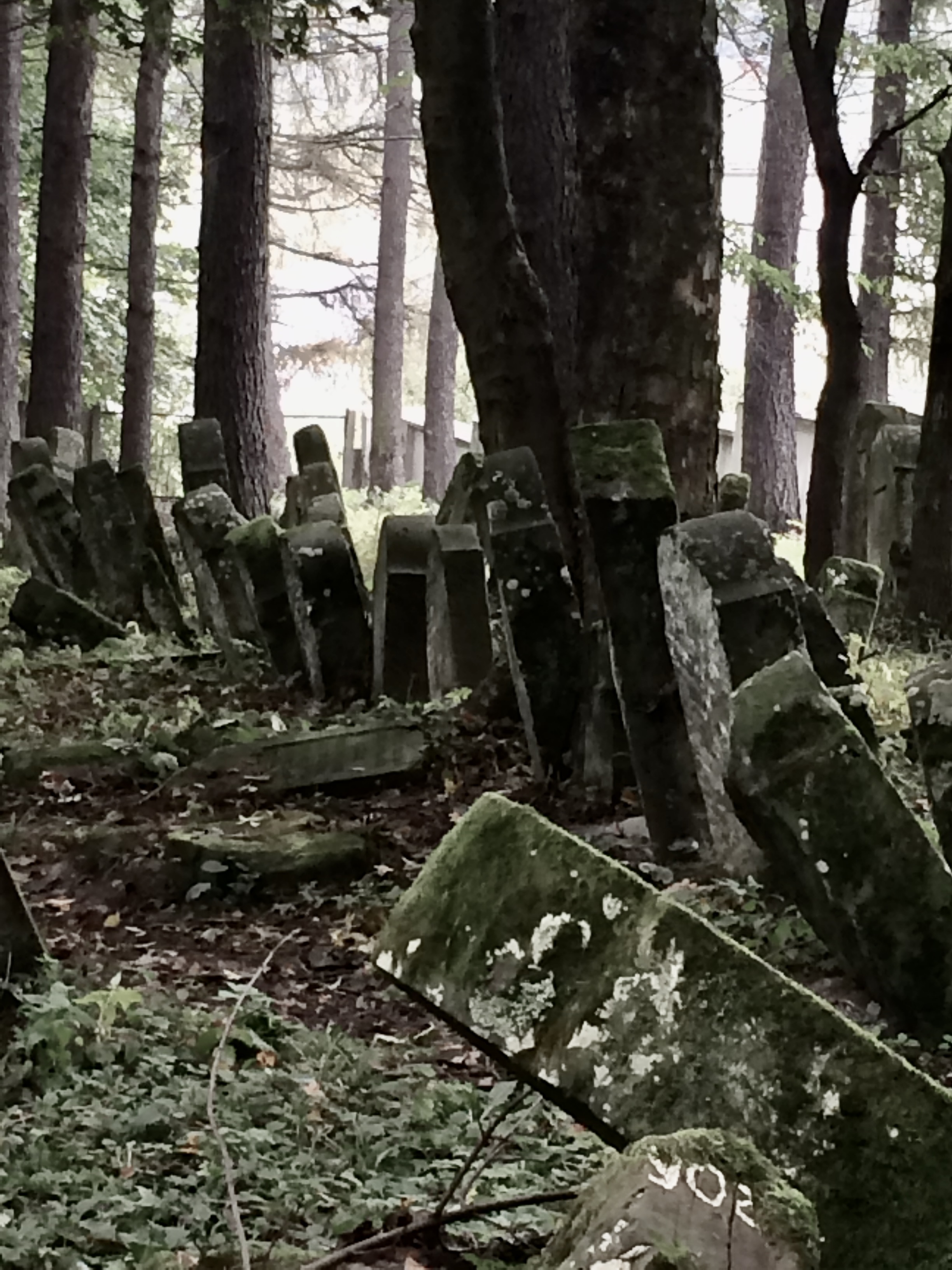
About 90 minutes later we were in Lesko (population about 6,000) and home to a synagogue (now a sort of “art gallery” which was more like a flea market) and a very large Jewish cemetery. Apparently by the 1930s about 60% of the population in the area was Jewish. The synagogue dates to the 1600s. After the war there were no longer any Jews. We parked the car and walked about 5 blocks (not so easy with the boot) in the very misty (and moody) atmosphere of the town. After walking through the former synagogue, we headed to the cemetery — another two blocks — which is situated on a wooded hillside. We soon found the “gatekeeper” — a local guy who was smoking and apparently keeps the key to the gate. We walked the stairs — about two stories high — stone steps covered with moss and wet leaves (another challenge for the boot!) to view the “remains” of more than 2,000 graves — mostly falling over and worn with age. Still, many graves were visible and some were half-buried or covered over with tree roots. Most were sinking. Not being able to read Hebrew I cannot say if any Tigers were located there — although I would imagine they are. Without any Jewish community in close proximity (the entire population of Poland has only 25,000 Jews today), there isn’t any one to care for the graves and the area is totally overgrown. We trodded through the hillside and then reversed our steps down the hill and stairs and to the car. Naturally, I left a few little stones on some of the monuments.
We then took a bypass to see Lake Solina a manmade lake (and dam) that is a popular summer destination. Today, however was cold and damp so there weren’t very many people. And then we went to Sanok (a town that would probably be quite charming on a summer day) for a late lunch because Anna knew a restaurant there. We ate at Stary Kredens where the chef is apparently quite well known and appears on a television channel much like our Food Network. I had the traditional Polish soup — Żurek which is made from fermented rye flour, and contains various meats, like pork and Polish sausage as well as potatoes (naturally) and mushrooms. It has a sour taste and was actually quite good, followed by an overly large portion of duck with cherries accompanied by cabbage, which Anna and I agreed we should have shared instead of getting two orders.
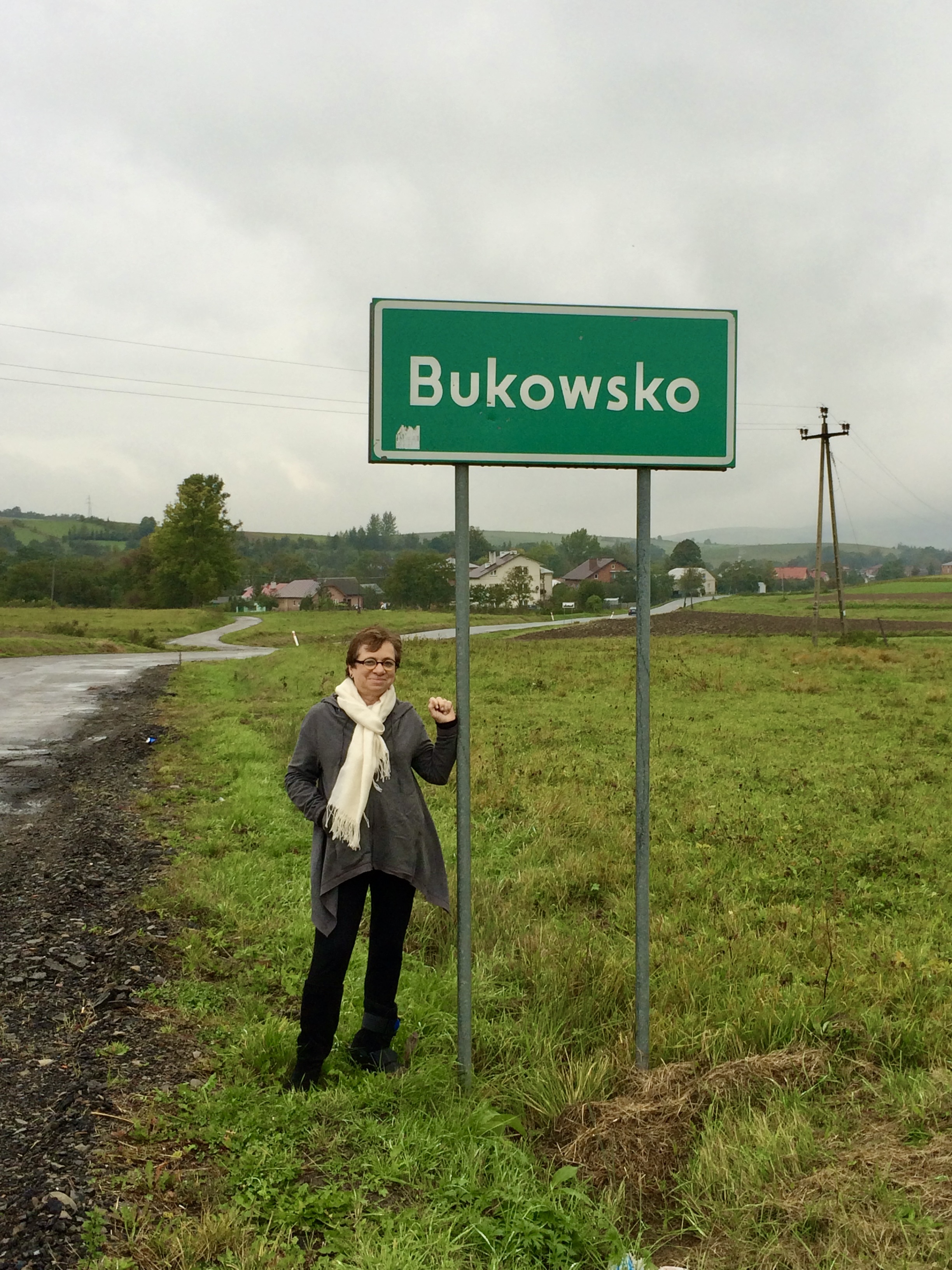
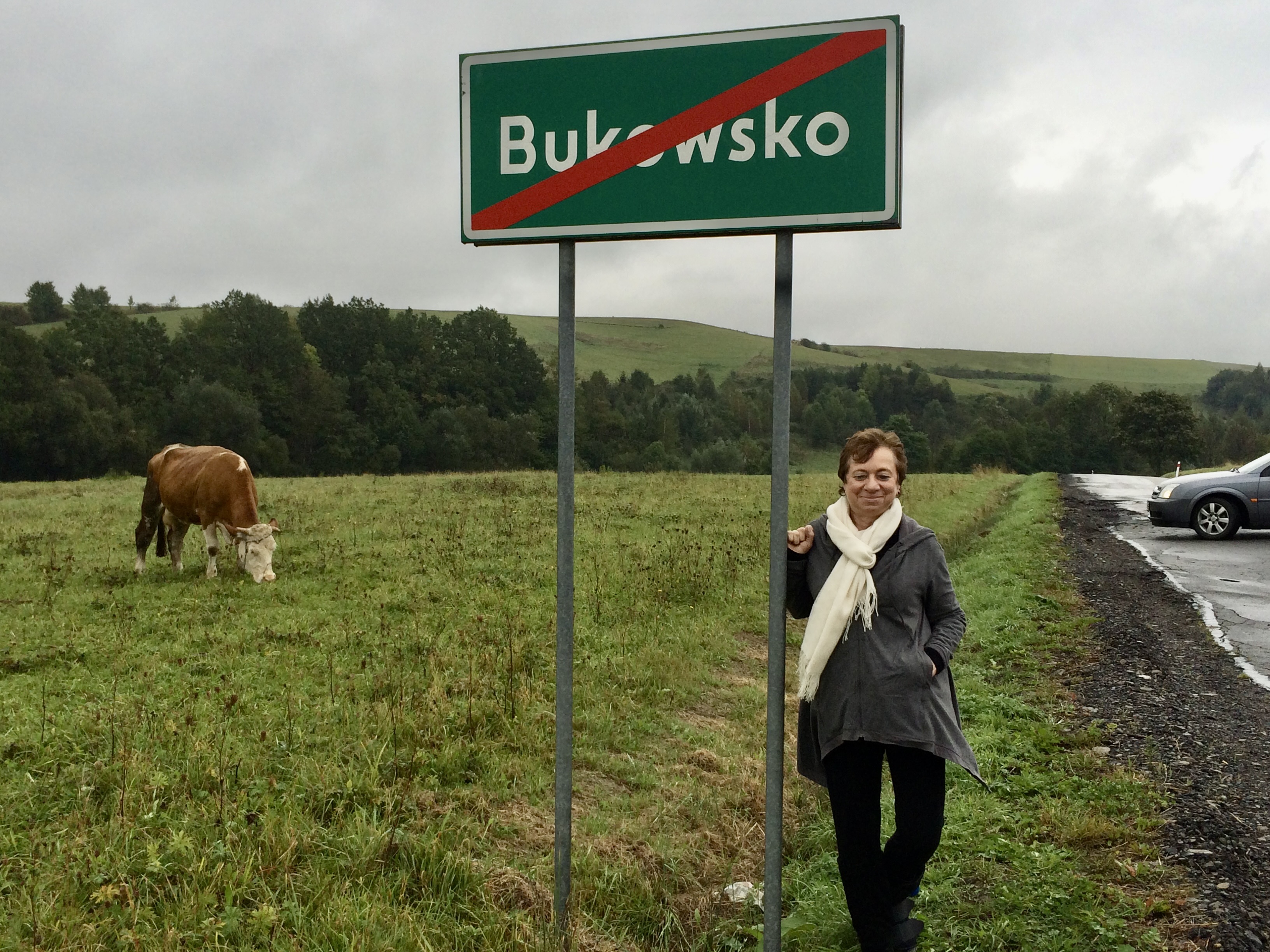
Then it was onward to Bukowsko in the misty rain. Well, not much to say. The town — if you can call it that — is really just a road that winds for about three miles with houses that look as if they were built in the last two decades. People in Bukowsko seem prosperous as the houses are quite large. Clearly any trace of history has been long gone. Took some photos standing by the Bukowsko road sign and headed back to Rzeszow.. tired and ever more curious about my roots and the fact that family histories in some families are very strong and preserved and in others somewhat fleeting.
This has gotten so long, I will sign off now, but I do have more to say about the area, its proximity to Slovakia, and an interesting discovery. More tomorrow. It’s 8:45 and I have to eat dinner and pack. I leave at the crack of dawn tomorrow for Warsaw — 36 hours and then I’m back to the US.
Fern
 Fern's Travel Notes