7 Medellin: Babies and Boteros; Cable Cars, Casas, and Communidades; y Escalares Electricos. 12/25/15
Christmas Day. Medellin.
Today was a very bittersweet day. Early this morning, I learned that one of my dearest friends lost a very valiantly-fought battle for her life. She was vibrant, strong, wise, and a force to contend with. Spent a bit of time reminiscing about the good times and feeling saddened by the loss — more saddened for her wonderful family. Glad I was able to see her just a day before taking this trip. Still it was important to carry forth… Indeed, she was one of the most faithful readers of these travel notes — and who knows, maybe she is reading them still.
With Mike feeling almost normal, we headed to see more of the barrios that line the mountains of the valley of the city. We set out to visit Comuna 13 — a neighborhood that has a long history of being a gang center. As a neighborhood, it is the most densely populated in all of Medellin, has been home to hosts of gangs and violence over the decades, and also had ties to Pablo Escobar. But in recent years, as the government has intensified its commitment to rebuild Medellin into a modern, sustainable city with a commitment to those whose economic, educational, health situation is at the bottom of the heap.. the area has been integrated more into the life of the full city.
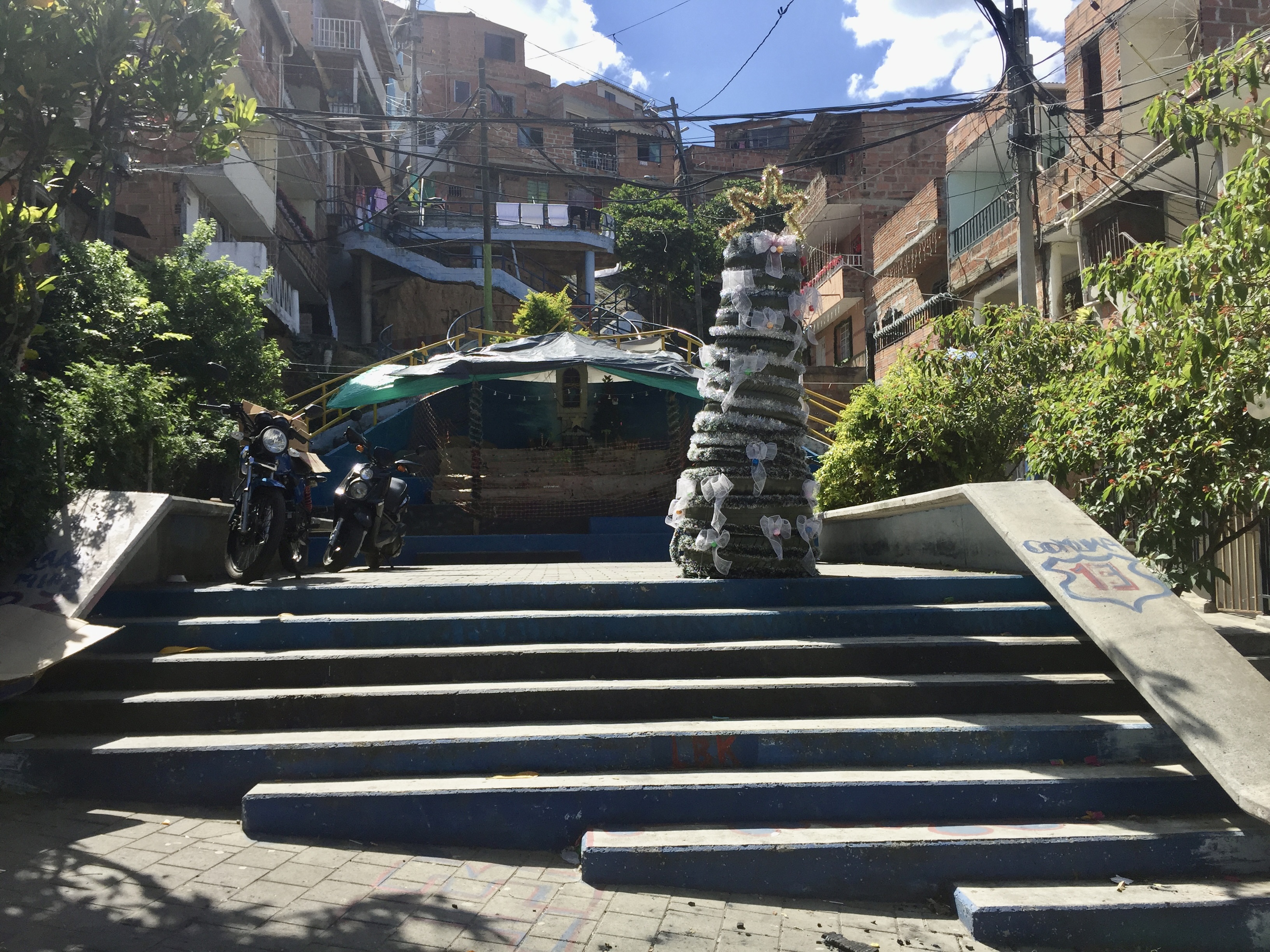
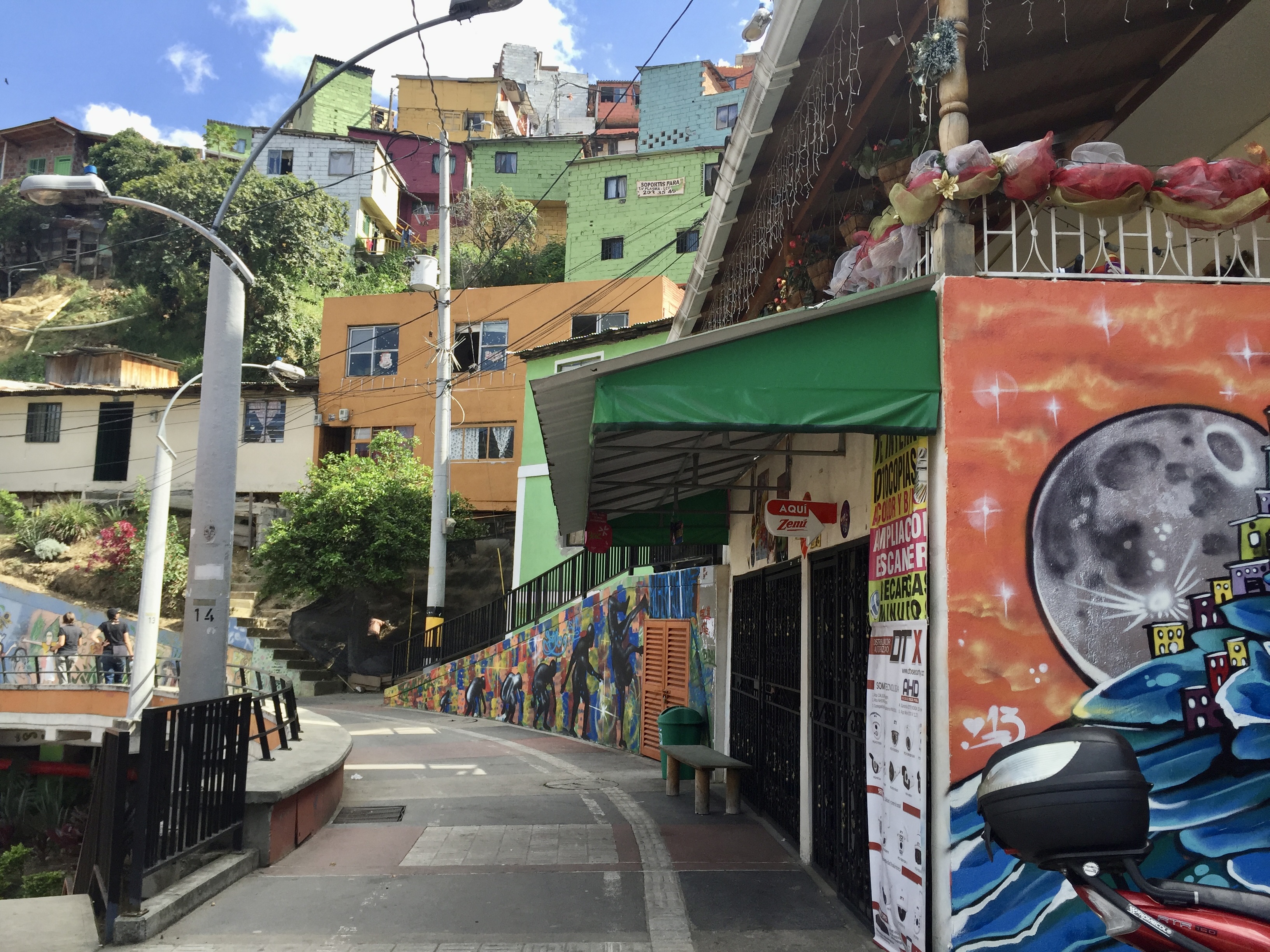

One of the things the government has done is to construct an amazing series of outdoor escalators (escalares electricas) that climb the hills of this neighborhood enabling residents of the area to quickly come and go up and down the very steep hills where their self-made houses are built. There are “guards” (mostly local youth) paid to monitor the escalators to ensure safety. More about Comuna 13 in a bit.
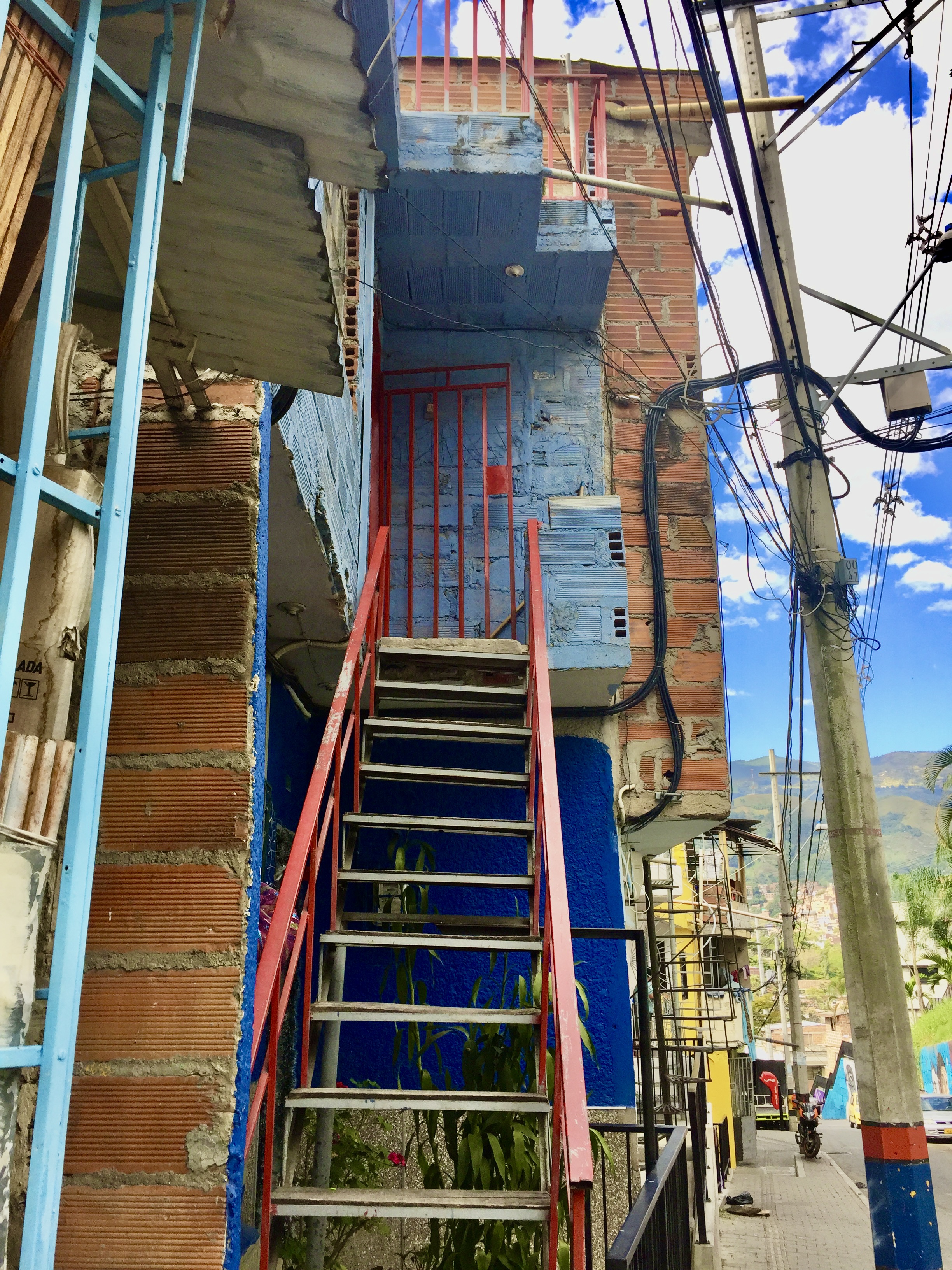
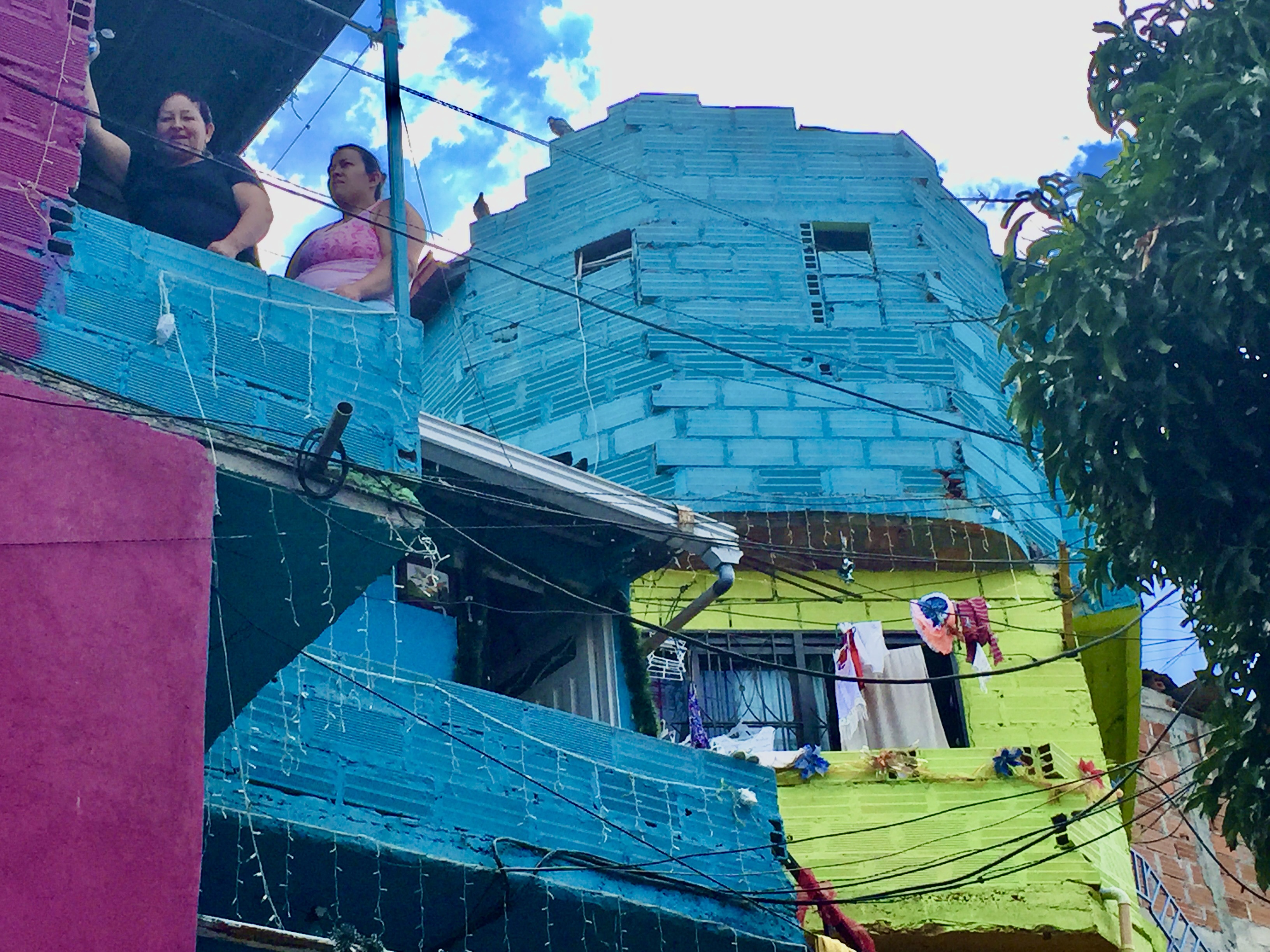
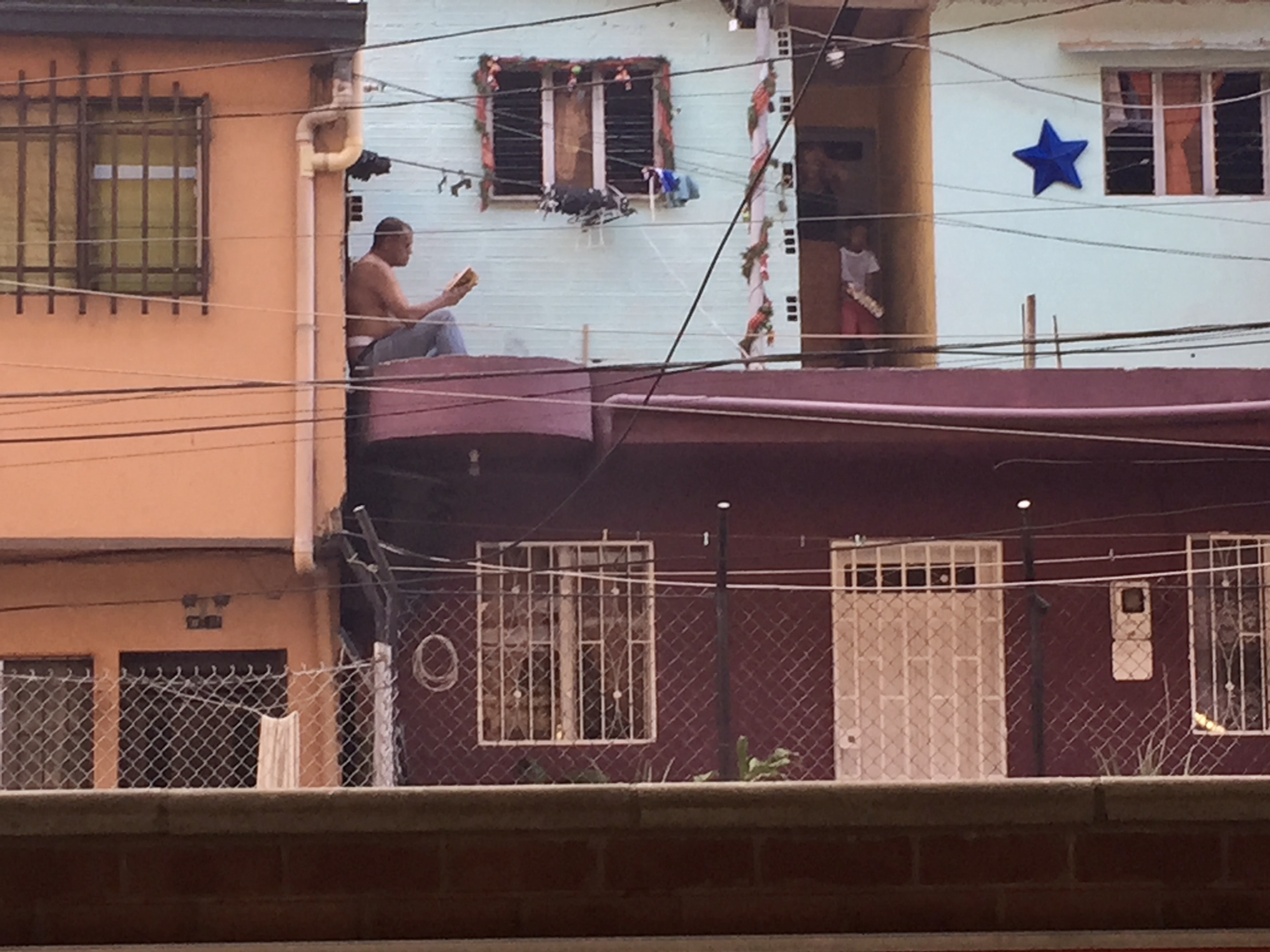
So, we walked from the hotel to the metro station at Poblado; then took the smaller train at San Antonio (as we had done yesterday), but we did not take the cable car. Instead we got off at San Javier and walked out of the station. We asked several people about how to get to the escaleres… and finally were told we should take a “collectivo” (a small bus run by the locals)… We walked about a block… got onto the collectivo (which cost about 20 cents) and asked the driver to let us know when to get off. The bus holds about 16 passengers. The driver’s seat was covered with some fake white fur. About 15 minutes later, we were told this was our stop… Then we had to ask a lot of other people for the next set of directions. Basically we realized we needed to be climbing up… so in about 8 minutes we reached the escalares…
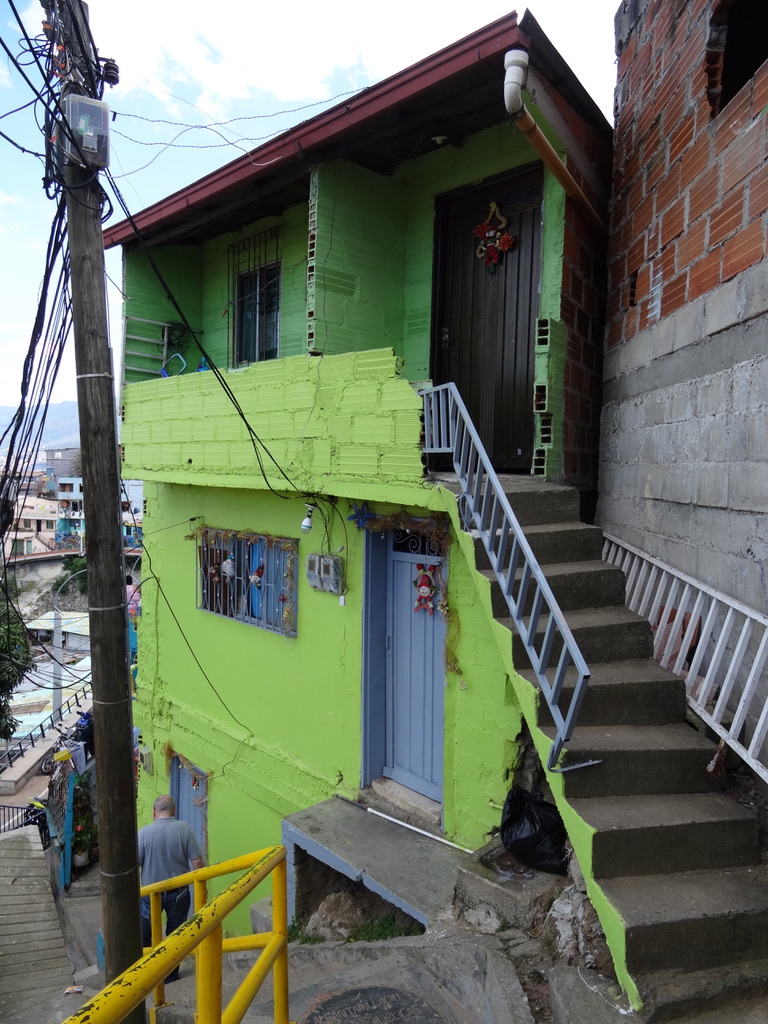
All along the walk were people sitting outside their self-made houses… some only about 300 sq ft.. others having a similar footprint but built vertically — many with exterior stairs (mostly spiral).. And just about every house had speakers outside and music was blaring.. It was like a giant series of parties. Food, music, dancing.. all on these little sidewalks by the houses. Clearly there aren’t any porches or yards, so everything happens on the deeply sloping streets.
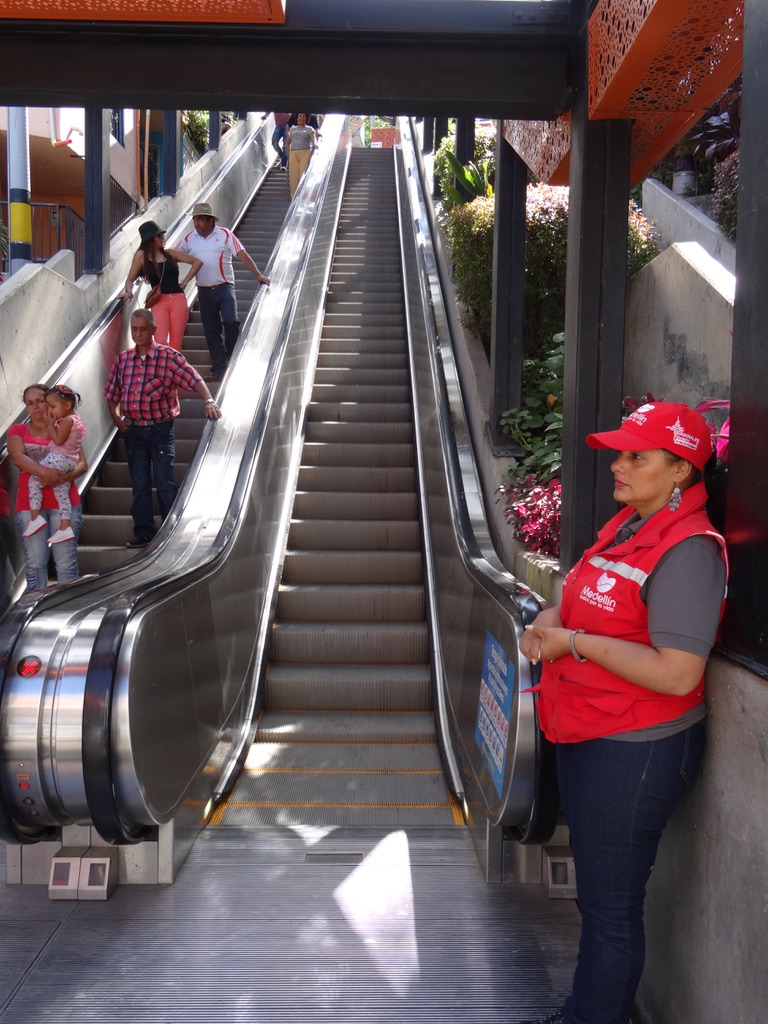

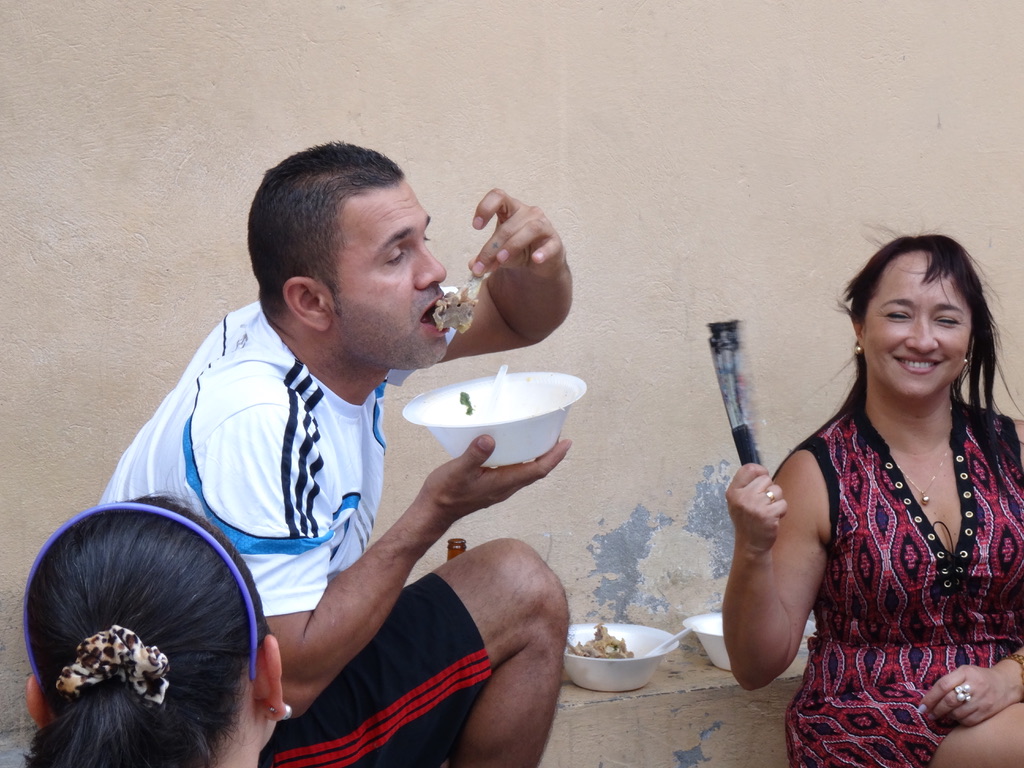
People were very friendly; photographed many of them… and everyone was in a jovial, holiday mood. Eventually we reached the escalators.. It’s amazing that these were built.. it’s a huge infrastructure investment.. There are six sets of escalators.. taking you up about the equivalent of a 20 story building!… There are landings after each level and you can walk the neighborhood at that level..
Another interesting investment has been in community arts … The area is rich with huge murals, clearly created by the people of the neighborhood… and I think the government gave the residents paint so many houses are painted with very bright colors. In the other areas we visited the houses were all brick.. There are libraries (another big innovation from Medellin in that they have placed beautifully designed libraries in the lowest income neighborhoods — mostly within parks — feeling that these public investments should again be in the most marginal neighborhoods). We saw new community centers, health clinics, schools.
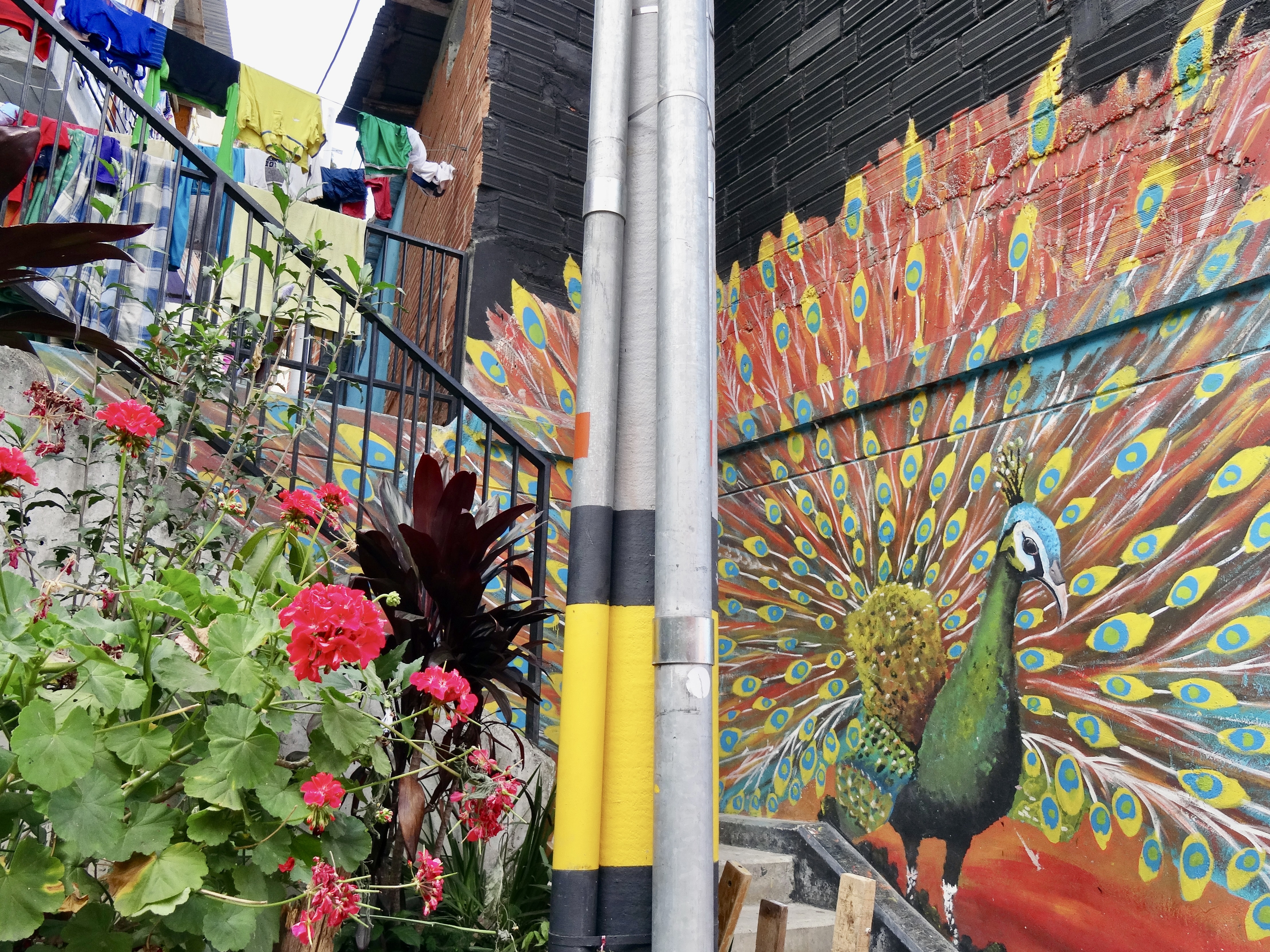
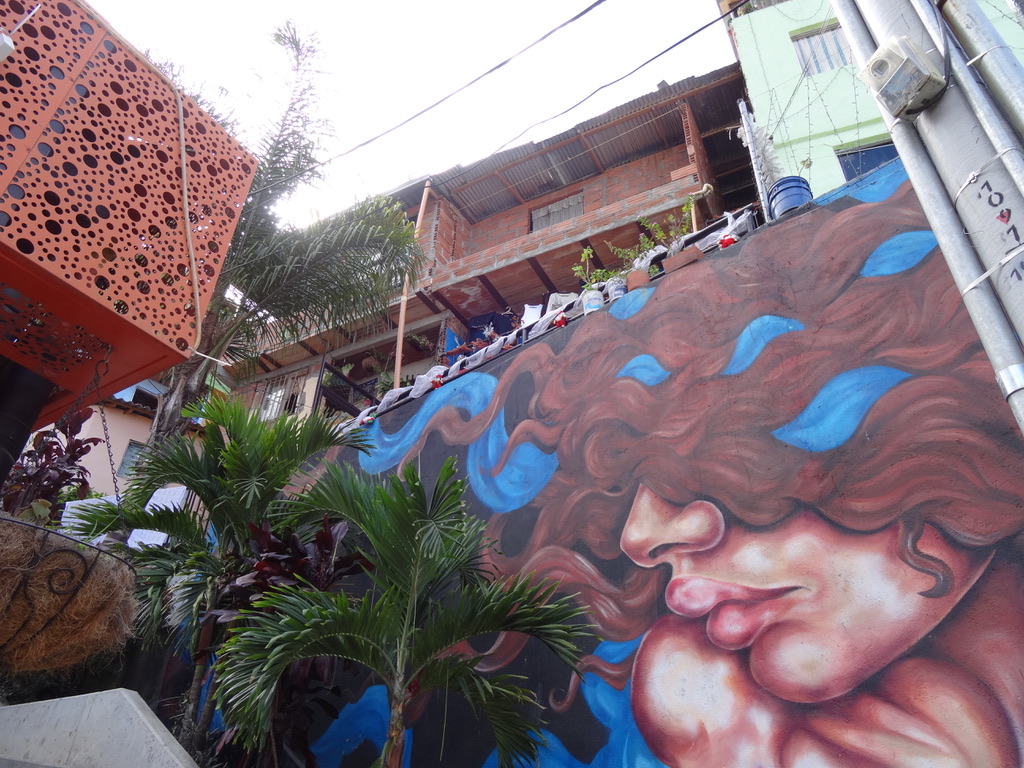
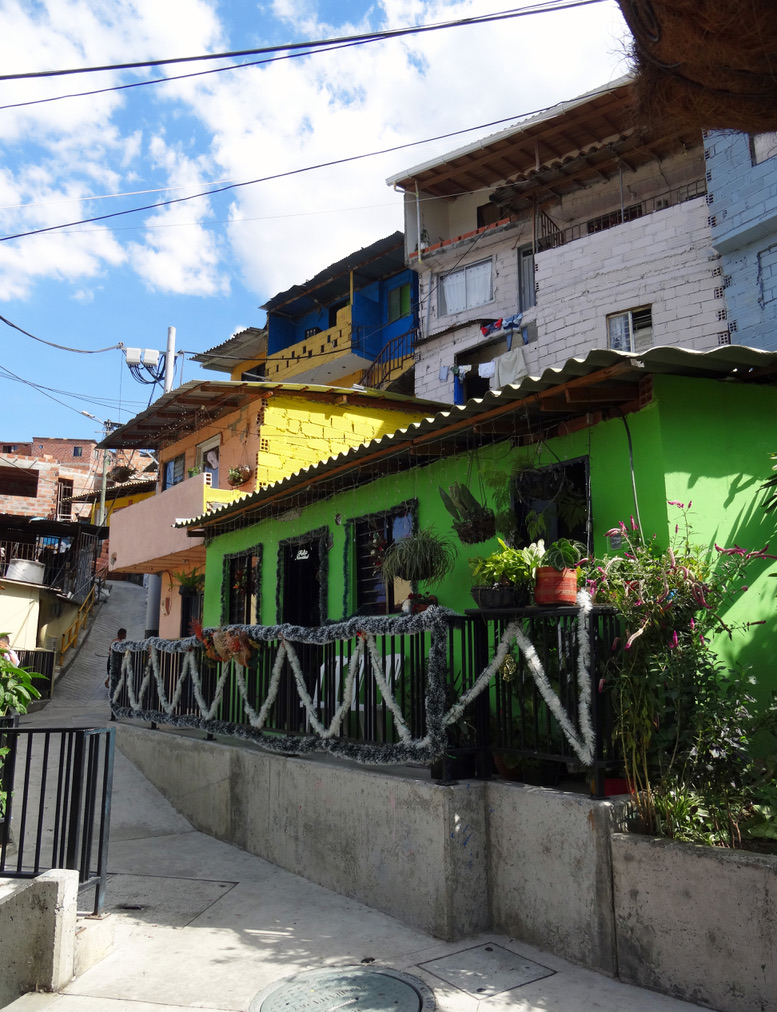
One other thing of note, there are signs all over the city welcoming and thanking people (not tourists, because many of these signs are on the metro.. and they are in Spanish)… As you walk into the Metro… there are signs welcoming you to Medellin and the Metro… as you leave another sign thanking you for using the metro… big, bold signs… no matter what Metro stop you are at.
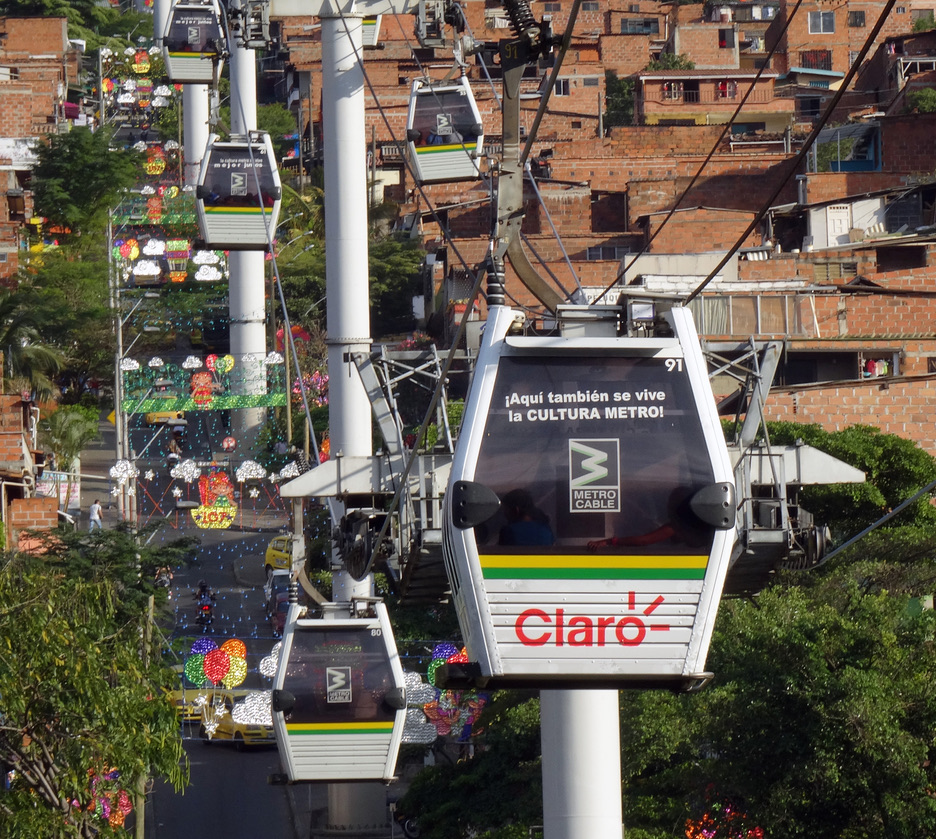
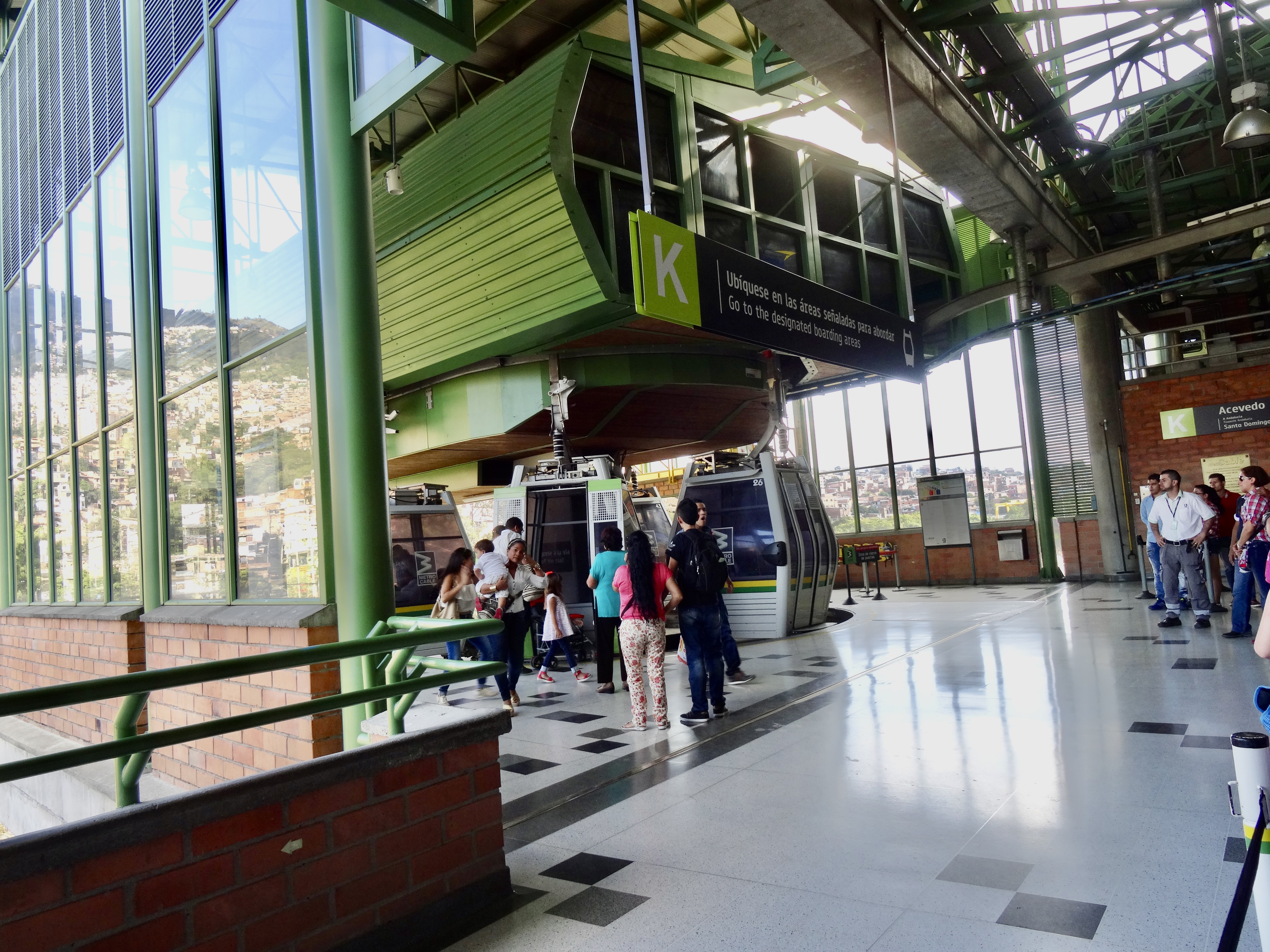
Anyway, after the visit to Comuna 13, we were starving and decided to take a taxi to Plaza Botero… His sculptures are everywhere… in parks, in plazas, in buildings.. figuring that even on Christmas Day the Plaza would be busy and thus some restaurants might be open.. But alas, we walked and walked and not much was available… Finally stopped at a second floor “cowboy” restaurant “Llanero” where we got a fixed meal plate for about $3.00…. potatoes, plantains, and slices of pork. Nibbled, had water… and went on our way to the next destination — a visit to some neighborhoods to the north… Got off the train at Acevedo.. and took a cable car line we hadn’t taken before — it makes about 4 or 5 stops, into the neighborhood (again, self-help housing with lots of additions built over the years).. The cable car seems to just skim the roofs of many houses.. sometimes only about 10 feet above, sometimes 75 feet above… From this cable car you can also get off at the Biblioteca Espana — a modern library (again purposefully located in a park in close proximity to low income households).. There is some kind of structural problem with the library at the moment (a series of black geometric shapes) so the building is shrouded in black plastic. No big deal, not sure we would have made the effort to see it — except from the cable car.. Street life far more interesting..
OK.. I’ve gone on way too long..
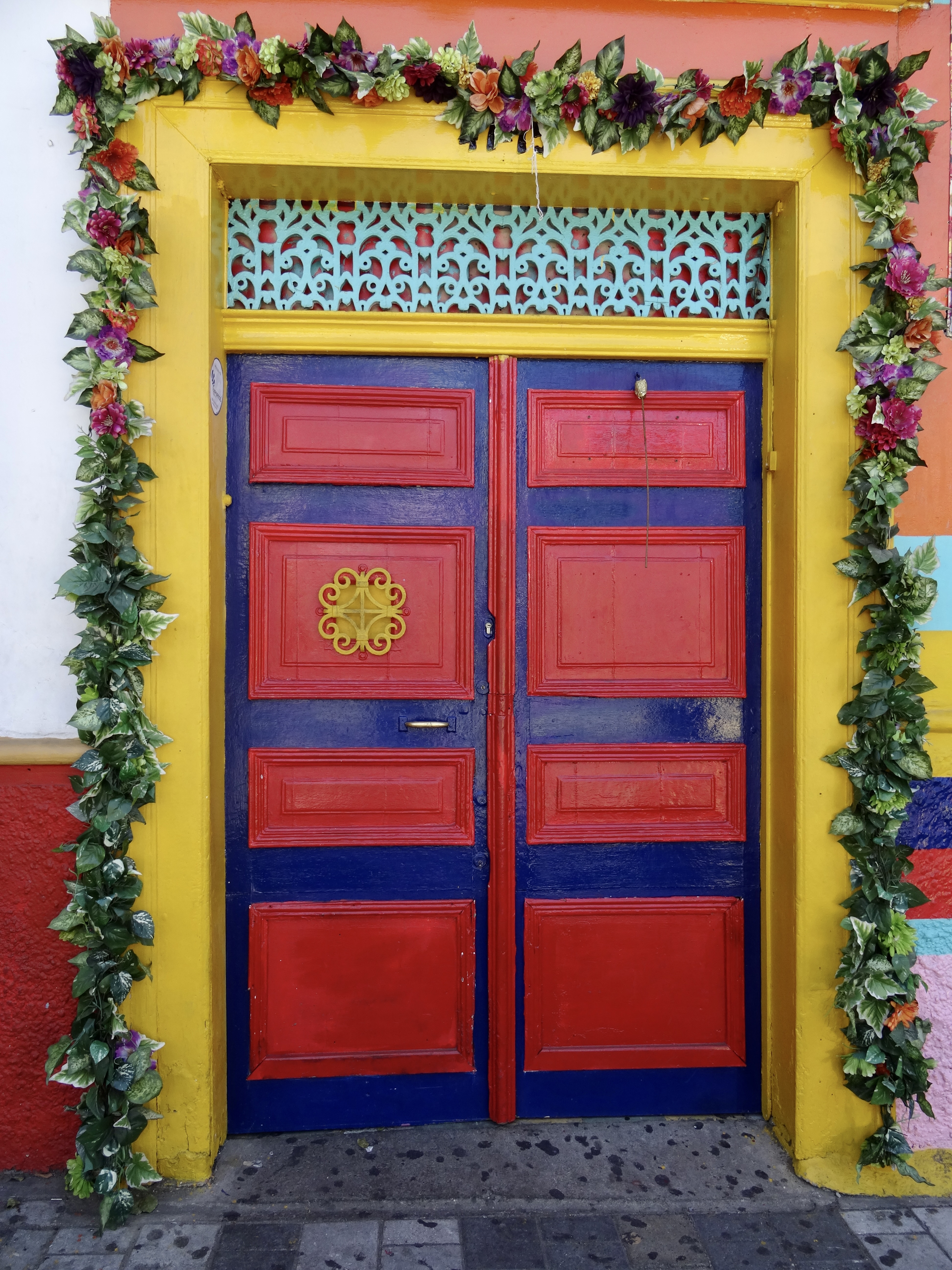
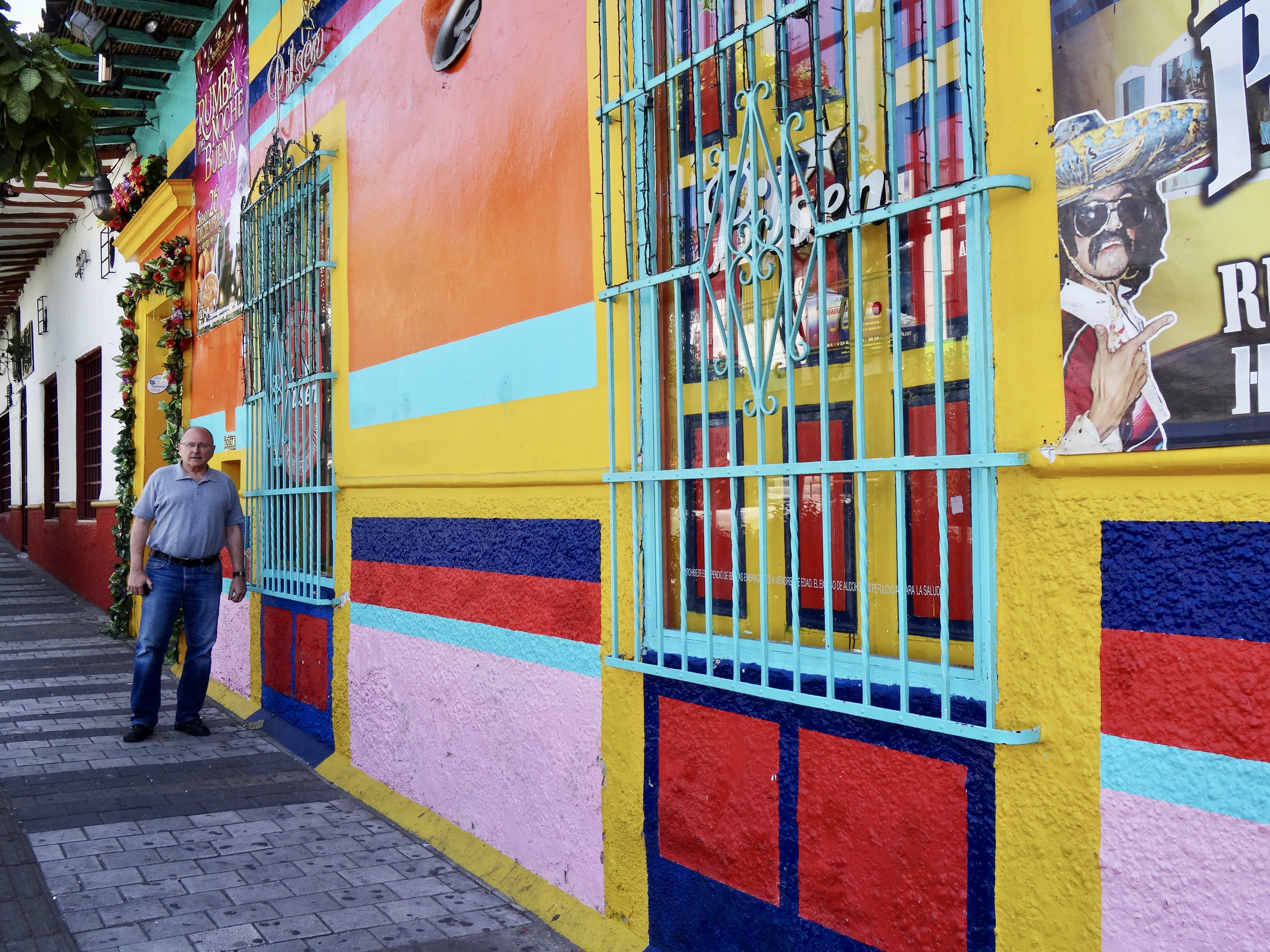
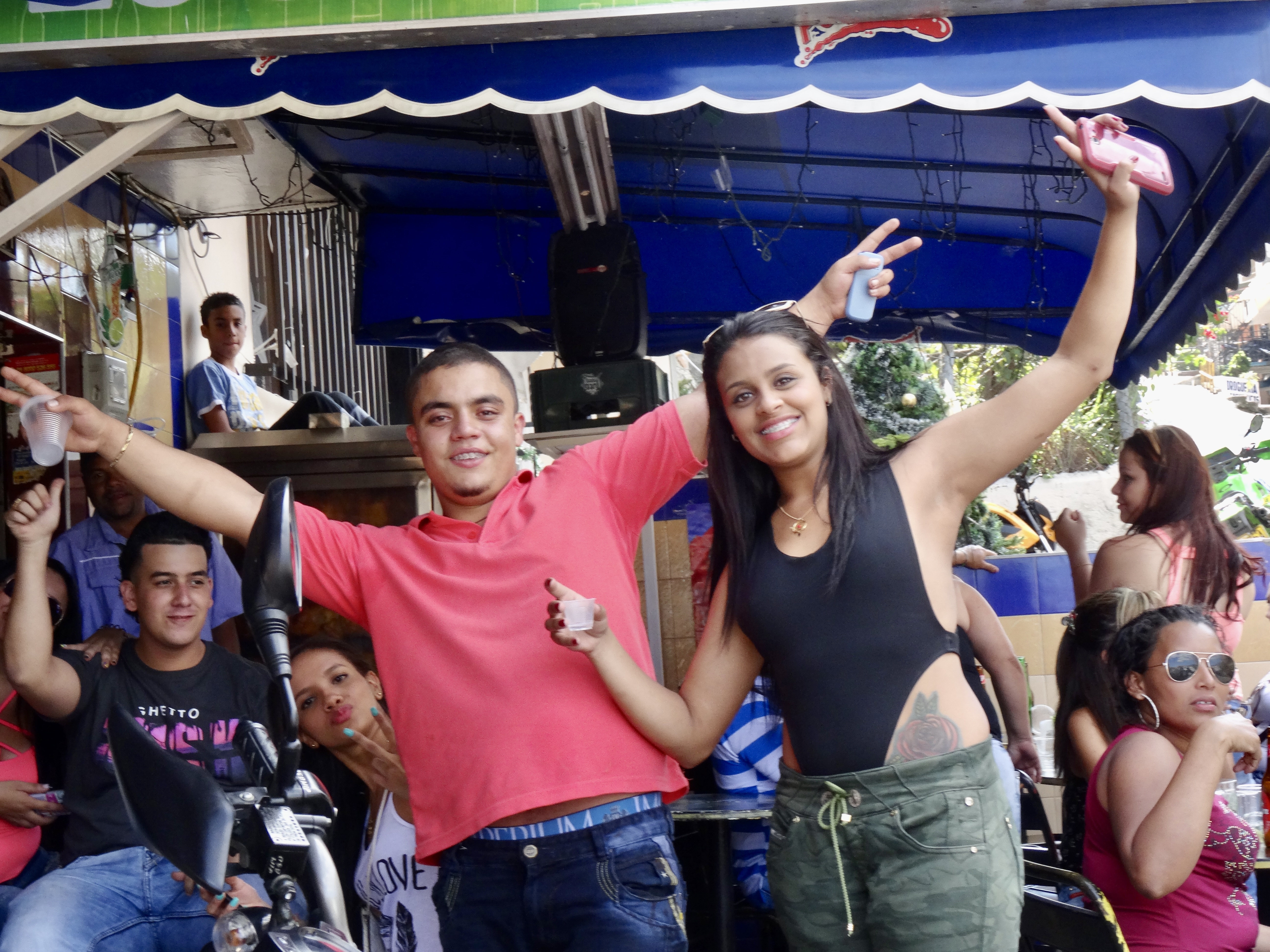
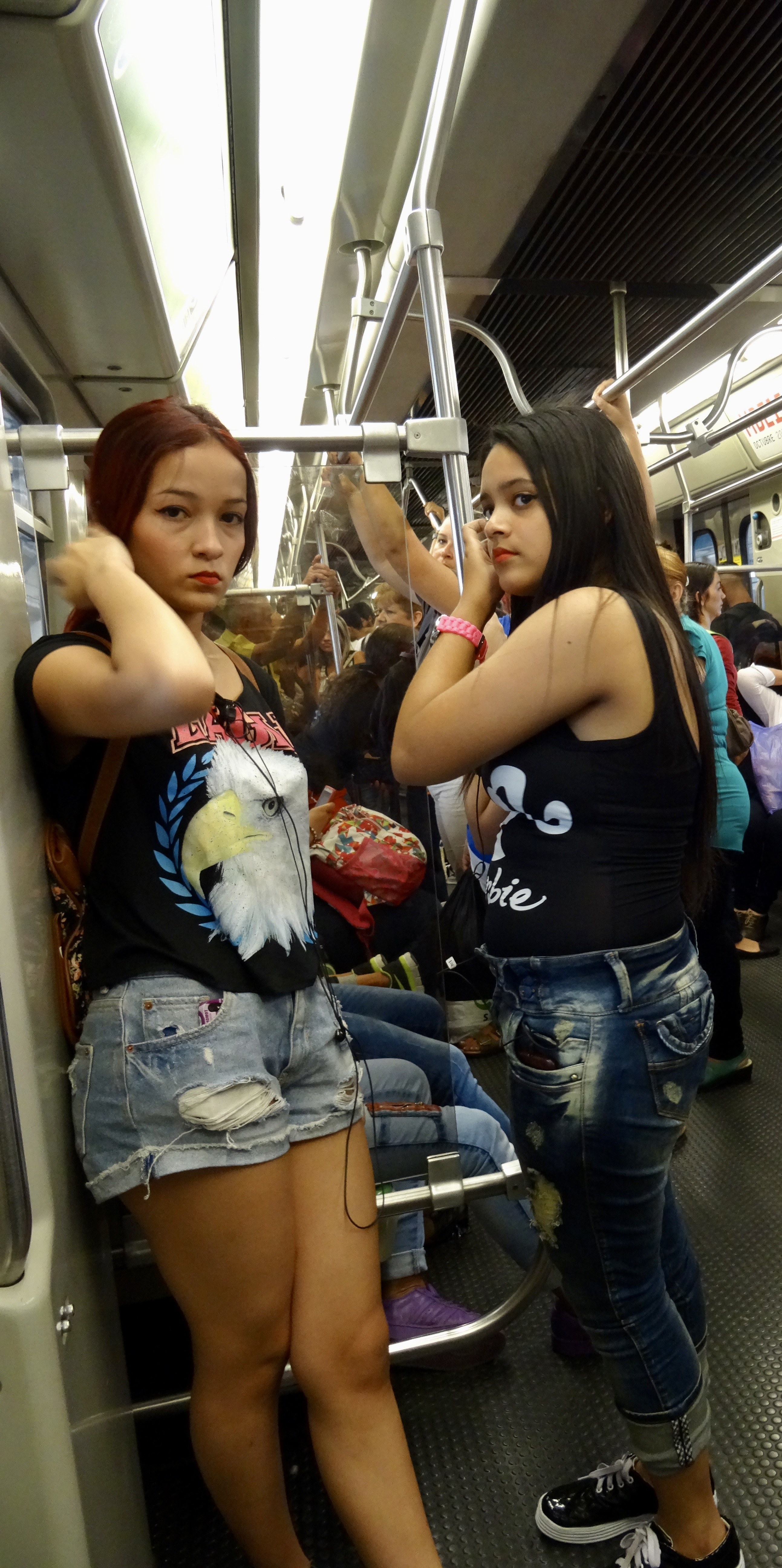
A few tidbits I’ve been forgetting…lots of babies… I think the Colombian population must be growing by leaps and bounds based on our observation … and the moms are pretty young… Also, Mike had his own little interesting story in that he went to the bathroom in a restaurant — and went into the door marked “M” instead of the door marked “H” for “hombre”…. Mmmmmmm….. He realized this after he departed the stall. .. and breathed a sigh of relief that no madras walked in while he was there.
And now that we are out of Cartagena… we are not hearing much English spoken, but maybe because we haven’t ventured into the more popular tourist destinations like museums.


Had dinner at San Carbon… in the hills above our hotel. Not much choice on Christmas Day night.. It was one of those restaurants where it is meat, meat, and more meat… We had trouble communicating that we wanted our steak “rare”… I always thought “rare” was “raro”… but maybe that is rare, like a rare book?? Since the waiter did not understand; he kept asking if I wanted my steak “azul”.. azul, like the color blue?? Anyway, we learned that “azul” is rare when it comes to meat.
Take care.. We are en route to Bogota. More from the capital city.
Fern
 Fern's Travel Notes