December 28, 2015, Bogota — Housing and Hospitality
28 Diciembre 2015. Bogota
Hi all —
First, regarding my reference to Brooklyn yesterday… I was not referring to the hip Brooklyn.. I was referring to areas that are filled with many ethnicities, have lots of mom and pop stores, where people live above repair shops, and where lower income families reside in old tenement style housing… Yes there still are unfashionable parts of Brooklyn today.
Today began with a visit to Bancolombia which is about 10 blocks from the hotel. We needed to do a bank transfer for the restaurant for New Years Eve in Villa Leyva. The restaurant won’t take a credit card and we needed to do it “their way”… No one at the bank spoke any English… We knew that we needed to give the teller the cash and they would create the transfer. Somehow we made it happen. But soon after doing this, the hotel in Bogota called my cell to say that they had called the restaurant and that they would hold the reservation without the transfer… apparently, according to the Bogota hotel it was because of “faith” in the Bogota hotel (vouching for us)… But then the hotel said that the reservation was apparently in the name of our friend here in Colombia who made the reservation. So the hotel changed the reservation to Tiger. Then we realized that the bank transfer was in the name Pyatok.. So this little restaurant is now totally confused. Hopefully we get it squared away.
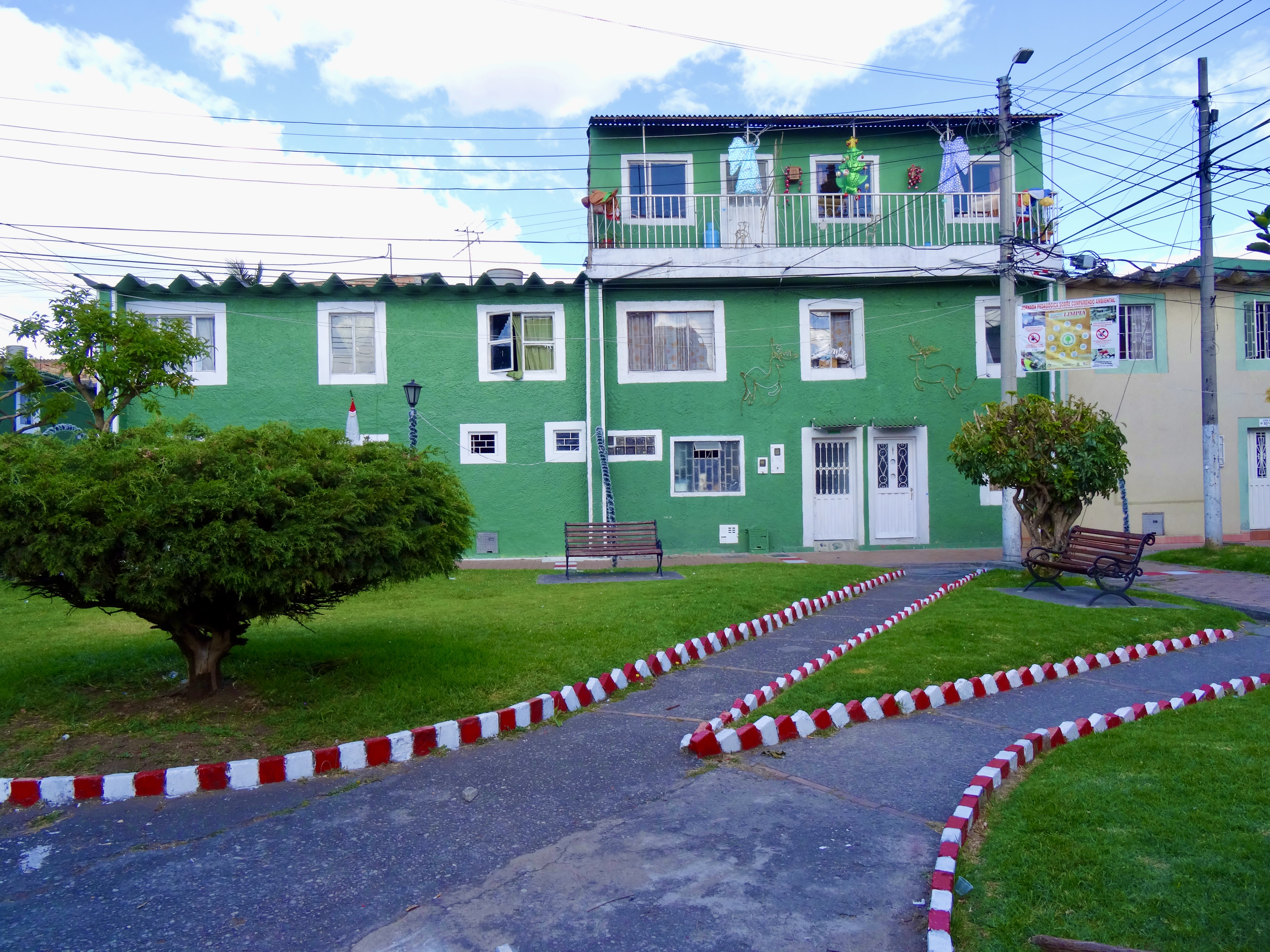
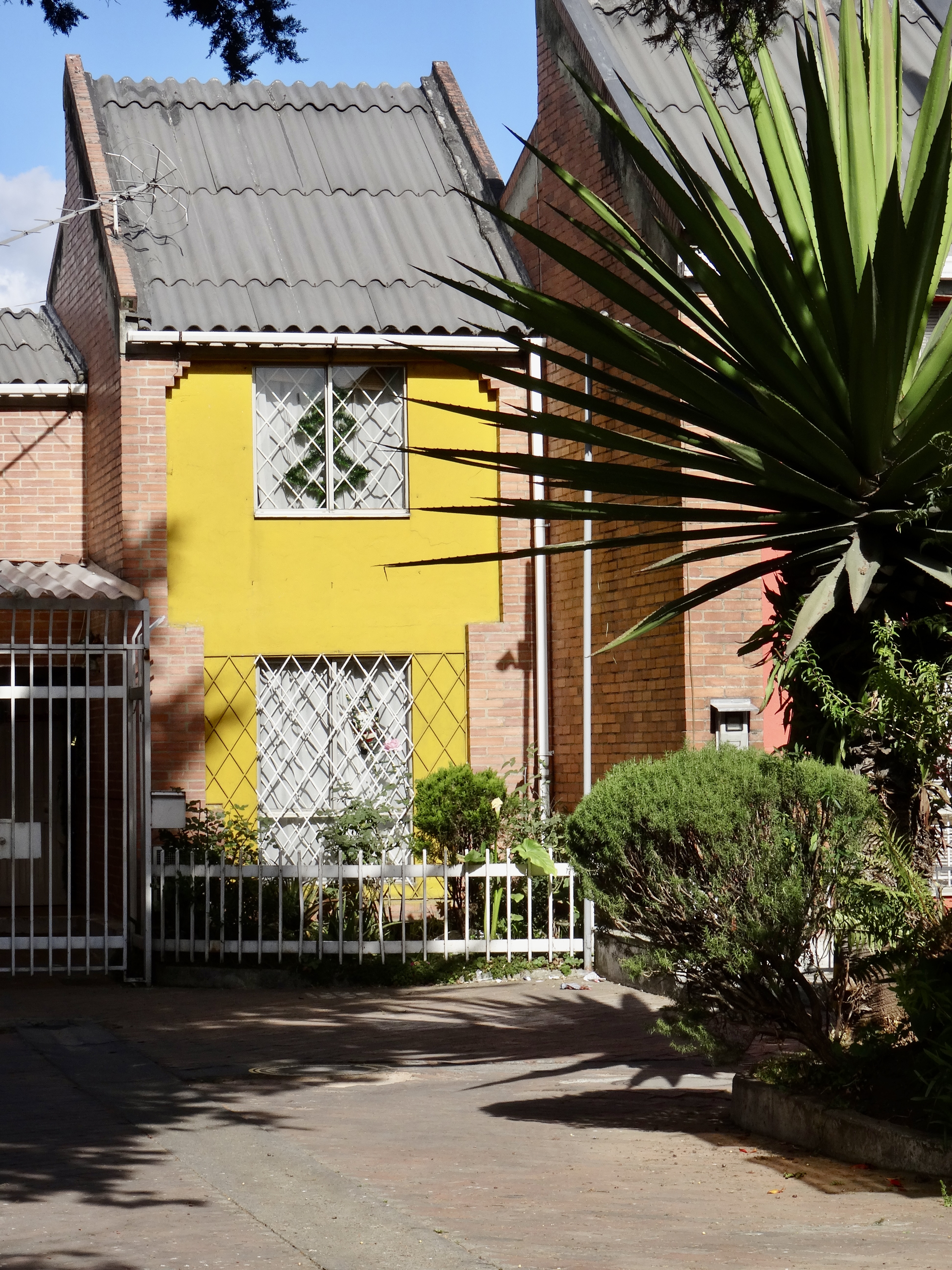
But our real day began when Mike’s friend Sylvia (a planner who had worked at his office in 2000, after completing her Urban Design degree at Berkeley), picked us up to give us a tour of affordable housing in Bogota. But first she took us to a neighborhood close to our hotel where a community had worked on a project to clean the stream and create a steep walking trail. Apparently this was a pilot project in a well-to-do neighborhood and now is a model for lower income neighborhoods.. We then headed to pick up a friend of the planner whose father was a very famous architect in Colombia (and had worked with Le Corbusier in the 50s.. and today at 92 is still working!) and who herself is a noted architect and now chair of the graduate program at one of the universities in Bogota. On the way we stopped to look at an interesting little neighborhood of self-help houses built about 40 years ago.. that is now surrounded by high rises filled with wealthy residents. Apparently the neighborhood is well organized and has successfully fought displacement. The houses were originally worker houses for a salt mine (long gone).
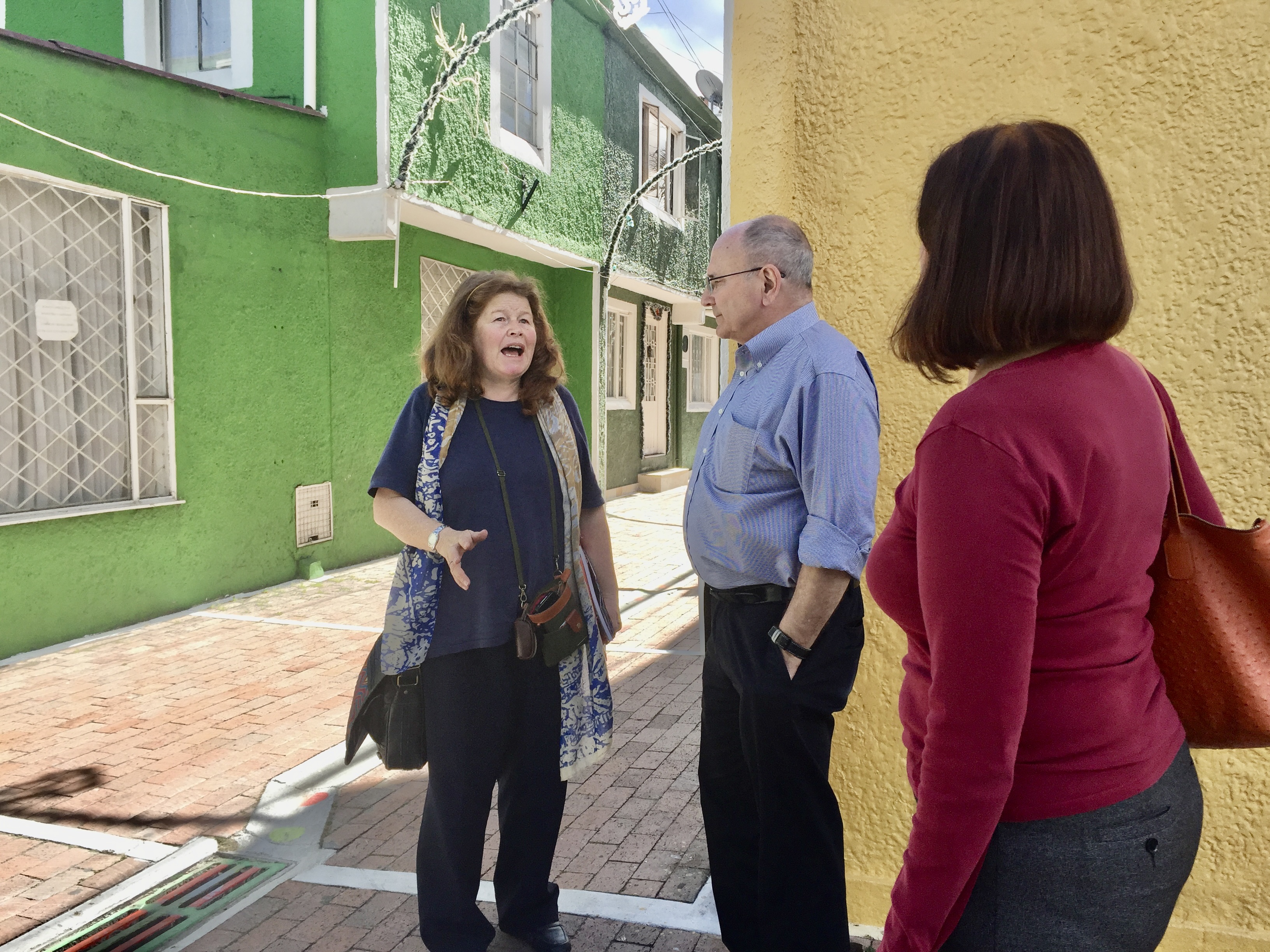
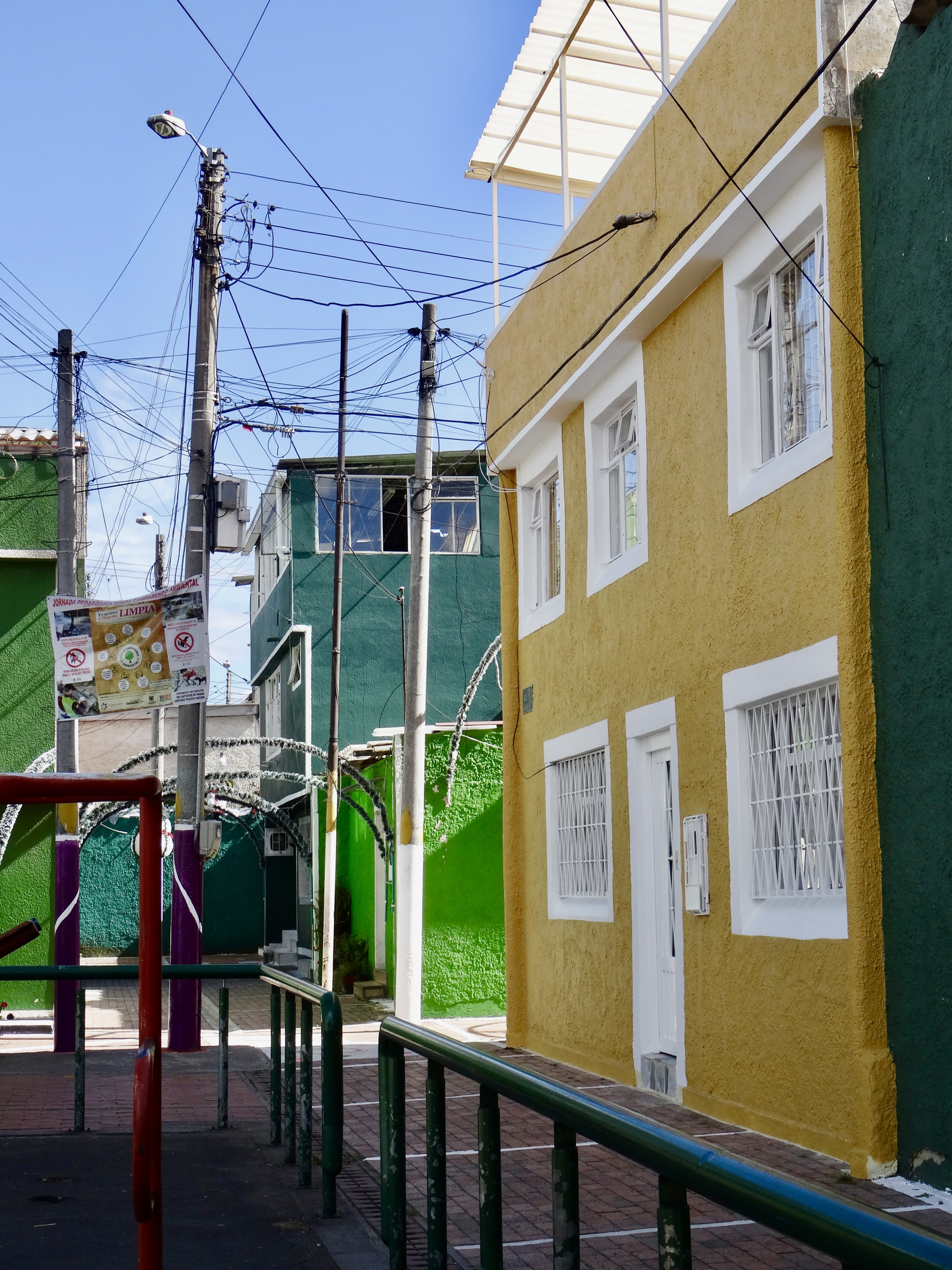
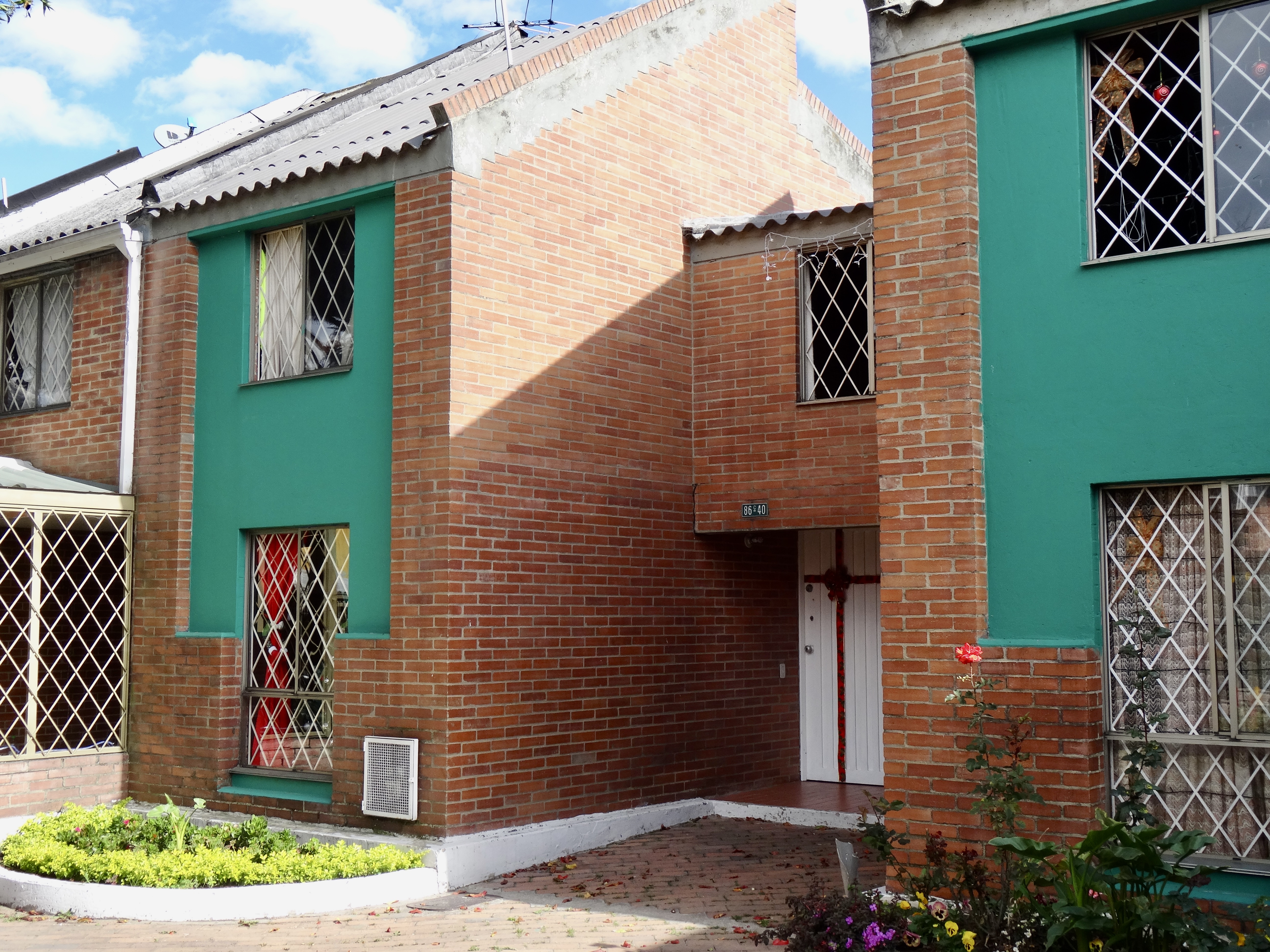
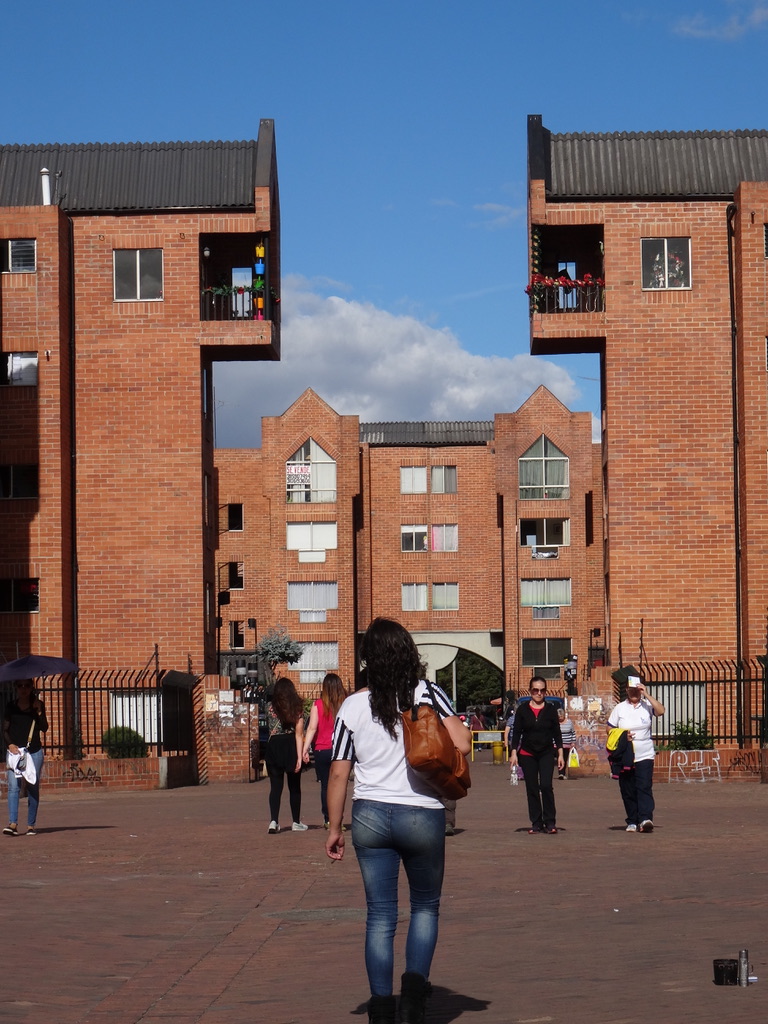
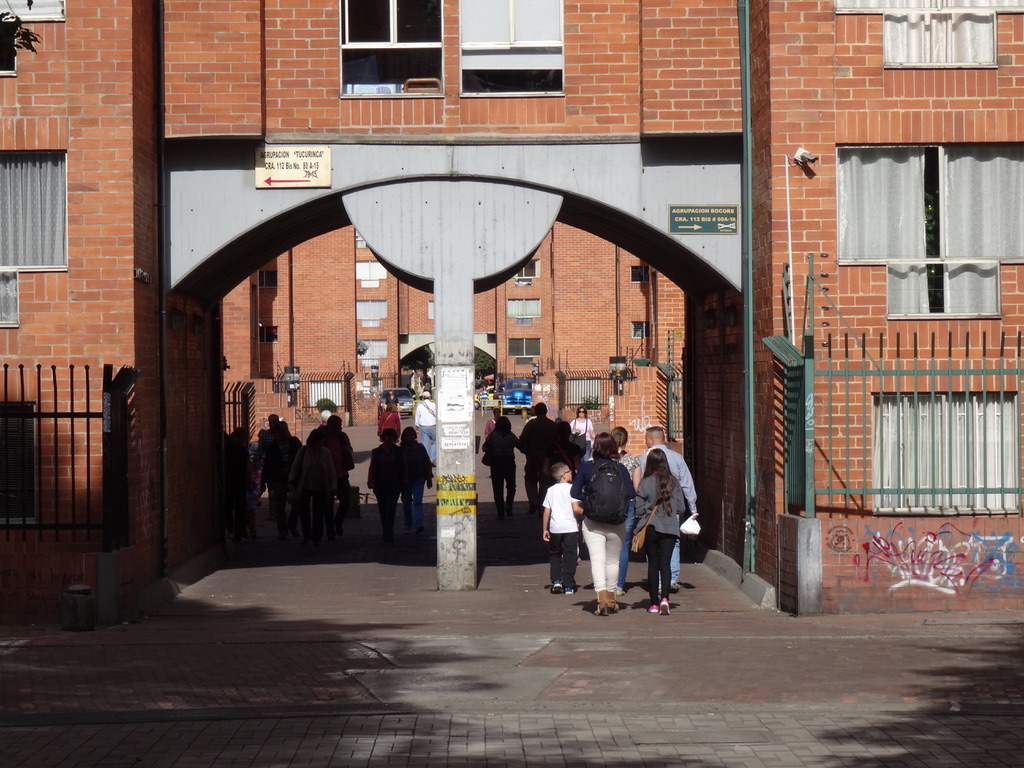
Finally we picked up our real “guide”… Sylvia’s architect friend, Ximena.. and the “tour” began. We visited (walked) about four different projects on the west side of Bogota.. and along the way many others were pointed out. Many were designed by Ximena’s father (who is in his 90s and is still coming into the office) and some by her, although they were mostly self-built or combination of contractor built and self-built… For example in one case, families got a two story shell (no interior walls or finishing) and they also got “approved” plans and five options on how to construct a third floor (which by now — after 20 years or so) are all built up.. In many of the projects the first floors were purposefully designed to be shops so that residents could set up small stores and earn money where they lived above. We also visited projects that were five stories (obviously not self-built) — all walk up, no elevators. Plans for the projects were quite good with parks and child care centers and walkways throughout. In nearly all cases, parking was outside of the project site.
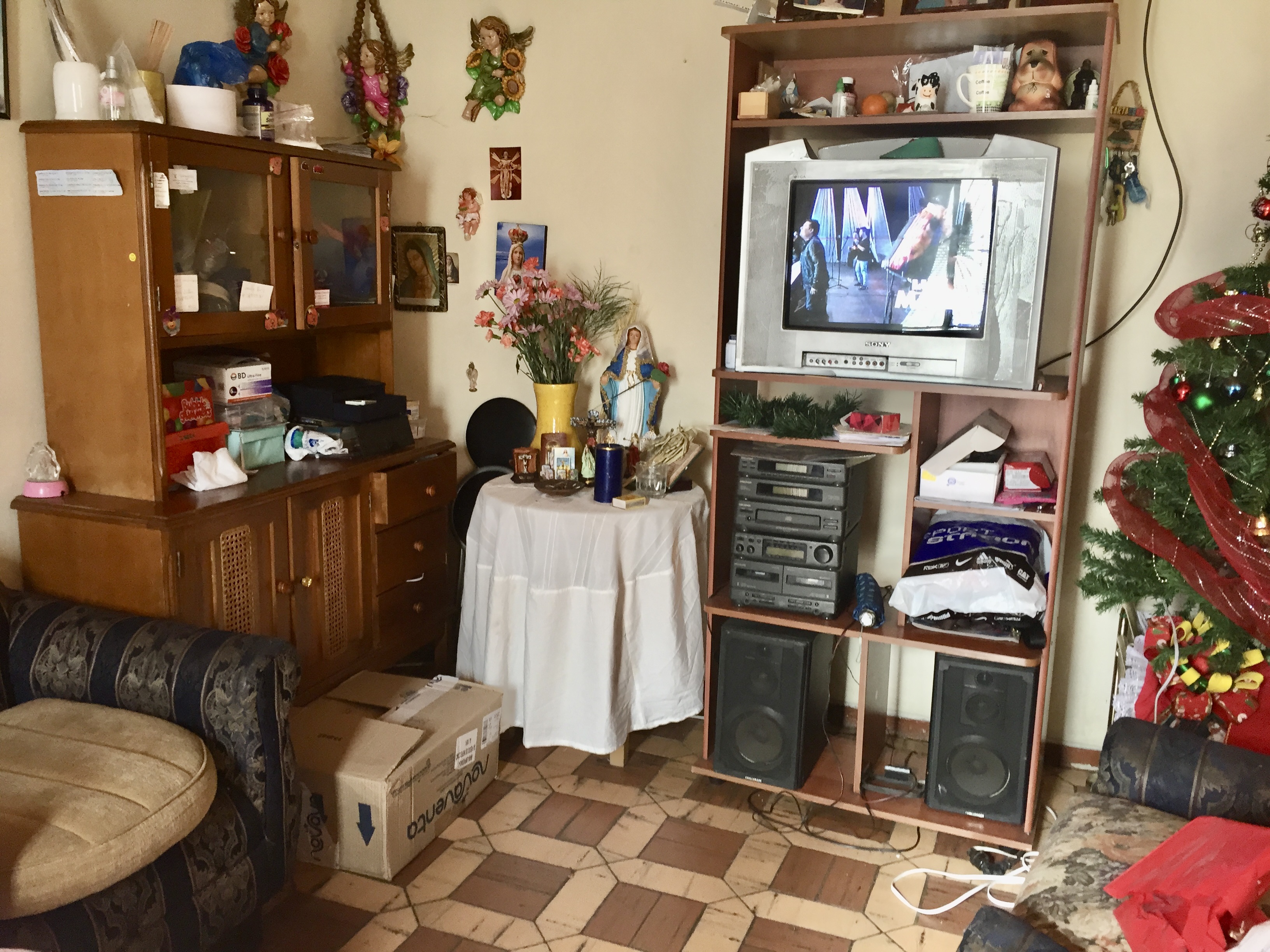
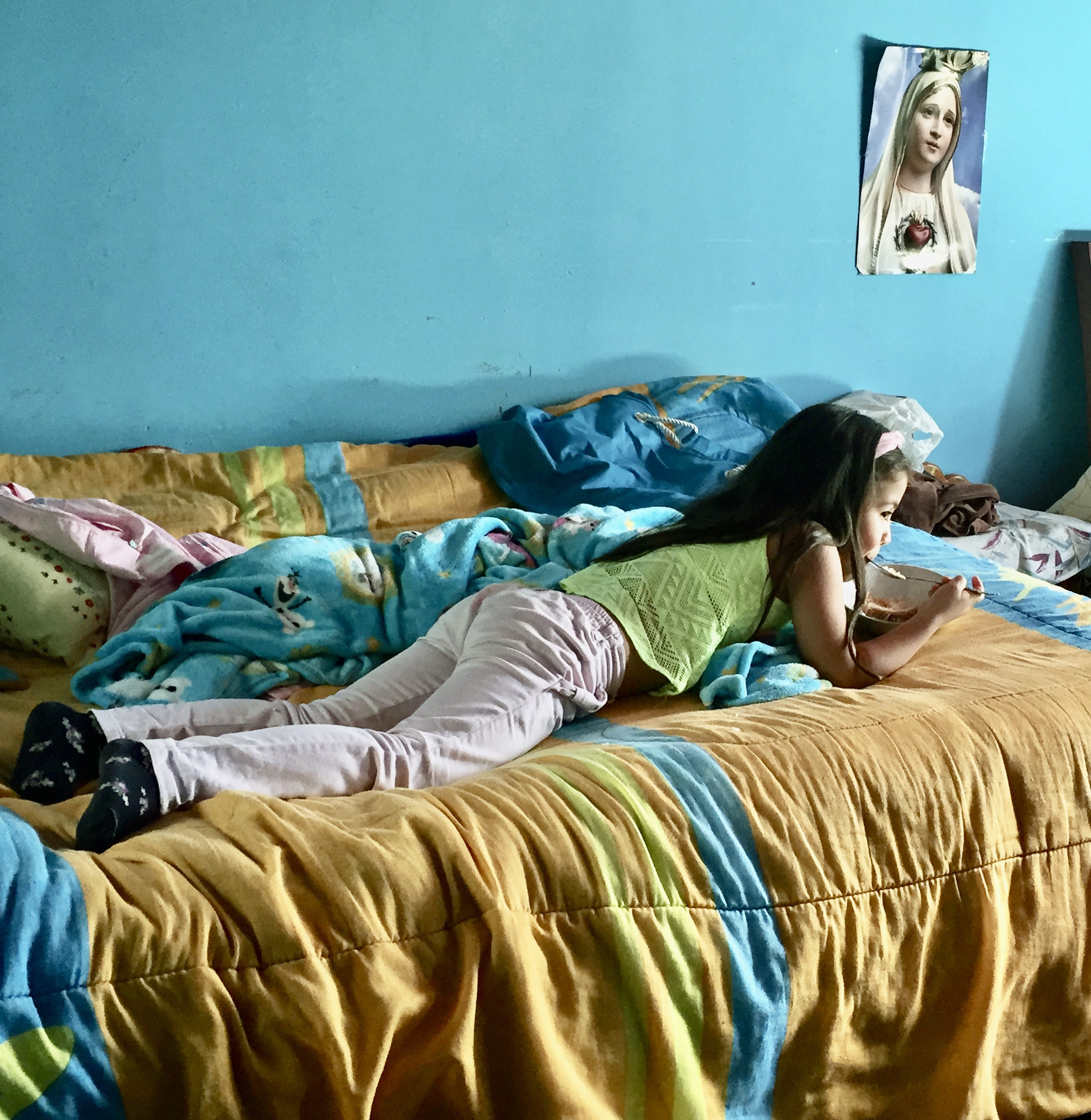
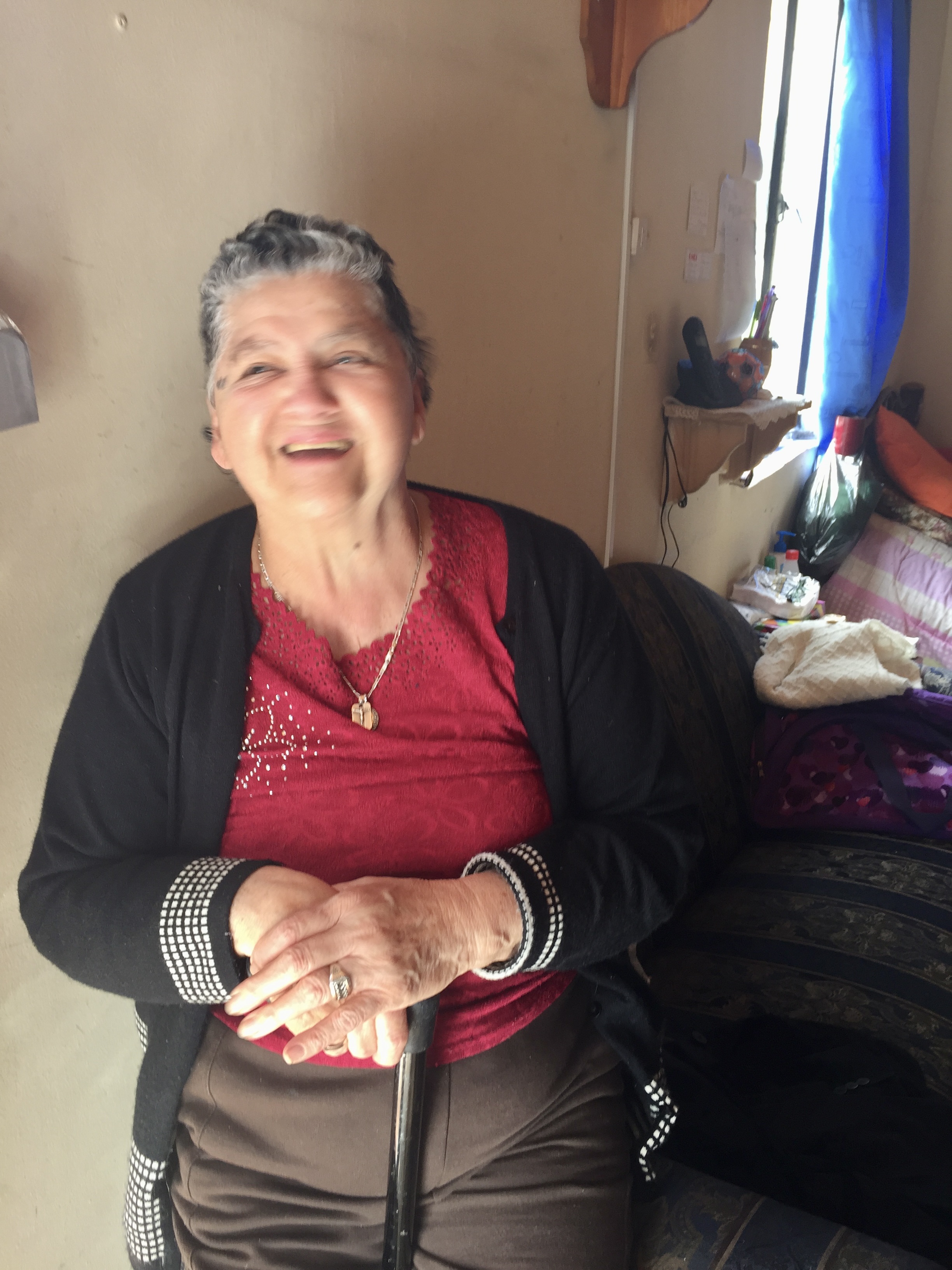
We got to go inside one house, because the woman was sitting with her door open, and she was quite welcoming once it was explained that we were here from the states. She had been living in her unit for 50 years, raised her children there, and now has converted the top floor into an apartment that she rents to a very low income family to earn extra money.
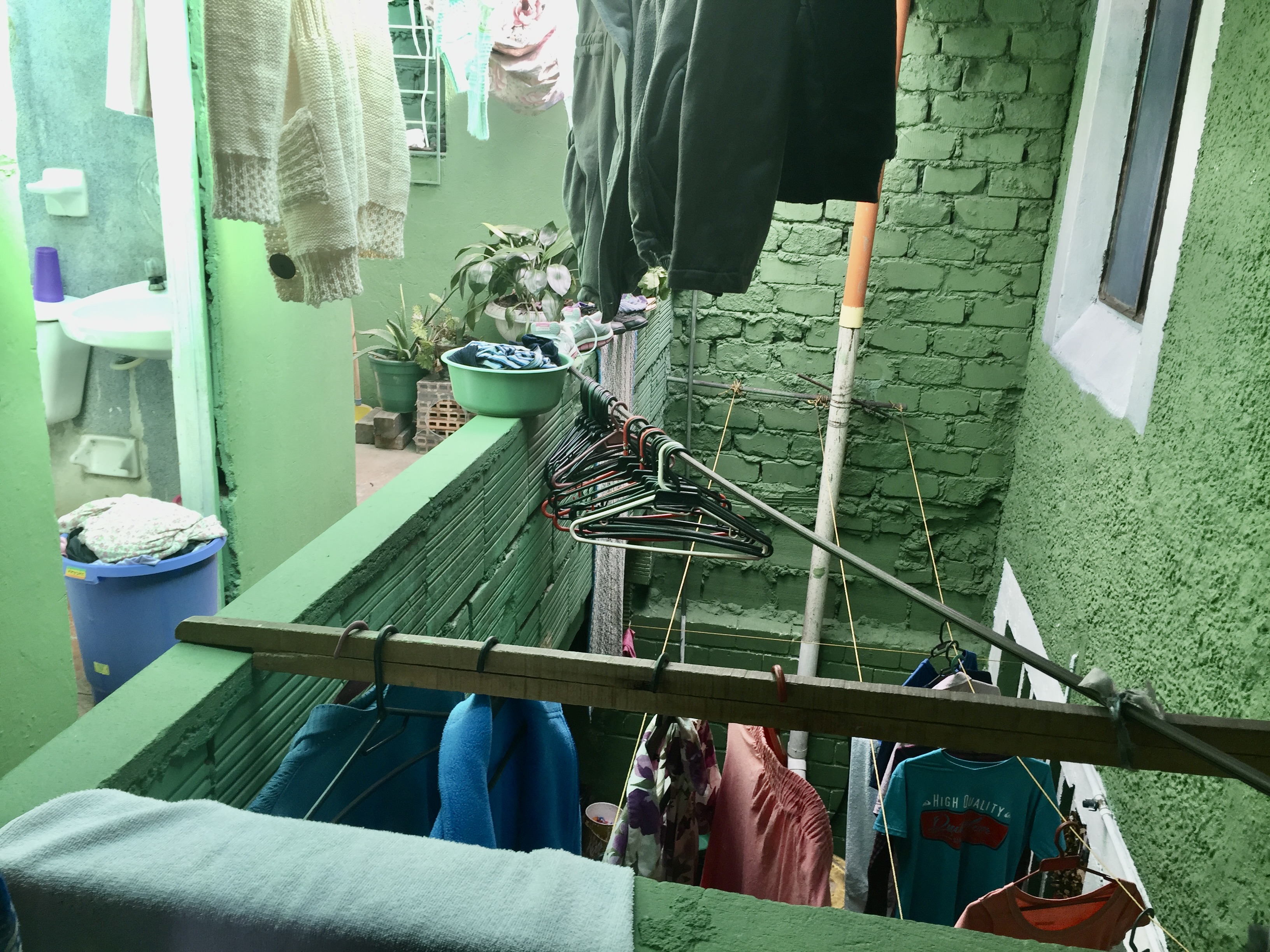
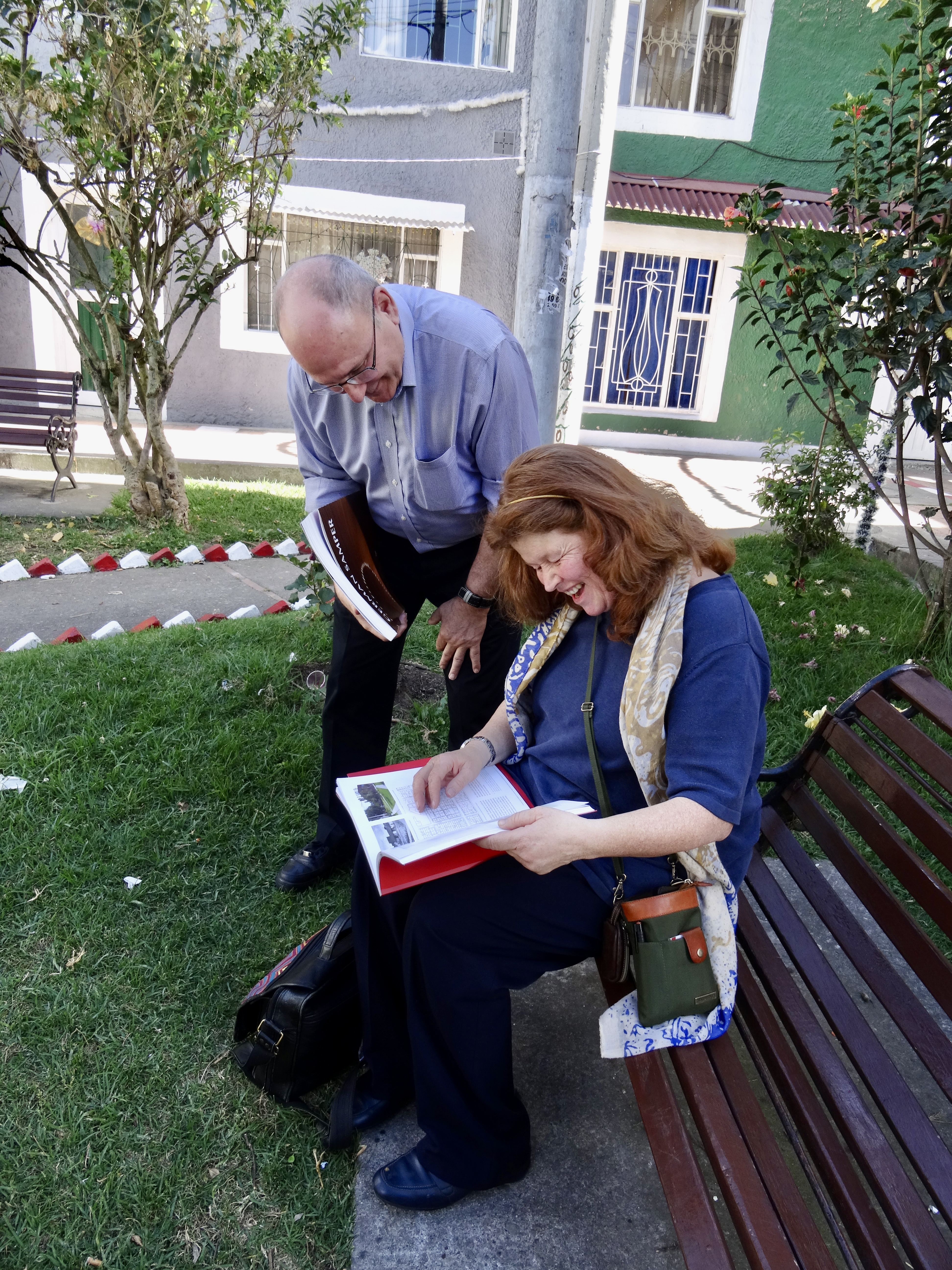
I’d say that all of the housing we saw today (what they call formal — meaning built by the government or by private organizations like unions; what they call informal — meaning people have built it themselves) was all of quality that is about 10x greater than what we had seen in the favelas of Medellin. That is not to say that there are not similar favelas here in Bogota, just that we have not visited them, yet.. and that what we saw today were efforts to supply decent housing to the poor. Most of what we saw here was a combination of the formal and informal sectors.. The formal supplying the neighborhood master plan and the infrastructure and the informal being the people privately building their homes or finishing them within the “rules” of the plan. Most of the housing was about 100 units to the acre. I believe there are huge areas to the south of the city that are much like what we saw in Medellin (but no escalators and no cable cars.. and actually no Metro in Bogota.. everything is by bus.. and the BRT)
Along the journey we heard a lot more about life in Bogota and also about the family lives of our friends. We also discussed the politics of Bogota (and Colombia). Apparently there have been two leftist mayors in the last 15 years and the sense is that they were terrible managers. While they focused on the poor (who got them elected) they neglected the remainder of the city. So now a more moderate mayor is coming in, who was the mayor 15 years earlier and who is credited with a lot of the positive physical infrastructure development, and there is a lot of hope and anticipation that he will be able to accomplish more than the left mayors… or so the story goes.
We also learned that there is a sense that many Colombians believe they are descendants of Jews.. (despite the fact that in a country of more than 48 million there are only 2,500 people who identify as Jews) because a large number of predominantly Sephardic Jews came to Colombia during the Inquisition and over the years not just married non-Jewish Colombians, but also changed their names and converted to Catholicism for protection. In any case, there currently are three synagogues in Bogota, although we have not stumbled upon any.
I could go on and on about the places we visited, but that will have to wait for moments when I can do it verbally as it would take up too much space in this note.
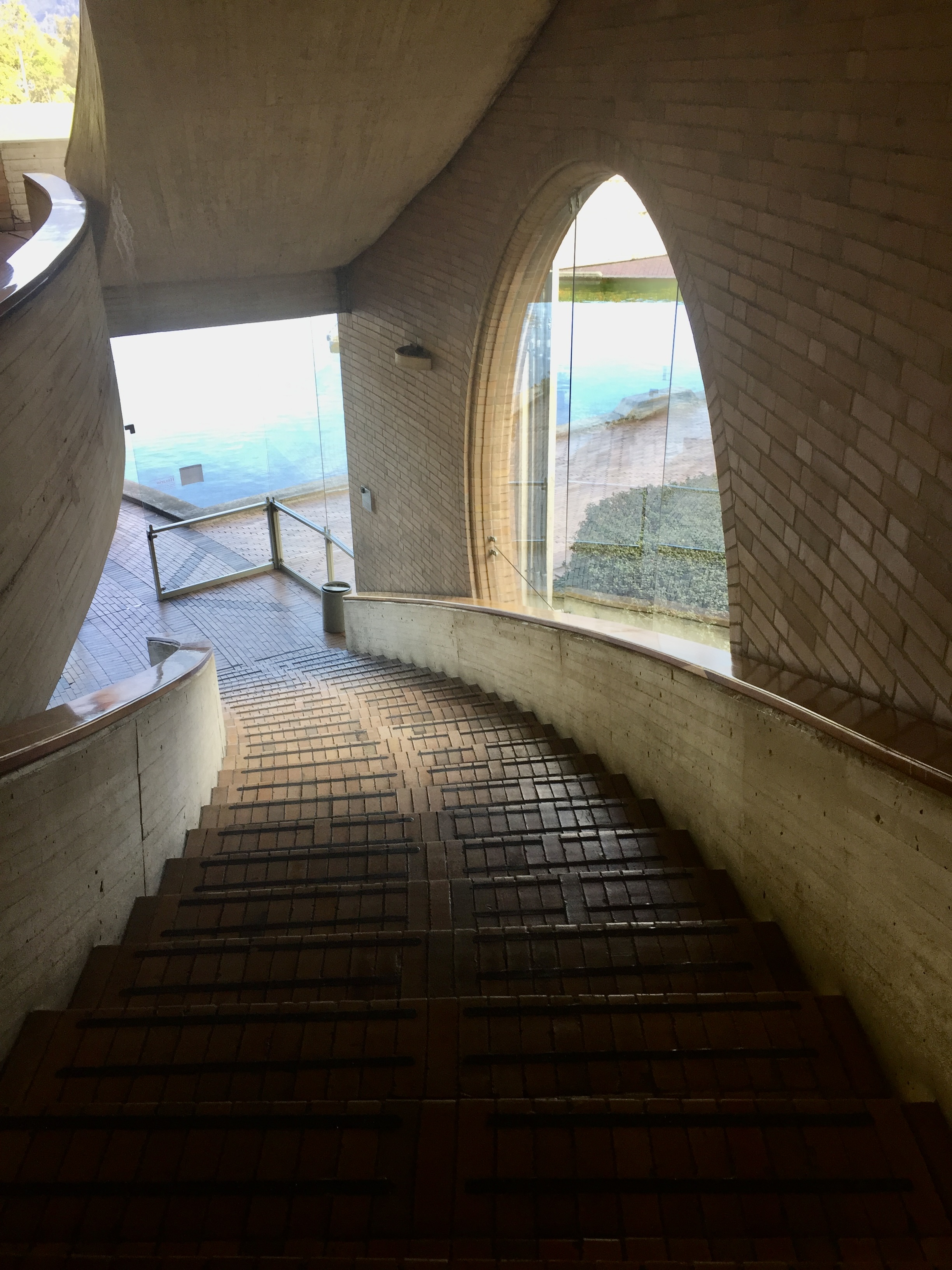
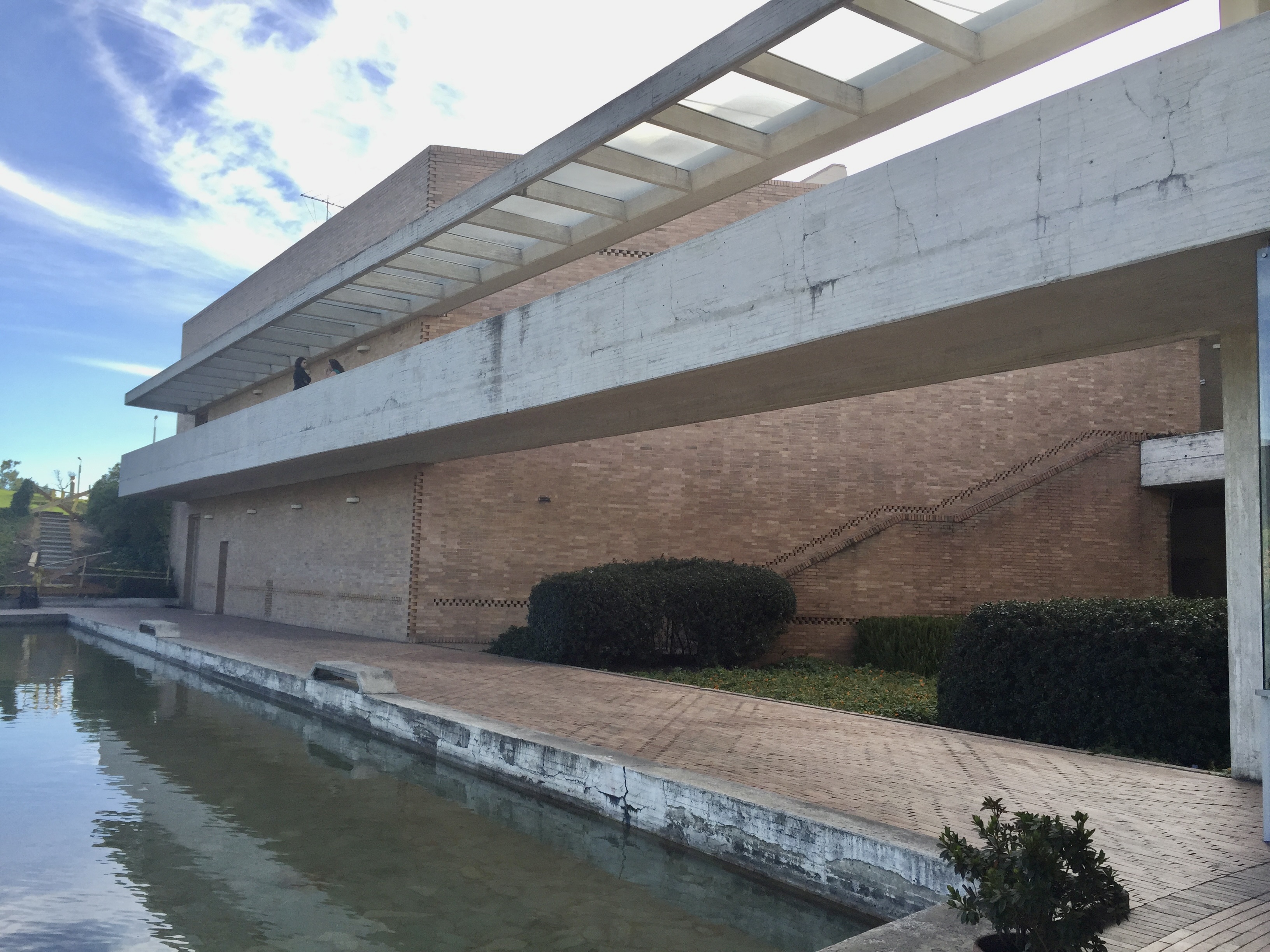
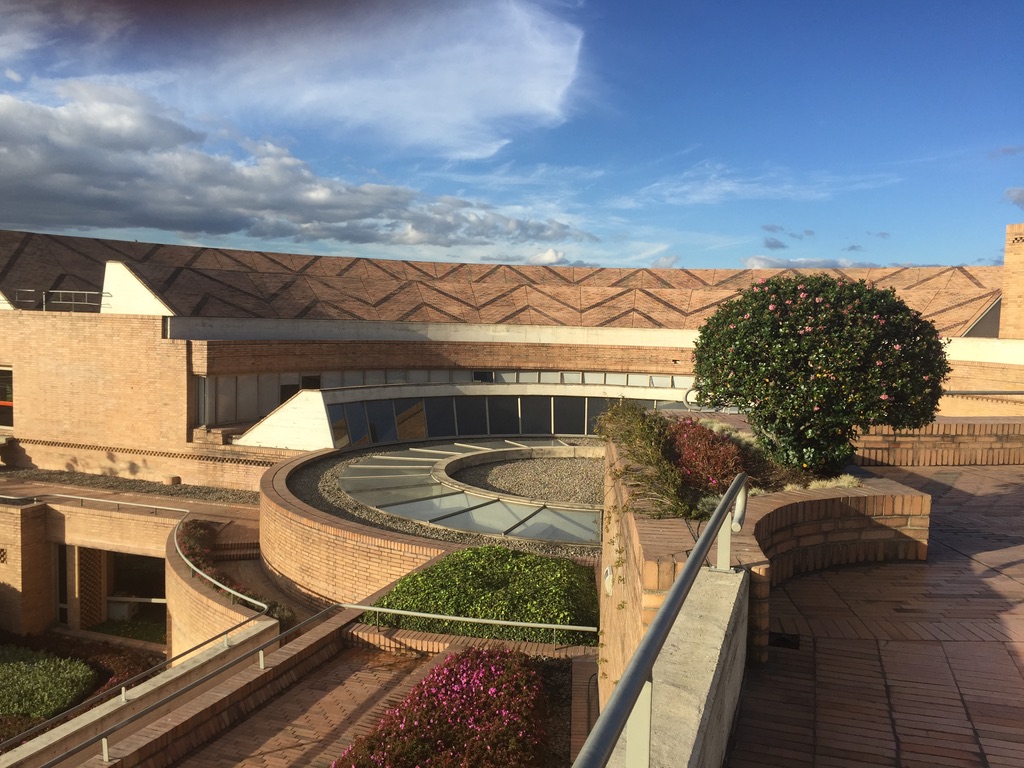
We also visited a large library situated within a big park designed by a famous Colombian architect known for his brick structural and sculptural buildings (we also saw one of his high end residential projects).
We ended our tour and headed for dinner at Sylvia’s place where we were joined by Ximena’s husband (also an architect) and Sylvia’s cousin (a civil engineer). Sylvia lives in a wonderful apartment up in the hills surrounded by lush green parkland.. She’s got a very spacious duplex apartment. She served a traditional Colombian (Sunday dinner one-dish) meal — a thick soup made with three different kinds of potatoes (one for thickness, one for flavor, and one for texture), chicken, cilantro, corn (still on the cob)… and you add based on your liking capers, avocado, spicy salsa, and/or cream.. The dish came with arepas (little corn cakes).. and then we had the sweetest dessert imaginable (berries with some kind of dulce de leche and a quince jam with cheese… calories galore)..
Dinner conversation was fast and furious — politics, housing, community, world travel, funny language translations, experiences living/studying in the US when they were younger (Harvard, Berkeley, U of Illinois, Penn, etc.), the strength of the dollar and the declining value of the Colombian peso.. Spanish words they think are funny in Mexico and Puerto Rico; words and accents they couldn’t understand in the states, political corruption… and of course Donald Trump! They have seen all the debates and get lots of US information.. They are very concerned that we might have a president like Trump. And we are equally concerned!
They are proud Colombians — hopeful for the future.
All good… Need to end and get to bed.. Long day tomorrow..
Hope you are all doing well and enjoying the holidays.
Fern
 Fern's Travel Notes