Americans in Nairobi – 12/16/2018
Sawa (Hello in Swahili)
We’re on our annual winter travel trip: Nairobi, Kampala, Kigali, Dar es Salaam, and Zanzibar. … an overview of East Africa’s major cities.. No safari! We saw the Big Five at a reserve in South Africa some 15 years ago. Been there; done that. Only kidding. Still we made a conscious choice to ignore the animals (along with the related cushy accommodations and the great food). That said, Mike is thinking about going to see the gorillas in Uganda. We shall see. If he does, that will be without me.
The trip was tiring. SFO to Frankfurt to Nairobi. We are at the Fairmont Norfolk Hotel. Somehow between October (my last overseas travel, just two months ago) and December, the rules changed. US now photographs each passenger in addition to triple-checking passports. We were both in business class, but somehow not seated together. But it was one of those flat-bed flights and the seat configuration was 1-2-1, so it really didn’t matter much. Service on United was pretty terrible, so we were happy to switch to our Lufthansa flight once we got to Frankfurt.
We had only 60 minutes to change planes, and naturally our gate was .9 miles from where we landed. We had only carry-on bags (yes!) which meant lugging them through the long airport walk. Naturally since it was Frankfurt, we had a 10-minute bus ride within the airport from our plane; the long walk; a train ride to the terminal; had to go through security again (German side) and the lines for that were unbelievable. We ran and then just hoped for the best. But alas, although we got to the gate totally out of breath, but on time, only to discover that our departure was delayed and delayed. We finally took off about two hours late – postponing our arrival in Nairobi from 9:30 pm to 11:30 pm (Sunday).
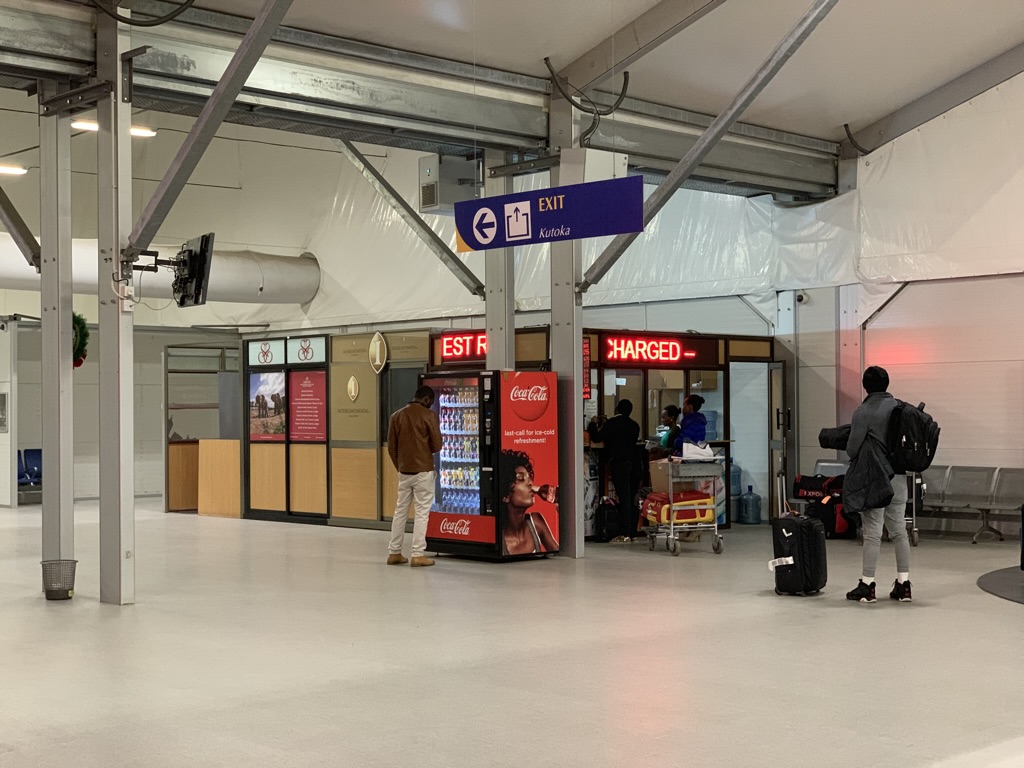
The Nairobi airport is pretty “basic” without any of the cushiness we find in US and European airports and even in some North African airports. Naturally, the jetway didn’t work so we were left with stairs.
Upon landing, we were greeted immediately by armed guards with machine guns (Hadn’t really seen that since Ecuador – I think); and another photo for the Kenyan Airport folks. I feel like my photo is now everywhere. We headed to an ATM machine and then looked for a “somewhat legitimate” taxi. We arrived at the rather snazzy colonial-style Fairmont Norfolk at about 1 am. The hotel was built in 1904; it’s a sort of hidden gem with its elegance and understated charm. The hotel, just like most restaurants, shops, businesses, public buildings, etc. have tons of security – and lots of men with machine guns; not sure they really work. So to get into the hotel (and all the others) the taxi has to stop at a barrier while we sit in our seats – two guards come to open the car doors to “inspect;” mostly they look at the floors and in the glove compartment and the trunk; then the car moves to another arm that has to be lifted and we get out. Then we go through a screening process (airport-like) and then you’re inside the hotel. Frankly, I don’t think any of it works because today I forgot to take my cell phone out of my pocket and no alarms went off. One of the interesting things is that everyone you talk to or meet – from taxi drivers to front desk hotel staff to shopkeepers – assumes you’re in Nairobi to go on a safari (Guess that’s what foreigners do). So they just ask what day you will leave for your safari or if you liked your safari. I think it’s like assuming that everyone who comes to California goes to Disneyland. So they are all caught off guard when we say we are here to see their city.
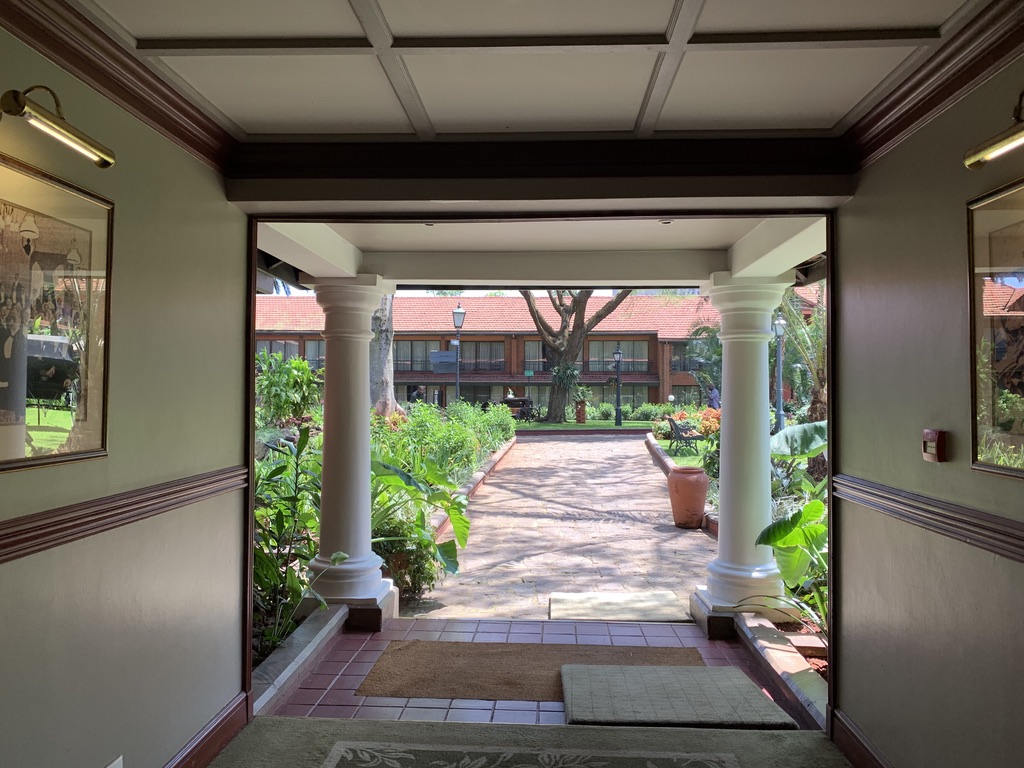
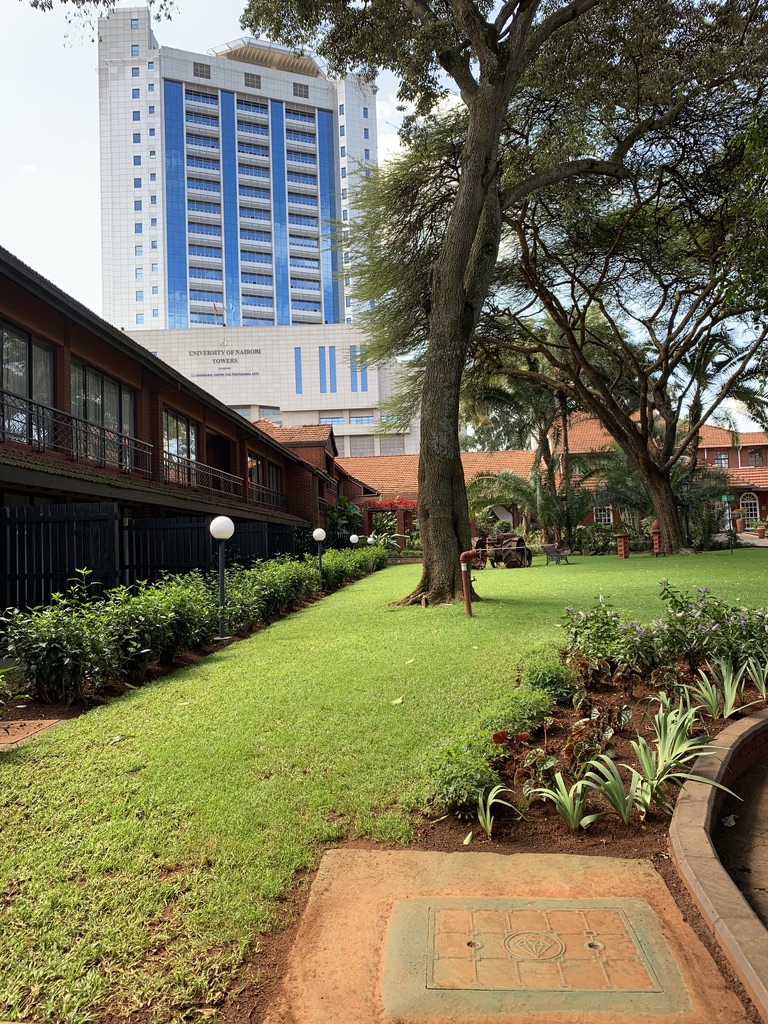
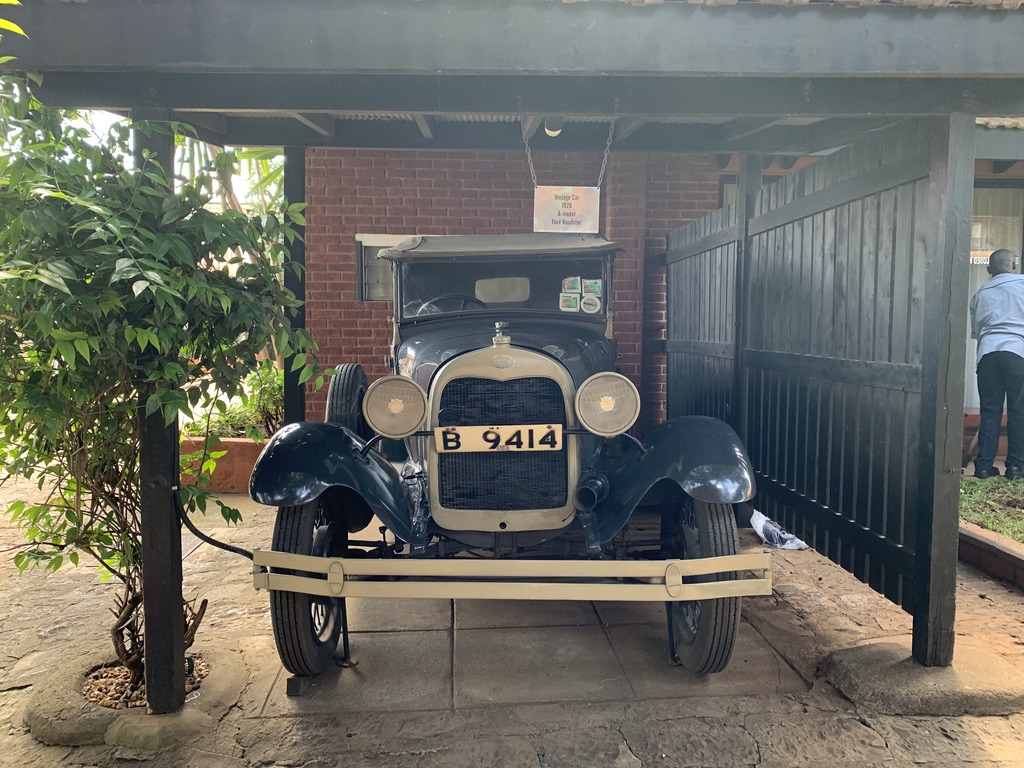
While we were exhausted and wanted to sleep – we opted to unpack and head for the hotel’s delightful bar for night caps. And then we crashed. By then it was 3:30 am. This morning we got to actually see the hotel. The grounds are truly beautiful and the location is great. Lots of gardens…but right in the center of town. We opted to have breakfast at the hotel so that we could get an early start checking out Kenya’s capital city – home to about 6.5 million people. Following a great breakfast, we decided we needed a real street map of the city in order to figure out where we were and where we’d head. This is actually a difficult thing to find. Finally the hotel suggested we go to the “text book center;” the hotel is located just across the way from the University of Nairobi. Naturally, they thought they should take us there; but we assured everyone we were fine walking to the shop. We did get a map (two in fact), although they look used and really worn. But they will work.
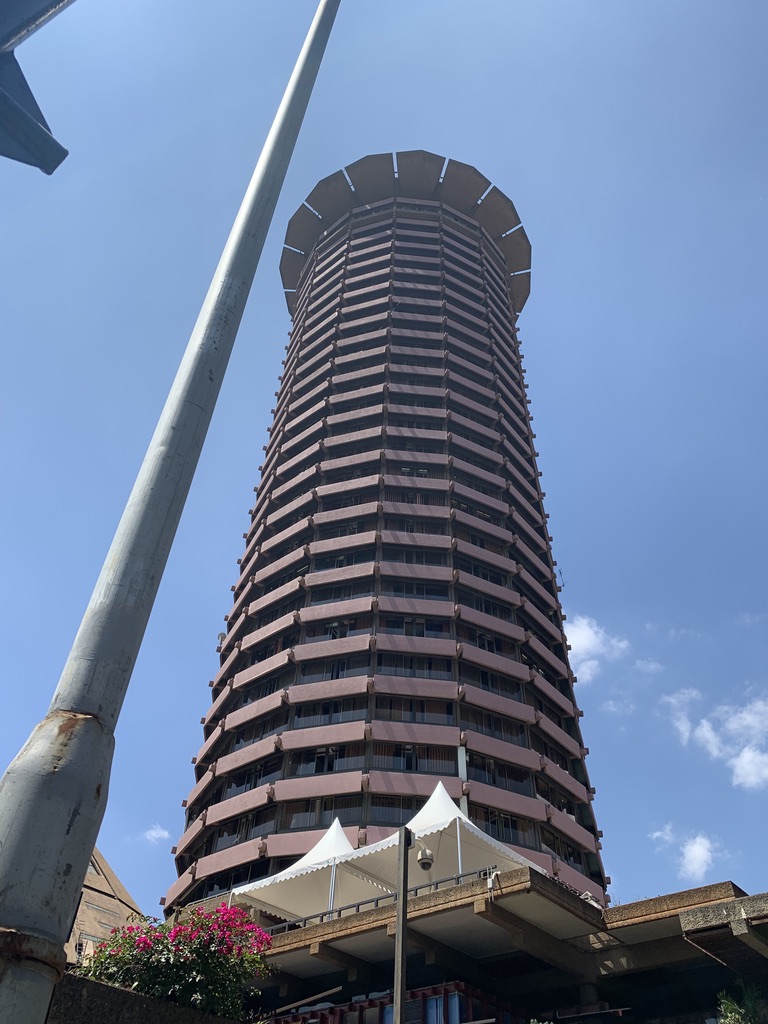
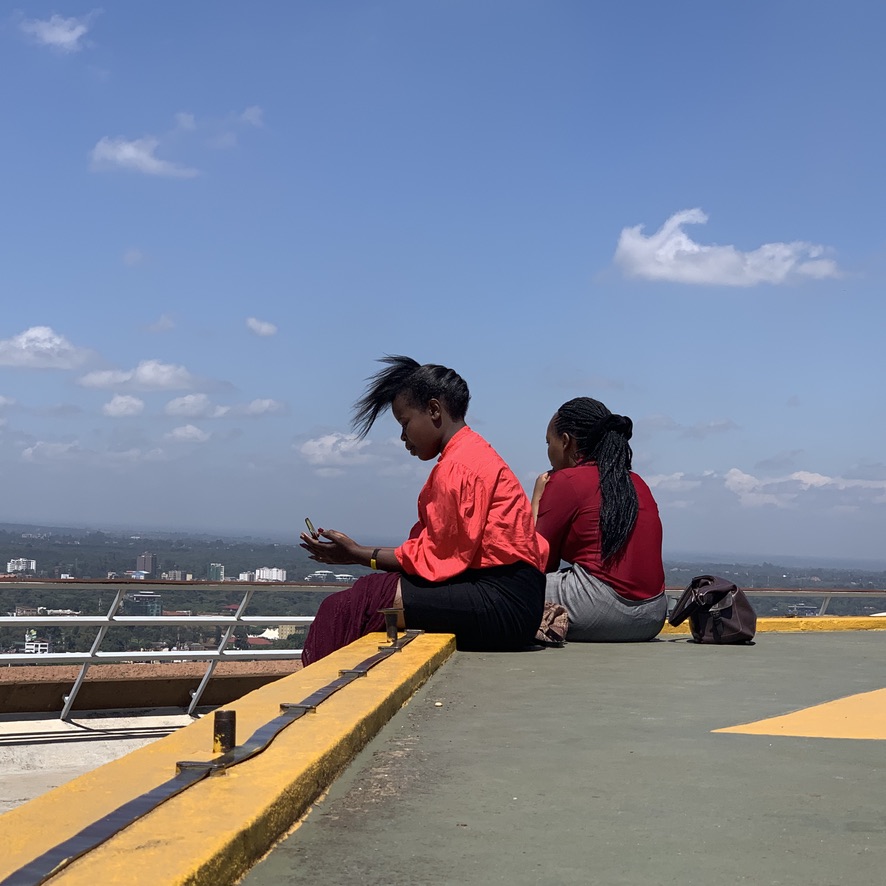
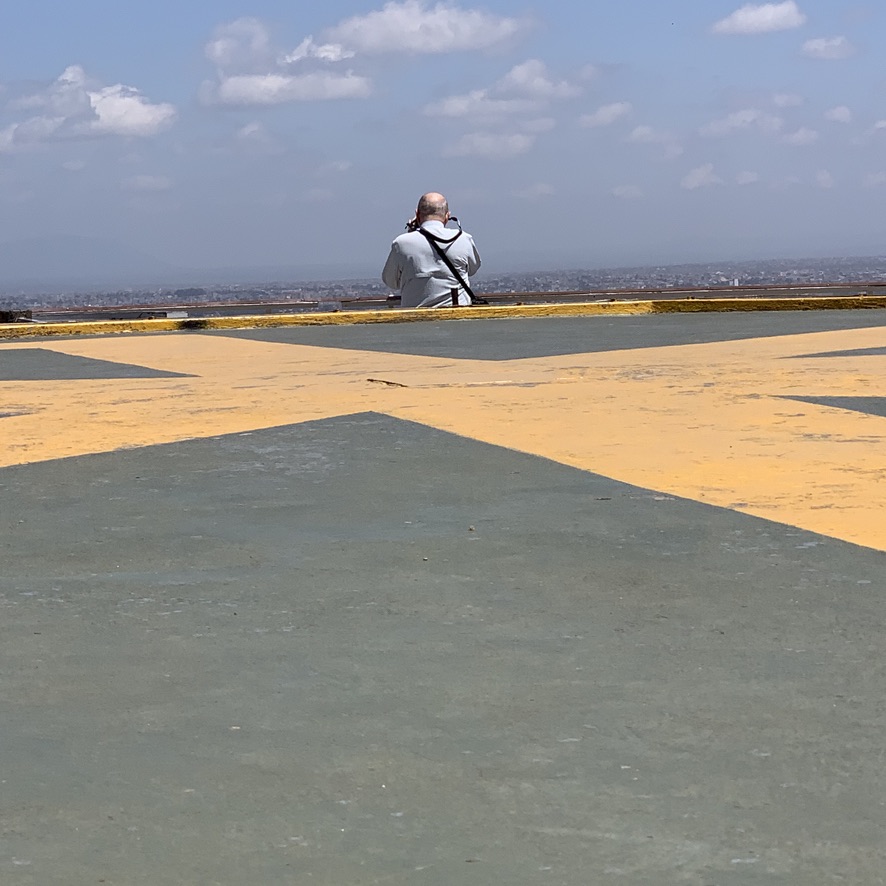
Then off we went for a most interesting day – to the top of the KICC (Kenyatta International Conference Center) – a strange 28-story building built in the early 70s when the country became independent. It is one of the few buildings with a viewing deck where you can get an overview of the city. Of course, lots of security every step of the way, plus signing in and out and giving up your passport while you’re inside the building. The elevator takes you up to the 27th floor and then you climb up the thirtieth floor which is really the roof. The air was not very clear so we didn’t get quite the effect we hoped but we did get a sense of the city’s form, including some very large parks at the outskirts.
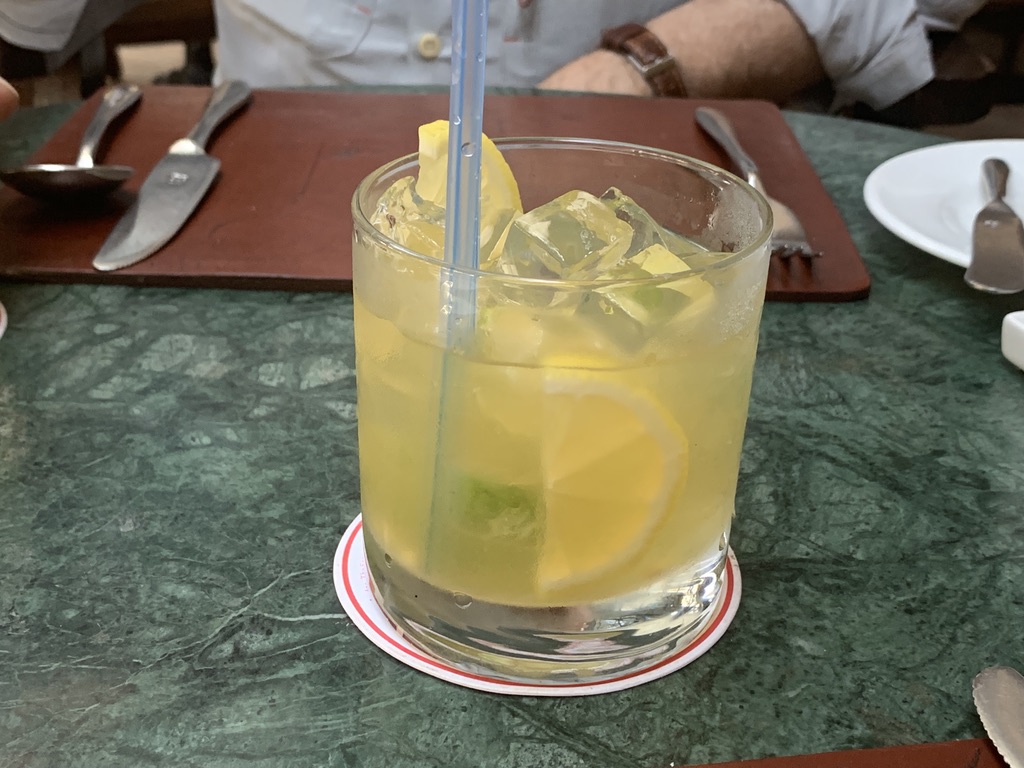
We strolled (a bit of an exaggeration since you’re always watching your every step when you walk in most cities in developing nations because the sidewalks are always chopped up and there are always uneven steps and unexpected barriers) to have lunch at the Thorn Tree Restaurant – a patio café that has fed everyone from Hemingway to Gregory Peck. It’s got an eclectic menu – from Indian to Italian. We opted for the former. Interesting we keep asking about good, local cuisine (Kenyan), and everyone sends us to Nigerian or Ethiopian restaurants. We also tried the restaurant’s famous drink – the dawa – vodka, mint, lemon, and honey. Quite good. No surprise, no one really knows how to tell you how to get anywhere. The Thorn Tree (located in the Stanley Hotel) has been in the same place for well over a century, yet shopkeepers and guards, and others cannot tell you how to get there, even though it’s within a block of where they are standing.
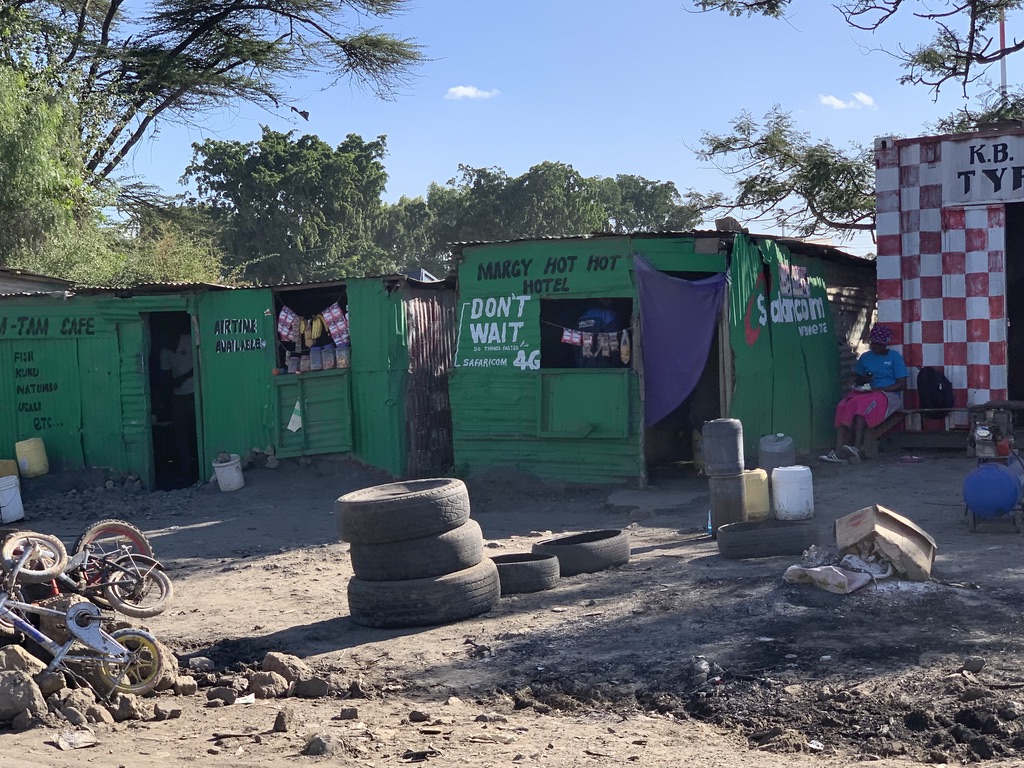
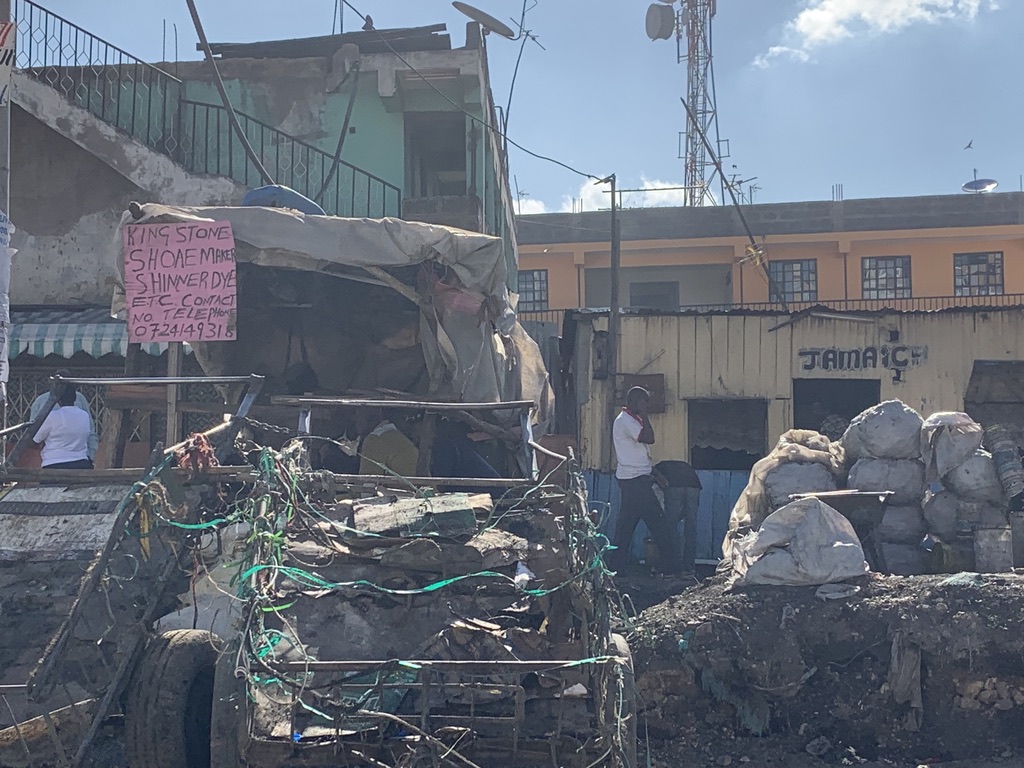
Following lunch, we searched for a taxi (not wanting to use taxis at hotels because they are really spiffy and sterile and I think the drivers are trained on how to answer questions so as not to get into any heavy dialogue). Finally we found a group of drivers with taxi “medallions” on the top of the car and walked up to one – explaining that we wanted to go to the Africa Heritage House (which we had read about) and which is located adjacent to (or perhaps actually within) the Nairobi National Park. We knew it was in Mavoko (or Mlolongo) which was about a 20-minute drive. Got into the car (as the driver removed the “medallion” from atop the car) and off we went. Before this, the driver (in Swahili) was clearly asking the other “drivers” for directions. Traffic was horrendous. In the end it took about 1.5 hours to go 20 kilometers (12 miles), but the drive took us along the edges of several shantytowns so once we left the CBD it was interesting. At one point when we were just stuck sitting in traffic I contemplated heading to Marg’s Hot Hot Hotel.. which was on the route!
We stopped numerous times for the driver to ask for directions again and again. We were a little surprised since we thought this was a major museum. However, as we meandered on the road to Mlilongo we began to wonder why a museum would be so far out of town. We rationalized that they had probably chosen a tranquil location in the national park. But as we approached a dirt road (naturally with a gate and a guard), we figured we were there. We were. But , it turns out, it is not really a museum, although it should be.
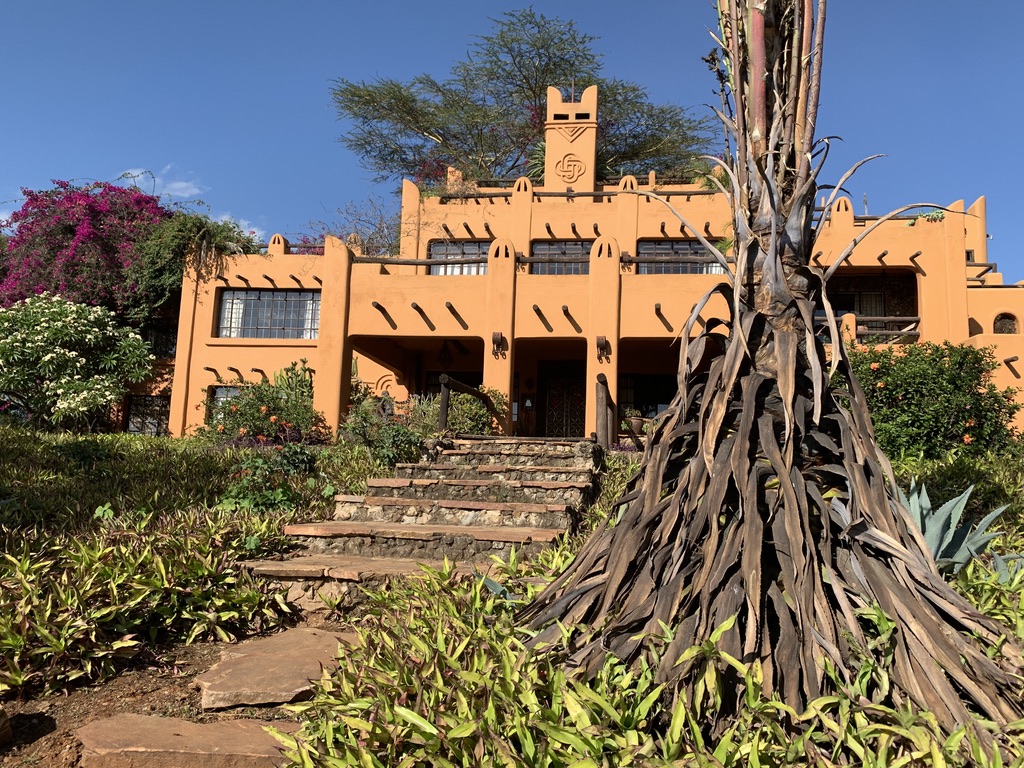
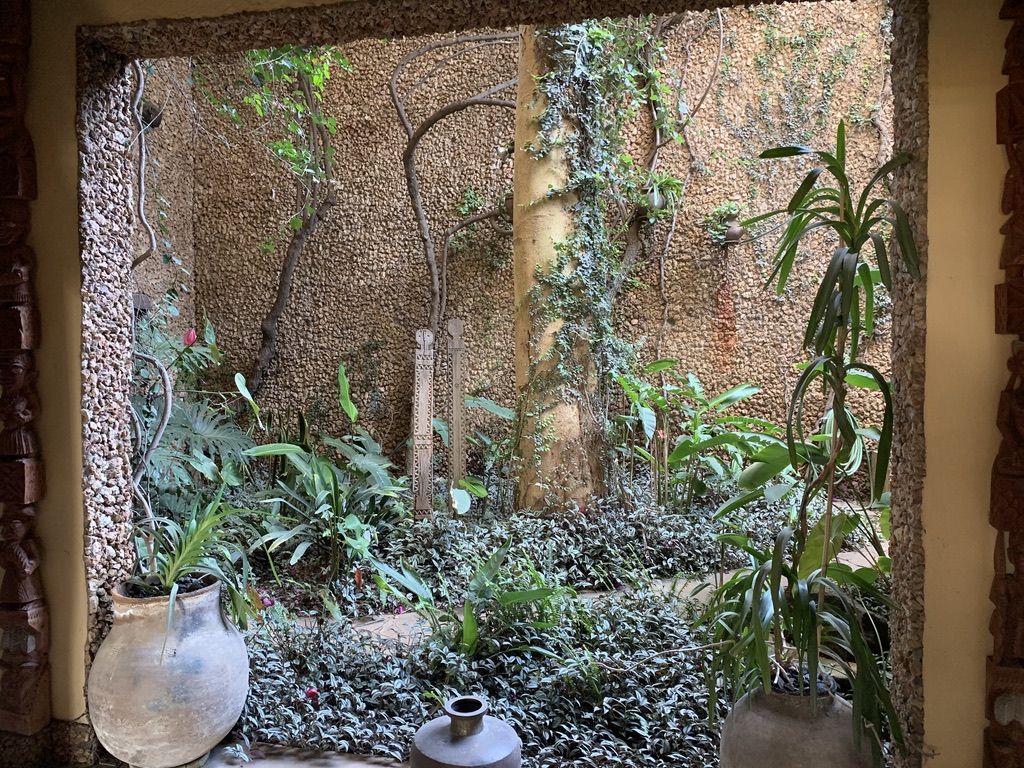


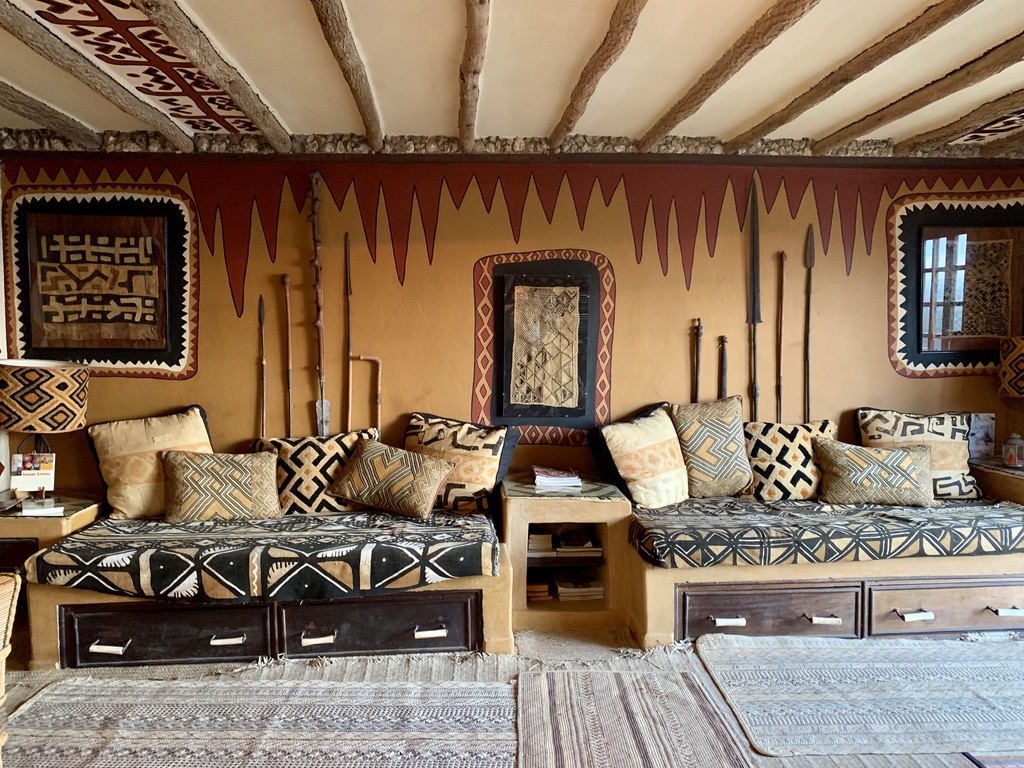
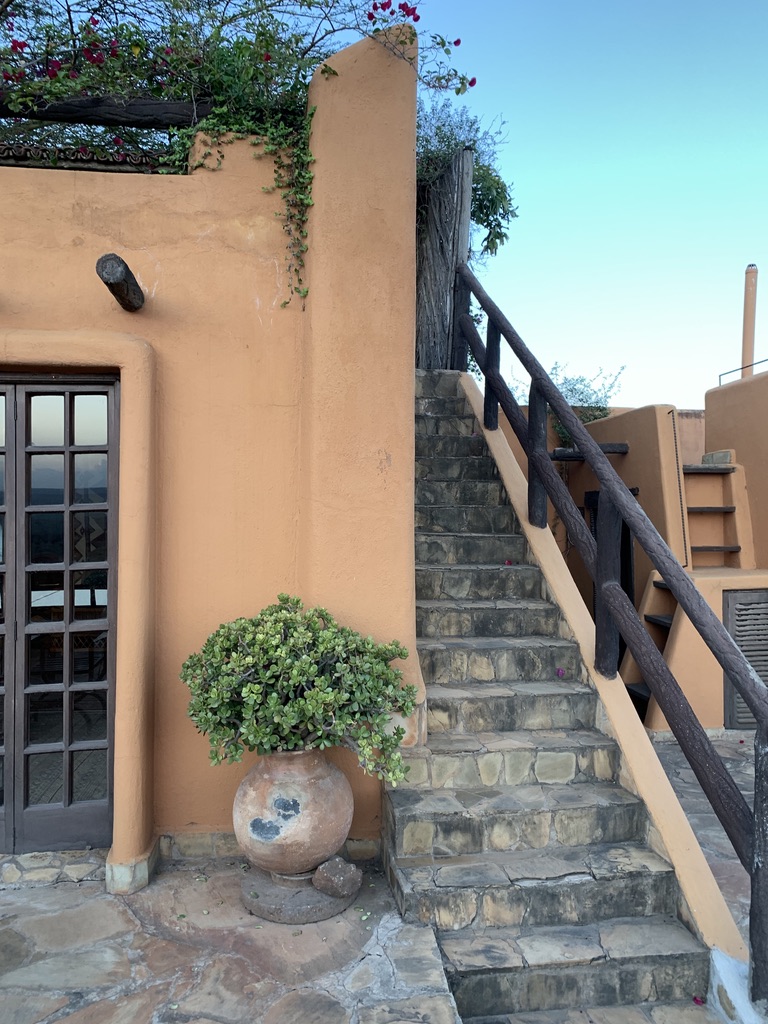
It is the private house of an American (Alan Donovan) who has lived in Kenya for more than 50 years; he came in the 60s with the US State Department, during the Biafra/Nigeria war. He fell in love with Africa (initially Nigeria while on a trip to a small village of craftsmen) and with African art and artifacts; left the State Department, and settled in Kenya where he became best friends with the first Vice President of the country, Murumbi and his wife, Sheila. Anyway, as we approached this spectacular mud-dabbed building designed by Donovan and based on the architecture of three different African cultures, we realized this was a pretty special place. But, they said we could not enter because we had not made the proper arrangements. Indeed, we had not made any arrangements. Apparently you need to book a tour in advance. You can also book lunch at the house. Of course, my NY-style surfaced immediately as I explained what we each do to the man at the house (who was clearly an assistant to, and not, Mr. Donovan), and explained we had made a special trip to see this place. I think he realized that we weren’t leaving, so he told us to wait and he went to speak with Donovan. During the time he went to speak with Donovan, we meandered gently into the house but there was so much to take in. This guy had collected amazing artifacts and also nurtured the careers of scores of then-young African artists to develop profitable careers. He also founded several African bands and Afro-jazz groups.
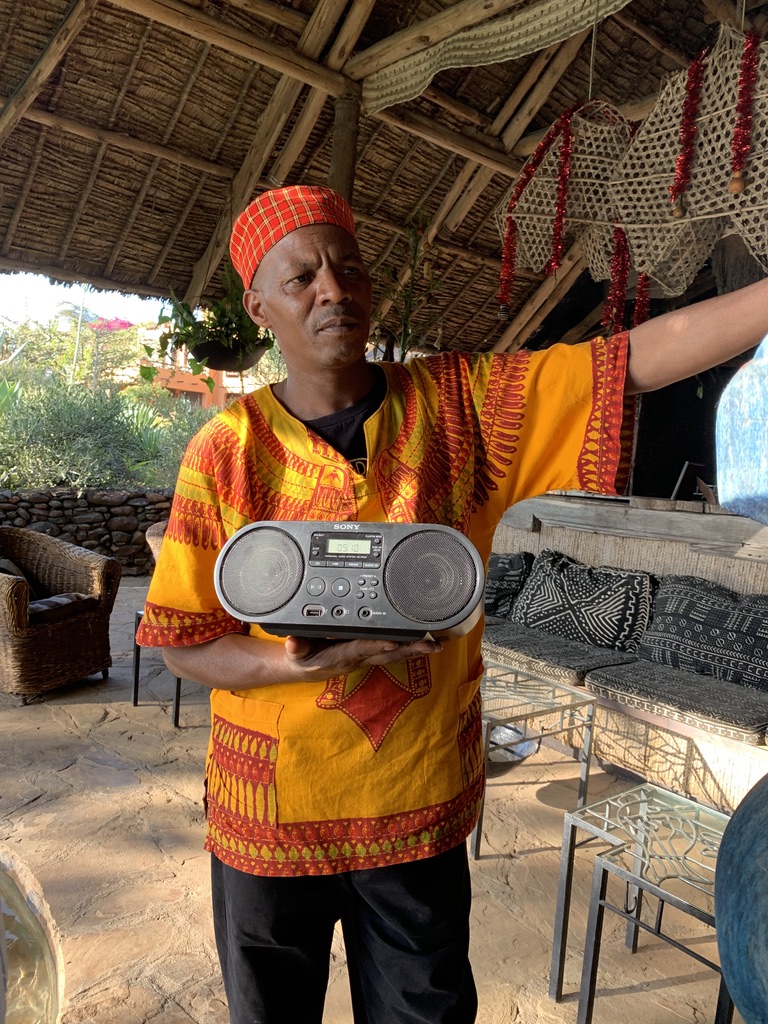
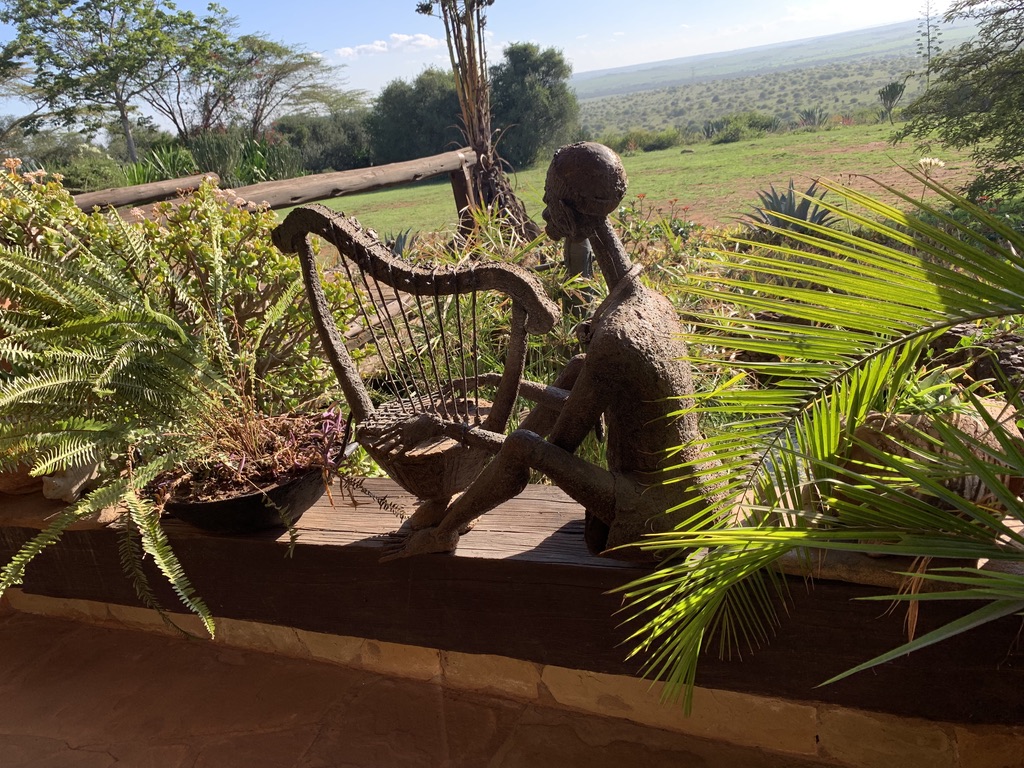
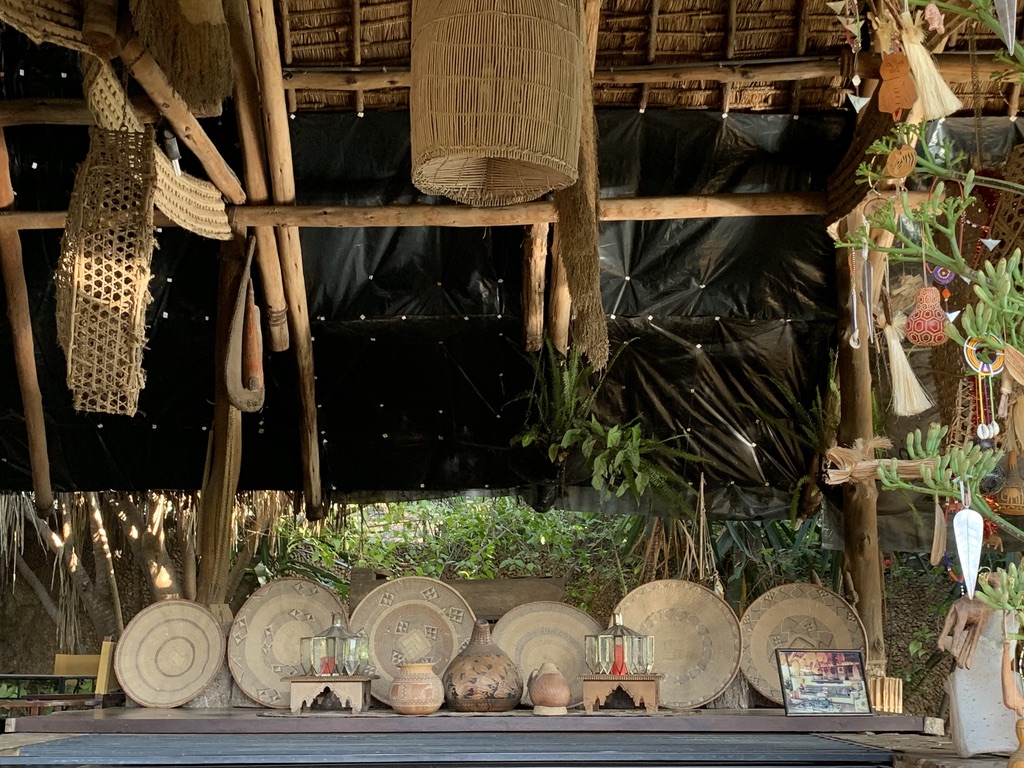

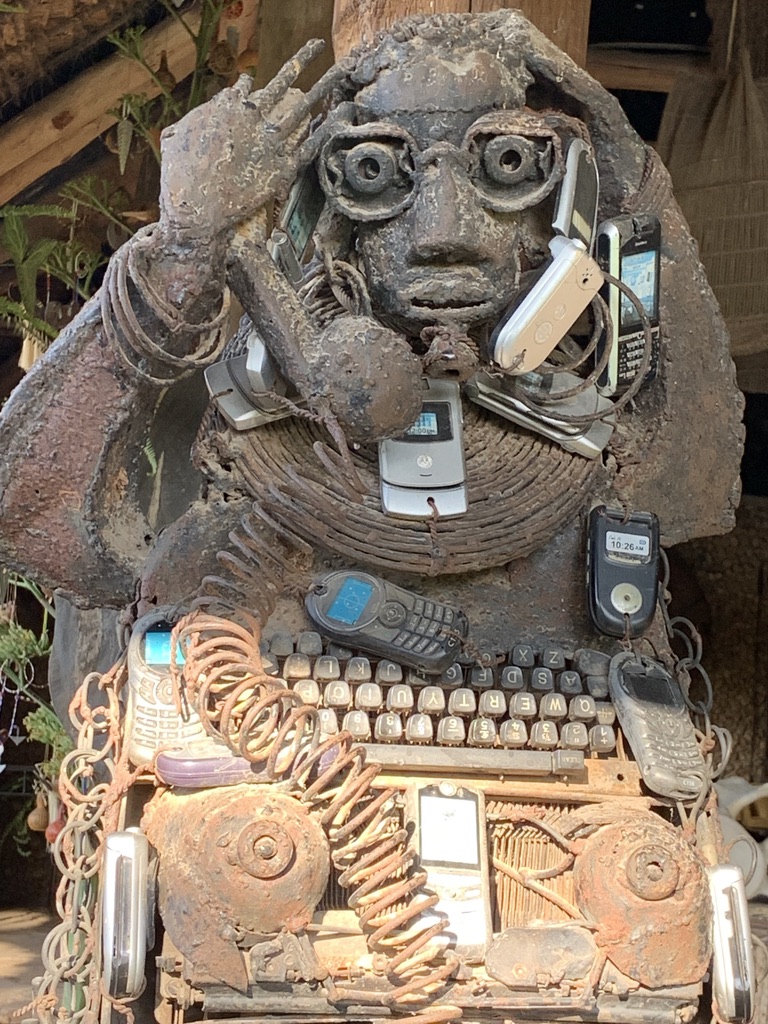
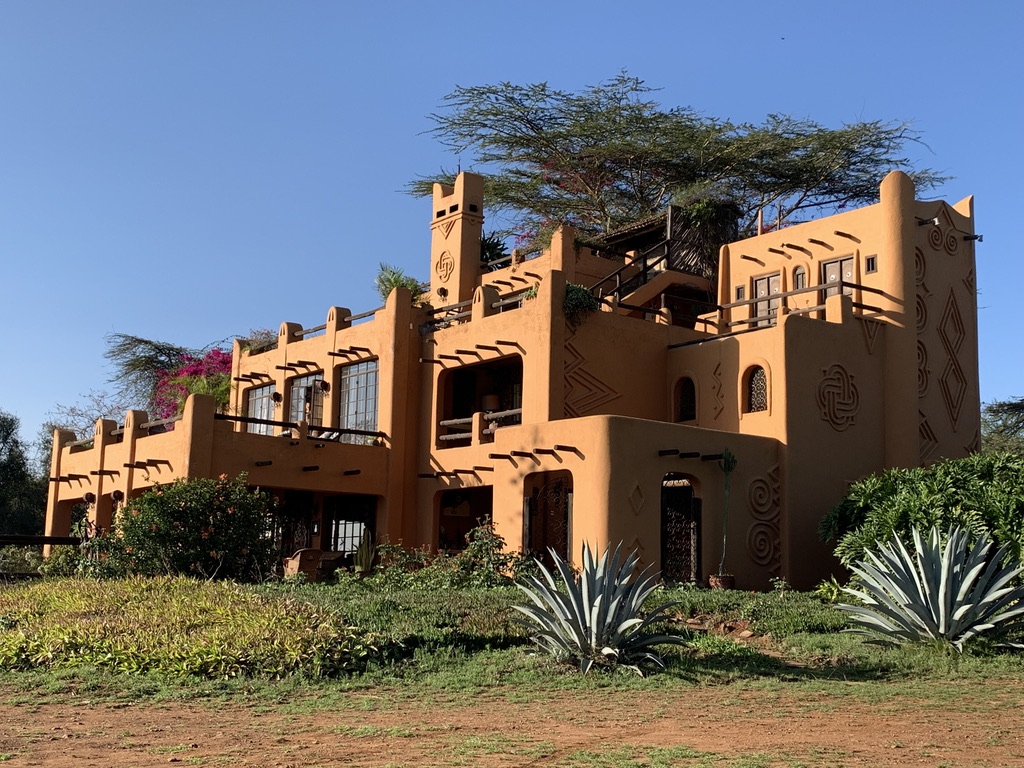
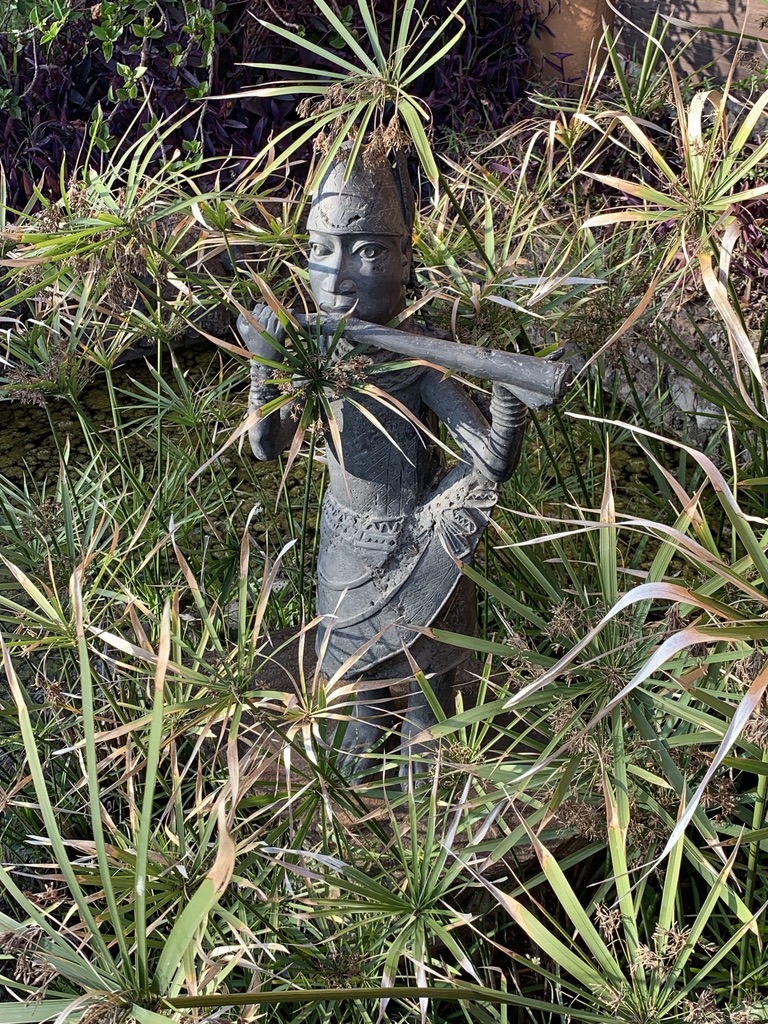
The Kenyan assistant reappeared and said that he would do the tour because Donovan could not, but that we would hear Donovan’s voice on this tape recorder that he carried from room to room and area to area. At the end of the “tour” which began at the railroad tracks (built by India) adjacent to the new tracks built by the Chinese government which defines the edge of the property and from which you get two spectacular views.. one of the house and the other of the vast national park where the major big animals still roam. It’s the area where the wilderbeast migrations took place annually (until recently).
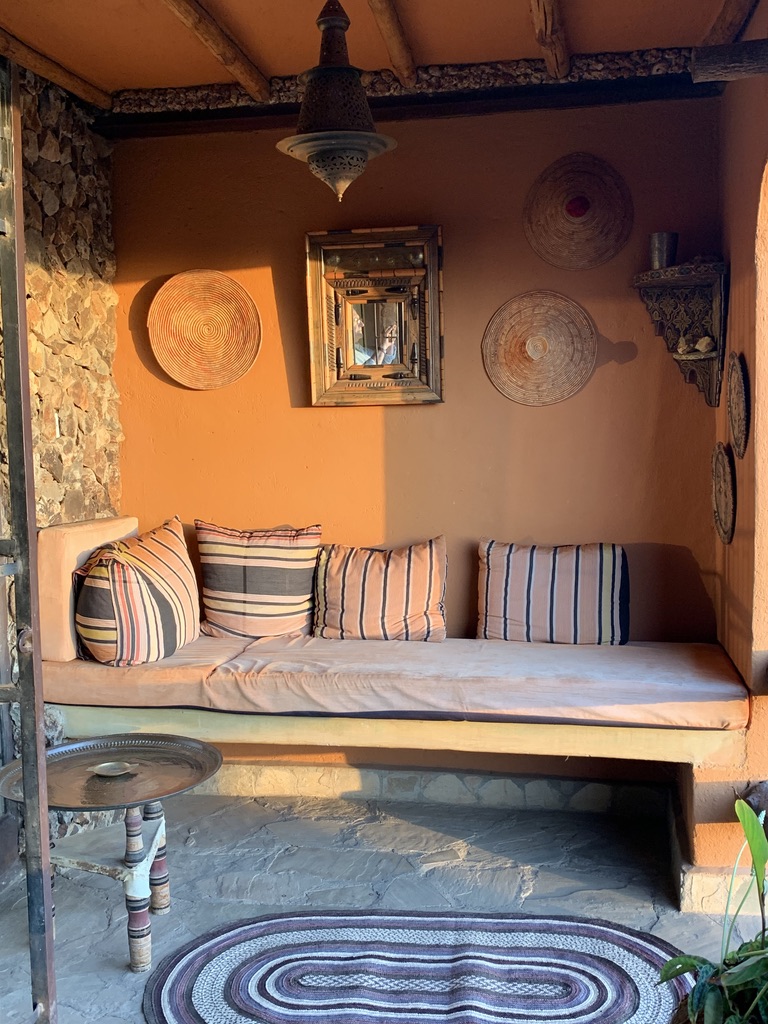
I photographed pretty consistently on the ‘tour”.. (about 285 images in the 90 minutes), but this sample hopefully gives the story.

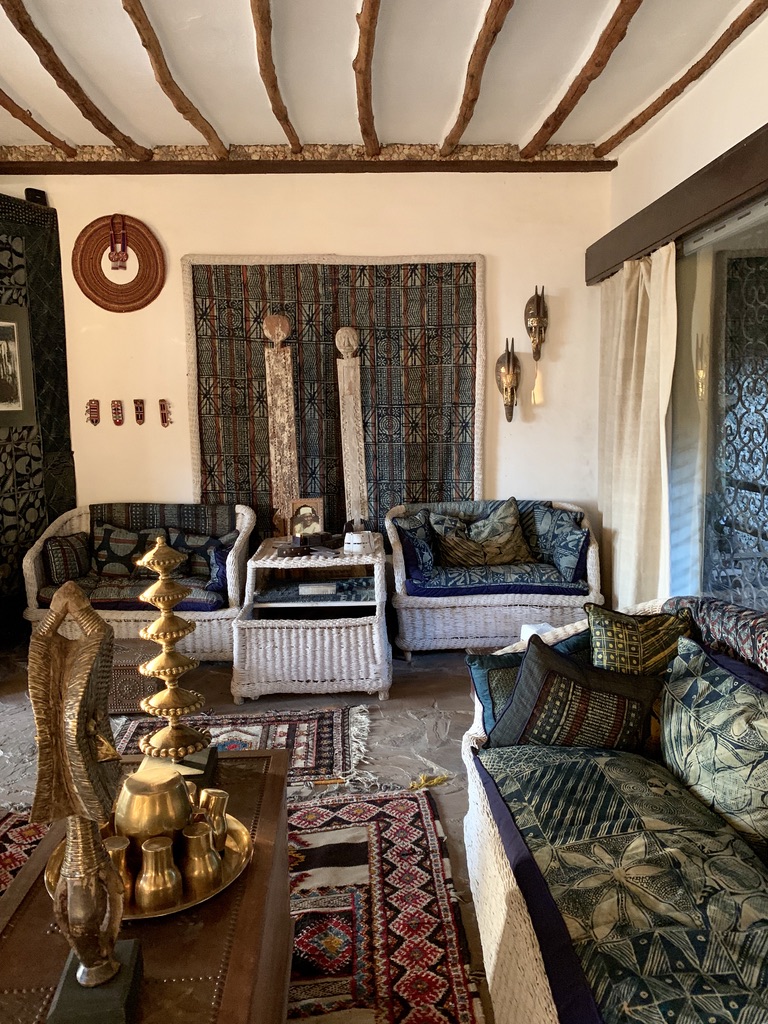
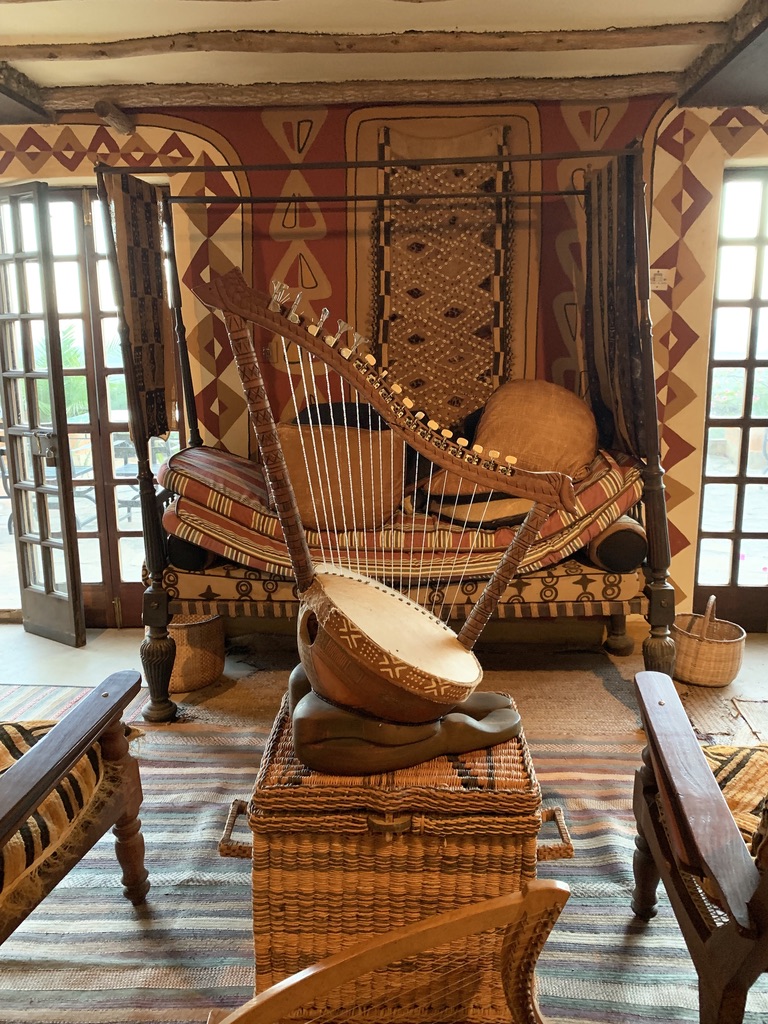
At the end of the tour, we met Alan Donovan who has been ill for the past year. He apologized for not taking us on the tour personally – and we chatted for a time. The house – in all its splendor – and his astute eye for both contemporary and ancient African tribal artifacts brought up old issues for me: the dilemma of making “little ‘a’ art” into “big ‘a’ art;” private ownership and commodification of art; etc. At the same time, it is clear as one traverses Nairobi, that there is little acknowledgement of history and of the amazing contributions of tribal cultures and their forms. So at least someone is protecting these artifacts. The good news is that it appears that Donovan (Murumbi and his wife are deceased and he credits Murumbi with the idea of this kind of preservation and also economic development through craft and art) has plans for the house and its content after his death. He has approached the Obama Foundation!! And offered everything to them – as a total donation, on the terms that they preserve it as a place to retain African culture. He’s also offered that the Obamas can visit and stay at the house as frequently as they’d like. We shall see… Interesting politics there!
We returned to the hotel.. and again traffic was horrendous. After a very brief time at the hotel, we headed to an Ethiopian restaurant in the Westlands neighborhood. Food was great. Lots of students from Nairobi colleges.. It too, was down a winding dirt path.
We returned home to our little abode at the Norfolk at about 11:00 pm..
Best –
Fern
 Fern's Travel Notes