Americans in East Africa: Kampala, Uganda 12/20/2018
Greetings –
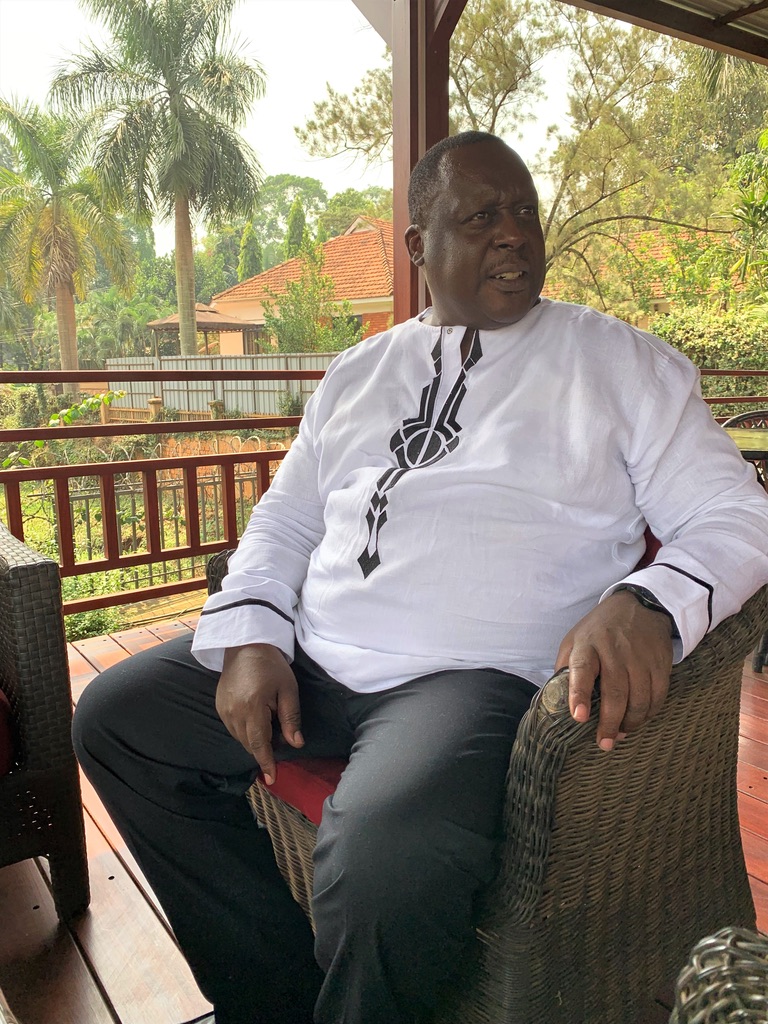
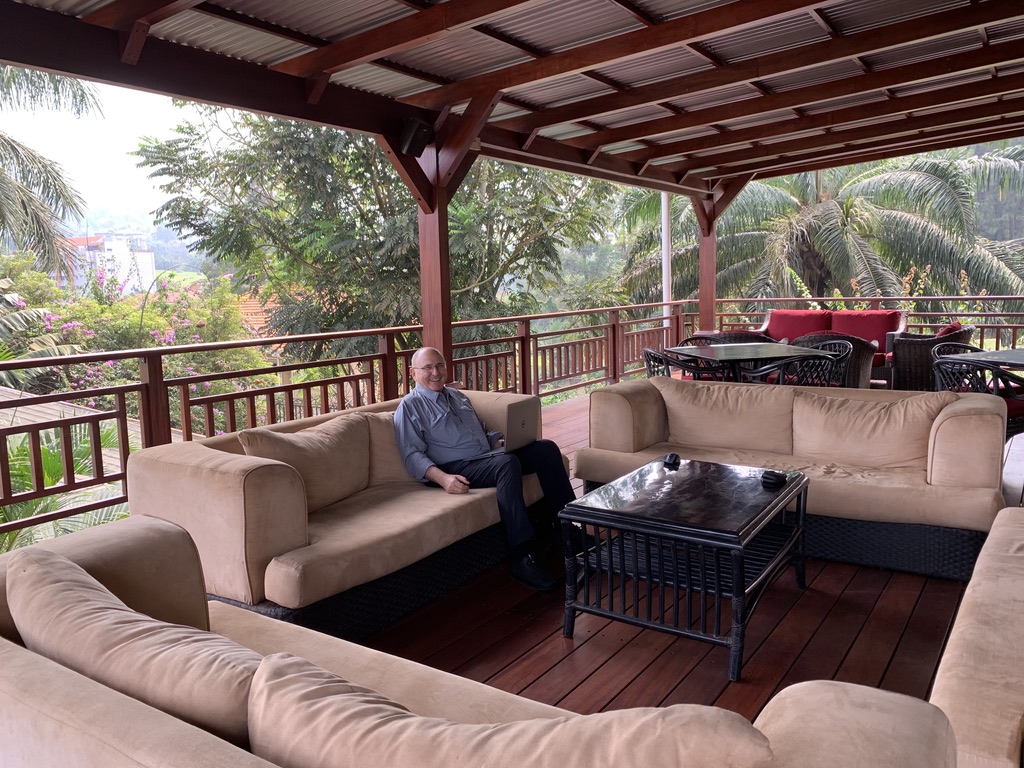
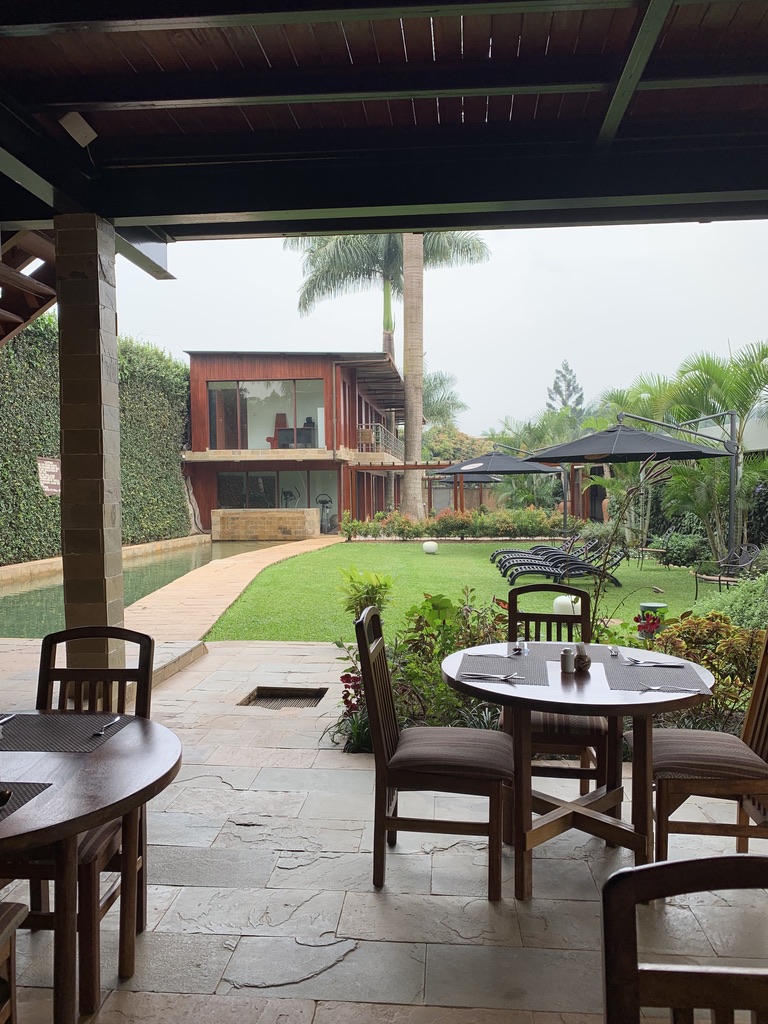
Got a bit of a late start today and had breakfast at our little hotel. Pretty standard fare except for all the local fruits which are wonderful. Then we each did a bit of work (we both brought a lot of work to do and finally got to tackle a little) as we waited for Martin Kamya Muwonge, a local Ugandan architect who was a classmate and friend of our godson and his wife when they were all students at Antioch in Yellow Springs, Ohio, decades ago. We reached out to Martin only a few days ago so plans were a bit iffy.
Martin remembered to bring along a photo of himself and our godson at Antioch, which we all laughed about.

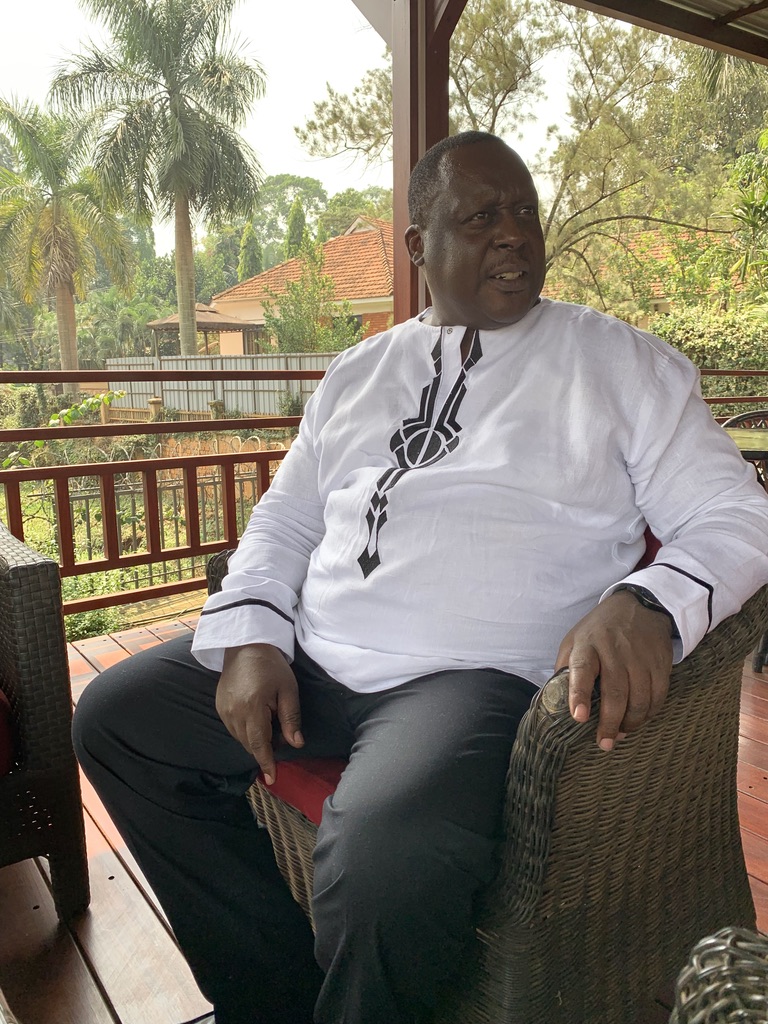
Martin arrived at the hotel (with his driver) at 11:30 and we began a day-long journey winding up and down Kampala’s many hills (some controversy over how many hills there are – Kampala likes to say it has 7 hills like Rome, but in reality there are about 20 or more, which appear to divide up neighborhoods and have some degree of difference as to who lives where. But first we spent time on the terrace at the hotel getting acquainted and providing updates on family. Martin was born in Kampala but his father moved the family to Nairobi (where he had gone to school – he’s an architect too) during Amin’s period and later lived in London – returning to Uganda when the country gained independence and appeared to be more stable. While in London, he worked for the UN. Martin went to school in Nairobi and his father thought he should go to university in America. There are apparently 15 siblings (8 brothers and 7 sisters) – all professionals, living literally all around the world from Albuquerque NM to NY to Alberta, Canada to Nairobi to Kampala and more. Martin is the oldest, I think.
Anyway, somehow he wound up at Antioch, a somewhat unusual university selection, but he clearly has extremely fond memories of school, teachers, friendships, and more. During his years at Antioch (which was based on a co-op program where students were off-campus one semester each year at a variety of work and life experiences), he managed to live and work in numerous parts of the US. But he decided he wanted to be an architect. After graduation he went to live in London for a year and then did the graduate program in architecture at UCLA. He worked in LA for a few years, and then returned to Kampala where he works with his father. Martin provided an interesting look at the city – from the eyes of someone who truly loves his country but who knows he exists as a privileged member of its society.
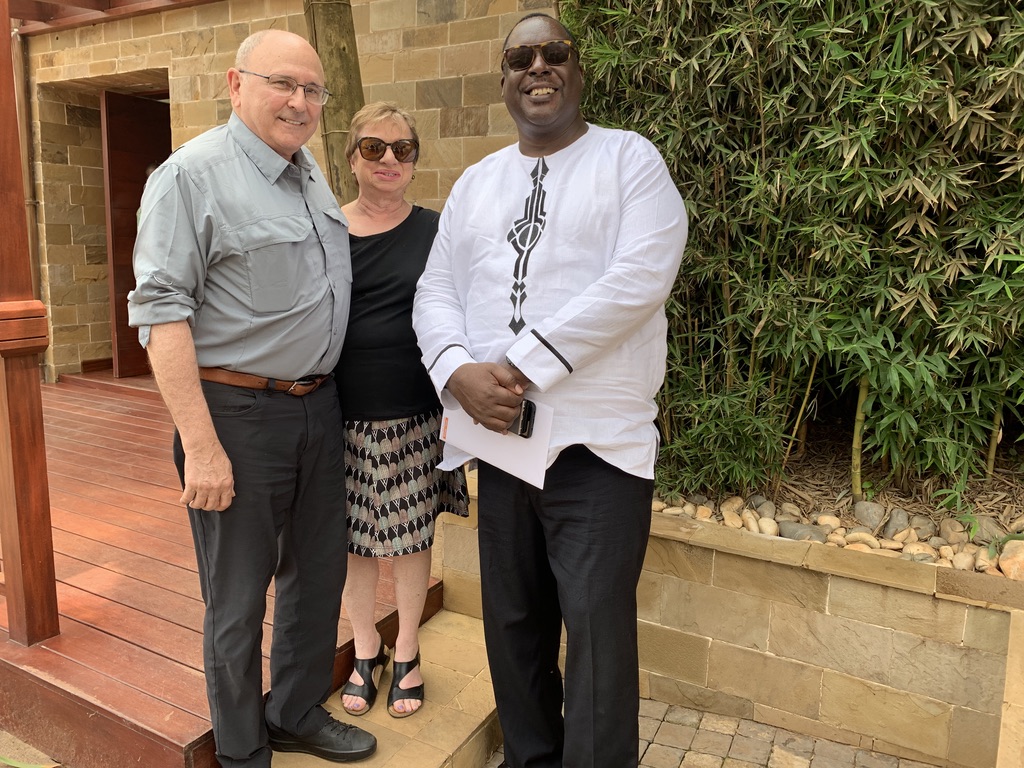
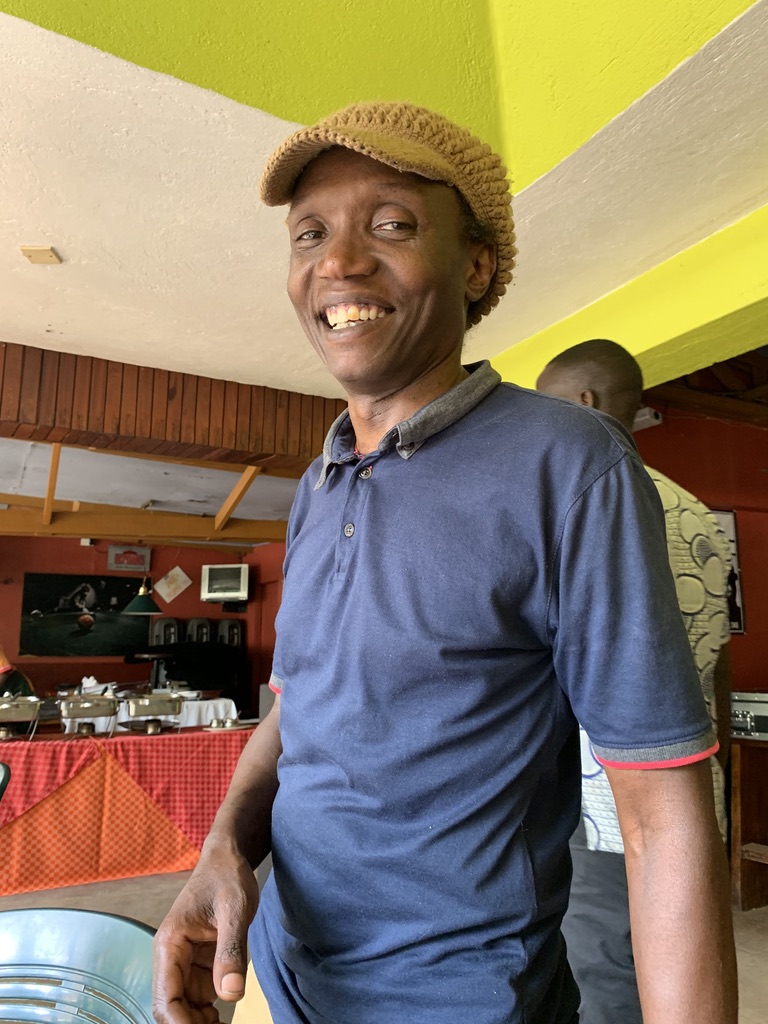
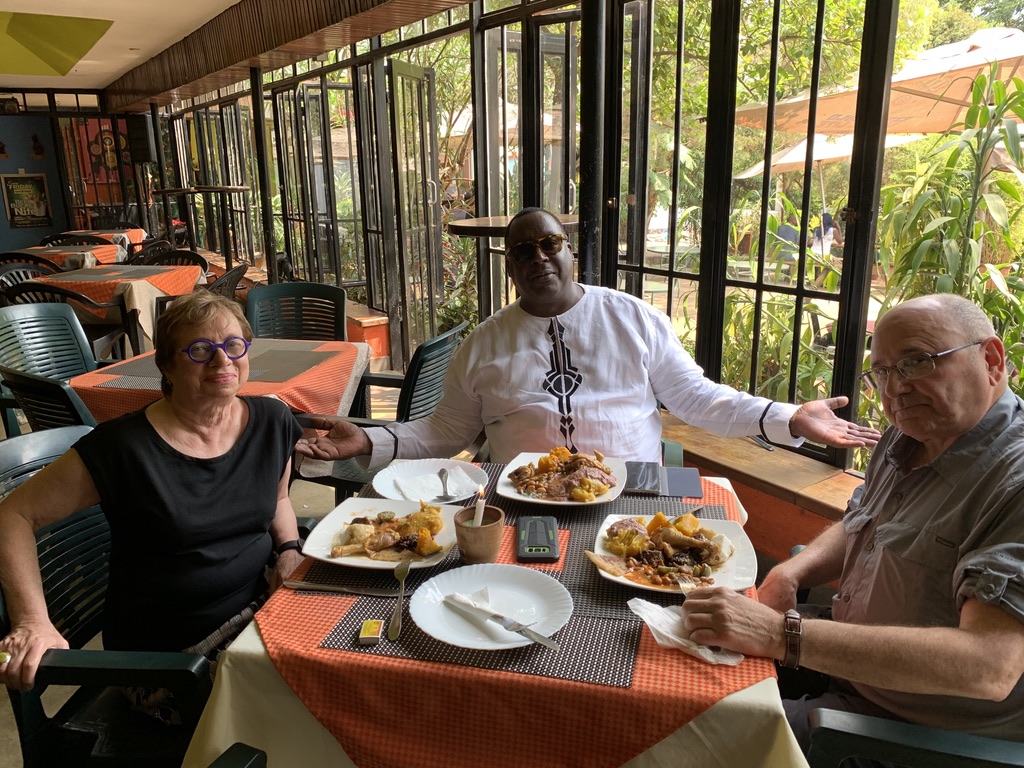
We headed to Zone 7, a local bar/restaurant located in a neighborhood called Mbuya. Naturally, Martin knew everyone. We had a traditional Ugandan meal (although Martin stressed that Ugandan food is not very interesting and pretty bland). It was bland, but quite good – plantains, bitter greens, pumpkin, something that tasted like polenta, beef, chicken, an okra-like eggplant, and chapati (the Indian influence is everywhere in Africa). We then drove around to see more of the Kampala layout, and then went off to meet Martin’s father, whose own story is quite interesting. We also talked a lot about the role of the US in Africa, building construction, planning (or lack thereof) and family. His father is renovating his own house (the one that Martin grew up in during his early years), so he is living at a hotel that he and Martin apparently developed and own.
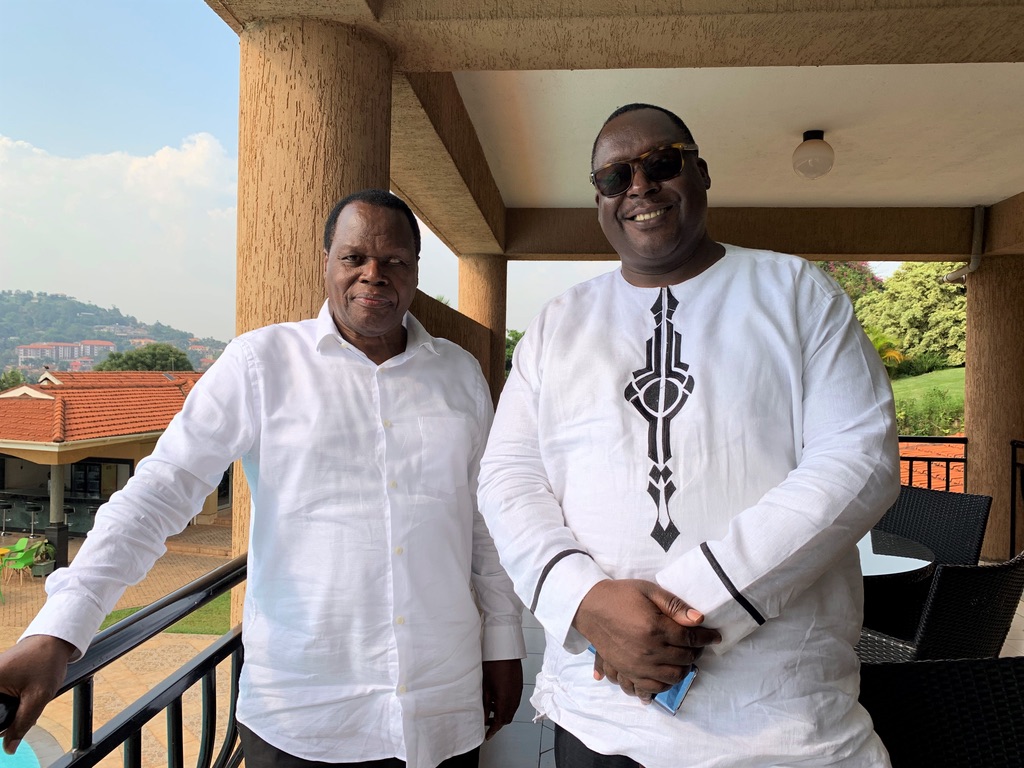
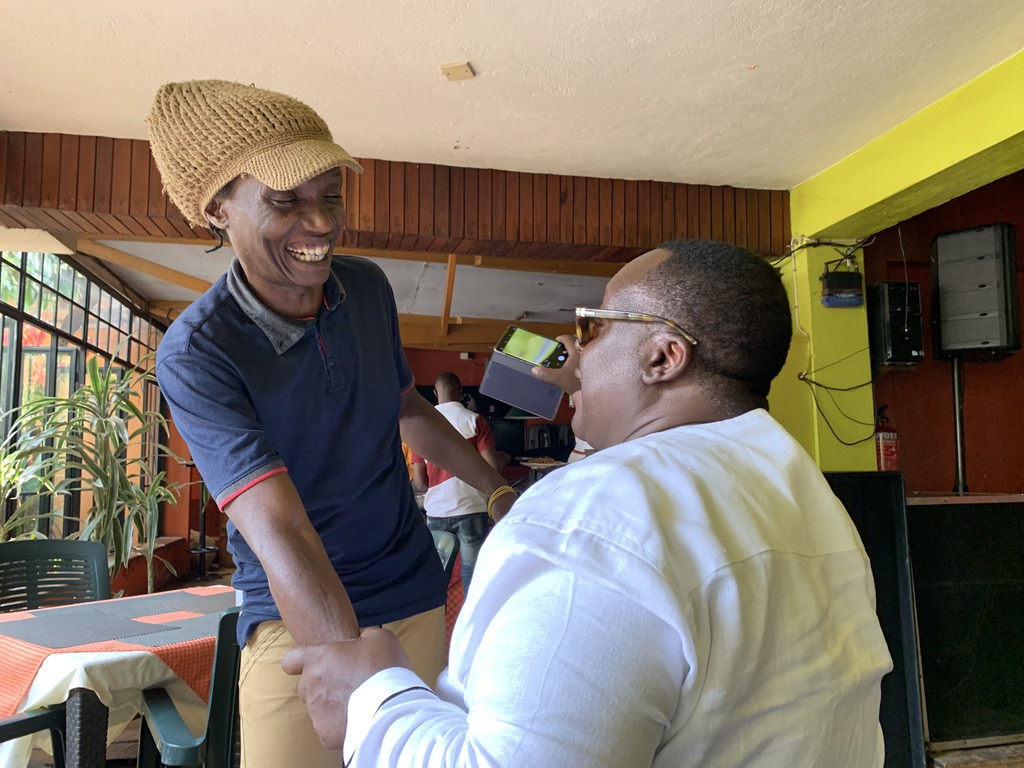
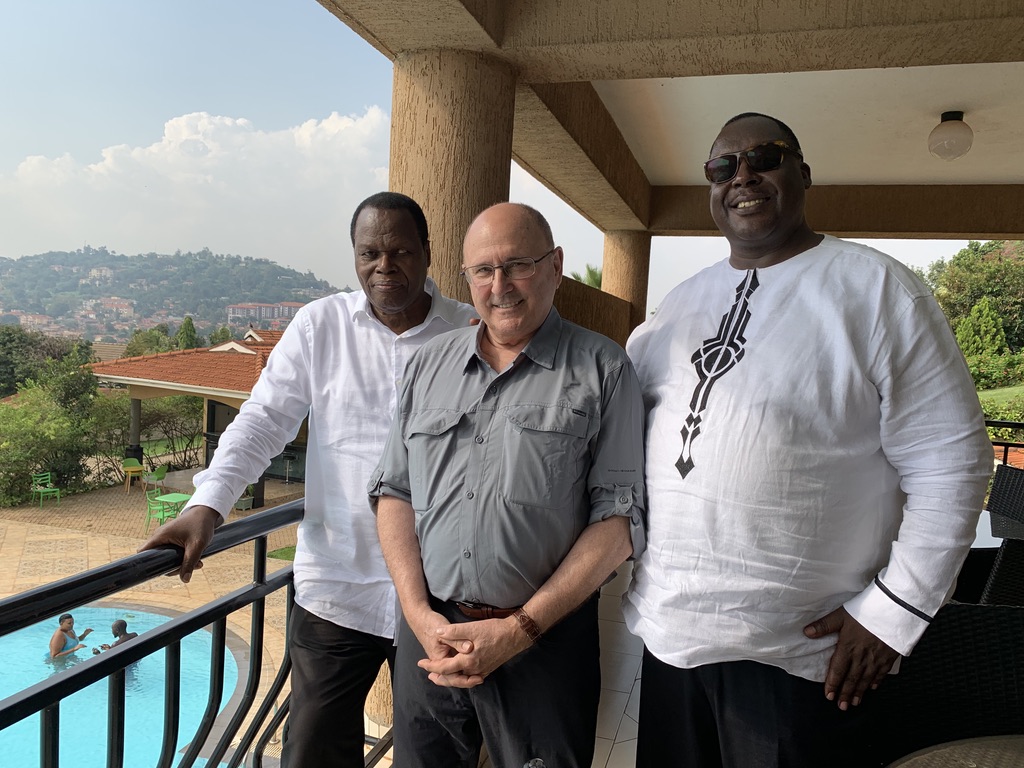
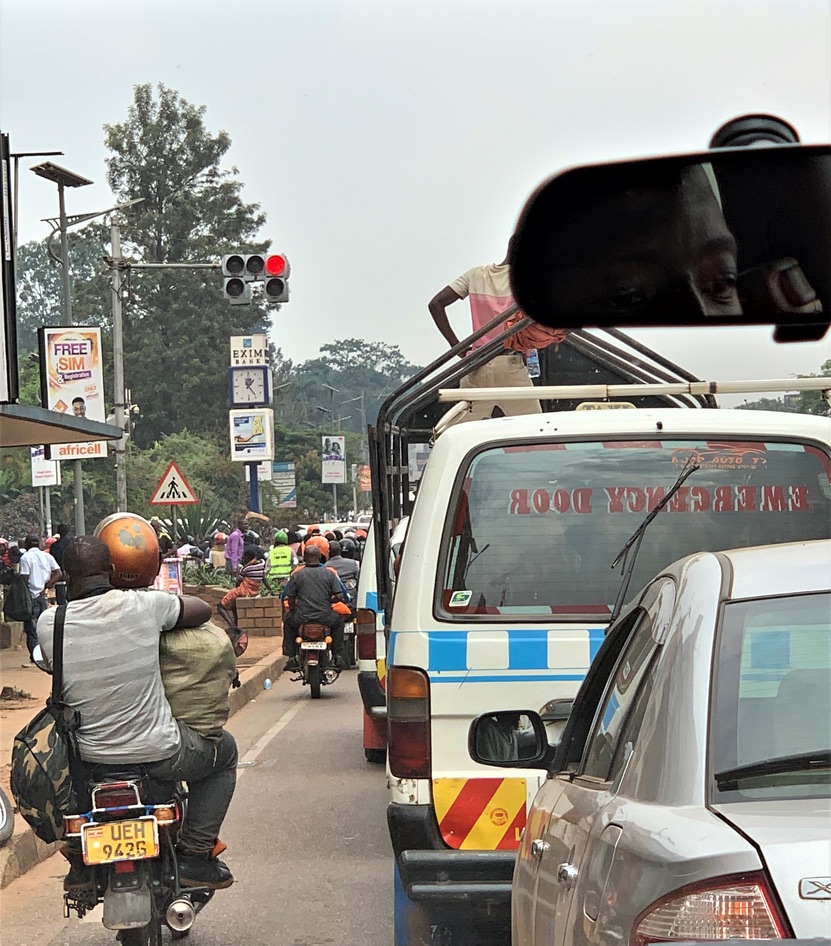
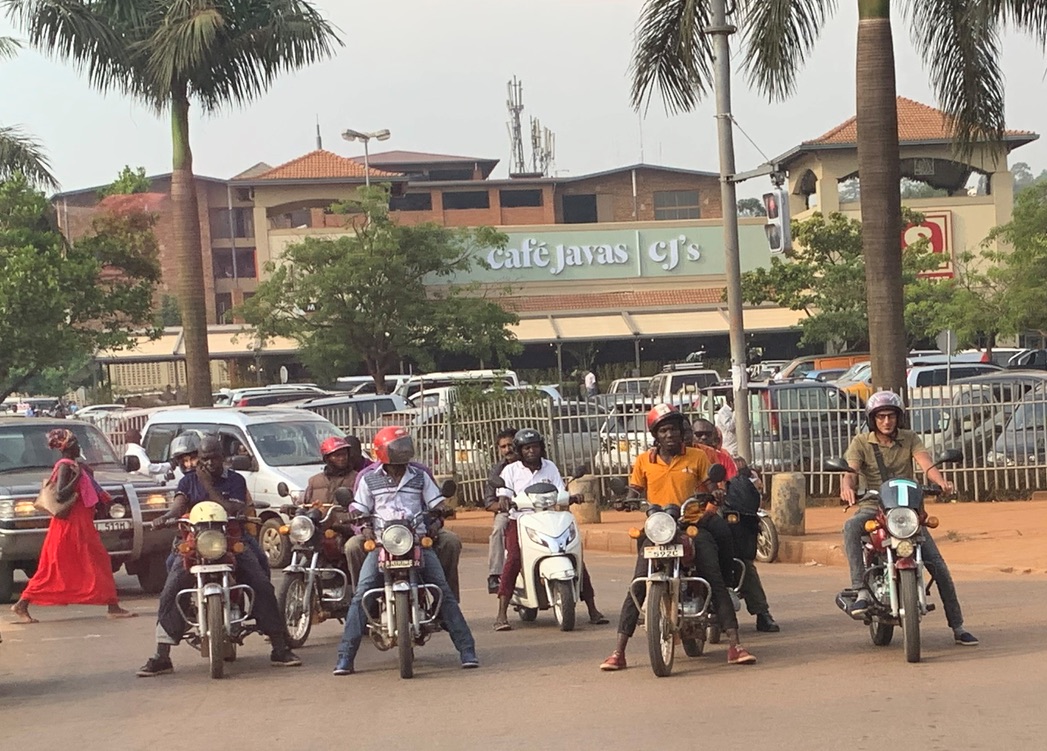
Then we moved on through the unbelievable traffic that is apparently an everyday event. Obviously there are thousands of people on motorcycles which can bypass some of the traffic — especially when they jump onto the sidewalk and make that yet another lane.
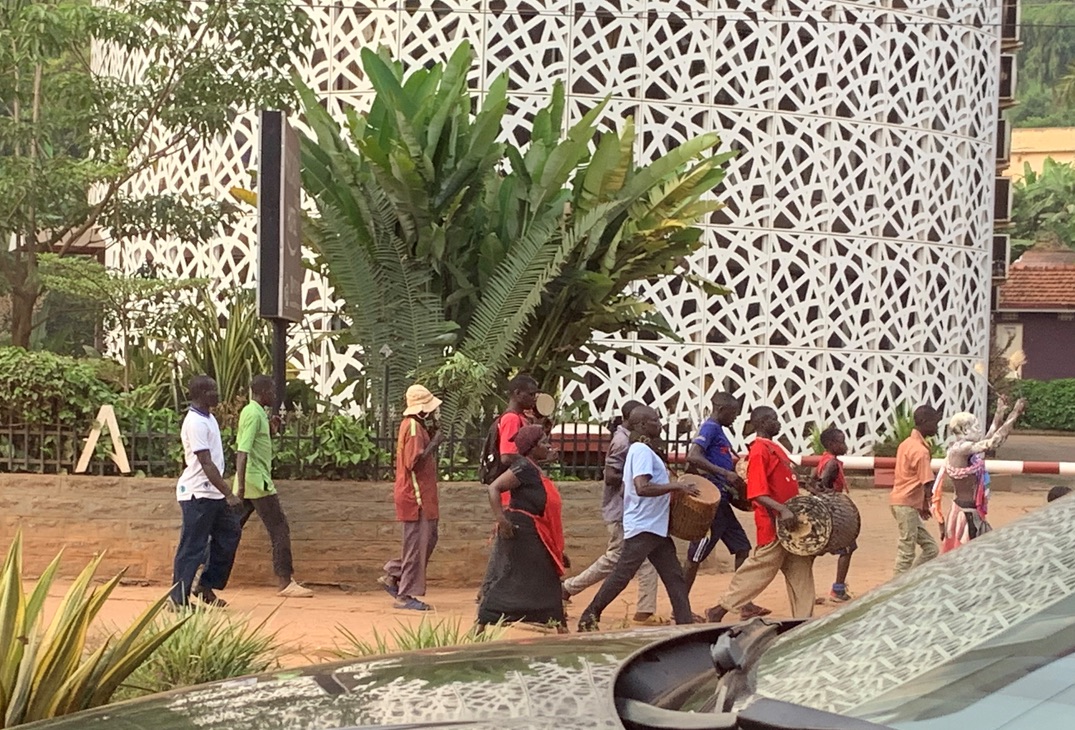
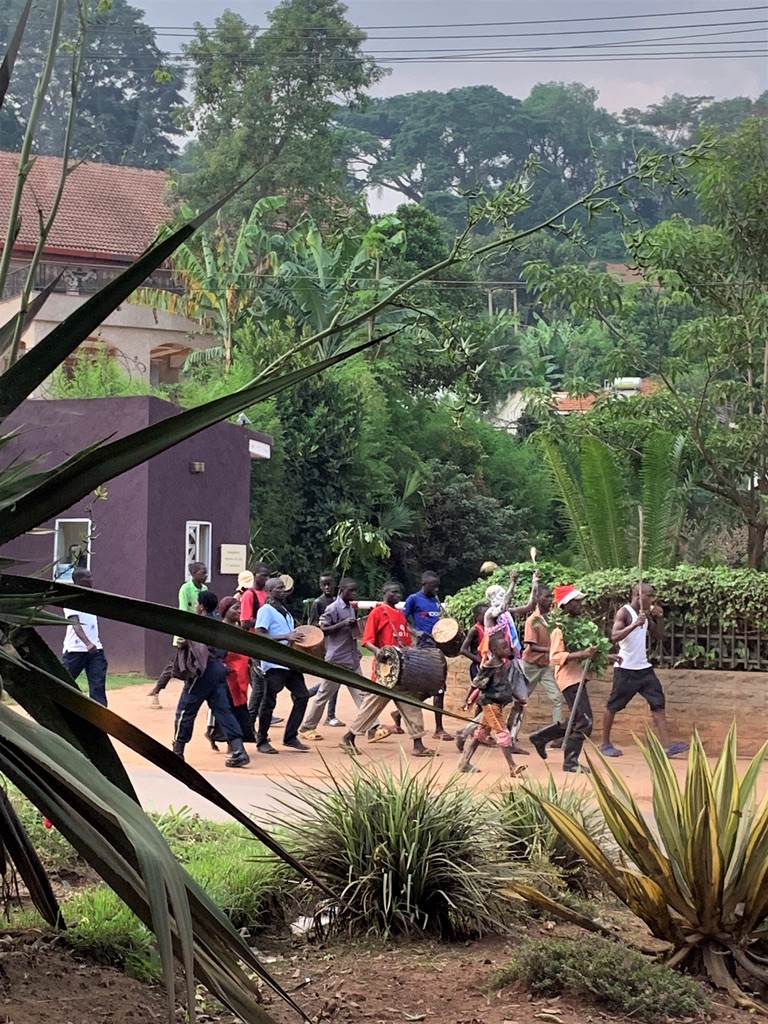
Like in most developing nations, traffic jams are a wonderful opportunity for entrepreneurial poor folks who hawk everything from toilet paper to screw drivers to water to fruit as they pass between the cars (which are actually already very very close to one another). These products are carried in a variety of ways, including on one’s head. We also passed a strange processional of young men with the leader in painted white face and skeleton followed by about 10-20 young men drumming while they marched. Apparently this is a processional for a circumcision (the white painted young man being the subject of the circumcision)….
We discussed education (similar issues to South Africa and to what we heard in Kenya), health care, transportation (mostly private), planning, women’s status (making small advances, but still very much in the minority in the professions and in seats of power), and more as we meandered (or rather were stuck in traffic trying to meander) neighborhoods. And no discussion would be complete without the topic of corruption, which is everywhere from the police to the judges to every level of government and about bribes to get projects moving ahead. And we talked about Martin’s love of the L.A. Lakers, and local music. We also discussed the role that China is playing throughout Africa and its decisions about investment in the infrastructure of most cities (smart move).
In conversations with both Martin and his dad, it was interesting to see how knowledgeable and aware they were about American politics and American life. They are avid CNN watchers so we talked about the Mattis resignation, the government shutdown, the stock market, and more.
Tomorrow we are hoping for an early start and will head out on our own to two different markets (one of which they say is so chaotic it is difficult to find your way out). Martin was a bit concerned about our safety but we assured him we’d be fine. Then we are likely to head to the Uganda Museum – which includes a center that houses all NGOs dealing with women’s issues and sells crafts made through local NGOs. The museum is apparently pretty weak in the area of museum design and layout, but we shall see. Hopefully we will meet up with Martin in the early afternoon and drive to Lake Victoria.
All my best –
Fern
 Fern's Travel Notes