ALBANIA DAY 8. December 22, 2017. Gjirokaster


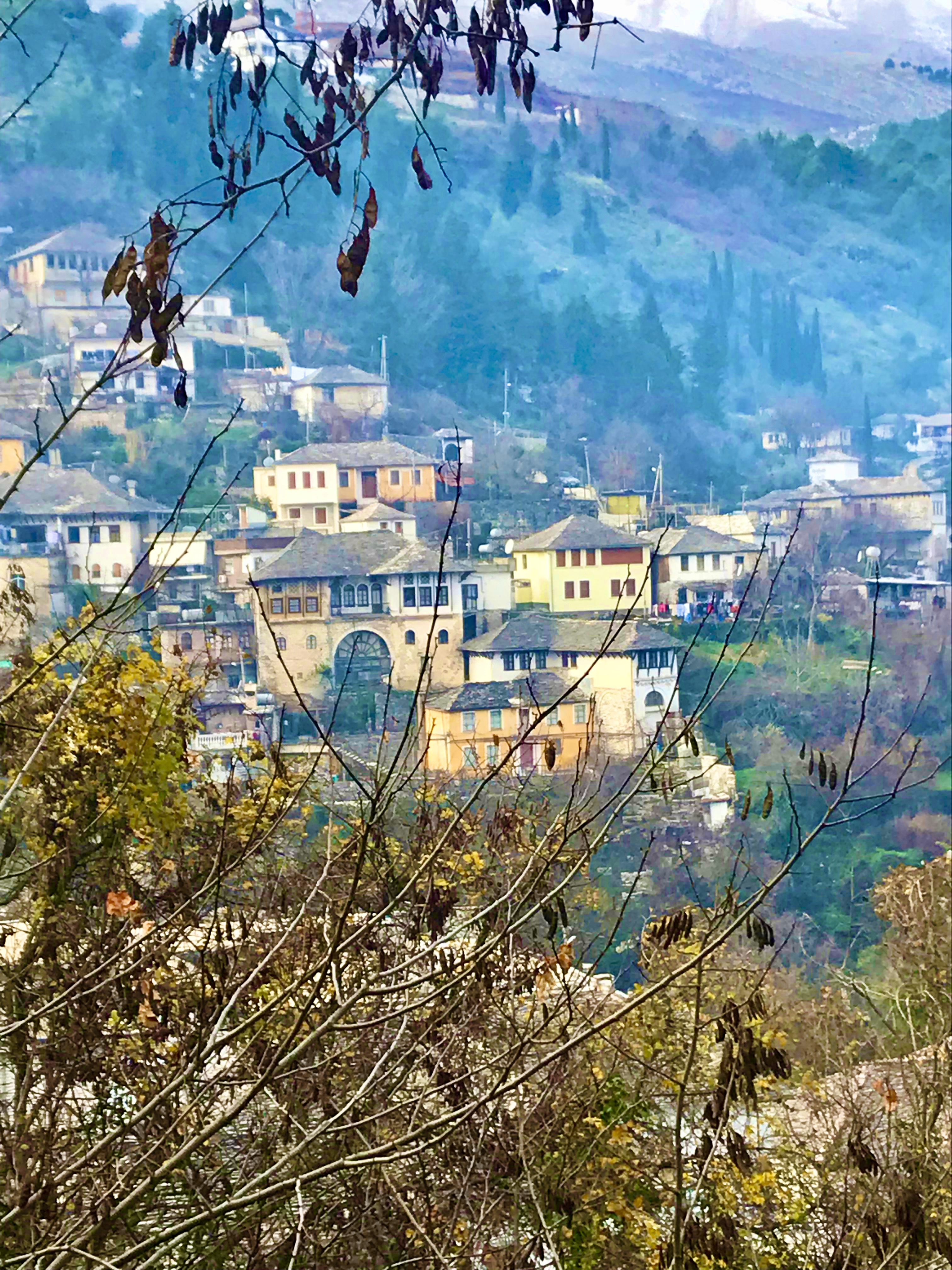
Greetings from Gjirokaster
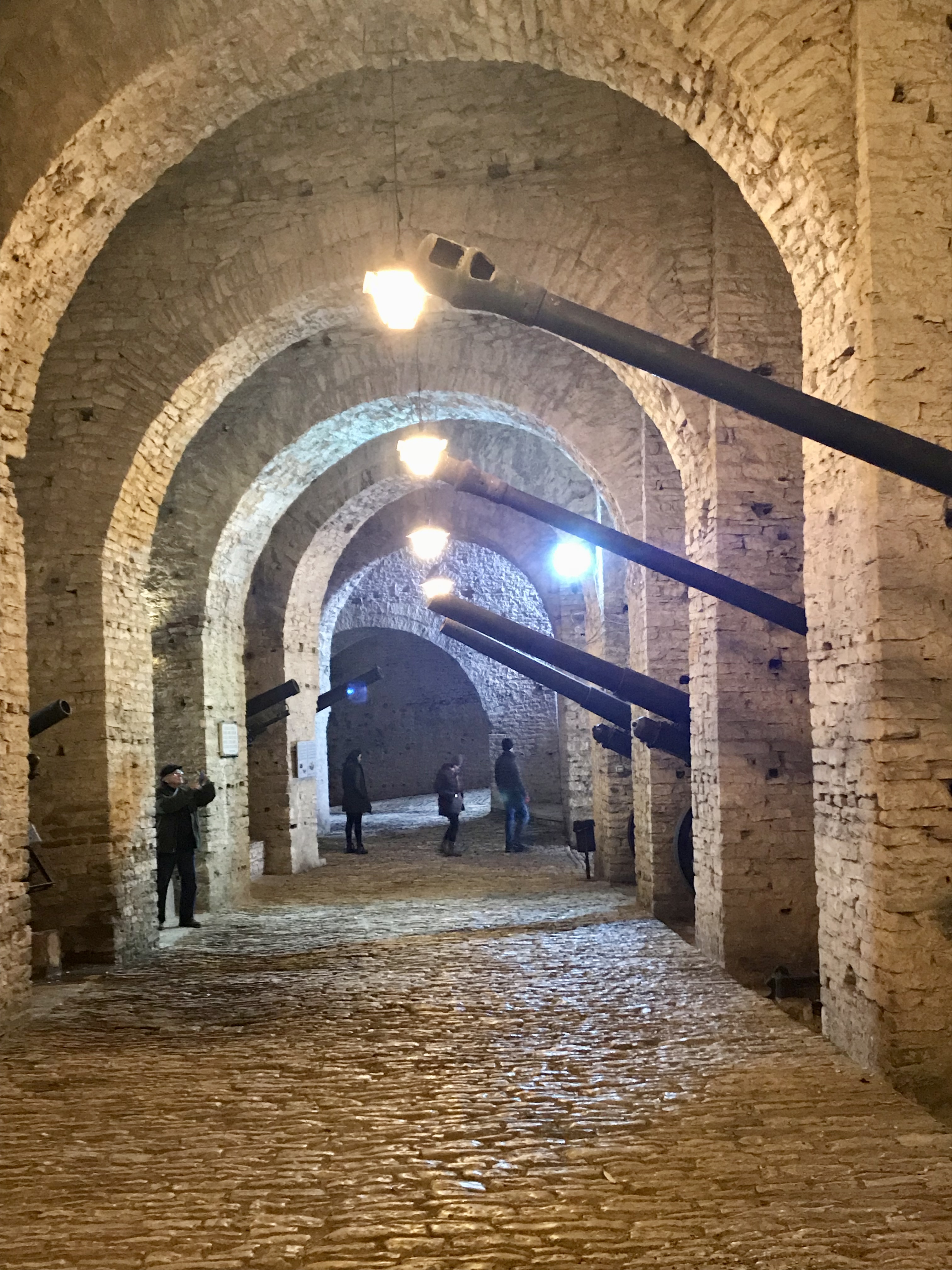
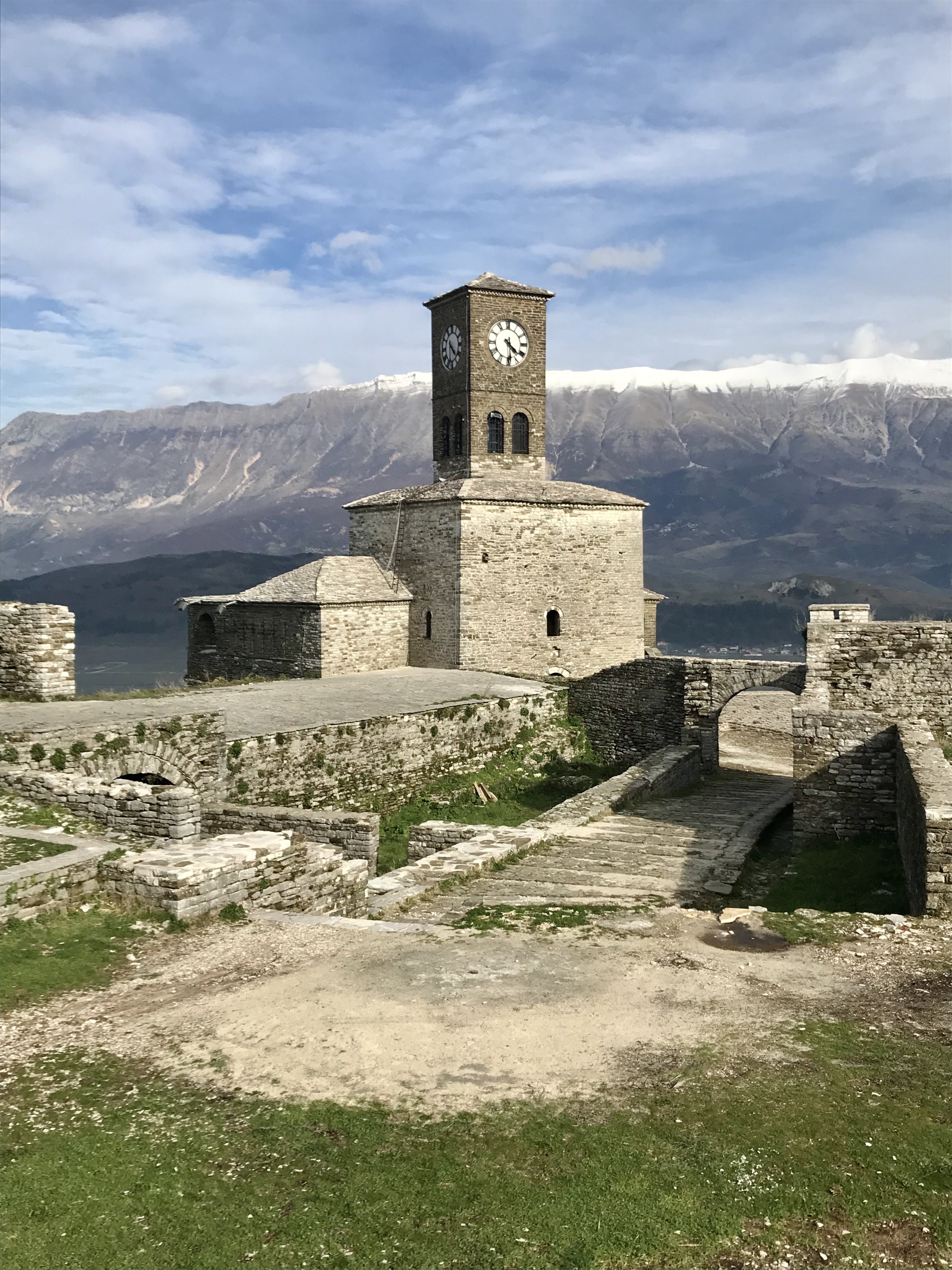
Following breakfast (which just isn’t their thing! – lots of breads and many random items), we headed uphill for the equivalent of about 35 flights on cobblestone pathways (that are probably hundreds of years old) at about 10-15% slope – to get to the castle. It was built over hundreds of years under numerous despots and dictators, but now is home to reminders of Albania’s resistance to Western occupation. The castle was originally built in the 12th Century, but has undergone many additions, changes, and renovations, and uses including a prison. It sits atop a hill and the structure can be seen from nearly everywhere in the town. It includes an arms museum, WWII tanks, and an American fighter plane that was shot down during the war. But amid all of this is also a wonderful grass field at the top of the castle roof that is a concert pavilion which must be a spectacular location for music and performances – a total contrast to these military remains. And all of that aside, the structure, the masonry arches, the streaming light pouring in, and the scale of it all is pretty amazing.
So what we know about Gjirokaster is that the city includes the old town (where we are staying), the fortress (which we gather was the original settlement of the area), the Ottoman districts which are basically on the ridges leading away from the fortress, and the newer parts of the city which are in the valley (mostly newer buildings and also the university). The city has apparently always been patriotic and has a long history of being at the forefront of efforts to promote Albanian identity in the 19th Century. The city fell under Italian occupation in 1939 (after Albania was invaded), but it was a center of resistance to both the Italian and eventually the German occupation. Beginning in 1944 after it was liberated by the partisans, it was used as a center for liberation of the whole country. Interestingly it is where the dictator Hoxha is from (his house is now the Ethnographic Museum).
He is not revered in any way, but the city was spared in some ways under his regime as he appears to have protected it and thus the town was preserved. Indeed, a giant statue of Hoxha located in the center of the city was torn down immediately following his death. But Gjyrokaster’s economy failed after the end of Communism with the termination of many unneeded industrial jobs. Many people migrated to Tirana. The city went through some bad times, with three sequential fires in the bazaar area and some kind of pyramid scheme that forced historic buildings to move into decay and collapse. There was no funding to conserve Gjyrokaster’s many historic buildings.



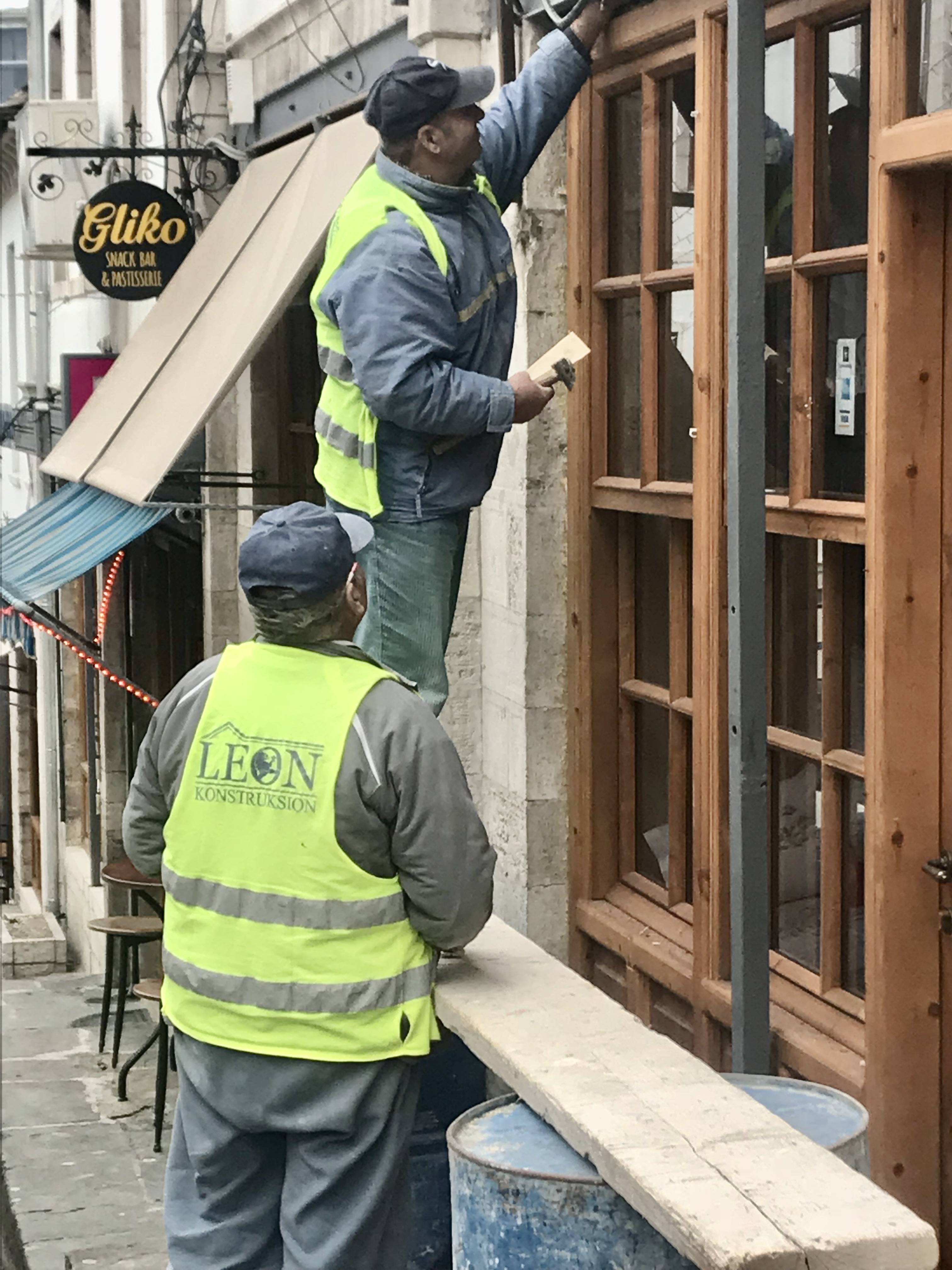
But things seem to be looking up – the city is a UNESCO Heritage Site, there is a lot of renovation and preservation work going on in the old section (Indeed, all around us is scaffolding and workers using the non-tourist months to doe extensive preservation work.). From what we can discern, they are banking on tourism as the future of the city. After the castle, we walked further to see the Duvany neighborhood adjacent to the fortress to get a good glimpse of everyday life. Checked out one of the grocery stores which confirmed what we’ve seen — the variety of produce available is pretty limited (and definitely affecting the availability of some dishes in restaurants) — potatoes, cabbage, tomatoes, oranges (I assume from Greece?), apples, onions, and peppers (red and green)… that’s about it. Meat and cheese seem readily available. We walked to the Ethnographic Museum and the famous Skenduli House (Ottoman) – but both were closed —- the downside of traveling in really really off-season weeks and months.


So we strolled the main streets and wandered into a very sweet little shop that sells beautiful olive oils, leaves for teas, jams, and raki – all made locally. We bought a bunch of things, and now the challenge will be how to pack them in our suitcases and hope they survive the remaining six flights we need to take over the coming 10 days… (Tirana to Frankfurt; Frankfurt to Geneva – Dec 24… Geneva to Bordeaux – December 28…. Bordeaux to Paris — January 1… Paris to Chicago; Chicago to SFO — January 2) An observation, I haven’t mentioned: American music is everywhere and the range is huge. The other morning in Berat, the hotel was playing Leonard Cohen’s “Everybody Knows.” Tonight’s dinner is at a restaurant called Ndrico’s in a Greek minority village a few miles from Gjyrokaster – Dervican. Signing off now – Will describe dinner in tomorrow’s post. (Tomorrow we drive from here back to Tirana – return the car and repack to head to Geneva on Christmas Eve.)
 Fern's Travel Notes