Groeten uit Eindhoven. 10/19/19
Greetings from Eindhoven (Netherlands) –
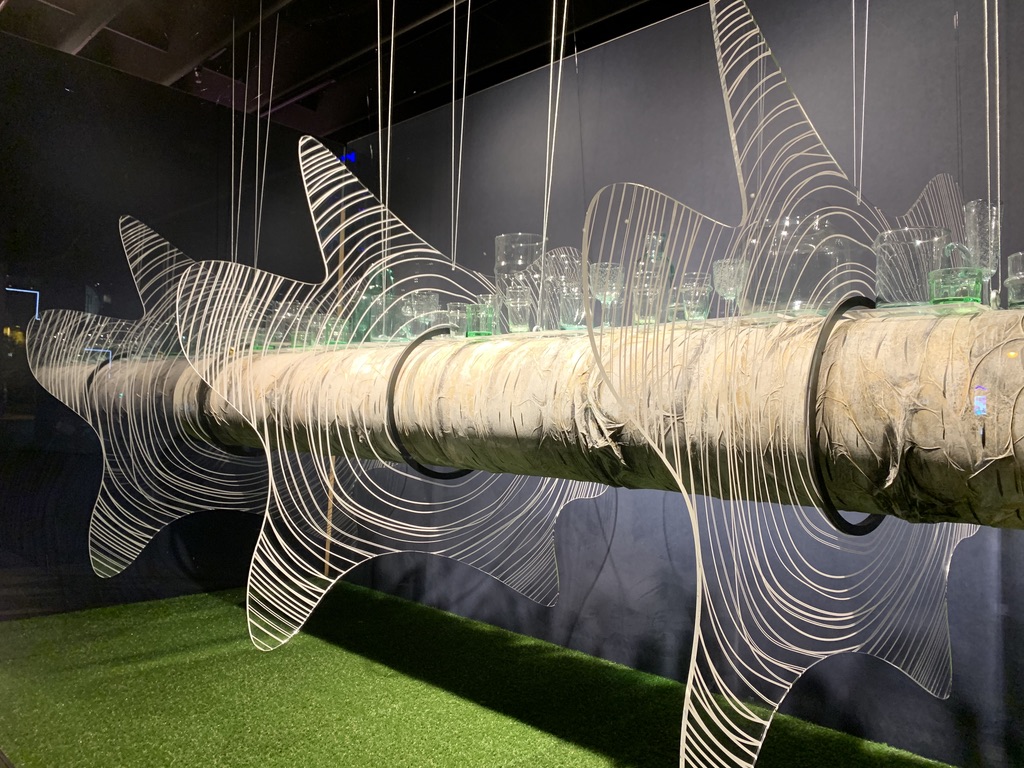
I’m in the Netherlands for about a week, with a good friend from LA. We’ve been trying to make an annual trip and we’ve been pretty good in recent years (Santa Fe, Marfa Texas, Montreal, and now Netherlands). We started out in Eindhoven where the Dutch Design Week Festival (one of the largest design weeks in Europe) is going strong. The theme is “If not now, then when?” – and includes literally hundreds of talks and more than two thousand exhibits ranging from major museum shows to visits to small studios. A lot of it seems very conceptual rather than concrete. But it’s a big event for this city of 230,000 people (fifth largest city in the Netherlands).
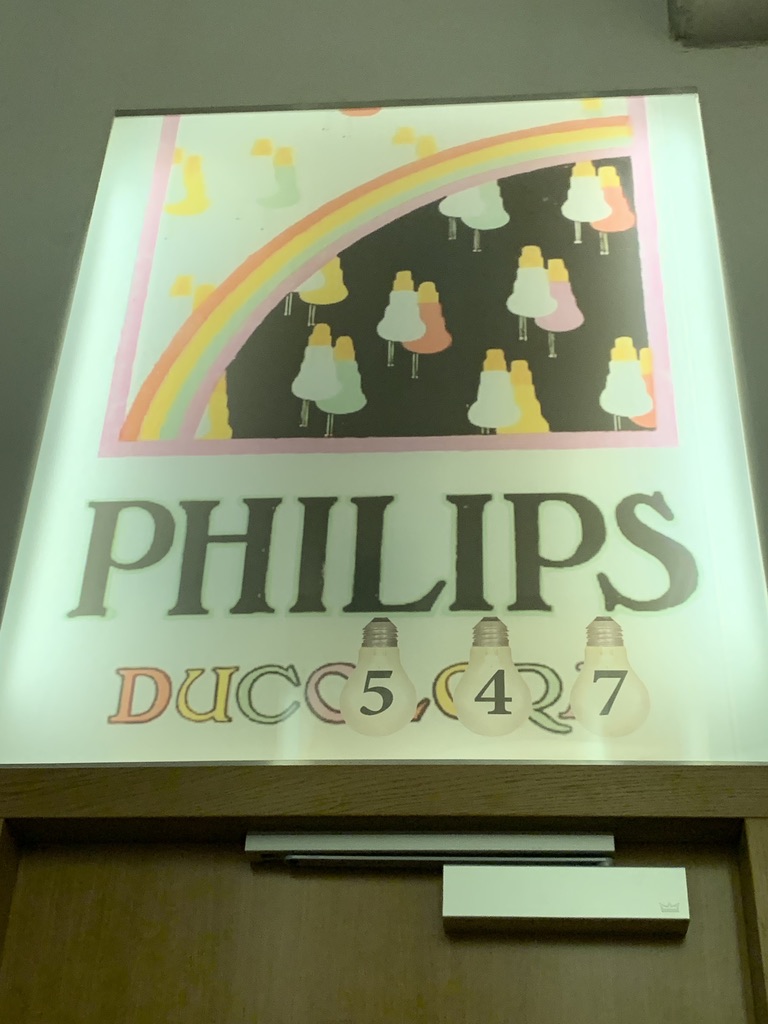
Eindhoven is home to Philips, the well-known Dutch company that started out as the manufacturer of light bulbs — and grew into one of the world’s largest electronics companies. A lot of Eindhoven’s growth can be traced to Philips. And as a result of the company’s presence, there are many high tech companies here and Eindhoven is a successful tech and industrial hub in Europe.
Arrived yesterday afternoon – met up with Carol at the Amsterdam Airport (my flight was about an hour late, so Carol explored the airport for two hours)! We then went to pick up our rental car to head directly to Eindhoven – it should be about a 90-minute drive, but somehow we got wrapped up in the loop road around the airport and went in circles, and then as we got close to the hotel we made a wrong turn and had to do a bit of back-tracking, so it took us close to three hours to get here. I drove and Carol navigated.
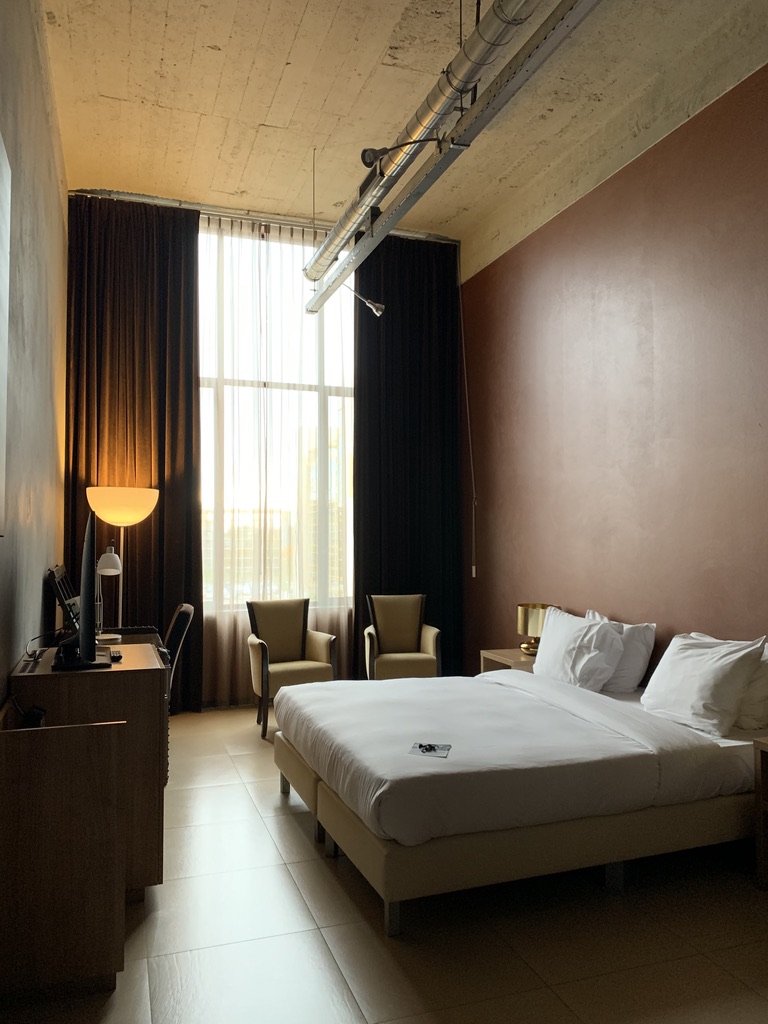
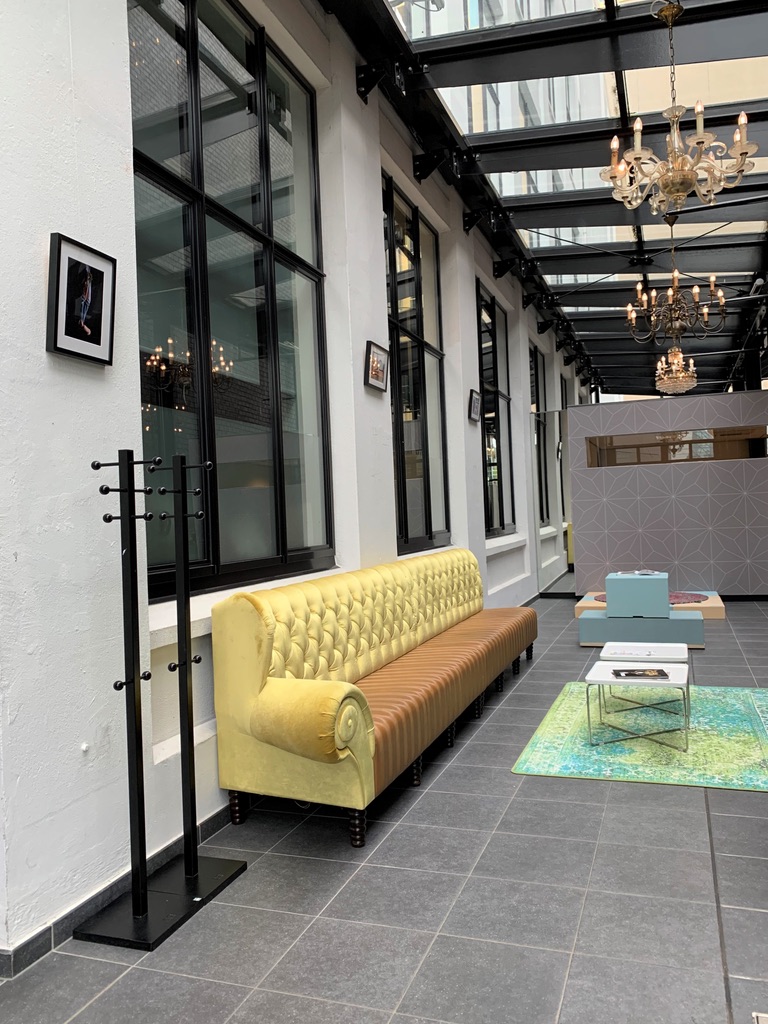
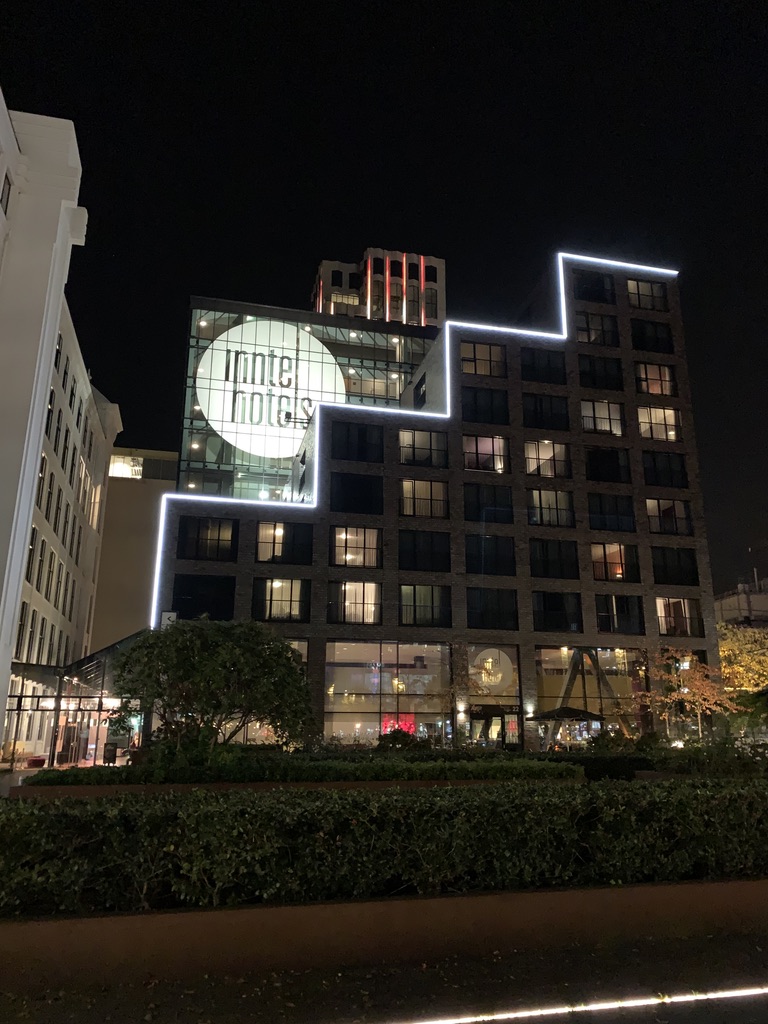
Our hotel, Innhotel Art Eindhoven, is actually the 1909 building that housed the Philips factory and is where the first light bulbs were made. The architects did an interesting job to retain the industrial character of the building, including having rooms with 15’ ceilings. The interior designer – on the other hand – must not have realized that Philips made light bulbs, since the rooms are really dark (dark walls and not too much lighting!)
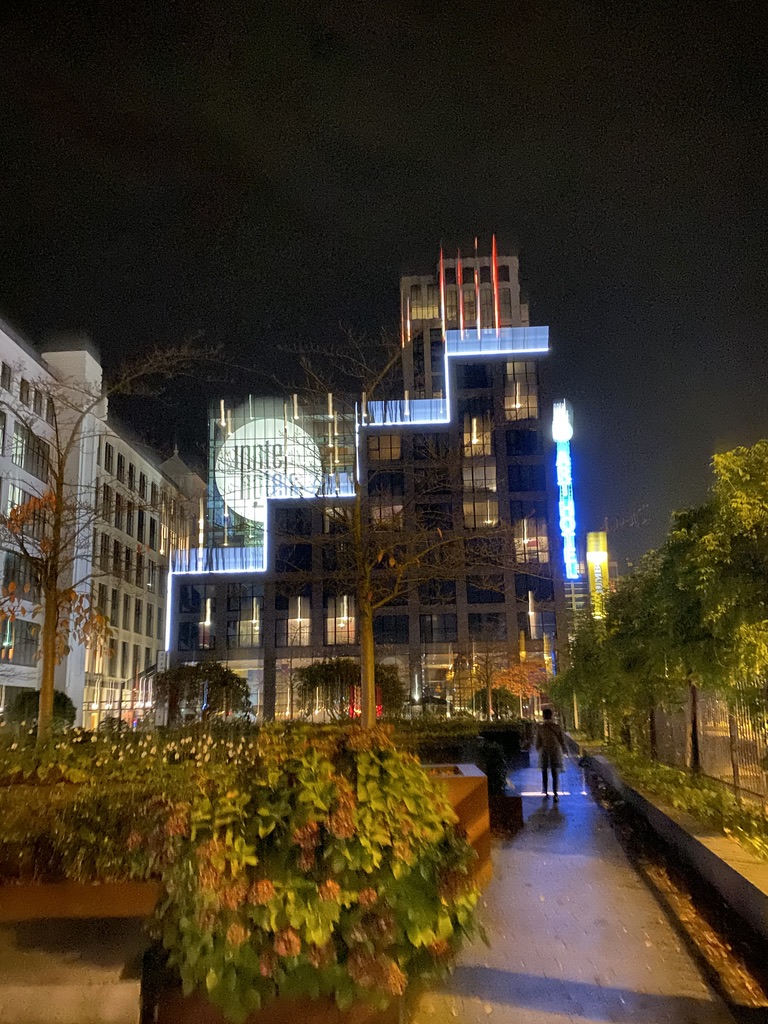
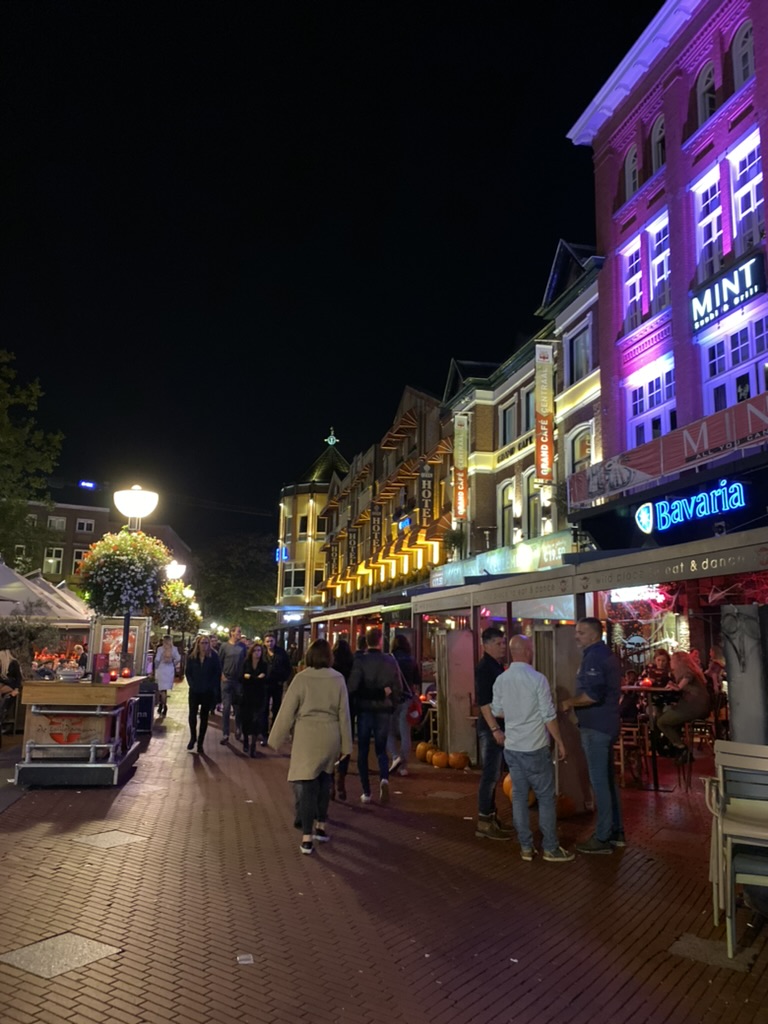
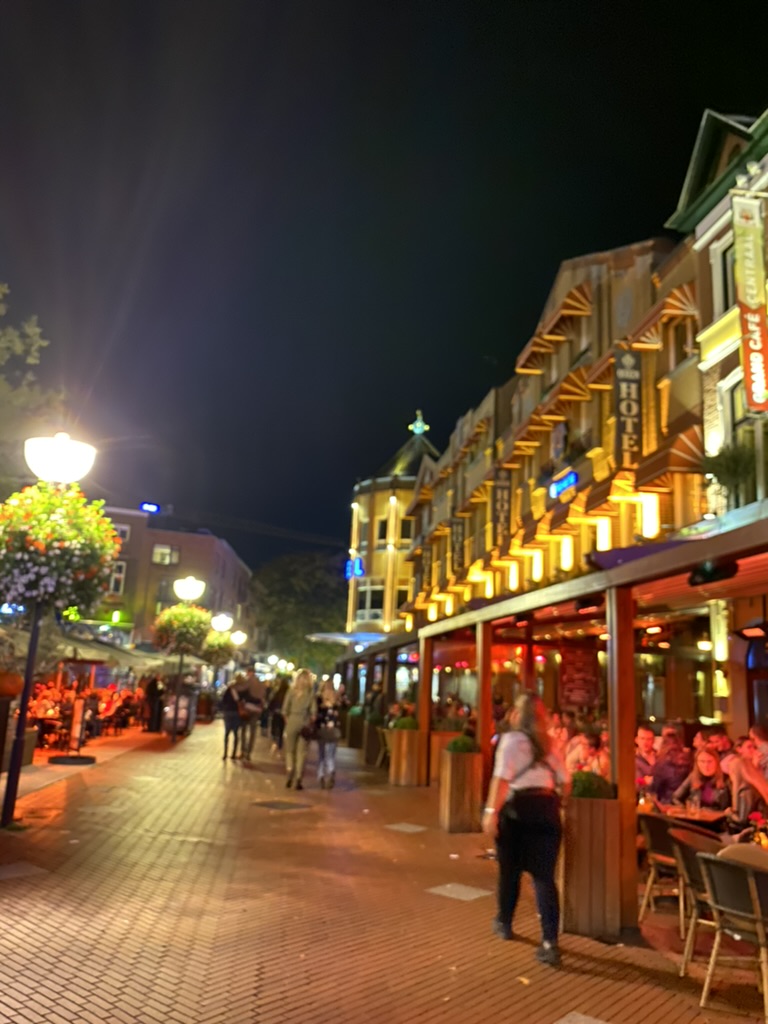
We freshened up and headed out to a very lively part of Eindhoven called Kleine Berg, which seems to be comprised of only walking streets, lots of twinkle lights above, more bars and restaurants than you can imagine and lots of little shops, outdoor eateries, and bookstores. We walked from the hotel (nearly everyone else is on bikes). We were among the last people to have dinner at Berlage – mostly shared plates from an eclectic menu. Food was good, wine great, and prices quite reasonable when compared to the Bay Area or NY. We strolled back to the hotel arriving in our rooms around midnight. I actually worked for a few hours and probably hit the bed around 4:00 am. But after a good night’s sleep (5 hours) woke up ready to hit the ground.
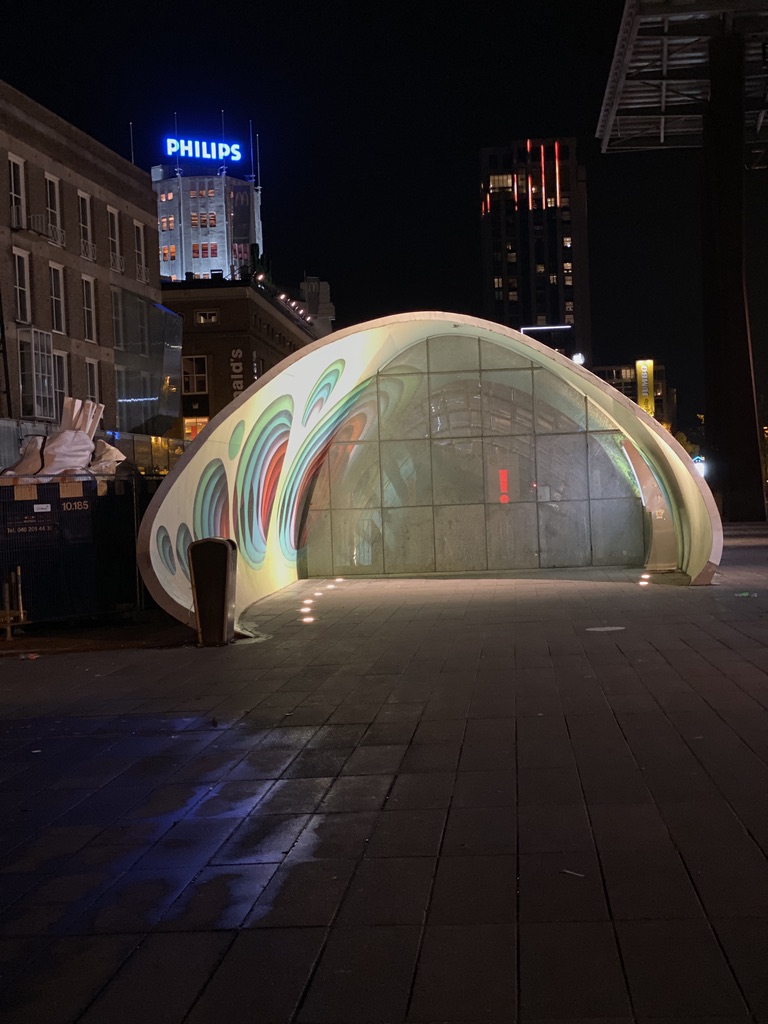
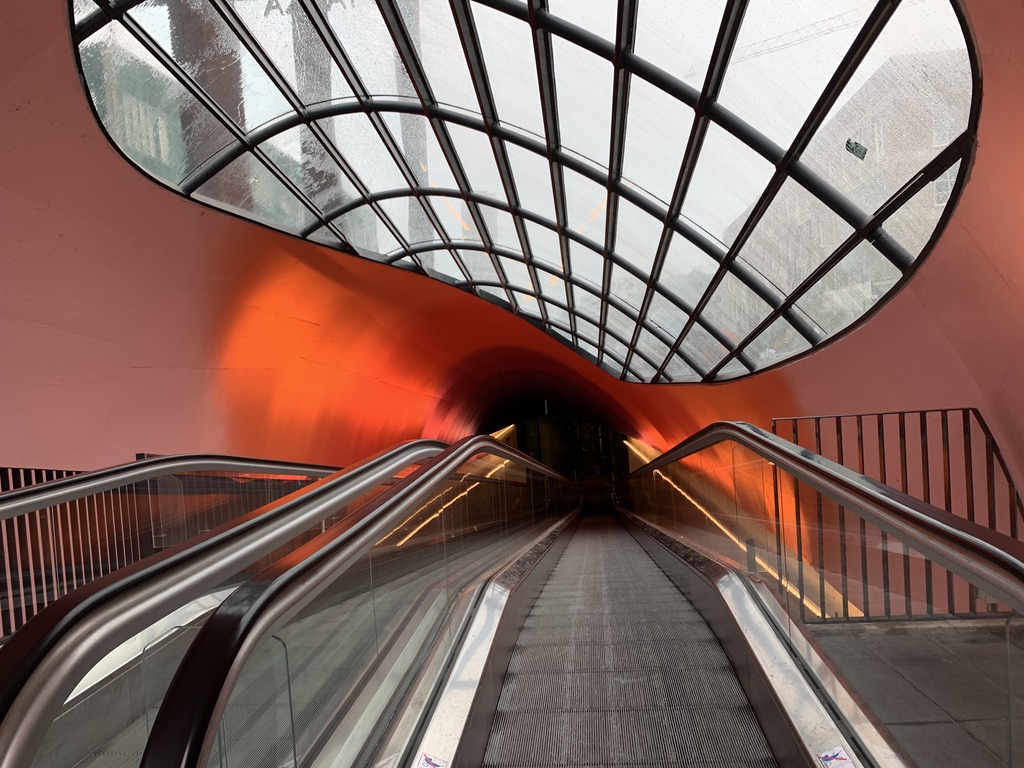
We set out at about 10:30 and in spite of the rain, we decided to walk to get our passes for the Design Week events and exhibits. En route, we stopped to take an escalator (sort of a moving ramp) inside an amoeba shaped structure to what we thought might be some kind of tram system — Turned out it is a huge bike storage area where people park their bikes to go to work or shopping.
Interesting note about Philips (whose name is everywhere here in town) – the family had prepared for the German invasion, so when the family and the Philips directors learned that the German invasion was to take place the following day, key family and company leaders fled to the United States, taking a large amount of the company’s wealth with them. Somehow, they managed to run the company from the US. throughout the war. Operating from the US as the North American Philips Company, they managed to run the company throughout the war. At the same time, the company was moved (on paper) to the Antilles, to keep it out of German hands.
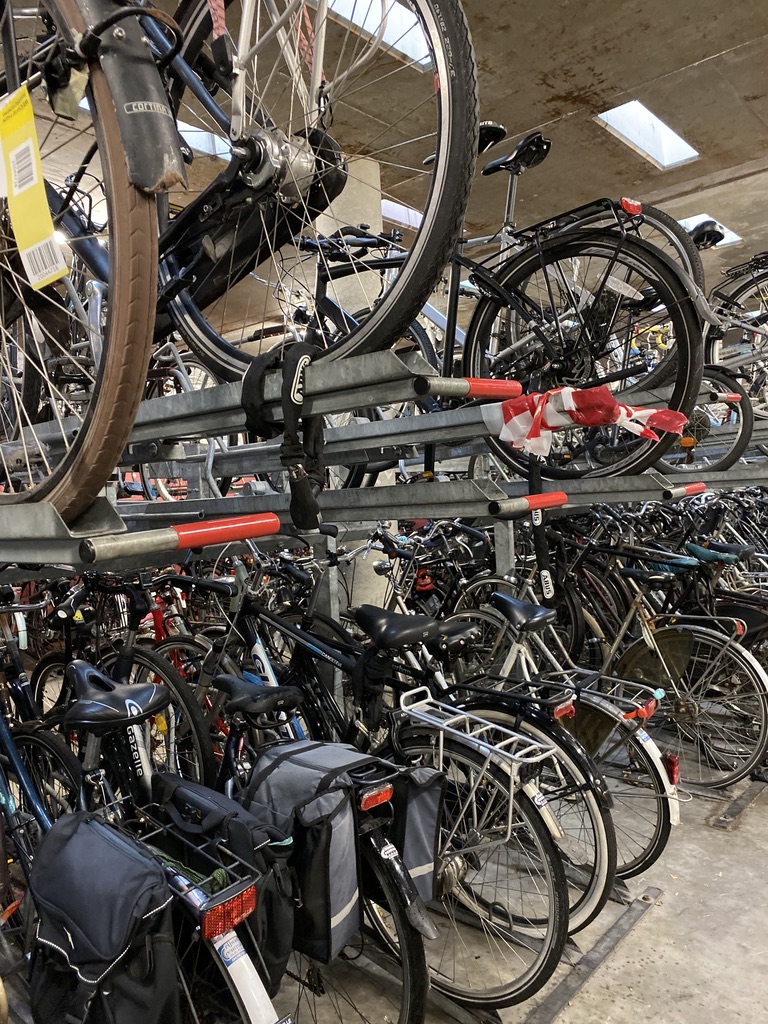
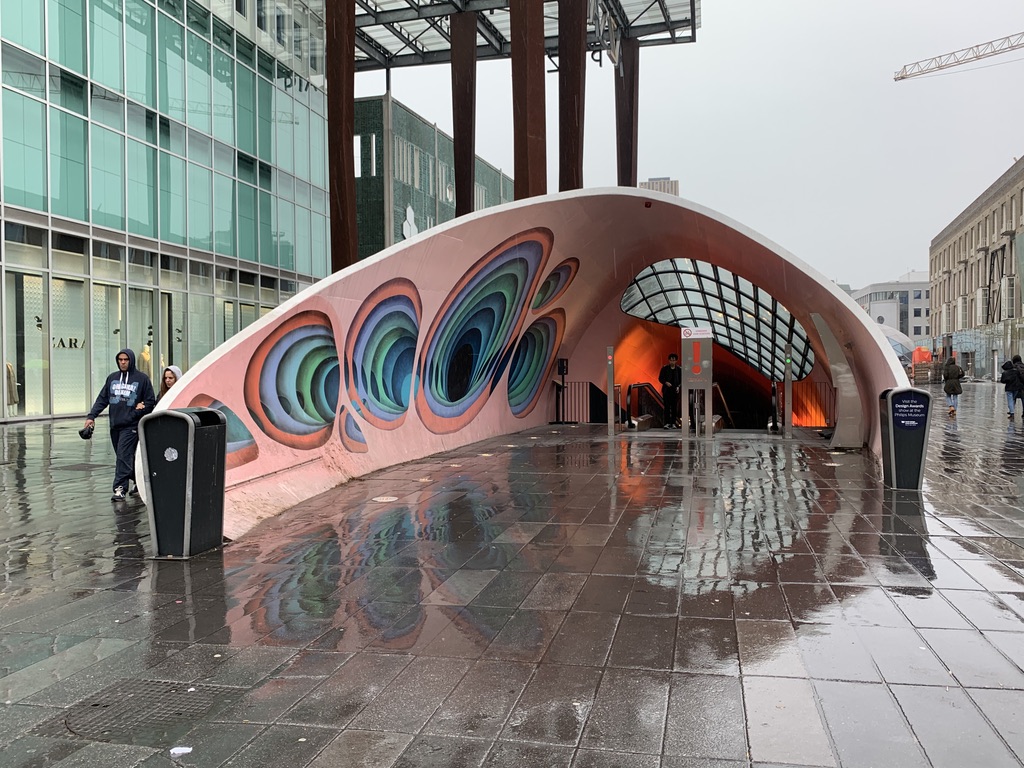
It was supposed to take about 20 minutes to walk to one of the registration areas for the Design Week events, but we managed to misread the beginning of our journey on the map, and wound up in a very different part of the city – interesting with lots of Muslim markets and small shops. Eventually we realized something was really wrong so we hopped in a taxi (mostly women taxi drivers) and got set in the right direction. We were actually headed to the Feel Good Market, en route to the Design Week registration. It’s a once-a-month Sunday market where craftspeople sell their wares – it stretches for about 10 blocks. So, we got our registration bands and also walked the market, and went to see many exhibits. There are more than 2,600 exhibits spread out all of the city, in five clusters. The city has done an amazing job setting this event up (its been going on for about 20 years) with over 100 venues operating simultaneously. The theme is clearly sustainability and there is a great effort to make the event carbon neutral – minimal plastic (if any), bikes, electric cars, public transit, no bags for any purchases, all structures made of wood, etc.
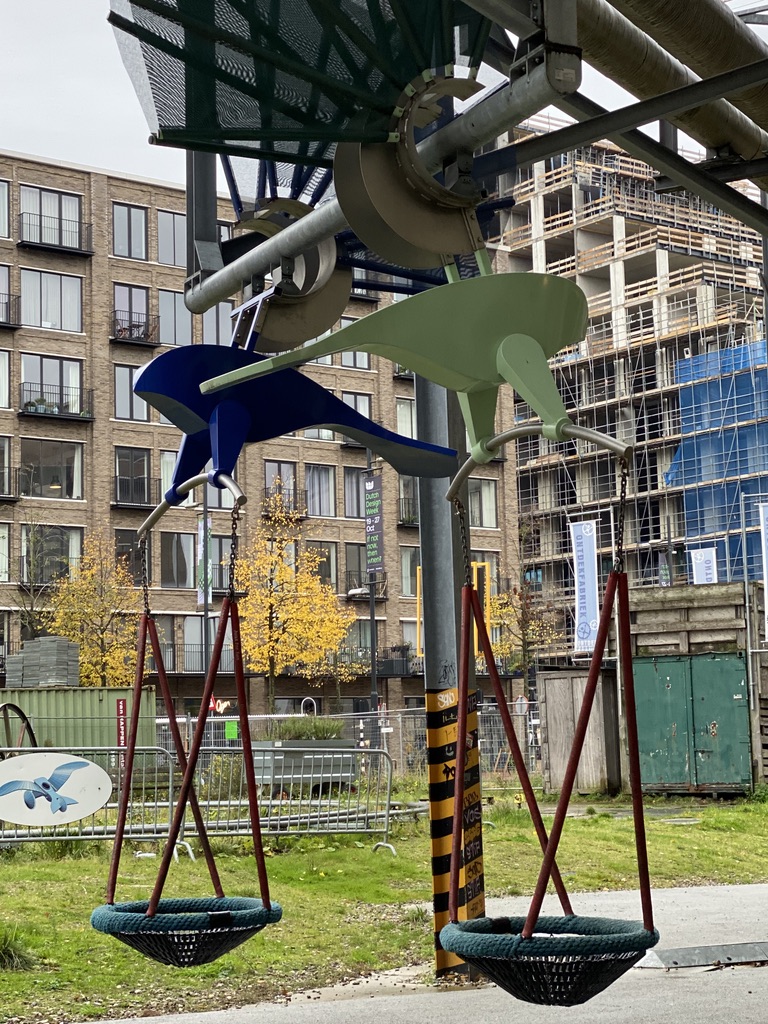
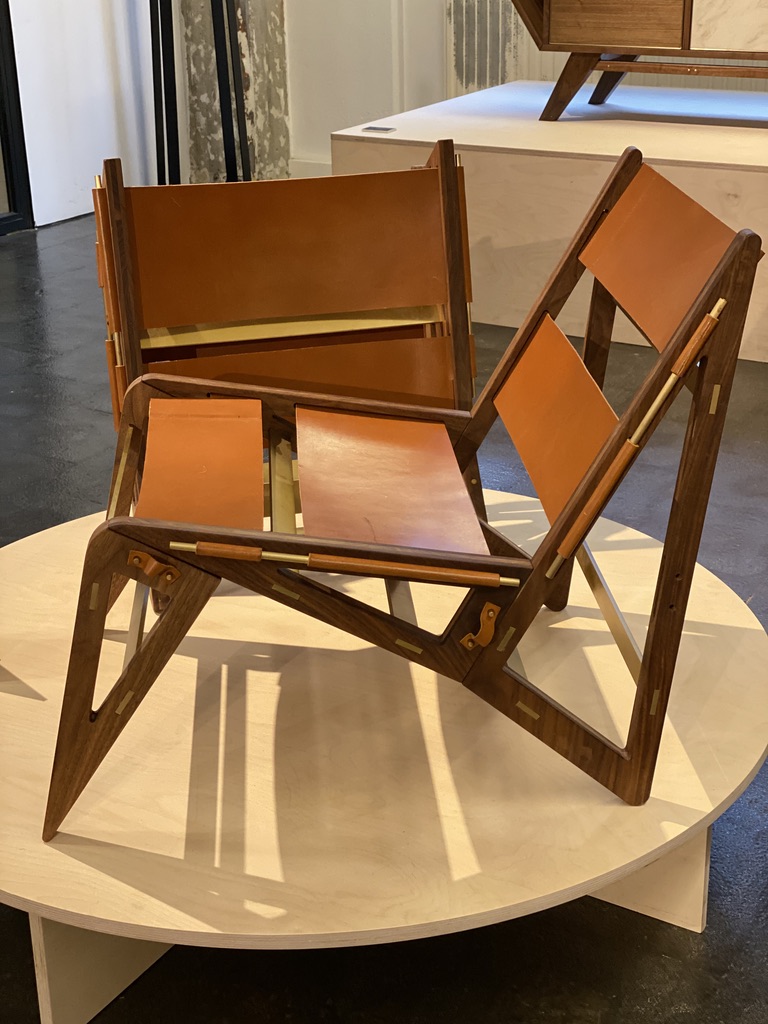
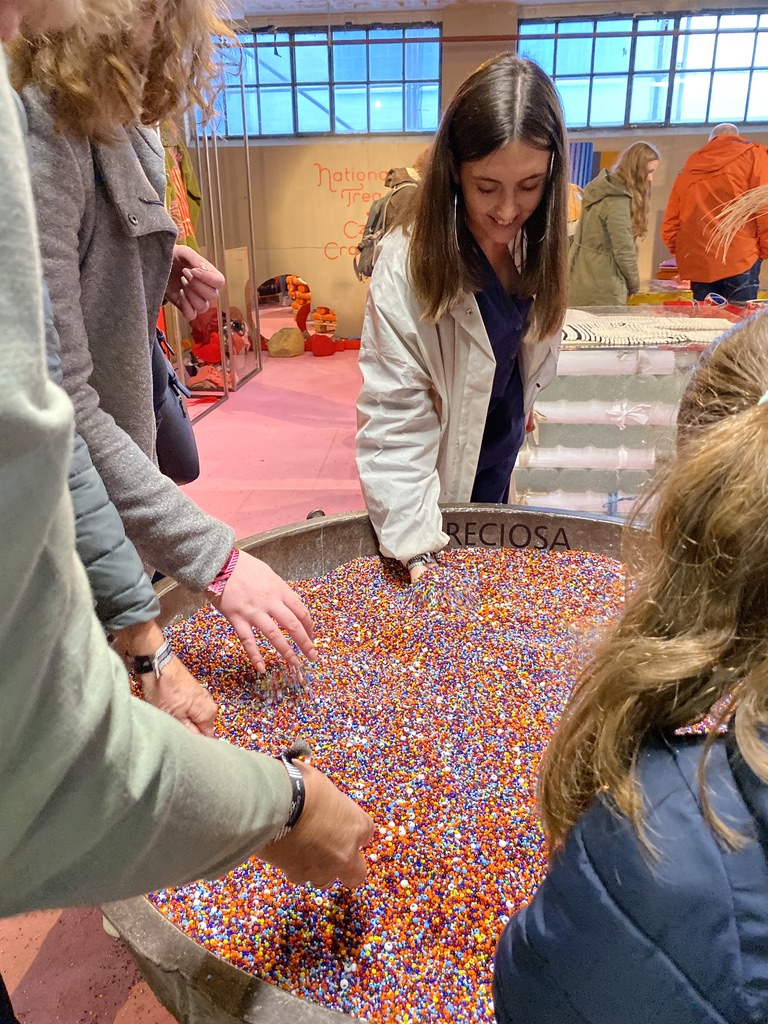
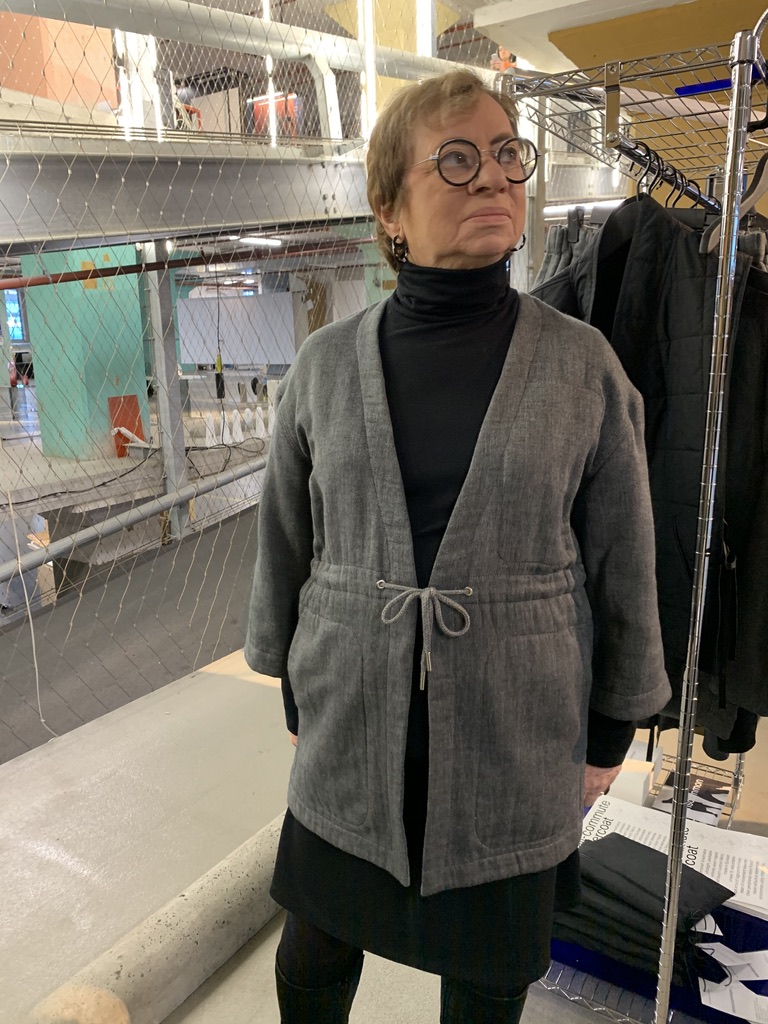
Many of the exhibits focused on interesting roles related to large companies, showing that it’s more than the development of sustainable products and about a process that might require entirely new business models. The exhibits showed the importance of clients (big companies, for the most part) understanding they have a stake in embracing sustainability and that, they can and should make informed choices.
The whole week seems to be a draw for experts and community people to discuss practices and challenges and to develop a network of changemakers who see options for alternatives that meet current and future needs – and the bringing together of issues like health, safety, mobility, sustainable product development, architecture, technology, as well as core urgent issues related to water, climate change, and food. One key issue seemed to be promoting the use of wood in building design and moving away from the Dutch reliance on brick, steel, concrete.
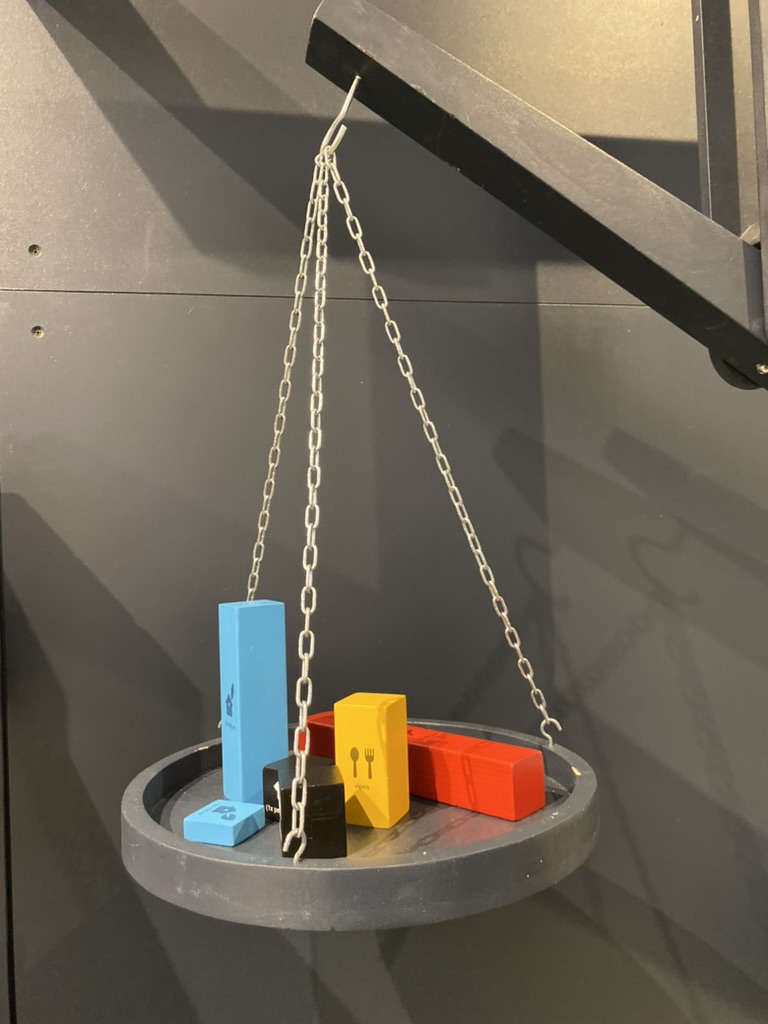
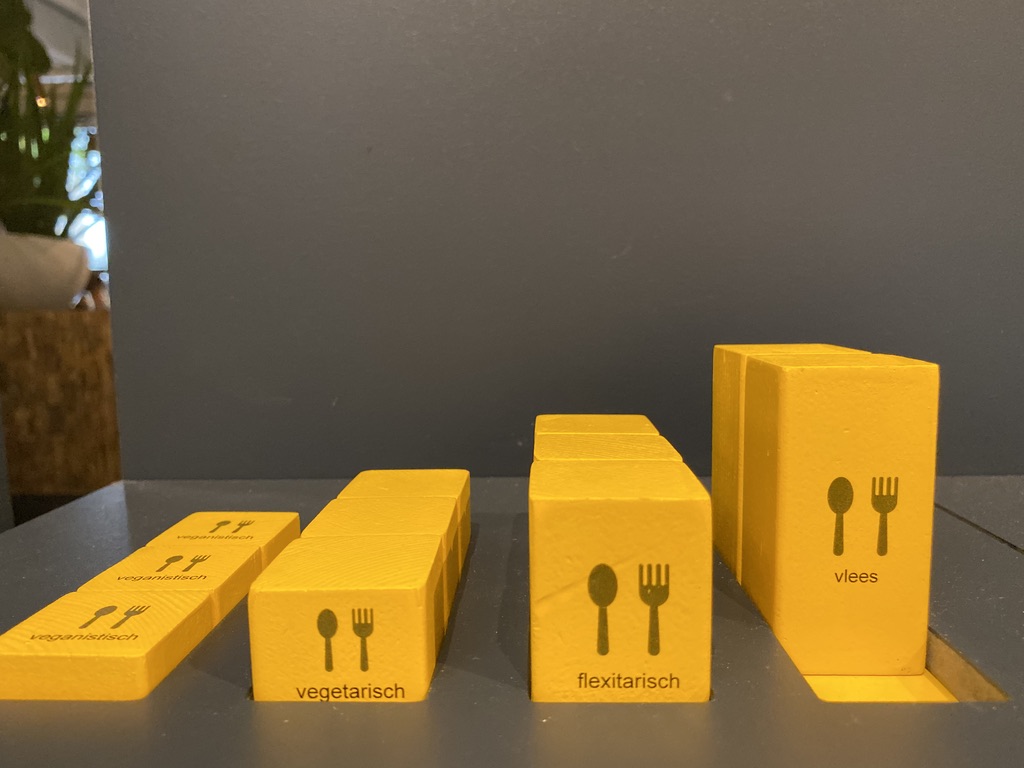

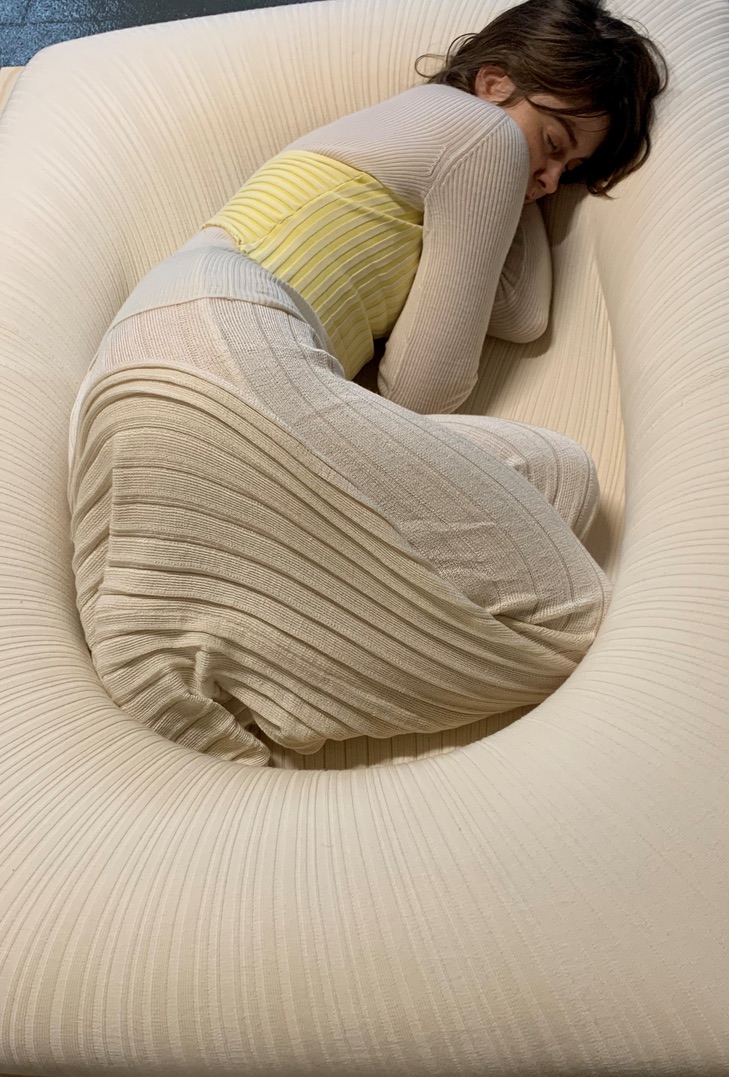
One very interesting young woman with whom I spoke – a recent graduate student at the University of Rotterdam – had developed a very fascinating and very graphic way to have participants understand just how much “energy” they consumed through a clever and visual set of three-dimensional blocks of various sizes and weights – self defining how many times they did laundry, how frequently they purchased electronic gadgets, how frequently they flew, etc. You put these “blocks” on a special scale with a counterweight for the maximum amount per person… and see if you topple the scales. It confirmed that my large amount of airline miles was really a bad thing, but not having children balanced that off!

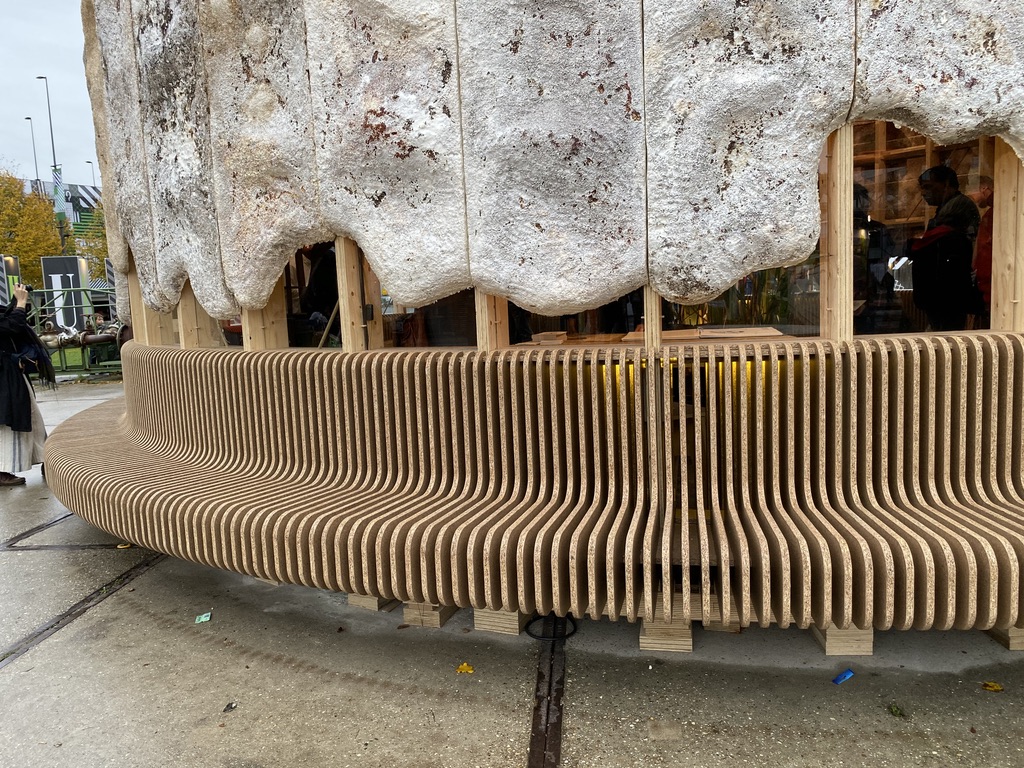

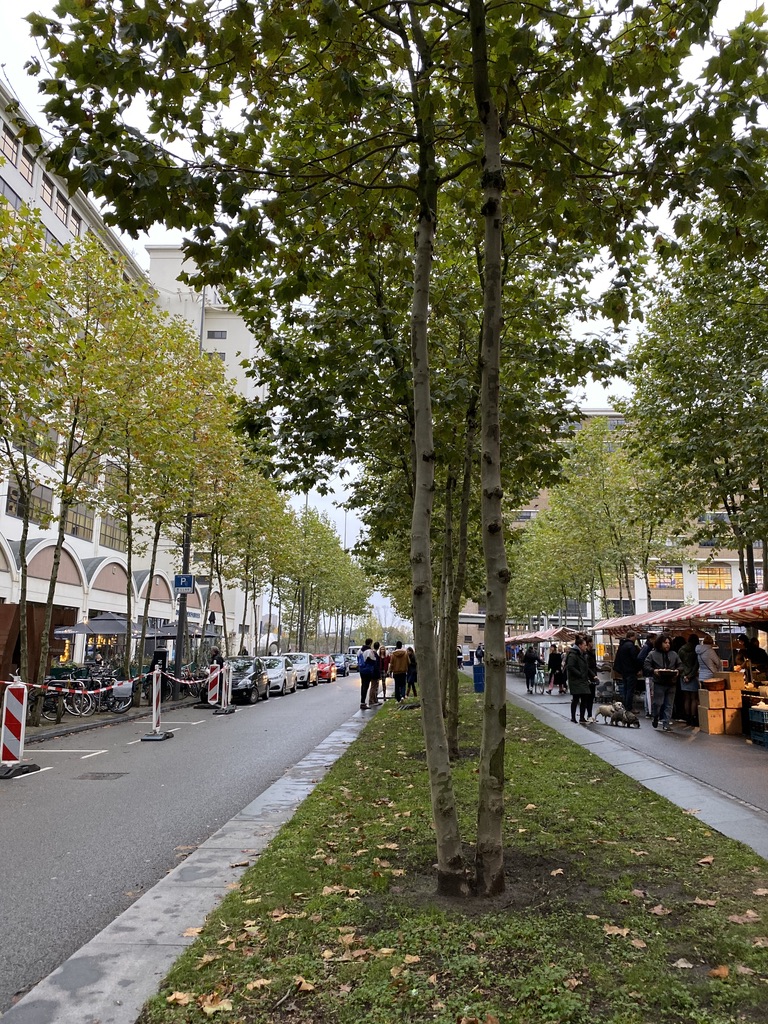
After several hours, we stroll back to the hotel in the rain, with just enough time to freshen up and head to a restaurant that came highly recommended — Zarzo. Will report on that tomorrow.
All the best –
Fern
 Fern's Travel Notes