The Rain Gods have arrived in Samarkand 1/2/20
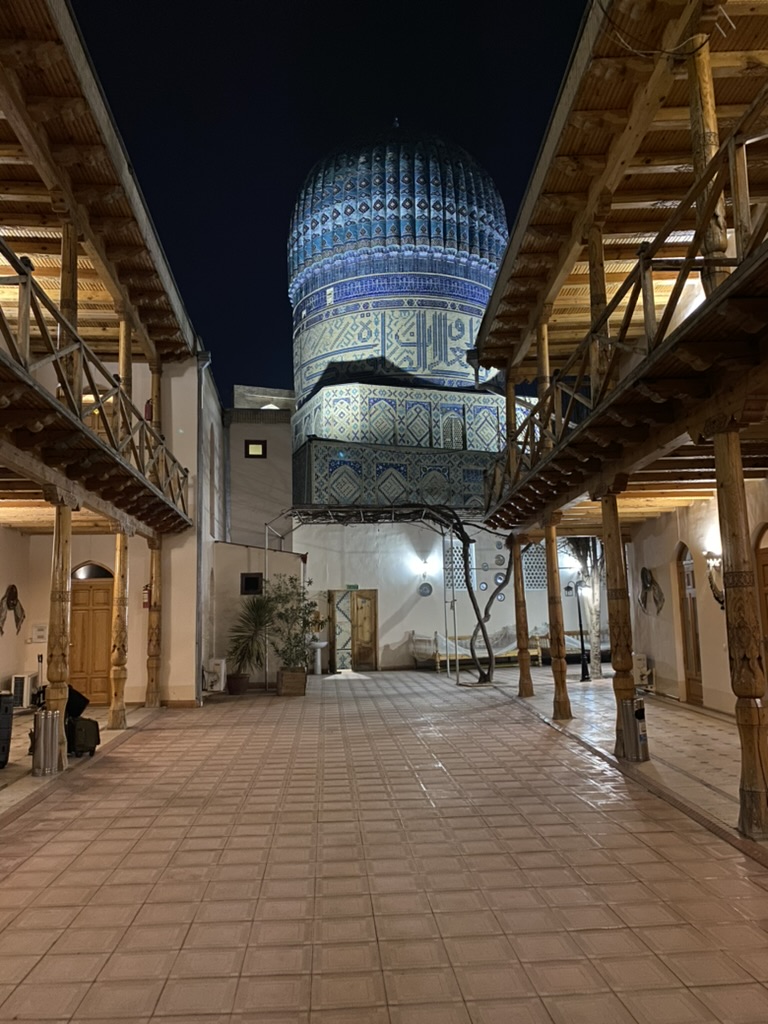
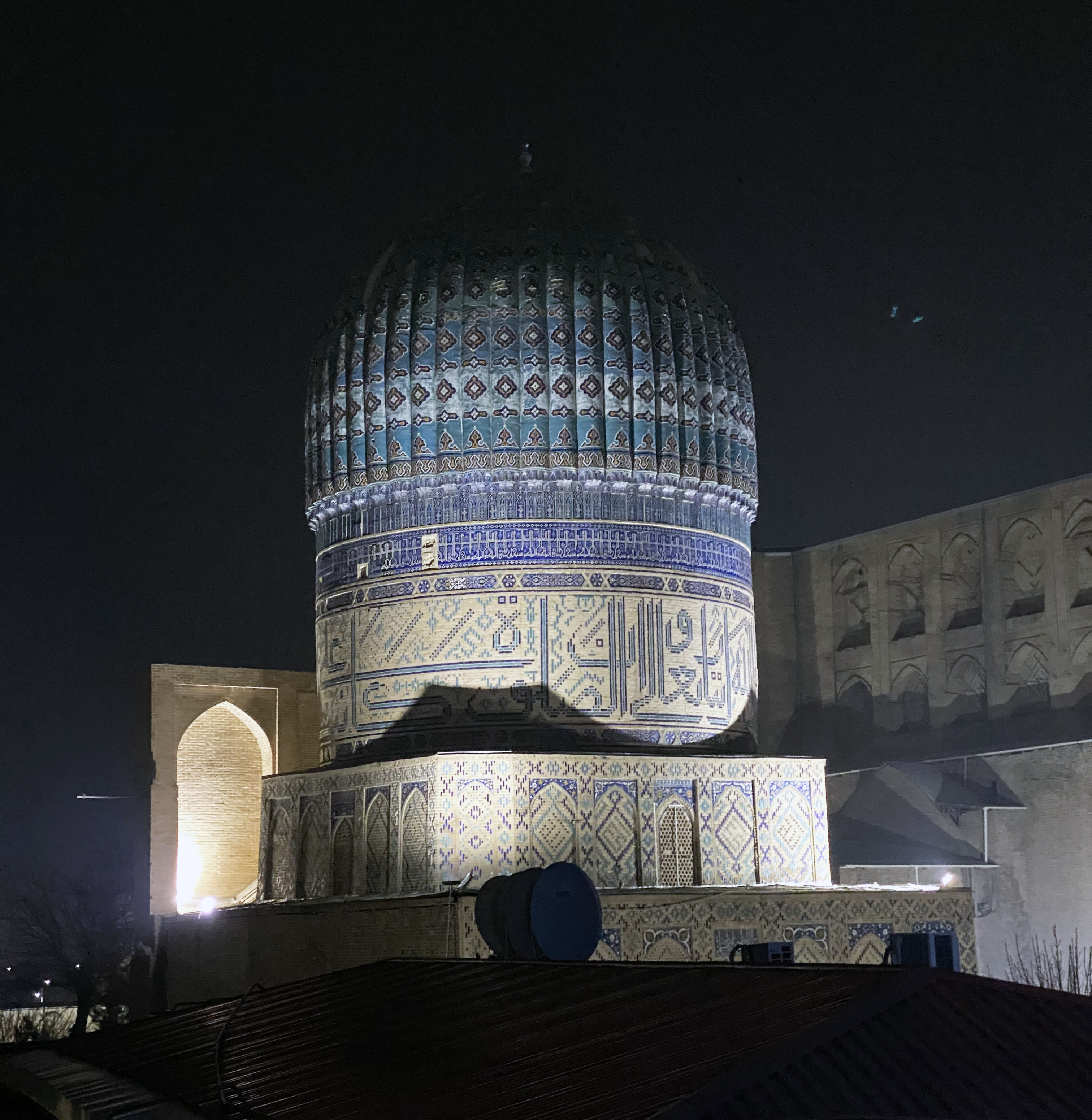
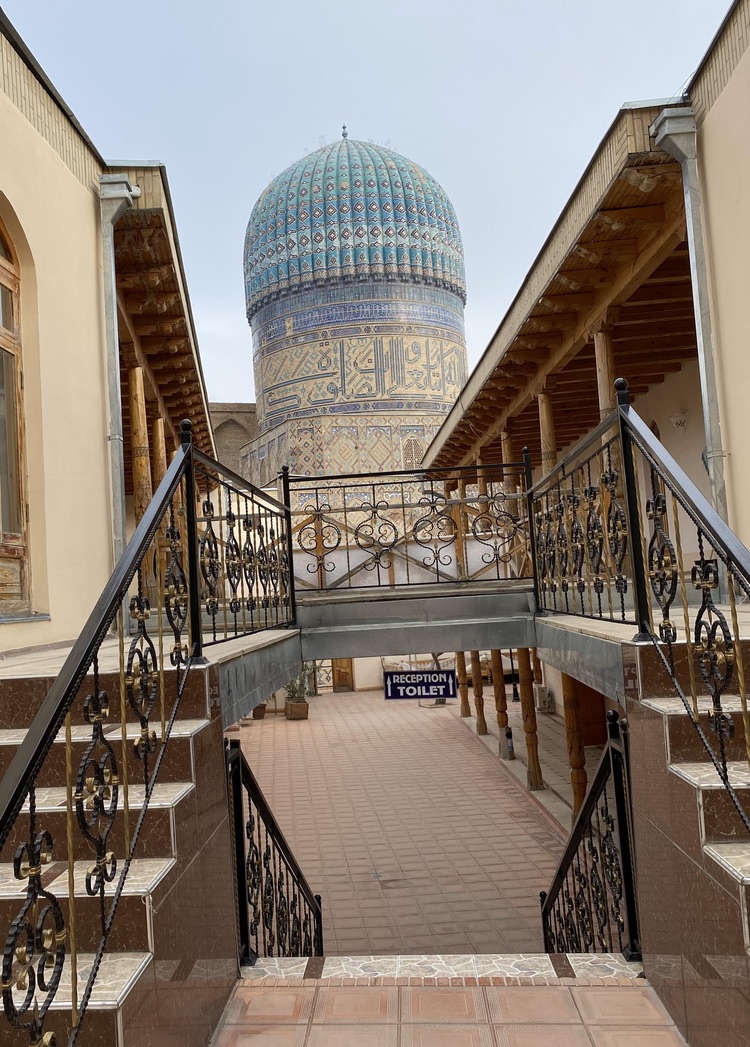
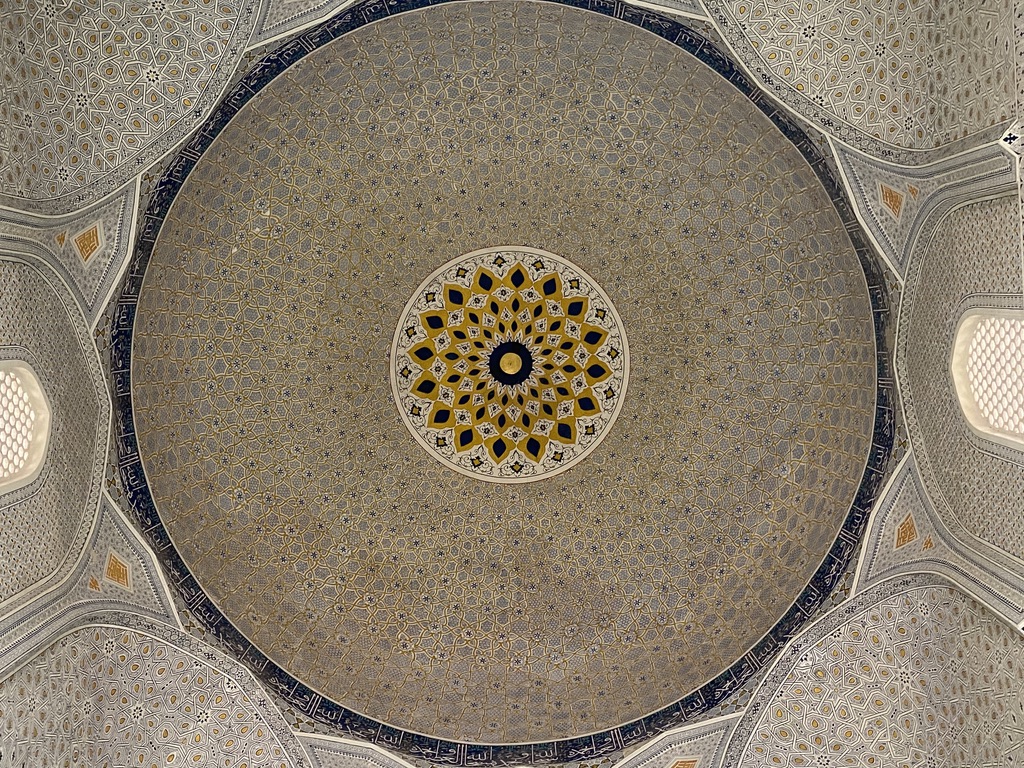
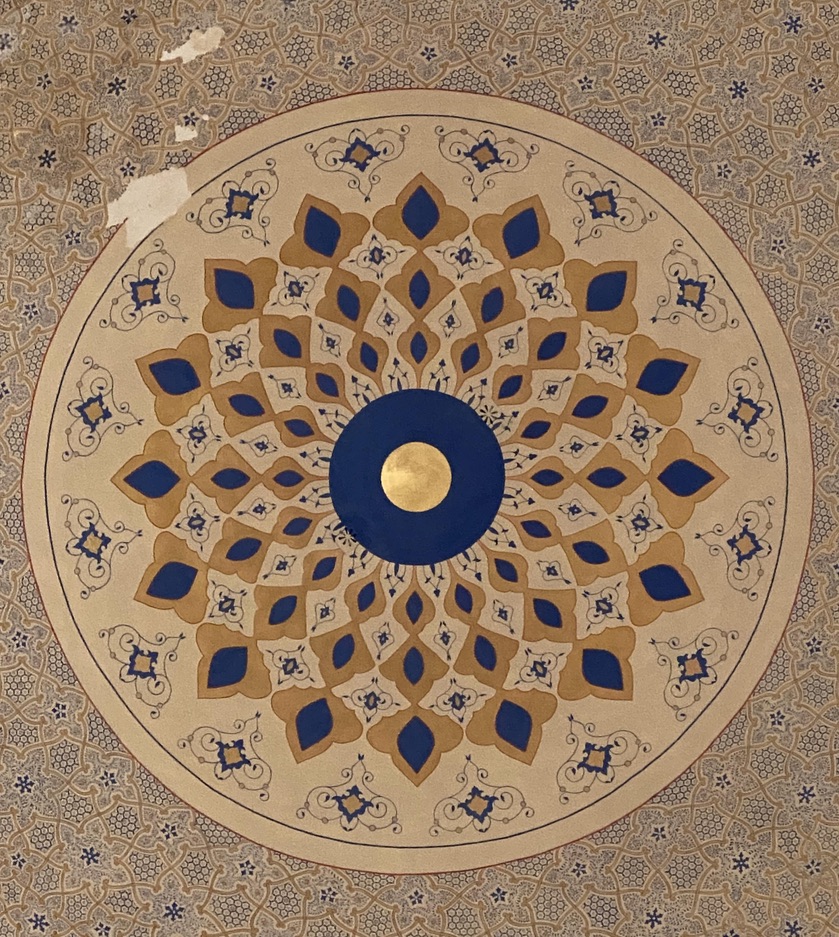
Began our second day of 2020 in Samarkand in a different room from last night; we had requested a second floor room (top floor) when we made the reservations but somehow – probably because we got here so late – we were given a first floor room.. Anyway, we are now in a much larger corner room (there are only about 15 or 20 rooms in this little hotel that is located about 50 feet from the majestic Bibi Khanym Mosque, which in the 15th Century was one of the largest and most magnificent mosques in the Islamic world. It also has an interesting, but long story… In a nutshell, the original construction was rushed and pushed the technology of the time (14th Century)… and when the “client” (Timur — typical of interfering clients) returned from his travels to India, he was disappointed and made many changes to the plans which really stretched the construction capacity of the time… Bricks began to fall from the dome and there were many repairs instituted. Then in the 16th Century, Abdulla Khan stopped all repairs on the building and it began to deteriorate quickly — not helped by earthquakes, weather, and the theft of materials by locals trying to construct their own houses. By the mid-20th century it was a ruin… but major parts were restored during the Soviet period. Interesting since this is a contradiction to Soviet atheism and a smart form of cooptation (or dominating with a velvet glove).

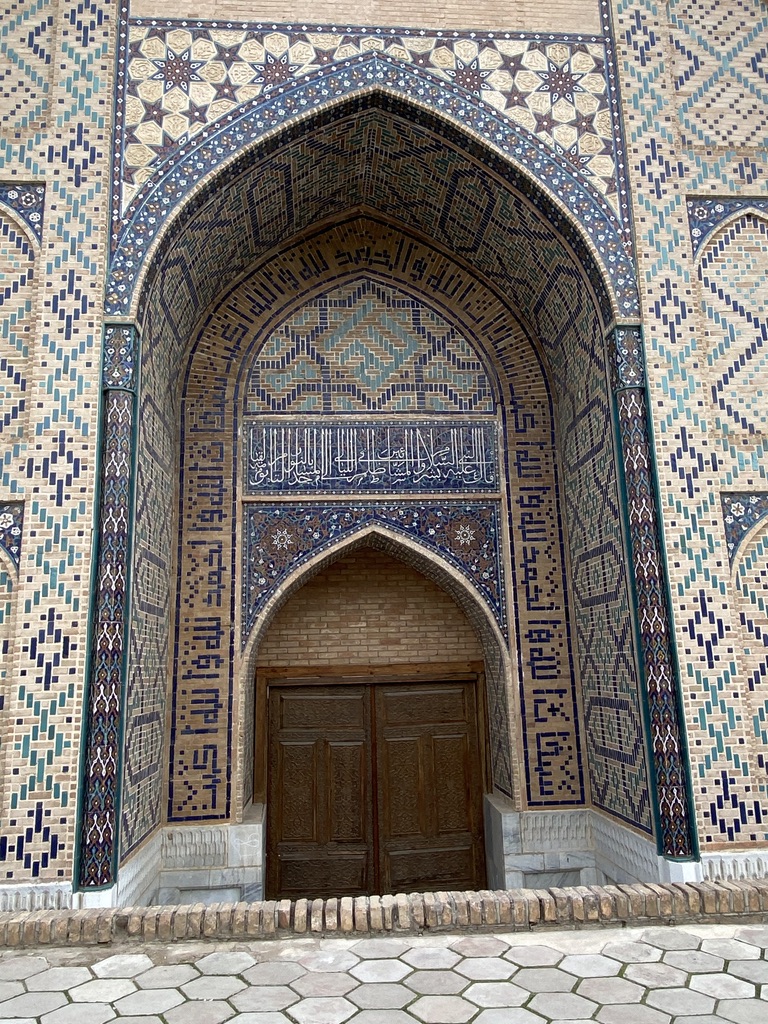
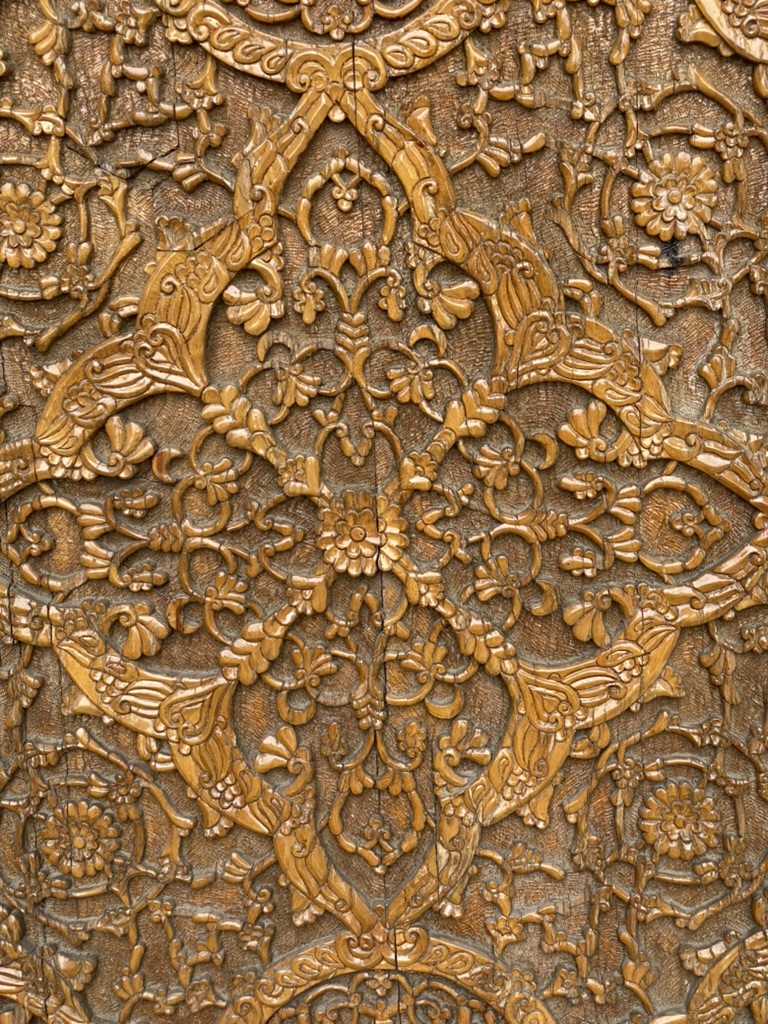
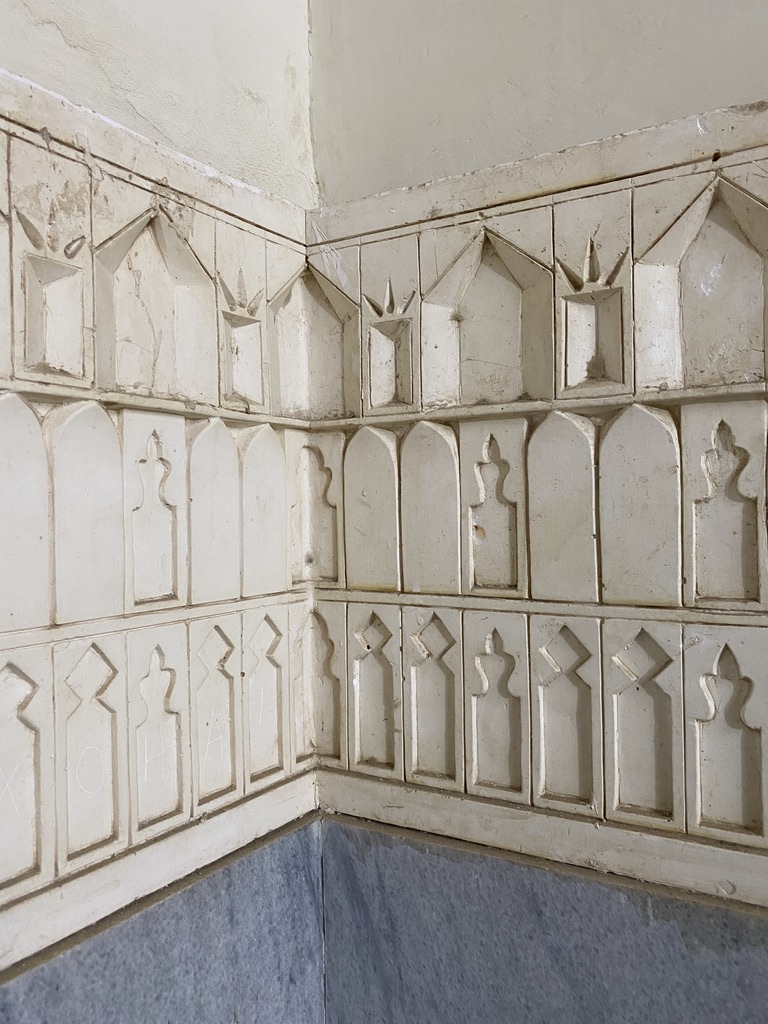
We strolled each of the buildings and photographed a lot… even as the rain set in…
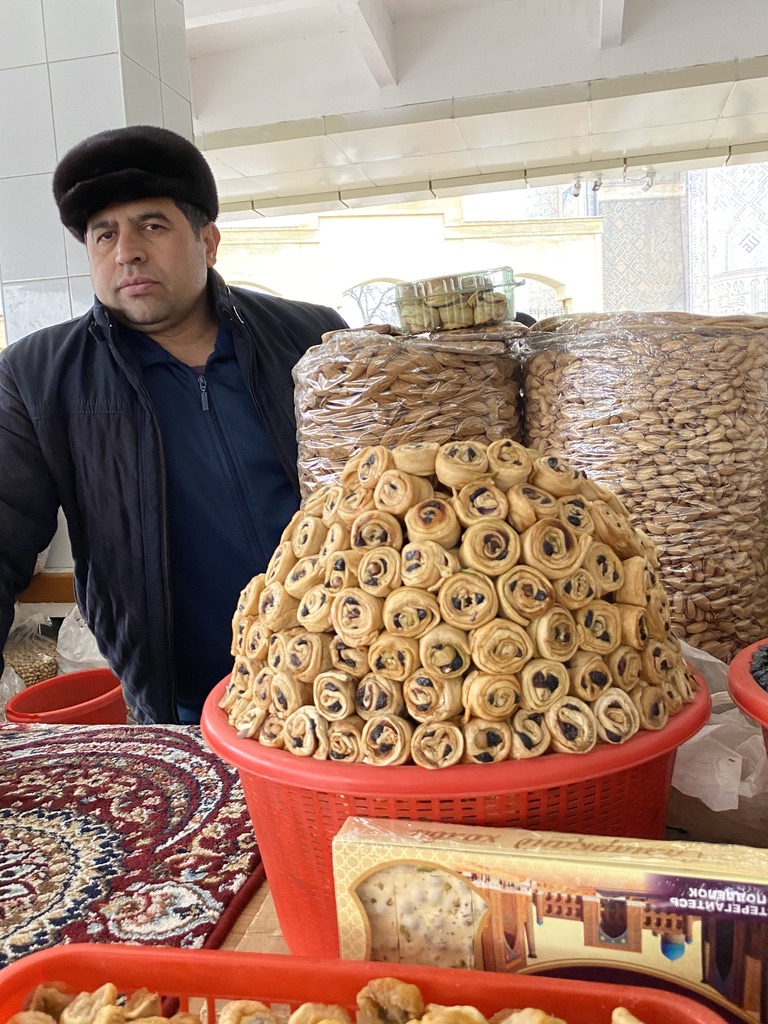
And then we strolled to the Registan… which was the heart of Samarkand in ancient times during the Timurid Dynasty. In Persian, Registan means “sandy place” or “desert.” This was to be a huge public square… proclamations would be read here.. and I guess it was also the place for public executions. It’s framed by three Madrasahs (Islamic schools). Because we realized we’d probably spend a lot of time exploring the Registan, we decided to find a place for lunch before venturing onto the grounds. We spotted several restaurants (which are usually identifiable by their wooden placards outside that have faded pictures of the food they serve). But alas most were closed. Maybe they are only dinner places or perhaps it is still holiday time. New Years is very very big here, since they don’t celebrate Christmas… although they have a bit of Christmas tied into the New Years as Santa-type costumes appear everywhere.

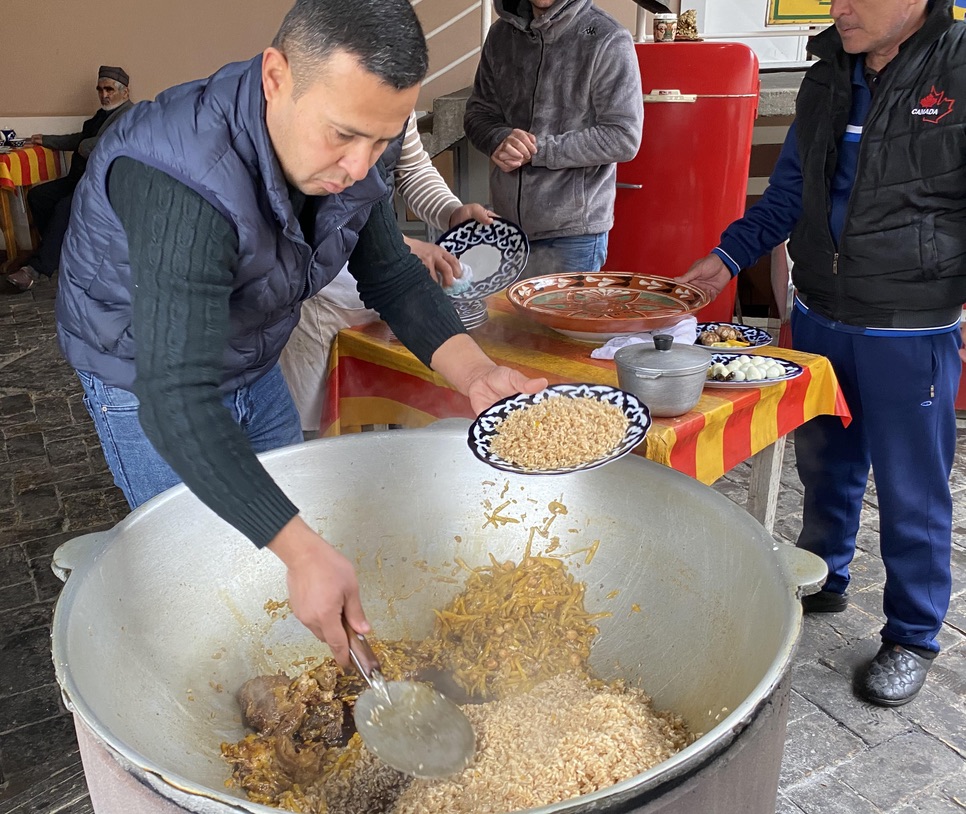
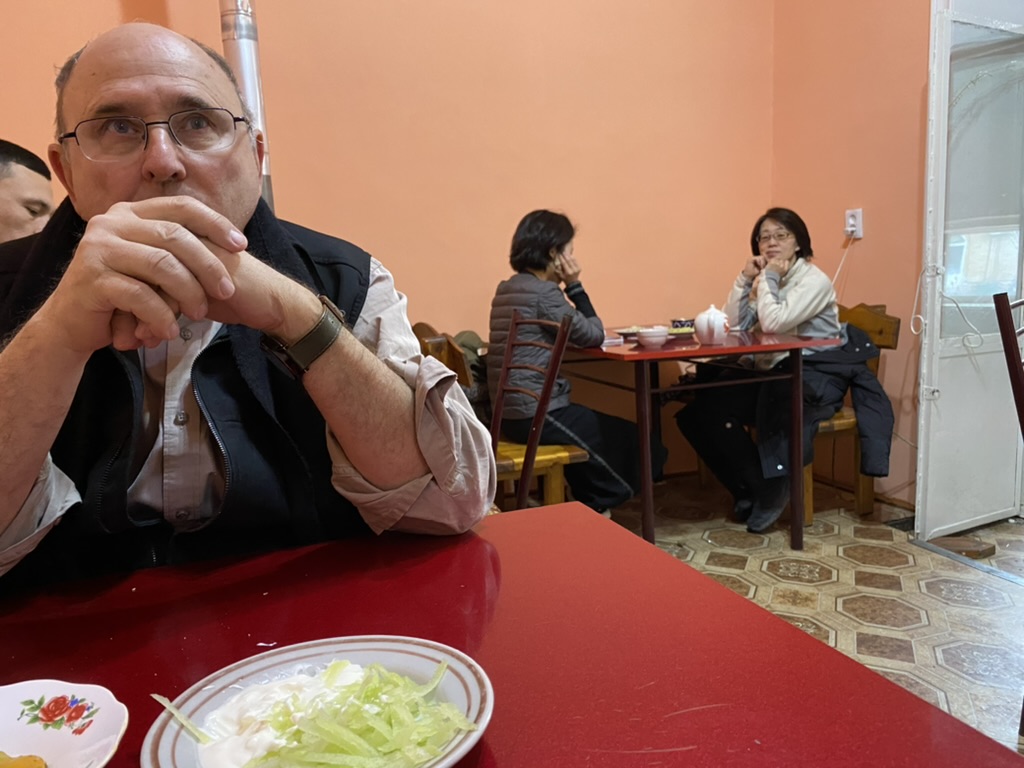
Anyway, we finally stumbled upon a little place that had plov (that rice dish) and salad and soup. We had one plov to share and one soup to share. Very greasy… and I think the meat in the soup was horse meat. Anyway, we ate (I’m really grateful that they have great local bread everywhere… I can live on the bread). Again the plov was cooked outside downstairs in huge cauldrons. The seating was upstairs.. for about 30 people… always with plastic sheets on the table to protect the tablecloth which seems to be plastic as well. Many of the tables were occupied by cops, so I think that’s a sign that it was good local food (or maybe a sign that no other restaurant was open today).

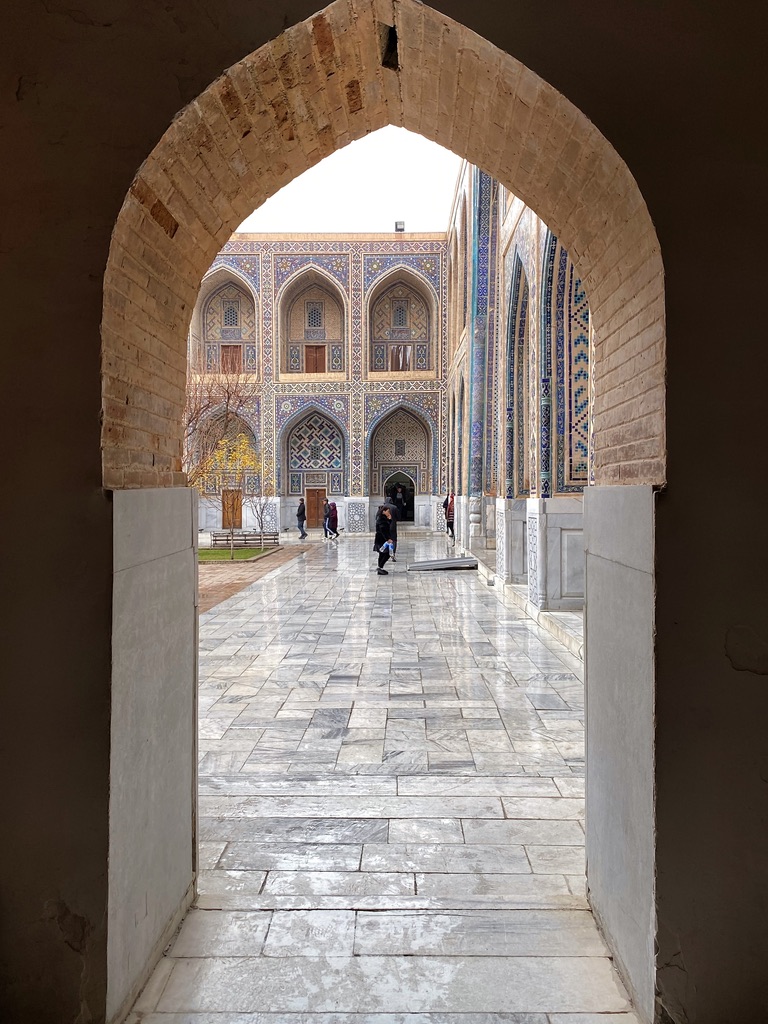
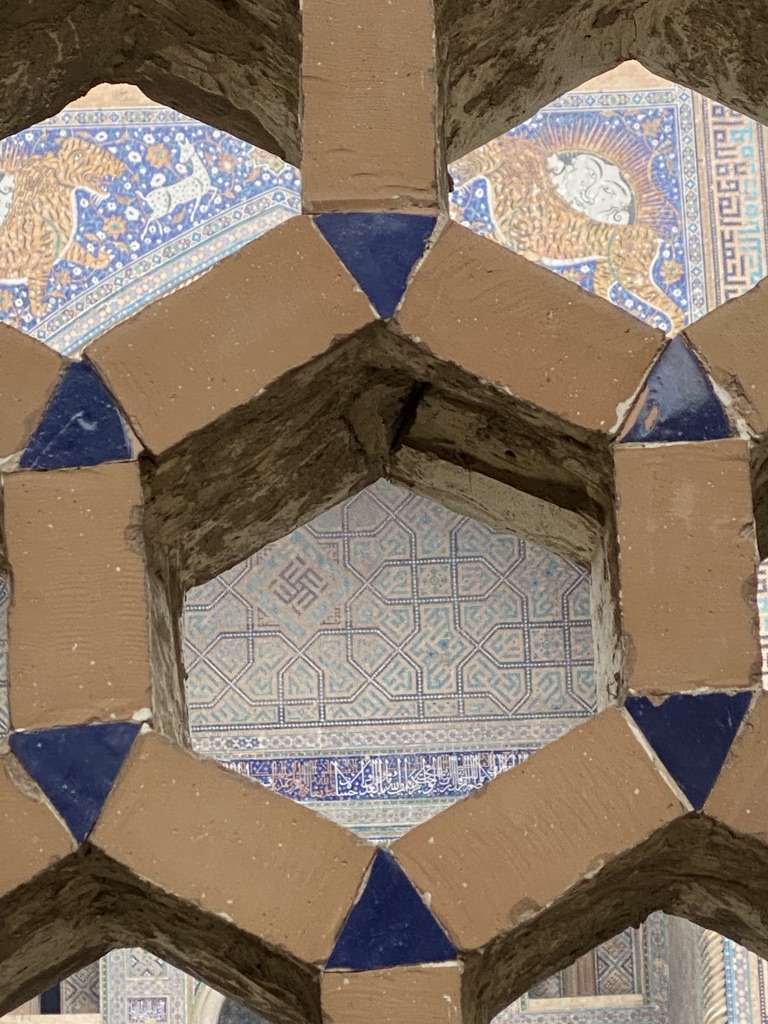

Then we walked to the Registan which is probably unbelievably fantastic when it’s not raining and later really poring. But we were troupers and strolled and photographed away… By the time we emerged from inside one of the main buildings it was really really raining hard… Got back to the hotel with enough time to download photos and then headed out for dinner at a place called Platan. But not before I had a little mishap — I slipped on the last two steps of the exterior of our little hotel, in the poring rain… The steps are a kind of marble and thus very slippery… I landed on my butt… but somehow got my ankle twisted a bit.. Walked to the taxi in the rain and got to the restaurant, managing to leave my favorite Marimekko umbrella inside the taxi – in an effort to carefully emerge from the taxi onto the rainy street by the restaurant.
First a little about Platan and then my ankle. Platan is considered the best restaurant in Samarkand (??) It’s a 10-minute taxi ride from our hotel, so it’s located in a much newer part of the city. The menu is extensive and a bit eclectic although it specializes in Uzbeki food. We ordered chuchvara which was a little like Uzbeki mantu (sort of like the Turkish manti, although I prefer the Turkish version) which was good and then we ordered two different soups (the menu had about a dozen different soups): borscht and another soup whose name I cannot recall, but it was a tomato base with vegetables and a dollop of sour cream. Although I’m not a borscht lover, I wound up with the borscht since the other soup had a lot of ham in it. Anyway, the borscht was quite good. Then we shared what was called “rack of lamb” but was really simply three lamb chops with some vegetables. We hesitated to order the lamb because we tried it a few times since we’ve been here and no matter how hard we tried to explain that we like it rare (“not cooked very much,” “red on the inside,” “fast cooking”) it always appeared on our plate very well done. I tried to translate “cooked rare” into Russian and showed the words to the waiter but it didn’t make any sense to him. He brought someone over who said that they broil the lamb and then bake it so it cannot be cooked less. But then after a conversation, the decision was made to just broil the lamb chops and not bake them after that.. so “half-cooked” according to them. Success, sort of… definitely edible but I’d say they were more medium than rare! Despite a very extensive menu of desserts, Platan didn’t have any desserts tonight. From what we could understand, they are still gearing up to normal following the New Years holiday. Our wine choices were limited to “red” or “white” if we wanted glasses rather than a whole bottle.
Despite the upscale, old-world ambiance the meal was incredibly cheap and we almost thought they made a mistake. We taxied back to Bibikhanum, although neither taxis nor cars can reach the very front of the hotel. Instead they wind up about ¾ of a block away… but the walk, especially at night, is a bit treacherous as you walk on a ledge that is about 3’ wide and has a 7 foot drop on the edge with no rail. Didn’t think too much about this yesterday, but today in the rain and with my new injury, it seemed sort of death defying.
OK.. my ankle.. I think it’s either just a bruise of a sprain. It’s a bit swollen but I’m fairly certain nothing is broken. Naturally, it’s the same ankle and foot I’ve injured before, including once in Paris and once in Berlin where I tore the fifth metatarsal (which put me into one of those annoying “boots”). The hotel gave me a little bowl of ice.. which I put into a Ziploc bag that I had for liquids, and that is now tied to my foot and I took a pain killer (although I’m not really in pain). Actually the pain killer is an anti-inflammatory so I hope it undoes the swelling. I’ll see how I feel tomorrow and that will determine what activities we can do on our second day in Samarkand. And, of course the rain will also factor into our plans. Frankly, it doesn’t look good with regard to the rain ending. Prediction is for rain for the next two days.
Before closing, some responses to some questions that were asked… While Uzbekistan is a Muslim country (87%), it’s simultaneously a very secular country. So, interestingly there aren’t the usual calls to prayer like you hear in Turkey or Tunisia and so many other countries around the world. And in some ways, all of these incredible mosques are a bit of a backdrop and works of art rather than functioning religious institutions or buildings. And interestingly, there are fewer women with head scarves here in Samarkand than in either Tashkent or Istanbul. And a little bit about Samarkand: It’s in the central east part of the country and is one of the oldest cities of Central Asia. It was captured by Alexander the Great in the 4th Century BC, and later ruled by Turks, Arabs, the Samanids of Iran, and other Turkic peoples and then in the 13th Century it was annexed by the Kwarezm-Shah Dynasty and totally destroyed by Genghis Khan in 1220. Then it revolted against the Mongol rulers and it became the capital of the Empire of Timur, who made it the most important center of Central Asia. The city was conquered by the Uzbeks and became part of Bukhara, if I understand what I read… But, by the 18th Century the area declined considerably until it became a provincial capital of the Russian Empire when the economy recovered. For about a decade from the mid 1920s to the mid 1930s Samarkand was the capital of what was then called the Uzbek Soviet Socialist Republic. Today, there’s an old medieval city and a new section that was built in the 19th Century. Complicated..and probably a lot of really interesting stories in there.
Take care.
Walk carefully…
All the best –
Fern
 Fern's Travel Notes