Last Day in Samarkand. January 4, 2020
Last Day in Samarkand – Rainy, muddy, Hobbling a bit (swollen ankle)
Began our day by meeting up with the same taxi driver we had yesterday.. Figured, given that I’m still walking quite slowly, it would make sense to get driven to a few destinations rather than navigating the very uneven streets and potholes amid the rain. When we got to the taxi, the driver had his grandson in the car as well. He’s a very sweet and bright 8th grader who’s been studying English since 4th grade. I think the grandfather wanted to show him off and also help with communication – and to give the kid some opportunity to practice his English. So we found out a lot about the family – The grandfather is his father’s father. His father is a dentist and his mother is a nurse. He hopes to study aerospace engineering and has dreams of coming to the U.S. where he has an uncle (living in Queens – where I now gather there must be a large Uzbeki population). The family speaks mostly Russian at home, although they all speak Uzbeki with the grandparents. And he clearly said he only speaks Russian to his father. I asked why and he said his father (the dentist) prefer Russian and why his Russian is better than his Uzbeki. I looked surprised so the boy said that his father grew up in the Uzbekistan Soviet Socialist Republic so it was normal to speak Russian.

Anyway, as we drove and then walked to our destinations I chatted more with him. It was funny because with adults when we say we are from California, they immediately harken to Arnold Schwartzenegger or Hollywood, but at 14 he immediately said… “California – that’s where Apple is.” And then he said.. “Mark Zuckerberg lives in California… and Steve Jobs lived in California.. and then he listed all the major tech companies and he knew all the founders of these companies! I asked if he had ever traveled out of Uzbekistan and he said he had been to Russia with his family. But NY is the dream. We also learned that kids go to school six days a week (they are off on Saturdays) from 11 am until 6 pm.

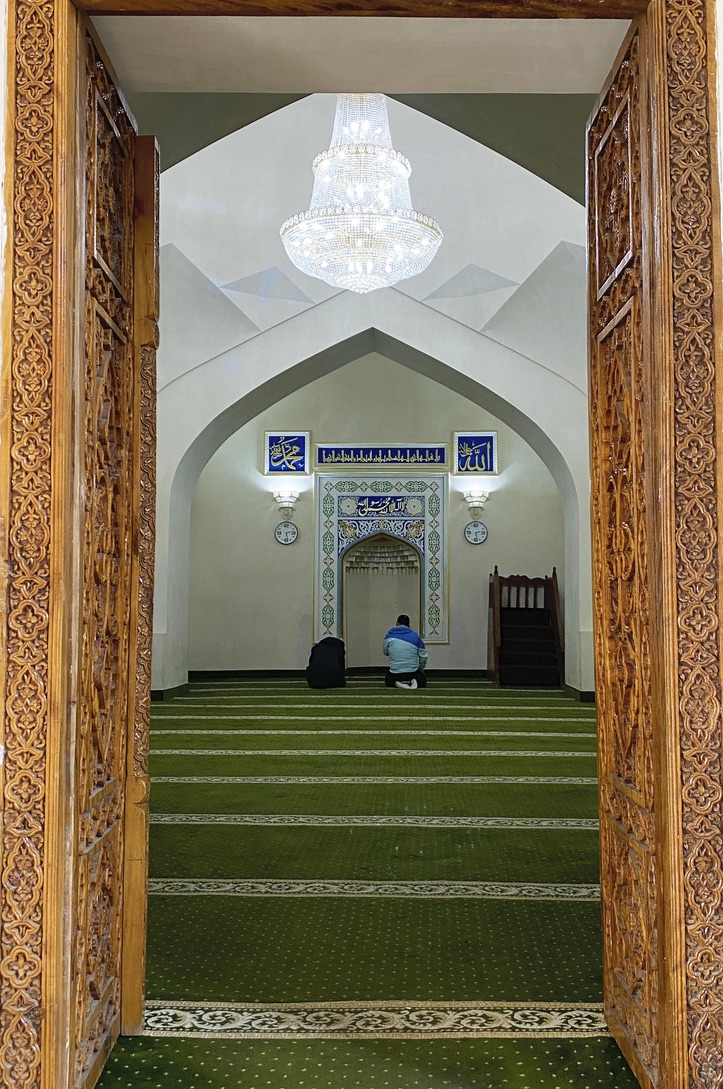


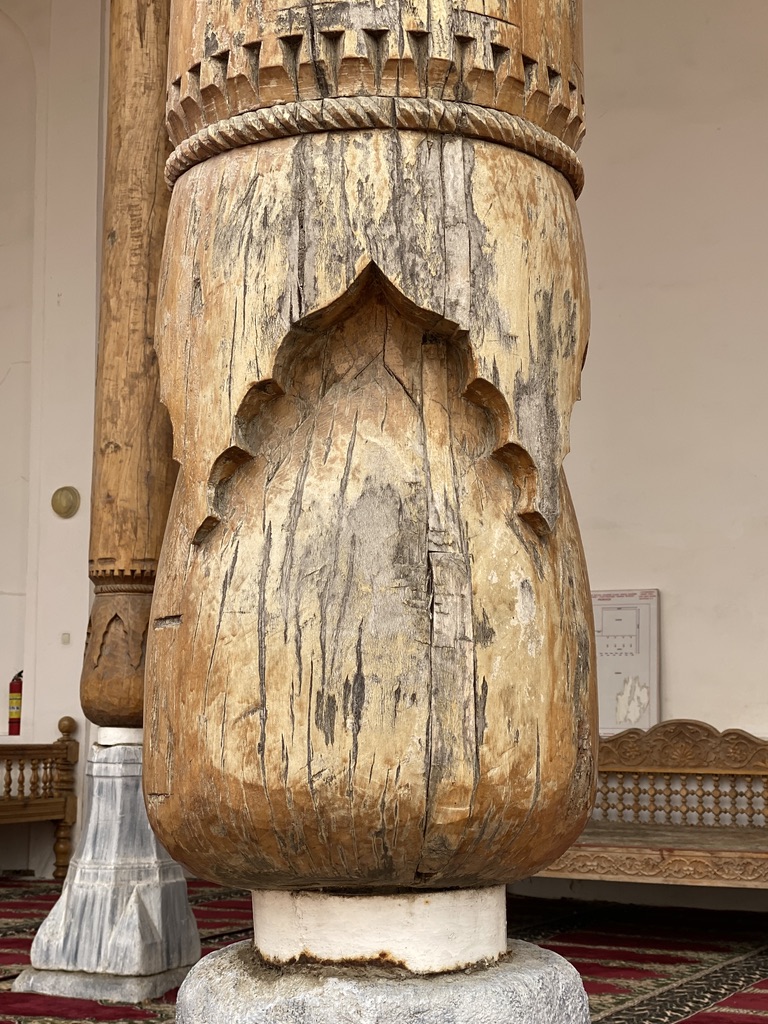
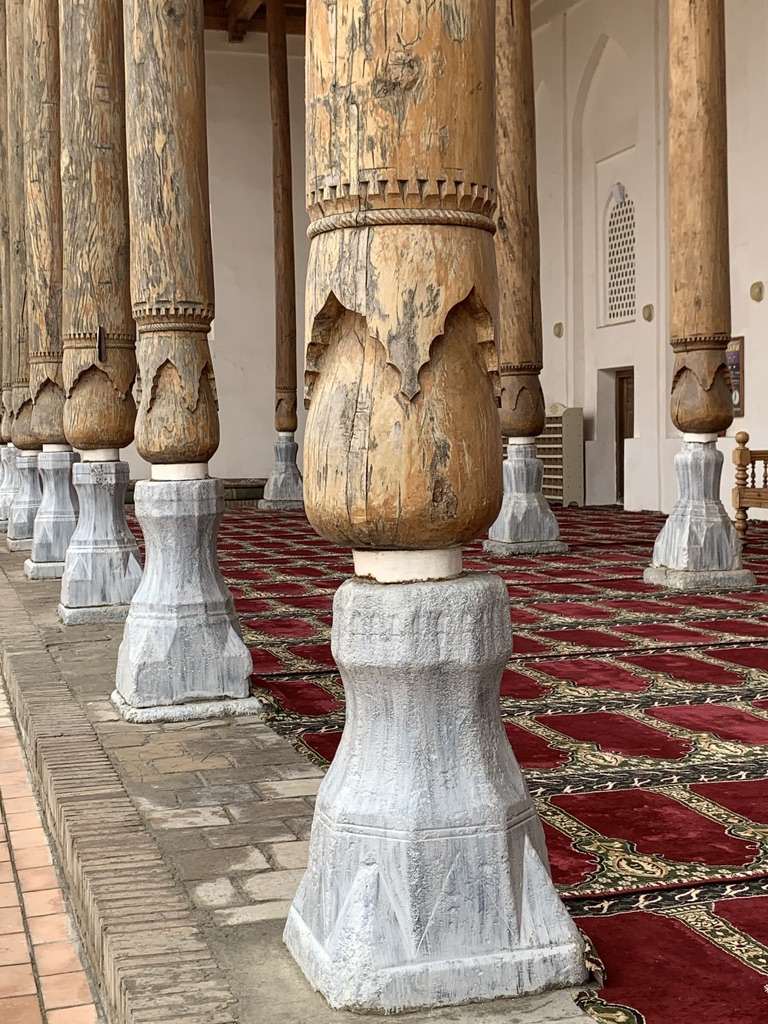
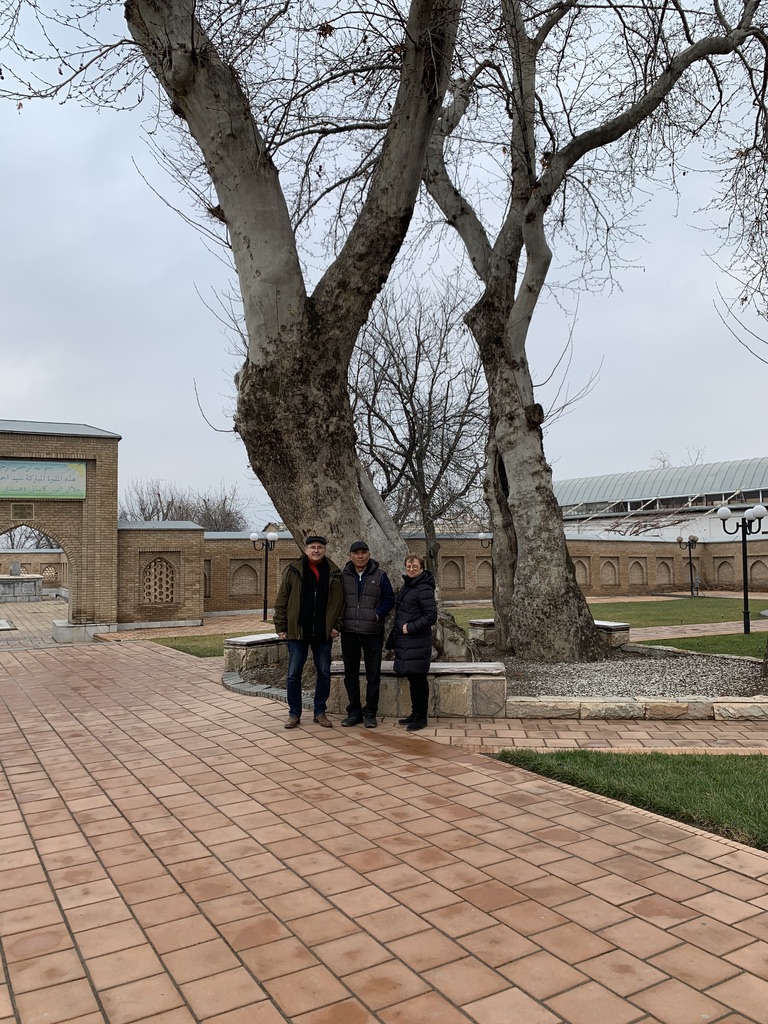
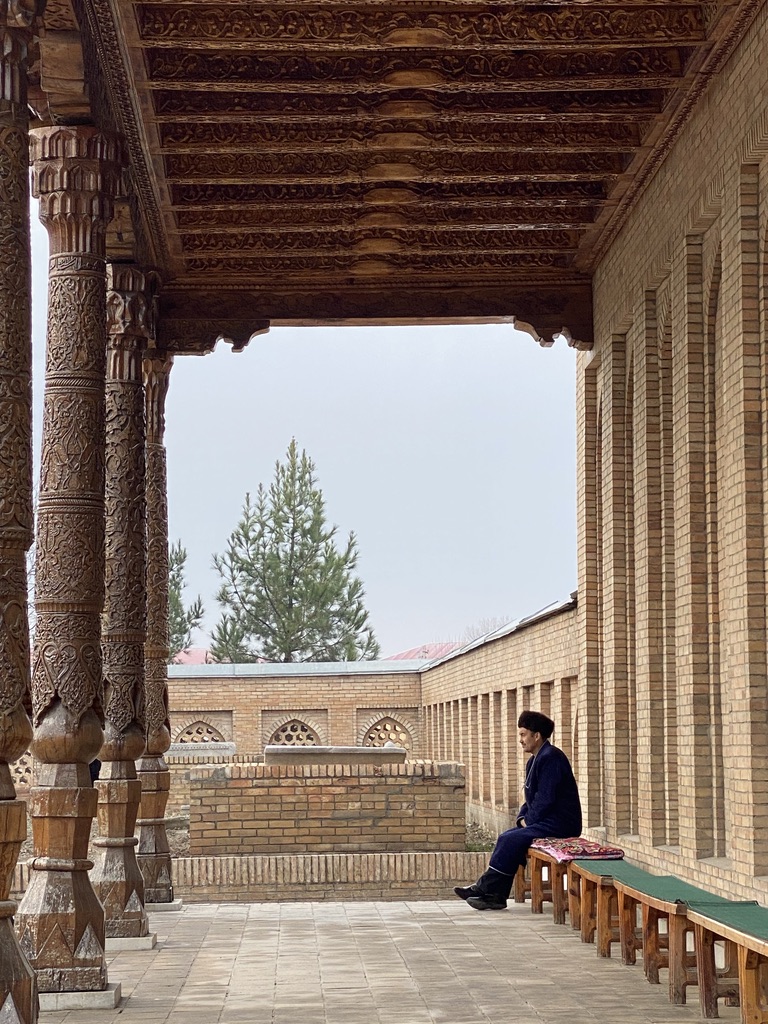
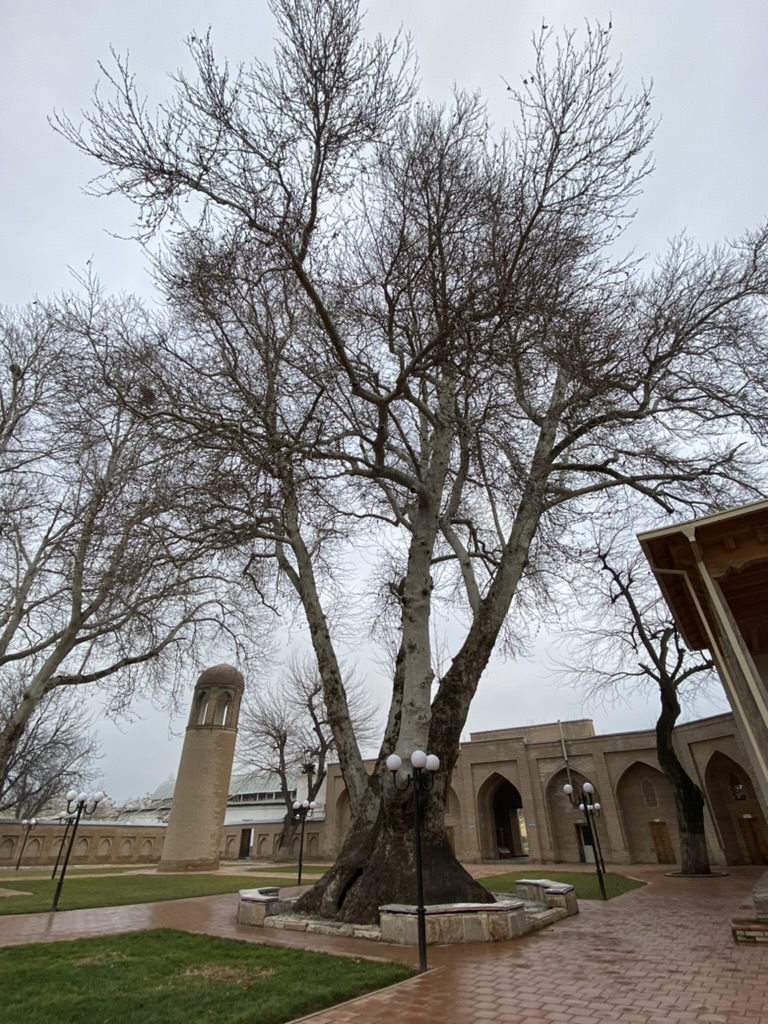
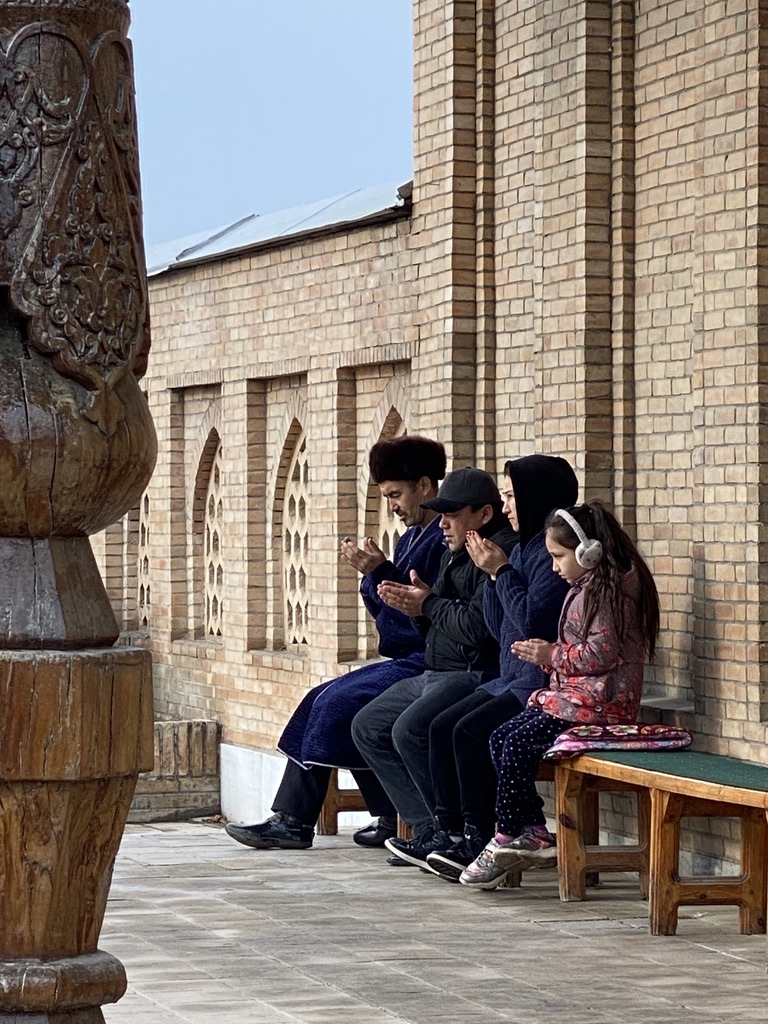
Anyway, we headed first to Maftumi Azam – a small and beautiful place that is both a mosque and a mausoleum – and the architect/builder of Zinda is buried there. The driver seemed to be very partial to this place as he loved the very old trees and the beautiful wood columns (hand carved) that supported all of the roofs of the outdoor prayer pavilions. He especially wanted us to take pictures under one particular tree which he said was 500 years old.


Once we took the pictures we were off to see the mausoleum of Imam al-Bukhari who was a famous Persian Islamic scholar who authored the most famous book of hadith which is said to be the second most important book for Sunnis after the Koran (at least this is what I think is the case). He was born 200 years after Muhammed (in 810). At age 16 he made the pilgrimage to Mecca with his brother and legend has it that he spoke with more than 1,000 men to gather the hadith (wise sayings about life). [Given the work our firm does and how much we rely on one-on-one interviews, I like this guy! ] Anyway, the unbelievable “tombstone” is quite a an impressive site. Many Uzbeks and Russians were visiting. Seemed to be a place for families to gather.

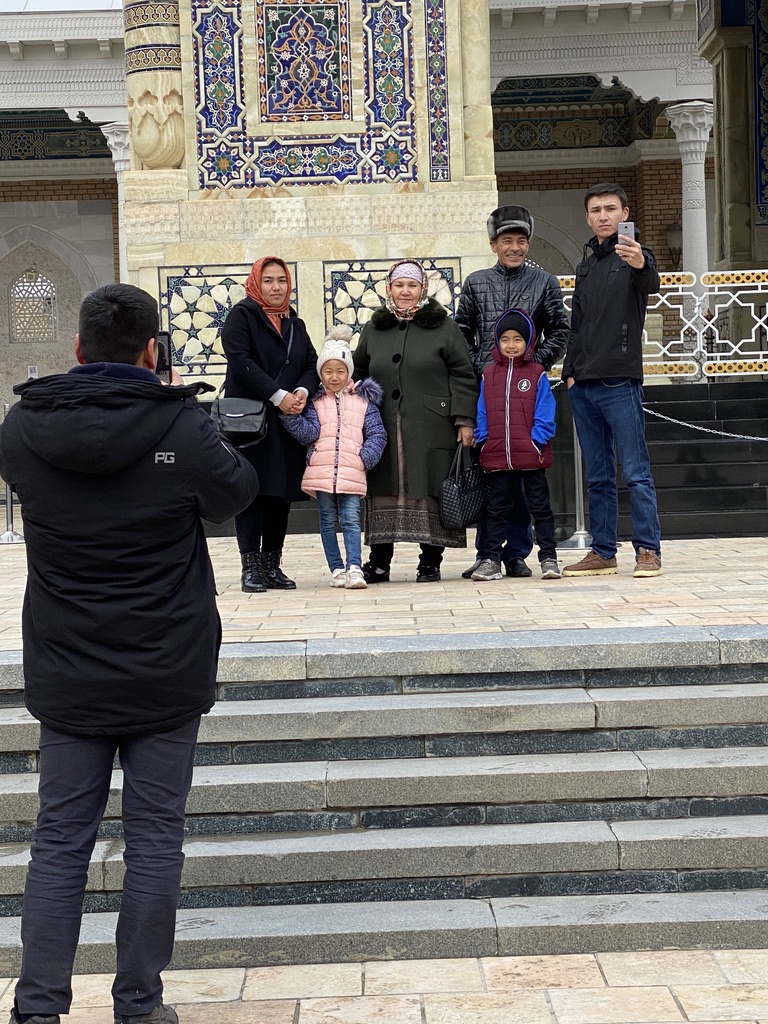

The number of people and families posing in front of the structure was fun to watch as people took photos and selfies over and again. I took a slew of photos of people taking photos to add to my growing collection on this theme.
Then we headed to see a traditional (private) paper-making “factory” located just outside the city. It’s sort of like a park with a babbling brook. While there weren’t any tourist groups visiting when we were there, it’s clear that Meros Paper Factory has plugged into the tourist scene and provides tours and tea and has a shop that sells its products. But it was fine because it was just us and they did walk through their paper making process which was quite interesting. I’ve seen papermaking in the states and this is quite fascinating since it’s all done by hand using ancient methods without benefit of electricity (all powered with water wheels).
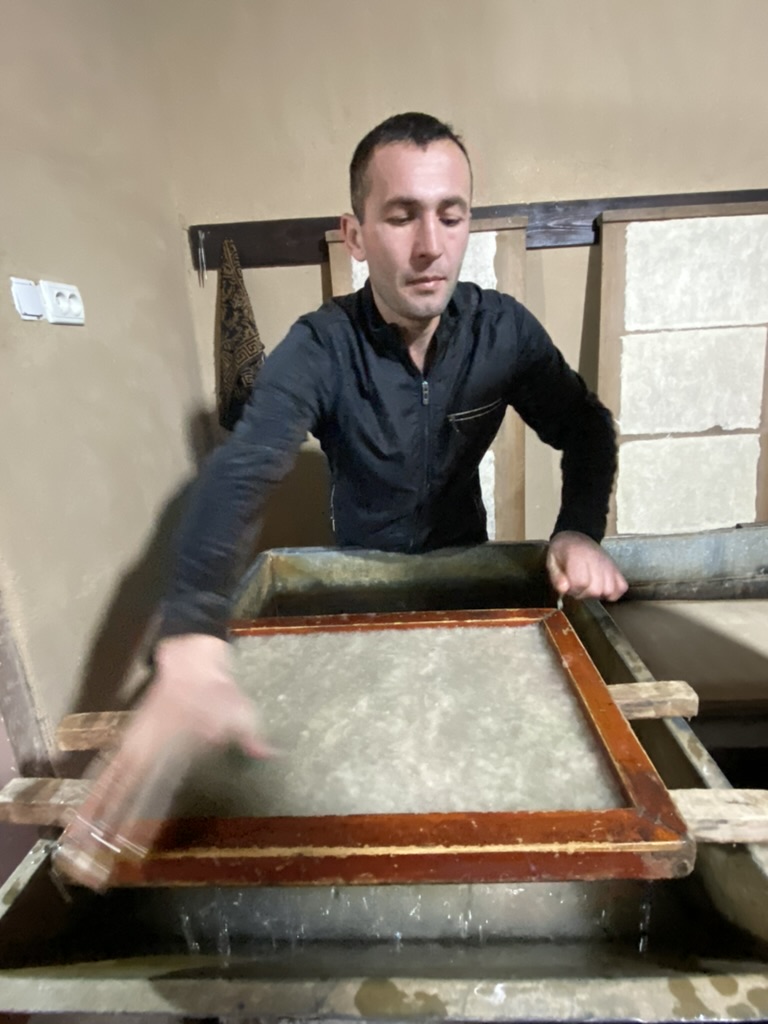

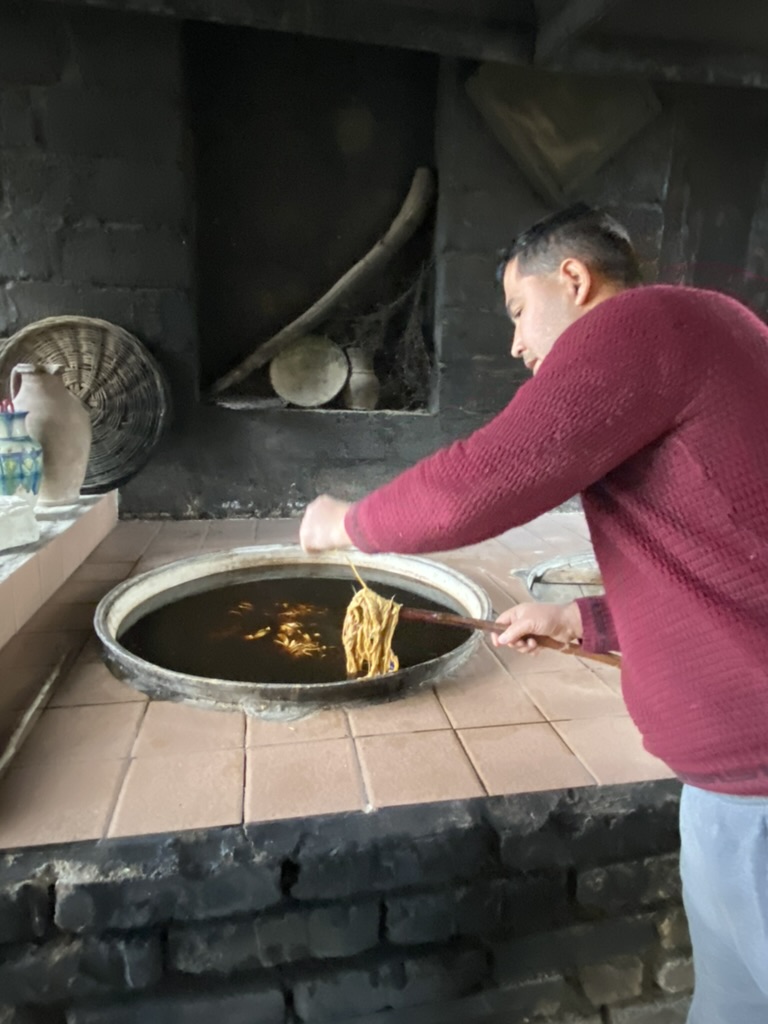
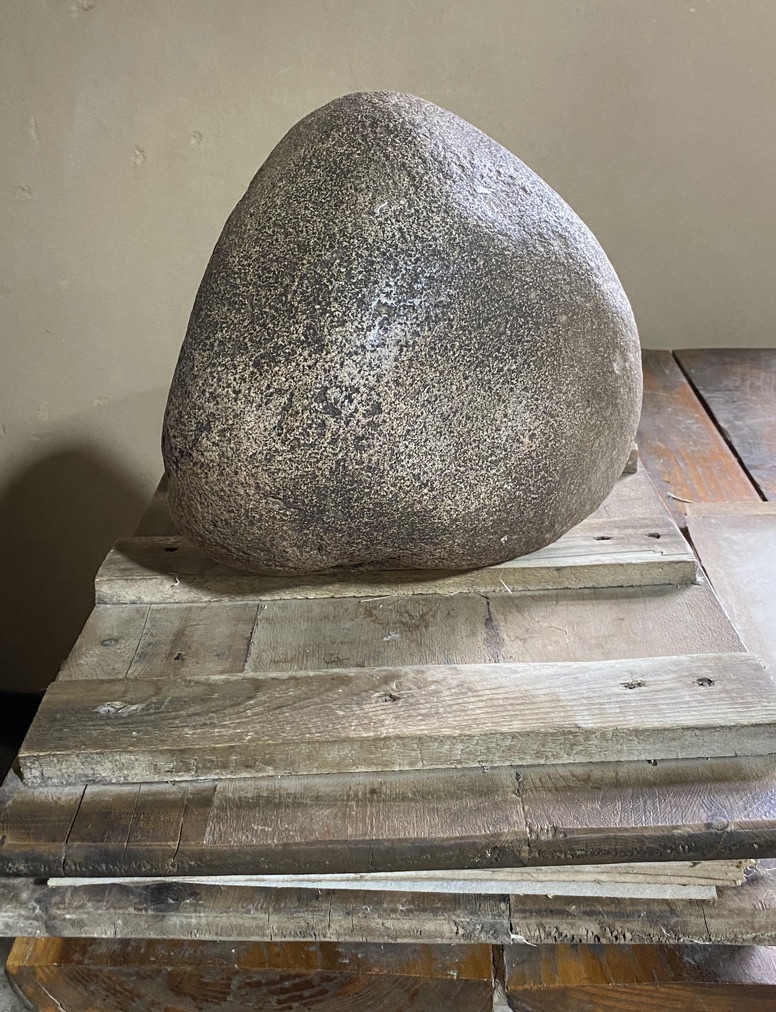

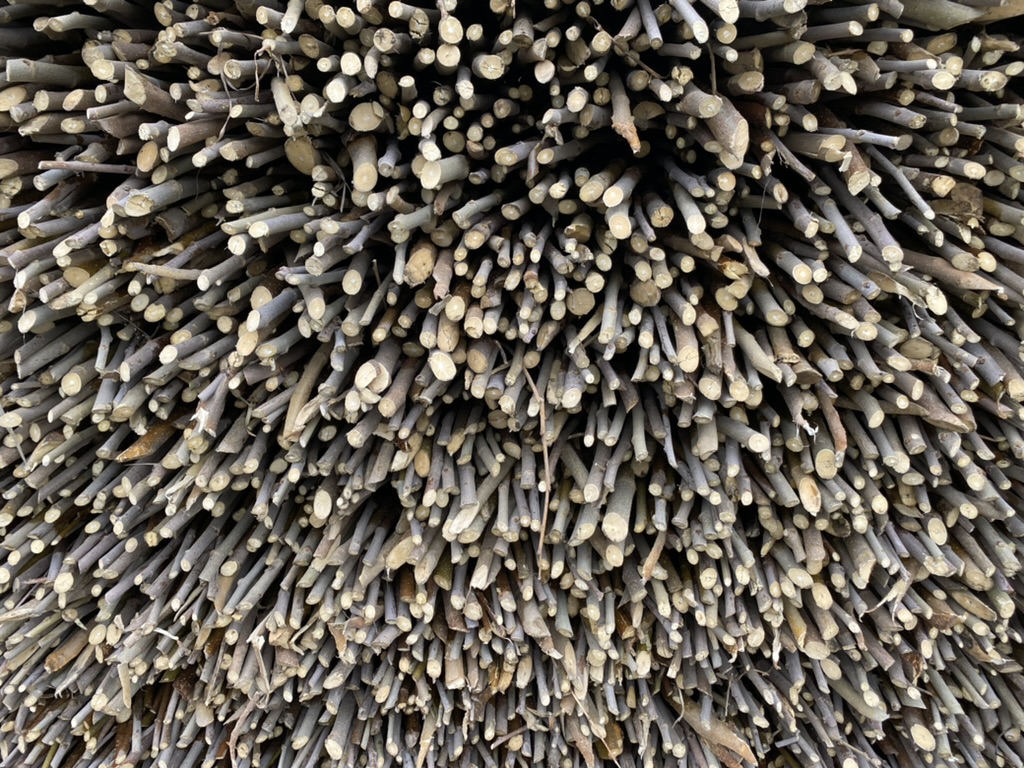
It’s all done manually using water to provide the energy for the factory’s mill wheel. They use “strands” of mulberry bark for the raw material which is cleaned and boiled for many hours and then mashed. Then, when the pulp reaches the right consistency, it’s filtered and spread over screens and set to dry (after the excess water is squeezed out of the raw paper). They make two different kinds of base paper; one is very smooth for writing. To get it smooth, they rub it with sea shells or bones (very smooth objects) for about 15 minutes per side for each sheet (about 11 x 16”). They do this “polishing” on a slab of marble. The other paper is left “rough” and yellowish and is sometimes dyed. The unpolished paper is truly beautiful and a work of art. The mill has a little shop where they sell the paper as well as some paper products like wallets and dolls and calendars… and even some paper clothing. One vest was quite tempting.
Supposedly, this unique process came from China by captured soldiers (after a failed invasion of Kyrgystan in 751) , some of whom were artisans. To avoid being executed, the artisans gave up their paper making techniques to the ruler of Samarkand who passed the art form on to local Samarkand artisans. The paper made in Samarkand was famous and used for Persian and Arab manuscripts in the 9th and 10th centuries. The technique was used for about a thousand years until the factory was destroyed in the 19th century. It was resurrected recently.
Then we headed back to the hotel and strolled briefly in the rain to get a light, late lunch near the hotel.
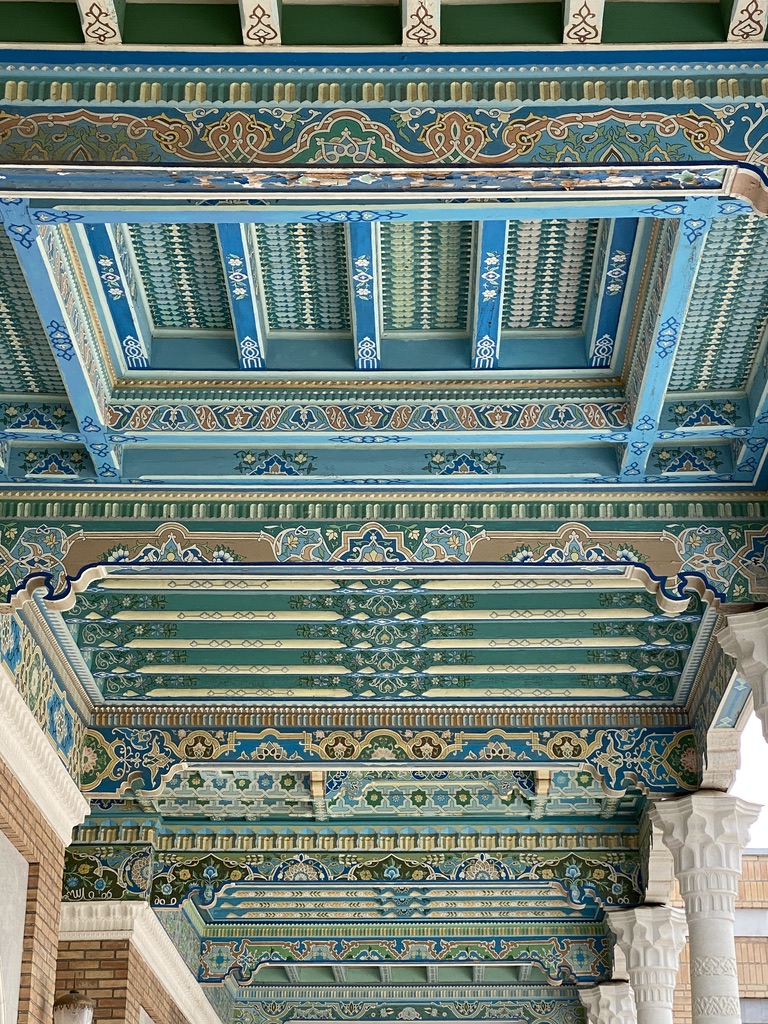


Tonight the pickings were slim for dinner. Apparently Samarkand is still in New Years mode and many restaurants are closed until January 6. So our choices (according to the hotel) were: the hotel restaurant, Platan where we ate on Thursday night, or Samarkand where we ate last night. We opted for Platan and did a much better job on selections tonight, so I’d say the meal was just fine. Nothing to send to Michelin, but ok. We ordered Uzbeki samosas, s plate of grilled vegetables, a lamb dish (a la Platan), a chicken shishkebab, two glasses of wine (for Fern) and two shots of scotch (for Mike) and followed it all with a shared piece of “traditional cheesecake” and green tea. The bill was $32.00… !!!
Taxied to the hotel – stopping at an ATM (they often don’t work and you can only get the equivalent of $50 – 500,000 som – at any one time. And given that a lot of places don’t take credit cards.. you always need to have a lot of cash. The denominations are generally in 50,000 units so you’ve always got a lot of bills and your wallet is really fat. We made our way along that awful ledge to the hotel and now we have to pack to leave in the morning – we will drive four hours to get to Bukhara. We’ve been warned to get petrol in Samarkand because there aren’t any petrol stations on that four hour drive. Should be interesting.
One last comment… in the old section of town where we are, the pothole situation is pretty awful. We’re always complaining about Oakland potholes, but now maybe that we’ve seen these we’ll be more gracious about Oakland’s lack of attention to this infrastructure situation.
Best –
Fern
 Fern's Travel Notes