8. June 16, 2024: Inari to Rovaniemi
Sunday, June 16 2024.
GREETINGS from Inari/ Day 2

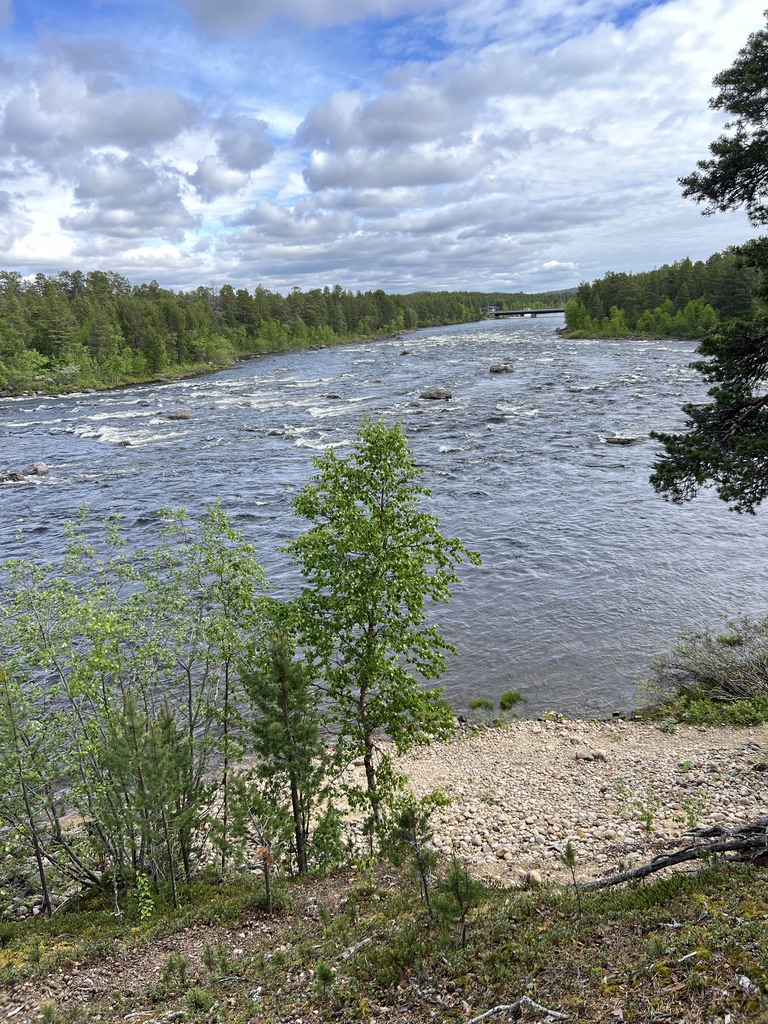
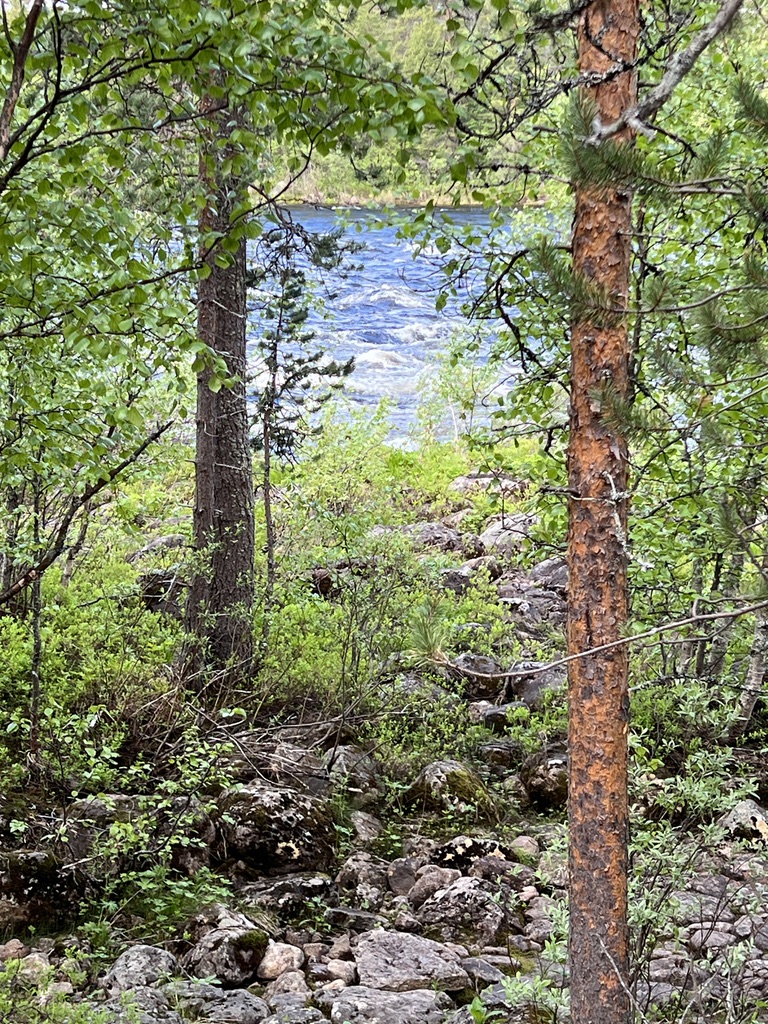
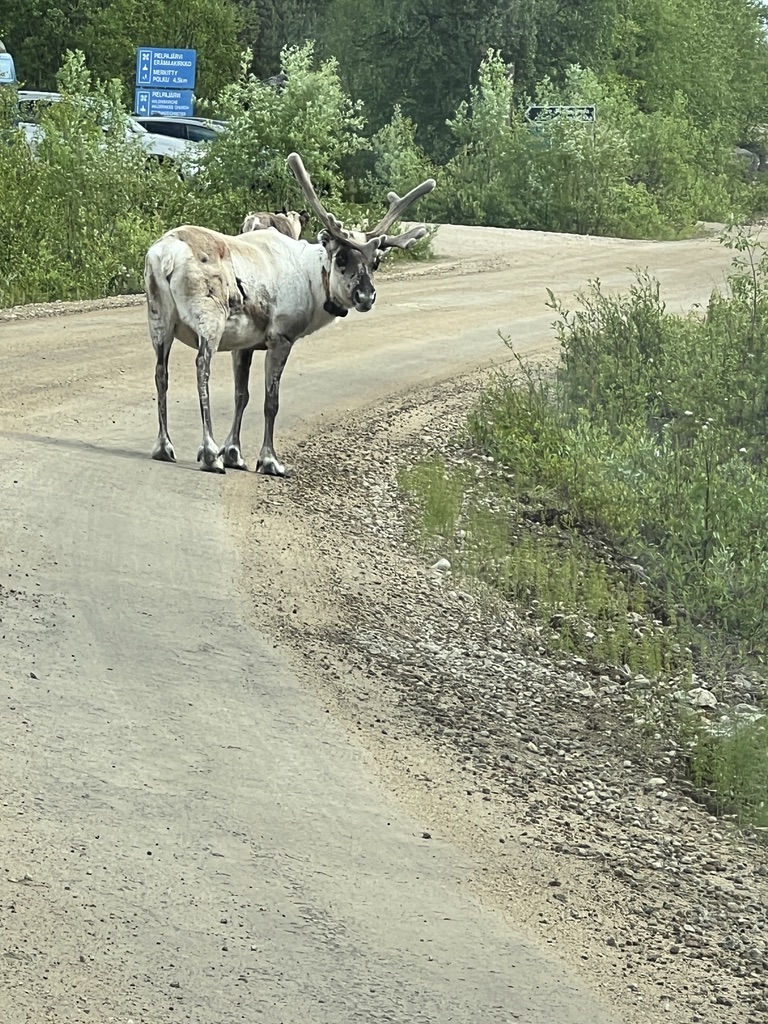
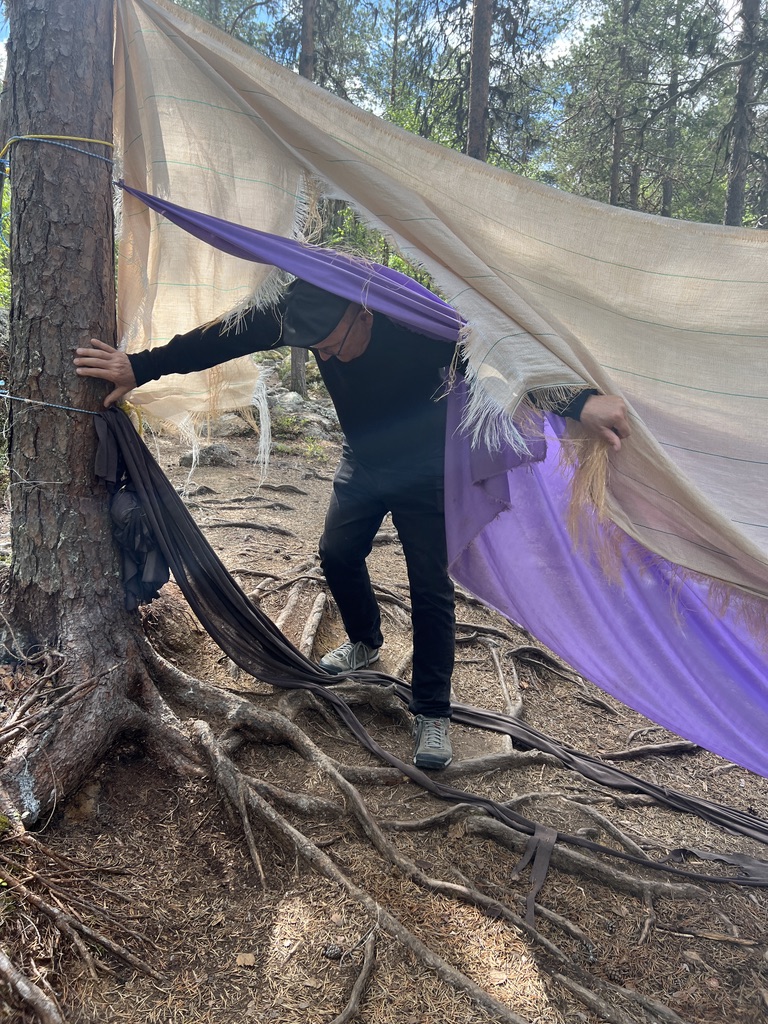
We set off today to see the small wilderness church called Pielpajarvitie. We drove to the parking area (which was sparsely filled) and then set out to walk into the forest to find the church. However, we did not really ever look at precisely where the church is located. We began to hike in on the muddy, meandering path which required great navigation skills and balance since the tree roots had spread out radially such that they were above ground making the hike a bit treacherous. And there were lots of rocks and boulders to navigate as well. At one point we ran up against a fence and we thought the path was closed. But a sign explained that the fence was to prevent reindeer from taking that path, and it was OK to go through the “gate,” which turned out to be a purple sheet that you could duck under. After about 30 minutes we saw a map—and learned that the hike to the church (which is one of the oldest structures in all of northern Finland) was another three miles in and then 4 miles back. We decided to turn around for fear we’d get to the church and be too tired to walk back to the car (4 miles more). So, we headed back, trying to carefully avoid the mosquitoes. Then we headed for SIIDA, the Sami Museum.


Sami Museum (SIIDA) here in Inari is incredible. Exceptional exhibit design and concepts that truly take you through the history of Sami people as well as the ecology of northern Finland. While it is clear the Sami are a strong, independent, and engaged population, they have gone through difficult times which some would describe as colonialism, much the same way Native Americans and other groups have been marginalized and had aspects of their culture removed. Many Sami were sent to boarding schools to get “educated” but where they also lost aspects of the culture and their language. Its one of those museum exhibits where you feel like you will never have enough time to get through with the information—which is all presented very visually through digital means and also with great text.
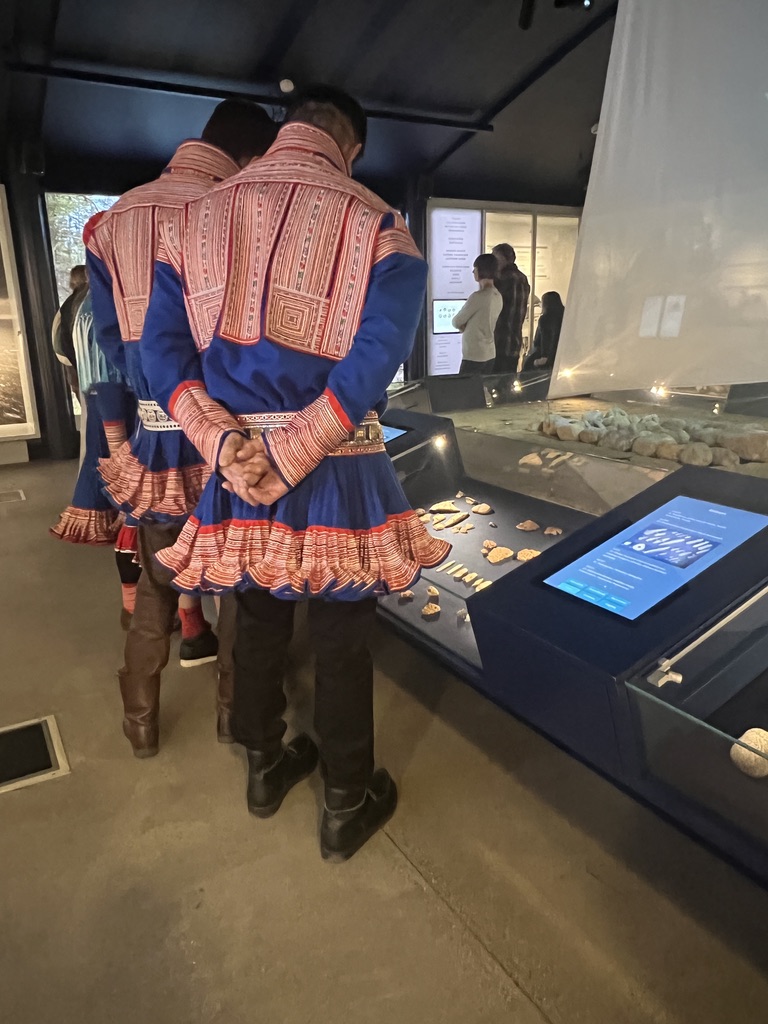

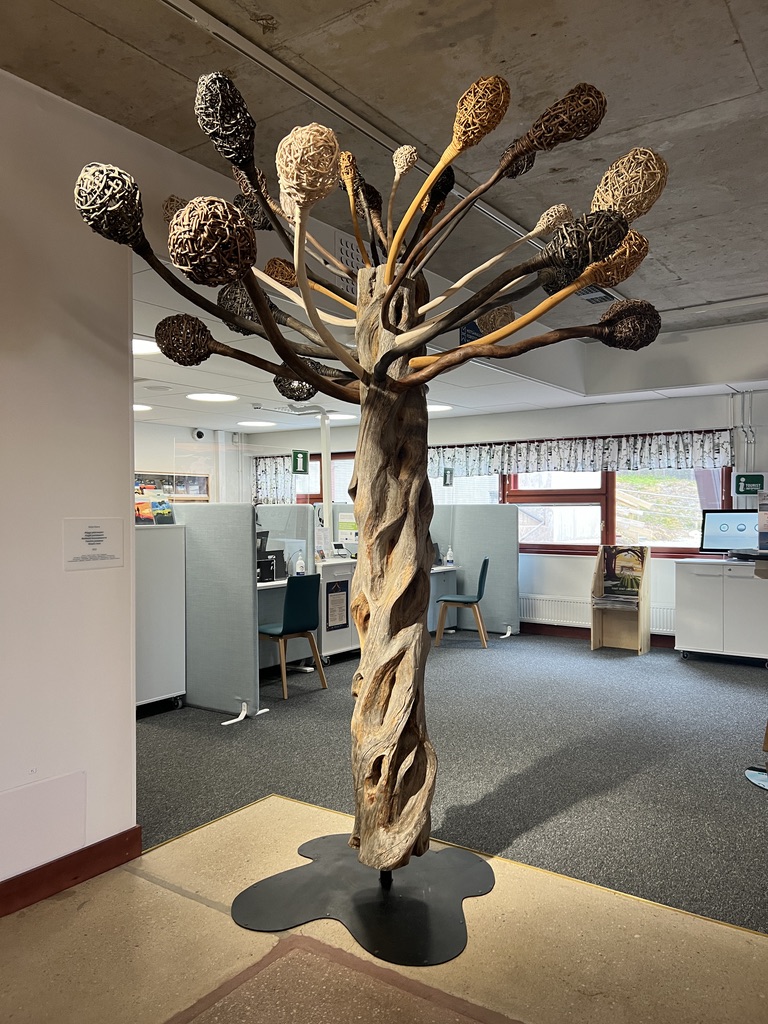

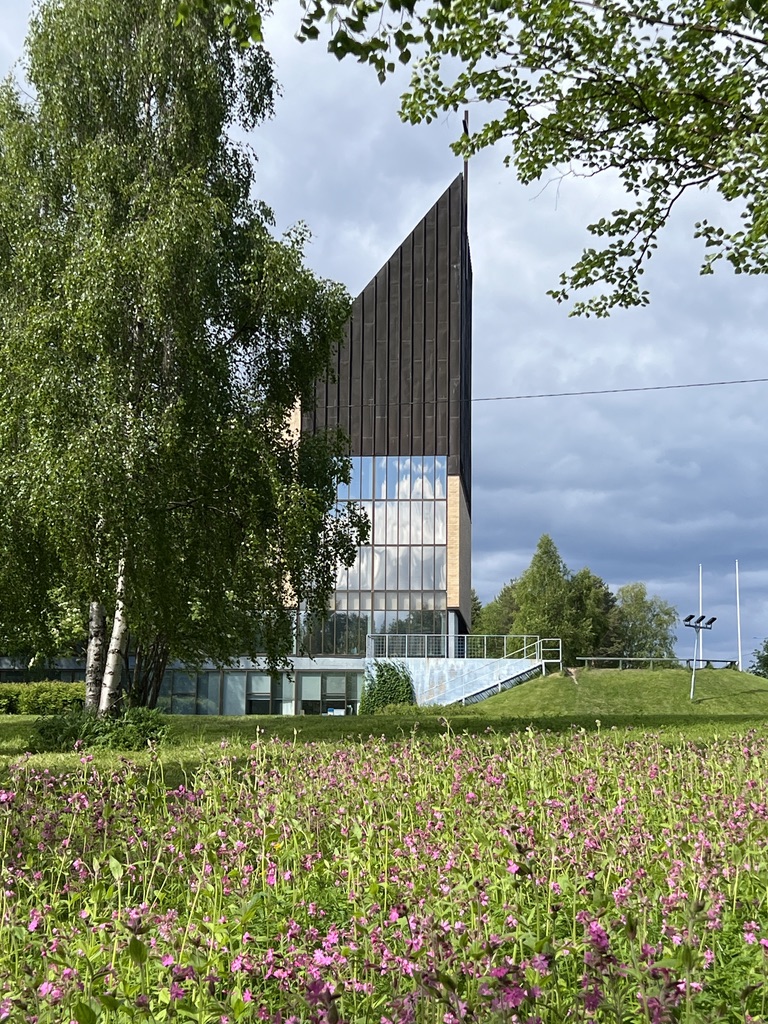
After grabbing a simple lunch at the Museum, we headed to the Sami Cultural Center but it was closed so we moved on to drive to Nellim, a small fishing village about an hour from the site of the museum. In Nelim we saw a wonderful wood Eastern Orthodox church built in 1987 out of Lappish logs. Nellim is only 6 kilometers from the Russian border so now that Finland is in NATO we looked for signs of military tanks—didn’t see any. Along the way to Nellim we stopped at another church in Ivalo that we saw from the road and which looked interesting.
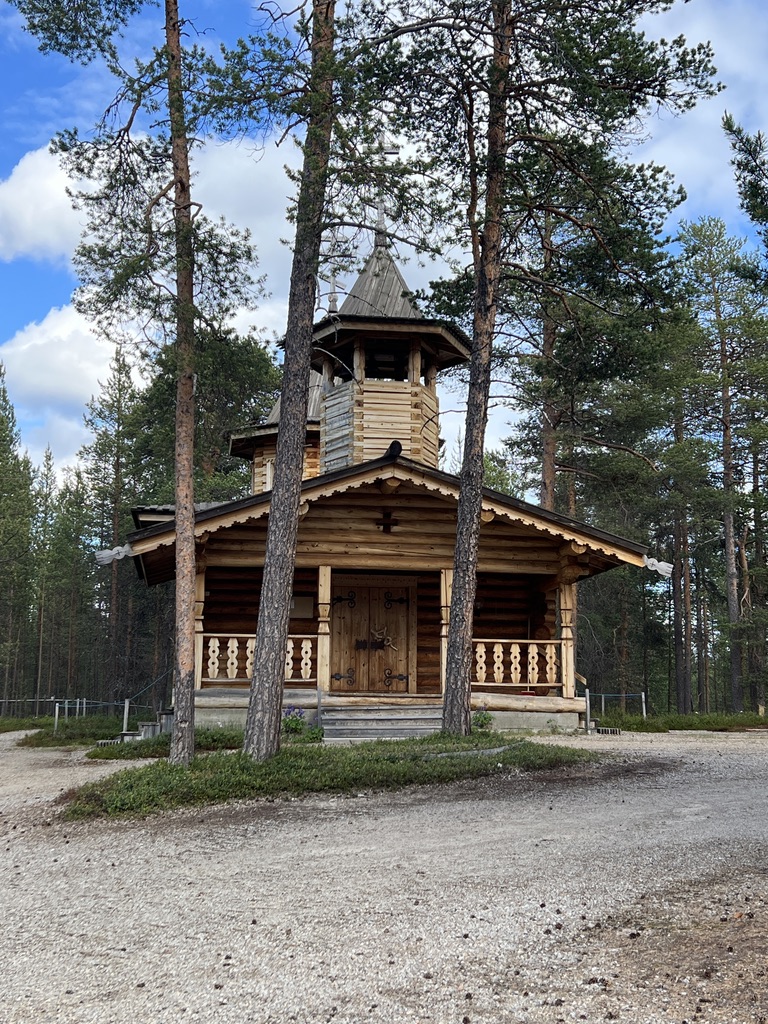
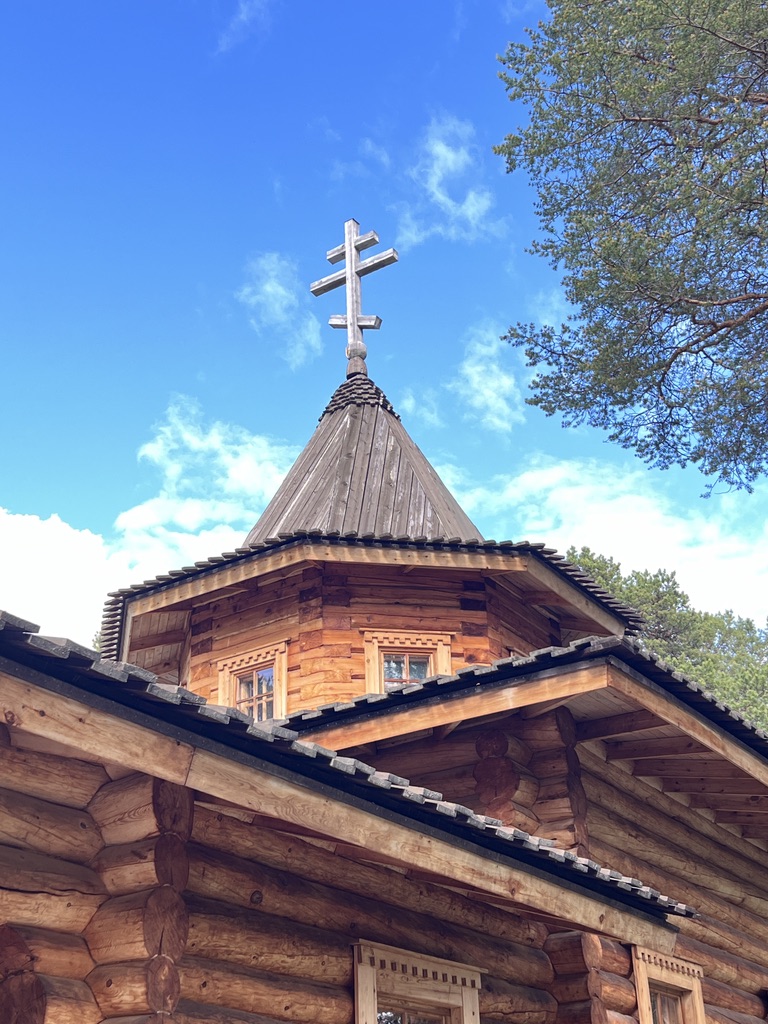

It was our day of religious structures; On our way to dinner later that night we stopped at a very sweet roadside church (there are 400 roadside churches—kirkotie) in Finland. We didn’t go into any of these churches as they were all closed so we only saw them from the outside.

Dinner at Ukko about 3 miles from our hotel was quite lovely in a great space with soaring ceilings and panoramic views of Lake Inari. Drove back to the hotel at about 11:00 and the sun was still above the horizon. Sunset was probably around midnight and sunrise at 2 am… but it’s never dark. Makes for wonderfully long days.
All is good here, except for the mosquitoes. The Finns are complaining too. They say it is the worst year for mosquitoes (well maybe a good year for mosquitoes and a bad year for people trying to enjoy the outdoors). Our waitress at dinner was born, schooled and lives in Inari. She spent two years in Malta where she learned English and then spent some time in Helsinki and Tampere, but returned to live in Inari. We chatted about changes due to increased tourism and global warming. Years ago the entire lake would freeze in the winter (and yes cars drive across it in winter), but now there are spots that do not freeze so one needs to be more careful driving. (We did drive on the ice on a lake in northern Finland when we lived here; it’s a very eerie experience with no sense of scale or direction… Like driving in the desert without any roads, except the tracks of other vehicles.) By the way, the most popular tourist time here is in the winter. Most tourists coming up north are from Germany and Austria and some from the Netherlands. And the area gets a lot of Finnish tourists coming from the south.
We head back to Rovaniemi in the morning and onward to Helsinki the next day (flying to Helsinki from Rovaniemi.)
All the best –
Fern
 Fern's Travel Notes