December 30 2023. Vienna!!
Greetings from Vienna/ Day Two — sorry for the length; feel free to just look at the pictures. This note is being sent on the morning of December 31.
Sounds like the California coast is really getting a beating. Hope those of you receiving this in California are OK.
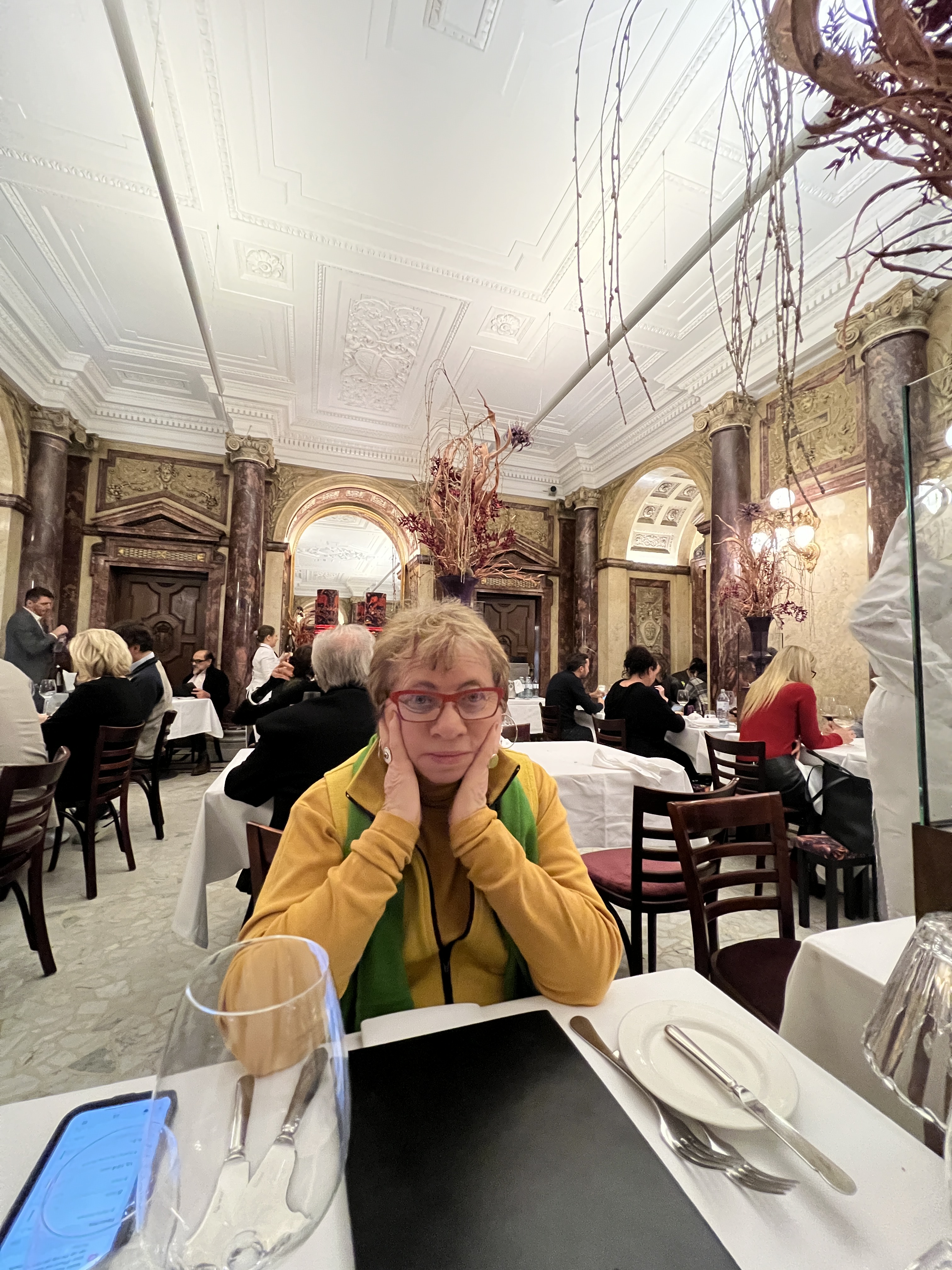
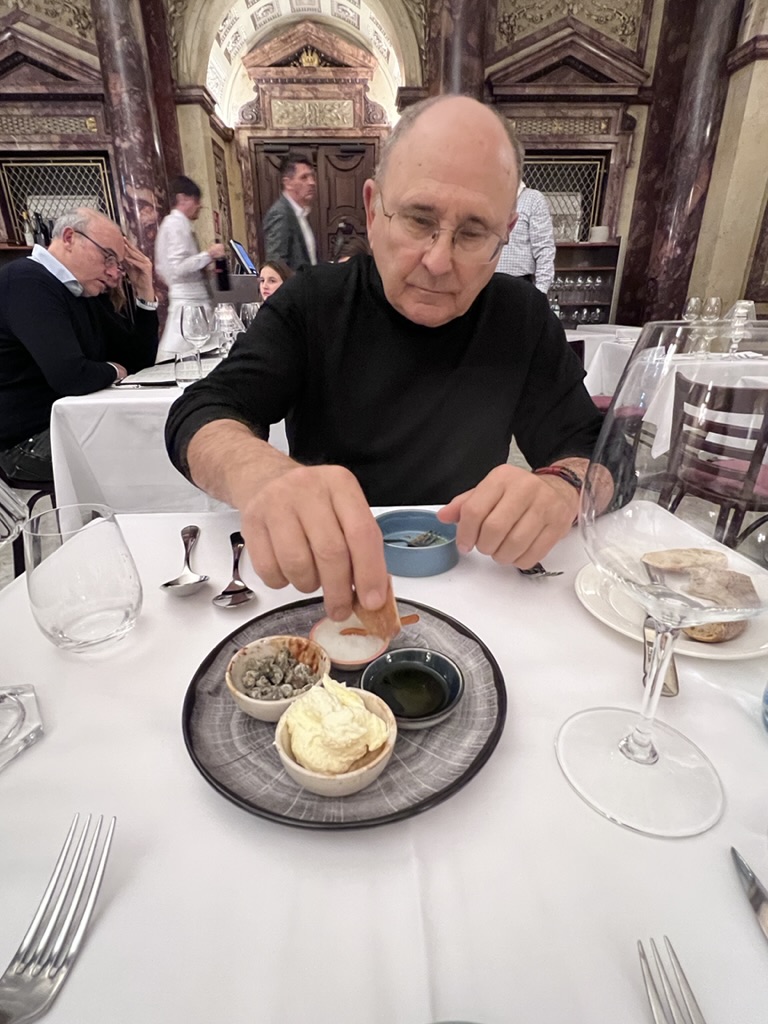
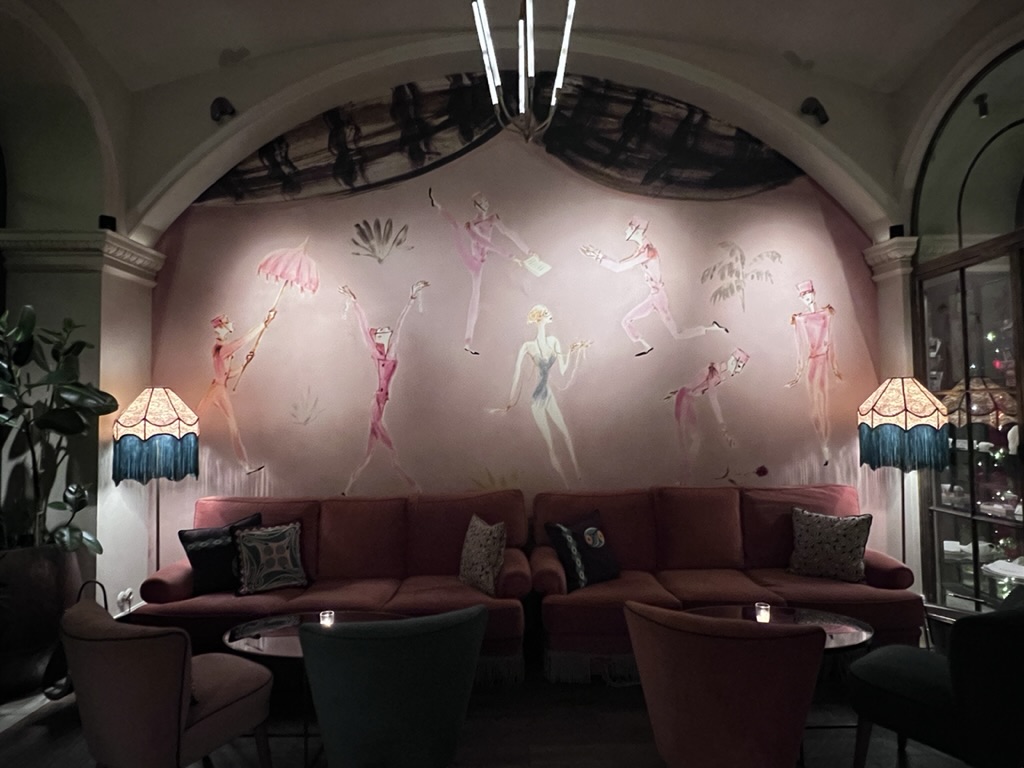
First, last night’s dinner at Vestibul was quite wonderful, although Mike was being very careful in his selections. We started with two appetizers: chestnut soup for Mike and an artichoke dish for me. For main courses Mike had the char and I had wonderful duck. And of course, we ended with a great desert—can’t be in Vienna on a diet. As I remembered, food in Vienna is rich and complex. Vestibul is located in the Burgtheater’s imperial carriage entrance and marble hall, so the setting inside is definitely “royal.”
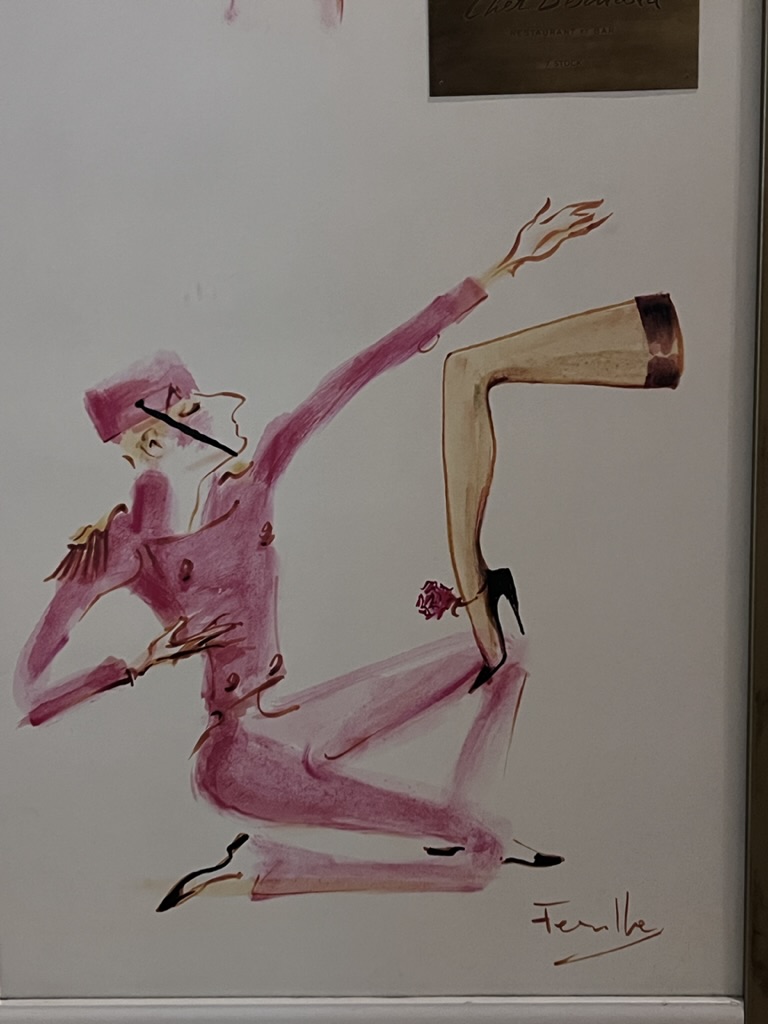
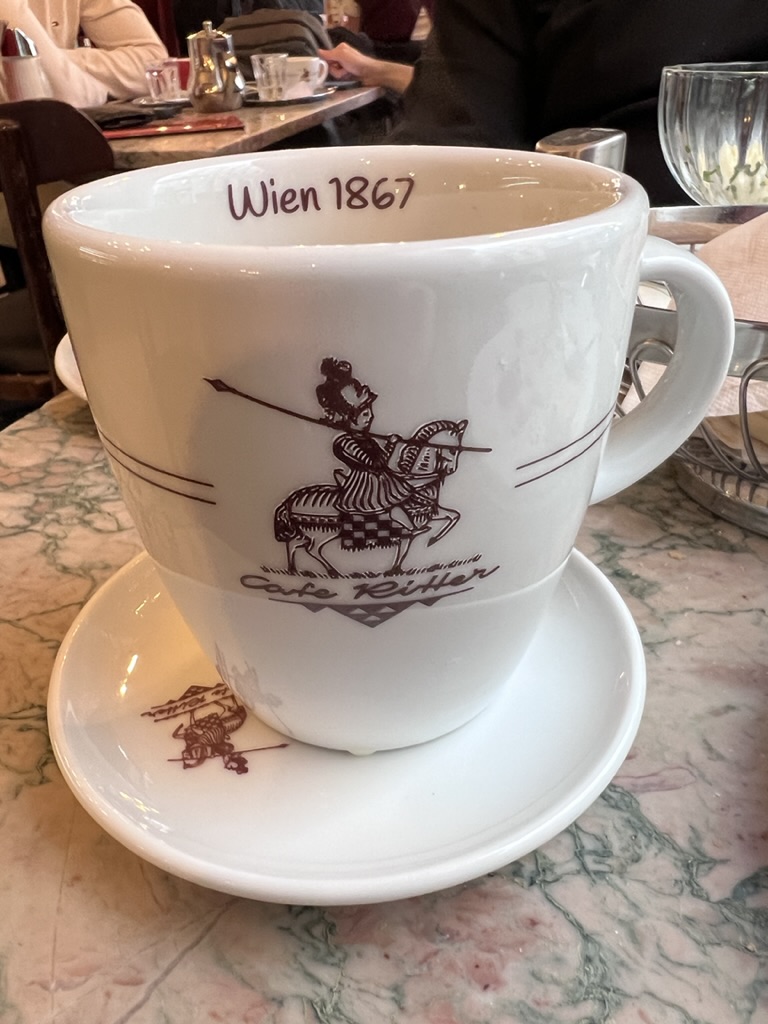
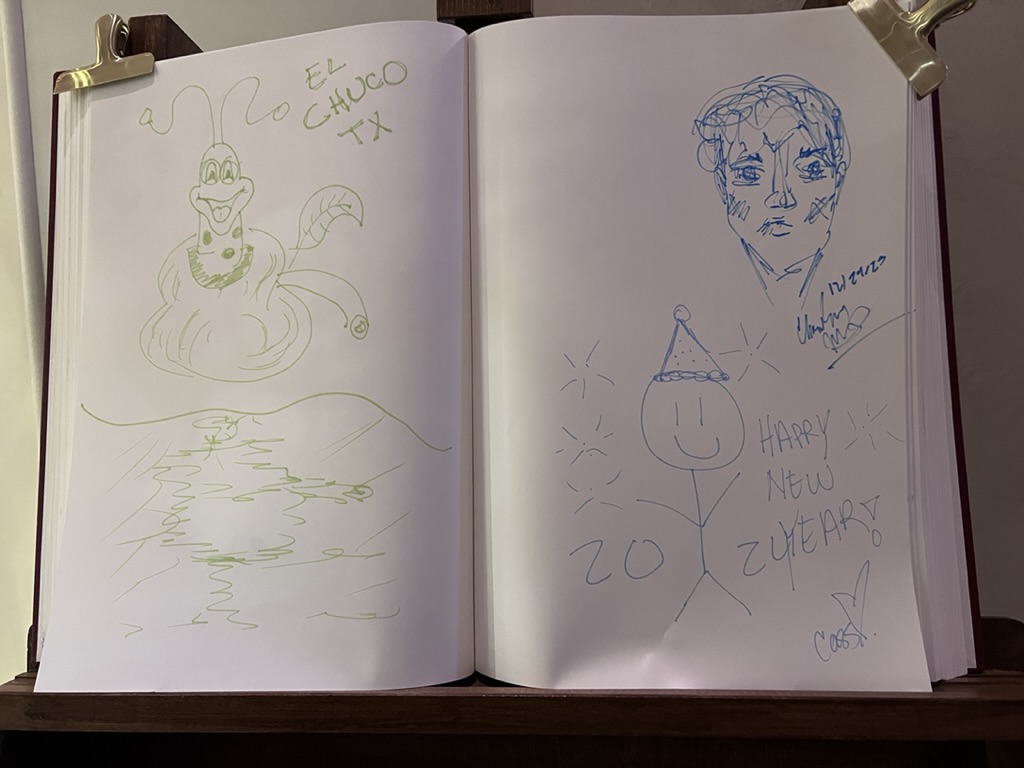
We began this morning with a quick breakfast at Cafe Ritter, one of Vienna’s oldest cafes… from the 1880s…. probably same waiters as when it opened. And in some ways time seems to have stood still — cash only (none of this weird plastic money and certainly no digital funds). It’s a hangout for many old timers and also some hipsters who seem to like the vibe.
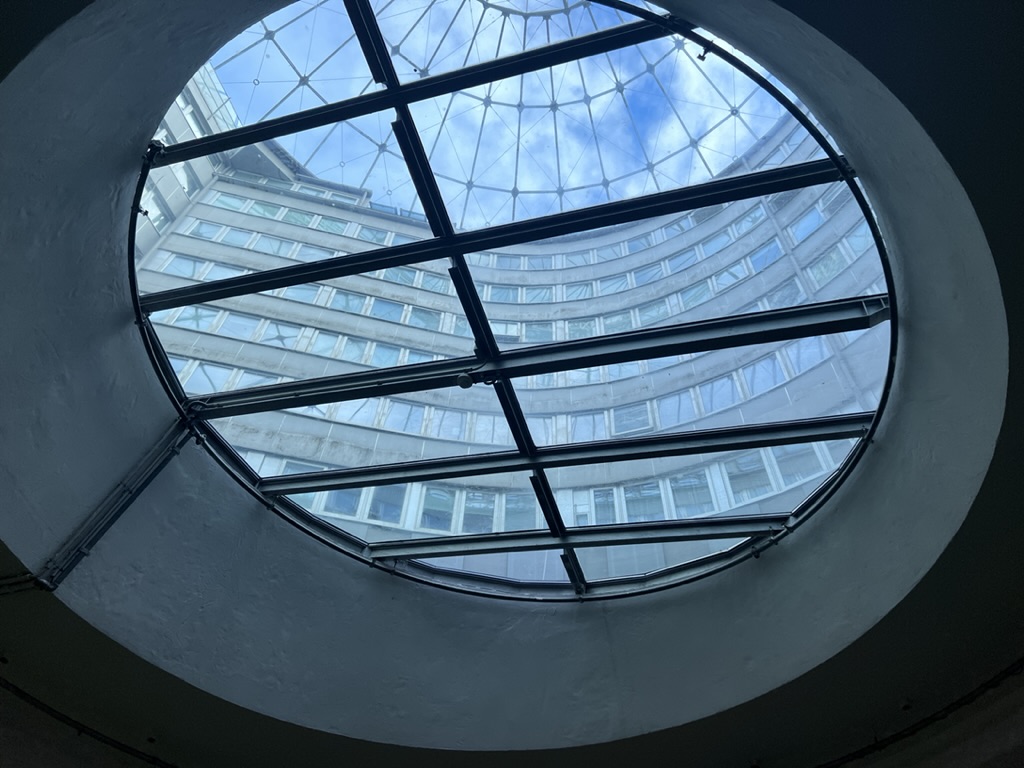
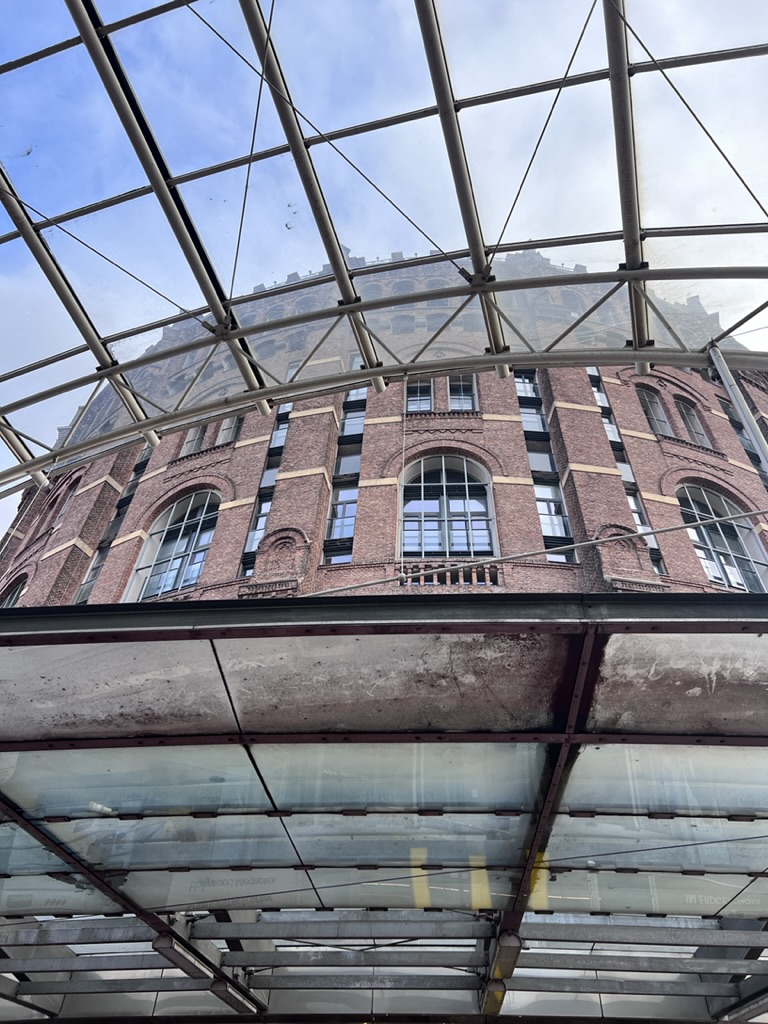
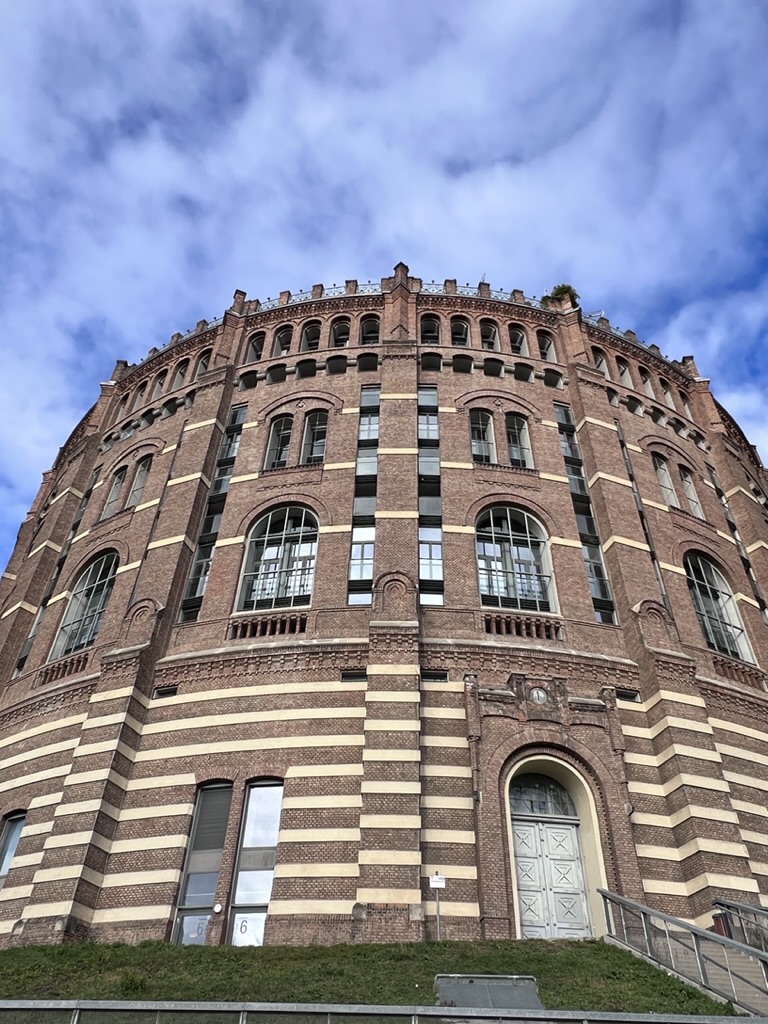
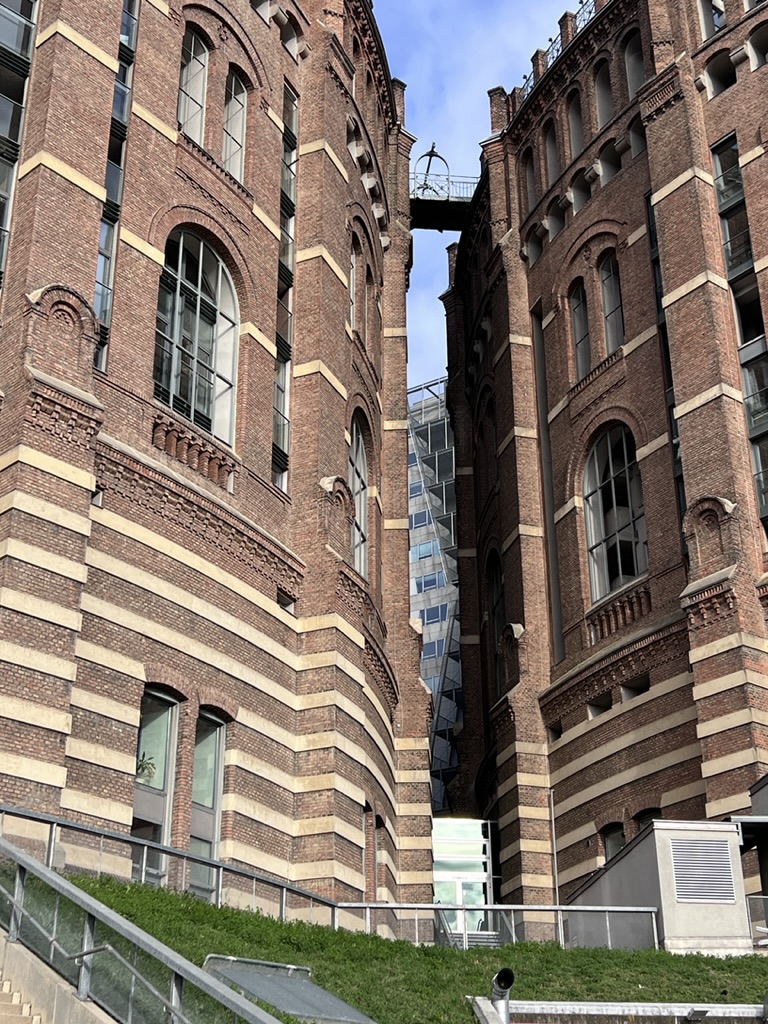
We headed out to Gasometer… and now that we are experts on the U-Bahn (the Vienna Metro) we caught the train which went directly to Gasometer. We had seen the remains of the old gas works cylinders in Rome, but here in Vienna they have taken the four structures built at the very end of the 19th century and created housing. The gasometers were in use until about 1960 and then were shut down. The city preserved the exterior walls and eventually created housing blocks within the cylindrical frame. The city took on the task of remodeling and revitalizing the structures (which were landmarked) and selected four architectural firms to do the design. The challenge for the architects was to create affordable units (social housing) as well as offices and entertainment and shopping within these cylindrical buildings. The four buildings are connected by skybridges. Altogether there are about 800 apartments with about 1,600 tenants and about 70 student apartments. We explored the buildings although we could not see any actual units, just the public spaces and the exteriors.
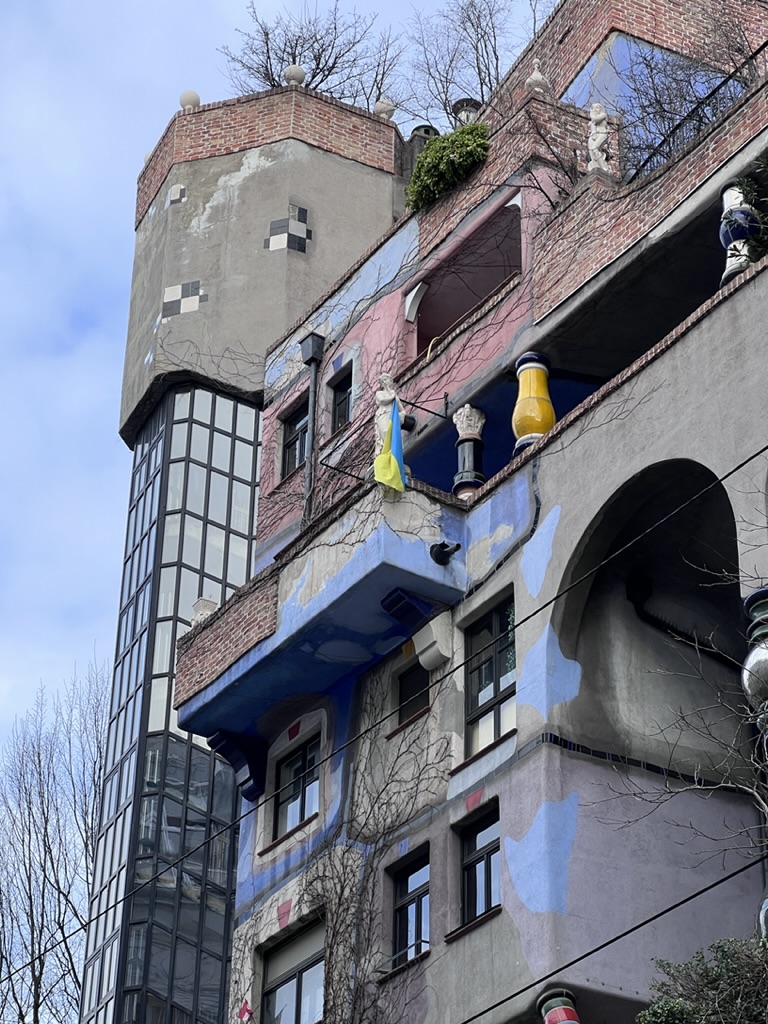
We then hopped back onto the train to get to Hundertwasserhaus… one of Vienna’s most visited residential buildings in a residential district—a collaboration begun by an Austrian artist named Hundertwasser who was interested in architecture (but not an architect). Initially, he wrote and published a lot about architecture and his theories about how people should live with nature in urban areas and lectured at universities about the need for compatibility between nature and people. Eventually the Austrian chancellor recommended that Hundertwasser be given an opportunity to implement his ideas by constructing a residential building. But since Hundertwasser was not an architect, the city needed to provide him with an architect with whom he could work. Josef Krawina was selected. The building was to be for social housing.
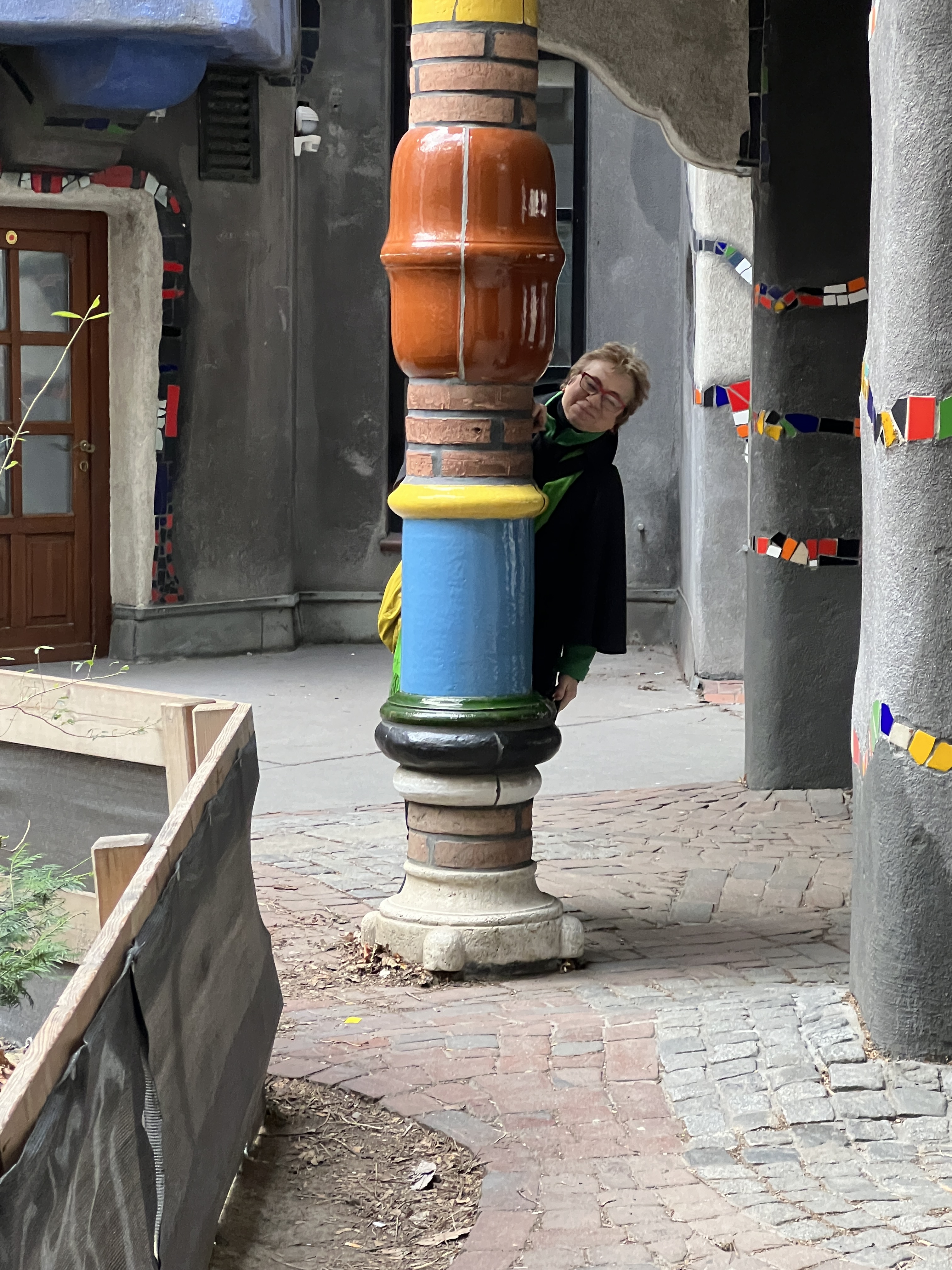
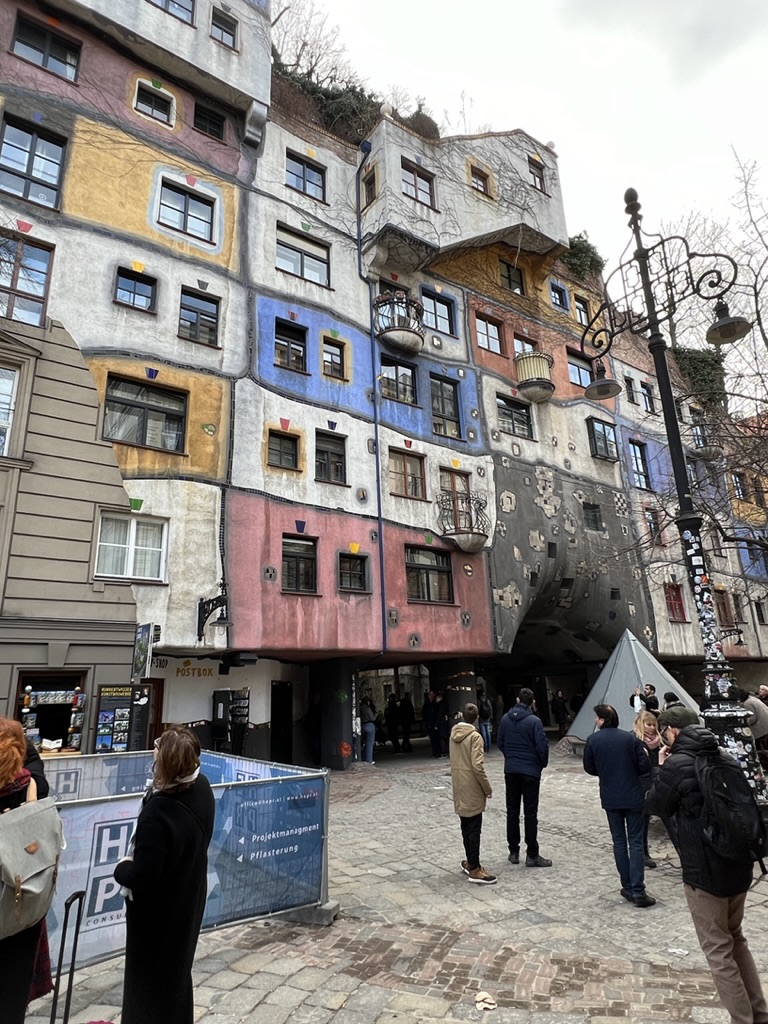


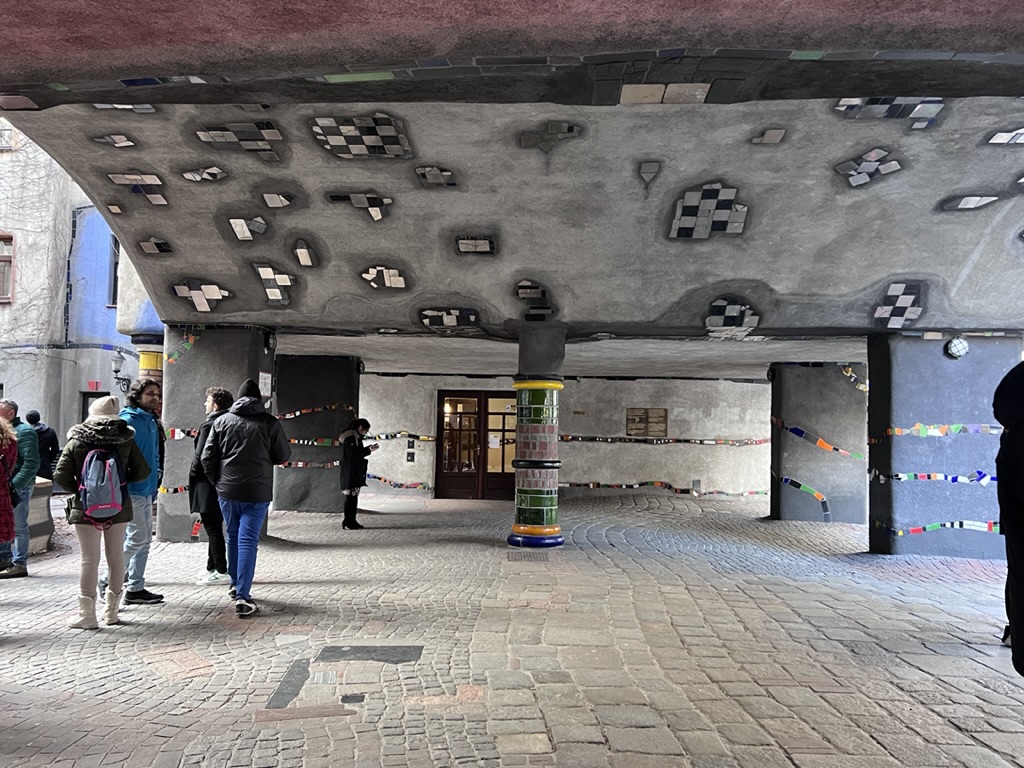
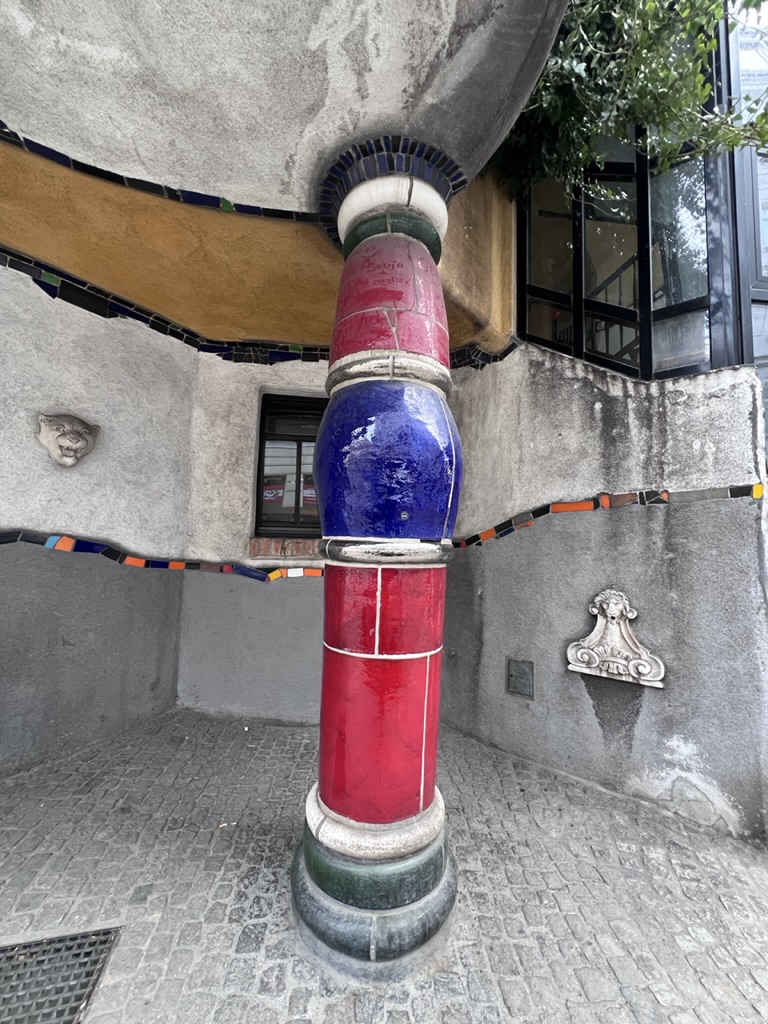
But the partnership was not a happy one as Krawina straightened all the lines and changed Hundertwasser’s whimsical design. To Hundertwasser the project was no longer a house for “people and trees.” Eventually Hundertwasser got permission to build the house which required many, many exceptions to local building codes. Still, the arguments between the two “partners” were intense and lengthened the time of construction; Krawina eventually resigned from the project. The city needed to find another architect and they eventually used the city architect for the project. But the legal authorship of the building was in question for decades.
Anyway, the Hundertwasser building is delightful, with bright colors and tiles, and uneven floors in the corridors. The 250 bushes that were planted when the building was started are now tall trees. It’s a little like a cross between Gaudi’s La Sagrada in Barcelona and Watt’s Tower in LA. The Hundertwasser building complex has good marketing because, like Watts Tower it has become a major tourist destination. We even saw people with luggage who were stopping by to see the building on their way to or from the airport.
From there we walked across a canal to reach the official nation of Kugelmugel, after stopping briefly at a little neighborhood café for a light lunch.
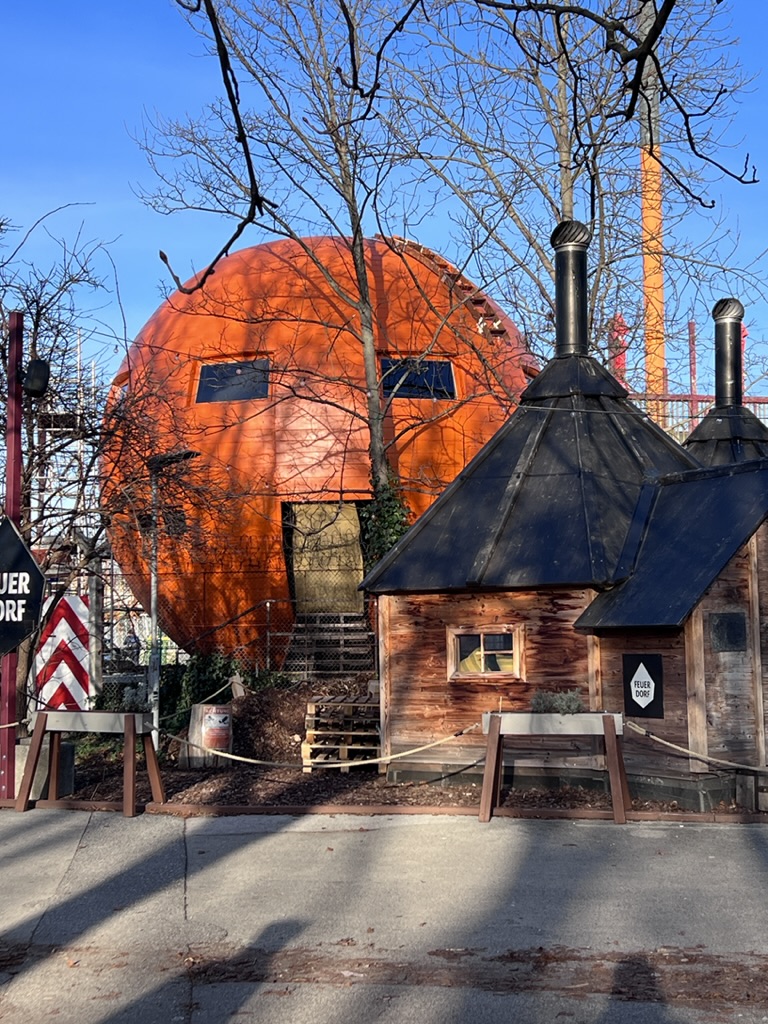
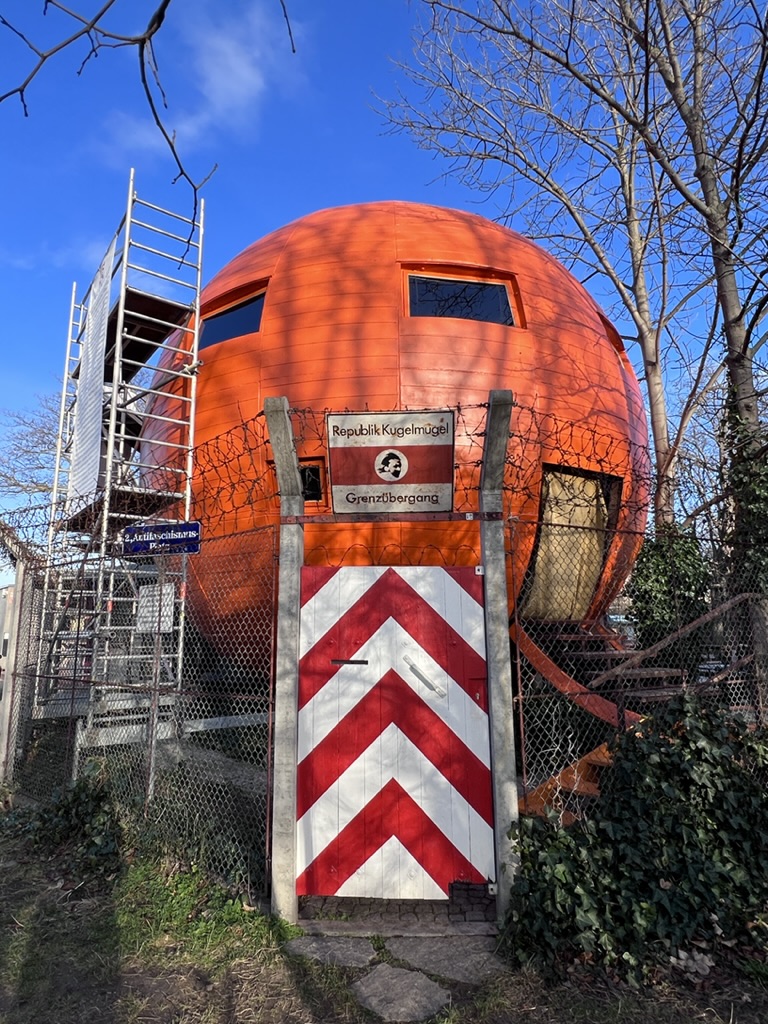
Yet another structure that was controversial in a different way—Kugelmugel or officially “the People’s Republic of Kugelmugel” is a “micro-nation” located within Vienna. Apparently, it came about because of a dispute between an artist (Edwin Lipburger) and the officialdom of Austria, because the building would be spherical. It was built in 1976 and declared itself a sovereign nation, to bypass the codes. Some years later it was moved into Prater Park and is surrounded now by an 8’ barbed wire fence. It is the only address within “the Republic” and is located on a short street that the “Kugelmugel nation” named “Antifaschismusplatz.” Although Lipburger died in 2015, the Republic officially says its population is more than 650 “non-resident citizens.” It looks sort of like a big basketball sitting on the edge of the park where today there are amusement park rides.
Then we headed to Karl Marx Hof—part of what was known as “Red Vienna.” We realized if we took the train we wouldn’t get there while there was enough light to photograph, so we hopped in a taxi (those of you who know me, know that I don’t Uber). Taxis are easy to find, and you can hail them on the street like in NY.
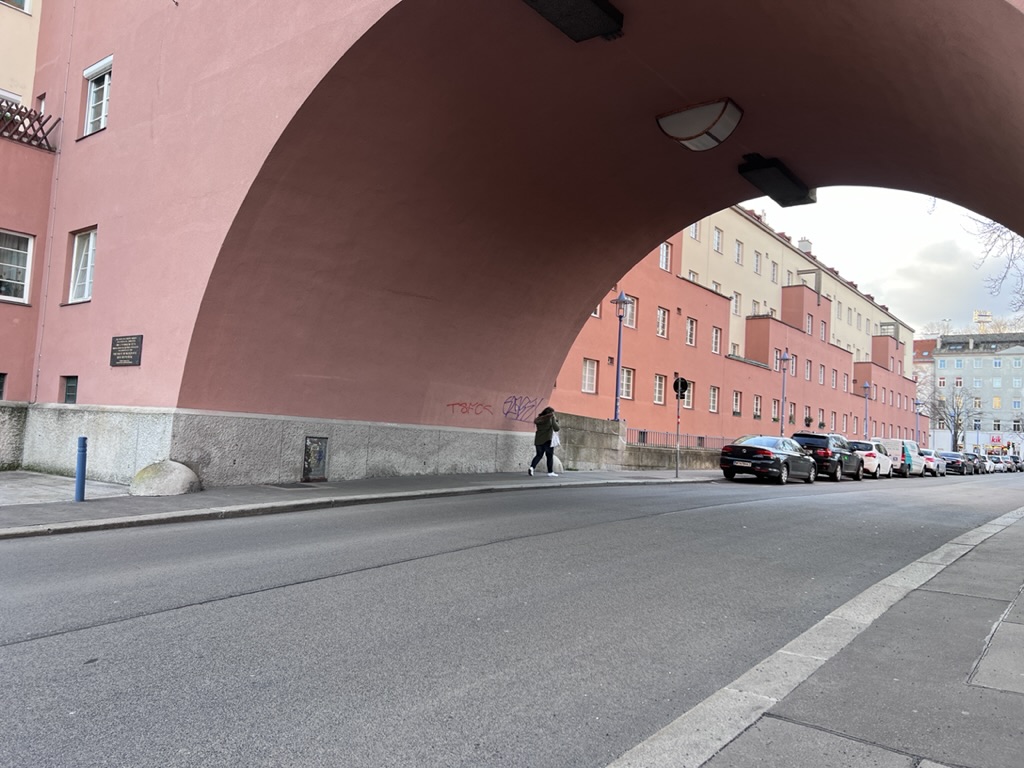
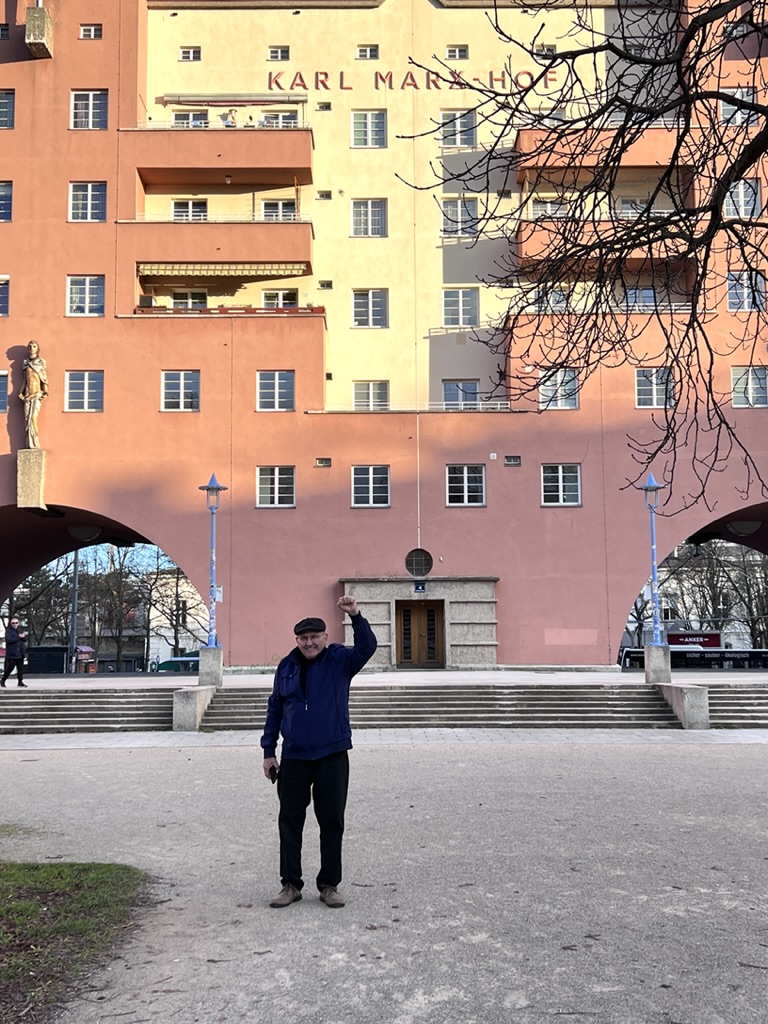
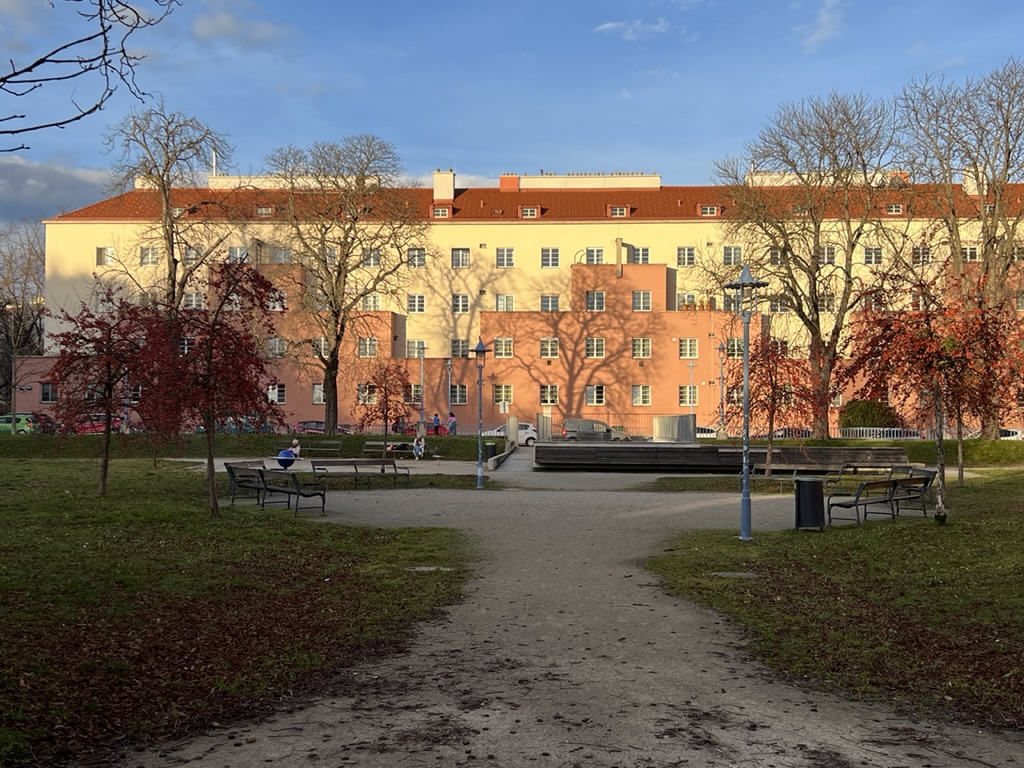
Karl Marx Hof is more than a kilometer long and I think it was the longest continuous residential building in the world at that time. It was designed by one of Otto Wagner’s students (Otto Wagner was the architect for the Art Nouveau buildings I noted yesterday or the day before). The building was constructed between 1927 and 1930. (per Mike… “I’m stunned that they could do this in such a short period because 50-unit buildings in Oakland can take that long!”) And here there are about 1,400 apartments.
There are about 5,000 people living at Karl Marx Hof. It was considered innovative for its time, with laundries, showers, two medical clinics, kindergartens, dental clinic, a “mother’s advice center,” a library, a youth home, a post office, and a pharmacy…among other amenities. There was also an “advice center for interior design and housing hygiene.” In the 1930s the Karl Marx Hof was a center of resistance against Austrian fascism. But after the Austrian Social Democrats were eliminated, the building was renamed, but still the signage remains.
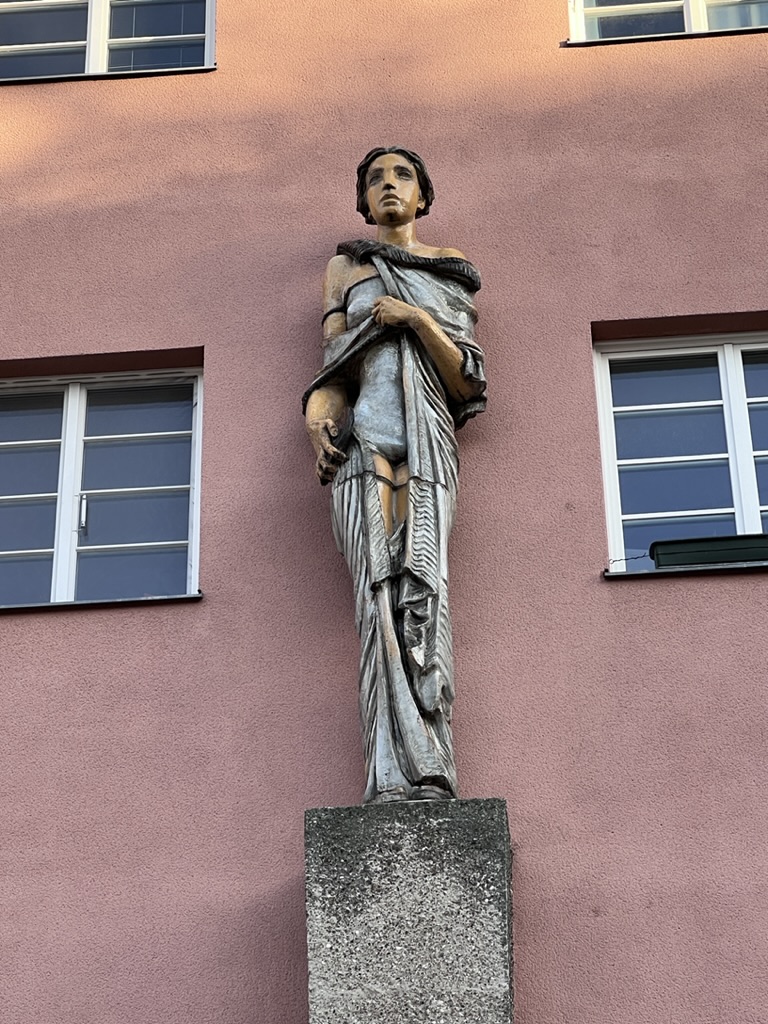
There are four female statues on the building that symbolize “liberation, enlightenment, child welfare, and physical culture.” According to my limited research, the mayor of Vienna stated at the opening of the building: “When we are no longer here, these stones will speak for us” and “The Karl Marx Hof – look! – that’s a piece of Marxism!”
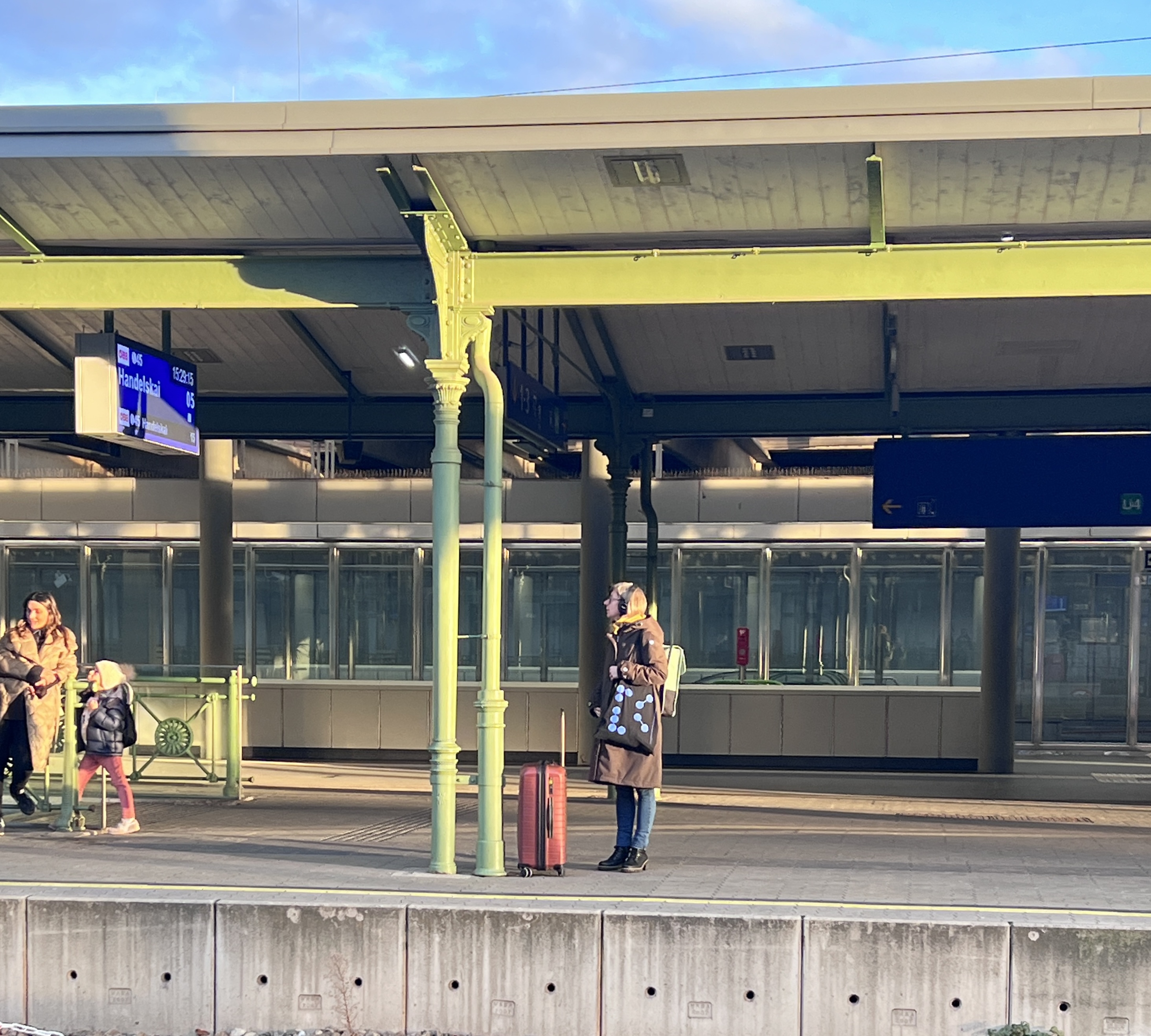
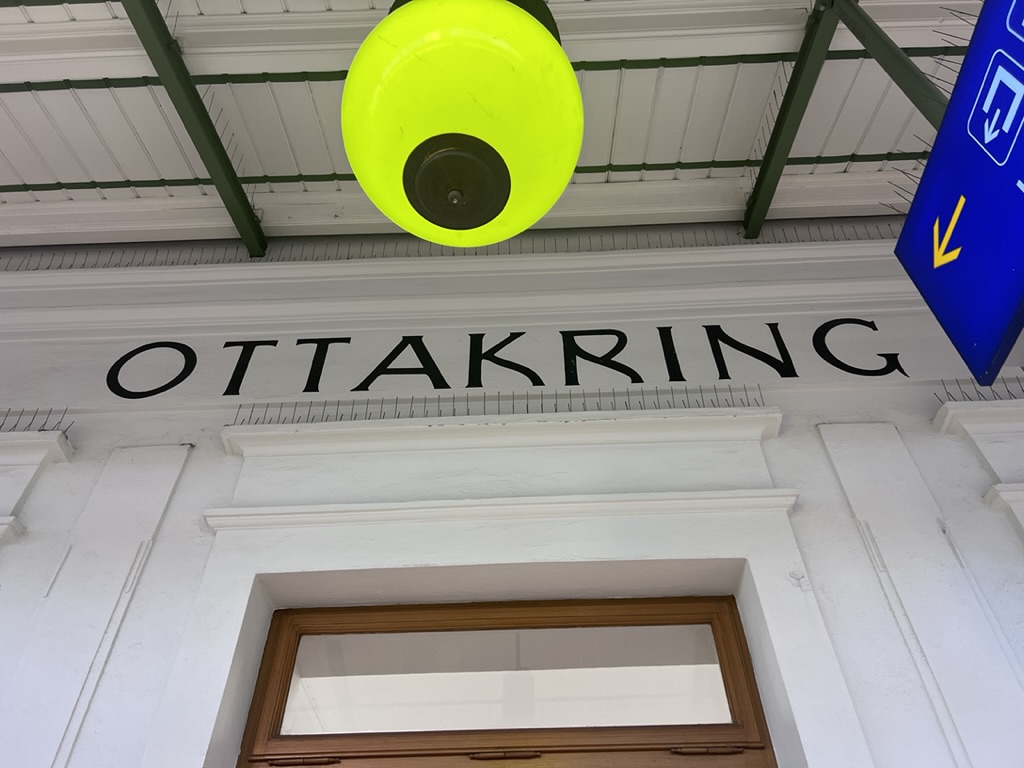
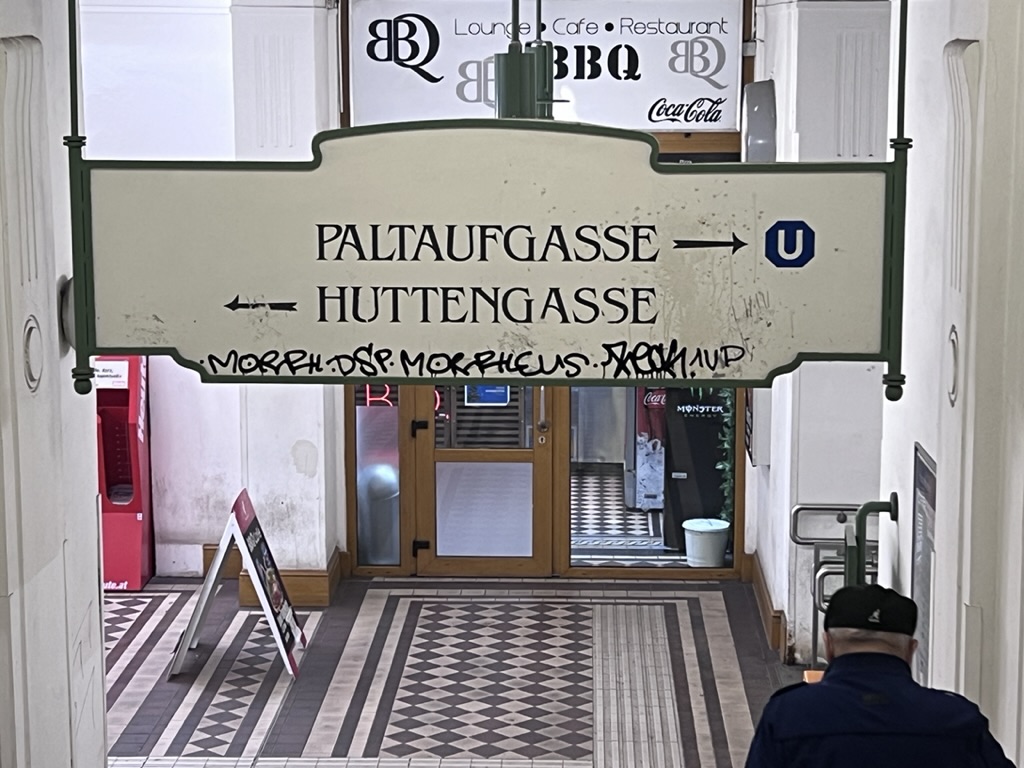
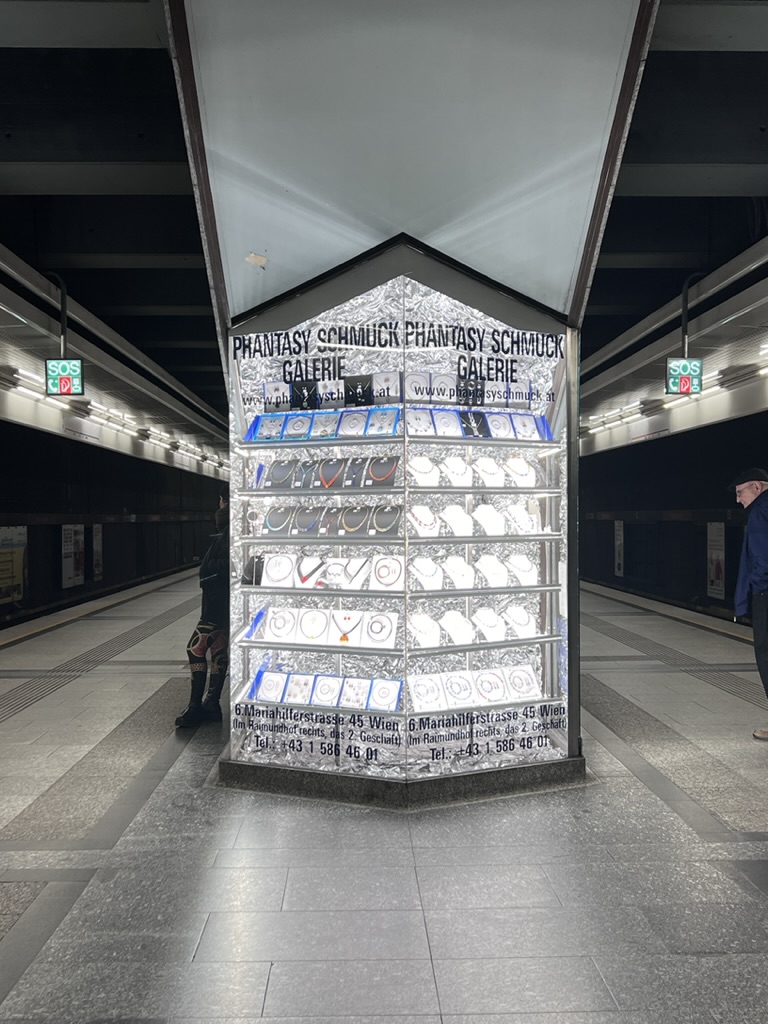
From there, with the sun setting, we took the U-Bahn back to the hotel….somewhat smoothly, although we did wind up initially, on a train headed for the mountains.. But the public transit system is so good that it was easy to regroup and find our way. Like Geneva and so many other European cities, one is supposed to purchase a ticket, but supervision is non-existent and there are no barriers to entry, so people seem to come and go. And in many of the stations, on the platform between the two sets of tracks, there are glass enclosed kiosks displaying and advertising items you can purchase in the stores, including jewelry. These displays house the actual jewelry or clothing or whatever… and seem to remain undisturbed. Imagine that on the BART platforms!
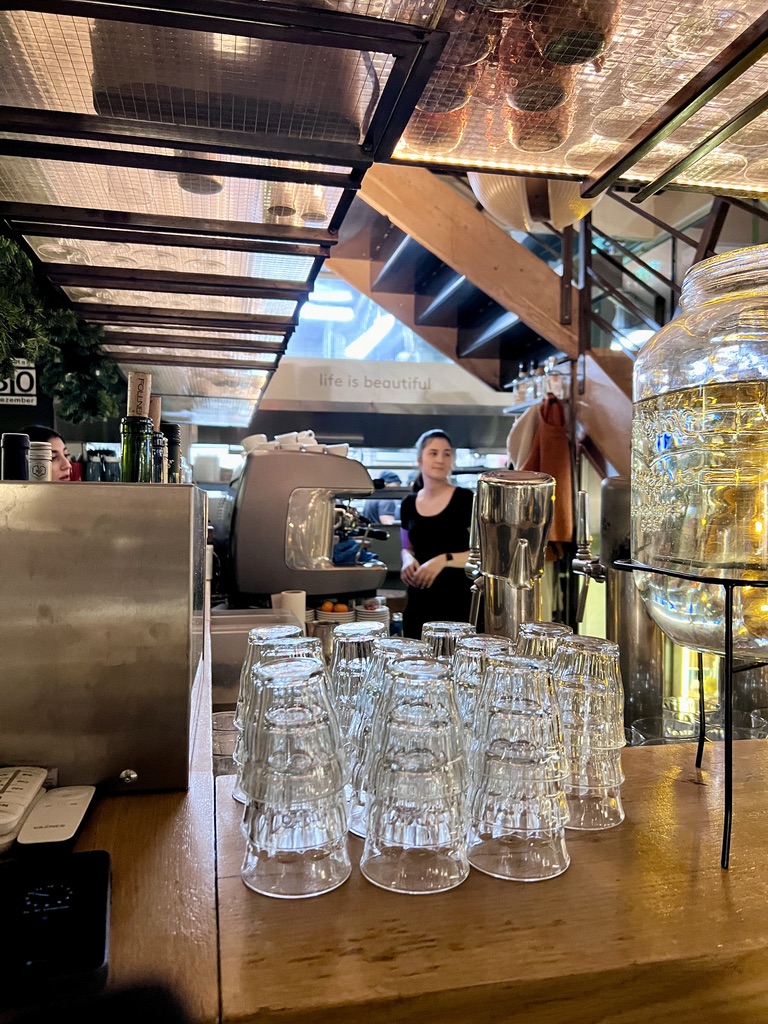
For dinner, we headed to the Naschtmarkt and ate in a little place called NENI—an Israeli restaurant with quite good food. We had a Moroccan-style dish and a sweet potato dish as starters. Then we both had the salmon… followed by what they called an “authentic” NY cheesecake. It was good but definitely not a NY cheesecake.
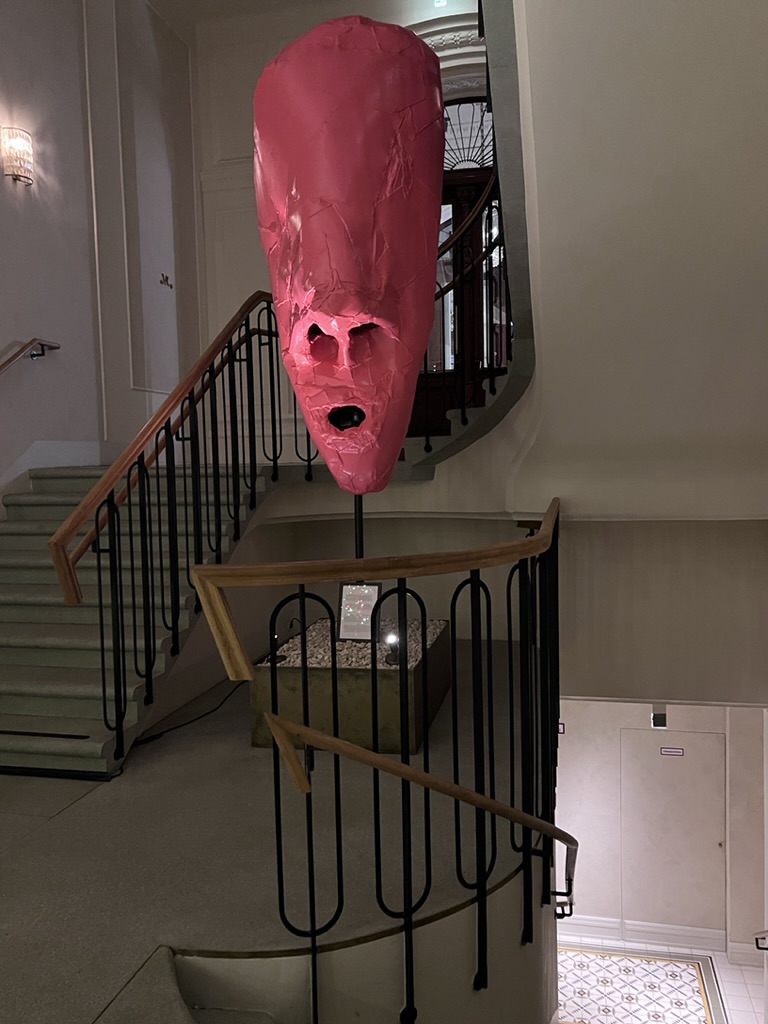
And then we were back.
We have a long list of other things we want to see and are trying to figure out our last two days. It is now New Years Eve morning here—many places are closed today and tomorrow (New Years Day). On January 2, we will take the train to Brno, Czech Republic to have lunch with old friends and come back here to pack. We leave on the 3rd by train to Munich… from there we will fly directly to SFO. So, we’ll have to prioritize what we see today and tomorrow.
Happy New Year… Let it be a better and more peaceful year than 2023.
Fern
 Fern's Travel Notes