Toronto Girl Trip Day 2: June 9 2023
Friday Greetings —
We heard it was a good day in the U.S. with the first group, of many-yet-to-come, indictments…
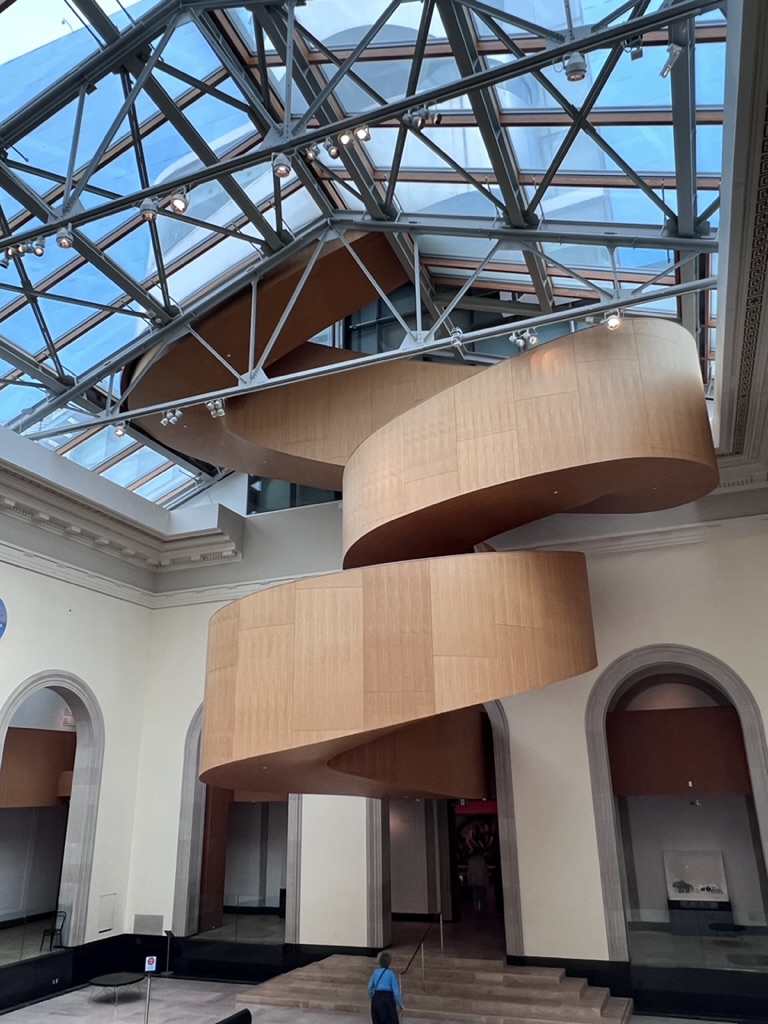
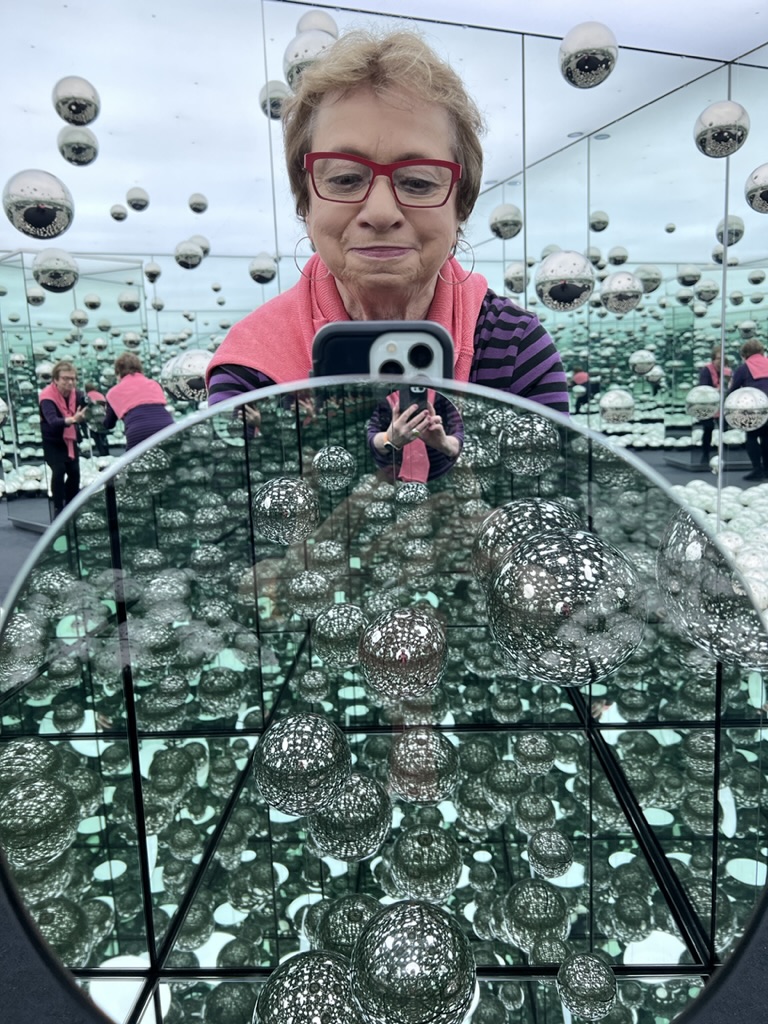
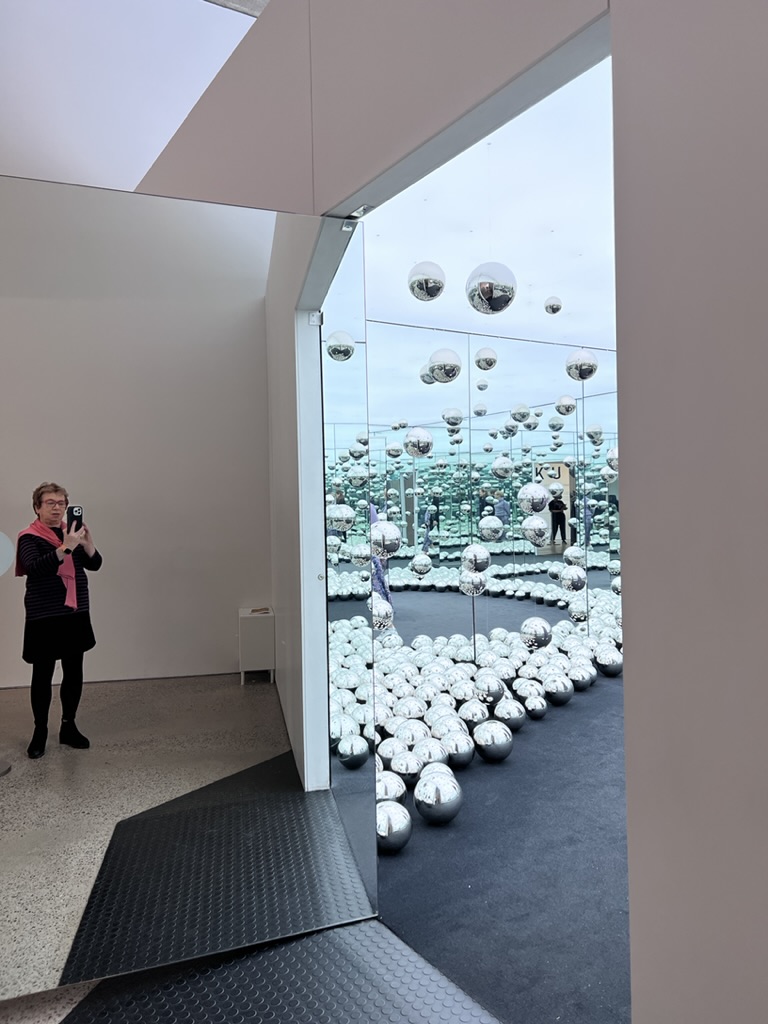
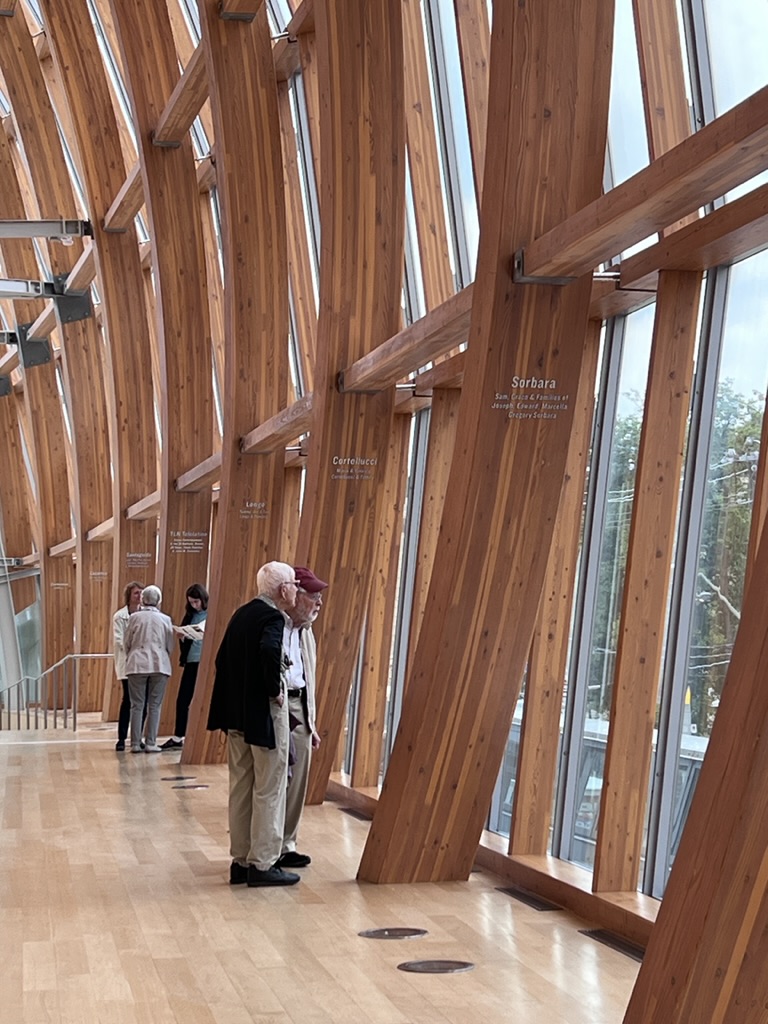
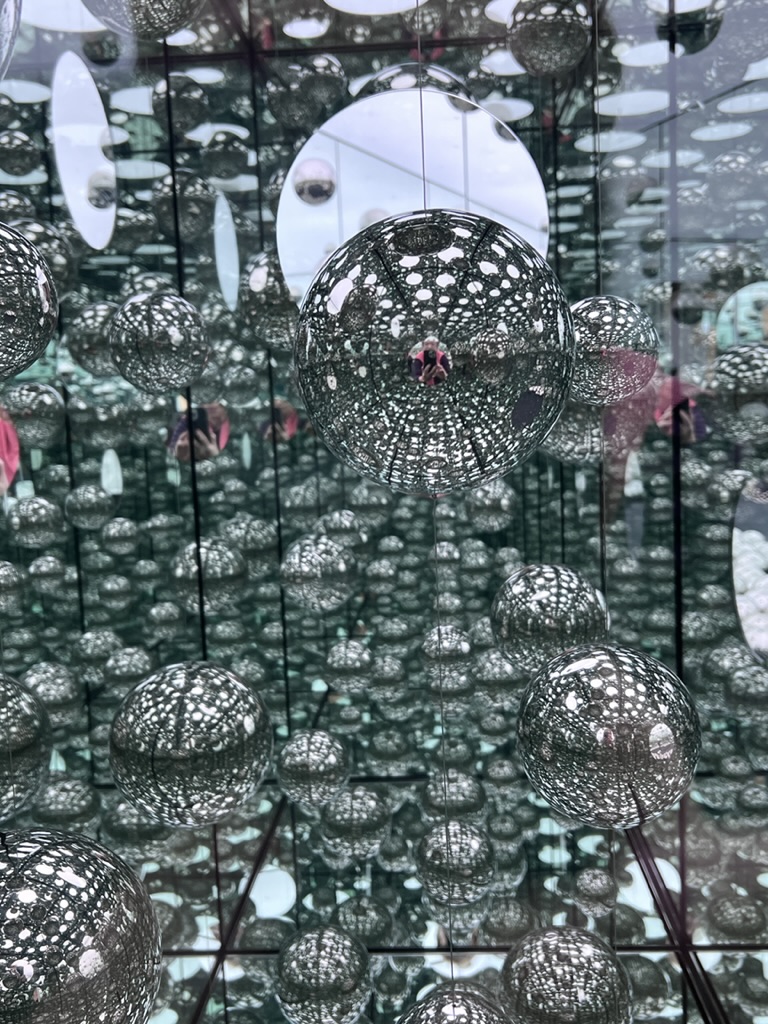
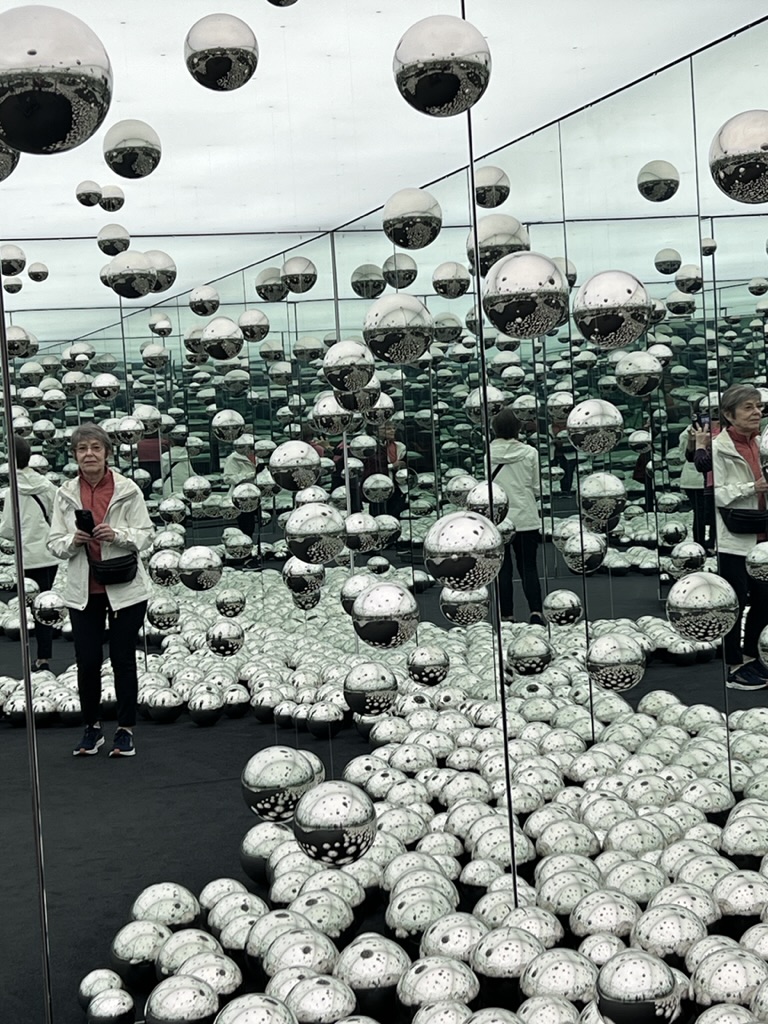
Set out today for very early lunch (sort of brunch) at the Art Gallery of Ontario, which was quite yummy… simple soups and salads. And then we headed to see the museum which turns out to be quite wonderful (this said by someone who wouldn’t go into a museum for 20 years, and still is hesitant about the commodification of artworks and how museums contribute to value that does not get passed on to the makers). But “AGO,” as it is called (Art Gallery of Ontario–get it?), is a very manageable museum… small enough to see a good deal in one visit and complex enough and with many temporary shows to be able to make return visits. Architecturally, it’s warm with a lot of beautiful wood walls. Moreover, they have a great collection of Canadian and Inuit art as well as the works of other native groups. Additionally, they currently have one installation by Yayoi Kusama, the Japanese artist who is sometimes called the “princess of polka dots” and who is famous for the reflective “balls” and mirrored infinity rooms that are always fun to experience. You only get one minute in the room (totally timed and they are strict about it), so I went in twice!
They also had several other immersive experiences including one room that was all black except for a circle of light that appeared from time to time. The idea was to sit or lie on a round “couch” with others staring up at the ceiling (although you can certainly just stand) and feel the vibrations and sense of volcanic movement. The Icelandic artist Jónsi tries to make you feel you are inside the volcano. There’s a lot of technology involved with creating the sounds for the piece. But it works.

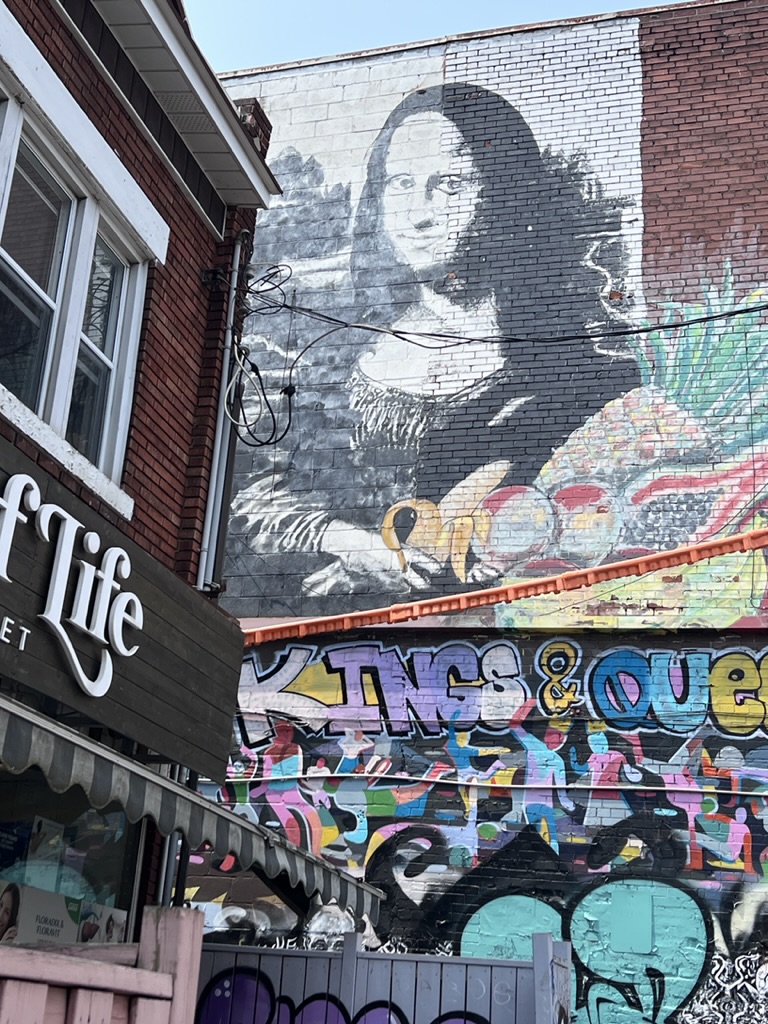
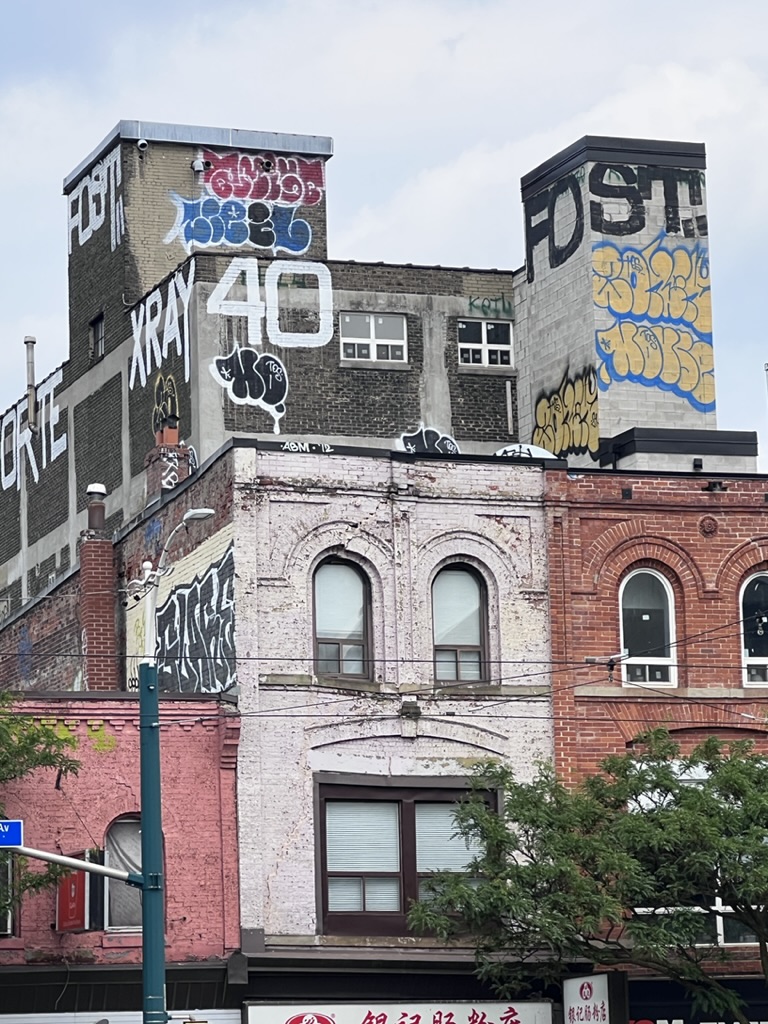
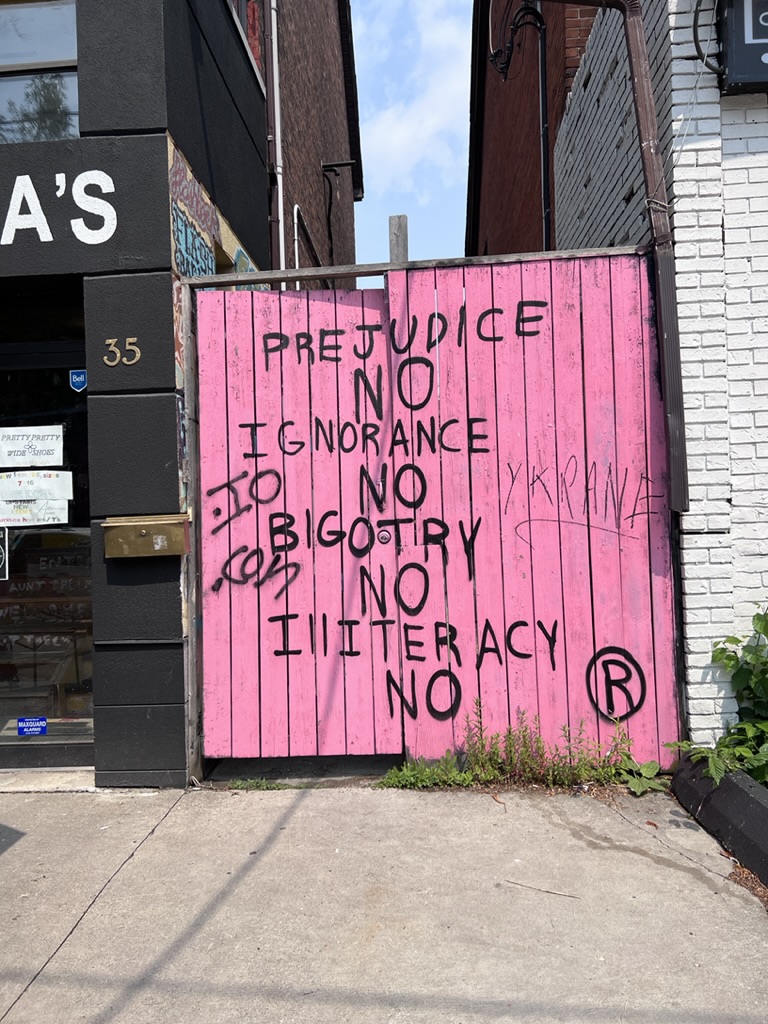
After a sufficient dose of “art” we walked through the neighborhood which edges on Toronto’s Chinatown and continued on to the Kensington Market area. Kensington Market is more of a multicultural neighborhood than a market. It’s an older neighborhood which was designated a National Historic Site of Canada about 15 years ago. One journalist wrote that “Kensington today is as much a legend as a district.” During the early 20th century, it was the home to Eastern European Jewish immigrants. It was overcrowded with densely packed houses and one of the poorest areas of Toronto. During that time, it became known as “the Jewish Market” where Jewish merchants operated small shops that sold items that were imported from the homelands where the immigrants were from.
The Jewish population moved to the suburbs and also further north in the city in the 1950s, and other immigrants from the Caribbean and East Asia took their place in the neighborhood. As many of us know, in the 1960s and early 70s many Americans moved to cities in Canada as a protest to the Vietnam War and many of these political refugees settled in and around this area and into a section known as the Annex. Over more recent years, immigrants from Central and South America and parts of Africa also located in Toronto and many started their Canadian lives in the Kensington area. In the 1960s there were plans to tear down much of the neighborhood’s densely packed small houses and replace them with large housing projects. But this plan never materialized due to a change in administration.

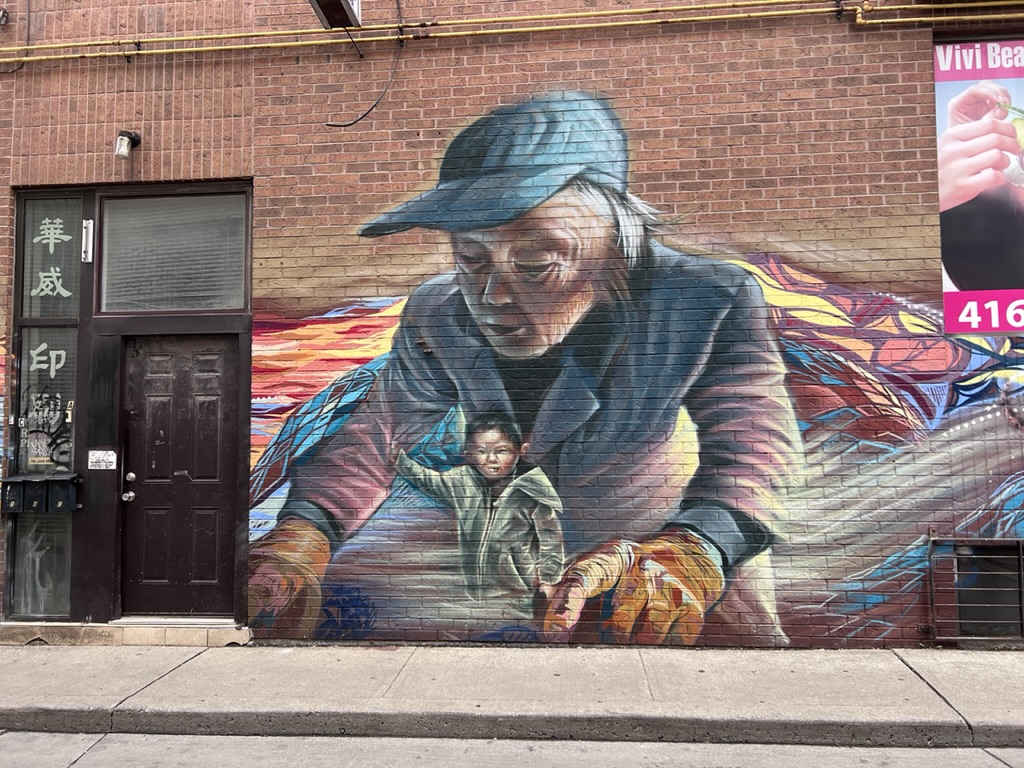
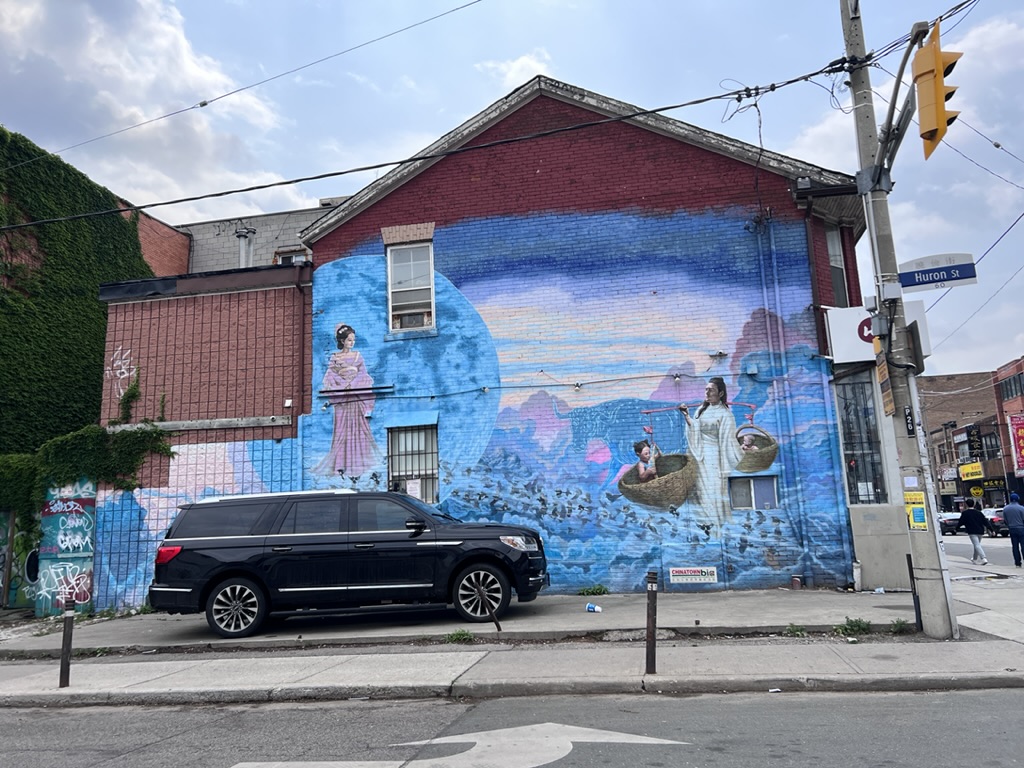
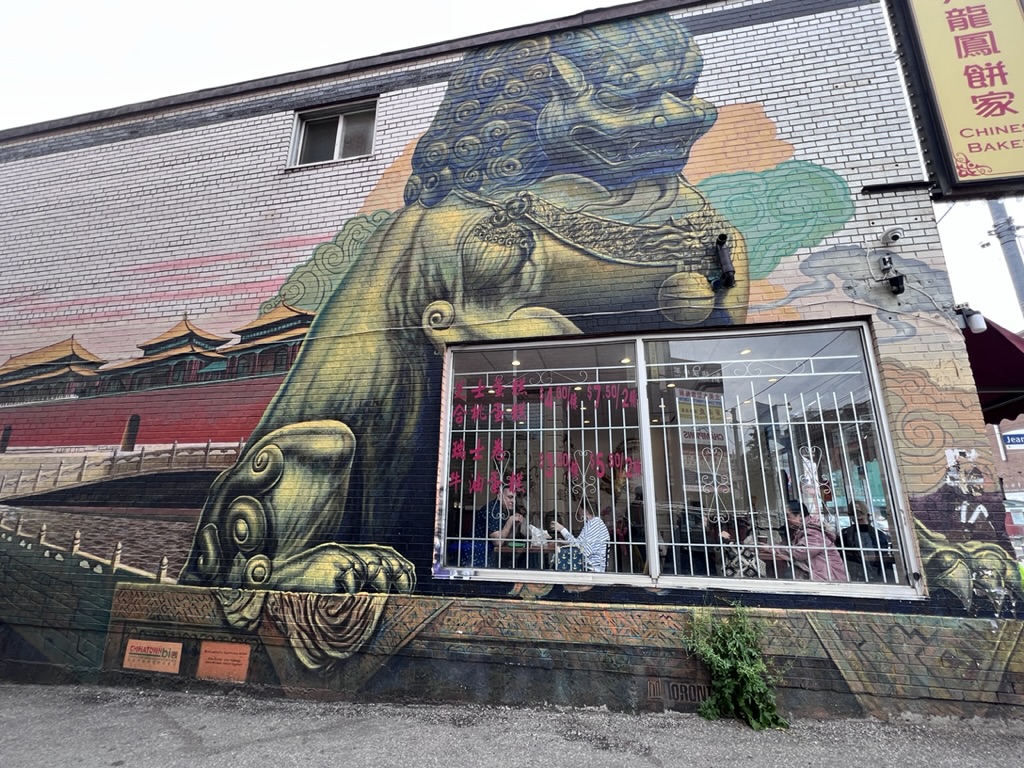
We stopped for a great gelato and then continued to walk to Chinatown, and eventually taxied to the hotel to freshen up before dinner and another play in the Luminato Festival.
Dinner was at Oji Seichi deep in the heart of Toronto’s Chinatown—a fantastic place for ramen, but we opted for an array of great starter plates—veggie tempura made with a really light and fluffy breading and we also had wonderful karaage, seaweed, and cucumber salad, and extremely fresh gyoza. Oji Seichi is tiny and brightly lit with wood bench seating. They consider it Canadian Japanese! Would definitely return and recommend it highly.
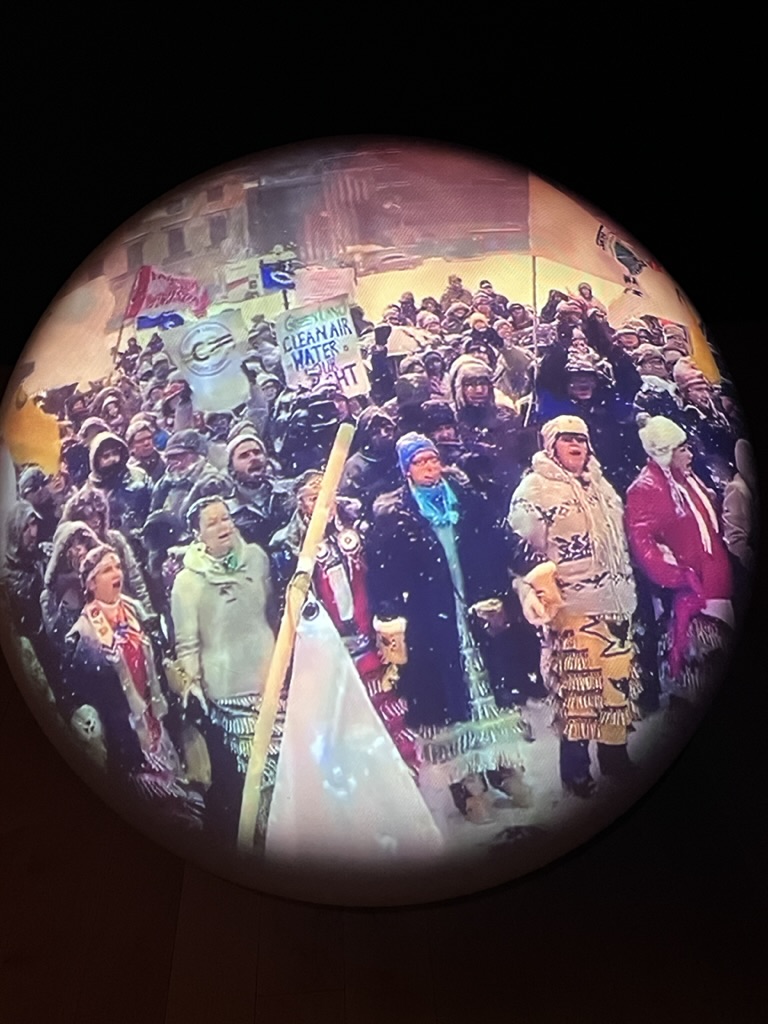
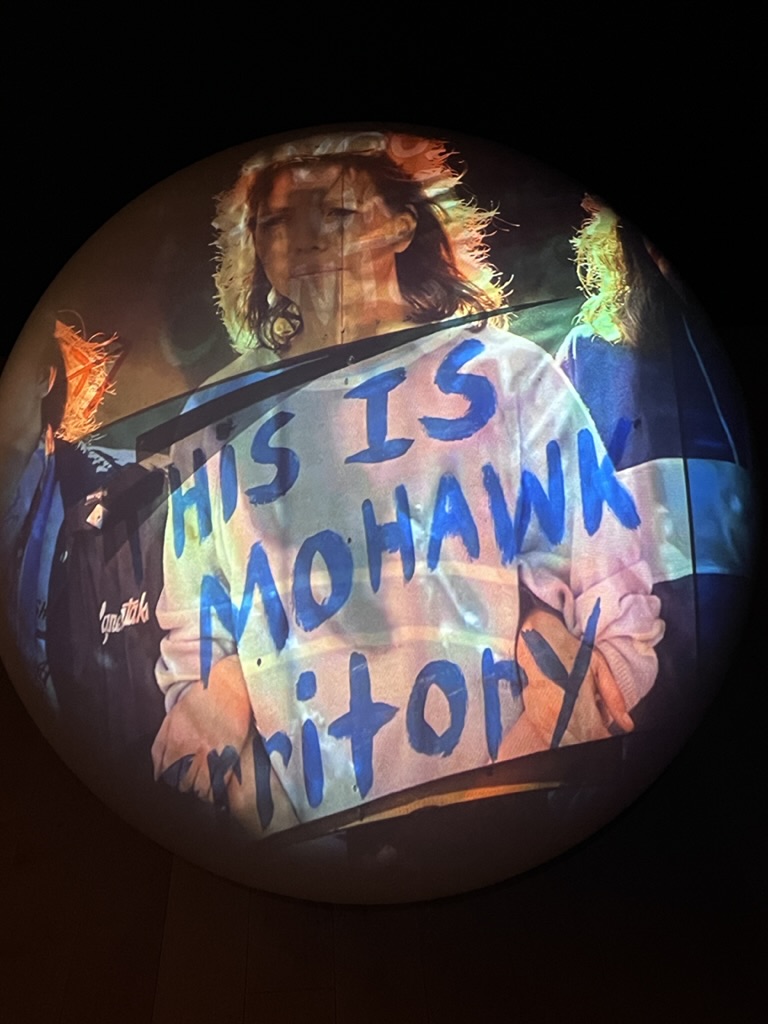
We then walked to the Ada Slaight Theater to see “Aalaapi,” a genuine treat, since we didn’t know that much about the play (mostly it fit our calendar and sounded interesting). Aalaapi is Inuktitut for “Choosing silence to hear something beautiful” or something along those lines. The play uses documentaries and also radio pieces spoken in French, English, and Inuktitut languages (always flashing the translations onto the “front side of the house” which is the only stage set–the front facade of a house. Throughout the performance, you’re watching the house (and the play) through that window.
Basically, the play focuses on the daily lives of a few women from Nunavik (far north Quebec and home to Inuit people) whose lives move from the north (where they live with their ancestors on ancestral lands) and the south (where they must go in order to advance educationally). The dialogue is often intimate as the women tell stories of their history and the richness of their culture. And they always talk about the importance of silence as defining their very being—silence they can only experience in the north. Throughout the play they also mention cooking Bannock (and they are actually cooking it throughout the performance (and they serve it to the audience at the conclusion of the performance).
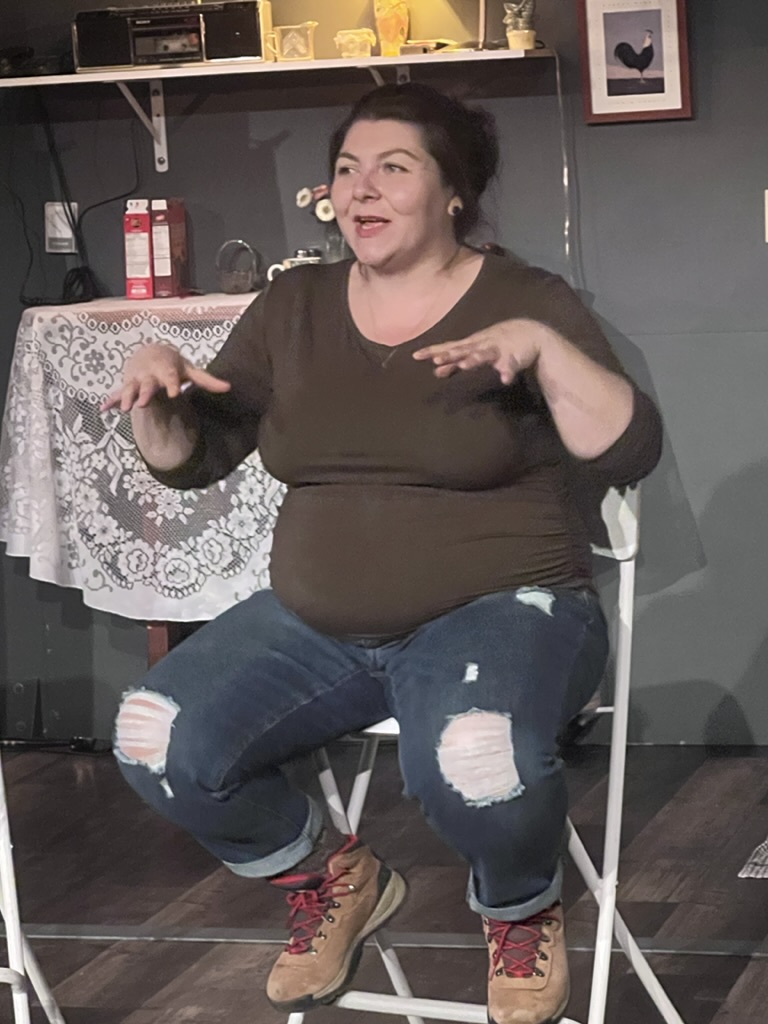
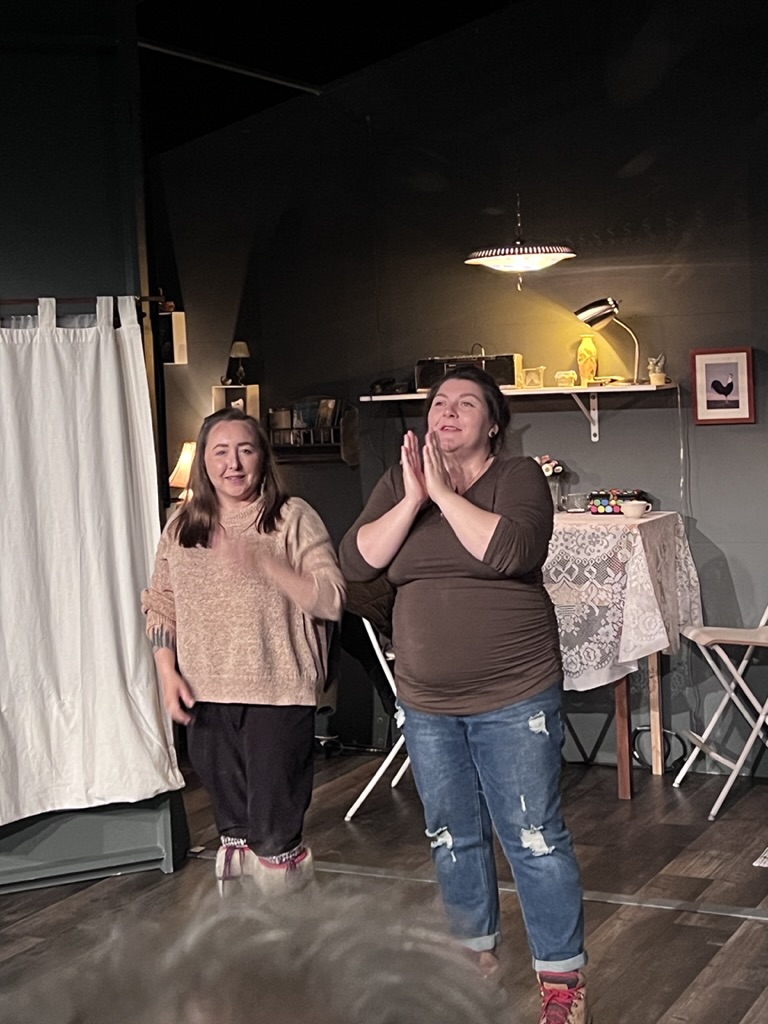
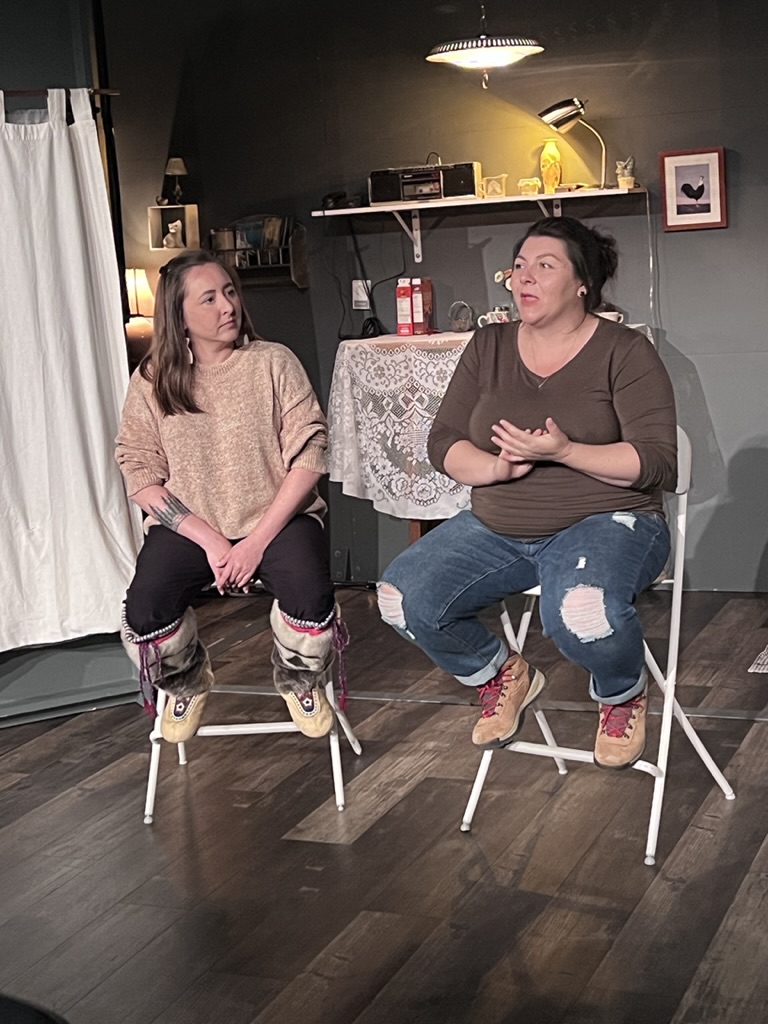
Images project across the facade of the house, which serves as a screen, and there is also a soundscape of footsteps walking and breaking the snow on the ground and also wind sounds. In the words of the “script,” the audience is invited “to listen in order to see better.” It was an incredibly powerful play performed by Inuit activists who “opened” the door of “the house” at the end of the play to invite questions from the audience, which also proved very interesting as the two performers talked about the difficulties of holding onto their native language, of having to leave “home” in order to become more educated, and the conflicts related to whether or not to return to the very small villages of their background. They talked about the fact that it was illegal to speak their language just 50 years ago and what impact that had on the continuity of their culture. And they also talked about a nickel mine that has been trying to lease land owned by First Peoples—promising jobs and cash, but potentially destroying the Intukitut lifestyles and environment. Thus far, the people in the 200-person town has stood strong and stopped the development.
So much more to say about the play and the similarities between the people speaking Inuktitut and township people speaking Xhosa in South Africa and Lapps speaking Sami, and oh so many more examples. I’m hoping this small group gets funding to take the show to other communities.
Because there was so much to discuss after the play, we figured we should head for drinks! And dessert! So, we went to Bar Raval which is on the edge of Toronto’s Little Italy. Bar Raval was totally packed with all under-30s… There was only standing room.. so, we noticed what looked like a really nice little restaurant next door where we were able to snag an outside table for four—Daili. Perfect choice – drinks and fantastic desserts in a new American/Asian/French flair. We opted for poached pears that were. soaked in some kind of wine and spices and Chantilly cream, and a panna cotta made with sticky rice and white chocolate and rhubarb and some other yummy stuff. We also had a serving of sake sorbet (to die for!)
Stuffed and happy, we taxied back to the hotel at around midnight. We are becoming expert at using the taxi app (Beck’s taxi).
Toronto’s got a good vibe.
More tomorrow
Fern
 Fern's Travel Notes