21. May Day in Milan. May 1 2023. (Day 6 in Milan)

Happy May Day/Workers Day !!
Hope you are all well. Mike seems to be improving. Today he technically completed his 5-day isolation and also his Paxlovid regimen. Still tired, but definitely seems to be moving in the right direction. I’m hopeful he can join me for a really nice dinner tonight and maybe even stroll Milan a bit tomorrow, before we head to the states on Wednesday morning. We’re keeping the two rooms until we leave, as a precaution. Buy shares in Hyatt (or some particular brand of Hyatt called “small luxury hotels.”) Given the number of days we’ve stayed here and the two rooms, stocks are sure to go up. Mike’s been watching Italian television and he’s got a few Italian words now like “dragon” (drago) and “other dragon” (altra drago).
It’s May Day and I reminisced a bit about varioius cities where I have experienced May Day, inlcuding Paris and Helsinki, where May Day is a big deal politically, but also includes a lot of drinking.
Before heading out, I had a little chat with the woman at the hotel who I think is the manager; she’s probably in her late 30s and speaks English very well. She asked a bit about me and always asks how Mike is doing. In reality she probably knows his situation better than me because staff come in with room service food and to clean the room (although he leaves when they come and he goes to sit on a little deck). Anyway, turns out she is from Ukraine and has lived in Milan for about a decade. She went to university in Toronto which explains her English proficiency. We chatted a bit about the situation in Ukraine; her mother came to Italy for a year but has now returned; her grandparents never left; she has many cousins who fled to Italy, Portugal, and other parts of Europe. Her mother went back to Ukraine about a week ago; she was frustrated, had a good job in Ukraine and couldn’t work here in Italy. She says her family is safe. She says the Ukrainians see little hope for any resolution as long as Putin remains. I asked about Zelensky and she said that within the country Ukrainians see him as a god. But she also said that she gets a good perspective on the war because she can read and listen to the news in many languages and from different sources — US, Russia, Ukraine, Italy, etc. which she says enables her to find balance in the reports.
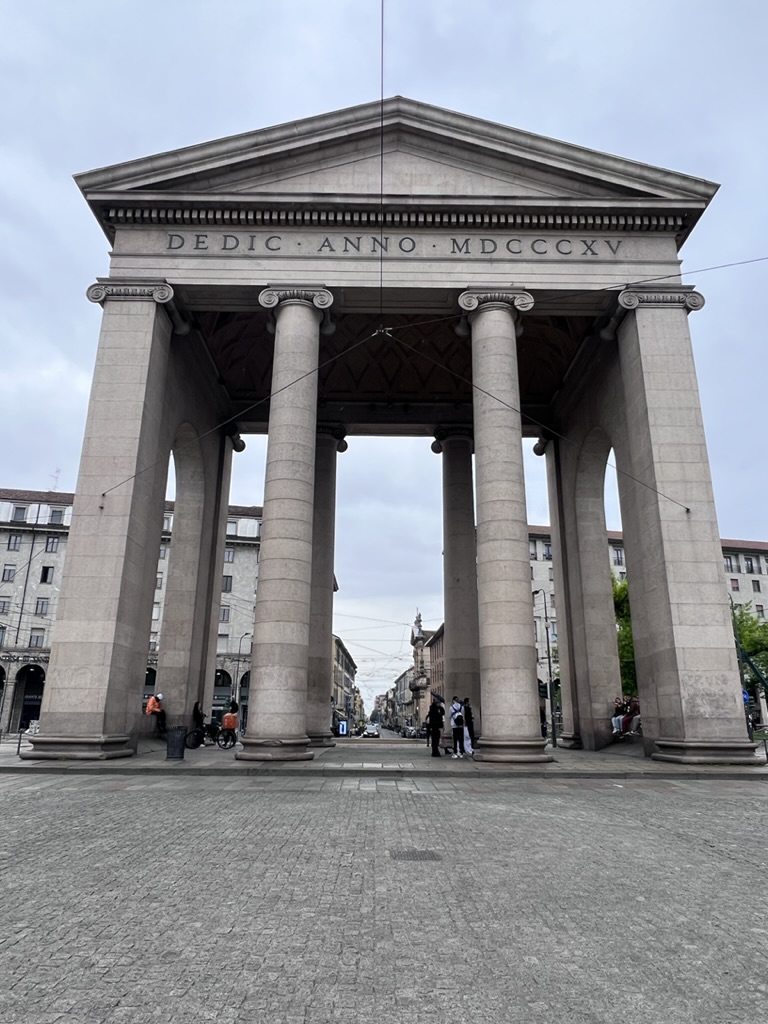
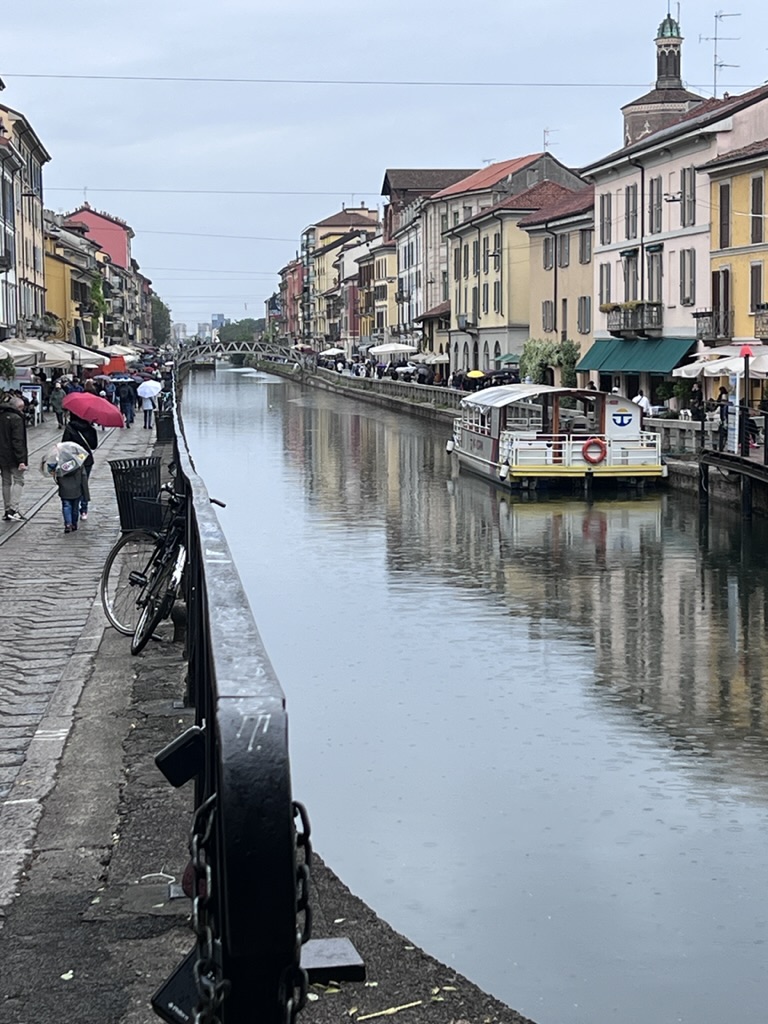
Then, I had my ritual stand-up pastry and juice for breakfast at a little café and since it was raining a bit, I decided to take a taxi to the Arco Porta Ticinese, which is one of three remaining original 12th Century walls of Milan. Wasn’t really that interested in this “gate” but needed some place to tell the taxi to go. I really just wanted to walk in the Navigli neighborhood and also along the canals that line the area. But, for your information, these 12th century walls are gothic style and originally there was a tower on top to watch over the navigable moat. But that part of the canal was filled in over subsequent centuries. The canal is quite lovely and goes a long distance—must be beautiful on a sunny day, which this wasn’t. The Navigli is known as having a lot of quirky charm and also for its active nightlife; basically, I think it’s one of those neighborhoods where people hang out alot—during the day over coffee, and at night over wine and beer. But given that today was a holiday and it was drizzling, the place was pretty quiet which was nice.
Before I say more about the Navigli and my 4-mile walk, around the area and ultimately to Porta Genoa, I need to tell you about my taxi ride from the hotel to the wall. First, it was a female taxi driver, the first one I’ve had in Milan and only the second female taxi driver I’ve had in Italy. But the funny part was that her stepfather is American and his brother lives (or at least lived until about 6 months ago) in Oakland!! Pretty cool, don’t you think—and so very random. She got me to Navigli.
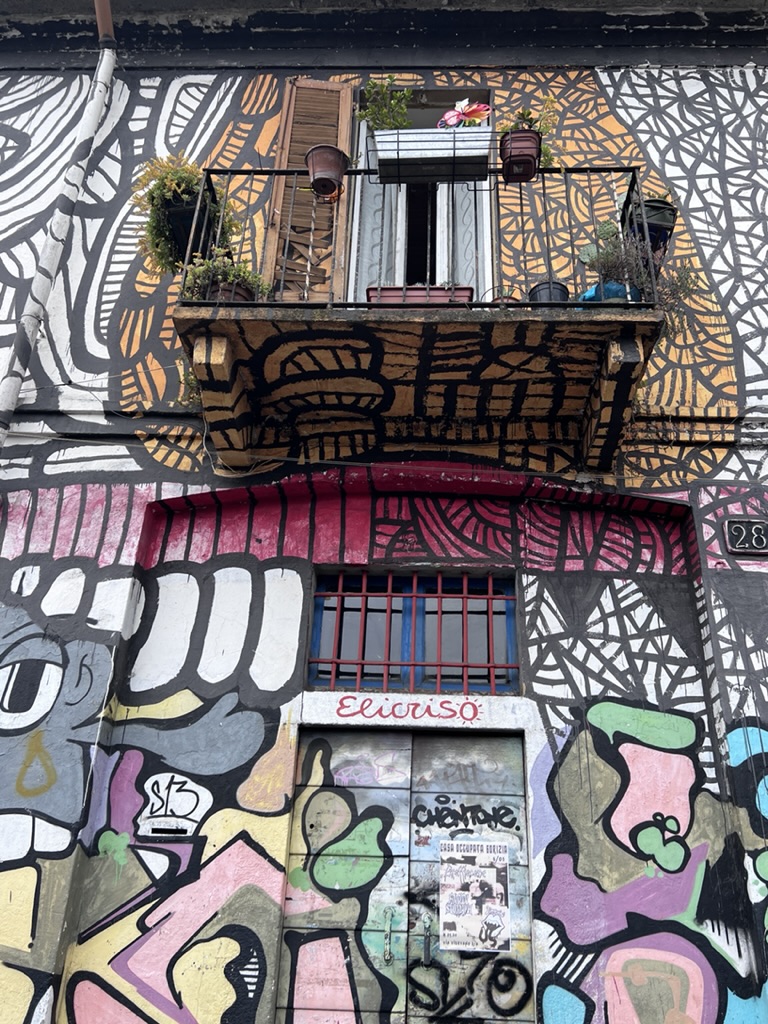
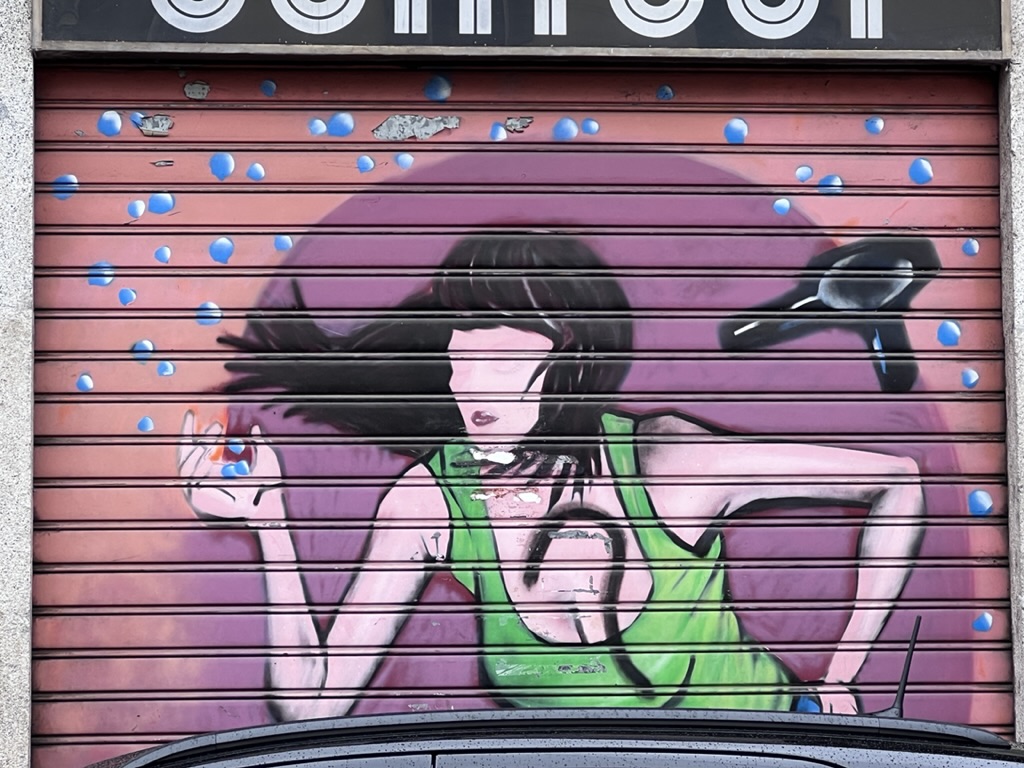
The navigli, which I sense translates to something like navigable is named after the man-made canals that were used for transporting goods and people, and for irrigation too. From what I understand Milan was like a landlocked Venice, crisscrossed by waterways that are now hidden under paved roads. And it was on these waterways that the marble needed for building the Duomo was transported into the center of the city. Most of the canals were filled to make way for cars and trucks, but Navigli remains pretty charming with the few remaining canals. This is an area of Milan where there are buildings where apartments have “shared” balconies.
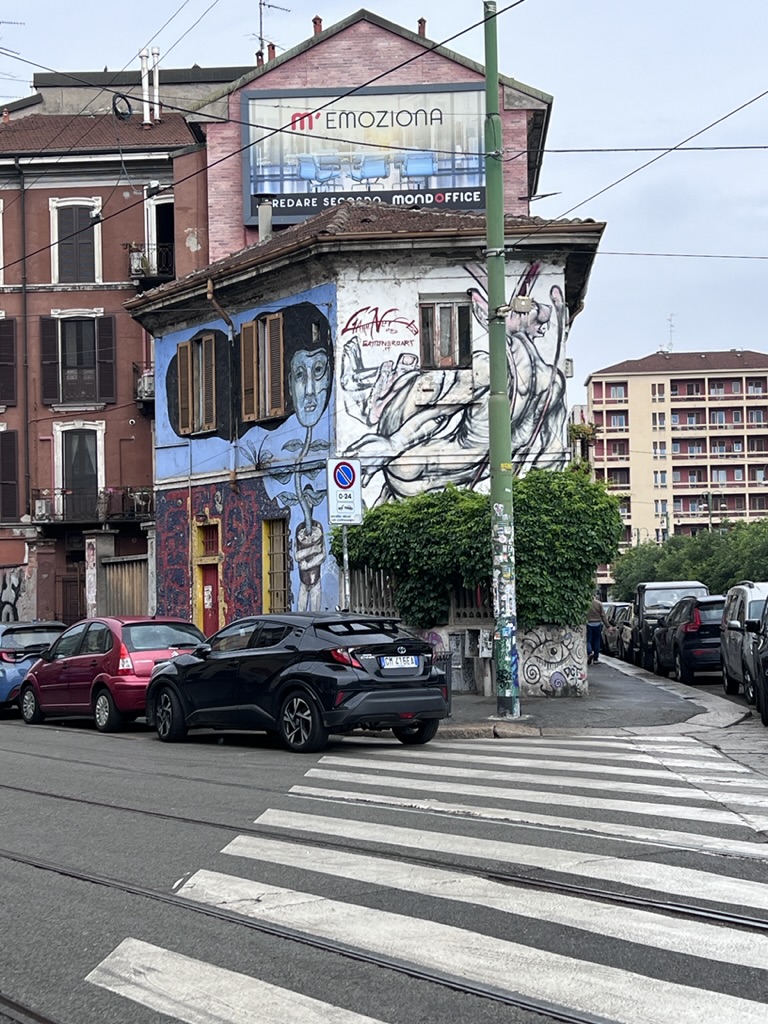
The waterway is home to many activities like rowing and canoeing and alongside there’s cycling. I also saw someone fishing. I’m told if you are daring you can actually take a dip in the Naviglio… I walked and walked amid the intermittent sprinkles, and thought I’d head to Porta Genoa but got sort of lost and my GPS didn’t seem to direct me to where I thought Porta Genoa was.. so, I decided I’d just head pack to where the taxi dropped me off and find another taxi. But as I walked, I began to see the carabinieri (the national police) blocking streets and clearly preparing for something. They blocked all access across the main street, Macellaria Populare; I figured there was probably going to be a May Day parade.
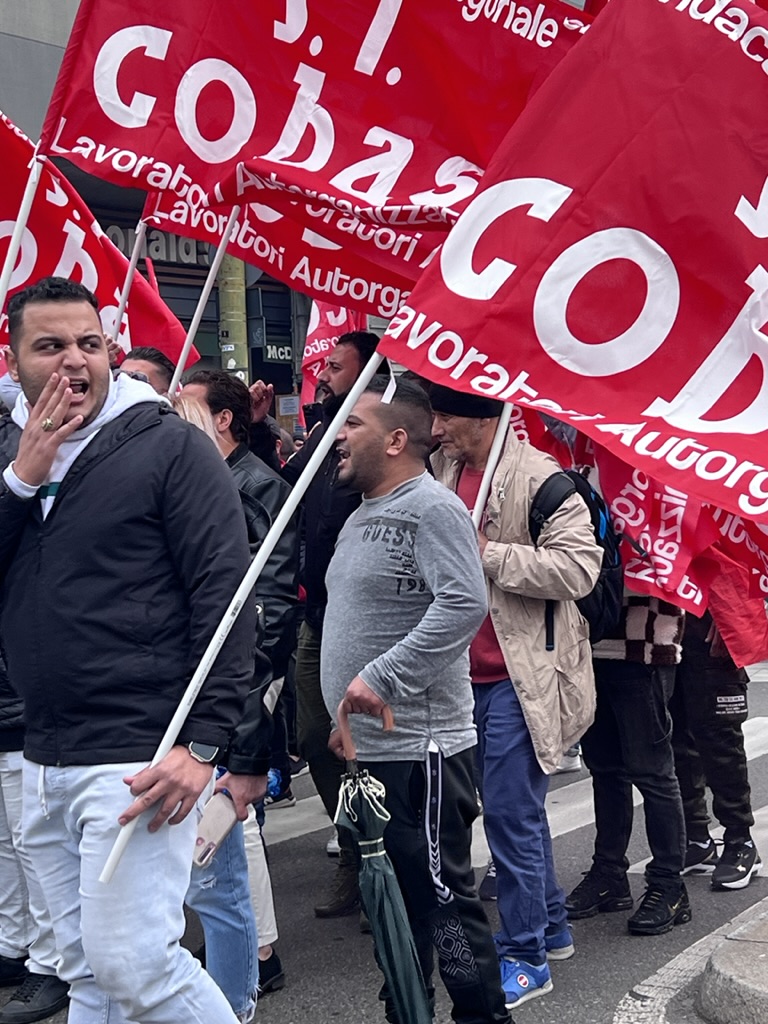
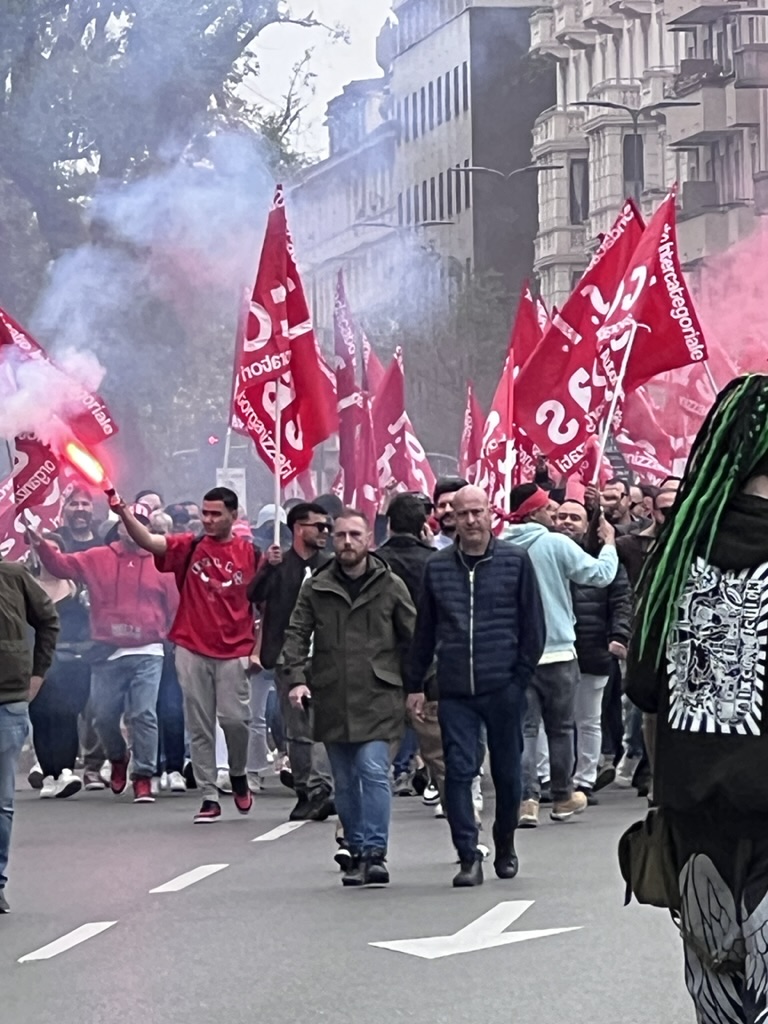
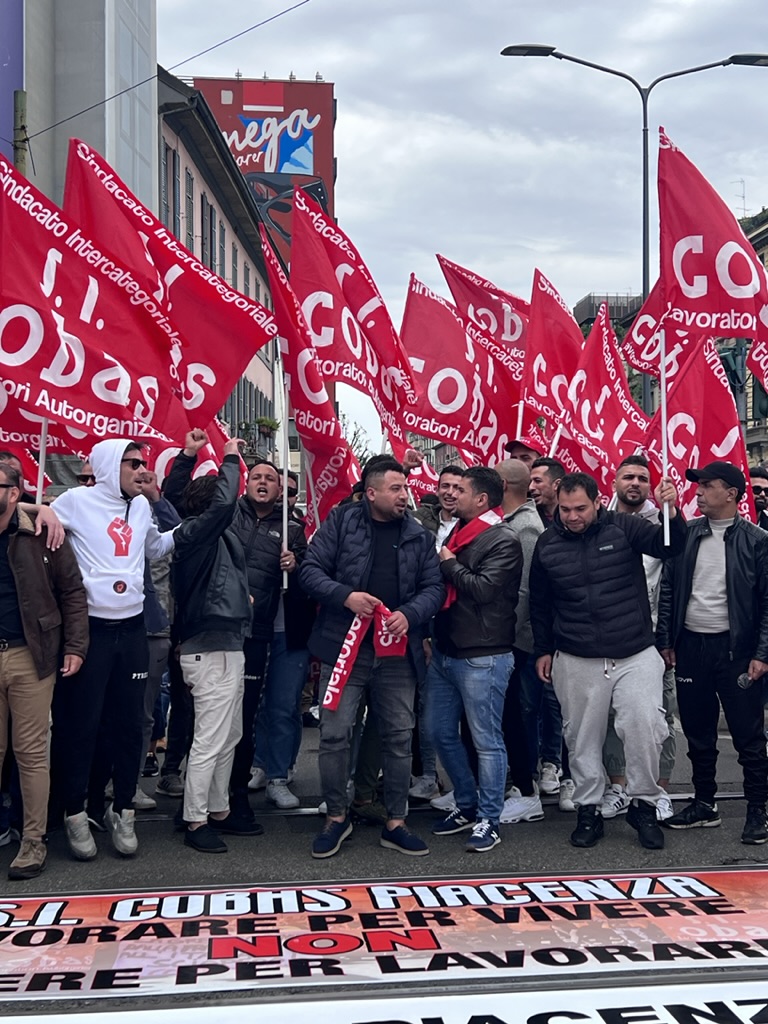
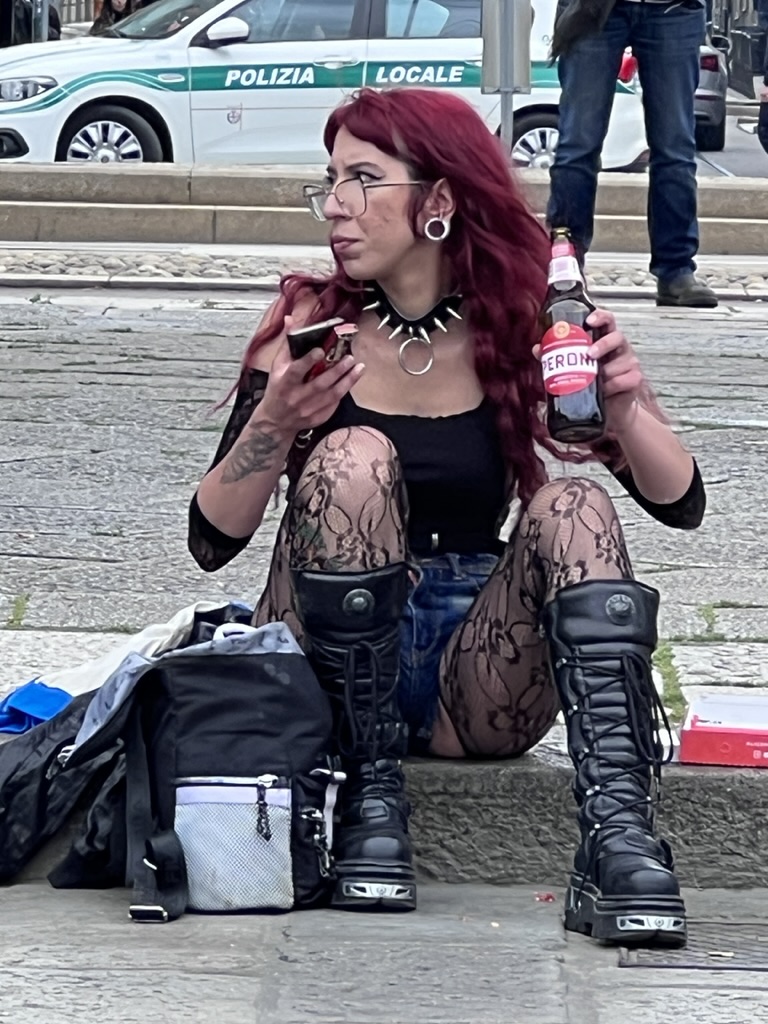
I thought it was an interesting neighborhood for a parade, since it’s definitely not in the center of town. Figured I should hang around, although I was really hungry. As I strolled closer to the start of the avenue, which the police were flanking, I began to see the seeds of a march/demonstration—so I got closer and next thing I was smack in the middle of the May Day demonstration of the Italian Communistas and Socialistas. They had a fairly good turnout and a large percentage of the marchers were people of color and immigrants. They carried signs that talked about repression and unemployment, I think.
And then music started to blast the streets… Bob Marley’s “Get Up Stand Up for Your Rights,” followed by some Italian songs… and they marched. I stayed a while and then decided to head back to the hotel, but no taxi could get to my location because of all the streets being blocked. Finally, I stopped one of the cops to get directions to a taxi stand, but his explanation was unclear and seemed very complicated. Given the rain and the fact that I had already walked about 4 miles, I didn’t want to walk the additional few miles. I stopped another cop (fortunately they were all over the place, although they seemed pretty passive, and the demonstration was quite calm). This next cop spoke some English, so he was able to explain where I had to go to get out of the blocked streets and get a taxi. But first I asked a bit about the march. He said that the “main Workers Day march took place in the morning in the center of town (probably at Piazza del Duomo) and that this was an “alternative parade and demonstration.” I liked his choice of words—“alternative,” so I asked (knowing full well by the pamphlets being distributed) if this was a march of the Communist Party and he said “yes” and again said it was “the alternative” group.
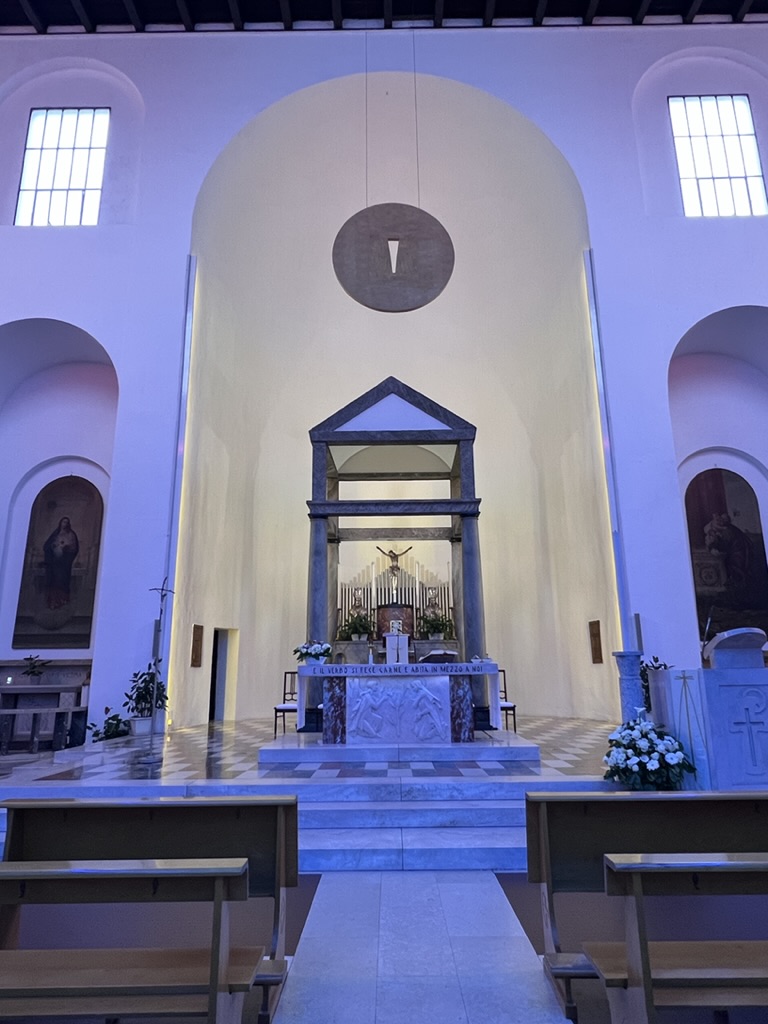
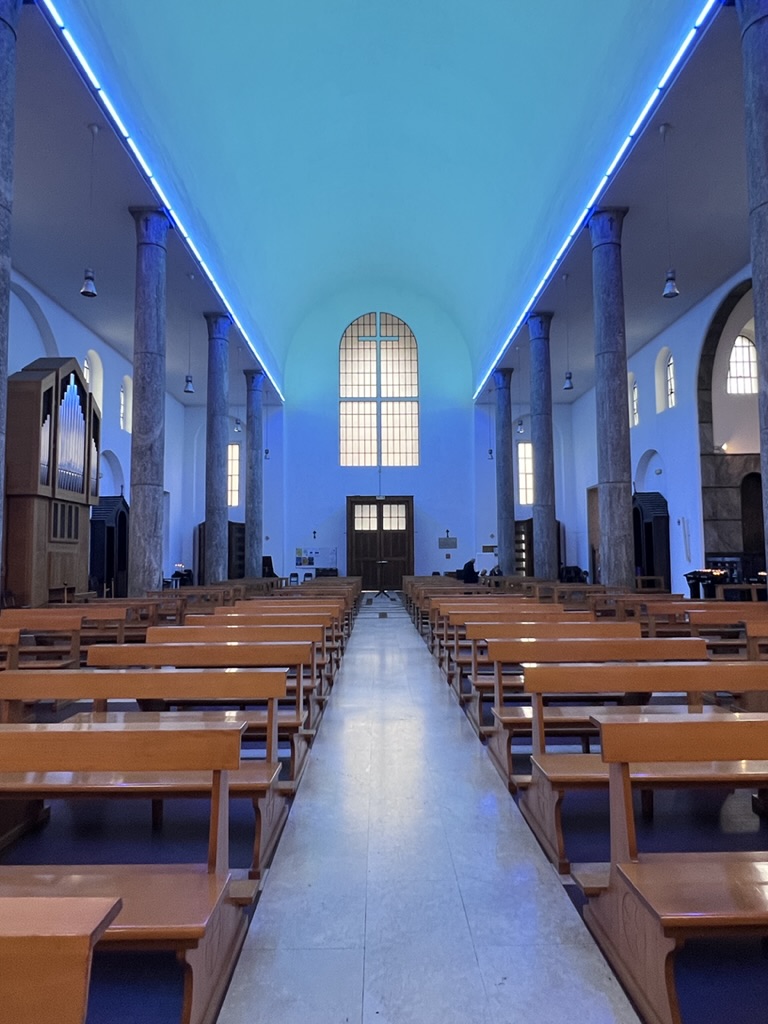
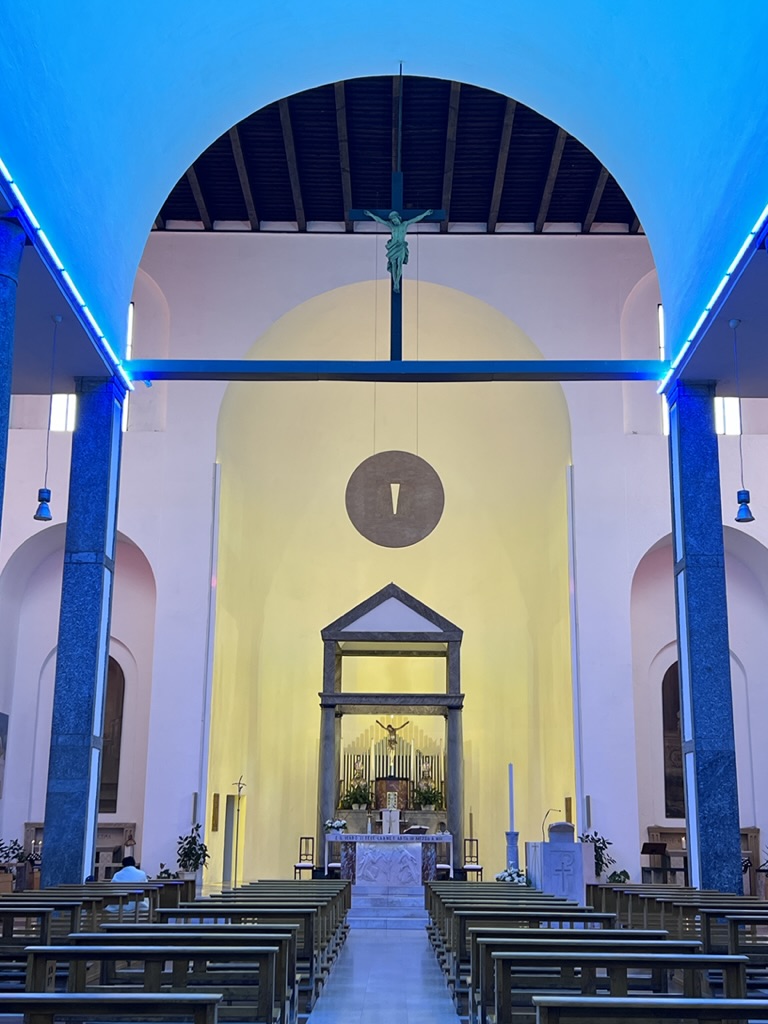
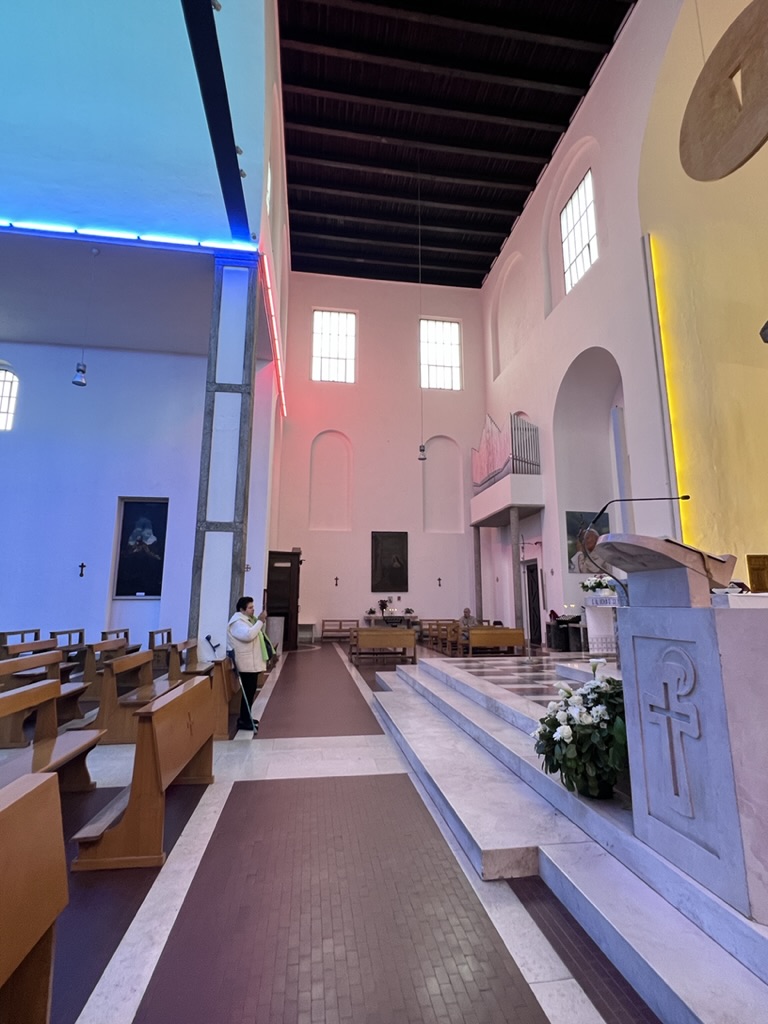
I wound up having to walk to a train station about a mile away and found a taxi. After an hour or so, I headed out again to a small church called Santa Maria Annunciata located in a low-income section of Milan known as Chiesa Rossa (Red Church?) toward the southern part of the city. In the late 1990s, Reverend Giulio Greco invited the American artist Dan Flavin to be part of the restoration and renovation of the church. Flavin’s permanent installation was the centerpiece of the renovation of the 1930s church. I think that Flavin actually died before the installation was actually unveiled (he died two days after the work was completed) and I believe that the Prada Foundation helped fund the artwork.
If you’re not familiar with Flavin’s work, he’s best known for his works that utilize fluorescent light and often does this in relation to specific architectural contexts where the installations will be placed. By using light like the commercially available fluorescent tubes which are linear, he is able to emphasize the structure of the architecture, although at times he purposefully contradicts the architecture. Flavin is considered part of the Minimalist Movement of the 60s/70s. It’s a bit strange for his work to be the centerpiece of a religious building because he has never used any symbolic or spiritual elements in his work. Still, from what I remember from art school days, Flavin does have some kind of religious background. I think his parents wanted him to become a priest and they sent him to some kind of seminary and he was drawn to the drama of the liturgy.

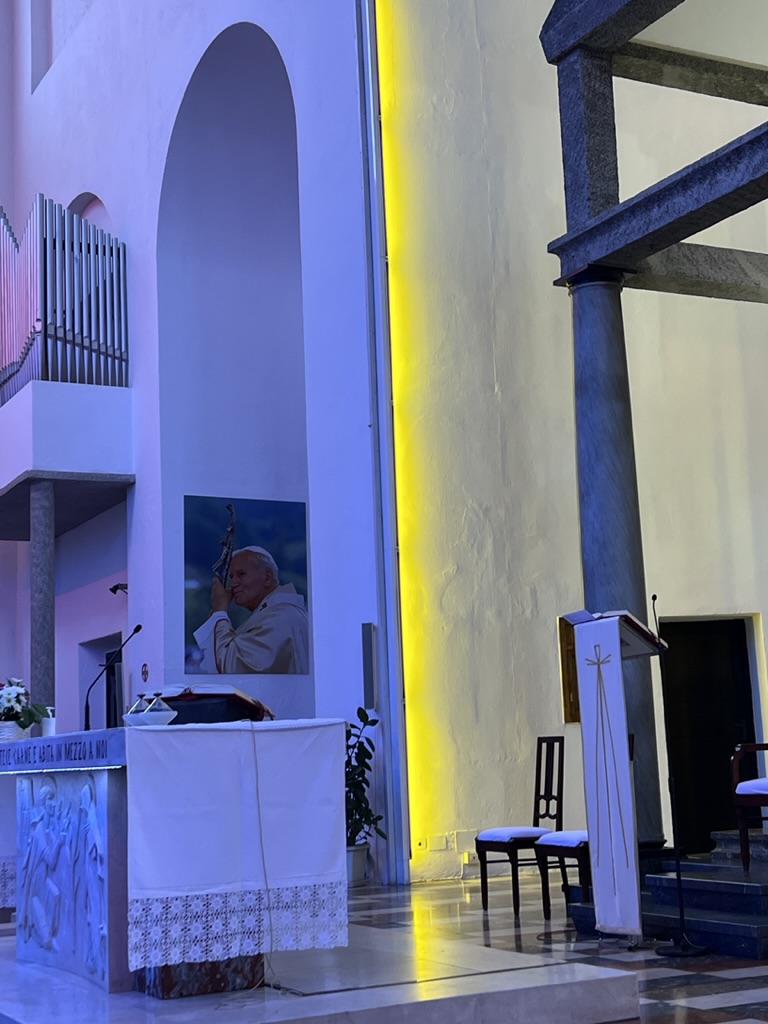
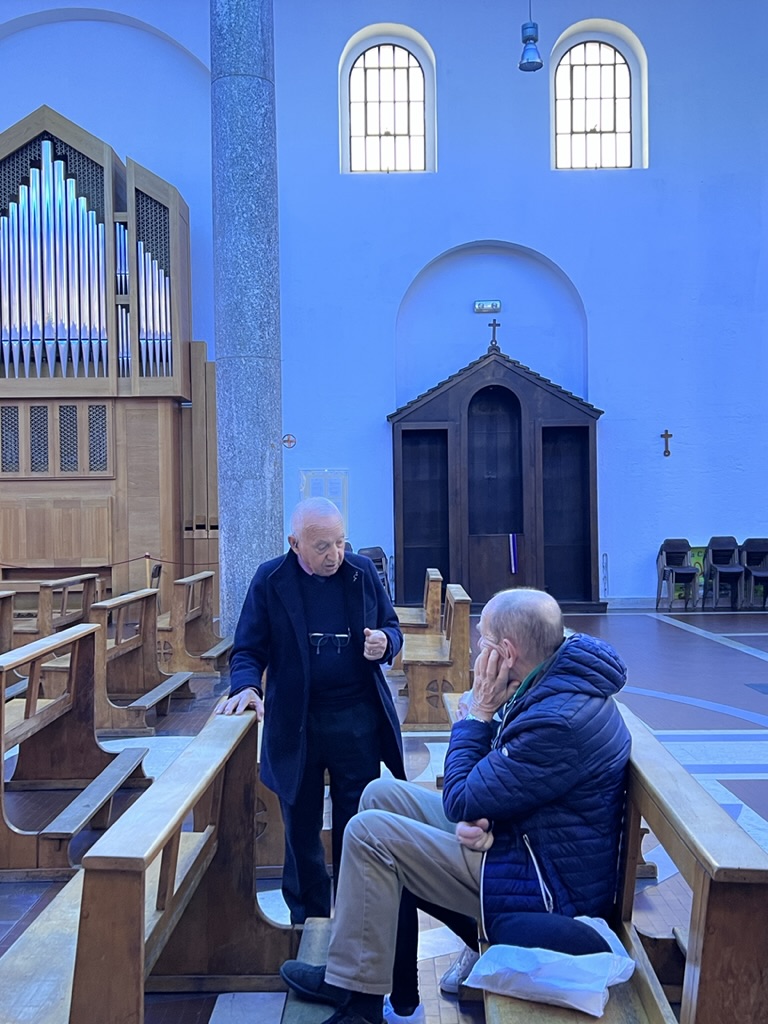
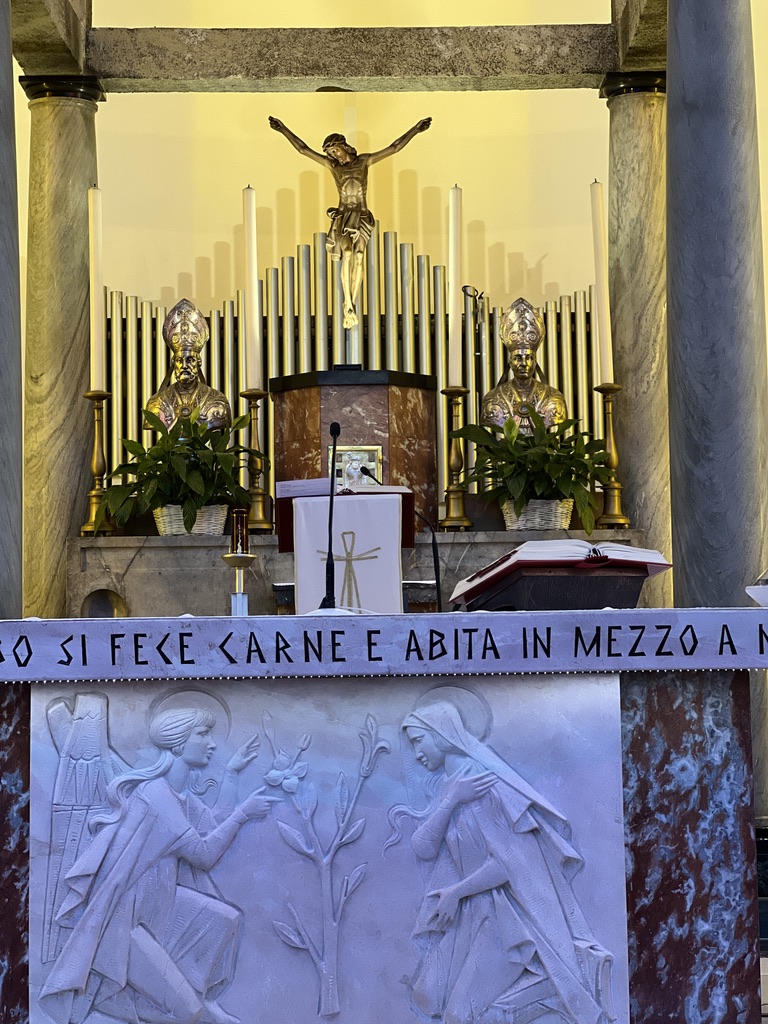
It’s a really wonderful installation — the interior of the church is stark white …. And the placement of the lights brings in green and blue and pink and these ultraviolet lights fill the entire church with chromatic elements that completely change the space and I imagine that the colors and feel are very different at different times of day.
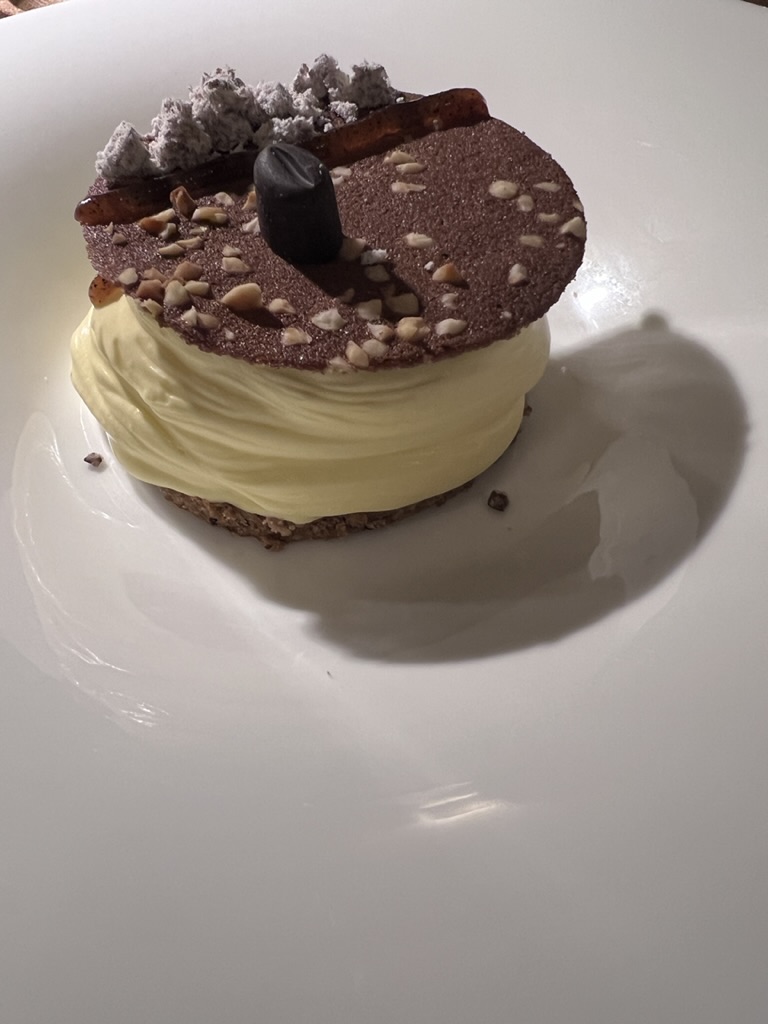
With that, I headed back to the hotel to check on Mike who felt he was up to going out for a real dinner… To celebrate we headed to a Michelin star place called L’Alchemina, where every dish was a little work of art.
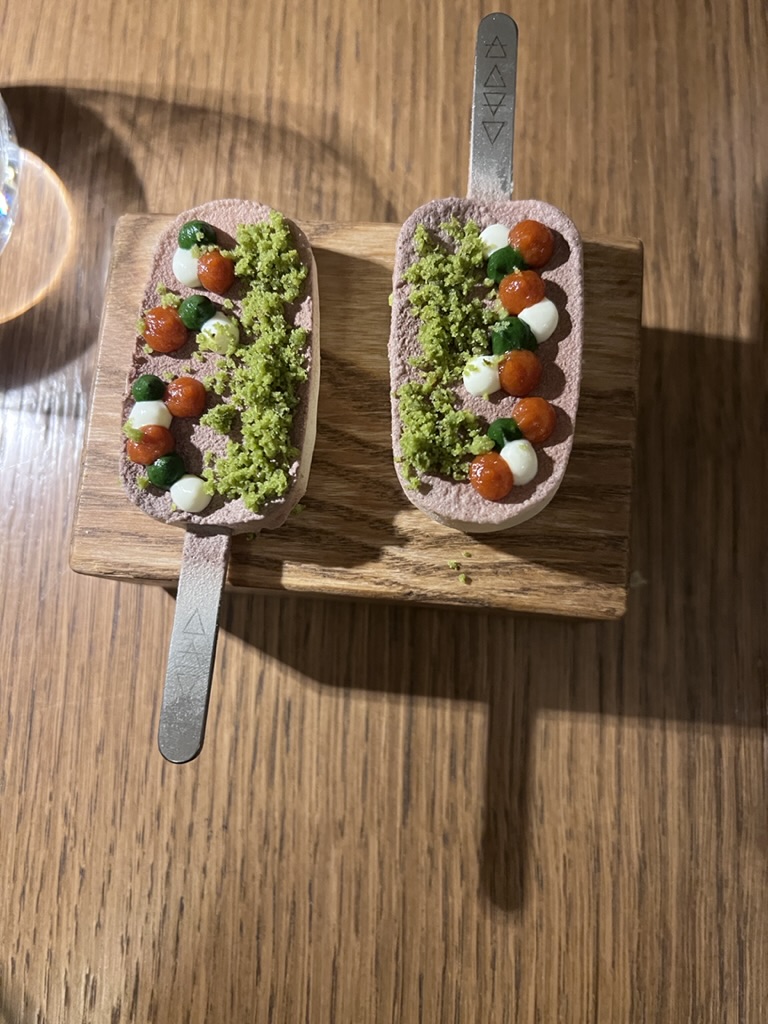
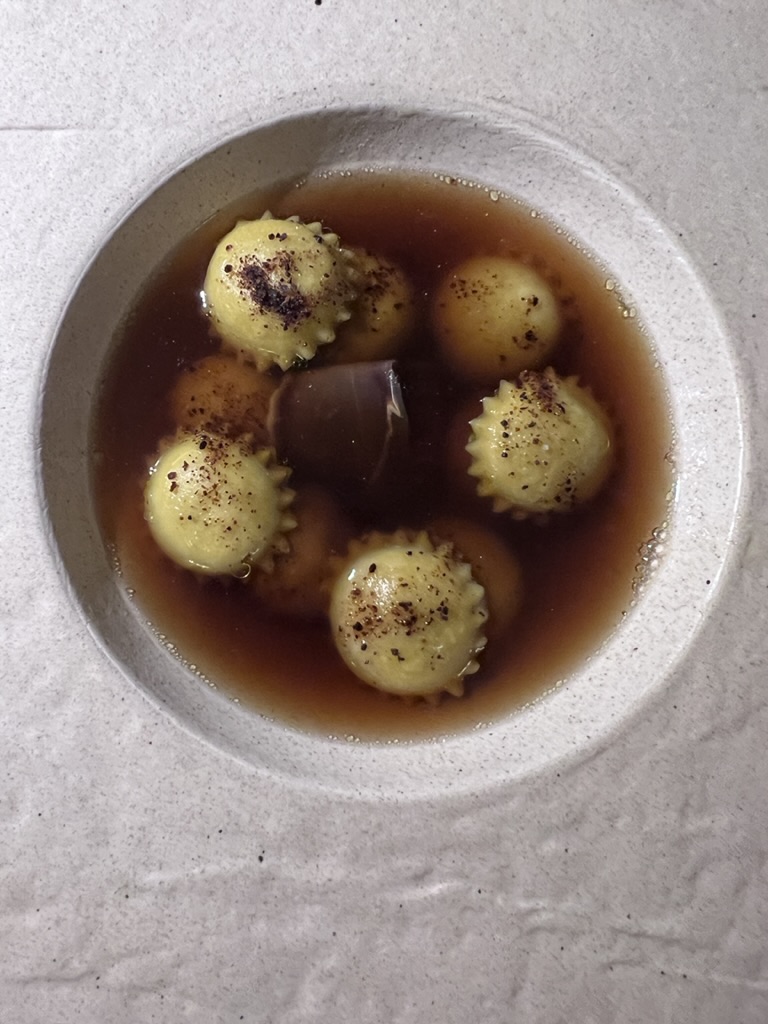
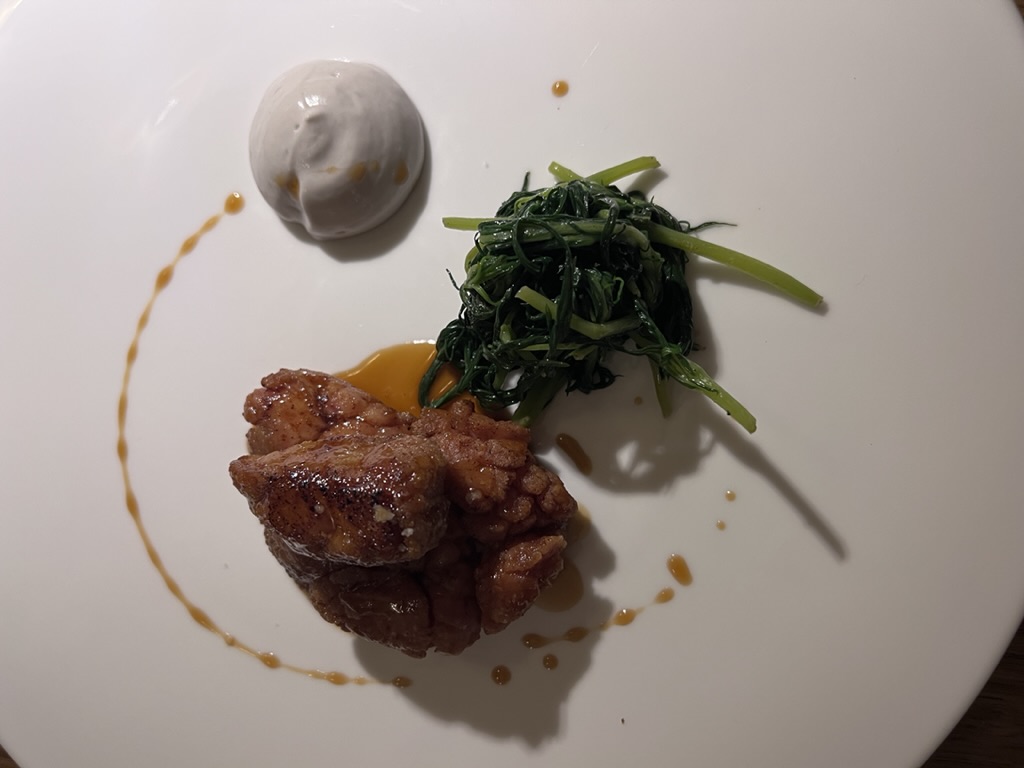
And now I’m back and ready for bed. Tomorrow it is supposed to rain most of the day, so I think my last day will be packing and getting back to my book so that I feel I was productive for at least a little bit during this trip.
All the best.. Maybe more tomorrow if I decide to leave the hotel. I’ve pretty much seen what I want to see here in Milan, but if the weather clears, I may do my favorite thing when I’m traveling—taking the metro and just getting off at random stations and walking those neighborhoods, but no fun if it is raining.
Fern
 Fern's Travel Notes