8. From Siena to Bologna via Abbazia di San Galgano
18 April 2023
Ciao from Bologna –



Before I begin today’s escapades, I wanted to respond to the question several have asked regarding both our decision to take this route and the rationale for many stops and short stints in each location. This is a road trip. We’ve been to Italy many times and wanted to both revisit some places and also see new ones. We have limited time as we are on our way to Geneva to see family; thus we will end up in Milan as our last Italy stop, where we will take the train to Geneva. We spent three nights in Rome and in Todi and two nights in Siena; we’re stopping for two nights each in Bologna, Padua, and Trieste, and then we’ll be in Milan for four nights. Along the drive we are stopping to see some things we had never seen in any of our other Italy journeys. I can write an essay now on the pros and cons of short stops in many places versus fewer stops and longer stays (the latter being our more usual travel mode). But this also has benefits and thus far has been great—with lots of variety.
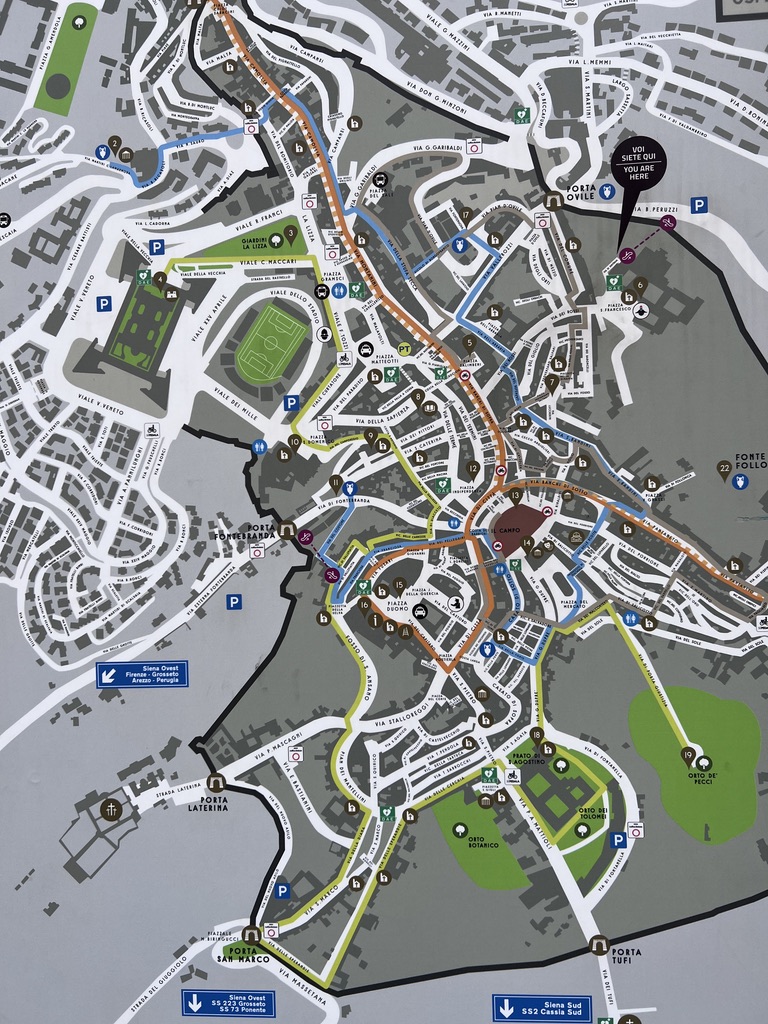
We left Siena around 11 am, after navigating our way from the public parking lot out of the town. I attached a map of the old part of Siena (the vecchia citta) to provide a sense of the “logic” of the street patterns—not just for Siena but for all European medieval cities — piece of cake to figure it out! We’ve been to many of these medieval cities throughout Europe; they are great to explore and impossible to navigate (especially with a car).
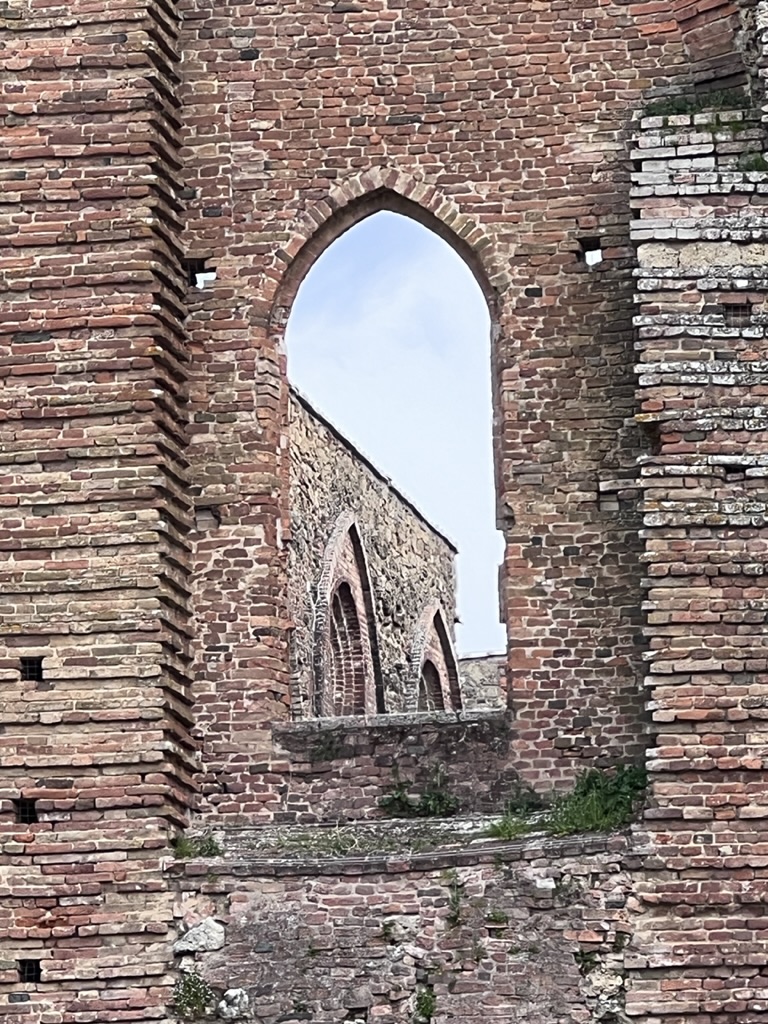
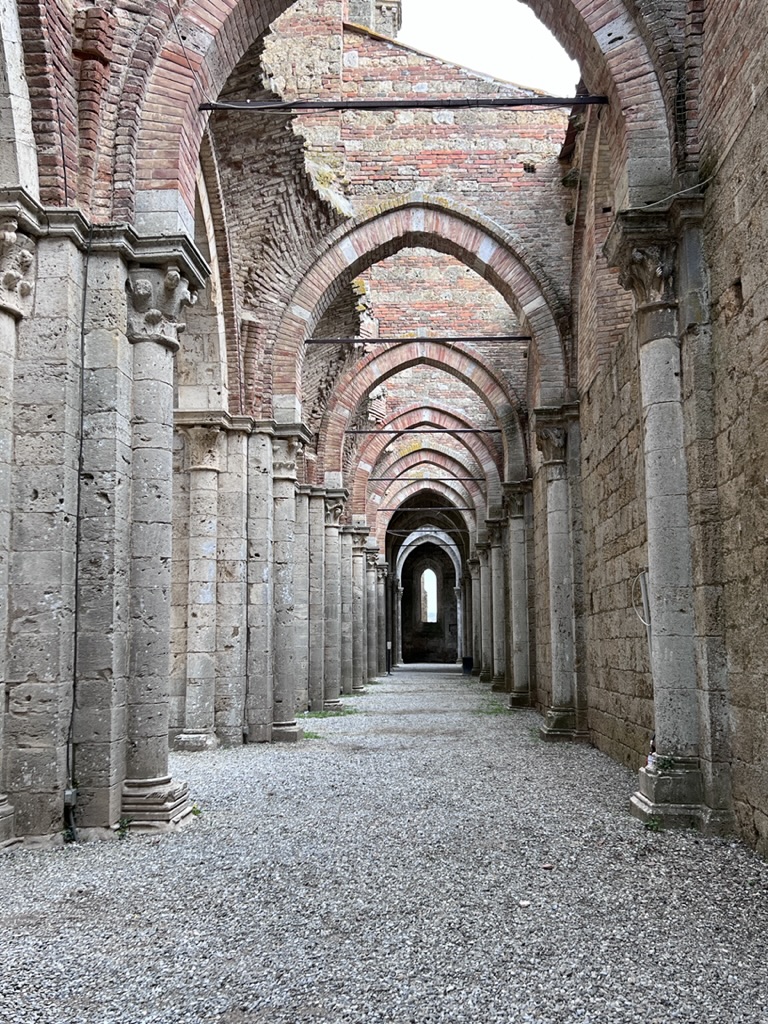
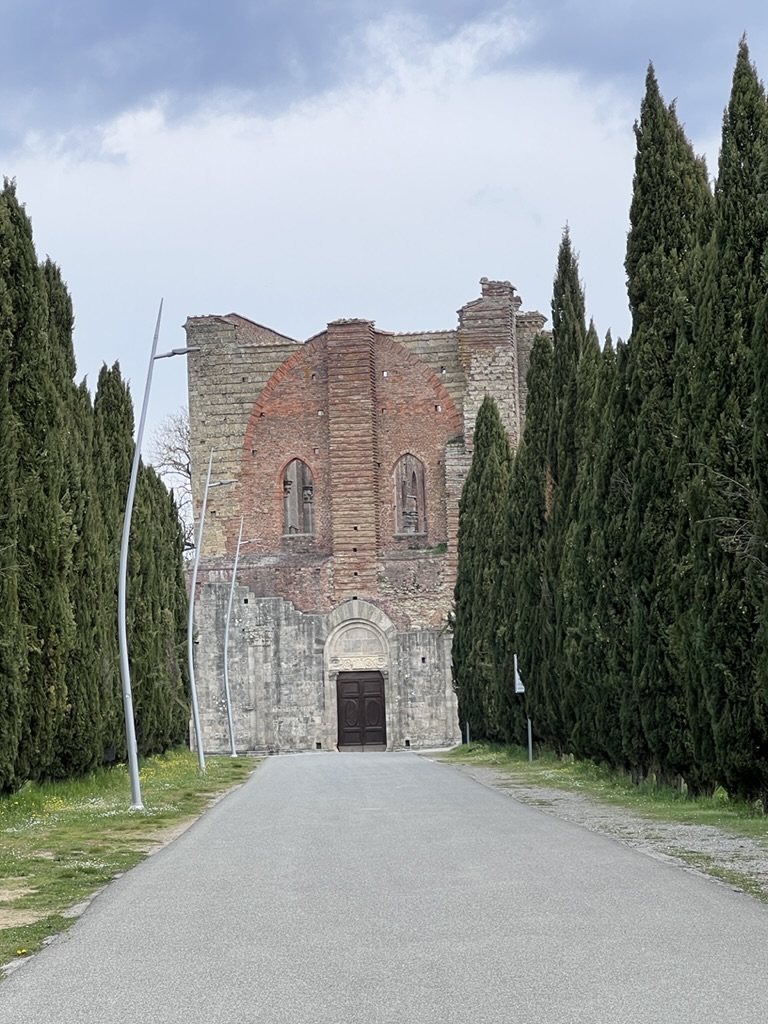
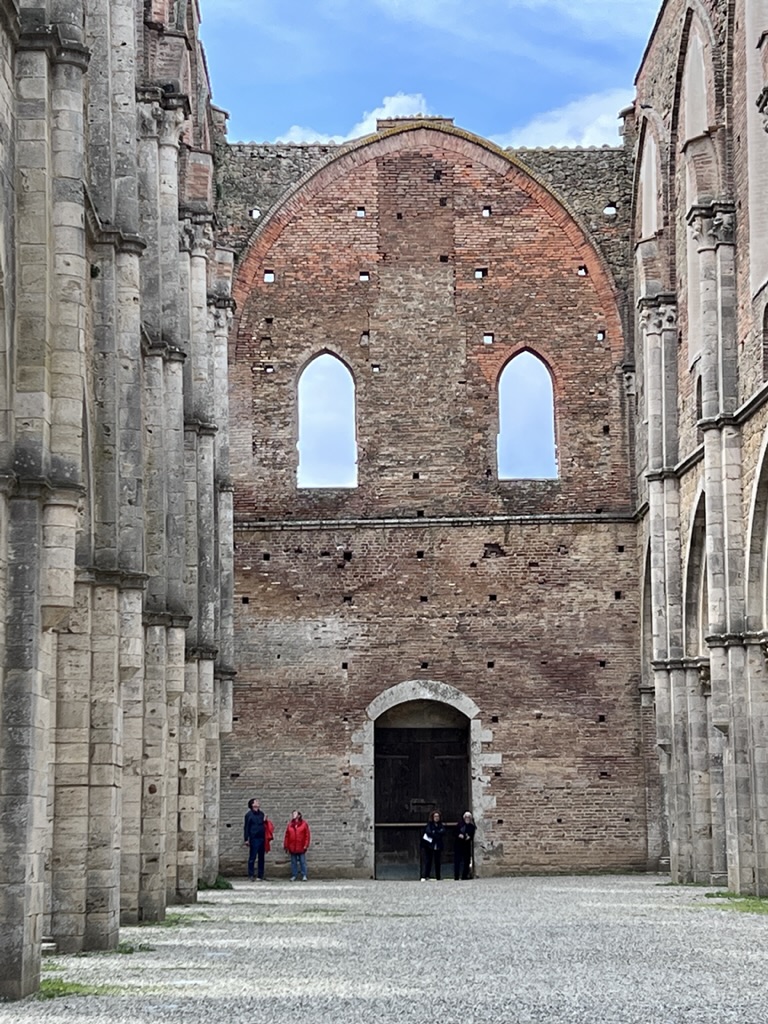
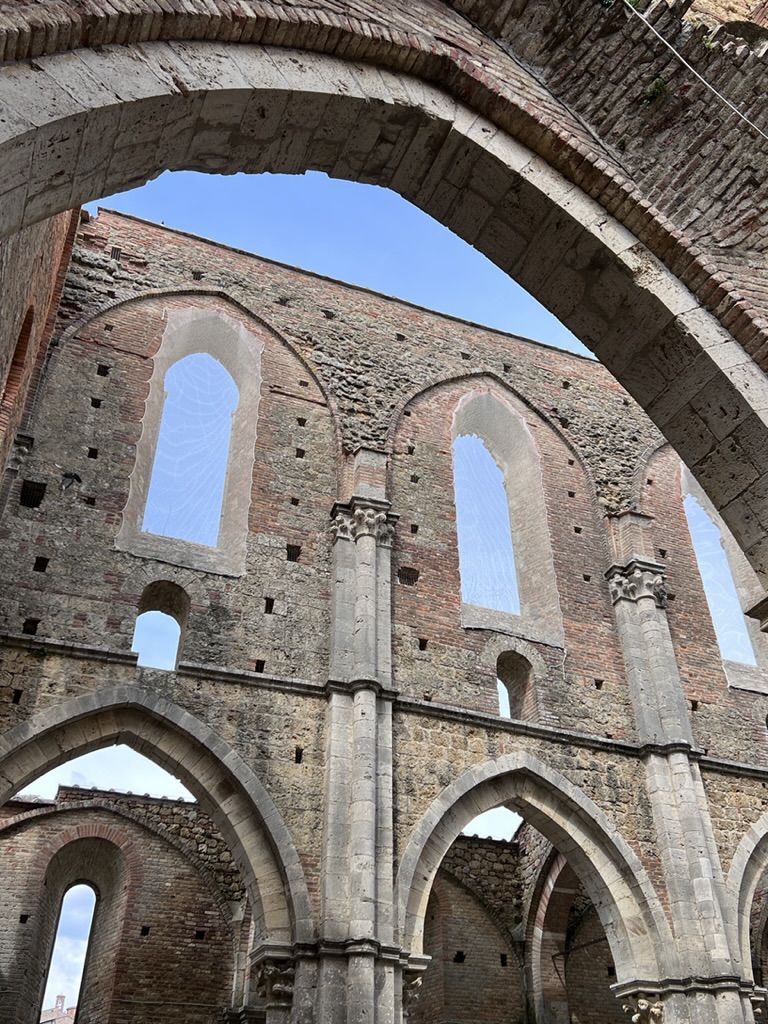
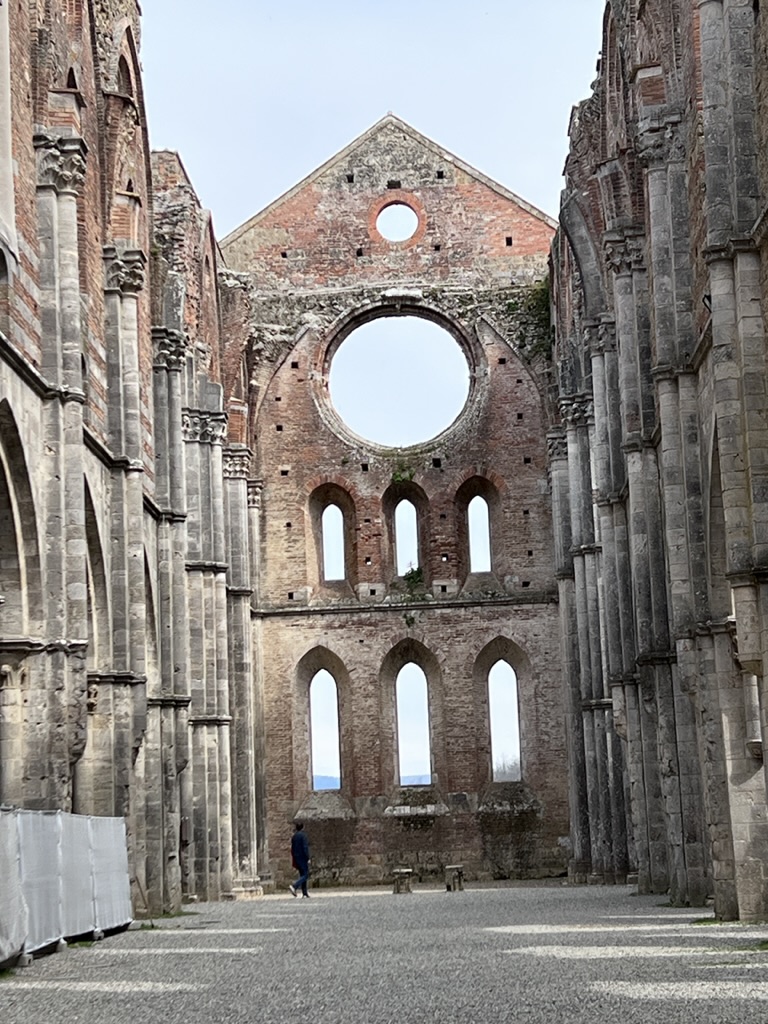
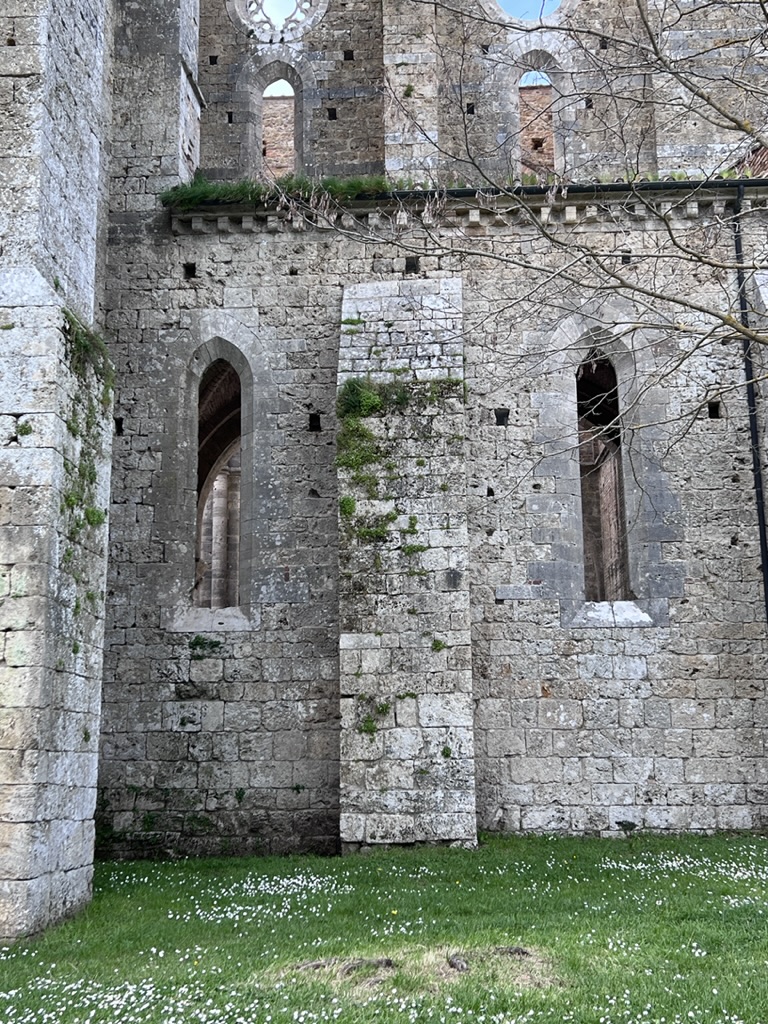
We went on a bit of a detour today because we wanted to stop at the Abbazia di San Galgano which is about an hour outside of Siena—the drive took us a bit out of our way to our Bologna destination, but we really wanted to see this Gothic church with a complicated history, and which is basically abandoned. The Abby of San Galgano was built over a 70-year period starting in 1218 by a group of monks. It is said to be the first gothic church built in Tuscany and was built here because these particular monks focused on building their monasteries close to rivers where woods, marshlands, and plains could be cultivated. But once they built this church, they had to withstand famine in the 1300s, and the plague a few years later. Then the abbey was devastated by mercenary bands … and at the end of the 15th century the monks moved to Siena… In the mid-1700s, lightning struck the bell tower which collapsed onto the roof of the Abbey and the church was finally “de-consecrated” in 1789. What we saw was the shell of the original church. We had seen a similar church—open to the sky—on a trip to the old Czechoslovakia and it seemed… well oh, so spiritual. When we heard about this one, we wanted to see it. The monks chose not to rebuild the roof but to leave the church open, transforming it into a stable after the de-consecration. In 1926 the Italian State recognized the cultural value of the structure and began to protect it. Today, there is scaffolding inside, and I guess someone is working to fix or stabilize the structure. It will take a long time.
But the Abbey also has some additional stories: San Galgano had apparently led a life of debauchery and wickedness as a youth. There is a large stone with of a sword stuck in the middle. The story is that in 1180, Galgano decided to convert to Christianity and made a vow, by sticking his blade into a stone to transform it into a cross. Some say there are too many similarities of this story to the story of Arthur, and the Knights of the Round Table.
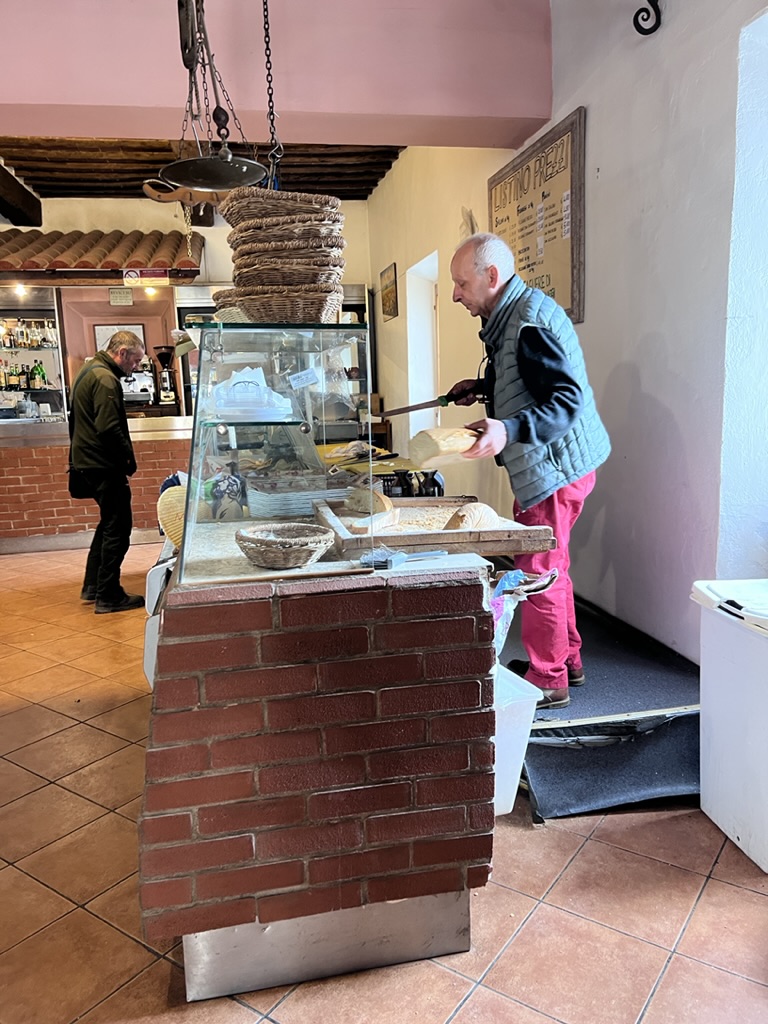
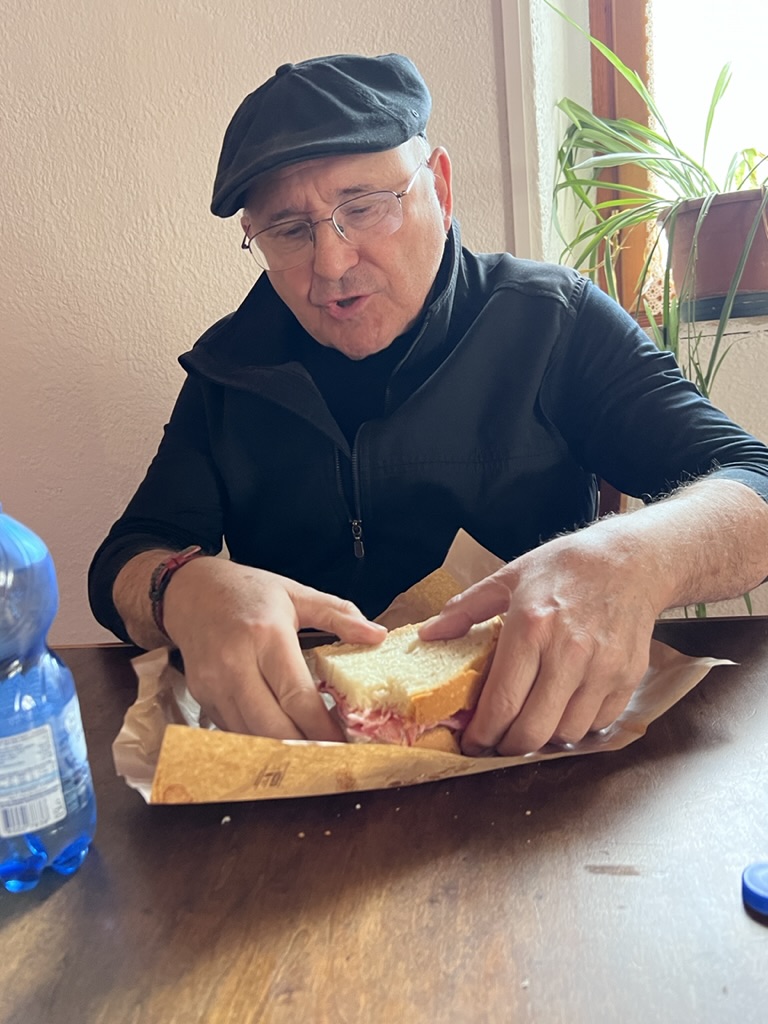
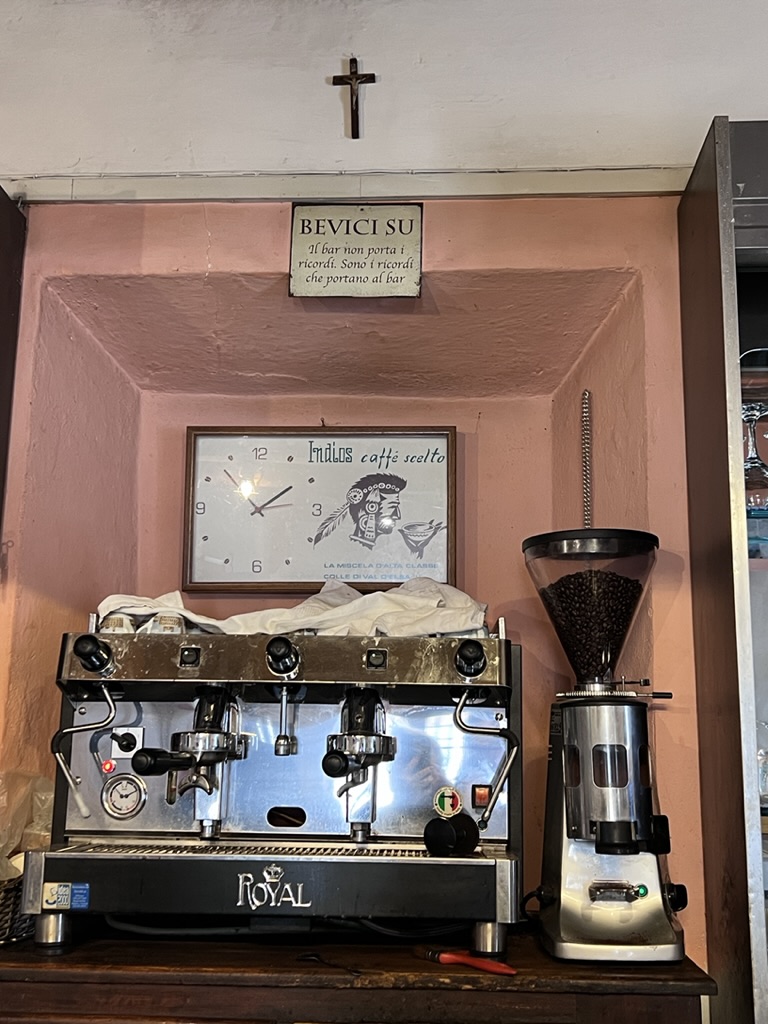
The drive to the Abbey, which was quite wonderful, followed small winding roads and fields of wildflowers; as we were getting close to the Abbey, we realized we were really hungry and that we were unlikely to find any place to eat. We resolved that we’d stop at the very first place that had food. About 3 kilometers before reaching the Abbey, we saw a sign for a bar and figured they’d have food. We parked and headed into this rather isolated, small bar. Outside some workers were having sandwiches. The guy who owned the place–-probably in his 60s—and who was the only staff, spoke absolutely no English. We said “panini” and he nodded. He then showed us a few different meats and we said “prosciutto” and he nodded; then he pointed to cheese and we nodded yes. Then we asked about tomato (“pomodoro”) and he repeated “formaggio” (cheese); I said “pomodoro” again and he said “formaggio” again, so I realized it was a lost cause. I then tried “verdura”- vegetables; and he said “formaggio”… so we had a cheese and prosciutto sandwich… that we shared. The place was like a throwback, complete with coca cola signs from the 50s (probably worth a lot on EBay) and a poster for some event in 2009. As we were leaving a bunch of motorcyclists arrived who seemed to know the place.
We ate and headed to the Abbey which provided real drama without roofs and windows.. just sky.. It was a powerful statement with typical gothic soaring columns. We strolled inside and outside.
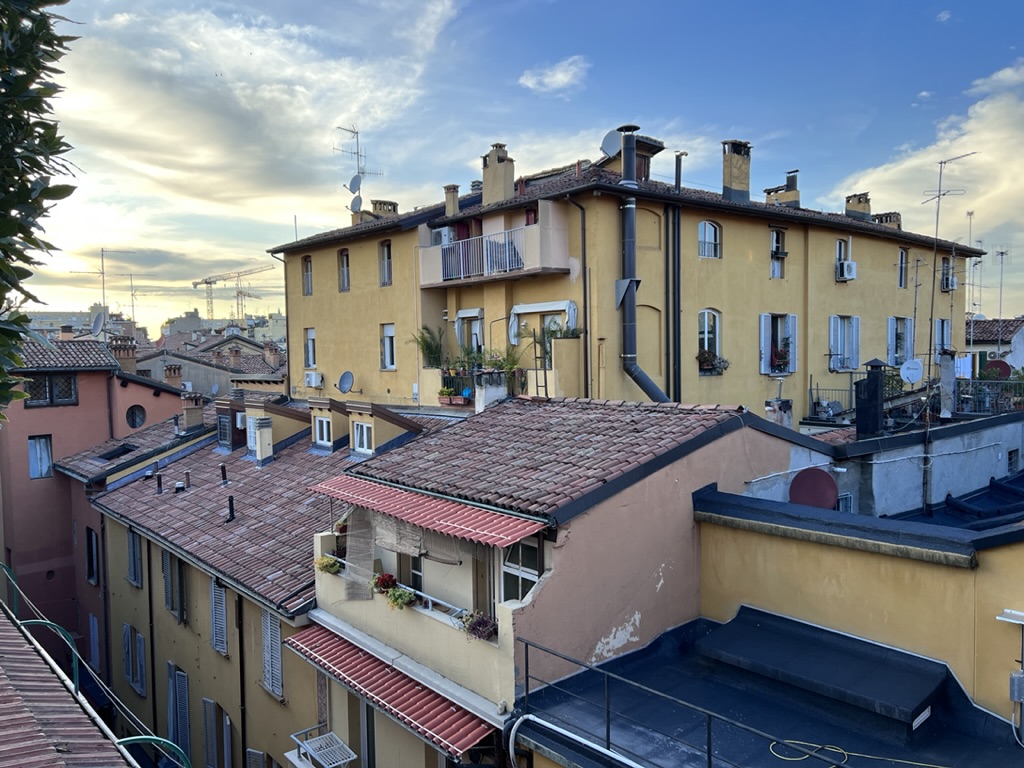
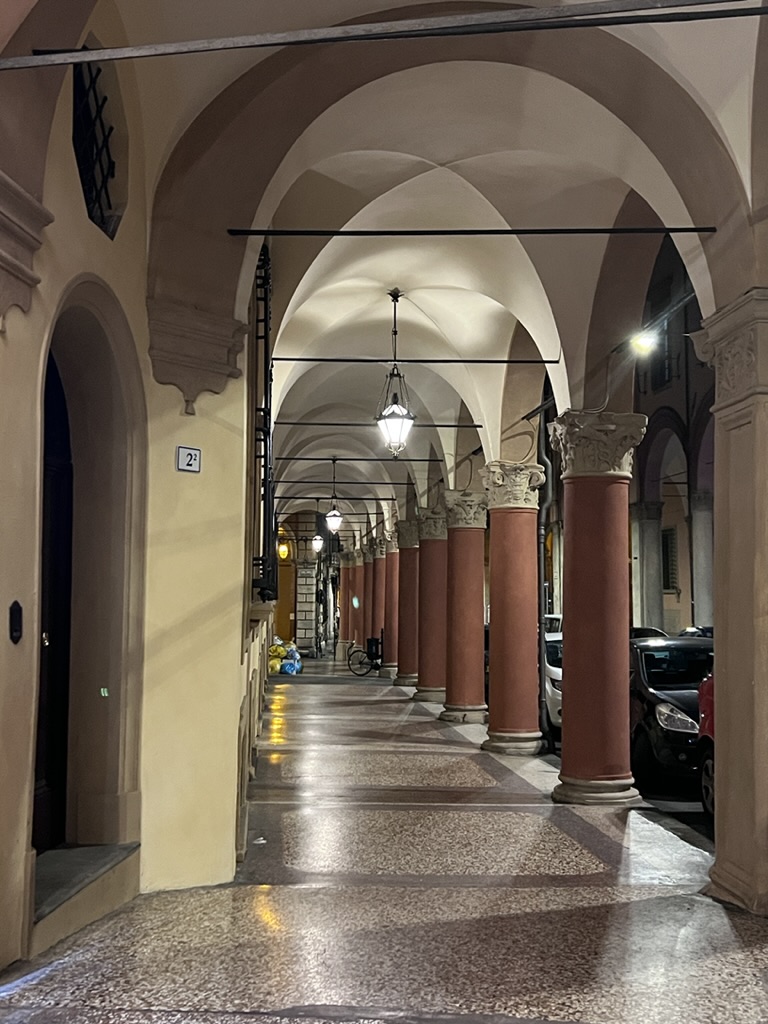
After strolling the site, we began our journey to Bologna where we will stay for two days. Tonight, we had dinner at a little place called Ahime—about 12 tables with a very creative menu that changes daily based on available ingredients. More about this tomorrow and our strolls through Bologna, a city of about 350,000 with some interesting neighborhoods and my strong memory of the many streets with covered archways and a grand town square.

More tomorrow.
Fern
 Fern's Travel Notes