3. Cairo, Egypt… 1st, 2nd, 3rd Worlds in 45 Minutes… Avoiding guides and camel poop! 12/18/22
Greetings from Cairo –
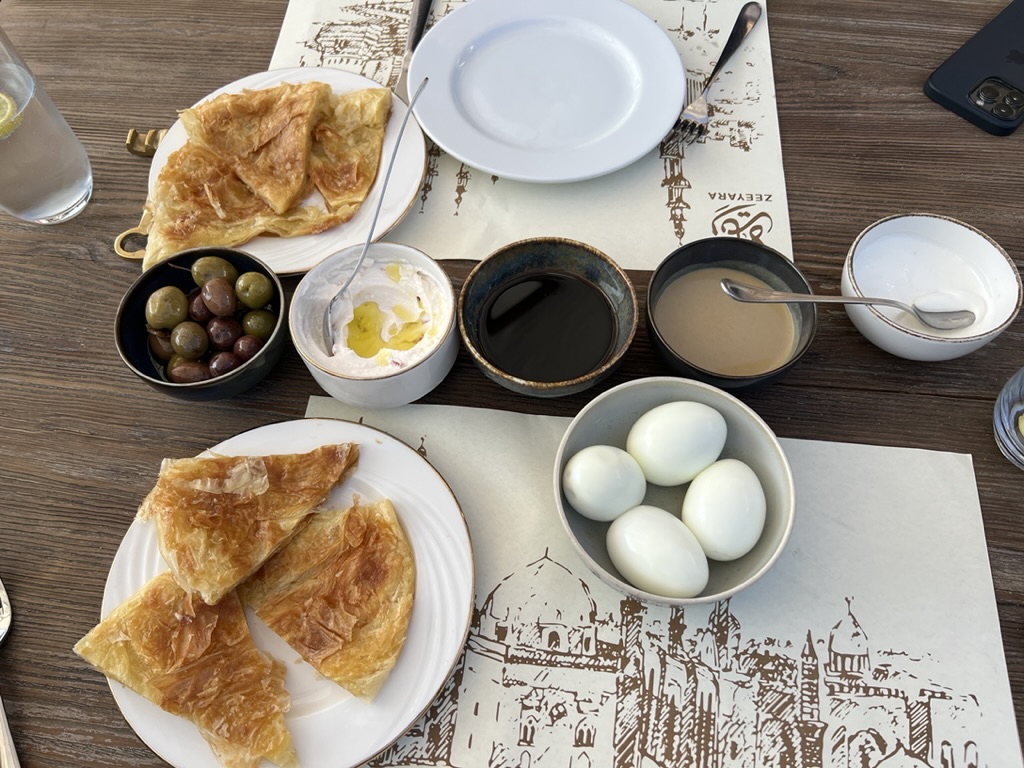
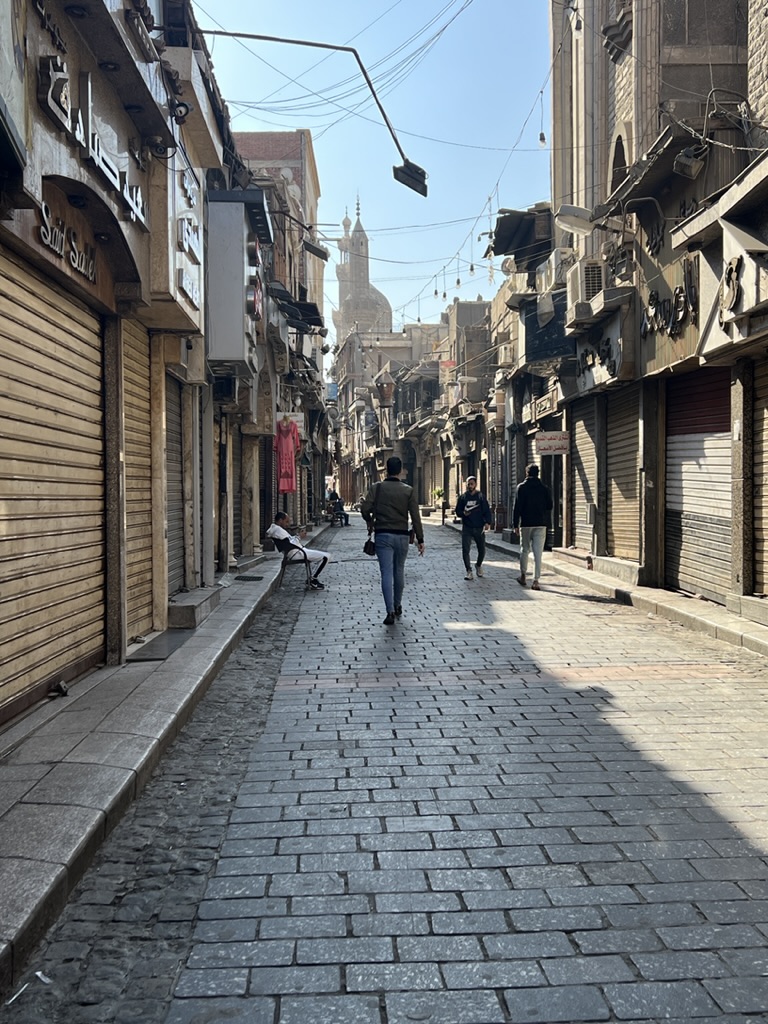
Following breakfast (the Egyptian countryside option, today—but somehow with plain hard-boiled eggs today and absent the hummus replaced with some other spread), we headed out of the Gamaleya (old section of town where we are staying) in search of a taxi. Theoretically, the entire area of Gamaleya is pedestrian-only, although deliveries are made all day, so there are cars, trucks, bikes, and motorbikes (although not really clear that the motorbikes are making deliveries. But, no taxis or private cars are allowed—although as with everything in Cairo (and developing nations), rules are always broken, so you do see cars and somehow Uber reigns supreme so Uber cars seem to be able to get through the barricades. As most of you know, we are very anti-Uber so we walked about 15 minutes or so to the gates of the Old City in search of a real taxi. Actually, there are many different kinds of taxis, including government approved and also private taxis. The government approved ones tend to be pretty old and beat up, but those are our guys, and we’ve been relying on them. They tend to be white with black trim (and don’t have meters)… Everything is “negotiated.”
We got into one taxi, but he was nervous that he didn’t know where we were going although we showed pictures. He called over a cop who spoke some English and the destination (the Pyramids) was confirmed, along with the price (everything is a negotiation!) We agreed on 150 EP (about $6) for a 30-minute drive; the guy should be given a medal for getting through Cairo traffic. We gave him 200 EP and he was totally grateful. Now a few words on traffic— it’s everywhere; there aren’t any striped lanes; and we have yet to see a traffic light, so I don’t think they exist. Because there aren’t any real lanes, it’s like a ballet of cars merging in and out of non-defined “lanes” and always creating a new “lane;” so on big streets there are about 6 lanes where we would have just 3. There are no pedestrian crosswalks so people—like the cars—take their lives in their hands and also do the ballet of getting part way across and then waiting for a short opening and dashing across—baby carriages, shopping carts and all. And of course, as in most developing countries (and NYC) the rule of the roost is the horn. On any given street, it’s a constant honking of horns. So, it’s quite an experience to be either a passenger or a pedestrian.
The drive from our hotel in the 13th Century old section to the Pyramids took us through many different neighborhoods, including the ‘new Cairo,’ which I’d say is pretty first-world with department stores, spiffy hotels that are all part of international chains, decent sidewalks, and classy apartment buildings. It also took us through sections of town that were definitely second-world with dilapidated housing covered with air conditioners hanging every which way amid crumbling infrastructure. And of course, there were the Third World sections with virtually no infrastructure and housing that didn’t have any air conditioning to address the totally horrific heat of the summer. But, streets are clean (despite not having a real garbage collection system), there is minimal begging, and no one visibly sleeping in tents.
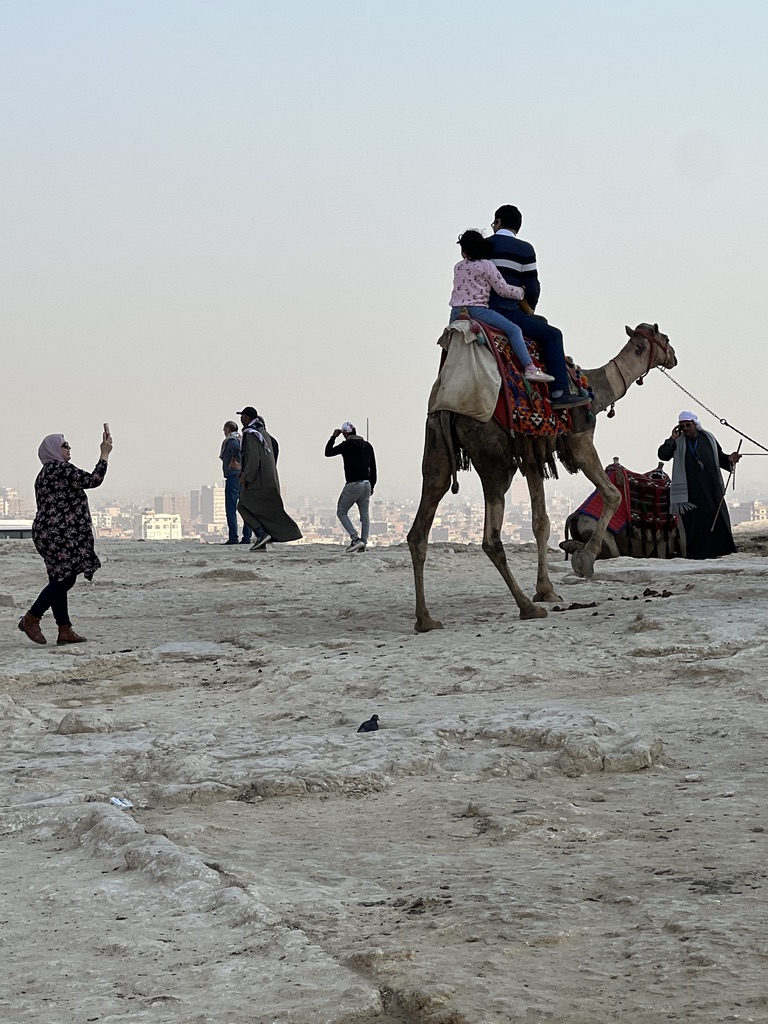

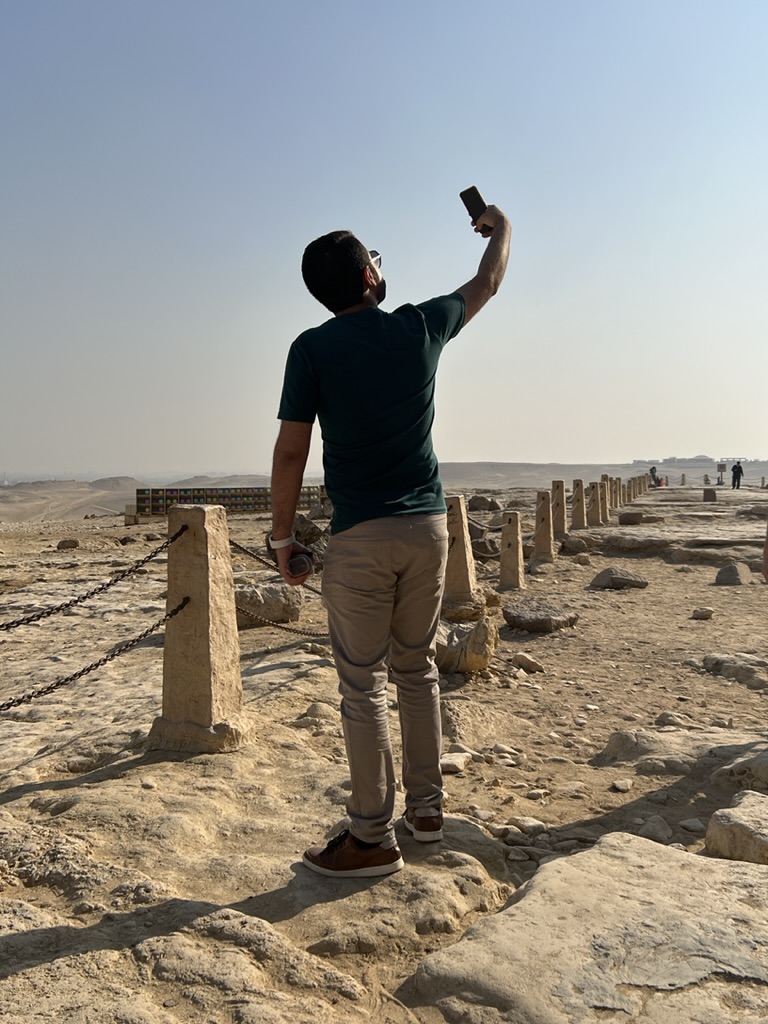
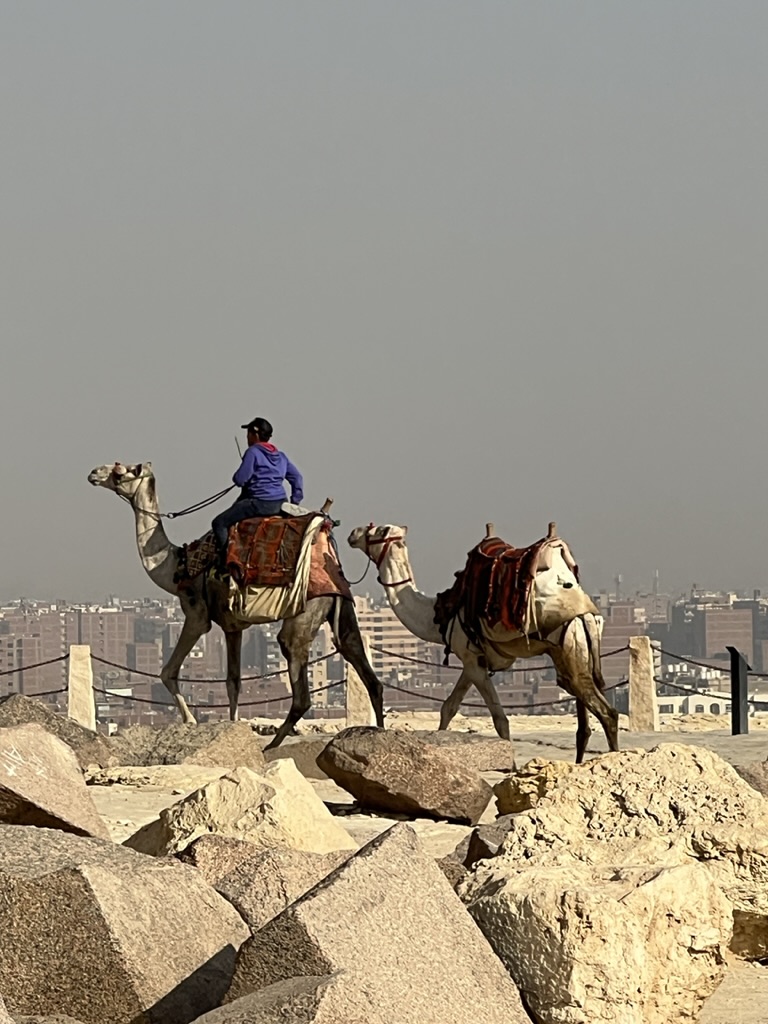
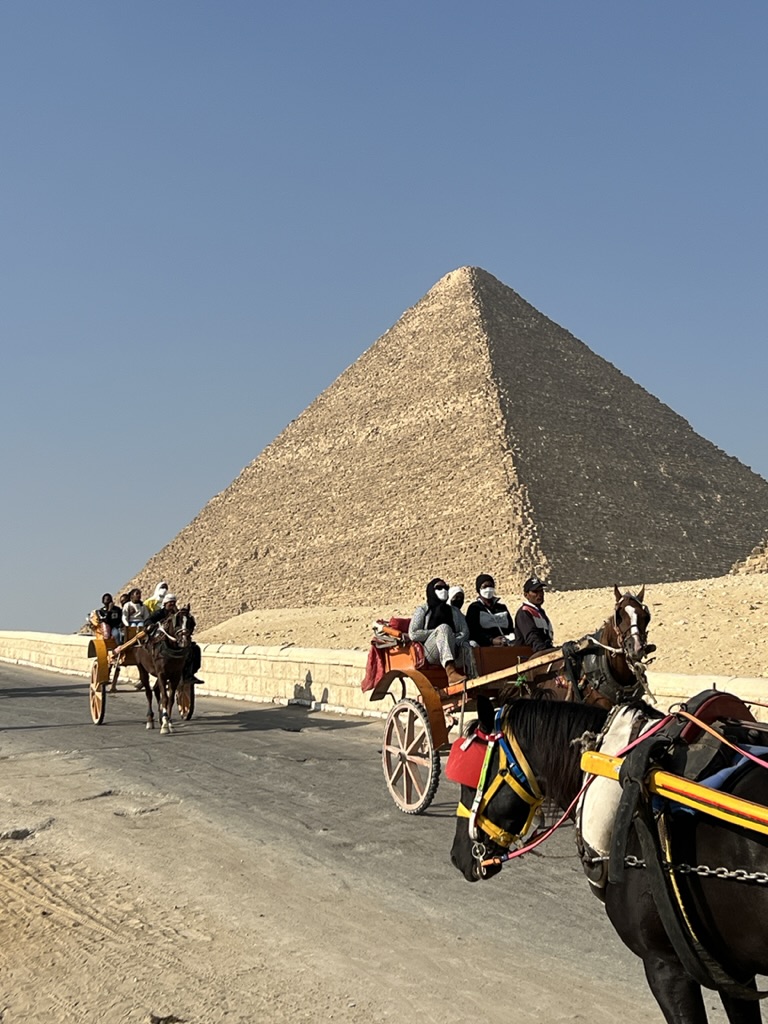
Back to driving: We’ve seen near-impossible driving and walking conditions in India, Thailand, and parts of Latin America… but maybe this one is the most severe. (Or perhaps I say this each time we are traveling!) Anyway, we made it alive to the Pyramids. And then it was even more chaotic—just getting tickets and figuring out where one goes. We were determined not to have a guide, so we needed to navigate this alone. We were practically surrounded by wannabe guides (most of whom had all sorts of credentials around their necks) and by men who wanted to get our tickets for us, for a fee or ‘small tip’ and others telling us what we needed to do and not do. One said, “You cannot go in as a pedestrian; you must use either the “buggy” (horse driven) or a camel.” Naturally we shirked them all off and waited ‘on line ‘ by ourselves to purchase tickets. Well, there really wasn’t any “line”– more like just elbowing your way to the ticket guy, alongside those guys who purchase tickets for a fee.. They are purchasing dozens of tickets at a time. But hey, we are New Yorkers at heart, and we can do this. We got the tickets in just a few minutes. Then you have to figure out where the entrance is. Signage doesn’t exist here! But it was all good fun, although Mike was getting increasingly annoyed at all these guys (and it is just men) who would not let up—trying to get us into a horse drawn carriage. But we persevered and managed to escape guys who take your picture with the pyramids as a backdrop, the camel rides, the horse-drawn carriages, the ever-present “helpers” who “just want to do you a favor”, the guides, and more. By the way, after today, I could easily become a member of PETA (People for the Ethical Treatment of Animals – a group I always saw as fringe), given that those horses (and there are hundreds of them) are being worked to the bones and they don’t appear to have any water areas for them; the camels are scrawny and definitely overworked.
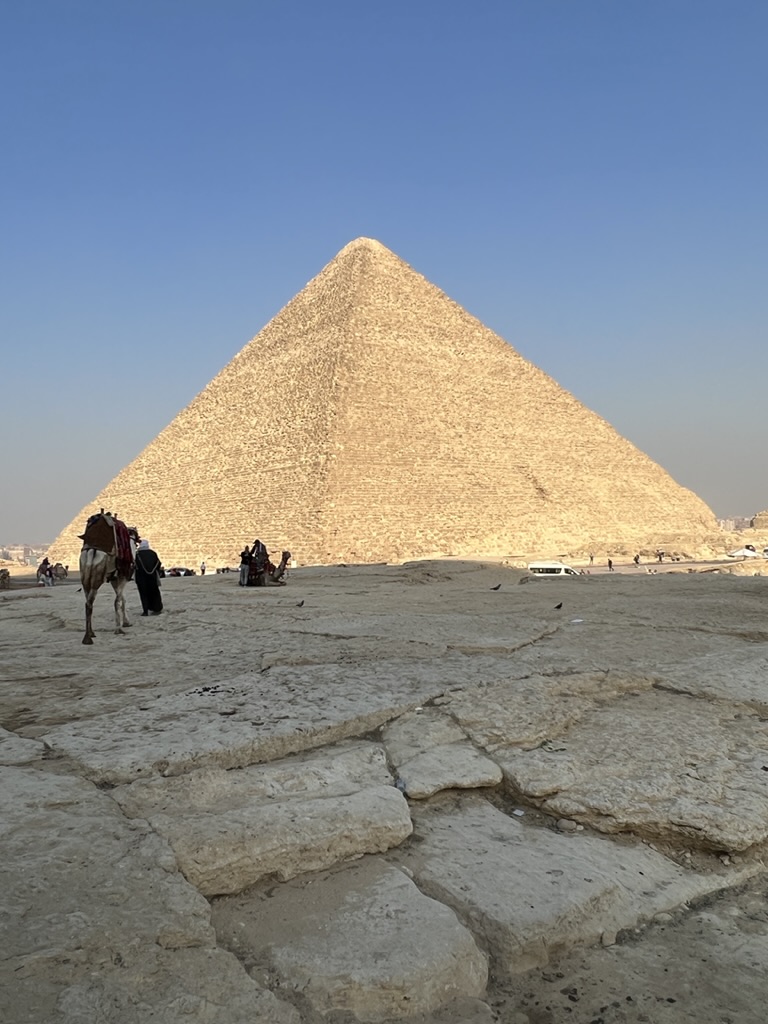
Must say seeing the pyramids was a bit underwhelming—except for the scale and the recognition of the age and what it took to build them. And that was sad, given all the years of art history I endured in college. The site is in pretty bad shape with lots of rubble to climb over and around. Lots of tourists—mostly taking bizarre photos (or having them taken by the “helpers”) where they hold their arms out so that the photo looks as if they are “holding” the pyramid and other such tricks. All the limestone that initially “covered” the pyramids has been removed, and it is apparent that the stone is eroding, which is unfortunate. Without any sort of “path” system or signage, everyone just meanders which made me think that we were all walking on top of some fairly sacred ground and significant architectural areas—and we don’t know what impact that is having. So in some ways, that too, adds to the loss of the sacredness of the place.
I gather the effort to go inside the pyramids and see the interior spaces is a great experience according to many. After reading up on what that experience is like we opted not to do that. I’m a bit claustrophobic and there are a lot of very narrow spaces you need to get through; you also have to crawl through some areas and given Mike’s knees I think that would have been challenging. But more than that, I think we were really turned off by how little has been done to make the experience worthwhile. No brochure when you get your tickets, the only maps are what you might have in your own guidebook, if you have a guidebook; no logical way to move between the sites – you just sort of walk around (and even in December it’s hot in the sun. So, we hiked up to the base of the largest pyramid and walked about half-way around it, and then went to see the sphynx. We also saw a few of the smaller pyramids. And then we hiked down, trying to figure out how to avoid the guys at the entry/exit who were likely to tell us that “they had to find us a taxi.” All of that happened, but we managed to find our own taxi and made a quick decision to head to one of the very well-advertised fancy hotels to get a snack of some sort. We decided on the Marriott Mena House, which as I recalled from the research we had done in selecting a hotel, seemed less obnoxious and less ostentatious as many of the others. So off we went with a very sweet taxi driver who knew no English and who had never been to the Mena House. Because of this two-, three-, or maybe four-tiered taxi system, the “street taxis” (as some call them) cater mostly to locals (and us). Thus, those drivers know the part of the city where real Egyptians live, not the areas tourists frequent. And these “street taxis” don’t have GPS and the drivers don’t have GPS on their phones.
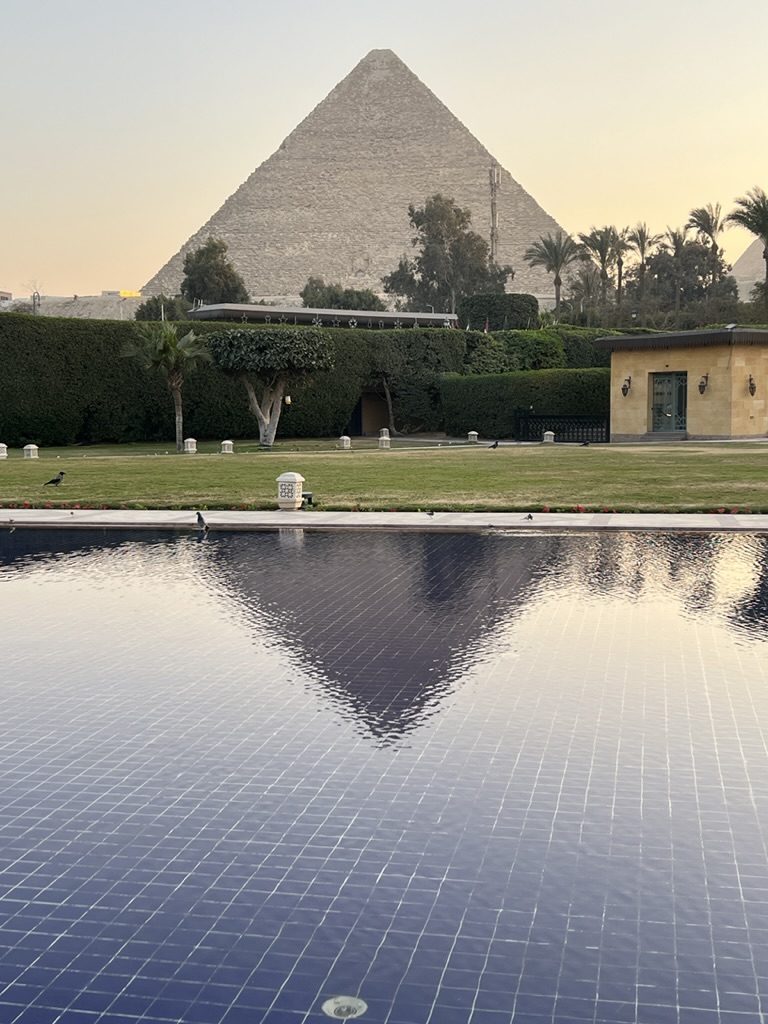
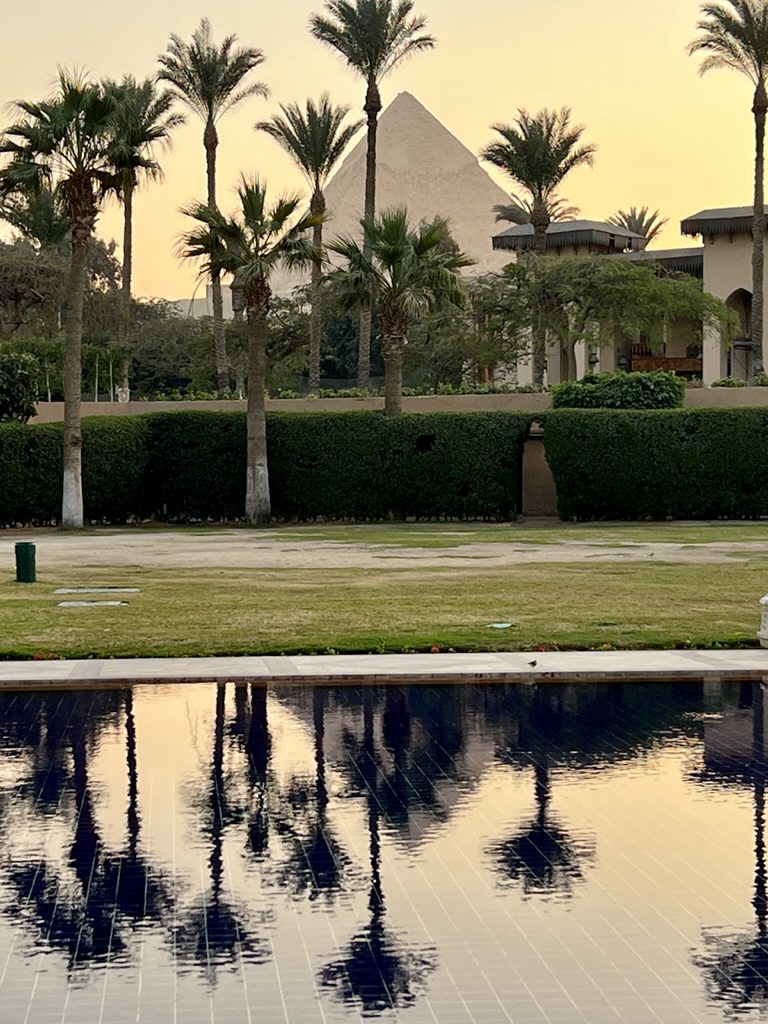
He got us to Mena House, but there were several missed turns, and it took longer to get there than it should. Once we arrived, the driver had to navigate many barriers set up to stop unofficial and unwelcome cars and vehicles (like ours). (We had a similar situation in Bangkok many years ago when we got very attached to hailing “tuk-tuks” as our desired mode of transportation; the drivers would always drop us off about a block from our hotel because tuk-tuks were considered too low class to come to the hotel.) Anyway, after the maze of barricades and the sniffing dog at the Mena House, the driver was directed to let us out of the taxi, and he drove off. We then had to go through two metal detectors as we “entered the grounds” and as we went to the reception area to ask which restaurant might be open. Once we headed to the restaurant, we faced yet another metal detector (although this guy just waved us through). We are white and professional (although might not have looked so great after walking about 4 miles in and out of the pyramid area in the dusty sand), so I’m not sure what others might face. We had a late lunch near a reflecting pool at Mena House and I’d rate it 2.5 out of 5, but the outdoor space was comfortable, and we had great views of the very pyramids we had just seen up close. The photo in this email where the pyramid is reflecting in a pool with palm trees is one of those views—it eliminates all the ground chaos at the pyramid, no camels to be seen, no hawkers, no horse-drawn buggies! Just the splendor of the pyramid form which you can watch while having a martini. Oh, the music playing in the background at Mena House while we ate Perry Como (as compared to the Egyptian Pop we hear at our place.!) So, now we were really happy we were not staying in any of these Giza hotel locations and were grateful for our little and very authentic Riad.
The Marriott was definitely first world. (Guests were mostly Americans but also Middle Easterners (or so it seemed to us).
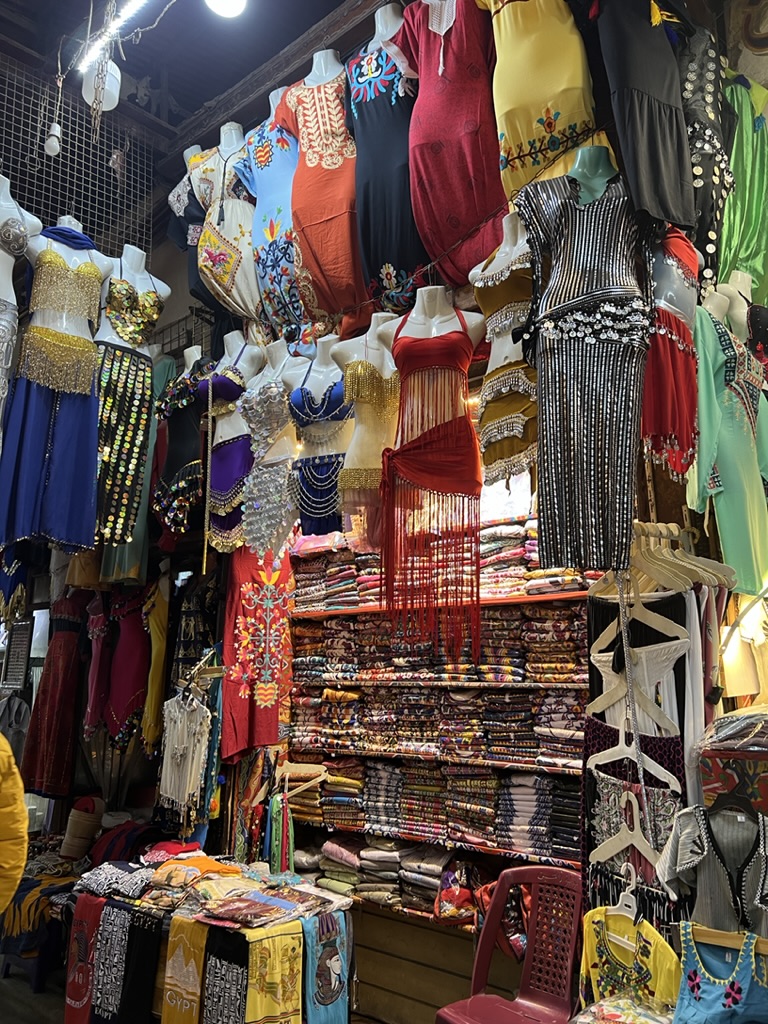
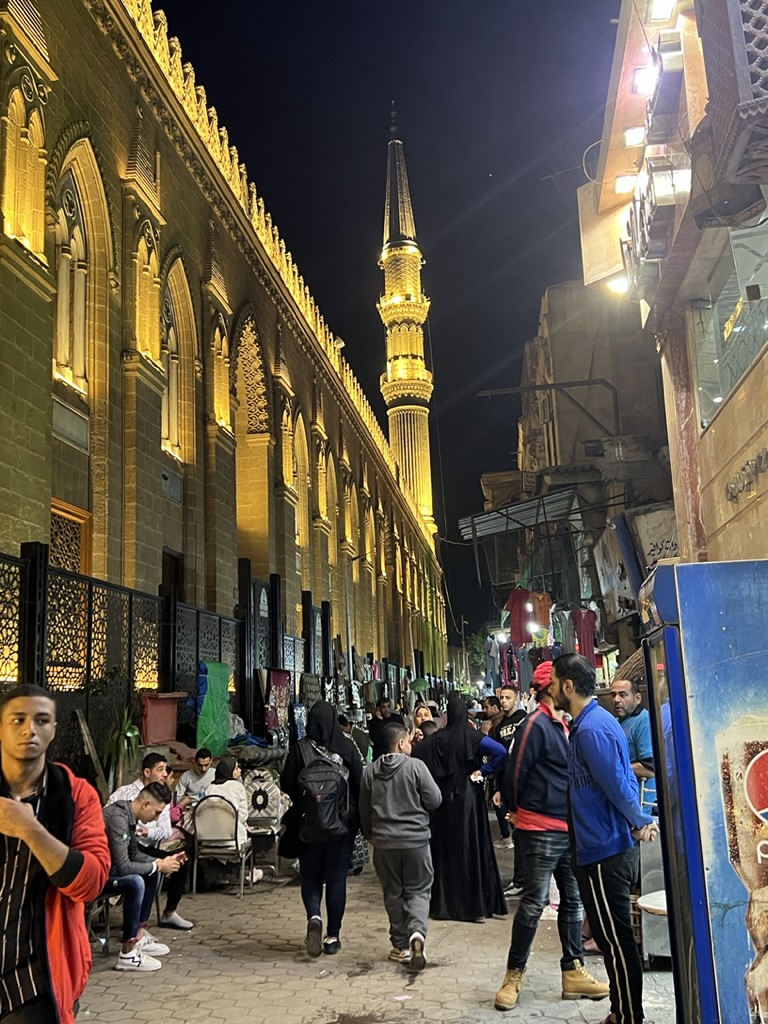
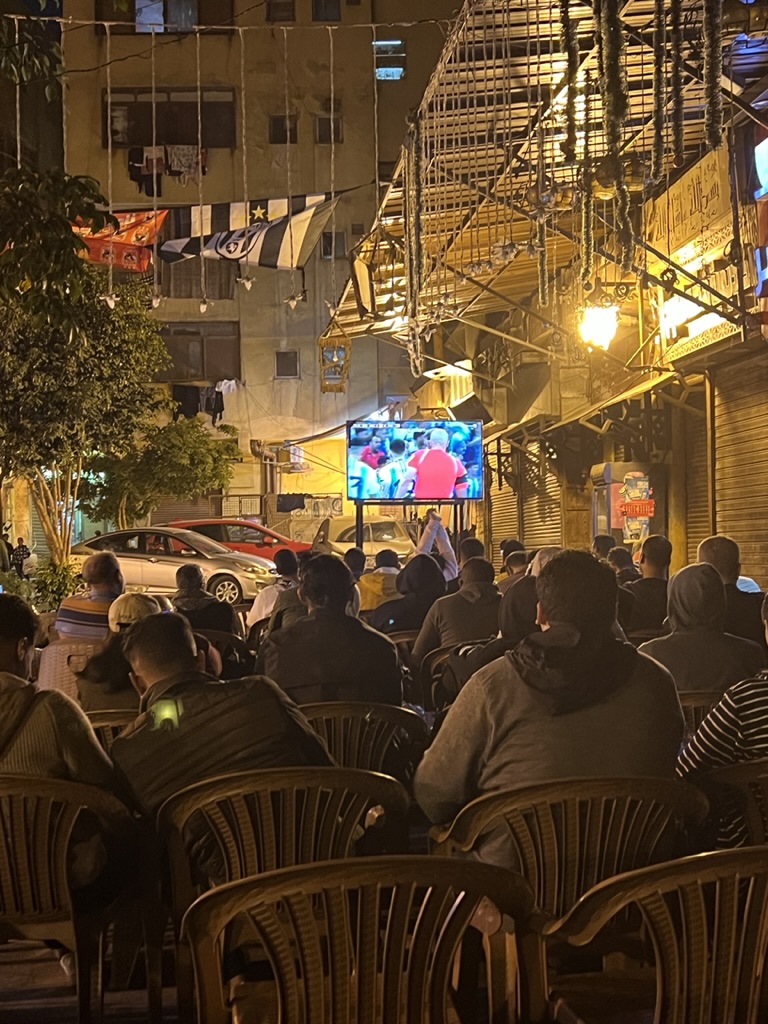
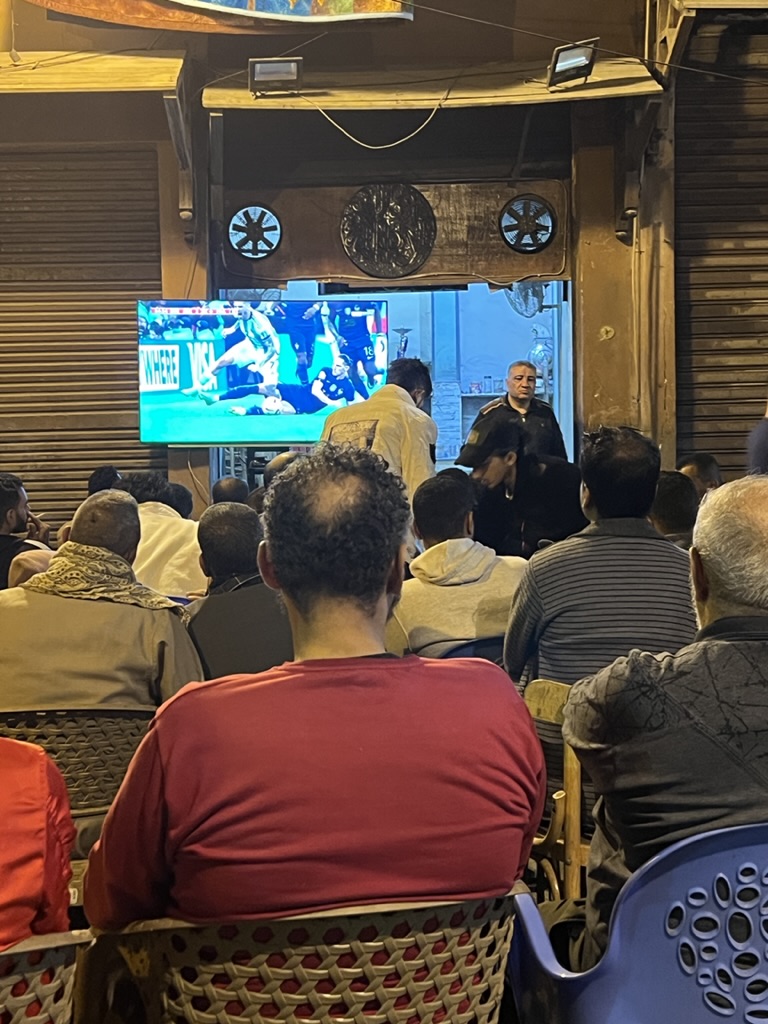

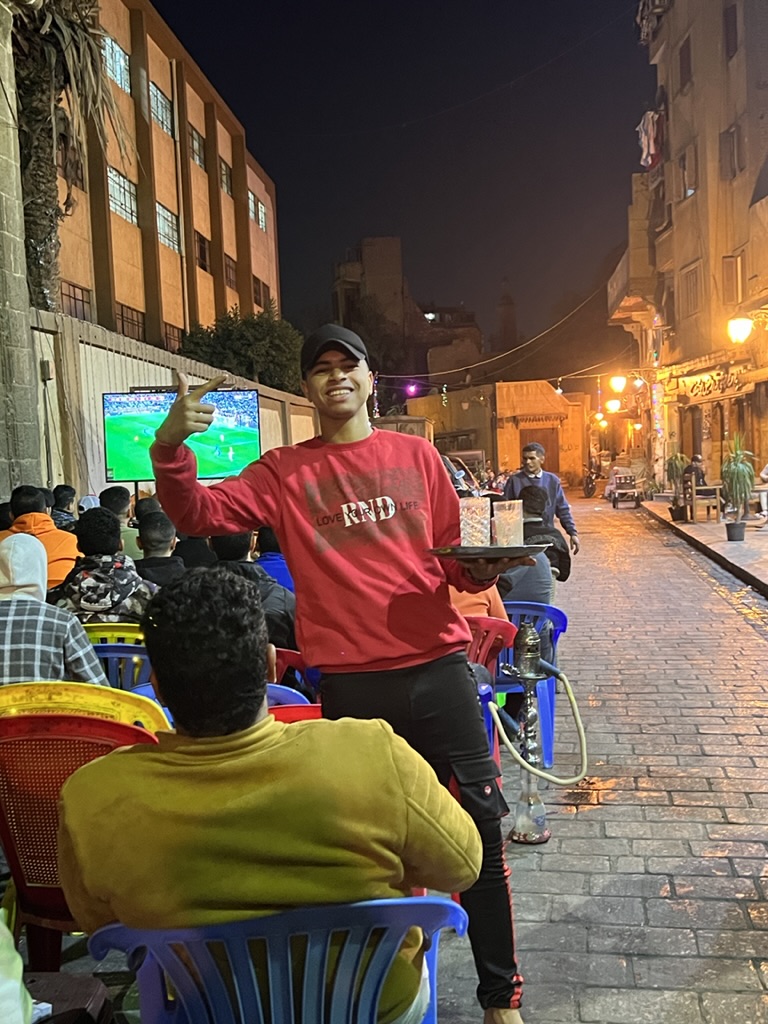
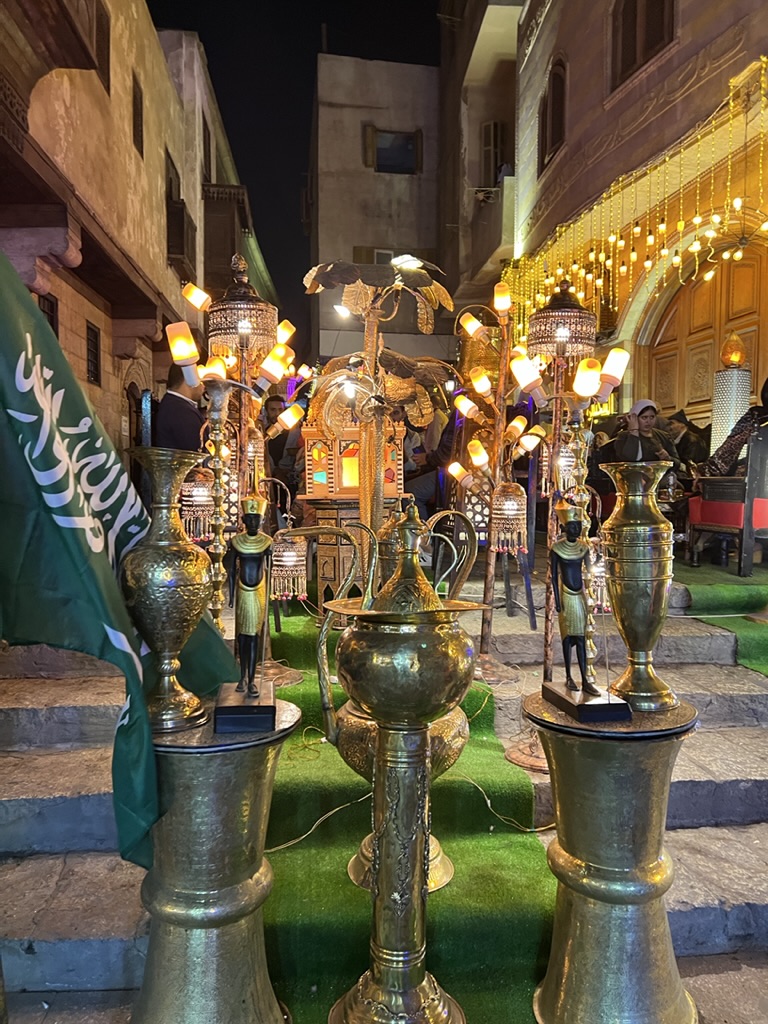
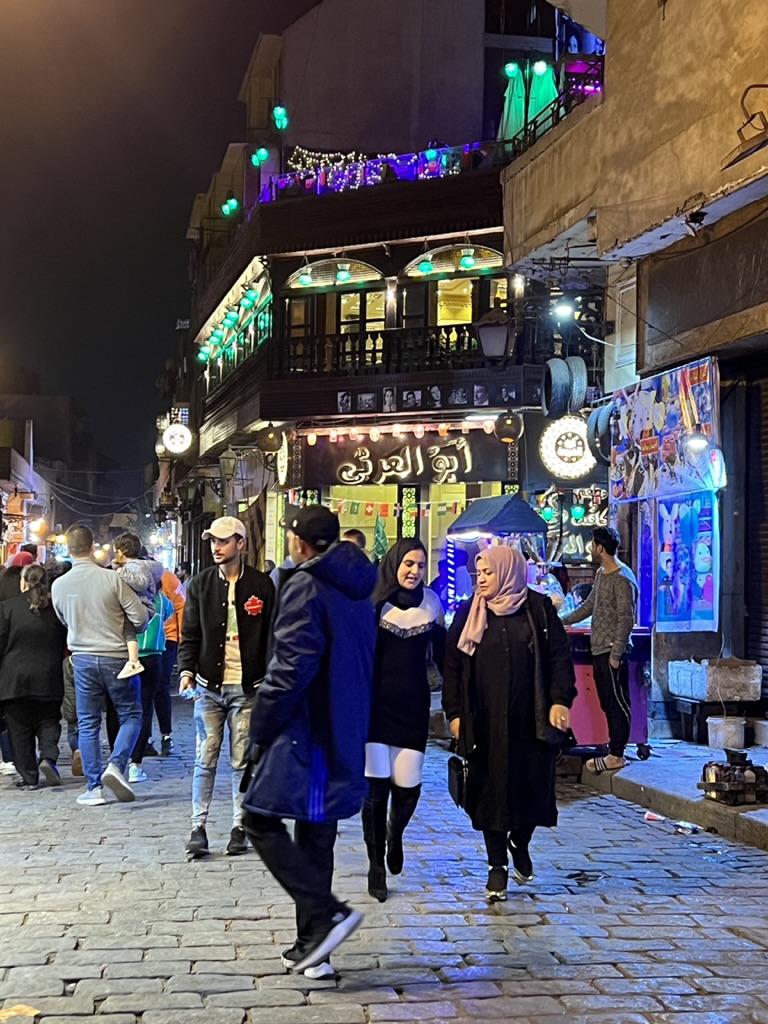
Then the fun started as we left the restaurant and asked about a taxi. The concierge said we could call for an Uber—again with the Uber! We declined and asked for them to get us a taxi. He responded by telling us he could call a limousine for us! We again said a taxi/a city taxi would be ideal. He told us to leave the grounds of the hotel (which by the way is probably one of the original hotels in the area, so it’s a bit aged, and is not all that good of a hotel) and walk onto the public areas where we will find many of these city taxis. The ultimate insult—we were not good enough for a Marriott… perhaps it would be a struggle if it was the Ritz Carlton, but a Marriott? And a total rebuke of their own taxi system. But how would we find a taxi ? By the time we were close to the gates of the Marriott, a guy stopped us and asked where we were headed; he was driving some really big SUV. We explained where we were headed, and he stopped another car that was leaving the Marriott. I think it was a worker from the hotel. He asked if he’d be interested in earning a little extra money; he was not a taxi driver. He graciously drove us to our neighborhood; we paid him what we paid the taxi driver. He couldn’t get into the old city, so we walked through the extremely large market with thousands of stalls and made it back to the hotel. It was especially fun to walk through the market tonight as there were clusters of chairs throughout the market facing television sets so that everyone (actually only men) watched the World Cup. No beer, since the whole Gamaleyan area bans alcohol. But the fans were just as enthusiastic without the buzz.
By then it was about 6:30 and we were totally beat. We opted to eat at our hotel on the roof—we were the only guests; everyone was watching the World Cup and we, too, followed on our phones. When Argentina won, there was a huge cheer from the streets below which continued for hours.
That’s it for me.. Sorry for the length. By the way, it’s now after midnight and the music in the street is still at a pretty high volume (such that we hear it in our 4th floor room) and the streets are still lively. Tomorrow we will visit a few other neighborhoods. We are here for three more full days and then we’ll take a train to Alexandria for the day.
All the best –
Fern
 Fern's Travel Notes