5. Cairo: Metro, Markets, and Mayhem. 12/20/22

Greetings after a totally exhausting day.
Hope you are well and likely either lighting candles or decorating a tree or maybe both! There is very little evidence of either holiday here in Cairo—except if you walk by the large international chain hotels, where you can find Santas and some other Xmas symbols.
Today was a totally hectic day, although that was not the intention.
We set out to visit a bunch of sites, but realized we needed to cash some money or withdraw $ using ATM cards. That turned into quite a production. We walked to the nearest ATM which was about ½ mile from the hotel. It had its own security guard. Mike was able to do his transaction, but after his big withdrawal of $100 in Egyptian pounds when I tried to do the same, the machine was out of money. So we figured we’d wait until we came upon another machine later in the day (they are not seen frequently). We had decided we would try the Metro today (having ridden metros in so many other cities) and take public transit instead of taxis. Finding the Metro station was a lot more difficult than you’d think. Because we had to go to the ATM which was in the opposite direction from the closest Metro station from the hotel, we got a bit turned around and then kept asking “shopkeepers” and pushcart vendors as well as police and passerbys where the metro station was. There is actually very very little English spoken here, except by people in the visitor industry (hotel clerks, servers, etc.) and I suppose if you are circulating among the well-educated and well-heeled elite.
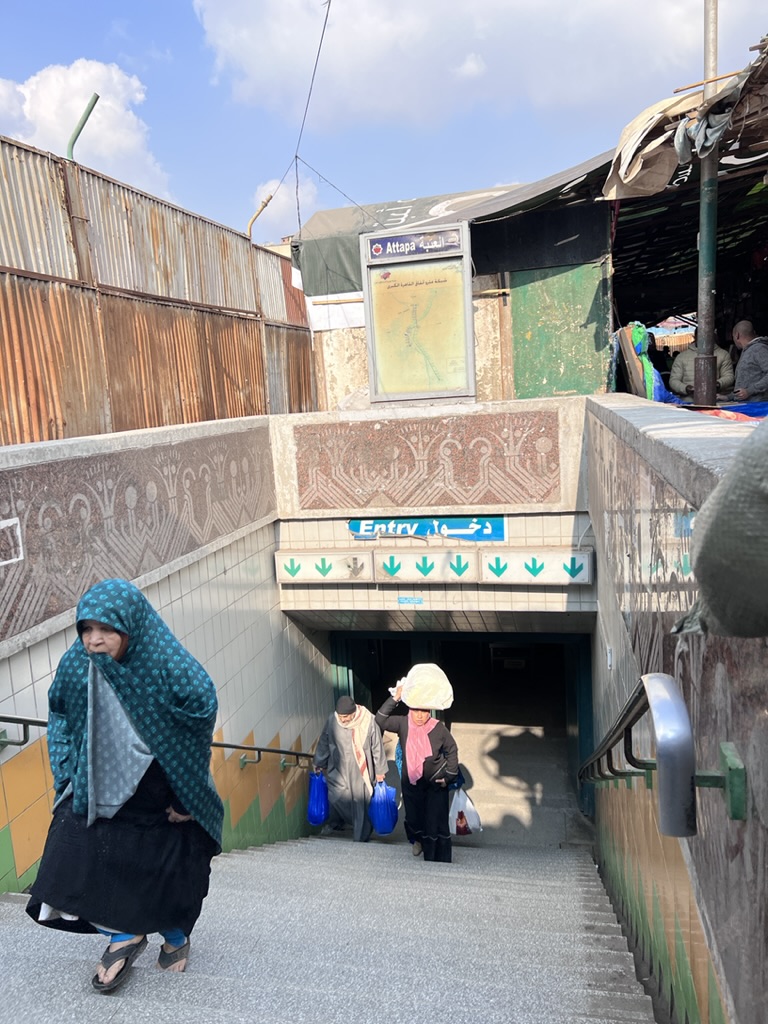
We had a map of Cairo (which is also very rare to find—we bought ours in the museum yesterday—so even the hotel receptionist asked where we got our maps), and GPS so you’d think it would be easy. Most people either didn’t understand what we were asking or didn’t actually know where you do get the Metro. Although it is quite cheap, most marginal people take the very polluting buses or the mini-vans that totally clog the streets but seem to go everywhere without much of a schedule.
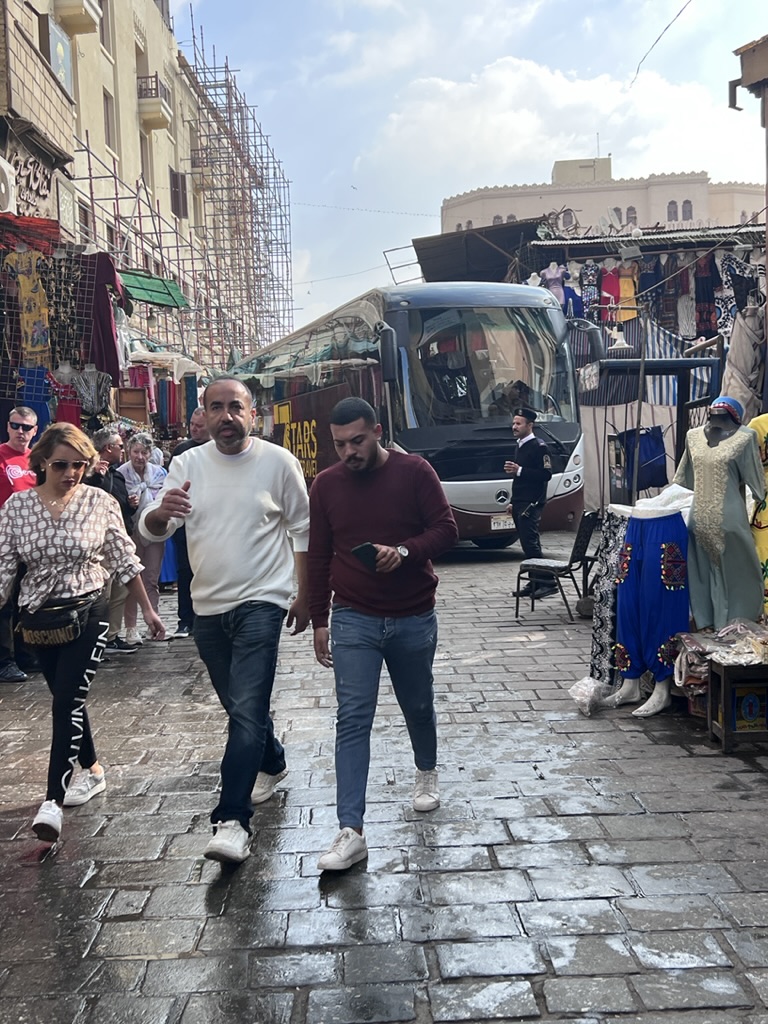
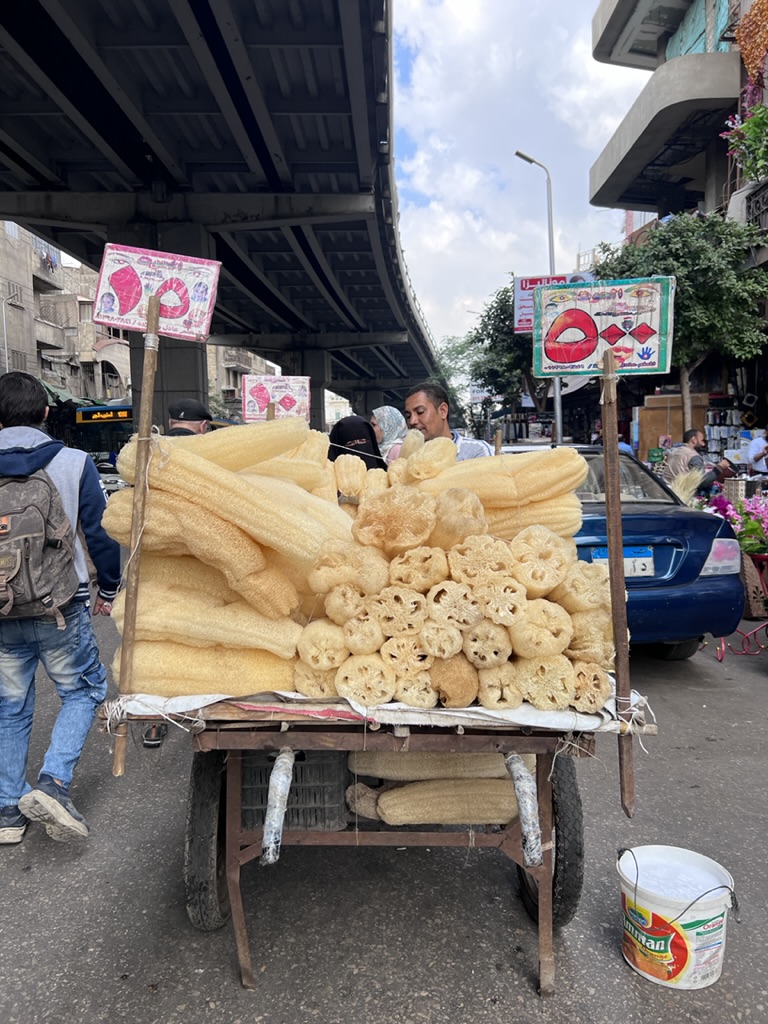
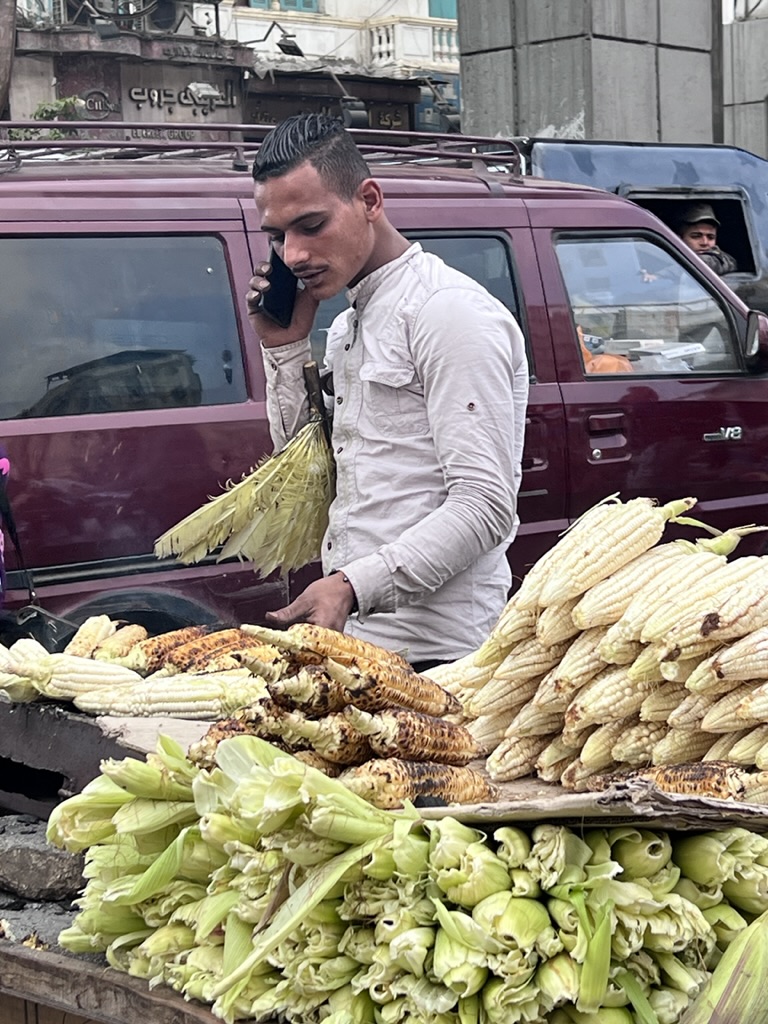
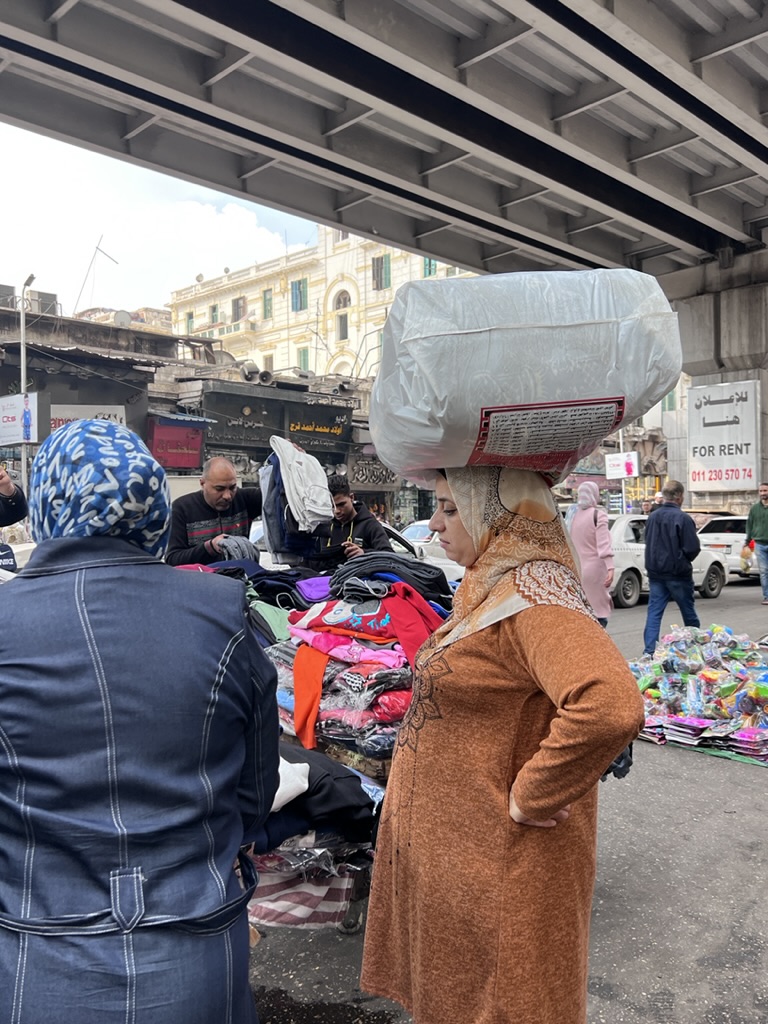
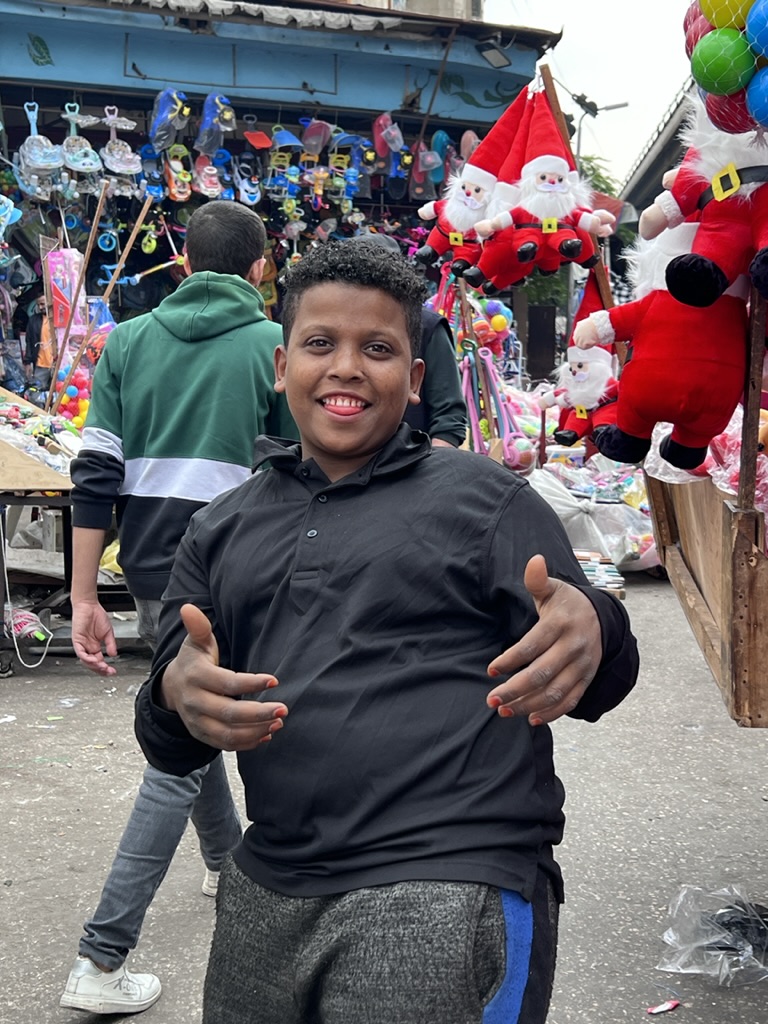
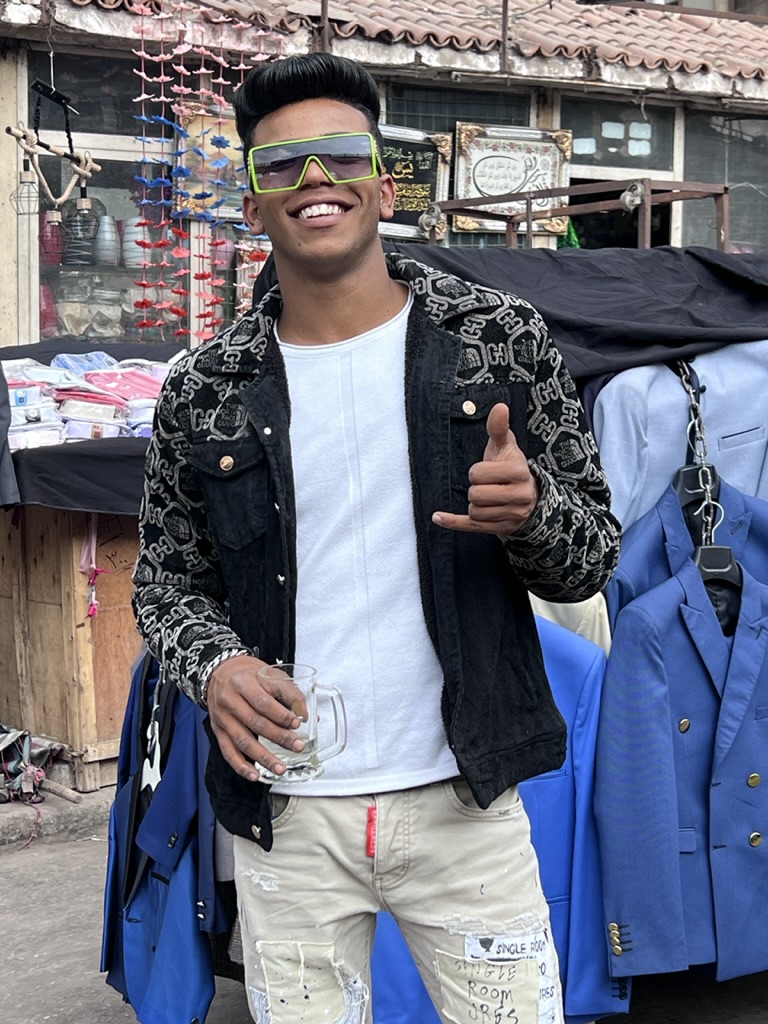
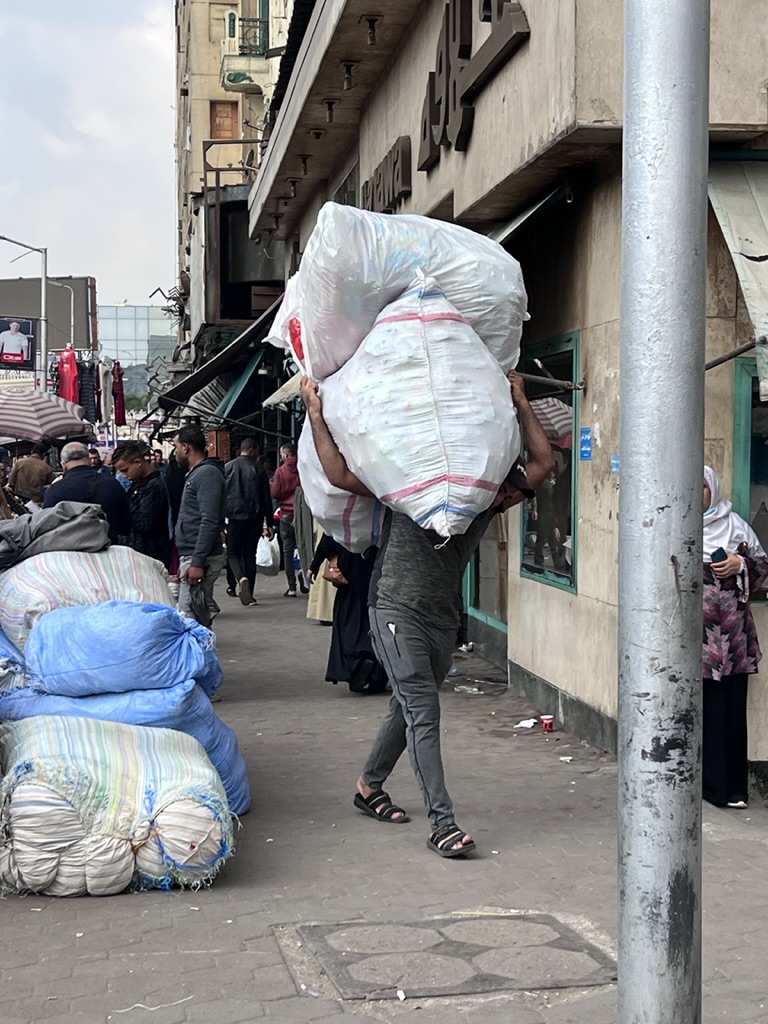
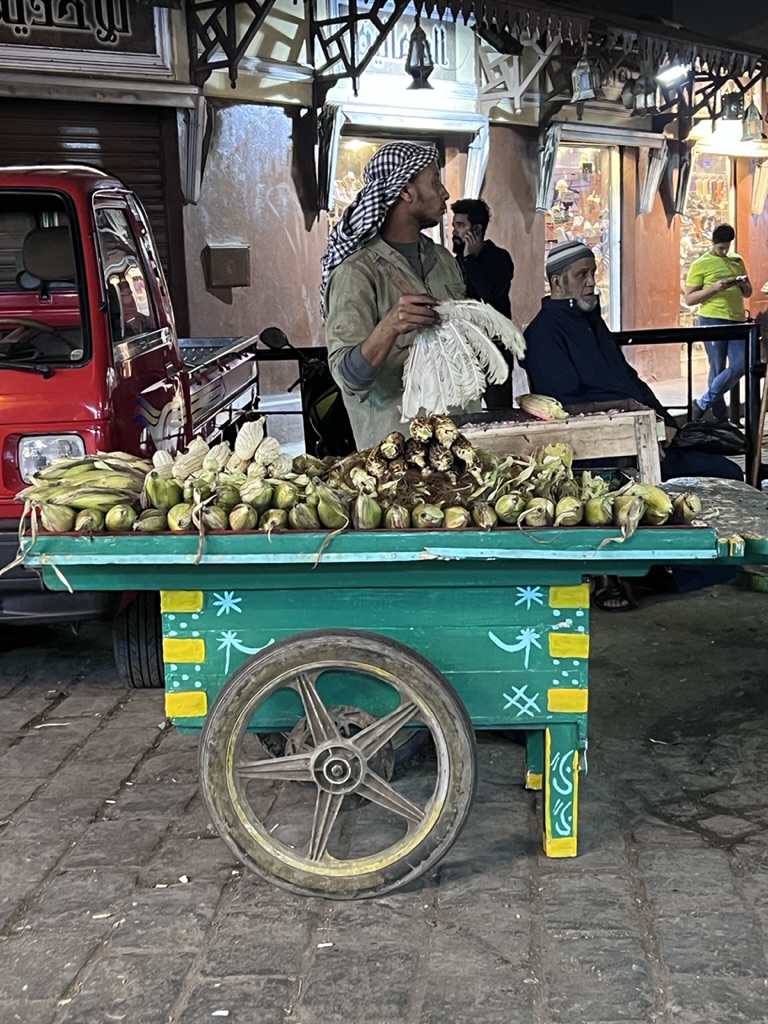
But the walk from the ATM to the Metro which took us about 40 minutes was a site to behold. Every inch of pavement was taken up by vendors selling everything from clothing and shoes to electronics, kitchen supplies, perfume, and any other item you could imagine. At this point we were outside of the walled city and in the thick of daily life. The crowds were unbelievable and we could rarely stay on whatever area remained as sidewalk; and reverted to walking in the streets like everyone else—amid the nightmare of Cairo’s traffic. I think my lung capacity dropped immensely breathing in all the fumes; cannot imagine what level of lung diseases residents here have, especially the traffic “control” people (ha ha) who are out in this all day. Everywhere you walk there are messages from vendors (marketing) blasting from speakers. We finally figured out that they tape their hawker’s pitches and then just play them through a loop on their speaker all day at their cart. So you just hear all these competing messages—very loud to drown out traffic noise. To be honest, we had a great deal of fun watching all of this go by as we sought to find the Metro.
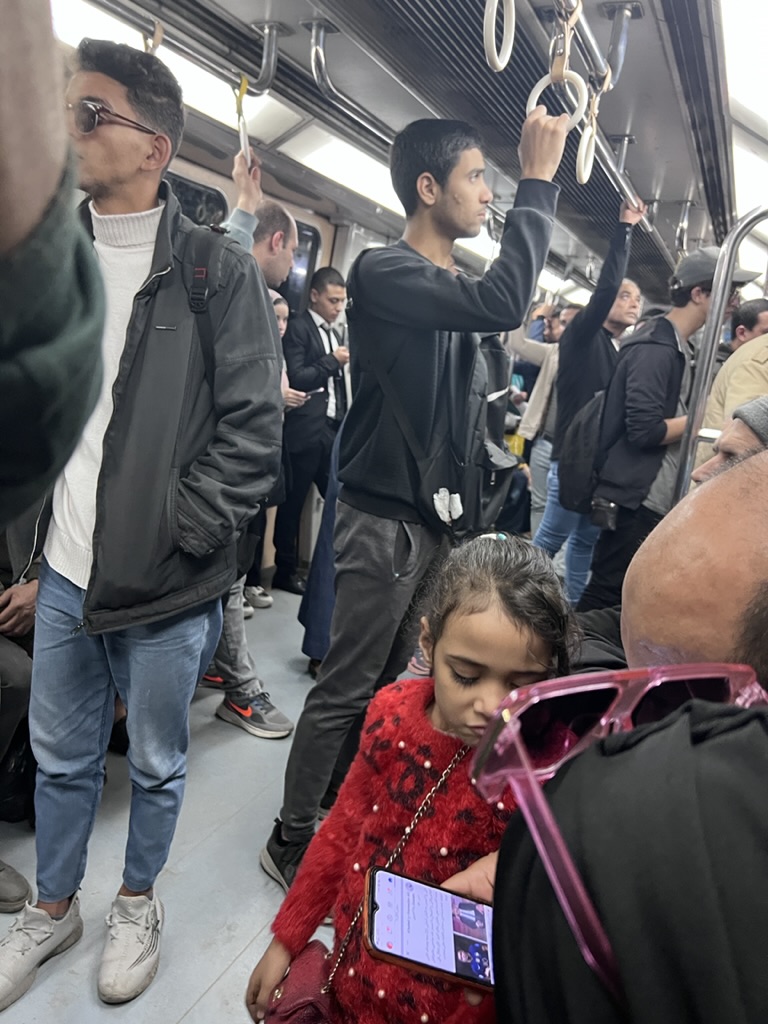
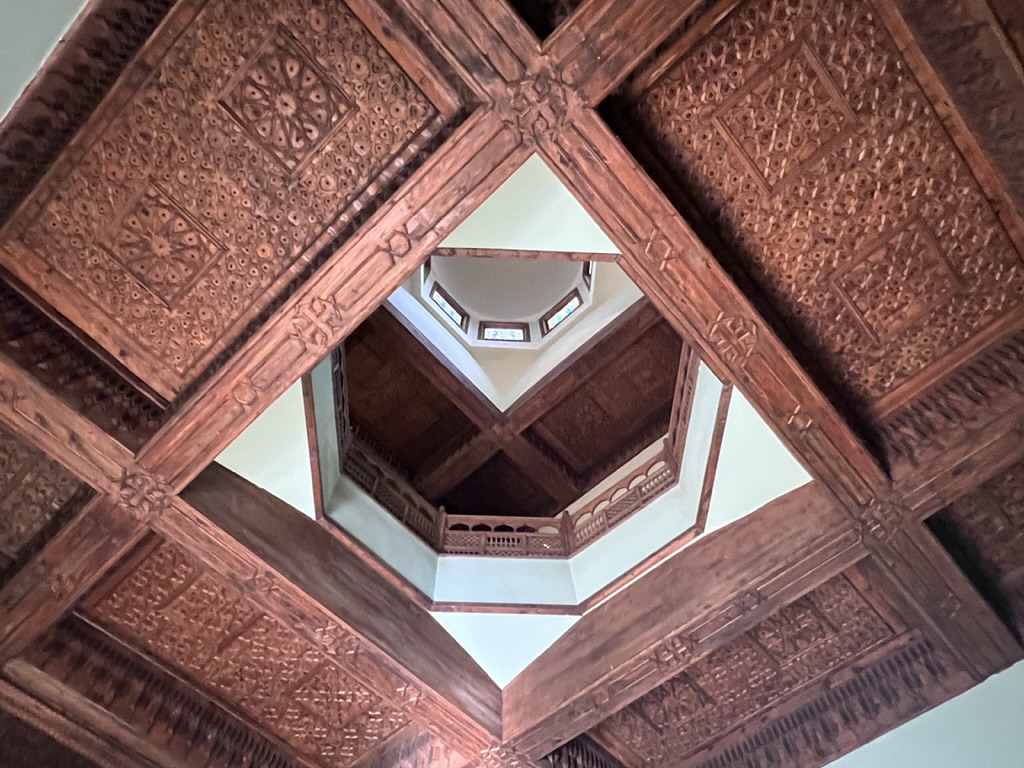
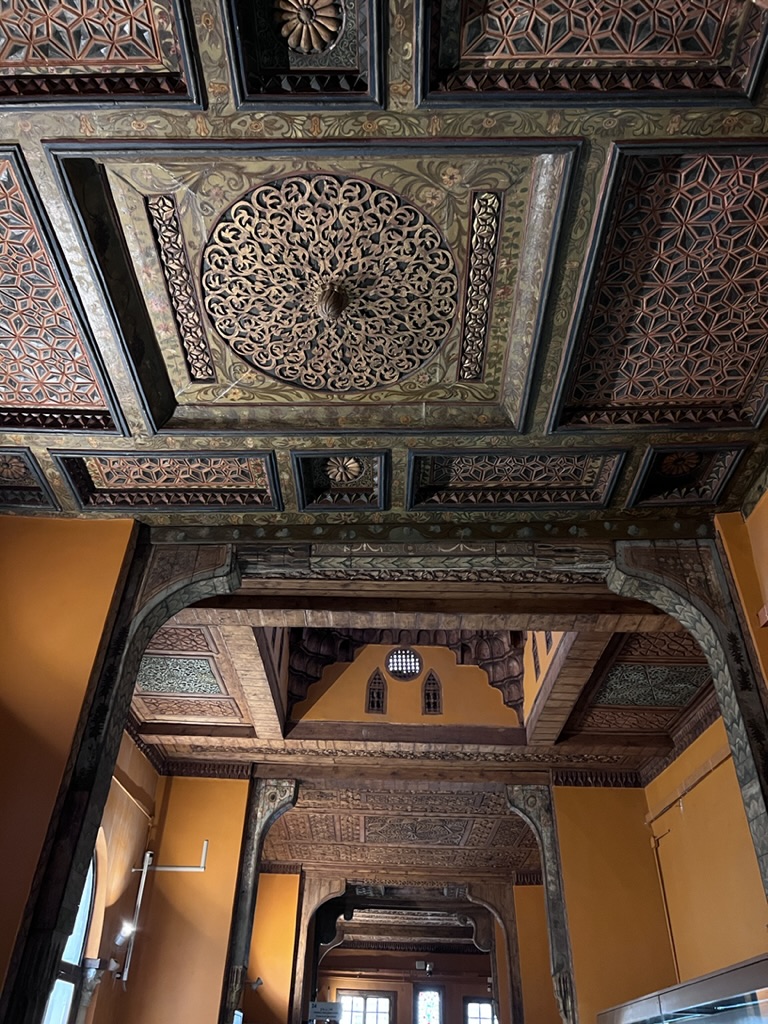
Eventually we found the Attaba station and figured out how to buy tickets (no machines, you line up at the ticket counter) and to figure out the route we needed to get to our first stop—the Coptic Museum. The subways felt much like NY, maybe NY in the 70s! The trains are pretty old and the stations are dreary. Nothing like what we experienced in Uzbekistan a few years ago, where each station was like a museum. Still, it was efficient and we even made changes because we had to go from the green line to the red line to the blue line. We are now quite seasoned Cairo Metro riders. We found our way to what is known as Coptic Cairo—a part of Old Cairo where the Babylon Fortress, the Coptic Museum, the Hanging Church, and many other sites can be found. Coptic Cairo was a stronghold for Christianity in Egypt before and during the Islamic era, and most of its churches were built after the 7th century (such young things!). The Coptic Museum is quite lovely with courtyards and many places to sit and relax. Unfortunately the exhibits are not well lit and there is an unending amount of artifacts such that it sort of all blends together. The best were the wood carved ceilings of the building that graced every room—intricate, delicate wood patterns throughout.

From there we walked to the Church of St George which is circular in plan and then on to the Ben Ezra Synagogue which is also in this same area of Old Cairo. But the synagogue is under renovation so we didn’t see that. Somehow all of these religious institutions seemed to get along and be in close proximity to one another.

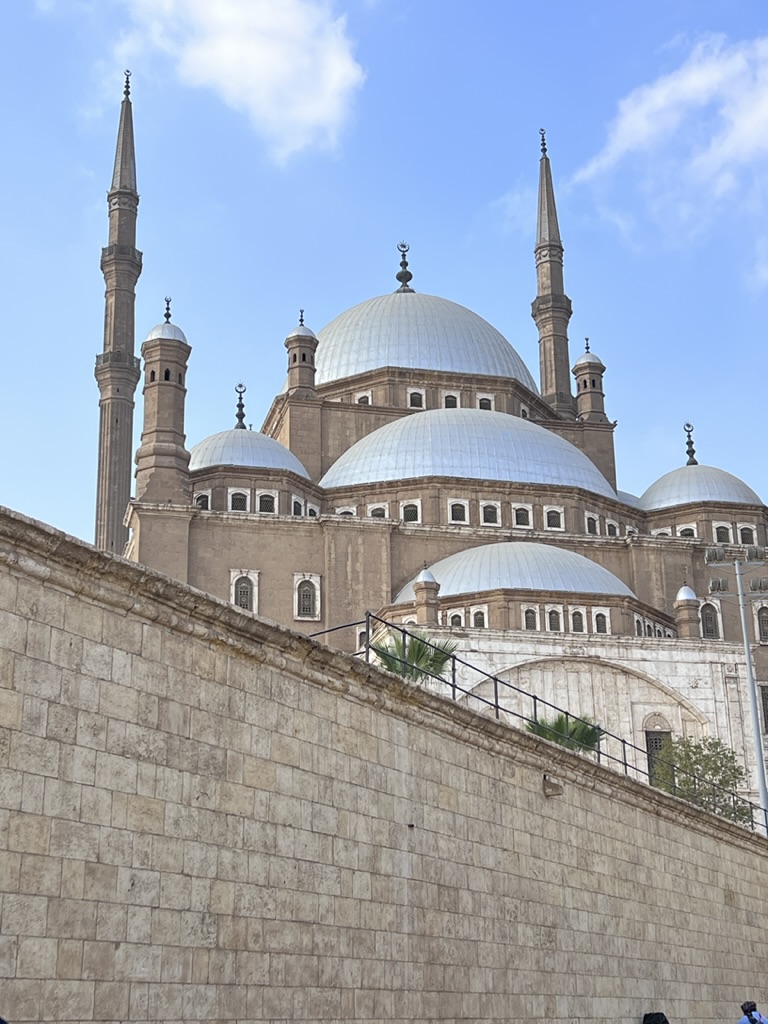
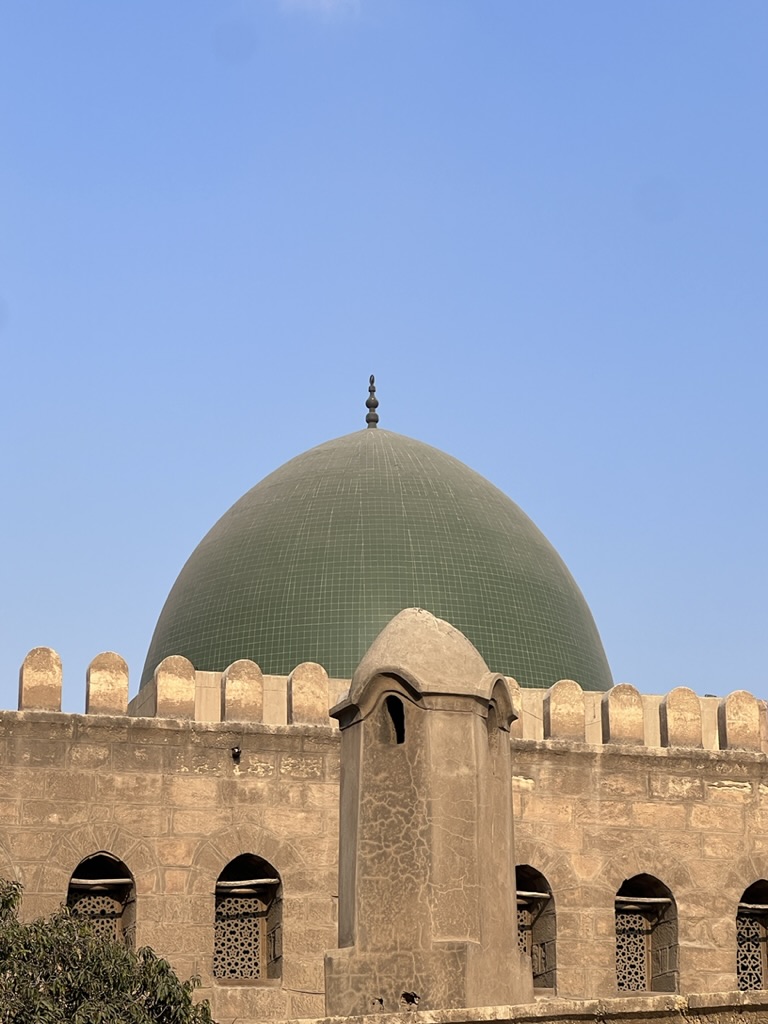
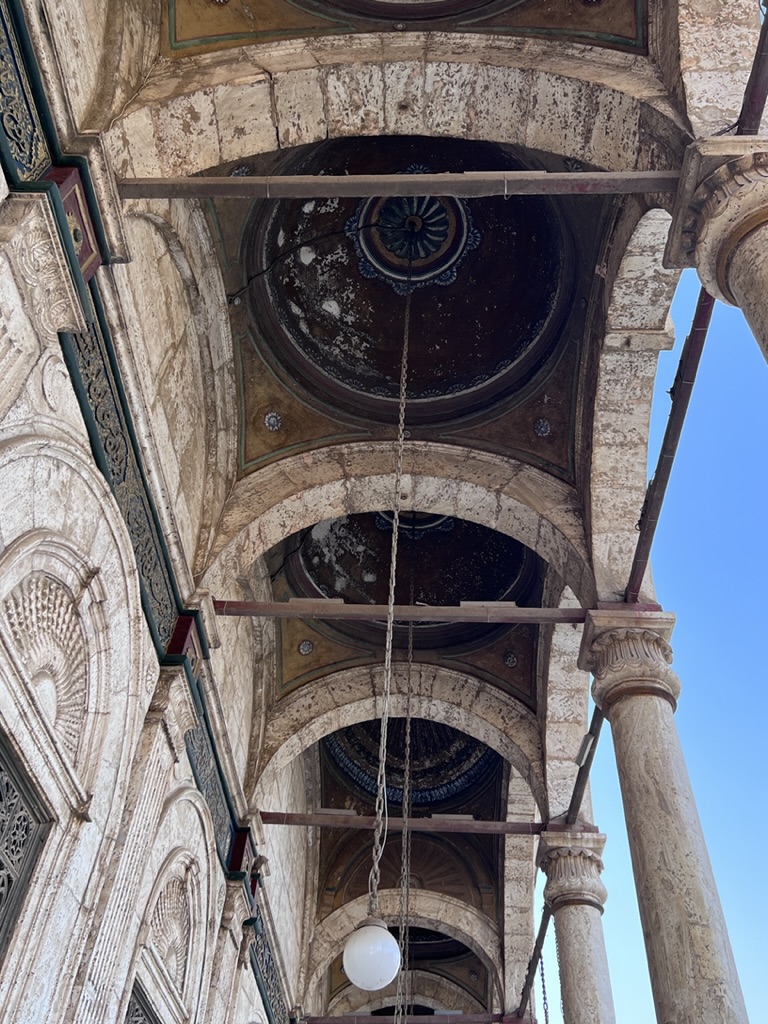
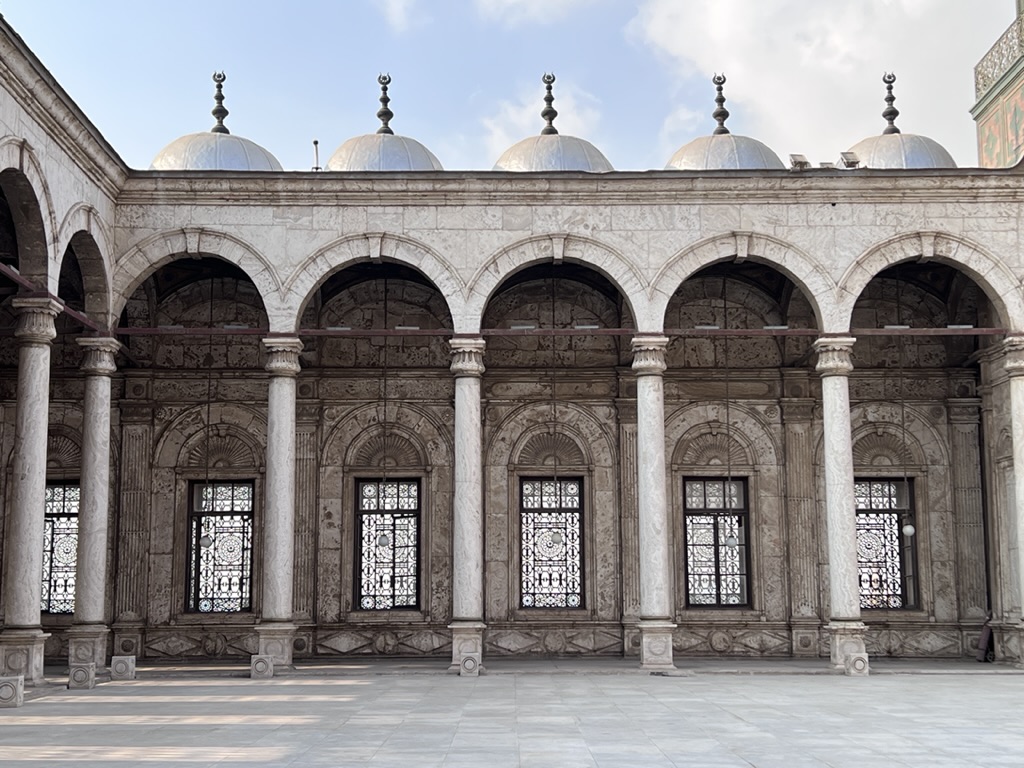
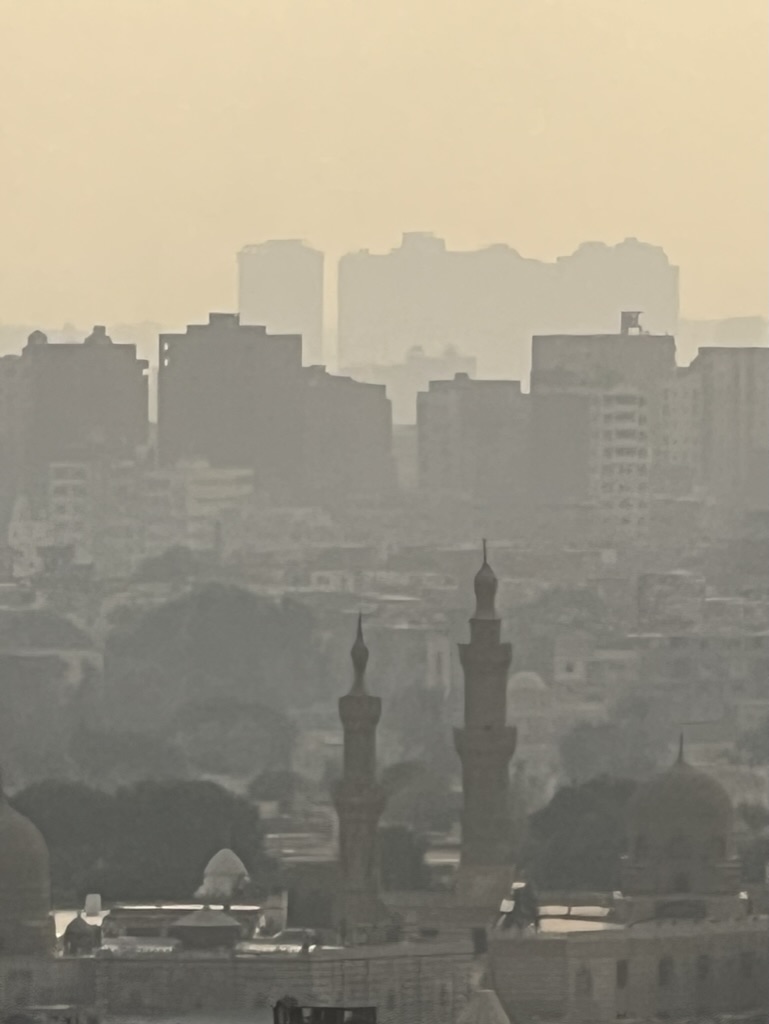
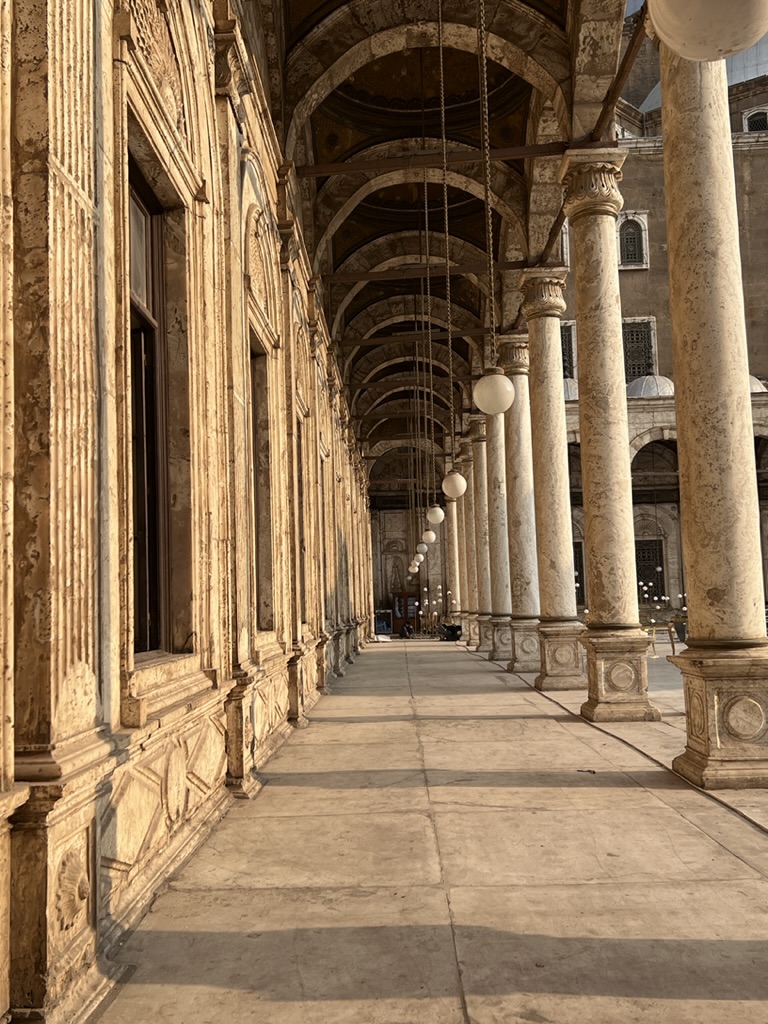
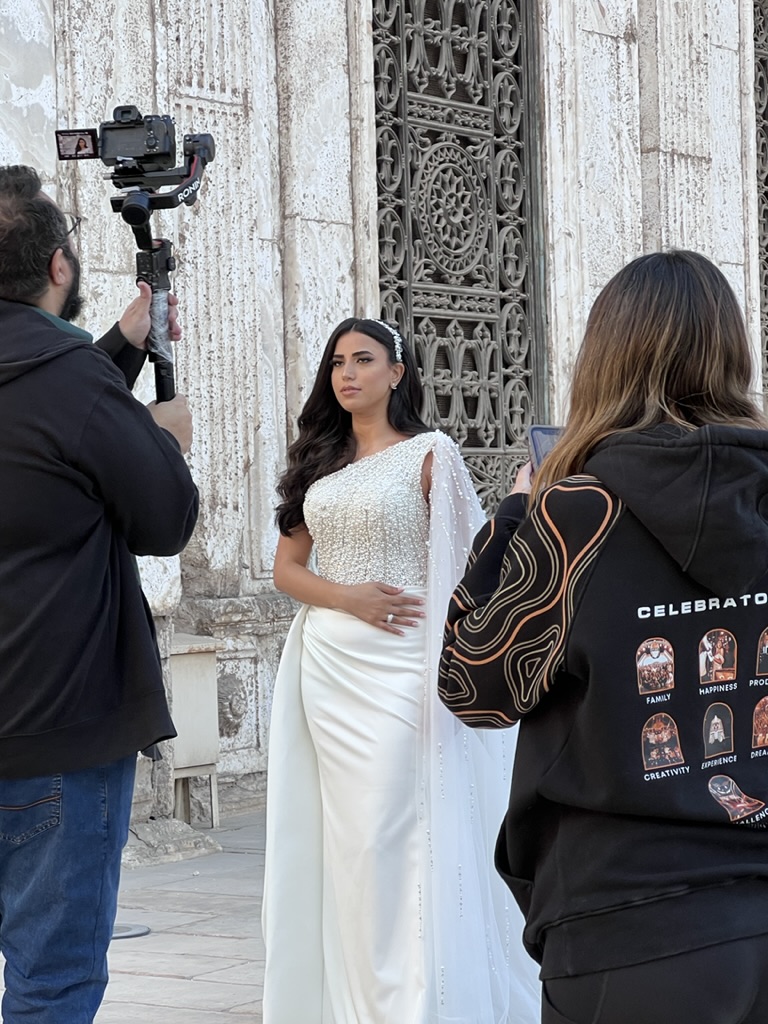
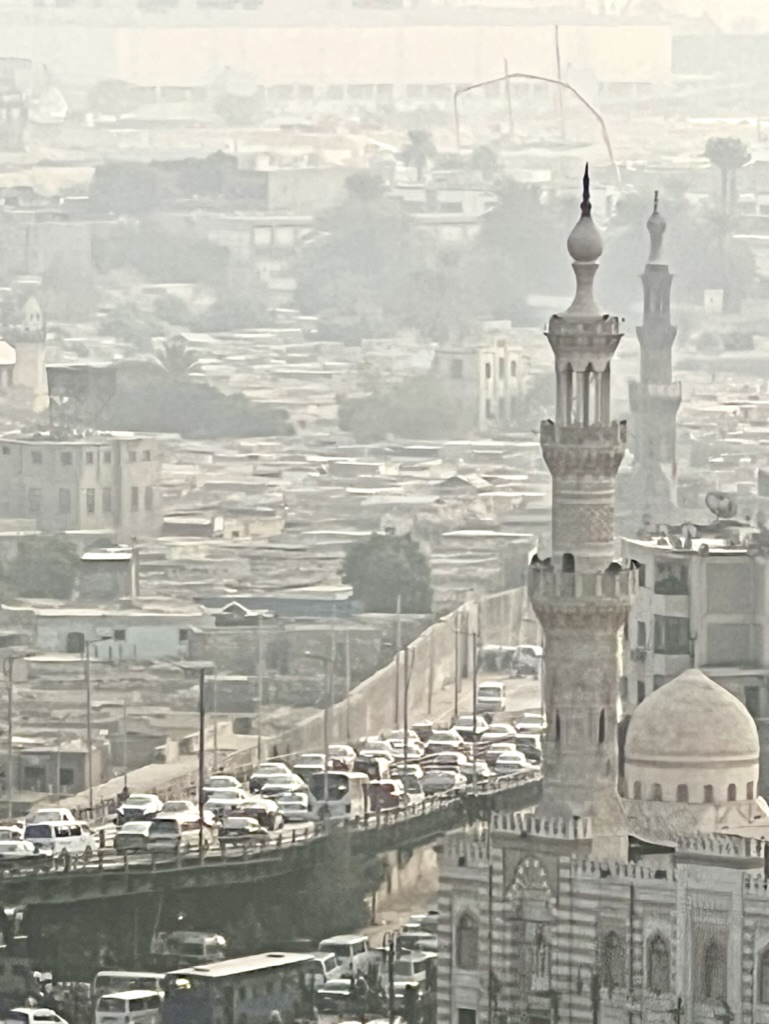
After having our fill, we found a taxi to take us to the Citadel, which was about a 15-minute drive from the Coptic area. As soon as we got out of the taxi, several other taxi drivers called to us to say they could drive us to the top of the hill where the entry to the mosque was. They kept saying it was a long walk and all uphill. But we persevered on our own and the walk was really not that long and not that difficult. The Citadel is a medieval, Islamic-era structure built as a fortification by Saladin and further developed by subsequent Egyptian rulers. It was home to rulers for about 700 years until the 13th Century. It was also the seat of government. Its location on a hill near the center of Cairo commands an incredibly impressive vantage point that overlooks the city and manages to dominate the Cairo skyline. Today it is a preserved site that includes mosques and museums. The largest of the mosques is the Mohammed Ali Mosque. The space is huge with one gigantic dome surrounded by others. There is a huge courtyard from which you can see the whole city for miles around. While we were there they were setting up for what is likely to be an amazing wedding (actually couldn’t believe they “rent” the place out for events!) We managed to get a peek at the bride.

Then we took another taxi (you’re probably shocked at the fact that we need so many taxis, but it’s really the only way to get around, and they are very very reasonable, even with the gigantic tips we give for keeping us alive during the drive.
We headed to Zamalek — an affluent district on the northern part of Gezira Island in the Nile River that is connected to the rest of Cairo by three bridges—sort of like Manhattan, and interestingly one taxi driver said it was the “Manhattan of Cairo.” Despite its affluence exhibited by beautiful and stately residential buildings (probably built in the 1920s) and the chic shops (we got there too late to do any shopping), there’s also a lot of neglect on some of the buildings due to poor maintenance. Apparently, there is some kind of rent control in some buildings and thus there are lower and middle income people living in Zamalek as well as the wealthy. There’s also something called the Egyptian Sports Club that takes up a huge amount of land but keeps the island very green.
We had read about a restaurant that sits right on the Nile at the northern tip and figured that would be a good place to have a cocktail and some appetizers so we asked the taxi to take us there. Must say, this was the best driver ever. He wasn’t talking on the phone the whole time (holding the phone since they don’t have Bluetooth); he wasn’t driving without hands; he wasn’t zipping along. When we got out of the taxi we learned that Sequoia was closed, perhaps for renovations. Fortunately, the driver was still there (probably trying to figure out if he’d find another fare). Didn’t know where to go even though we had read there was an abundance of cafes and bars in Zamalek; we didn’t have time to look anything up for fear we’d lose the driver. So, Mike said he saw a Hilton as we were driving that was pretty close. The driver took us there. We figured there would be some kind of bar at the top where we could have a drink and then do a little research about dinner options.
The Hilton turned out to be from around the ‘70s and was definitely past its prime. There wasn’t anything on the roof and the first floor “restaurant” was pretty seedy. But by then we were also in search of electrical outlets to power our phones (too many photos!) so we hunkered into a table (actually kept moving because it was hard to find outlets). The menu was pretty bleak, so we just talked and once the phones were somewhat charged we decided to leave. No one seemed to care. We spent a little time looking for a restaurant on our phones once we had some power. We didn’t want to go too far, we wanted something good… and somehow we wound up in the most strange of places: described as “Cairo’s premier, award-winning, dining and entertainment venue. Originally a floating palace from the turn of the century, Le Pacha was transformed into a magical place in 1992. Moored off the banks of Zamalek in Cairo, Le Pacha quickly became a landmark on the Nile with its nine restaurants … and spectacular views of the Nile and city.”
I think we were so exhausted that our restaurant radar was down. Normally that kind of description would turn us off.. but I think we had planned to have drinks with a view by the water and so this looked possible. Also, we couldn’t really decide what kind of food we wanted so the nine restaurant options seemed to work since we could delay selecting until we got there. We wound up having drinks in one place (not very good drinks and appetizers not up to par with what we’ve been having – and we were definitely spoiled by Taboula last night) and then going to “Le Steak” for dinner. It was described as a French bistro. It was fine (we shared a chateaubriand which was enough meat to feed six people). At least it was rare. All fine, nothing to write home about.
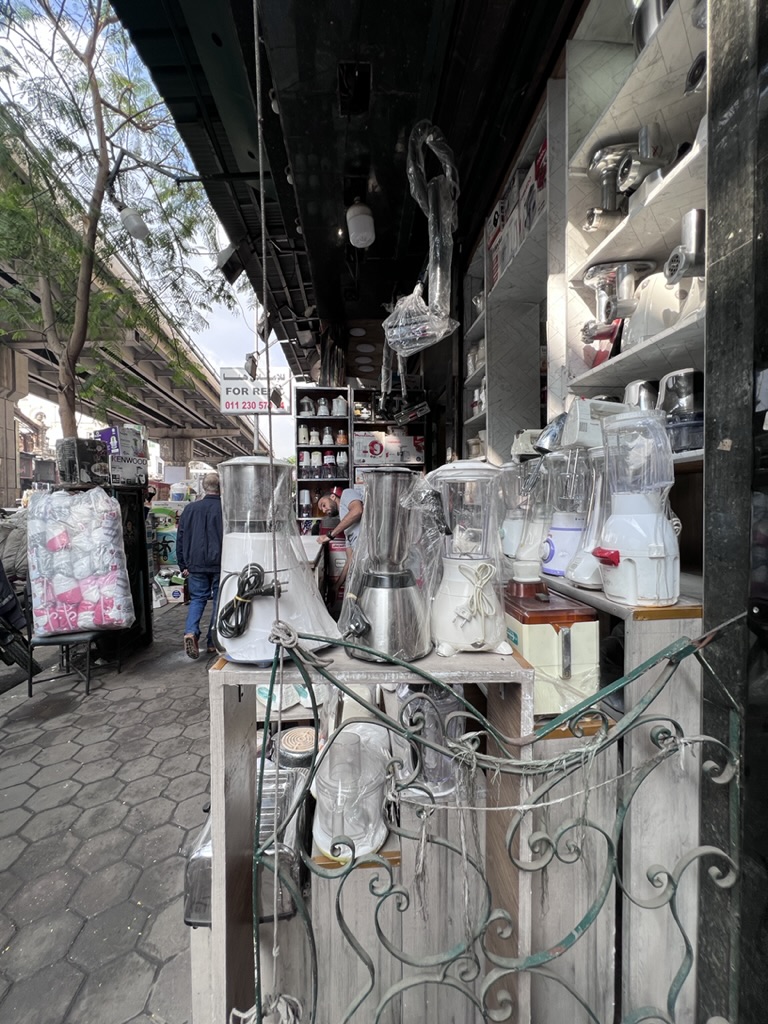
Naturally, La Pancha didn’t have any “city taxis” waiting at the entrance so we told the “concierge” we needed a taxi and up popped some guy in a fairly new car—definitely not a taxi, but also not Uber. Just a guy and a car. We hopped in and he took us to yet another drop off so we could walk into Gamaleya to our hotel. The route from this drop off took us down a street where they were selling (at 10 pm) restaurant supplies and equipment along with other household goods—selling this stuff out of tiny little spaces with all their products out on the street. Again, motorcycles whizzing by in both directions, an occasional car that got permission to drive inside, kids, pedestrians, dogs, cats – all scurrying about … and us. As we turned one corner horns were blasting (not unusual since horns seem to be the way cars move about given that there aren’t any (or very very few) traffic lights (in a city of 20 million).. .but this was different. There was a large black car and lots of people dressed up and dancing and clapping behind the car. I’m guessing it was a wedding. We sort of joined in with the crowd, and made it “home.”
I figured out that the music in the streets ends at about 2 am when some shops close up—just in time to get ready for the call that alerts you to the first morning prayer at about 5 am.
Tashabuk alsalama – Peace be with you.
Not certain of our agenda for tomorrow, but on Thursday we will take the train to Alexandria and meet up with a former doctoral student of mine from my days at ASU.
Best –
Fern
 Fern's Travel Notes