8. Luxor Egypt: Cairo to Luxor: Tombs and Taxis; Abdul and Abdul (and Abdul) 12/23/22; 12/24/22


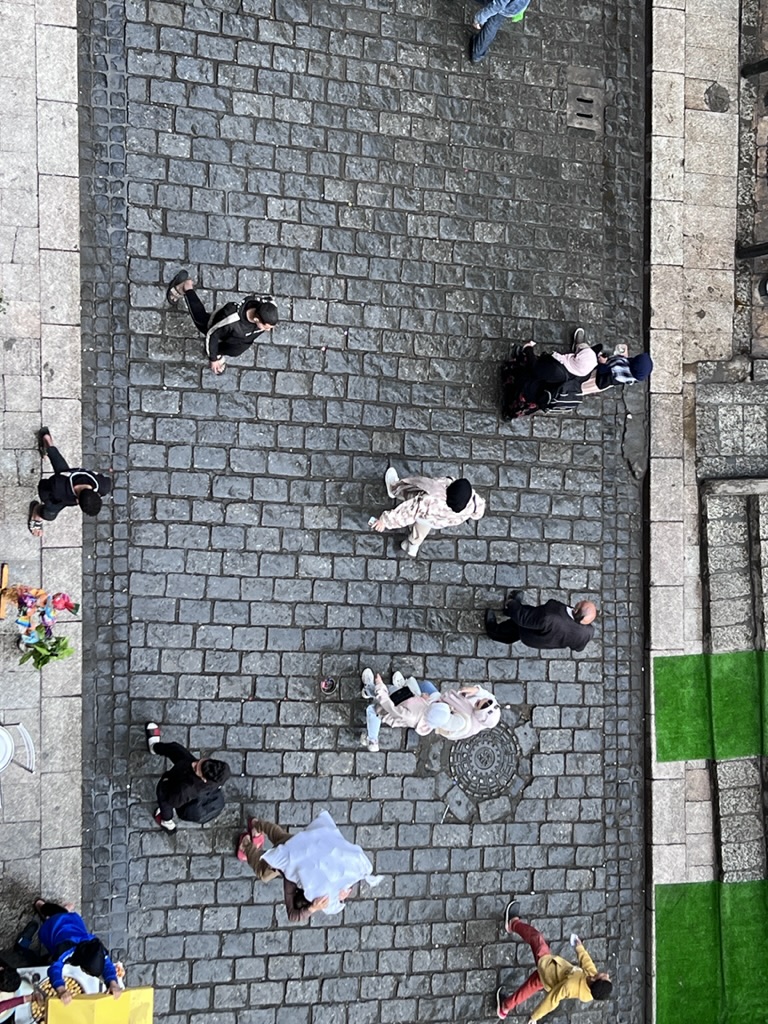

Greetings from Luxor, Egypt
I trust you are well and enjoying the holiday season-
We left Cairo last night for Luxor. The airport was fairly calm, and other than the fact that the flight was about 30 minutes late, all was smooth. Landed in Luxor (population 1.3 million – a tiny village compared to Cairo) and found our way out of the airport and into the taxi world of Luxor—much calmer than the airport taxi world of Cairo. Taxis at the Luxor Airport are yellow; all Cairo taxis are white. We are staying at the Luxor Hilton – not our first choice, but apparently this is a really popular time for families from all over the world to visit the Nile area. By the time we started booking hotels we had very little choice. It’s fine—probably about 17 years old, set back from the street with a long drive. Like the big hotels in Cairo, “city taxis” need to be “screened” before the hotel guards lower the hydraulic barriers to enter the hotel grounds and the drivers need to show their licenses. Very humiliating; no one asks for our identification. I suppose some of this is due to the infamous Luxor Massacre in 1997 that ended with 64 dead, predominantly tourists, including Americans.
But the staff is friendly and accommodating. They were very surprised when we checked in that we were not part of a group and that we were not going to join other guests for the Hilton Christmas Eve Dinner. (We already made a reservation for dinner at a small restaurant, that we hope will be good.)
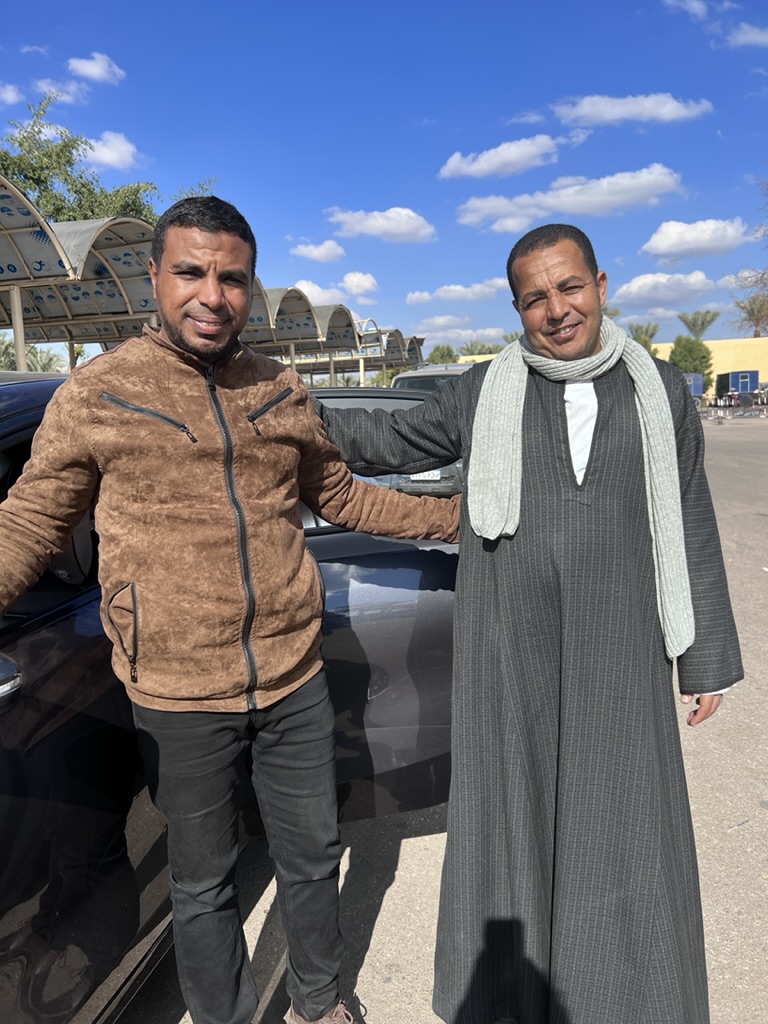
As soon as we checked into the hotel, we immediately left our room and headed by taxi to some local restaurant we had heard about which turned out to be in a very modest neighborhood (maybe a slum). The restaurant was located inside a 6 story, walk-up hotel, called the Nefertiti Hotel (frequented by lower income Egyptians and maybe back-packers). The restaurant, Al Sahaby, was on the very top floor so we trudged up the uneven stairs. The offerings were sort of street foods and we realized as soon as we got inside that it probably wouldn’t have any wine or spirits. We ate and headed back to the Hilton to get a drink (one very positive feature of the Hilton—they have a bar). The taxi driver who took us to the restaurant and came back to drive us again is named Abdul. He is the fourth Abdul taxi driver we have had since we came to Egypt.
Anyway, Abdul was the perfect driver for us. He’s quiet, doesn’t push to show us places, gets it that we are happy strolling alone and having him wait or return for us, and doesn’t overcharge. In fact we’ve given way more than what he requests because his initial pricing is very low. He’s also very gentlemanly. He has a super cute little daughter in his What’sApp photo – probably about 2 years old; actually, maybe it’s a grandchild.
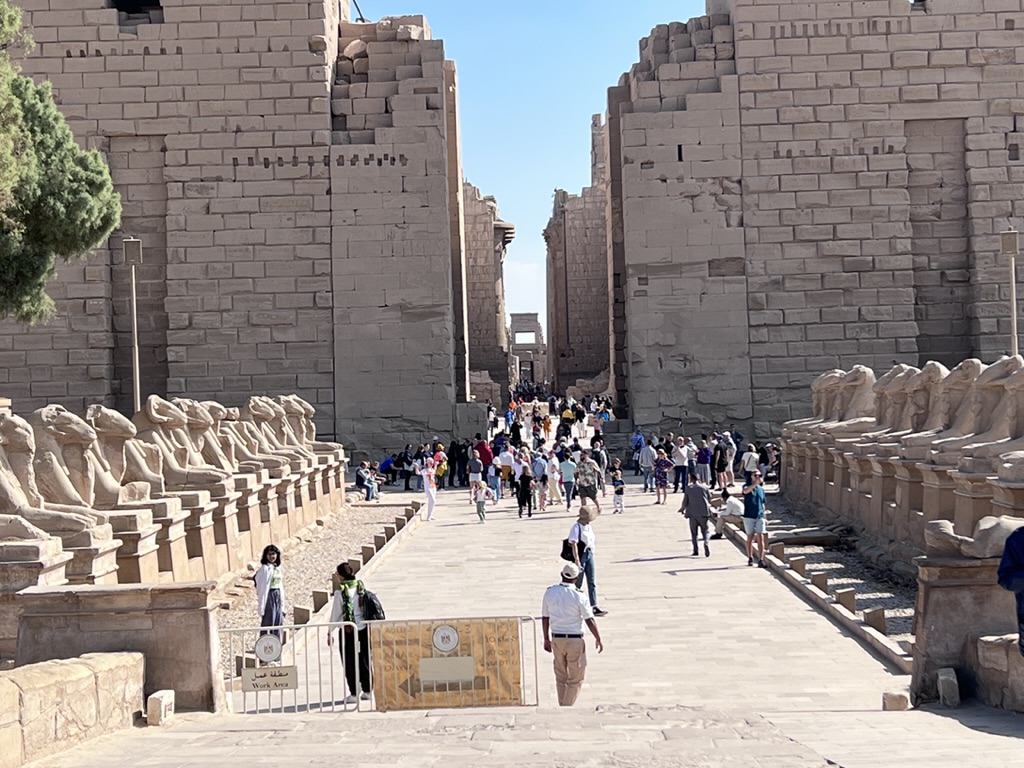
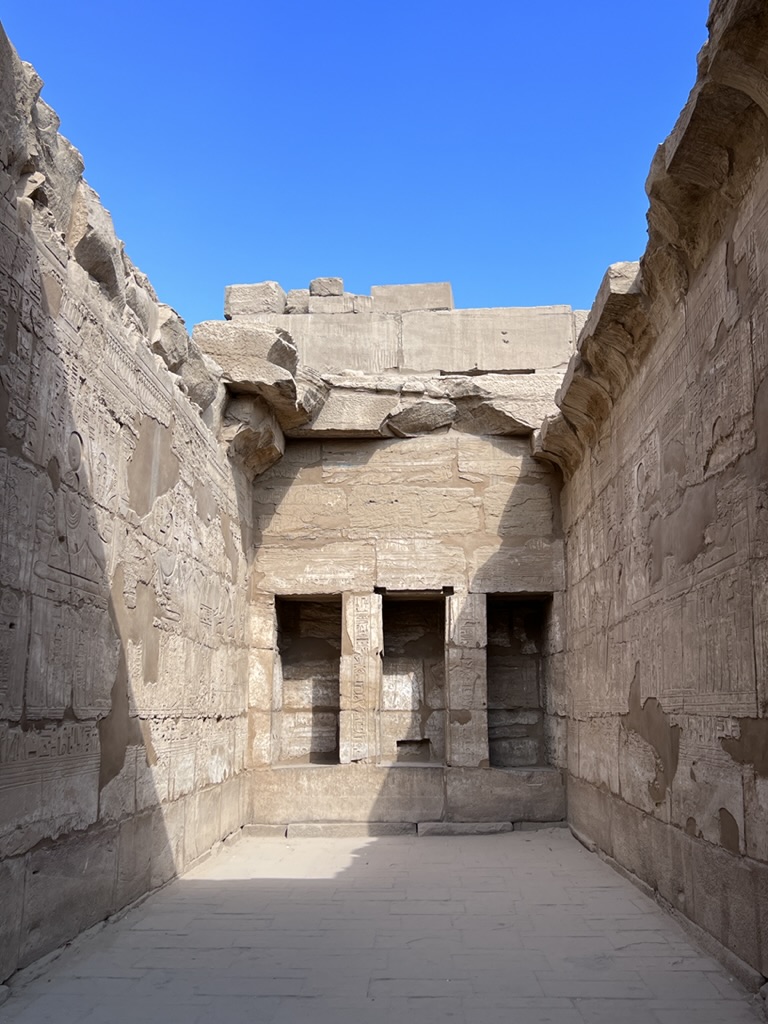

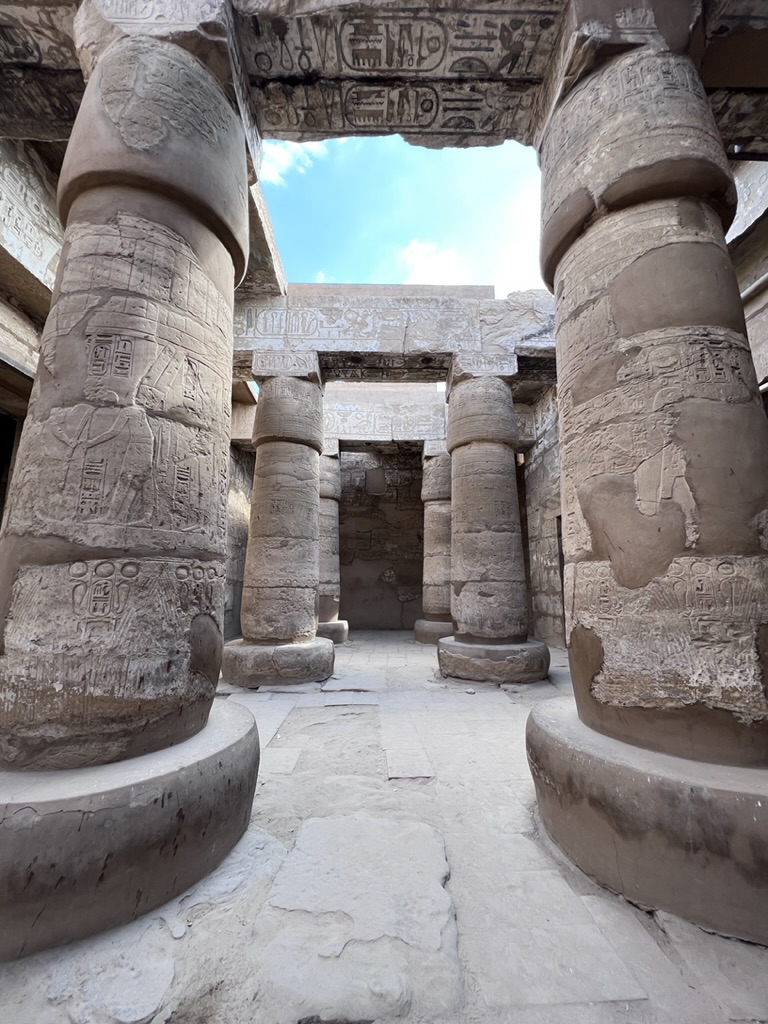
So we asked Abdul to take us to the Karnak Temple this morning and then to Luxor Temple. It’s walkable—about an hour, but mid-day heat is pretty strong and there isn’t any real shade—it is the desert. He was happy to do it and very accommodating. When we emerged from the Karnak Temple complex, Abdul was outside in a very nice car with his “cousin.” He said we would be using that car from now on… but “same price.” It was pretty cushy.
The temple of Karnak is really a city of many temples built over a two-thousand-year period and must have been totally awe-inspiring at its heyday, as it’s pretty spectacular now –even after being weathered and pilfered. It was easy to see how uneducated Egyptians of that era and the workers/slaves who built it for the pharaohs as a place of the gods could be enticed by working for a god or pharaoh with this power. The great temple at the core of Karnak can apparently fit Milan’s St. Peter’s and Paris’ Notre Dame Cathedrals within its walls. Construction at the complex began around 1970 BCE and continued through to 300 BCE. Karnak is actually comprised of four main parts, but only the largest part is open to the general public; some has yet to be excavated and some is too decayed to allow visitors. Construction occurred during the reign of 30 different pharaohs, each of whom added sections to the complex (and of course, statues of themselves and their wives).
From what I read, more than 80,000 servants and slaves were tasked with serving Amon-Ra (the sun god) in Karnak and more than 5,000 statues were erected in his honor… Quite the guy!
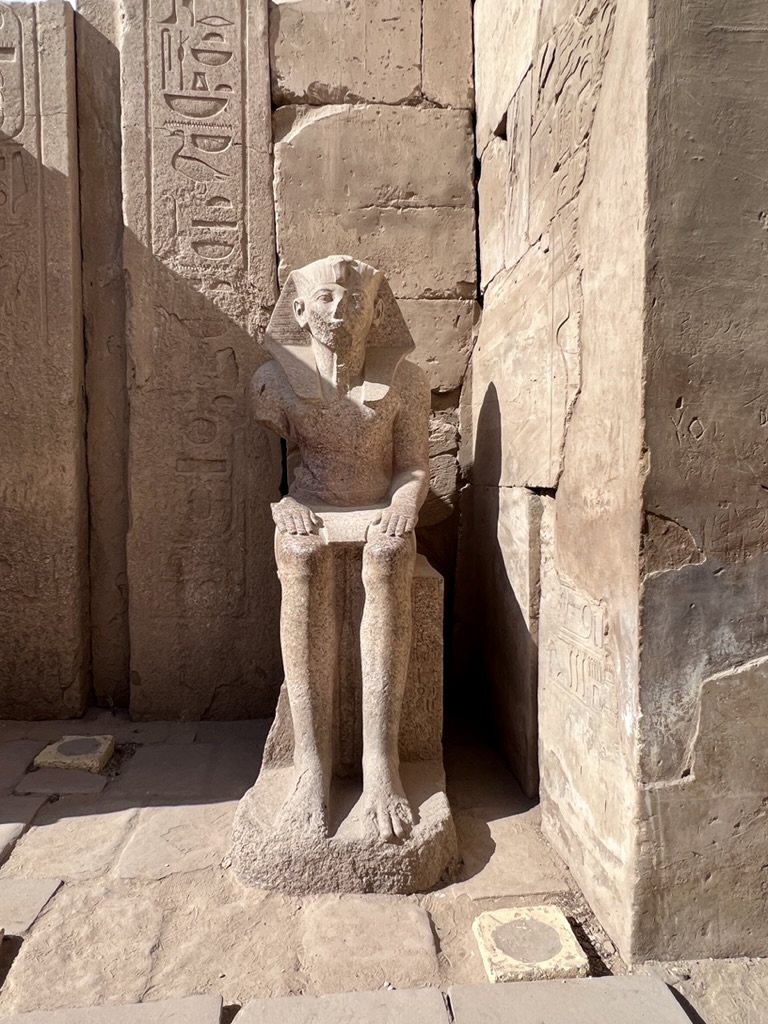
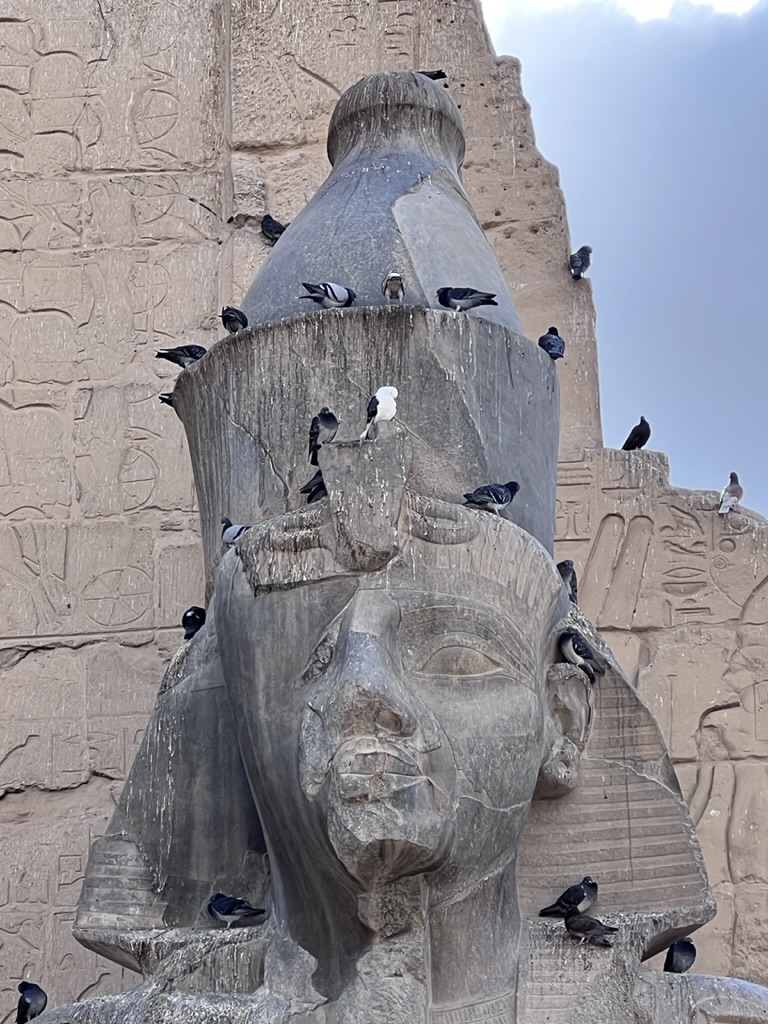
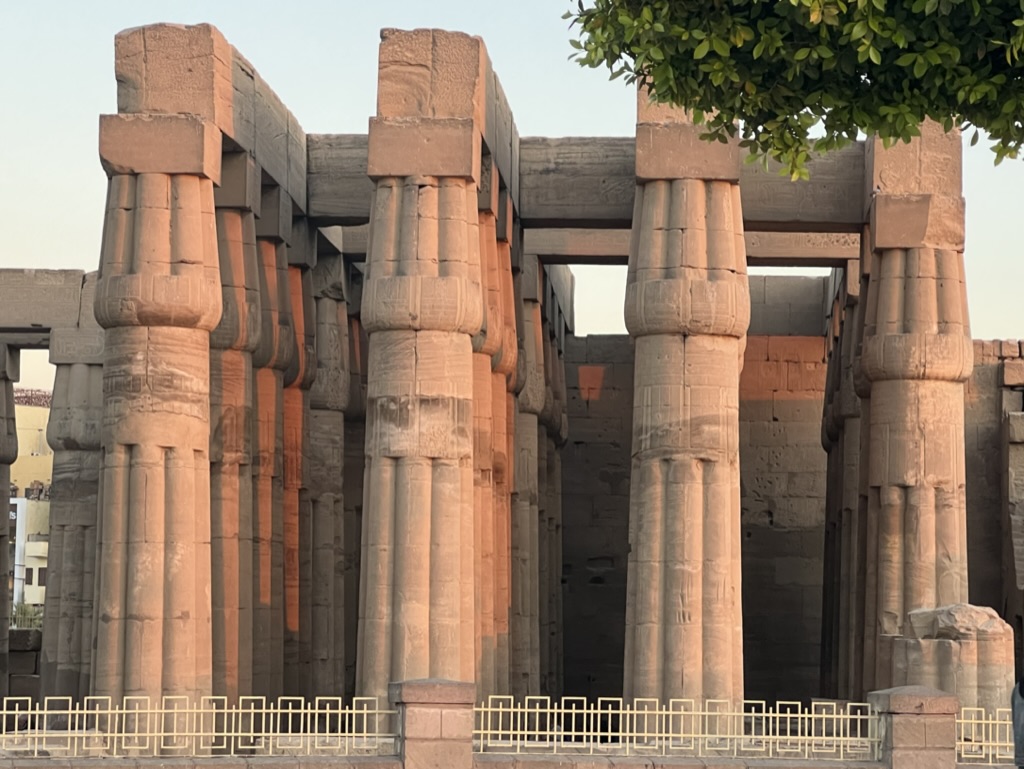
From Karnak Temple we headed to Luxor Temple, also on the east side of the Nile, which was built in 1400 BCE. If I remember my art history correctly, this and other temples of that era were built with a lot of “illusionism” – things were made to look like they were the same height but in reality, they were not of equal height. This was especially true for things like the obelisks at the temples. In the middle ages, the Muslim population of Luxor settled in and around the temple and as the population grew they started building on top of the temple, which was already in ruins. Centuries of rubble was on top of the temples, until excavation began in earnest in the 1880s and continued until the 1960s. Over time, rubble had buried three quarters of the temple which included courts and colonnades. By the 1880s there was not just rubble, but also stores, houses, and other structures which needed to be cleared away in order to do the excavation.
Before leaving Luxor Temple we “strolled” what is known as the Avenue of the Sphynxes (or path of god). Historically it went in a straight line from Luxor Temple to Karnak (close to two miles)–lined with human-headed sphinxes.This incredible area was opened to the public just one year ago—taking 70 years to uncover and restore. Apparently, the first trace of the avenue was discovered around 1950 when an archaeologist discovered 8 statues near the Luxor Temple and then another 17 were uncovered in the late 1950s. And then another group of 55 were located close by and finally the complete route of the walkway was determined and there were 1,057 statues lining the walk. There are lion’s bodies with ram’s heads and there are full ram statues and then there are the ones that are lions’ bodies and human heads.
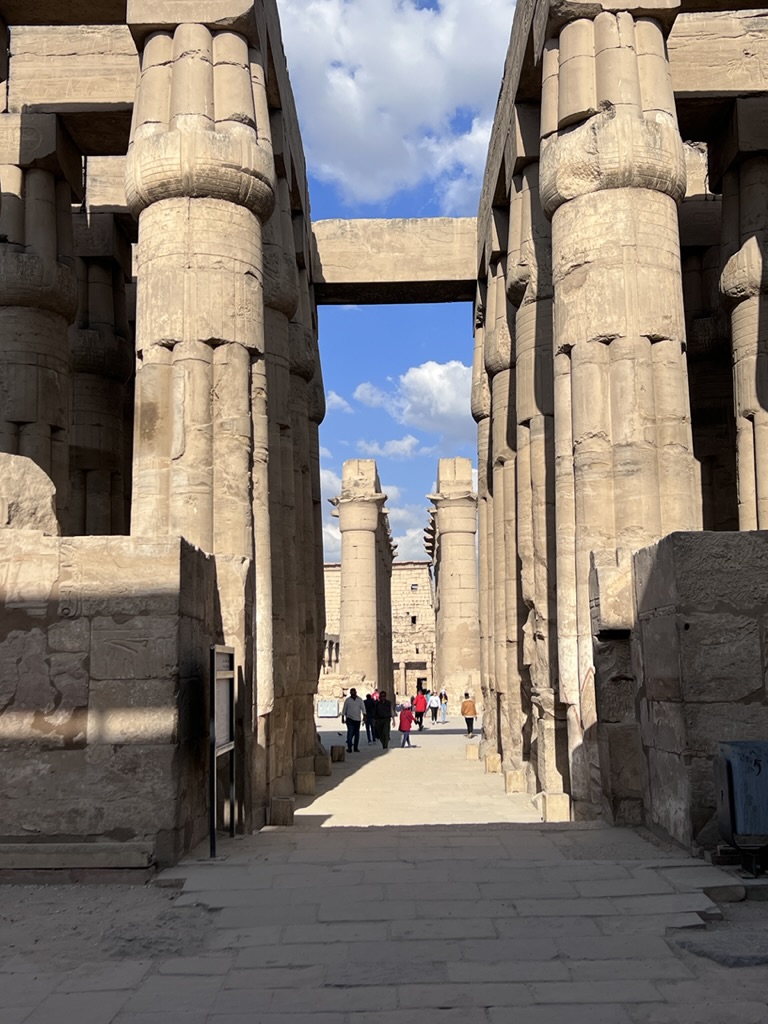
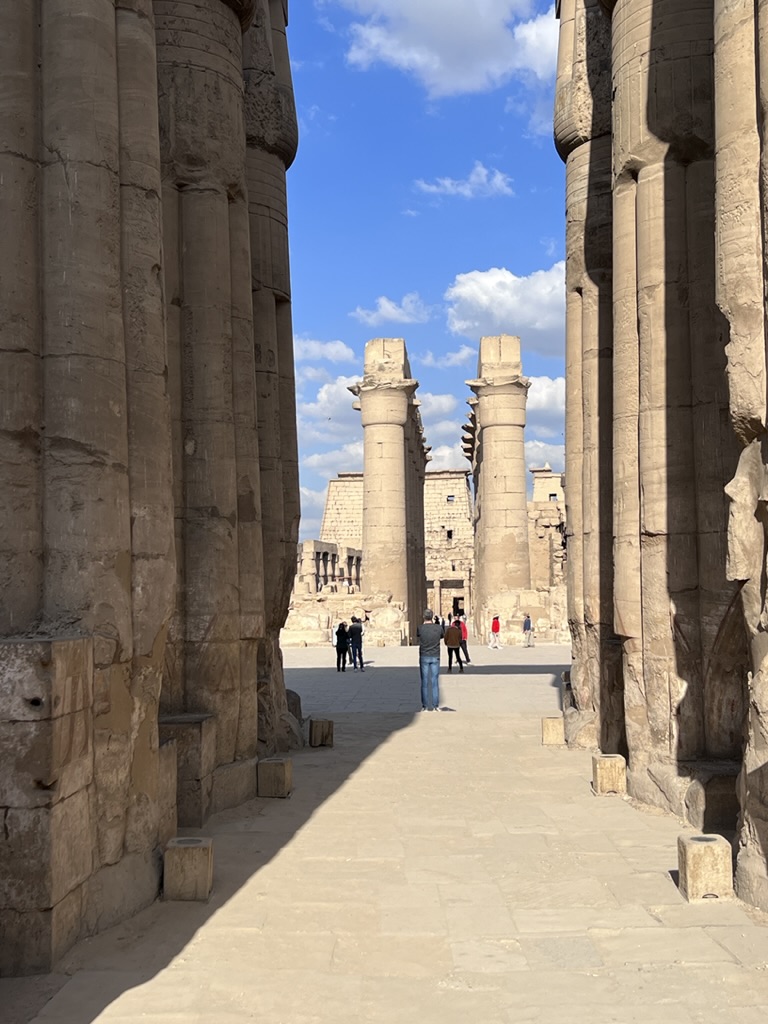
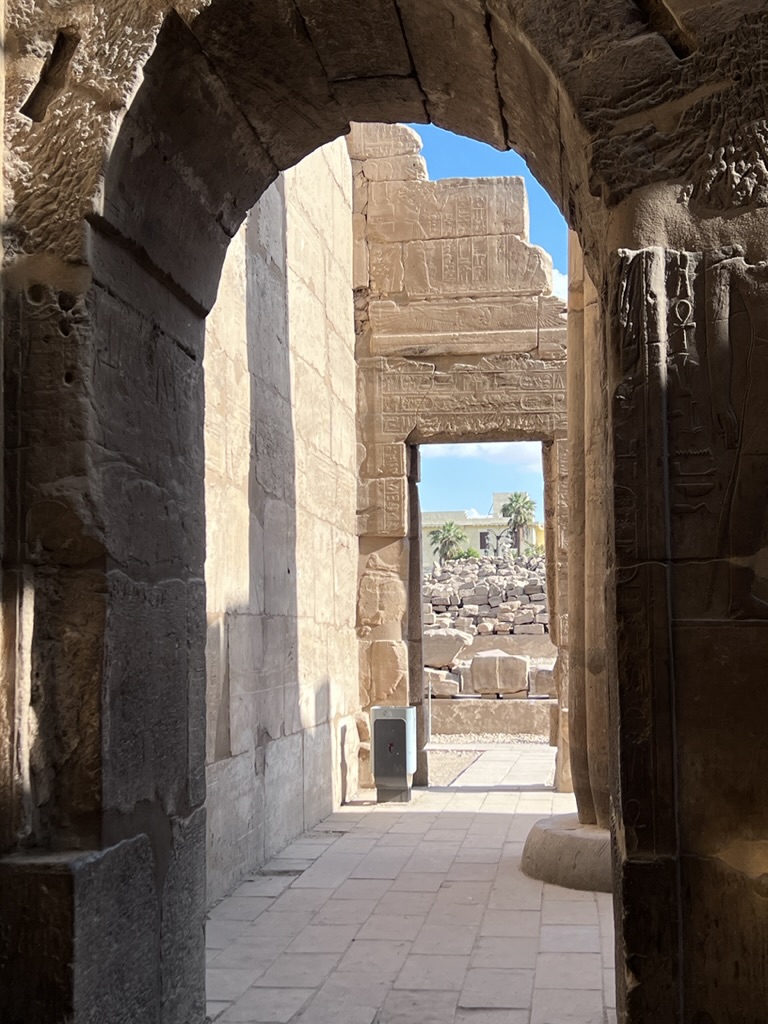
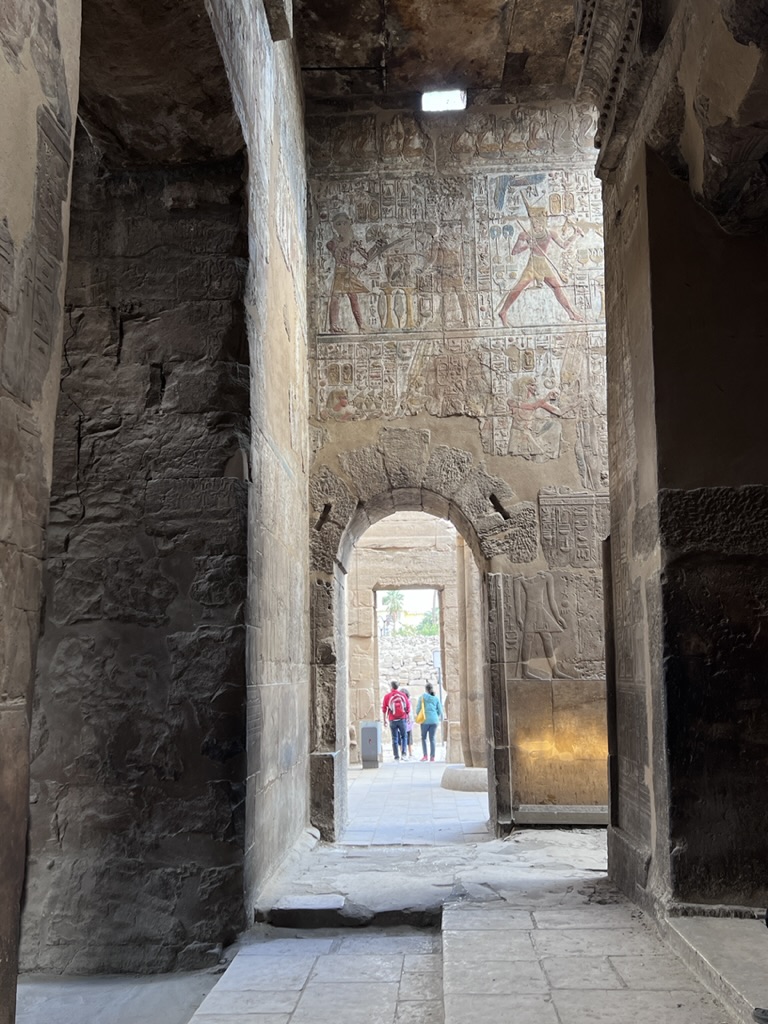
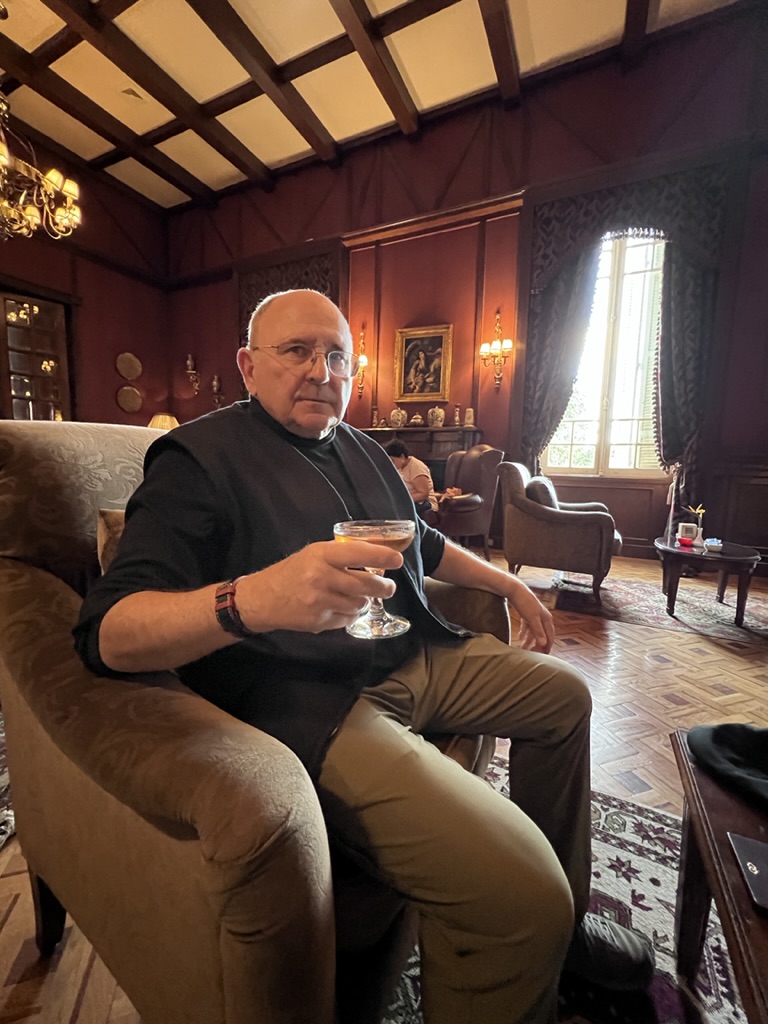
It’s a pretty impressive scene and most difficult to capture on camera! I actually preferred Luxor Temple to Karnak. From Luxor Temple we made a short stop at the Winter Palace (from around 1900) which is now the Sofitel Hotel (we had looked into staying there, but it was booked). We had drinks in the Royal Bar (we were the only ones there) and then checked out the spectacular grounds. In the brochure it notes that Agatha Christie, Jackie Kennedy Onassis, Al Gore, and a host of celebrities have stayed at the hotel (including Richard Gere quite recently).

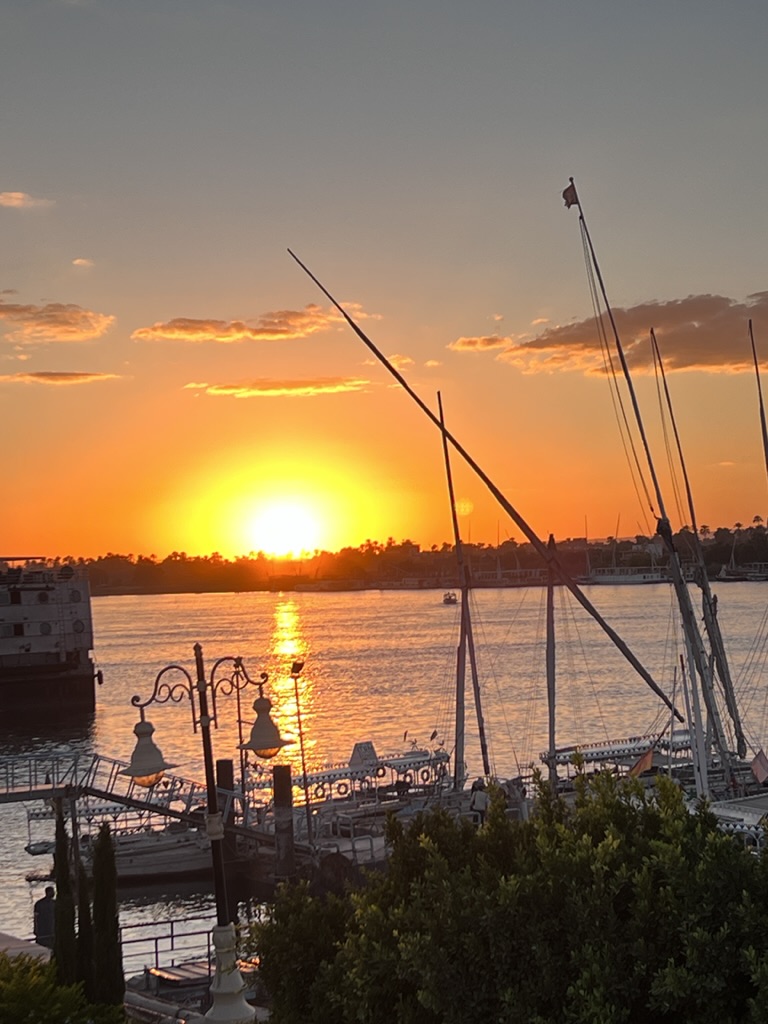
After a stroll along the Nile, we hopped into another taxi where the driver kept asking if he could drive us to a host of other places. When we declined and said we just wanted to get back to the Hilton, he said he needed to make money because he has 7 children (ages 4-26). I remarked that was a big family and then he said his wife “was like a rabbit!” I nearly responded, but kept my cool and just stepped out of the taxi. (The wife is like a rabbit? And what about his role?) We then freshened up for dinner at Sofra (a family-owned restaurant somewhere here in Luxor). See end of this note for comments on Sofra.
Took yet another taxi from the hotel to Sofra Restaurant which is located fairly close to Luxor Temple. Our taxi driver, Hamada, seemed to know his way around and knew of the restaurant. We had two starters (stuffed baby eggplants and sambousas; the sambousas were great) followed by a main course that we shared—a mixed platter of kebabs with a rice that is a mixture of brown rice and what they call vermicelli (in the translated menu), We shared a simple rice pudding for dessert. And no wine. Sofra is a nice little place that is clearly popular with upper class Egyptians and foreigners (who appear to be living in Luxor or Egypt as they knew all the staff when they came in the door.) Food is good, not great. When we arrived they suggested we sit outside, but the evening temperatures here are quite chilly—in the 40s and 50s (despite daytime highs in the low 70s) abd they don’t have heaters. We opted for indoors, but they seemed not to really have a table for us, They gave us a “private room” with a large circular table that could easily seat 6 or 8. We were fine, except that the location of this private room was adjacent to the restaurant reception desk and across from another “private room.” Our views were of the people eating in the other private room and waiters coming and going from the reception desk.
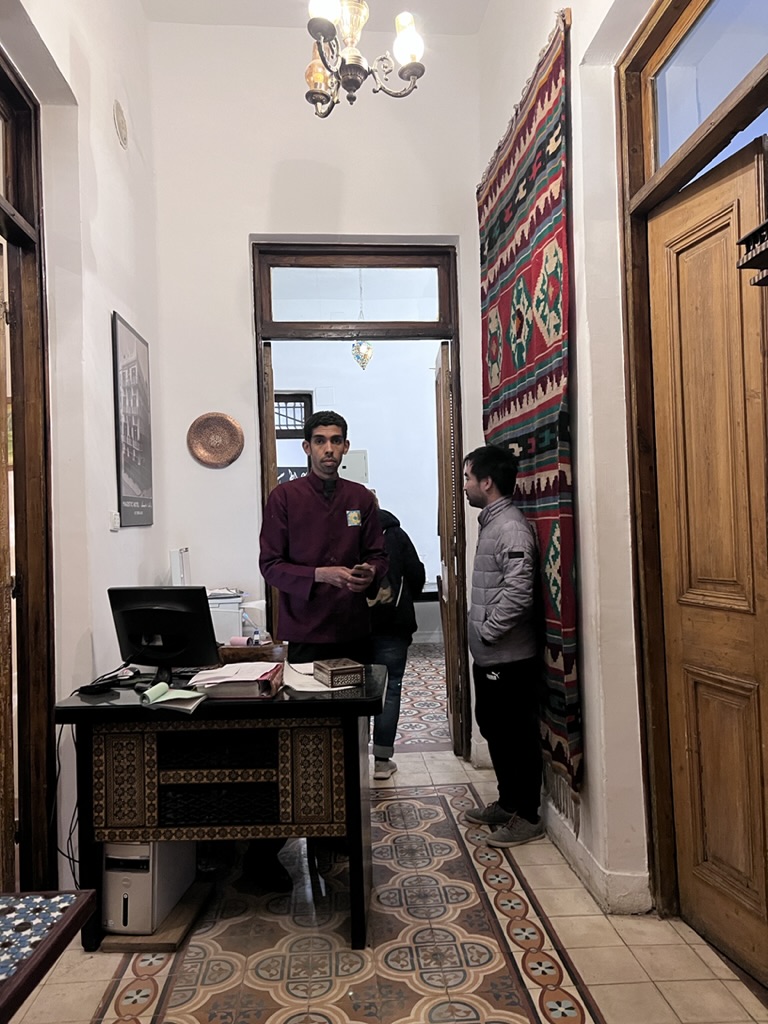
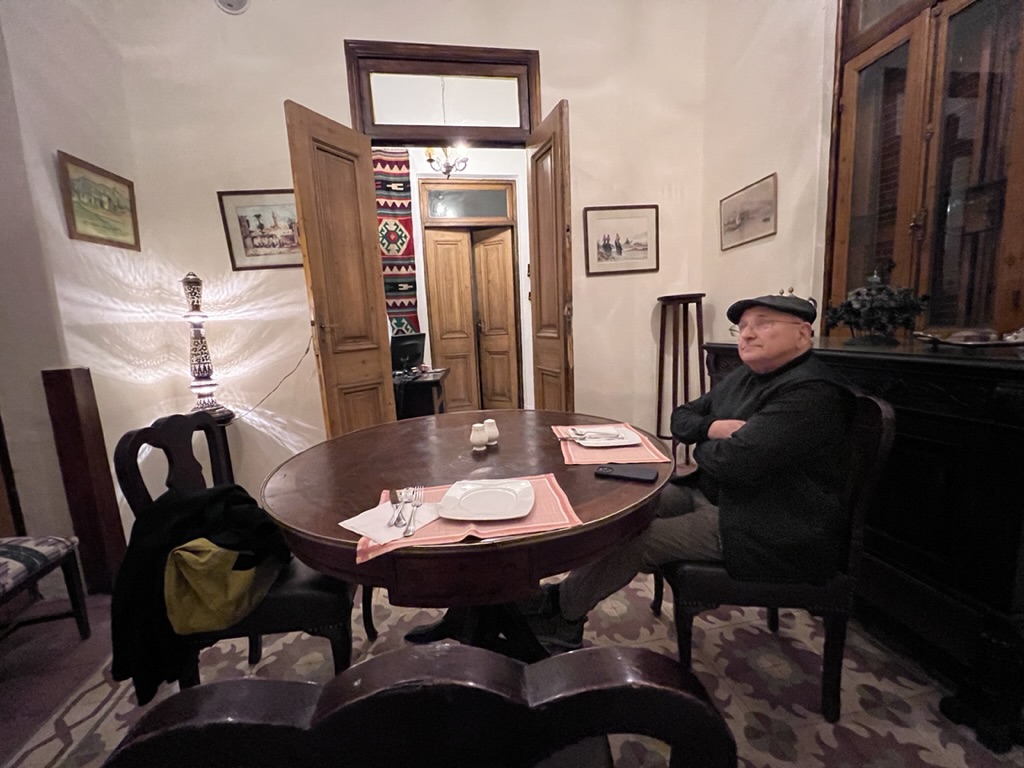
Left the restaurant and now we are calling it a day.
Best Christmas greetings-
Fern
 Fern's Travel Notes