Detroit Day 3: Diego, Dabls, Diners, Design: June 14, 2022
June 14, 2022
Greeting from Final Day in Detroit.
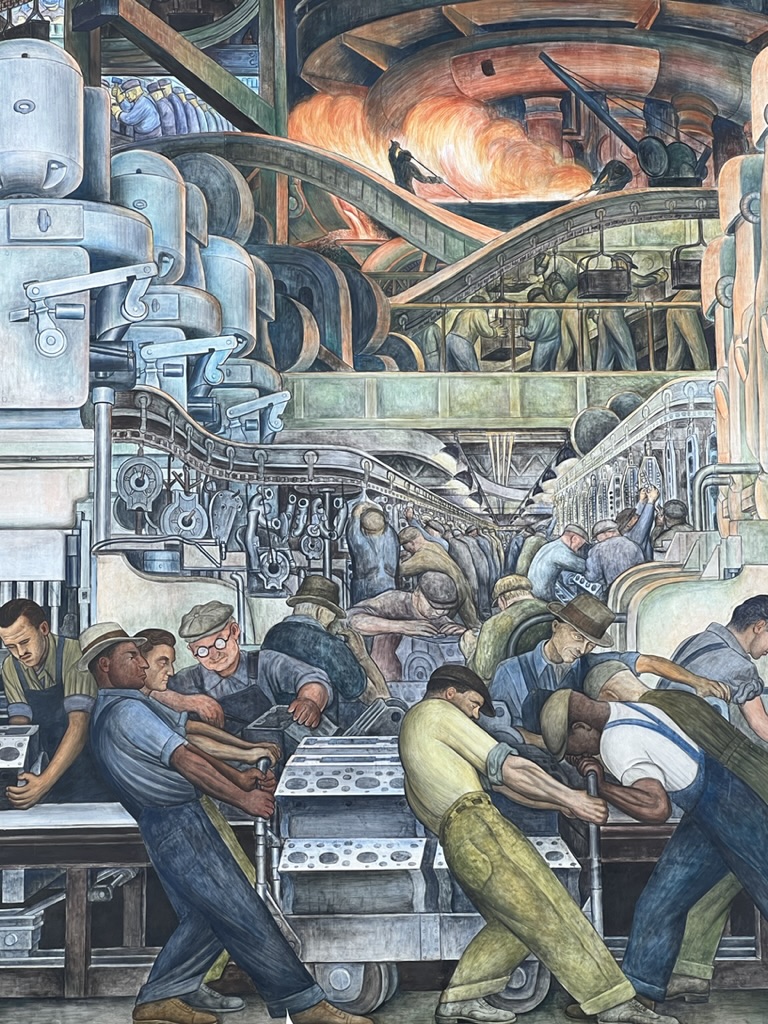
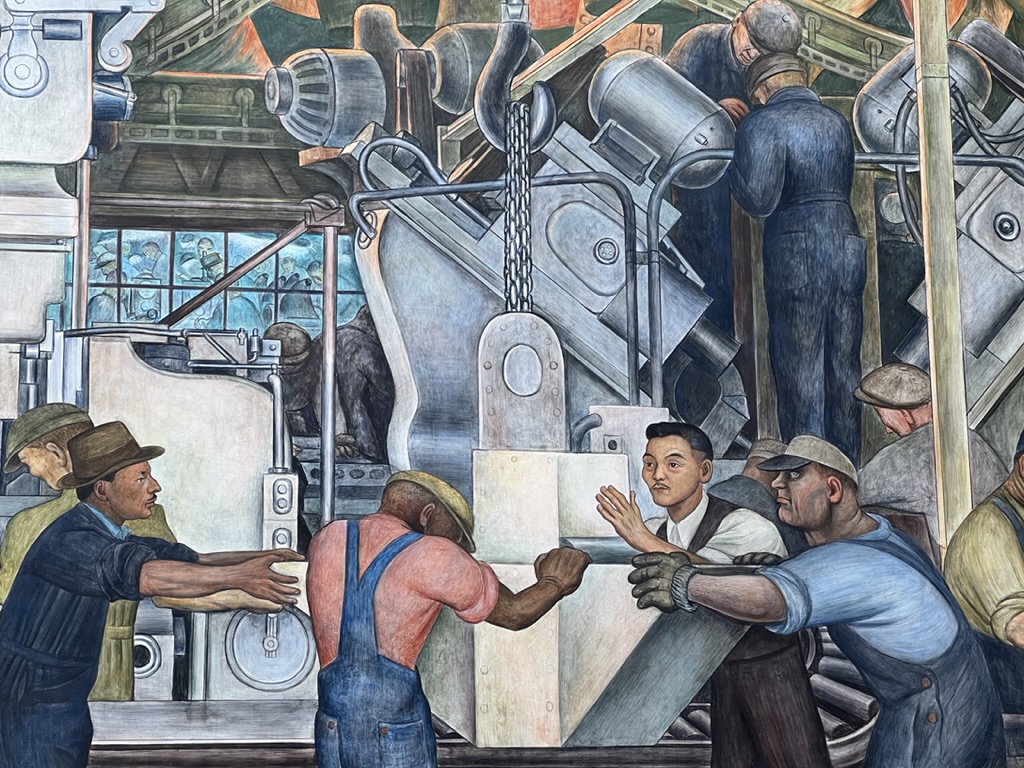
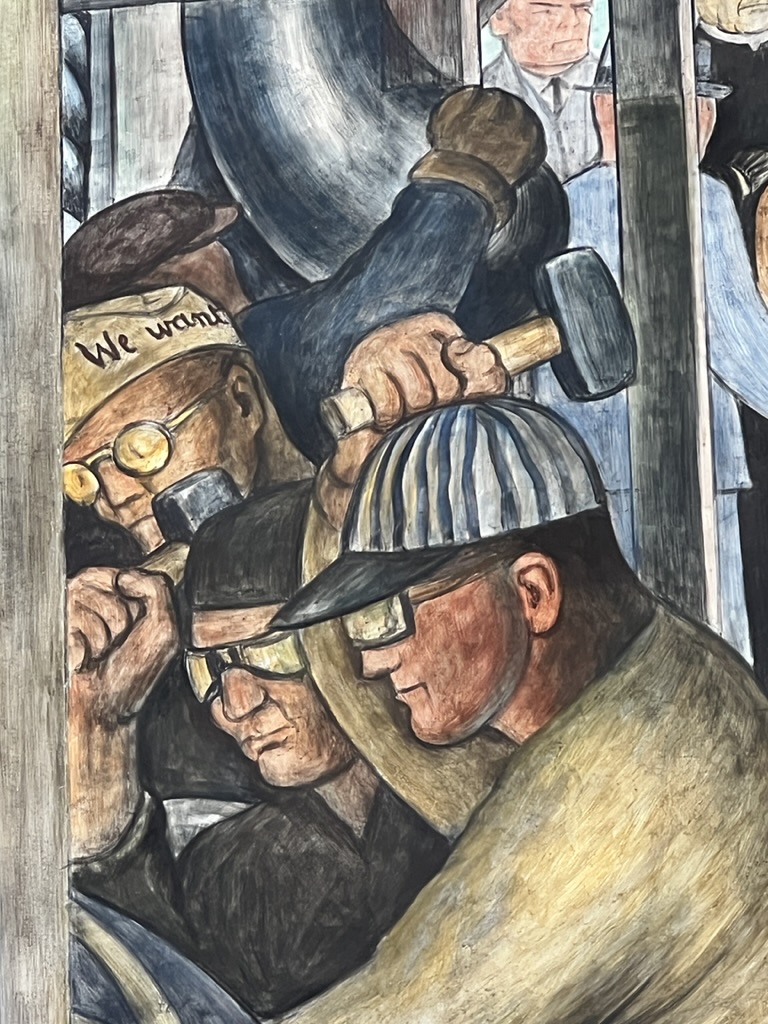
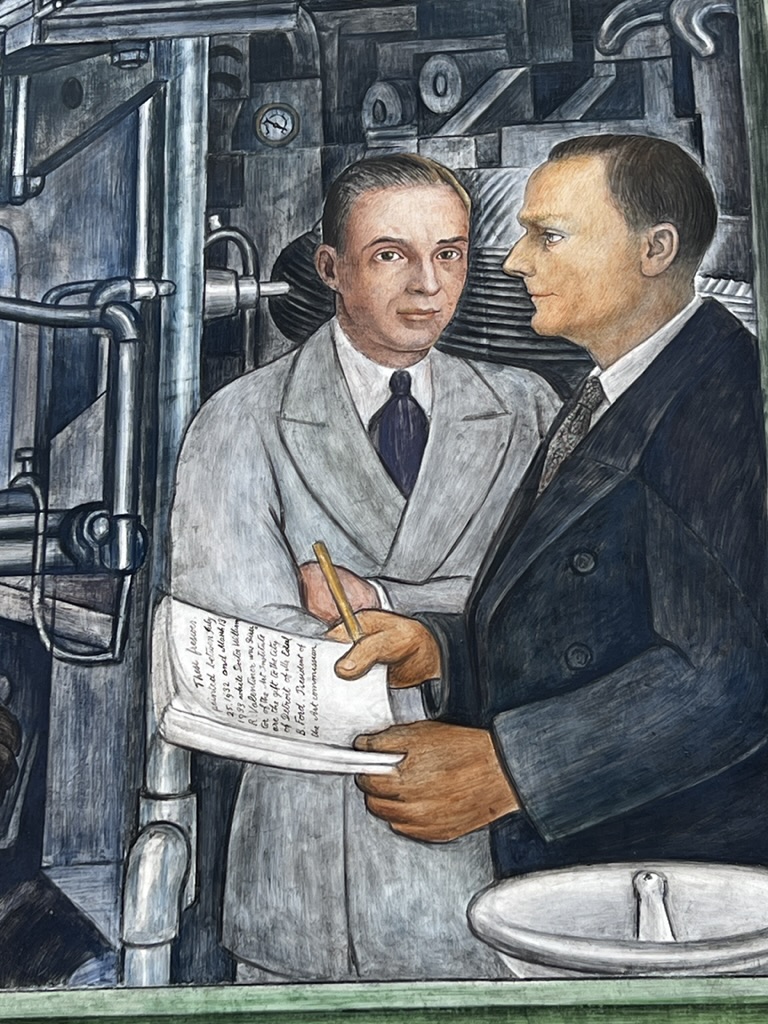
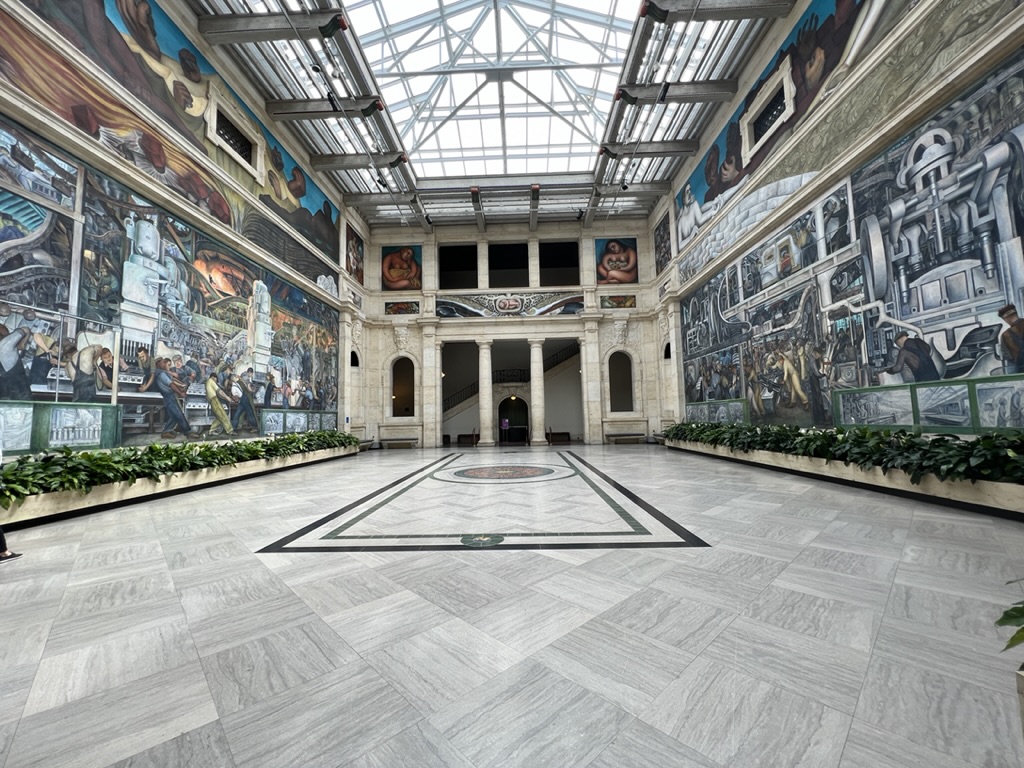
We started out the day at the Detroit Institute of the Arts (DIA), specifically to see the Diego Rivera mural(s) – 27 panels – depicting industry at Detroit’s Ford Motor Company (and more): “Detroit Industry.” Painting began in 1932 when Detroit was one of the foremost industrial centers in the world. But it was also a city hit hard by the depression; the workforce in industry had declined by about 35%. Interestingly Diego arrived to begin his project (which was totally funded by Edsel Ford, then president of Ford Motor Company) when there was a hunger strike and workers were at the gates of the Ford Motor Plant protesting the company, demanding employment. Guards shot and killed six of the protesters. Rivera proceeded to hire as many workers as he could to help with his project. It is an amazingly impressive set of murals that encompass the entire “room” of the museum. It’s complex, it’s political, its portrayal of workers is intense; and it was controversial. So much so that the Catholic church apparently asked for it to be whitewashed, and one councilmember followed suit. Rivera was paid $10,000 for the commission which took 8 months to complete (working day and night).
Some of the controversy centered around Diego Rivera himself who was seen as a Communist. And some were angered by the fact that a Mexican artist had been selected for the commission when Detroit artists were available and starving. But there were other issues. In the upper right corner of the room there is a child being vaccinated in a laboratory with animals around (the animals supposedly provided the serum for the vaccine). The composition of that panel is filled with Christian nativity scenes with the baby surrounded by Mary and Joseph. And there are three wise men. Rivera believed that technology and medicine would be a new savior, not religion. To make things worse for those in opposition to the entire project, he used images of the Lindbergh baby who had been kidnapped as a model for baby Jesus and the image of Mary is based on the movie star of the time, Jean Harlow who Diego either had a crush on or perhaps an affair. Joseph is depicted as a physician looking like the museum director at the time. The three scientists (the wise men) were referred to as a Catholic, a Protestant, and a Jew—ecumenical wise men. There are many more interesting stories that are embedded in the mural, which by the way is really a fresco.
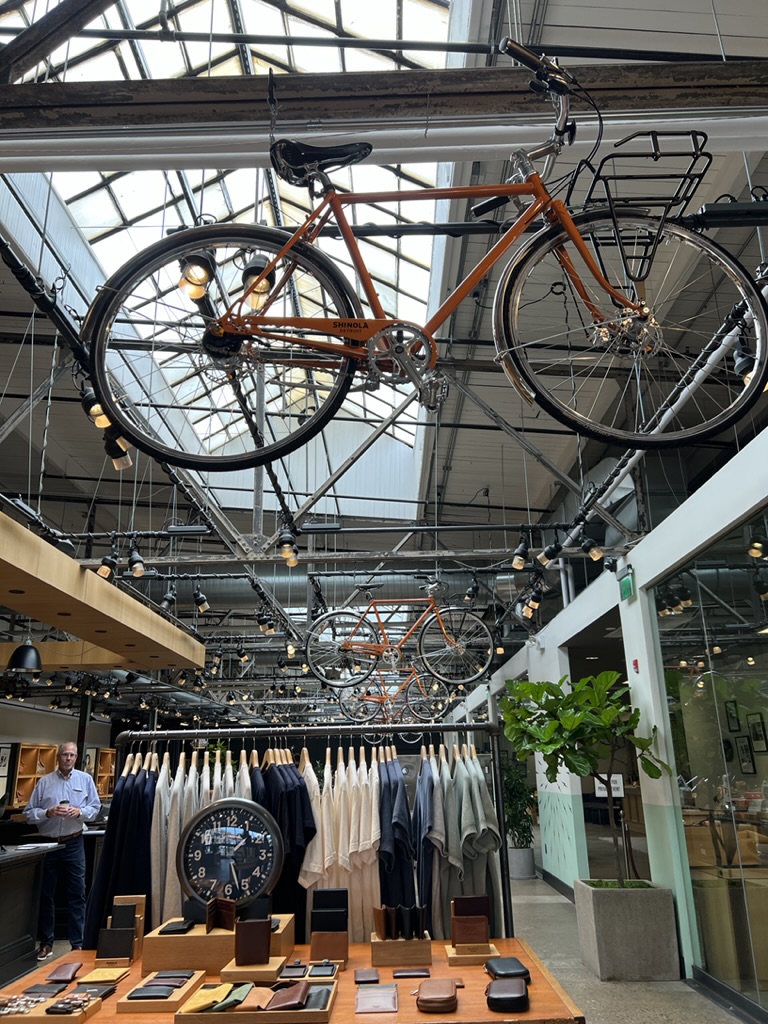
From the DIA, we made a brief stop at the Shinola headquarter store where everything from their bikes to watches to leather goods and even jewelry was displayed beautifully and was pretty enticing—but with prices well out of range. We looked but didn’t buy; proud of our restraint.
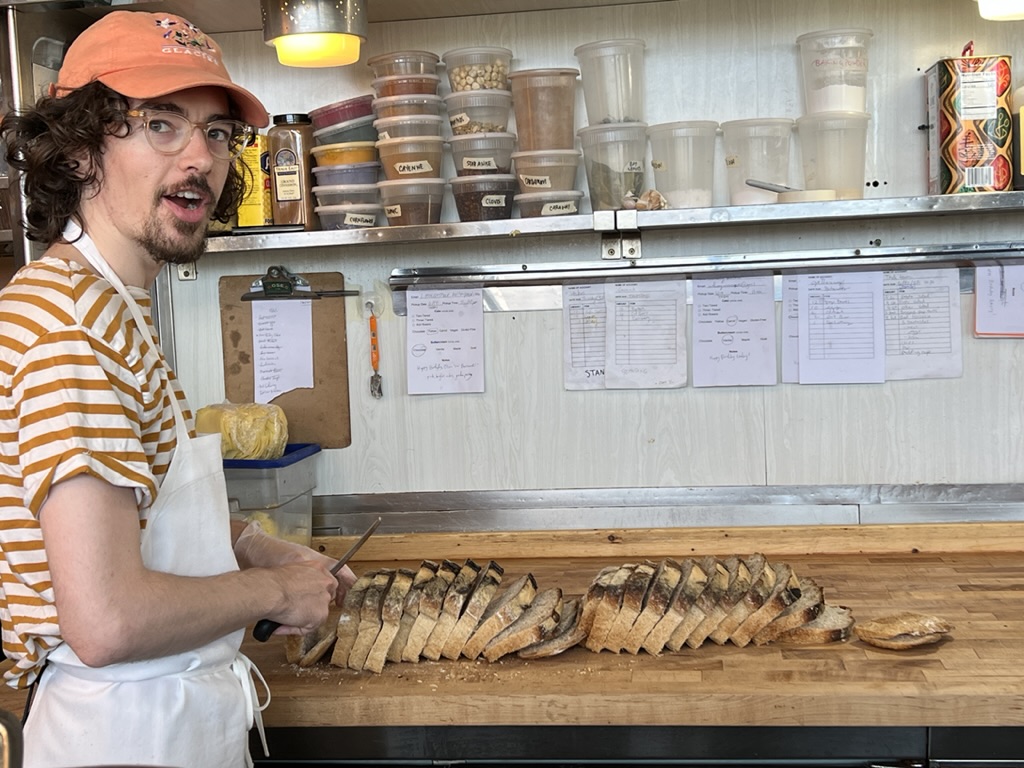
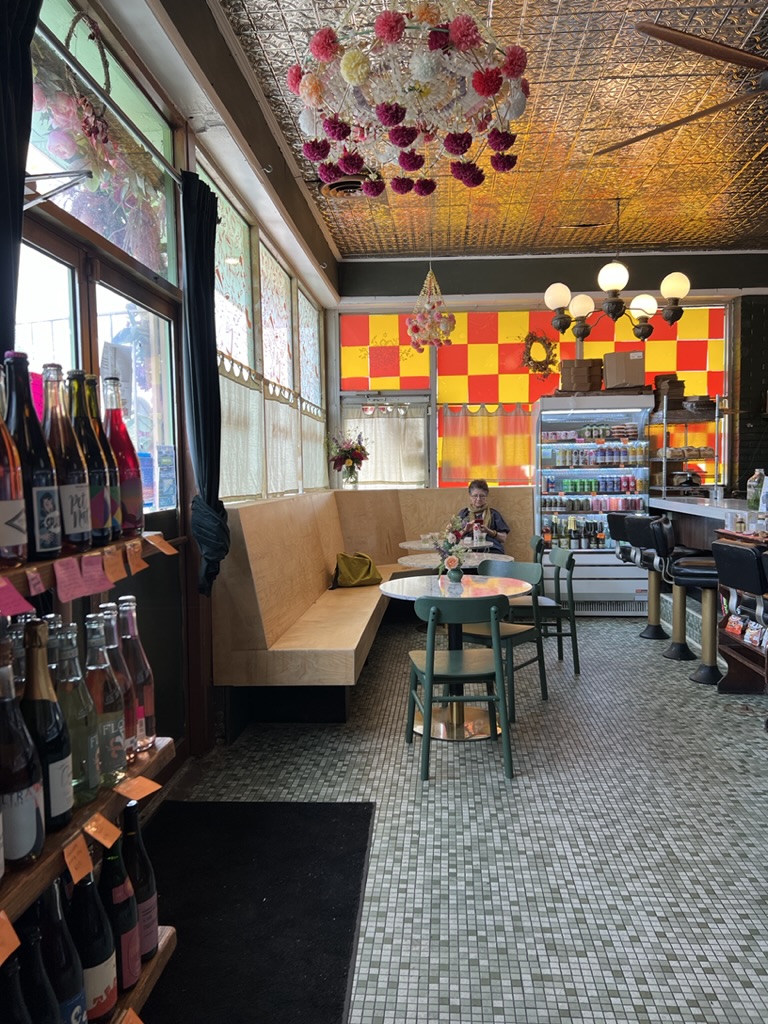
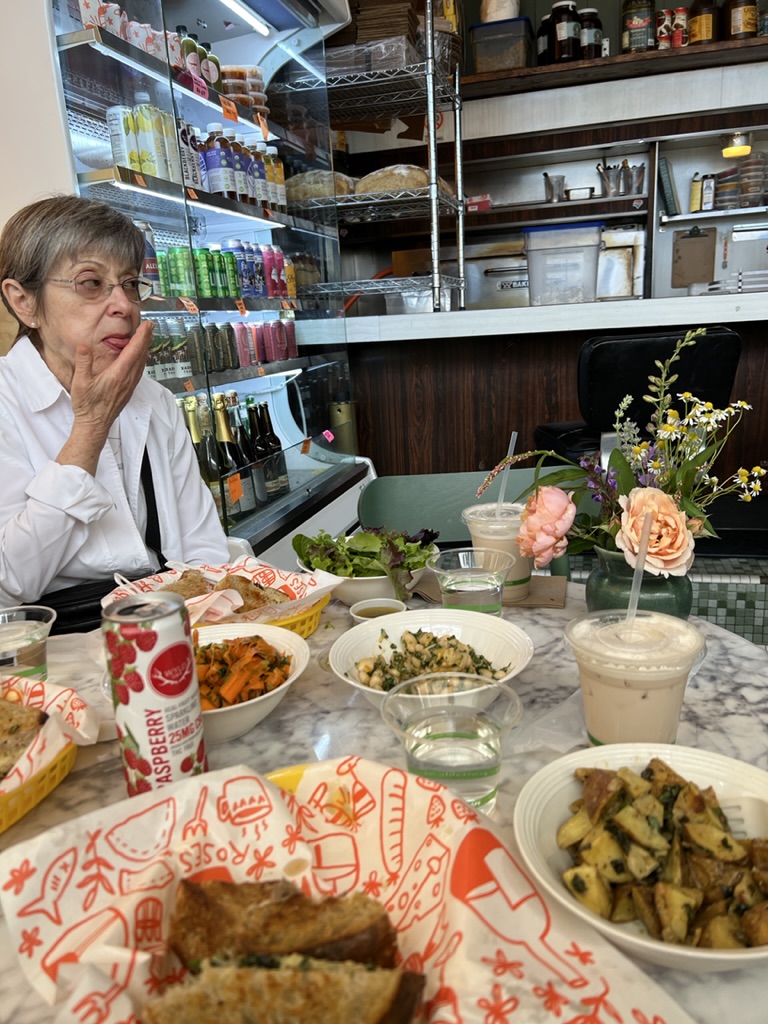
And then we headed cross town to the north and east to Rose’s Fine Dining – a diner-style little place where the owner, Molly (there apparently isn’t and never was any Rose) has created a small but great breakfast and lunch menu with many ingredients grown in the back of the building, along with roses (hence the name?) and all ingredients sourced locally. They bake amazing bread and all of the sandwiches are panini-style. We had the grilled cheese with fresh basil and the pulled pork with dill and pickles and melted cheese, and we had side salads including carrot slaw, roast potato salad with local herbs, and green salad. After chatting with staff and getting the story of Rose’s (which is about 8 years old) we headed to the African Bead Museum which was (naturally) way back in the opposite direction. Another treat was in store.
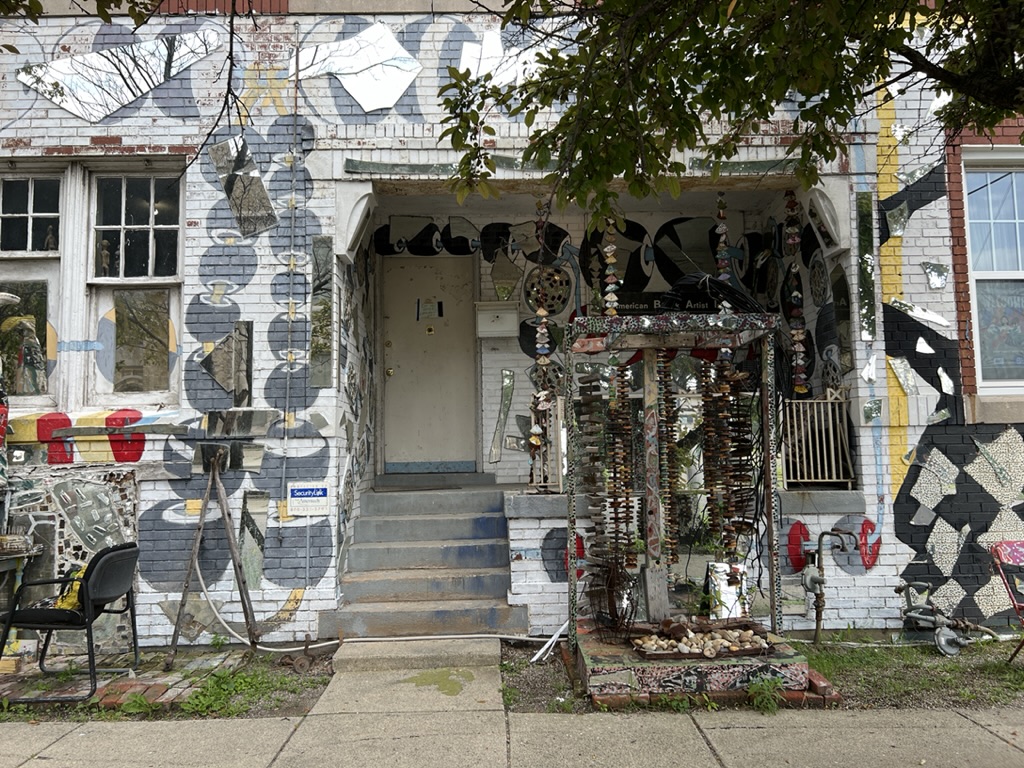
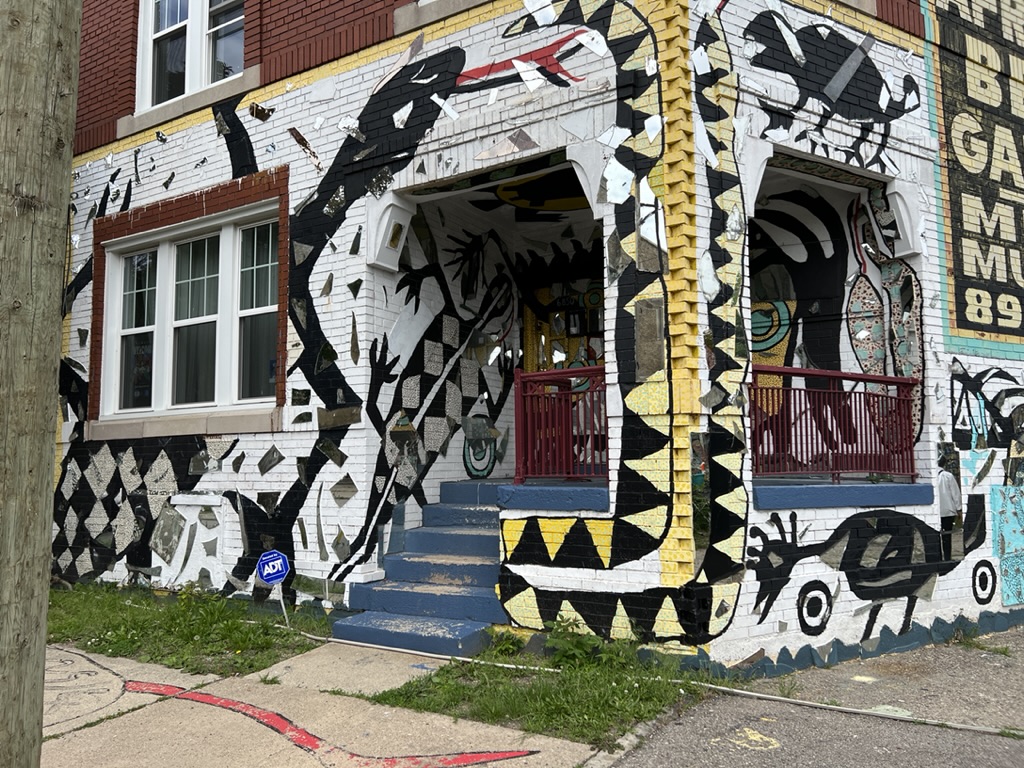
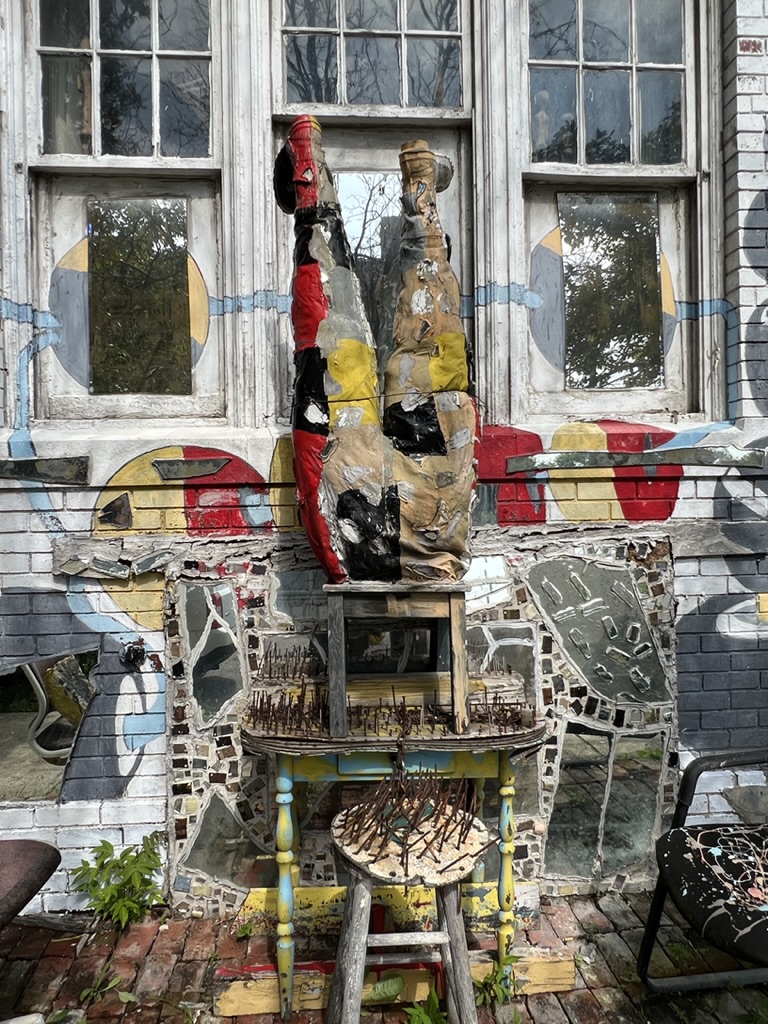
(Olayami) Dbals has created yet another world—houses clad in broken pieces of mirror and random paint and scraps of wood and found objects. He’s decorated two or three houses this way and then behind the houses are purposeful collections of found objects—often of similar types that he has arranged, sometimes painted, sometimes assembled out in the urban “landscape” with trees and grass and weeds growing around them, through them and whatever… all exposed to the elements of rain, snow, heat. Place-based installations that encourage contemplation and a sense of African traditions and culture. When Dbals started this work and created this museum and installations, the museum world was run by Europeans. He realized that going to these traditional museums was a form of cultural colonization and indoctrination, so he chose to develop a museum that talked about art from an African perspective.
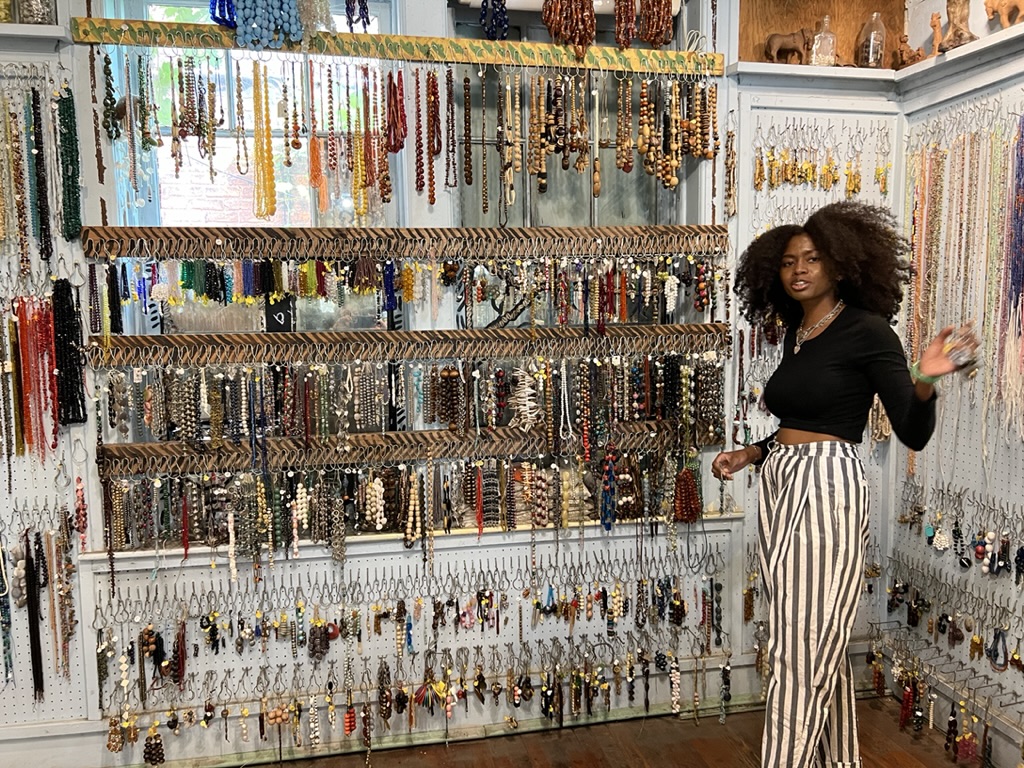
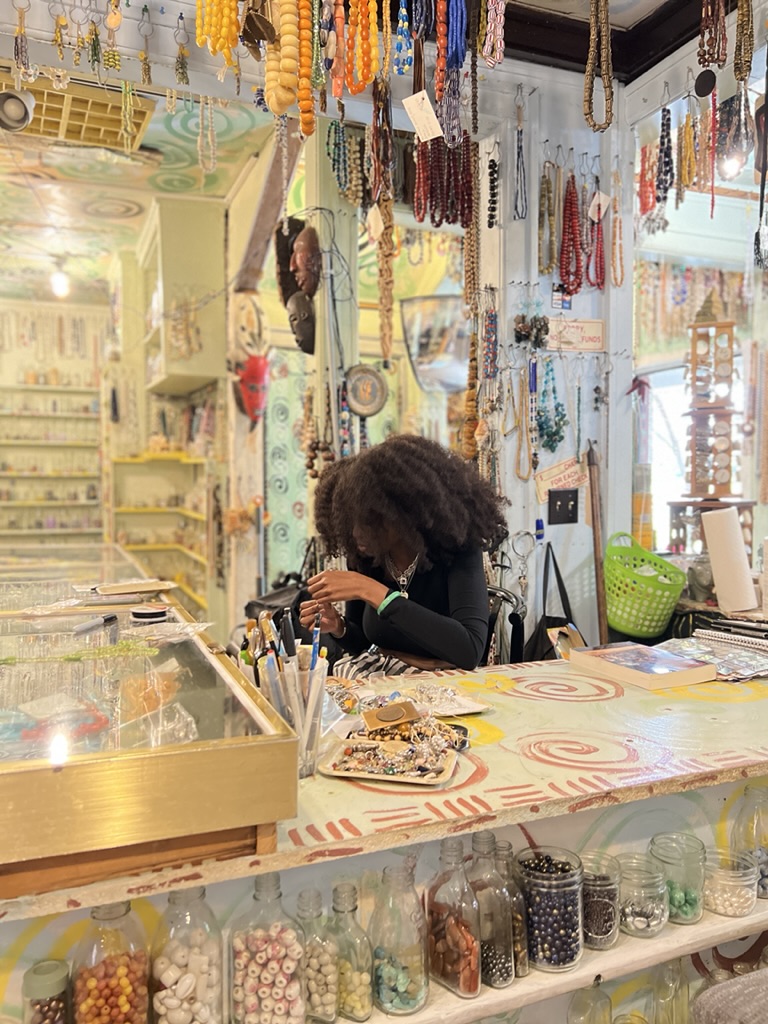
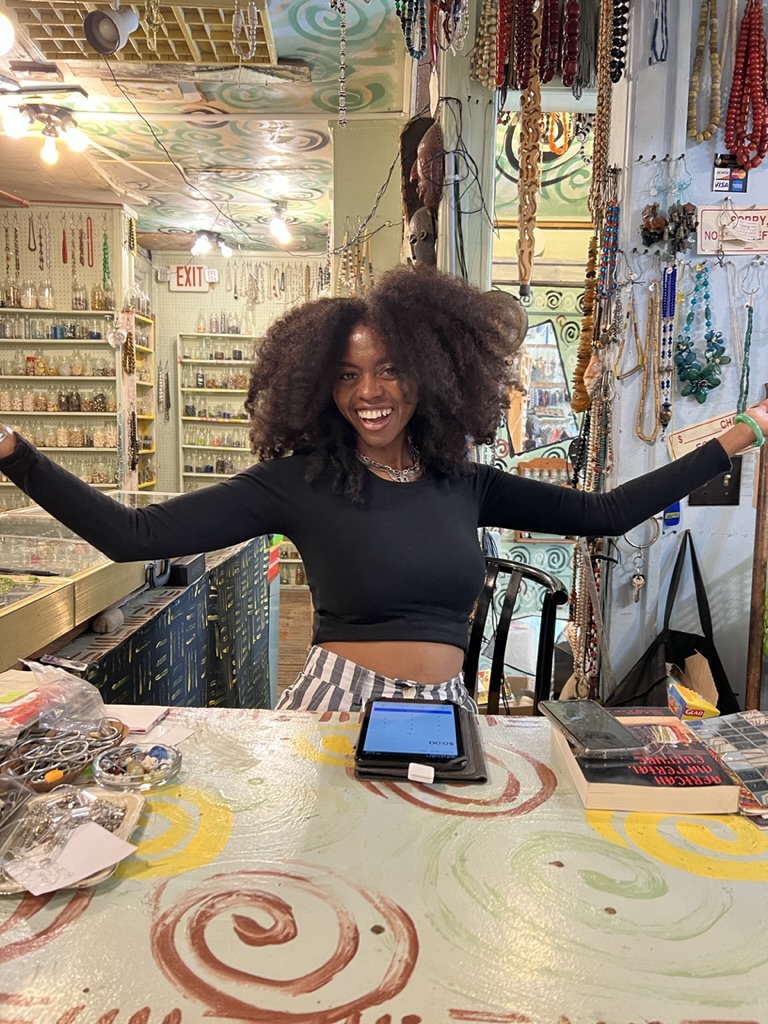
Dbals is also a musician, playing diverse African drums. Within one of the houses he’s set up an African bead store with literally tens of thousands of beads organized in hundreds of small jars, alongside strings of beads already assembled—all from various parts of the African continent. The “shop” is about 500 sq feet and there isn’t an inch that isn’t covered with jars of beads on shelves going from about one foot off the floor all the way up to about 7 feet. The day we were there the shop was managed by a lovely and beautiful woman who has worked for Dbals on and off for about 8 years. She herself is an artist having done many residencies across the US and abroad. Both she and Dbals are Detroiters with huge optimism about the city. There was some similarity in the work of Dbals and the work of Tyree (from Heidelberg Project) but Dbals is more animated, more cheerful, a natural story teller, with lots of heart. He played the drums for a while when we were walking around the site and managed to get both Adrienne and Carol to follow his rhythm on drums. I was talking with the shopkeeper at the time (I think her name was Jazz), and met Dbals a bit later. Carol purchased a necklace and some gifts and I got a few random beads.
And then we were off again… to take the bridge to Belle Isle– a great park that sits in the river, from which you can see Canada whose border is just north of Detroit. The park was pretty active with all sorts of outdoor and water activity. Then we noted on the map that the oldest cemetery in Detroit was not too far so we decided to explore. Carol (the one who is not Jewish) noted that there was an old Jewish cemetery within the property so we decided to search. Sure enough there was a small section –gated off from the rest of the property—that housed Jewish tombstones/monuments that dated back to the late 1800s until the mid-1950s. I think the Jewish section of the cemetery is no longer active.
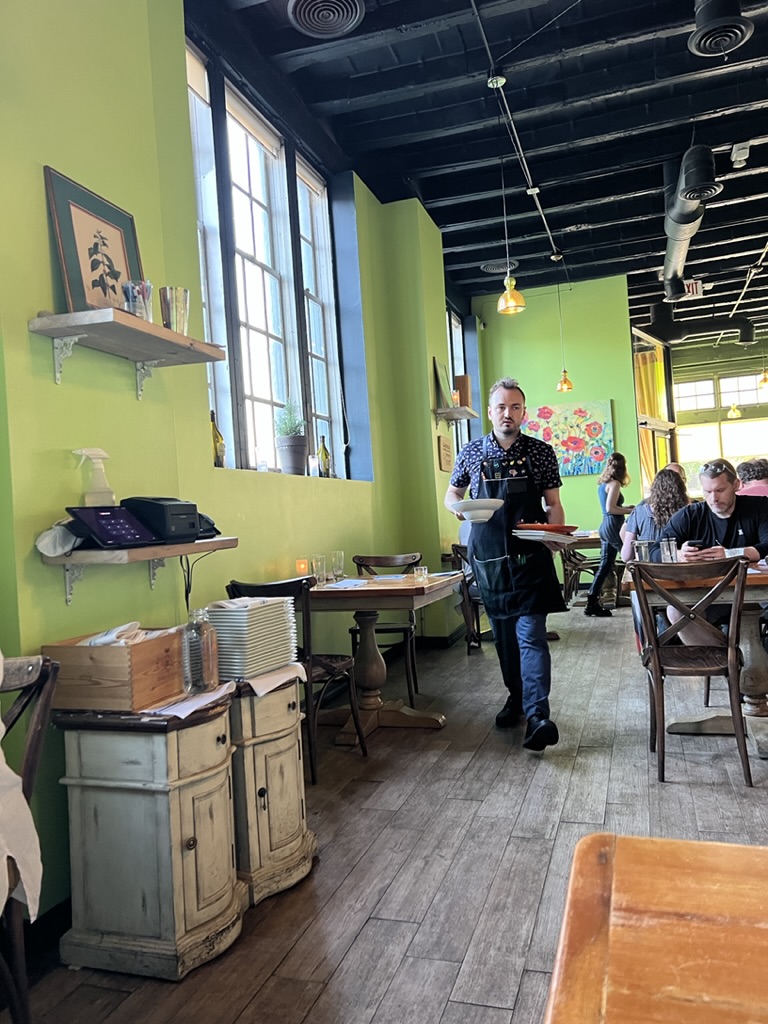
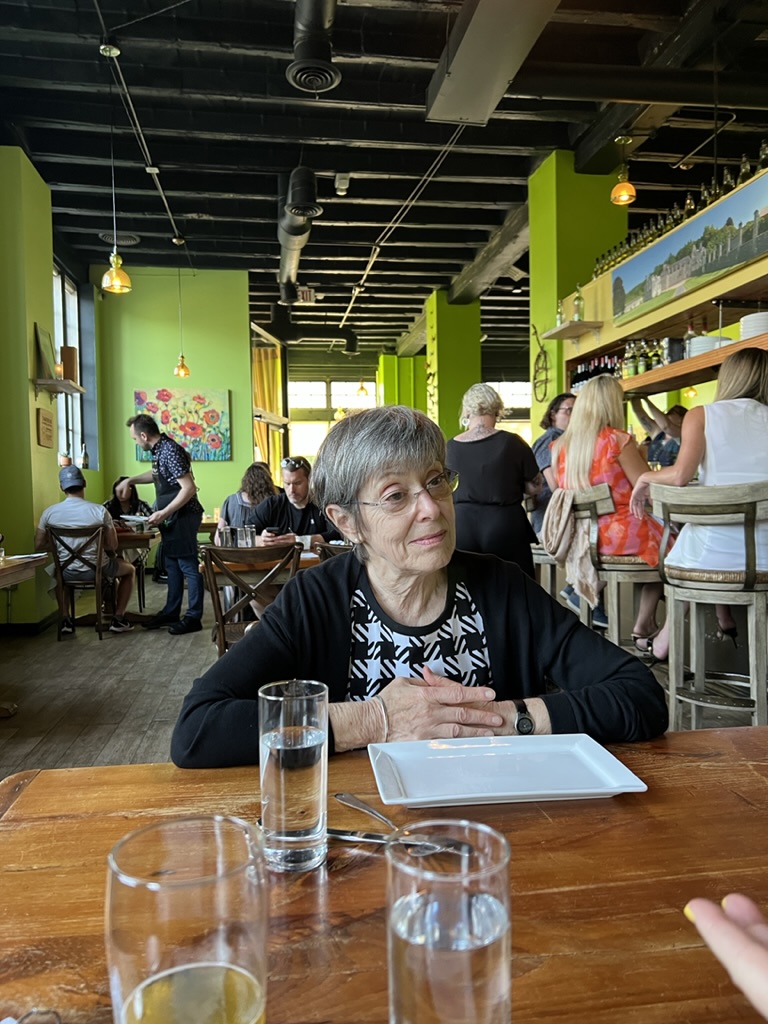
And then we rushed to freshen up and head to dinner at Chartreuse which is a bit of an homage to the chartreuse liqueur and is painted in that green color. Food was OK but didn’t stand up to the other two dinners. We thought about canceling earlier when we found out through the bead store folks that there was a Senegalese restaurant nearby called Baobob. But we already had confirmed reservations at Chartreuse. We needed to get back to the hotel at a decent hour as Carol and my flights were at 7:00 am… It was another long day and not much time to sleep before waking and packing and heading to DTW.
A few things I forgot to mention. Detroit’s land mass is huge (139 sq. miles)… The cities of Boston, San Francisco and the island of Manhattan can all fit within its boundaries and still leave room for more! There are so many vacant lots and big distances between things that they appear to be filling in (in some parts of the city) with agriculture and tree farms. But I don’t know a lot about this venture.
We did ask about homelessness since we all noted the fact that we saw NO tent communities and no homeless population on the streets which was amazing given the situation elsewhere. We were told that there is a sizeable homeless population but that there are so many vacant properties, the unhoused are mostly squatting and therefore not on the streets.
That’s a wrap for Detroit (and Chicago)…
Not certain what next travels will be—domestic or international. For now, I’m hunkering down for a few months in Oakland to work and also to finish the book.
Best-
Fern
 Fern's Travel Notes