Berlin:: August 2, 2012

Eineinhalb bis zweieinhalb Tage: August 2, 2012
Guten Abend —
We started out today at about 10 am (I was up until close to 3 a.m. with work)… at Café Einstein (which we learned is totally different from the Starbucks look-alike called Kaffe Einstein). Einstein Kaffe is just a coffee shop but Café Einstein is a full blown restaurant. There are two of the cafes, but many many of the coffee shops and they are totally separate. Can’t imagine how they were able to get the use of the name (Don’t think that could happen in the US — lawyers would be all over this!). Anyway we could get a full breakfast at the Café Einstein.
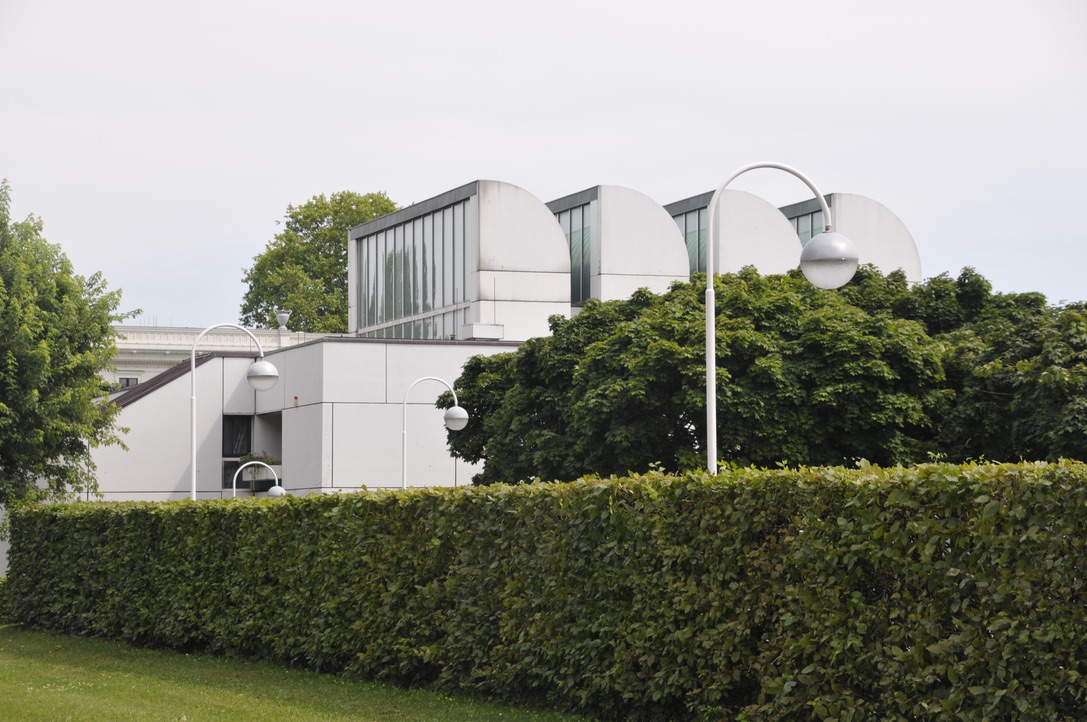
Got off to a not-so-good start as when we sat at an outside table at the café… literally at that moment.. a bird decided to do its thing on Mike’s shirt.. kerplop! If you weren’t Mike, it was pretty funny. And we were totally attacked by a single bee, who just couldn’t find anyone else to bother. Anyway, after this breakfast, we walked to the Reichstag with the intention of climbing to the top of the dome for what we assumed would be a spectacular view. It was really really hot today as we walked along Unter den Linden to reach the Reichstag… only to find out that you need a reservation to get to the dome and they were totally booked. So we then walked through the park to our next stop which would be the Bauhaus Museum (a building designed by Walter Gropius in 1964 and built soon after his death in 1976. .. The walk took us all along Embassy Row.. which includes dozens of new buildings developed I suppose when the capitol was moved from Bonn to Berlin.

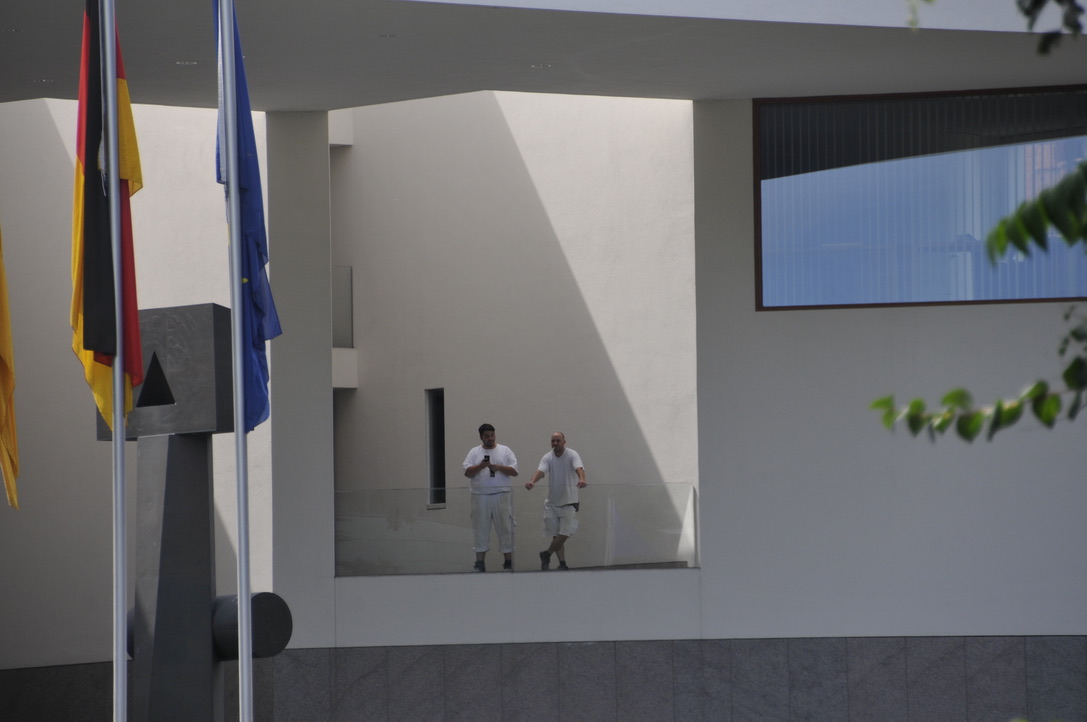
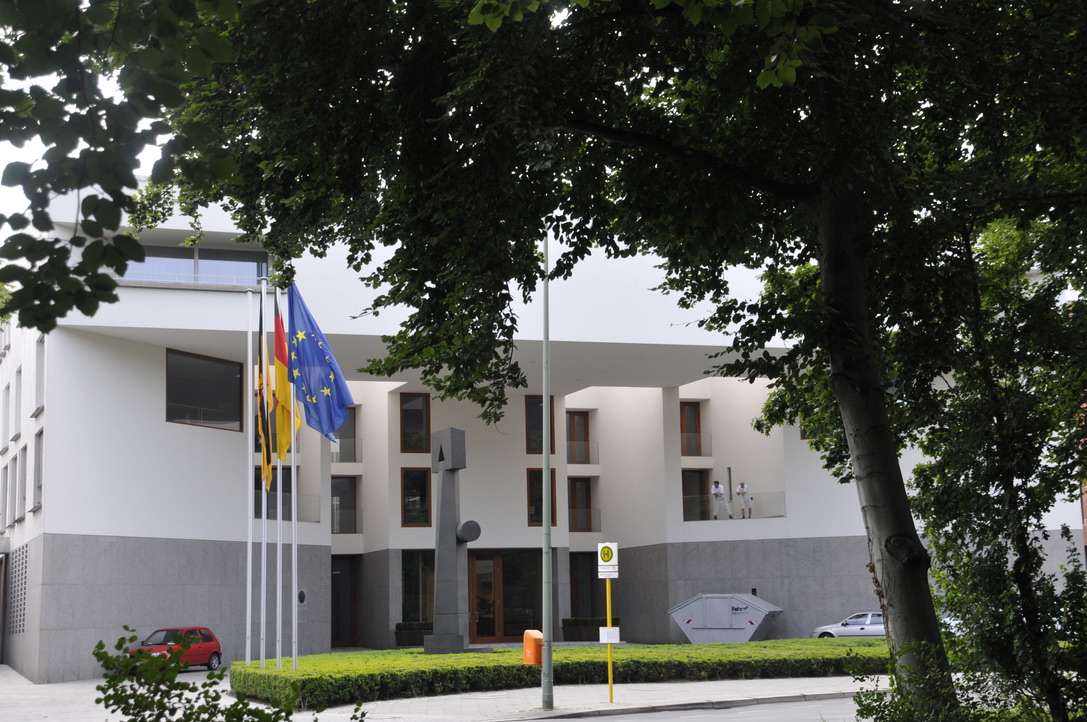
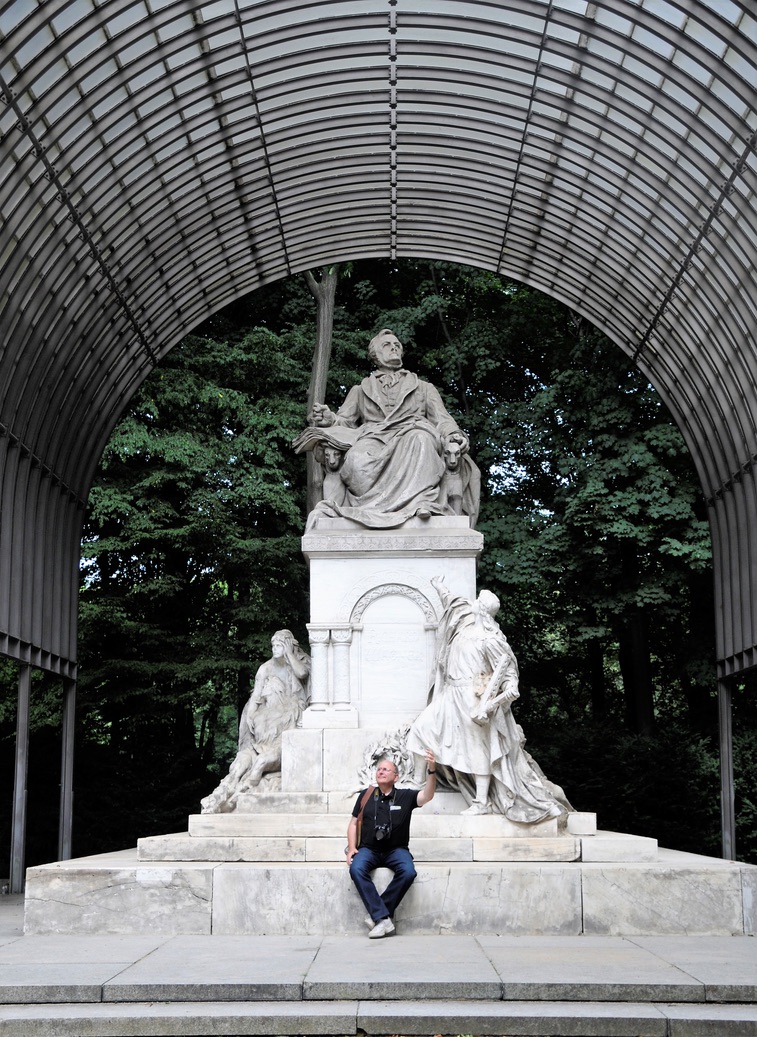
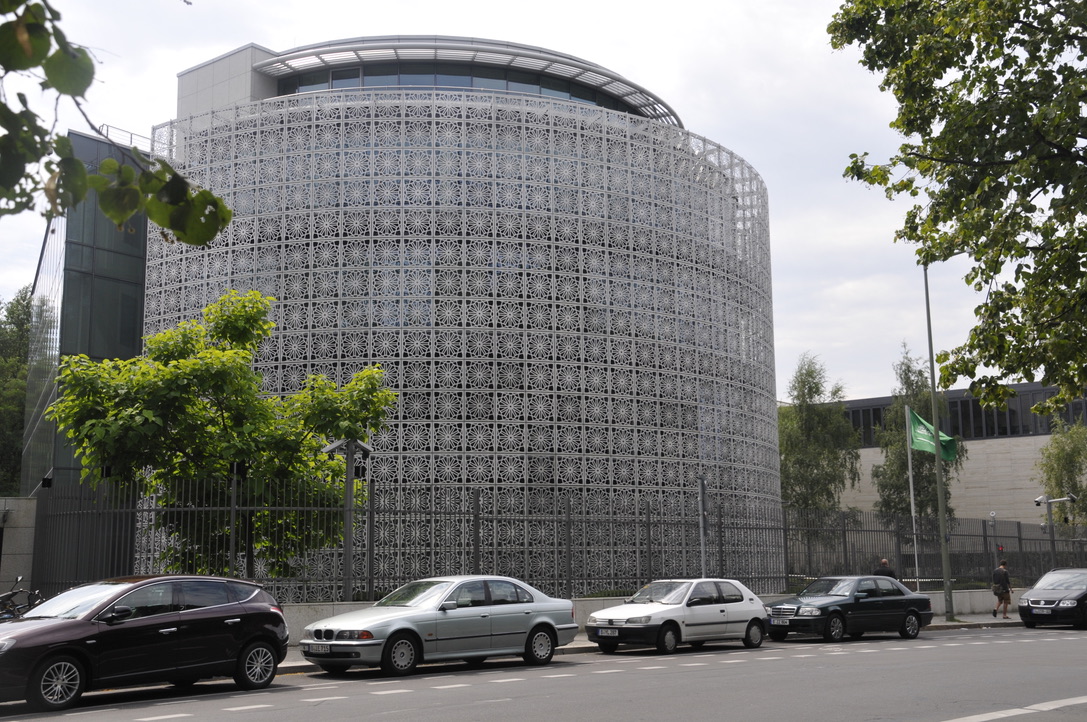
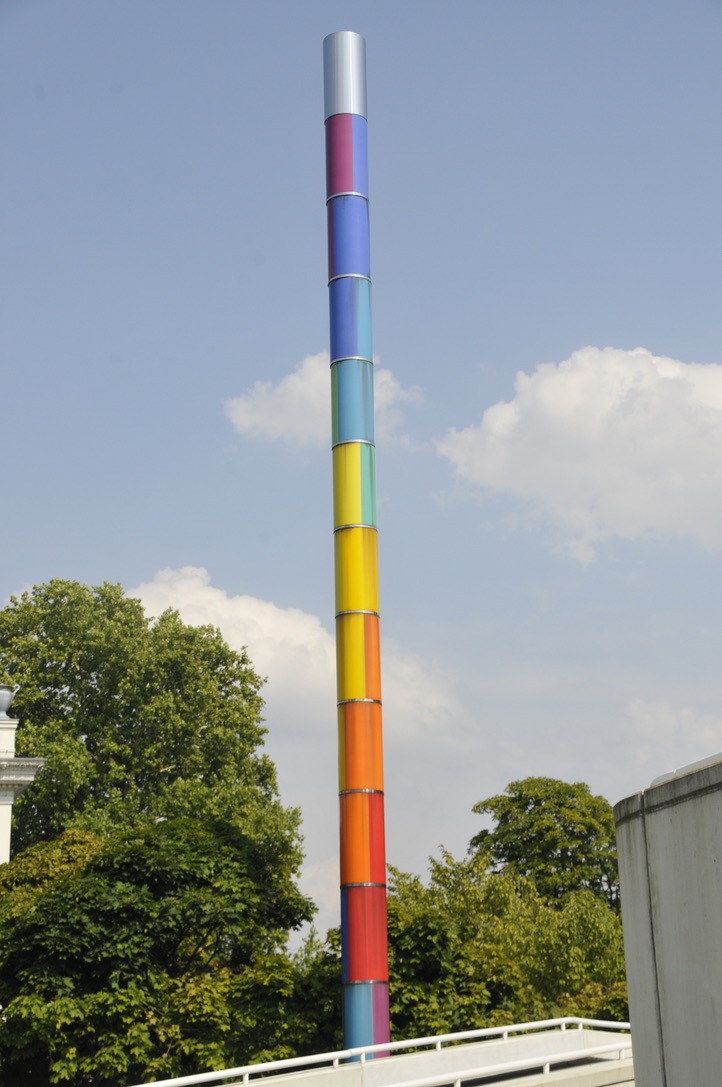
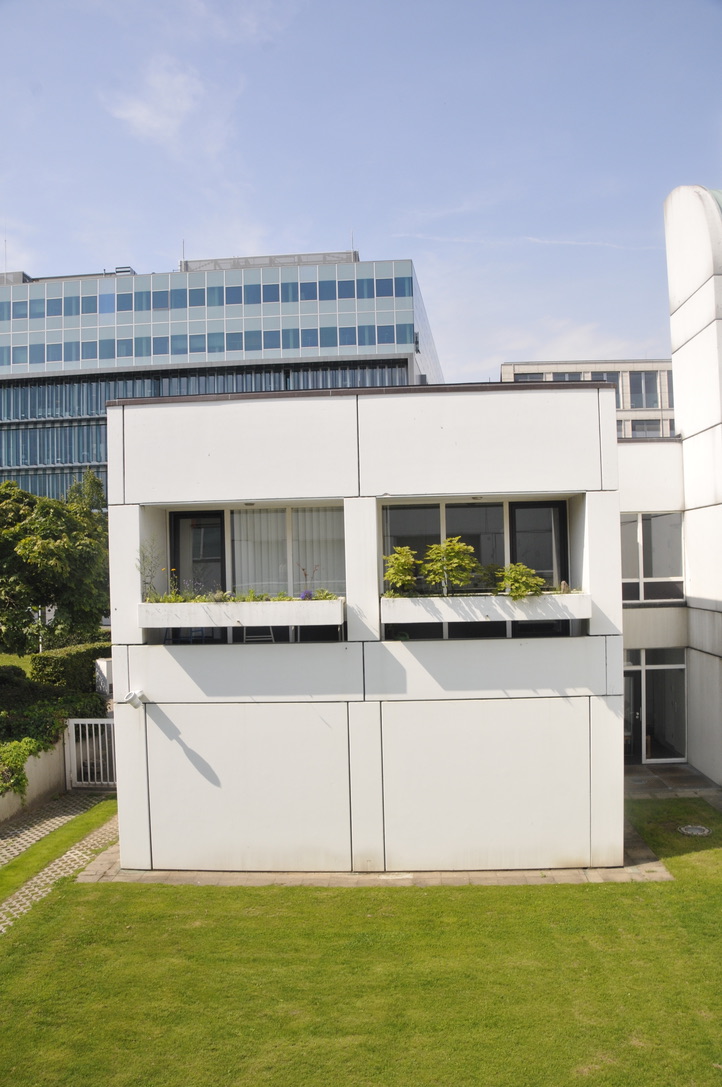
I’ll call these buildings “architecture plop” as they appear to be just “plopped” along the street — no context to one another or to the street… Designed from afar, I assume, and then “plopped” down wherever. Total waste of (supposed) talent.. and I’m assuming money. Not my kind of building design at all, although I assume that the point of such “monuments” is just that.. to strike some “pose.” So, we trotted along in the unbearable heat (about 90 degrees) and humidity… to finally reach the Bauhaus Museum.. which was a true delight in many ways. Certainly, it, too, could be accused of being “plopped” but it was situated in a park-like setting making the “plop” factor minimum.. It is actually quite beautiful in its proportions and its stark white materials.

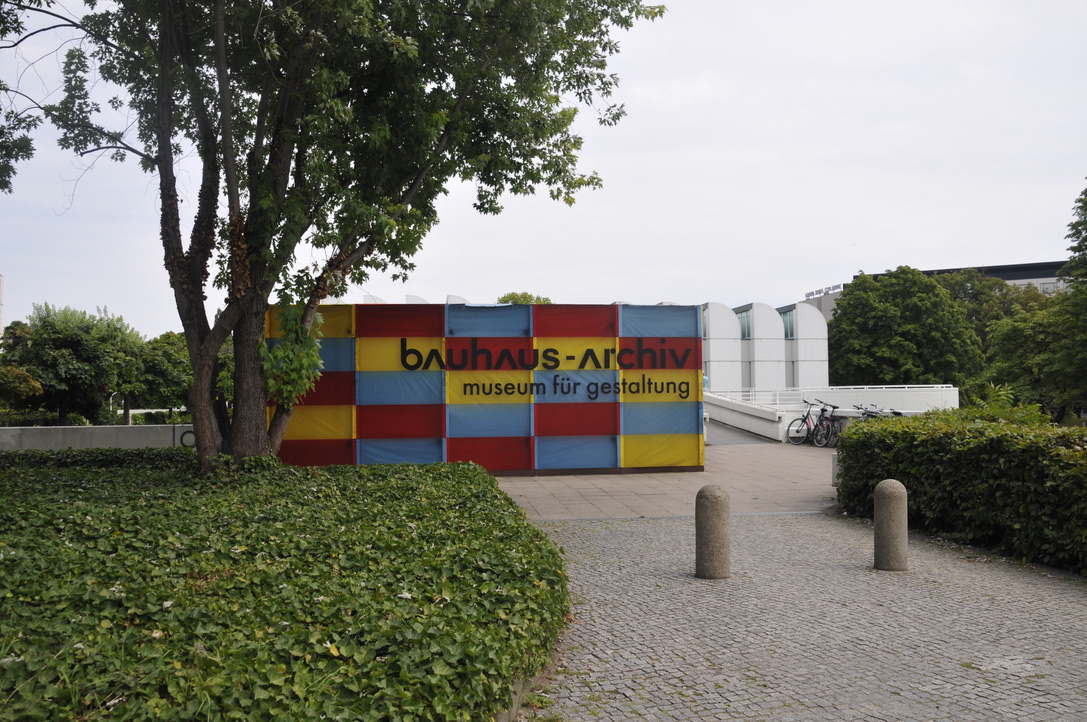
The Bauhaus was founded with the idea of creating a ‘total’ work of art in which all arts, including architecture would eventually be brought together, although architecture was not a program in the earliest years.
The permanent exhibit was like a trip down memory lane, in many ways, given that I was trained in a very very strong post-Bauhaus program at Pratt. Indeed some of the examples of the work of the “preliminary studio” was exactly what I had to do.. including creating three dimensional structures that portrayed “equilibrium in three dimensions” and intricate paper folding (the history of the FTA card – revealed!) The exhibit was quite good and very digestible, but they omitted a lot of the political history that embroiled the Bauhaus in the 30s, which they referred to as “conflicts” — carefully eliminating the reference to the fact that Mies Van der Roe never condemned the Nazis and in fact designed one of his landmark projects — the German Pavilion for Barcelona — under their regime. Instead the Museum kept referring to the fact that different founders of the Bauhaus “kept leaving”… The Museum also had a wonderful exhibit of paintings and studies and completed fabric work by Benita Koch Otte.

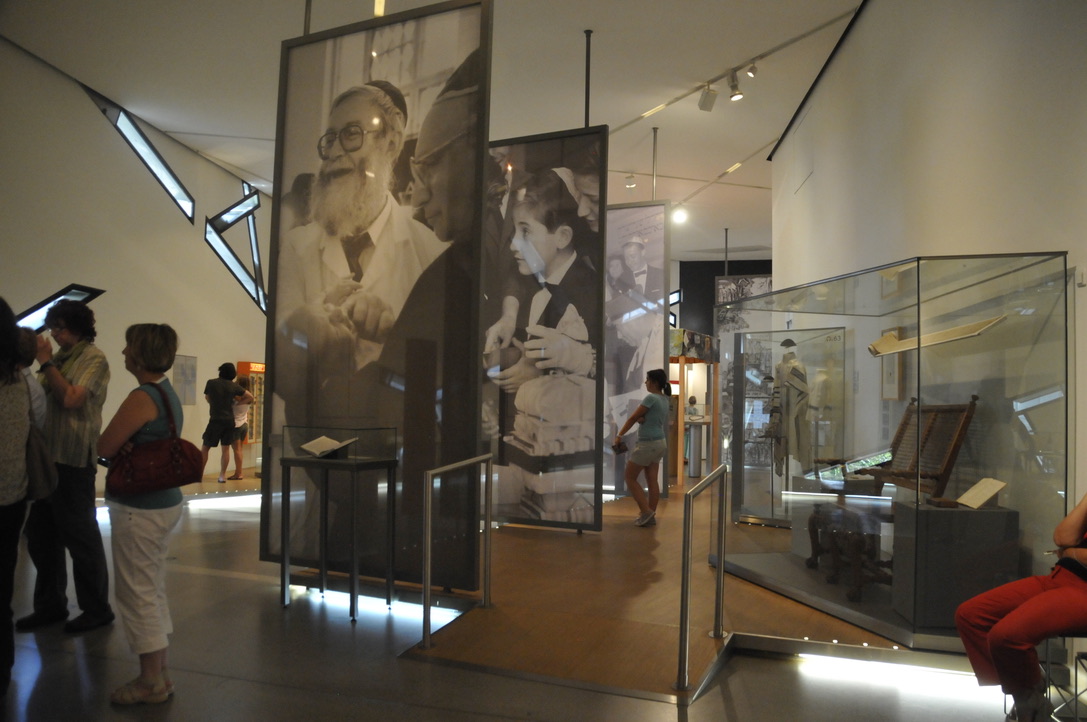
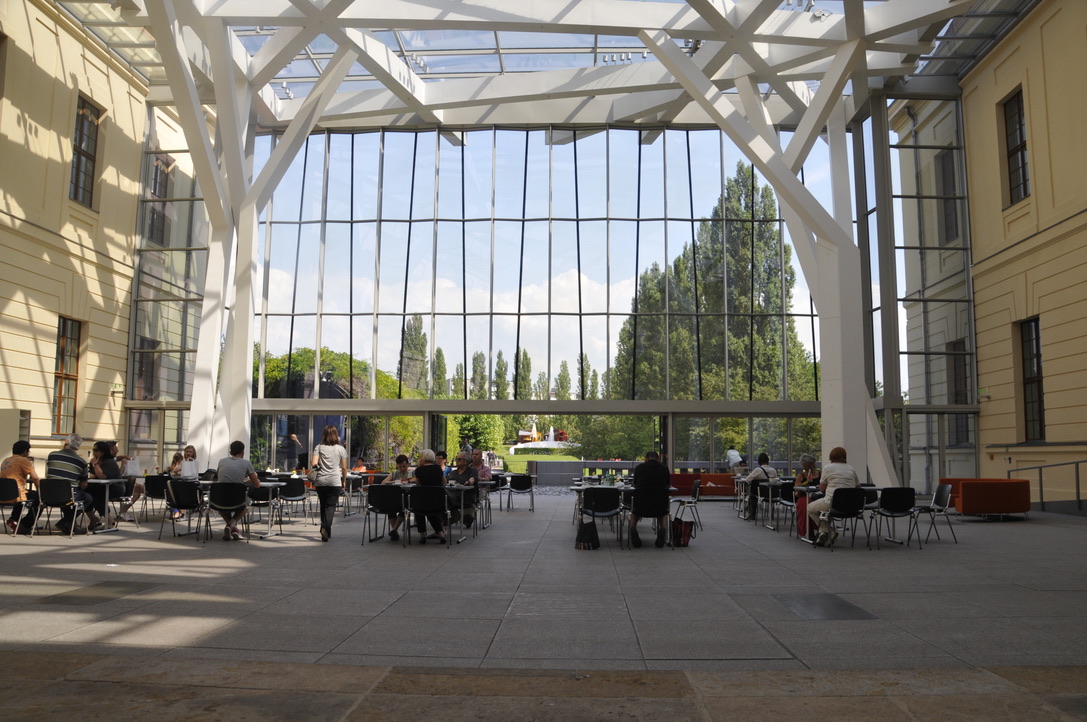
From there we had planned to trek about 5 kilometers more (we had already gone about 5 km) to the Jewish Museum, but opted for a taxi instead (a very good decision!). The Jewish Museum opened about 11 years ago and was designed by Daniel Libeskind and includes an old baroque building.. and a new glass courtyard installed in 2007. While the building itself can easily be distracting as its own “sculpture” and is not always totally conducive to exhibits — calling too much attention to itself — I actually didn’t mind it (except in a few cases.. but am sure that the curators and exhibit designers were really challenged by some of the shapes of the spaces), the permanent exhibit (except in a few hokey places) is really phenomenal, with tons of interactive, hands on portions and an extremely graphic and visual approach to such a complex subject as tracing the history of Jews over 3700 years… It was also truly a challenge to create a logical exhibition that could be understood by people of so many language, ages (children through seniors), cultures, etc. and wanting everyone to stay through the entire process of being informed. Overall — a great job. The temporary exhibit was a documentary photo exhibit of the 270,000 Russian Jews who immigrated to German (Berlin specifically) after they could leave the Soviet Union… their travails as they attempted to assimilate, learn German, understand what it means to be Jewish — and to make choices about their future.

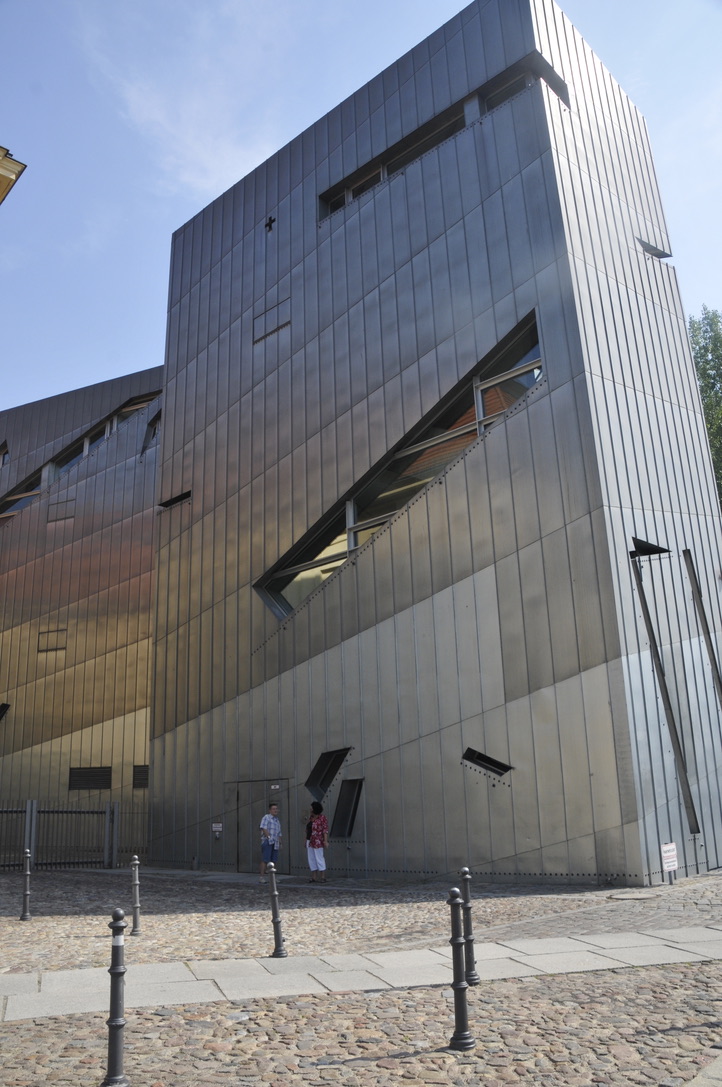
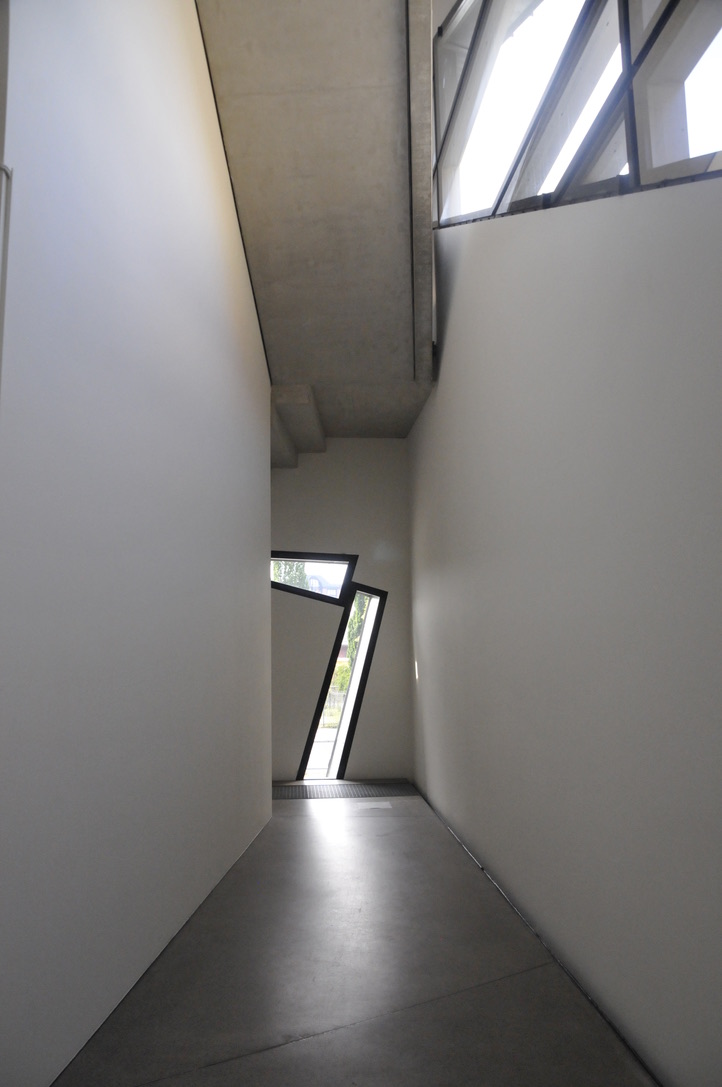
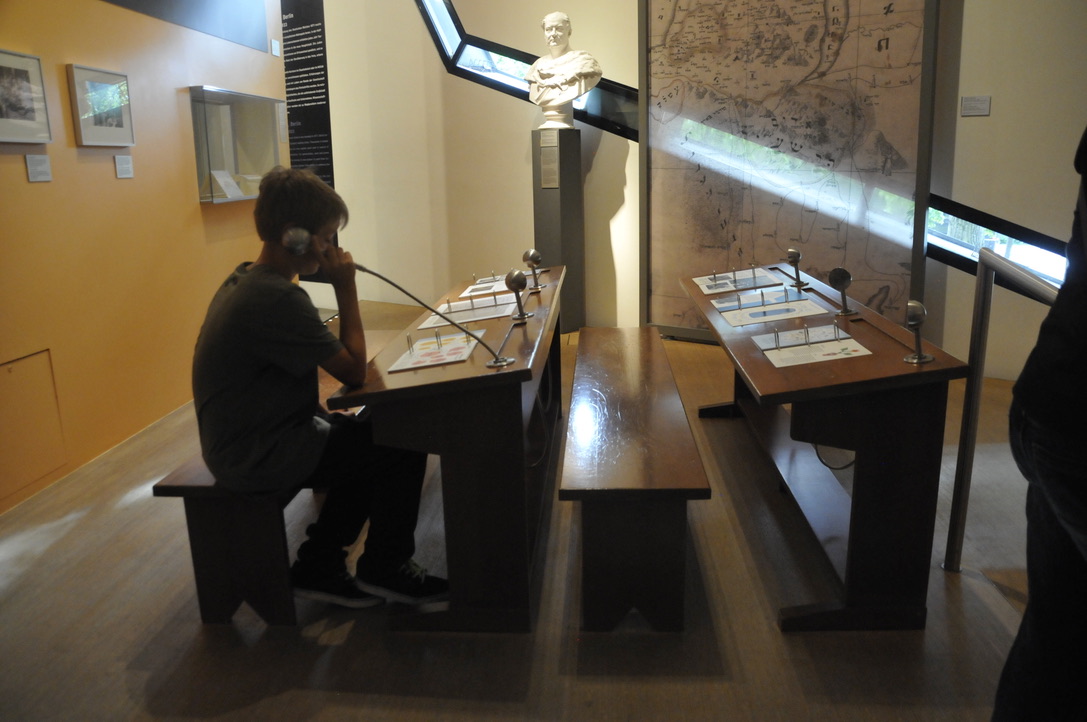
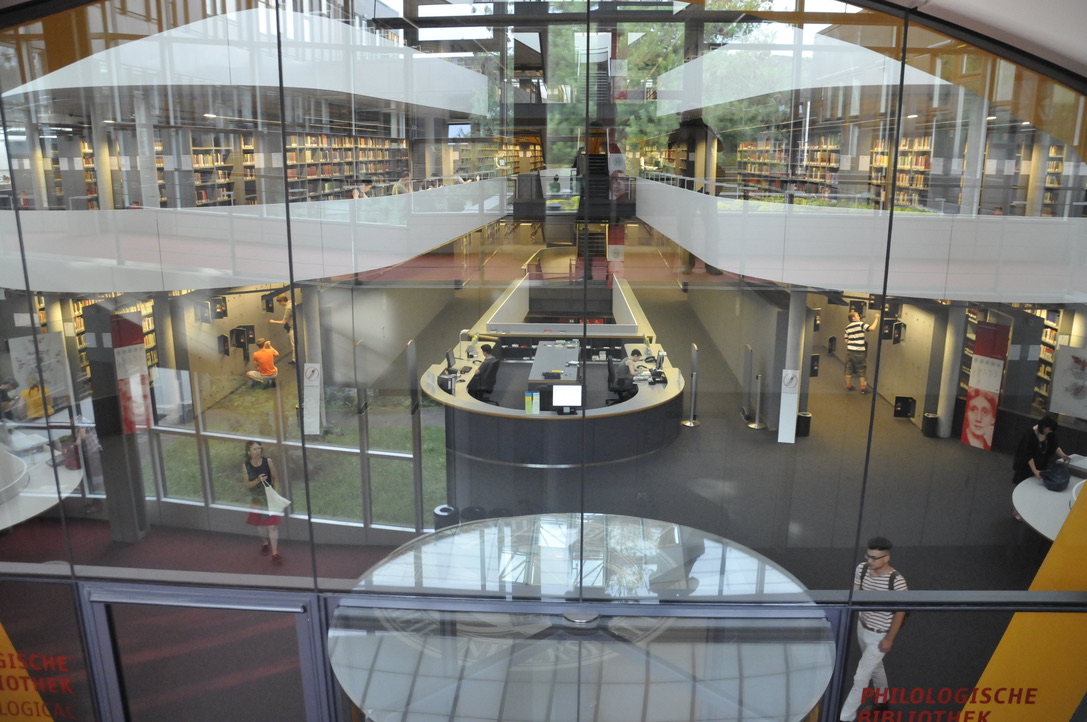
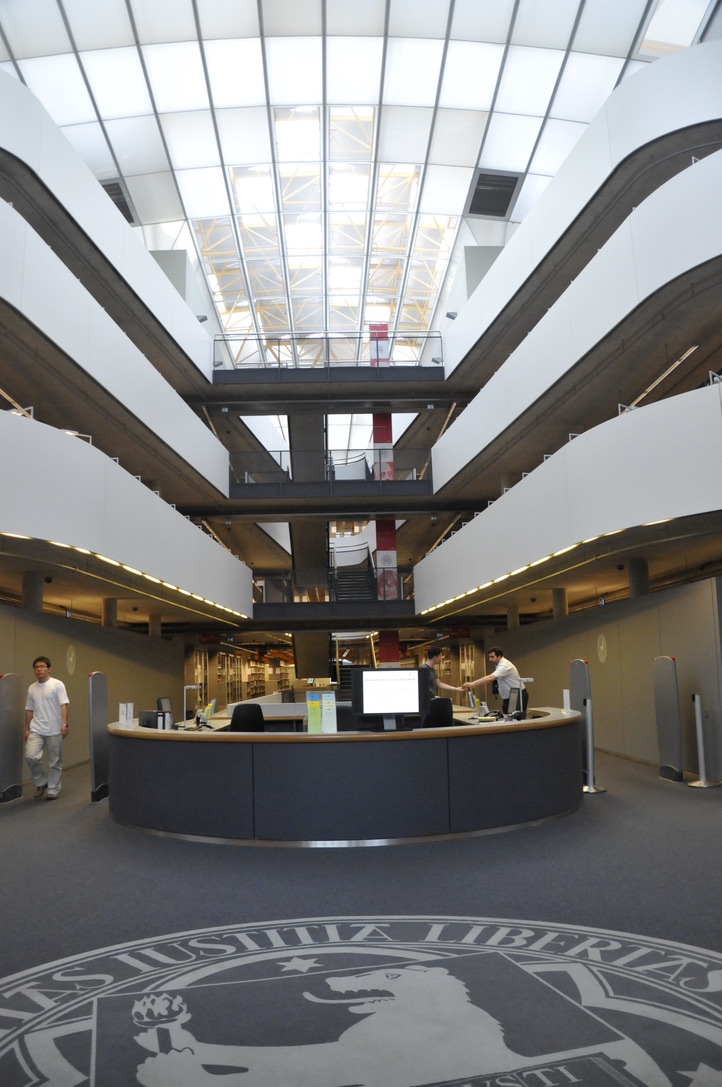
OK.. from there we were headed to the Free University mostly to see the Philological Library… We opted for a taxi because it was about 20 km away, and the UBahn (rail) was not as close as we hoped.. and the heat was gaining. The University is located in a truly lovely part of Berlin… wonderful houses, tree-lined streets. We entered the University which is an interesting “matrix” intended, I believe, to set an infrastructure into which other buildings will fit. But as with all matrices, there is probably a desire to burst out of the grid… so in 2004 Norman Foster was commissioned to design a library that would combine 10 pre-existing libraries and assorted conference rooms. The result is a really stunning solution, which unfortunately we were not allowed to photograph! Except for the very few sneaky shots I was able to do… But it was great to see and if you want to see photos go to http://www.fu-berlin.de/sites/philbib/architektur/galerie1/index.html.

So, from the Free University, we trekked to the U-Bahn to make our way back to the centrum… the mitte… which was about 17 km away. We got to the station as the train was approaching and hopped on; no air conditioning (a big disappointment) but the service was good and efficient. We made three changes and made it back to the hotel in about 30 minutes. Somehow we never paid for the trip. When we entered the train there weren’t any fare booths, so we expected to be stopped as we exited (a la BART or the NYC subway).. but that never happened and we just got off the train, never seeing any pay booths or toll collectors. Thank you Berlin for a very nice free ride.
After about a 30 minute respite, we headed out again for dinner. We decided to head to a new hip area called NeuKolln which Mike’s niece, Julia (who had studied in Berlin for a year) recommended as an interesting and artsy area. She suggested a bar/restaurant where you lie on beds as you eat (and said to make a reservation and be sure to say you want the bed!). Instead we opted for a restaurant we read about called Sauvage — a “bio and paleo” eaterie! (bascially locavore). Anyway, it’s a bit of a distance from the Mitte and sparsely decorated. Food was really good; limited menu. No vegetable oil, no grains, no sugar. So boy do we feel healthy! We had a flounder dish and a vegetarian dish. Both were really good. And at the end, they gave us some complimentary schnapps!
OK.. the end to a very busy and tiring day. It’s now after midnight and we’re packing. We head to Czech Republic by train tomorrow (Berlin to Prague by train; drive to Brno where we will meet up with old friends. We had been planning to visit our very good friend Lallin who spent a year in Finland the same time we lived there. We’ve met the entire family many times during several trips back to Czehoslovakia and later Czech Republic. Lallin had a heart transplant in 2002 and we visited soon after. He had been doing very well, but recently things began to slip — one of the reasons we decided to visit this summer. Well, about two weeks before we left the US we were notified that he didn’t make it — 10 successful years, but eventually his body became immune to the anti rejection drugs and his liver gave out. We contemplated canceling this part of the trip to return early, but his family reached out and we decided it was important to celebrate Lallin’s life with them. Lallin was the head planner for the Bratislava Region. He and his family have a colorful history, with Lallin himself falling in and out of favor as the leadership of Czechoslovakia changed. He was demoted to a draftsman in 1970 and then after the Velvet Revolution was made head planner. He had written a report in the 60s about the environmental impact of Chernobyl which also got him into trouble. His parents, too, went through complicated times in the 60s and 70s.
So, we are off to Czech Republic in the morning…
Aufweidesein Berlin… Dobrý den, Česká republika
Fern
 Fern's Travel Notes