New Years Eve — Closing Out 2018 and Opening 2019. 12/31/2018
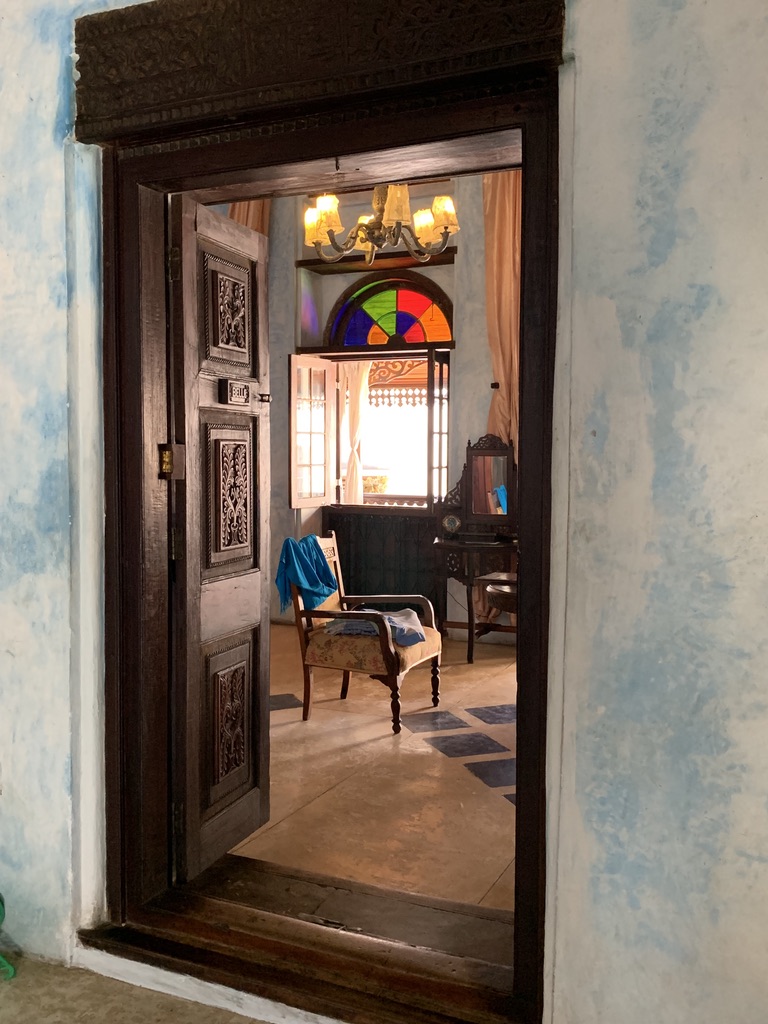
Happy New Year from Zanzibar –
Greetings and warm wishes on this last day of 2018 – May 2019 bring health and happiness, a renewed sense of civility and an overhaul (complete overhaul) of the Executive Branch. It’s amazing how much the world is watching.
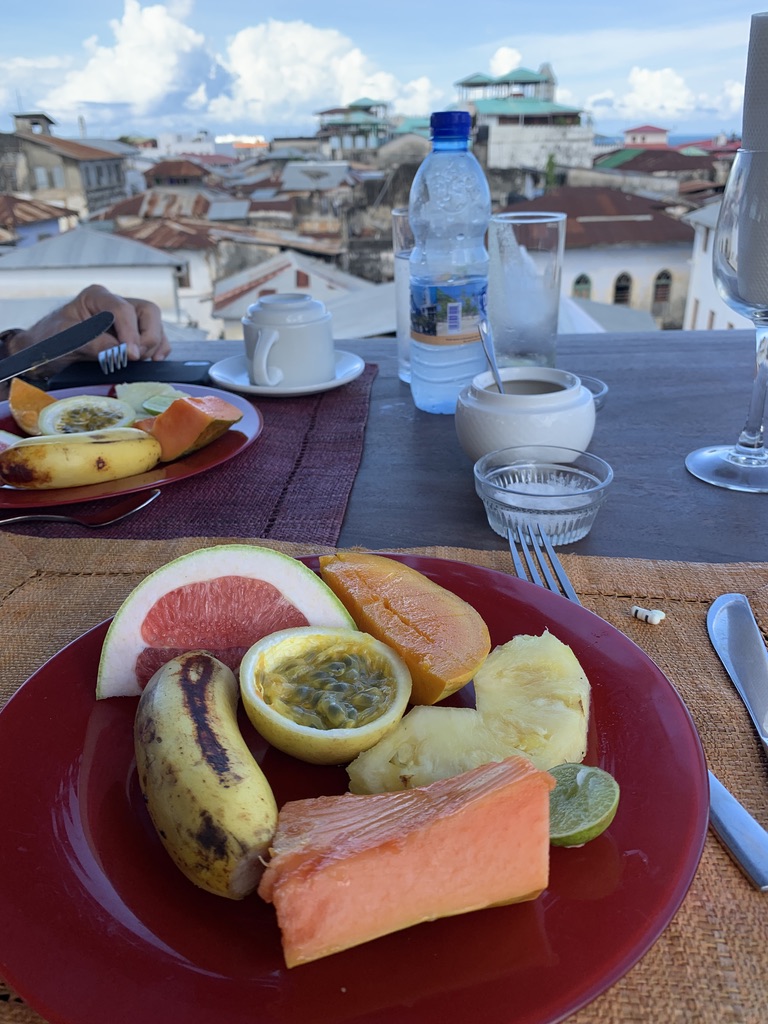
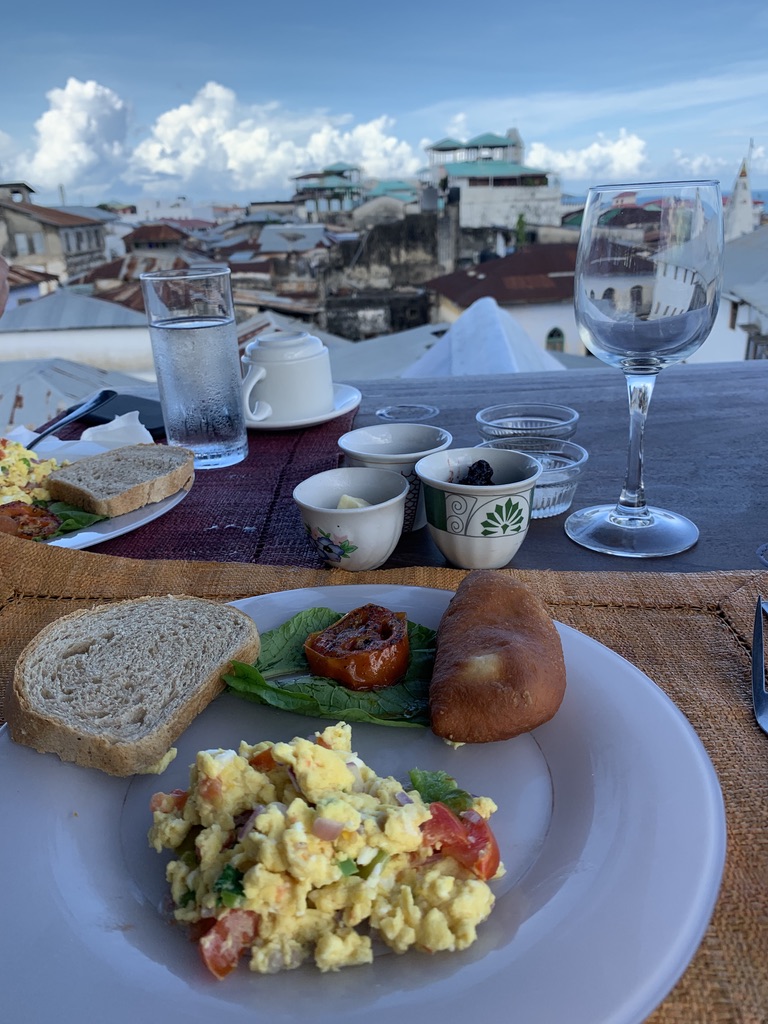
We awoke this morning to the call to prayer from what seem to be competing mosques within earshot at sunrise. For us it was a signal that we could turn over and get some more sleep. We had breakfast up on the rooftop – lots of fresh fruits and eggs. And then we were off.
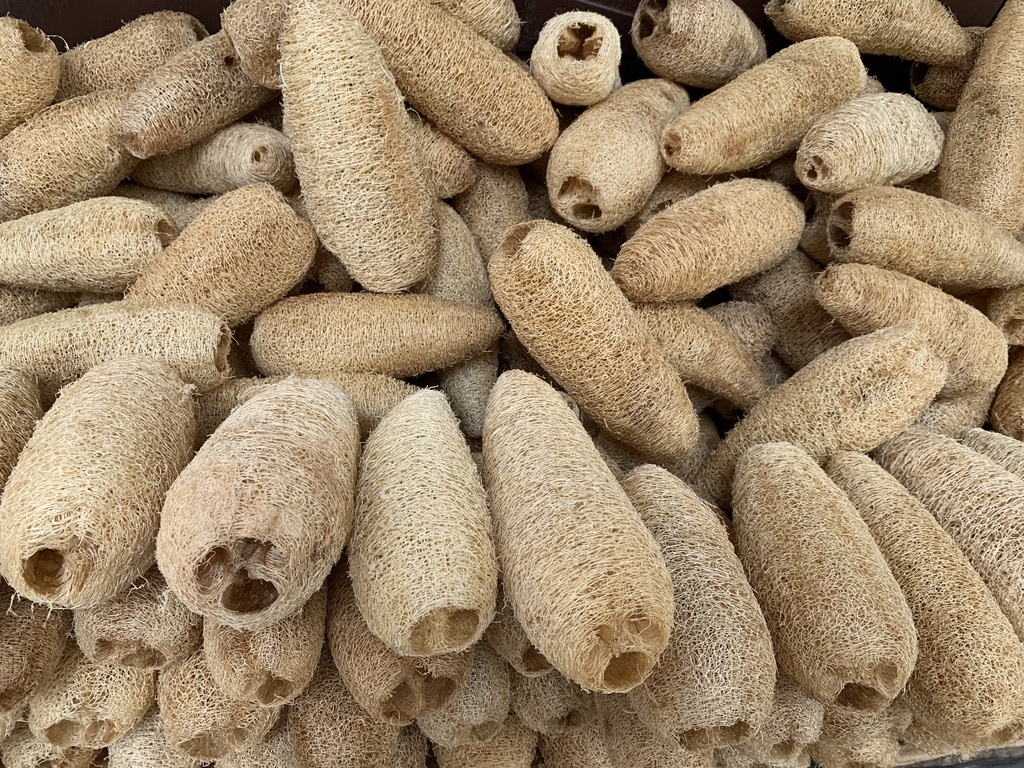
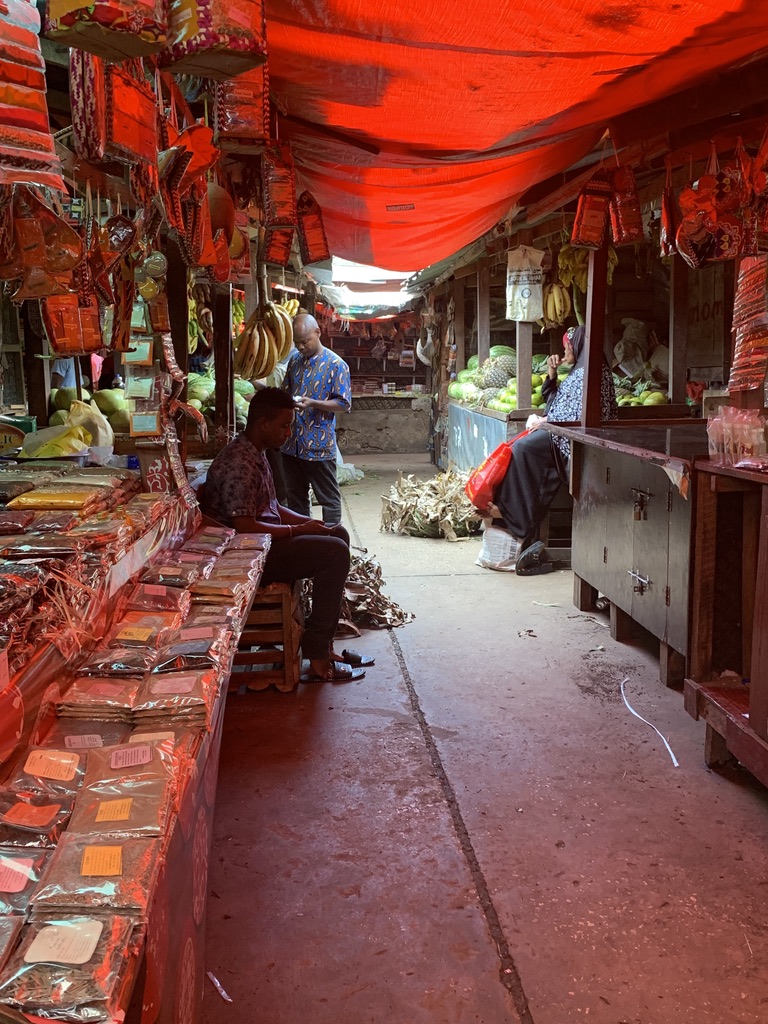
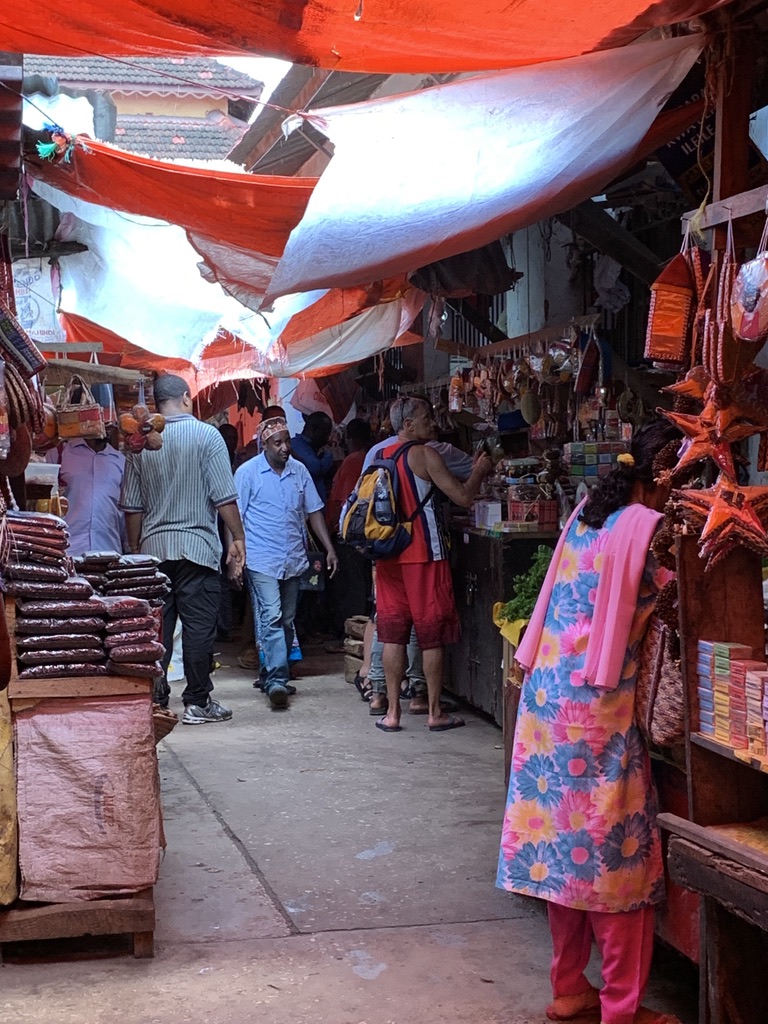
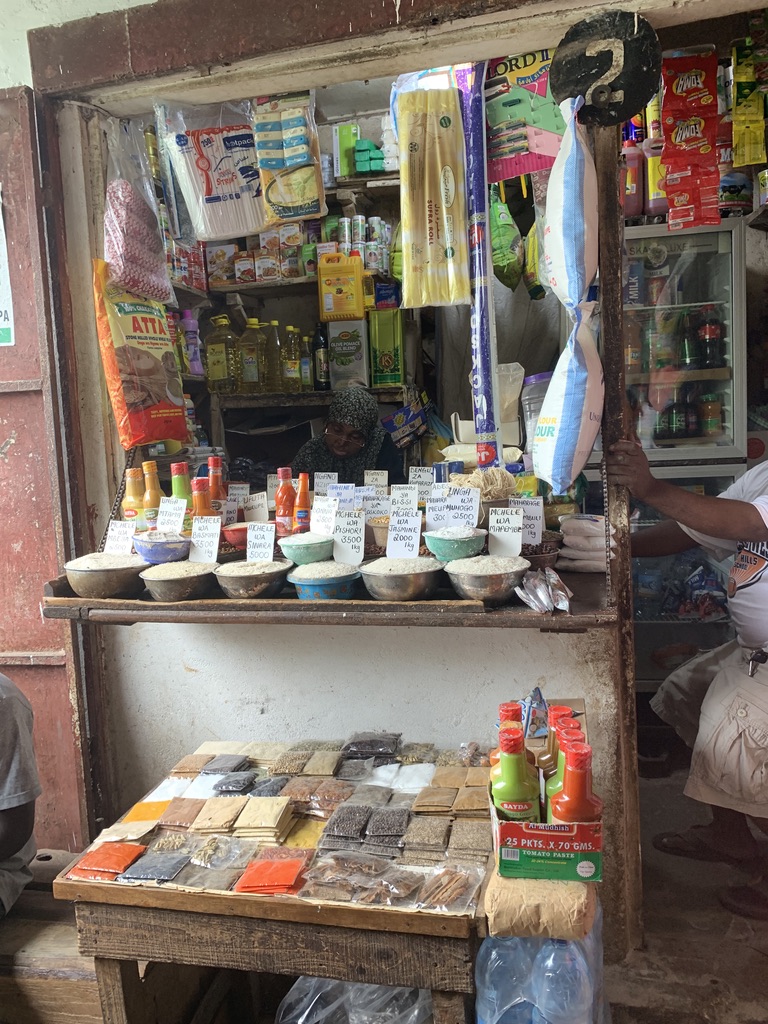
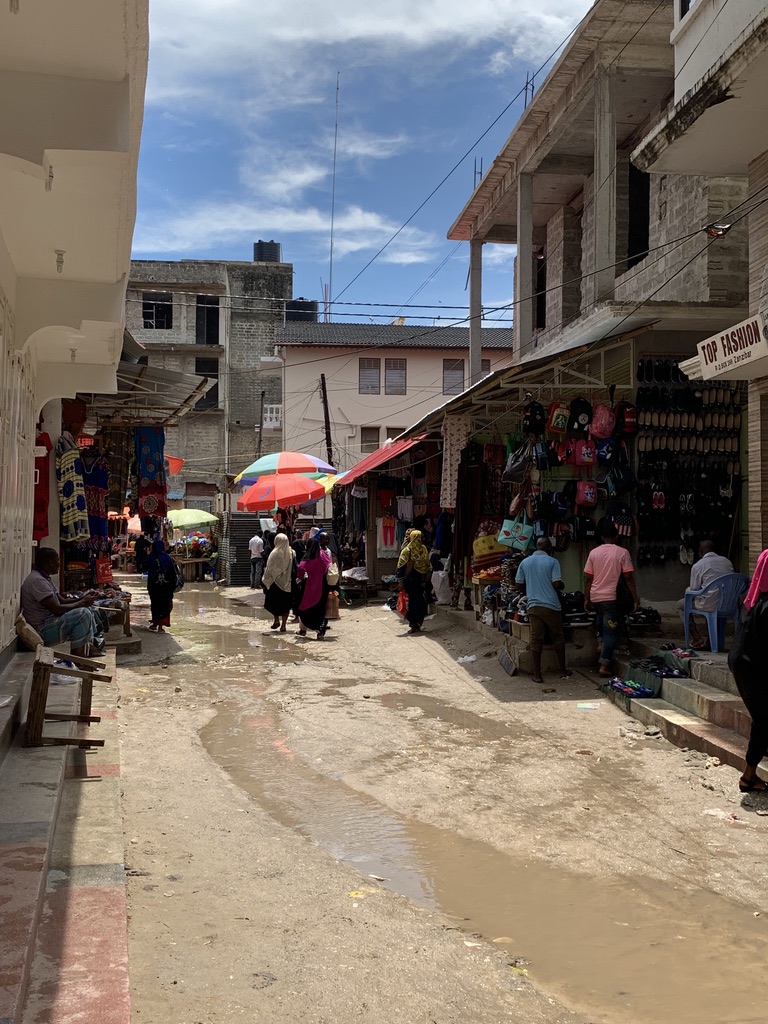
We headed (naturally) to the big market – Darajani where you can buy and barter for everything from fresh fish to soaps to hardware to vegetables to cloth to shoes to spices. Spices occupy a whole section of the market. Unlike the markets in Morocco, Turkey, and Tunisia where the spices are all out in the open carved into high pyramids, spices are sold either by bulk from inside a barrel or in pre-set packages. Still the aroma of the spices is strong and wonderful. We navigated through the fish market section where the smell is not so wonderful and where they are constantly hauling in large fish and cutting them up for sale – octopus, prawns, tuna, kingfish, etc. As elsewhere the market is sort of organized-chaos. I realized that I’ve used the word “chaos” many times in describing daily activities on this trip. I want to clarify that I’m not using it as a negative or derogatory term; rather as a simple adjective referring perhaps to a randomness (especially as perceived by outsiders). For years in art school and in the immediate subsequent years, I did a lot of research and actual creation of work in which I tried to understand order and chaos, and sought to find order within what we might call chaos.
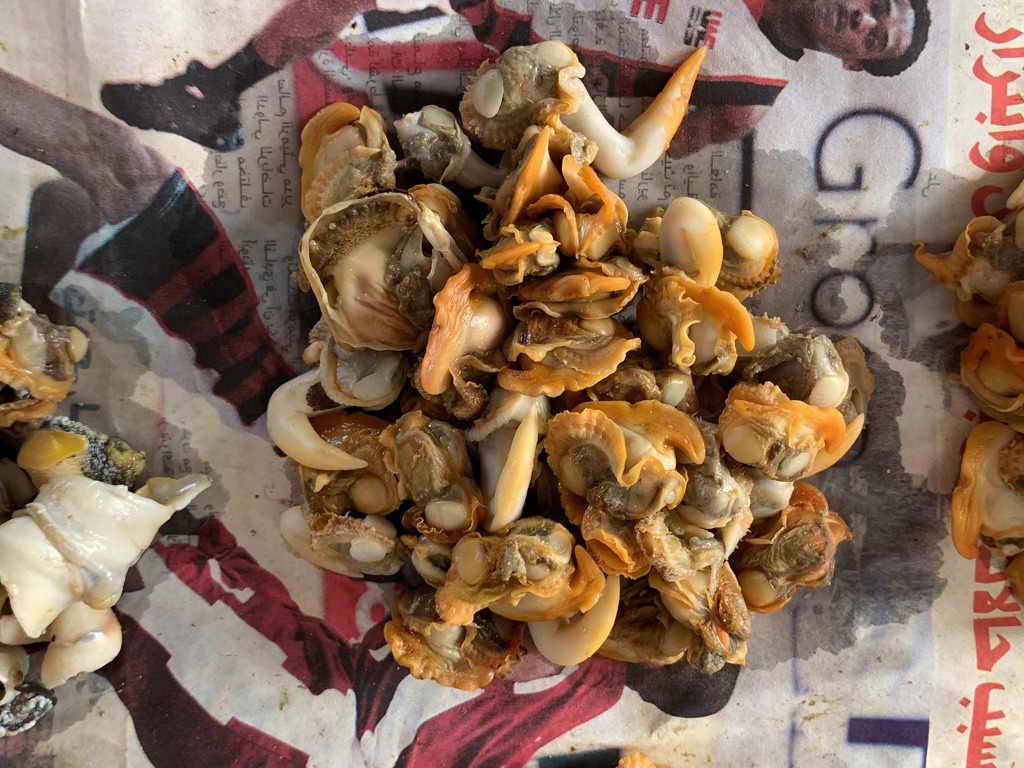
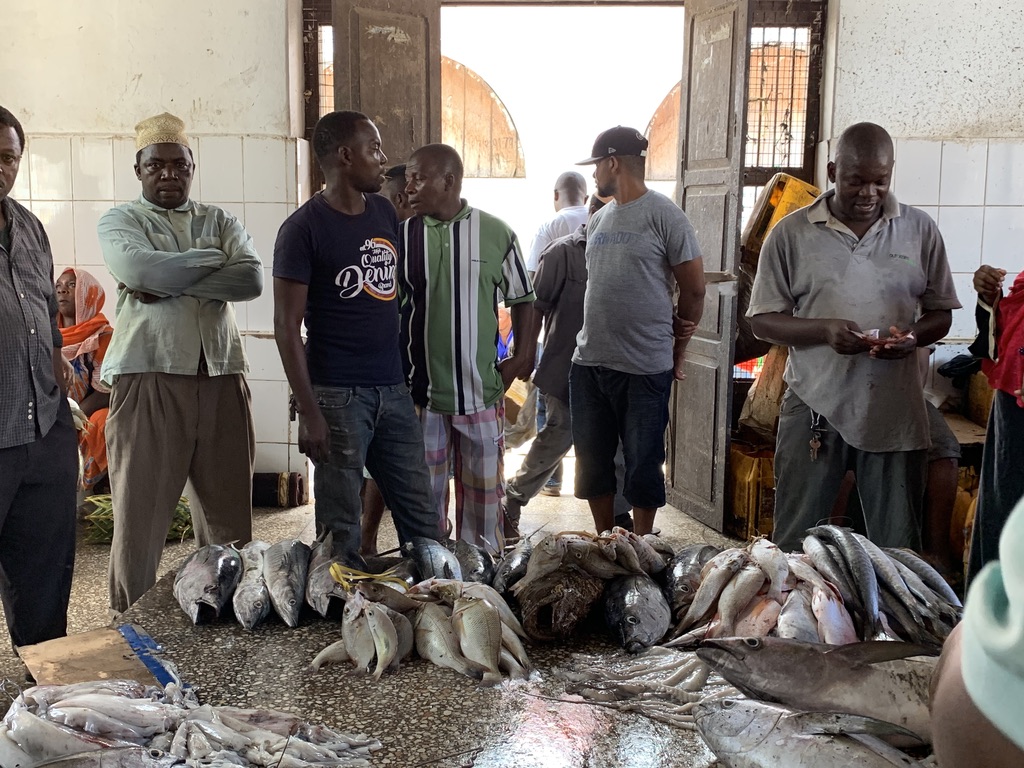
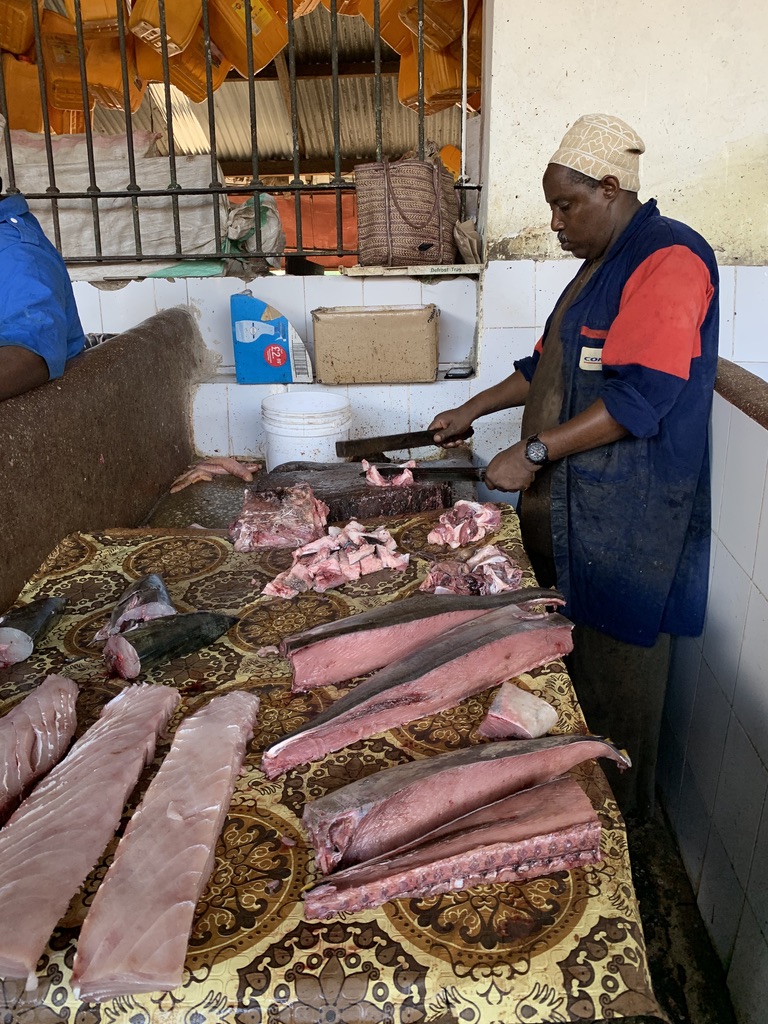
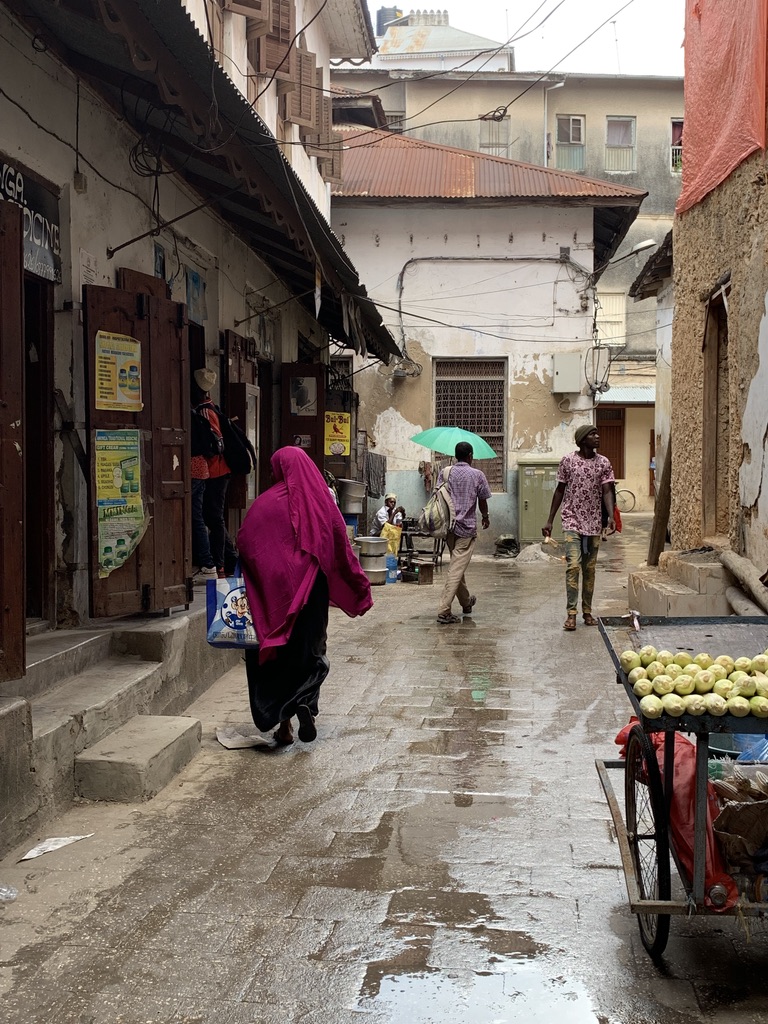
But here, it’s clear that the order is understood – but perhaps not well by those of us who are not part of this social structure. I think, even at the ferry, there was order, it just wasn’t the order that we Americans are accustomed to or would create given our backgrounds and history. Anyway, the market was lots of fun, but without much warning the afternoon downpour suddenly fell. There’s not a lot of overhead protection at the market. Many vendors have large plastic sheets above their stalls, but most of those plastic sheets have holes and the water becomes heavy and tips the plastic anyway. We stood in several “doorways” and under the plastic sheets like everyone else and eventually decided to wing it. Not a good decision as the rain became heavier. We found an area under a hanging roof and settled there for a while, and then realized that someone must be selling umbrellas close by – so we asked (very little English is spoken in Zanzibar, so we use a home-made sign language which worked) and found out that about 10 stalls to the right there would be umbrellas for sale. Sure enough. Armed with two new umbrellas that we will donate somewhere before we leave, we meandered to a café to get a snack and head to the hotel to change clothes. We were drenched from head to toe. Indeed little rivers formed in the streets that we had to navigate and of necessity had to walk through.
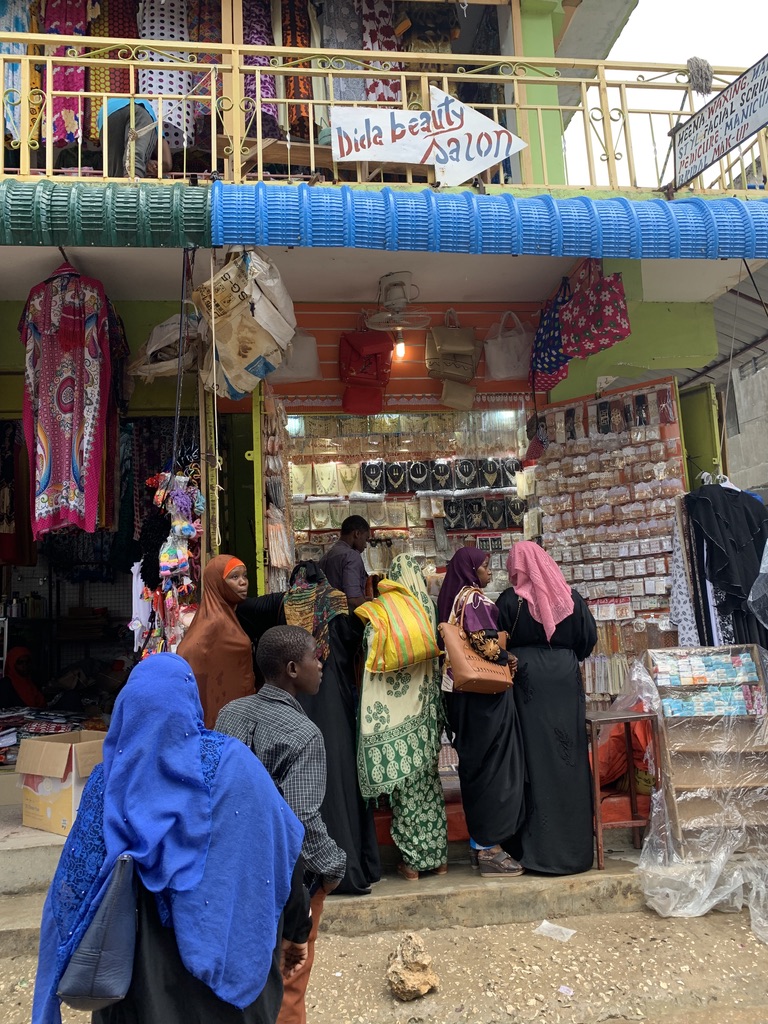
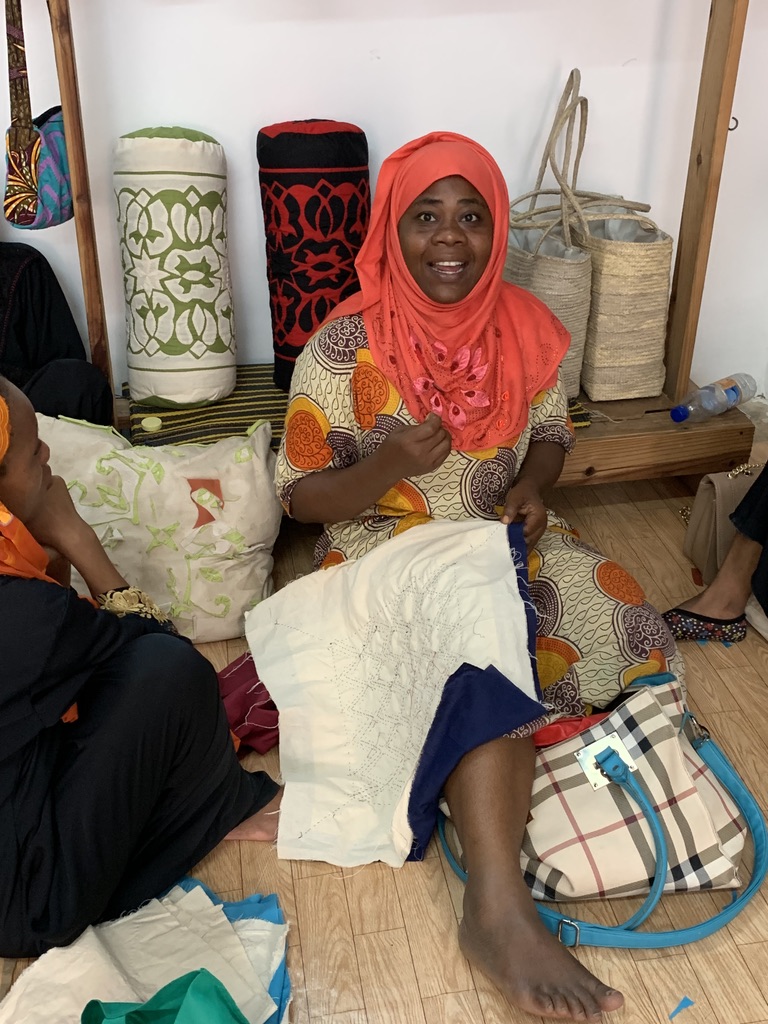
We stopped back at the hotel to dry off and change clothes and then headed out for another rather random walk through the streets without any real destination (the best way to go!) I left first and then met up with Mike after I stopped into a few women-run sewing shops. We realized we were both running out of Tanzanian shillings and unlike Dar es Salaam and the other cities we’ve been traveling in – no one here takes credit cards – very very few shops, none of the small local restaurants. I suppose they take credit cards at the larger hotels (although there really aren’t any big hotels here).
The hotel had mentioned that there was an ATM about a 10-minute walk. We figured it was a good idea to be armed with cash. Took a while to find, but we asked at nearly every juncture and finally we found one – a sort of tiny shop on the first floor of a building, with a guard inside – 4 ATM machines, and one chair (for the guard). There was a pretty long line of people so we figured out the end of the line and queued up. After a while we realized there were really two lines for the ATM – one for men and one for women, although none of the women said anything to me as I stood on the obvious male line with Mike. First we thought that the guard calls people in one at a time, one from the male line and then one from the female line; then we thought maybe only women could be inside together and only men so they had to sort things out; then we thought it seemed as if every time a woman stepped out a woman would go inside and every time a man stepped out a man would replace him. We kept trying to peek inside to see why it was taking so long – and learned that only one machine was working. Many of the women waiting in line wore niqabs and many were in extremely high fashion hijabs and shaylas (at least I think that was the range).
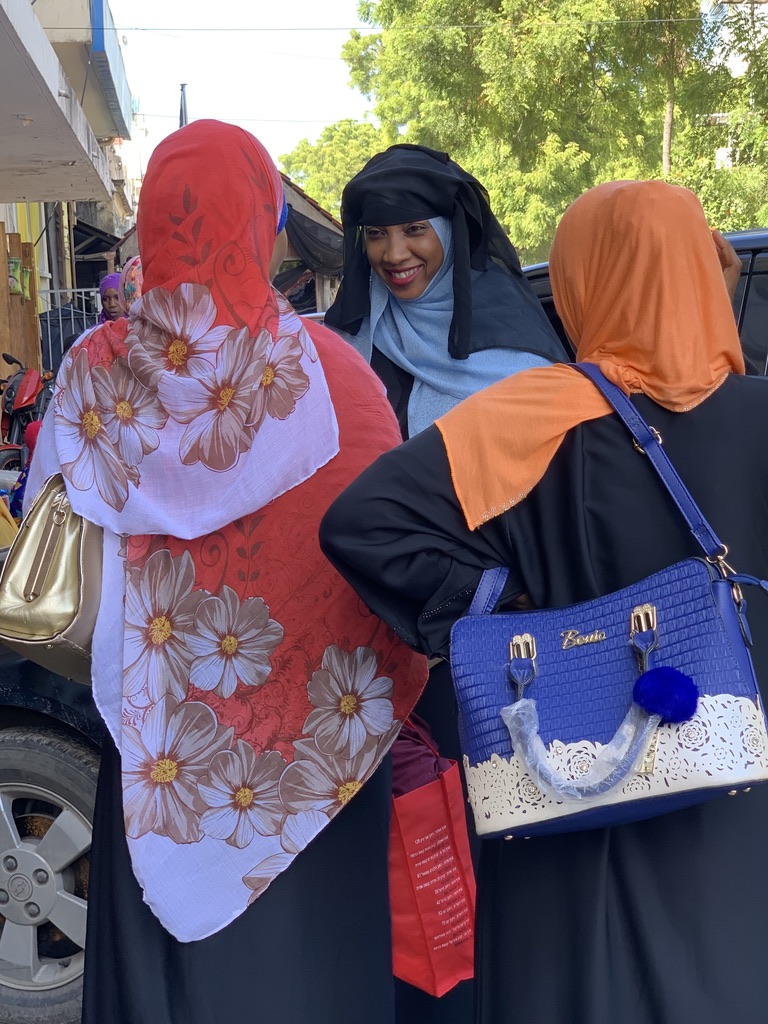
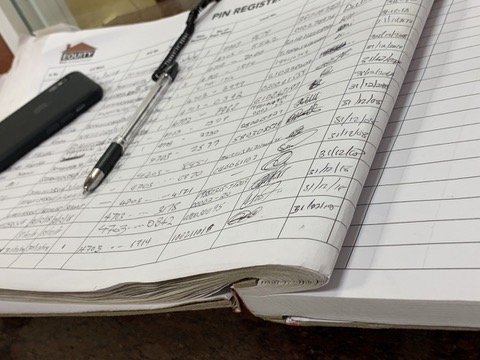
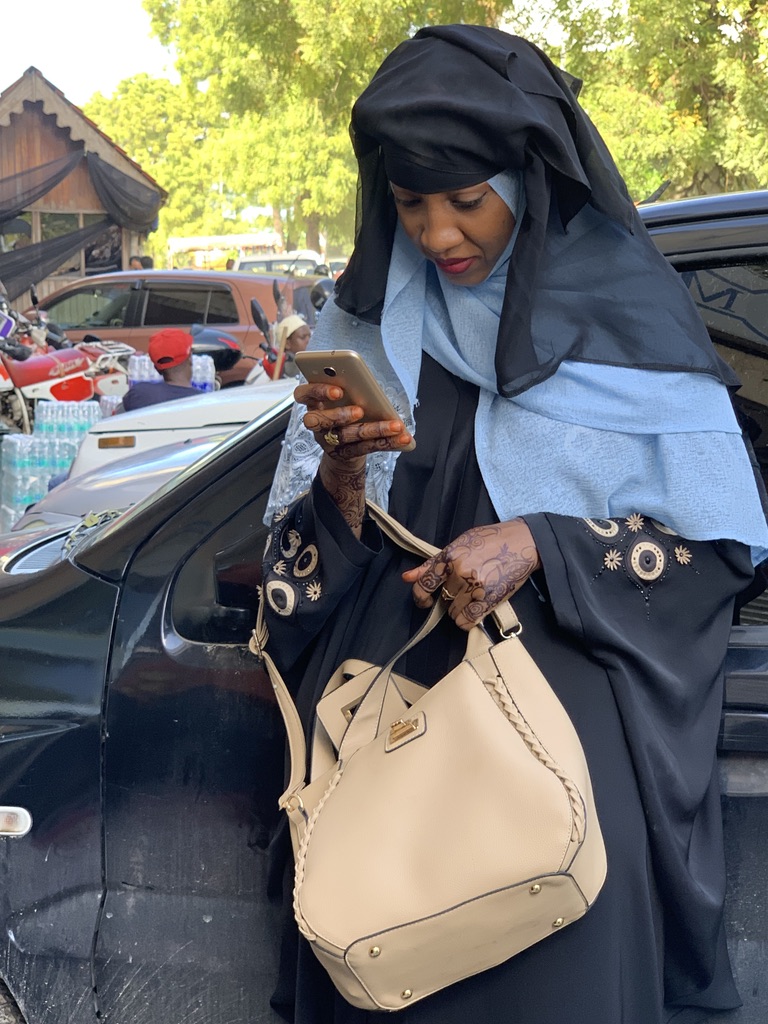
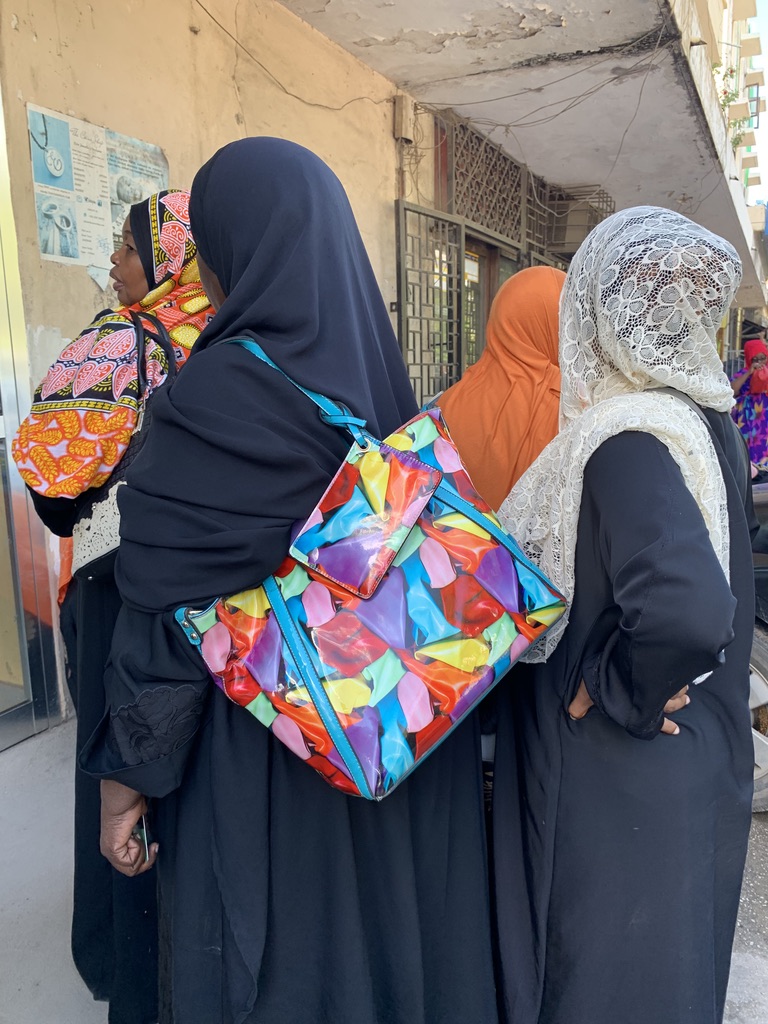
After about 20 minutes in line, a man standing behind Mike came to me and said politely that I needed to go on the other line, which would mean I’d add another 20 minutes to my waiting time (in that 95 degree heat and 100% humidity) as I’d have to go to the end of the women’s line. I thanked him for the information but said I had been waiting all this time. Frankly, I’m surprised none of the women told me to change lines. It had been hard to tell that there were two lines at the onset (or that they were designated by gender) because the women were all in small clusters talking, so we didn’t really know they were in line. They also seemed to go on and off the line to do some errands while I suppose their place was held by a female friend.
After about 30 minutes it was finally my turn to enter the room with the ATM machine. The guard said my card would not work, but I said I wanted to try, since I’ve been using the ATMs all over East Africa. Well, naturally he was correct. Apparently the ATMs in Zanzibar only work for local bank cards, not foreign ones. We asked the guard (again with our limited conversation skills) where we could find a bank and he motioned in a direction. We decided to find a taxi and ask the taxi to take us to a bank, which he did. We went to three different banks (some with ATMs); none could take our ATM card and at least one was closed. Now we were literally an hour into finding cash. We saw a Barclays Bank and asked the taxi to stop, figuring that was a big international bank. It was closed and their ATM machine wouldn’t take our cards either. But the guard at that bank (complete with some kind of old sawed off semi-automatic, told the taxi driver to take us to some other bank which he did. That one didn’t work either, but we saw that across the street there was yet another bank (Equity Bank) and we figured it couldn’t hurt to try just one more bank. There, the ATM was broken, but the bank was still open so we went inside. One of us went on the “foreign exchange” line and the other went on the PIN line (thinking maybe this is like a manual ATM). Took a while as each transaction is done by hand; customers get fingerprinted and the transactions all appear to be handwritten. When my turn came at the PIN line, the woman tried so hard to help (and she did). They could not take our ATM card, but she could exchange cash. I had an assortment of Euros and Dollars. She disappeared for a while and then came back, telling me that she will exchange the Euros (although I needed to come back in 10 or 15 minutes for that) but that we should go down the street to an “exchange office,” where the US dollars could be exchanged at a better rate (at least that is what we think she was saying).
As an aside – Obama reigns strong here… Like in Dar and in each of the countries we visited, there is a Barack Obama street or boulevard. Don’t think they will be naming anything for #45.
The bank lady pointed to a woman with a baby sitting on some steps down the road and said the door to the exchange was where they were sitting. We headed to the exchange where we did our transaction for the dollars and went back (to the Peoples Bank of Zanzibar) to collect on the Euros. The taxi guy was still waiting for us. Ninety minutes from start to finish – but mission accomplished; we now had cash. We strolled through Stone Town to arrive back at the hotel to freshen up for New Year’s Eve Dinner. The bank tour (!!) brought us to several places outside the old section of Stone Town (where we were staying and where we basically had spent all of our time walking and eating. The bank situation enabled us to see life beyond the usual confines of the historic 19th Century area.
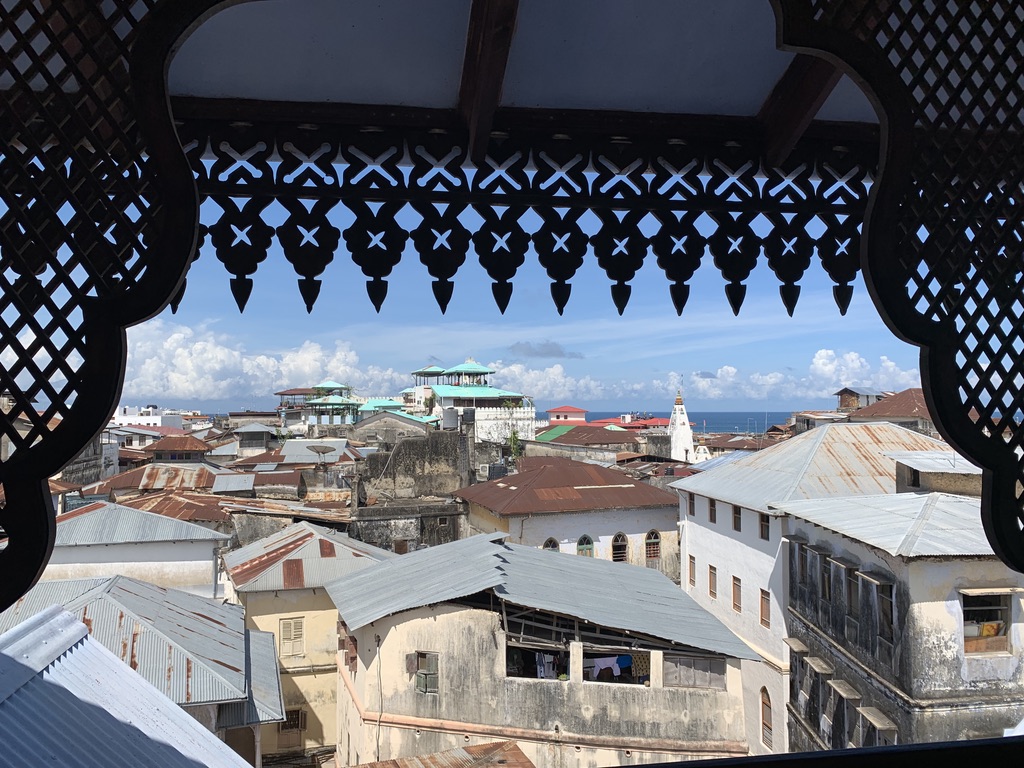
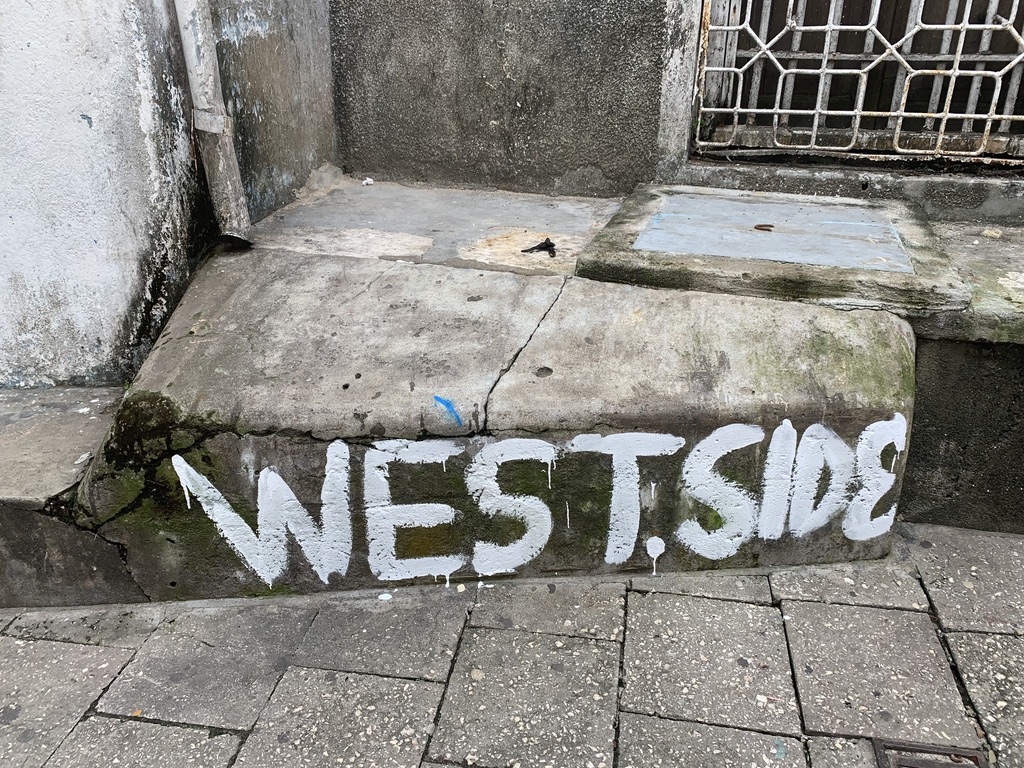
A bit about Stone Town – its real name is Mji Mkongwe, which is Swahili for “old town” and is part of Zanzibar City, the main urban area in Zanzibar. The newer part of the city is called Ng’ambo meaning “other side.” Zanzibar was the center of a flourishing spice trade and also slave trace in the 19th century. We will head to the Slave Museum tomorrow. It’s my understanding that when Tanganyika and Zanzibar “united” to become the United Republic of Tanzania, Zanzibar kept an autonomous status, with Stone Town as the local government center. For this reason, among others, many things here in Zanzibar are different from the rest of the country. Zanzibar retains its own “president” and revolutionary council.

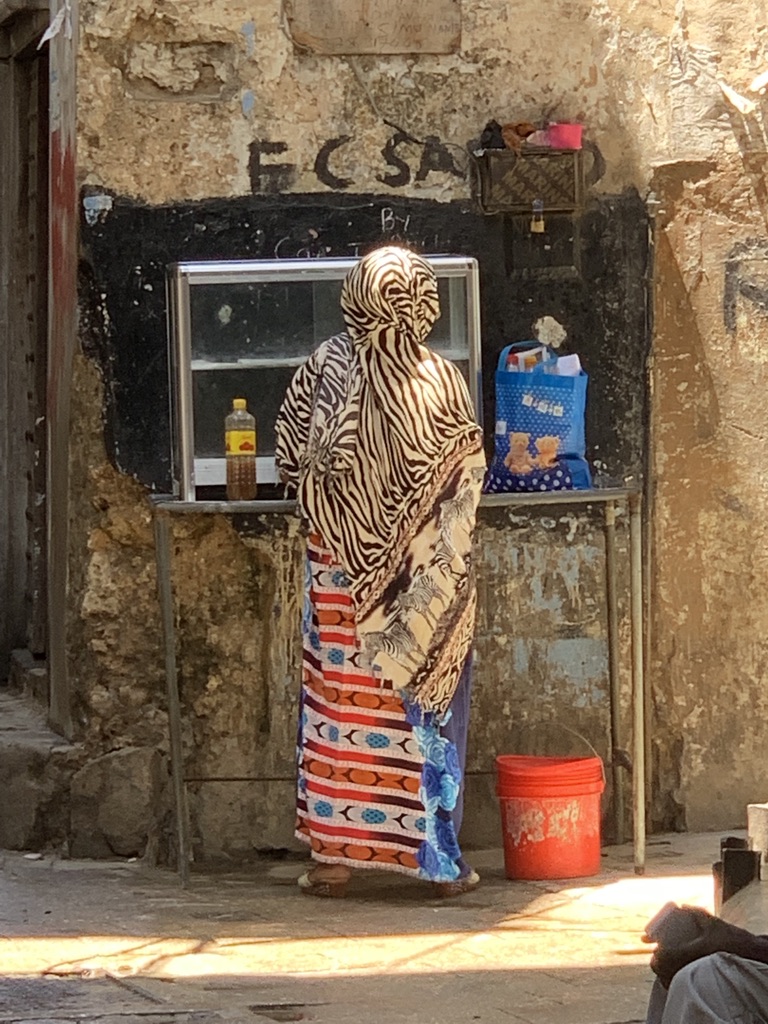
All of Stone Town is a UNESCO Heritage Site. Pretty much all of Stone Town is a maze of alleyways lined by shops, mosques, and houses, not unlike the medinas of Morocco and Tunisia. The alleys are too narrow for cars, so the mode of transportation is motorcycle or walking or bicycling. The whole area reflects the mix of Arab, Persian, Indian, European, and African traditions that came together here.
New Year’s Eve: Ushering in 2019…
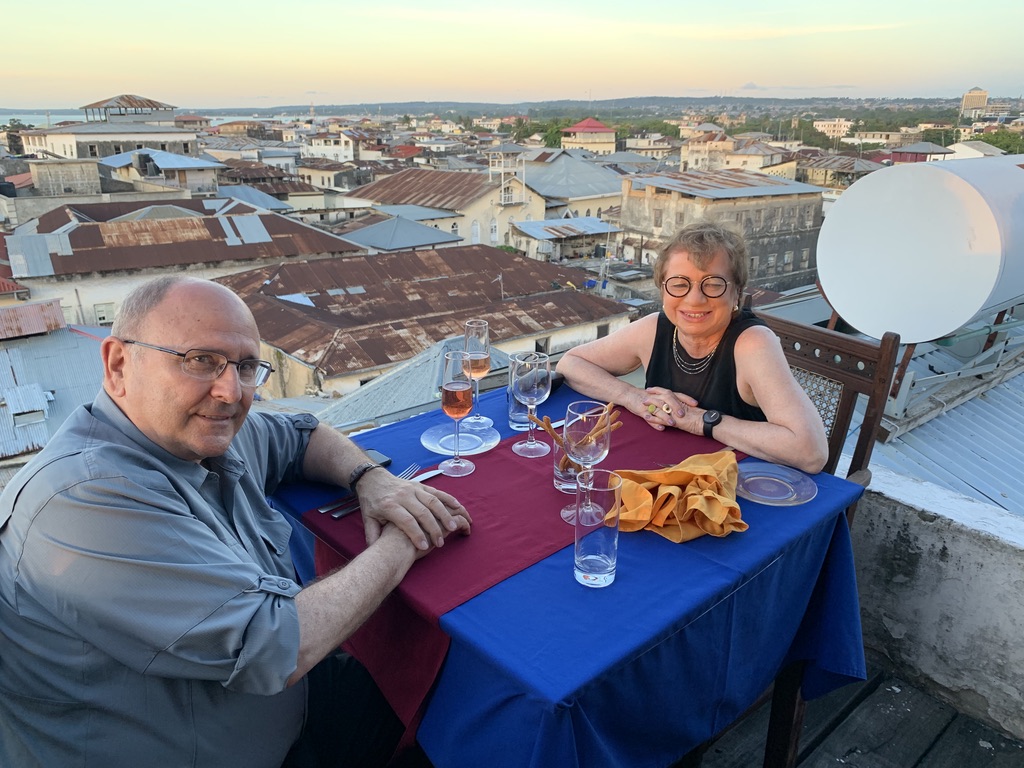
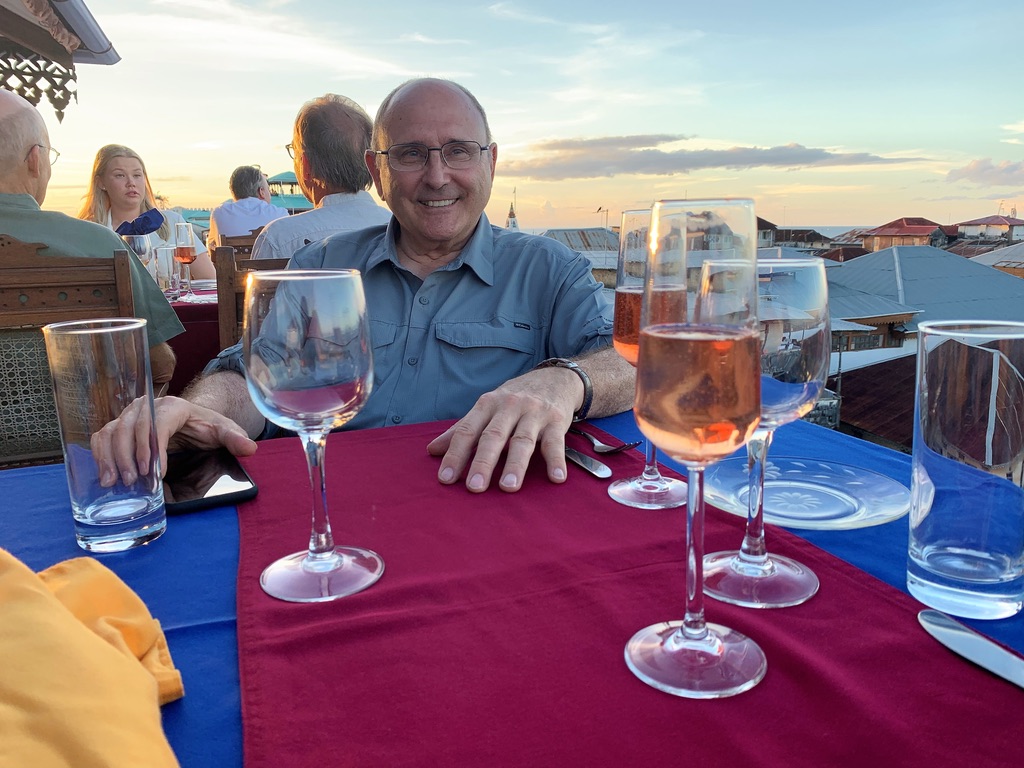
We had dinner at Emerson Spice (second night in a row). They served kir royales as starter drinks, although we opted after a quick toast, for our now standard dawa. The rooftop holds about 32 people and they only had one seating. The New Years Eve menu was carefully planned. As we sat savoring the sunset and the view (we had requested the front corner table, so we could really see the town), we could hear the languages being spoken and it sounded to us like several Scandinavian languages. Although it was difficult for us to identify which language, we knew it wasn’t Finnish (having lived in Helsinki for a year, many years ago).
The dinner was great – starting with a tasting plate of some kind of a spinach leaf that had been fried or cooked so that it was crunchy and retained its leaf form, a fruit, and ceviche (not sure what fish, but fantastic); next plate was a small piece of tuna with cumin, arugula salad, and a kind of eggplant; then came wonderful ginger prawns in the shell, a red cabbage salad, and a melon/squash-like vegetable cooked with coconut milk and cinnamon (called mung’unye); then came a fish they called Kole kole (which I think is kingfish), along with beetroot and cardamom rice, and something called mbibimbi achari… finally dessert was a date crème, a star anise apple.. I think they somehow infused the anise into the apple which was super crisp and ripe, and there was a sesame cookie.
OK.. I didn’t have to remember all of the above because they provided a written menu to keep. Food was great. Each of the plates always had bites of each of three items, except for the main course (in this case the prawns) which was larger.
During the dessert course, the woman at the next table asked me what kind of fruit we were having in the dessert course, which opened the door to ask what language they had been speaking. They were Norwegians, along with two other tables. They also said that another table (the one behind us) were Swedes. Apparently Zanzibar is a new hangout in the dead of the Scandinavian winter for all these Nordic folks. Seems easy to understand. As we finished dessert we got into a rather lengthy conversation with this Norwegian couple – he is a partner at Deloitte (!!) and his territory seems to cover much of the Middle East as well as Scandinavia; she is the head of a primary school (grades K-7). Though a businessman (deep in the thick of a world I generally question), he’s also coming from a country rooted with democratic socialist values. Our conversation naturally drifted to Trump and the Norwegian’s concern about the damage Trump is doing globally, but his strong feeling that the US will survive even this. We talked a lot about taxes, health care, education, and more – with their feeling that it was hard to conceive that the US does not have universal health care and the best education possible. The Norwegians were more optimistic than us about the direction of our country. We chatted until the church bells rang out and the official siren went off noting the year had passed and we were on to the next. Happy New Year.

