Farewell Zanzibar; Hello again, Dar es Salaam. 1/2/2019
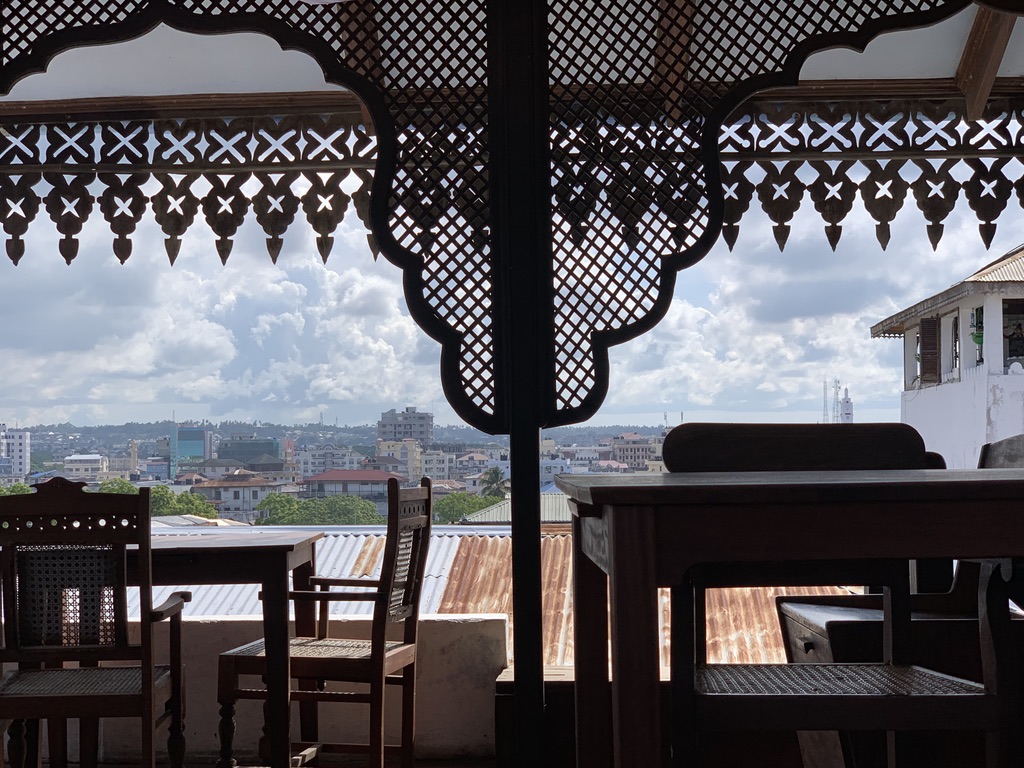
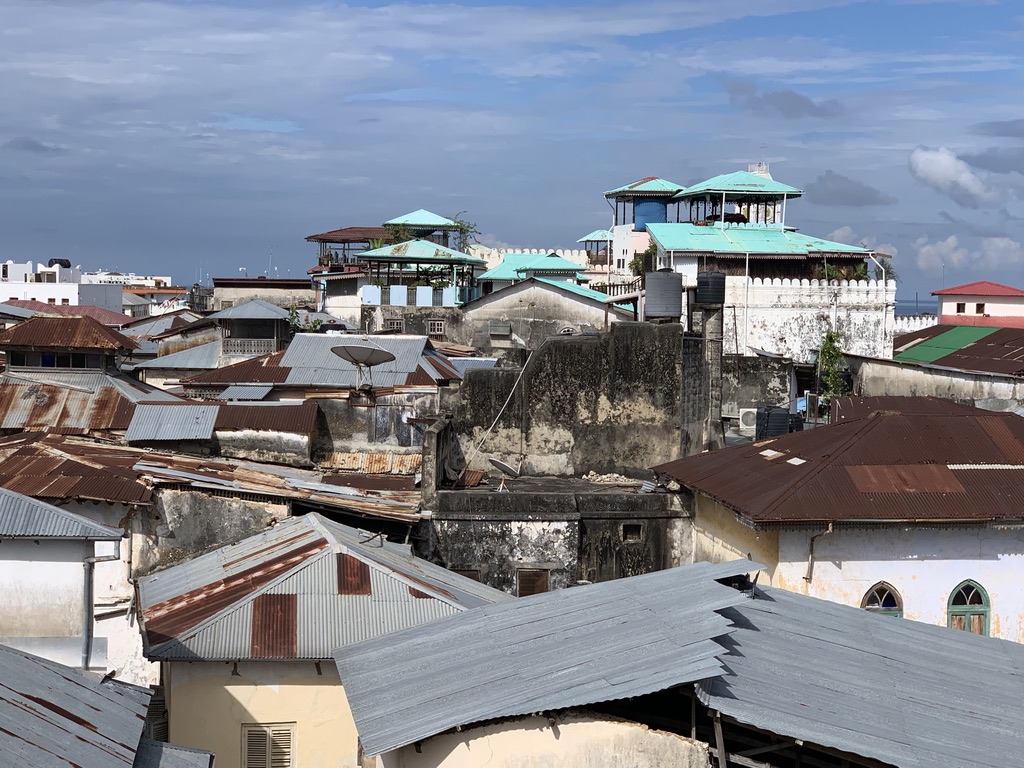

After breakfast we walked to the Slave Market Exhibit located at the Anglican Church in Zanzibar, which is actually built atop the original slave quarters. Probably would have been best to view all of this on the first day to put our walks and what we were seeing into greater context… but somehow we didn’t do that.
It’s a pretty dark history with Zanzibar being the region’s main slave-trading port and one of the last slave markets in the world to close. Here enslaved men and women were confined in dark, virtually airless, underground chambers before being sold to do hard work on the Island’s clove plantations or being sold and transported to distant locations – mostly by Arabs. The exhibit is not just a history (extremely well put together, by the way), but also a real reminder of the atrocities that people were subjected to. And the exhibit doesn’t let us forget contemporary slavery – defined as bonded labor, forced labor, child slavery, forced marriage, and descent-based slavery. Indeed the exhibit also reminds us that “Products made by modern day slaves flow into the global supply chain and eventually into our homes, leaving most of us unaware of our contribution to supporting it.”
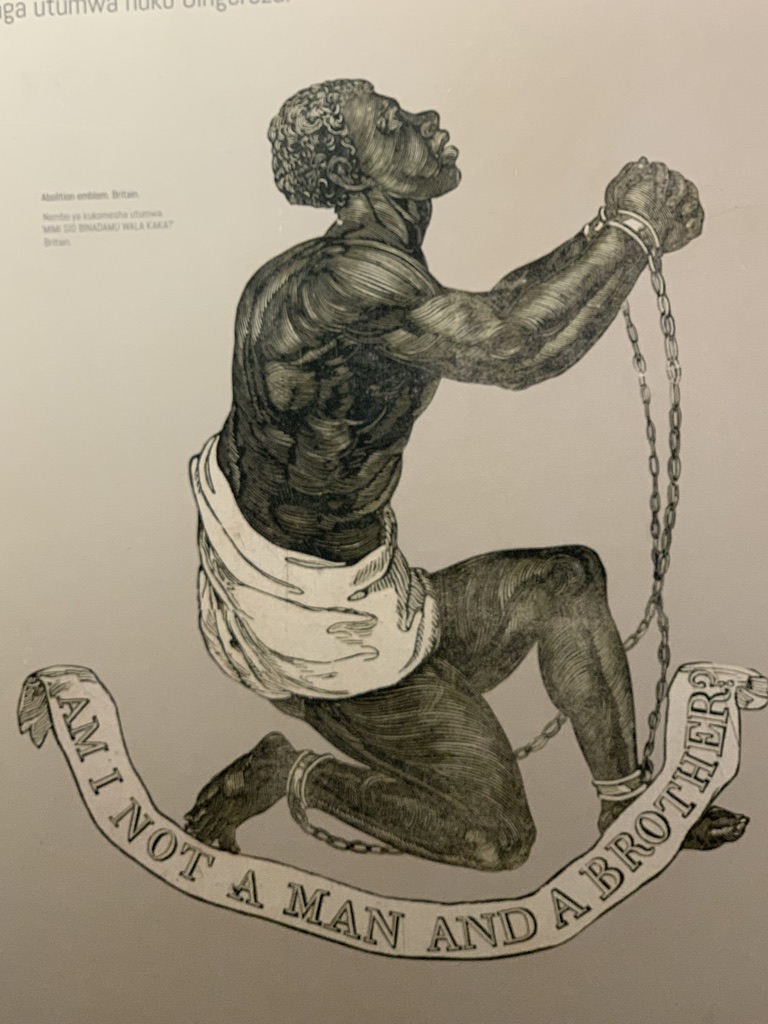
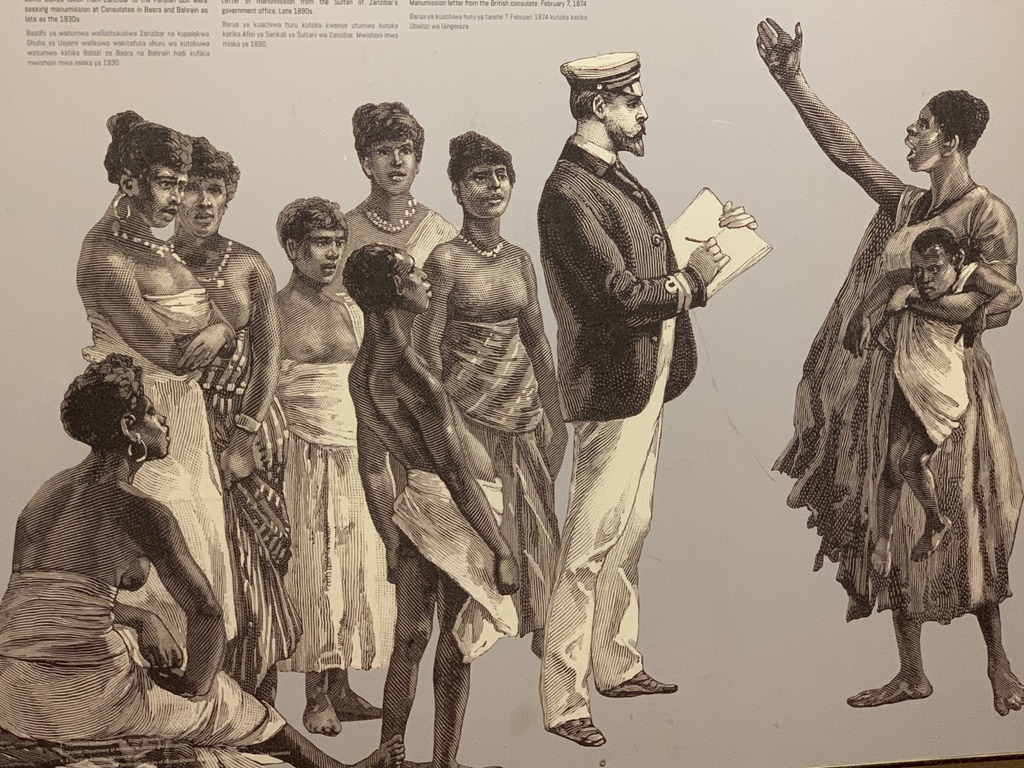
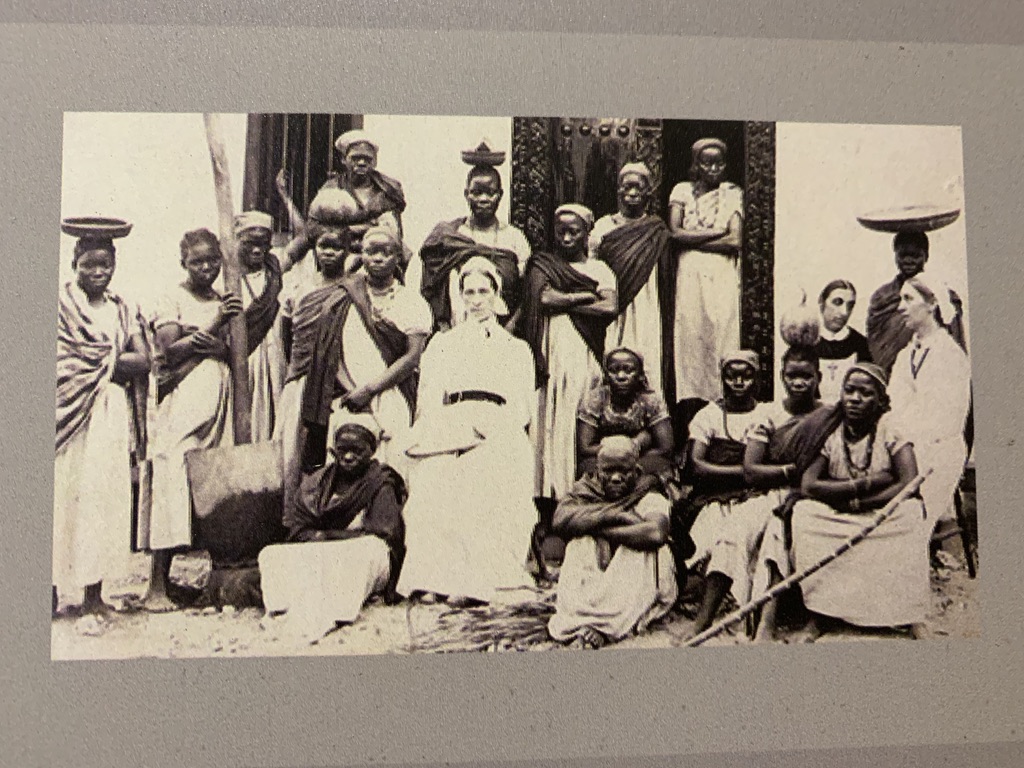
The exhibit ends with a graphic map of the world showing that 61% of those living in modern day slavery are in 5 countries: India, China, Pakistan, Uzbekistan, and Russia. But the majority of the exhibit traces the history of African slaves with Zanzibar as the hum for trading and buying slaves. It’s clear from the exhibit and the strong text that in the 1850s Zanzibar was filled with slaves — some in transit to other locations and others brought to Zanzibar to work in plantations, including in the labor-intensive clove plantations (which had become a major product and economic driver for the country). But slave trading was the major economic driver.
Some female slaves were brought in from other continents to be part of the harems of various sultans. White and Middle Eastern slaves were among the most prized. Two thirds of the population of Zanzibar was comprised of slaves. It was so much a part of the society that slaves who earned wages actually bought slaves themselves or invested in the slave industry.
One quote in the exhibit is interesting: ‘A woman came into the court and accused a man of having unjustly enslaved her. Evidence was produced and the woman liberated. The man was fined 40 rupees and 20 rupees were handed to the woman as compensation. She was asked shortly afterwards what she was going to do with the 20 rupees. She at once answered; I will buy a slave with it’
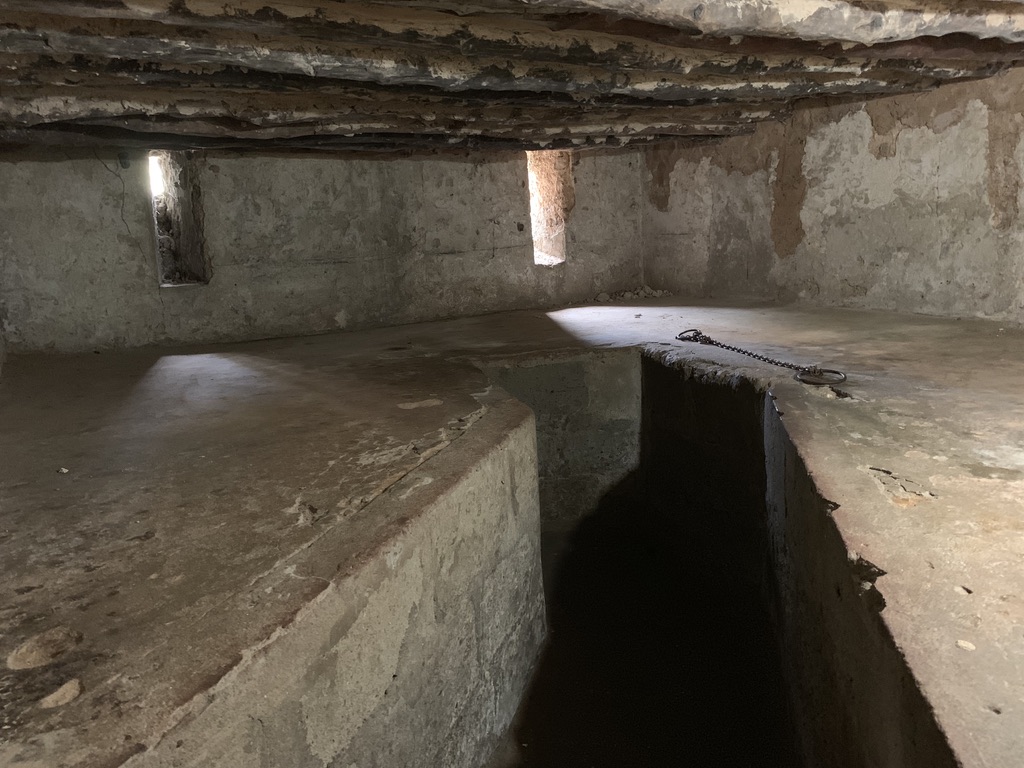

Underneath the hostel is the old slave chambers. The two underground rooms were used to keep slaves before being taken to the market for auction. There was only one small window at the end of the chamber.
The slave trade industry was abolished in 1873 but slavery as an institution continued in Zanzibar until 1909. And in reality, master/slave relations and clandestine kidnappings continued at least 2 decades beyond that.
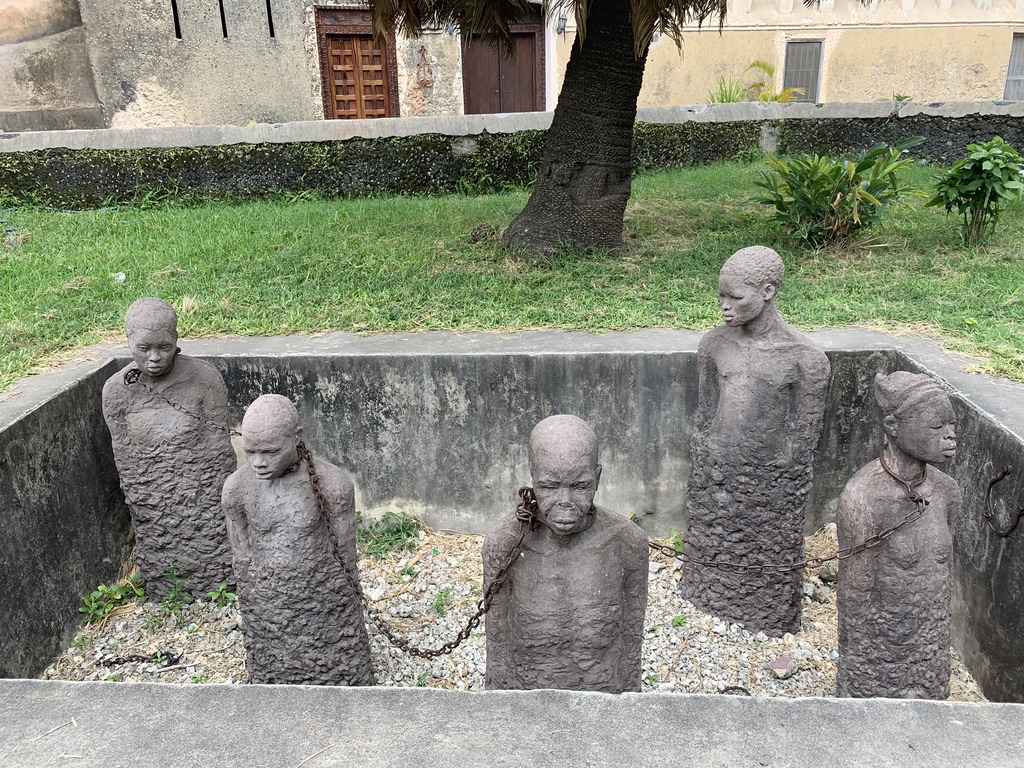
Outside, there is a monument to the slaves who had been sold on the site. It shows five slaves – men, women, young, old — chained inside a pit. They look worn down, but maybe also somewhat uncooperative.
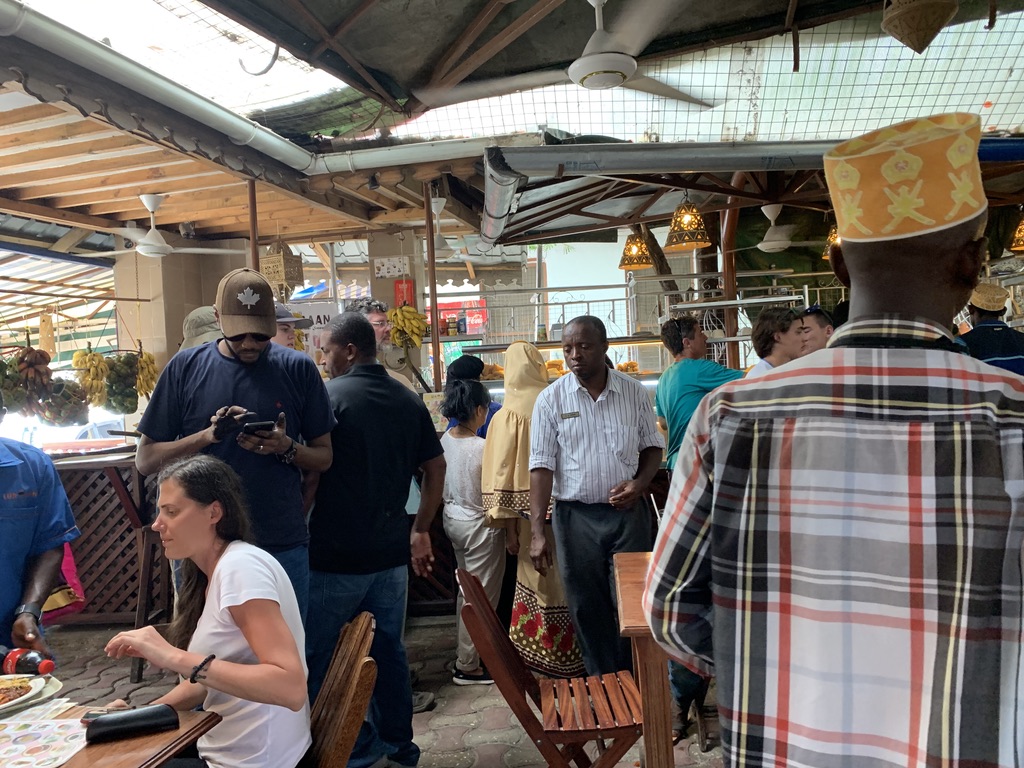


From there we walked to the Lukmaan Restaurant – a local Swahili place that seems to attract everyone from Zanzibaran workers to upscale Muslims to a handful of tourists. It’s a complicated set up… You sort of stroll around the “display” of foods and then tell someone what you want and how much and someone scoops it into bowls and then you try to find a table (not such an easy task). The cooking part seems to be “inside” and the eating is “outside but covered over. We had chicken in some kind of curry-like sauce and some kind of mixed vegetables in a spicy tomato sauce.. maybe a little like spicy ratatouille… Nothing alcoholic is sold.
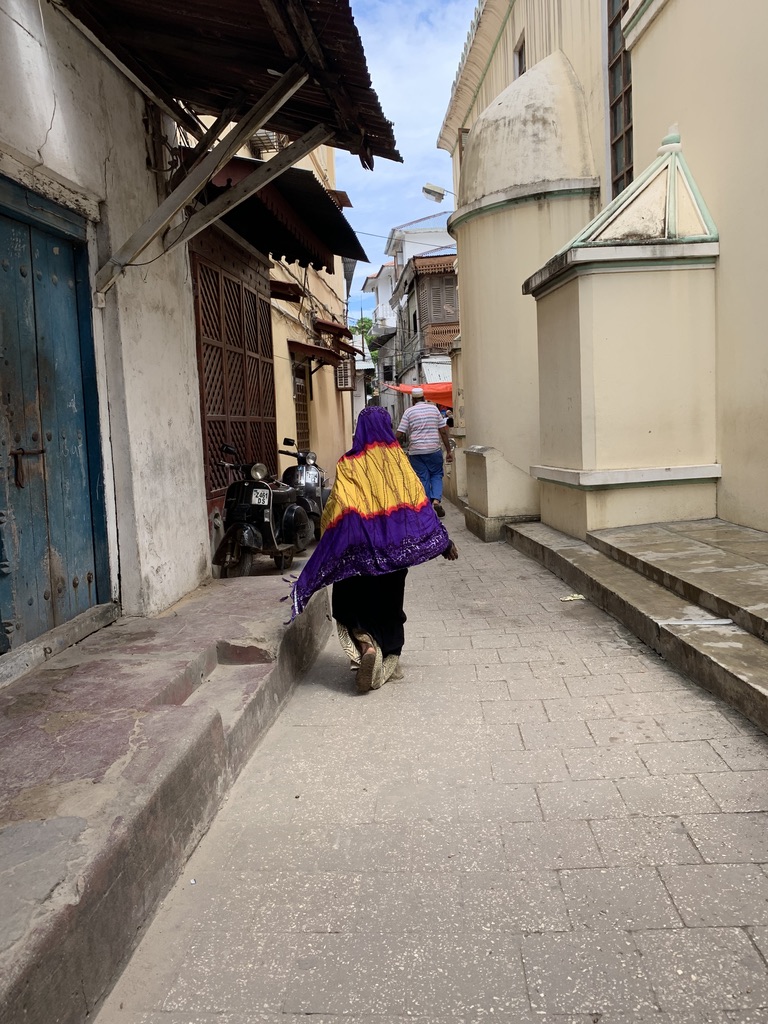
From there we meandered our way back to the hotel to get our bags and head to the ferry. By now we sort of know our way around the immediate area of the hotel, but it seems as if we never take the same alleyway twice, so it’s hard to be sure you’re going in the right direction.
Checked out of the hotel and headed to the ferry, which once again was a bit of a challenge. Given our experience four days ago with the “cage” for luggage, we were determined to keep our bags with us on the ferry. But our two bags (one bag and one computer bag) were heavy and you have to climb a winding flight of stairs to get to the upper deck. Once again, we had been advised to get “first class” tickets which made sense (assigned seats, air conditioned place to wait for the ferry to board, and first to board the boat). So, when we got to the “first class lounge” (a pretty basic room), we talked with one of the guys who worked there and he agreed to bring our bags upstairs (good tip involved!) We were surprised that we were the only non-Africans in first class. I think that many of the Europeans who visit Zanzibar fly, so not too many non-Africans use the ferry. The crossing was a little rough (definitely much rougher than coming in the other direction). But the two hours went quickly, especially for Mike who was able to see (but not hear) the movie they were showing (Charlie Chaplin). I did some work.
The arrival in Dar was a little easier now that we had experienced it once already. We quickly located a somewhat legitimate taxi and headed back to the Serena where we had left our other bag. We were super-impressed when everyone from the doorman to the reception desk to the concierge remembered us by name (good training). Settled in quickly and headed to dinner on the coast at Karembezi. It was fine, not great. Still hoping to go to Addis (the supposed super good Ethiopian restaurant that has been closed for the holidays. We think it opens tomorrow so we might make it — on the way to the airport.
That’s it. We now have TV again (no TV in Zanzibar), so we are catching up on whatever has been going on (or not going on) beyond what we could see on our phones and computers.
We have all day in Dar tomorrow; our flight is at 11:30 pm; we arrive in Brussels the next morning at 9 am.
Best –
Fern
 Fern's Travel Notes