21. Religious Intersections; Armenian Mass; Western Wall (and sexism still prevails) 1/8/23



8 January 2023
Hello / Բարեւ / ‘ahlan / שלום / Shalom/ /
Began our day a bit late today… settled into the Villa Brown Hotel Moshava in the German District of Jerusalem; made decision to cut one day from Akko and add that day to Jerusalem because we wound up spending yesterday in Tel Aviv instead of Jerusalem… but started with yet another incredible breakfast… what is it about the middle east that makes breakfasts so large and so good? — Egypt, Jordan, and now Israel are all breakfast specialists. Villa Brown Moshava (our little boutique hotel with just 24 rooms) does not have a restaurant, so they give you a daily coupon to eat at a place that is about 3 minutes down the road, called Caffit–a low key breakfast/brunch/lunch restaurant with an extensive menu for morning fare. Then we searched for an ATM as we were low on cash; and then we found a pharmacy so that Mike could get some cough syrup and something for his chest cold. He’s well stocked now. All of this happened on Emek Refaim Street which is a nice street chock full of shops and cafes and interesting old houses and buildings.
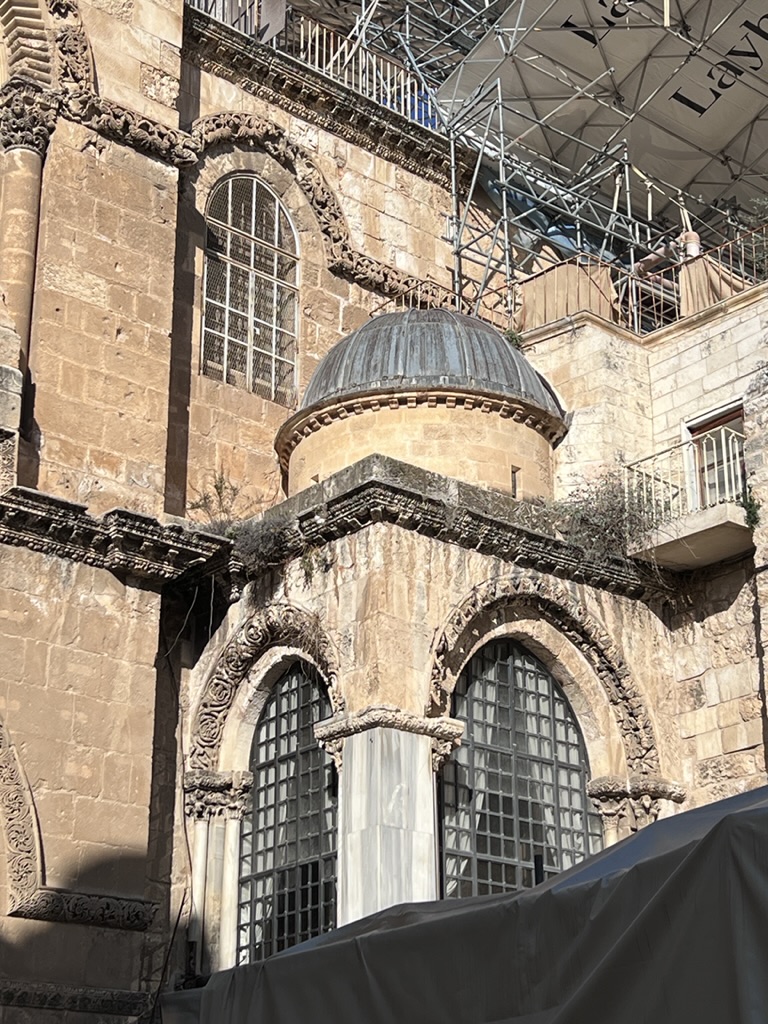
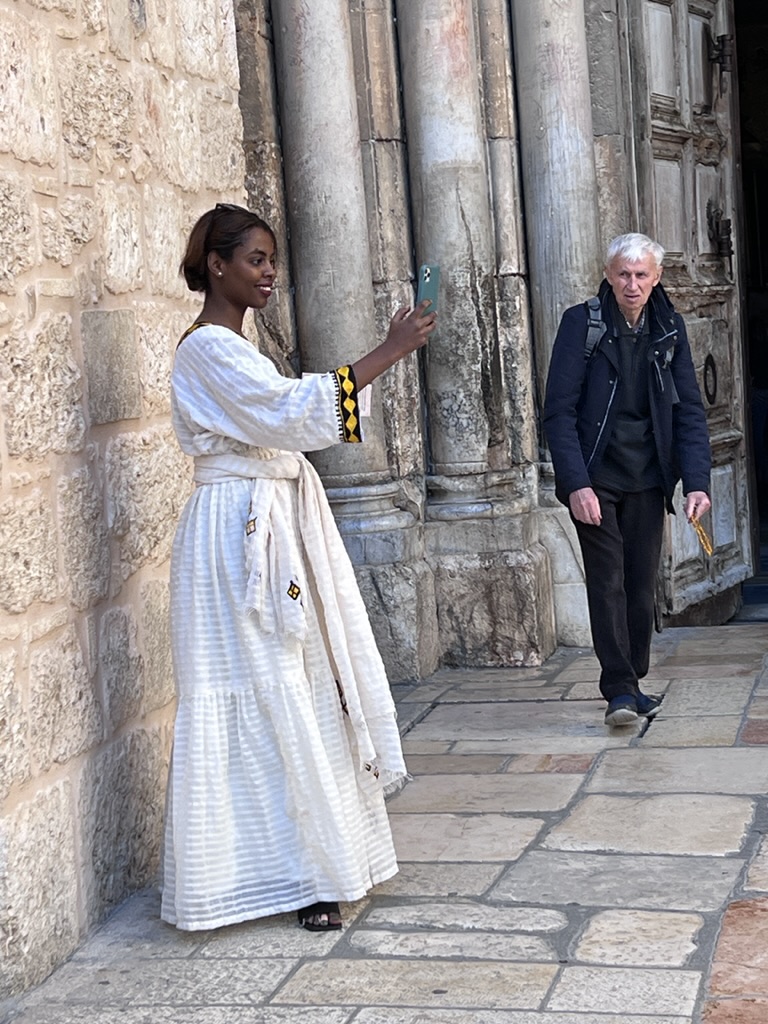
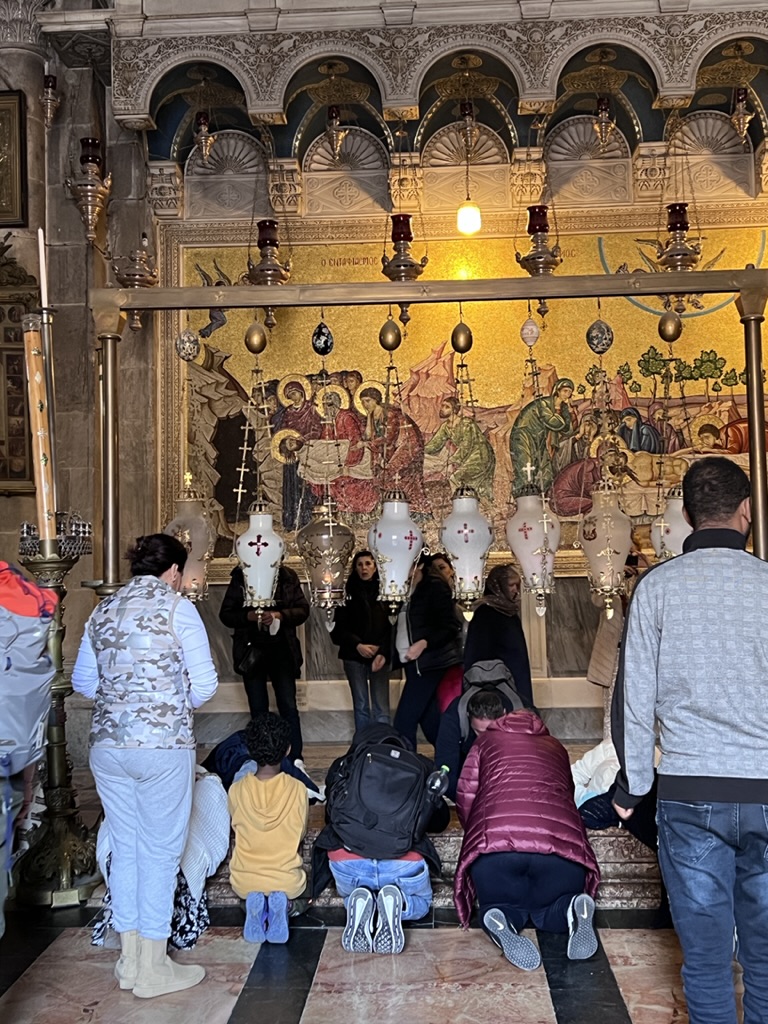
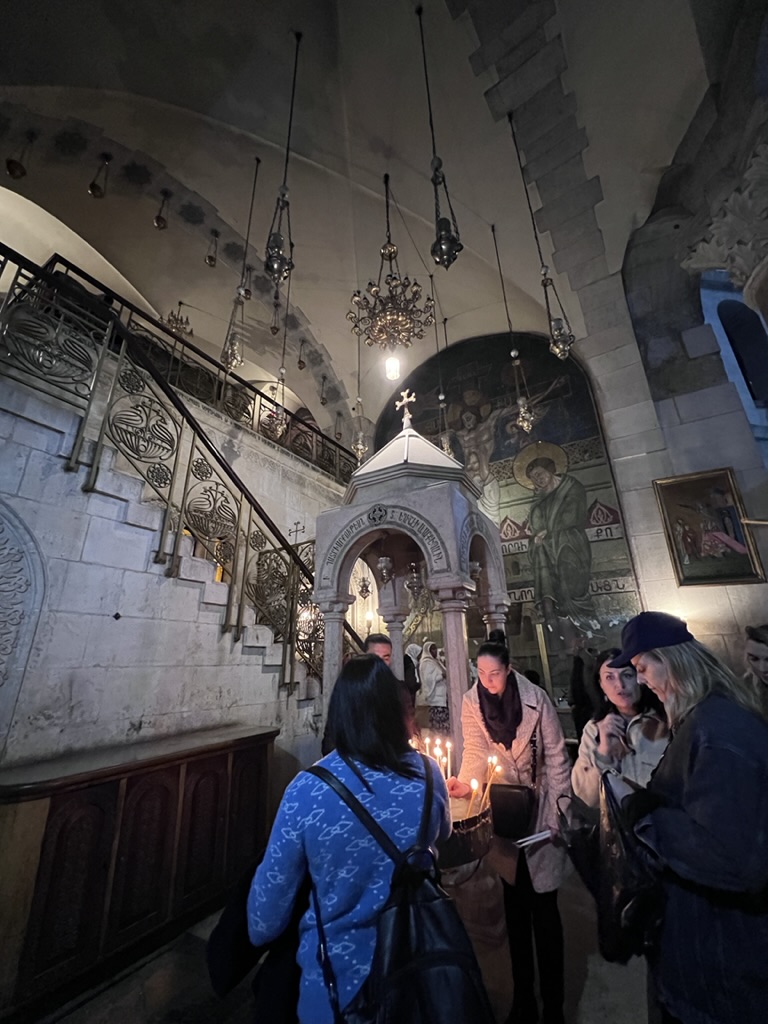
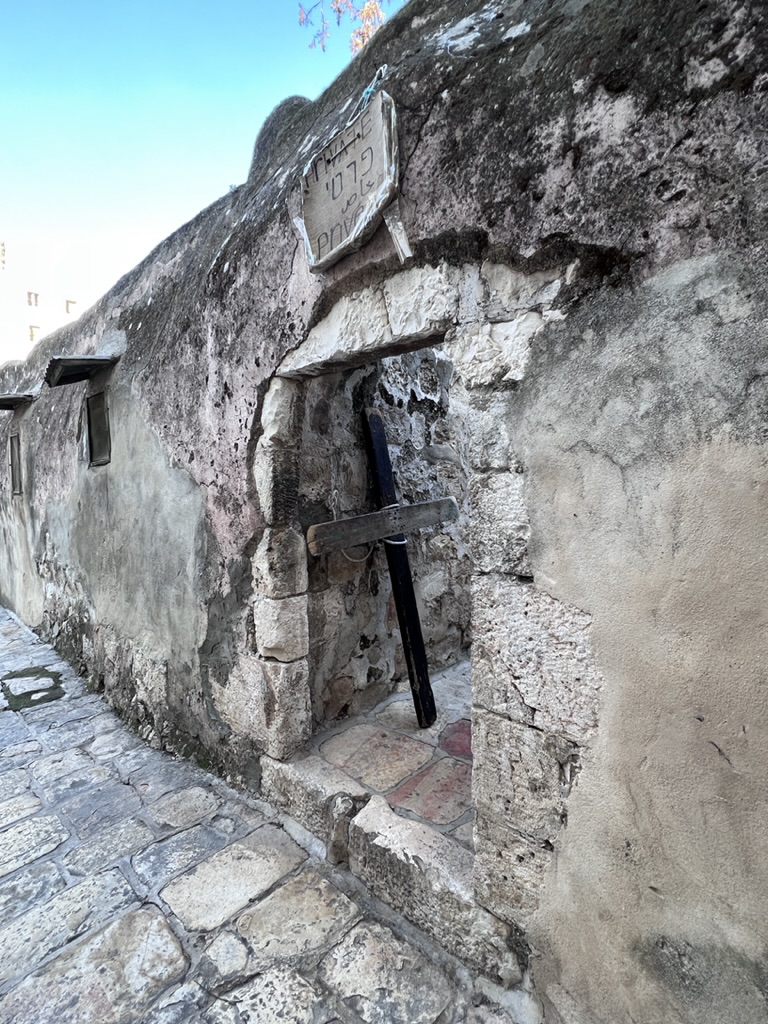
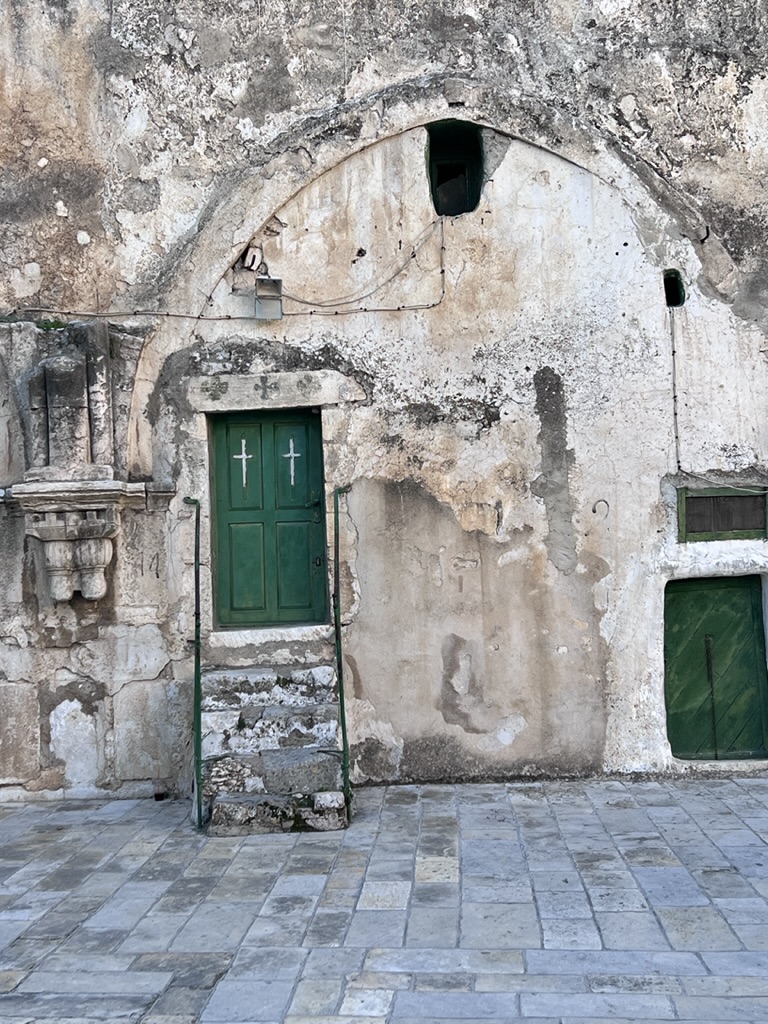
We then figured that instead of walking the whole way to the old city, we should hop in a taxi (using my trusted Gett app) and we headed for the Jaffa Gate. Once there we walked first to the Church of the Holy Sepulchre, in the Christian quarter, built in the 4th century – considered to be the most sacred site in the world for millions of Christians. It’s supposedly the site of the crucifixion, burial, and resurrection of Jesus. The church is a major Christian pilgrimage destination, especially on Sundays, like today. Control of the church is shared by multiple Christian denominations. We also climbed up to the roof of the church where we are told poor Ethiopian pilgrims and monks live in little huts, and where a dome of the chapel can be seen. Apparently, Ethiopians built this tiny village atop the church to continue their claims to the chapel after they had to sell it to the Coptic church in the 17th century. We saw the stone and cement “huts” but we didn’t see any of the monks. We saw many doors that led into private spaces, each with signs saying that the area was private.
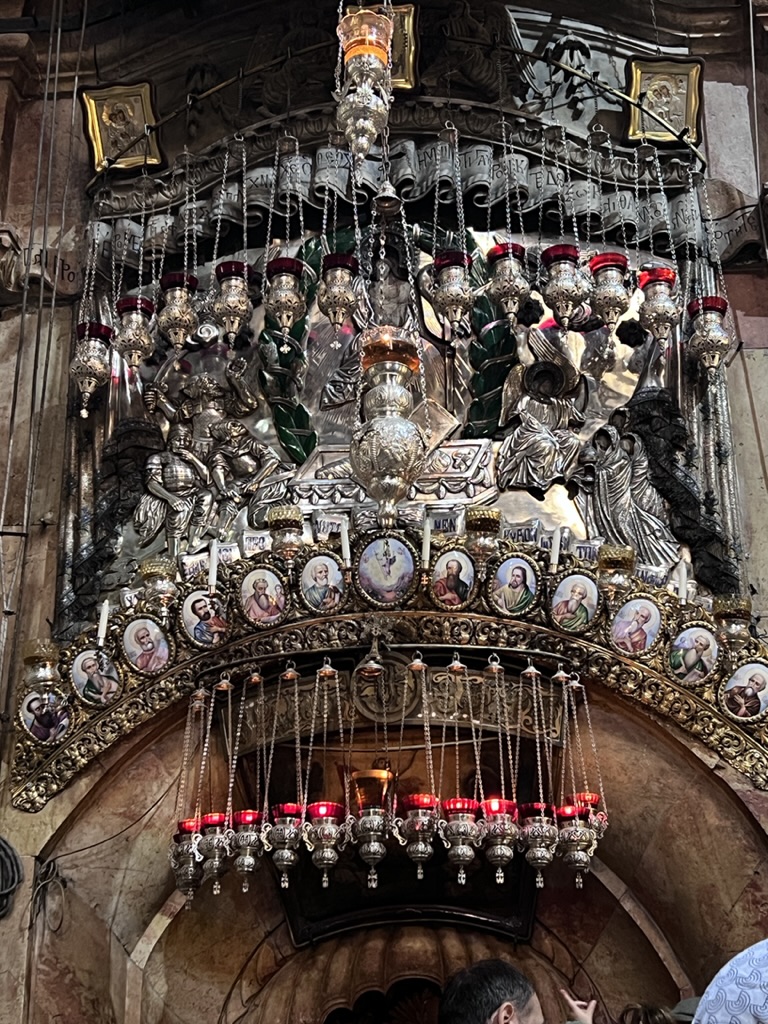

From the Church of the Holy Sepulchre we dashed off to the Church of St. James. It’s nestled within a walled compound in the ancient Armenian Quarter of the Old City. It’s ornately decorated with lots of hanging glass chandeliers and what I think are incense vessels. It dates to AD 420. The church is only open to the public during religious services. The interior, under a vaulted dome, includes a display of massive chandeliers, countless lamps, paintings, carved wood, inlaid mother-of-pearl, bronze engravings, and blue and green wall tiles. The marble floor was covered with purple, green and red carpets when we were there. The service includes (all men) young novitiates (?) and elders (who could use a little dieting) wearing black hoods. Incense and candles are burning everywhere and there’s amazing singing echoing throughout the building (all of which seemed to be in a common tone – no sopranos, no altos). There is a part of the service where the younger dudes place very ornate capes on the older guys. The service has a lot of chanting. There’s no electricity so everything is by the light of candles. Very effective and moving.
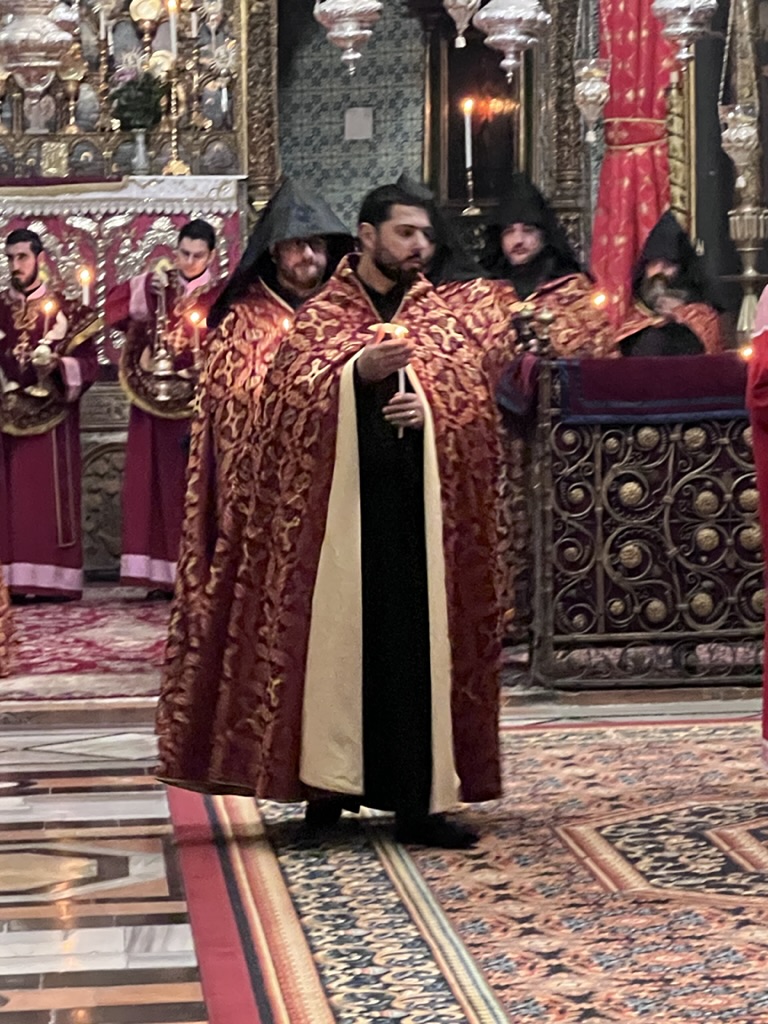
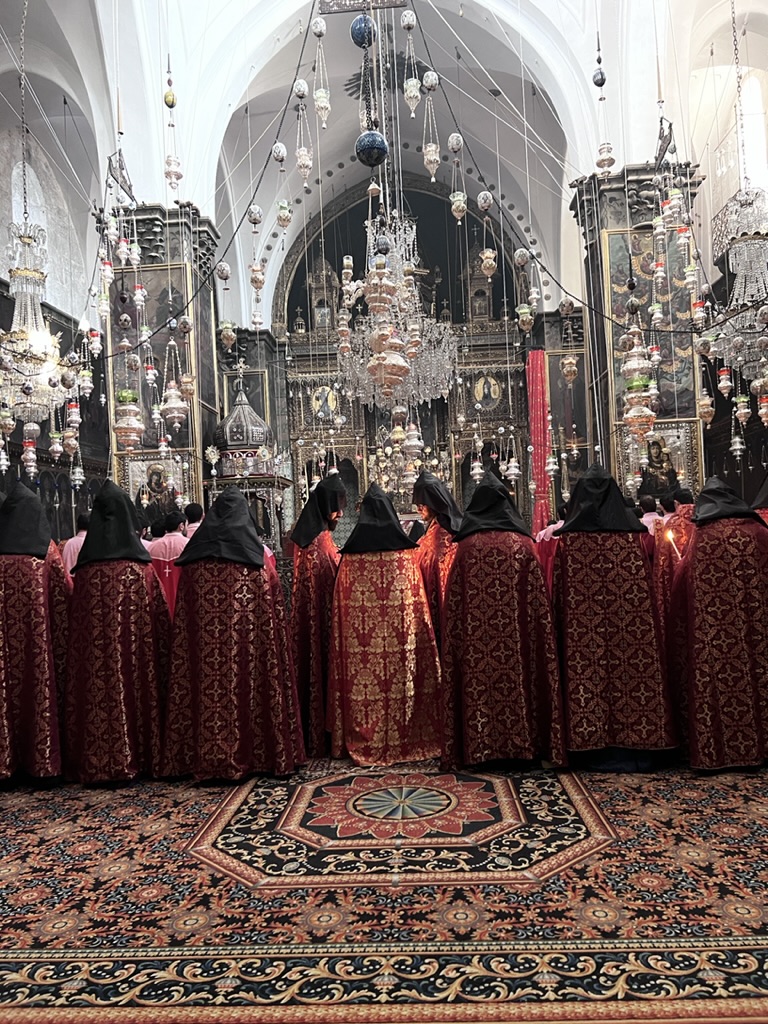
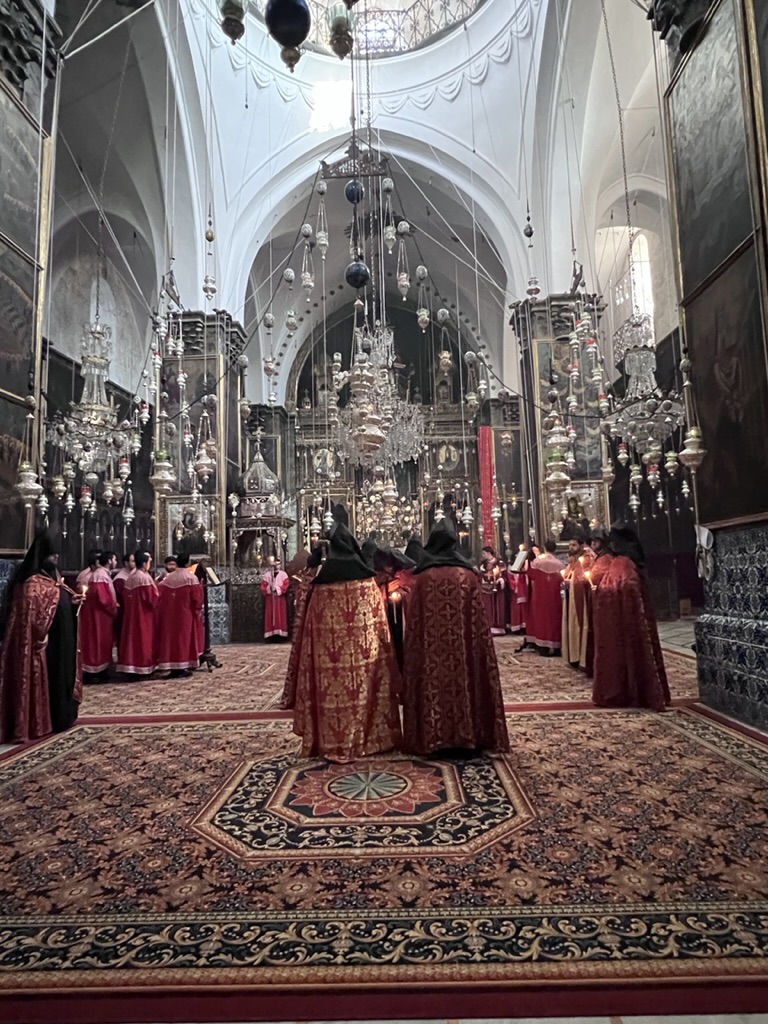
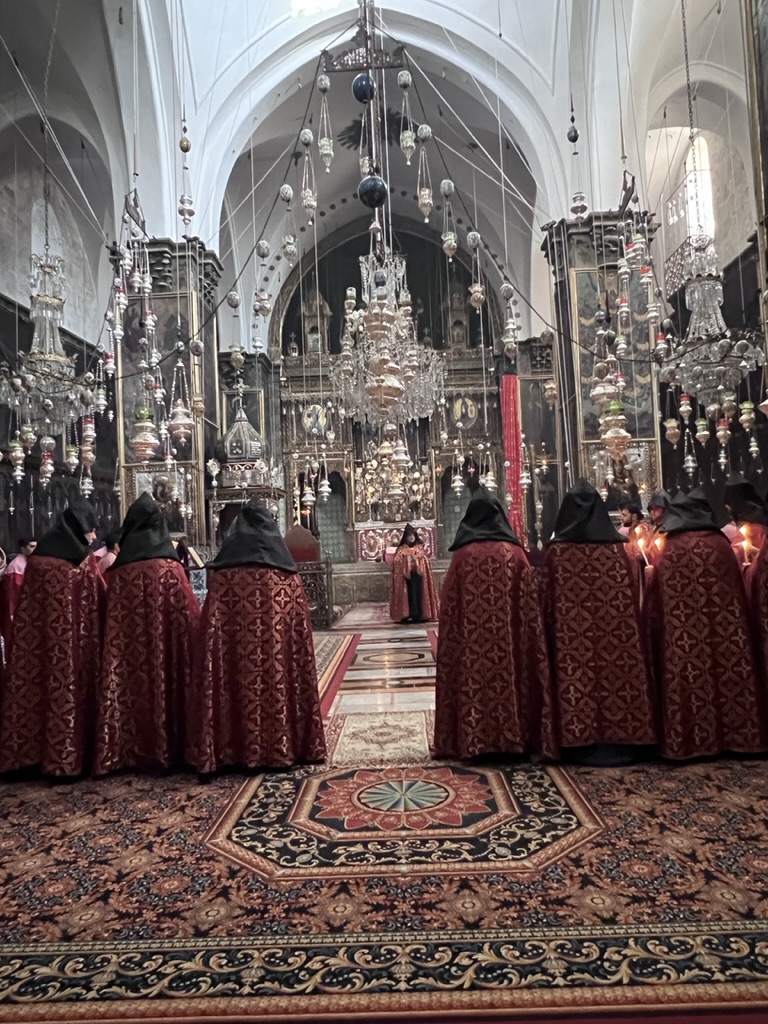
We stayed for the entire service and my take-away is that you cannot become an Armenian monk unless you can carry a tune. Mike says his chest cold immediately improved after sitting through the service and witnessing “a miracle.”
Then we strolled to the Western Wall… which, in my opinion.. was like the pyramids.. a bit of a letdown. Mike and I were walking together, although I was ahead of him, since I walk faster. Suddenly, I turned around and I couldn’t find him… A woman then said to me: “He cannot come in here; he needs to go in the other section.” And I remembered that women cannot “pray” or visit the same part of the wall as men. Mike “protested” by not going to the wall at all, and just sitting on a bench further back and observing the whole scene. I went in briefly but did not touch the wall and I suddenly remembered those memories of not being able to sit in the main section of the synagogue for my brother’s bar mitzvah. The wall, known as the most holy site in the Jewish faith, is the last remnant of the original retaining wall that surrounded the Second Temple that was built more than 2,000 years ago.
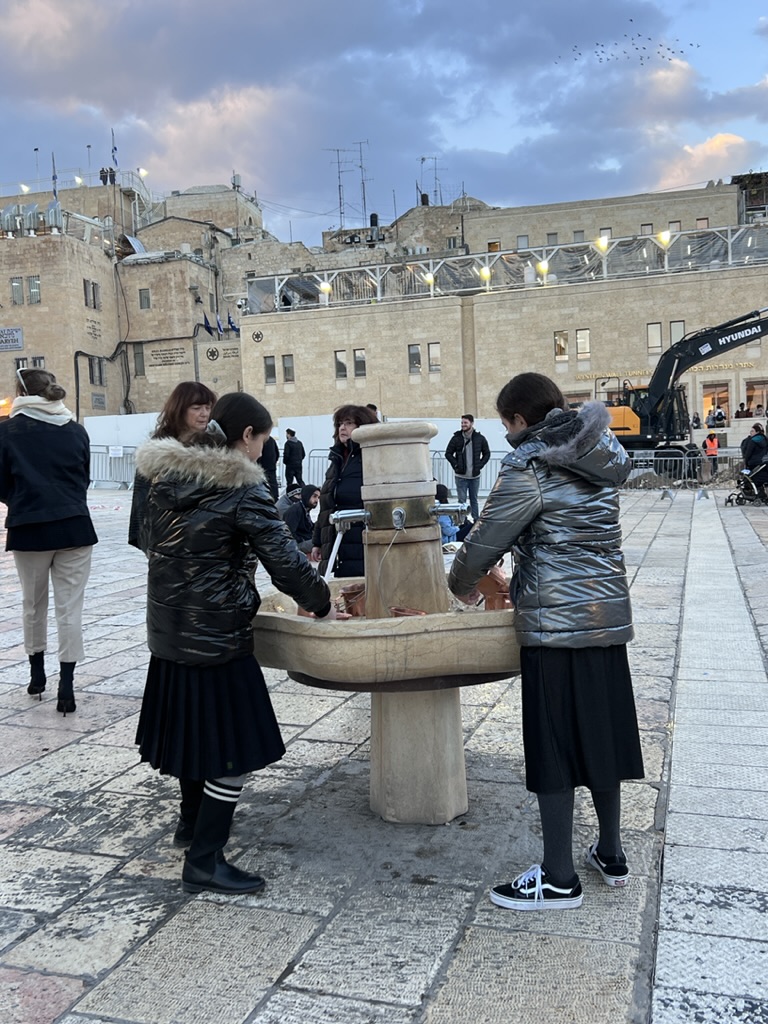
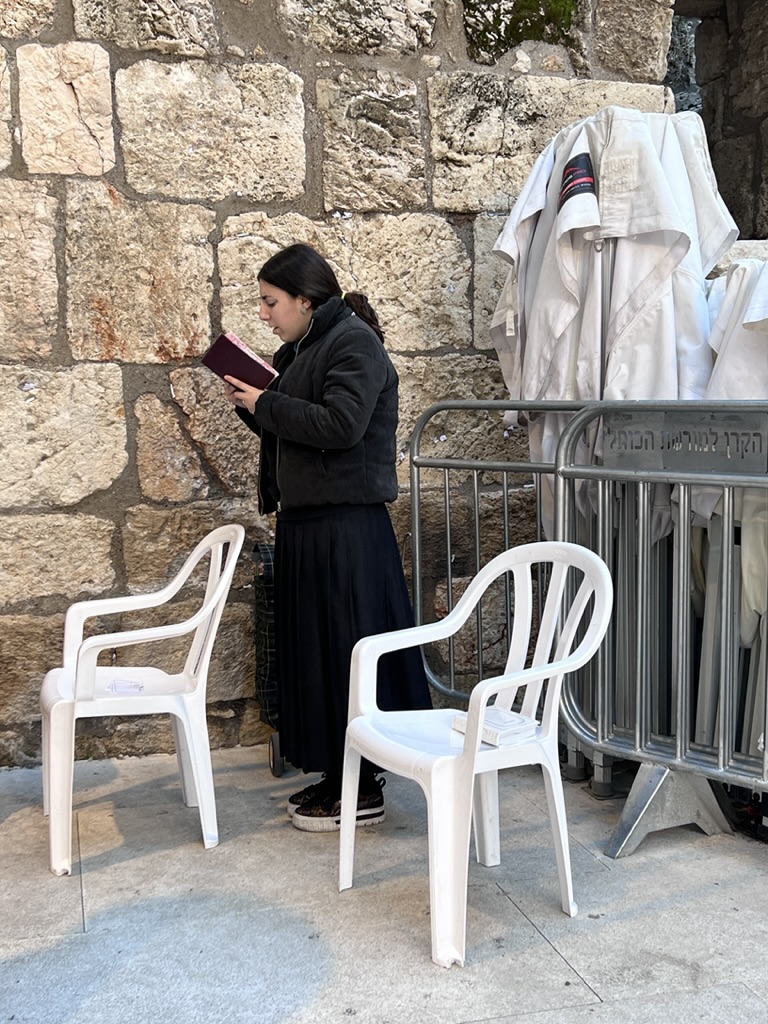
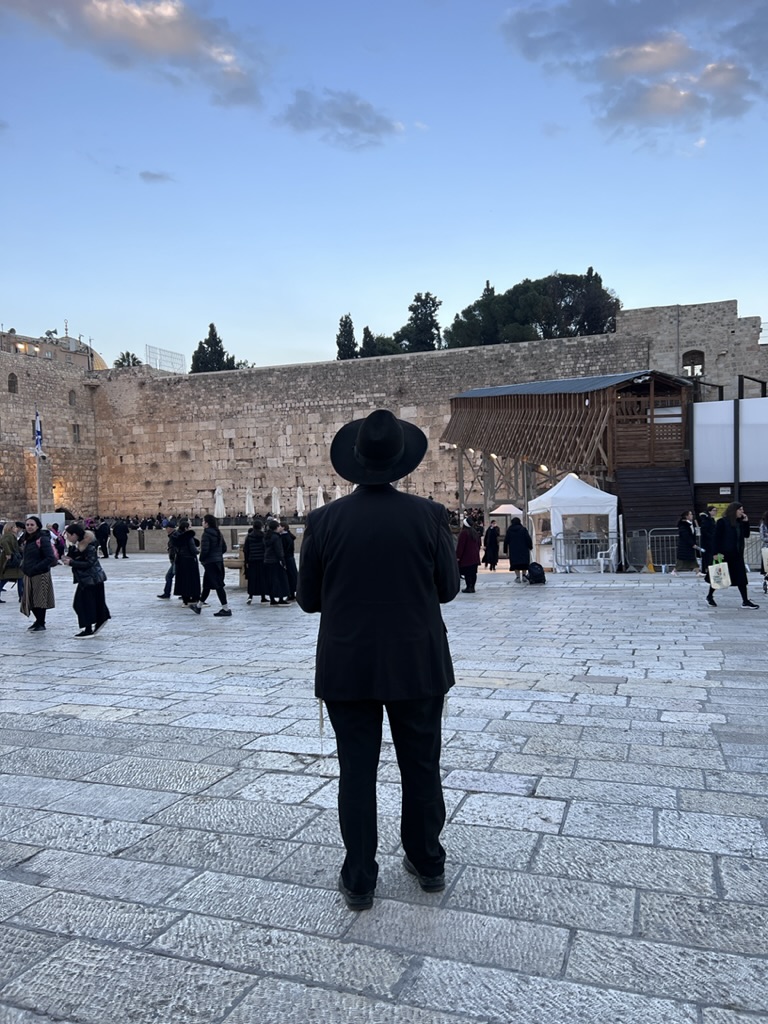
After the temple was destroyed in AD 70, the Jews were exiled from the city, and it became a place of pilgrimage where they would return to lament their loss (therefore, long known as the Wailing Wall). Now it is essentially an open-air synagogue, with divided sections for men and women to pray independently. Worshipers place little notes in the cracks in the wall, believing that these prayers will be answered quickly. Lots of Hasidic men, women, and children.
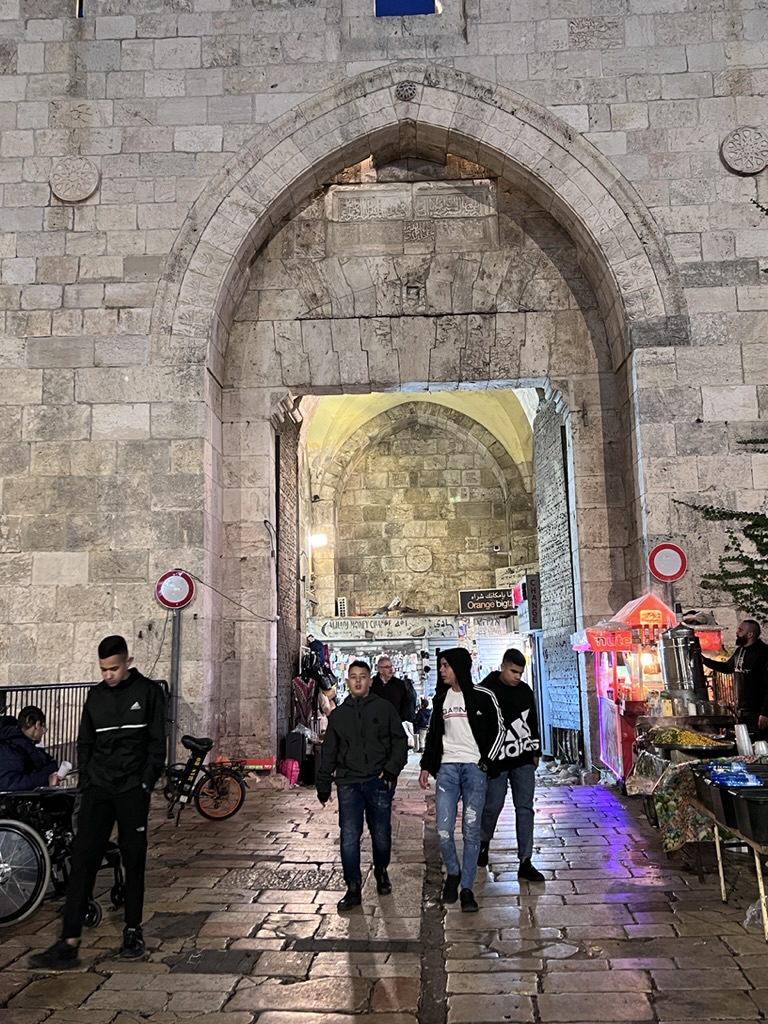
I watched women say their prayers and write little notes on paper that they tucked into the cracks in the wall. And I watched men and women whispering their prayers, into the wall and reaching up with their hands to touch the wall. I met up with Mike in the plaza and we strolled to the Damascus Gate before heading back to the hotel.
Tonight we ate at Mona, which was listed as being in an “artist’s house”.. which I expected to mean a little cottage. But it was a large elegant building with a stone-walled garden and a working fireplace. It had a rustic feeling although it had a totally modern menu. We started with a beef tartare and an agnolotti stuffed with meat and sitting in a red cream sauce. For the next course we had veal sweetbreads cooked with another wonderful and unusual sauce. We also had barr fish (It’s like sea bass) filleted and sitting on wonderful lemon linguini. Ended the meal with a lovely cheesecake.
Back at the hotel, I want to get this out before I hit the pillow. By the way, Mike now thinks that all of these ancient religions are older versions of QAnon.
Fern

