Day Three. 12/22/21. Brooklyn
December 22, 2021
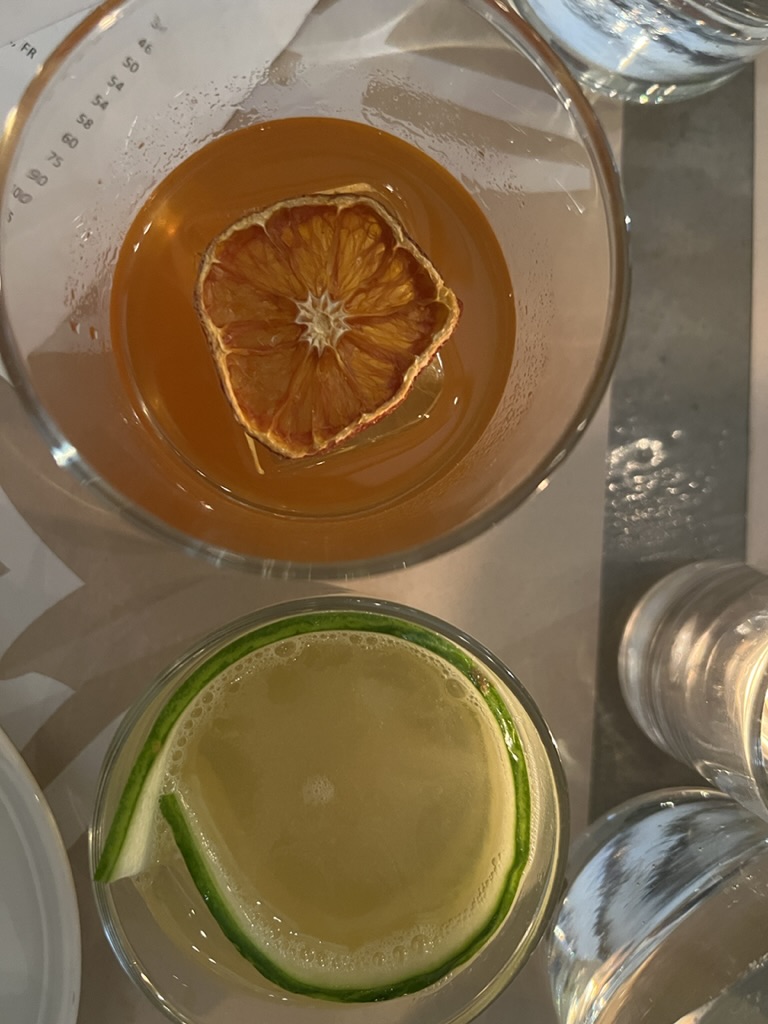
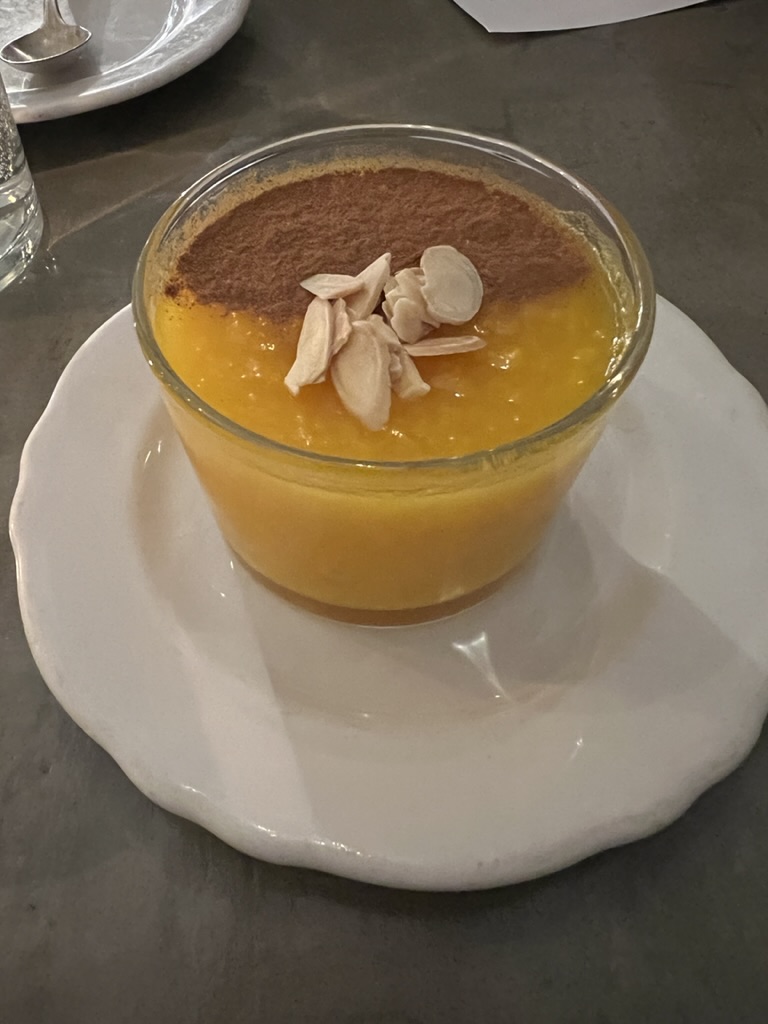
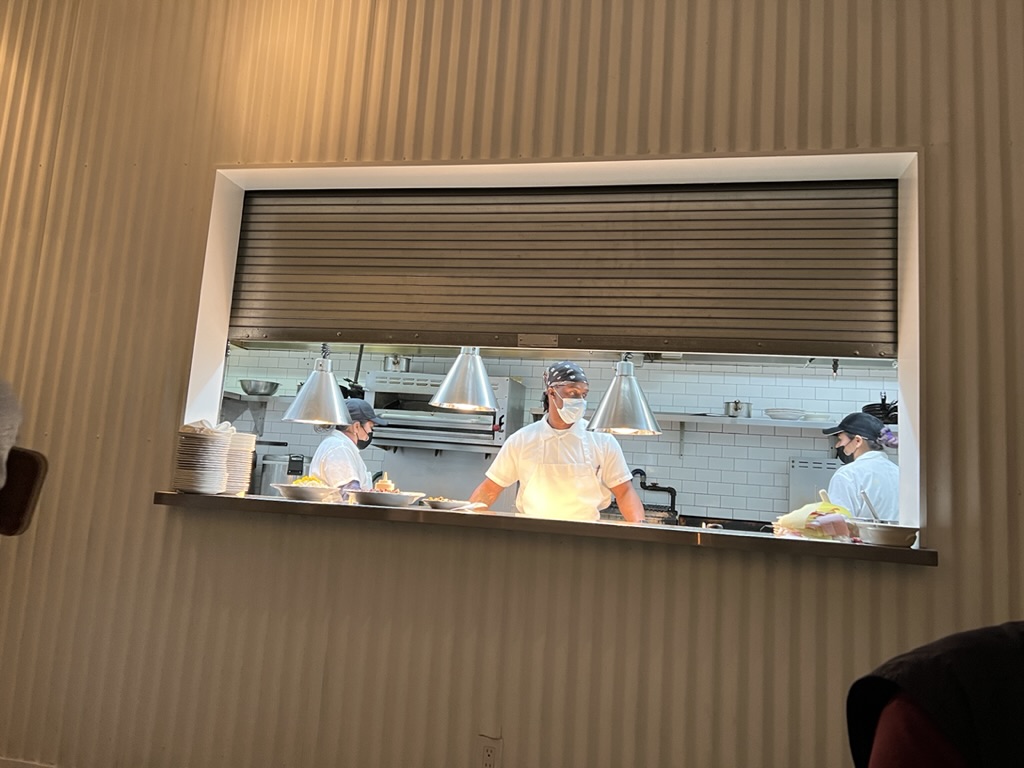
We celebrated Mike’s birthday last night at Sofreh – a wonderful Persian restaurant (only about two years old, I think). It’s small, fairly casual, with amazing food… and has deservedly, received many early awards. We started with flatbread with feta herbs and walnuts as well as a dish of acorn squash with whipped feta, frisee, pumpkin seeds and pomegranate that was spectacular. Actually we preceded all of this with wonderful drinks and a complementary plate of nuts, pomegranates, and sweet crackers to honor the Persian holiday that is similar to our solstice although they refer to it as “the longest night” as opposed to our sense of the shortest day. Anyway we followed with basmati rice with dill, leek, cilantro and some other herbs along with braised lamb shank, butter beans, dill and lime. For dessert we chose a yummy cinnamon rice pudding.
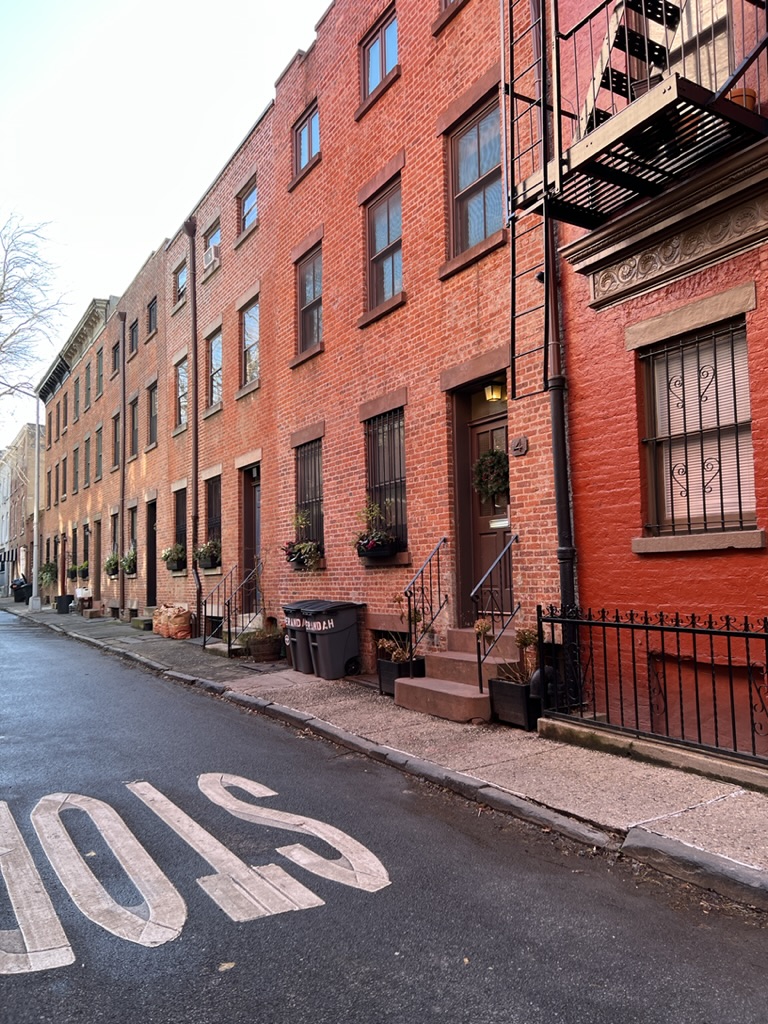
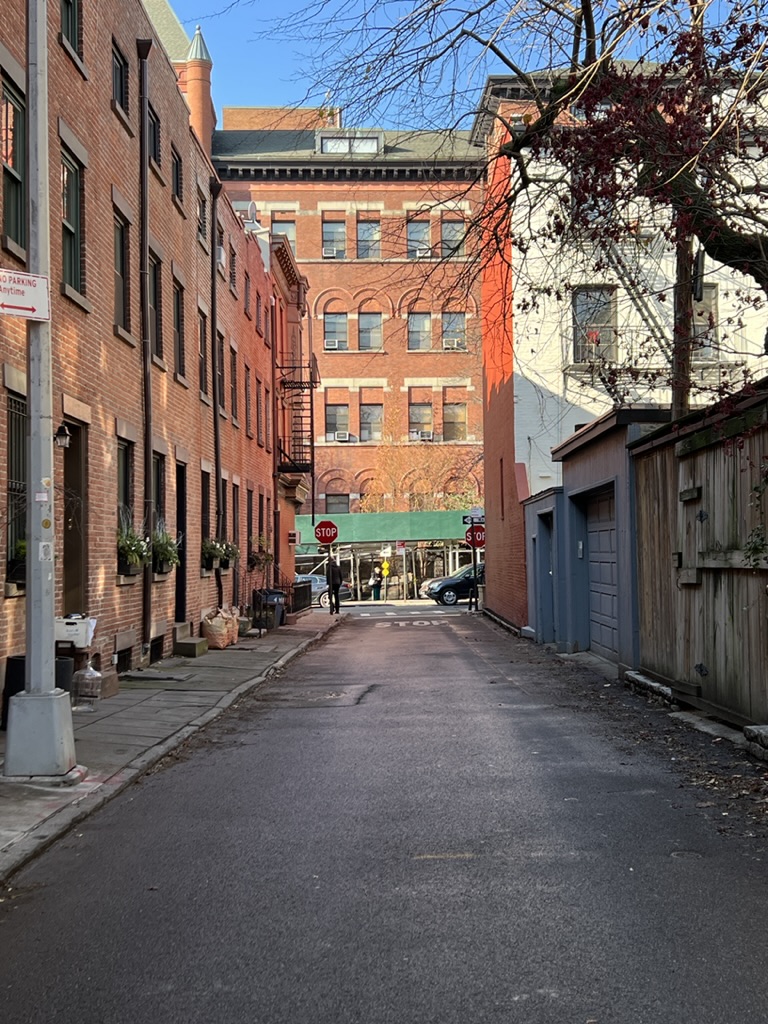
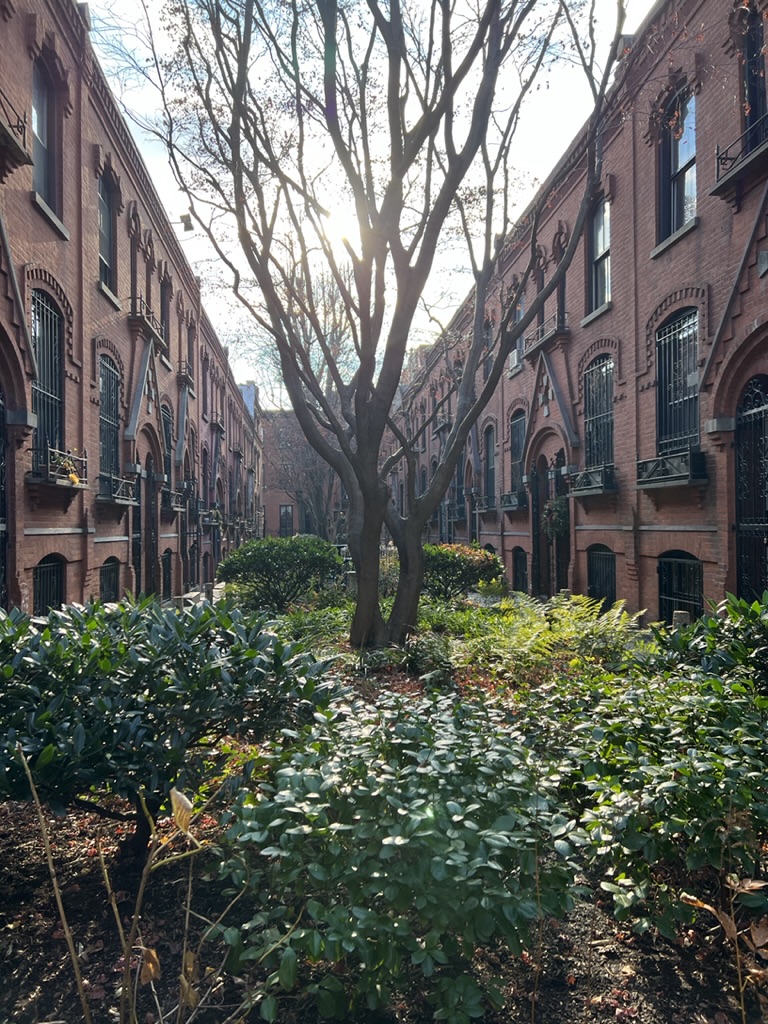
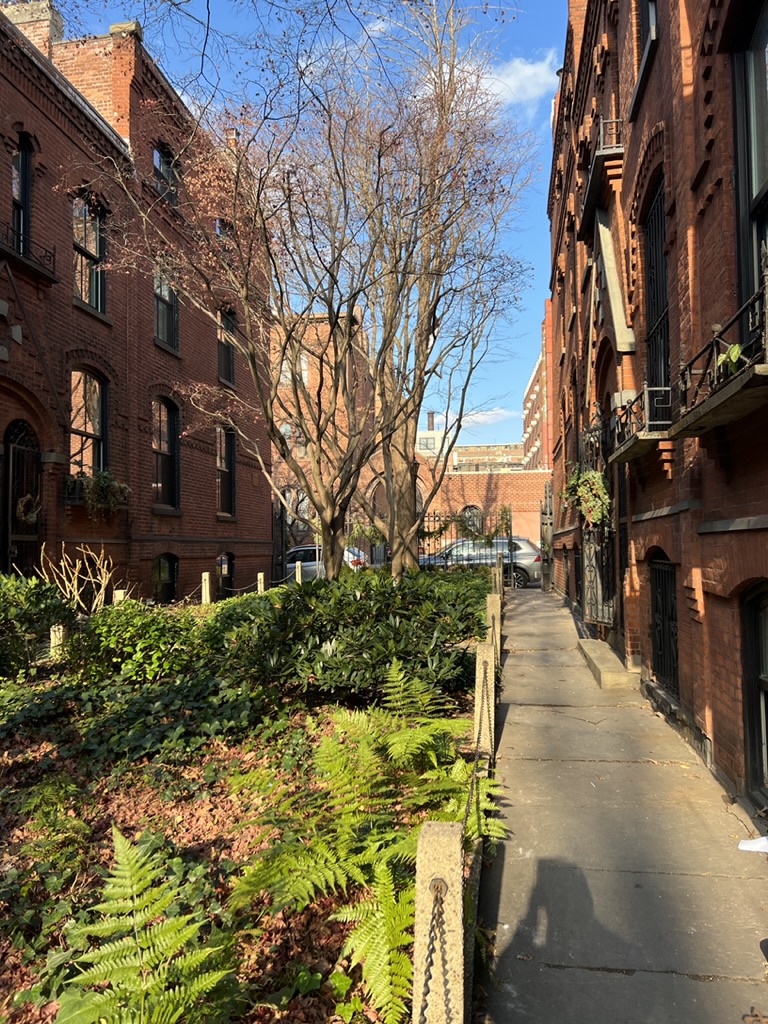
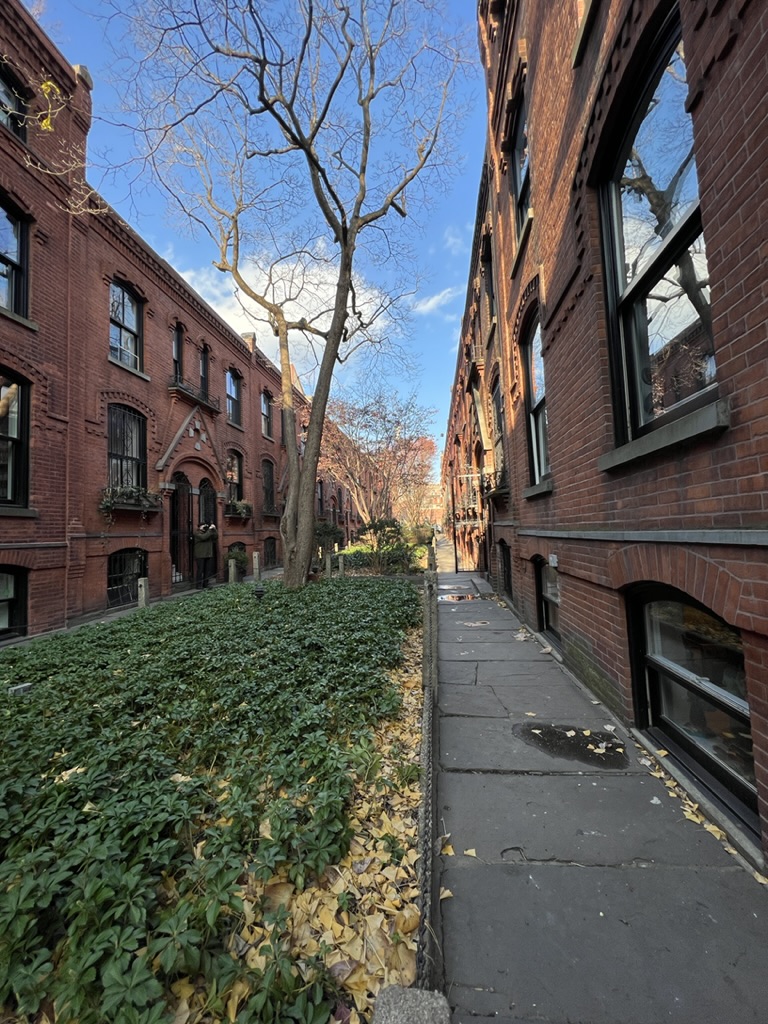
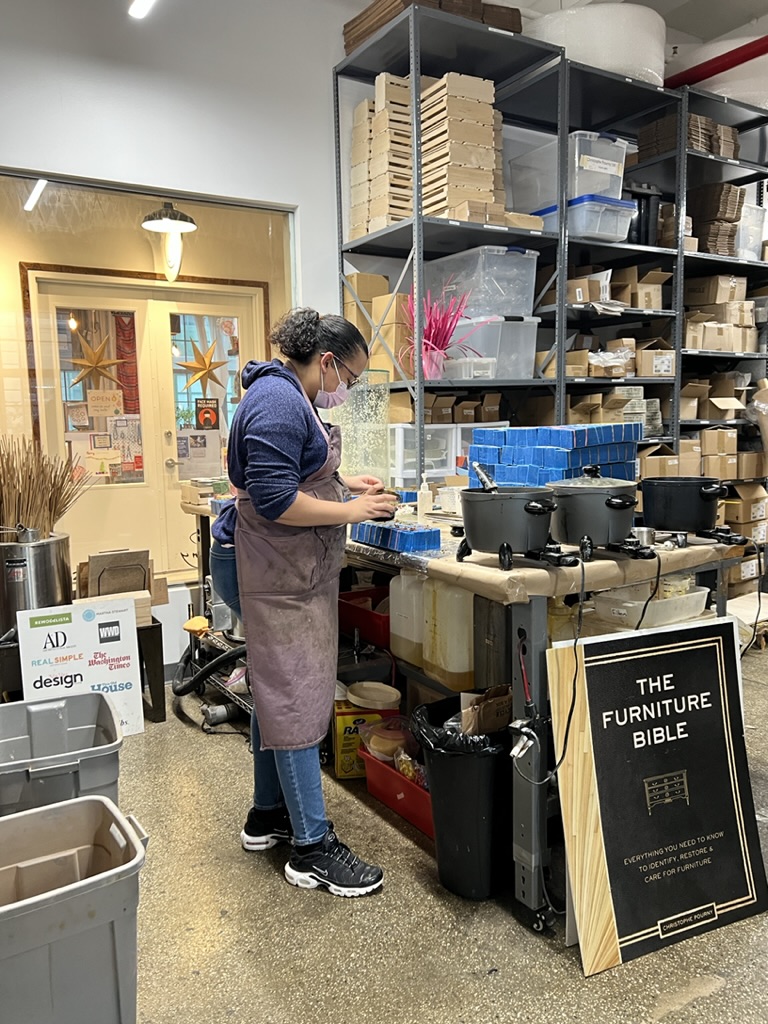
Today, we headed to Cobble Hill for breakfast on Smith Street and then walked the neighborhood to see some amazing narrow streets with fascinating housing developed in the late 1800s. One group of row houses were built as worker housing and is now selling for about 2 million dollars! We strolled Court Street and Smith, as well as Baltic and Warren streets and then headed to Industrial City located in an area that used to house real manufacturing and was adjacent to piers where ships would come to transport the goods; now it is a collection of offices, artist and craftsman boutiques, and outlet stores for well-known design furniture and other goods.
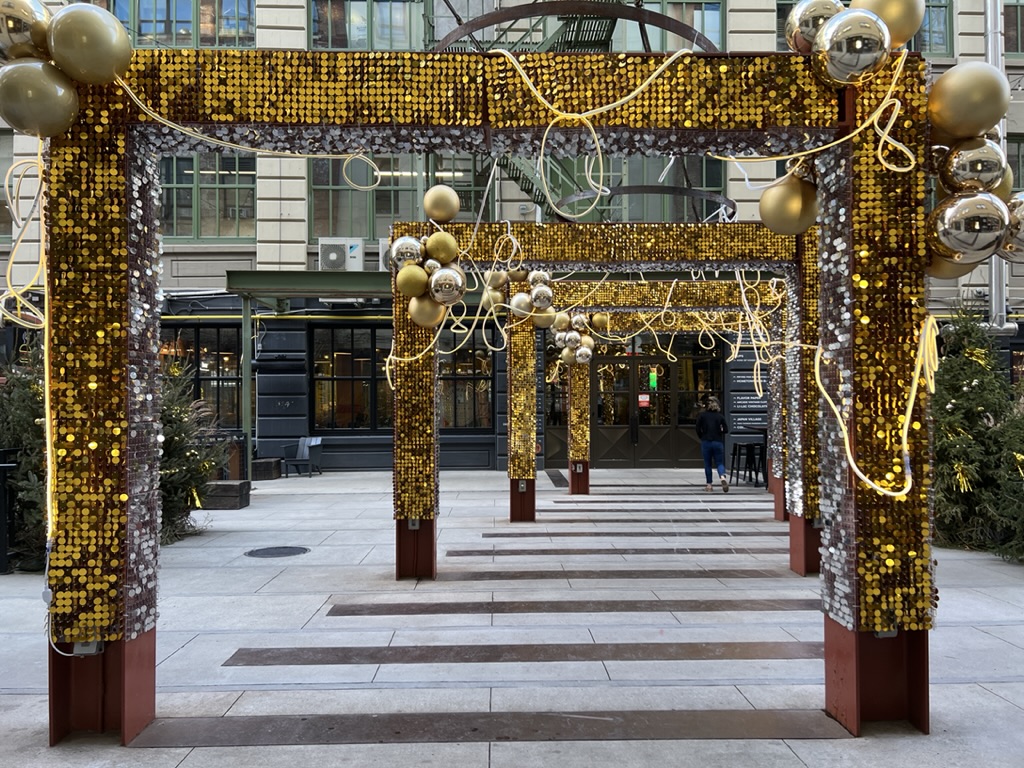
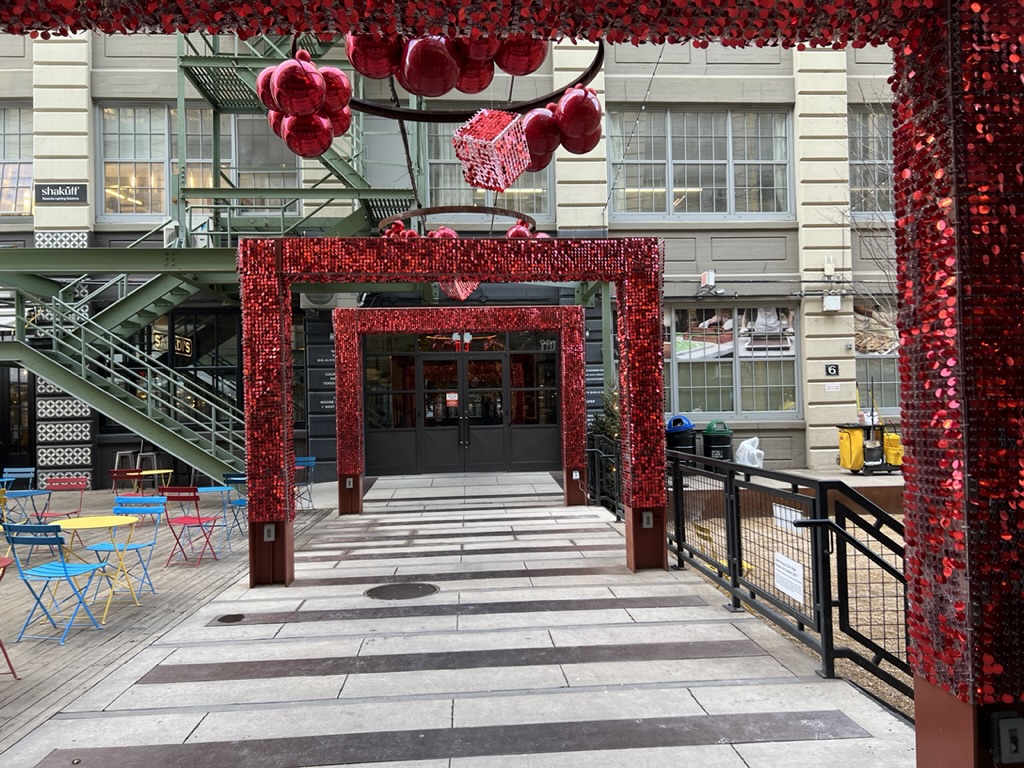
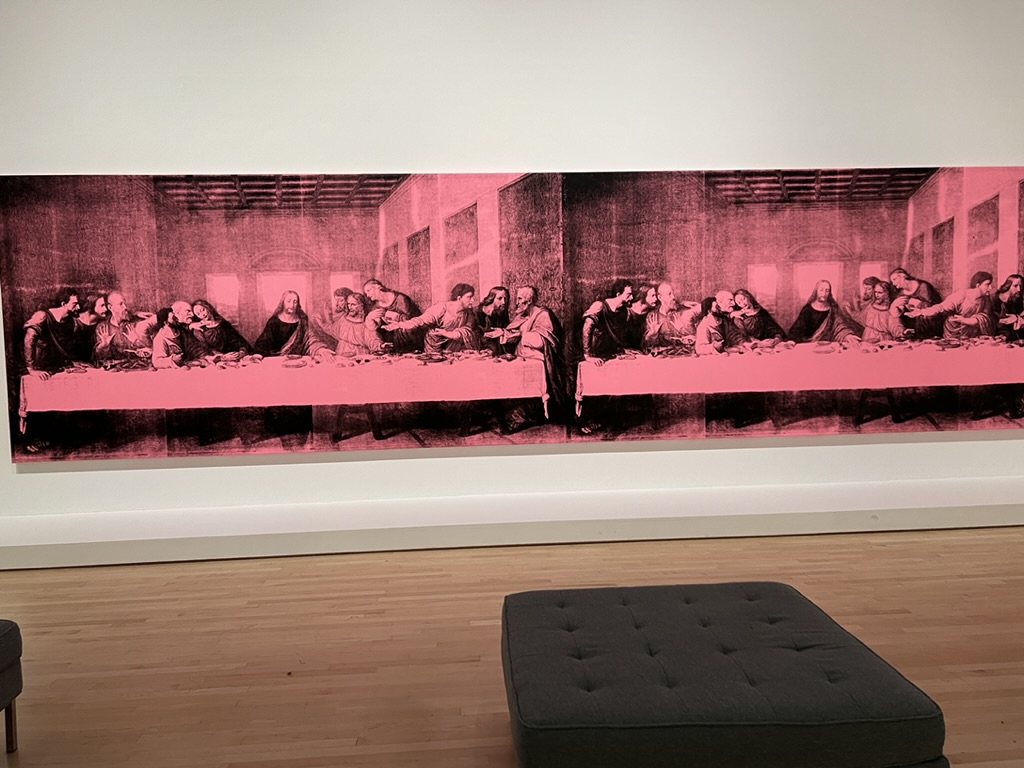
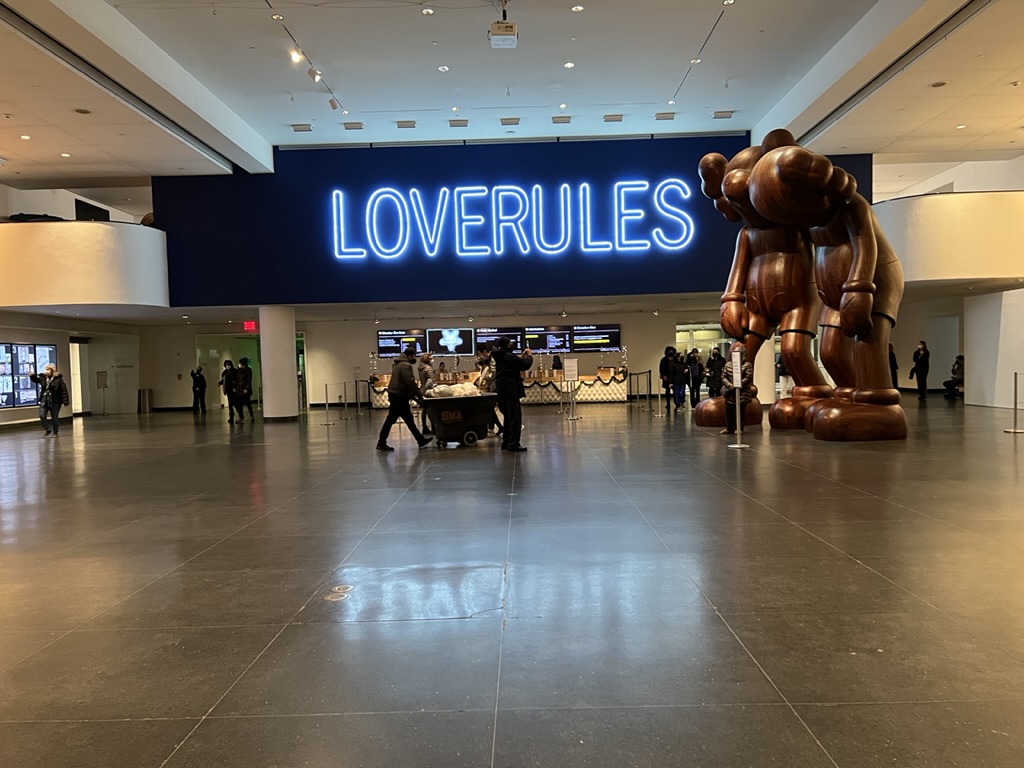
Then we headed to the Brooklyn Museum. We saw the Andy Warhol show which was quite interesting as it explored Warhol’s connection to religion as well as sexuality. We strolled the museum separately and met up at the end. I also spent some time at the room dedicated to Judy Chicago’s Dinner Party, which I’ve seen before but was impressed yet again.

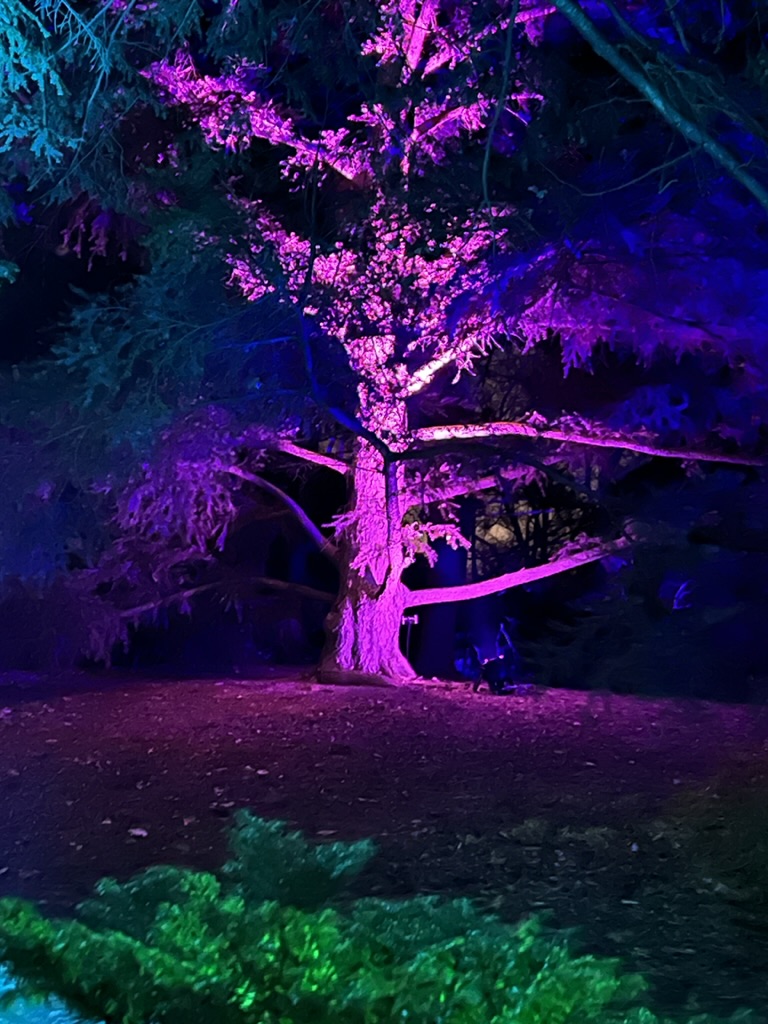
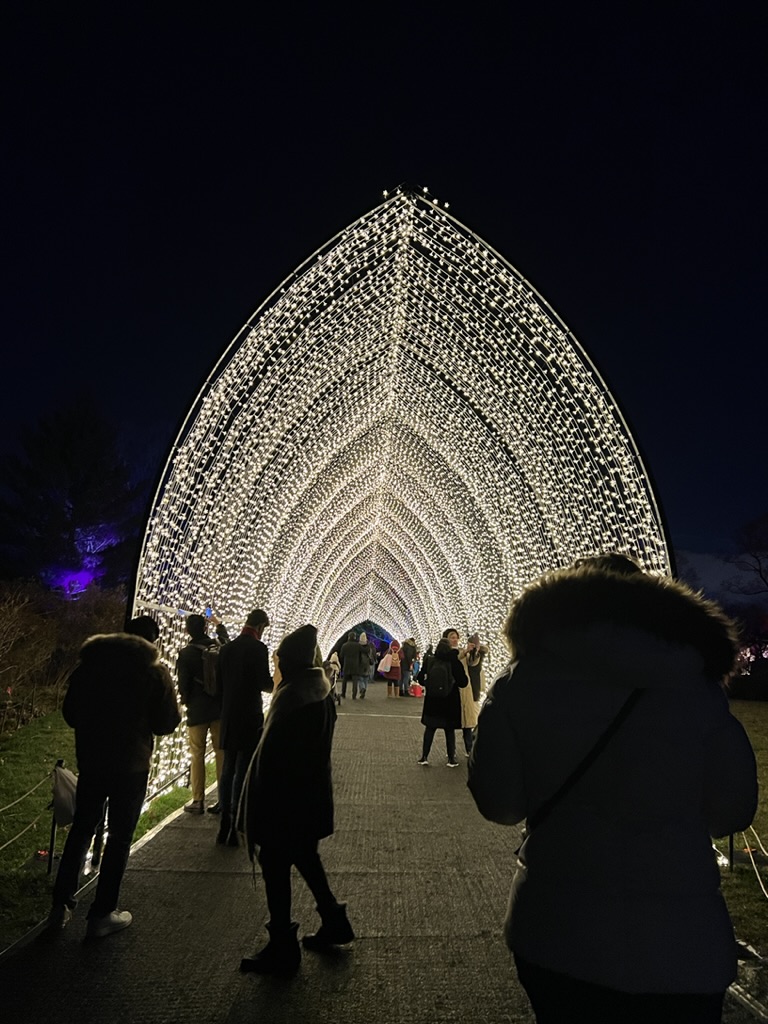
From there, we headed to the Botanical Gardens to see “Lightscape” – a winter nighttime transformation of the gardens through light and sound. They’ve set it up as a one-way, one mile walk so that you enter on Washington Street and exit on Eastern Parkway.. The installation meanders throughout the large area of the gardens with not just lights but symphonies of sound and illumination. In one field (probably the size of a football field) lights literally “move” and “float” and change colors as they cross the ground as if to emphasize the music playing in that area. Ever-changing, it was pretty mesmerizing.
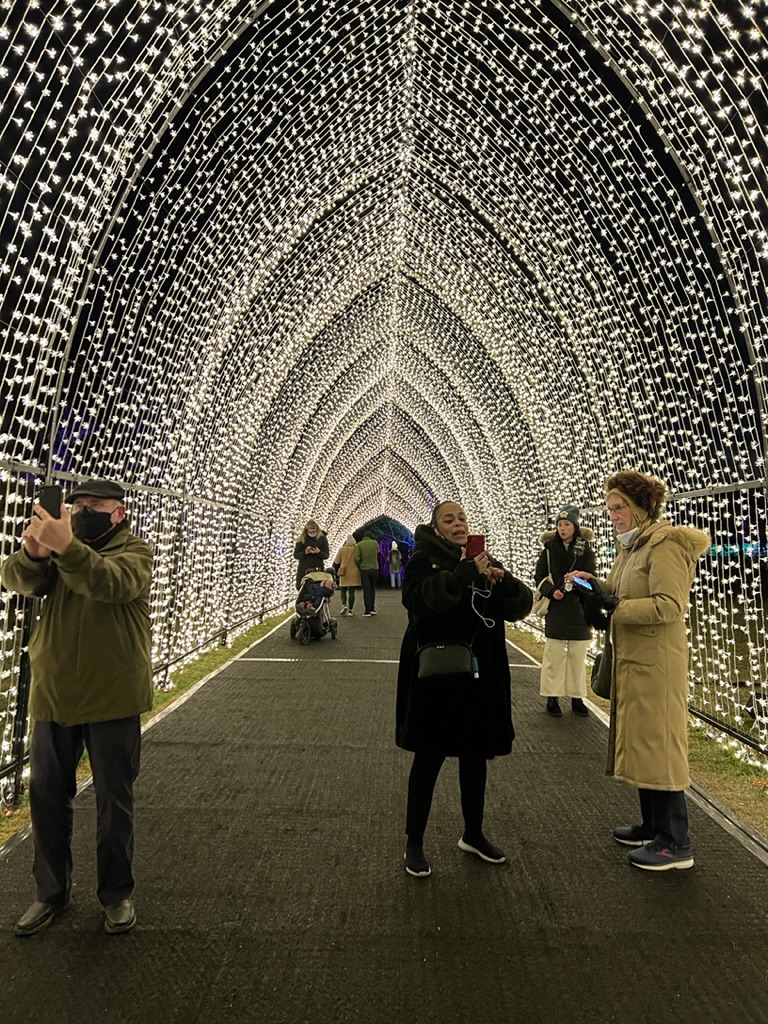

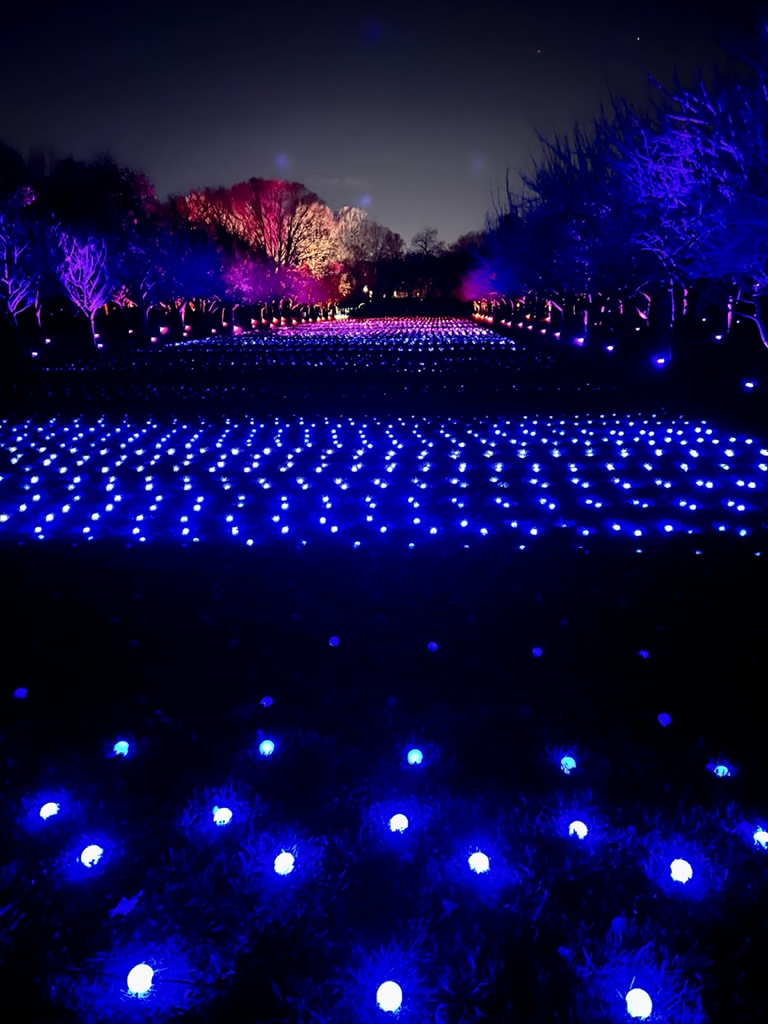
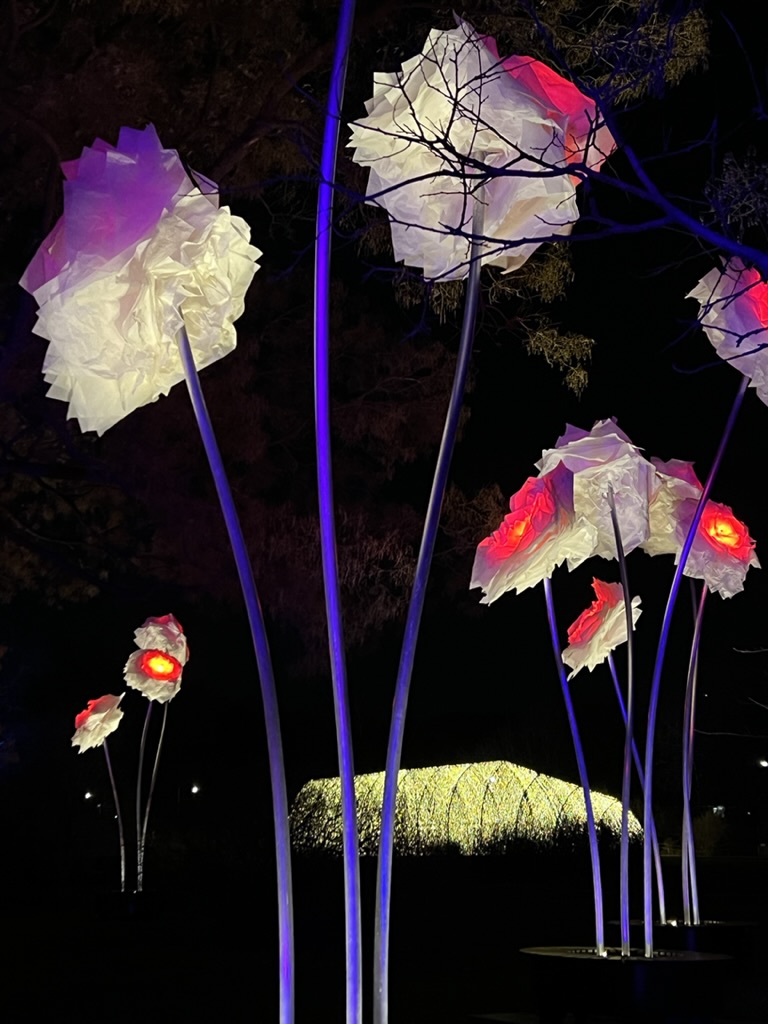
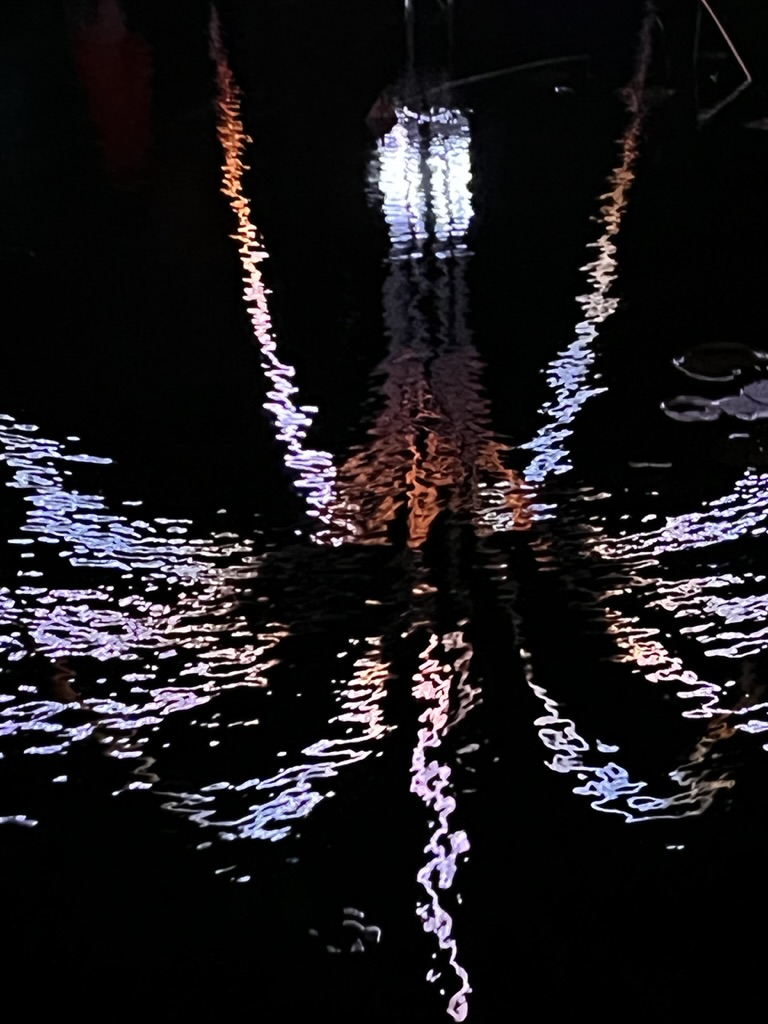
By the way it’s been sunny with highs in the 40s and at night pretty cold with temperatures in the low 30s. Following the light show we walked to our car and by then we were pretty cold and bundled up with hats, gloves, and down coats. Inside the warm car, we headed to 5th Avenue on the edge of Park Slope to eat at Miriam, a local place with great Mediterranean food. We had ossobuco, brussel sprouts, spanakopita, and a desert comprised of shredded baklava, pistachios and roasted labneh – all topped with homemade pistachio ice cream. Now we are back at the hotel—feeling exhausted from walking 7 miles in the cold and stuffed with all this great food. We move across the river tomorrow to spend four nights in lower Manhattan.
Stay safe –
Fern
We checked out of our lovely room at 1 Hotel Brooklyn Bridge and headed to Staten Island to visit my parents graves and place the traditional rocks on the monuments to indicate that we had visited. My whole extended family is buried there in Staten Island. Why Staten Island? – I have no idea, but I suppose land was cheap there about a century ago and they decided to purchase plots there. My parents, grandparents, great aunts and uncles, and uncle and many cousins are buried there. I suppose it is the last generation to do that since I and subsequent generations will likely be cremated and if not, definitely not buried in Staten Island. Actually, visiting this Jewish cemetery is sort of a history lesson in NY Jewish history. Originally, the cemetery was the place for Eastern European Jews to be buried and more recently there is a large influx of Russian Jews who brought very different traditions to the site – including photo-engraved images of the person buried—something European Jews would never do.
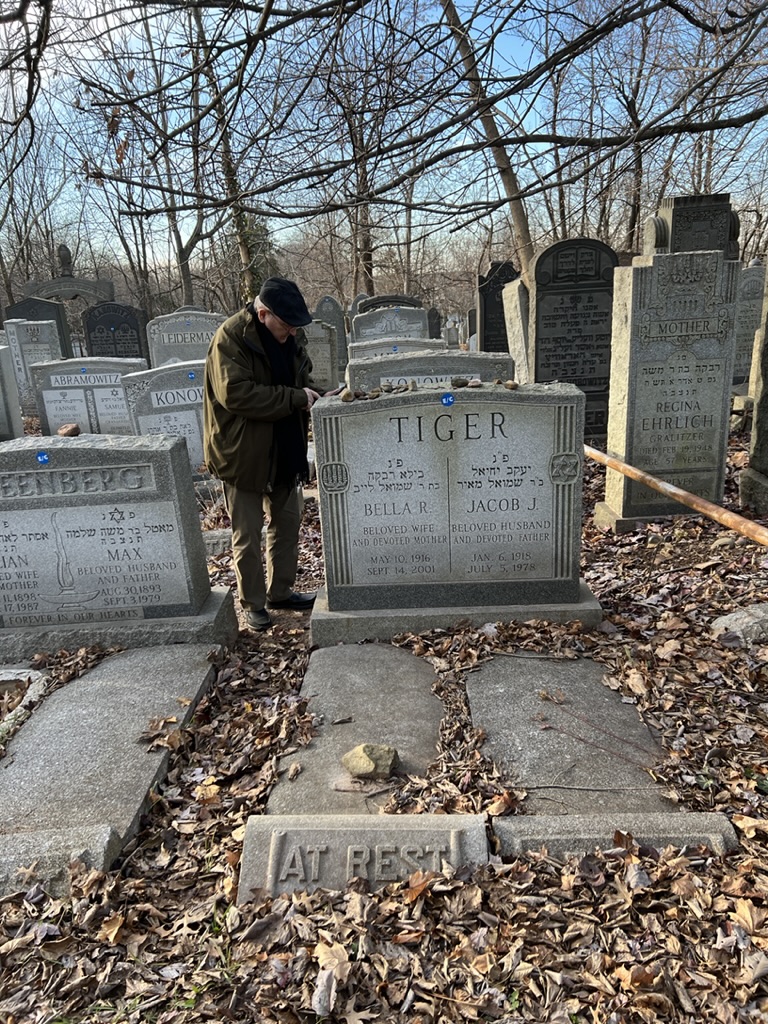

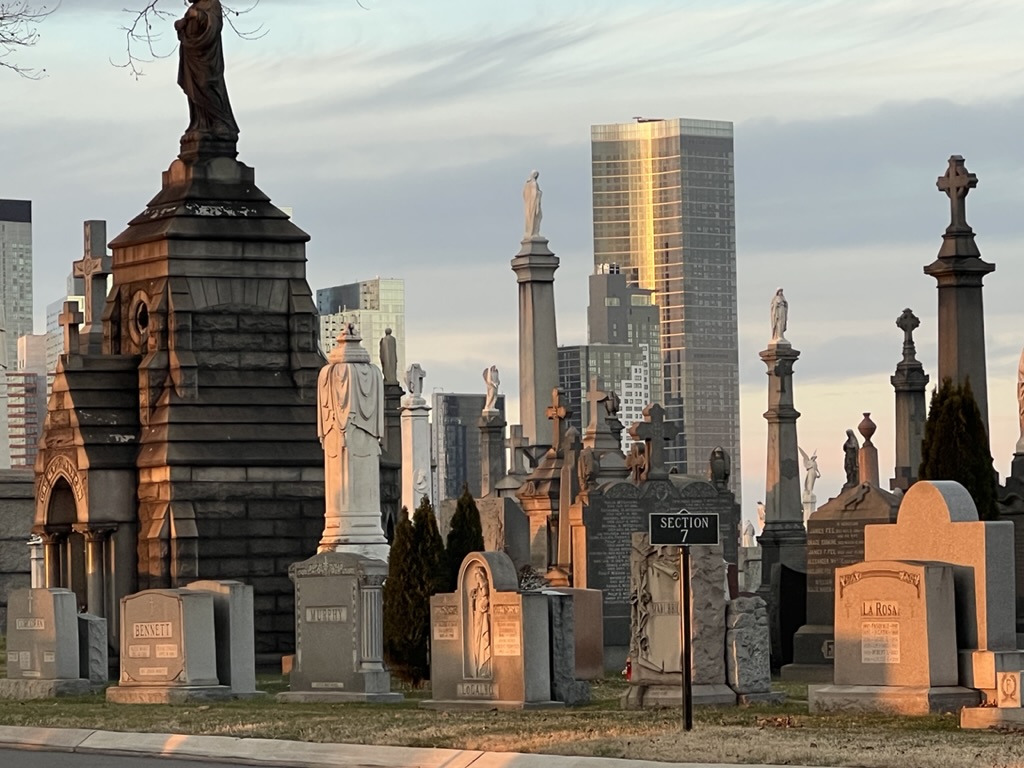
From there, since we were on a mission, we went to Queens to the Catholic cemetery where Mike’s mother is buried. Calvary is huge and the last time we went we couldn’t even find the grave,. But this time, Mike had done his homework and we located the space. And while my parent’s cemetery has faced vandalism and other acts of antisemitism, Mike’s mother’s cemetery is quite pristine and home to many deceased NY politicians as well as gangsters. The differential between the wealthy and the poor is obvious with very large monuments that almost blend into the distant skyline of New York City and others (like Mike’s mother) who are have very very modest monuments and are even buried in stacked fashion (something I had never heard of before knowing Mike.
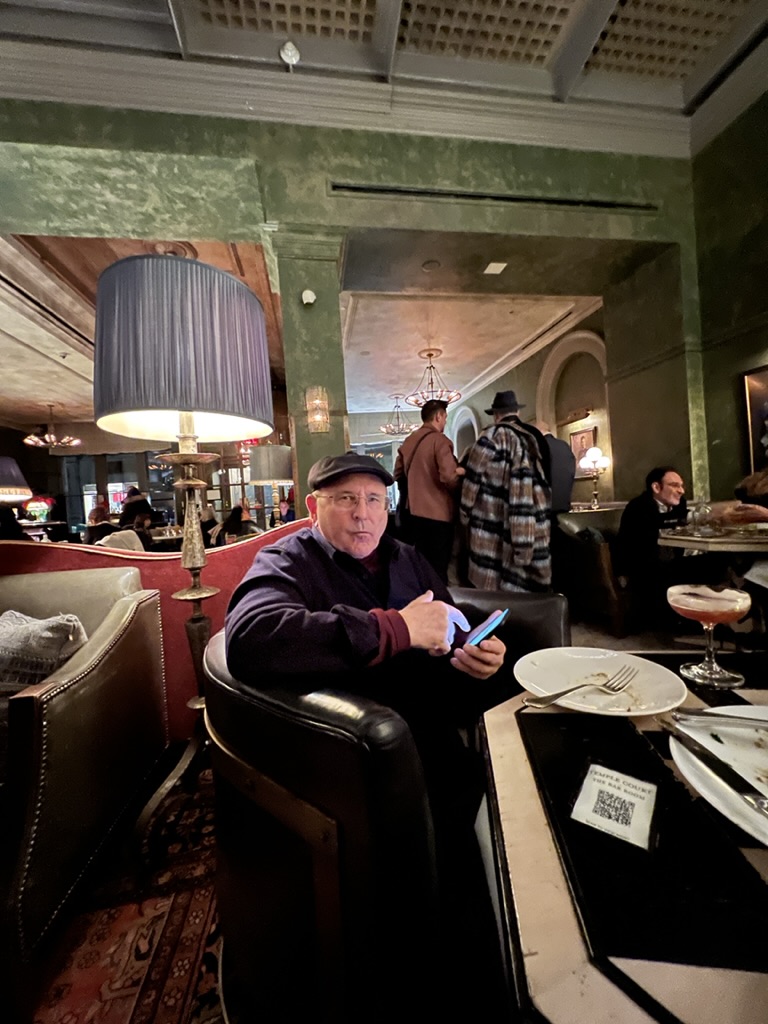
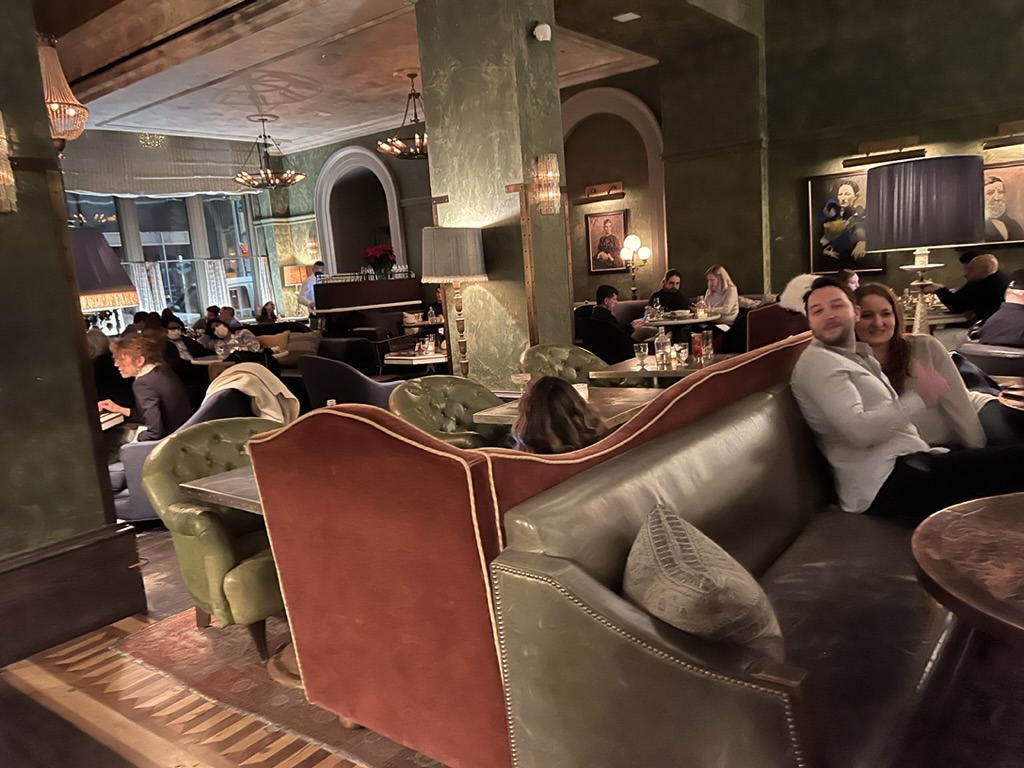
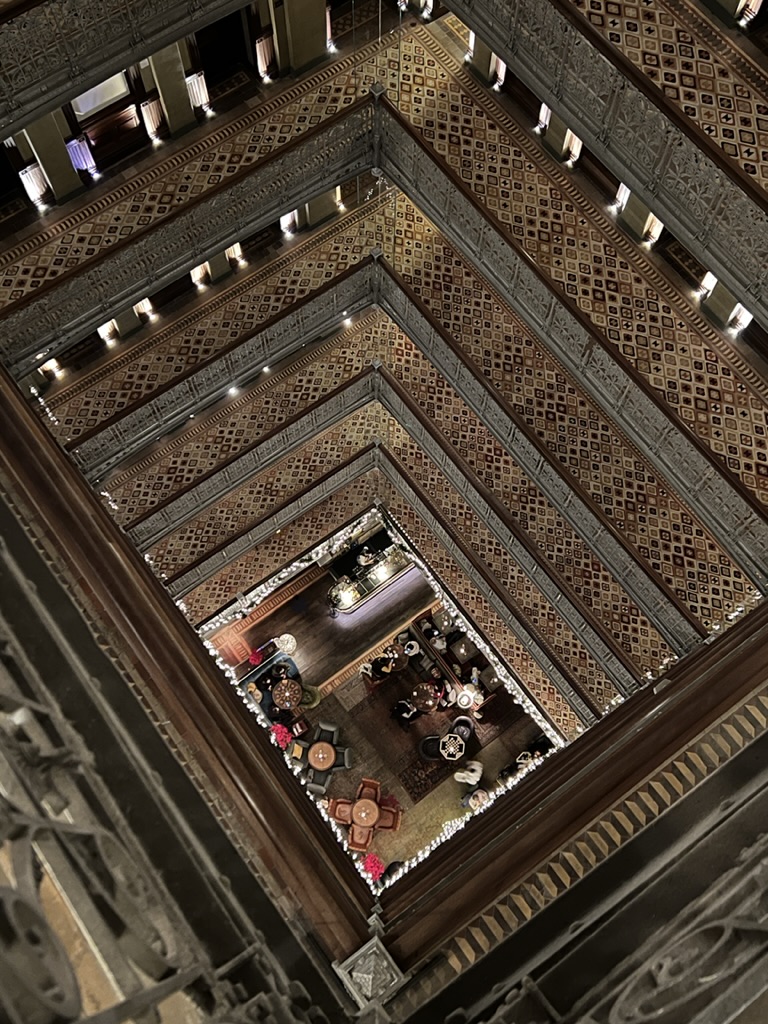
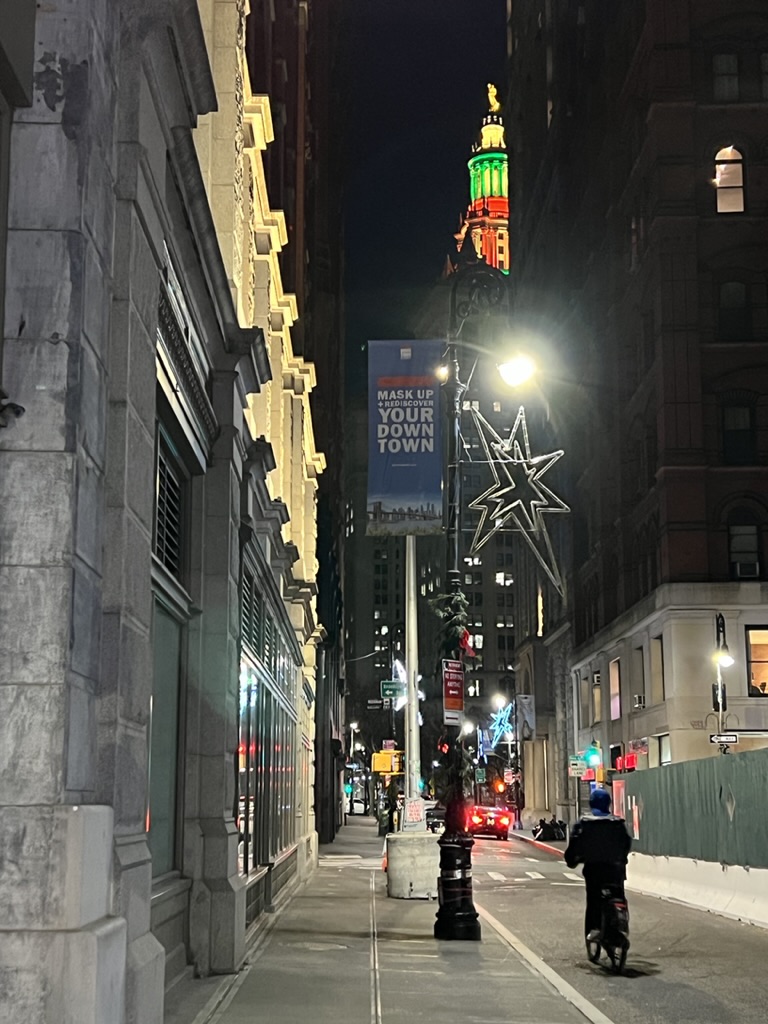
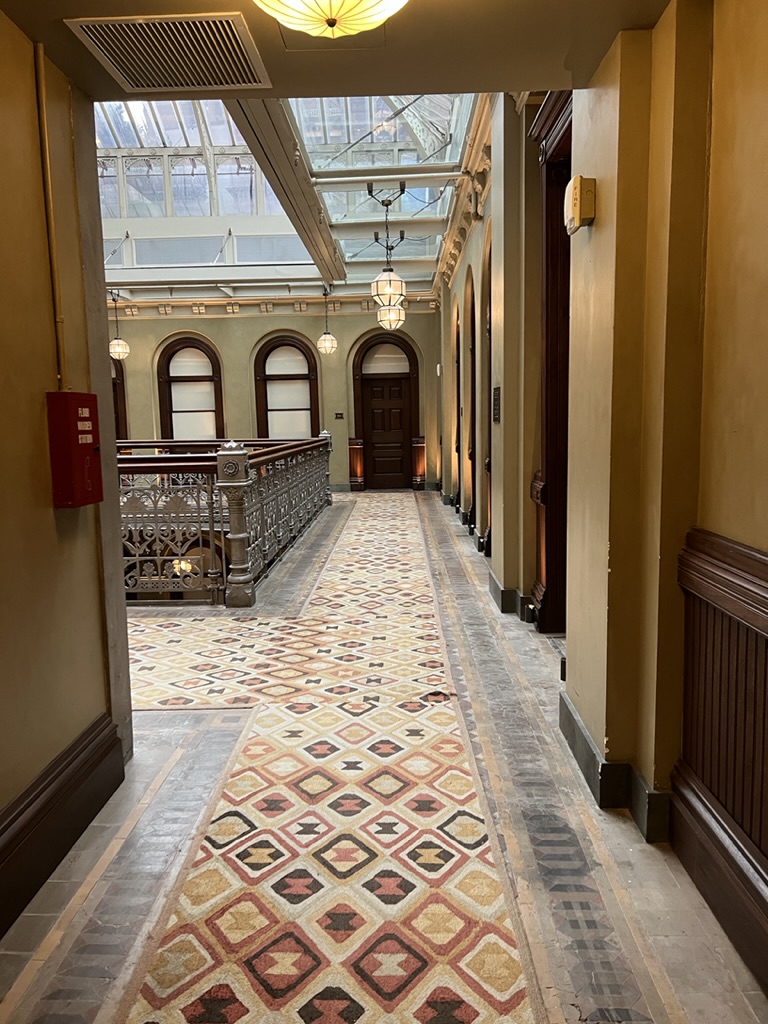
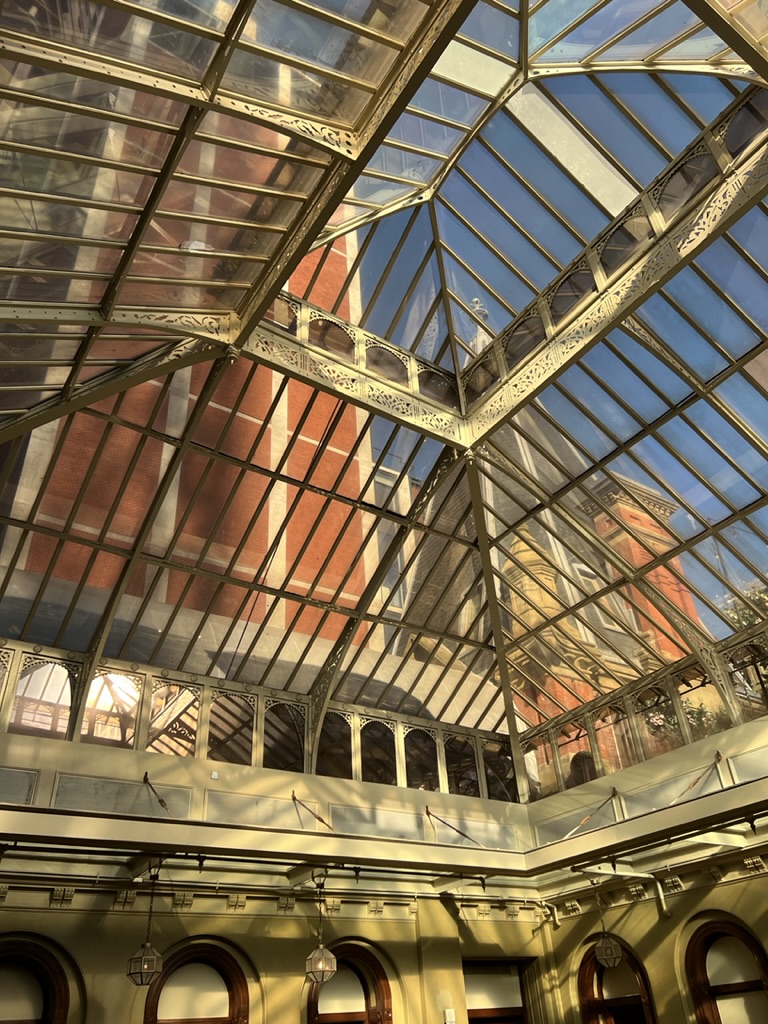
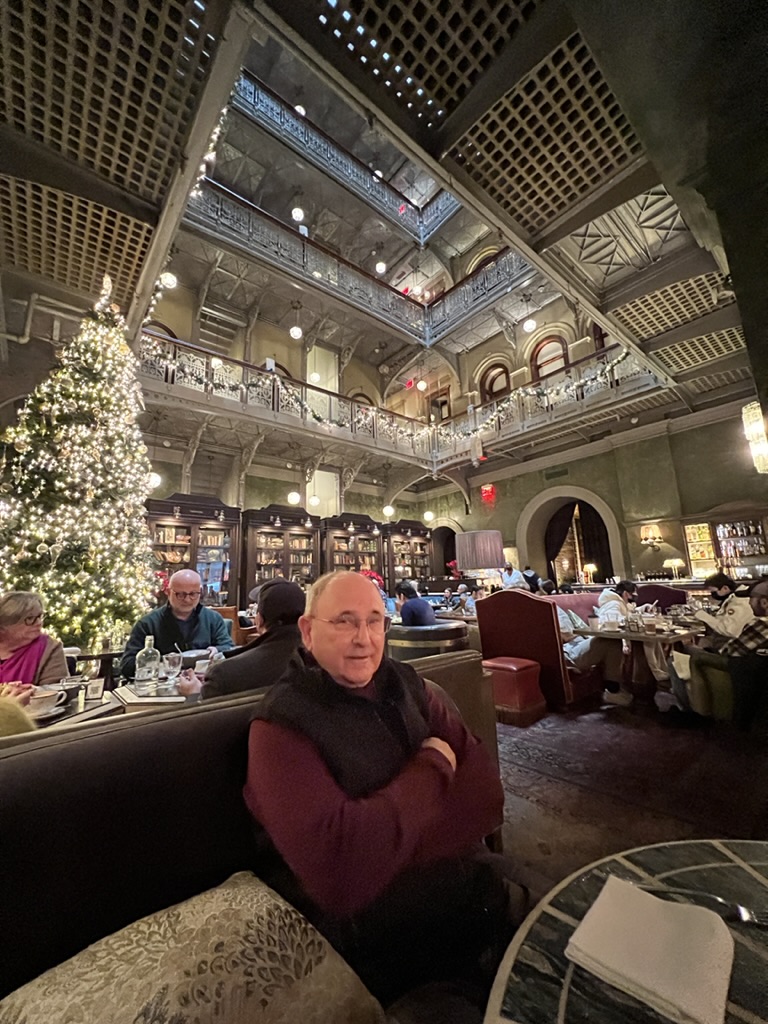
From Queens we set out for Manhattan – to The Beekman – where we will stay for about four or five days. The Beekman is an amazing landmark building from 1883 (built the same year as the Brooklyn Bridge). The Beekman (not to be confused with the Beekman Towers which is located in midtown, is situated in the financial district, close to City Hall. It was one of the first skyscrapers built in Manhattan and has an open atrium that goes up the full 10 floors and a pyramid-shaped skylight at the top. An adjacent building was constructed in 1890. Originally, the building housed law offices and other professional activities and it was known as Temple Court. The building eventually became run-down and closed for several decades until a developer refurbished the grand spaces and turned it into a hotel around 2015. It’s truly a grand old building with fantastic public spaces. The hotel rooms are small but fine and every time you leave your room you’re facing these incredible spaces.
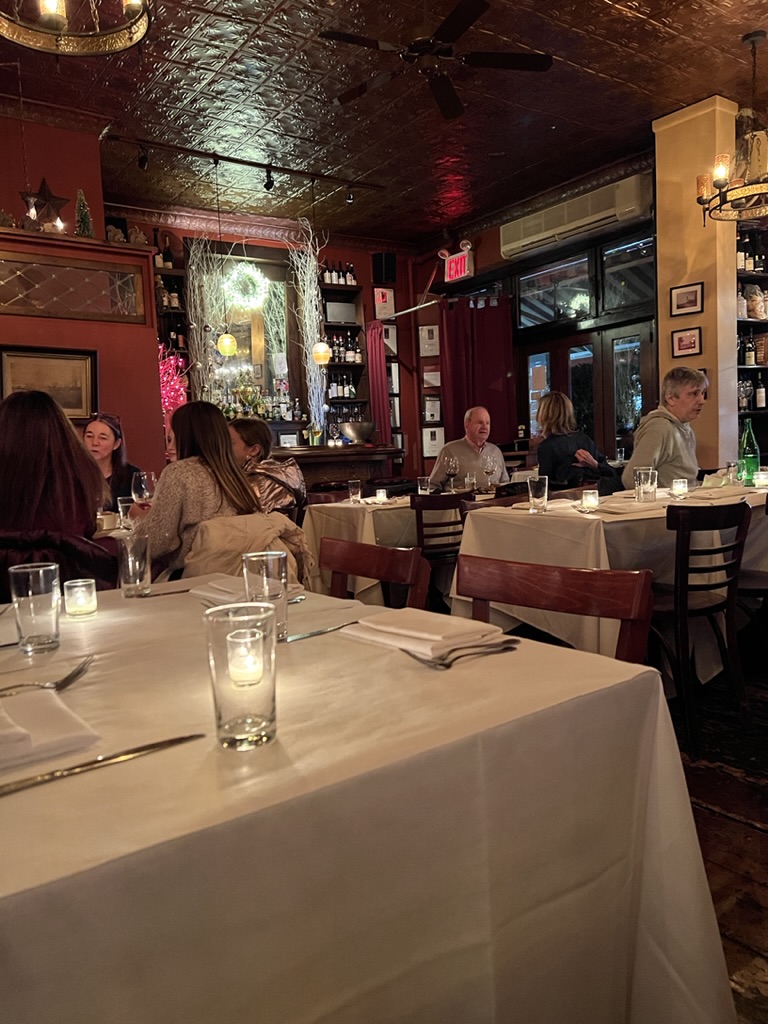
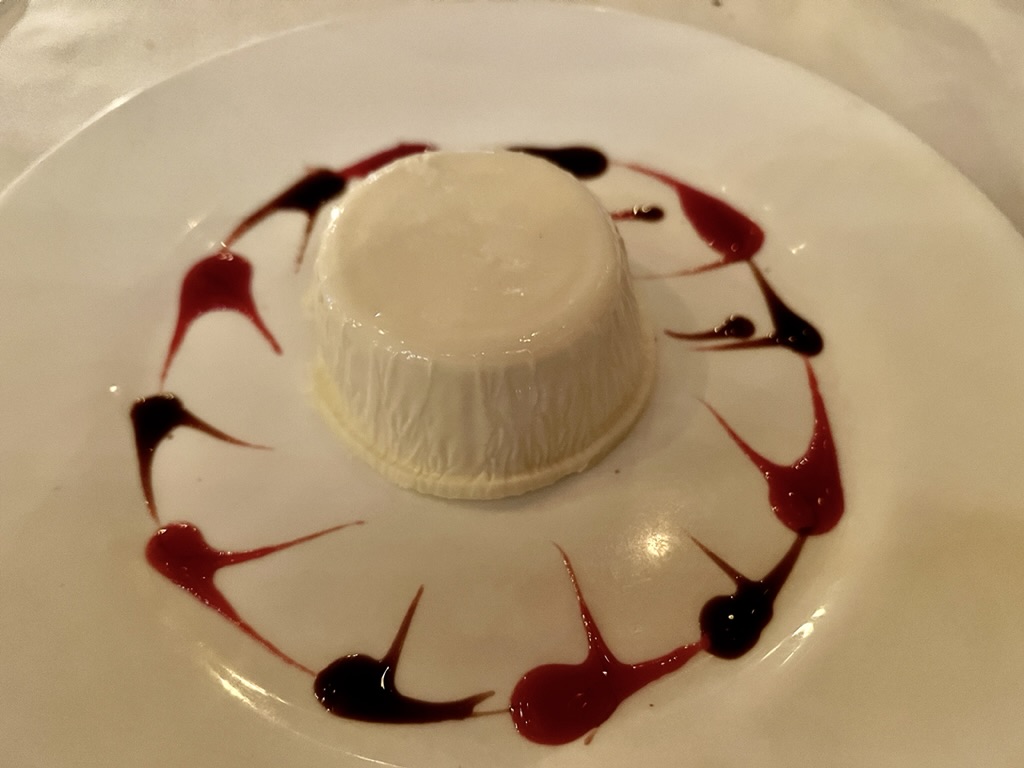
We had “welcome” cocktail in the Temple Bar on the ground floor and then headed to Lavagna in what I guess is considered wither the East Village or Alphabet City. It’s one of my favorite restaurants in NY – small (seats only about 40 people), great Italian food, and the owner knows and remembers everyone. Indeed Mike was quite impressed when he remembered that I was living in California and told me that just the other day someone sat at the same table we had and that person was from Santa Rosa! He’s a real kick – came from Greece and went to UCLA (and studied “everything” as he describes it—changing his major many many times, eventually graduating with a degree in European history. But he wound up in NY and 22 years ago he opened the restaurant. We discussed the impact of Covid on the restaurant and he said business had recovered but now is down 70%. But, he exclaimed that he is a survivor and the restaurant will be here when I’m next in NY! After a great meal including octopus carpaccio, fedelini pasta in a light spicy tomato sauce, pork with seared chard, and a panna cotta, we taxied back to the Beekman, our home for the next four or five days.
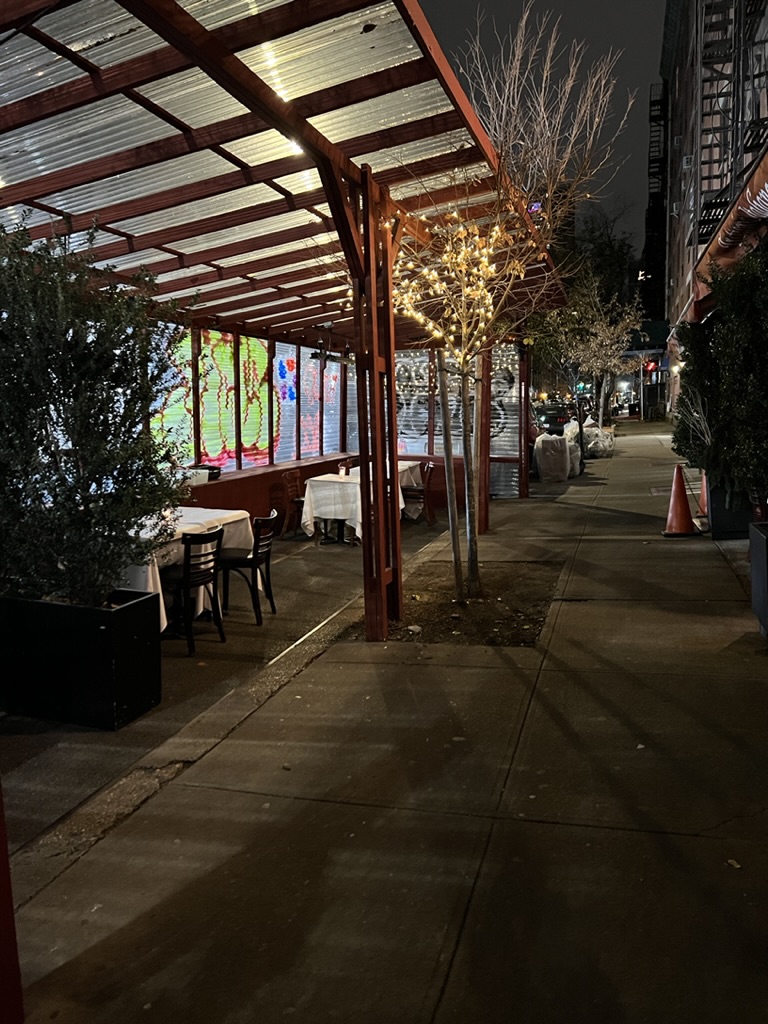
For those of you who asked… we feel safe and are being extremely careful. That said, we plan to cancel our tickets to various Broadway shows (Thoughts of a Colored Man, Lehman Trilogy, and Skeleton Crew)—not because we are afraid to go to a theater, but because we made the decision to leave NY early due to the overarching concern that Covid in NY is getting worse. So we have now booked flights to return home early – we have two reservations: one to return on December 28 and one to return on January 1, We’ll assess everything on the 25th and make a final decision. We will not go north to see my brother (Covid cases are rising there and everything is shutting down.) We will drive to visit our godchildren in Westchester on Christmas Day. Most of what we have planned for the coming days is outdoors, except for dining and we will go to a few museums, but it’s easy to socially distance there and crowds are small and ALL vaccinated. We will avoid the subway.
We’ll let you know what we decide once we know.
All the best.
Fern
Day 6. Christmas in NY and a Big Decision 12/25/21
Merry Merry –
We had a wonderful Christmas Eve dinner at Temple Court, the elegant restaurant inside The Beekman. After some good bubbly, I chose the chestnut-stuffed agnolotti with black truffles and shaved brussel sprouts, followed by duck with some kind of mustard spaetzle (sp?) and ice cream with poached pear; Mike had some kind of radicchio and beet and horseradish salad followed by scallops and then the same dessert as mine. Service was impeccable and it was great to merely take the elevator up to our room at the end of the meal.
We had been trying to figure out the best way to be safe given Covid and the rise of Omicron and the declaration that NY is the US epicenter (although many say it is moving west). After a lot of soul searching, we have decided to return to the Bay Area on Tuesday night (December 28th), so we’ve been scurrying around trying to cancel some reservations and change others. We’ll miss being in NY for my birthday (and it will probably be only the second time in decades that we will be home for New Years – the first time being last year during the pandemic when it was pre-vaccine.) Now we just have to hope and keep fingers crossed that our flight will not be cancelled. We shall see. If it does get canceled, we’ve got tickets for a back up flight but then we’d need to start all over again with reservations for hotels and holiday dinners.
We’ve moved most activities around and will have three jam packed days beginning tomorrow.
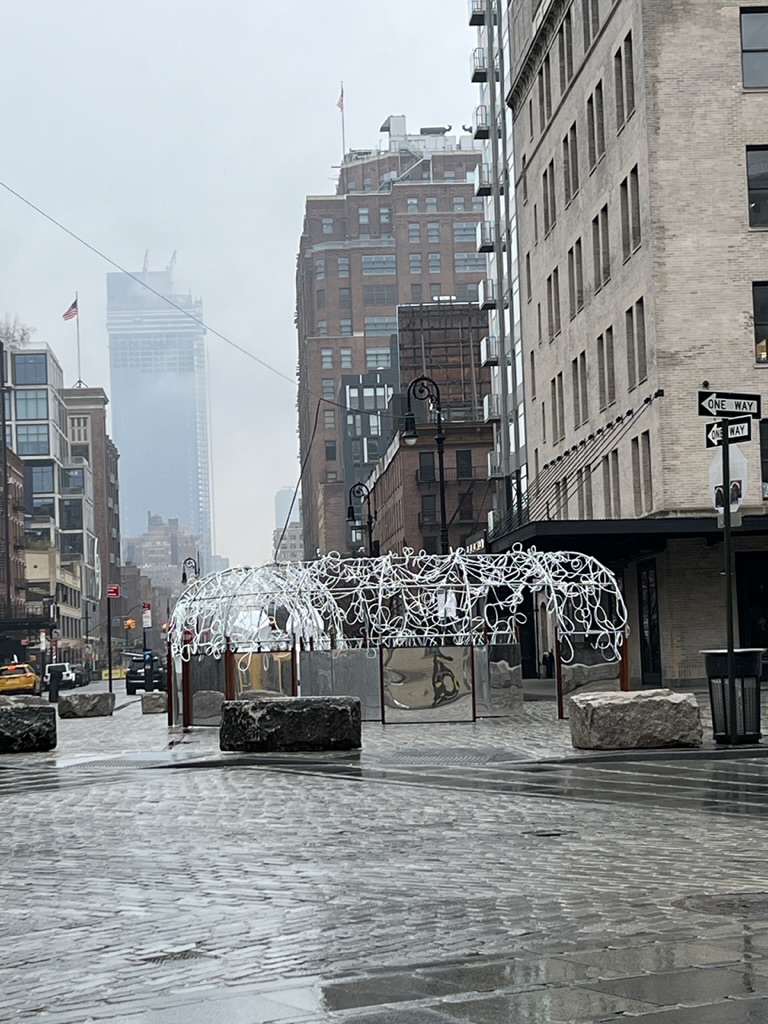
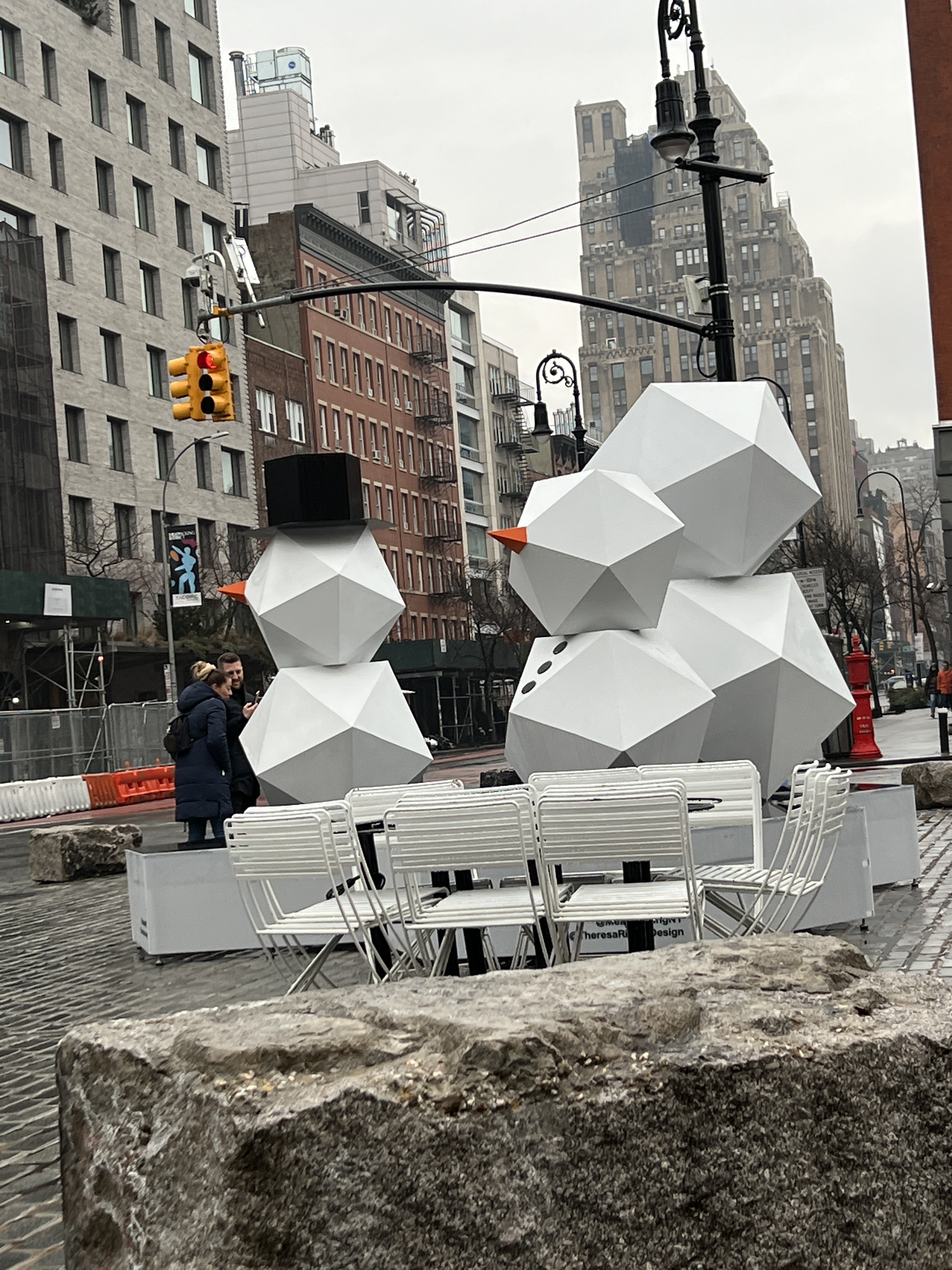
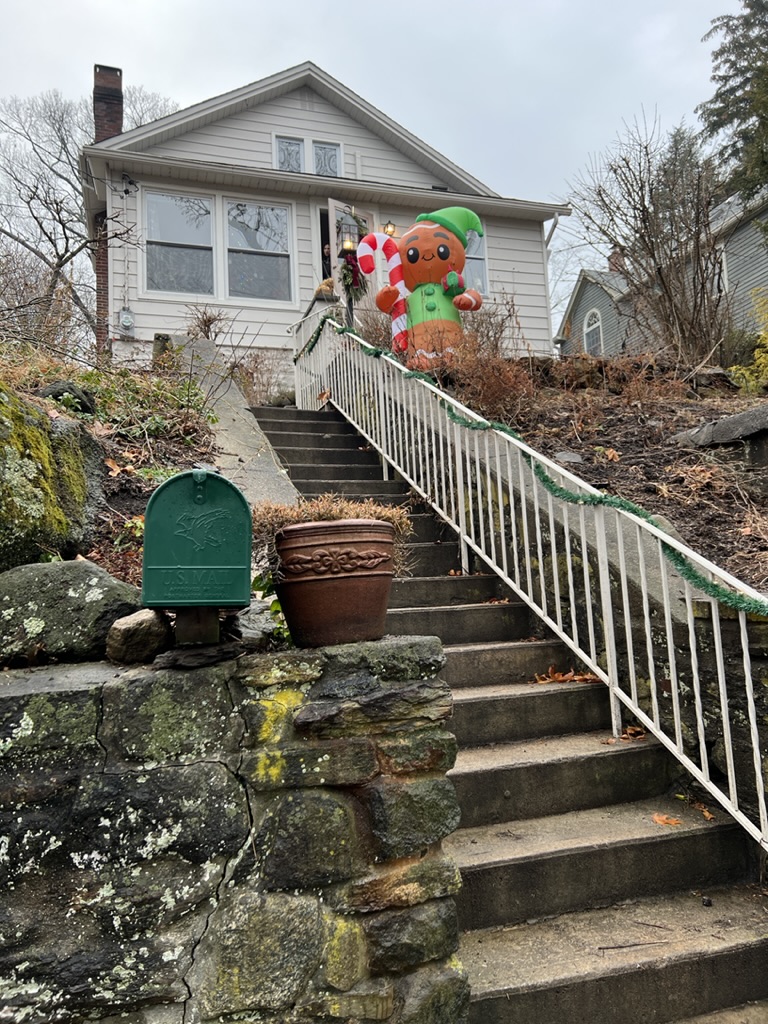
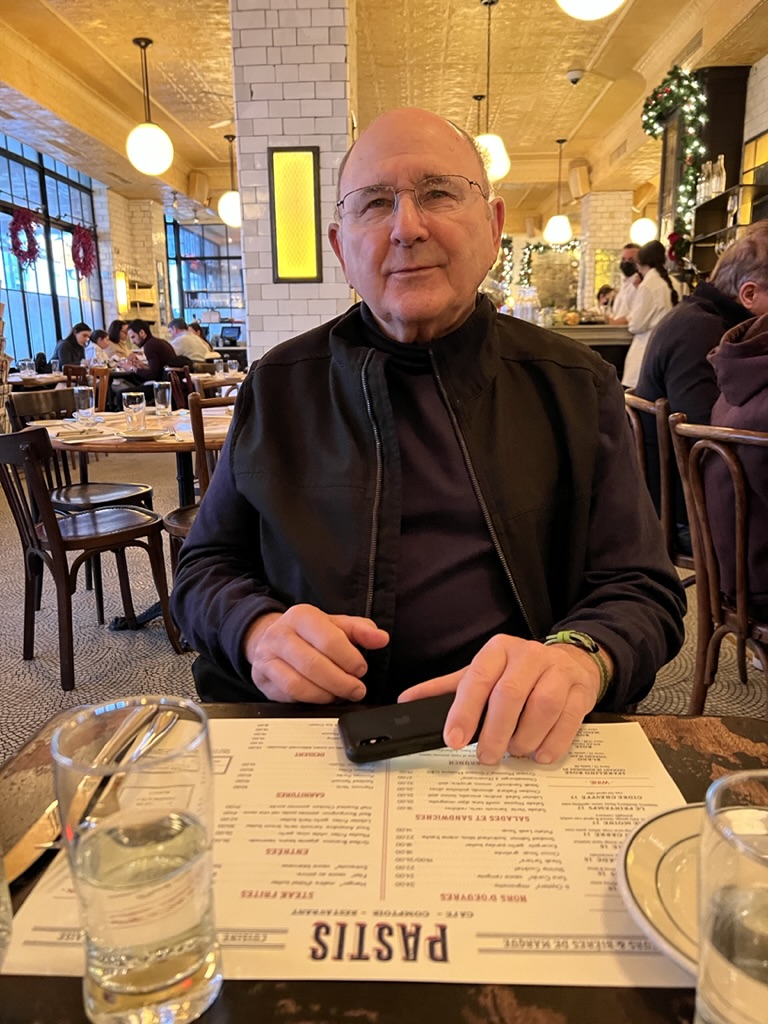
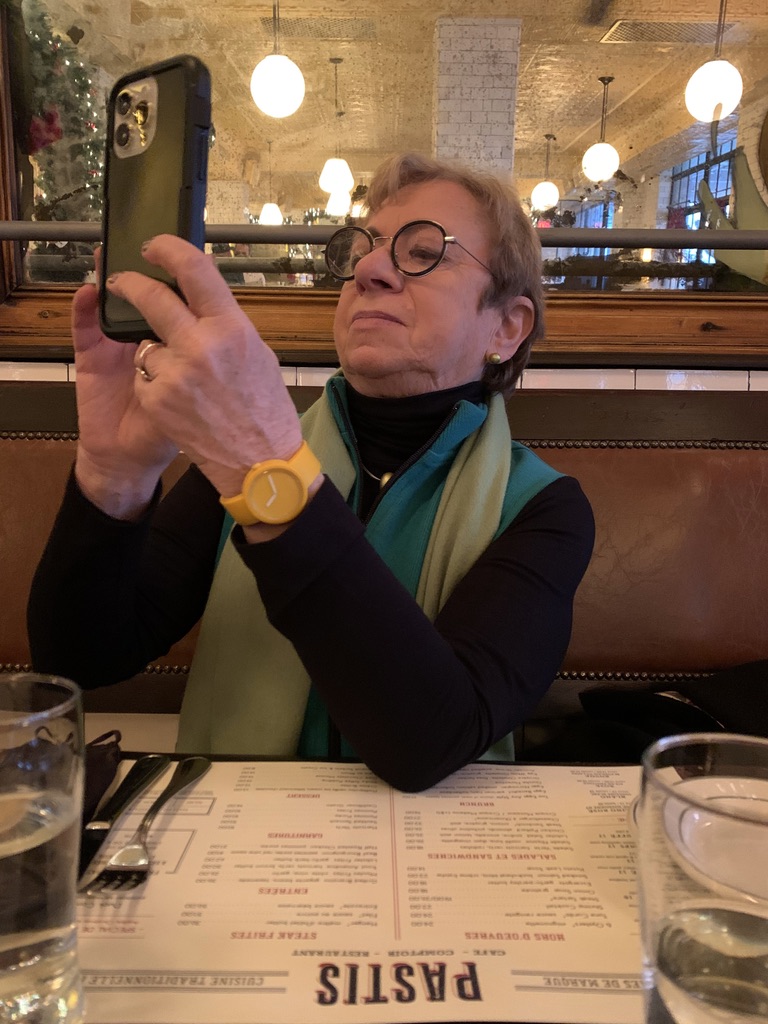
It was a rainy Christmas Day in NY; in the high 40s and rain most of the day. We had breakfast/brunch at Pastis (another one of my faves in NY) and then we headed up to Westchester (Croton-on-Hudson to be exact) to spend most of the day with our godchildren. It’s about an hour drive and it was interesting to see how many changes and how much development has occurred at the western edge of Manhattan, along the Hudson. Growing up, the Manhattan part of a trip to Westchester included the West Side Highway –- an elevated highway that was probably obsolete by the time it was built. It couldn’t accommodate trucks and the exits were very curvy as I recall. Eventually, the elevated highway (which was a real eyesore from the ground) had to be replaced. There was an incident in the 1970s when the weight of a dump truck carrying asphalt (I think) which was to be used to repair the highway actually collapsed the highway and a car followed the truck into the hole. Miraculously, no one was hurt. But after that, the highway was closed, and then plans began to emerge as to how to replace this critical throughfare. And a 6-lane surface road was created.
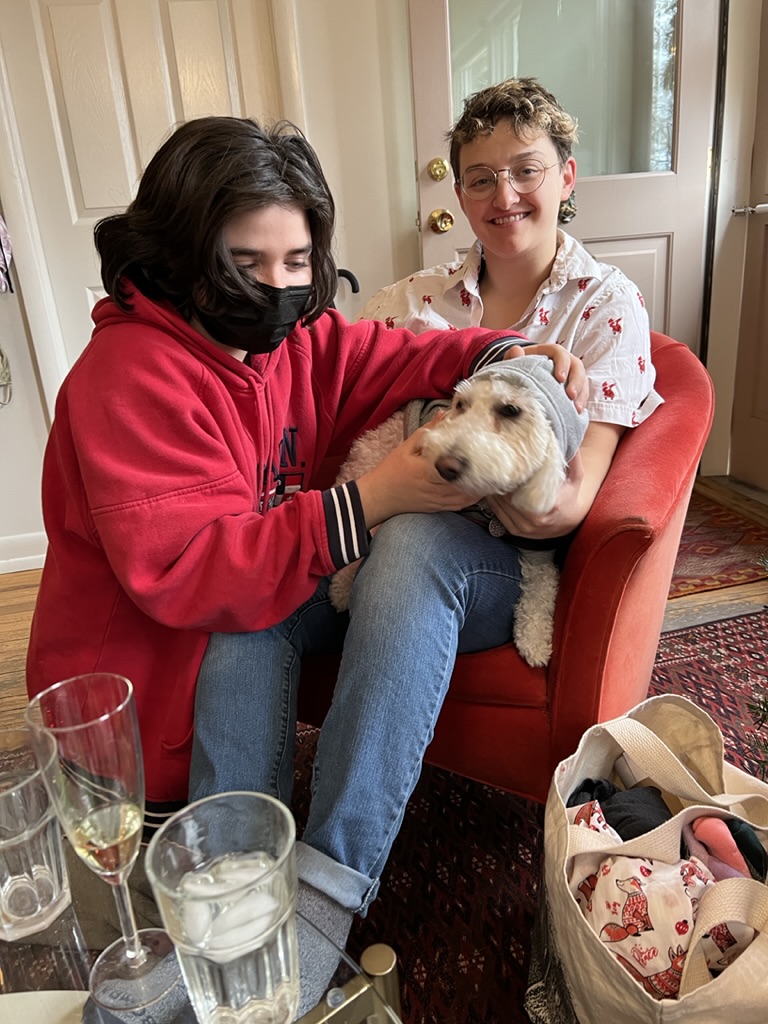
Our visit was very low key and not too long since we wanted to head back to the city before 6. We had seen everyone in June and Roberta (aka Bobbie) is in grad school at USC so she has been up to the Bay Area a few times and was there for Thanksgiving. After a nice present exchange we all took a walk in the neighborhood to get exercise for ourselves and the two dogs. Roberta’s dog (Rooster) and the family’s new dog (Thea) are getting along fine! Some champagne and cheese and lots of conversation, including about films since 12-year-old Harry has become quite a film buff. Ada’s hoping Oberlin returns to in-person classes, and everyone is settling in to being together for the holidays. It was truly wonderful to see everyone thriving.
We drove back to Manhattan in the mist (rain had let up but it was one of those damp days) and at about 8 pm headed out for… you guessed it – Chinese food! As a child we used to go out looking at Christmas decorations in the neighborhood and then for Chinese food; it has been said that Christmas (Eve? Day?) is the busiest day at Chinese restaurants (other than Chinese New Year). It’s quite traditional for Jews to go out for Chinese food at Christmas. The story (fact or fiction?) is that Jewish immigrants in NY lived in the same neighborhoods as Chinese immigrants and on Christmas most restaurants were closed, except for Chinese restaurants. During Elena Kagan’s confirmation hearings she told the Senate committee that she was at a Chinese restaurant on Christmas and Chuck Schumer concurred!
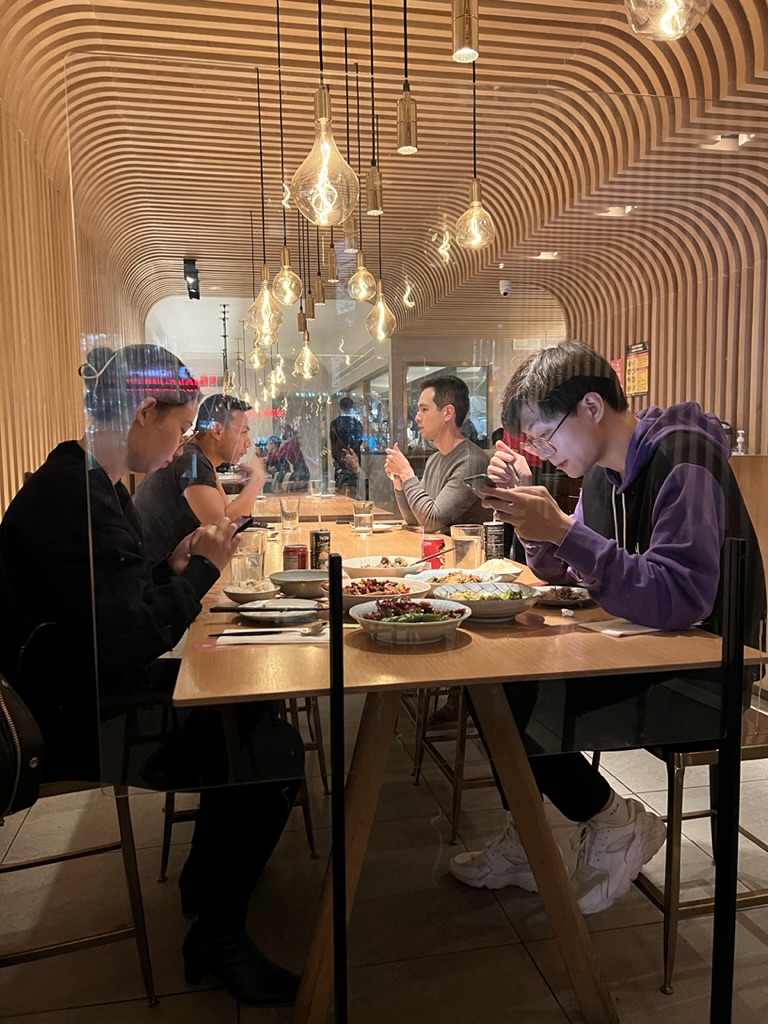
As a kid, the big meal was probably something like Cantonese spare ribs and chow mein. Mike and I opted for Hunan Slurp, a small, contemporary place on 1st Ave and 5th or 6th street. It has a pretty eclectic menu that includes dishes with frogs, pig feet, various tongues, and numerous parts of the animal; they have shredded potato with duck eggs and some pretty interesting vegetable dishes – very different from the kind of Chinese food we had as kids. Following dinner we returned to the hotel. Another Christmas completed,.
All the best and hope you had a wonderful holiday.
Fern
Day 5.. The Other Side of the River… 12/24/21
December 24, 2021
Hope all is well and that you are enjoying the holidays – masked and safe.
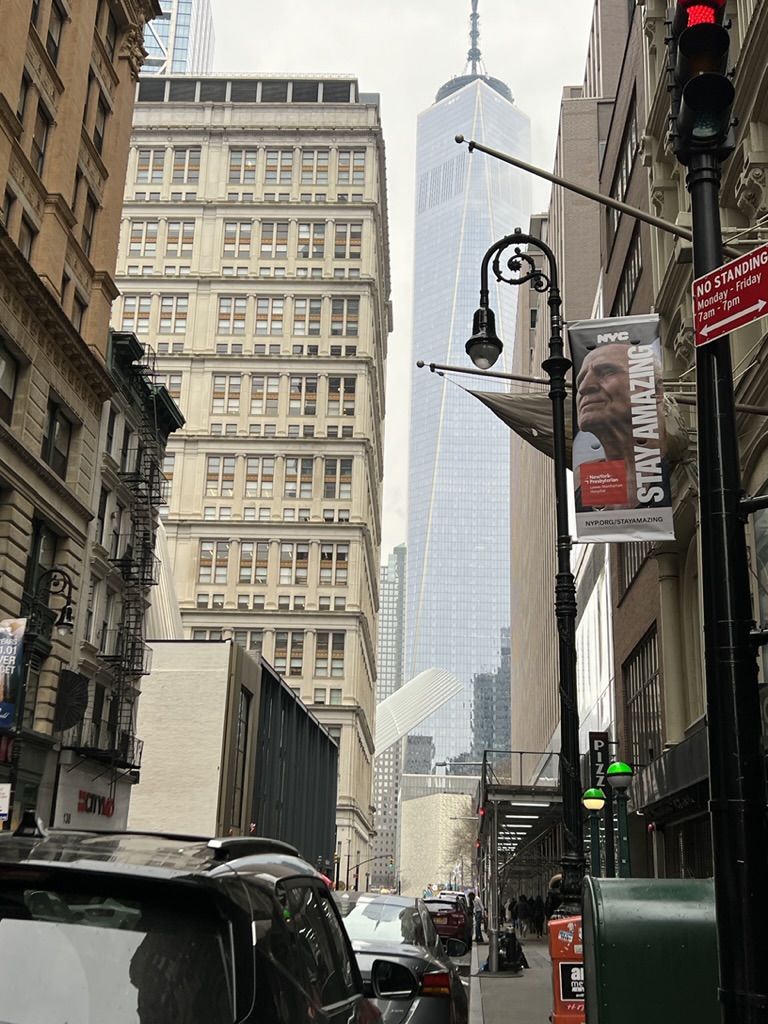
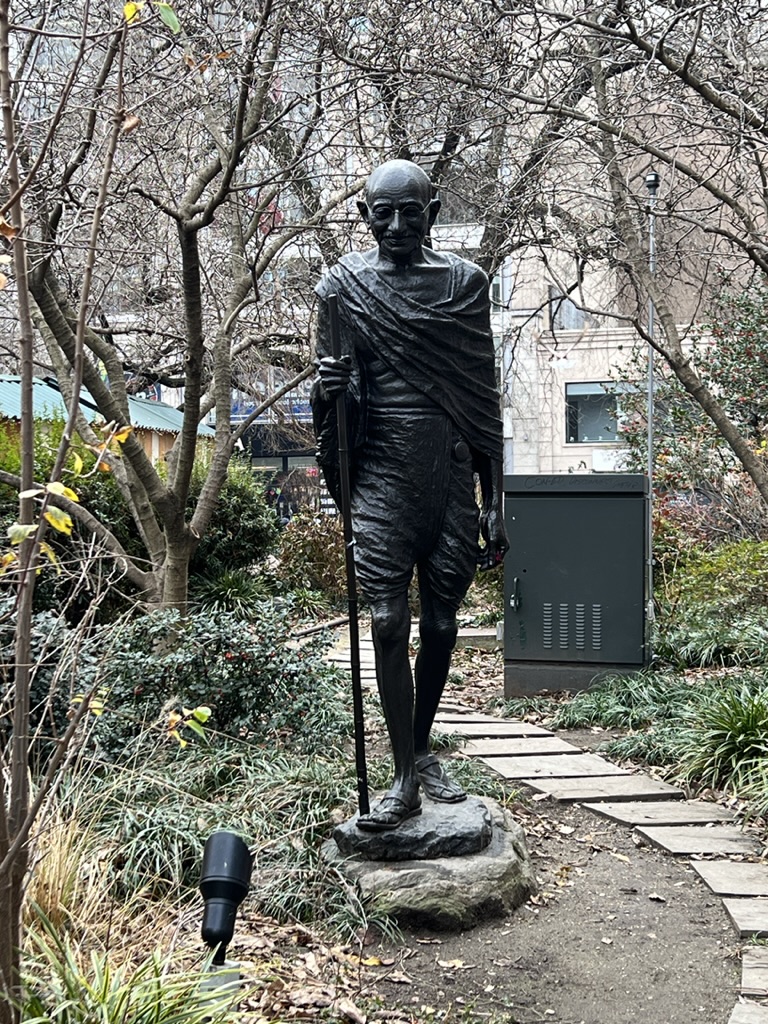
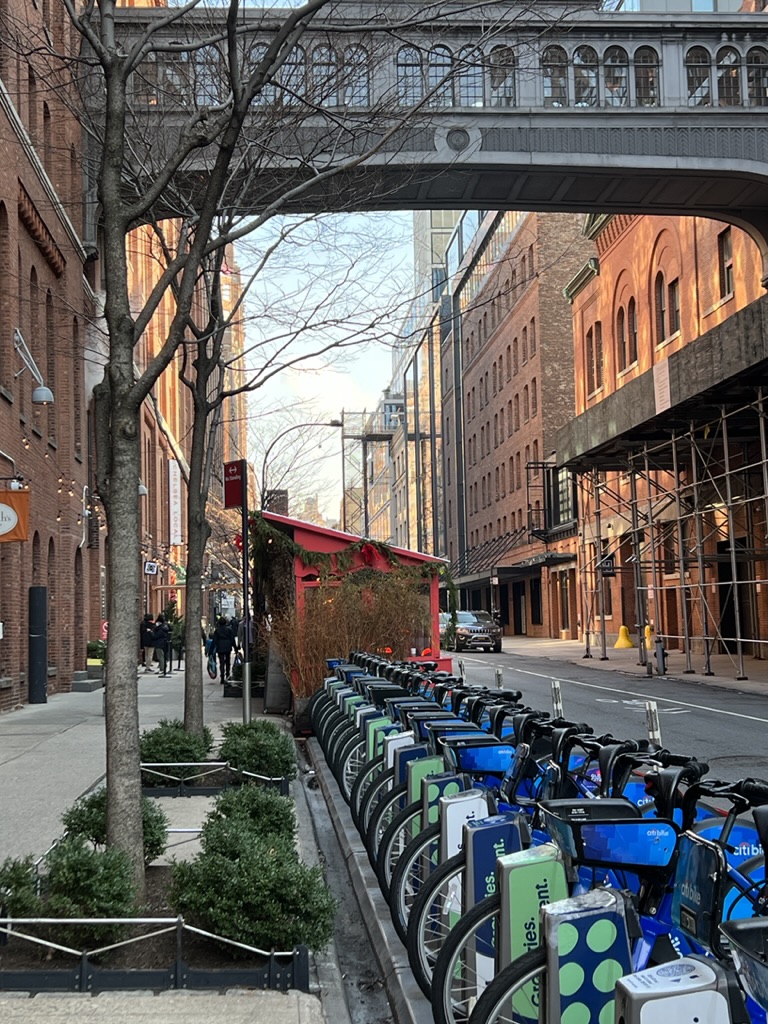
We headed out and strolled through City Hall Park and onward to Union Square—to stroll the holiday market (and the usual green market). We grabbed some fresh pastries and hot cider and called it breakfast.

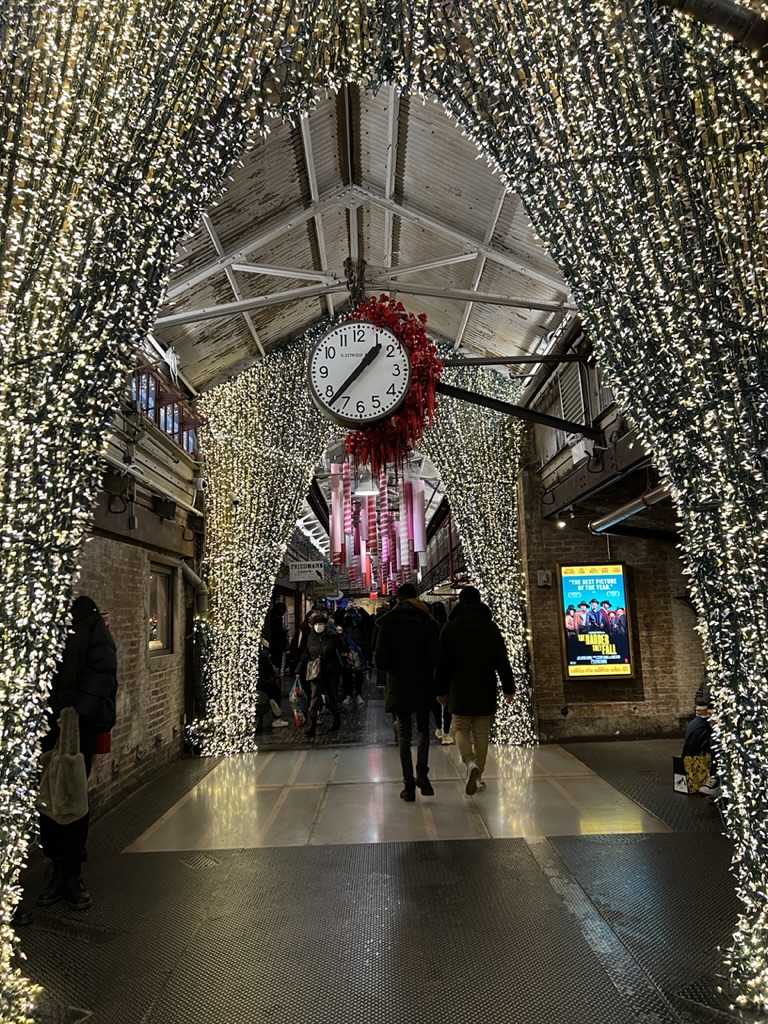
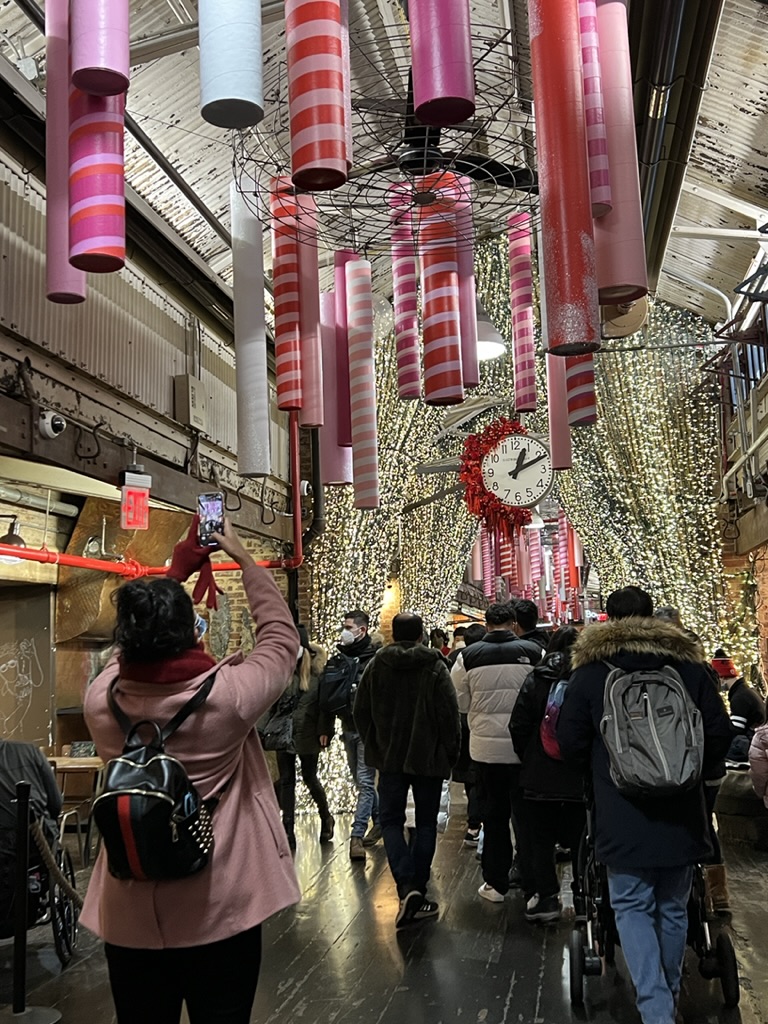
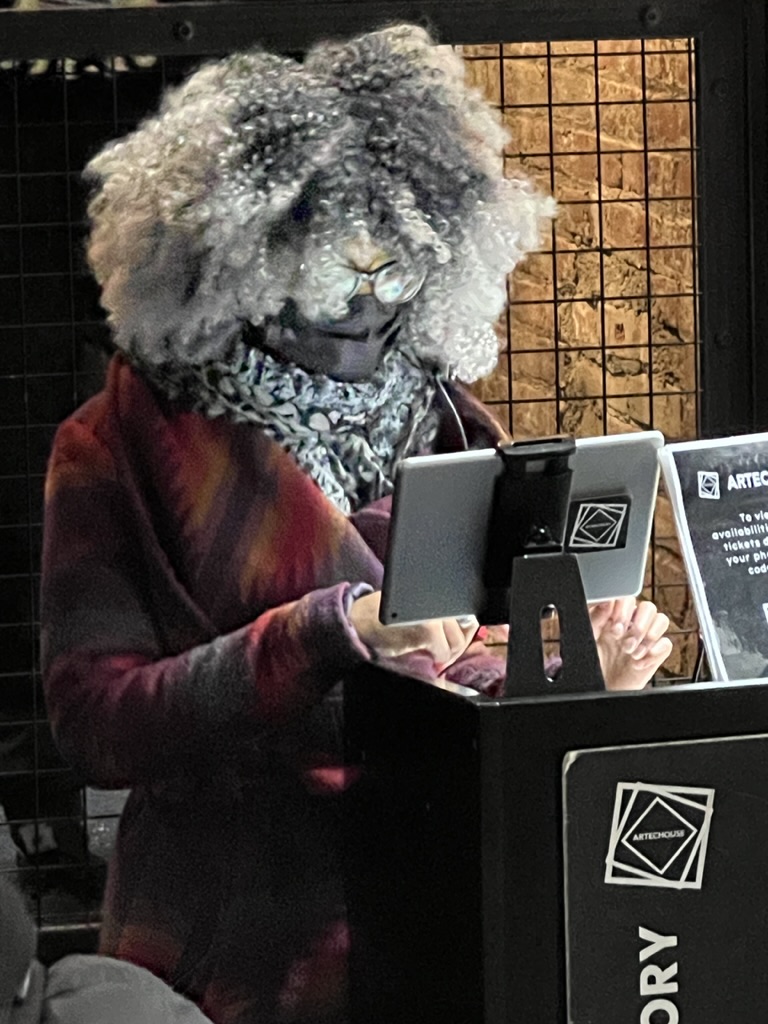
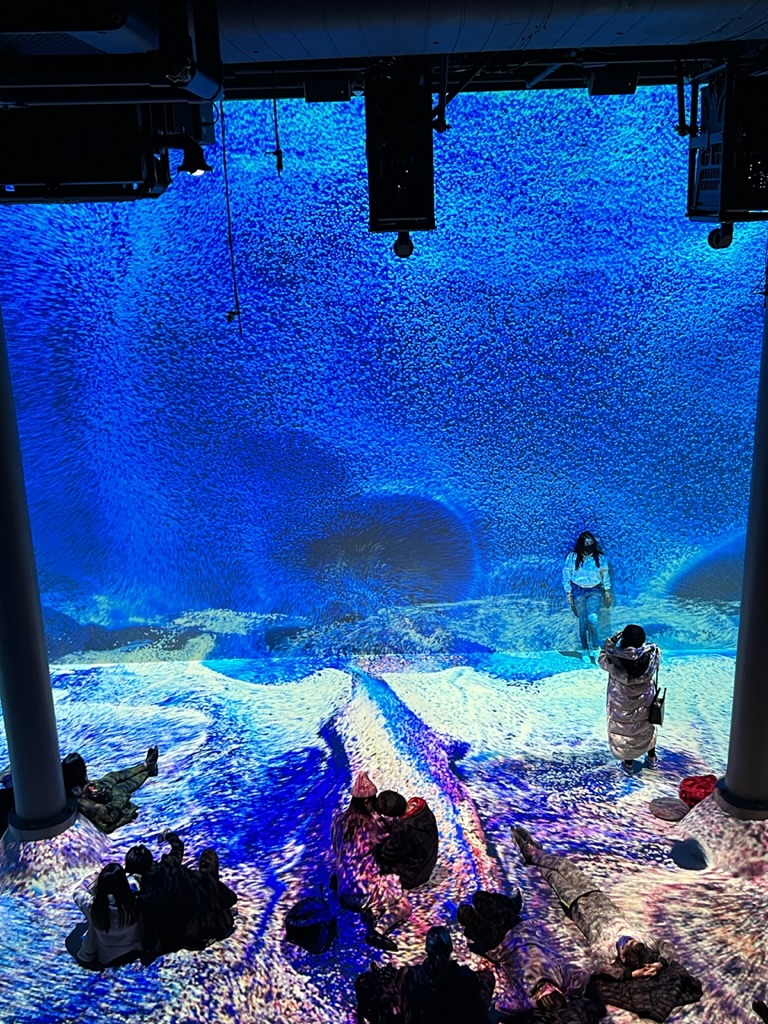
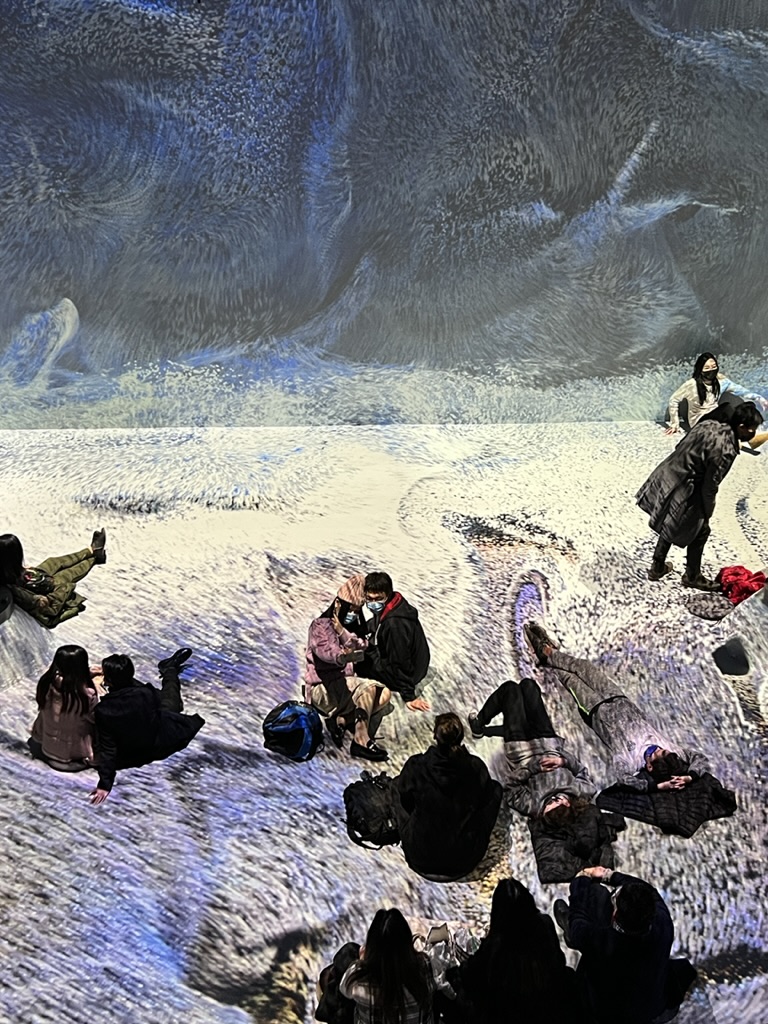
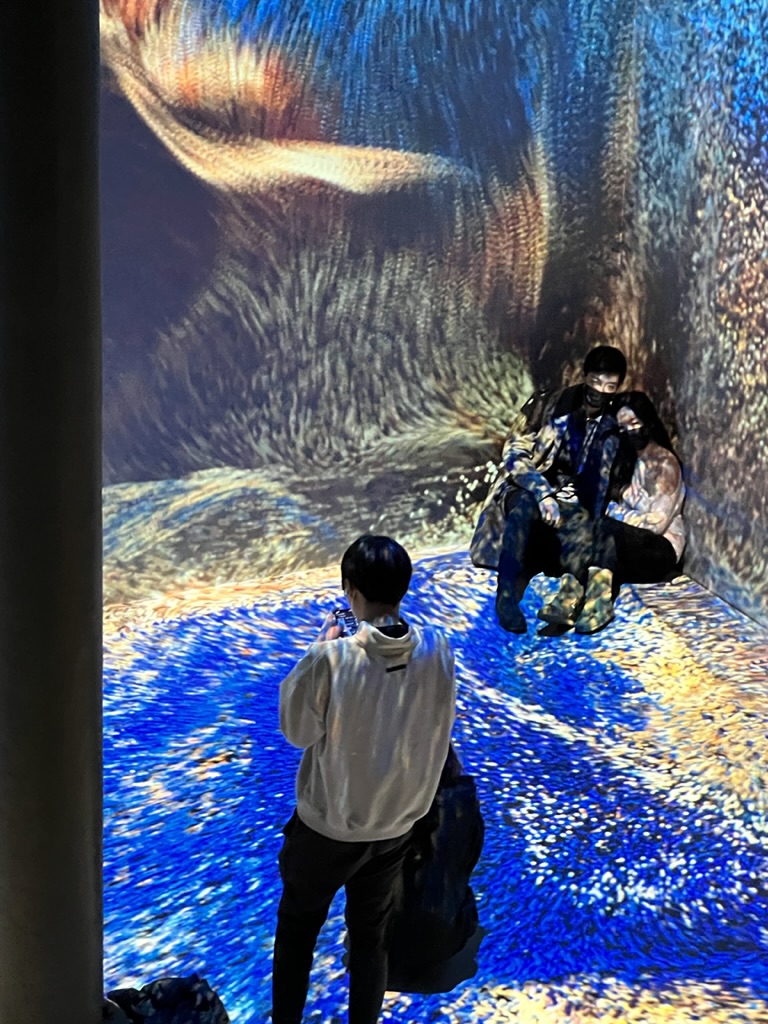
From there, we walked cross town on 15th Street (about 1.3 miles) to Chelsea Market which was festive and fun. We grabbed a quick Pad Thai lunch and went to the Artechouse show, “Machine Hallucination,” located in the boiler room of the Market. It’s what the artist calls an “immersive” experience that uses tens of thousands of images of NY and supposedly interprets the city through the mind of a machine— giving the sense of the ever-changing shape and perception of NY. There is a mezzanine level and then the actual floor level (where you really have to sit on the floor to experience the moving lights and mesmerizing motion and sound).

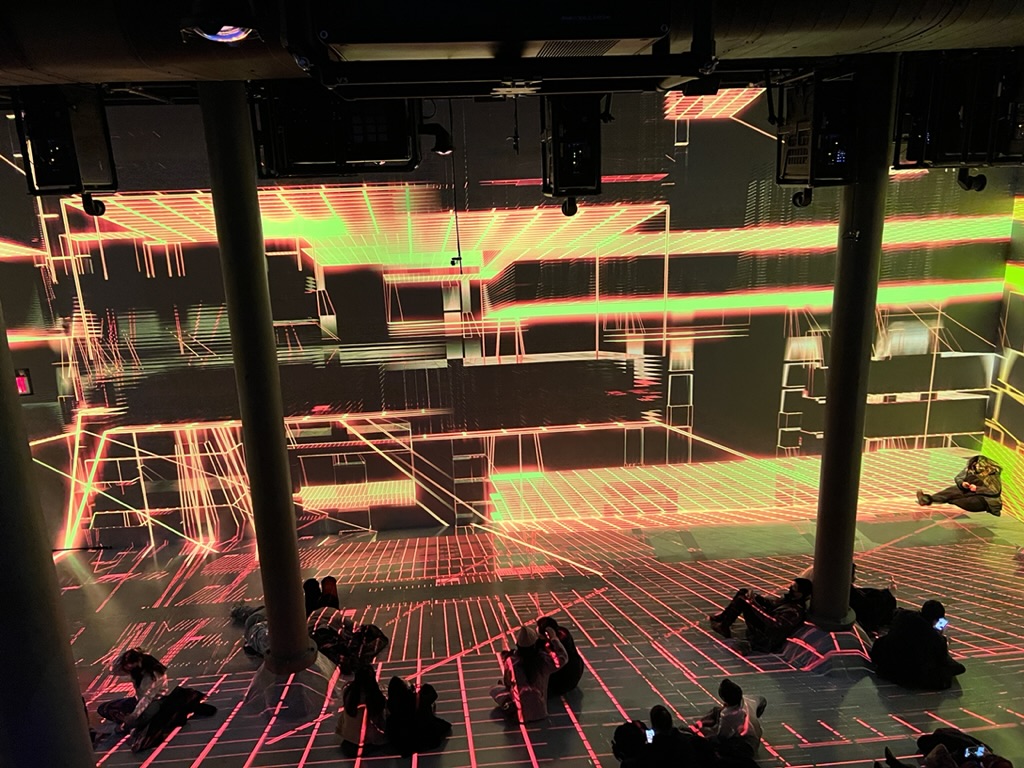
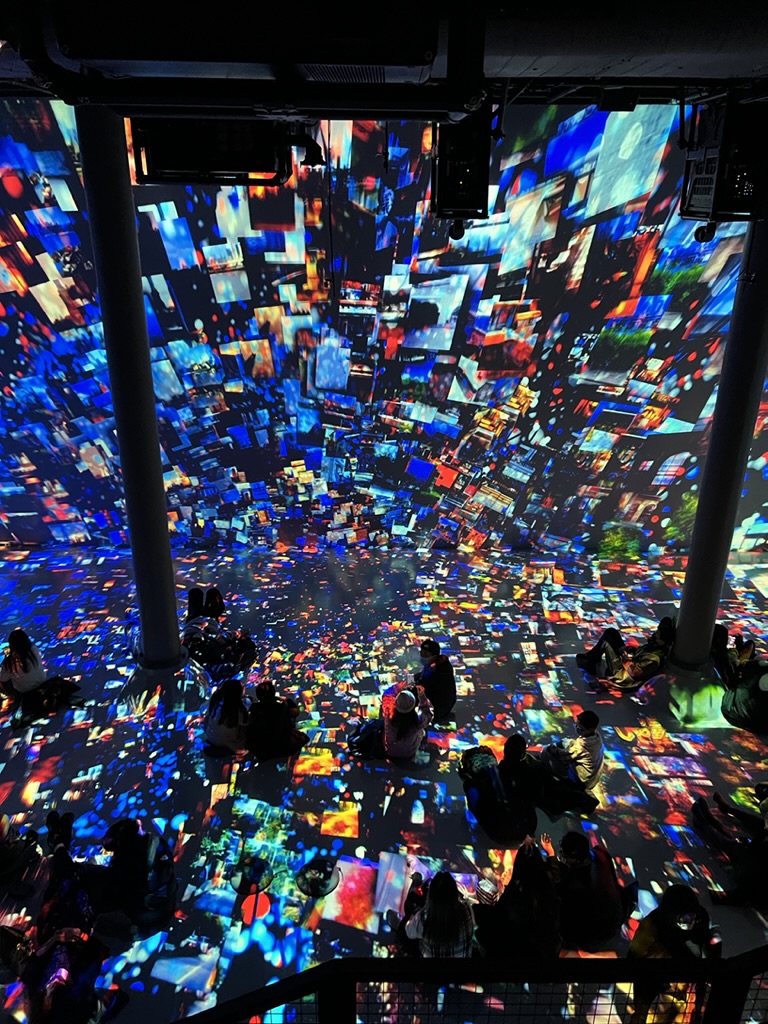
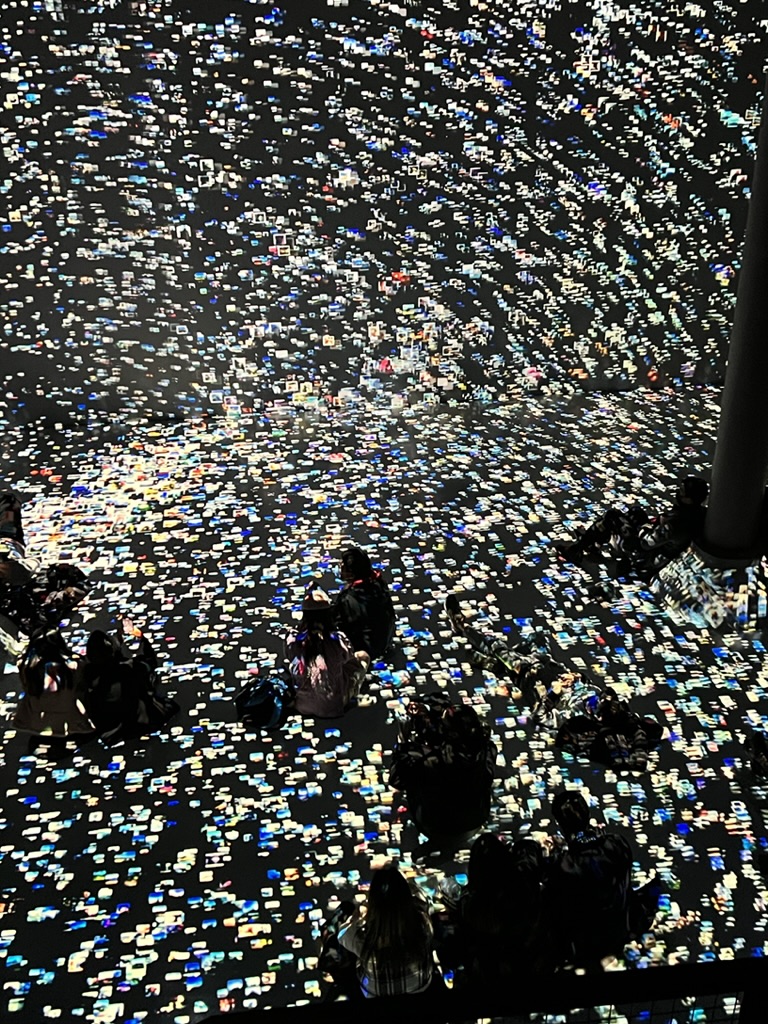
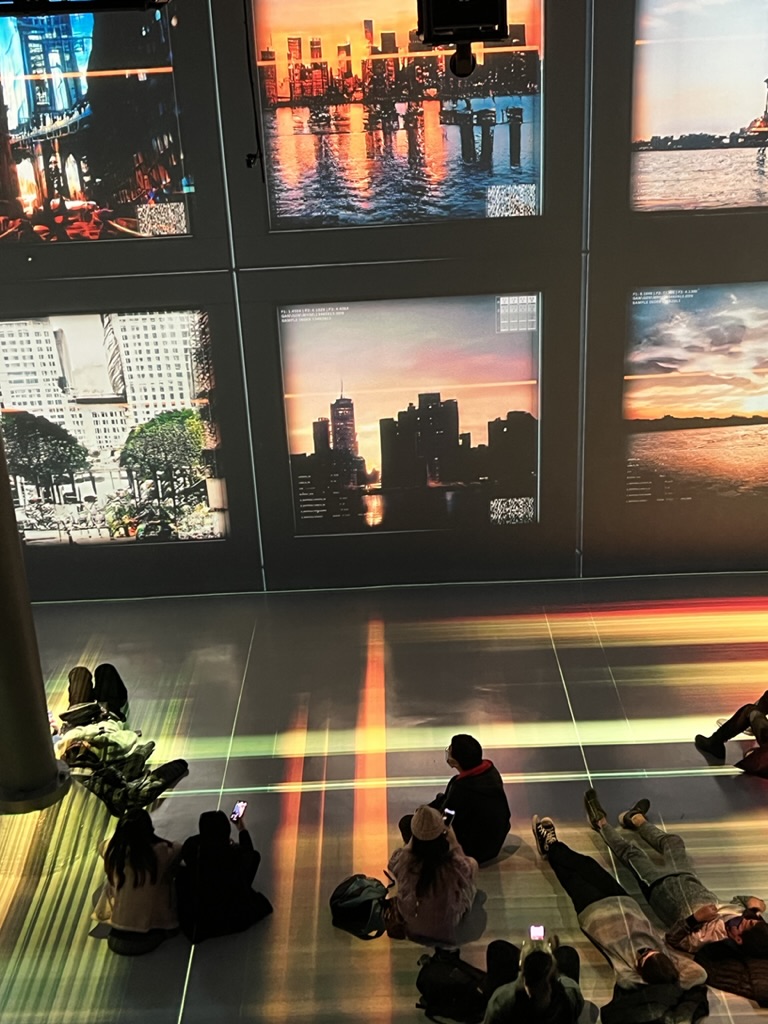
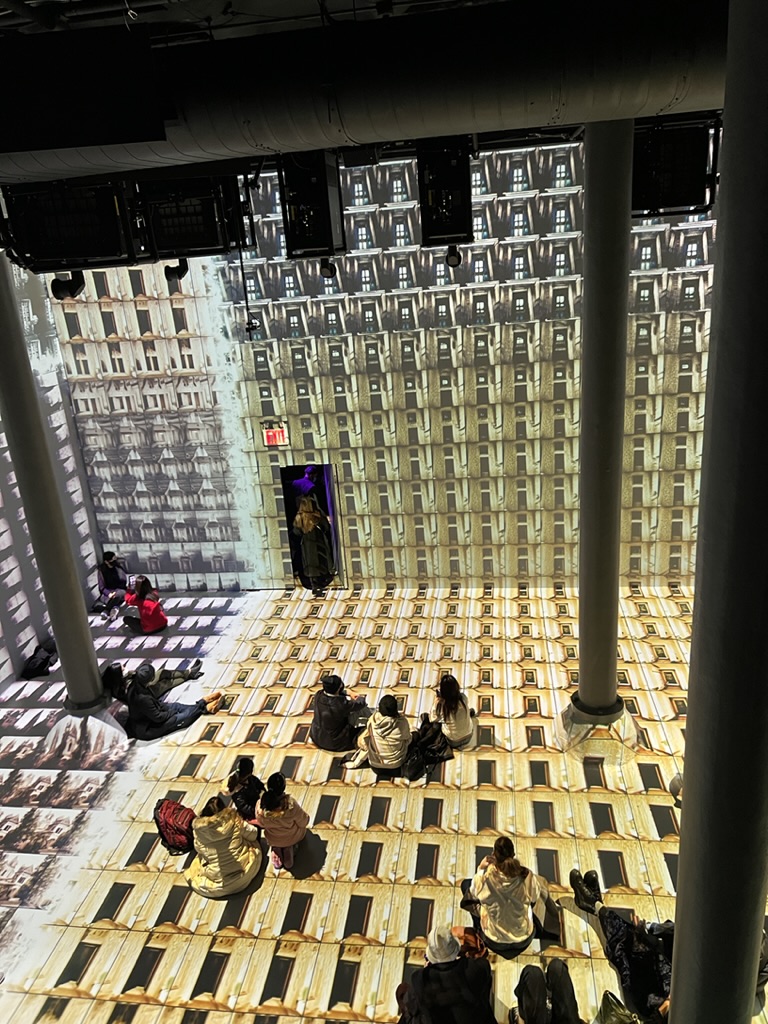
We opted for the mezzanine for fear we might not be able to get up easily from floor sitting… but we did eventually go to the lower level as well. It’s a very fast-paced 45 minute technological and fractured color and black and white series that every so often reminds you of the thousands of images that create the abstractions. It’s “textured and always in motion in a total-surround so it feels as if the floor is moving and the walls are pulsating.

We’re off to Christmas Eve dinner at the Temple Court here at the Beekman in an hour or so… so I’m signing off to get ready.
All the best –
Fern
Day 7. 12/26/21


Hope you are doing well –
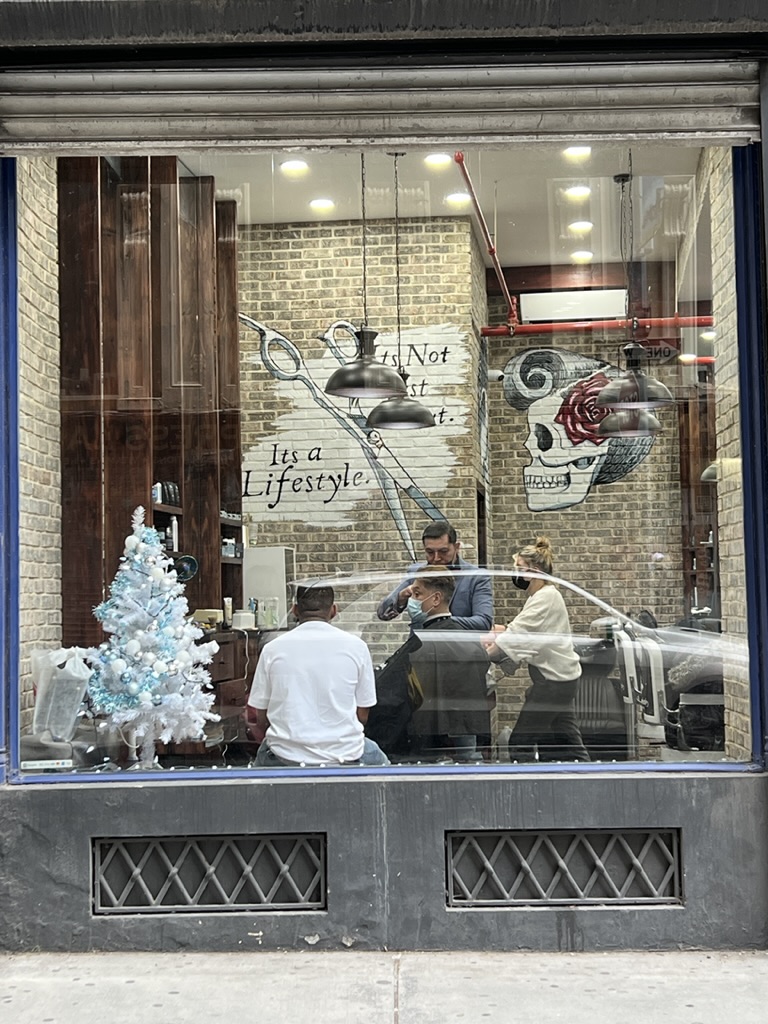
It was a beautiful day in NY today.. mid 40s (although dipped down when we headed to dinner). We started the day with breakfast at Jack’s Wife Freda in the West Village and it was so nice out we opted to dine al fresco. Food was good (they use a lot of labneh in the breakfast dishes, which is quite nice). From there we walked around the West Village stopping at a few special streets including Grove, Christopher, and the Washington Mews. Each delightful in different ways. We wanted to see Grove Court, which was built in the 1800s as worker- or low-income housing, but now is higher than market rate. There are 6 townhouses set way back from the street where entry is through a cobblestone path. There’s a locked gate so entry is really only for residents and their guests. I managed to photograph between the bars of the gate (!!)
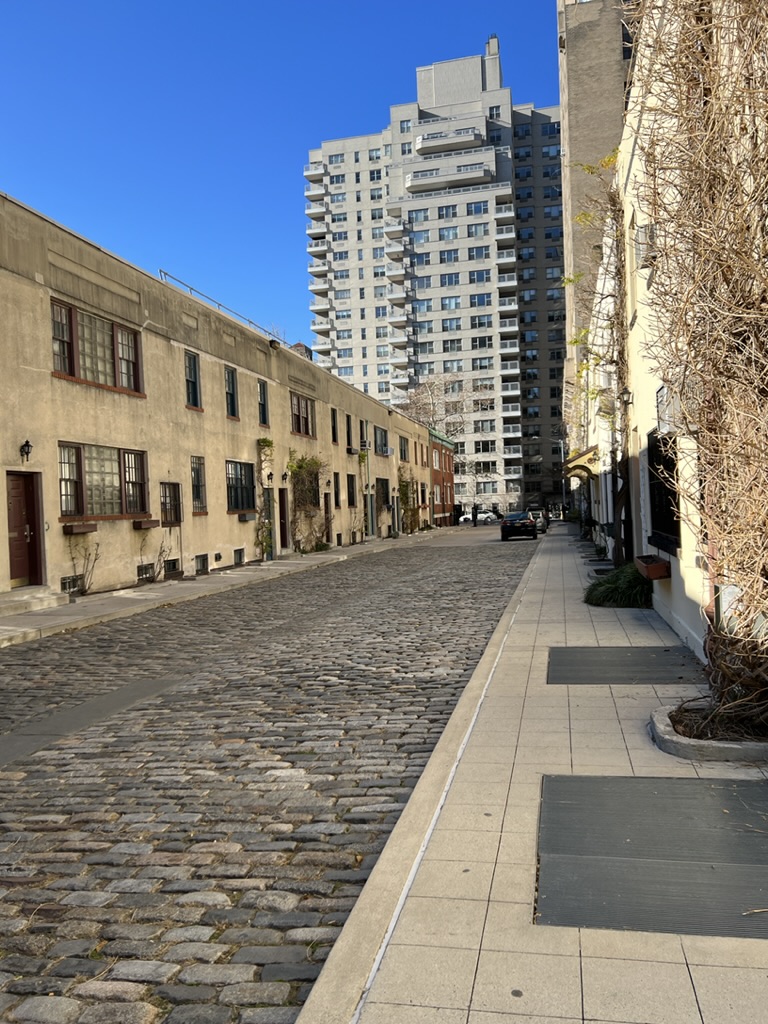

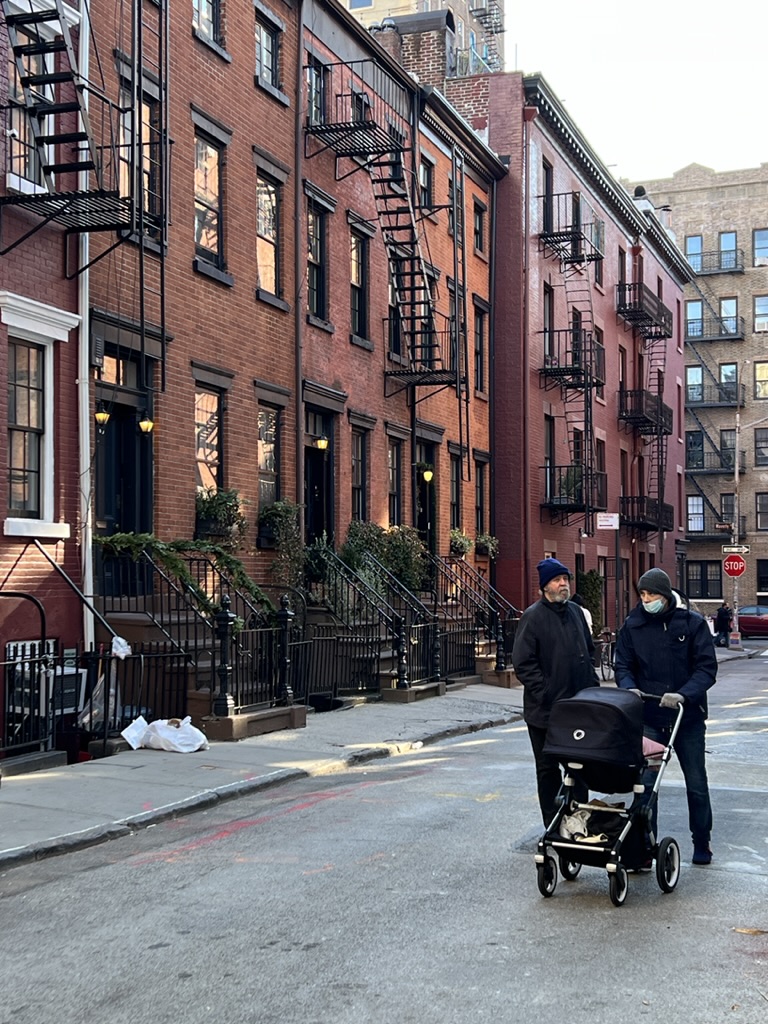
After walking around the village we headed to ICP (International Center for Photography). The ICP had two major exhibits and some other smaller shows. One of the two exhibits was by Gillian Laub called “Family Matters.” For about 20 years she has photographed her family and used the images and the series to address how society’s problems manifest within more intimate or family situations. Her story, as shown through images and simple text, is probably the story of many who have had to deal with close family members whose politics and beliefs diverge from your own.
Then we decided we needed some kind of snack and I thought the idea of sharing a hot pastrami sandwich at Katz’s which has been on the lower east side since the 1880s or Russ & Daughters would be perfect and both were within about three blocks of ICP. So, Katz’s had a line that went around the block and the predicted wait time was around 90 minutes just to get inside and then a likely wait inside and Russ and Daughter has not re-opened since Covid began; they only have take-out. So we dashed back to Chelsea Market (by taxi) since I needed to run an errand, and while there we had an appetizer at the oyster bar.
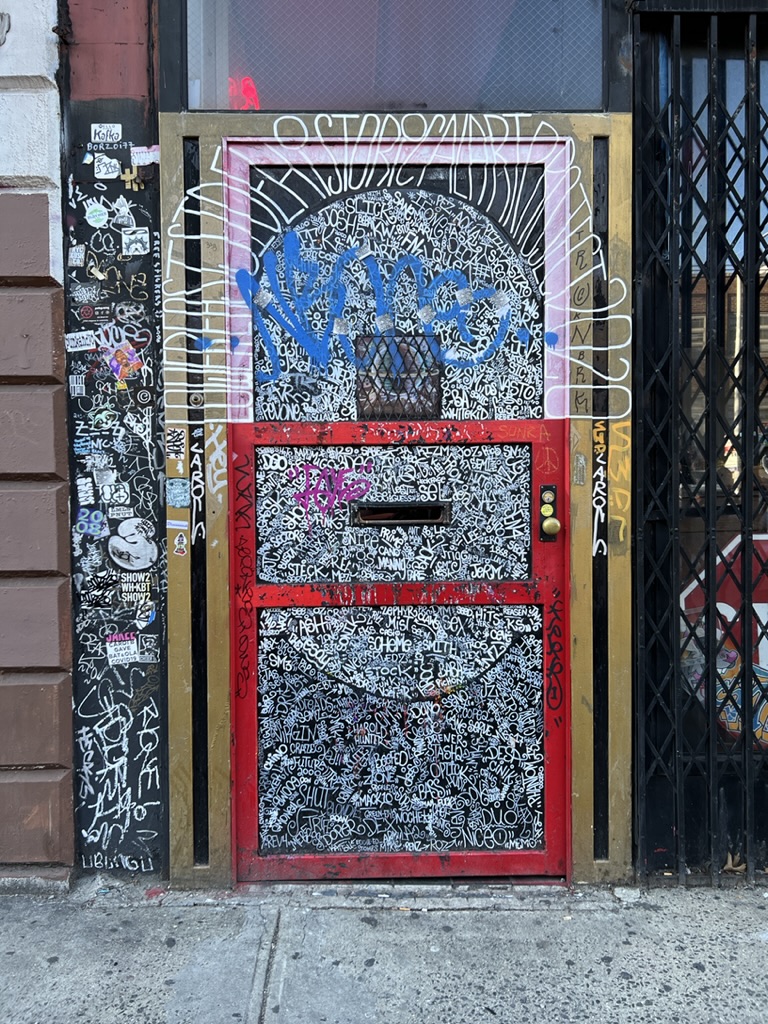
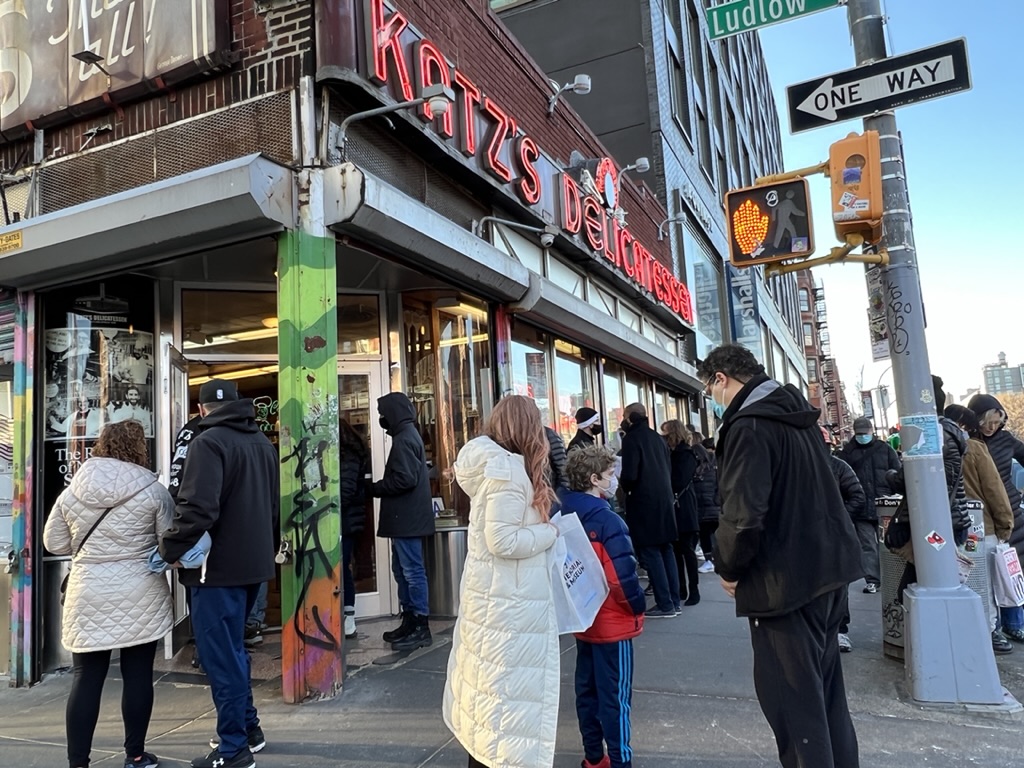

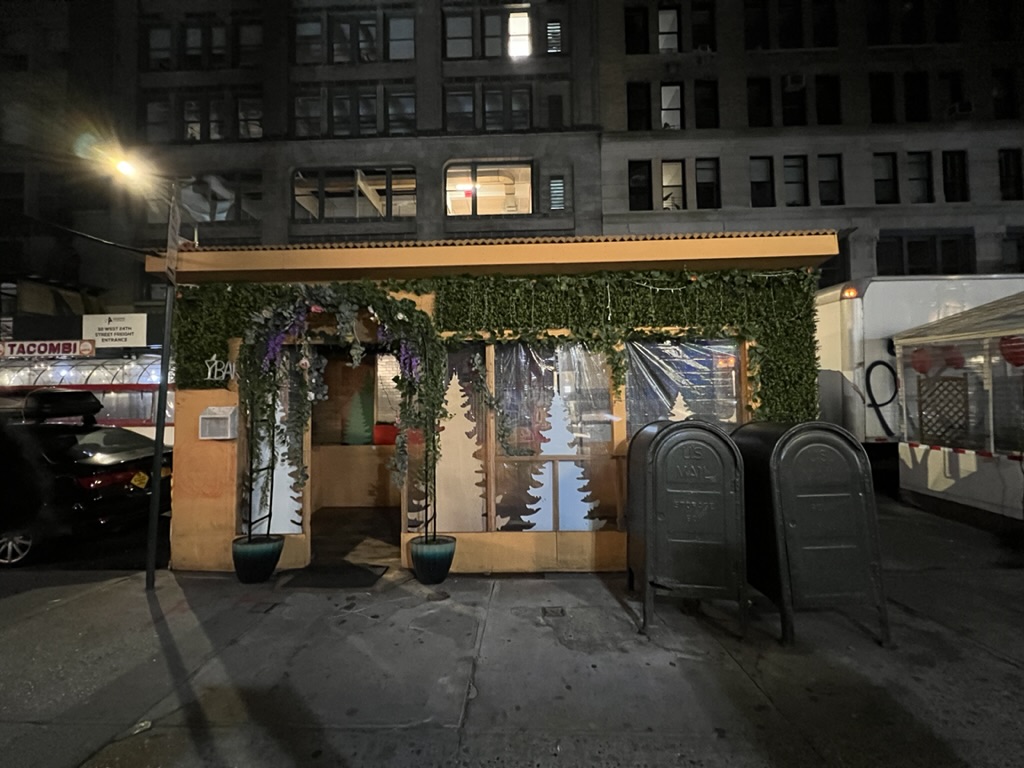
Then we headed back to the hotel for a drink and off we went to Junoon, a great Indian restaurant for dinner. I was there in October when I was in NY with Carol so I now feel like a regular. Actually, I had eaten there previously when they were located a few blocks away. It’s quite upscale but the food is truly wonderful. We were the only non-Indian diners but we fared well. Shared two starters (eggplant chaat with raita, tamarind, red onion, and some other ingredients; and an octopus dish that was cooked tandoori style) and one main course – a spicy goat with red chili oil and spices, and of course we had naan and saffron rice that had little berries and tiny pieces of zucchini. When it came time for dessert the guy who was clearing the table told us to get this dessert called “Cricket.” Not to offend, we took his advice and out came this adorable little cricket made of chikoo (?) mousse, chocolate and green colored coconut (for the grass)… We probably would have opted for the bread pudding or rice pudding. But the Cricket was quite good. We taxied back to the hotel at about 10:30 and called it a night.
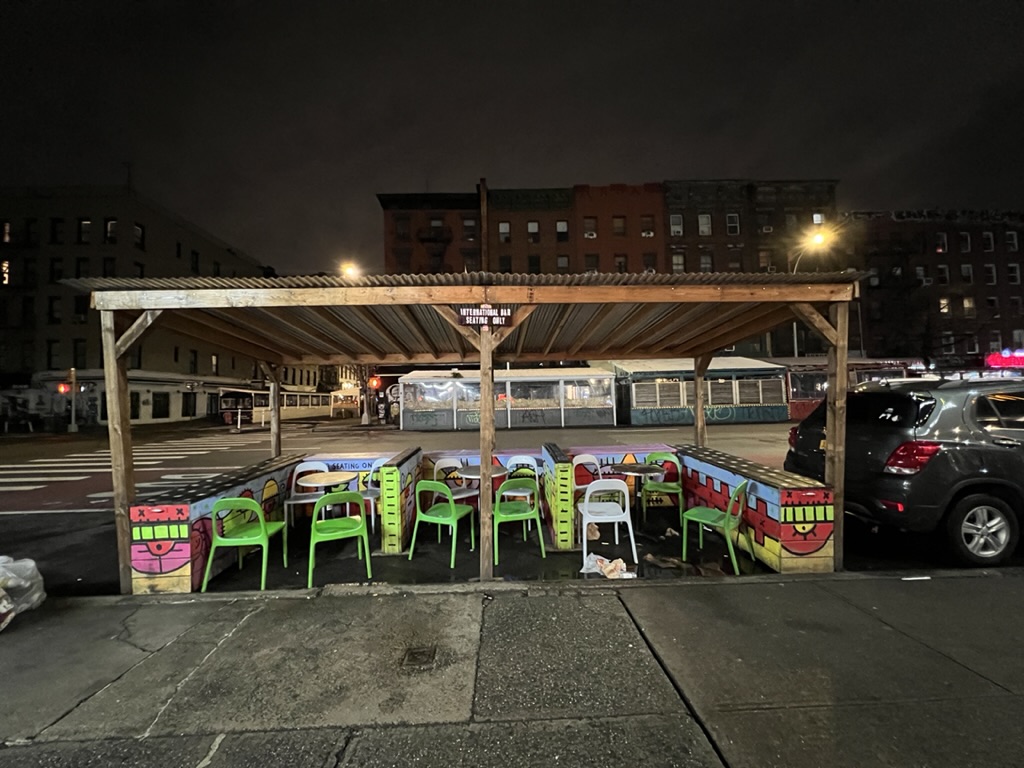
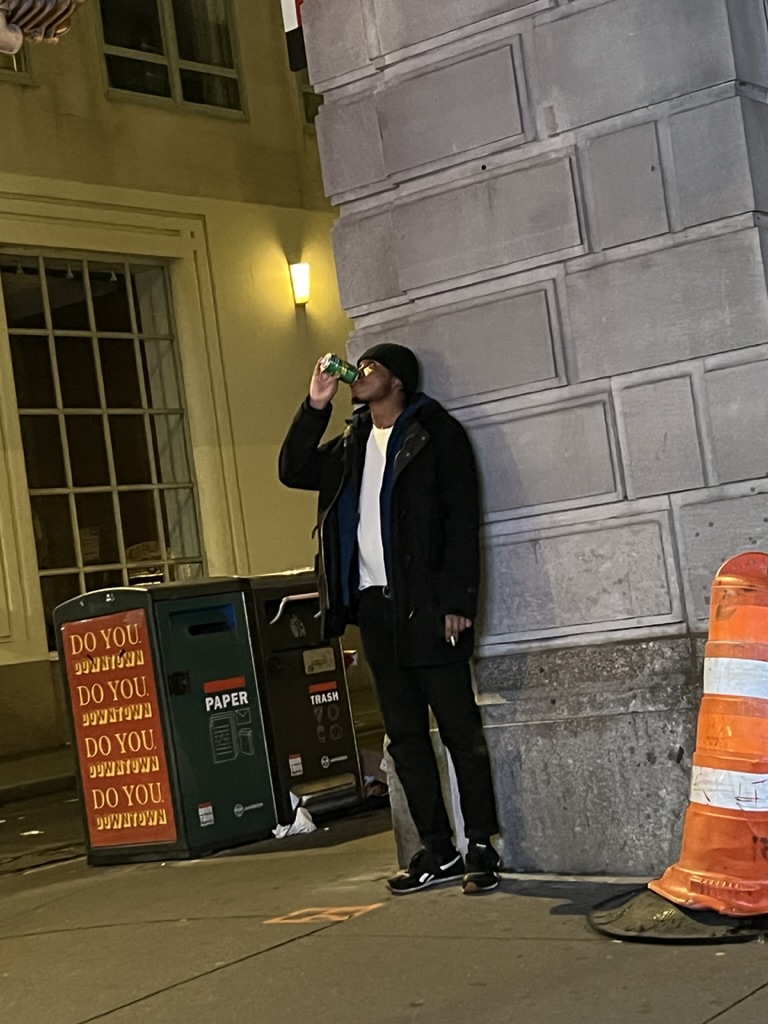
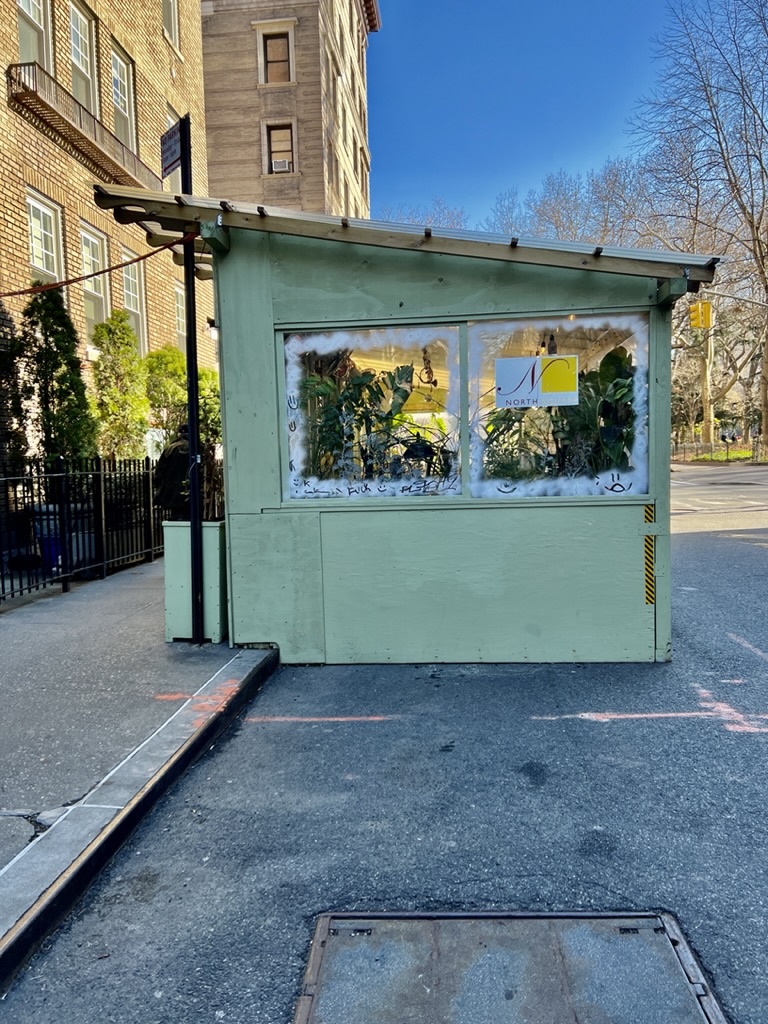
What more can I say – there’s a lot more folks panhandling and clearly winter in NY is not very accommodating for people without a roof over their head; the number and variety of “parklets” for dining outside abound; the number of languages spoken on the street can astound you; and as the need for physical structures for banks decreases great bank structures are finding other purposed like Trader Joes in a former very grand South Brooklyn Savings Bank and a CVS in the building that housed NY Savings Bank in my day.
Assuming our flight really takes off on Tuesday night, tomorrow’s plans include the African Burial Grounds near City Hall, the obligatory, always must-see Rockefeller Center Christmas Tree (It’s always great and it doesn’t matter how many times you see it), a pitstop at the post office to ship some gifts that we’ve been carrying around but didn’t present because of cutting the trip short, possible visit to the Summit at One Vanderbilt (we have tickets for next week and not sure they will let us change the date), and a drive to two other neighborhoods a bit more distant from the center of the city – and then return the rental car.
All the best – Fern
Day 8. 12/27/21. NYC
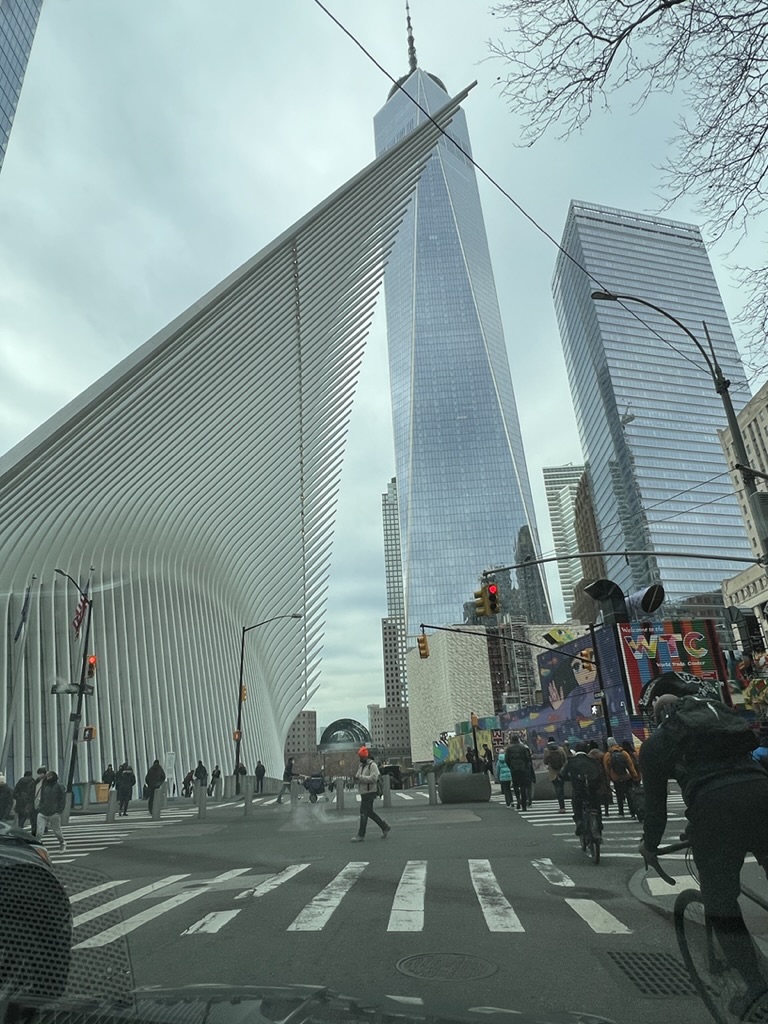
Hope all is well.
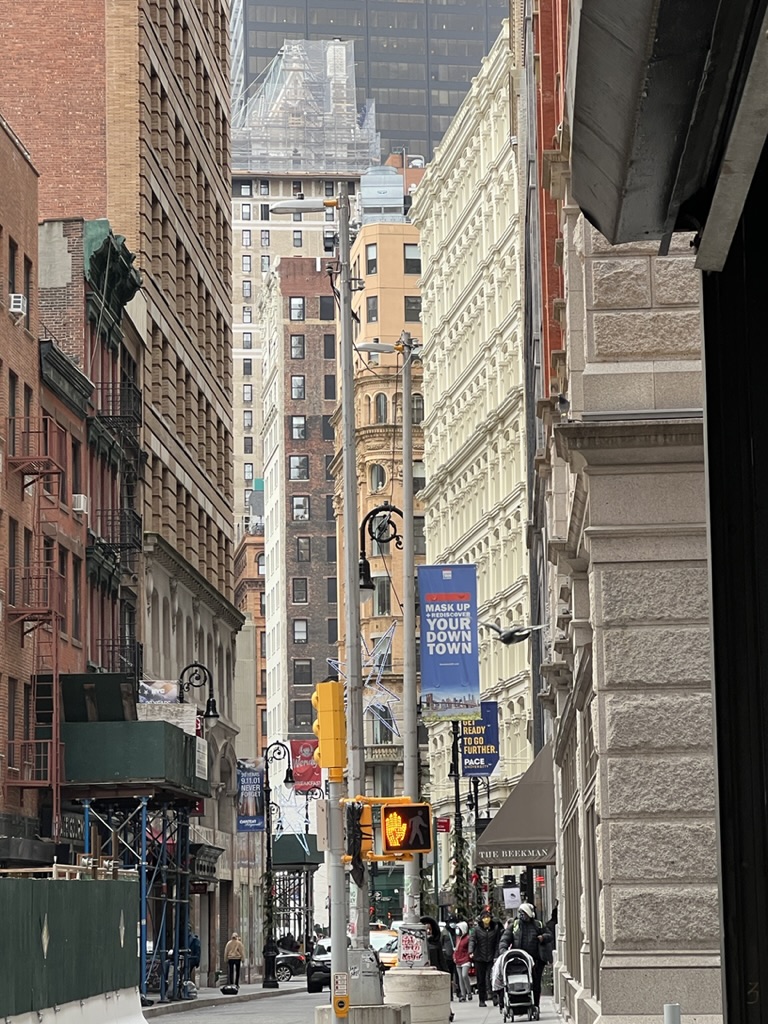
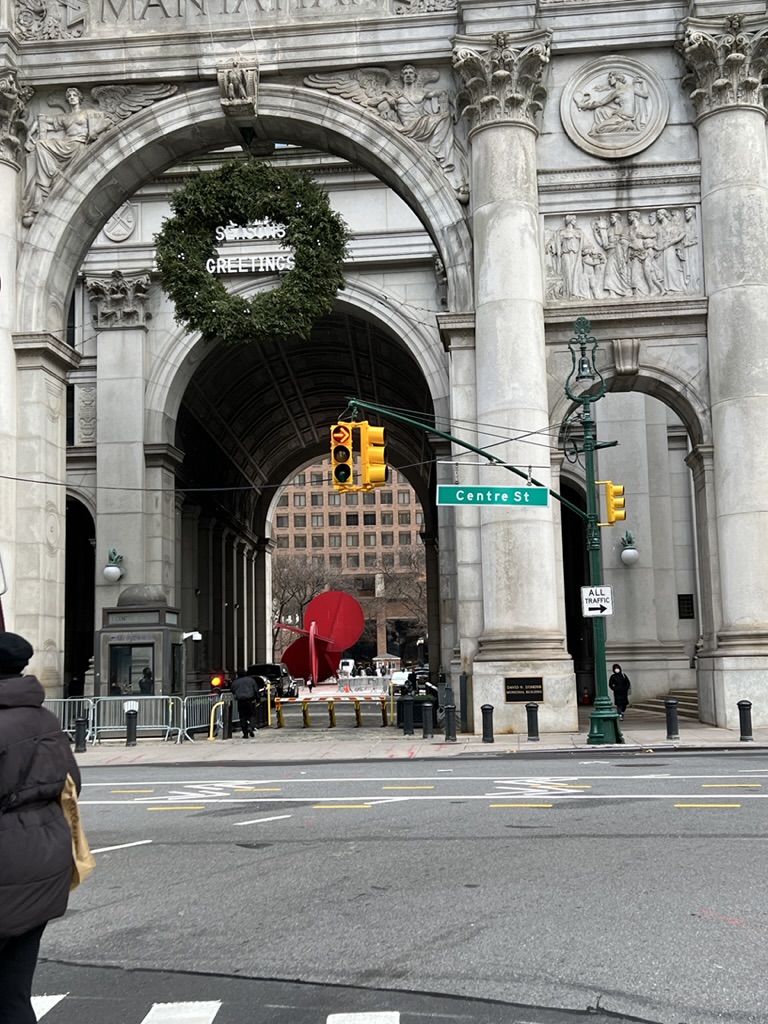
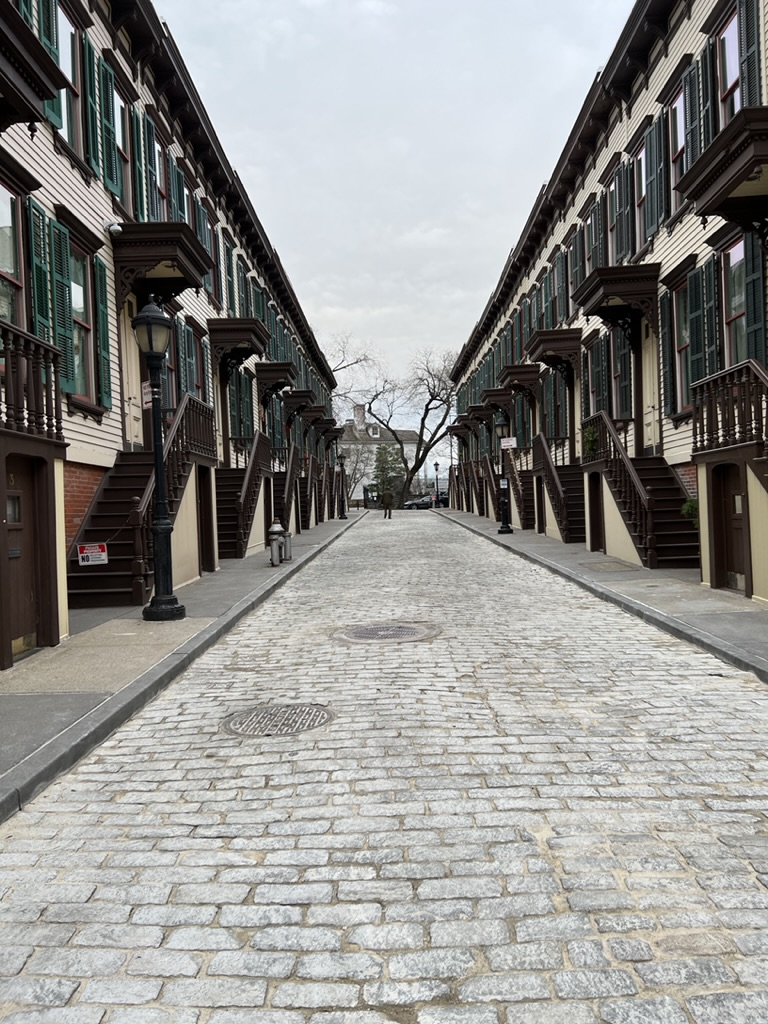
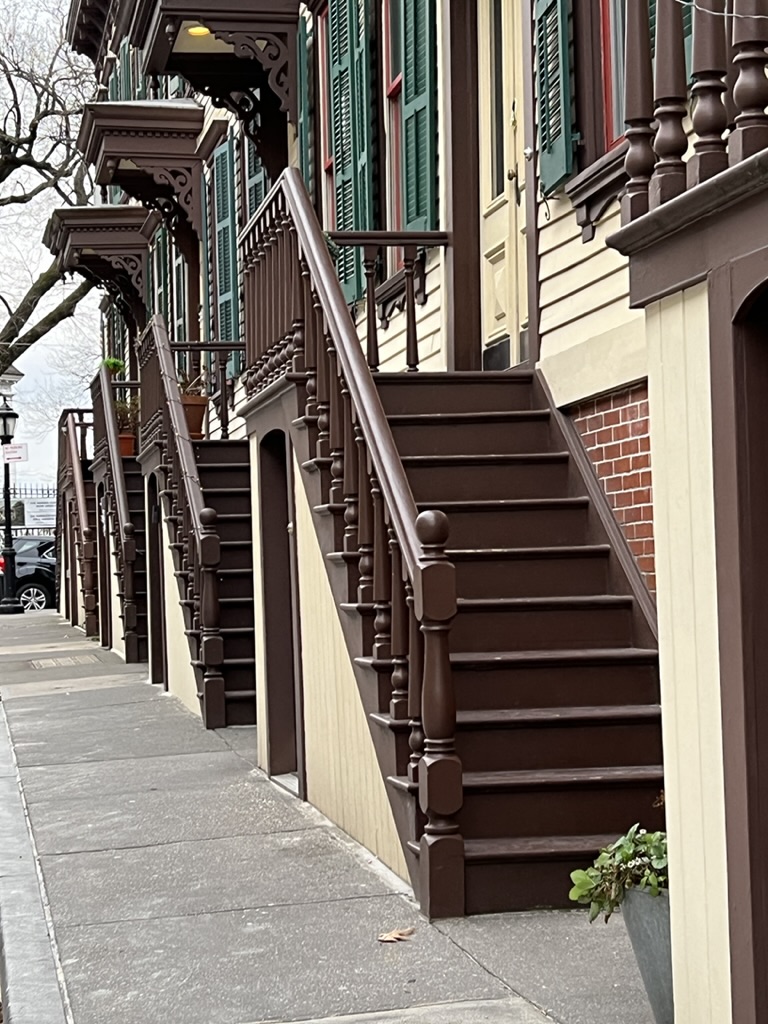
After a leisurely breakfast at The Beekman we attempted to deal with mailing some packages but the lines were enormous and we decided to try a smaller post office along our route. We strolled to the African Burial Ground which is just a few blocks from here, but alas it was closed today. So, we headed out for the day – to visit some interesting streets and neighborhoods, including Sylvan Terrace in Washington Heights—a charming one block long cobblestone street lined on both sides with a total of 20 restored wooden townhouses built in 1882 for working folks. The street, which leads directly to the Morris-Jumel Mansion, is lined with coach lights. But the houses really have nothing to do with the mansion. Lin-Manuel Miranda says “It’s like a weird step backwards in time; you walk on one block and suddenly you’re two centuries back.” He also notes that the Morris-Jumel Mansion is the oldest mansion in NYC and that Aaron Burr lived there for a year. Miranda apparently wrote some of “Hamilton” in Burr’s bedroom!
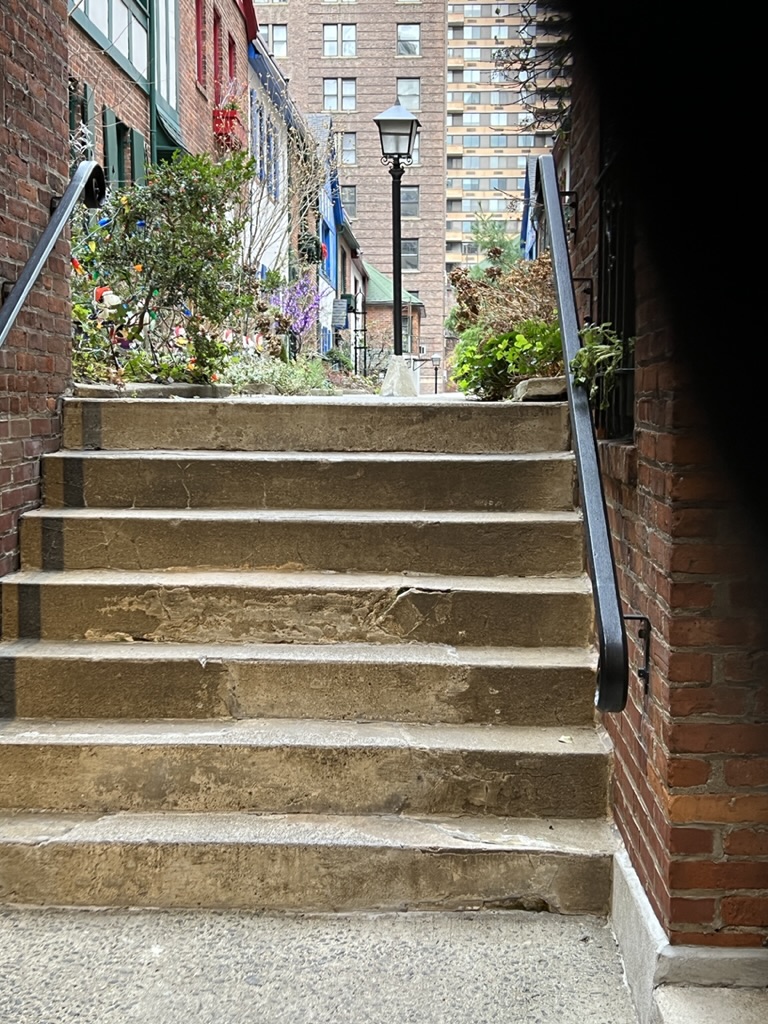
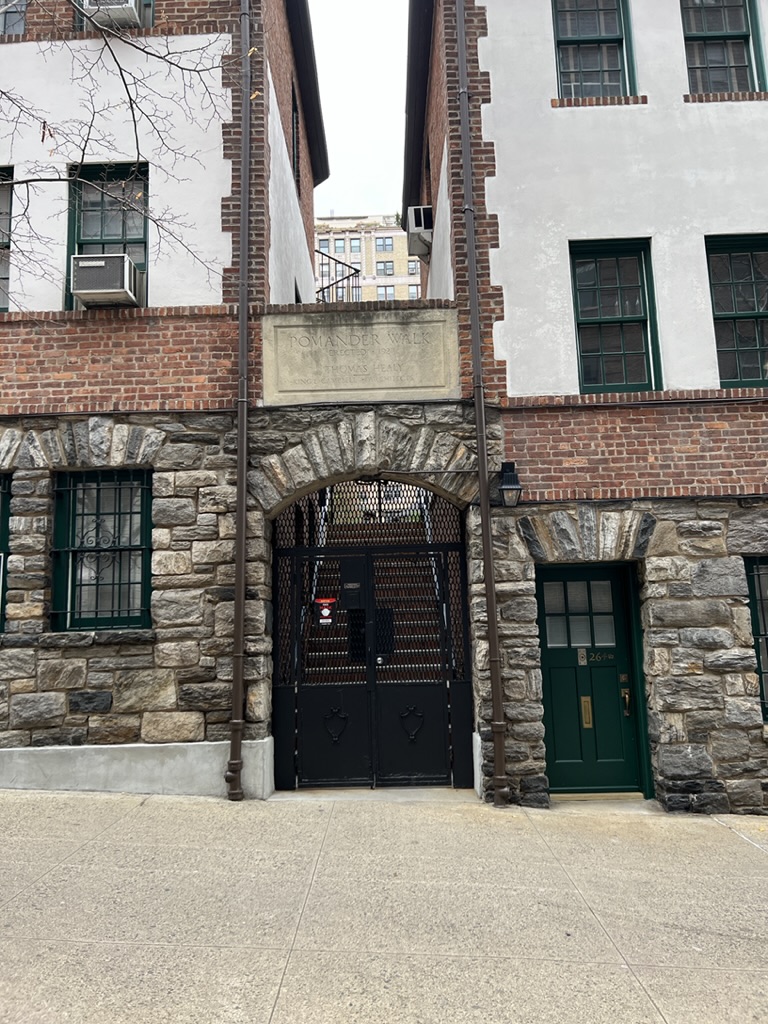
We also attempted to visit Pomander Walk; I had seem photos over the years. But it is locked at both ends. We waited a few minutes to see if any resident would emerge and let us in, but no such luck. So we could only peek through the locked gates. Pomander Walk is a set of 27 town house units built in the 1920s in a Tudor style. By the way, some pretty famous people have lived at Pomander Walk including Rosalind Russell, Paulette Goddard, and architecture critic Michael Sorkin.
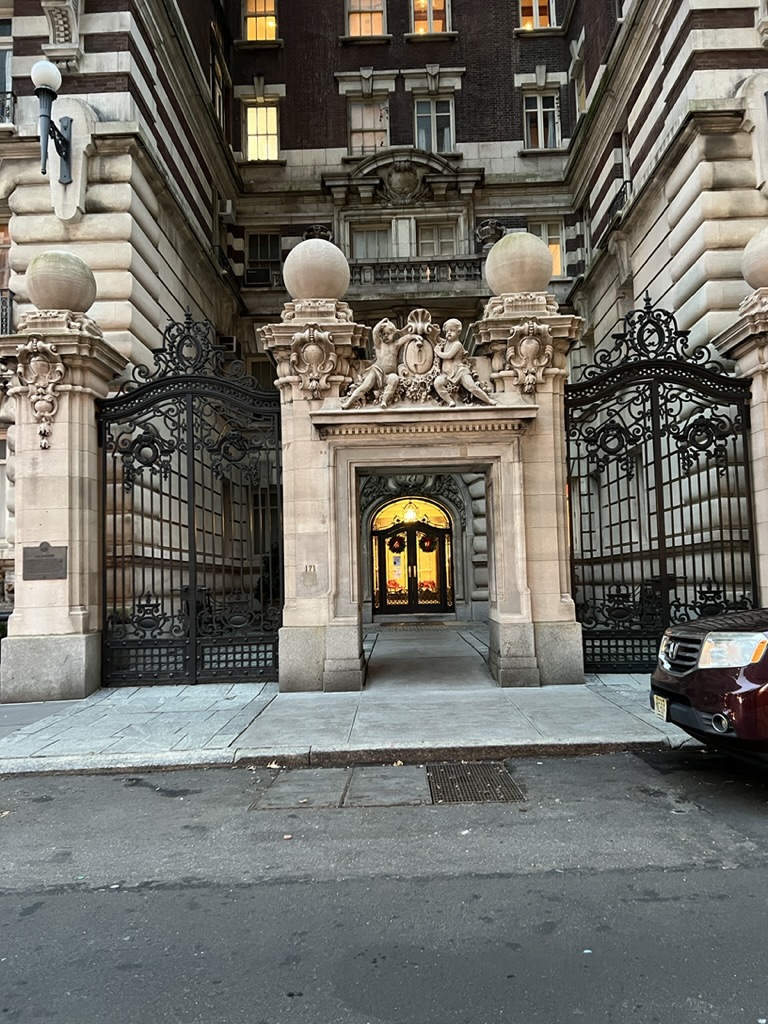
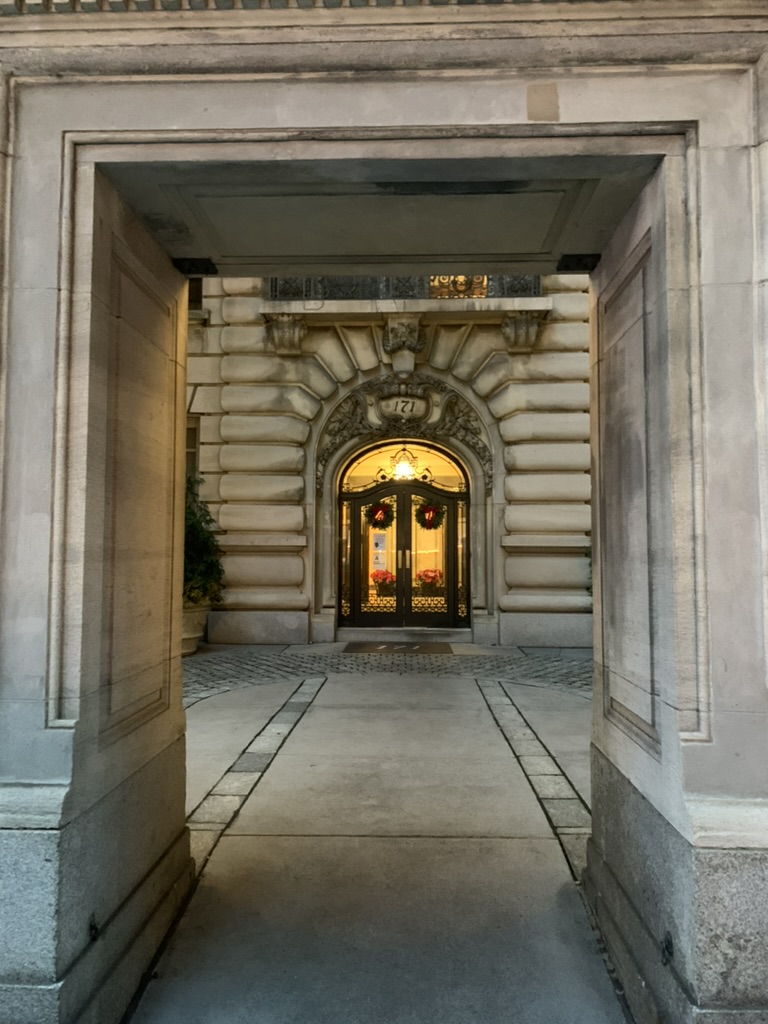
Along the way uptown, we stopped from time to time to see some interesting structures and streets that we stumbled on, grabbed a slice of pizza for a quick lunch, and found a place to ship our packages. We stopped to photograph the Dorilton on 71st and Amsterdam, an incredibly beautiful beaux art structure from the early 1900s. By the time we finished all of this, it was after 4 and we needed to return the rental car. So we zipped off to the Village to get rid of the car and by then it was raining so we taxied to the hotel to begin to pack and get ready for dinner.


On the way (sort of out of the way) we did the most touristy of tourist things (although I did it yearly as a kid living in NY)—we went to Rockefeller Center to see the “tree.” As always it’s a bit magical, but more magical was the amazing light show emanating from Saks Fifth Avenue across the street.. and there were probably larger crowds watching Saks than at the Tree. Saks’ display was a sophisticated symphony of light and sound showing just how much we have all been influenced by the advent of LEDs and computers and the technology that can orchestrate these kinds of light shows. Still it was fun, and I cannot believe we stood there in the rain to watch the whole thing!
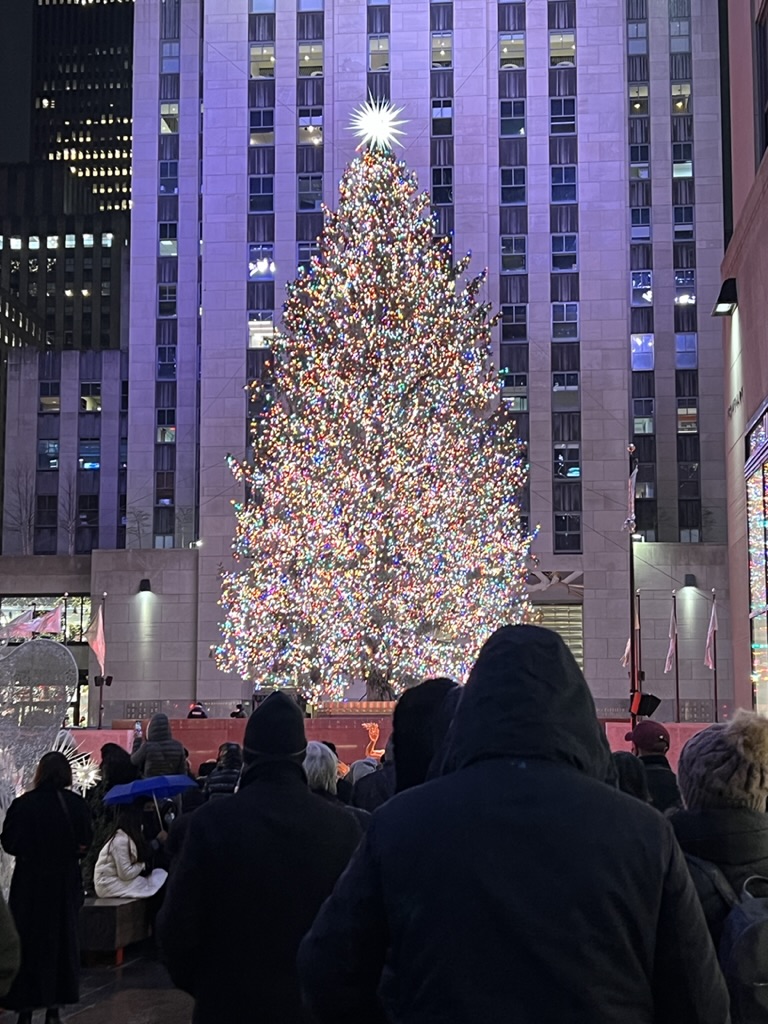

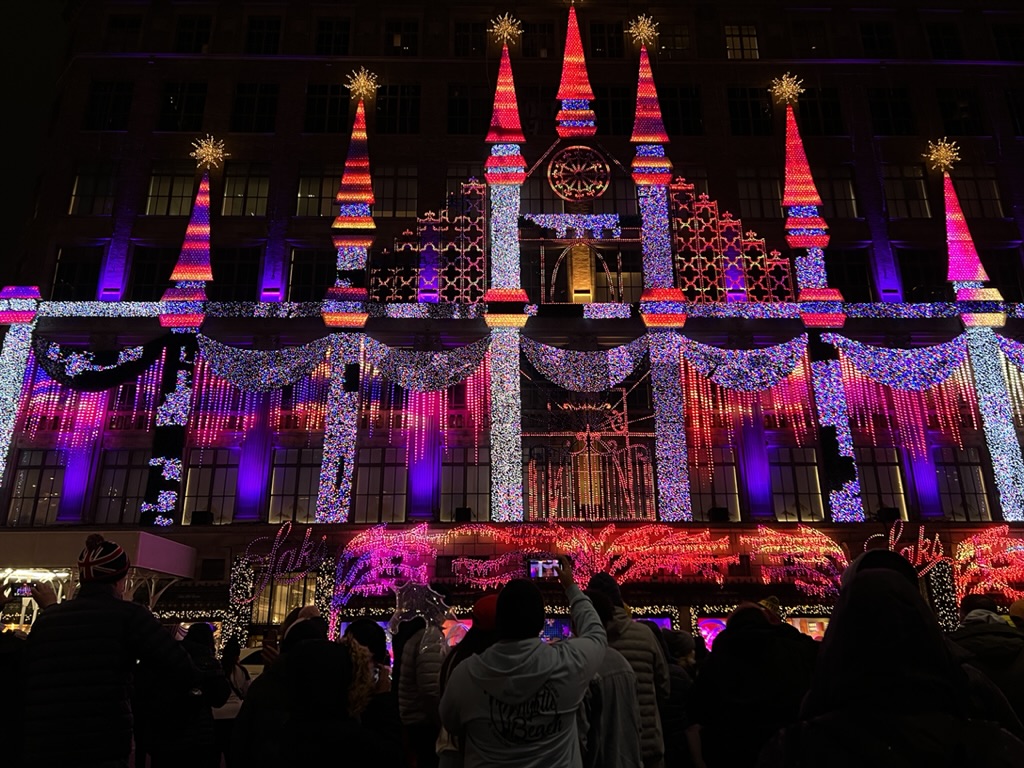
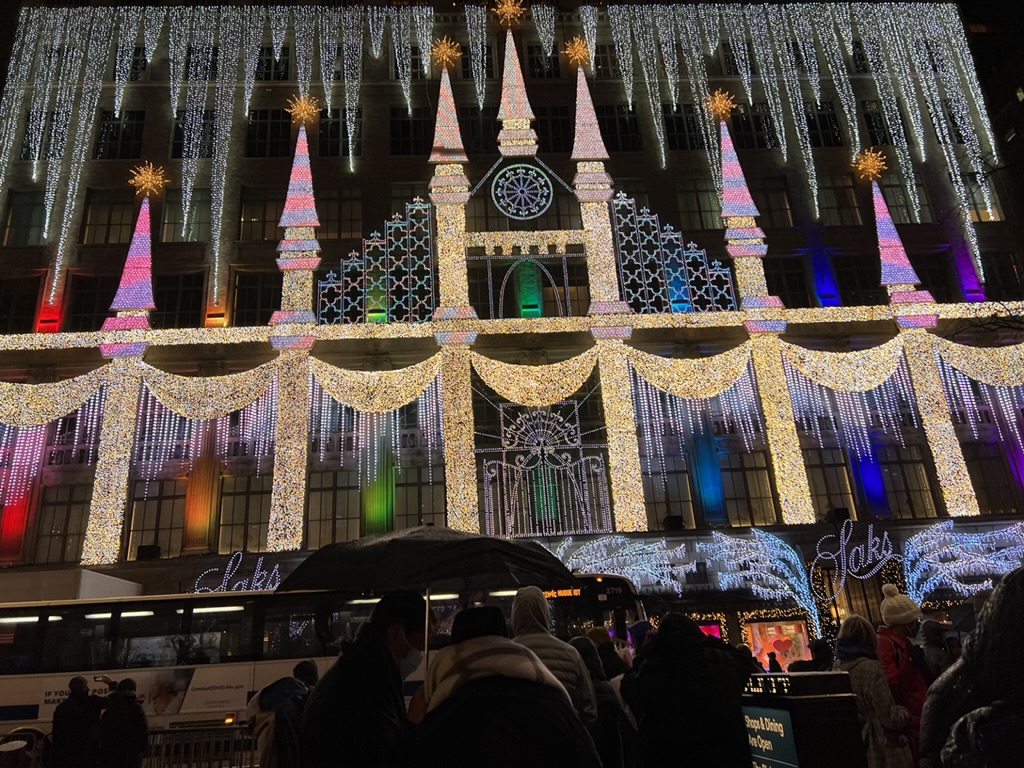
Out-of-towners were taking selfies with NYPD officers (!!) and security guards were helping tourists get photos of themselves in front of the Rockefeller Center tree. It was great to hear people directing security guards to be sure to get the top of the tree into the photo!
More tomorrow.
NYC October 31 2021


Greetings –
Given that the Brooklyn day (yesterday, October 30) did not materialize due to weather, we made the best of Saturday in Manhattan and concluded with dinner at Junoon, a wonderful Indian restaurant in the Flatiron neighborhood. I’d been to their previous spot and I think I like this reincarnation is better. Restaurants all seem to be reinventing themselves post Covid. So Junoon has two rooms. One is called the bar and the other is called the dining room, but full meals are served in both spaces. The difference is that if you choose to sit in the dining room, you have to order the pris fixe meal which apparently has lots of choices. We opted for the a la carte dinner and ate in the bar which is a really nice space. We settled on several small plates including eggplant chaat which had really thin slices of crispy eggplant and tamarind chutney and masala chaat; a butternut squash dish that was a sort of soup that included roasted squash, pickled onion, pumpkin seeds, some oranges and a coconut based soup; a spicy dish that was some kind of chili chicken (murgh); and a fish dish – I think it was snapper cooked in coconut milk and fenugreek, and other spices.. and there was some tomato and hearts of palm in there too. All wonderful, and reminded me that NY has so many great Indian restaurants (something sorely lacking in the Bay Area). Naturally we had some very yummy dessert.
Like all other restaurants in NY everyone had to show both IDs and vaccination proof; I think NY is much stricter than California on all of this. Given all the rules, it is surprising that we didn’t need to show any vaccination proof on the subway.
The rain had started by the time we were finished eating, so we took a taxi back to the hotel.
Sunday, October 31
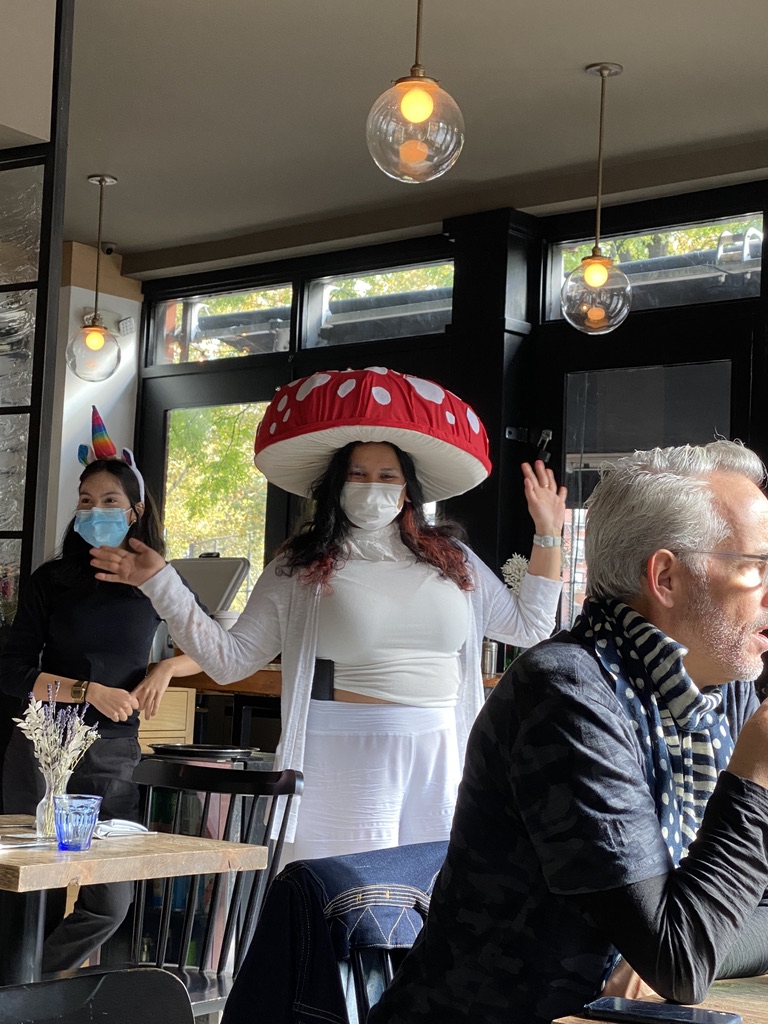
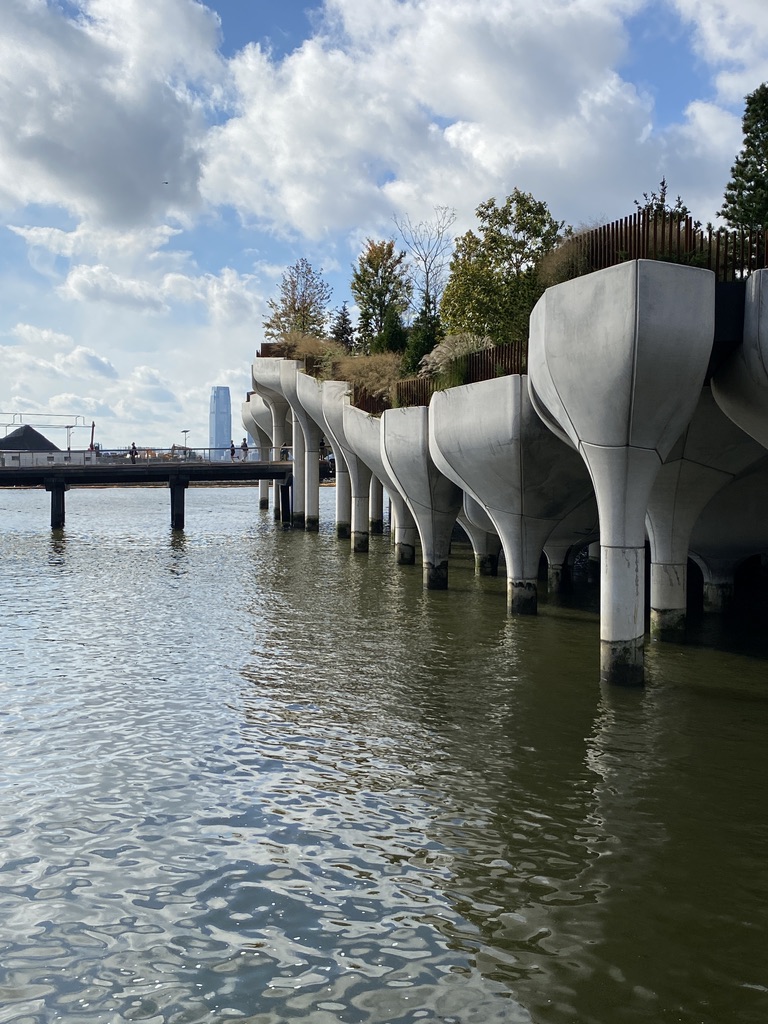
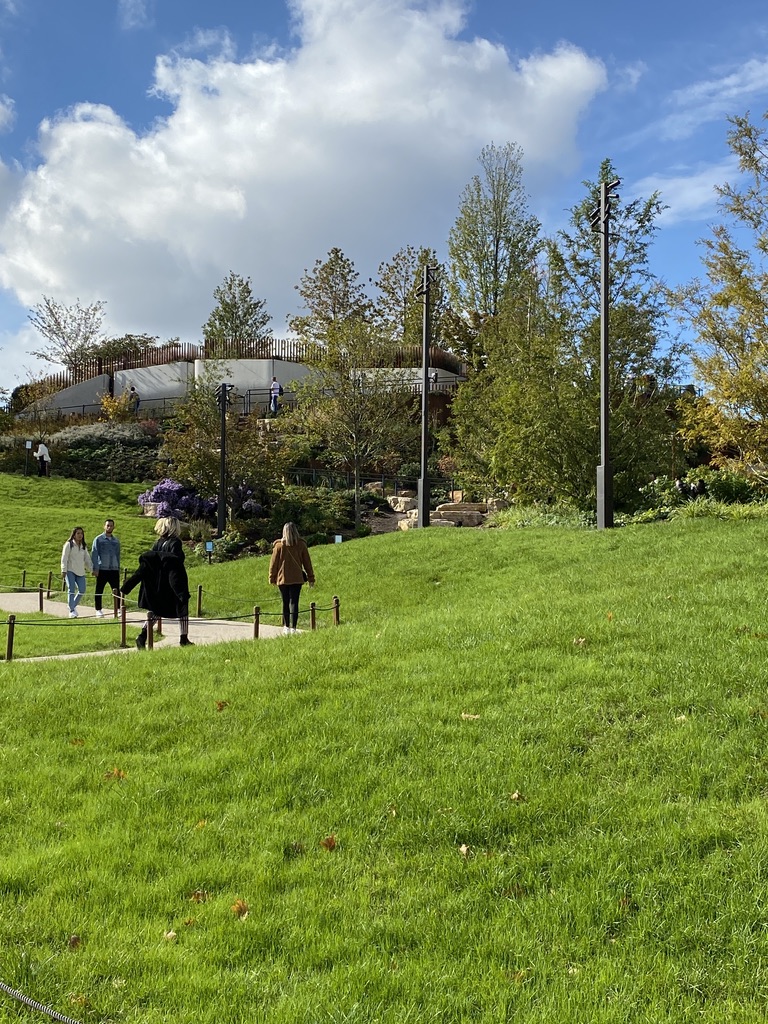
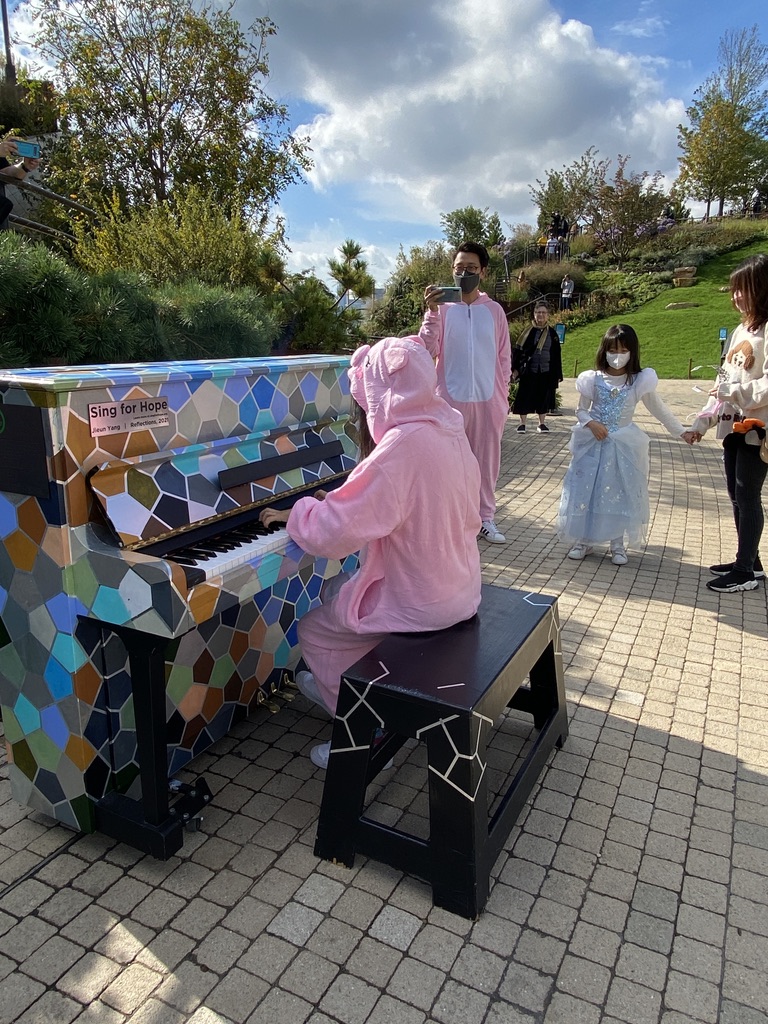
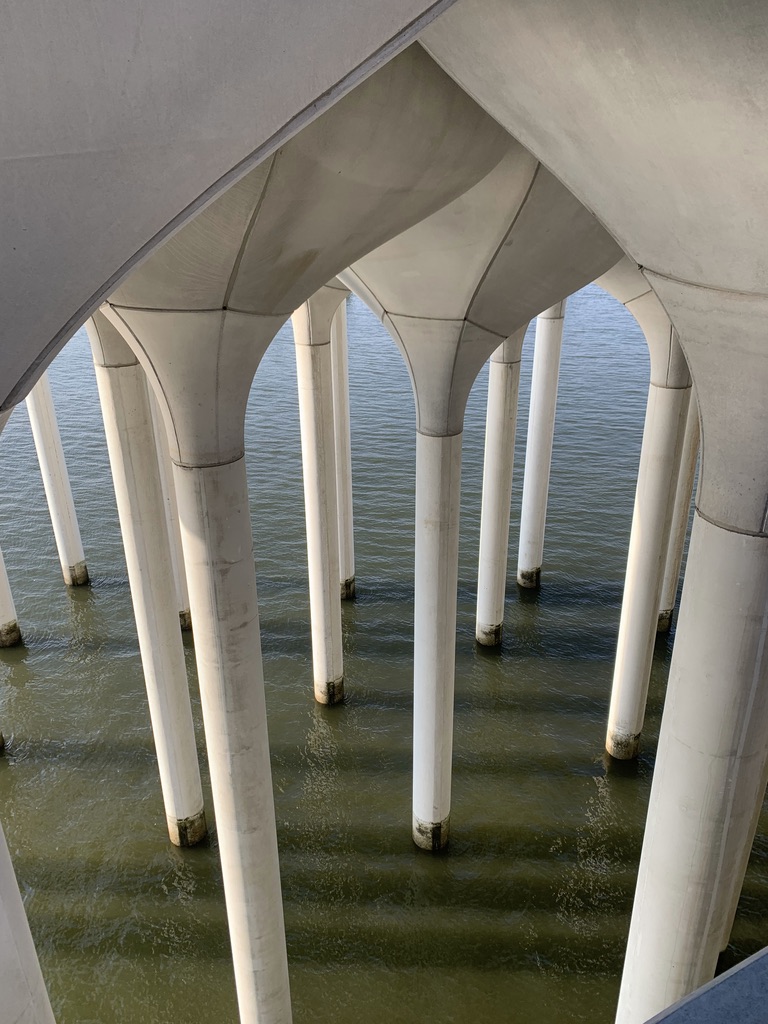
We are flying out this afternoon, but naturally wanted to take full advantage of our remaining hours and minutes. We headed to High Street on Hudson in what is probably still the West Village but at the southern end and had a good brunch.. both savory and sweet. Staff was already decked out for Halloween (as were many passersby). From there we headed to the somewhat controversial new open space gem — Little Island –- a 2.4 acre park built atop a former pier and jutting out over the Hudson River. It sits on stilts that look somewhat mushroom-like and there are fantastic views from just about everywhere. There’s an amphitheater, places to sit and relax, several participatory music “sculptures,” prohibits alcohol and bicycles (as it’s made for strolling and relaxing); it’s accessible via a series of ramps that get you to the same places the stairways do. It’s free to the public, opens around 9 am and is open at night. So what’s the problem?
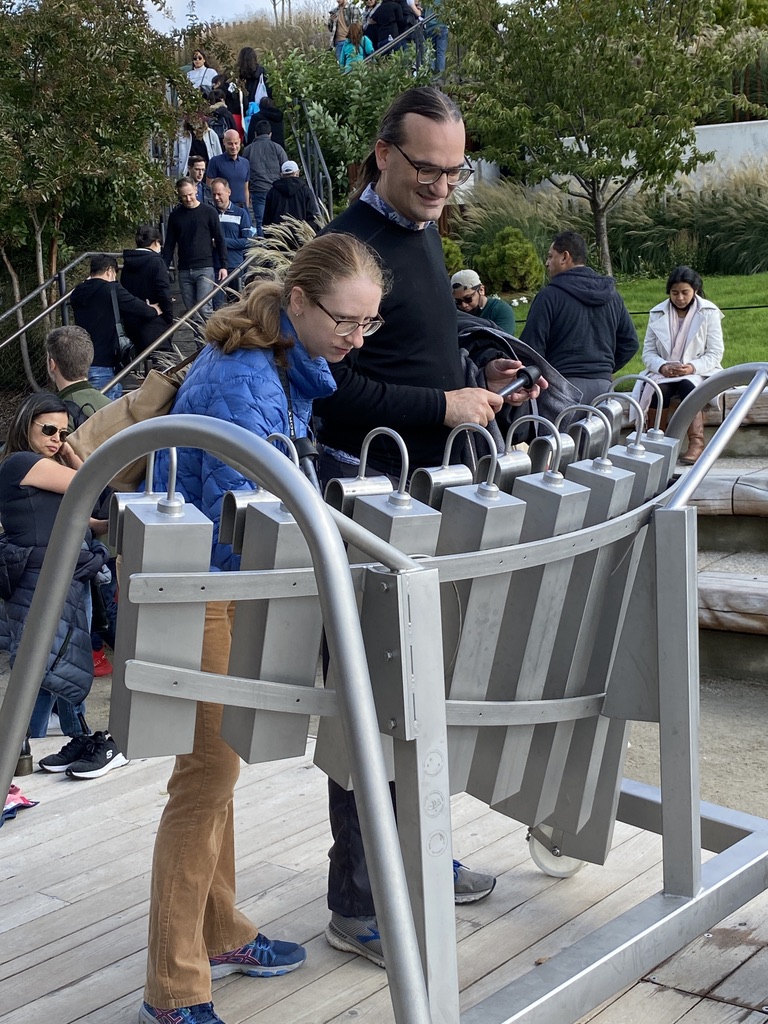
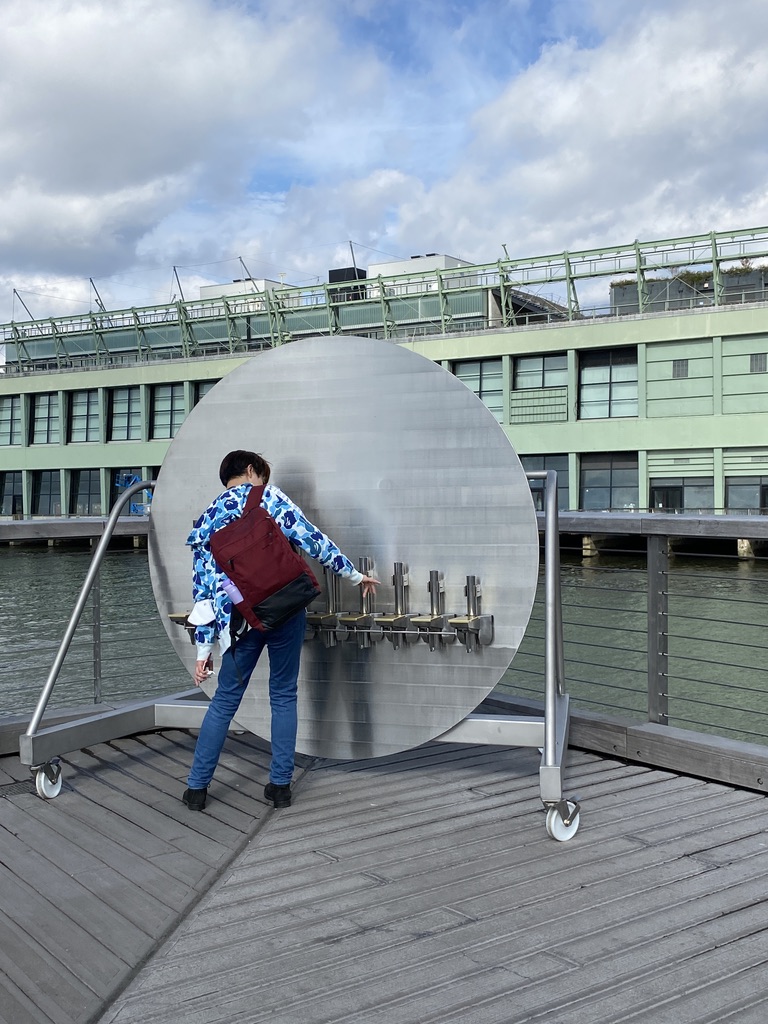
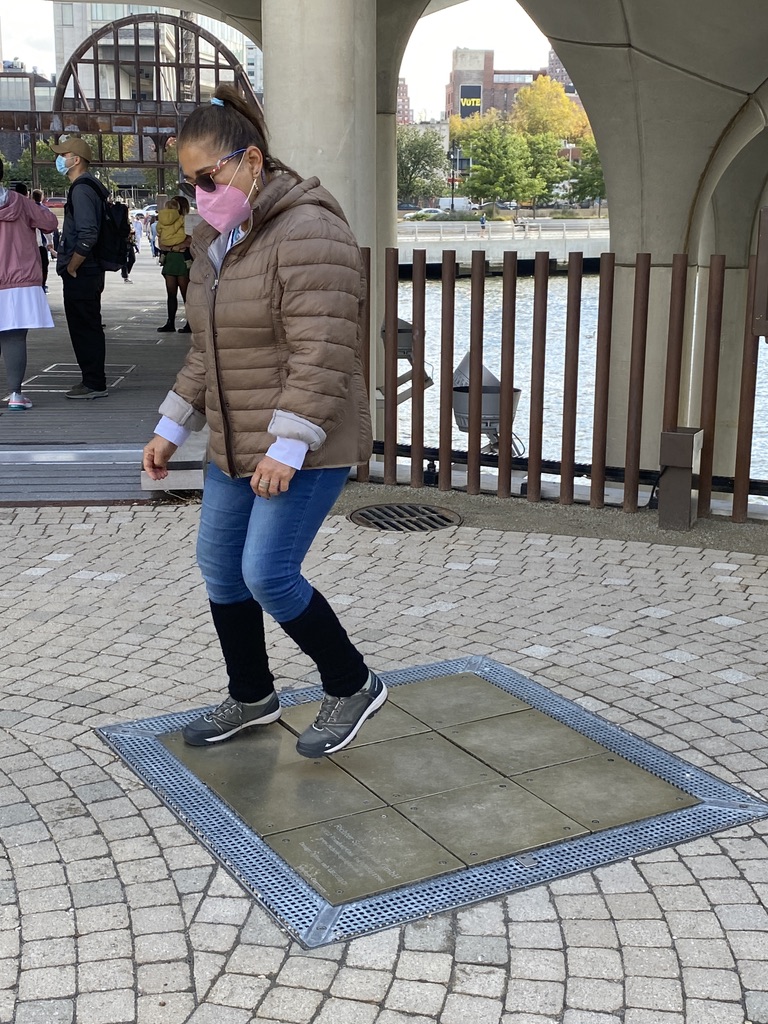
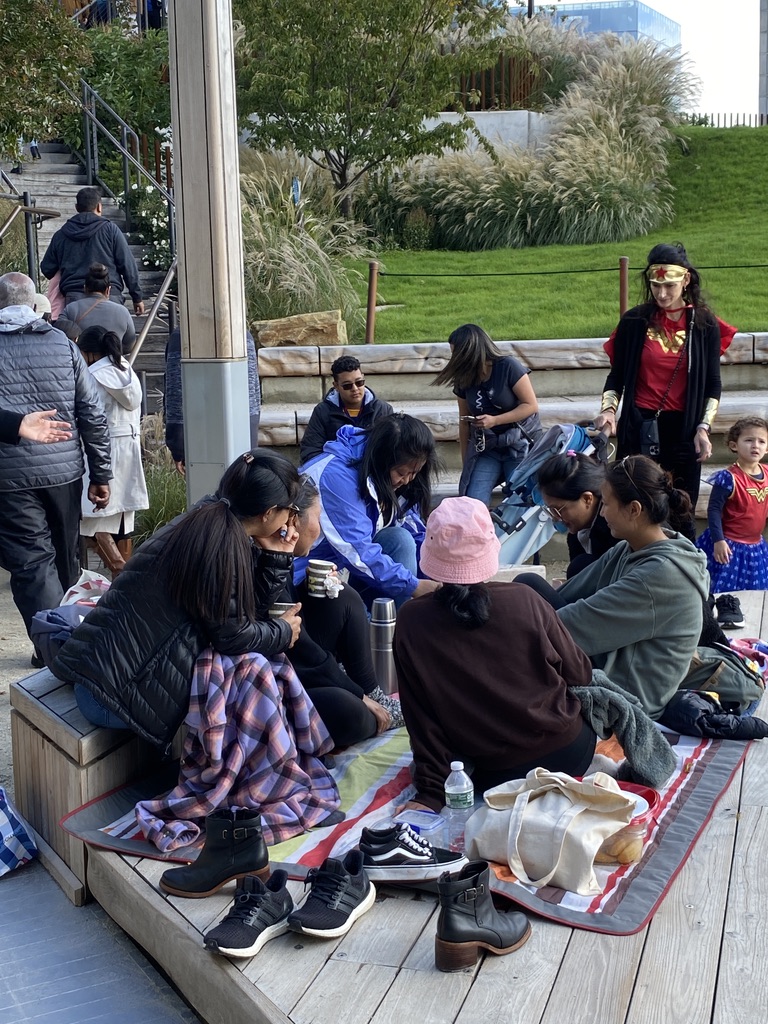
Well, it was paid for (265 million dollars I think + guaranteed subsidy for maintenance and upkeep for 10 years) by millionaires (Barry Diller and Diane von Furstenburg) who happen to have a Diane von Furstenburg dress shop about a block away. And people were upset because there doesn’t appear to have been any real community involvement or consensus about creating this park. Personally I’d rather see millionaires put money into these public places than fly to the moon in private vehicles. Still, many people thought that this amount of money could have been used to house homeless and address pressing social problems in NY. I will say that on the morning we were there, the park was populated by families who appeared to have come from all parts of the city and beyond. Everyone was enjoying the space, the view, and the random music. I didn’t expect to like it but I did – My only beef (if I had a voice as a New Yorker) is that there are actually several parks in the vicinity, not to mention the HighLine which is nearby. Seems like this largesse could have been dedicated to the creation of a wonderful park in some other parts of the city. That said, it’s a wonderful space, a joy to see people (individuals, seniors, kids, families and Instagram-crazy young people) having fun.
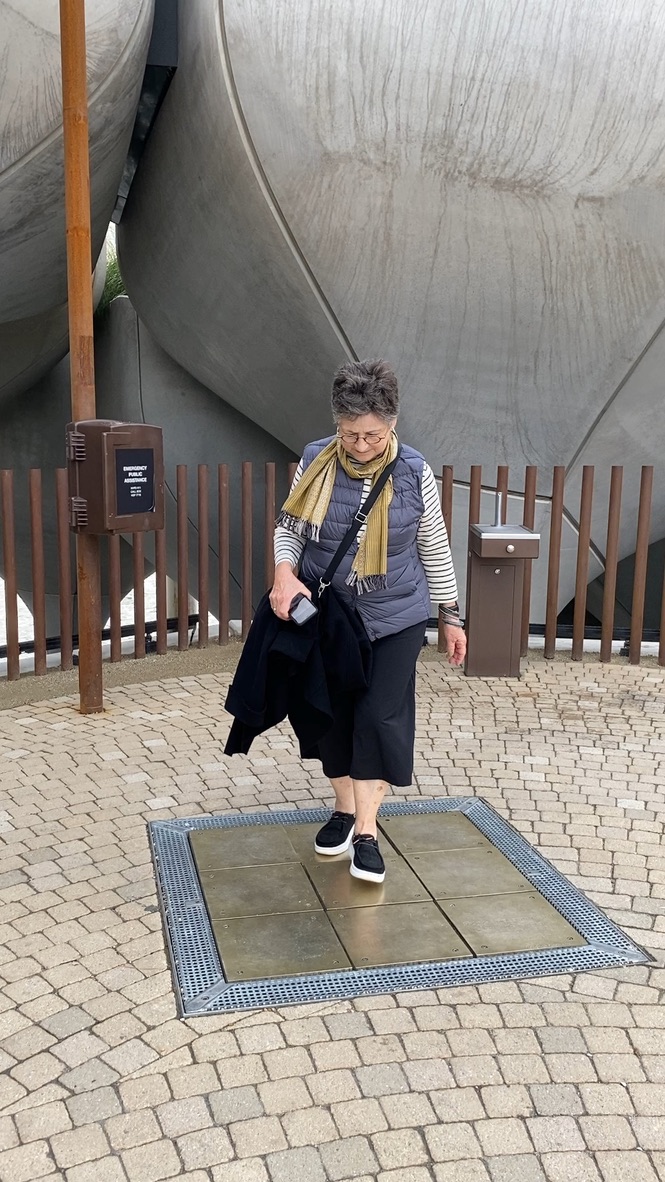
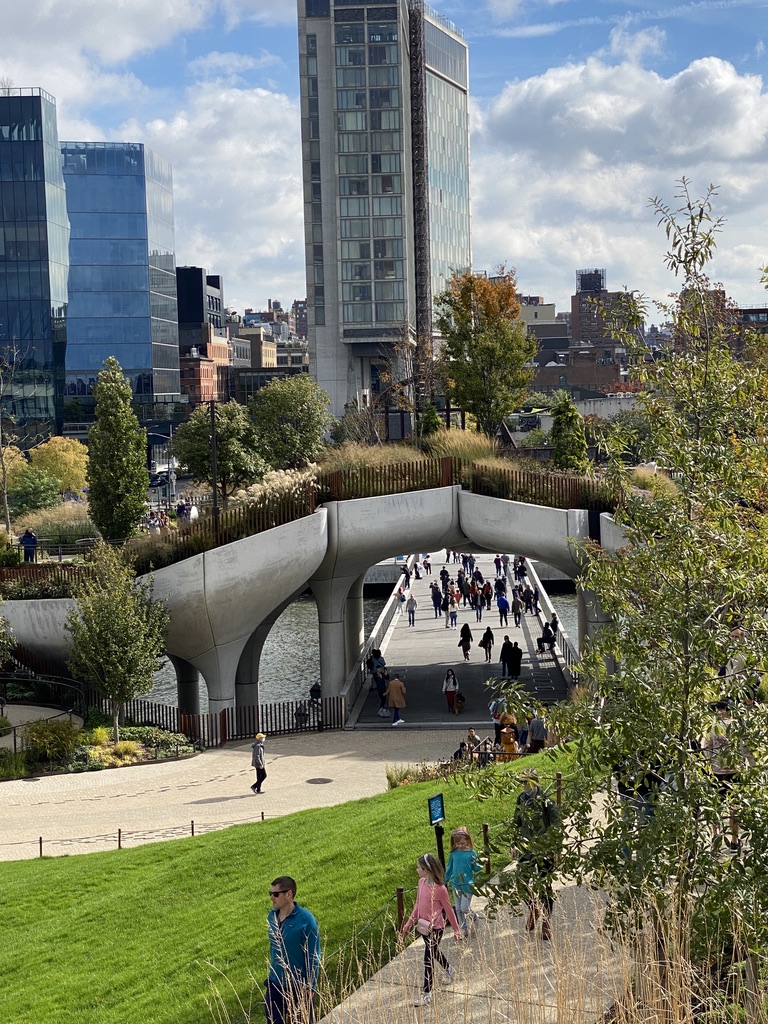
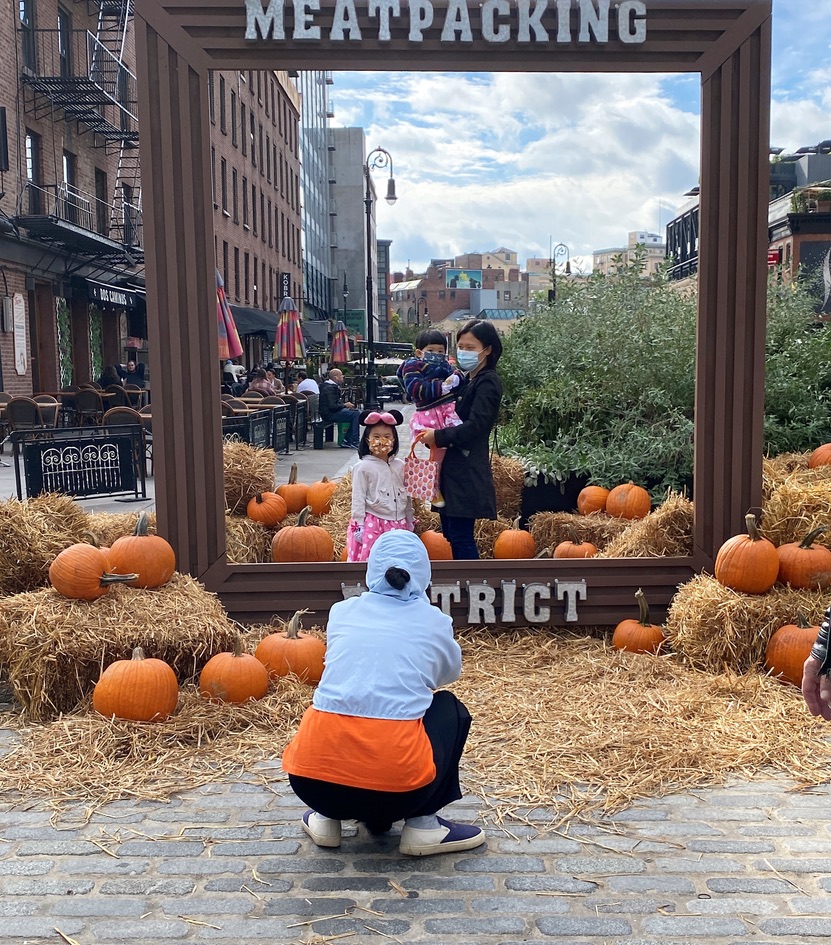

We strolled around the whole “little island” and then headed to the hotel to pack. But enroute, we needed a little food fix. We stumbled on Rosa’s Mexicano where we shared a wonderful trio of enchiladas (mole, suiza, and mestiza) along with pomegranate margheritas. And then we were ready to hail a cab to get our bags and fly to California (me to SFO and Carol to LAX).
It was a great trip, somewhat nostalgic, but all good. Next time, I’ll show folks Brooklyn.
I’m back in Oakland where it does feel like home, but I’ll always have that special place where I grew up, studied, and the place which shaped my values (Brooklyn and New York).
Next travelogue should be in December/January when we head to Malta (via Rome and Geneva for Xmas, and a brief stop in Paris when we head back.)
Thanks for reading or peeking at the photos.
All the best –
Fern
NYC : 10/29/21. The Big Apple Still Feels Like Home!
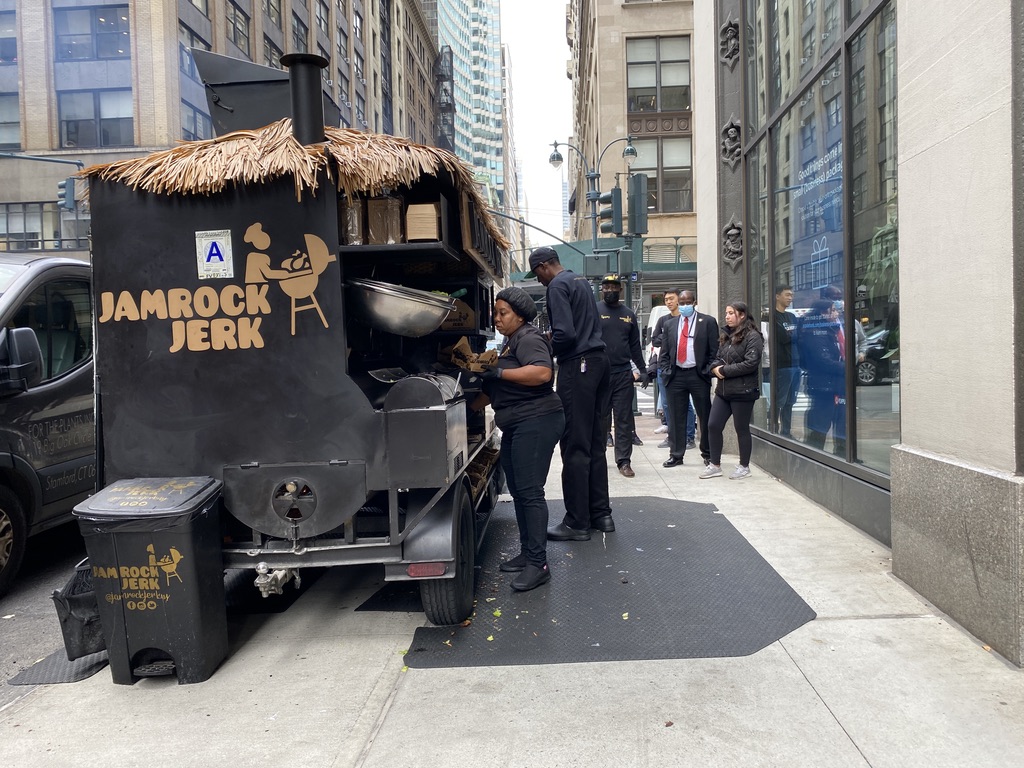
After quick breakfast, we headed out together to meet old friends of mine (Mike and Dorie Greenspan) at Odeon in Tribeca. We walked part way and taxied part way. We were pleasantly surprised to be able to spend a short time with their son and daughter-in-law and their toddler (about 15 months old I think). As you can see the family is very photogenic.
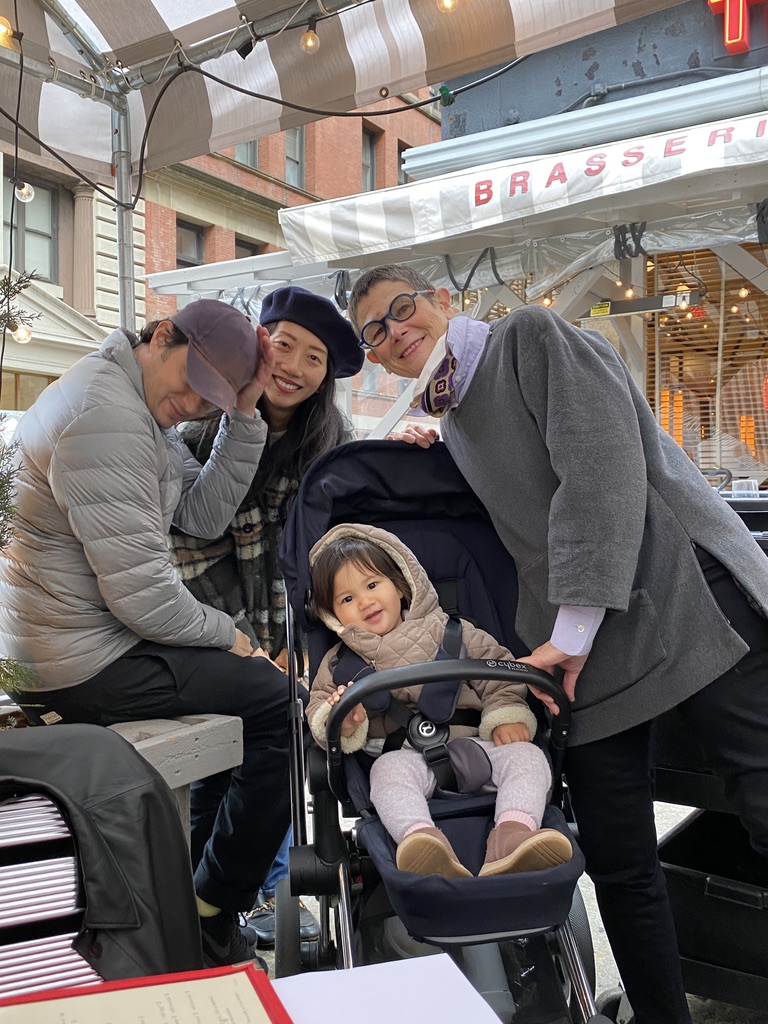
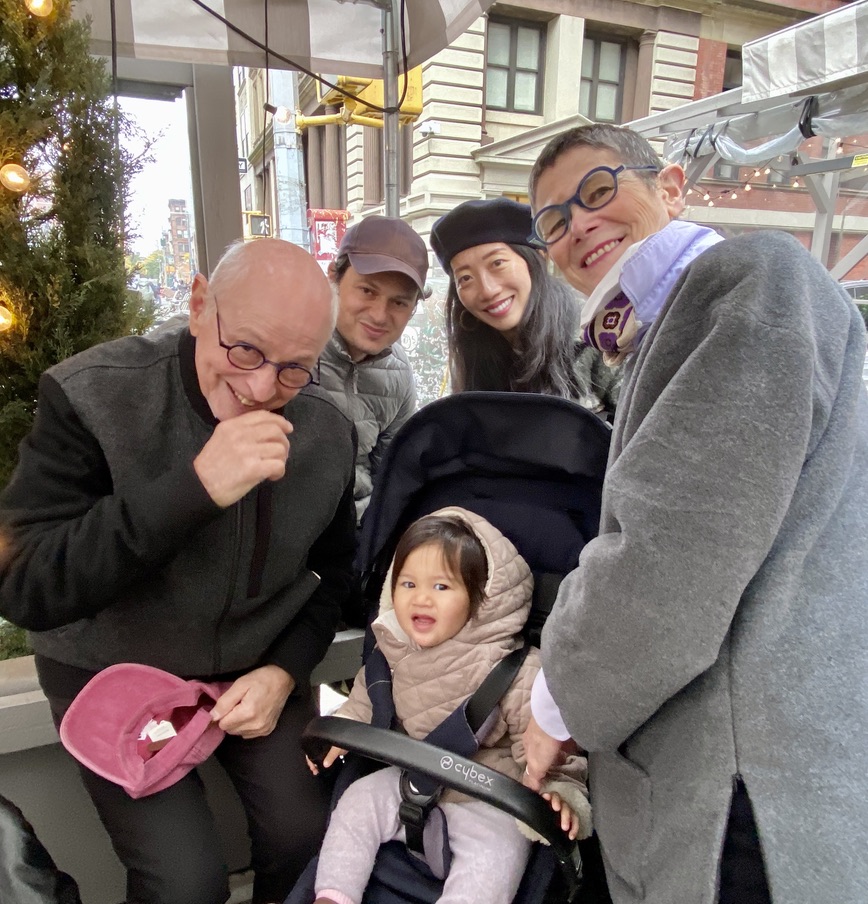
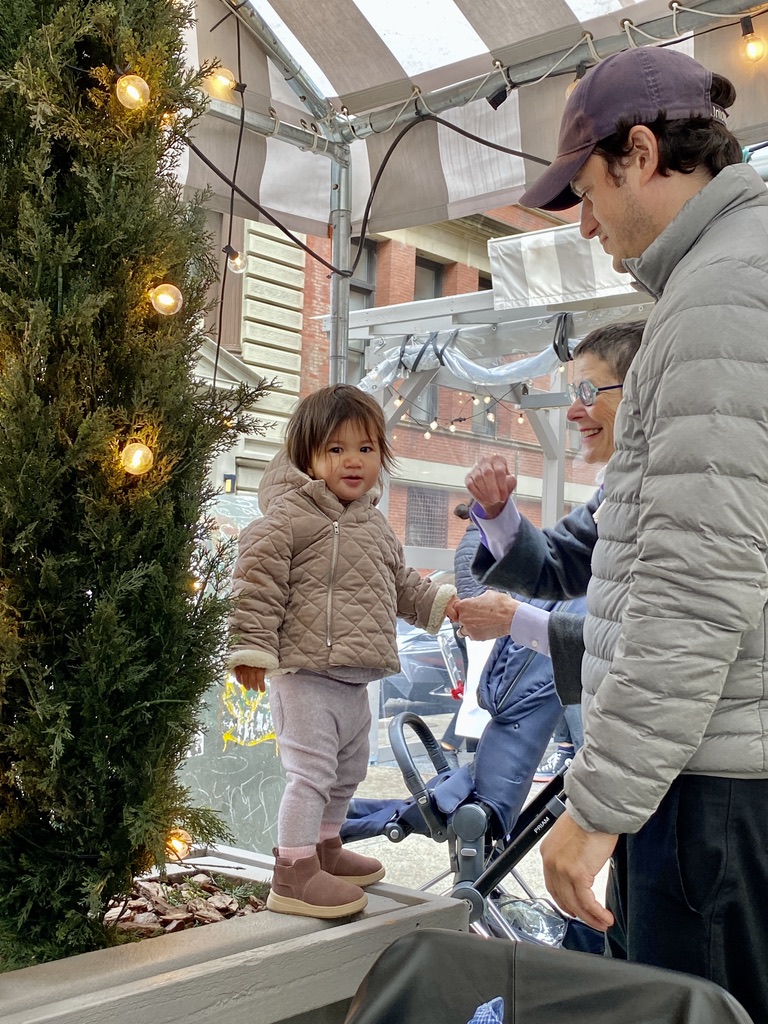
Mike and I have known Mike and Dorie for decades and it’s always nice to connect. Dorie is a cookbook writer with a new book out just a few weeks ago, so she’s busy on the book tour circuit (although much of it will be done remotely this time). Good lunch and good conversation. Carol left the lunch a bit earlier to connect up with some people with whom we would have dinner later that night and I spent a bit more time with Mike and Dorie. Mike and I will meet up with them in Paris in January on our way home from our Christmas trip to Geneva.
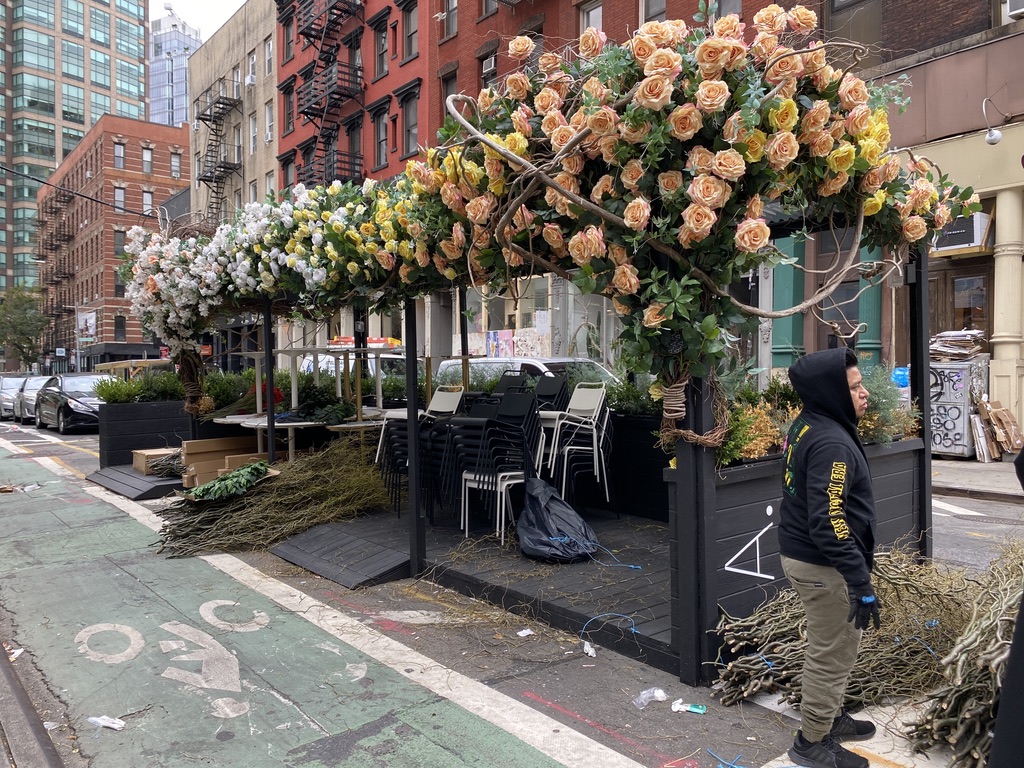
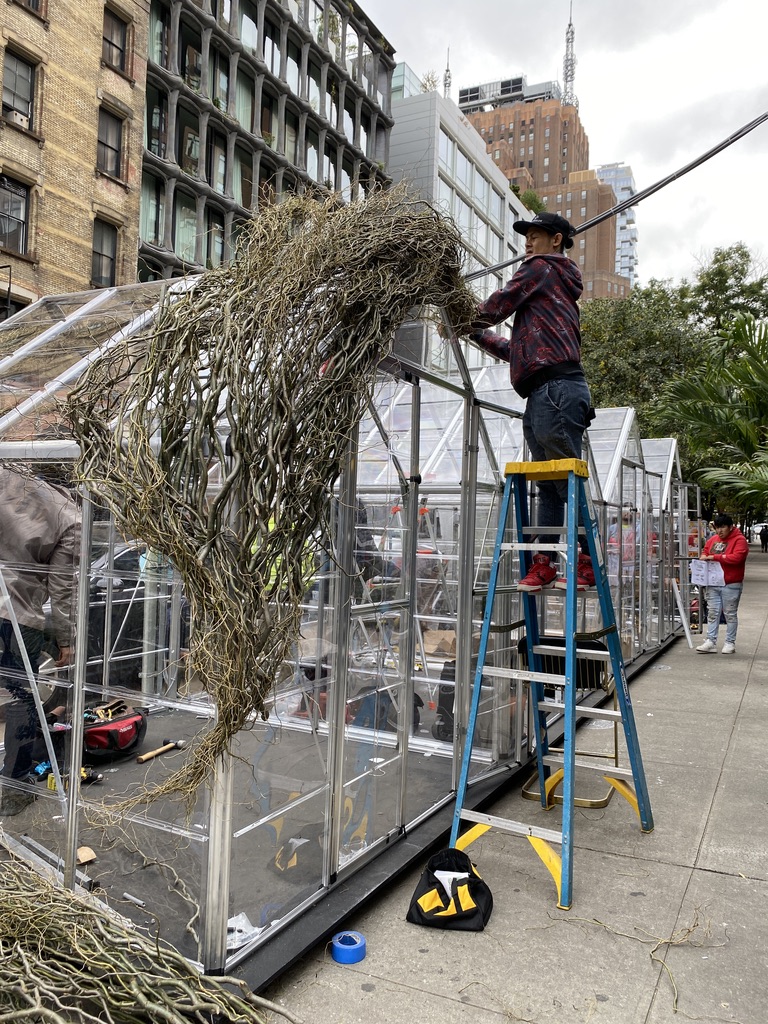
I then walked from Tribeca to the hotel to freshen up and to get a little exercise given that this would be a non-stop eating day. In any case, I still love to stroll NY in spite of the fact that I’ve probably walked these same streets hundreds of times. Somehow there’s always something new and fresh to see. This time, I was able to marvel at the creativity of the outdoor eating parklets that have been created and are now being “winterized” to stand up to colder and wetter weather.
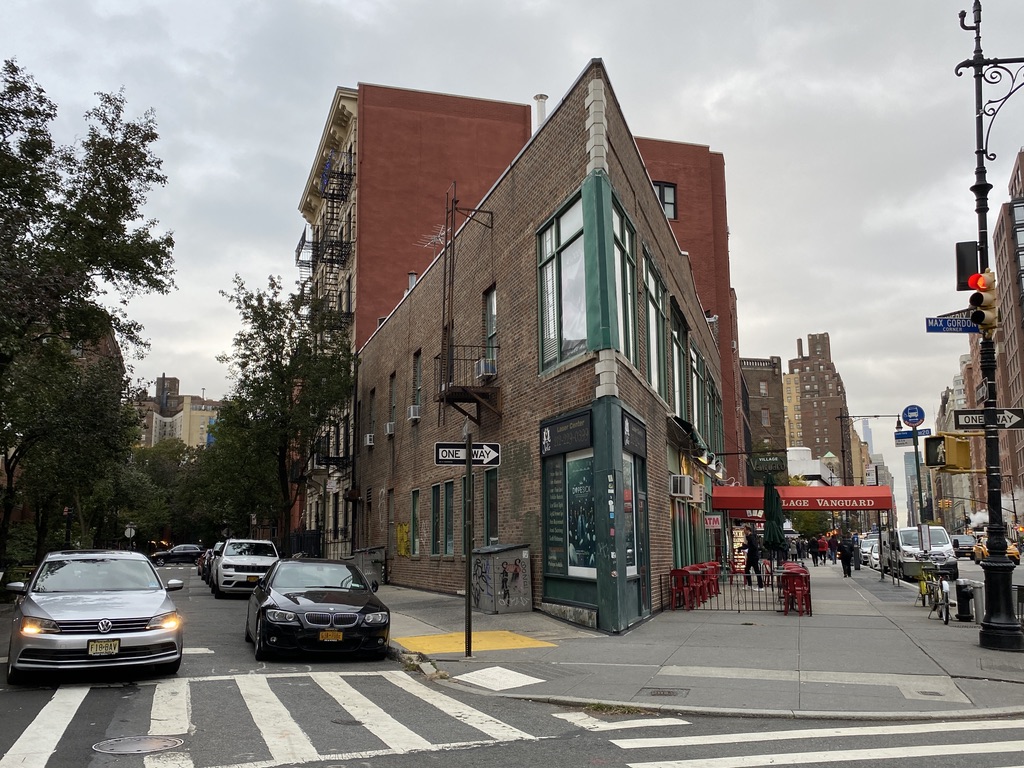
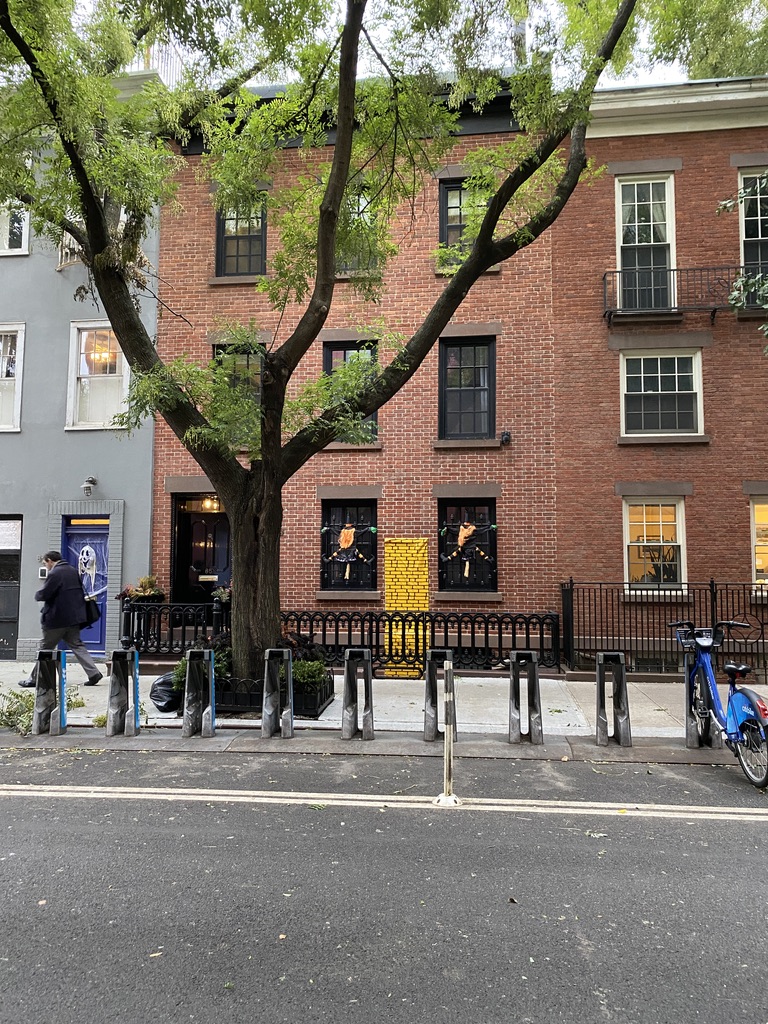
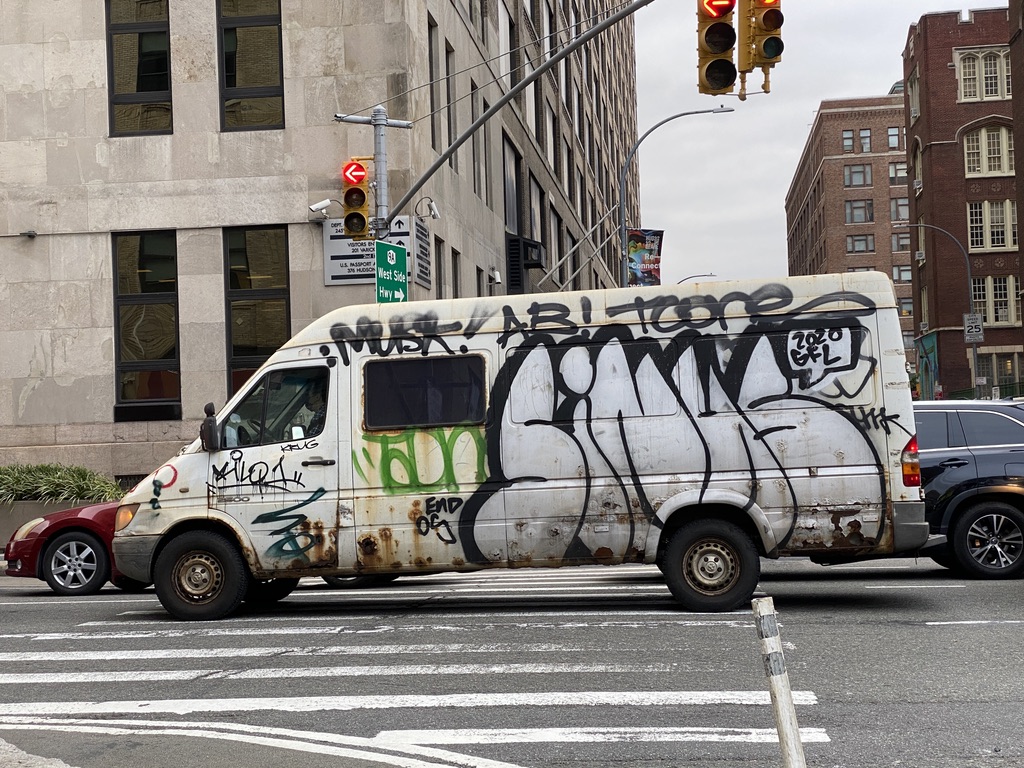
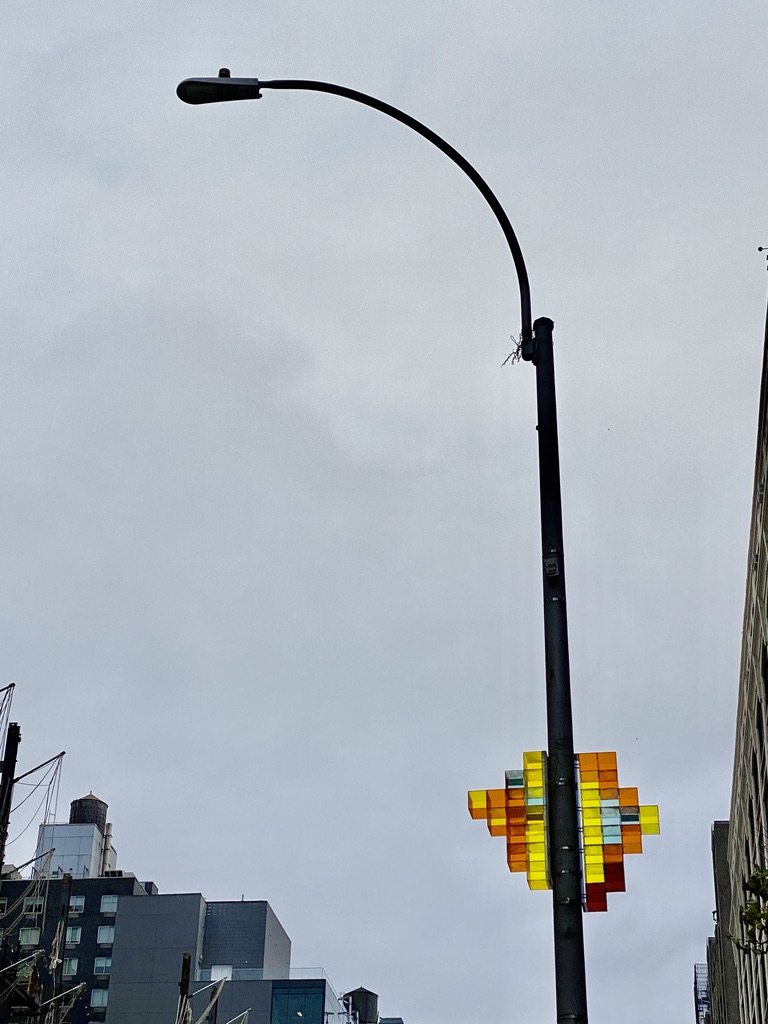
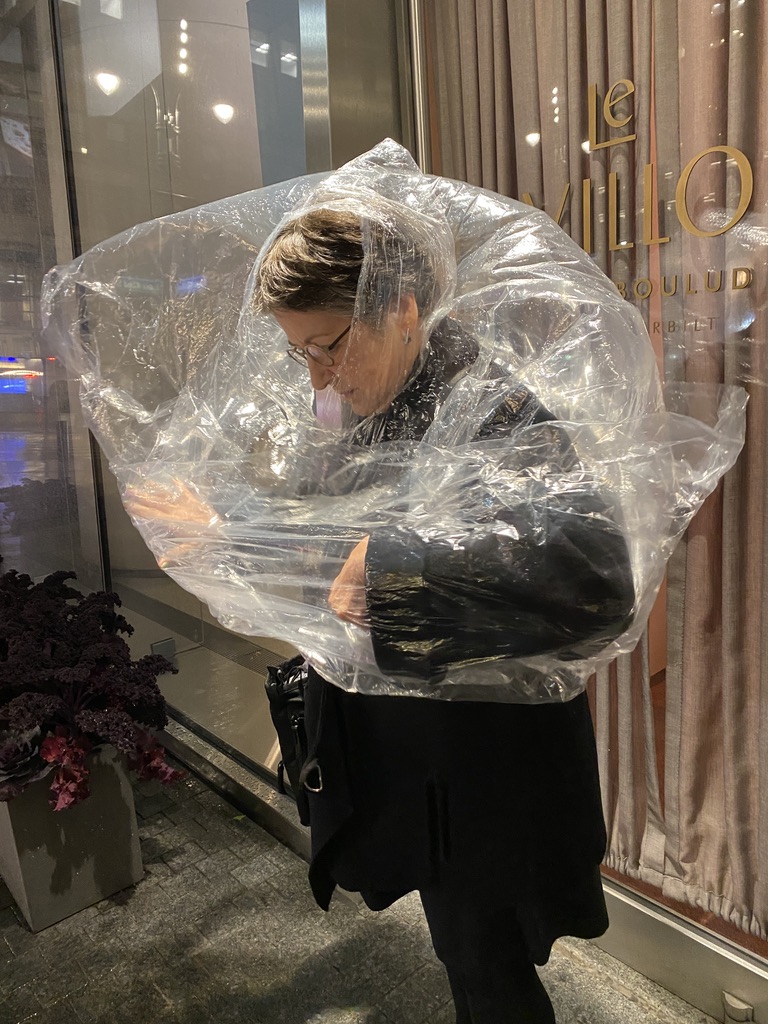
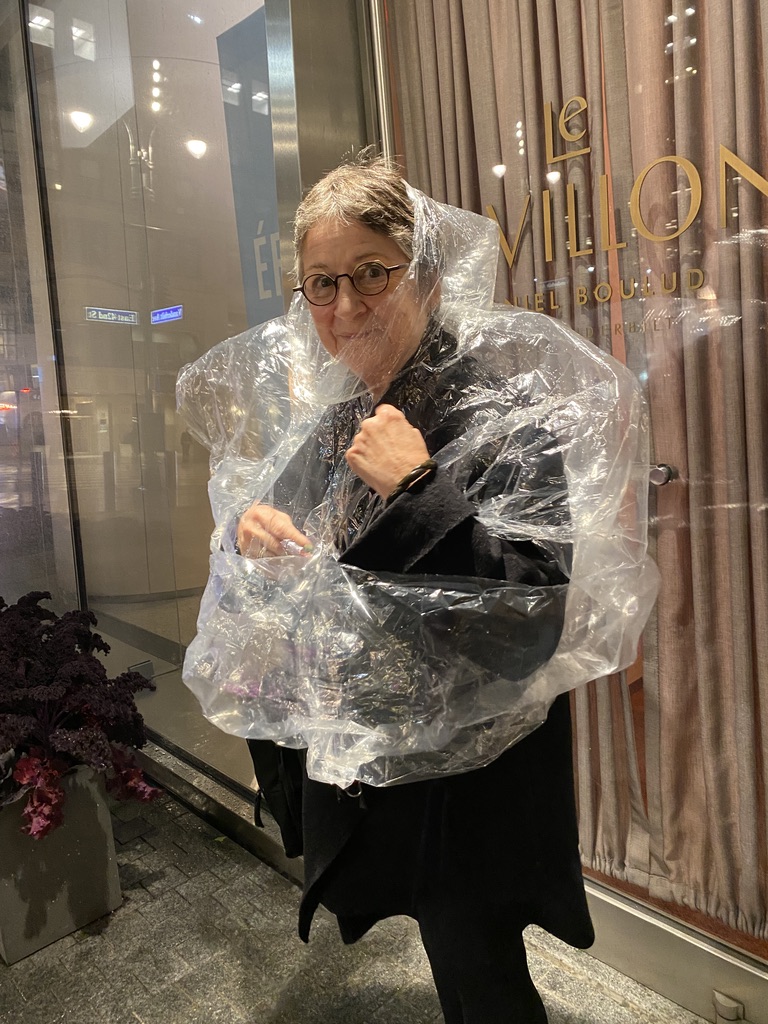
Eventually, I strolled to the dinner restaurant where I met up with Carol and her friends. They selected Daniel Boulad’s Le Pavillon at One Vanderbilt Avenue (literally just across from Grand Central on the south side). There had been a previous version of Le Pavillon from the 1940s to the 1970s. Naturally, I had never been to that one as it was way too upscale for a starving student in the 70s. But here it is, recreated (in concept I suppose) in a phenomenal space that is overrun with huge plants and walkways as well as spectacular views of both Grand Central and also the Chrysler Building. It’s a three-course meal where you make your own selections from each part of the menu. I started with wonderfully prepared roasted octopus with some kind of tiny peas, followed by duck breast with turnips and plums, and ended with a poached pear. It was a very elegant evening although not as over the top as some places. By the time we finished dinner, it was absolutely pouring outside and we arrived back at the hotel totally drenched…despite Carol’s valiant attempt to use some kind of transparent rain thing that folds into a pocket-sized envelope. I’m sure that after one use, there is no way to refold it.
October 30, 2021
For Saturday, my plan was to give Carol a royal tour of Brooklyn [We had a car rented which I planned to pick up in Soho, drive over the Brooklyn Bridge, head for breakfast in Vinegar Hill, then on to the Brooklyn Heights Promenade for great views back into Manhattan, then drive through or stroll some of Brooklyn Heights and then on to Carroll Gardens and to Fort Greene where we could walk the Pratt Campus; then to Park Slope and Prospect Park, and on to Borough Park where I grew up (it’s now a totally Hasidic neighborhood), a quick look at where I spent my early years, and then on to Coney Island Avenue to drive all the way to Coney Island (through an incredibly changing set of ethnic neighborhoods), a stop at Nathan’s and then walk the boardwalk with a stop at one of the many Russian restaurants that now populate the boardwalk. Then it was to be a drive through Sheepshead Bay and eventually wind up on Flatbush Avenue and head to Grand Army Plaza and then Bushwick which is now home to some amazing murals; eventually we’d wind up in Williamsburg for dinner.) But alas, the weather prediction was for rain and that just didn’t seem like a good way to see Brooklyn. So we switched gears.
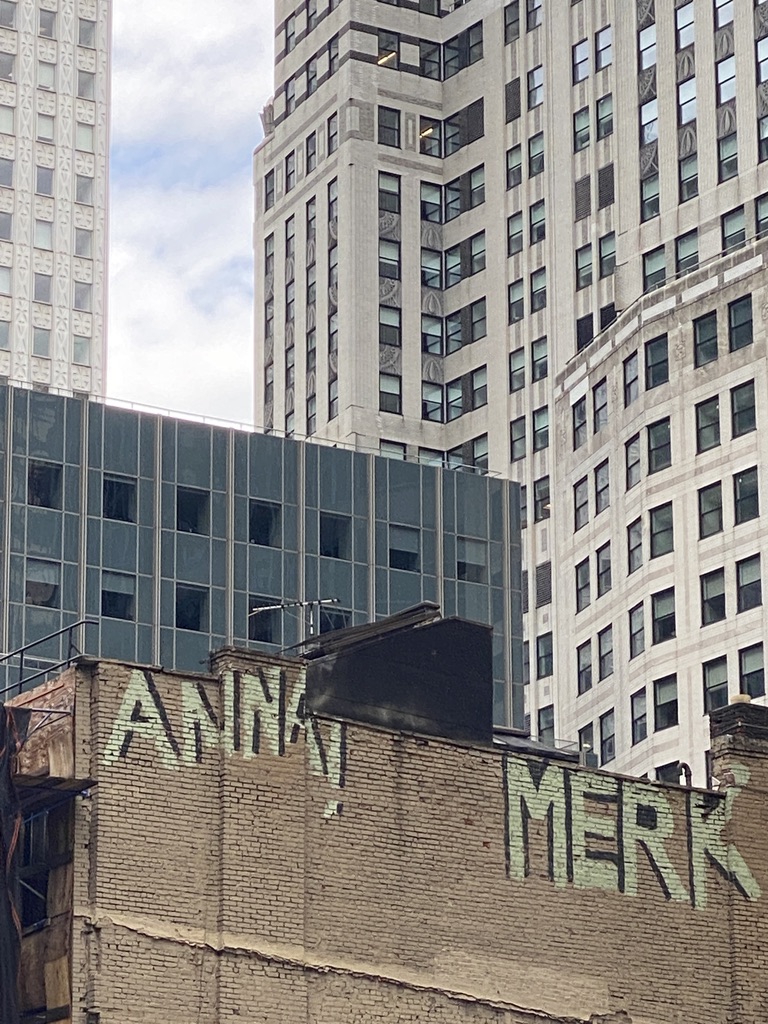
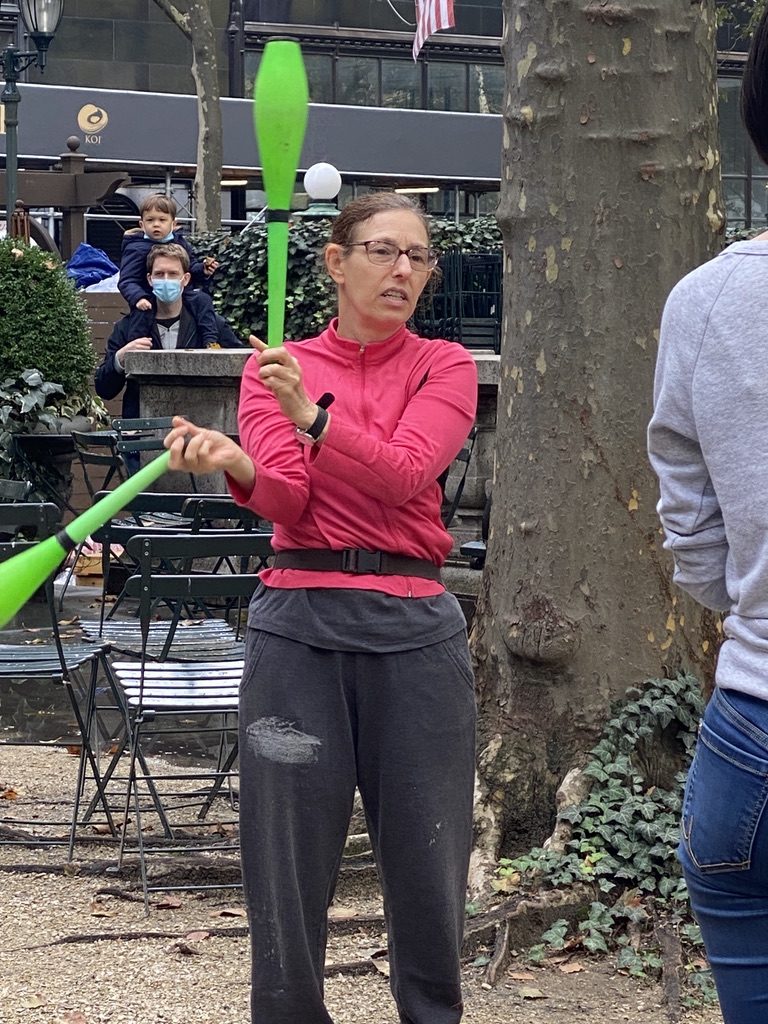
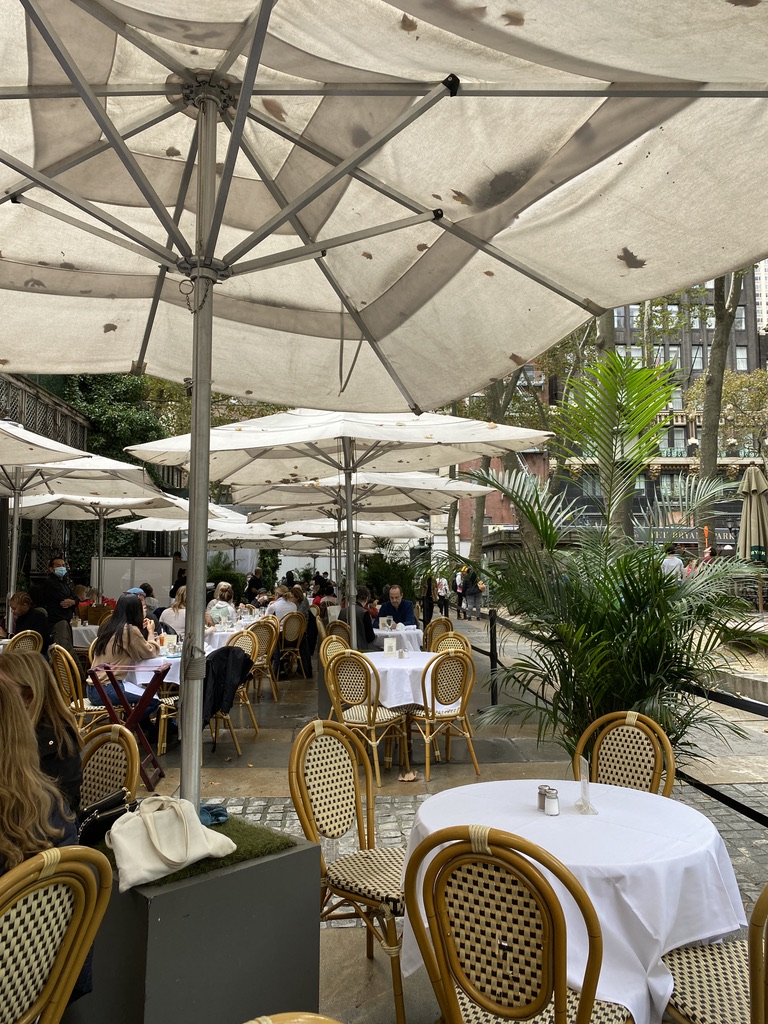
I quickly made reservations at the Bryant Park Grill for brunch.. so that we could go into the Main Public Library which often has good exhibits. And they had a good one – “The Color of a Flea’s Eye” – an overview and history of the New York Public Library’s Picture Collection, which began about a century ago. It’s an unbelievable resource that has been used for very diverse reasons over these many years. The Library’s collection is totally amazing and they did a good job of summarizing it. Romana Javitz started the collection in the 1920s and she really created its ethos and also a way of cataloging the millions of images. Just think –– all of this was before the Internet and computer. The categories include things like “People on Streets,” “Handshakes,” etc. They are all hard copies including original photographs by everyone from Diane Arbus to Walker Evans to Weegee.
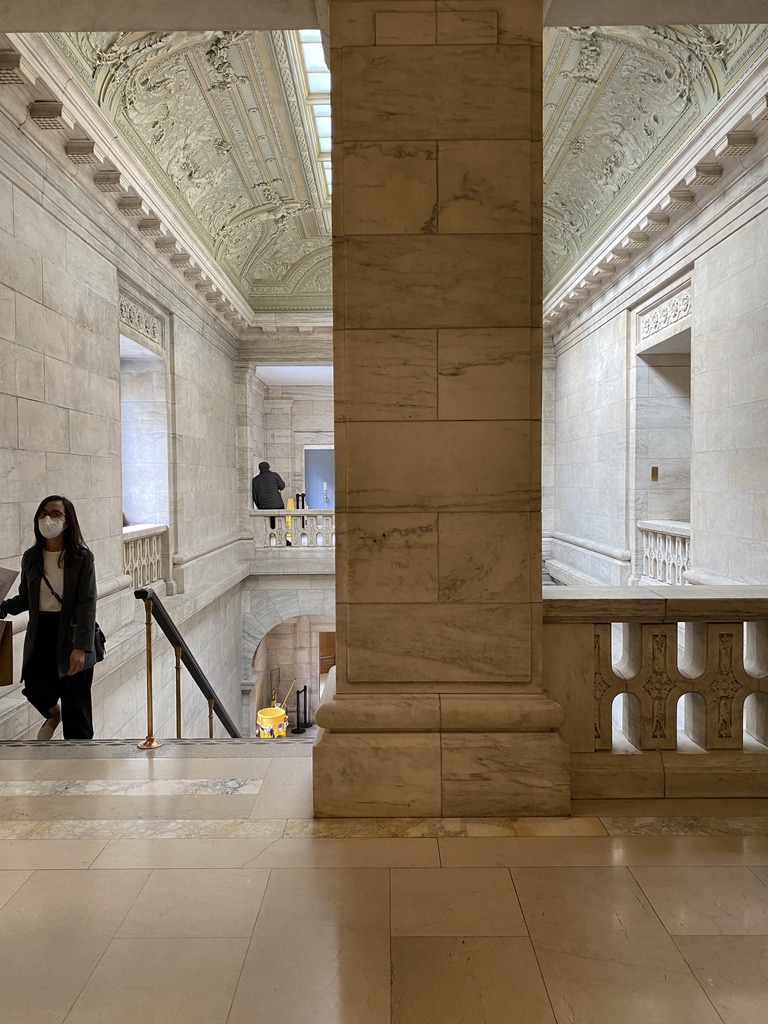
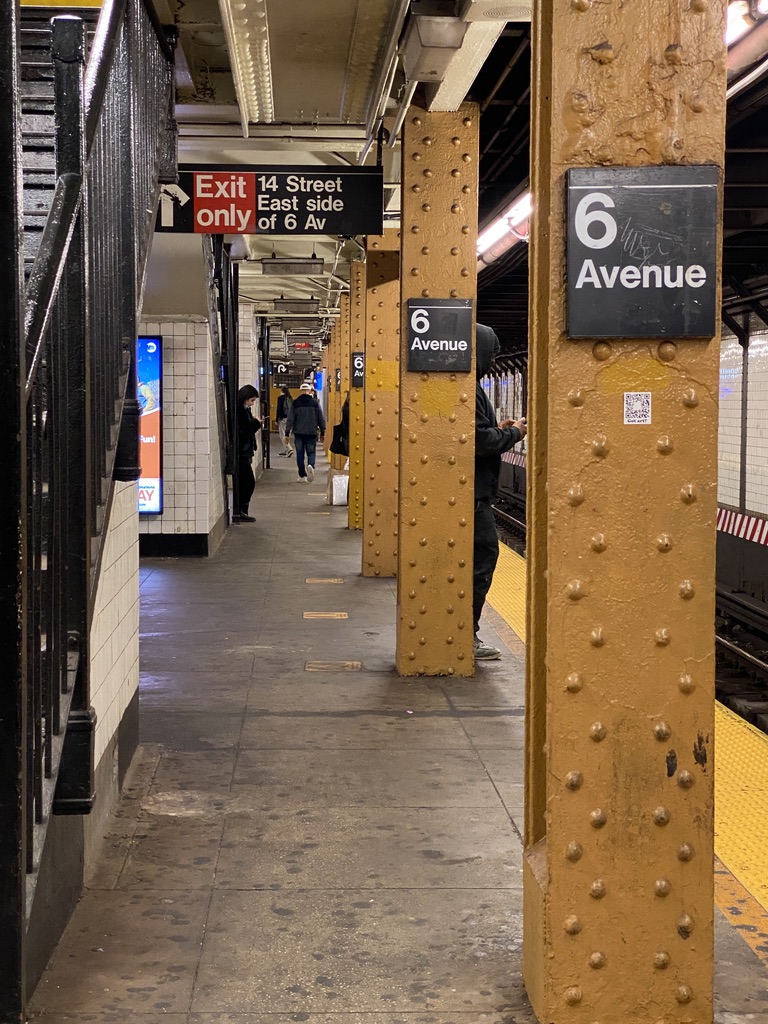
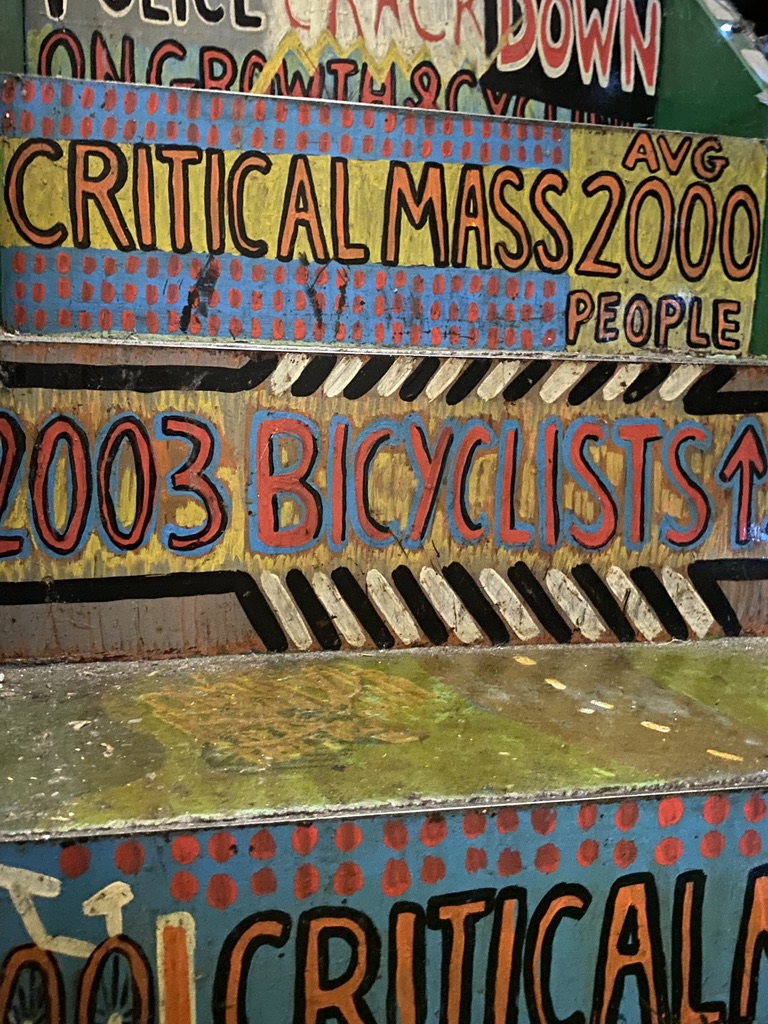
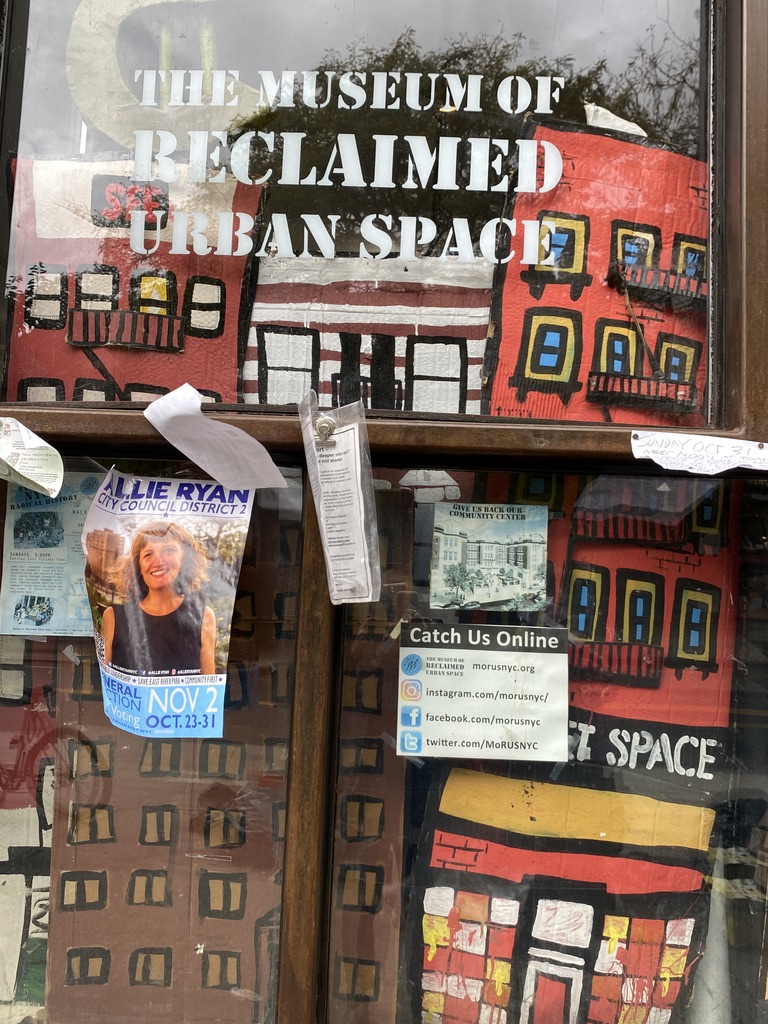
Since nothing was planned for this day (other than the cancelled Brooklyn trip) and we were trying to be indoors to avoid the rain, we then headed to Alphabet City to visit the Museum of Reclaimed Spaces (which I knew would be pretty funky given its location on Avenue C!) Frankly, I thought it might be in someone’s apartment. But it was a storefront and clearly a hangout for young people to create posters and conceive tools for protest demonstrations to try to ensure the preservation and creation of public spaces, especially urban gardens. The “exhibit” is in the basement, down a stairway that clearly would not meet any city code. But it was fun and they are doing good work. We strolled a bit and then stopped for a snack at Wayland, an unexpectedly good little place. We had something they called Milk and Honey – Burrata on 7-grain homemade bread/toast with honey drizzled.. A perfect snack. Then we walked through Tompkins Square Park and back to the hotel to freshen up for yet another meal.
One more email to wrap up Saturday night and Sunday morning.. before heading back to California –
All the best –
Fern
From DC to NYC. 10/27/21. Onward to NY
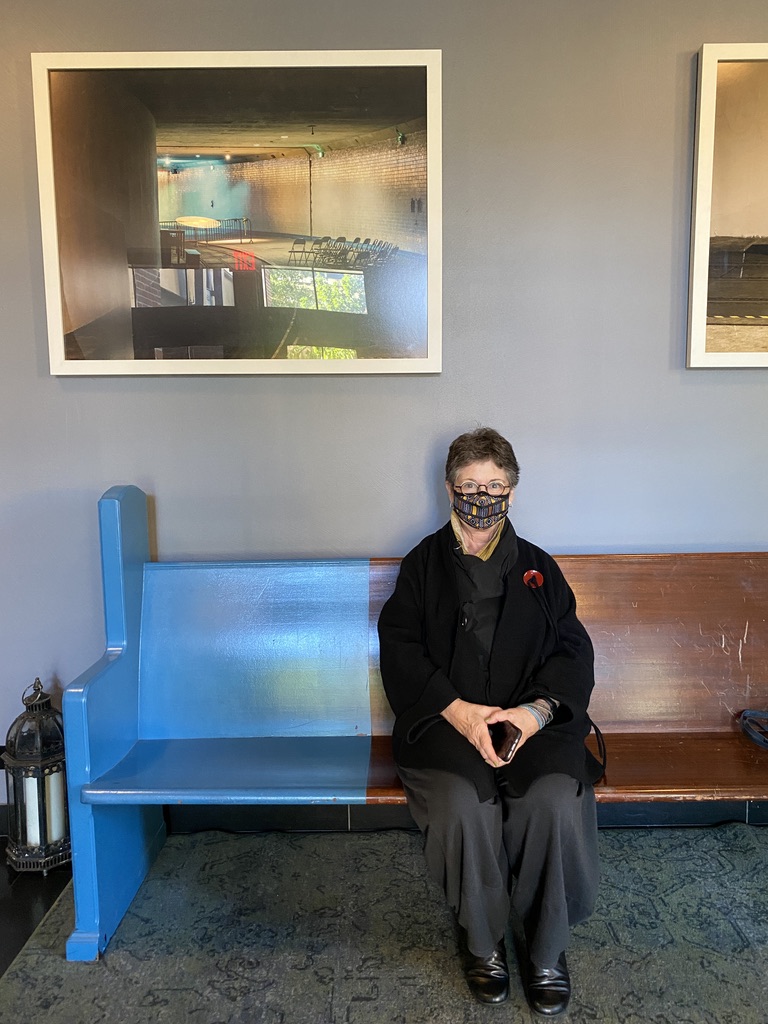
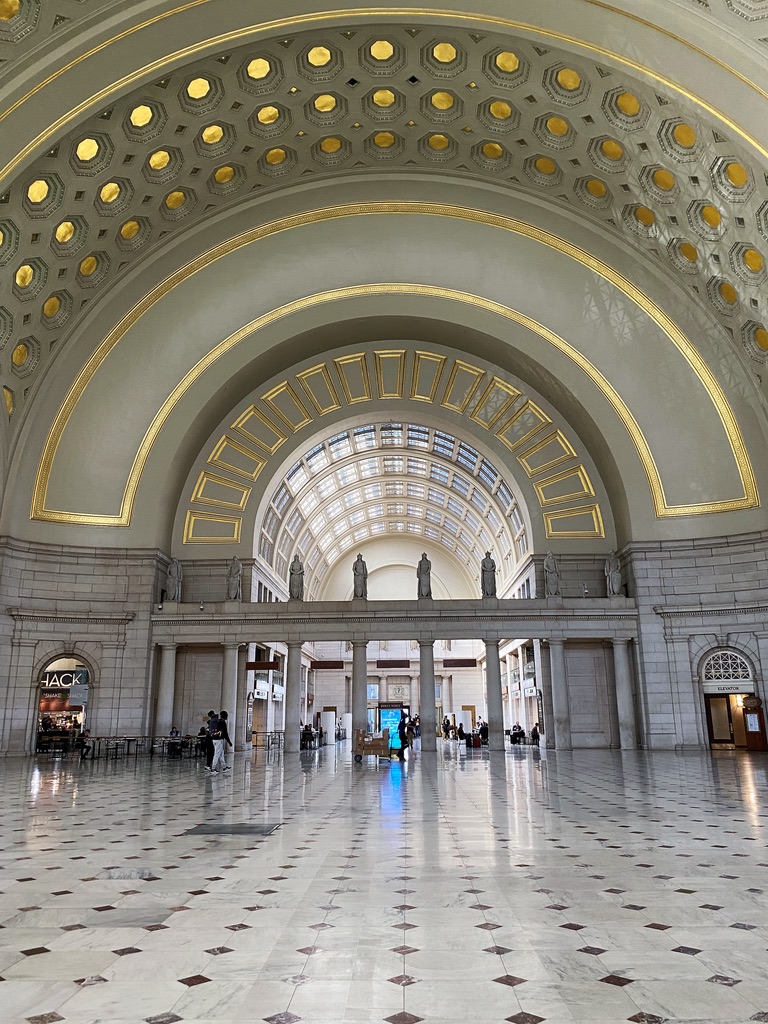
Greetings on Wednesday, October 27, 2021
After breakfast and a brief final walk around Adams Morgan, and final packing, we headed to Union Station to take the Acela to Penn Station (NY). We taxied to the station and again chatted with an Ethiopian driver who was both friendly and helpful. For those of you who do not know – I do not take either Uber or Lyft and love real taxi drivers for whom driving is a profession. But that’s another story for another day. Following so many wonderful meals, we settled for Shake Shack at the train station (my first Shake Shack experience). No review for the lunch, but we desperately needed something to eat before boarding the train. Train was pretty full; everyone with masks (but they didn’t check vaccination status as they do at all the restaurants in DC. I hadn’t taken the train from DC to NY in a few years and it was interesting to watch out the window as we traveled and skirted through Maryland, Delaware, Pennsylvania, and New Jersey.
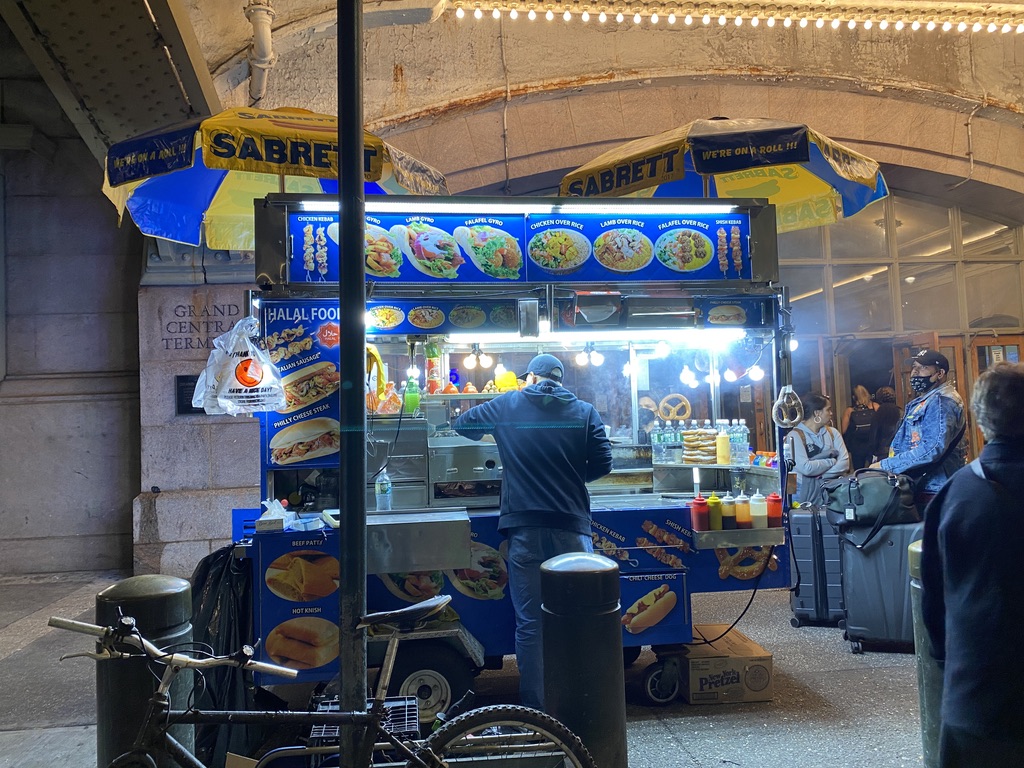
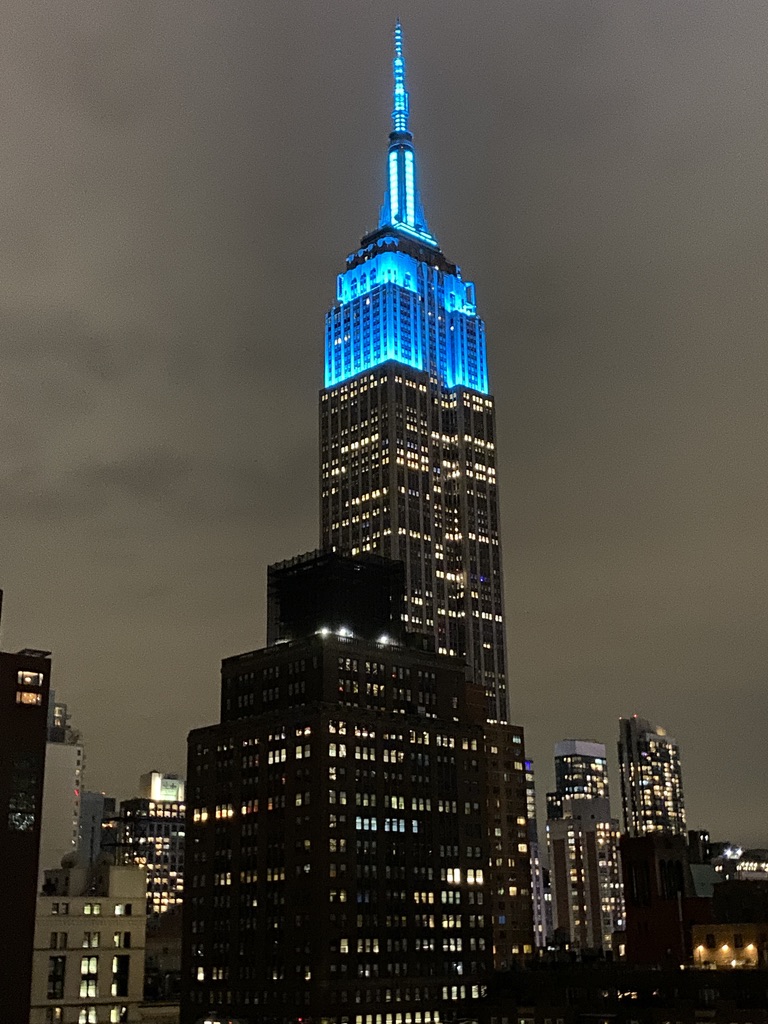
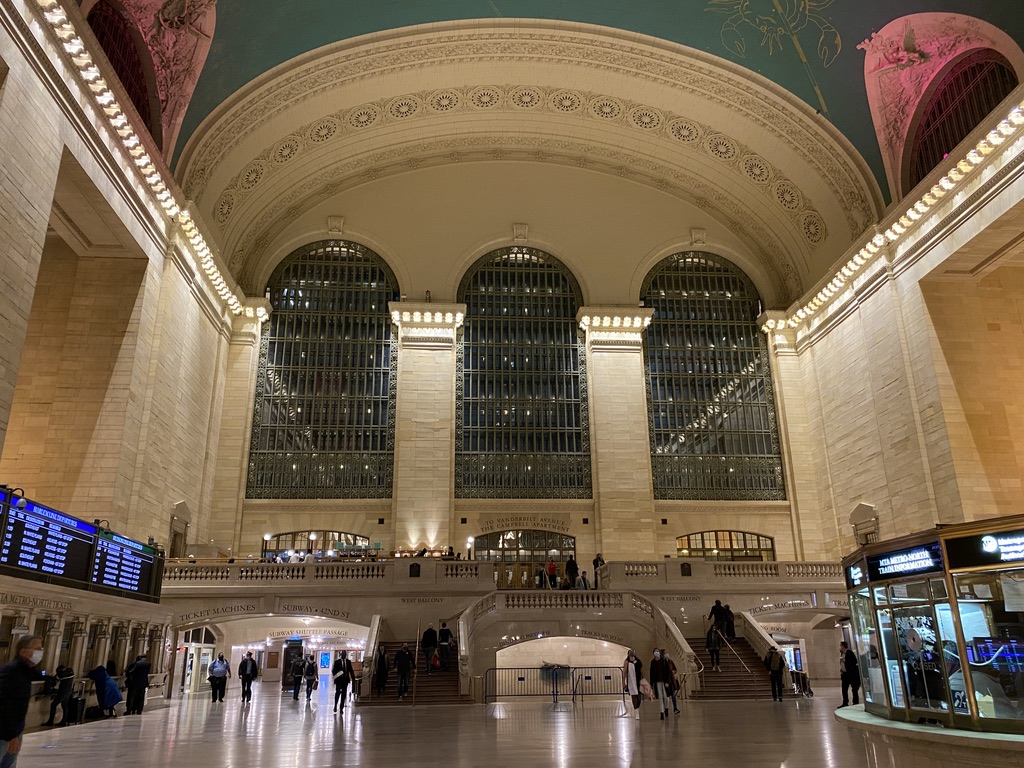
Arrived at Penn Station around 7:30 in the evening and as we got off the train, I remembered how badly Penn Station displays any signs regarding exits and ground transportation; glad I wasn’t a typical tourist, especially one who is visiting the Big Apple for the first time. We hustled our way to a taxi and headed for the Kitano Hotel (in the Murray Hill area – 38th and Park). We decided on the Kitano where I’ve stayed several times before and many times in the vicinity of the Kitano because it’s easily accessible, near subway, near Grand Central Station, and most importantly NOT near Broadway and other highly touristed areas. After a quick check-in we headed to the Oyster Bar at Grand Central to have some food… and to be reminded that we were in NY… with waiters who want you to decide on your order as soon as you sit down and are ready to clean up just as quickly. But we weren’t going to rush. We were tired, hungry, and thirsty. [There’s a saying about NY Jewish wedding waiters – in that they are clearing off the tables while you get up to dance!] Obviously this description is not accurate for the upscale restaurants. Anyway, the meal was perfect.. fresh oysters and some other dishes. We strolled back to the Kitano which is only a few blocks away, and went up to the Kitano’s rooftop bar which has good views of the area and the Empire State Building all lit up.
Thursday, October 28

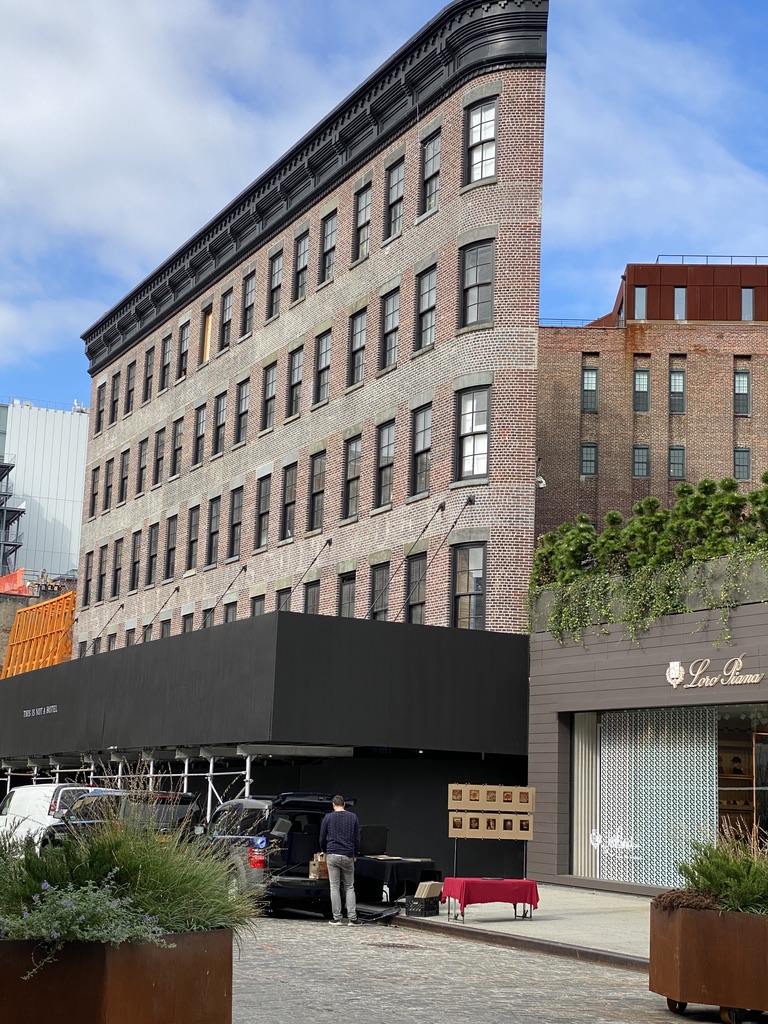
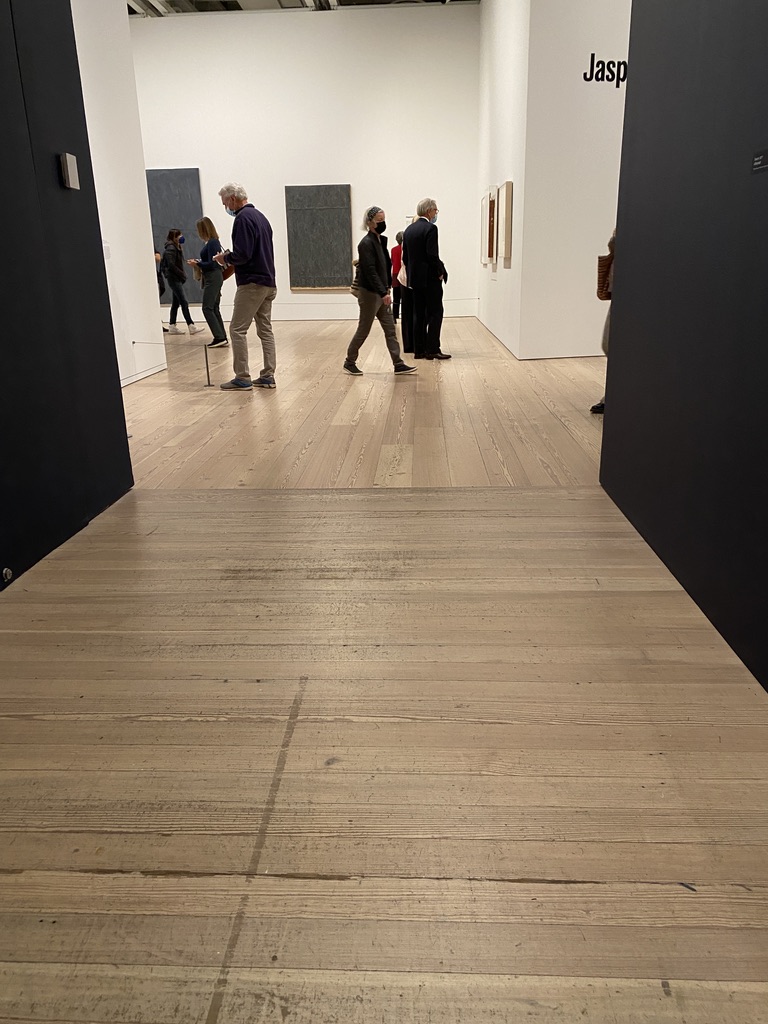
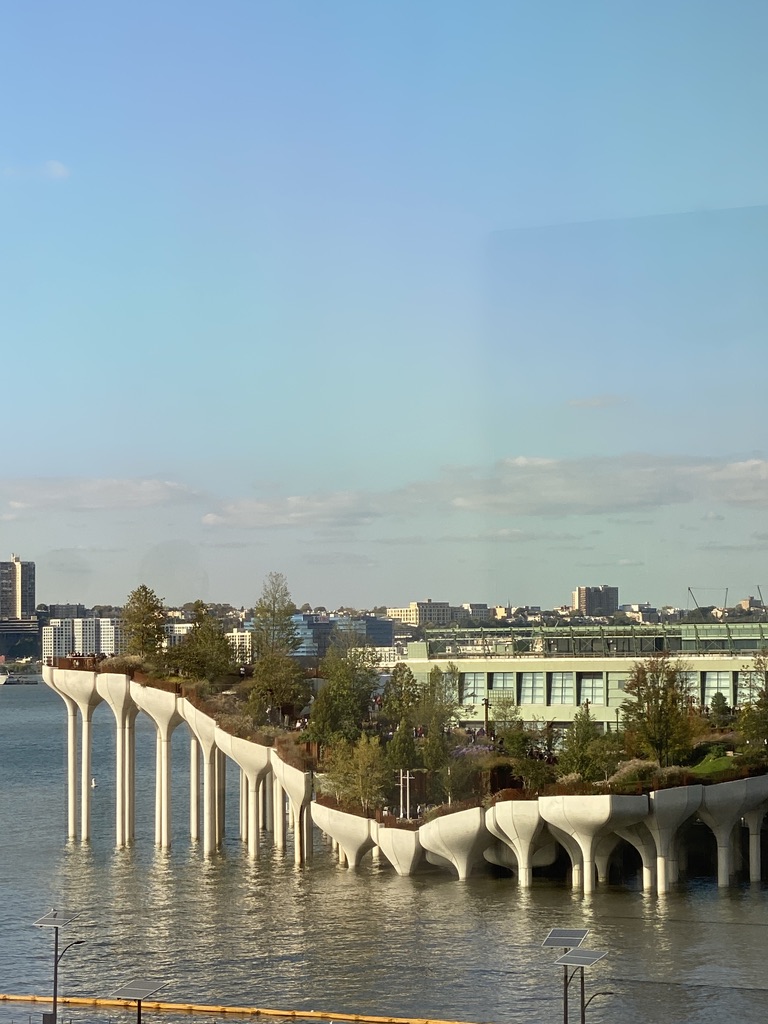
Carol was going to meet a friend who lives in Staten Island for lunch and I was meeting my brother for lunch. As it turned out all of us (without knowing) selected the same restaurant – Pastis – in the Meatpacking District (which doesn’t have any meatpacking going on anymore. I decided to walk – about 3 miles—to the restaurant. I selected Pastis because after lunch we were heading to the Whitney Museum and the location is perfect. But it’s also a really good restaurant. For many years, the original Pastis was the iconic French bistro in NY. I think it closed for a few years and then re-emerged with much of the same menu (or at least it seemed like that to me). My brother had their famous onion soup followed by a ravioli dish which looked quite yummy. I had my favorite steak tartare, followed by a fantastic herb omelet as I hadn’t had any breakfast and the lunch was early (my reservation was about two hours before Carol’s).
Timing was perfect and I was able to table hop and join Carol and her friend toward the end of their meal. My brother took off for home (Hillsdale–about two hours north of the city) where he is a member of the Town Council, to attend a finance committee meeting. Then Carol, her friend, and I walked to the Whitney to see the Jasper Johns show. Within 10 minutes, I remembered why I hate art museums. The Johns show included news clips about Johns including one about him being the first living artist to sell a painting for $1 million. That fact is part of my dislike of museums as the showing of art in big museums just increases the “value” of the work which is generally owned by wealthy people and then they want more by that artist and the prices increase and it just goes on and on.. and has very little to do with the “purpose” of the work. Here’s an interesting article about one of Johns’ pieces. https://www.washingtonpost.com/arts-entertainment/interactive/2021/jasper-johns-slice-painting-whitney/ .
The show is actually in two parts with a parallel show in Philadelphia. From the photos I’ve seen, I think Philly may be a more interesting show. But it’s still inside an institution of “high culture” that is not comfortable unless you are white and educated (and those seeing the show certainly fit that profile—not a person of color to be found). OK.. I’ve had my fill of these kind of museums for at least another year.
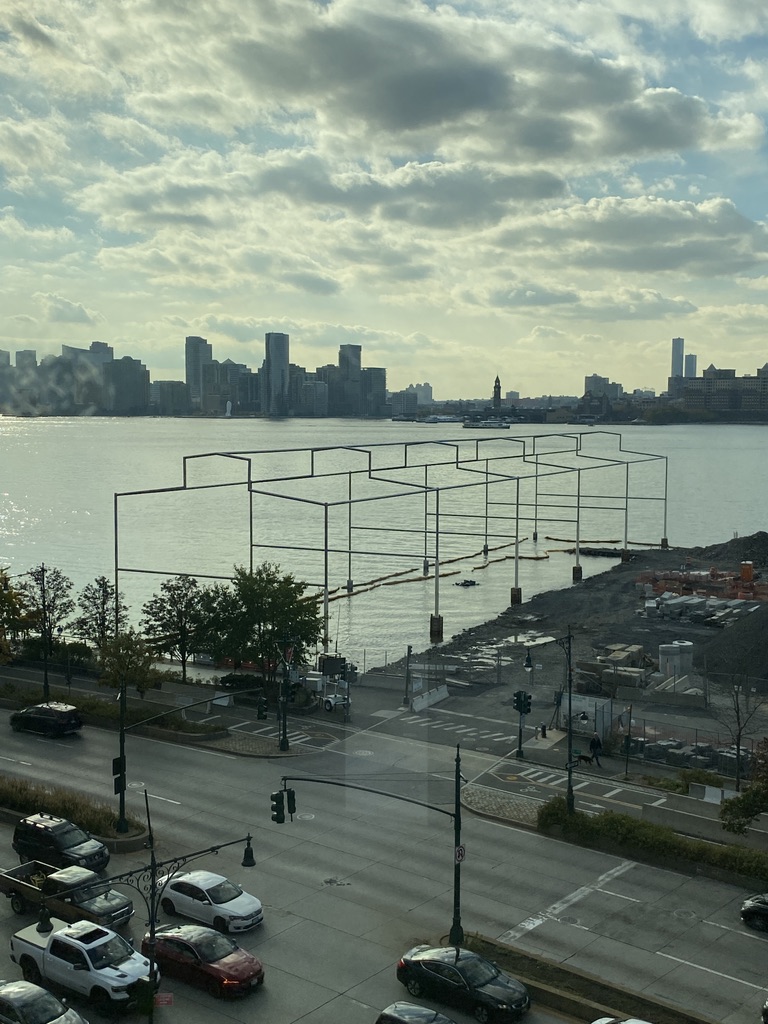
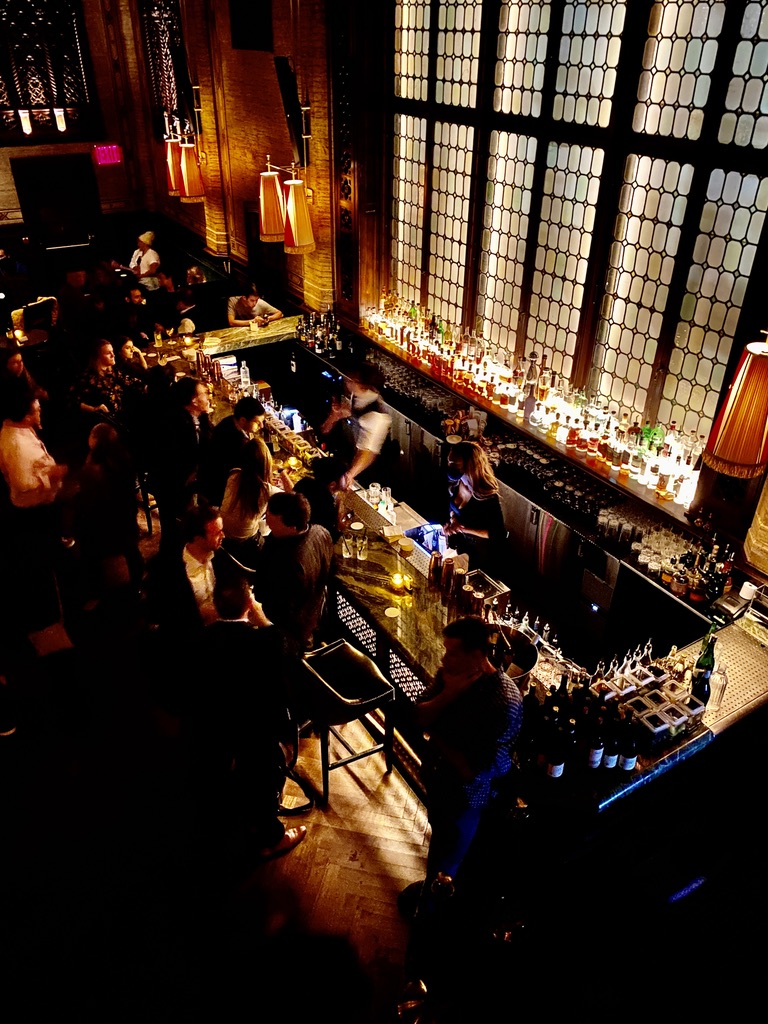
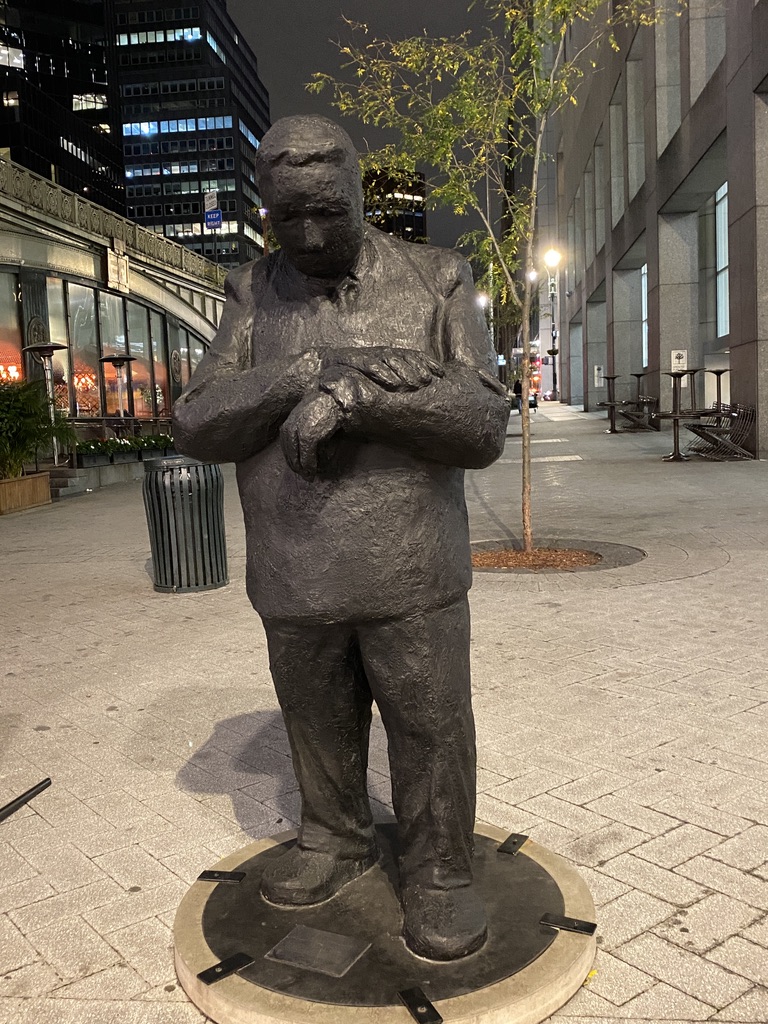
From there, Carol and I walked all the way to Lattanzi (for an early-bird dinner) in order to make it to “To Kill a Mockingbird” at the Schubert Theater. Lattanzi is always a good choice if you’re headed to a Broadway show. It’s been around forever and serves consistently good Italian food with good service but an overall sense that you’re probably headed to the theater. Broadway shows are starting early these days –- 7 pm.. Generally, I prefer to eat after the show, but restaurants are closing earlier than usual because of Covid, so we opted for a vey early dinner before the show and figured we’d stop somewhere after the theater for another drink and a snack.
Jeff Daniels was back in the leading role as Atticus Fitch and he deserves all the acclaim he got when the play opened originally in 2018 and was shuttered due to Covid until just two weeks ago. Based on the classic Harper Lee book, the story is still powerful and perhaps has new and even more meaning in the Black Lives Matter era. Indeed there are clearly some lines that are meant to make the play contemporary in what it forces the audience to think about. Daniels was amazing in the part and the cast was superb. While most of us have probably read the book, the play is quite different in its format and its emphasis – and had to go through a lawsuit by the Harper Lee estate because of some of the changes. If you’re in NY, be sure to try to get tickets.
After the theater, we strolled to the Campbell Apartment (located inside of Grand Central Station but on a second and third floor with an entrance on just one side of the station.) If you’ve never been to the Campbell Apartment, it’s a treat.. a bigger treat when it’s your first time. We didn’t have reservations and it was quite packed, but we managed to get a table up on the “balcony”.. After some “soothing drinks” and a snack, we headed back to the hotel and crashed. Carol’s room is about two doors down from mine and we both have interesting views of the city.
Remainder of NY part of trip to come…
All the best –
Fern
Last Days in DC and Onward to my Hometown.
10/25/21 and 10/26/21
Greetings –
Monday, October 25, 2021
We got off to a late start, but hopped on the metro to the Unconventional Diner… where we had a great brunch sharing one savory dish and one sweet one (figure the good balances with the other). The restaurant was near the convention center, hence the name! Then we took the train to Old Alexandria and strolled both the neighborhood and the main street. Forgot how charming (and somewhat unreal) Alexandria is — precious to the core. And a total contrast to the neighborhood where we had breakfast. But it was fun…
By the time we got back to the hotel it was really raining.. Fortunately dinner was at Lapis (an Afghani restaurant) which was only about a half mile from the hotel, so we braved the downpour and walked to the restaurant. Lapis was another great find. Let’s see if I can remember the meal – I think we had sambusa samples (spinach, shrimp, beef with mint yogurt and chutneys); an eggplant dish with some kind of tomato glaze and mint; and… oh my, I cannot remember.. but I’d highly recommend Lapis.
Tuesday, October 26, 2021
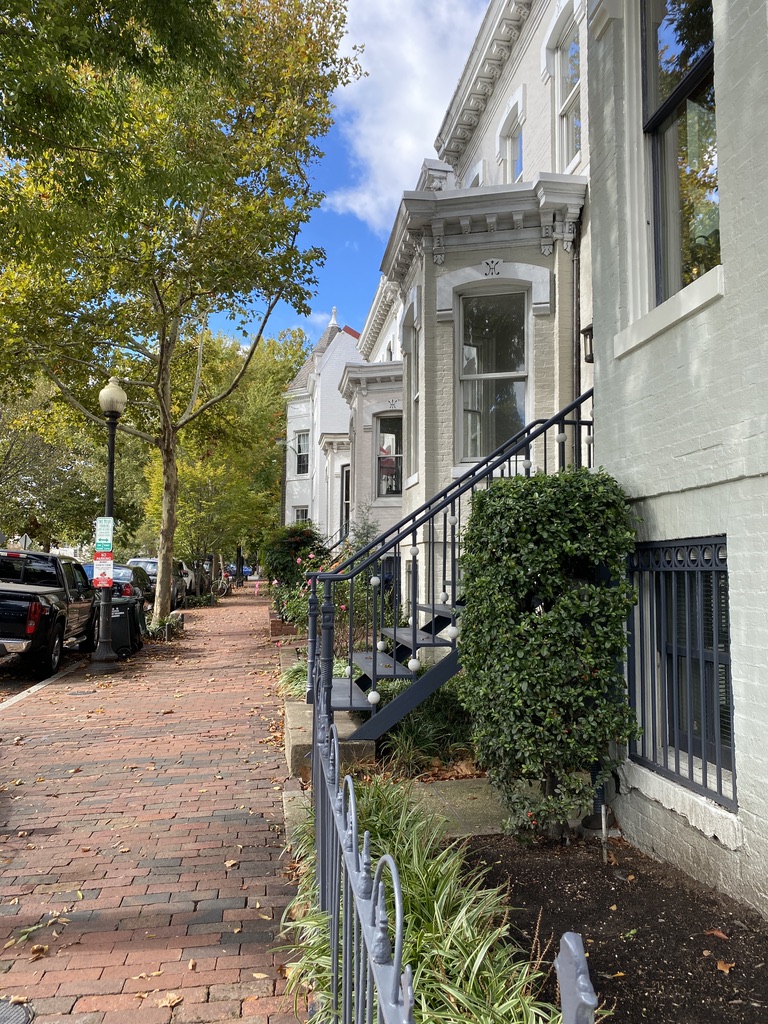
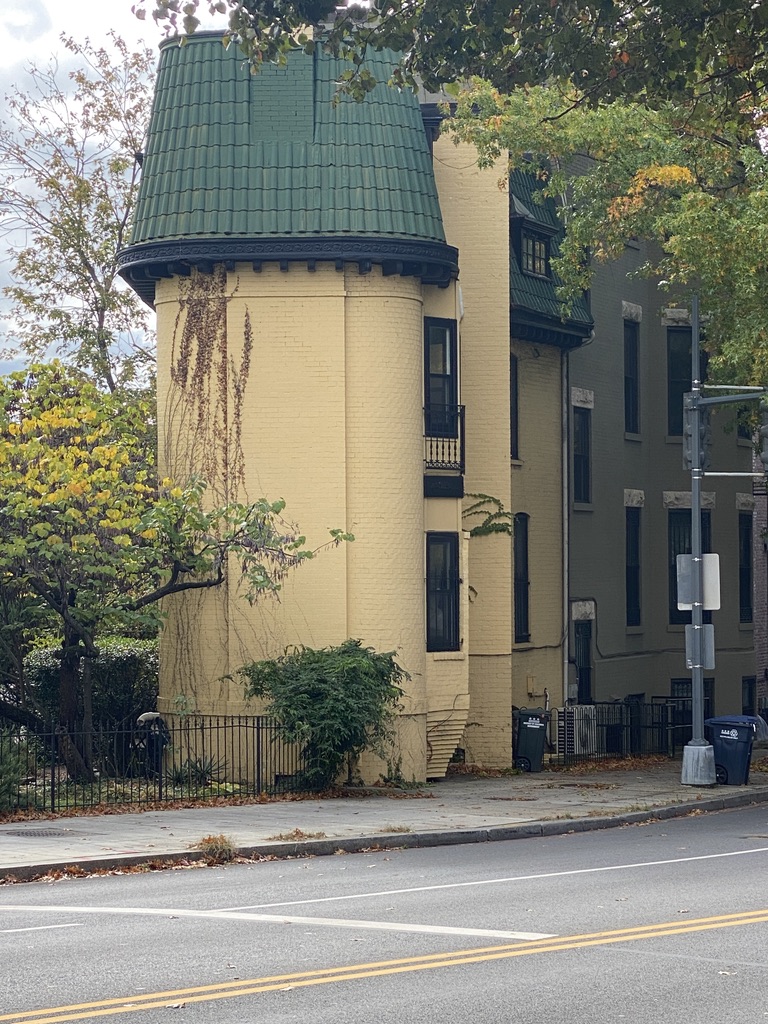
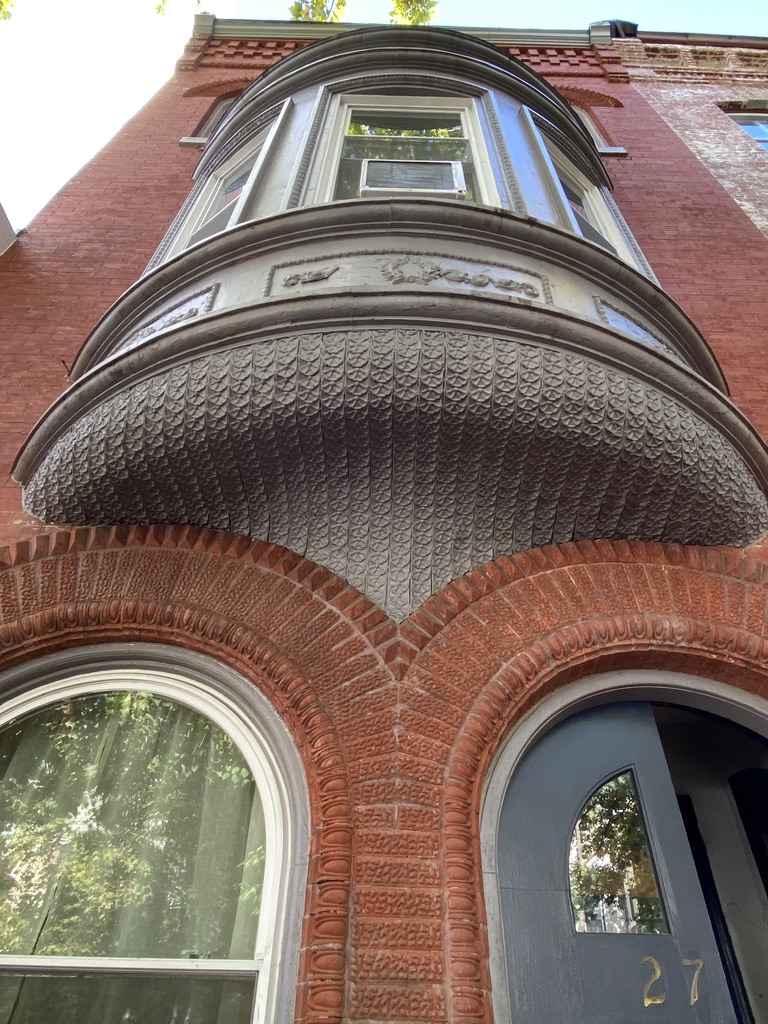

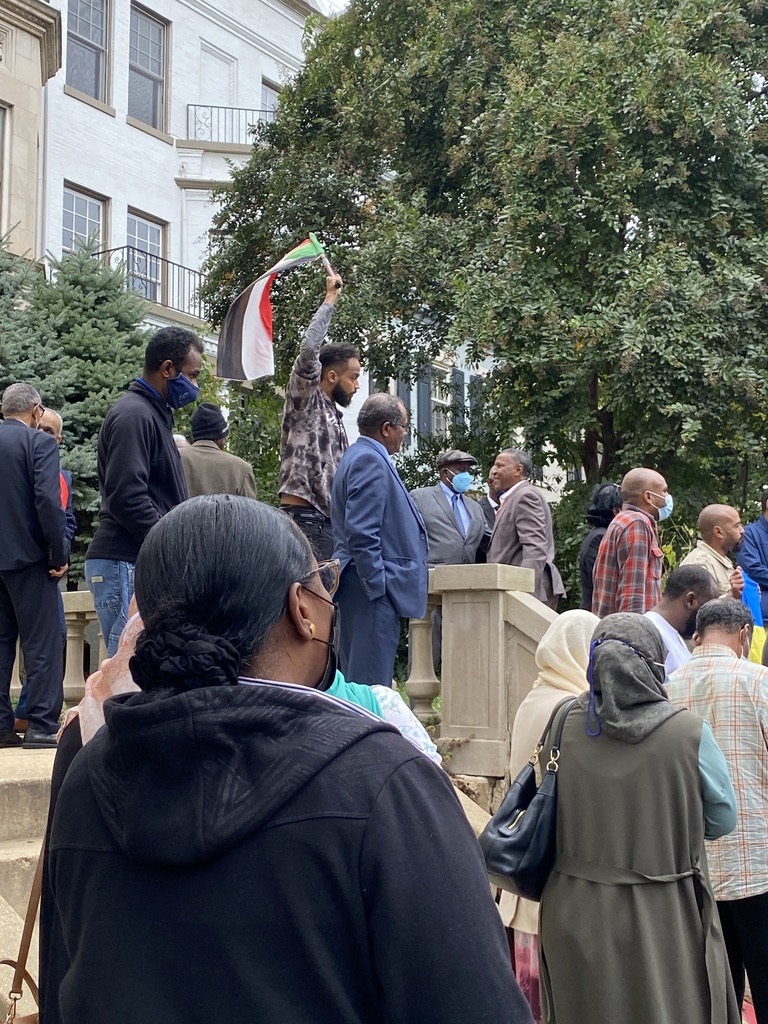
Right after breakfast, we headed to Georgetown – a long (4 miles?) walk that meandered through many different parts of the city from the outer edges of Adams Morgan (where we are staying) through Dupont Circle and embassies to Rock Creek Park and on to the side streets and residential areas of Georgetown (which were very decorated for Halloween). Georgetown’s commercial area seems to have expanded (??) since my last trip to DC. We stopped for a simple lunch of salad and steak tartare at a nice place that we stumbled on. As soon as we came inside the host who seemed frazzled told us that if we order one of the large salads we’d need to wait about an hour. The salad chef just walked out and now the manager was trying her hand at salad making. The host also told us all the problems of staffing up since Covid… not a new or unique story. We then set out to walk back and get to the hotel before the ominous clouds burst. Walking back was more uphill and we were a bit challenged by the wind which was pretty strong and not on our backs. But we made it… giving us a total of more than 11 miles for the day. En route, we stumbled on a demonstration at the Sudanese embassy—very calm.
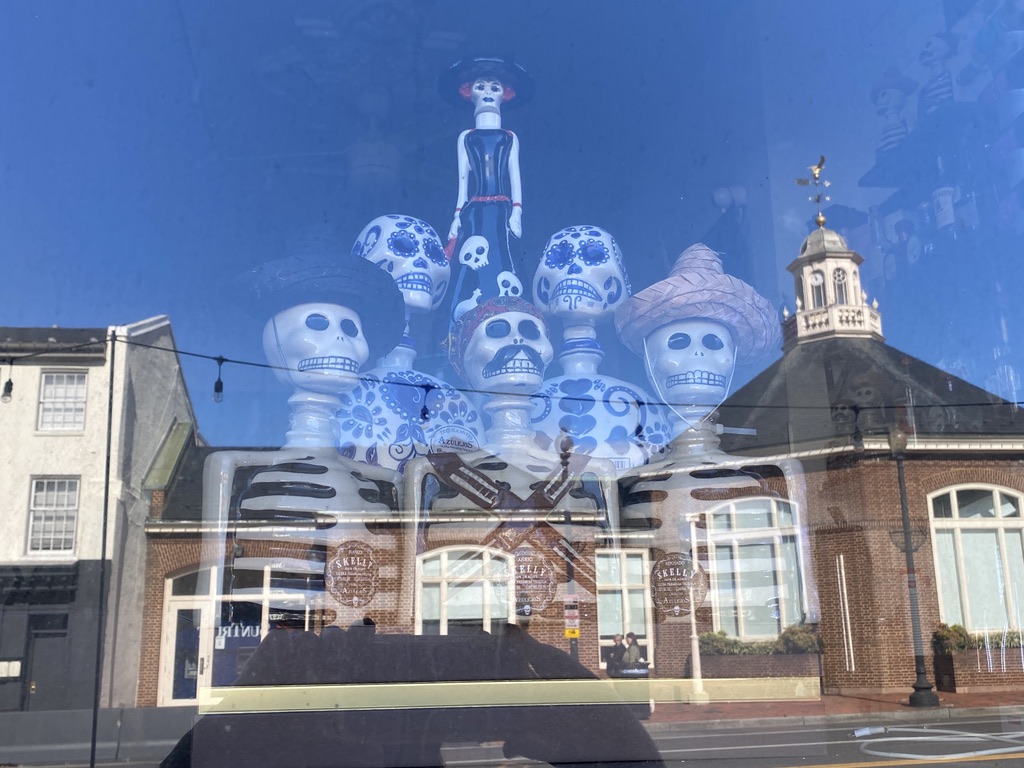
After some time to relax, we headed to dinner at Mintwood – an unplanned, last minute choice. Mintwood was about three blocks from the hotel and seemed like a good option in the rain. Turned out to be quite yummy. We had sweetbread appetizers followed by a very nicely prepared fish and great veggie side dishes. We then braved the pouring rain to get back to the hotel to pack and be ready to leave in the morning.
All my best –
Fern
 Fern's Travel Notes