October 7, 2026: Final Dinner and Morning in Seoul
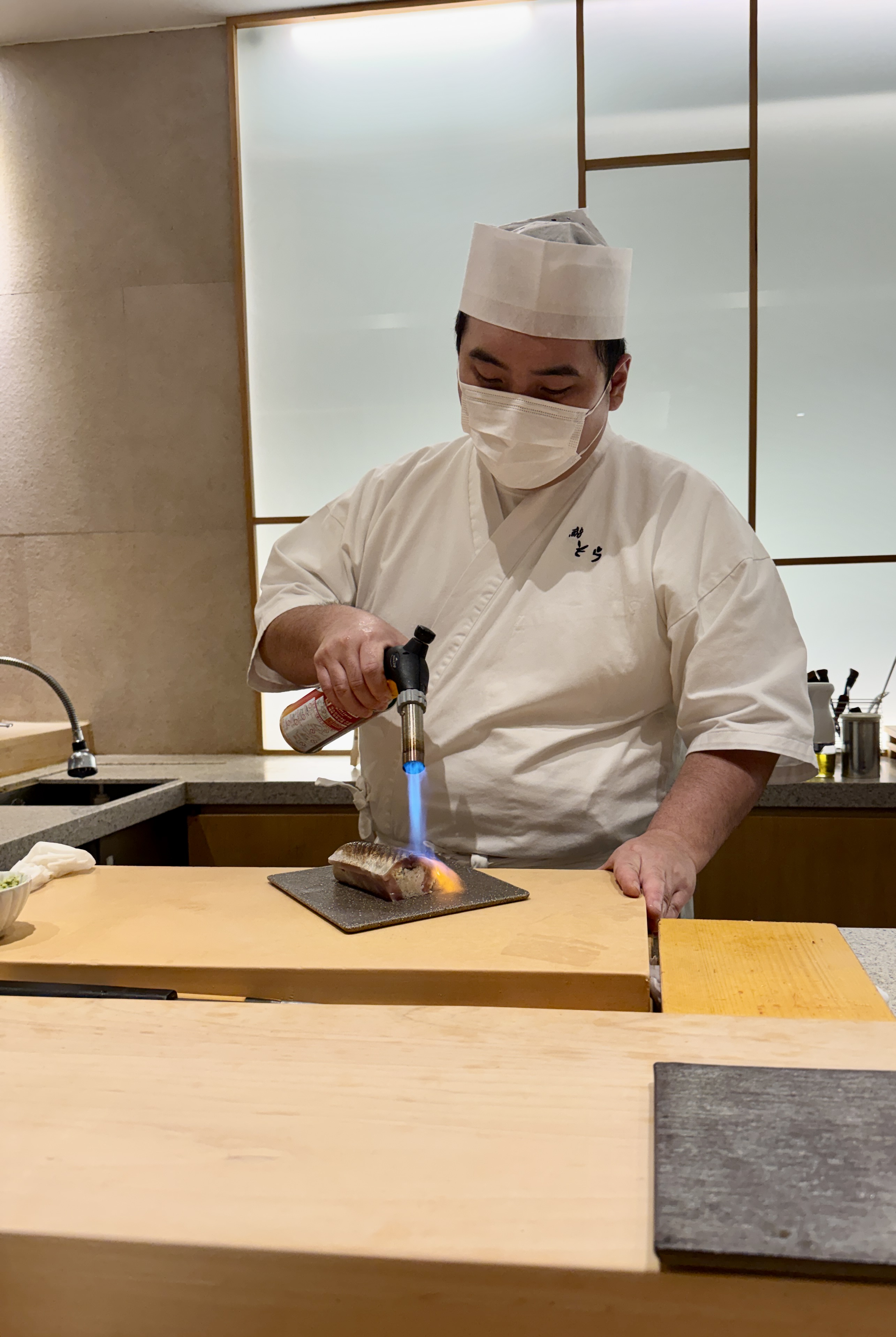
PIG OUT ON SUSHI… Last night in Seoul
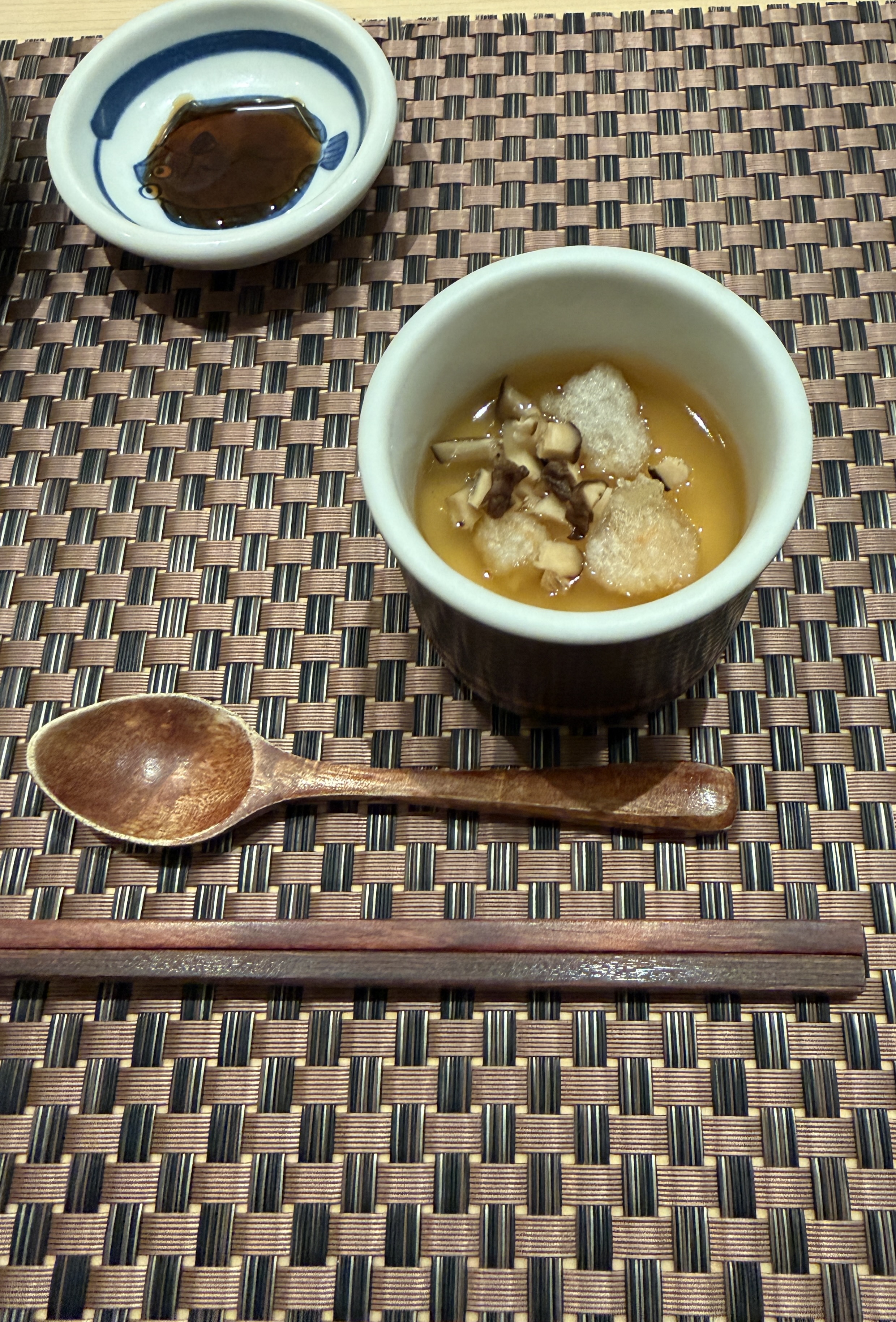
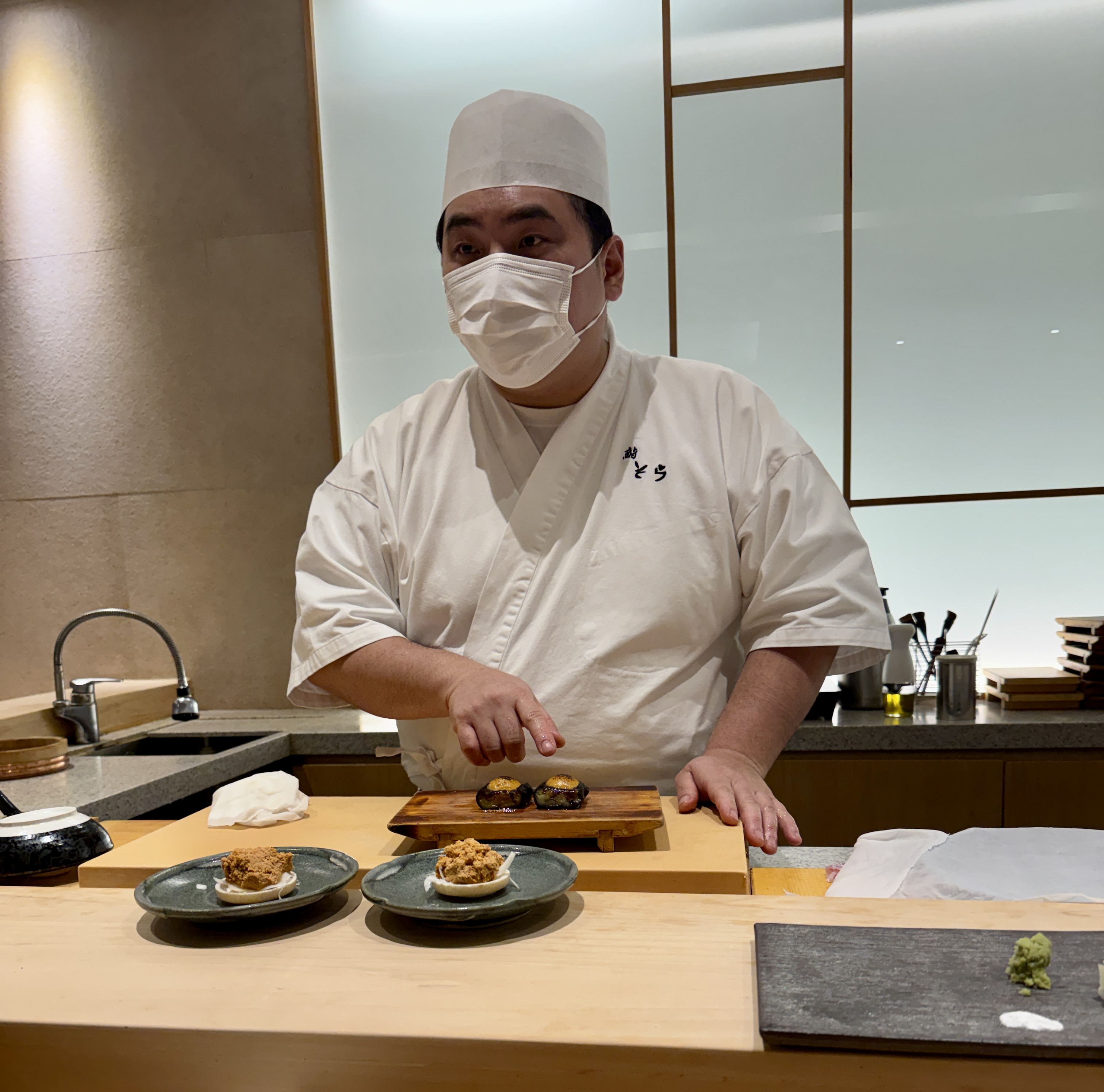
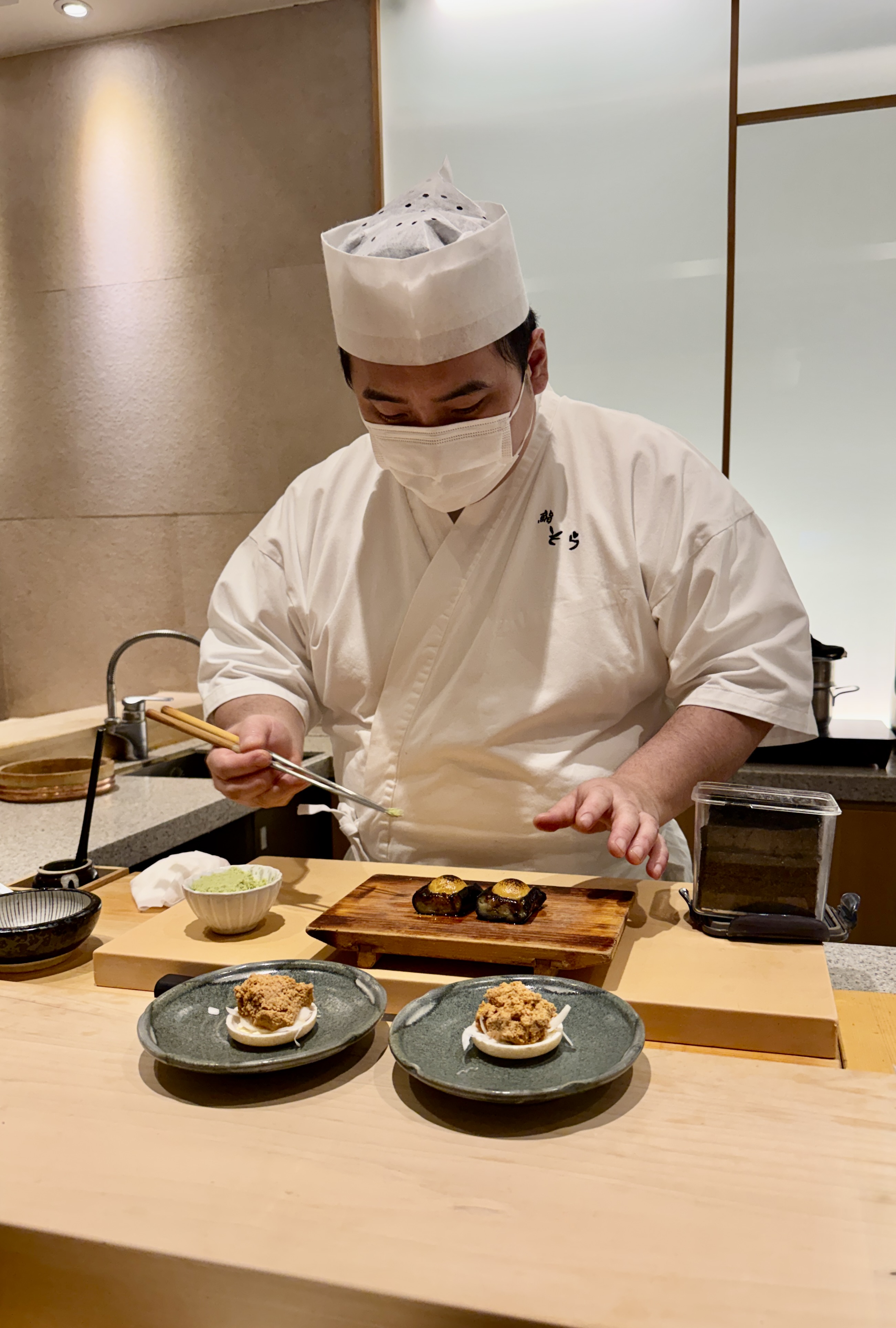
We figured that since we didn’t get to Japan on this trip, as planned, our last meal here in Seoul should be the consolation prize.. And a prize it was! We went for an “omakase” meal (meaning everything is selected by the chef, who explains each dish as he makes or as you get it.) We sat at the 10-seat sushi counter (we were the only ones there as it was the last reservation of the evening and it was a weekday night) at Sushi Sora Mapo.
Funny thing, the taxi driver (it was about 15 minutes from the hotel) stopped the car at a very non-descript location at a tall building, sort of near the service entrance. That didn’t seem right so I immediately checked my Naver app… and indeed it was a one minute walk from there. But by the time I did that and was ready to emerge from the taxi he had moved around the corner to the front of the building but there wasn’t any place to stop. So he moved on to the next corner and we thanked him and got out to walk the half block or so. We got to the location, but could not find the restaurant. Lots of first floor and second floor retail and restaurants, but not Sushi Sora.
We then noticed a group of three middle-aged men in suits and figured they might know where the restaurant was and they might know English. One guy took my phone with the Naver app showing the location and walked up and down the walkway between two buildings. Everytime he thought he had it he would point and then realize it was wrong and he’d start all over again. Then we all went out to the street again and he paced back and forth… and then I suggested we phone the restaurant. But he was adamant he could find it. So he switched to his phone with the Naver map app in Korean… and both of us felt we were standing right at the location, but no restaurant.
Then the aha! moment– the restaurant was on the lower level–down an escalator where you find more shops and restaurants. Sure enough Sushi Sora folks were waiting for us. I used my translator app to suggest they get a sign on the street level, but they laughed.
But the meal was worth the effort. I won’t describe in detail, but the meal consisted of (in order):
- Some kind of egg dish with spices and. mushroom bits
- Halibut
- Halibut fin
- Mackeral
- Eggplant and Uni
- Monkfish liver (I think) served on a rice cracker with something pickled
- Fried Monkfish
- Sea Bream
- Tuna
- Uni
- Raw Shrimp served quite differenly than I’ve every had it
- Tuna Belly
- A simple miso soup
- Yellowtail with garlic
- Mackeral in some kind of nori roll
- Eel
- Tuna roll
- Soup with rice and small pieces of salmon and after checking that we liked thihngs spicy, added some kind of very spicy pepper
- A choice for each of us to repeat any one item… (except uni)… I chose the tuna belly; Mike chose yellowtail
- Some kind of sweet egg mousse-like thing
- Ended with homemade blueberry ice-cream
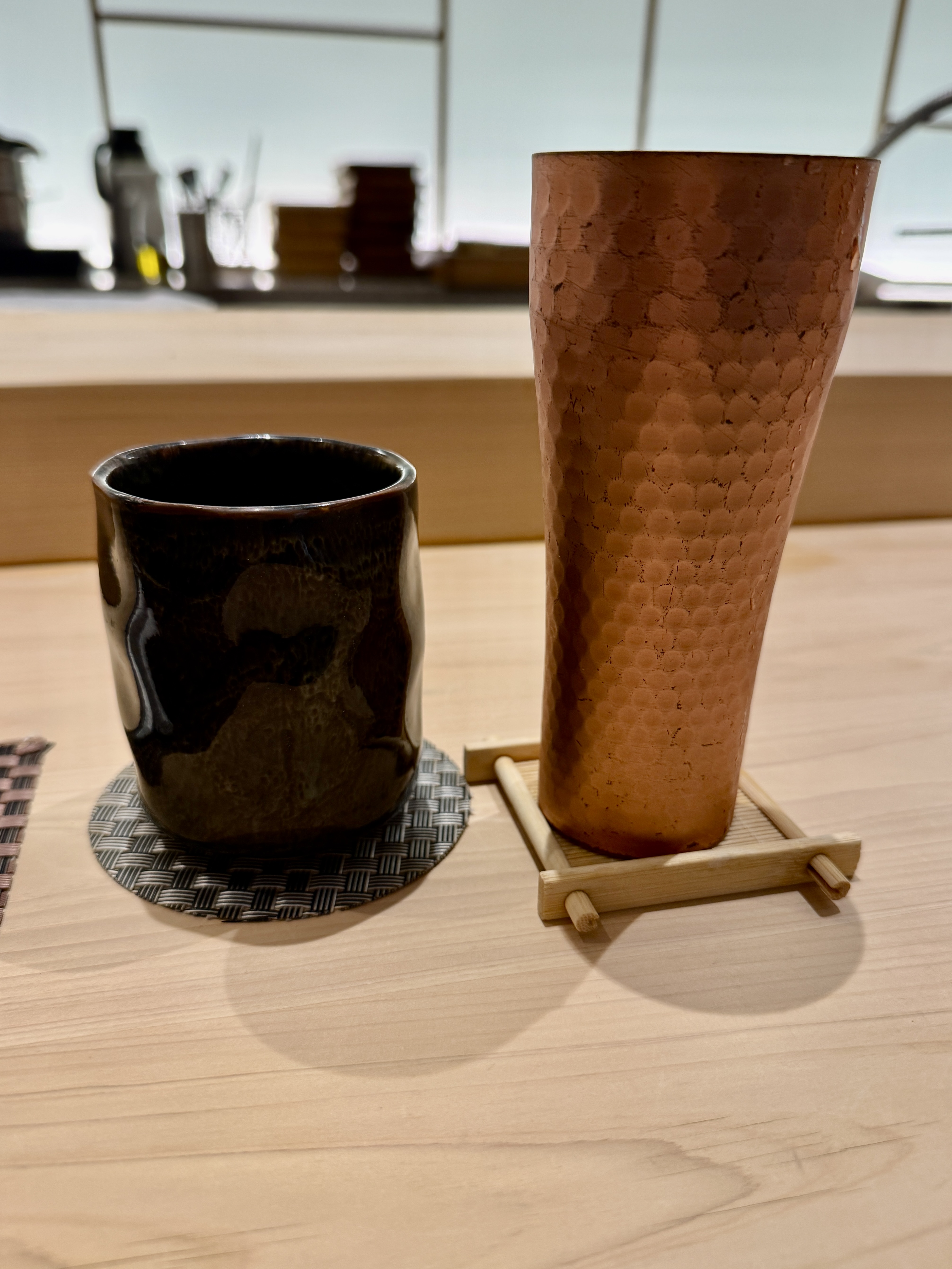
To accompany all of this we had a local beer.. and ofcourse tea (a very nice smoky tea)
We rolled out of the restaurant and into a taxi to finish packing.
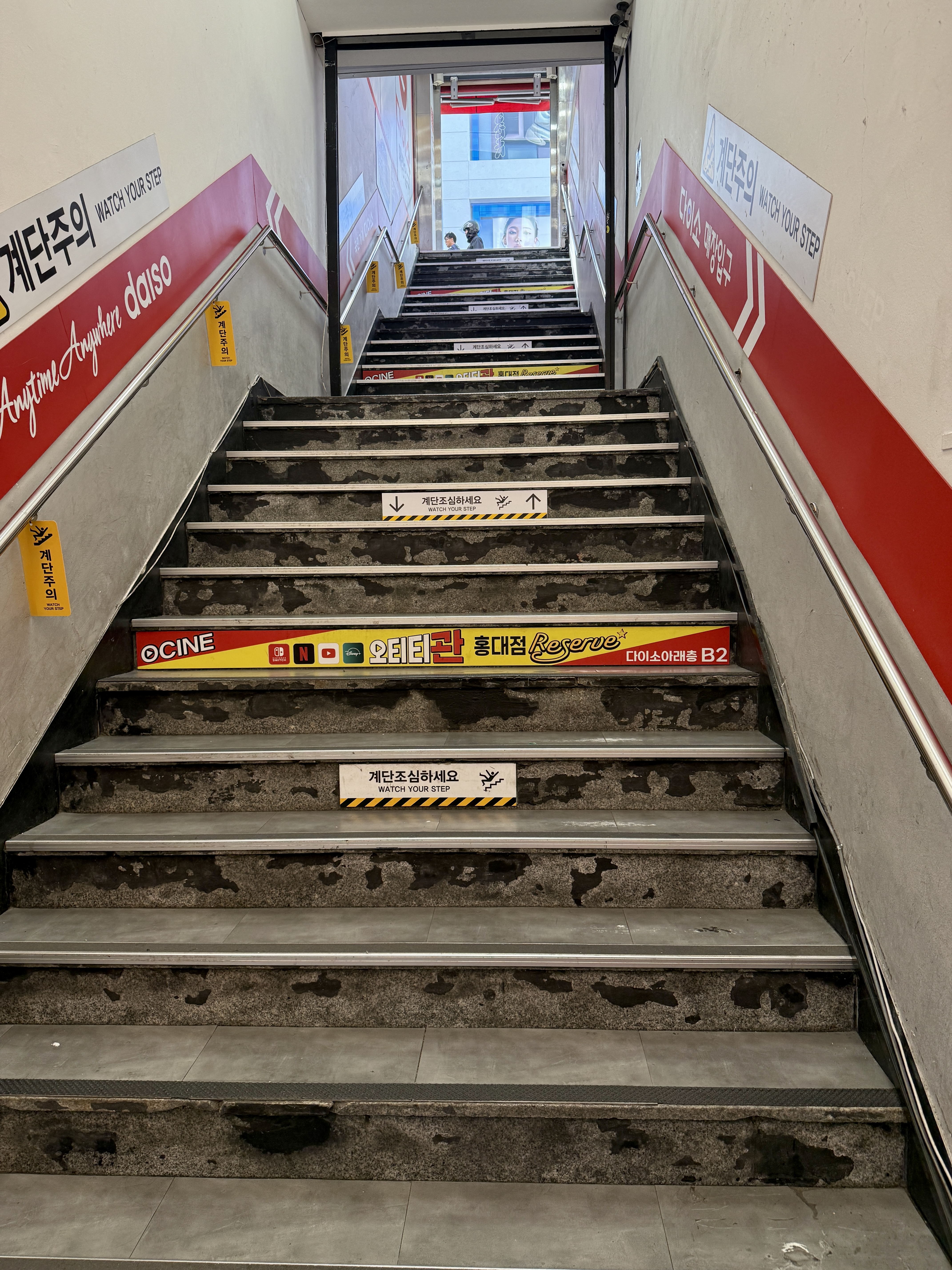
This morning, we had a simple breakfast and needed to go back to that Target-like store underground, to get luggage tags, since Mike is checking his luggage including his carry bag and we realized the carry bag didn’t have a tag. So we climbed those nasty steps up and down. I suggested Mike stay on the street, but he went down and up and survived. He insisted he didn’t want to spend the rest of his life with a stair phobia.
We’re headed to the airport. See you all stateside. Mike has a Monday appointment with the surgeon although he is waitlisted for an appointment on Friday. And then we’ll know a lot more about dates and recovery and whether or not we can make the Switzerland/Algeria trip in late December. (And we are hoping to recreate the Japan trip in the spring.) Keeping our fingers crossed.
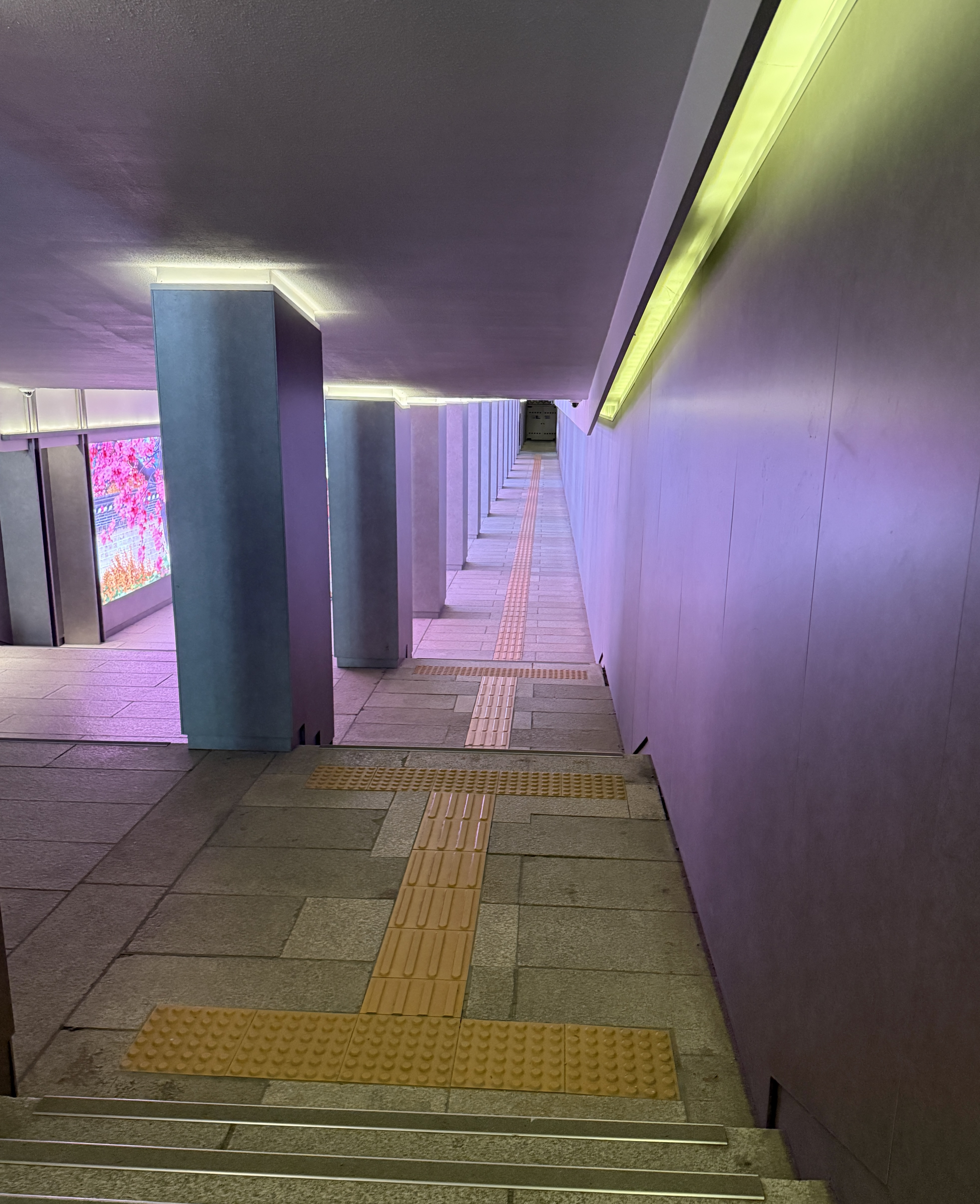
Here are the nasty steps that led to Mike’s “demise”… which as you can see have lots of caution signs.
Oh.. one more Korea observation. No matter where we were–in the downtown, in Hongdae, near the university, in the metal fabrication zone, in the funky neighborhoods… near the hospital in the working class neighborhoods.. all of the cars we see appear to be new, and if they are not new they are kept in immaculate and shiny new shape. Certainly doesn’t look like Oakland or Berkeley or San Francisco or NY. I don’t even think we’ve seem a car or a taxi with a single dent. And no potholes.. and sidewalks in very good shape, except for some rare situations in the metal fabrication zone (but not terrible). So how do they do that? Taxis are all brand new or so it seems and immaculate inside. And they are either white or silver. Come to think of it, nearly all cars are white, black or silver.
And I’m still marveling at the fact that there can be so much retail everywhere… on street level, on the floor below, and on the second floors.. of just about every building on main streets, small streets, alleys, and more. Yes, 10 million people, but NY has 8 million and they cannot sustain that kind of retail infrastructure even on just one level, with vacant storefronts galore. And there are probably 5 coffee shops on every street (in populated areas…. Peets watch out!)
OK.. That’s a wrap. Until the next trip.
October 6, 2026: From Korean Bagels to Korean BBQ… with a Stroll through Murals, Graffiti, and Small Metal Workshops
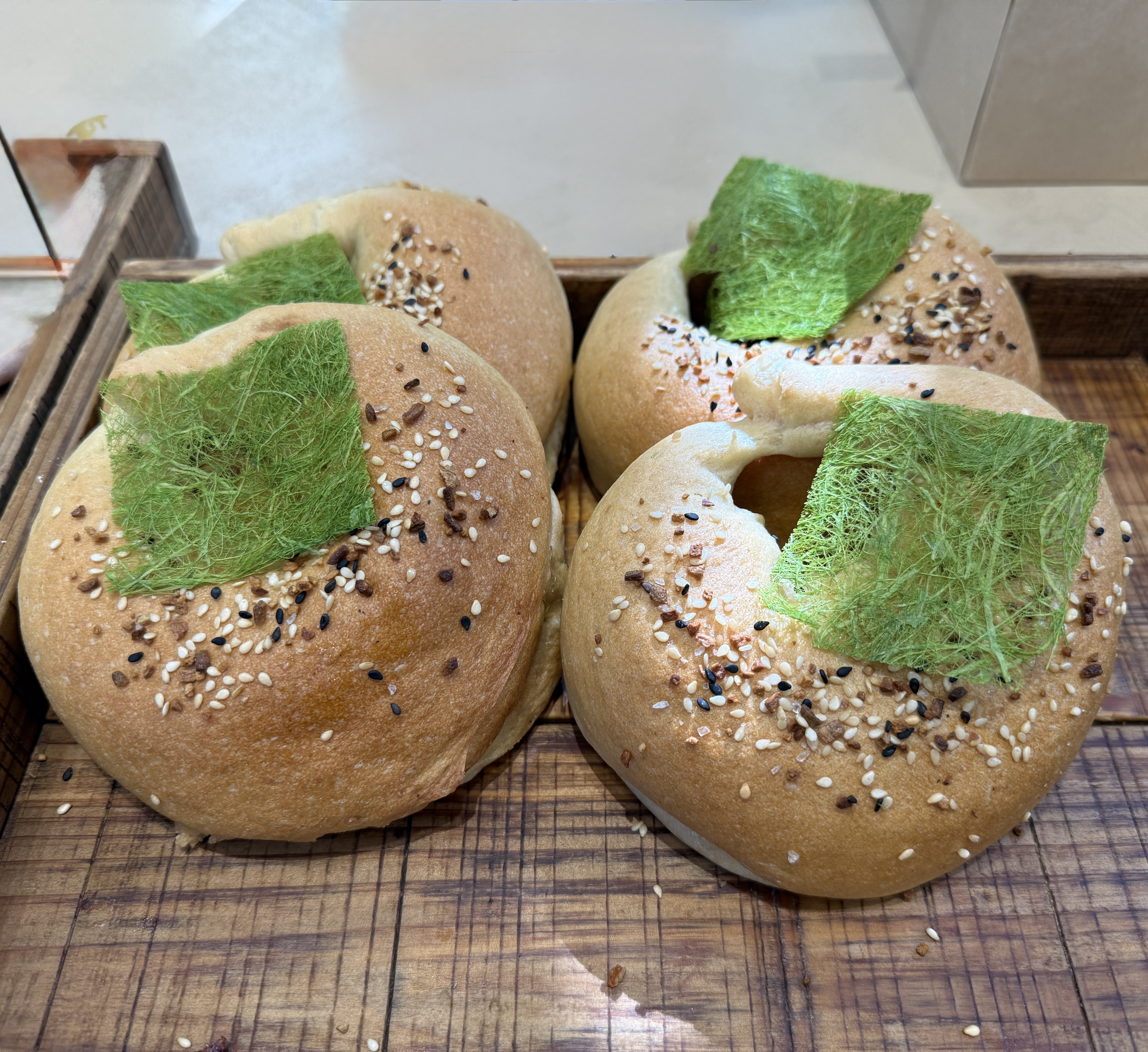
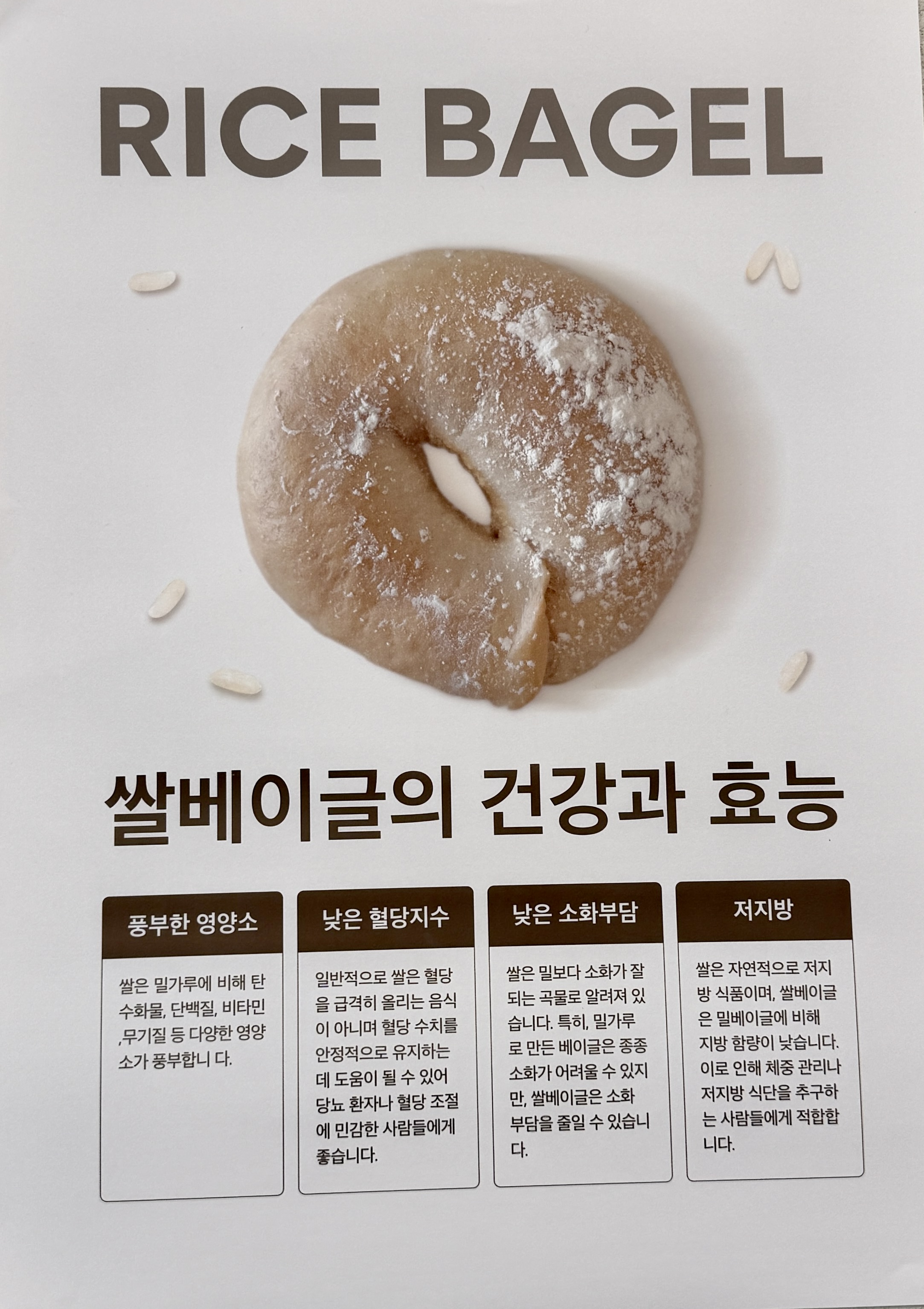
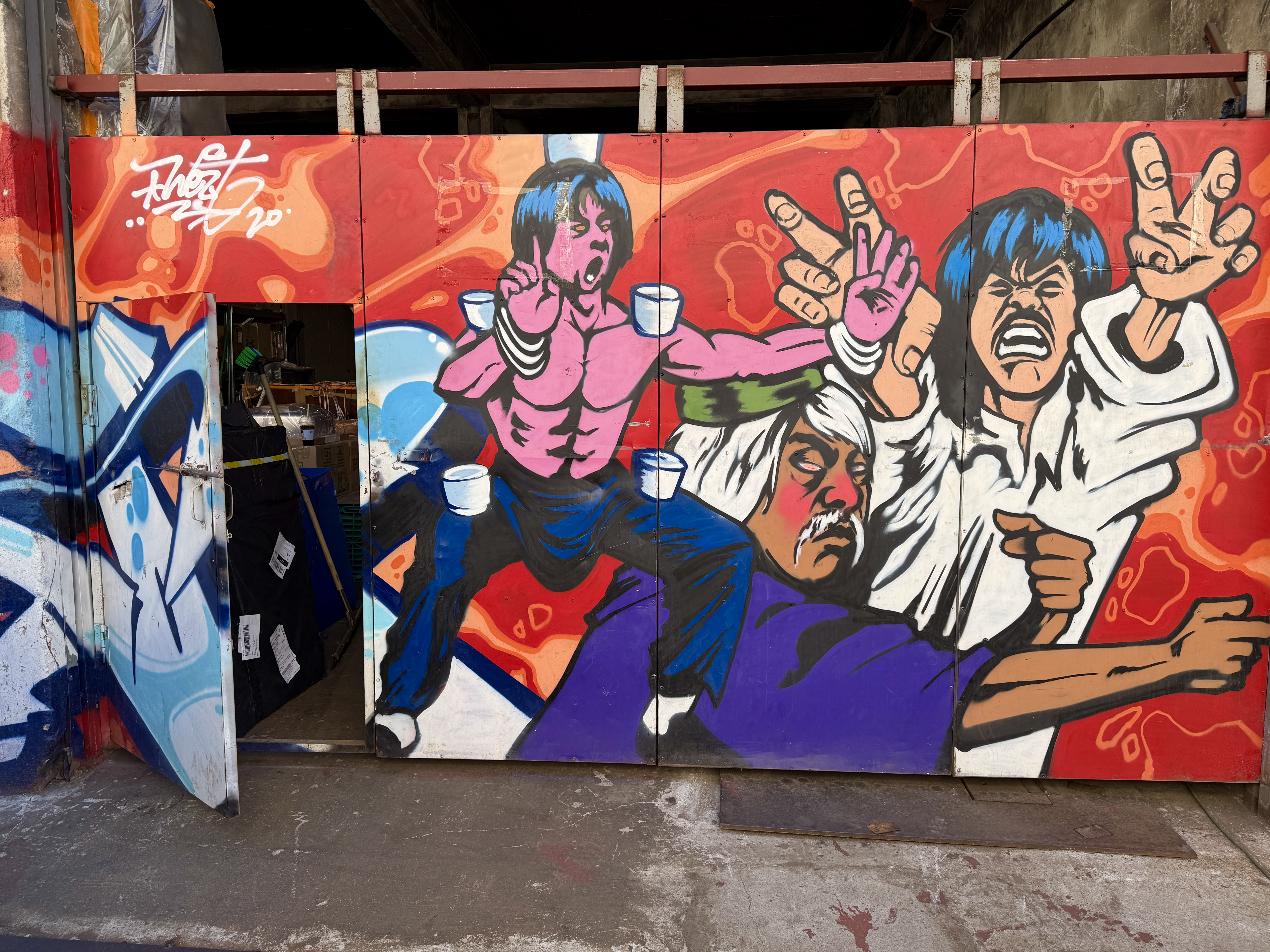
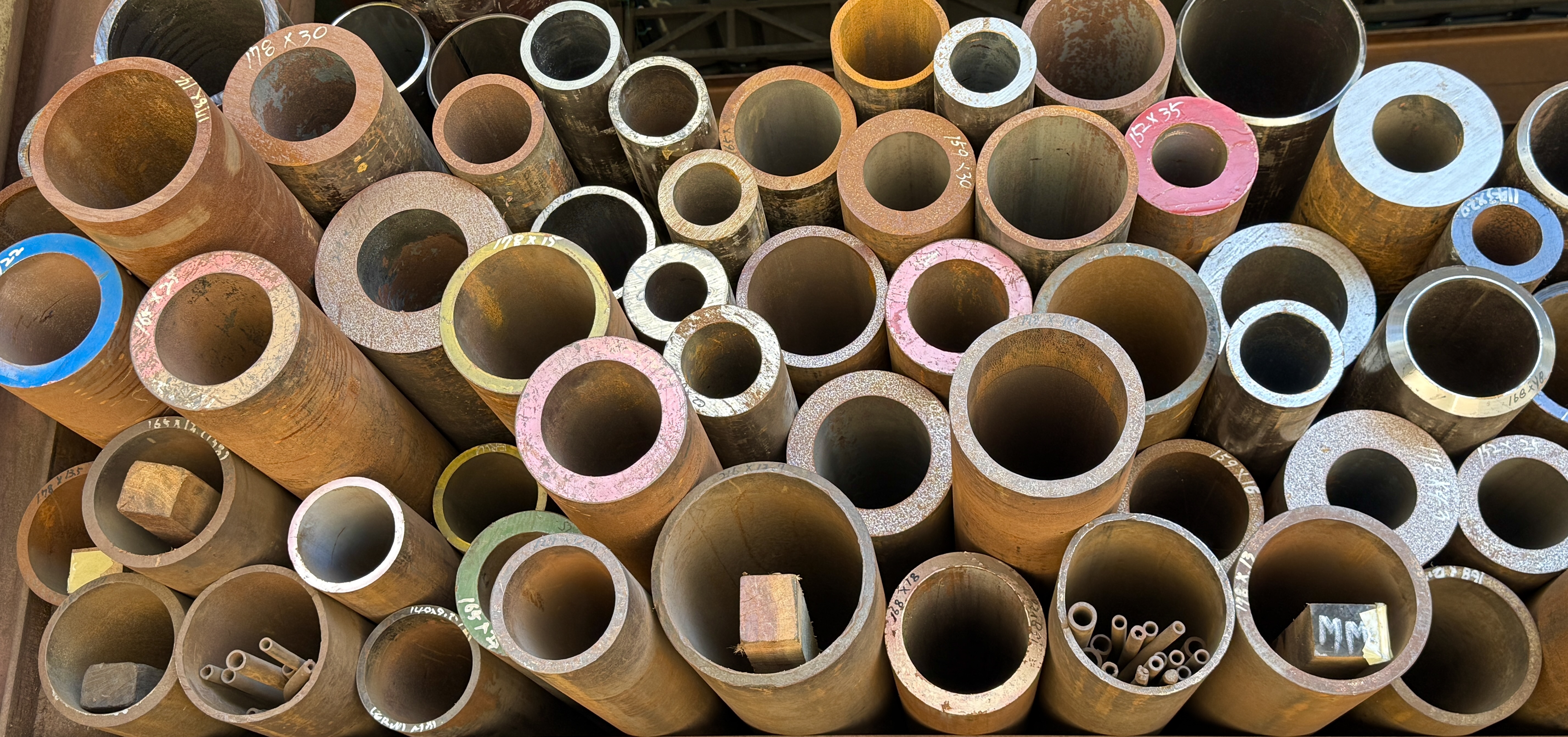
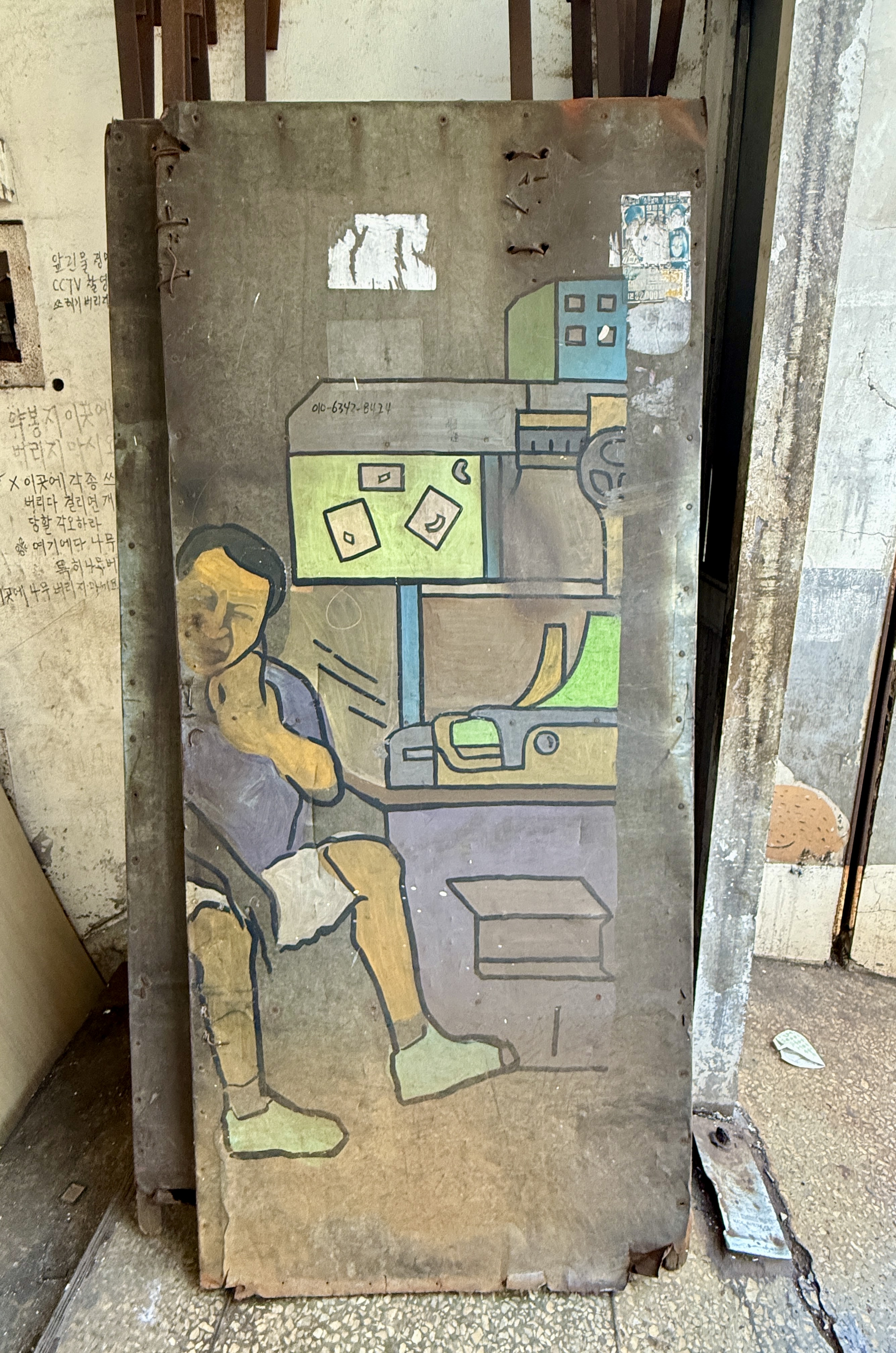
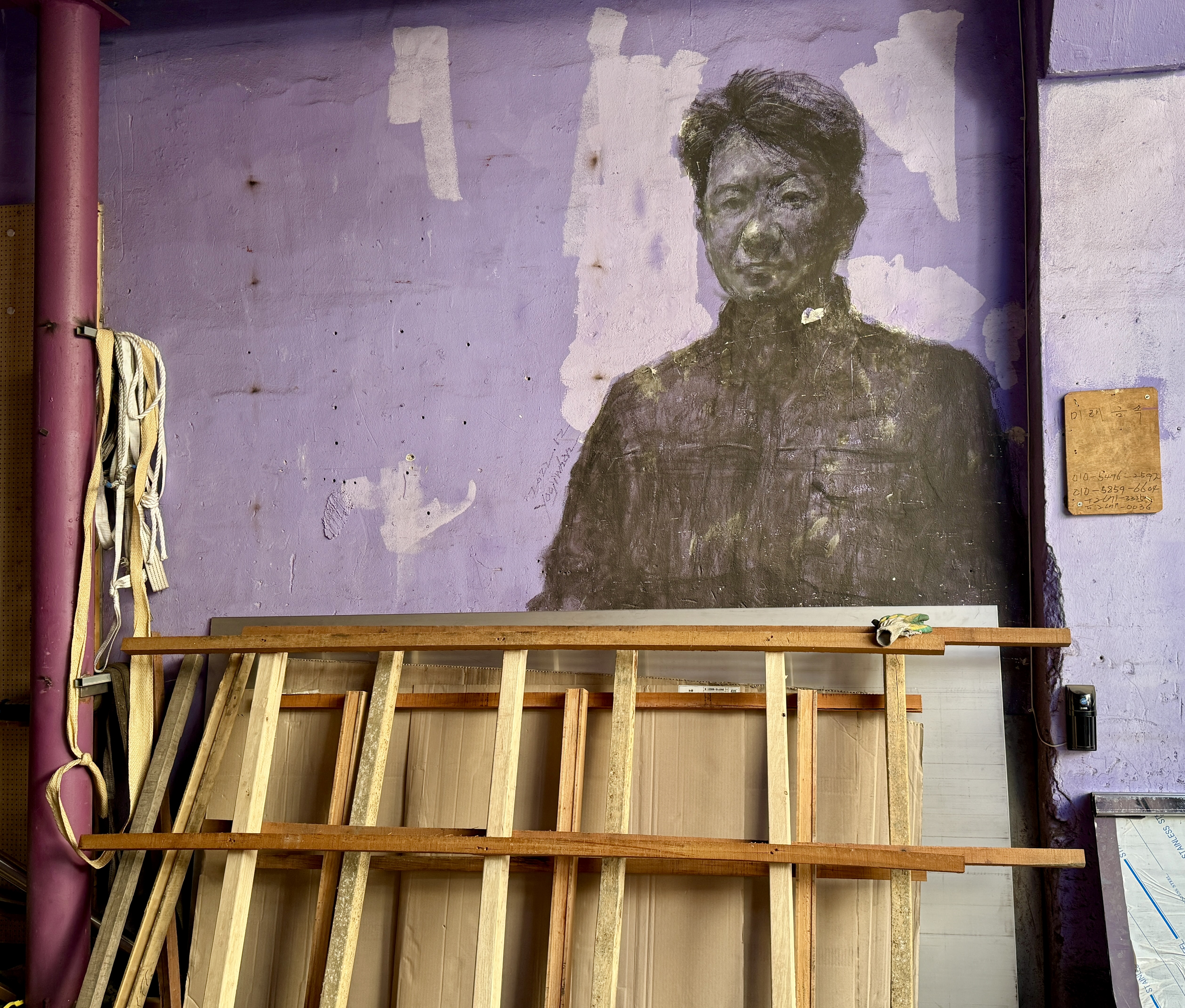
We started the day at a coffee shop about 7 minutes from the hotel. We had seen it yesterday as we walked to Analog Garden Cafe and decided to try it. What we didn’t realize at the time is that it’s a bagel shop! They use rice flour for the bagels and they had about a dozen varieties… We shared a bagel with salmon (lox), apples, cream cheese, and some greens. And we also shared what they called a tiramisu bagel (which came unexpectedly with whipped cream and wasn’t exactly a bagel–but very yummy.
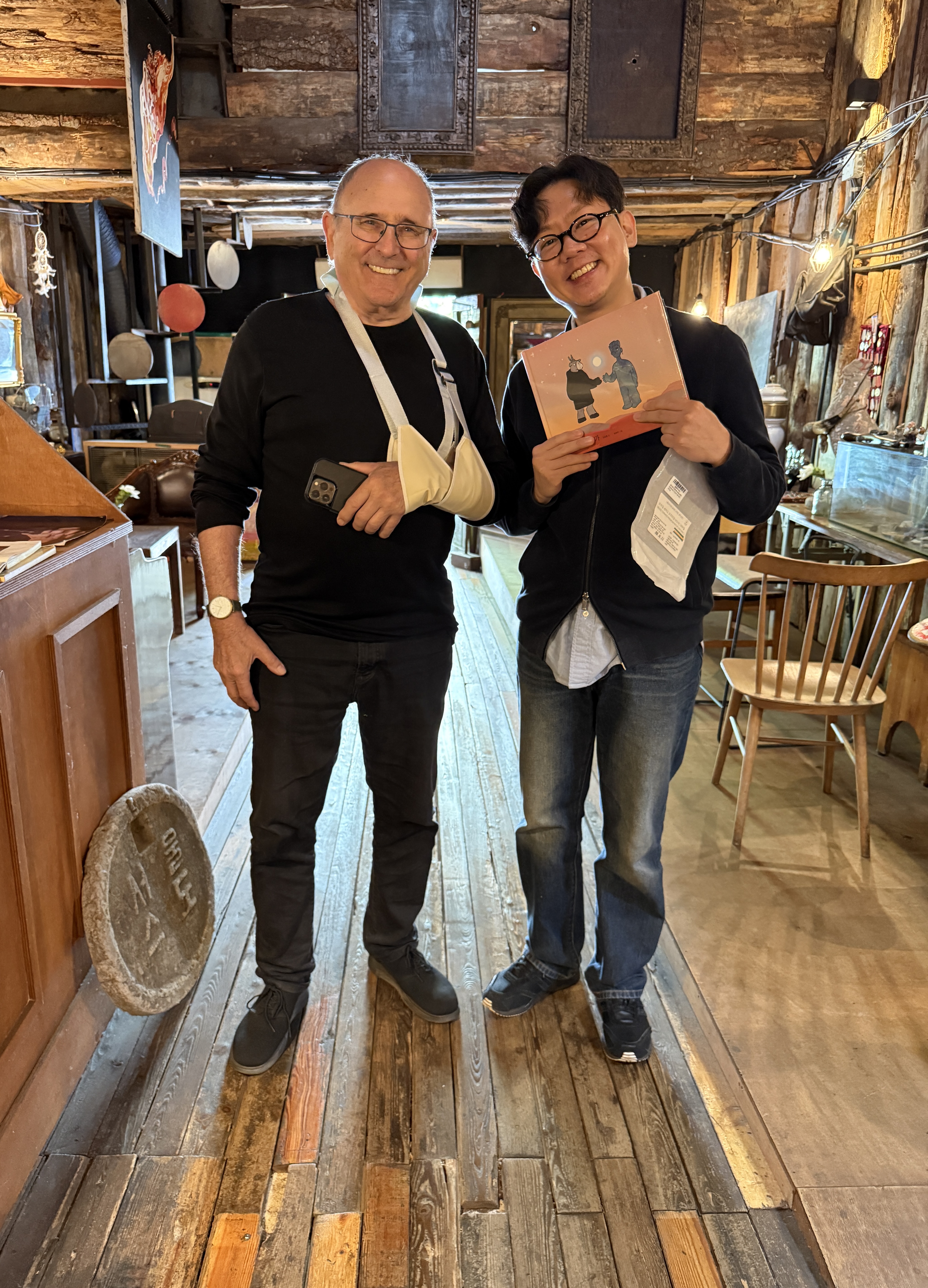
From there we taxied to the Mullae-dong neighborhood, which is located in the southwestern part of the city and is home to active metal workshops and factories that coexist with art galleries, studios, and restaurants. Apparently the area was the major steel manufacturing district in the 1970s, and in the 2000s transformed into artist studios where cheap rent could be found for large spaces. But the small metal manufacturers are still there. As we explored the narrow alleyways we discovered murals, graffiti, and metal sculptures right outside working steel shops… and literally scores of really cool bars, cafes, restaurants, and even performance spaces. In one really funky place we met the owner who says he lived for a while in California in a city called Toronto.. but maybe he meant Torrance (??) His very funky art cafe was decorated with all sorts of memorabilia and mini collections — sort of Dada-esque.. and playing on his speaker were tunes like Barbara Ann..Anyway, he gave us a copy of an illustrated book that he created which is pretty cool. We love these kind of places and Mike is now ready to move to Seoul and live and work in one of these spaces in this industrial area.
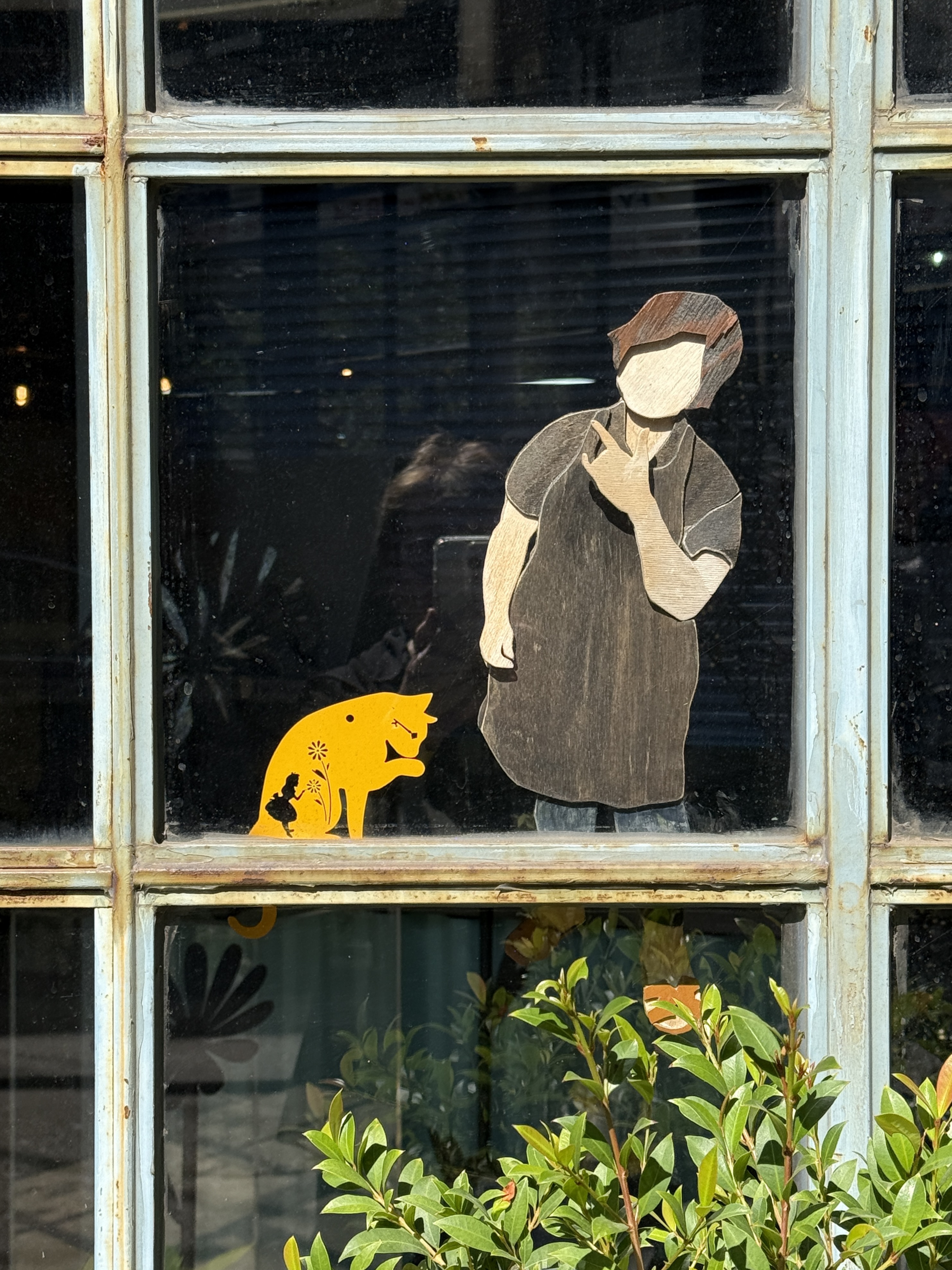
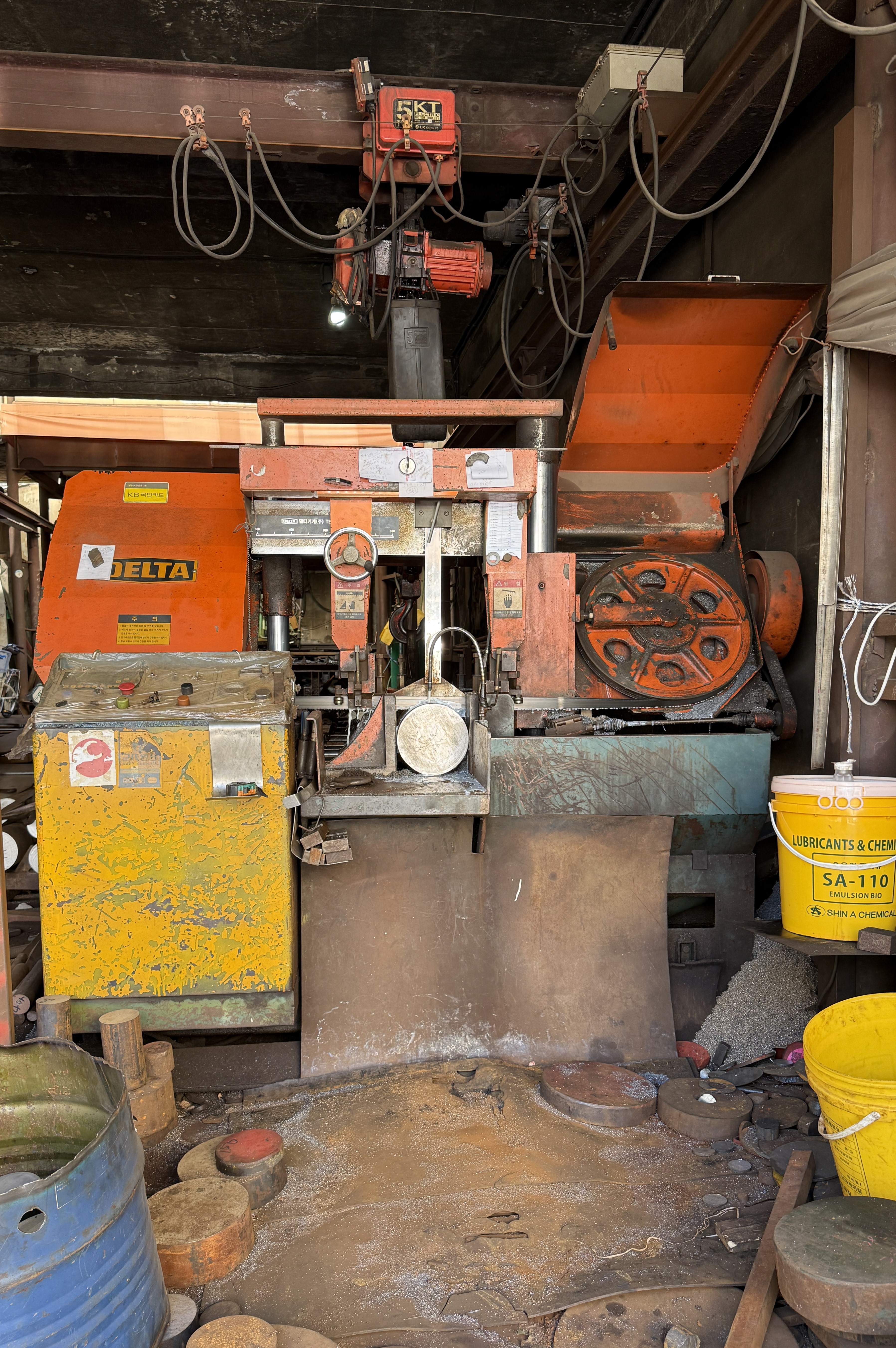
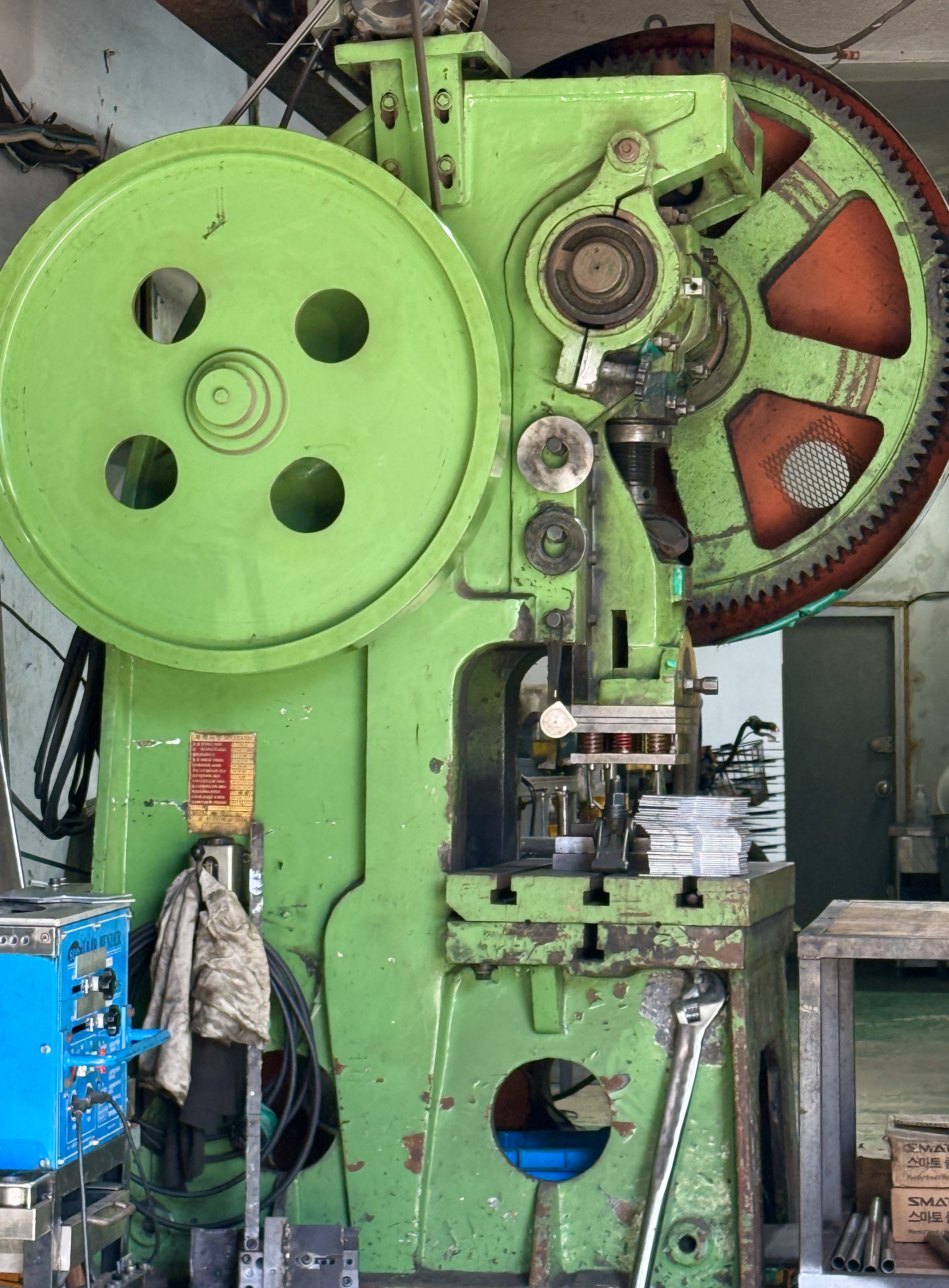
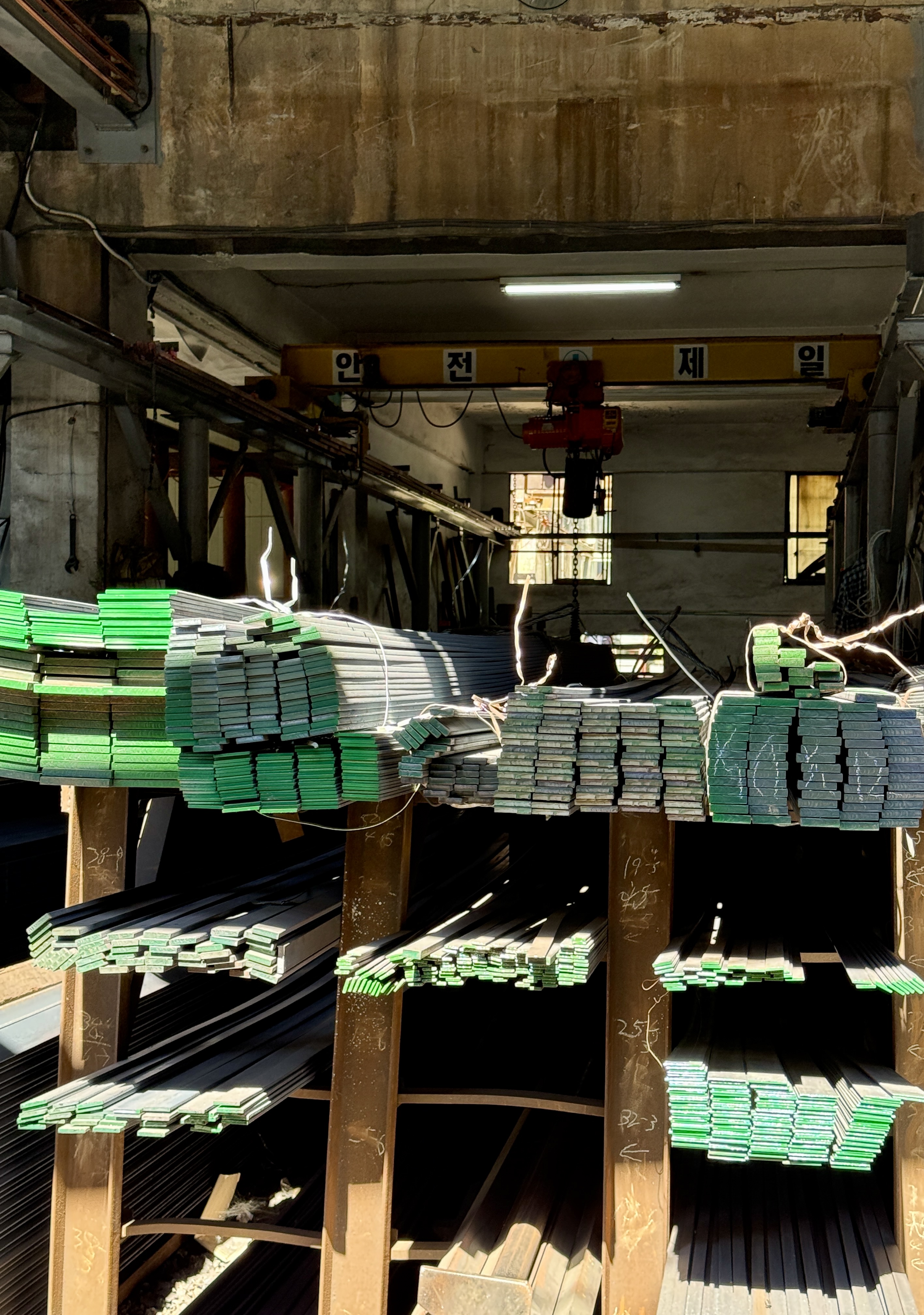
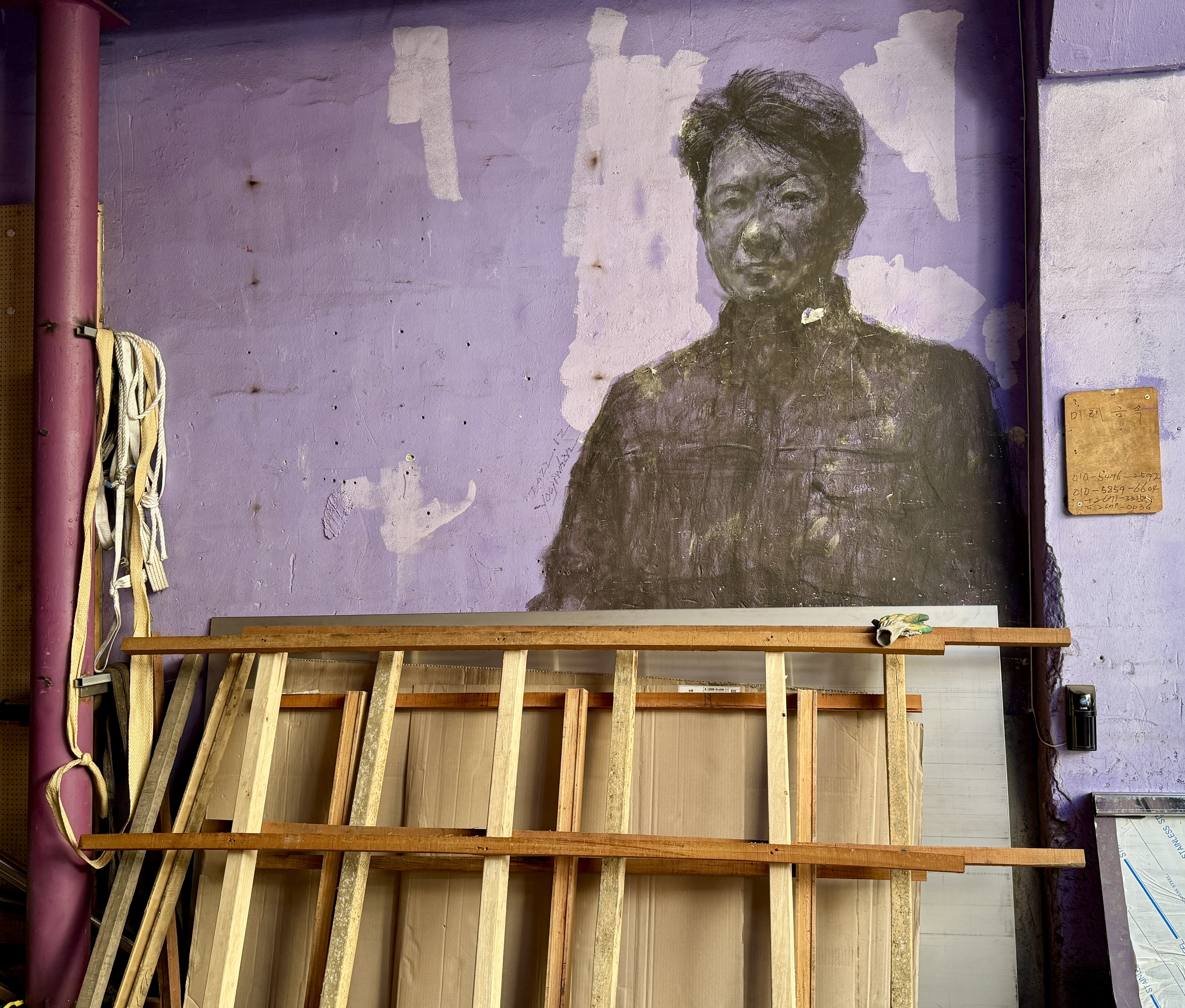
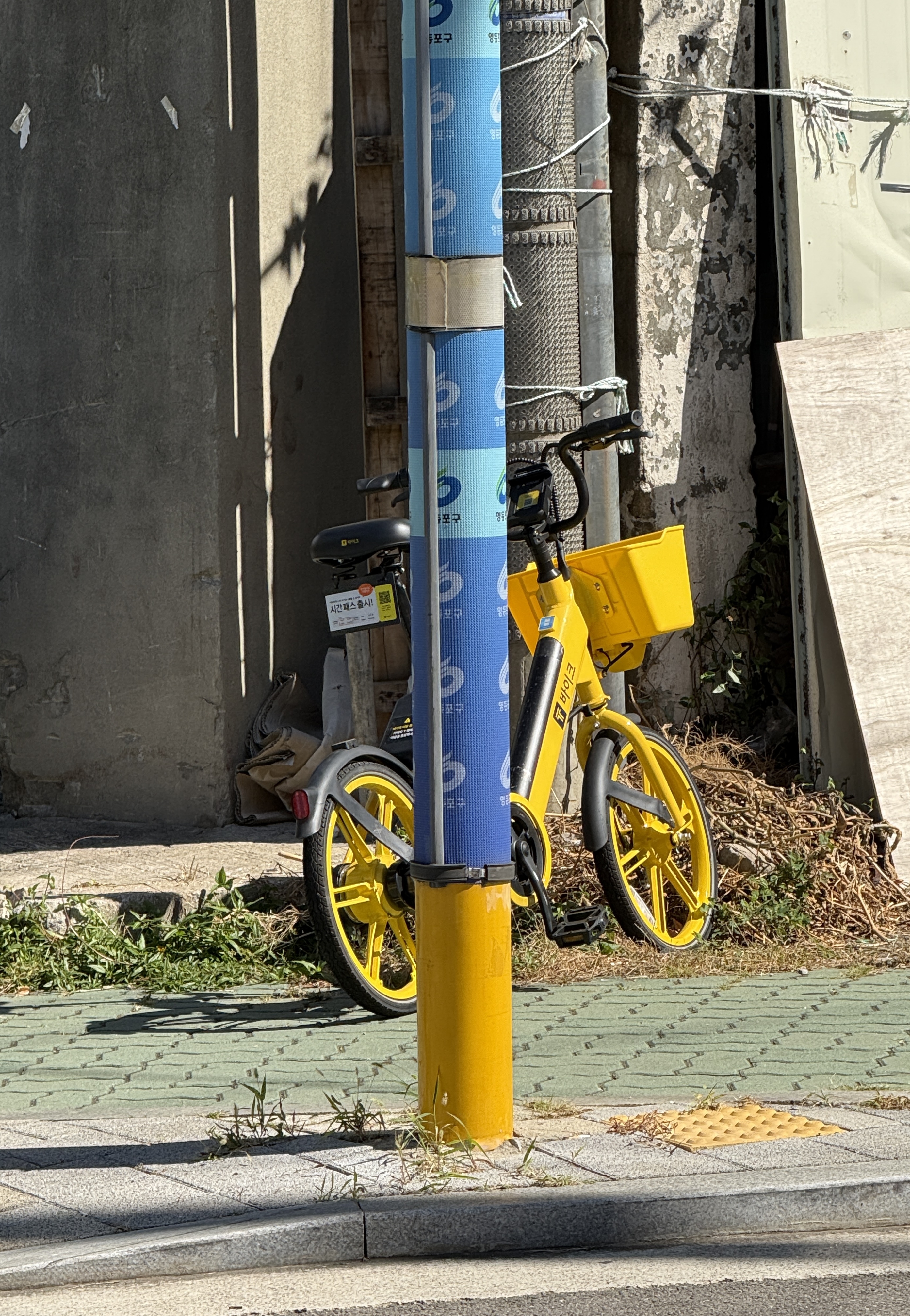
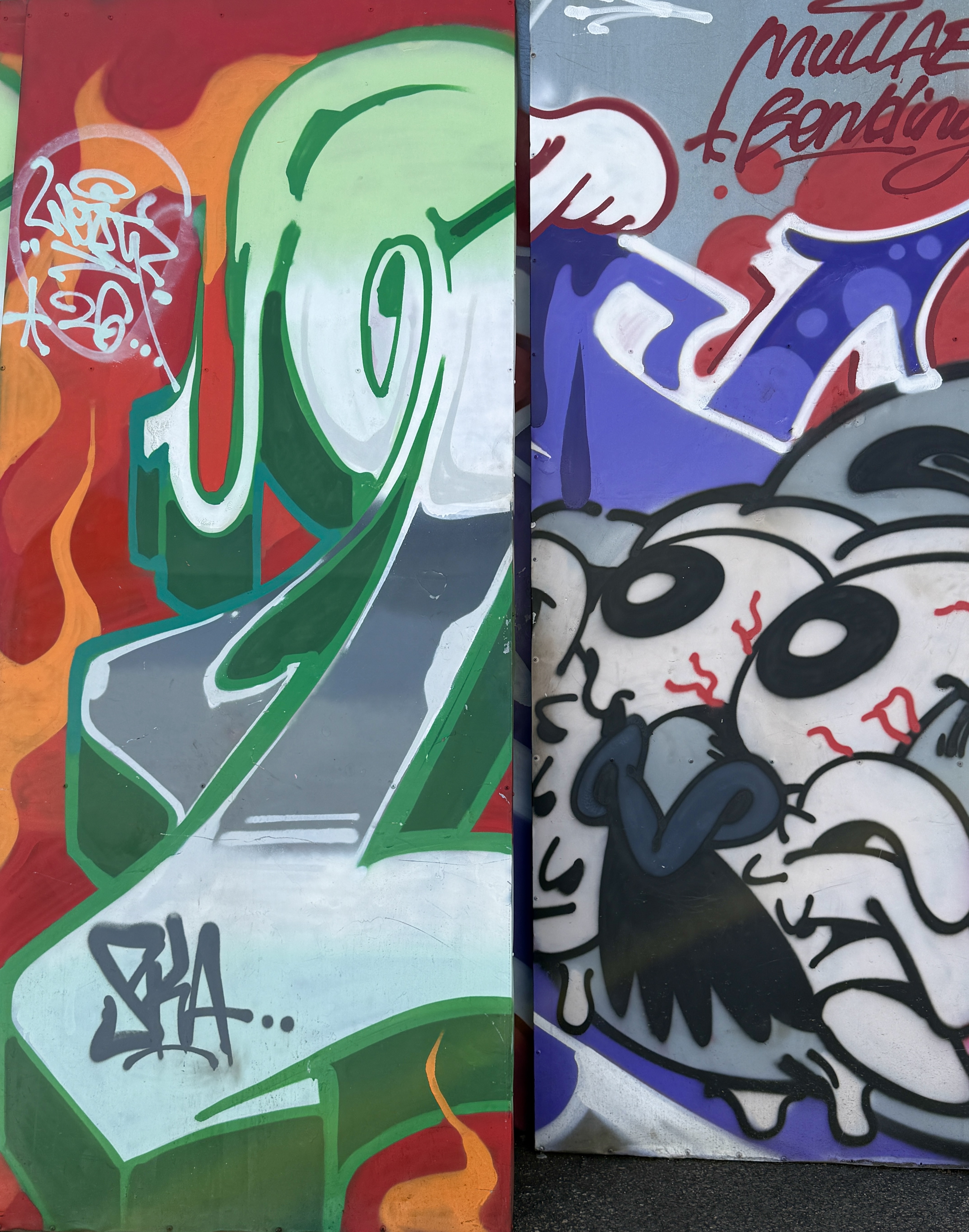
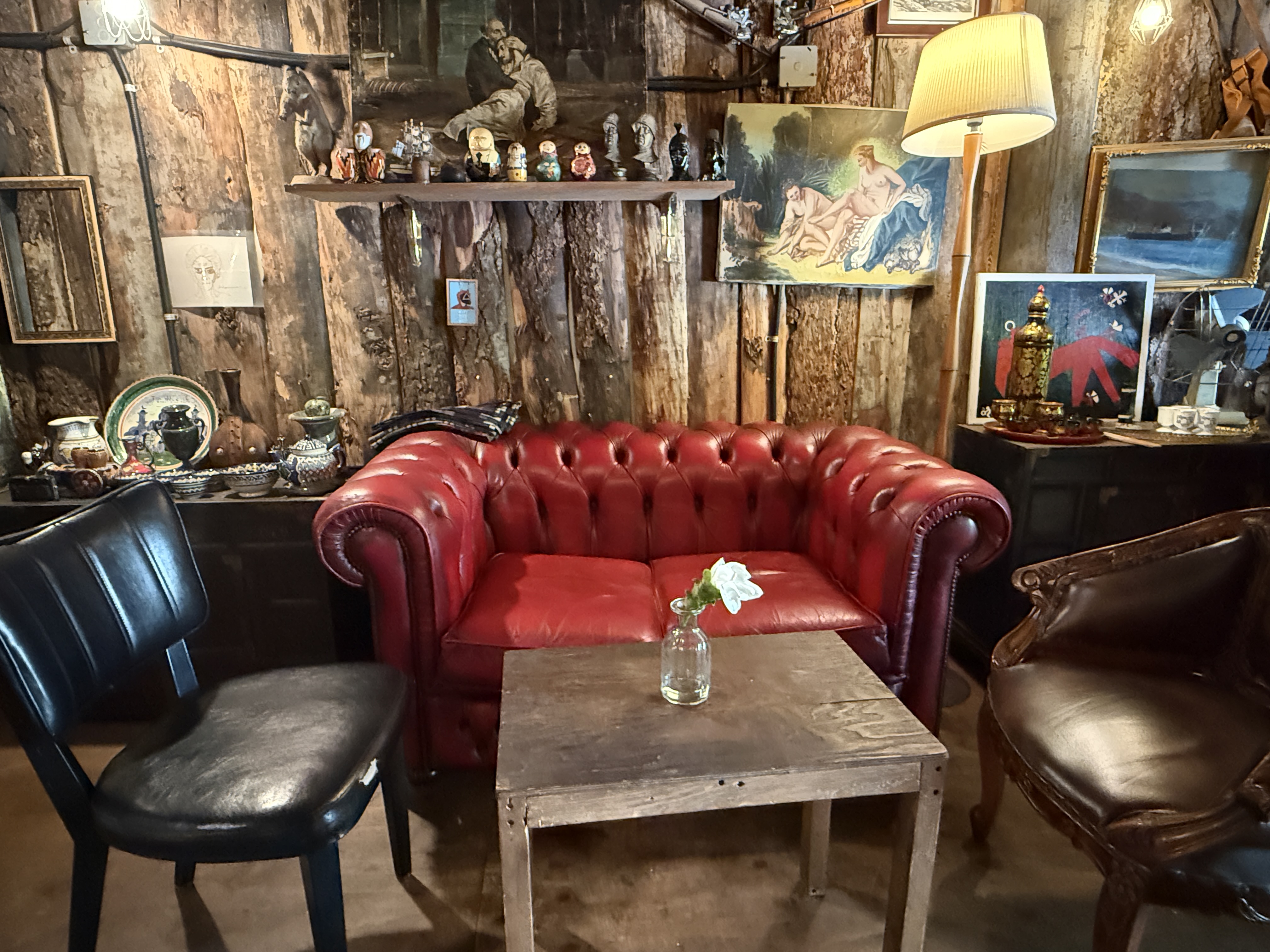
Most areas like this in large cities in the states (like NY) have disappeared and are no longer affordable to artists–having been taken over by boutiques, wealthier renters, and fancy restaurants and spas. I hope Seoul can keep these places alive. Currently these one and two story buildings and shops sit pretty close to high rise housing. By the way, one other thing we noticed during our time here—the number of stores in both high end areas and working class neighborhoods is huge and you never see a boarded up store or a vacant store. US cities struggle to keep retail alive and as we all know, it’s not really working.
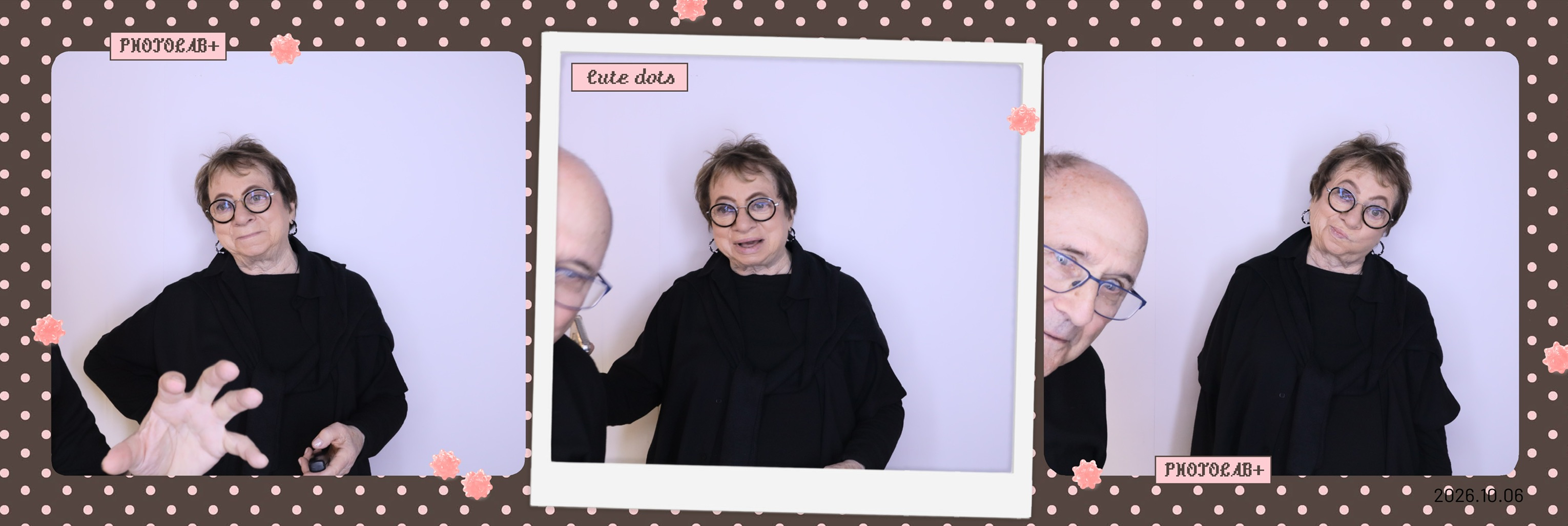
Along the way we stopped into one of many photobooth stores that are totally self-administered—no staff; there are several different types of shops that have no staff. And to our American surprise, the supplies and tools remain in tact; no theft, no mess. We took our photos, but we didn’t totally understand the directions so we got two copies of three images, but we took 8 images.. Now had there been an attendant…..
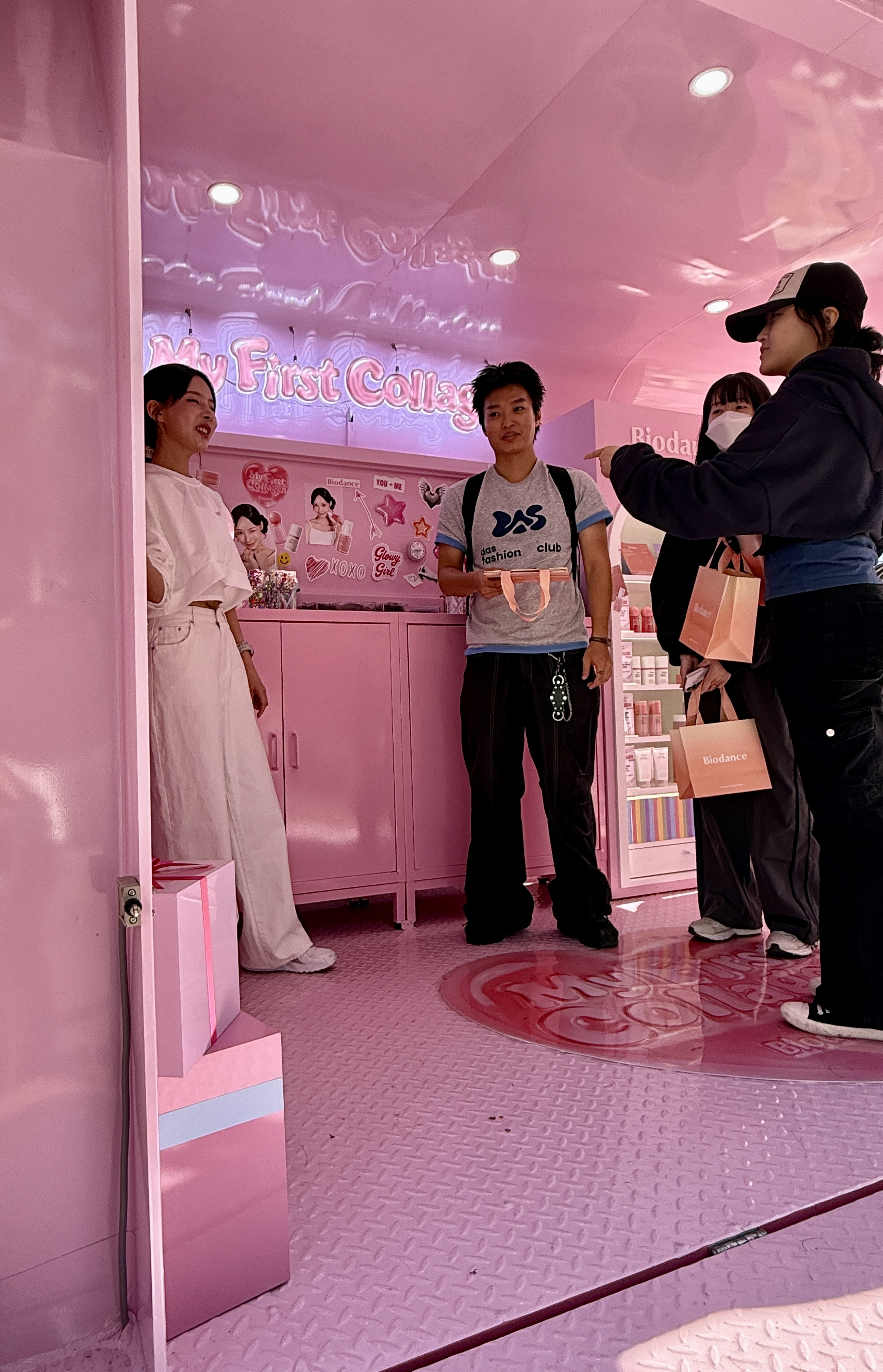
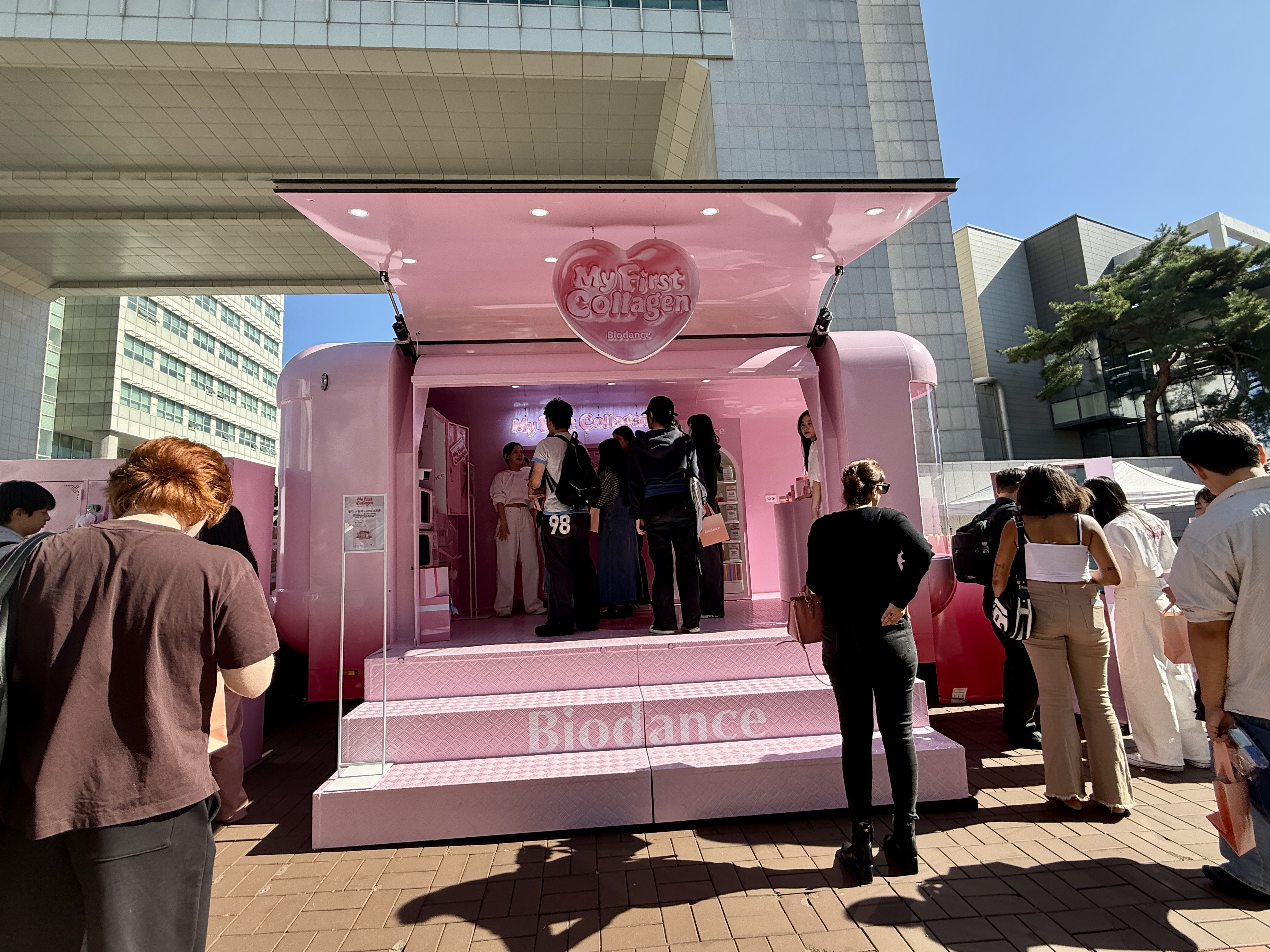
From Mullae, we taxied back to Hongdae (to begin to pack–strategically… since Mike will check his bag since he can’t lift it into the bin above.. and I will put whatever is heavy into his bag so that I can easily lift my bag) but got off a few blocks before the hotel to stroll and try to grab a quick light lunch. We wound up on the campus of Hongik University which had a pink popup van with tons of college students lining up — for collagen samples! And along the way we passed a few murals, perhaps done by art studnts at the university.
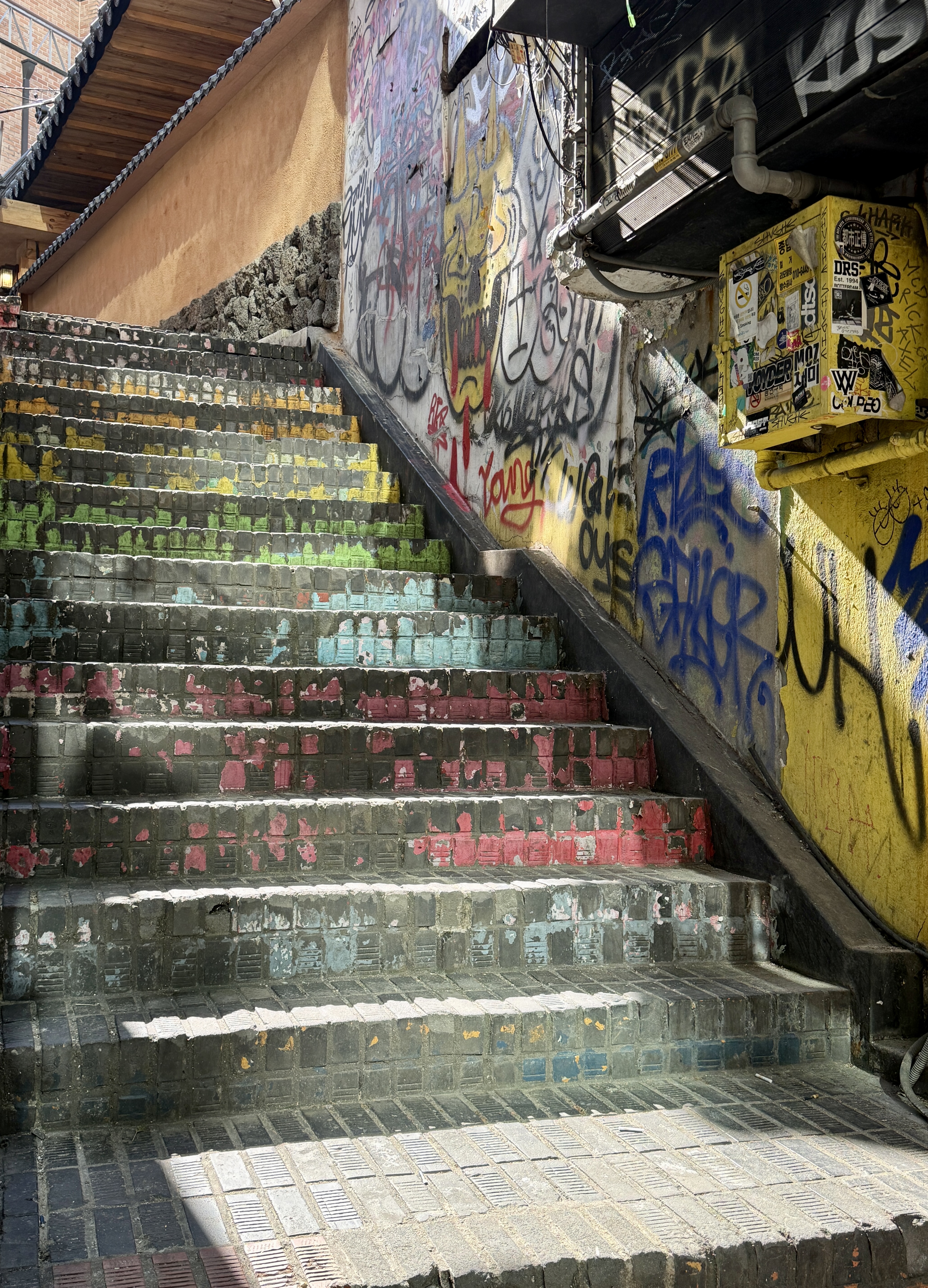
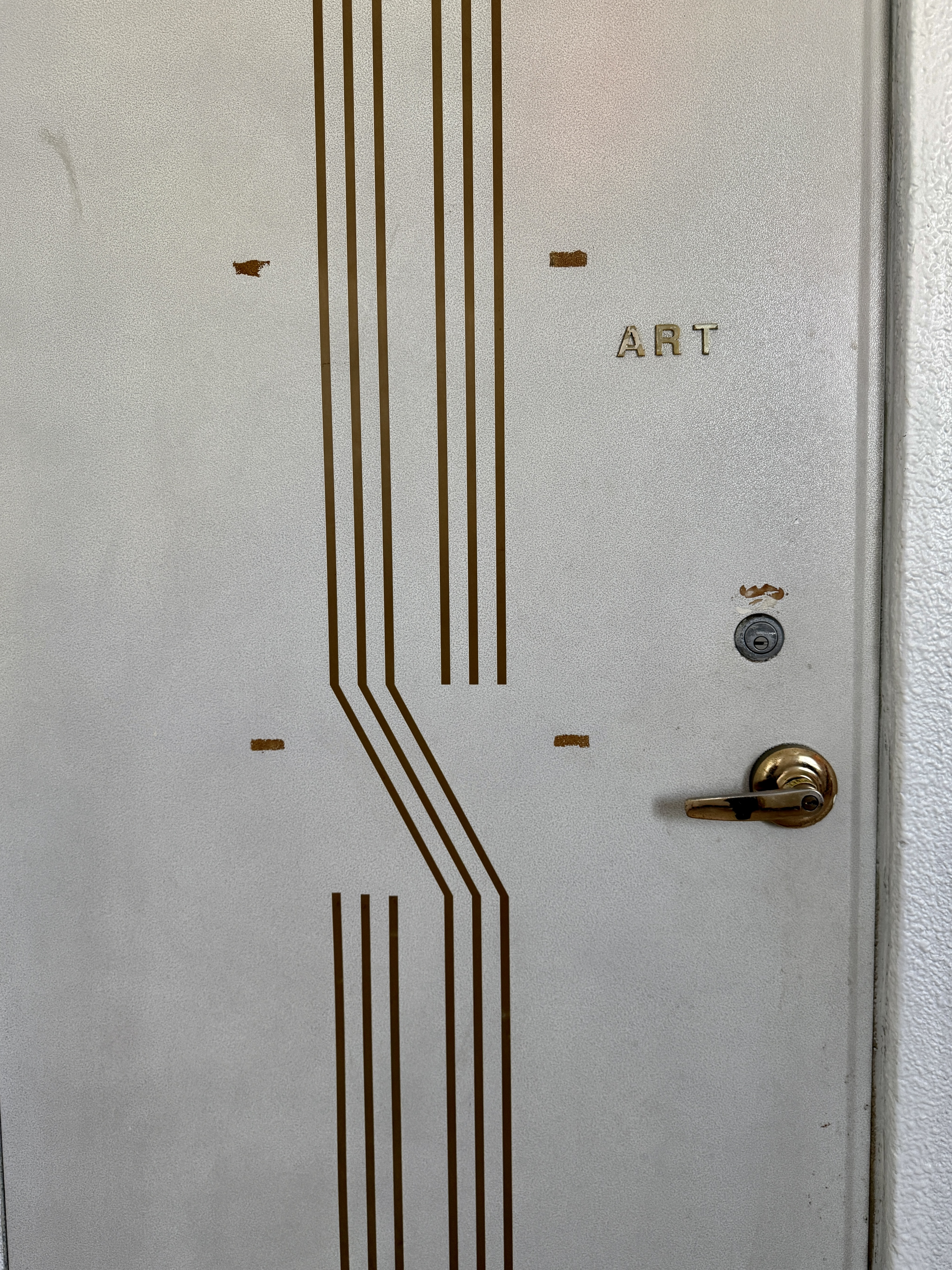
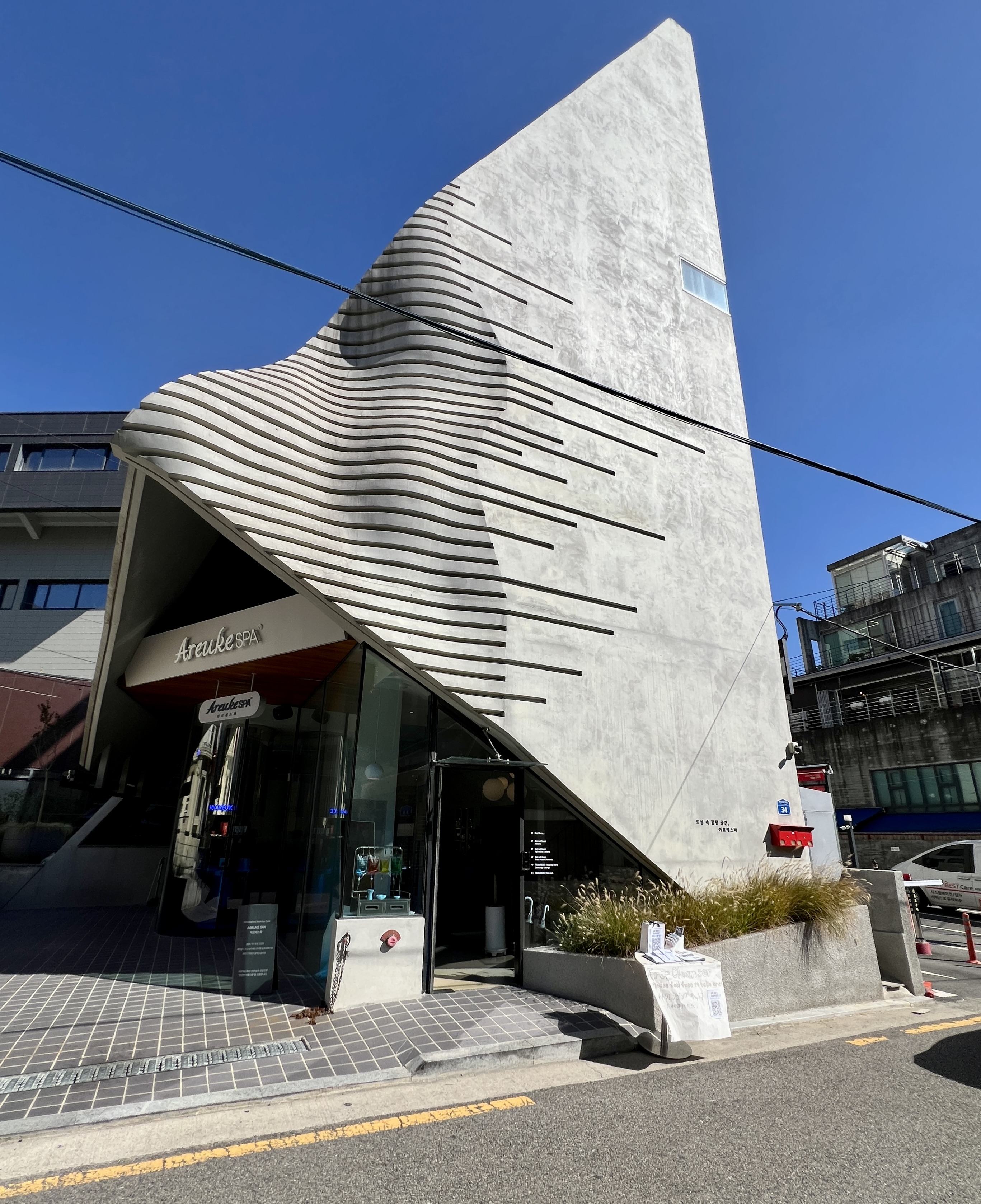
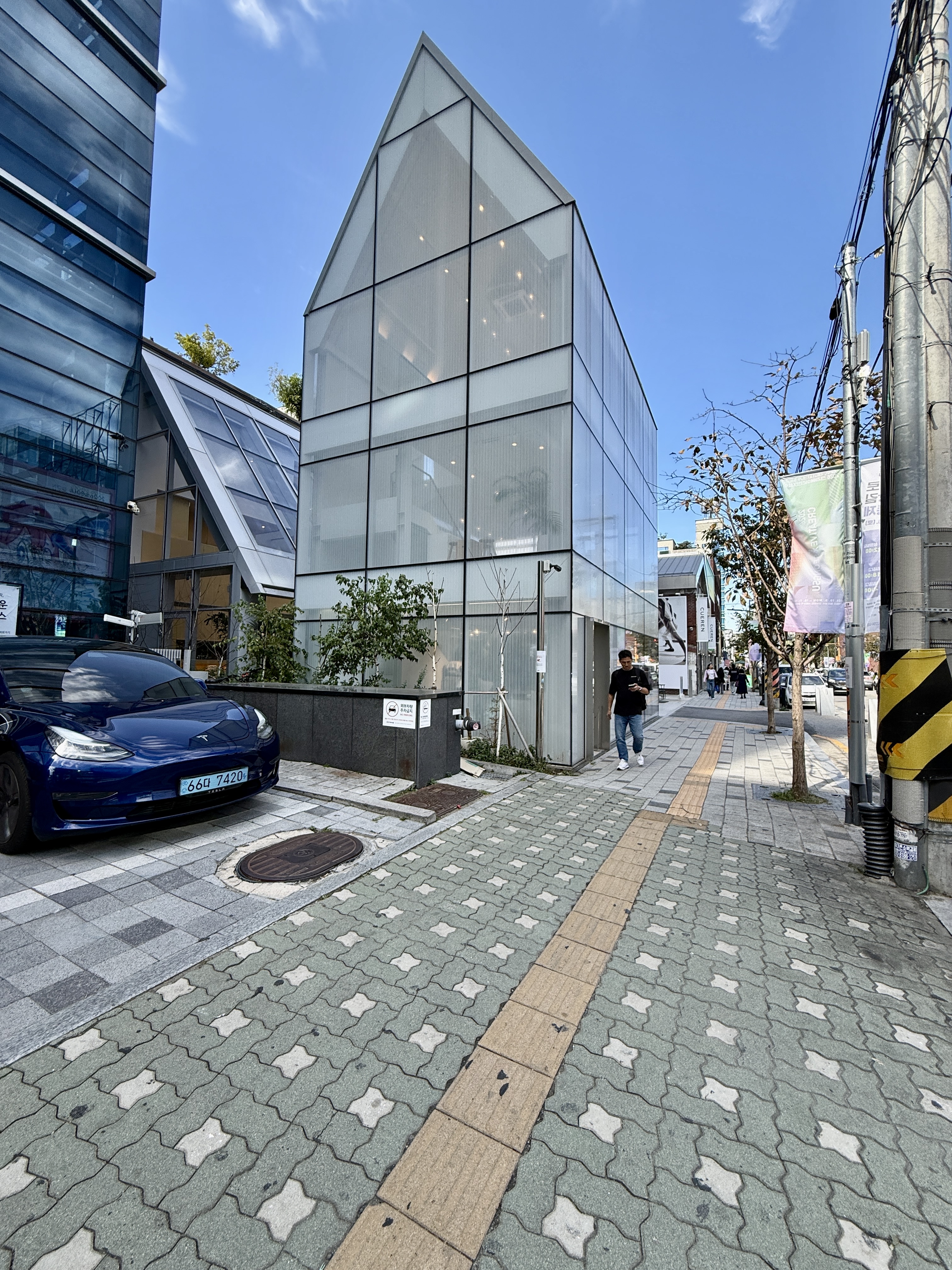
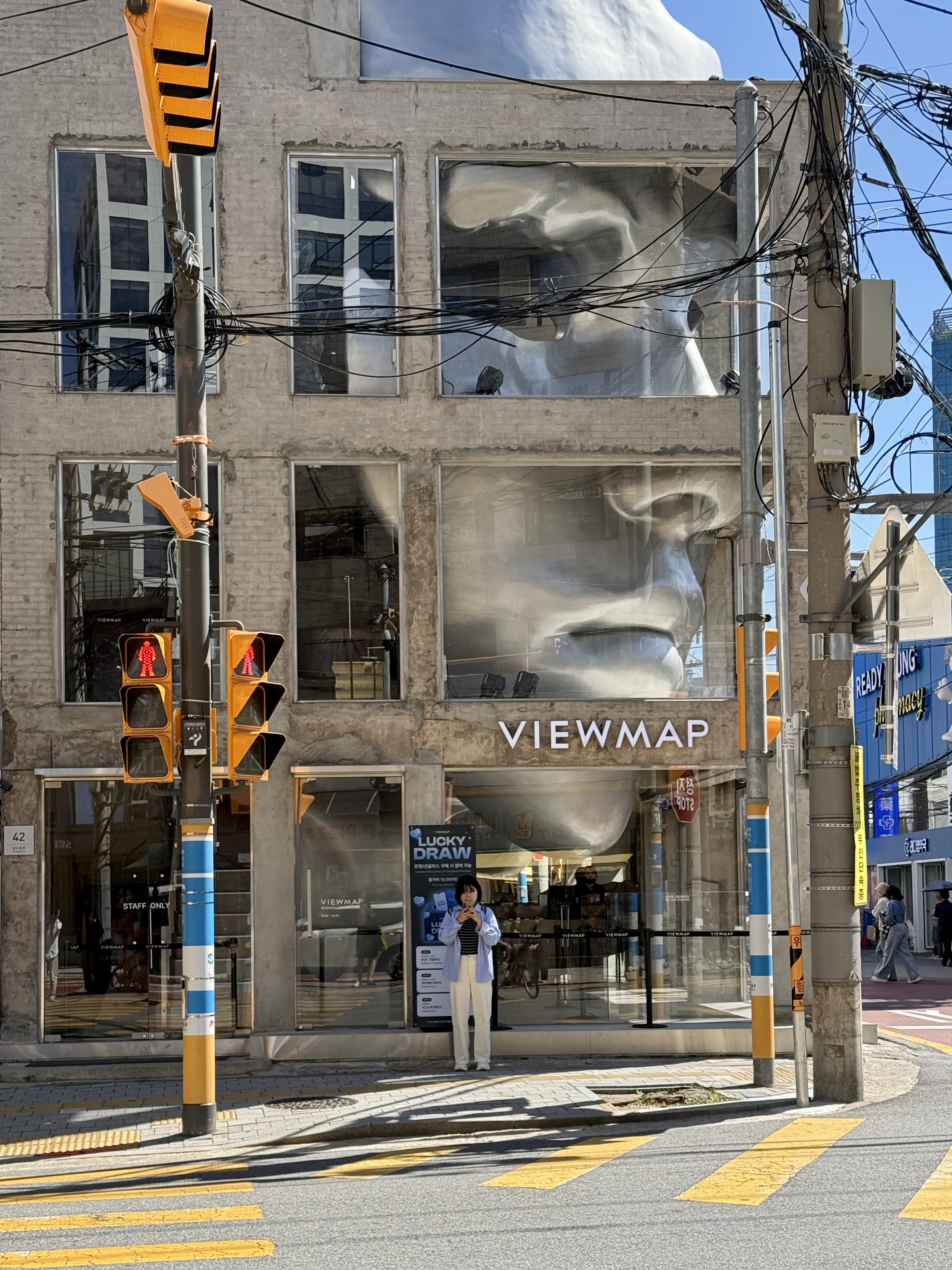
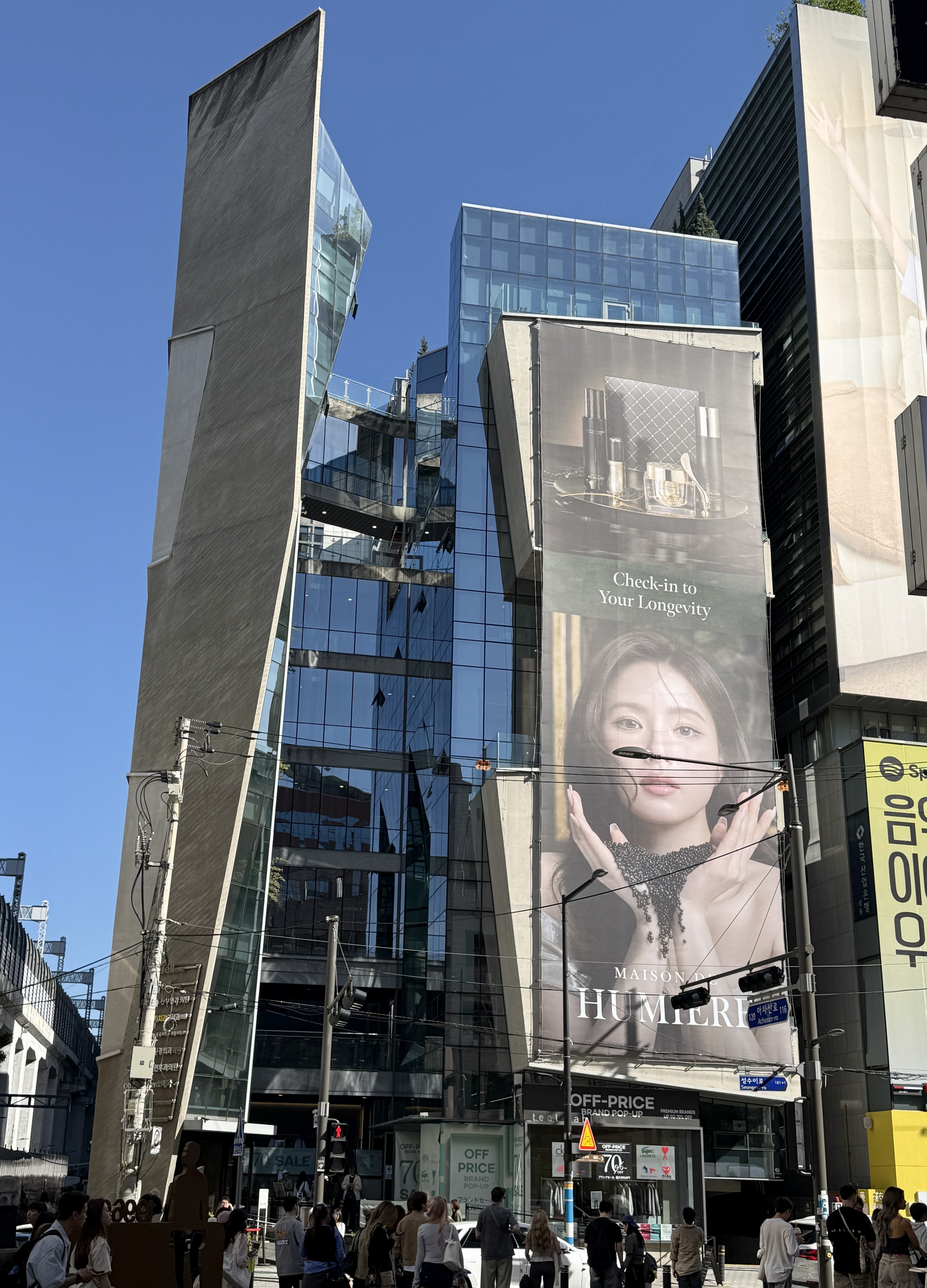
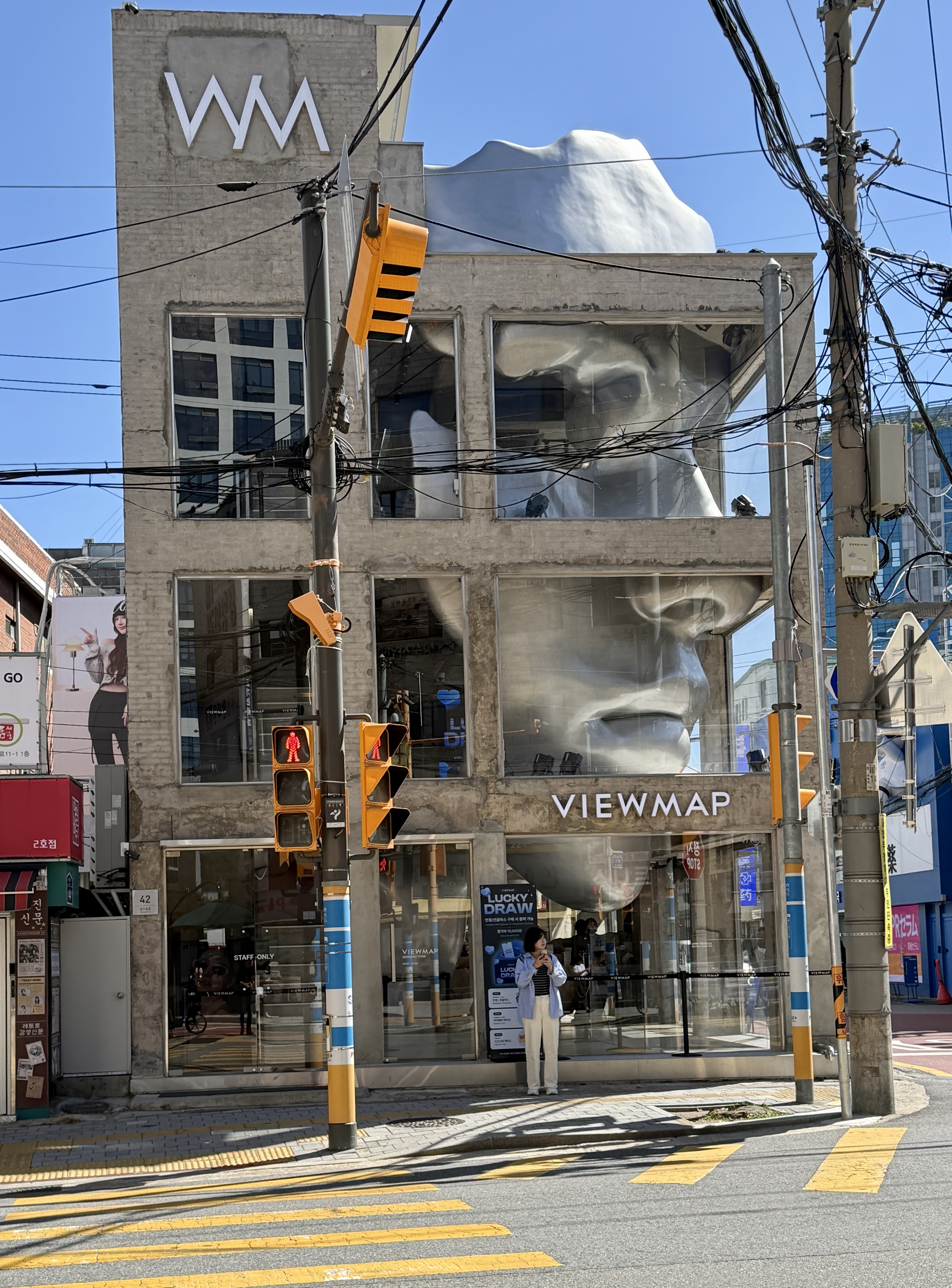
Another interesting observation… perhaps for the architect readers: Buildings here in Seoul, even large scale buildings show a lot of whimsy, with windows popping out or terraces suddenly appearing or cutouts within the frame.. or twisted and “warped” buildings.. or buildings with 15 different materials on one side of a building… and more. Each seems to be screaming for attention, but these features are actually made possible because there still remain fabricators and “artists” who can produce these things. Like in many countries, architects here in Korea are obviously trained to appeal to clients who want their building to attract attention, much like the advertisements for clothing and cosmetics!
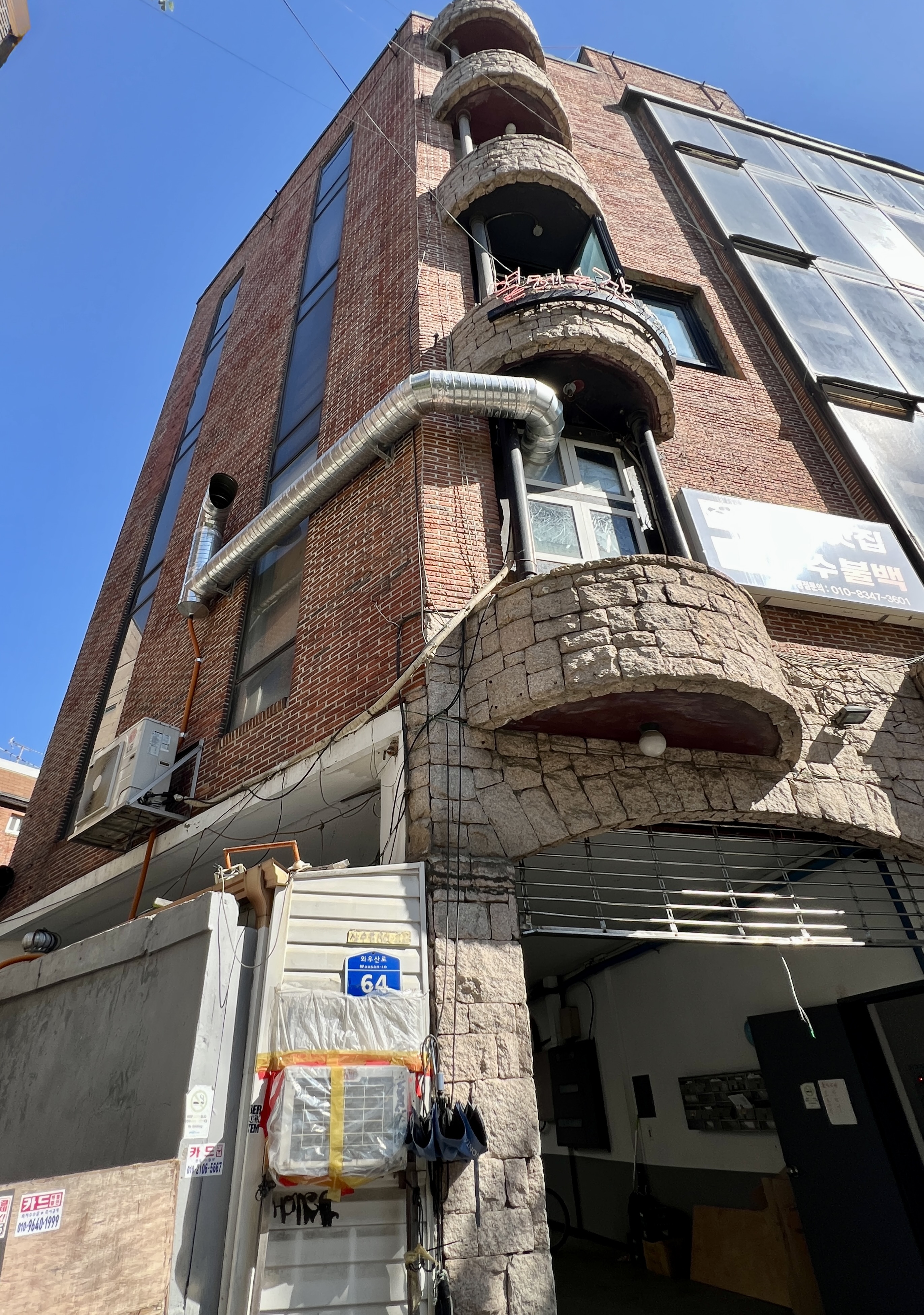
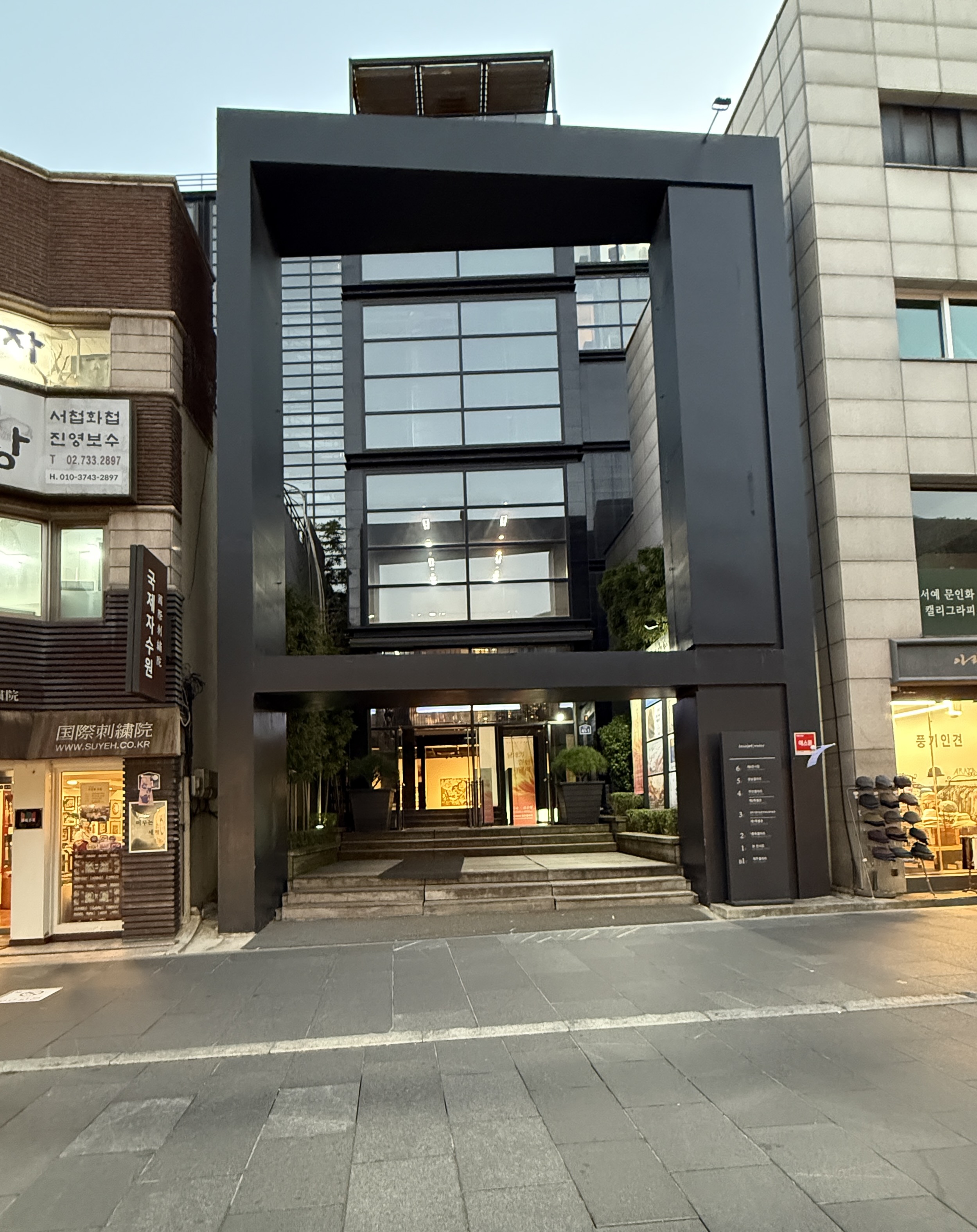
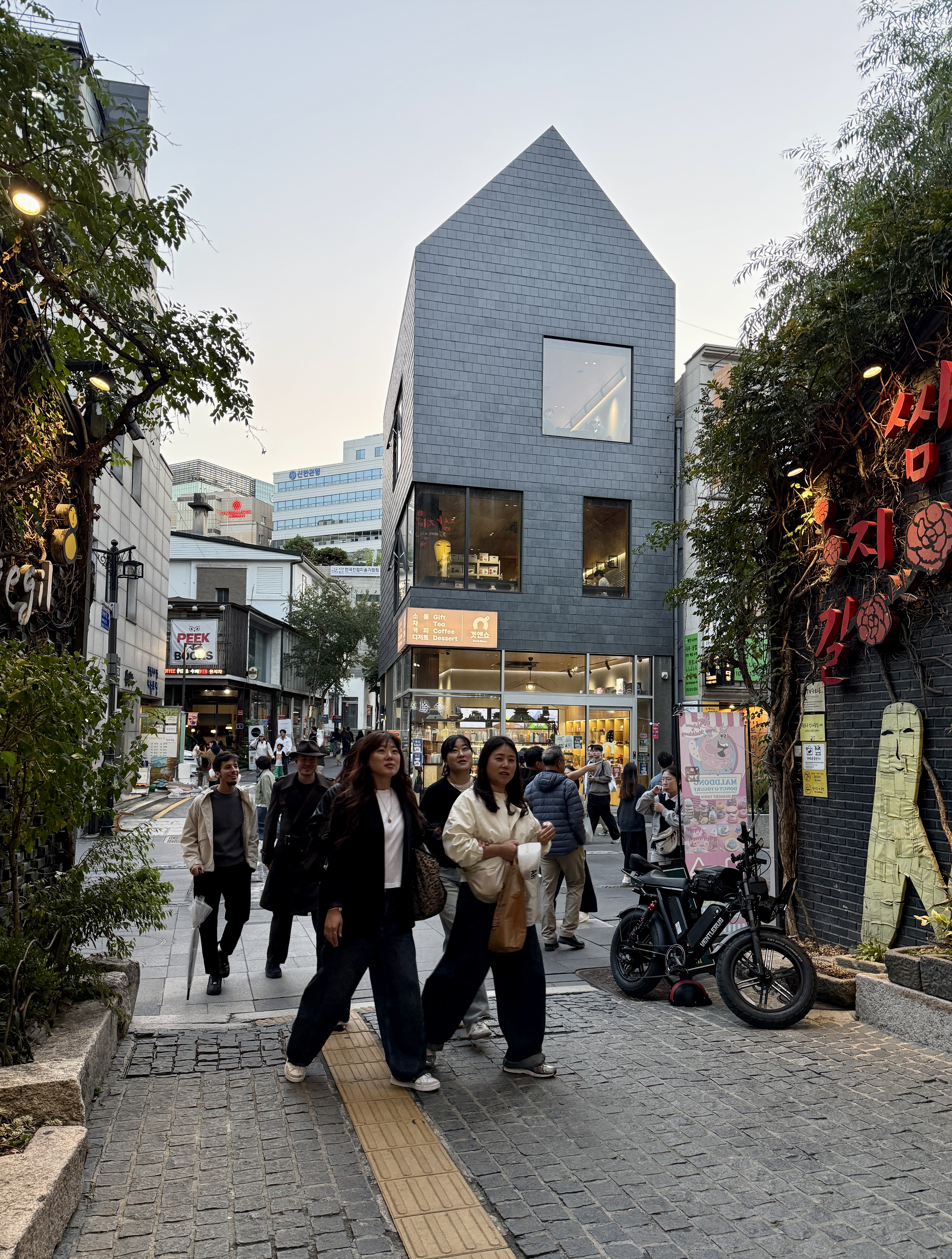
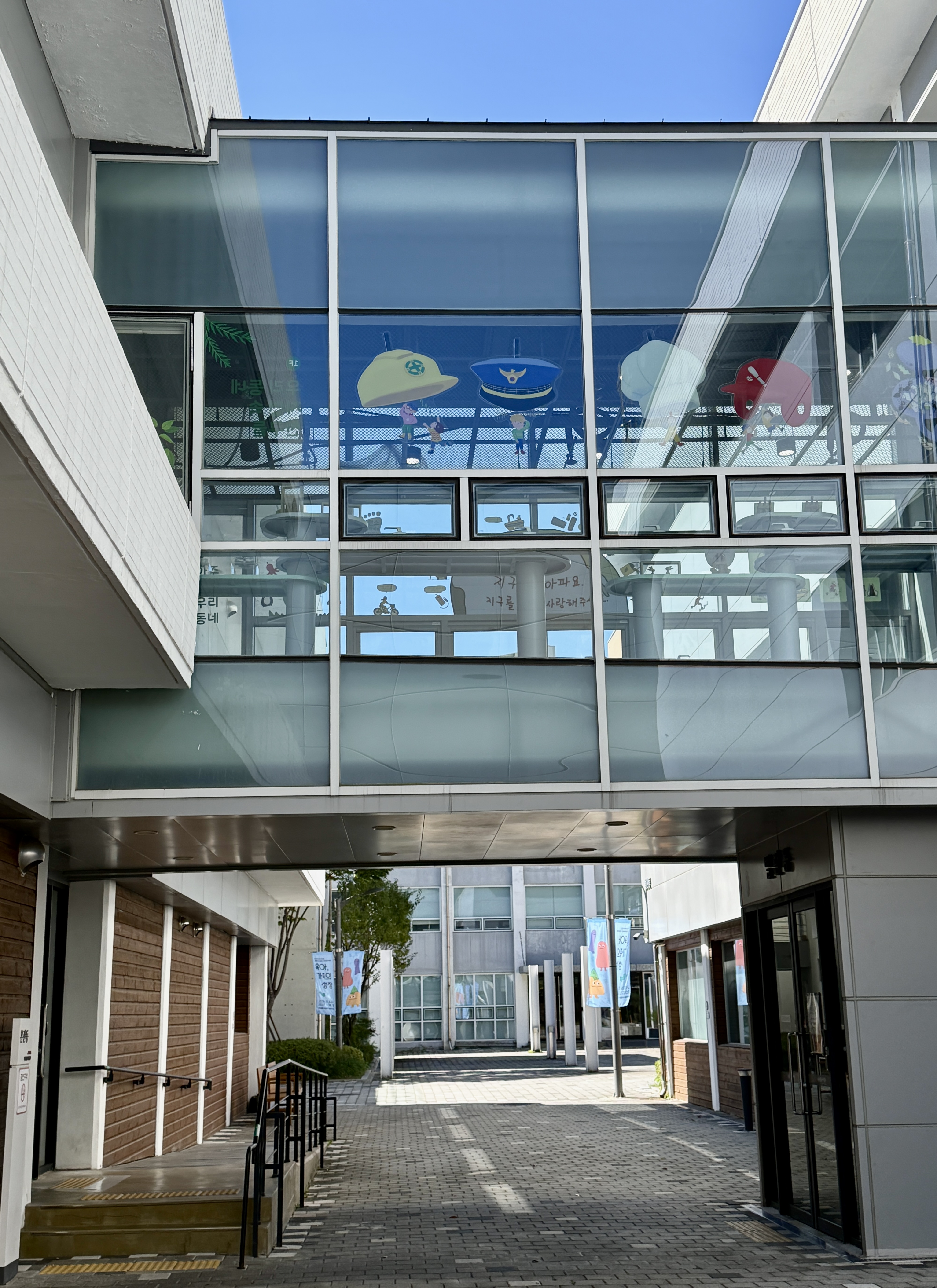
Oh.. we did eventually stop for lunch at a place called Blue Roof. We went inside and there was a stairwell with about five flights to climb, but no signage about the restaurant except the big sign on the edge of the building where the door was… We climbed four flights thinking the restaurant must be on the roof (Blue Roof— got it?). But no restaurant so we climbed back down.. and there right next to the door with the stairs was the restaurant on the first floor. The Internet said it was a noodle restaurant, but it turned out to be Korean BBQ. We like that but hadn’t stopped at other BBQ places because it would be too heavy for lunch. Anyway.. all good. BBQ was tasty.
Now we are packing and then head to a supposedly upscale sushi restaurant… in lieu of our planned travels through Japan, which will alas have to be rescheduled…again! Will report on our final evening and morning tomorrow. Our flight is around 4 pm and wonder of wonders, we arrive at 11:30 am (same day).
October 5, 2026…. Analog Breakfast; Corporate HQ; Pensive Buddhas; Temples; and Michelin Temple Dinner
Before I begin today’s adventures, I failed to mention something in yesterday’s post about the Leeum Museum: there is absolutely no signage fromn the outside explaining how to get into the building (unless you are standing directly in front of the Koolhaus building where the doors are. Given that there are three buildings, arranged on a hillside… and our taxi driver dropped us off in front of the Jean Nouvelle building… We could see that there were people inside, but the doors to the building were locked; we then walked uphill all around the Botta building and all entrances (or what appeared to be entrances) were shut. We were totally confused. We stopped a woman walking her dog and she said she “thought” you needed to go around one of the buildings (the Koolhaus one) and you get in there. Yes, that was correct. But really? Nothing on the other buildings or the street that directed you there.. OK.. my gripe for the day.
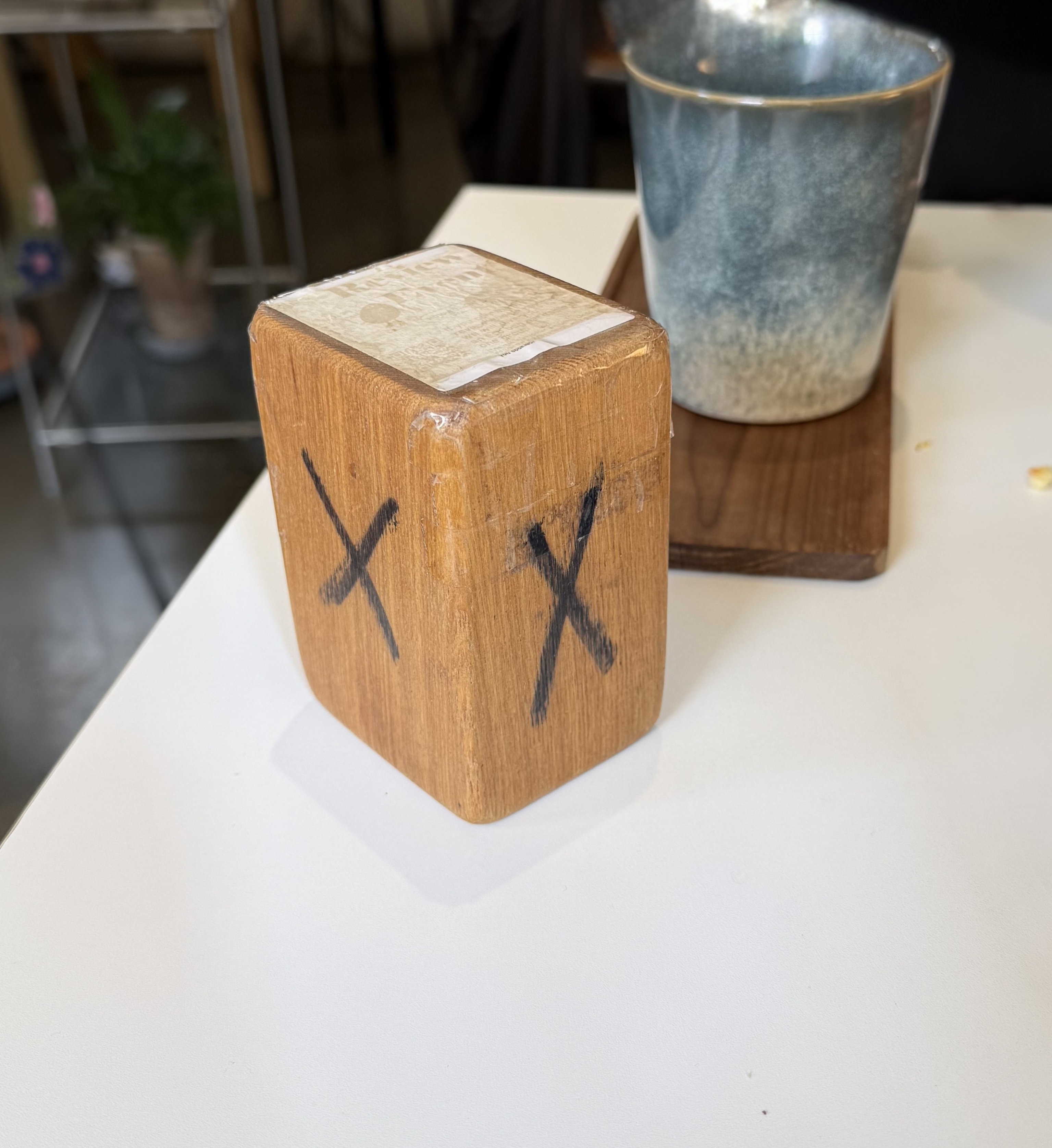
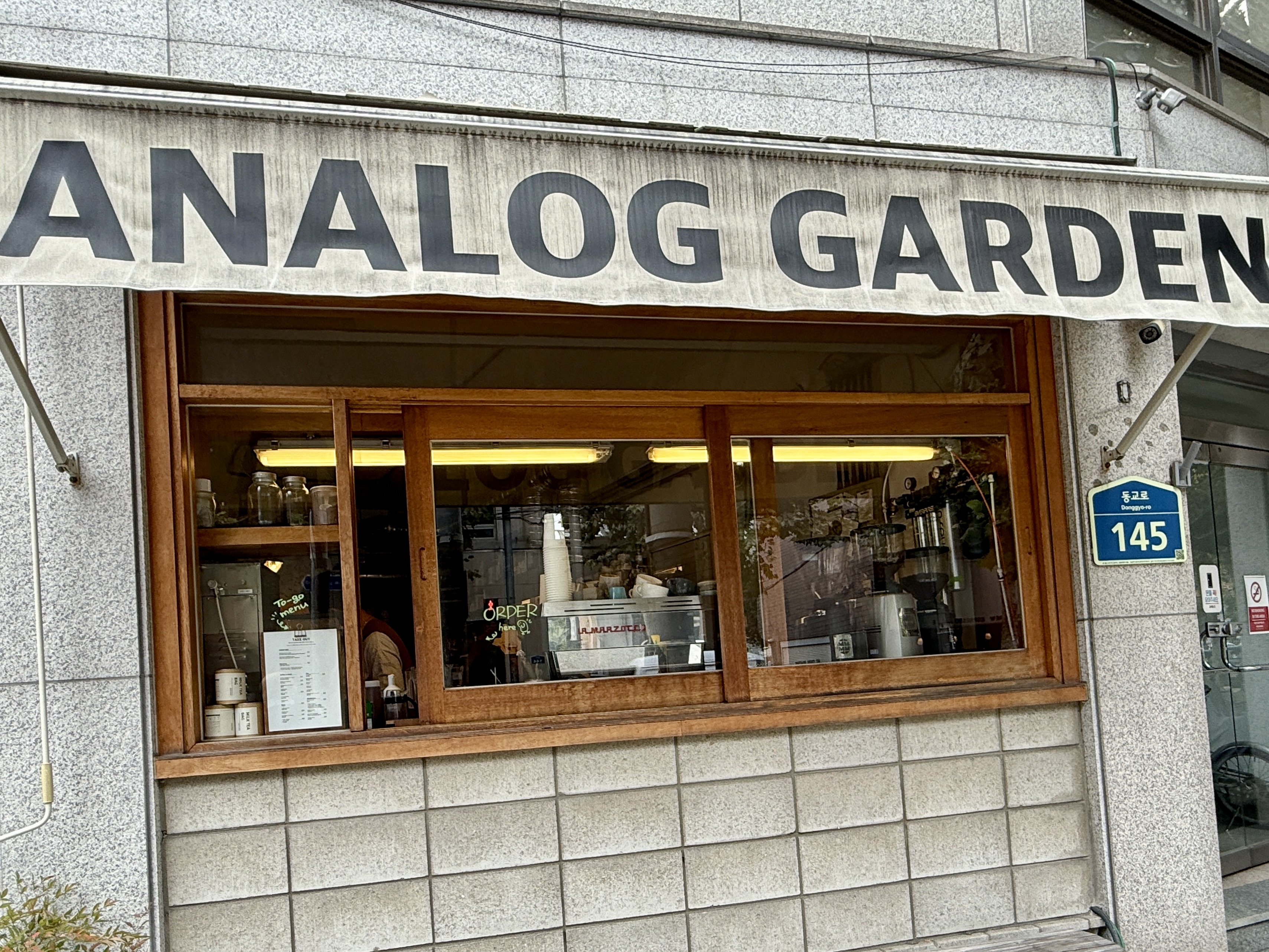
Began today with breakfast (not at our usual Offer which only has pastries and broad assortment of drinks) at a little cafe about 8 minutes from the hotel, called Analog Cafe–an organic place with some interesting breakfast options. Unlike the rest of Seoul which does everything digitally, this cafe (rebellious, I assume) doers everything in analog. So when you place your order–instead of getting one of those little buzzers that light up when your order is ready–you get a 5″ wood cube that has a letter of the alphabet painted on it. It’s a small cafe so I guess they can just remember who is getting what.
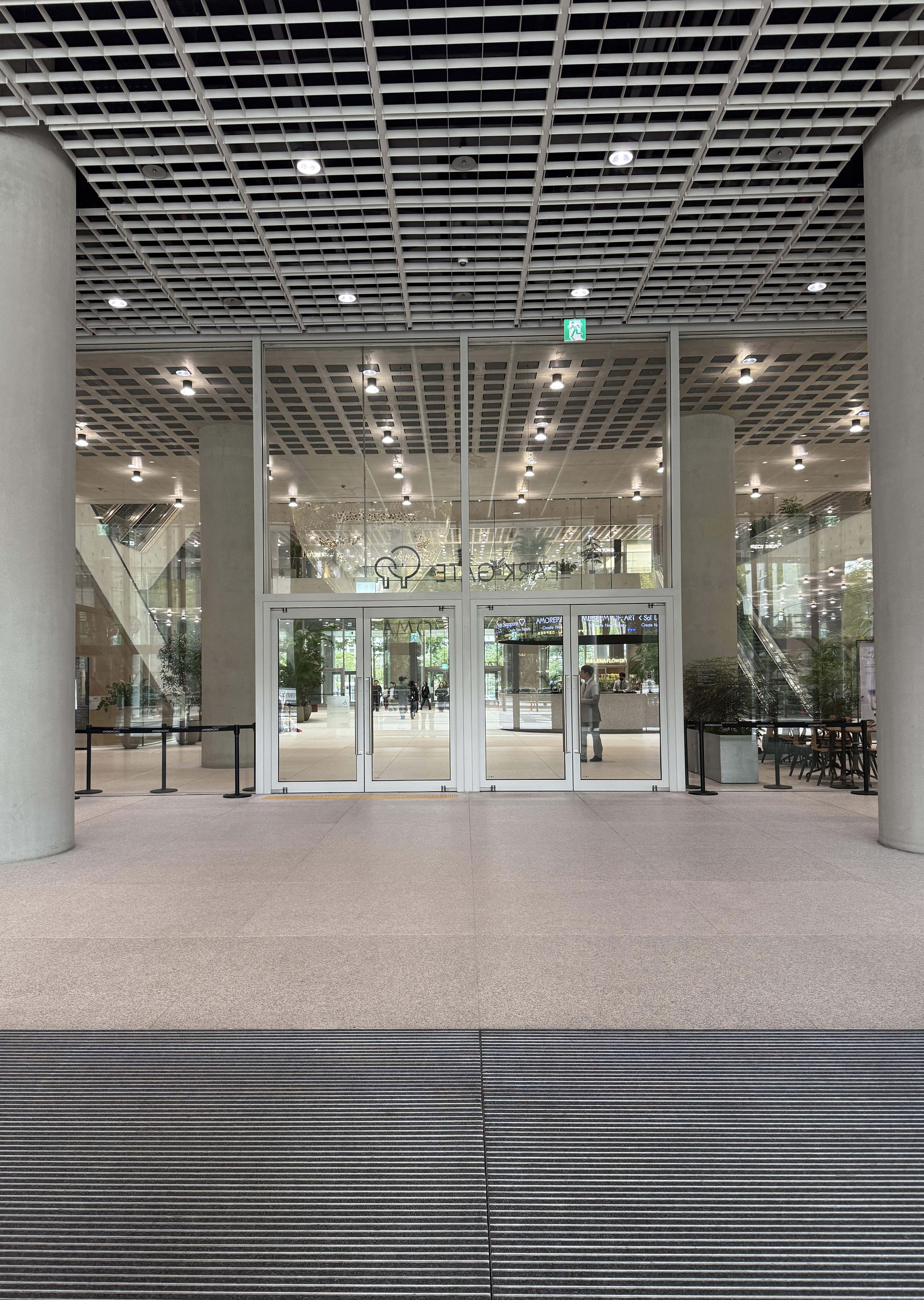
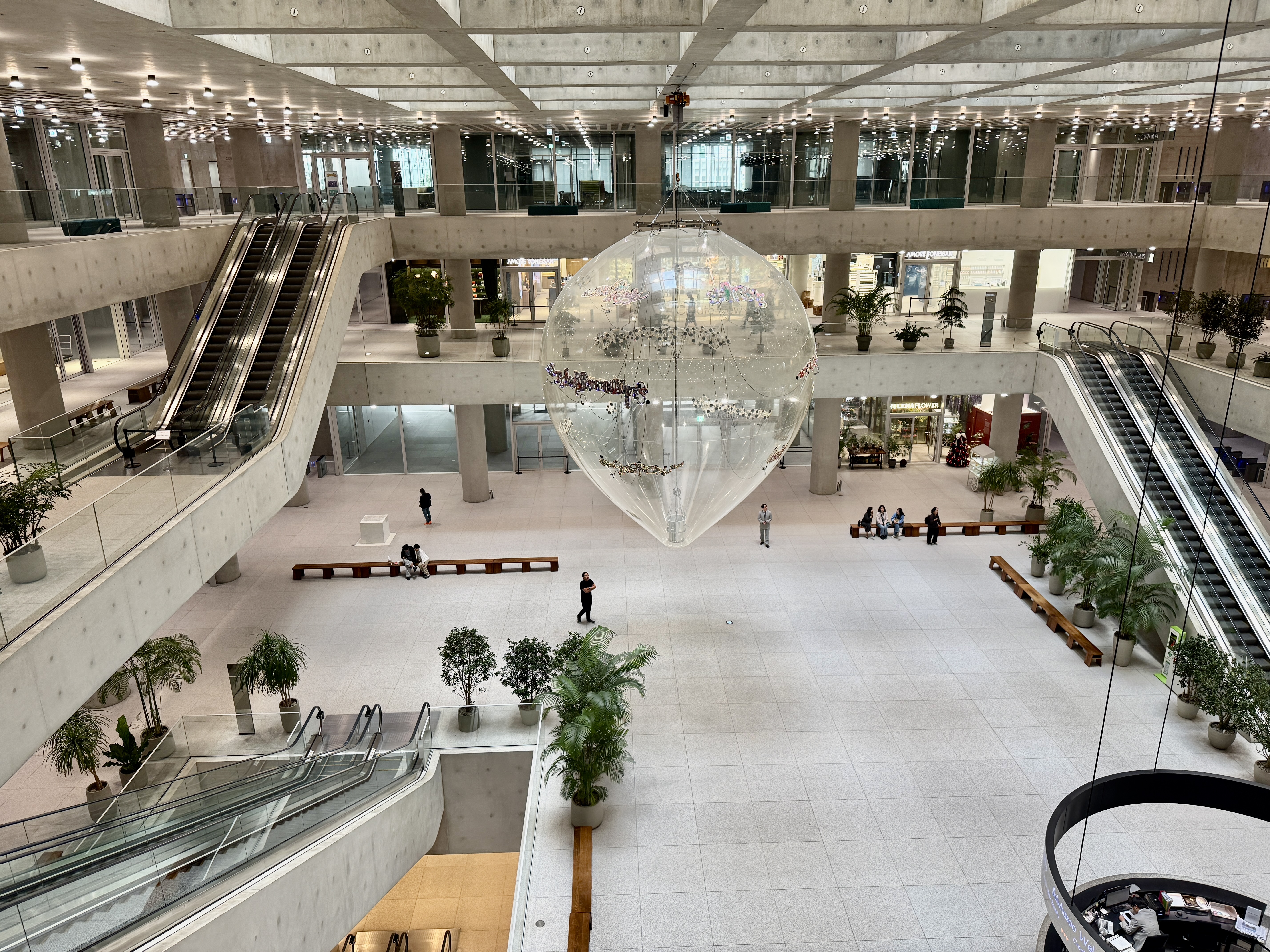
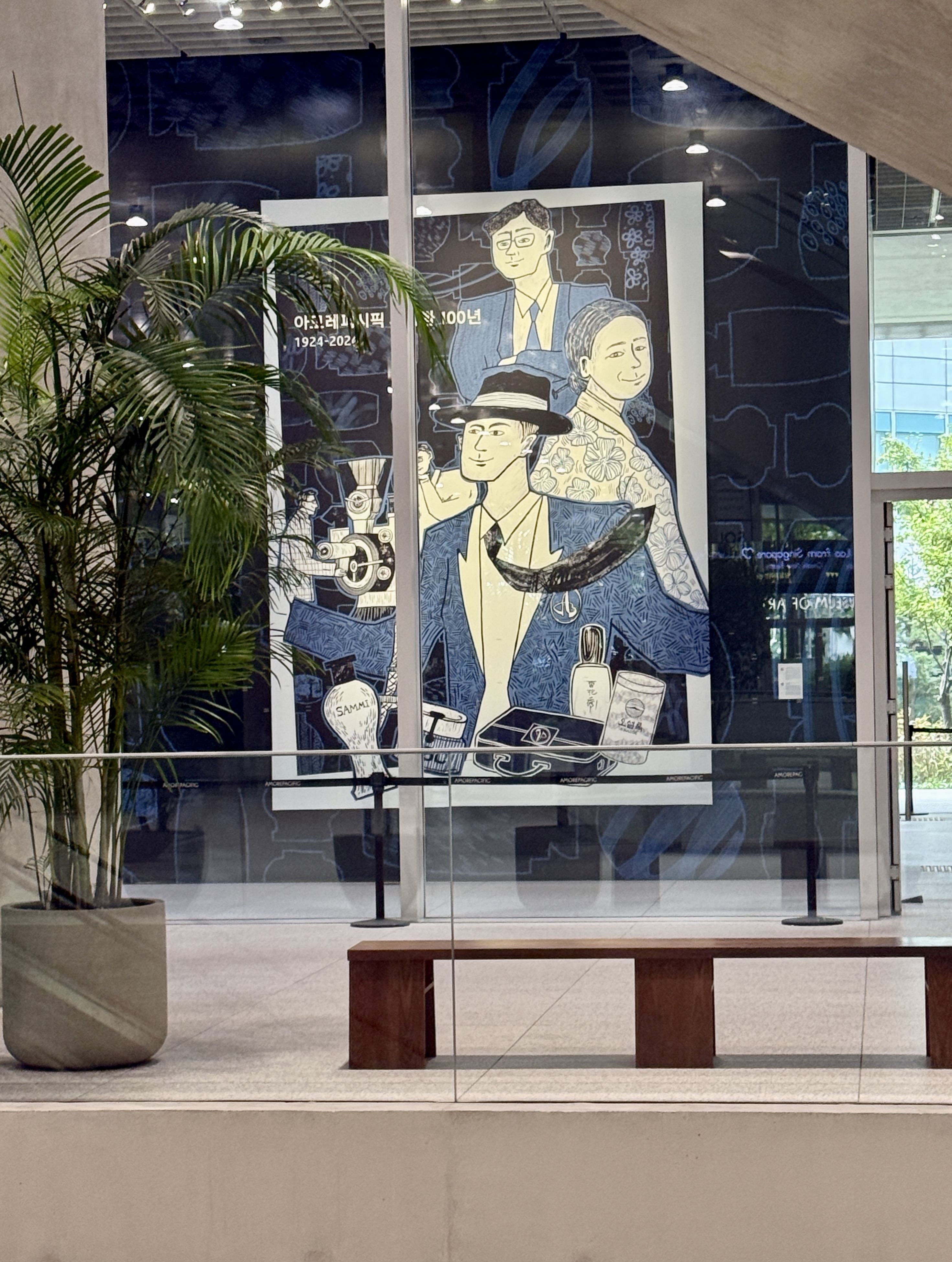
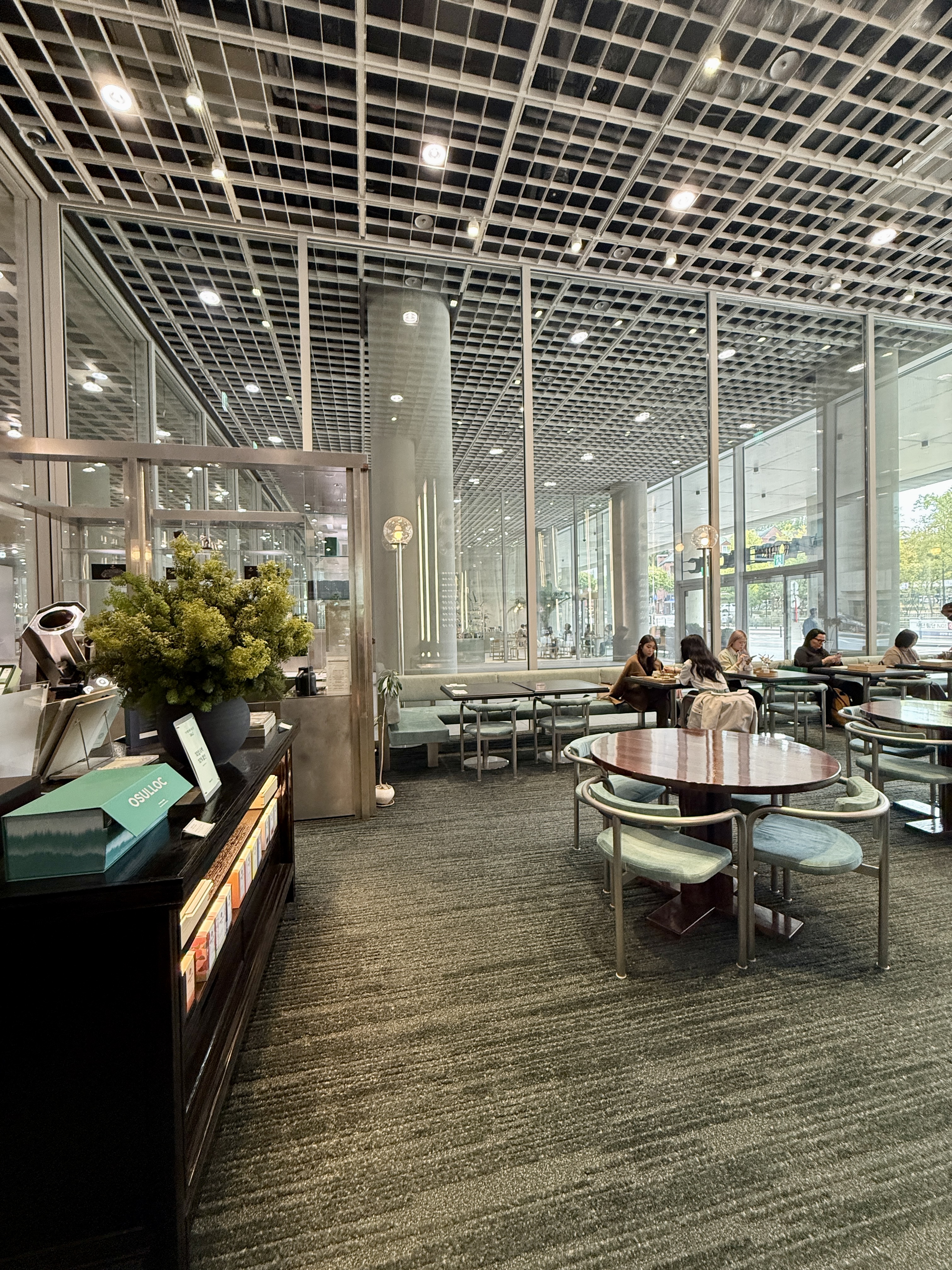
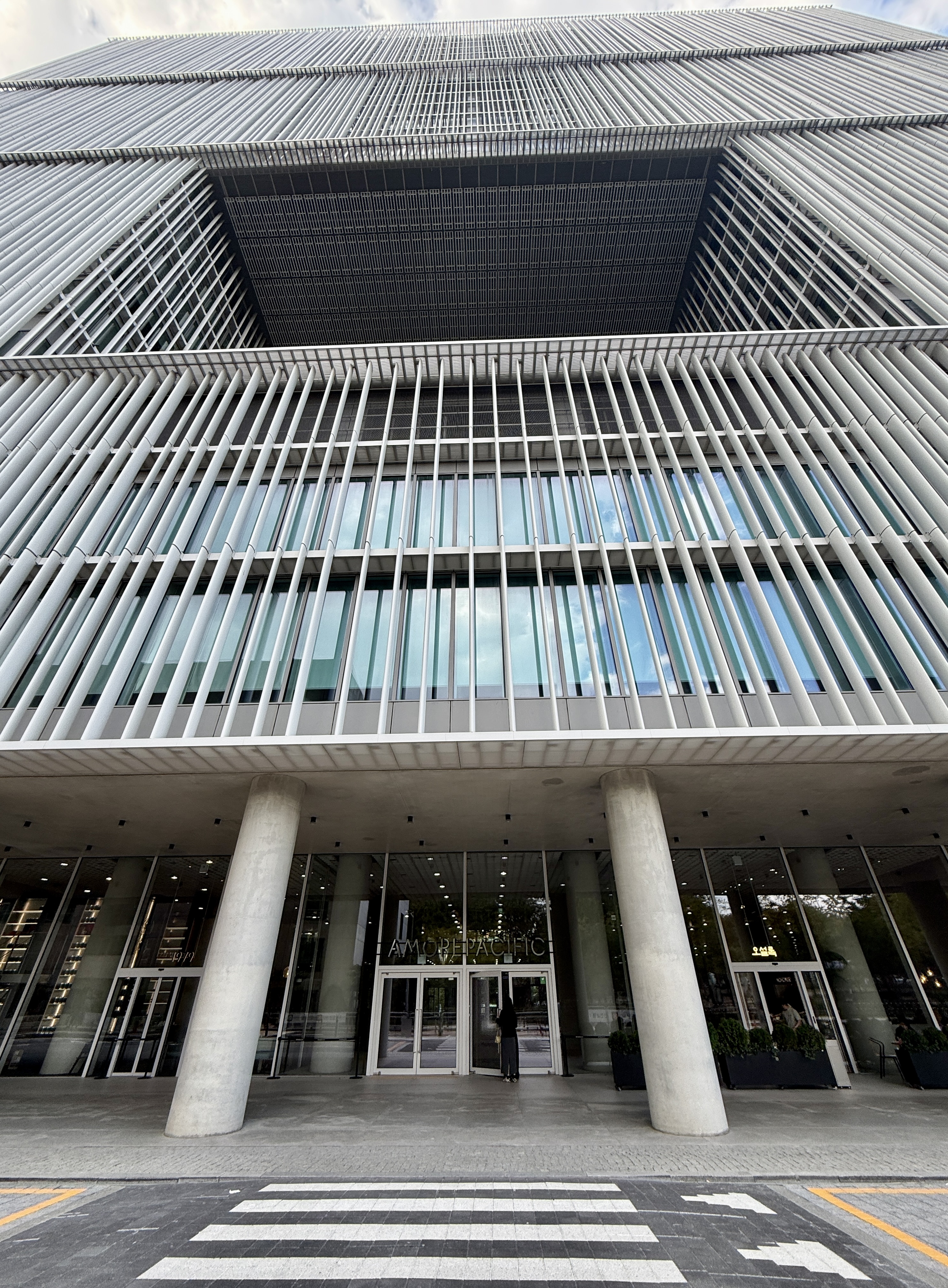
From there we headed (by taxi, since we’ve ditched the subway with its many, many stairs given Mike’s sling is too complicated and risky) to the corporate headquarters for Amorepacific–the skin care and make up giant whose motto is “Making people beautiful, making the world beautiful.” We went, not because of our deep interest in skin care, but because we had heard it was a spectacular building with public spaces that enabled visitors to see the interior vertical green wall that is supposedly the tallest in the world. Well… it is an amazing building with a huge lobby floor above which on the 4th floor is a glass block floor and an atrium that goes up many floors. But they no longer allow the public above the third floor. We made our case to the guy at the information desk– architect, designer, professors but it fell to deaf ears. And since it was some kind of holiday we could not speak to a supervisor to try to use our NY elbows to bypass the rules. Anyway.. no go. The building is understated, impeccably detailed, showcasing a large-scale, light filled space Apparently you can get your skin tone tested and make up matched to your color perfectly. I thought about it… but didn’t do it. Mike really wanted to do it but because of his shoulder decided against it.
On the main level there is a cafe, tea shop, and a museum which currently has a Sol Lewitt show. Every space is truly beautiful. On the lower level there are at least seven different coffee shops and assorted eateries—each beautifully designed. That said, the building and the consumption that it promotes (amid its professed commitment to the environment) seems to epitomize the contradictions in South Korea and reminded us of the issues raised in the Academy Award winning film a few years ago: “Parasite.”
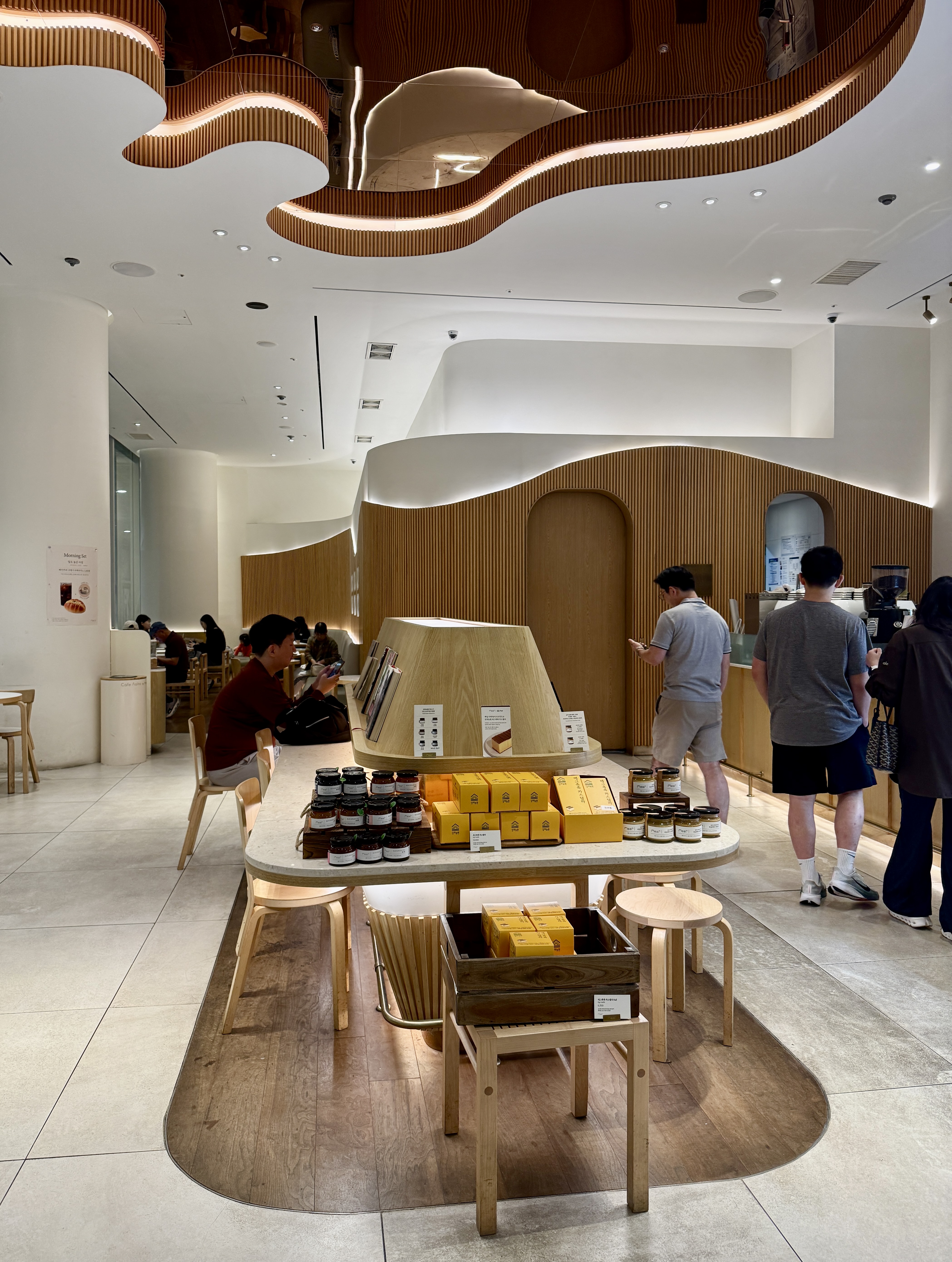
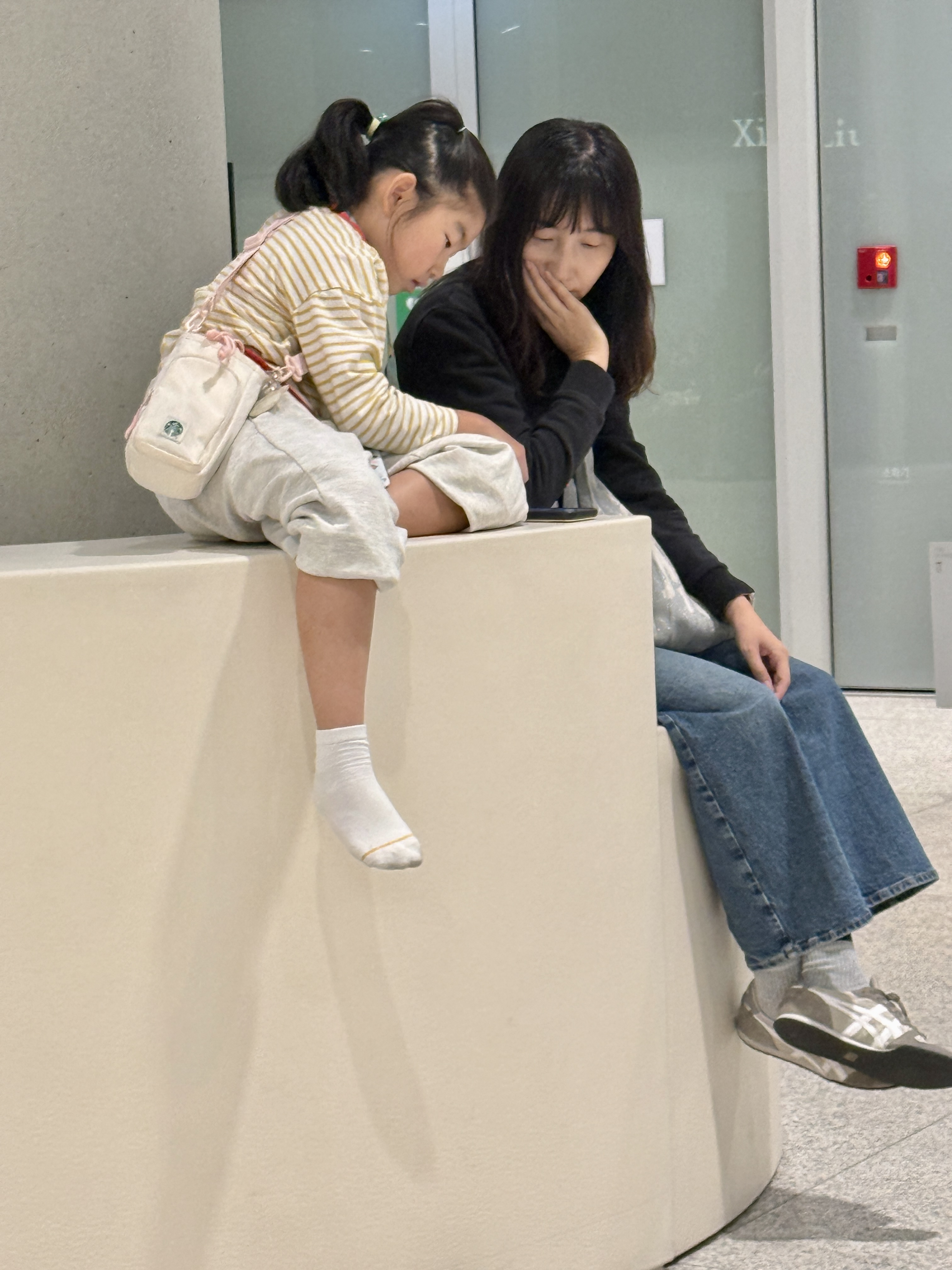
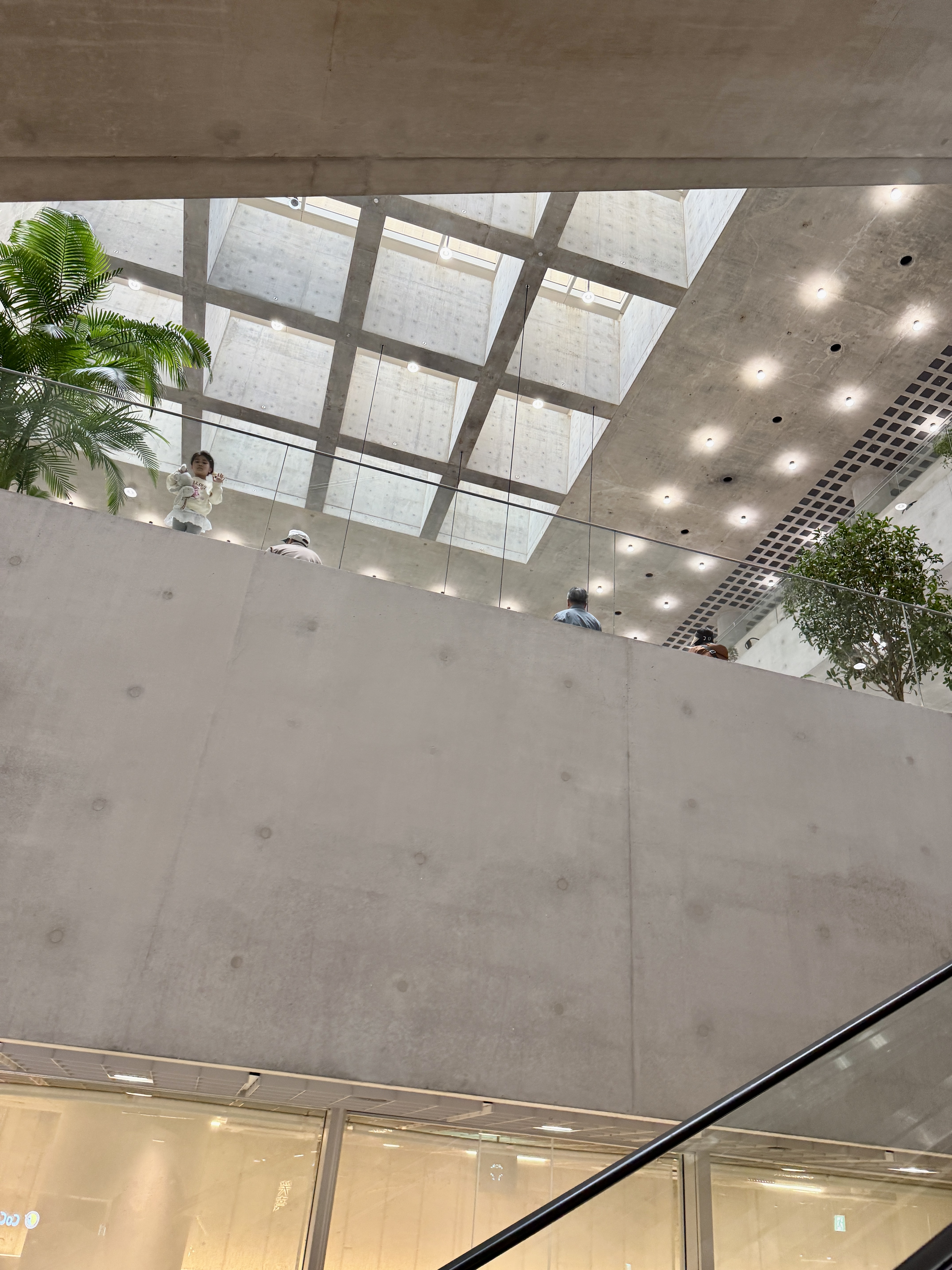
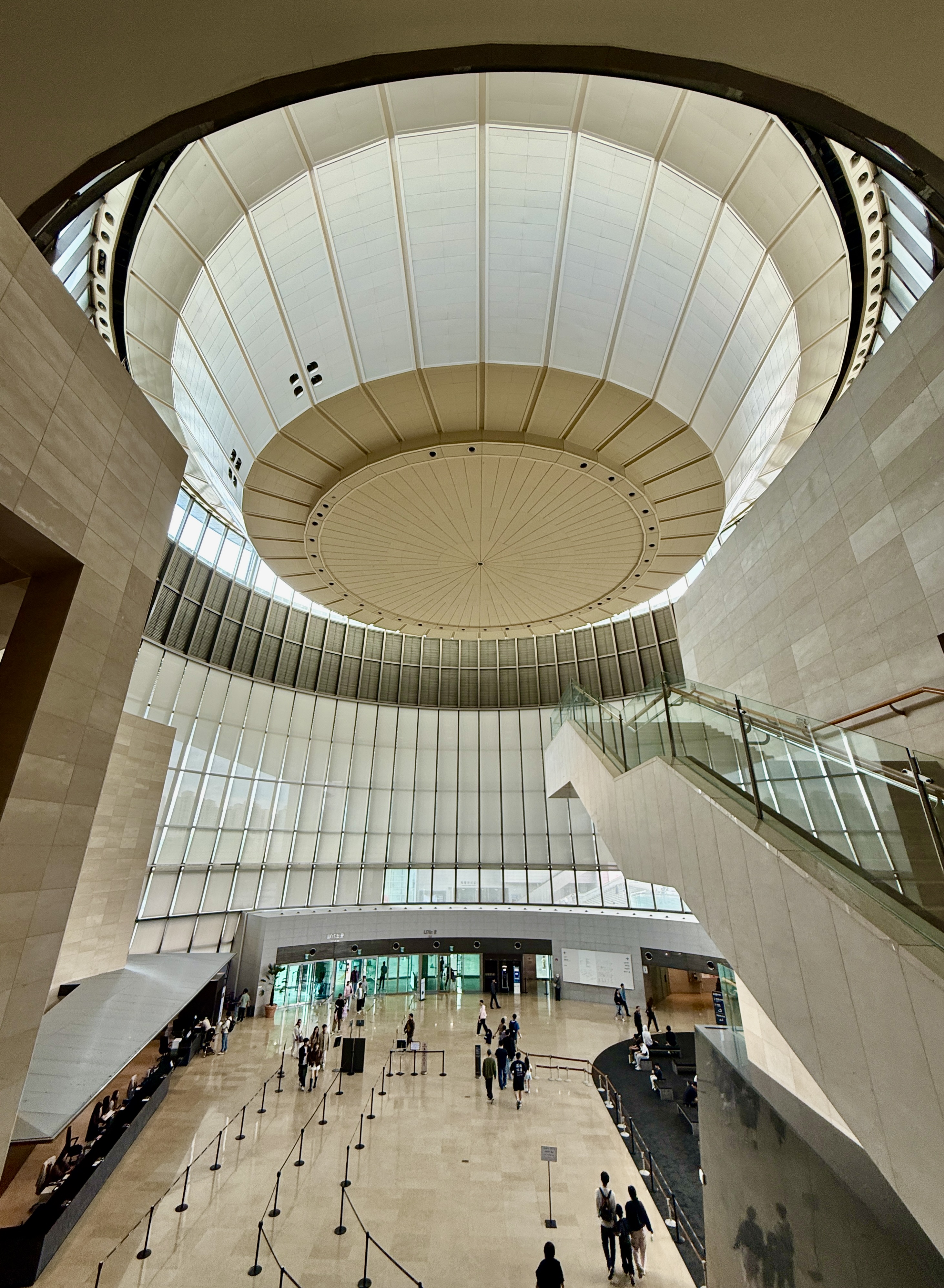
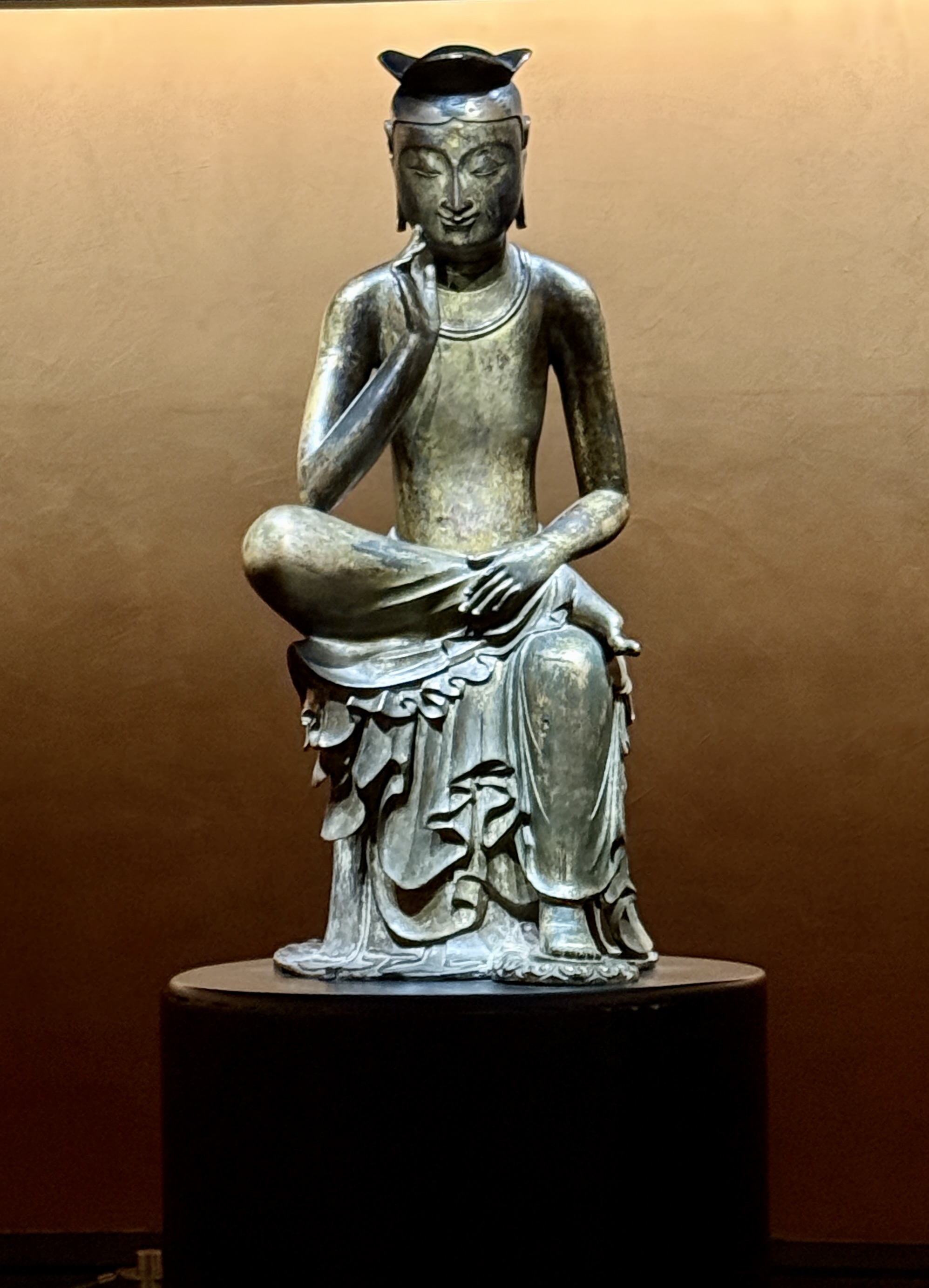
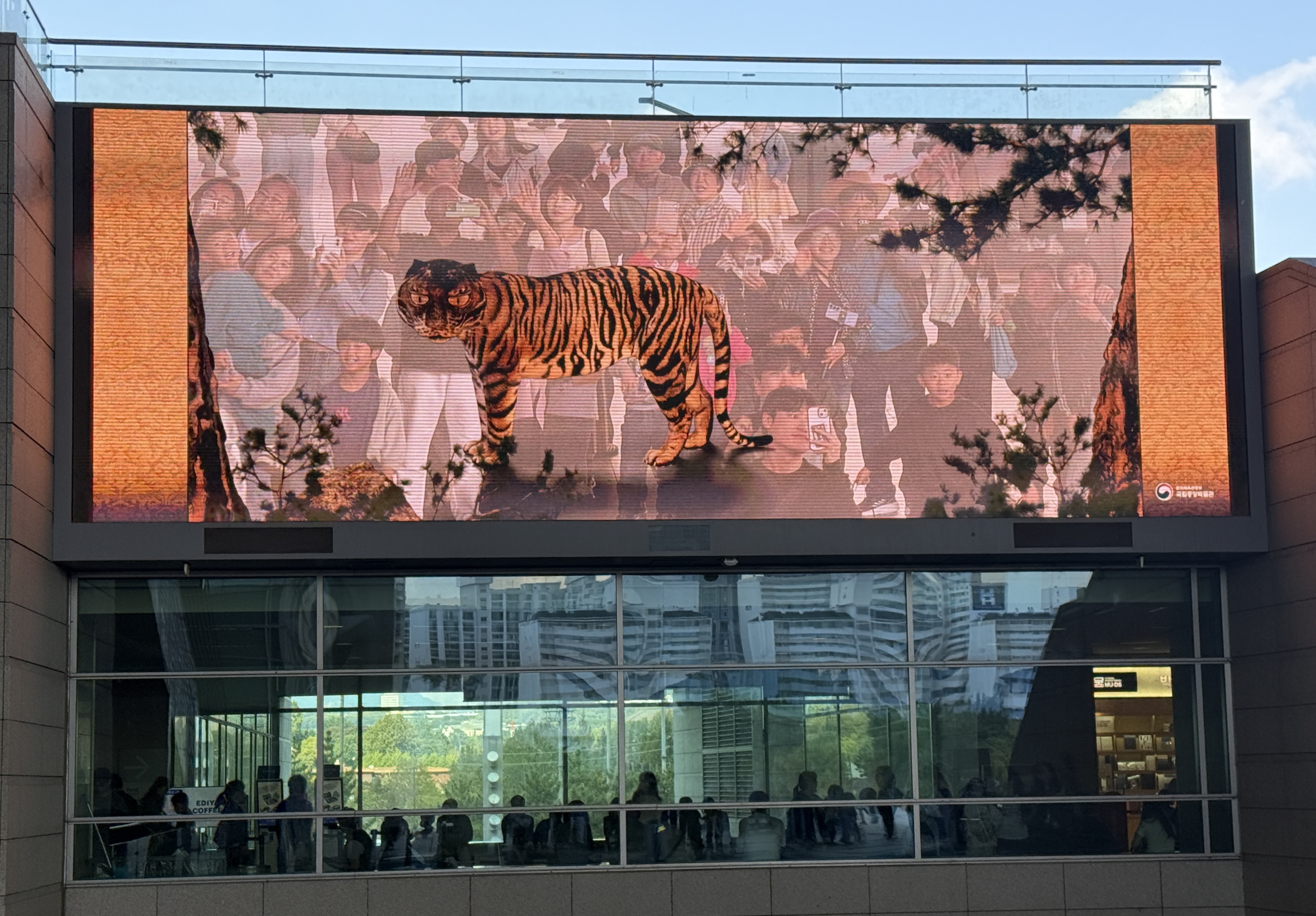
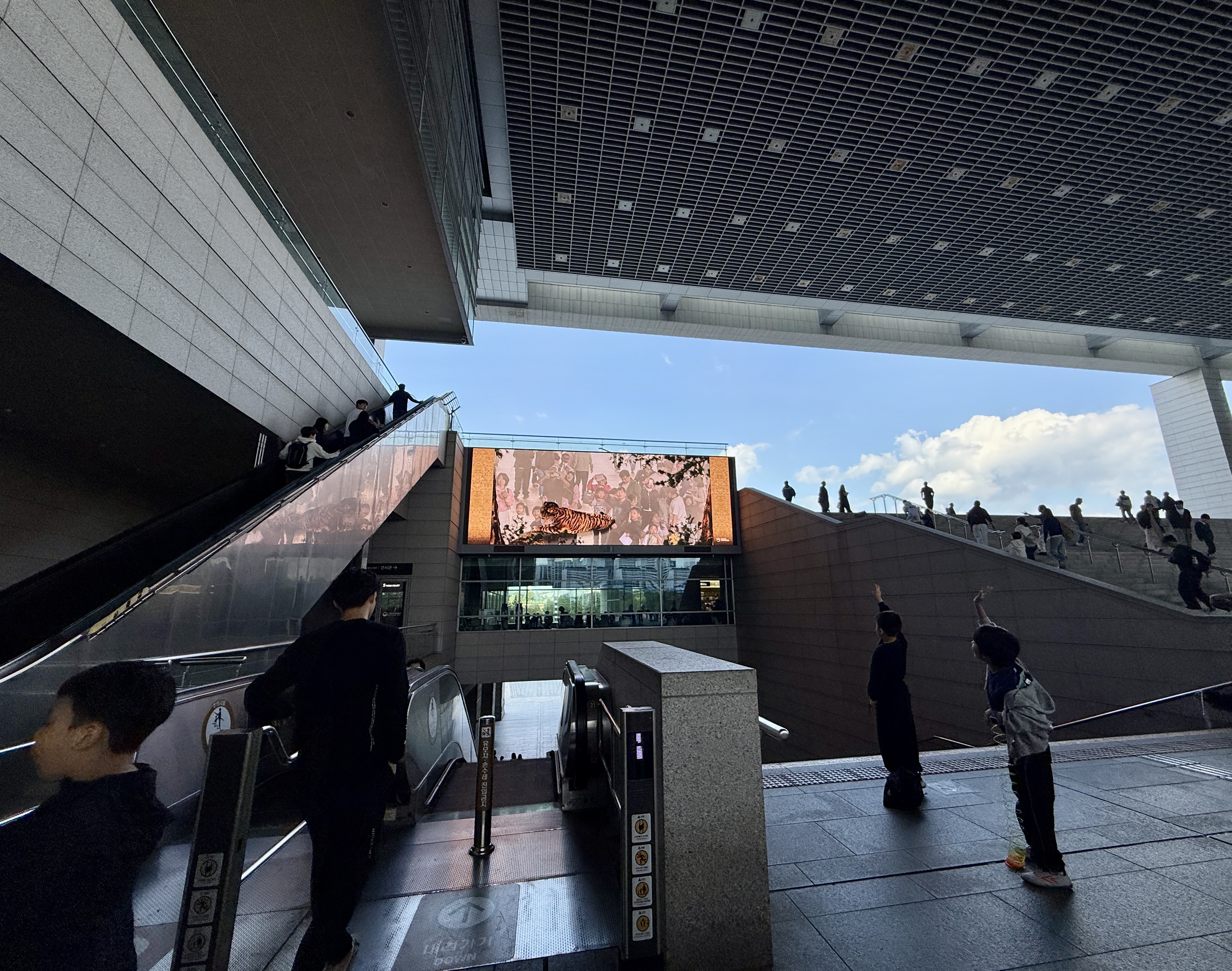
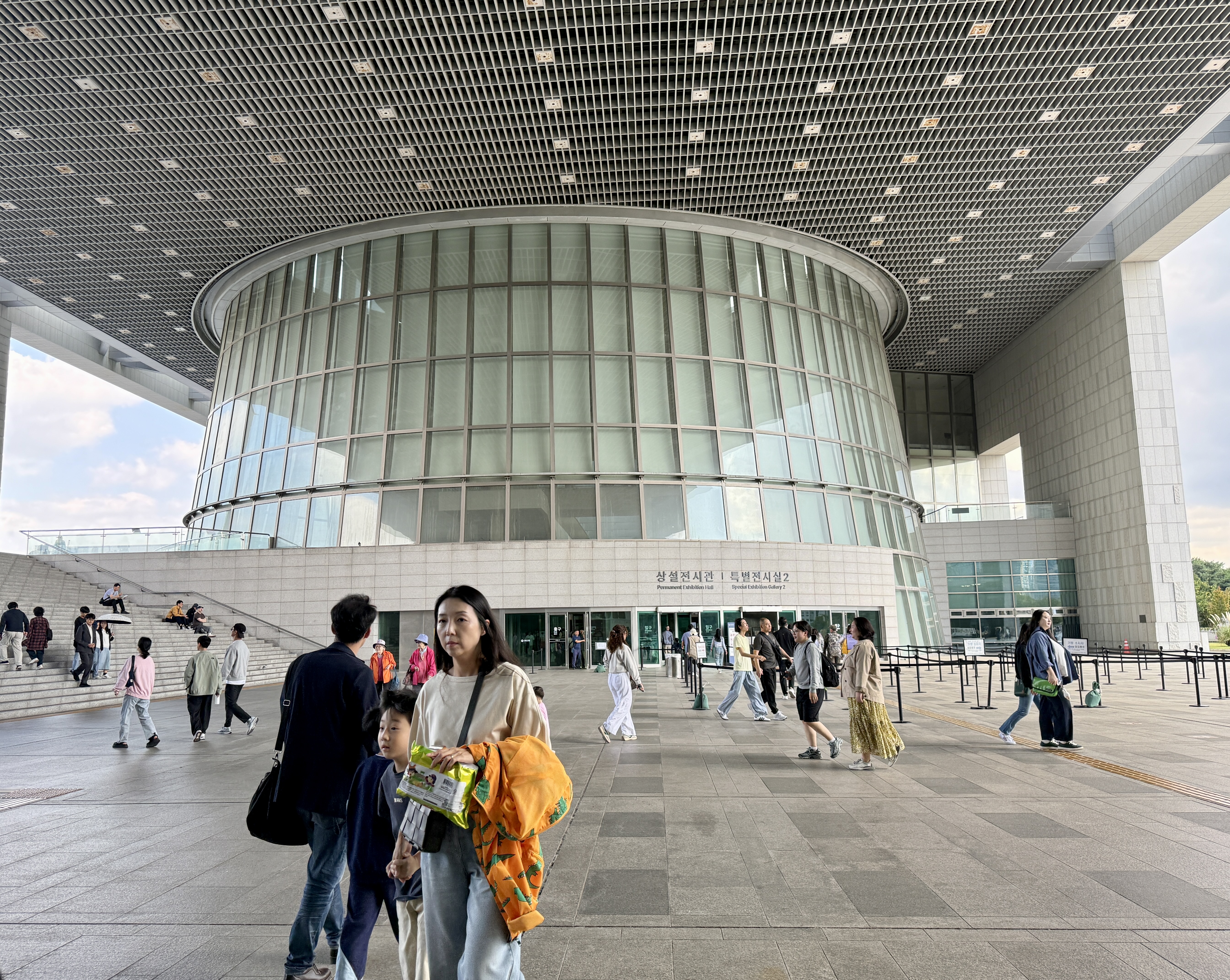
From there we headed to the National Museum of Korea, located in the Yongsan district. The museum is situated on what used to be a golf course tied to US Army. The museum is huge and contains more than 300,000 objects, with only about 15,000 on view at any one time. Supposedly it is the sixth largest museum in the world in terms of floor space and boasts being the third most visited museum in the world. One of the attractions, the “pensive buddhas” is located in the Room of Quiet Contemplation. We strolled several galleries and had the most fun watching people watch a huge digital screen on the plaza, which flashed images of the very people watching the screen.. kids were jumping up and down as they saw themselves on the screen. By the way, everywhere there are images of mountain tigers and on the screen there was a digital tiger image and the kids were excited to be able to see themselves next to the tiger… with some “petting it.”
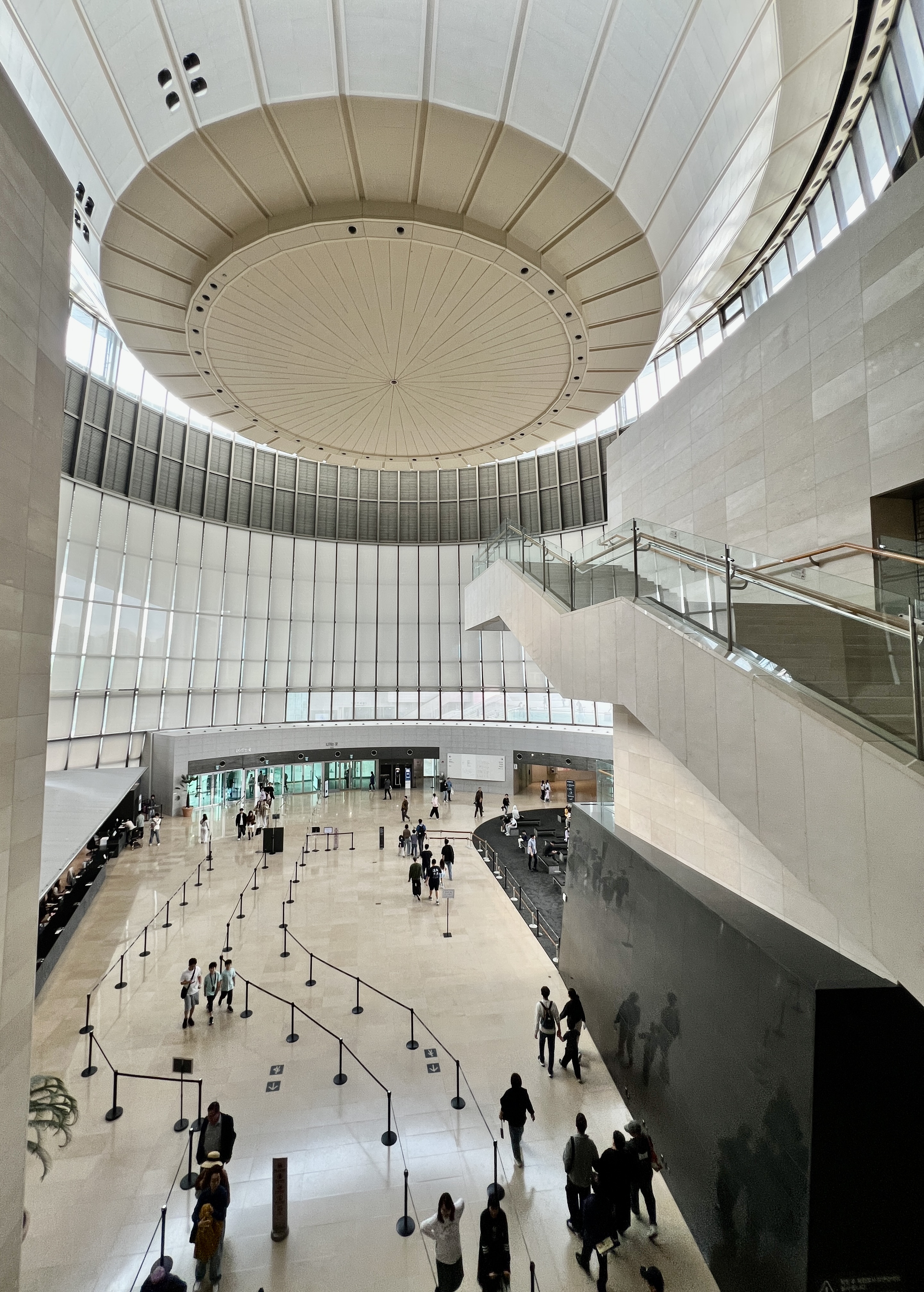
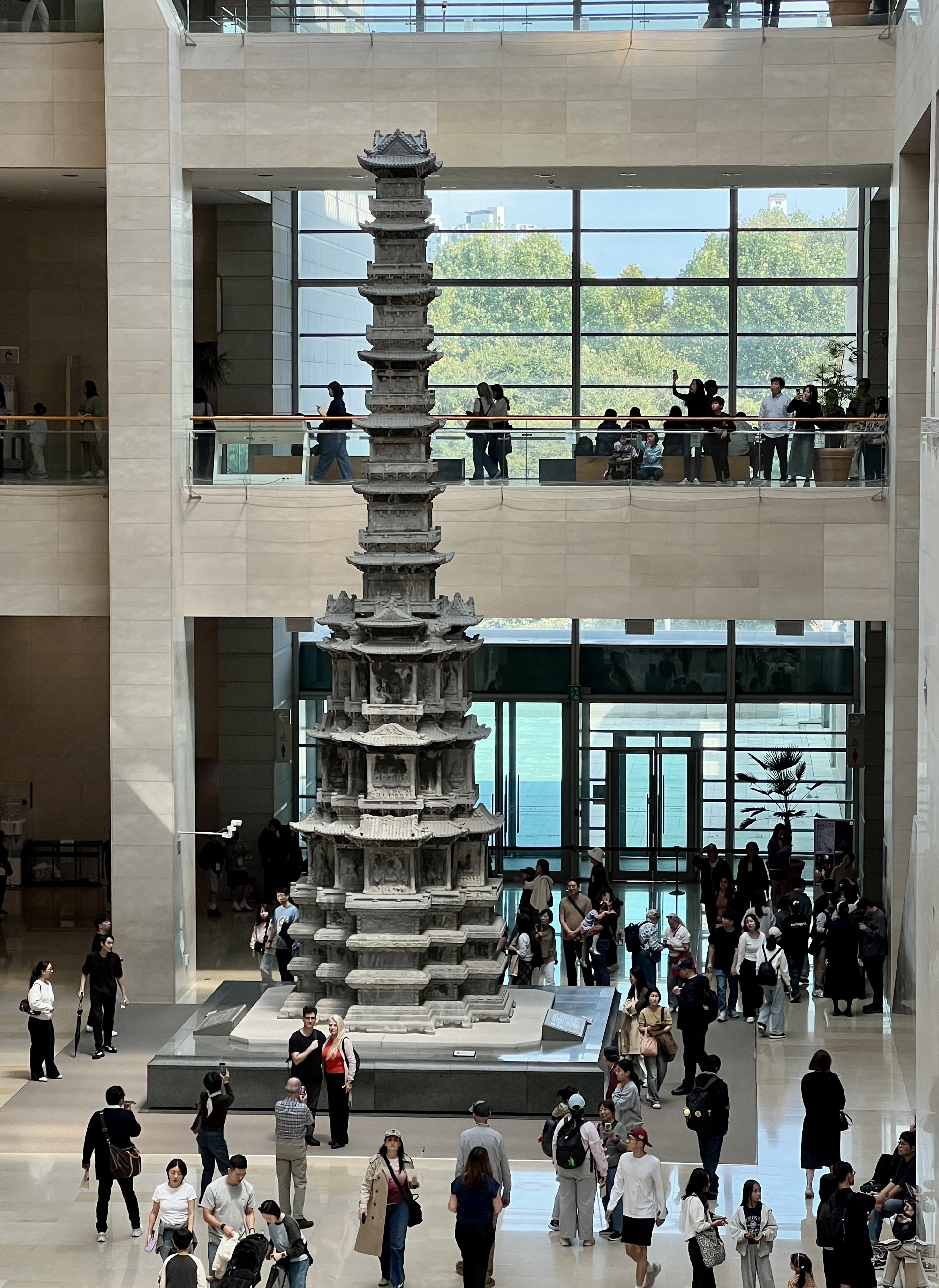
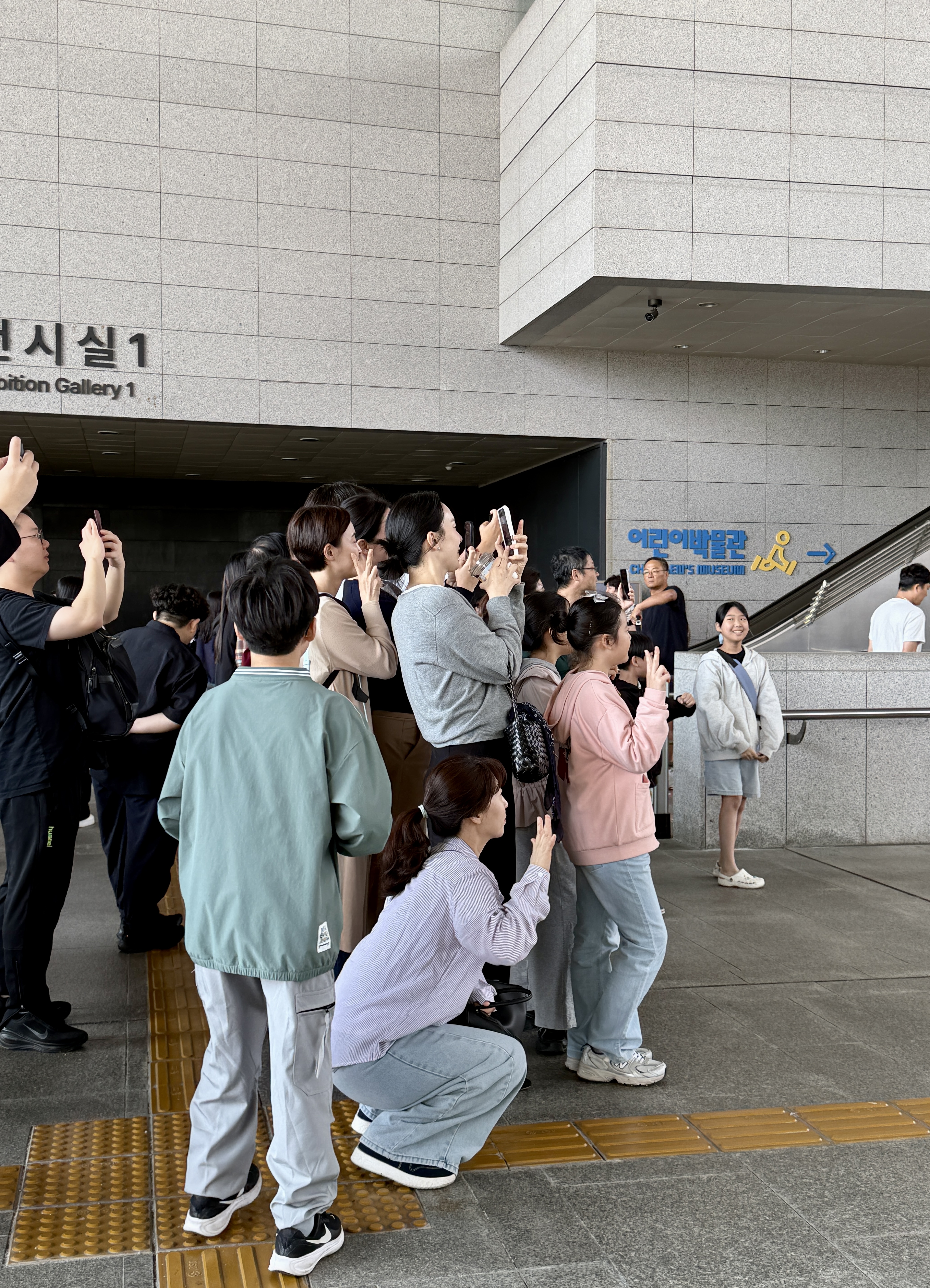
From the museum, we headed to Insadong’s walkiung streets and joined the crowds watching performers, strolling, shopping, and taking photos.
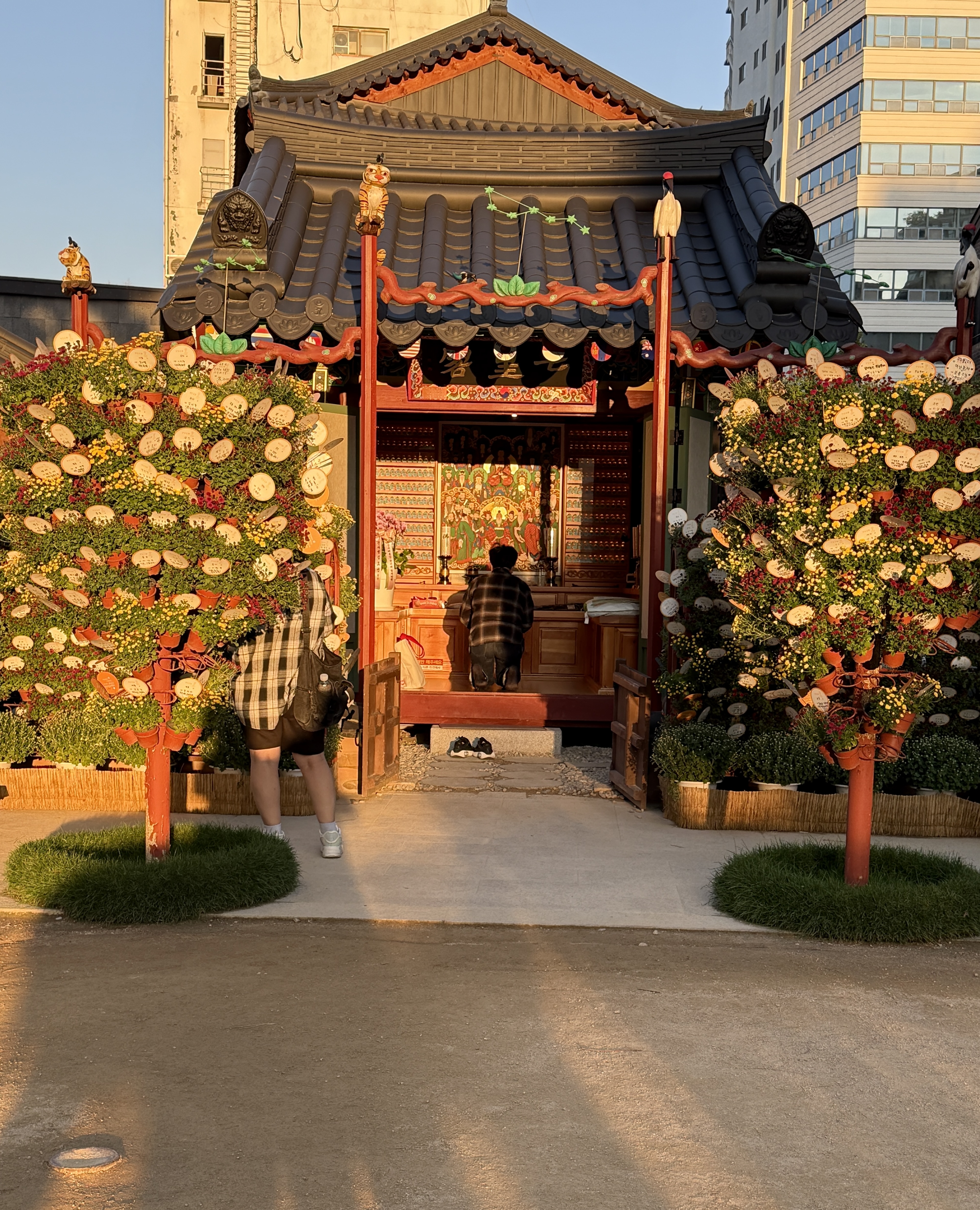
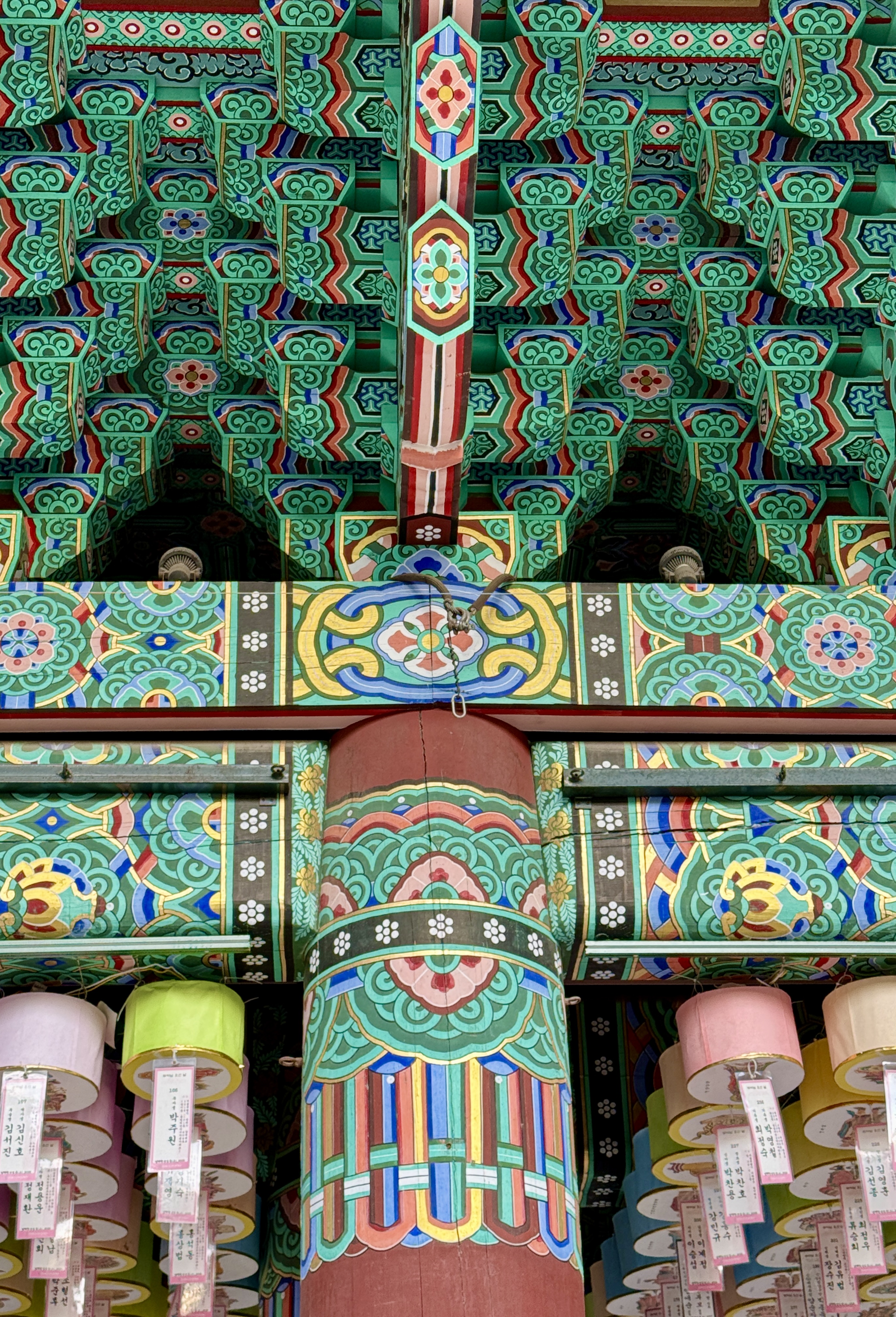
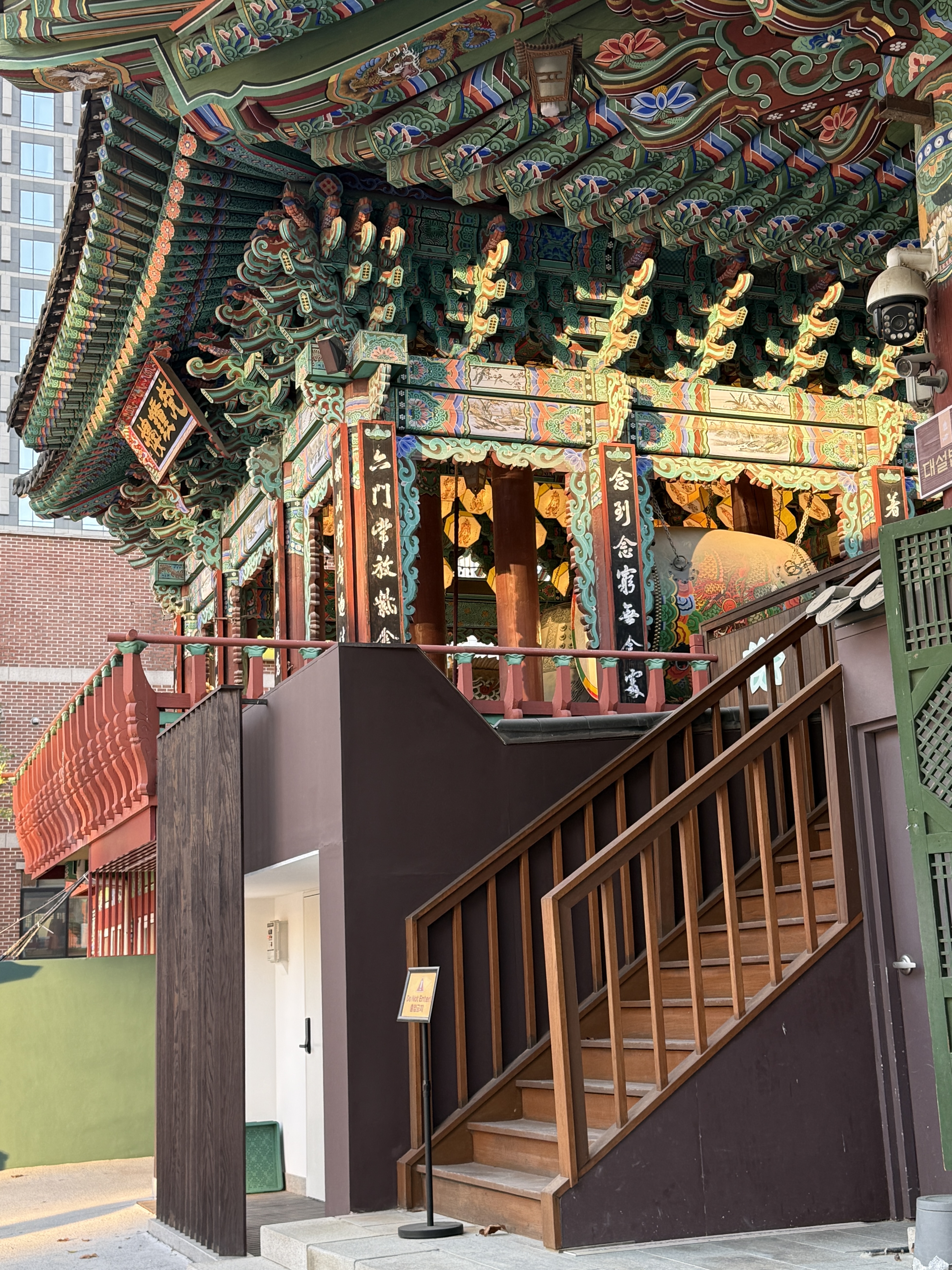
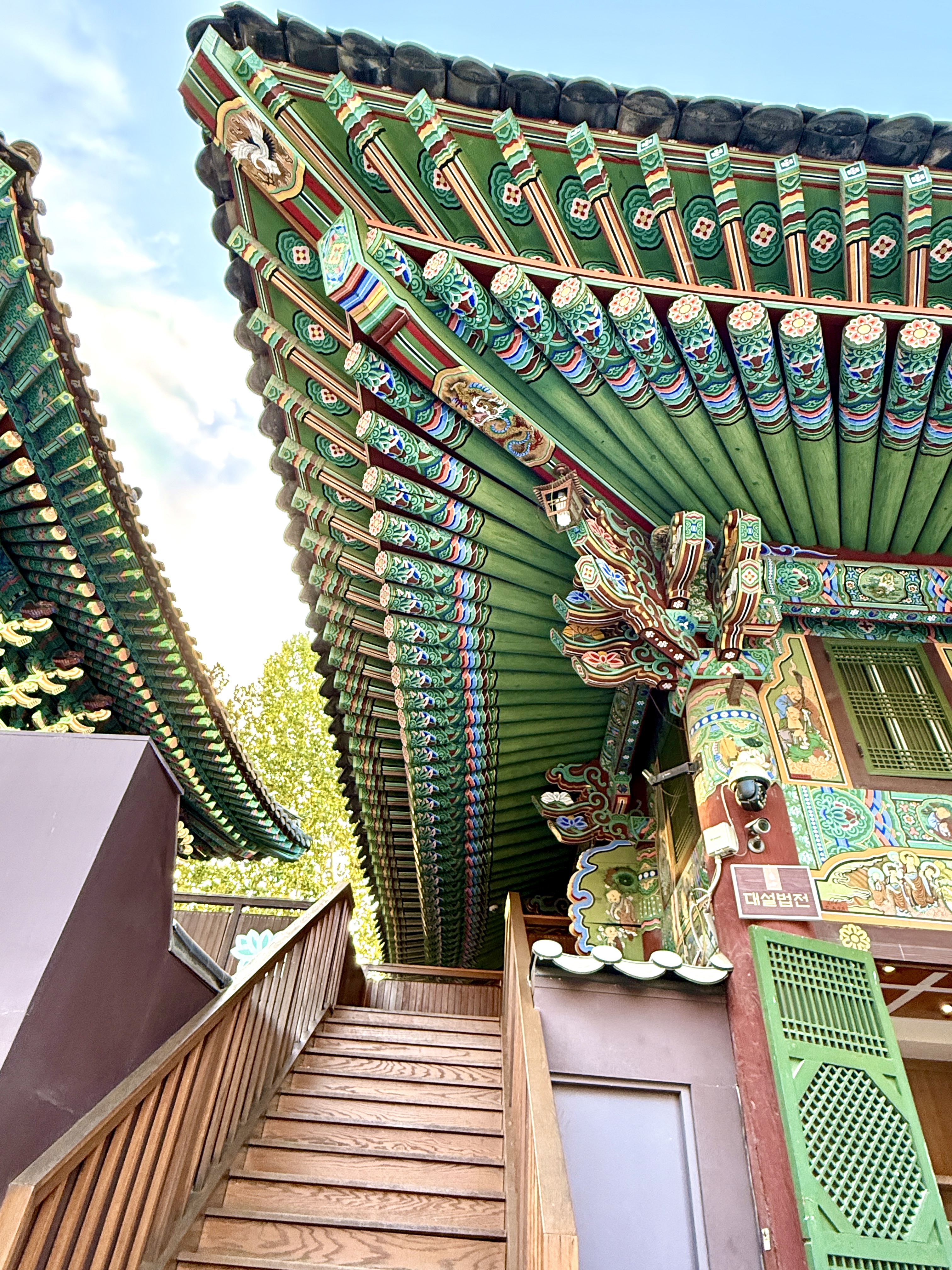
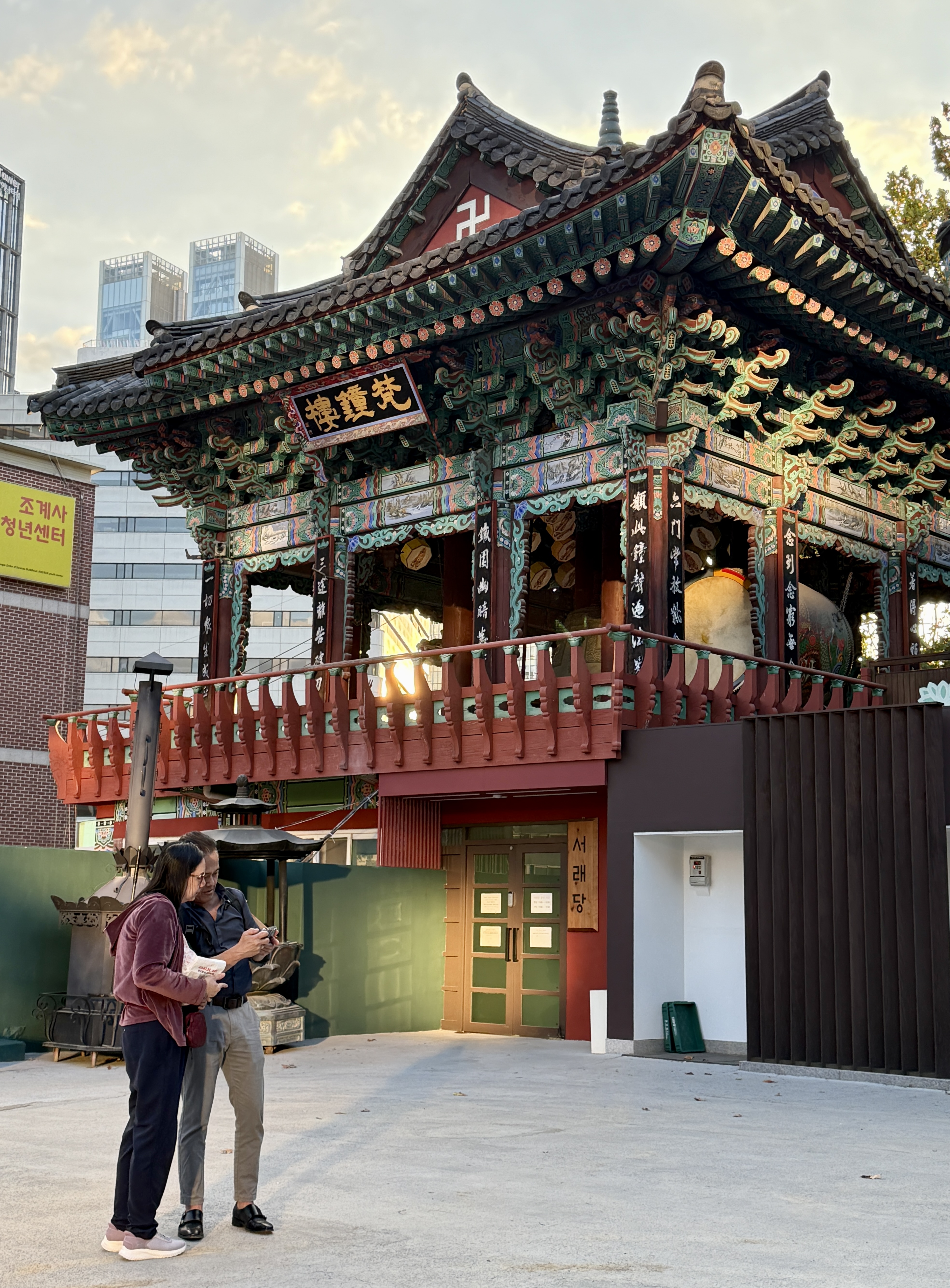
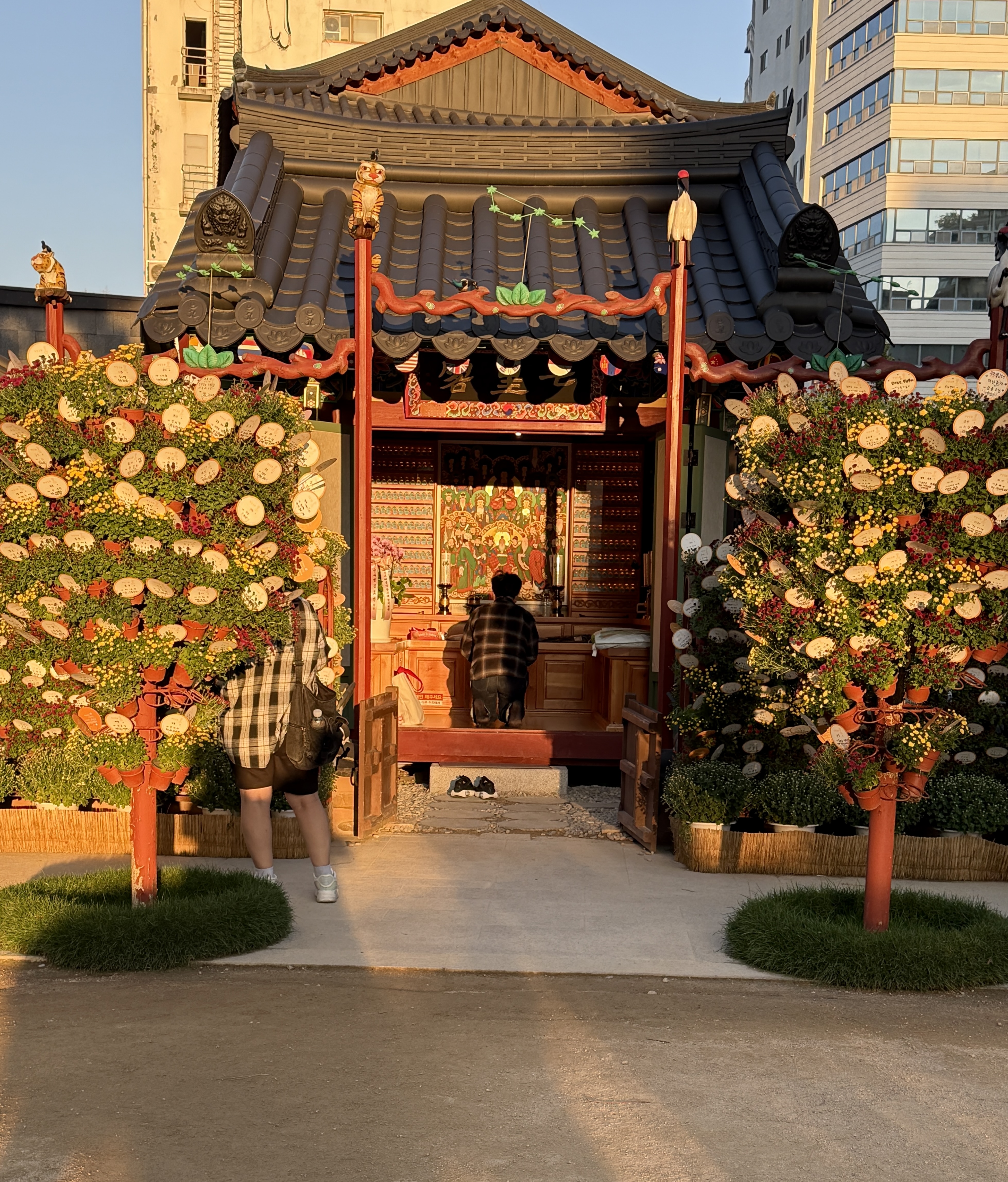
And then we headed to the Jogyesa Temple in the Insadong neighborhood. The temple was founded in 1395, at the start of the Jonson period; the modern temple was founded in 1910. It’s a strange setting—this very peaceful and beautifully appointed structure, now surrounded by highrises and corporate office structures.
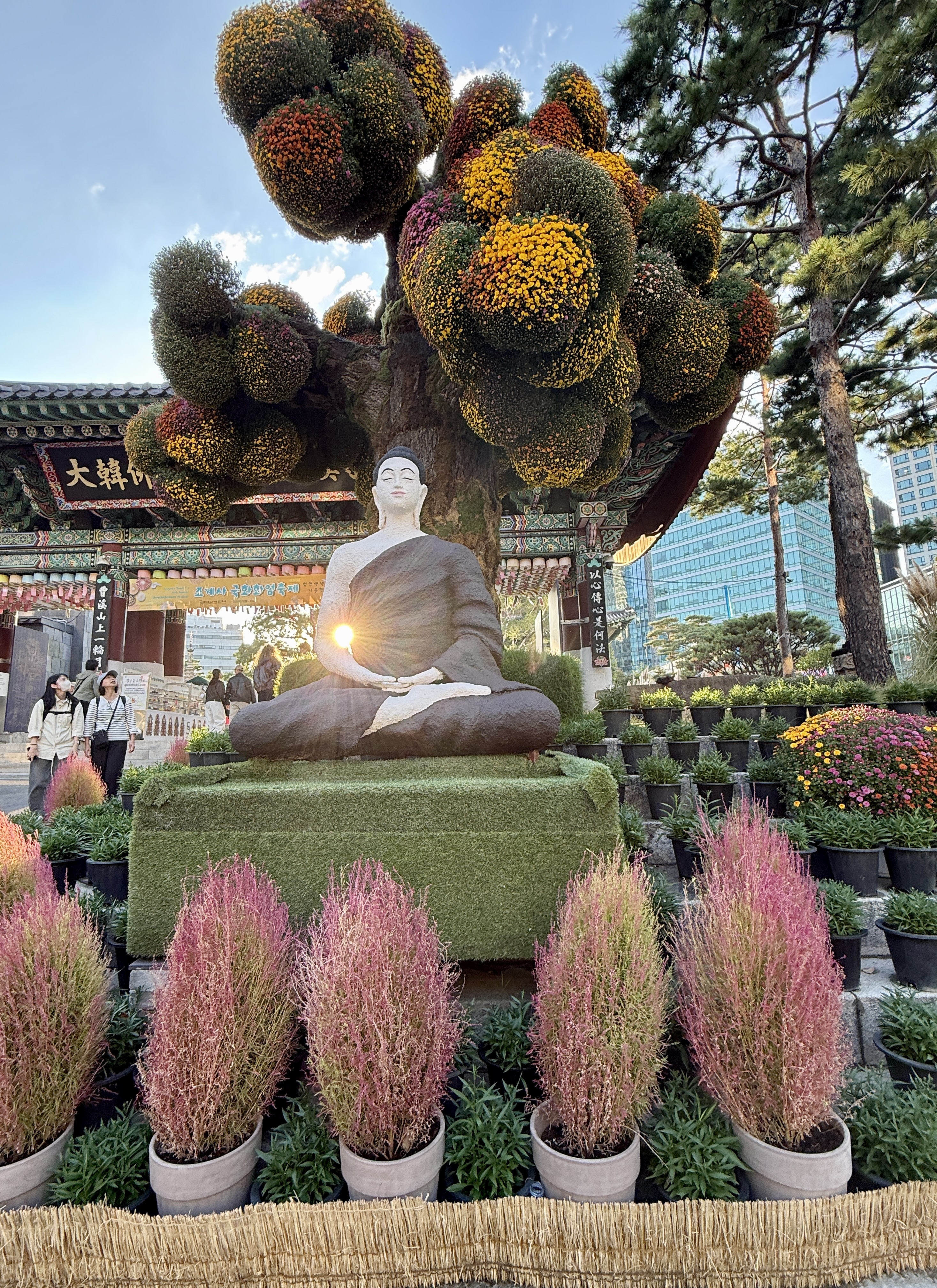
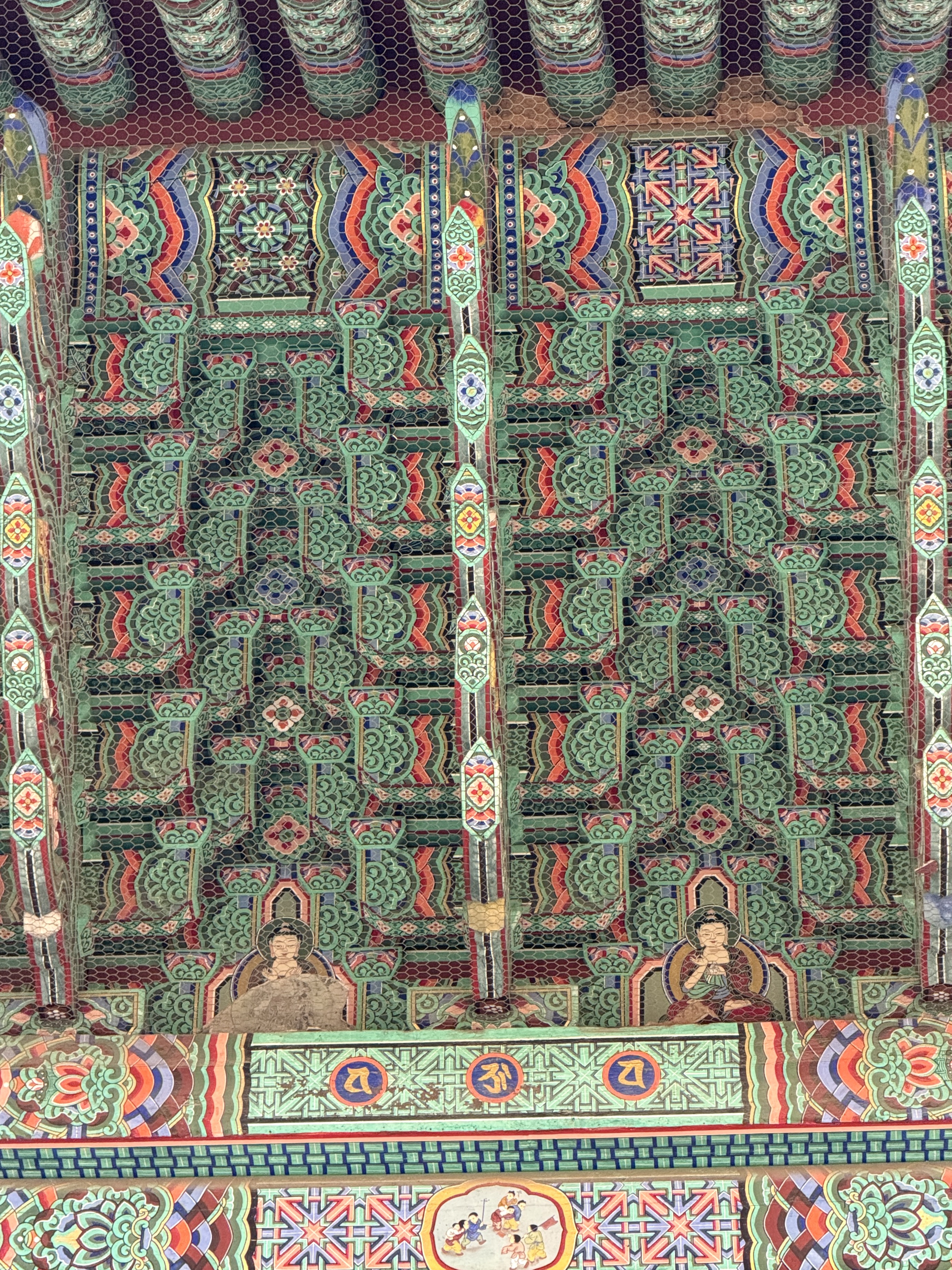
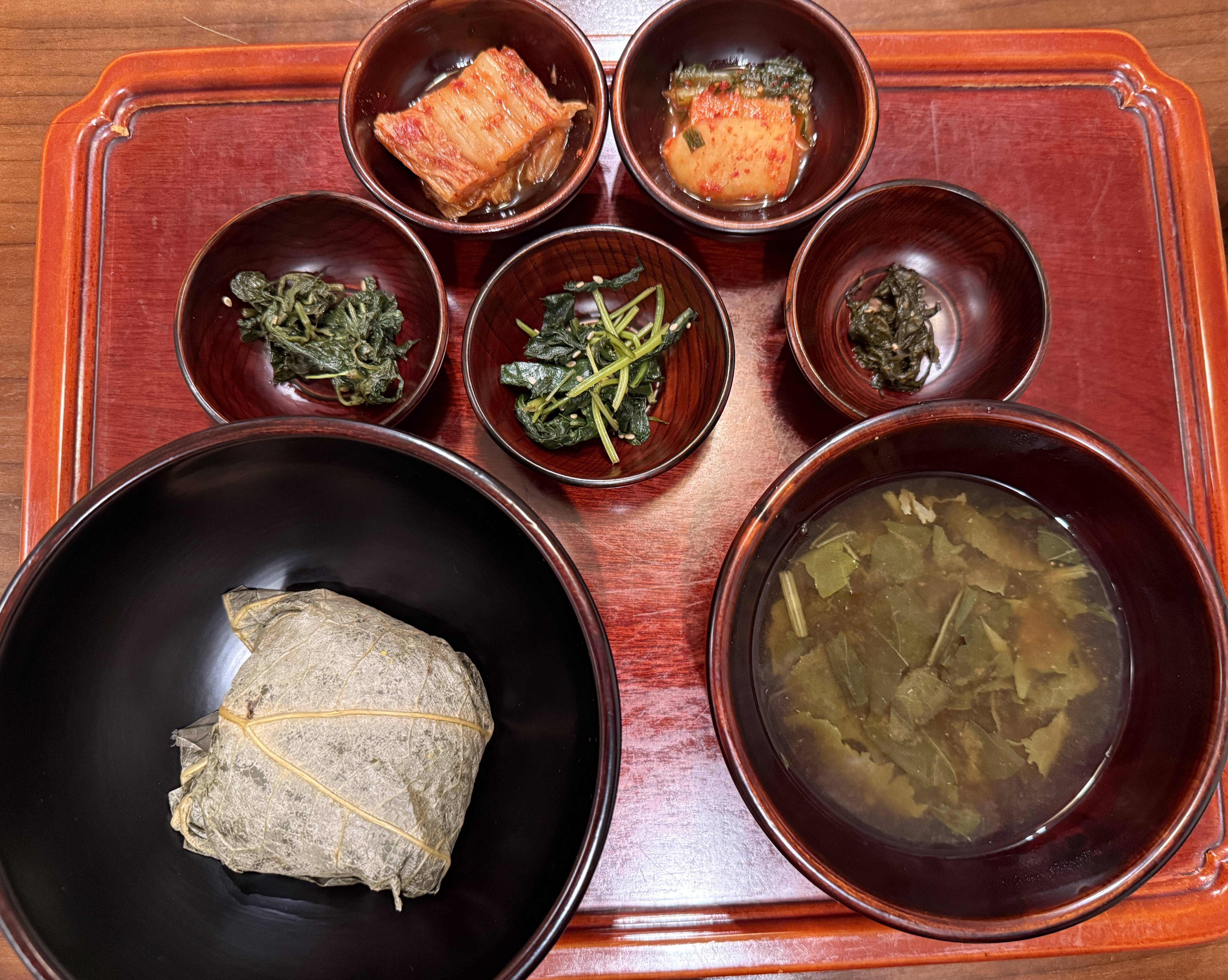
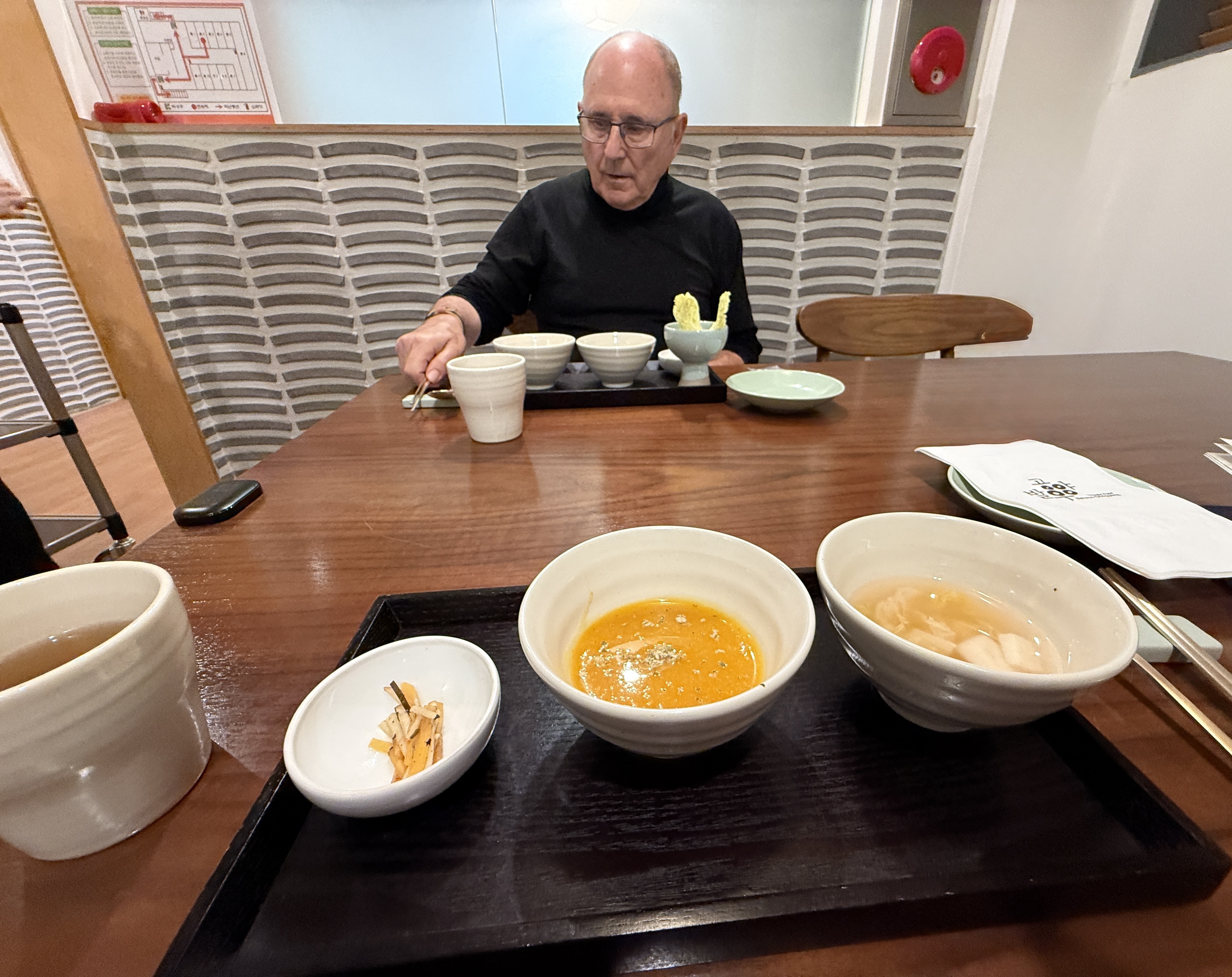
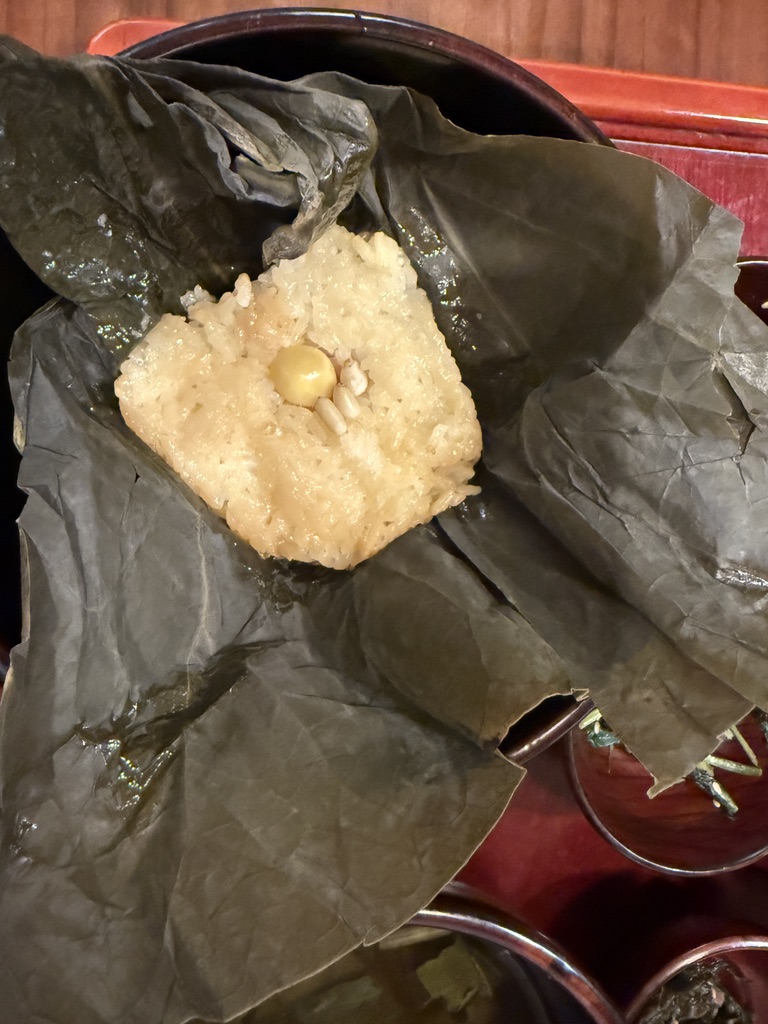
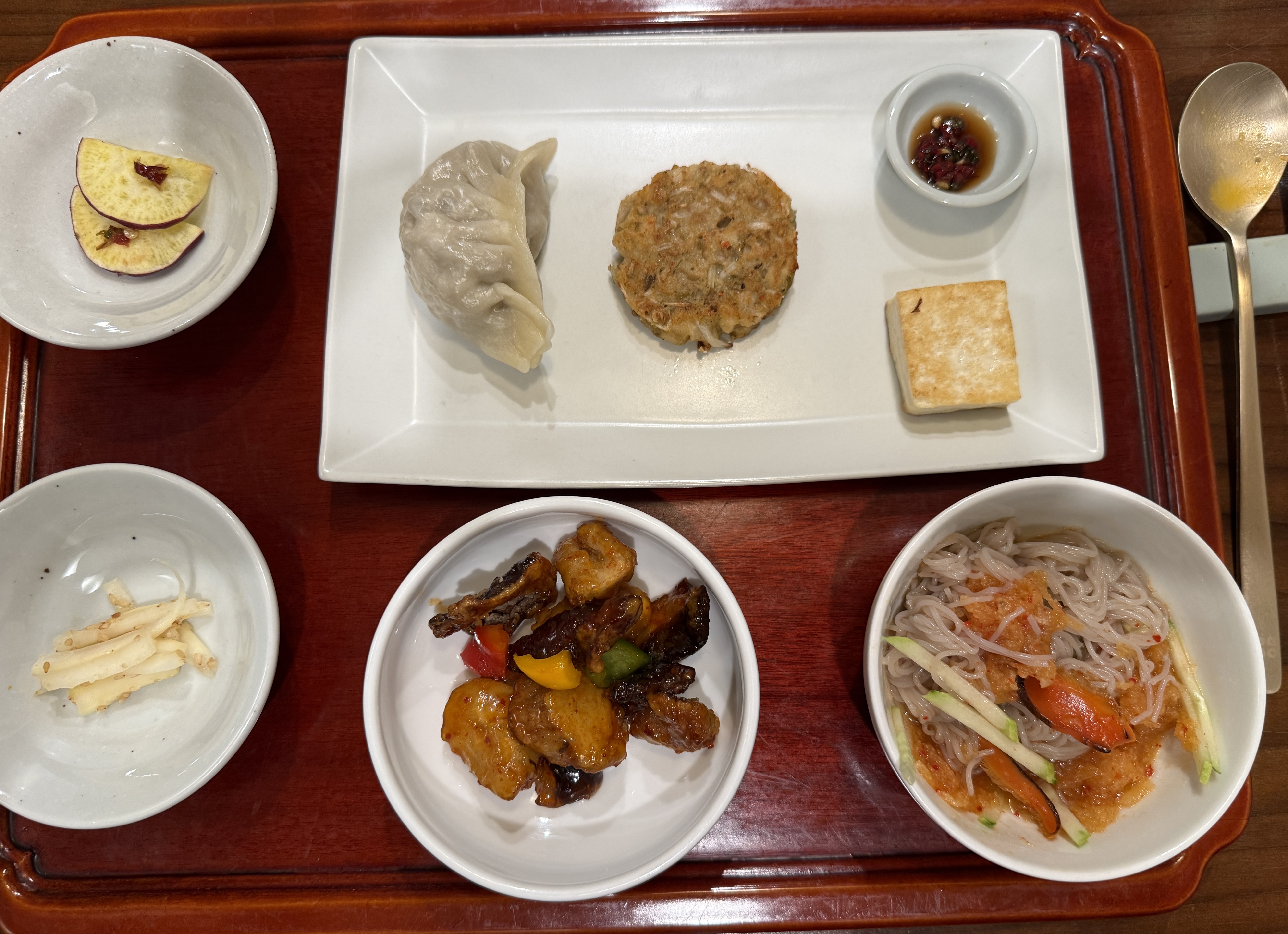
And then we had an early dinner at Balwoo Gongyang—delicate temple cuisine. Ran by the Jogye Order of Korean Buddhism, it was opened to promote the culture of Korean temple food. Balwoo Gongyang serves traditional vegan recipes handed down for generations. Hard to explain what we ate.. and photos of food are always the hardest to do. But here are a few images. We ate in a little private room, with the staffer coming in and out with each “course.” In reality each course really had about five different dishes. English was at a minimum, but since each dish was quite simple we managed to figure most of it out. Each section of the dinner had a special name like: Palate Awakener; Harmonious Flavor; Subtle Flavor; and Monk’s Smile. Many dishes included pickled vegetables, mushrooms, lotus root, and kimche. Everyone was very friendly and bowing.
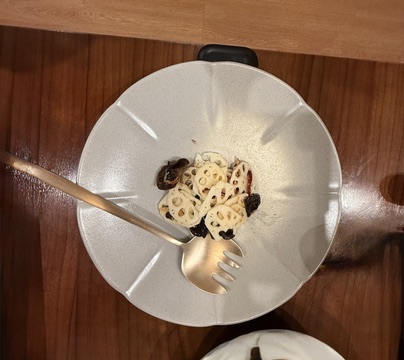
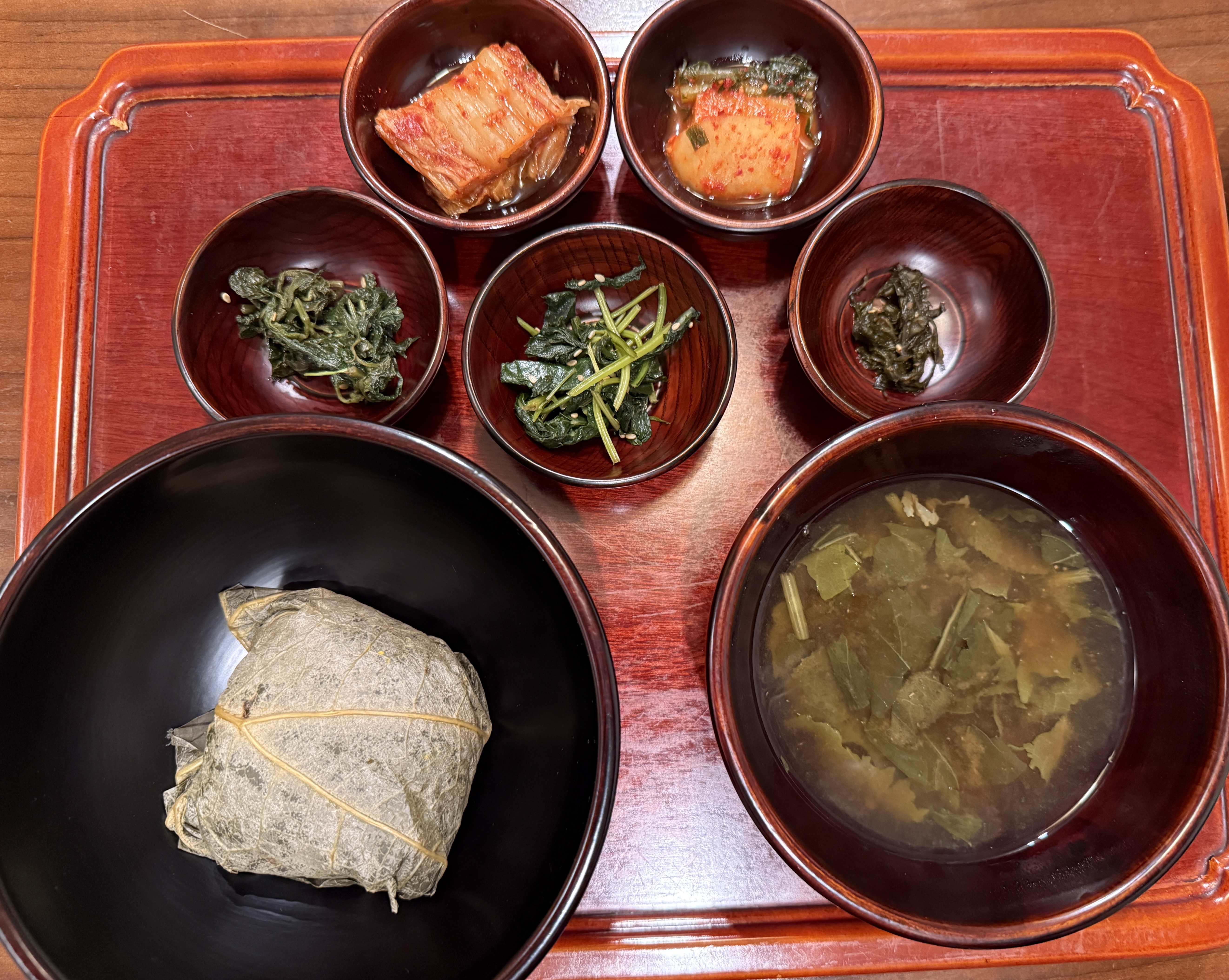
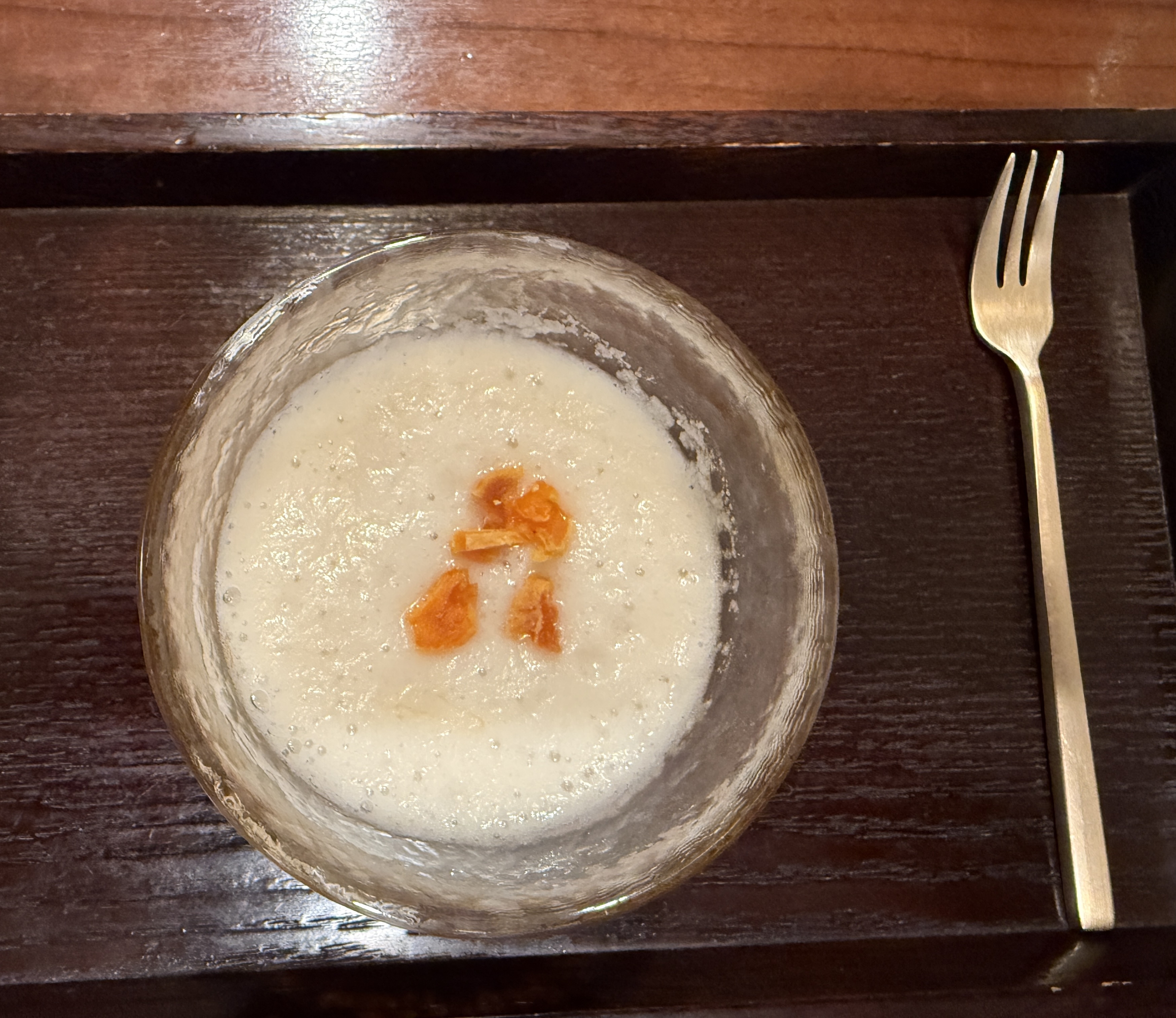
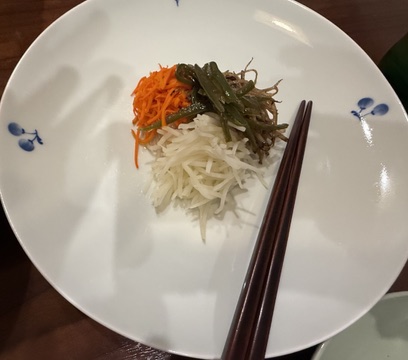
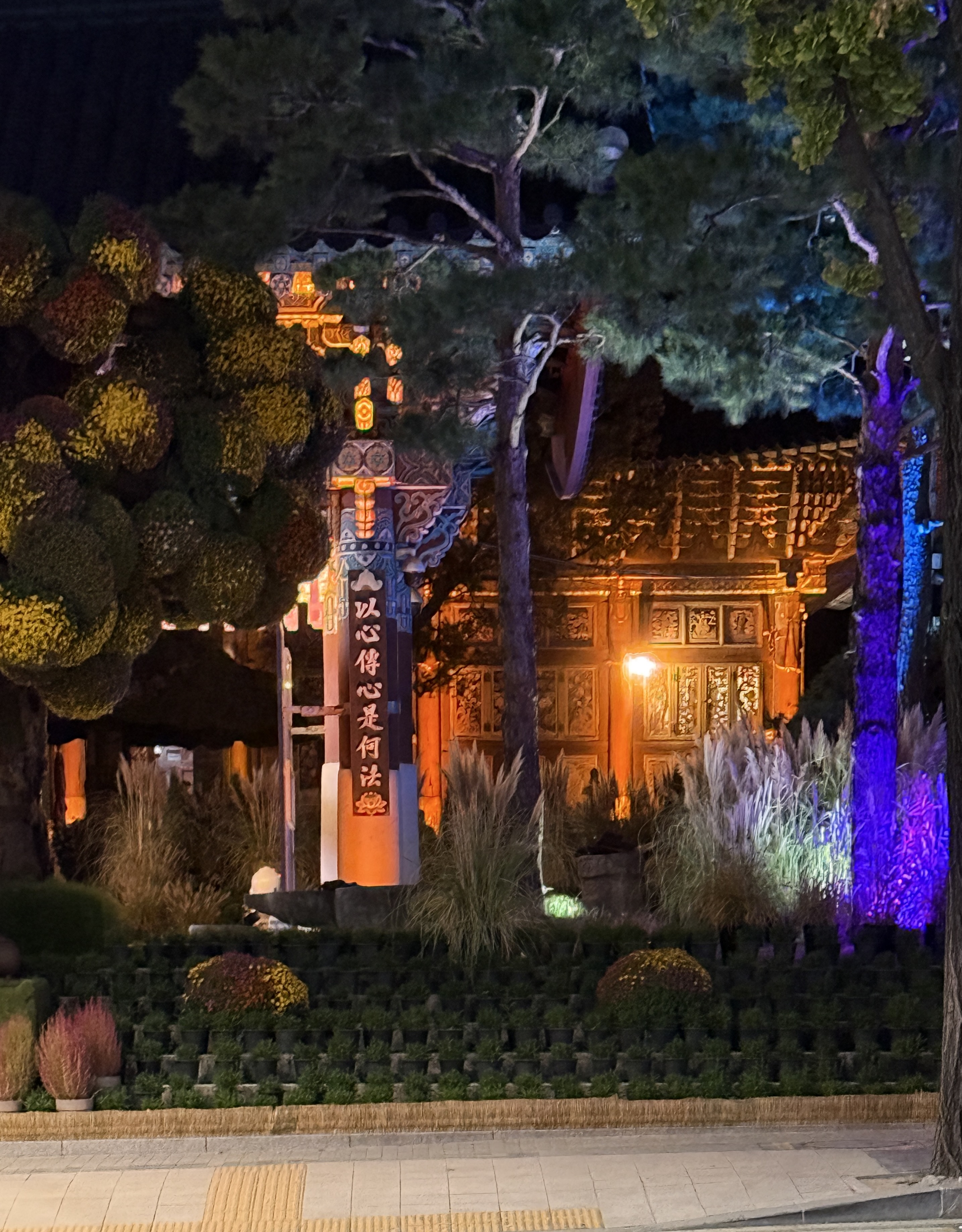
As we left the restaurant we passed by the temple again… lit and glowing for the evening. Our days in Seoul are coming to an end.. Tomorrow we pack and will stroll another neighborhood. More on that to come.
OCTOBER 4, 2026: EXPLORING SEOUL… SLOWLY
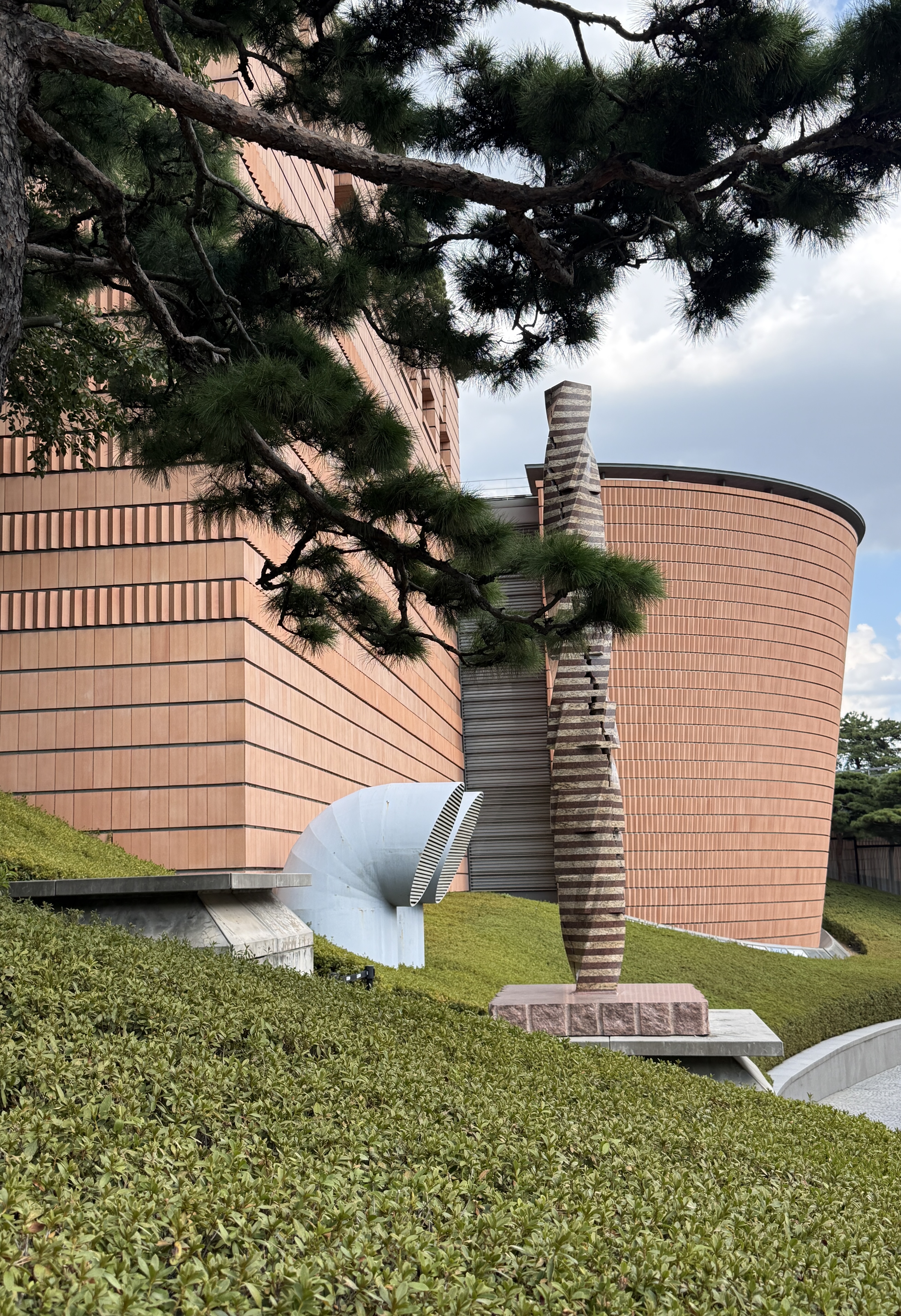
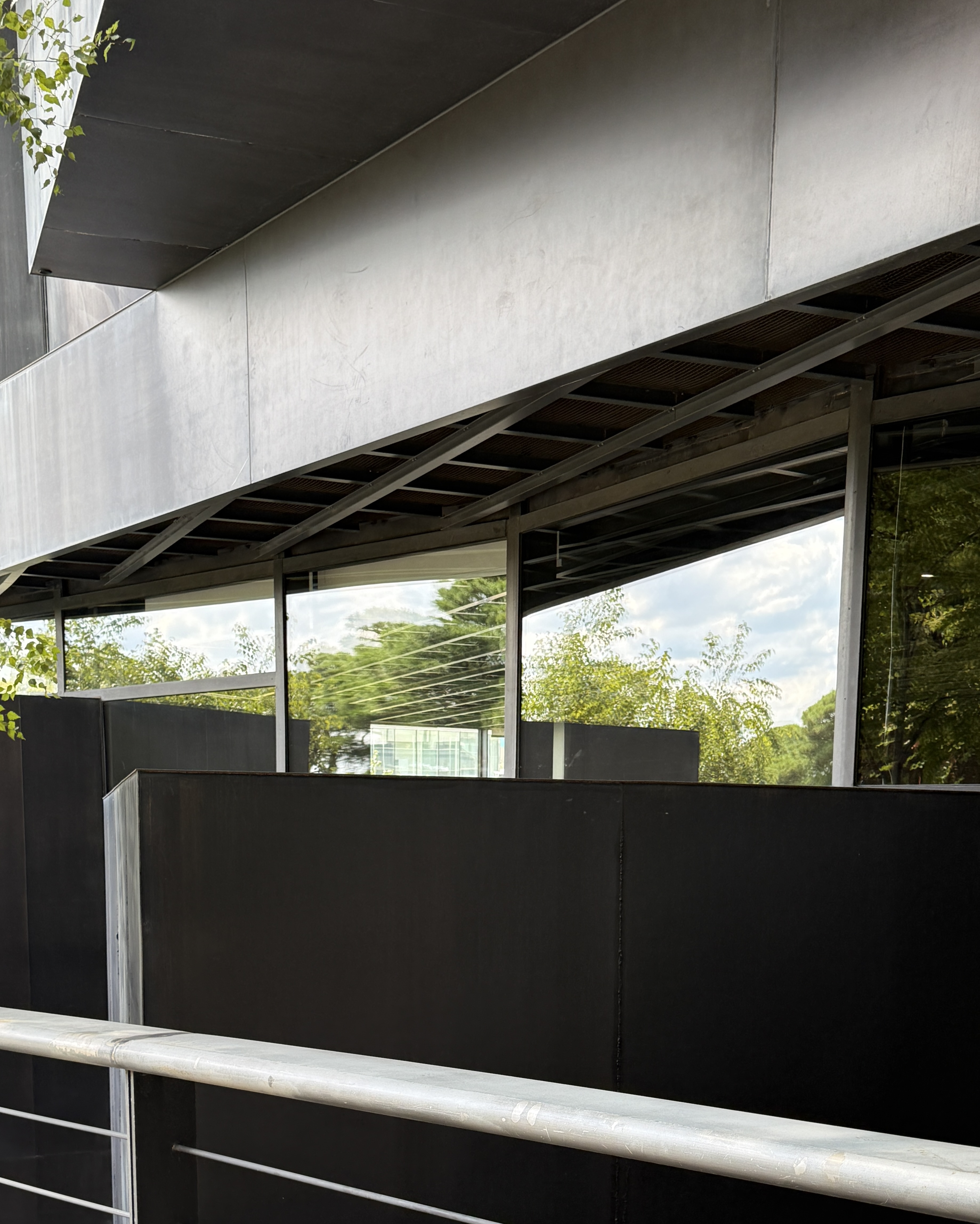
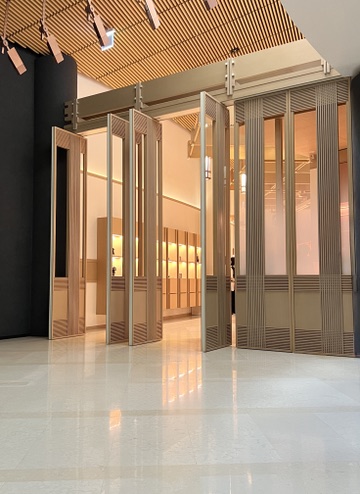
Given Mike’s physical condition, we decided to go easy today (and for the remaining two days)—use taxis to eliminate hundreds of stairs on the subway; visit museums to minimize street walking; etc.
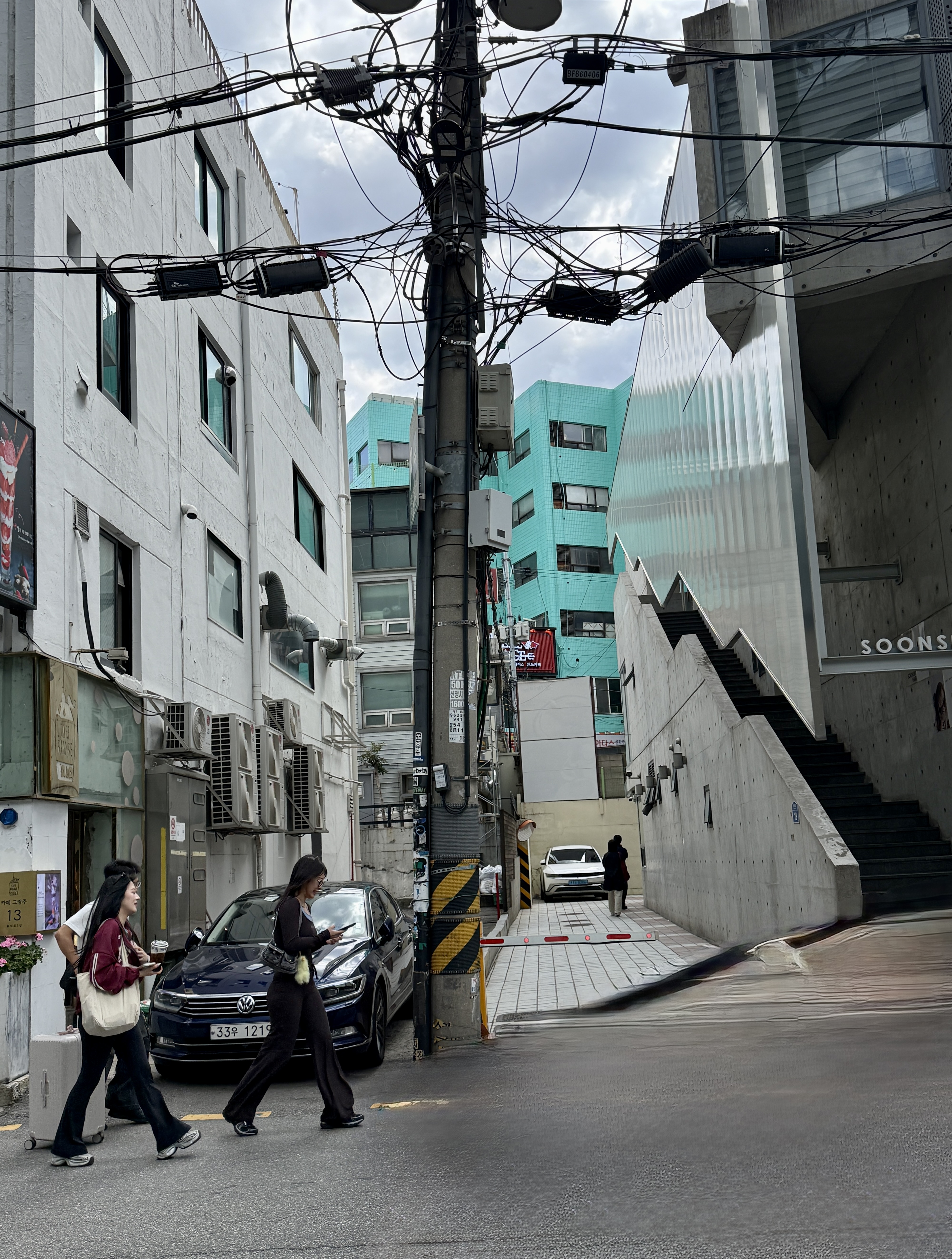
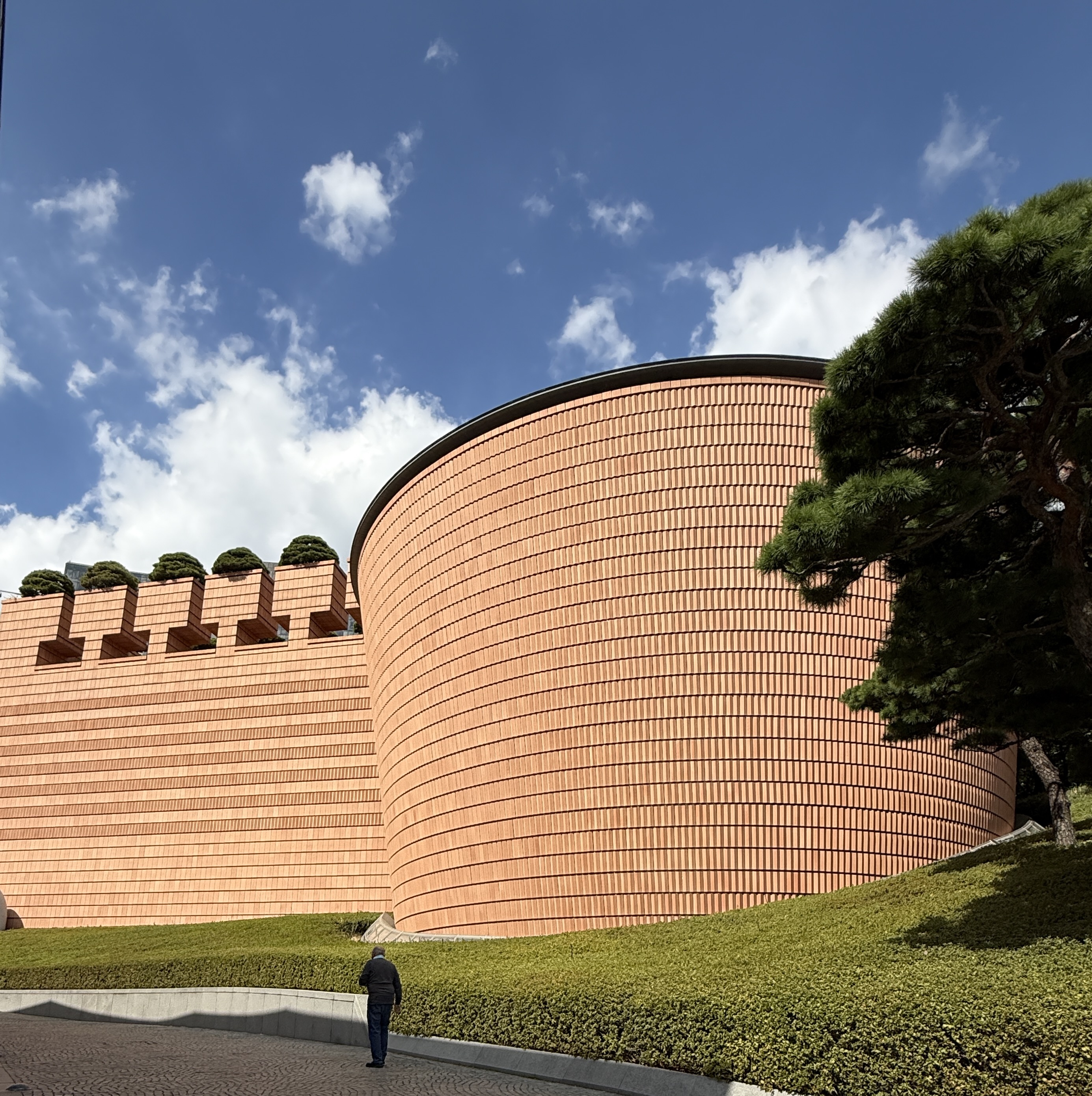
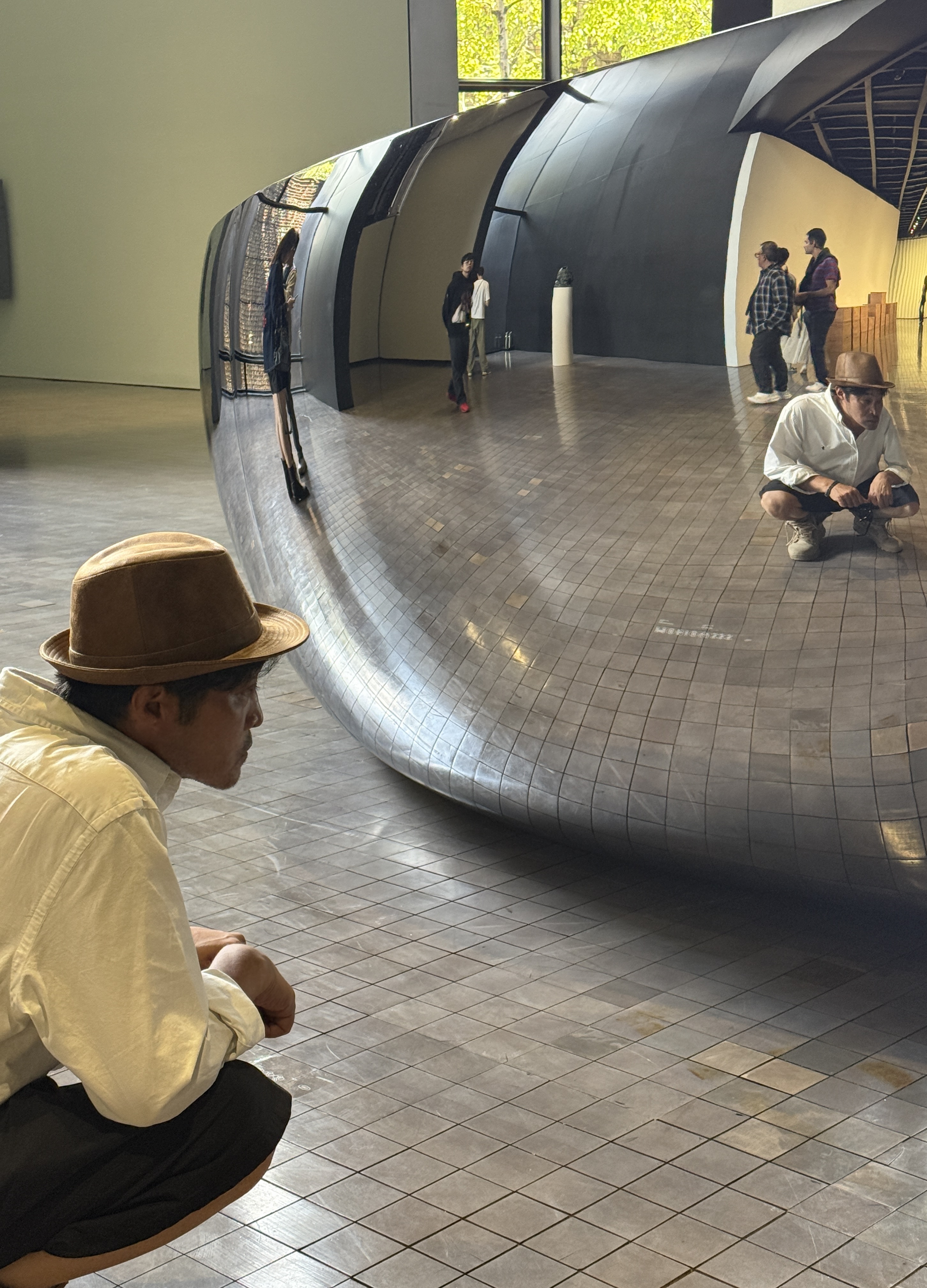
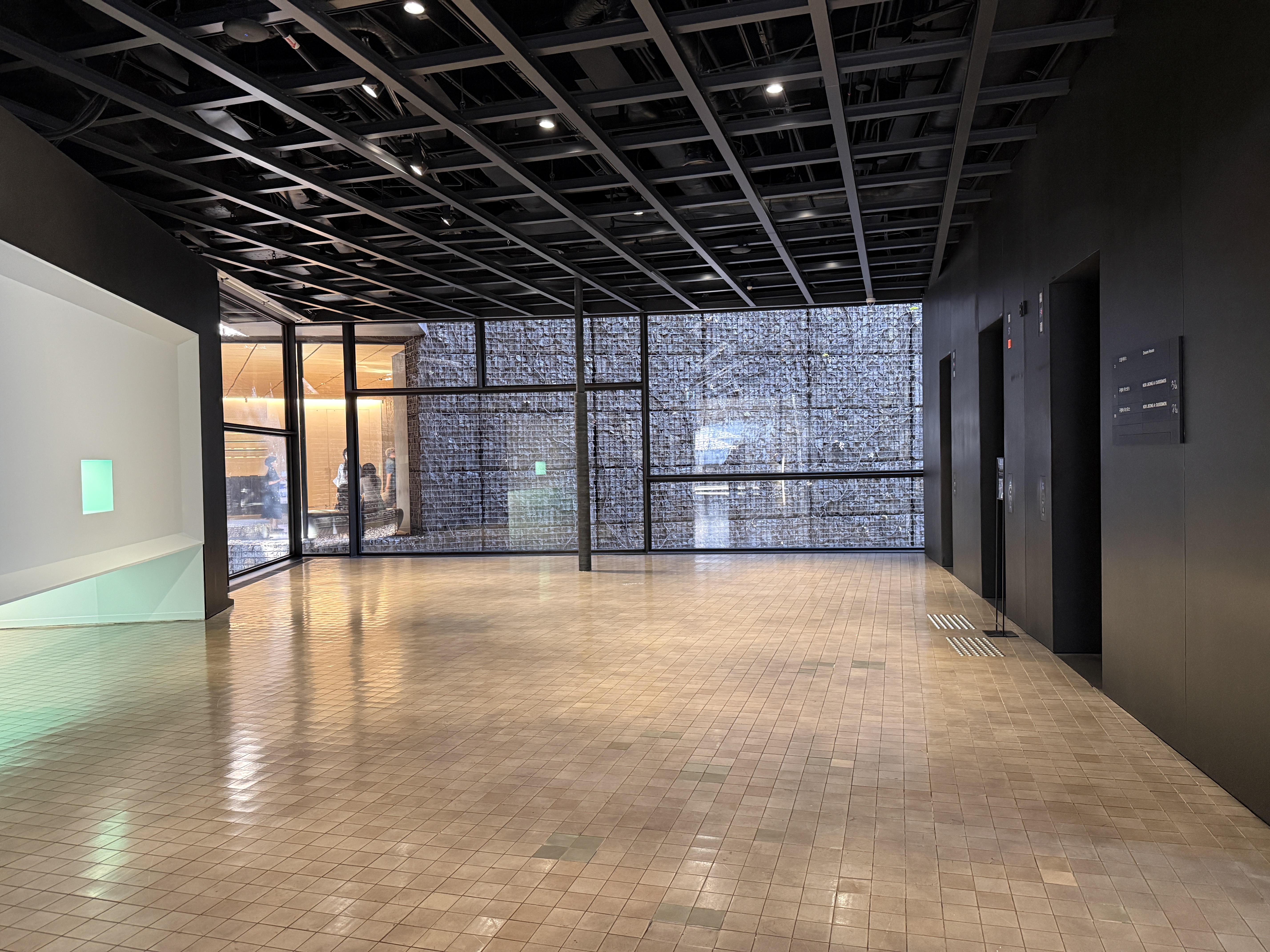
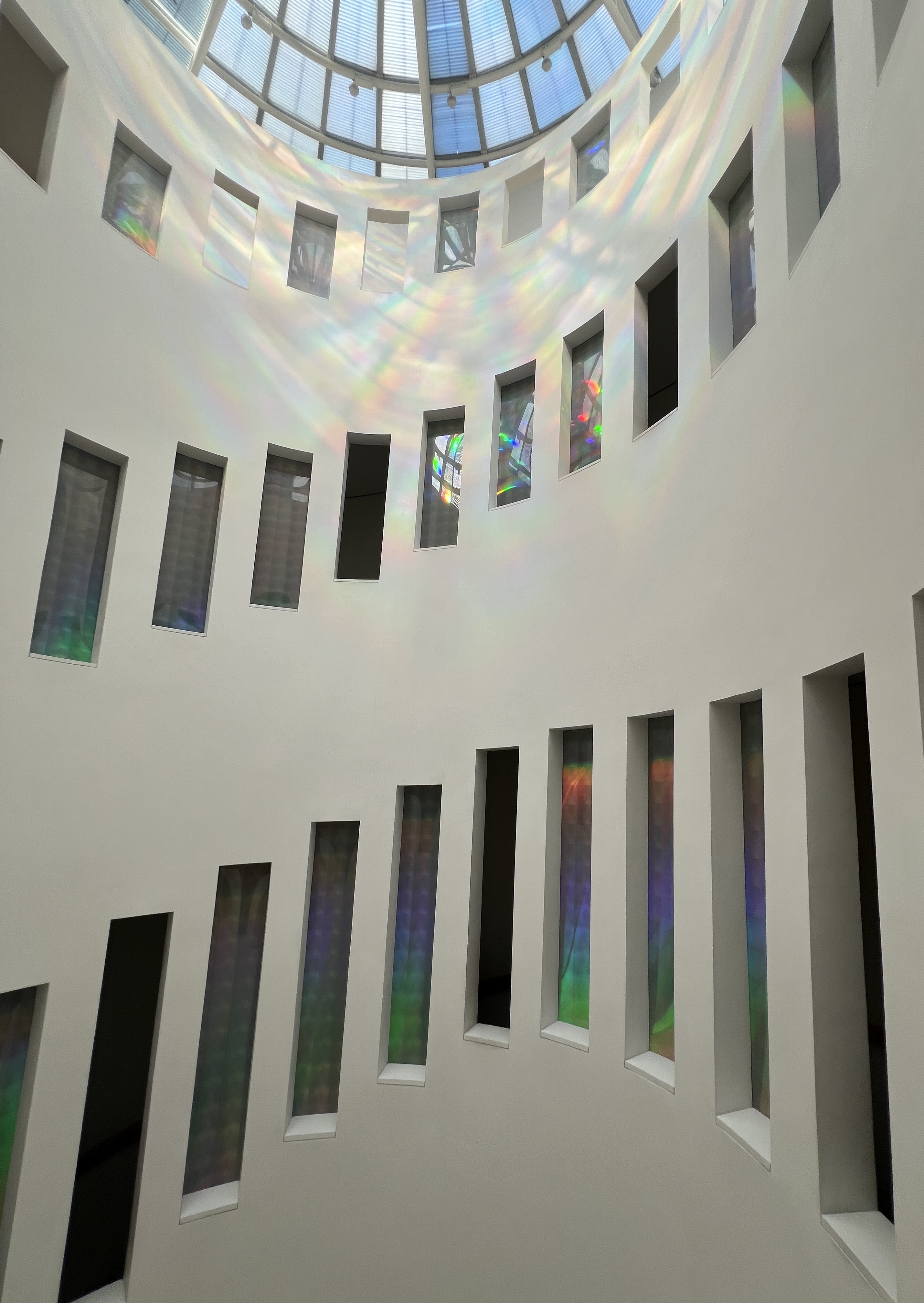
So off we went to the Leeum Museum, which is really three museums in one– connected below ground. Above ground were three totally distinct buildings–each by a starchitect! France’s Jean Nouvelle, Switzerland’s Botta, and Netherlands’ Rem Koolhaus. The entry is into the Koolhaus building through a ramp that takes you below grade level. Once in the lobby you can move between the three buildings seamlessly. If you never went above ground you might not know there were three buildings— well not exactly since the walls and spaces are different but truly it feels like a single building. It’s located in the Hamman-dong area–an upscale neighborhood with high end houses and shops.
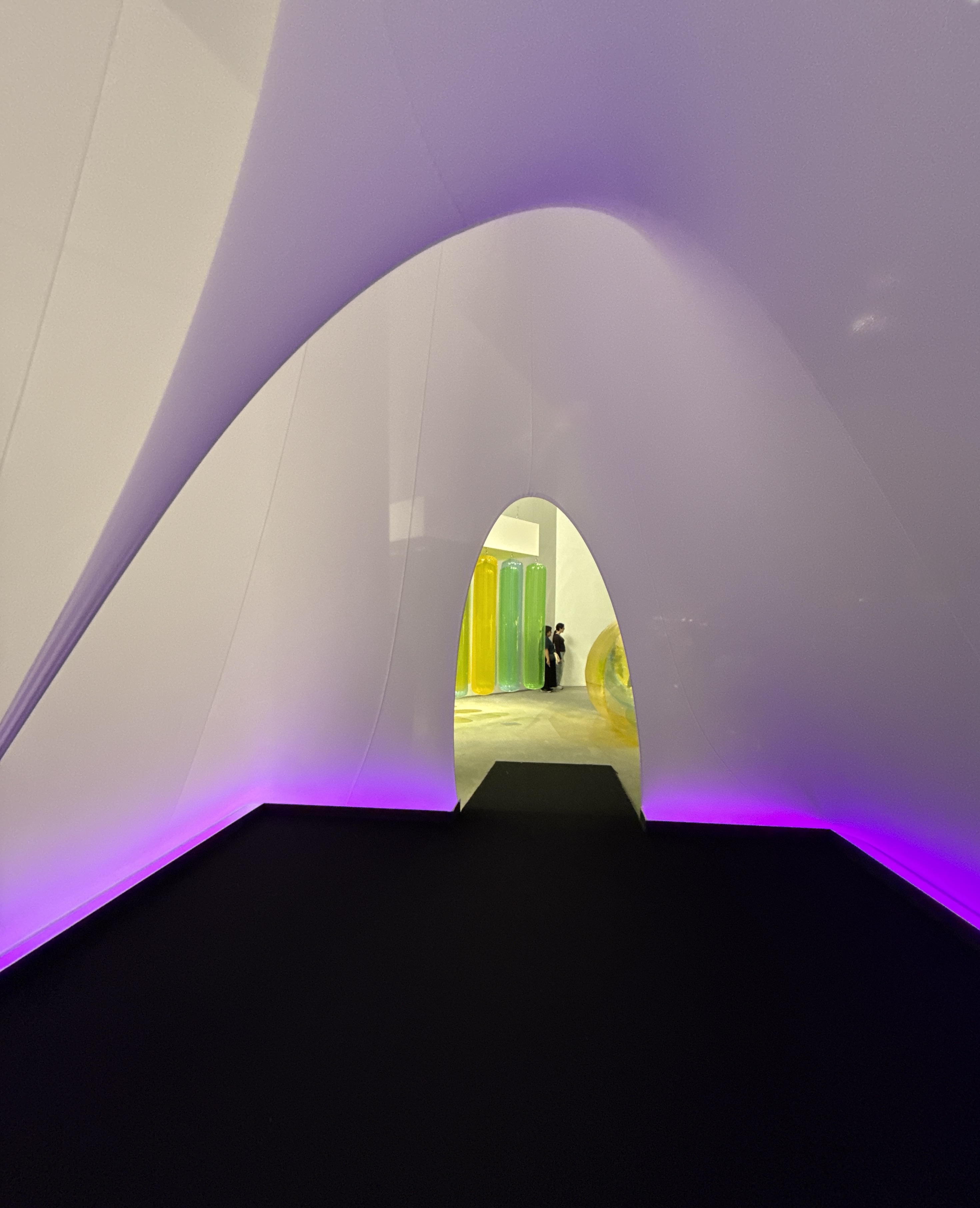
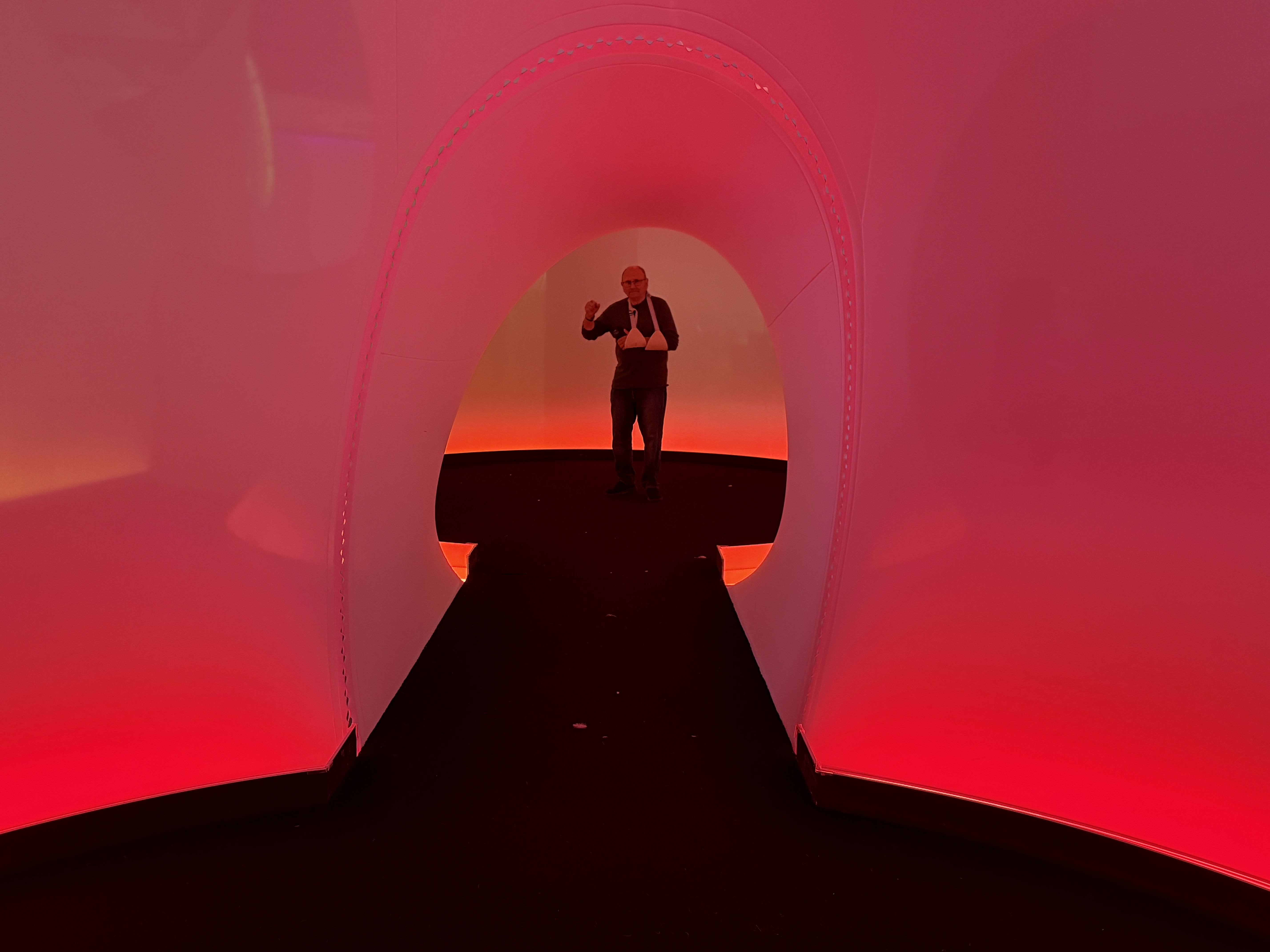
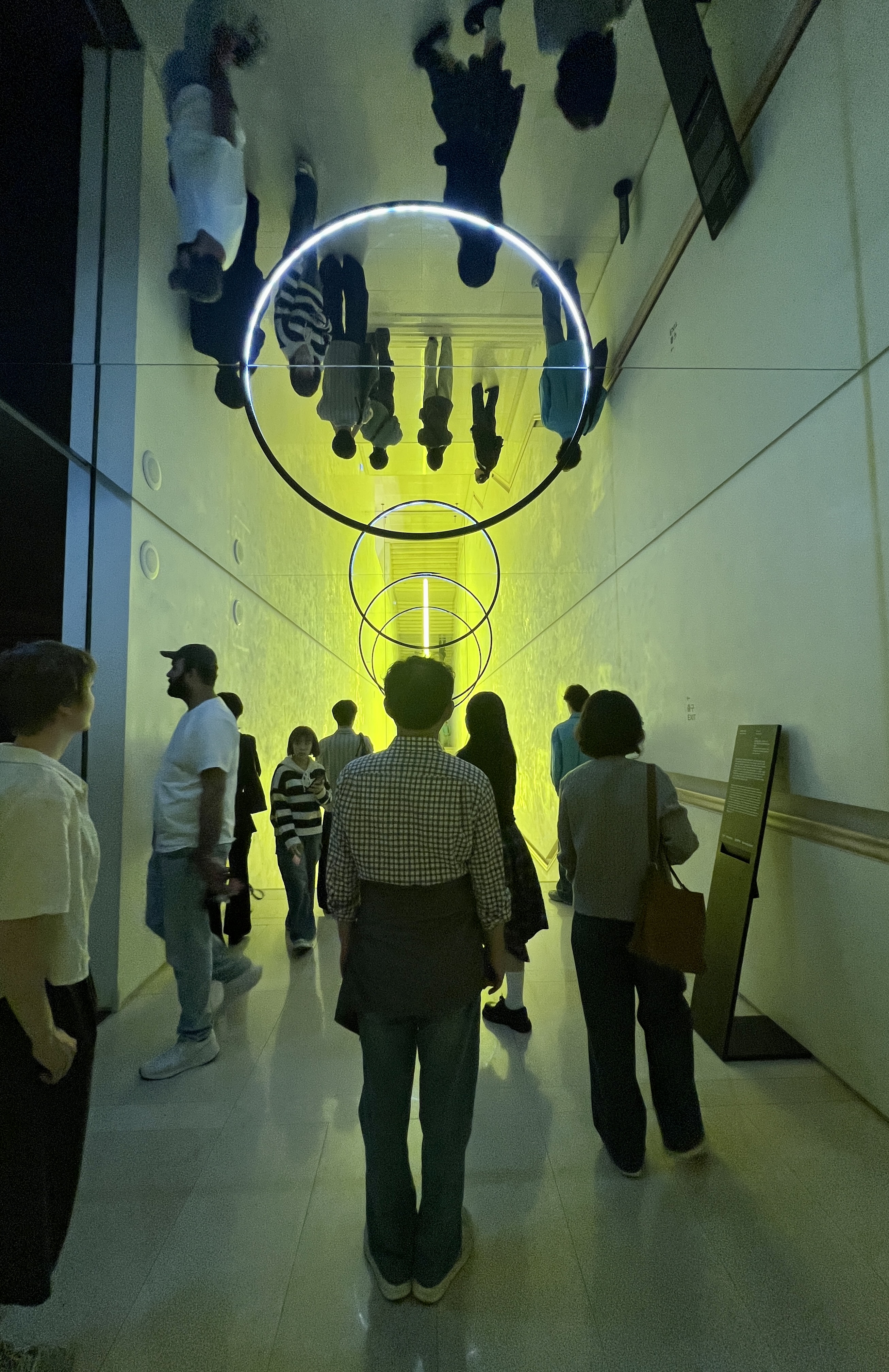
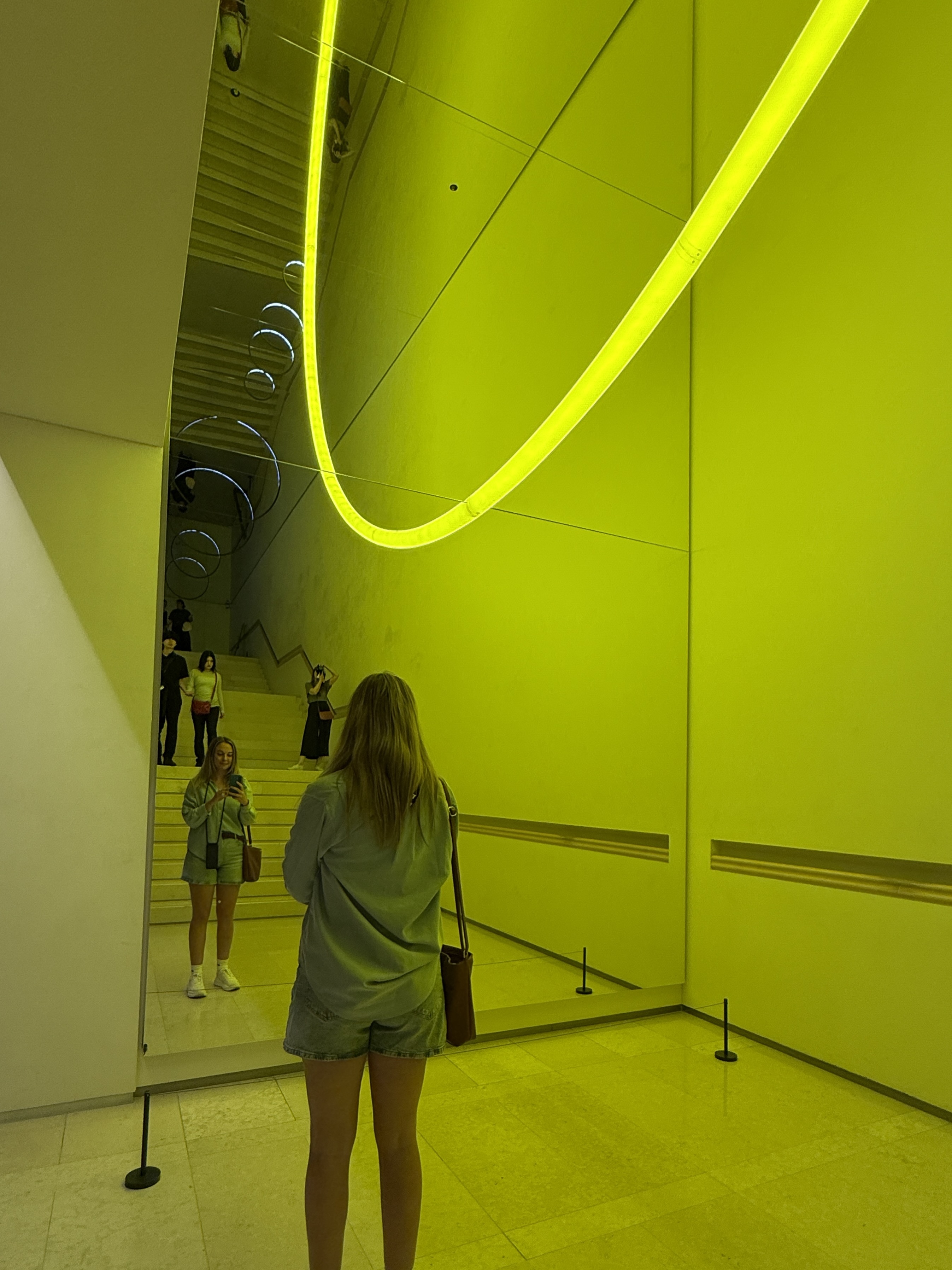
We strolled the museum’s different exhibits–traditional Korean art, contemporary, and a special exhibition of place-based works by women artists.
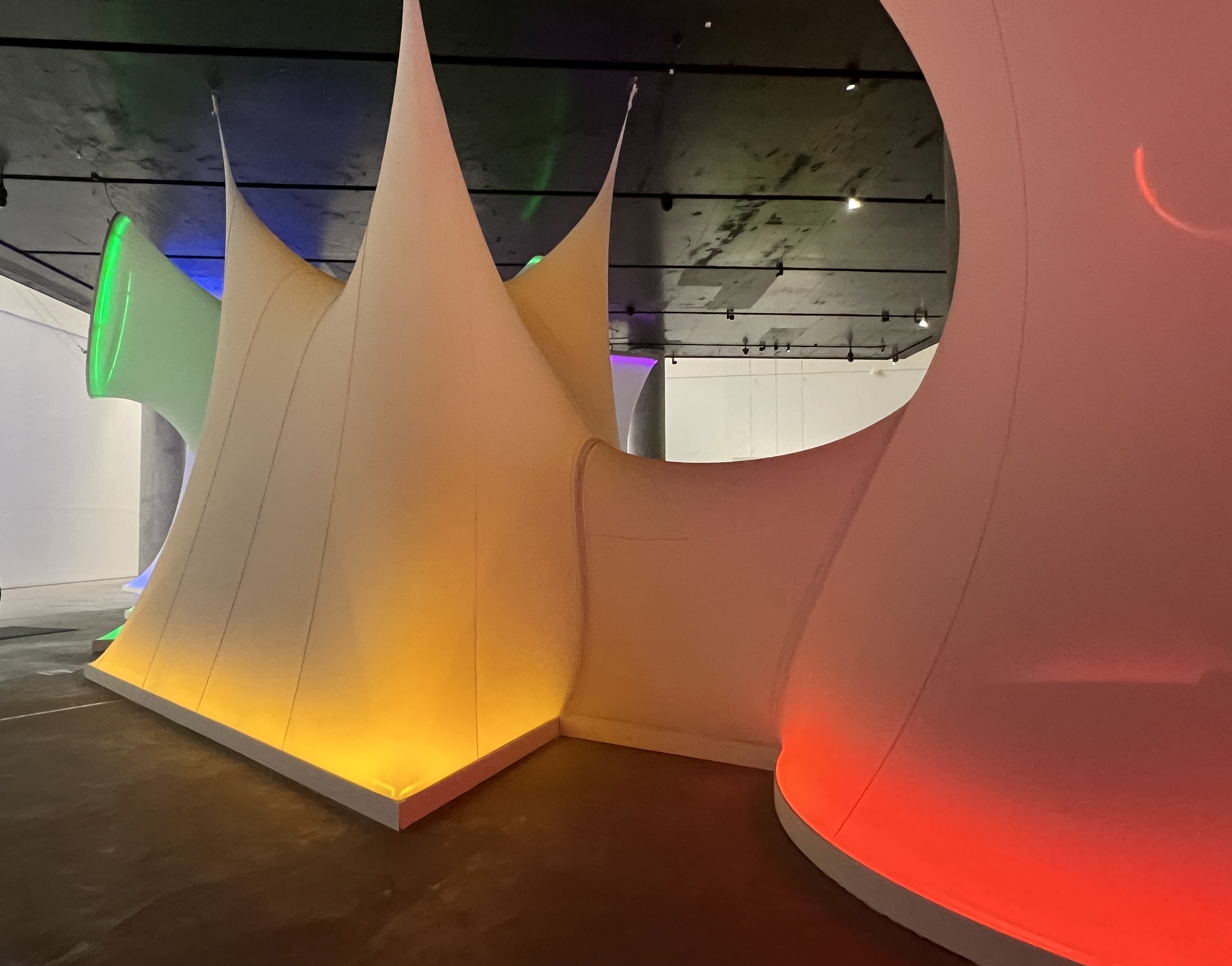
We then hopped into a taxi (I’m getting to be a whiz with K-Ride) to visit the Korea Craft and Design Foundation which turned out to be in Insadong, the opposite part of the city, so once again we drove through areas we had not yet seen. The taxi driver dropped us off at a nondescript building which was closed and we realized it was not the right location. Fortunately the real location was only about a 10-munute walk. And frankly when we got there, it was a big disappointment. But we strolled the walking streets of the neighborhood which were packed with people on this bright sunny Sunday. And we stopped briefly in a tiny cafe to get a light lunch of gimbap. And then we walked some more… a lot more, since we couldn’t request a taxi until we were on a regular street and that took a while.
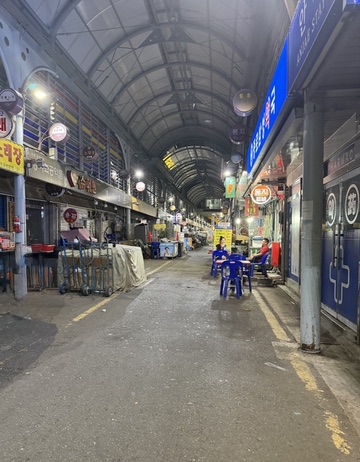
After a short respite at the hotel, we headed for dinner at Jin Ok Hwa — apparently a Seoul landmark that originated the neighborhood’s iconic “dakhanmari” — WHOLE chicken soup. Since it was about 8 pm, we walked down a fairly dark covered alley lined with shops with fish tanks and food stalls (mostly closed at this time of night—all the wares were on tables covered with simple cloths—clearly no fear of theft) until we found a crowd of people waiting patiently in the drizzling rain, for a table at Jin Ok Hwa. We joined that group of folks waiting as we peeked in to see what was in store for us. At first we didn’t even know how to get on the waiting list. But someone took us by the hand and got us a “number” and we waited to be called. It was pretty obvious that we were the only foreigners and probably the only “newbies.” The place is three floors of eating for this one restaurant. We calculate about 250 people eating on the three floors at any one time And it is open until 1 am every day. And it was packed. And it’s been around since 1978.
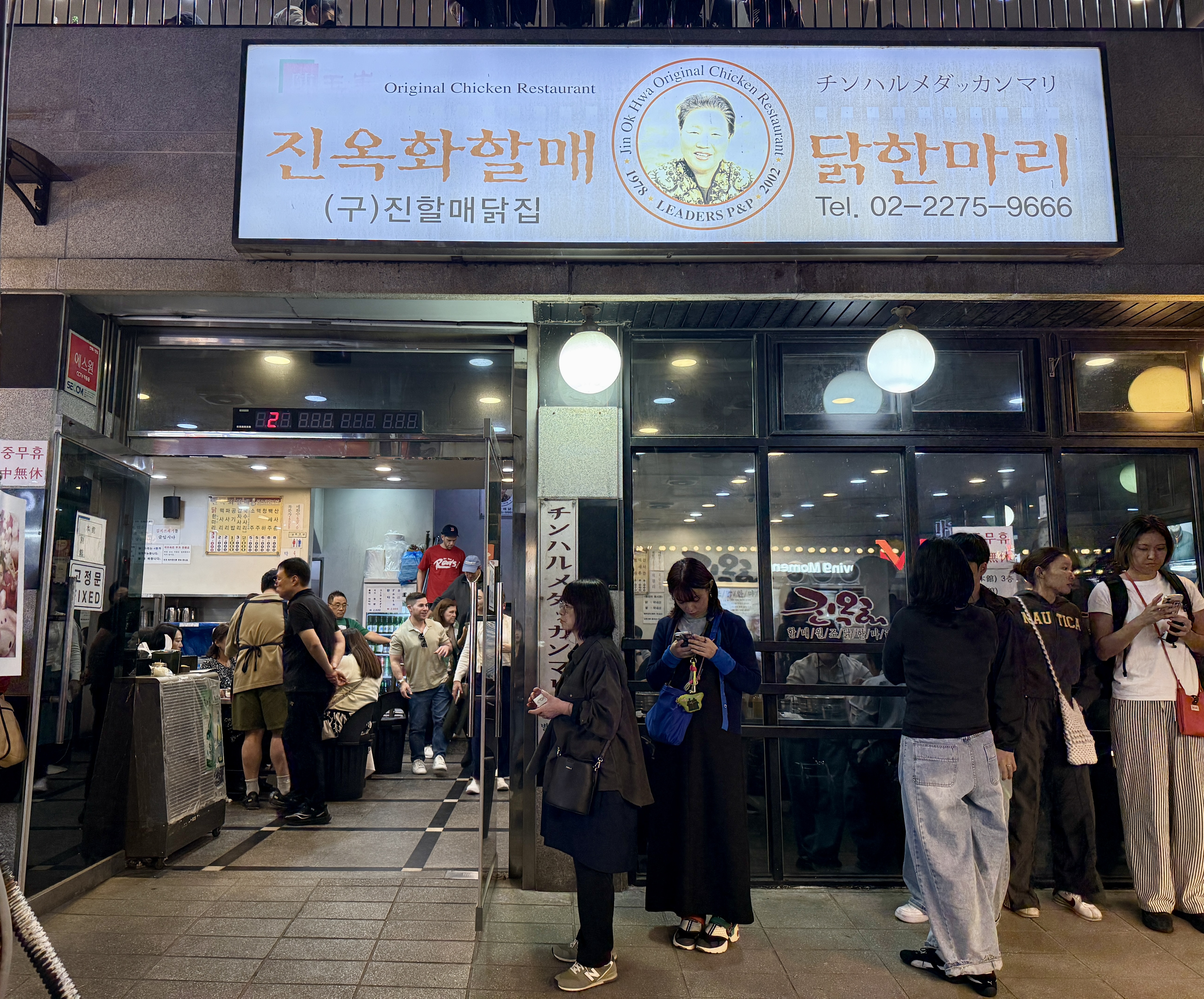
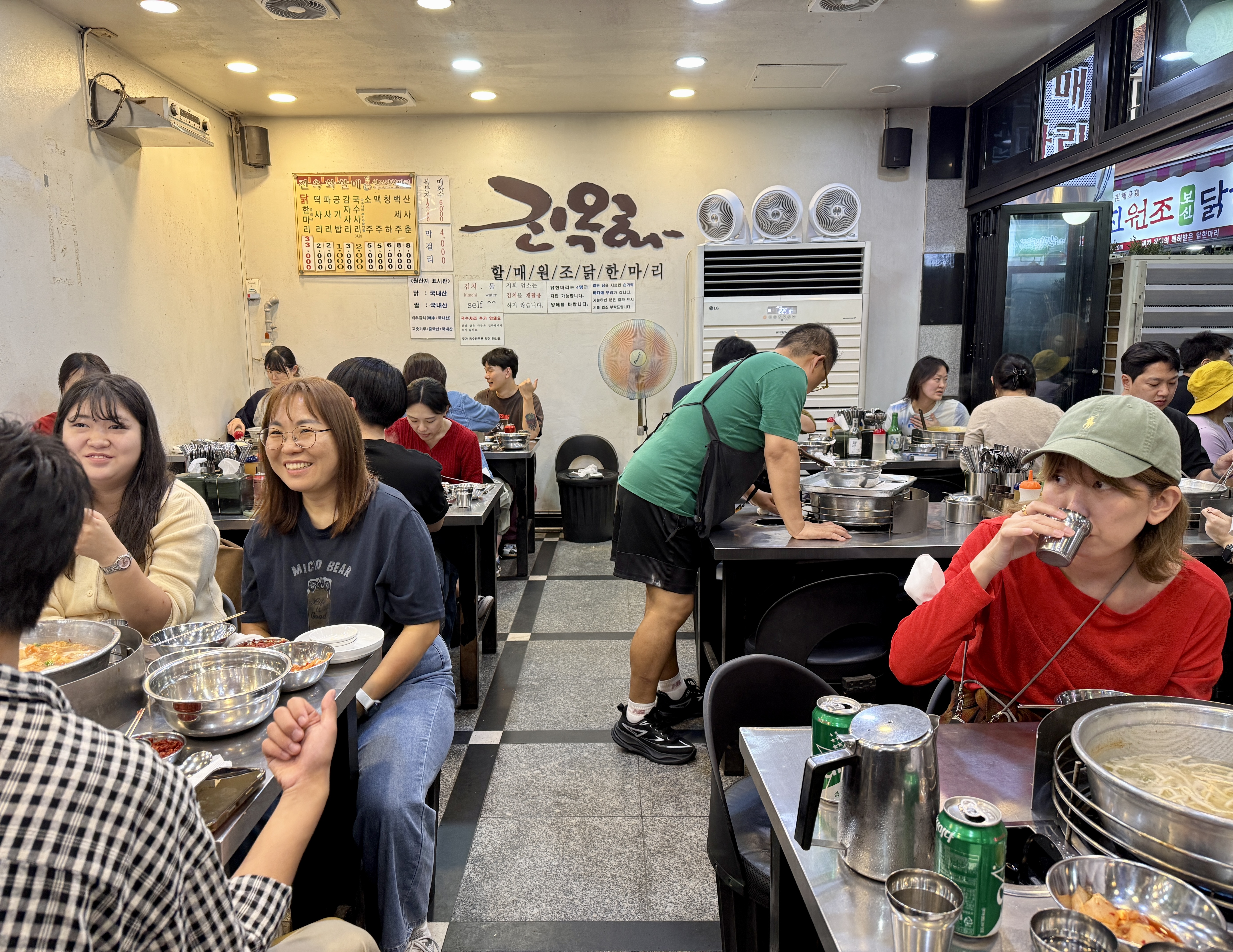
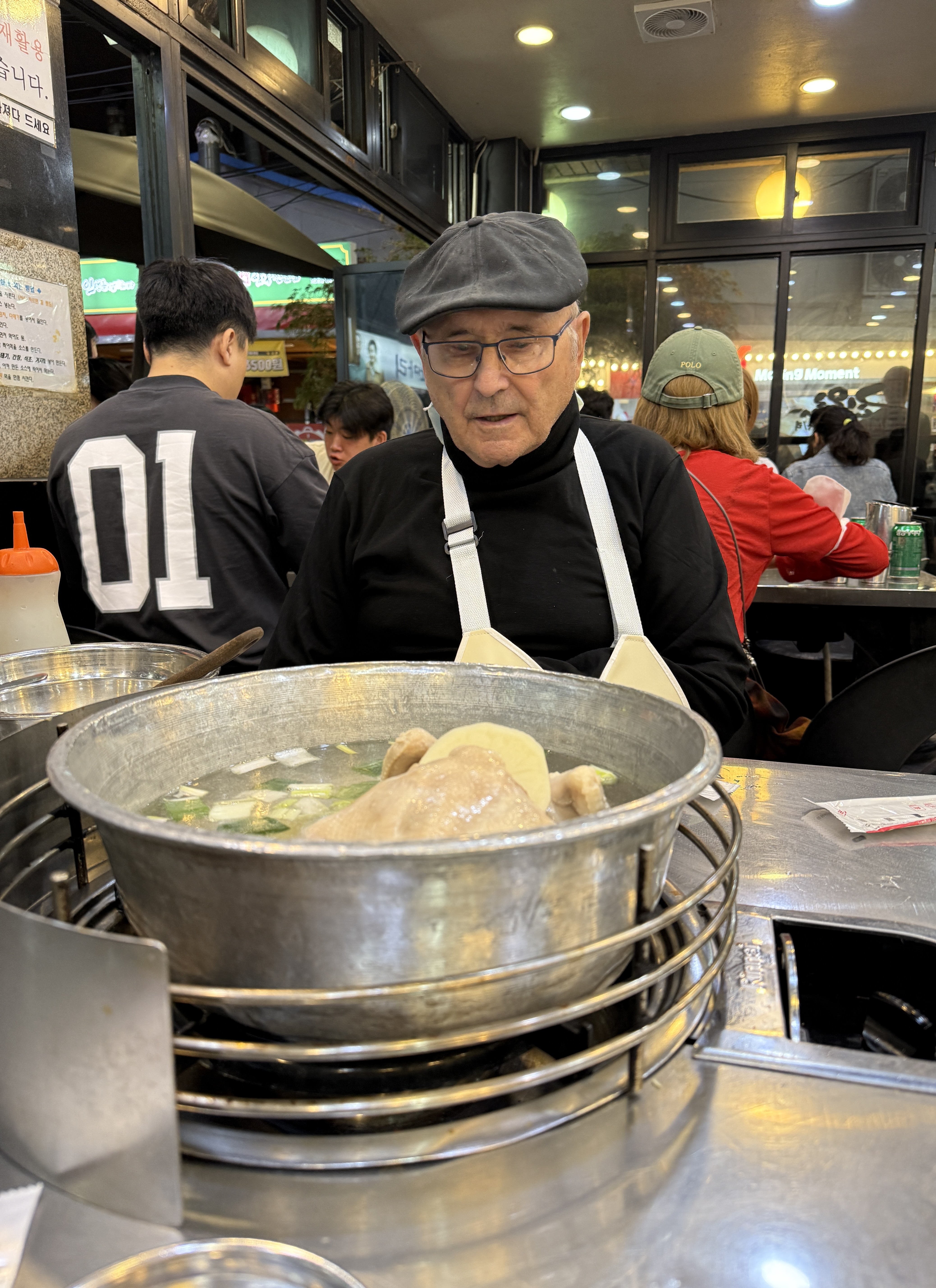
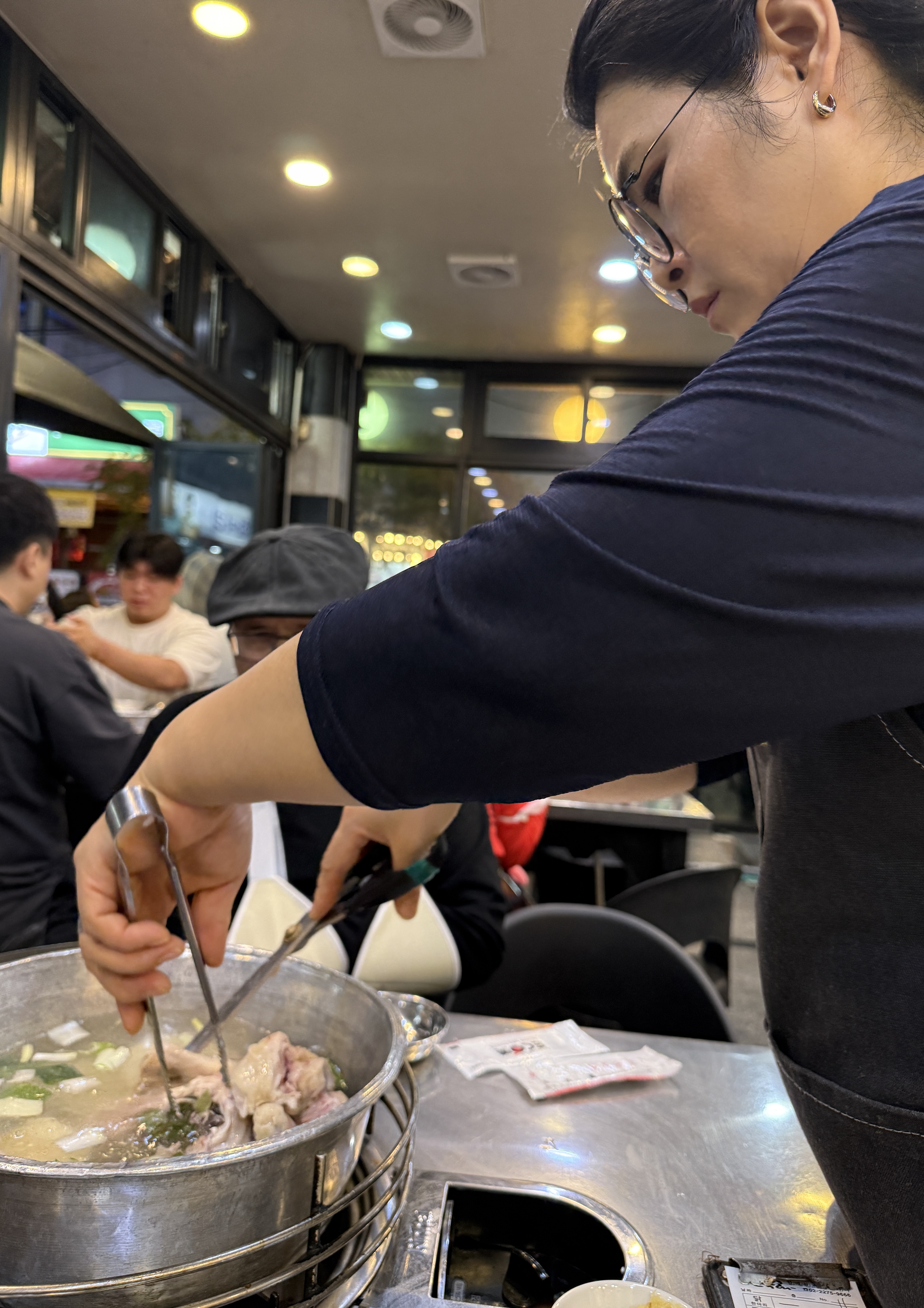
There’s no need for a menu because all they serve is a whole chicken that cooks at your table in a big pot of water with garlic and some scallions and slices of potato. Since we were novices the staff came by from time to time to tell us how much longer to let the chicken cook. They also came by to cut the chicken into parts so that it would cook faster. And they motioned that we needed to make a dipping “sauce” of chili paste, soy, mustard, vinegar, and some spices at the table. We dutifully did that and also noticed that people had kimchi… so I went to the giant kimche “pail” (about the size of a very large outdoor 64 gallon trash can) and scooped up a bowl for us. Eventually the chicken was ready and we scooped out parts to eat in our stainless steel(?) bowls.. and then a bowl of noodles arrived and were dumped into the remaining stock from the chicken… and we ate the noodles. It was fun. It was tasty.
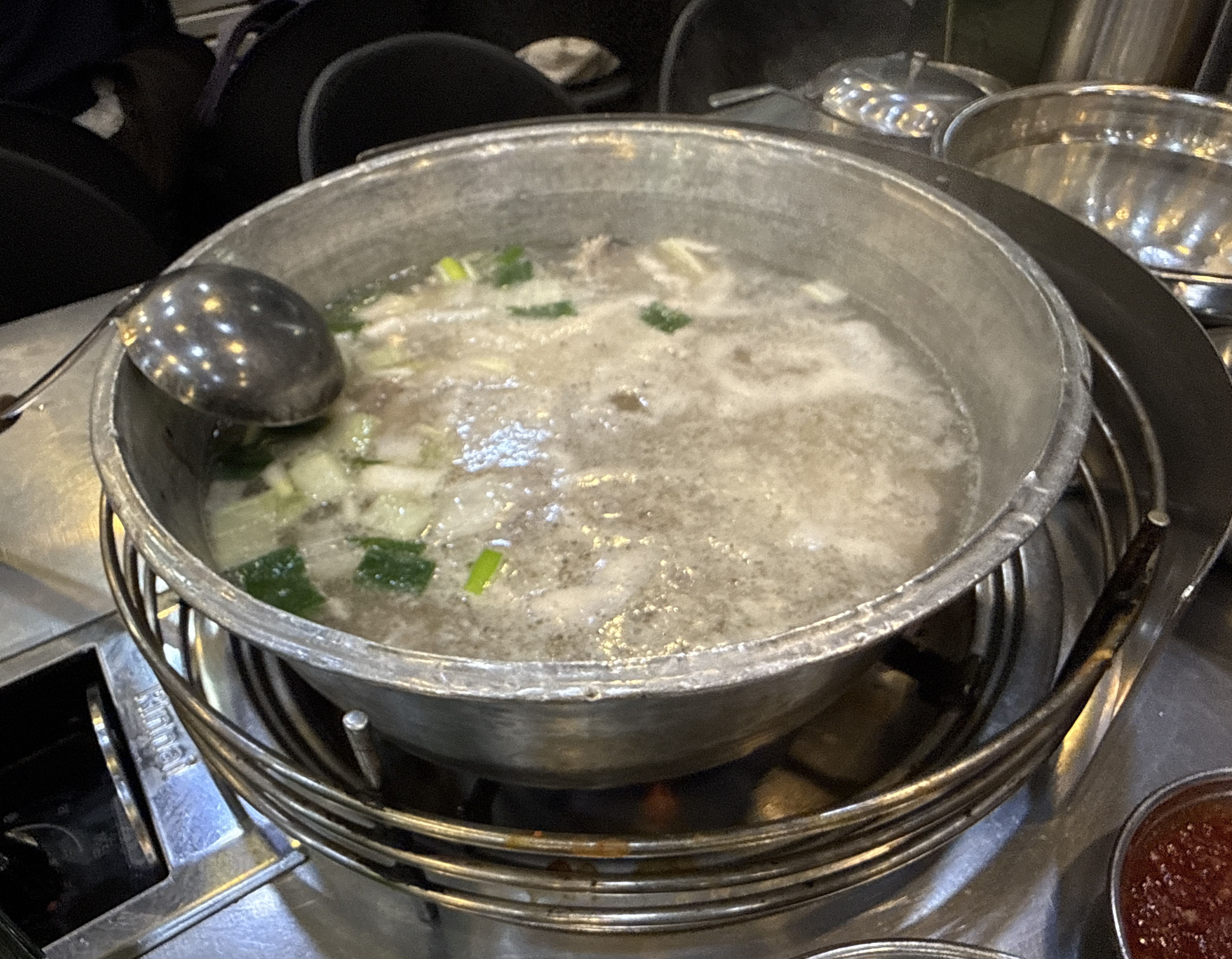
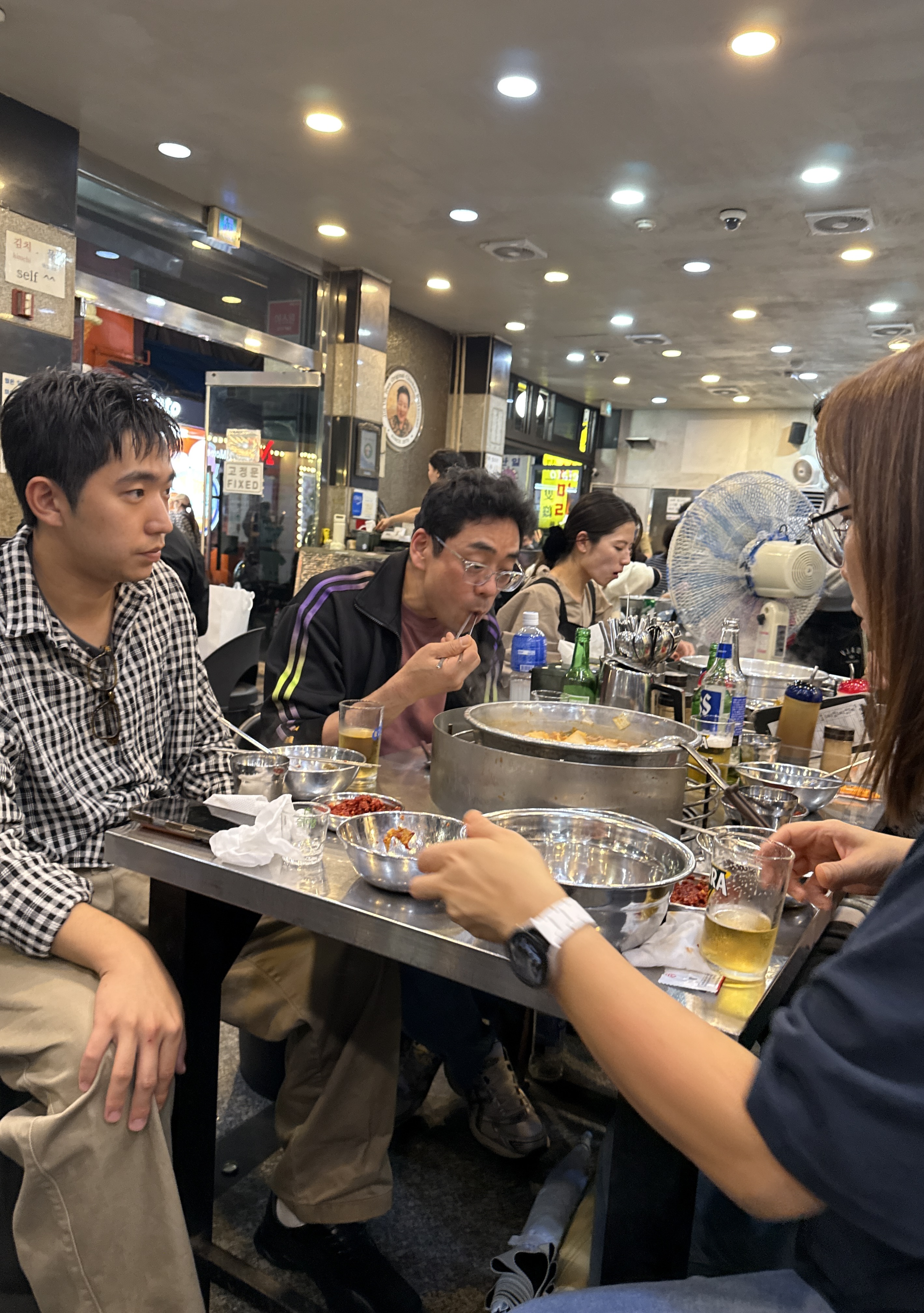
We taxied back to the hotel in the rain, only to find some White blond pop singer signing her albums at the back door of our hotel!? We called it a day.
October 3, 2026: If anything can go wrong, it will.
That’s actually Mike’s motto; as you know I’m the half full one!
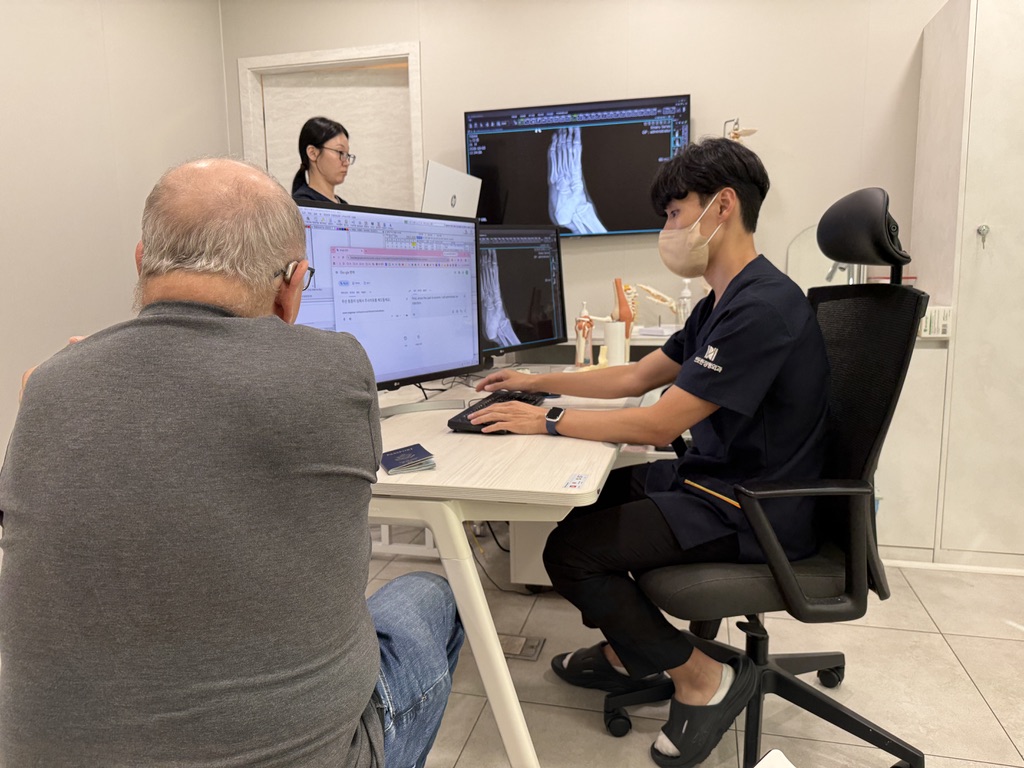
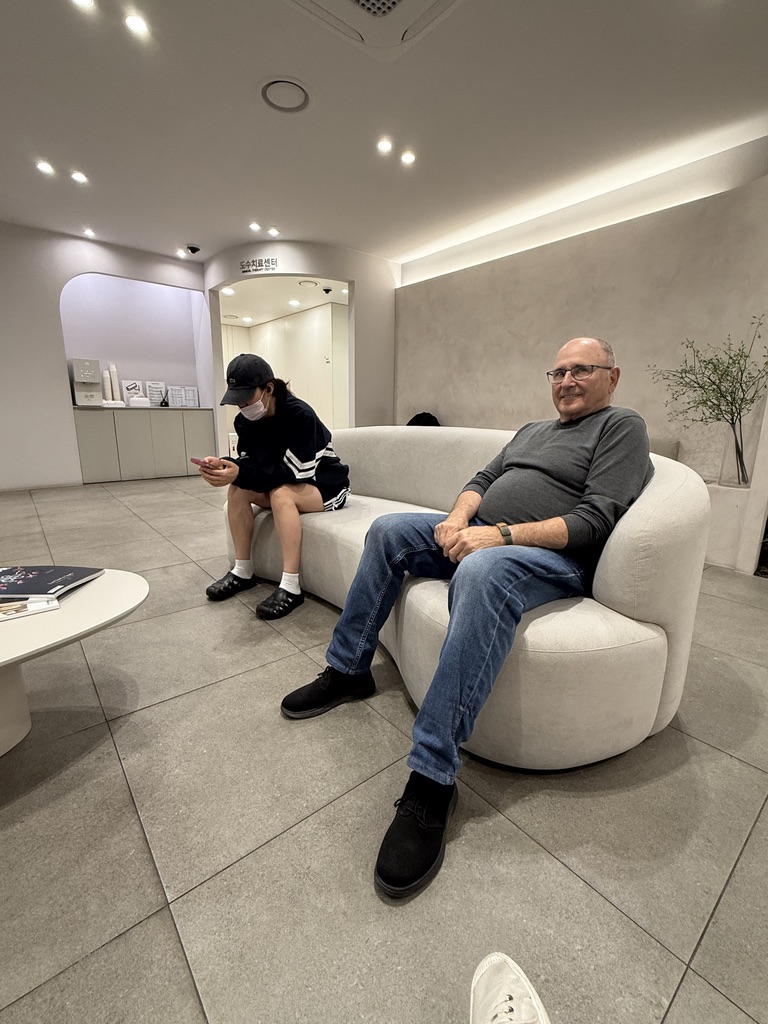
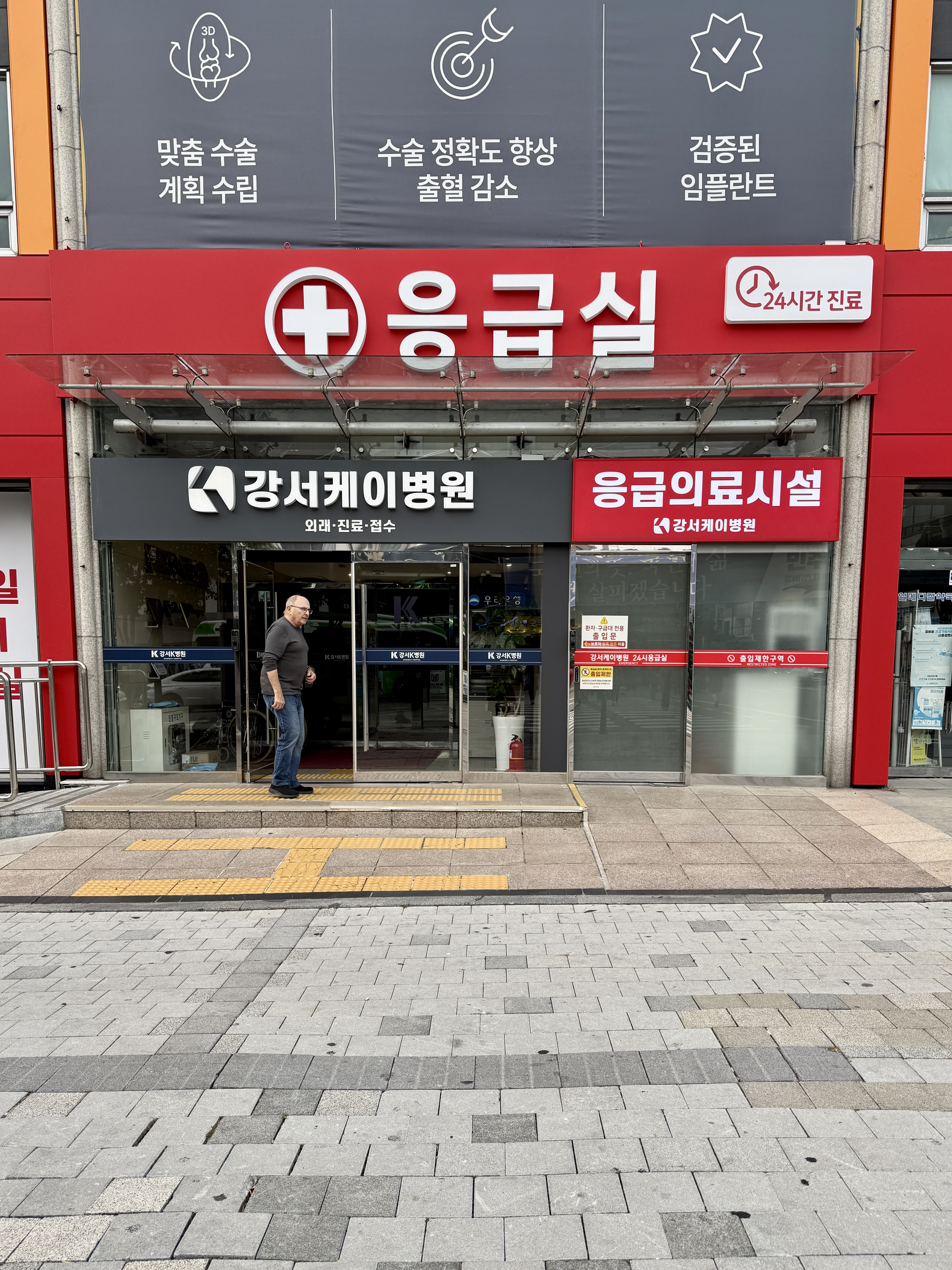
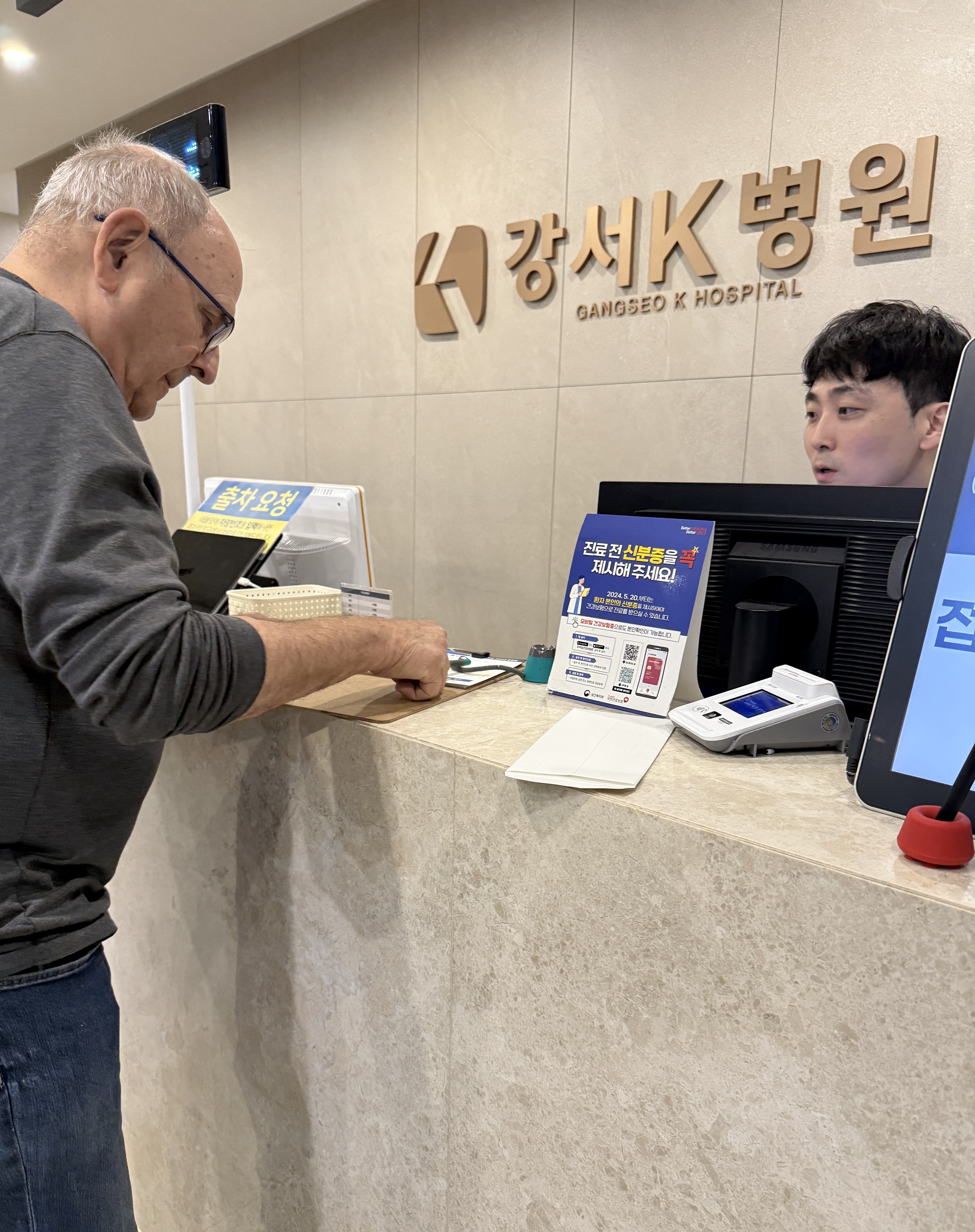
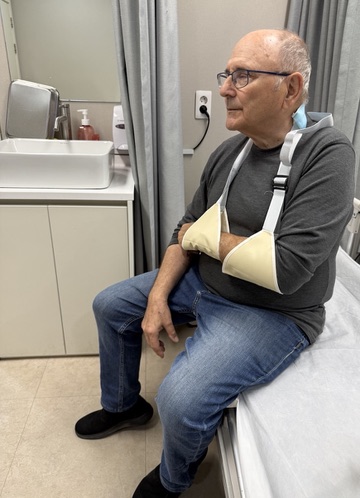
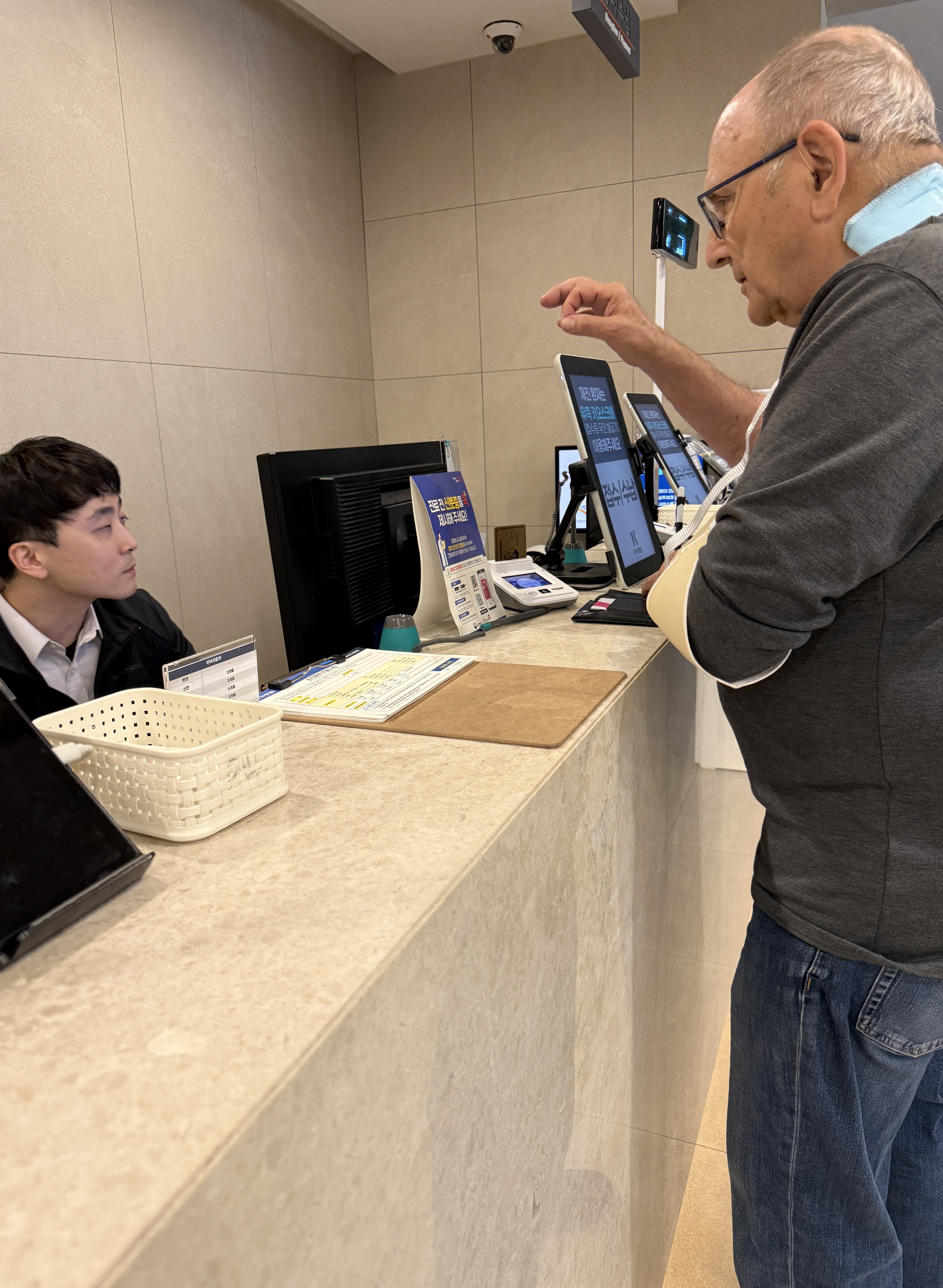
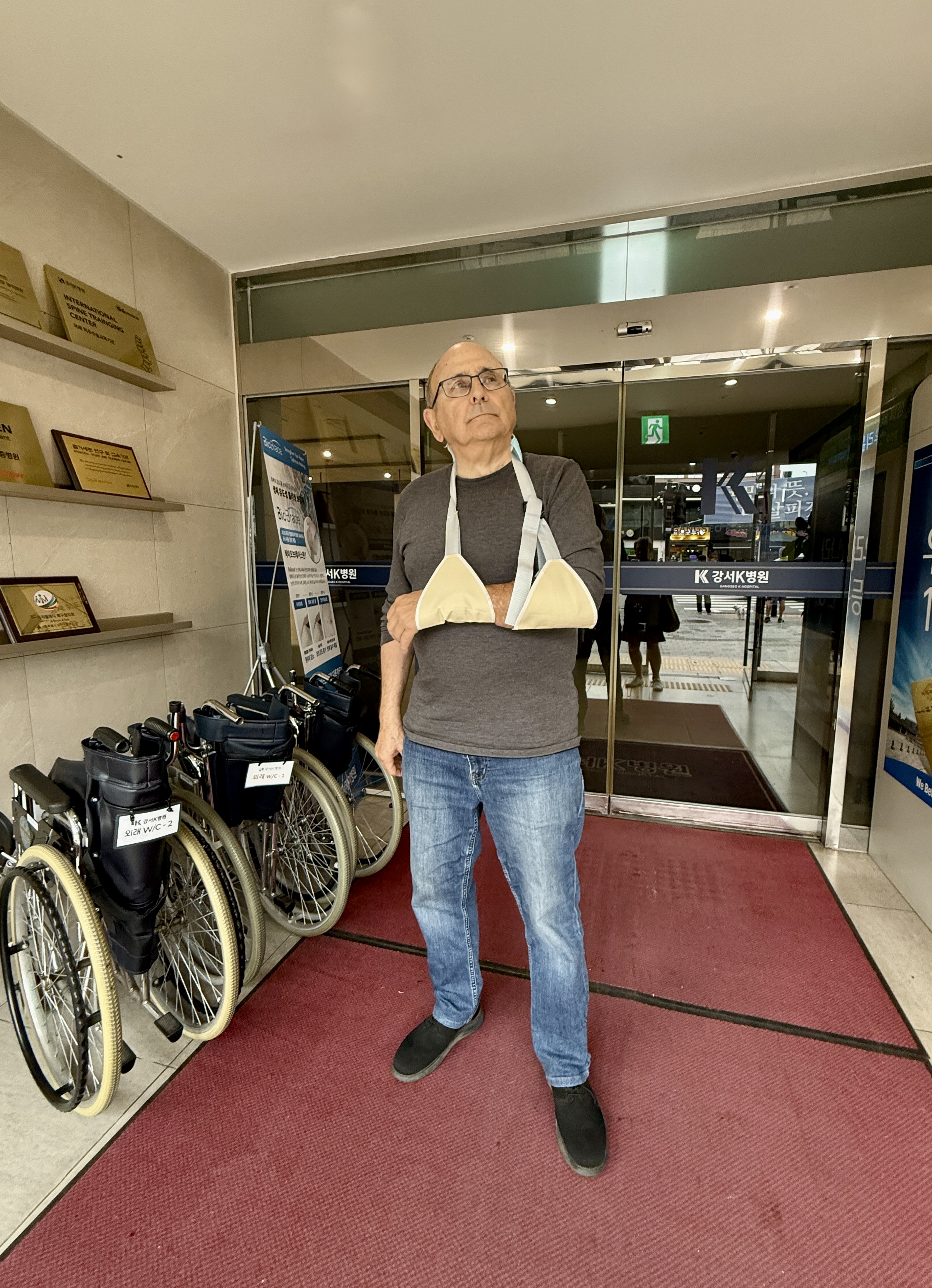
What started as a great day went sideways fast.
We had our usual breakfast — I’ve gotten hooked on milk tea, a milder, milkier version of chai — then made a quick detour to buy a luggage lock. Mike had decided to check both bags on the Mongolia flight; his shoulder had been bothering him since lifting his carry-on bag into the overhead compartment on the flight over, despite a recent steroid shot that had it feeling almost new.
The hotel — staffed entirely by 25-year-olds who navigate entirely by device — sent us to a basement shop across the back alley. A young staffer pulled out his iPad and showed us our route in three dimensions, zooming in on the entrance so we wouldn’t miss it. We climbed down a steep staircase expecting a tiny shop and found what can only be described as a low-rent Target in a basement. Had exactly what we needed.
On the way back up those stairs, Mike let out a sharp yelp. He sort of tripped on a stair that wasn’t an even riser, grabbed the railing, his arm shot straight up — lightning bolt of pain, he said. And then a lot of it.
What followed was a medical odyssey. First stop: a slick clinic five minutes from the hotel. Young orthopedist, translator app, a few questions, some arm manipulation, shots, a PT room with devices that pounded the area. Nothing helped. Mike needed a sling — but here’s the thing: in Korea you cannot buy a sling without a prescription. The doctor had already left for the day. No sling.
Back to the hotel, where the concierge confirmed this maddening fact, made numerous calls over lunch, and determined the only solution was an emergency room. The “international hospitals” with English-speaking staff are all closed on weekends. So off we went on a 45-minute taxi ride to Gangseo K Hospital, which specializes in fractures and spinal injuries. Minimal wait. A doctor, some questions, Tylenol, and a five-day supply of pills — packaged by the pharmacist into neat little plastic sets of three, like tiny daily pill organizers. And a sling.
The long taxi ride there and back gave us an unfiltered look at working-class Seoul — no glitz, no tourists, just the city going about its business. And I finally got to try the K-Ride taxi app I’d downloaded. Worked like a dream.
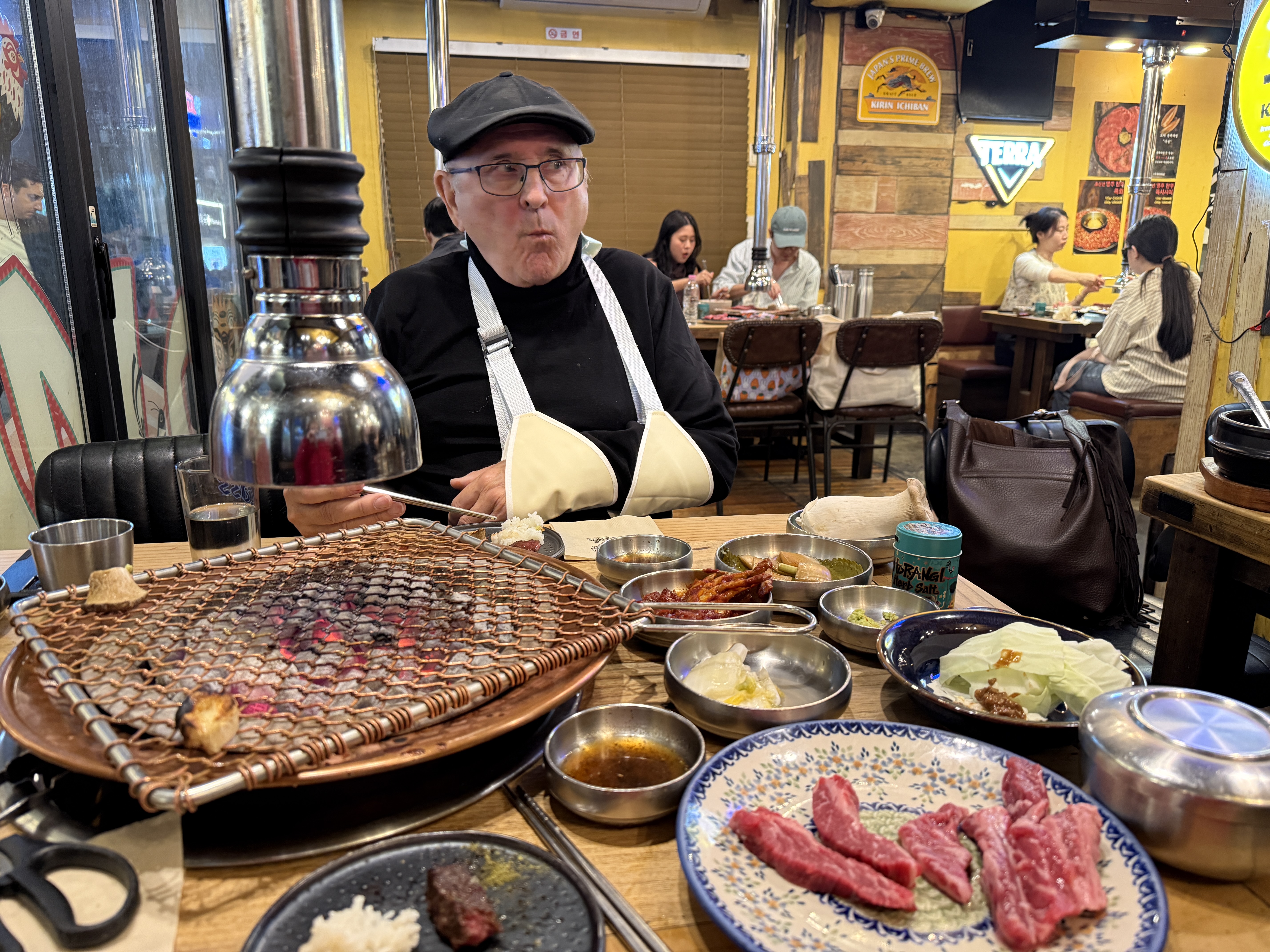
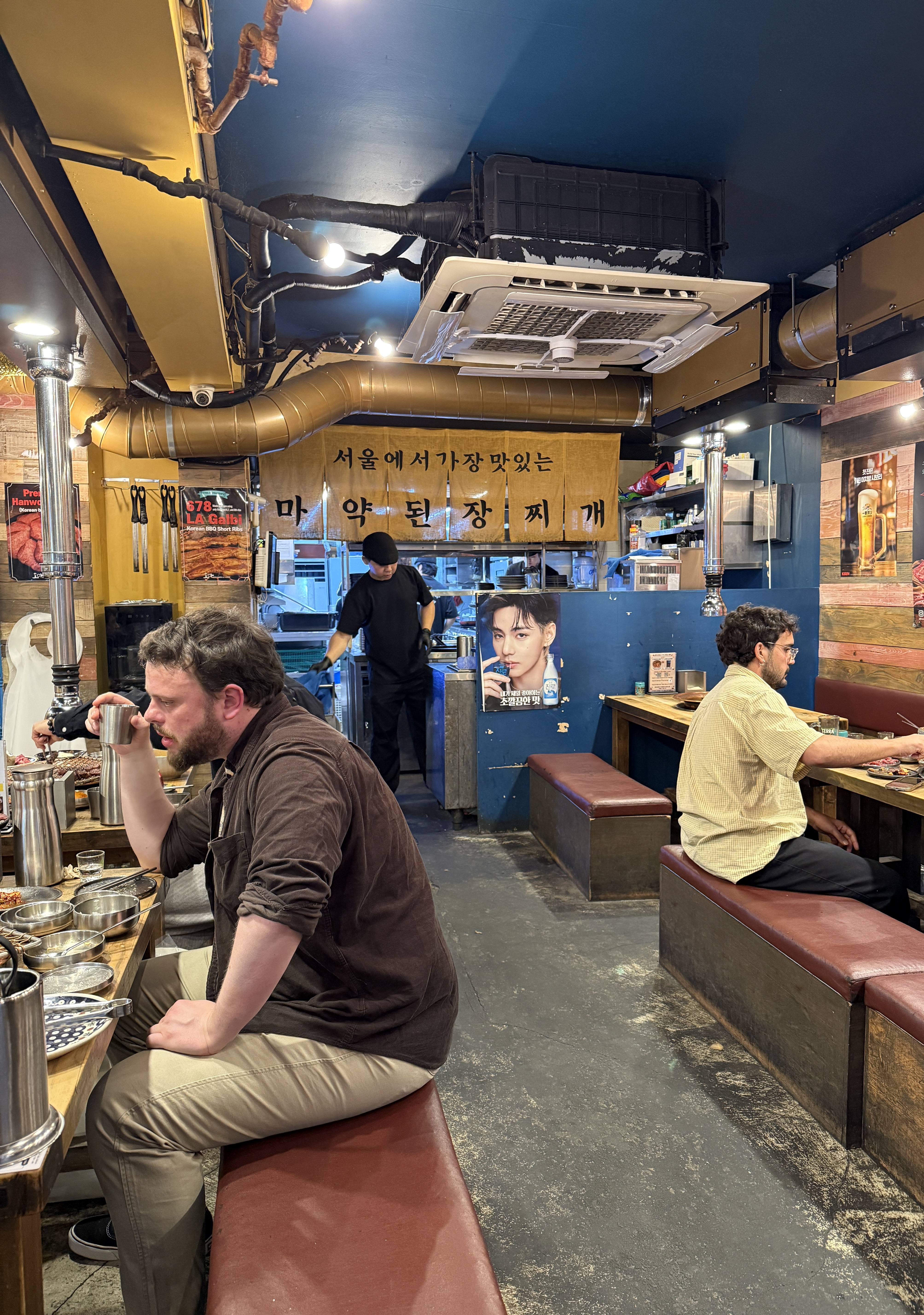
Given the day’s chaos, we kept dinner simple — Korean BBQ at Doma Hongdae, right nearby. As always, delicious.
Afterward we wandered into what can only be described as a landlocked Coney Island — Hongdae’s youth district. Thousands of kids between 17 and 22, wall to wall: game arcades, caricature artists, costume photo studios, street food, soccer, shops selling everything and nothing. We were almost certainly the oldest people there by a factor of three.
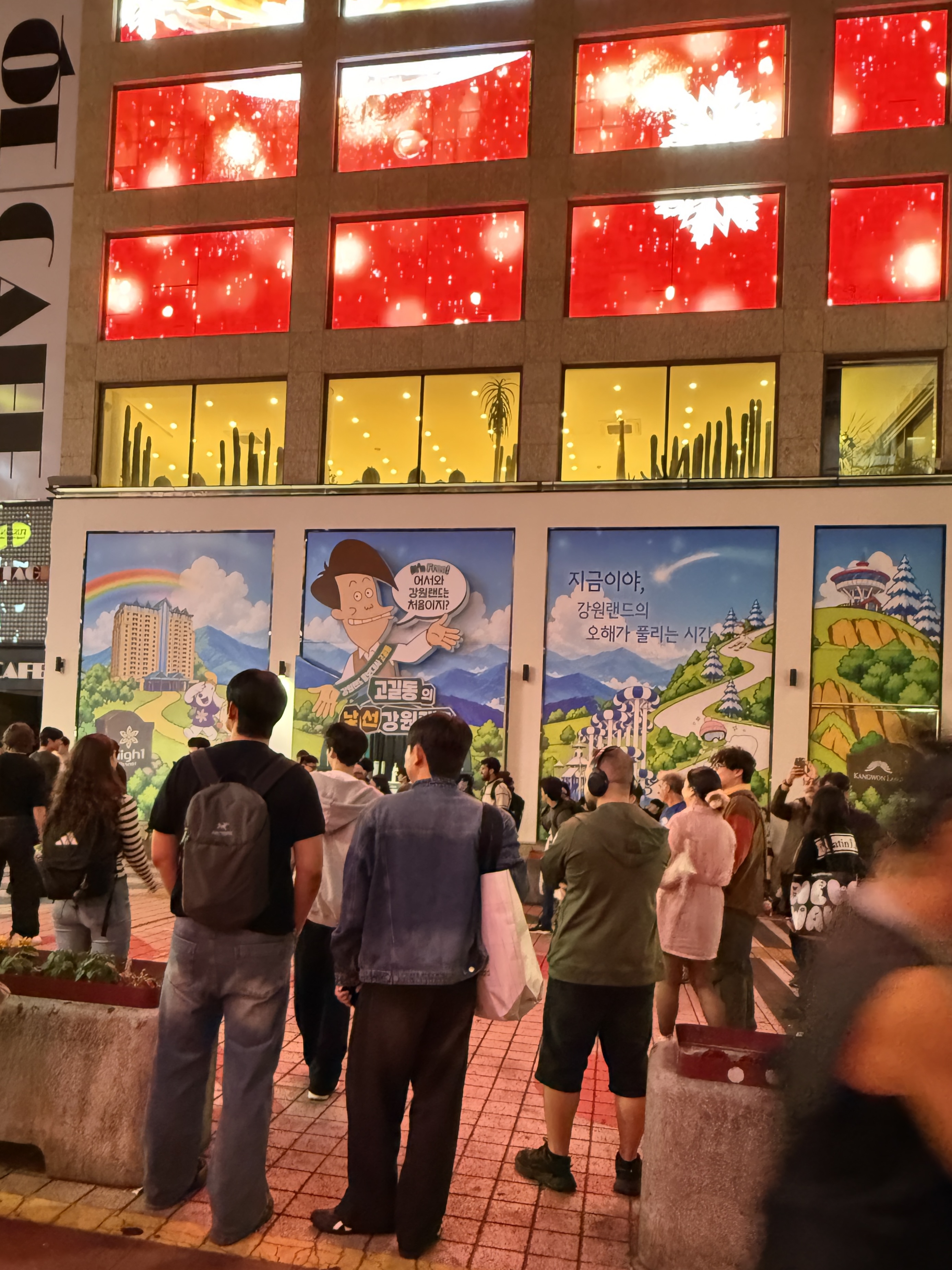
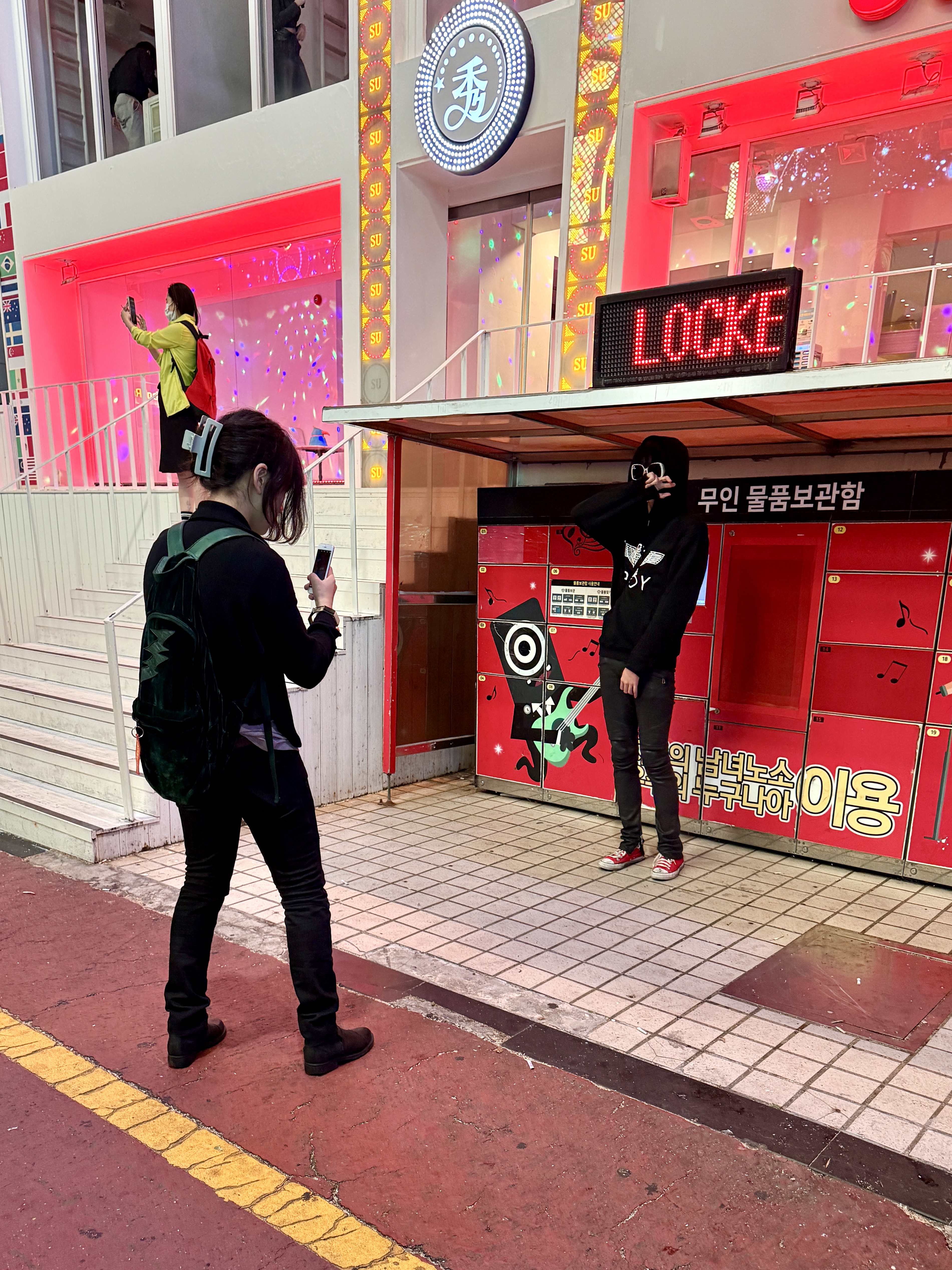
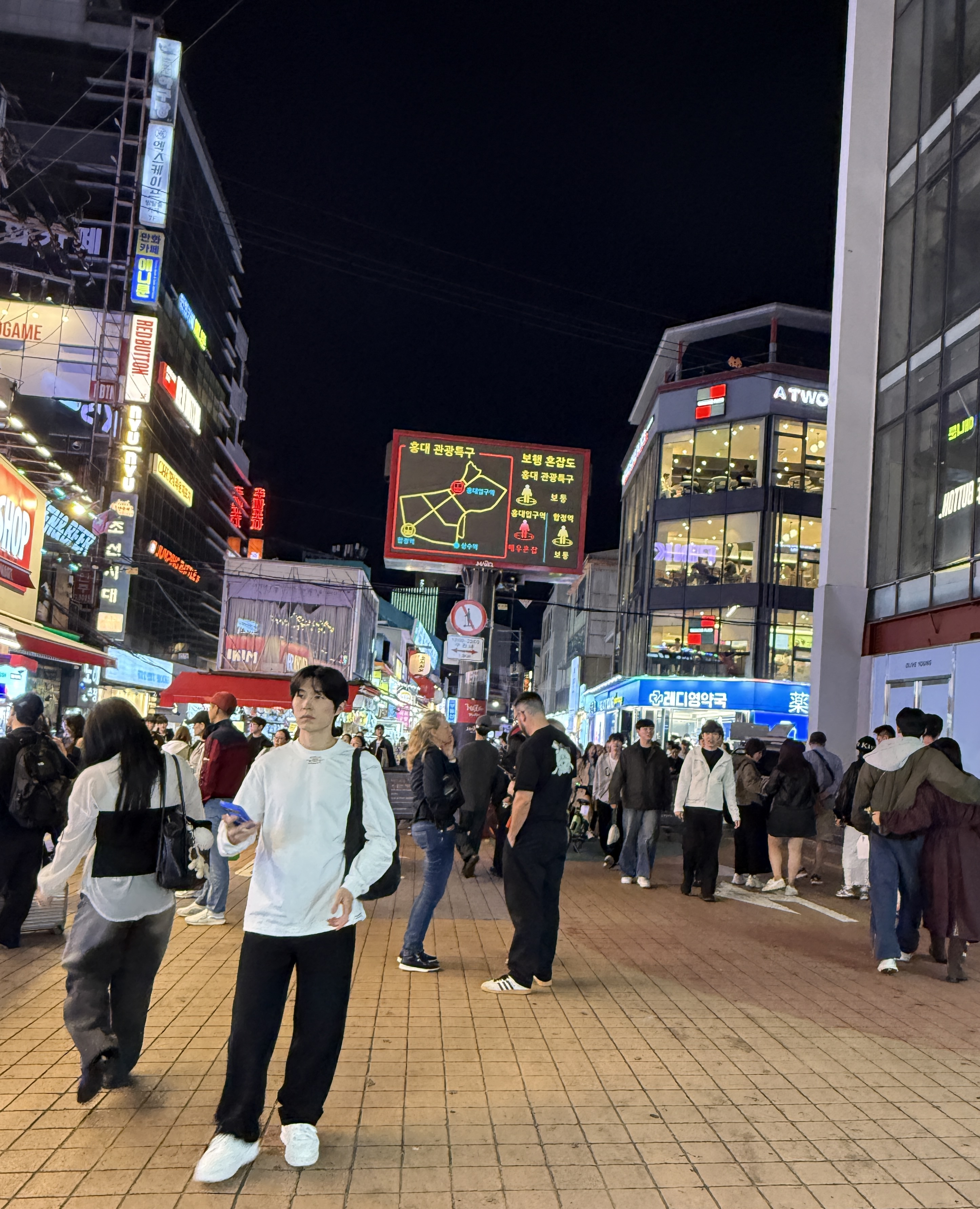
Then came the hard conversation. With Mongolia tomorrow and Japan after that, we had to be clear-eyed about it — and we were. Mongolia is canceled. Japan is on the way to being canceled. We’ll stay a few more days in Seoul, keep things low-key, and fly home Wednesday. Availability looks fine; I’ll sort the airlines in the morning.
It’s disappointing, but it’s the right call. Mike needs to see his orthopedic surgeon as soon as we’re back and get surgery scheduled. What this means for our December trip to Switzerland and Algeria, we don’t know yet — one step at a time.
It’s all good.
October 2, 2026: Seoul — A City of Contrasts
18,000 steps; 6.5 miles; 14 flights,
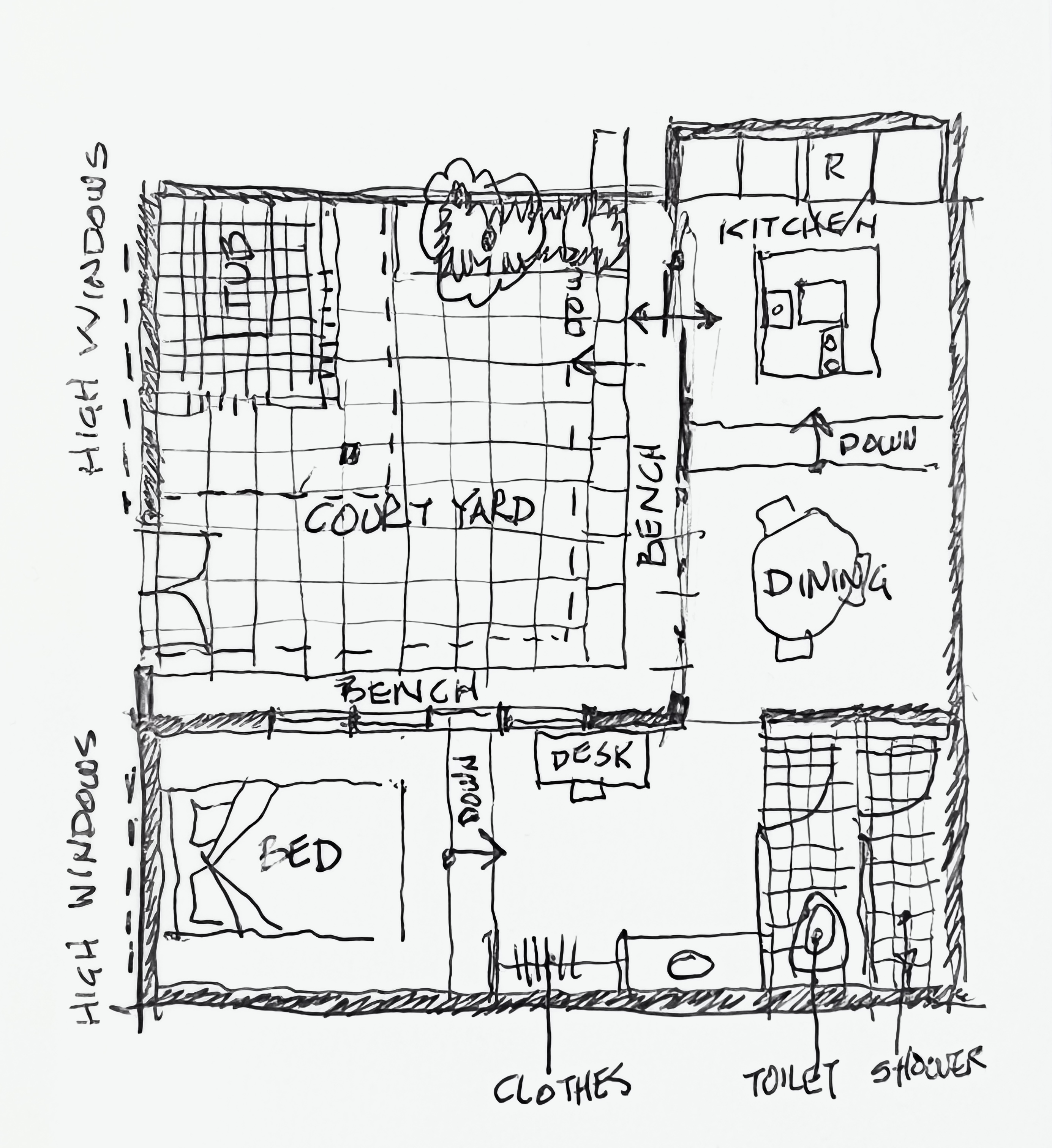
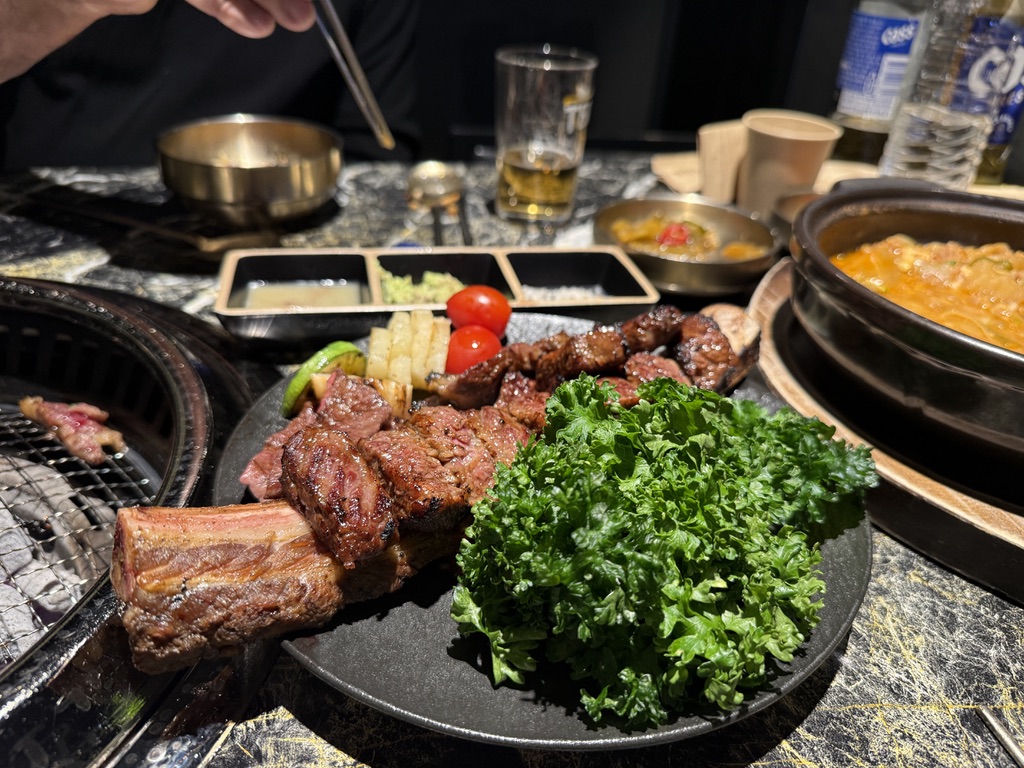
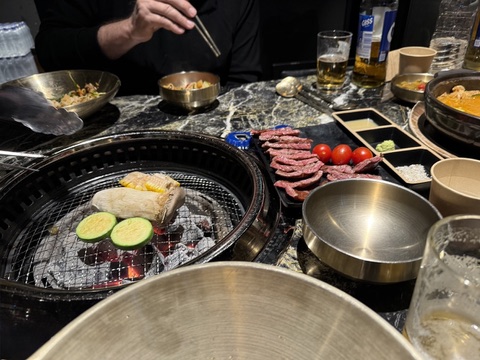
Before getting into today’s adventures, for those who asked… here is a little drawing (compliments of Mike) that shows the floor plan of the hanok in Bukchon. And also some photos of the BBQ dinner last night in Hongdae. And, yes we are walking a great deal— averaging about 5 miles each day and going up and down the subway has brought us to between 10 and 15 flights (according to the app, which calculates it as going up and down to make a flight) each day. And we are doing fine with language… the apps work well, although I’m a bit slow and Mike hasn’t used it at all yet. We’ve stopped people on the street who have been very helpful, even if they only speak a few words of English. Mostly we are always looking for the subway entrance and that is easy to ask… and we’ve gotten pretty good at using Naver (sort of the WAZE of Korea). Now onward to today.
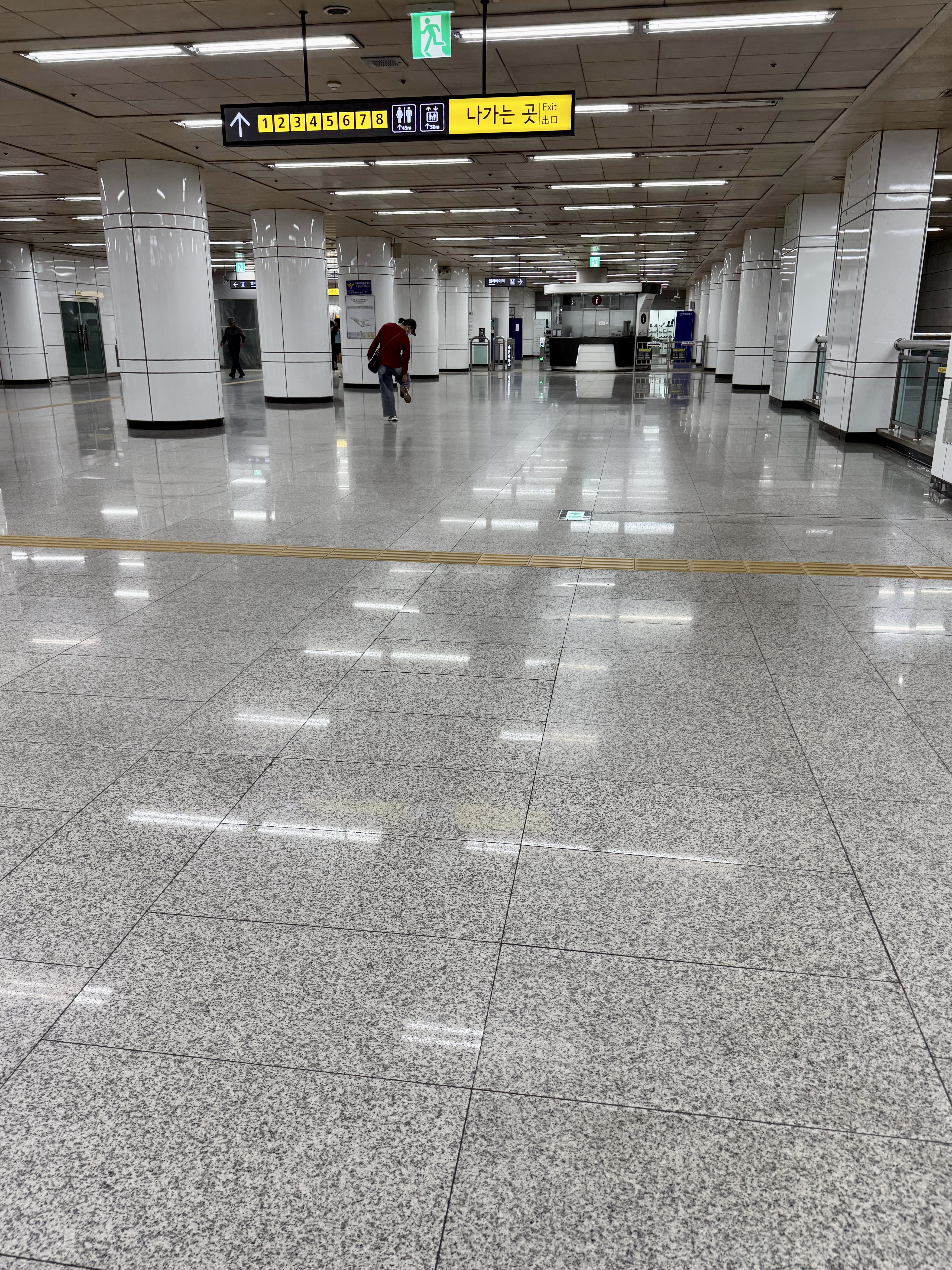
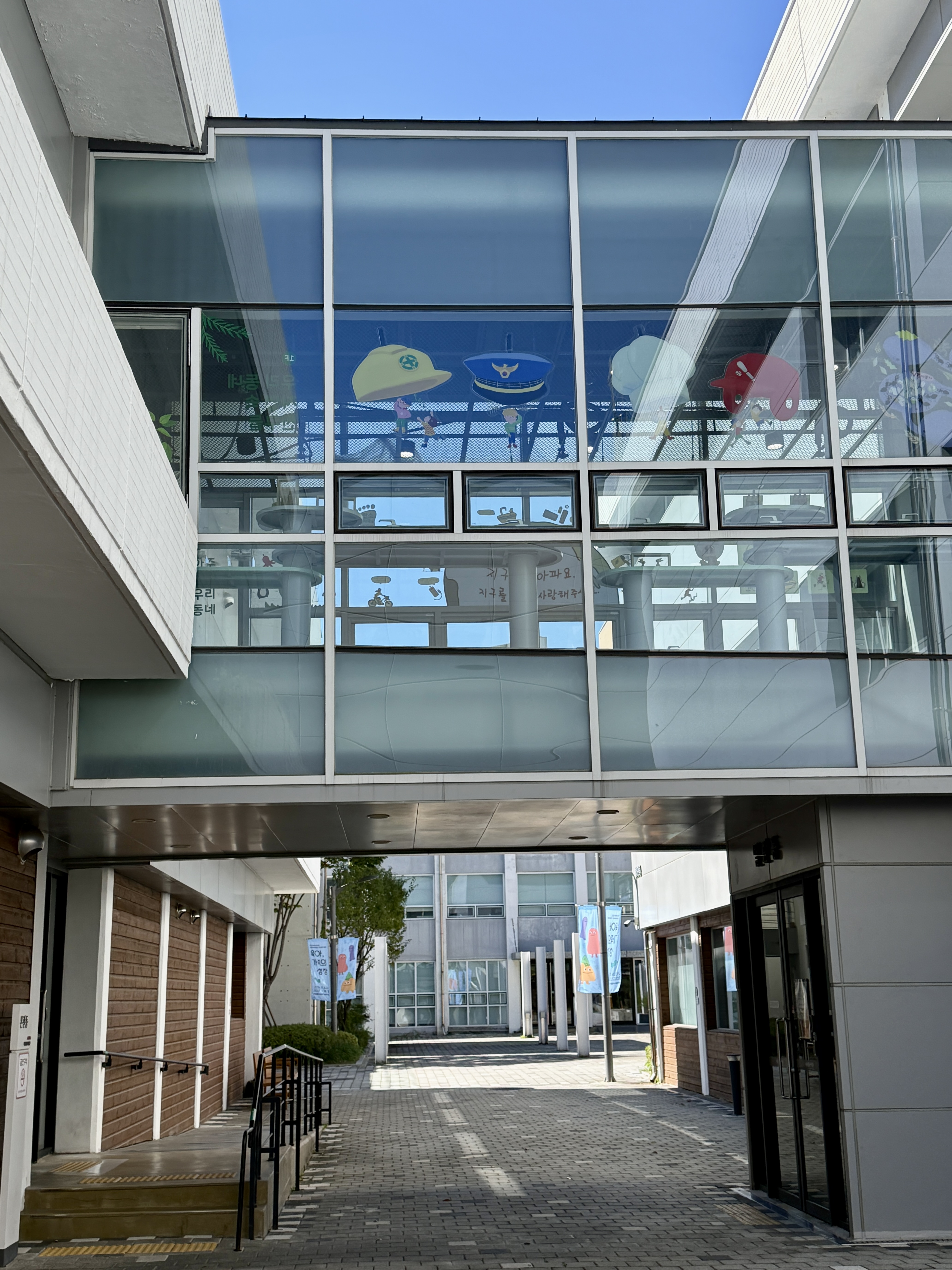
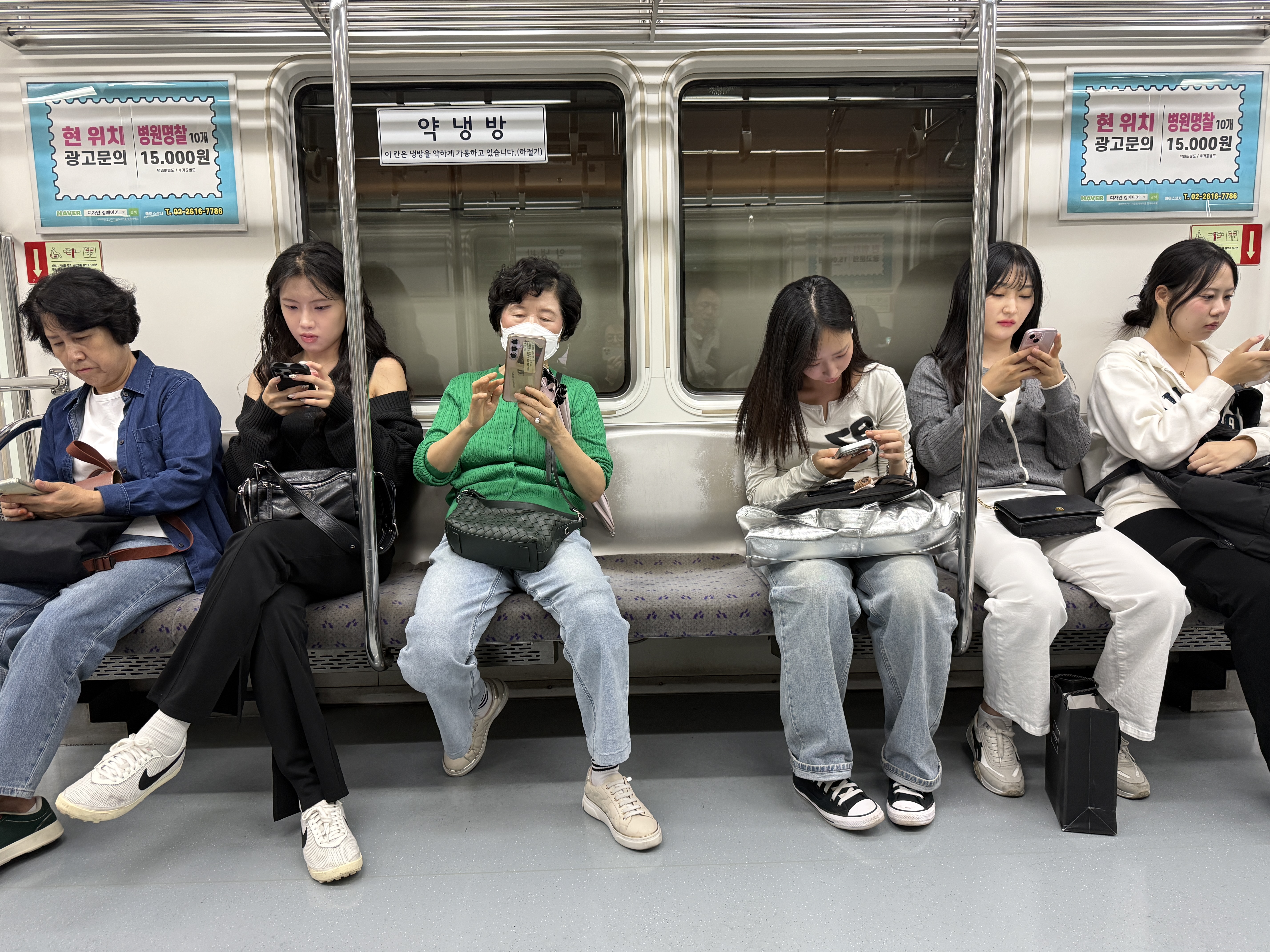
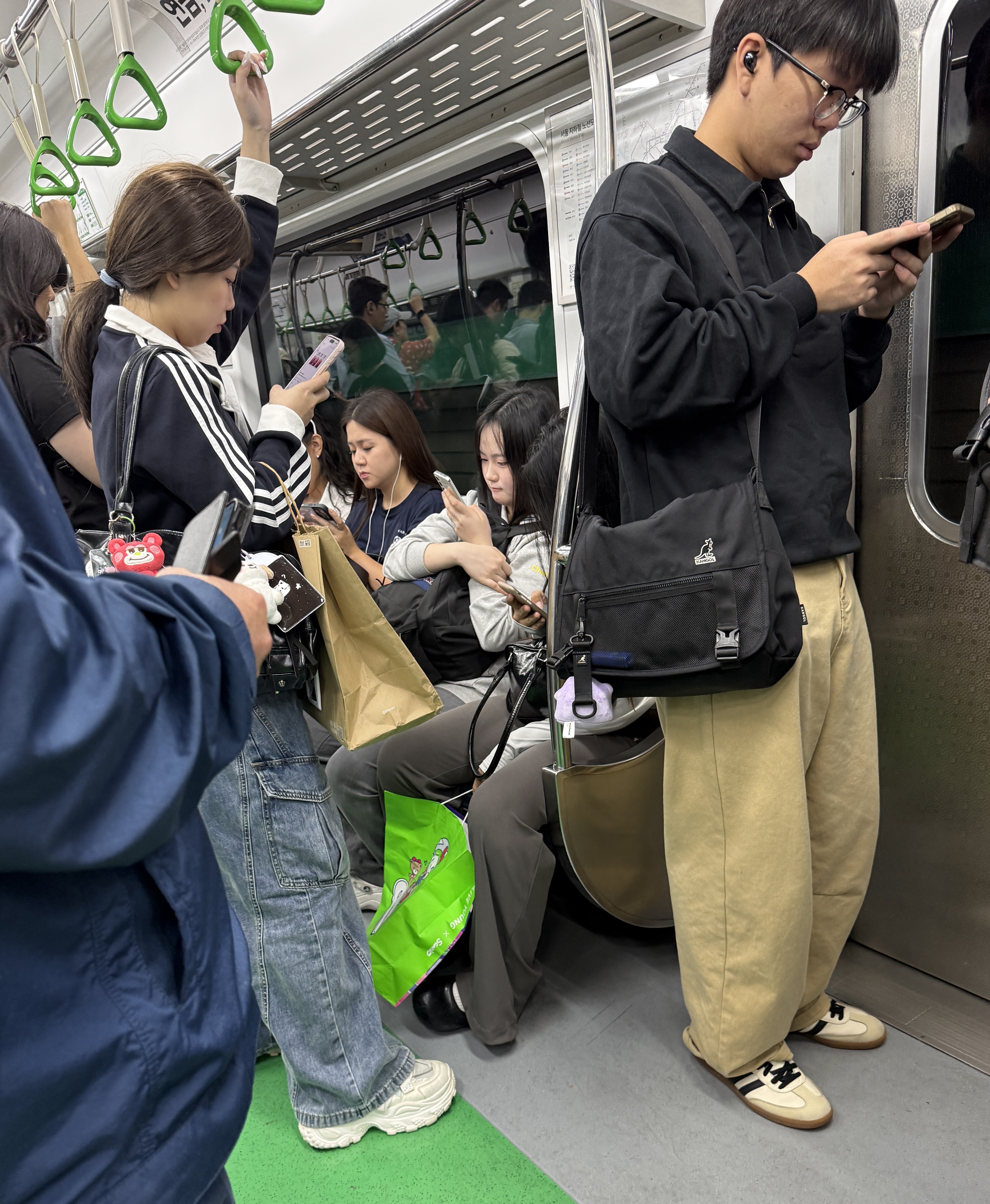
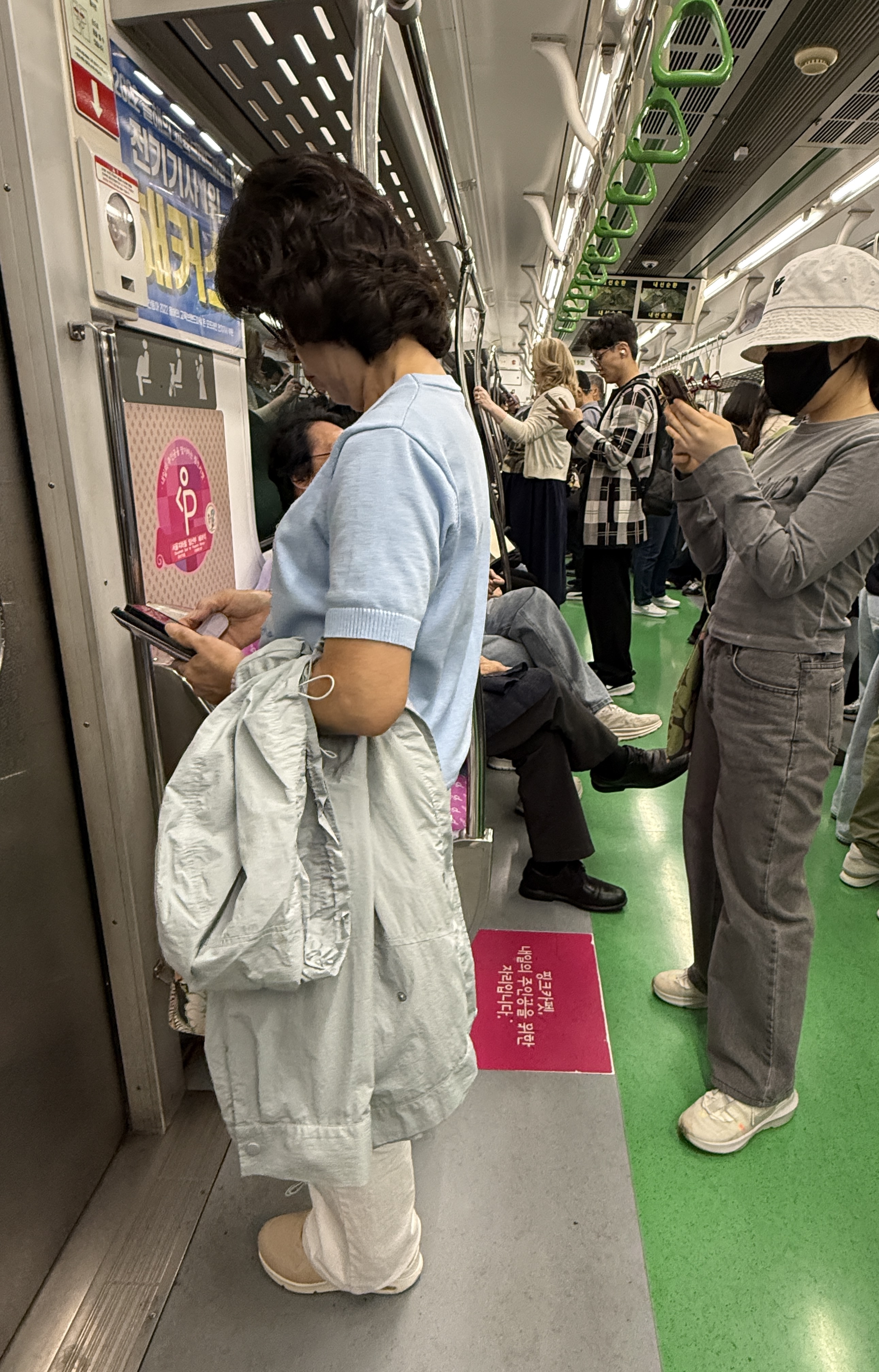
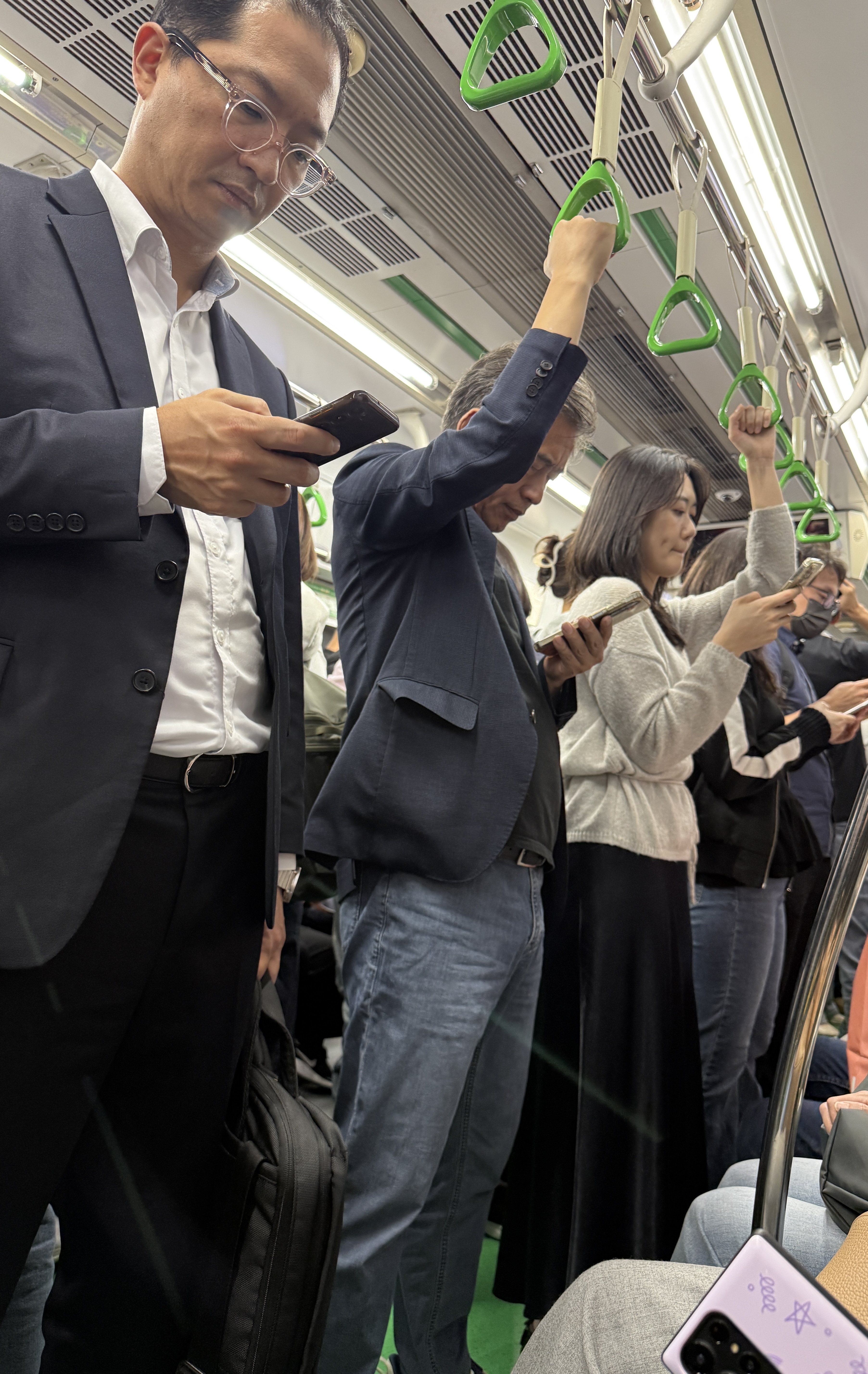
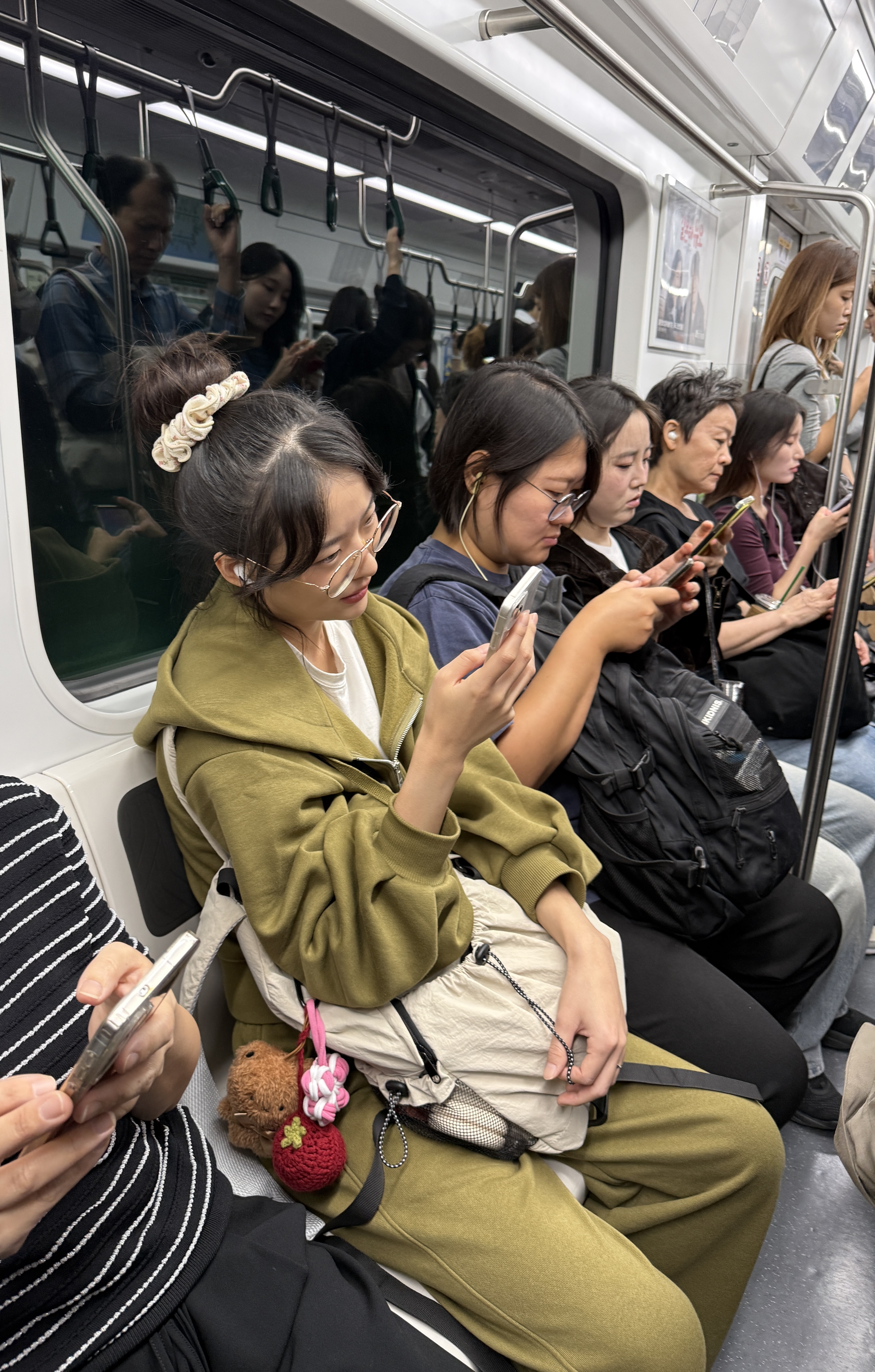
We began the day at Offer — our little cafe across from the Ryse Hotel; it’s fast, good, and has become our hangout. We had planned out what we hoped to see today, but then on the spur of the moment we shifted plans and decided to get to some “normal” neighborhoods where real people live and work, and did a bit of research and decided to head to the Nowon-gu area which is in the northern part of the city. We also knew that there was a Museum of Urban Life located in the area. So off we went– about 45 minutes by subway, using two different lines and then a bit of walking. As my pictures show, I remain obsessed with the cleanliness of the subway (and actually the city streets as well). No gum on the floors, no grafitti, no litter. When we were in Uzbekistan the subway stations were also immaculate but you saw a woman (always a woman) sweeping and washing the floors–all the time, at every station. Here, there is no evidence of anyone doing the cleaning,so even if they wash the stations in the evening… somehow they remain spotless through the day. And I’m having fun photographing everyone on their phones. I guess it’s sort of like this in NY, but I’ve never noticed it as much as I do here.
The Seoul Museum of Urban Life was actually quite interesting. It is located in a former court building that was abandoned when a newer court (or prosecutor’s office) was established. There are some parts that are devoted to children with activities like seeing the city throjgh the vantage point of an ant (clever). The museum has preserved many artifacts of working class life in Seoul in the decades between 1950 and 2010 (maybe a little later), and has developed some interesting exhibits focused on various topics from housing design to population growth to elections to child rearing, sports, and weddings.
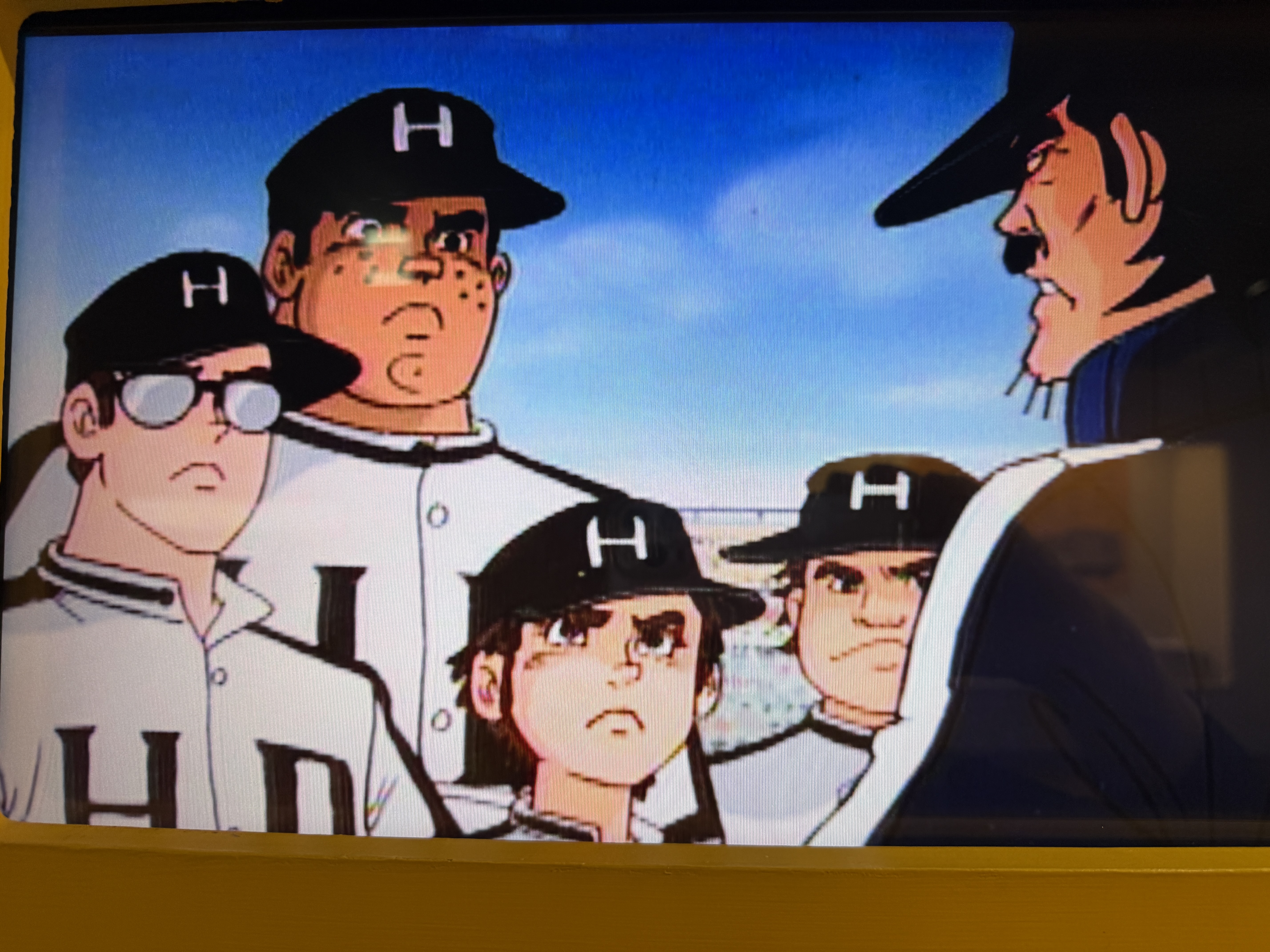
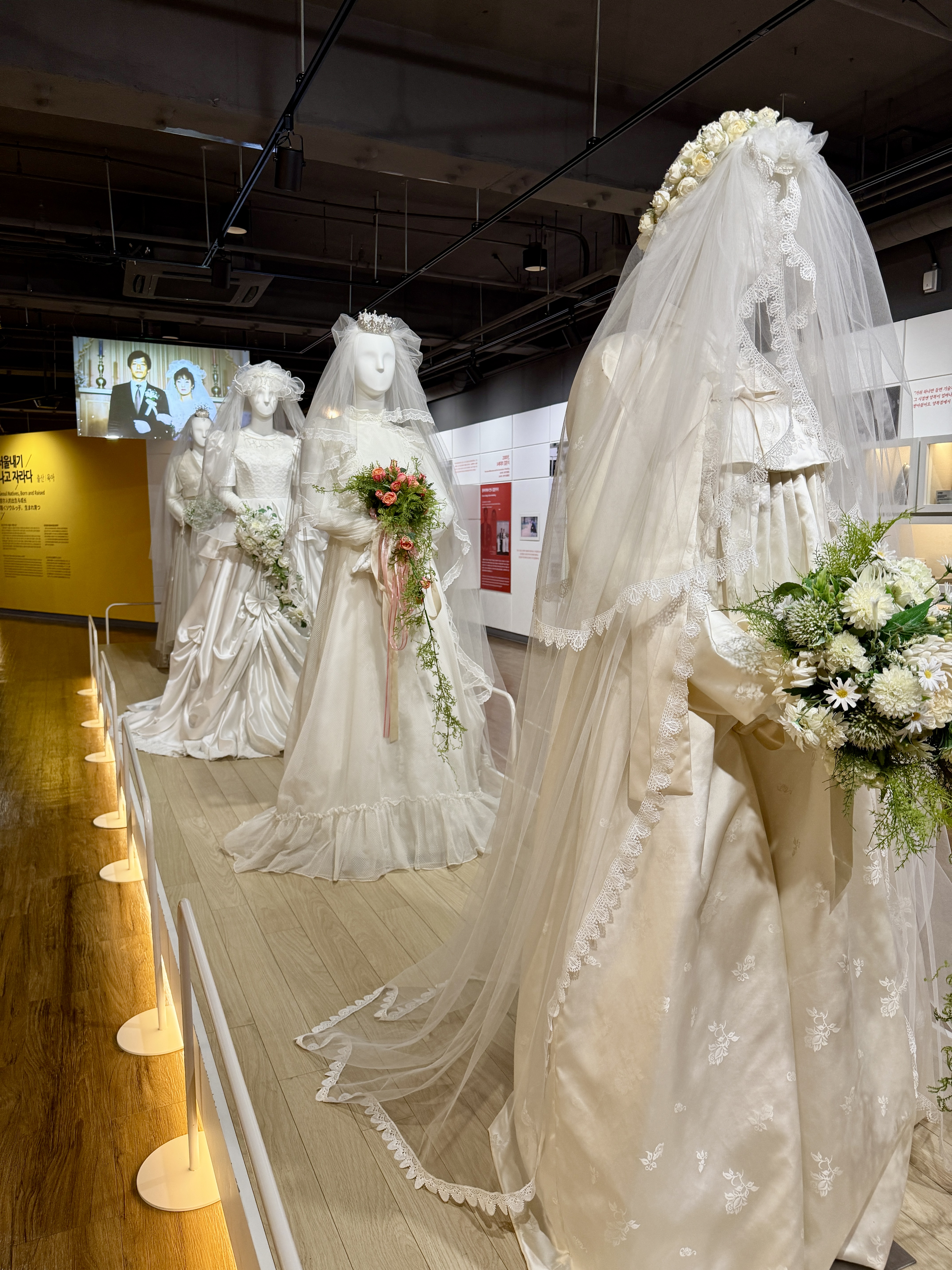
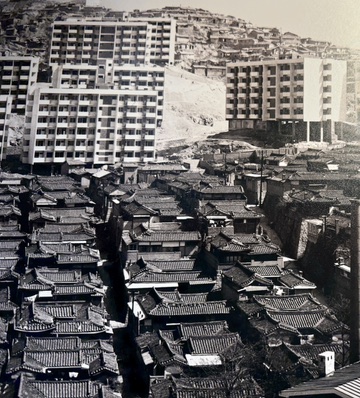
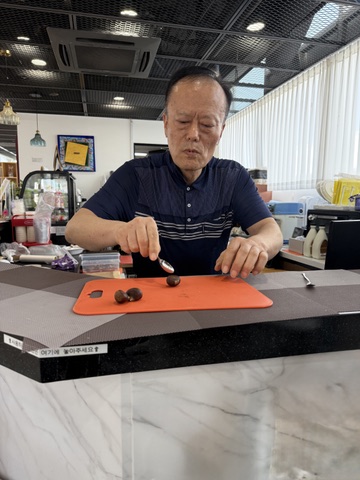
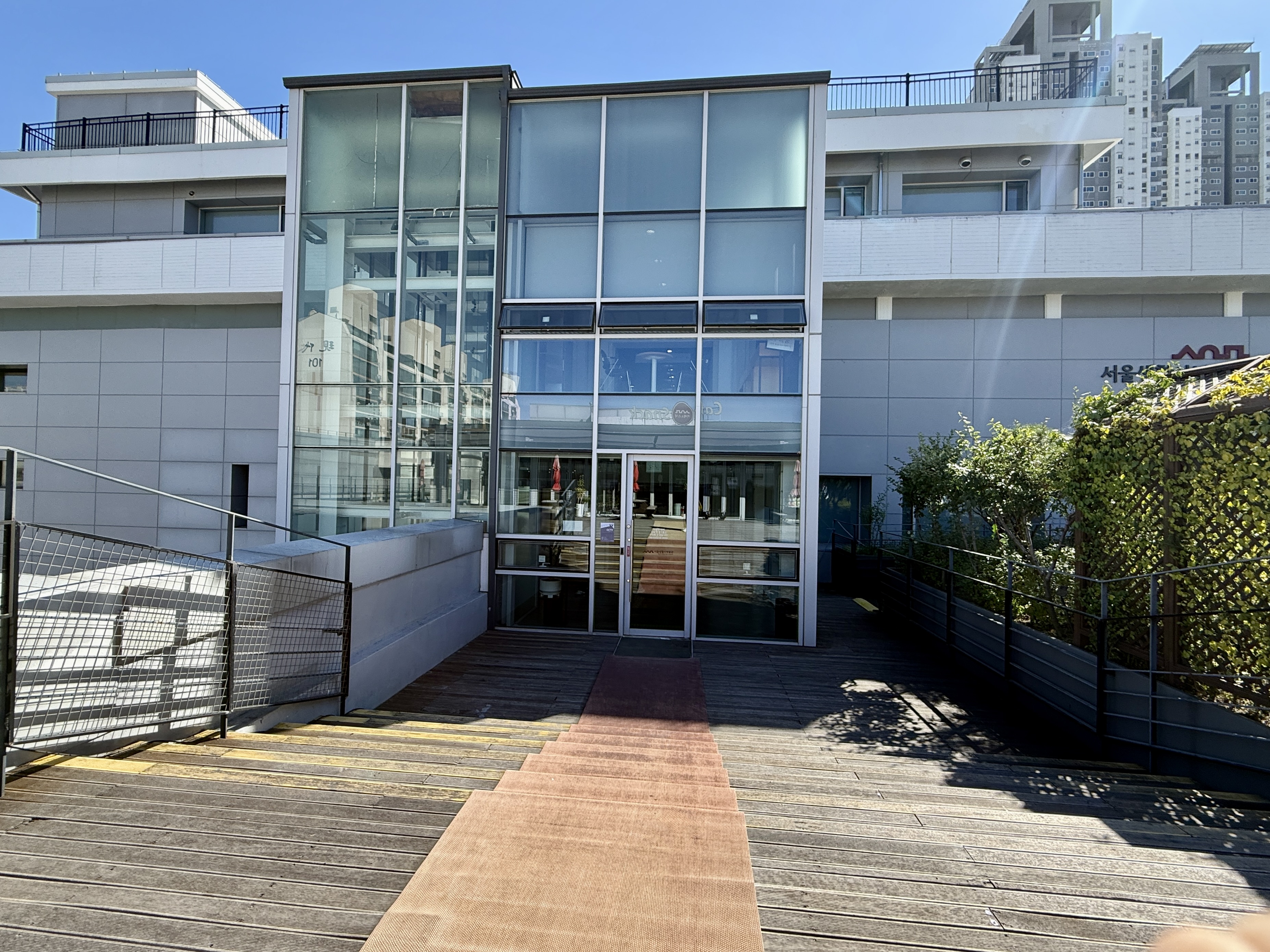
After strolling through the museum, we stopped briefly at the cafe on the third floor to get something cold to drink. Naturally, the menu was automated but it had a translation button so we were fine. Then the guy who worked there (about 70 years old) asked where I was from and began to cut open some chestnuts for me (a little gift, he said). Then Mike came and ordered a smoothie or something and the guy shows up with two hard boiled eggs for us. And when we were about to leave he handed us two bottles of water. Extremely friendly. The museum was pretty empty so maybe he was hoping we’d “spread the word.” I love when museums are located within neighborhoods rather than in special zones creating a “culture hub” or downtown. Museums should be accessible and local.
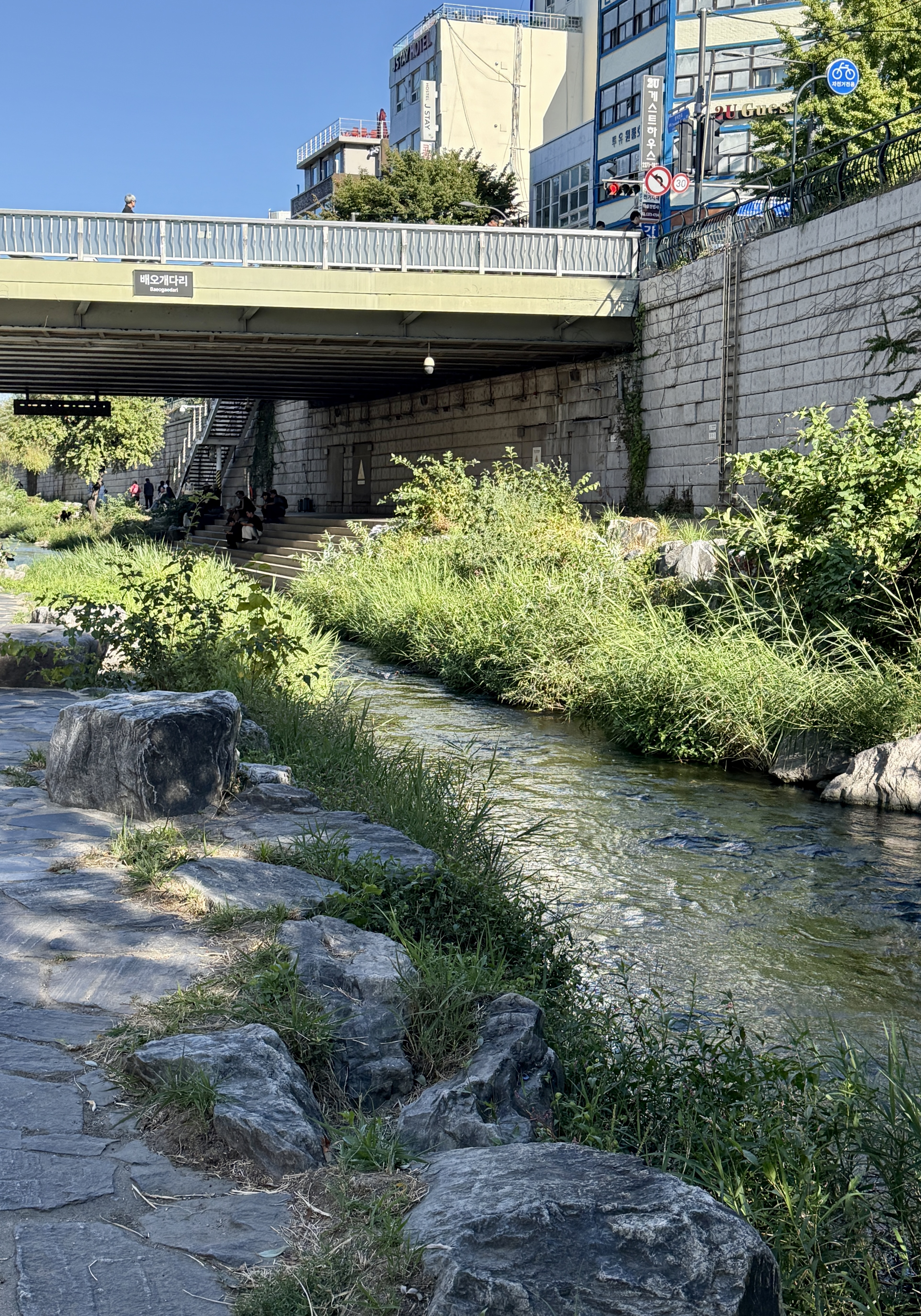
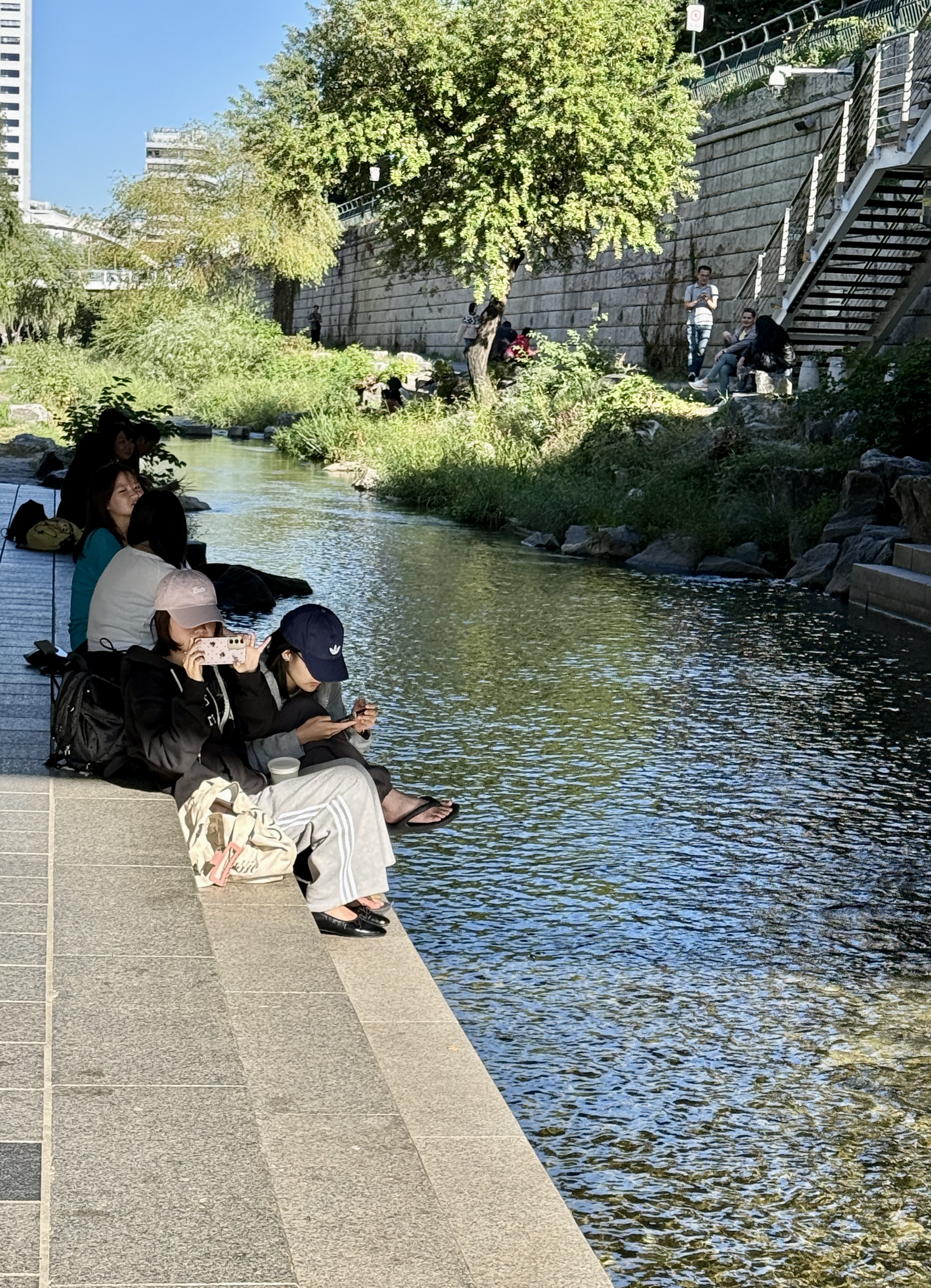
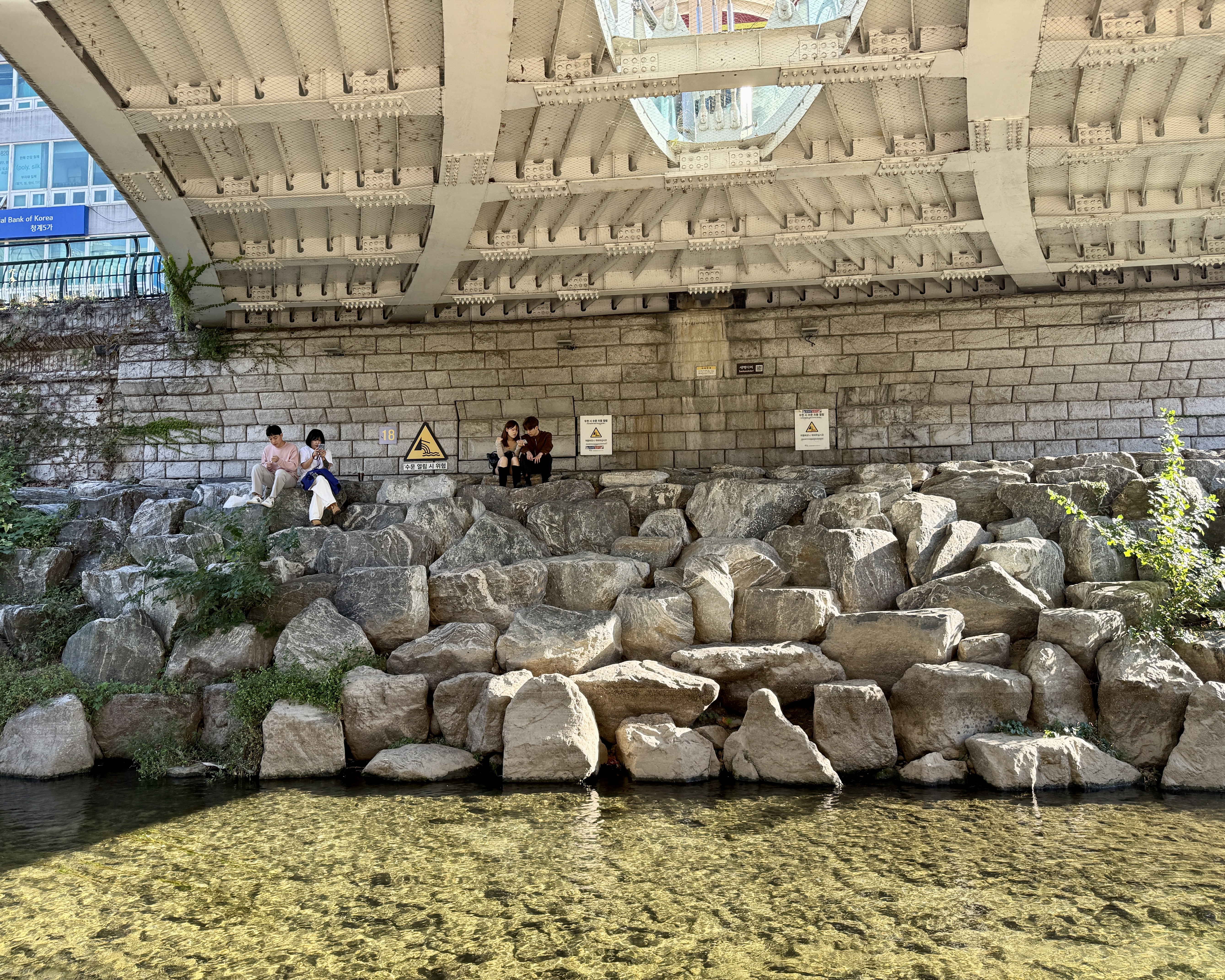
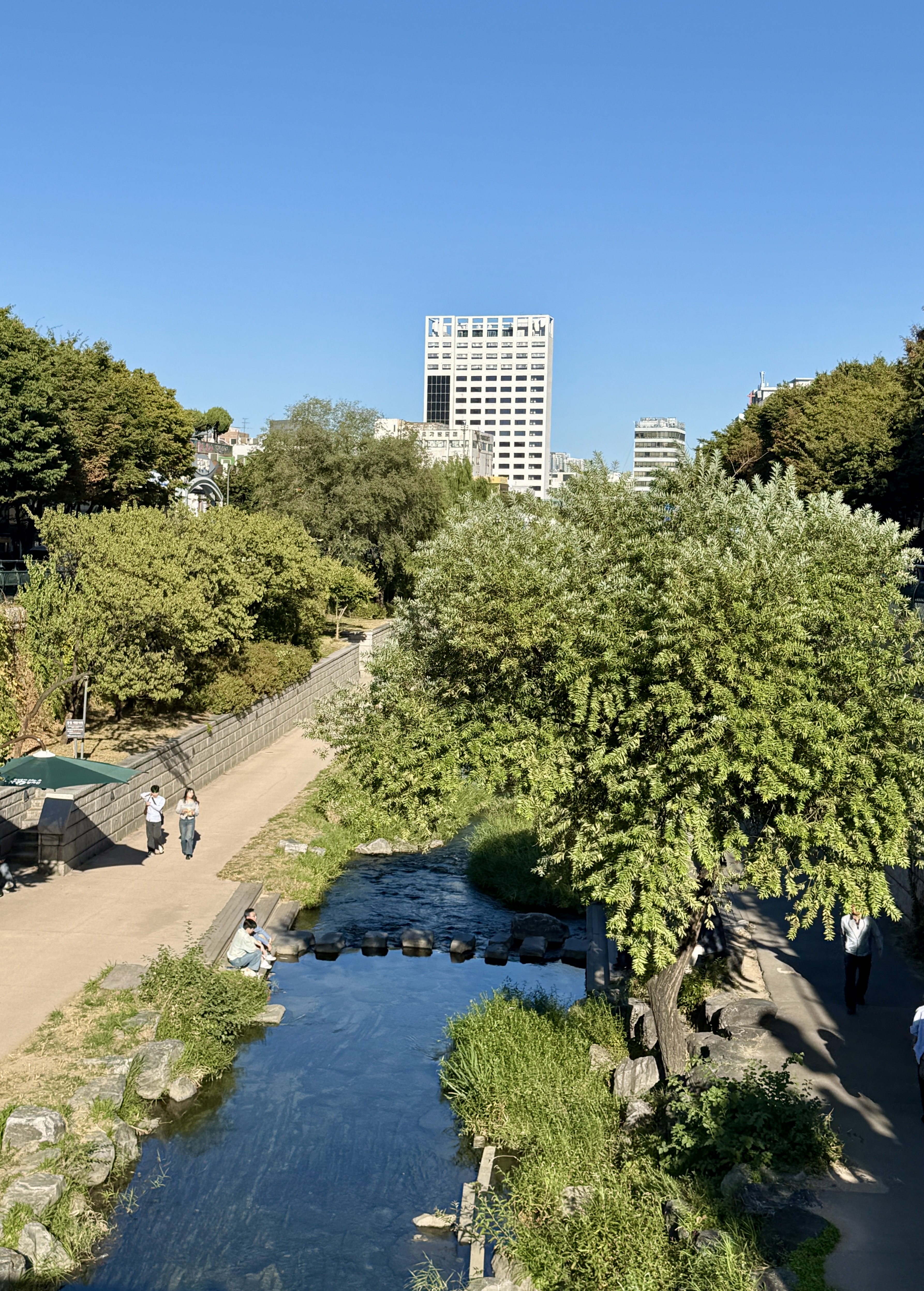
Then we headed to Sewoon Sangga, a 1967 megastructure that was considered state of the art at the time—a brutalist structure with bridges above streets that connected multiple buildings. It was in pretty bad shape, but it turned out to be right at the center of the reclaimed river project, which sits below street level in that area: Cheonggyecheon. And just as we were finding this gem, we got a text from a Korean American friend in Seattle reminding us to visit this project. It is a 6.8 mile river (sort of more like a stream) that had been coverd over with a two-story highway in the 60s when development overruled environment. Shops grew alongside the expressway and there was probably a generation that never even knew there had been a stream below.
In the early 2000s the mayor of Seoul decided to demolish the expressway and reveal the stream underneath. Surprisingly the water was clear and today there are 22 bridges that cross the river creating a sort of sunken park below the hubbub of city life. It’s kind of like Seoul’s Highline… or maybe its Lowline. It’s beautifully planted and edged with stepping stones and plenty of trees. It is charming and relaxing to stroll through (which we did — but not the whole 6.8 miles). A definite gem and literally a breath of fresh air, with lots of people milling about and enjoying the space, The walk back to the subway provided us the chance to stroll past tiny shop after tiny shop –each dedicated to one item: sewing machines (old ones being repaired); motors; light bulbs (similar to what we’ve seen in many developing nations).
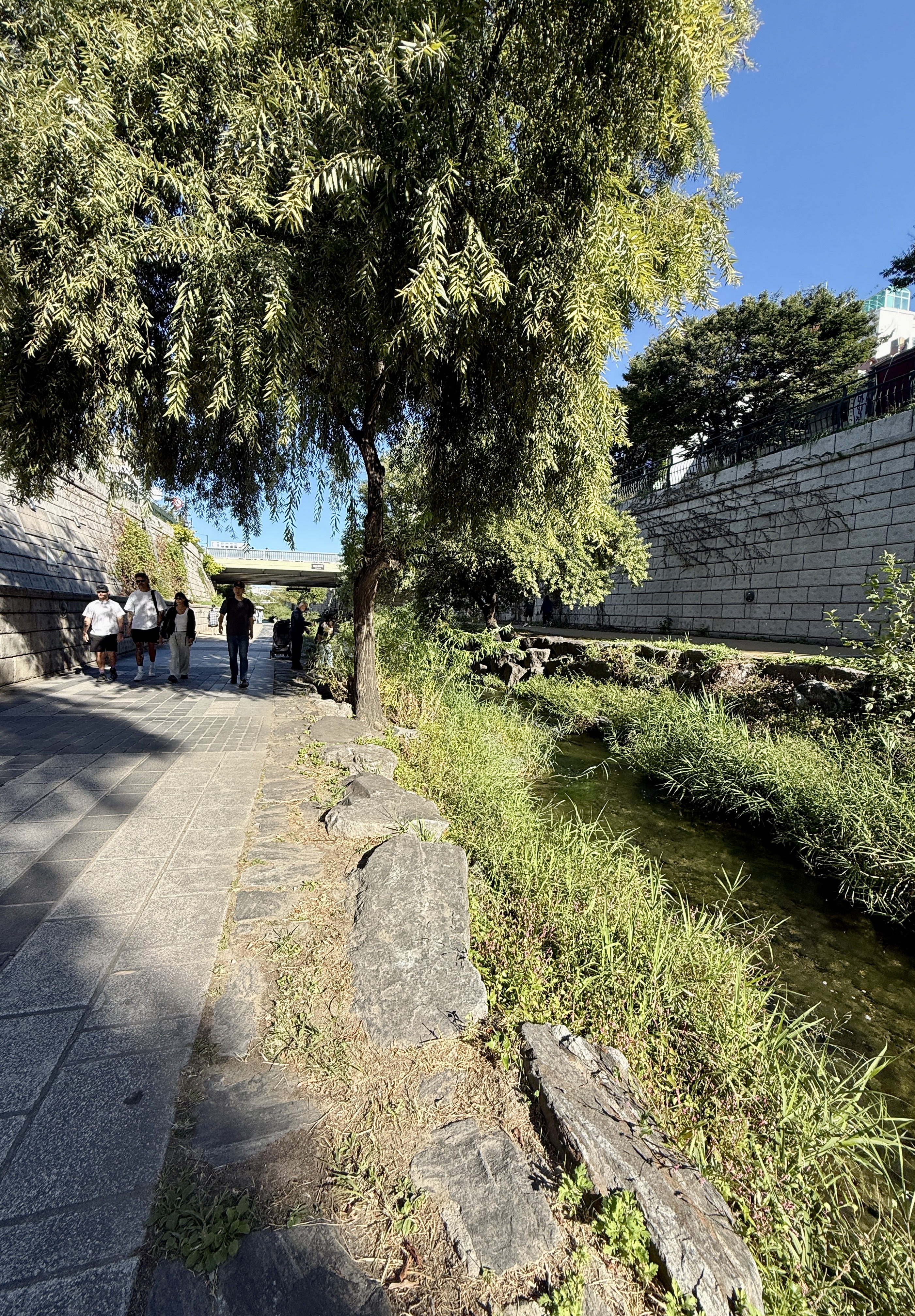
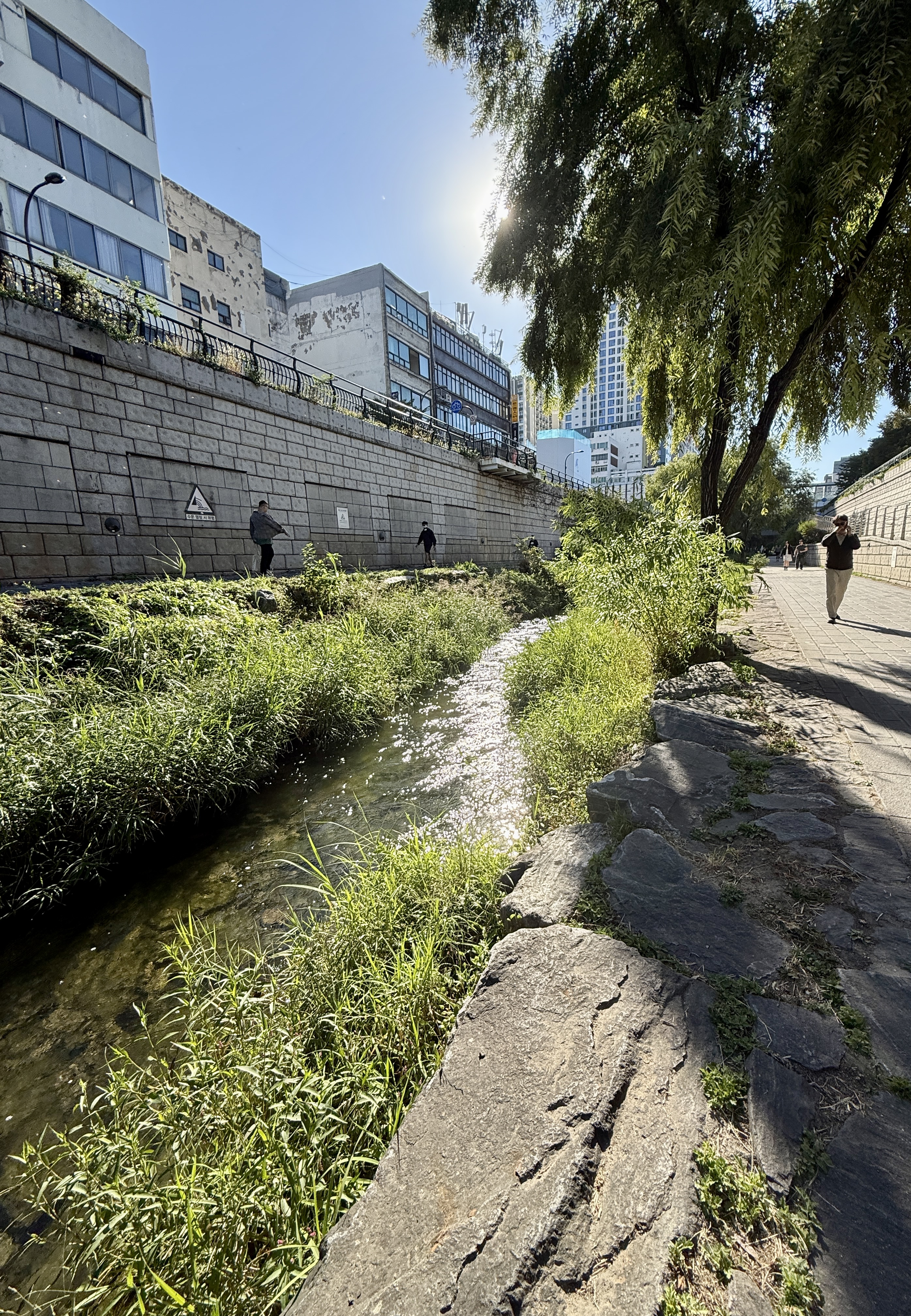
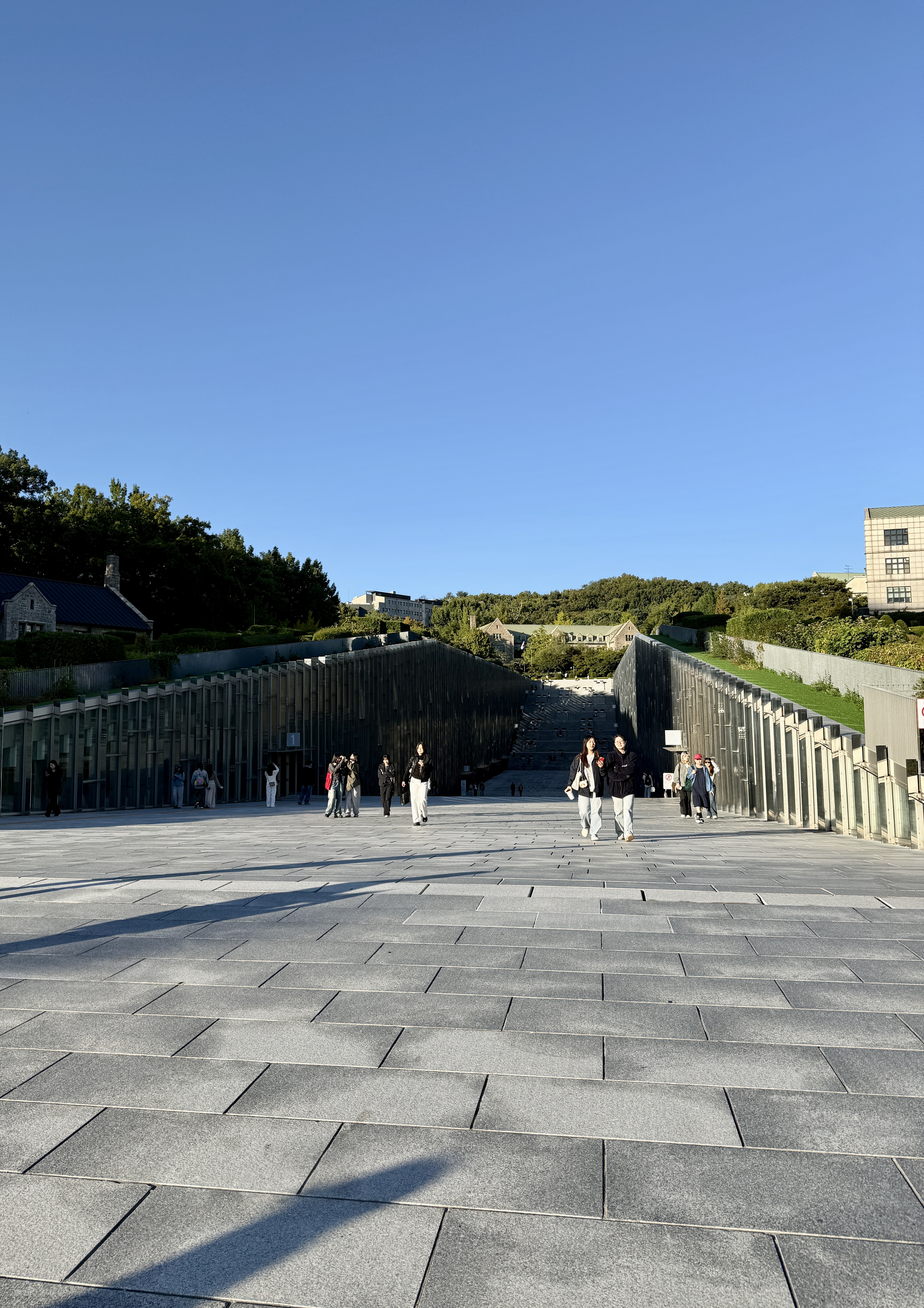
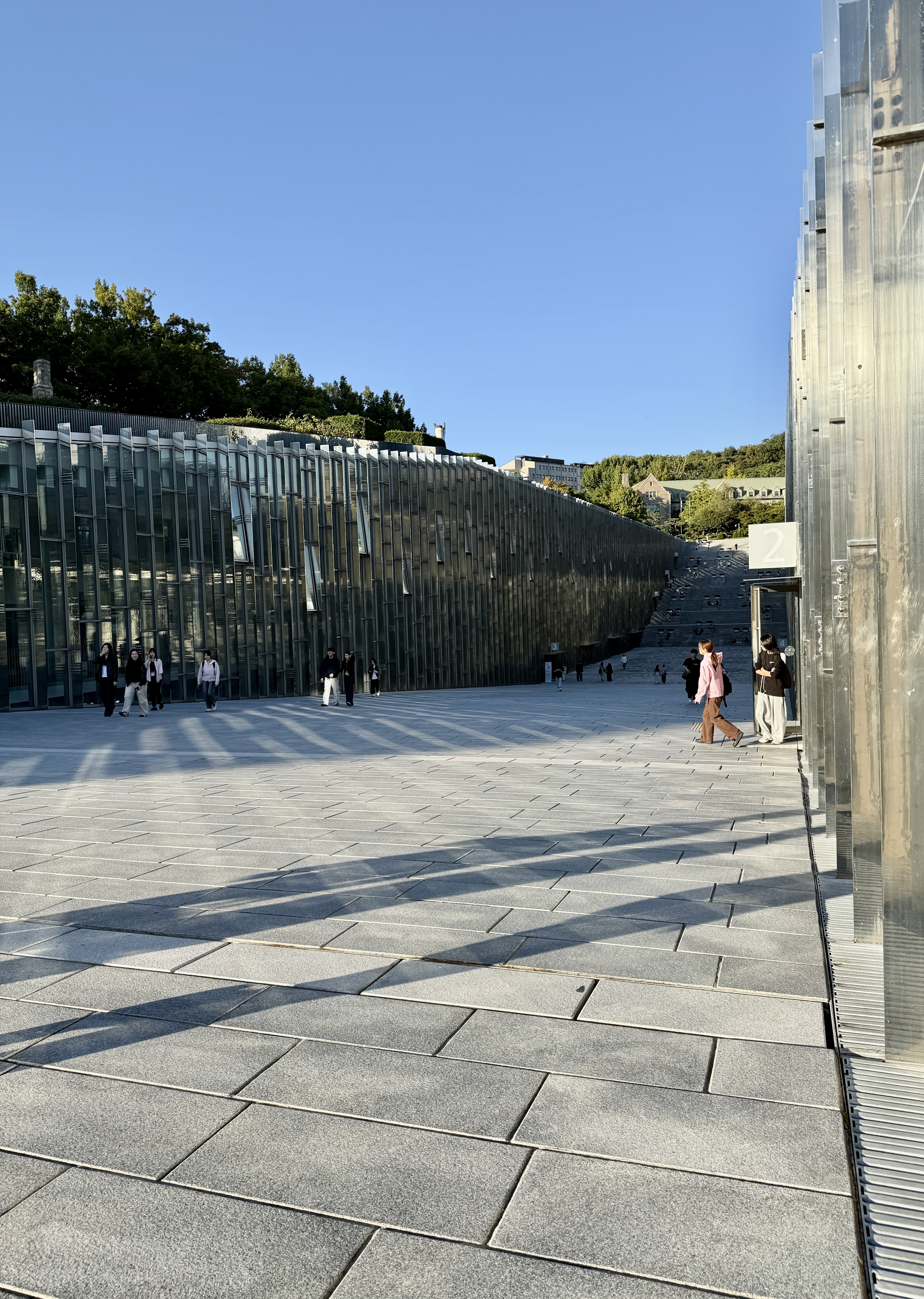
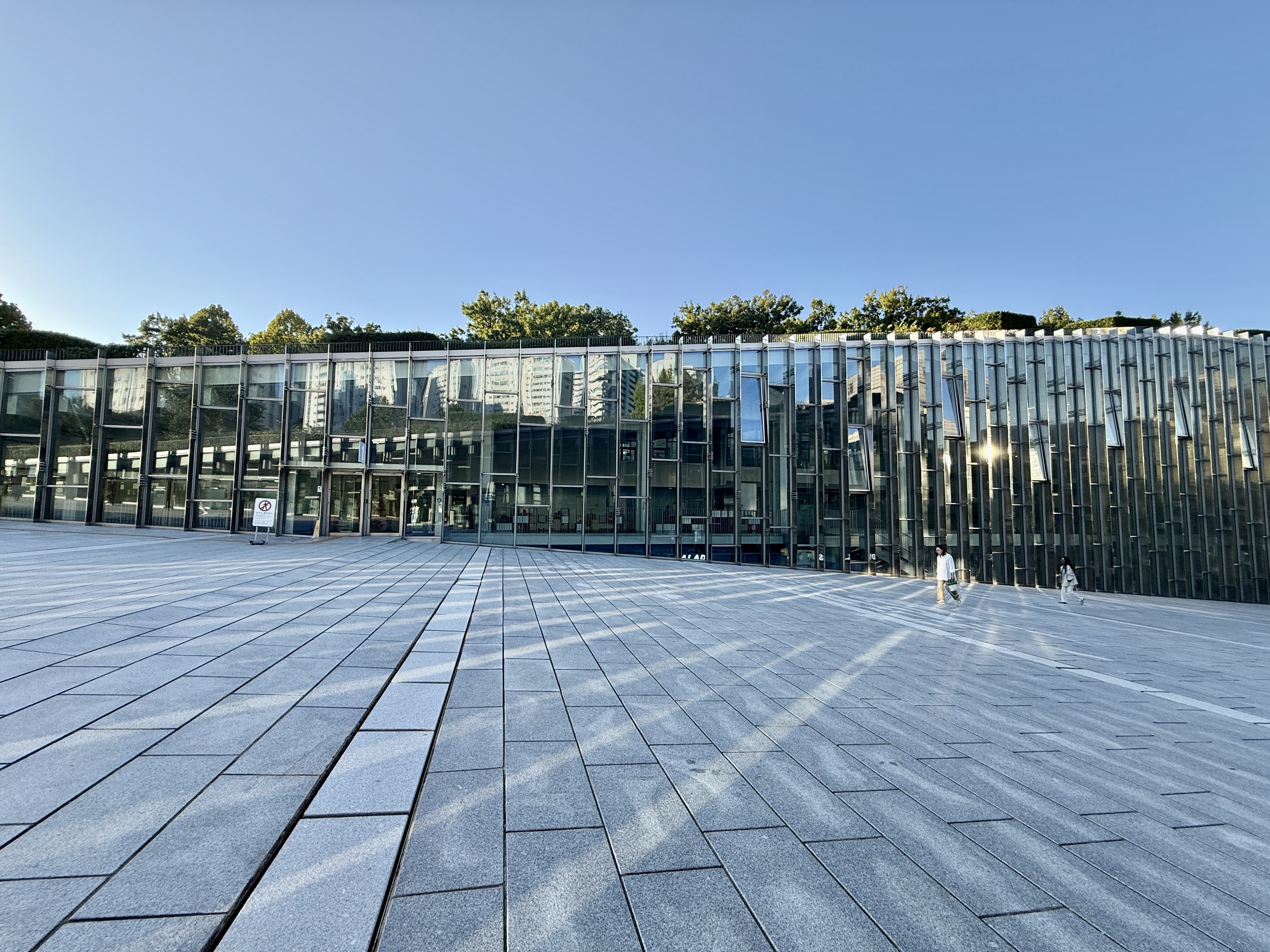
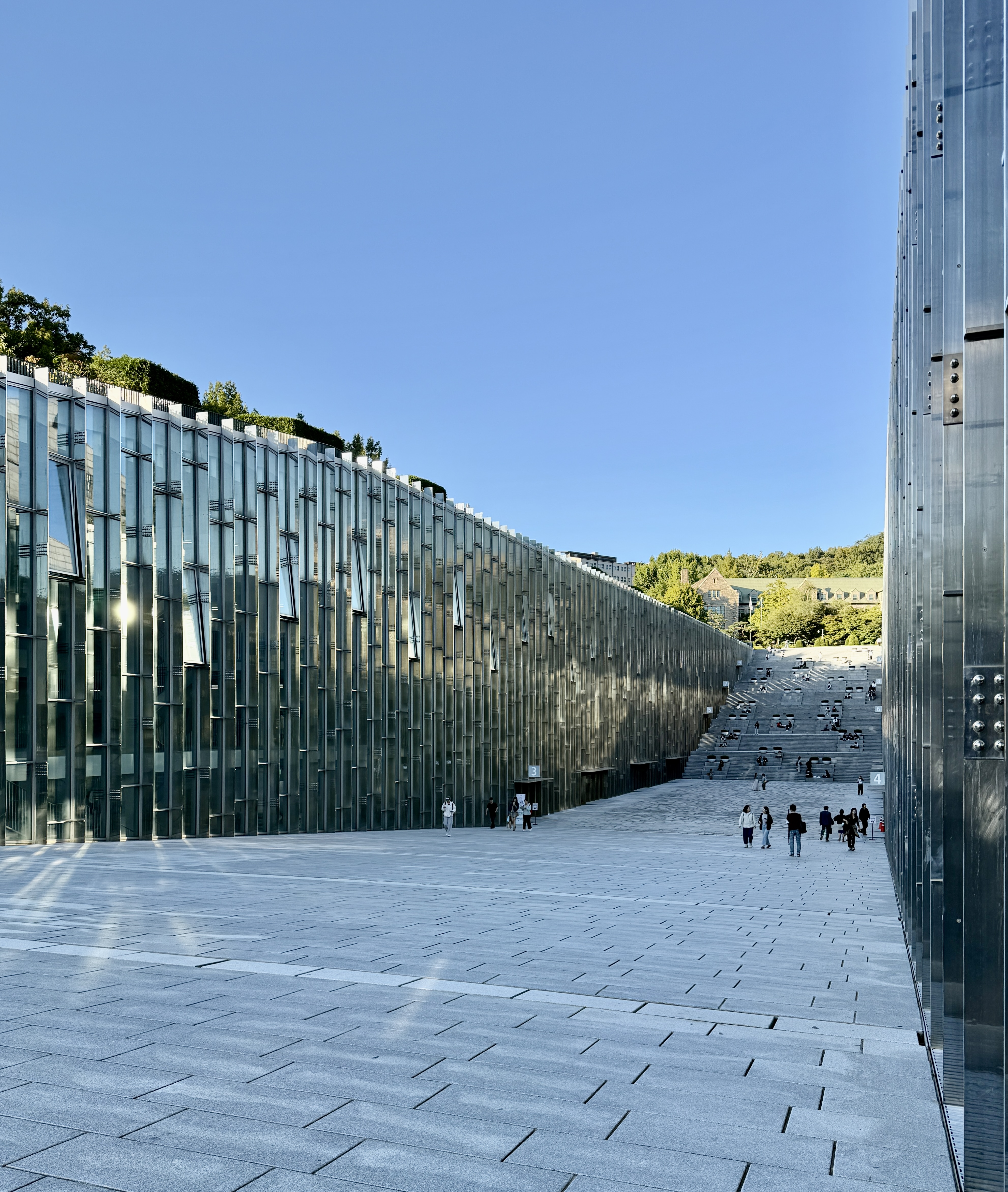
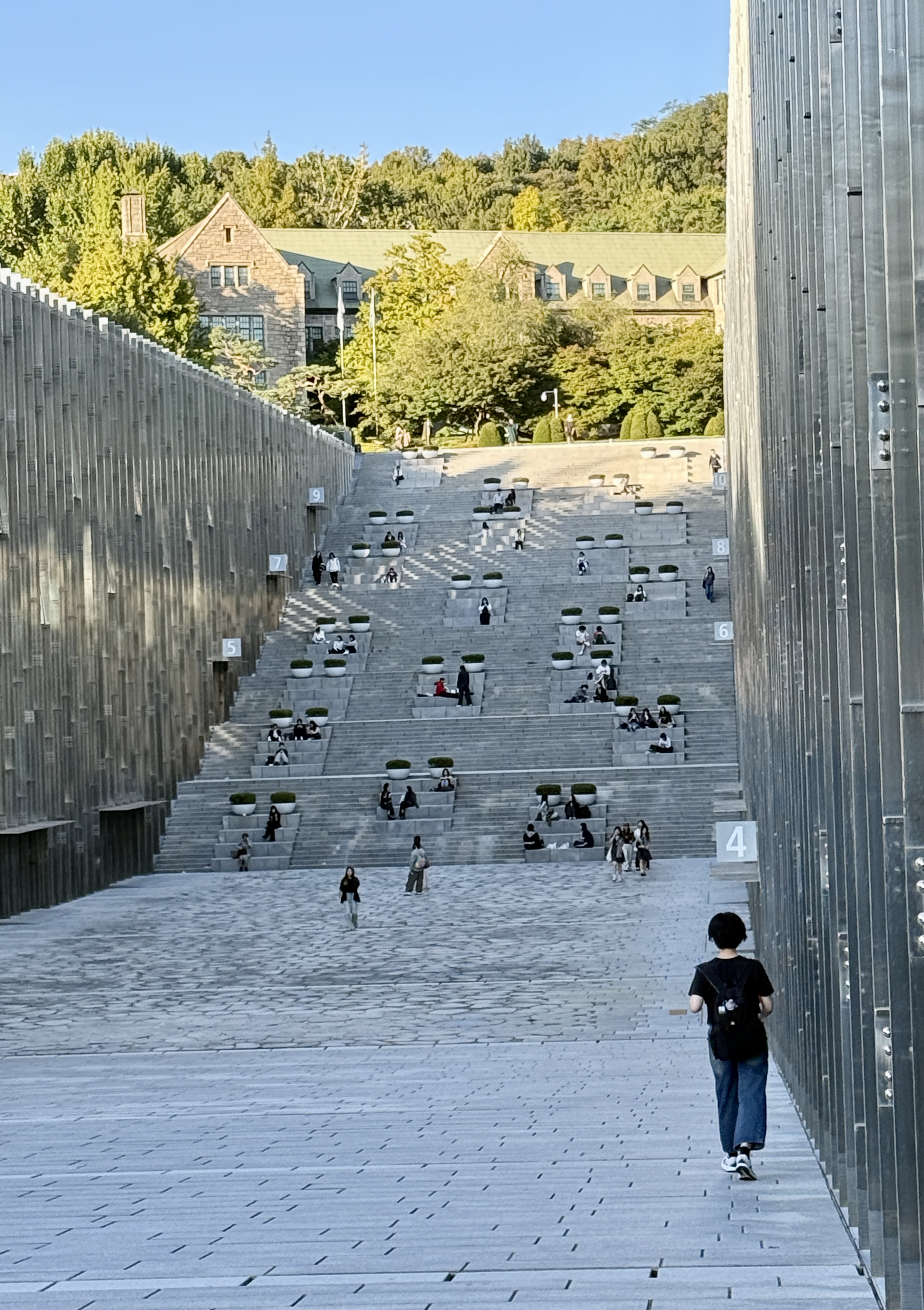
Then we trekked back to the subway to reach our next stop EWHA University, the world’s largest women’s college in the world (23,000 students). It’s a real urban university, with an incredible campus.It’s built on a series of hills and the French architect was commissioned to do new buildings. Rather than spoil the beauty of the natural setting, he buried the 4-5 story buildings underground so that the roofs are green and merge with the hillside. Running through the middle of the two “buried buildings” is a paved chasm with a gently ramping hill on one side and a stepped forum on the other.
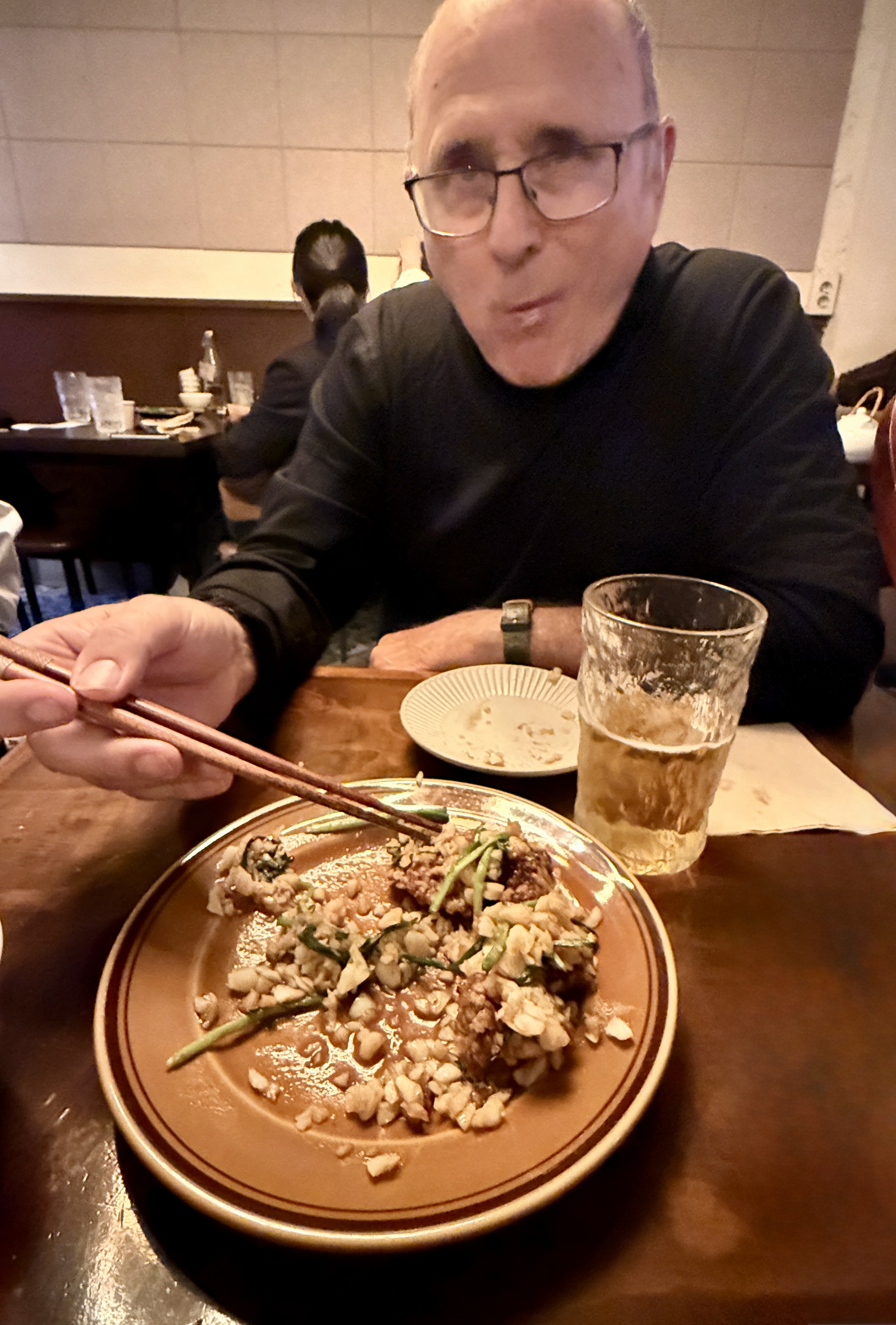
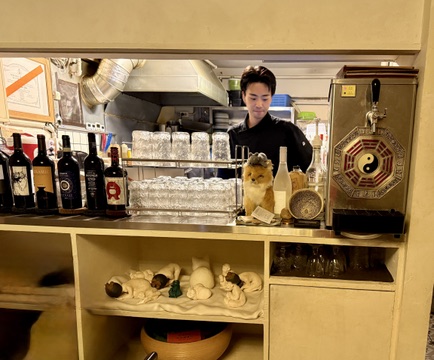
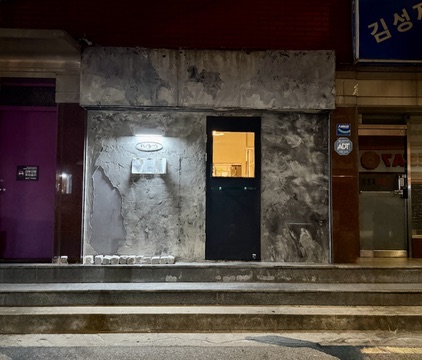
We headed back to the subway (by now pretty beat) and to the hotel to freshen up for dinner. Tonight we went to a tiny place called Hangonggon in the Mapo-gu district. Can’t remember where I heard about it but we decided to give it a try. We had some trouble making a reservation and finally sent a note on Instagram. They were adamant that I phone exactly an hour before our reservation, which I did. Hangonggon seats about 16 people (that’s it!) and is very casual. There is no name on the door and no signage anywhere. The menu is small and includes about 7 different fried chicken dishes. We chose the honey mustard garlic version, and we had the spicy pork noodles as well—and beers. At the end of the meal they gave us each a glass of some kind of after dinner wine. Then we walked back to the hotel, making a quick detour for some great gelato.
That’s it. Hard to believe tomorrow will be our last full day in Seoul. So much more to see and do. Guess, another trip needs to be planned.
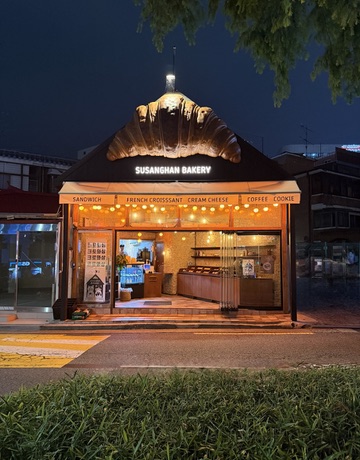
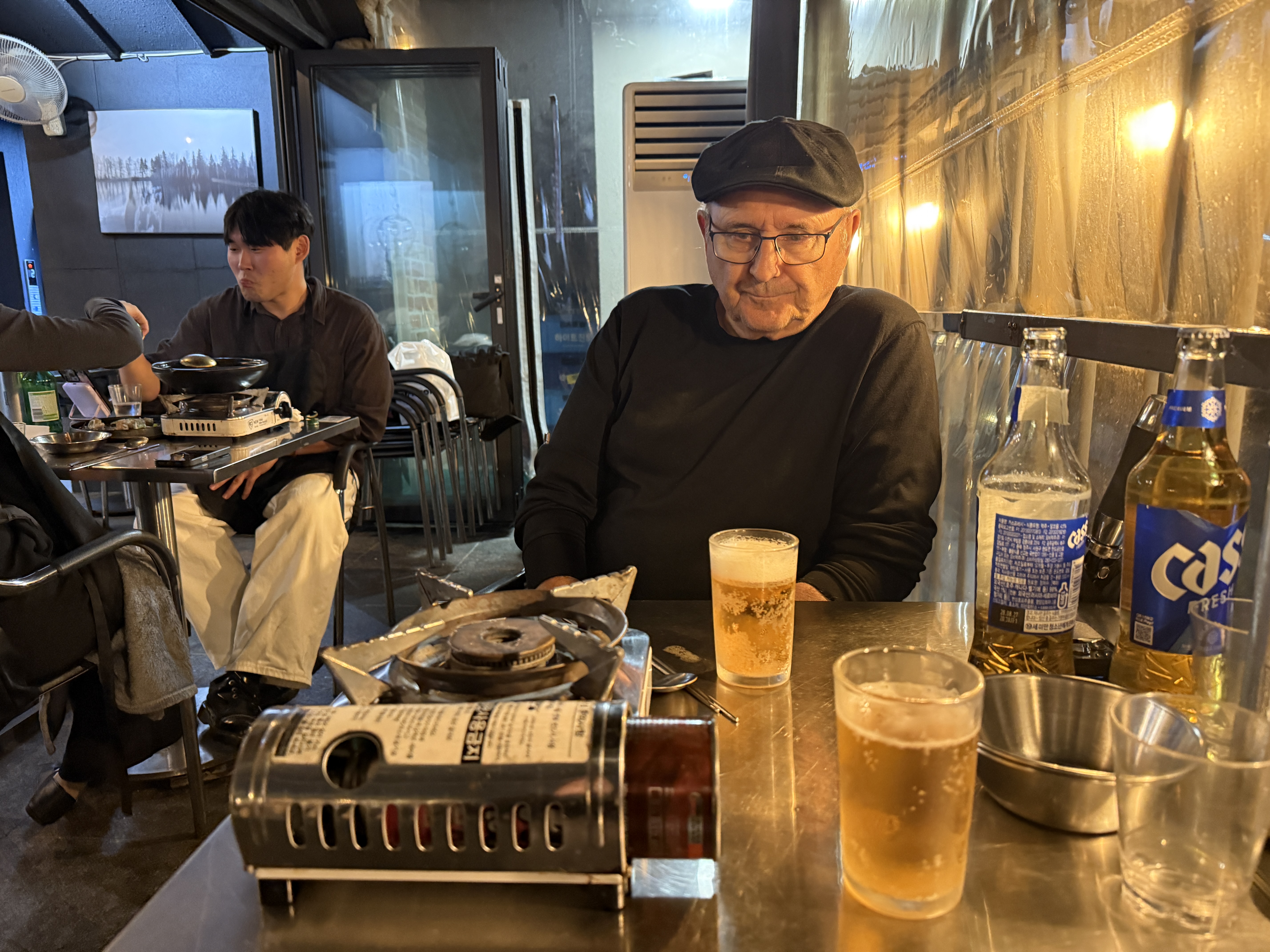
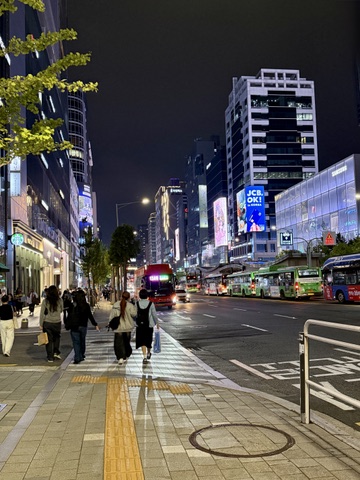
We moved from the bucolic Bukchon neighborhood and our simple, tasteful little hanok where everything was wood and stone… to the Hongdae area which is clear across town and about a million miles away in every conceivable way. Hongdae is a consumer’s haven–flashy store after flashy store. Bright lights, bustling street life and the clatter of people under 30 (maybe even under 25). So we fit right in. Everyone is on a cell phone, everywhere. It’s a bit like Times Square absent the theaters, the trash, and the graffiti. We are at the Ryse Hotel which is fine, and the subway is just a block away. We’ve become quite adept at using the train so we are regulars at our station.
We had an OK meal last night at what was described online as a rooftop restaurant, good for date nights (!!) — Moochaeseck, but the rooftop was on the 4th floor of a nondescript building which had virtually no view and was wrapped in plastic to keep out the wind and rain (neither of which materialized). We ordered a spicy noodle dish with clams and an octopus dish. Food was ok but the service was pretty funny. You could only order on their iPads (Seoul is very tech savvy and many stores operate only with digital service and credit cards) and use QR codes. We were fine because there was a translation app with the QR code. But somehow our order didn’t seem to get through, so a real live human appeared to redo our order. But it still didn’t go through and she finally tried on her own phone but it wasn’t successful either. So she took the order and then kept going into the back room. It all worked out eventually. Then at the end, she appeared with the bill and said we should go to the 3rd floor to pay. Obviously we could have just left. We must have seemed perplexed so she decided to take our credit card and deal with the transaction there.
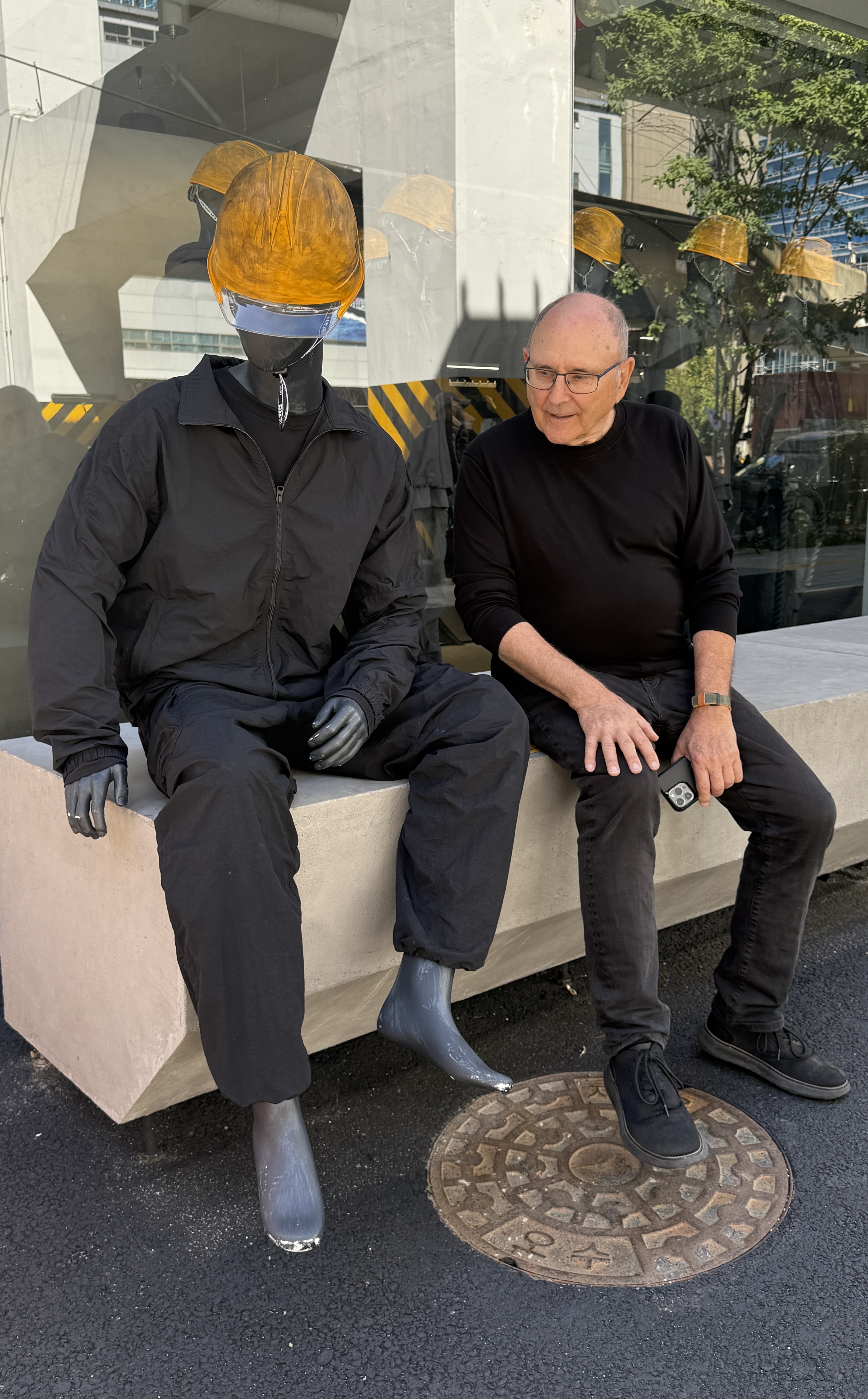
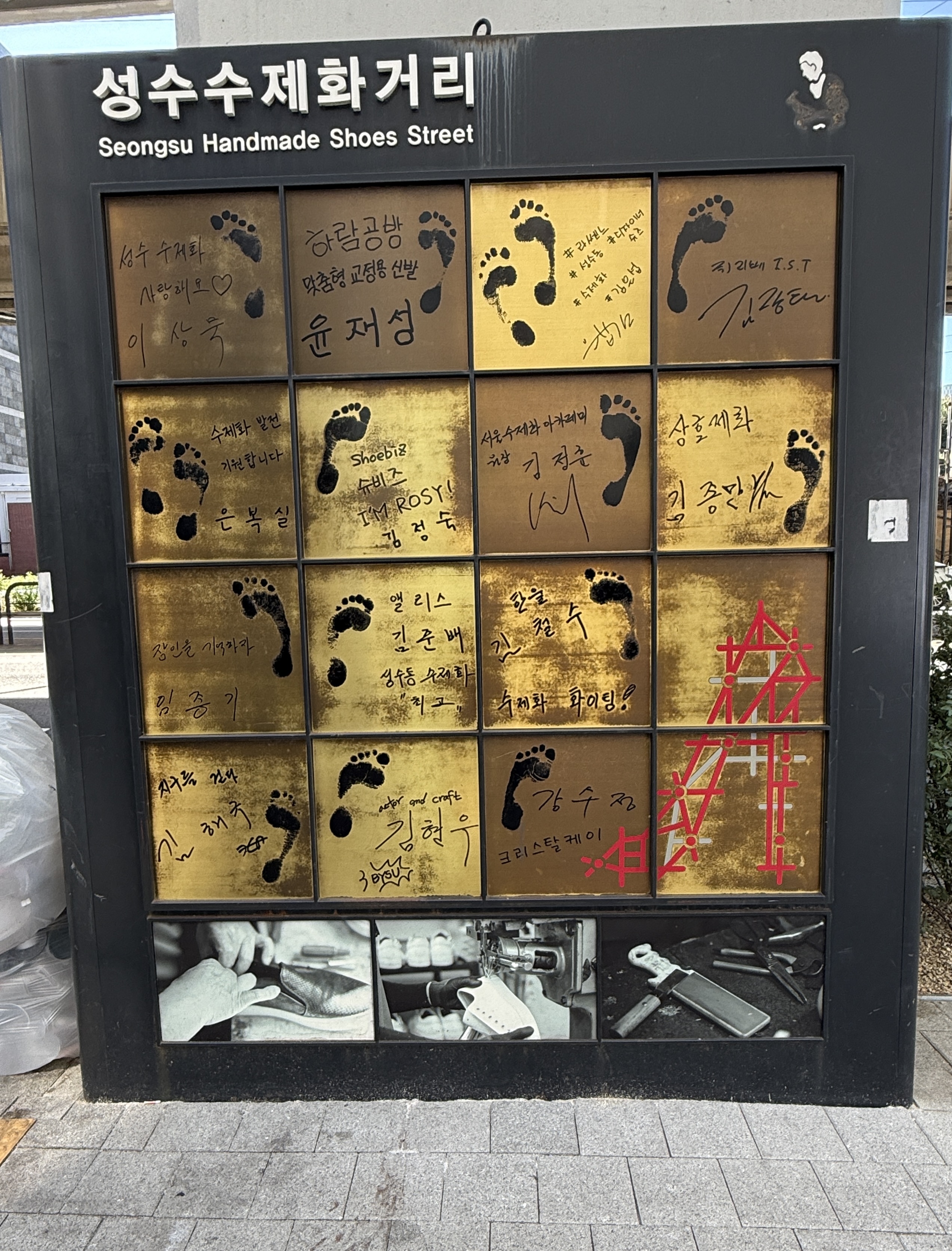
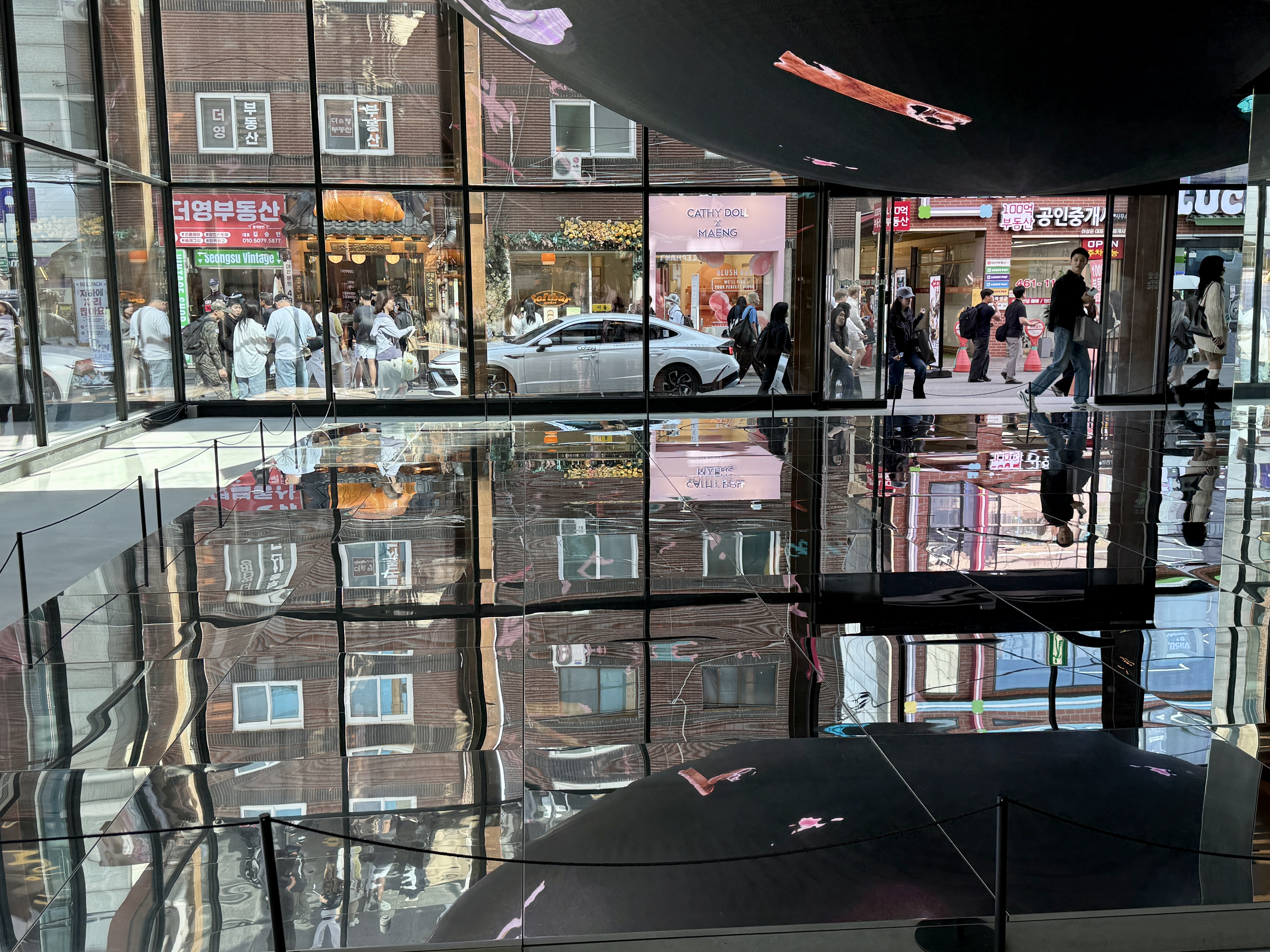
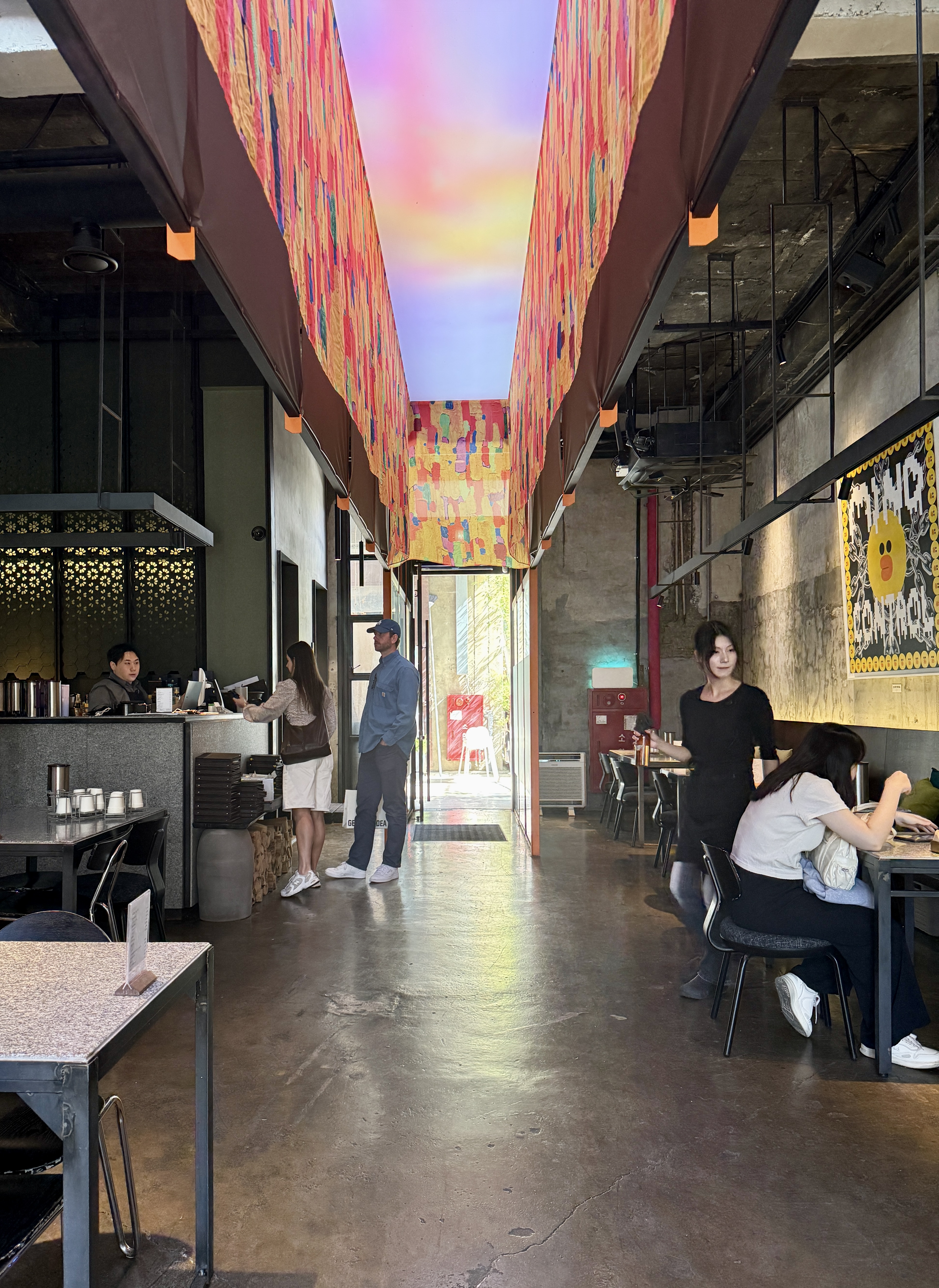
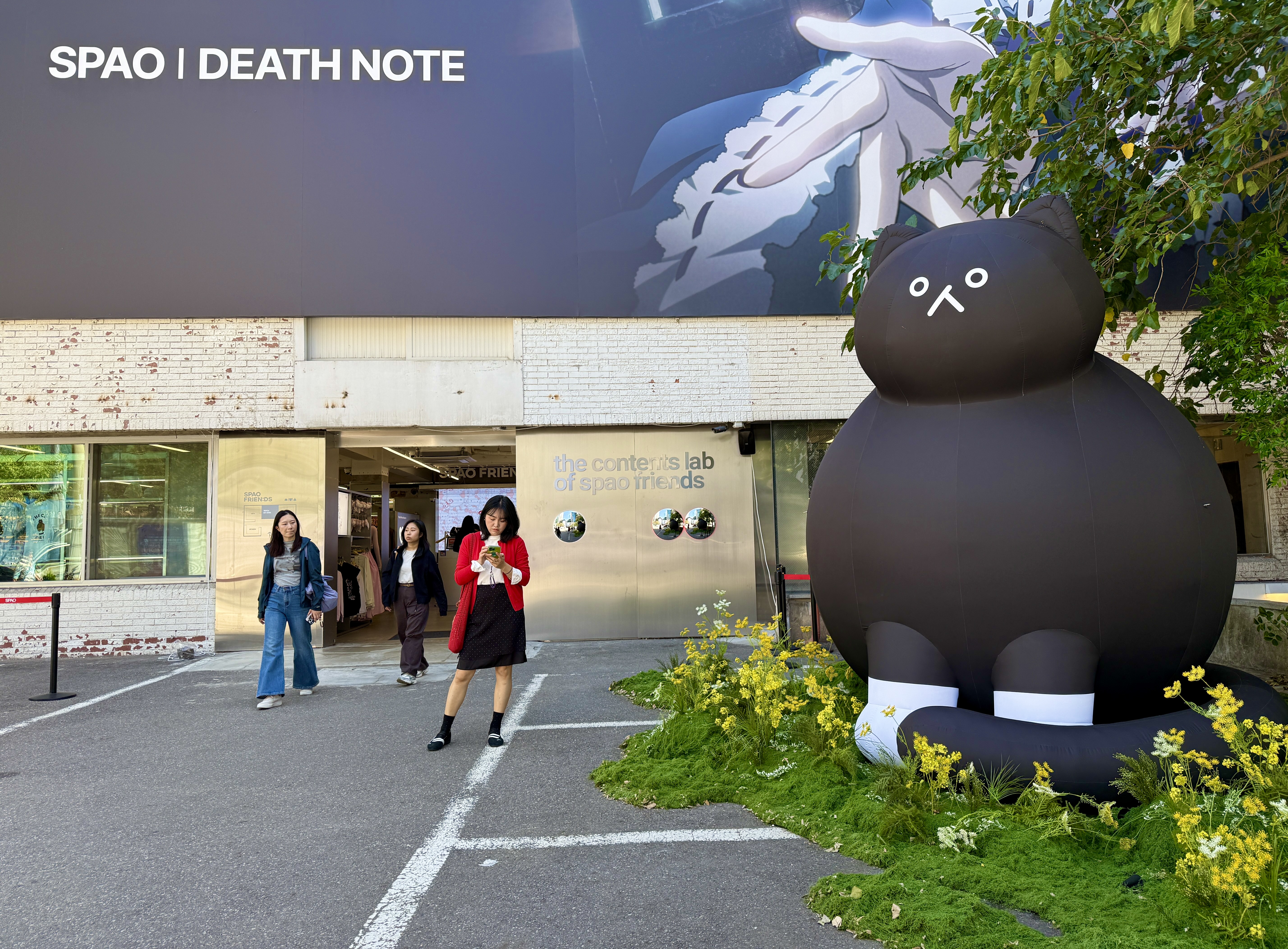
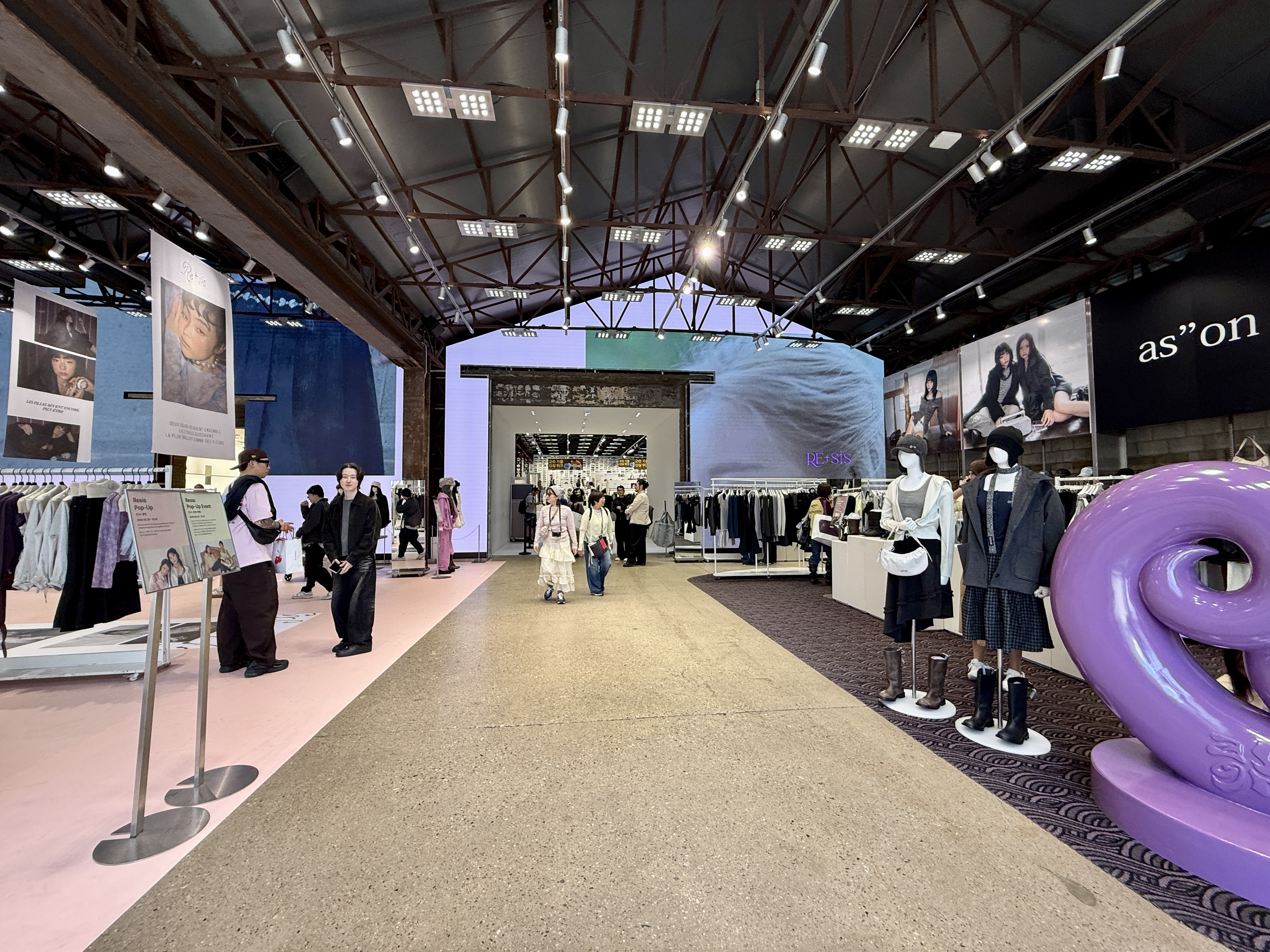
After a quick breakfast across from the hotel, we headed to Seongsu-dong — Seoul’s answer to Brooklyn, specifically the Williamsburg variety. The neighborhood was once packed with shoe factories; now those same buildings house concept stores, restaurants, and lifestyle brands. As a born-and-bred Brooklynite I both get the reference and laugh at it — Brooklyn today bears almost no resemblance to the Brooklyn I grew up in. And I assume that when they say it’s like modern-day Brooklyn they also mean the soaring rents and the gentrification brought about by the upending of all the housing and mom and pop shops..
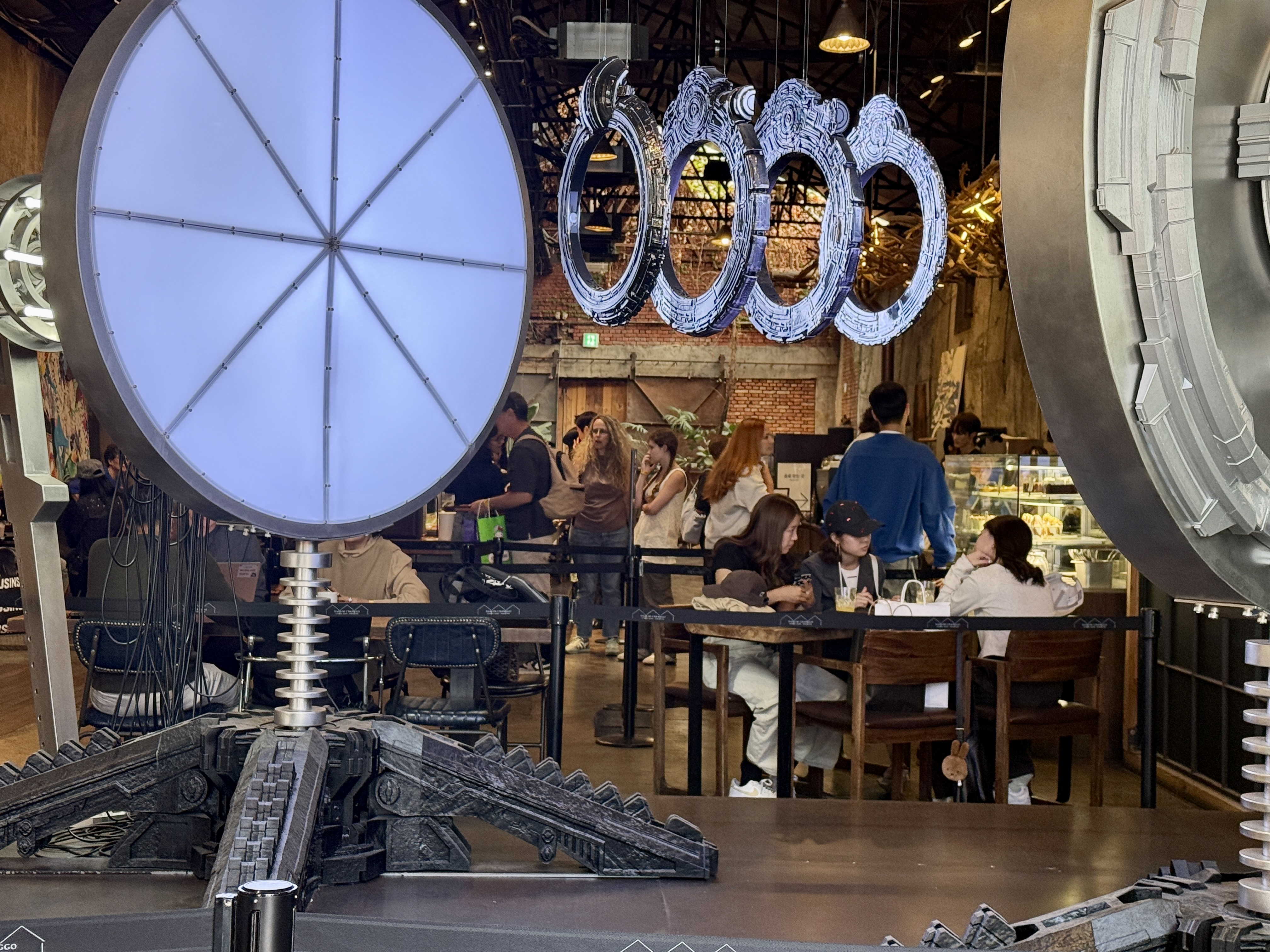
Lunch was at Daelim Changgo, a former warehouse turned lifestyle complex and café. The whole area could easily be Williamsburg or Emeryville — except multiply it by about 50. We wandered into buildings without knowing what they were selling — vast, beautifully designed spaces devoted to contemporary eyeglass frames, or some other singular object. Every place was packed. We even ended up in a spot calling itself an “ultra-fresh gelato lab” — long lines, fast-moving, and genuinely excellent. I went with tiramisu and pistachio; Mike played it safe with vanilla, though to his credit it was black pepper vanilla.
There’s an irony worth noting about all this adaptive reuse: the factories that came before actually made things. These places just sell things made elsewhere — things nobody strictly needs. What they’re really selling is lifestyle. And business, apparently, is booming.
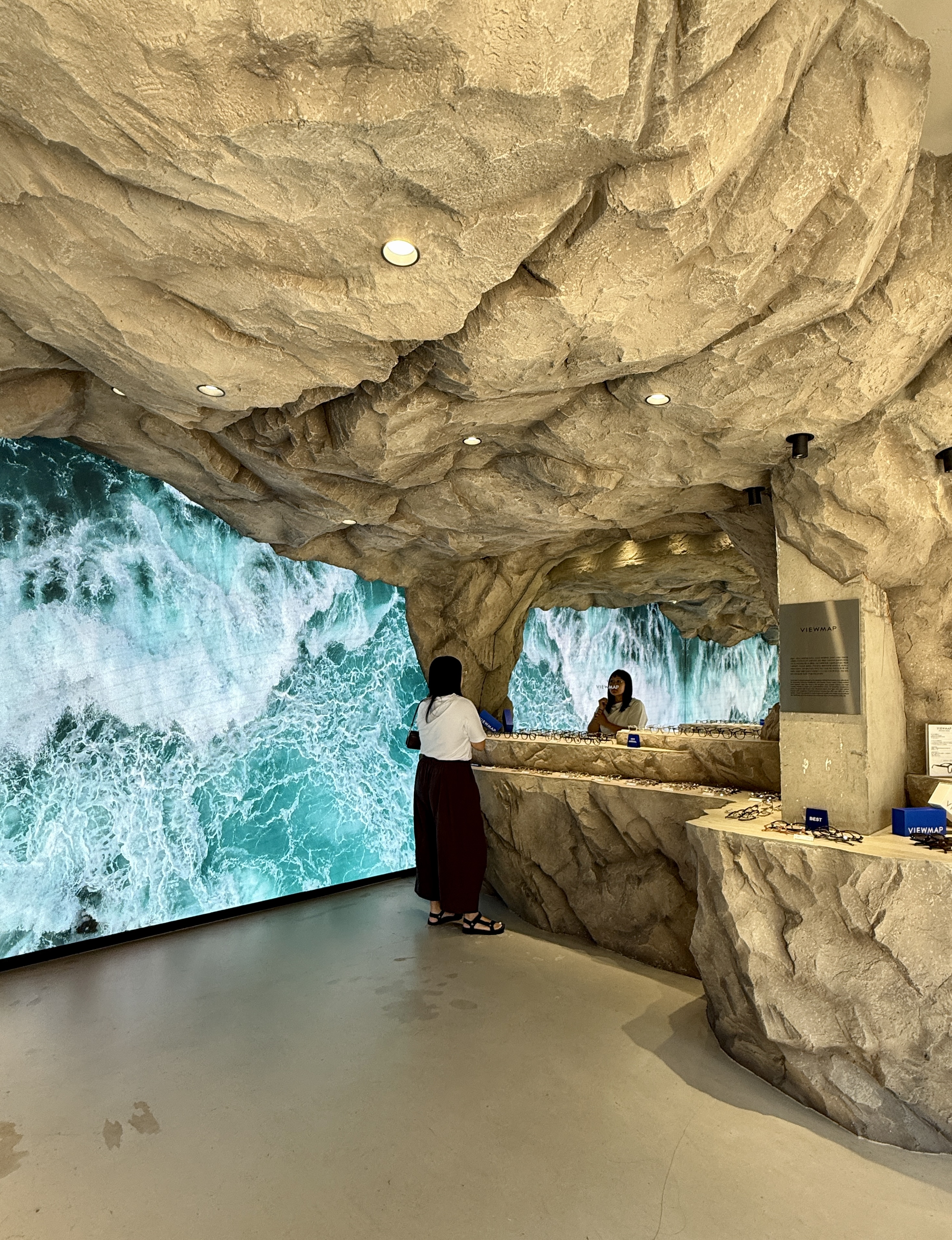
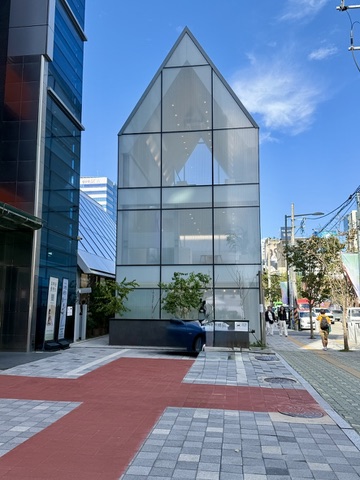
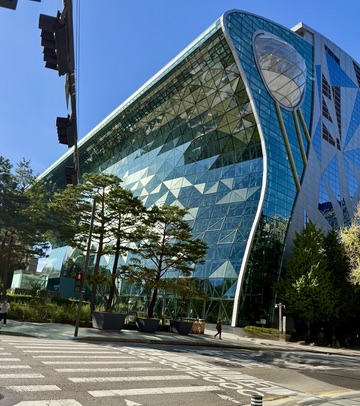
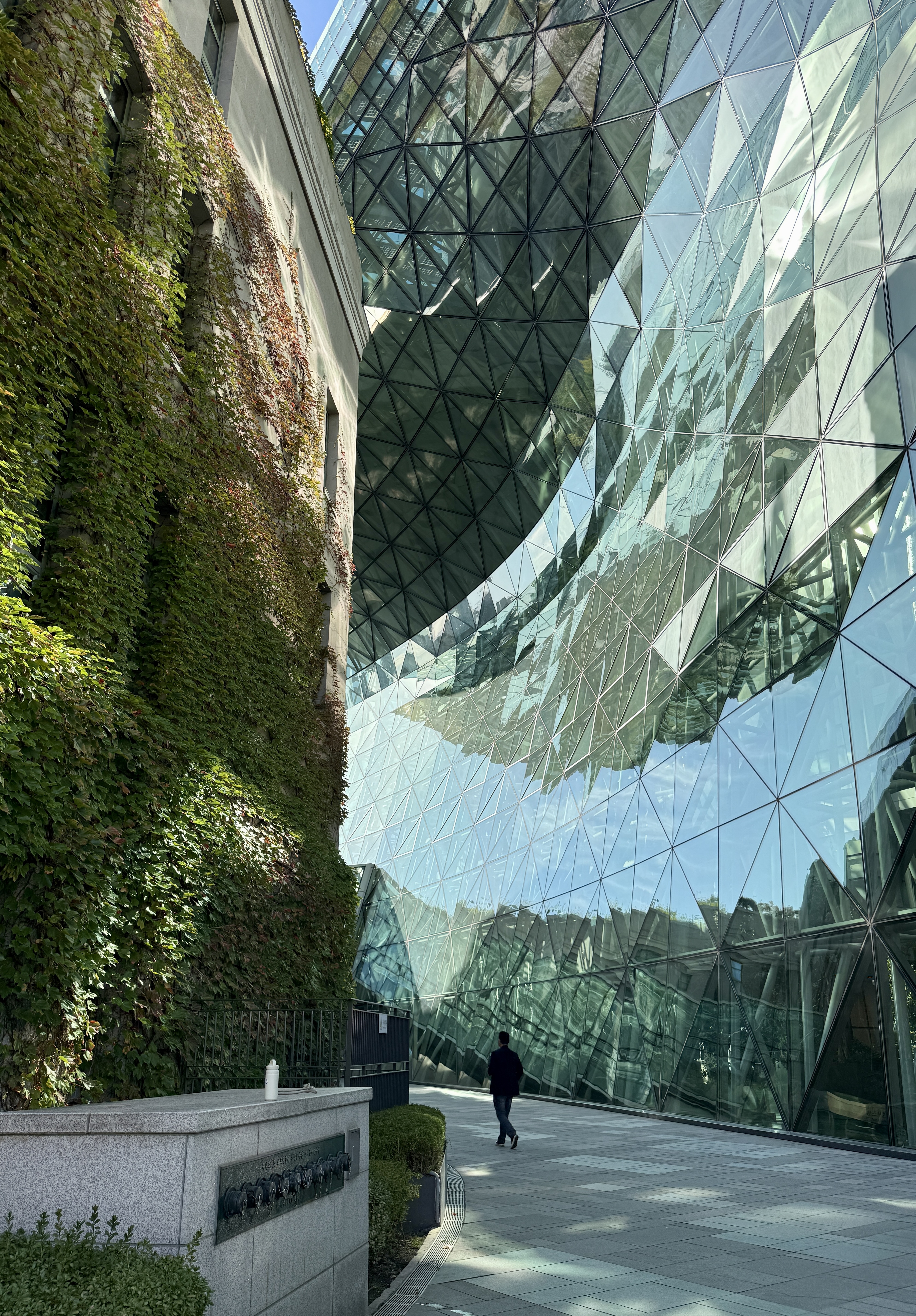
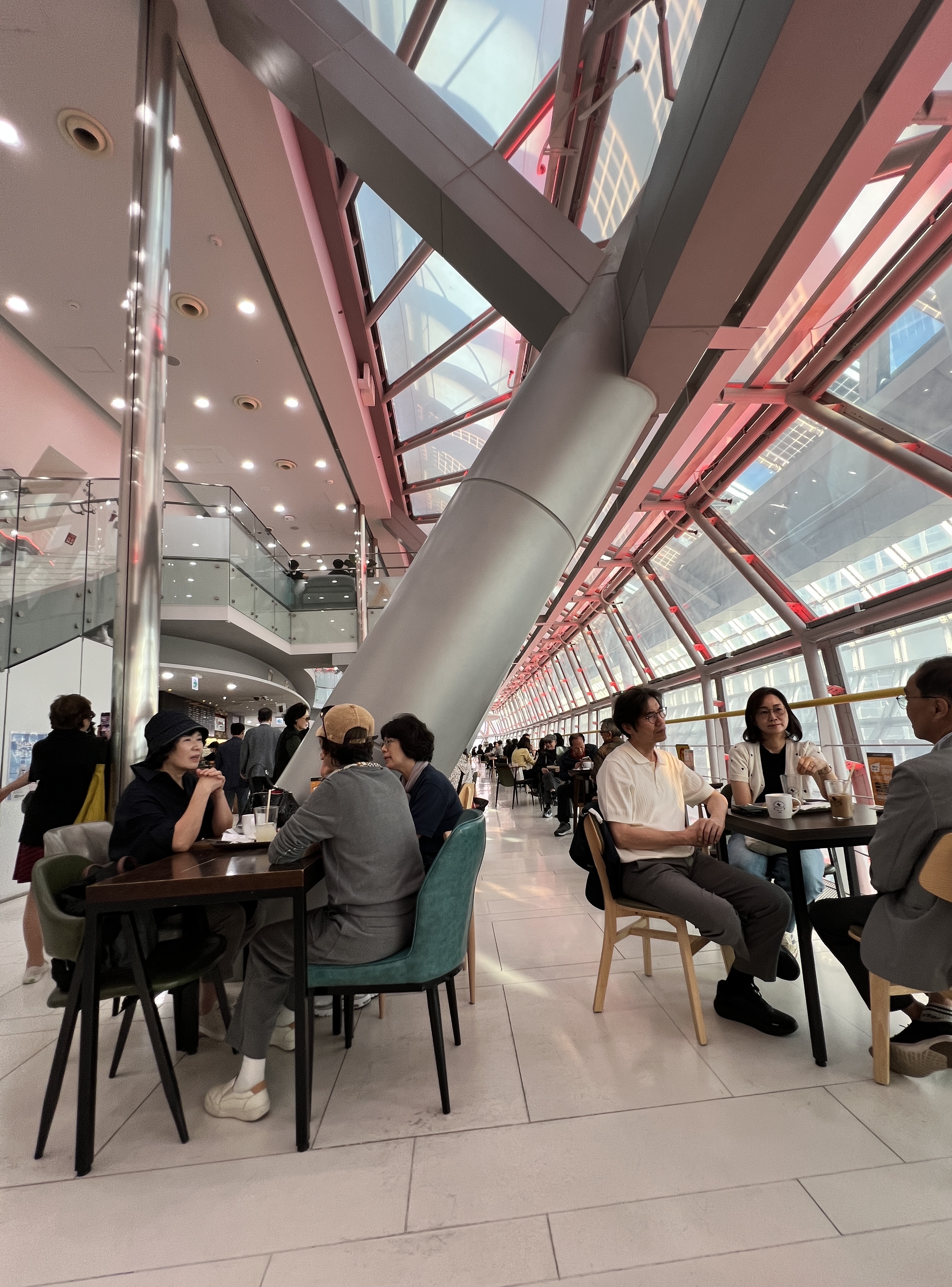
From the capitalist immersion, we took the subway — elevated in this part of town — to Seoul City Hall, an interesting piece of architecture and an exciting use of public space. The 13-story glass building, opened in 2012, and it curves in a wave-like form—seen by many as a deliberate contrast to the colonial-era stone City Hall directly in front of it, which is now dwarfed by its sleek successor and converted into the Seoul Metropolitan Library. The new building’s contorted shape was partly designed to accommodate the old one.
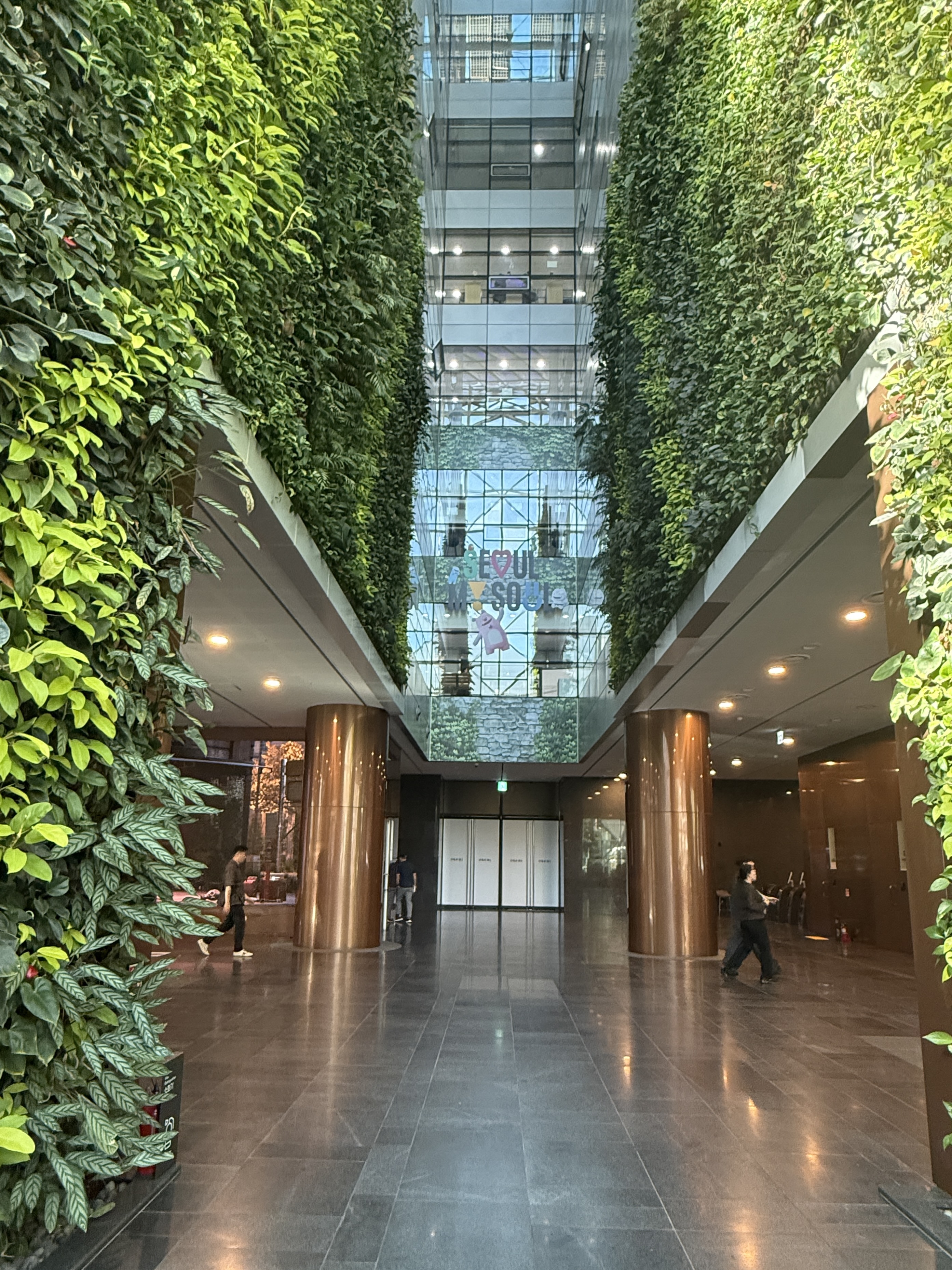
Inside it feels genuinely like a people’s place — cafes, public lounges, exhibit spaces, with the actual government offices tucked away on the back side. Lots of people just hanging out, having coffee.
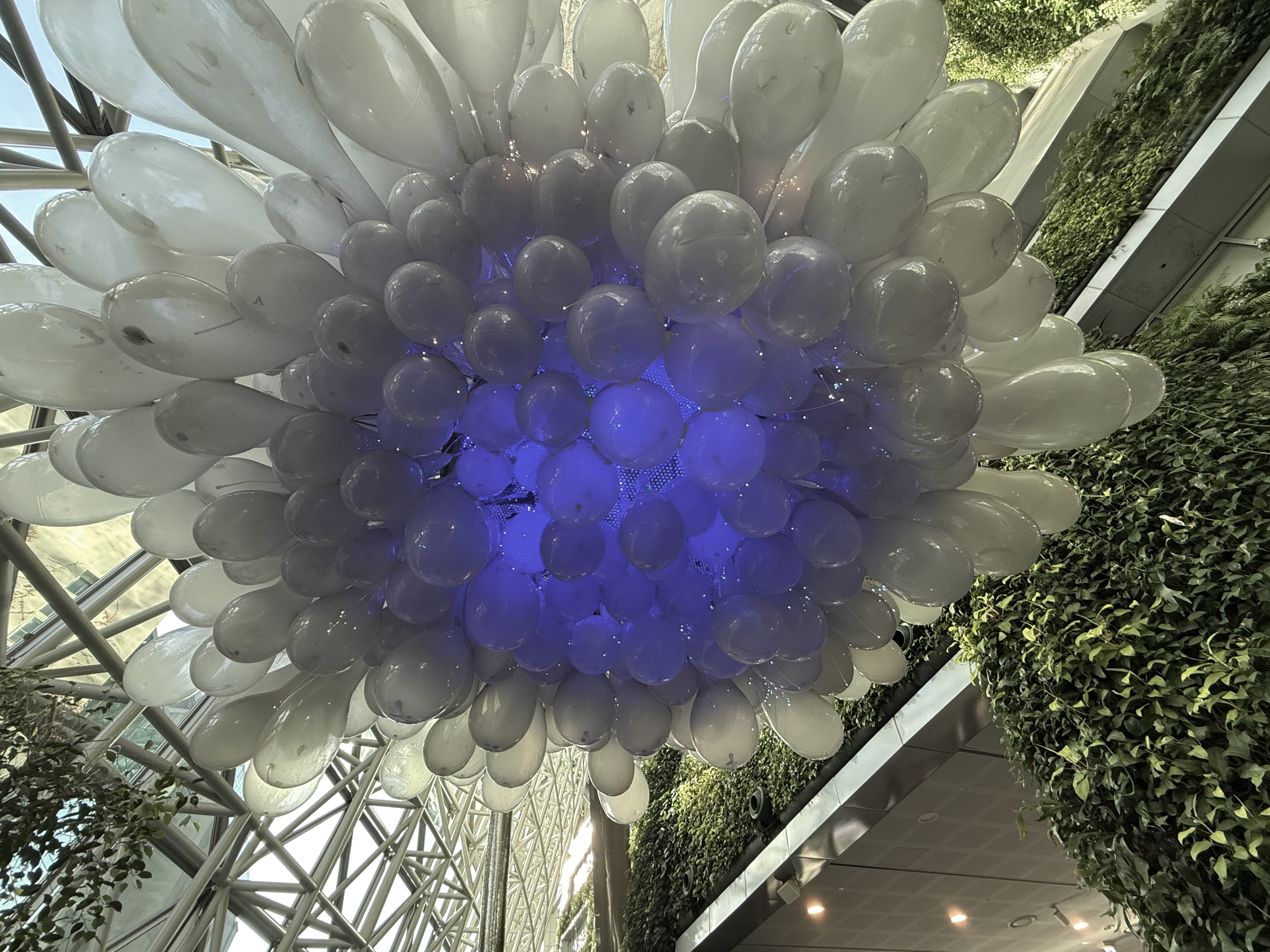
The building was controversial from the start — some residents called it “an ugly spaceship,” others were furious about the near-demolition of the old City Hall (the compromise of preserving it as a library quieted some of that anger). Supporters point to its glass transparency as a symbol of open, democratic governance. And the one thing almost everyone agrees on: the soaring indoor vertical garden, which is in the Guinness World Record as the world’s largest.
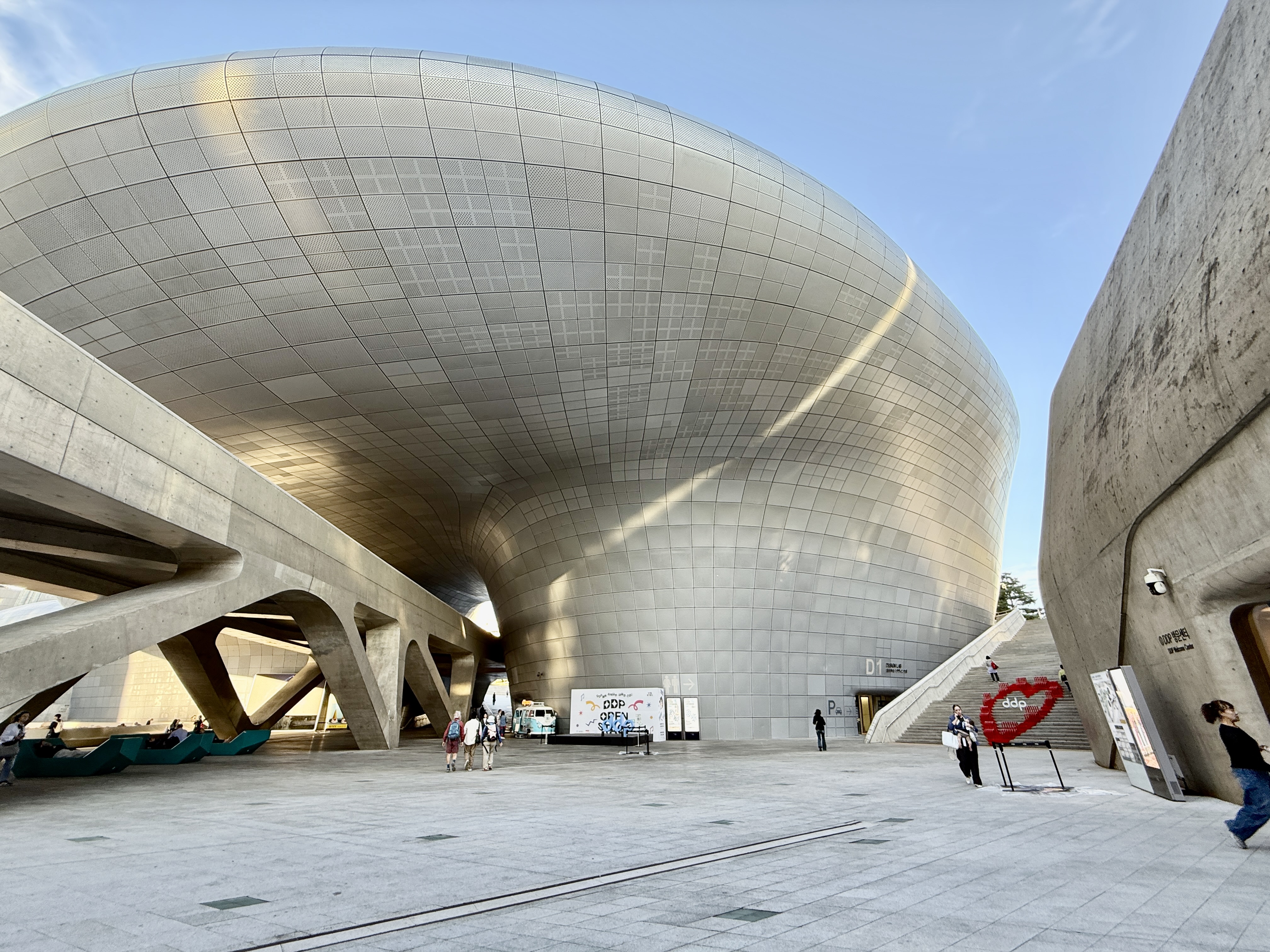
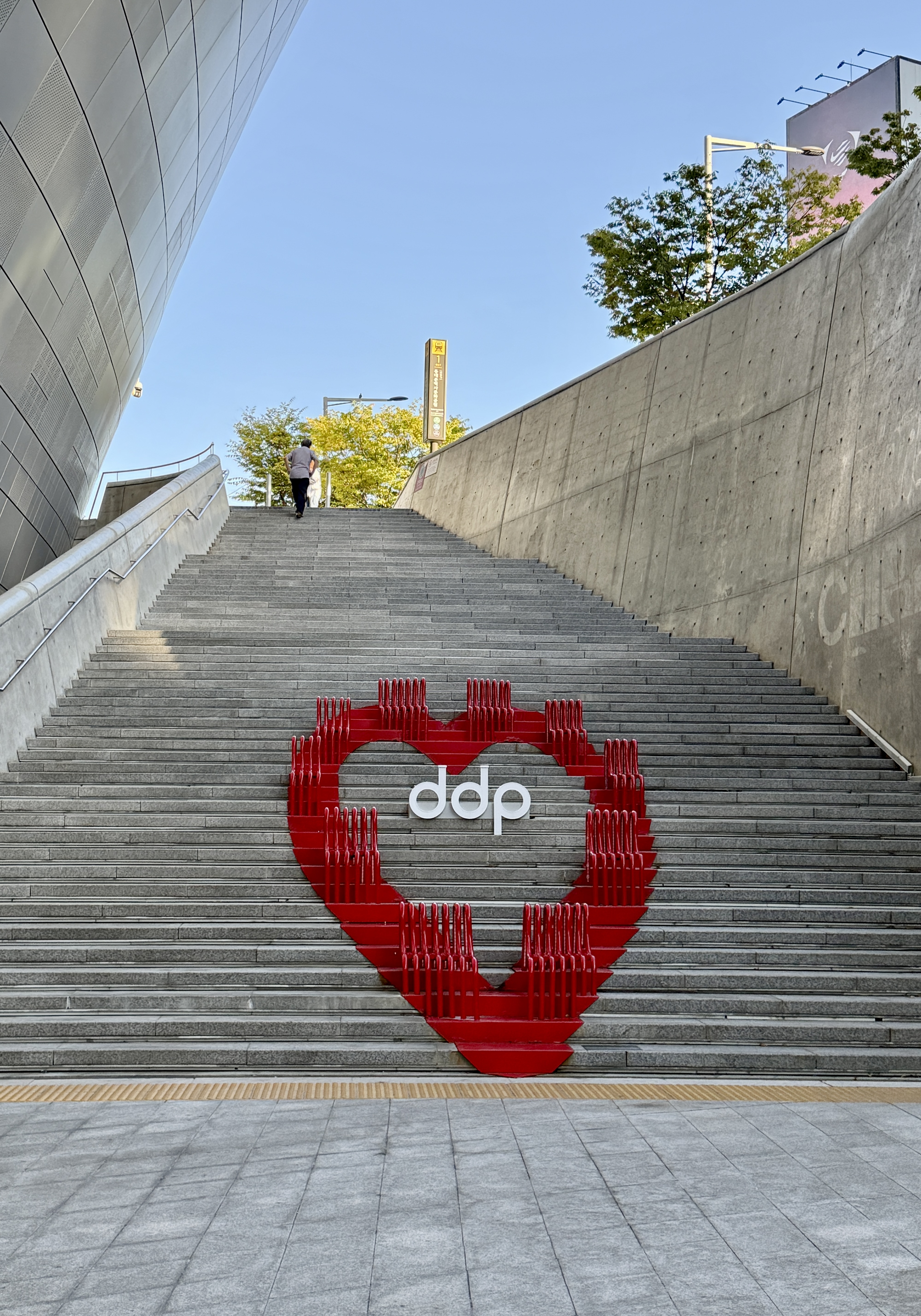
From City Hall we headed to the DDP which was deigned by Zaha Hadid about 20 years ago and sort of set the standards and a new look for Korean buildings. It is primarily an exhibition space and sits playfully in a surrounding park. Seems to me to be a bit challenging as an exhibit space since so much of it is sloped. But it’s an interesting building, which I gather cost twice as much tobuild than the original projected cost. Really it’s just a big sculpture. But that’s what all of her work is, in my opinion.
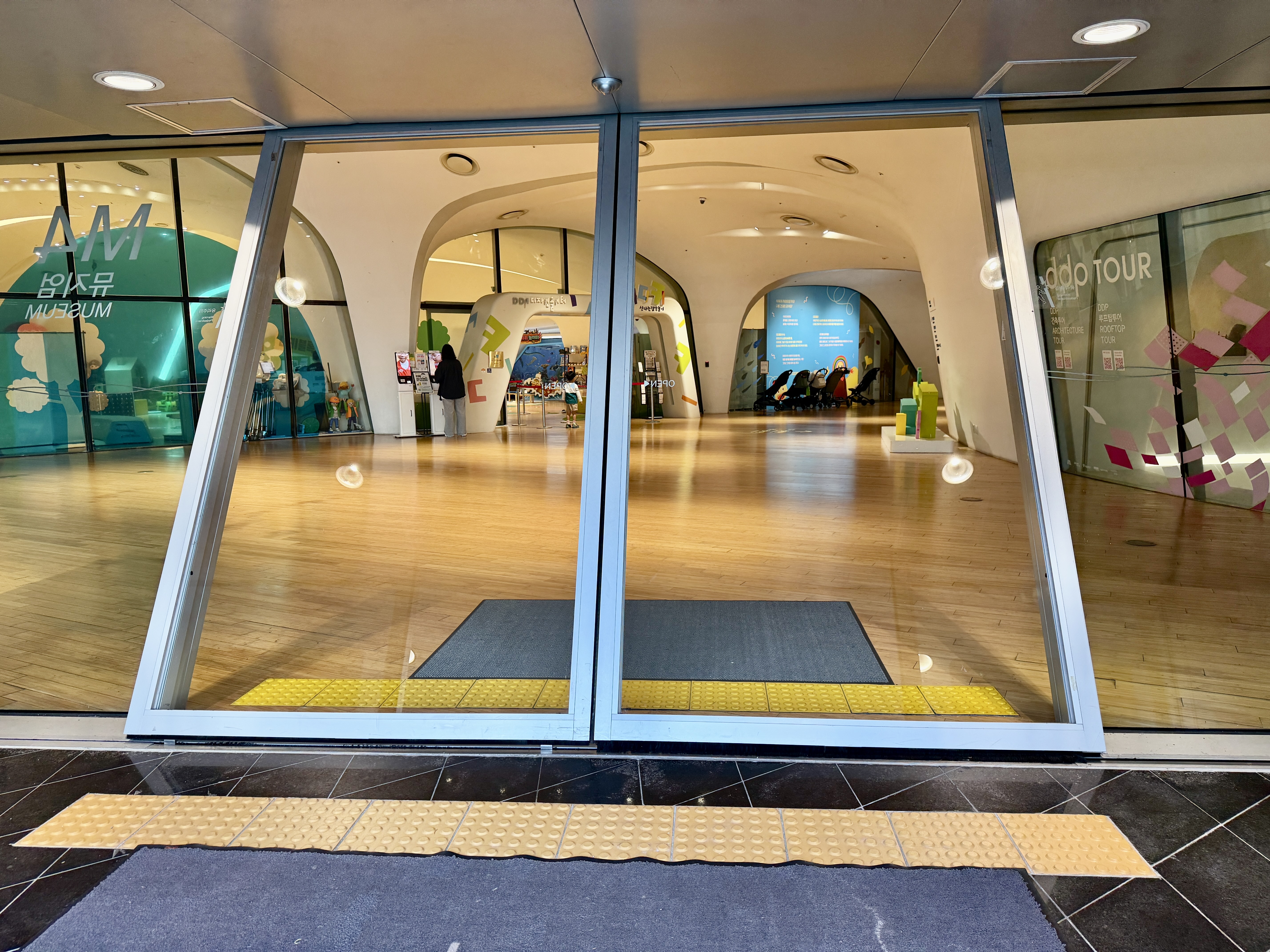
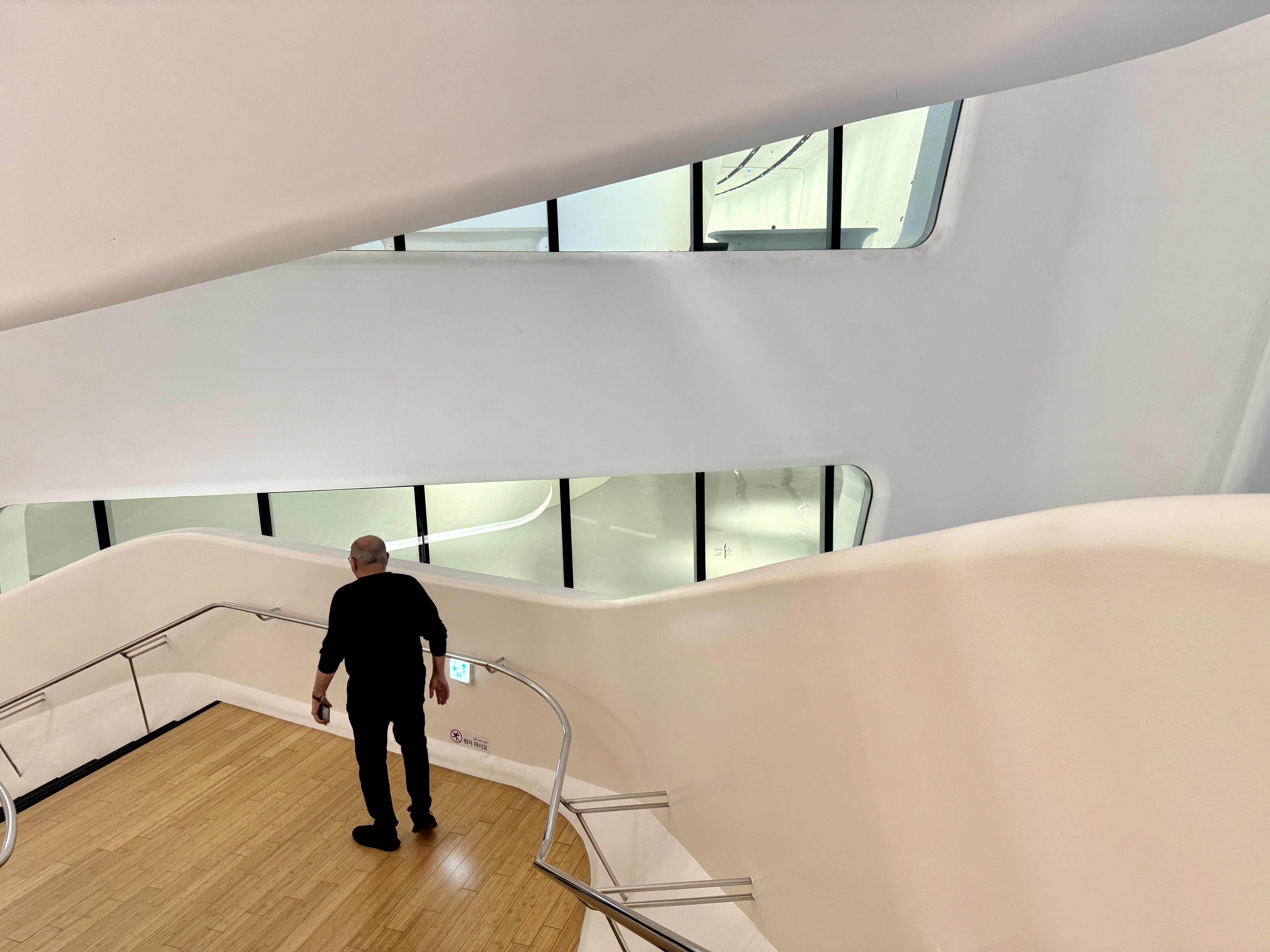
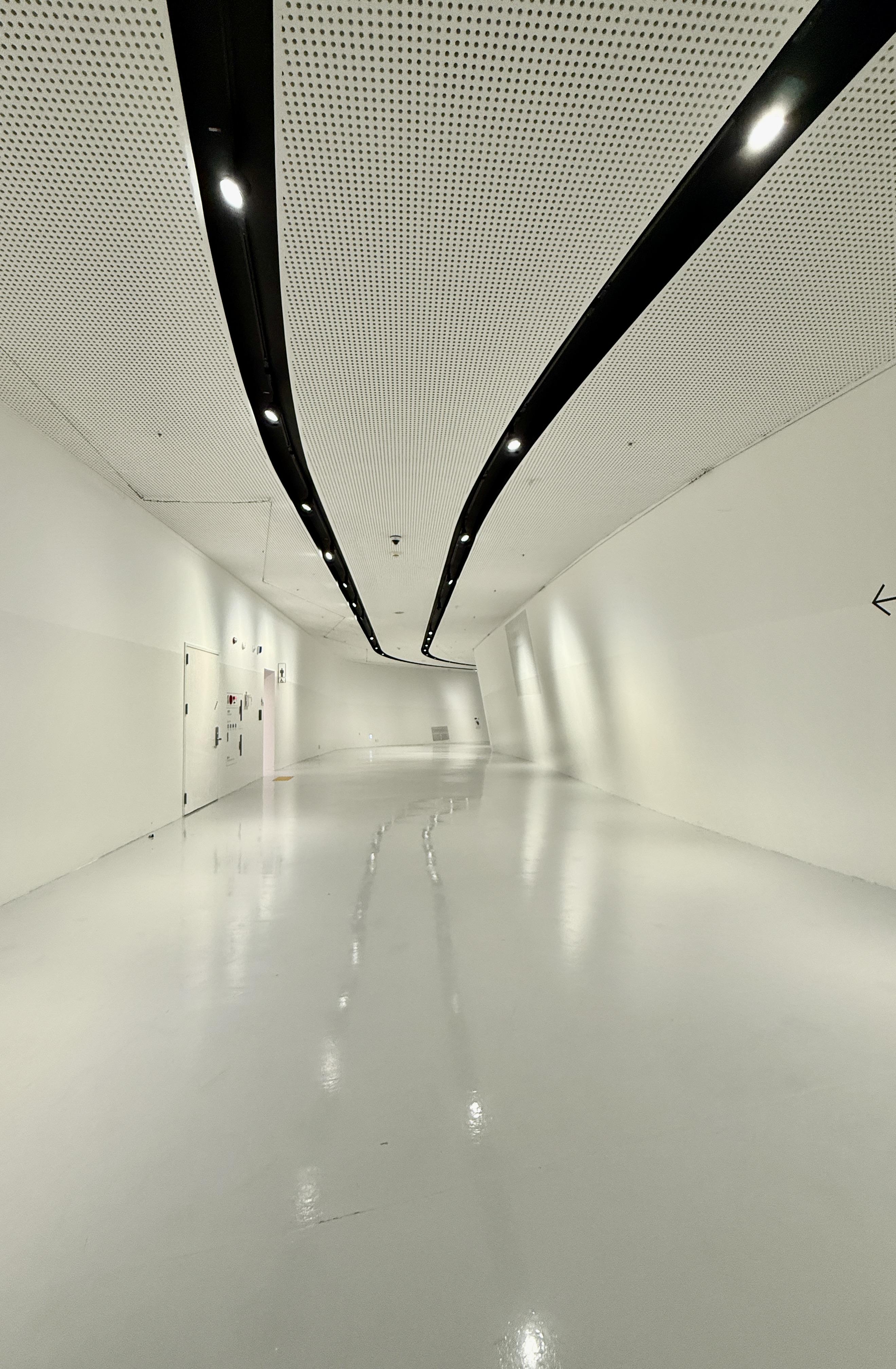
Then we took the train again, back to the hotel to freshen up and soon after, head for dinner at a Korean BBG place. By the time we headed to dinner it was chilly. It took us a while to find Taechogalbi — a traditional Korean BBQ place which was ust a few blocks away but on the second floor with minimal signage. All good.. for carnivores.
More tomorrow.
Fern
September 30, 2026 – Day Three in Seoul
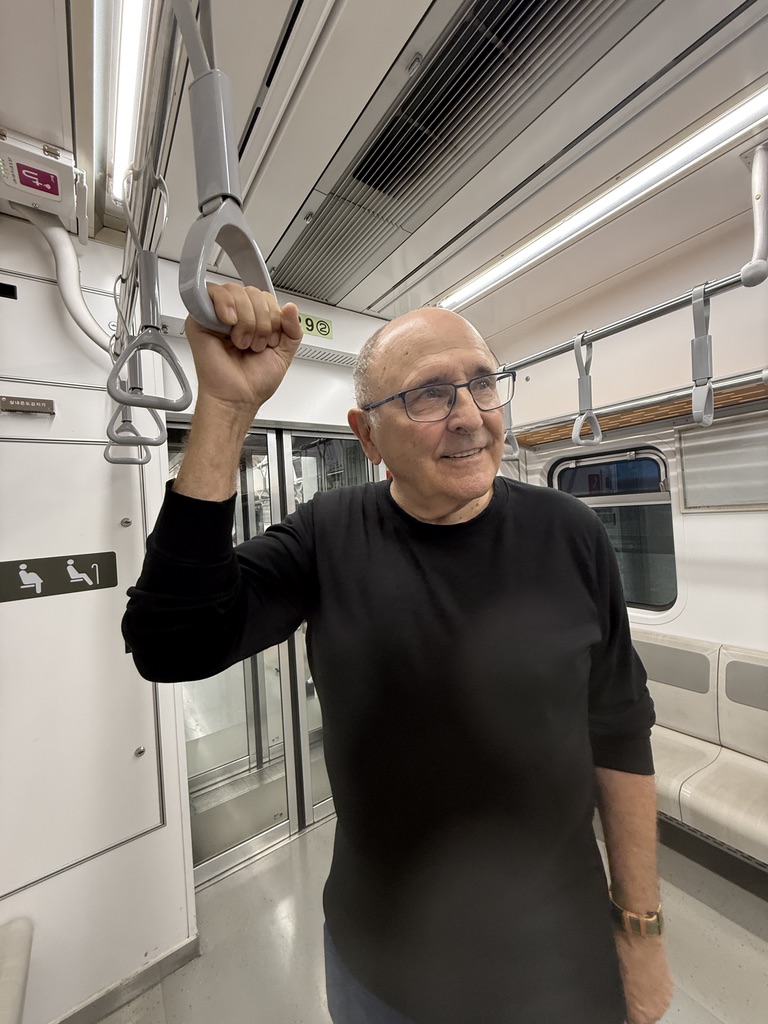
After a quick breakfast at some pastry shop along our route to the subway, we took the train to the Gyeongbokgung Palace (that was closed yesterday). open and free today for “Culture Day.”
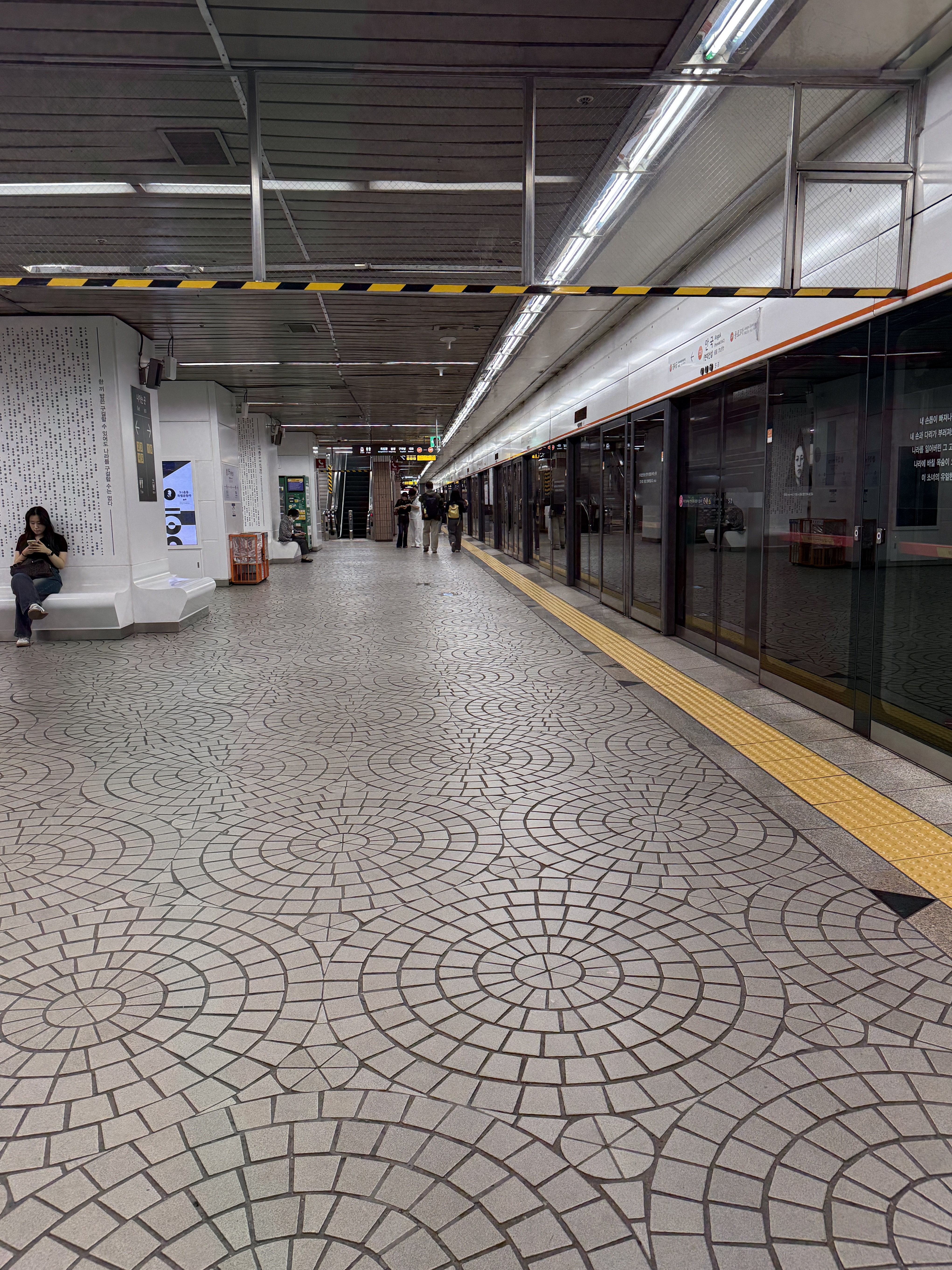
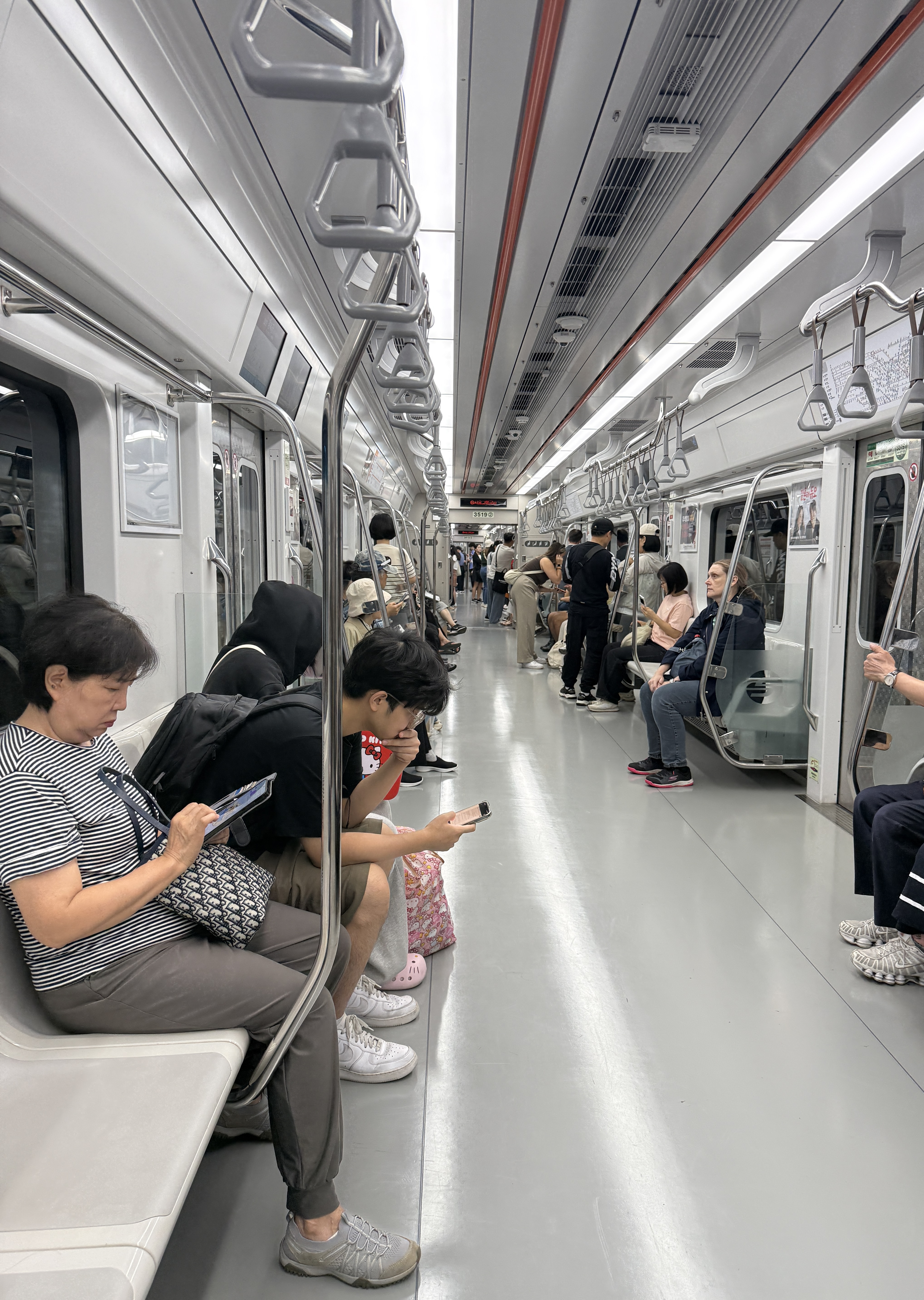
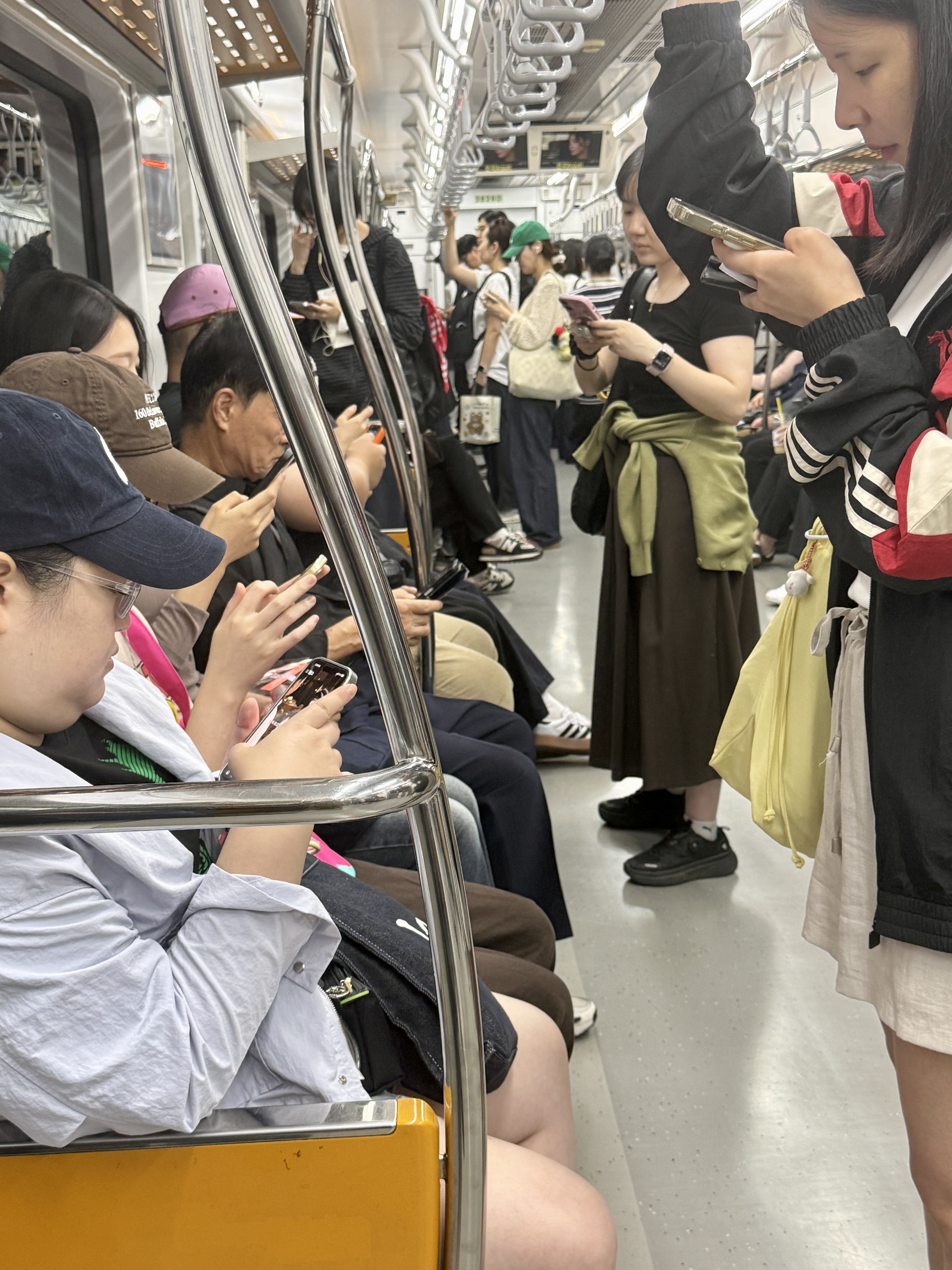
But first: the subway. Immaculate doesn’t quite cover it. The floors literally sparkle, there’s zero graffiti, zero trash — remarkable given that trash cans are nearly impossible to find. The trains are prompt, smooth, and run like clockwork. And everyone — everyone — is on their phone the entire ride, including us. What struck me: ask anyone for directions and they immediately look it up on their phone. As a diehard New Yorker, I’m used to people just knowing which train to take — though I’ll admit Queens might stump a few of us. Signage is excellent and navigating in English is surprisingly easy once you get the rhythm of the system.
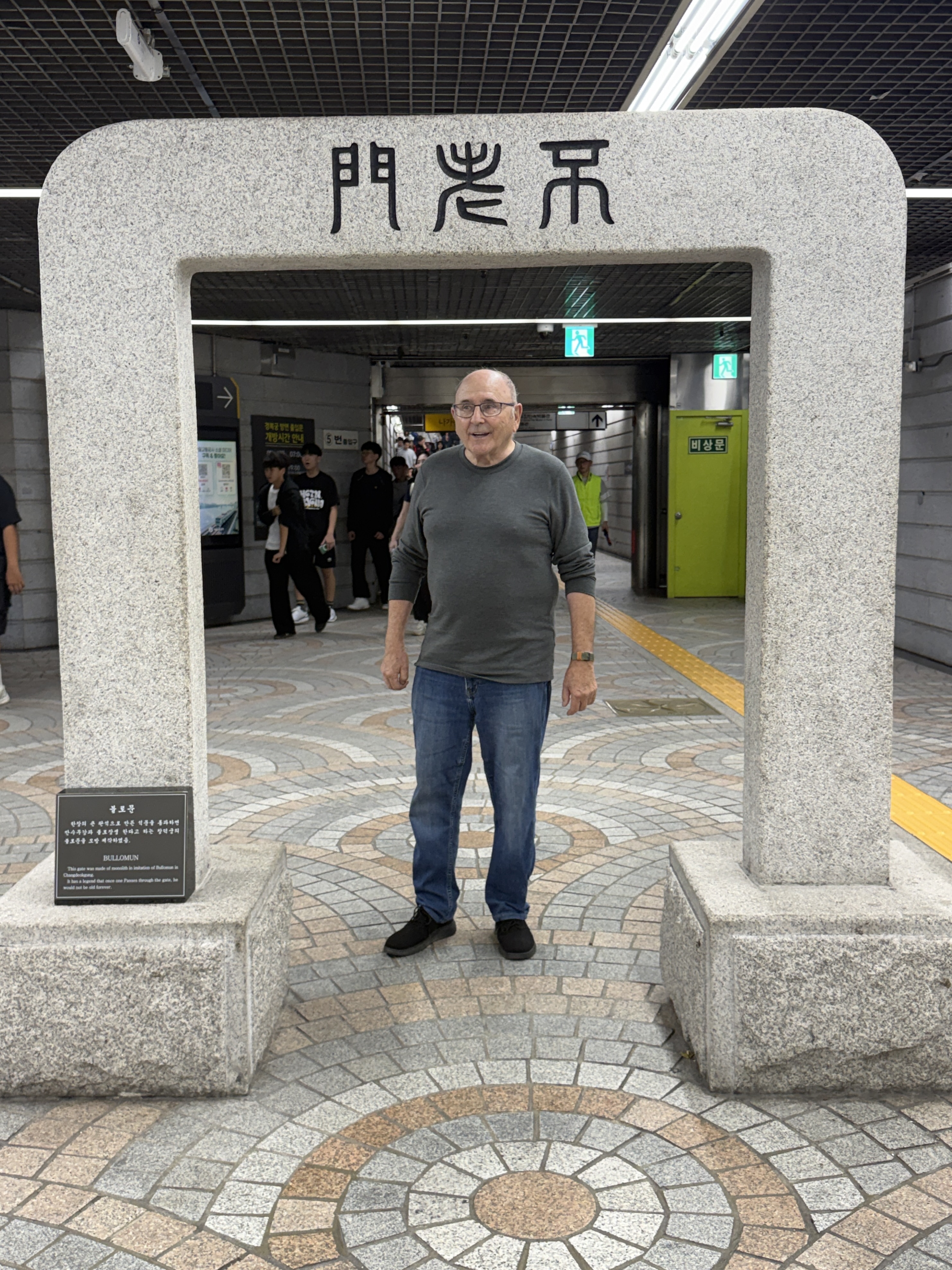
One more note: Mike walked through some ceremonial arch said to guarantee longevity. We’ll be watching for results.
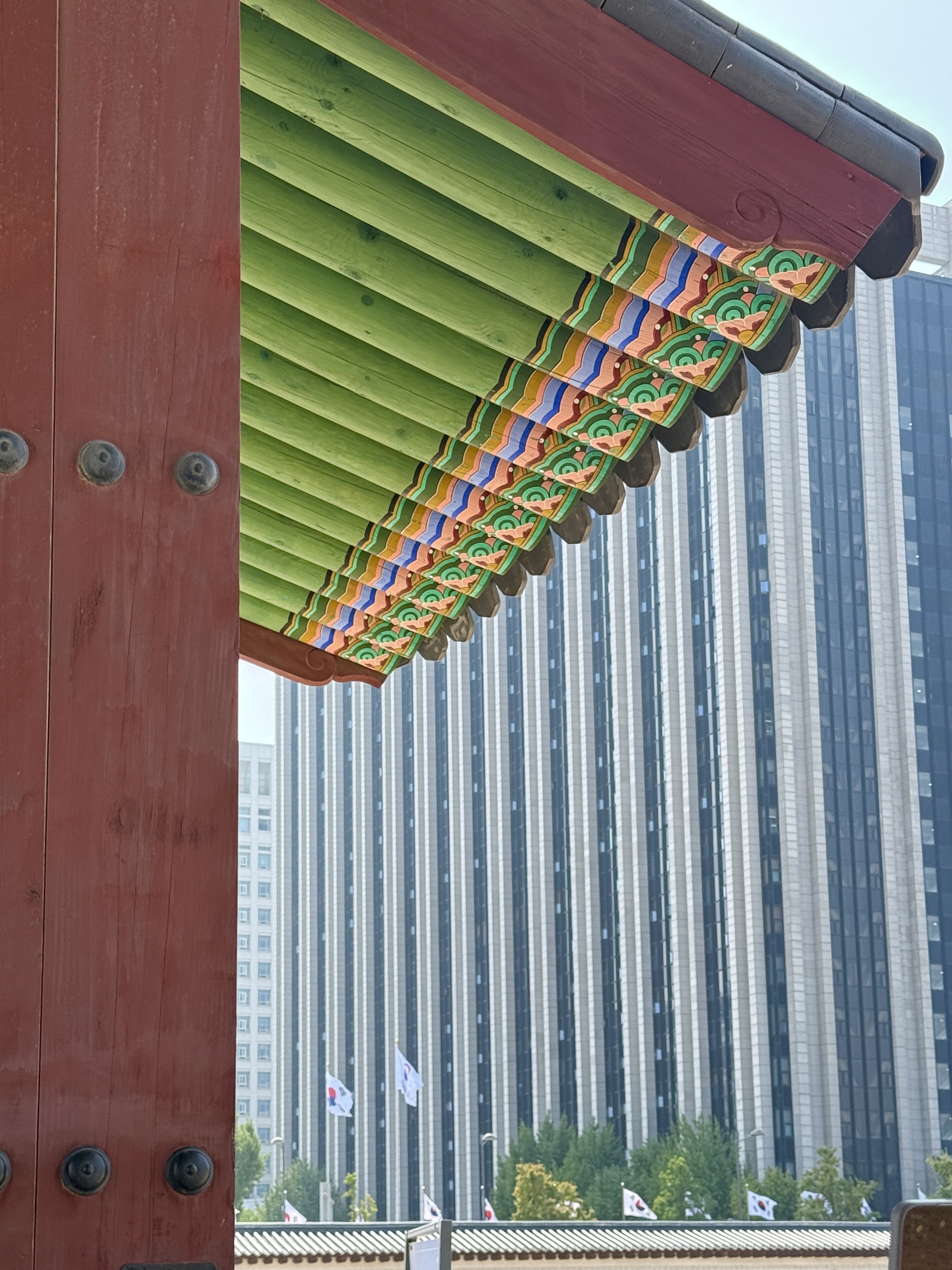
On to the palace. Built in 1395 as the first and grandest royal palace of the Joseon Dynasty, Gyeongbokgung is Seoul’s most visited landmark. In 1592, during the Japanese invasion known as the Imjin War, the palace was completely burned to the ground. It sat in ruins for nearly 270 years before being rebuilt in the 1860s — only to be systematically demolished again under Japanese colonial rule in the early 20th century.
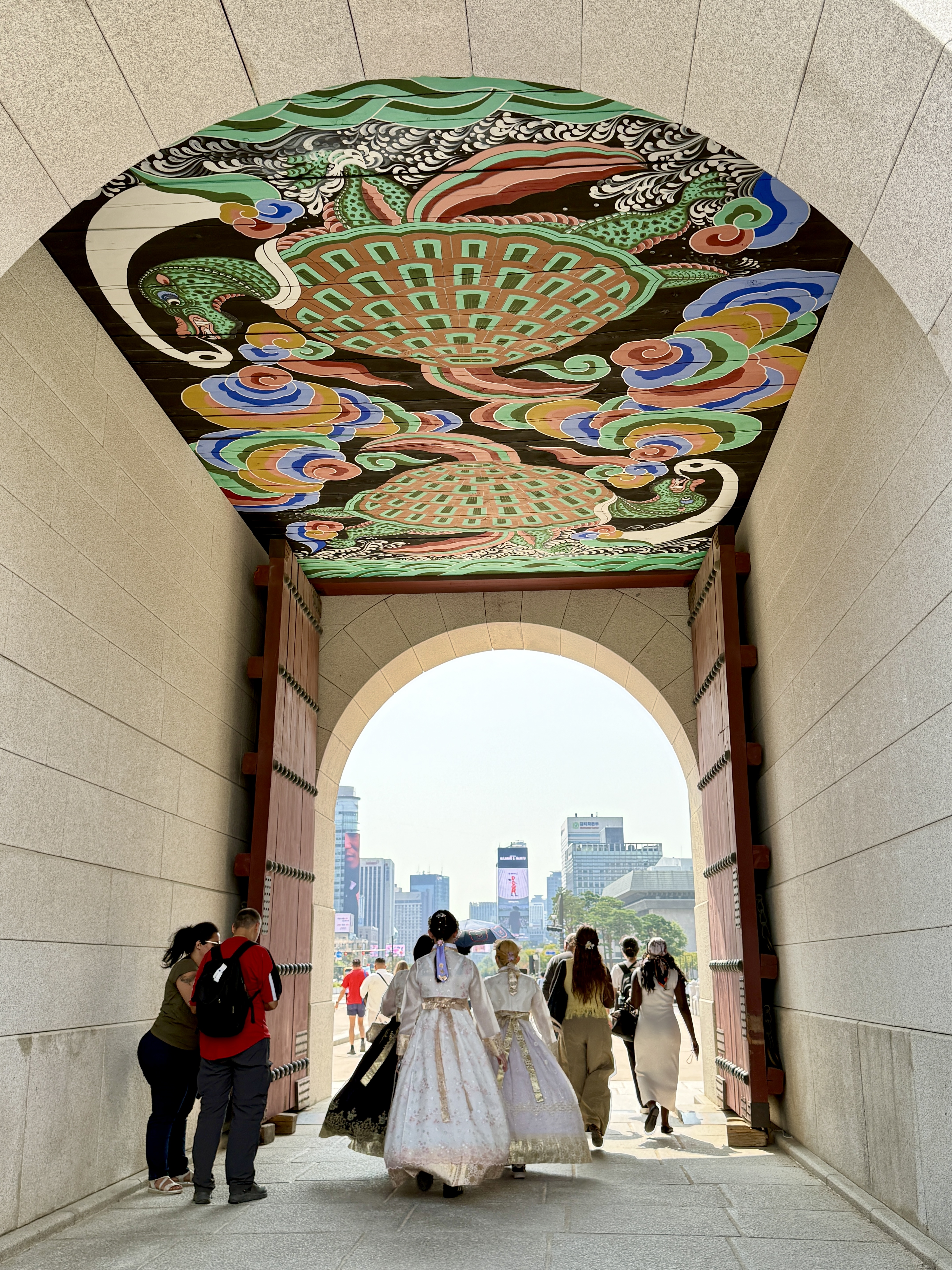
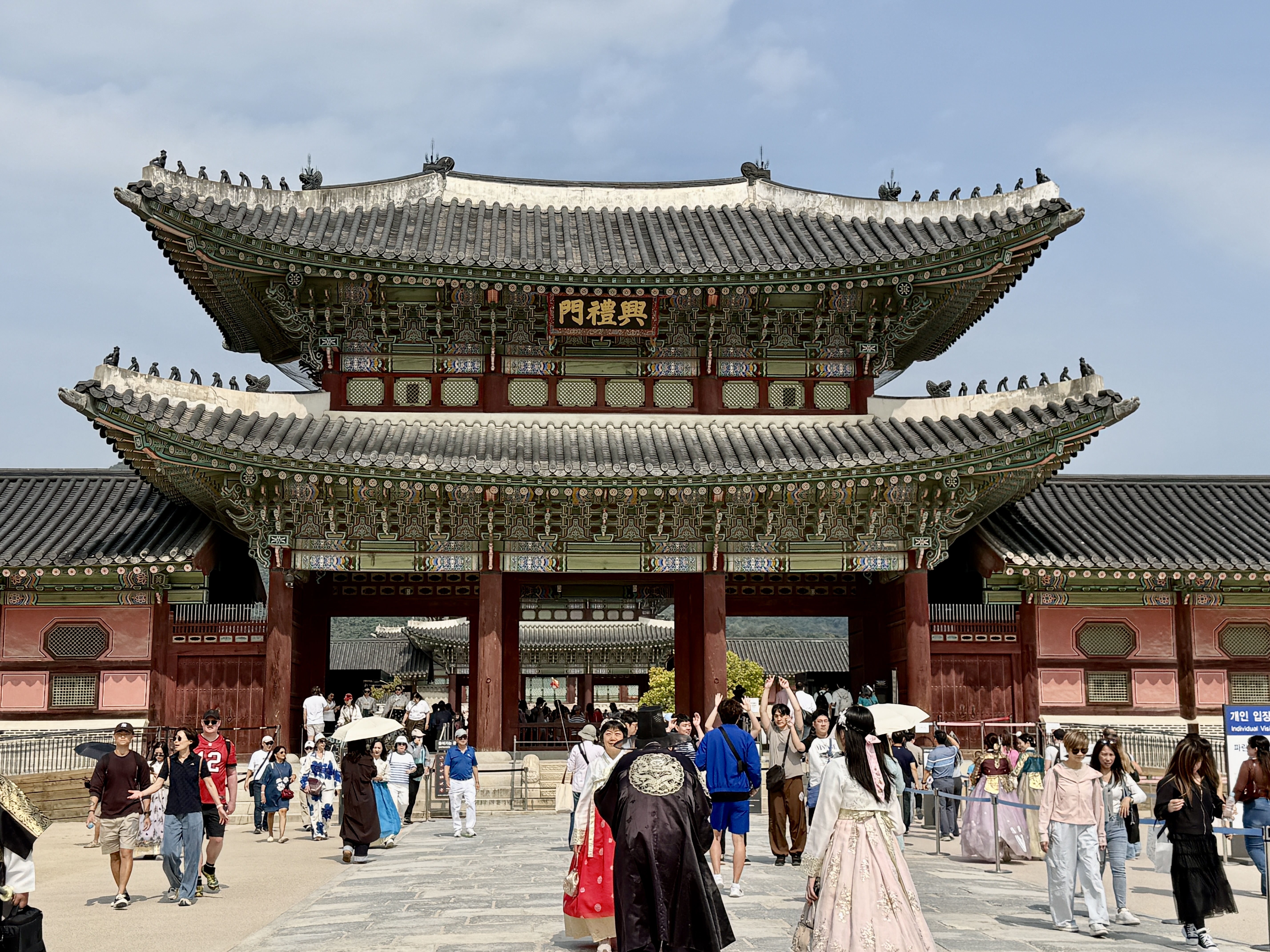
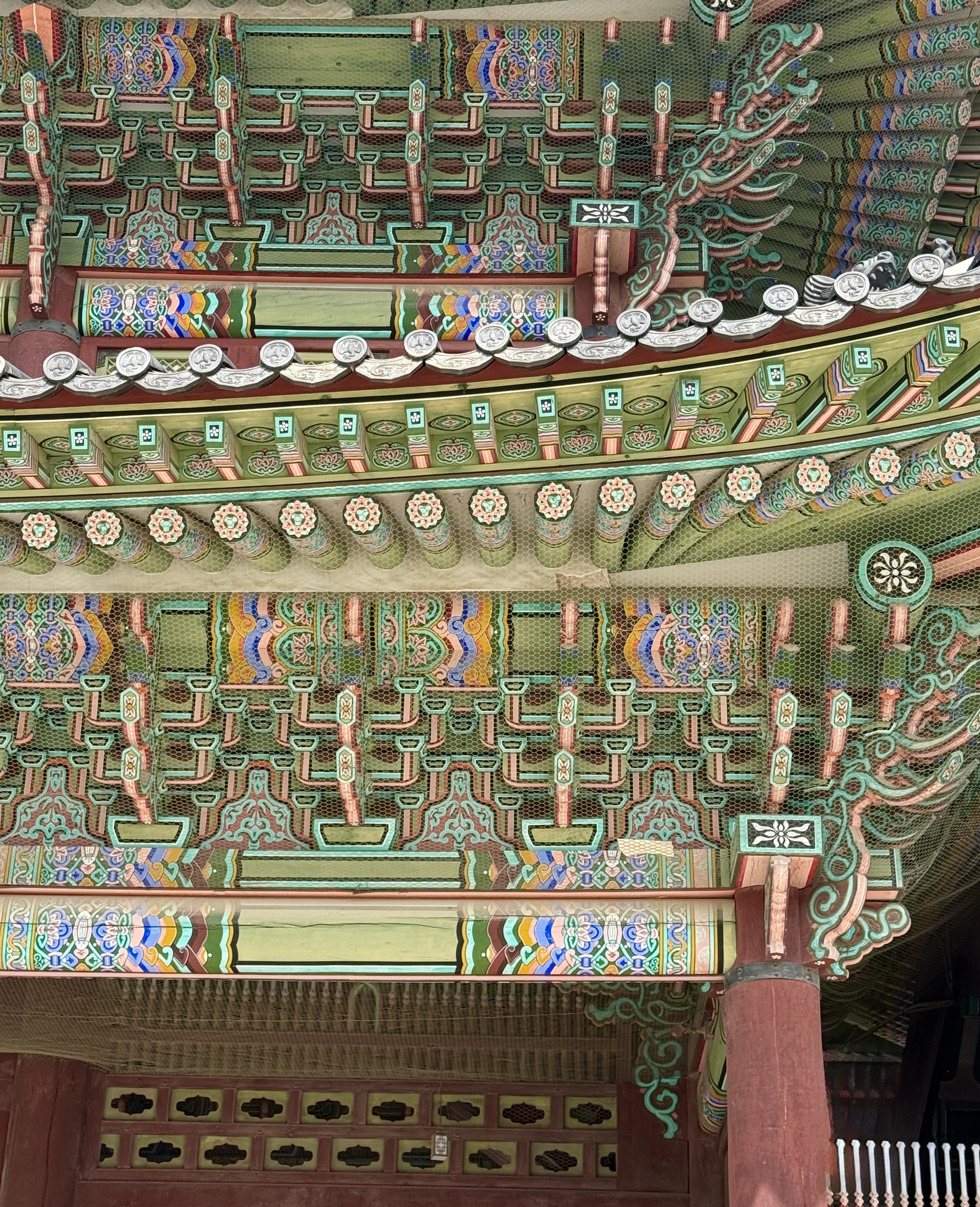
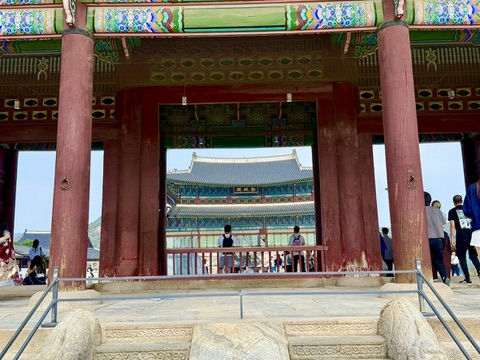
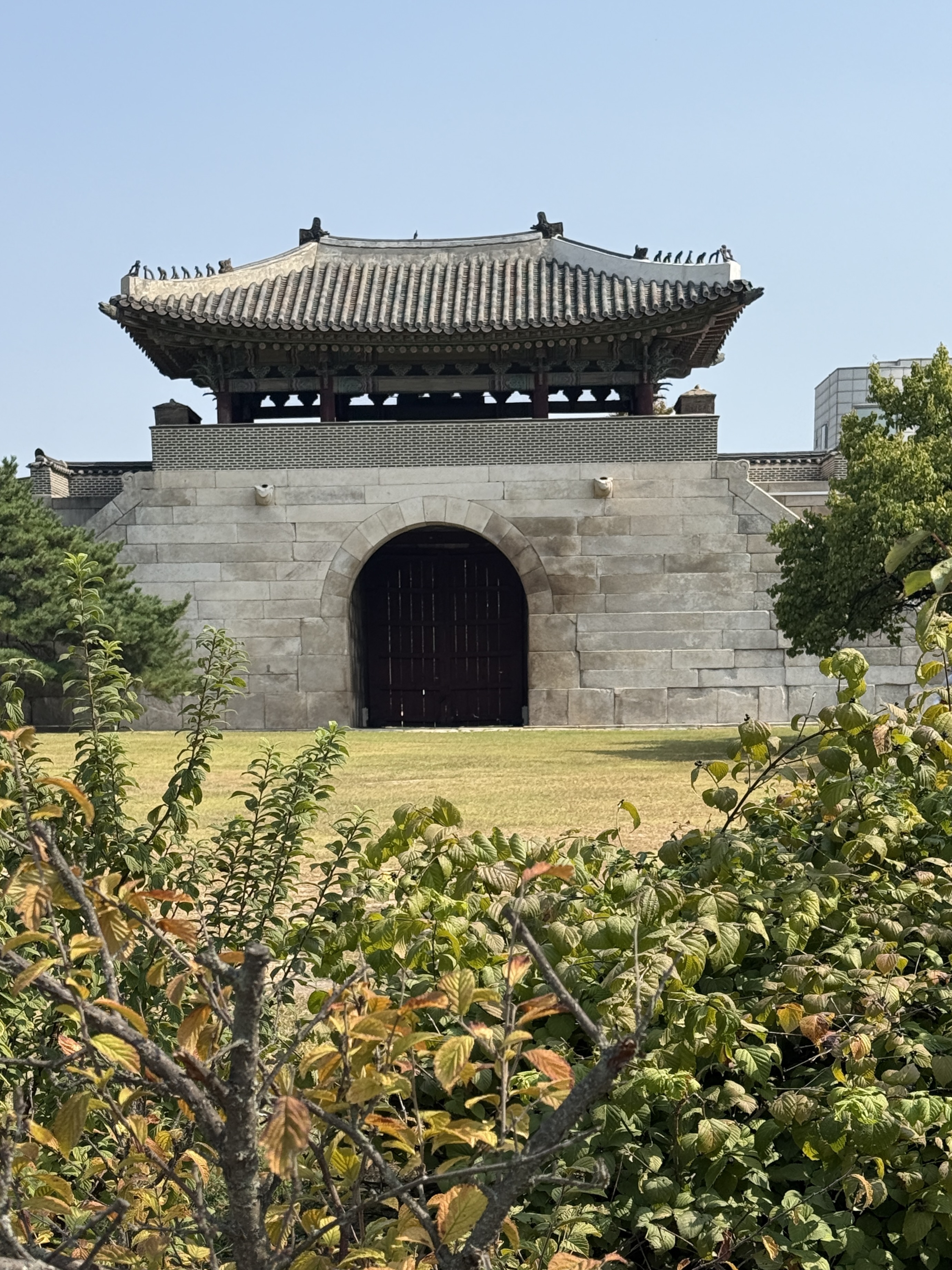
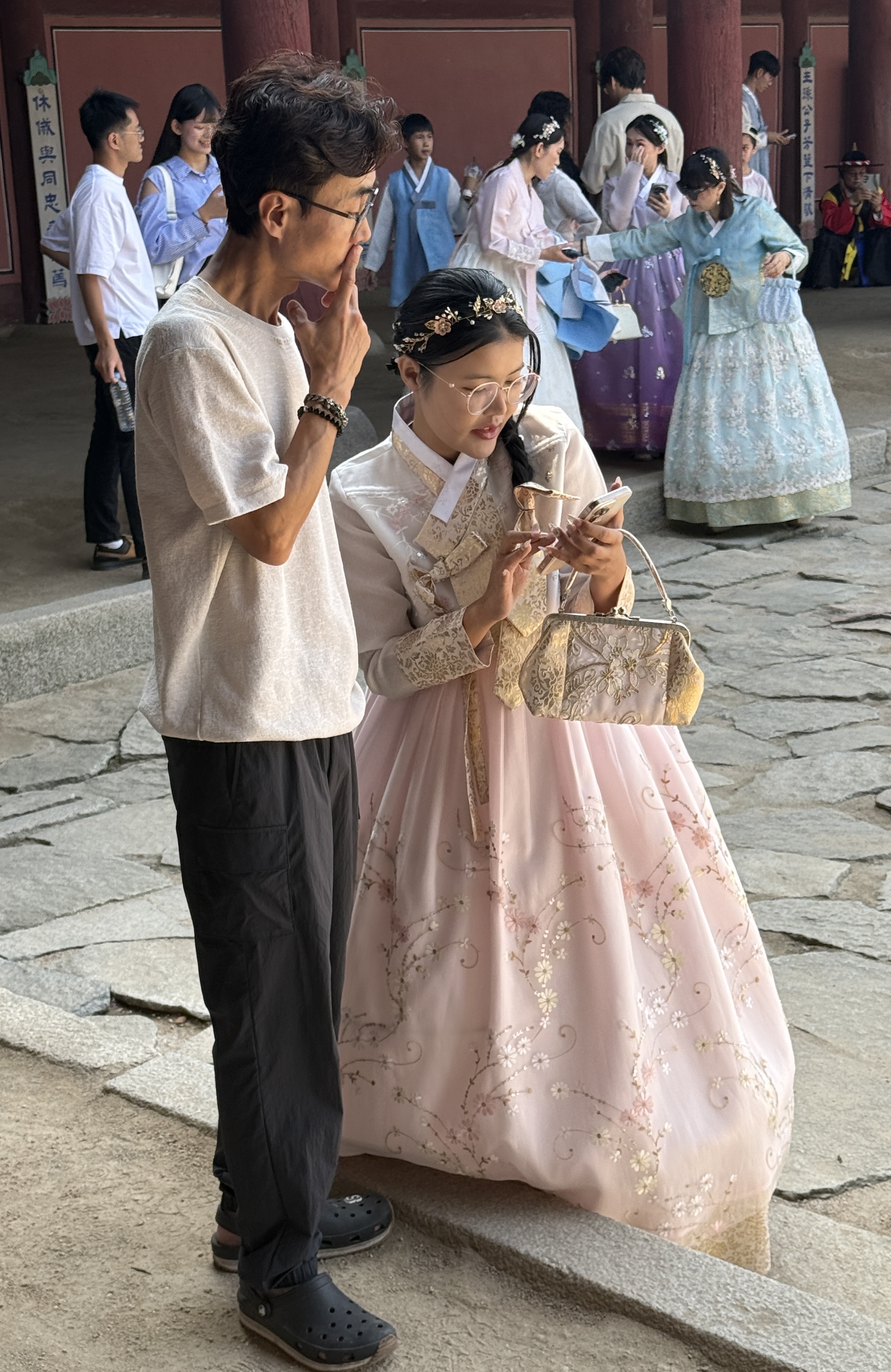
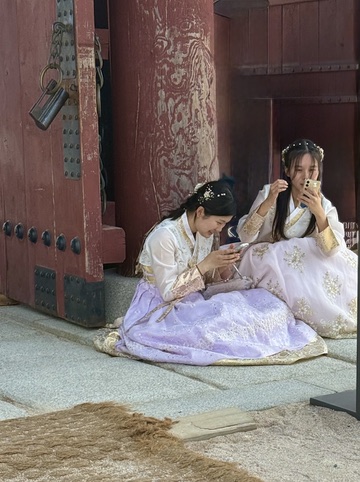
Before you even reach the palace gates, you notice it: easily half the visitors — Korean, foreign, young, old — are dressed in full Joseon-era costume. You can rent these costumes all around the neighborhood, and on free admission days, the costume perk is just for fun. It’s unabashedly a selfie operation — everyone jockeying for the perfect shot, primping, posing, finding their light. Charming and a little absurd in equal measure. Look closely though, and beneath every billowing silk robe: jeans. We did not partake. Surprise, surprise.
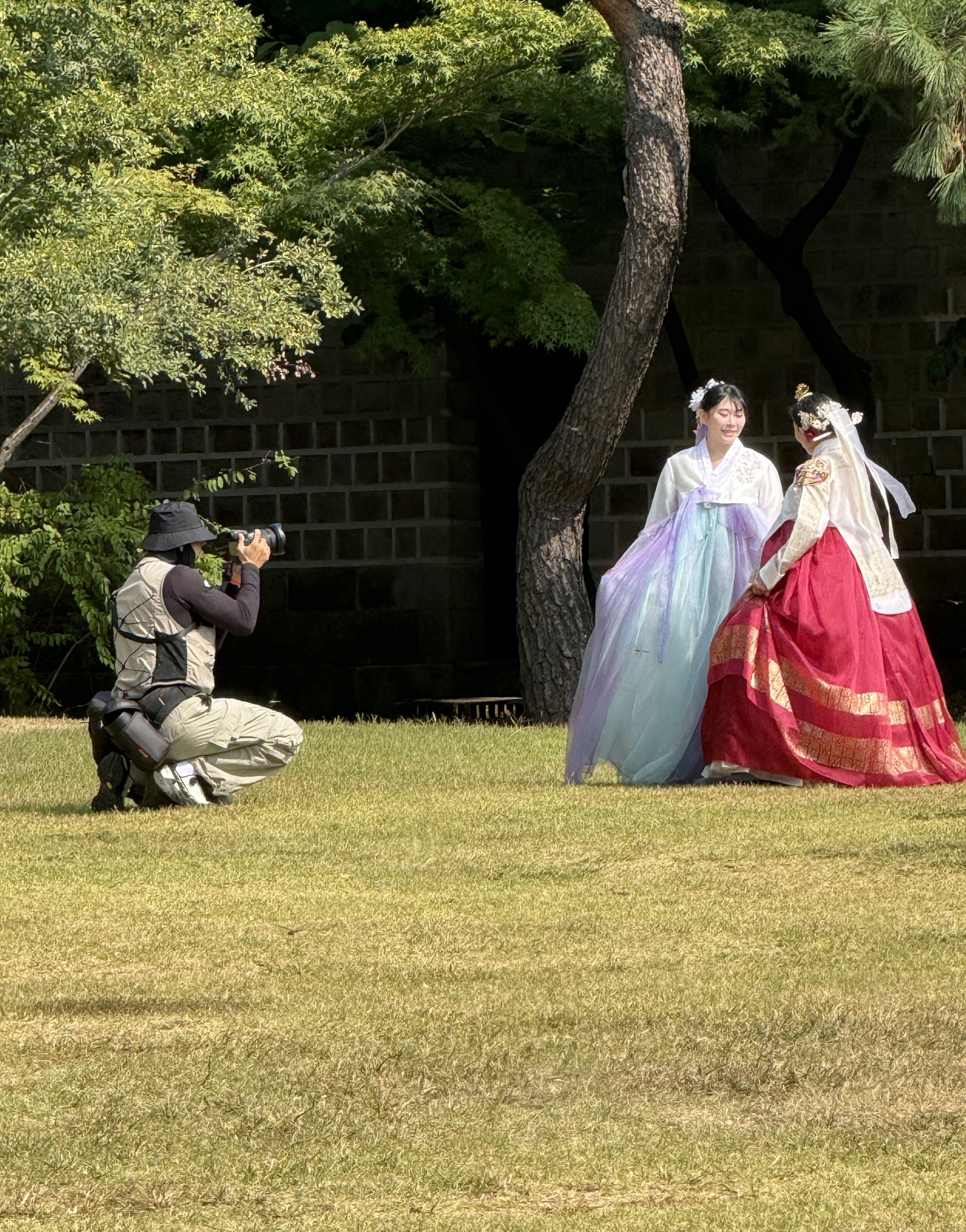
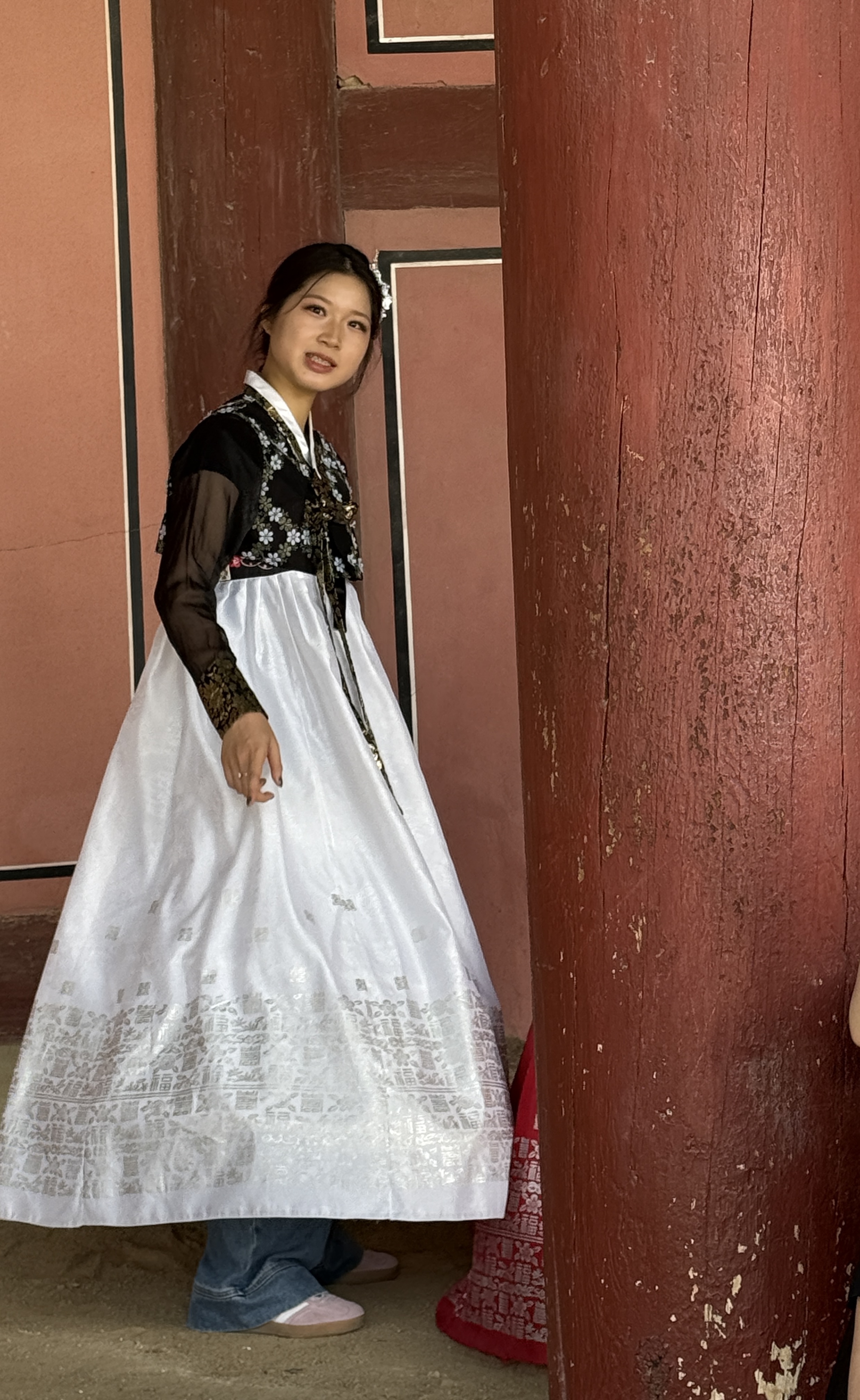
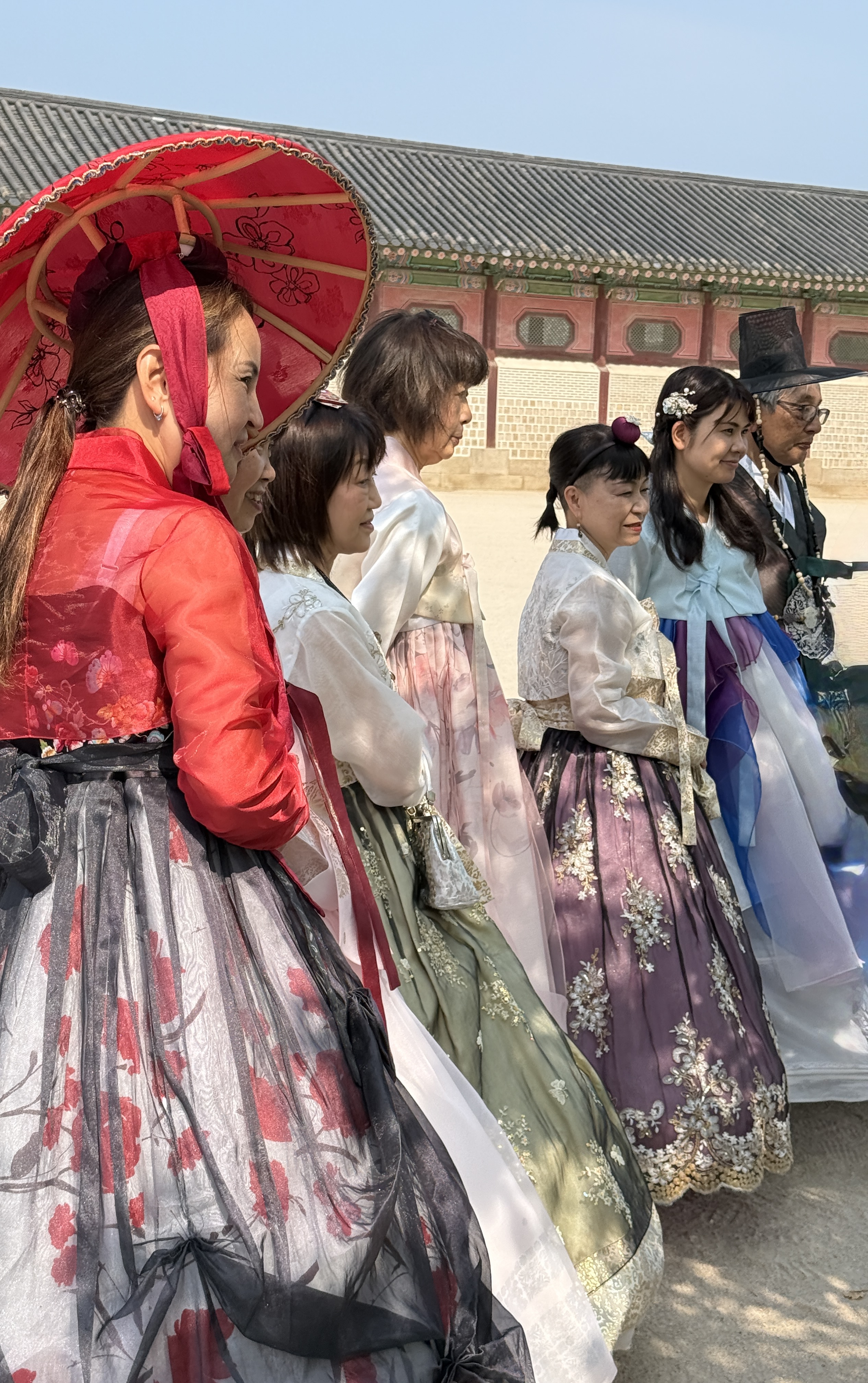
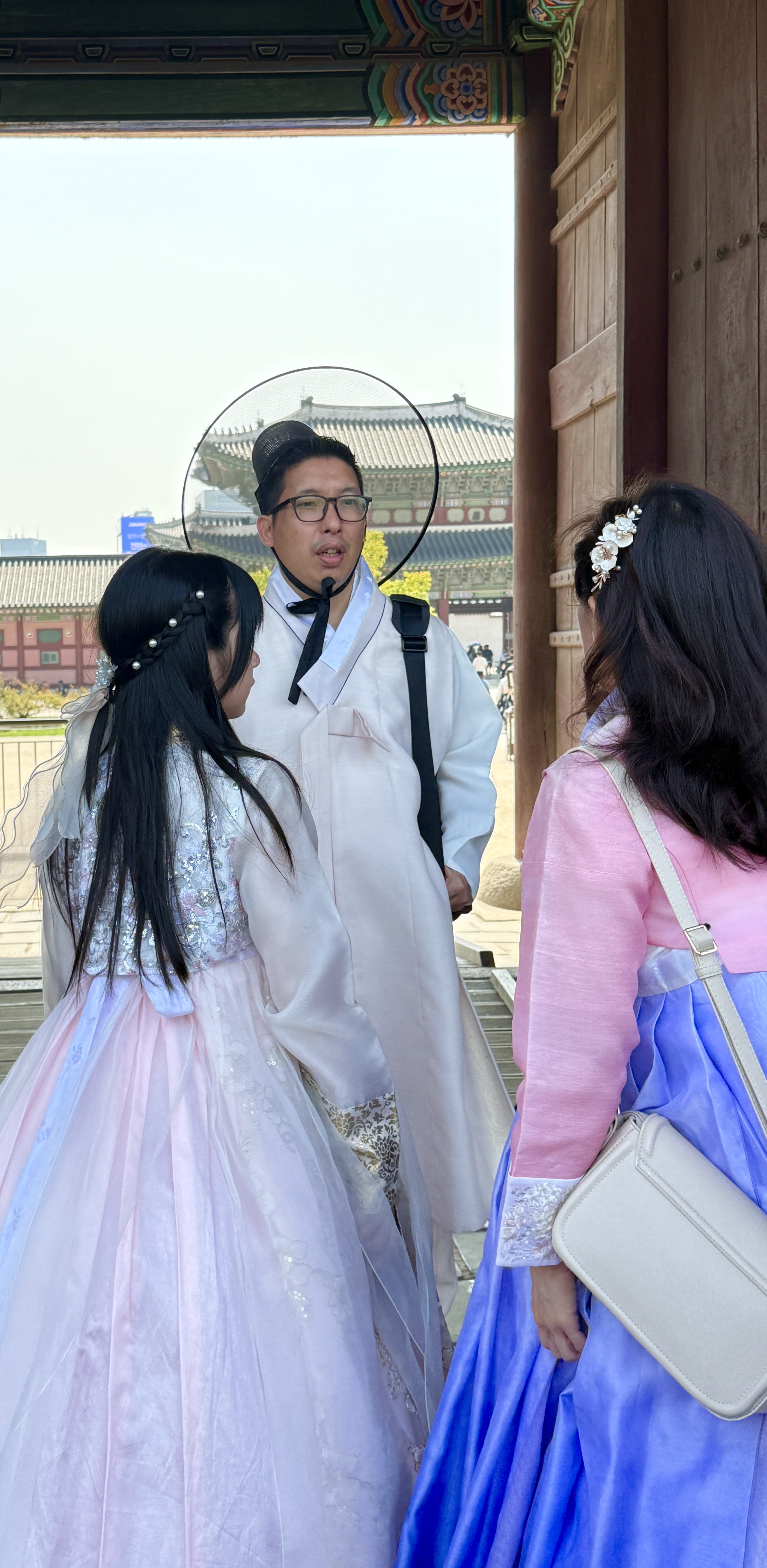
From what I’ve read, during Japanese colonization (1910–1945), Gyeongbokgung Palace was systematically dismantled as a deliberate act of cultural erasure. By 1915, more than 90 percent of the palace’s structures had been demolished. The Japanese also built their colonial Government-General Building directly in front of the throne hall, literally casting the palace in its shadow. By liberation in 1945, only a handful of original buildings survived. Restoration began in earnest in the 1990s — and has been ongoing since. The Governor-General Building was finally demolished in 1996, a powerful symbolic act, and reconstruction of gates, pavilions, and royal quarters has continued ever since, with more still planned.
One delightful perk: entrance is free if you arrive in traditional “hanbok” — so on free admission days, like today, the costume is purely for the pleasure of it. Frankly, it didn’t look so pleasurable in the heat and humidity.
What strikes you immediately is the setting: this vast, ancient palace complex sitting squarely in the middle of one of Asia’s most modern cities, hemmed in by glass towers and corporate high-rises.
From the palace, we headed back by subway to the hanok to check out and grab a taxi to take us to our new hotel on the other side of the city in the modern, hectic area of Hondae. We are now at the Ryse Hotel… a modern hotel. We are on the 13th floor (apparently they don’t have those superstitions about the number 13 and we have a great city view. By the way Seoul has a population of 10 million and the density is greater than Brooklyn!
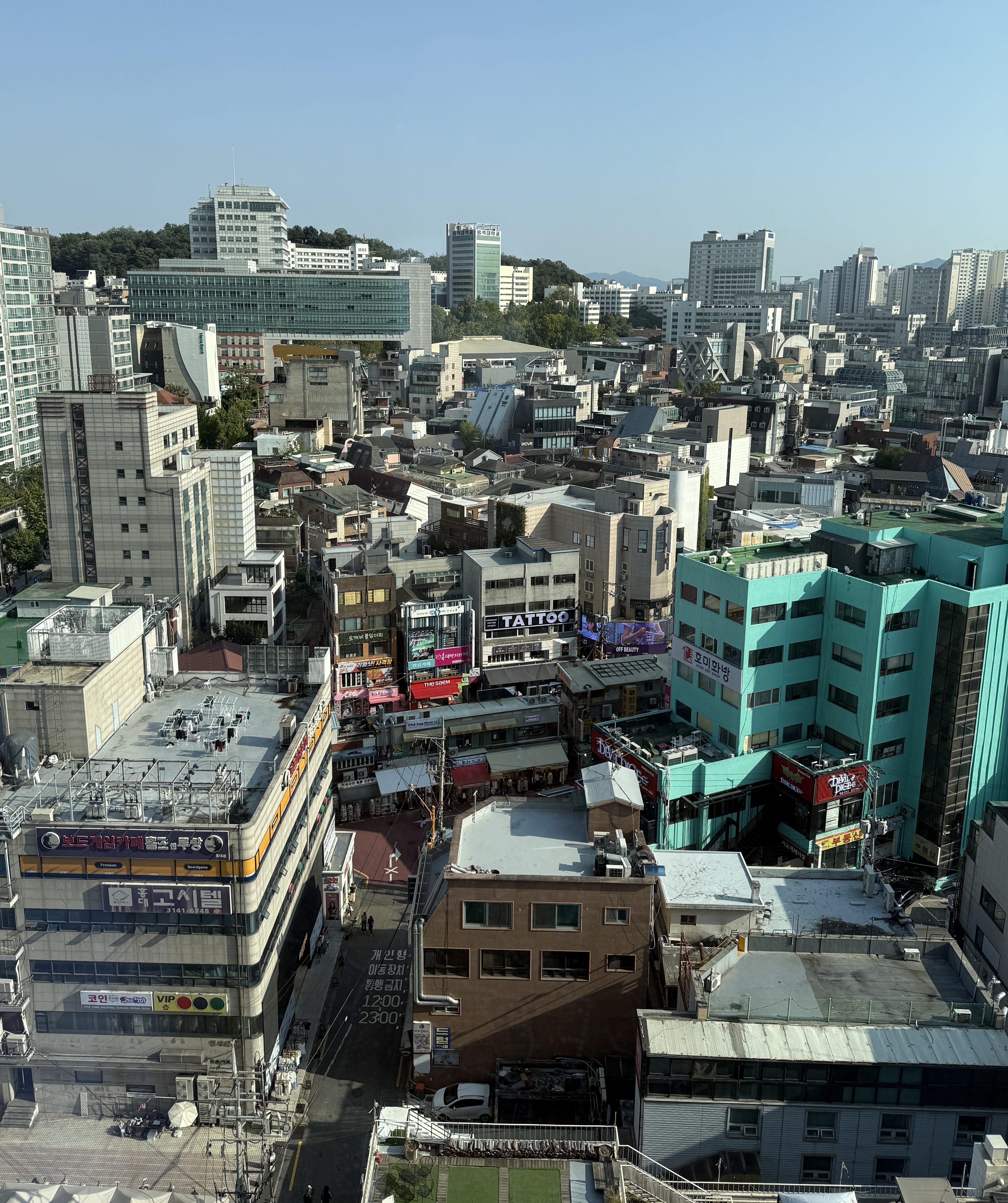
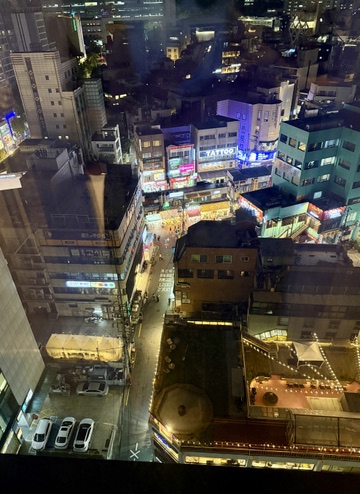
Now we are off to dinner — at Moochaeseck. Will report on it tomorrow. We were planning to walk, but now it seems to be raining, so we may need to take a short taxi. Hmmm… It’s a place with a rooftop and view. Guess that won’t work.
Seoul for Foodies: September 29, 2026 Continued
Feel free to browse the photos… or for those not interested in food (???) just ignore this post.
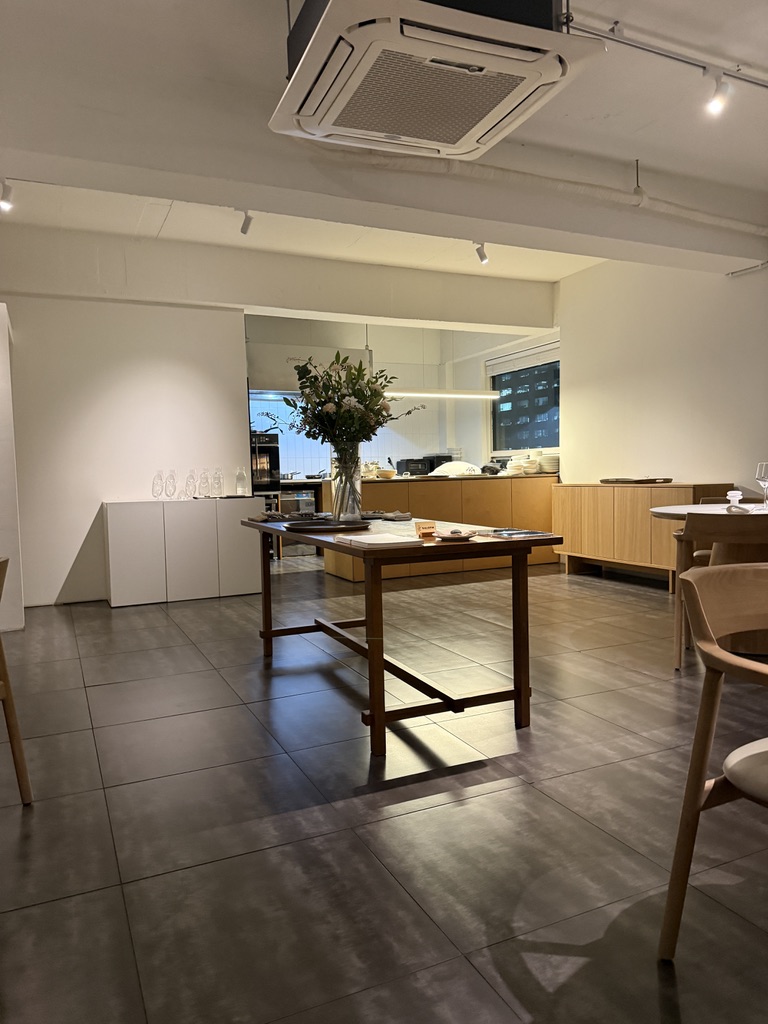
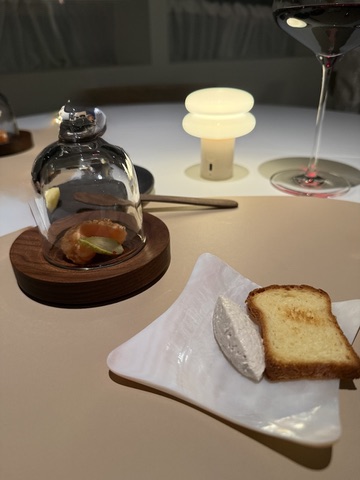
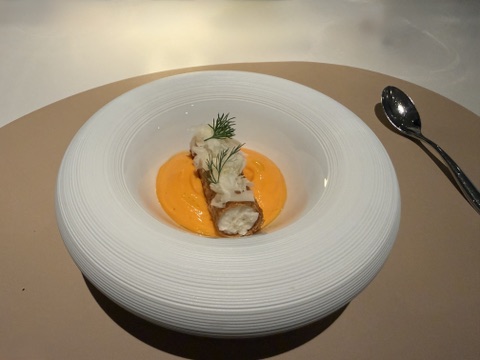
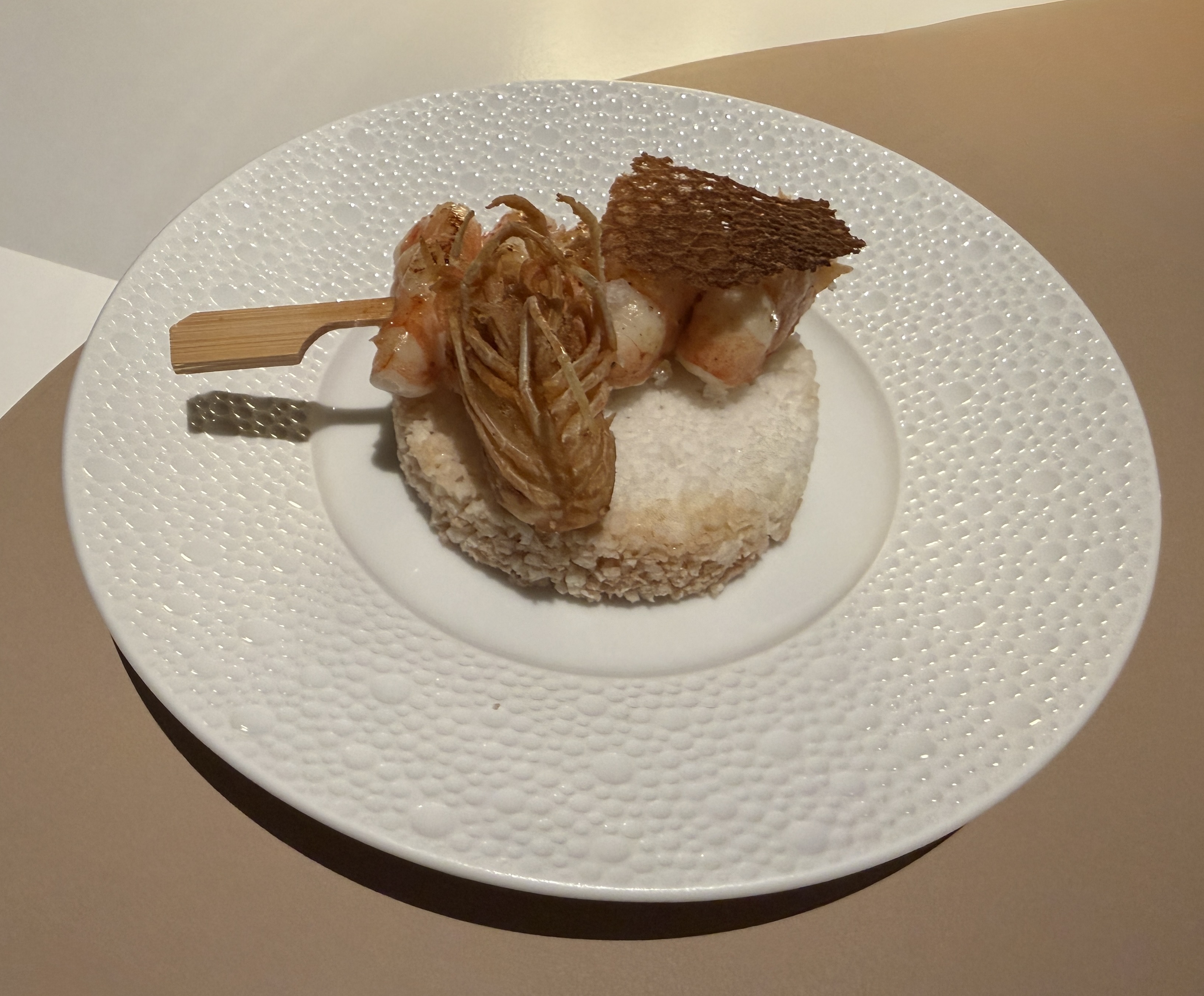
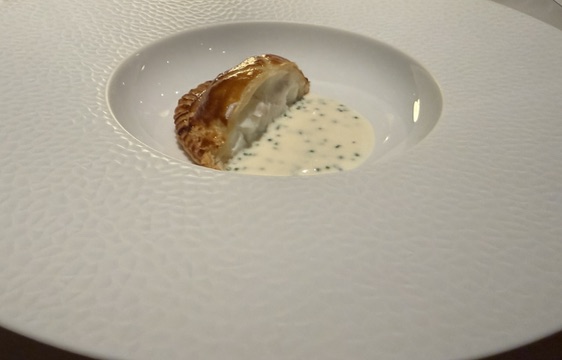
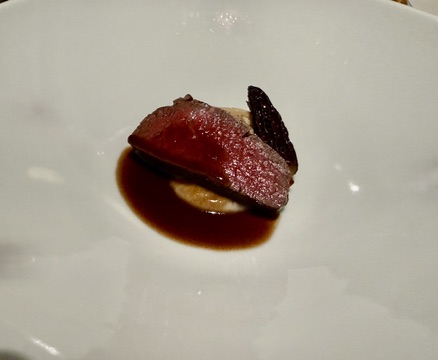
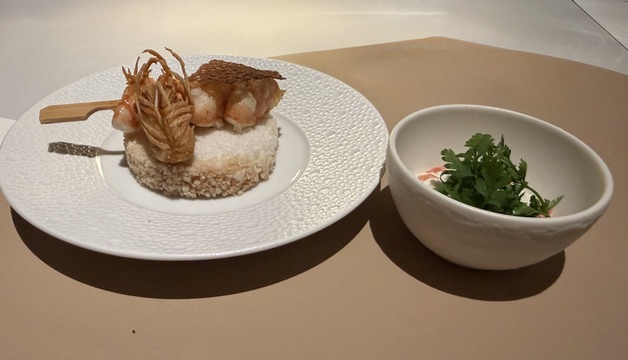
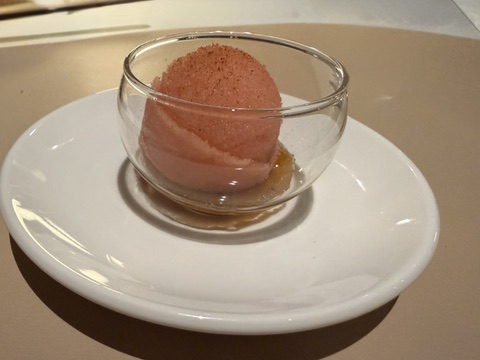
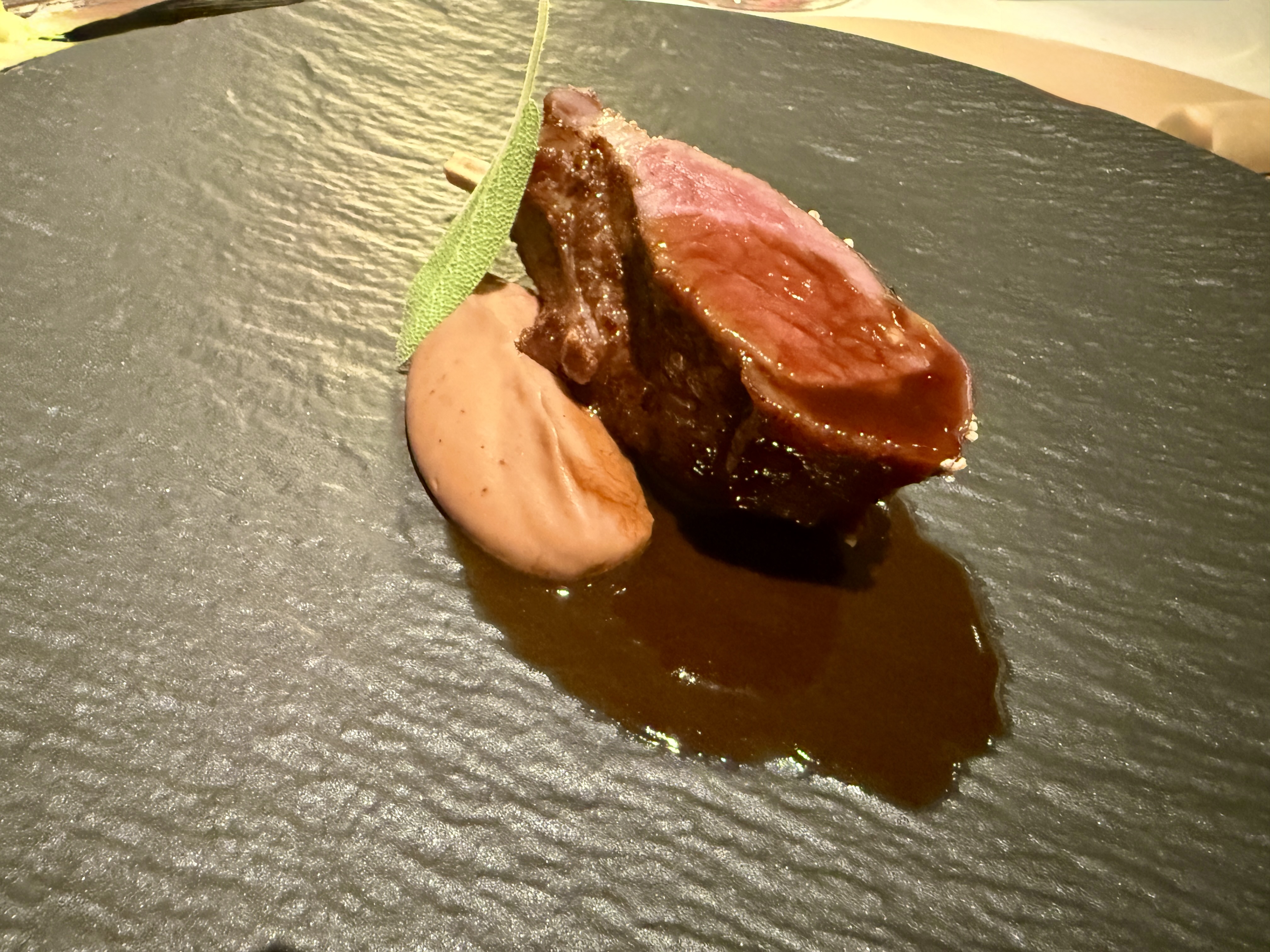
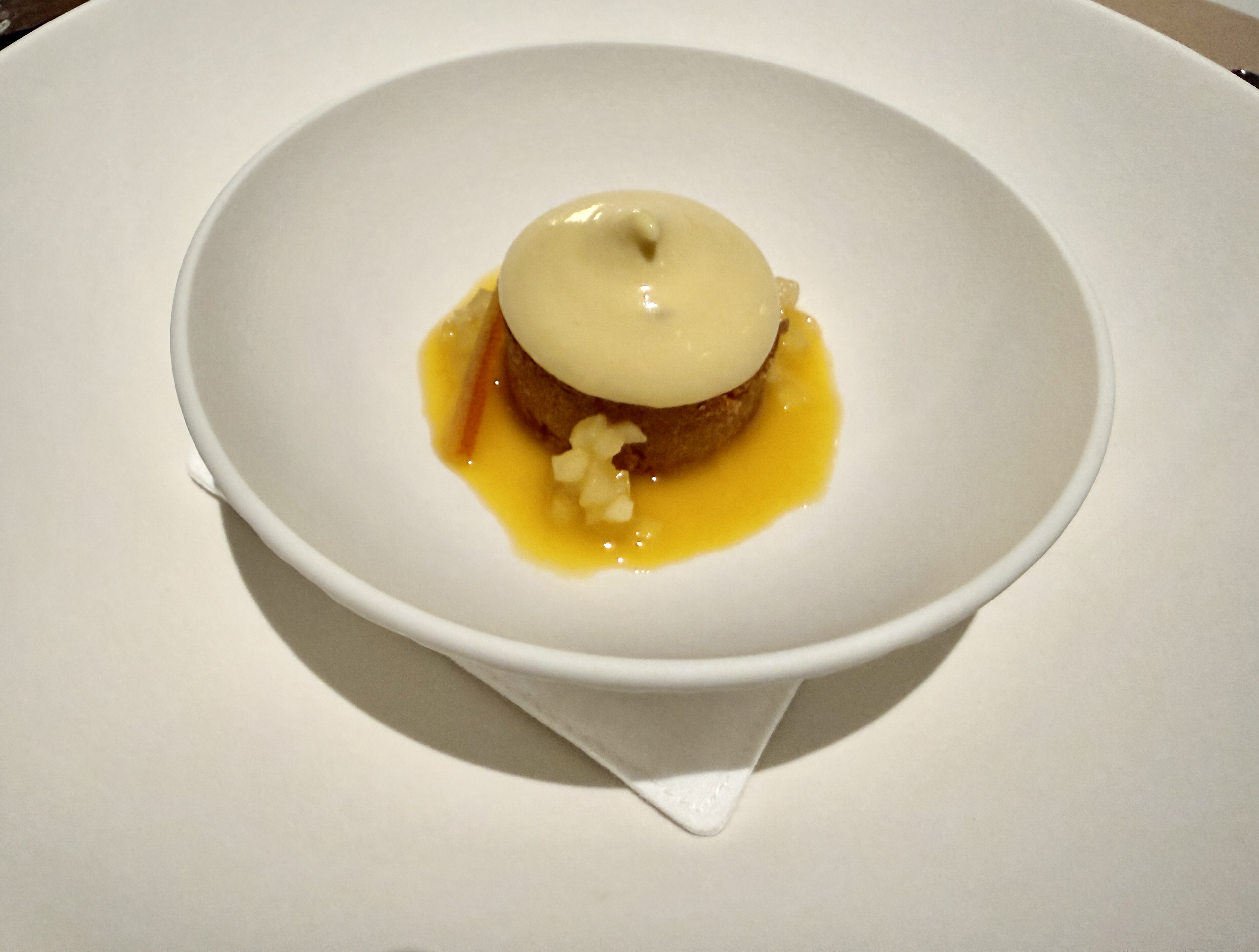
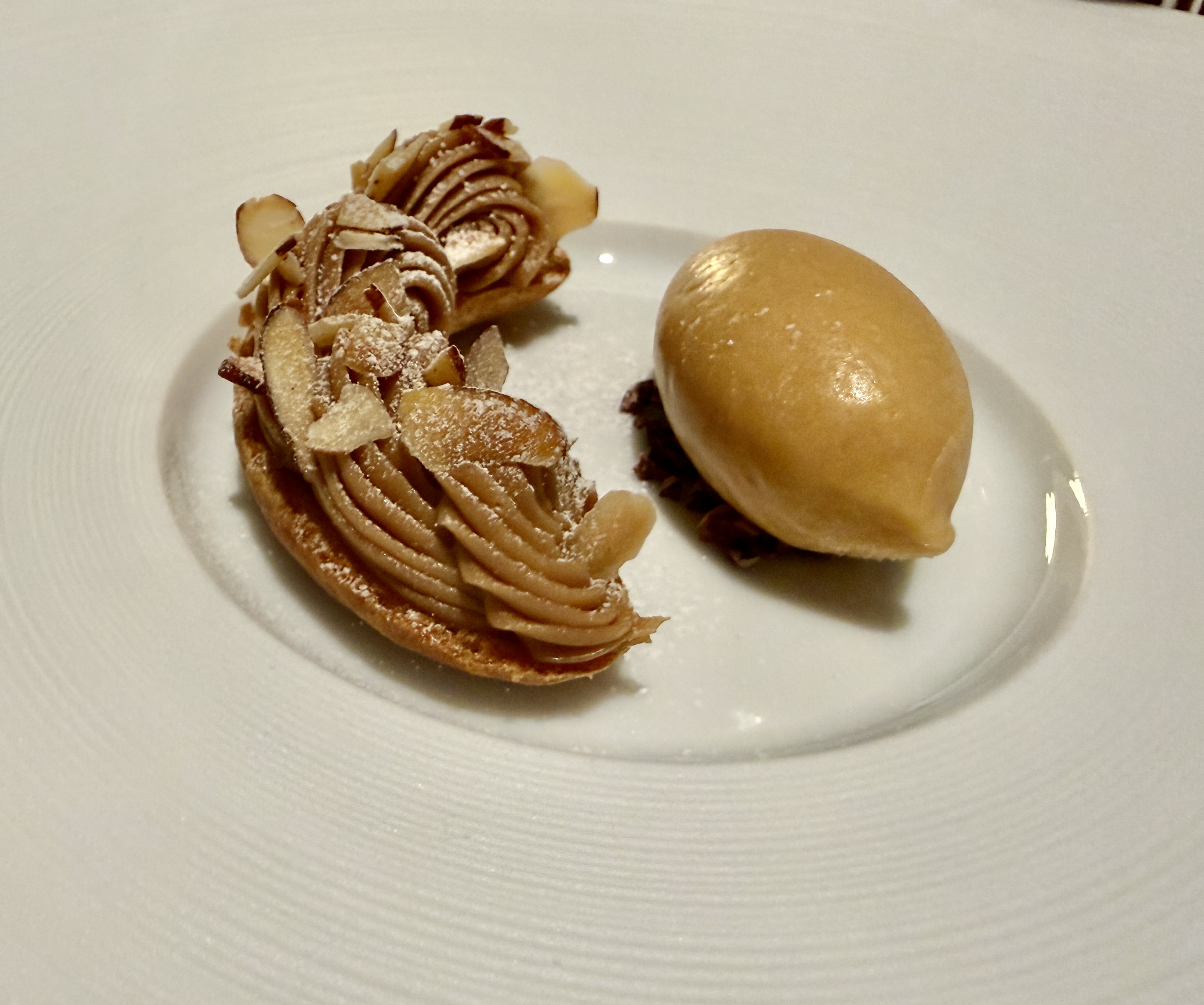
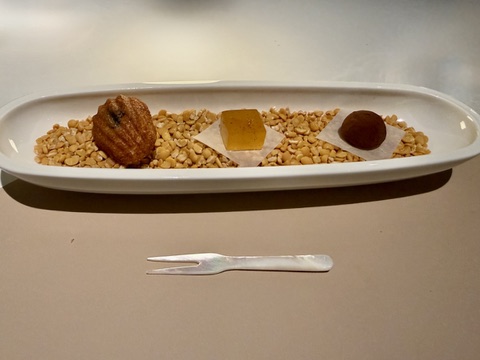
One thing I’m not is a food photographer, but I did my best. Galopin restaurant was about a ten minute walk from our charming hanok. We had booked the reservation from the states, having read something about it and also because it was close to our part of the city. It is actually a French restaurant… and Mike’s immediate comment when he heard I booked it was …”French restaurant in Korea?? Why?” Well he certainly changed his tune as the meal began to arrive. Galopin is located in a very very non-descript three story building. From the street, you’d probably change your mind. There was a small sign announcing the restaurant and stating that it was on the second floor. The building seemed deserted and as we climbed the stairs it felt like there was no way there could be a fine French restaurant in this unassuming building with the ugliest stairwell and railing! But when we got to the second floor, it was like a transformation with an absolutely simple, well-designed space with seating for only about 16 people at five tables and an open kitchen. Galopin is owned by a young couple; the restaurant is six years old. We’ve eaten at many wonderful restaurants all around the world, and many have had Michelin stars. I’d rate this among the best we’ve been to. No detail is overlooked. I immediately wanted the simple light fixture on the tables, and I’d trade in my dishes for the beautifully displayed dishes and bowls they used for each dish.
It’s just the couple. No one else works there. He is the chef.. .she does the pastries. Their English is modest, but they were able to explain each dish. While he lived in Paris for a while (I think two years) he did not train there and he did not work in the food biz there (at least that is what I understood from our conversation). He did apprentice at a famous French restaurant in Seoul, but that restaurant is no longer operational.
I forgot to keep the menu, so I’m hoping the pictures conjure up the menu and that what I’m going to list is at least partially accurate:
- 1. Amuse Bouche — bite size slice of salmon with brioche and homemade onion butter; 2. a canolli-likepastry roll stuffed with halibut and potato sitting in a pepper sauce; 3. shrimp, including head and grapefruit, served with an amazing aioli made with yogurt and garlic and some herbs (tarragon and chervil maybe); 4. fish wrapped in cooked cabbage with a chive sauce; 5. Korean beef tenderloin with a mushroom mochi or at least that’s what I think they described; 6. a palate cleanser of orange, squash, and cinnamon sorbet; 7. baby lambchop that melted in your mouth with amaranth, sesame seeds, sage and other herbs; 8. dessert #1: some kind of mango, passion frui, and apple concoction; dessert #2: Paris breast and caramel ice cream; dessert #3: an assortment of tiny sweets including a chocolate truffle, something walnut, and a small fruit gel.
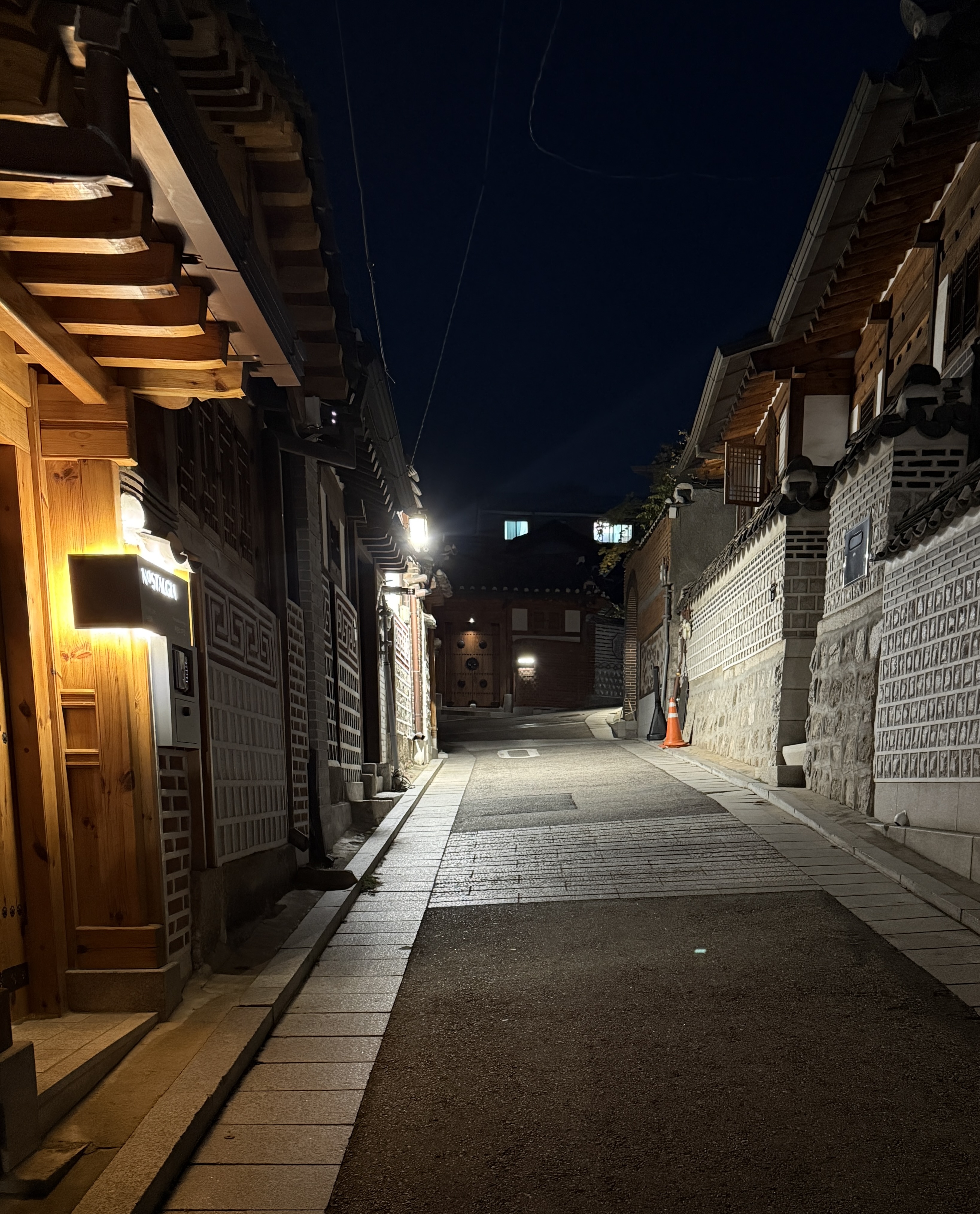
We waddled back to our hanok and enjoyed our final night in the Bukchon neighborhood. It was totally peaceful and beautiful. No one outside, no tourists (because they are not allowed after 5:00), no traffic… just total calm. What a change from our normal life. Tomorrow we change hotels and will bve staying in one of the most hectic neighborhoods (a mecca for young people, we are told… so we will definitely fit in!). More tomorrow.
Days One and Two: Korea!
SEPTEMBER 27 AND 28, 2026. Arrival: Planes and Trains and Taxi and Feet! Exploration: Hanoks, Do Ho Suh, and Food!
Greetings from Seoul or “Seoul-eseo anbureul jeonhamnida’… as my translation program tells me.
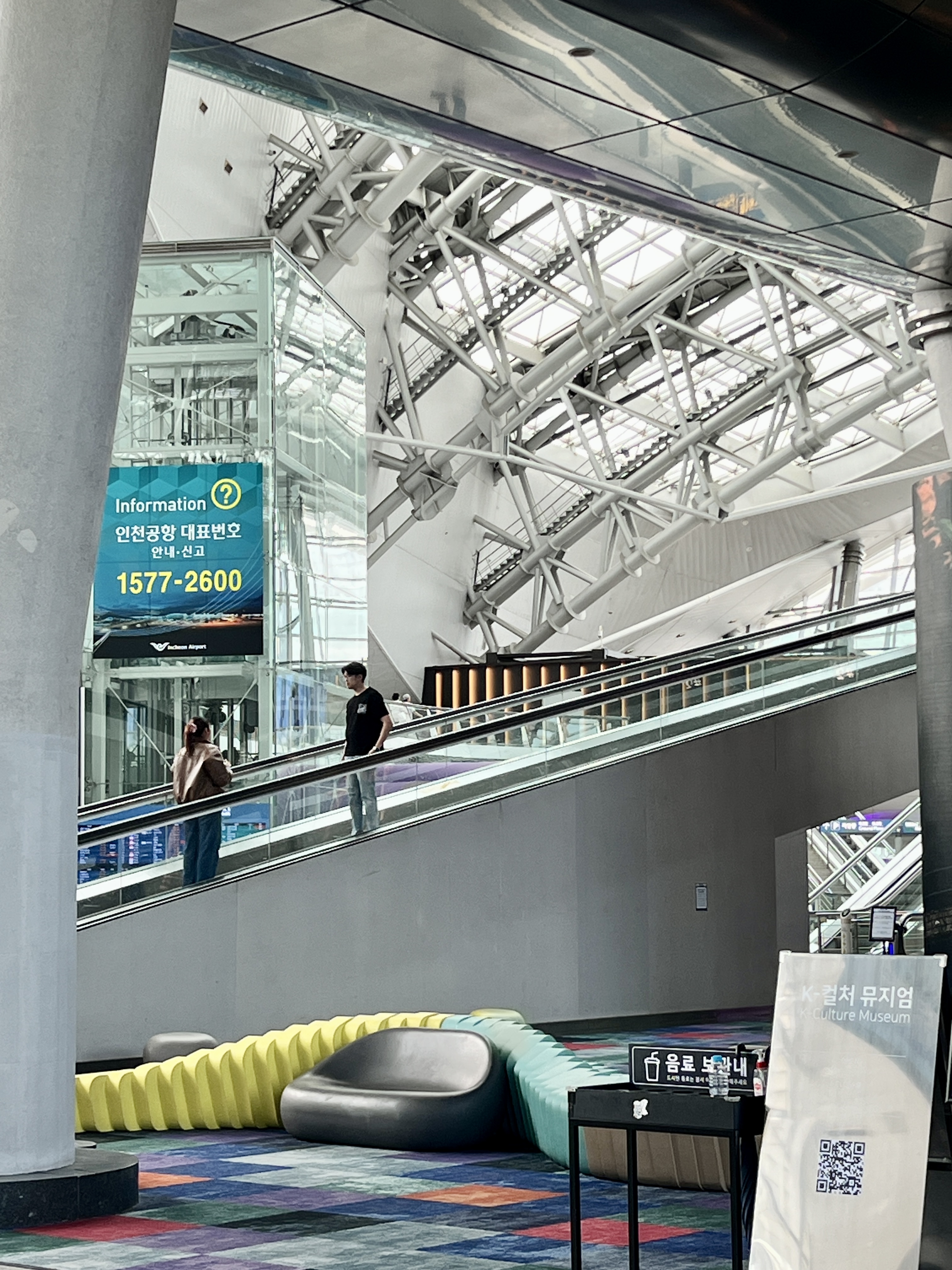
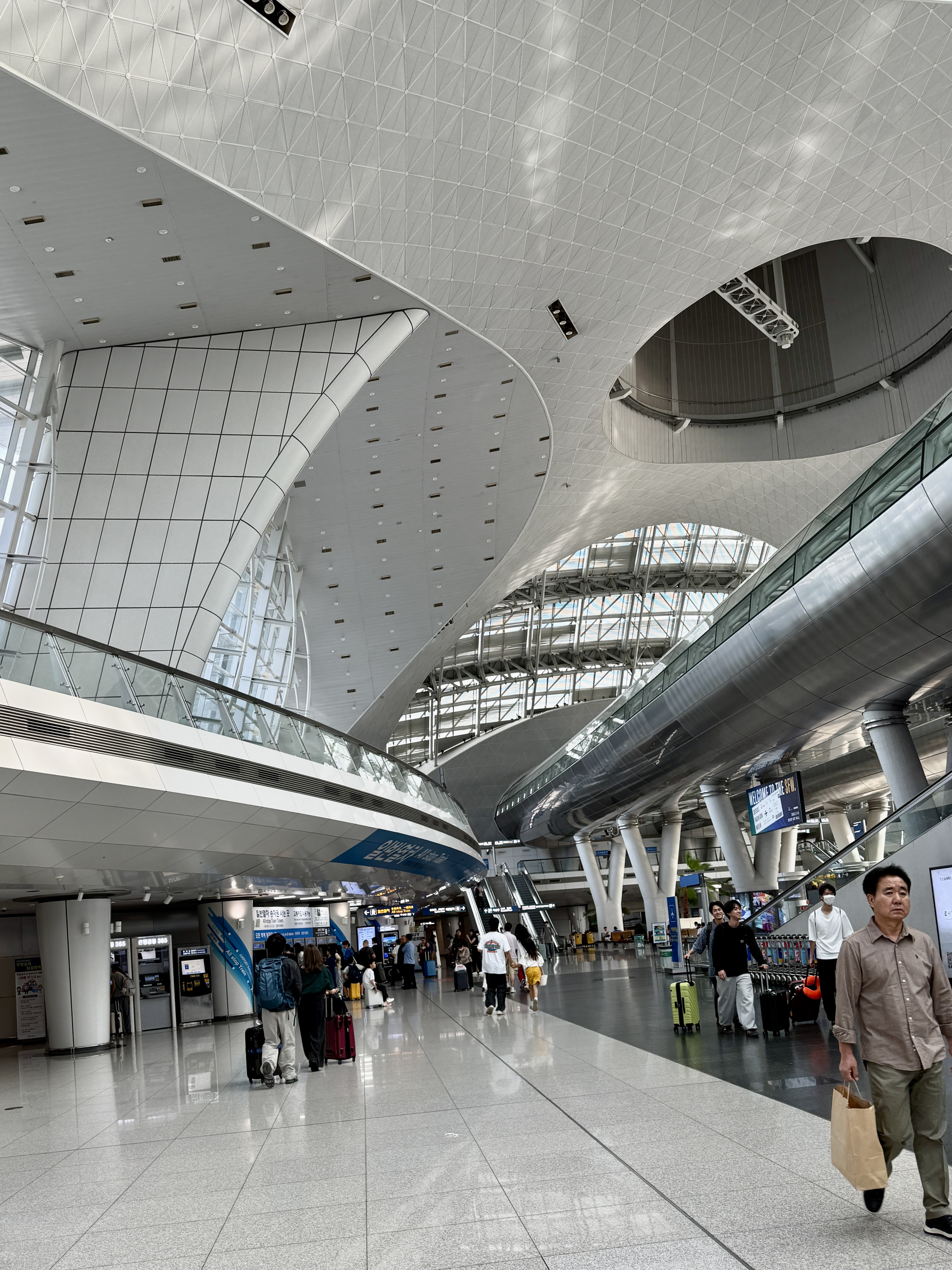
After a twelve-hour flight from San Francisco to Seoul, and an easy path through Korean customs, we headed to find the Express train from the airport to the main Seoul train station. It took a bit to figure out how to get to and find the correct train, but on the whole it was pretty straight forward with reserved seats and we found ourselves on a fast, non-stop, comfortable train to the main station. I should note that the Seoul Airport (Incheon) is incredibly new and well designed; definitely puts nearly all of our US airports to shame.
Once we reached the Seoul main train station we had a few bumps trying to find our way out to a taxi stand. But eventually we found a taxi, but the driver didn’t know how to find our hotel. I wound up calling the hotel and they talked the driver through the instructions and we were on our way. Actually, I’m using the Korea version of WAZE (Naver) and I did shjow that to the drivdr as well.
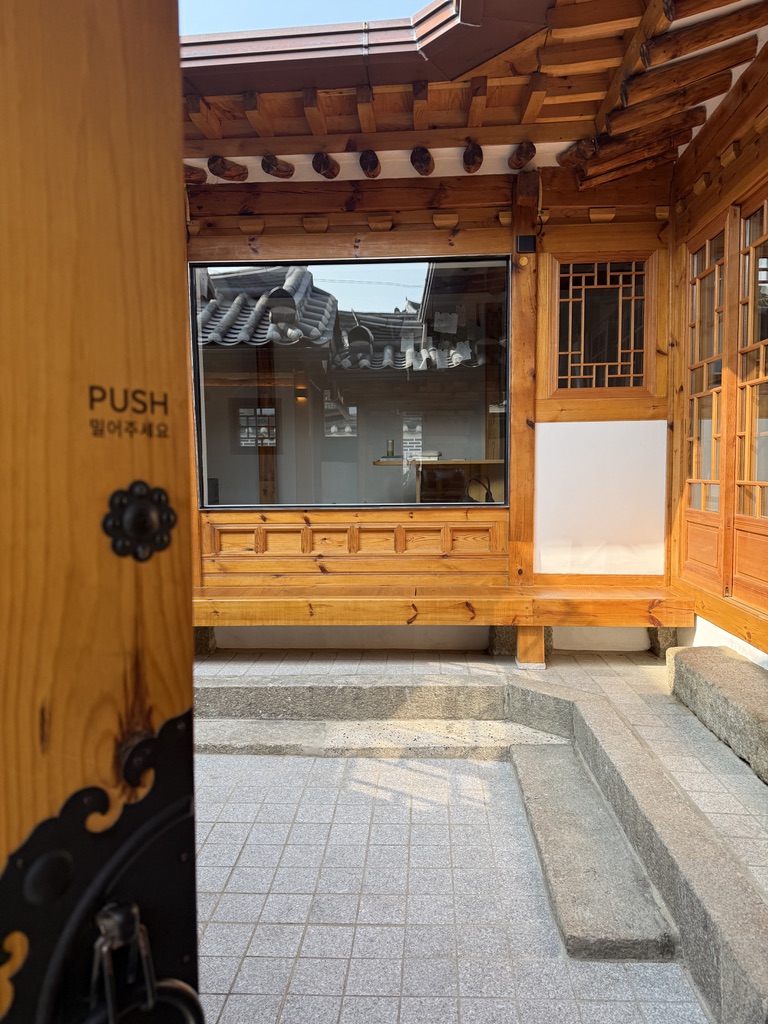
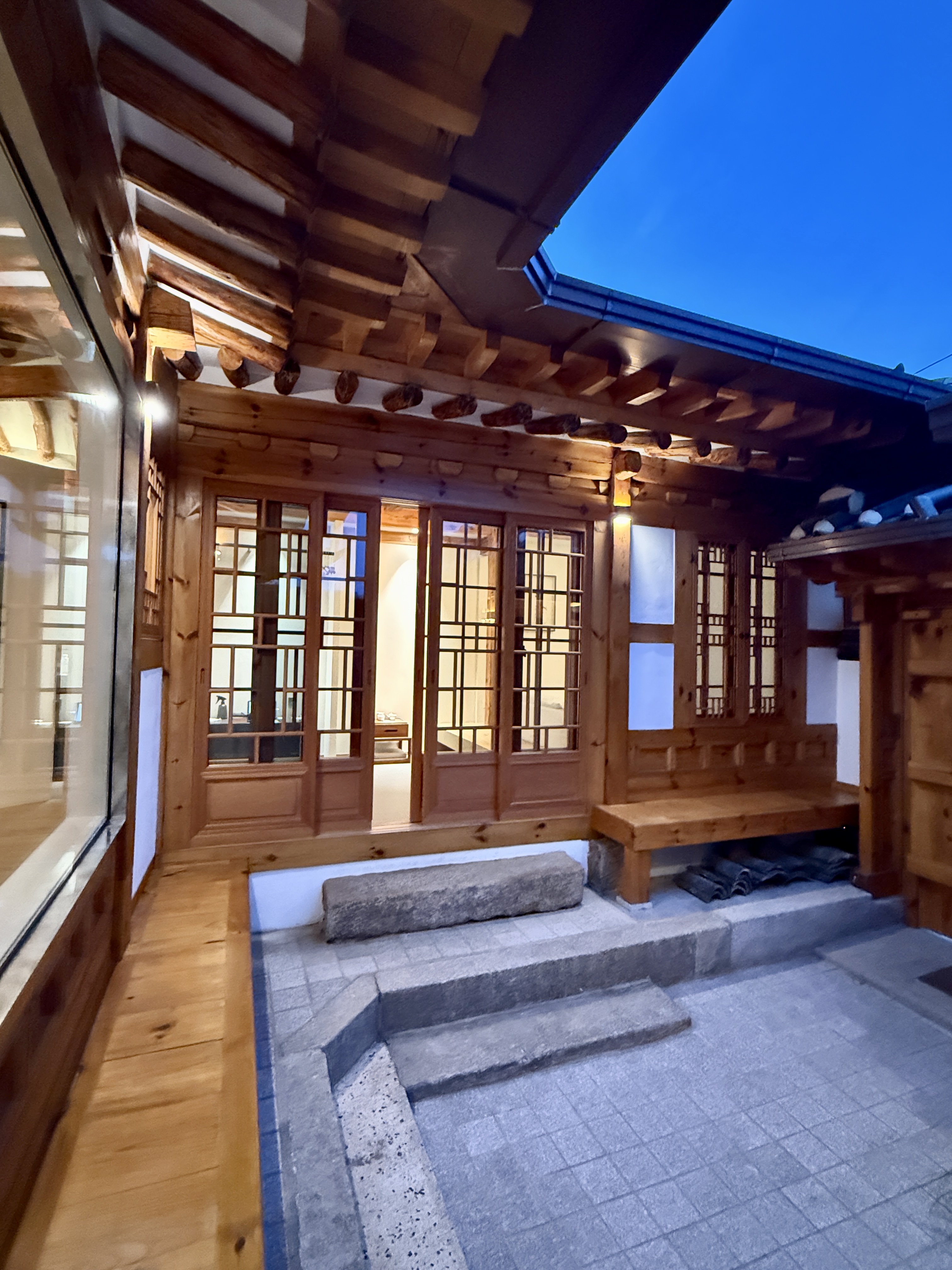
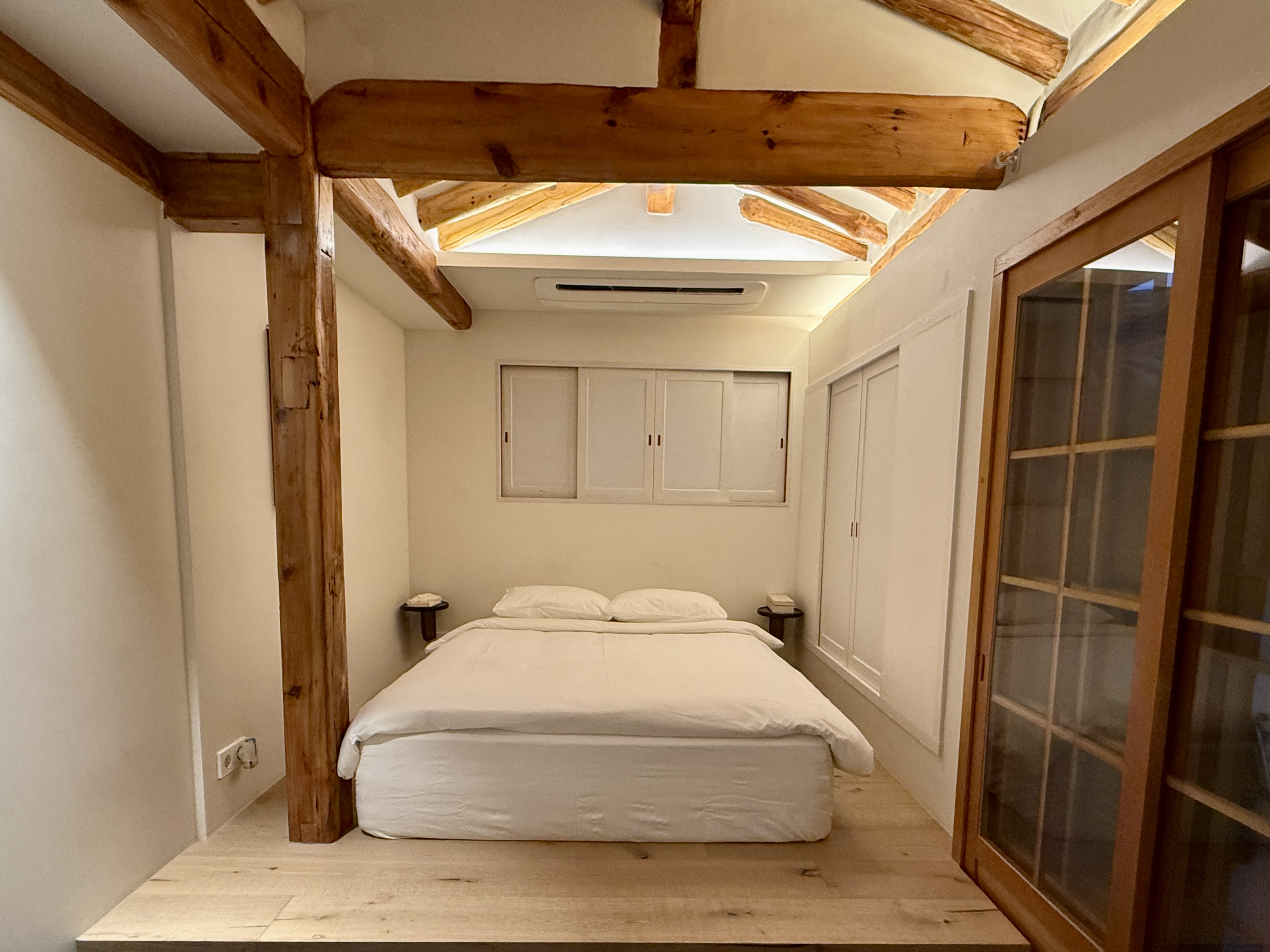
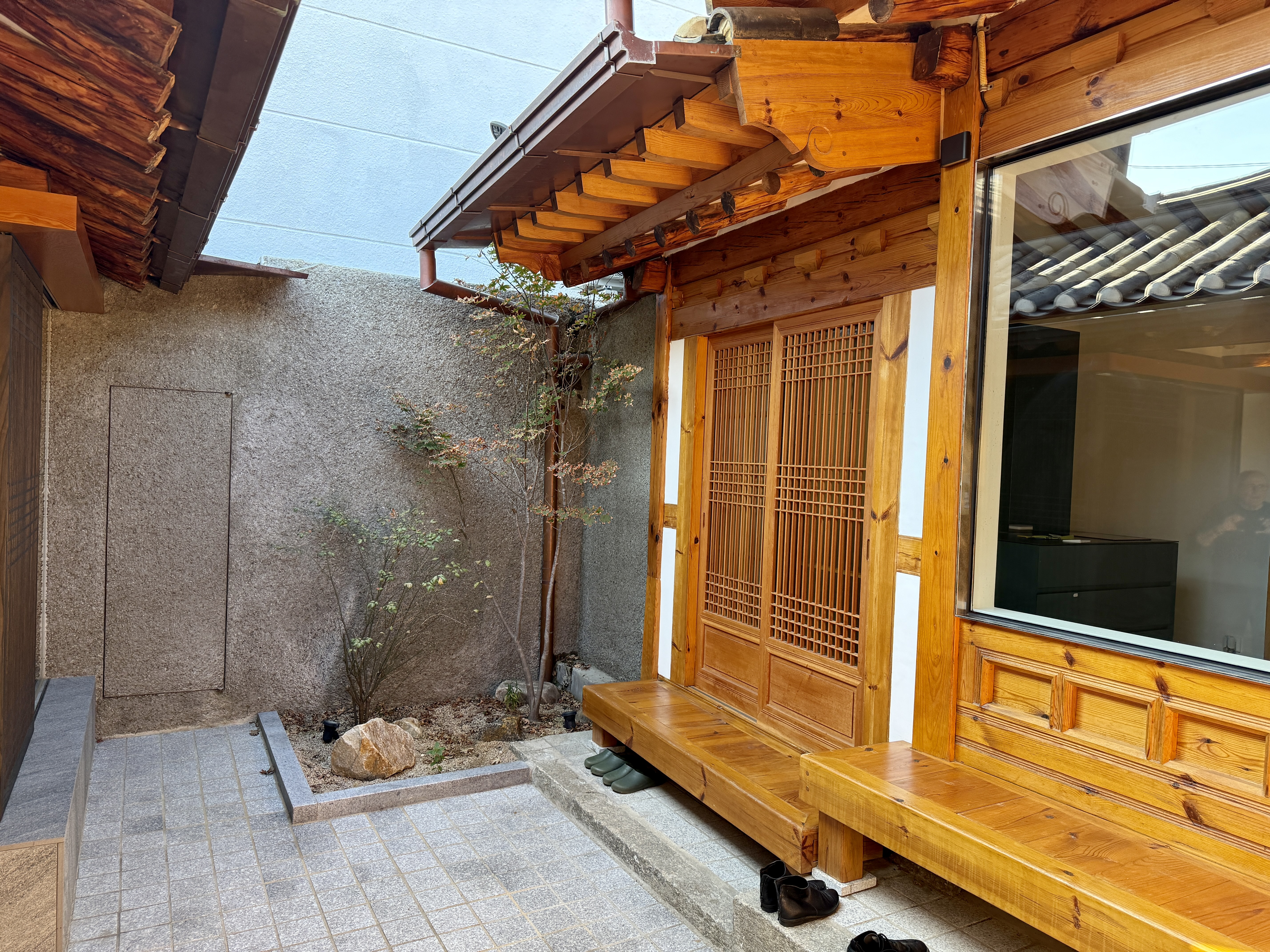
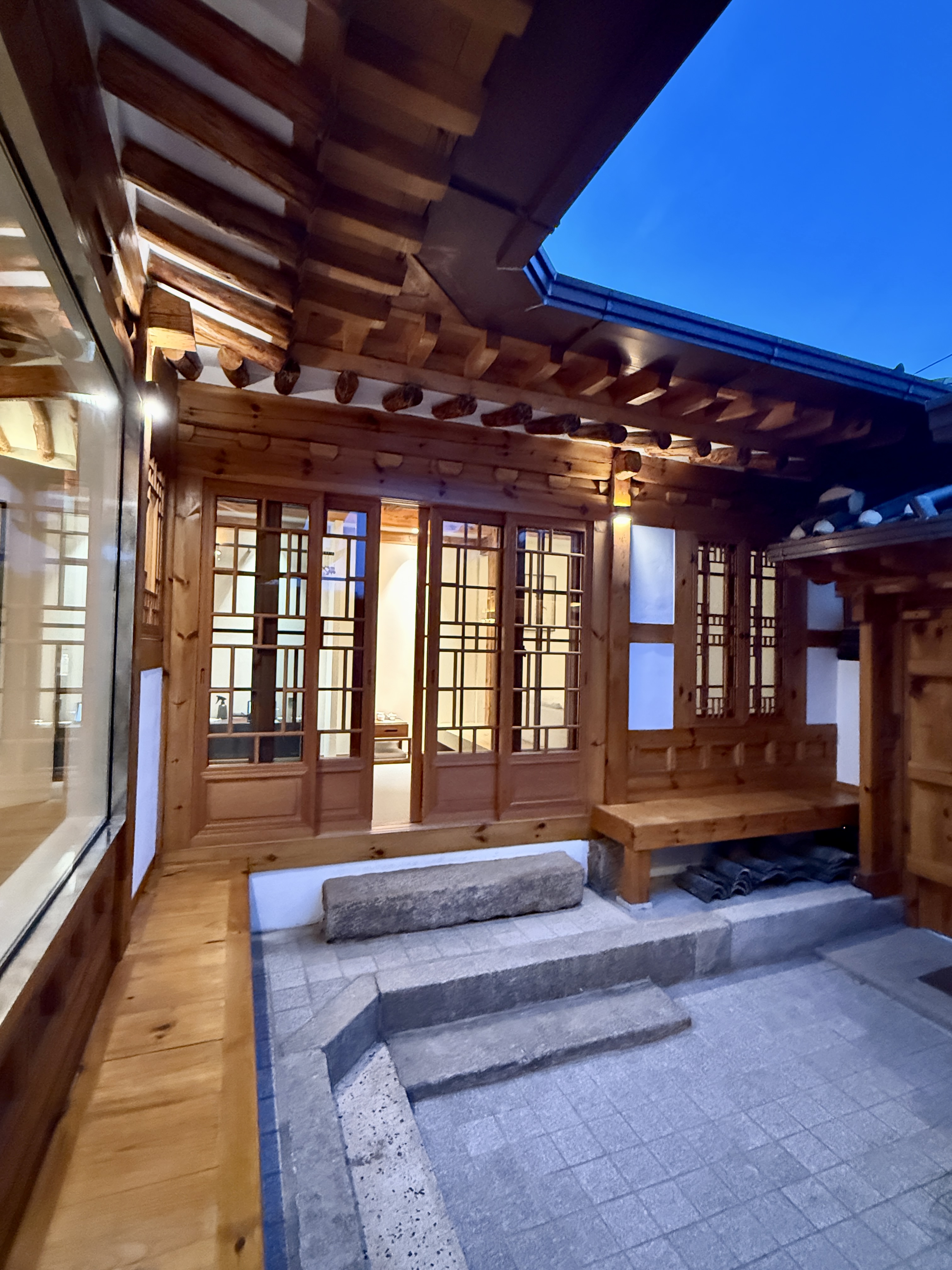
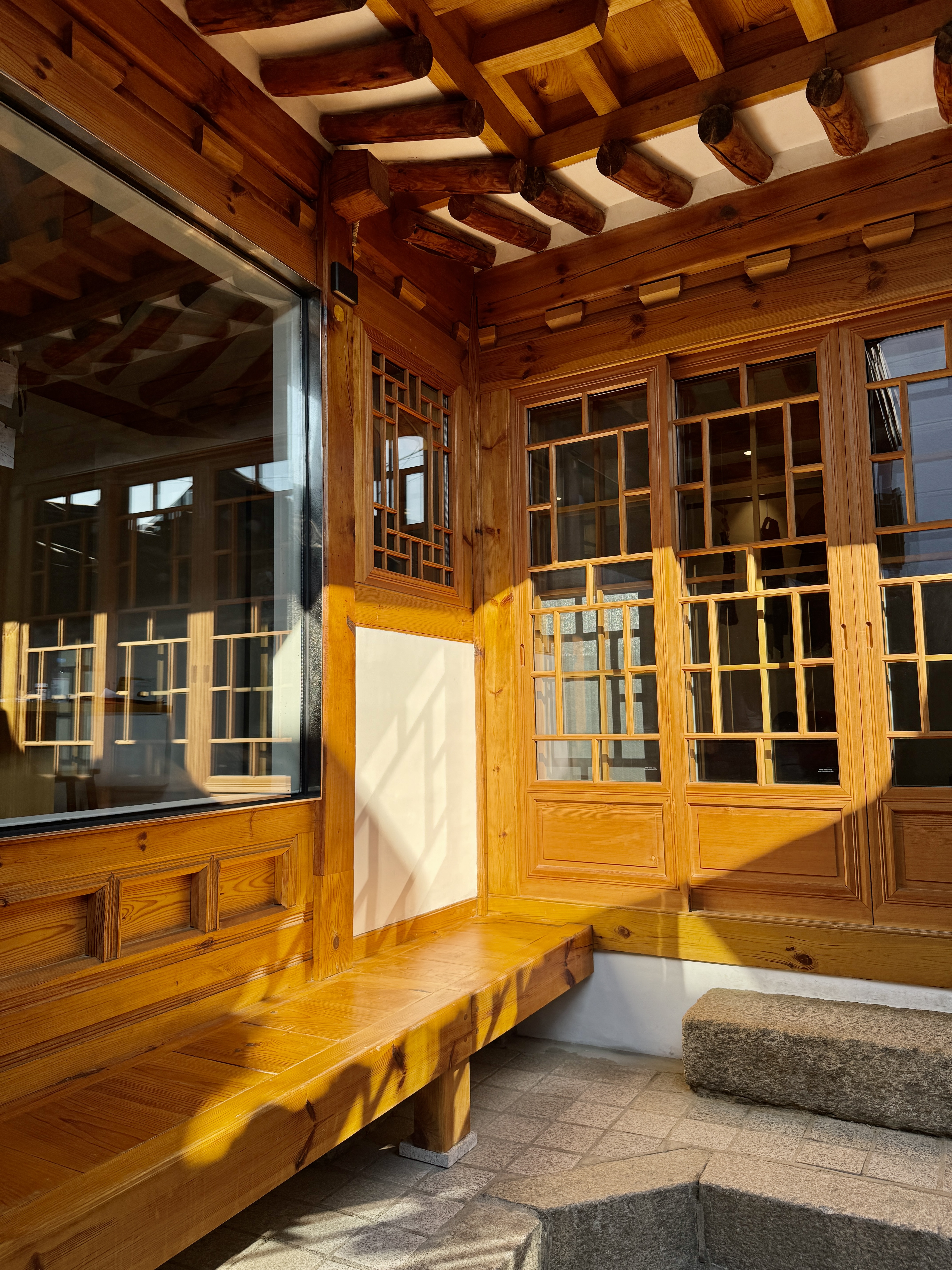
We are staying the first two nights at the Nostalgia Hanok “hotel” in the heart of Bukchon Hanok Village — a residential neighborhood in the Jongno District within Seoul. It has many restored traditional Korean houses, called hanoks (that date to the late 19th Century and early 20th), which has made it.a popular destination for many tourists, including us. As Seoul developed (redeveloped), efforts were made to preserve the hanok. Residents and the local government have put policies in place and notices up to manage problems relating to overtourism. So there really aren’t any “hotels” within the historic area. Since January 2025, visitors that are not staying in the hanok guesthouses in the area can only enter between 10 a.m. and 5 p.m. All visitors are asked to be considerate of people living in the homes. Since we are staying in one of those “hanoks” we are able to come and go as we please, but also have to remember to have our room keys readily available to prove we are guests in the area. This is probably why the driver couldn’t figure out where we were headed.
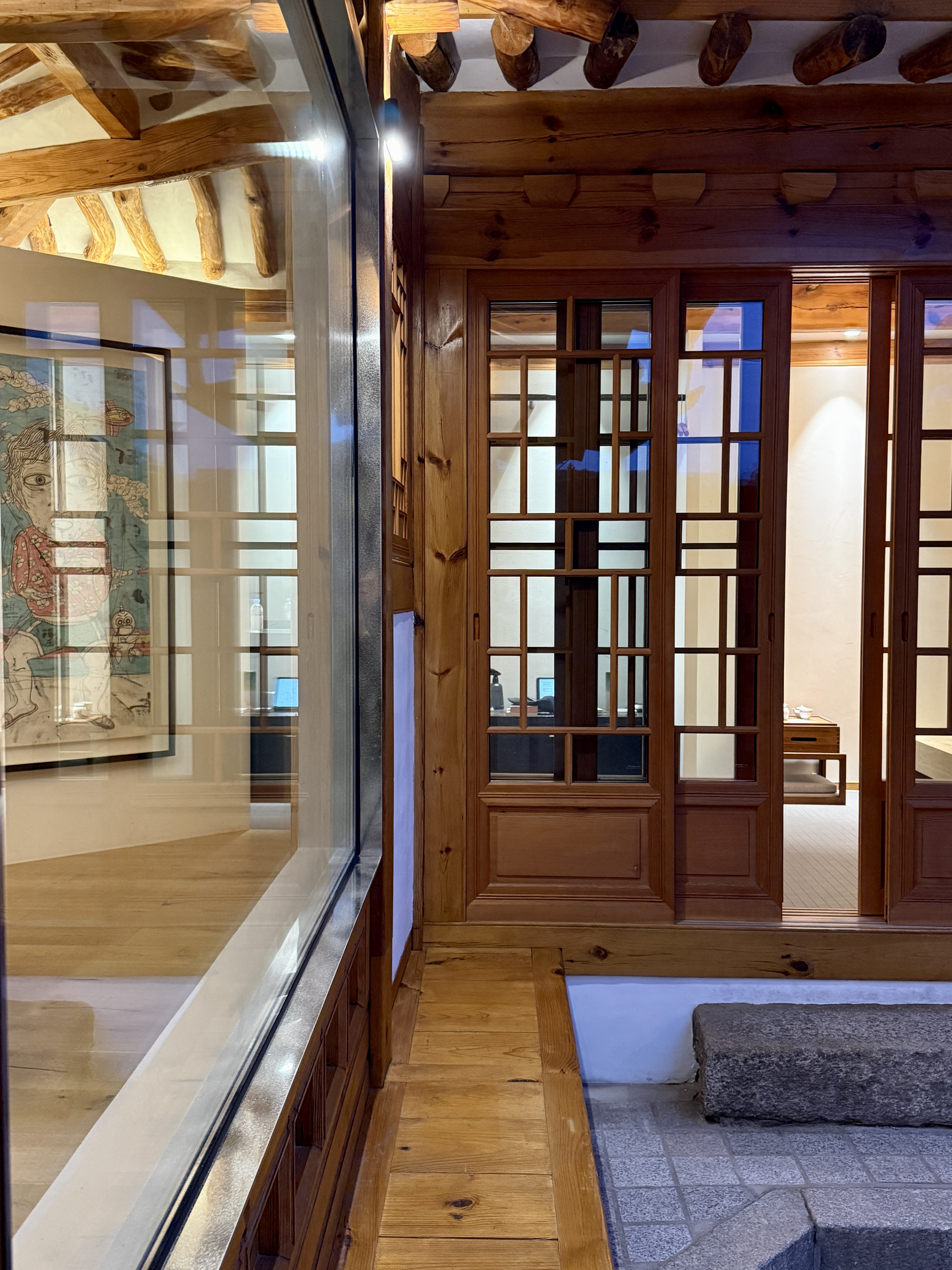
We have our own little hanok… about 400 + sq ft plus (bedroom, bathroom, compact kitchen, sitting/dining area and beyond this but inside our private zone, a delightful outdoor area, with bath. and more. It’s all designed quite well as an L-shape that wraps around the courtyard, and sits within the frame of an original hanok. The “hotel” isn’t really a hotel in that it doesn’t have a building with rooms. They own about 20 of these hanoks in the area and each is rented separately. Our little abode is called Nook Jae and it is up a winding, narrow pedestrian road that has many other hanoks (some owned by the hotel and others privately owned as residences).
After settling in we strolled to a tiny restaurant and had some kind of pasta with wasabi pesto, a tomato salad and another dish. Not the best–but we were tired and just wanted to eat before we could sleep.
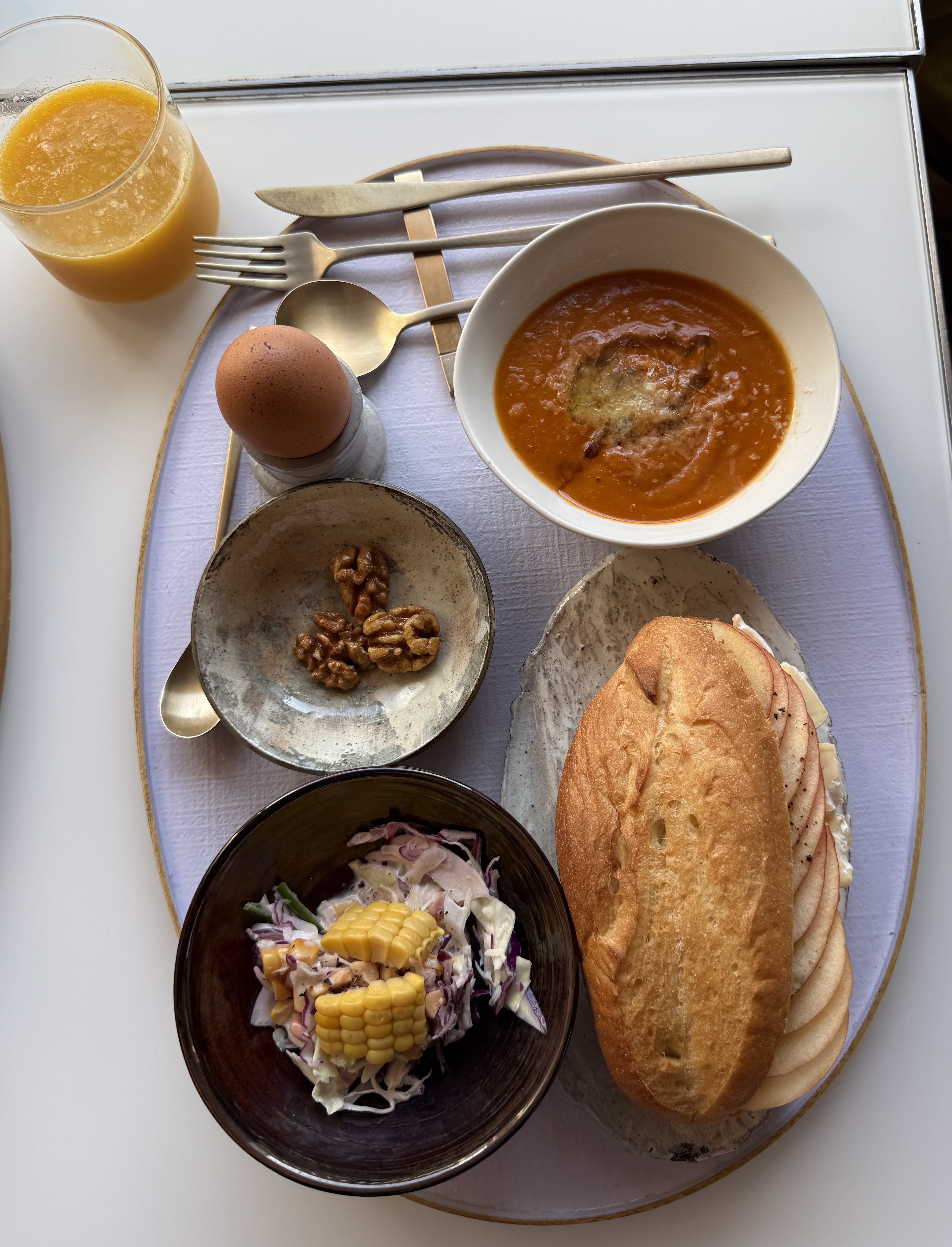
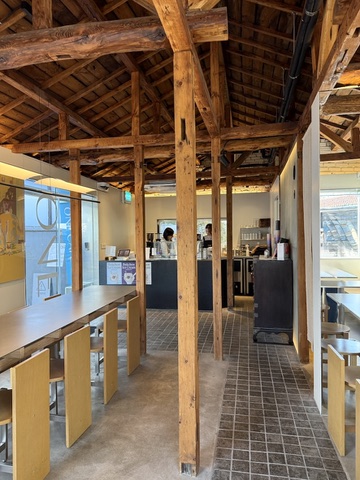
After a charming breakfast at a cafe (Cafe One) near our hanok, we headed out for the day…We intended to visit the big palace– the Gyeongbokgang, but alas, it was closed on Tuesdays, so will visit tomorrow. We headed to went to an area called Seochon–another hanok area that has been renovated but is far less touristy than Bukchon. It seems to be able to blend everyday neighborhood life with hidden indie bookshops, local food spots, and small art galleries. To get there–given that it’s been pretty warm (78 degrees), we decided to navigate Seoul’s subway system. After purchasing our subway card, we walked to the Anguk station and then had to figure out which train to take and where the platform was. We went down two floors (stairs) and then we must have looked pretty perplexed. Although I’m trying to use the translator app on the phone where you just hold the phone to the foreign words and it flashes the translation), we really didn’t know where to go. Some older gentleman then stopped and asked if we needed help. He had very mininimal English, but just wanted to be sure we goit to the correct train. .He “escorted” us down another level (this time with an escalator) and pointed where to go. Once we got through the turnstiles, though, we had several choices. We stoped a woman with a baby and she (like everyone else we would ask questions for the rest of our time) immediately went to her Naver app and then told us which train to take! Unbelievably friendly and helpful, but funny that they all need to rely on the app. And Mike has become a Seoul straphanger!
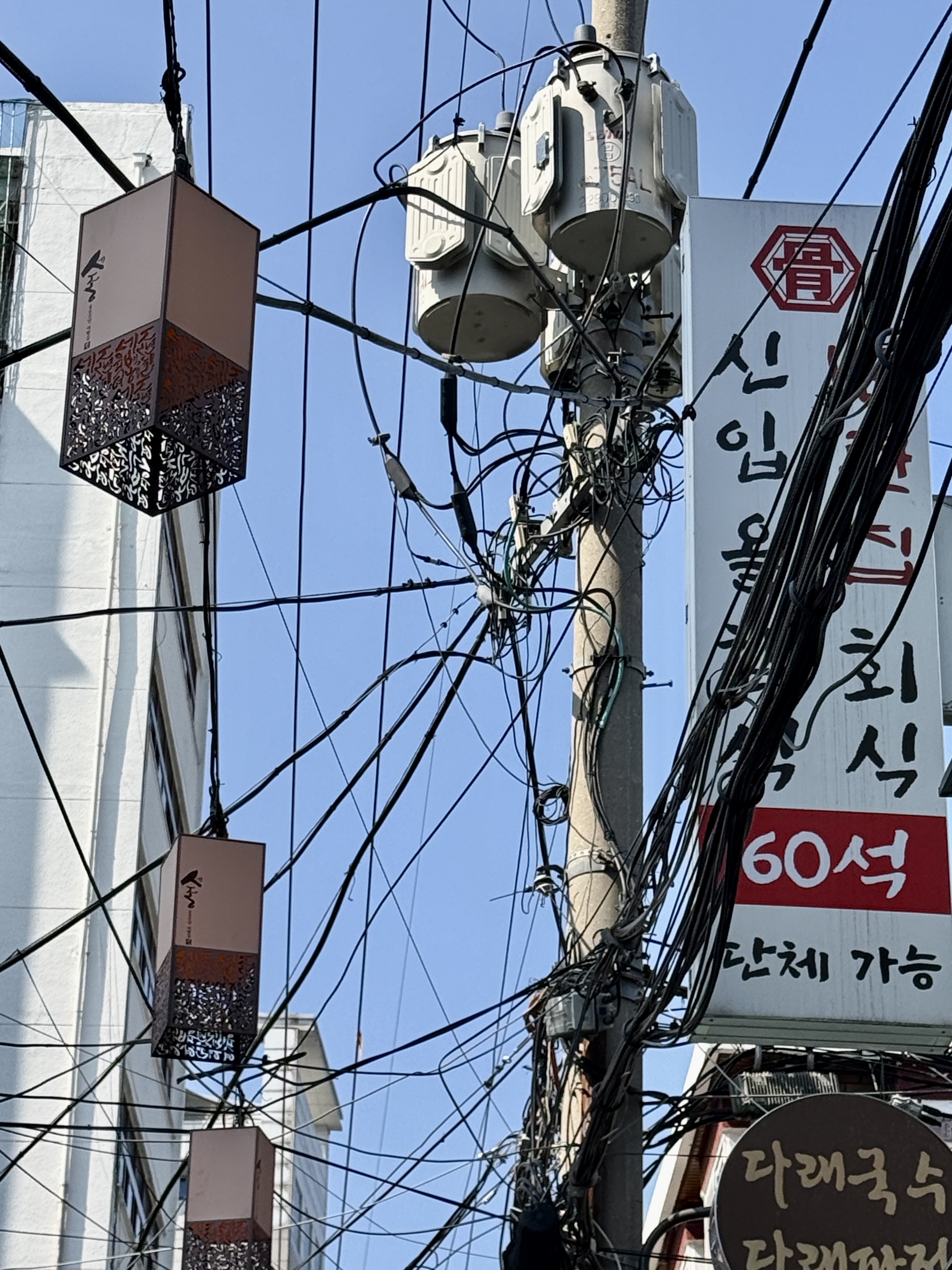
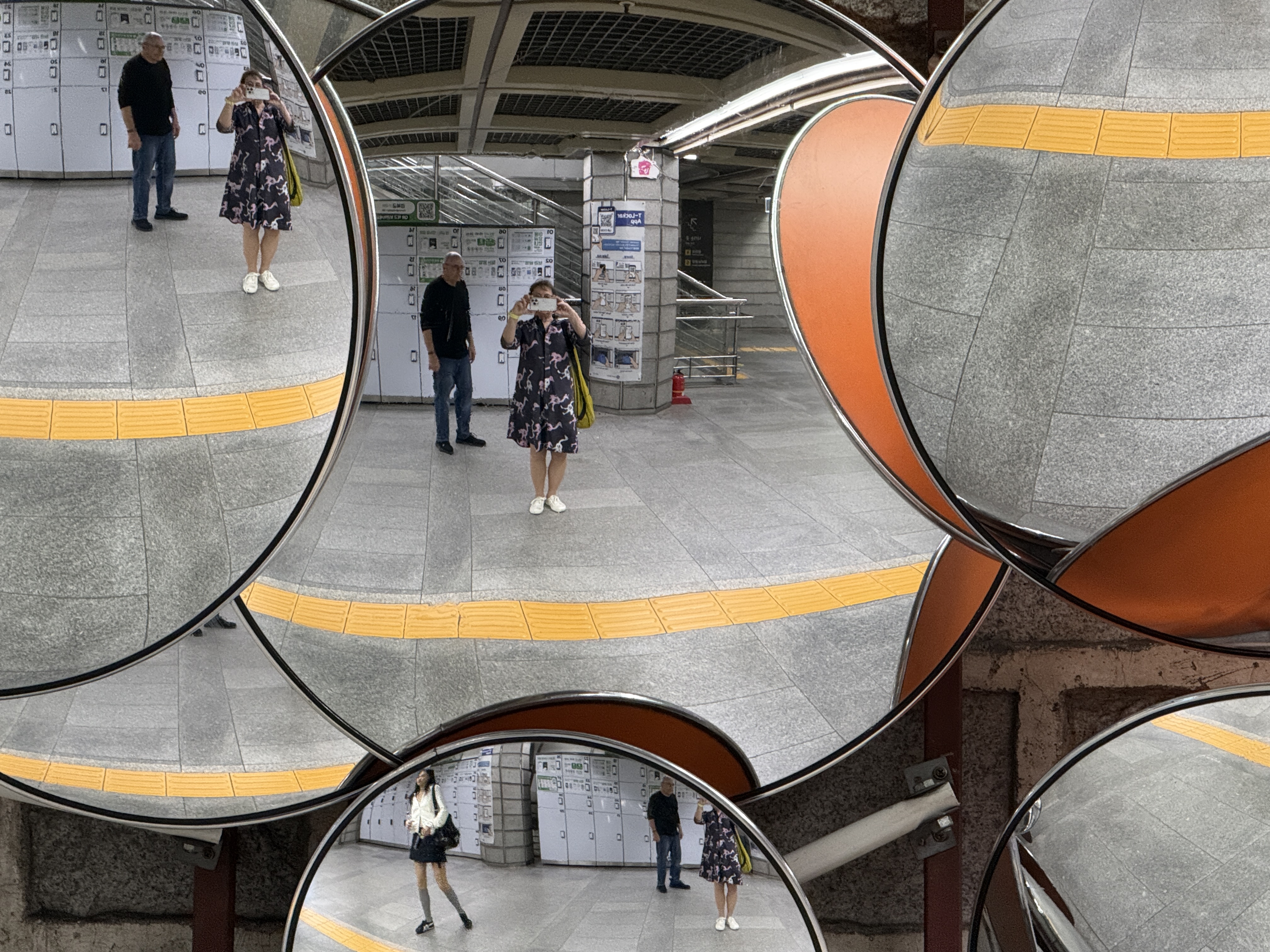
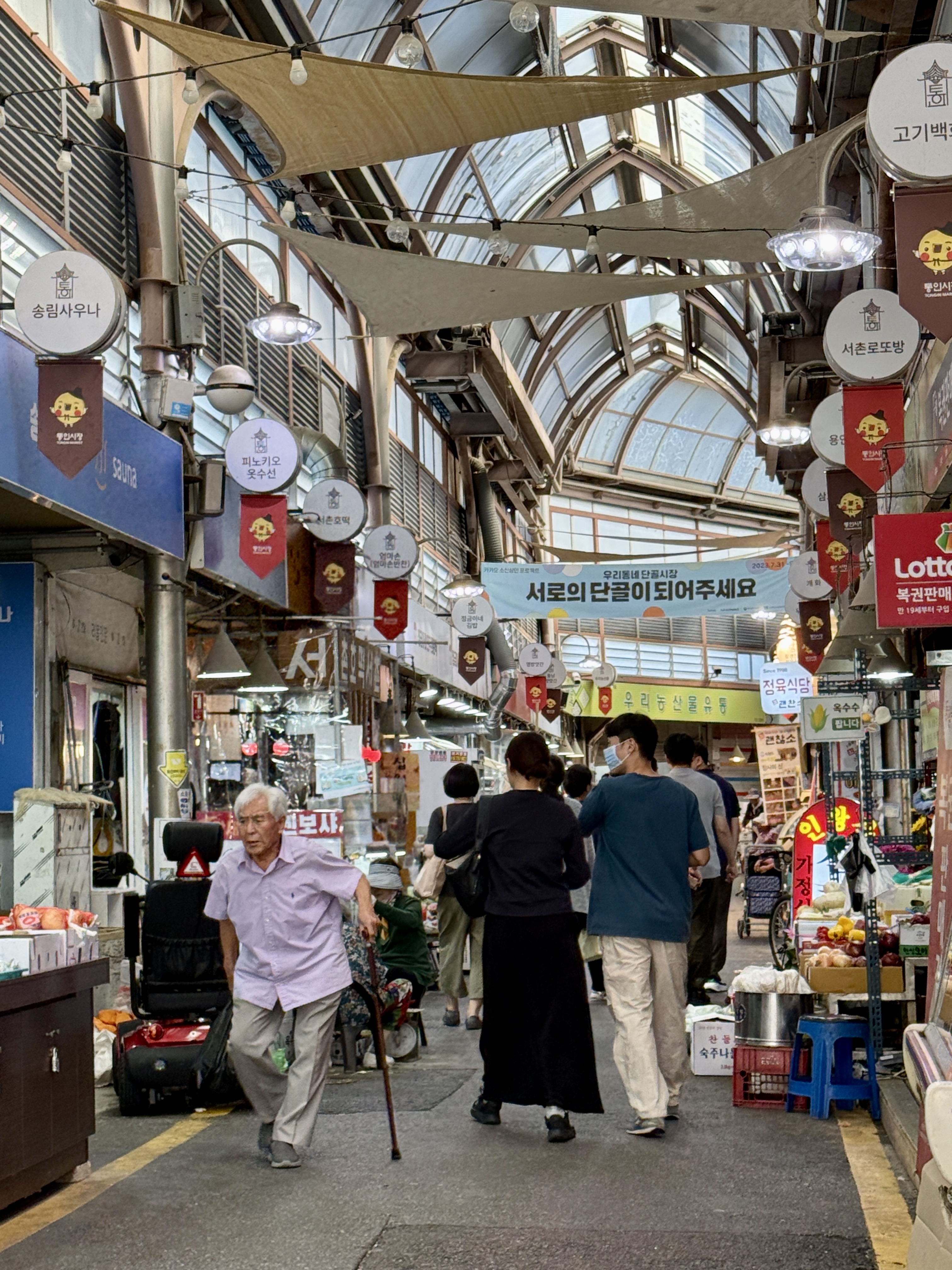
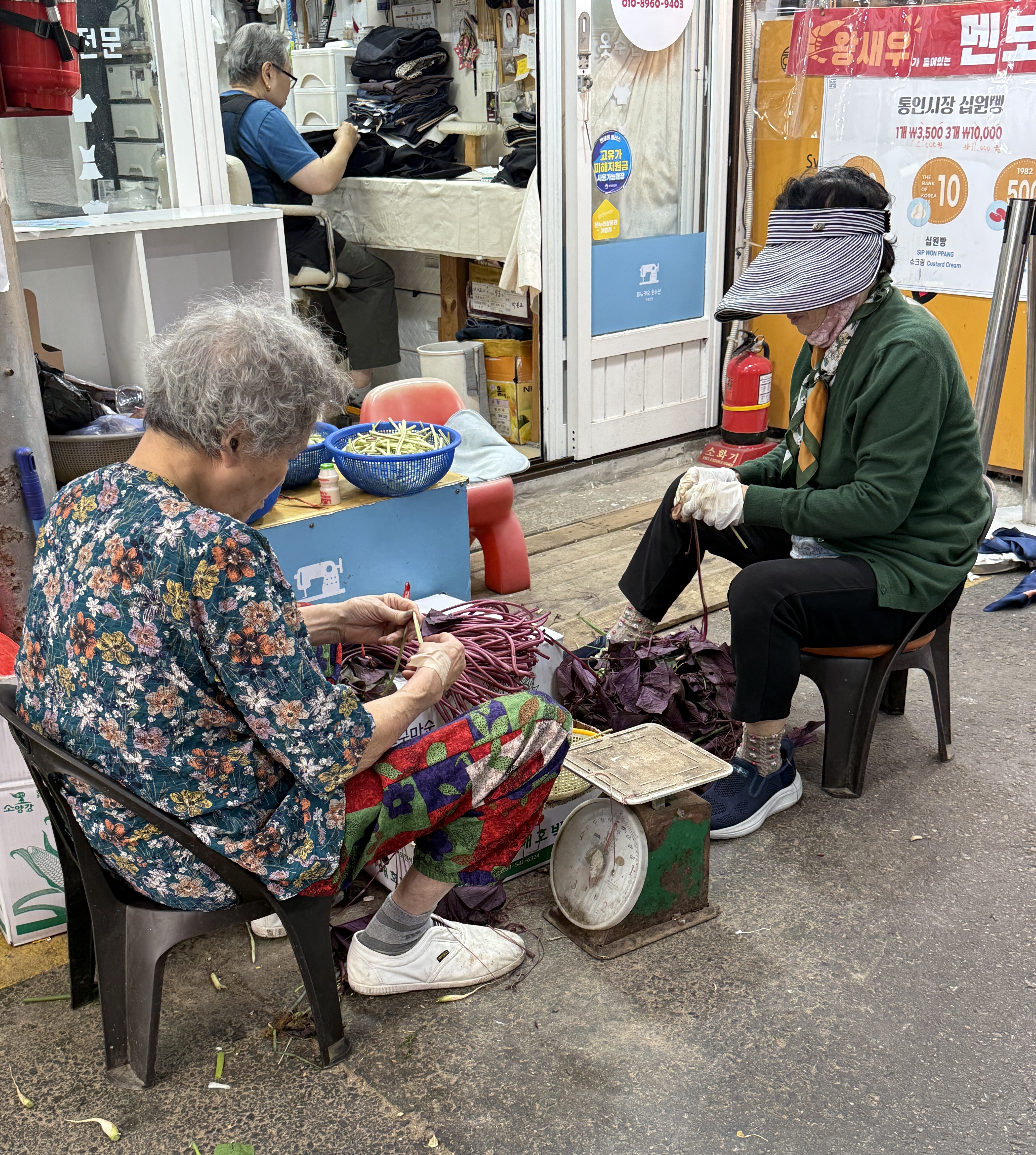
The walk from the sub way provided us with lots of great adventures. We walked the narrow alleys of Seouchon and went through the Tongin Traditional Market–apparently we had drifted into the Jogno District where it is located. It dates back to 1941 as a typical market (for Japanese people living in this area? and after the Korean War as the population expanded, the market did too) serving local needs. It’s really a very long, covered “alleyway” with small shops on either side—mostly food stalls and other goods, as well as tiny eateries. There is some kind of “coin” lunch program whereby you purchase special coins and then can use the coins at different stalls and take your food outside or to a courtyard to eat. We were going to do that, but there was some kind of renovation and you had to go elsewhere to get the coins, and we didn’t totally understand the situation. So instead we decided to try one of those tiny restaurants, where we could get a table.
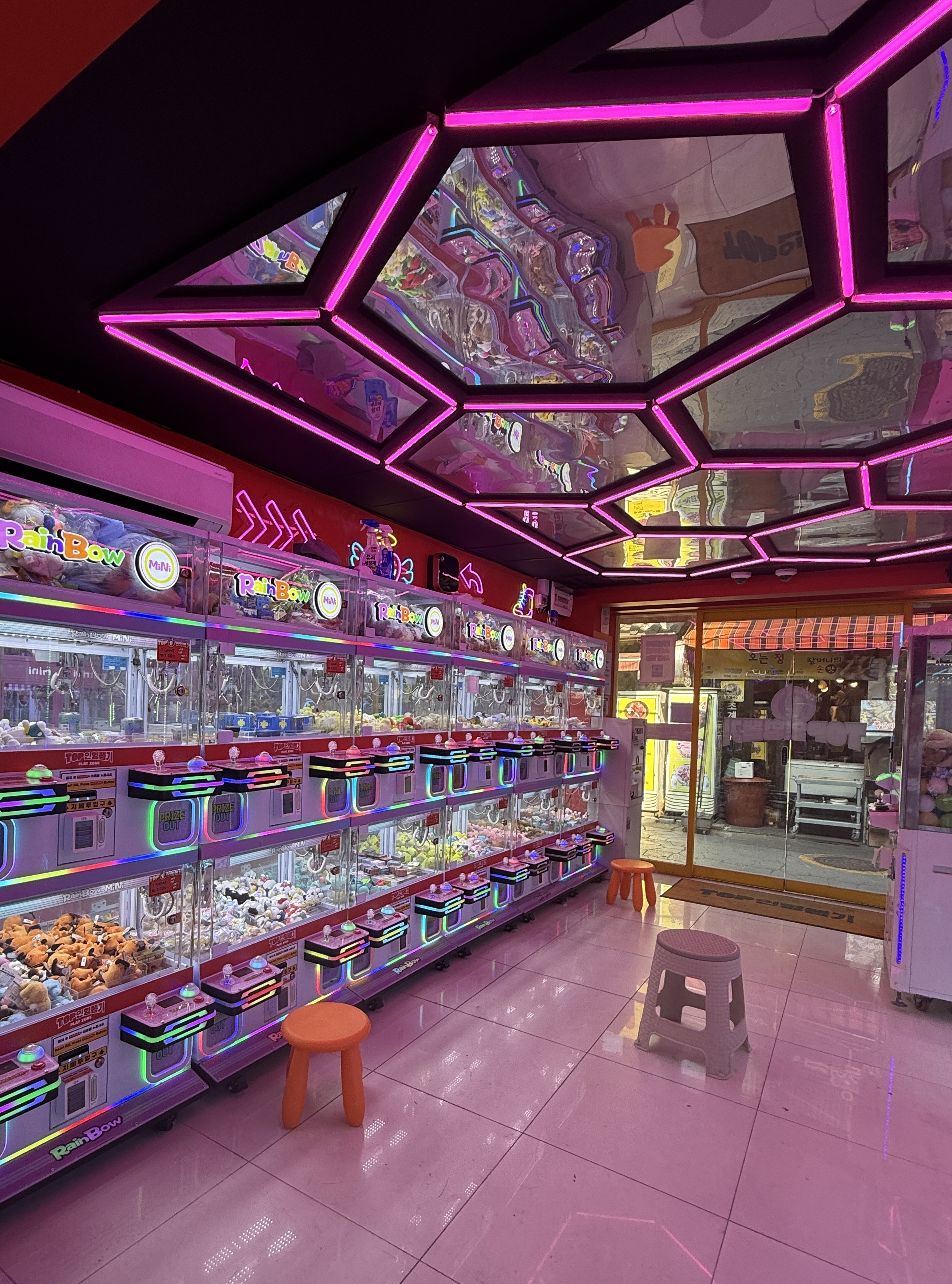
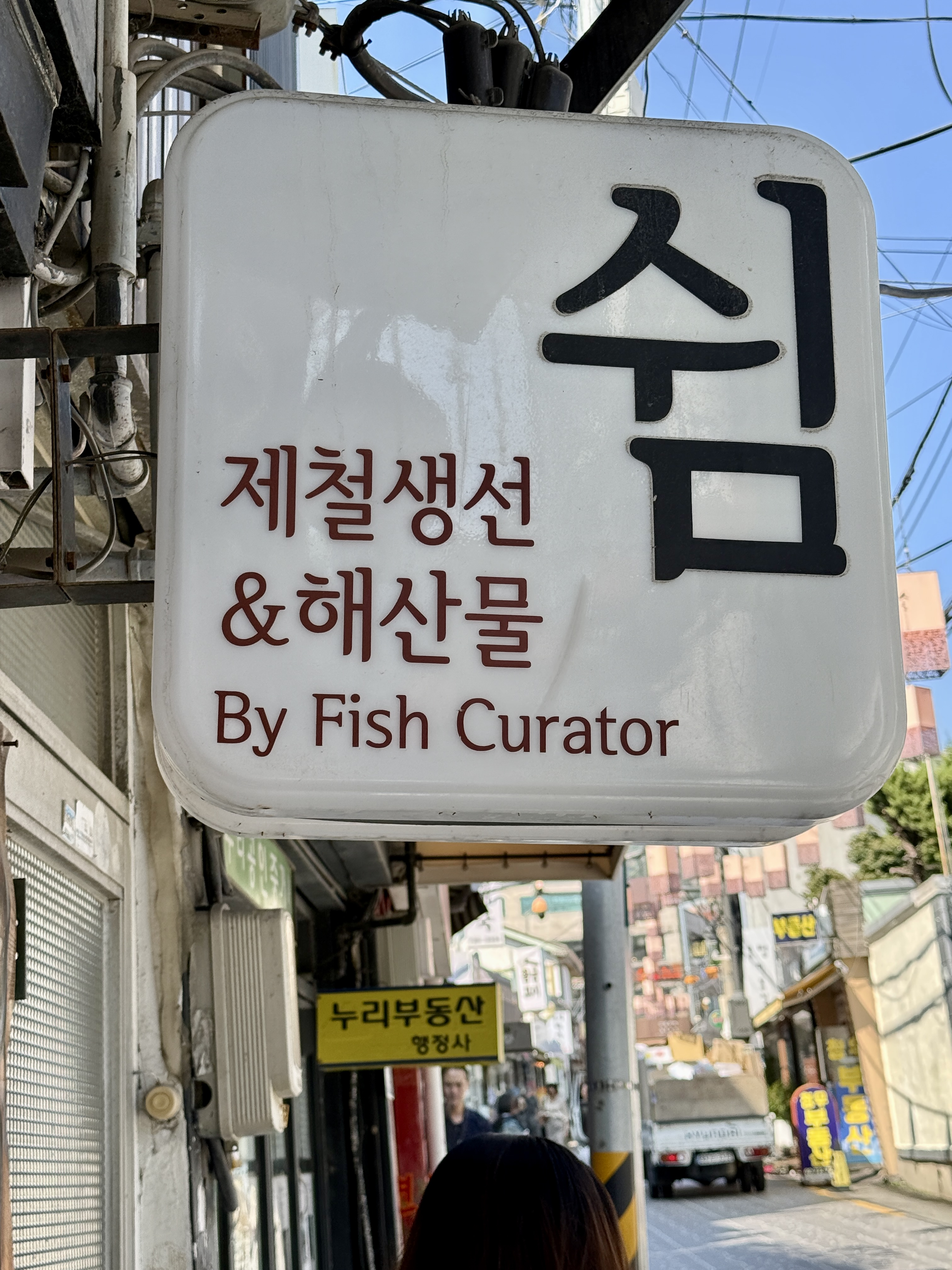
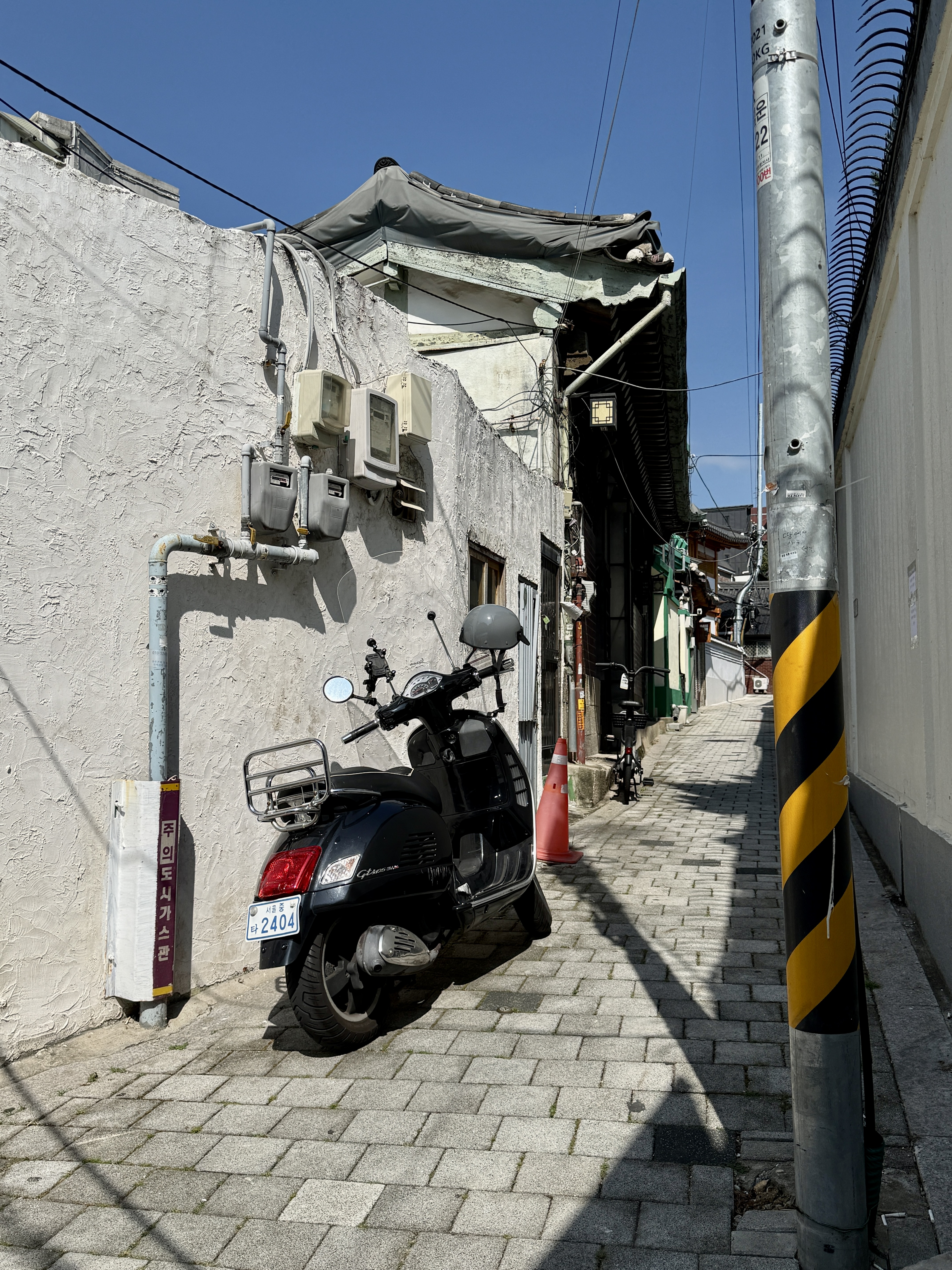
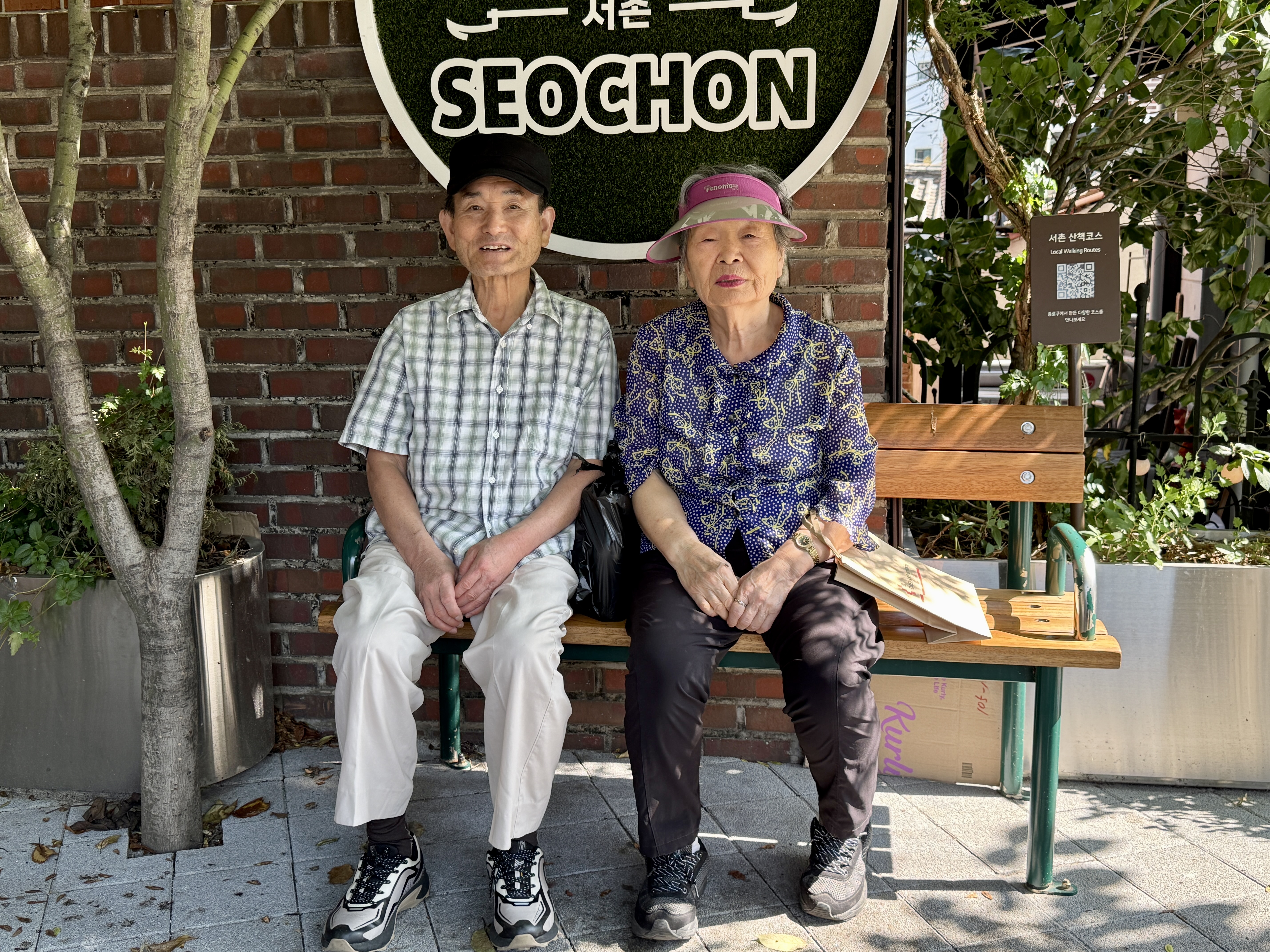
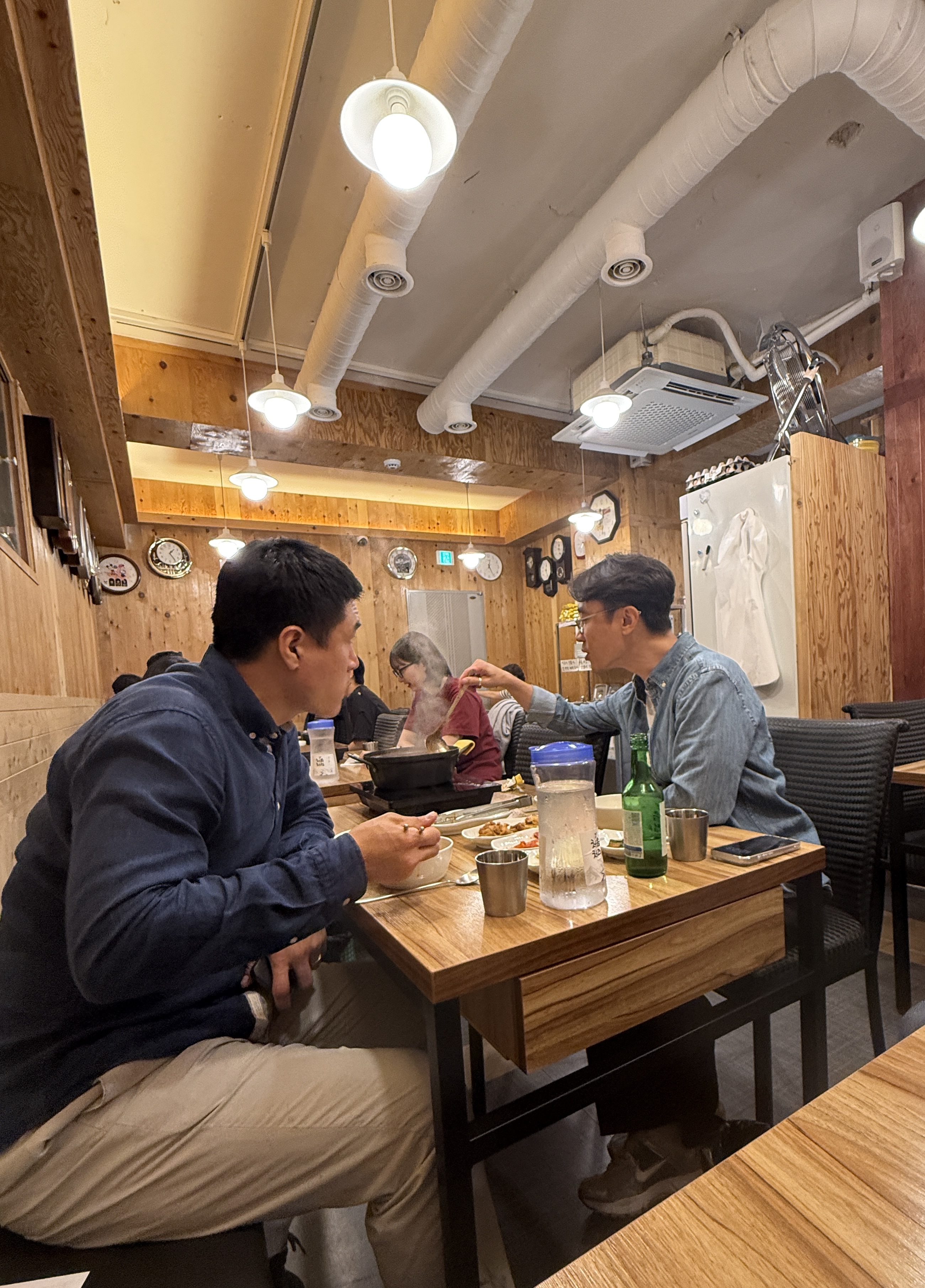
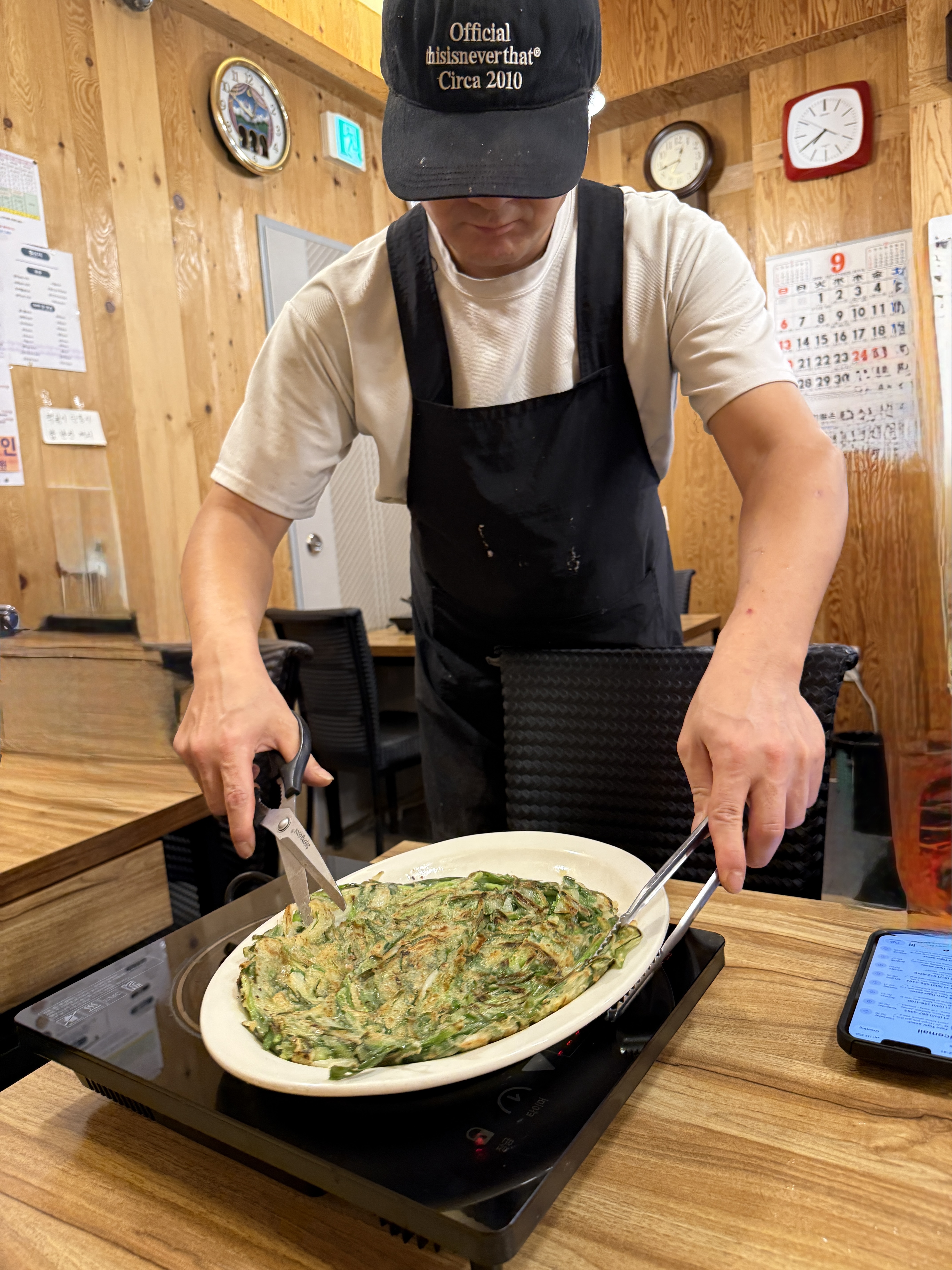
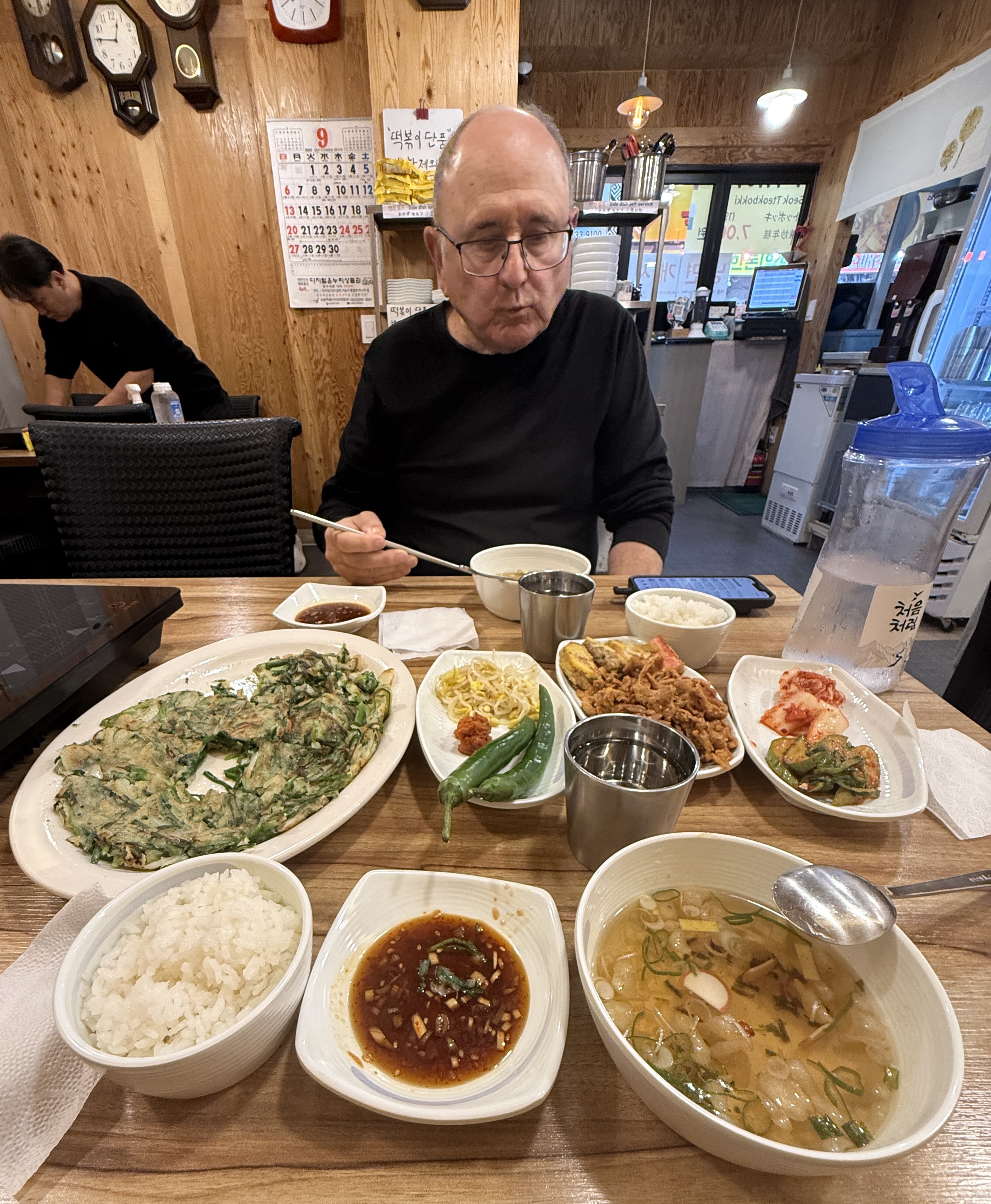
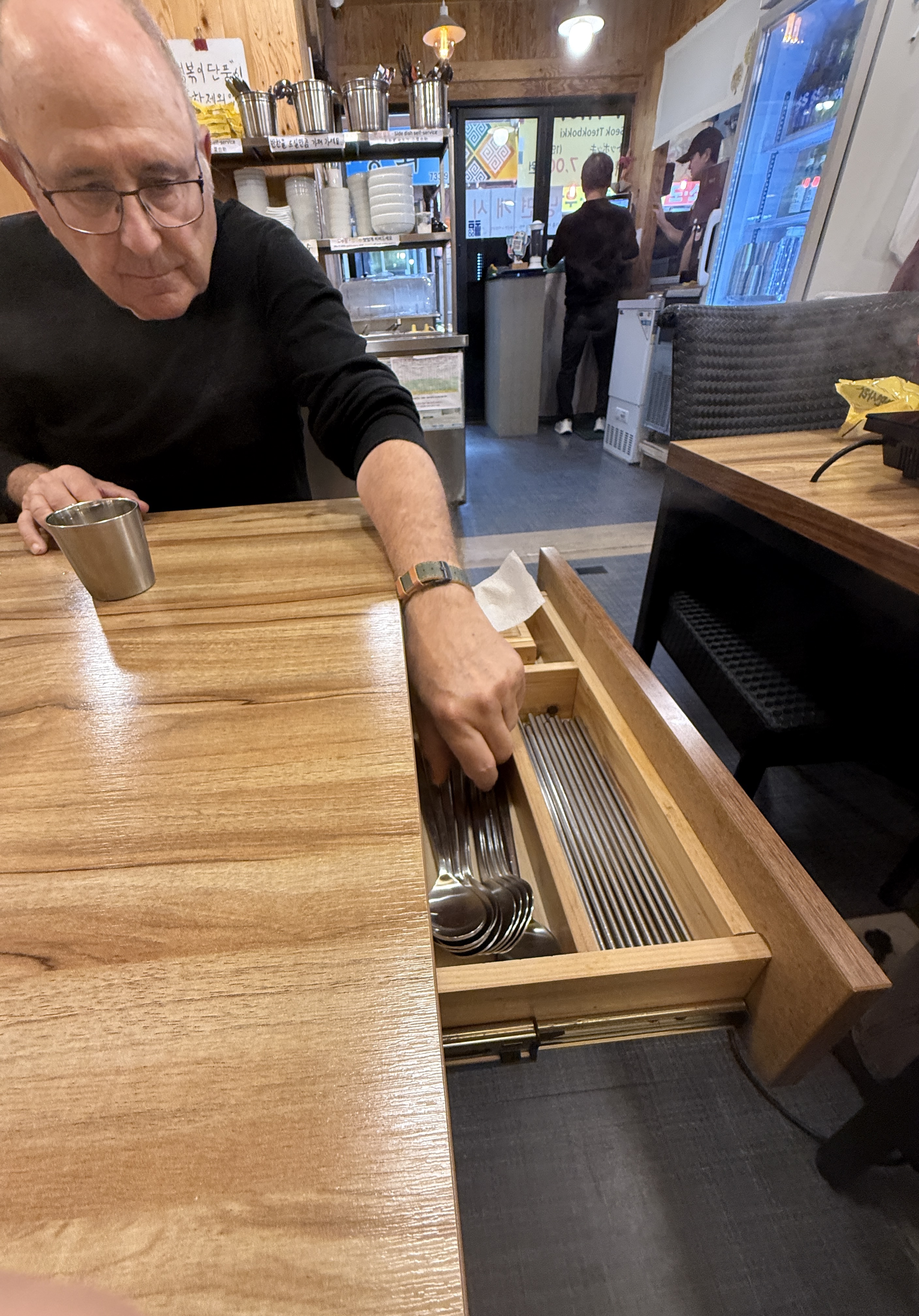
We ordered a vegetable pancake and some other dish, and naturally we got all the condiments that you always get in Korean restaurants.
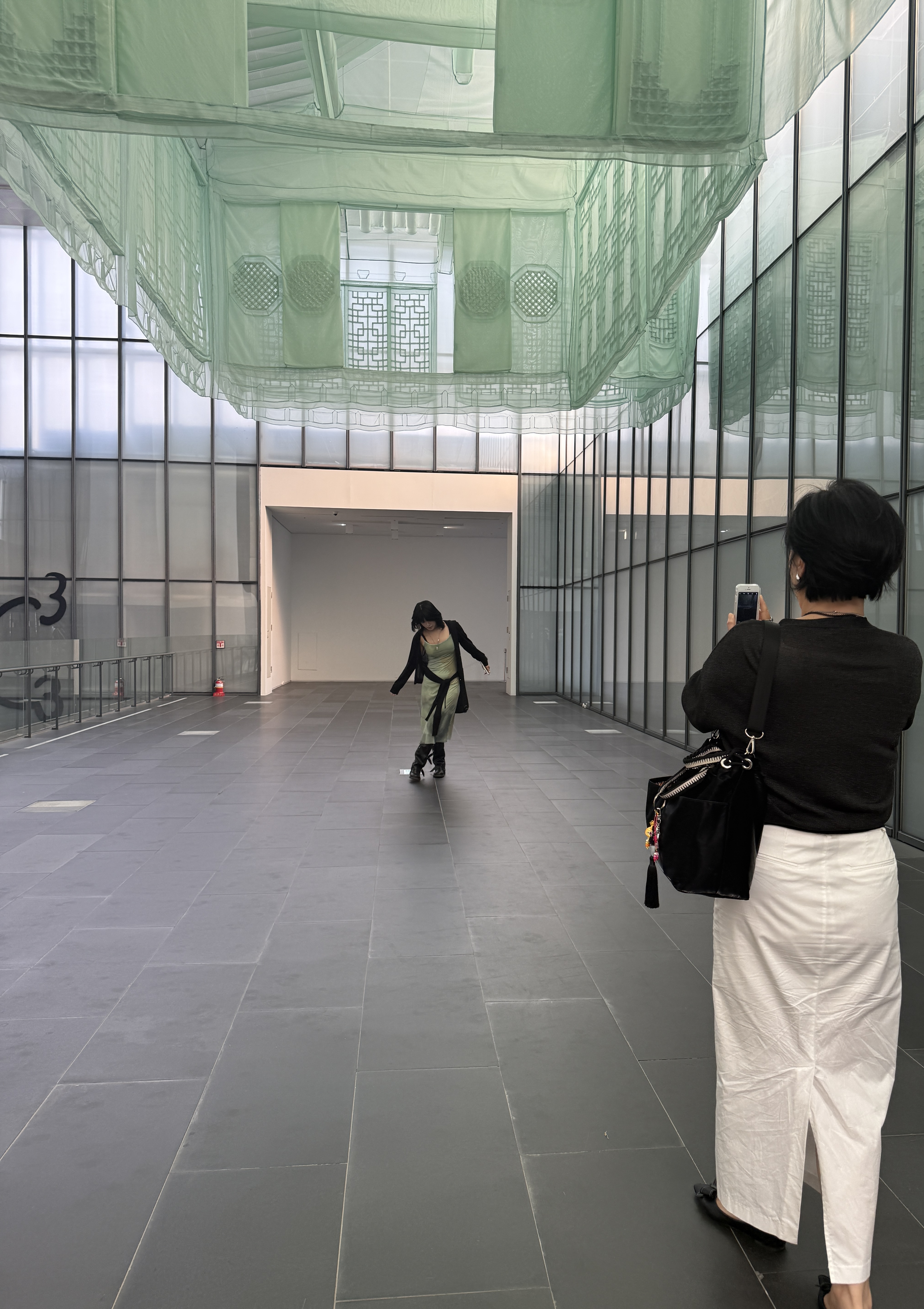
Then we walked to another train station to head to the MMCA–Korea’s Museum of Modern and Contemporary Art to see the Do Ho Suh one-man show. We had seen one amazing piece at LACMA and I thought it was the best thing I had seen in years. So when we heard there was a big exhibition of his work in Seoul, it became a big focus–and it did not disappoint. But first we needed to get to the museum. We got a little lost finding the subway station, but quickly figured that part out.. and the subway was pretty easy this time. However, once we got out of the station, our Naver maps seemed to give us different directions. So, again, we must have looked a bit lost. Some random guy stopped and tried to be helpful, but he didn’t really seem to know where to go and kept using his Naver app, and also his translation program because he clearly wanted to chat. We found out that his sister and brother-in-law went to the states for university and they went to either Washington University (in St. Louis) or University of Washington in Seattle. I agree it’s very confusing. Funny though, since Mike and I both taught at both of those universities, so either way, we could say we knew them well. We began to think he just wanted to talk (using his audio translator app) and we really weren’t getting close to the museum and he himself stopped and asked a few people. Bottom line–the Naver map said we were five minutes away, but this circuitous route took us about 15 minutes. Eventually, once we got to the museum and he was still with us (deciding that he, too, wanted to see the museum), we politely thanked him and said we needed to eat something in the museum cafe. Whew! We almost made a friend for life. About an hour later there he was in the museum sort of walking with us again… but not for very long.
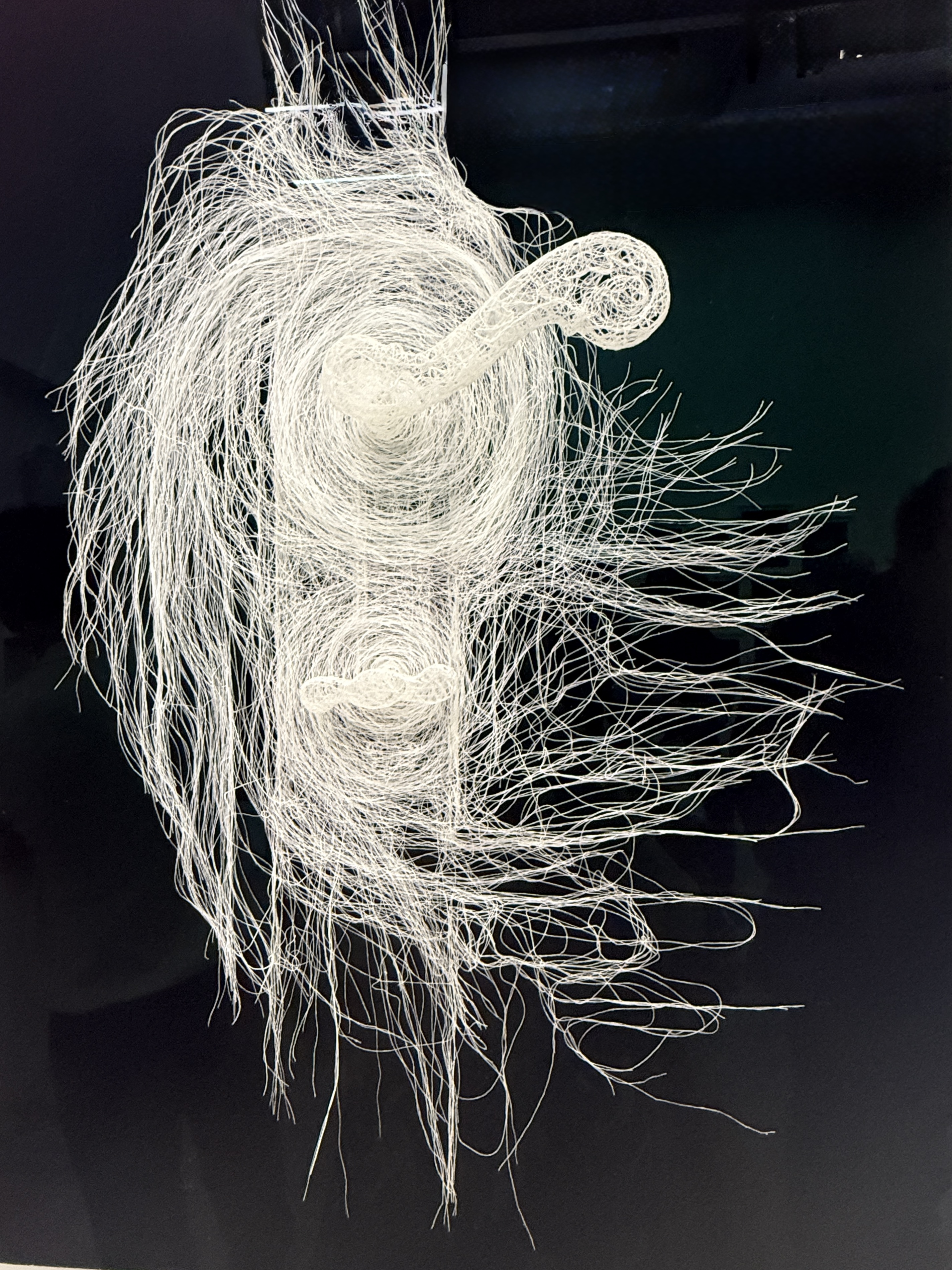
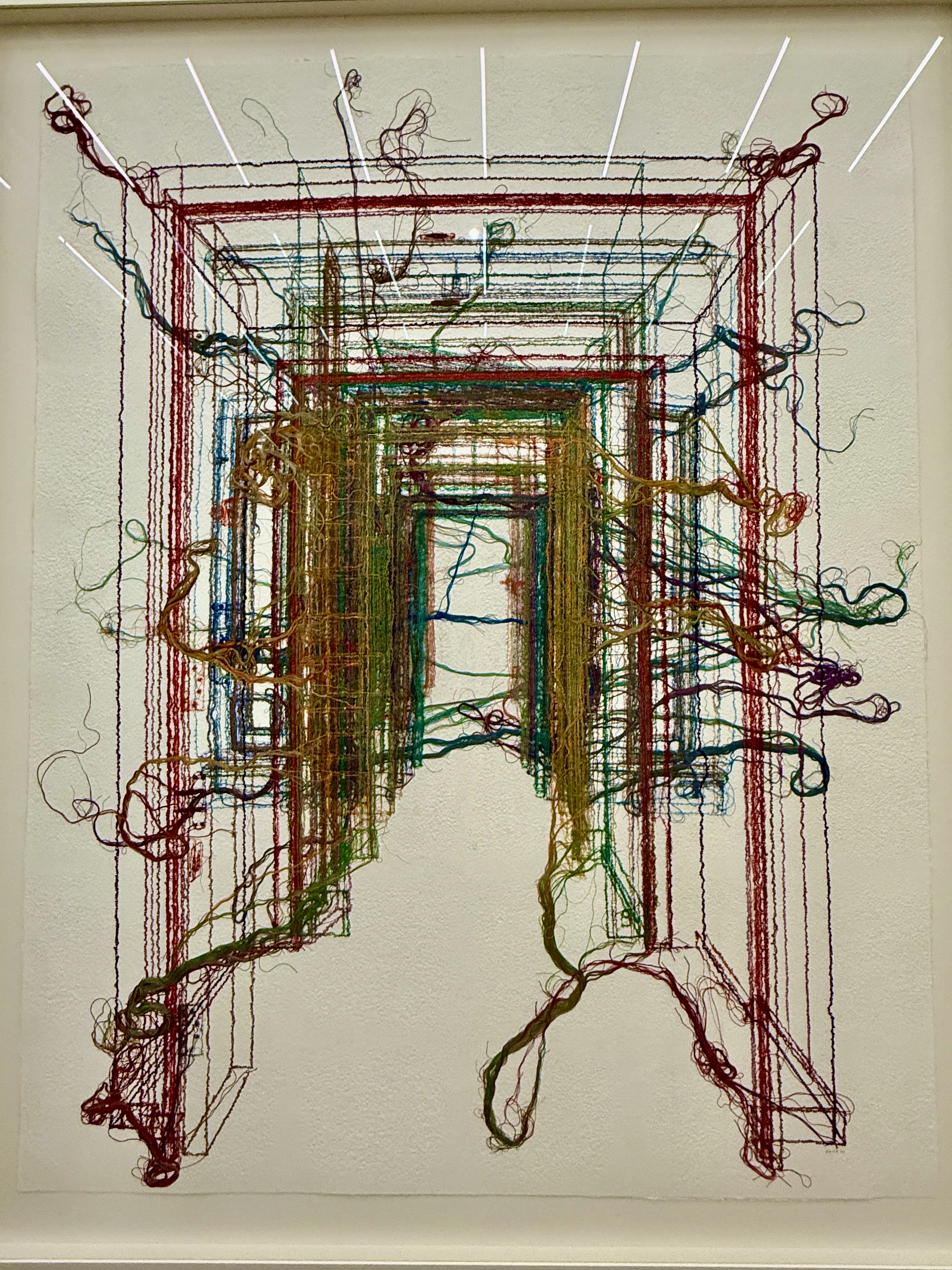
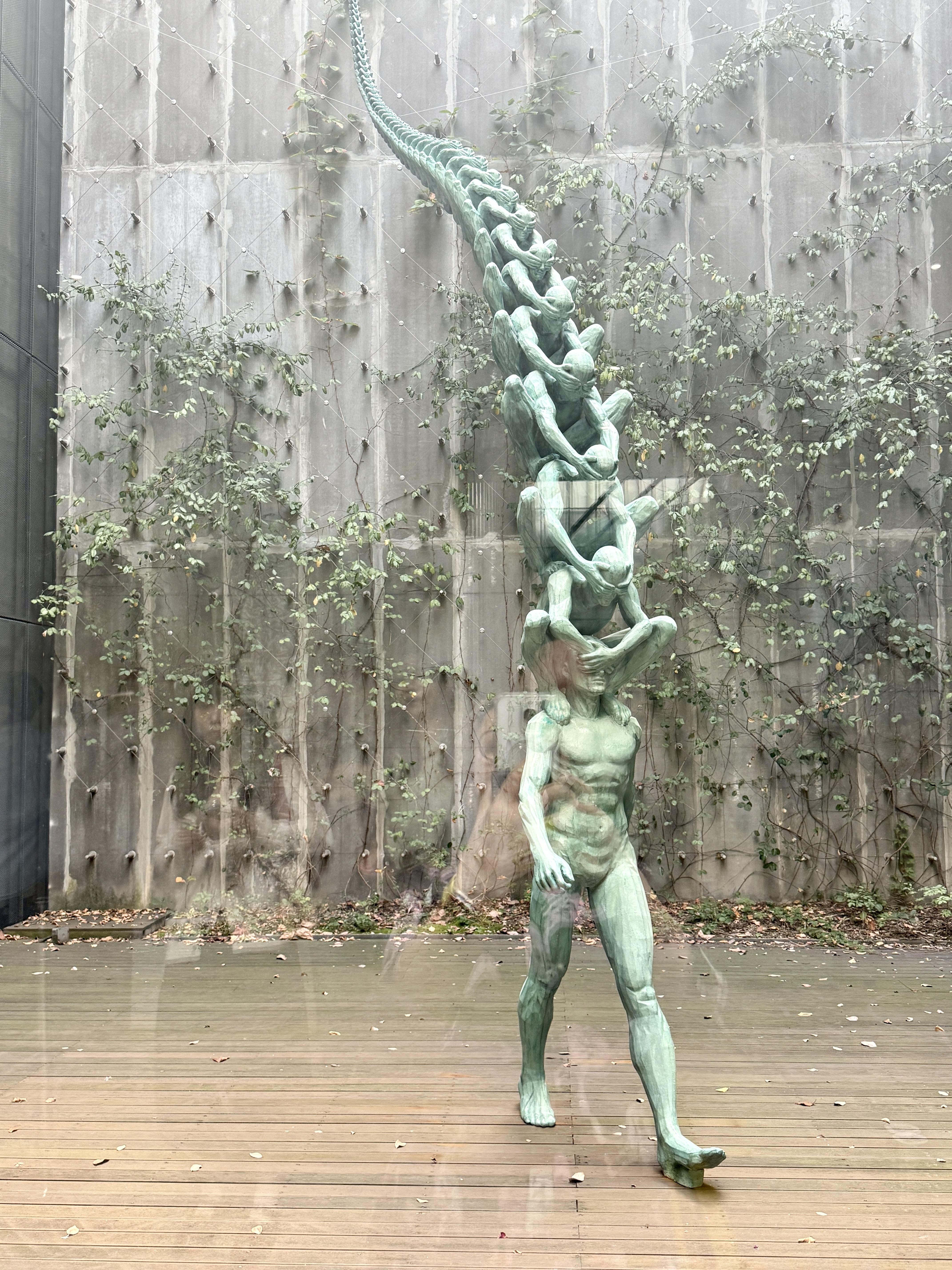
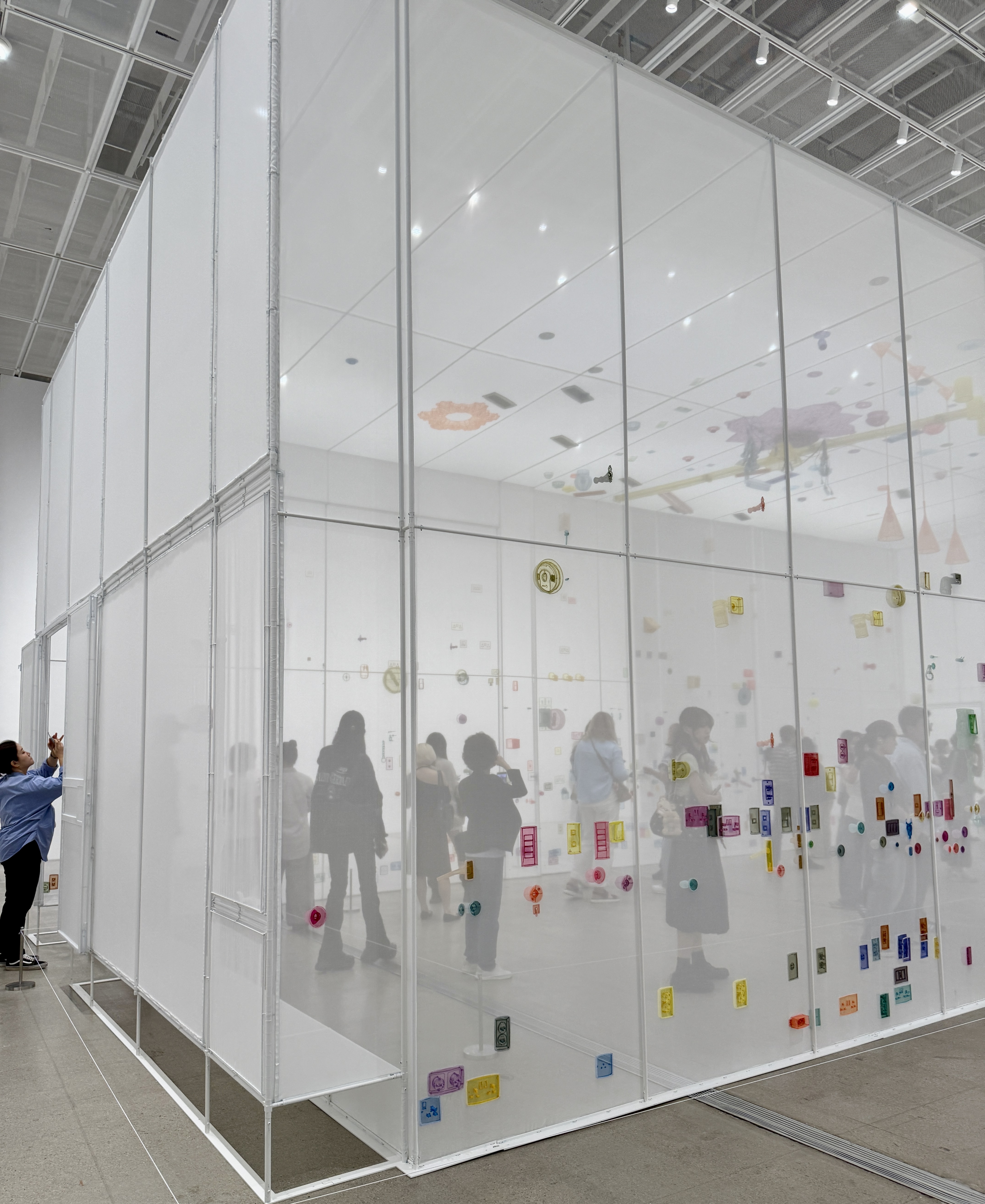
Anyway, the Do Ho Suh exhibit is amazing. Suh is well known for re-creating architectural structures and objects using fabric in what the artist describes as an “act of memorialization.” His large installation pieces sort of blur the line between sculpture and architecture. One of his most famous works is Seoul Home, where he recreated his childhood home using polyester and silk, making a sort of “second skin” so that he can remove that “skin” –fold it up– and transport the parts in order to recreate the structure. He uses rice paper, and a silky (?) fabric that is commonly found in hanoks. The show was enormous; I’ve rarely seen anyone so prolific.
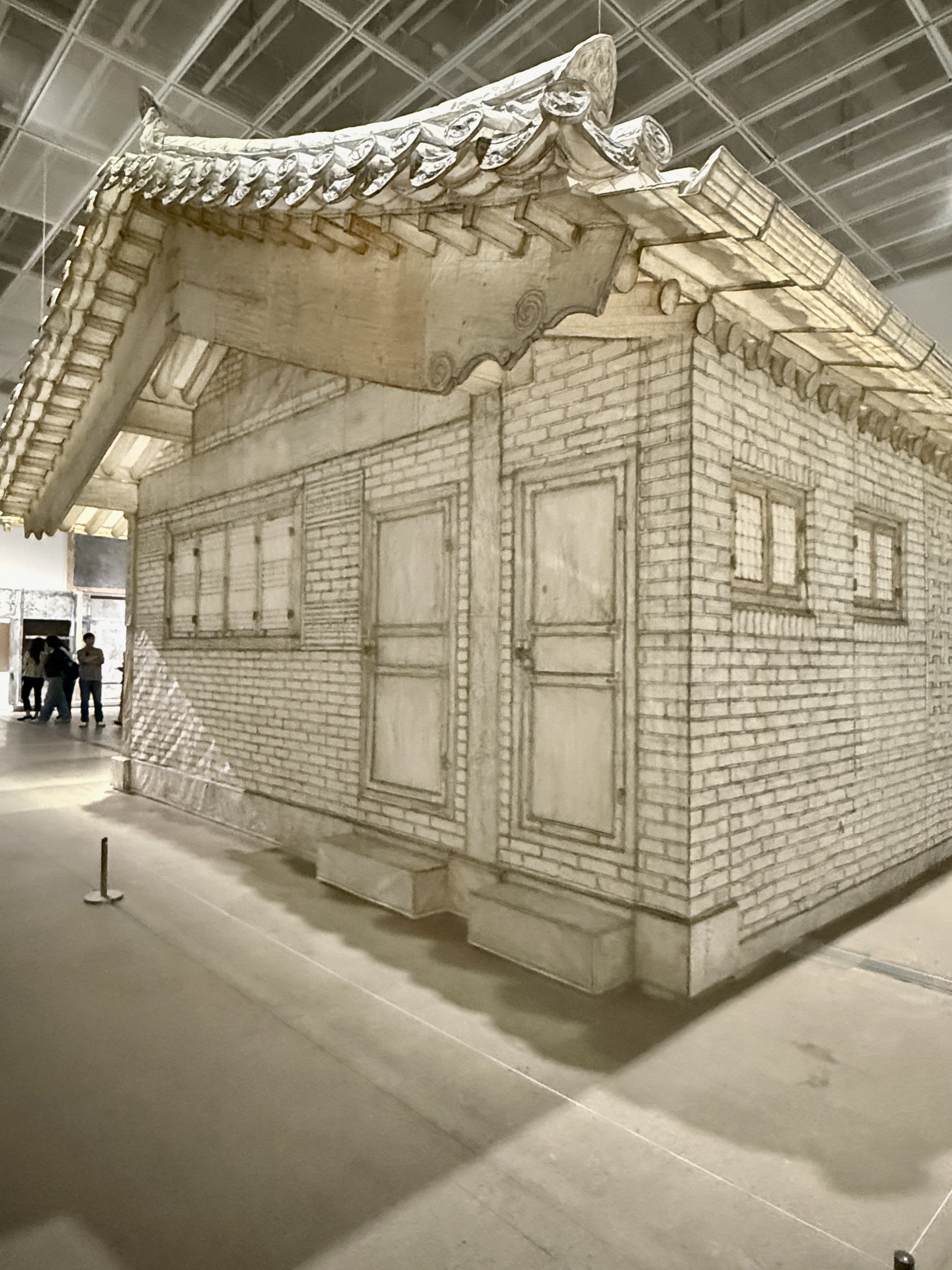
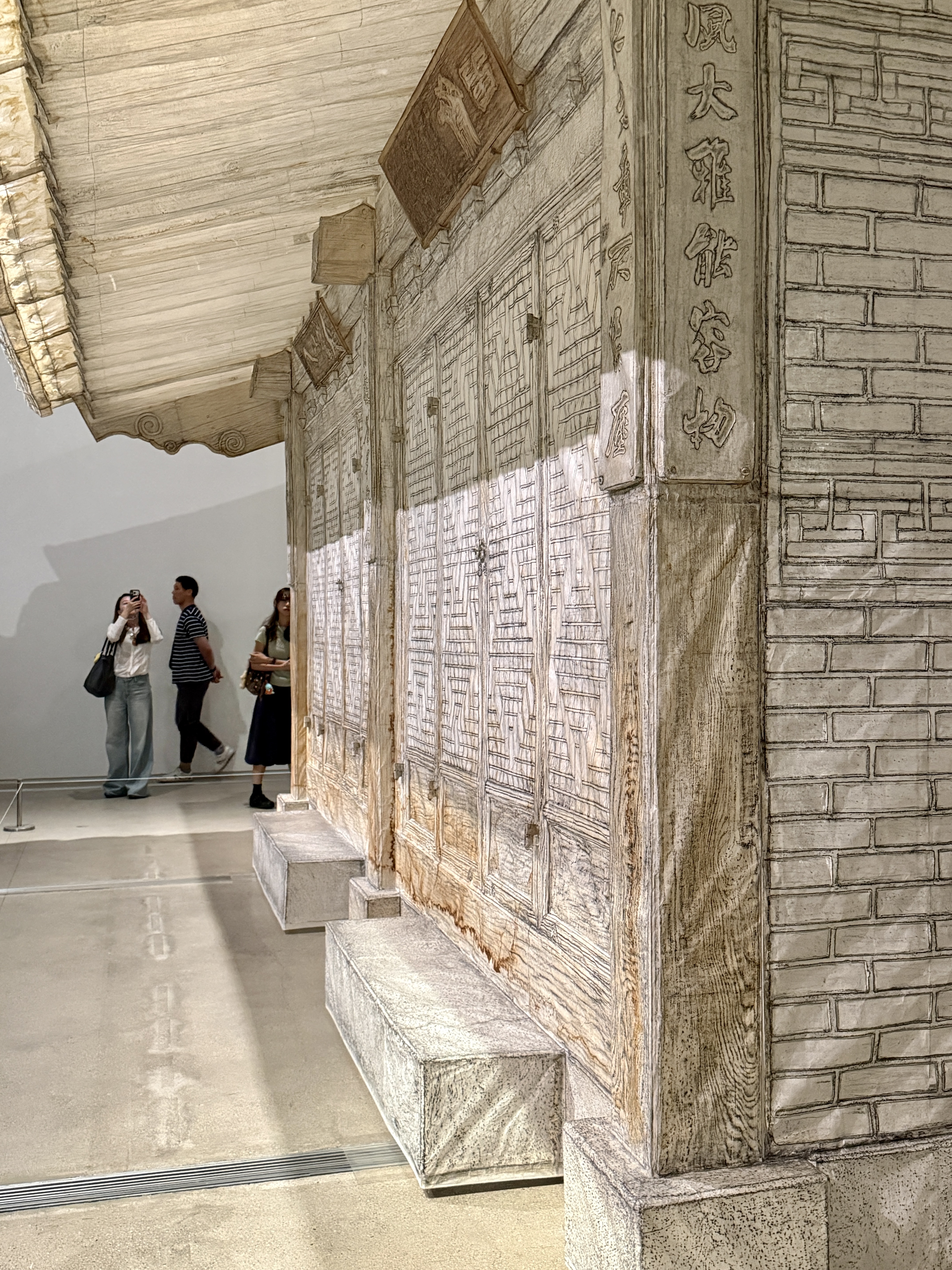
DO HO SUH’s work covers a very broad range of painting, thread drawings, sculpture, installations and more. From what I gathered about his biography, his parents were well known artists and inkmakers (I think) and when Suh didn’t get into the marine biology program at Seould University, he enrolled in the art program, studying traditional art and history. Then he came ot the US and got a second BFA at RISDI and another MFA from Yale, and he then lived in NY for about a decade. It was in the US that his work began to blossom and to have more freedom to explore–but he always thought about Korea and “home” which became the focus of a lot of his work..
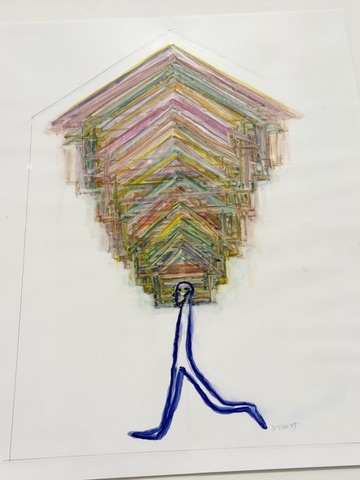
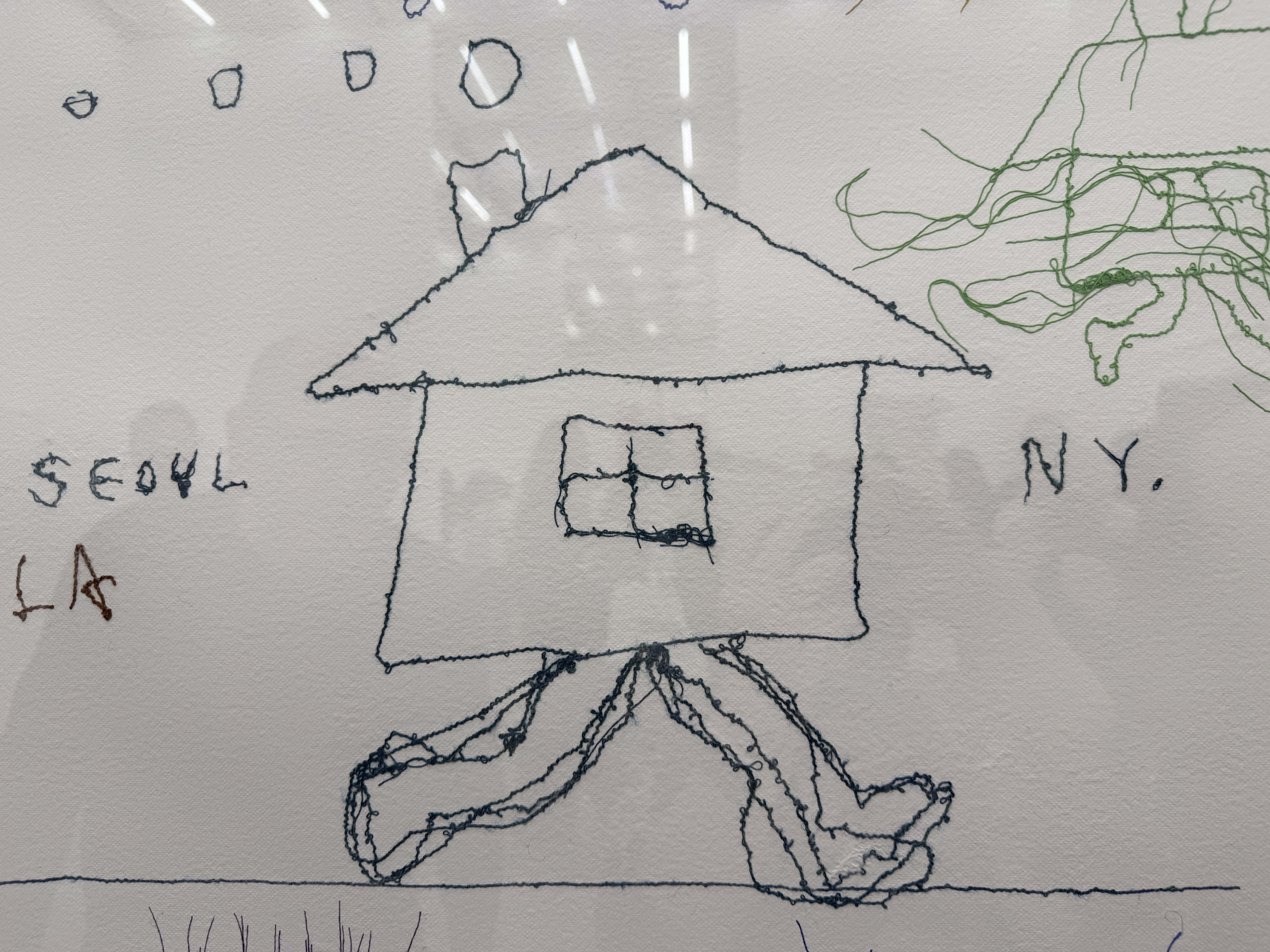
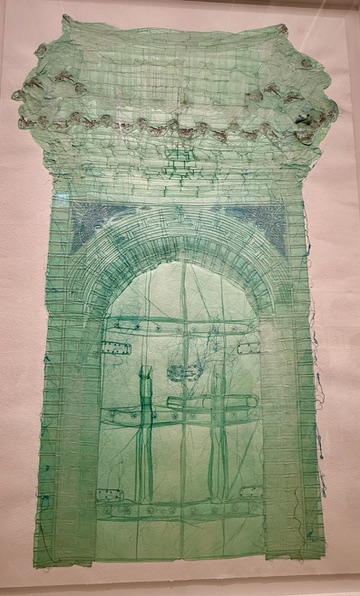
And there is a large collection of “paintings” where instead of using ink,, or paint, or graphite like he does ibn many of his sketchbooks, he has created drawings that use thread embedded in paper. Early experiments involved directly sewing wet paper, as well as sewing thin tissue paper and dissolving the tissue paper before transferring the drawing to thicker paper. Then he began sewing the gelatine paper, attaching the paper to paper pulp that dissolves the gelatine paper, and rubbing the thread in order to bind it to the thicker paper fibers. Or at least this is what I think he does.
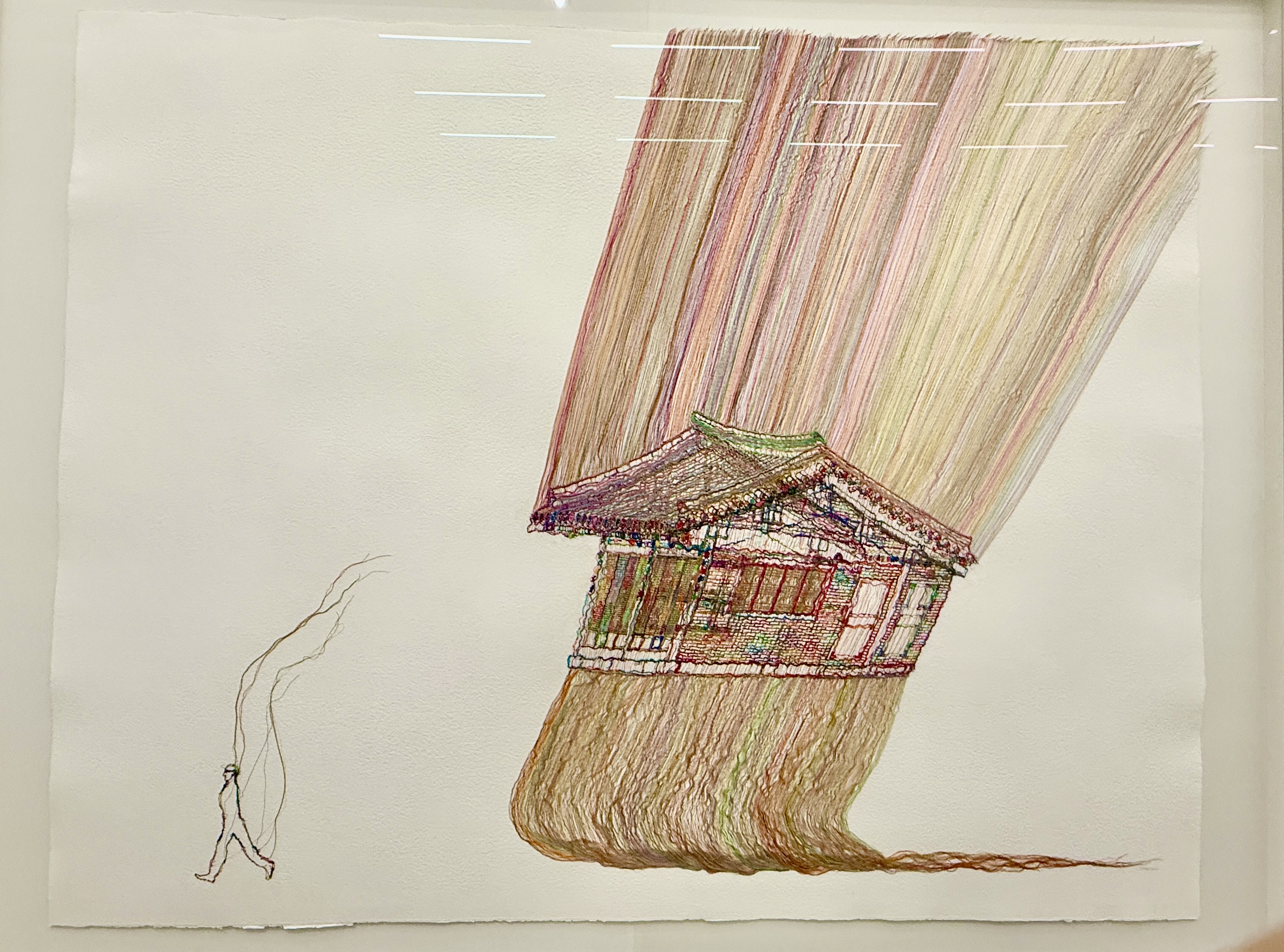
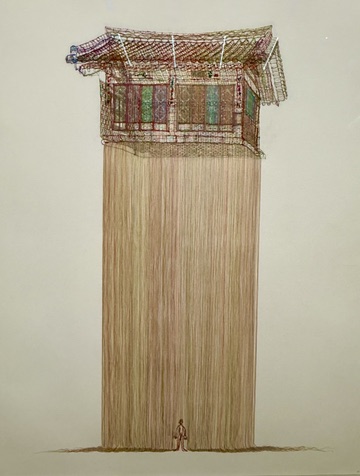
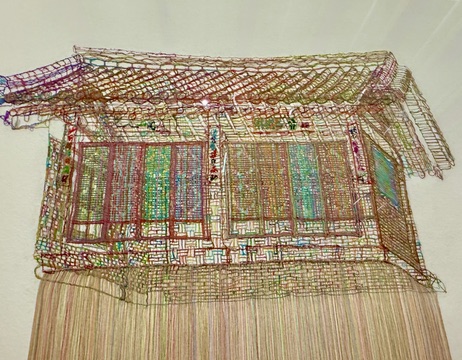
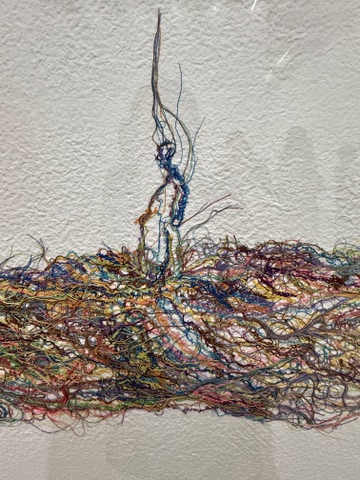
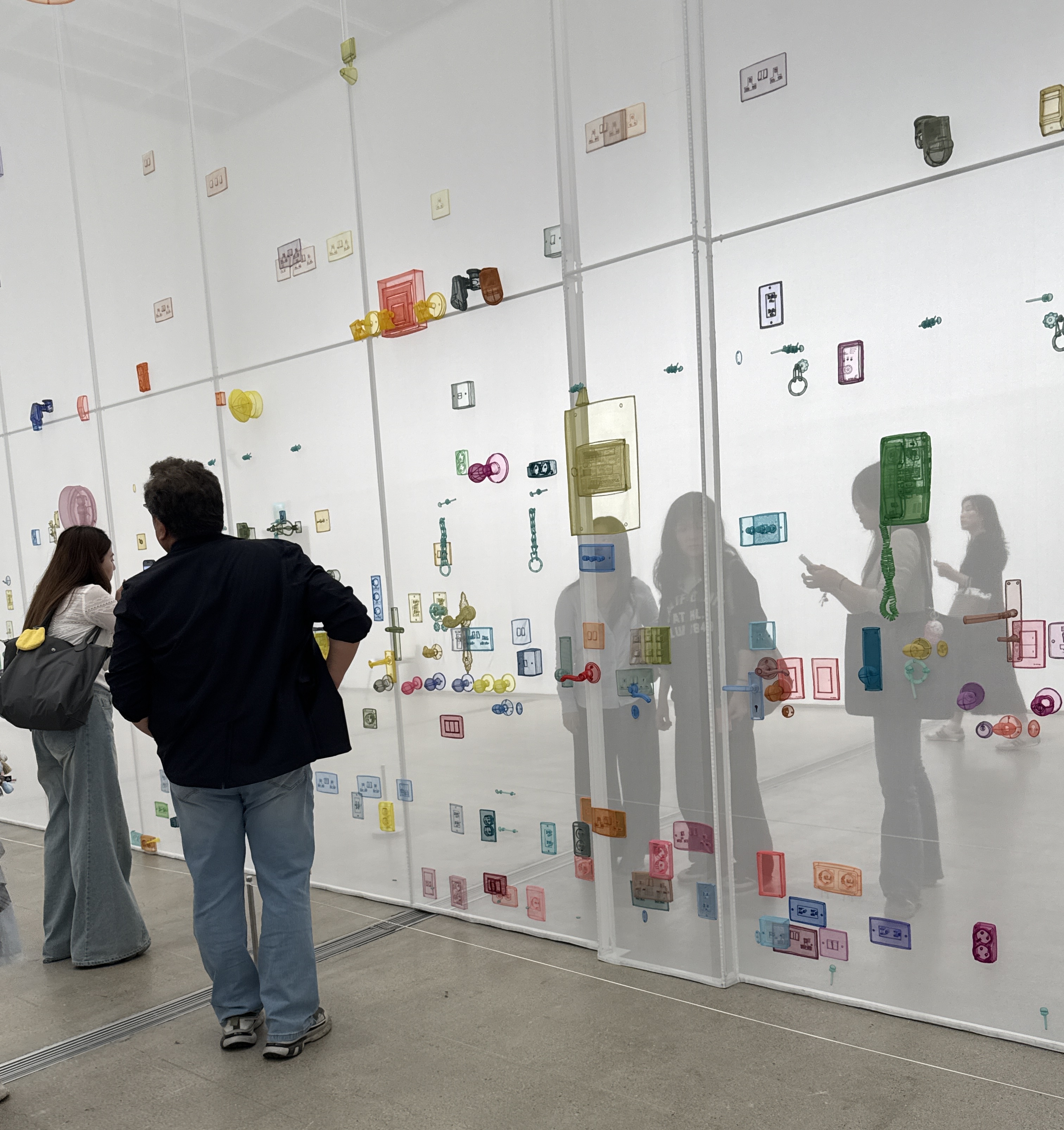
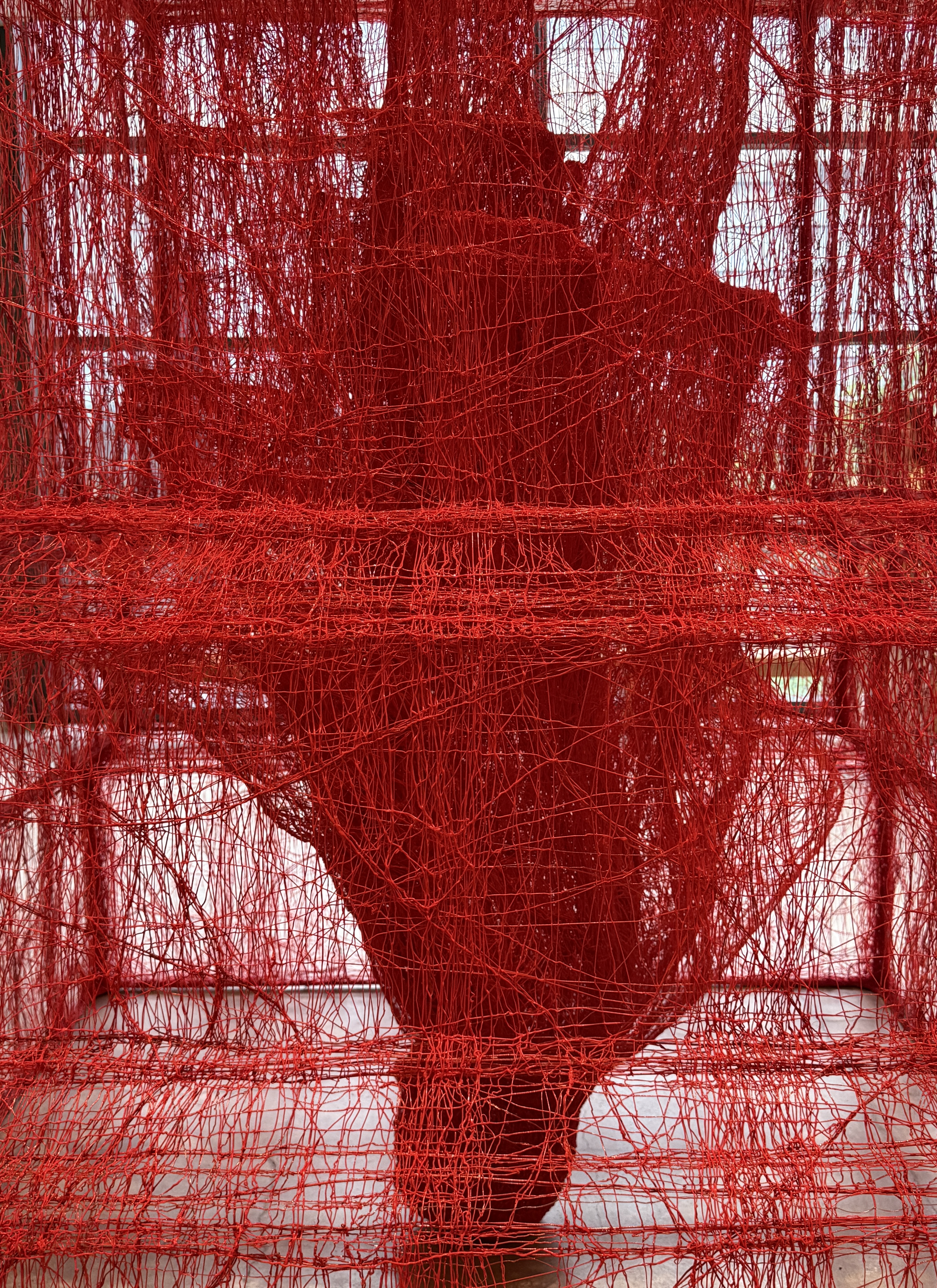
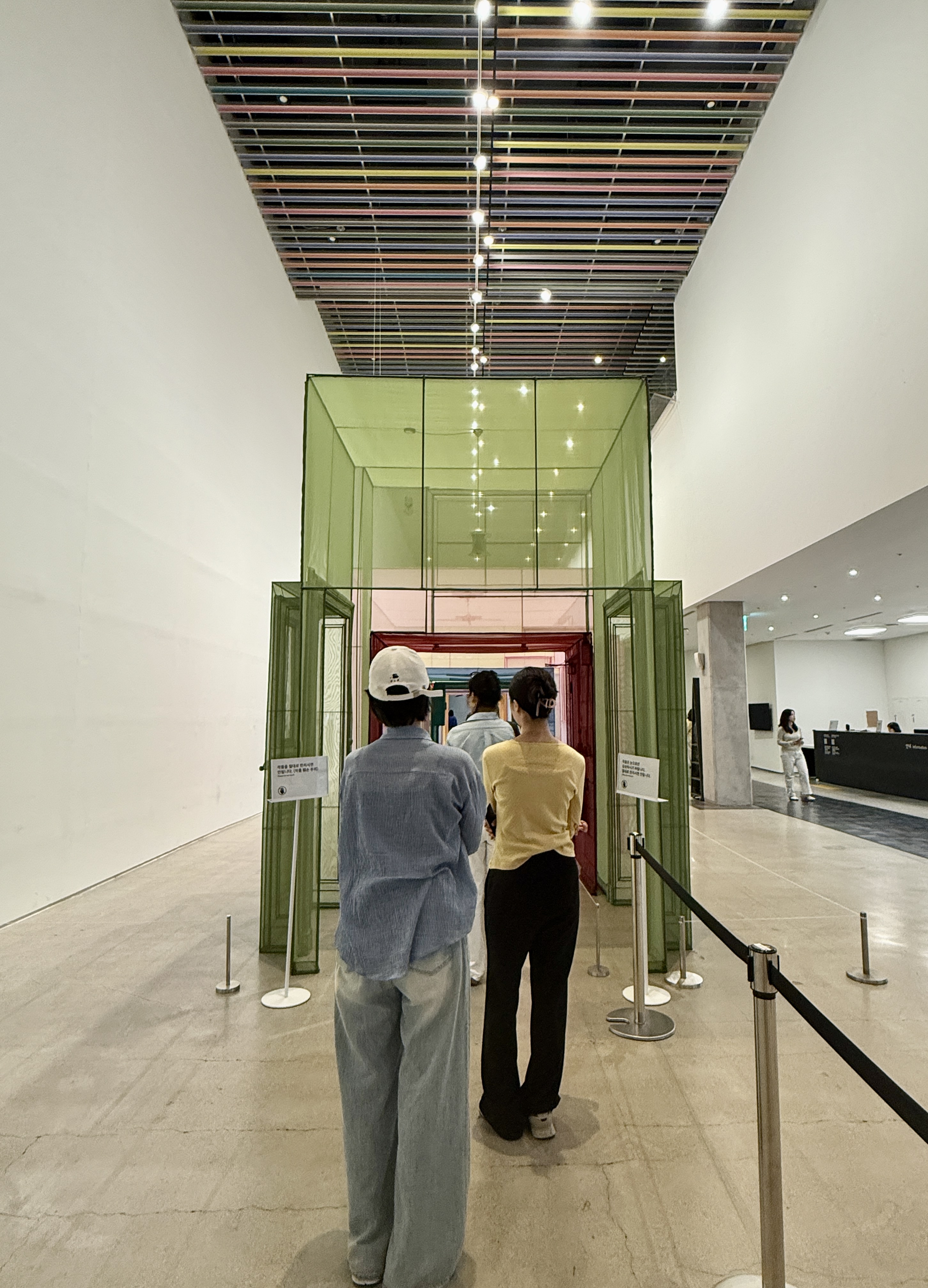
I could go on and on about this show.. but I better stop. We had a phenomenal dinner at Galopin and I will write about that in tomorrow’s blog.

