Toronto Girl Trip Day 2: June 9 2023
Friday Greetings —
We heard it was a good day in the U.S. with the first group, of many-yet-to-come, indictments…
Set out today for very early lunch (sort of brunch) at the Art Gallery of Ontario, which was quite yummy… simple soups and salads. And then we headed to see the museum which turns out to be quite wonderful (this said by someone who wouldn’t go into a museum for 20 years, and still is hesitant about the commodification of artworks and how museums contribute to value that does not get passed on to the makers). But “AGO,” as it is called (Art Gallery of Ontario–get it?), is a very manageable museum… small enough to see a good deal in one visit and complex enough and with many temporary shows to be able to make return visits. Architecturally, it’s warm with a lot of beautiful wood walls. Moreover, they have a great collection of Canadian and Inuit art as well as the works of other native groups. Additionally, they currently have one installation by Yayoi Kusama, the Japanese artist who is sometimes called the “princess of polka dots” and who is famous for the reflective “balls” and mirrored infinity rooms that are always fun to experience. You only get one minute in the room (totally timed and they are strict about it), so I went in twice!
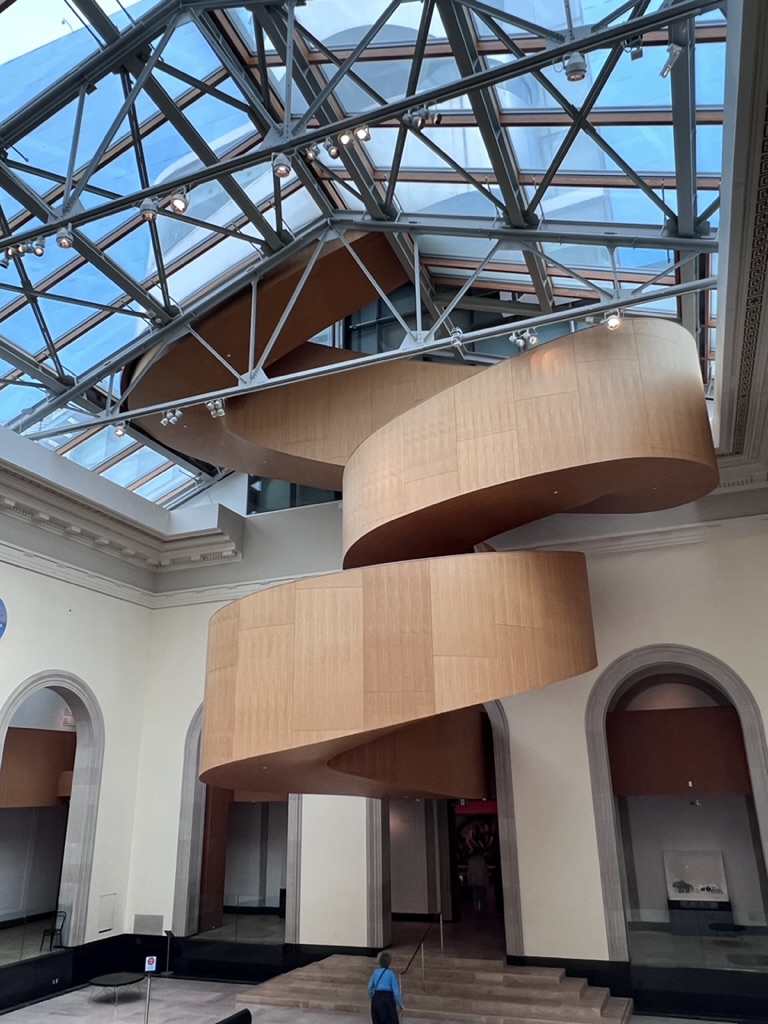
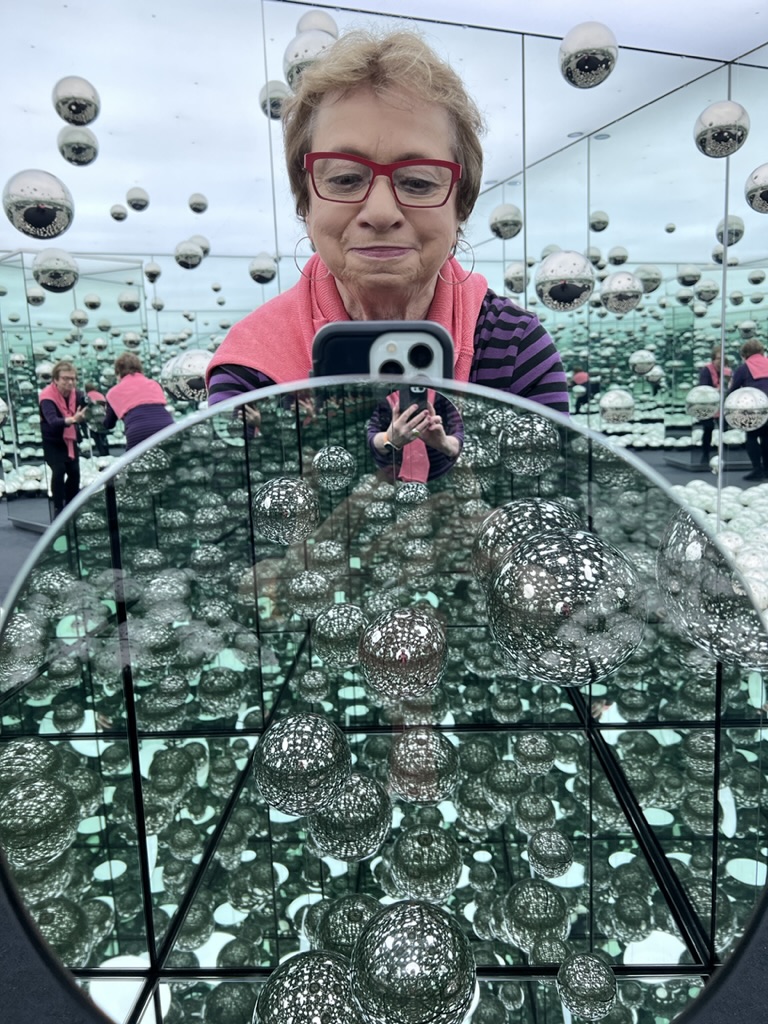
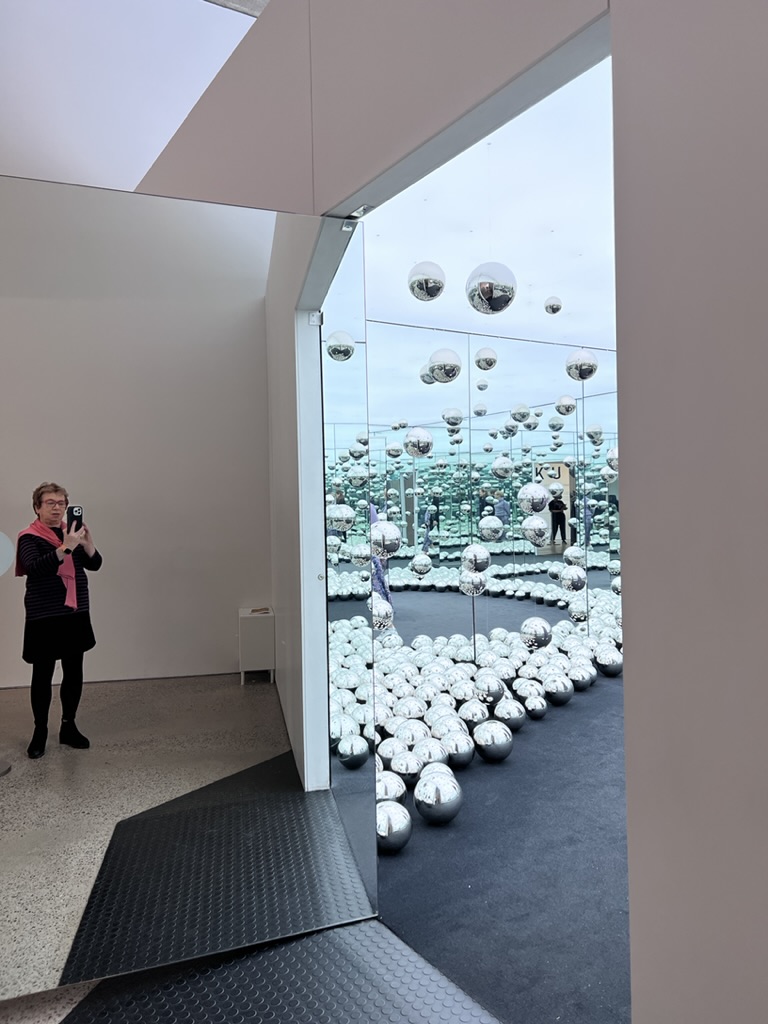
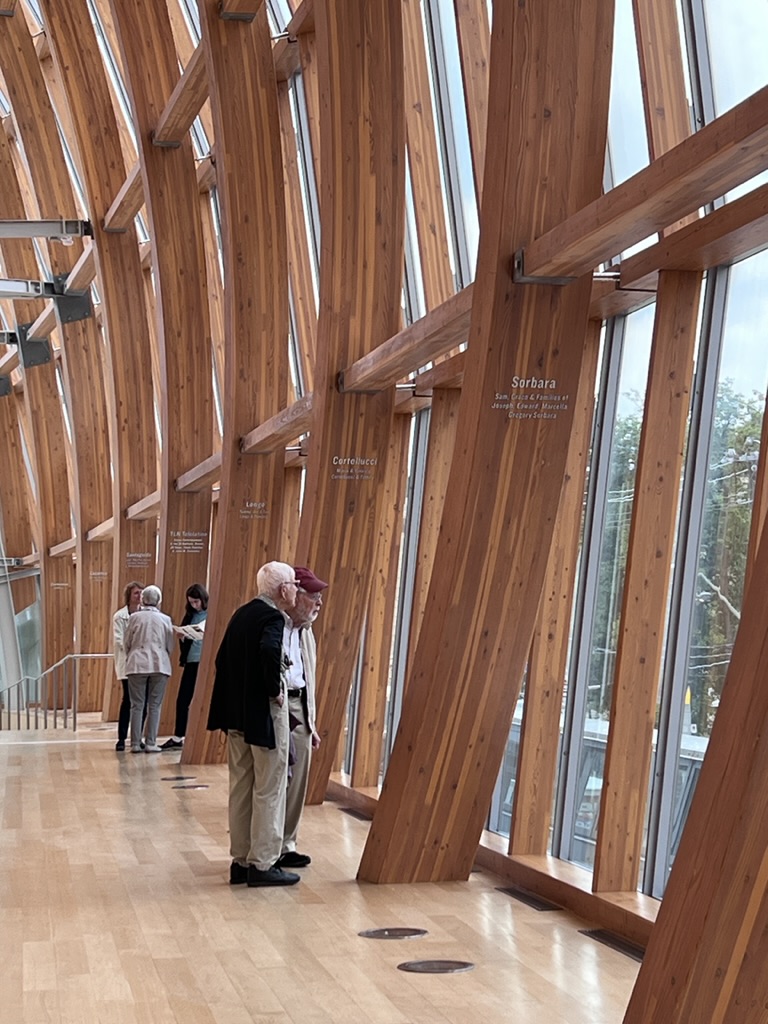
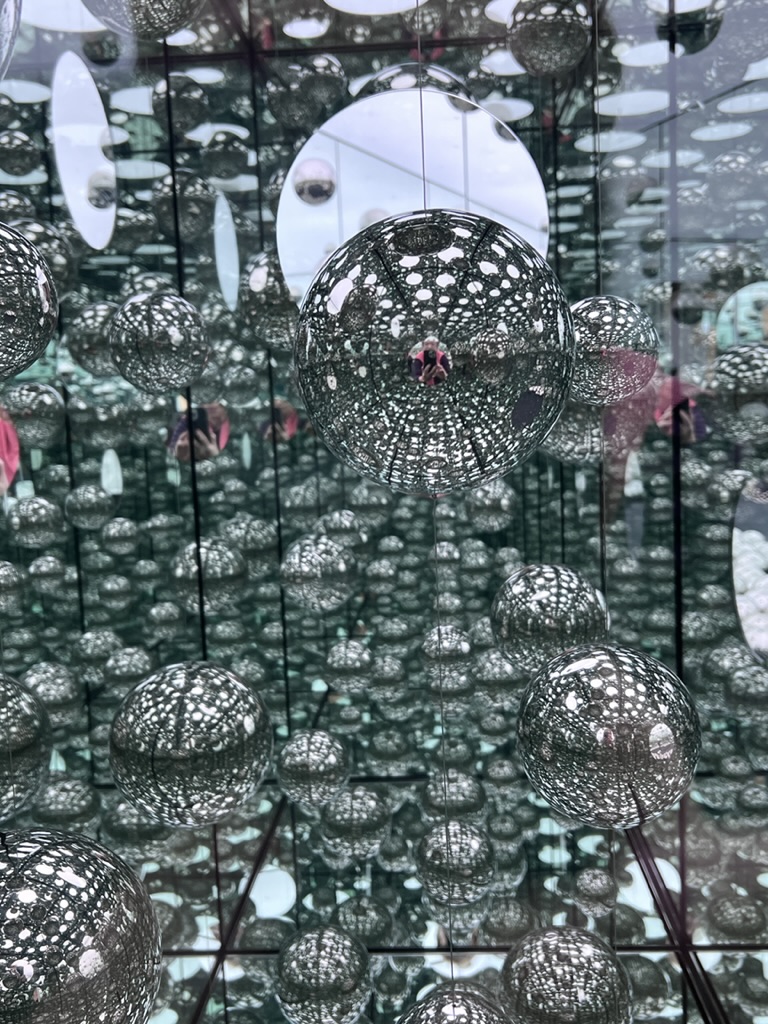
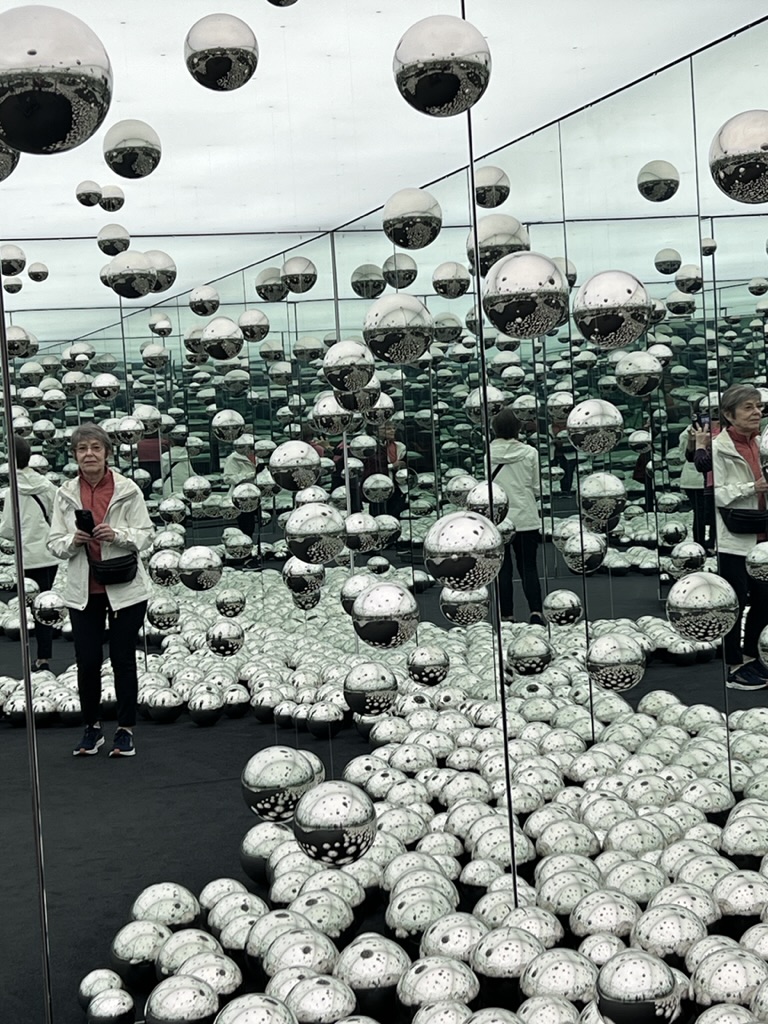
They also had several other immersive experiences including one room that was all black except for a circle of light that appeared from time to time. The idea was to sit or lie on a round “couch” with others staring up at the ceiling (although you can certainly just stand) and feel the vibrations and sense of volcanic movement. The Icelandic artist Jónsi tries to make you feel you are inside the volcano. There’s a lot of technology involved with creating the sounds for the piece. But it works.

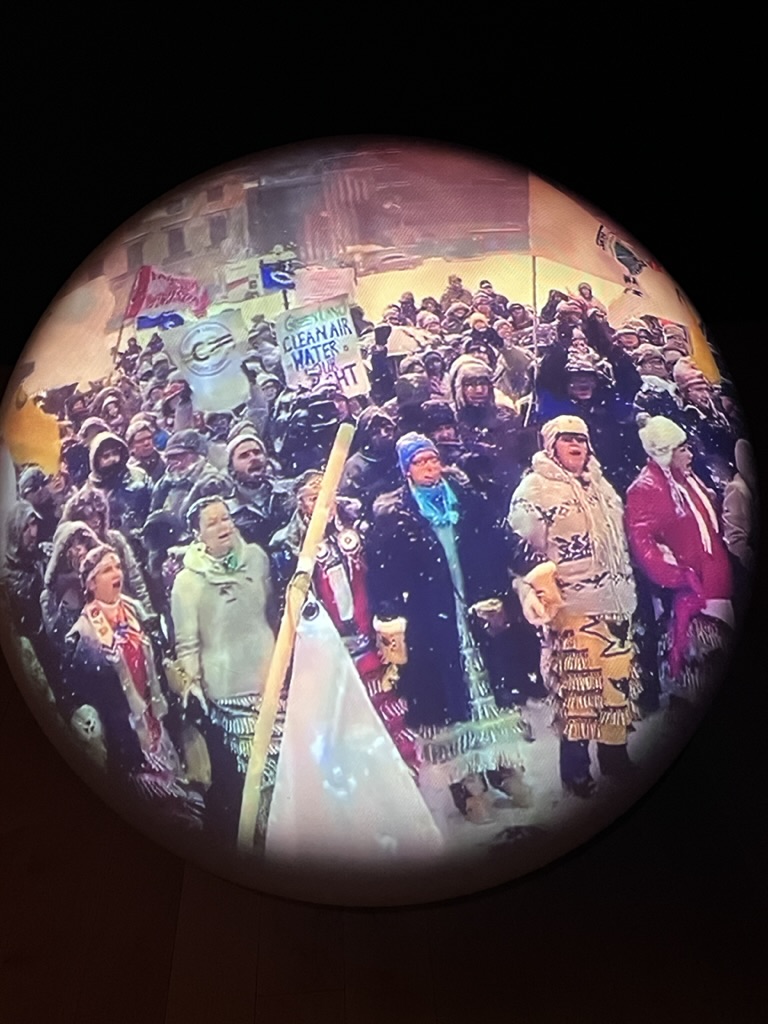
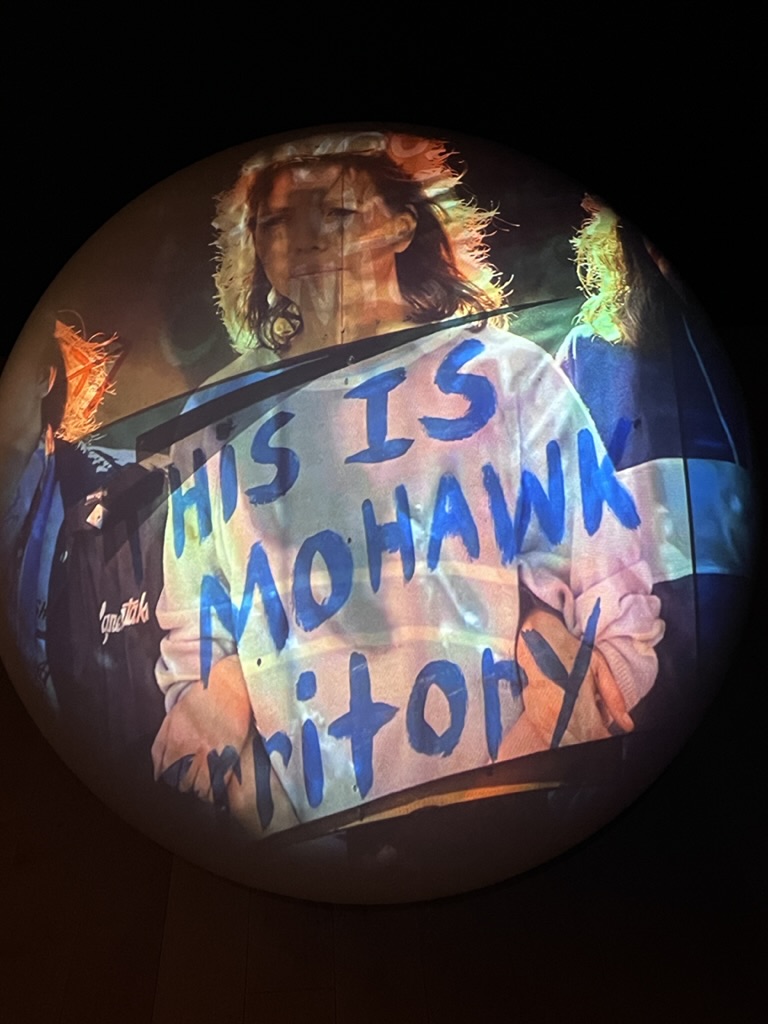
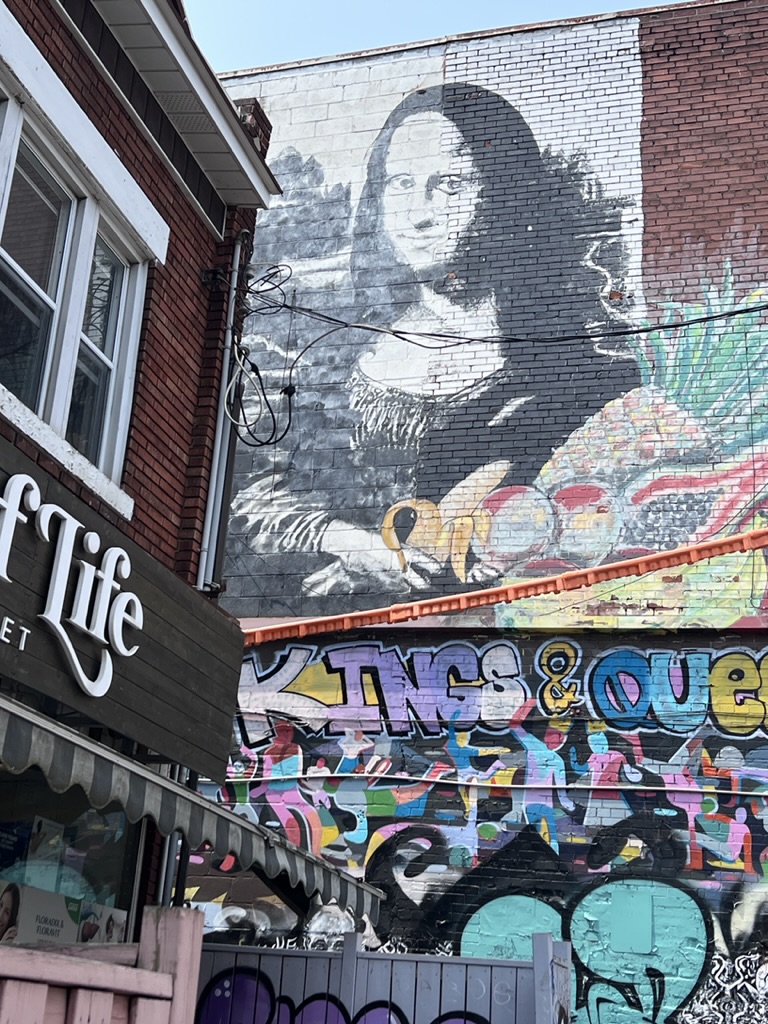
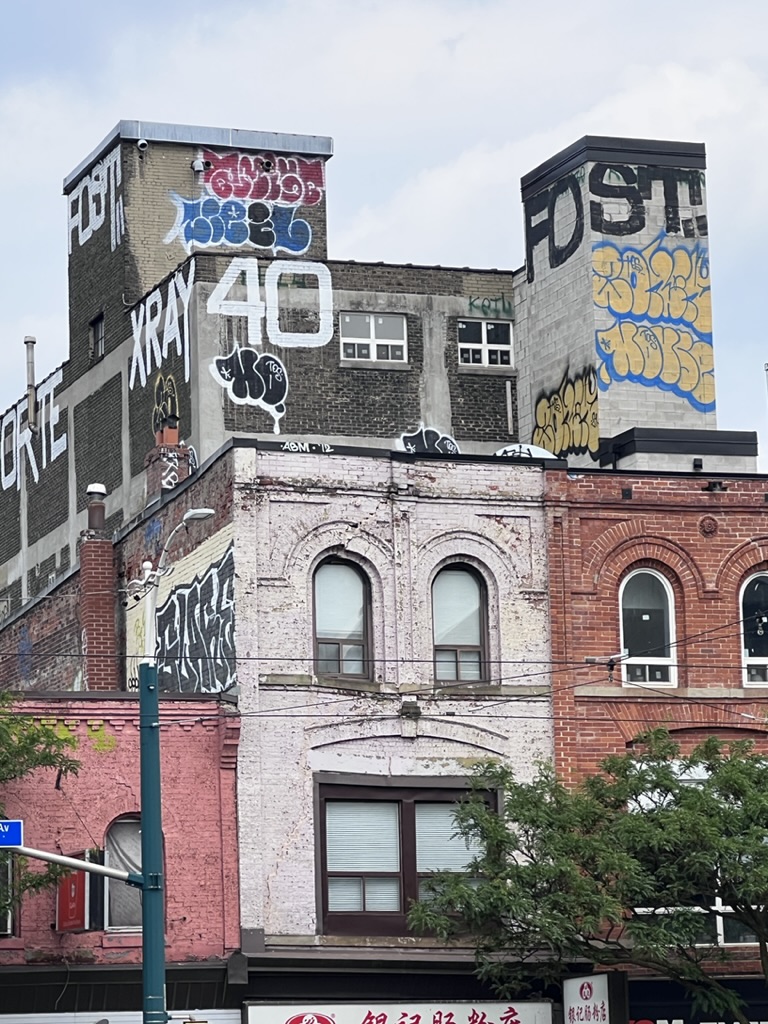
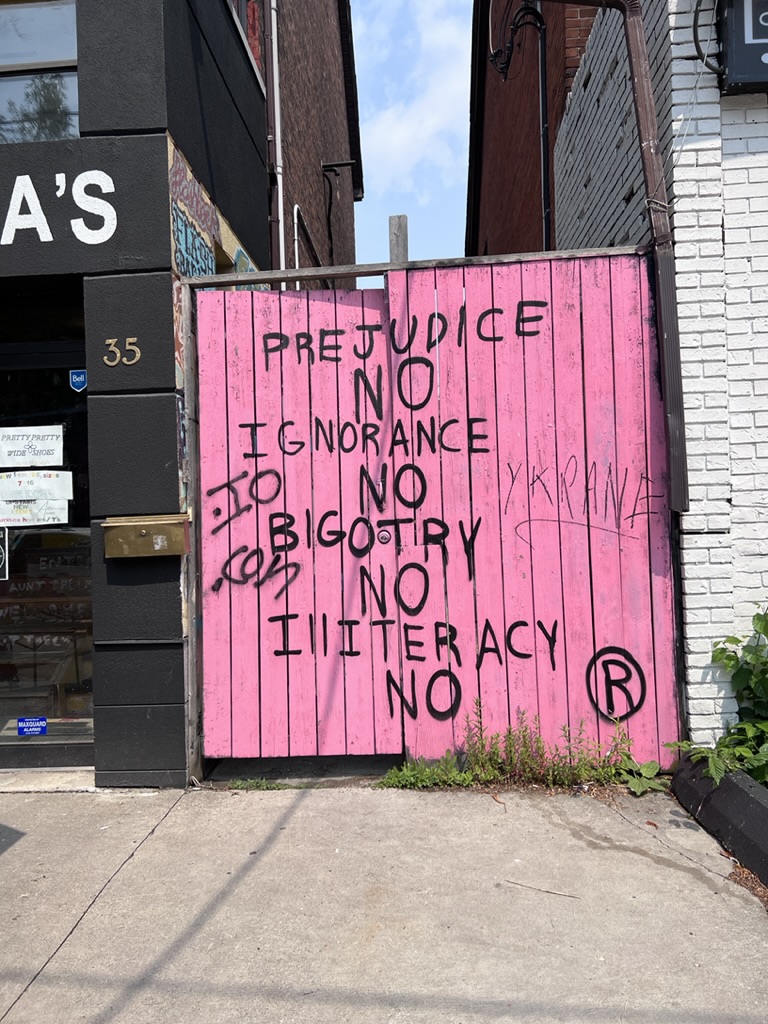
After a sufficient dose of “art” we walked through the neighborhood which edges on Toronto’s Chinatown and continued on to the Kensington Market area. Kensington Market is more of a multicultural neighborhood than a market. It’s an older neighborhood which was designated a National Historic Site of Canada about 15 years ago. One journalist wrote that “Kensington today is as much a legend as a district.” During the early 20th century, it was the home to Eastern European Jewish immigrants. It was overcrowded with densely packed houses and one of the poorest areas of Toronto. During that time, it became known as “the Jewish Market” where Jewish merchants operated small shops that sold items that were imported from the homelands where the immigrants were from.
The Jewish population moved to the suburbs and also further north in the city in the 1950s, and other immigrants from the Caribbean and East Asia took their place in the neighborhood. As many of us know, in the 1960s and early 70s many Americans moved to cities in Canada as a protest to the Vietnam War and many of these political refugees settled in and around this area and into a section known as the Annex. Over more recent years, immigrants from Central and South America and parts of Africa also located in Toronto and many started their Canadian lives in the Kensington area. In the 1960s there were plans to tear down much of the neighborhood’s densely packed small houses and replace them with large housing projects. But this plan never materialized due to a change in administration.

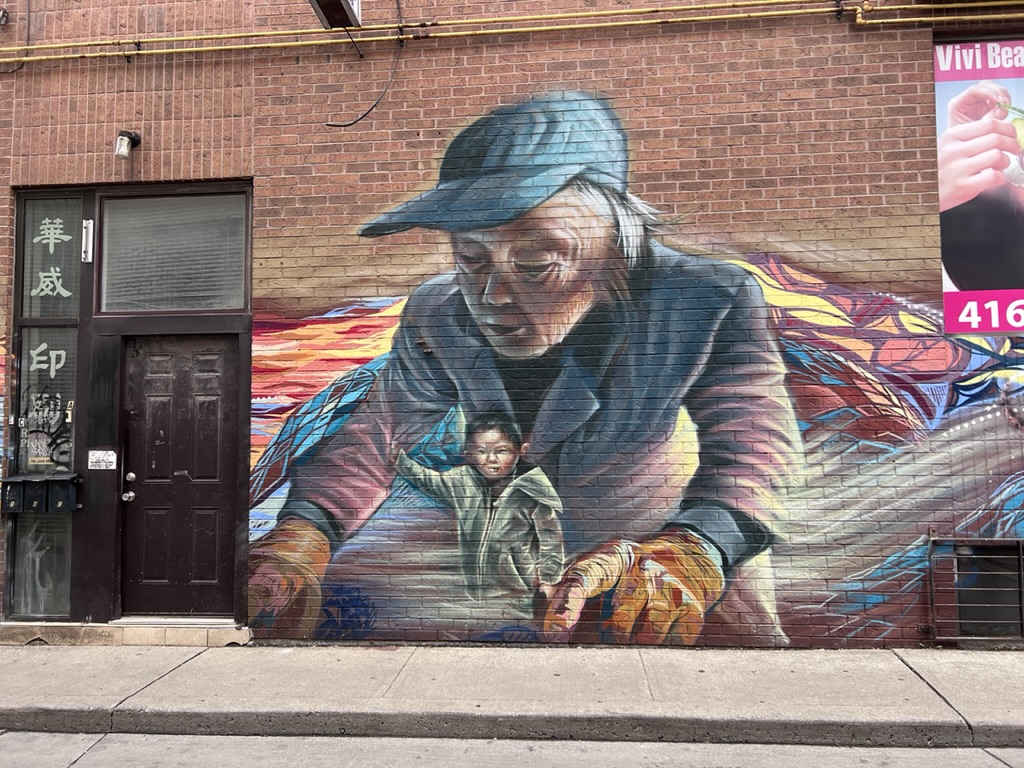
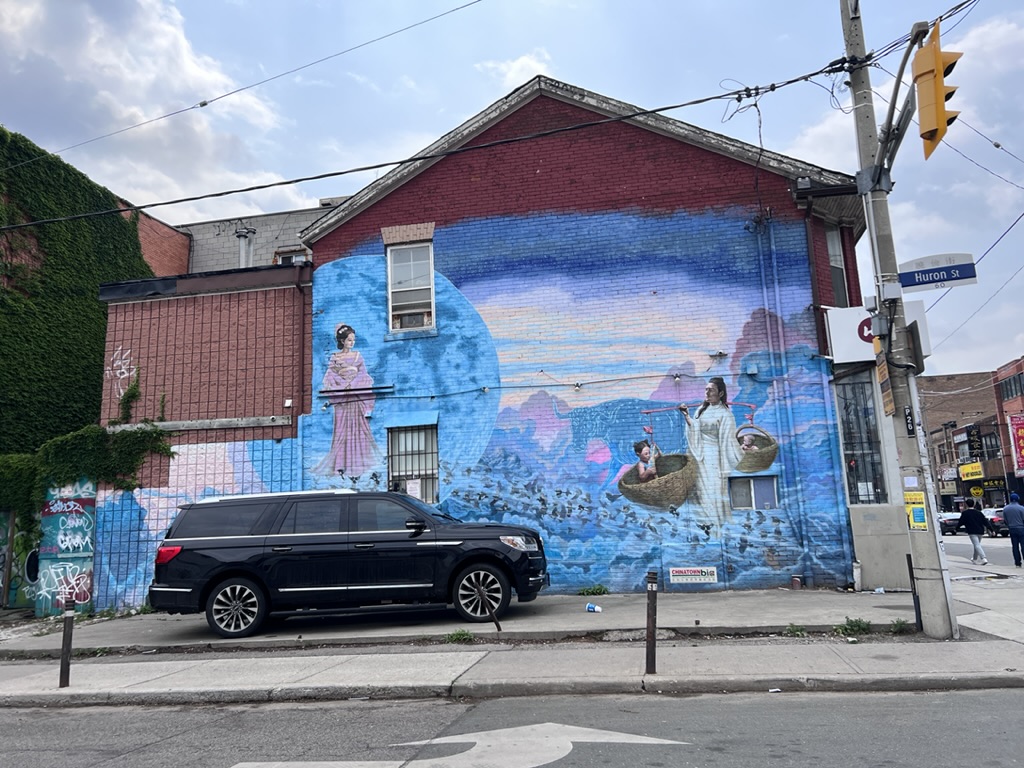
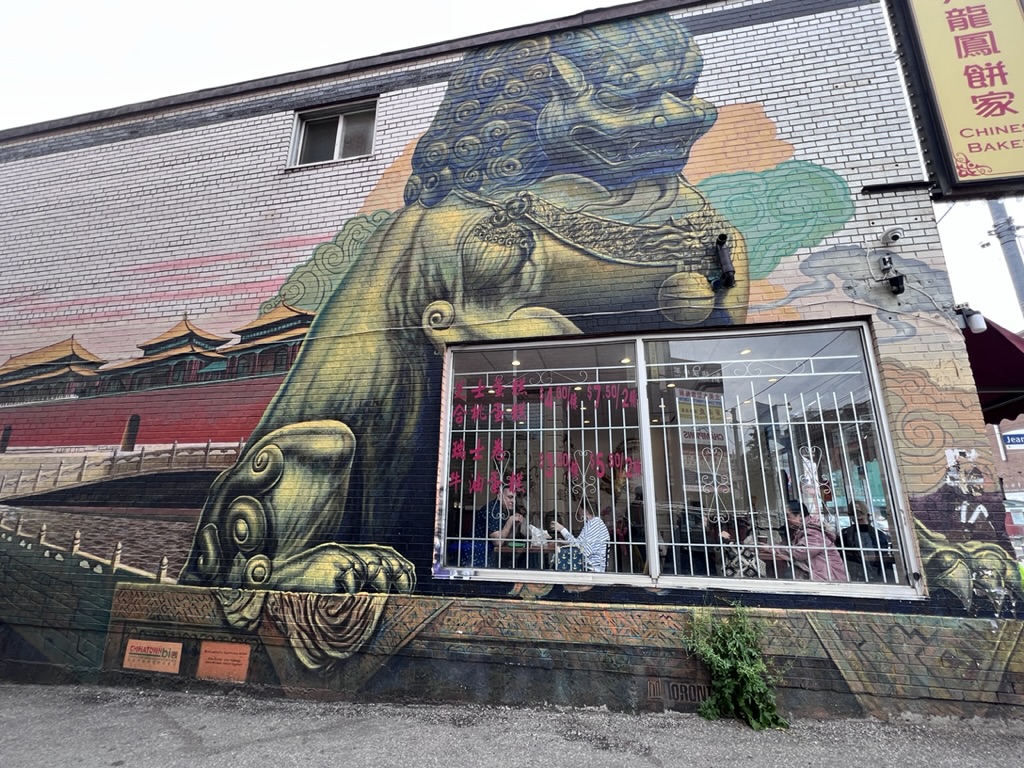
We stopped for a great gelato and then continued to walk to Chinatown, and eventually taxied to the hotel to freshen up before dinner and another play in the Luminato Festival.
Dinner was at Oji Seichi deep in the heart of Toronto’s Chinatown—a fantastic place for ramen, but we opted for an array of great starter plates—veggie tempura made with a really light and fluffy breading and we also had wonderful karaage, seaweed, and cucumber salad, and extremely fresh gyoza. Oji Seichi is tiny and brightly lit with wood bench seating. They consider it Canadian Japanese! Would definitely return and recommend it highly.
We then walked to the Ada Slaight Theater to see “Aalaapi,” a genuine treat, since we didn’t know that much about the play (mostly it fit our calendar and sounded interesting). Aalaapi is Inuktitut for “Choosing silence to hear something beautiful” or something along those lines. The play uses documentaries and also radio pieces spoken in French, English, and Inuktitut languages (always flashing the translations onto the “front side of the house” which is the only stage set–the front facade of a house. Throughout the performance, you’re watching the house (and the play) through that window.
Basically, the play focuses on the daily lives of a few women from Nunavik (far north Quebec and home to Inuit people) whose lives move from the north (where they live with their ancestors on ancestral lands) and the south (where they must go in order to advance educationally). The dialogue is often intimate as the women tell stories of their history and the richness of their culture. And they always talk about the importance of silence as defining their very being—silence they can only experience in the north. Throughout the play they also mention cooking Bannock (and they are actually cooking it throughout the performance (and they serve it to the audience at the conclusion of the performance).
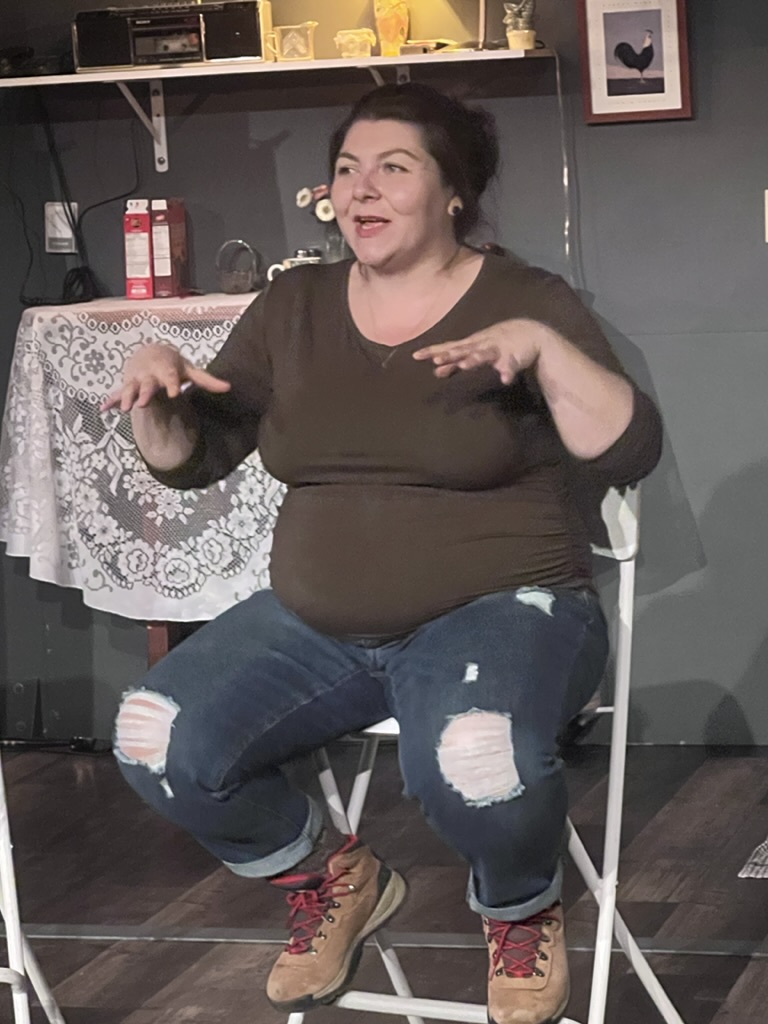
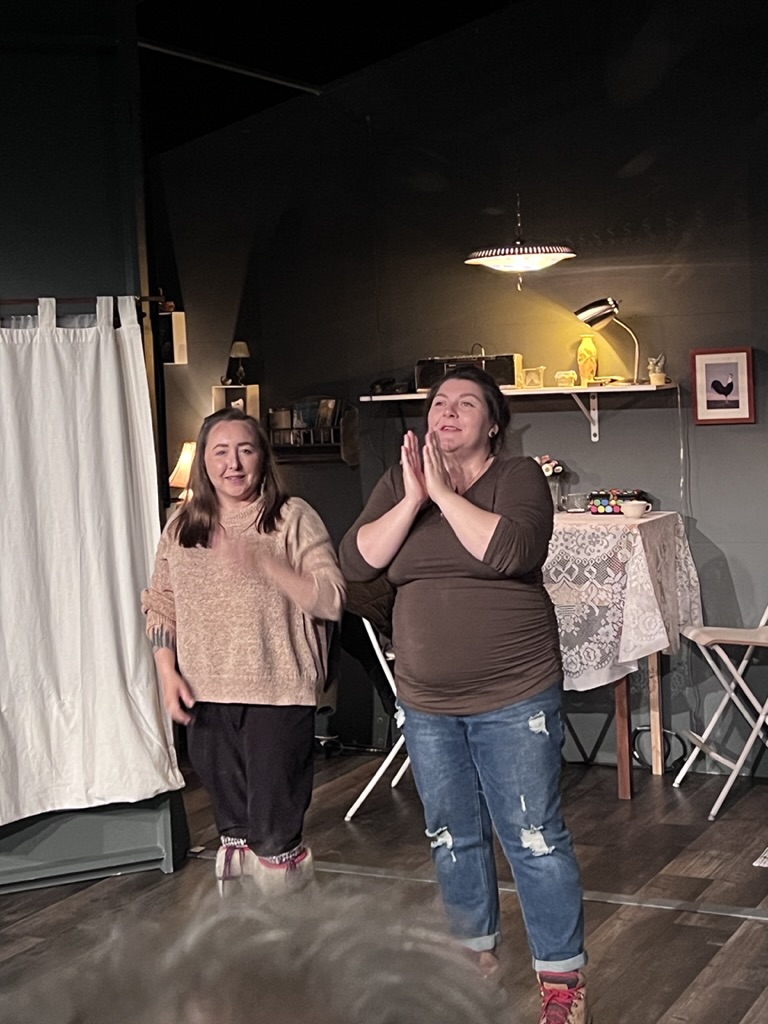
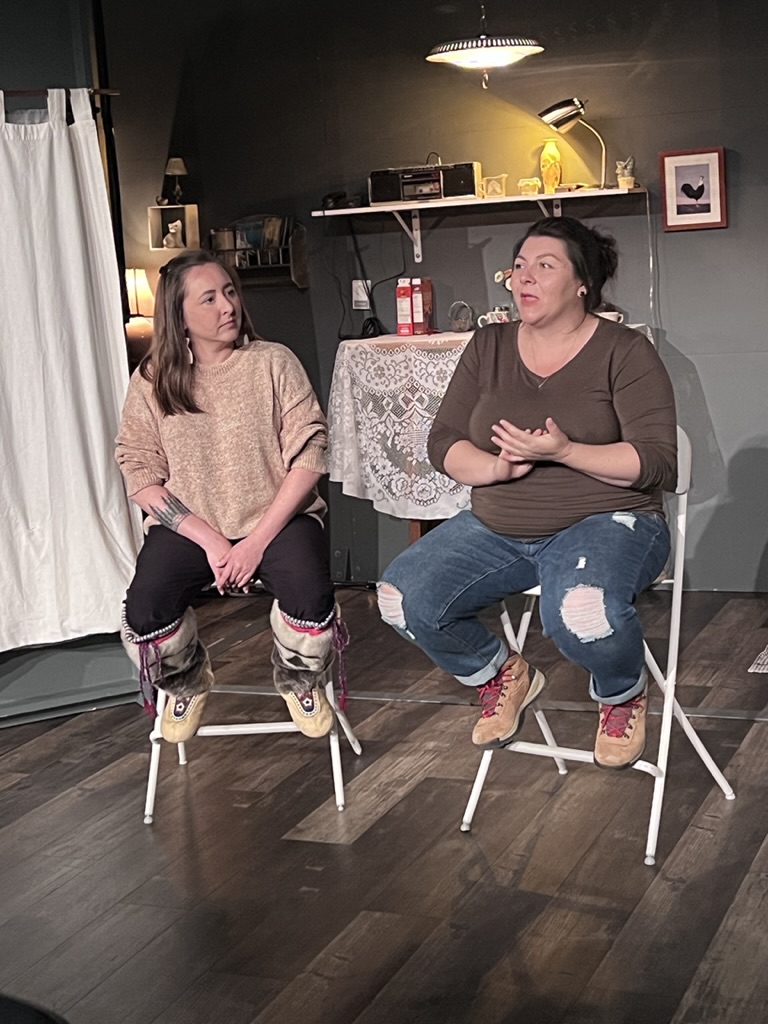
Images project across the facade of the house, which serves as a screen, and there is also a soundscape of footsteps walking and breaking the snow on the ground and also wind sounds. In the words of the “script,” the audience is invited “to listen in order to see better.” It was an incredibly powerful play performed by Inuit activists who “opened” the door of “the house” at the end of the play to invite questions from the audience, which also proved very interesting as the two performers talked about the difficulties of holding onto their native language, of having to leave “home” in order to become more educated, and the conflicts related to whether or not to return to the very small villages of their background. They talked about the fact that it was illegal to speak their language just 50 years ago and what impact that had on the continuity of their culture. And they also talked about a nickel mine that has been trying to lease land owned by First Peoples—promising jobs and cash, but potentially destroying the Intukitut lifestyles and environment. Thus far, the people in the 200-person town has stood strong and stopped the development.
So much more to say about the play and the similarities between the people speaking Inuktitut and township people speaking Xhosa in South Africa and Lapps speaking Sami, and oh so many more examples. I’m hoping this small group gets funding to take the show to other communities.
Because there was so much to discuss after the play, we figured we should head for drinks! And dessert! So, we went to Bar Raval which is on the edge of Toronto’s Little Italy. Bar Raval was totally packed with all under-30s… There was only standing room.. so, we noticed what looked like a really nice little restaurant next door where we were able to snag an outside table for four—Daili. Perfect choice – drinks and fantastic desserts in a new American/Asian/French flair. We opted for poached pears that were. soaked in some kind of wine and spices and Chantilly cream, and a panna cotta made with sticky rice and white chocolate and rhubarb and some other yummy stuff. We also had a serving of sake sorbet (to die for!)
Stuffed and happy, we taxied back to the hotel at around midnight. We are becoming expert at using the taxi app (Beck’s taxi).
Toronto’s got a good vibe.
More tomorrow
Fern
Short Girl Trip: Toronto, June 8 2023
Greetings from Canada, the place we all want to be from.
It’s the annual girl trip! This year it’s short and to the north. Four full days in Toronto.
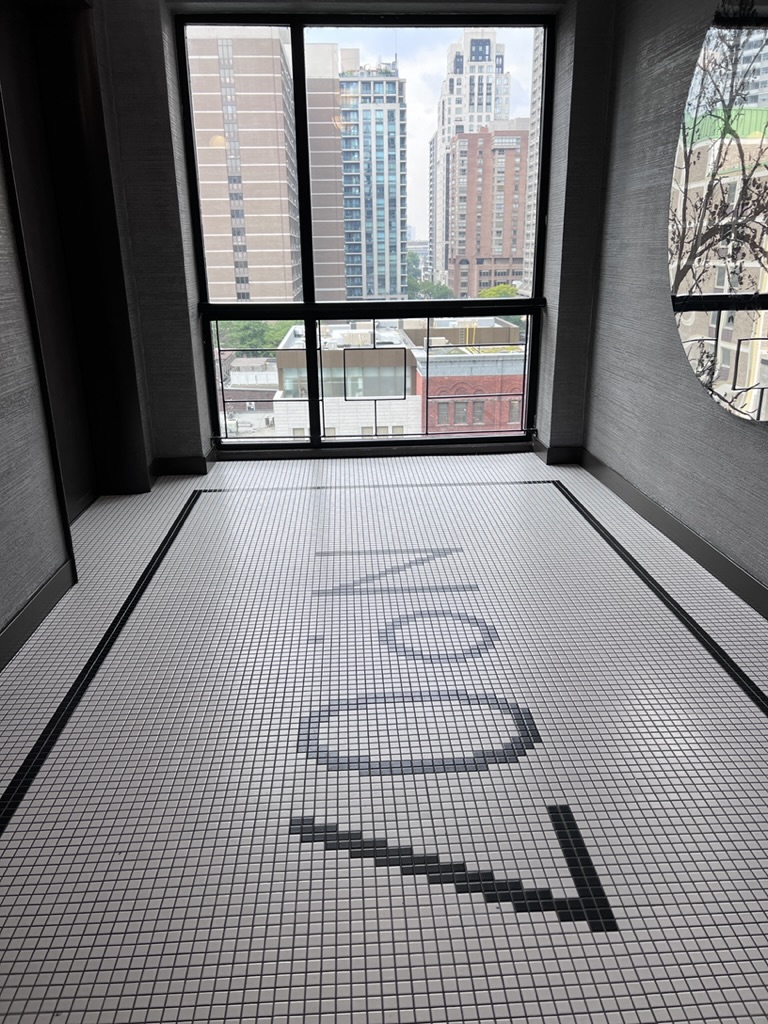
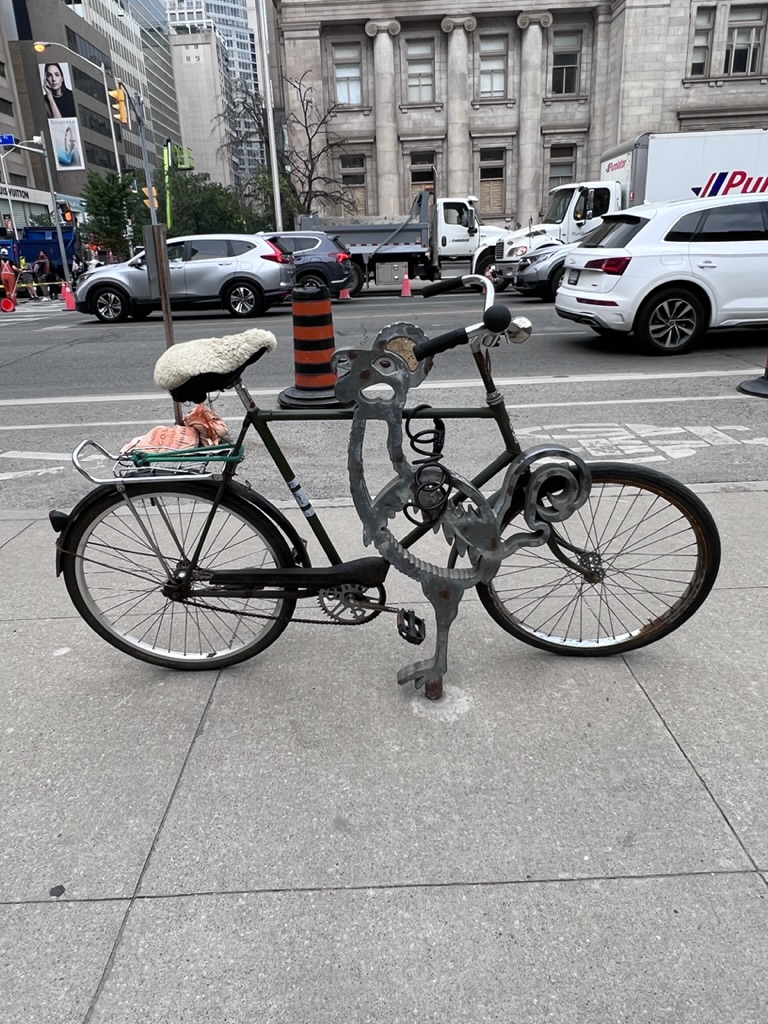
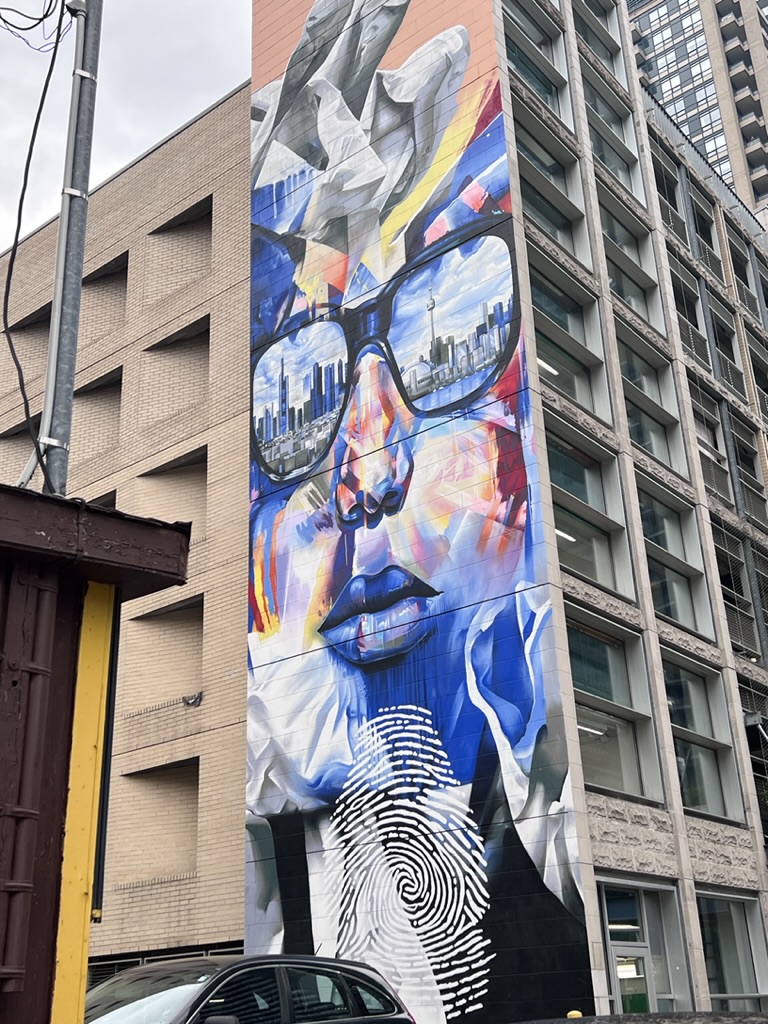
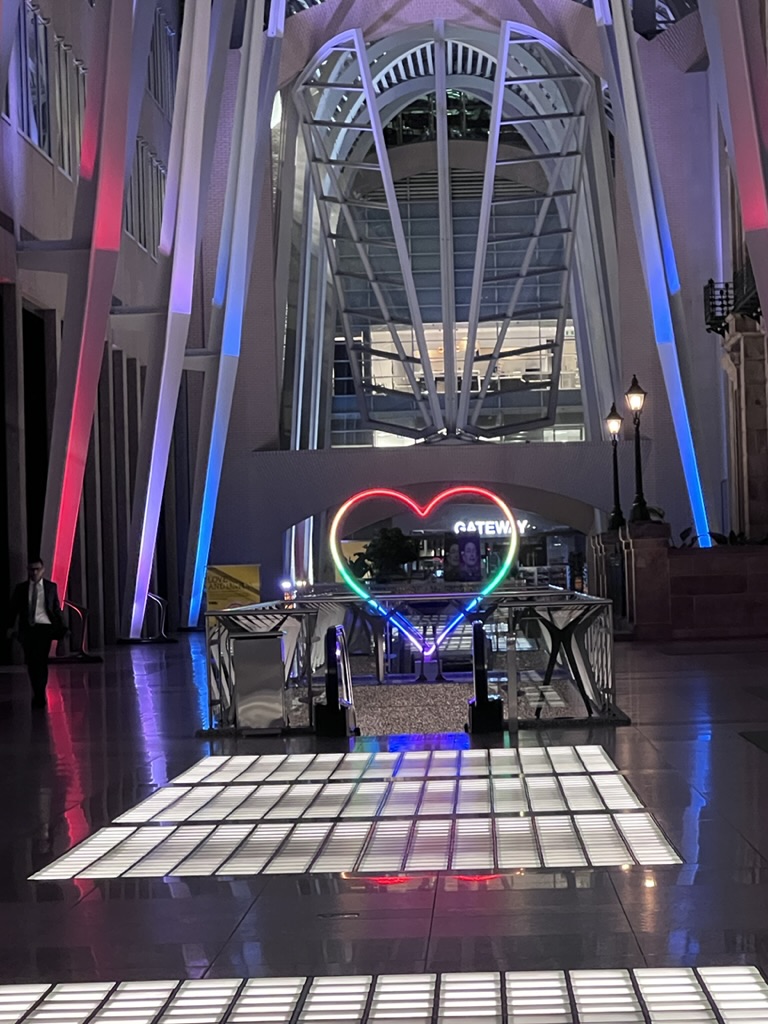

Before I begin, let me just say something about the fires (which had us a little worried for a while). We truly lucked out in that somehow whatever smoke was hitting Toronto blew south and east just before we arrived. So while we haven’t had great weather, the air is fine, although a little hazy… sort of like the fog that rolls into Berkeley in the summer. We have even had some sun.
Greetings from Toronto…. (or Toronno as the locals say). A very short 4-day trip with friends
—the annual trip with all short “girls”..
As a group, we’ve traveled together (sometimes just two of us, sometimes three, and sometimes there are four or even five) to Marfa TX, Netherlands, Montreal, Detroit, DC/NY, south of France, and more); this year we selected Toronto for a variety of reasons:
- We only had 4 days
- None of us had been to Toronto in years and we knew a lot had changed
- We often try to tie trip into some arts event or festival; during the time we are here, the Luminato Festival will be in full swing
- We like to visit ethnic neighborhoods and eat good food
So Toronto checked all the boxes.
We arrived late on June 7th (Wednesday)—each of us landing at about 9 pm—and connected easily after going through customs; taxied to the hotel by 9:45 and literally ran into the hotel restaurant which turned out to be fairly good…. Or maybe we were so hungry anything edible would have tasted good.
Today, Thursday, was really Day One.
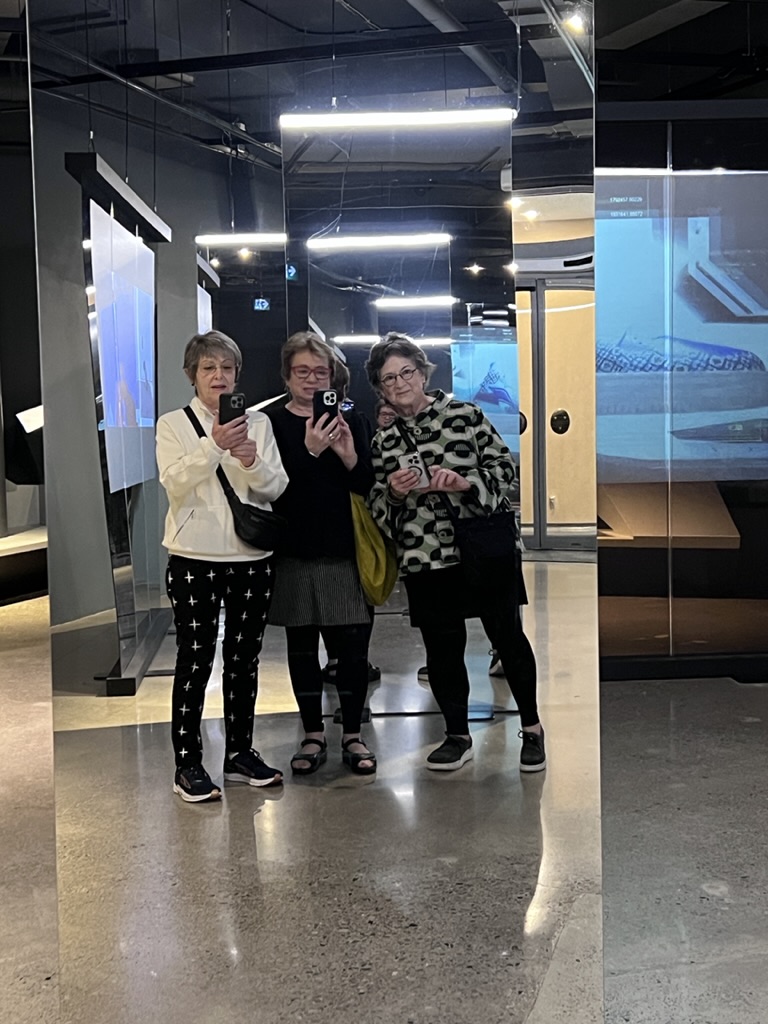
After a quick breakfast at the tiny café attached to the hotel, which appears to be totally organic, leaning toward vegan, where we had an interesting “egg toast,” we strolled to the Bata Shoe Museum. It’s an amazing collection with more than 15,000 objects covering more than 4,500 years of history from Chinese bound-foot shoes and sandals from ancient Egypt to current-day Nikes and shoes needed for different climates and different jobs and shoes that reflect changes in society and social customs. There’s some good text that gets into how technology changed the nature of footwear and also how shifts in society and customs can be traced through shoes and shoe design and manufacture. The museum has shoes from every part of the world… from silk shoes from China to fur shoes for Samurai warriors. The museum exhibits about 1,000 pairs at a time.
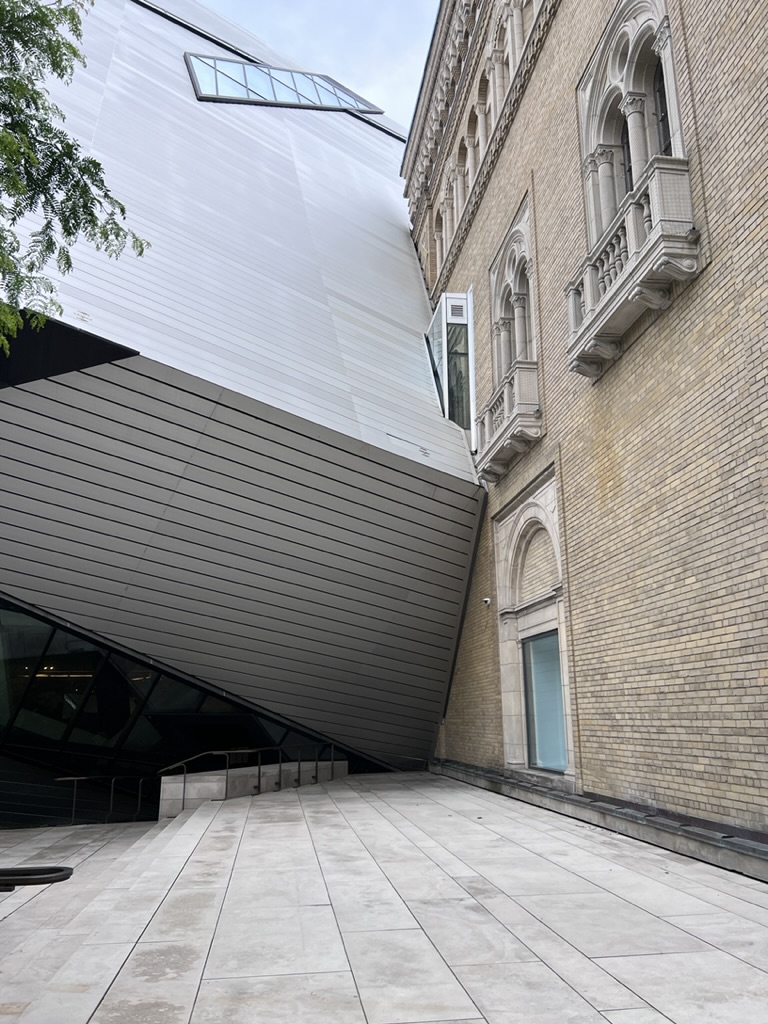


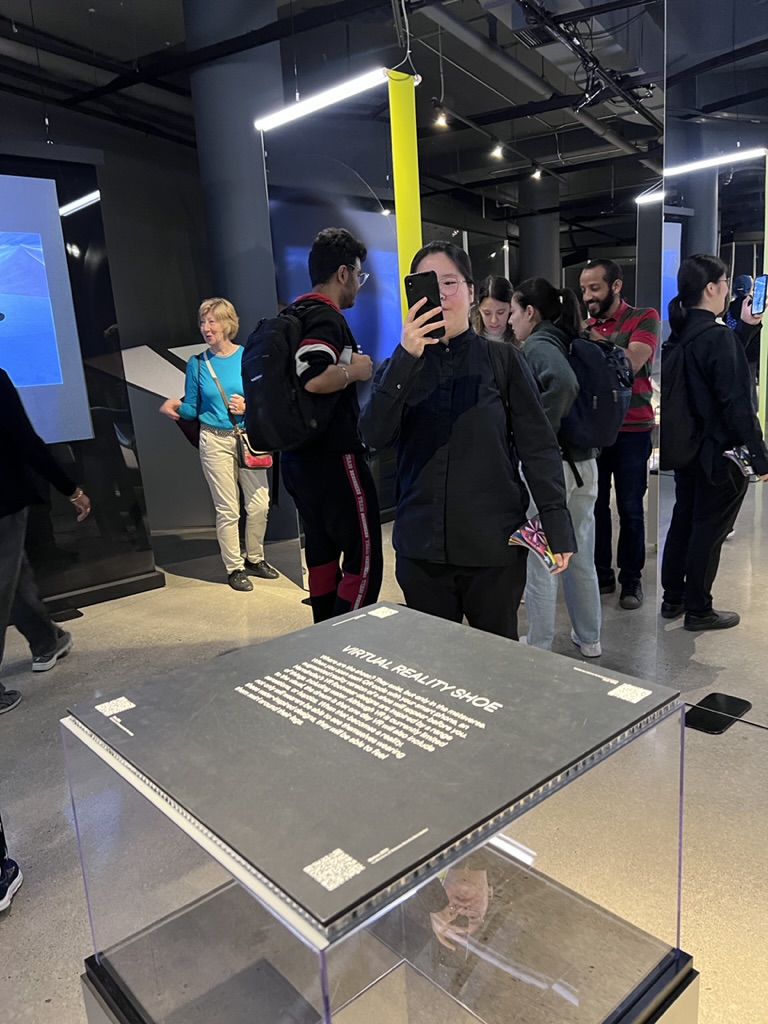
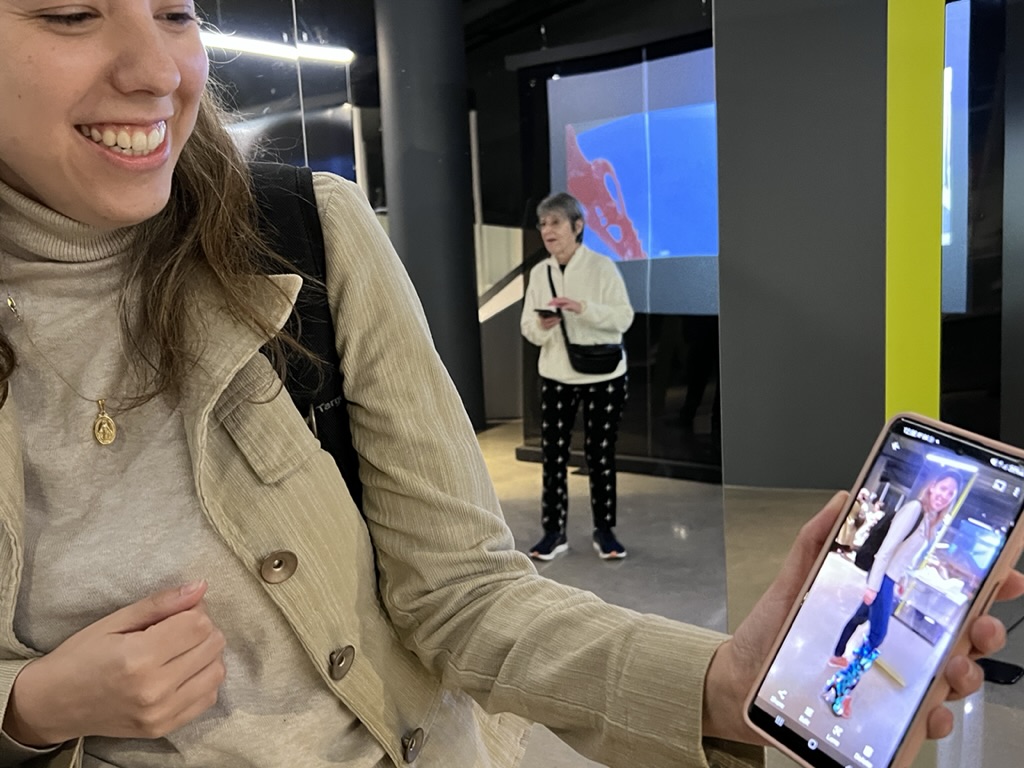
We stumbled upon a group of college students with their instructor at the museum. They are doing a study (with a grant from the Canadian government) on how AI and other technologies will affect the design of museums. Like them, we downloaded the QR code at one part of the exhibit and attempted to follow the instructions which would enable us to put a shoe onto our feet and see our whole body in an image wearing these rather phantasmagorical shoes. Well, we were able to download the shoes but couldn’t get further than that. But these college students whizzed through the instructions and were able to model the shoes digitally…. So lesson learned for the students: these kind of exhibits that use AI will need to have guides at the museums help visitors learn the technology!
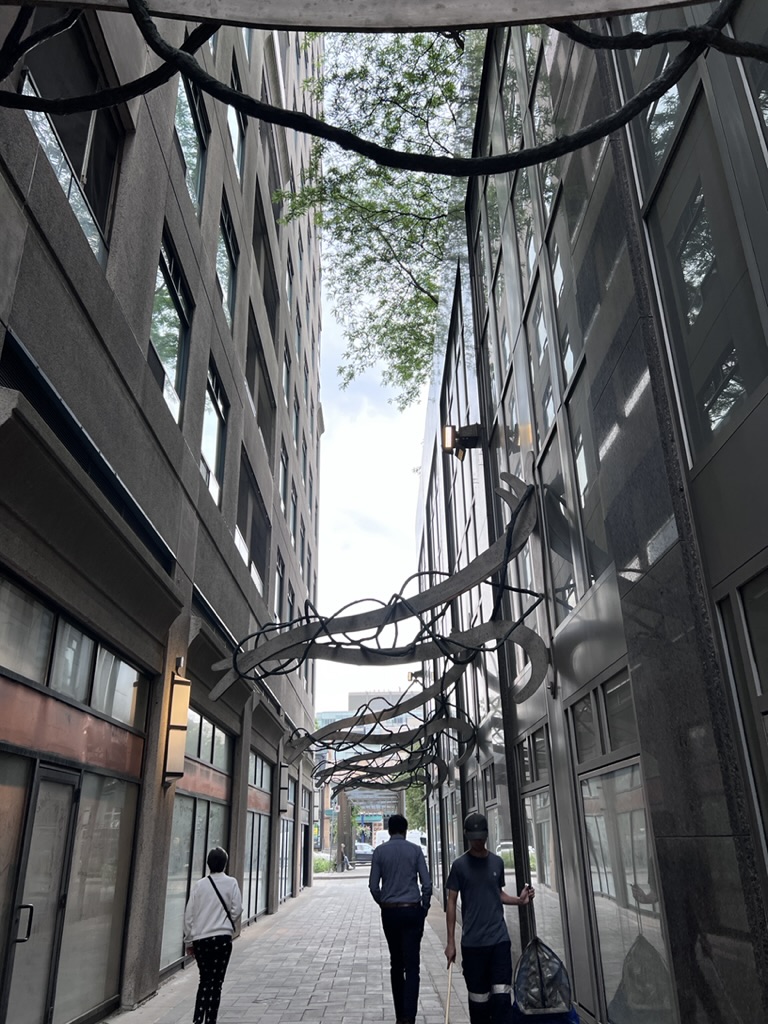
By the time we left Bata, it was drizzling but we walked to the Gardiner Museum which was a few blocks away. The Gardiner focuses on clay and there were several interesting exhibits including one highlighting Indo-Caribbean women, along with their stories. We tried to grab lunch at the restaurant but without reservations it was impossible.
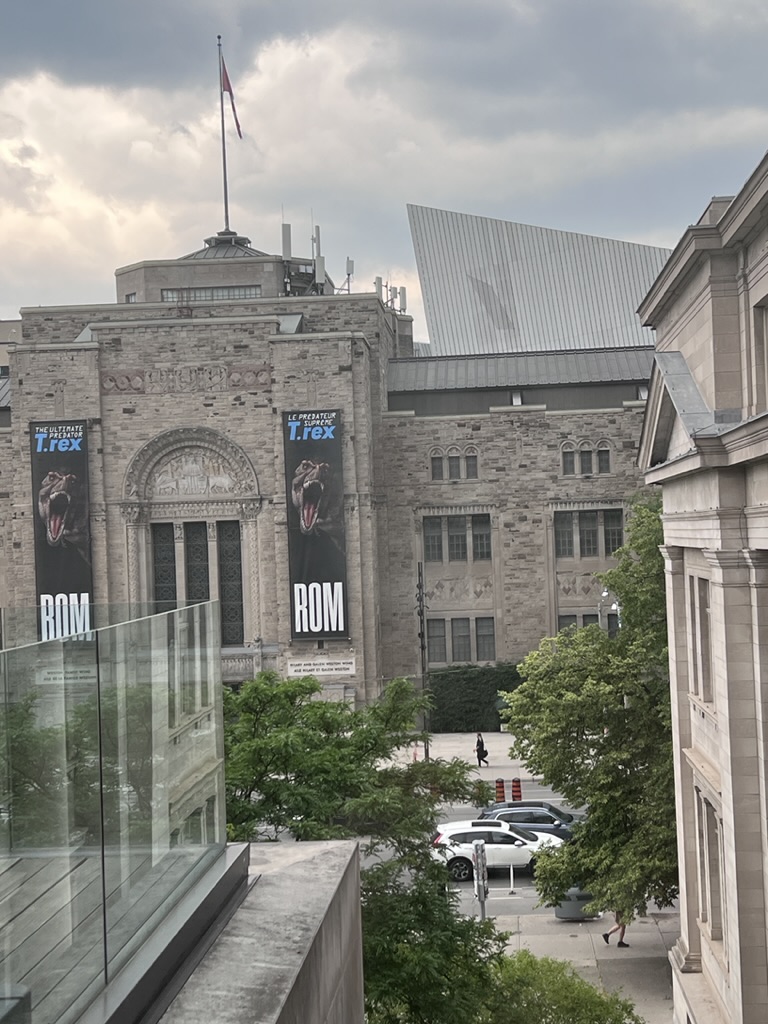

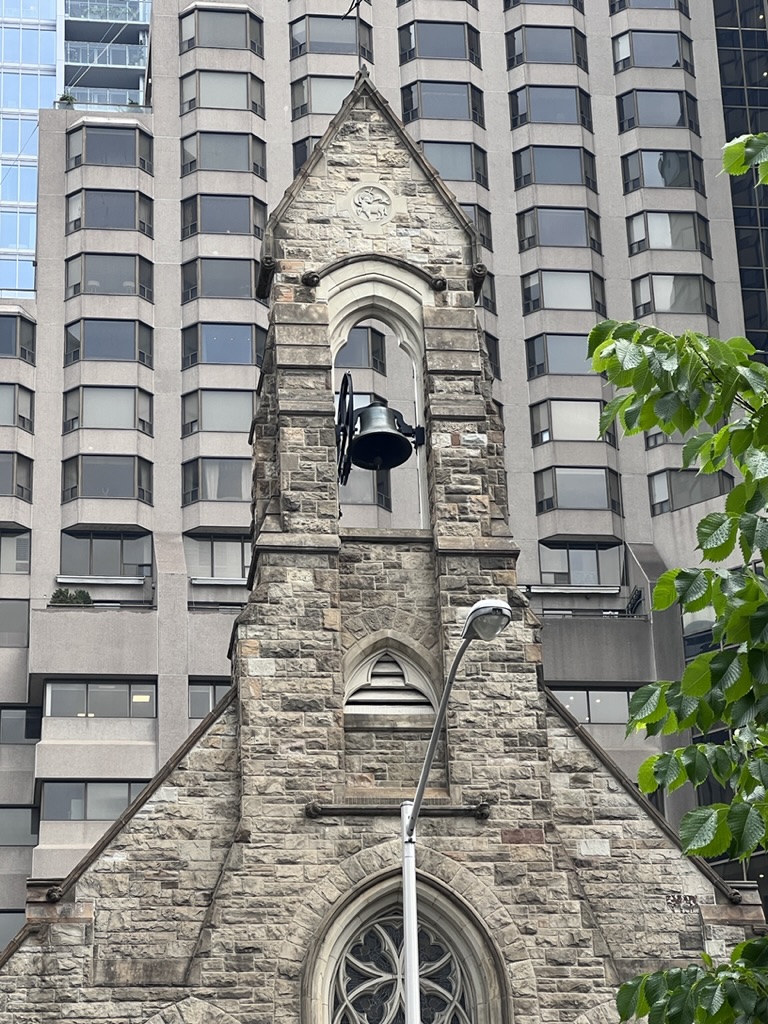
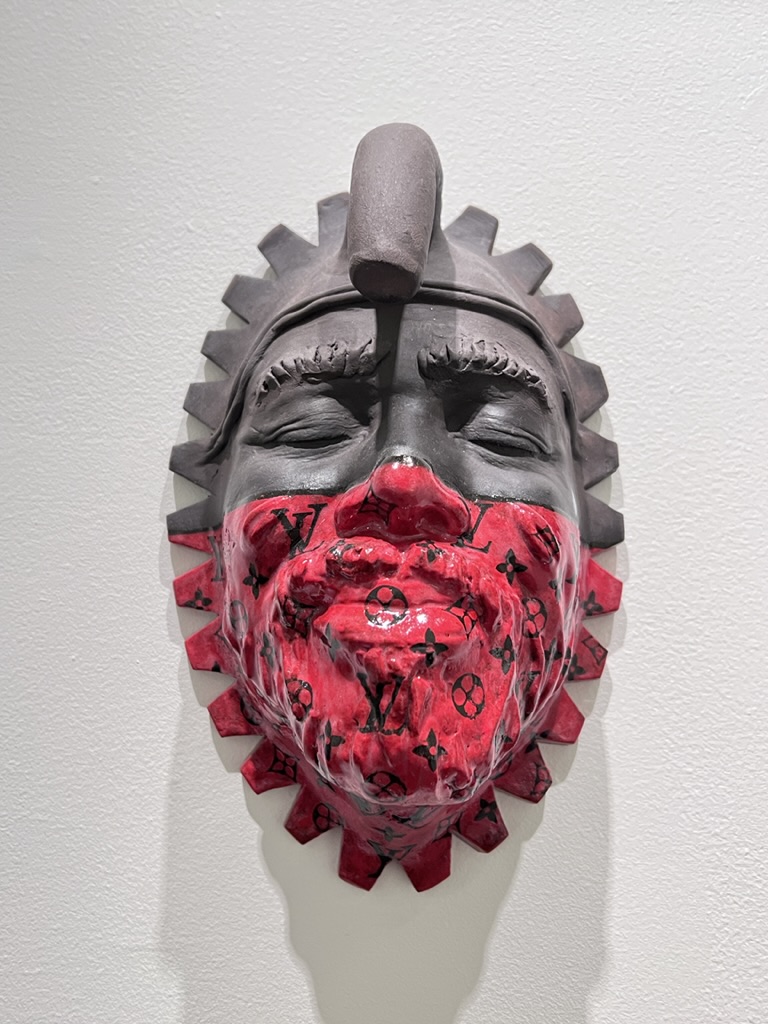
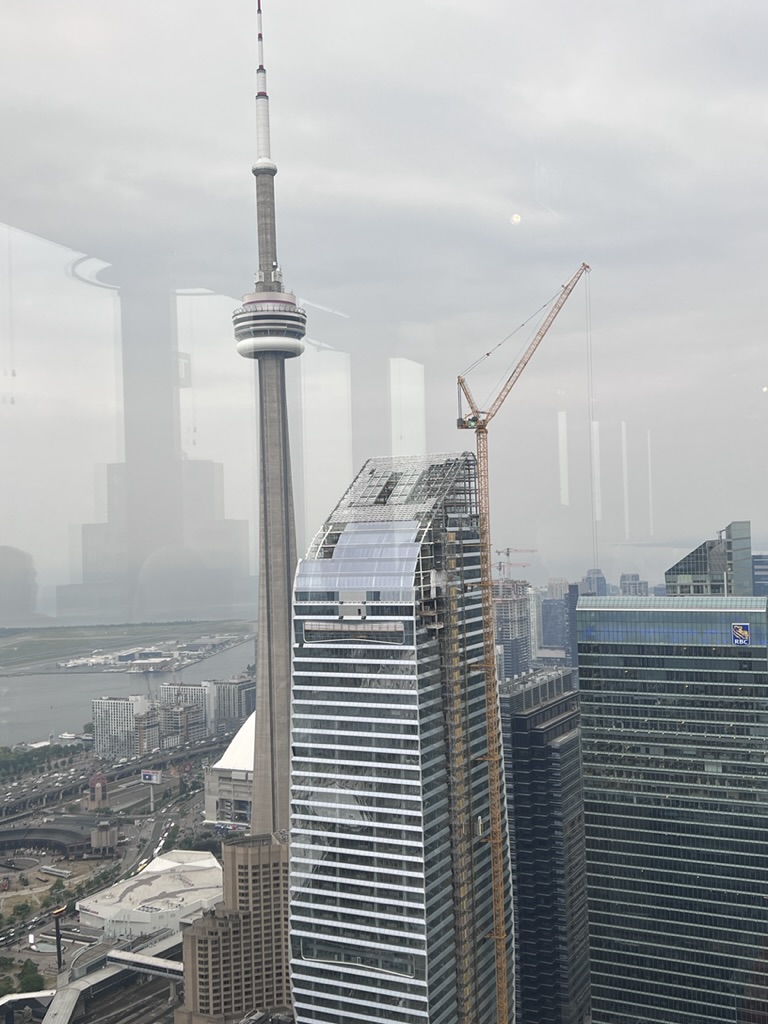
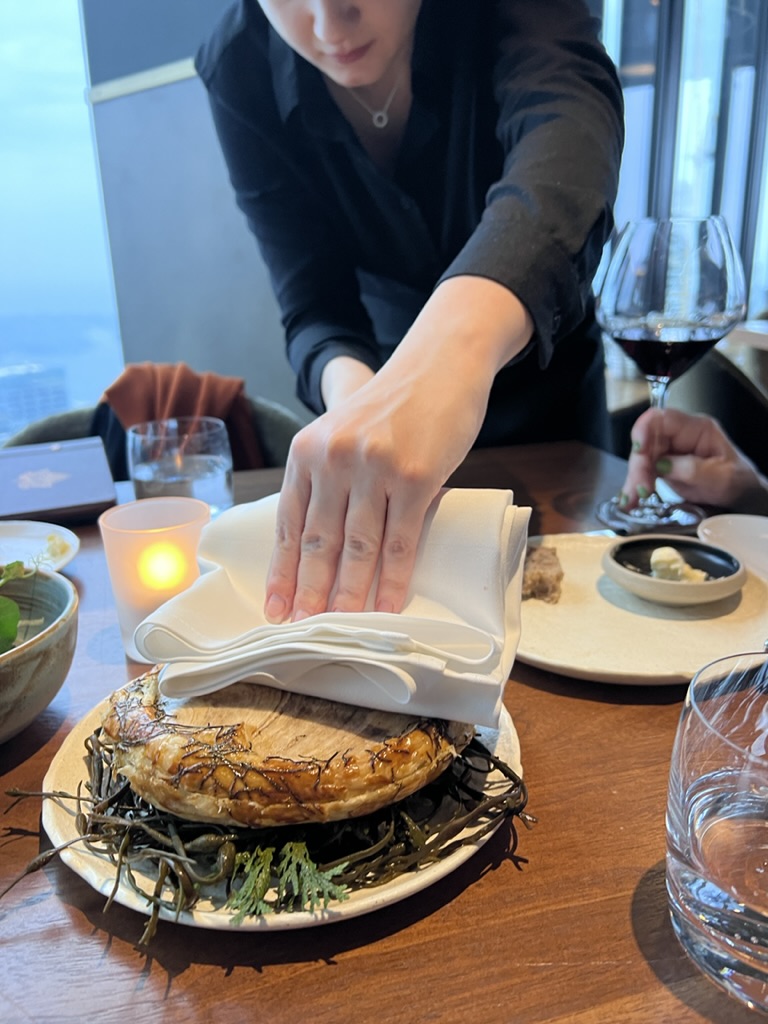
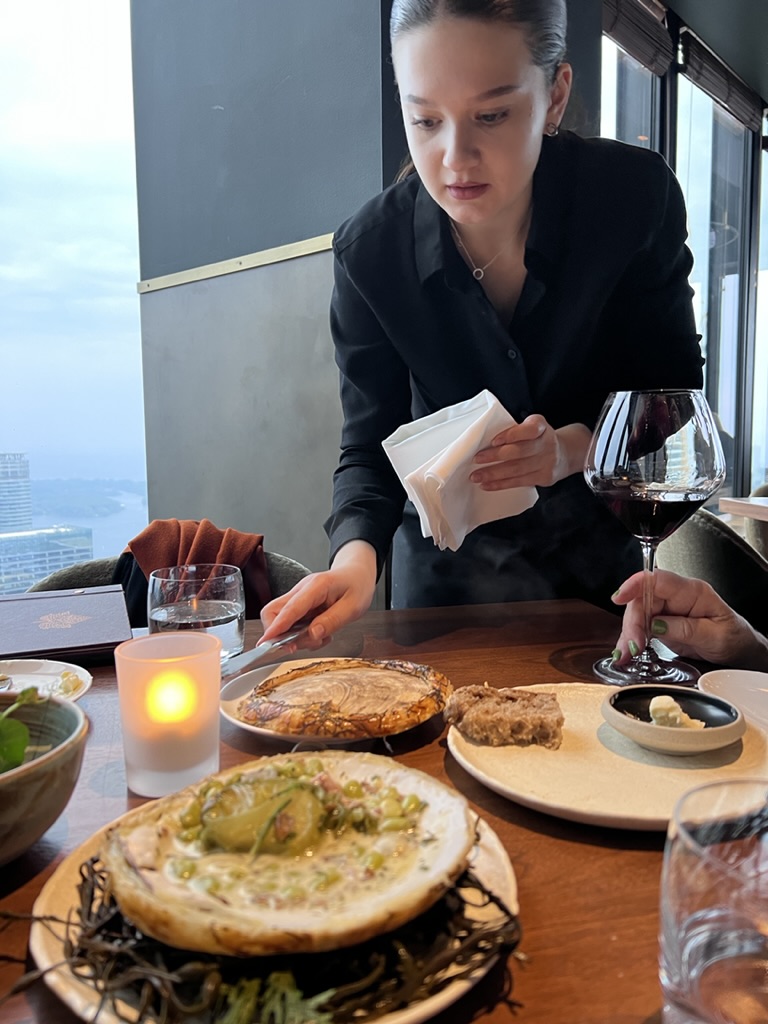
Then we headed to an amazing early dinner (for me it was more like late lunch, given my usual eating times) at Canoe which is located on the 54th floor of the TD Bank Tower with spectacular views of the whole city—but we did need to contend with the minimal visibility. Anyway, the food was incredible and very upscale. We opted for the a la carte menu and shared two starters (scallop en croute—a huge scallop in the shell which was cooked with some pancetta, celeriac rémoulade, chanterelles, lobster oil, and sea lettuce—and had a sort of flaky and delicious “bread” which “resealed” the shell; and a venison tartare that came with roasted asparagus and pickled shallots, and probably some other stuff) and two main courses (halibut with asparagus and some kind of very whipped potatoes that had some apple puree, I think, and crispy onions). We were headed to the theater after this early dinner but managed to squeeze in a quick dessert: a sort of decomposed rhubarb cheesecake… and of course some nice wine.
Well-fortified, we headed to the St Lawrence Center to see “Treemonisha” which was staged in conjunction with the Luminato Festival. It’s an opera written from notes and music by Scott Joplin and is one of the few pieces completed soon after the abolition of slavery. But Joplin died before finishing it and thus it was completed by someone else. It fuses European classical music with ragtime, folk, and gospel which really makes for a wonderfully distinct score and also has a woman lead character who winds up being chosen to lead the community–definitely Joplin was a feminist and ahead of his time.
It’s an all-Black cast and orchestral ensemble (apparently a first for Canadian opera). The story takes place in 1884 on a former slave plantation in an isolated forest, somewhere between Texarkana, Texas (Joplin’s childhood town) and the Red River in Arkansas. “Treemonisha” is a young freedwoman. The opera was largely unknown before its first performance in 1972 (seven decades after Joplin wrote it). The story is very touching as it tells of Treemonisha, who is about to be married but discovers on her wedding day that she was not the birth daughter of her upscale freed parents and runs away (or is kidnapped, depending on your interpretation) to seek the band of “conjurers” of which her birth mother was a part (but had died soon after giving birth). To cut to the chase, she eventually brings the two groups of African cultures (the Maroons who live in the forest and the Freedmen) together—clearly a revolutionary idea that this would be done by a woman and is anointed the title “leader.”
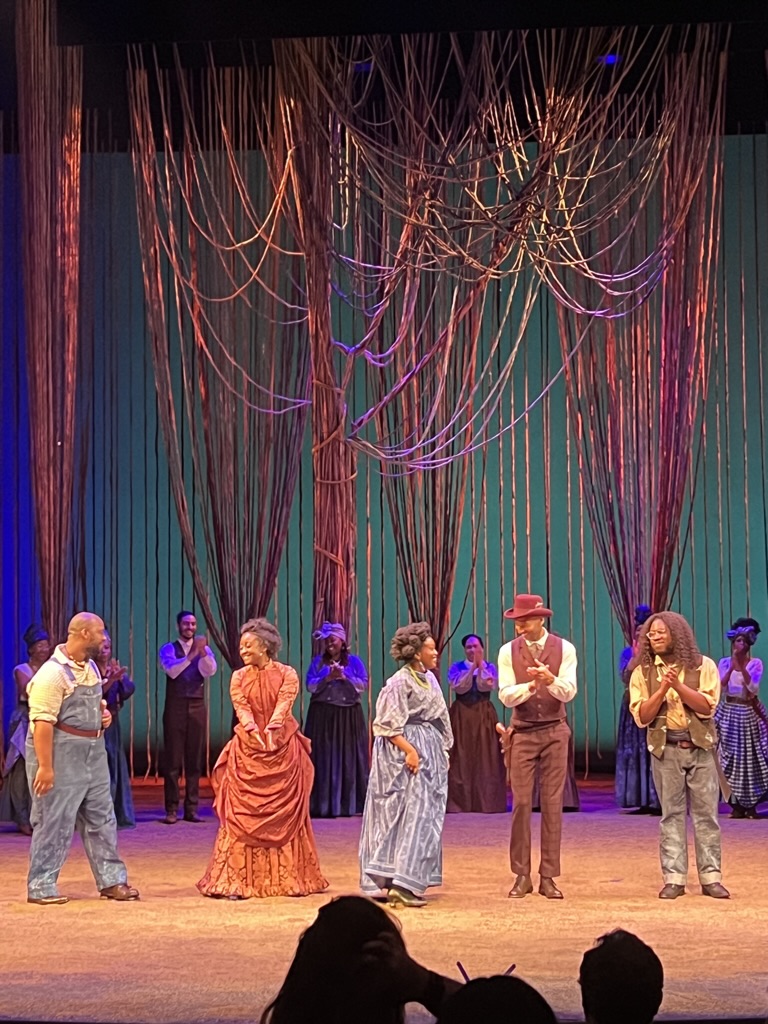
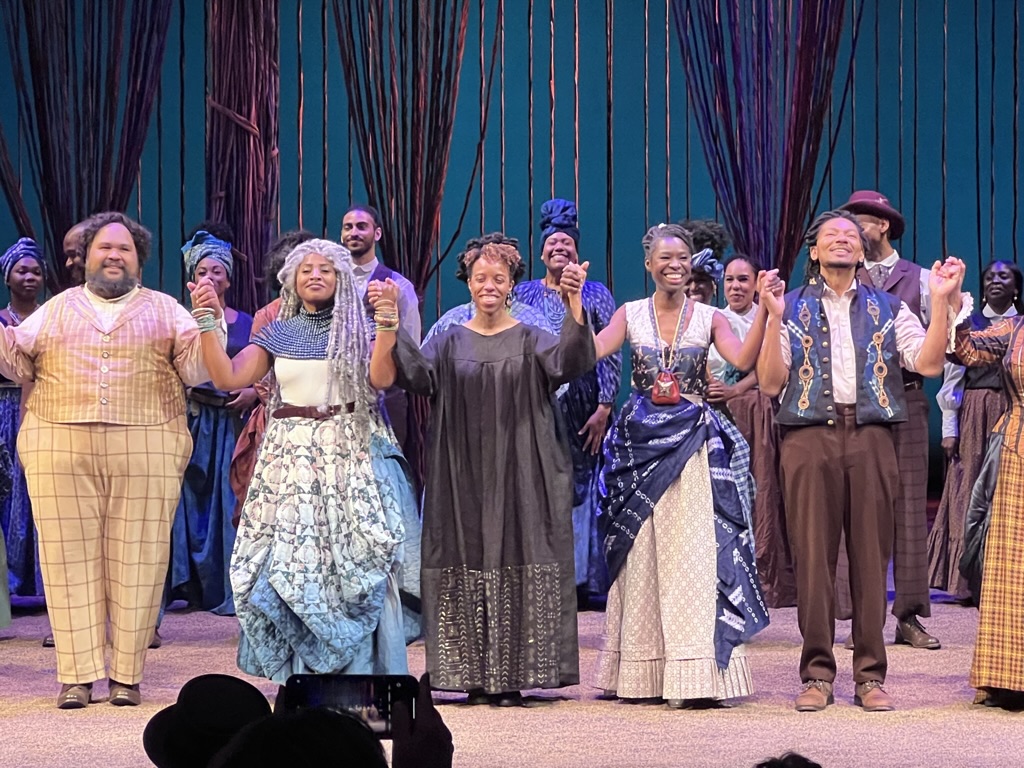

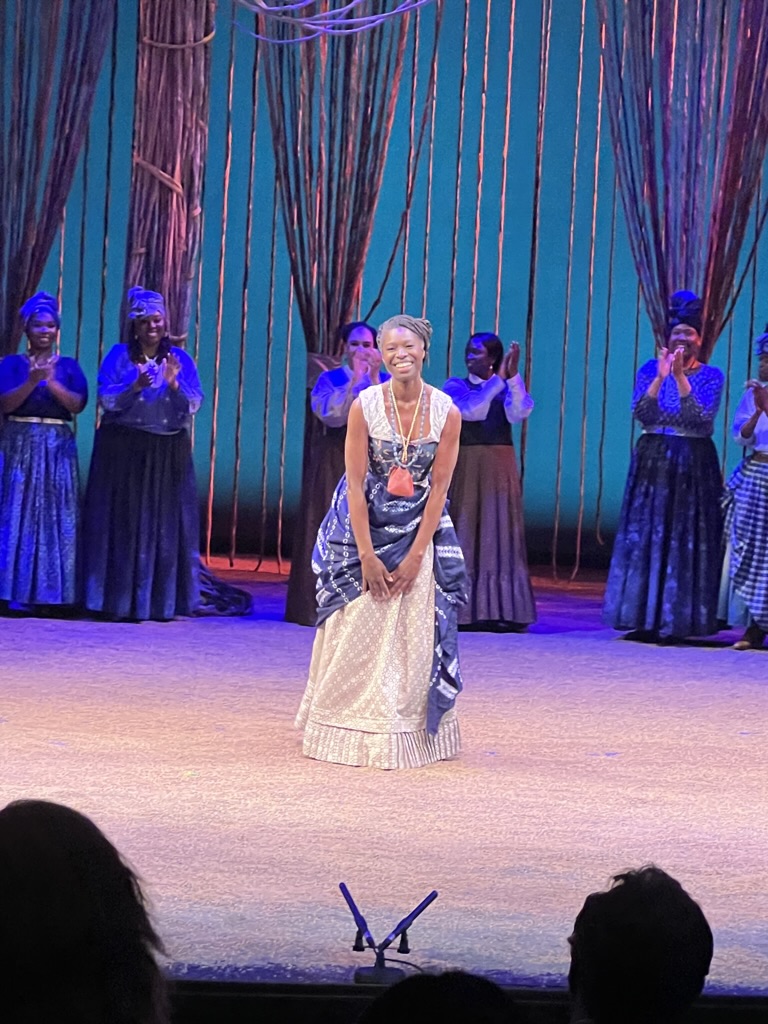
It was beautifully staged and performed and I’d recommend it to you if you happen to be lucky enough to see it listed somewhere.
We then walked back to our hotel, which brought our steps for the day to nearly 18,000….and I’m sure I will feel it tomorrow.
Best—
Fern
January 1 2024 –Part Two: For the Foodies
This one is for the die-hard foodies…. So read at your own risk.
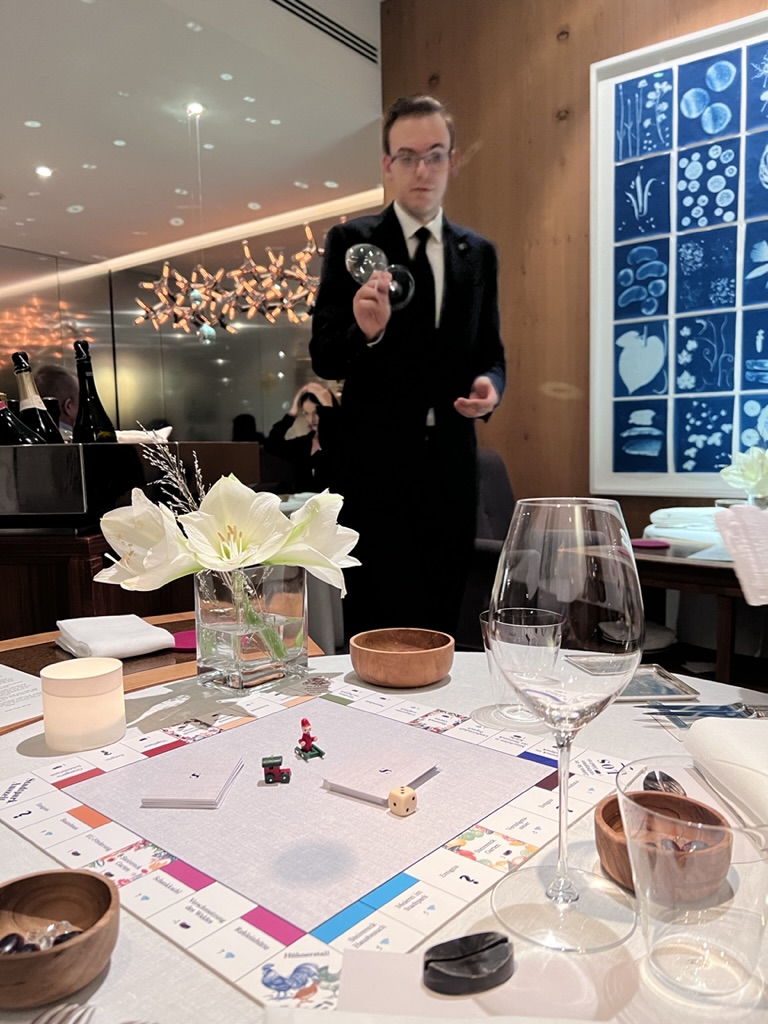
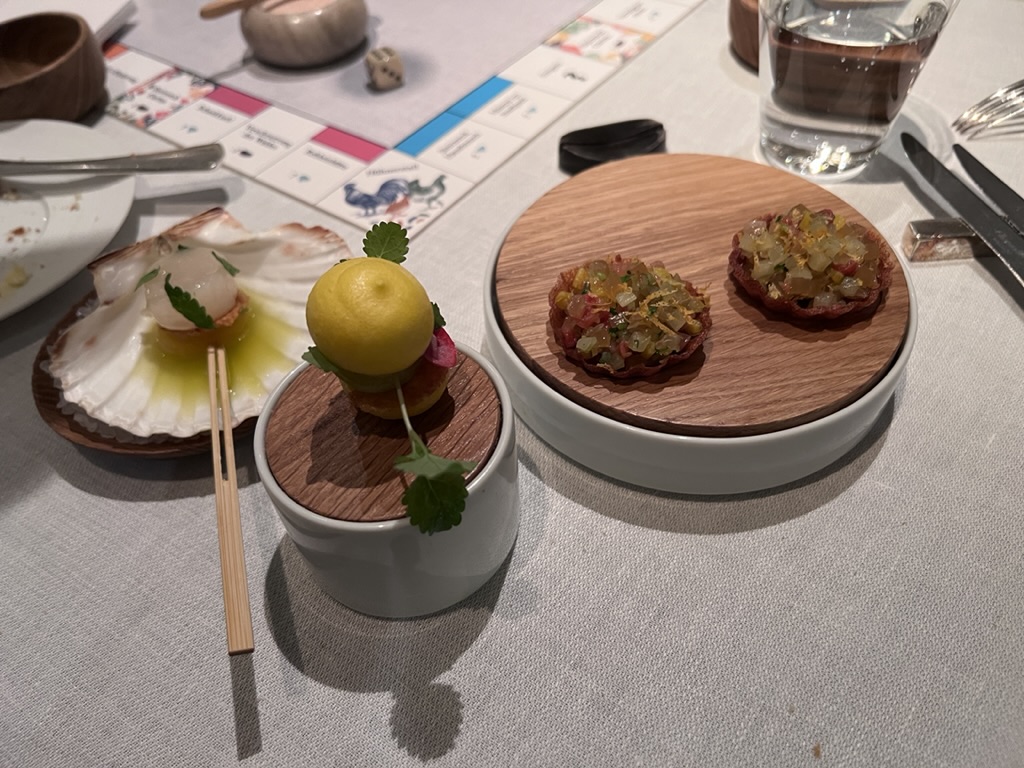
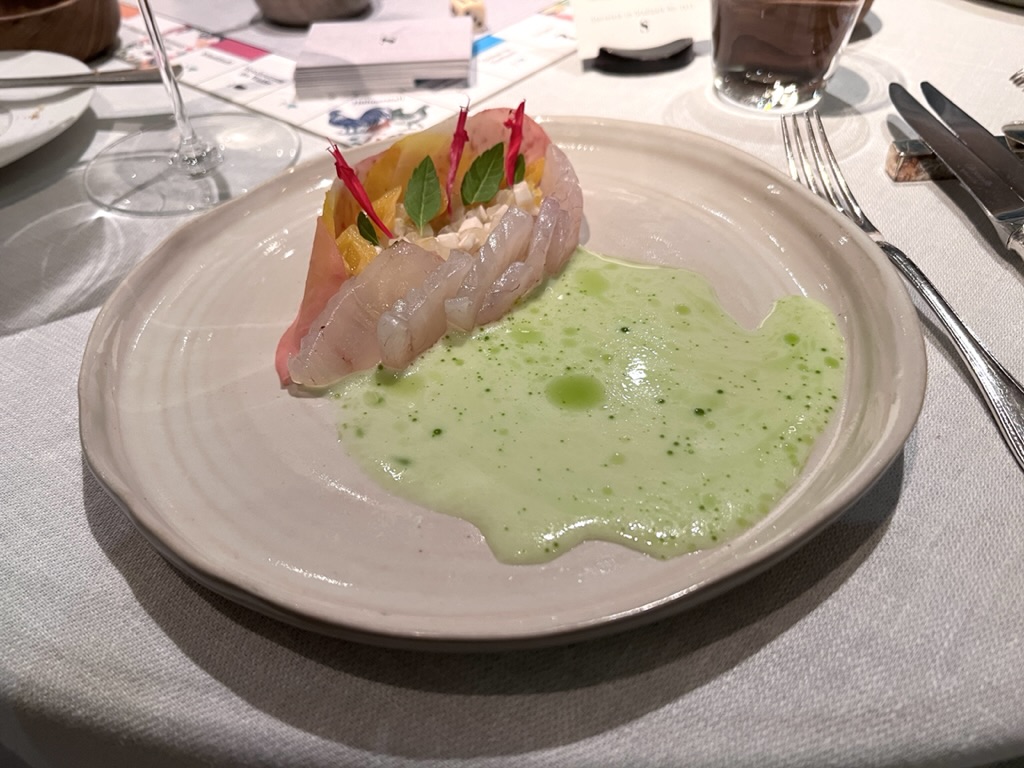
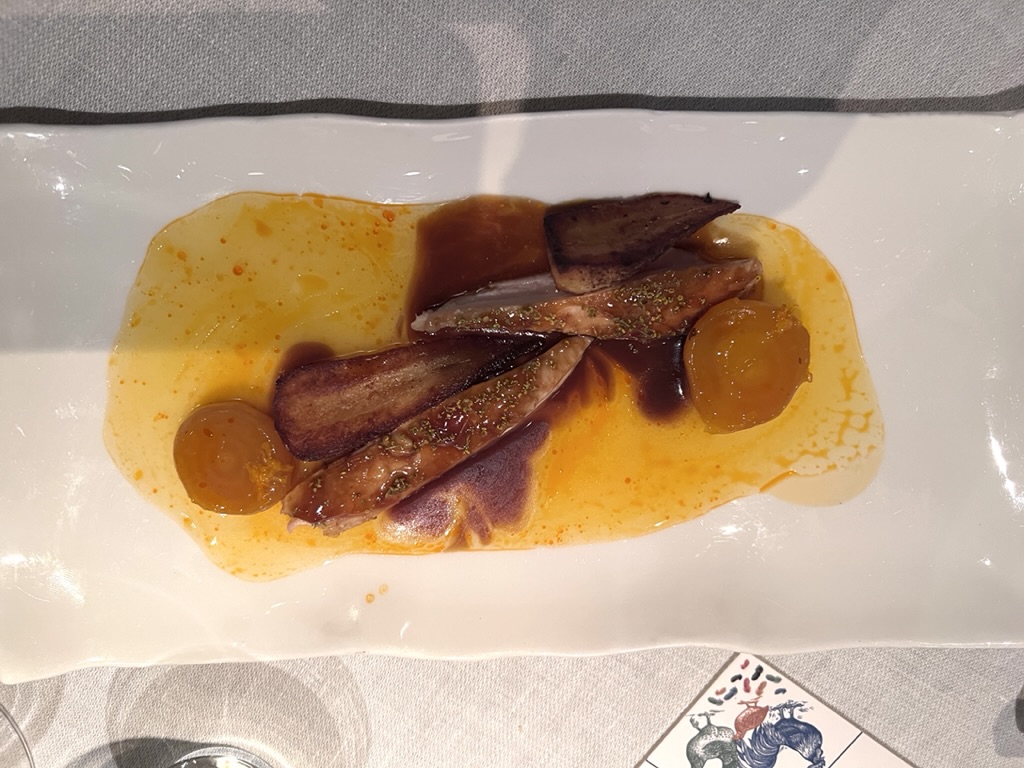
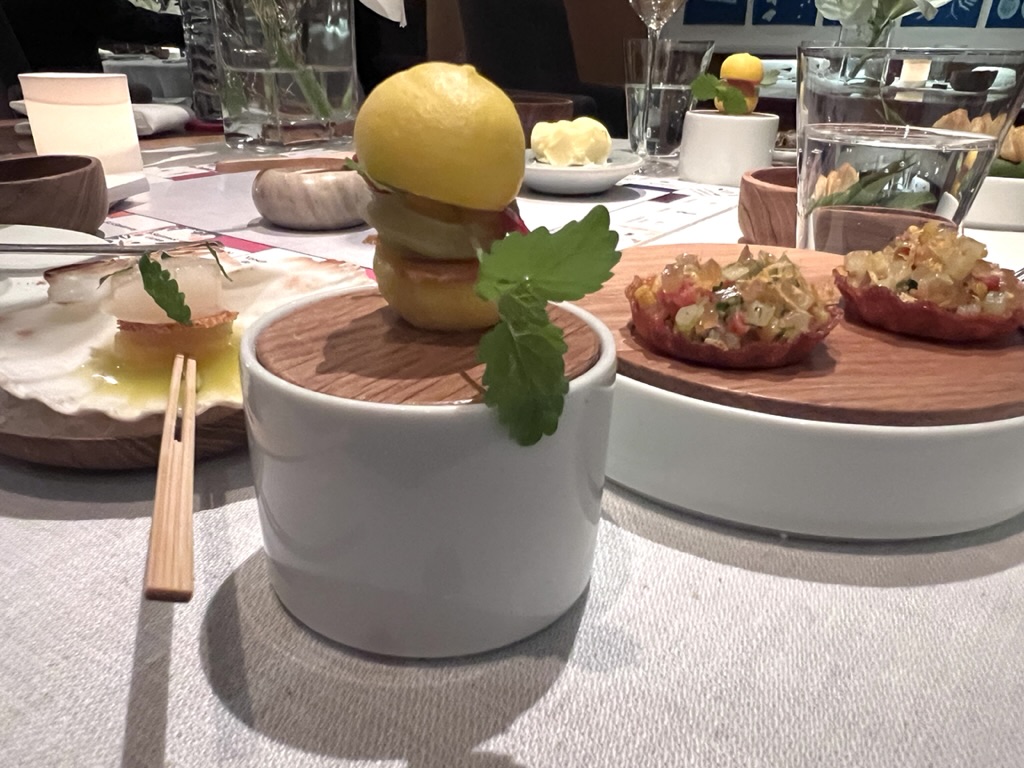
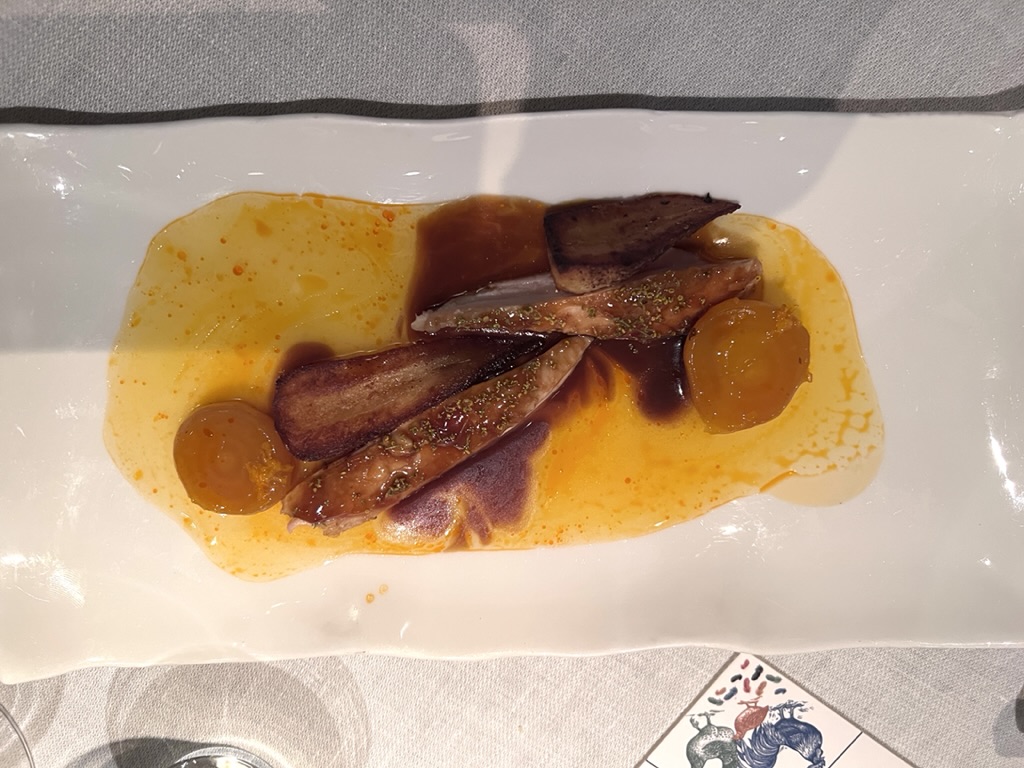
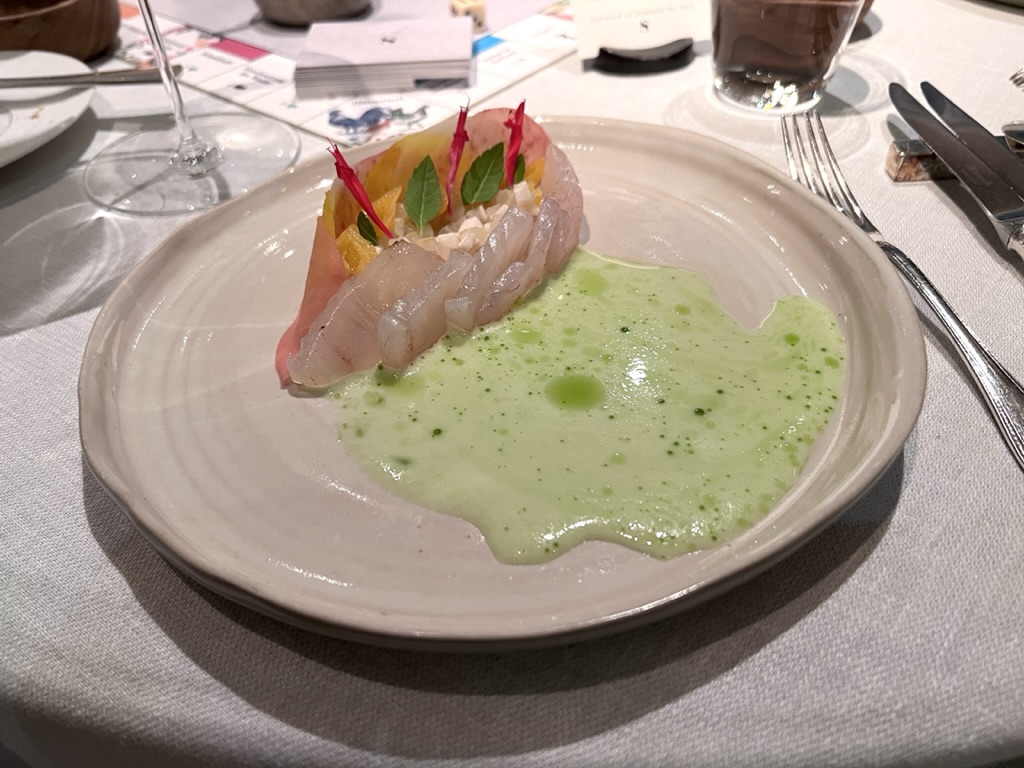
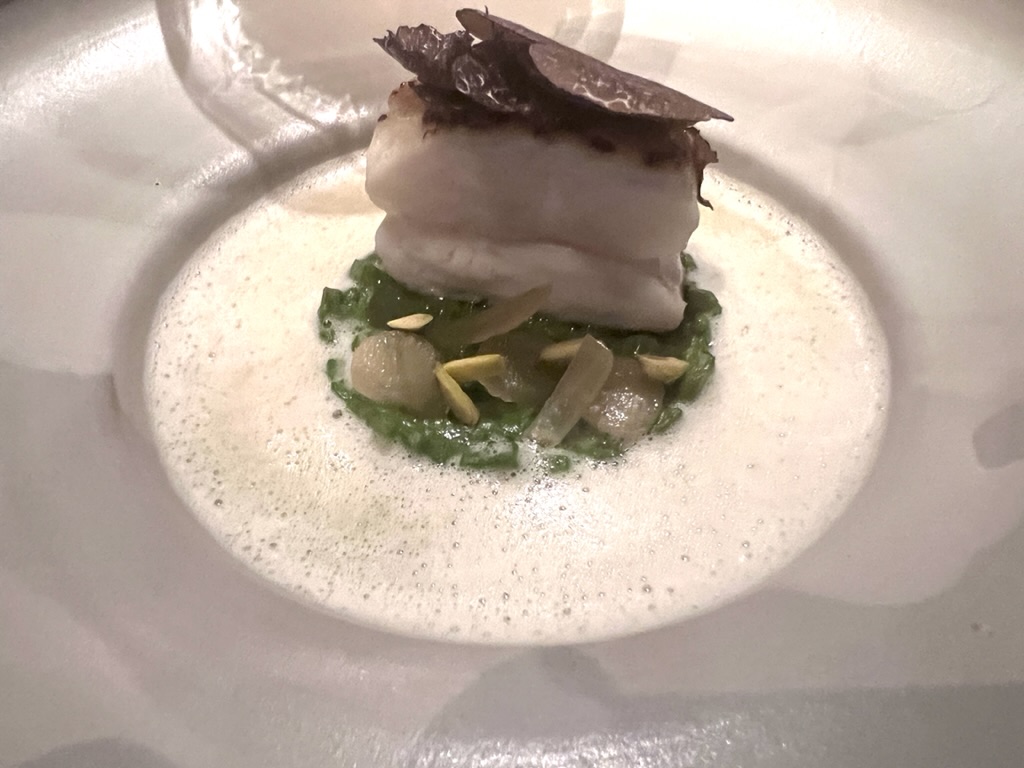
New Years Eve dinner was at Steirereck in Stadtpark… a very elegant, modern design building with soaring glass windows and walls of copper sheeting. And they really do NYE big time. Since we had tickets for a 10:00 seating at a concert at the Kursalon in Stadtpark (Mozart and Straus—concluding with the Blue Danube), we opted for an early seating for dinner at 7:00. The concert hall and the restaurant are 5 minutes apart, so we thought we were in good shape. Turns out the dinner lasted well beyond 10 pm so we dashed out after just the first of several desserts. Anyway, for the foodies on the list, here is the menu. The photos do not do the food justice, but I haven’t had time to do any photoshopping and food photography is a special art.
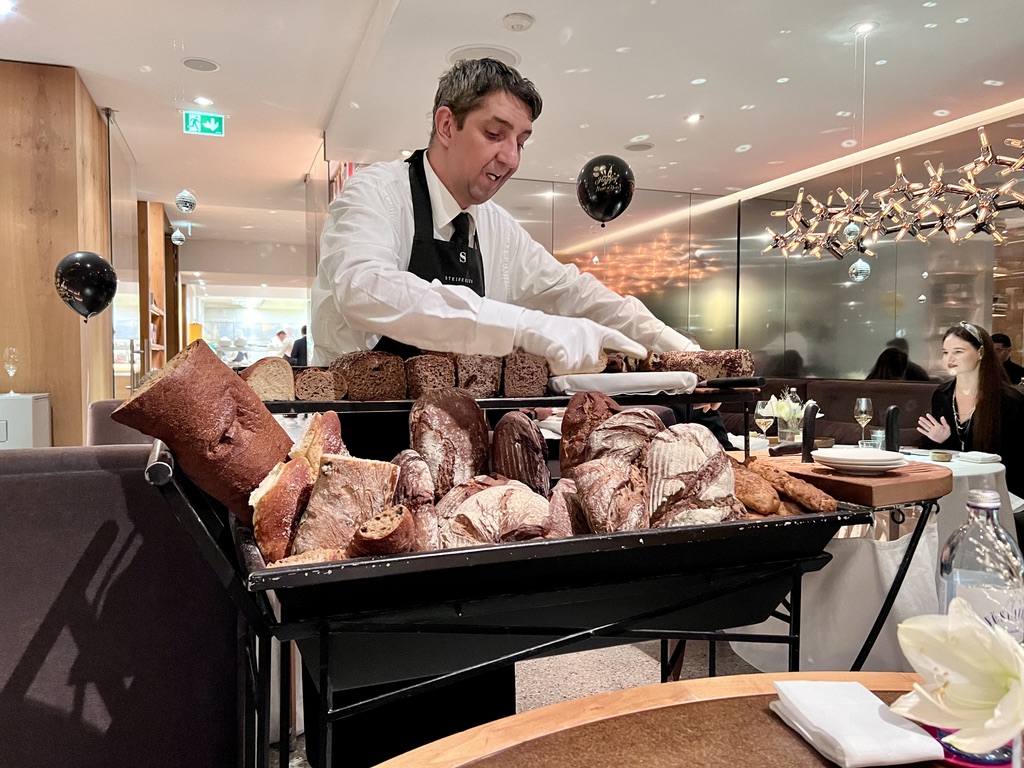
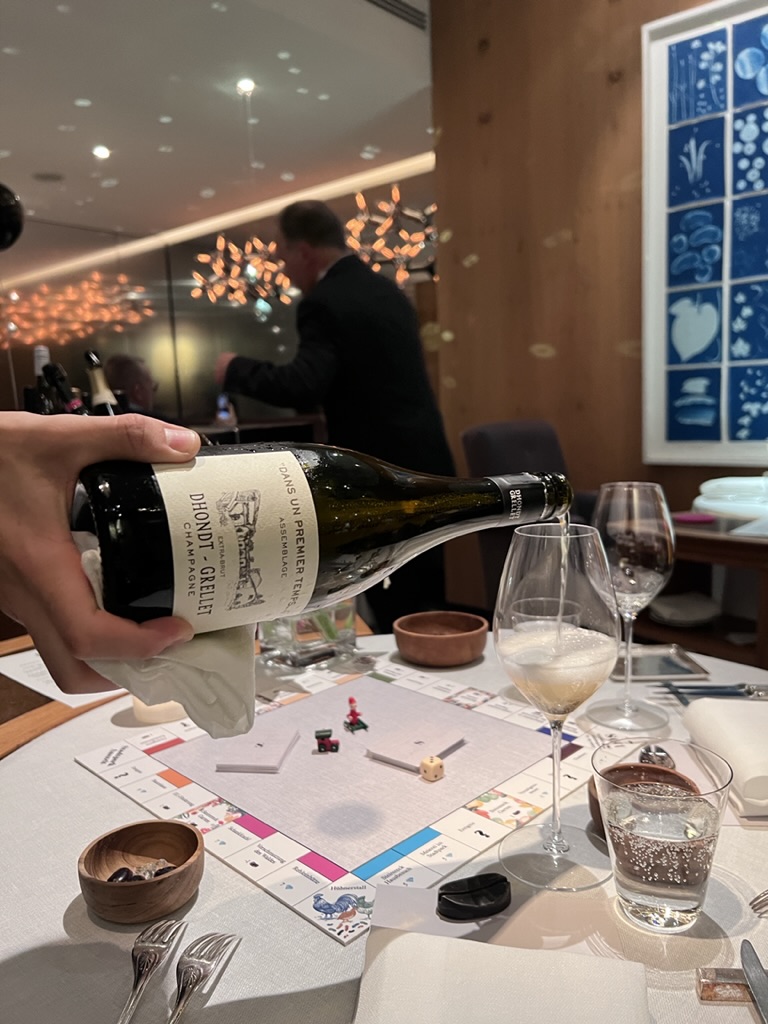
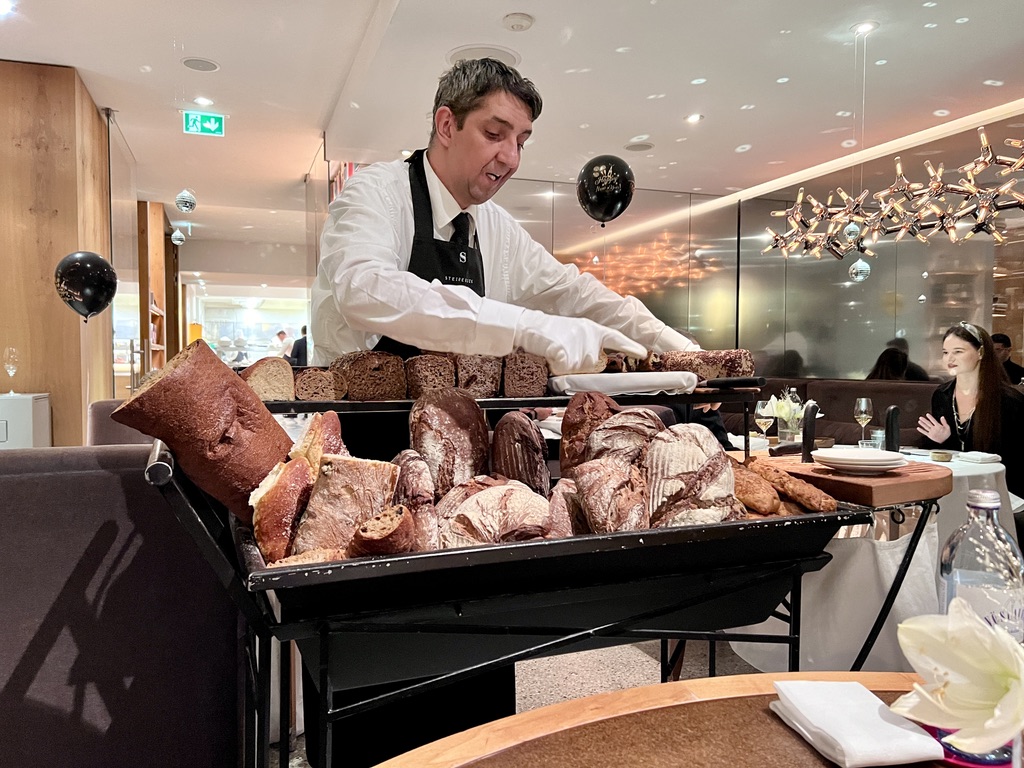
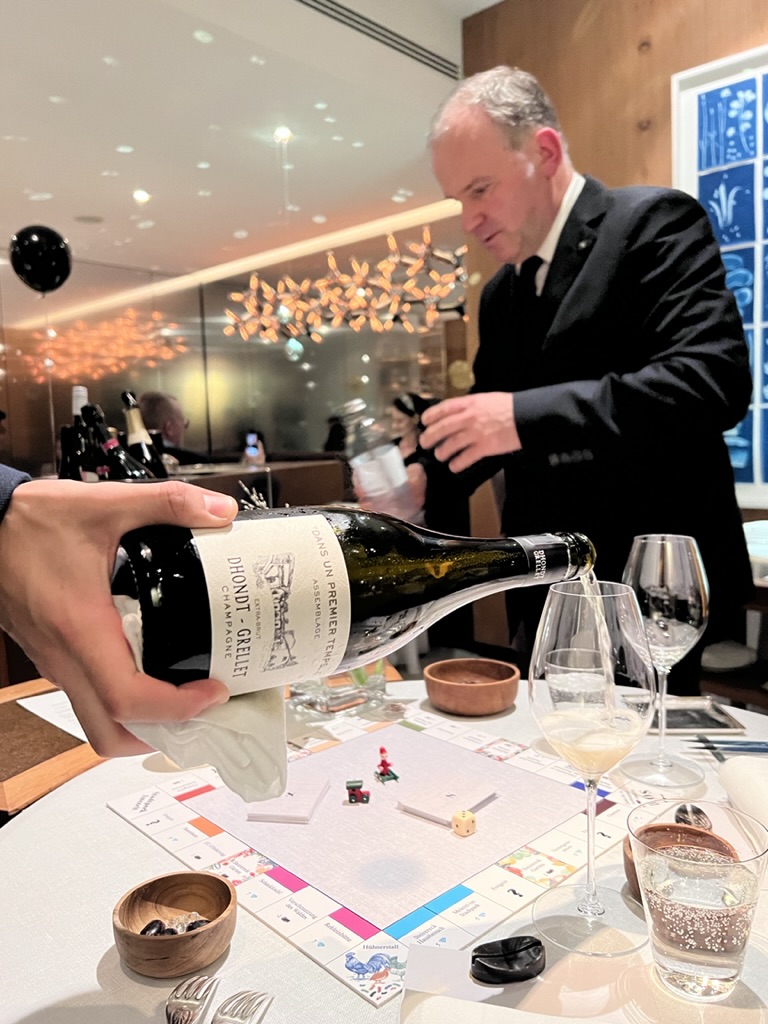
First came the “bread service”—about 32 different kinds of breads cut at your table, The guy names each and tells you the ingredients of each…and he can do it in at least three languages. Oh and champagne at the same time (choice of 4 different bubblies). Also, at each table there is a “game” you can play during dinner… sort of like monopoly. Maybe because they want you to really relax and take it slowly.
Starters (each served separately and displayed beautifully, and each very tiny bite size—thank goodness):
• Yeast bun with fennel pollen and loomi (dried lime—needed to look it up)
• Scallop with golden beet and Asian pear (they called it Nashi pear)
• Jerusalem artichoke with citrus salad and yacon (according to Wikipedia yacon is “a species of perennial daisy traditionally grown in the northern and central Andes—known for its crisp, sweet-tasting, tuberous roots.”)
• Crispy saffron with apple and lemon balm
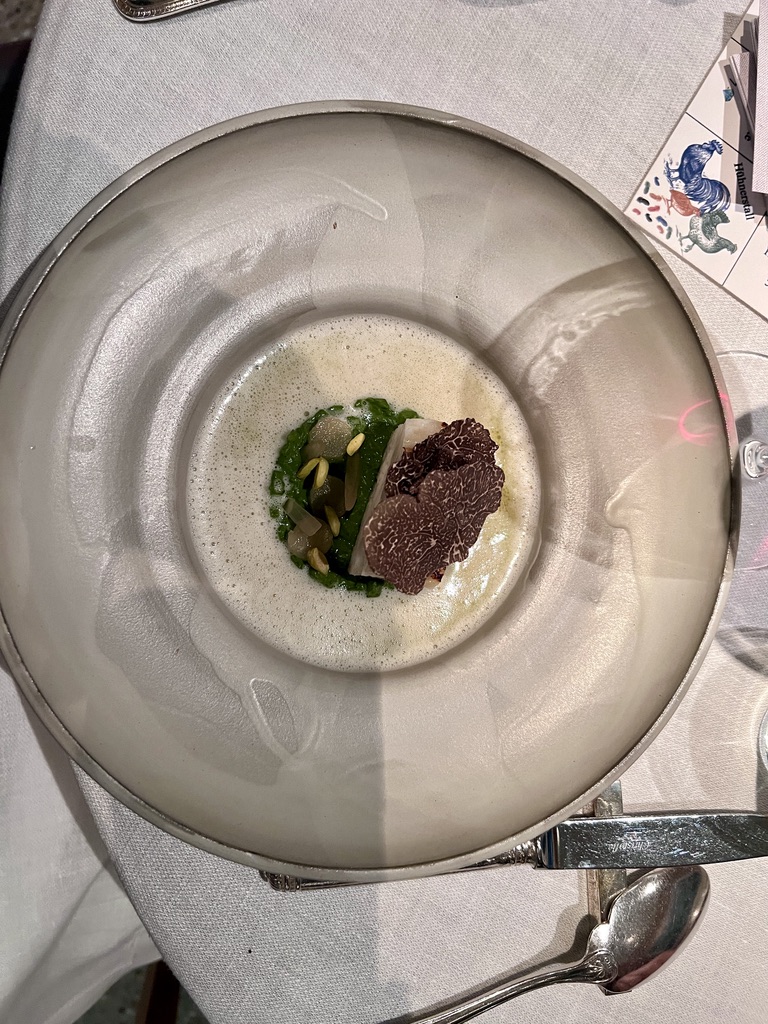
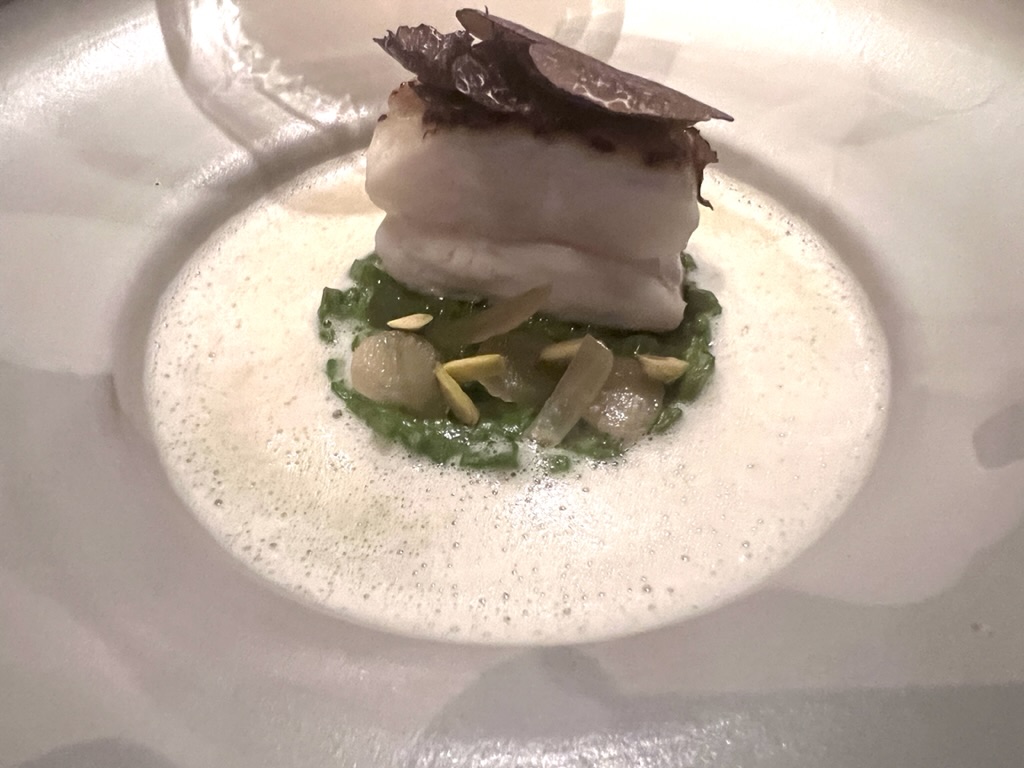
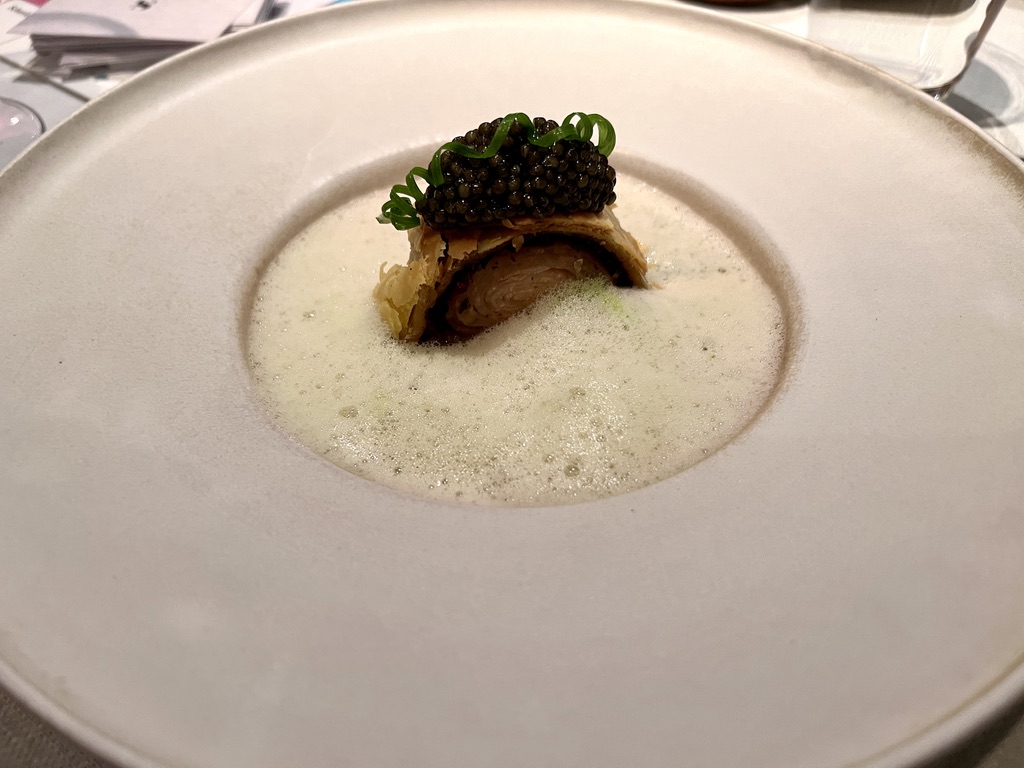
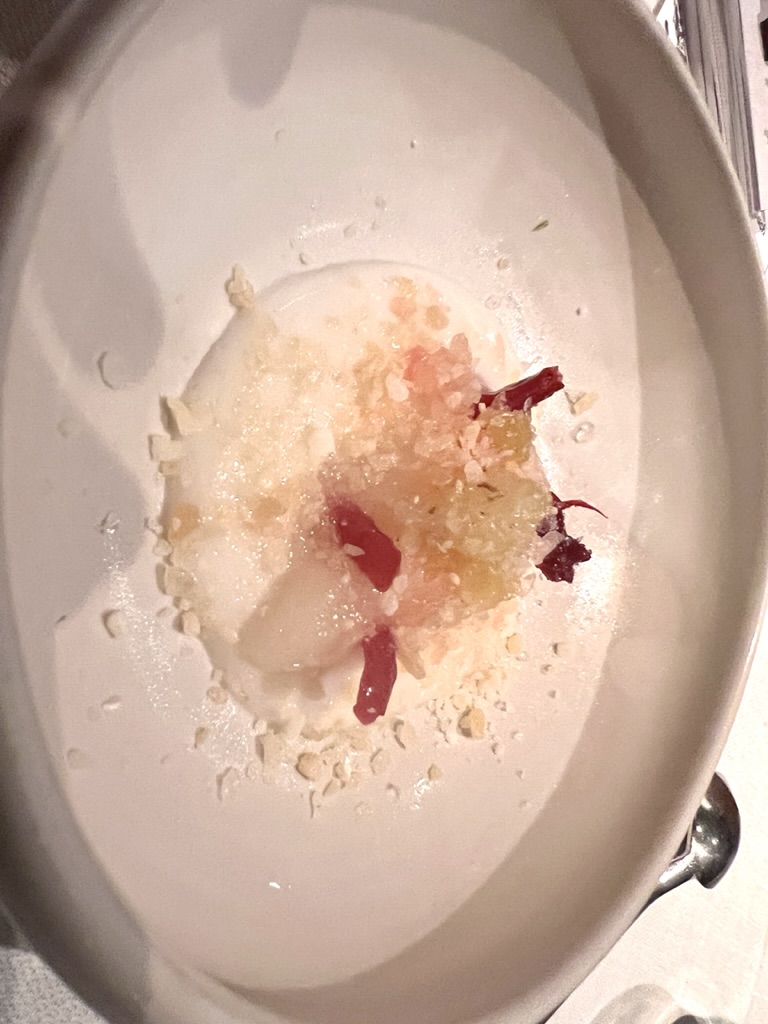

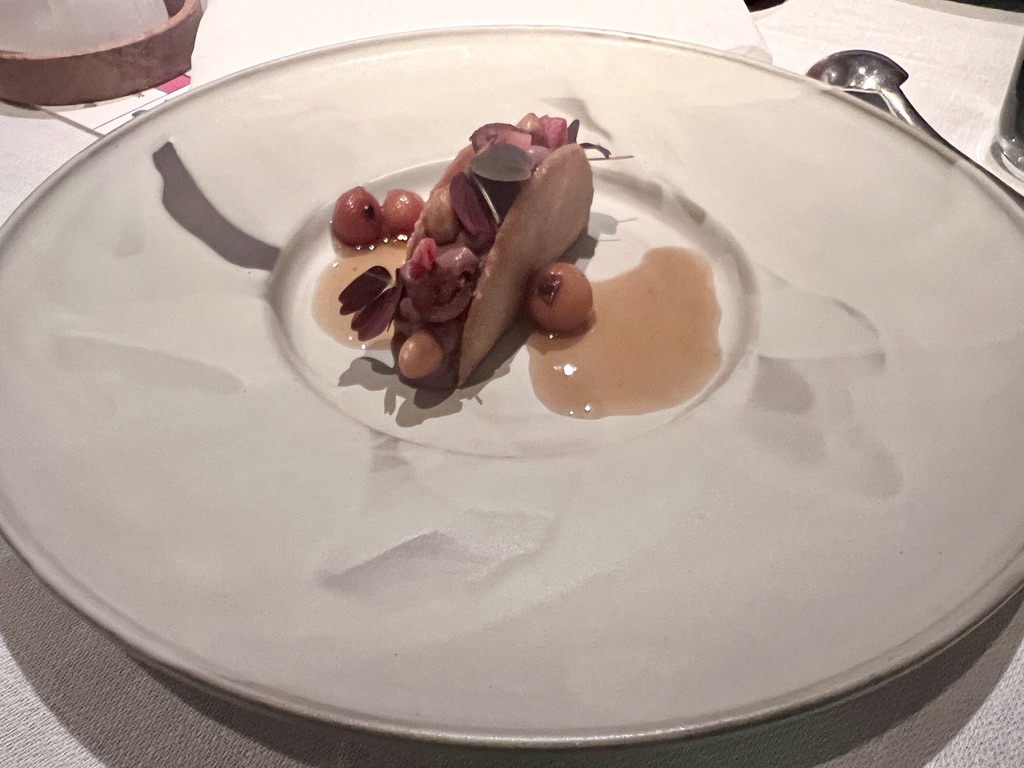

Now the “courses” in order of their appearance at the table
• Pike Perch with something they called “superschmelz” kohlrabi and a coconut pineapple sage dressing.
• Spring chicken with golden beet, tangerine and chervil root
• Catfish with Yacon (again yacon), pistachio and perigord truffle
• Celery with Meyer lemon and also gold caviar
• Duck with Jerusalem artichoke, yuzu, and kale
• Champagne sorbet with orange blossom and citrus
• Wild (?) chocolate with almonds, berries and medlar (I think it’s like a rose, as there were petals)
• Salty and sweet delights (we missed this because we headed out to the concert after being in the restaurant for more than 3 hours of eating
Regarding liquids… I started with champagne, then moved to white wine for the first two courses and switched to red for the remaining courses. Mike still wasn’t drinking although he’s ready now… seems all better.
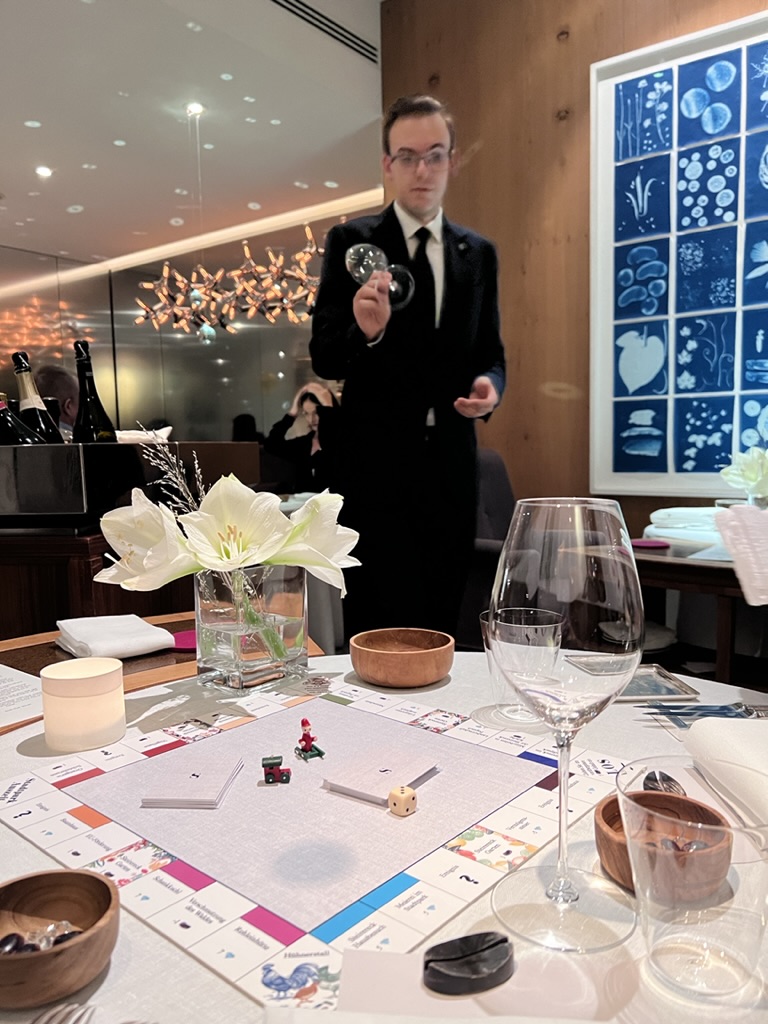

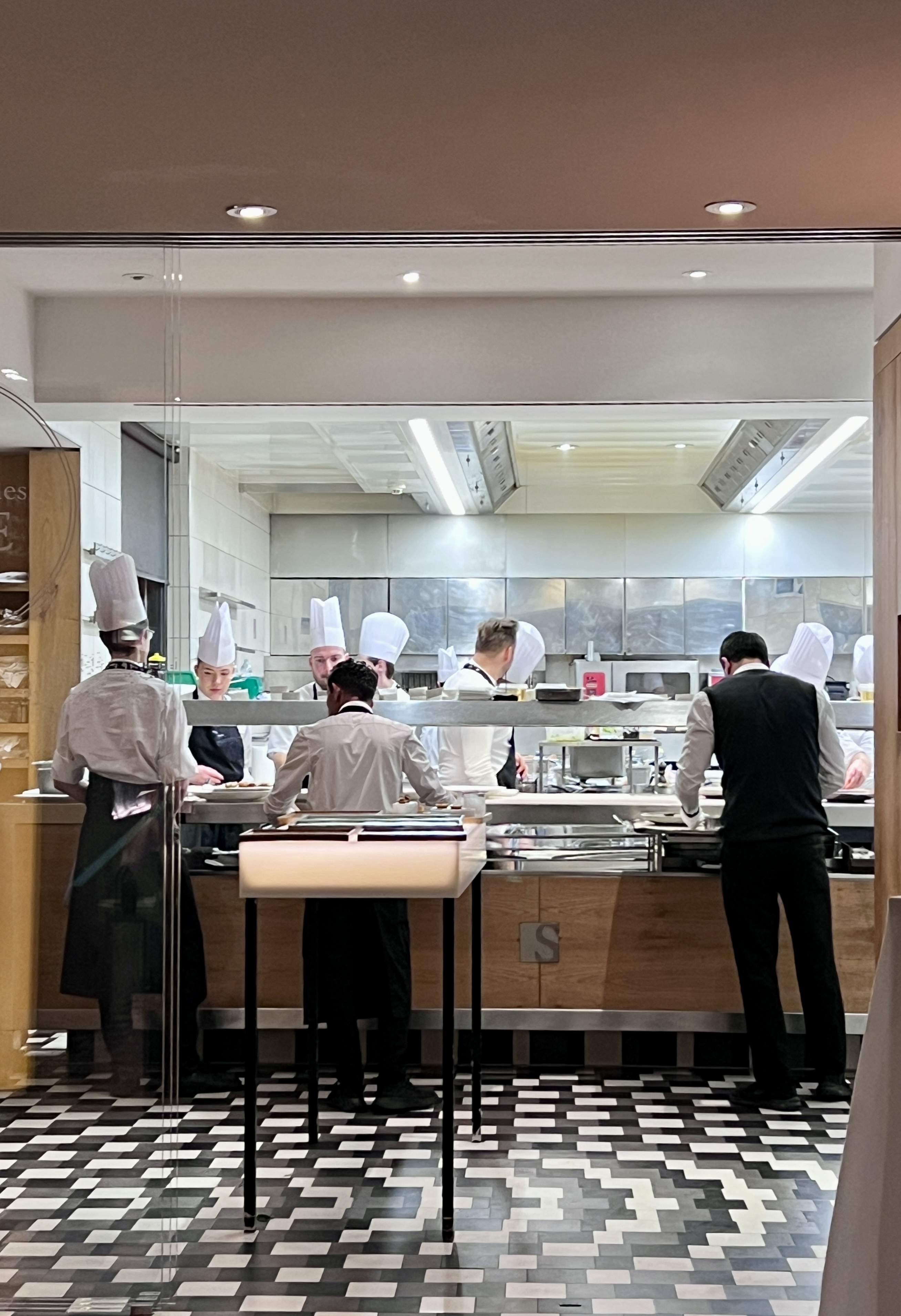

OK… enough on food. .. But I would put this up there with the best meals I’ve ever had… right up there with Gyogu in Tokyo and Singlethread in Healdsburg…
It’s 2024! January 1 2024 : Vienna!!
January. 1. 2024
It’s going to be a long time until I say 2024 with ease.
Hoping this new year will usher in progressive changes at every level.
So, it’s 2024; where have all those years gone?

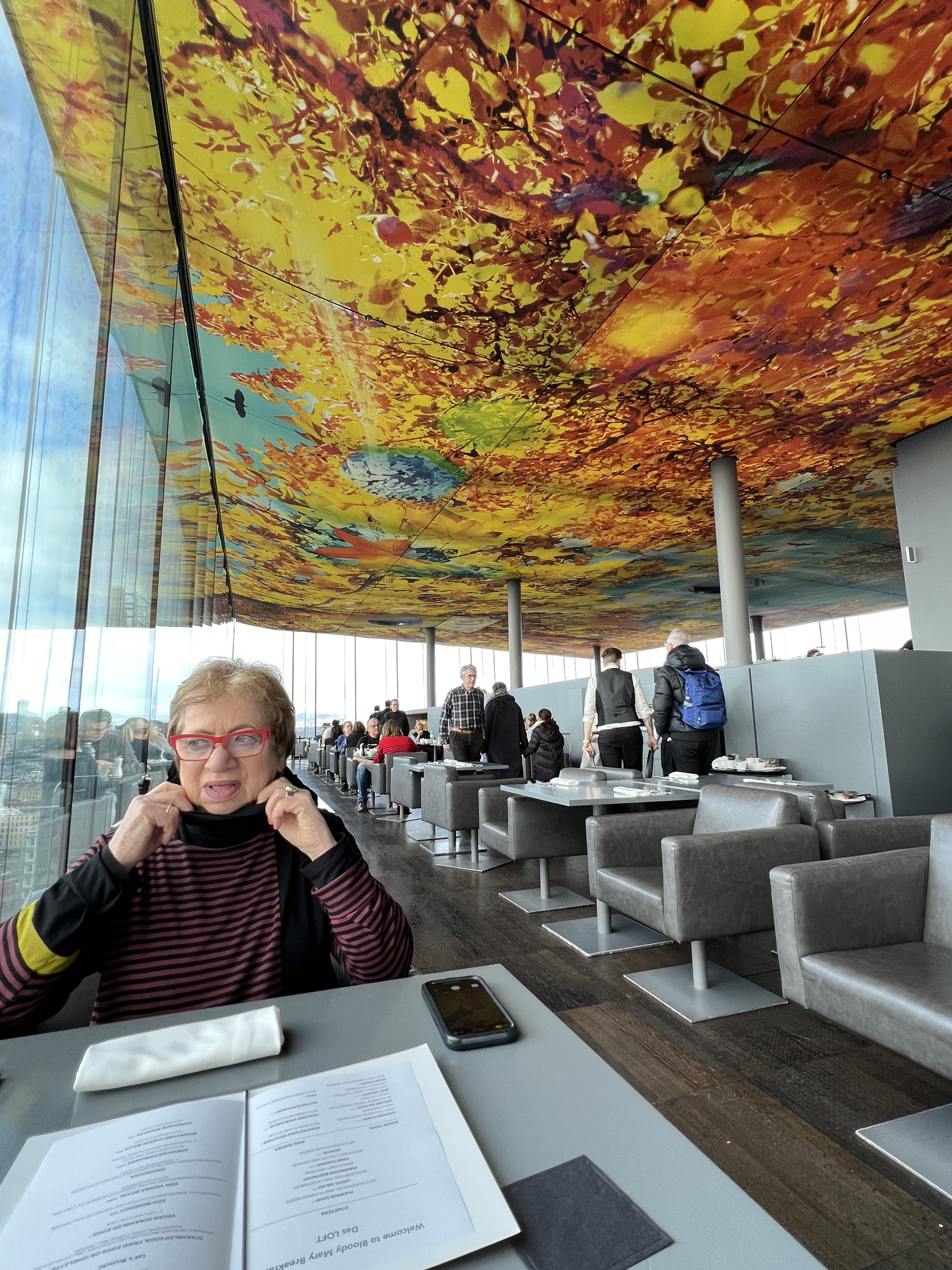
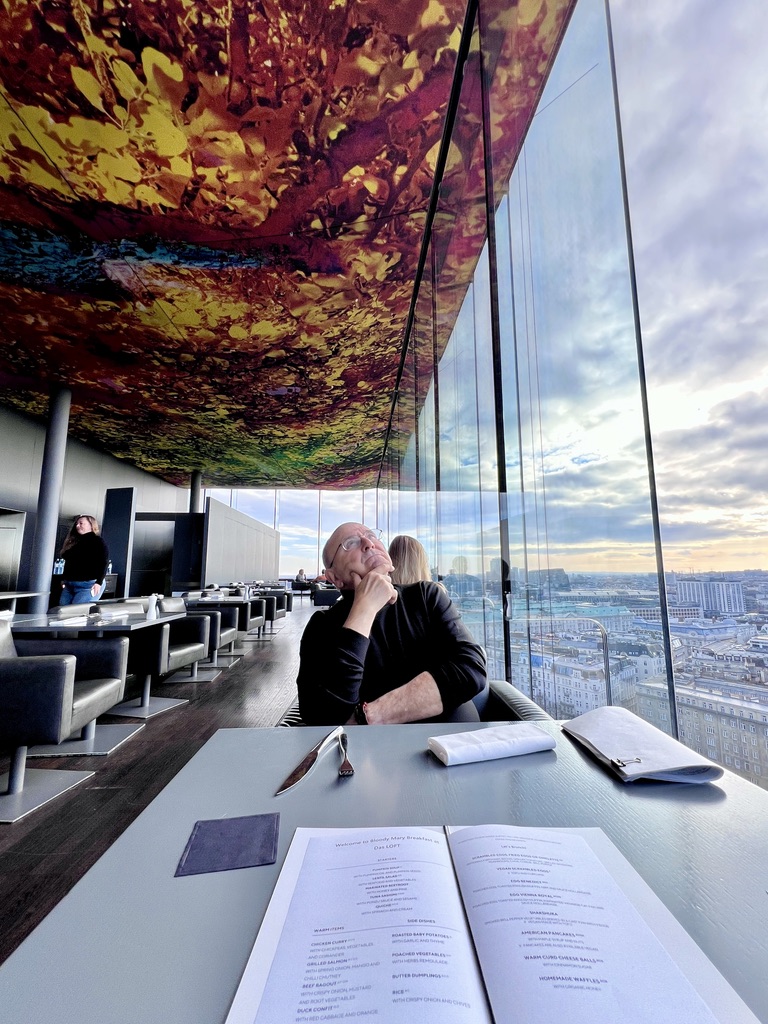
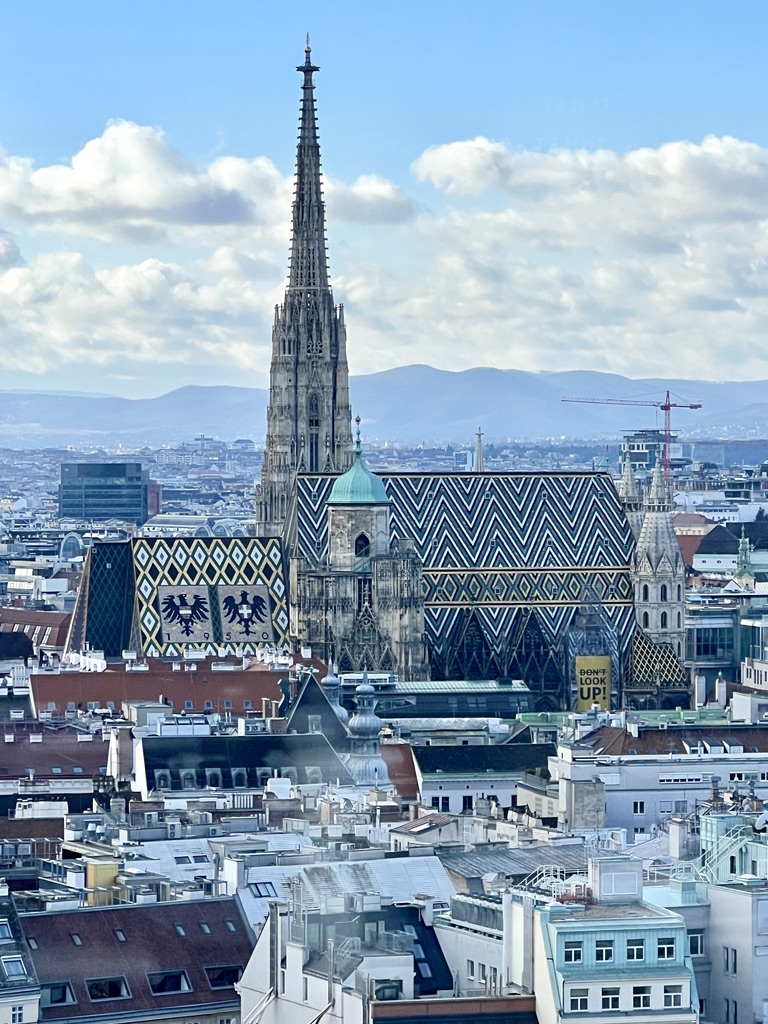
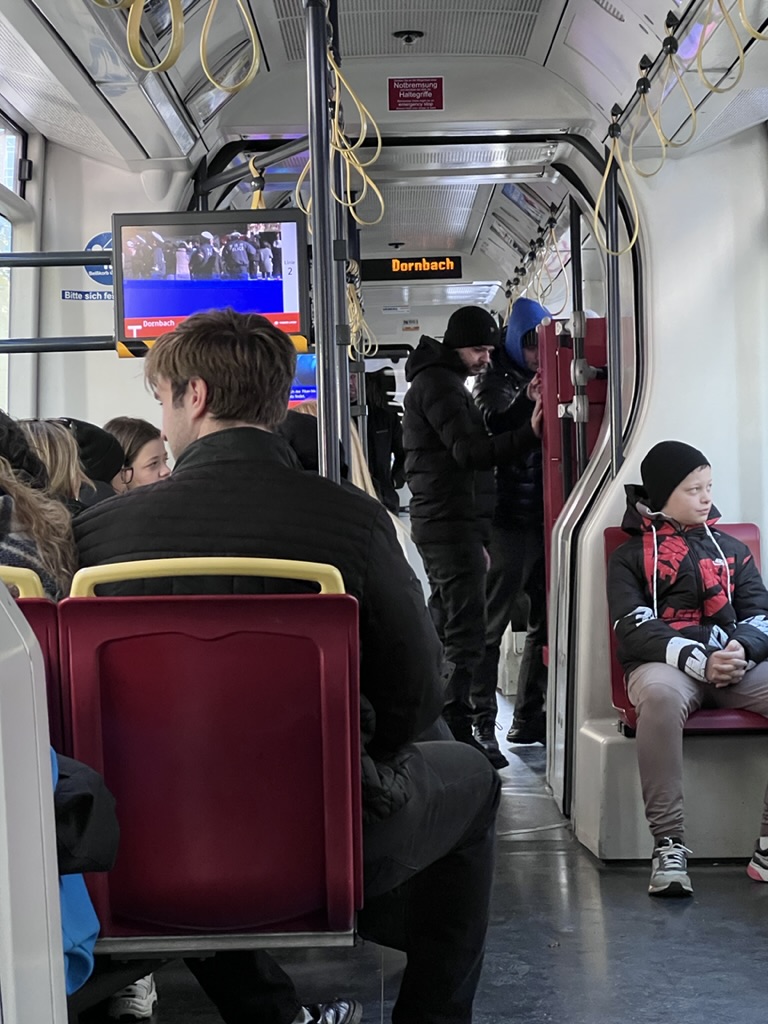
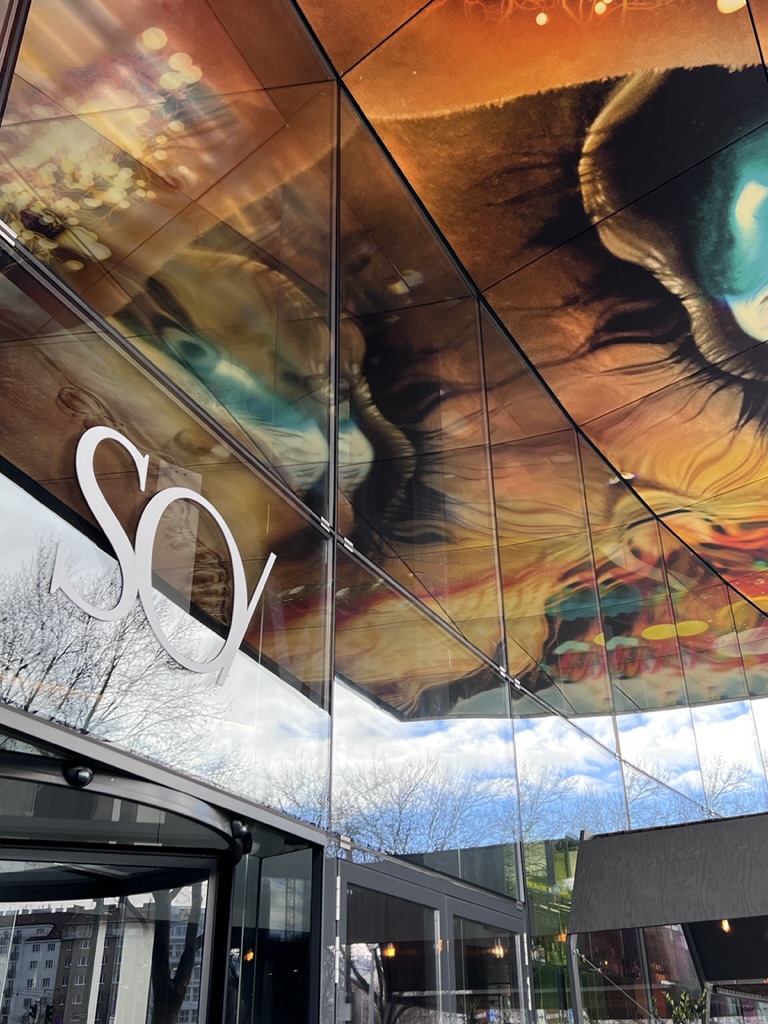
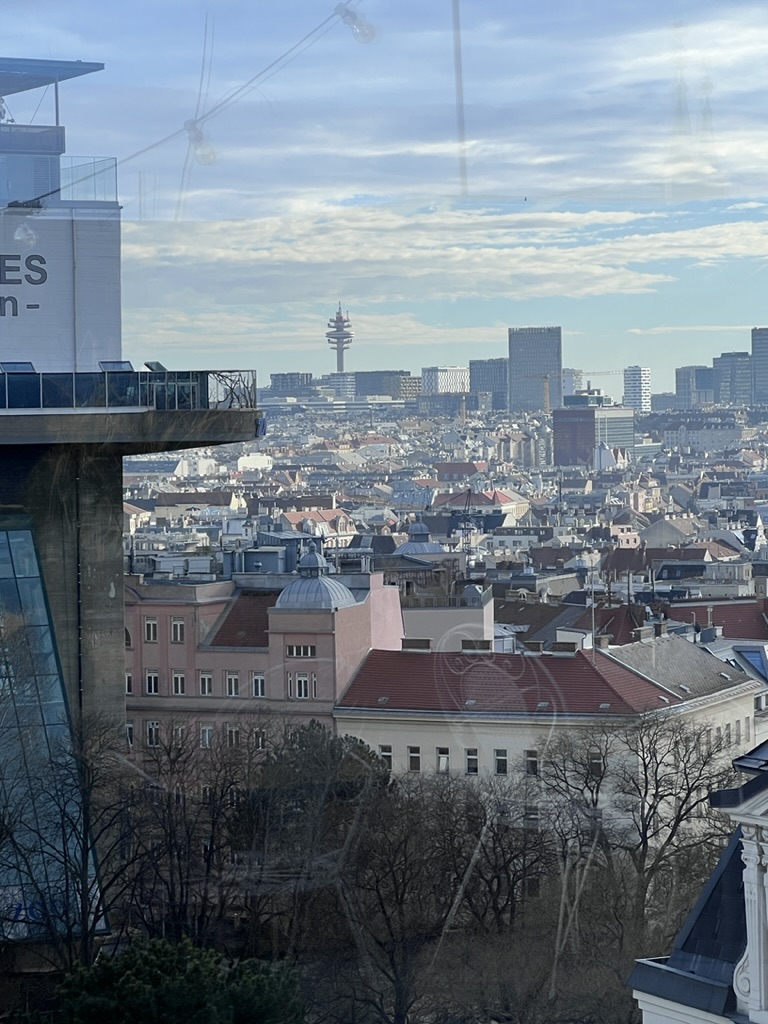
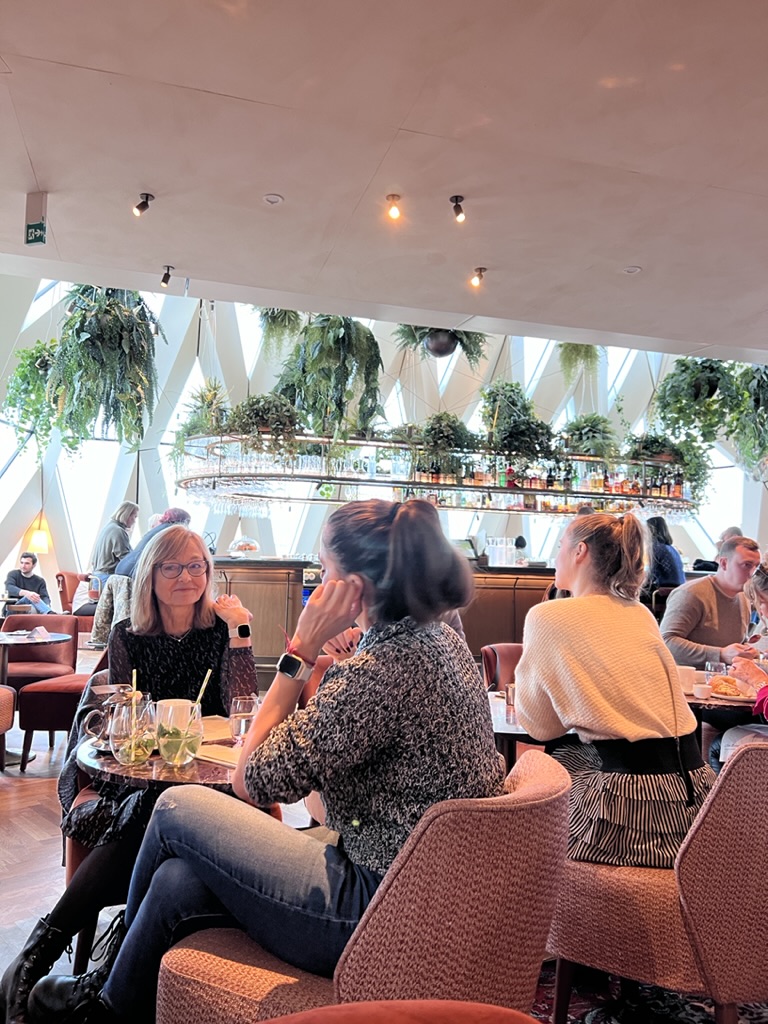
We headed out this morning to have New Years Day Brunch at Das Loft which is on the 18th floor of the SO Hotel which is located on the other side of the Danube from where we are staying. The building was apparently an old Sofitel Hotel and then about two years ago got a big facelift from French architect Jean Nouvel and it has been rebranded as SO. While the special New Years Brunch was quite wonderful, the obvious star of the morning is the spectacular views from the restaurant and the interior as well. Since Mike now seems back to normal, we started the new year off with bloody marys.. (sp).
After this leisurely brunch we walked to the Karmeliter Market area — once the old Jewish section of Vienna— and now supposedly a hip area with some remaining traces of Jewish life. It’s a sweet neighborhood with a combination of commercial enterprises and Wilhelmian buildings. We then headed by public transit (we’re real pros now on the system) to see a wide range of social housing throughout the city.
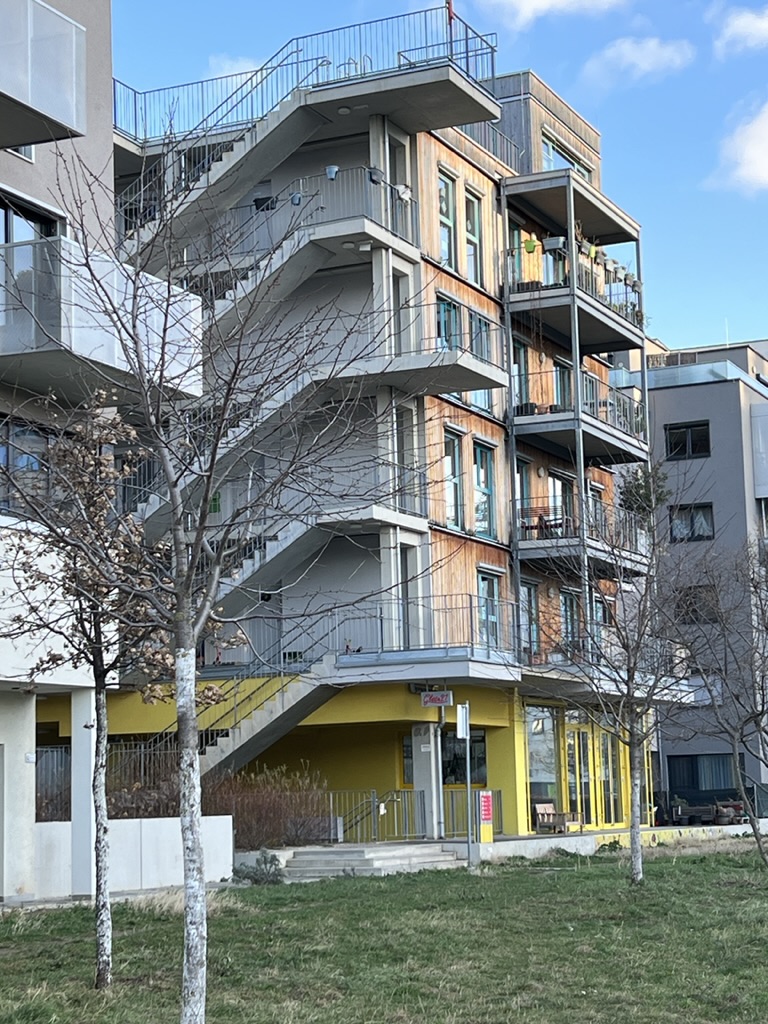
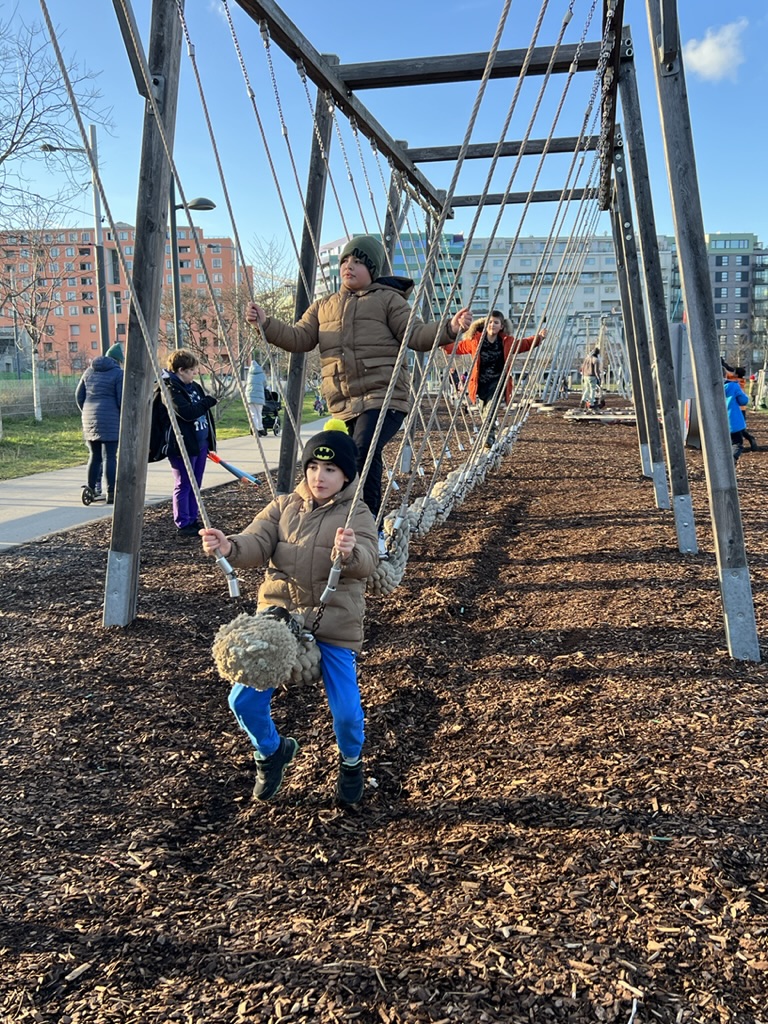
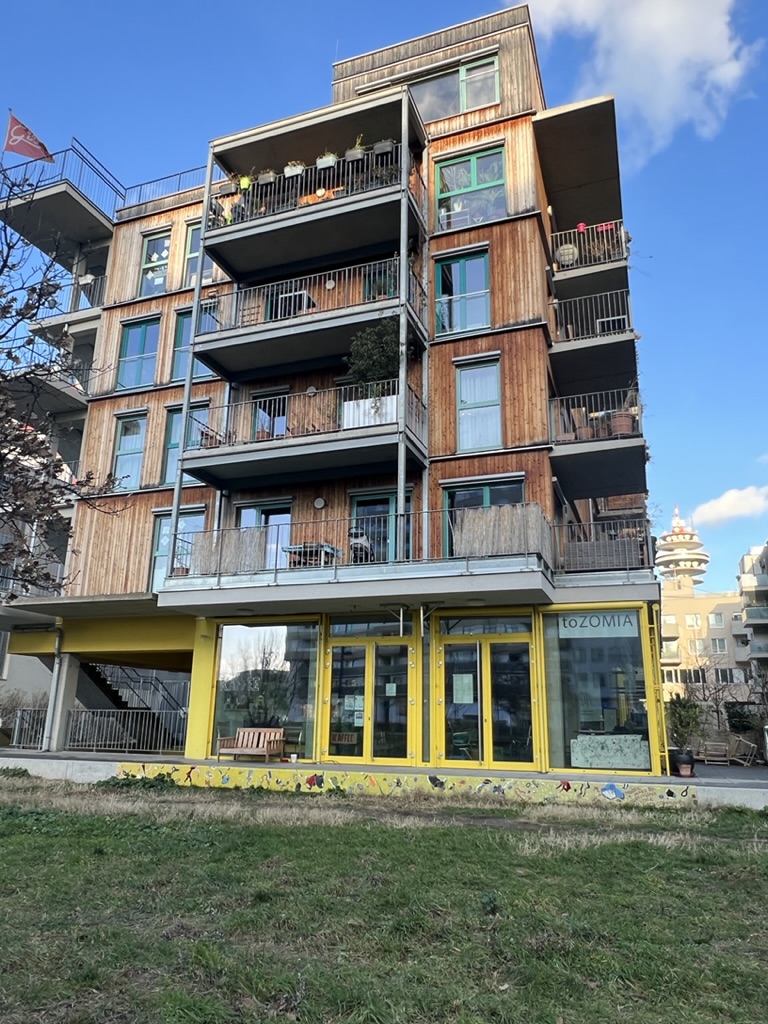

Then we walked and took trams to get to Gleis 21 and more trams and trains to get to Wohnpark Alte Era (sp?) to see more examples of social housing and family neighborhoods. The quality of the housing, the parks, the schools in the areas was impressive. Having worked with many child care organizations in the states, I know they struggle to make play equipment and yards exciting for kids and are soooo limited by what materials are allowed and what kind of playthings can be used (given how litigious our society is). Here, all of the play areas and equipment were made of wood and rope (In the US, we don’t allow that because a kid might get a splinter, or the rope could catch on fire). And all of the structures were on springs, so they continued to bounce as kids walked and jumped. It was a totally fun experience and kids seemed to enjoy all of the equipment.
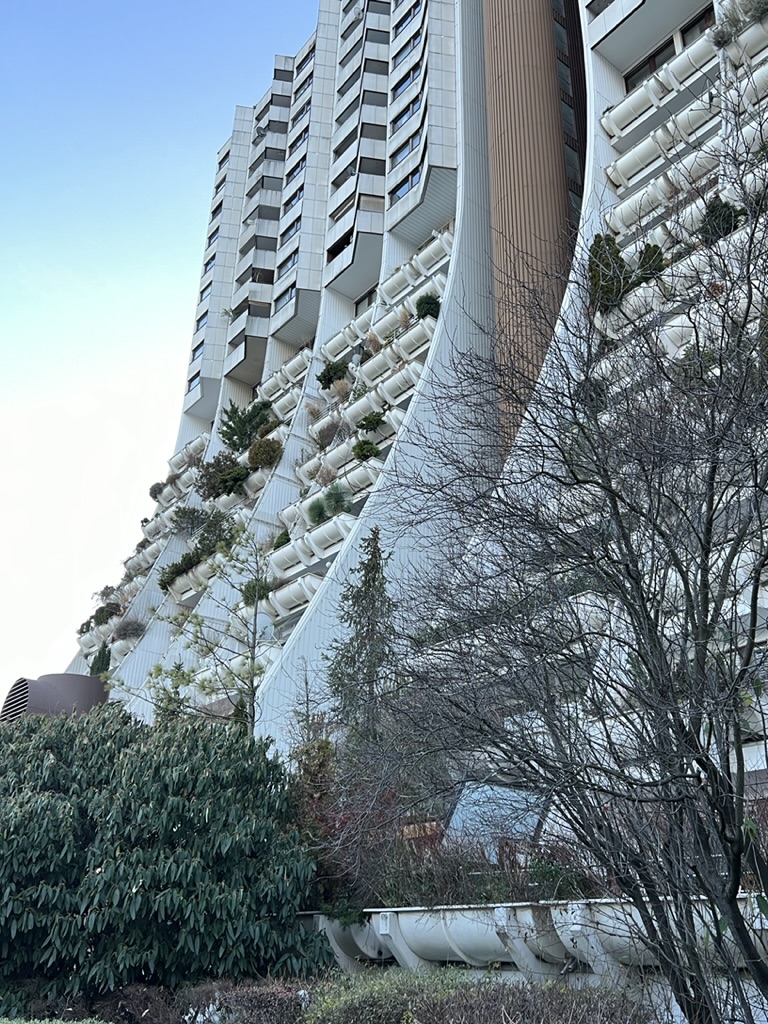
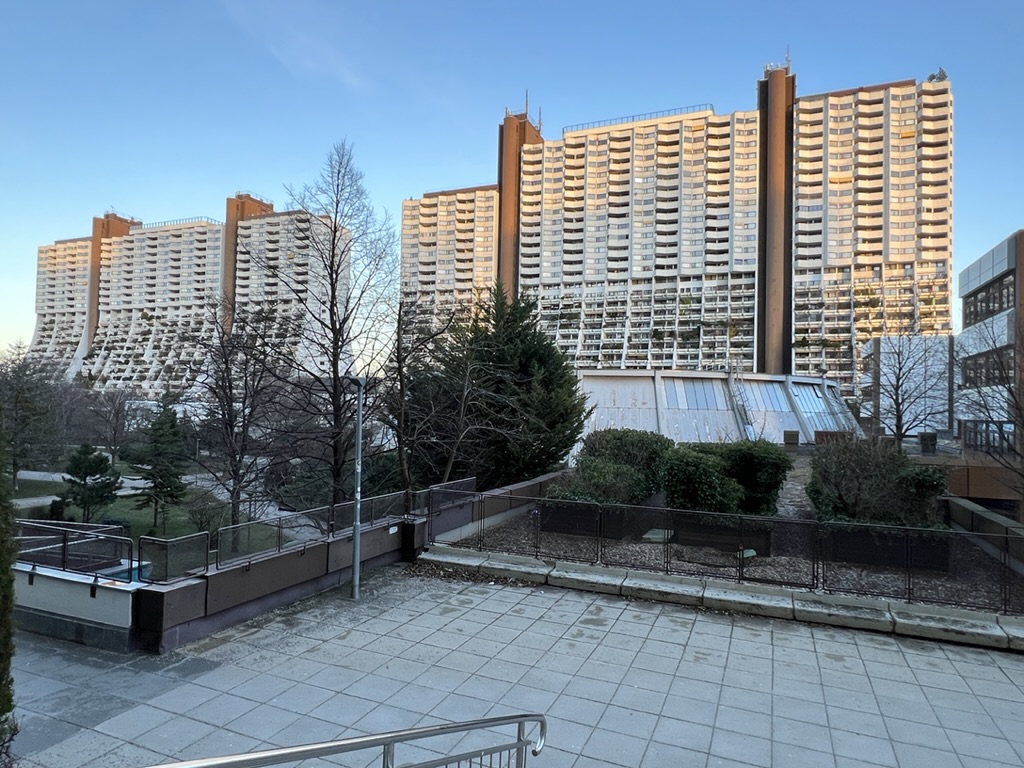
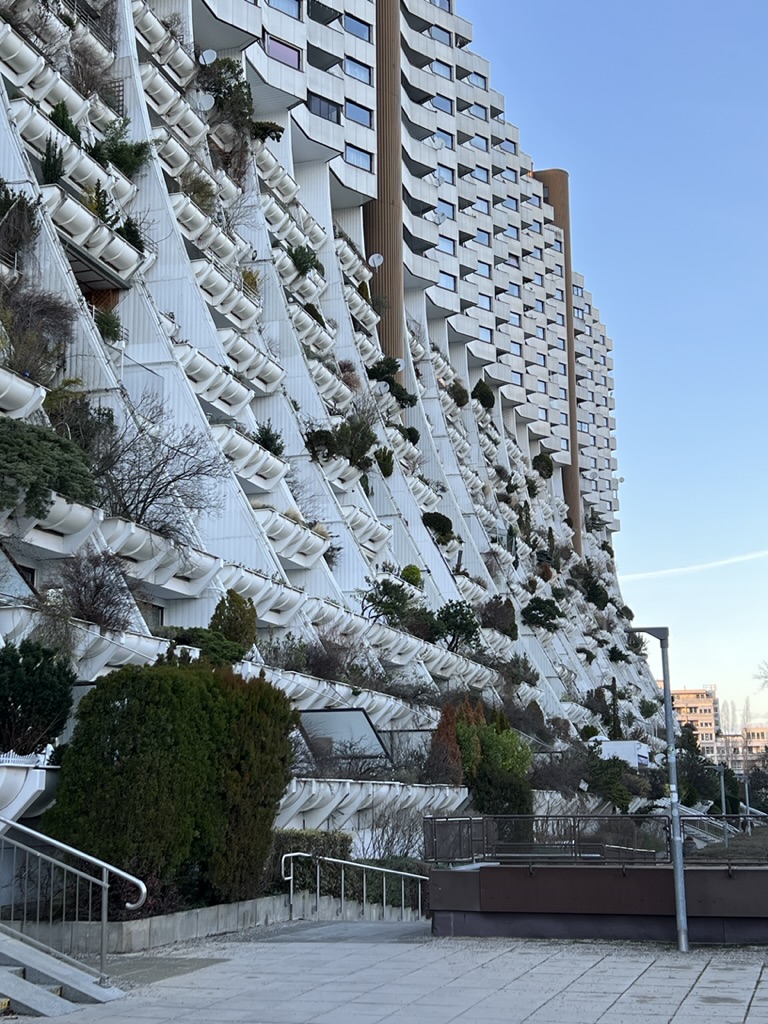
Eventually we headed back to the hotel (more trains and trams) and once at the hotel began to pack. Then we headed to Plachutta for dinner—which is about a 7-minute train ride from the hotel. It’s a family-owned restaurant that focuses on the Viennese tradition of “tafelspitz” which is a dish that has been popular in Vienna since the 19th Century and was a favorite of Emperor Francis Joseph who led a very frugal lifestyle. He preferred simple but tasteful food. Tafelspitz is a lean cut of beef that boils in a savory vegetable broth. Apparently, it is the quality of the beef that makes the difference. But there are many different cuts of meat to choose from at Plachutta.
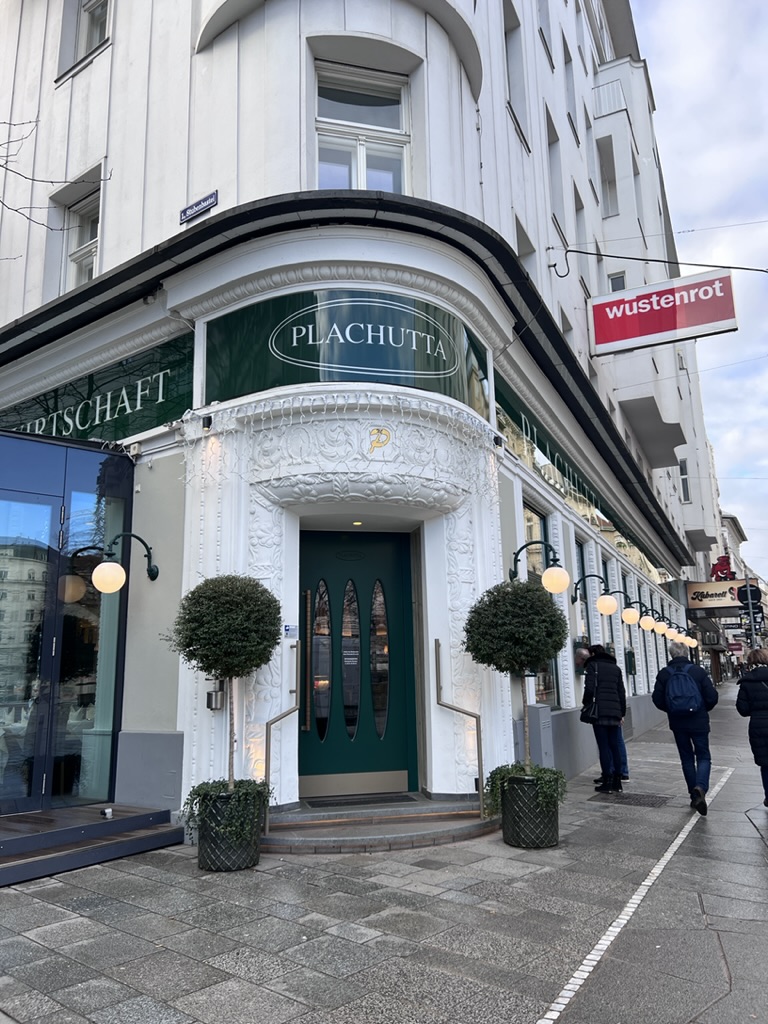
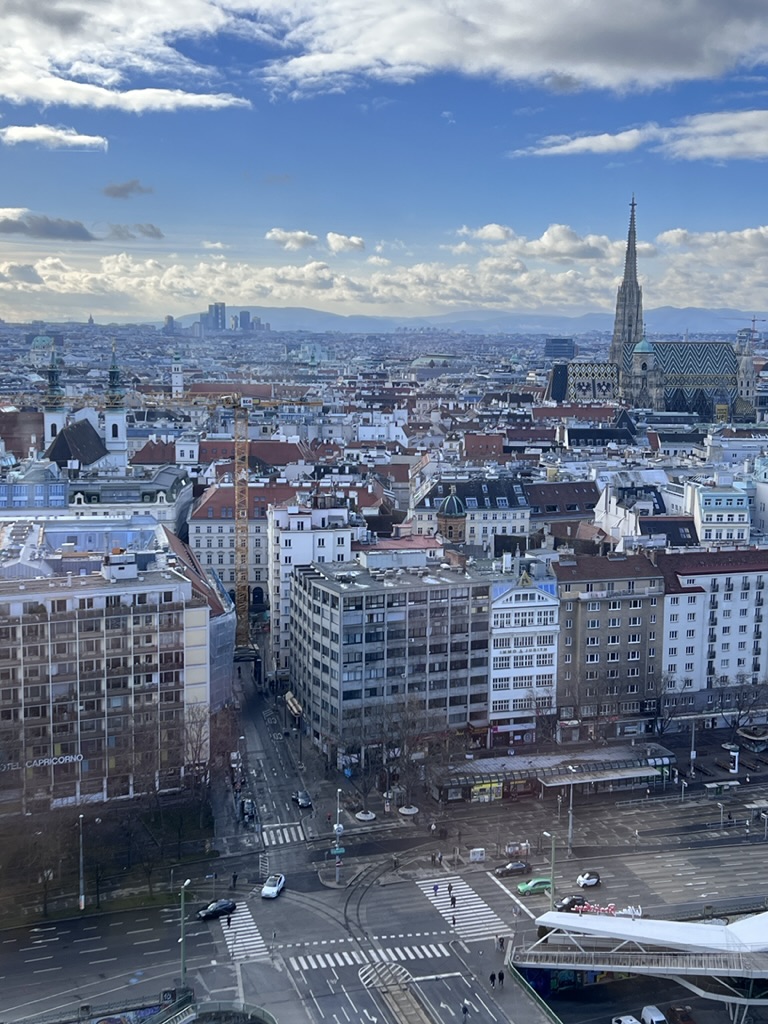
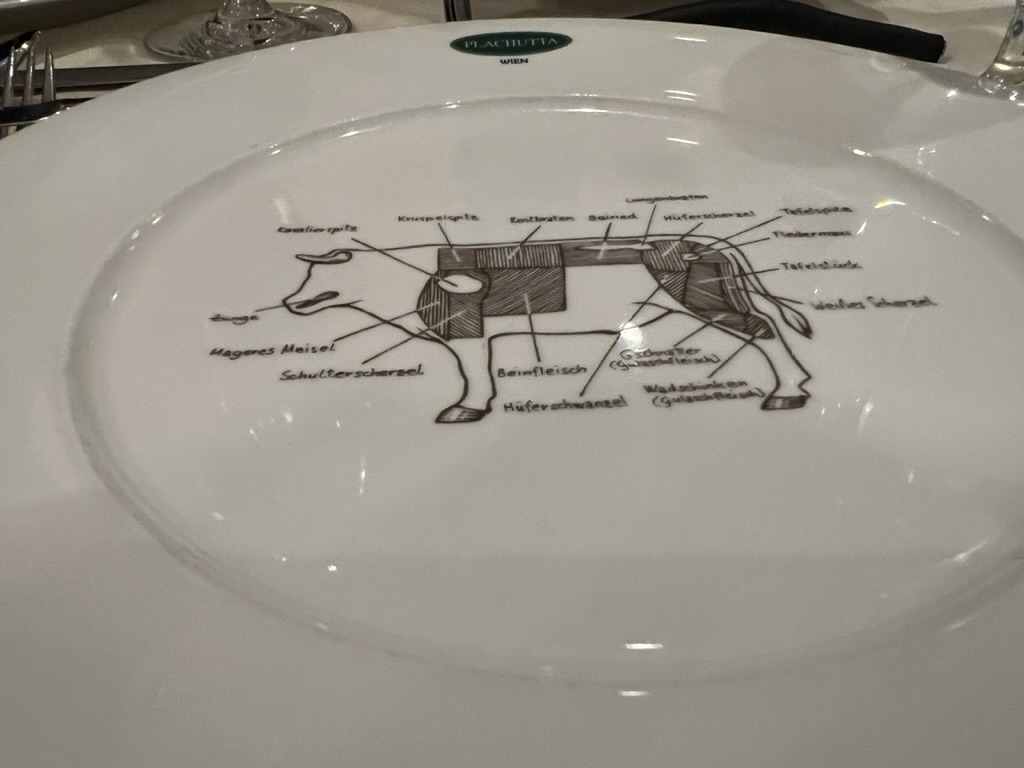
The dinner is served as a bit of a ritual— First you select the kind of beef you’d like. You’re helped with a diagram of the cow noting the different cuts. And the waiters will happily give you an explanation and make some suggestions. Given that the beef is cooked in a broth with vegetables, it creates a tasty soup. So a copper (must be copper) pot comes to the table with the broth and vegetables piping hot and inside that same pot are the pieces of meat. First, though you eat/drink the broth and then you move onto the meat which is also served with spinach and potatoes as well as a flavored horseradish and a creamy sauce. The restaurant was packed and many people were waiting for tables.
It was good, but I admit boiled meat is not my thing.
Then we headed back to our abode at Hotel Motto to be able to get up early the next morning to head to Brno, Czech Republic.
More on that tomorrow.
Fern
December 31, 2023. Vienna!! 2024—Bring it On!

Happy New Year—
This is being written in the wee hours of January 1, 2024
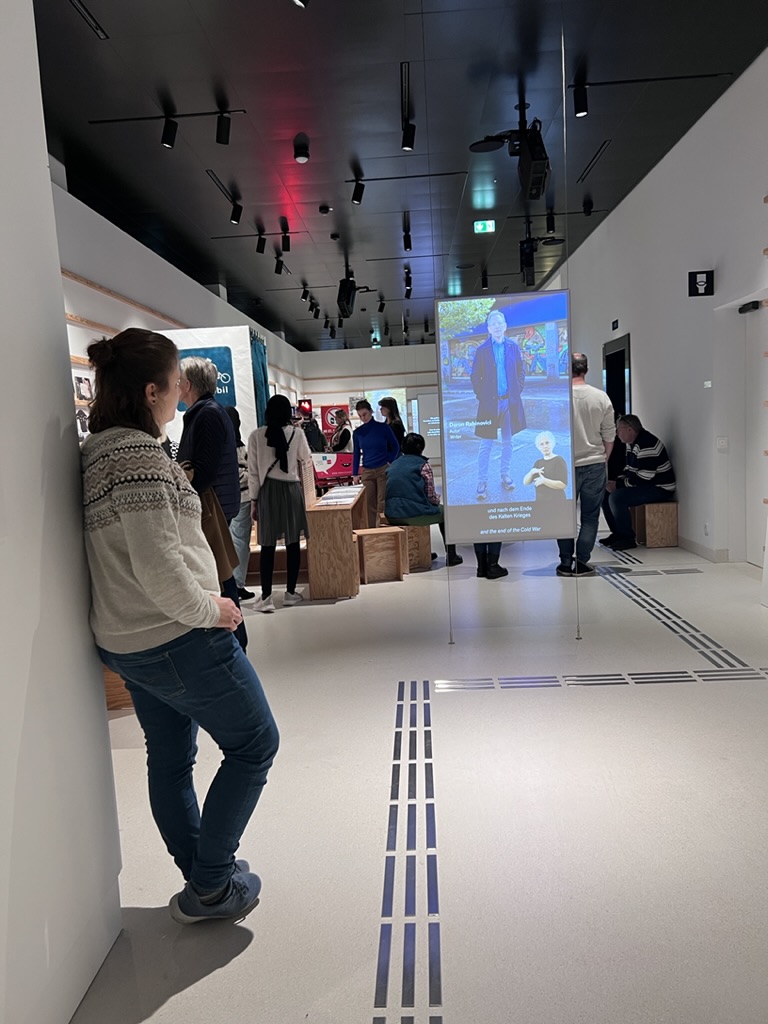
After breakfast we were planning to head to see the Wortuba Church which is a bit of a trek from downtown (about one hour by metro), but after a recent email from a friend who suggested we visit the newly-reopened Vienna Museum (opened just three weeks ago), we decided to head there and then go to the church. The architect for the church chose the site of former Nazi barracks and planned for the church to be a bold religious statement. He died before the building was completed. It’s a real Brutalist building constructed of massive concrete blocks without any symmetry. But alas, after going to the museum and recognizing the time it would take to get to and from the church and then to get ready for dinner and festivities tonight, we opted to head back to the hotel after the museum for a few hours and then get ready to party!
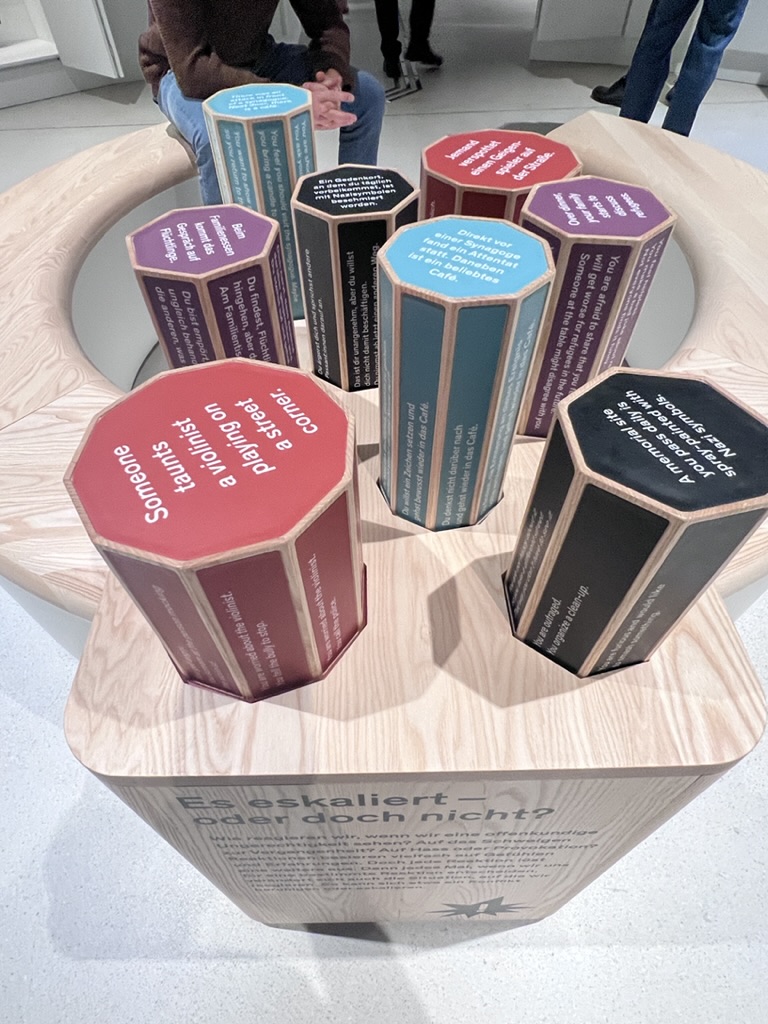
The museum was well worth the visit, but needed way more time than we could spare. Given that it is New Years Eve Day, the museum had an early closing time, and we were practically the last people to leave. Over three distinct floors there is one continuous permanent exhibit that depicts and tries to explain the history of Vienna: “Vienna. My History.” The exhibit focuses on the place and the people—the politics, religion, social structures, the environment. Topics include work, housing, traffic, immigration, and ecology — then and now. The exhibit(s) is arranged chronologically and winds around the building. There are lots of different formats and tactile objects as well as many interactive efforts to bring viewers into the exhibit to comment, engage, and voice opinions.
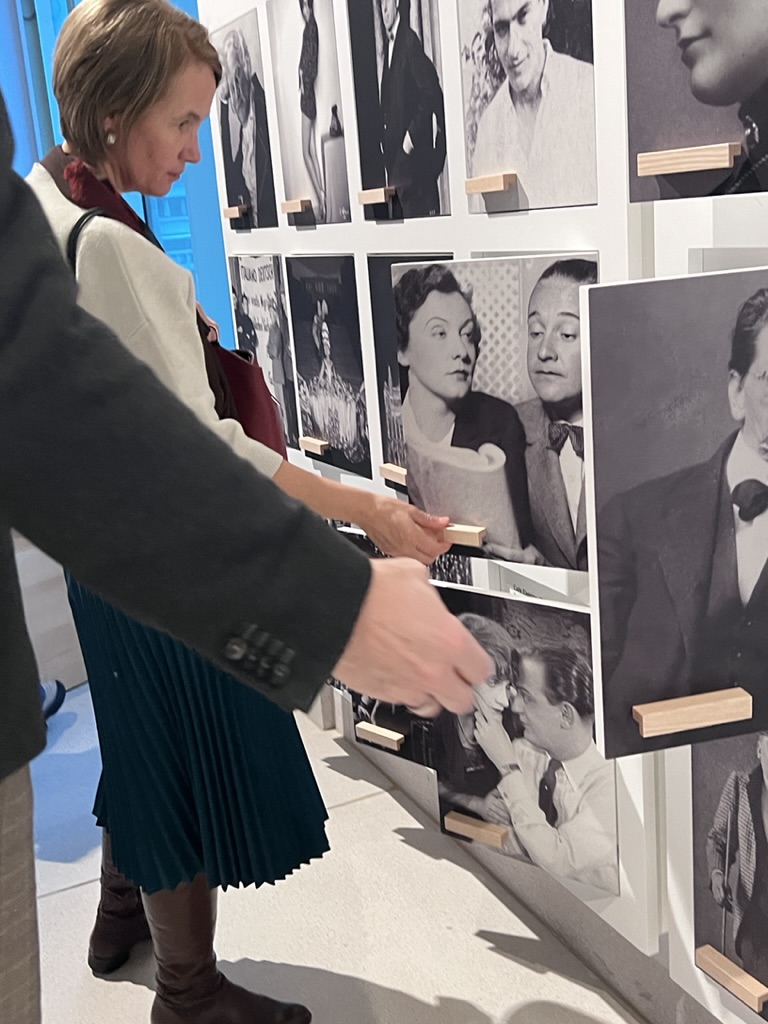
We headed to the second floor where the exhibit focused on the 20th and 21st centuries. The exhibit went out of its way to bring credible information about Austria’s role in WWII and the plight of Jews in Vienna. Everything in the museum is presented in both text as well as graphics and photography, and wherever possible presents questions for viewers to ponder. Physically, I was struck by the number of hands-on aspects the museum has developed and hope that enough consideration has been given to viewer handling of the items. For example… there is a wall of photo portraits of pre-eminent Austrians in various disciplines (music, literature, science, etc.). Each portrait is really a door (about 20” x 20”), which when opened tells the story of that person’s life and accomplishments in easy-to-understand text. I hope the hinges can handle all the wear and tear. And in another section, there is a big discussion of social housing, including two walls of images of real people (photos mounted on ¼” boards). Viewers are encouraged to pick up these photo boards (which are leaning on a series of shelves. On the back of each photo board is text from interviews with the person in the photo. All of these people are living in social housing.
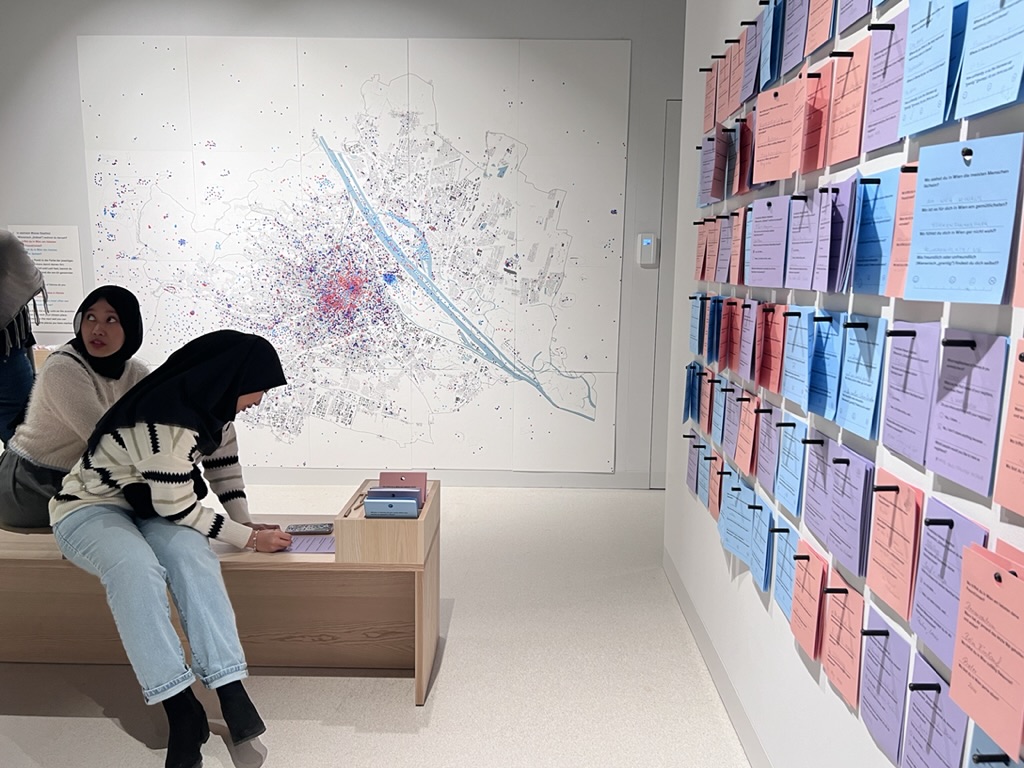
And the exhibit attempts to gather basic information from viewers—putting dots on a giant street map of Vienna to depict where the visitors reside, asking some key questions and providing large-format
“cards” for viewers to write responses and then post them on a wall. The responses are put into a pre-arranged grid so that the responses appear to be respected and readable for other viewers. I’m hoping they are collecting these responses and will do something with the information.
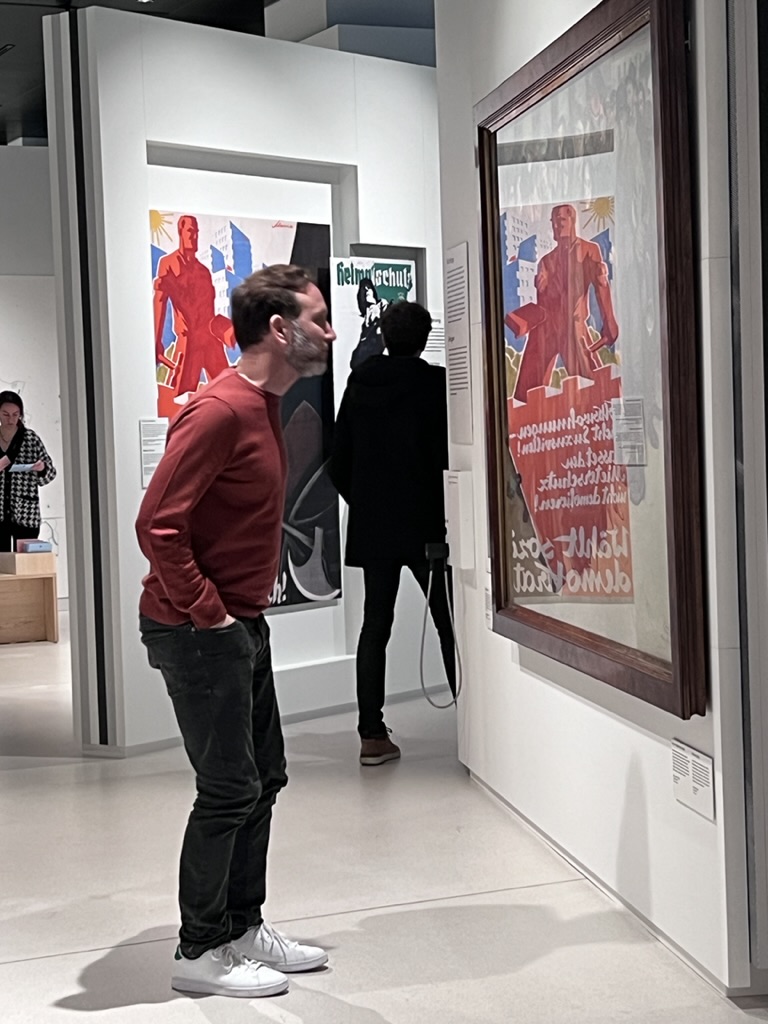
There was considerable “space” given to the Red Vienna period when socialists controlled the city, and how current issues such as immigration, housing, etc. are being addressed.
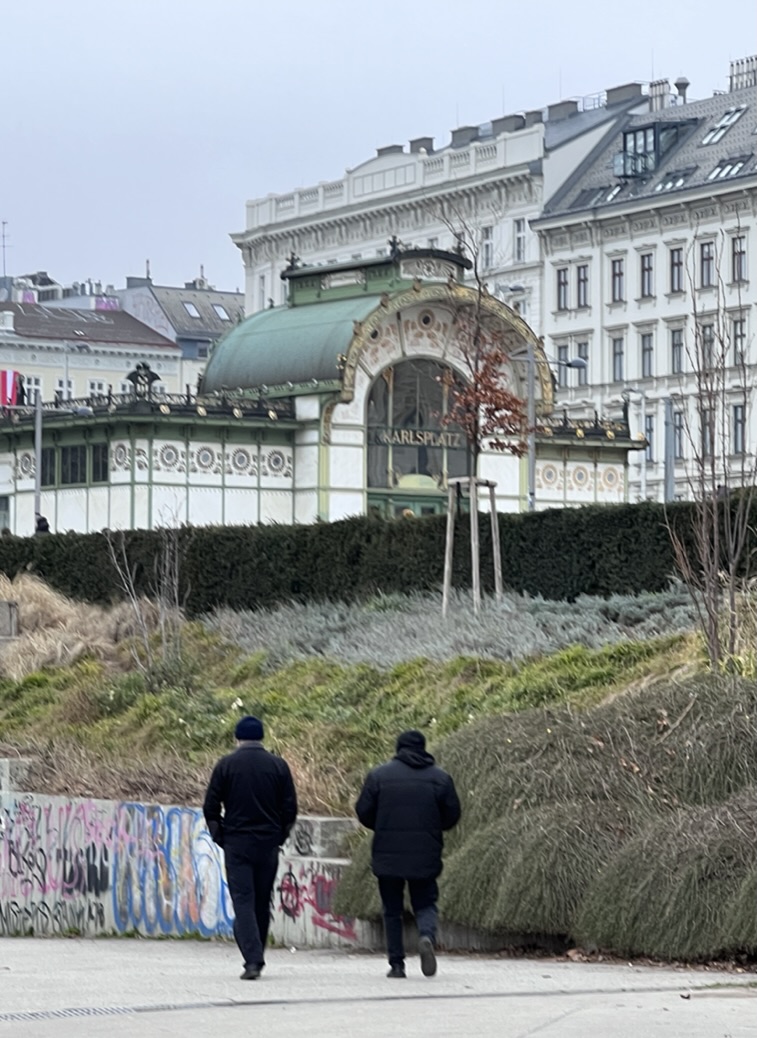

We then walked back to the hotel and prepared for our dinner, which was about a 15-minute taxi ride from the hotel. Our amazing luck with winter weather in Geneva and Vienna seems to be running out. Today was colder and grey; no sun to be found anywhere, so it felt even colder than it really was. I think that will be the case for the remaining days here.
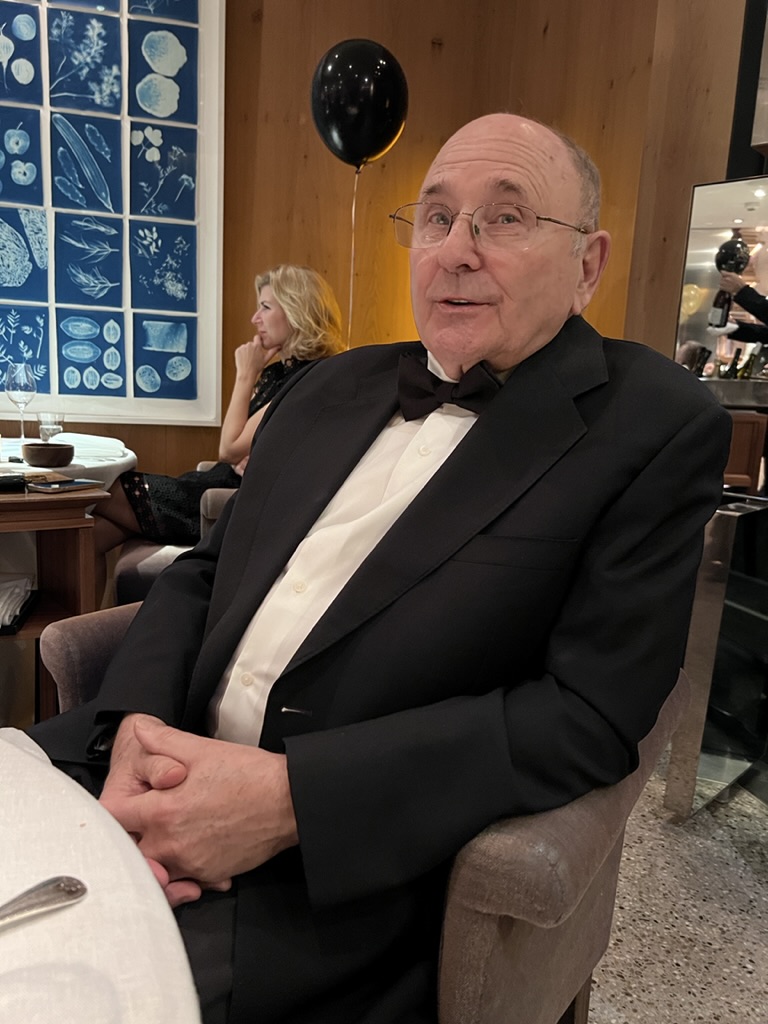
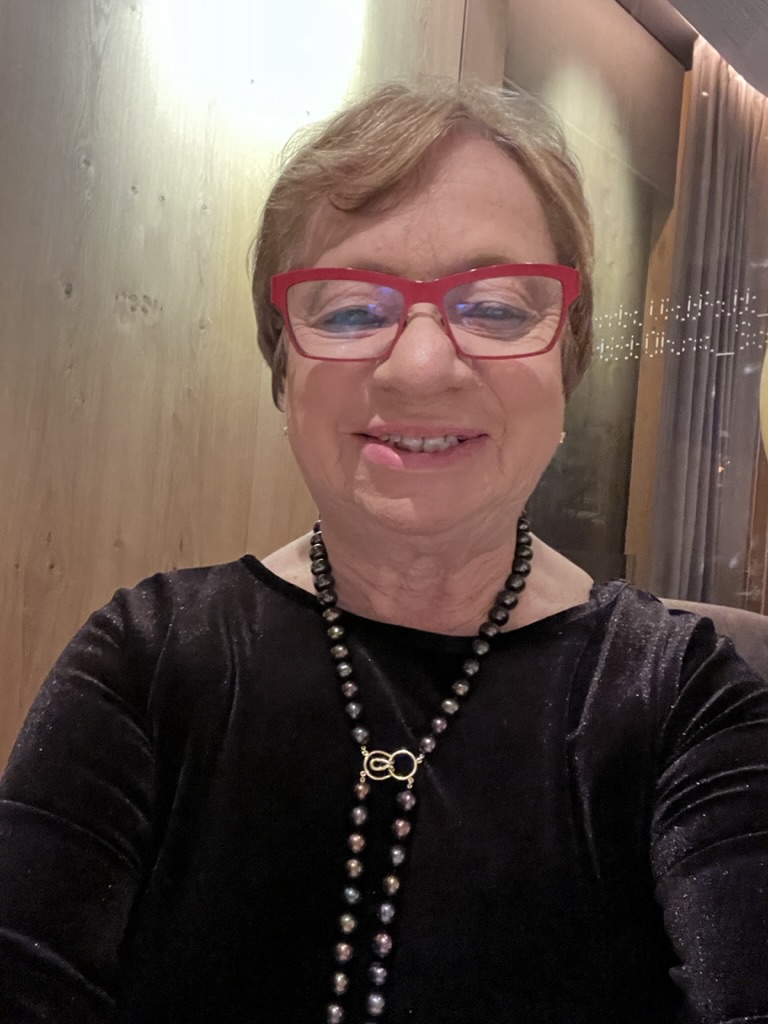
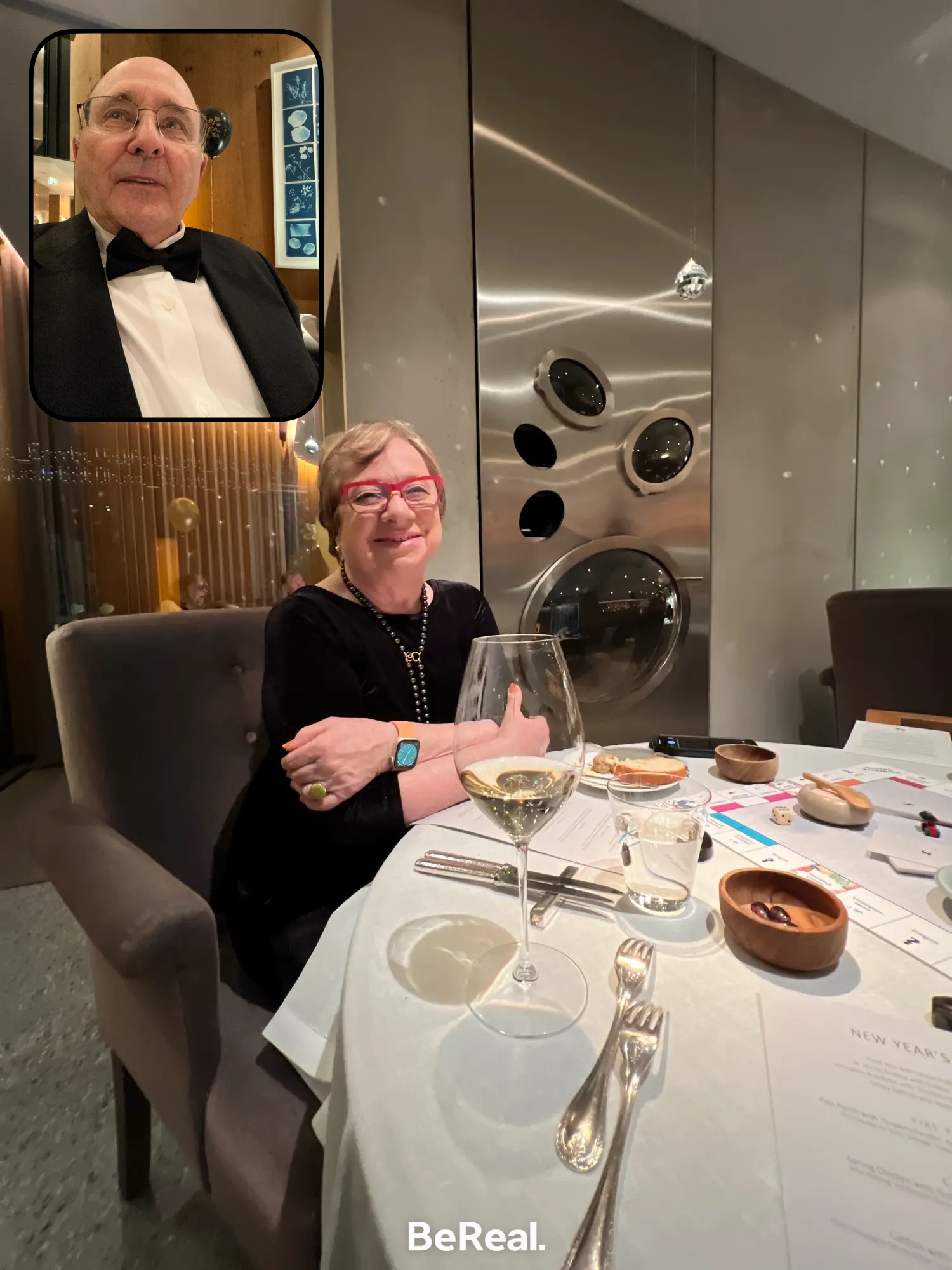
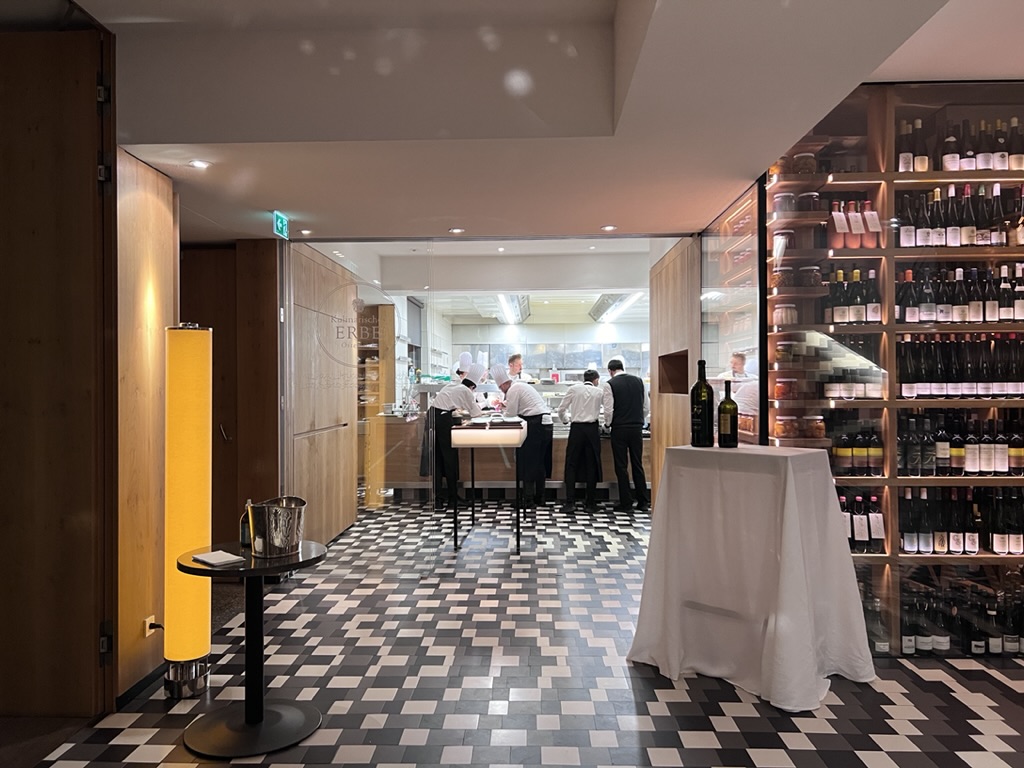
We had 7 pm reservations at Steirereck in Stadtpark… and tickets for a concert that began at 10pm. It was supposed to be a 5-minute walk through the park to get to the concert hall. We figured we had plenty of time… But we arrived late to the concert since dinner was more than amazing and clearly 2.75 hours was not enough time for the dinner. We dined for more than three hours (and still had to miss one of the many dessert courses! Or we’d totally miss the concert). Anyway, the restaurant was beyond expectations. Thre were more than 32 choices of bread. The menu (for the foodies, there will be a follow up with descriptions—stay tuned) included 7 courses (all delicate and plated beautifully… and not heavy) in addition to four different amuse bouches.. and of course, lots of bubbly and good wine. And at the end they presented me with a lovely tartlet with a candle, and thankfully did not sing or make a spectacle!! The restaurant is in a beautiful modern building of natural materials of wood glass and concrete—and a terrazzo floor. Oh.. one more thing. At each table was a deck of cards and some dice and directions on how to play some game.. sort of like Monopoly. I guess when you are going to stay for so many hours, they must think you might need a distraction from the meal?? And as the photos show, the suggested attire for dinner (and also for the concert) was “black tie.” We didn’t quite make the cut, but e tried.
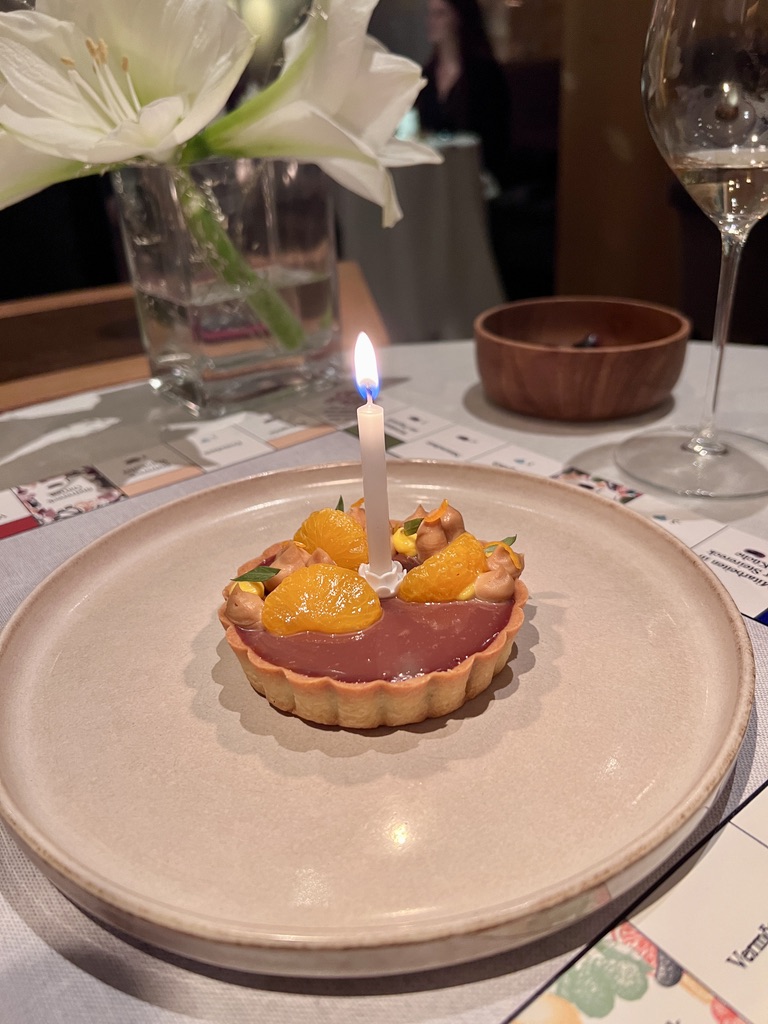
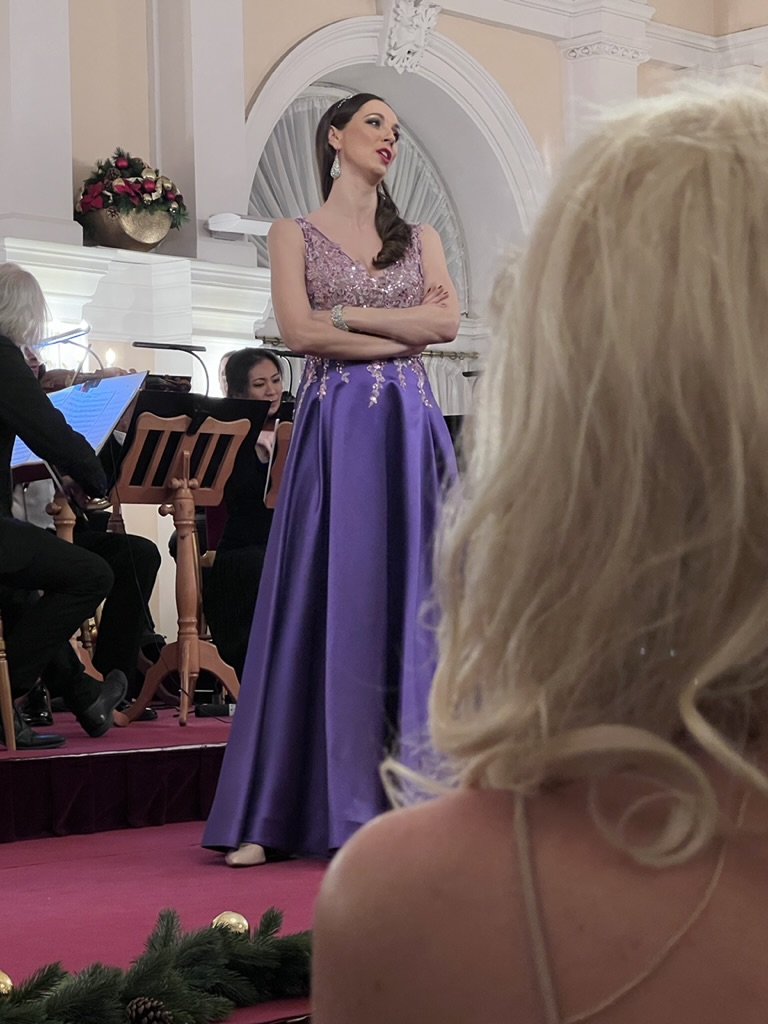
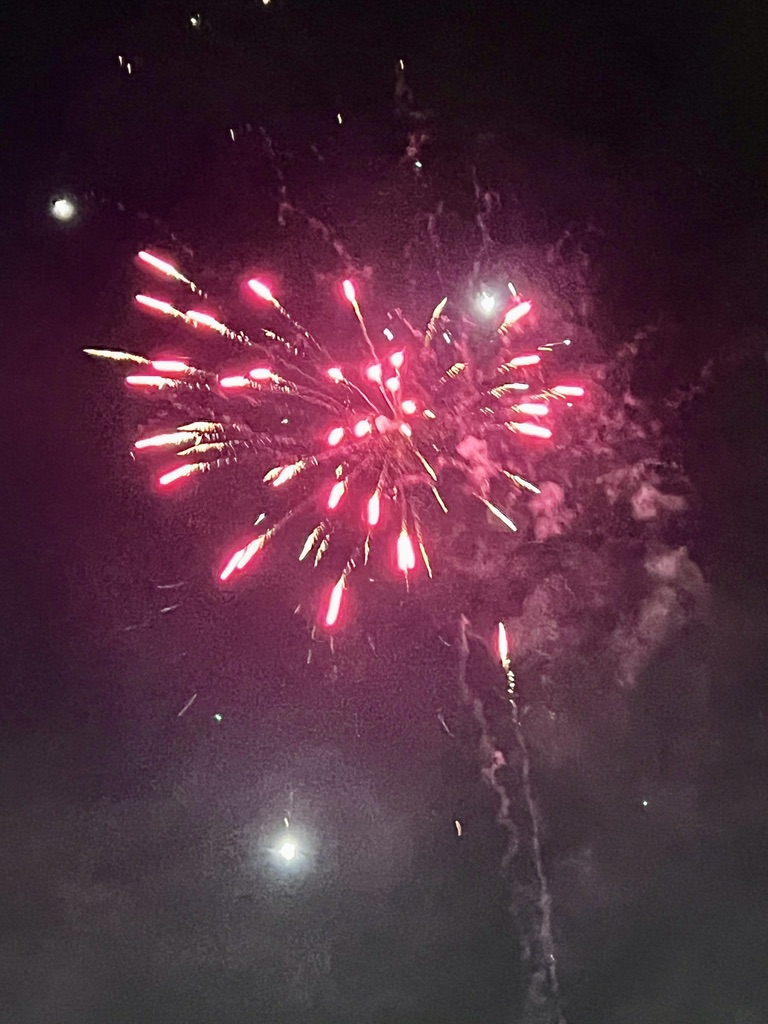
Following this totally amazing meal we headed to the concert at Kursalon in the park. It was a small hall (400 seats) with a 13-piece orchestra and a Strauss and Mozart repertoire, including some singers for certain choral parts. They were good and the audience loved it.. a bit schmaltzy for me, but lots of fun. Naturally, they ended with the Danube. Then we headed out to catch the fireworks at midnight. They were all over town. Inside, the concert hall was set up for dancing after the concert, but we begged out. Apparently, all over the city people dance the Danube at midnight.

Tomorrow, New Years Day, we head to brunch at the new Jean Nouvelle-designed hotel and then we’ll stroll Vienna a bit more. Then it’s Brno for the day and we are off. More tomorrow.
Oh— important to note.
Mike had been complaining when he packed for this trip —about his bag being too heavy because he had to bring along a nice pair of black shoes (as compared to everyday hiking boots) for New Years Eve, for which he decided to bring along a bow tie! Anyway, as we were getting ready for dinner, Mike starts to laugh… He had packed two black shoes; problem was he packed two black right shoes …. No left shoe. To me the two black shoes were very different (beyond which foot it was designed for), but he felt they looked alike, and it was a “natural” mistake. So, Mike’s bow-tied white shirt and black suit were complemented by construction-like BROWN boots. Imagine me doing something like that! Never!
All the best for 2024. I suppose that California has several hours to go before celebrating.
Fern
December 30 2023. Vienna!!
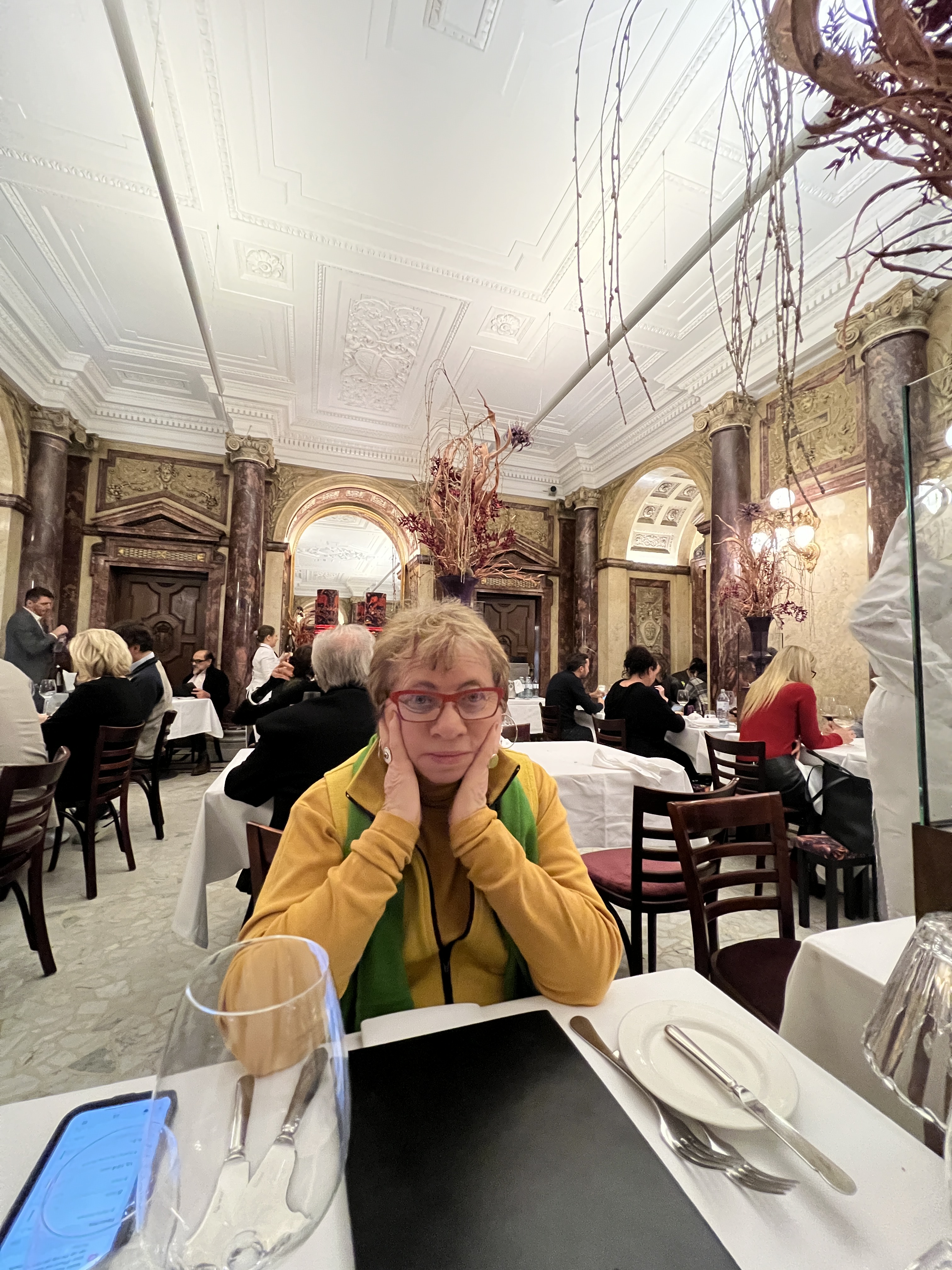
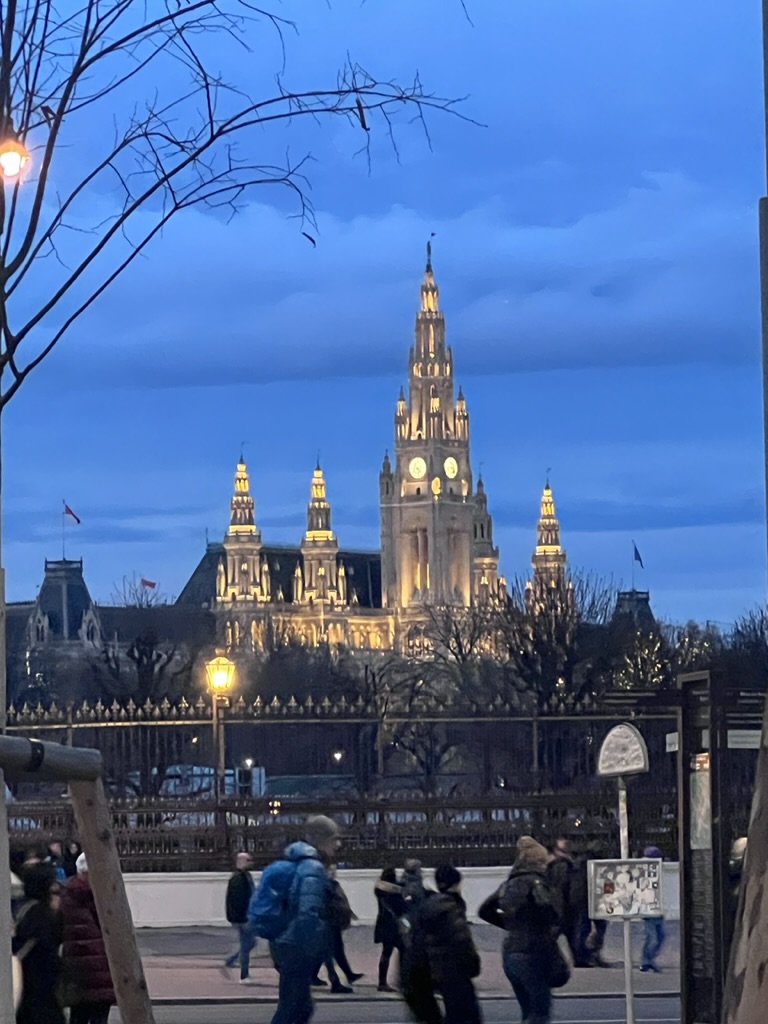
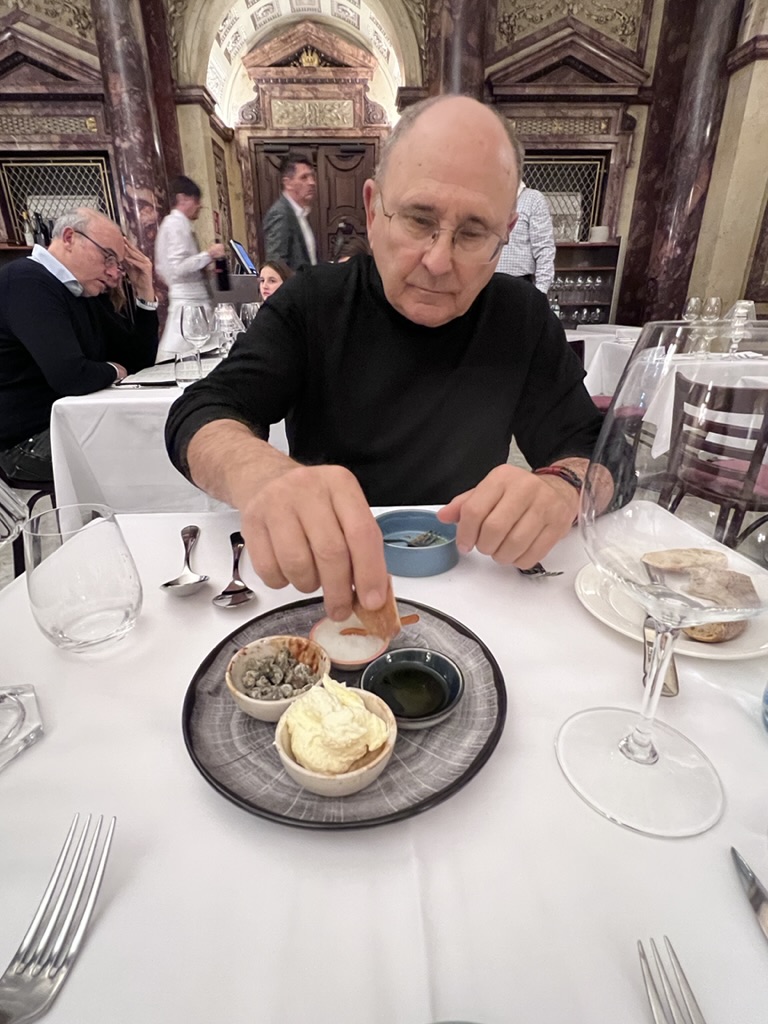
Greetings from Vienna/ Day Two — sorry for the length; feel free to just look at the pictures. This note is being sent on the morning of December 31.
Sounds like the California coast is really getting a beating. Hope those of you receiving this in California are OK.
First, last night’s dinner at Vestibul was quite wonderful, although Mike was being very careful in his selections. We started with two appetizers: chestnut soup for Mike and an artichoke dish for me. For main courses Mike had the char and I had wonderful duck. And of course, we ended with a great desert—can’t be in Vienna on a diet. As I remembered, food in Vienna is rich and complex. Vestibul is located in the Burgtheater’s imperial carriage entrance and marble hall, so the setting inside is definitely “royal.”
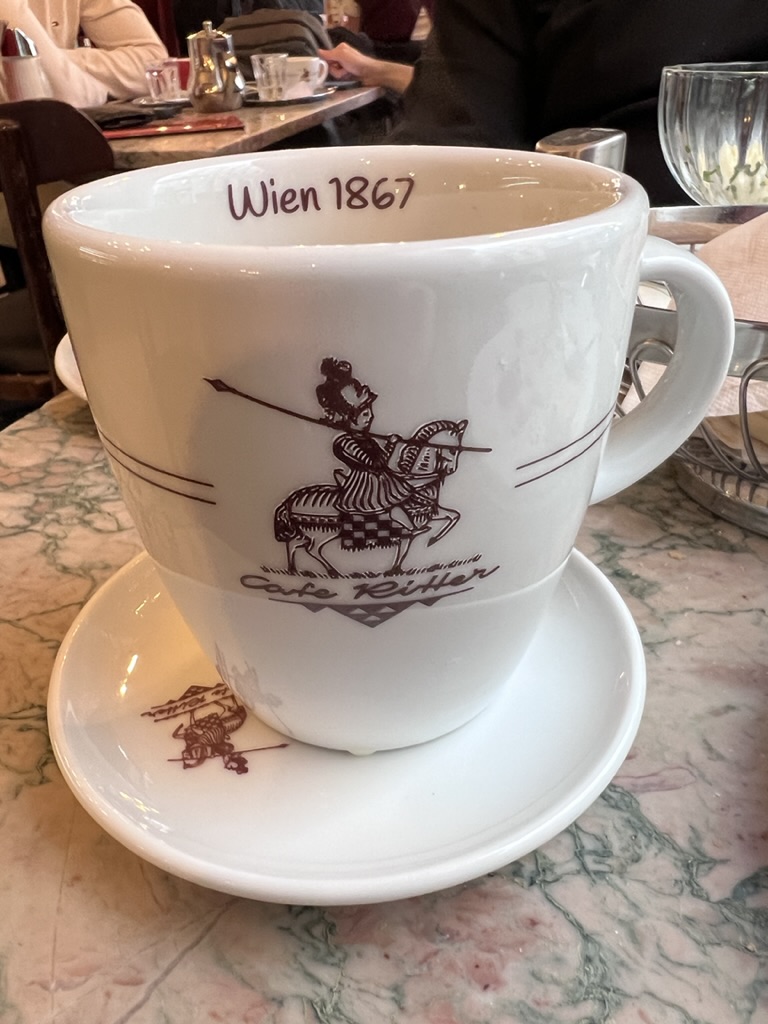
We began this morning with a quick breakfast at Cafe Ritter, one of Vienna’s oldest cafes… from the 1880s…. probably same waiters as when it opened. And in some ways time seems to have stood still — cash only (none of this weird plastic money and certainly no digital funds). It’s a hangout for many old timers and also some hipsters who seem to like the vibe.
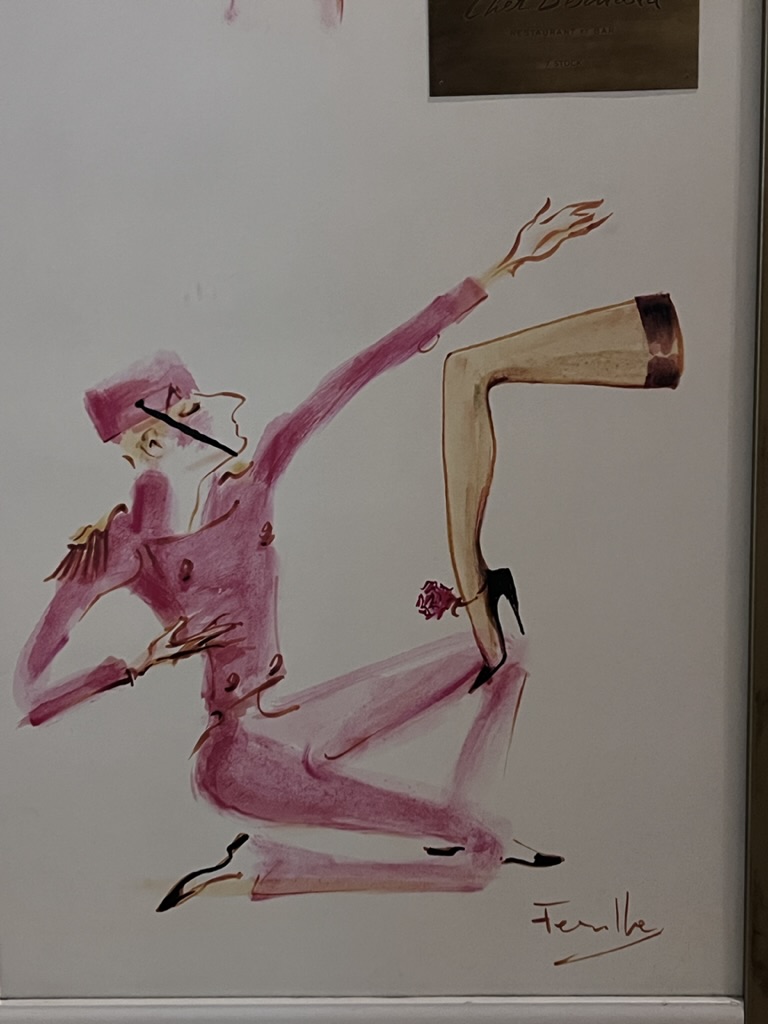
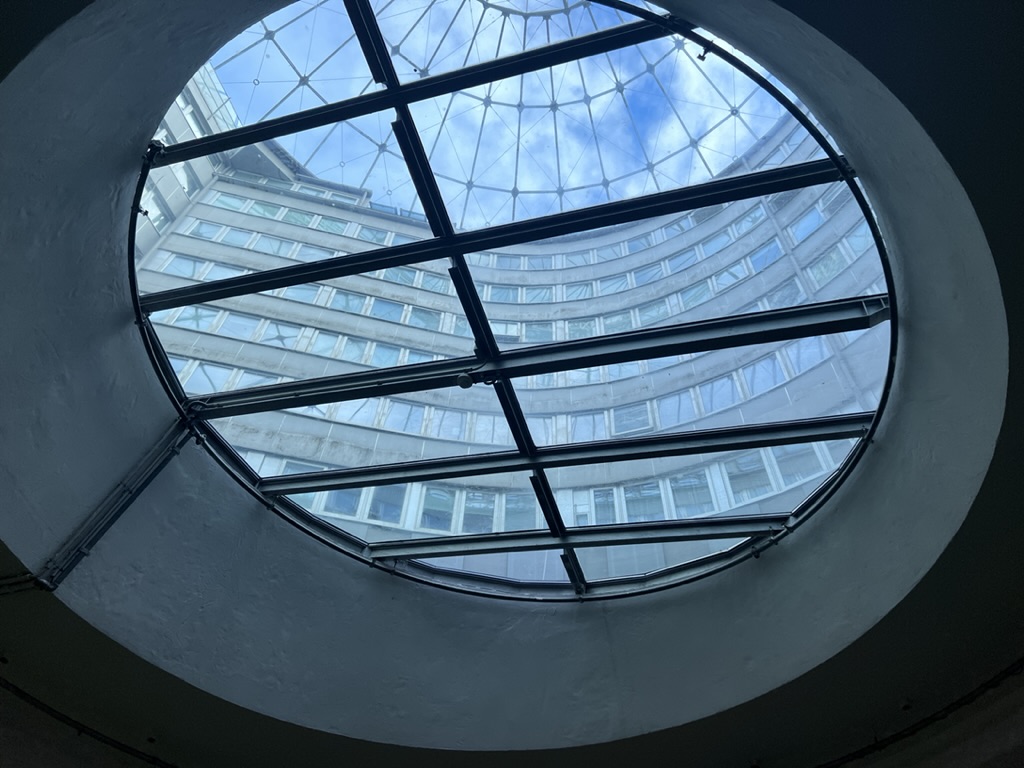
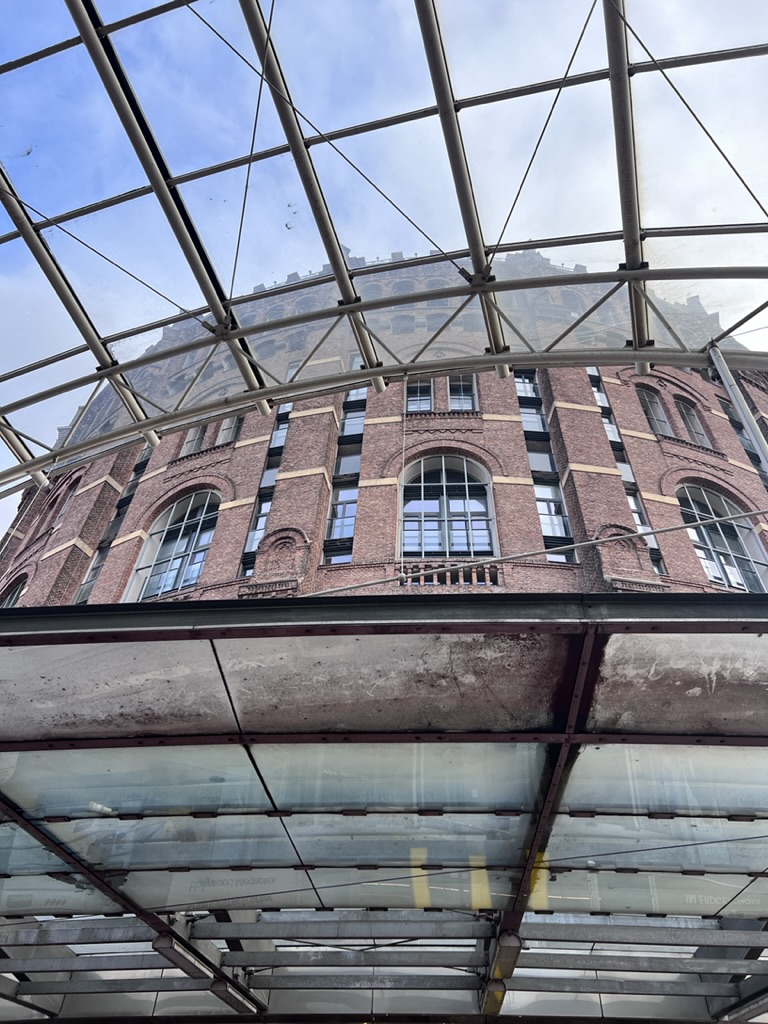
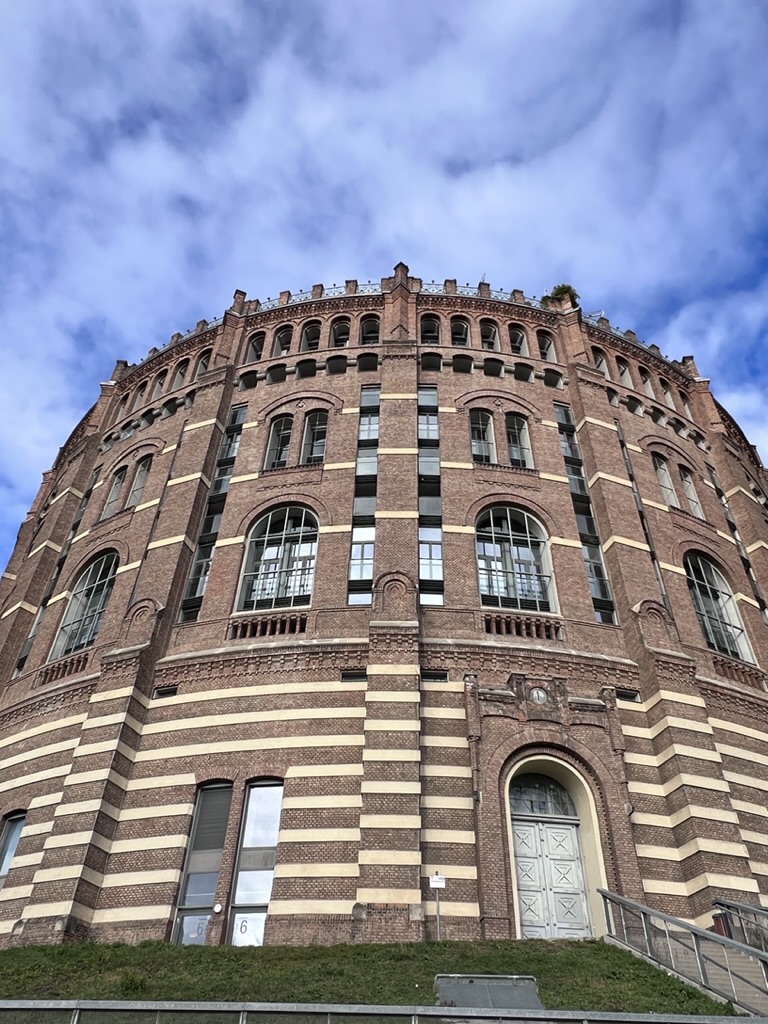
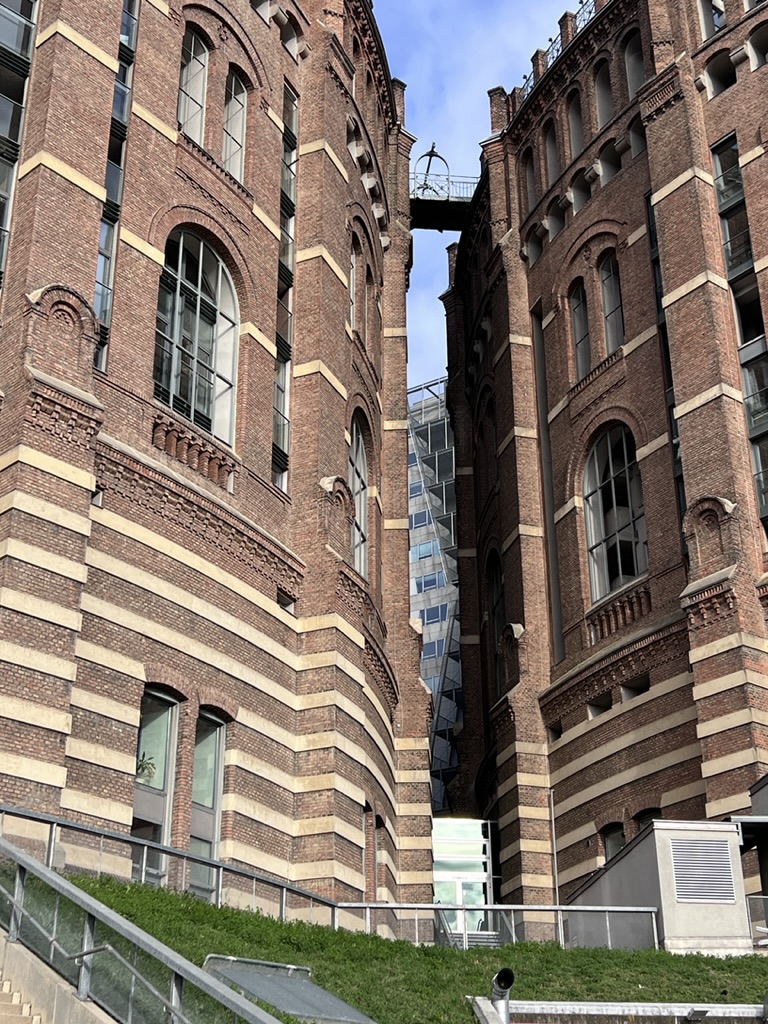
We headed out to Gasometer… and now that we are experts on the U-Bahn (the Vienna Metro) we caught the train which went directly to Gasometer. We had seen the remains of the old gas works cylinders in Rome, but here in Vienna they have taken the four structures built at the very end of the 19th century and created housing. The gasometers were in use until about 1960 and then were shut down. The city preserved the exterior walls and eventually created housing blocks within the cylindrical frame. The city took on the task of remodeling and revitalizing the structures (which were landmarked) and selected four architectural firms to do the design. The challenge for the architects was to create affordable units (social housing) as well as offices and entertainment and shopping within these cylindrical buildings. The four buildings are connected by skybridges. Altogether there are about 800 apartments with about 1,600 tenants and about 70 student apartments. We explored the buildings although we could not see any actual units, just the public spaces and the exteriors.
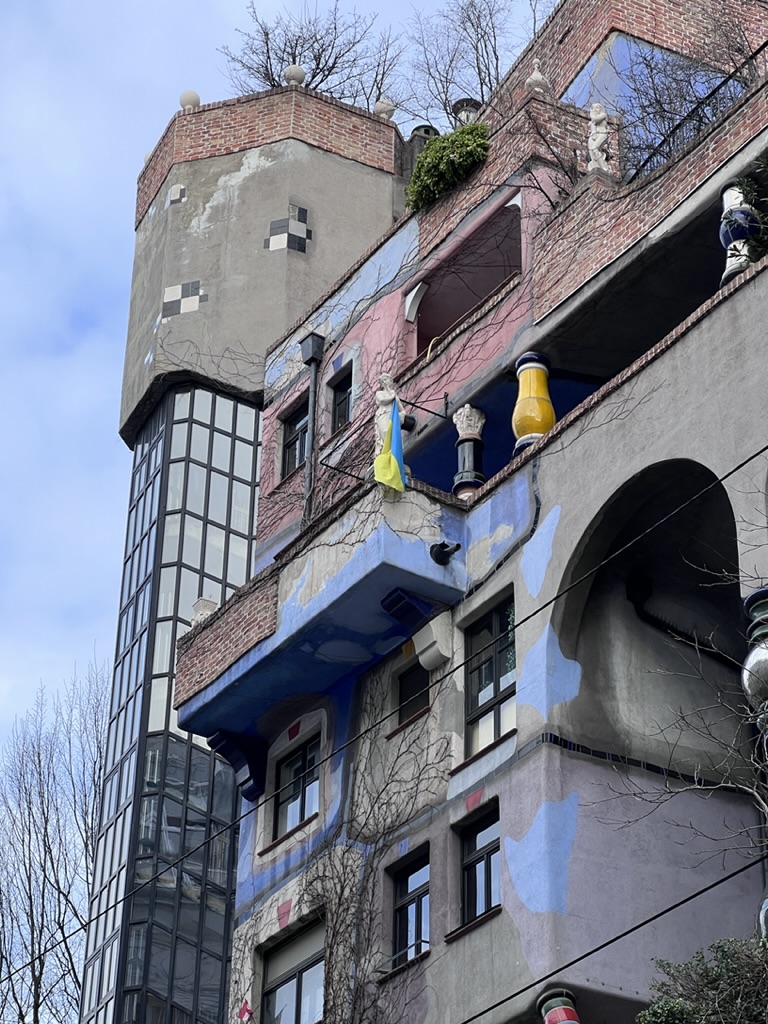
We then hopped back onto the train to get to Hundertwasserhaus… one of Vienna’s most visited residential buildings in a residential district—a collaboration begun by an Austrian artist named Hundertwasser who was interested in architecture (but not an architect). Initially, he wrote and published a lot about architecture and his theories about how people should live with nature in urban areas and lectured at universities about the need for compatibility between nature and people. Eventually the Austrian chancellor recommended that Hundertwasser be given an opportunity to implement his ideas by constructing a residential building. But since Hundertwasser was not an architect, the city needed to provide him with an architect with whom he could work. Josef Krawina was selected. The building was to be for social housing.
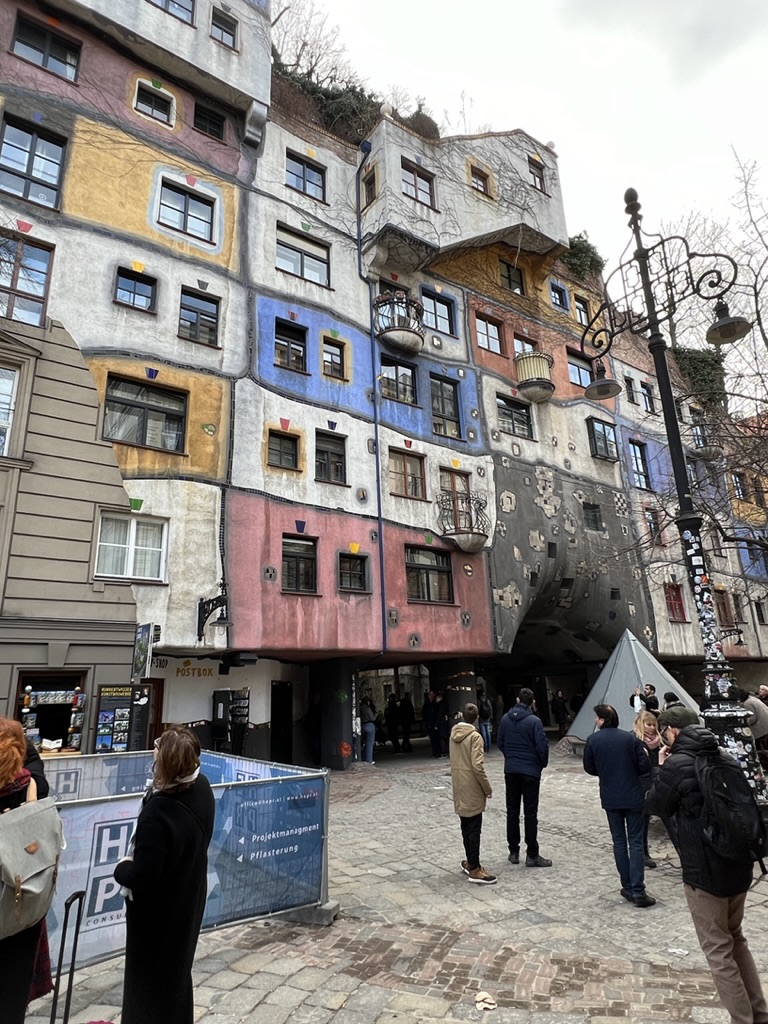


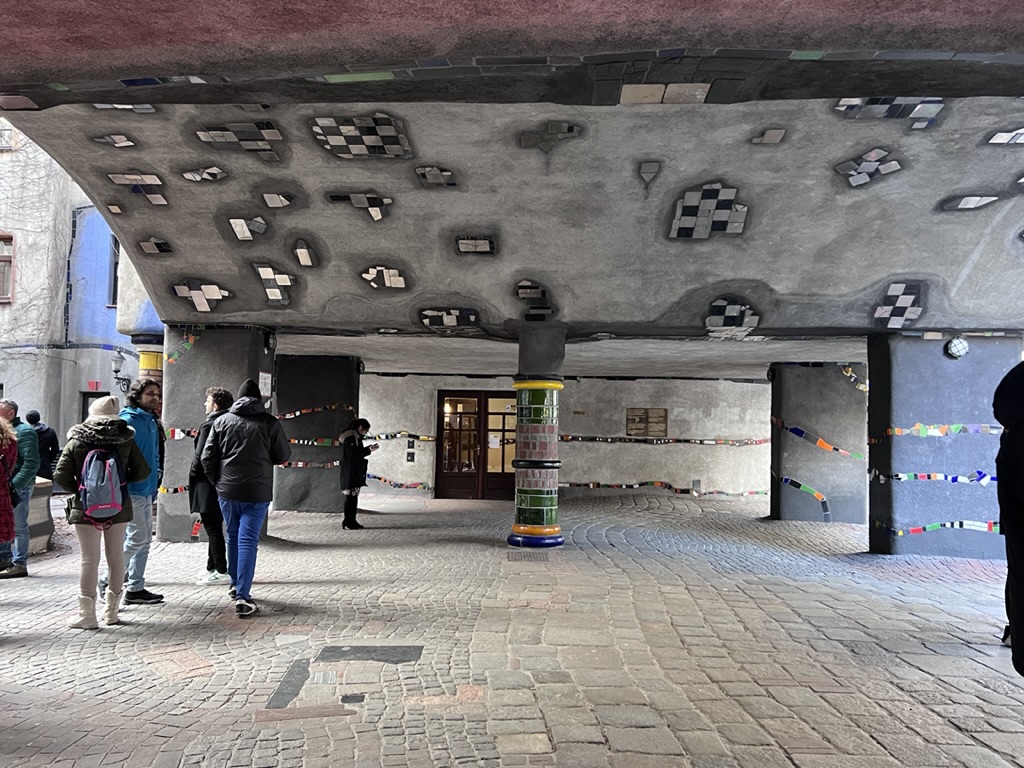
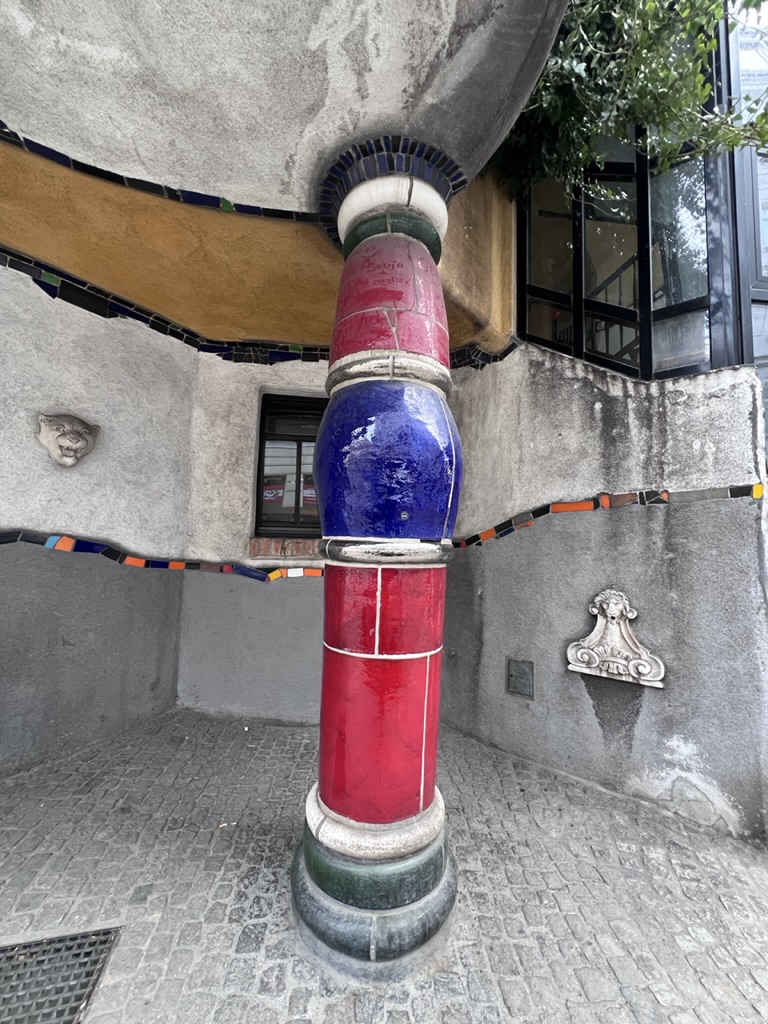
But the partnership was not a happy one as Krawina straightened all the lines and changed Hundertwasser’s whimsical design. To Hundertwasser the project was no longer a house for “people and trees.” Eventually Hundertwasser got permission to build the house which required many, many exceptions to local building codes. Still, the arguments between the two “partners” were intense and lengthened the time of construction; Krawina eventually resigned from the project. The city needed to find another architect and they eventually used the city architect for the project. But the legal authorship of the building was in question for decades.
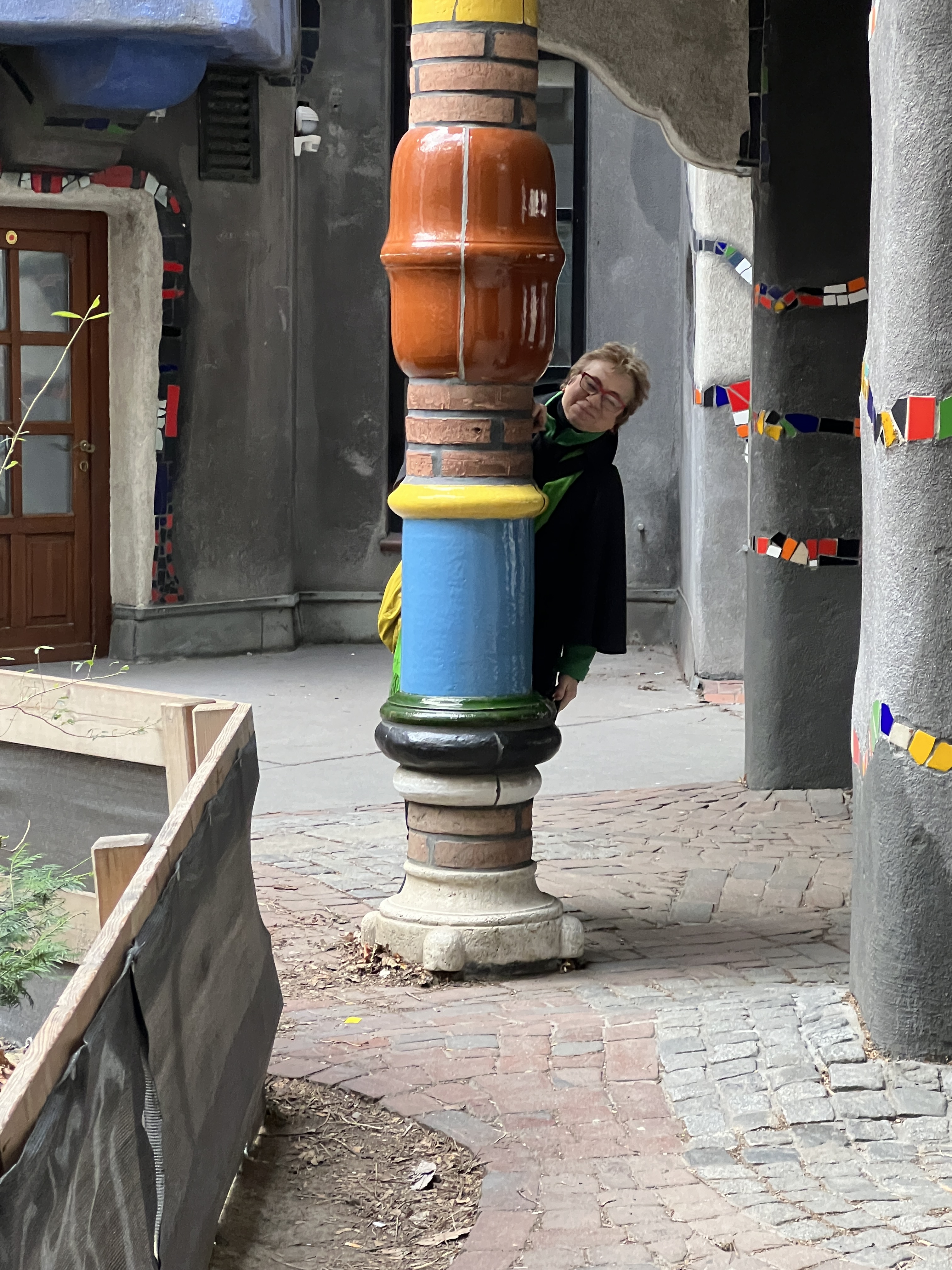
Anyway, the Hundertwasser building is delightful, with bright colors and tiles, and uneven floors in the corridors. The 250 bushes that were planted when the building was started are now tall trees. It’s a little like a cross between Gaudi’s La Sagrada in Barcelona and Watt’s Tower in LA. The Hundertwasser building complex has good marketing because, like Watts Tower it has become a major tourist destination. We even saw people with luggage who were stopping by to see the building on their way to or from the airport.
From there we walked across a canal to reach the official nation of Kugelmugel, after stopping briefly at a little neighborhood café for a light lunch.
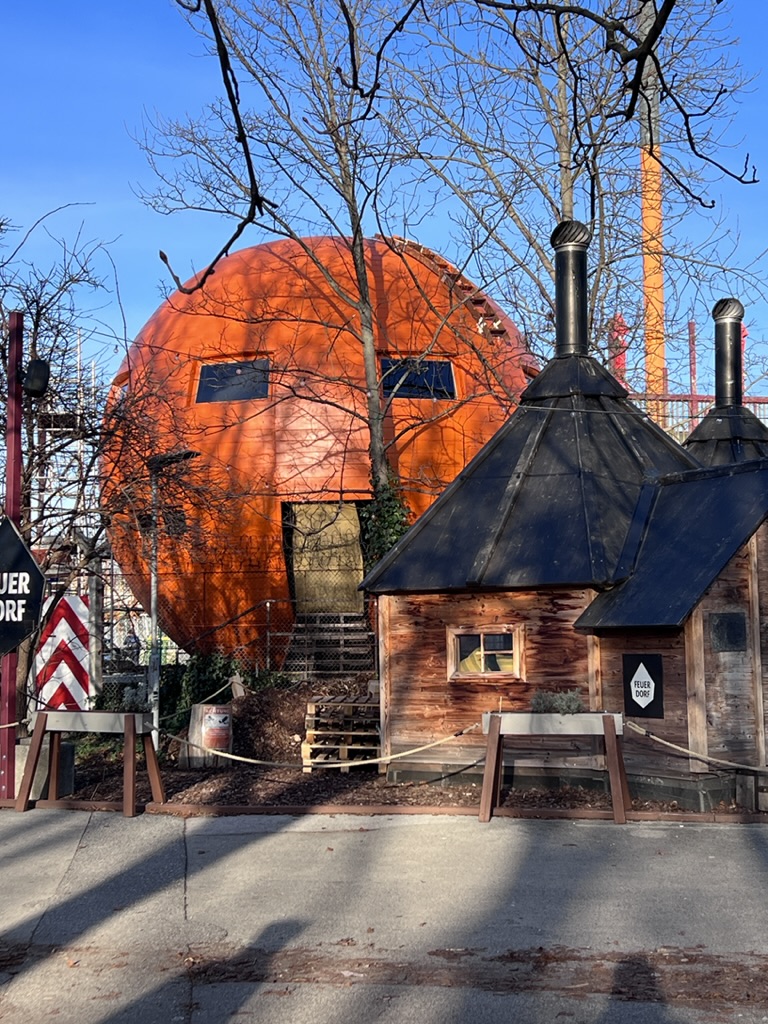
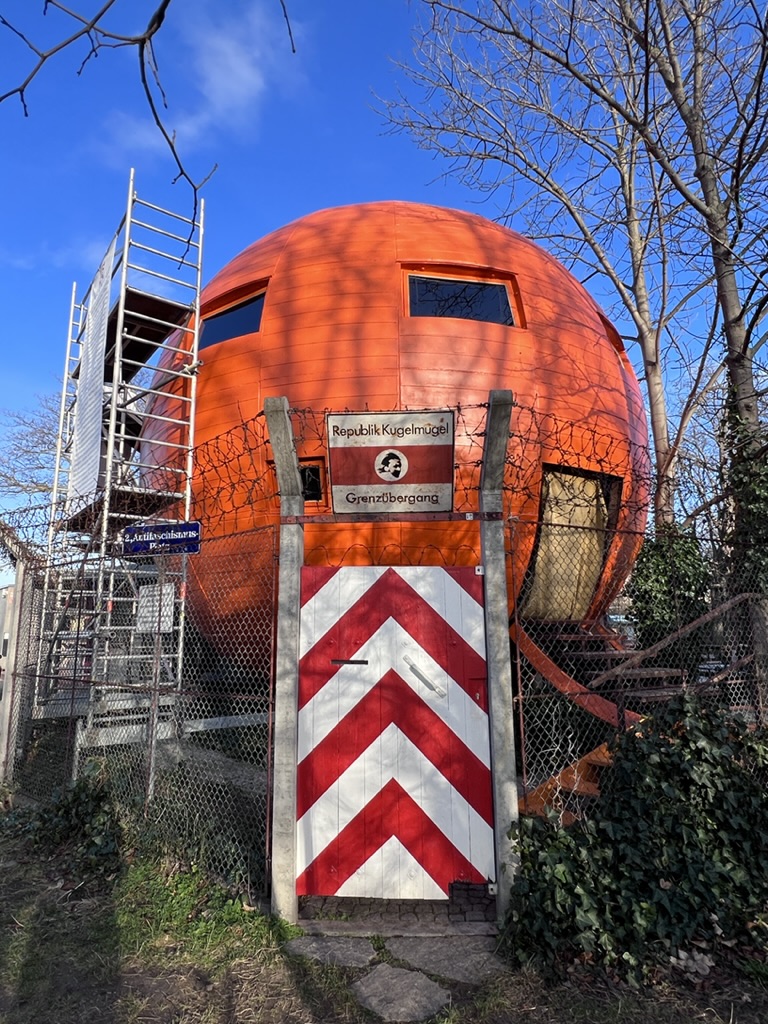
Yet another structure that was controversial in a different way—Kugelmugel or officially “the People’s Republic of Kugelmugel” is a “micro-nation” located within Vienna. Apparently, it came about because of a dispute between an artist (Edwin Lipburger) and the officialdom of Austria, because the building would be spherical. It was built in 1976 and declared itself a sovereign nation, to bypass the codes. Some years later it was moved into Prater Park and is surrounded now by an 8’ barbed wire fence. It is the only address within “the Republic” and is located on a short street that the “Kugelmugel nation” named “Antifaschismusplatz.” Although Lipburger died in 2015, the Republic officially says its population is more than 650 “non-resident citizens.” It looks sort of like a big basketball sitting on the edge of the park where today there are amusement park rides.
Then we headed to Karl Marx Hof—part of what was known as “Red Vienna.” We realized if we took the train we wouldn’t get there while there was enough light to photograph, so we hopped in a taxi (those of you who know me, know that I don’t Uber). Taxis are easy to find, and you can hail them on the street like in NY.
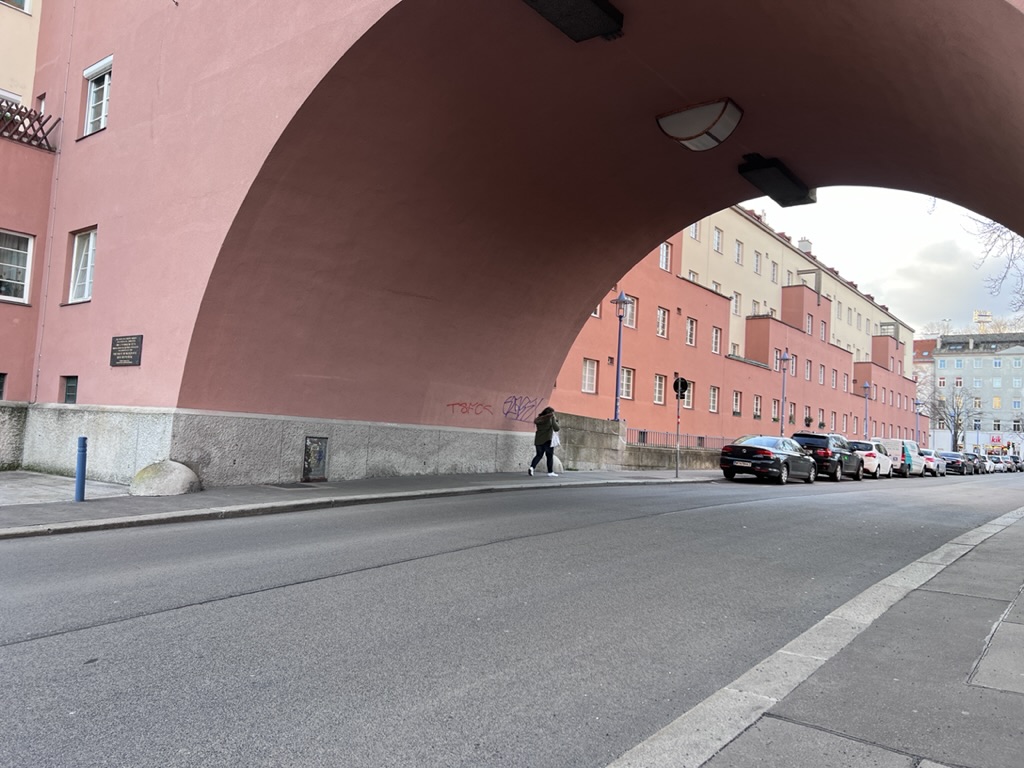
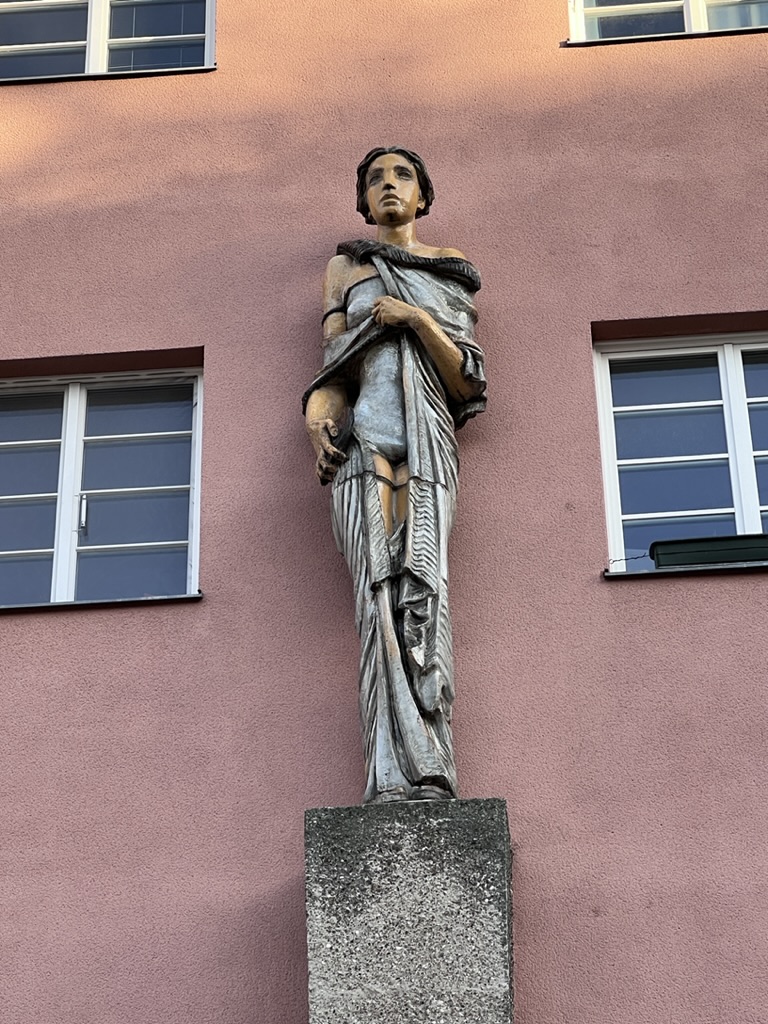
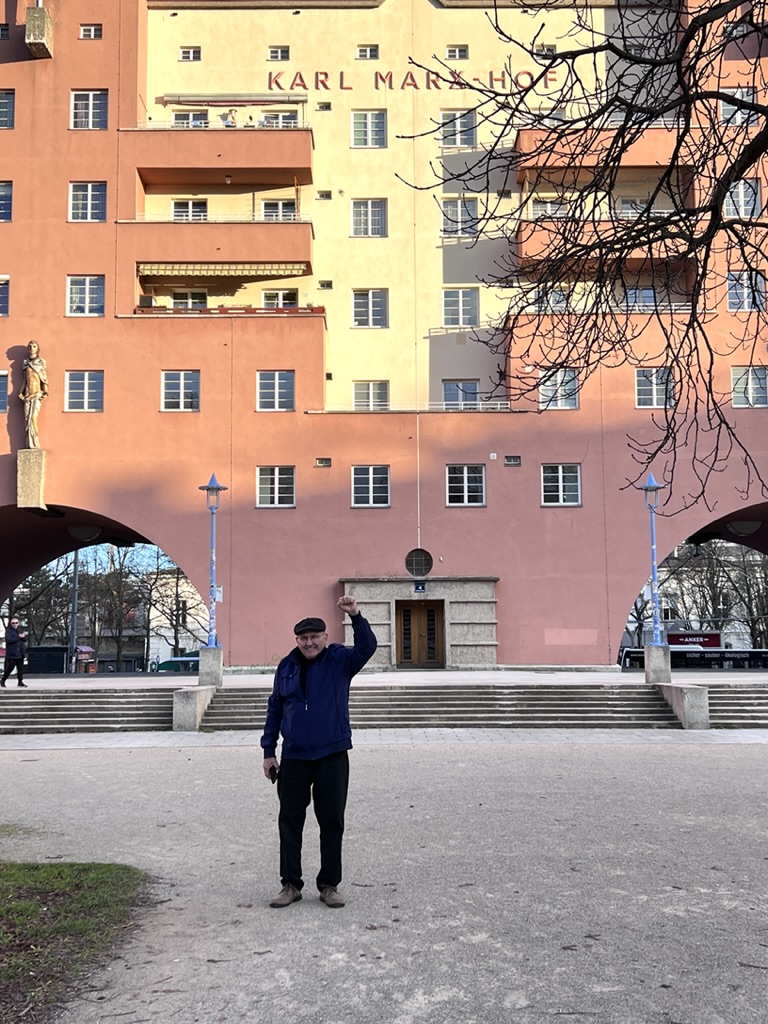
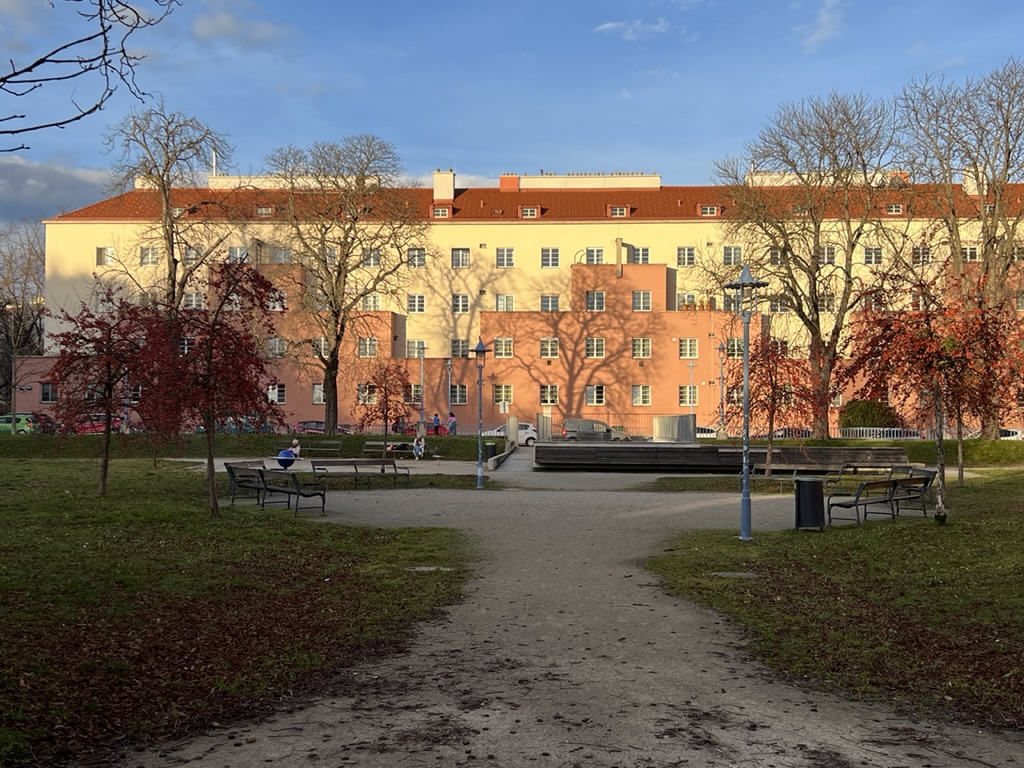
Karl Marx Hof is more than a kilometer long and I think it was the longest continuous residential building in the world at that time. It was designed by one of Otto Wagner’s students (Otto Wagner was the architect for the Art Nouveau buildings I noted yesterday or the day before). The building was constructed between 1927 and 1930. (per Mike… “I’m stunned that they could do this in such a short period because 50-unit buildings in Oakland can take that long!”) And here there are about 1,400 apartments.
There are about 5,000 people living at Karl Marx Hof. It was considered innovative for its time, with laundries, showers, two medical clinics, kindergartens, dental clinic, a “mother’s advice center,” a library, a youth home, a post office, and a pharmacy…among other amenities. There was also an “advice center for interior design and housing hygiene.” In the 1930s the Karl Marx Hof was a center of resistance against Austrian fascism. But after the Austrian Social Democrats were eliminated, the building was renamed, but still the signage remains.
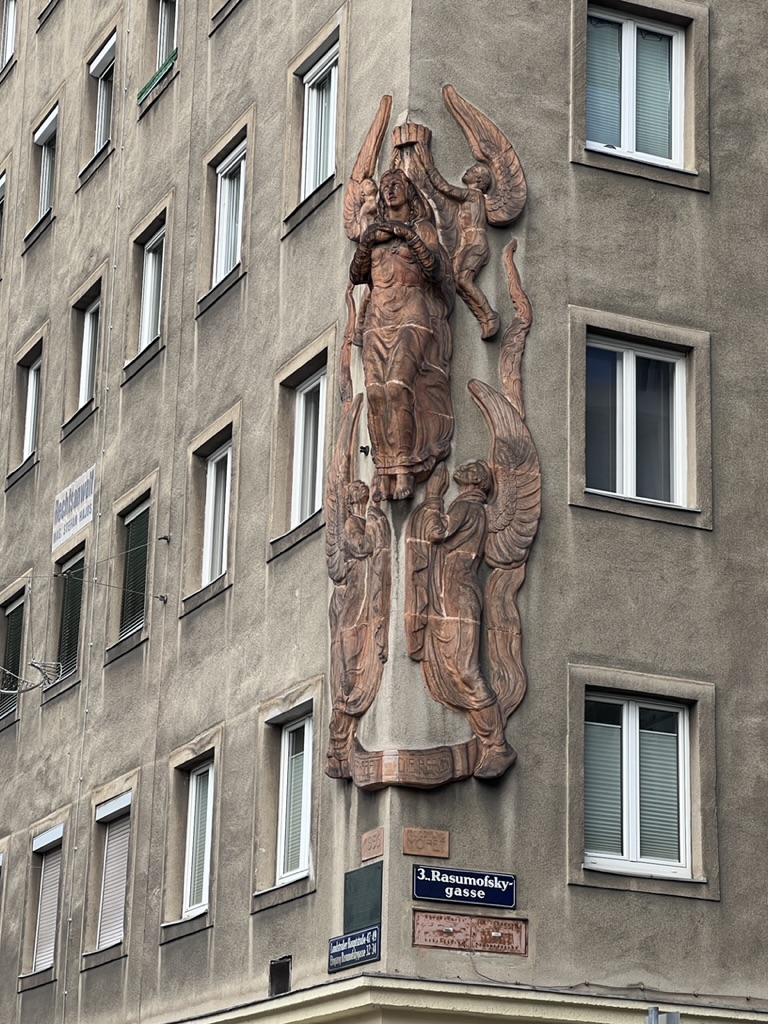
There are four female statues on the building that symbolize “liberation, enlightenment, child welfare, and physical culture.” According to my limited research, the mayor of Vienna stated at the opening of the building: “When we are no longer here, these stones will speak for us” and “The Karl Marx Hof – look! – that’s a piece of Marxism!”
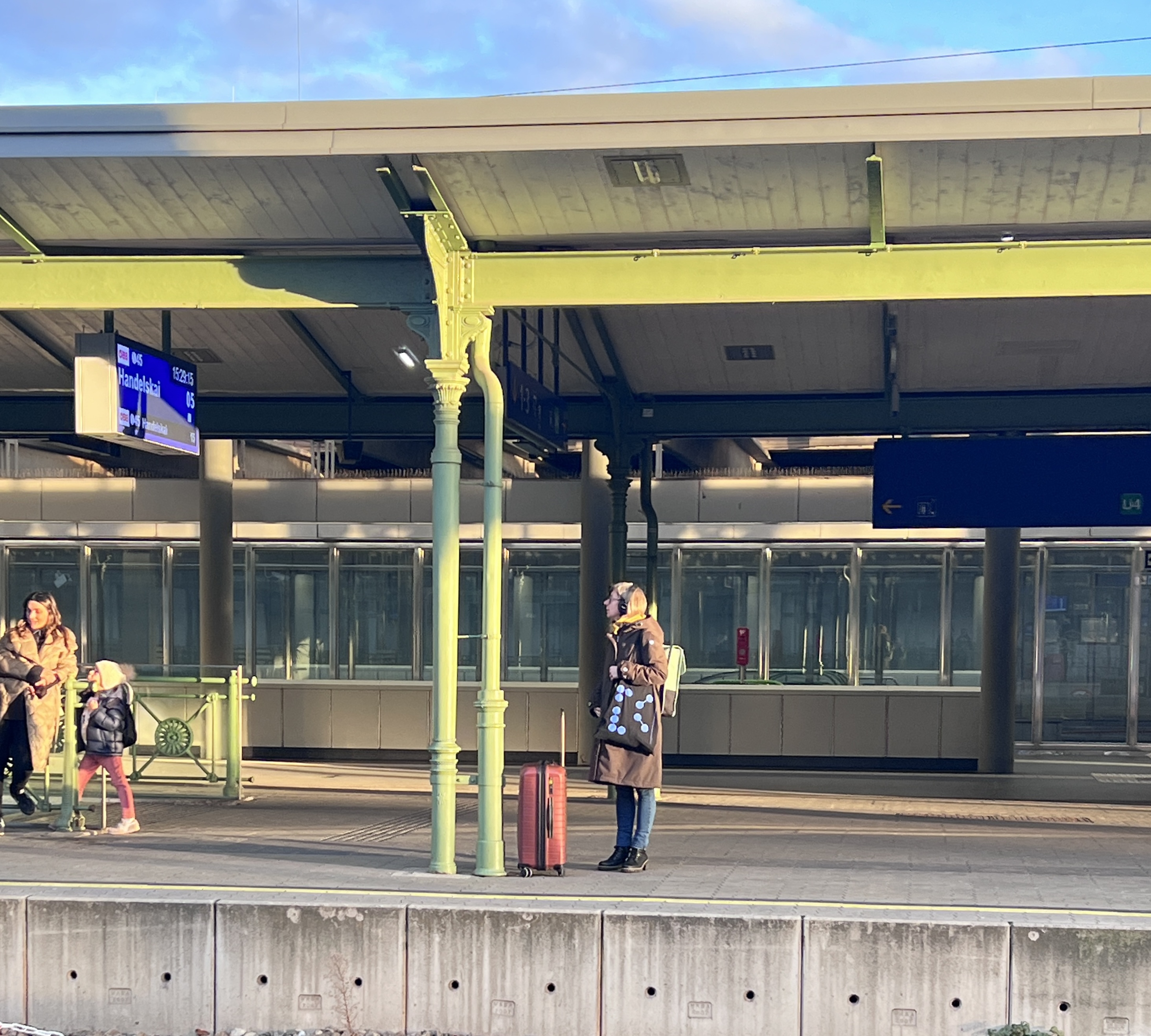
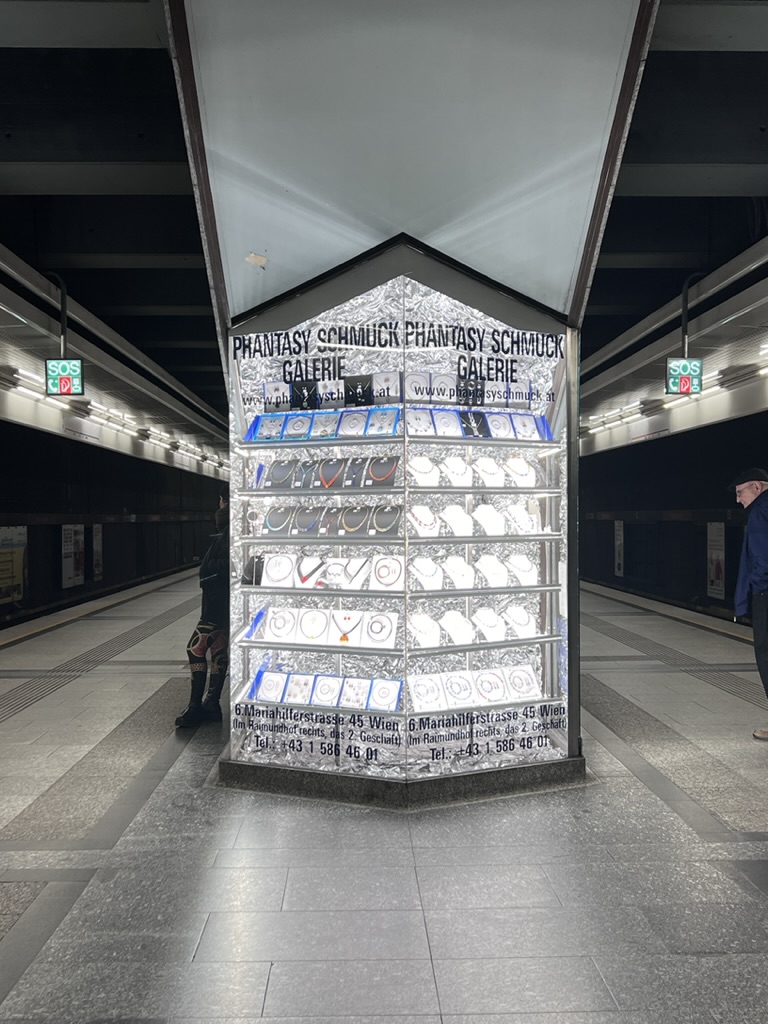
From there, with the sun setting, we took the U-Bahn back to the hotel….somewhat smoothly, although we did wind up initially, on a train headed for the mountains.. But the public transit system is so good that it was easy to regroup and find our way. Like Geneva and so many other European cities, one is supposed to purchase a ticket, but supervision is non-existent and there are no barriers to entry, so people seem to come and go. And in many of the stations, on the platform between the two sets of tracks, there are glass enclosed kiosks displaying and advertising items you can purchase in the stores, including jewelry. These displays house the actual jewelry or clothing or whatever… and seem to remain undisturbed. Imagine that on the BART platforms!
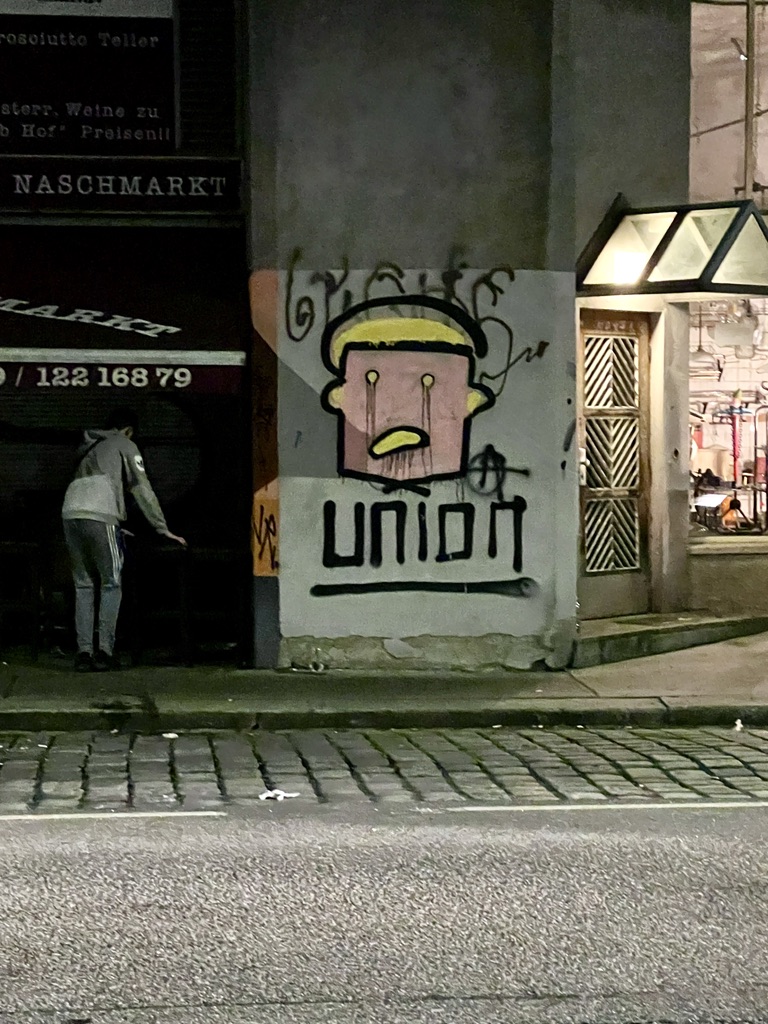
For dinner, we headed to the Naschtmarkt and ate in a little place called NENI—an Israeli restaurant with quite good food. We had a Moroccan-style dish and a sweet potato dish as starters. Then we both had the salmon… followed by what they called an “authentic” NY cheesecake. It was good but definitely not a NY cheesecake.
And then we were back.
We have a long list of other things we want to see and are trying to figure out our last two days. It is now New Years Eve morning here—many places are closed today and tomorrow (New Years Day). On January 2, we will take the train to Brno, Czech Republic to have lunch with old friends and come back here to pack. We leave on the 3rd by train to Munich… from there we will fly directly to SFO. So, we’ll have to prioritize what we see today and tomorrow.
Happy New Year… Let it be a better and more peaceful year than 2023.
Fern
December 29 2023. Vienna!!


Freitag, 29 December 2023
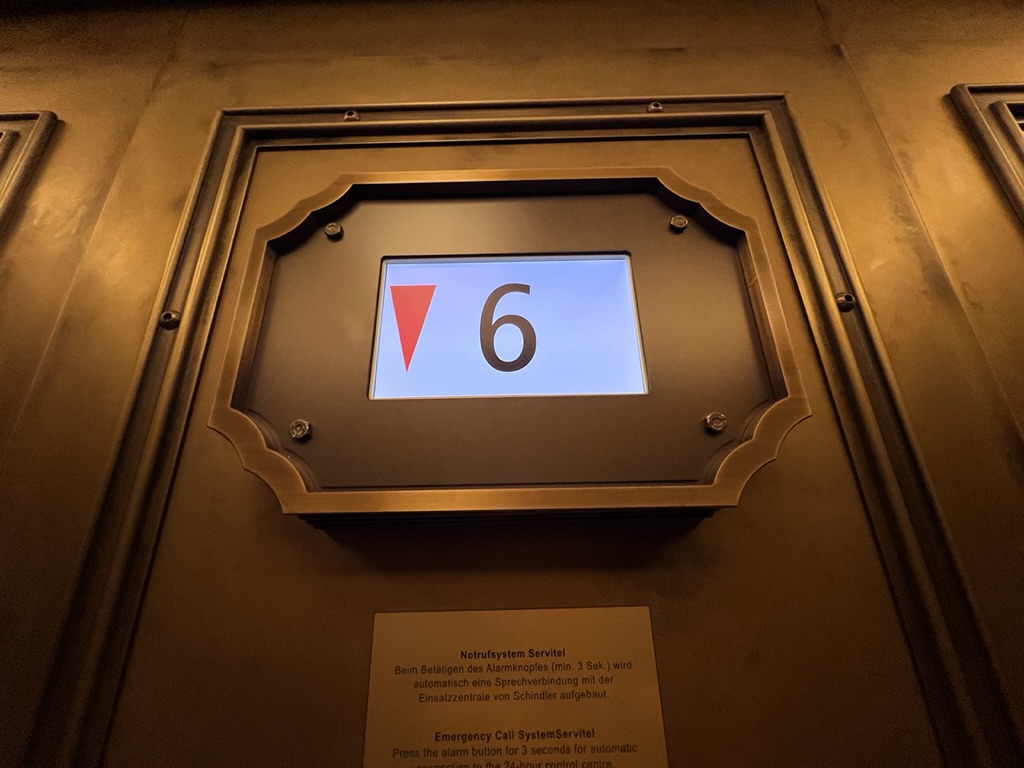
First, a bit more about the problem finding our room in the hotel, last night. Mike decided he should go to a pharmacy to see if they would give him anything to speed up his recovery from the 24-hour stomach flu (which was then in the 48-hour period). He left the room to speak with the front desk folks to find out where there would be an open pharmacy. All of a sudden, I got a call from him saying he was stuck in a stairwell somewhere between the 5th and 6th floors. Apparently, he left the room and turned to the left rather than the right which takes you through a door into a vestibule where the elevator is. At the end of the hall at the right he opened the door, and it was a stairwell rather than the little 6th floor lobby… and when the door slammed shut, it was locked (I suppose that’s for fires). Probably if he went all the way down the seven flights he would have exited outside. But I came to the rescue…
Actually, the hotel is fine and quite popular as a restaurant/bar hangout for young, chic people sporting the latest in European fashion. But they do need some signage!
We began our day with breakfast at Chez Bernard which is located on the top floor of our hotel (Hotel Motto). That was after we attempted to switch to a larger room (so I could have a desk in the room). But the hotel is solidly booked. So I had them remove two pink-ish colored easy chairs (1920s vintage, but made to order in recent years for the hotel) so they could put in a desk. Now I’m a happy camper. Chez Bernard is a bustling place so it was amazing we could even get in without a reservation. Food was good, but service was slow. Finally, we set out for the day.
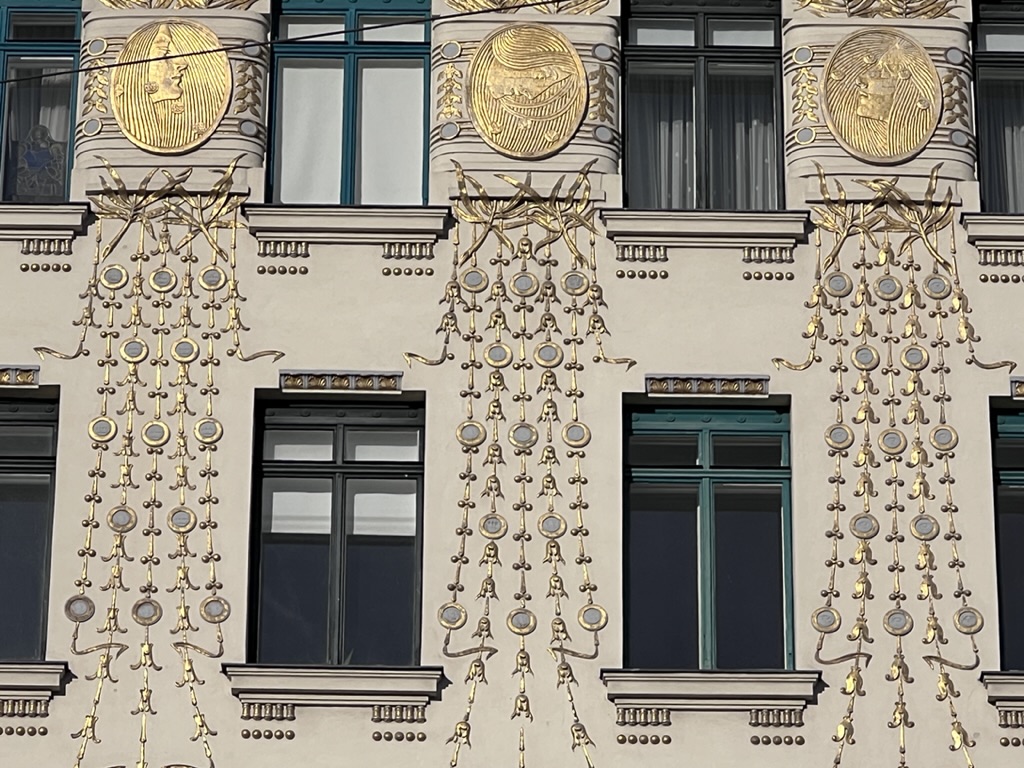
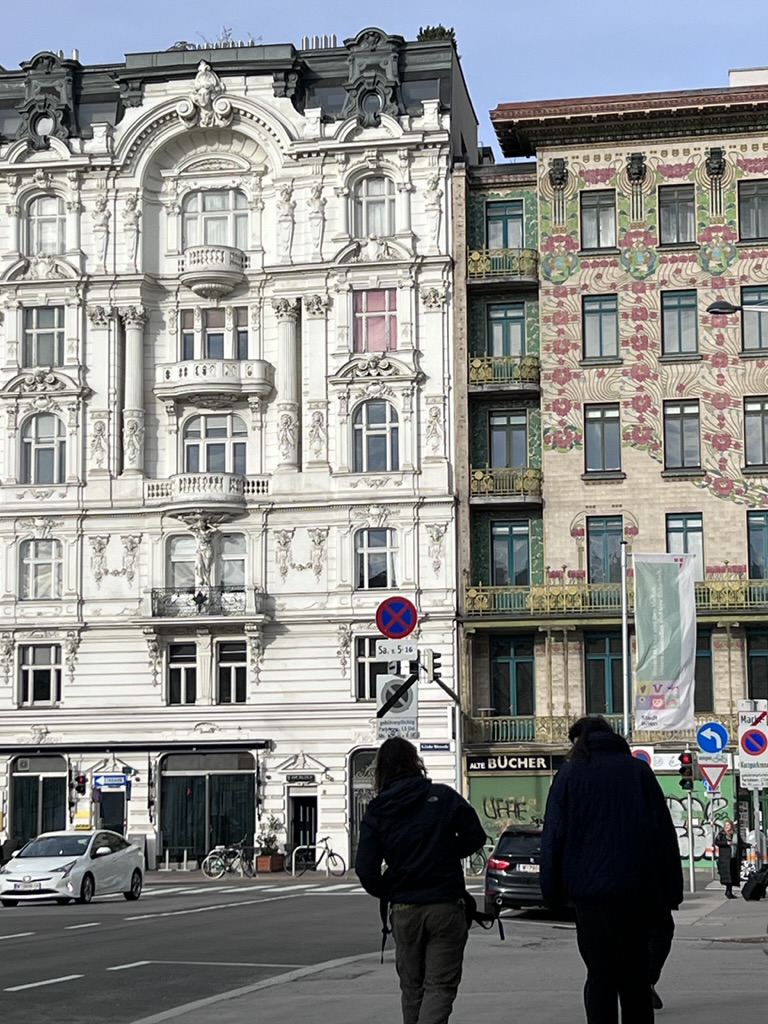
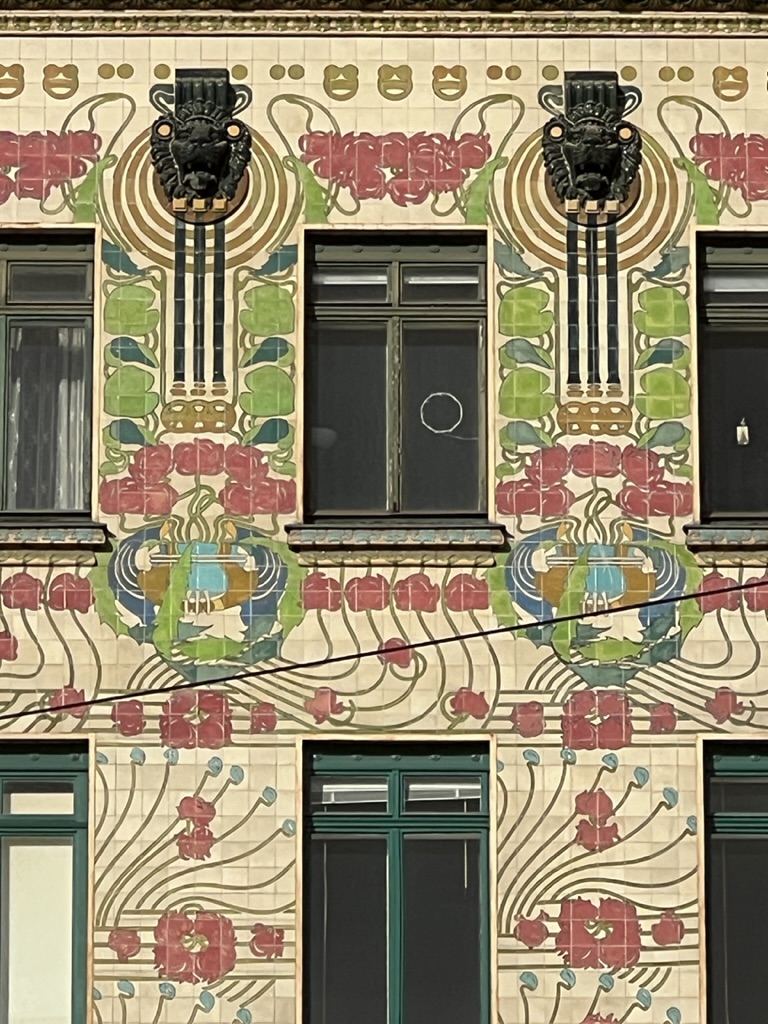
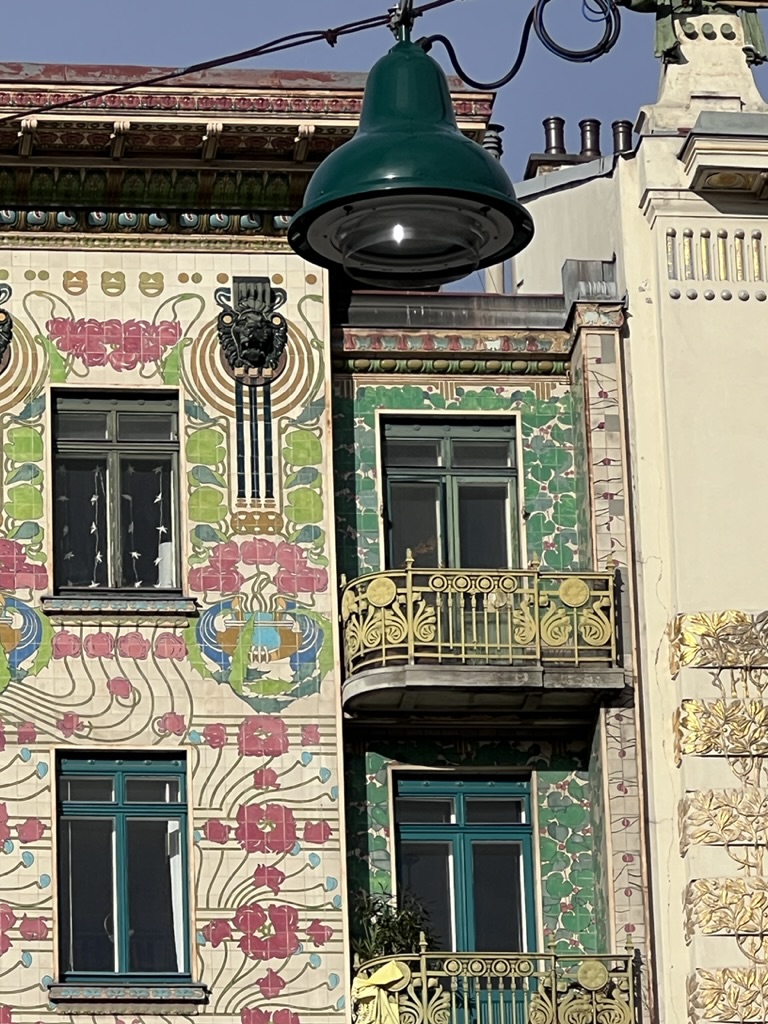

We headed to the Naschsmarkt and on the way stopped to look at some art deco buildings by Otto Wagner, including Majolikahaus which was built in the very late 1890s. It’s covered with tiles decorated with floral motifs of the Art Nouveau period and style. Next door is another building designed by Wagner which is covered with gold and white medallion-like shapes. Both buildings, I believe, were owned by Jewish families who were relocated (one was moved to the ghetto and the other fled to South Africa) during the Aryanization of Vienna. As I understand it, the Majolikahaus was owned by a Jewish developer named Wilhelm Frankl. Austrian officials determined he was “insane” so that they could take over the building which was deemed an architectural treasure. It was sold to a butcher and after WWII the original family (I guess with Wilhelm no longer being insane) sued unsuccessfully to get the property back. The butcher eventually donated the building to the church, which re-sold it fairly quickly.

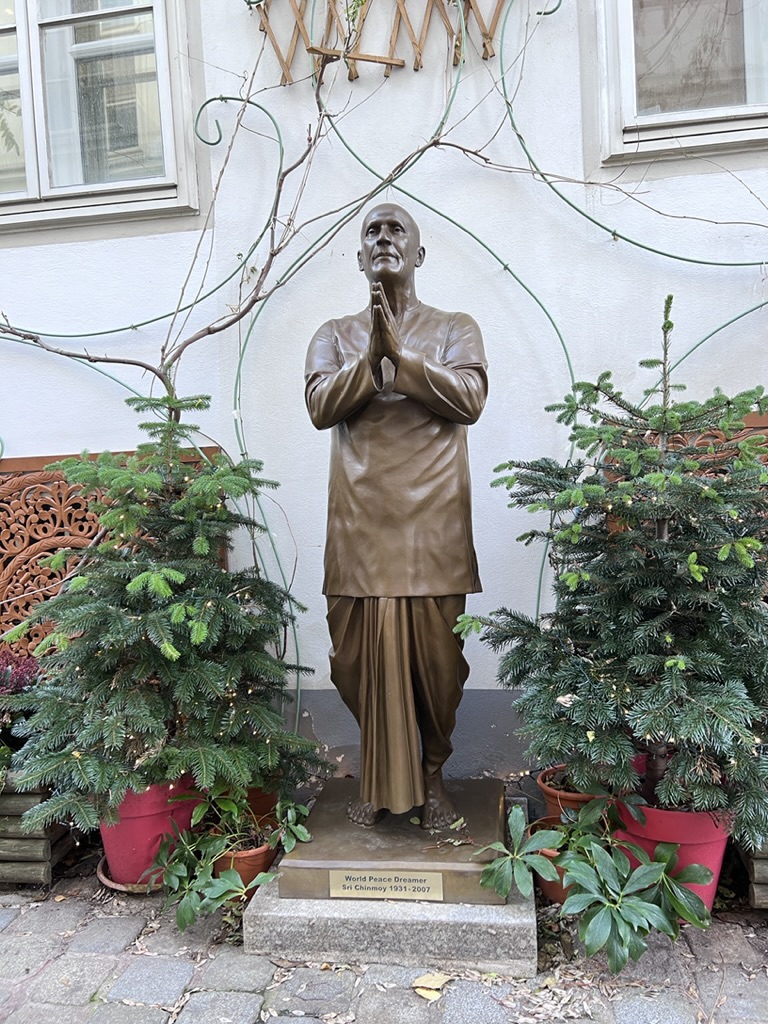
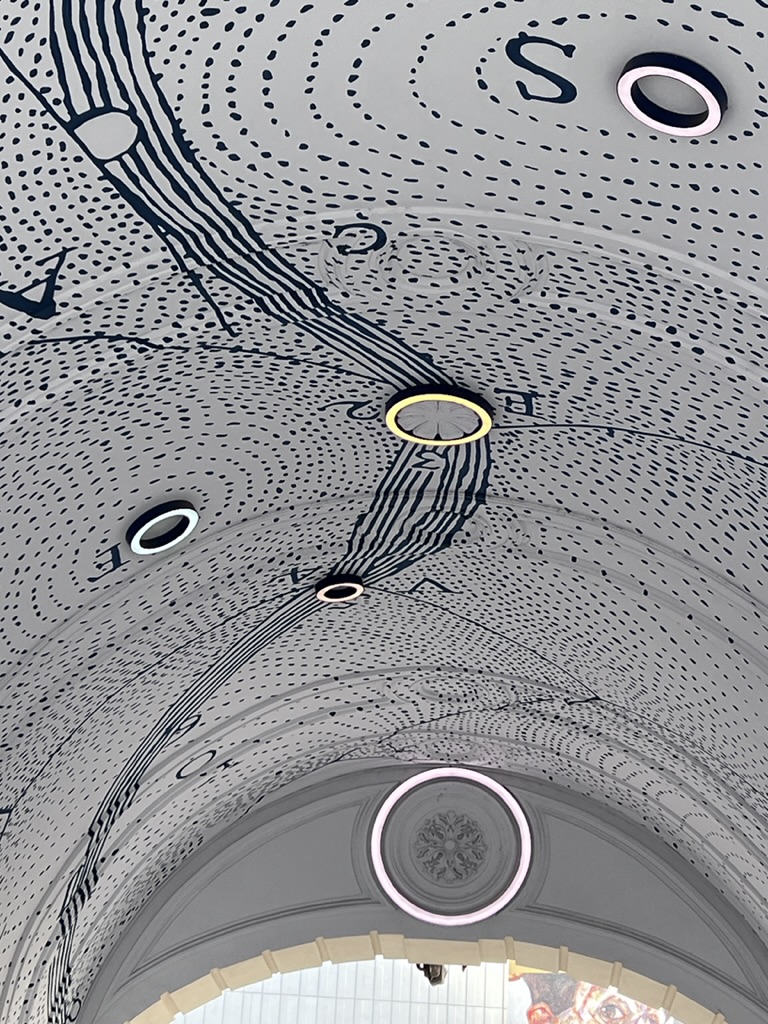

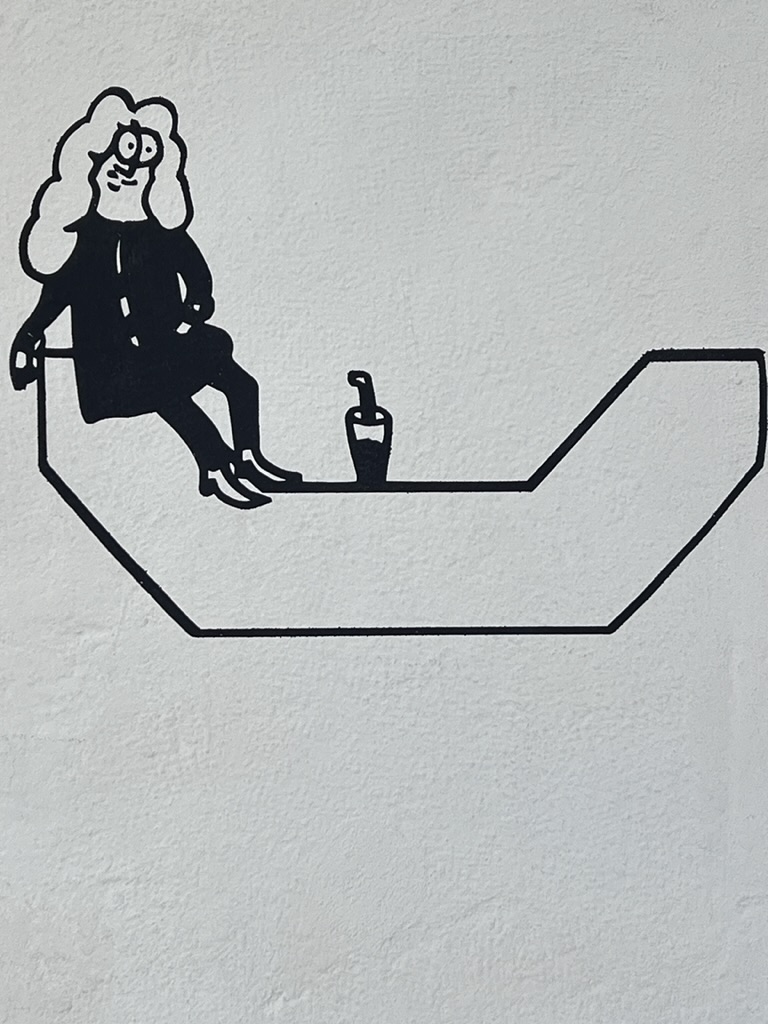
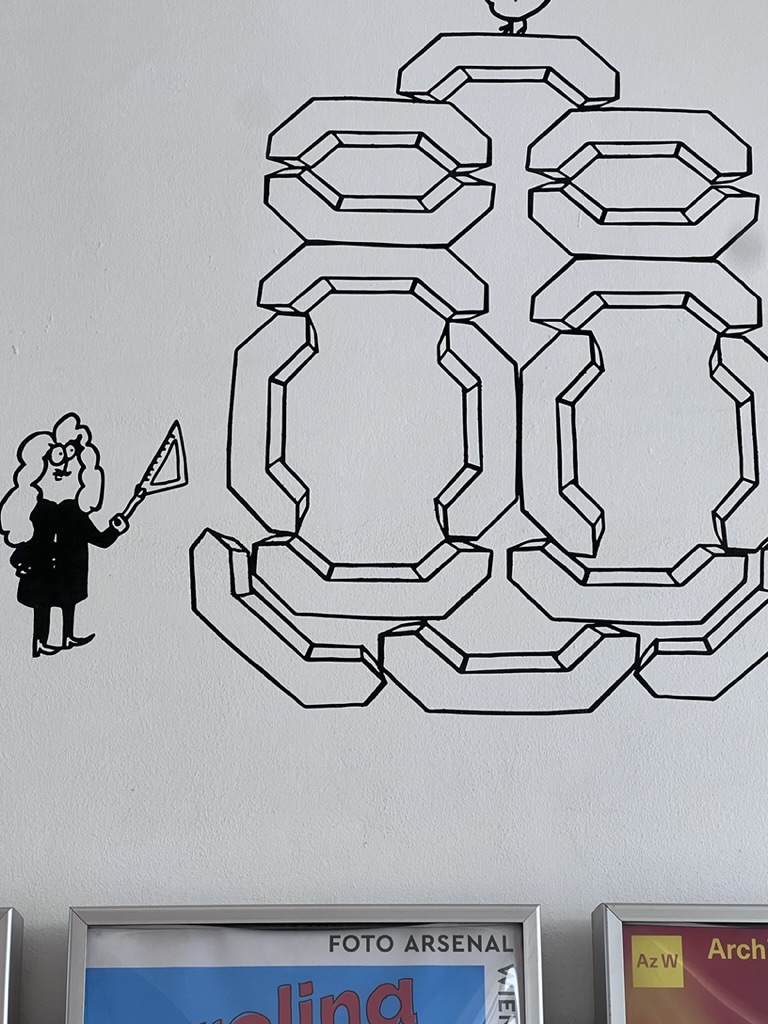
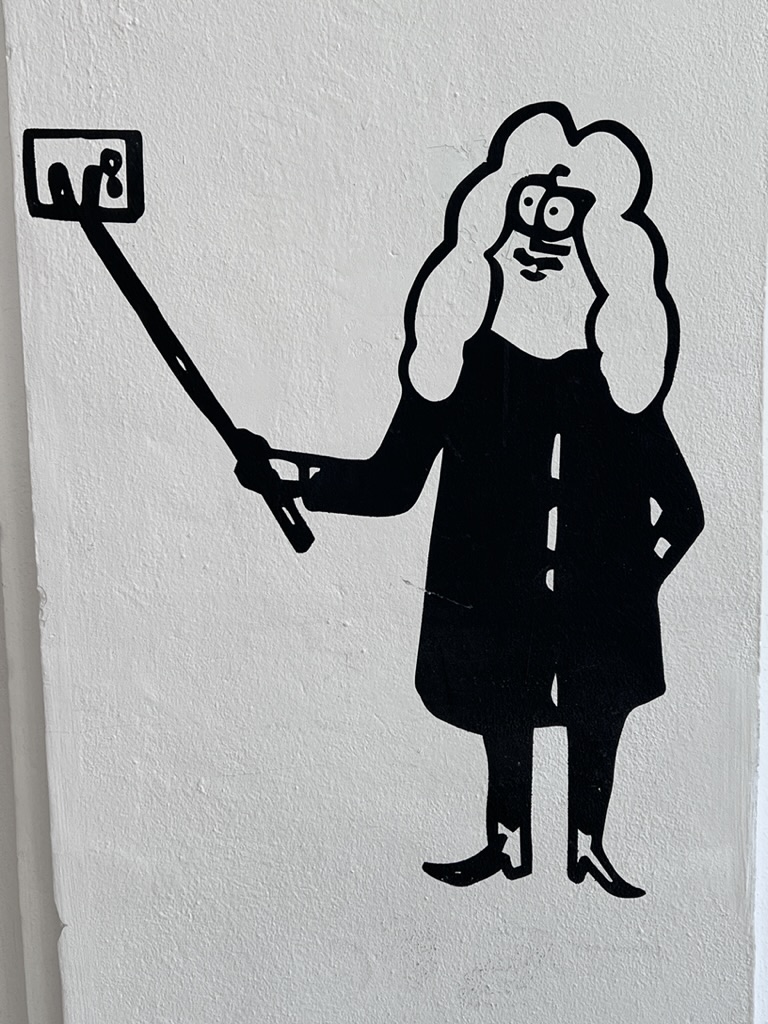
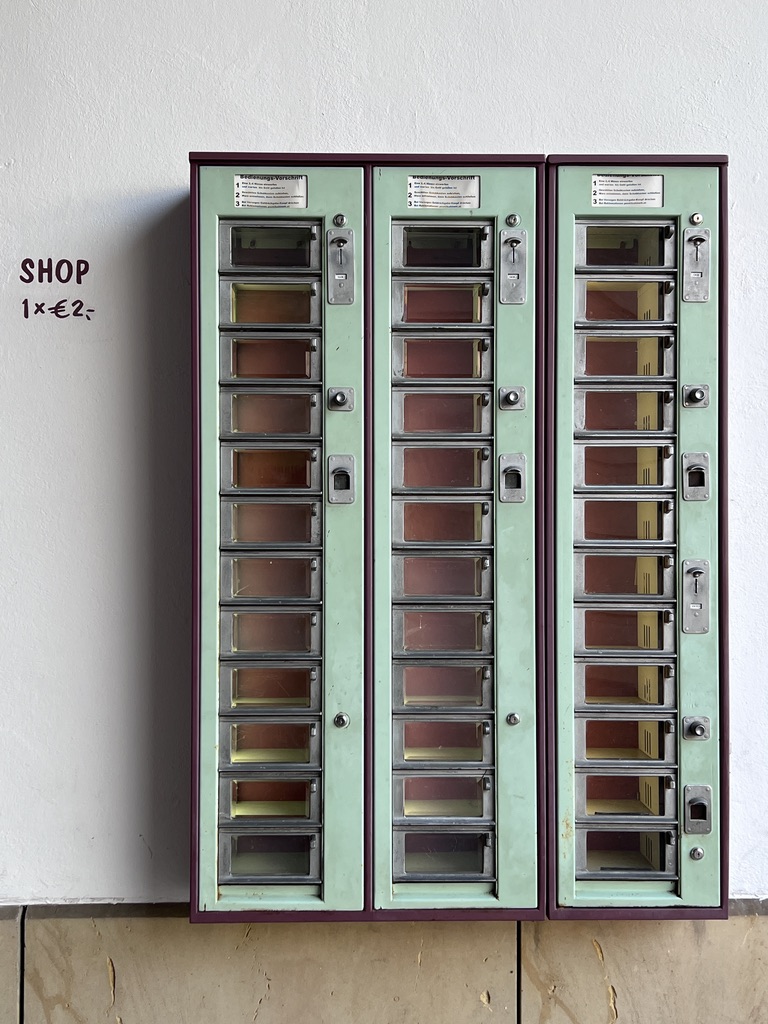
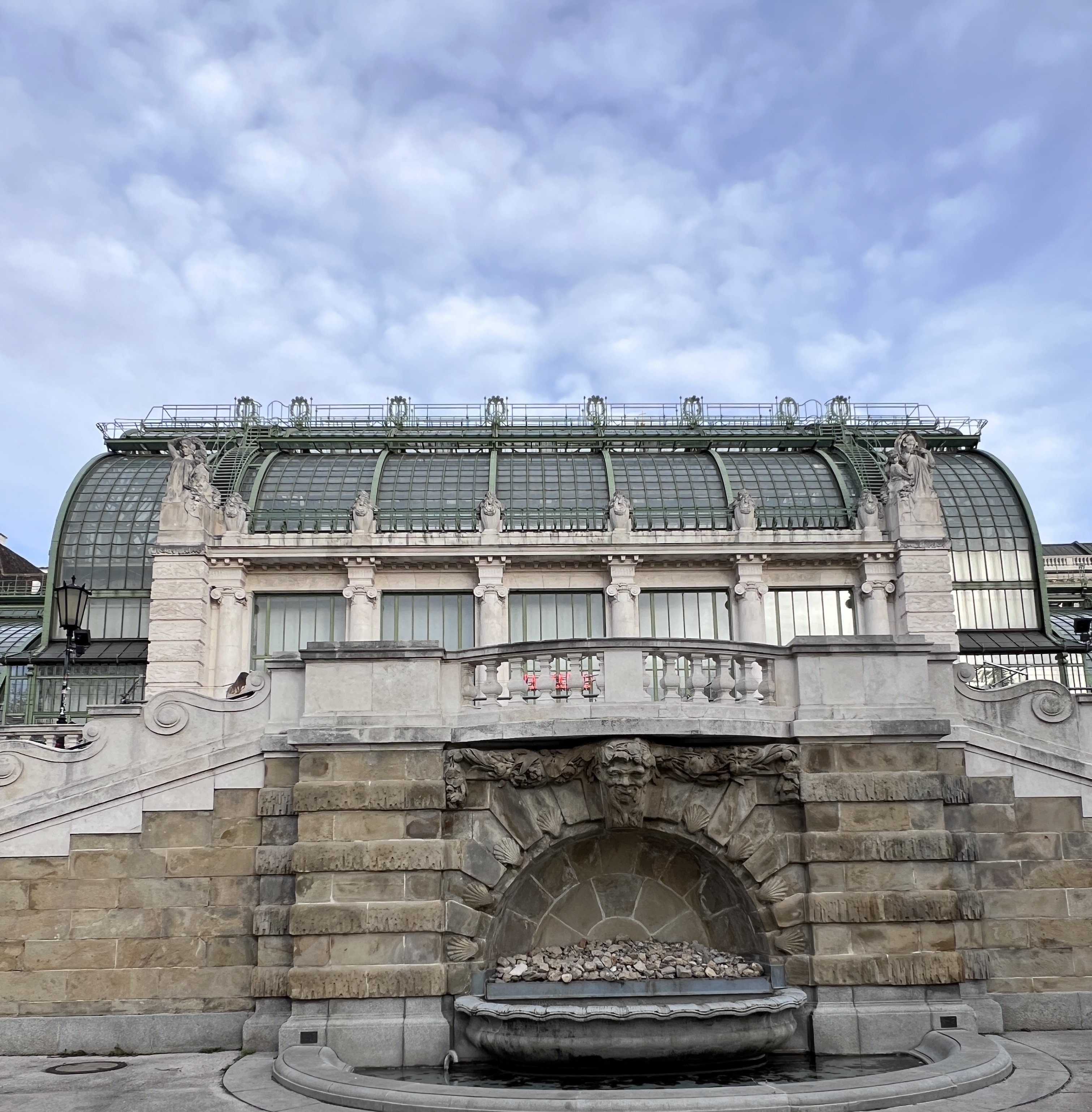
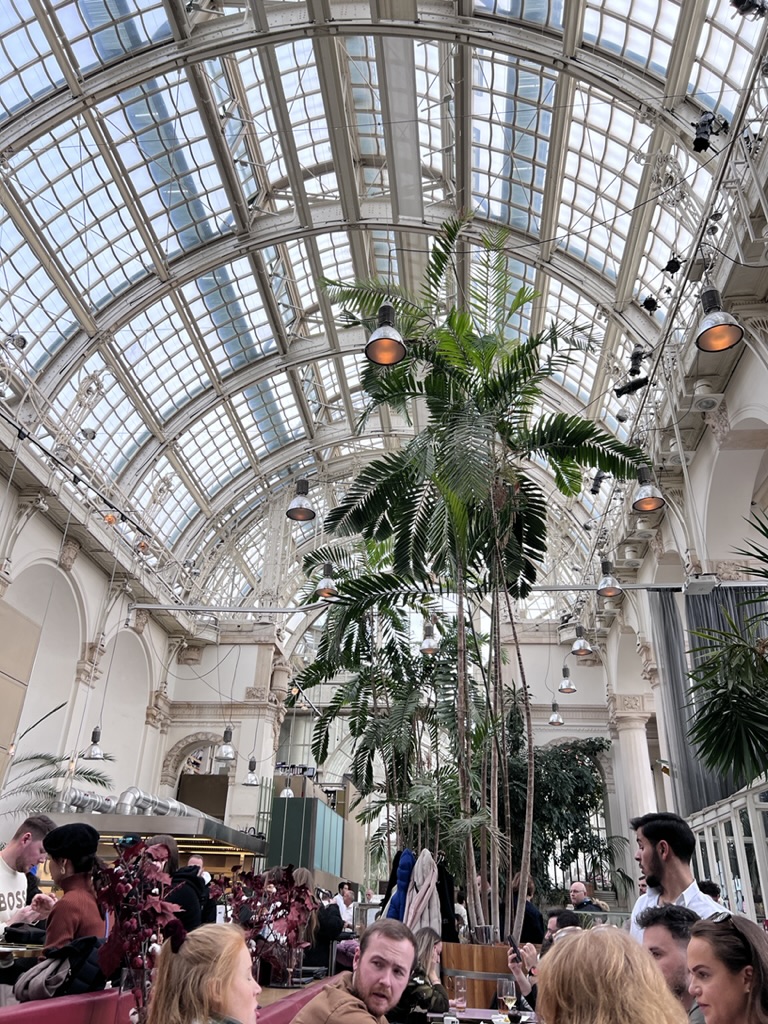
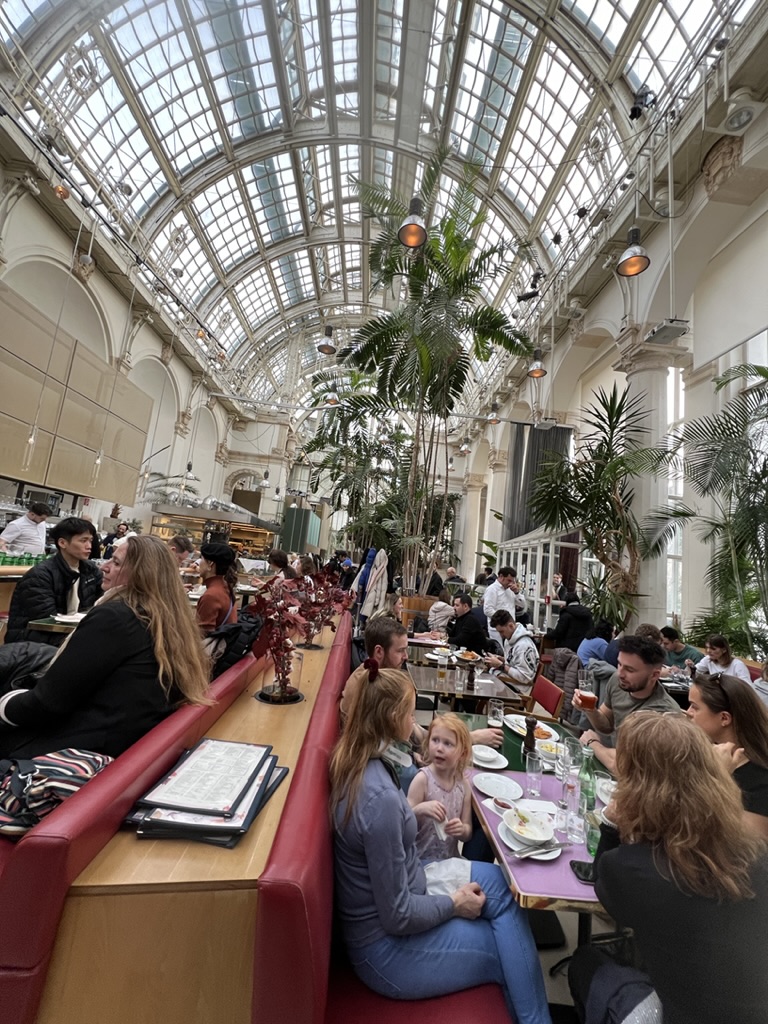
From there we walked through many interesting streets requiring stair climbing and navigating many courtyards…. Until we found ourselves walking through the “Museum Quarter” which meanders through several arched walkways that have been painted in contemporary styles. I think they may repaint those ceilings periodically with different patterns. Then it was time for a late lunch, so we headed to the Palmenhaus and waited a bit, but did get a table. Palmenhaus Restaurant is located within a greenhouse that was originally built in the 1820s. The greenhouse was demolished about 80 years later and then a new building that reflected the new Jugendstil (Art Nouveau) era was built some years later. Palmenhaus was home to important exhibits in the first few decades of the 20th century and then was closed for some time and then restored and reopened in the 1960s. The restaurant sits in the center of the greenhouse.
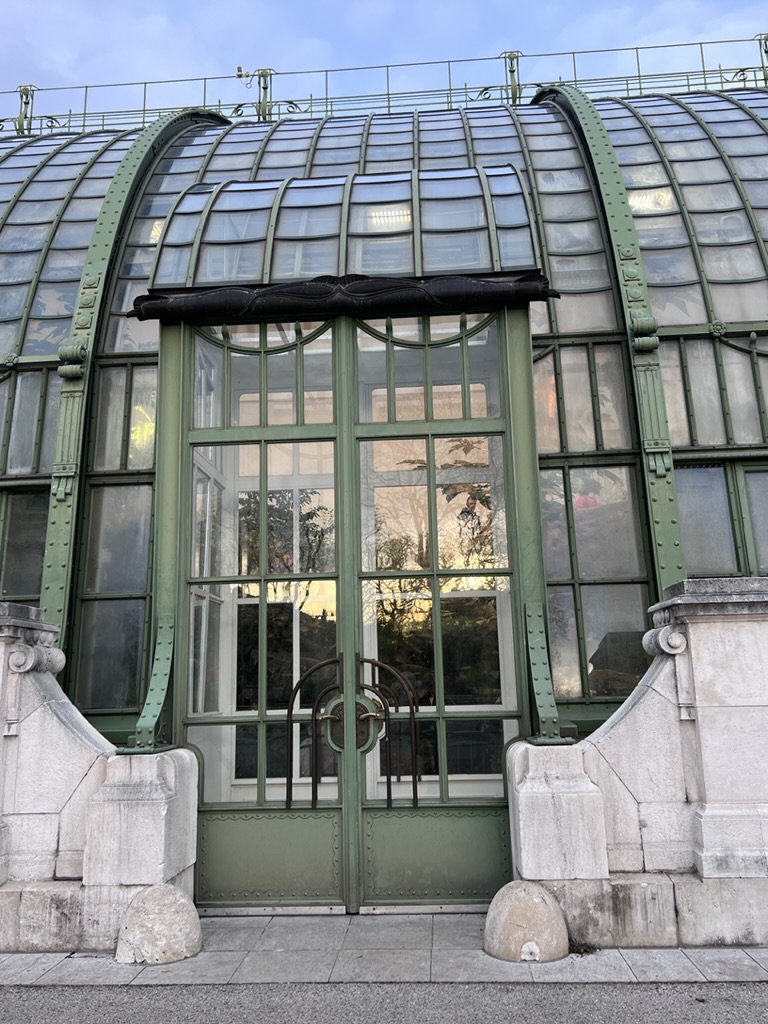
…Pleasant knock on the hotel door just now—with a very upbeat guy delivering “evening drinks” to the room. I gather this is a nightly occurrence. I opted for champagne—so here I sit, drinking my bubbly and writing to you. Given that this was Mike’s first full day of not being really sick, he is napping and missing the drinks.
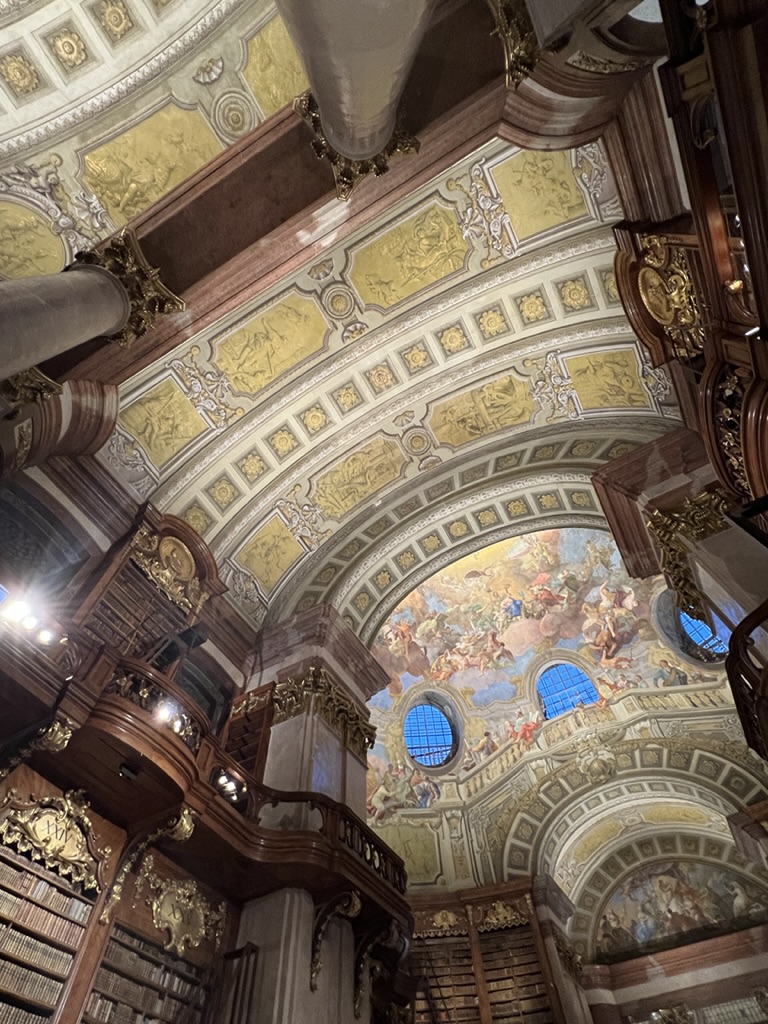
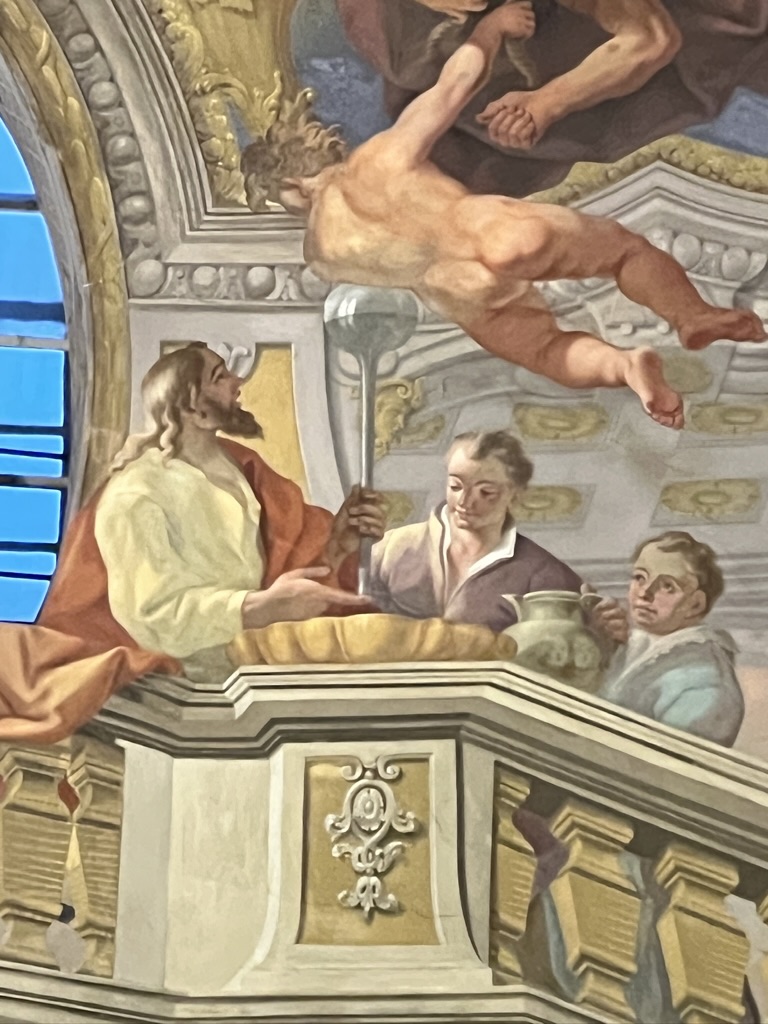
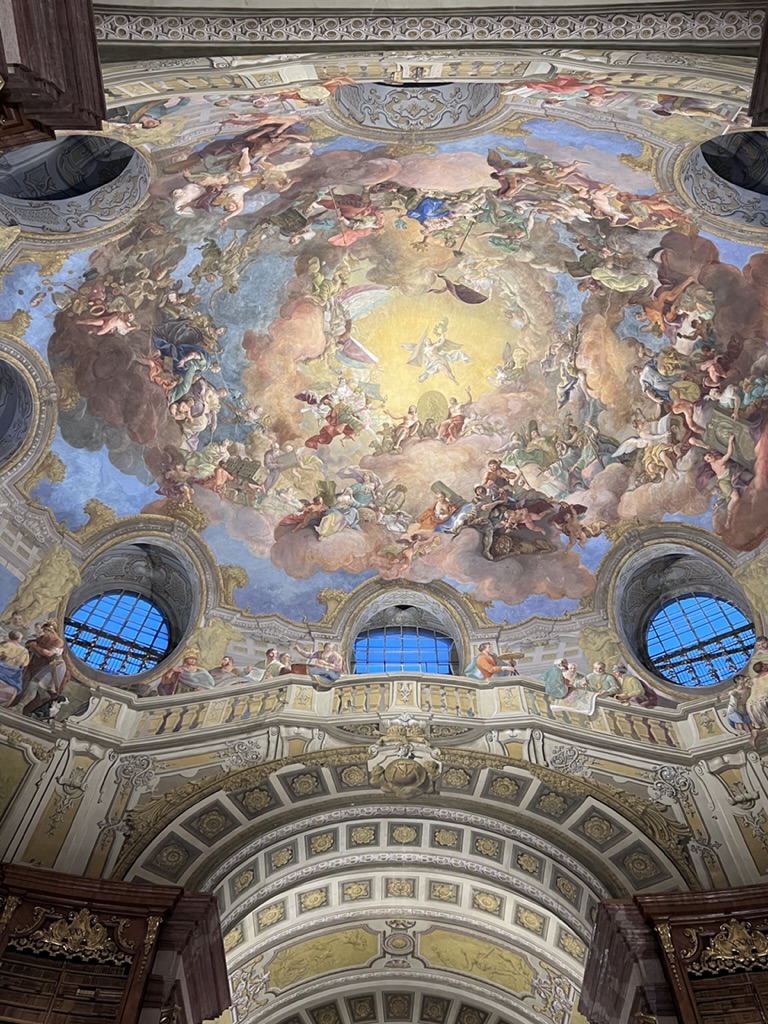
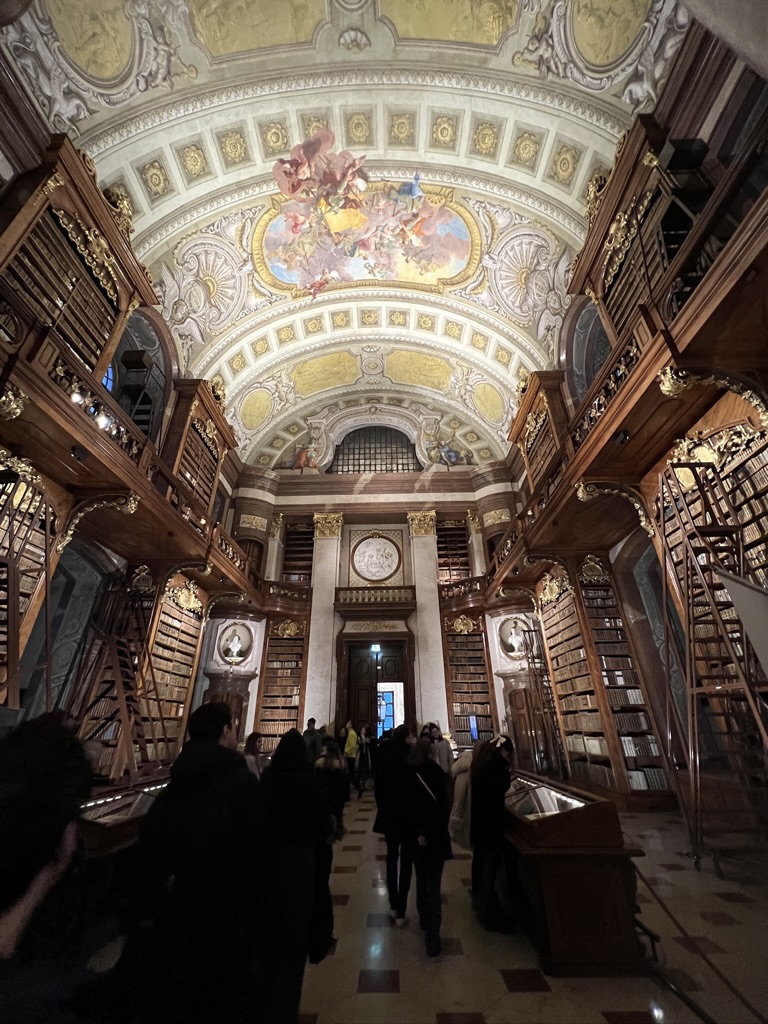
From Palmenhaus, we trekked to the State Library which is quite a site…. Baroque in all its glory, with amazing trompe l’oeil murals on the ceiling and archways. Inside the grand space, there was an interesting exhibit about Yoicho Okamoto, a Japanese American photographer who documented the destruction and also the rebuilding of Vienna after WWII. He later became the first American presidential photographer, documenting LBJ.
By then, although our little daily itinerary had more places we wanted to check out, we were pretty beat and decided to walk to the U-Bahn (metro) and head back to Hotel Motto, to get ready for dinner (tonight at Vestibul). Actually, I’m signing off now and sending this daily report. I’ll talk about dinner tomorrow if it is really good.
All the best –
Fern
December 28
Greetings from Vienna
On our last day in Geneva, we walked back to Bistrot de Halles Rive to meet most of the clan for lunch. Mike is still a bit under the weather so he’s now an official taster for bouillon at multiple restaurants. The rest of us had oysters and pates and various dishes. I had the local perch.
Then we headed, uneventfully, to the Geneva Airport—entering on the Swiss side this time. The Geneva Airport is officially in both Switzerland and France and it is possible to enter (and depart) from either country. The French side seems smaller, and we often use that because lines seem to move faster. Anyway, we boarded our flight to Vienna and arrived about 90 minutes later. Our hotel is located in what appears to be a hip neighborhood; we are not downtown. More on that tonight after we explore.
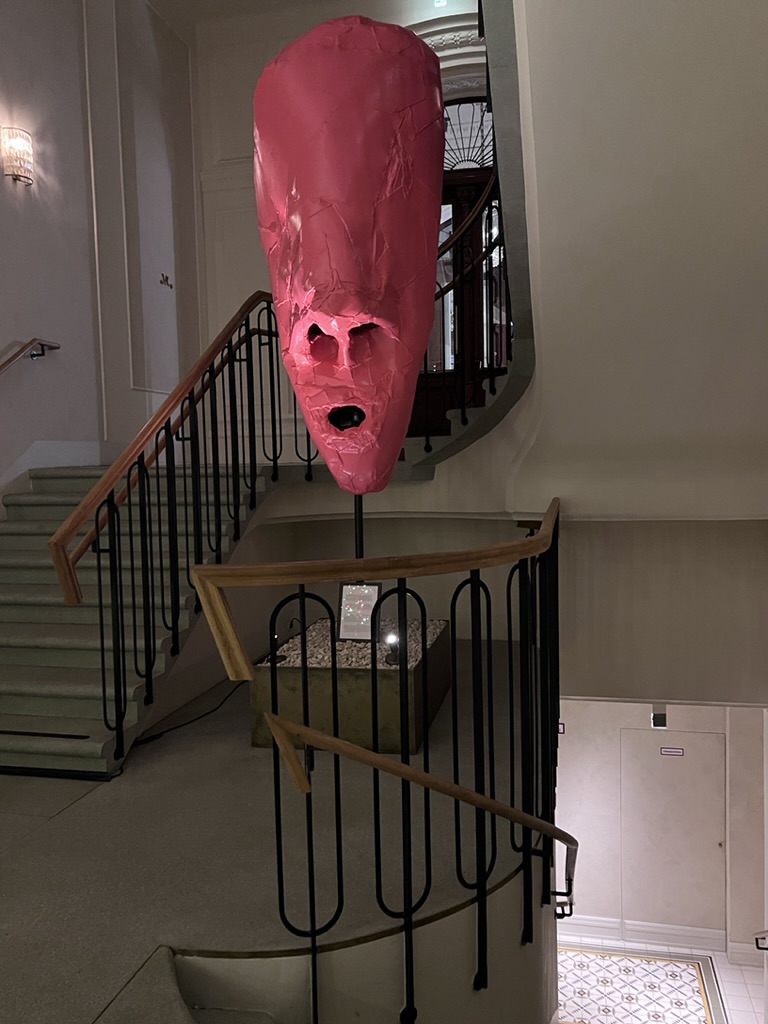
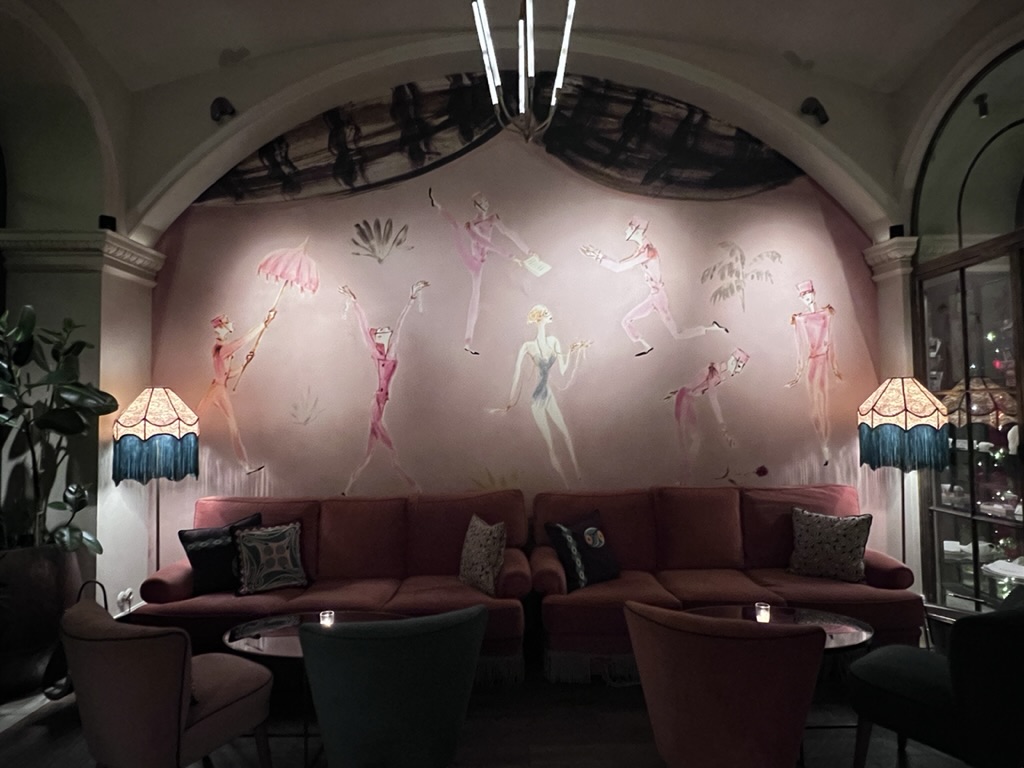
Anyway, the hotel is fairly funky with an art deco flair. It’s sort of turn-of-the-century Paris chic: parquet floors, brass, chintz fabrics in pinks and greens and huge chandeliers. There’s a huge red statue /sculpture in the lobby. And among the various free bath items you find in the bathroom (all very branded) is a little box of condoms.
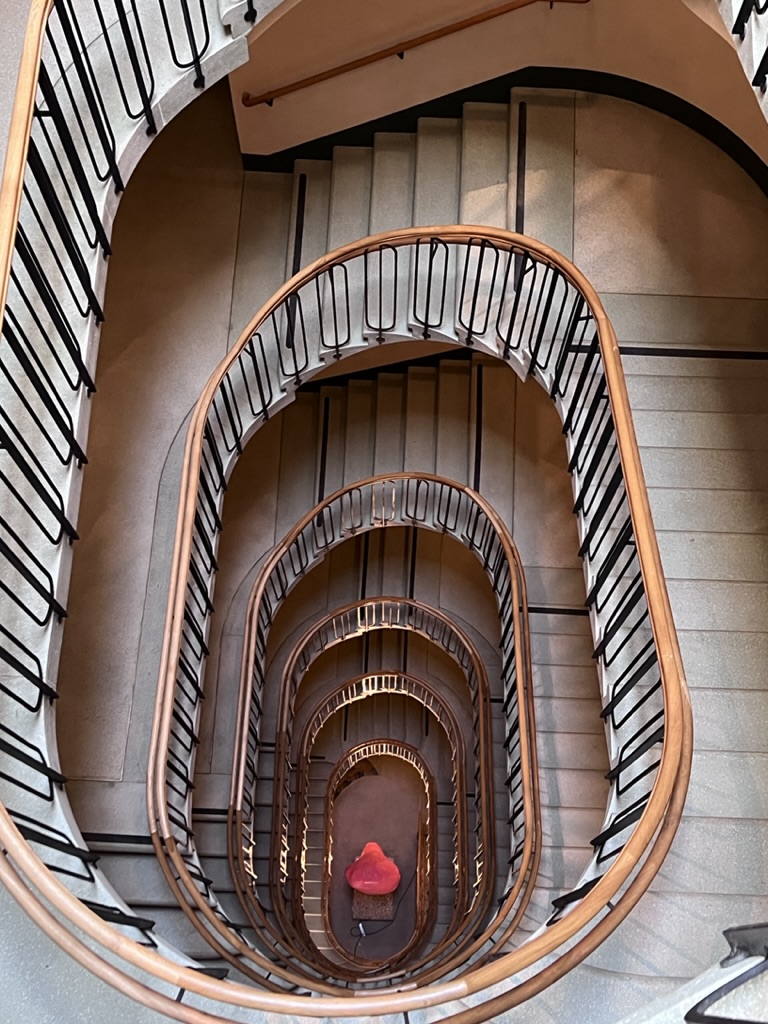
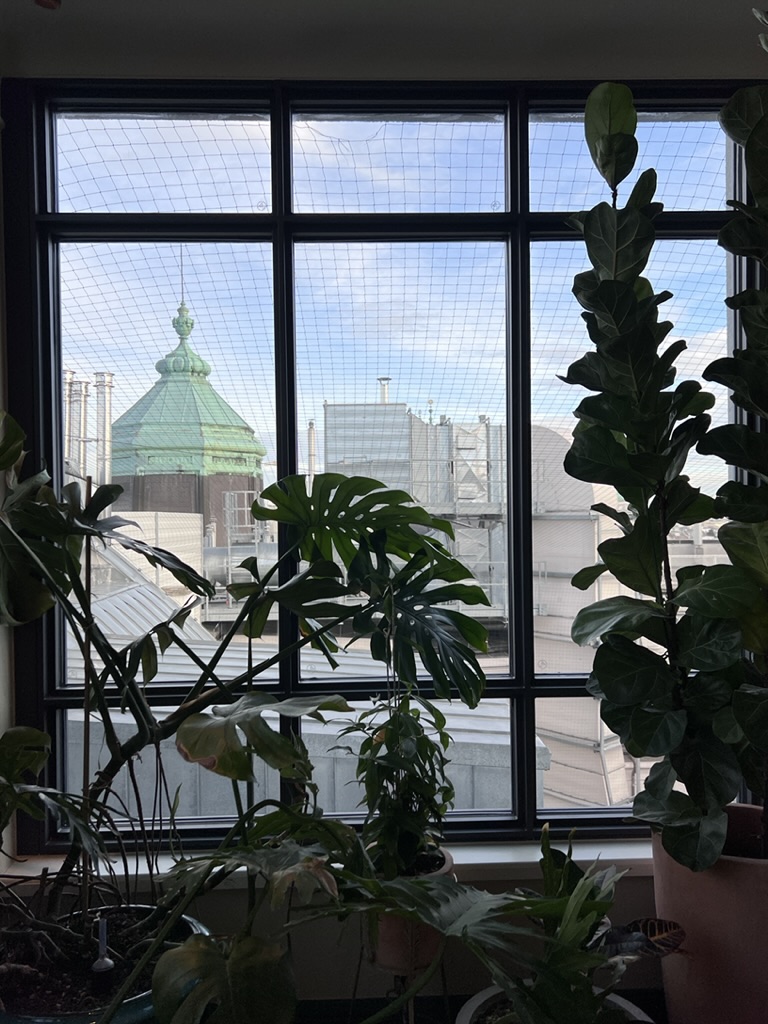
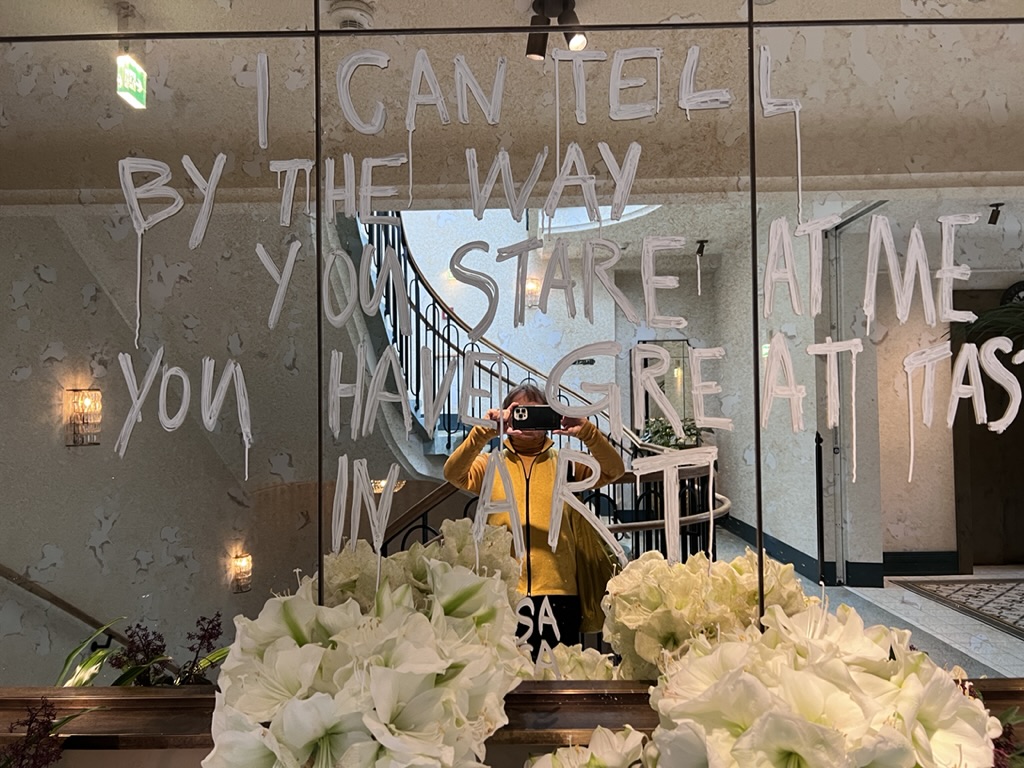
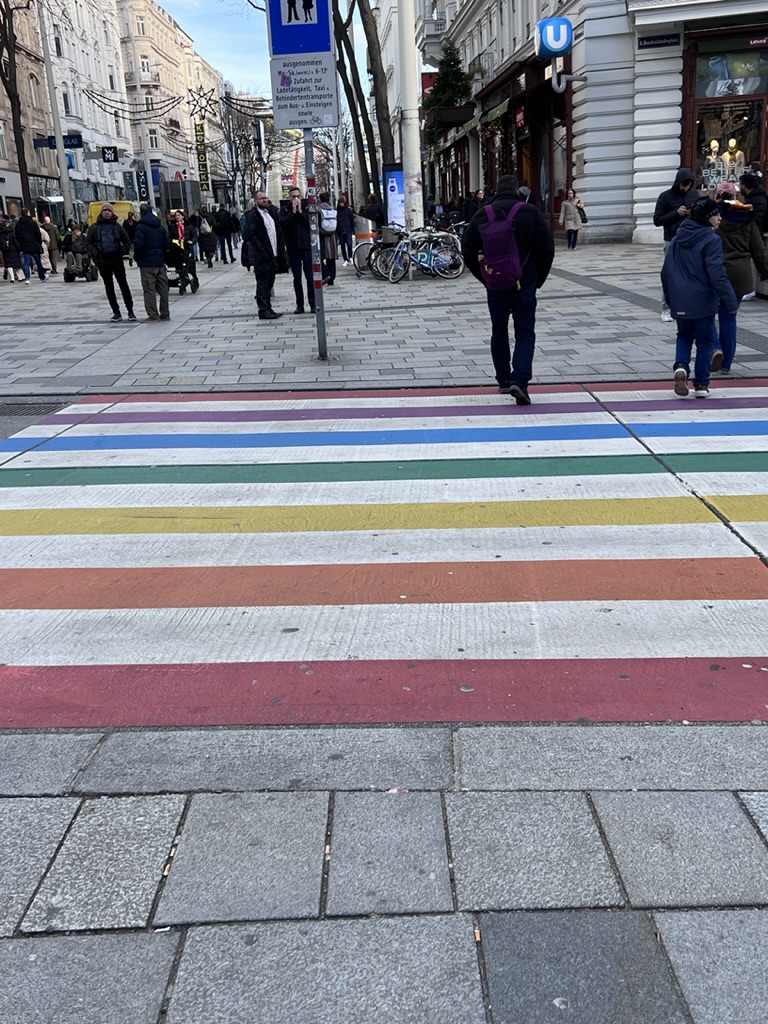
This will either be a favorite hotel or one we hate. The verdict is out until we see more, and in daylight. Our room doesn’t have a desk making it difficult to do this travelogue. We are trying to change rooms, but the place (and the whole city) is totally booked.
I’m off to get dressed and head out to explore Vienna, We haven’t been here in decades.
One funny thing to tell.
The lighting throughout the hotel is very dim… atmosphere, I suppose. The charming elevator which is very art deco and lots of brass. The hotel doesn’t seem to have any bellmen (are there any bell-women?) which is fine. So we got on the elevator and went to floor six. When we got out of the elevator the rooms only went to 613, but we spied an unmarked door (signage here is non-existent) so we went through that door and it took us to a metal grated outdoor walkway. We took that walkway which led to another door and then a small vestibule and another door, and finally there were rooms including 617, our room. We thought it was a very odd way to reach our room…. But oh well. Later I went down to the lobby to ask a question (no room phones, as they just expect everyone will be on their cell phones – very hip), I realized that when I walked out of our room I went directly to a little (actually a rather large) foyer, and there was the elevator. I hadn’t taken that circuitous route on the outdoor walkway.
Turns out it’s one of those elevators that has two 6th floors,. And you need to know which you want (actually its just that the doors open on two sides, but not at the same time.) So now at least we know how to get to our room. Again, no signage.
We had dinner in the restaurant which was packed and again, hip… with lots of people dressed to the nines… and others very sporty. Mike had his bouillon.. I had escargots and steak tartare.
That’s it. Off to see Vienna.
We shall see if they can change our room.
Fern
Greetings from Geneva-
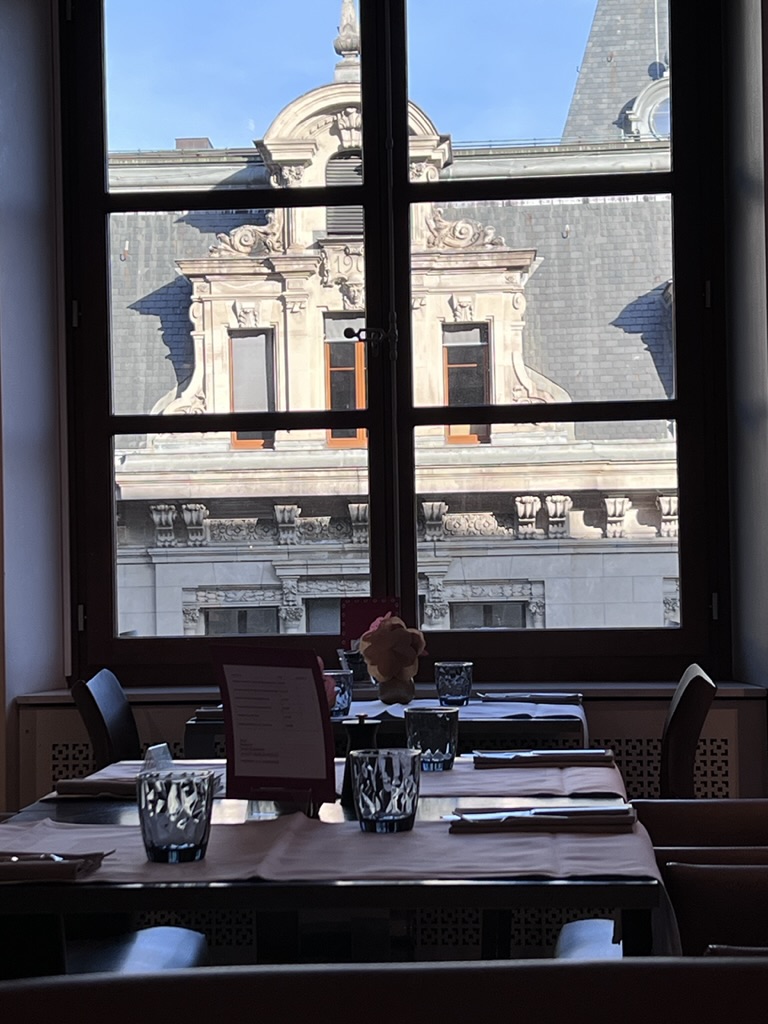
Got a bit of a late start today; Mike still didn’t feel great…but the good news is that whatever he had (probably stomach flu) seems to be on the way out as of now (5:30 pm). It was a bit of a challenge to get some simple food for him at the hotel, as the Longemalle houses a very famous and quite wonderful Lebanese restaurant called Balila, whose menu is not exactly equipped for problematic stomach issues. It took a lot for me to explain that all he wanted from room service was clear bouillon and some rice on the side. They kept offering a wonderful carrot puree and some lentil soup. Finally everyone got it and they were able to do bouillon and rice. Big success and Mike said it was wonderful and medicinal. I also managed to find a pharmacy and got several over-the-counter pills (a few of which he took). During my stroll to the pharmacy, I got some breakfast in a little café located inside a rather chic small department store (that was conveniently just down the street from the pharmacy).
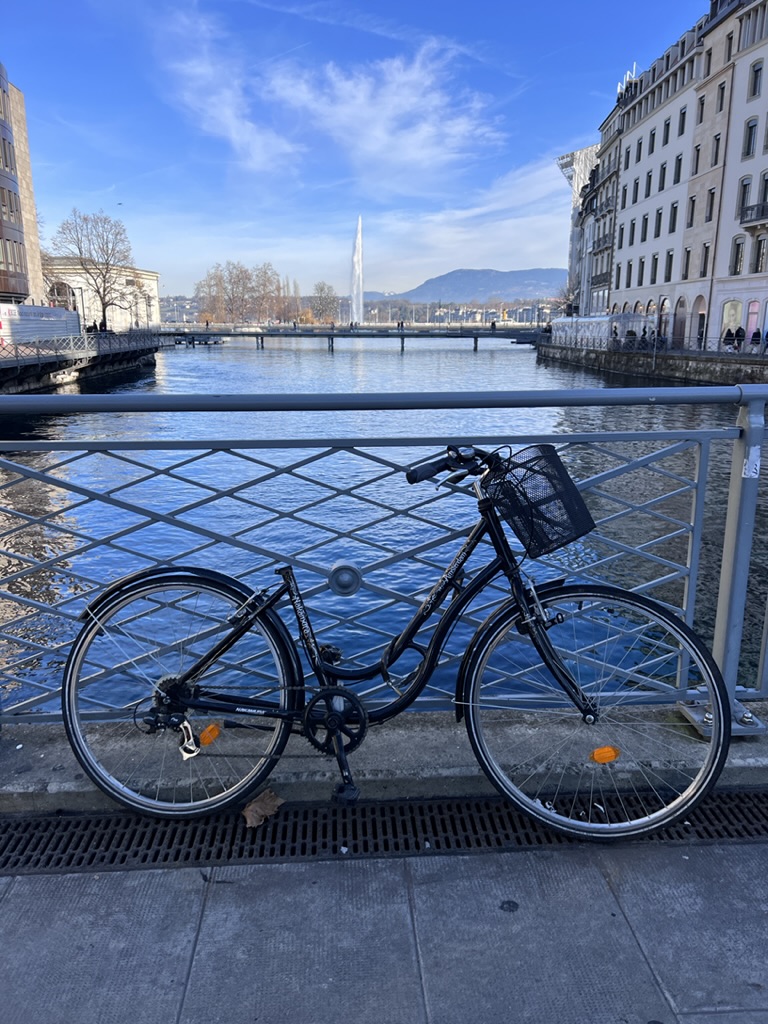
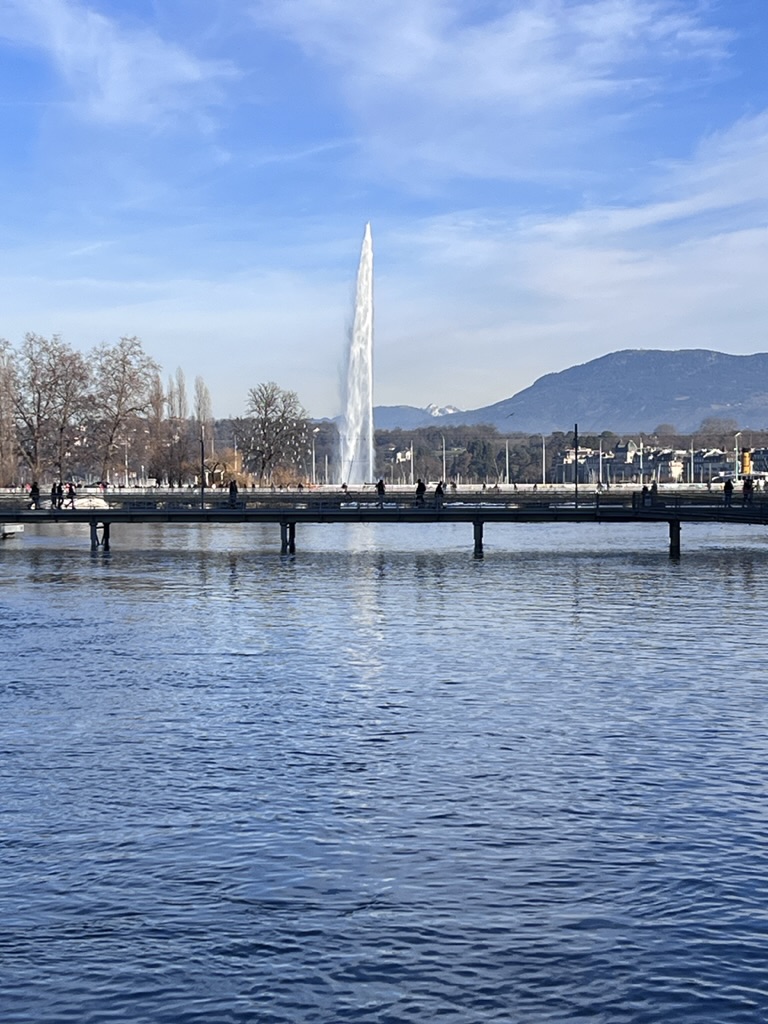
Once Mike was settled and looking forward to sleeping the day away, I headed out to revisit what people here call the “smurf houses” (“Schtroumpf” as they refer to it). Mike and I had visited this housing some years ago but it rained all day so I decided to return given that the weather was on my side today. It was about 1.5 miles, so the walk gave me some of my daily steps. And I learned, a la Wikipedia, that the word “Schtroump” is a French made-up word first uttered by the Smurfs’ Belgian creator, Peyo, when he could not think of the French word for “salt.” So now you know. Anyway, somewhere along the way, the Swiss started calling these rather whimsical houses smurf or schtroumpf houses.
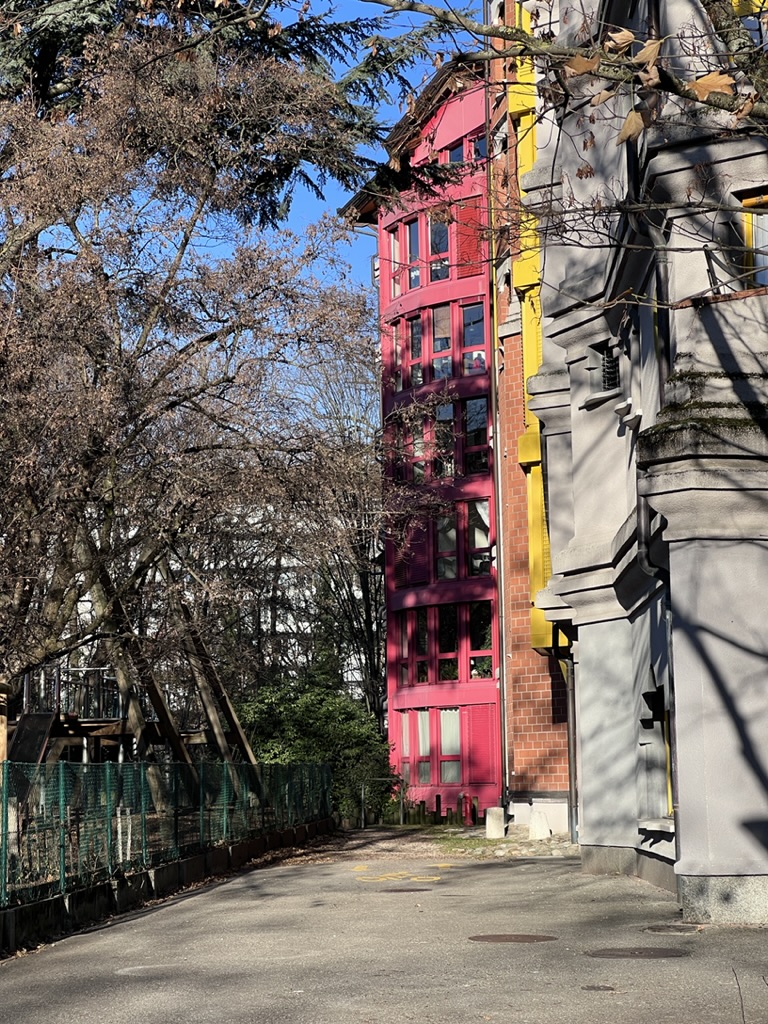
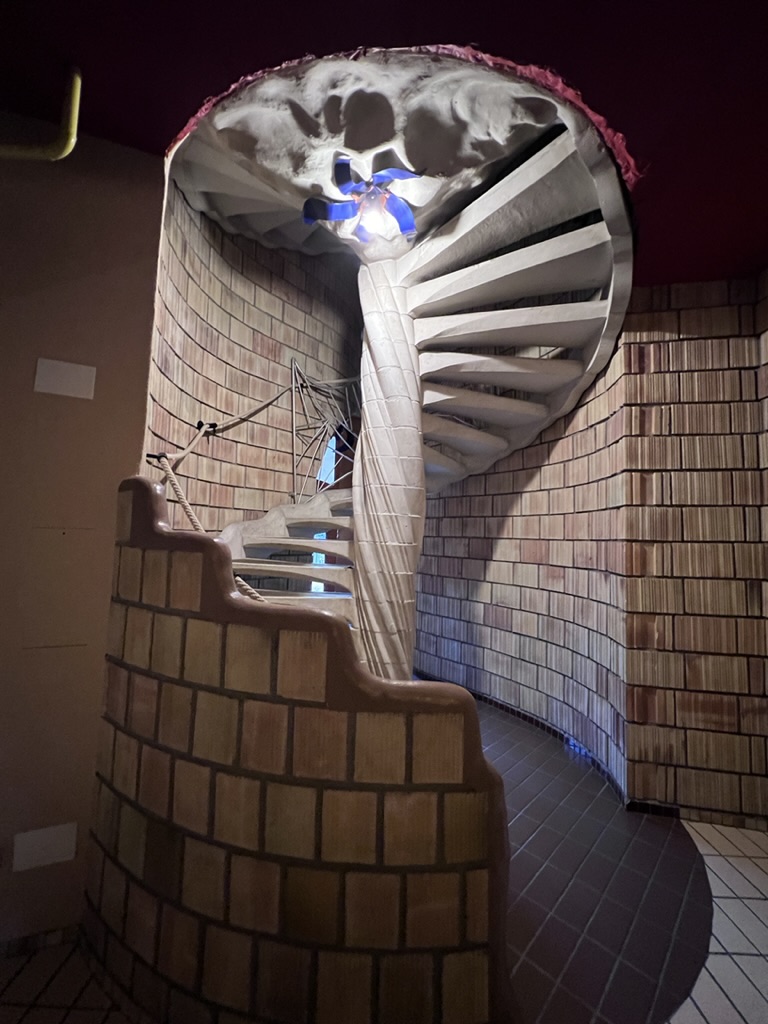
They are truly delightful… and hold your breath… they are subsidized housing units for low-income families in Geneva. The architects were devotees of Gaudi; the houses were built in the early 1980s and they are home to 170 families as rental units, subsidized by the city of Geneva. The rent is based on income. And like in the US, the number of people applying way outnumbers the supply of affordable housing.
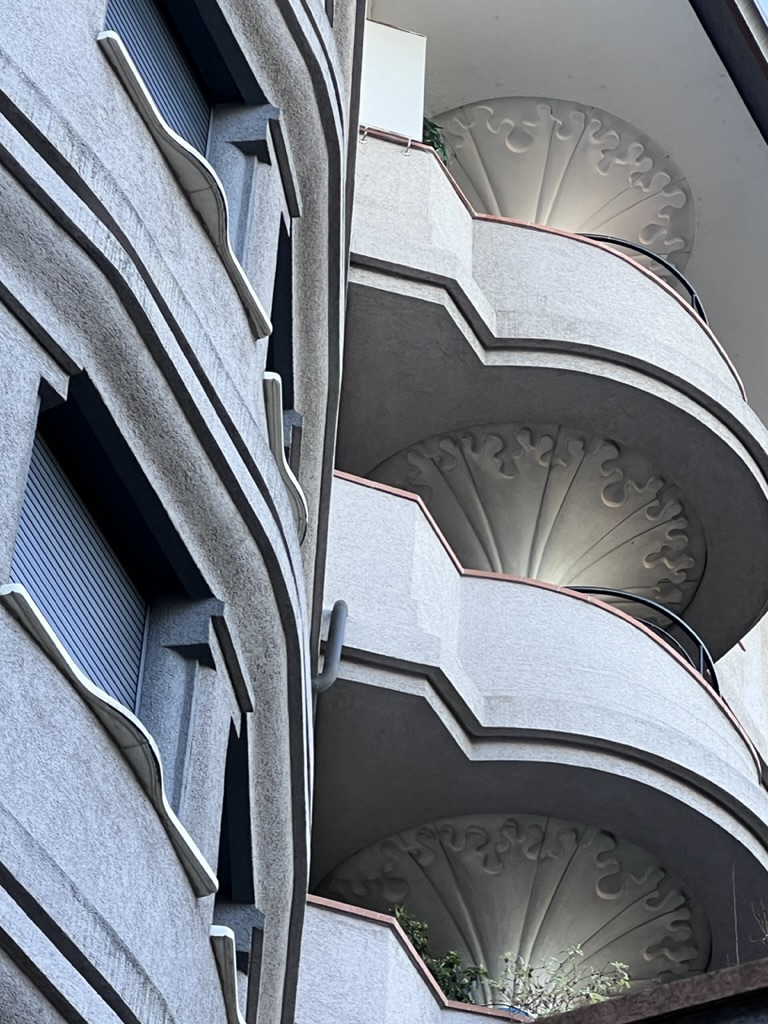
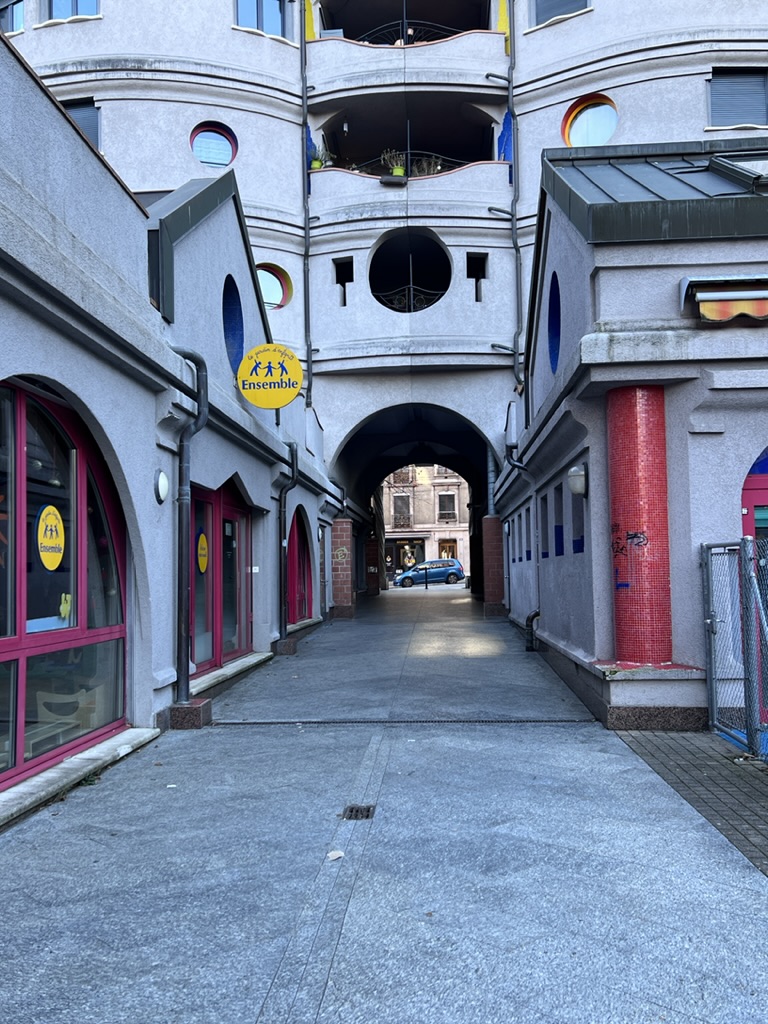
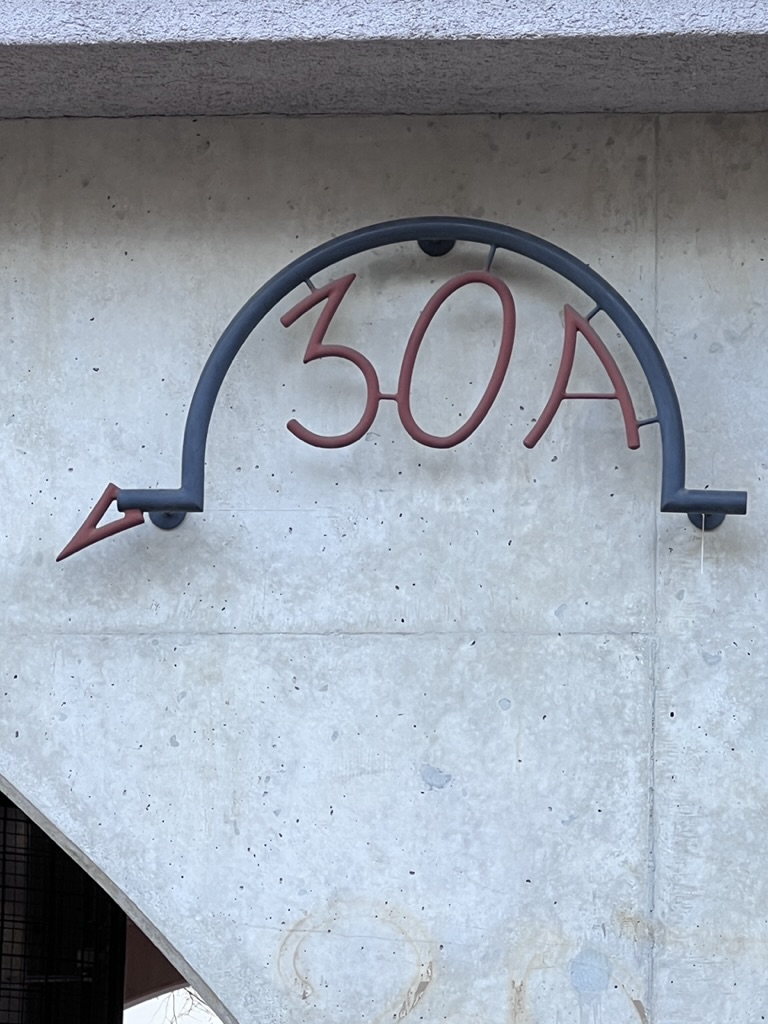
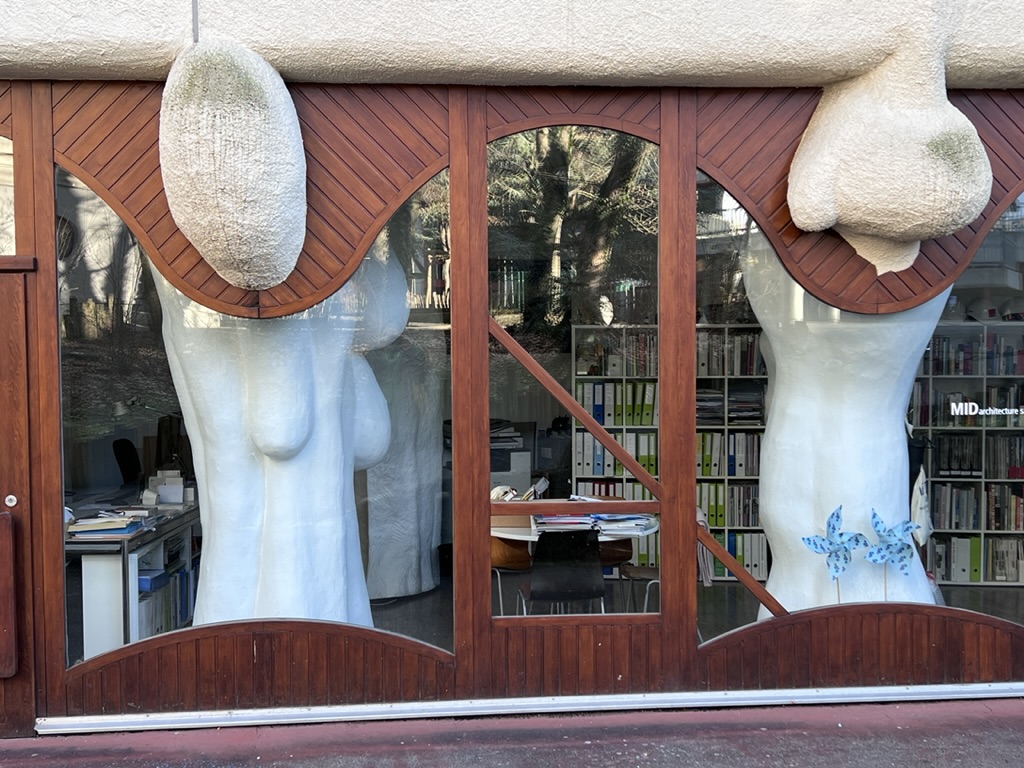
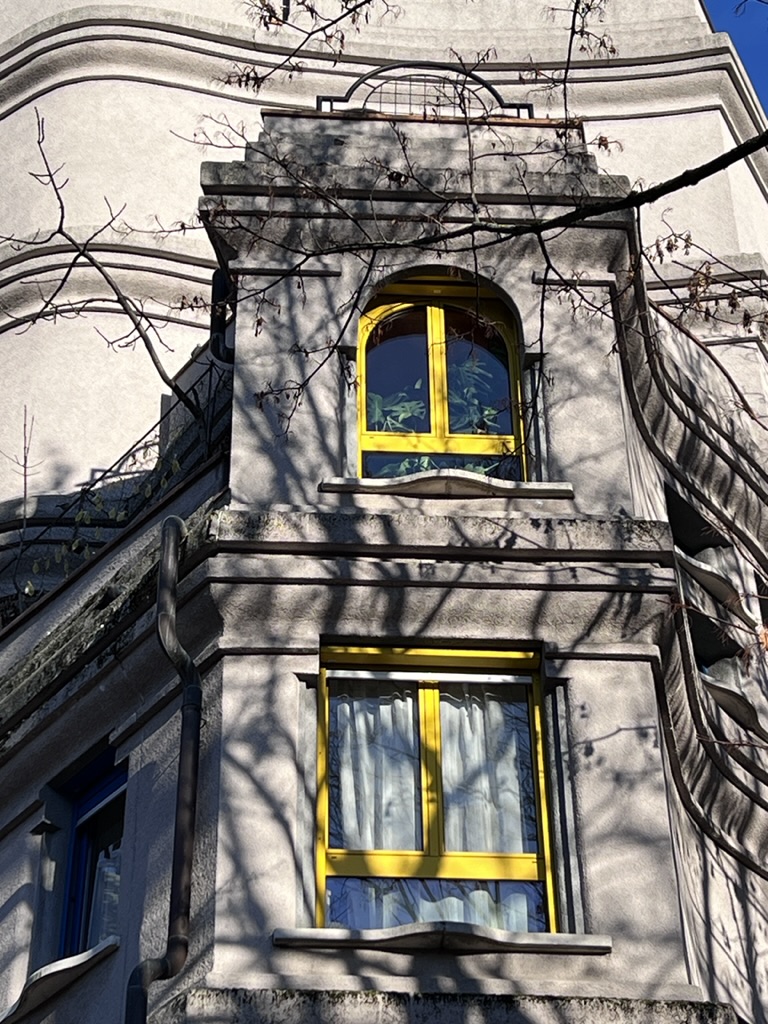
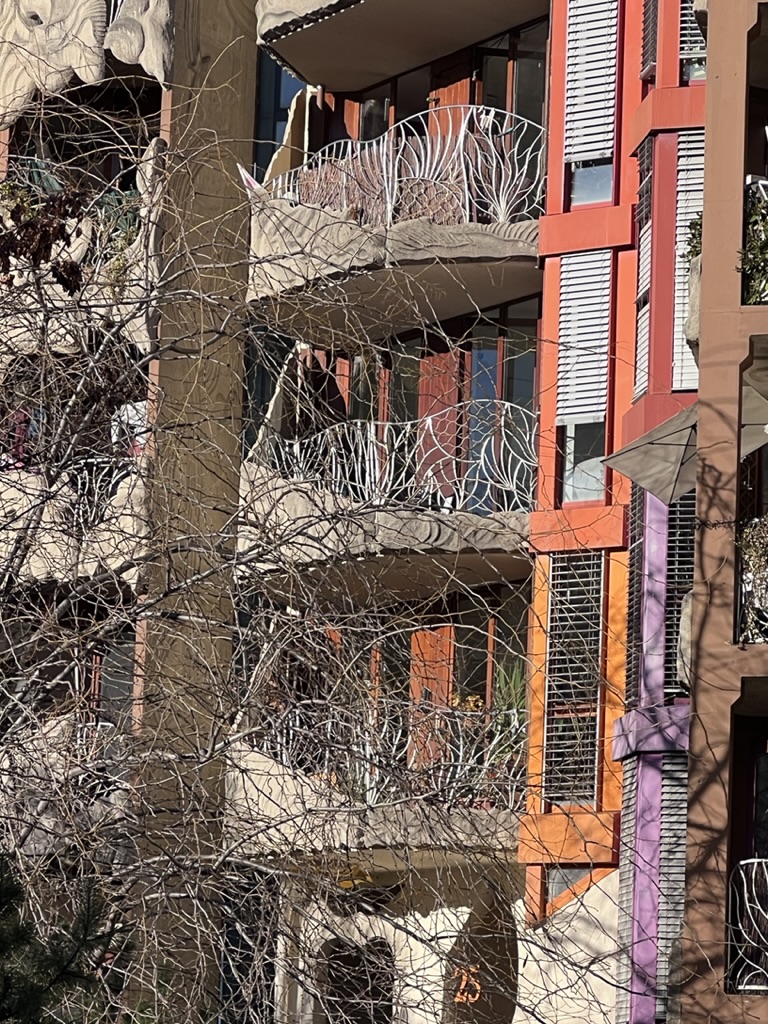
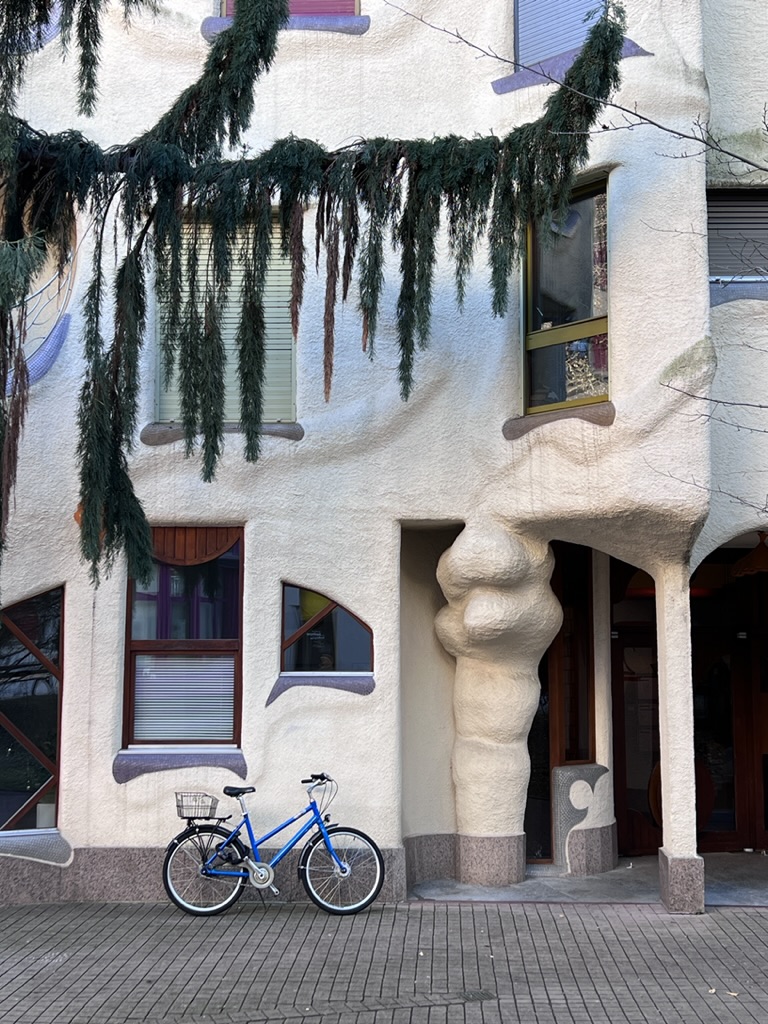
The housing is located in the part of Geneva called Les Grottes Saint Gervais (caves of Saint Gervais) and has an interesting history. The village of Saint-Gervais dates to the Middle Ages and remained fairly rural – with fields, woods, vines, and a scattering of large housing sites — until the end of the 18th century. Then these large plots of land became the sites for small factories and worker housing with small gardens. Later this district was deemed unsanitary and dilapidated and the powers that be intended to raze it.
In 1971 there was a city plan that set to turn the area into a “satellite city” surrounded by roads and highways. But those who lived in the area—low-income people, including many artists and writers and creatives—organized themselves into the “Action Populaire aux Grottes” (APAG) to protest the city’s plans. Apparently, they were successful, and the government abandoned its plans. Instead, there was a renovation project, but the buildings in the area adjacent to Saint Gervais were razed and by the 1930s people said the neighborhood looked like “a peace-time bombing.” Today, I’m told, the Grottes district remains well ahead of other areas in terms of urban participation in Switzerland.
I also lucked out. I wound up chatting with an older gentleman who lives in the project and he offered to show me the inside. Pretty cool.

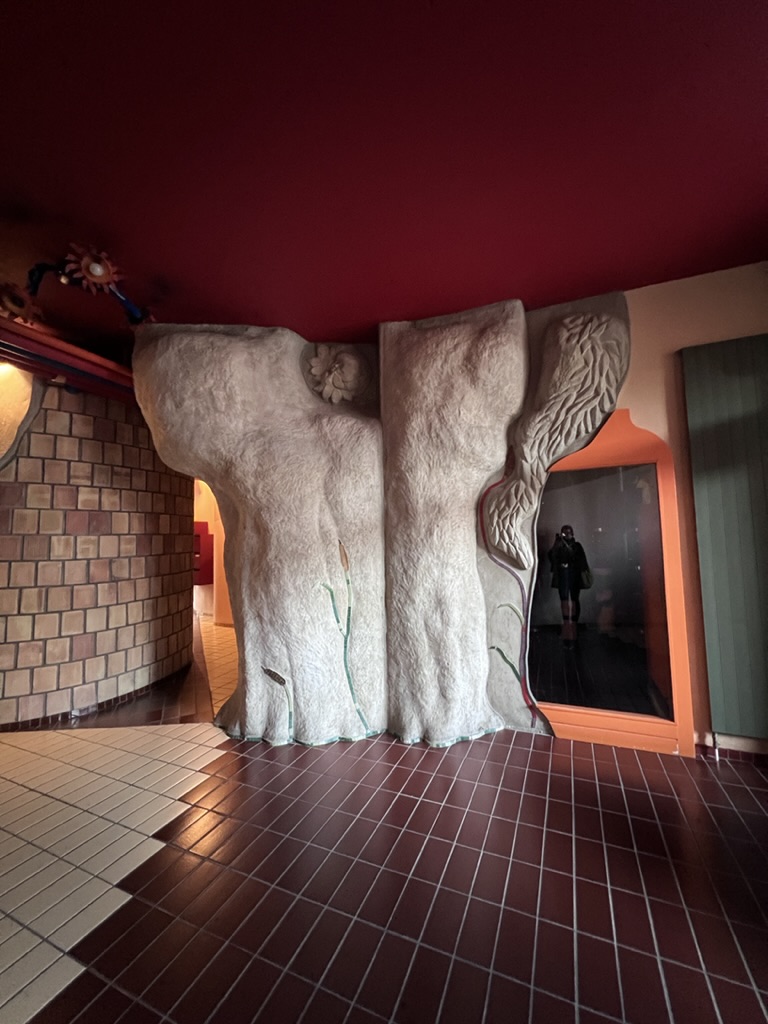

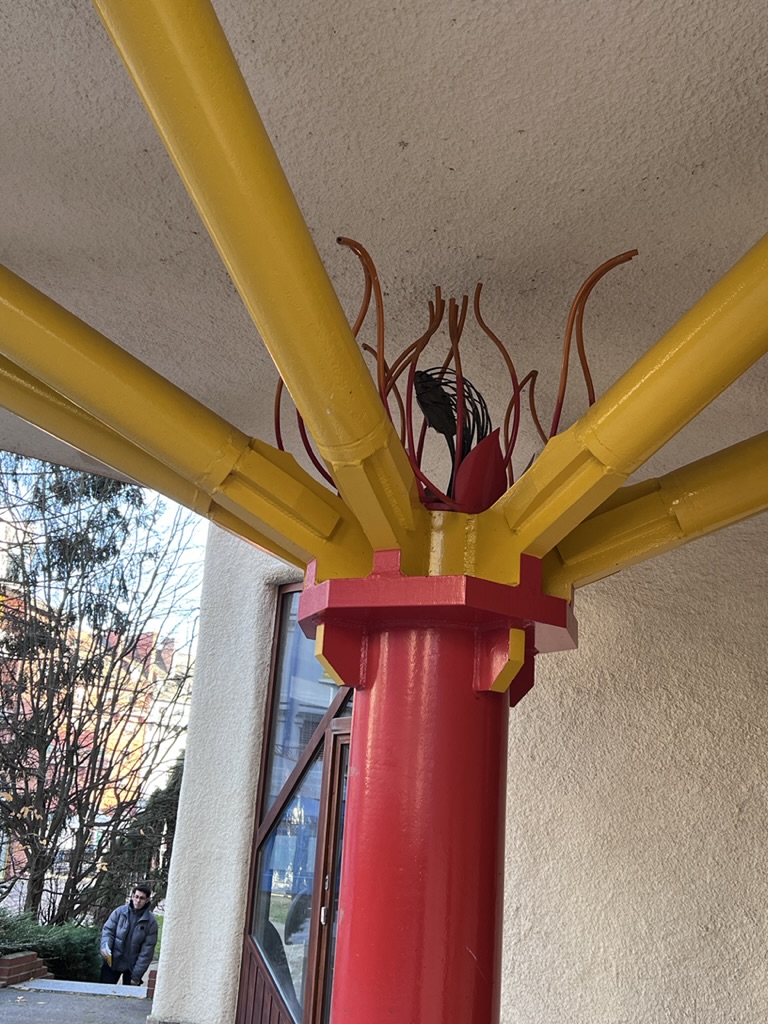
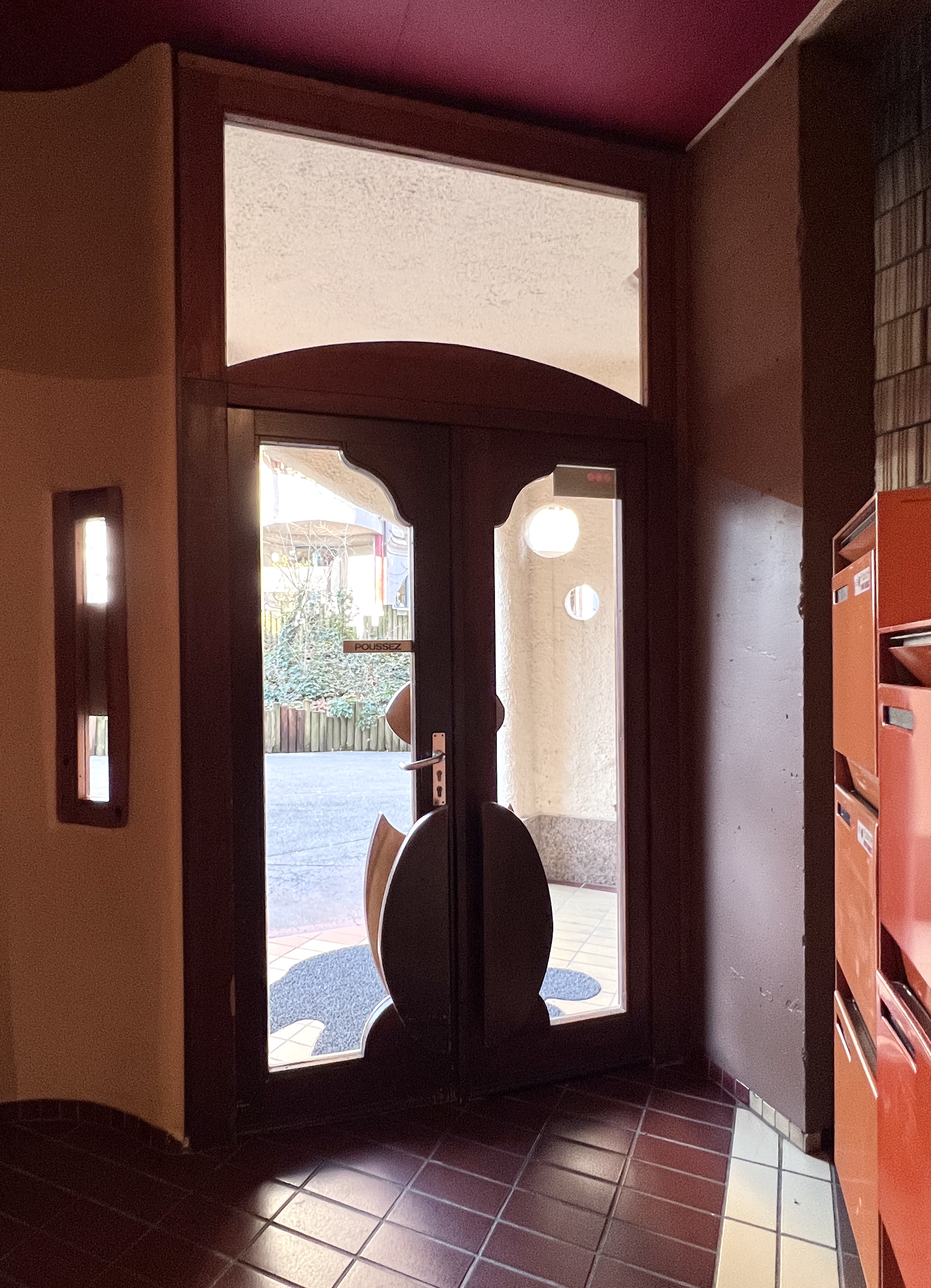
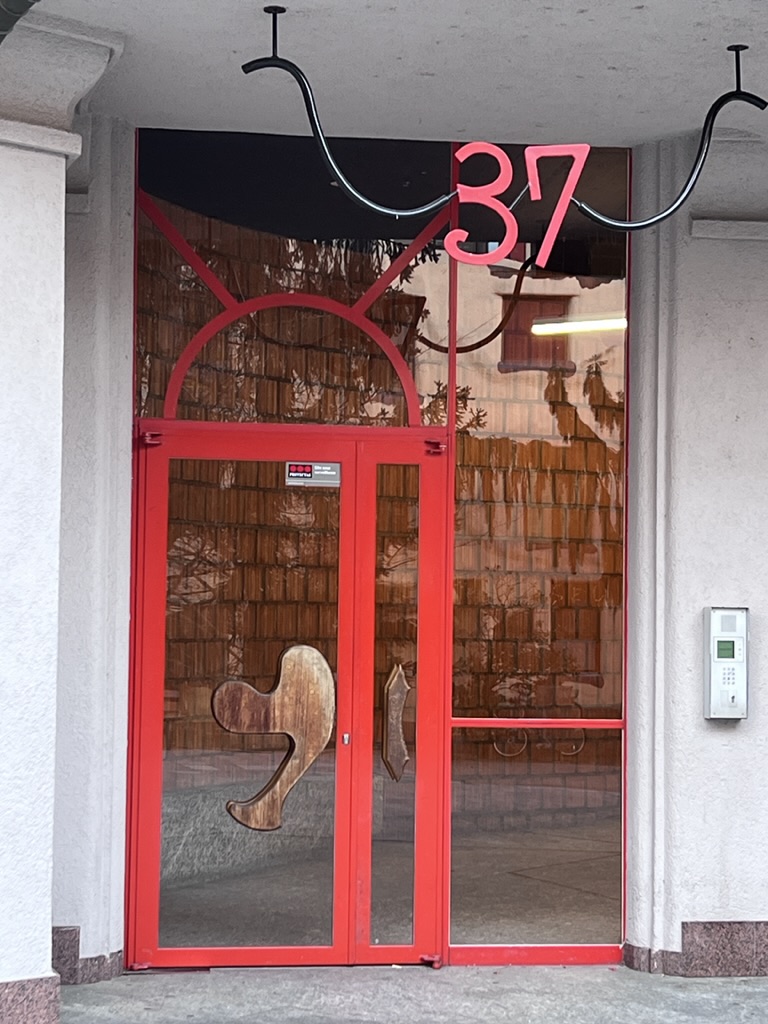
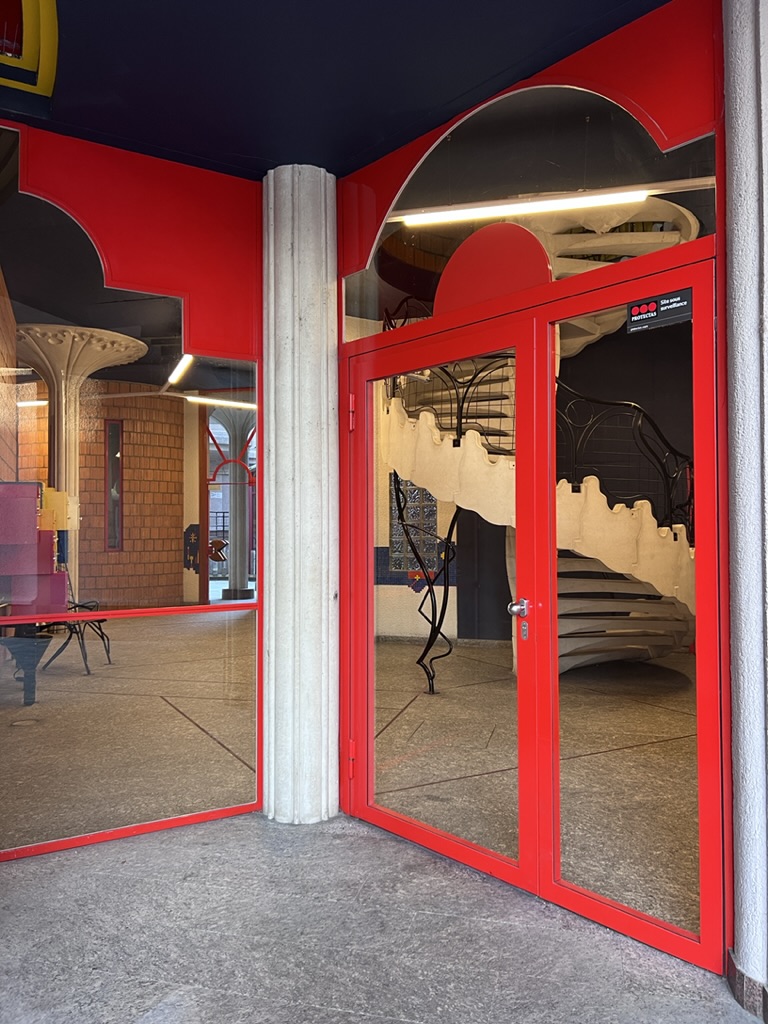
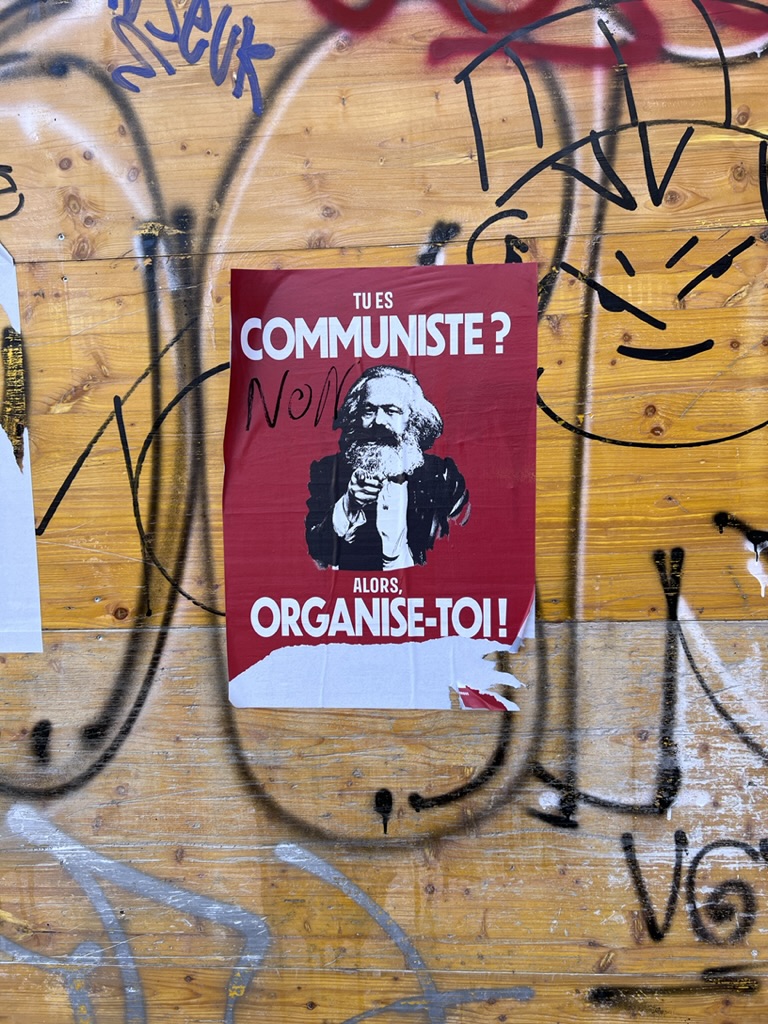
I decided to take the tram back although it’s not super direct, so it required a bit of walking at both ends of the tram ride to the hotel.. more steps for my daily requirement. I do always like to use public transportation when in another country—if only to see how it operates and to see who uses it. The Geneva system is very efficient—and definitely an honor system. In all the times I’ve used it, I’ve never been asked to show a ticket. But I always have one. While Geneva is very White, about 50% of those on the trams I’ve been on are people of color.
I’m off to meet Elizabeth for dinner. It’s supposed to be a good restaurant – Le Jardiniere; few choices as so many restaurants in Geneva are closed from December 23 through January 9. I generally don’t like to eat at hotel restaurants (this one is at the Woodward Hotel), but those are the ones that are open. We shall see. I don’t like eating at hotel restaurants because you’re usually sitting among other tourists. I’d prefer to be with locals.
That’s it for me for today.
Fern
Post-dinner: Le Jardiniere is quite lovely with views onto the Geneva harbor. These post-Xmas days appear to be slow at restaurants; probably everyone is eating their leftovers from Xmas. So, the restaurant was remarkably quiet, sophisticated, and good, I had the artichoke appetizer which came with burrata and some artichoke hummus. I followed that with pumpkin sage gnocchi. Both dishes were very good. There was also an amuse bouche… and a little crisp potato cube on top of which a small piece of roasted kale sat… Tasty and beautiful to look at; almost too precious to eat. Elizabeth wasn’t as impressed with her main course (fish). We chatted until about 11:30 and then taxied back.
Geneva: December 26 2023… On the Day After
Greetings on the day after Christmas…
Geneva takes these holidays seriously, so most shops and restaurants are closed on the 26th as well as the 25th.

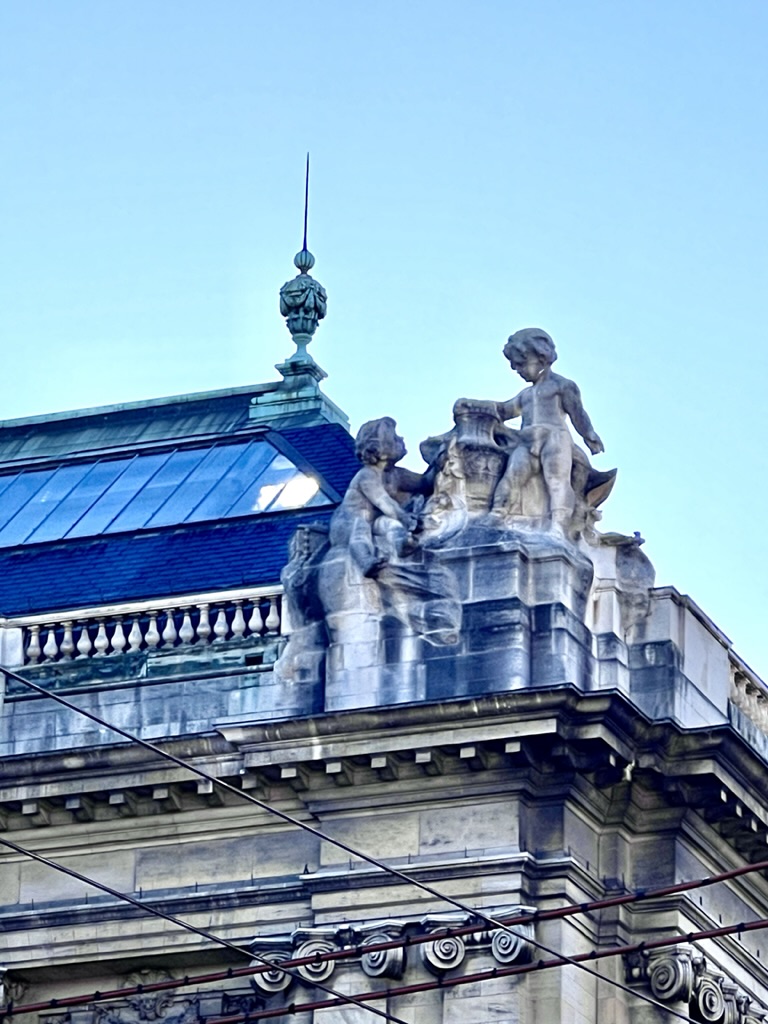
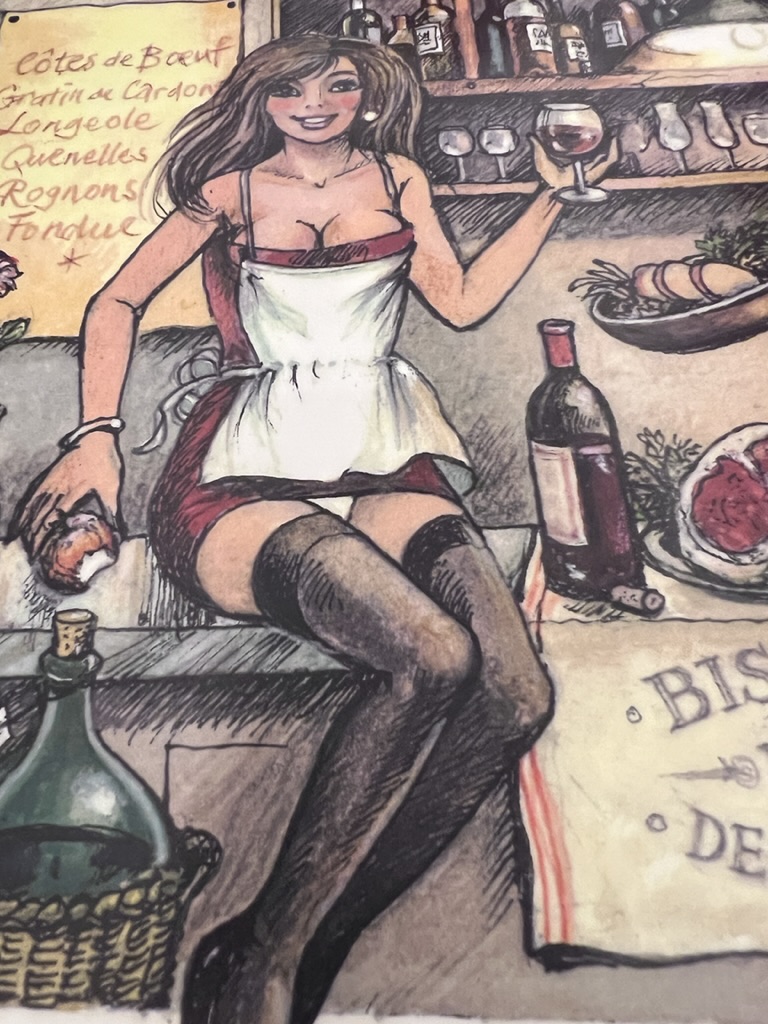
We were to meet everyone for lunch at Bistrot des Halles (which is located inside a wonderful, downtown, upscale, indoor market) at noon. The only place to get anything that resembled breakfast (since we chose not to eat the big buffet breakfast at the hotel) was at Starbucks!! Conveniently located about 100 feet from our hotel. By the time we finished, we got a message that lunch was cancelled. I think that Julia and Julian were just exhausted from yesterday and little Siena was fussy and the nanny was ill. So, Mike and I strolled around town and eventually decided to get lunch at the Halles—just the two of us. The Bistro des Halles is a wonderful little restaurant that sits inside the market and utilizes local and seasonal ingredients. It’s pretty much meat and fish and some very traditional Swiss and French cooking. I had a veal dish and Mike had crayfish ravioli. We opted to stay away from the traditional and ever-present cheese fondue.
Then Mike, still feeling a bit under the weather, decided to skip the circus and head for a nap at the hotel. I headed out on foot to the circus—Cirque du Noel—about a 2-mile walk, I think. I met up with Em and Hem and Finn, and then with Julia and Louis and Ella. Ella promptly noted that I had no one, meaning I suppose, that I was alone. Ella was sporting her own circus outfit: a mermaid dress complete with tail which dragged a bit on the floor and made me nervous that either she or a passerby would step on the tail and get her off-balance. She complemented the mermaid outfit with high-top sneakers that glowed and sparkled and also lit up as she walked. Definitely a little trend-setter who is very aware of her “look.” We had first and second row seats for the big event… and popcorn (and later there was some cotton candy in the mix).
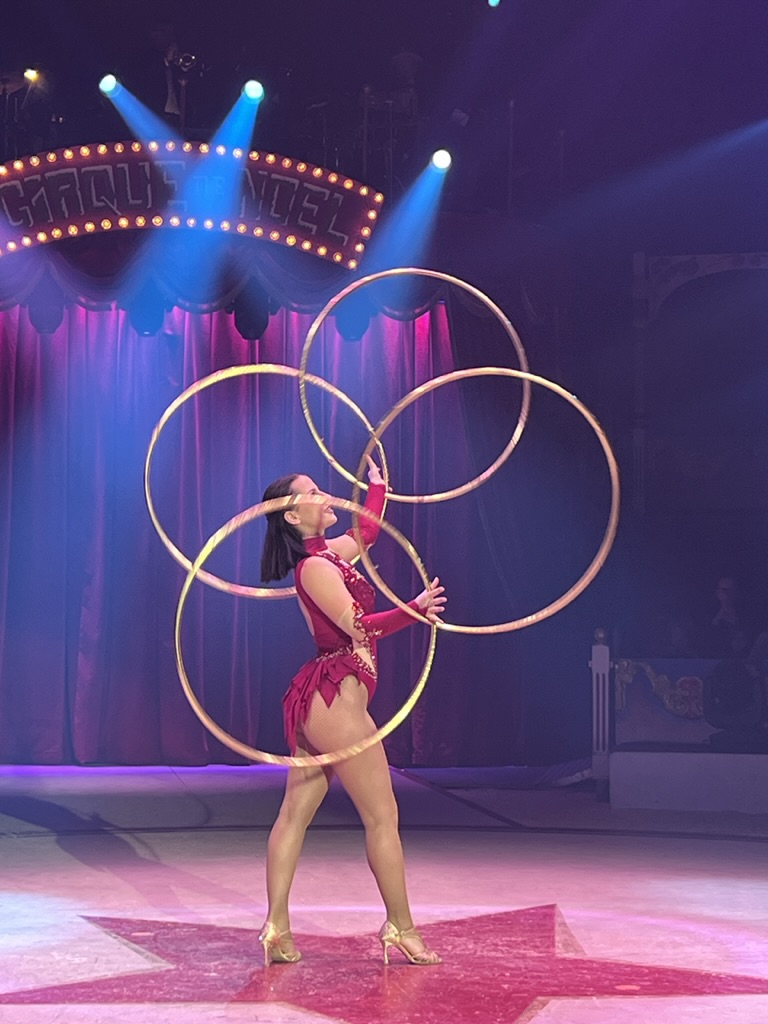
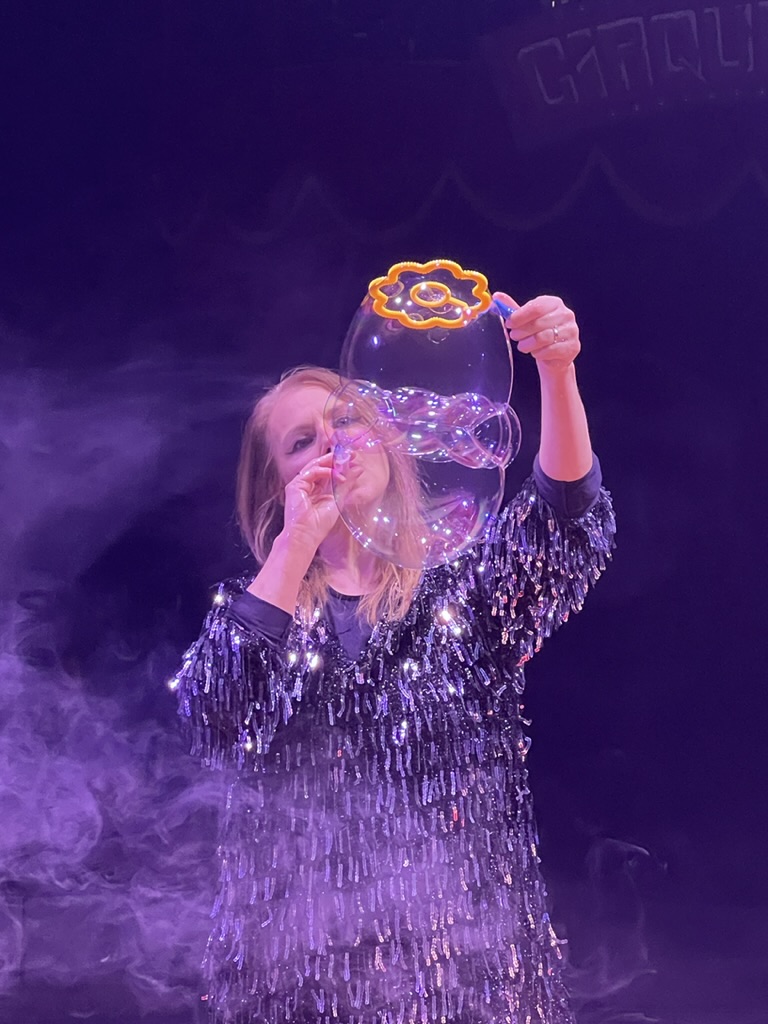
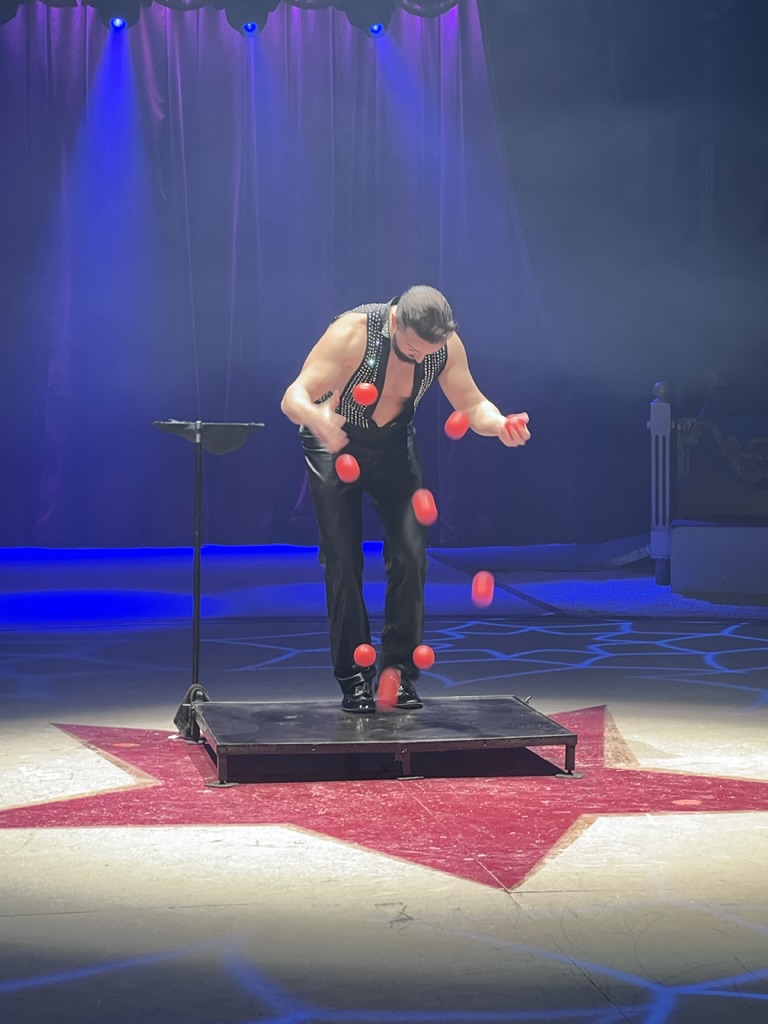
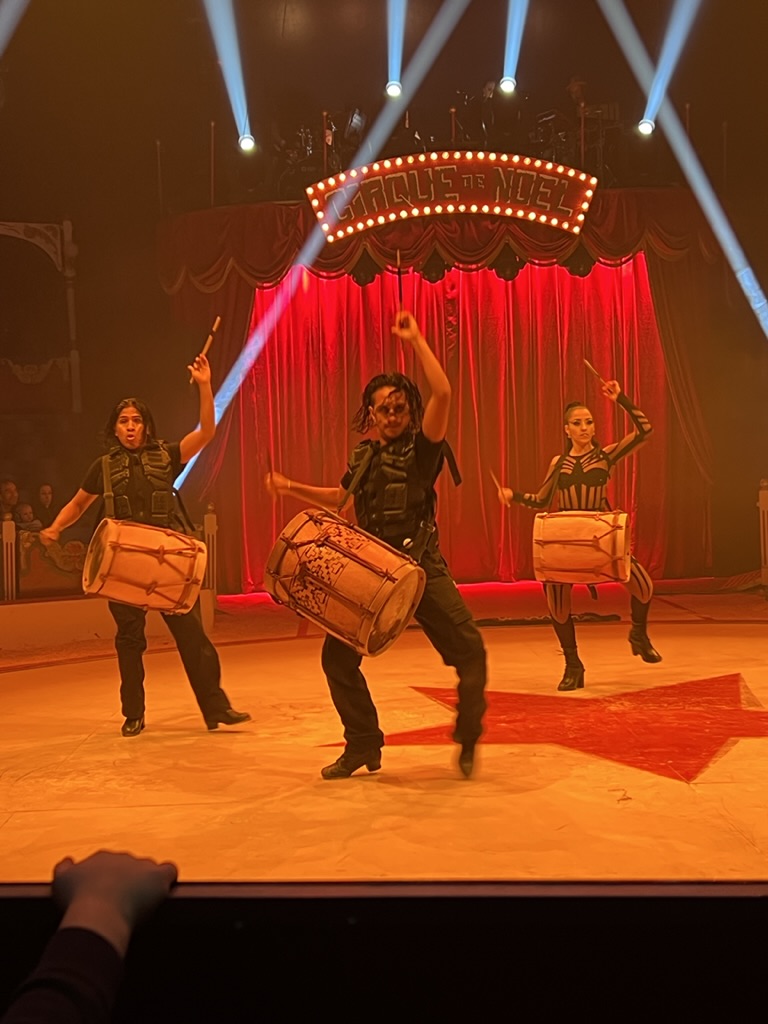
It was a small circus in just one small tent. No large animals and actually no clowns. There were acrobats, jugglers, a ventriloquist, some dancers and singers, and a modified high wire performer. The women performers were dressed in garb that would work well in Las Vegas casinos and bars with pole dancing. The cast all looked like they were from Slovenia or Poland or some former eastern bloc country—quite blond. Louis and Finn managed to get some “high-5s” from the performers because they were sitting so close to the performance area. And at one point, Julia got selected to come to the center of the stage (which she politely declined but it was difficult to say ”no”) so she wound up in one of the acts.
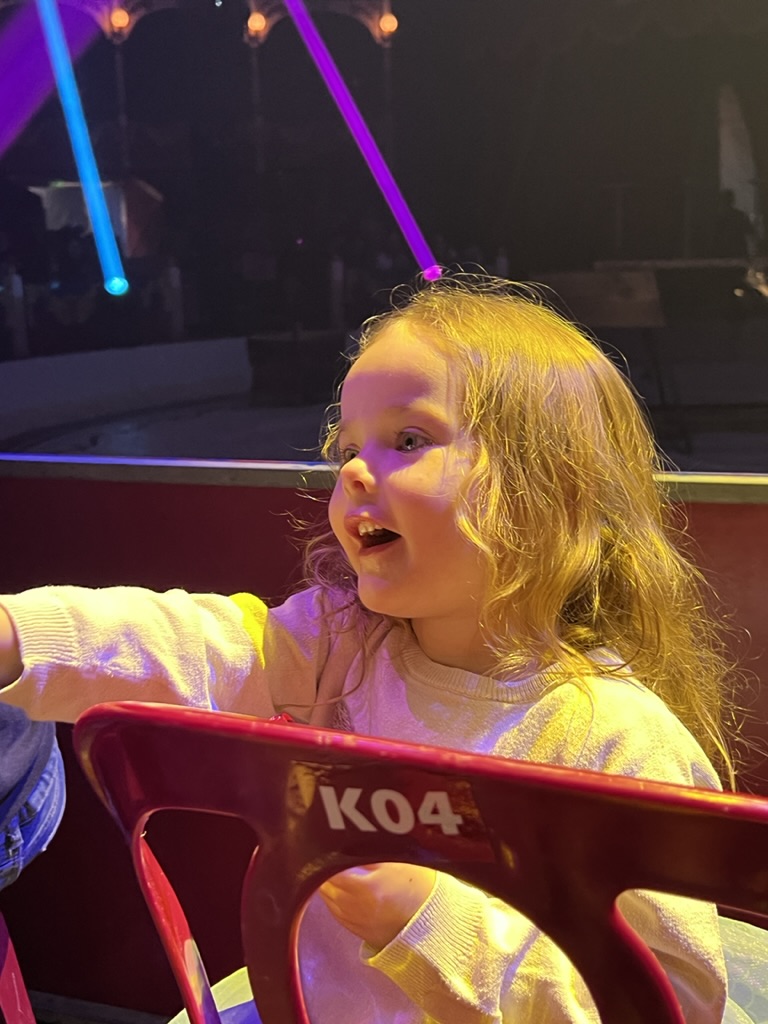

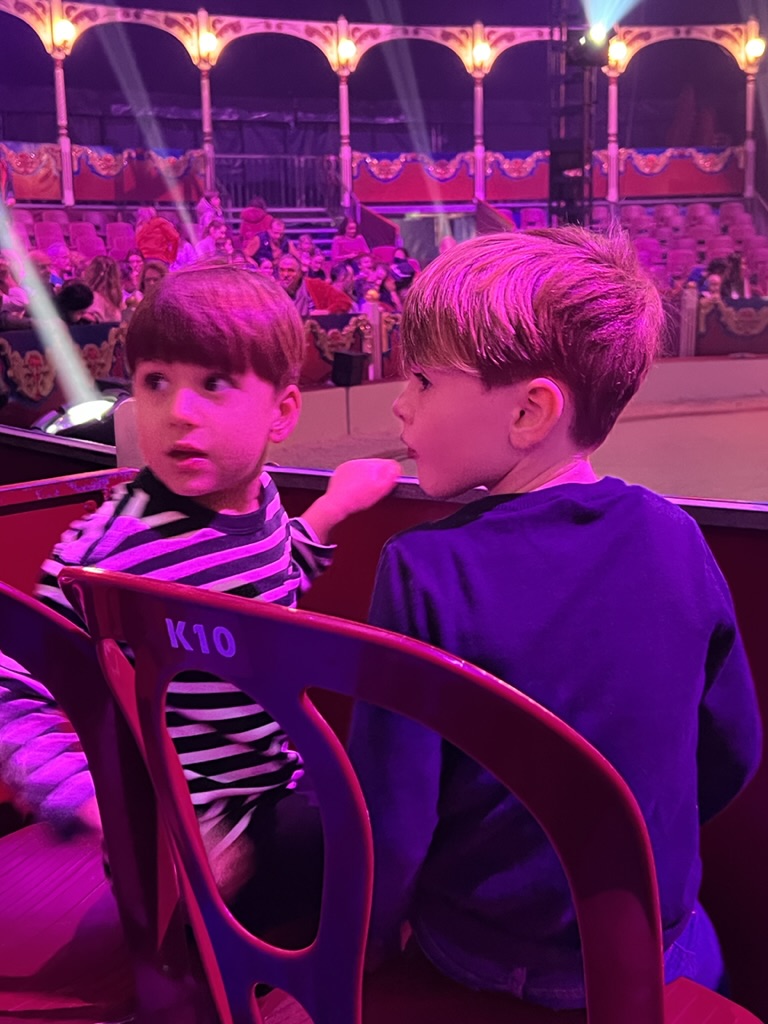
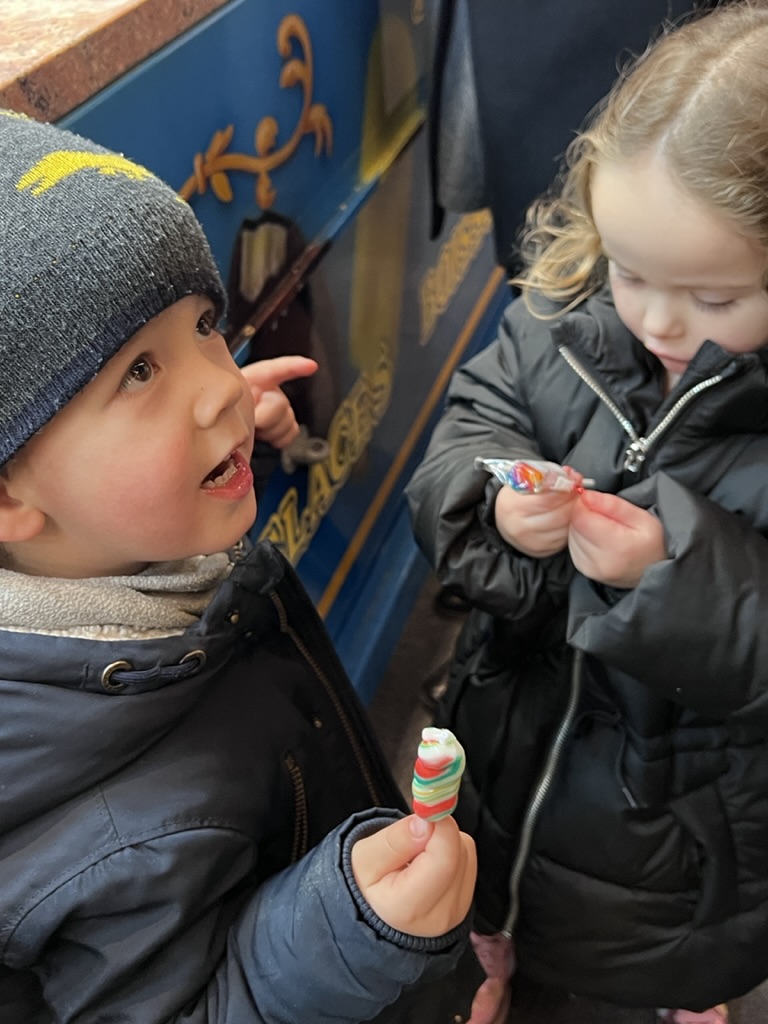
By the time the event was over it was dark, and the kids and parents decided to stay so everyone could go on the rides and probably have a bunch of junk food. As it turned out Ella ran into a little friend, Leo, from her class and the two immediately walked hand in hand—quite adorable.
When I got back, Mike still wasn’t feeling up to par. So he ordered soup from room service, which turned out to be not such a great decision. I decided to stay at the hotel for dinner and am now back in the room. Hopefully all will be better tomorrow. We’re hoping to visit a very special housing development that we saw once before in the rain. The Swiss refer to it as “Smurftown.” If the weather is good, I will probably go, but the plan had been for both of us to see it again.
Take care.
Best for the post Xmas and pre-New Year period.
Fern

