Friday, June 14 (midnight—sun has not set yet)
Greetings from Rovaniemi (near the Arctic Circle)

We left Oulu which was bright and sunny at about noon and began our journey further north to Rovaniemi which is really just a stopping off point before we head further north (about 200 miles above the Arctic Circle) to Inari. We’ve been to Rovaniemi twice before (once in the fall and once in late winter, never in the summer). But of course we could not make this easy since we decided to make a pit stop in Kemi and actually drive northwest of Rovaniemi to Oranki. Thus it was a lot of driving (about 6 hours total with several stops—short and long).. finally getting to Rovaniemi at about 9:00 pm. Of course, all this needs to be punctuated with the fact that it was totally light when we arrived at 9 pm, and now at midnight it is sort of like dusk. The sun will rise at 2 am, or maybe even a bit sooner. Basically, it is never dark. Indeed, the only thing that is making it dusk-like is the fact that it’s very overcast and has rained on and off. By the way, the clouds up here and the sky are amazing—bright blue and huge cumulus clouds that look like giant cotton balls. The only other place I’ve ever seen such a big blue sky was in Colorado.
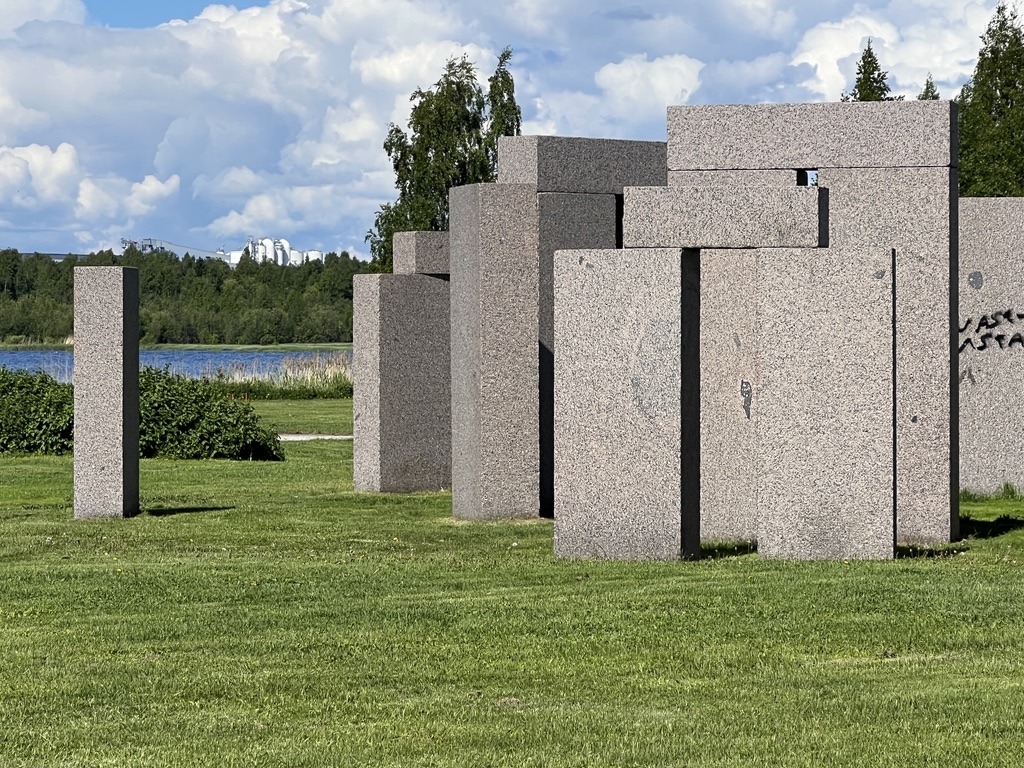
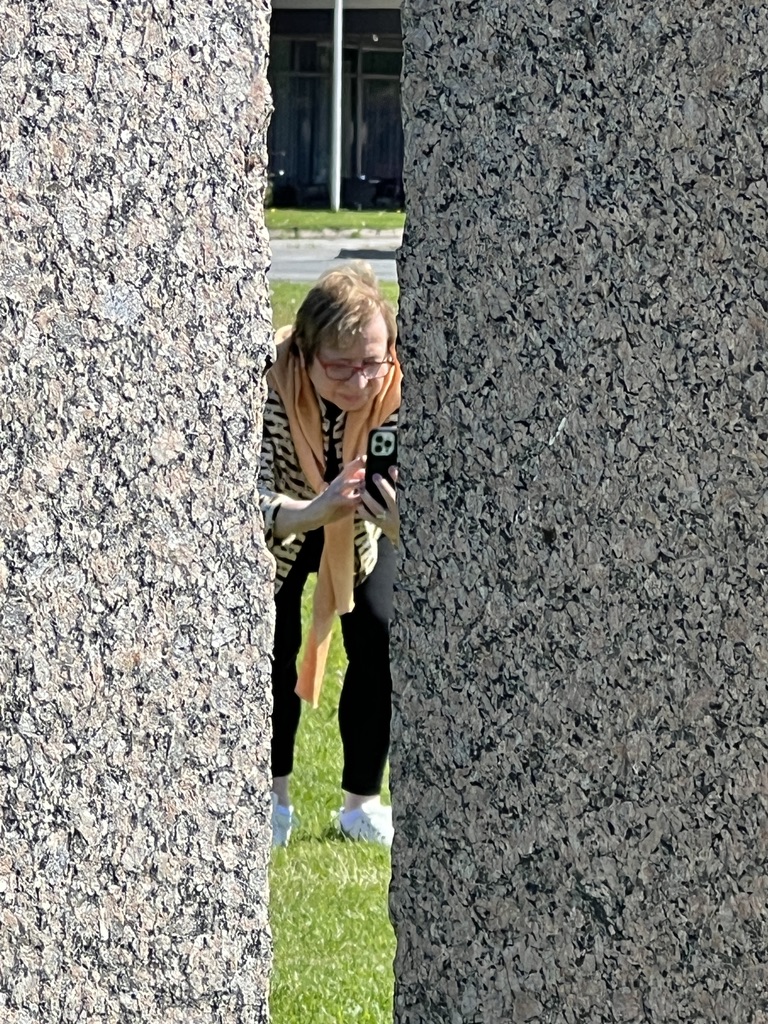
Anyway, we headed first to Kemi, a small city of about 20,000 and close to the Swedish border. Kemi is home to the world’s largest snow castle which gets rebuilt every year. And it is home to “Stone Age” or as the locals call it “Clonehenge.” Sitting in a park very close to the Finland Sweden border is a modern-day replica of Stonehenge. It’s made of very smooth granite and is about 50% the size of the real Stonehenge, and is oriented toward the same directions as the original. It marks the sunrise of the summer and winter solstices. The artist claims that the stones will remain upright for at least 2,000 years. It was paid for by the owner of a granite mine who saw this as a monument to the granite industry in Finland. After strolling through the park, we found a little lunch place near the Kemi train station and had some kind of reindeer quiche-like thing. And then we were off, supposedly for Rovaniemi, but we wanted to get to Pello and Oranki (which are totally out of the way and north of Rovaniemi). Our plan had been to go there tomorrow but the weather prediction for tomorrow was rain. So, we decided to keep going and get to Pello and Oranki before Rovaniemi.
The drive all day was actually amazing. Again, not a single pothole to be found and only one billboard in about 300 miles of driving. And very few cars on the road. It is incredible that the roads are in such good repair given the harsh winters. I’m sure the billboard was placed illegally. We drove through forests and about a million lakes and rivers and streams—all with clean, clear bright blue water. The roads are lined with wildflowers and there are fences (which are totally transparent… sort of wire grids) to keep animals safe from passing cars. I think there may be tunnels under the road to allow animals to cross safely. Lots of signs about moose (meese?). We did see a baby reindeer on the road who seemed to have lost his way. All traffic slowed to let him go wherever it was that he was headed.
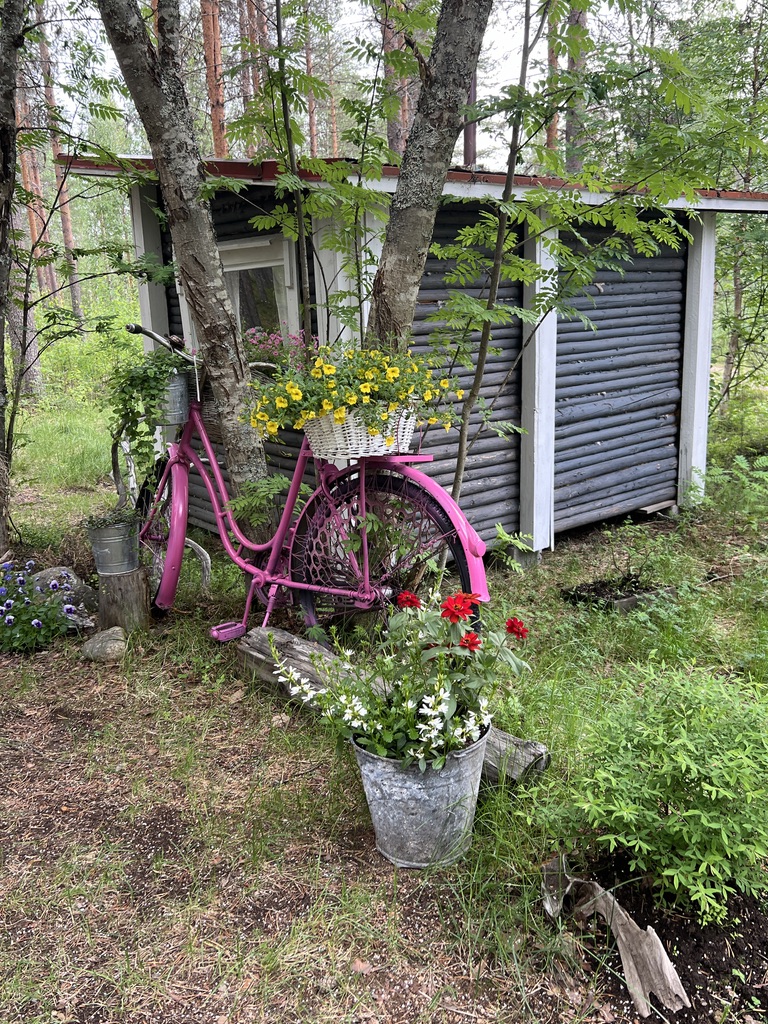
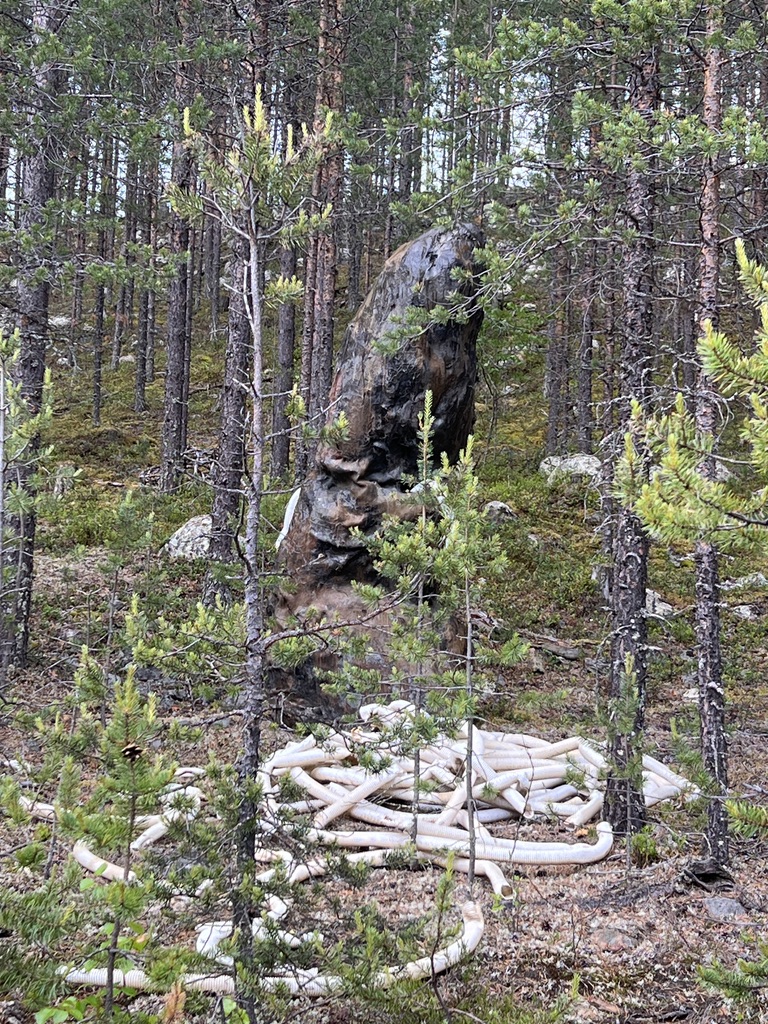
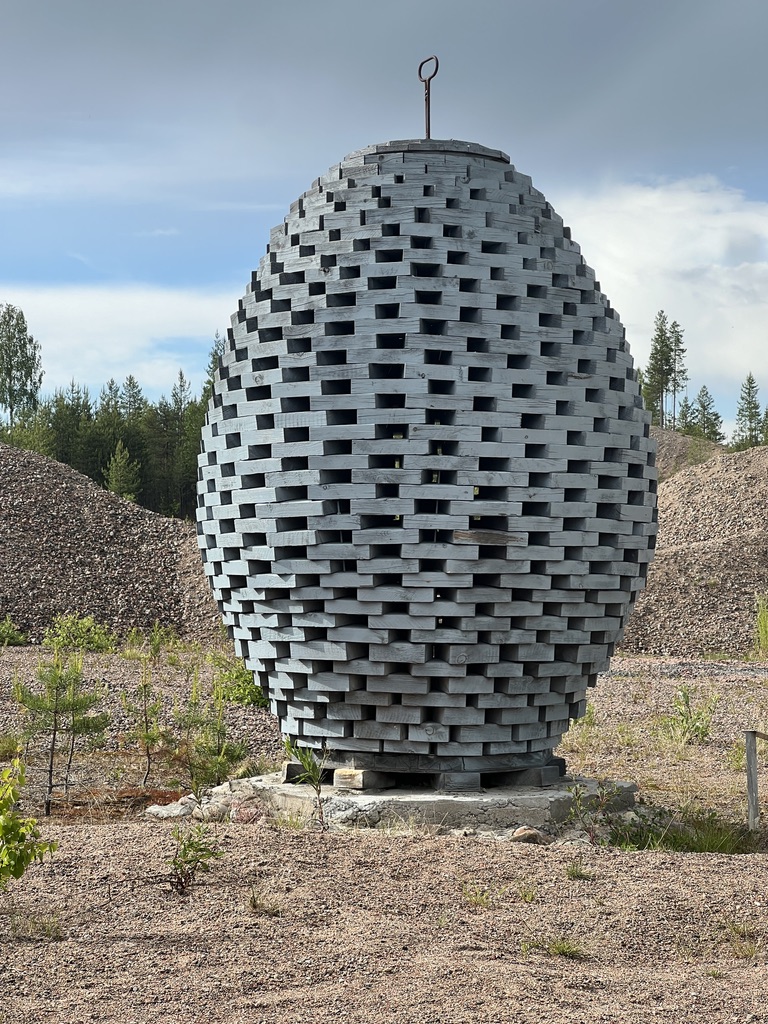
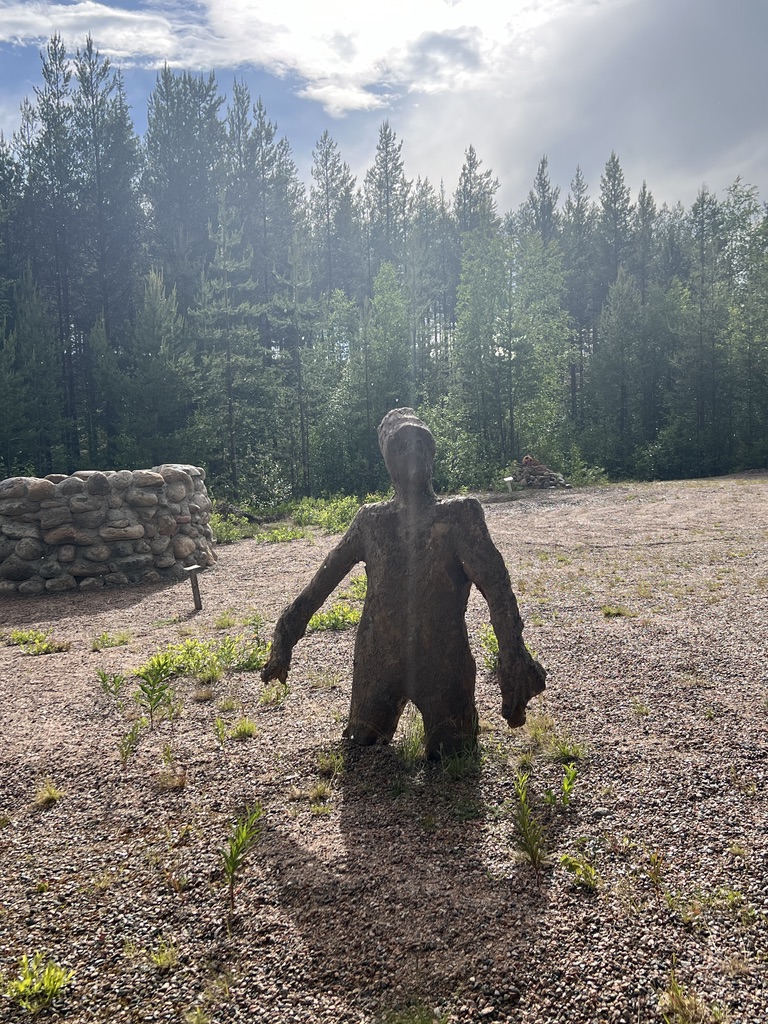
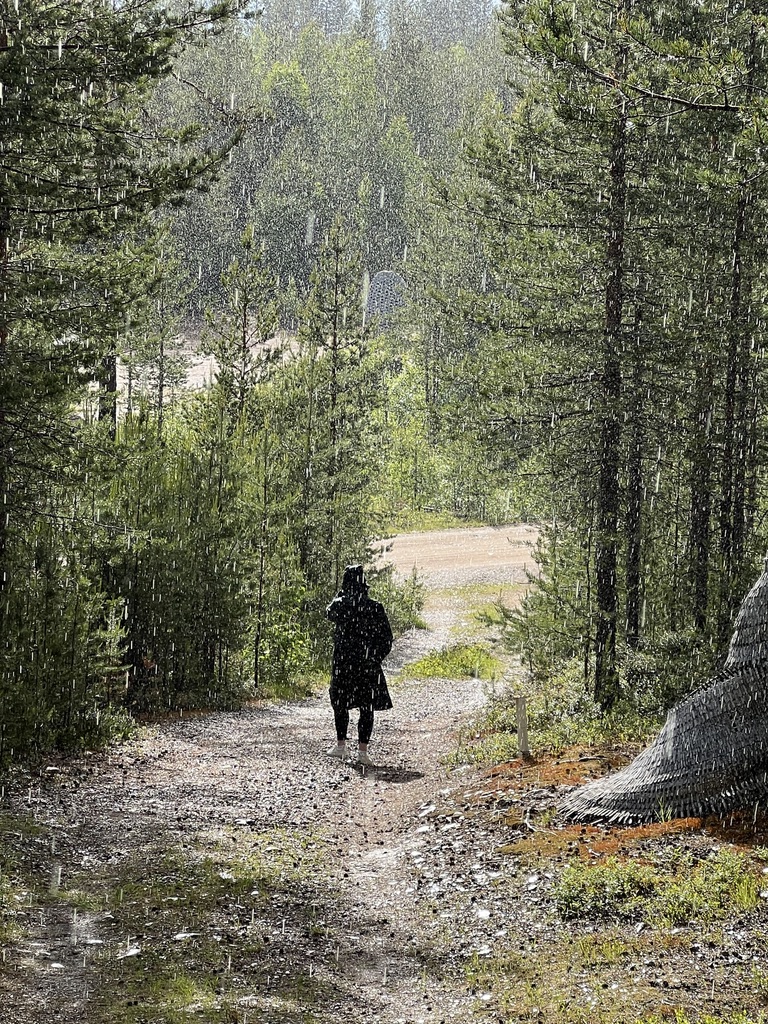
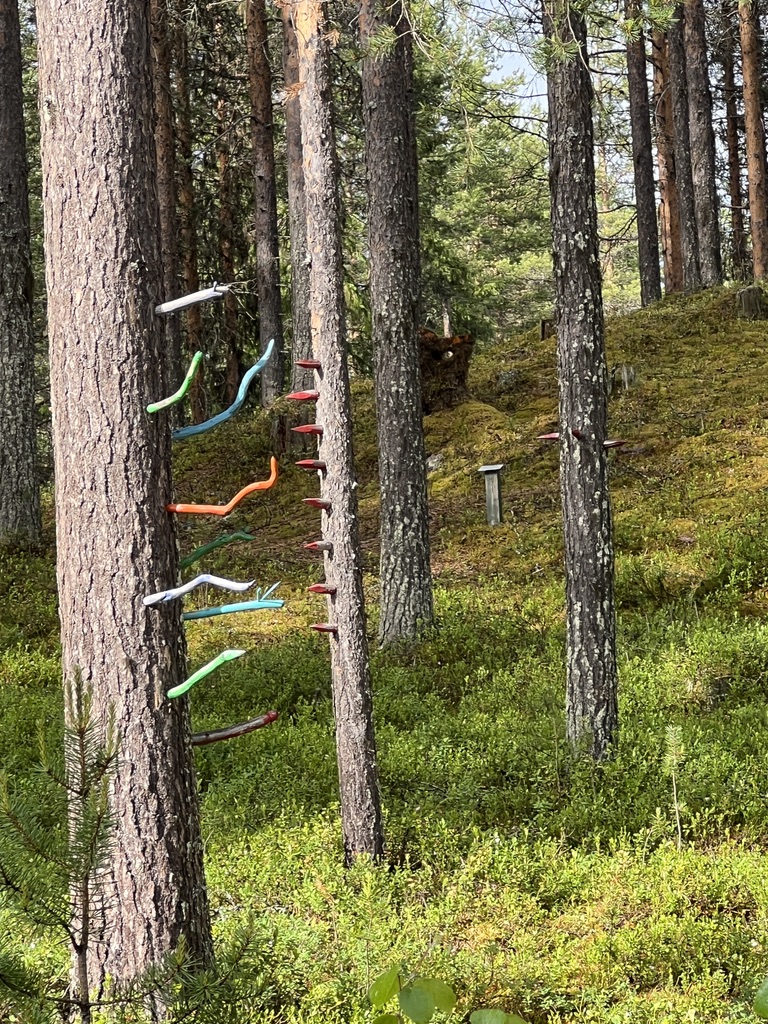
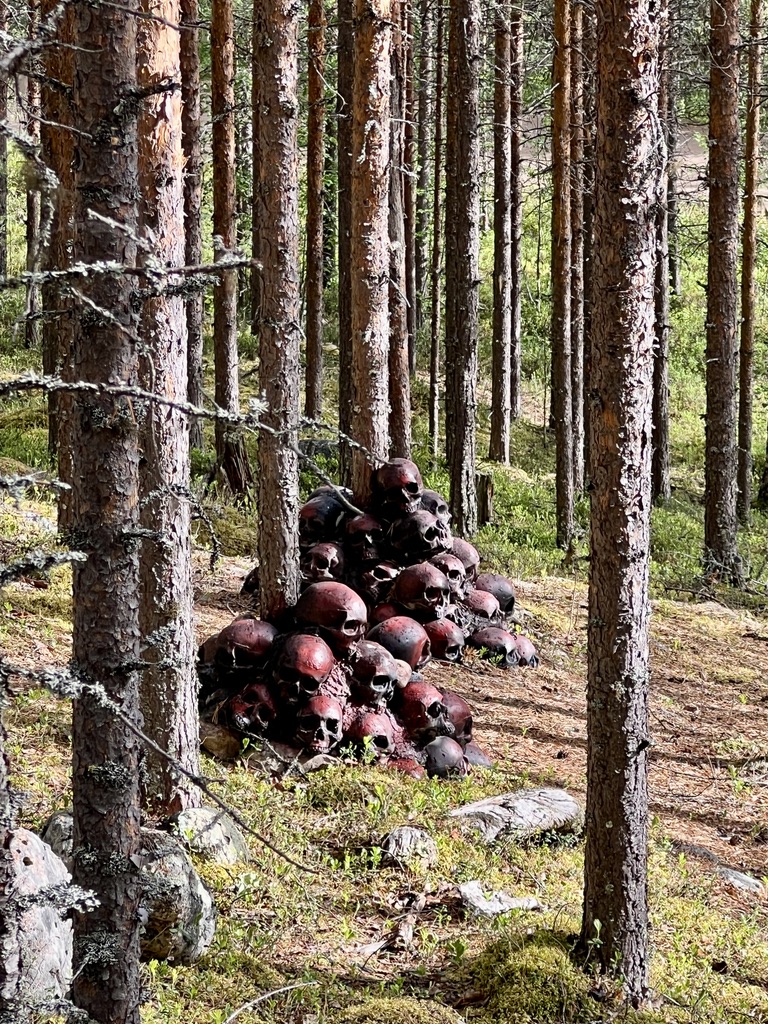
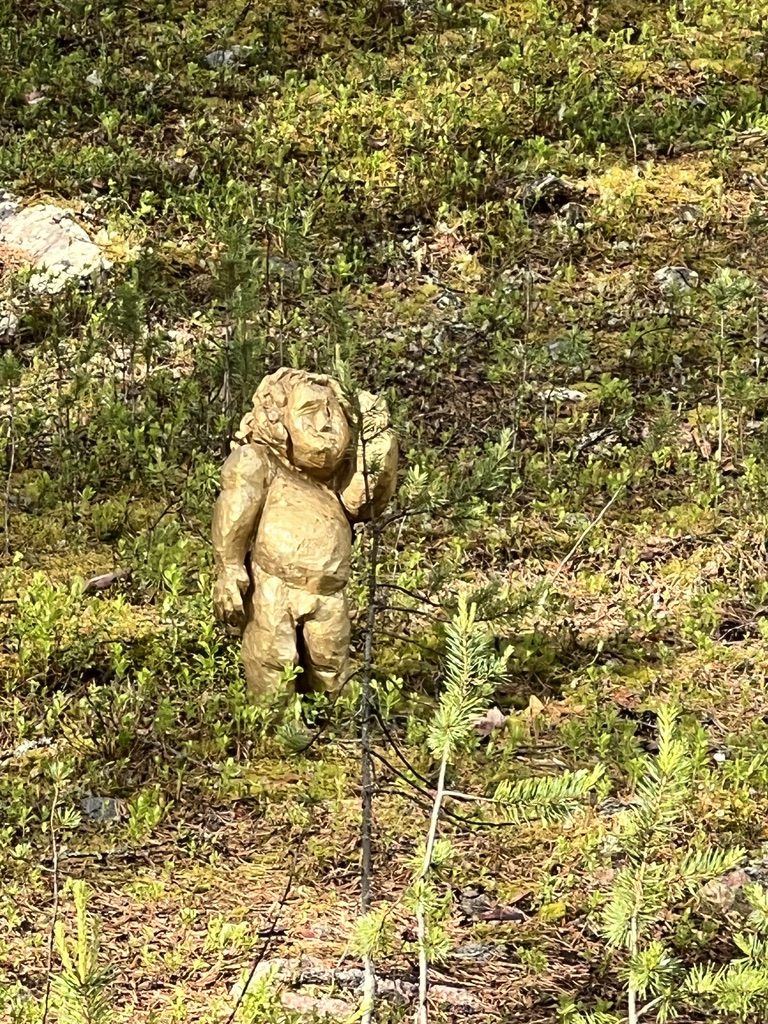
Eventually, we made it to Oranki—sort of. According to the GPS, we were there.. right on the dot. It was drizzling and cold, but we knew we really weren’t there because Oranki has a lot of anonymous sculptures and environmental art scattered about in the forest and there wasn’t any trace of such structures. At one point, after driving on a dirt road back and forth in search of the “art,” we literally walked up the driveway of one of the three houses on that solitary “road” and knocked on the door. It is Finland and we feel very safe. But alas, no one was home, so we were on our own. We almost left to head straight to Rovaniemi, but we were determined. So we drove a few kilometers more on the more “major” road and turned up another dirt road and began to see evidence of the sculptures in the forest. We parked and walked in to see what we could find. By then it was raining, and we were also surrounded by mosquitoes. Either the mosquitoes really like the Oranki art or they love being in this area in the summer months. We walked (pretty covered up with rain jackets and hoods) for a while to see several of the pieces and then bolted for cover in the car to escape from those tiny flying things. But not totally successful as we both got bitten and there were a few pesky mosquitoes who dared to linger in the car—only to be slain by Fern and Mike.
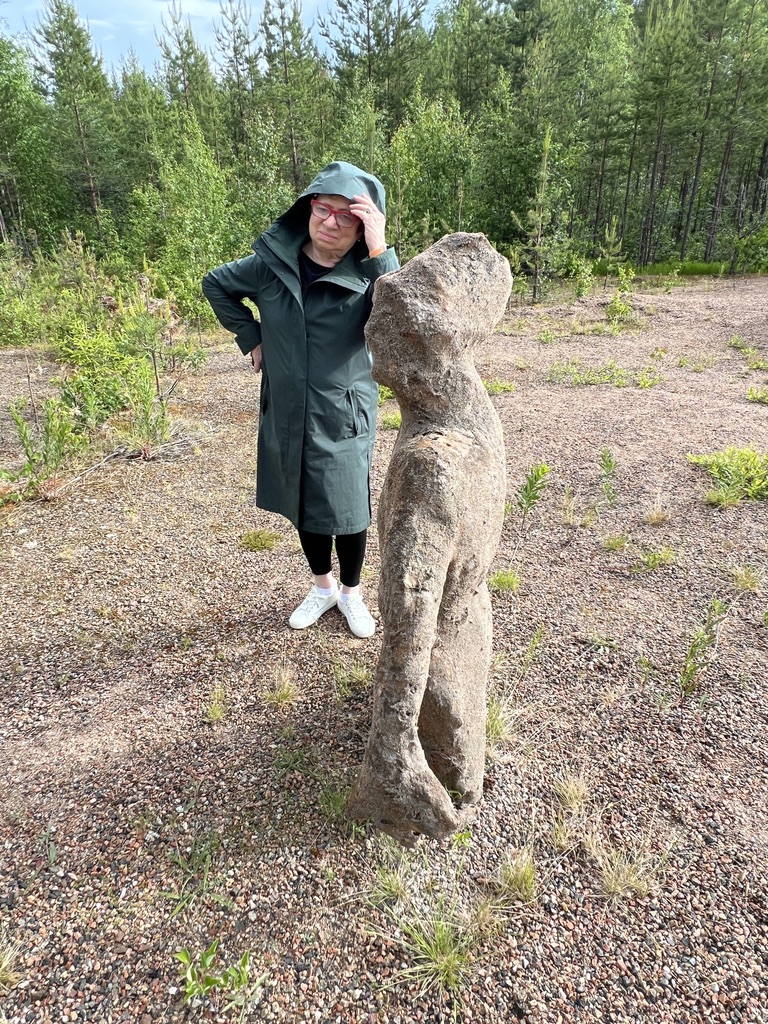
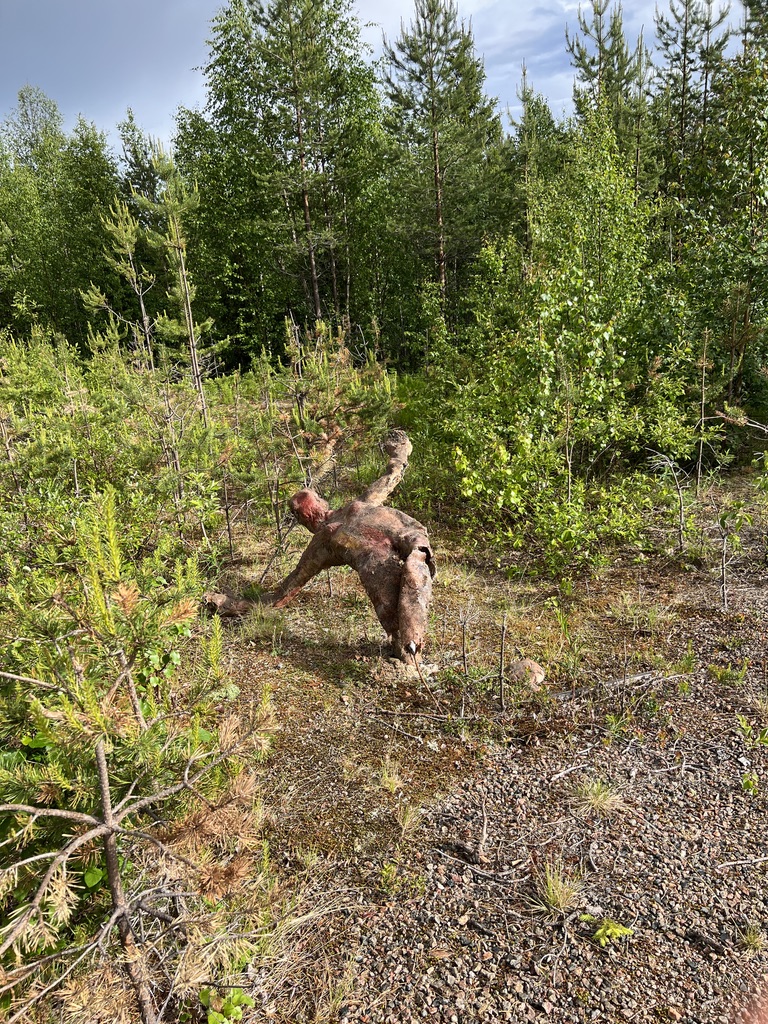
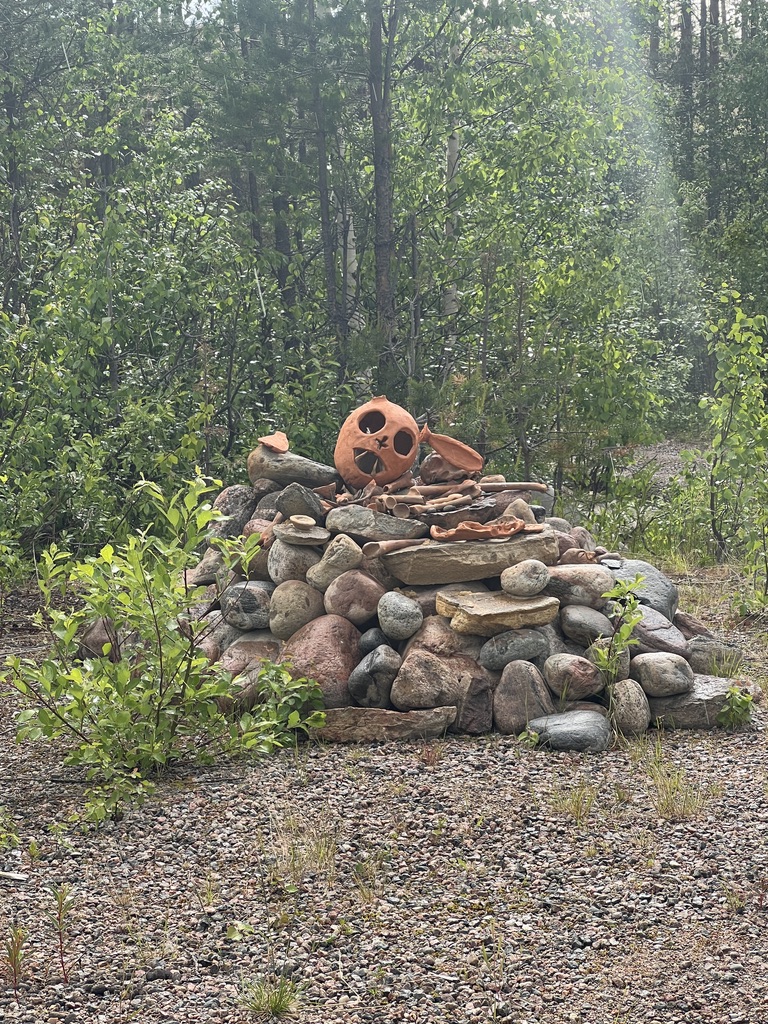
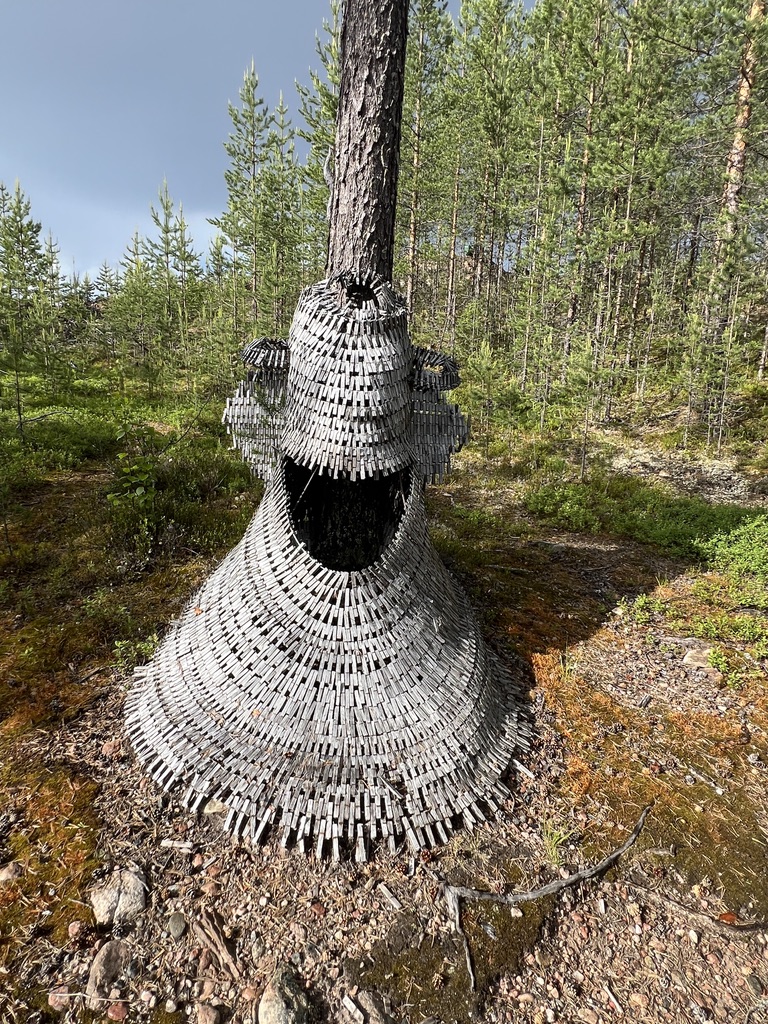
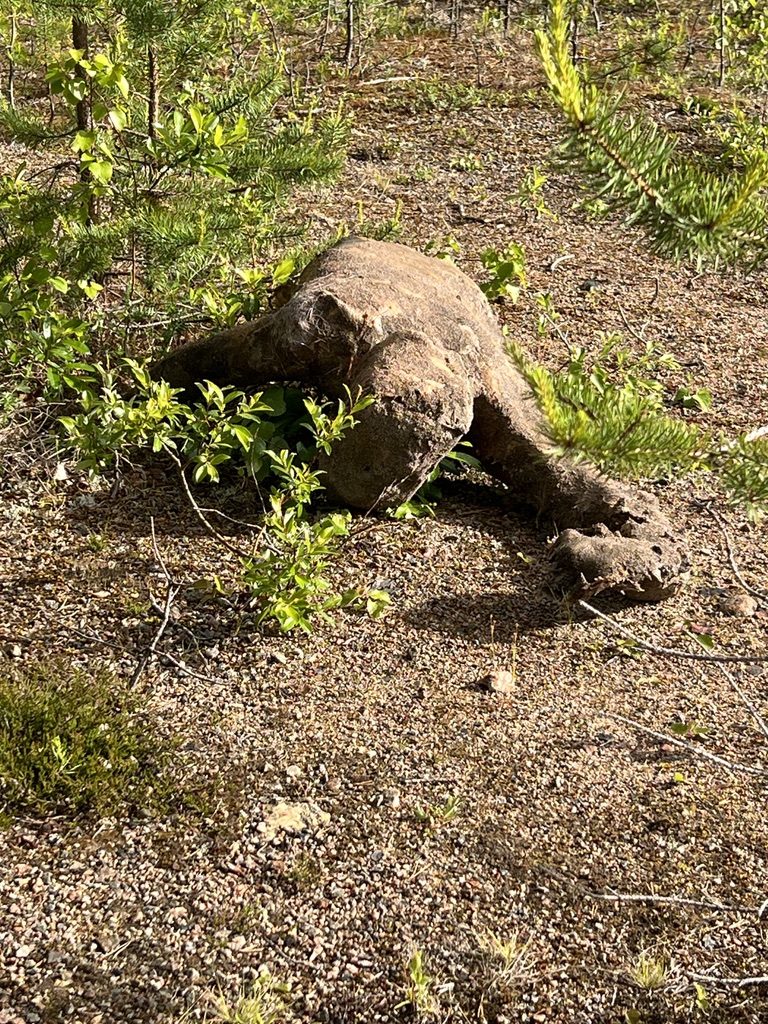

About the “art:” Not too sophisticated, although a few pieces were interesting. Several (perhaps done by the same person) were very morbid with body parts emerging from the ground or maybe the other way around. From photos we have seen, there are some quite wonderful pieces, but we did not stumble on them. Perhaps had it not rained and had the mosquitoes rejected us, we would have been able to find these other pieces. From what I know, there is an annual exhibit where new pieces are installed annually. Around 150 artists from more than 40 countries have produced works over the past 20 years, that are in this forest. Some of the art pieces have already morphed back to nature, which is part of the concept. And this provides space for new art.
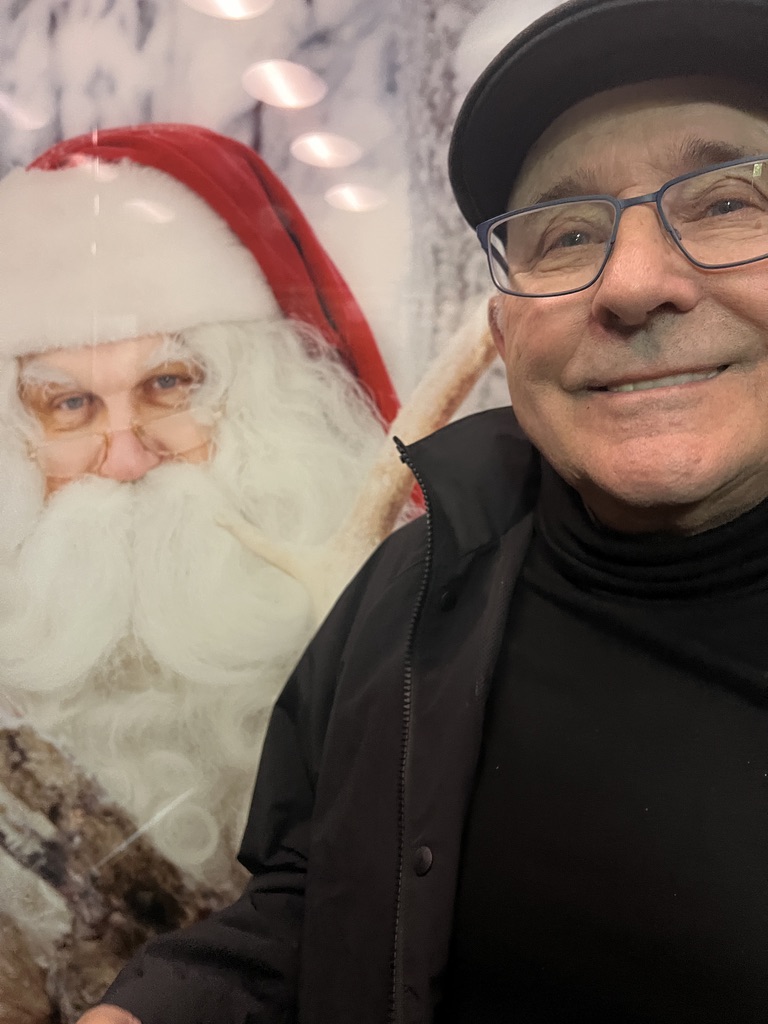
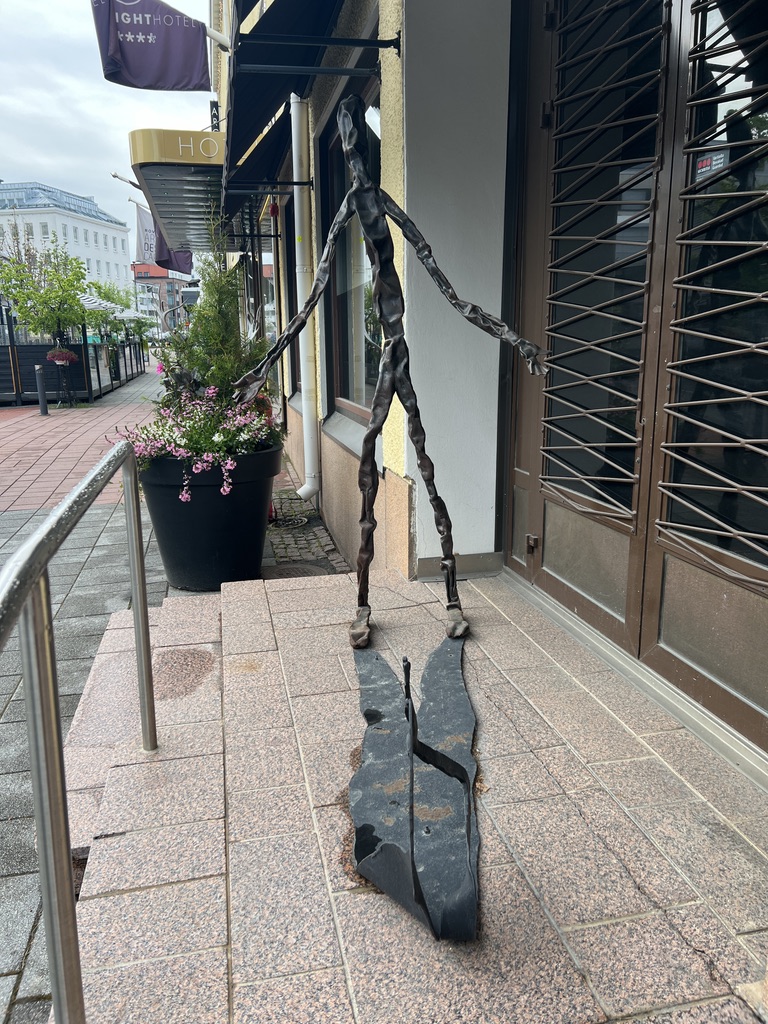
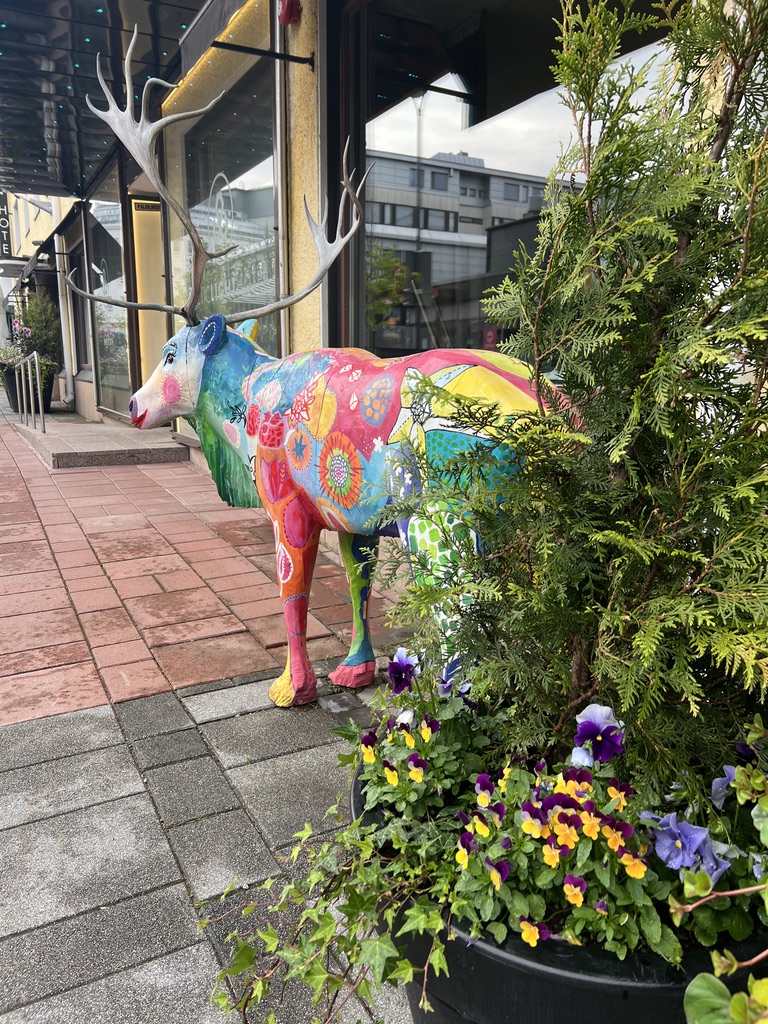
We arrived at our hotel in Rovaniemi close to 9 pm and headed to dinner at Gustav Kitchen. Turns out that Gustav is the brother of Alfred who owns Alfred Kitchen in Oulu where we had eaten last night. We did not know this at the outset, but a quick glance at the menu describing the bread that Gustav’s mother made we realized that Gustav and Alfred must have the same mother. Well Alfred is a better cook and the menu and dishes are a lot better than Gustav’s. I think Gustav just tries too hard. Each dish has at least 10 ingredients with lots of pickled vegetables mixed in that seem to overwhelm everything else. But it was all fine and now I am headed to bed. By the way, since Rovaniemi (at the Arctic Circle) is home to Santa Claus and where he takes off on his sled to do his job—-there are a lot of Santa Claus things here year-round… Including inside the elevator in our hotel.
Tomorrow is another day with a long drive—we head to Inari, about 200 miles north of here. We will stay there for two nights and then return to Rovaniemi (need to find a restaurant here!) for one night before flying to Helsinki for three days where we will end our Finland journey. We do truly love Suomi.
Happy Saturday. Hyvää lauantaita!
Fern
5A. June 13, 2024: Oulu and Kärsämäki
Thursday, June 13, 2024

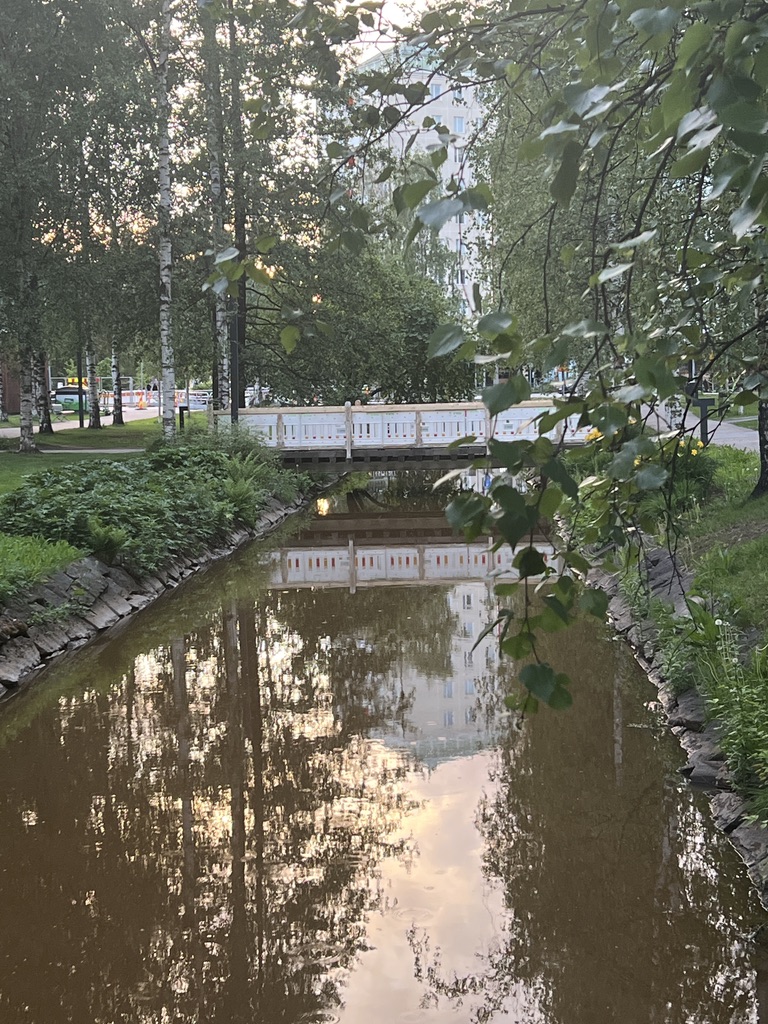
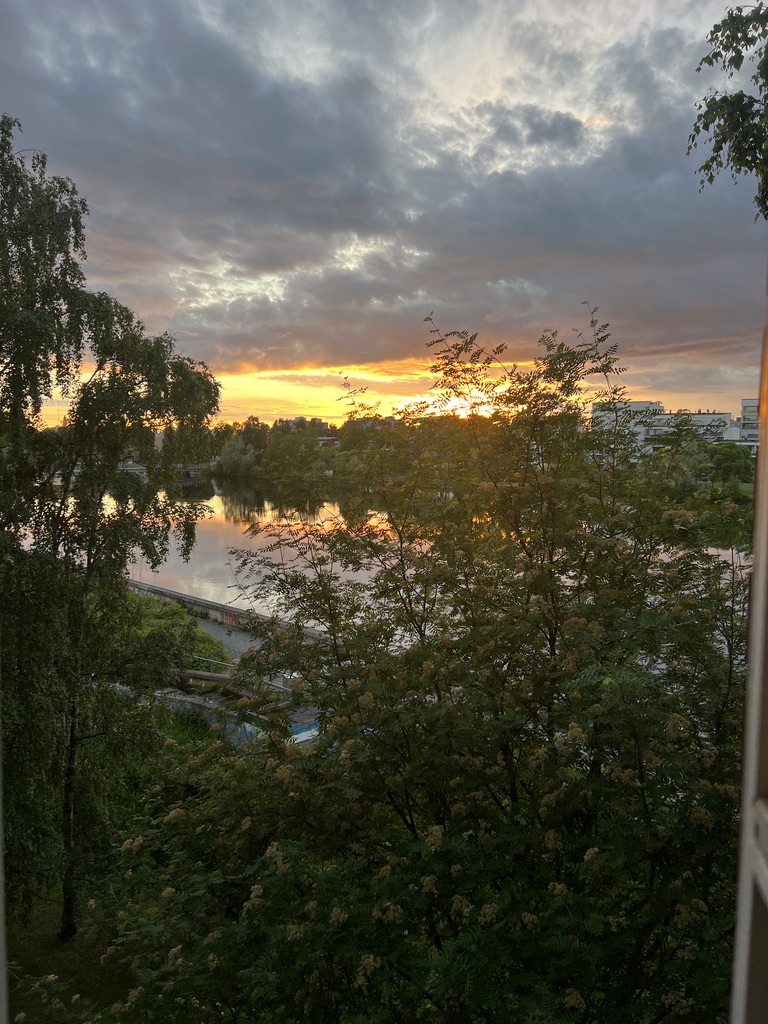
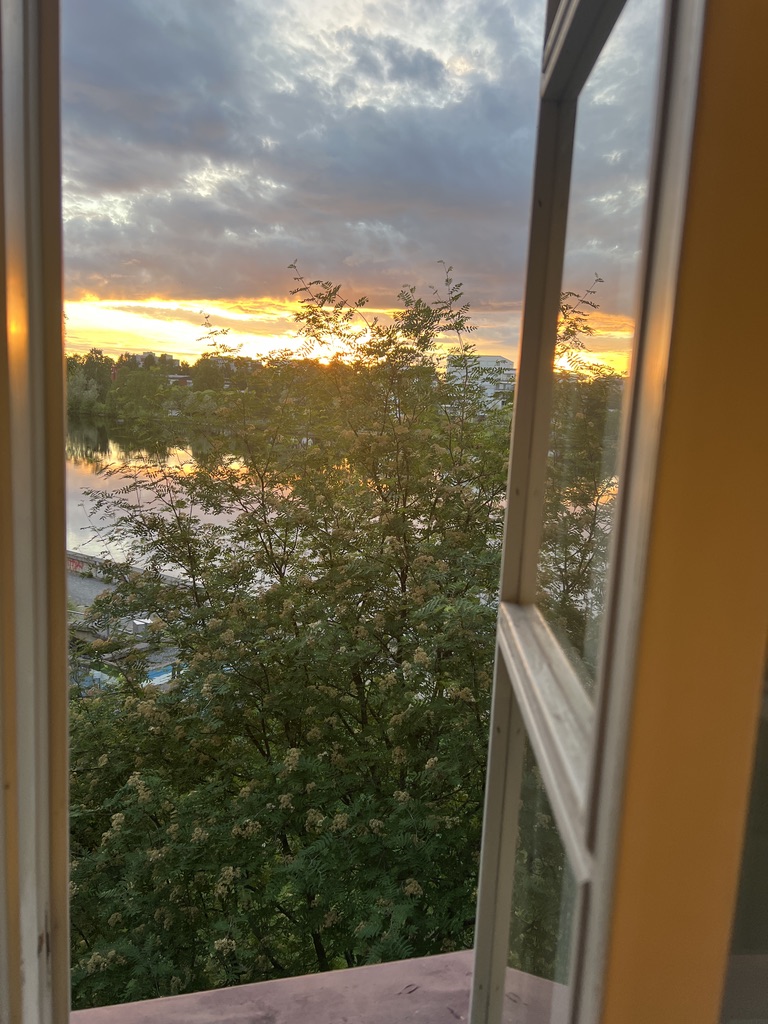
Sunset at 12:15 am (actually that would be Friday morning); Sunrise at 2:13 am (just two hours later)
In reality it is never dark; the hours between midnight and 2 a.m. are sort of like dusk. Picture that shows window frame taken from our hotel room at 12:30 am. I guess all this daylight is good for our walking steps—averaging between 10,000 and 16,000 steps a day.
Greetings from Oulu-
After breakfast, we headed to Kärsämäki, about 110 miles south of Oulu to see a very interesting church dubbed the “shingle church of Kärsämäki.” First you need to understand that although Finland is a very non-religious country, there remains a religion tax of about 1%. With this money, it appears that the government (or maybe the church itself) commissions the construction of lots of churches throughout the country. Officially, the majority of Finns are Lutheran, but churches are empty on Sunday mornings. Most Finns say they are agnostic (at least those we know). But they keep building new churches and many are exquisitely designed. So, I suppose this tax keeps many architects busy. We had read about this particular shingle church and decided to make the journey. The 90+ minute drive took us through miles and miles of forested roadways and streams, rivers, and lakes. Not a billboard in sight! No potholes. And amazingly well-maintained roads with great signage. As you drive through all of this unbuilt land, you truly get the sense of Finland’s reality: 5.5 million people living in a country whose land mass is the size of California (population about 40 million). We made a little pit stop at the Marimekko Outlet store nearby, which is in a small mall. And as elsewhere in Finland there was a well-equipped large room in the mall that was for kids to play–supervised by a qualified “teacher” so that parents could shop without distraction.
Anyway, we had considered driving to the church when we were planning the trip a few weeks ago and reached out to find out if we could get inside since we knew it was a pretty special interior. We couldn’t find a contact for the church, so we sent an email to the city clerk; we figured that in a town of 2,500 people, the city would be able to either tell us what to do or have the information. It’s pretty rural out there so I knew getting a response in English might be dicey. I did get a response saying that the person I reached out to no longer worked for the town. So, without knowing whether or not we’d get inside we decided to make the drive anyway. In the end, we could only see the church from the outside, and peek in to see the interior. But it was still worth it. Nestled in this little forested area, a stone’s throw from a stream, sat the shingle church.
The story of the church is interesting. In 1999 the local municipality, sponsored an open student competition to rebuild the original 1765 church that was demolished in 1841. There weren’t any documents showing the original appearance of the building, so the competition, which was organized by the Department of Architecture at the University of Oulu, asked for entries that would create a new, modern church using traditional 18th century methods. The final design of the church, the award- winning solution, is based on Anssi Lassila´s winning entry “Cantata.” The task was “to design a contemporary sacred space to be constructed with traditional handicraft methods.” The goal was “to achieve a sense of serenity and sacrality, an ecumenical atmosphere that would feel compelling and natural to all people.” The building style emphasizes the natural roughness of the wooden elements which were all hand crafted.
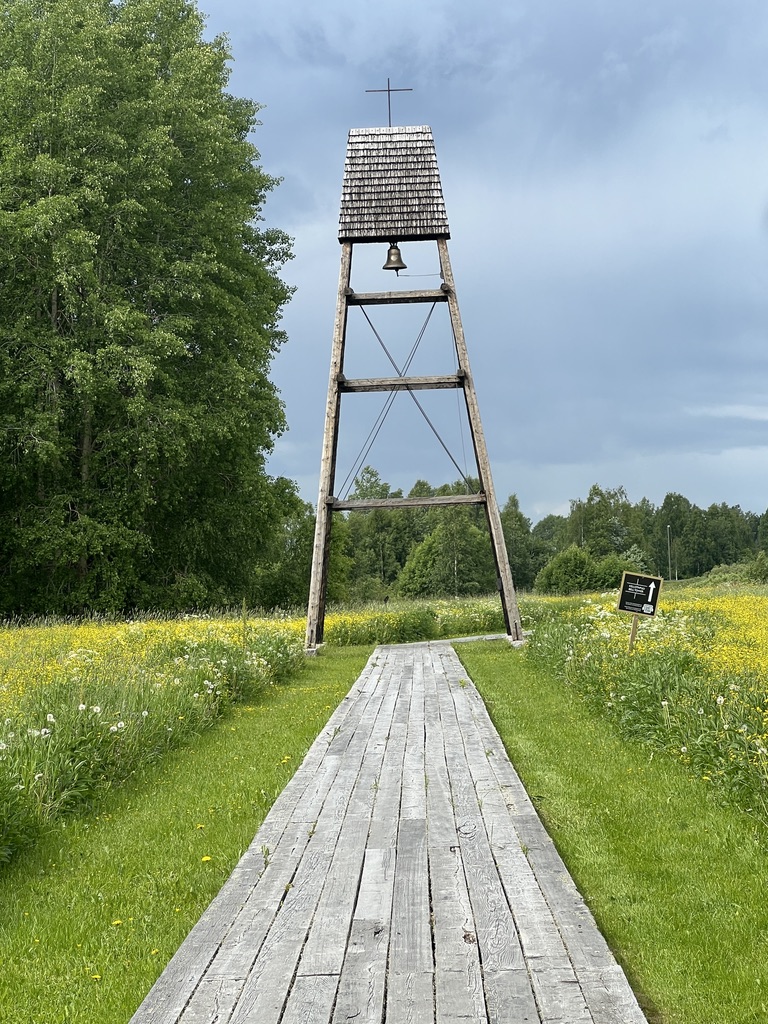
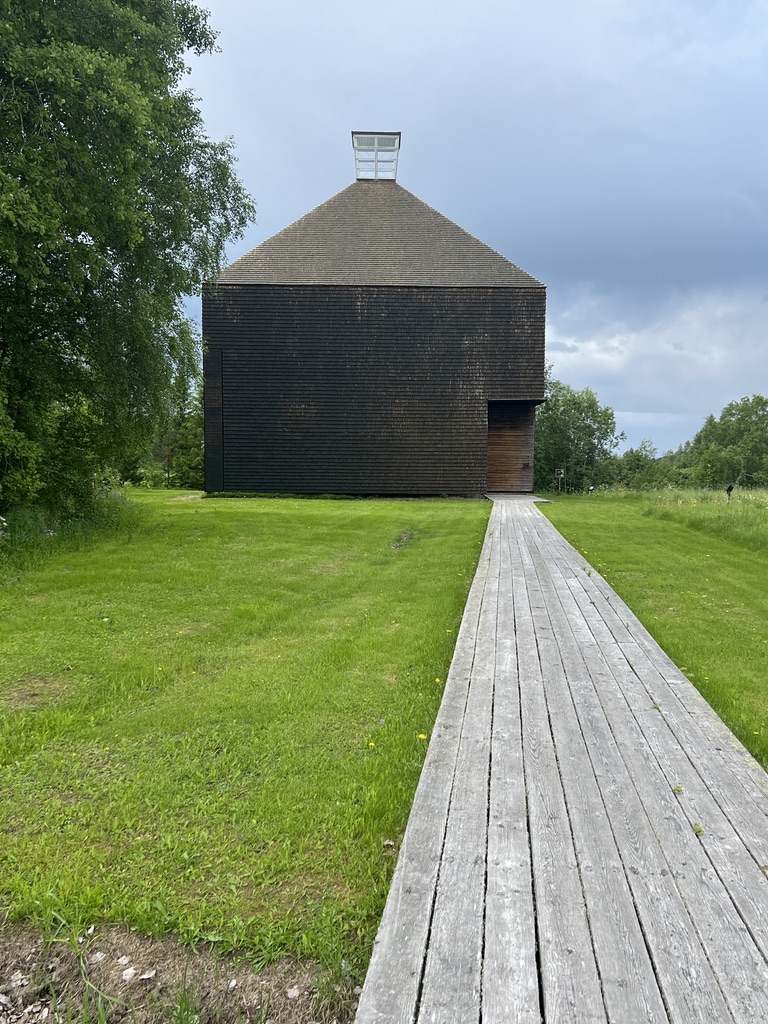
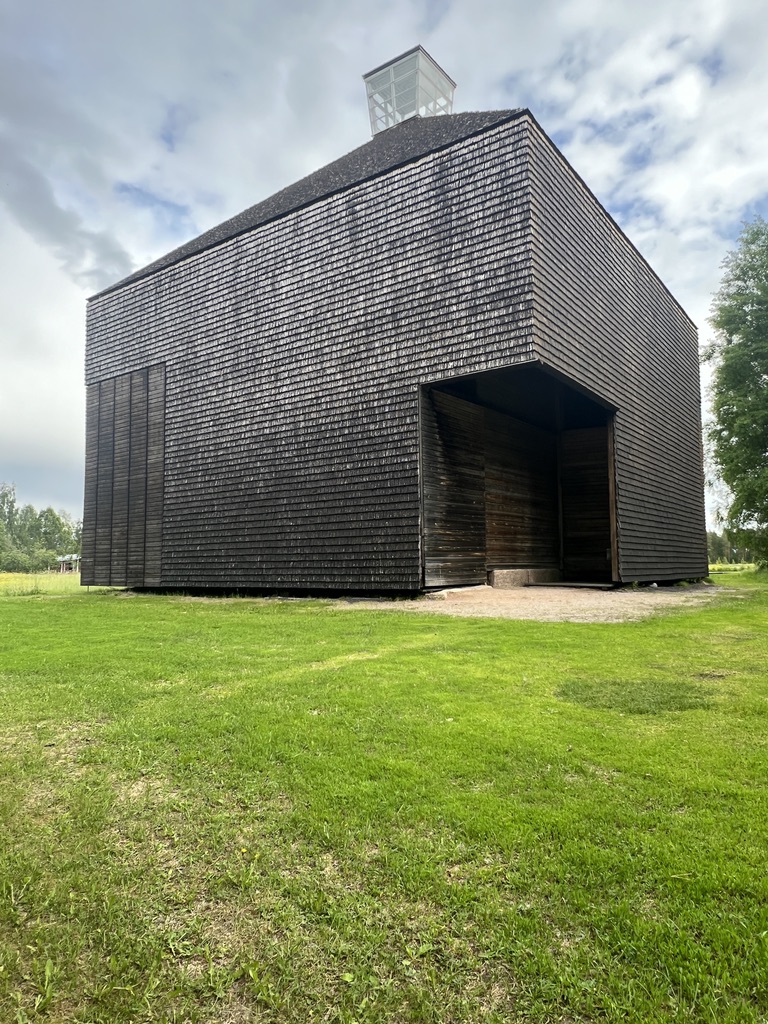
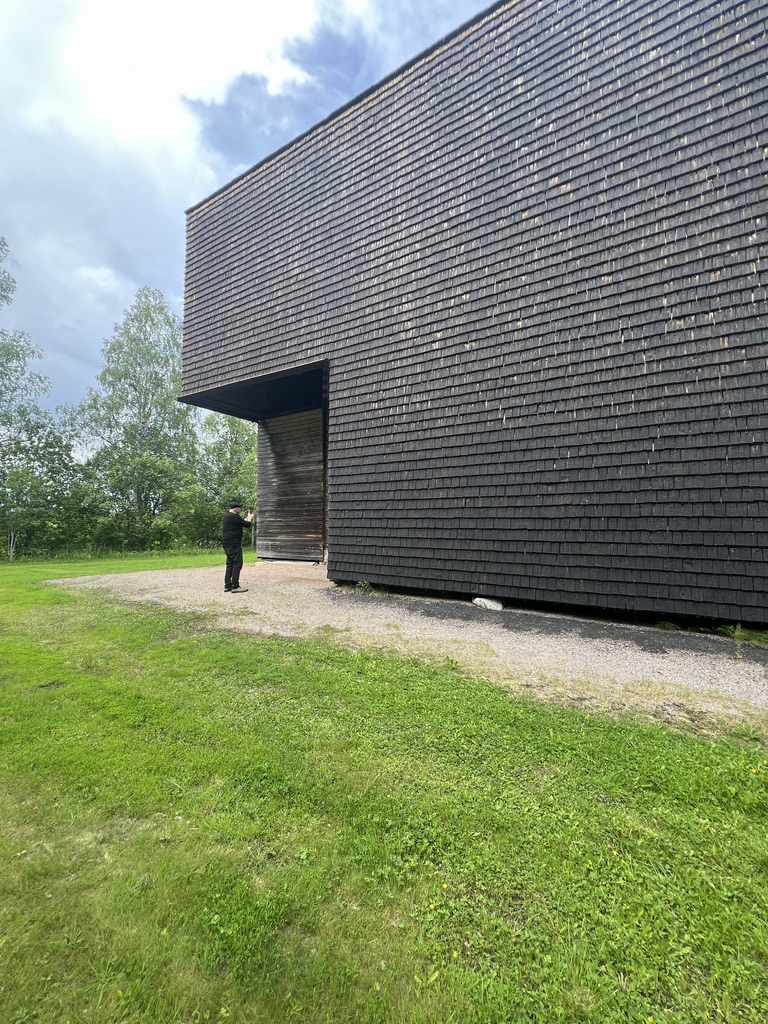
While we didn’t see the interior (if you want to see pictures of the interior, check it out on the Internet), we have read that one enters through a dimly lit space and then emerges into a lighter colored main space that is lit by natural light from a skylight. At dusk, the interior is lit by movable, candle-lit glass lanterns and tin lanterns carried by churchgoers. All seating as well as the altar are movable. It is my understanding that the labor was all local, everything is handmade, and lots of volunteers helped complete the structure.
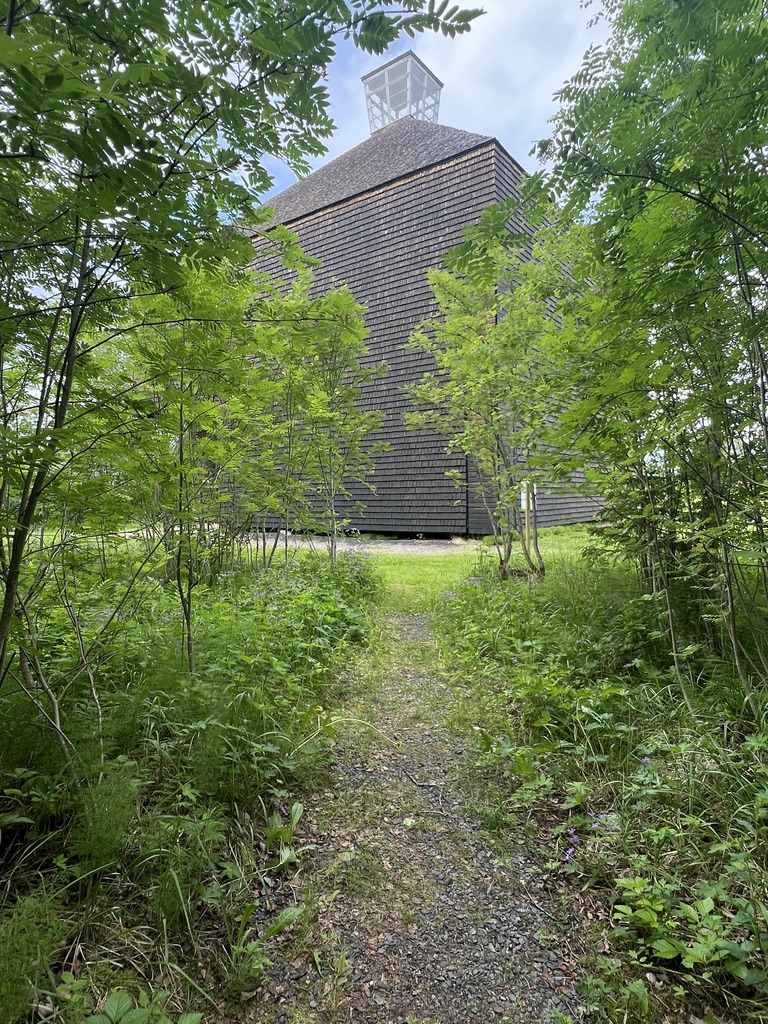
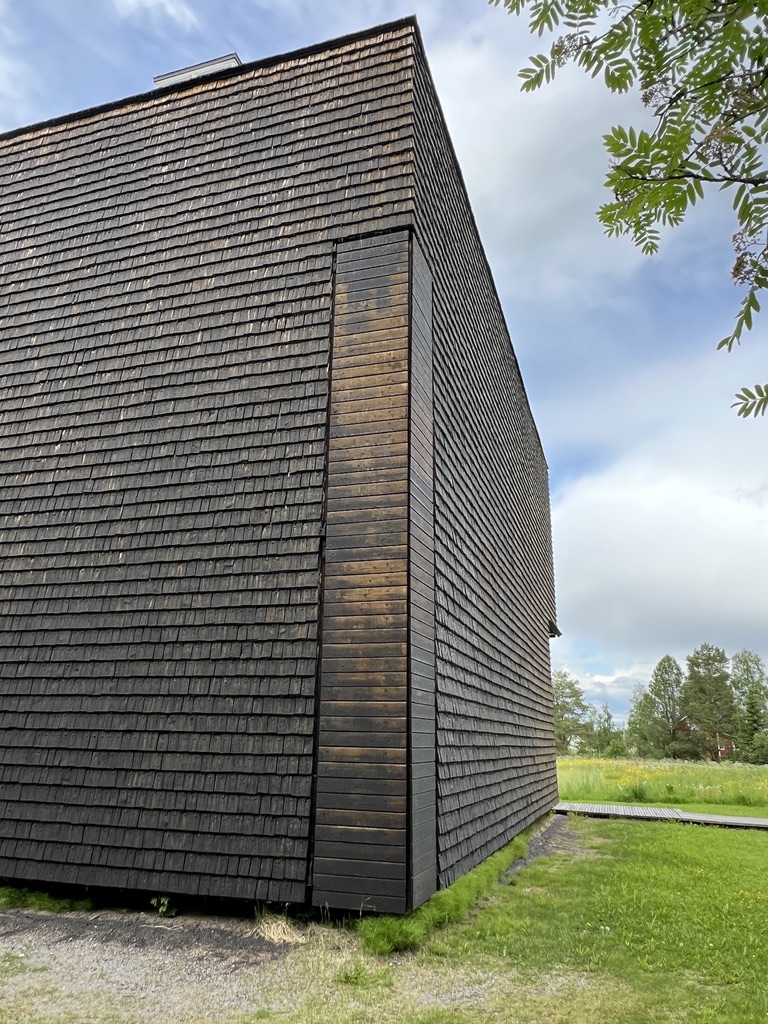

They used traditional methods of construction requiring a good deal of research and learning about these old-fashioned building techniques that had all but disappeared. They also needed to find new solutions based on old traditions. Apparently, many hours of discussion with builders and designers in diverse fields were critical to figuring out solutions step by step. Really sorry we couldn’t get inside… perhaps next time.
One thing we discovered while walking around the outside of the church is that Karsamaki has mosquitoes in June. We headed to a small supermarket to get “hyttyskarkote” (mosquito repellent). We also stopped at a gas station that had a large shop and cafe attached. Inside was an array of cheeses that you’d be more likely to find in a really good specialty market in the states. By the way, sales tax is 24.5% and Finns are taxed on income at about 35% on average (with many paying about 50%). But the use of their taxes is visible: they get excellent healthcare, free education from preschool through university, well paved roads, and more. When we lived here their military budget was 1% of their GDP. I imagine with entry into NATO that is probably no longer the case.

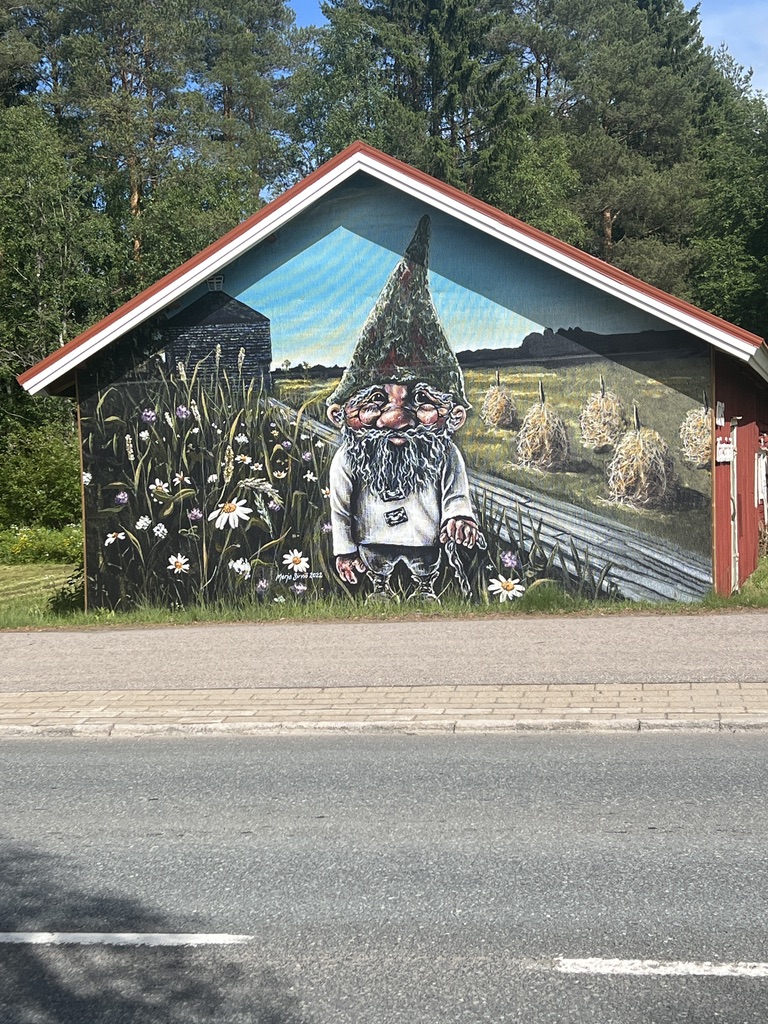
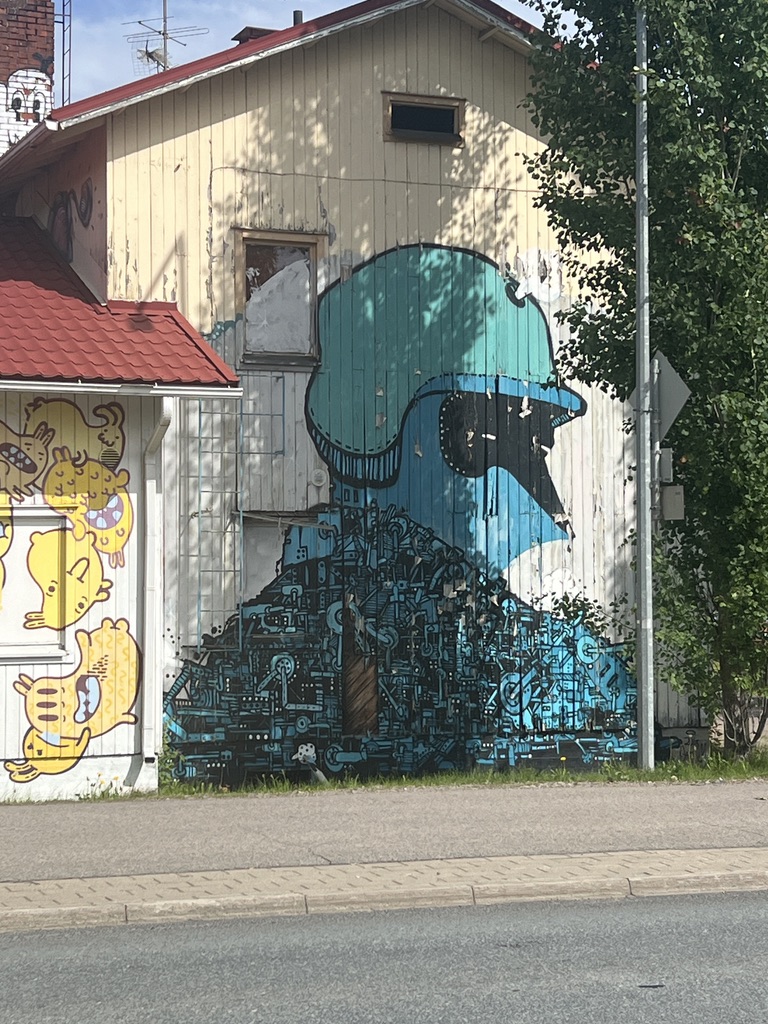

We reminisced about our previous trip to Oulu when we lived in Finland— We had taken a week-long trip to Lapland with our good Finnish friends. We stayed overnight in several towns and cities along the way and in one cabin in the woods where we needed to cross-country ski to get to the cabin as it was snowed in. We skied in, carrying packs of beer and food and also a Monopoly set to teach our Finnish friends the game. It was March and the country was totally covered in snow. It was beautiful.
Anyway, Antti made all the ”hotel” reservations. As the four of us approached our ”hotel” in Oulu, we couldn’t stop laughing. The building was some kind of office building and they rented out two rooms on the first floor as hotel rooms (I think), Anyway, those two rooms each had big streetside windows and had a deep showroom type ”shelf” at the window (large enough for a person or a set of mannequins to be on display at the window). We got there pretty late and wound up staying there. We all felt like we were on display the entire night. Don’t think that ”hotel” exists any more. The purpose of that trip was to see more of Finland and to cross country ski in Lapland. Many funny stories about that, including my personal encounter with two reindeer on the trail.
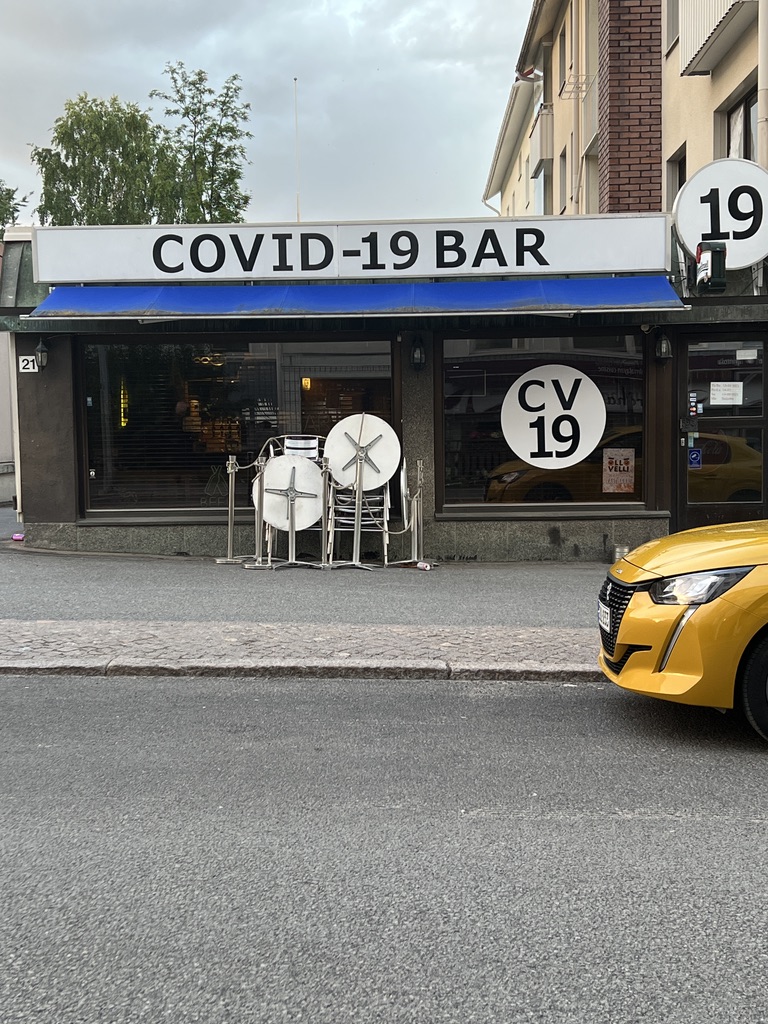
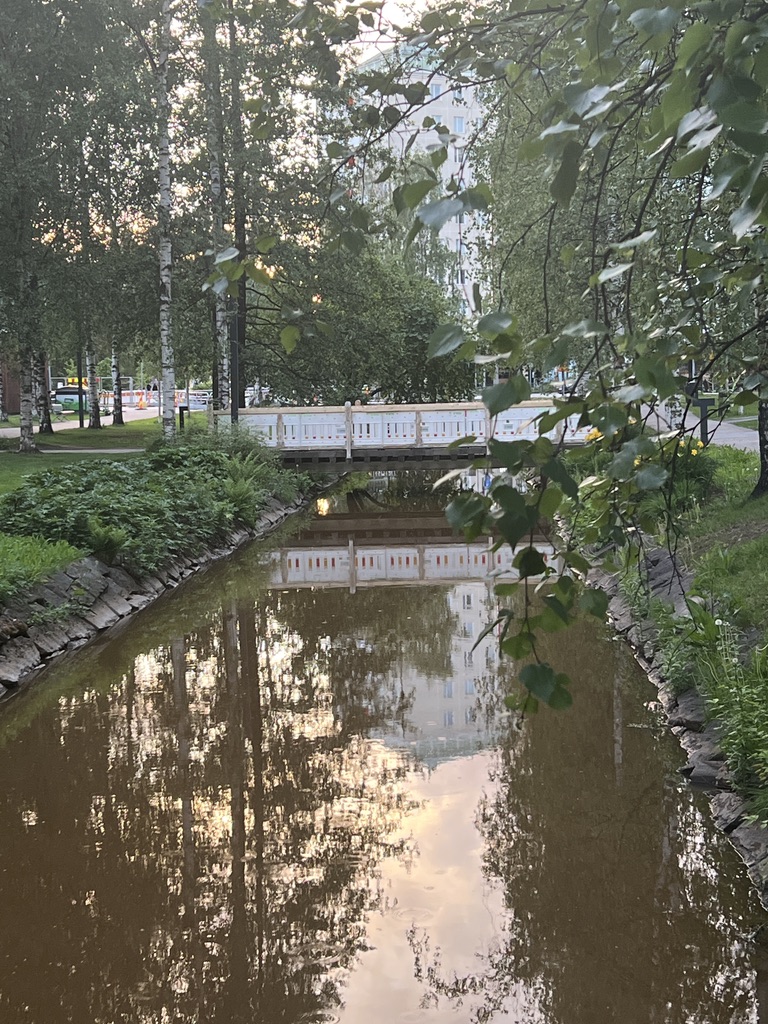
At about 8 pm, Mike and I headed to dinner at Alfred Kitchen, a small upscale restaurant (ravintola in Finnish) and shared three small courses: beef tataki, asparagus risotto, and salmon. Quite good. The menu is very autobiographical with family stories (fortunately they had an English version) of Alfred’s childhood and his mother’s cooking and his desire to emulate her simple, fresh, recipes and to update them with modern cooking techniques and ingredients.
We strolled back to the hotel at about 11:00 pm in light that felt like it was about 6 pm.
Hope you are well and that you are enjoying your own upcoming summer solstice.
Tomorrow we head for Rovaniemi
All the best- Fern
PS – I received a note from one of the recipients of this travelogue to say that Finland’s placement as the best school system in the world has plummeted. I did a little research and it is sort of true. The explanations are also complicated and contradictory. I’m interested to hear what our Helsinki friends have to say about this… Regardless, it is amazing to be able to have such deep and thoughtful conversation with any Finn, regardless of education level, so something is working. And every Finn can have that conversation in any one of (at least) three languages, with those who are university educated being able to easily converse in at least five languages.
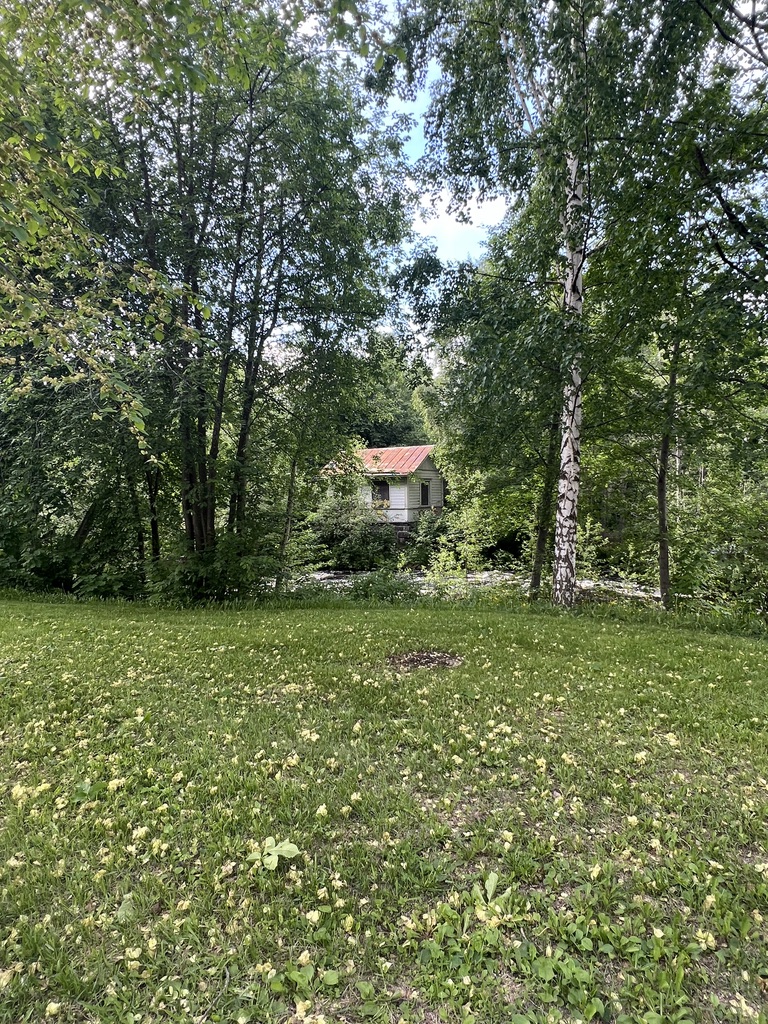
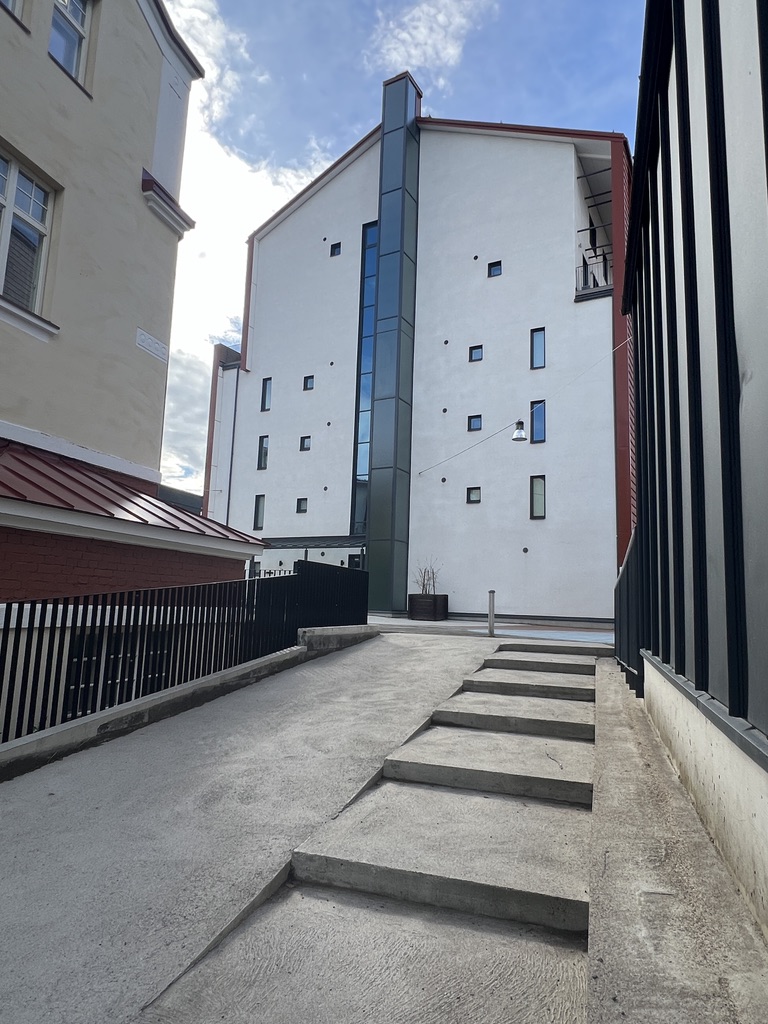
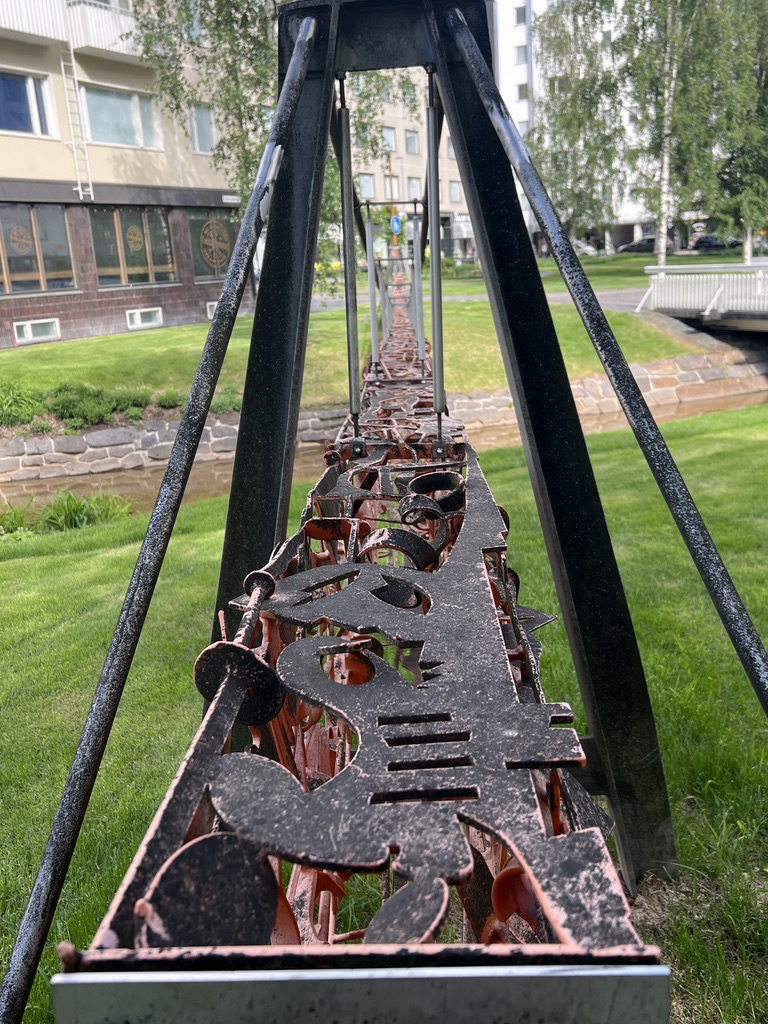
Hei Hei !!
Hectic morning having early breakfast, repacking, and getting off the ferry at the port in Helsinki, but we arrived exactly as promised at 10:30 a.m.; found taxi immediately to take us to the Helsinki Airport (perhaps a bit of a circuitous route we are taking in Finland, but it made sense based on when we wanted to be back in Helsinki). It’s been 5 years since our last visit, and the country remains as peaceful and beautiful as ever. The roads are perfectly paved; there’s a lot of new construction (with each building being more architecturally well designed than the next); no evidence of homelessness as housing is a major priority and the government has been successful in drastically reducing the numbers (which were extremely small to begin with); their public schools are rated among the top in the world; and health care is free for everyone.
Anyway, we flew to Oulu which is on the west coast of Finland, about one third to the north. We used Oulu as our driving starting point since we are headed north of the Arctic Circle and this eliminated a lot of driving. We had been to Oulu once before—many years ago when we lived in Finland—but that was in the winter when the city was covered in snow. Oulu is a city of about 215,000 and is often called the capital of Northern Finland. It’s also considered an innovative city where new technologies are embraced and where residents see themselves as part of a living laboratory when it comes to the environment, healthcare, and the arts. It’s compact and walking is easy and encouraged. Pedestrians reign supreme and cyclists as well as drivers stop for pedestrians and obey all traffic laws. Oulu is also home to a large university (by Finnish standards), a professional theater, and many music venues.
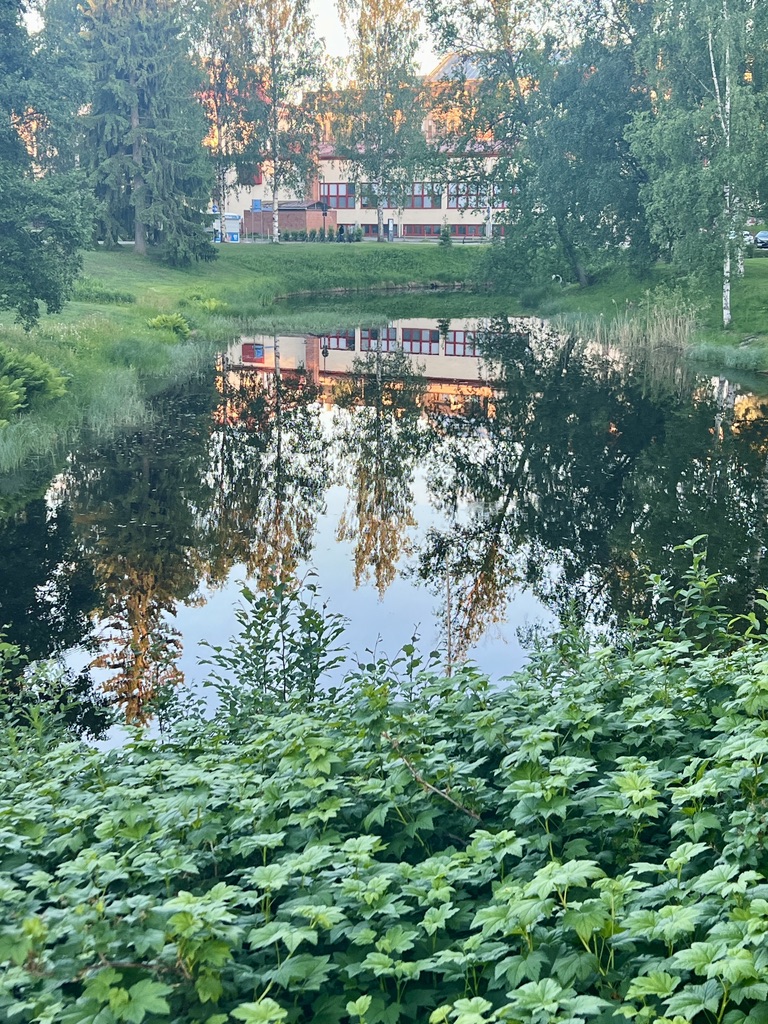
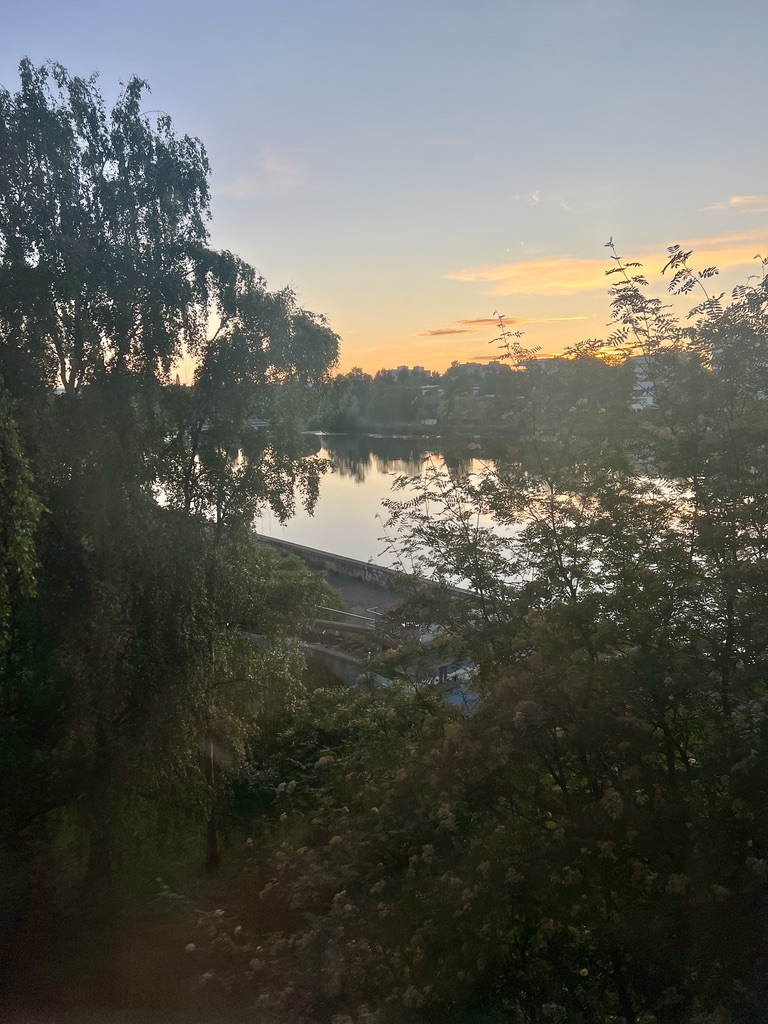
From what we can see, there is a thriving art scene…and of course the fact that the sun is now setting at a little before midnight and rising at 2 a.m., it’s easy to see the city at all hours of day and night. At least one of the photos in this email was taken at 11:45 pm and the sun had not yet set completely.
After picking up our rental car (we used Sixt after having a terrible argument with Hertz on our last rental in Cleveland a few weeks ago), we headed to our hotel—Lasareti Nordic Art Hotel, which turns out to be very pleasant, new, and situated at the edge of a lovely park and on the river (which we can see from our room).
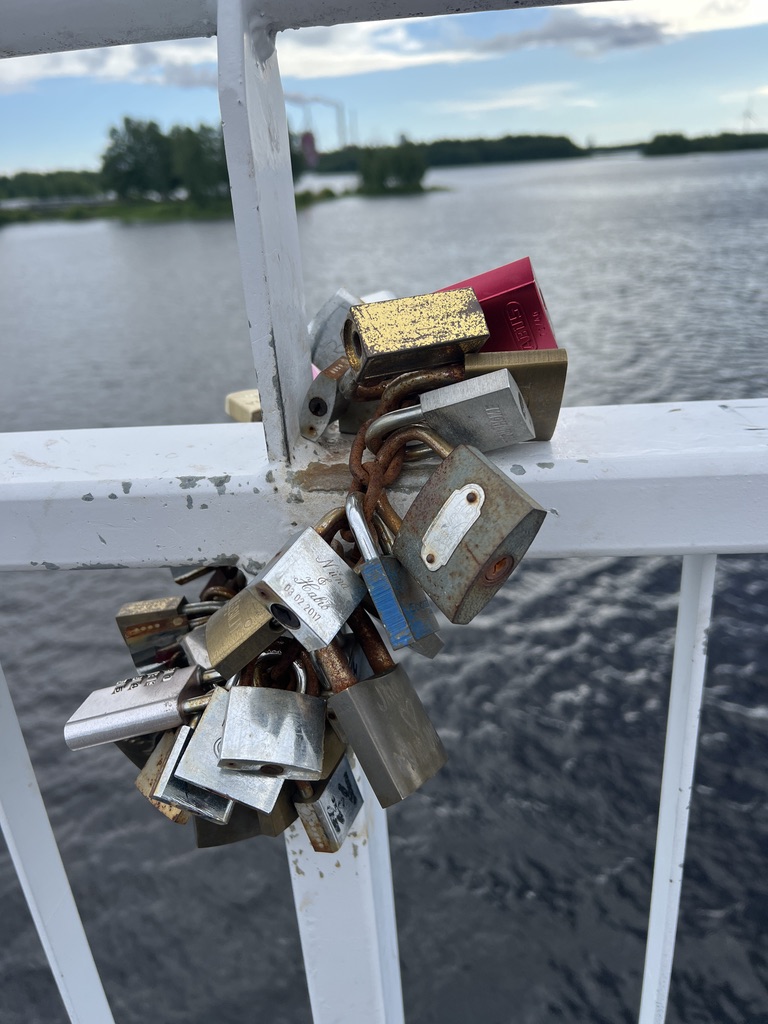
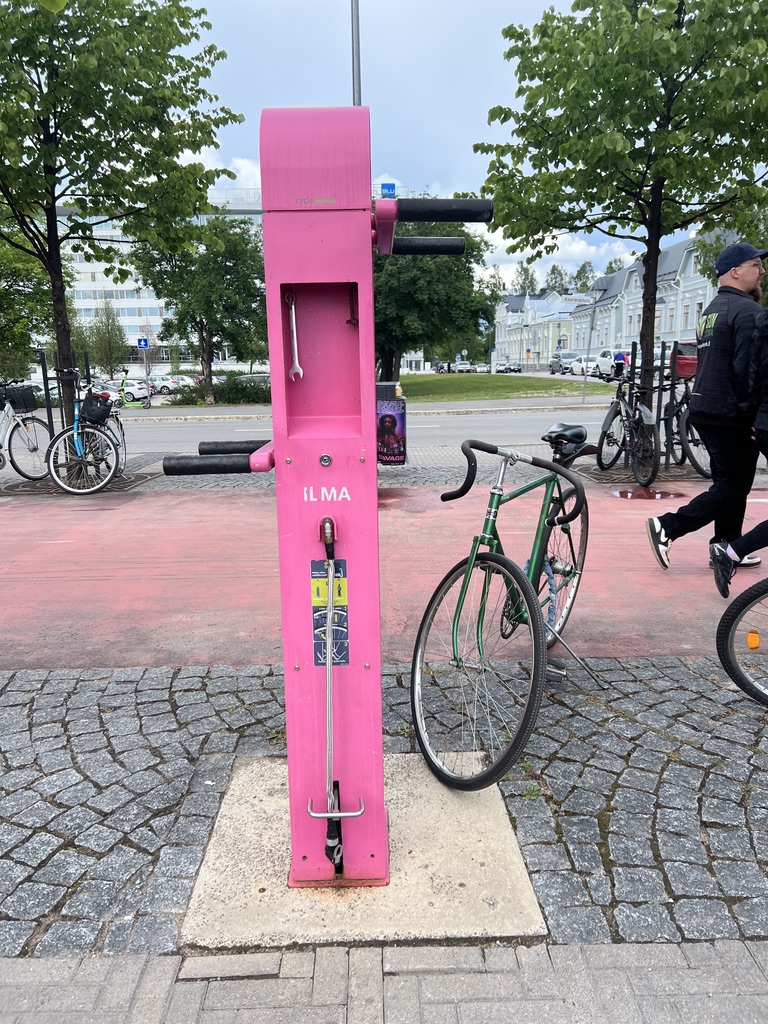
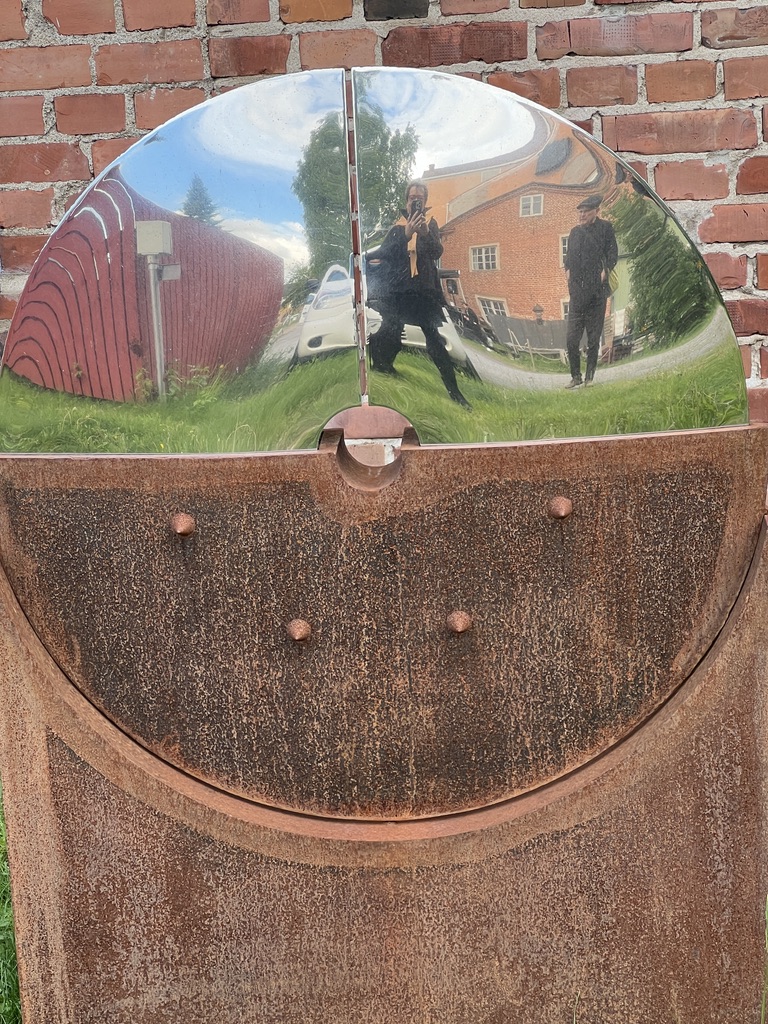
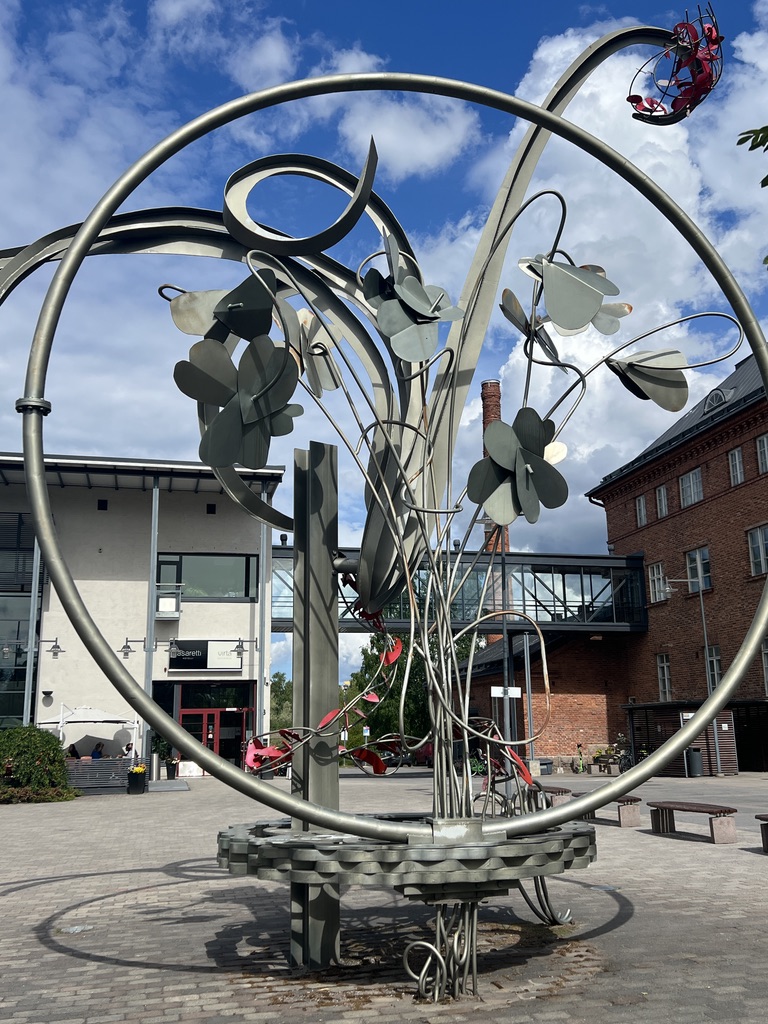
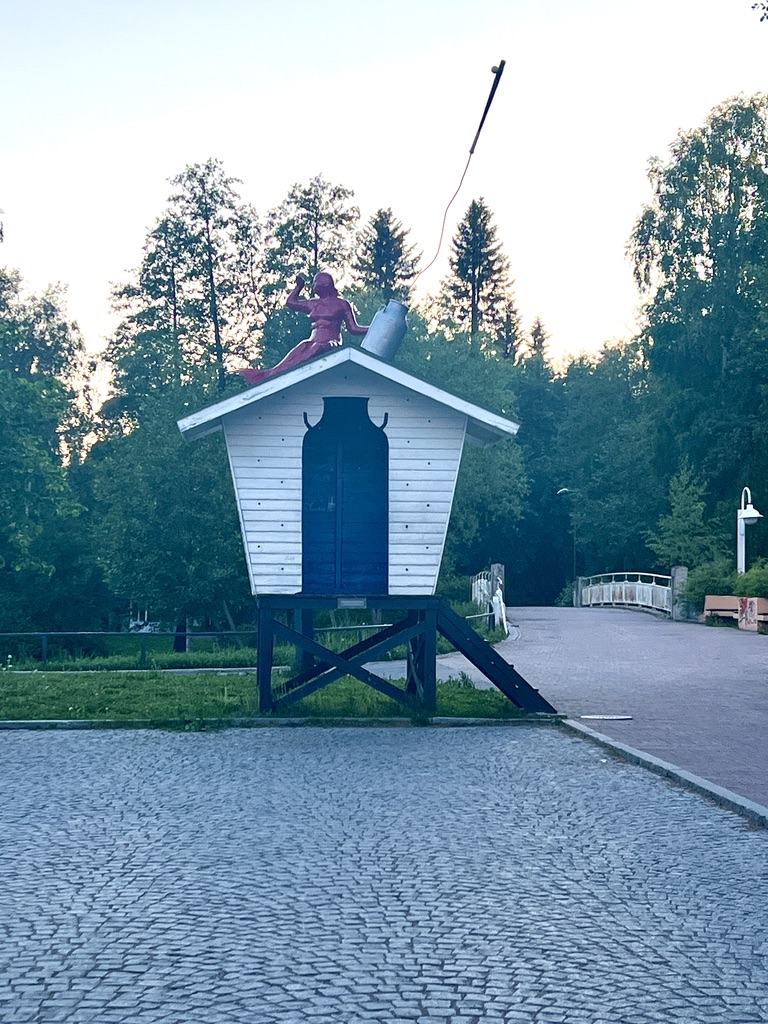
Lasareti is located within an arts complex, so as we arrived to check in there was a concert right outside. It’s also very central so we can easily walk everywhere. Right after checking in, we headed out to see the town—passing the art museum and the history museum, the main church, and many pedestrian-only streets. We also traversed a wonderful park with numerous bridges that enable you to move easily over small lakes and the Oulu River which meanders through the park. Finnish cities tend to have numerous, large, very well-maintained parks so this was not unusual, but it was delightful. There is public art scattered throughout the city. Finland invests heavily in promoting the visual as well as other arts, so the products of those investments are visible. Frankly, although the design quality of products, graphics, and buildings is extremely high, the visual arts (painting, sculpture, etc. done as “art”) has never been at the standards of Finnish fabric, clothing, dinnerware, furniture, and other consumable products.

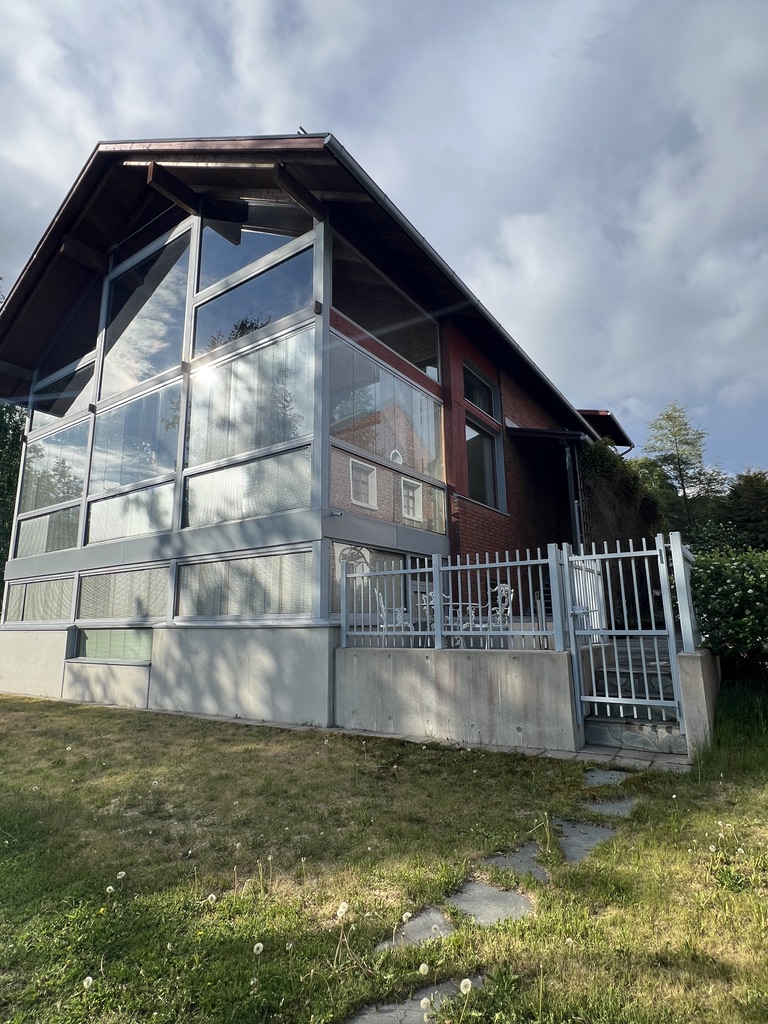
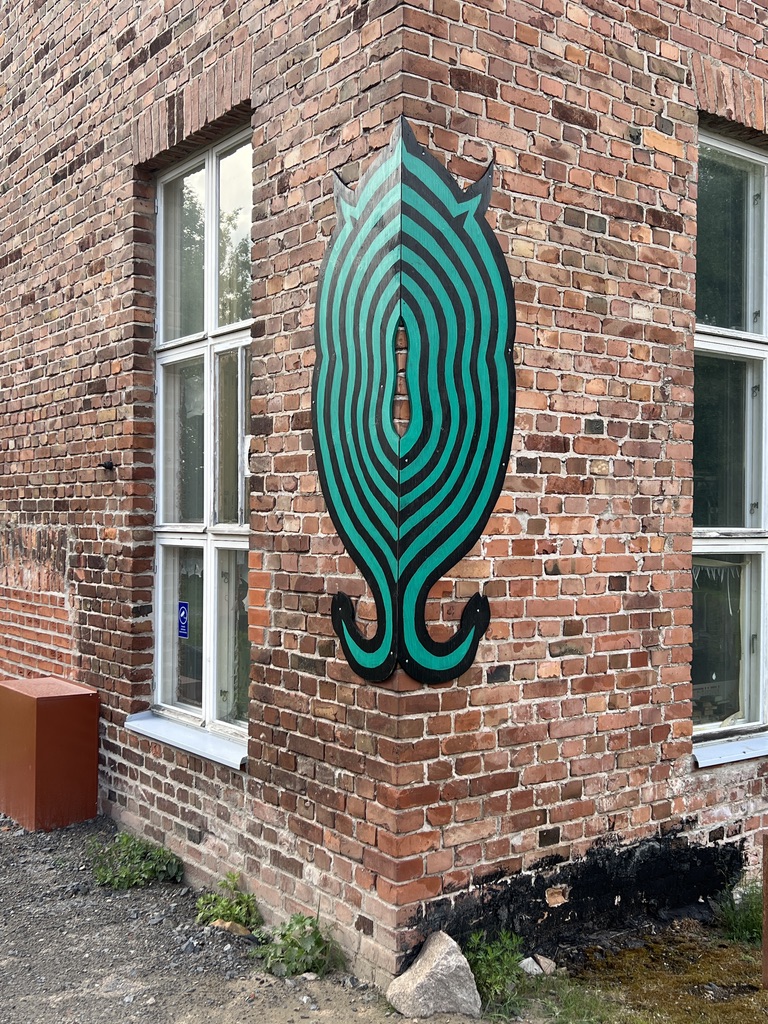
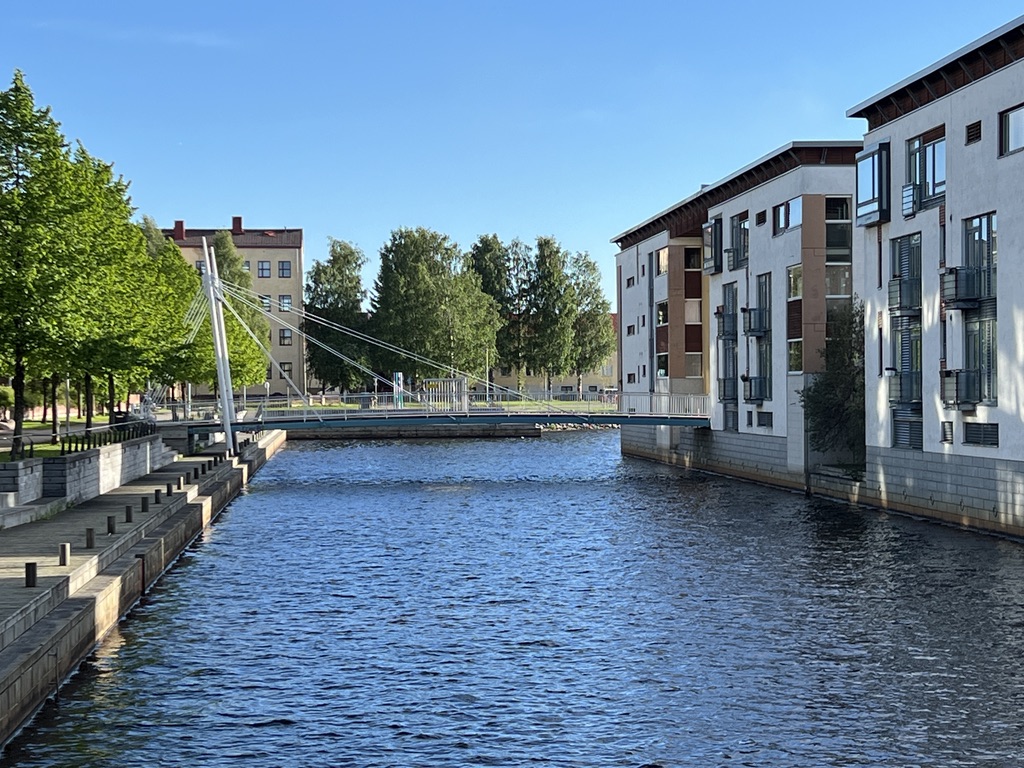
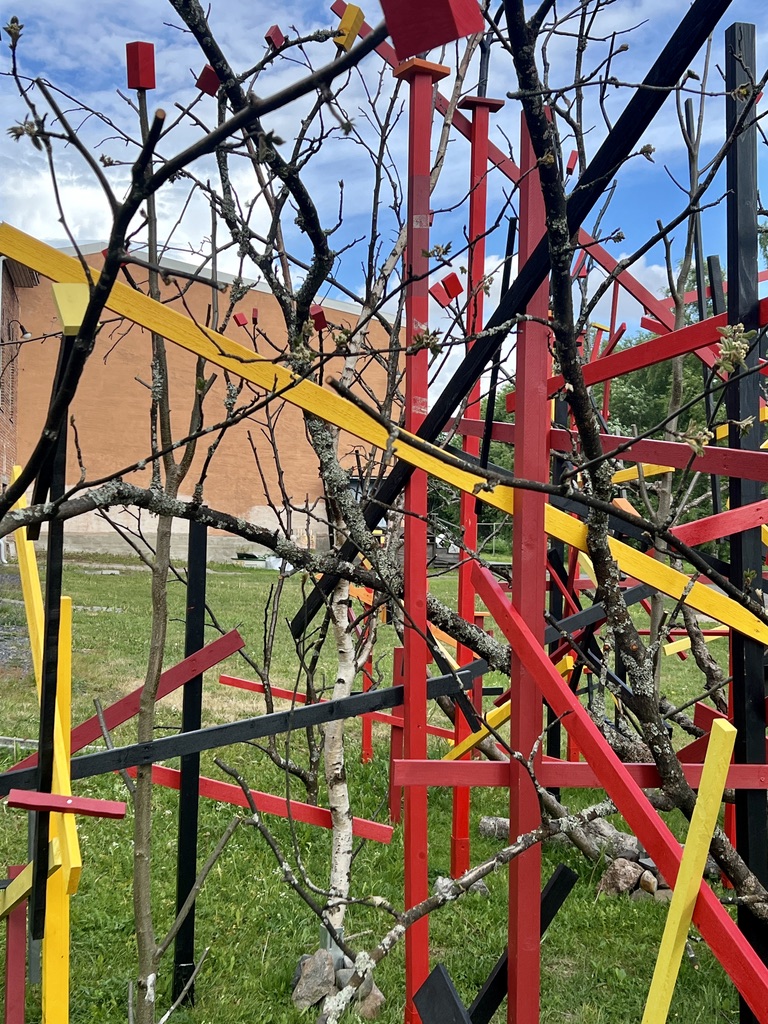
From the market area, we wandered across the bridge to Pikisaari, an island that is part of Oulu. It was historically the location of shipyards, and the only inhabitants were the workers of the companies. Today, Pikisaari is an artists colony with studios and housing for artists and craftspeople. Some time in the 1970s the city turned over the site of a former wool mill to the Arts and Crafts School and later a new school building was completed. It was fun to walk around and find sculptures and other art forms along the waters edge, in the forests, and on the walking paths.
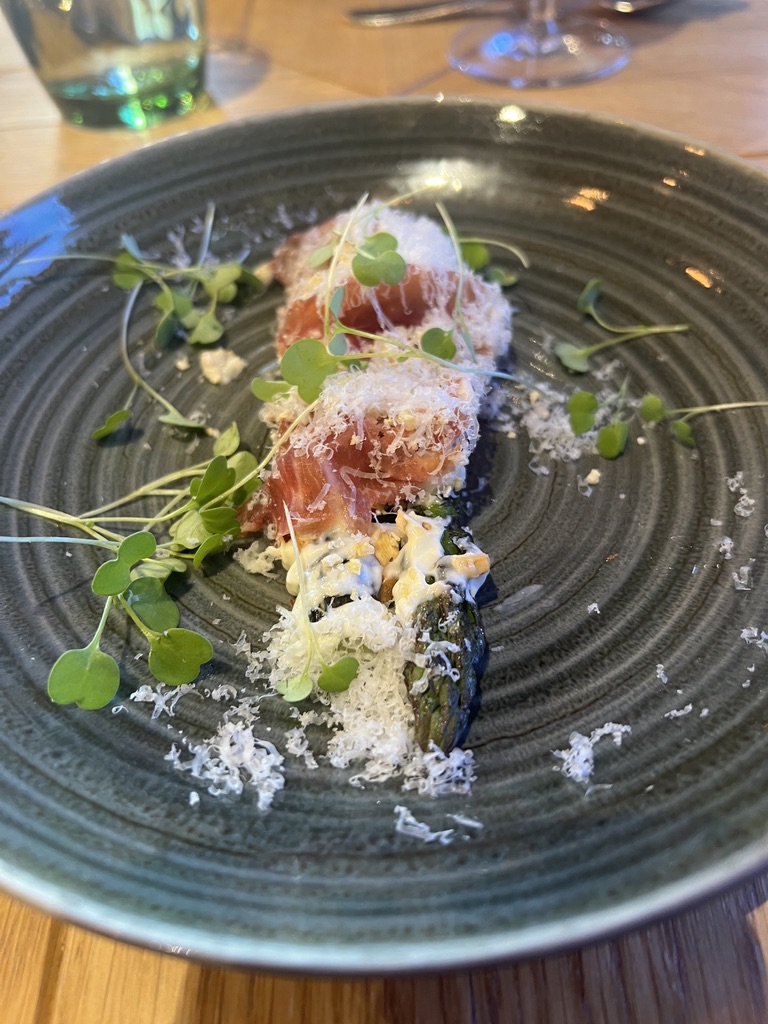
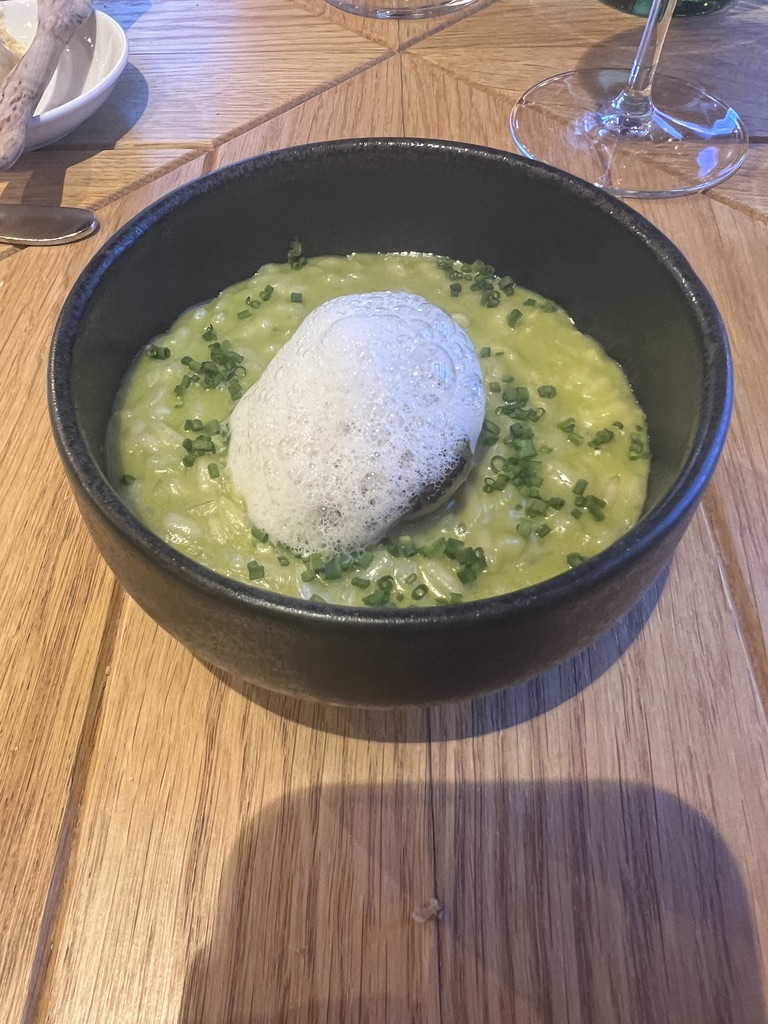
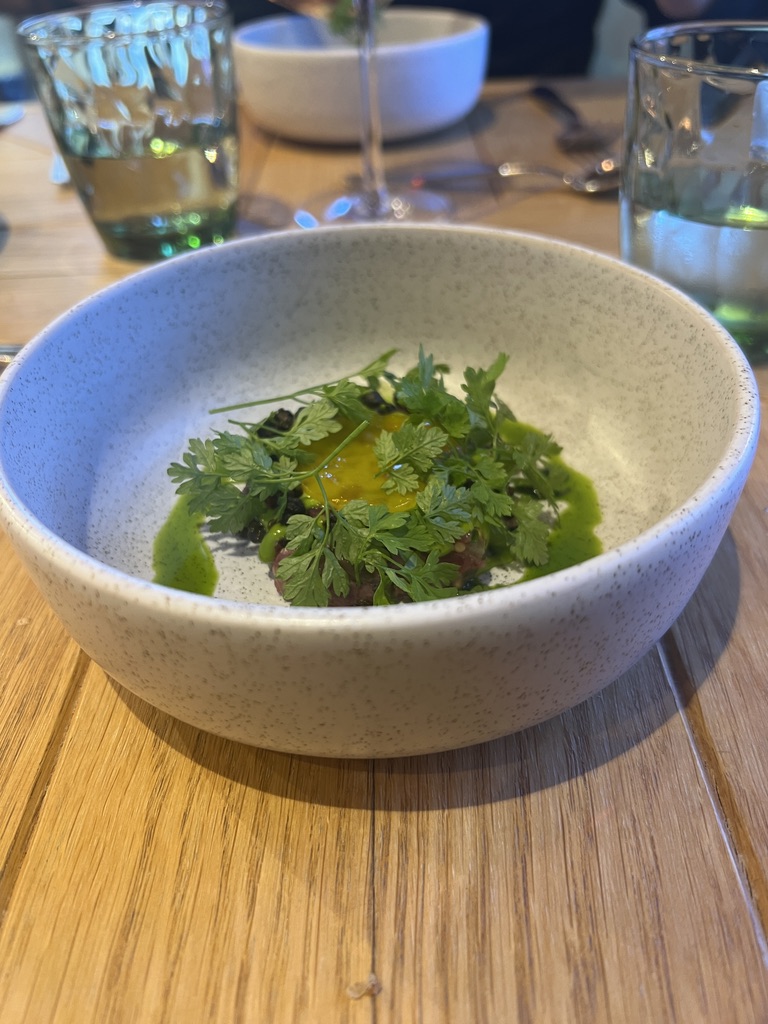
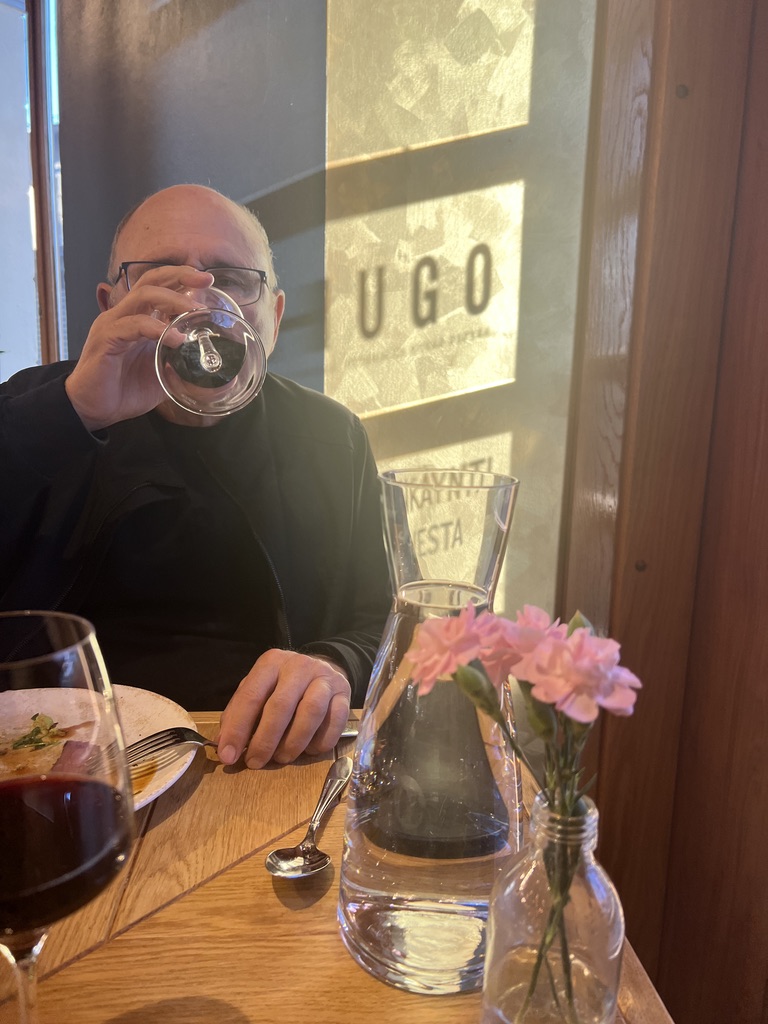
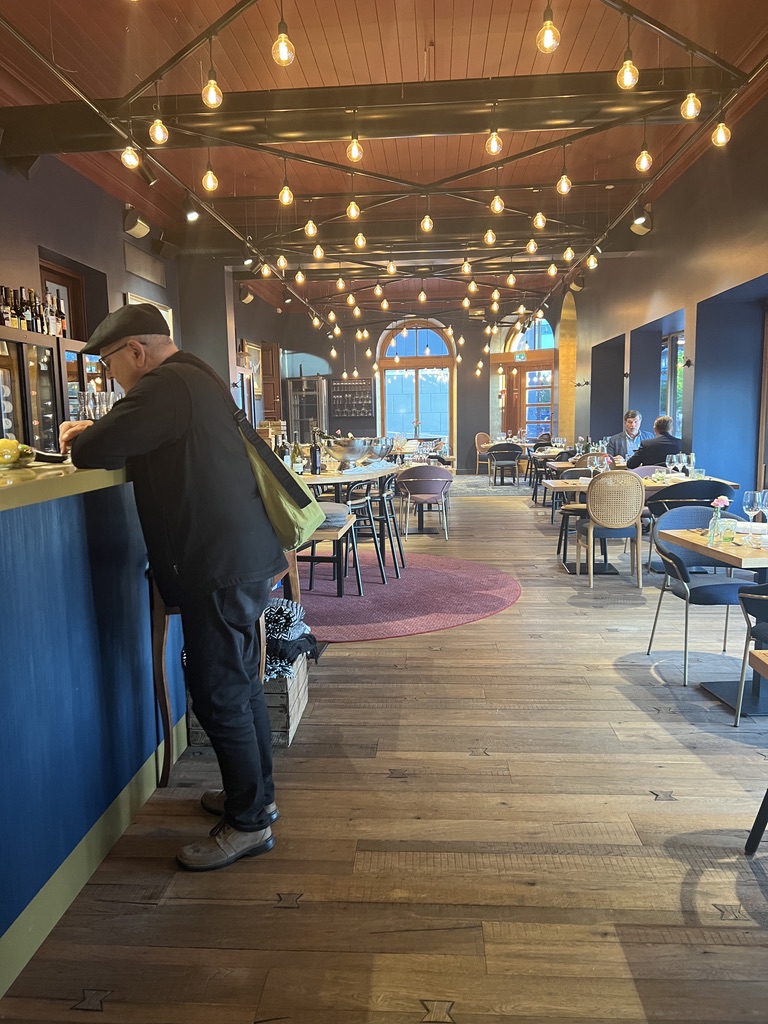
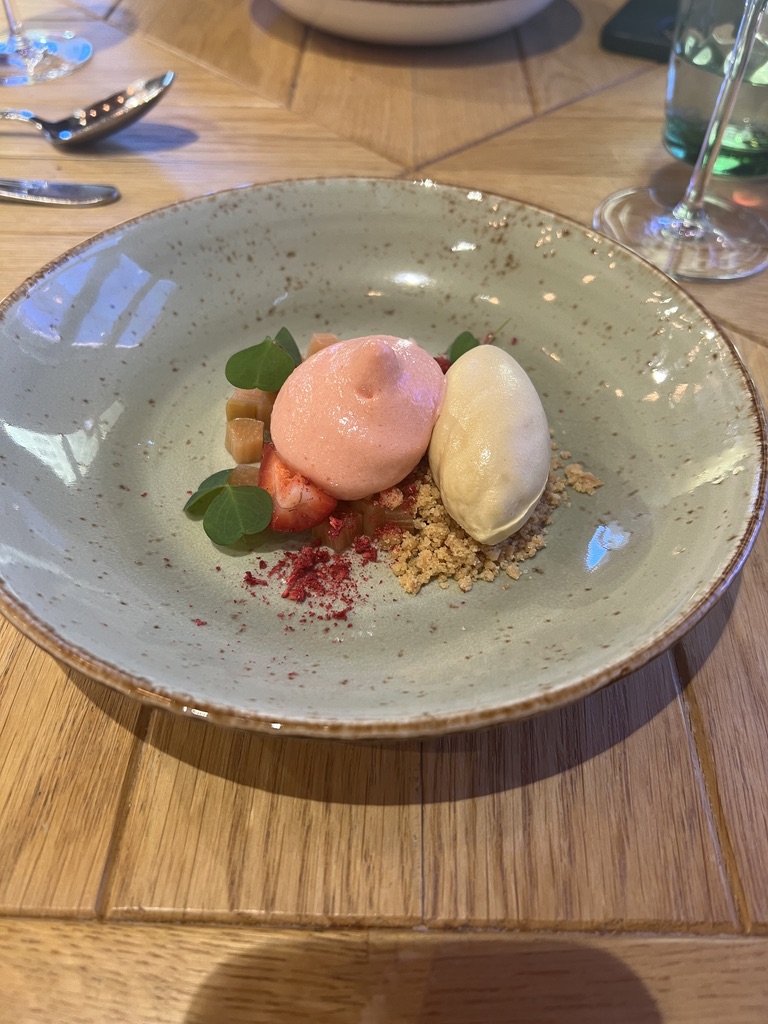
From Pikisaari we headed back toward the center of town to have dinner at Hugo – a restaurant we had read about. While we hadn’t intended to order the full six-course meal, we got very tempted when we read the menu. And the six courses, they promised us, were each quite small. Thus, we convinced ourselves it was OK since we never had any lunch. What they didn’t tell us was just how wonderful every morsel would be. From the asparagus soup that was presented initially as a medley of trout roe, small pieces of asparagus, tiny toasted malt bread crumbs, crunch brown bread crumbs, egg whites and fresh chives—on top of which they poured this amazing asparagus puree…. To the beef tartare with marinated cucumber juice, crispy egg, horseradish, parsley and egg yolk…. To the wild garlic risotto with scallop and scallop foam… to the wagyu beef with fried cauliflower.. to the amazing dessert—–the meal was memorable, and Hugo is a sweet place with very friendly staff. We sort of rolled out of there, very happy we had to walk about a mile to get back to our hotel. Hopefully, we walked some of those calories off (??) By the way, there are a lot of stories about cauliflower in Finland; I’ll try to relay the point tomorrow. Too tired now. By the way, this gourmet Finland is also something that has emerged in the past 15 to 20 years. When we lived here, there were very few (if any) restaurants exploring creatively with food. Food was pretty basic. Of course we didn’t have any money, so maybe we just didn’t know what was out there. But I truly think these kinds of places have come into being in recent years.


One last thing about being back… some of my Finnish is returning !! I was never fluent and could barely converse, but I did know a lot of words and could string them together to (sometimes) make myself understood. Of course when we lived here only those with higher education spoke English. Many workers actually knew English but were embarrassed to speak (perhaps they way I feel about speaking Spanish). Nowadays (and for the past 20 years or so), everyone speaks English and they speak well. Of course they are also fluent in both Finnish AND Swedish since Finland is a bilingual country and speaking both languages is required. But still it is nice to begin to bring back all those words that I knew (some very essential ones like ice cream and how much does it cost, and numbers, and the niceties like hello and goodbye and thank you and how are you).. Actually, I’m pretty good at reading menus and getting directions. But people realize right away that we are foreigners, and they immediately flip to English, so I don’t get much time to practice my minimal Finnish.
I’m signing off now. More tomorrow when we explore more of Oulu and also drive south to visit a small town we want to see.
Fern
PS – As in years past, we are continually impressed with how well versed everyone is on world politics and US politics (from the guy at the rental car desk to truck drivers to people on the street). And economic concepts that baffle typical Americans are often discussed by Finns with ease. Perhaps because they are such a small country they feel it is a necessity to understand world dynamics.
4. Stockholm to Helsinki: June 11, 2024
On the Baltic to Helsinki and Oulu from Stockholm
Terve Terve….
Hope all is well.
Just a reminder: Feel free to delete these daily travel blogs; I know sometimes they are long. Frankly, I mostly write them so I can remember where I’ve been and what I saw and did when traveling out of the country. I started doing them in 2005 (I think) and I believe the collection includes more than 35 countries and an untold number of cities. Some of you have been reading them for nearly 20 years. While I had traveled a lot before 2005 (I think total countries visited by now is 75 or so), it was in 2005, when I was heading to Romania with a friend, I was asked by someone who grew up in Romania and hadn’t been back since the 1950s to send comments about what I was seeing. I did that daily for the whole trip and sent the notes without photos to him and about 5 other people. Those people passed the notes around to others who then asked to get these travel notes. Thus began an almost 20-year (and counting) travel diary. And I have put about 80% of them on a blog, but I have never had time to get the photos onto the site, so I have not publicly ‘launched” the blog; a project for me once I retire! – but you can find many of them on fernstravelnotes.wordpress.com.
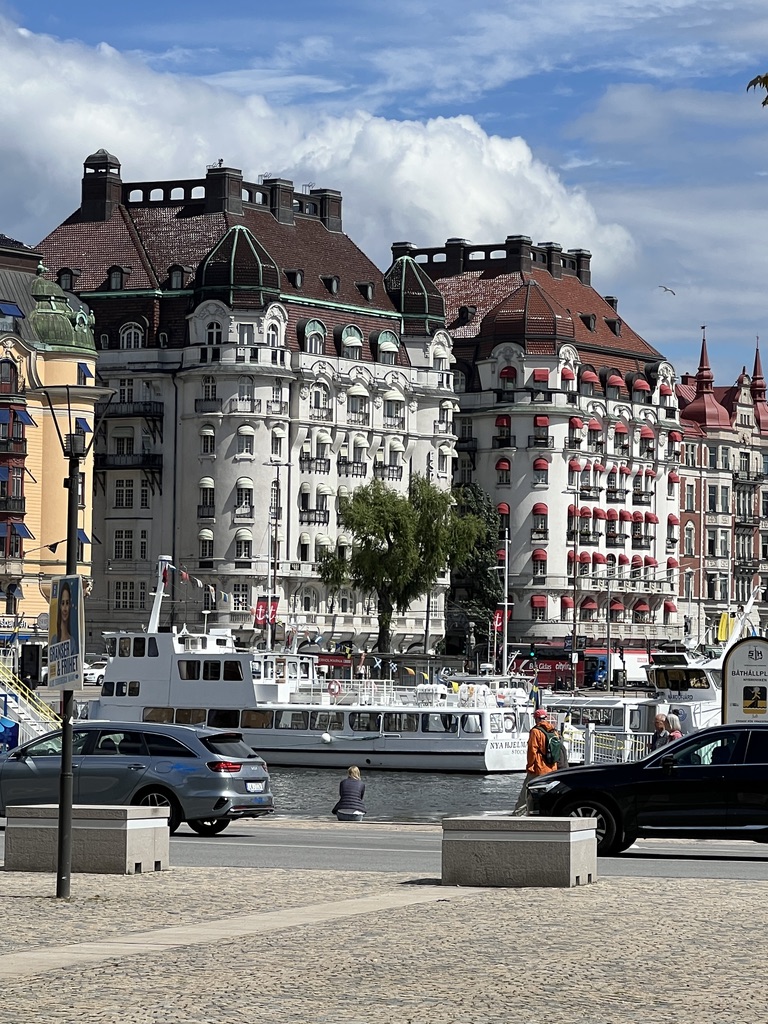
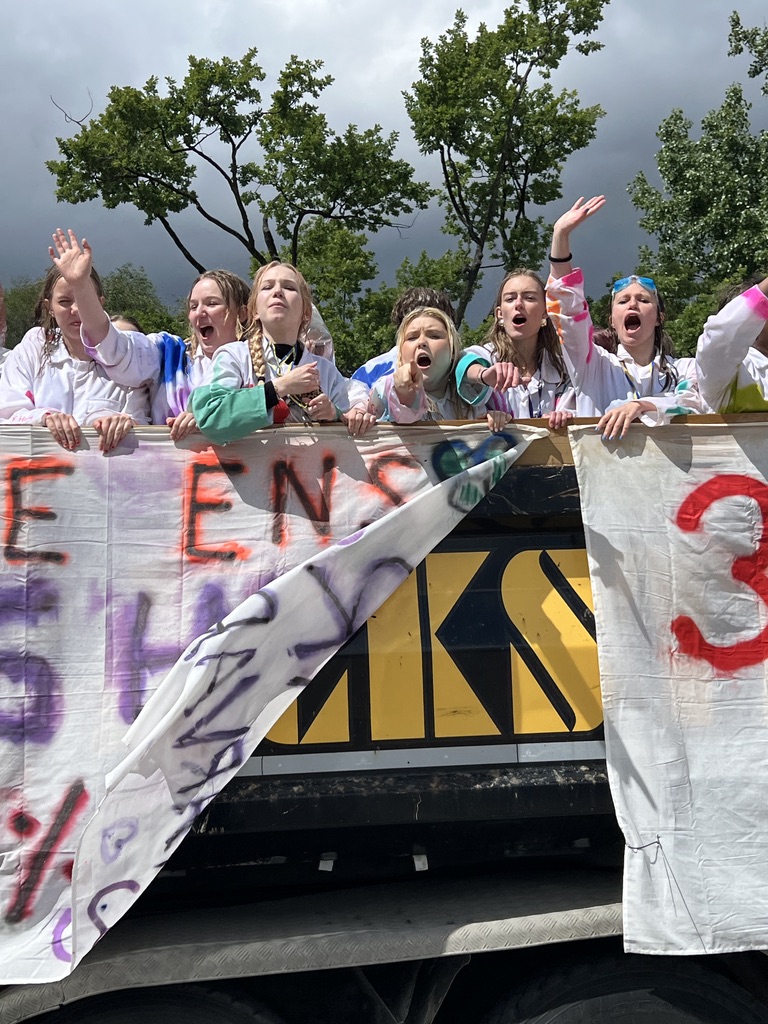
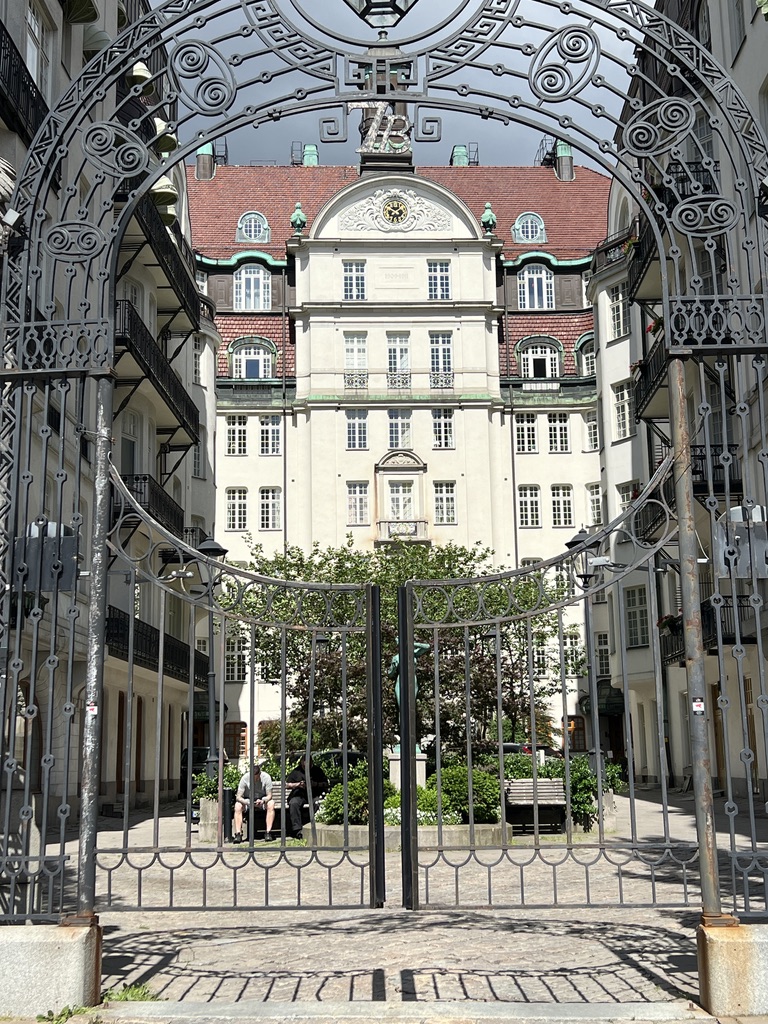
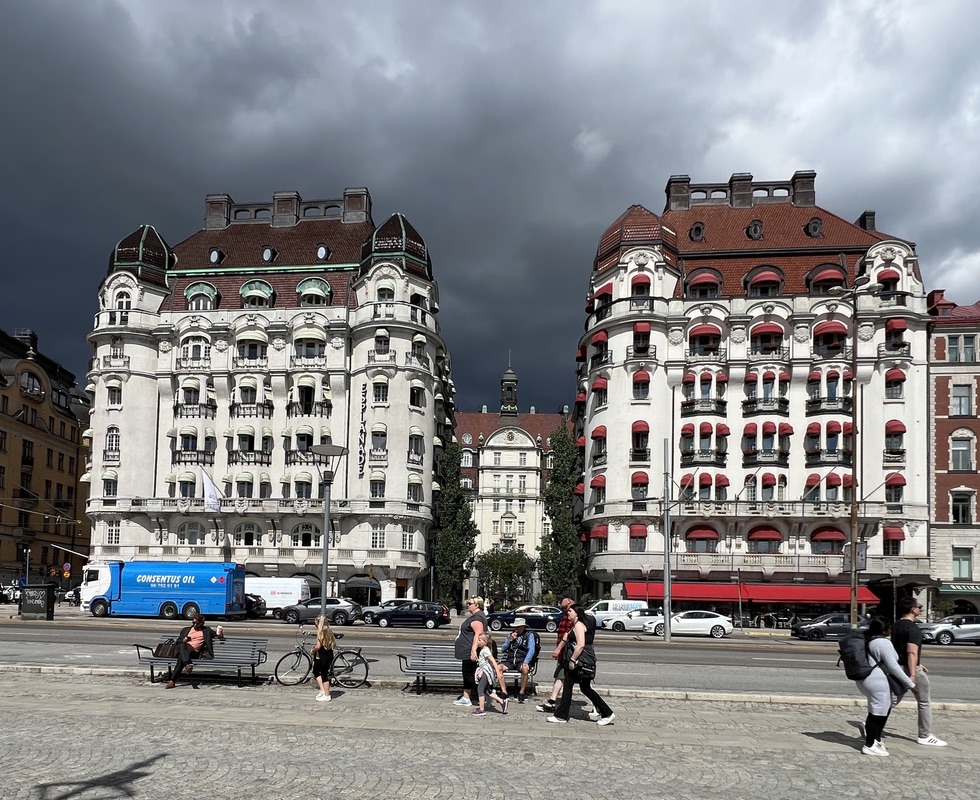
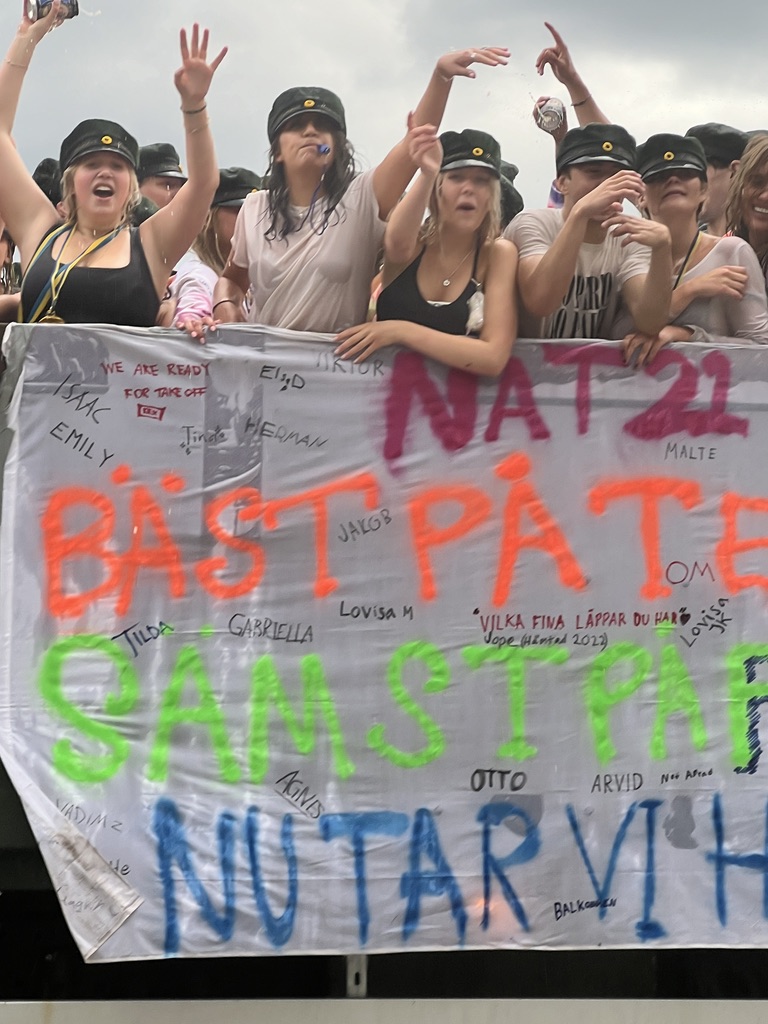
Today (Tuesday, June 11) began leisurely with breakfast at the Bank Hotel; finally, a bright sunny day (or at least at the onset). We had planned to head to Victoriahuset, the botanical garden which supposedly has the largest water lilies in the world. It sounded like a good plan. But we had to pack carefully so that we wouldn’t really need to repack while on the ferry from Stockholm to Finland. So once packed, we just strolled the neighborhood near the hotel, focusing mostly on the waterfront and the blocks that lead up to it. We strolled past wonderful art nouveau-era apartment buildings and cafes and lots of people taking advantage of the crisp, sunny day. Then suddenly, open-air truckloads of teenagers passed by— screaming and jumping and waving. They had all just graduated from high school; some were wearing their “white hats.” There are a lot of traditions surrounding high school graduation in Sweden—beginning with a champagne brunch at home with family. Also, I’m told, that after the graduation ceremony as students branch out to find their families, families hold up large photos of the graduate as an infant! How embarrassing is that! And then with flowers in hand and more champagne, students go onto these big open trucks—all standing—that have banners and signs (given my lack of Swedish I have no idea what the signs said). The trucks drive around town playing loud (very loud) music and the grads drink (and pour champagne on one another’s head) and sing, and honk horns and I suppose have a good time. Other drivers honk and people on the street (including me) wave.
We stopped for lunch at an outdoor café and then headed to get our bags and get to the “ferry.”
We have a lot of memories taking this ferry when we first went to live in Finland decades ago. We had arrived in Europe (first time for both Mike and me)—first in Hamburg, Germany to buy a Volkswagen which we used for the year in Finland and then for a few more years in the states, having brought it back with us on the SS France. From Hamburg we drove to Lubeck and then through Denmark and then a short ferry to Stockholm to visit Mike’s brother who was living in Sweden at the time. And from Stockholm we drove onto the overnight ferry in our VW and arrived in Helsinki the next morning. In all the years and all the trips, we’ve made back to Helsinki we never again took the ferry because it just seemed like it was a bit too leisurely and we’d lose an entire day and night from our travels. But we remembered the ferry fondly—especially the extraordinary smorgasbord dinner. So, for this trip we decided to relive that part of our journey.
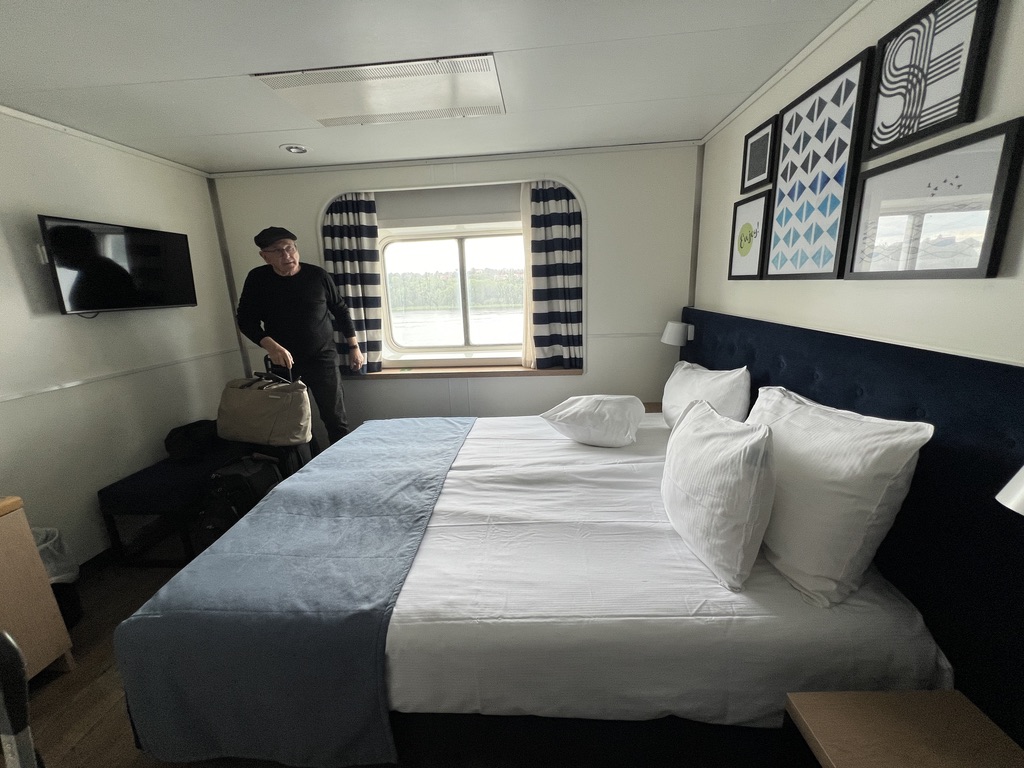
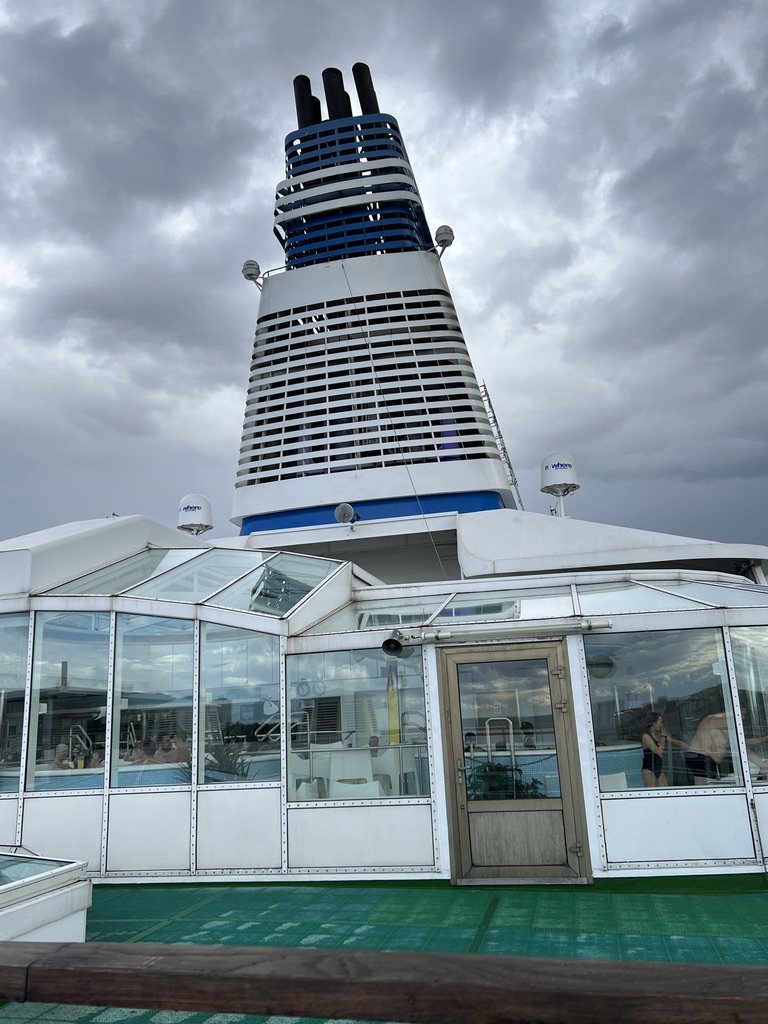

So here we are, and here I am typing in our cabin on the “ferry.” I’m using the word “ferry” very loosely, because I always think of a ferry as a casual vehicle that moves passengers and goods on a regular basis. The ferry from Stockholm to Helsinki is now sort of an overnight cruise ship (or at least my sense of what a cruise ship must be like, never having experienced it). It’s huge—at least twice as high and twice as long as the ferry of our past. There are 12 floors; our cabin is on the 11th floor. On the 6th level is the “grand buffet” which is like the smorgasbord we remembered but on steroids… with cutesy names at each food “station” letting you know if it’s Italian or French or whatever. When we took the ferry years ago, it was just a very typical Swedish/Finnish smorgasbord. In those days, many people (especially Finns) took the ferry back and forth because booze was really cheap… so by evening you had a lot of drunks on the ferry. Now, there are literally more than 70 items at the buffet. They have two seatings, with the latest being at 7:30. We opted out of this buffet in favor of one of the two small “restaurants” on the ship. So, we will eat late (as opposed to the buffet whose last seating is at 7:30.)
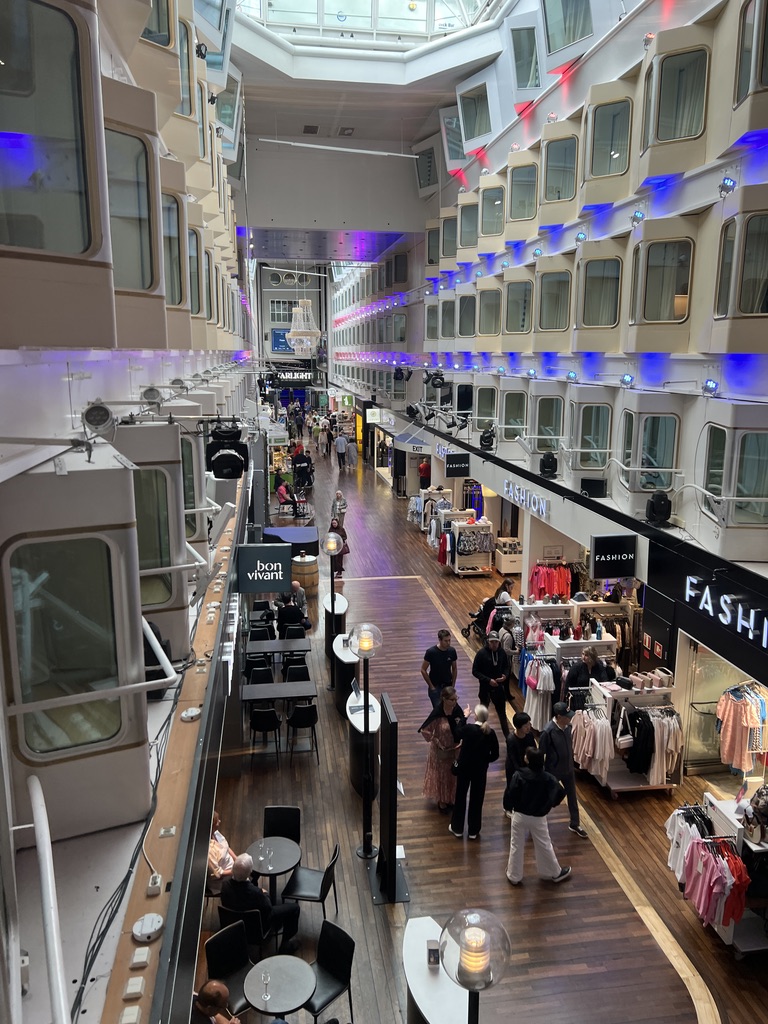
Our cabin is sweet, with a large window to watch the passing countryside filled with forests and little weekend cabins. That is a big step up from the first crossing where we must have been somewhere in the bowels of the ferry with a little porthole for a window. A few other new additions that were difficult to take in… there is now a karaoke club, other entertainment (somewhere if you can find it), a swimming pool, several jacuzzis, of course saunas, and a small casino with legalized gambling. And while years ago, there was a little liquor store on the ferry which was always crowded as I recall because passengers could purchase liquor tax free…. Now there is an entire level of the ferry (7th floor) that has what I would call a “mall.” There are shops galore lining two sides of a walkway that goes the entire length of the ferry—complete with Tommy Hilfilger and Marimekko and assorted chain stores. There’s even a MacDonald’s here (in case you cannot live without a Big Mac for one night). The view from the interior rooms is of the mall. Glad we didn’t go that route.
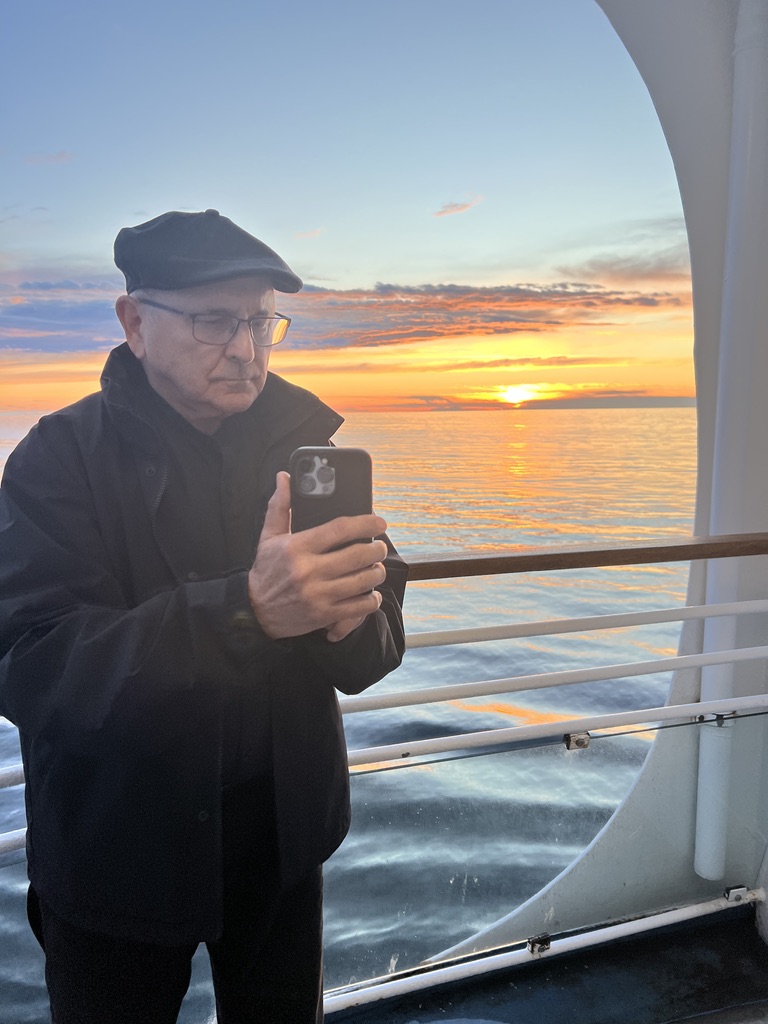
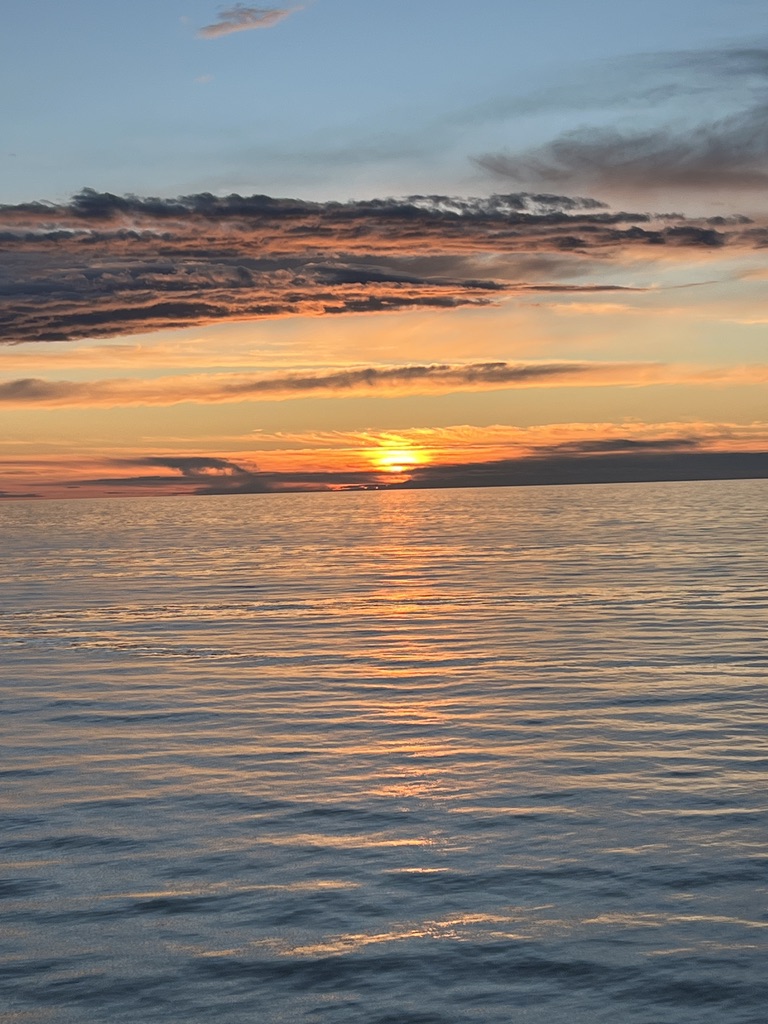
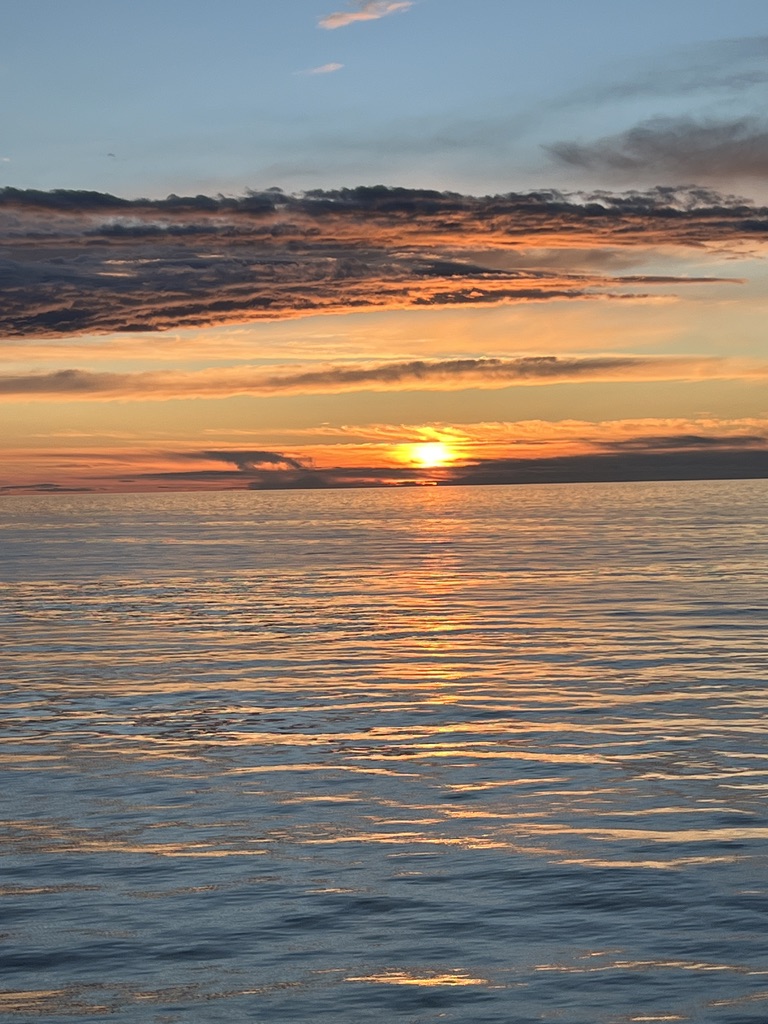
And because of the time of the year (almost midnight sun) it’s fascinating to watch the sun go down (at about 11:00pm!
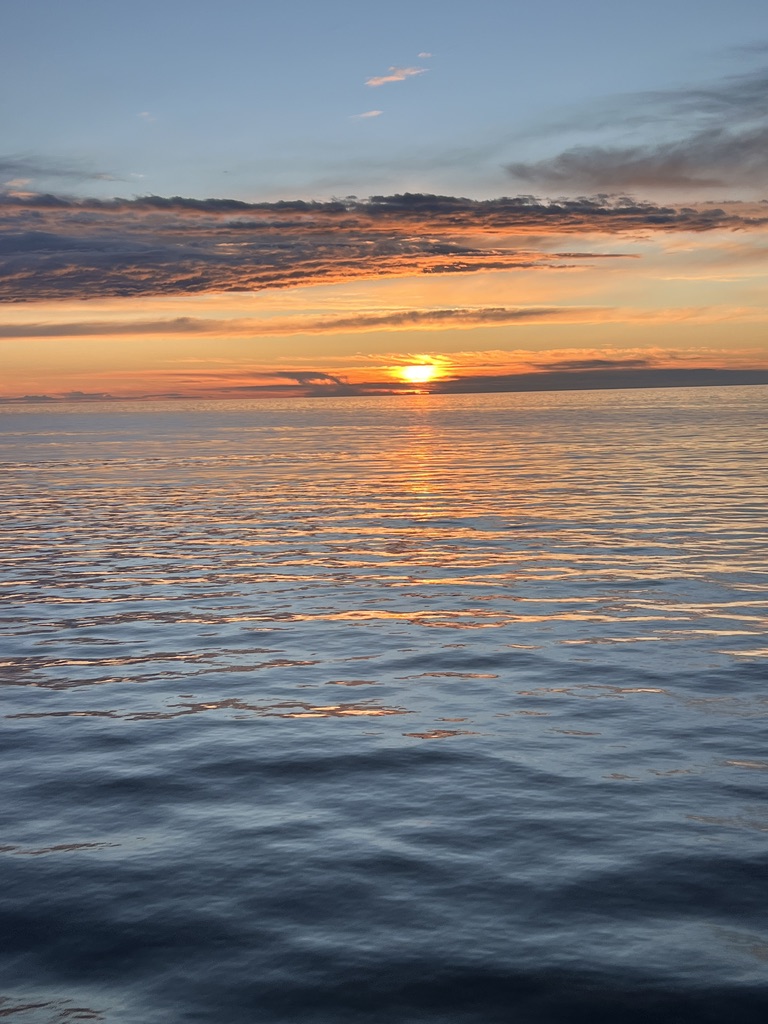
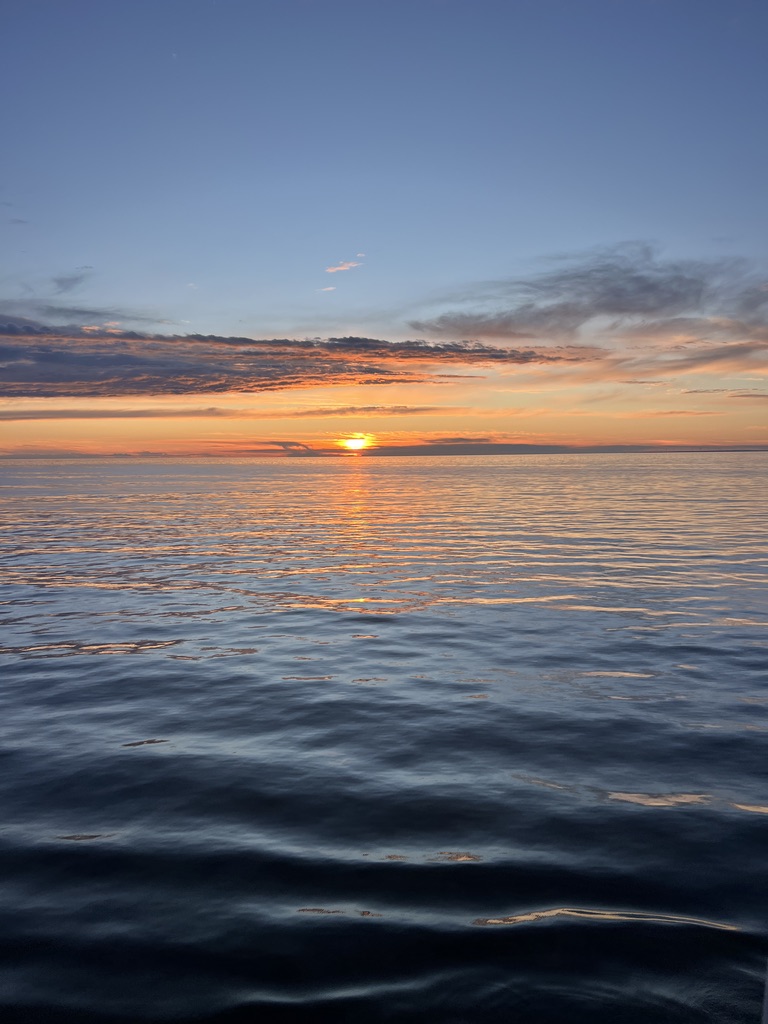
Ah how the times have changed. Anyway, it’s a nice smooth crossing with just one stop in Mariehamn (which was always the case). Mariehamn is the capital of Åland which is an autonomous territory somehow under Finnish control (I think), although the residents use Swedish as their primary language (long story). Population of Mariehamn is about 12,000. Åland, which is situated in a Finnish archipelago, is comprised of about 6,000 islands; most people live on Fasta. Population of Åland is about 30,000. The term “autonomous” refers to the fact that the kind of decisions that are generally made by representatives of the Finnish government on provincial matters are actually made by Åland’s own government. Åland has its own flag and postage stamps and runs its own police department. Åland has a seat in the Finnish Parliament.
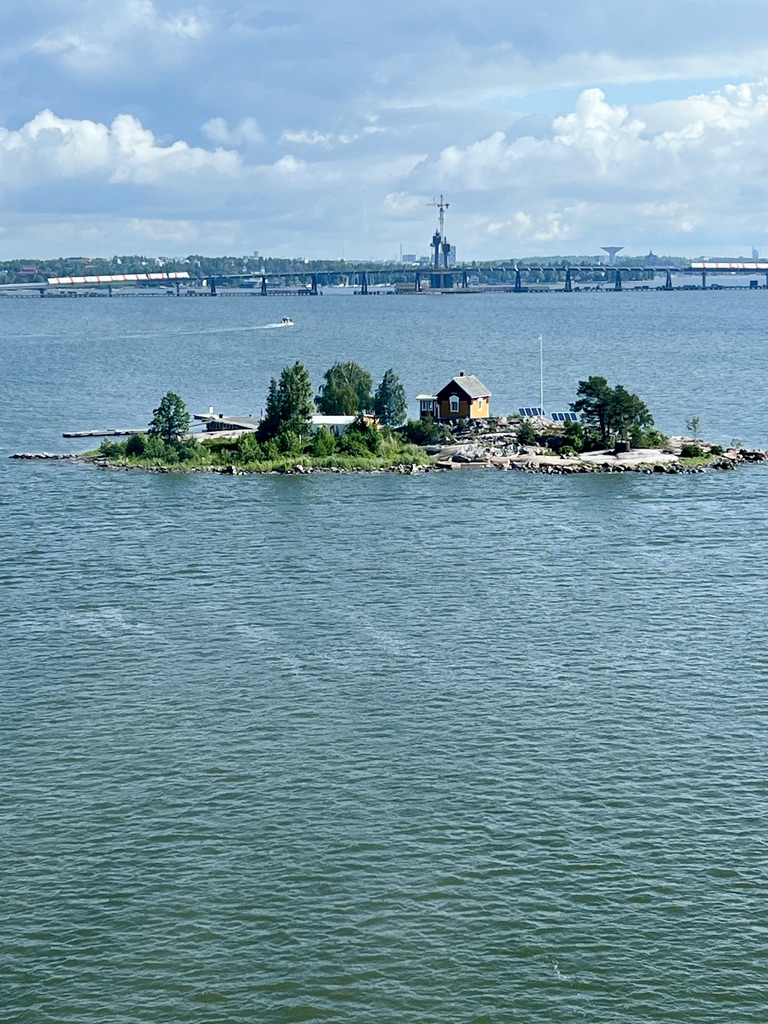
I always wanted to visit, but somehow, we never did. Maybe next time.
OK… signing off for now. If you receive this on Tuesday afternoon NY time (early afternoon California time), you’ll know the wi-fi on the ferry works.
Best..
Nakemiin (Good bye) and Hyvää yötä (Good night).
Fern
PS: Mike says that I should have described the train stations as having a Fred Flintstone quality.
3. Stockholm: June 10, 2024
Hanging Out Underground; Avoiding the Drizzles; and Eating Very Well
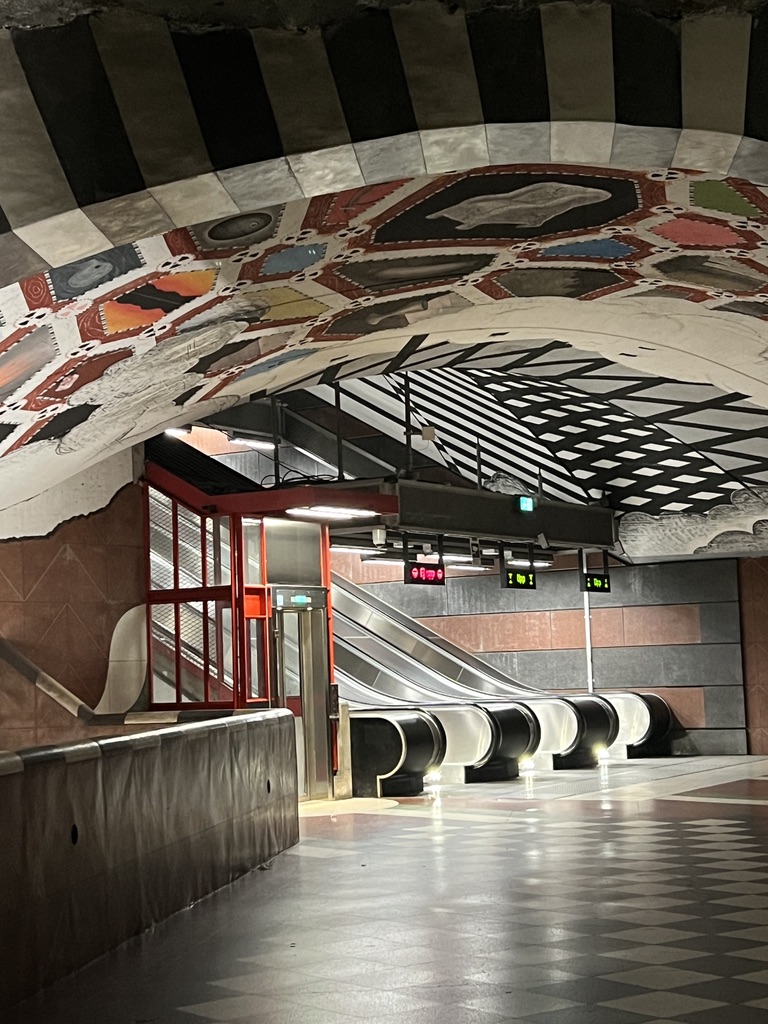
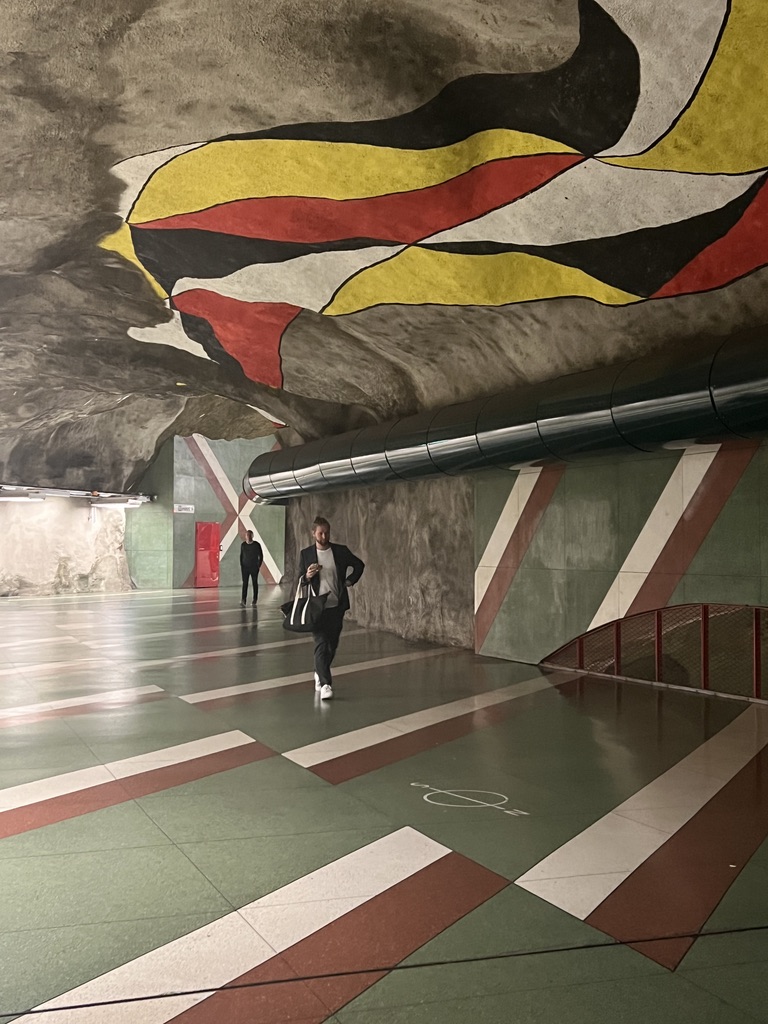
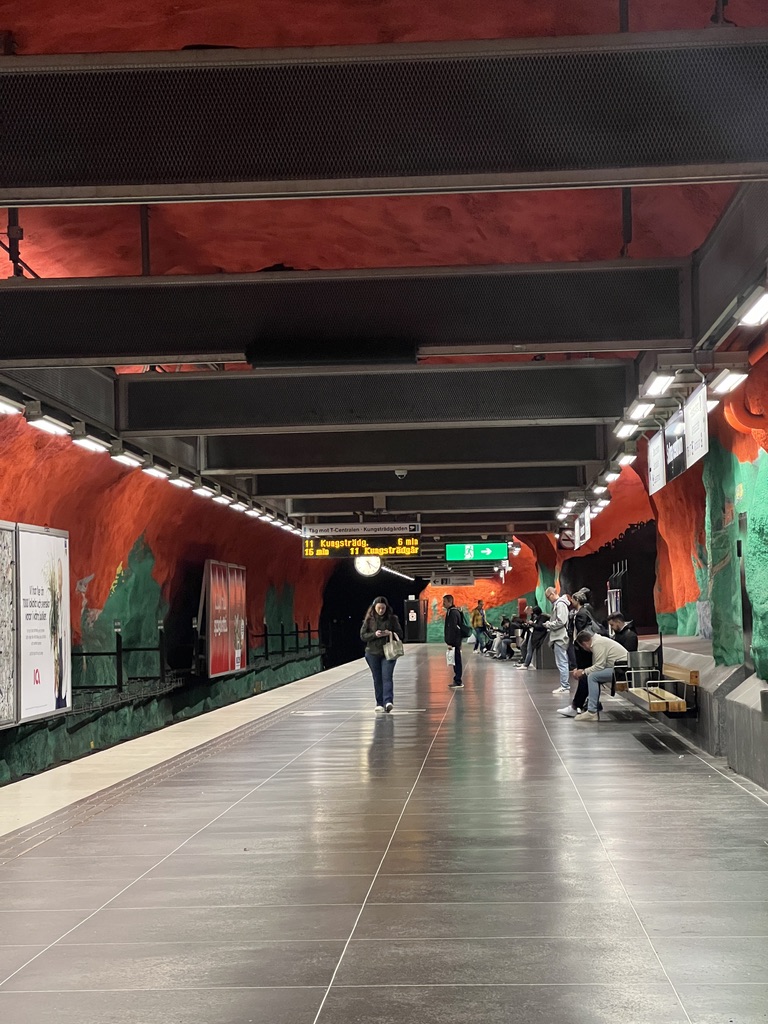
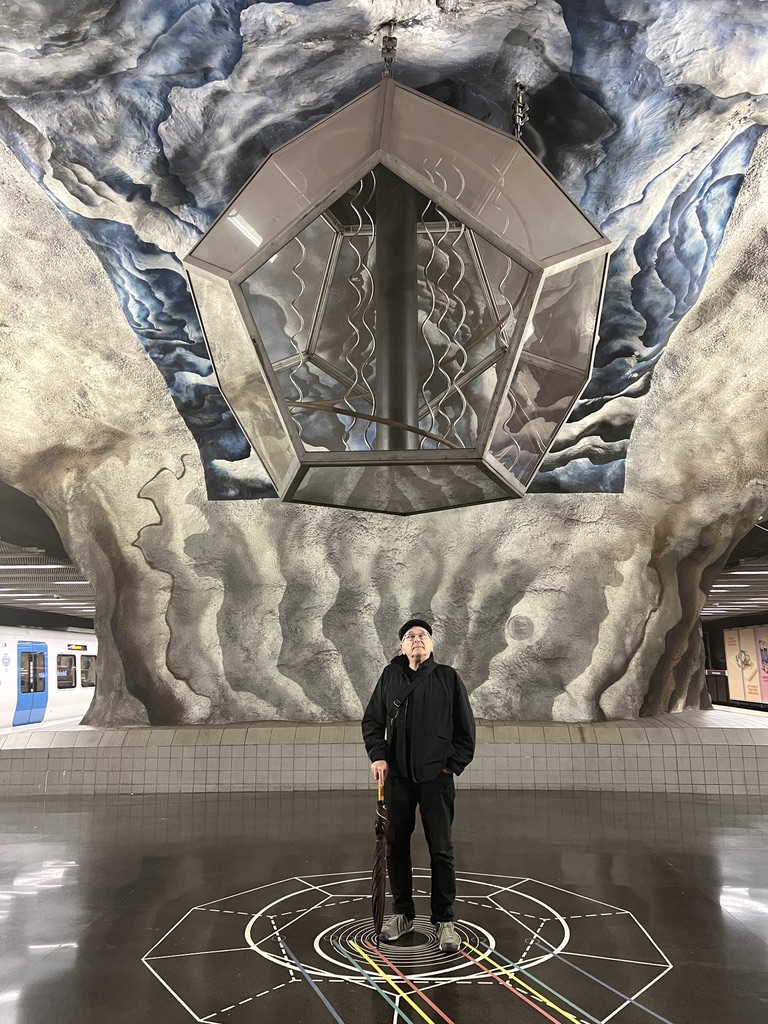
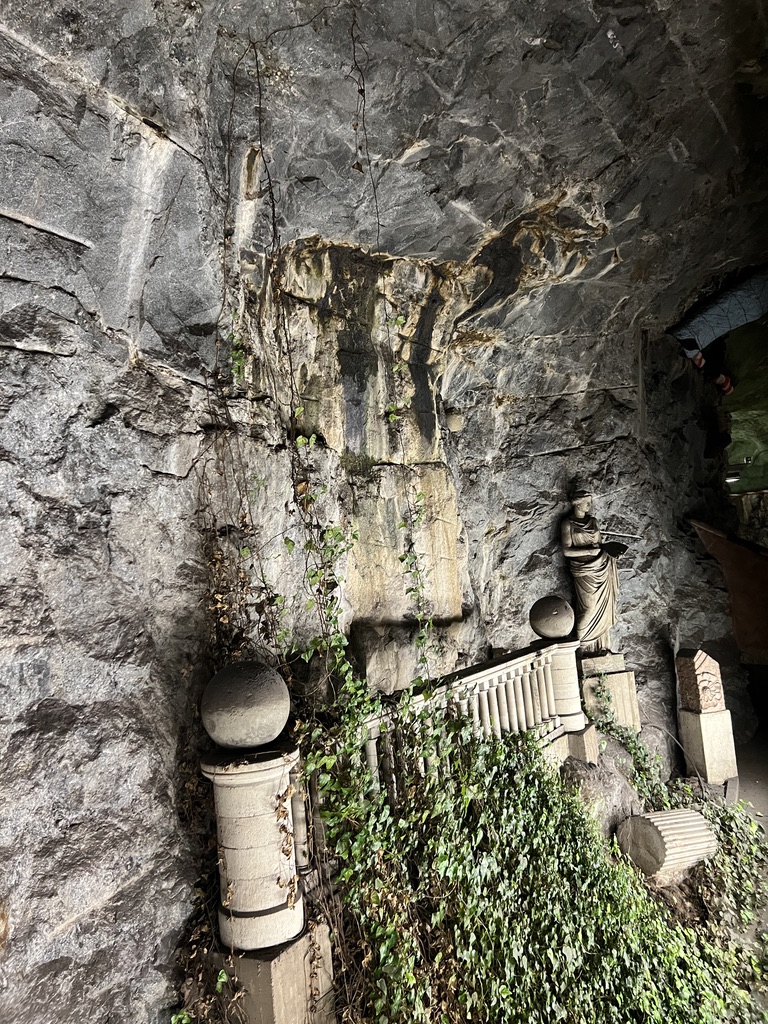
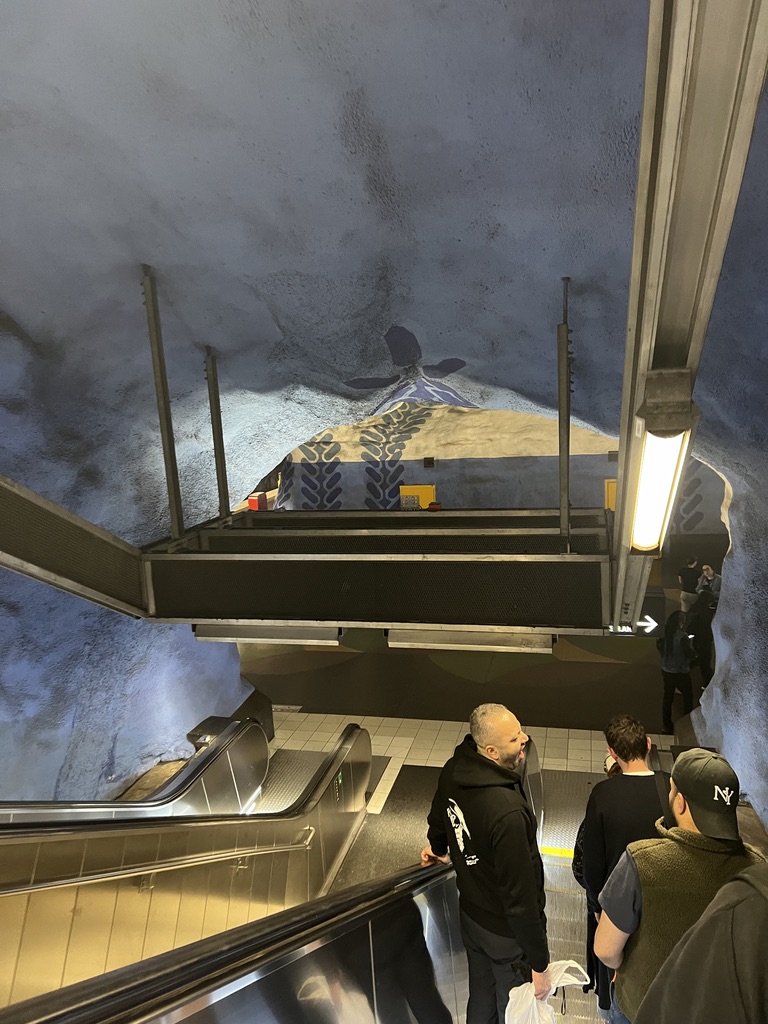
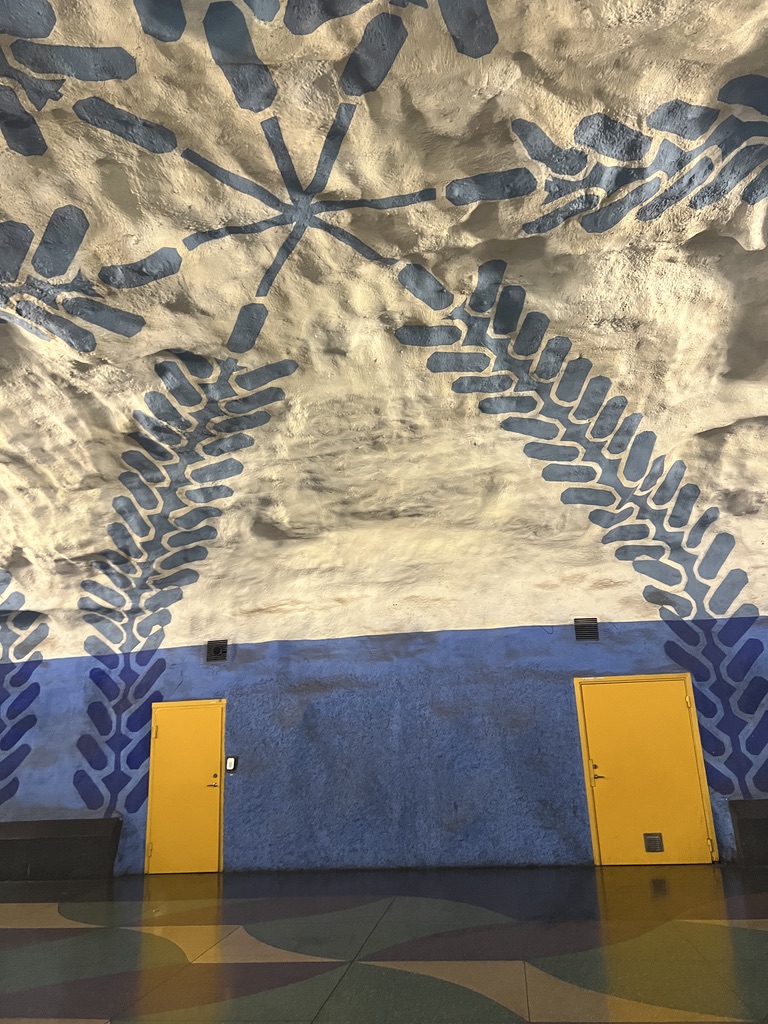
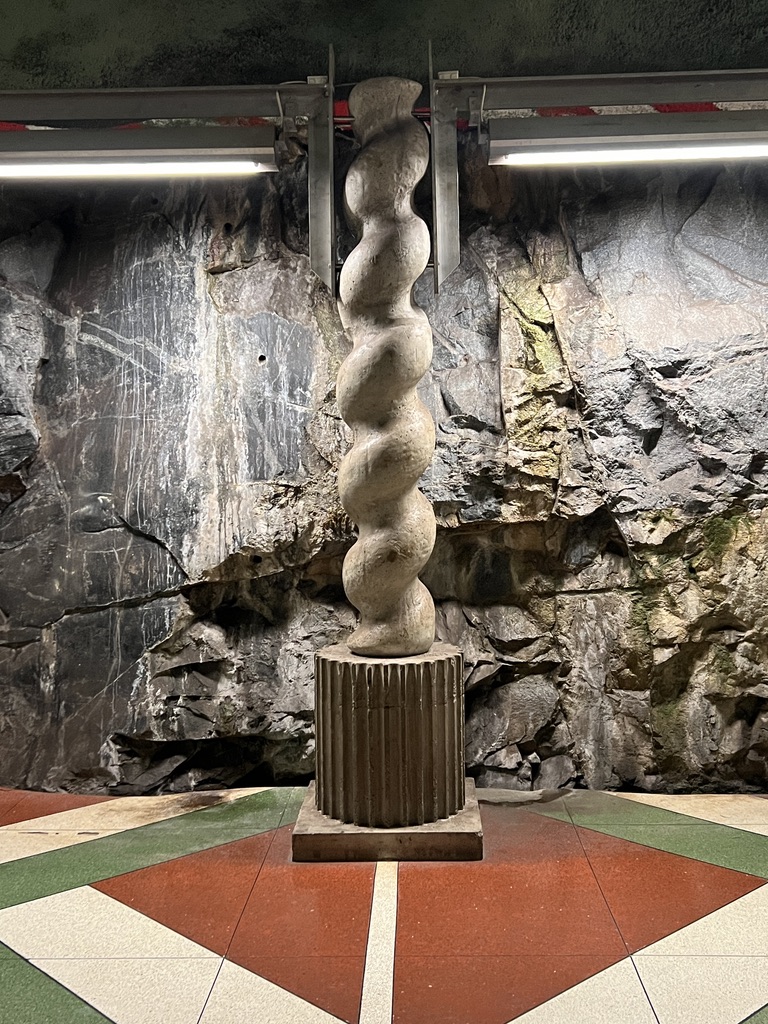
Forgot to mention in yesterday’s post… Stockholm’s subway system is not only fast and efficient…. it’s also like moving through a series of art galleries, with large-scale works that are integrated into the design of each station. In each of my posts I’ll show a few of them. Some are clearly more sophisticated than others. And the stations are no where near as amazing as Tashkent, Uzbekistan.
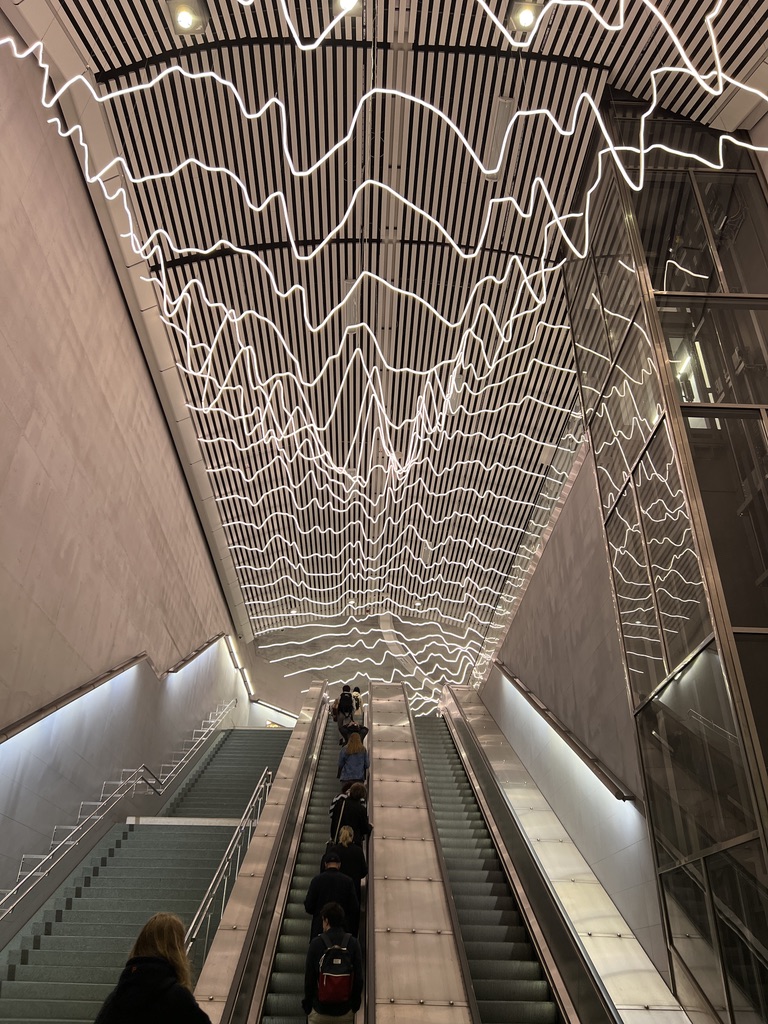
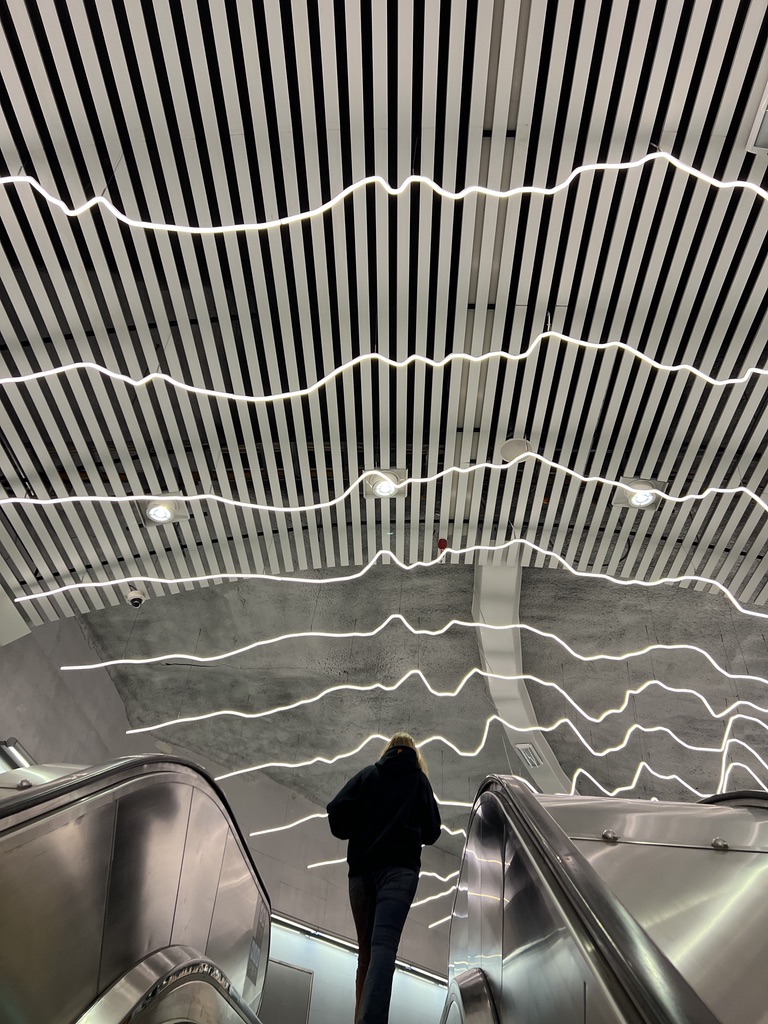
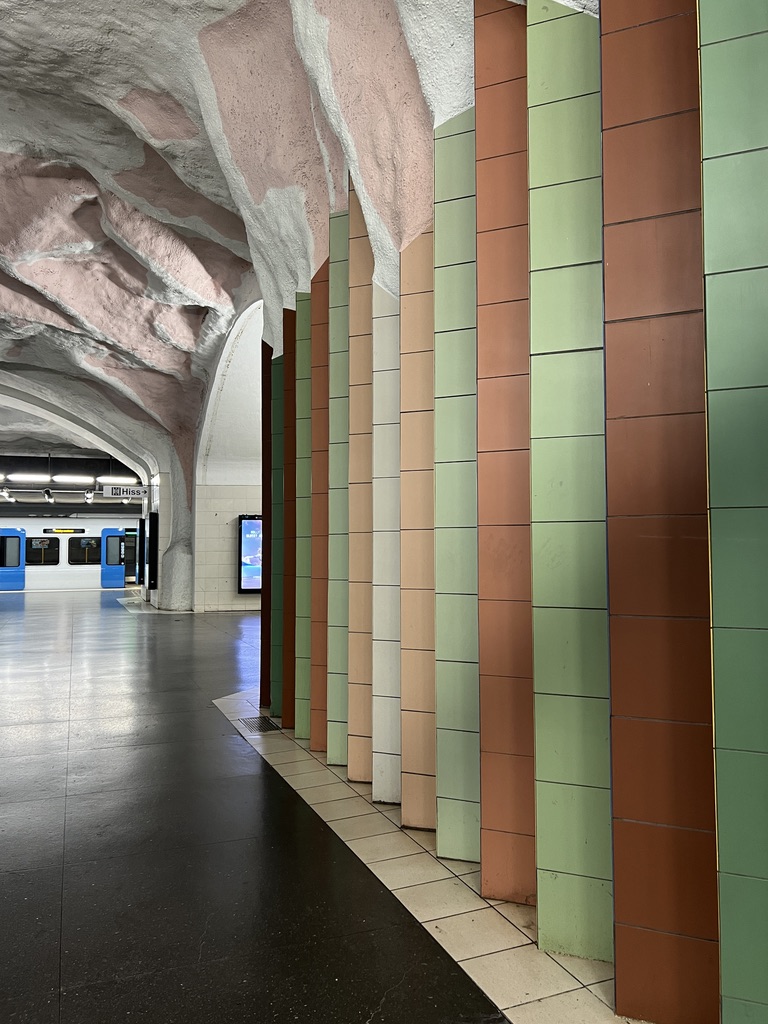
Greetings from Stockholm where it has been raining on and off (nothing serious, sort of showers but very overcast) and where it is cold; temperatures in the 50s and 60s. Perfect to spend most of the day underground, checking out the subway “art,” but more about that in a bit. [Total steps today 15,000; 8 flights]. By the way it is still light out… sort of like dusk… and it is 11:45 pm. We just got back to the hotel after a great dinner at Rolf’s Cok (escargot, veal tartar, and lamb ribs cooked in an Indian style sitting on a bed of roasted tomatoes, spices, and feta). Rolf’s is a small cozy place about two metro stops from our hotel (although it was one stop on each of two different lines). We’re pretty expert at the Metro now. One comment—they have the fastest escalators I’ve ever seen. And some of the stations/tracks are pretty deep… about 100 meters deep (like a 30-story building at some stations). To get to some of the platforms you can take little funiculars; at others it’s elevators, stairs, and those very fast escalators.
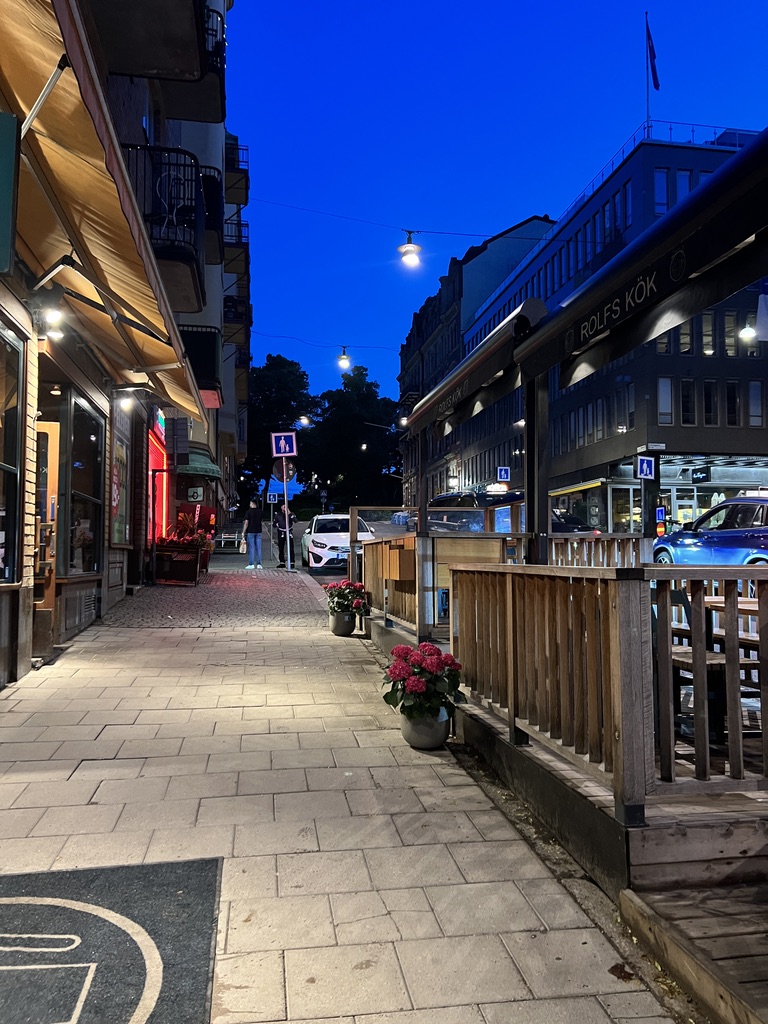
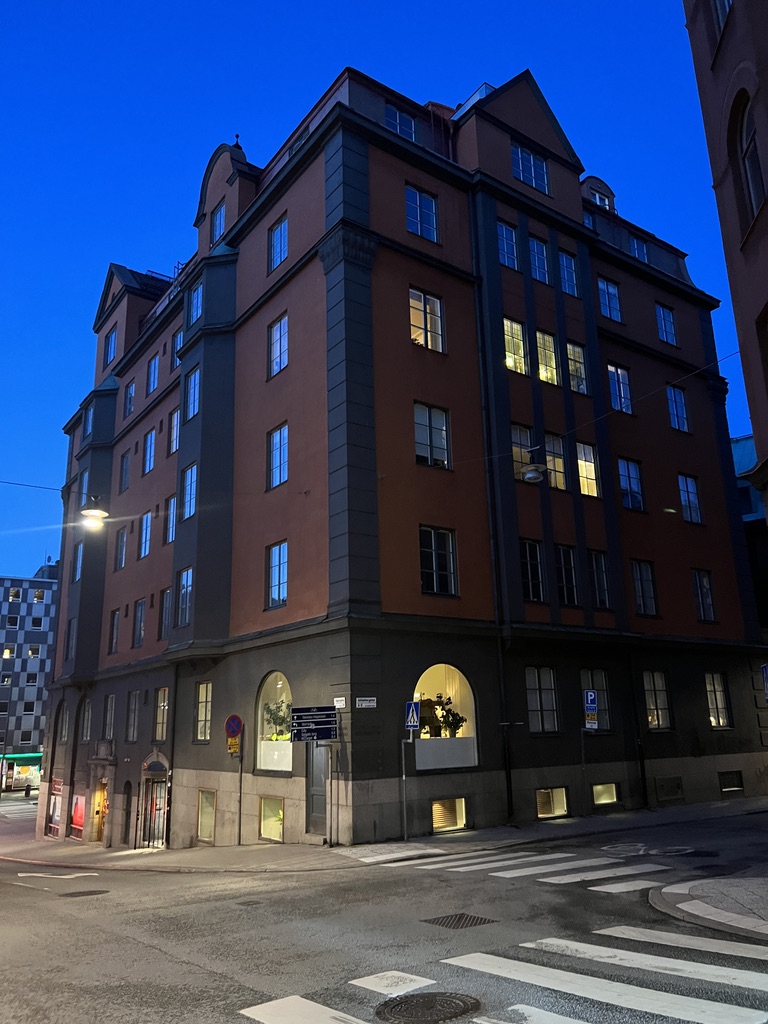
But the big news here and throughout Europe is all about the European elections and the strength of right-wing parties, especially in France and Germany; there is concern about Macron’s call for parliamentary elections. The leader of the Right-wing National Rally Party said this was “day-one of the post-Macron era.” Far-right parties made big gains in the European Parliament election. In addition to the situation in France, Germany’s extreme right Alternative for Germany party wound up in second place, with the Social Democrats placing third. While I believe the European Parliament’s powers are mostly to approve or amend EU rules and trade deals, the vote is probably a sign of Europe’s political mood. These results point to trouble for things like environmental goals, immigration, and support for Ukraine. Analysts seem to be pointing to immigration as a key reason for the shift to the Right.
It will be interesting to talk with our Finnish friends about what all of this means for Scandinavia, which seems still to hold onto a more left position, although even their voters in recent years have shifted to less progressive candidates (but not to far right candidates.)
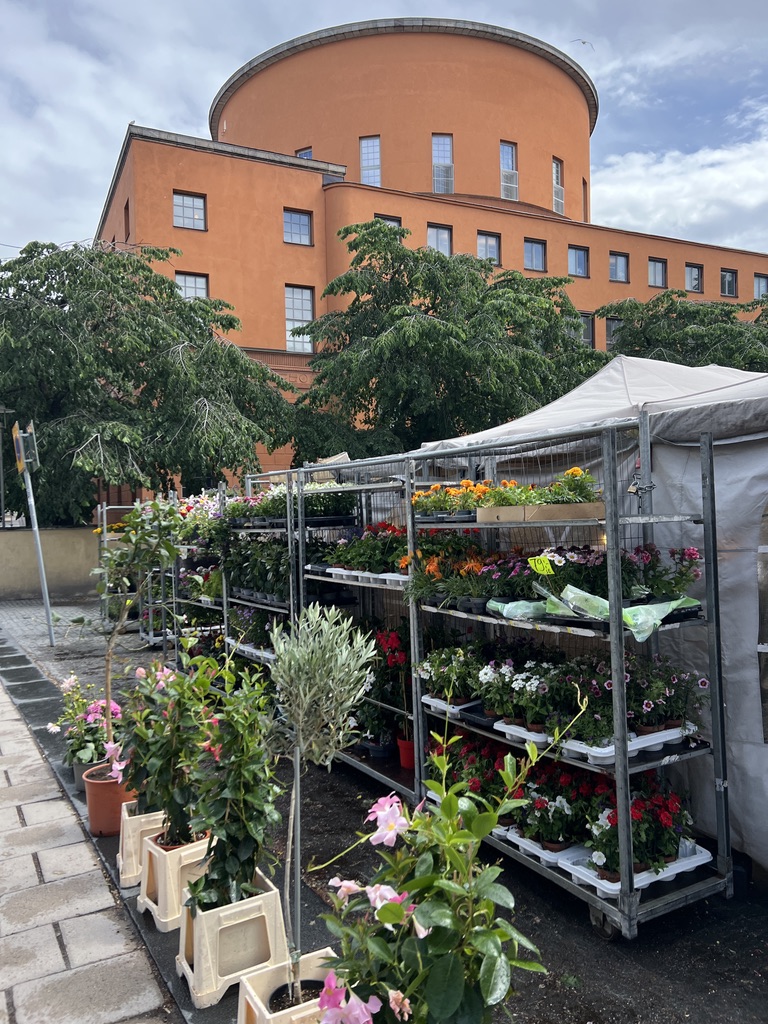

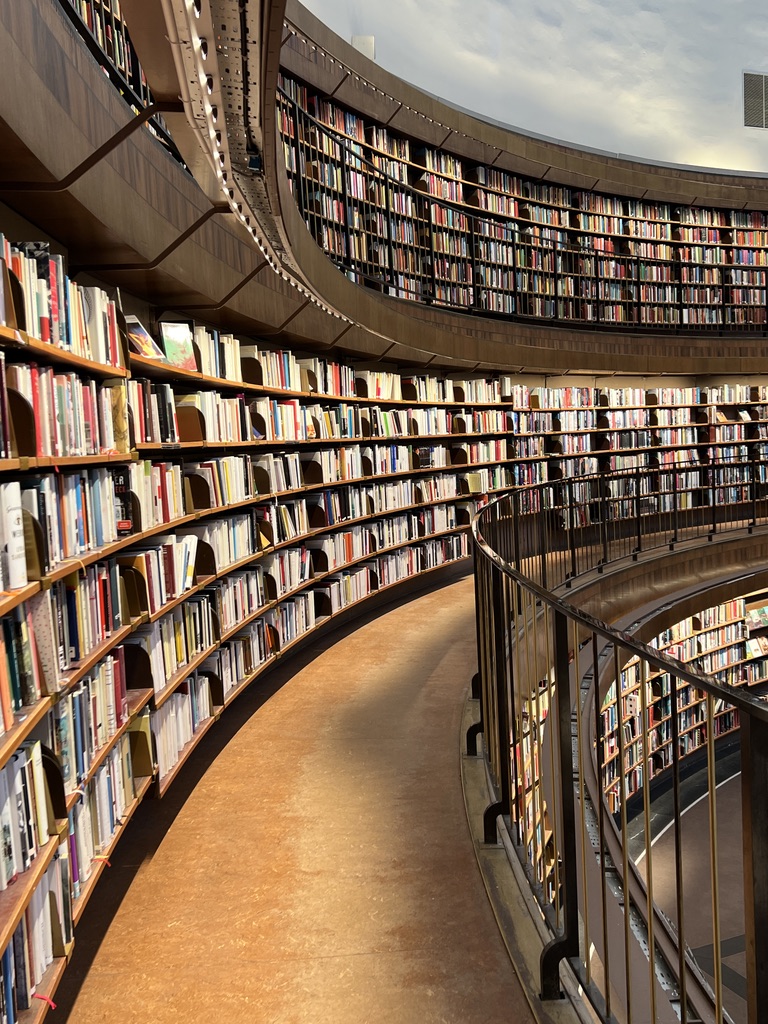
On a more personal note, following an unexpectedly good breakfast at the hotel, we headed out for our Metro crawl to see the “art” in the subway stations. Note, Mike is in many of the subway photos to help provide “scale.” I think we visited about 18 stations…. Just hopping on and off the train and switching from the Red Line to the Blue Line to the Green Line.. and back again. Actually, we first went to see the Stockholm Public Library which is nearly 100 years old, designed by Gunnar Asplund who was inspired by the Barrière Saint-Martin (Rotonde de la Villette). But the library doesn’t have a dome. It is really a rotunda with a tall cylinder (where the curved book stacks are located) surrounded by a square— pretty straightforward geometric shapes. Naturally, we went by subway.
From there we headed to the Ostermalms Saluhall, a market built in the late 1800s. Because King Oscar was going to come to the inauguration of the brick building, they had to work quickly so it is said that about 400 men were employed to get the work done in record time. Apparently, they showed off the building just six months after construction began. It was to be “a temple for the culture and preservation of good food.” And that remains today, although the hall also houses several restaurants. We ate at Lisa Elmqvist, which is a well-known eatery with people lining up for tables. Fortunately, we had made reservations weeks ago, so we were set.
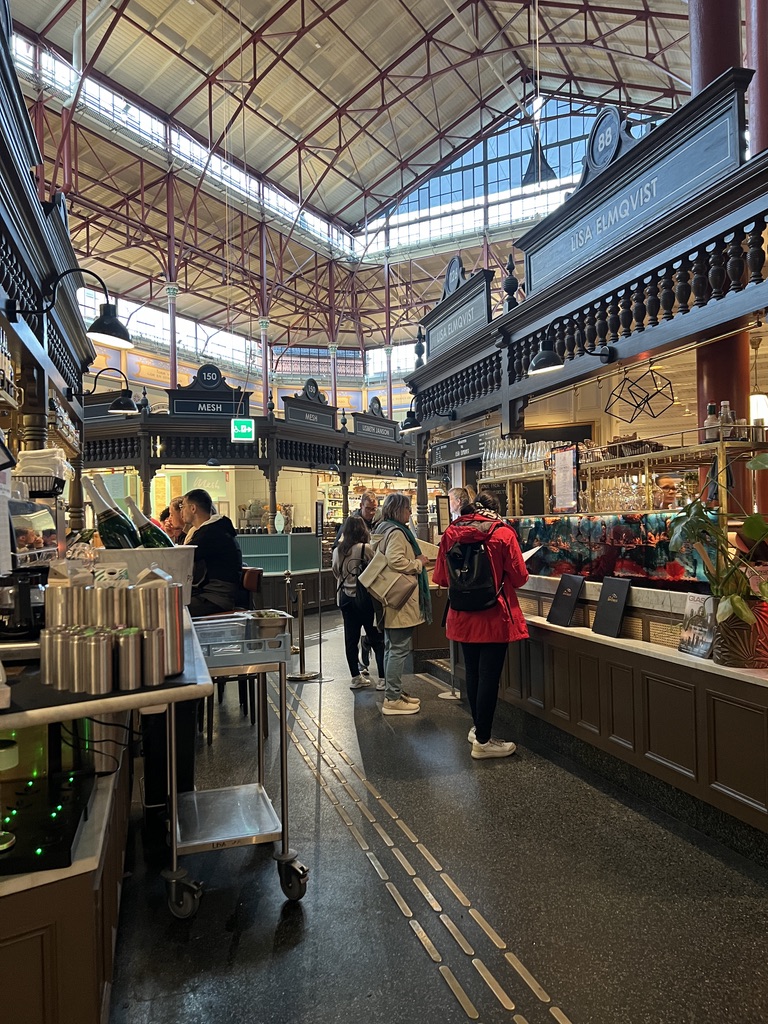
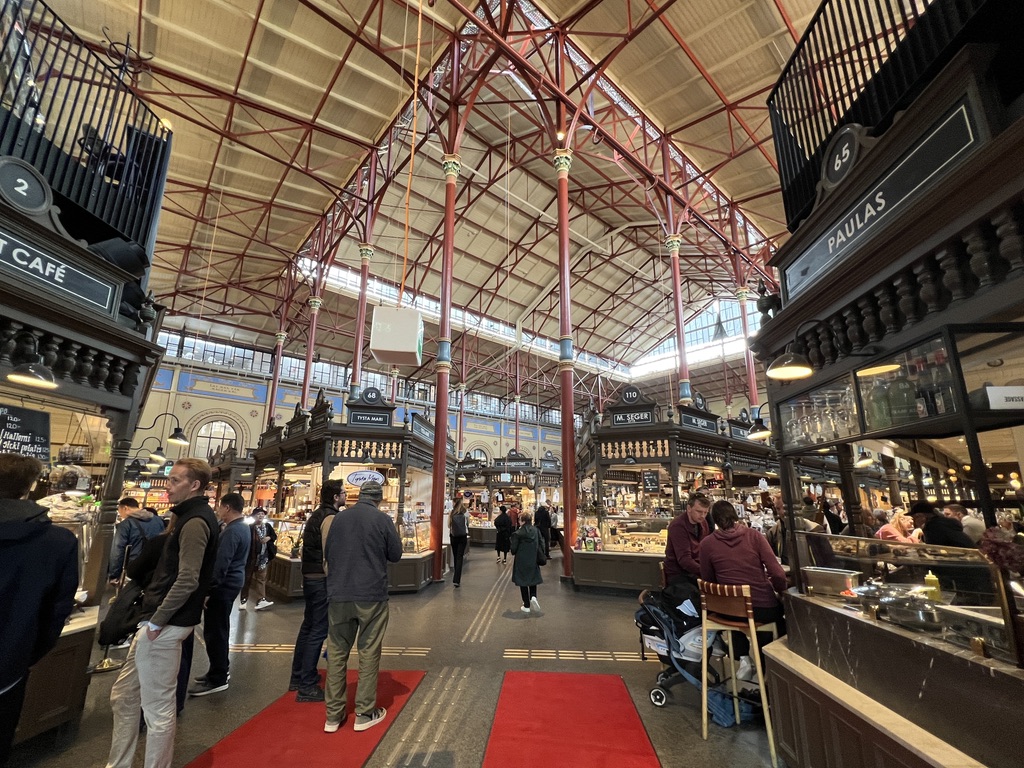

The story is that the restaurant had its origins in the 1920s when a fisherman’s daughter sold wares at a street market near the waterfront. Her fish, shellfish, and cooking skills were exceptional, and she moved up to Östermalms Saluhall. 100 years later, the fourth generation of the family continues in the same stall, albeit adding a a lot more space. We had a great lunch—pickled herring (prepared with chopped egg, chives, red onion, and brown butter); trout roe with toast, incredible sour cream, and red onion; Lisa’s salmon tartare with cured and smoked salmon, Dijon mustard, shallots and cucumbers, and shipped chive cream cheese. It was great and we were fished out.
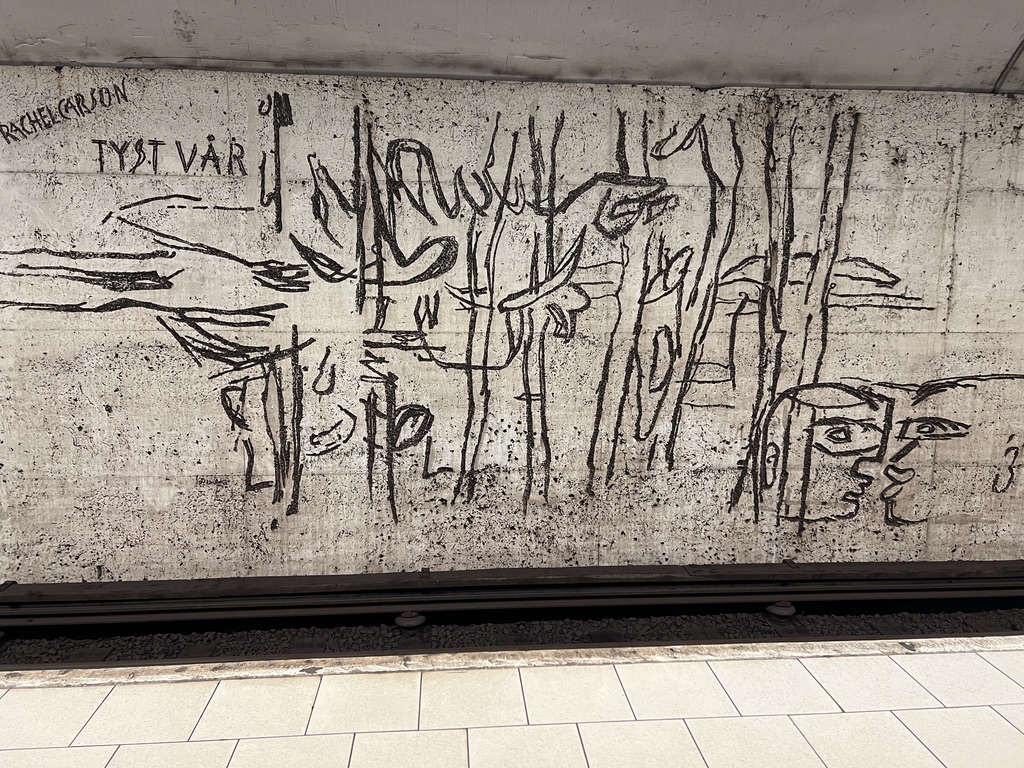


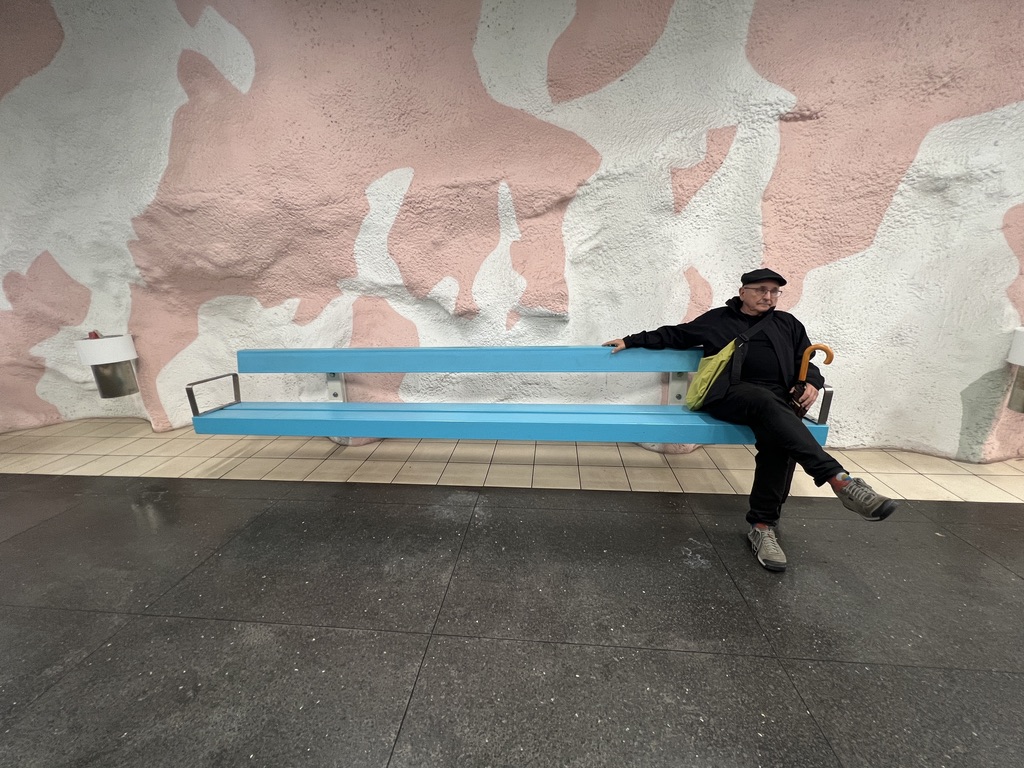
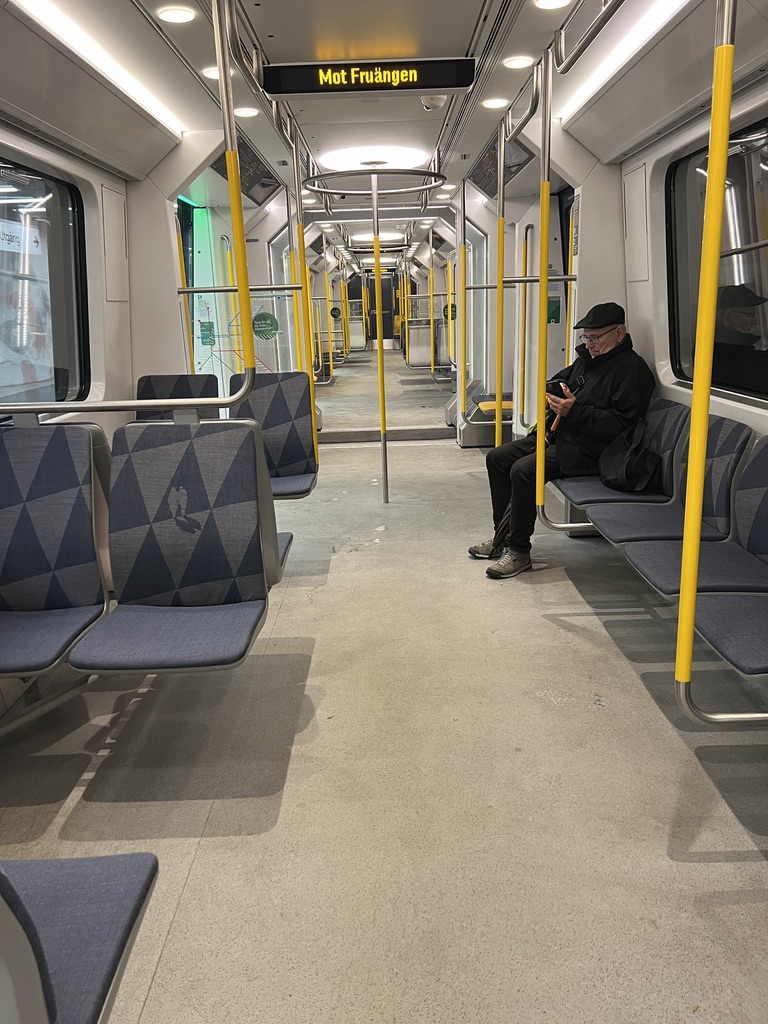
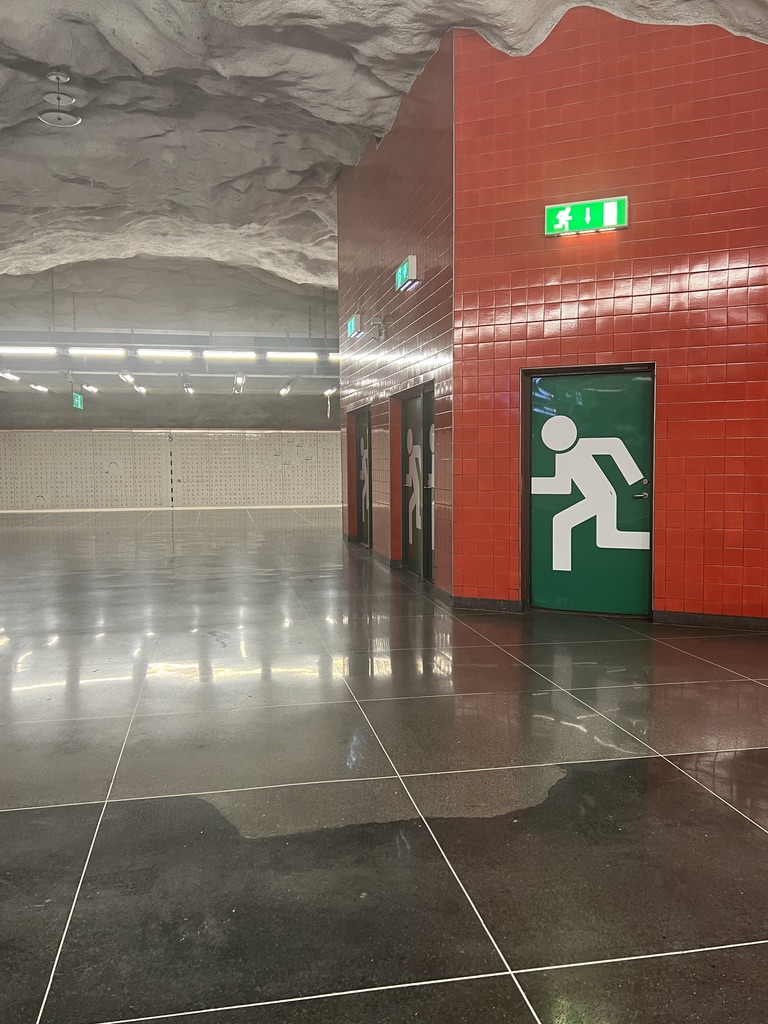
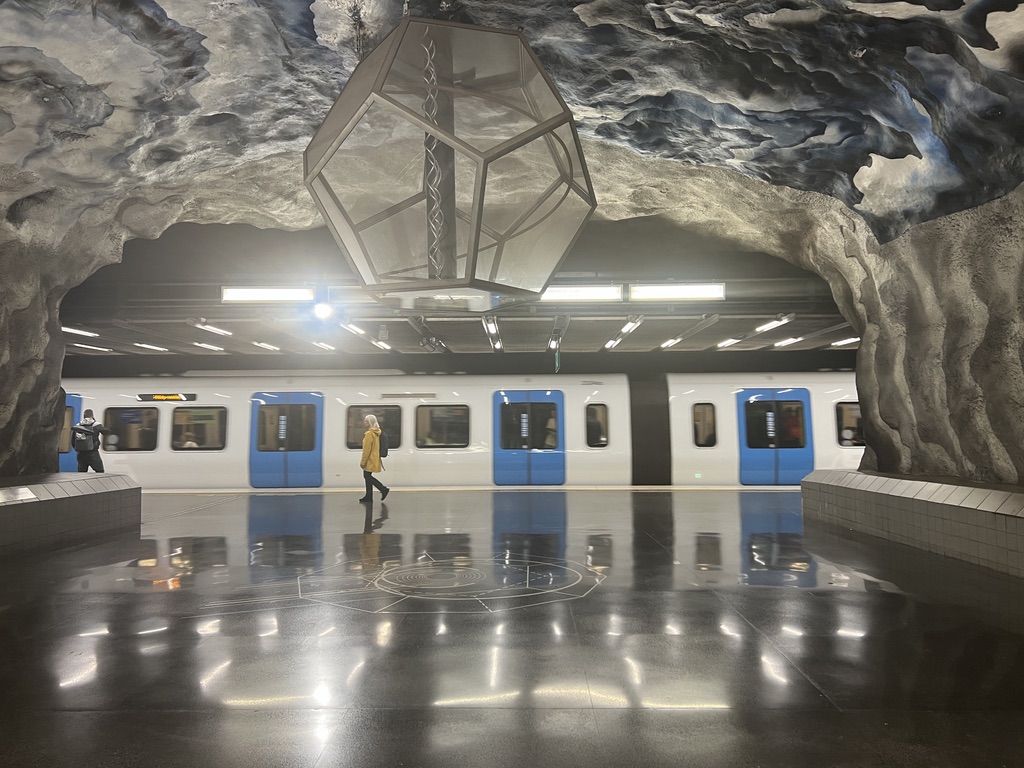
Then we began the subway trek… on and off the trains to see the station art. My short take… it was fun and the stations were certainly colorful, but the quality of the concepts and design were very uneven. The idea was fantastic, but many artists missed the real problem (as I see it)— to design through paint and other materials a totality taking into consideration the entire space. Some did that; others just used the space as a wall on which to paint or tile separate elements and “things;” a few stations tried to provide some “education” through information and graphics. Given that about two years ago we were traveling in Uzbekistan, and we saw their subway stations—which were done under the auspices of the then-Soviet Union, it was at times hard not to compare the two. Uzbekistan’s stations (throughout Tashkent) were amazing works of art. They truly were all encompassing and marvels of skill and craftsmanship as well as visual format. But Uzbekistan’s stations lacked whimsy! Whimsy was plentiful in Stockholm.
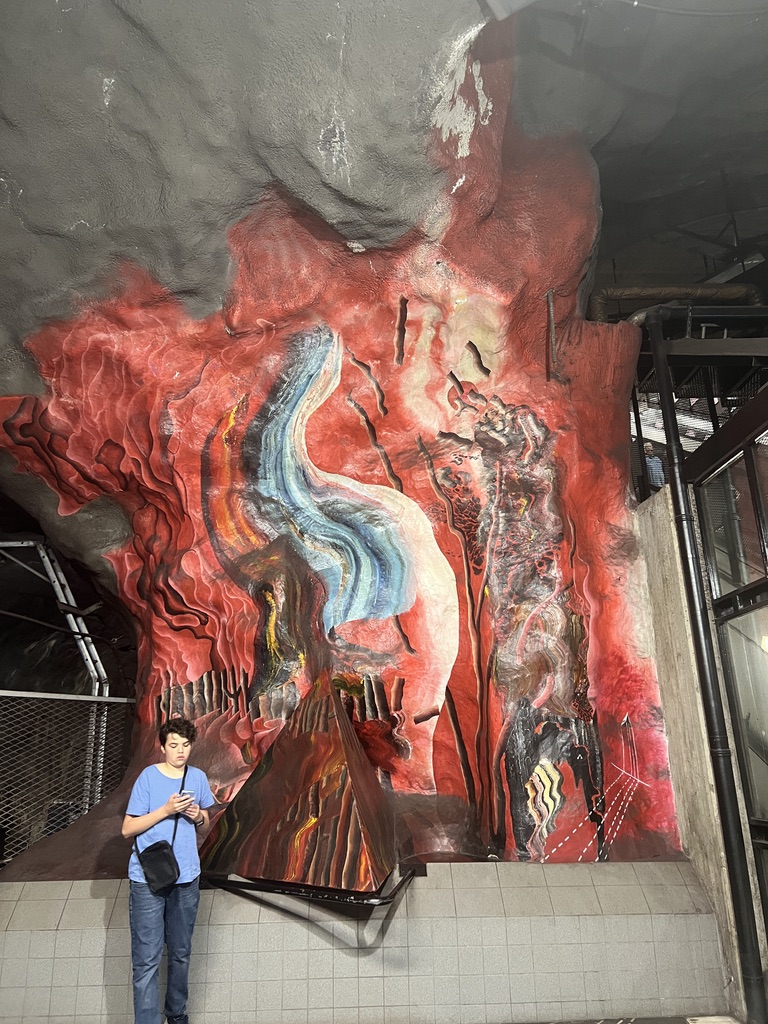
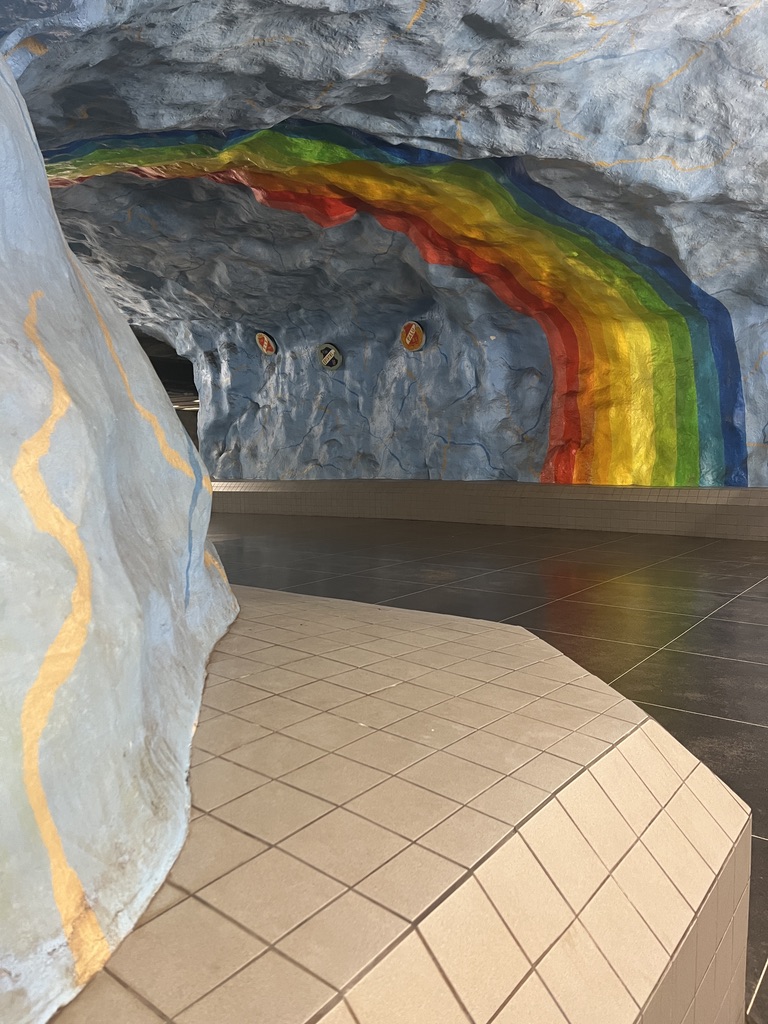
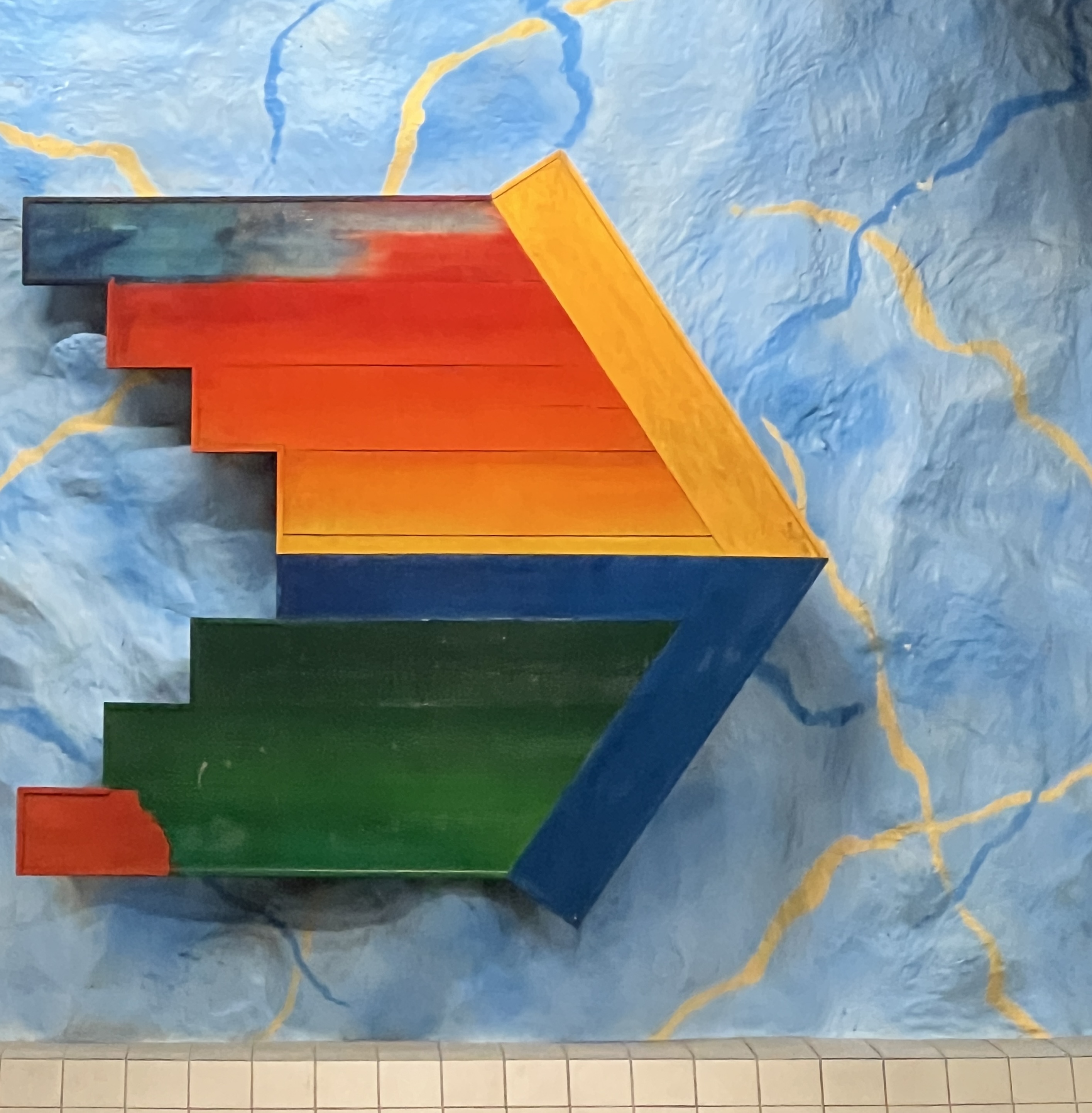

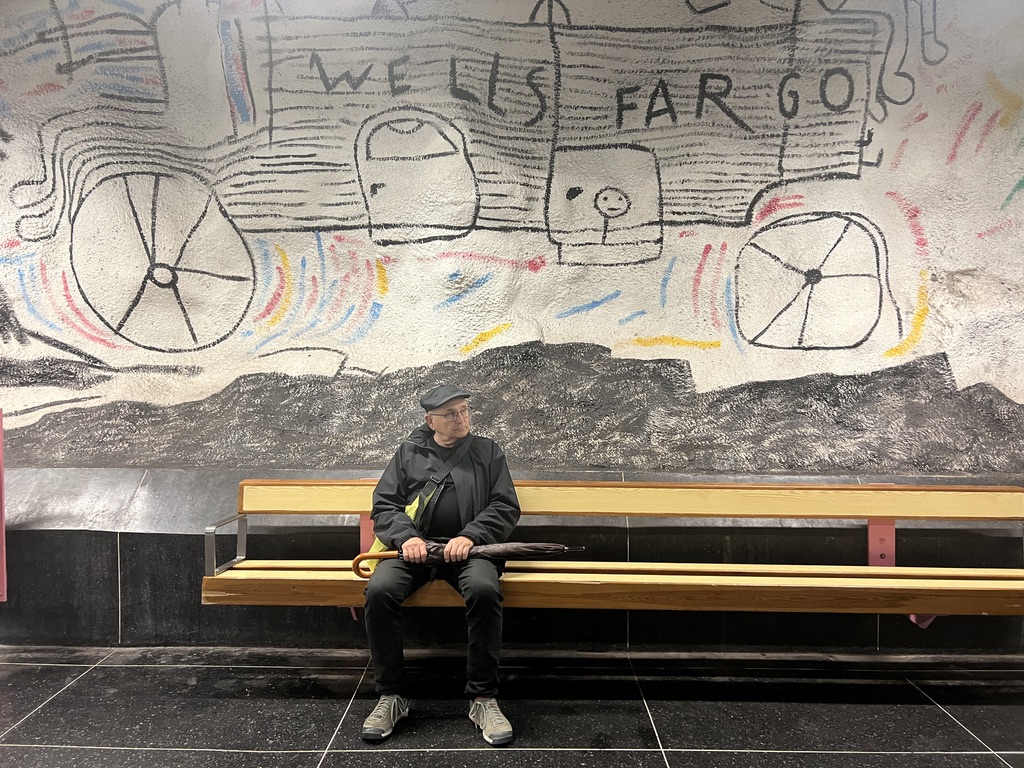
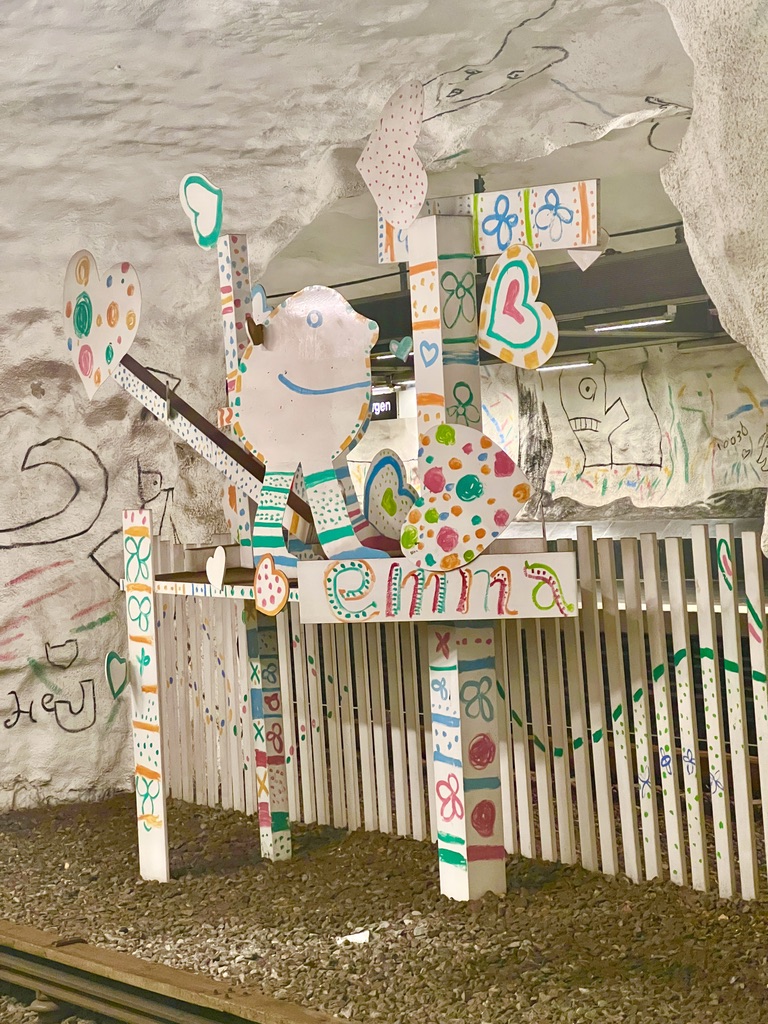
We finally emerged into cloudy daylight to walk back to the hotel…. To get ready for dinner and to take the Metro once again.. this time with purpose, to head to the restaurant.
Tomorrow (Tuesday) we head to Finland…
Terve!
Fern
2. Stockholm: June 9, 2024
God kväll (Good evening)
After our very long day yesterday (about 32 hours of travel—door-to-door), we sort of settled into our room at the Bank Hotel which is located in a very central area of downtown Stockholm and about a block from the water. The hotel, as its name implies was originally a bank. The building is from the art nouveau period and actually has gone through a few incarnations, but it was a bank longer than anything else. Built in 1910, it was the head office of the Södra Sverige Banking company, but later housed a succession of other banks.. and for a time was an exhibition hall and a law library. It’s quite impressive with very large, very heavy bronze double doors. At the entrance there are stone sculptures of an owl (wisdom?) and a squirrel (thrift?).
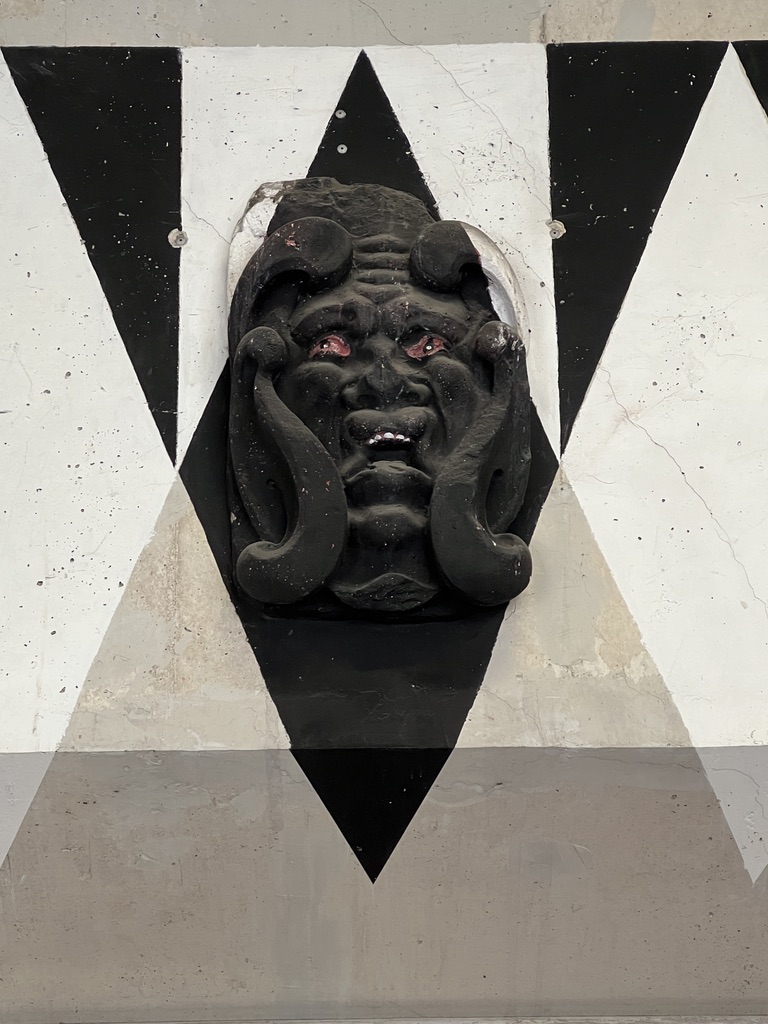
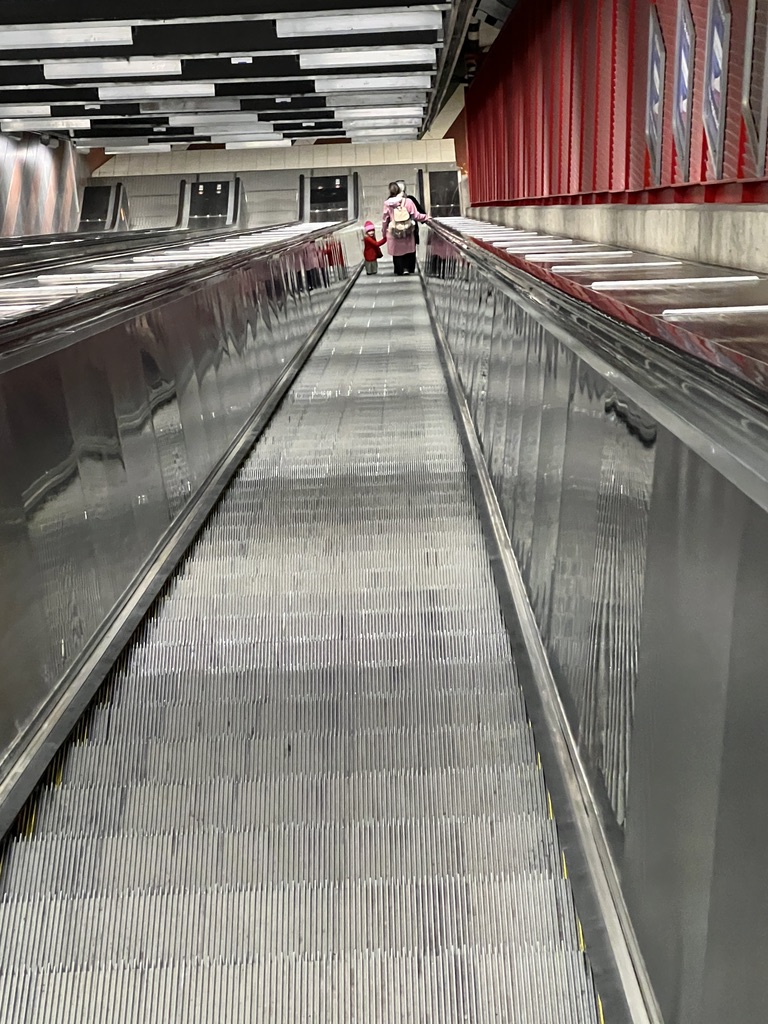
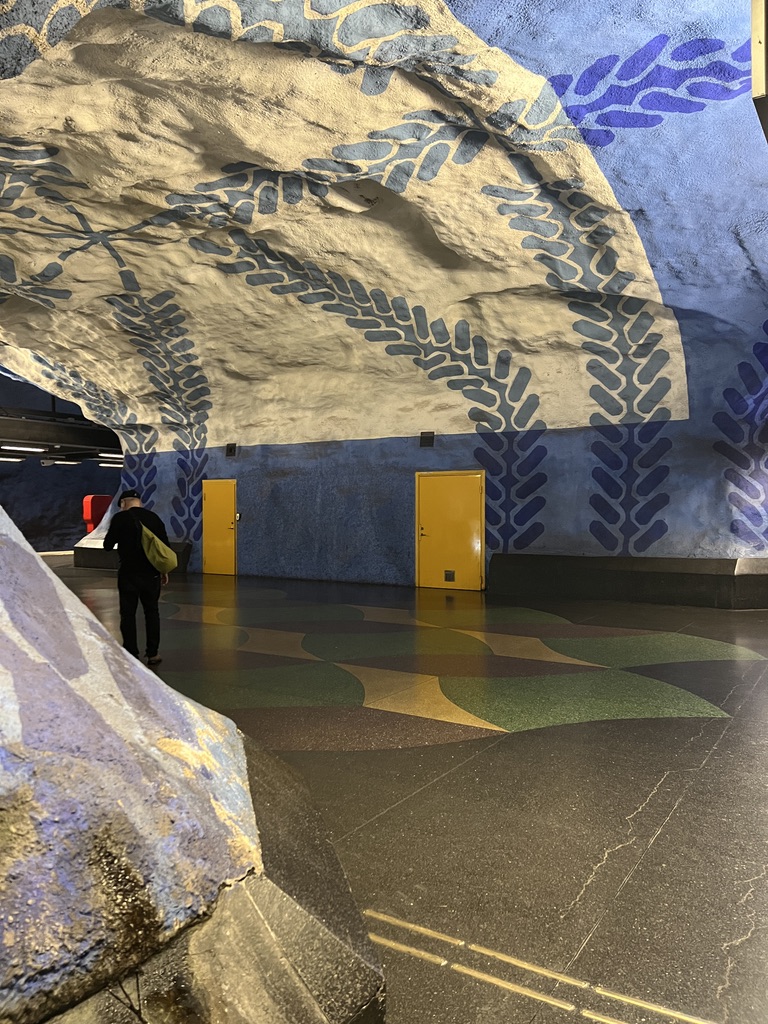
We got a bit of a late start, but headed to Fotografiska for brunch. We took two different Metros and then walked a bit (actually our total steps thus far today—and it’s not over yet is 14,250 steps and 9 flights… I think my phone app is in shock). Fotografiska is a photo museum that has a really good restaurant, known for its Sunday brunch and for its commitment to sustainability as well as fine dining… and has a waterfront location (how can you go wrong?) Located in an old warehouse with high ceilings, the museum’s restaurant (not sure if it has its own name) is proud of its plant-based menu which is supplemented with farmed fish and sustainable meat. There’s an on-site composting system, and all the salads come from a hydroponic farm that is in the basement of the museum. When we ordered our mimosas they told us that the orange juice (which was a bit bitter) comes from Rescue an NGO that uses what we call “ugly fruit.” They had a nicer name for it.
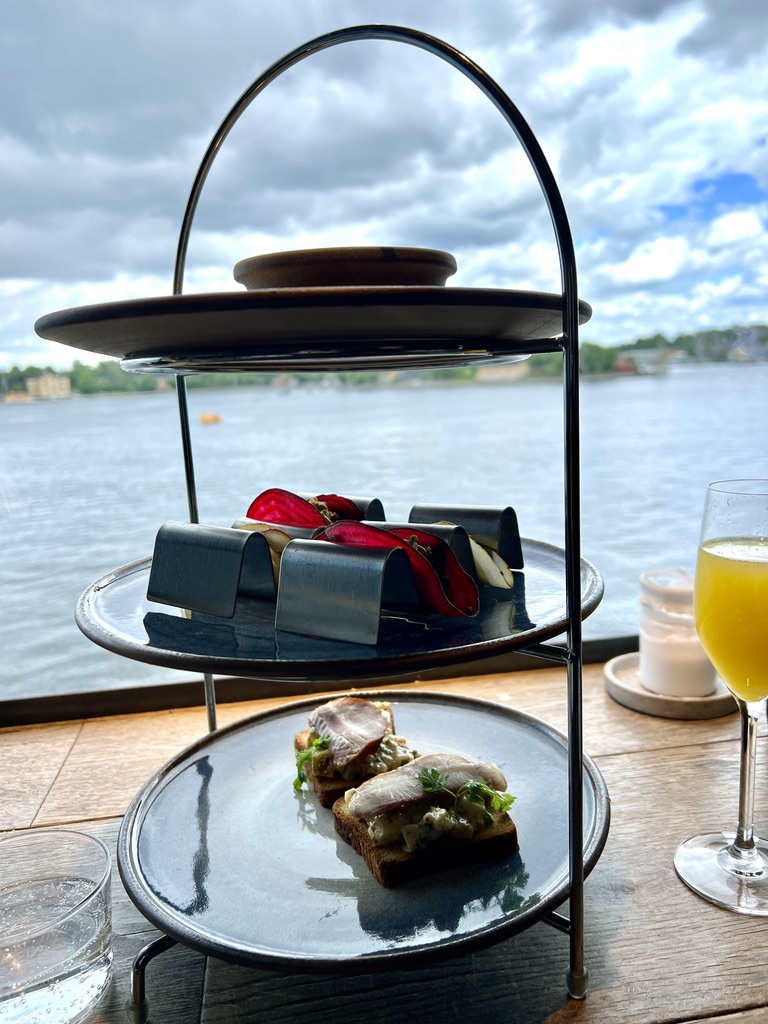
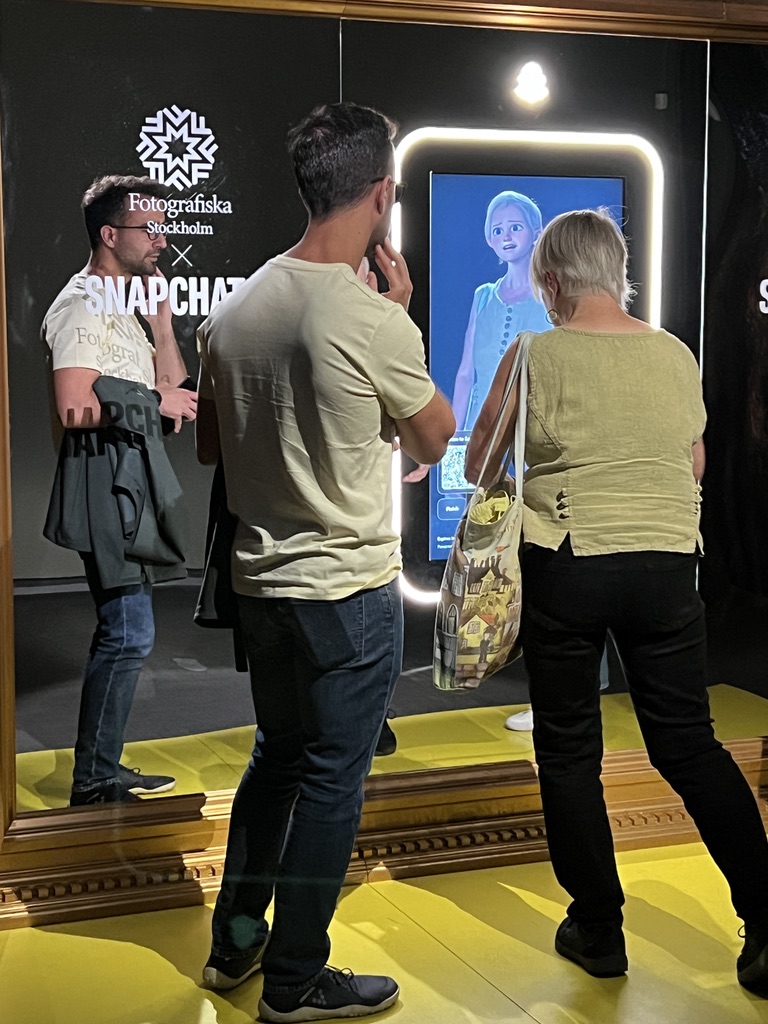
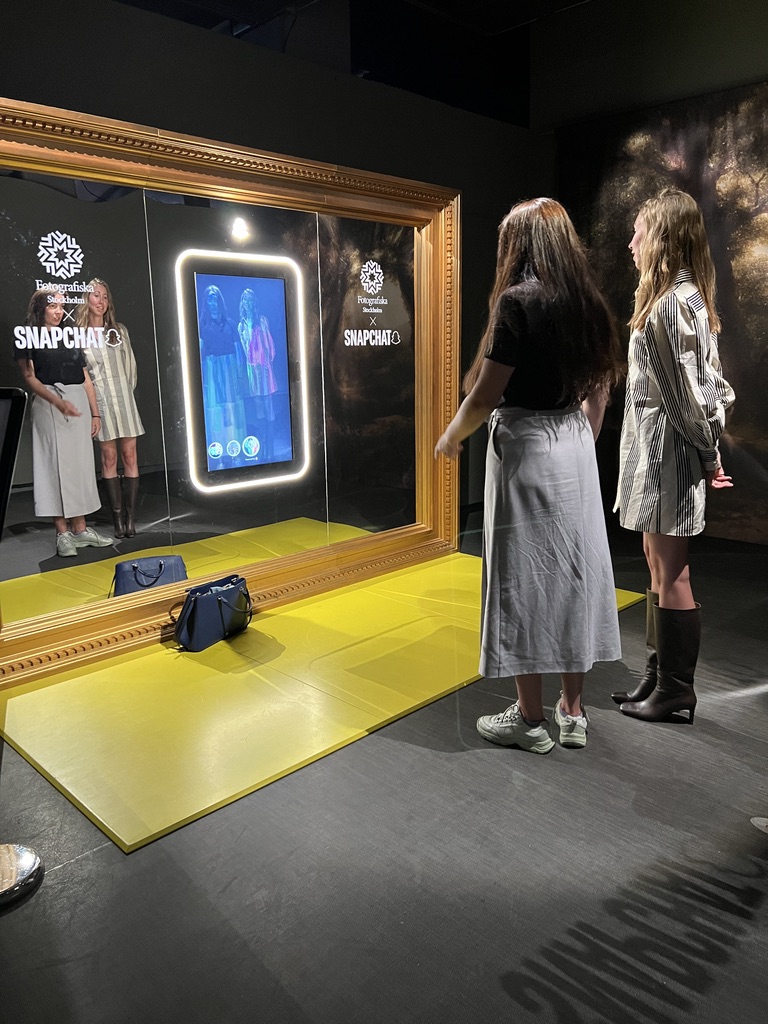
OK… Brunch was quite wonderful… with things like slices of potato bread topped with crème inglais and roe; baked eggs with bread crumbs, asparagus, and some kind of cream; lingonberries with coddled cream. After brunch we strolled through the photo museum which had both a Cindy Sherman exhibit, some of which was devoted to selfies, and also an impressive exhibit that highlighted 10 award-winning photographers who created images to help explain climate change.
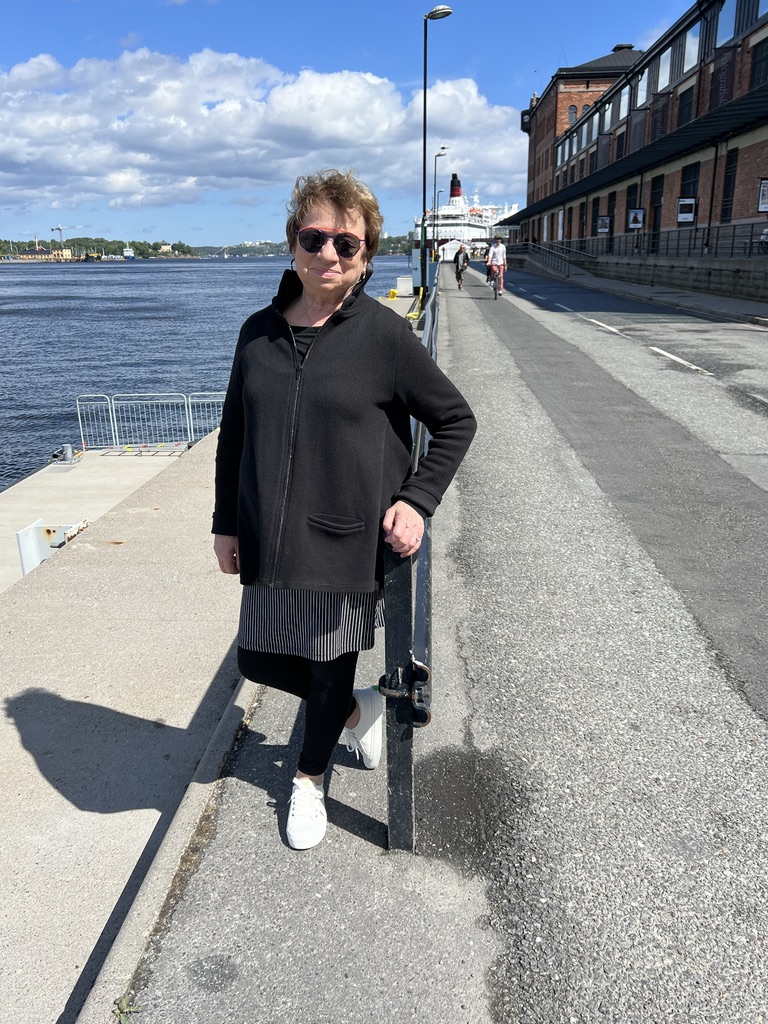
Then we walked to Slussen Station, where I was determined to find “Humor,” a sculpture I had read about—a manhole cover propped up with a hard-hatted worker (made of bronze and wood, I believe) with barricades all around. Public art so real that people walk right by thinking it’s actually a worker poking his head up from the ground. I walked and walked exactly where it is supposed to be, but could not find it. The funny thing is that this “art” has been located there for several years; when I couldn’t find it I asked several people who work in the area daily—the florist, the guy who sells the transit passes, and the hotel desk clerk who works in the building that is literally just behind the location. No one had ever seen it. But there is a lot of real construction going on all around that area, so perhaps it has been relocated… ??? Anyway, if you are headed to Stockholm in the near future, try to find it and send me a photo! https://www-stockholmkonst-se.translate.goog/konst/humor? _x_tr_sl=sv&_x_tr_tl=en&_x_tr_hl=en&_x_tr_pto=sc&_x_tr_hist=true . Very frustrating…
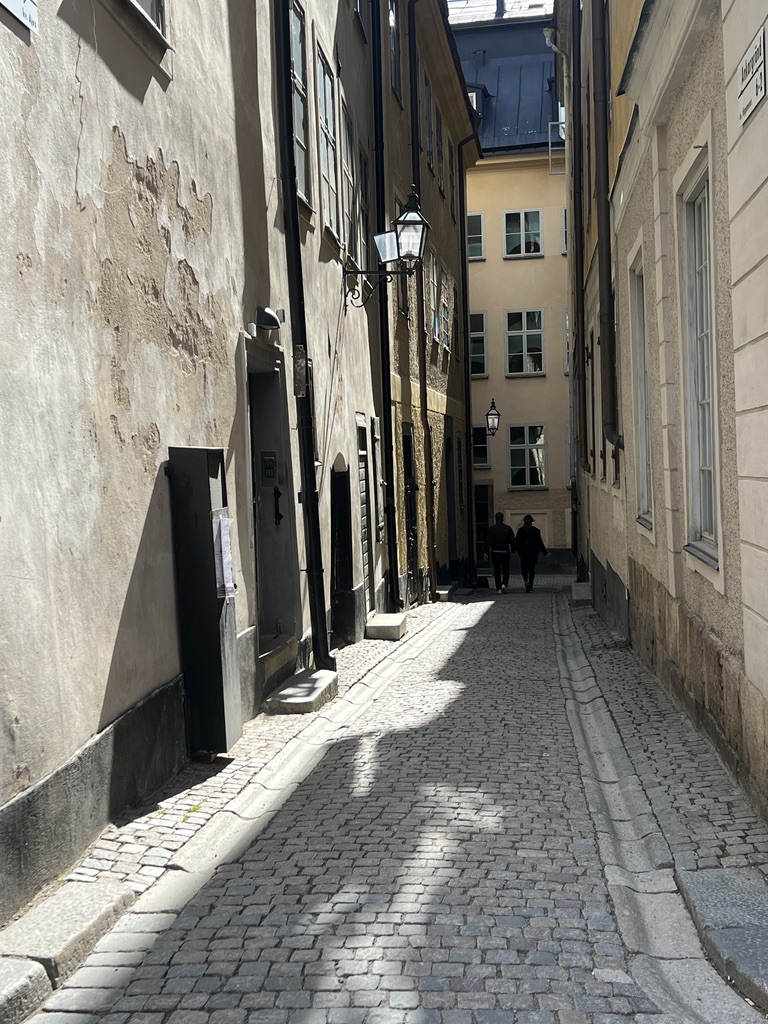
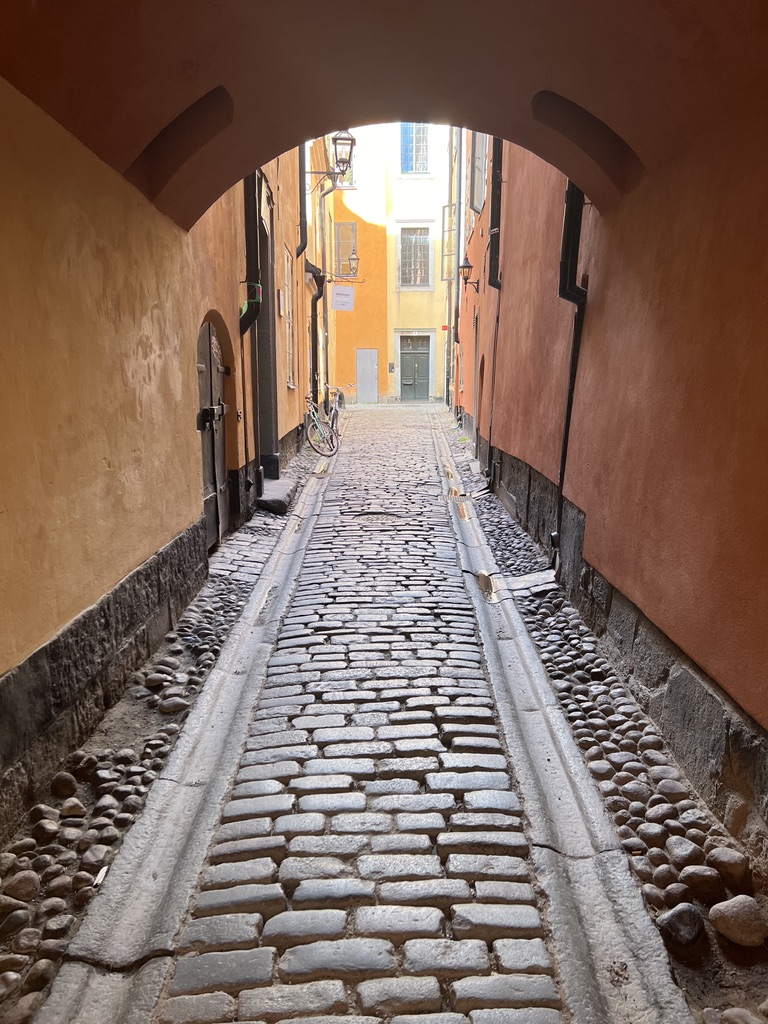
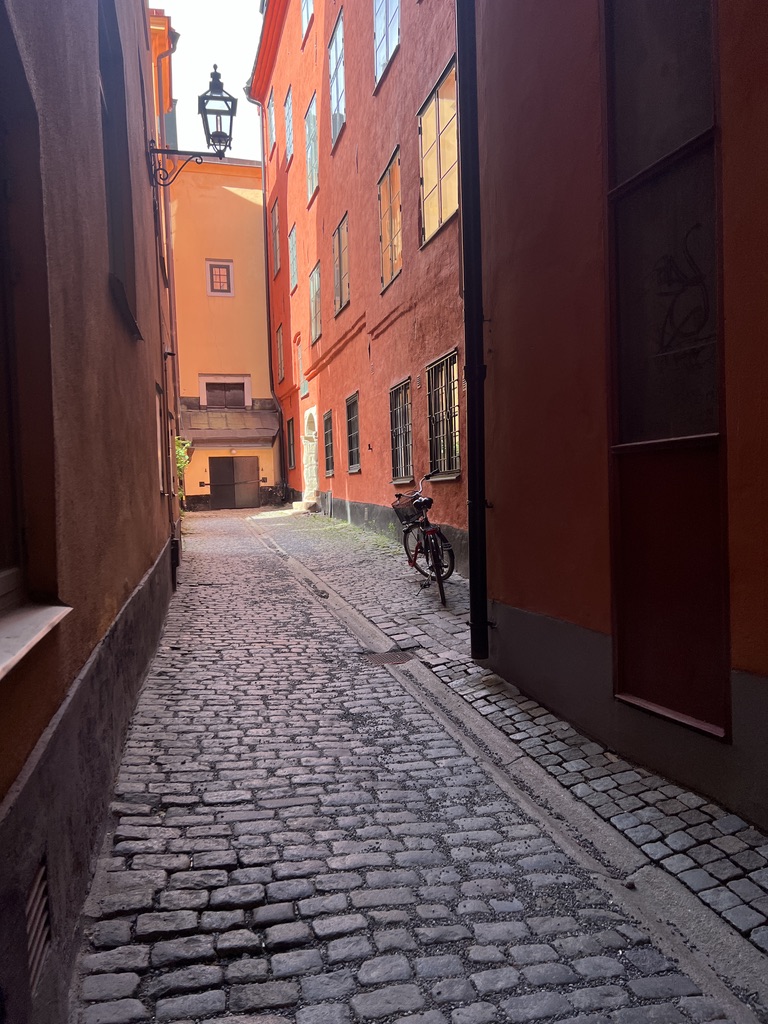
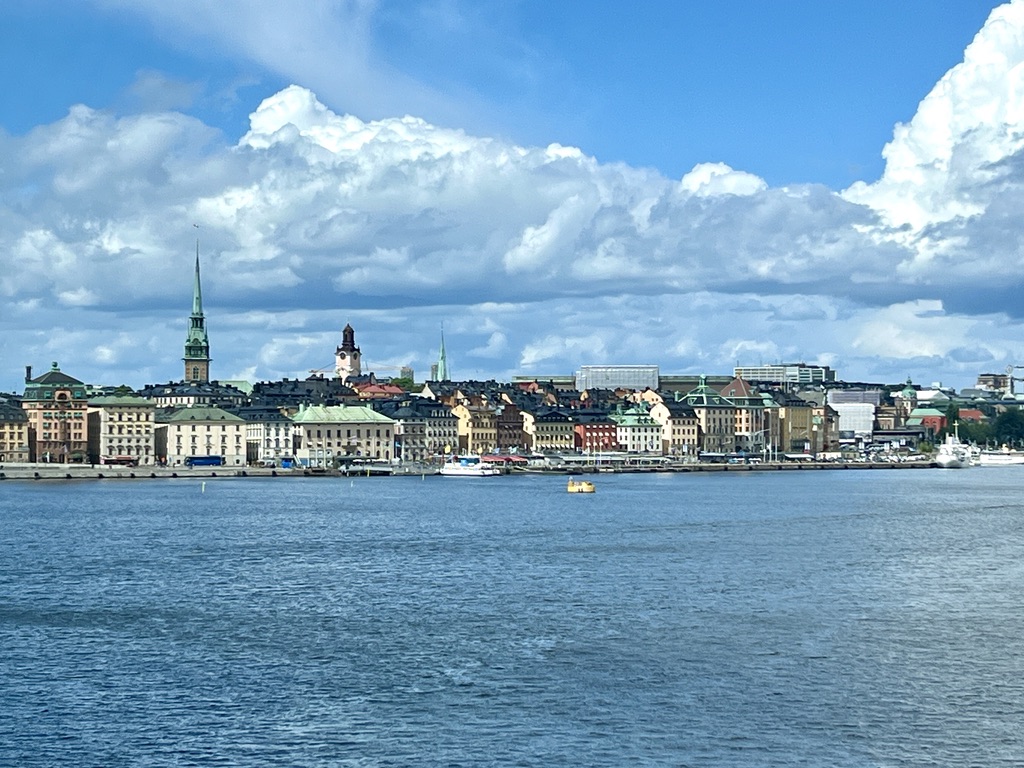
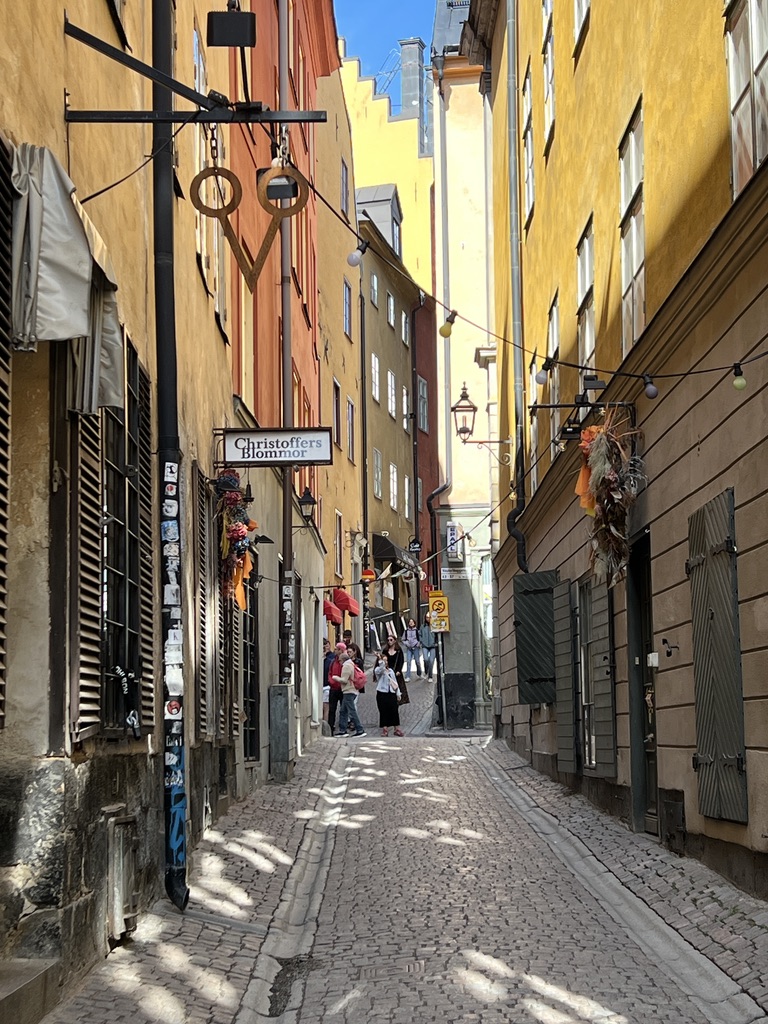
A quick stroll back to the Metro and we are in Gamla Stan, the old section of Stockholm. The little neighborhood of Gamla Stan was the actual city of Stockholm in the early years. While the area dates back to the 1300s, most buildings that are still standing are from the 1600s and 1700s. It’s one of those totally charming sections of an old European city with tons of narrow lanes lined by houses and shops, and streets lead up to the palace and the church. We strolled for a few hours and eventually headed back to the Metro to our hotel… but not before we went to Ramsgarden to see the “ants”— giant sculptured ants in front of some kind of office building. And then the rains came as we made for cover in the metro and back to the hotel…
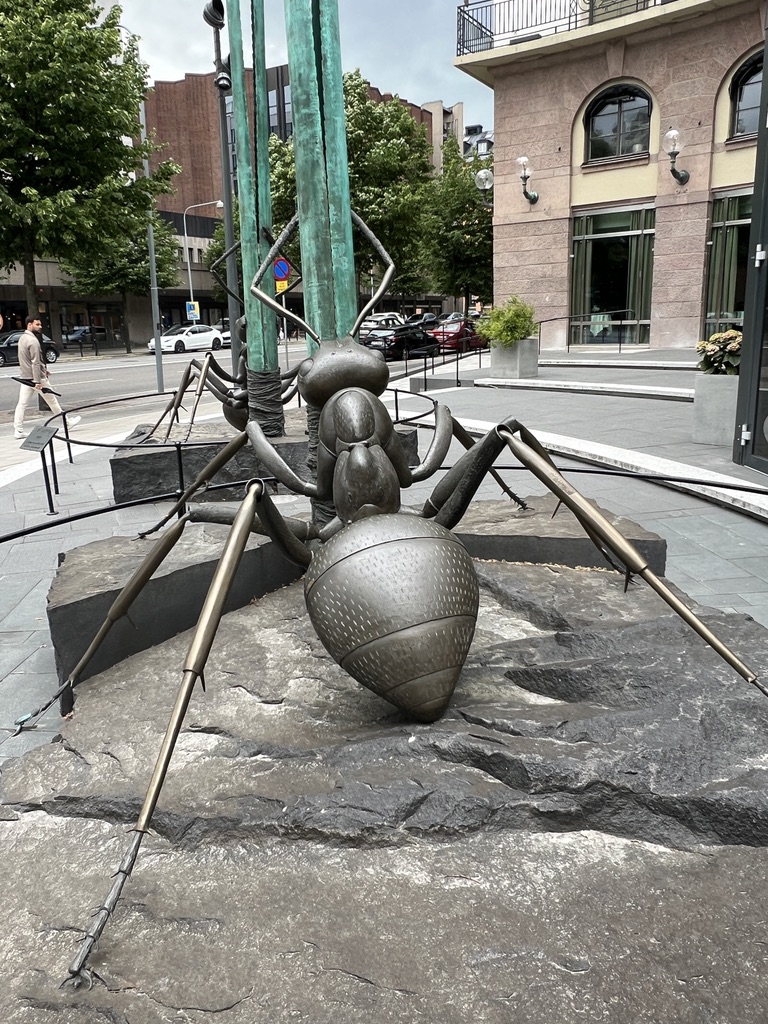
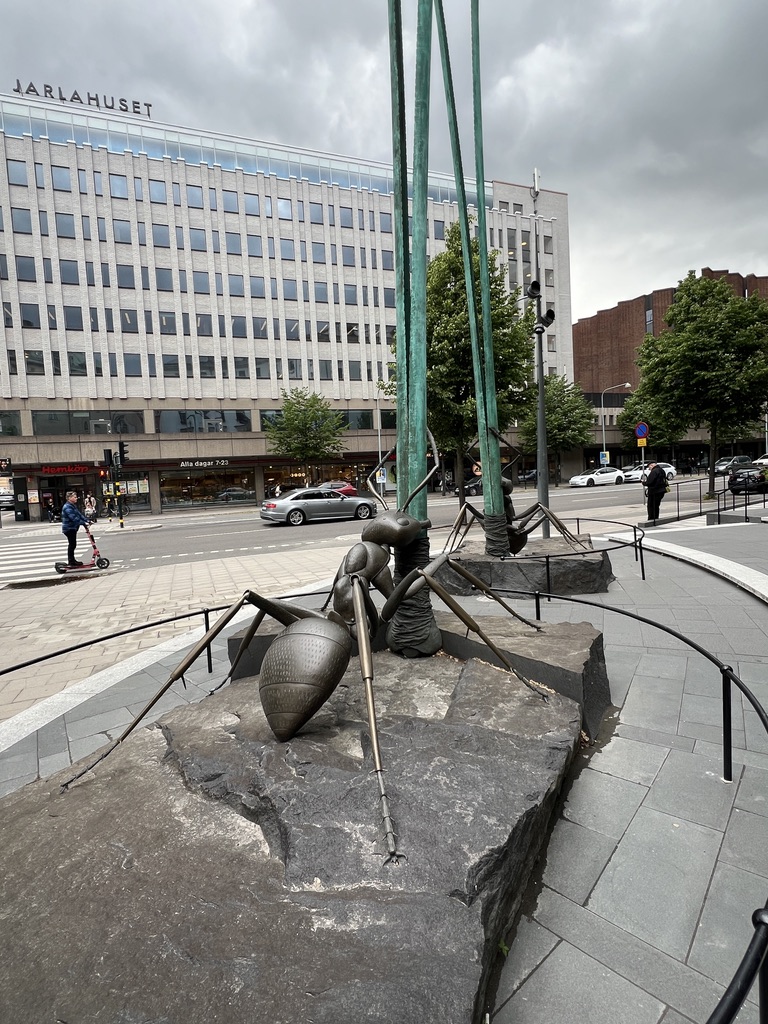
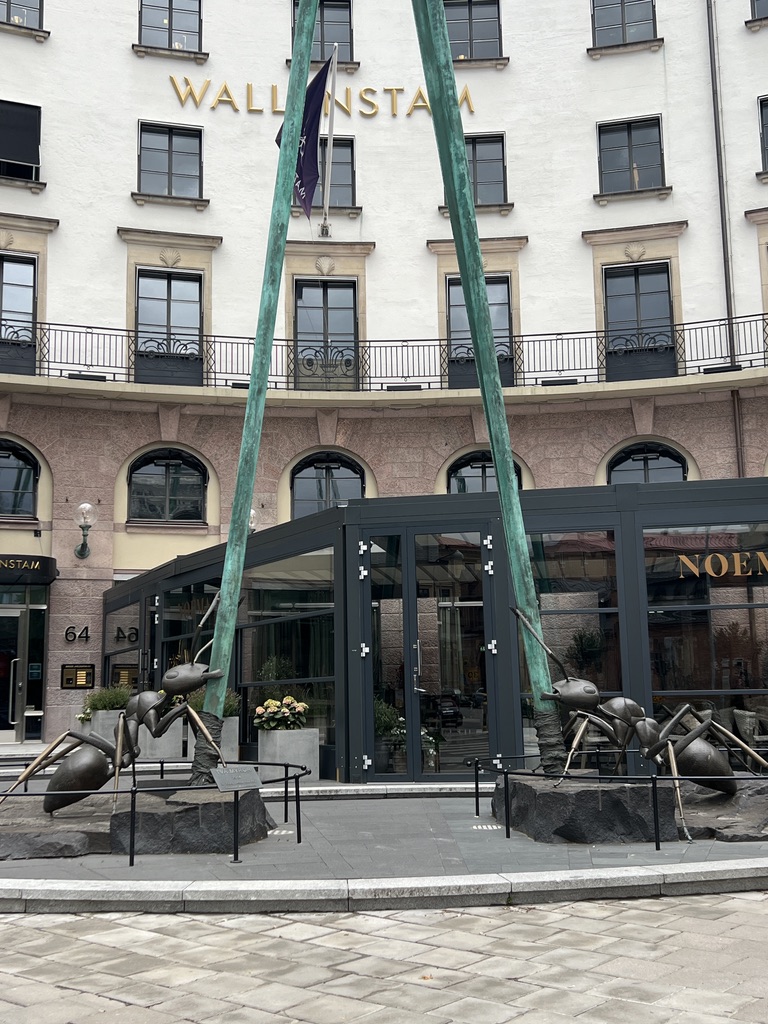
And then we went for dinner to a little place called “Woodstockholm” – not sure where we heard about it. But it was a great choice. We thought that perhaps the name of the restaurant had something to do with Woodstock NY, but we were wrong. The story is that there was a group of friends who were really good woodworkers, and they formed a small company making wood furniture. They sold the furniture to some restaurants and then, because they all liked to cook, they decided to open a restaurant (in 2012, I think) and they used furnished the restaurant with their handmade furniture – they built all the tables and chairs, etc. (quite nice and great craftsmanship). They also had a concept for the restaurant: use locally sourced food and have a theme for the menu which changes every two months. The themes have been things like “trains,” or “a favorite country” or “a particular chef,” etc. This month’s theme is “E4,” the major highway in Sweden that goes from the north to the south of the country and passes through most major cities. In addition to the well-crafted furniture, the restaurant has a lot of funky stuff around.
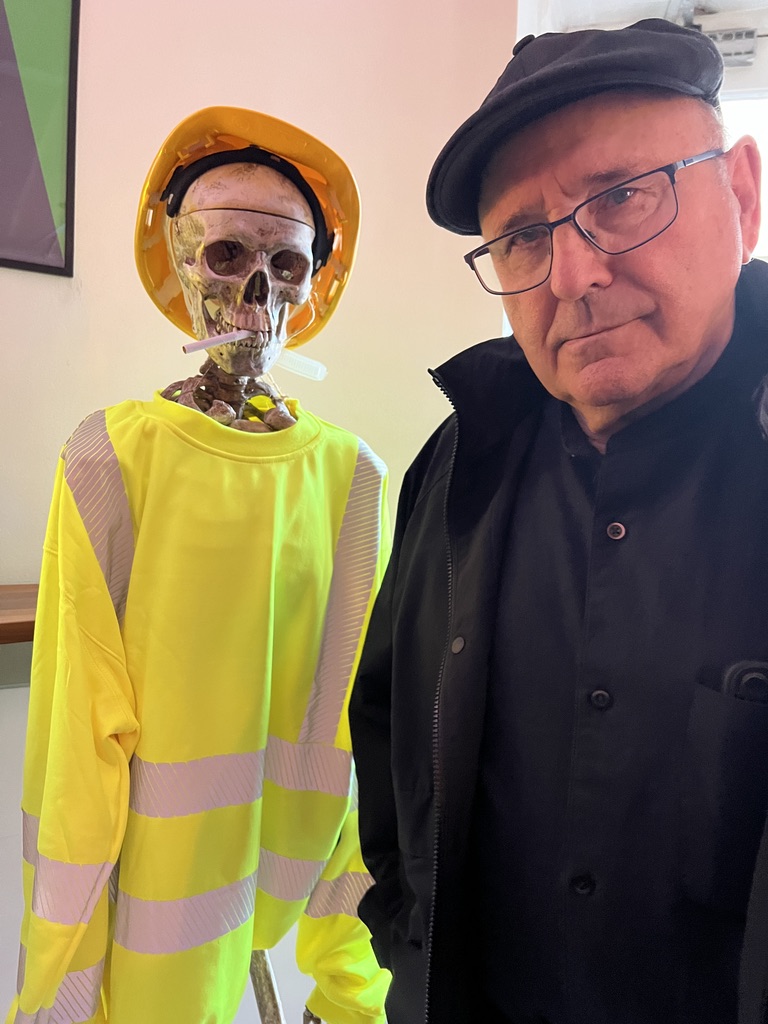
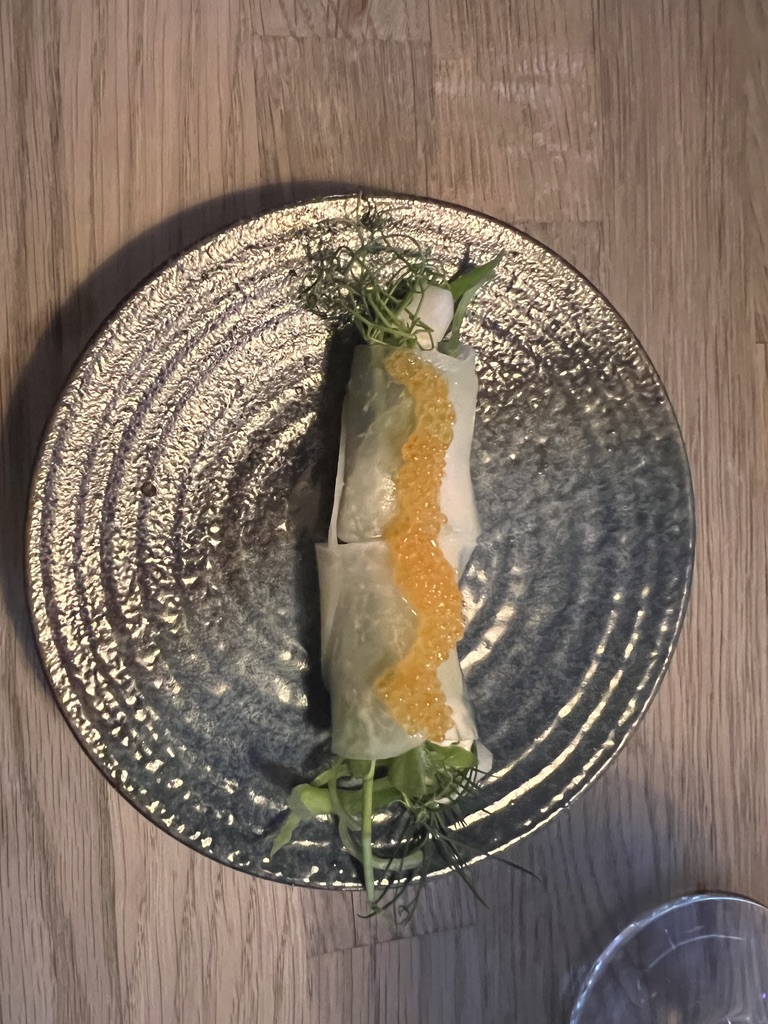
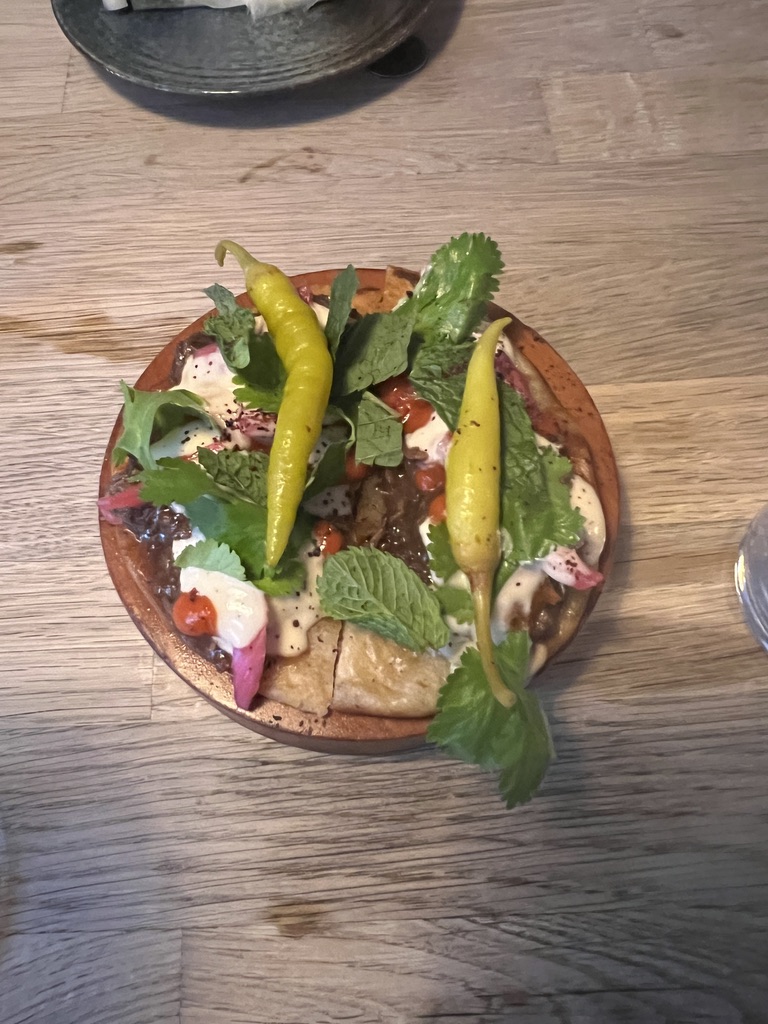
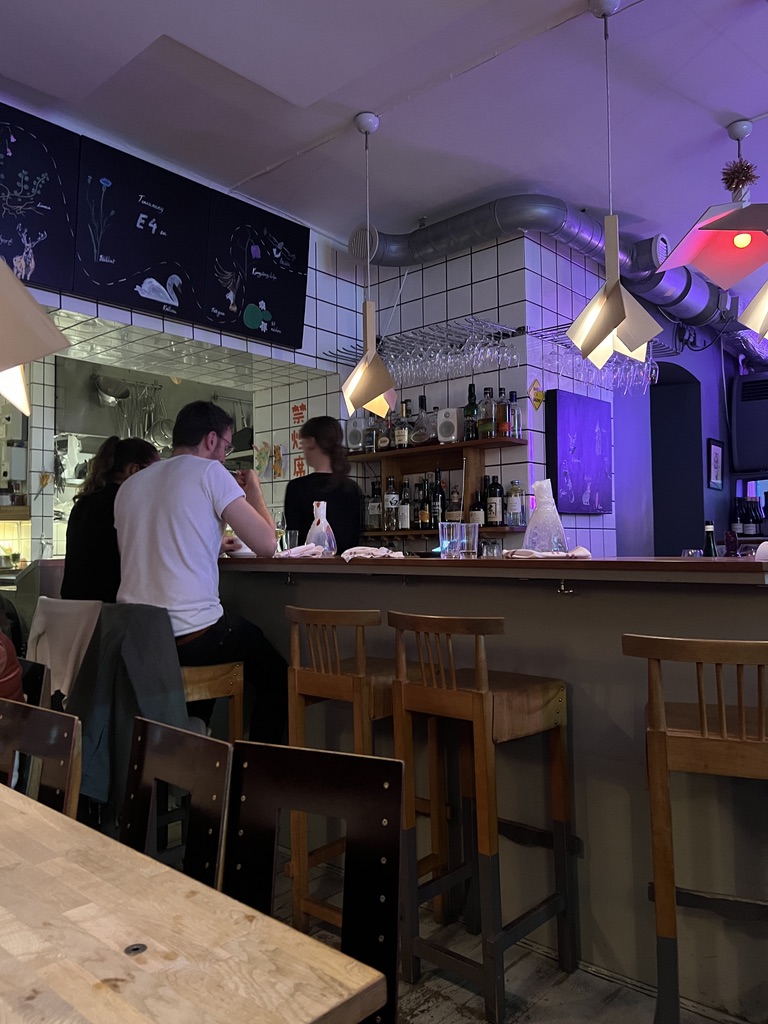
So we had the Haparanda (named for a city way up north) — whitefish roe and horseradish wrapped in kohlrabi roll. And we had Kebabenkase (lamb and tahini and a spicy pepper and some other stuff sitting on a flatbread) for starters. We followed this with reindeer tartare with lingonberries and spruce and some paper thin chips (dish was called “Danger for Reindeer”) which was great with a lot of “kick;” and then we shared one main course: baked sole (that was incredibly tender and melted in your mouth) with asparagus and au vin blanc sauce (called Kungena Kurva). We couldn’t help ourselves so we had to order one dessert: the “Self-Pickling” which was strawberry, lime and wild chamomile which was created like fine ices… By the way, they carry the two-month long theme into decorations at the restaurant, so we were surrounded by road signs and construction helmets and maps. It’s a tiny place—probably only 5 tables for two and then one long counter which seats about 12 people, and a small bar where you can also have dinner. Highly recommended.
Public transit back to the hotel and now I’m exhausted. Many more to tell, but it will have to wait.
Adjö — Fern
June 8, 2024: Stockholm 1
Hallå
Hälsningar från Stockholm — Greetings from Stockholm—1:00 a.m. (Saturday night/Sunday early morning).
So, for those whom I have not spoken with for a while…. We had planned a trip to South Korea and rural Japan for this past April (2024). We worked really hard on figuring out our routes and means of travel (driving, train, plane, boat). But alas, in late February I managed to slip on wet pavement (actually I think I was running because of the rain – to mail something at the post office—and the sidewalk had a deep crack.. My shoe got caught in that canyon of a crack and I fell——hard!) and wound up breaking two bones in my wrist, requiring surgery. I’m a total wimp when it comes to medical things, so I tried to avoid surgery. But it became obvious that was the only real solution. As a result of the fall, surgery, healing, and hand therapy (a very special form of PT) we postponed the Korea/Japan trip until 2025 and stayed home. We wanted to rebook for early fall 2024, but I have a book coming out in October so that month was already hectic. Didn’t want to go in the winter when it’s pretty cold…. So we set the trip for spring 2025. But as a consolation, we decided to head to Finland, where we had lived for a year (and where we have returned at least every five years. The last trip to Finland was in 2019; if you do the math, 2024 is the five year anniversary. We love Finland, so it all made sense. Still it’s been a long time since we traveled in a developed nation (as the main focus)… so we shall see.
As usual it was messy getting ready. At least I had finally finished all the editor and proofreader recommended edits to the book, final photo selections, and review of indexing decisions. It was hard to let go; I suppose like raising a child for many years and then seeing them head off without you. But… it’s all gone. Book publisher release date is in October. Big party in Oakland in December, and hopefully many invitations to do readings or book signings in the fall and winter. And then there were preparations of budgets, scopes, and contracts for several new projects both in California and beyond. Packing was a nightmare since the weather in Scandinavia kept changing by the hour.
But finally, we got the trip figured out and we left California yesterday (Friday, June 7). We headed to Stockholm (via Frankfurt). The plan is to spend three days in Stockholm (a city we have not been back to in decades). And then we will take the overnight ferry from Stockholm to Helsinki on Tuesday. We last took that overnight ferry decades ago and have fond memories of seeing Helsinki for the first time from the boat. So a bit of nostalgia there. We’ll immediately go from the Helsinki port to the airport to fly up north to Oulu where we will really begin our trip. We fly to Oulu (spend a few days) and then drive further north to Rovaniemi at the Arctic Circle. Then we head to Inari (further north still) which is smack in Sami country (Lapland—land of the Sami people). After a few days there, we’ll drive back to Rovaniemi and then fly directly to Helsinki to visit the places we frequented and see some friends. We had a wonderful year living and working in Helsinki and each return visit has enabled us to keep up with friends and see how the city has changed. We’ve actually been to all of the places we’re going to on this trip, but still we are anticipating a great trip.
What’s not to love in a country declared “the happiest country” and possessing the best public education in the world?
My daily travelogues will tell a lot about Finland…. Then… and Now.
But for now we are in Stockholm. We left SFO at 7 pm and it seemed fairly quiet at the airport. Our route took us to our least favorite airport (Frankfurt) with a four-hour layover, and then we had a Lufthansa flight to Stockholm. We arrived around 9:30 pm and it was still very light out, despite a slight drizzle. After checking into the Bank Hotel, we headed across the street to eat a very late (11:00 pm) dinner at Arsenalen Bistro which turned out to be across the street from the hotel. Steak tartare, fries, salad, and a ½ order of a simple pasta with some sun dried tomatoes and a raw egg.. Finished it all off with some nice Cabernet and a chocolate mousse.
Heading to bed.. Tomorrow begins our adventure (probably the most calm travel we have done in decades). I’m sure it will be lovely, but it will likely lack the excitement of places we’ve never before explored and developing countries where the cultures are more unique or more different from our own.
Stay tuned— the one thing about travel to places you already know is that you can really explore new areas and return to old places with the wisdom of previous knowledge.
We’re good … and anxious to explore Stockholm tomorrow.
I promise more newsy pieces in the days to come with photos…
Fern
Girl Trip 2024: Ciudad de México: Day 5
Wednesday, November 20, 2024
El Quinto Dia — New Hotel, Anthropology, Rivera’s Dream of a Sunday Afternoon at the Alameda Central… and More
Greetings from Mexico City (Polanco)
While you are likely to get this message on the evening of November 21st, I am writing it on the 20th at the new hotel and finishing on the plane on the 21st. It’s late now (after midnight) so I already know I will likely not get it out before I go to bed.
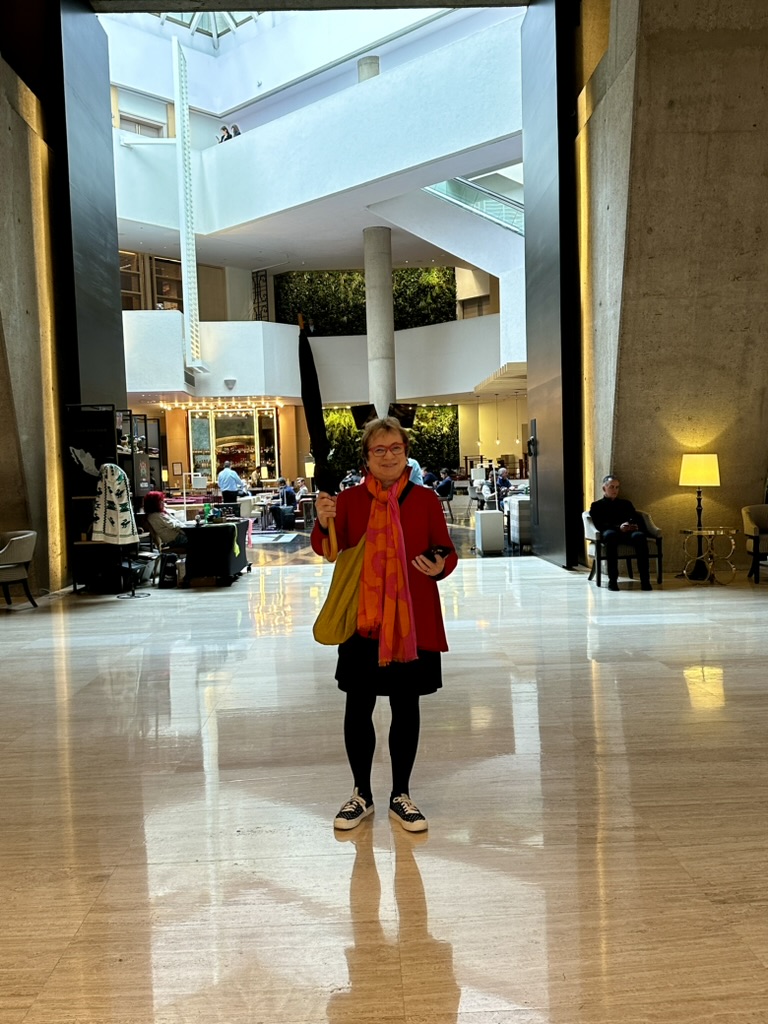
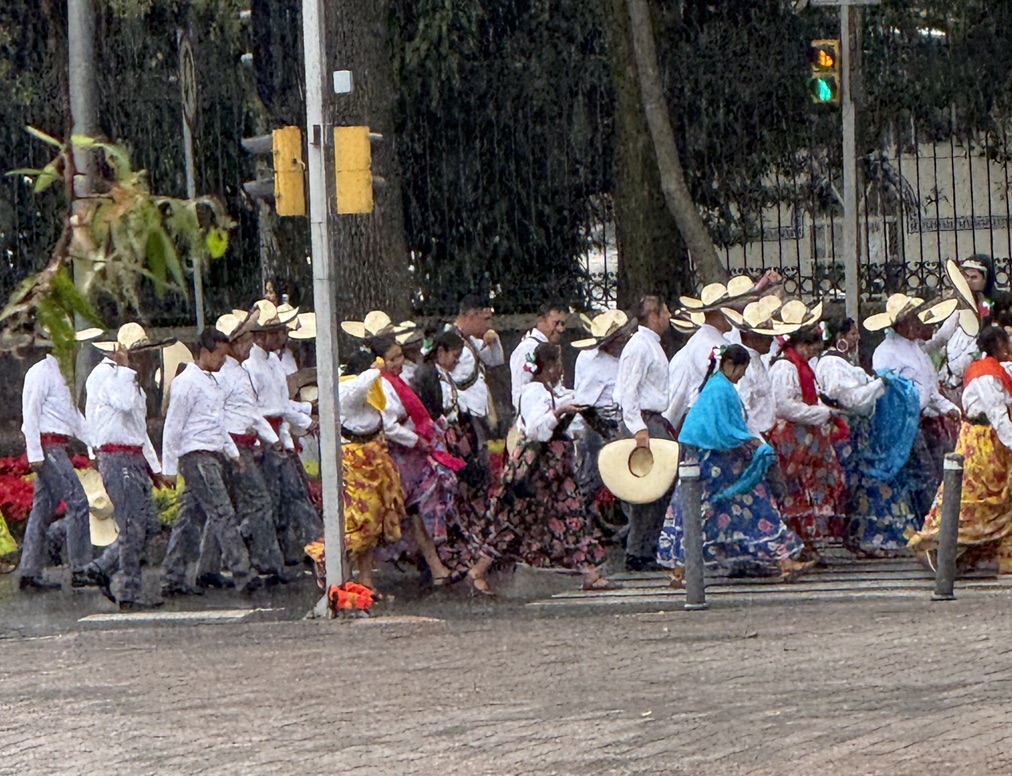
Today was the first day with bad weather: rain. But we persevered and powered on. Before breakfast, we had decided to leave El Patio and head to a hotel in downtown. We had already researched possibilities and costs so we were ready to go. Once we all texted each other about how long it took to get hot water for the shower, we were quick to decide it was time to move. We booked rooms at the Hyatt Regency Mexico City—and off we went. Normally I hate staying in “chain” hotels and large hotels, preferring the unique personalities of local hotels. But we were rushed and figured we needed some kind of assurance we’d have hot showers and super clean rooms. As we entered the lobby of the 30-story Hyatt, we all laughed, and frankly treasured the brightness of the soaring atrium and the hospitable staff—a far cry from our dark, dingy, staffless El Patio with the difficult-to-navigate dimly lit stairwell. We dropped off our bags and headed out to walk about 20 minutes to Mexico’s wonderful Anthropology Museum, which one could spend weeks in…. and not feel they had seen enough. We were pressed for time, so we were only there for a few hours. We split up to go separate ways and meet at the museum’s restaurant. Interestingly we all found ourselves in the same section—the cultural and social exhibits, especially the fiestas section.
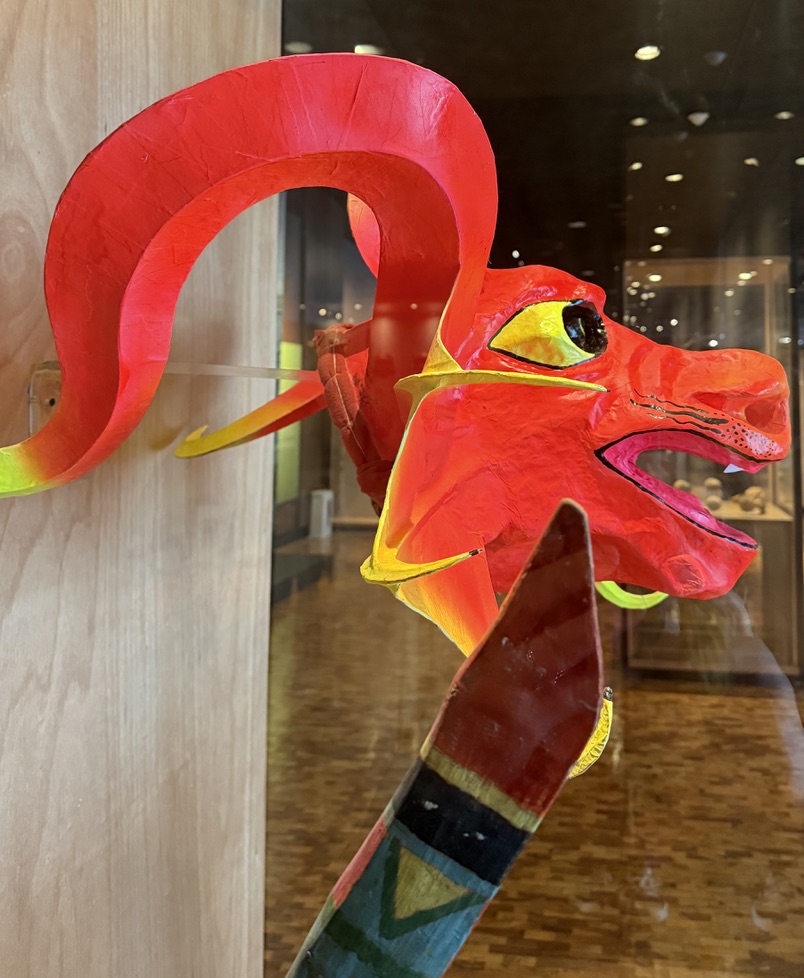
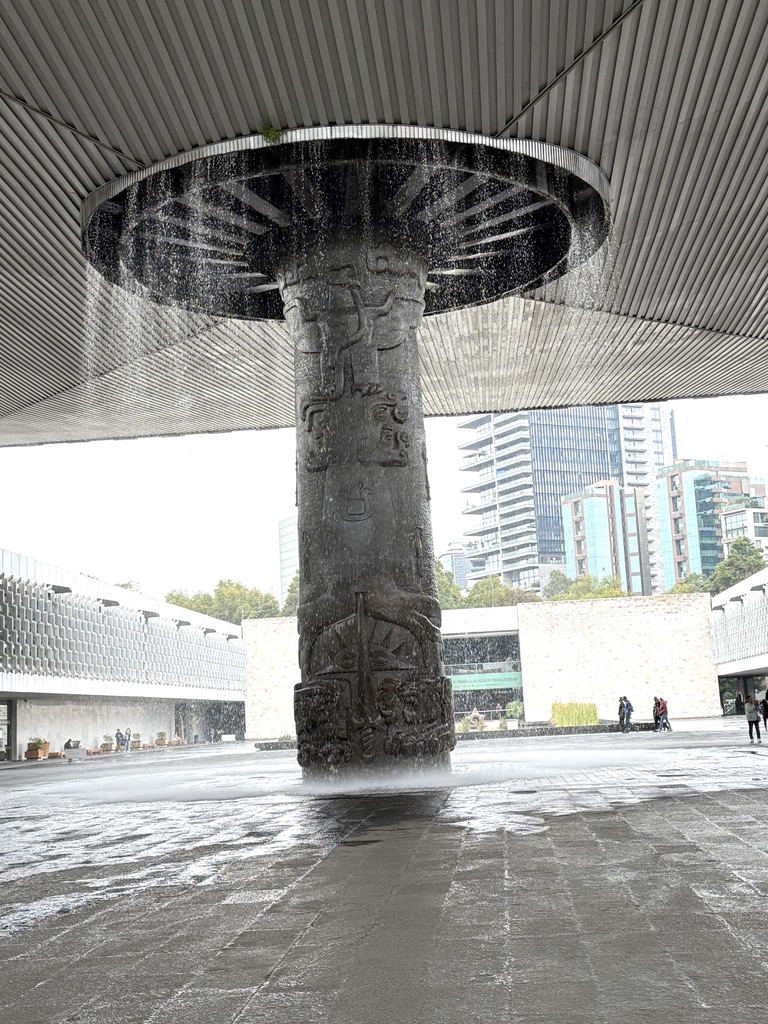
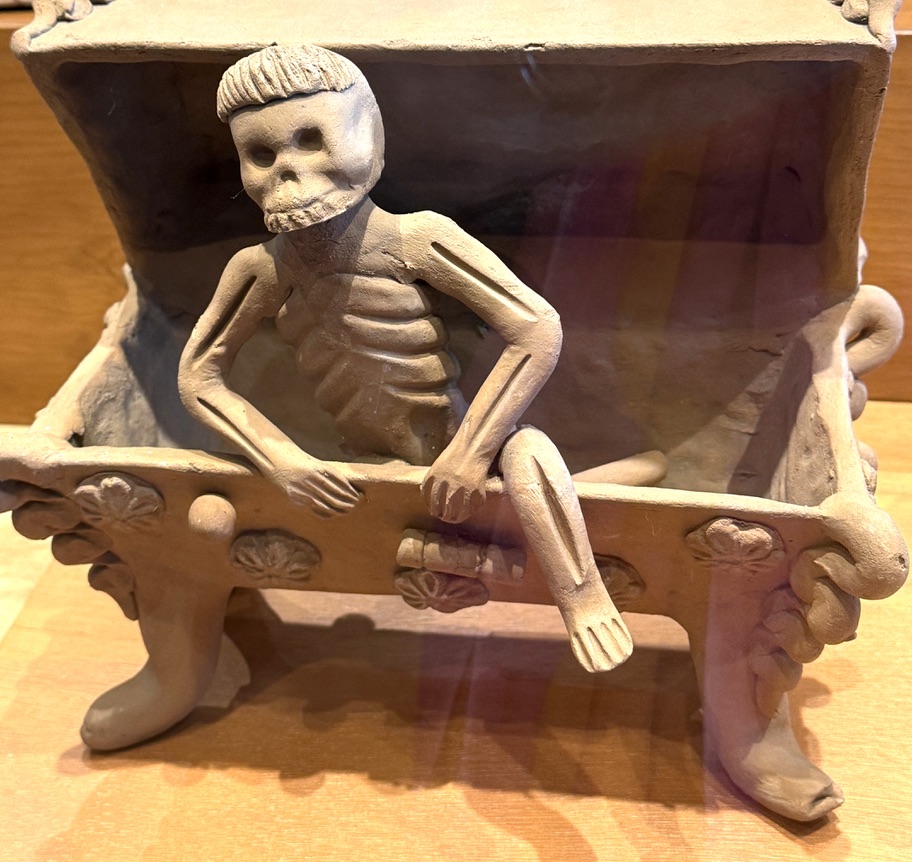
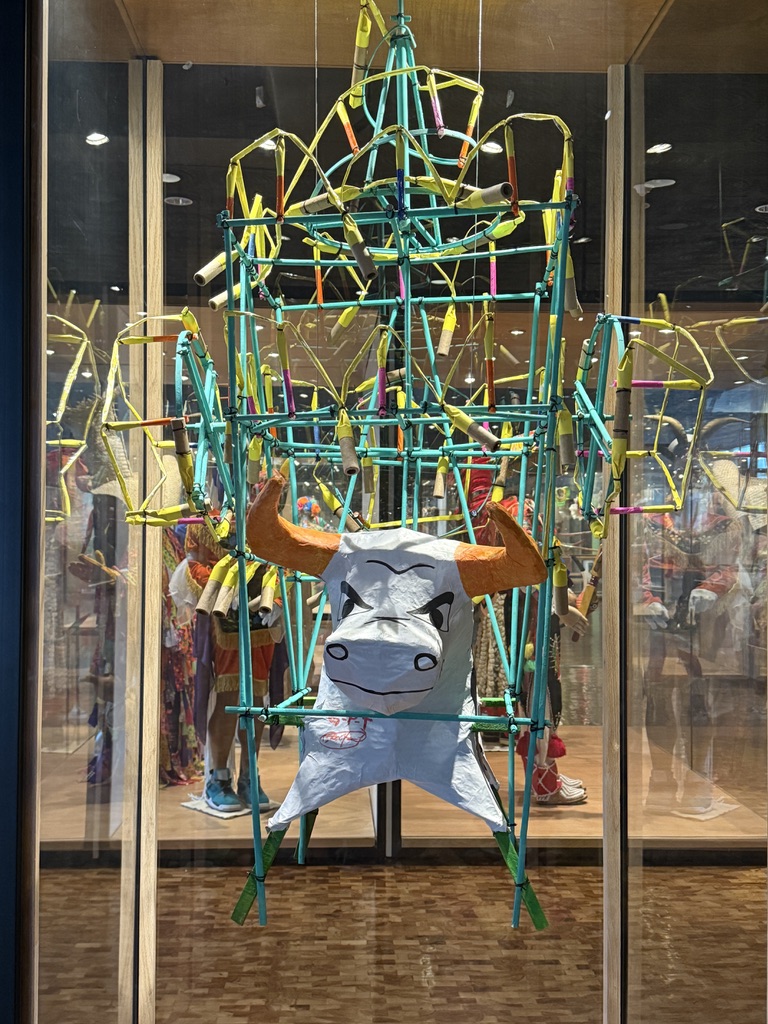
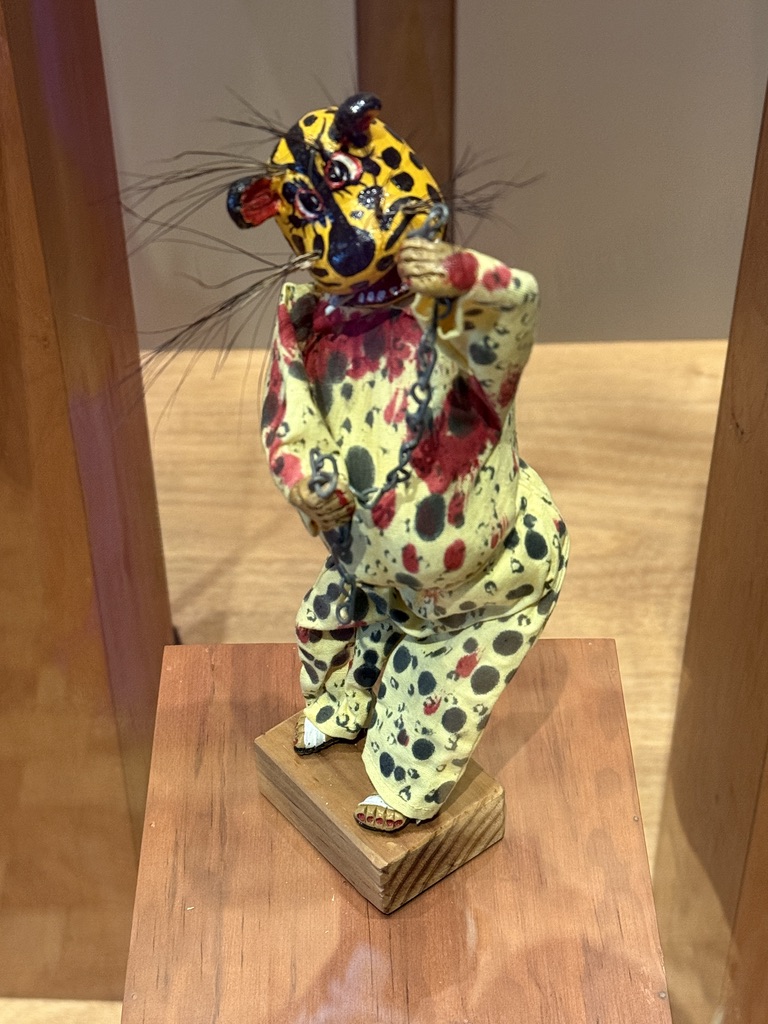
The museum was as wonderful as I had remembered. The exhibits are beautifully developed and displayed and their collection is amazing. The building itself is also quite interesting. We had a great lunch at the Sala Gastronomique— including ceviches, tamales, a vegetable salad (and soup for Carol). From there we walked to the Reforma and caught a taxi (in the rain—thank goodness we asked the hotel for our paraguas/umbrellas).
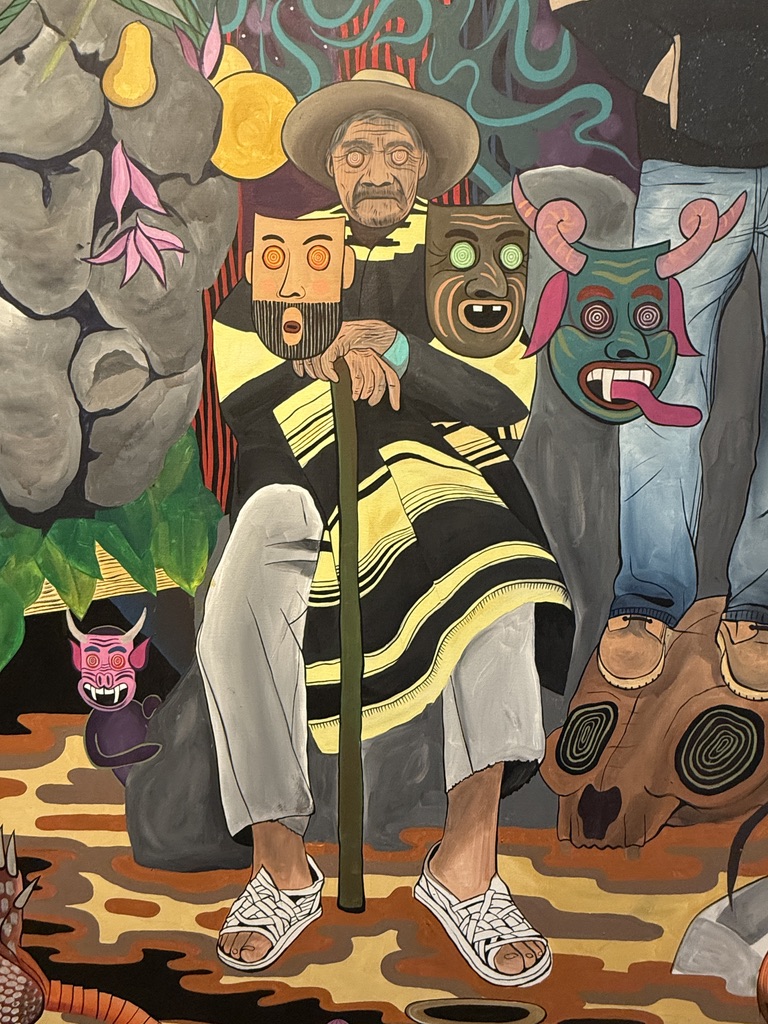
We headed to see the Diego Rivera mural, “Dream of a Sunday Afternoon at Alameda Park”—one of my favorites which includes Diego himself in the center (as an 8-year-old boy—who looks like a miniature Diego) standing in front of Frida and next to the Catarina. The mural is Rivera’s sense of four centuries of Mexican history combined with his own personal history. It all takes place in the Alameda Park in Mexico City, which was located near the hotel whose location witnessed all of the transcendental events of Mexican history which are depicted in the mural. There are more than 100 characters in the mural and about half have been identified. The story in the mural goes from the Conquest and the Holy Inquisition to the first half of the 20th century. The mural depicts various histories of Mexico from diverse political perspectives. It’s about 50 ft long and used to hang in one of Mexico City’s most prestigious hotels. But the mural was too heavy for the walls and the hotel needed some repairs, so it was relocated, just before the earthquake which would most likely have crushed the mural. Now it hangs in its own little building—perhaps a bit more precious than in the “public” lobby of a hotel, but preserved, nevertheless.
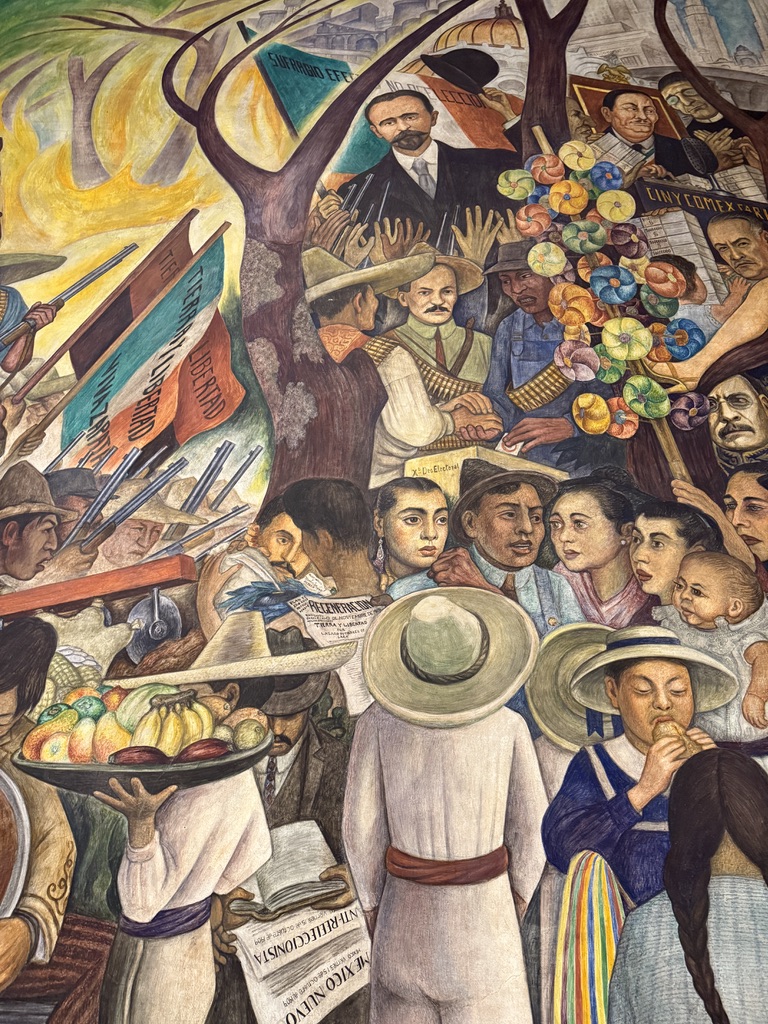
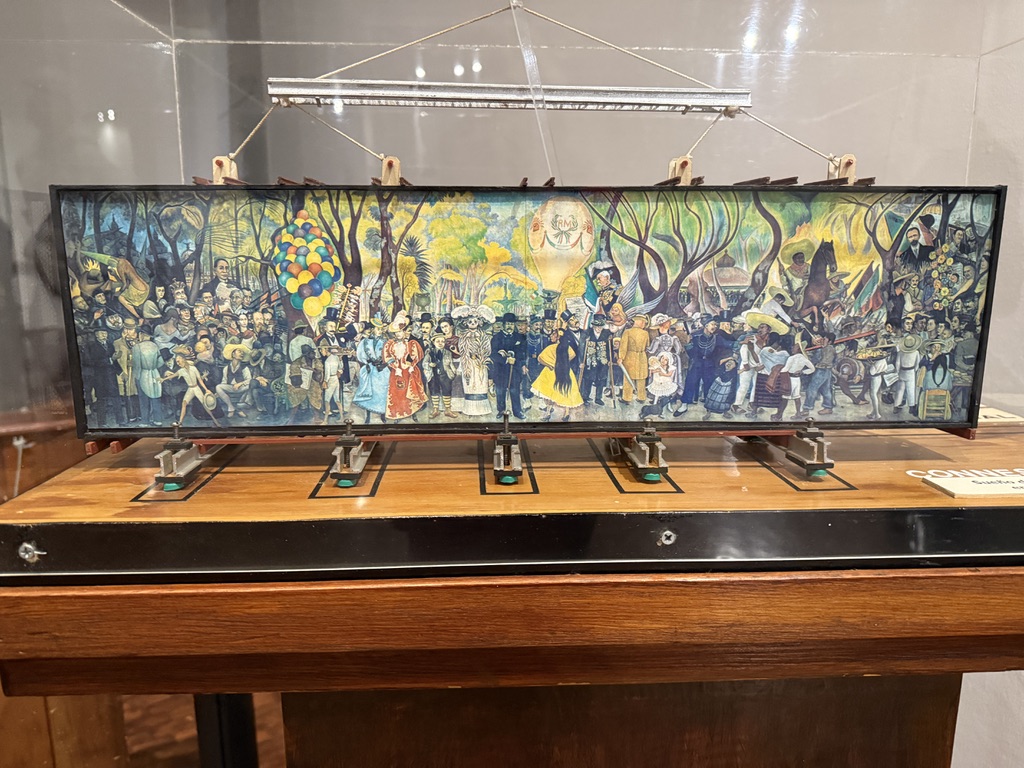
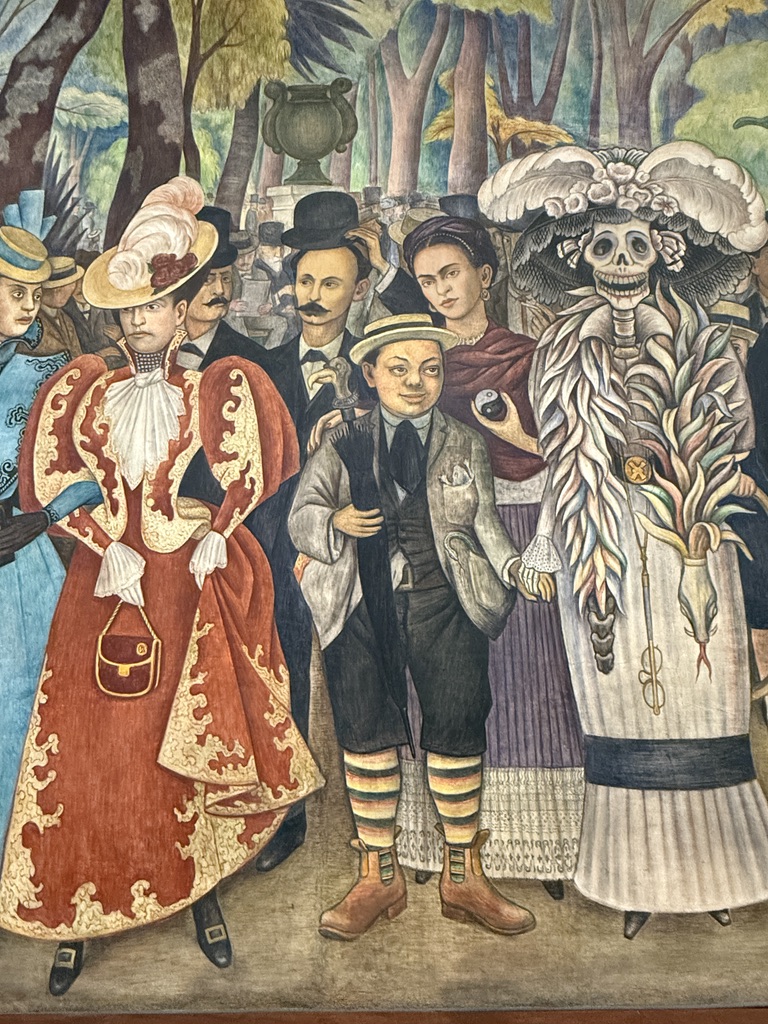
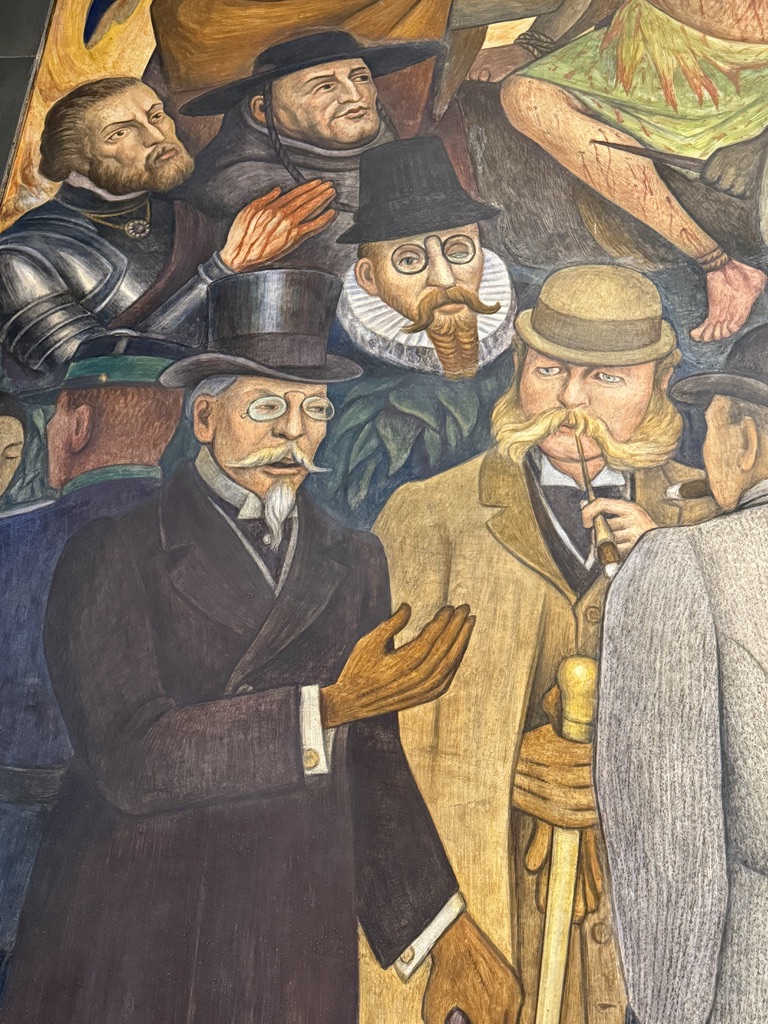
We had asked the taxi driver to return to pick us up in an hour and had high hopes he would appear, but alas we stood in the rain for about 15 minutes and then decided to find another taxi (no easy task on a rainy day during rush hour). We finally got a pretty rickety taxi with a cracked windshield, but driven by a really nice older Mexican who didn’t know where we were going but followed our GPS instructions to a T!.. We headed to FONArt… one of those government run craft stores that exist throughout Mexico. And where you can generally find the highest quality craft from throughout the country. It was located at the edge of the Condessa neighborhood. Because of the rain and the time, we asked this taxi driver to wait for us and said we’d pay for the time he’d be sitting there.
We found some unbelievable pieces at FONArt, but most were too large and/or too expensive for any of us. We did purchase a few small items, which we all hope will make it back in one piece. The taxi driver was waiting down the street and then we joined millions of Mexicans in the famous Mexico City traffic—taking about an hour to go 3 or 4 miles. “Atasco de trafico en la Ciudad de Mexico!” If it wasn’t raining we might have walked or at least figured out the bus or metro route. But we were happy to be in an enclosed car and not to face the rain (fortunately the taxi had one working windshield wiper, so we were in good shape)! By the time we reached our new little home at the Hyatt, we were almost ready to call it a night and just have dinner at the hotel. But we realized it would be a bummer to spend our last night eating in a restaurant that felt like we weren’t really in Mexico. So, we pushed our reservation at Fonico for an hour later and headed out at about 8 pm for a 8:30 reservation.
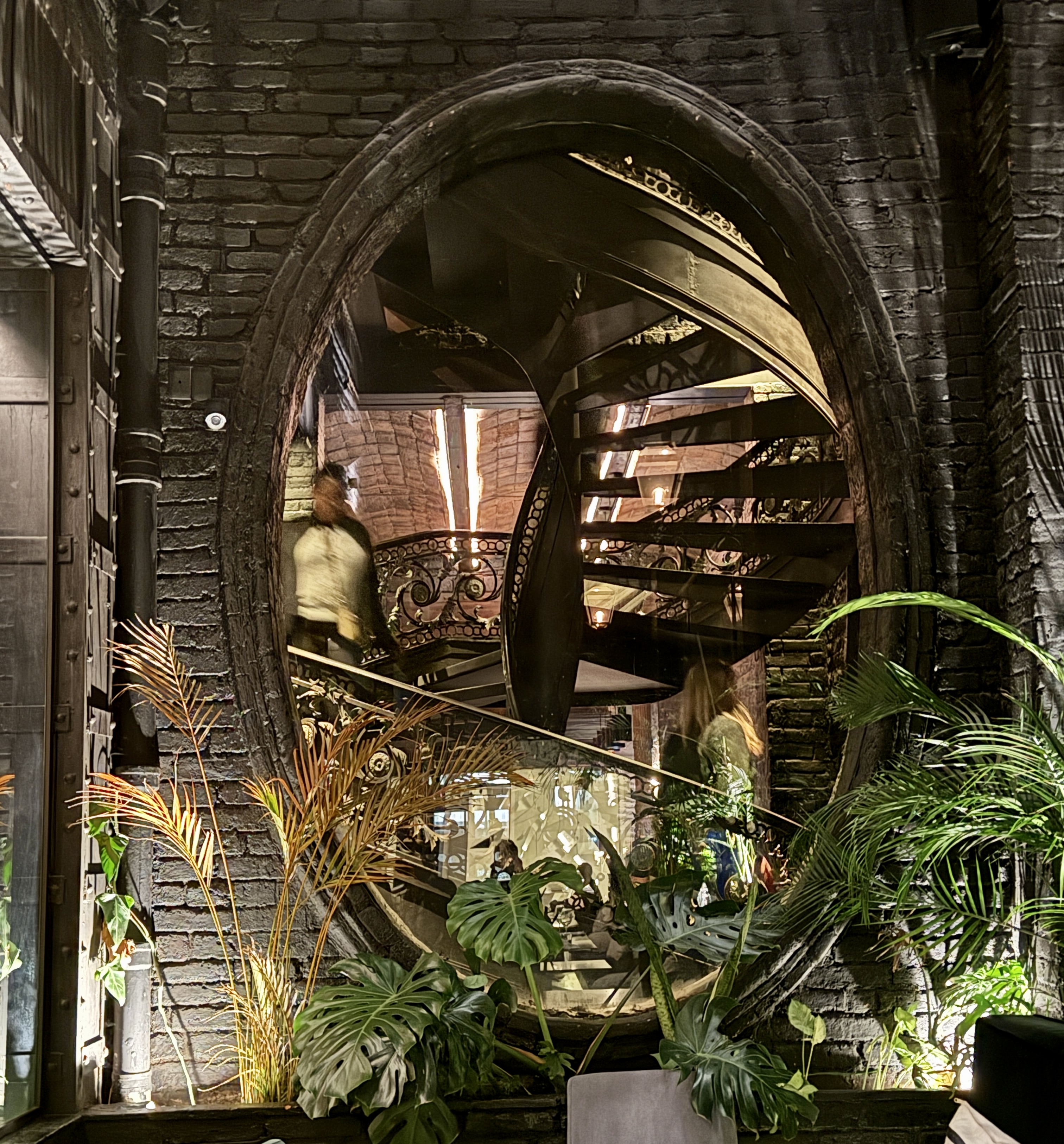
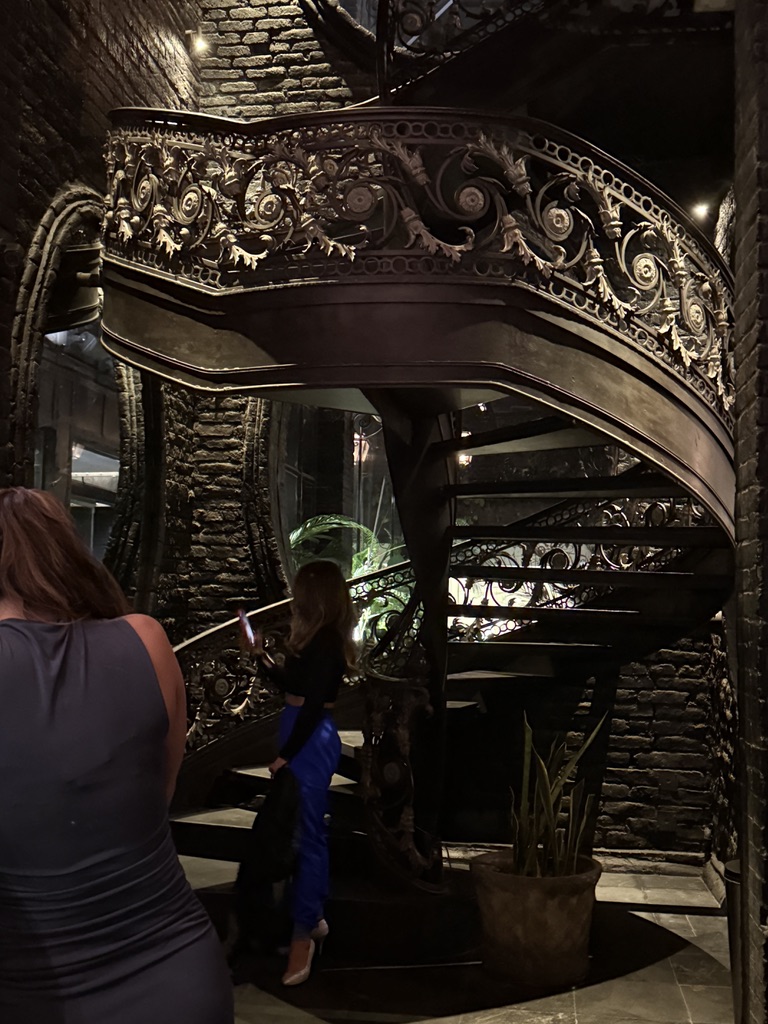
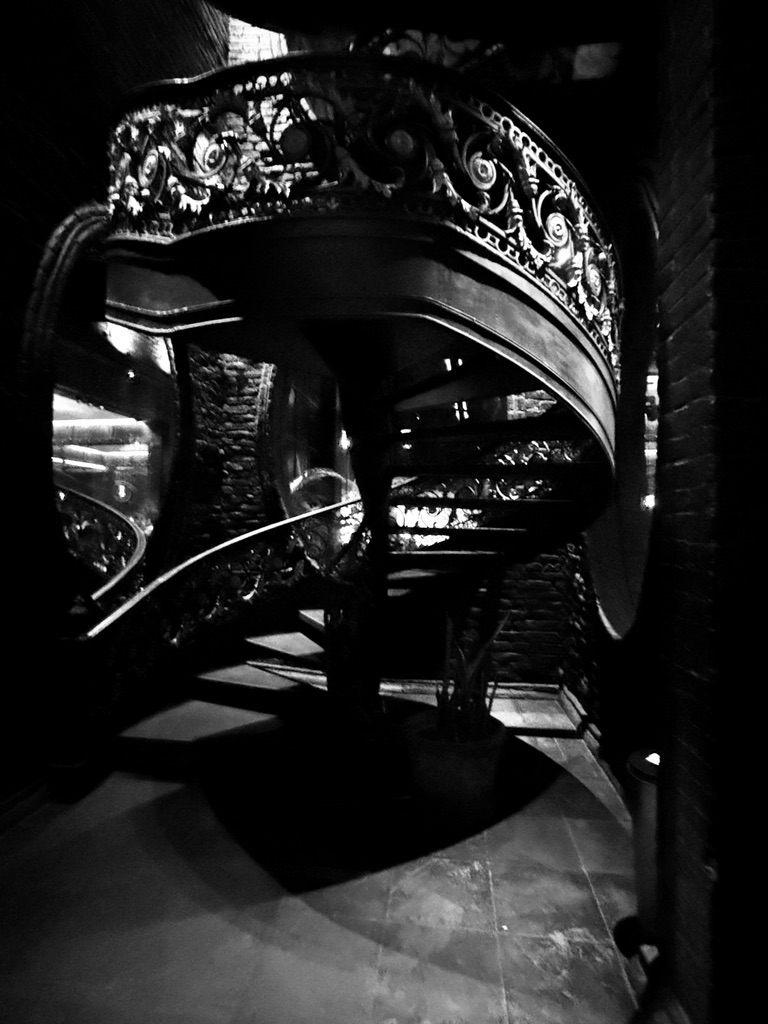
Fonico is a pretty special place and by the time we ended our meal we were clear we had made the right decision—about the restaurant and about not just staying at the hotel. I don’t know the whole history of Fonico but it is a narrow, somewhat non-descript, mid-block building on the outside (located on a street with several old buildings). Once you enter the space you are confronted with an overly elaborate, ornate, and unbelievably exquisite spiral staircase -–metal and wood with all sorts of decorative elements. Apparently, the staircase leads to a disco on the second floor (Rayo) which seems quite popular. But Fonico’s specialness goes beyond the staircase and into the food. It’s truly a special place for dinner. If I can remember all the dishes, it will be a stroke of genius.
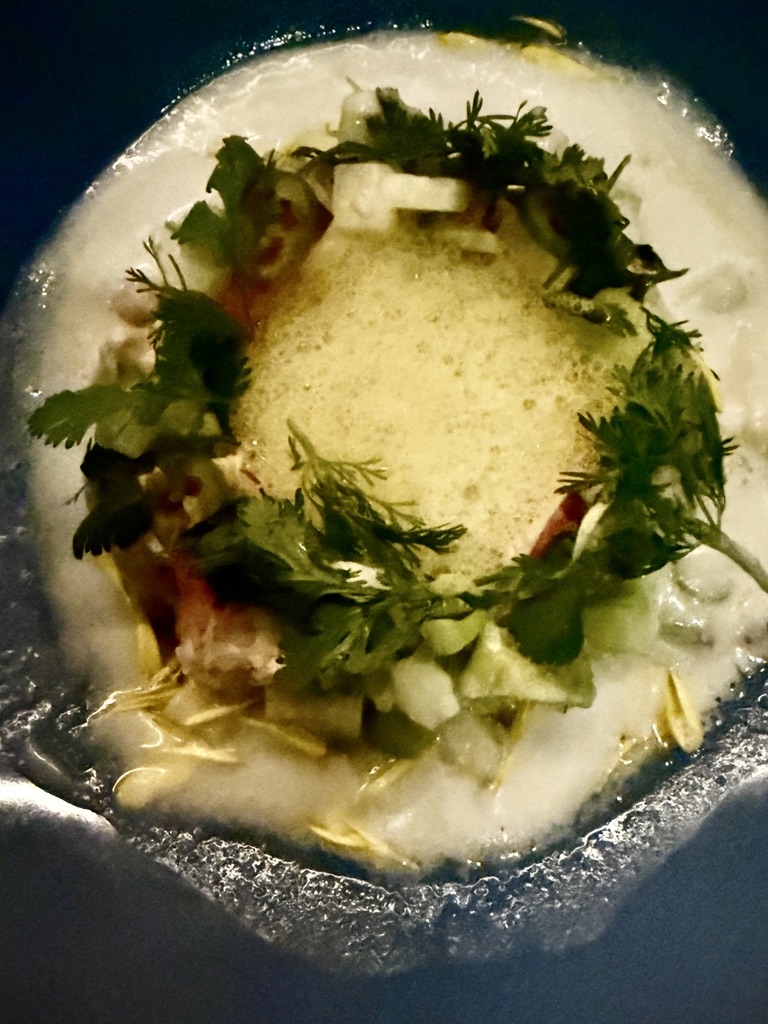

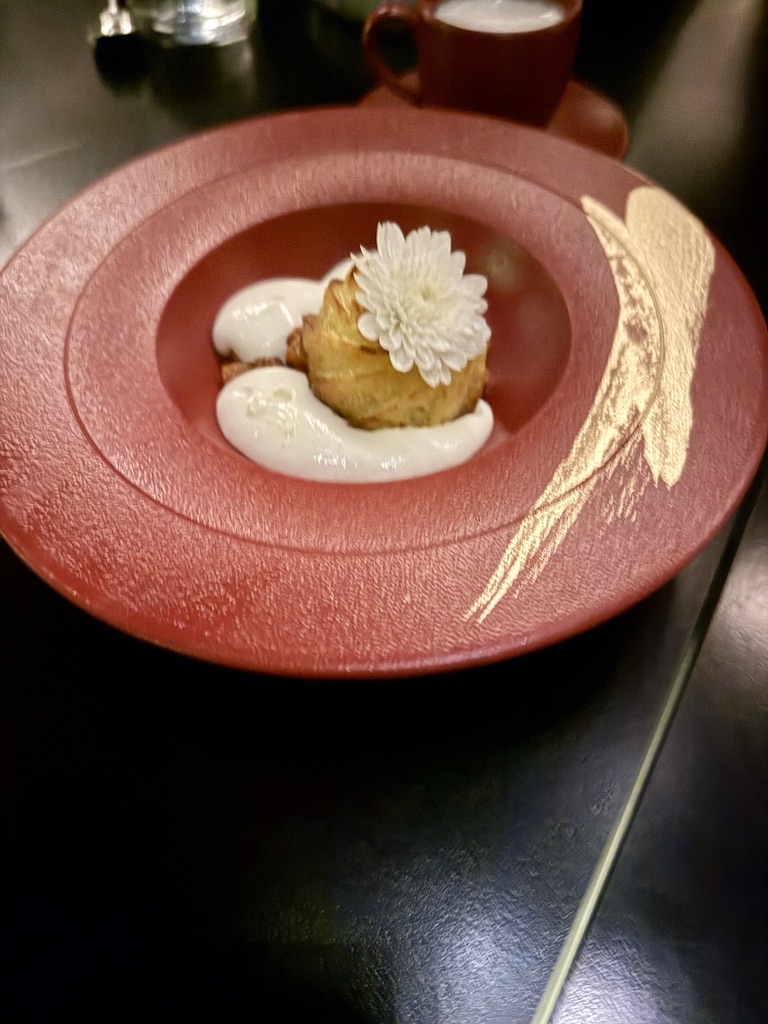
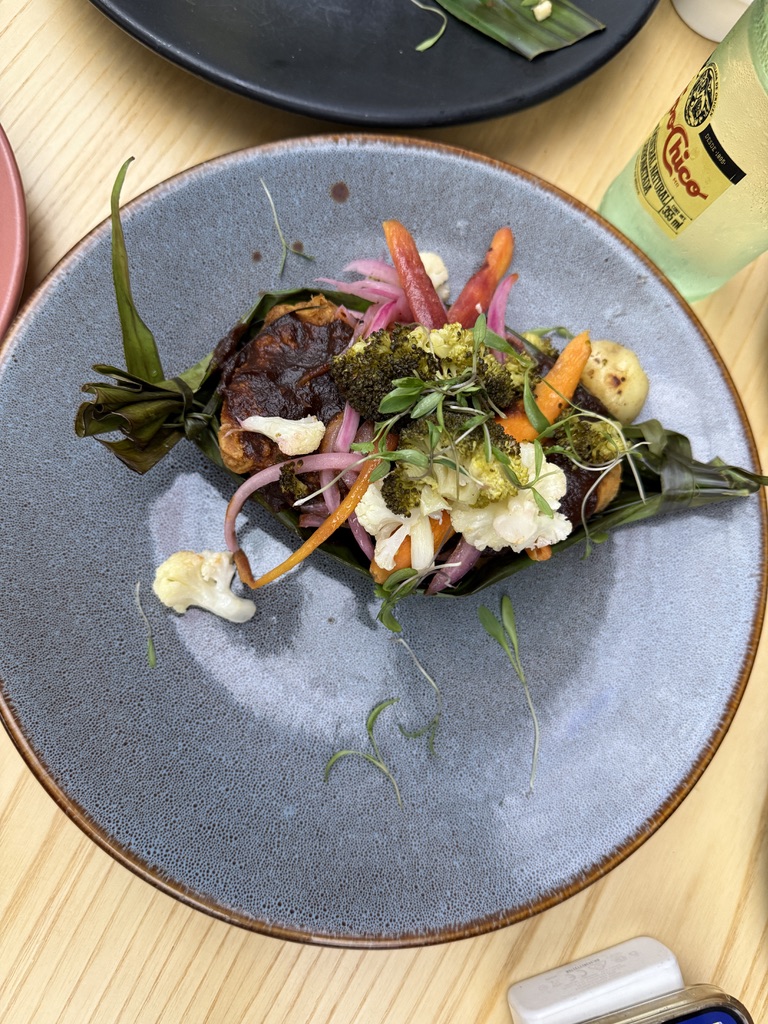
We started with a series of raw oysters from Japan and a set of roasted oysters. Both were presented on wooden boxes with a layer of stones under the oysters (the raw ones sat on cold stones; the roasted or grilled oysters sat on hot stones). All of the oysters had some kind of mignonette vinegar with spices and hints of chili. We also had a ceviche (mahi mahi, I think) served with a spicy lemon foam, and we had a roasted vegetable salad. Then we had a risotto with shrimp and herbs and some kind of salsa that just melted in your mouth. I think there was another dish but cannot remember. And then we had one main course—the mahi mahi which was perfectly poached or roasted served with some vegetables and spices. Naturally we needed to end the meal with something sweet so we opted for a chocolate thing and a sort of decomposed tres leches cake. Good wine throughout.. and we were happy campers.
We got back to the hotel at around 11:30 and agreed to meet up at the hotel restaurant for breakfast at 8:30 am.
Thursday, November 21, 2024:
Following a nice breakfast including wonderful fruit platters, we headed to the airport in a taxi called by the airport. We really just wanted to go out onto the street to hail a taxi but it was difficult with the luggage. Naturally, Hyatt uses what they call “tourist taxis”—costing about the same as regular taxis but more “luxurious” and driven by those who speak the language of the passengers. Since language was not much of a problem, we chatted for a while. While he didn’t say it, I’m pretty sure he was a Mexican Trumper. He was also normally a tour guide so he regaled us with what he would have shown us had we hired him to be our guide over these past few days. I’m ever more convinced that traveling independently and seeing things the way and when you want to see them is perfect for me. He was rather shocked to learn we didn’t have any guides for our trip and assured us that next time we should contact him to show us around. His list of places read like a tour book with museum after museum and monument after monument. No thanks. I did manage to ask him how he felt about Mexico’s new Jewish female president. He said something to the effect of “the verdict’s out.”
So now I am sitting on my flight back to San Francisco on United Airlines and my seatmate is an extremely nice guy (who was in a wheelchair on boarding and who was stopped for a secondary check at the gate boarding). He was a bit frazzled by this additional review of his bags (as I would be). We joked that he must have a terrorist profile. Turns out he is the manager/executive director (?) of the Oakland Gay Men’s Choir. So we chatted a bit, before our food arrived about the organization and its efforts to raise funds and to plan for the future. His background has nothing to do with nonprofit leadership but it sounds like he’s doing a good job. I’ll have to get tickets for their holiday or spring performances.
And several good conversations with the purser about the airlines, and United in particular… and the industry as a whole. Mmmmmm……
So now it’s time for me to end this rather long note to all of you, as the plane is beginning its descent and the weather in the Bay Area is wet and windy so they are expecting a possibly rocky landing.
It’s been another great girls trip; we are already talking about next year (Copenhagen? Brooklyn? Someplace in Georgia that is famous for its quilts? Guatemala?) We shall see.
Hasta Luego-
Fern
PS Hope to see many of you on December 4 at the Book Launch Party.
Girl Trip 2024: Ciudad de México: Day 4
Tuesday, November 19, 2024
El Cuarto Dia: Frida, Diego, Carol, Adrienne, and Me
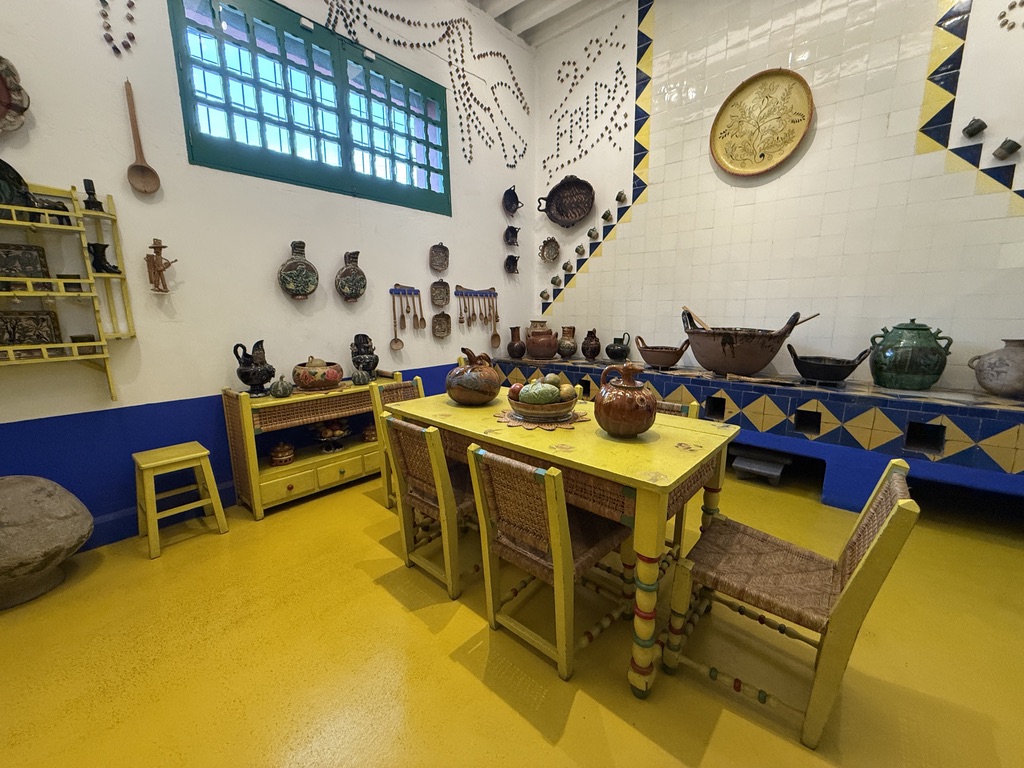
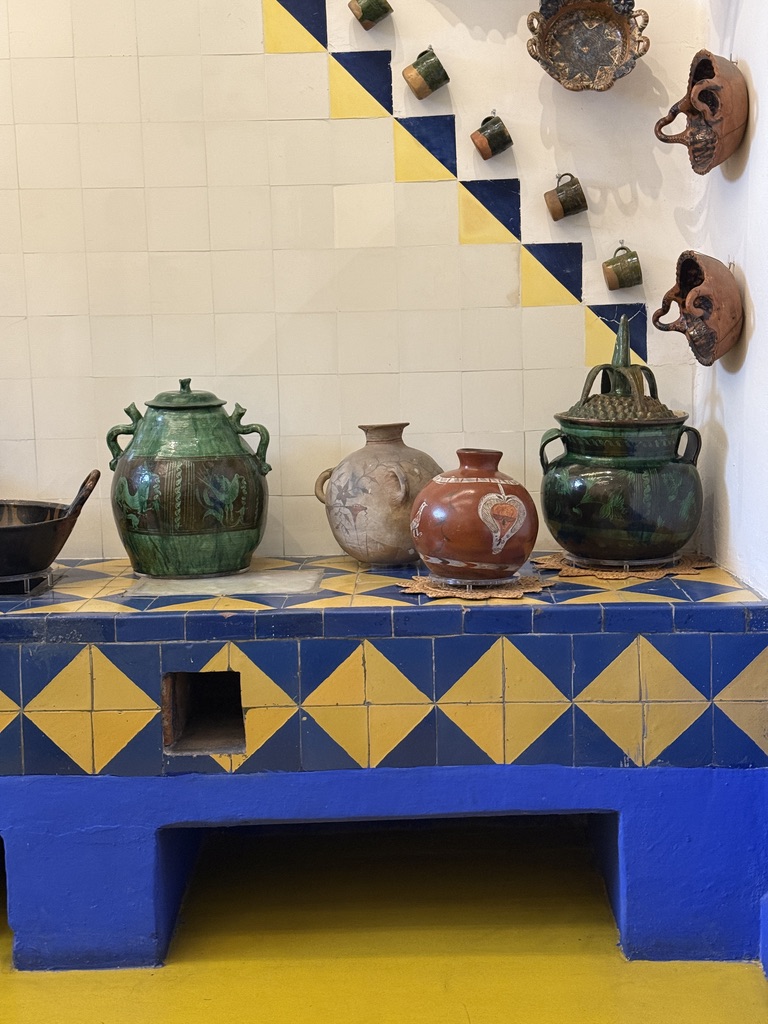

Feliz Martes!
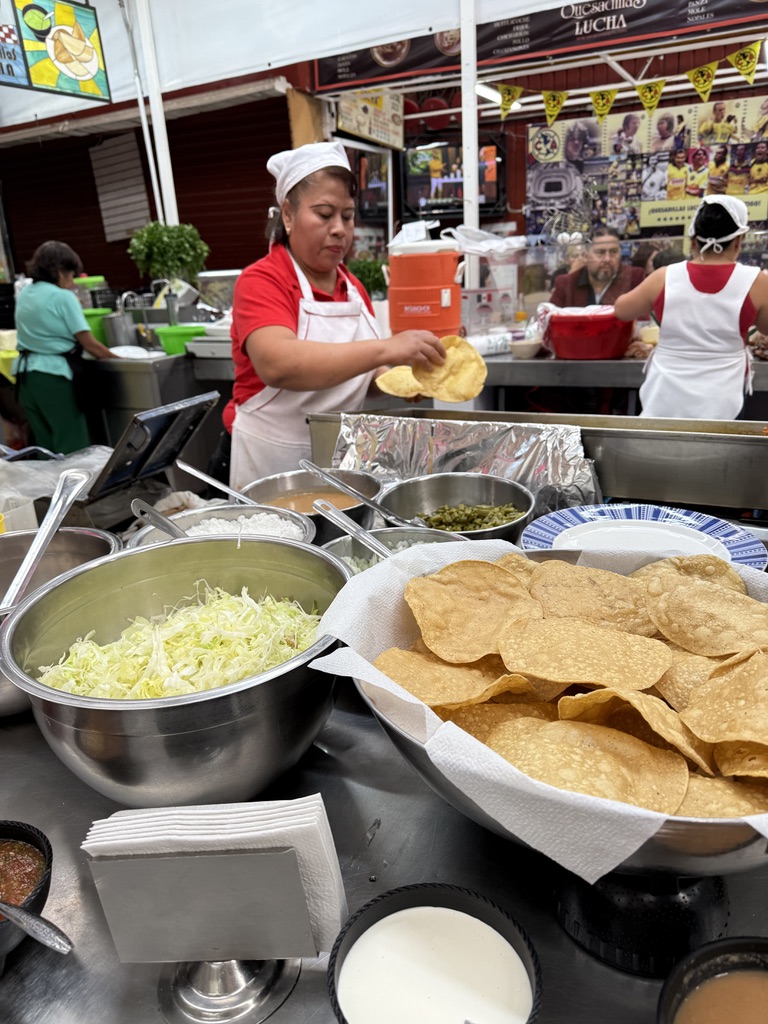
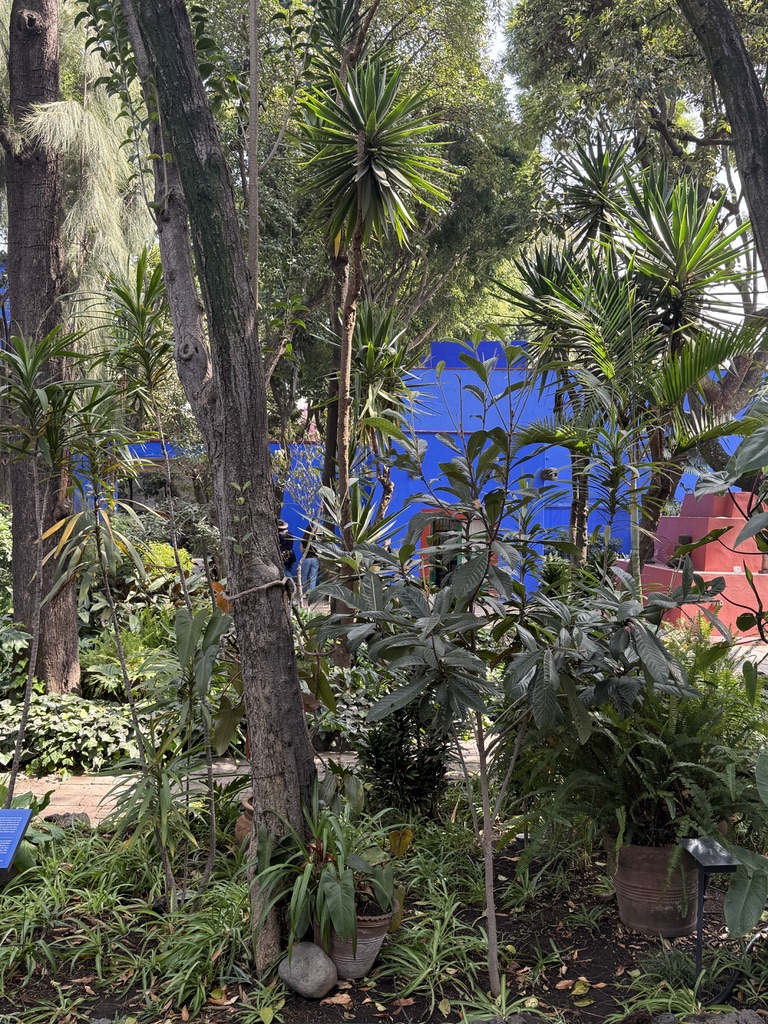
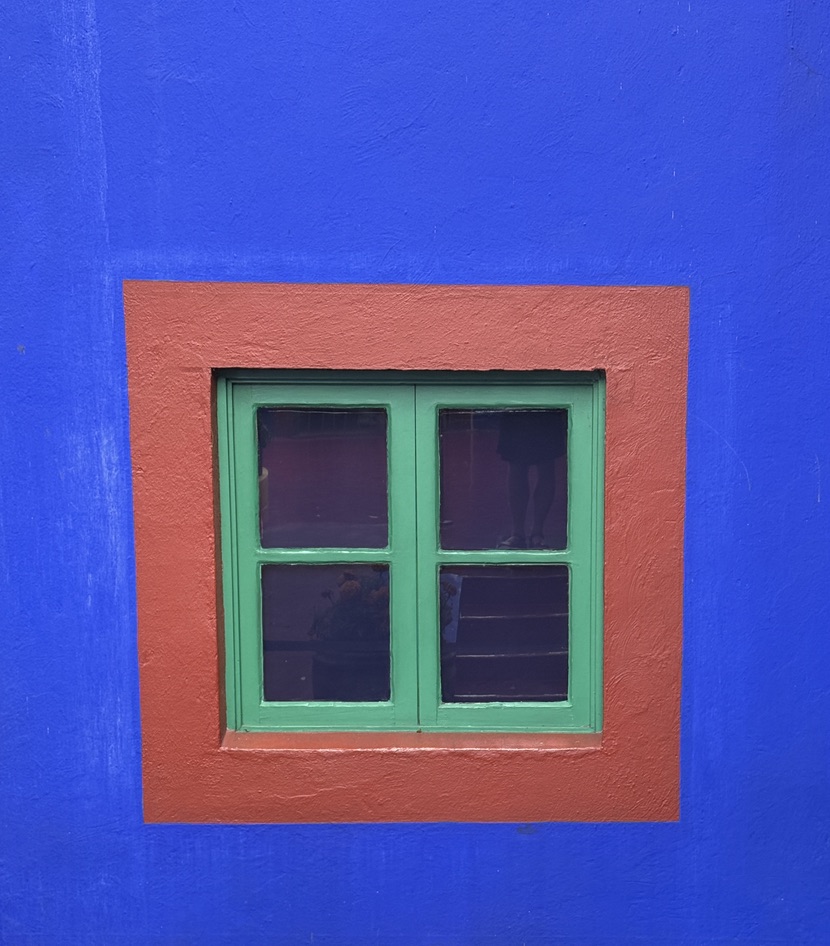
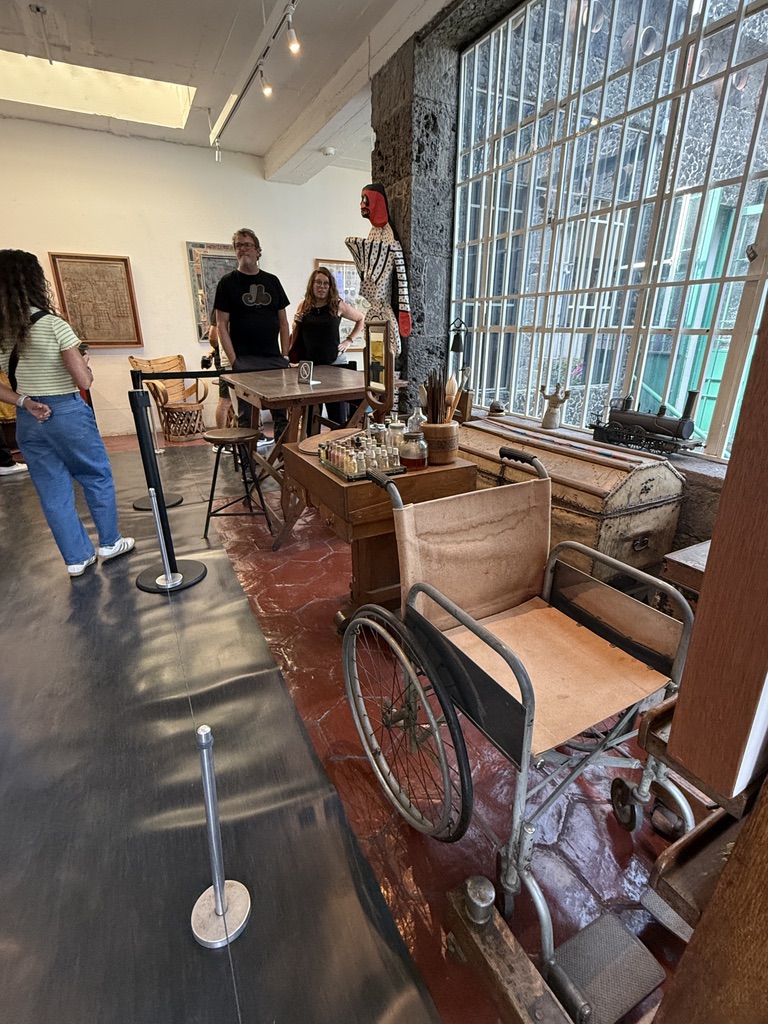
Today we set out for an early breakfast at the market in Coyoacán. We ate at a stand called Lucha. How anyone decides which stall is better than the next is a mystery. But we did fine at Lucha sharing chili relleno heaped with panela (a very mild cheese) inside—something Lucha calls “the breakfast dish” (tortilla with spicy salsa and shredded cheese), and potatoes, along with rice and beans and lots of salsas and crema. From there we walked to Casa Azul – Frida Kahlo’s house and studio with its beautiful gardens surrounded by those unmistakable bright cobalt blue walls of the house. We had a minor glitch in that our tickets were time-specific which we didn’t notice. We arrived around 11:00 and the tickets were for 10. Took about 15 minutes to both apologize and beg for entry. But alas, we got in at around 11:30. I had been to Casa Azul about 15 years ago and my recollection was that it was much less of a tourist destination with no lines and no appointments. I also didn’t remember the exhibit on the first floor. Mostly I remember the house and the reality of Frida’s life and her belongings and the accommodations for her frailty and difficult mobility. Anyway, we strolled leisurely through the house and the gardens and then headed to Diego’s house and studio (where Frida also had another studio).
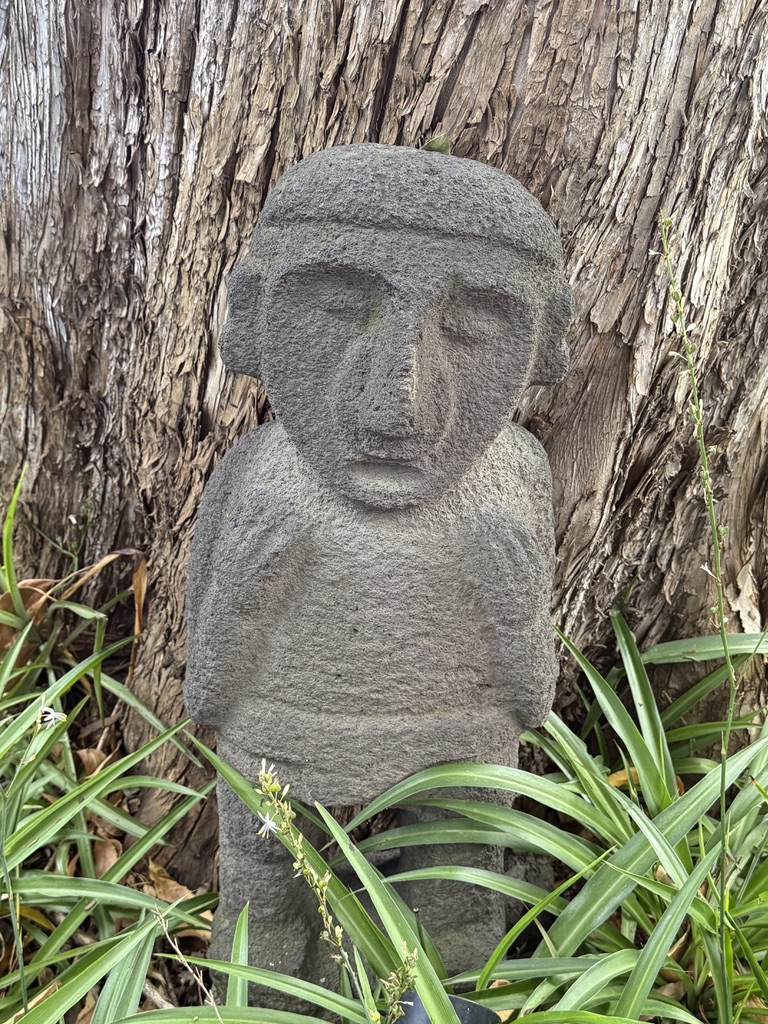
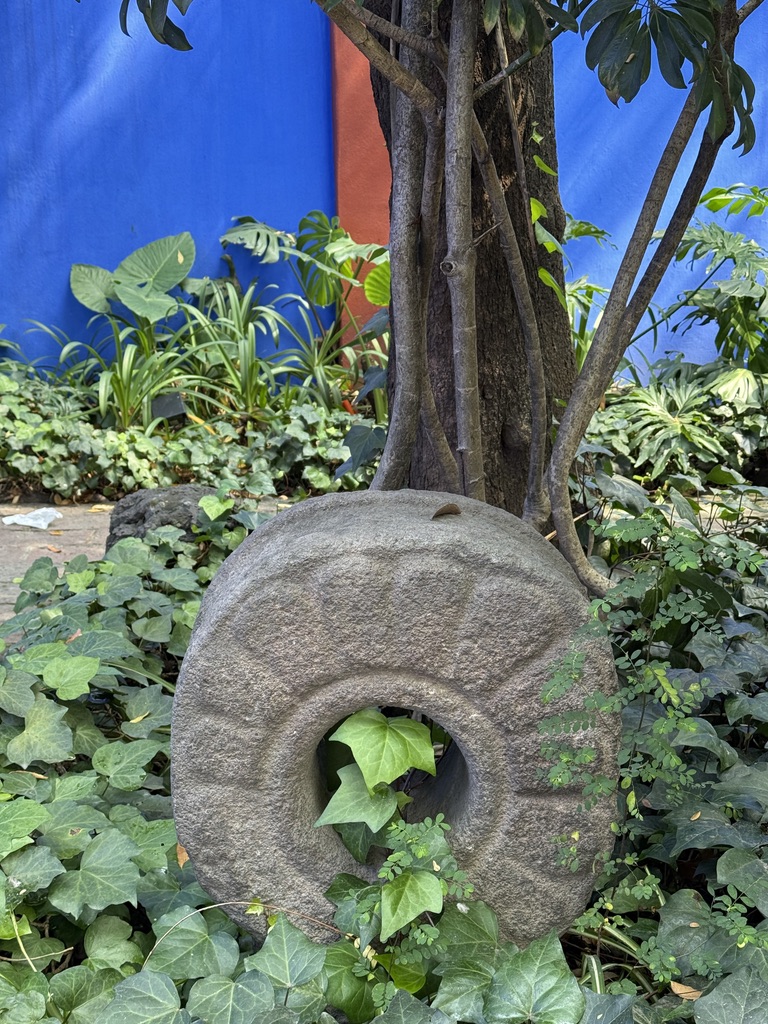
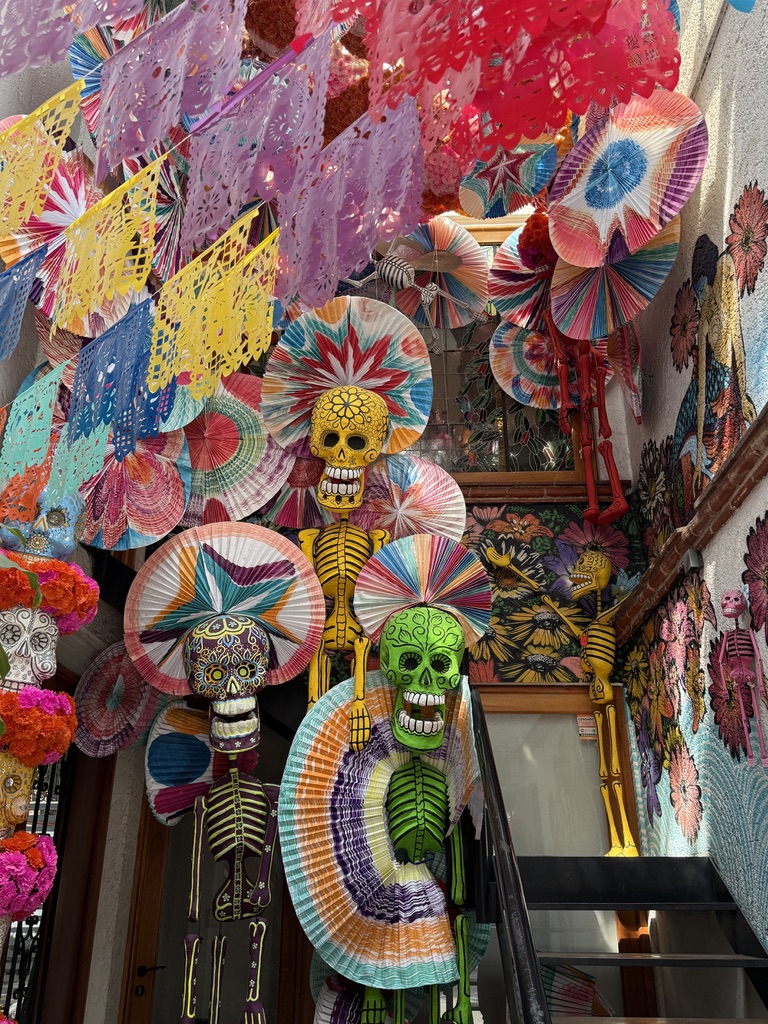
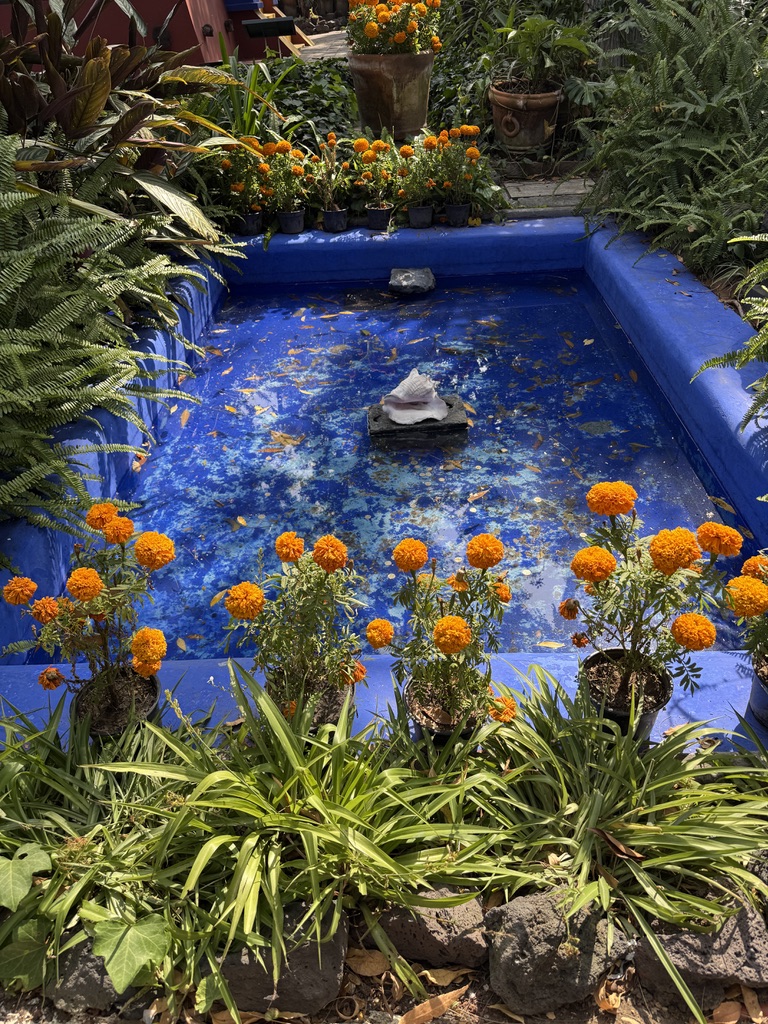
There are three buildings on the property and unfortunately we could only get into one (Diego’s house and studio) because a new exhibit was being installed and some work was being done on the other two buildings, Like Frida’s Casa Azul, Diego’s house includes parts of his many collections as well as a look at the artistic work of their generation and their politics. The architect Juan O’Gorman designed all three buildings, and they are considered the first “functionalist” buildings in Latin America. Initially there was a house for Diego, a house for Frida, and separate studios for each of them. These independent buildings were joined together by a small bridge on the top floor. Over time, this changed and there are the two house/studios and a photographic laboratory, also designed by O’Gorman.
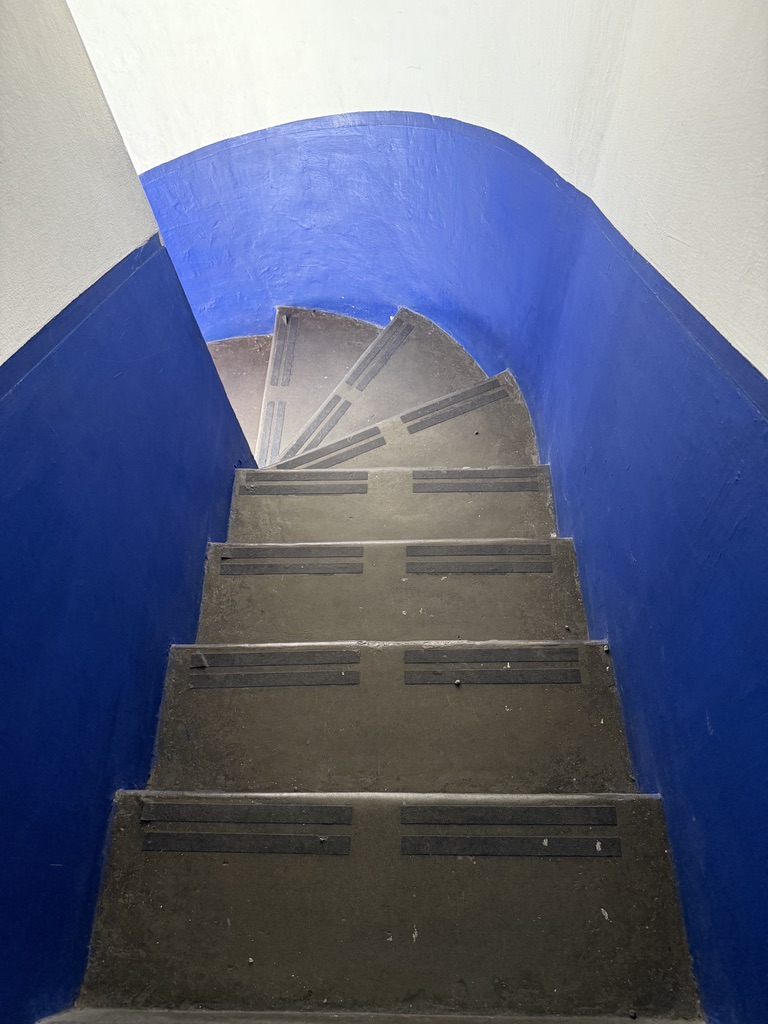
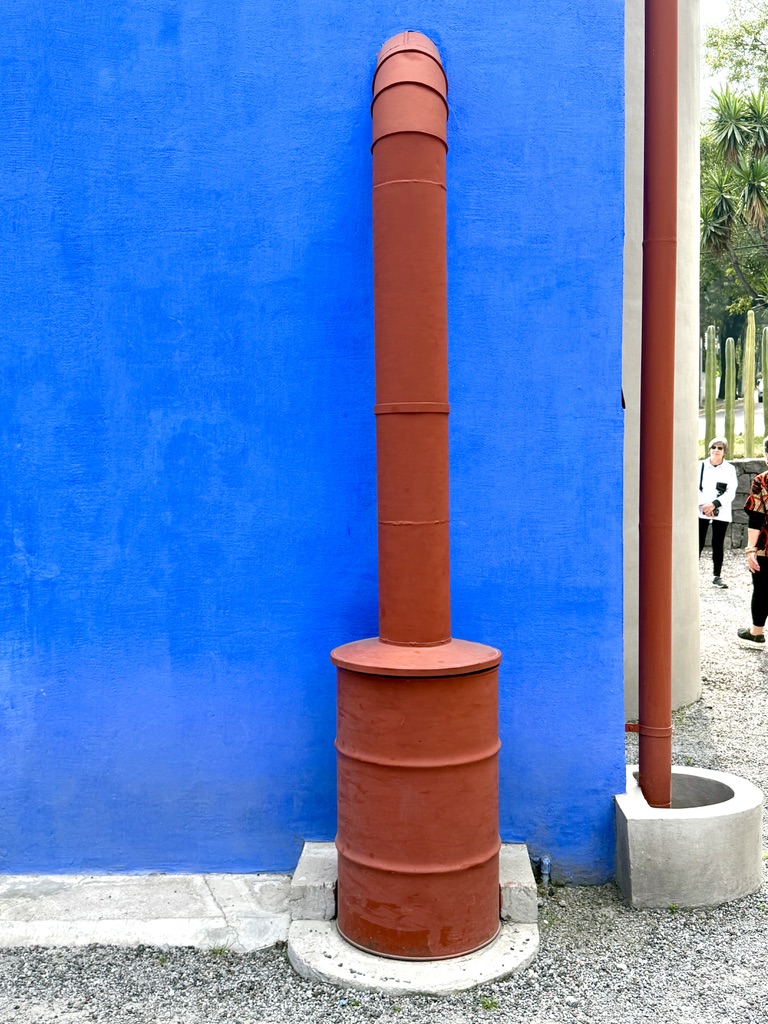

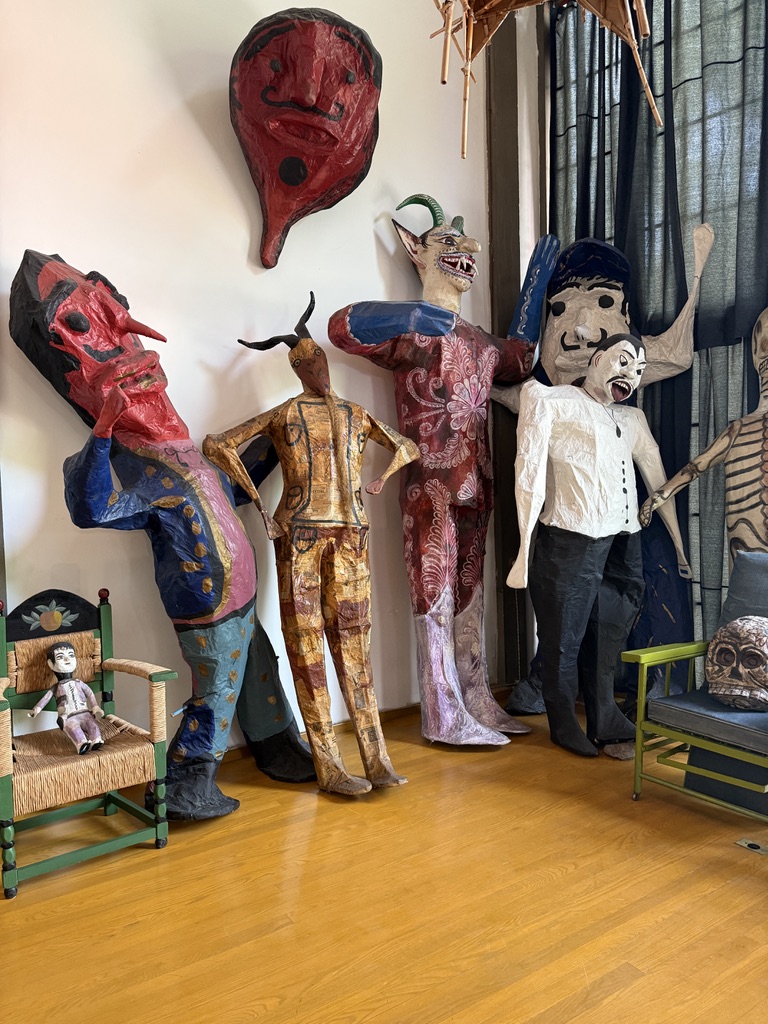
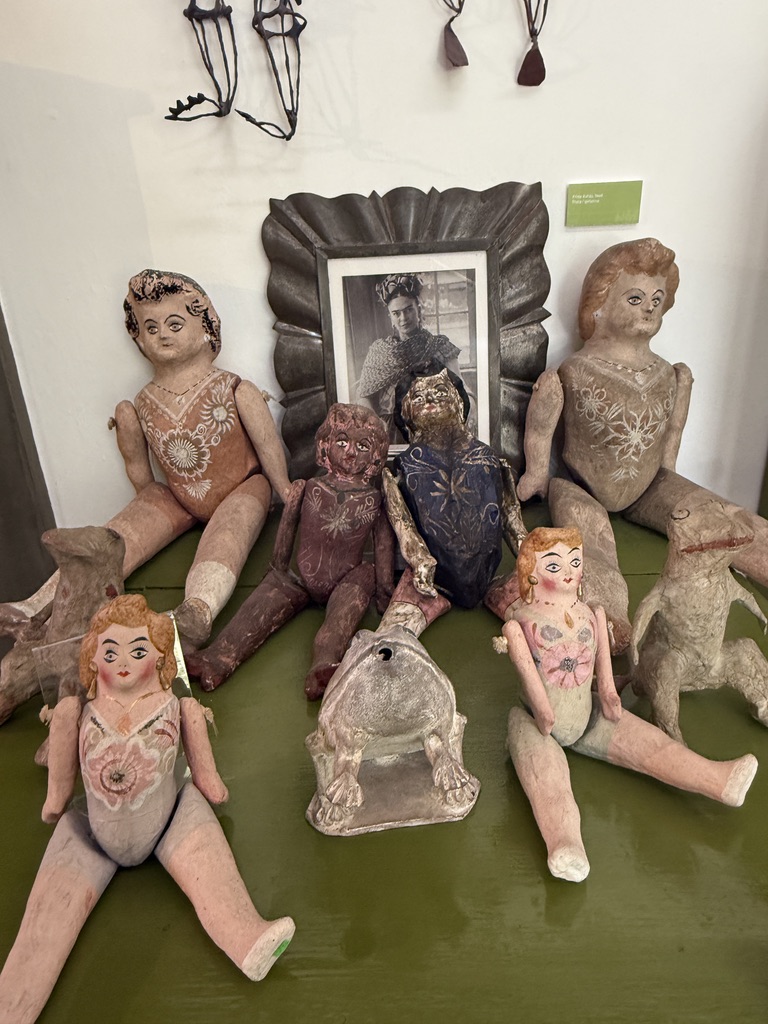
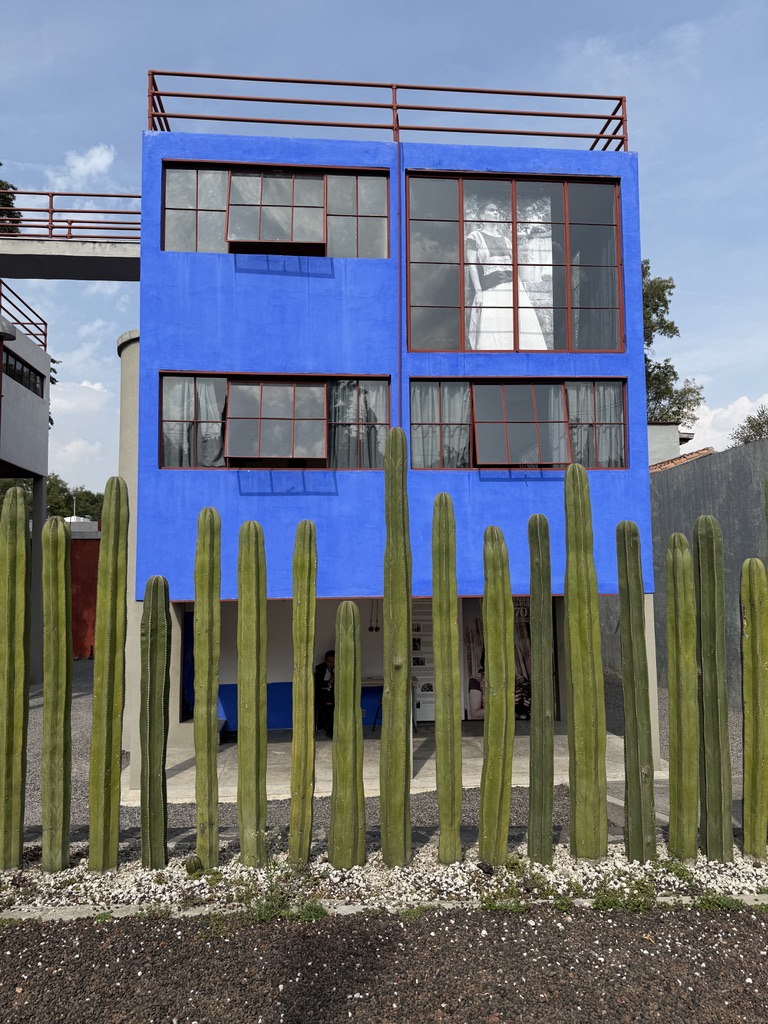
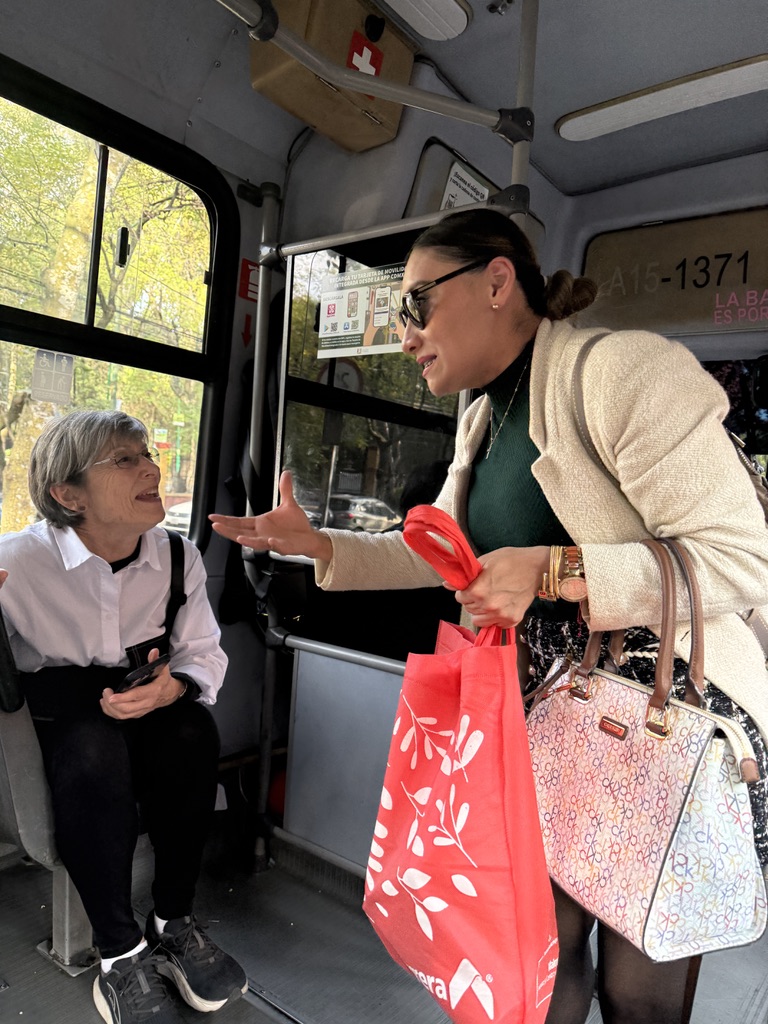
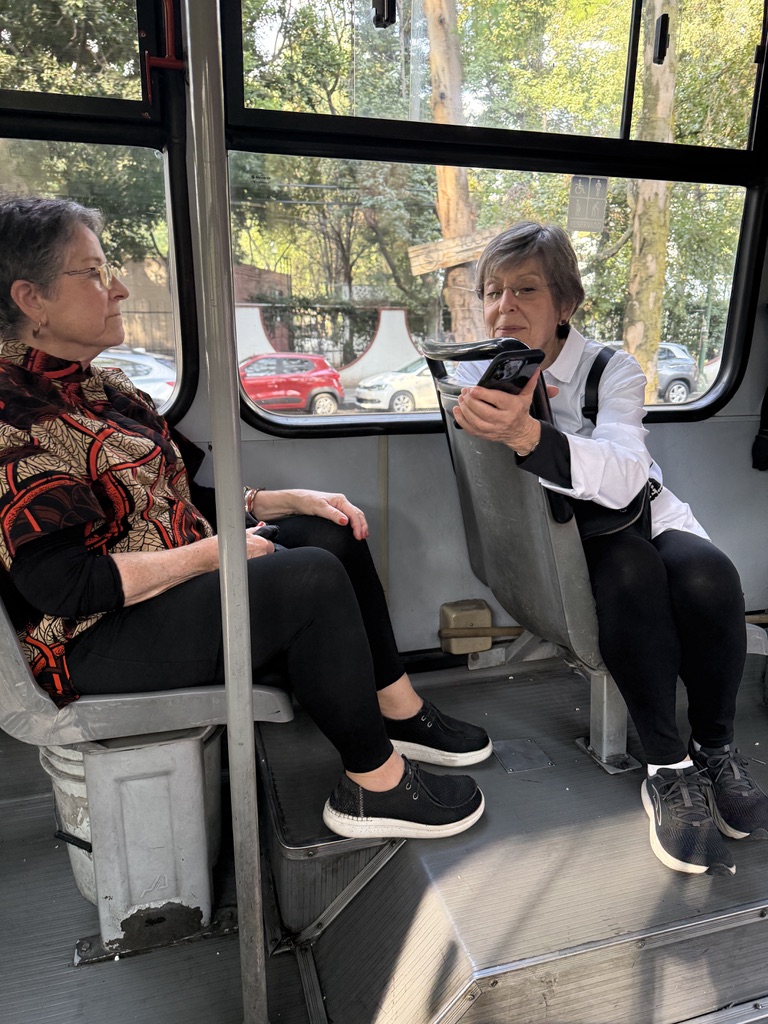
We lingered a while in the outdoor courtyard, and then grabbed a bite in a nearby restaurant. Then we needed to get back to our Coyoacán hotel so that we could get a taxi to our next hotel (in polanco area, where we’d stay for the remaining two nights)—closer to the center of the city. We tried to hail a cab but none seemed available. A few busses passed and finally we decided to just get on the next bus (it said it was going to Coyoacán). We hopped on, since it was going in the right direction, so it seemed like a good idea. But, the Mexico City busses don’t take cash or credit cards. You need to pay with an app or with Apple Pay. Adrienne was trying to get her Apple Pay to work but it just didn’t connect. The driver didn’t know what to do with us… and then a woman who was sitting up front got out of her seat and used her phone app. We tried to repay her with cash, but she wouldn’t hear of it. So off we went on the bus (and I tried to download that app, but couldn’t get a strong enough signal). The bus got us pretty close to the hotel; we hopped off once we saw a familiar street.
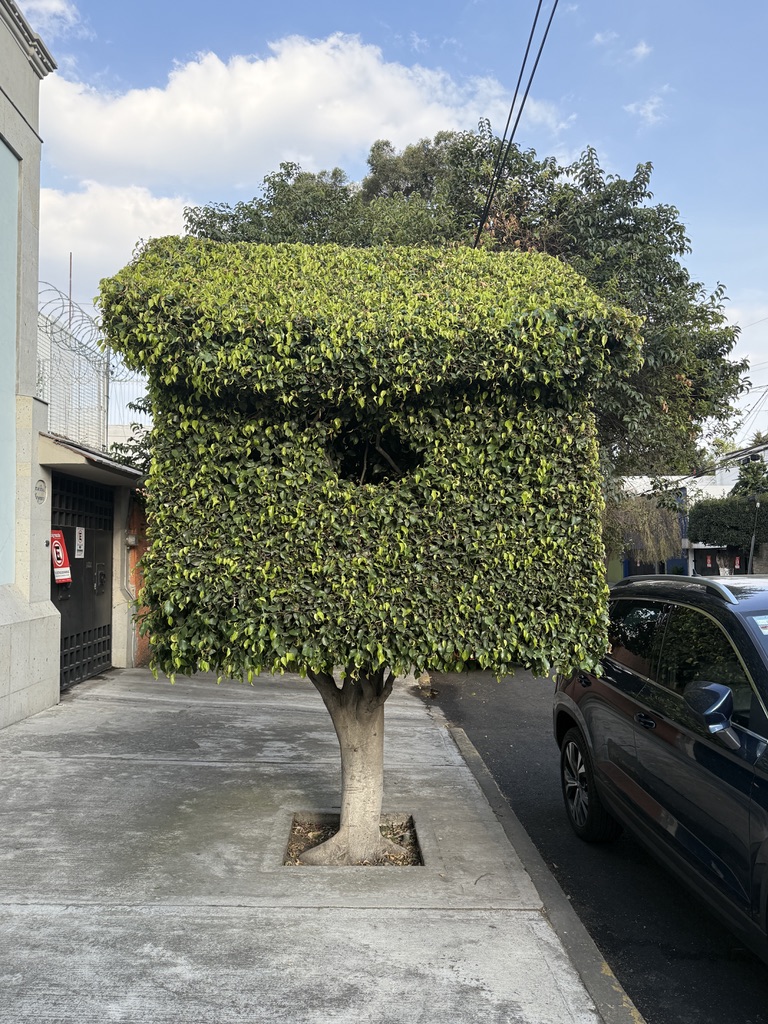
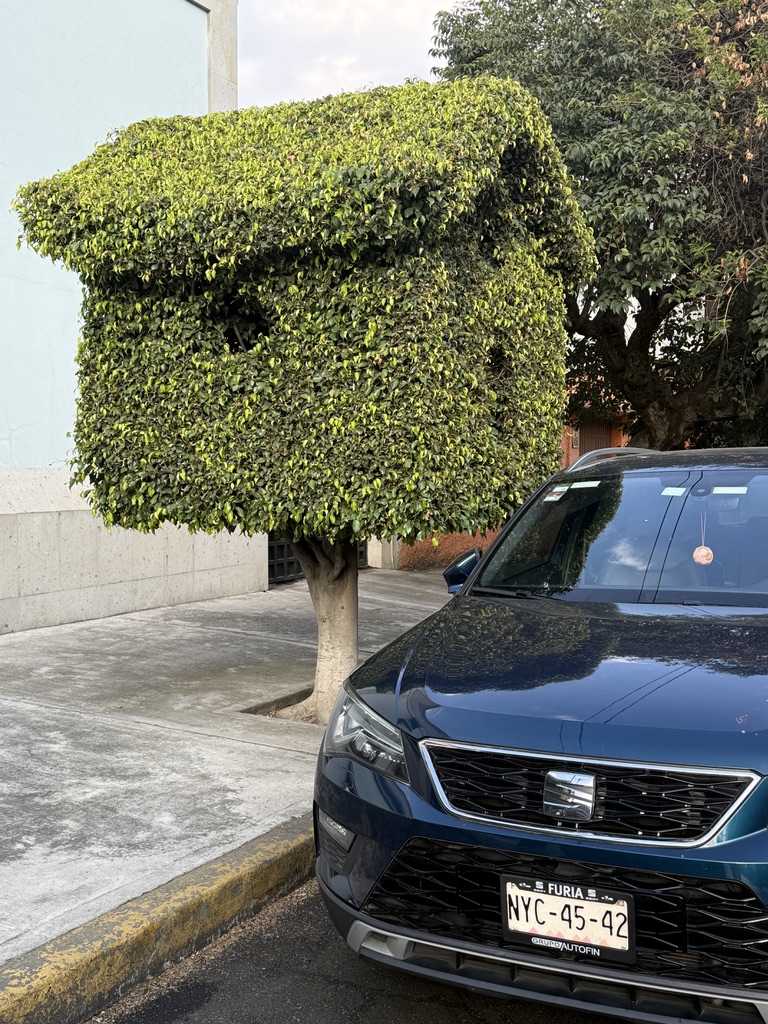
We got our bags and bid adios to the wonderful folks at H21 Hospedaje and took a taxi to our next destination: El Patio 77 which is located in the San Rafael neighborhood. En route to the next hotel, we asked the taxi driver to take a particular street because I had seen this amazing bird cage inside a shrub. We didn’t have the exact location, so the poor guy had to drift around with us for a bit until we found it. But alas– there it was.
We arrived at El Patio around 5:30. El Patio is like the exact opposite of H21. It’s an old house, two stories with very high ceilings.. so each floor is probably at least 15’ tall. Whereas everything at H21 seemed to be carefully thought through, El Patio is more like being in your great grandmother’s house with mismatched everything. Frankly, it feels sort of creepy. We settled in (a bit reluctantly) and headed for a fantastic dinner at Ticuchi which is located in the Polanco area off the main drag.
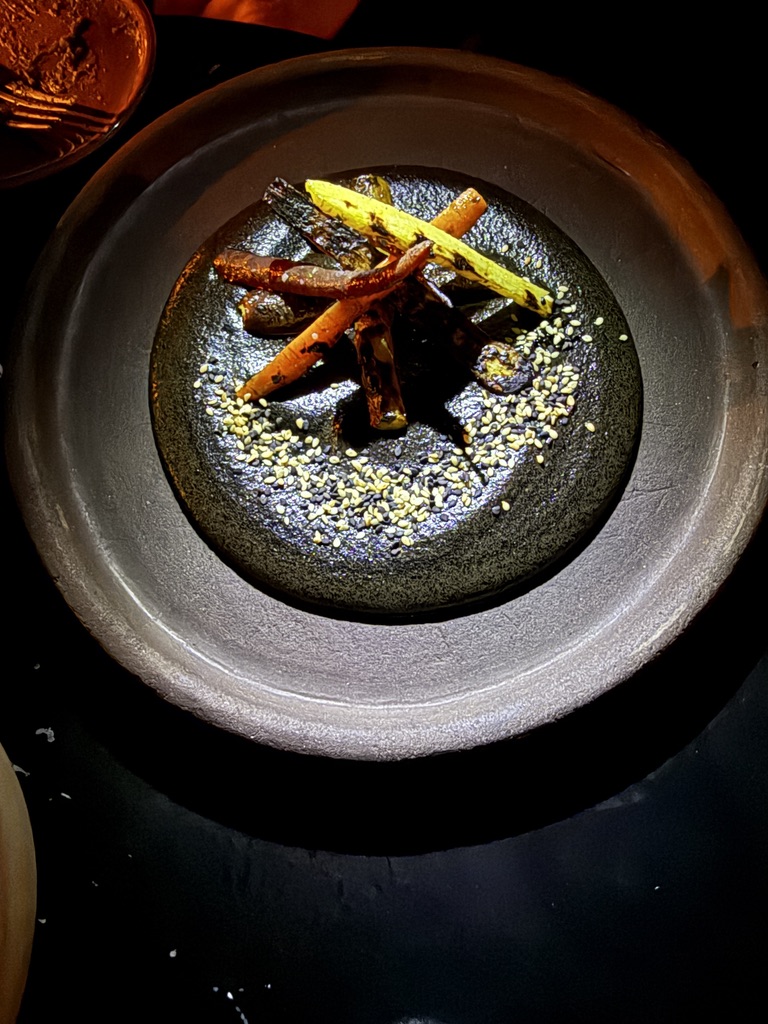


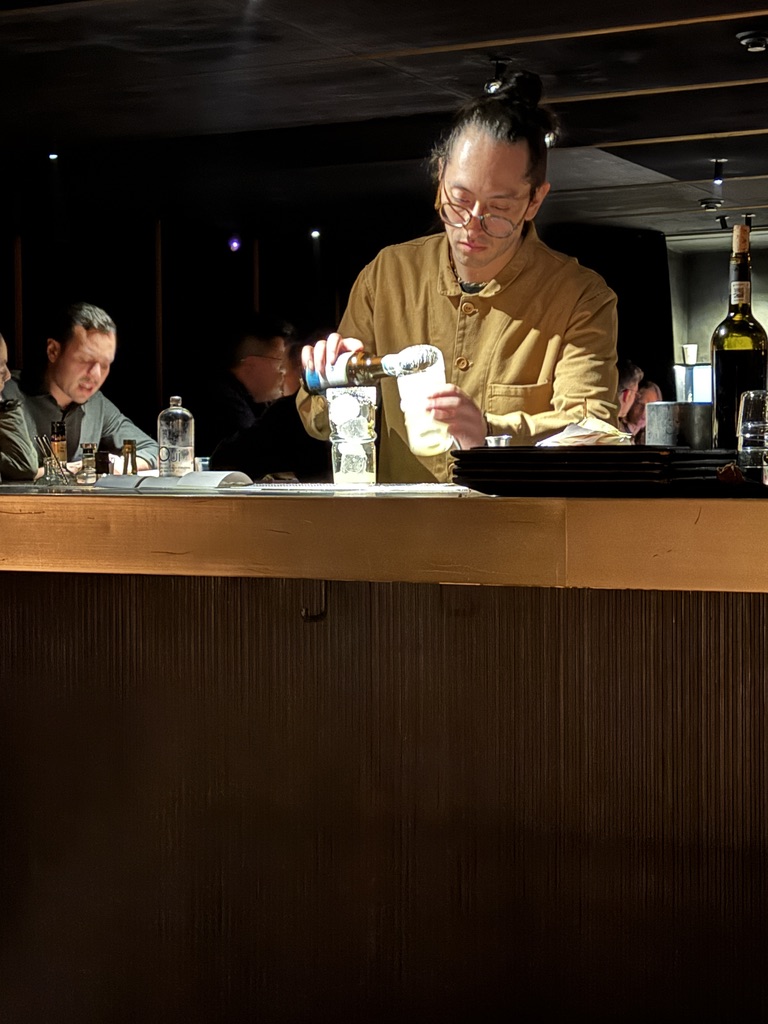
I’d describe the food as nouvelle Mexican where each dish is a bit of a work of art. The place is extremely dark and we found ourselves using our phone flashlights to not only read the menu, but to see the food, at times. But it was great. Started with margaritas with guacamole which came with paper thin chips and a dish of shredded panamar cheese. We moved on to an assortment of small dishes including the standout hongo tamale (mushroom) and carrots in mole, and a wonderful ceviche, and pulpo (octopus) tacos.. and more. Ended with two desserts including a corncake topped with a cinnamon (?) ice cream.
We got back to El Patio and tried to decide if we should spend two nights (including our very last night in Mexico City here at El Patio or change hotels in the morning. We will meet on this first thing in the morning. Tomorrow will be our last jam-packed day in Mexico City.
Take care.
Fern
Girl Trip 2024: Ciudad de México: Day 3
Monday, November 18, 2024

Greetings from Coyoacán!
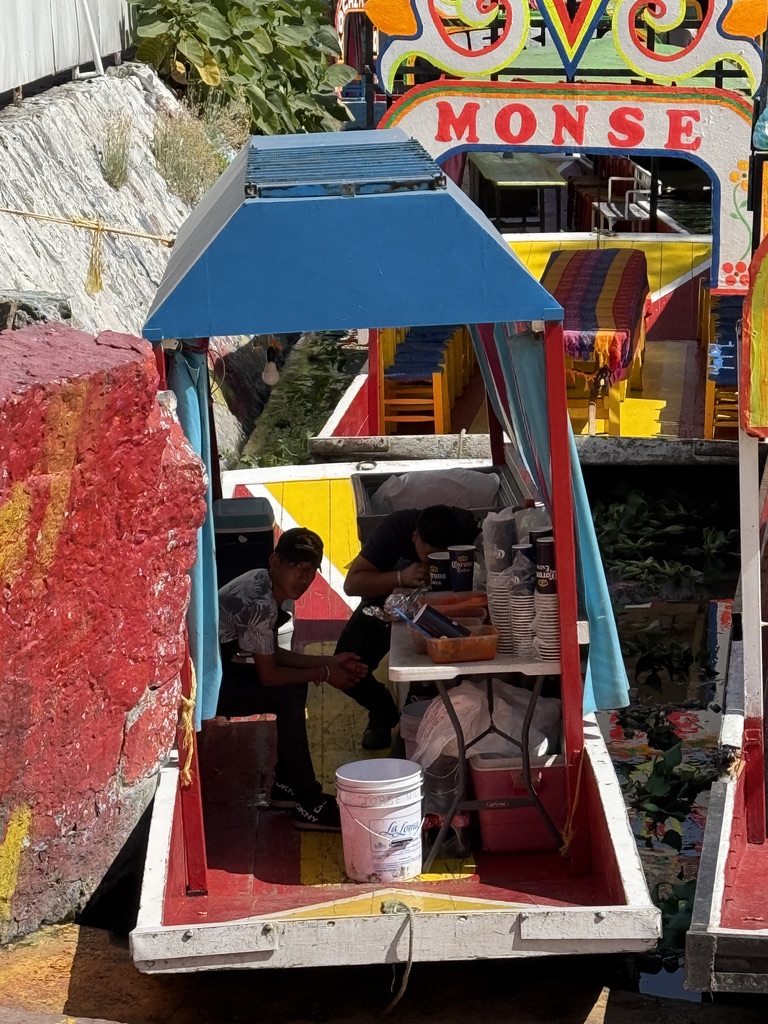
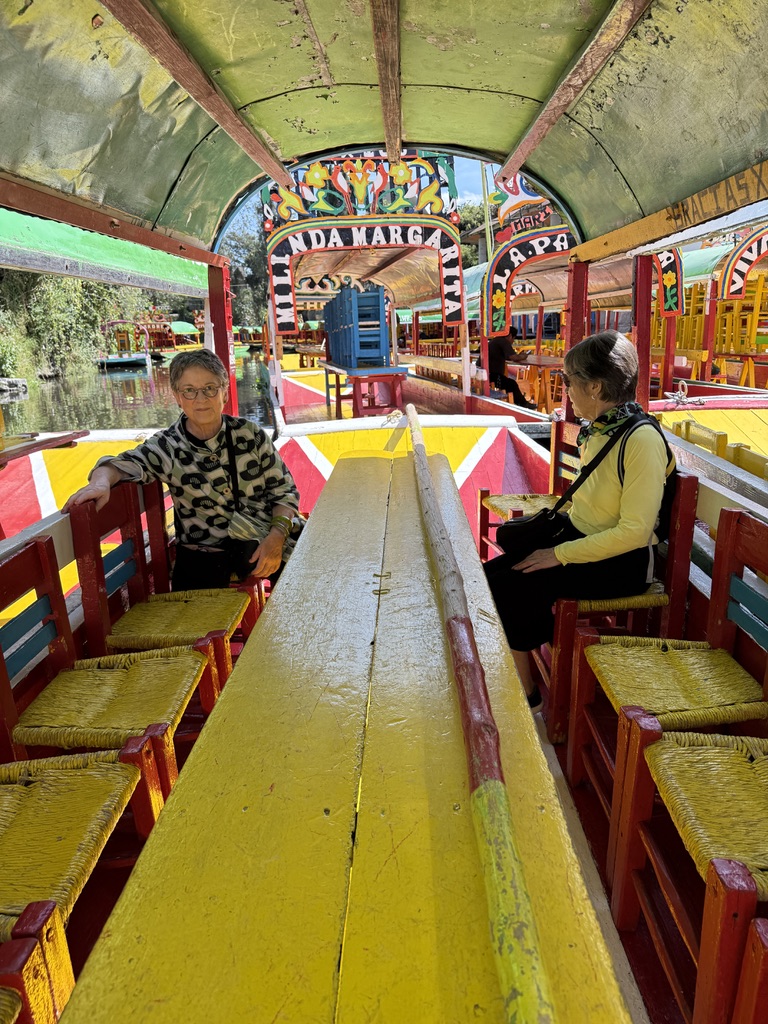
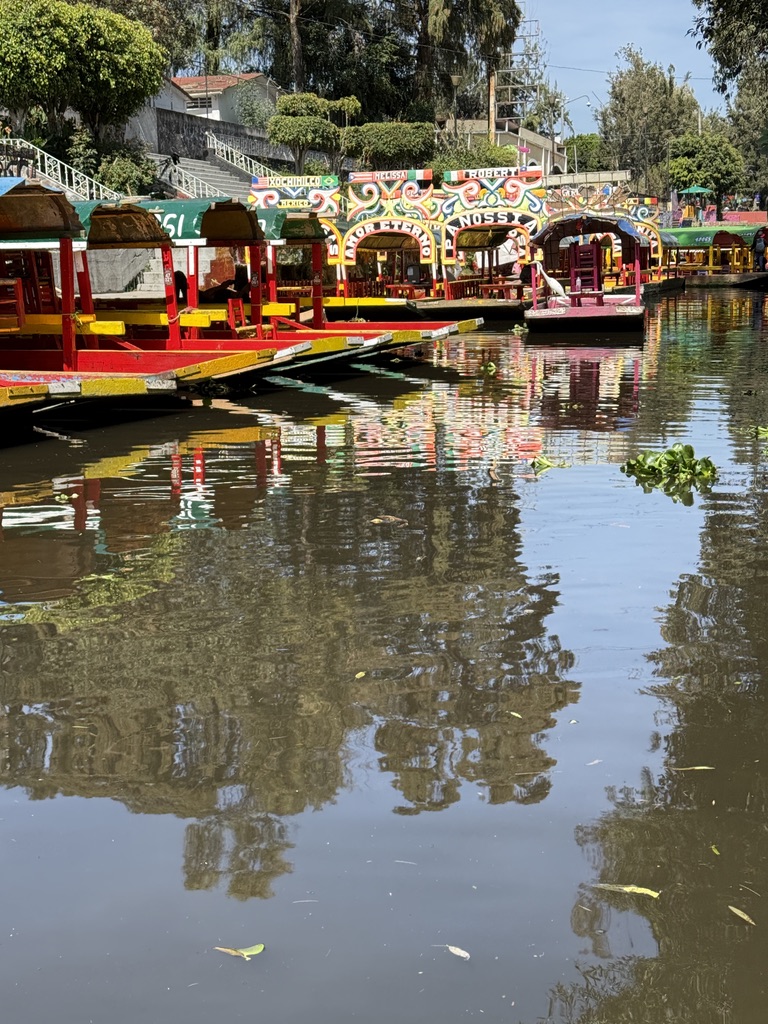
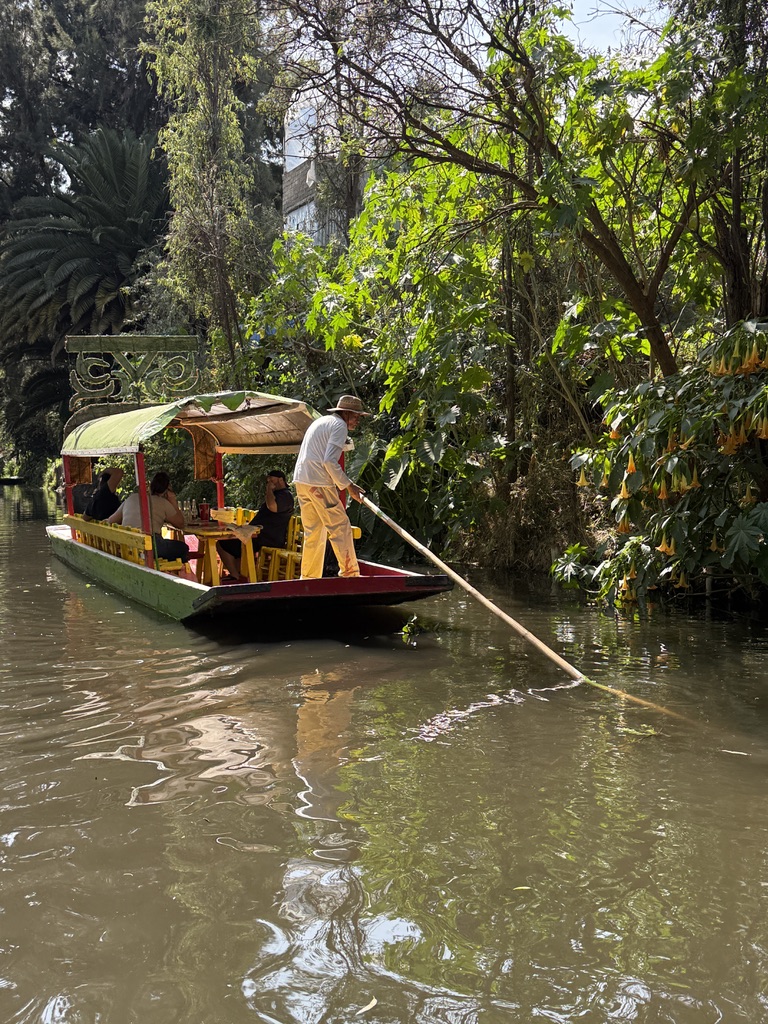
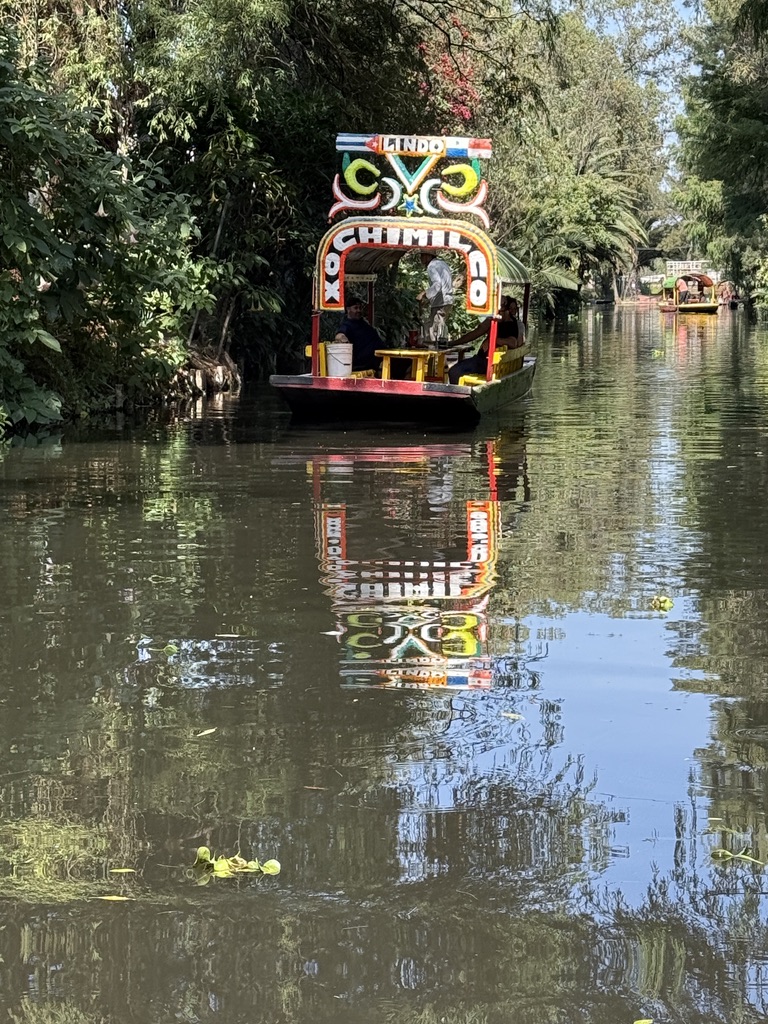
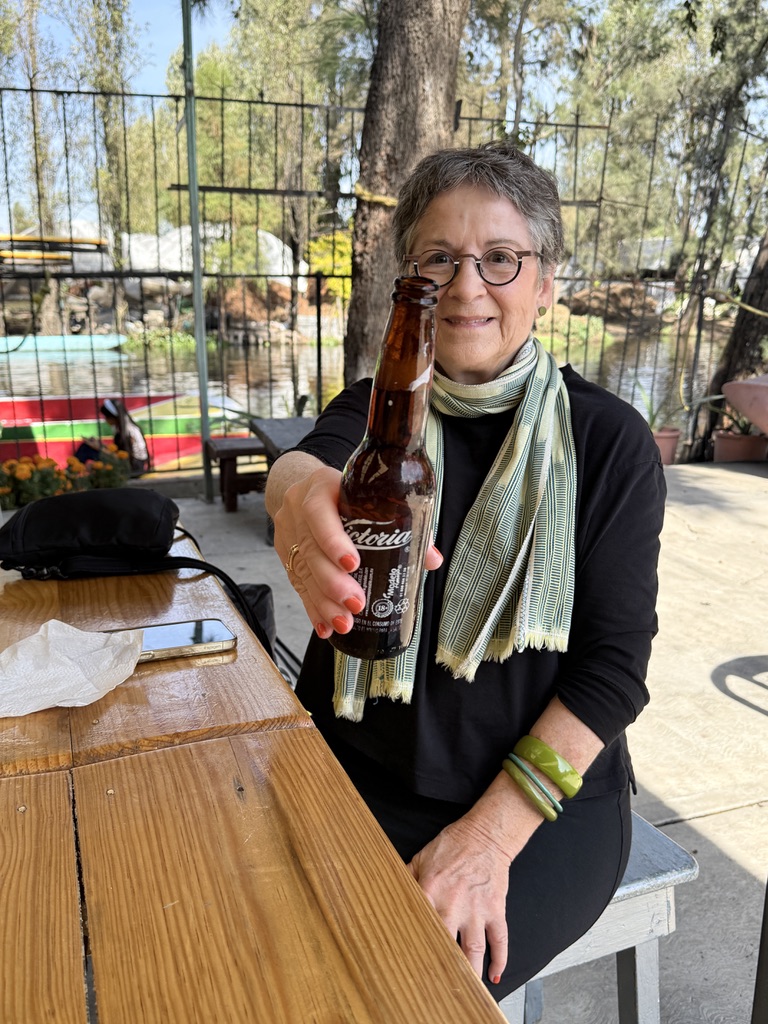
Following breakfast at the little vegetarian place near the hotel, we set out for Xochimilko—a section of Mexico City that I had never really been to. Like Coyoacán, Xochimilko was once an independent municipality on the shores of Lake Xochimilko. It’s in the southern part of the city and has its own distinct history and identity. Many consider it a gritty part of the city and indeed there is a lot of small industry and the area is definitely on the lower end of the economic scale from Coyoacán. It is well known for its canals. Historically, what is now Mexico City had a complex lake and canal system. Today the canal system in Xochimilko is filled with colorful gondola-like boats called “trajineras.” The canal system prompted Xochimilko to become a UN World Heritage site. It’s a bit touristy, but we had lots of fun. We rented our own boat with its own “el capitan”…. And trolled the canals for about an hour. Along the way, even smaller boats come close to our boat; they offered tequila, beer, flowers, and snacks for purchase. Along the way, we got off the boat to sit in a little outdoor patio where we had quesadillas and beer… and then got back into the boat.
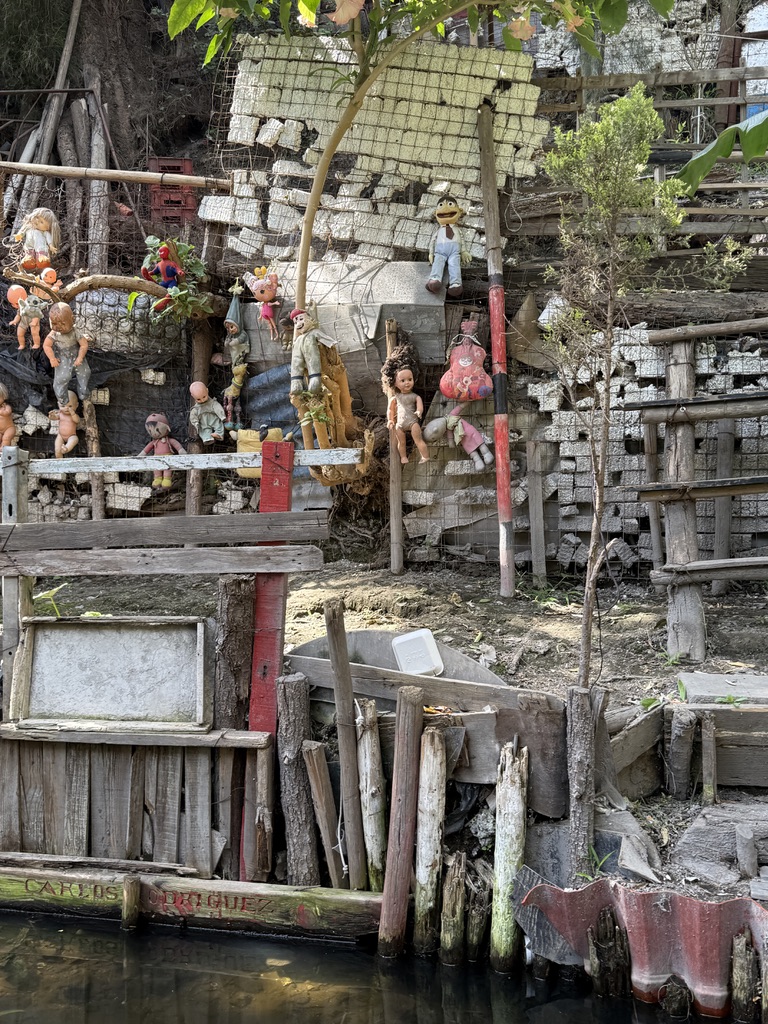
We hadn’t planned to go to Xochimilko, so we didn’t fully figure out what was possible. As we approached, we remembered that this was where the Island of the Dead Dolls is located, and asked to get a boat to take us there. But alas the time needed to get there and back was too long, so we just travelled through one section of the canals. Next time, Island of the Dead Dolls! We also tried to get pesos at a bank near the boat area, but the ATM was out of money.

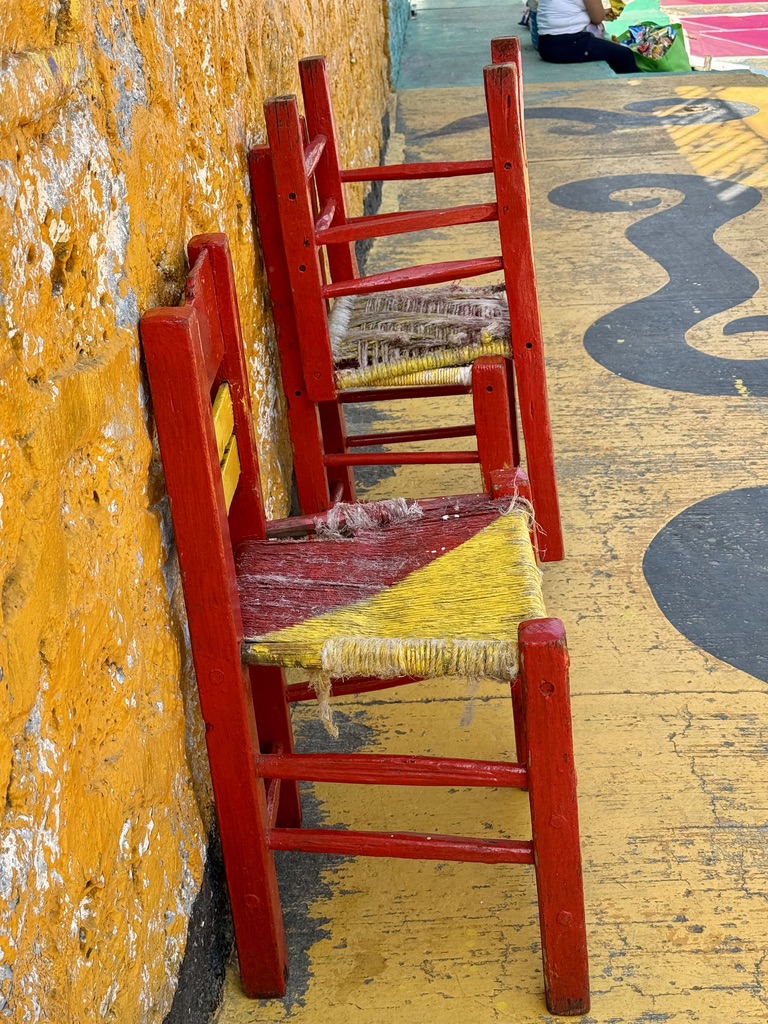
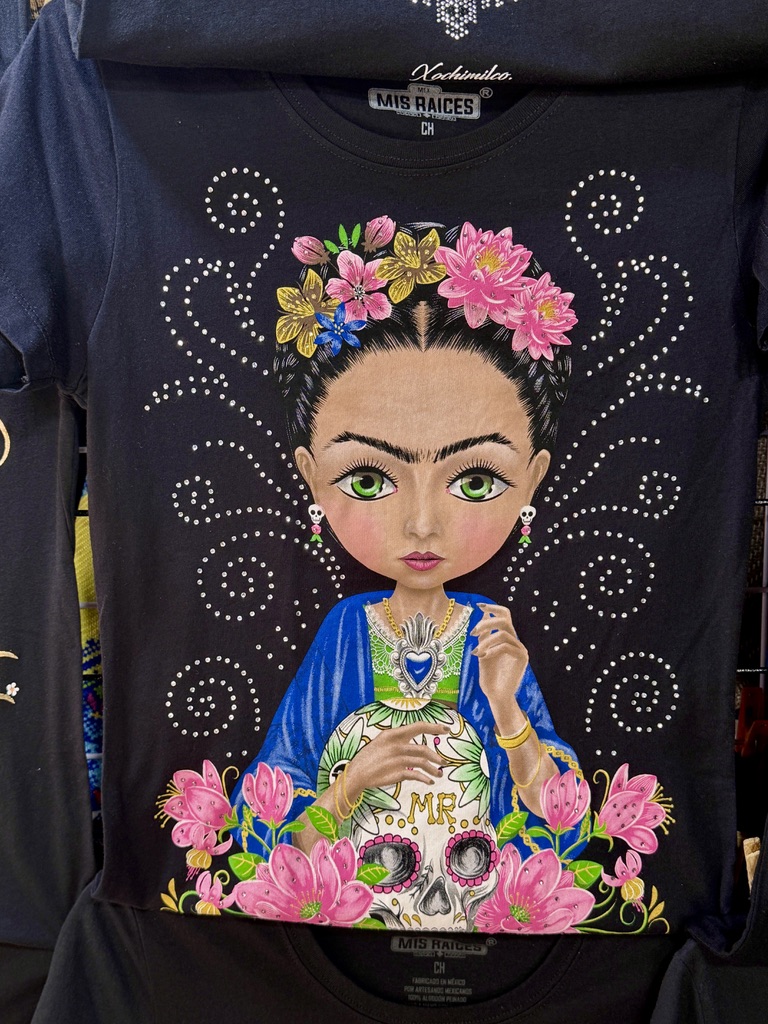
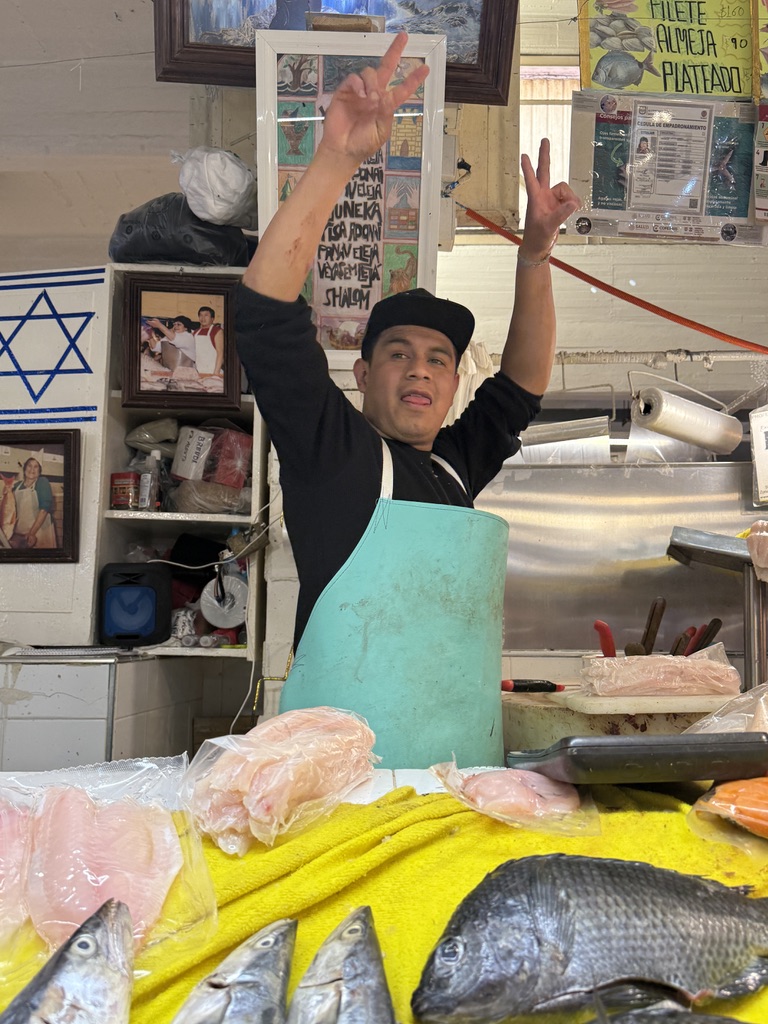
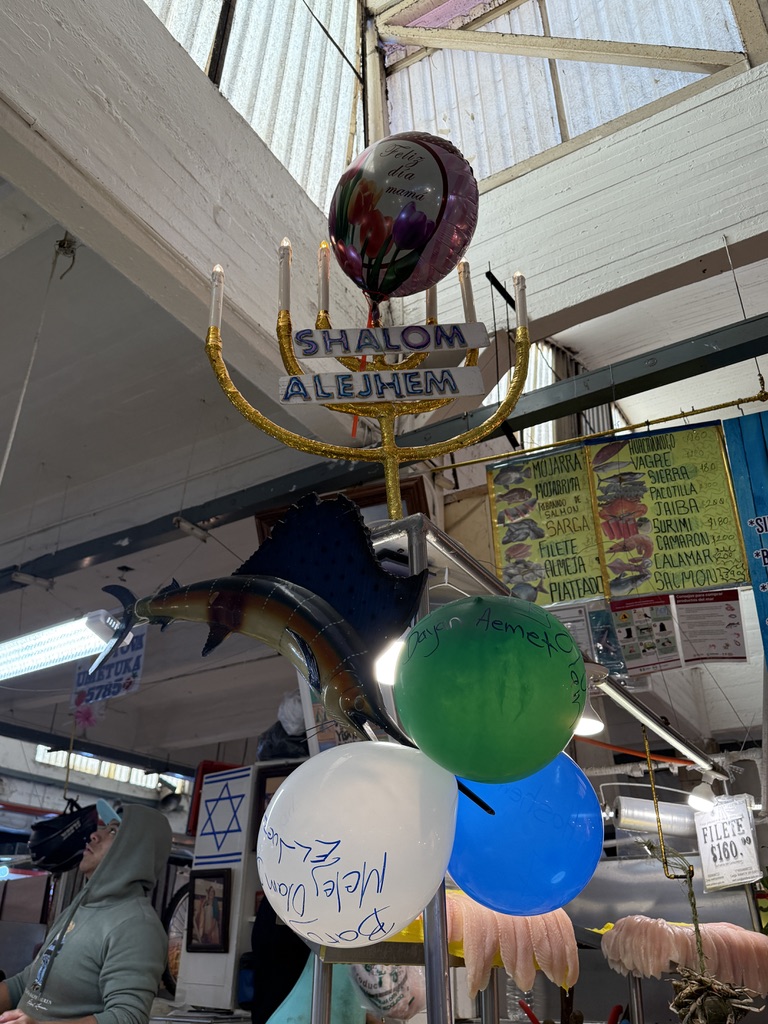
We then headed to the main market in Xochimilko which again reflects the working class nature of the area as compared to Coyoacán and other more upscale parts of the city. We strolled the market and at one point noticed an Israeli flag hanging above one of the fish stalls. So, we approached and suddenly a woman at the stall started talking to us in a combination of Hebrew and Yiddish, mixed with Spanish. Of the three languages, Spanish was my strongest…. Anyway, we asked a few questions and said “Shalom!” and went on our way.

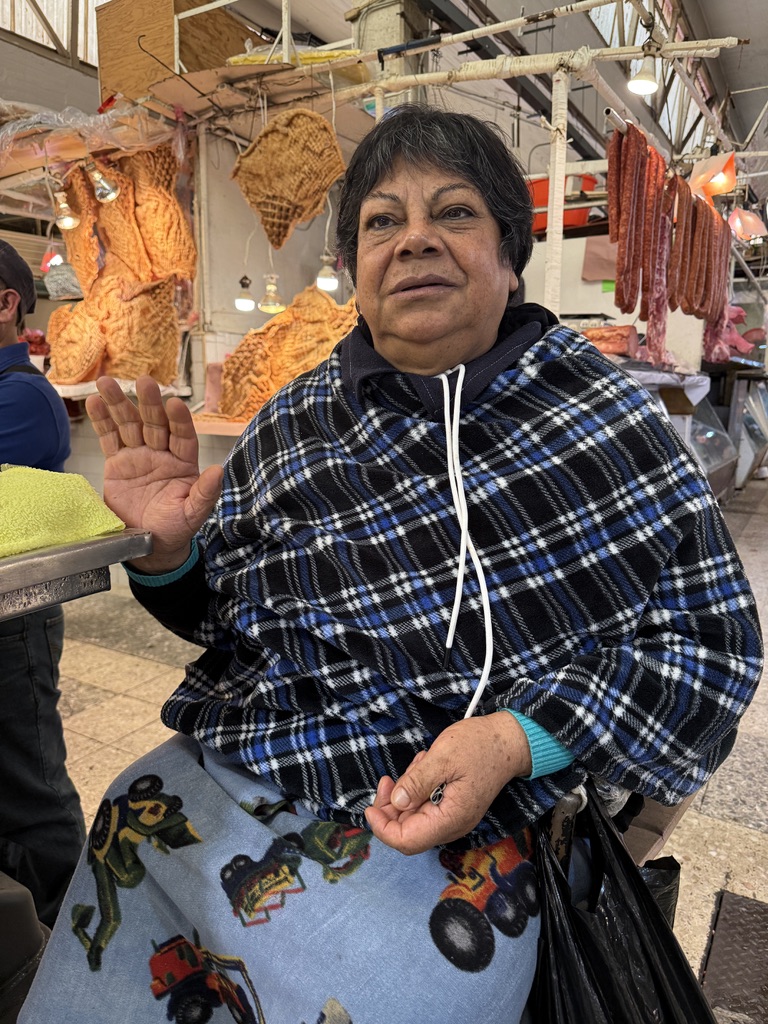
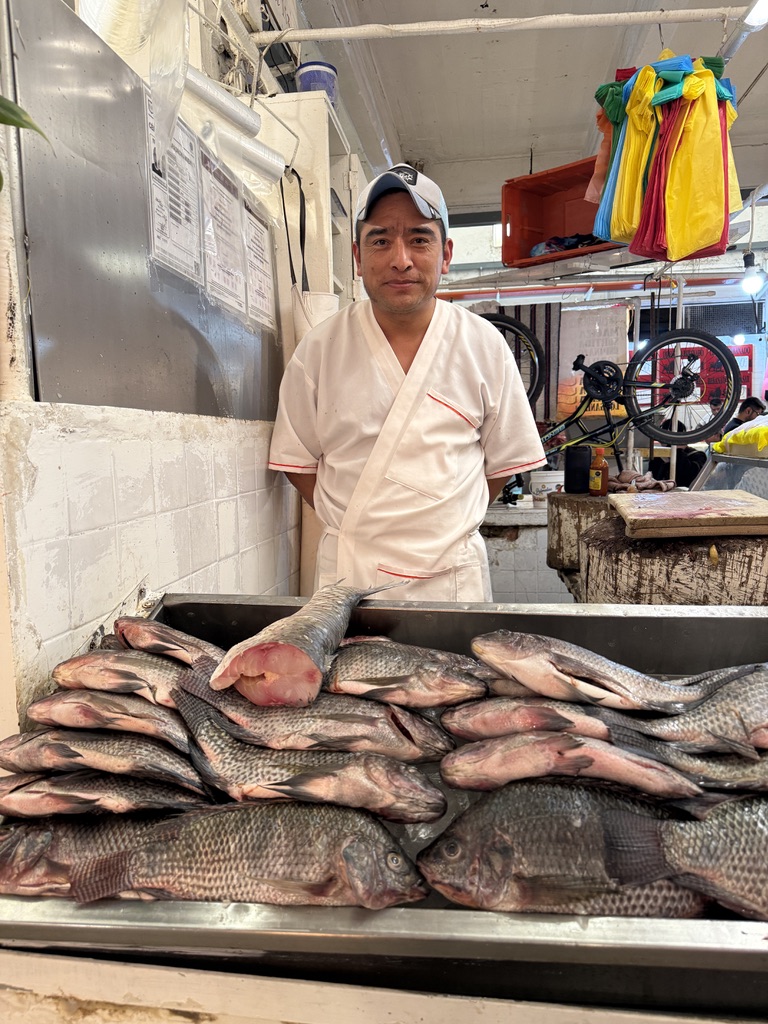

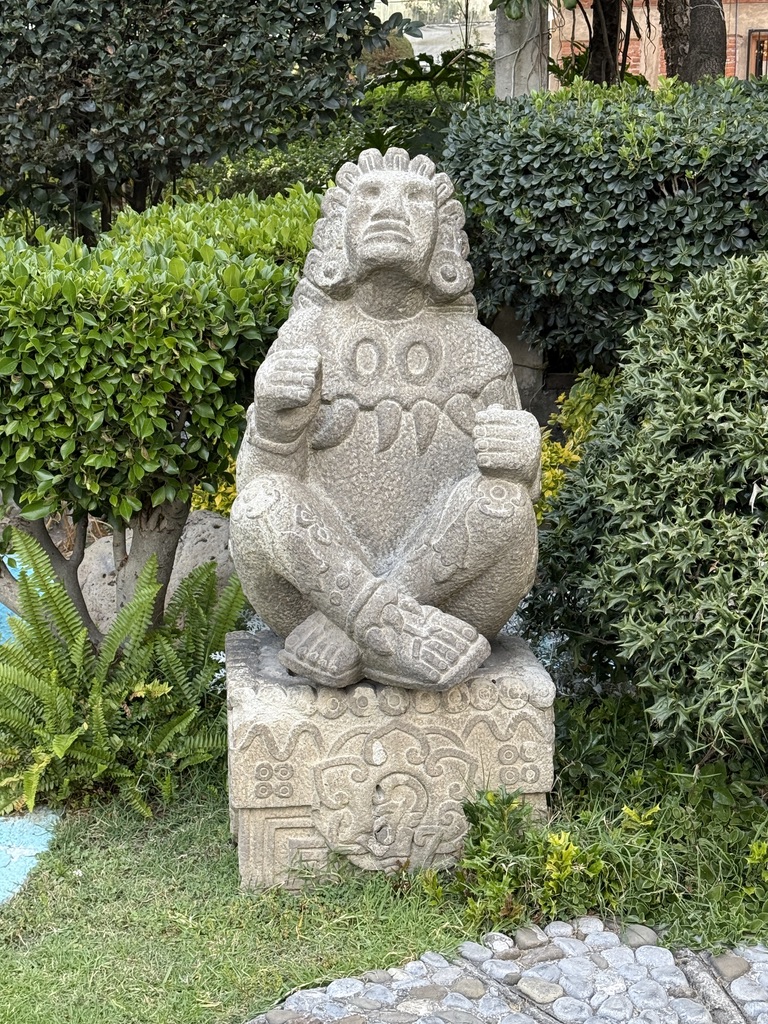
We taxied back to Coyoacán (would have taken the metro but it turned out to take more than twice as much time and required both metro and bus) but told the driver to take us to Viveros Park instead of going back to the hotel. Viveros Park is a combination tree nursery and beautifully maintained park that is about 100 acres. It’s really popular for joggers and those who just like to stroll. It was a delightful walk in the park. From there we walked back to the hotel and also to find an ATM with cash!
And then we were off to dinner at Hiyoko. While flying to Mexico City, I watched the Eva Longoria film on her favorite eating places in Mexico City. She had a lot of interesting places but many were either extremely high-end or too far away. This one stuck out. It is located in the Little Tokyo section of the city, and is absolutely beautifully appointed with just one very long wooden counter that seats about 25 people. Carol, Adrienne, and I studied the menu which was one of those menus that had some words that are not possible to translate and was a combination of Japanese food terms mixed with Spanish words. Eventually, the waitress found an English version.
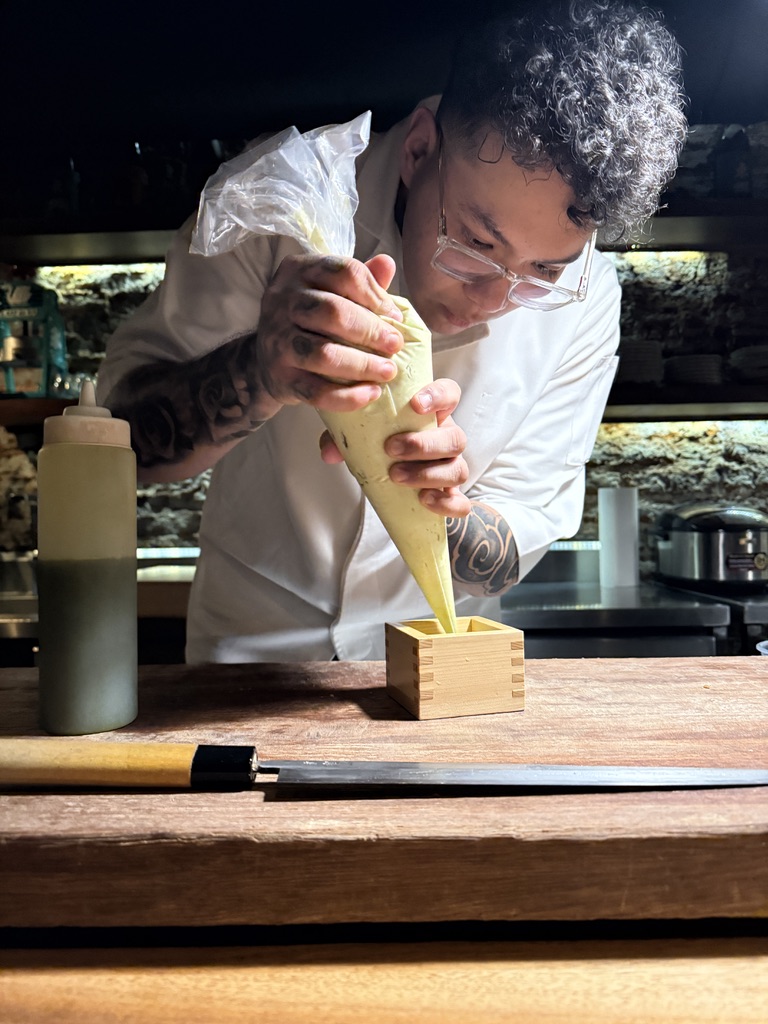
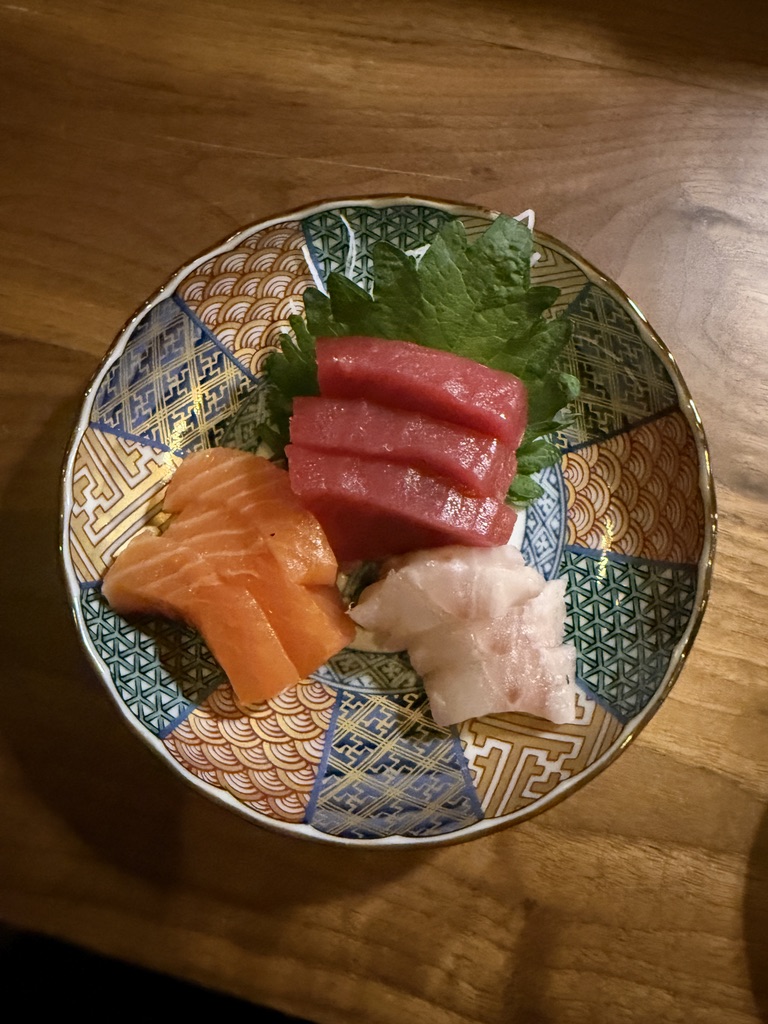
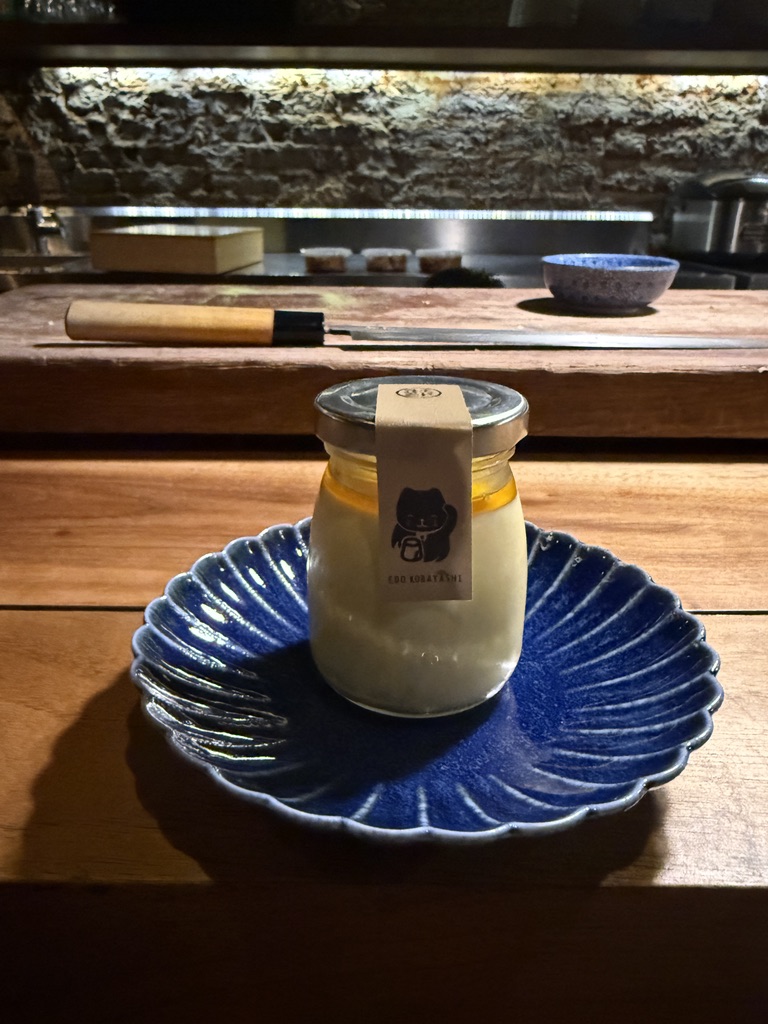
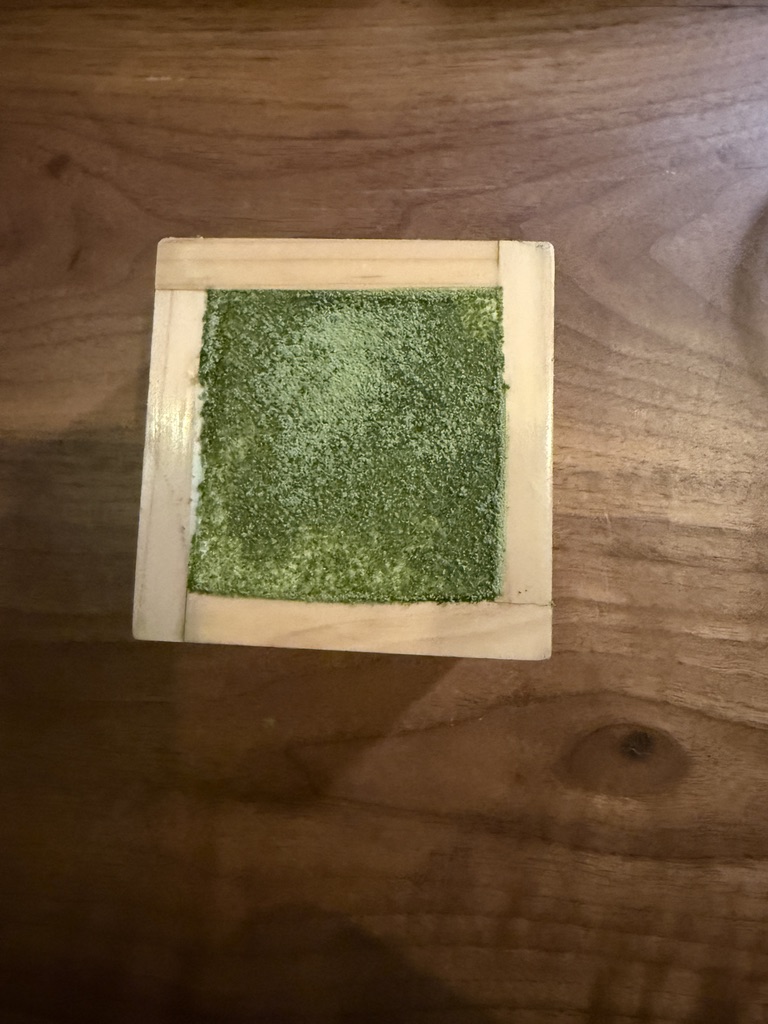
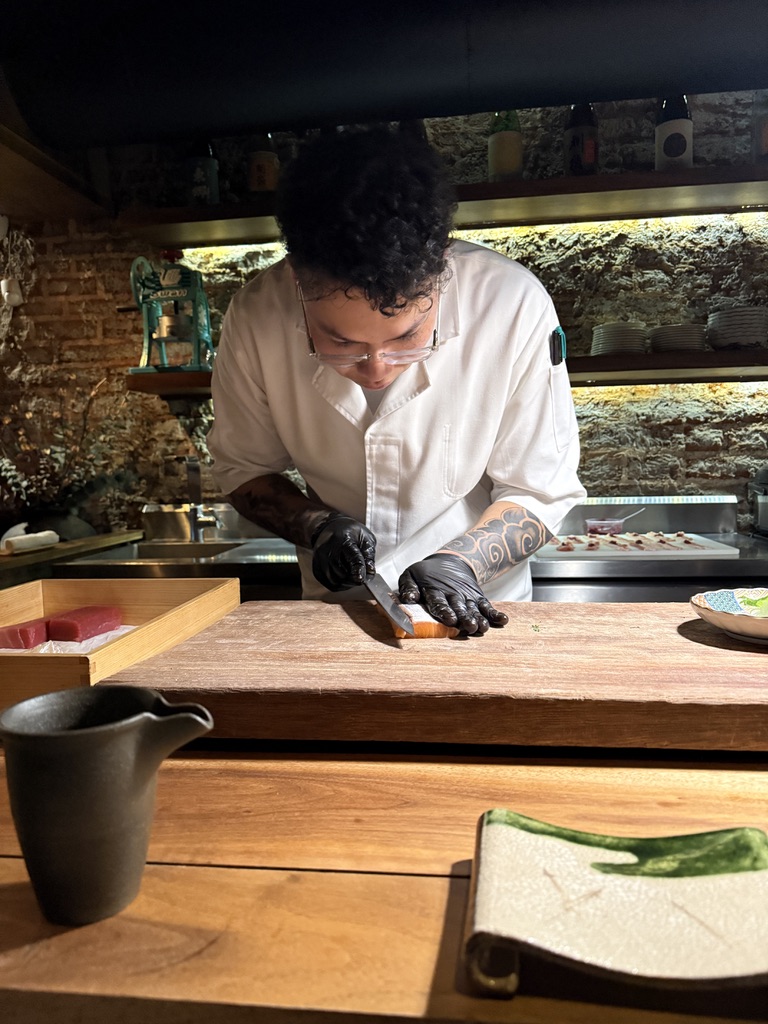
Every dish was perfect ….and a little work of art. In addition to mouth-watering sashimi, the restaurant serves little mini-yakitori style items. We had a huge variety of these very small plates including (each skewer has about three little morsels) edamame with a wonderful dressing; little one-item skewers with duck, shishito peppers, zucchini (which they called pumpkin on the English menu), mushrooms, chicken, cherry tomatoes wrapped in pancetta, pancetta rolls with amazing spices and tidbits of fruit inside, and a few other items I don’t remember. And we had wonderful sake, so smooth you could hardly sense the alcohol content. Of course we needed to end the dinner with dessert so we ordered three of the four options: matcha tiramusu served in a perfect wooden cube, something called fawa fawa (a pudding made with lychee and matcha and some other ingredients and served in a little jar, and a scoop of lychee ice cream sitting atop a strawberry puree.
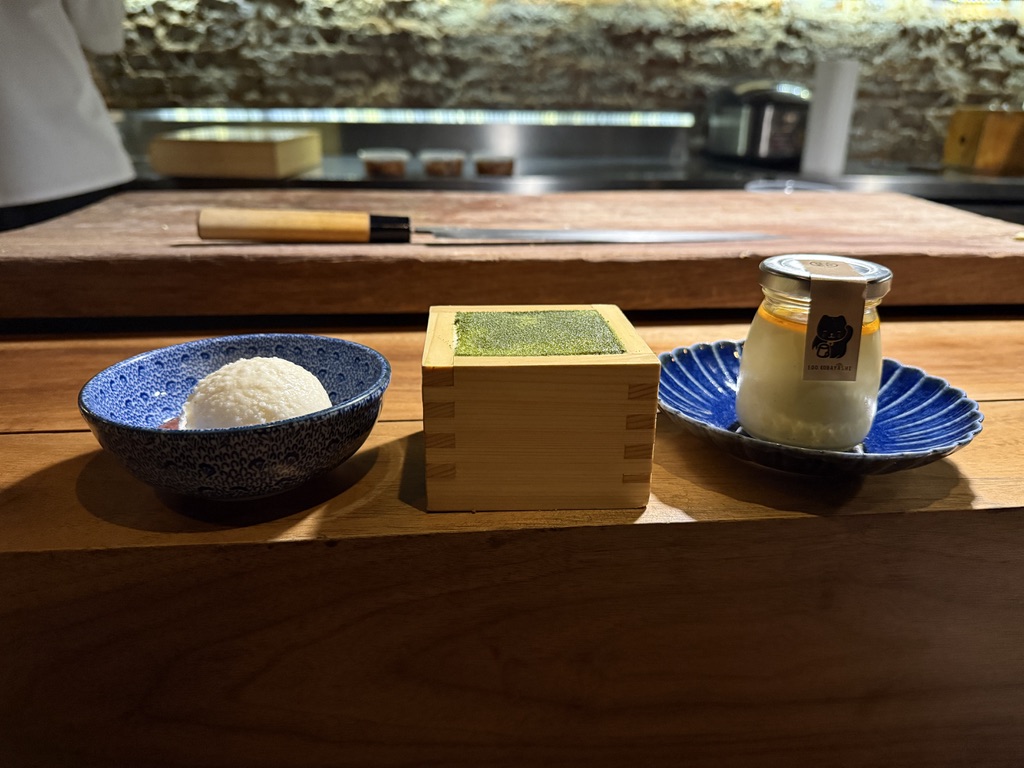
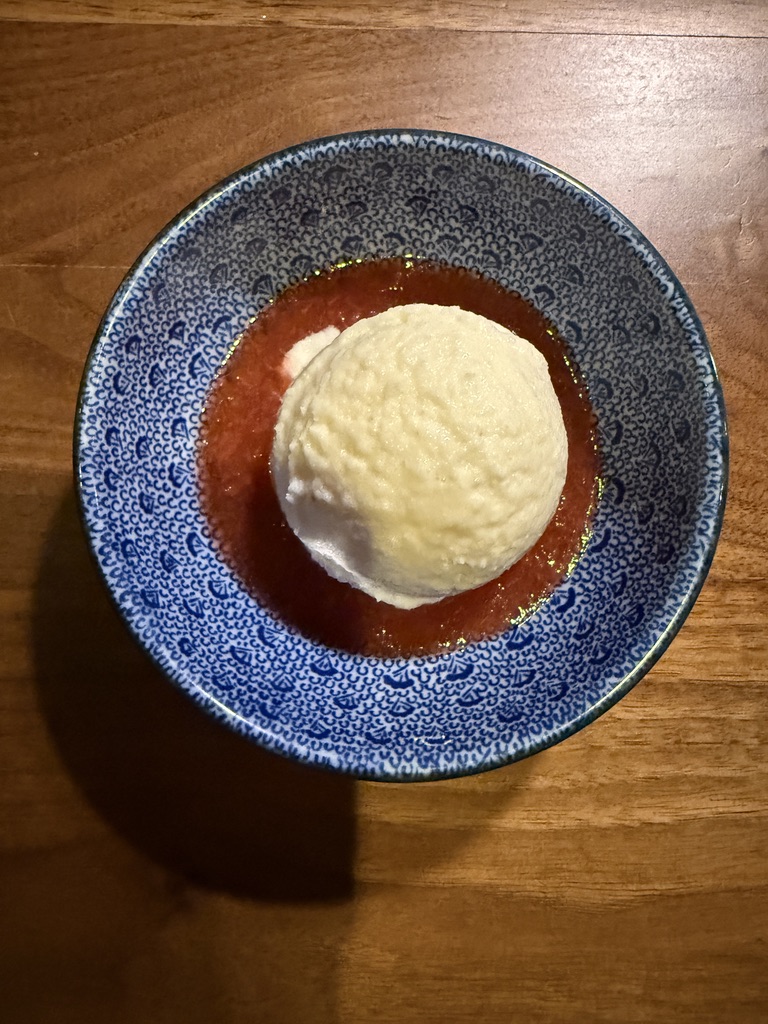
From there we set out to find a taxi which required walking to a very large Sheraton Hotel… and with that we headed back to the hotel. We leave the delightful Coyoacán and the charming H21 Hospedaje tomorrow and head for another hotel in the Polanco neighborhood, But before we leave Coyoacán, we will walk to Casa Azul (Frida Kahlo’s house and museum) and Diego Rivera’s house/museum…. I’ve seen them both before but happy to go again. Once settled in Polanco, we’ll go to the Museum of Anthropology and then head to see the very large Diego Rivera mural “Dreams of Alameda Park” and stroll the historic district… And just like that Thursday will come and we will be heading back to the states.
More tomorrow,
Fern

