Mosques, Mausoleums, Synagogues (Blue Sky). 1/3/20
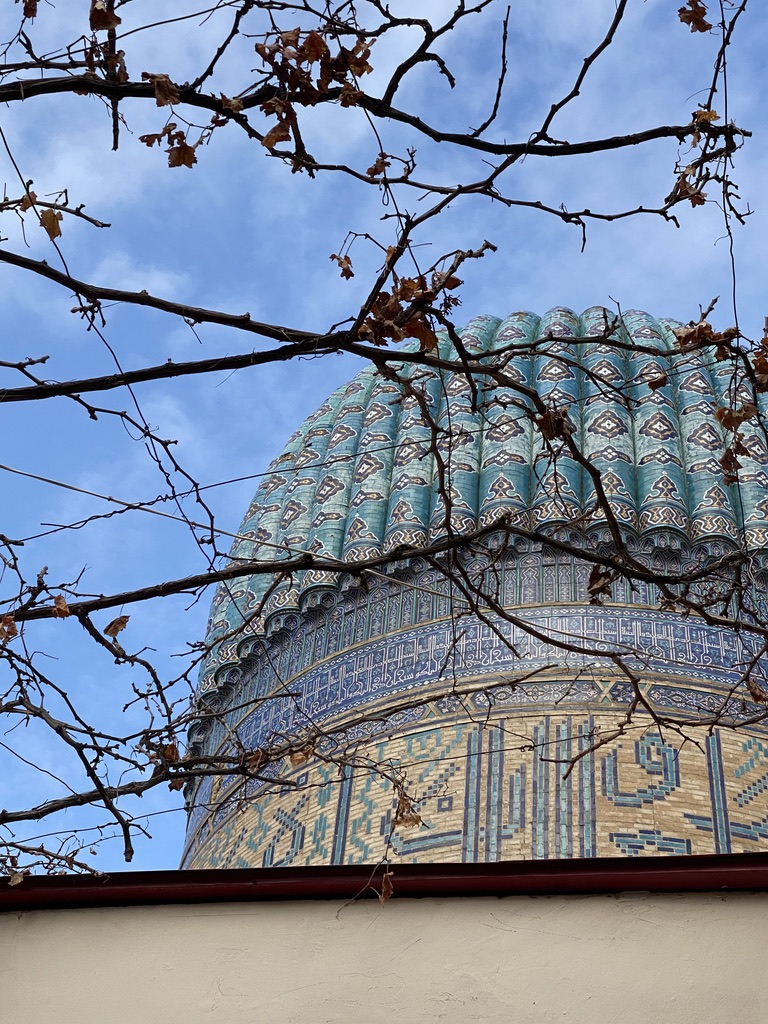
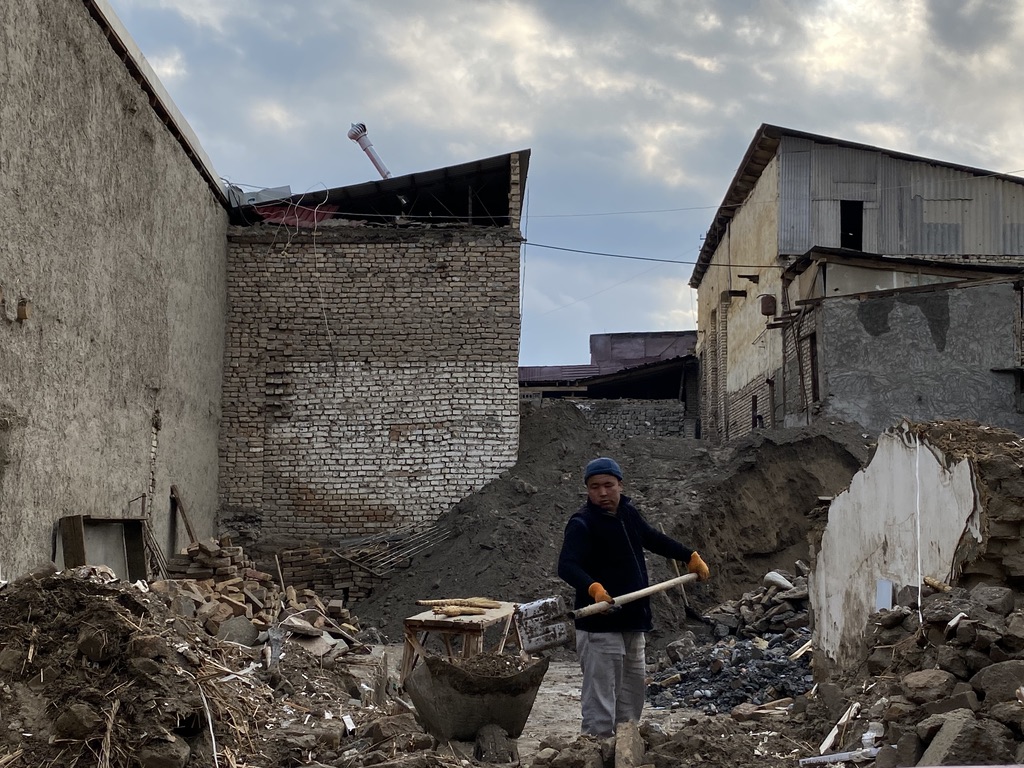
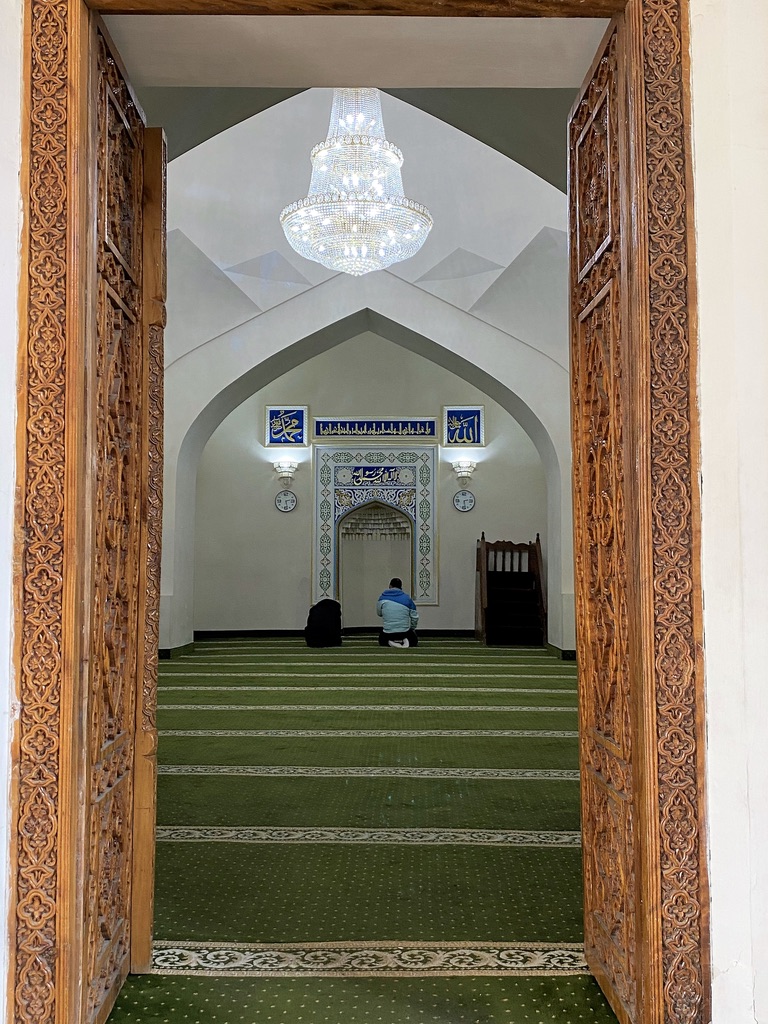
Greetings from Samarkand
3 January 2020
What a day… I will try to describe it as succinctly as possible, but it’s a lot.
We were up quite late last night trying to assess my foot situation, and I stayed up late to write last night’s blog post. So we didn’t get to bed until about 2:30 am. We were awoken suddenly at around 5:30 am when there was no power at the hotel (maybe the whole neighborhood; not sure). Not really certain what woke us up, but I guess it was the utter silence – no sound of radiators (heat depends on the power) and no light coming from the walkway outside. Anyway, we realized the power was out and then wondered how long it would take to restore. We heard a lot of noise outside, so we figured they were trying to fix the situation. Power was restored a few hours later and we fell back asleep and slept in past the breakfast time. So we got a late start. Given that my foot was swollen and I’m walking rather slowly, we decided the best thing to do was to hire a taxi for a few hours to take us to the places we wanted to visit and that way I could minimize walking (and preserve my walkability to walking “within” the places rather than having to walk “to” the places as well).
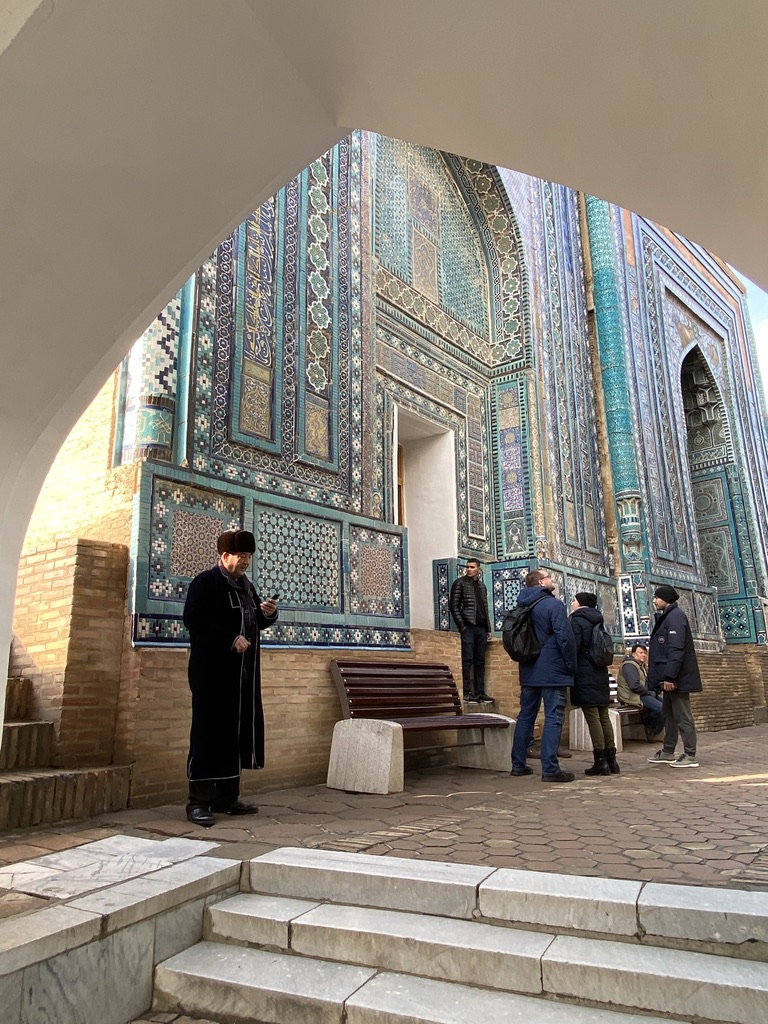
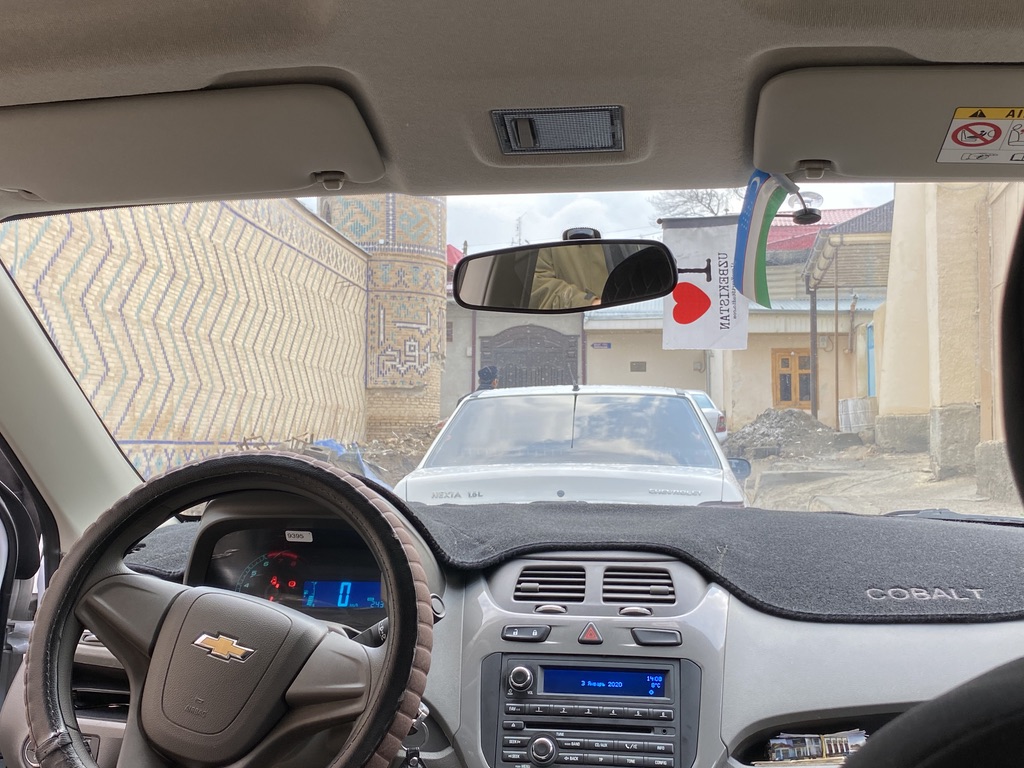
Our plan for the day was to go to Shah-i-Zinda (a huge necropolis) and the Gubaz Synagogue (which services all 250 Jews in the Samarkand region and which we were told would be difficult to find). We got a local Samarkand taxi (actually more like a gypsy cab) on the street – an older driver who was very friendly and who had lots of gold teeth, but who spoke not a word of English. However, given how much we’ve traveled that wasn’t an issue as we always manage to find some way to get our message across. So off we went to Shah-i-Zinda. (Prior to departing the hotel, along that treacherous path which was quite muddy today, we had determined after a bit of research that we’d go to a restaurant called Straya Abra so the hotel made the reservation.)
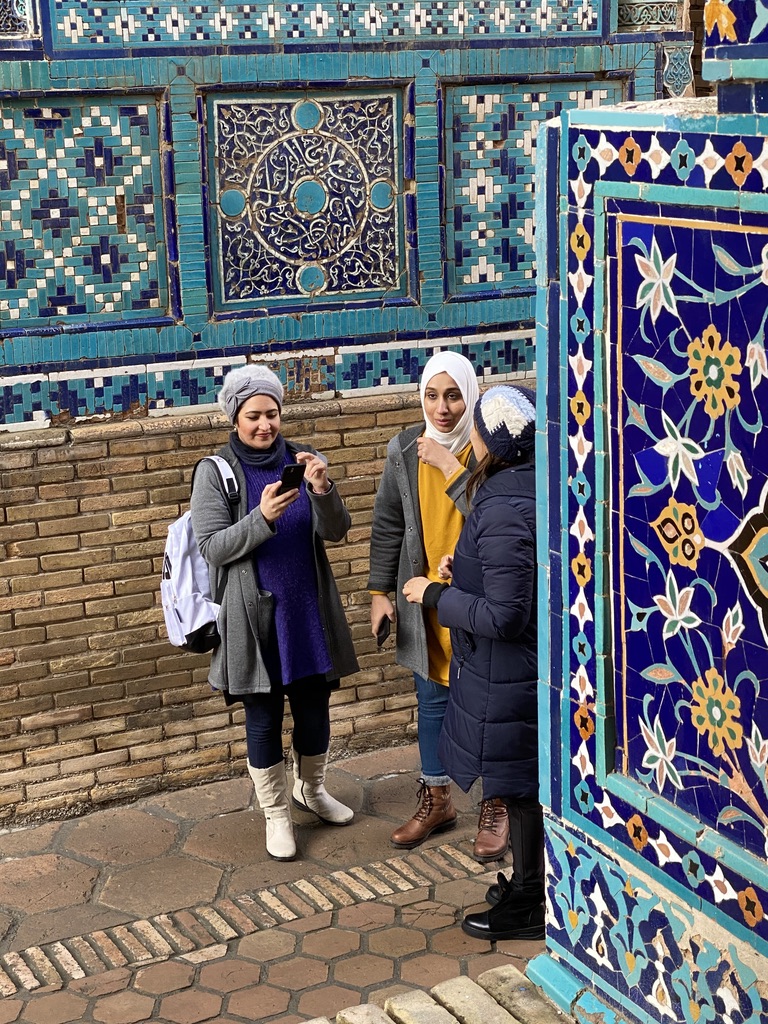


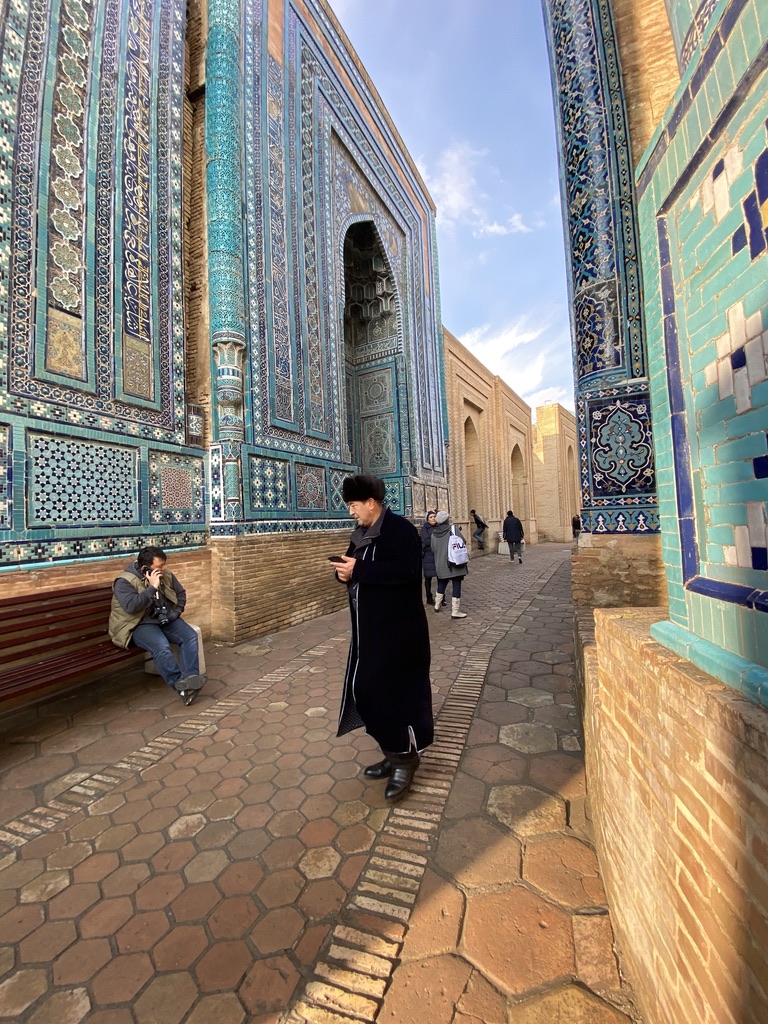
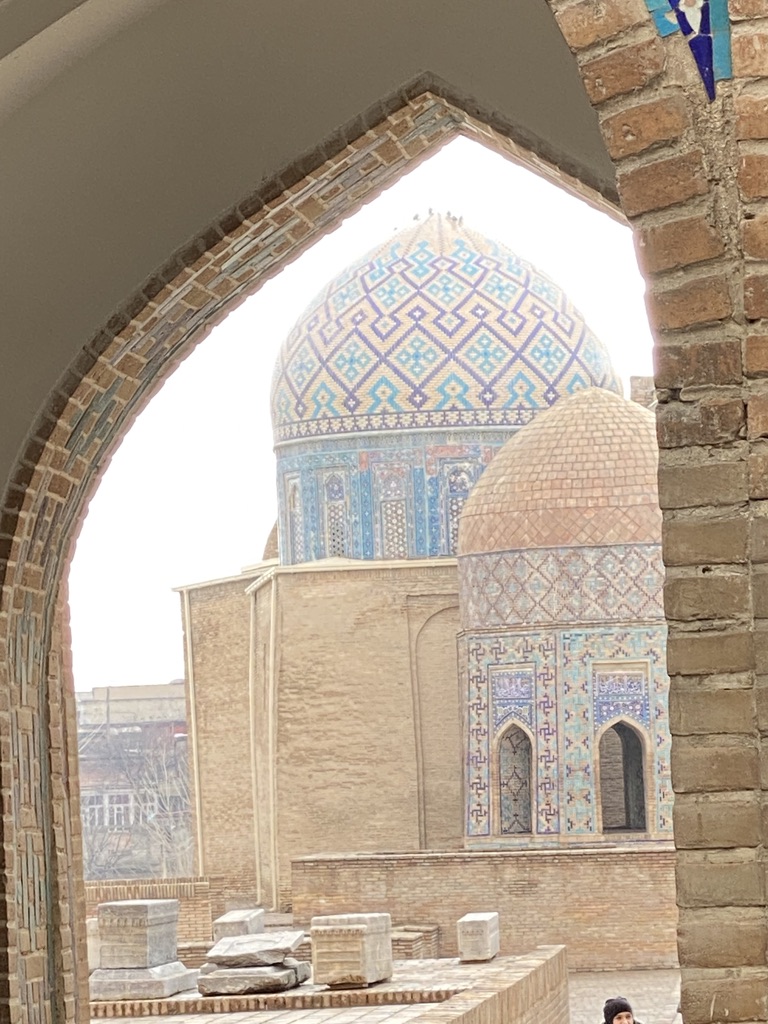
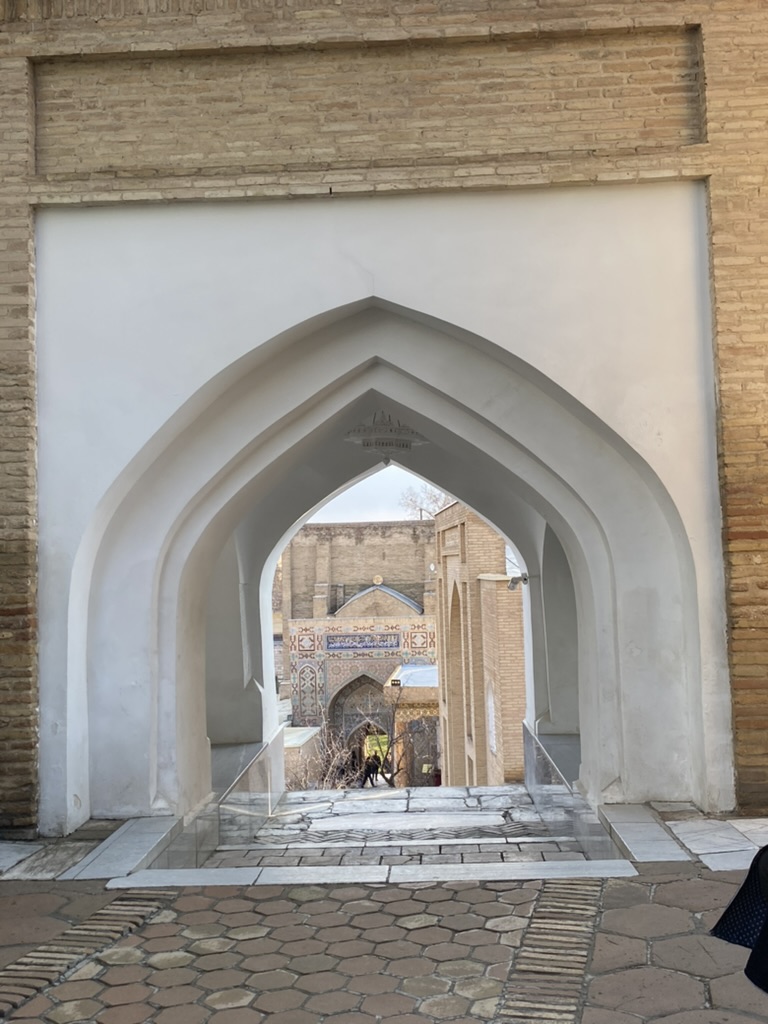
The Shah-i-Zinda houses many mausoleums and buildings from the 9th to 14th centuries and also some from the 19th century. There are a lot of legends about Kusam ib Abbas, a cousin of Muhammad the prophet. They say he came to Samarkand with the Arab invasion to preach Islam and that he was beheaded for his faith, but he never died… that he went into a deep well and is living there now. Anyway, the complex includes about 20 buildings. As we approached the site, I was a bit apprehensive as you could see from the parking area that there was a huge, steep set of stairs with very high risers… equaling about four flights of stairs! In some parts there was a railing; in other parts, no railing. But I was determined and figured that if we climbed slowly, I could do it… one step at a time, putting both feet on each step. It took a while, but I made it to the top.. and then there was a lot of walking and smaller sets of stairs.. But it was worth it. Zinda (as the locals call it) is spectacular. I’m only posting a few of the hundreds of photos I took for fear of making this email too large to be received.
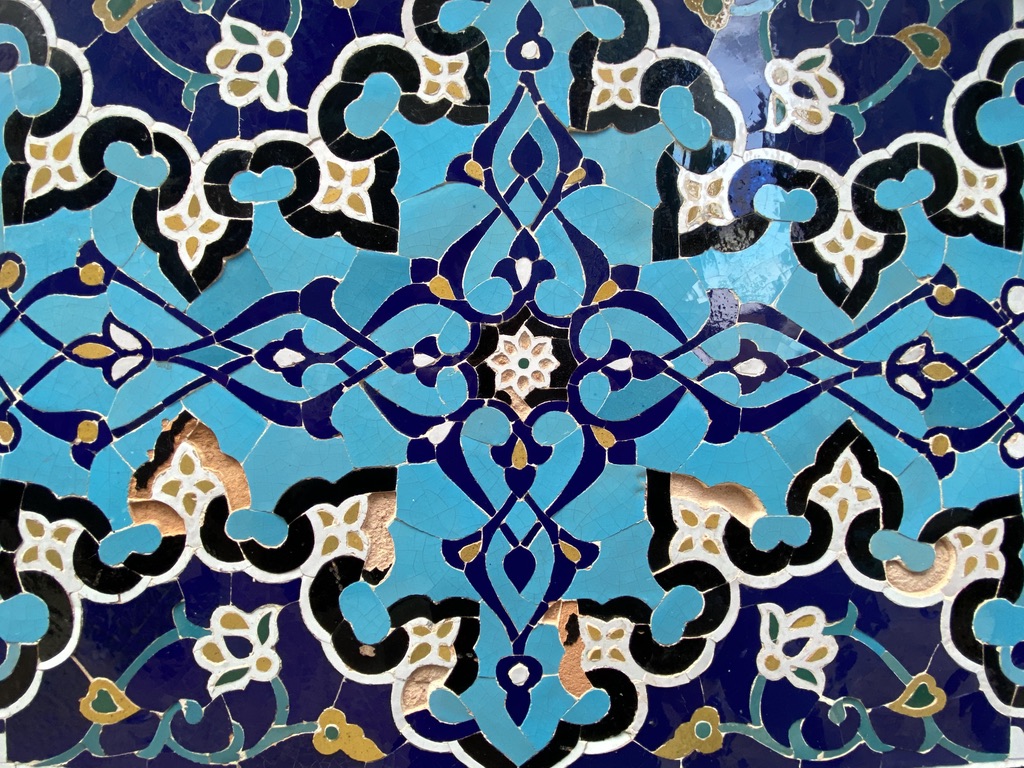
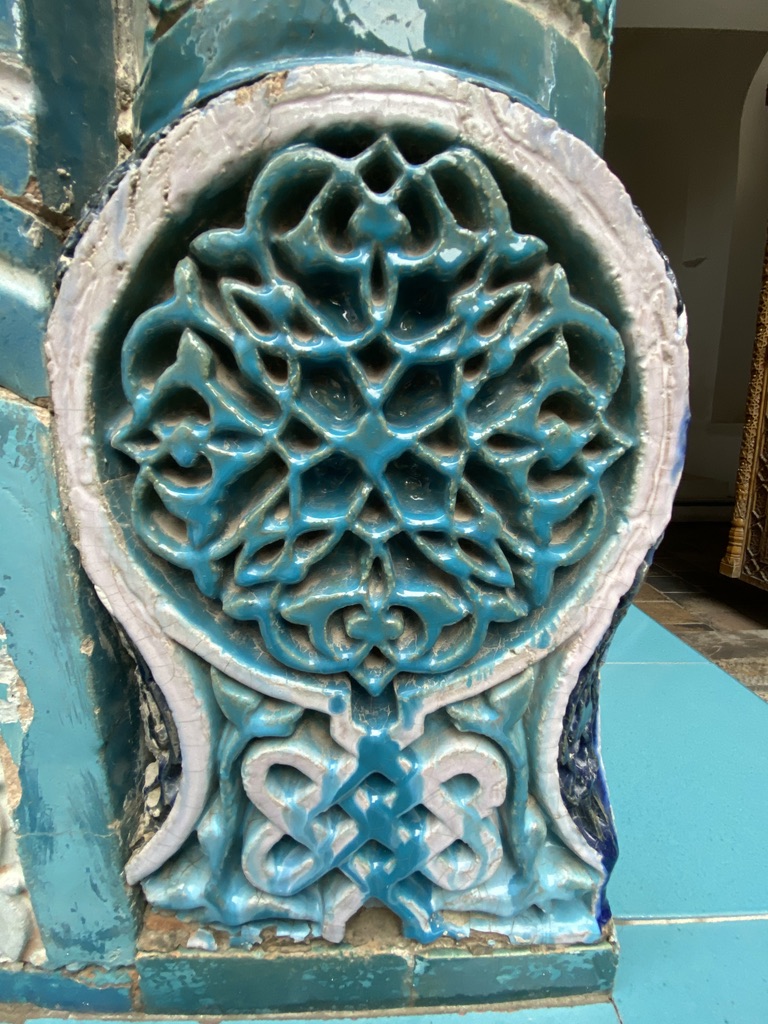
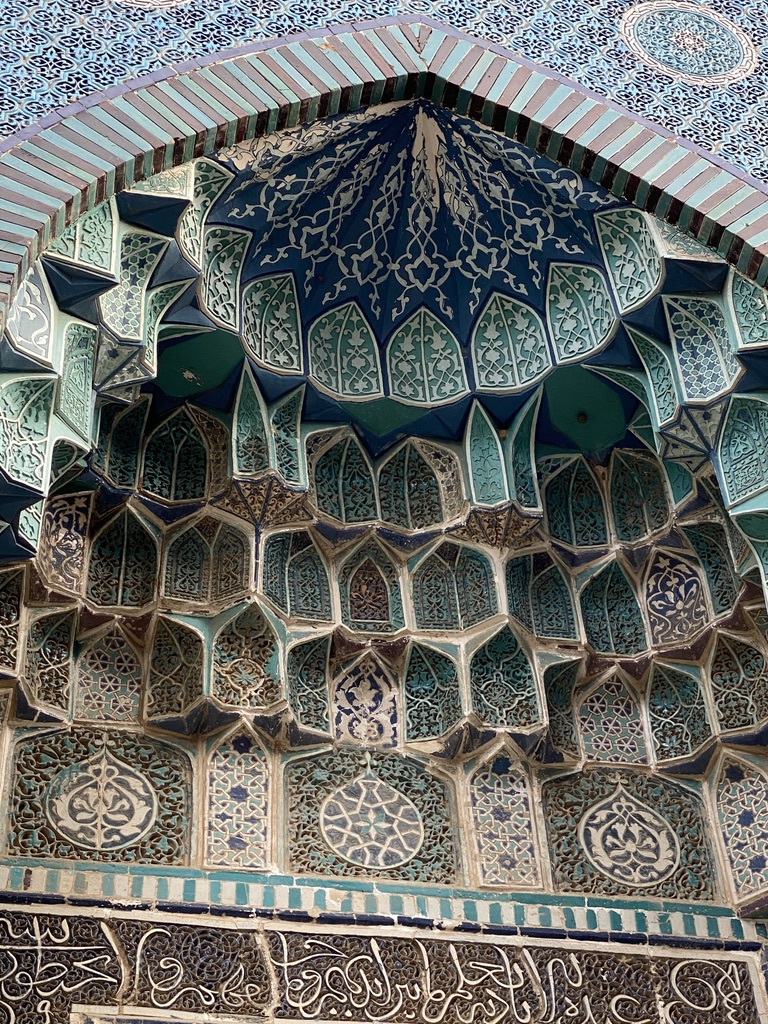
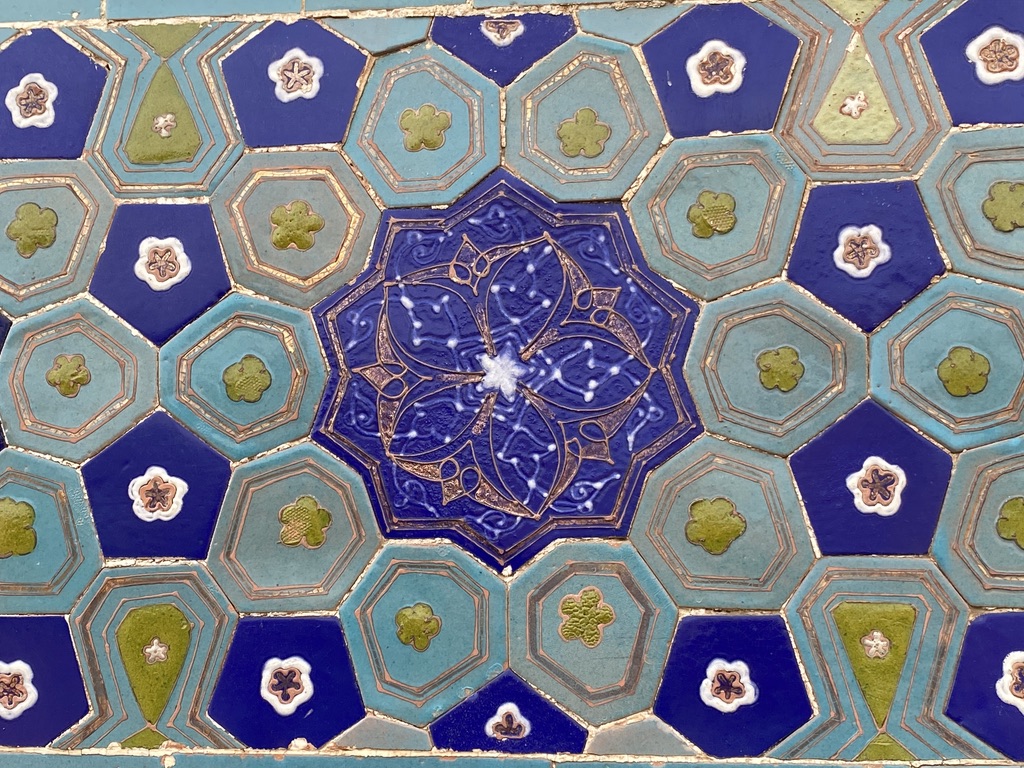
It is rare for historic sites to endure as long as this one, through centuries of war, natural disasters, progress, and development. Maybe it is because it began with one building and then there were so many additions over the centuries so the area remained sacred. Also it houses the remains of many famous people. As a result there are layers of history and architecture that intersect along narrow streets that climb the hillside. It’s a truly amazing sight to behold – with tile work everywhere in vibrant blues and greens and hints of yellow. Can’t even imagine how many servants had to be employed to create each of these structures. In a way it’s just a narrow walking street lined with mausoleums, climbing a hillside. It’s obviously a popular place to visit as there were many people there – mostly Uzbekis and Russians. Didn’t hear any English.


After about 90 minutes we made the descent down that staircase … slowly and carefully! The taxi was waiting and we asked to go to the Synagogue (the only one in Samarkand). The driver didn’t know it, but we had read a bit about it and could find it on our map and on the GPS, although the exact location was not totally spelled out. We knew we could get close. According to one article, it was important to phone the rabbi in advance. So we did that. Unfortunately, he didn’t speak any English – only Uzbek, Russian, and Hebrew. (No help for us, but I said we were from California and maybe he understood a little.) Anyway, the taxi driver had already left the car and gone to speak with some other drivers and when he came back I called the rabbi again and let the taxi driver talk to him. It now seemed like we would make the effort to go there. Actually, we knew from the map that it was only about a 15-minute walk from our hotel, but given the path and the quality of the little streets.. and my foot… we thought it was not a good idea to walk.
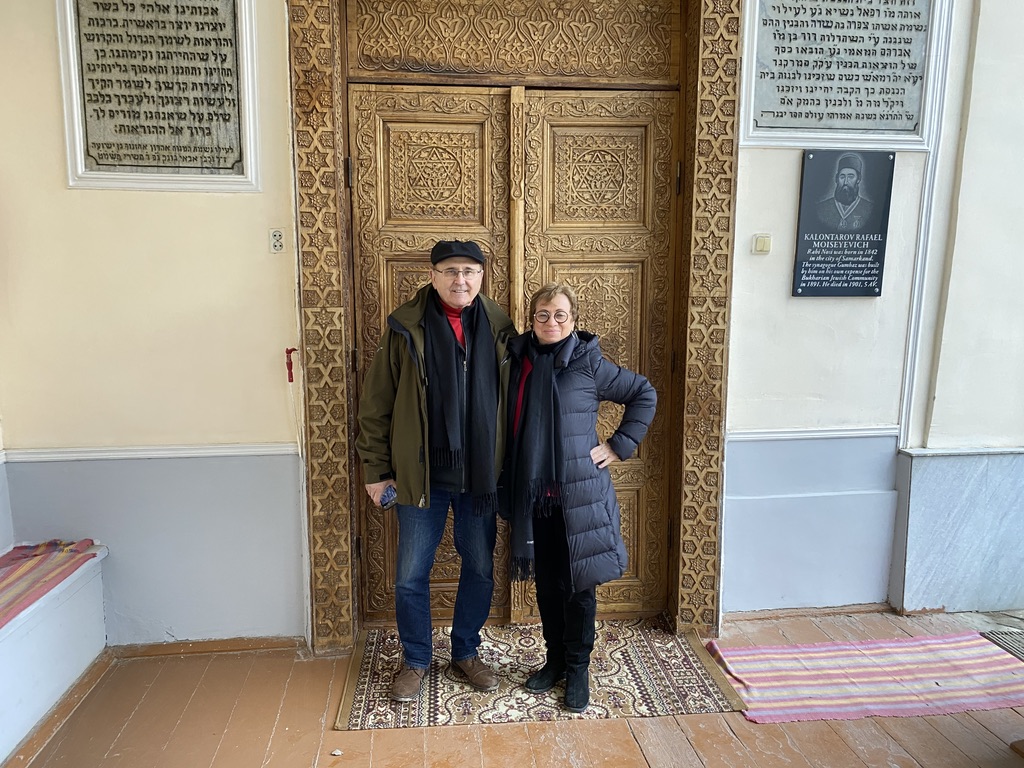
Anyway, we followed the GPS as the driver headed there and he was definitely going on the route. As we got very close, a man in a leatherette jacket (about 60-years-old) approached the car and the driver rolled down his window and the man said “Shalom!” We figured he was looking for us and was going to walk us into the small street and then the rabbi would be there to open the synagogue. But , we learned quickly, he was the rabbi. No beard, clean shaven, wearing a cap (similar to Mike’s). So we all walked about a half-block to a small building (that had the star of David painted on the outside). The taxi driver came too, since he had never been there and seemed curious.
So, given that there wasn’t any common language… here is what I believe to be the situation. From some research we did, the Jews have been in Uzbekistan centuries before Genghis Khan arrived, and at various points in history there was a thriving community. Today the numbers are very small and here in Samarkand there appears to be anywhere from 50 to 250 Jews living in the city. Different books have different numbers. There were more than 100,000 Jews here in Uzbekistan in the 1980s.. By 2002 there were only 6,000 and now about 200.
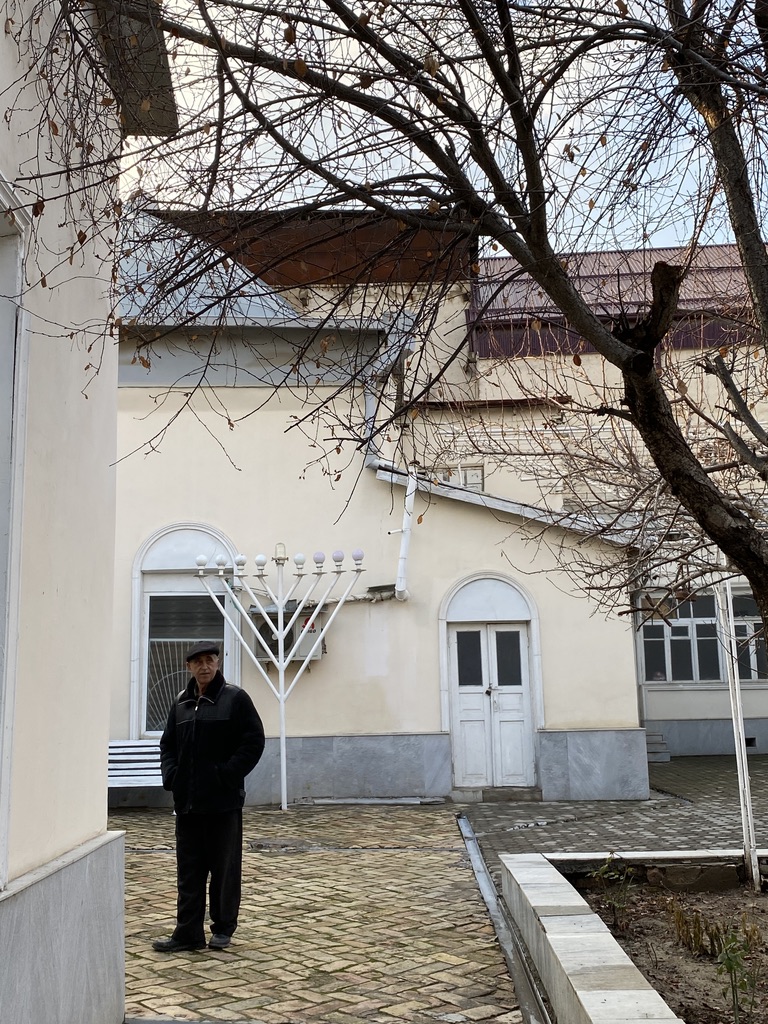
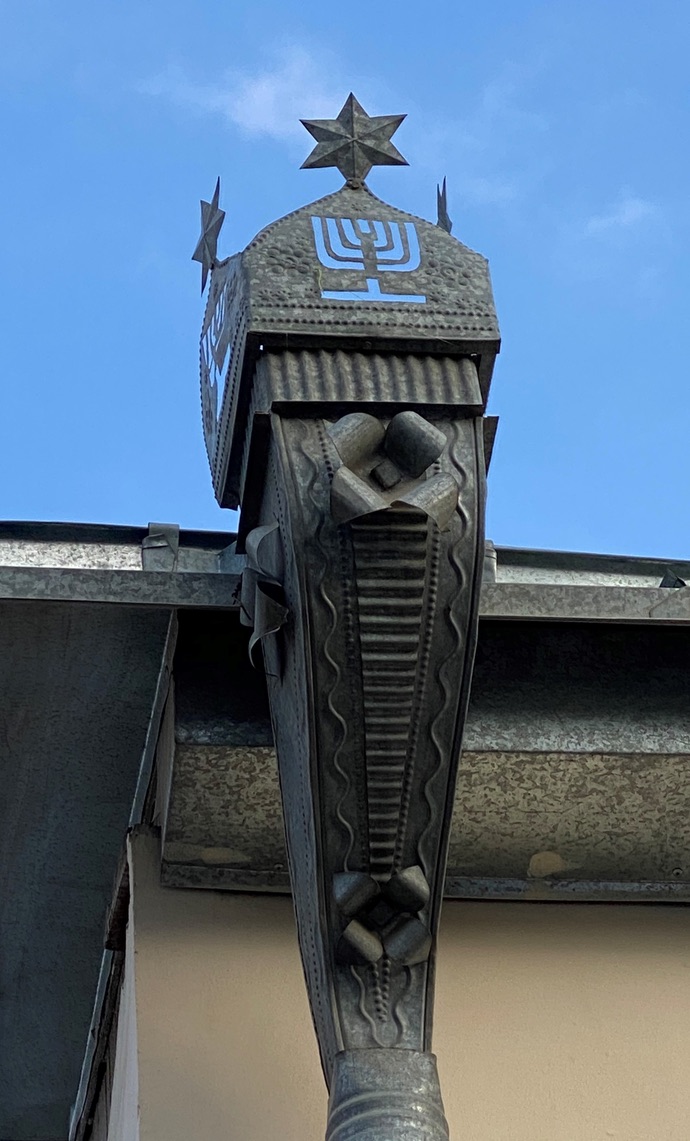
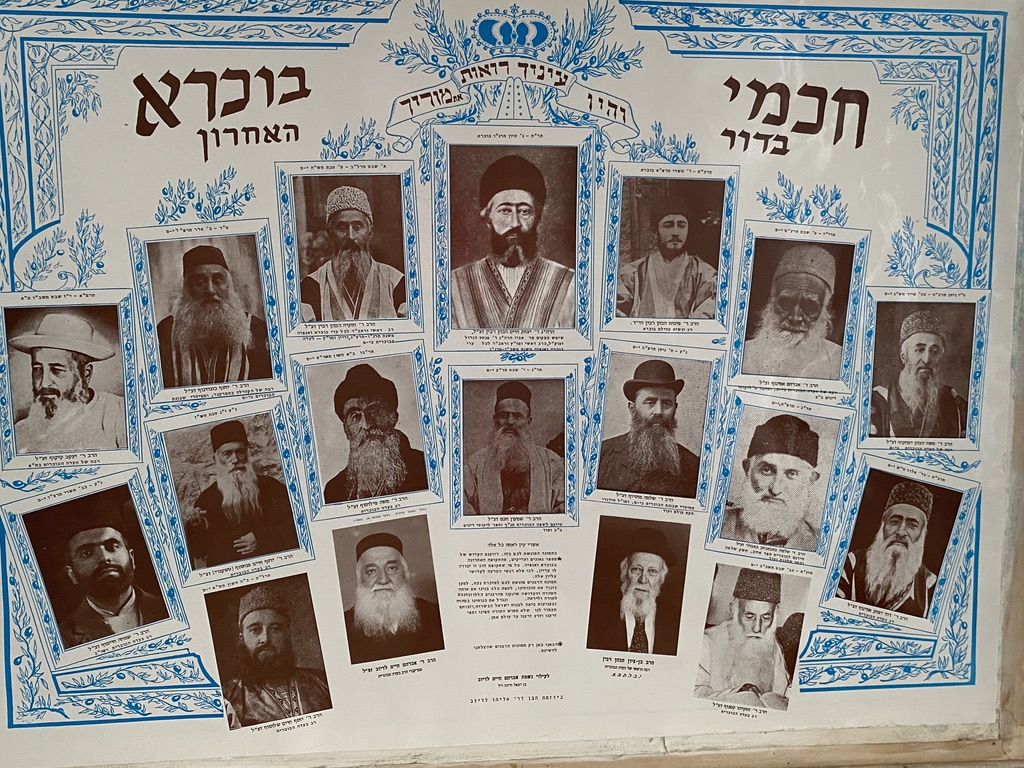

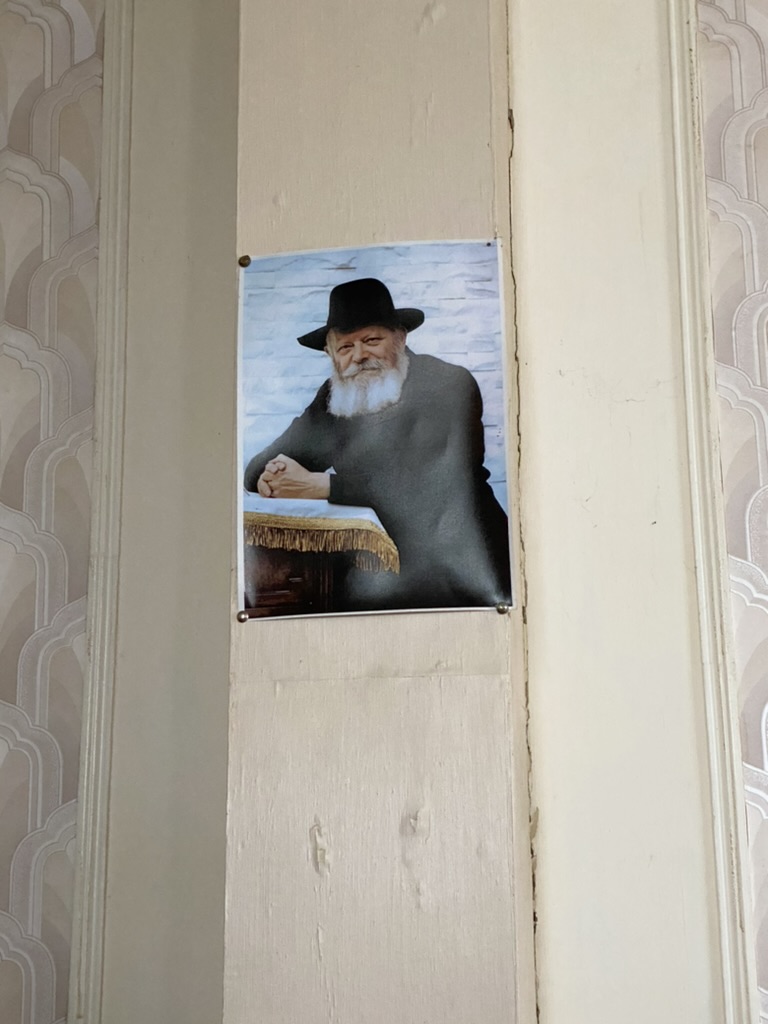
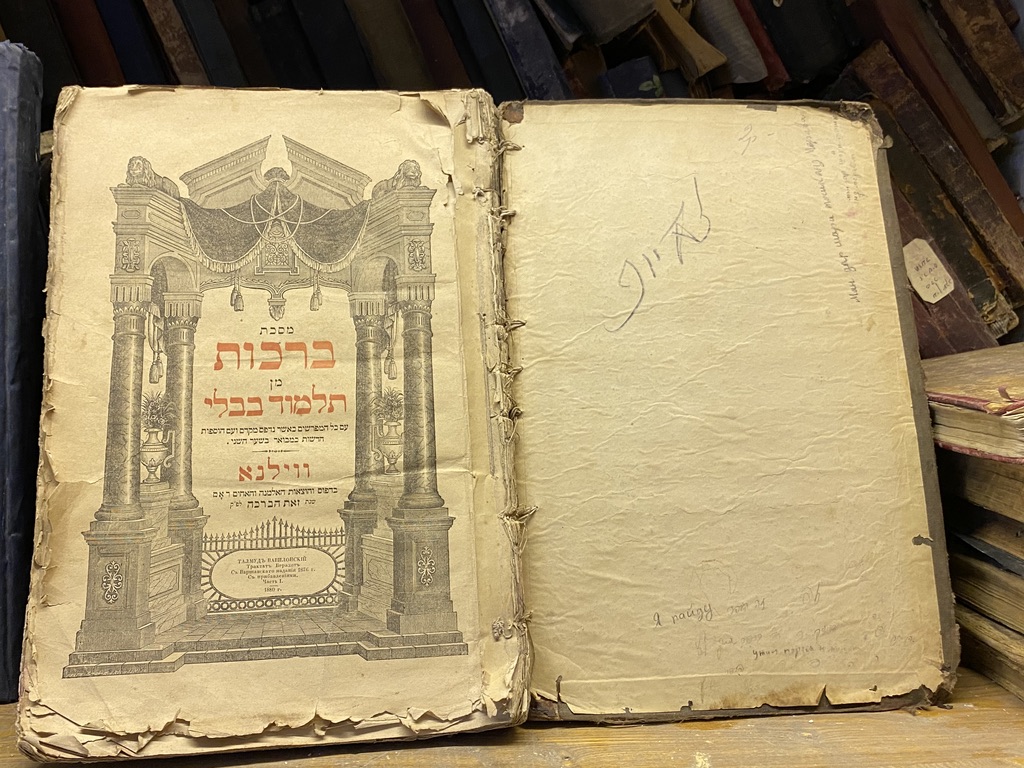
And from the “conversation” with the rabbi — There are actually two synagogues in one building separated by a little covered walkway (which is probably quite sweet in the summertime since there are vines that would be green or flowering). Really, I’d say there are two “rooms” rather than two buildings that comprise these two “synagogues.” One is for Ashkenazi Jews and the other for Sephardic Jews. When I said my family was Ashkenazi, he unlocked that room. It’s pretty spartan with a big heater in the center. On one side of that heater was a shelf with the prayer book. Around the edges of the room were tables with chairs facing toward that heater. They could probably seat about 20 people in that setting. I asked where the torah was kept, he said they had three torahs.. all were kept in the Sephardic side, I think. He kept pointing to photos (pasted onto a cardboard) hanging on the wall with pictures of all the rabbis for the past 100 years or so. He kept pointing to one particular rabbi saying “New York, Israel, Samarkand” so I suppose this one rabbi who was there in the 1970s, I think, came from NY and went to Israel (perhaps to study?) and then chose to settle in Samarkand? He also proudly pointed to a 2016 calendar on the wall that was from the Uzbeki Jews of America and Canada – there were photos of some kind of convention or celebration. We checked out the advertisements on the calendar and they were all from businesses in Queens, so I suppose there is an Uzbeki Jewish community in Queens (NY).
He then took us to the Sephardic side, which was a bit more upscale than the Ashkenazi side. It had more of a bimah, and he pointed to the doors behind which the torahs were kept. Again there were a few memorabilia of this American/Canadian Uzbeki Jewish community association. I think he asked where my family was from (although maybe that wasn’t the question), but I answered Romania. The rabbi was part of the Sephardic side of the synagogue but he was rabbi to the whole congregation, and perhaps they worship together in the Sephardic side. He pointed to the area for women, so I’m guessing the synagogue is conservative or orthodox although I think it’s all a big blend here. He didn’t ask Mike to put on a kippa but Mike was wearing his cap so I suppose he was OK… We took pictures of the sanctuary and of the rabbi and the rabbi took pictures of us. We put American money in a little cup that was not overly visible and near the bimah, but that seemed better than giving it directly to the rabbi. He thanked us as we left and said “Shabat Shalom!”

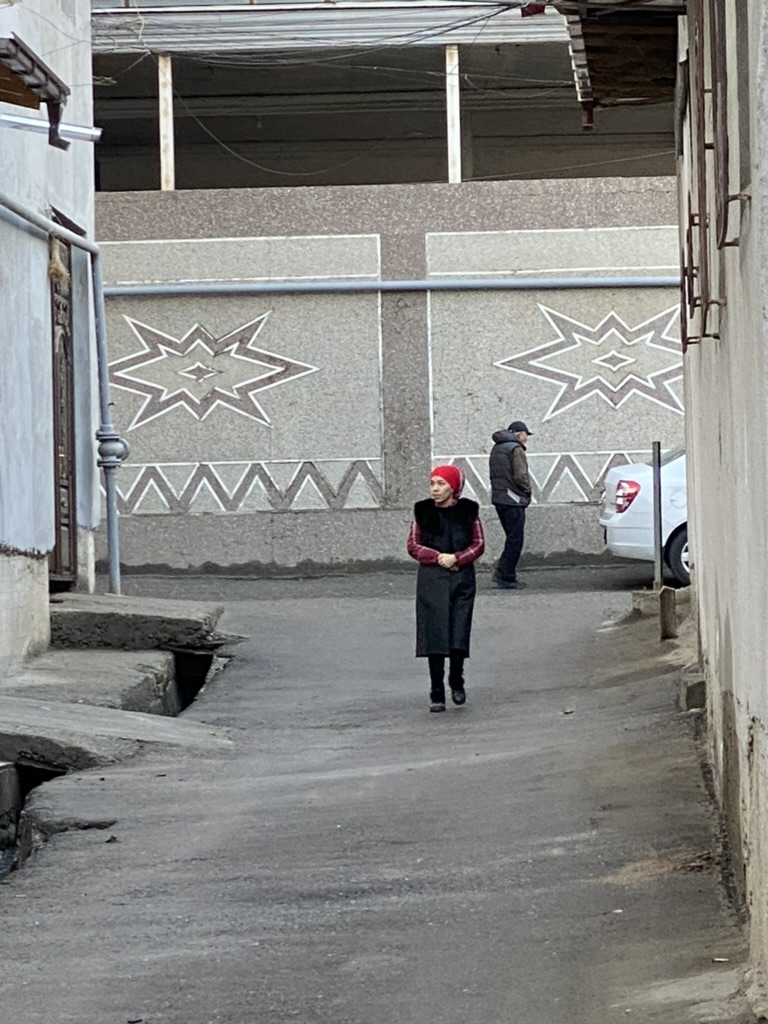
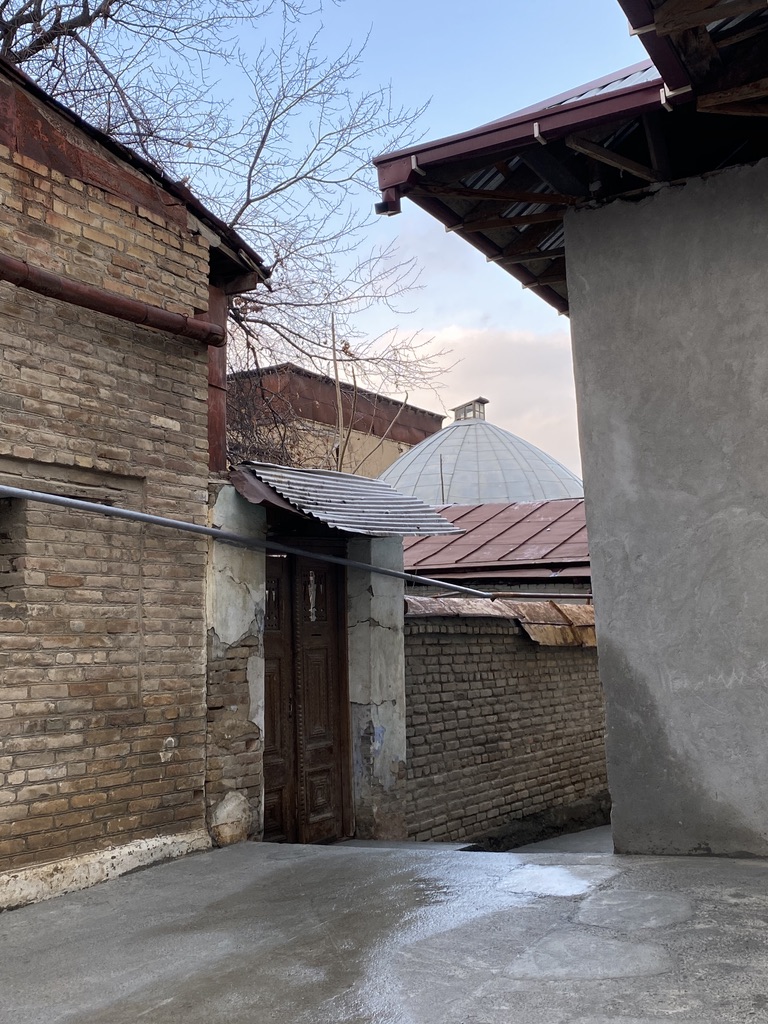
We returned to the hotel and later took a taxi to the restaurant where we had a reservation. When we arrived (it’s in a totally different part of the city – in a newer section) and in an interesting building that is a hotel (more upscale than ours – but we had eliminated all hotels that were not in the very old section of the city) at the restaurant, it was closed. So the taxi called our hotel and they recommended a restaurant called Samarkand (how appropriate and creative). When we got there, we walked into what I think was a huge wedding with very very loud music and lots of people. The host said in very weak English – upstairs, no smoking, no music. We said “great!” and up we went – two full flights.. to another world from the downstairs disco. A quiet restaurant room that seats about 120 people. While there was supposedly no smoking, there was actually a lot of smoking. But no music.
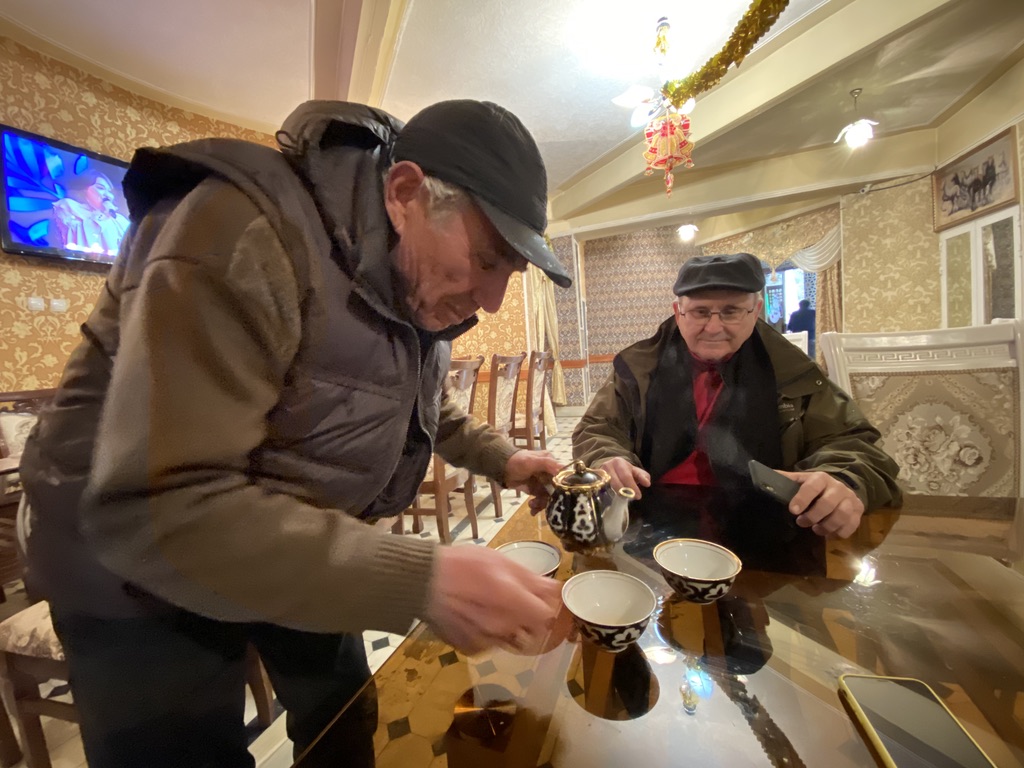
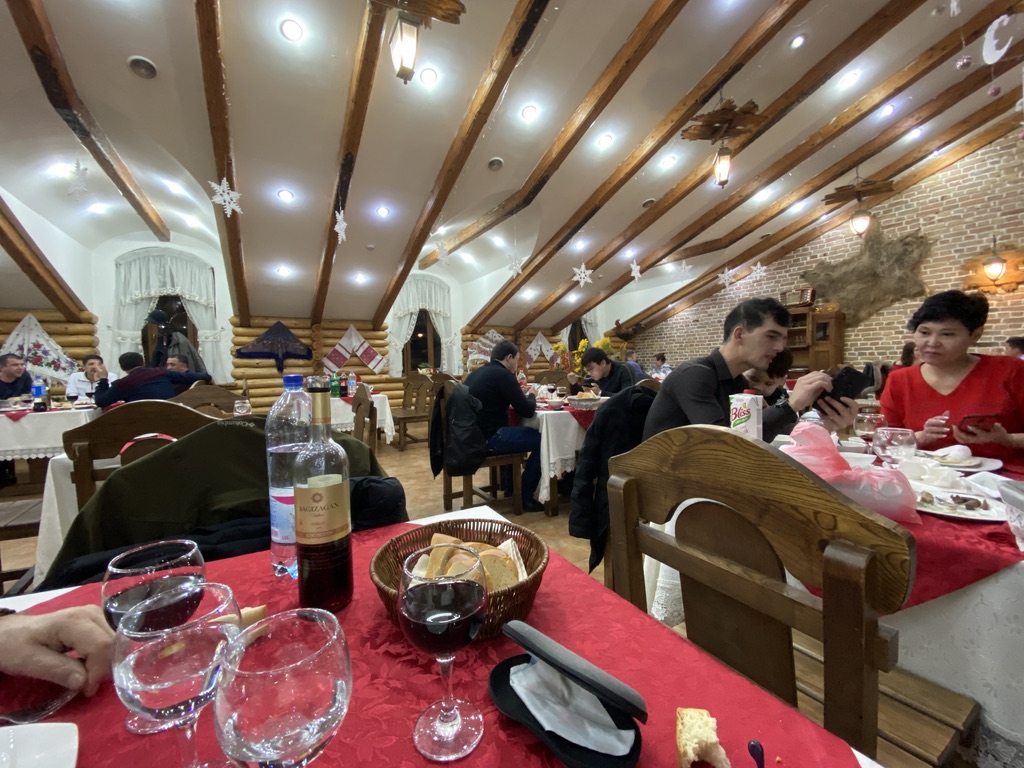
The menu was pages long, with some very strange English translations for a few of the dishes. It took us some time to decide and to figure out what each dish might be… And again the choice for wine was red or white… We opted for red which turned out to be an Uzbeki wine… not too great, but not terrible. We selected three dishes – one appetizer and two mains.. but none were available. We went to another round of decisions but those were not available either. This was beginning to feel like our travels in the old Soviet Union many years ago, when they gave us menus that were about 10 pages long, but they would always say “Beef Stroganoff”.. and we would say, “ no, maybe something different” until we realized they only had beef stroganoff. Anyway, we ordered a dish called “assorted marinated”… which we assumed correctly was assorted marinated vegetables (like we had seen in the markets). But when it arrived, it was just pickles and pickled tomatoes.. We also ordered one chicken dish and one lamb dish.. Food was OK.. maybe on a scale of 1 to 10 I’d give it a 6. When it came to dessert, there was a list of about 15 choices but all they had was vanilla ice cream.
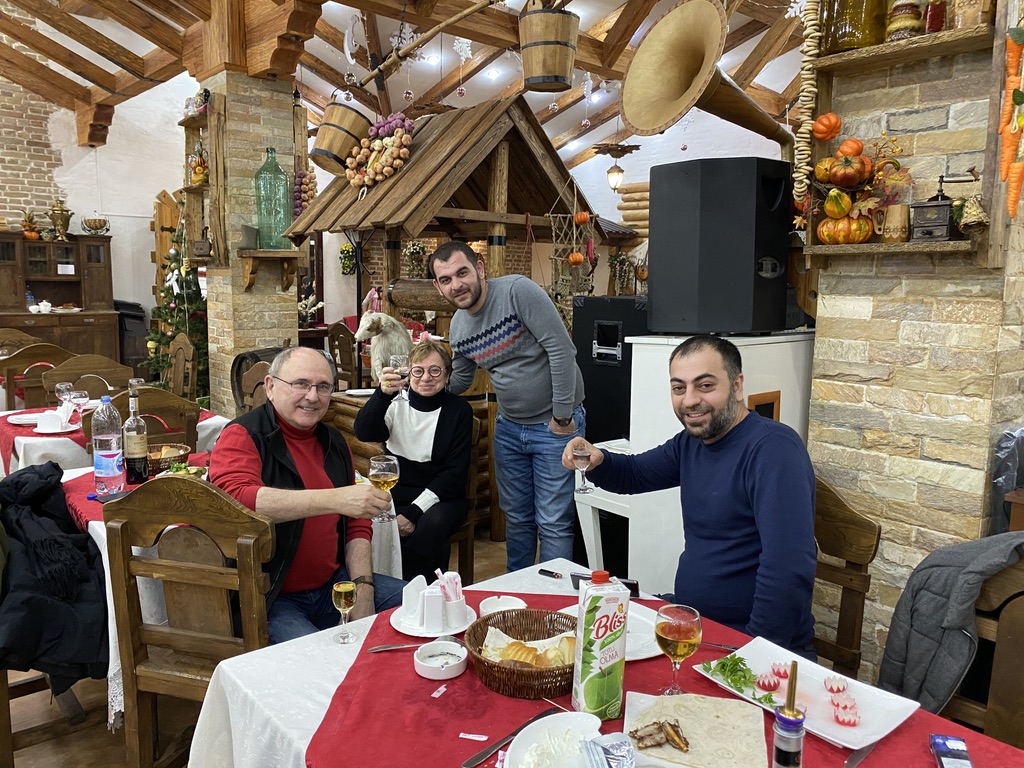
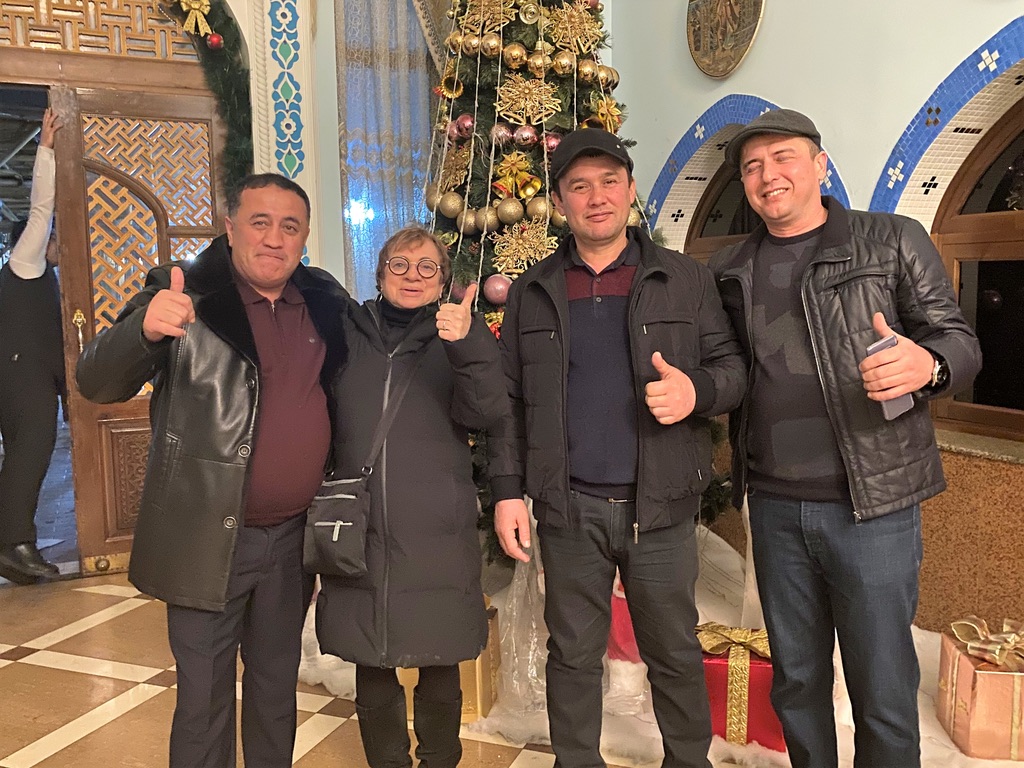
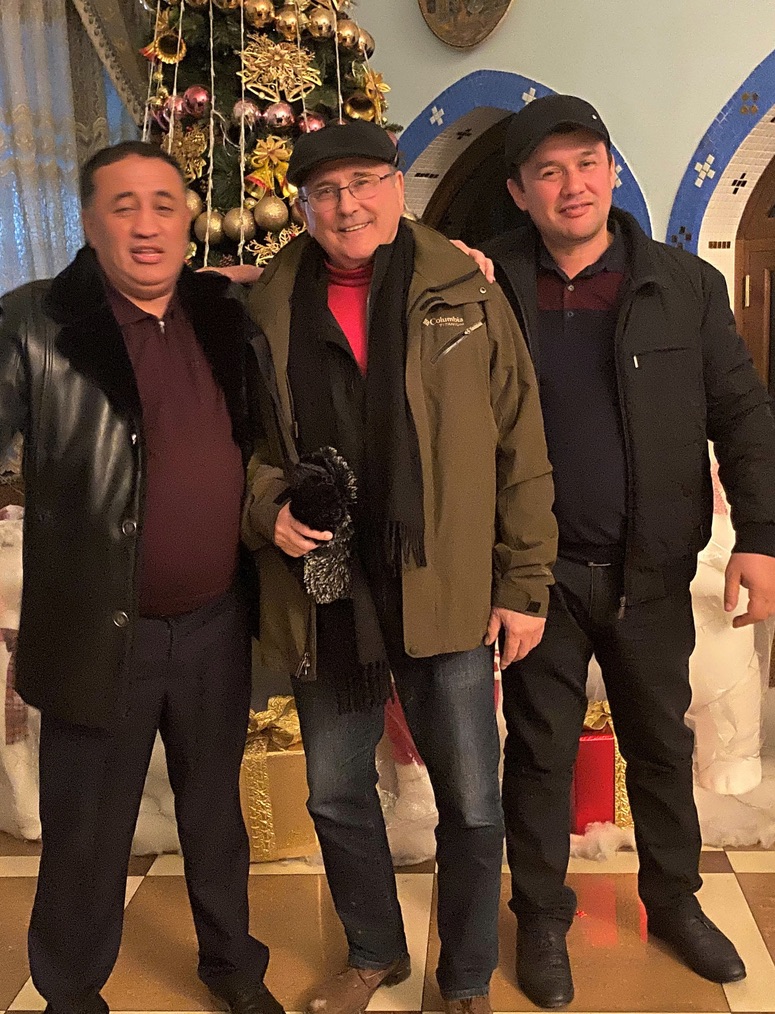
About midway through our meal, the four guys (in their 40s) at the adjacent table leaned over and asked where we were from (in very basic, hesitant English); turns out (we think) that these are all four cousins, with three living in Samarkand and one visiting from Tashkent. They were pretty high – having downed a whole bottle of vodka along with beers. Anyway, they wanted to talk – a lot. One of them had lived in the states for two years having attended some kind of college in Clearwater Florida and also spent time in St. Petersburg. He loved Florida. He explained (many times) that he came back to Uzbekistan in 2005 and has not had the opportunity to speak English. He studied International Business and he currently works as an exporter of peppers (I think). Frankly, his cousin’s English was better than his. They are all Turks living in Uzbekistan (not sure how long they’ve been in Uzbekistan, but they clearly identify with being Turkish). They were excited to learn we had traveled to Turkey three times and that we had been to Antalya, although I believe their families were from Istanbul.
We took pictures and selfies and then they headed out (we sort of waited for them to leave, fearful they might offer to drive us to our hotel, but they were totally smashed). We left a few minutes later having the restaurant get us a cab.
Back in the hotel safe and sound. Looking forward to another exciting day tomorrow.
Fern
The Rain Gods have arrived in Samarkand 1/2/20
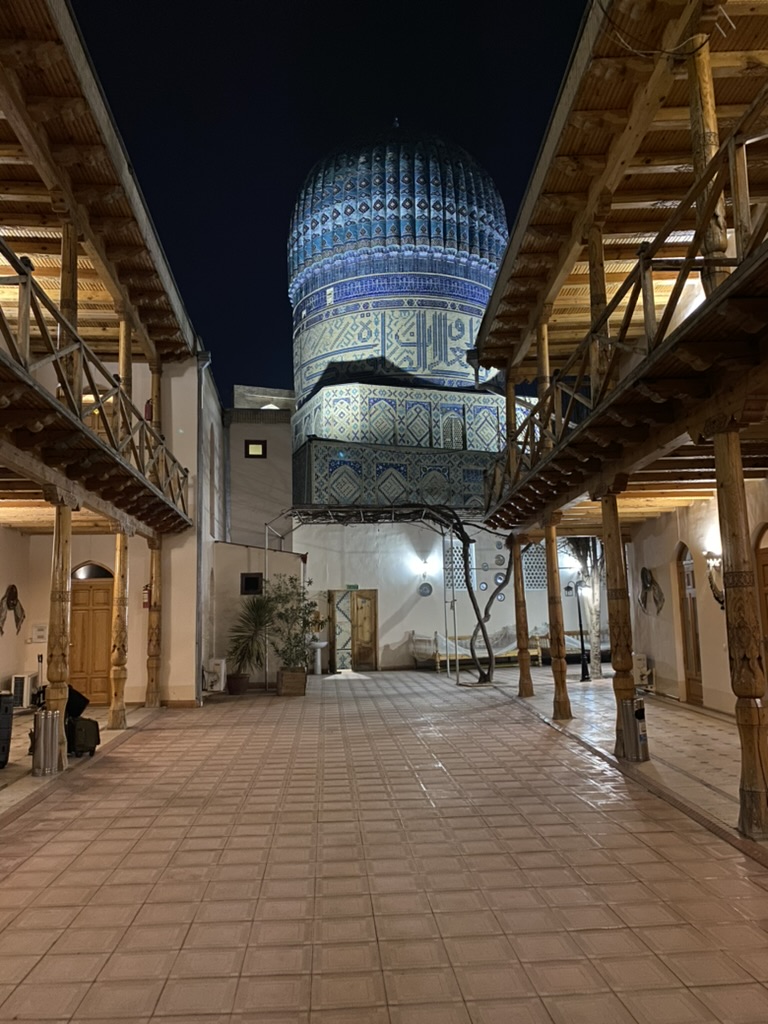
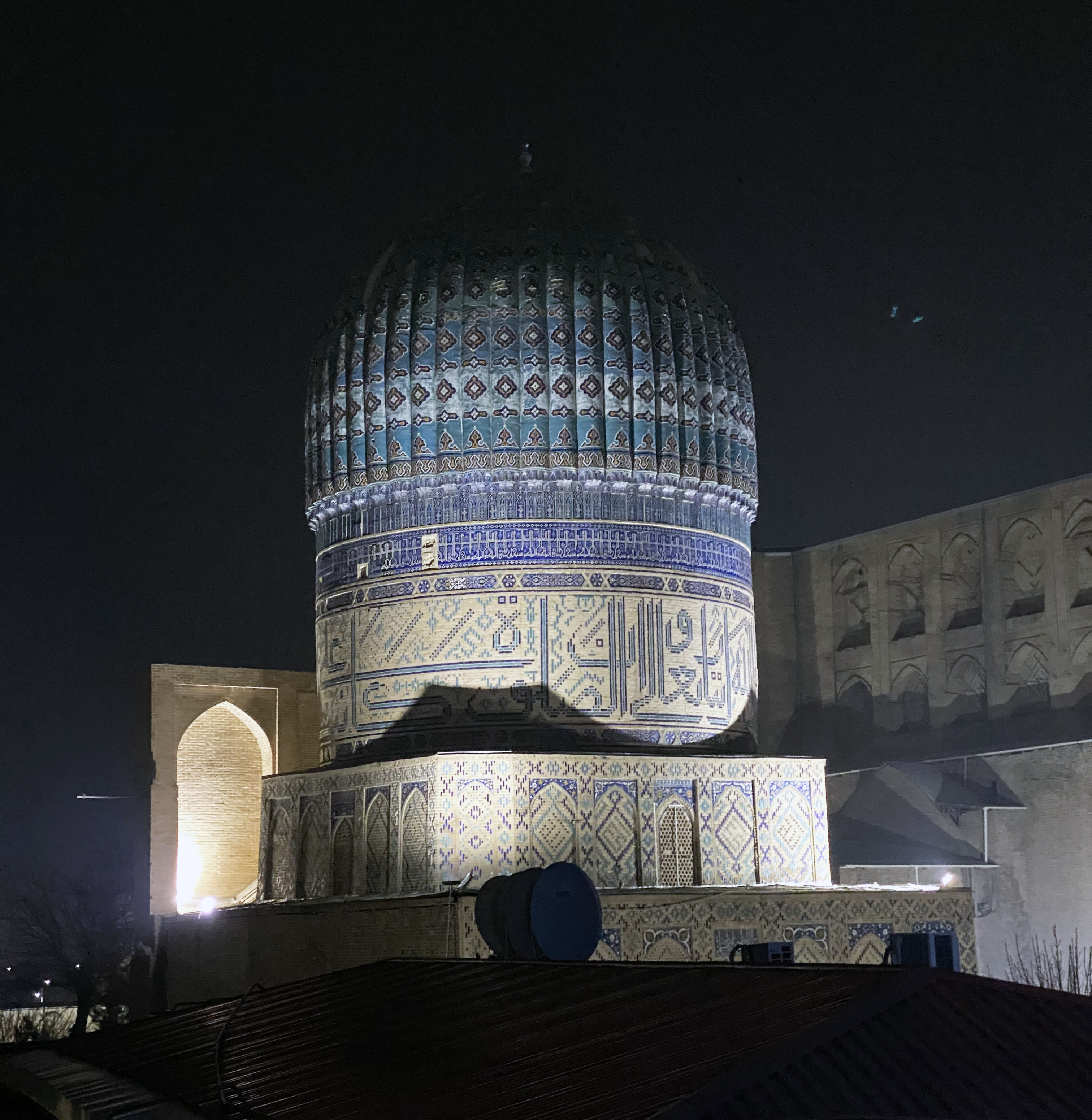
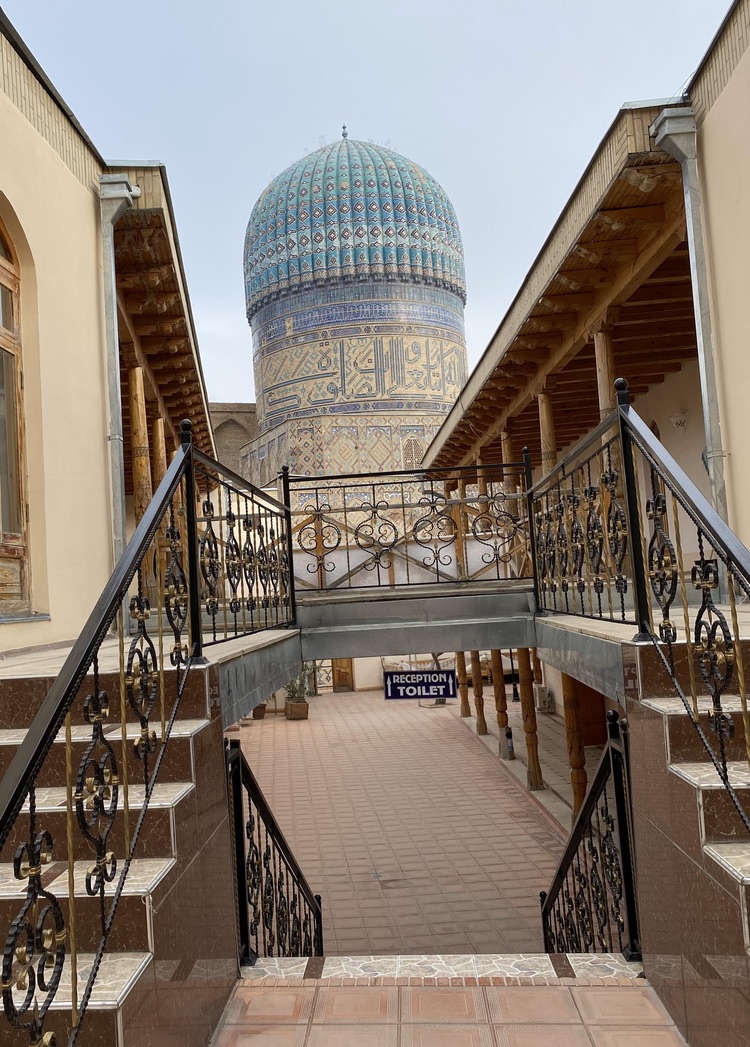
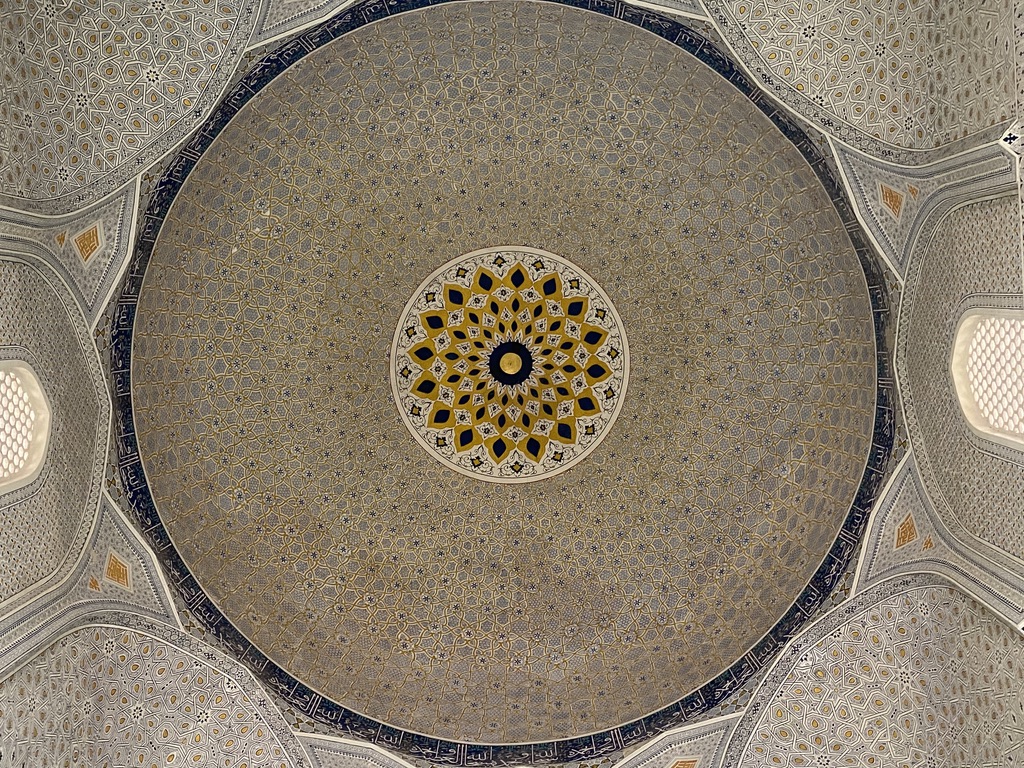
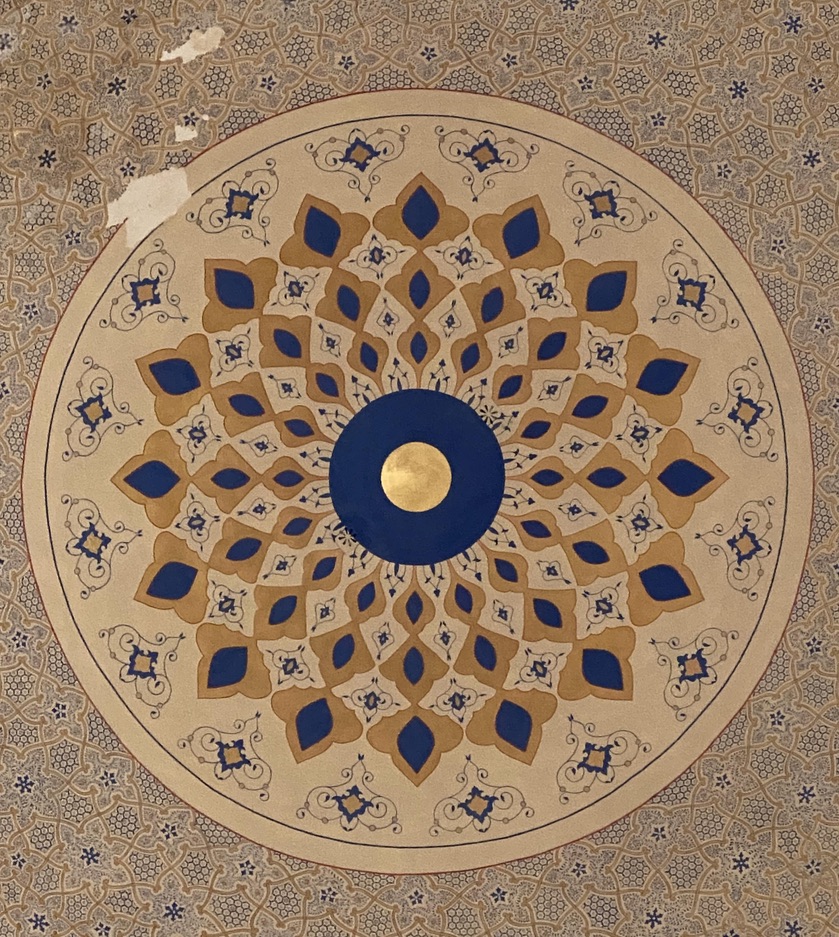
Began our second day of 2020 in Samarkand in a different room from last night; we had requested a second floor room (top floor) when we made the reservations but somehow – probably because we got here so late – we were given a first floor room.. Anyway, we are now in a much larger corner room (there are only about 15 or 20 rooms in this little hotel that is located about 50 feet from the majestic Bibi Khanym Mosque, which in the 15th Century was one of the largest and most magnificent mosques in the Islamic world. It also has an interesting, but long story… In a nutshell, the original construction was rushed and pushed the technology of the time (14th Century)… and when the “client” (Timur — typical of interfering clients) returned from his travels to India, he was disappointed and made many changes to the plans which really stretched the construction capacity of the time… Bricks began to fall from the dome and there were many repairs instituted. Then in the 16th Century, Abdulla Khan stopped all repairs on the building and it began to deteriorate quickly — not helped by earthquakes, weather, and the theft of materials by locals trying to construct their own houses. By the mid-20th century it was a ruin… but major parts were restored during the Soviet period. Interesting since this is a contradiction to Soviet atheism and a smart form of cooptation (or dominating with a velvet glove).

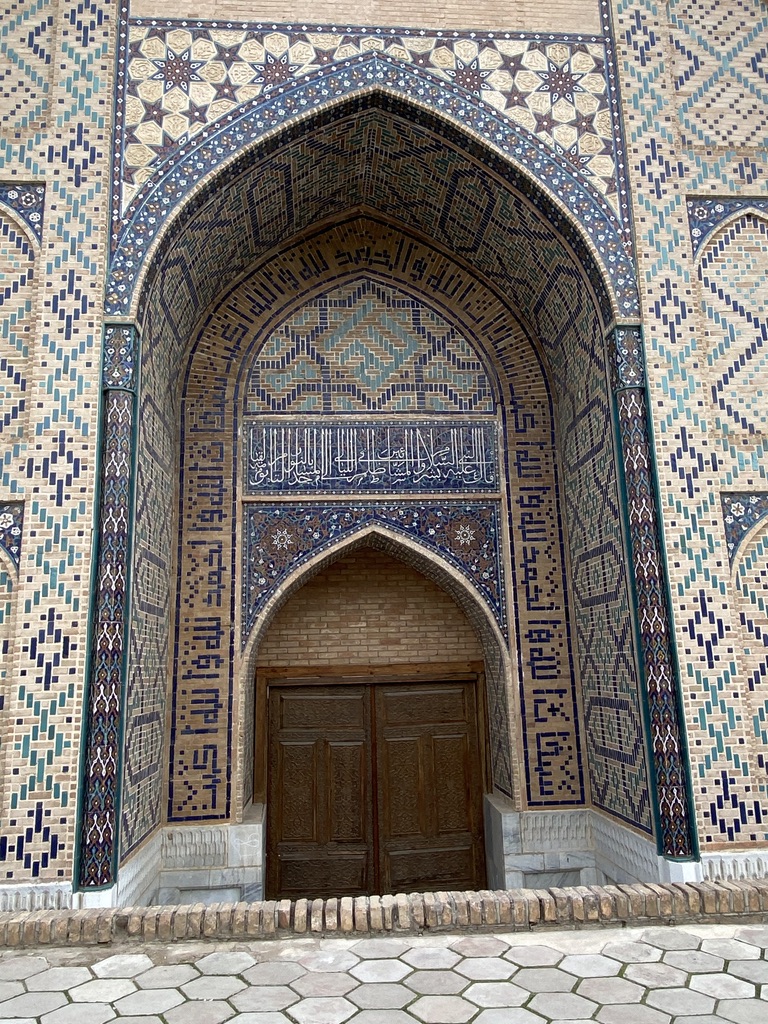
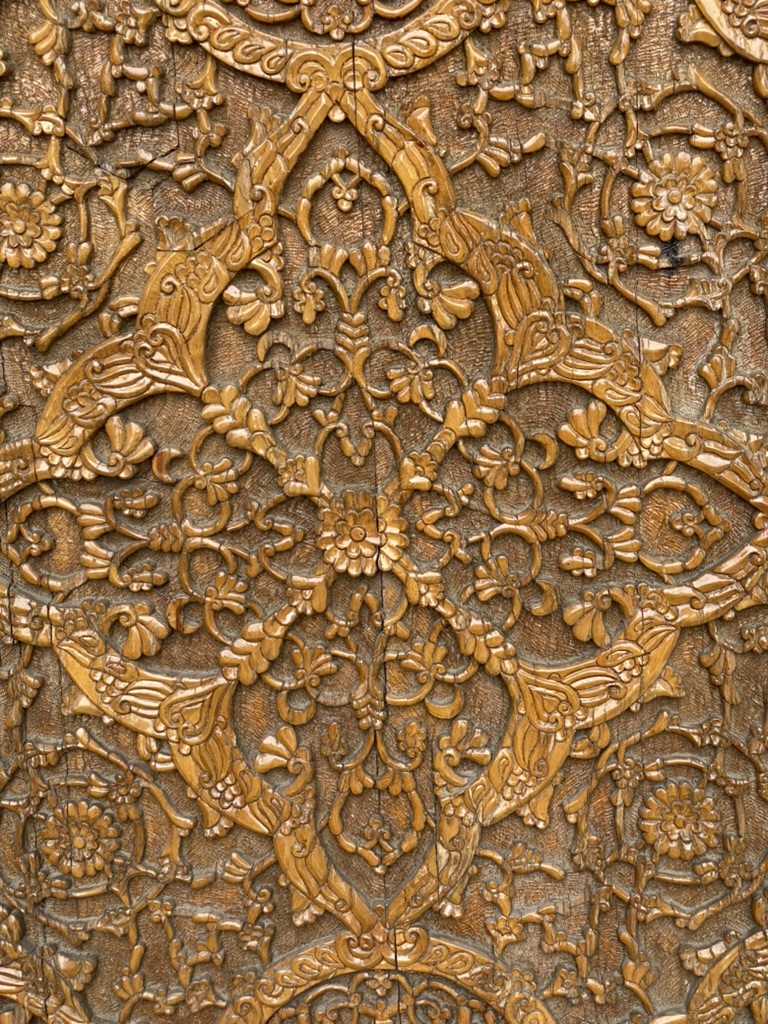
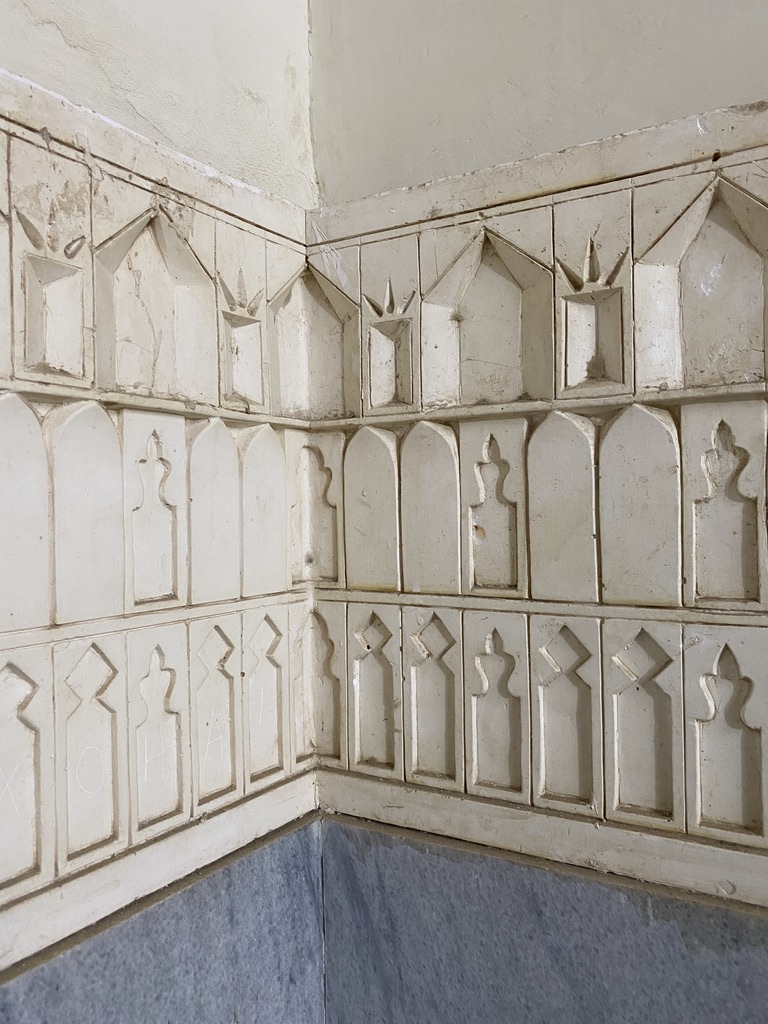
We strolled each of the buildings and photographed a lot… even as the rain set in…
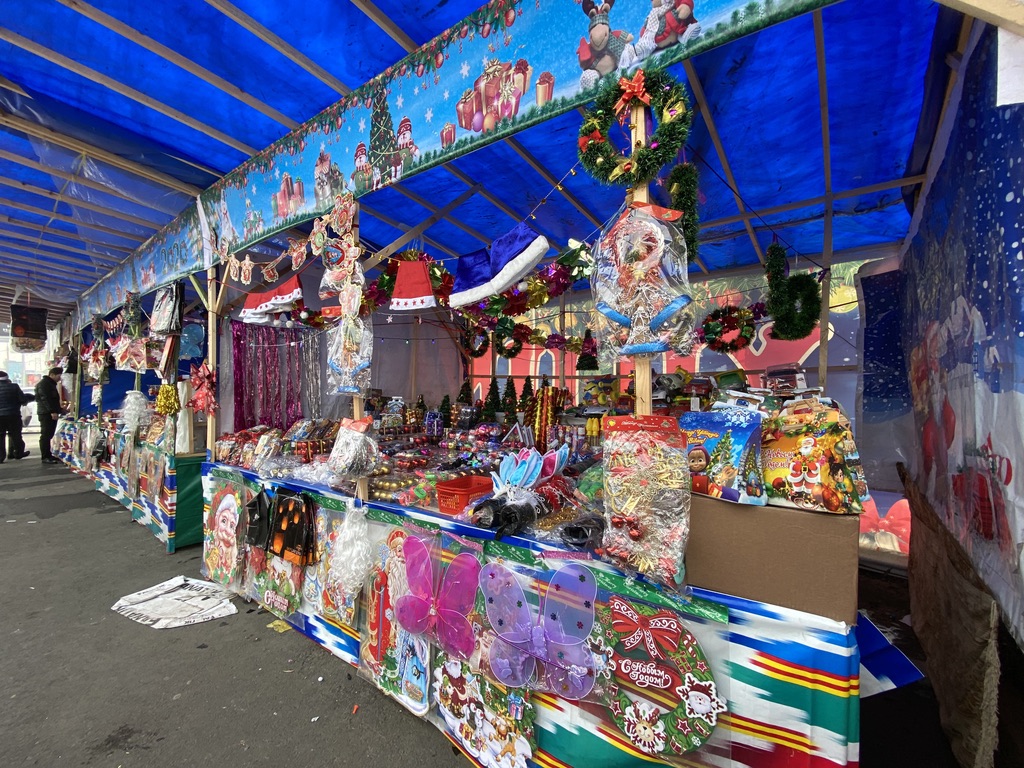
And then we strolled to the Registan… which was the heart of Samarkand in ancient times during the Timurid Dynasty. In Persian, Registan means “sandy place” or “desert.” This was to be a huge public square… proclamations would be read here.. and I guess it was also the place for public executions. It’s framed by three Madrasahs (Islamic schools). Because we realized we’d probably spend a lot of time exploring the Registan, we decided to find a place for lunch before venturing onto the grounds. We spotted several restaurants (which are usually identifiable by their wooden placards outside that have faded pictures of the food they serve). But alas most were closed. Maybe they are only dinner places or perhaps it is still holiday time. New Years is very very big here, since they don’t celebrate Christmas… although they have a bit of Christmas tied into the New Years as Santa-type costumes appear everywhere.
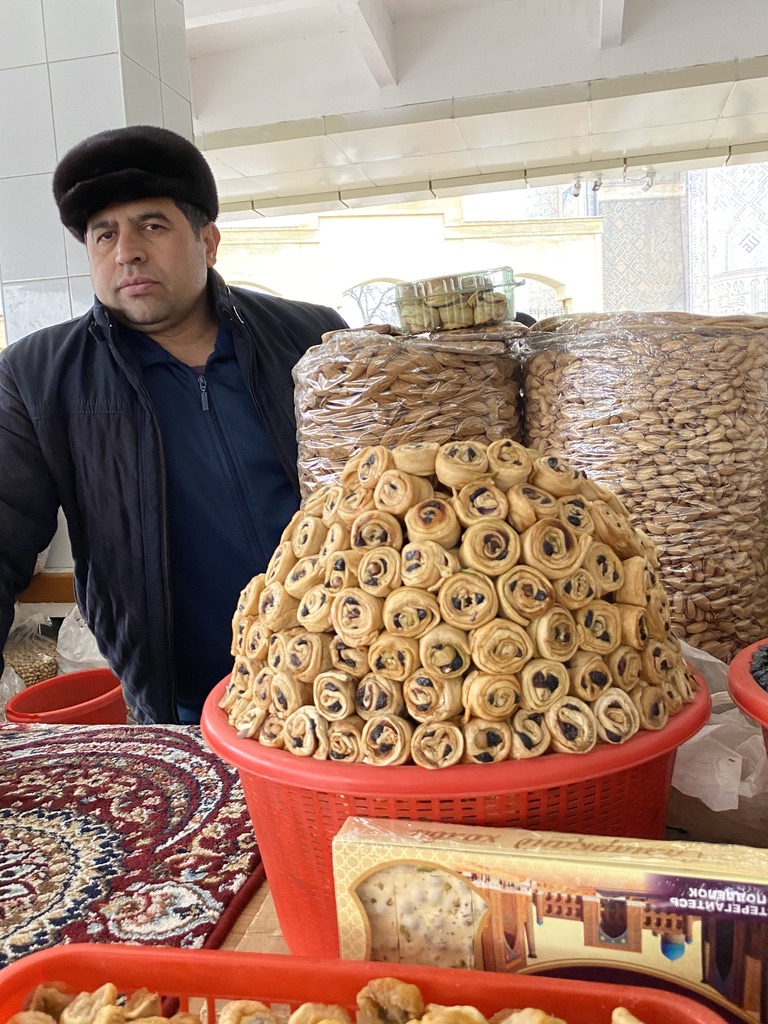

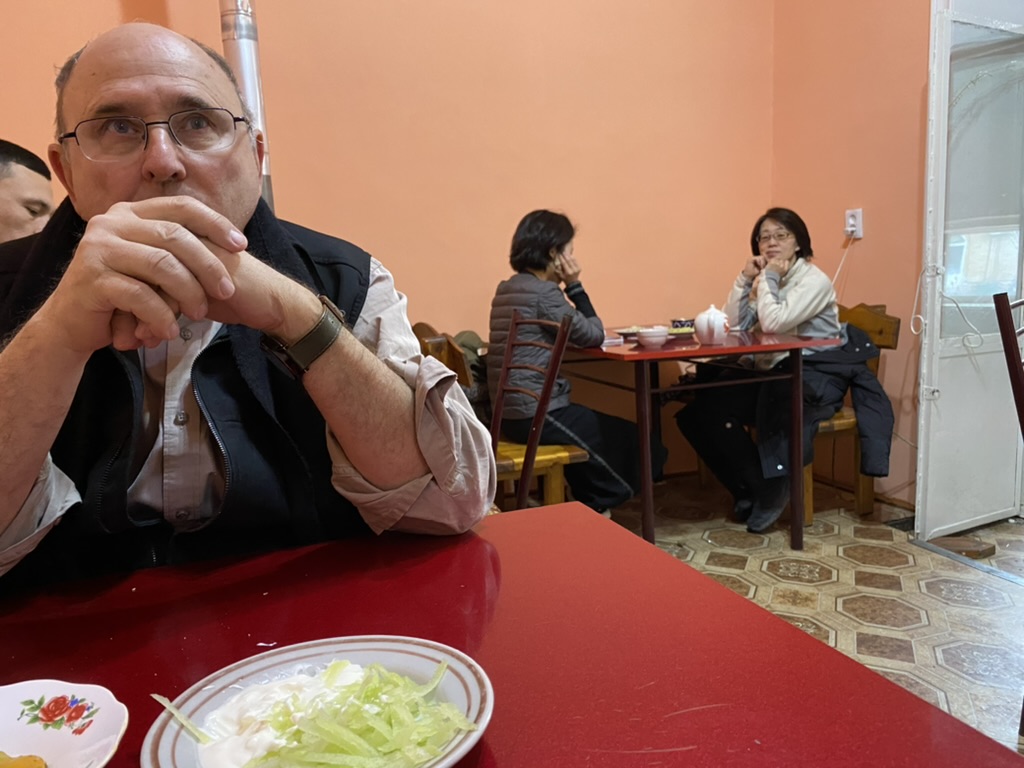
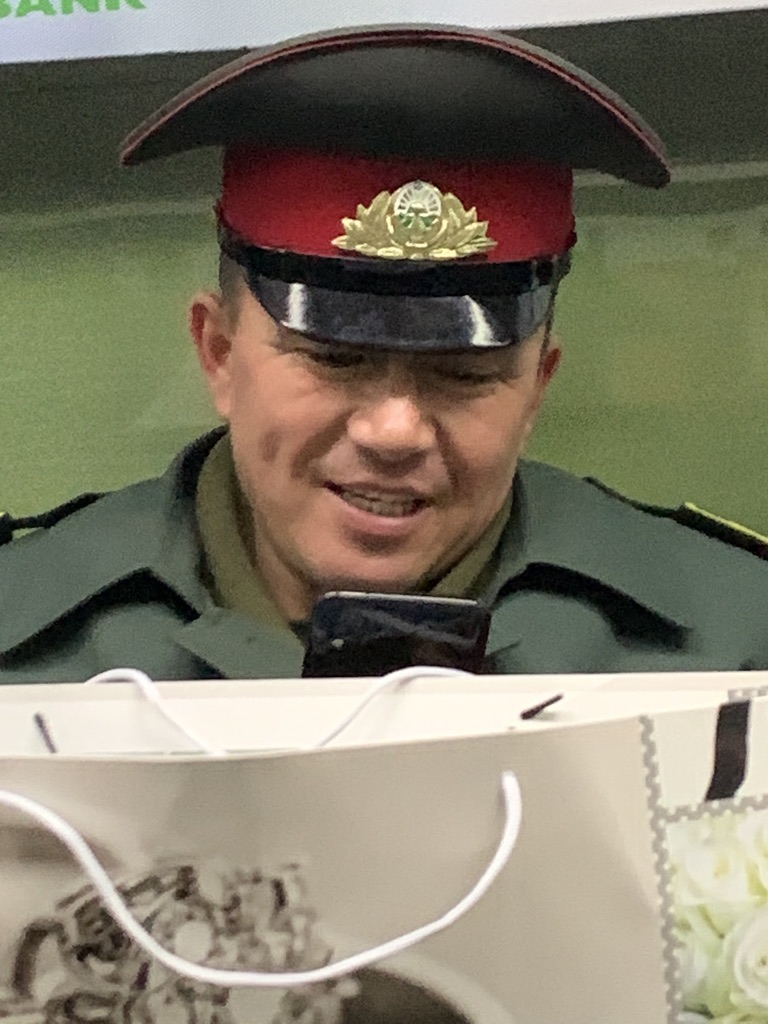
Anyway, we finally stumbled upon a little place that had plov (that rice dish) and salad and soup. We had one plov to share and one soup to share. Very greasy… and I think the meat in the soup was horse meat. Anyway, we ate (I’m really grateful that they have great local bread everywhere… I can live on the bread). Again the plov was cooked outside downstairs in huge cauldrons. The seating was upstairs.. for about 30 people… always with plastic sheets on the table to protect the tablecloth which seems to be plastic as well. Many of the tables were occupied by cops, so I think that’s a sign that it was good local food (or maybe a sign that no other restaurant was open today).
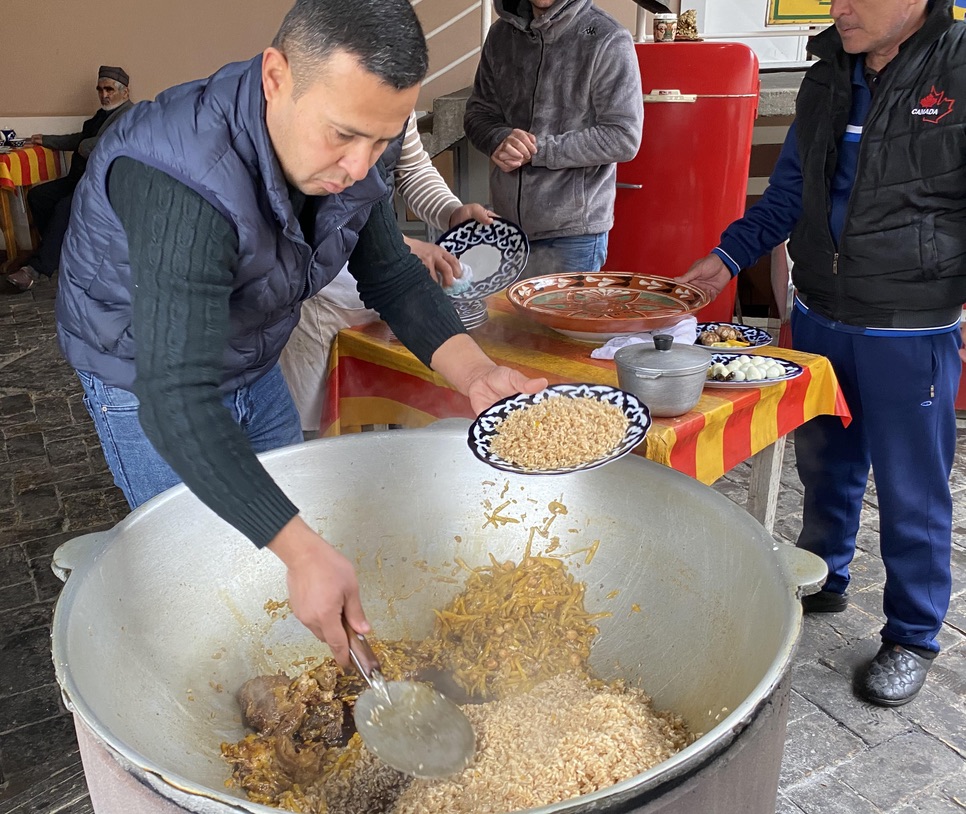

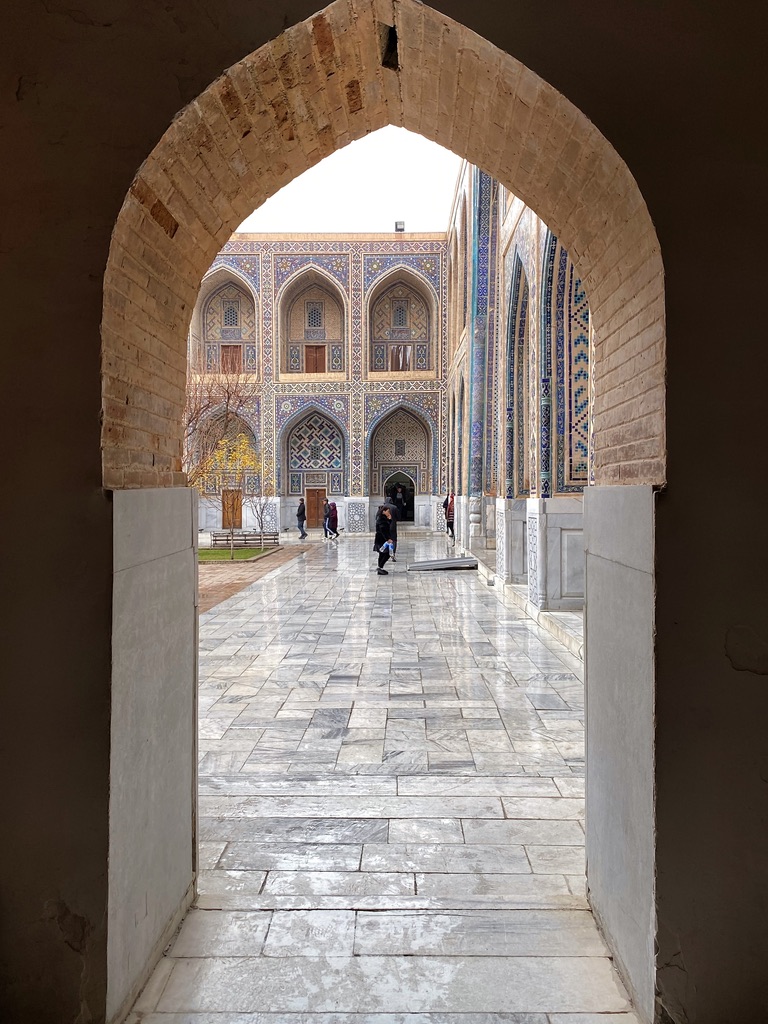
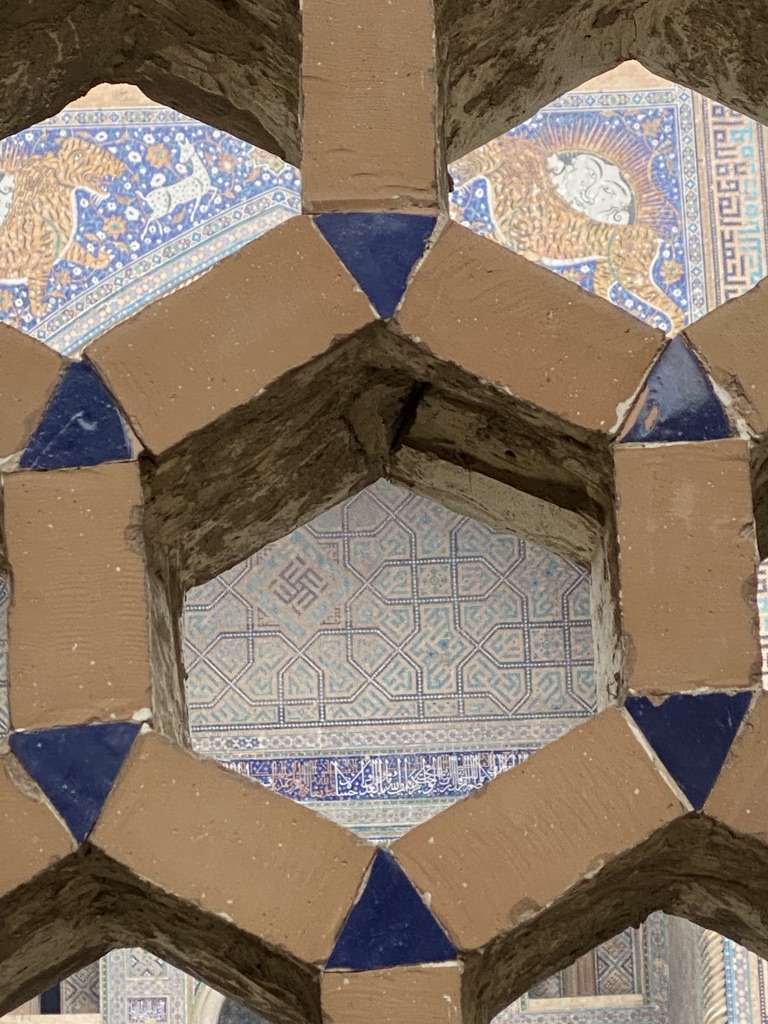

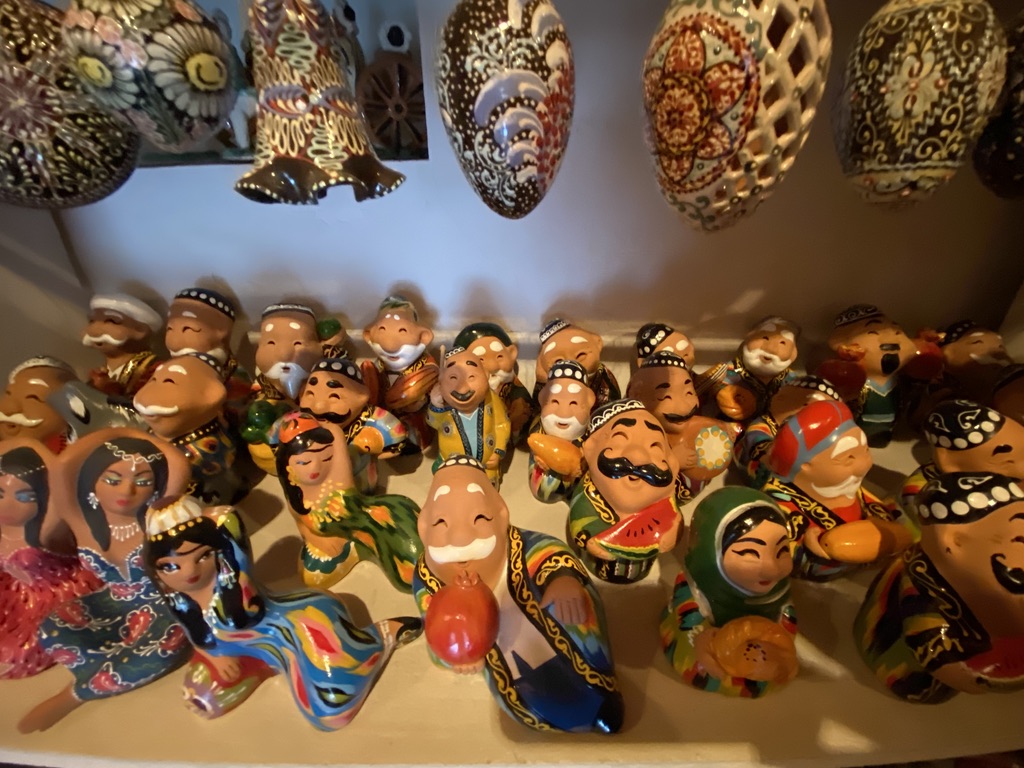
Then we walked to the Registan which is probably unbelievably fantastic when it’s not raining and later really poring. But we were troupers and strolled and photographed away… By the time we emerged from inside one of the main buildings it was really really raining hard… Got back to the hotel with enough time to download photos and then headed out for dinner at a place called Platan. But not before I had a little mishap — I slipped on the last two steps of the exterior of our little hotel, in the poring rain… The steps are a kind of marble and thus very slippery… I landed on my butt… but somehow got my ankle twisted a bit.. Walked to the taxi in the rain and got to the restaurant, managing to leave my favorite Marimekko umbrella inside the taxi – in an effort to carefully emerge from the taxi onto the rainy street by the restaurant.
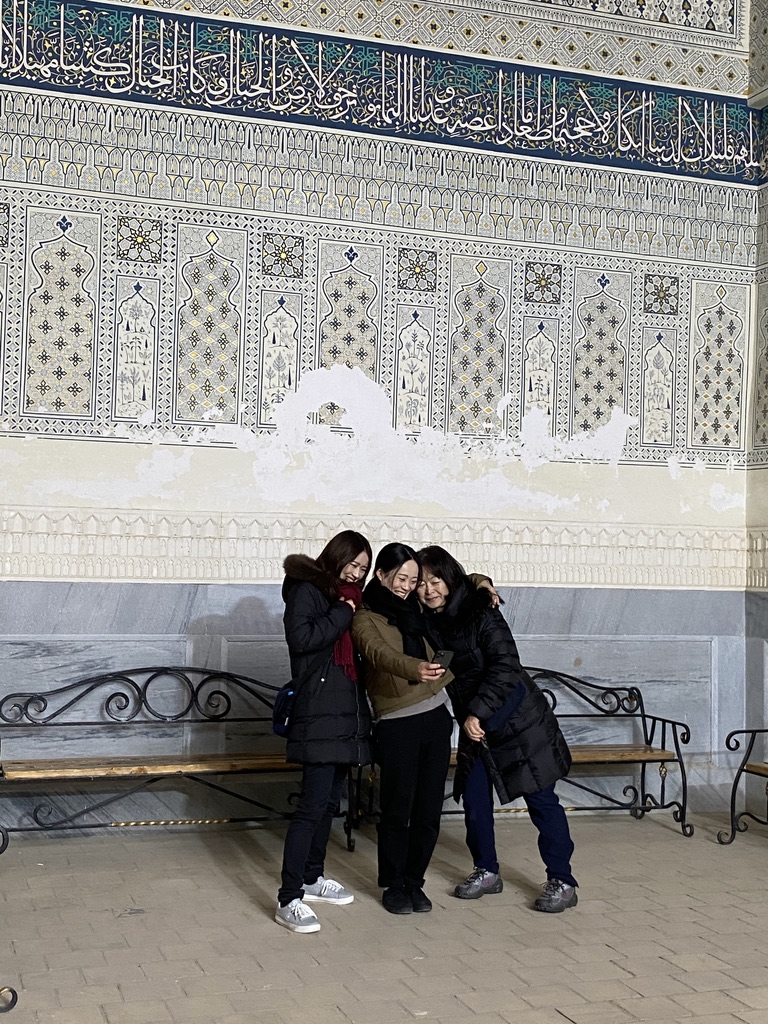
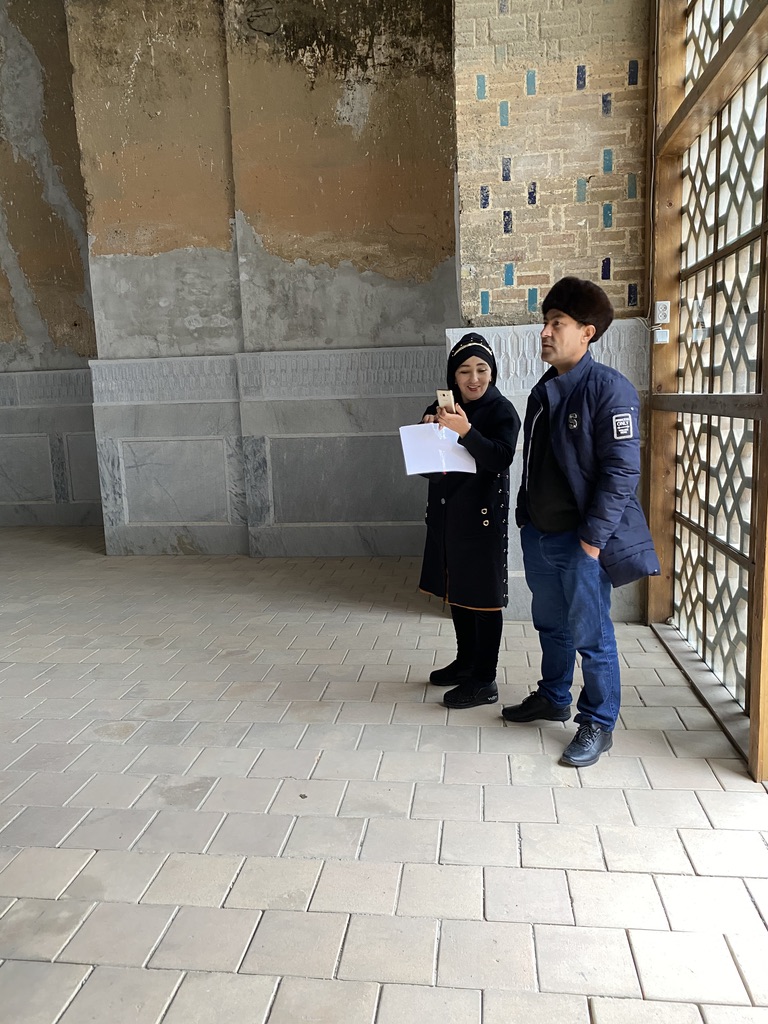
First a little about Platan and then my ankle. Platan is considered the best restaurant in Samarkand (??) It’s a 10-minute taxi ride from our hotel, so it’s located in a much newer part of the city. The menu is extensive and a bit eclectic although it specializes in Uzbeki food. We ordered chuchvara which was a little like Uzbeki mantu (sort of like the Turkish manti, although I prefer the Turkish version) which was good and then we ordered two different soups (the menu had about a dozen different soups): borscht and another soup whose name I cannot recall, but it was a tomato base with vegetables and a dollop of sour cream. Although I’m not a borscht lover, I wound up with the borscht since the other soup had a lot of ham in it. Anyway, the borscht was quite good. Then we shared what was called “rack of lamb” but was really simply three lamb chops with some vegetables. We hesitated to order the lamb because we tried it a few times since we’ve been here and no matter how hard we tried to explain that we like it rare (“not cooked very much,” “red on the inside,” “fast cooking”) it always appeared on our plate very well done. I tried to translate “cooked rare” into Russian and showed the words to the waiter but it didn’t make any sense to him. He brought someone over who said that they broil the lamb and then bake it so it cannot be cooked less. But then after a conversation, the decision was made to just broil the lamb chops and not bake them after that.. so “half-cooked” according to them. Success, sort of… definitely edible but I’d say they were more medium than rare! Despite a very extensive menu of desserts, Platan didn’t have any desserts tonight. From what we could understand, they are still gearing up to normal following the New Years holiday. Our wine choices were limited to “red” or “white” if we wanted glasses rather than a whole bottle.
Despite the upscale, old-world ambiance the meal was incredibly cheap and we almost thought they made a mistake. We taxied back to Bibikhanum, although neither taxis nor cars can reach the very front of the hotel. Instead they wind up about ¾ of a block away… but the walk, especially at night, is a bit treacherous as you walk on a ledge that is about 3’ wide and has a 7 foot drop on the edge with no rail. Didn’t think too much about this yesterday, but today in the rain and with my new injury, it seemed sort of death defying.
OK.. my ankle.. I think it’s either just a bruise of a sprain. It’s a bit swollen but I’m fairly certain nothing is broken. Naturally, it’s the same ankle and foot I’ve injured before, including once in Paris and once in Berlin where I tore the fifth metatarsal (which put me into one of those annoying “boots”). The hotel gave me a little bowl of ice.. which I put into a Ziploc bag that I had for liquids, and that is now tied to my foot and I took a pain killer (although I’m not really in pain). Actually the pain killer is an anti-inflammatory so I hope it undoes the swelling. I’ll see how I feel tomorrow and that will determine what activities we can do on our second day in Samarkand. And, of course the rain will also factor into our plans. Frankly, it doesn’t look good with regard to the rain ending. Prediction is for rain for the next two days.
Before closing, some responses to some questions that were asked… While Uzbekistan is a Muslim country (87%), it’s simultaneously a very secular country. So, interestingly there aren’t the usual calls to prayer like you hear in Turkey or Tunisia and so many other countries around the world. And in some ways, all of these incredible mosques are a bit of a backdrop and works of art rather than functioning religious institutions or buildings. And interestingly, there are fewer women with head scarves here in Samarkand than in either Tashkent or Istanbul. And a little bit about Samarkand: It’s in the central east part of the country and is one of the oldest cities of Central Asia. It was captured by Alexander the Great in the 4th Century BC, and later ruled by Turks, Arabs, the Samanids of Iran, and other Turkic peoples and then in the 13th Century it was annexed by the Kwarezm-Shah Dynasty and totally destroyed by Genghis Khan in 1220. Then it revolted against the Mongol rulers and it became the capital of the Empire of Timur, who made it the most important center of Central Asia. The city was conquered by the Uzbeks and became part of Bukhara, if I understand what I read… But, by the 18th Century the area declined considerably until it became a provincial capital of the Russian Empire when the economy recovered. For about a decade from the mid 1920s to the mid 1930s Samarkand was the capital of what was then called the Uzbek Soviet Socialist Republic. Today, there’s an old medieval city and a new section that was built in the 19th Century. Complicated..and probably a lot of really interesting stories in there.
Take care.
Walk carefully…
All the best –
Fern
“Yangi yilingiz bilan” from Tashkent (on our last day here)… or… Happy New Year from Tashkent… and arrival in Samarkand (the drive).
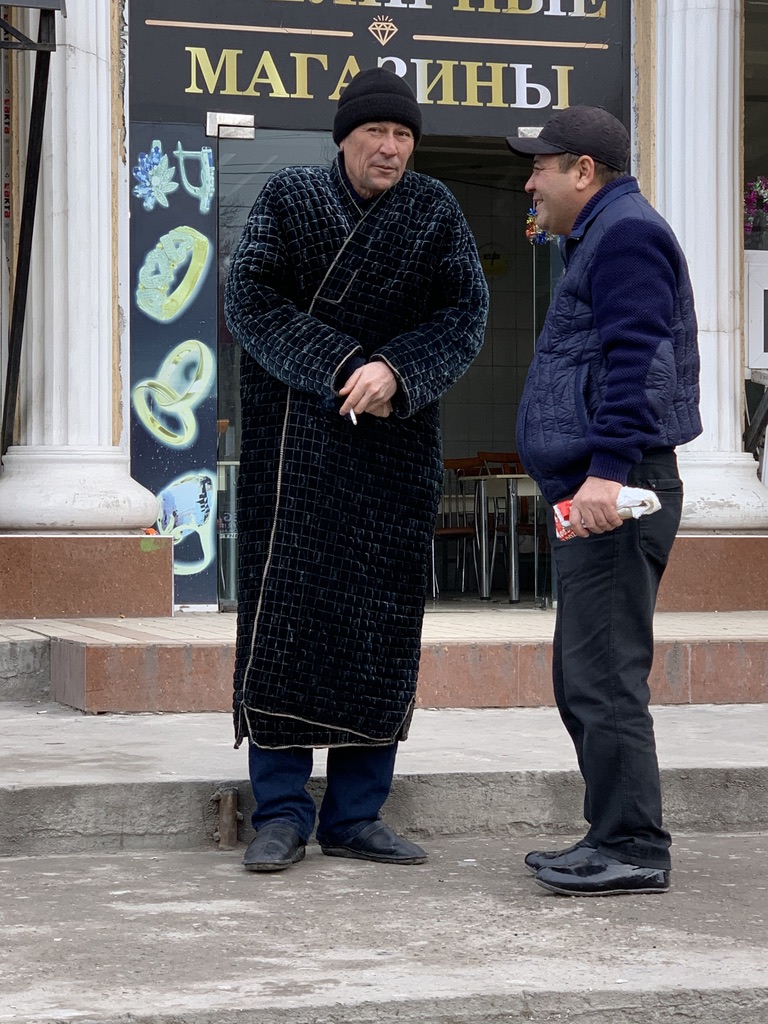
We began our last day in Tashkent (we head to Samarkand tomorrow morning–January 1, 2020) and the last day of 2019 with a good breakfast and our usual walk to the Metro station (which is about a half-mile from the hotel). Along the way we stopped, ever so briefly, at the Monument at Mustaqillik Maydoni. After Uzbekistan’s independence in Fall 1991, the former Lenin Square was renamed Mustaquillik Maydoni, which means “Independence Square” in English. The monument to Lenin was dismantled, and a new sculpture was erected – a globe and later a sculpture of a woman with a baby in her arms (motherland) was constructed and set at the base of the globe. This is also a memorial for the close-to-400,000 Uzbeki soldiers who died in World War II. We’ve passws by this square every day as we headws to the Metro. There is an arch at the entry to the square called the Arch of Humanism (Arch of Ezgulik). The “square” is more of a park and is surrounded by many official buildings, most of which look like typical Soviet formal institutional structures.
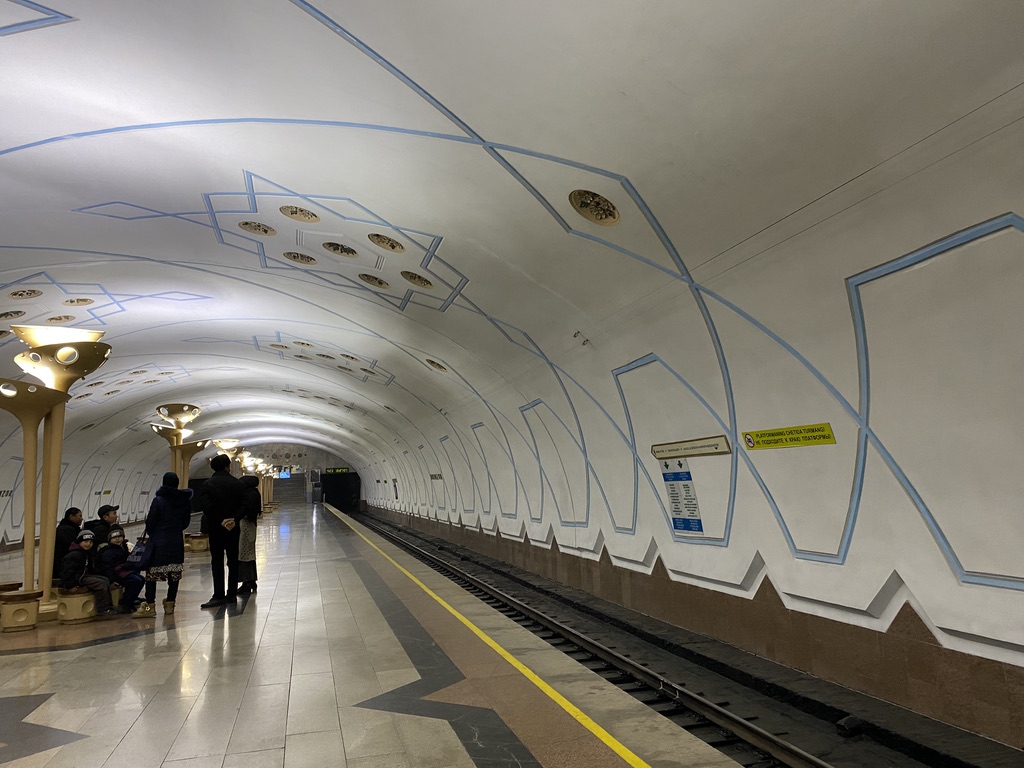
On this day, we decided to spend several hours taking the metro to random stations and getting out to walk around different neighborhoods. We also stumbled on several amazing subway stations along the way, so we often got out of the train to photograph the stations and then get back onto the train. Our journey took us to the far end (last stops) of several of the metro lines. The weather was gray which didn’t help our assessment of these more distant neighborhoods. But it did look a bit like what Queens (NY) might have looked like in the 1950s. There are many buildings in unfinished states and sometimes it’s not clear if the building is on its way up or on its way down.

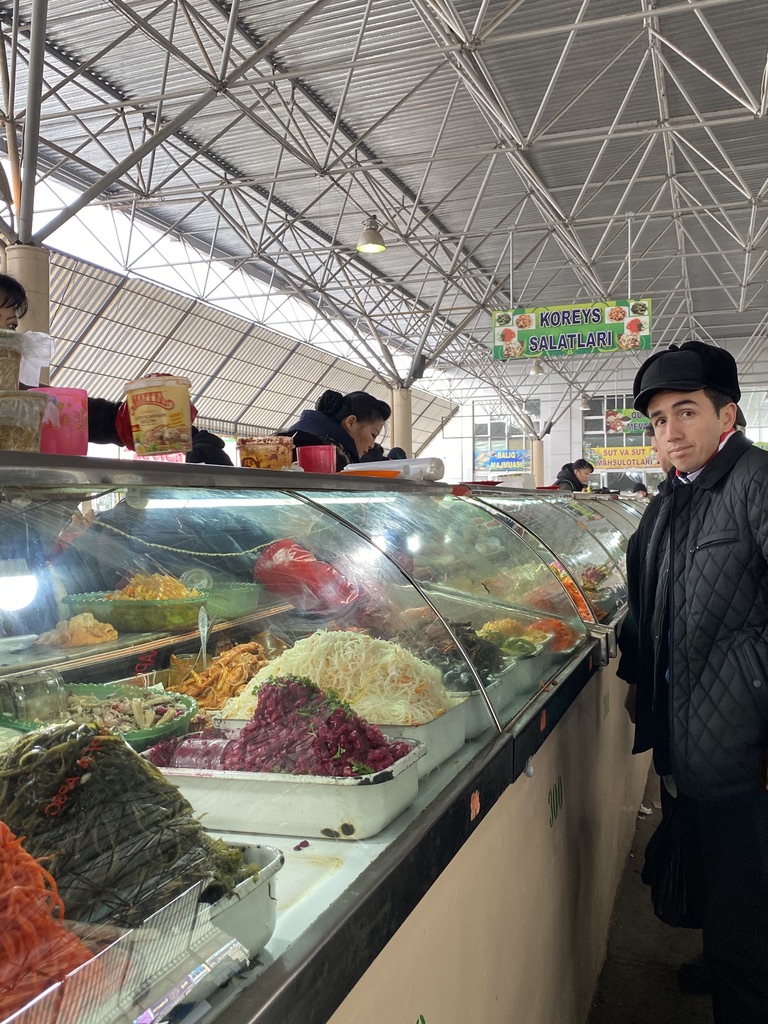
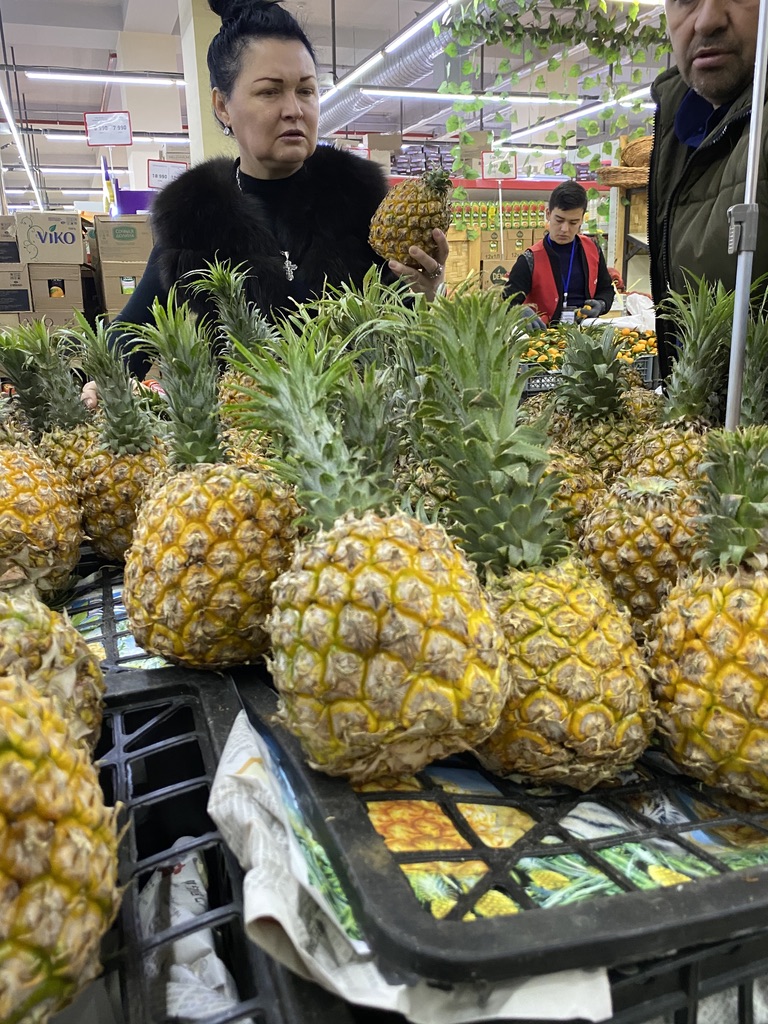
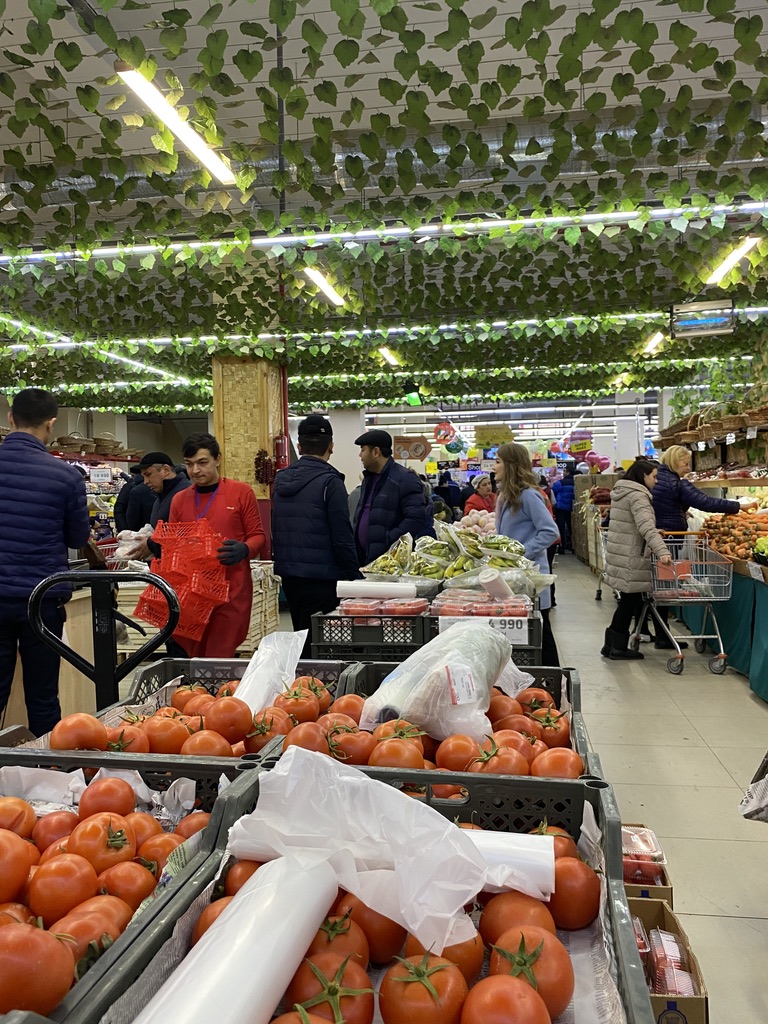
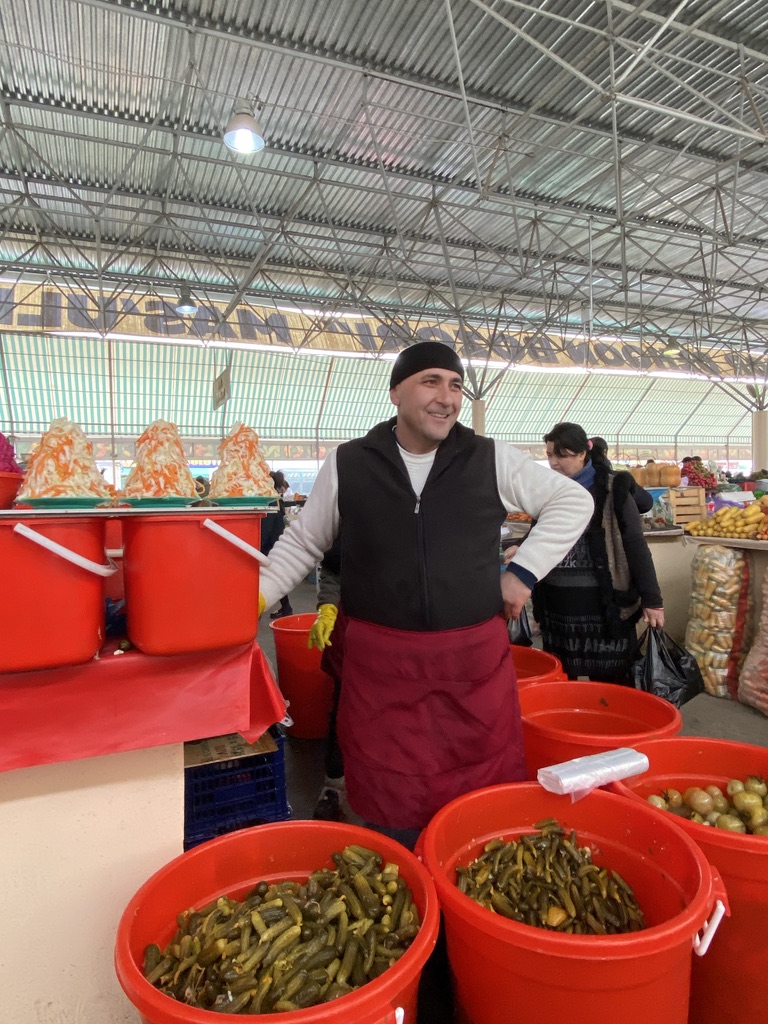
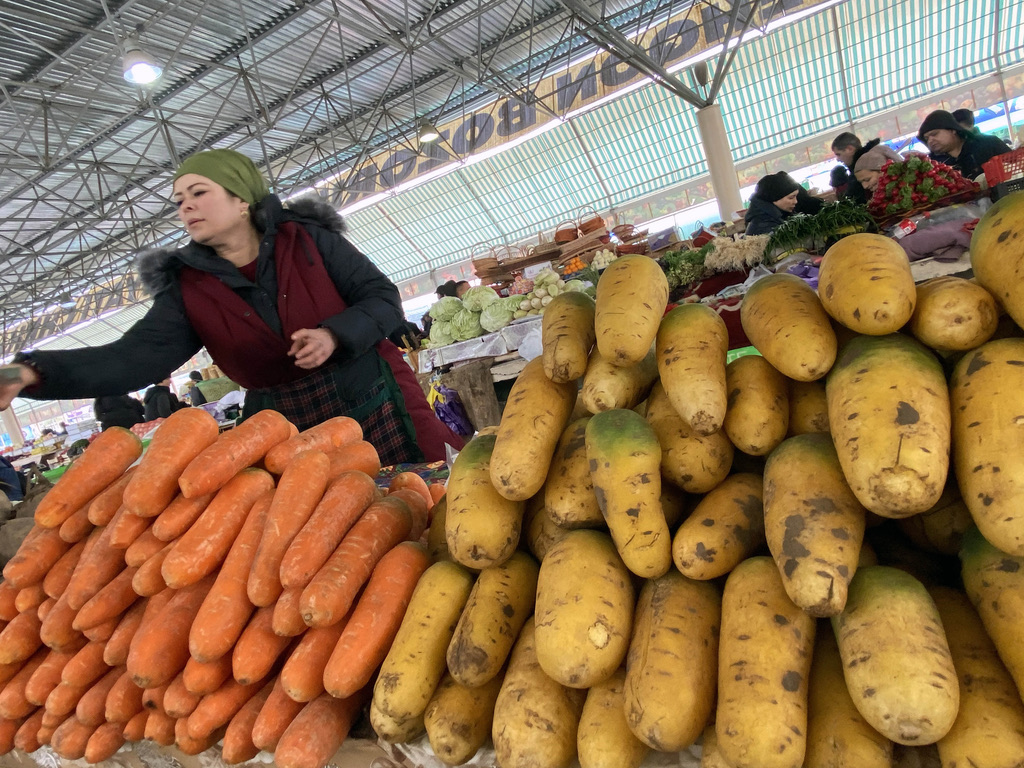
One station brought us to a very vibrant supermarket (which we checked out) and a sort of mini Chorsu Bazaar — selling every possible kind of food. The area was bustling. One thing, I can say confidently, is that food seems very available – everything including pineapples and bananas (which come from Ecuador). There’s an abundance of meats, and cheeses, and vegetables and fruits. There’s also typical packaged goods, including Oreo cookies! The only American fast food that we’ve seen is KFC (which seems to be located in many spots in Tashkent).

Eventually we made our way to the Tashkent TV Tower which is about 1,200 feet (375 meters) tall and they say is the 11th tallest tower in the world — but not before stopping at Plov Center, a restaurant that only has plov, salad, and bread. There are a few different plov dishes at the center, but naturally we got there toward the end of the lunch hour and so our choices were limited. The one waiter who spoke some English said the one that was remaining was “the best and often served at weddings” (good salesman). Plov is a little like rice pilaf… a rice dish with some vegetables and also some fruits (apricots in ours) and different meat. The waiter asked which meats and we said lamb; he asked if we wanted horse meat too, saying it was tasty, but we declined. At the Plov Center there are tables and chairs for about 850 people in one room, with about 700 seated on the main floor and the remainder on a balcony that wraps the room. The ceiling height is about 30’. They cook the plov in giant cauldrons just outside the restaurant and if you can speak Russian you can chat about what you want in your plov (I think).
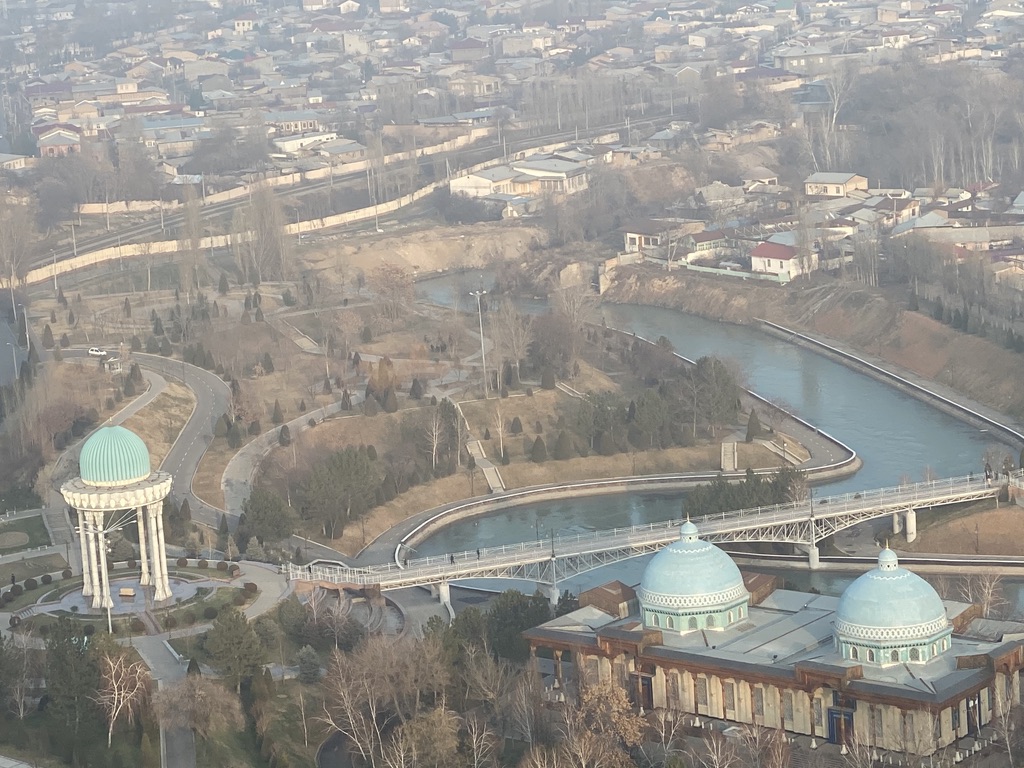
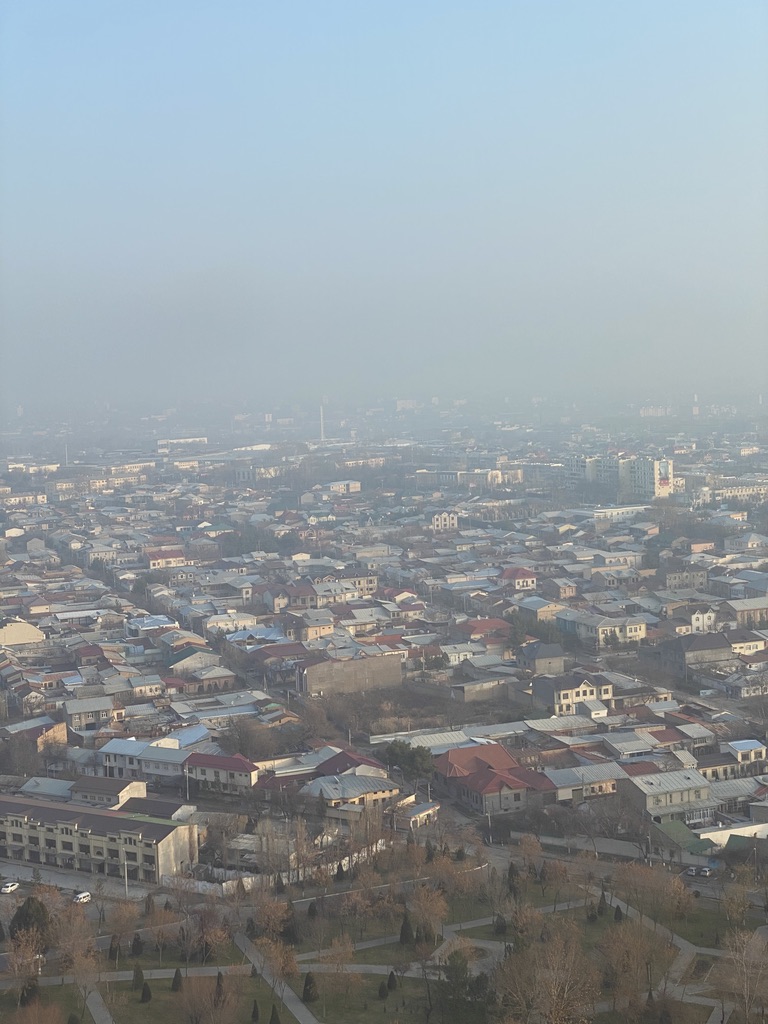
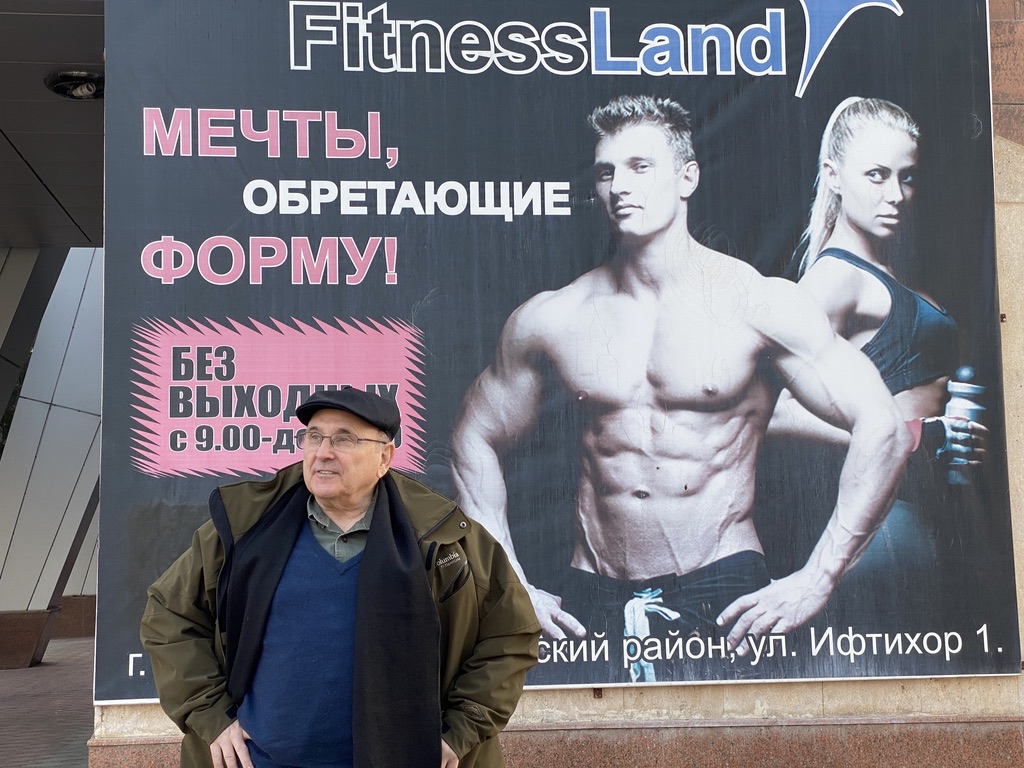
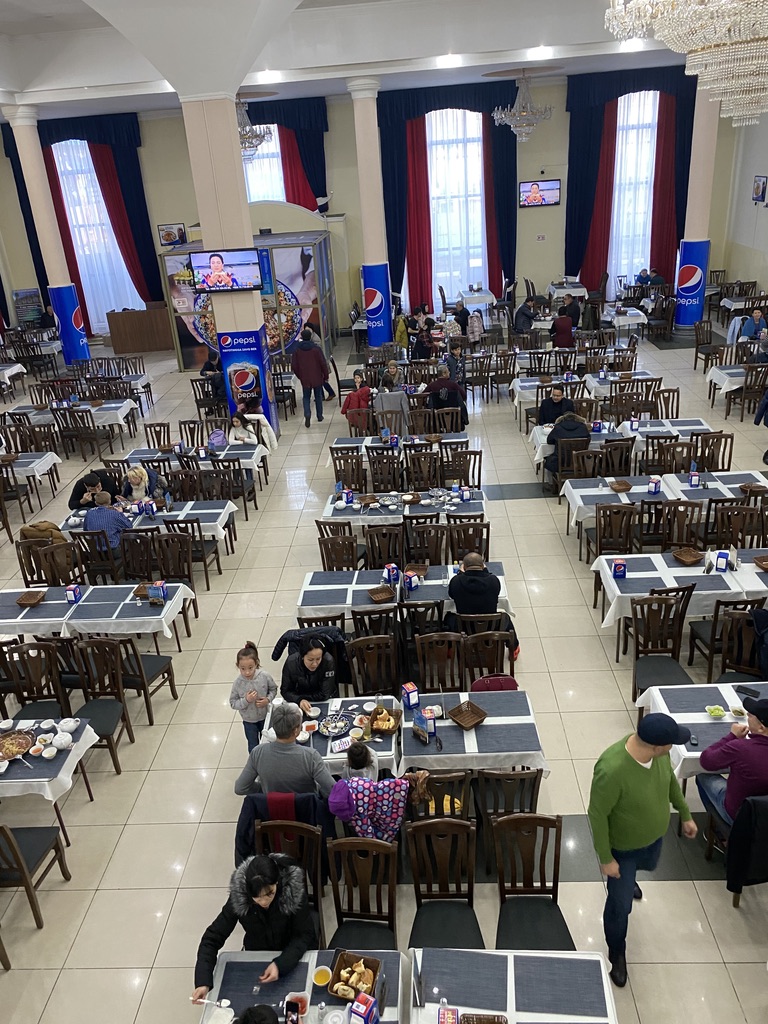
The entry to the TV Tower which is located just about 100 meters from the Plov Center (as the crow flies) but is about 5 times that distance because you have to walk out into the street and around and up and down stairs to find the tower. Anyway, as you walk to the elevator which takes you to the viewing floor, you walk past models (not too well made) of other towers around the world, including the Empire State Building and the Hancock Tower in Chicago. The view from the top is not too impressive since Tashkent is so flat and mostly because it was so hazy you couldn’t see very much.

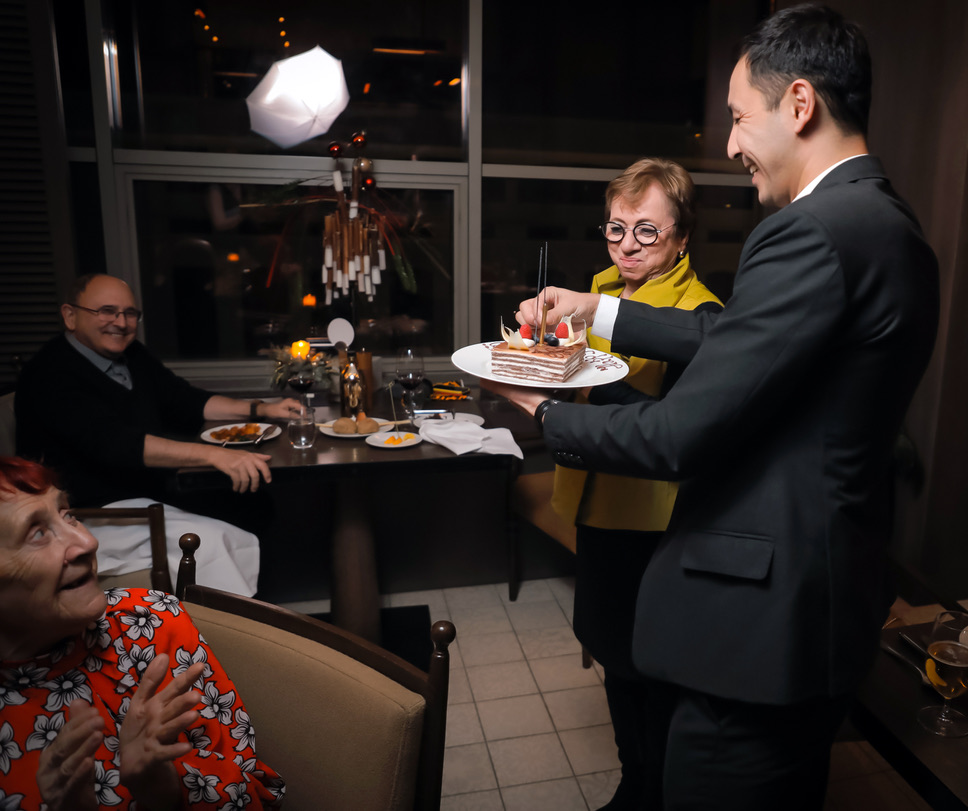
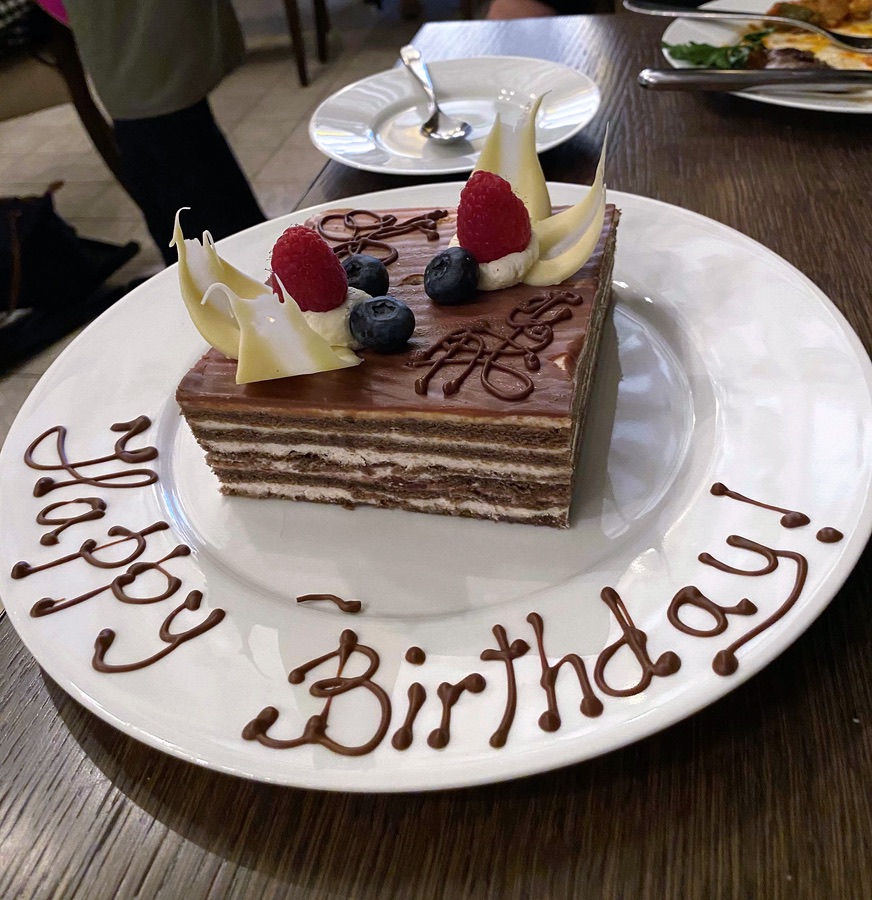
We then walked about a mile (Mike complaining that there aren’t enough benches in Tashkent to rest as you walk) to the nearest Metro Station and headed back to the hotel where we would spend New Years Eve (and my birthday). By the time we reached the hotel, preparations were in full swing. We went to the restaurant for our reserved table at about 9:30 and most parties were already seated and the entertainment had already started. Loud! Mixture of rock, 80s disco, local folksy Central Asian tunes played on old instruments, and a little bit of Christmas… oh and also some Frank Sinatra! Food was fine, lots of alcohol – champagne, wine, cocktails, etc. About 30 minutes in, they announced my name although I didn’t really hear it clearly — and they brought over a tiramisu cake with candles to our table. They also said something at the mic, but it was in Russian so I’m assuming it was just Happy Birthday (always complicated to be a New Year’s Eve baby).

Dancing began as well and there were a few big circle dances (a little like the Horah that is danced at Jewish weddings) – I actually participated. Most everyone in the restaurant spoke Russian and the event was all done in Russian. Apparently Russian is still the official language for all transactions, menus, and everyday work, while Uzbek is spoken at home.
A few minutes before midnight, everyone left their tables (we followed) and headed to the deck adjacent to the restaurant. There everyone was handed cannisters that twisted and out popped glitter (many of the women wore dresses with sequins and other sparkly things — once again, I was probably a bit underdressed, although I did not wear a turtleneck! But I did wear boots.) At midnight they all started to sing (without accompaniment) the national anthem, which I assume they did in Uzbek. From what we could tell, about 60% or more of the guests were Uzbeks from Tashkent area; there were some Uzbeks from other parts of the country; there were a few foreigners (we know one table of about 8 people were from Istanbul) and there was us. They assigned a waitress to us who could speak some English and she seemed to pop up frequently to check that we were OK.. and to replenish our wine (probably too many times).
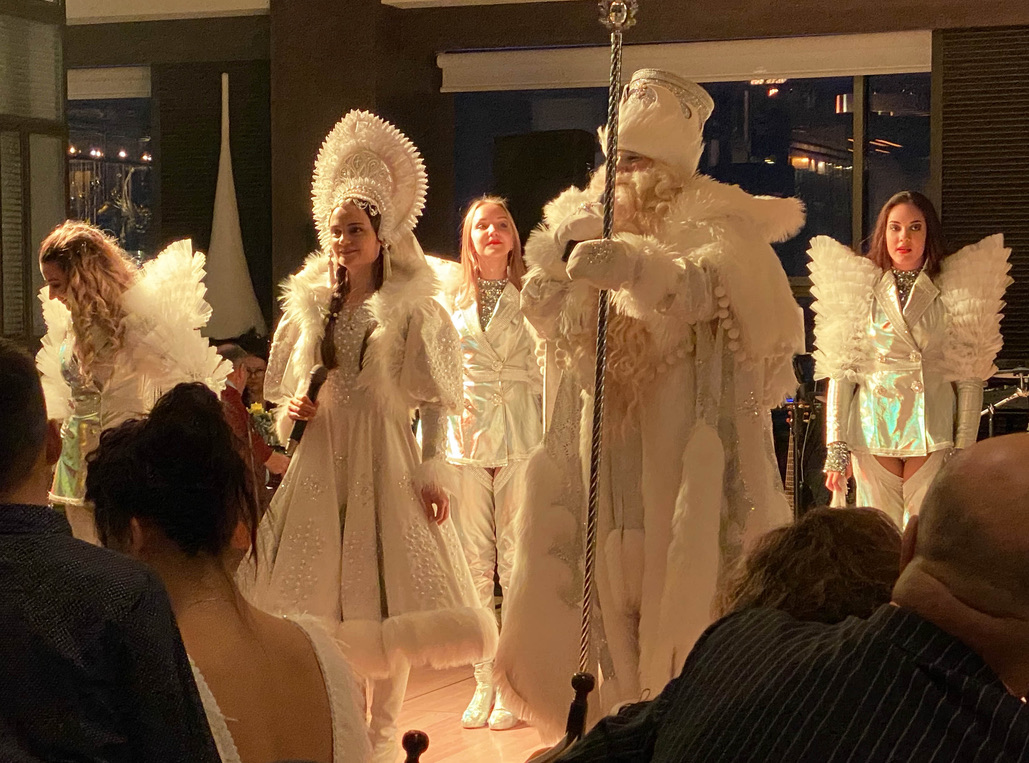
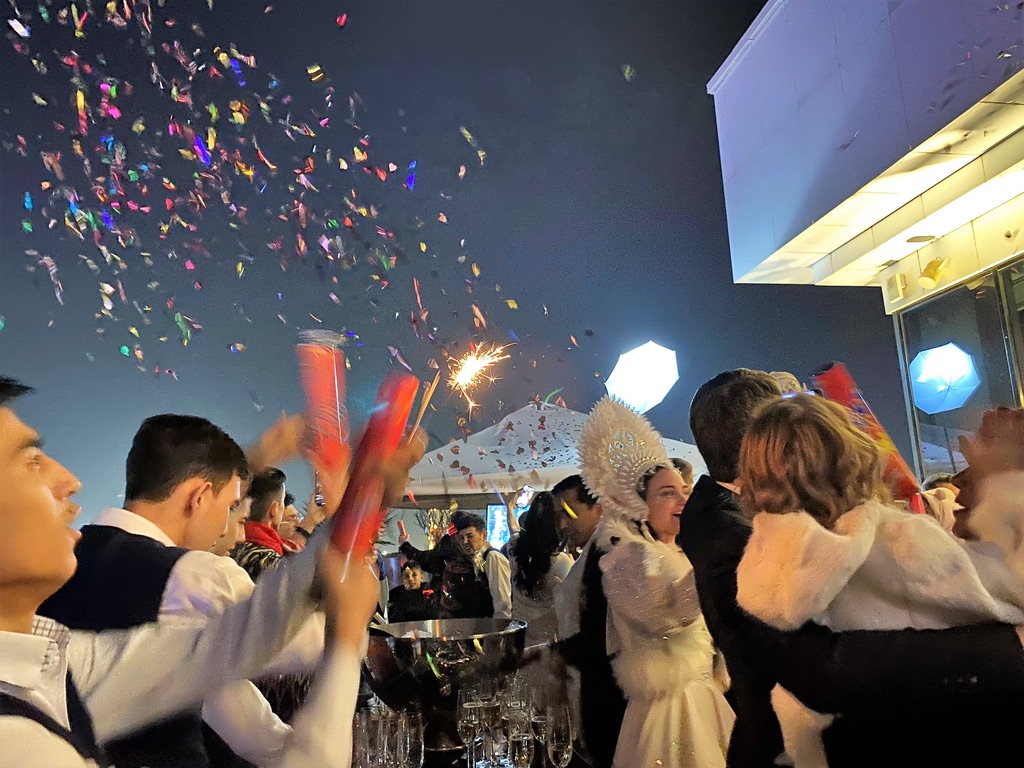
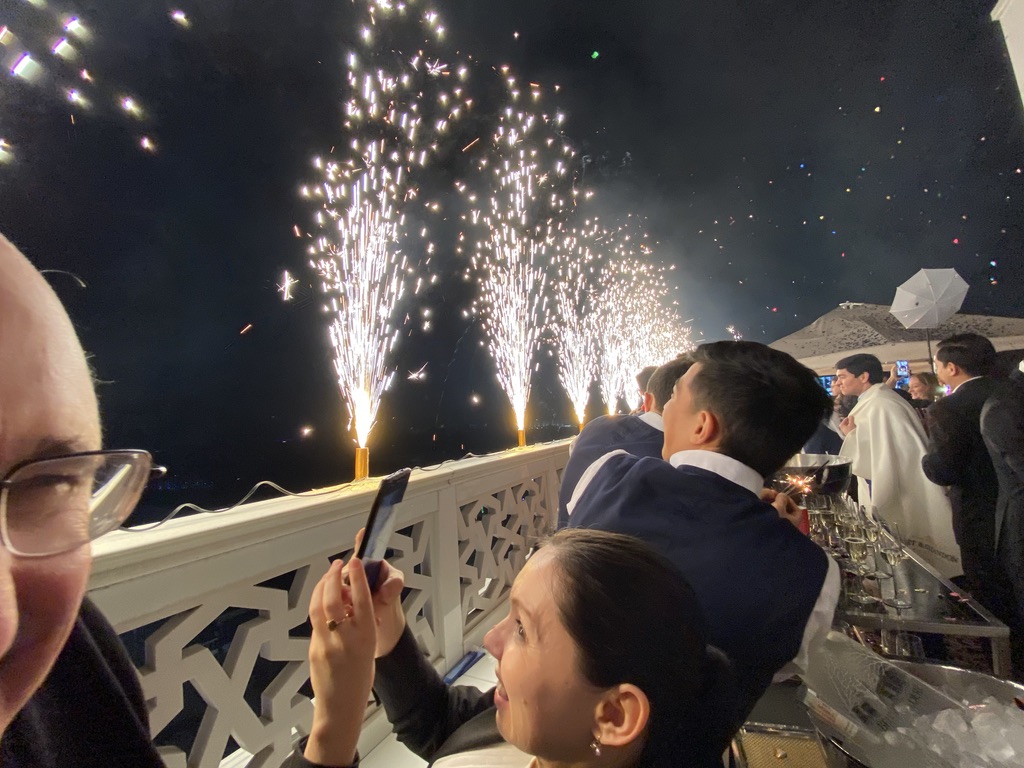
At about 1 am we headed to the lobby lounge to get an after dinner drink – it was nice and quiet and we could actually have a conversation.
Taxis, Taxis, Taxis. Tashkent, Uzbekistan 2019. 12/30/2019
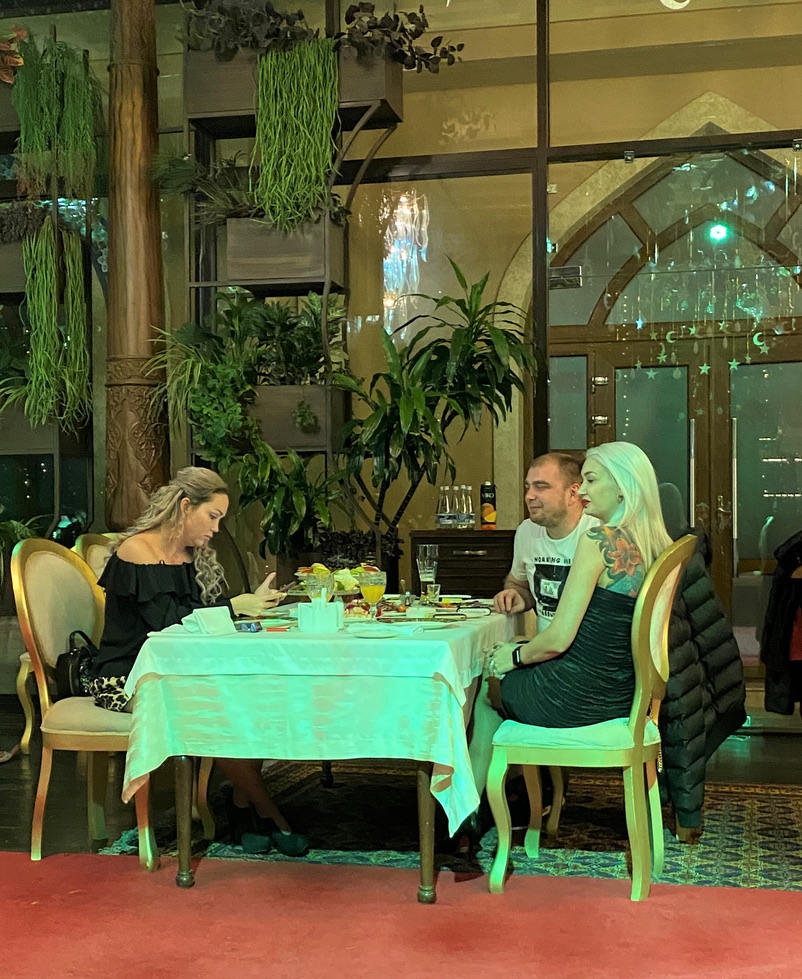
Before I begin… by popular demand… Above is the only photo I could get of one of the tables with the guy and his “dates..” (see earlier post). Couldn’t get a shot of the other table with the three “couples.” Also, when we got back to the hotel and strolled to the entrance of the hotel – through that maze of lights (they love lights here… every building is adorned with twinkle lights…. ) and the photo ops with the Santas and the blaring music on the DJ’s playlist which includes everything from Uzbeki Rap to Xmas jingles… All of a sudden they were playing Rachmaninov!
And to those of you who commented on the Metro stations, photography was not allowed in the stations until June of 2018! The stations were seen as military installations and as shelters in the event of a nuclear attack. You could get arrested for taking photographs. But now it’s allowed, although we haven’t seen anyone else taking pictures, just us. Then again, we really haven’t seen any tourists, except when we are at the hotel.
And some other tidbits:
- A guy came up to talk with us while waiting for the train; his English was fairly good. Turns out he lived in Sweden for a year and learned English there. I think he was an engineer or in some kind of technology position. After just a few moments, he asked about the US and said he feared for the future of American democracy because of Trump.
- Pictures of Mike and me must be everywhere.. as there are a lot of street cameras, and when we arrived in Tashkent, as we were getting off an escalator (prior to going through Uzbeki Customs, an airport staffer was photographing (video) everyone deplaning.
- People rarely smile here in Tashkent
- Lots of people have gold teeth; someone said it was to provide “insurance” for the next generation.
So, now about today… Monday, December 30 –
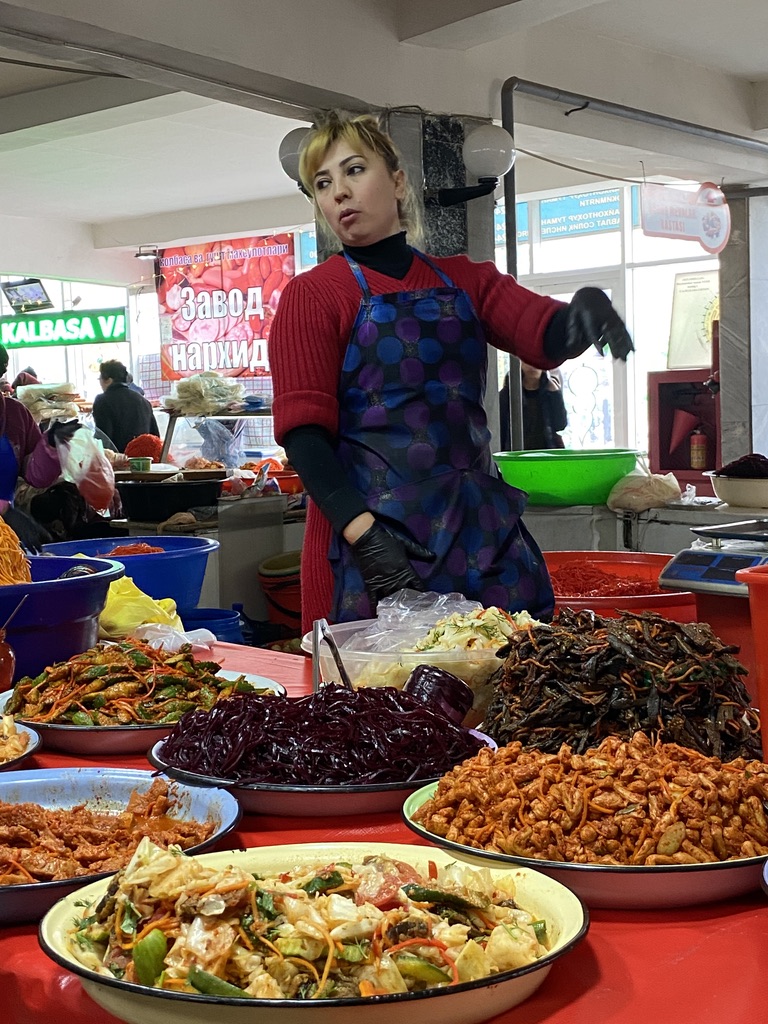
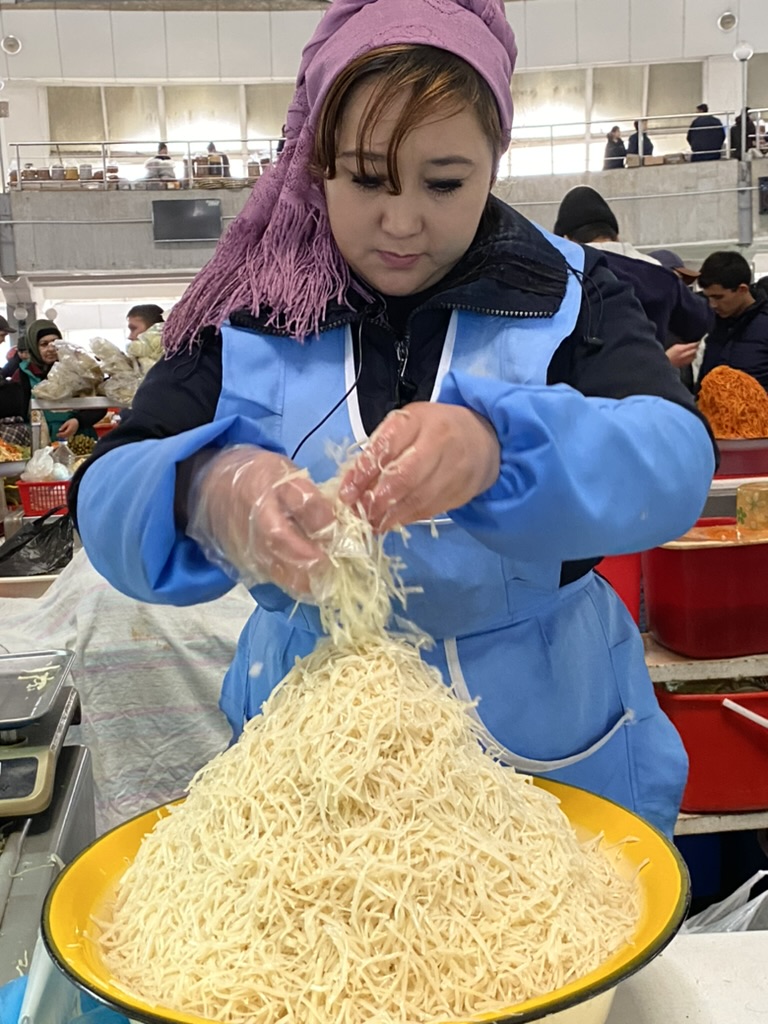
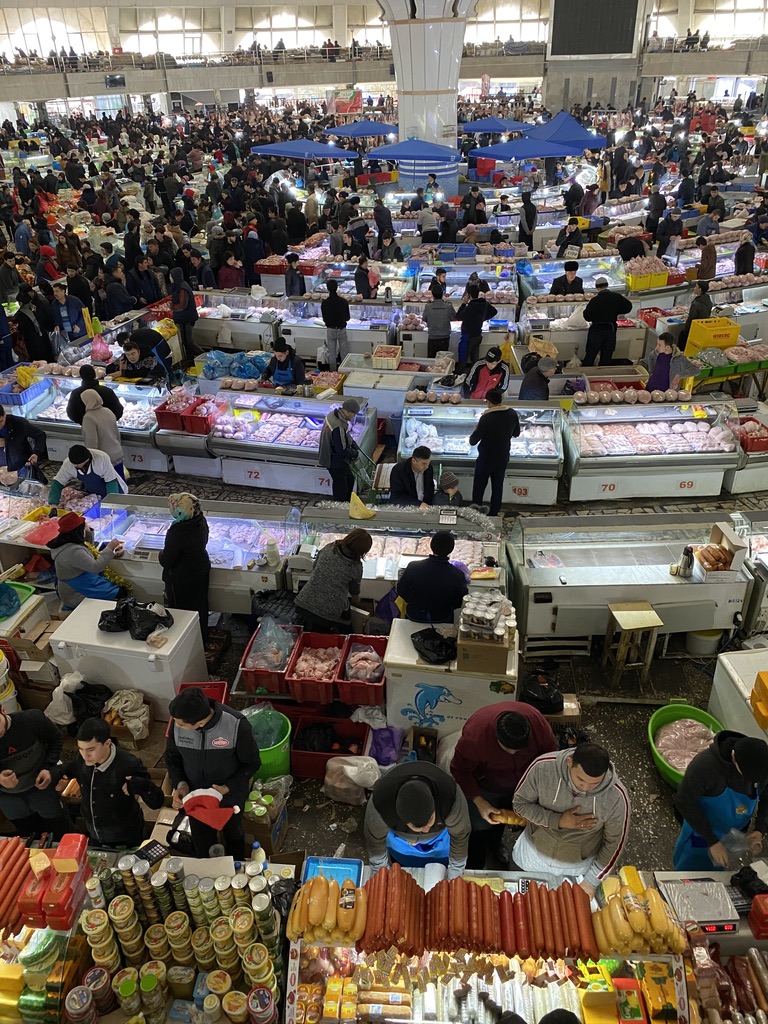
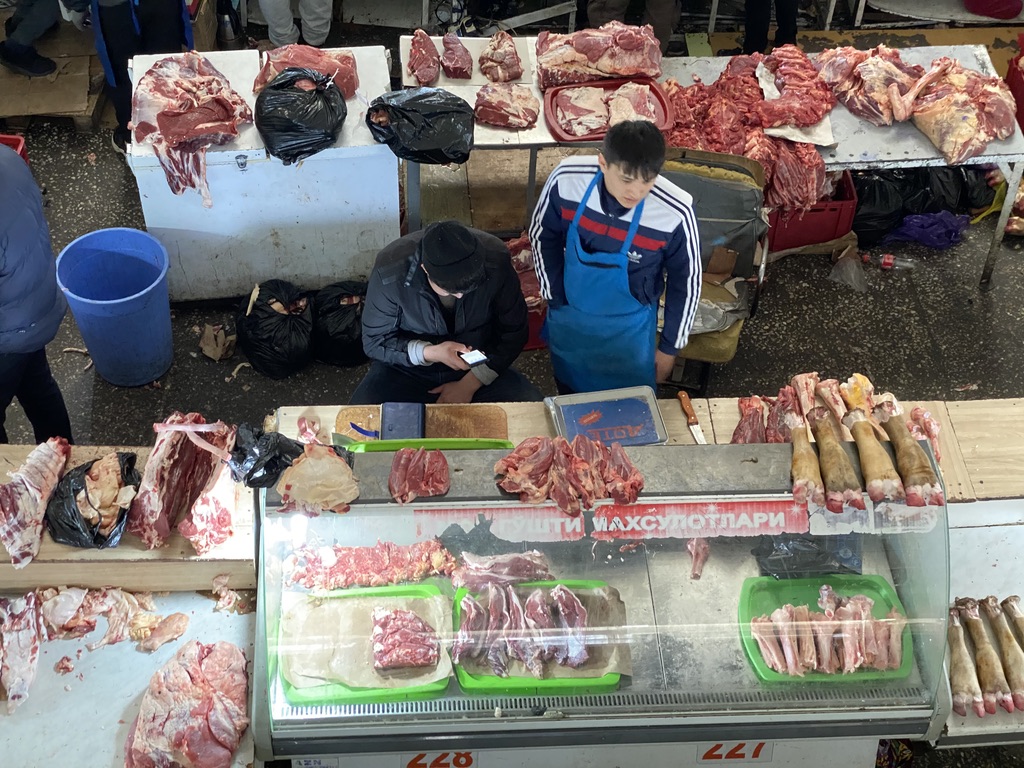
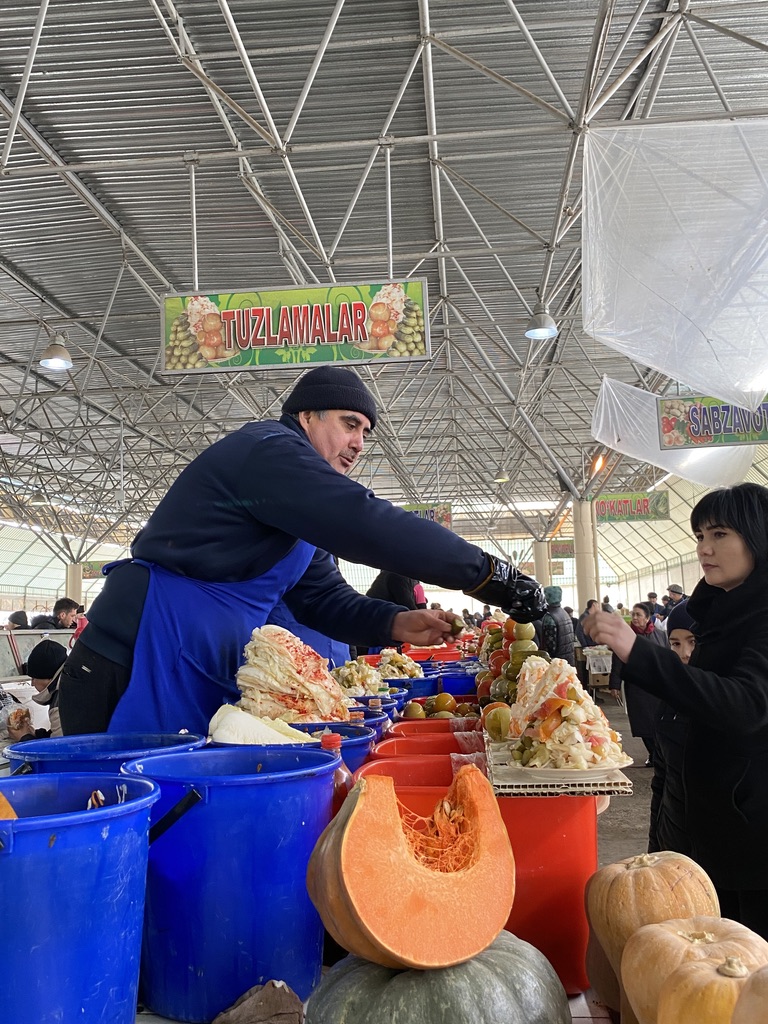
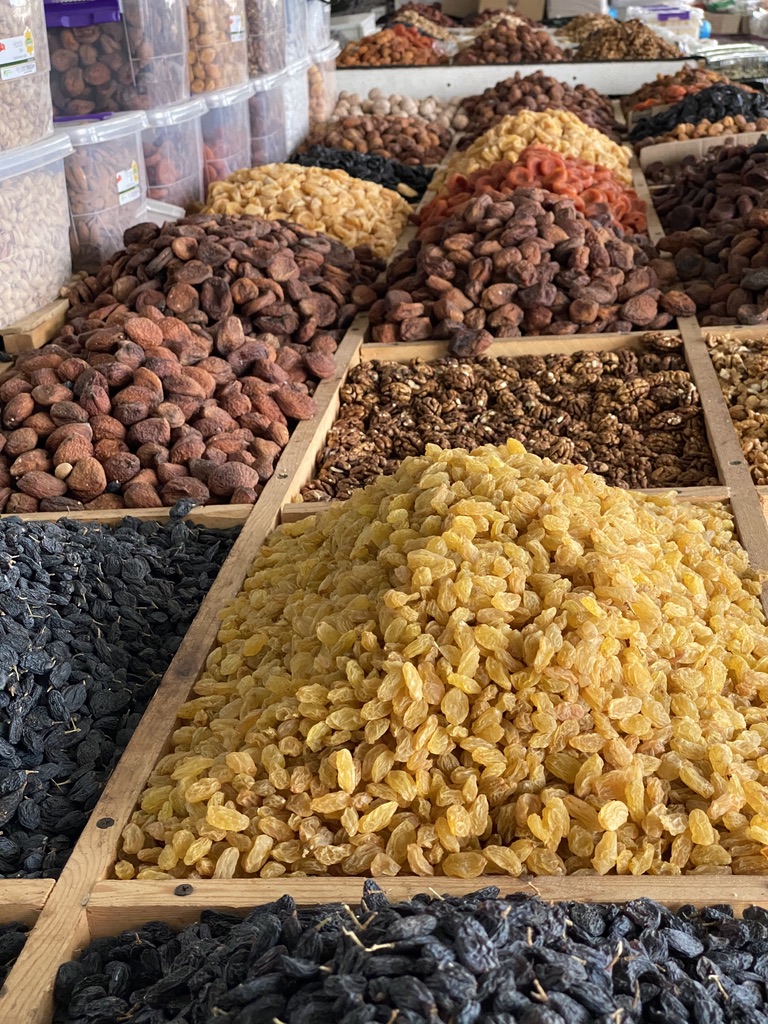
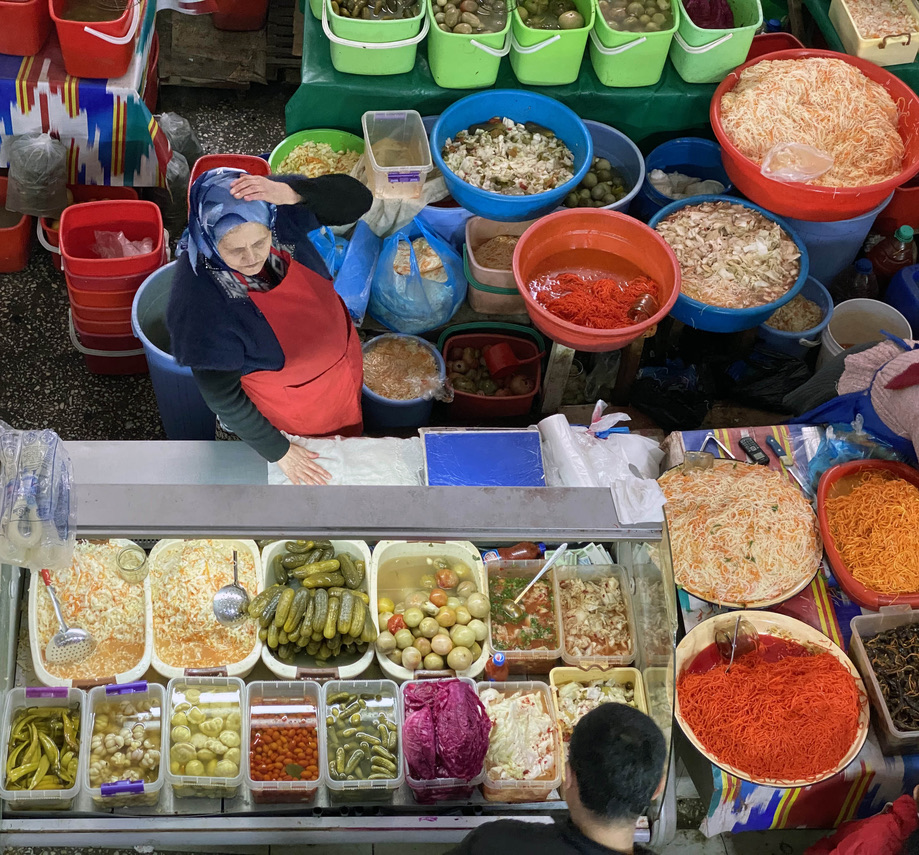
We took the Metro to the Chorsu stop — requiring a change of trains – and headed to the famous Chorsu Bazaar, which did not disappoint. It’s a huge, huge market located in the center of the old town of Tashkent. It’s within a blue-green-color domed building and flows out into all the surrounding streets and up the stairs that lead to the bazaar. Apparently the word, chorsu comes from the Persian language and means something like “crossroads.” The building is about 10 stories tall at the center of the dome; it’s about 300 feet in diameter. There are a few smaller domes that surround the large one. There’s also a second floor “balcony” that surrounds the main dome on the inside. The Bazaar (the space under the main dome) has literally hundreds of stalls. Each sells a particular kind of food and the stalls are fairly well organized by food — all the meat is in one section; cheese in another; chicken and fowl in another part.. all of the stalls are in concentric circles matching the rings of the dome; on the upper level “terrace” they sell an amazing array of nuts and dried fruits; there is a whole section of stalls that sell pickles and pickled vegetables; there’s a noodle section; etc. etc. The bazaar is always crowded but especially so today since people were shopping for big New Year’s dinners (or so we think). Maybe because there are not many tourists in Uzbekistan at this time of year, or maybe it’s just the Uzbeki style… but there was little to no gawking and no one really tried to sell us anything. We love visiting markets and have seen some pretty exotic ones in various parts of Asia and Latin America – but this one was quite wonderful and different.
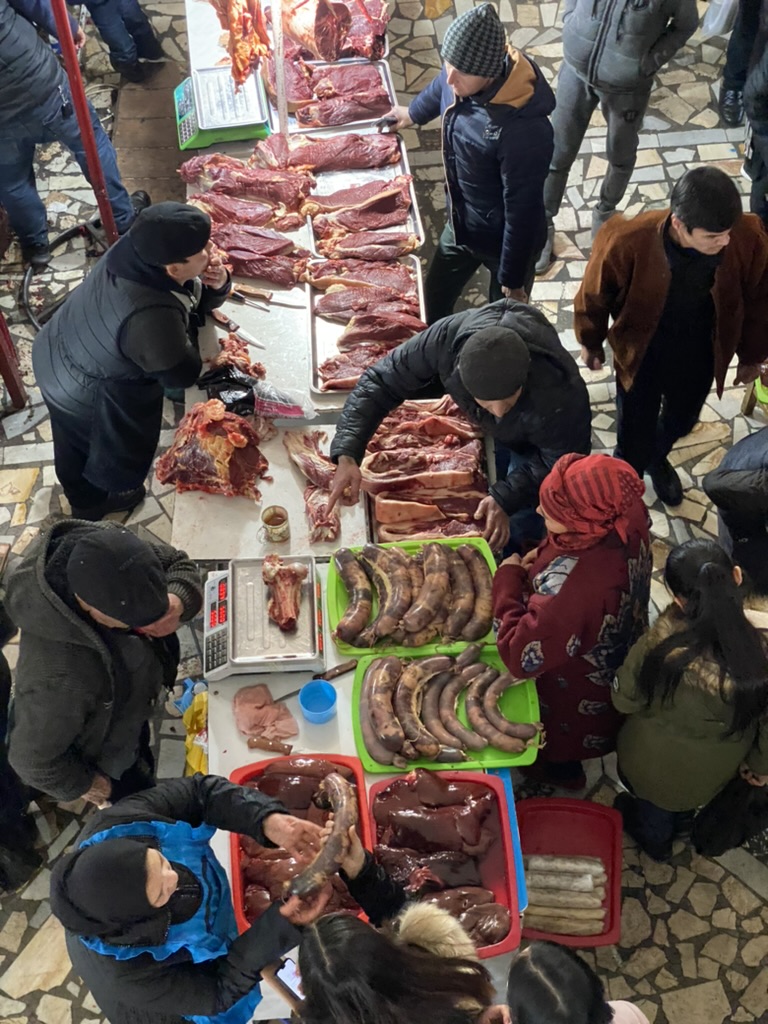
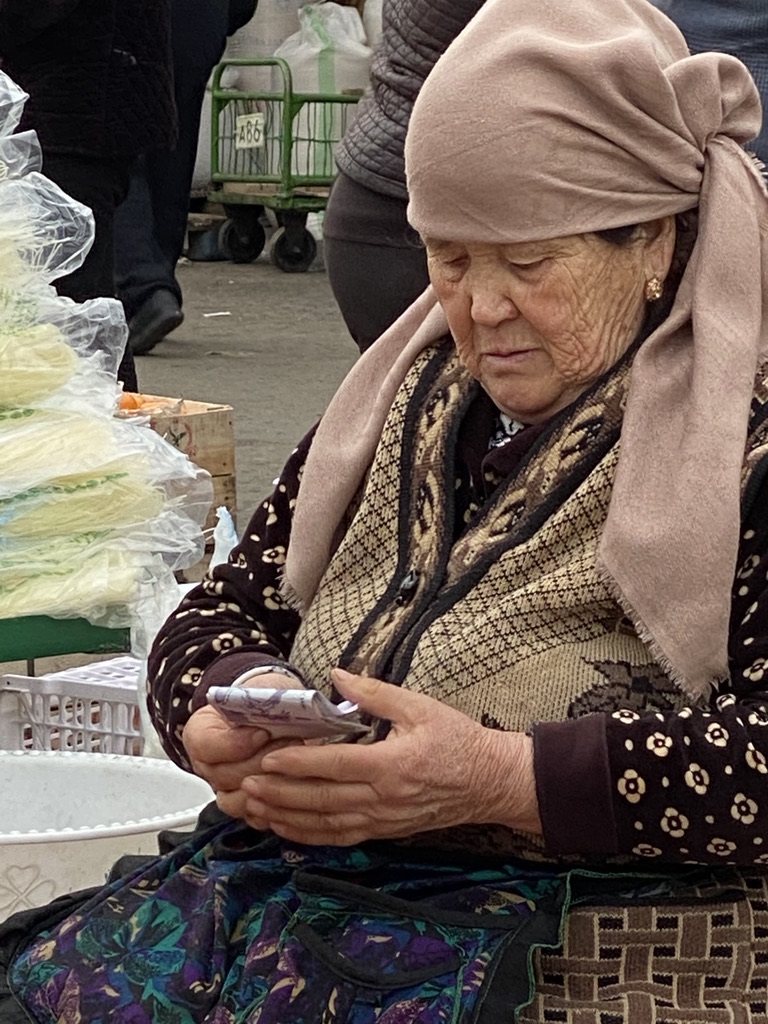
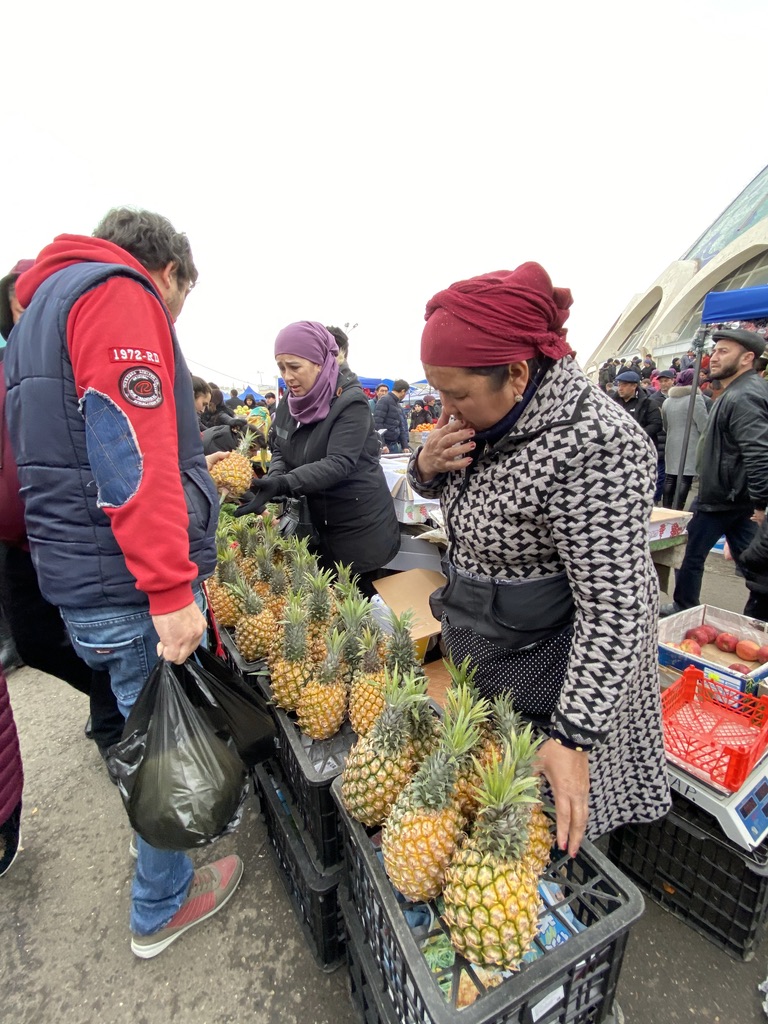
After strolling through the entire market, we emerged back onto the street and the many outdoor stalls selling clothing, fruits and vegetables (they pretty much have every kind of food including pineapples; the only produce we didn’t see was avocado), we decided it was time for lunch. So we stopped at a little stall selling shaslik.. and after a minute or two figured out the system (helped a bit by a woman who worked there who said “Sit down!”).. We found two seats (plastic chairs) at a little table and soon the woman emerged to tell us what they had (sort of in English, but not completely).
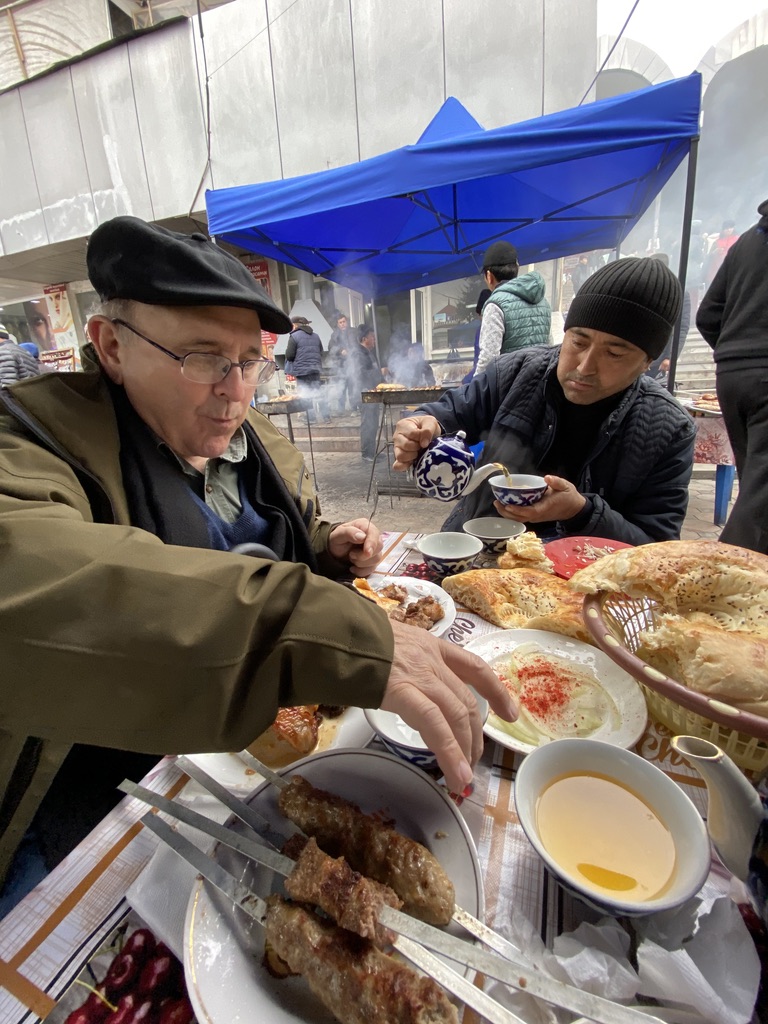
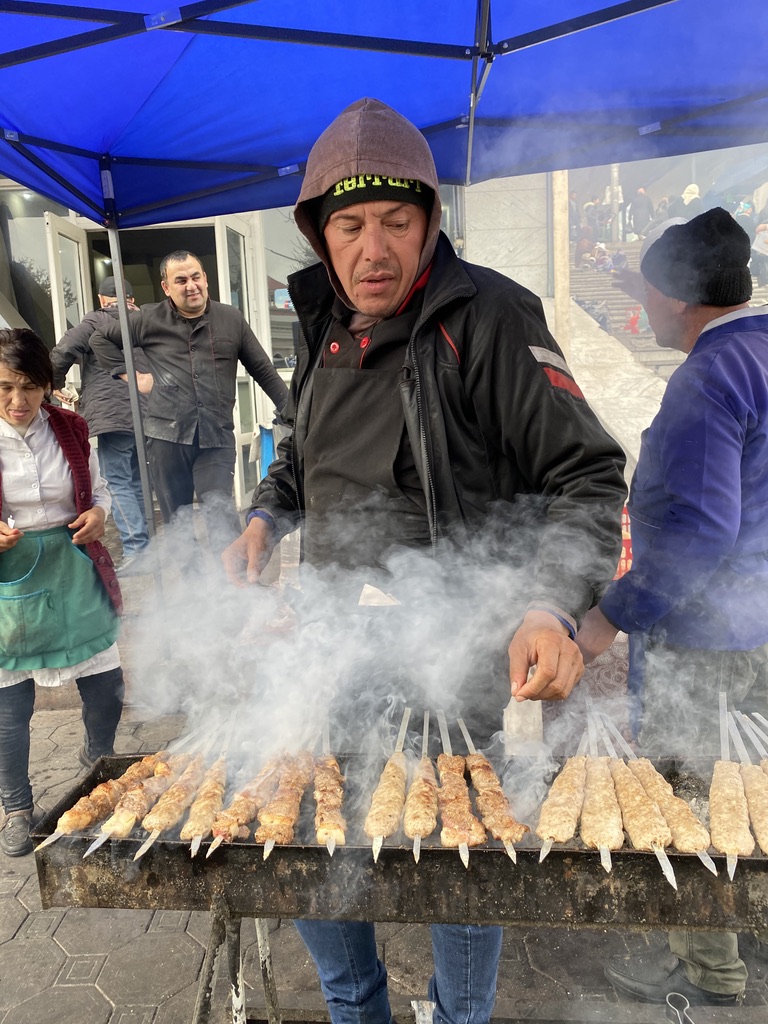
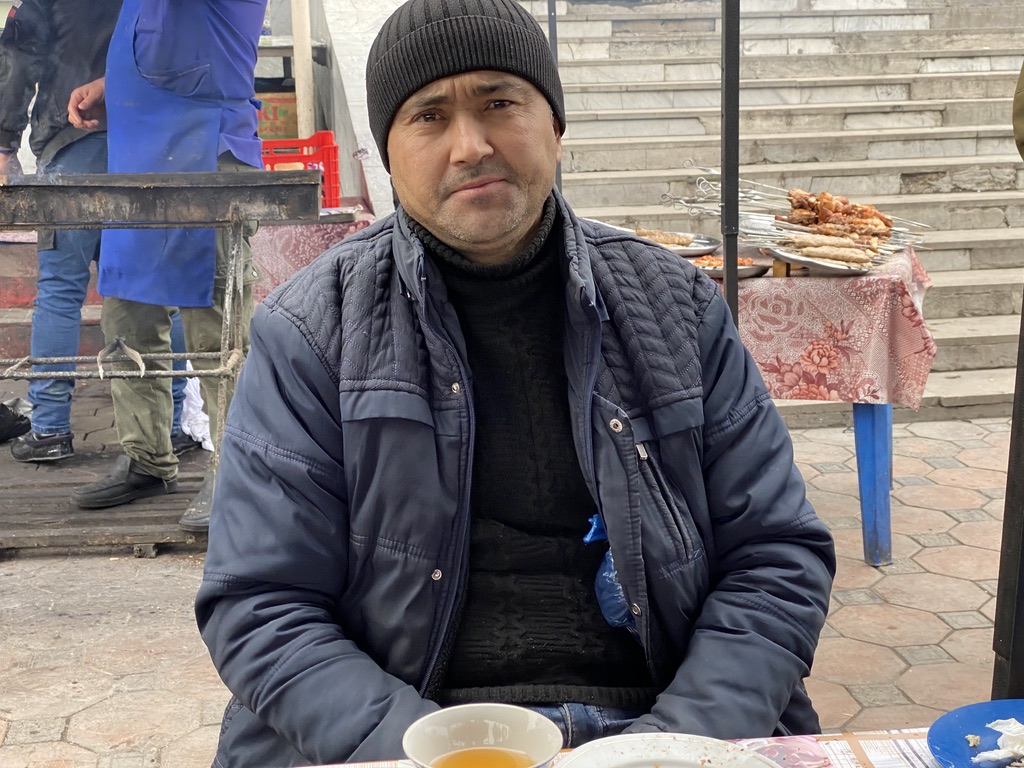
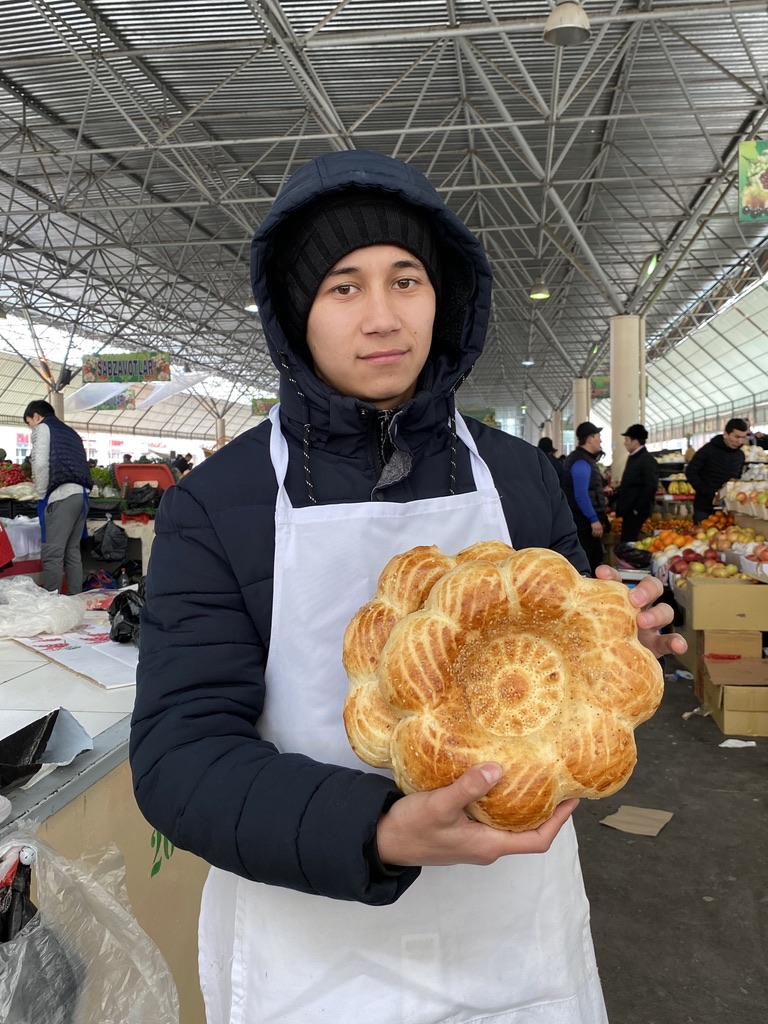
We ordered four skewers (they are small) of a “mixed grill” (my term, not theirs) – chicken, lamb, beef. And soon the food emerged, which we could see being cooked on a very makeshift grill in front of us. Actually, it turned out that they don’t put chicken on the skewers so we had two skewers of lamb, two of beef, and then an order of chicken grilled in another part of the stall. They brought over very fresh bread (they serve wonderful home-baked bread everywhere and it’s just part of the meal), and some pickled onions, and a sort of honey tea (which was really good). While we waited for our “order,” a guy (probably in his 40s) took a seat at our table (there were four chairs) and then a woman with two children sat down as well. There was a basket on our table, into which they put our bread.. and then they brought the bread for the guy and it went into the same basket. So we had quite a group! No one spoke any English. We couldn’t finish the last skewer so we gave it to the guy, who was appreciative and even almost cracked a smile.
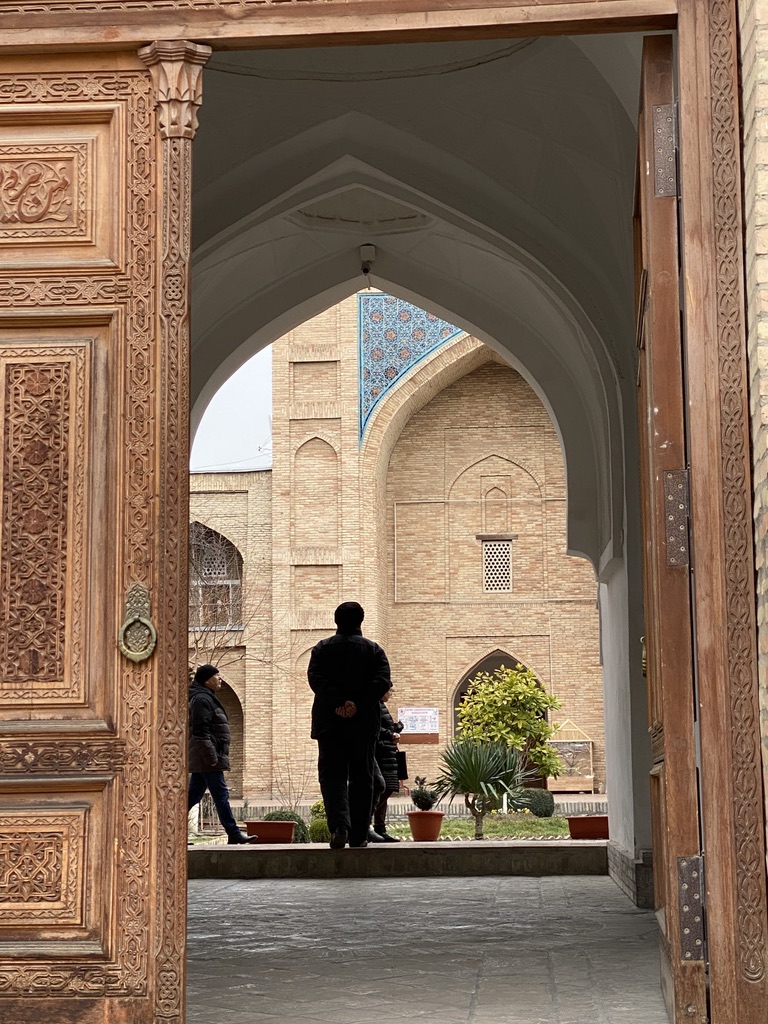
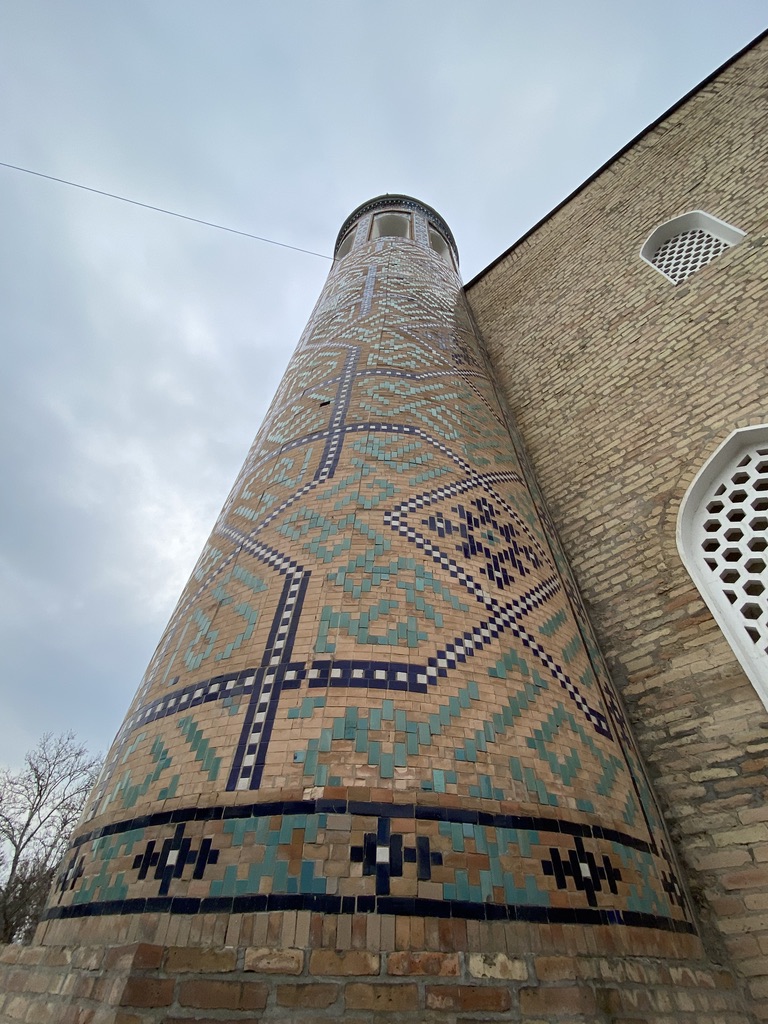

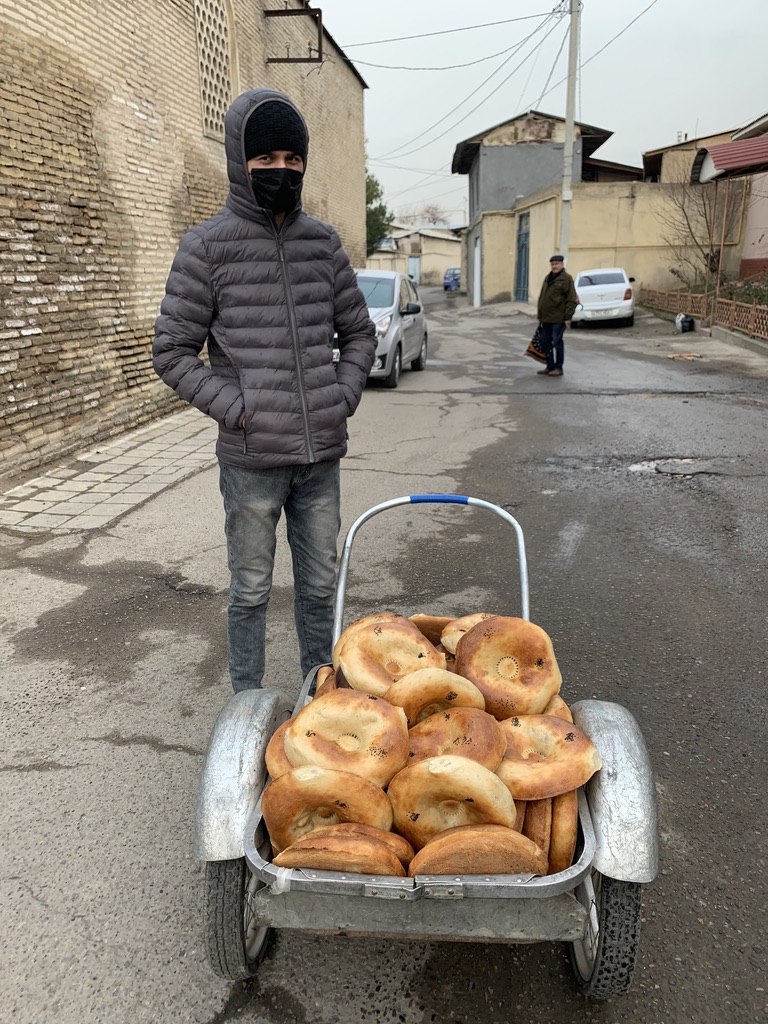
Then we strolled through the outdoor sections of the market and got to the Kukeldash Madrash and the nearby mosque – both of which had been rebuilt after the 1868 earthquake and was one of the few buildings in the area to survive the 1966 earthquake. Today, the first floor (which has numerous tiny rooms) houses craftspeople who try to sell their products to visitors. We then walked into the surrounding neighborhood for a bit and then hiked back to the Metro station which was hard to find, since it literally is within the outdoor stalls of Chorsu.. We stopped at a stall and asked for directions (saying “meeetro”) and the woman decided it was best to have her daughter (maybe 10-years-old) escort us to the stairs leading to the station.. which was actually only about 50 yards away.
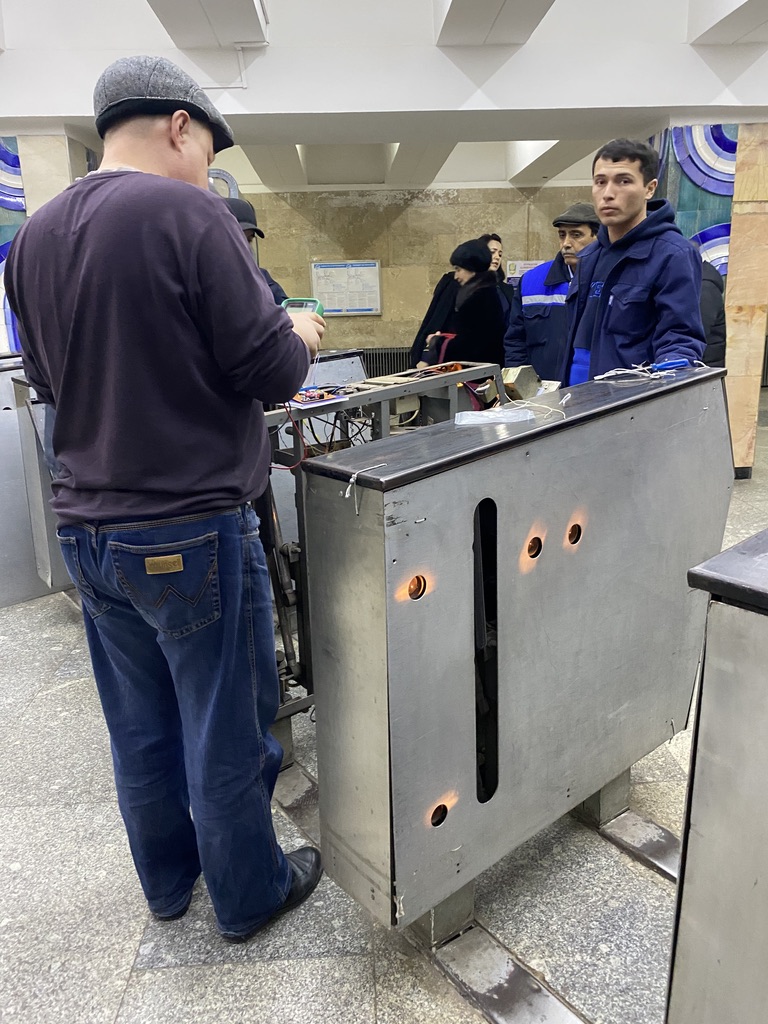
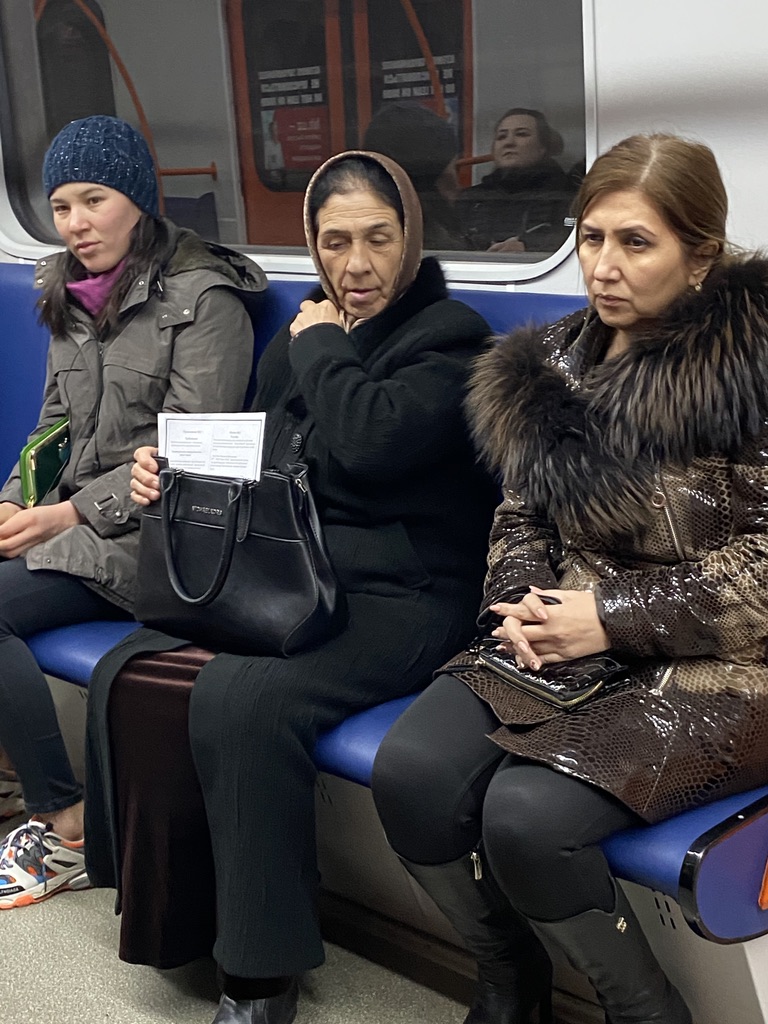
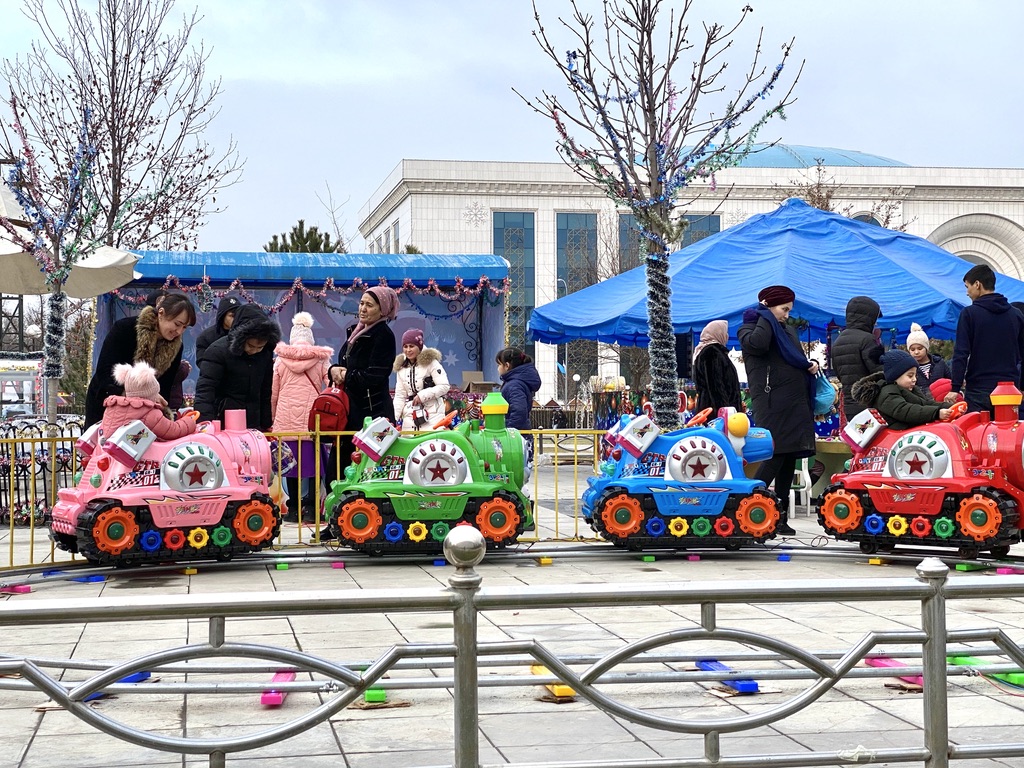
Then our evening adventures began.
Given the absurdity of last night’s dinner… we opted for a very low-key restaurant that we had read about called “Traditional Food.” We asked the hotel to get us a taxi and they said they didn’t know this restaurant and questioned whether we really wanted to go there. We did. So when the taxi arrived, they told the taxi the name and location of the restaurant (or at least we think they did, since the driver had no interest in seeing it on our GPS). The taxi driver spoke no English… and he drove about 15 minutes and dropped us off in front of a restaurant (that said it had Karaoke!) and off he went. Somehow it didn’t seem like the right place. Turned out to be a huge Chinese restaurant. We were intent on getting to the other restaurant, but needed someone to call for a taxi (I actually downloaded the local taxi app — you know I’m totally anti-Uber – but it’s all in Uzbeki).
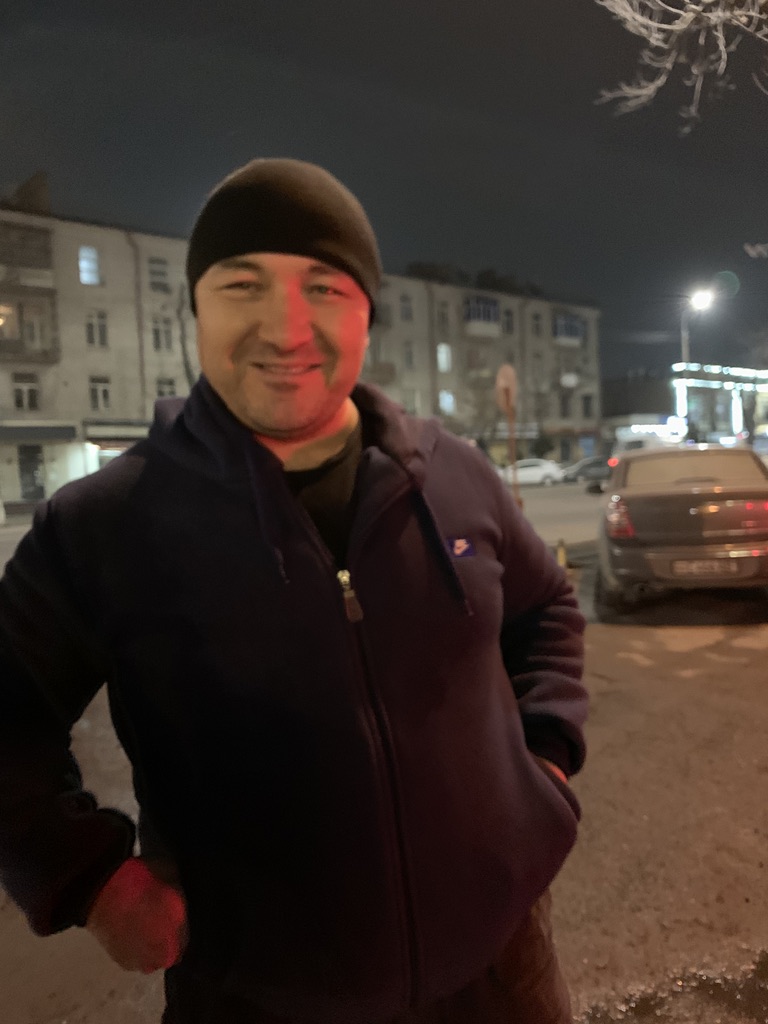
There was a guy who seemed to be a bouncer near the door and I think he realized we were a bit lost, so he came outside (where we could hear each other, given the volume of the music inside). He had no English at all, but somehow we communicated that we needed a taxi.. and he called someone …. Probably a relative.. who showed up and drove us to the right restaurant. But now it was about 8:45 and we knew the restaurant closed at 9:00 so it was unknown whether or not we’d be able to eat there. The “driver” was incredibly nice. He spoke Farsi, Russian, and Uzbek — and a few words of English, which he used to tell us that English was a problem; we replied that Russian was a problem for us! He refused to take any money for the ride, but we gave him 20,000 Som (about $2.00, which was more than what it had cost to get to the Chinese restaurant). In the taxi, we said we were from California and he immediately responded “Schwartzenegger” … Amazing. This has happened to us before. Arnold has got to be one of the best known figures internationally — those movies sell.
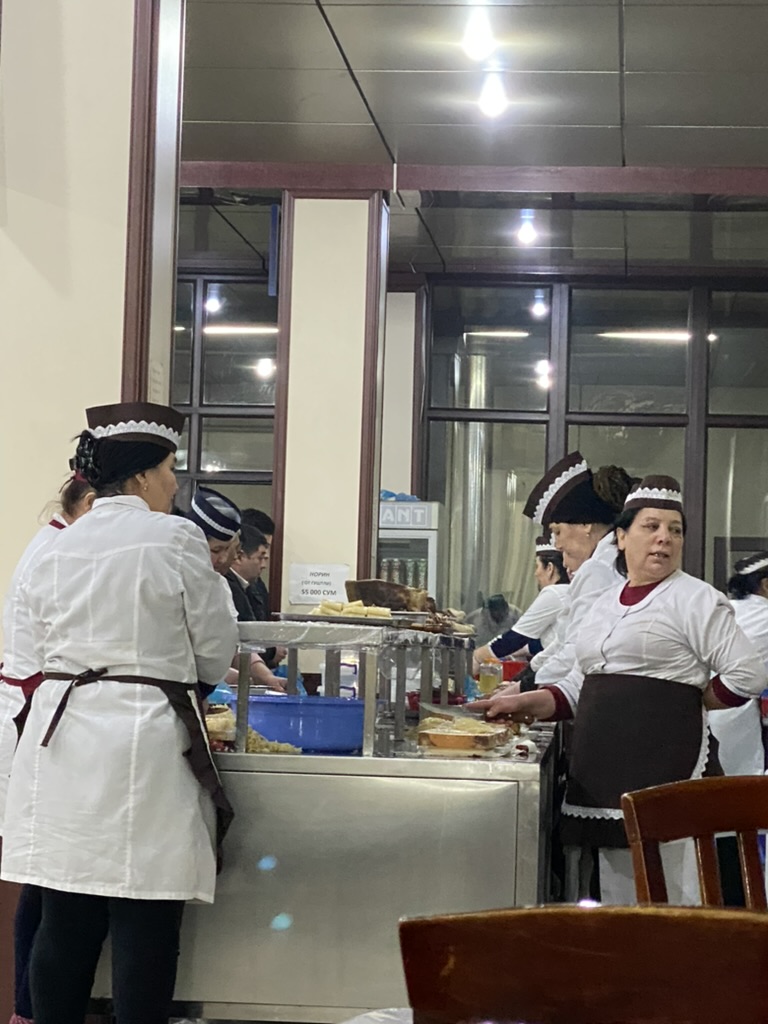
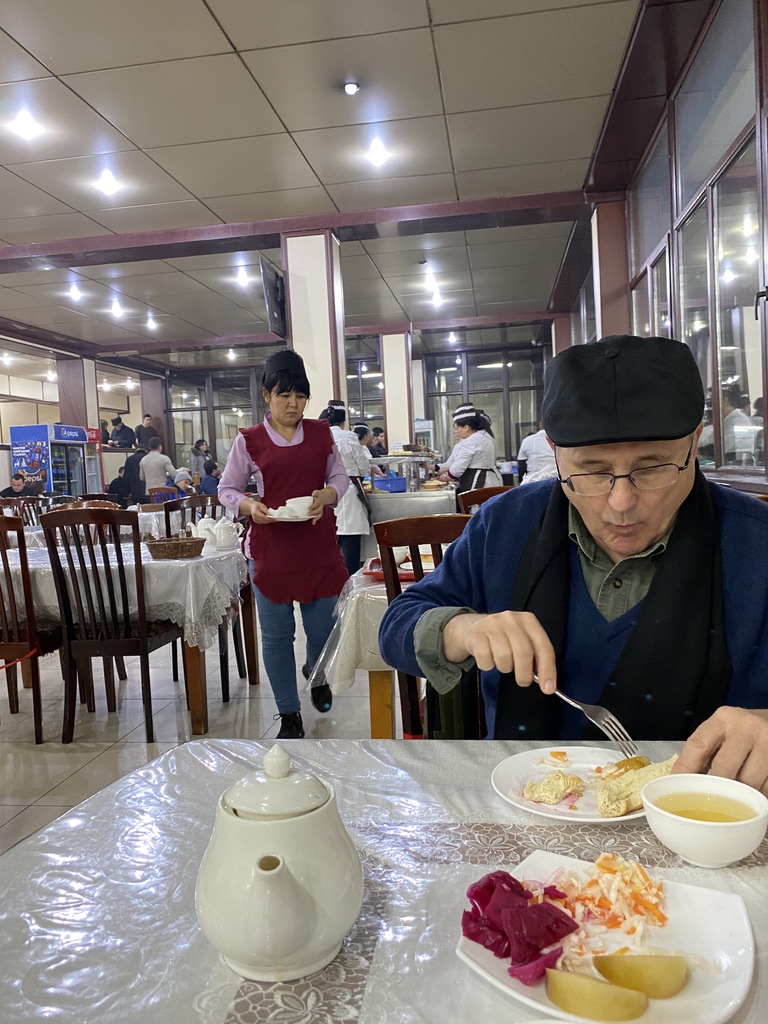
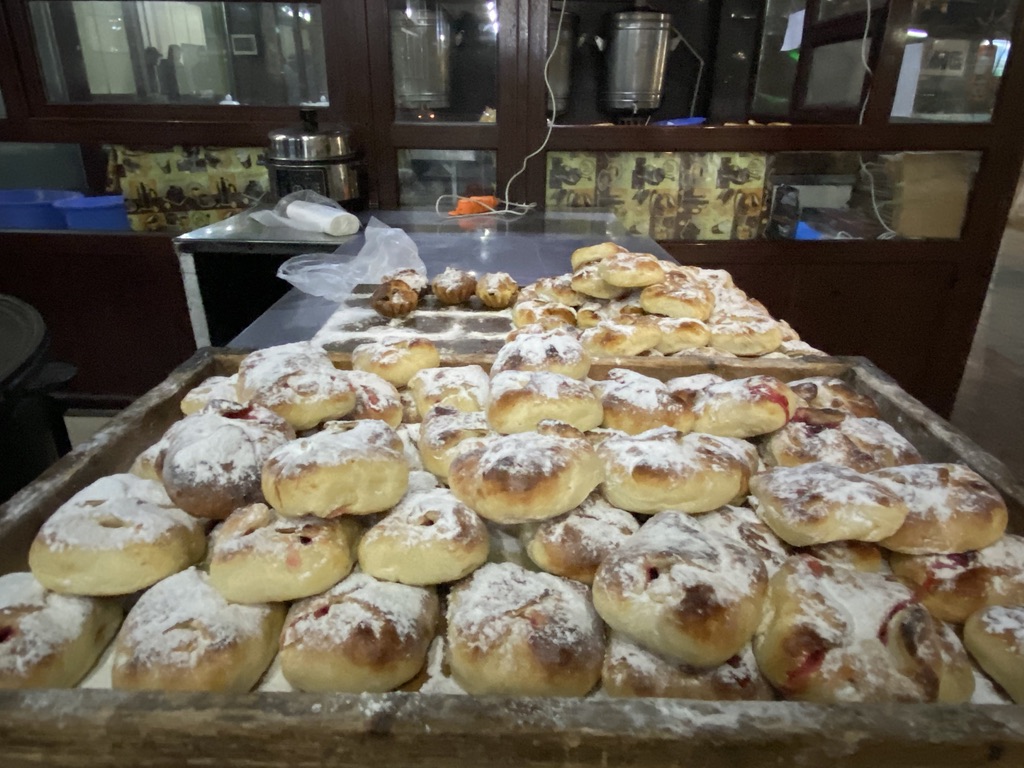
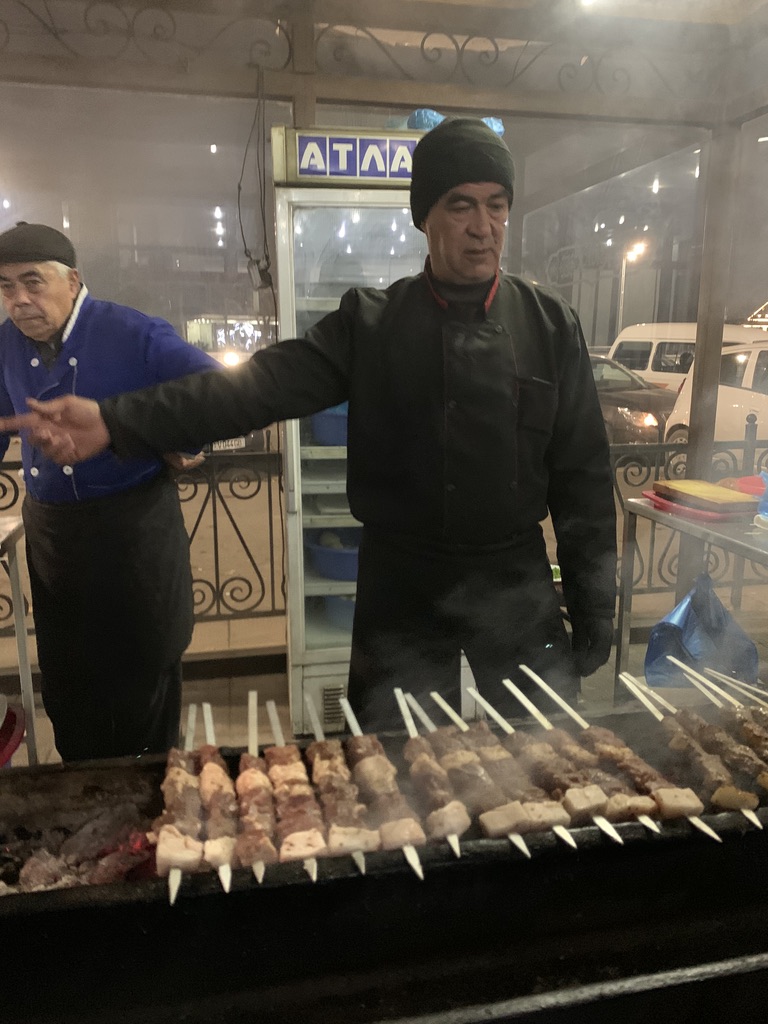
The Traditional Food restaurant (definitely not its real name) is one very very large room. It took a while to figure out the system, especially since they were beginning to close and the food choices were very very limited by then. The restaurant is a cross between a soup kitchen and an old institutional dining room. As you approach, on the street, there are “cooks” making shishkebabs, a table with soups, and then huge vats that are cooking a variety of other local foods. But, the huge, huge, huge vats were empty and our only choice was shishkebab. So for the second time in one day… Anyway, a guy saw we didn’t quite understand the system and he came to help. His English was quite good. Mike says he works there, or maybe is an owner. When we asked about his English, he told us he was on the Law faculty of the University. He turned us over to a ‘waitress’ who had a little bit of English and she took our order, as we pointed to what we wanted (or what was available at closing time) – shishkebab and a dish of pickled vegetables. Again we got the green tea and good bread. The place has absolutely no ambiance. Plastic sheeting on the tables, nothing hanging on the walls.
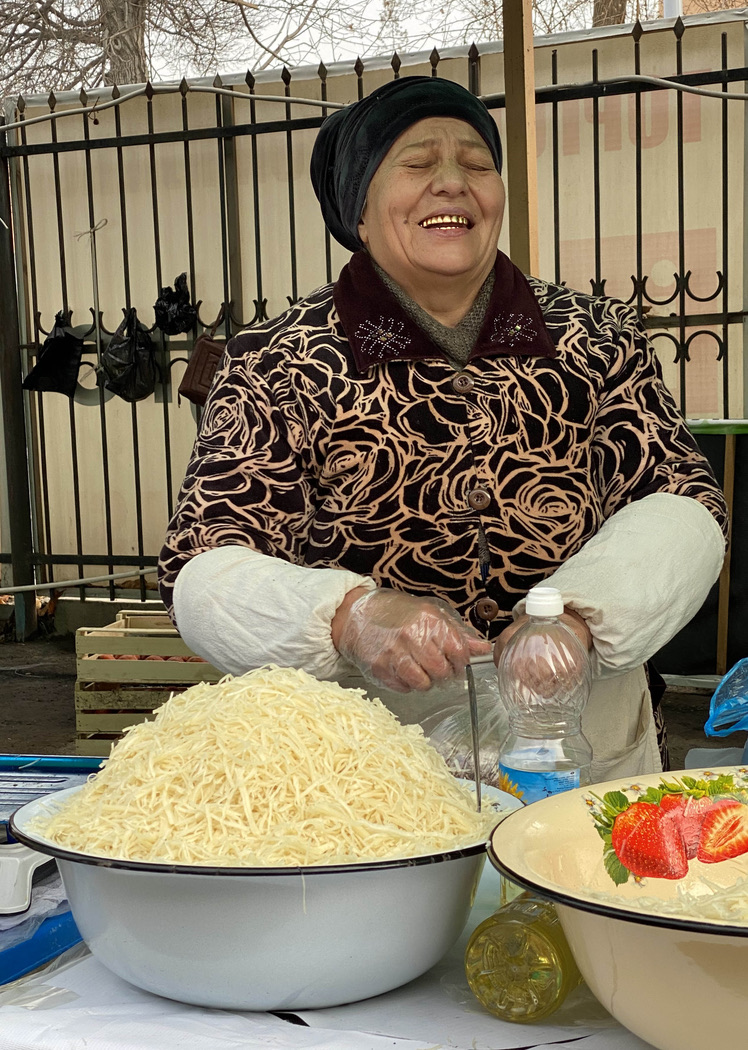
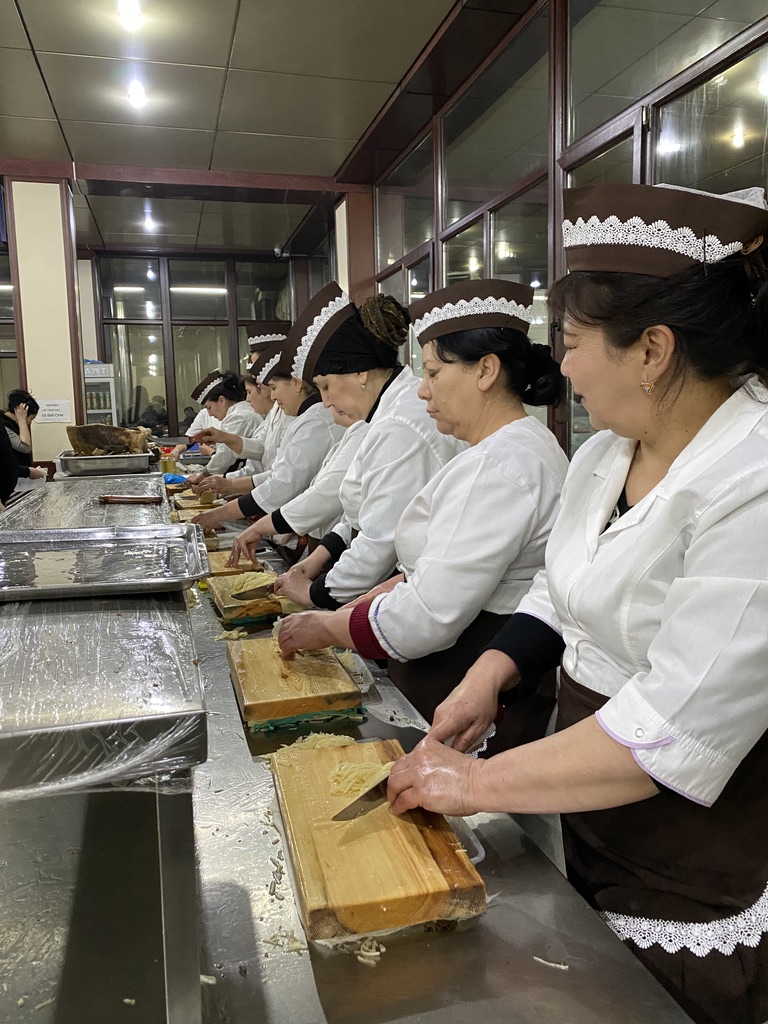
There was a whole row of women (all women) who were making noodles… unbelievable scene. About a dozen women in a row, standing shoulder to shoulder. At one end two women were making sheets of a pasta-like product and then soaking it in water and then the other women would slice the sheets into very thin strips – no pasta making machines here. All done by hand. Since I was photographing non-stop as they made these noodles, another guy came up to us and he spoke some English – and explained that while they always make noodles here (which we tasted and they were really good – thick and spongy) they were preparing this huge batch because it is traditional for New Years to serve these cold noodles topped with horse meat. People were lining up to purchase pounds of it to go so they could make it tomorrow night. We politely rejected getting a portion. They call the dish “nori” or something like that. Or maybe the noodle part is the nori and the horse meat is another word.
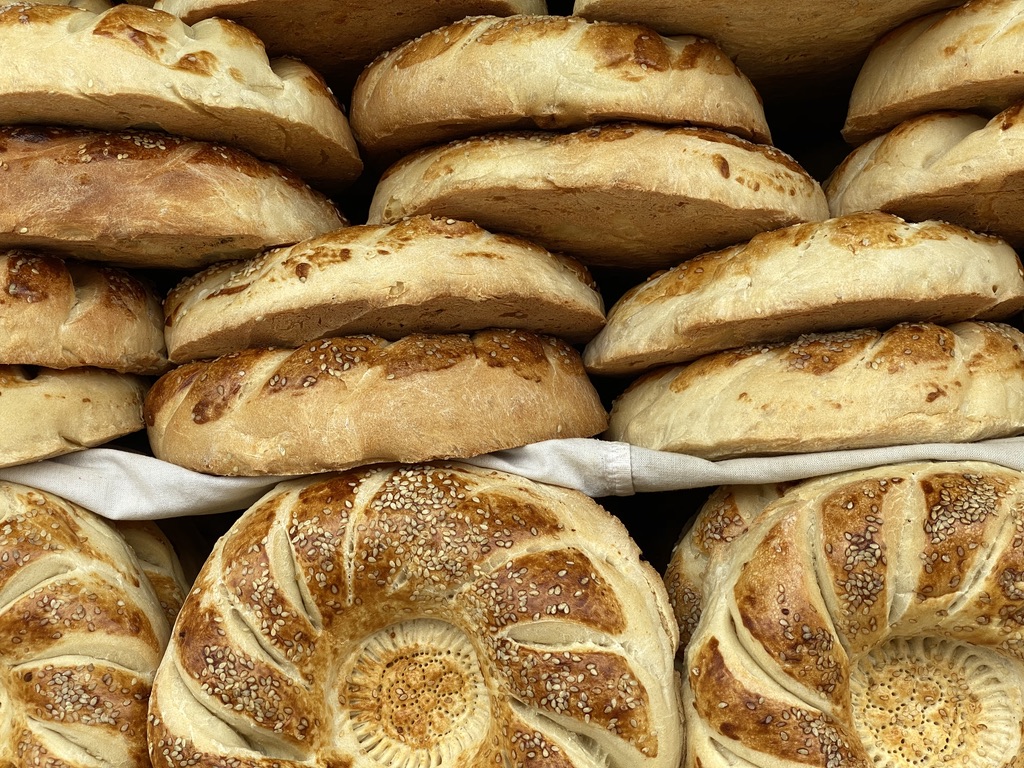
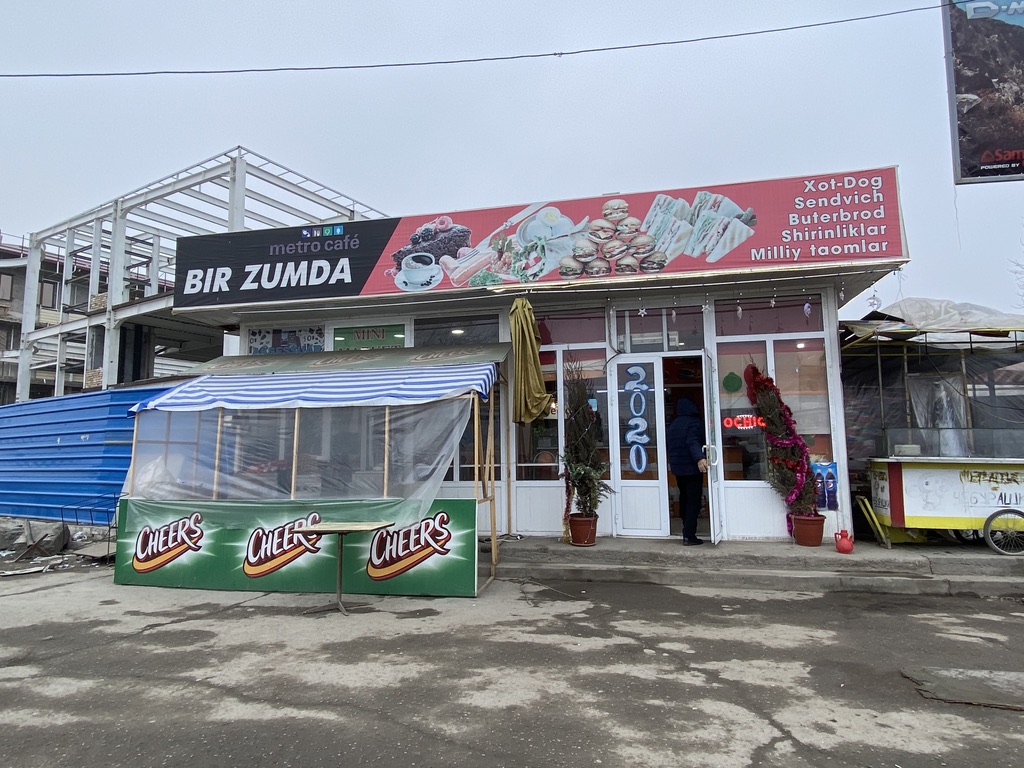
Food was pretty bland, but authentic. Not sure if it all would have been a lot better had we arrived as planned, without the side trip to the Chinese restaurant and the second taxi.
Now we needed a taxi to get back to the hotel.
The waitress came to the rescue. She came outside with us, but didn’t phone for a cab. She stood in the street and suddenly a beat up old car stopped. She talked to the driver and told us he would take us to the hotel. As we got into the car, I saw that she gave the driver a few thousand Som (maybe equal to 50 cents or so). I got out of the car and tried to give her money but she refused to take it.. She said it was a New Years present from her. Clearly, this was not a taxi…. It was more like the old gypsy “cabs” in Brooklyn when I was a kid.. or like the many “informal taxis” that we took in Mexico City when going to and from the colonias populares. Anyway, the guy took us directly to the hotel, although he wisely let us out on the street rather than driving up to the hotel door. He knew the hotel had lots of police nearby and his beat up car would be a give-away! He wouldn’t take any money, since the waitress had already paid.
We strolled to the hotel, and went immediately to the top floor bar (where we think some of last night’s mafia group were also having drinks).
All the best as we approach the final day of 2019.
Fern
December 30, 2019. Uzbek Mafia; Mar a Lago in Tashkent; Markets; Mosques


Greetings from Tashkent on the 30th of December
Where to begin…. First, a few pieces of information I didn’t mention in previous notes:
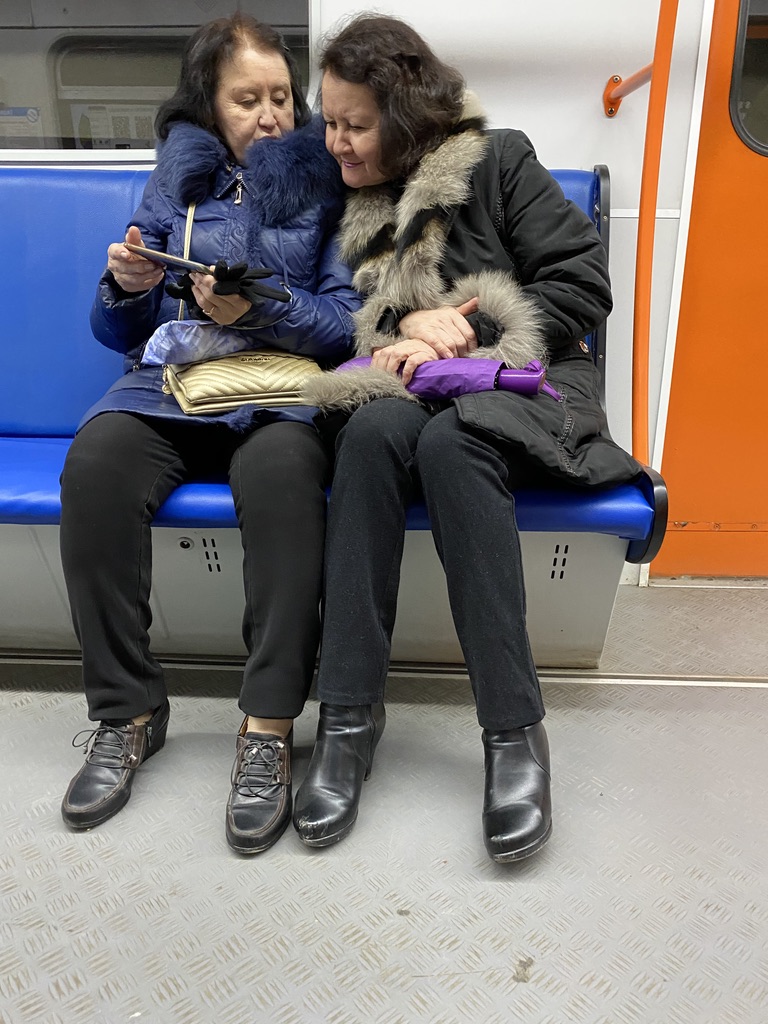
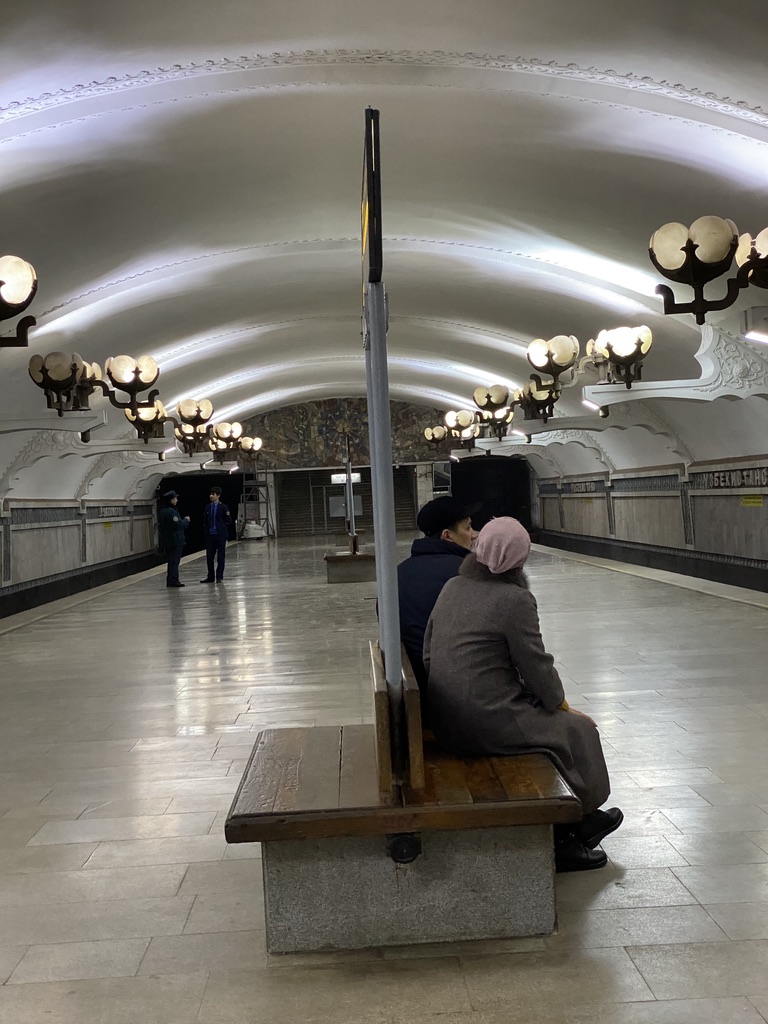
The Metro (pronounced “meeetro” – so now we can ask to find the station; Uzbekis do not seem familiar with any variations to pronunciation) is amazingly clean (almost immaculate) and very safe. Every station has at least two policemen (so far only males) at the entrance and every platform there are two more cops (sort of transit cops) inside the station (mostly they seem to chat with one another all day). There is no litter, no gum on the floors, no graffiti, no begging, no one sleeping in the station. And there is at least one babushka-clad sweeper on each platform — bending down with a small whisk-style brush and an antiquated dust bin made of metal. I think by now we’ve been in more than half of the stations and platforms and I can say with confidence that the above is true. The stations are a bit like museums.
Anyway, we’re quite proficient now changing trains and moving about without hesitation. There aren’t any elevators or escalators – only stairs, So, not sure what people with disabilities do. Clearly we haven’t seen any on the trains.
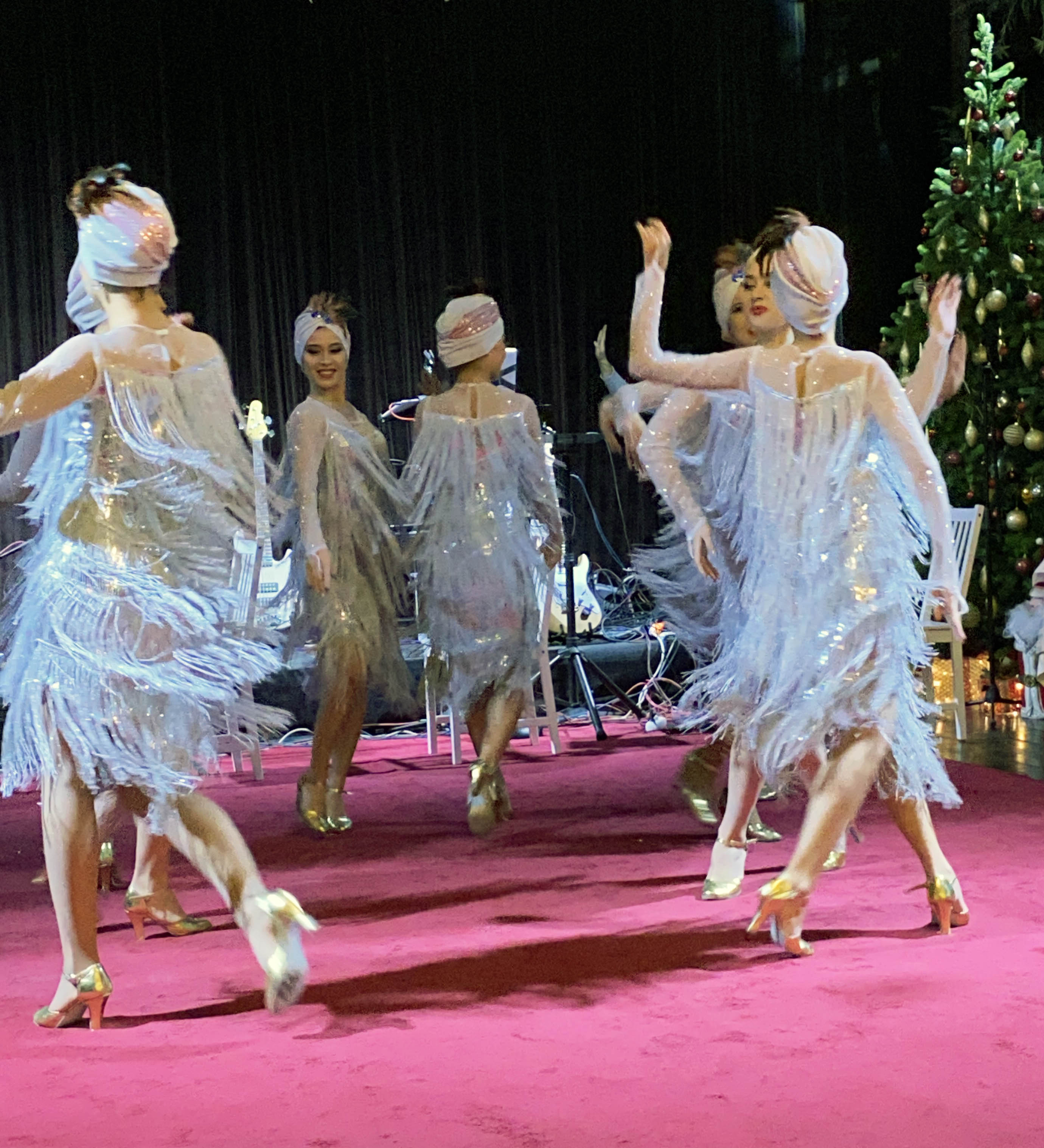
So, last night we asked the hotel for a recommendation for a local restaurant, with good food, casual, and located in a neighborhood. They suggested strongly that we go to Obi-hayot, which was about a 20-minute taxi ride from the hotel. The further we got, the more we thought we were truly headed into an interesting neighborhood and a small local restaurant. Alas, we finally arrived at Obi-hayot which is huge! We walk in and there was absolutely deafening music blasting.. but we learned there was a wedding going on and the music was in a private area (wedding looked like about 200 guests at least – the tables were set in a stepped fashion so that everyone could see the show. So we were escorted into a small supposedly quiet restaurant area. There were about 10 tables set for four to six people at each. About four tables were occupied. As soon as we sat down we knew we were in for an unexpected evening. There was a constant show going on… very loud.. with performers changing about every 10 minutes. It was like a bad cabaret; many of the performances were 1920-flappers and gangsters wearing striped zoot suits!

We’re pretty certain, based on two of the tables that this restaurant is part of the Uzbeki mafia. Two of the tables had men in their 60s with “dates” in their late 20s or early 30s. They were ordering up a storm, dancing from time to time… and the 60-year old guys were trying oh so hard to be cool. Then a Santa-style performer came out and tried to engage the audience, including us… in a strange set where he would sing (or scream) something and then he brought the mic to a table and you were supposed to copy.
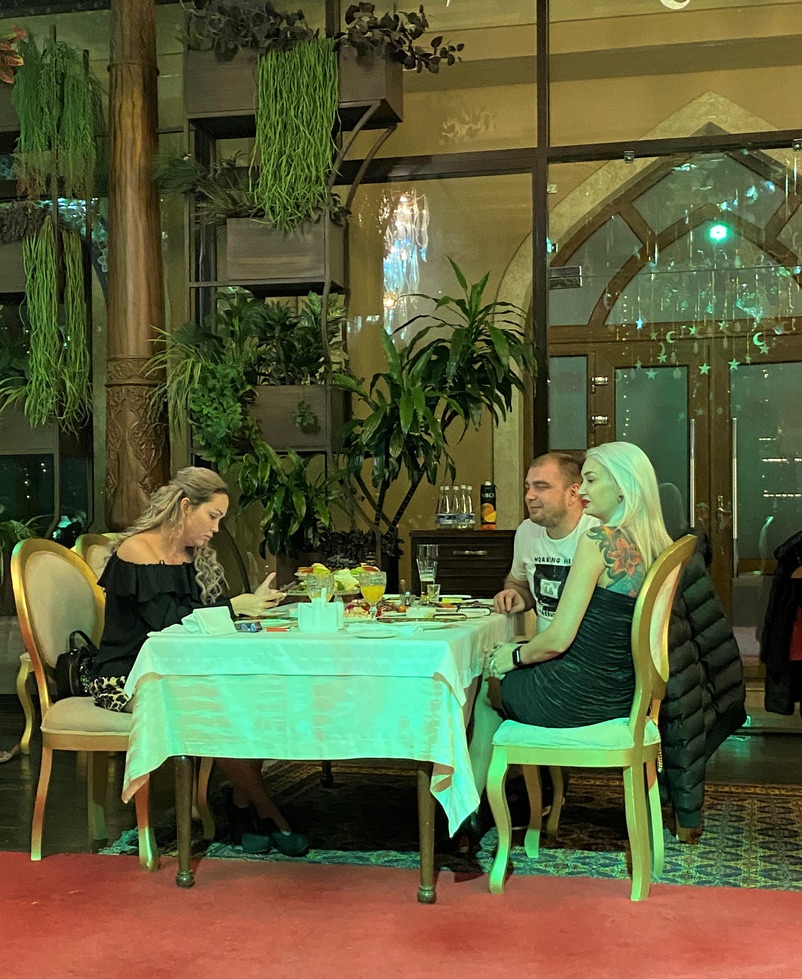

We feigned ignorance and tried to ignore it all, but when the mic was in our face and everyone else (by now the only people left were the two tables of mafioso who had participated in the game)… we uttered something. The 60-year old guys were wearing tight jeans and tee shirts (with large bellies overflowing their belts); the women were all in very tight very short skirts with 4” spiked heels (needle-thin) and low cut tops. (I was clearly over-dressed in a black turtleneck sweater.) One of the guys wore a tee shirt that said “Working Hard at Hardly Working” in English. He was at a different table with his two dates… one a tall slender platinum blonde with a giant tattoo on her left shoulder that looked like a dragon.
Mike says that even the Sopranos would not find these guys classy enough to be part of their “family.” Two of the guys looked like they probably have met up with Giuliani… and maybe Trump would be eating here if he were visiting Tashkent. It had a bit of a mix of the Catskills, Mar a Lago, Las Vegas. All of this group was vaping at some point in the evening.
Actually the food was good, and the evening could have been enjoyable. We were also hit up with a fee for the performance! We headed out as soon as we finished dinner (an eggplant appetizer salad; two kinds of manti; kebabs; and a sort of cheesecake for dessert).
Lots to say about today’s exploration of Chorsu Bazaar.. and I’ll try to write about it when we get back from tonight’s dinner.. at a restaurant we read about called National Food… which the hotel says is not really the name, but that’s how it’s written up in all of the guides we scanned.
More to come in a few hours.
Fern
Christmas (Late) and Arrival in TASHKENT December 27, 28, 2019
Hello and best wishes from Uzbekistan… or should I say “Salom va eng yaxshi tilaklar”
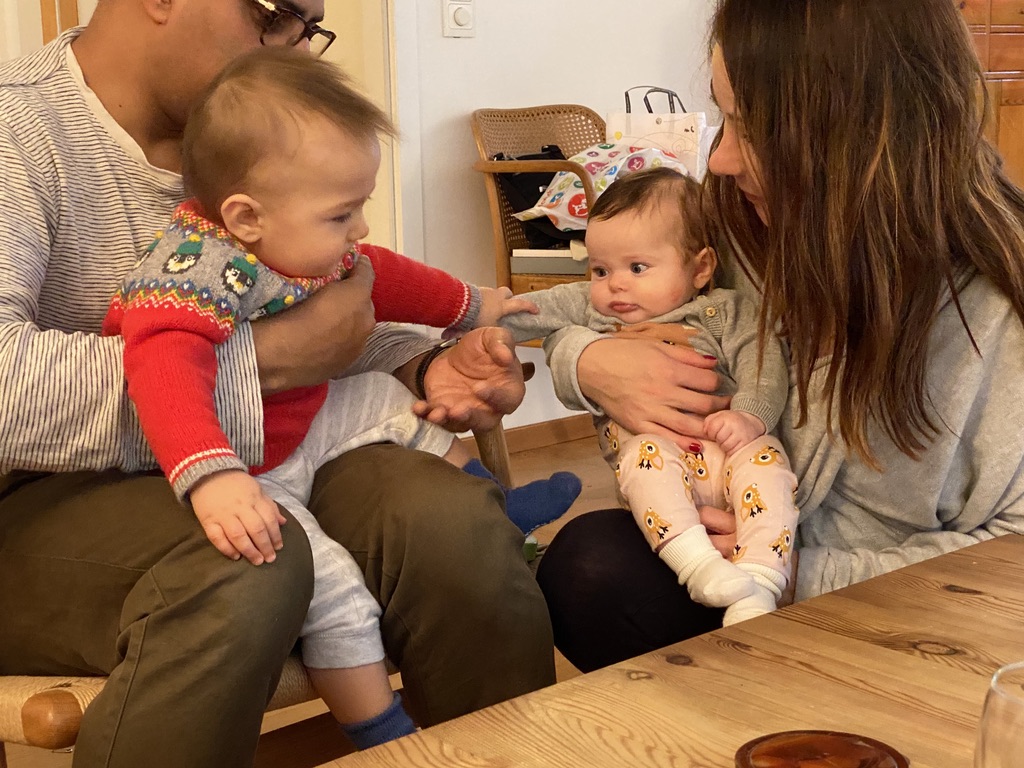
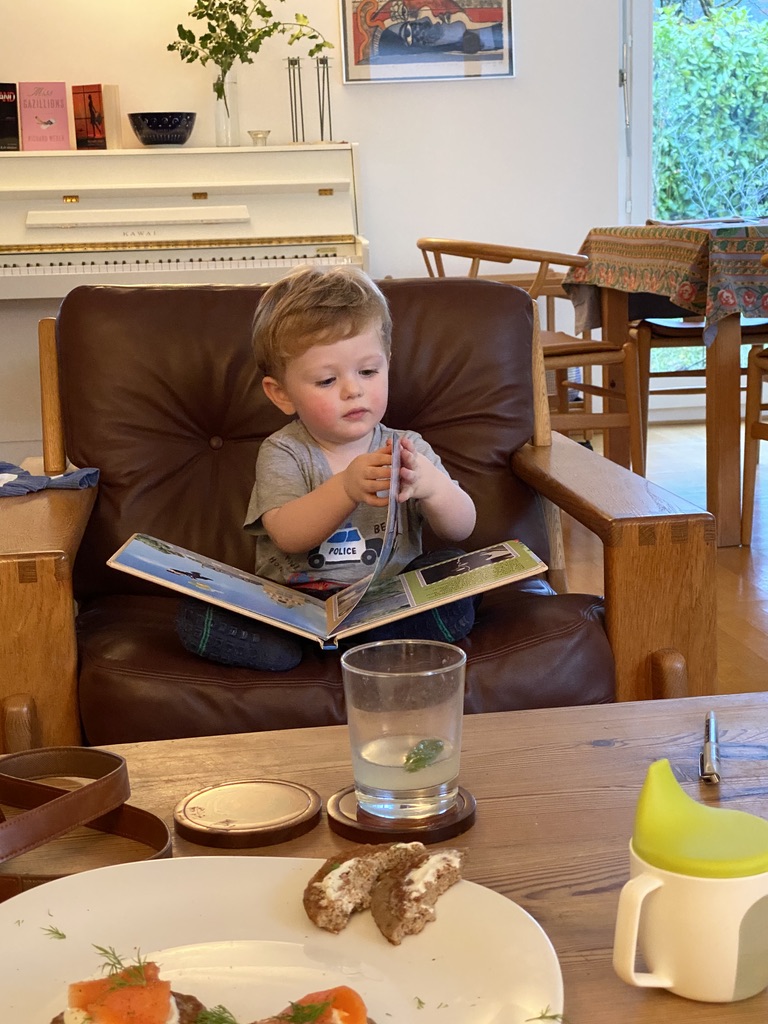
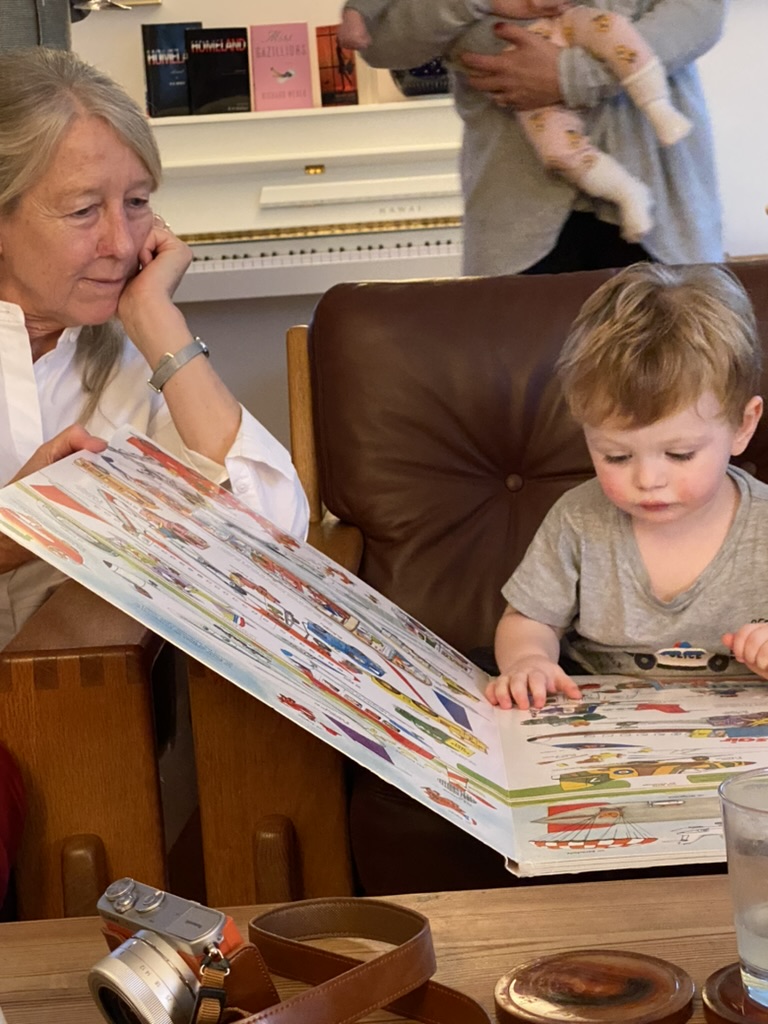
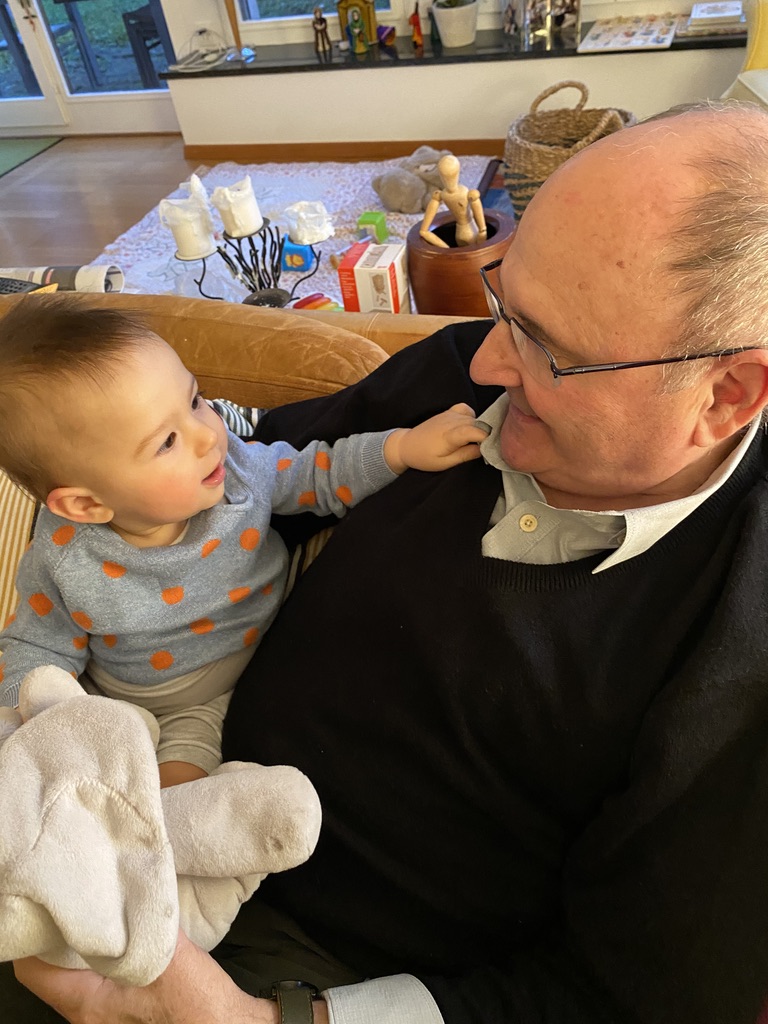
We had our very yummy Xmas dinner and gift exchange at Elizabeth’s on Thursday (December 27) with Mike’s whole family in attendance – Elizabeth, Julia and Julian along with Louis (two years old) and Ella (three months), and Emma and Hem, along with Finn (9 months) and Mike and me. Needless to say it was a bit intense and a lot of very high energy, mostly coming from Louis who is like an energizer bunny – moves from thing to thing and person to person and room to room with lightning speed and stamina.
The meal was great – foie gras on fig bread, blini with salmon, and assorted appetizers; braised duck legs, carrots, and wonderful peas with broad beans, and potatoes… followed by an assortment of desserts including chocolate cake, buche noel, a great raisin bread pudding… and lots of wine and champagne. Gift exchange was mostly focused on the three kids but the adults also exchanged presents. I think we wound up with enough wrapping paper to fuel an entire house. The weather gods were with us, so it didn’t rain (although it was overcast most of the day). It’s been interesting for us to be around three kids so much, but we survived.. and truly enjoyed it all.

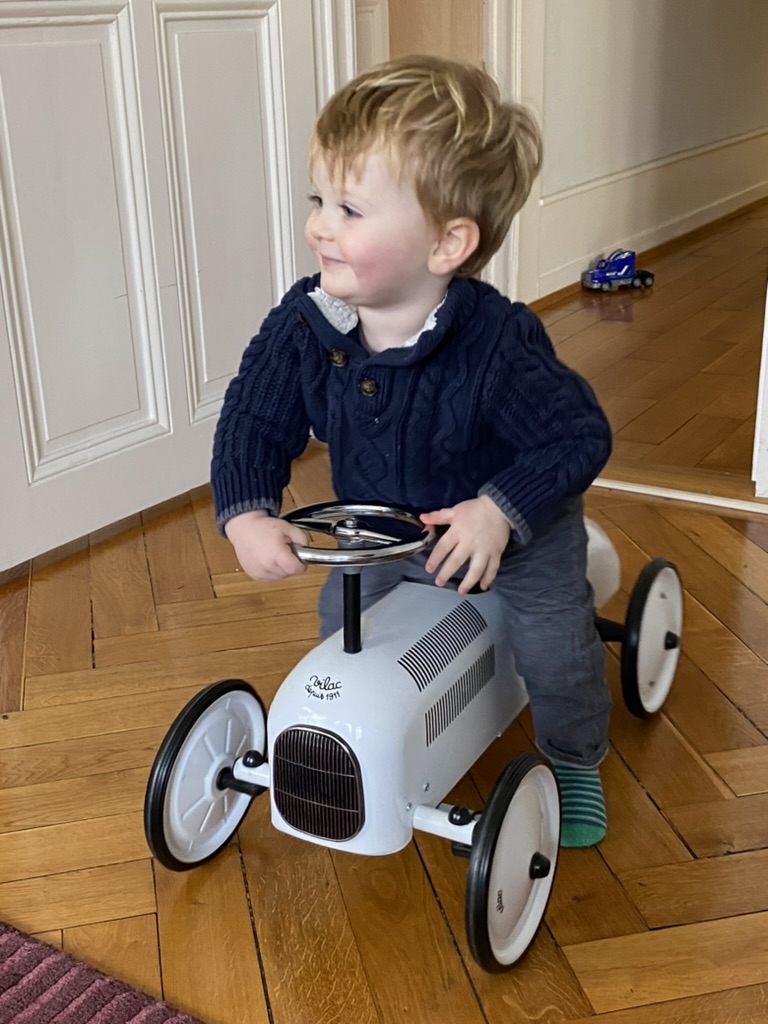
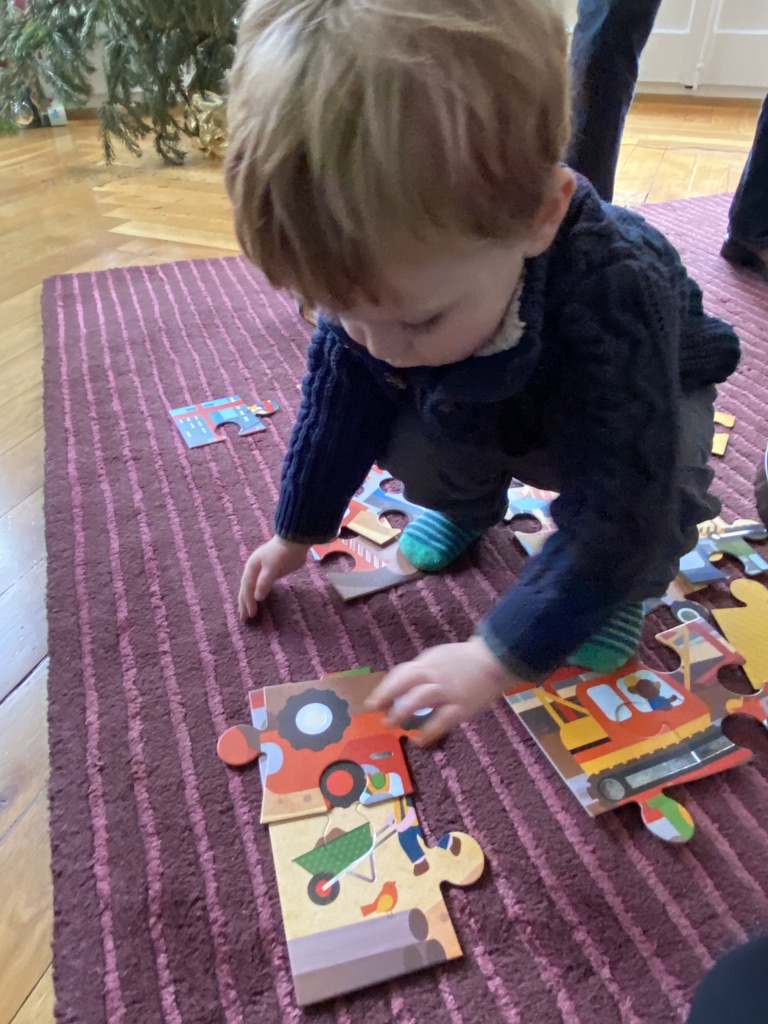
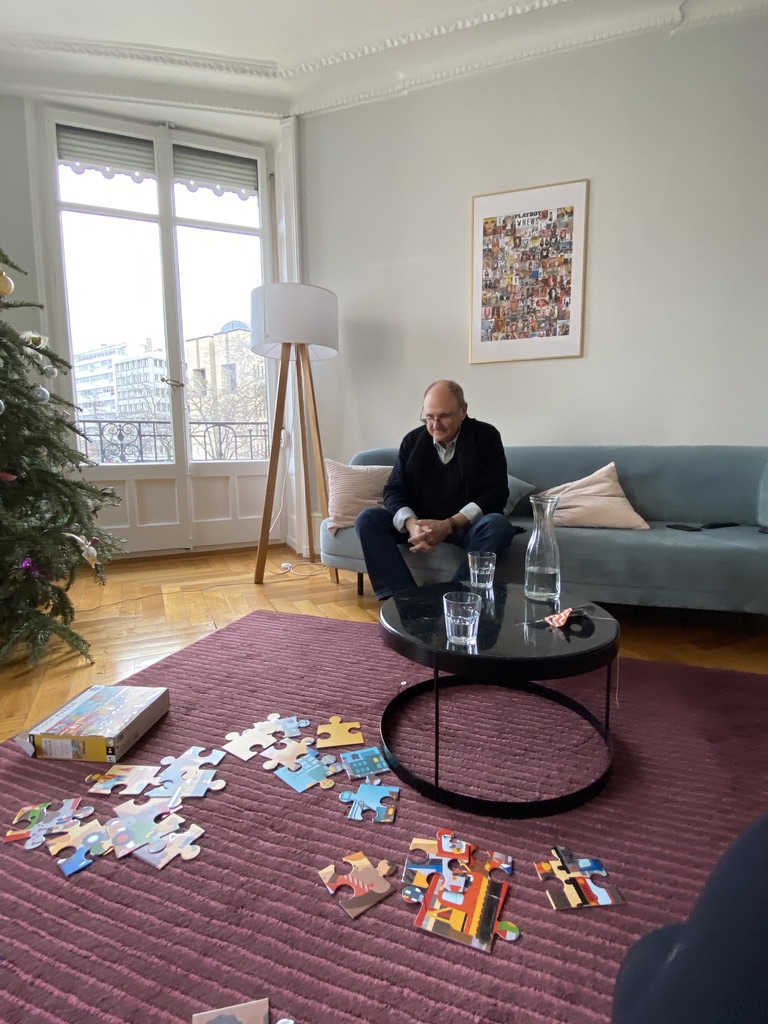
We headed back to the hotel at about 11:00 pm and tackled packing so we could be done and head to Julia and Julian’s for early lunch on Saturday before heading to the airport for our mammoth travel to Tashkent later in the day. JuJu (as Julia and Julian are called by friends) recently moved into a fantastic apartment in downtown Geneva, right near the lake and really in the center of everything – a perfect urban residence: high ceilings (10’ at least), three large bedrooms, a dining room and living room, and very modernized kitchen. The building is from the early 20th Century with floor to ceiling ornate glass doors (windows) throughout; wood floors.. and a long hallway that Louis has turned into a speedway of sorts to ride his various vehicles. We had a wonderful lunch with great cheeses and meats along with salad and lasagna. Julian (ever the Frenchman) told us to taste one of the cheeses (which was wonderful) and remarked and questioned us about where we thought the cheese came from. Shockingly to Julian, it was from the US!! Everyone was there for lunch so it was more of a little farewell (apparently until Spring (??) when Julia and Julian have decided to get married as she is sporting a truly beautiful diamond ring). But timing can change, so we shall see – might be fall.
We hopped into a taxi and headed to the Geneva Airport. We were flying from Geneva to Istanbul, changing planes in Istanbul for Tashkent. We had just one hour to make the connection (and for our bags to do the same)… and by now we knew that the new Istanbul Airport is extremely large… probably a 45 minute walk from one end to the other… We dashed off the plane and headed to the gate for Tashkent (fortunately it was all on Turkish Air… got to the gate just in time — but of course there was a delay.. So all that effort for naught.
Anyway, on this longer second leg (which flew through the night), we had upgraded ourselves to business class so we could at least relax, if we couldn’t really sleep. We landed in Tashkent at about 7:30 am, rather tired… and then all the fun began!

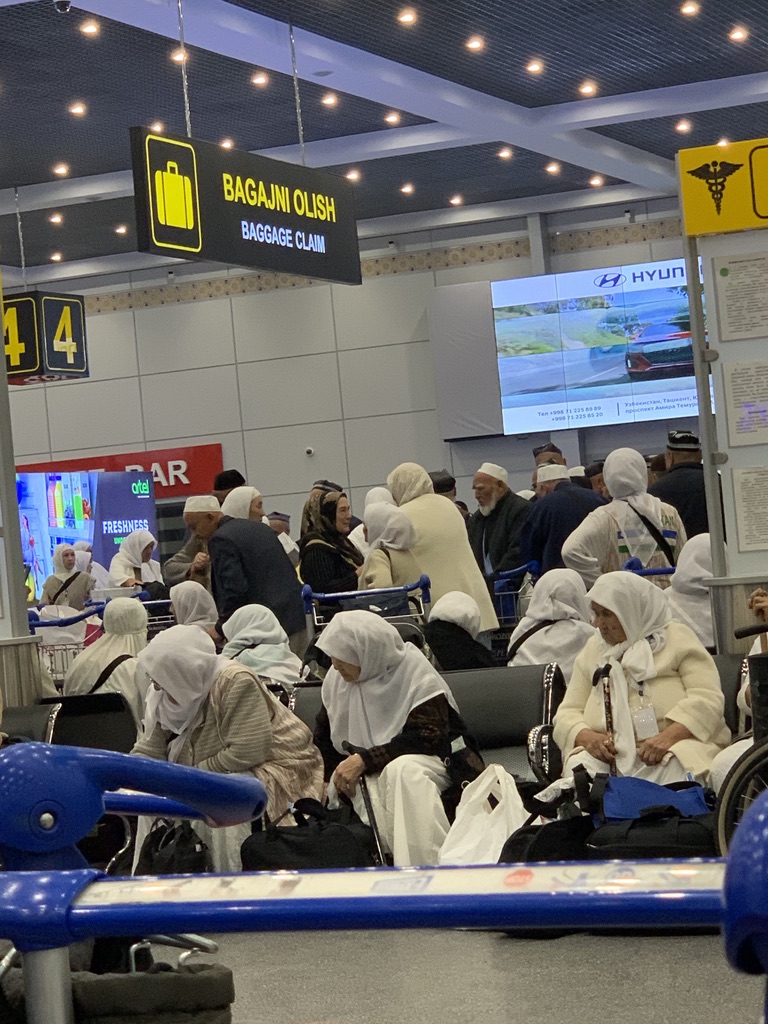
We stopped at the ATM machine and withdrew cash in Uzbek “Som”… 10,000 som equals $1.00. So taking $100.00 out in the ATM machine gave us each one million som, which they dole out at the machines in 50,000 som bills… Thus my wallet is so fat I cannot close it. Then we navigated the taxi situation. We stopped at a taxi desk, and although they said they didn’t have any taxis for the next 20 minutes (which we didn’t want to wait), they told us that the ride should cost 40,000 som ($4.00).. We walked out of the terminal where there were hordes of Uzbekis waiting for family and friends.. and also some important person. There were people who had laid out rugs forming a walkway for someone to walk through.. and they had also covered these rugs with white sheets to keep them clean in case someone like us walked on them. No they were not for sale. We noticed there was a large group of women and men dressed in “holy” clothing who were gathering up their luggage from a different flight. They seemed to be circling one guy, so maybe he was some important person. Anyway, police made these people move a bit so that Mike and I could get to the taxi line.. When we got there, there were about 20 taxis waiting and everyone wanted to take us… but when we asked the price they all said 100,000 som ($10.00). While the amount wasn’t the issue, as seasoned travelers, we hate to feel taken advantage of… We said we were told 40,000 som (all of this being done without any real language compatibility) and we were willing to pay 50,000 ($5) but not $10… Then one taxi driver said or rather motioned that he’d take us for the 50,000 som.. And off we went to his taxi which was parked in a long line of taxis just outside the airport.. waiting to get inside to be on the taxi line. I guess he figured 50,000 som was a good deal since he’d have to wait about an hour in line to possibly get a $10 fare. Anyway, he drove us to the hotel and all was good.
Because we knew we’d be arriving very early in the morning, exhausted from a messy trip – and because we really couldn’t find any interesting local hotels in Tashkent — we had decided while in the states to stay at the Hyatt Regency. We also remembered from our travels in Tibet a few years ago that sometimes in these countries it’s good to be in a bit of a reliable location and have some cushy service. We knew that the remainder of the trip in Uzbekistan would be in very small, local inns. So, here we are at a very new Hyatt with spacious rooms, broad corridors, well-appointed furnishings, and lots of service. We grabbed breakfast before heading to the room and then settled in (I settled in, unpacked, and started this note… Mike went to sleep). At 1:00, we decided to start our exploration of Tashkent (of course it was raining)… We decided to head to see the Metro stations, which are famous and you’ll soon see why. Originally, we thought we’d take the train to random stops — get off and see neighborhoods, similar to what we had done in many other cities – but given the rain we just rode the subway, getting off to photograph stations and getting back on… transferring to other lines and doing the same thing.
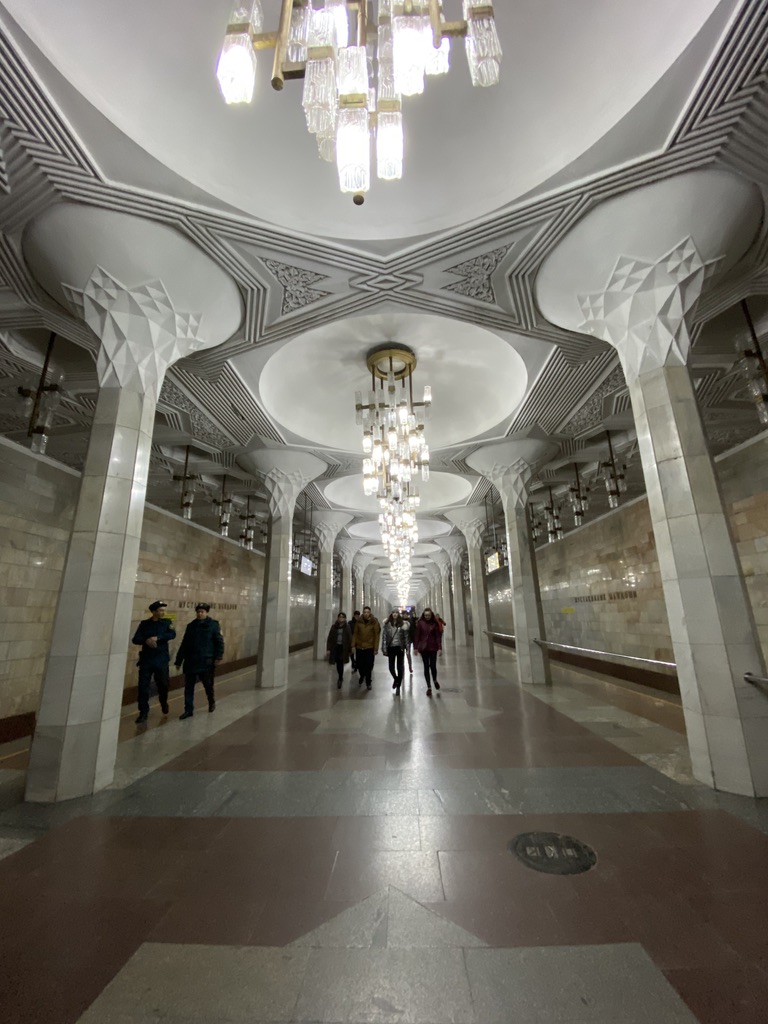
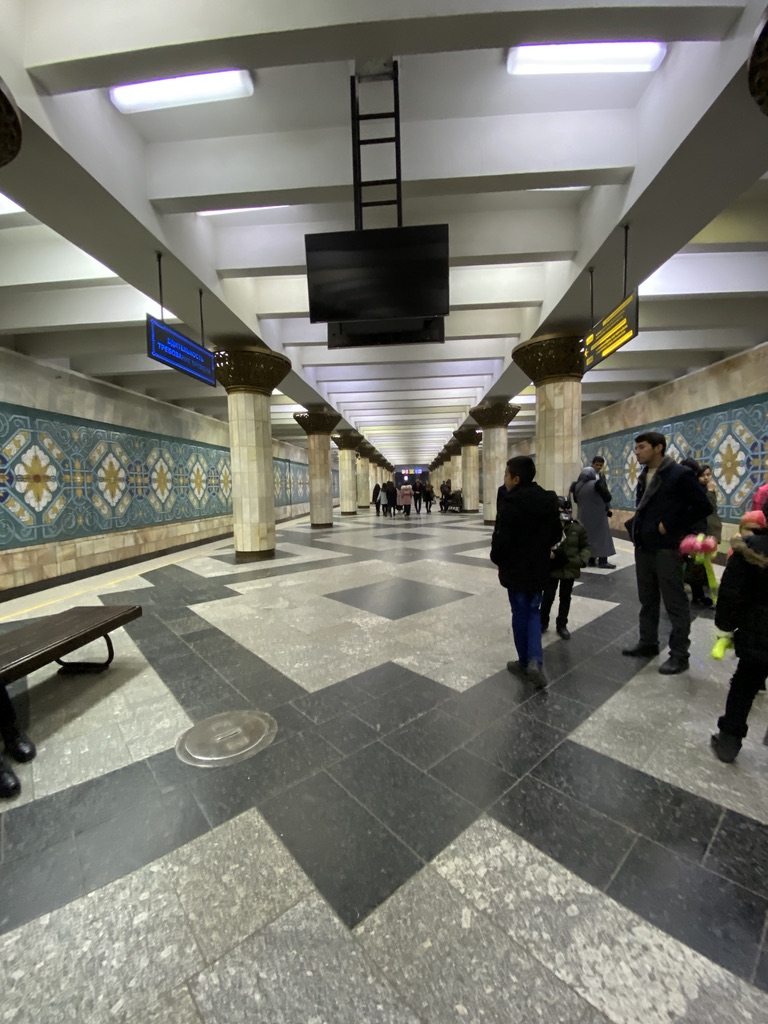
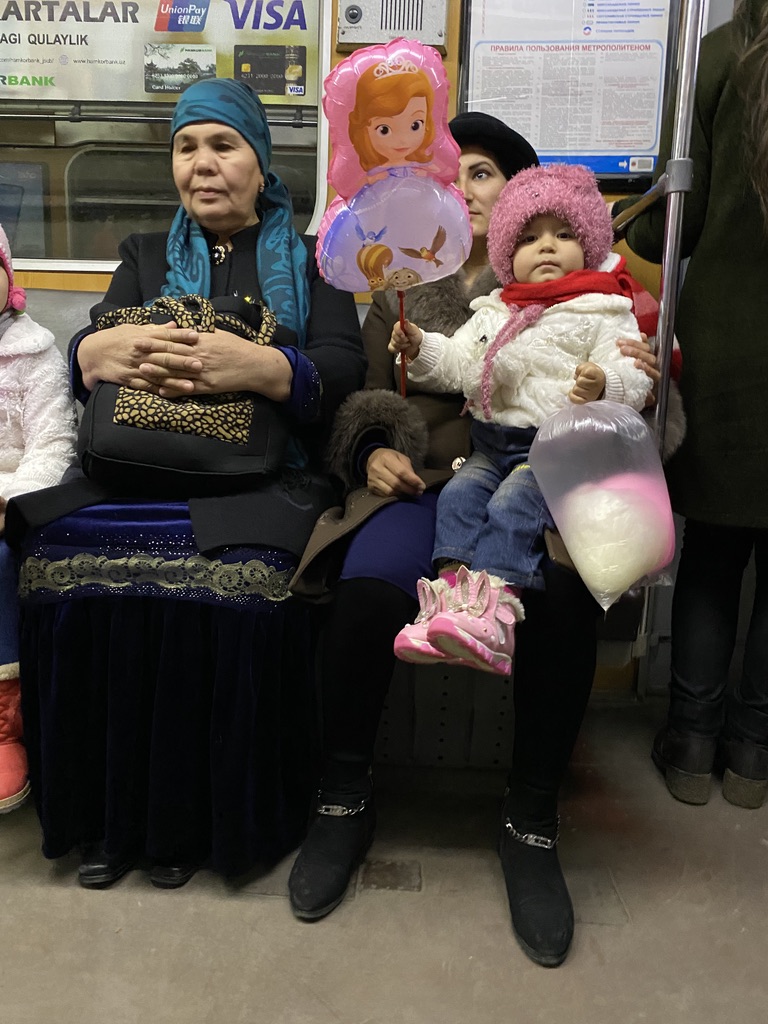

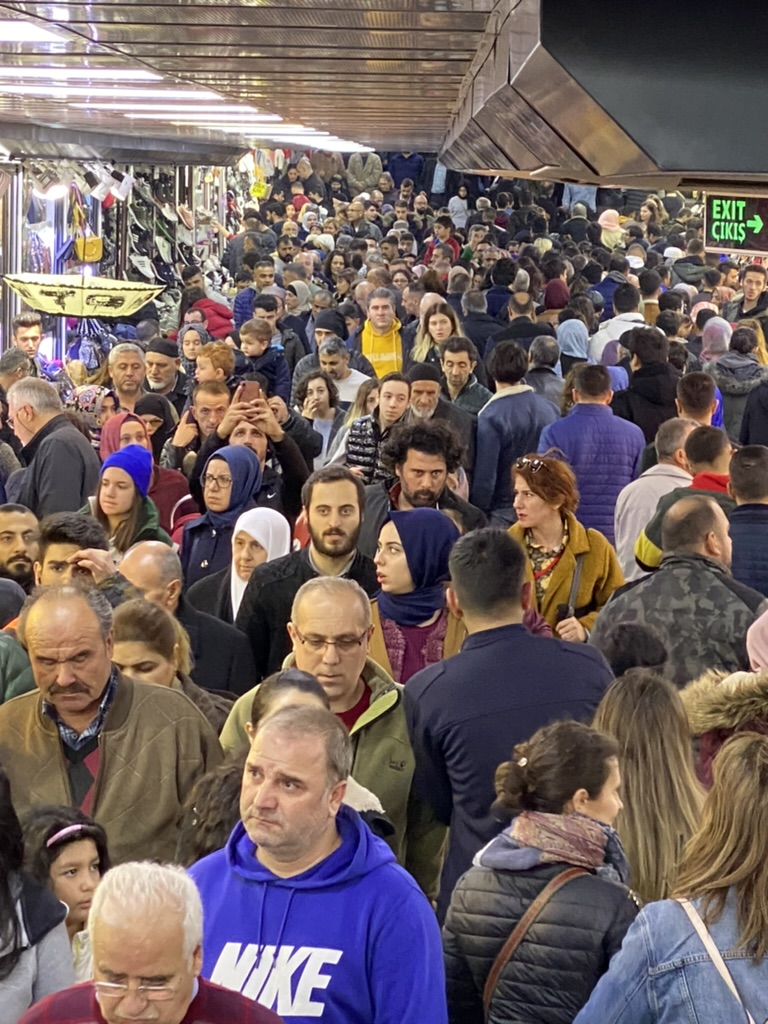
But first we needed to find the closest station and that turned into quite a project. We stopped police and random people but no one could give us information because they didn’t understand what we were asking. We did find the station — Mustaqilliq Maydoni ! It costs less than 14 cents to take the subway anywhere as long as you don’t emerge onto the street.. Once you leave the station and go back you have to purchase another token for another 14 cents. Anyway, the big deal is that the stations are incredible – ornate, often with themes (like the cosmonauts or Pushkin); and needless to say they are immaculate (as are the streets we’ve seen thus far). The Metro has 29 stations and three different lines – red, green, and blue. It was fairly simple to navigate (except that we couldn’t pronounce any of the station names). People bustling about on the trains could almost be anywhere (well, sort of) – with teens wearing ear buds, and most people with cell phones (Chinese brands), and everyone wearing down since it’s chilly.


Tashkent is interesting in that it suffered very sever damage following an earthquake in 1966. The old Soviet Union immediately began rebuilding – some of it done to replicate what had been in the city, but also creating Soviet blocks and some call the city’s style Soviet Modernism. The area where the Hyatt is located is a lot like my memories of Moscow so many years ago.. long broad boulevards. By the way, en route from the airport to the hotel we saw babushka-clad women sweeping the roadways with brooms that had extremely long branches for handles.
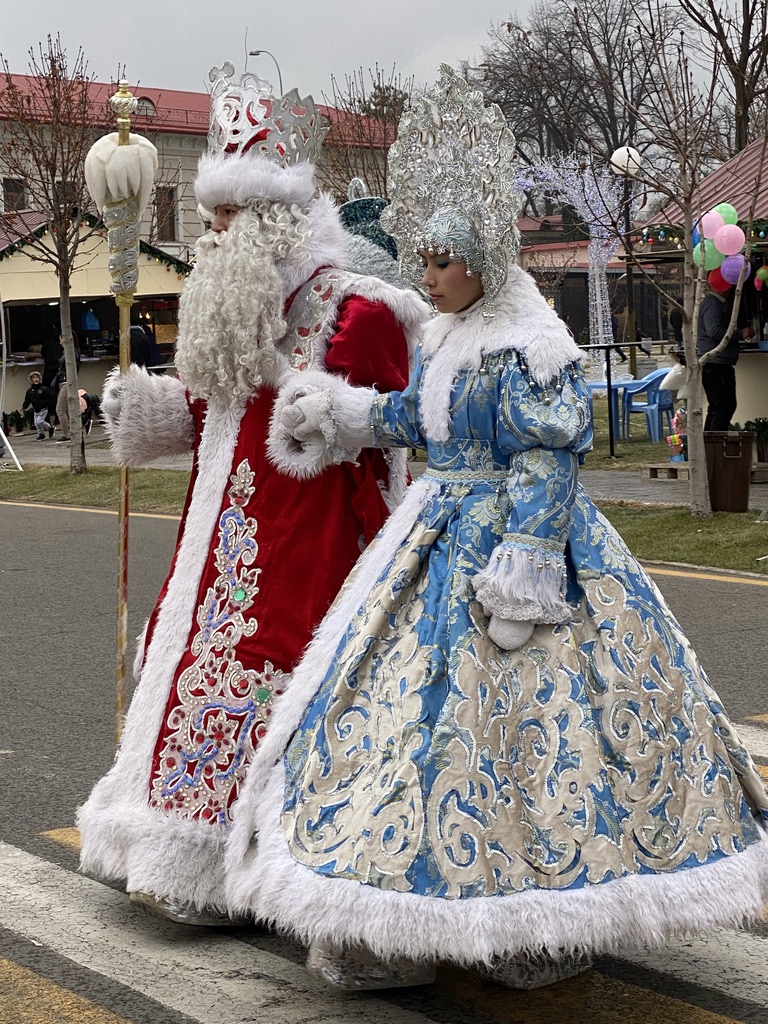
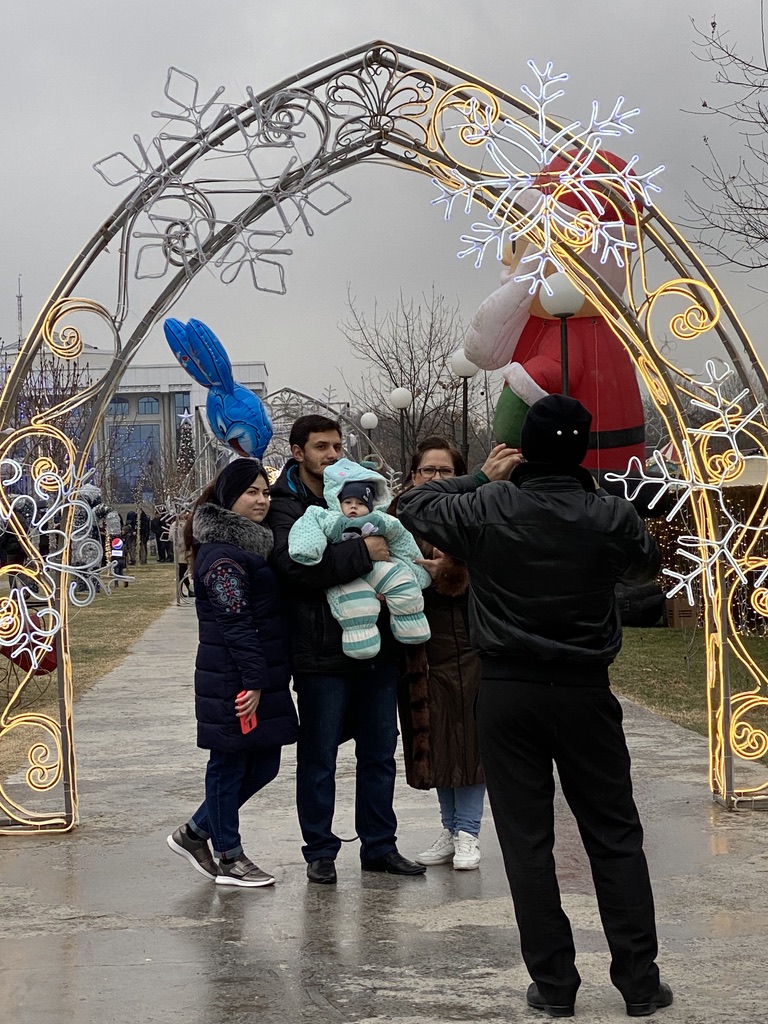
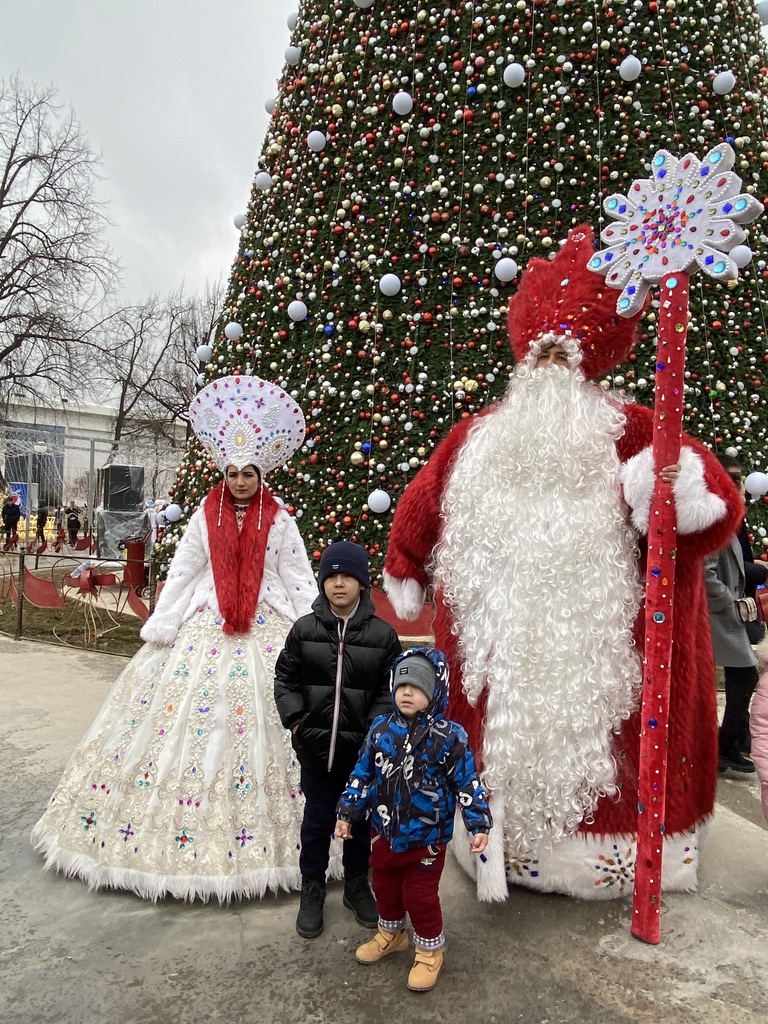
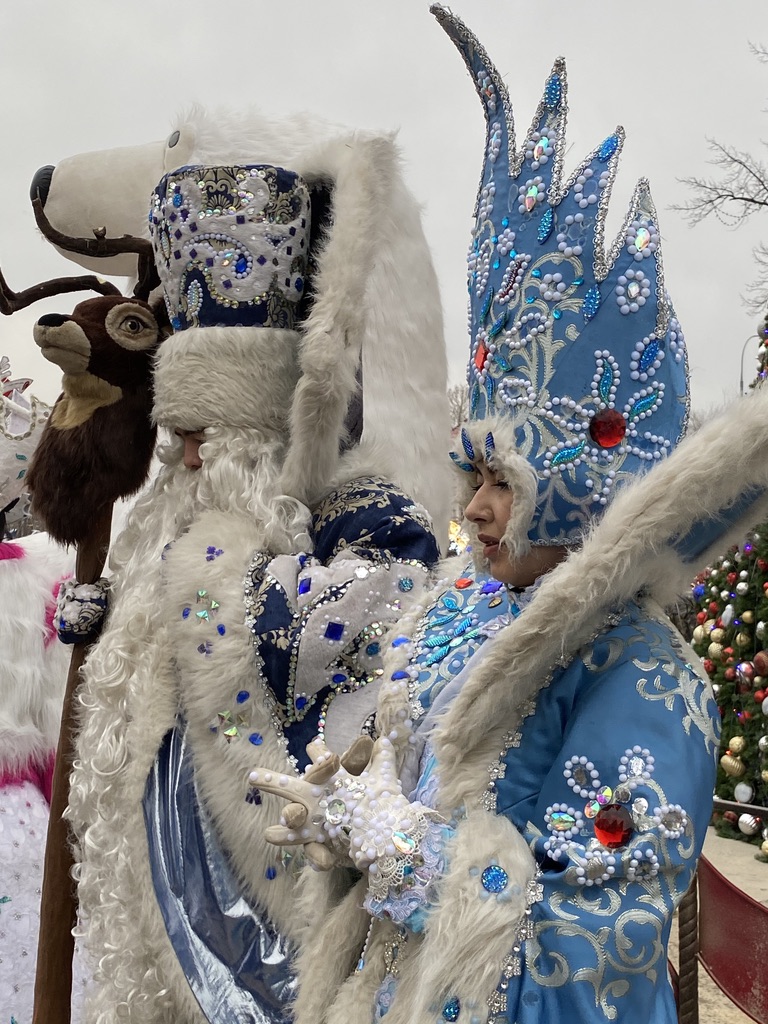
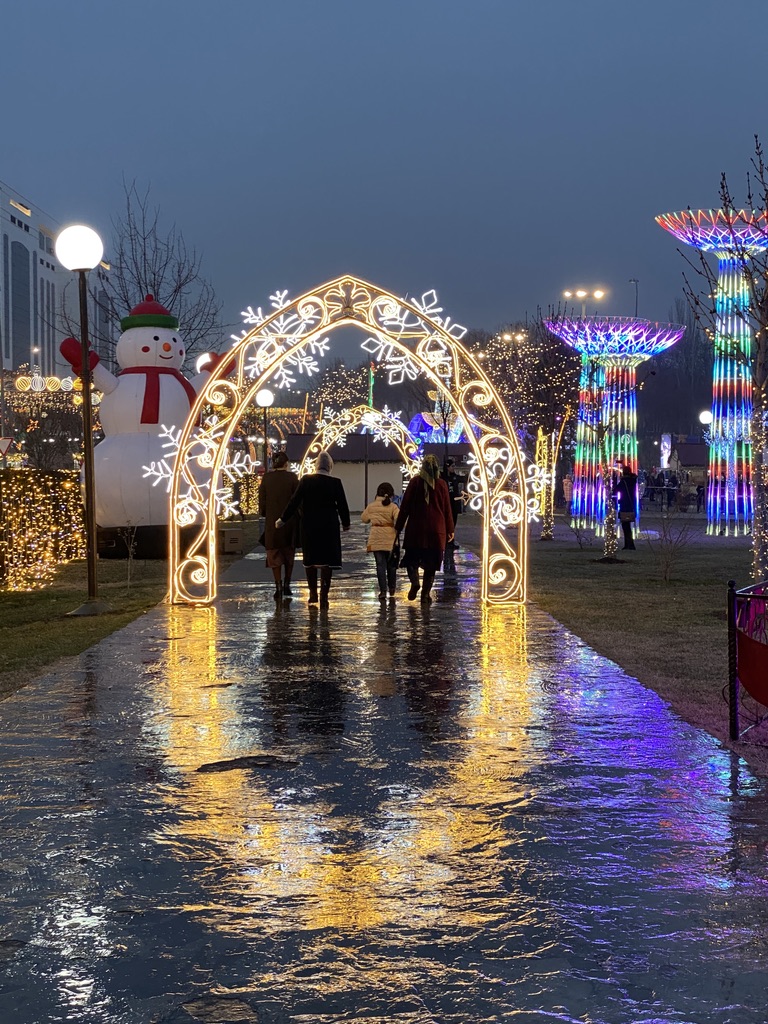
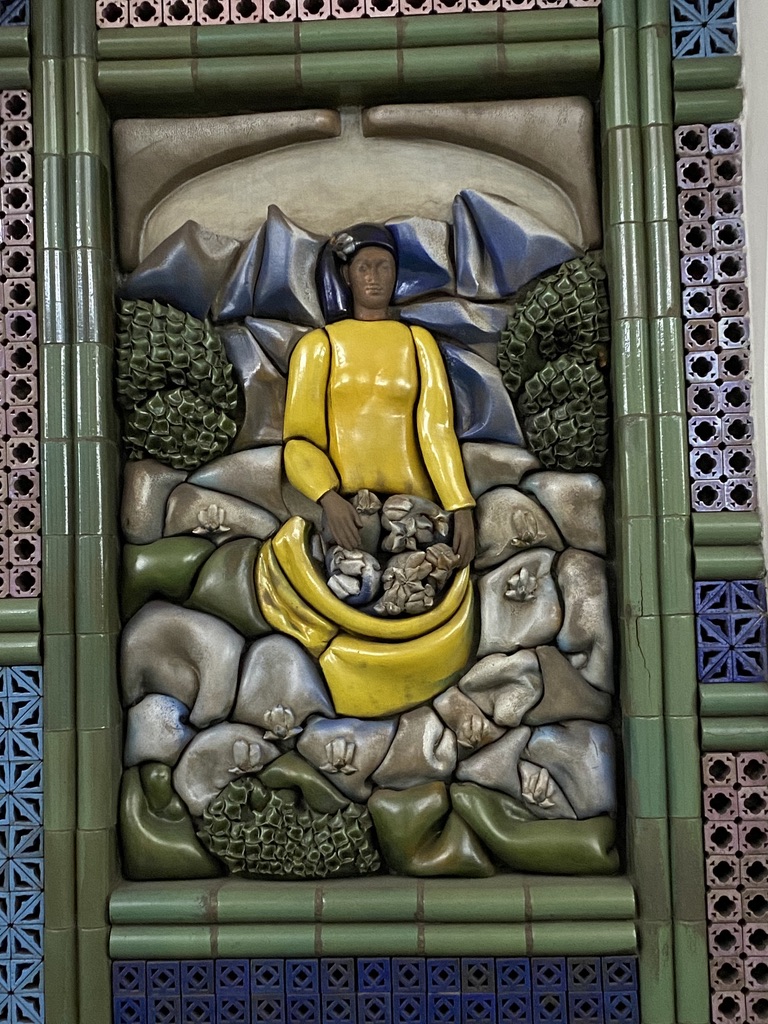
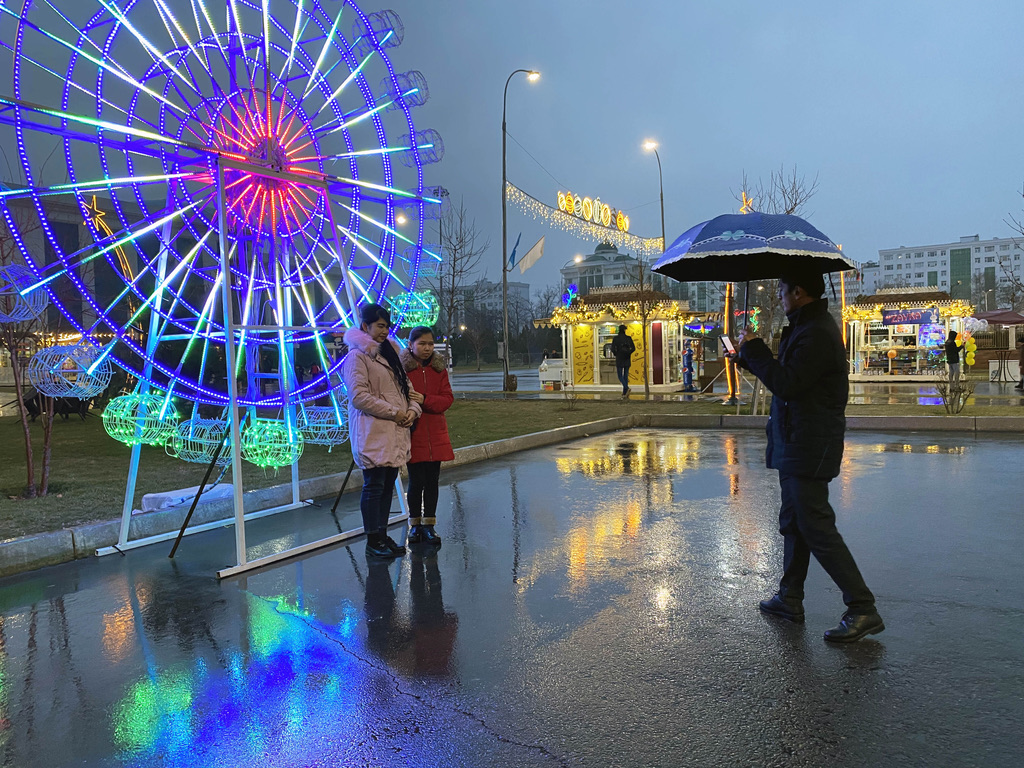
The subway was opened in 1977 and there is still some expansion going on. The architecture and decoration of each station is tied to the station’s name. Apparently, prominent architects and artists of Uzbekistan were involved in the design of each station. They used marble, metal engravings, plastic, granite, ceramics, and more. Some stations were renamed after the fall of communism. After meandering different stations for a few hours, we then had to seriously figure out how to get back to our station, which we did. Then as we strolled to the hotel we walked through a somewhat bizarre Christmas (or Winter) Fair, with all sorts of people dressed as Santa or Father Time and also Winter Princesses. There were lots of ornate light structures as well. In spite of the rain people were out with kids.. and the place was a photographer’s heaven with everyone taking pictures of everyone else. And there were “official” photographers offering to take “professional” pictures for a fee. We strolled in the rain taking our own pictures of people taking pictures.. and suddenly we were stopped by a young woman.
She was a reporter for Tashkent News and wanted to interview us for the nightly news program. Her English was extremely weak, but we agreed.. We were soaking wet, so don’t think we will look too great. Her questions were quite simplistic and expected: What did we think of Tashkent and why had we come. She was quite excited to learn we were Americans and from California !! So, stay tuned, maybe the piece will go viral (I pray not)…
OK.. that’s it for today.. lots more to come as we explore the city over the coming two days and then rent a car to drive to Samarkand and Bhukara.
Best –
Fern
Christmas in Geneva 2019 (12/25 and 12/26/19)
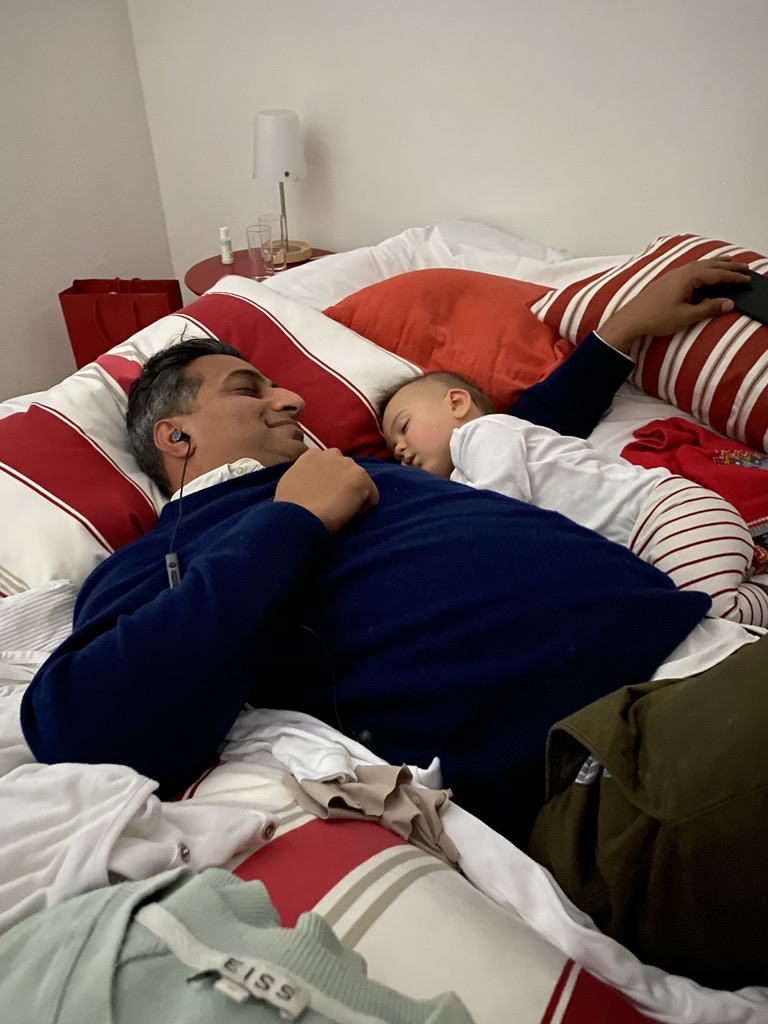
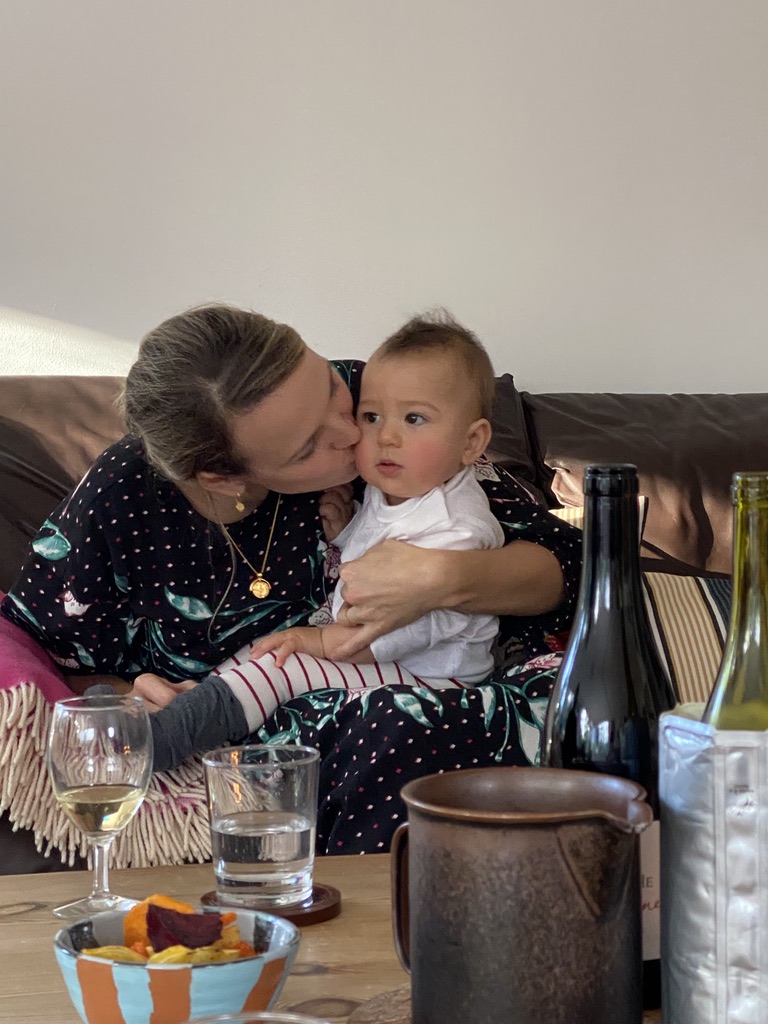
Greetings from chilly but remarkably sunny Geneva – Joyeux Noël et bonnes fêtes
25 Décembre 2019
Short note today…Quick breakfast at our new favorite place down the street, Christie’s Bakery … a walk in the very very quiet Christmas Day streets of Geneva…. Back to the hotel to get some work done (work!), and then with buche noel (from Christie’s) and fig bread (purchased at the Christmas Fair) in hand – we headed to Carouge for Part One of Christmas dinner at Elizabeth’s.
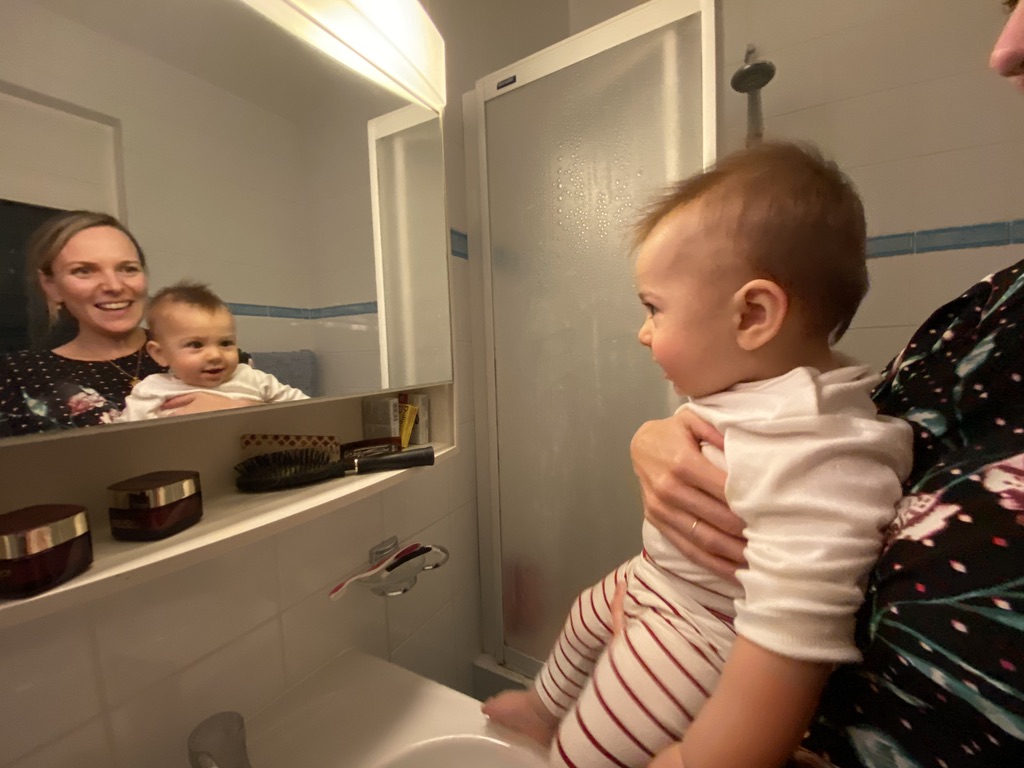
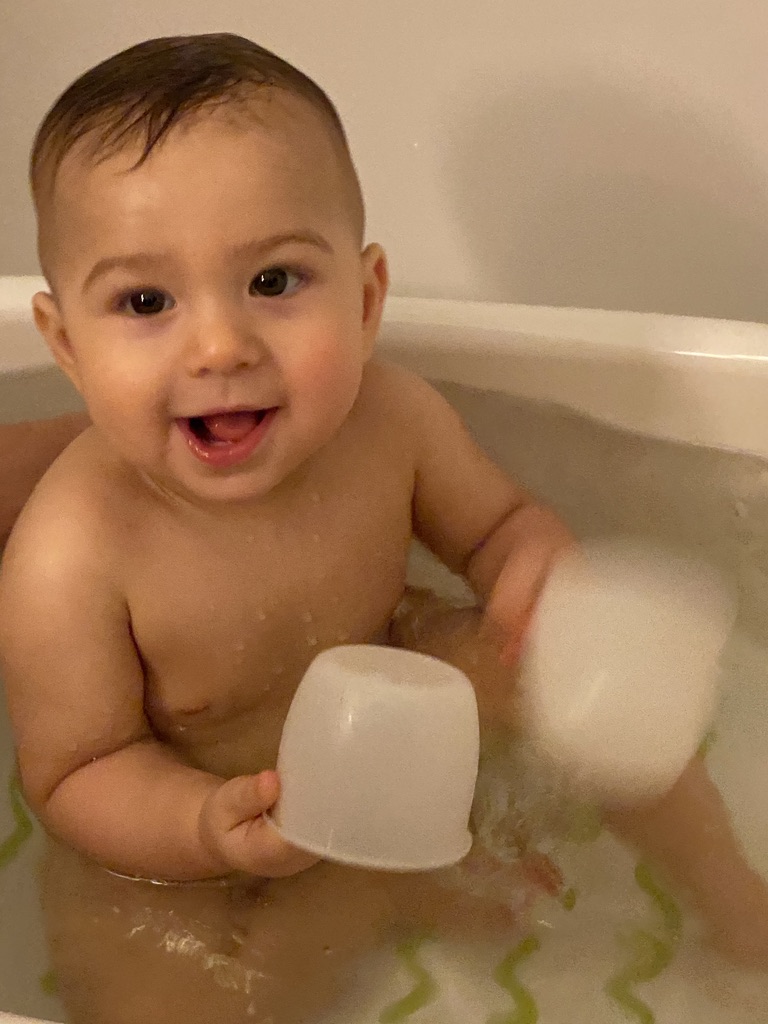
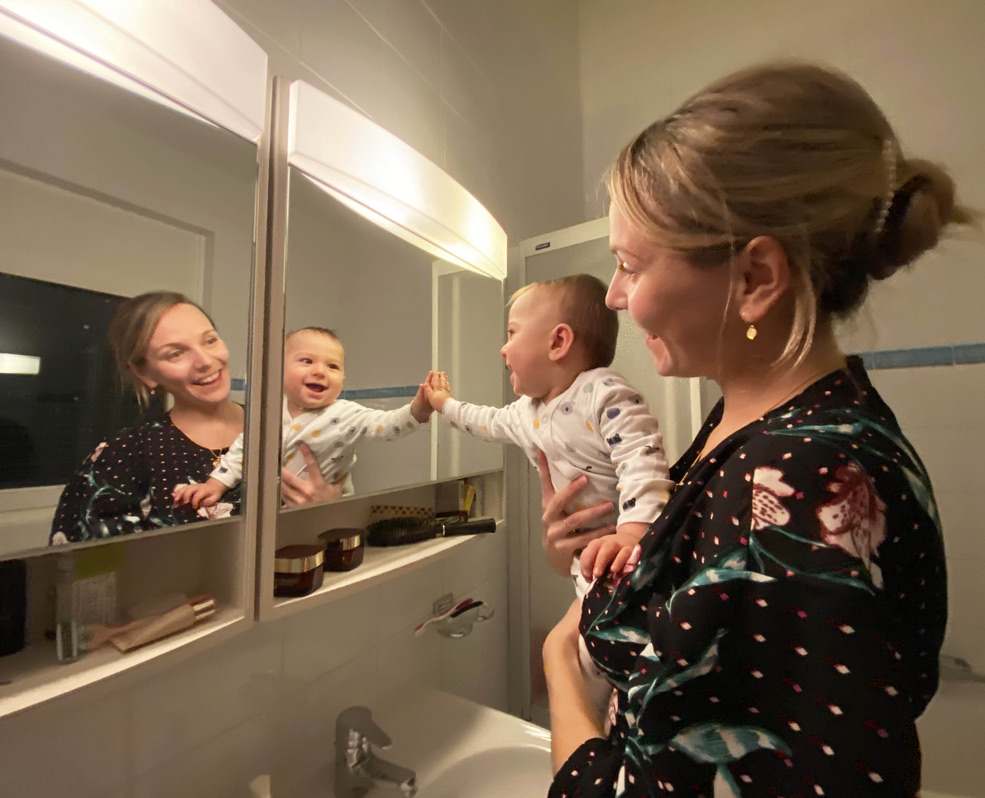
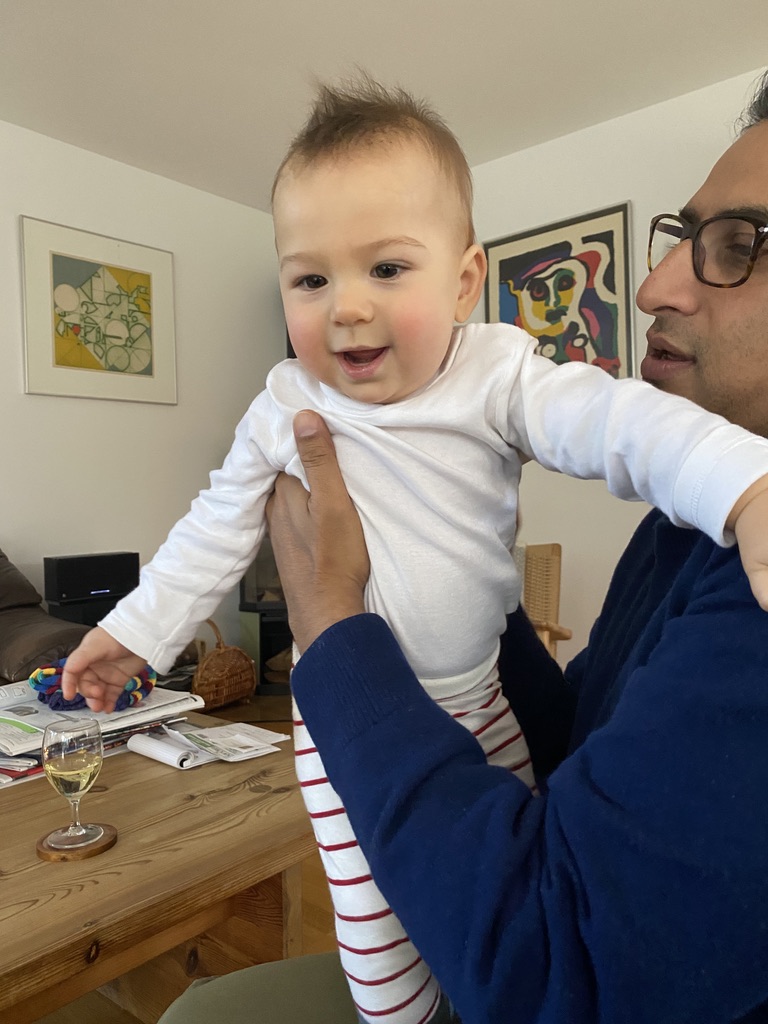
Arrived as Finn rose from his nap (Mike decided he want’s Finn’s schedule – three naps each day) and we all settled in for a long afternoon and evening of eating, catching up, conversation about politics in US, Europe, and elsewhere… and watching Finn do whatever 9-month-olds do. We left Carouge at about 10 pm and much to Mike’s chagrin, we walked back to the hotel – about 45 minutes. Felt good after all that food and drink. It was about 45 degrees but felt warmer.

26 Décembre 2019
Now that we are regulars at Christie’s, we stopped in to compliment them on the Buche Noel (which was a chocolate version) and to have yet another breakfast. Then I headed for a leisurely stroll to downtown (about 15-minute walk) and Mike headed to the Ethnographic Museum.
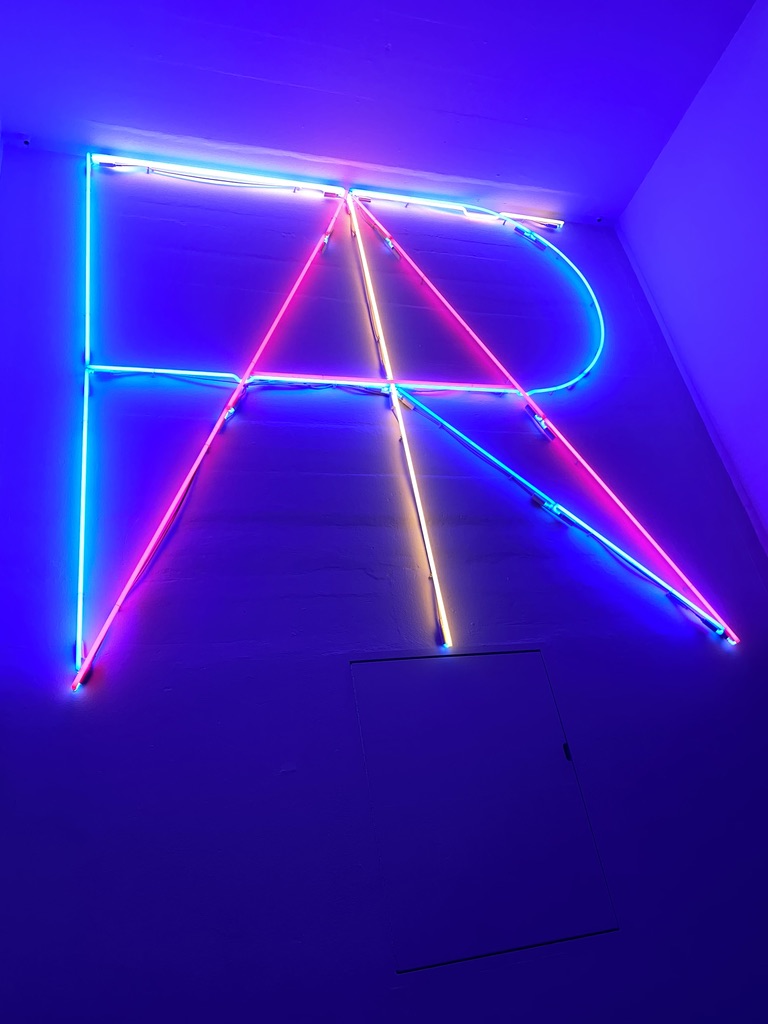
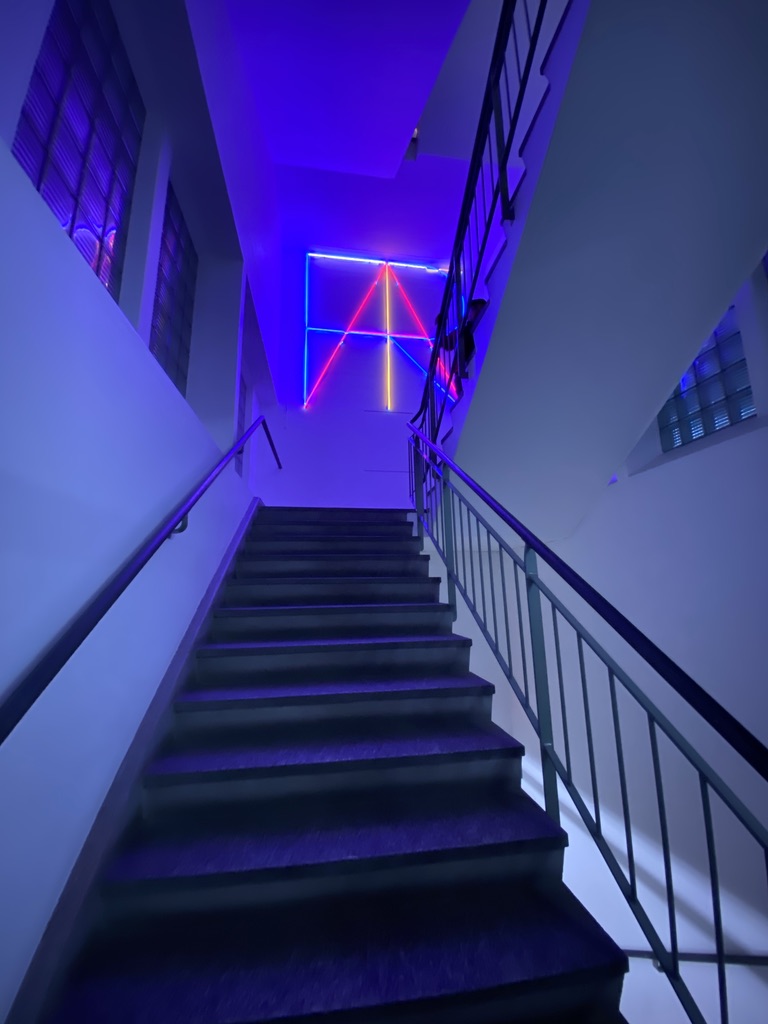
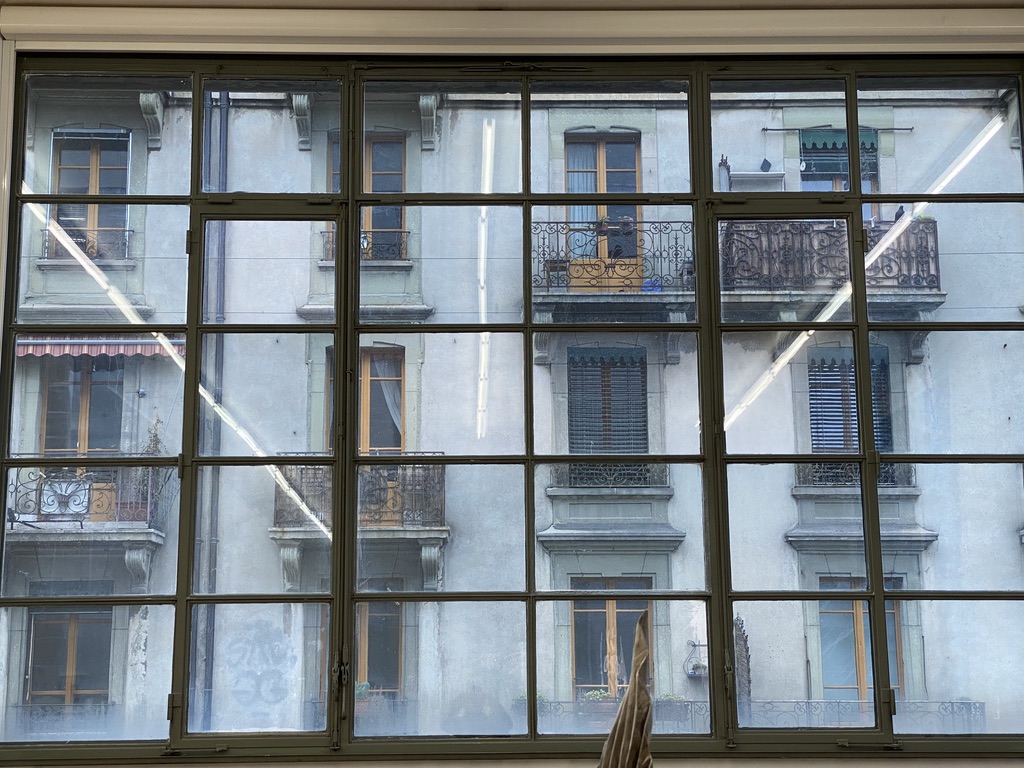
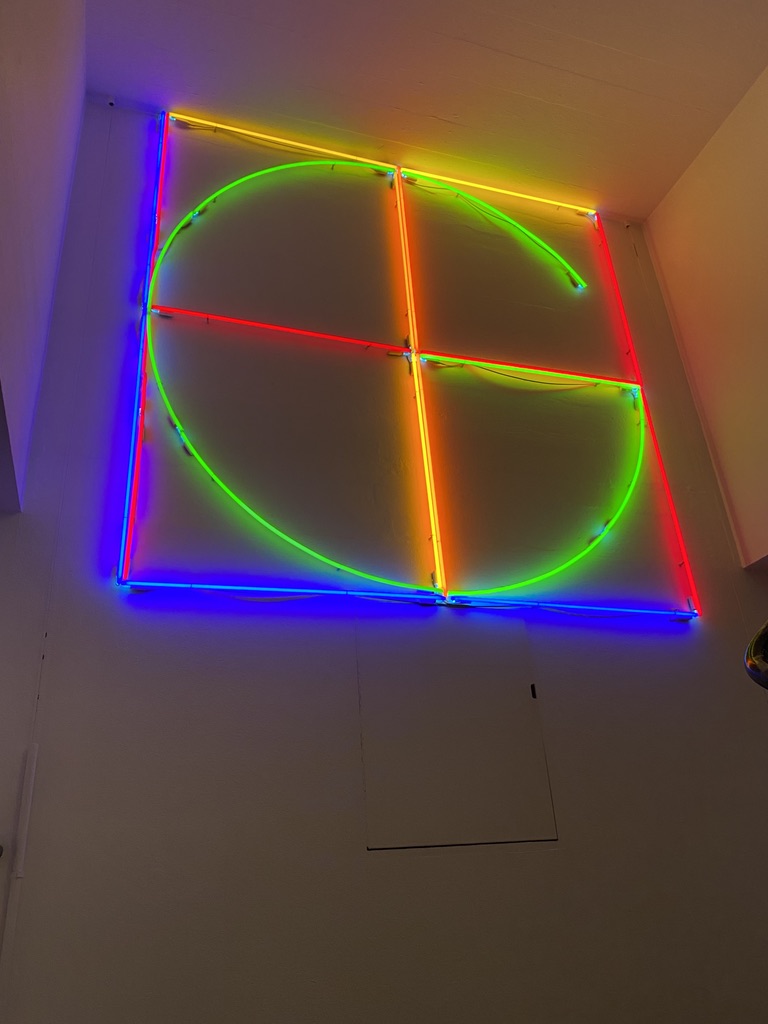
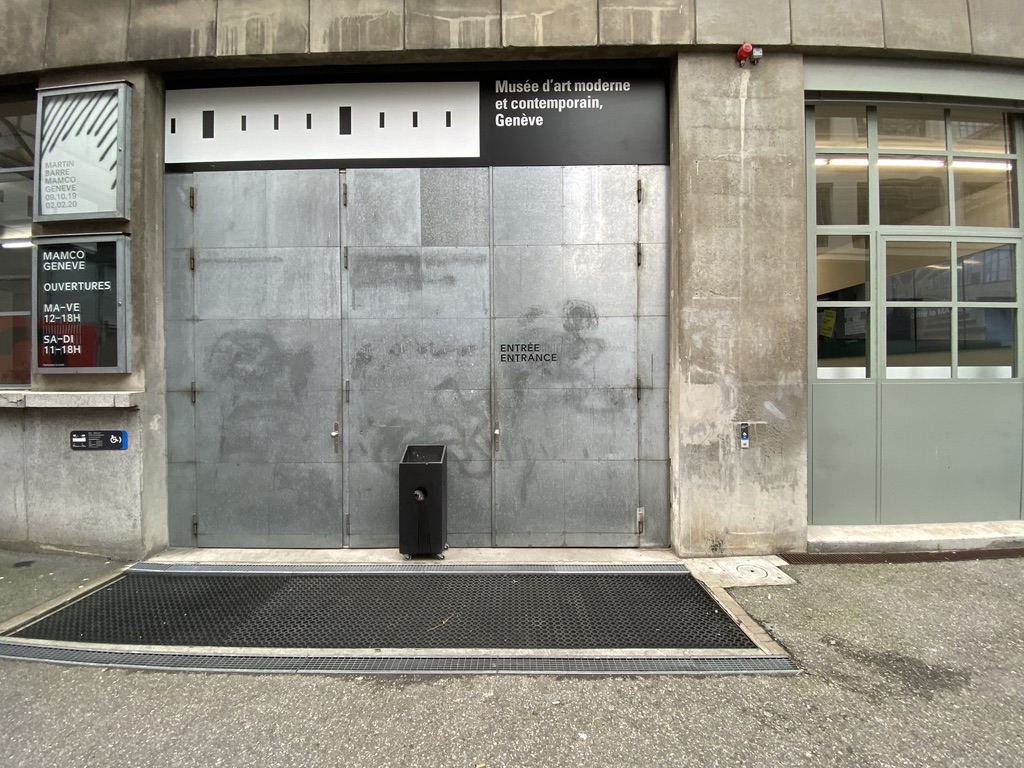
Then we met up at the Museum of Contemporary Art (MAMCA) – but first a stop at a little ramen shop for lunch and then the museum (first things first !)…. The museum is located in an industrial building and the spaces are quite interesting. Unfortunately, the art was less than exciting so we walked through and then walked back to the hotel for a 30-minute pit stop, before heading to meet with some family friends for a drink and then to dinner at Lipp (a predominantly fish restaurant, with a specialty in raw fish platters).
We visited with Elizabeth’s friend, Mattie, at her wonderful architect-designed house. Mattie, who is about 85, moved to Geneva in 1958 with her then-husband who moved to Switzerland for his job. Prior to that they lived in NY for about a decade. She’s originally from Rhode Island and still maintains a home there. She’s incredibly well traveled. We discussed European politics and naturally US politics, including the unimaginable situation in which the US finds itself. After a quick apertif, we left to get Emma and Finn back home in time for bath and bed. Then we (Mike, Elizabeth, and me) walked through the park-like walkway (a sort of right of way that meanders) from Elizabeth’s house into the main street of Carouge to catch a tram into town for our quiet dinner (sans children). It’s only a 10 minute tram ride to downtown.. It was raining the whole time.
We ate at the Michelin Star Brasserie Lipp, which is modeled on the ages-old Brasserie Lipp in Paris (6th ar) and I think the menu might be the same. Not sure if there is any official relationship. Anyway it’s a really classic-looking brasserie, oned with mirrors at table height and several small rooms.. it looks very 1920s inside, although it is actually on the ground floor of a modern style building. Waiters are in black jackets and long white aprons – old-style ambience.
We began with the LIPP Platter of raw (and a few cooked) fish – huge. Everything from fresh oysters (their specialty), lobster, mussels, clams, snails, shrimp and grey shrimp, a bowl of periwinkles (which were very difficult to manipulate!), and more. We also had an escargot starter. Frankly, the starters would have been a sufficient meal… but we did have main courses. Elizabeth had the baccalau and Mike and I shared a seafood couscous. We passed on dessert but did share a wonderful bottle of Sancerre.
We opted for a taxi (even though the walk to our hotel was only about 10 minutes) because of the rain.
More tomorrow when we have the delayed Christmas meal and spend time with all three children (under the age of two!)
Best – for continued Hanukah greetings.
Fern
Geneva. Christmas Eve 2019
Christmas Eve
2019
Merry merry and happy happy.



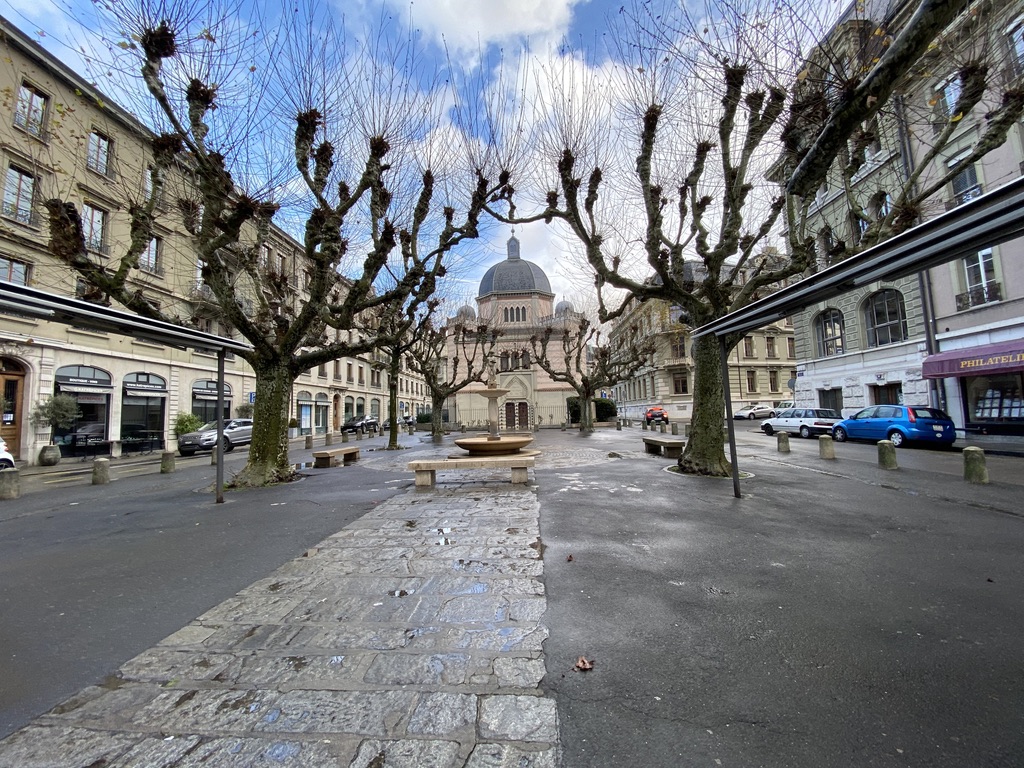
After catching up on a bit of much needed sleep, we strolled to Geneva’s annual Christmas Market located in the Parc Bastion. En route we stopped for breakfast in a cute little bakery about a block from the hotel. Turns out it has only been open three months. The husband/wife couple who own the bakery were very friendly. She’s the baker and he runs the front end. Interestingly, as we listened to him speak, it was clear he had a totally American accent or rather he was definitely American. Turns out he grew up in Palo Alto; his dad was in tech. Not sure how he wound up in Geneva, but pretty sure the wife is French (or Swiss-French). Anyway, the breakfast was great and we’ll go back again, including to pick up a wonderful cake (we ordered a buche noel) tomorrow morning for Christmas lunch at Elizabeth’s house.
It was raining (winters in Geneva are really pretty wet and grey) but we decided to walk to the Christmas Fair which was located at Parc Bastion which is only about ¾ mile from here. The Fair was cute, with lots of little wooden cabins that they bring into the park – with each cabin holding a different vender – foods (very international) and crafts made by local artisans. There are also small wooden pavilions scattered about – some covered and some open air – with small sculptural metal grates into which patrons could stuff wood which was stacked about… little warming stations. There was also a full-blown restaurant inside a large log house and a full blown bar. There were rides for kids and chess boards and other games. Mike actually made a purchase of some environmentally-friendly eyeglass frames made of wood and leather. A very very different look for him in shape and color. But now he’s afraid no optometrist in Oakland will be willing to insert lenses into these frames. We shall see. In any case they are really cool.
After strolling the entire fair, we headed to the restaurant whose focus was – naturally – fondue. We opted for soup and risotto, not wanting to have that much bread and cheese. We then strolled around and headed back to the hotel to dry off a bit and then take a tram to meet Emma and Hem and Finn at the Museum of Natural History.
Somehow we got a little lost and went in the completely opposite direction on the tram, but realized very quickly and jumped off at the first stop. However, although asking several people, we couldn’t find the street where you could get the tram in the reverse direction. Eventually after walking a bout a half mile, we finally got onto a bus that took us to the museum. But, because it was Christmas Eve, the museum closed earlier than posted so it was closing as we arrived. But we met Emma and Hem and Finn as they exited and we strolled to the lake as the rain had stopped.. and went into a little café at the lake for hot chocolate. Then we strolled a bit more and all boarded the same tram, although they went on beyond us. So we had a good amount of Finn-time!
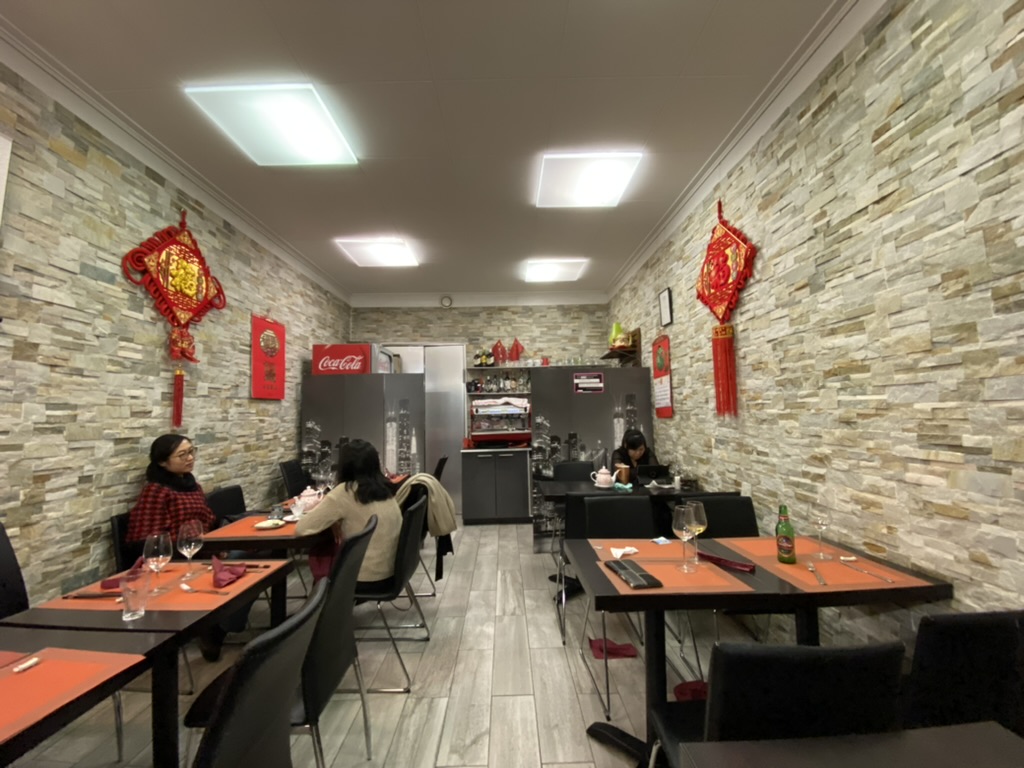
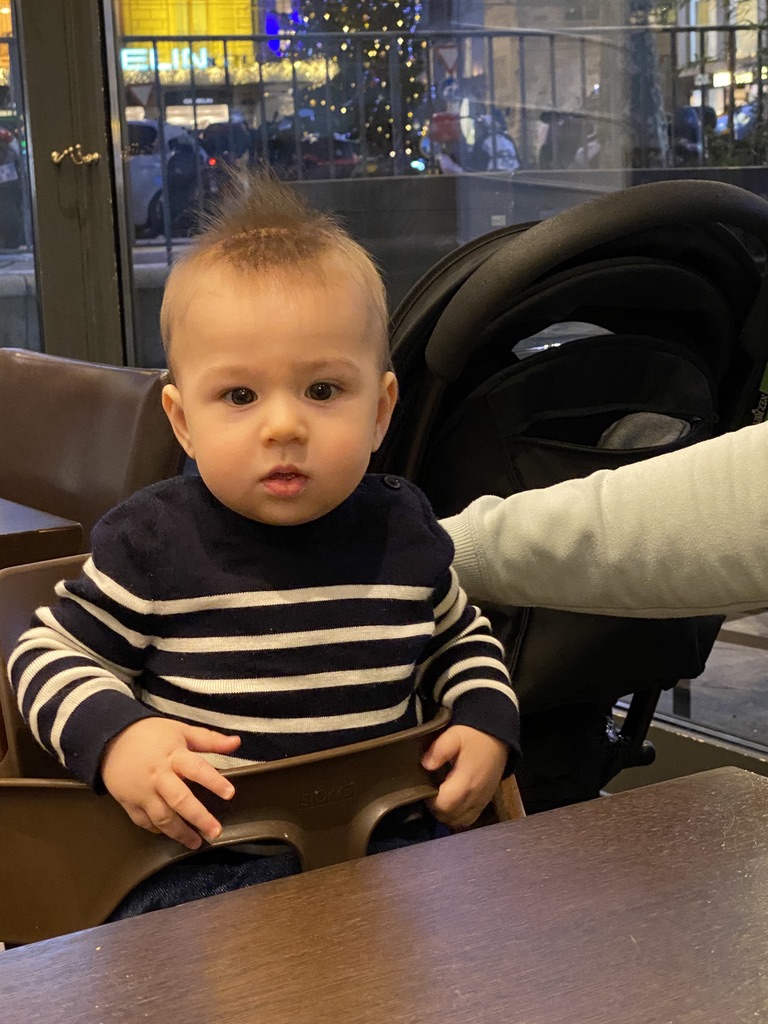
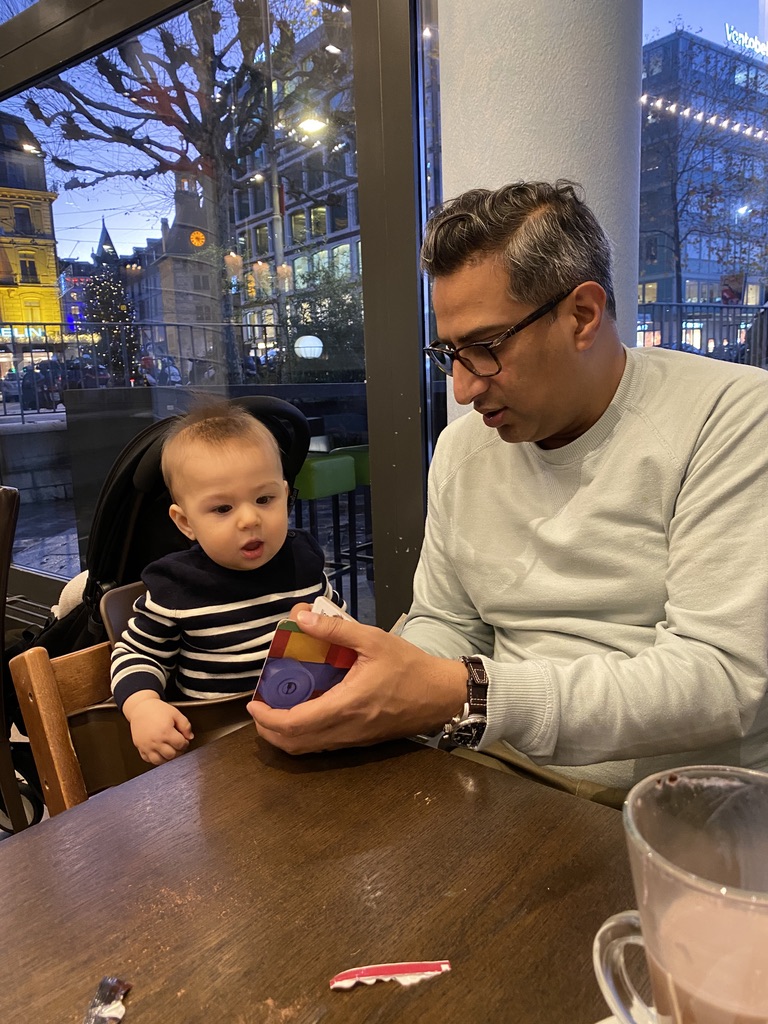
Given the weather and the hour, Emma, Hem, and Elizabeth opted to eat at home and Mike and I walked to a local Chinese restaurant for that Jewish Christmas Eve tradition. It was truly a little hole in the wall place – with only about 5 tables and the usual extensive pages long menu with some interesting translations from Chinese to French to English! I’d rate it “fair to middling.” And while about four of the tables were filled, I don’t think there were any other Jews eating. All tables were occupied by Asians (not to stereotype some might have been Jewish, but given that they were all young couples and not families, I’m going to guess they were not doing the Jewish traditional dinner). We strolled back to the hotel after dinner in the chilly Geneva evening.
Tomorrow we’ll head to Carouge (a sort of a suburb within the city of Geneva) to have a holiday lunch at Elizabeth’s – a sort of pre-Christmas, since we’ll do the more official meal and gift exchange on Thursday, December 27th when Julia and Julian and family return from Bordeaux.
More tomorrow and hoping for clear skies.
Fern
Istanbul and on to Geneva. December 23, 2019
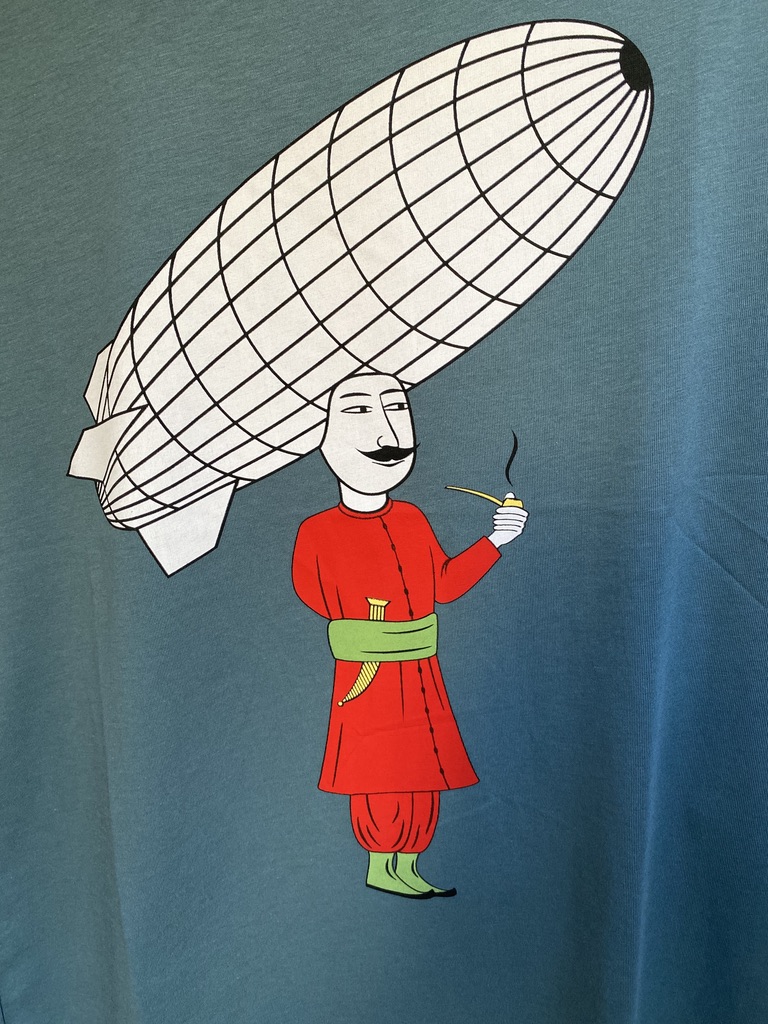
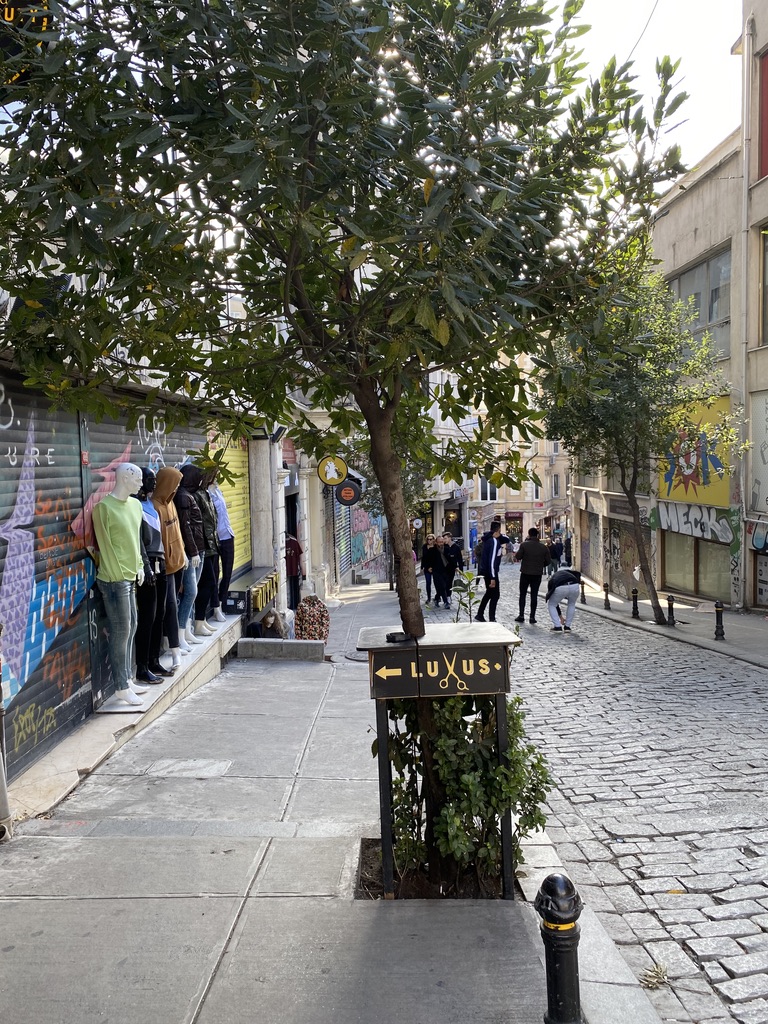
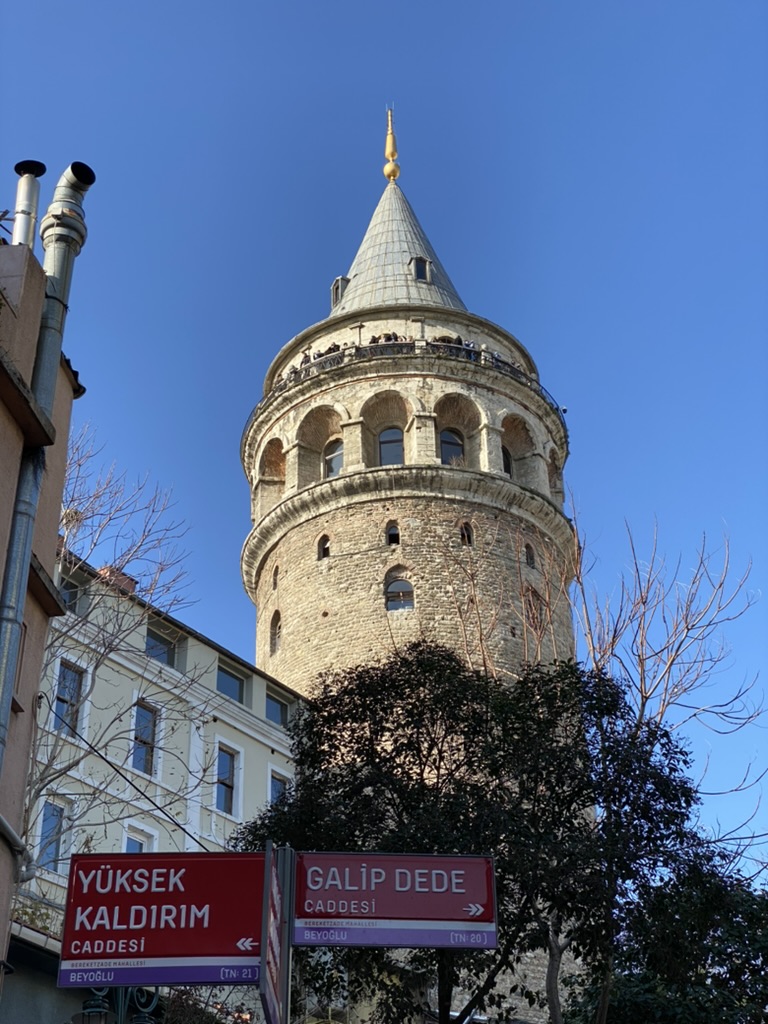
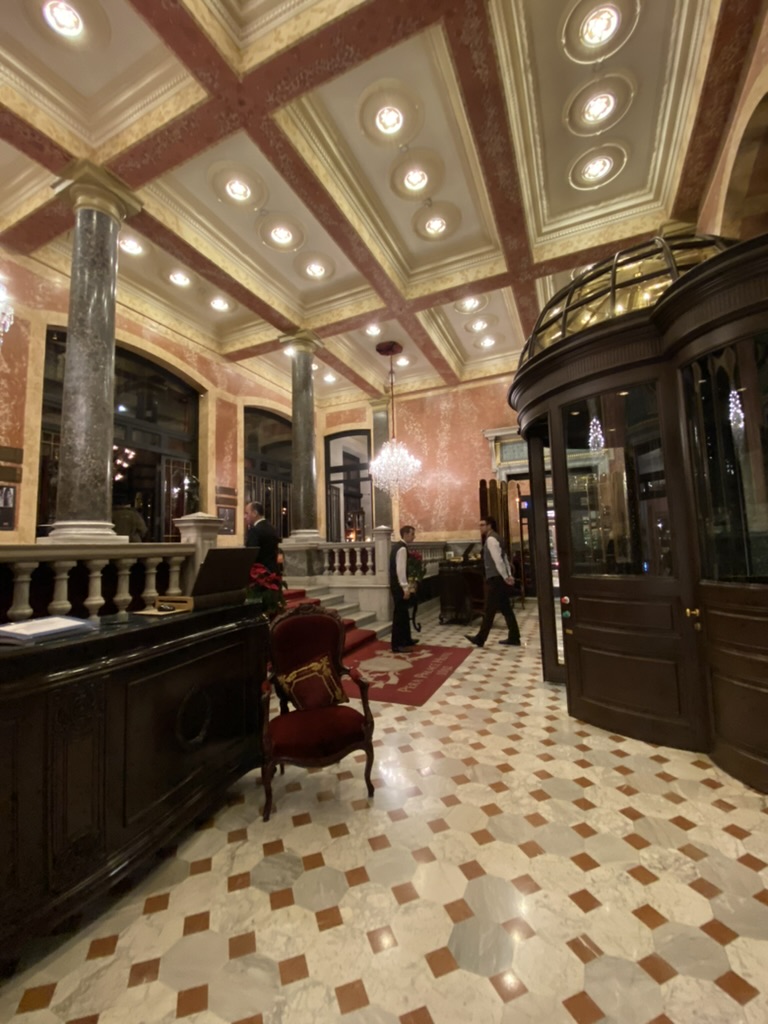
Greetings- Happy Hanukah!
We ended our stay in Istanbul with a delightful dinner at a traditional Turkish restaurant – with a wide assortment of mezze (we picked ceviche, a tomato salad, an octopus salad, stuffed zucchini, spicy eggplant, and a pepper salad – and for the main course we had the monkfish cooked in parchment paper. The restaurant is aptly called “Meze” and it was started just a few years ago by three architects who like food (perhaps better than buildings). We walked to the restaurant and walked back to the Georges. The little restaurant (seats about 25 people) is directly across from the Pera Palace Hotel (which we considered as an option). The Pera Palace is where Agatha Christie wrote the famous book, Murder on the Orient Express!
It was pleasantly cool during our time in Istanbul – great travel weather – but we know it will not last as we move on to both Geneva and then Uzbekistan.
It was great to return to Istanbul, even for such a brief time – to see the seven hills and the thousands of mosques that dot the city, to eat spectacularly well, to stroll around. But, it made me think that perhaps a longer trip to Istanbul (and a return to various other parts of the country) should be part of the bucket list. With its more than 3,000 mosques (with spectacular ones situated on each of the seven hills of the city) and its interesting Asian and European mix, its history, and of course its food – It’s a fascinating city even if only for a short time. Of course, there’s also the jailed journalists, lack of free press and media, detaining students who protest Erdogan, obstruction by police of construction workers protesting poor working conditions, and gross human rights violations of Uyghurs. So, the historic beauty of the city, the warmth of the people, and did I already mention the great food? Needs always to be understood in context – yet it’s so easy to romanticize as an outsider dipping into the country for fleeting moments.
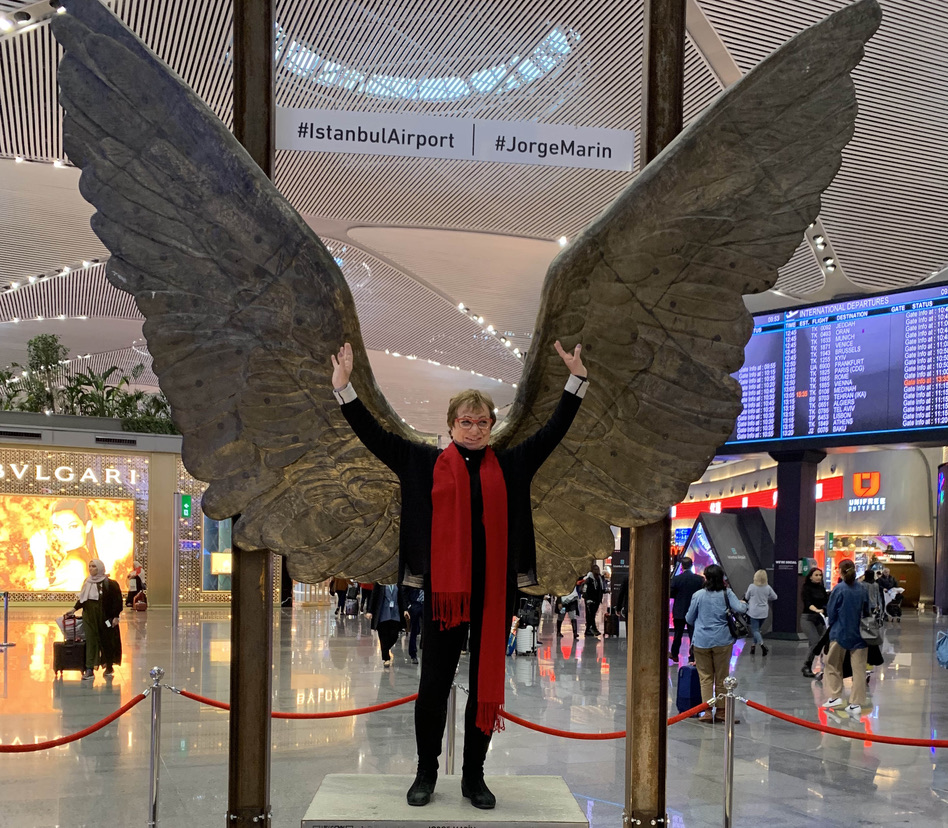
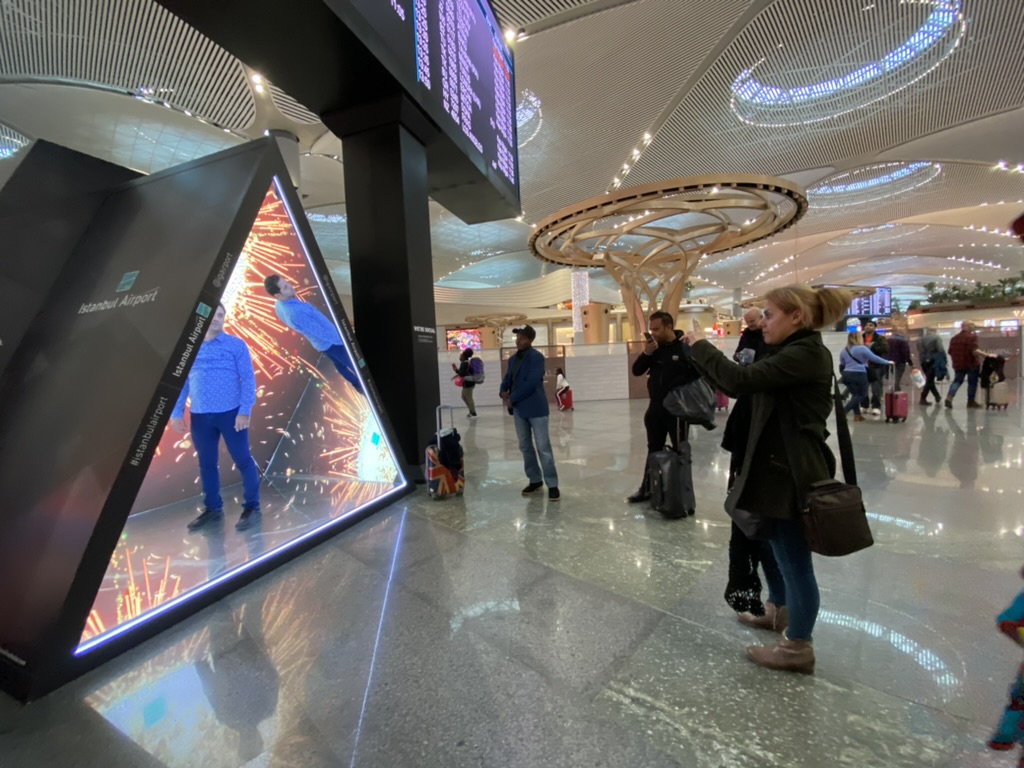
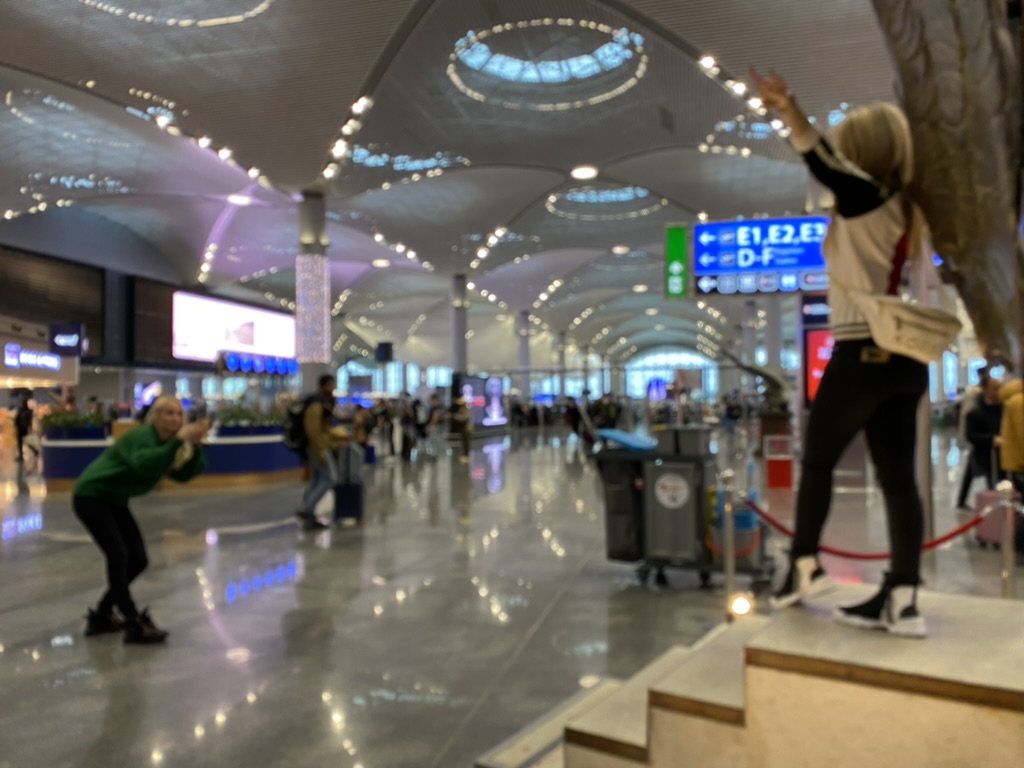
We woke early on Monday to get to the very new, and very large Istanbul Airport to catch our Turkish Air flight. The airport (IST) is about an hour from the city and I gather it was a controversial project and involved displacement, corruption, and delays (sound familiar?). It’s like a mega mall – making the large quantity of shopping at Heathrow, Hong Kong, Singapore, and other airports pale in comparison. I’m told there is nearly 600,000 sq ft of shopping, not counting eateries. Anyway, as a result, the walks are very long to get to the planes, and the airport designers (in addition to making vastly high ceilings which help to balance the array of glitter, color, and lights coming at you) have built in many different stopping points for selfies and setups for photography… such as the one I’m pictured in above – getting ready to fly!
The check-in and boarding process was made fairly simple since Turkish Air treats Star Alliance Gold members quite nicely with special lines, early boarding, etc. The three-and-a-half-hour flight was fine; Turkish Air still serves food to all passengers regardless of class. And the arrival was simple, including finding our luggage immediately! But the lines in Geneva were long for customs (longer actually for EU and Swiss than for the “autres” like us.) We settled into the Tiffany Hotel in the arts district, close to the old town. It has about 60 rooms and is quiet and a bit old fashioned. We’ve stayed here before and know our way around – it’s close to the tram to Carouges which is where the family is.
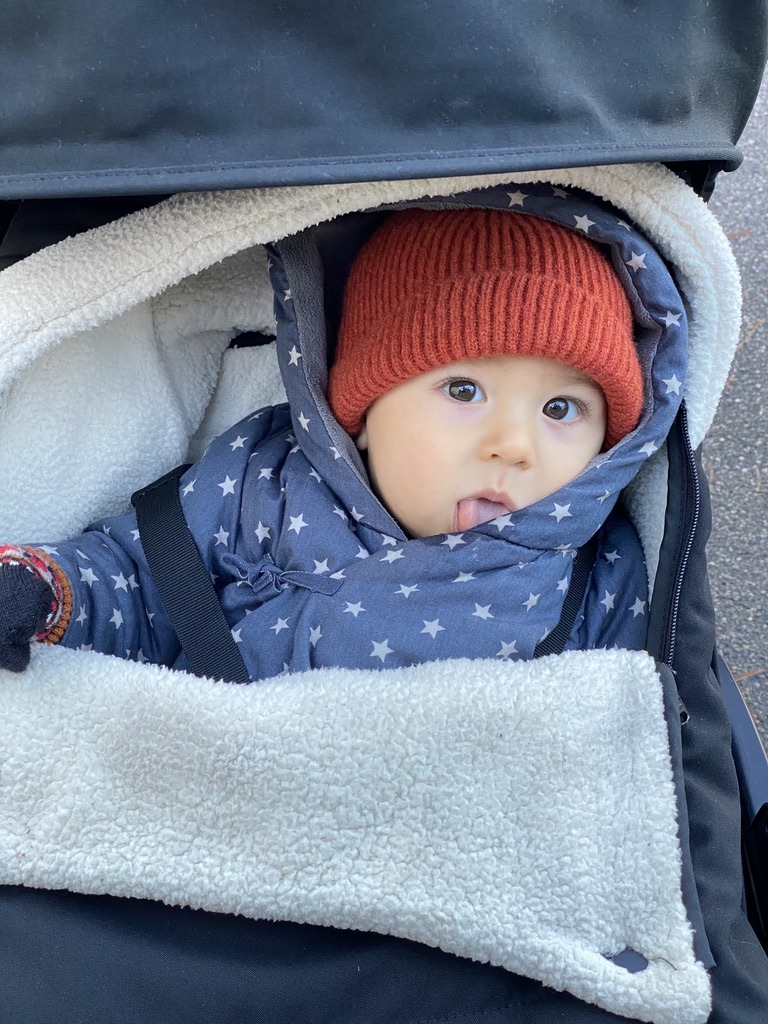
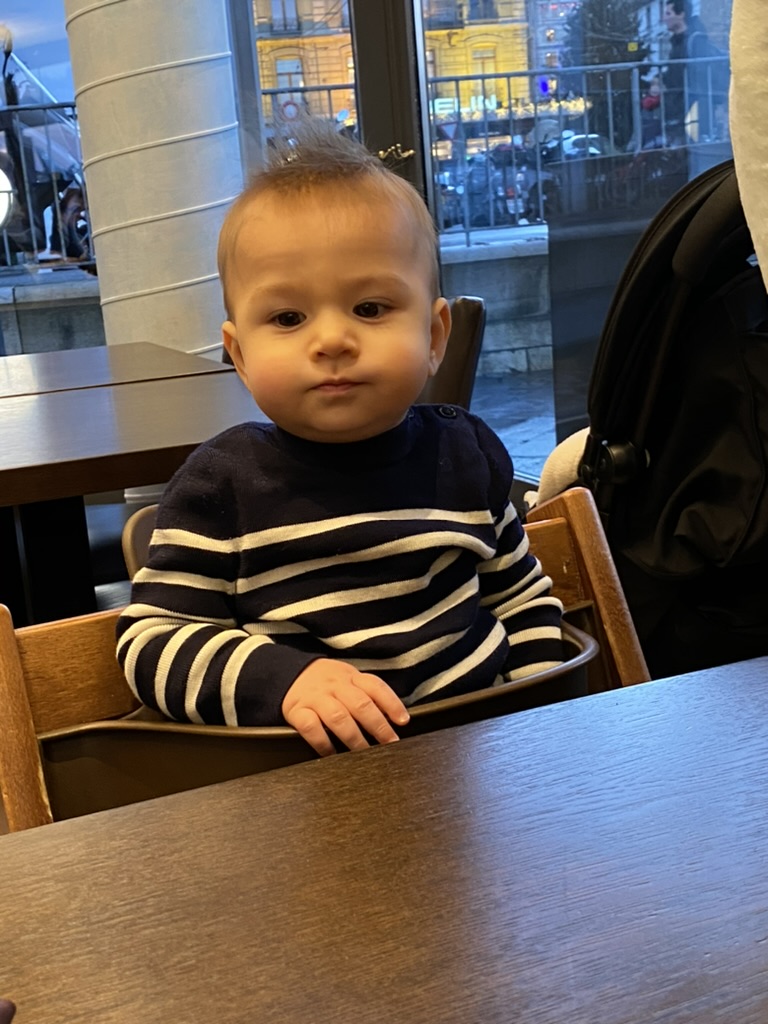
We then hopped into a taxi to head to see Elizabeth, Hem, Emma, and little Finn (who is now 9 months old and of course totally adorable). Emma, (Mike’s niece) Hem (her husband), and Finn live in London and are here for the holidays; Julia, Mike’s other niece (who actually lives in Geneva) will arrive on the 26th with partner (now fiancé) and Louis (2 years old) and Ella (3 months old). They are in Bordeaux spending Christmas with Julian’s family… complicated. Anyway, we will all be together on the 27th and 28th when we will celebrate the holiday and make believe it is Christmas Day.
We had a wonderful casual meal cooked by Elizabeth – straight from Alice Water’s Chez Panisse cookbook!
We got back to the hotel around 11 and were actually quite exhausted. It was also a two hour change for us, so it was more like 1:00 am… although frankly I don’t think we really have a body time anymore.
I woke up early to finish this note… Today, we will keep it low key and I think we will head to the annual Christmas Market at Parc Bastion (about an 8 minute walk from the hotel) and we might even do a Jewish Christmas Eve tonight – Chinese food and a movie (something I did as a child every Christmas, along with lots of other Jewish families who didn’t celebrate Christmas – not sure how the tradition began, but I know that in San Francisco there is the Kung Pao Kosher Comedy Show held at a Chinese restaurant for the past 30 years or so. What I’ve always been told is that the practice of eating Chinese food on Christmas Eve goes back about a century… and that it began in New York City at the turn of the century when Jewish immigrants and Chinese immigrants found themselves living in close quarters on the Lower East Side. One common feature was that neither celebrated Christmas. So Chinese restaurant owners kept their restaurants open and Jews came to eat there and it began to be a tradition. Not sure how good Chinese food is here in Geneva, but it’s such an international city I’d imagine it will be fine. (It’s still in the planning stage, so it could change).
In our case, it’s because we are having the Christmas dinner and gift exchange on the 27th when everyone will be here in Geneva.
OK.. that’s it.
Have a wonderful Christmas Eve and Hanukah – be it at home or in a Chinese restaurant.
Fern
December 21, 2019: Istanbul
Greetings or as they say here in Istanbul ”Merhaba!”
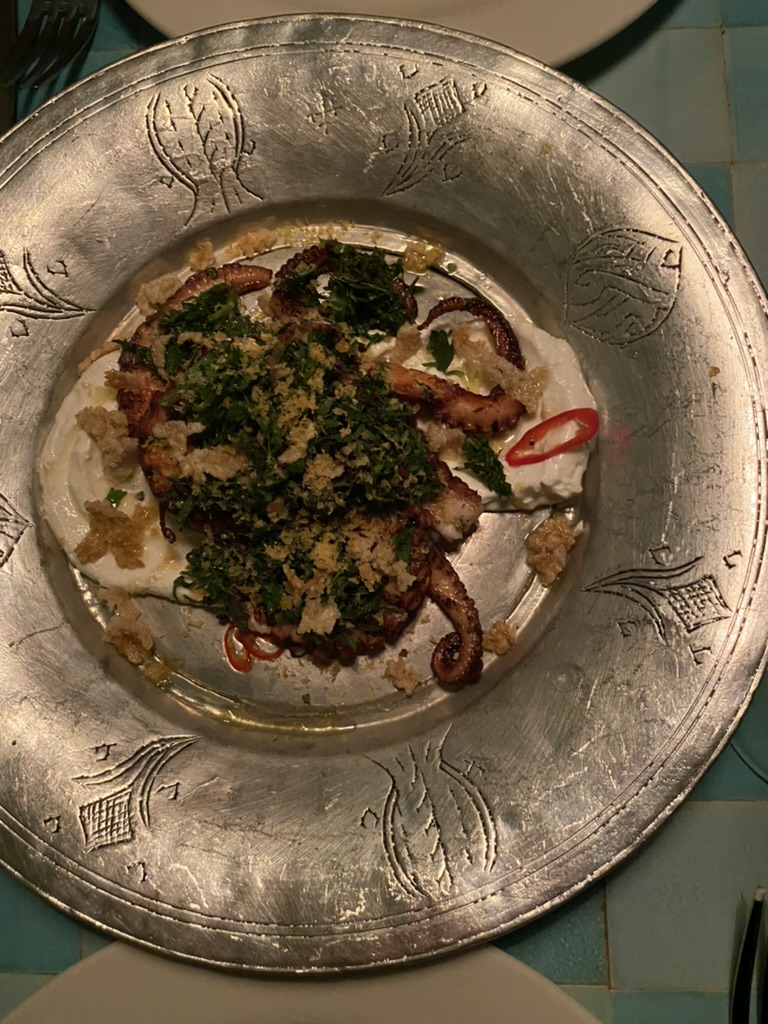
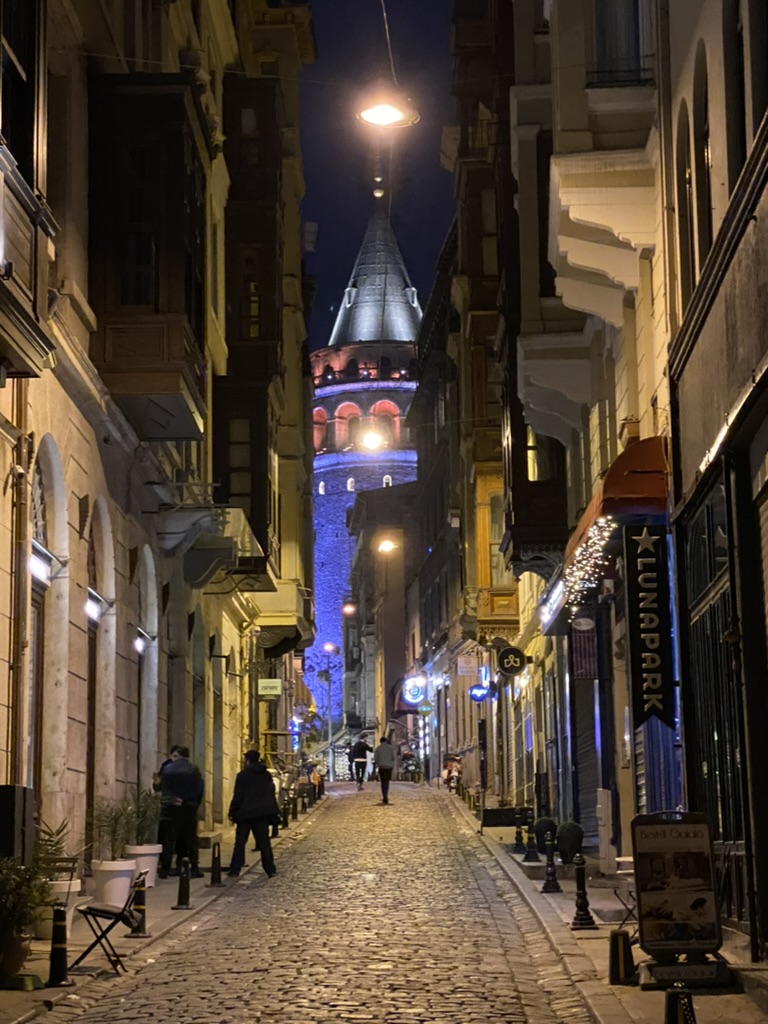
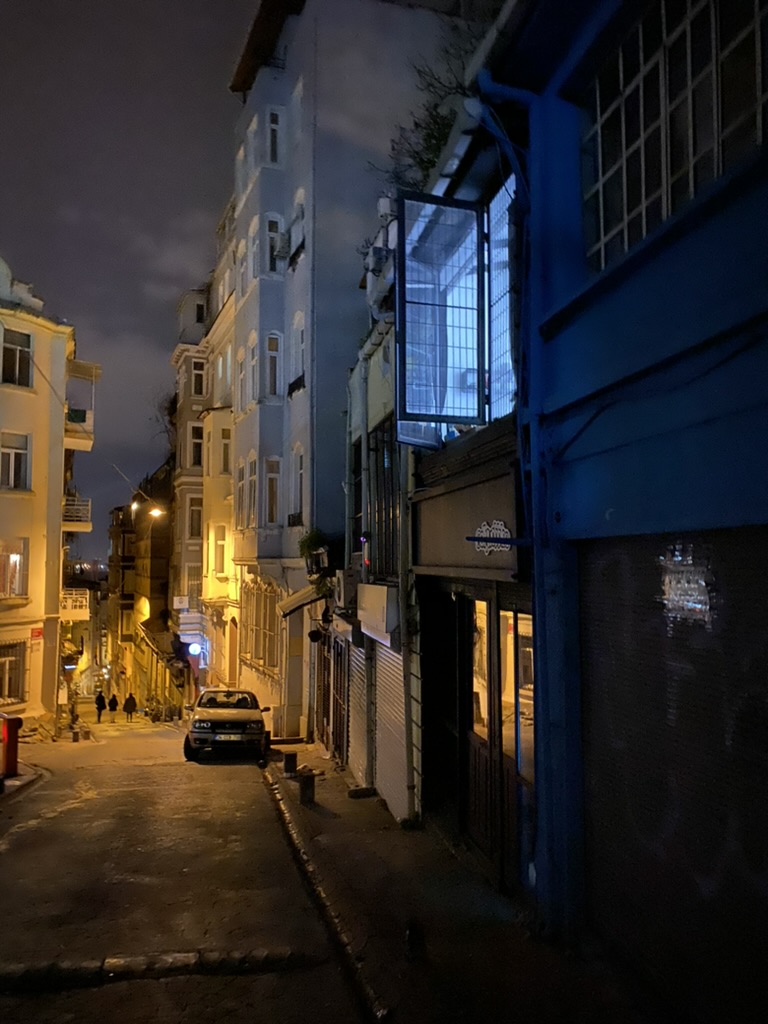
Thanks for all the good karma regarding our luggage. We received the bags at our hotel in Istanbul last night. It’s been hectic here in one of our favorite cities. We’re staying at the Hotel Georges, a delightful 21-room, 150-year-old former residence of a prominent physician/psychiatrist. It’s located on a very narrow, cobblestone street in the maze of the Galata District and the Beyoglu neighborhood. It’s four stories (and we are on the top floor with a delightful little balcony) and they have a rooftop restaurant – where after our ordeal with the bags and getting from the airport to the hotel (at around 10 pm) we decided to try it, rather than strolling for another restaurant. Food was great. We shared two appetizers and a main course of octopus (which was prepared with a light citrus sauce, but with a bit of spice).
It was a lot easier to settle into the room without our baggage! So we crashed at about midnight or so (although we did tune into CNN to get a little overview of what the Democratic Presidential Debate was like.
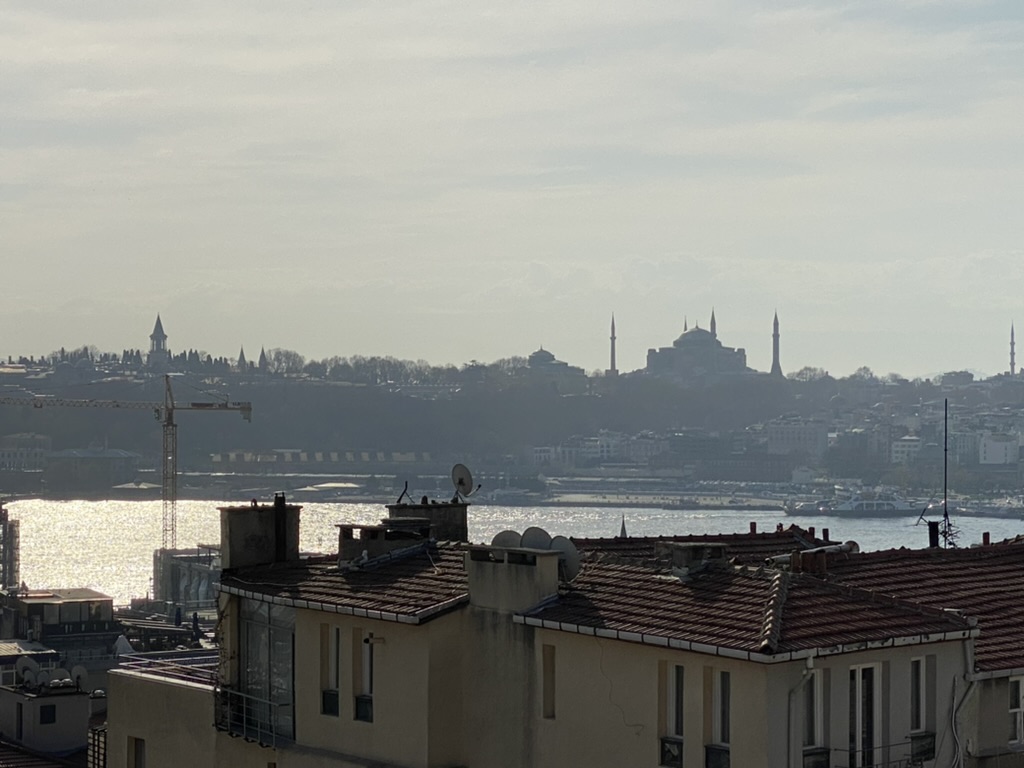
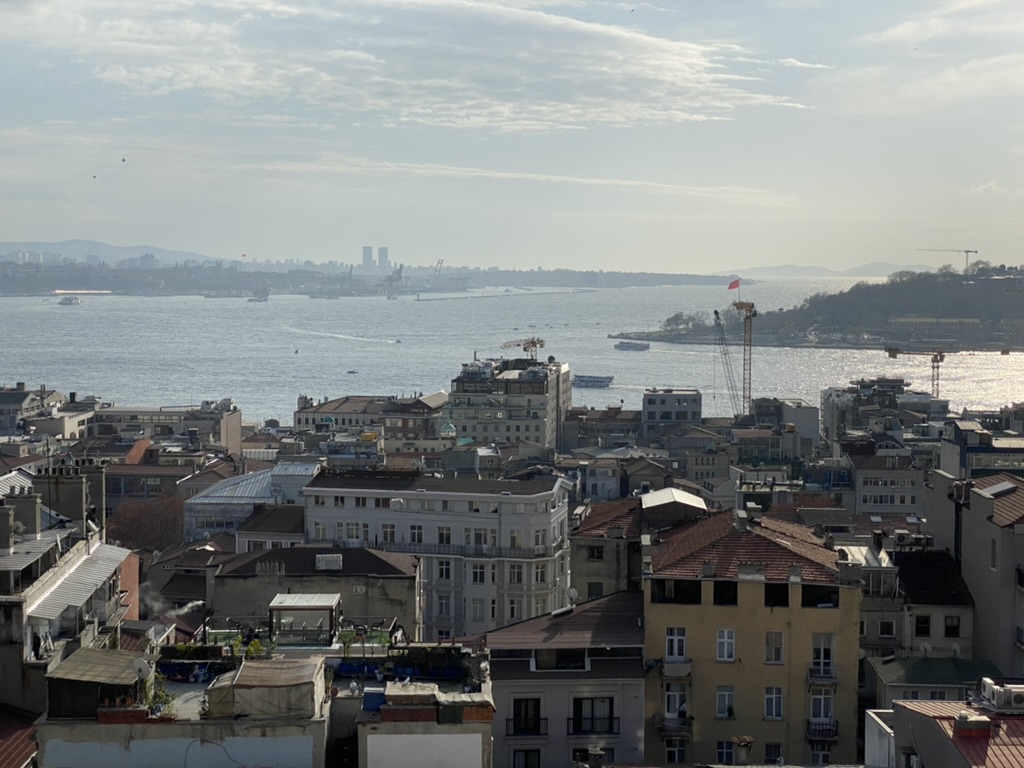
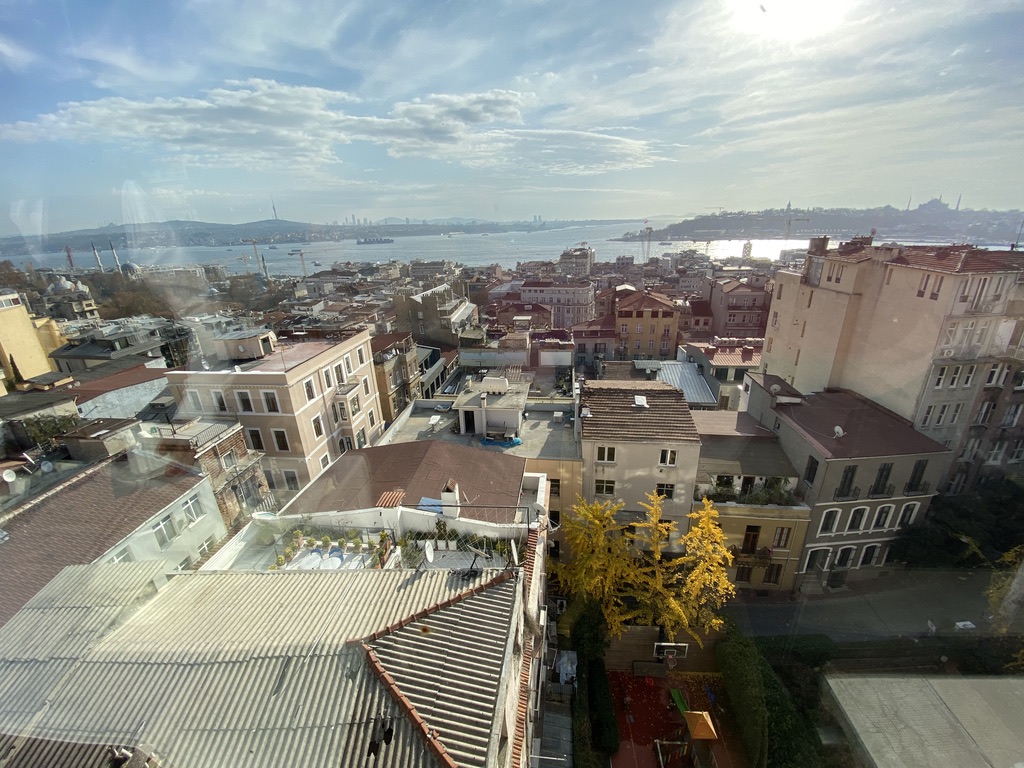
On Saturday morning we had breakfast up on the roof – which has great views across the Golden Horn and also into the maze of streets of the Galata District. The weather is fantastic – last two times we were here in winter, it rained and was pretty cold. But it’s been in the 60s which was also helpful since most of my sweaters were in the luggage that hadn’t arrived. Since we are only here for 2.5 days (as a transfer point between Geneva and Tashkent – long story about the route we are taking), we decided not to revisit any of the major points (Blue Mosque, Hagia Sophia, or even the Galata Tower which is basically around the corner, etc.) and to stroll through our neighborhood (first time we’ve stayed on the European side of Istanbul) and then cross the Galata Bridge to visit the one place I’d always go to when in Istanbul – the Grand Bazaar.
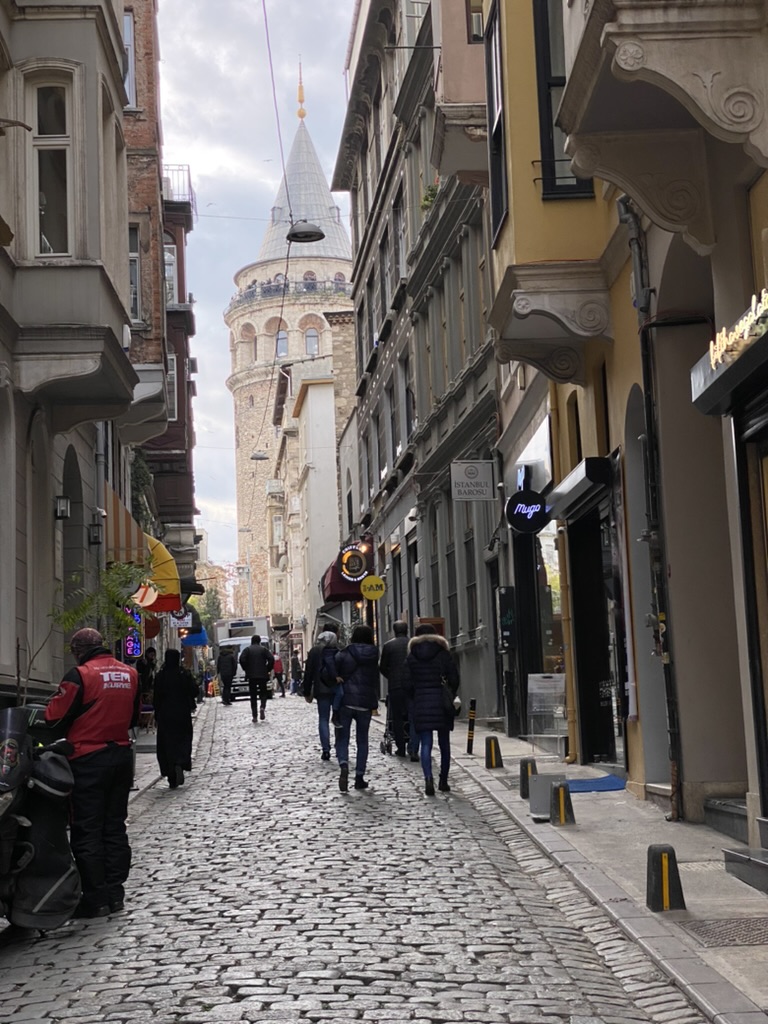
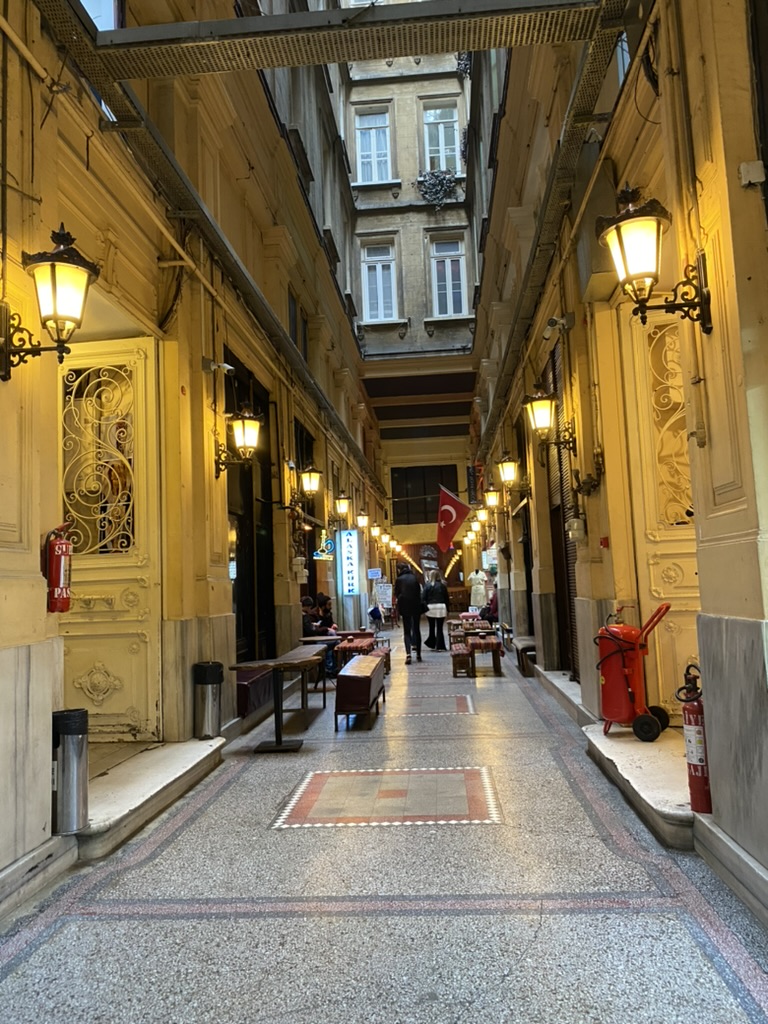
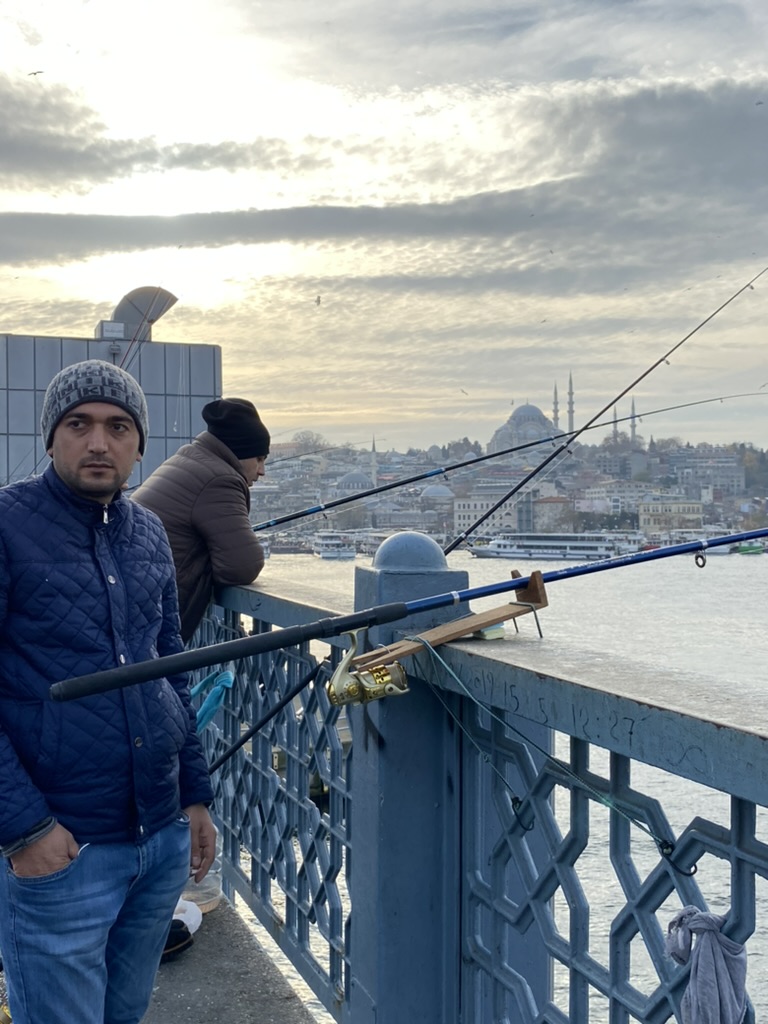
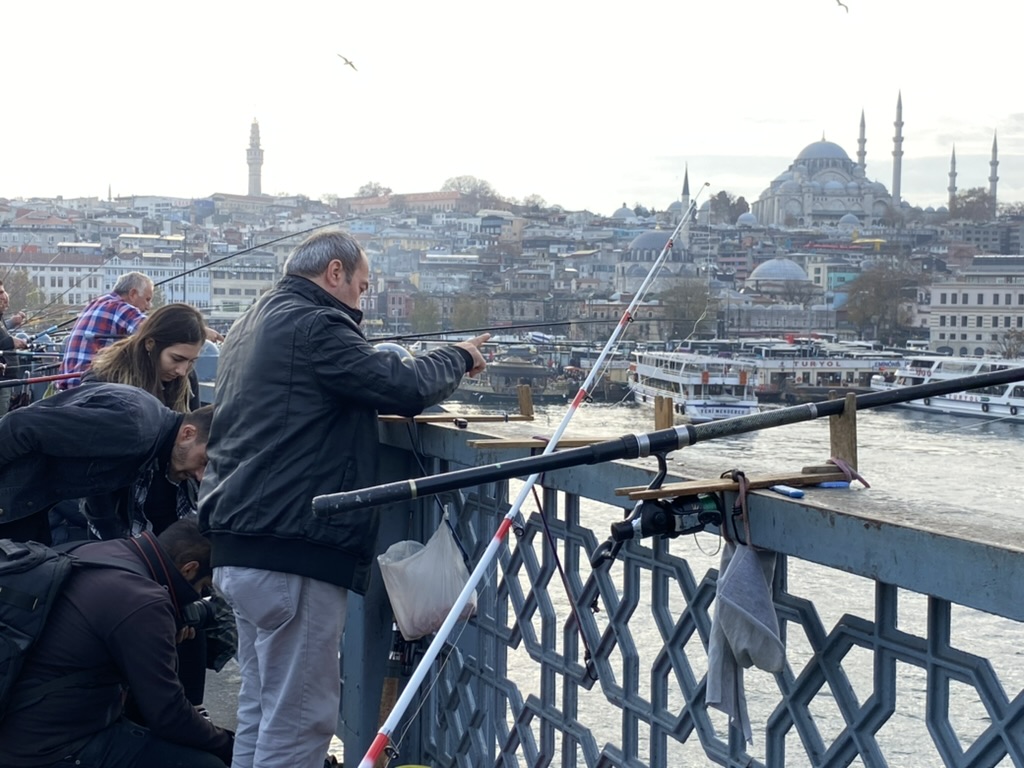
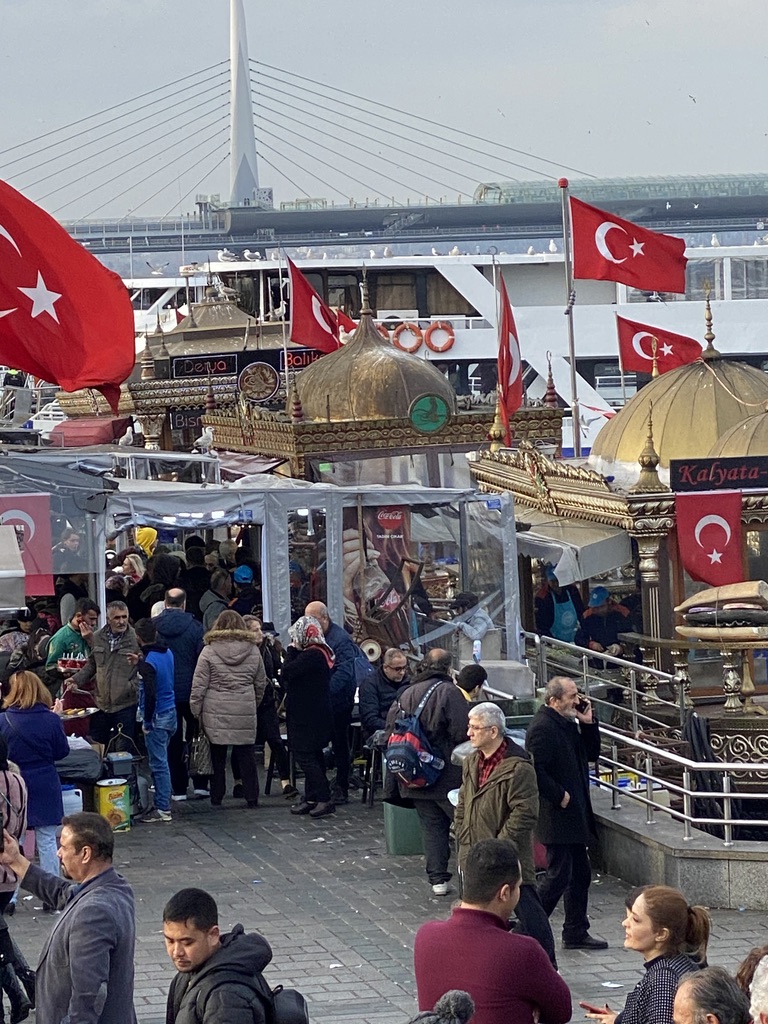
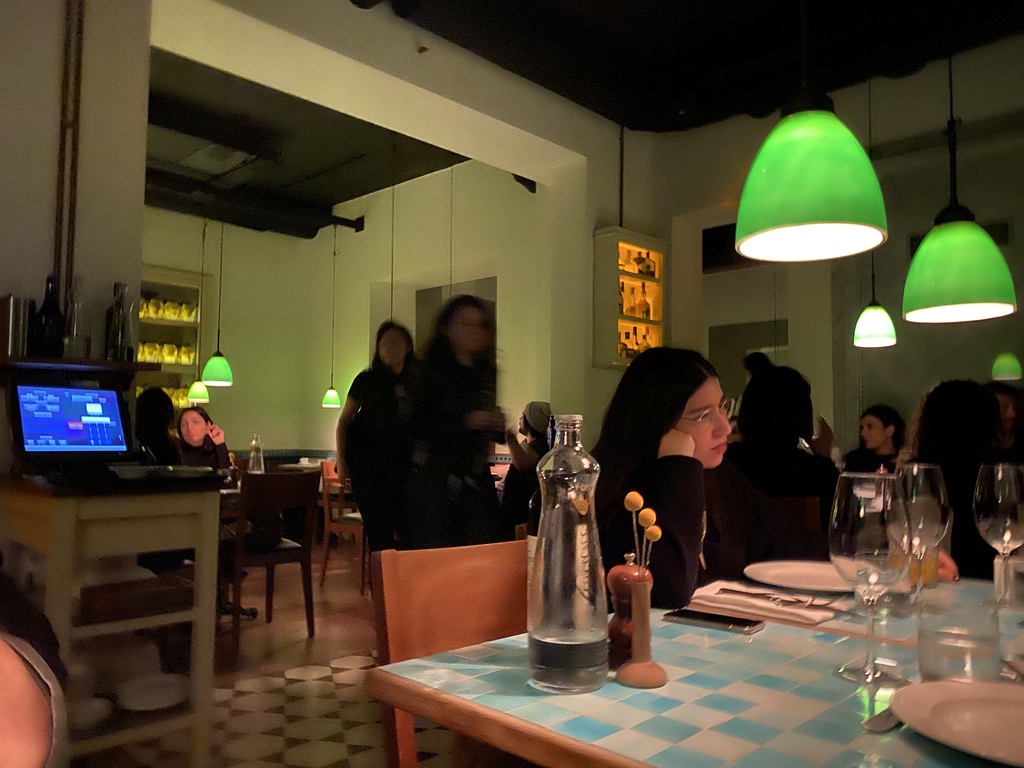
We strolled though many small streets and passageways, and eventually made our way over the bridge, passing about 200 fisherman (and women – something I don’t think I saw ten years ago) and then survived the hordes of Turks going through the tunnels to get across major roadways and over to the packed streets around the Grand Bazaar. Made it back to the Georges just as the evening call to prayer sounded outside. And then we decided on dinner. Actually it was Mike’s birthday, so we initially planned to go to Asitane – and interesting house-based restaurant that prepares food from the Ottoman period. We had eaten there before and were fascinated by the menu. But it was very difficult to get a taxi and the very friendly and interesting manager of the hotel suggested an amazing restaurant within walking distance of the hotel, so we opted for that one – Yeni Lokanta and we were not disappointed.
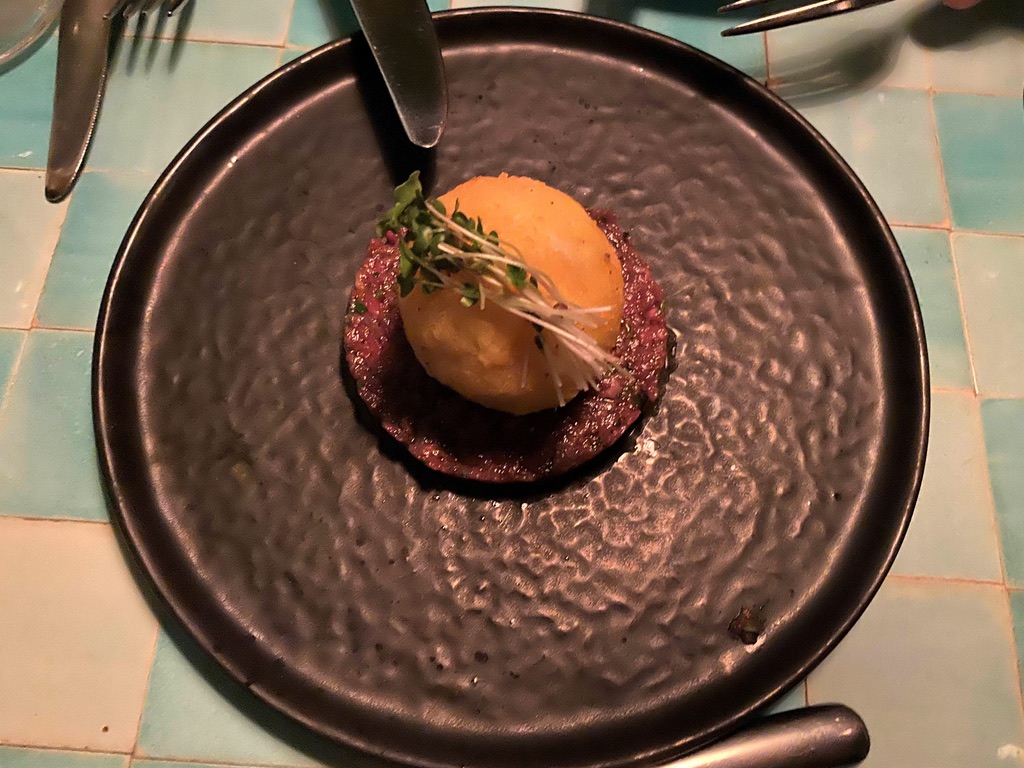
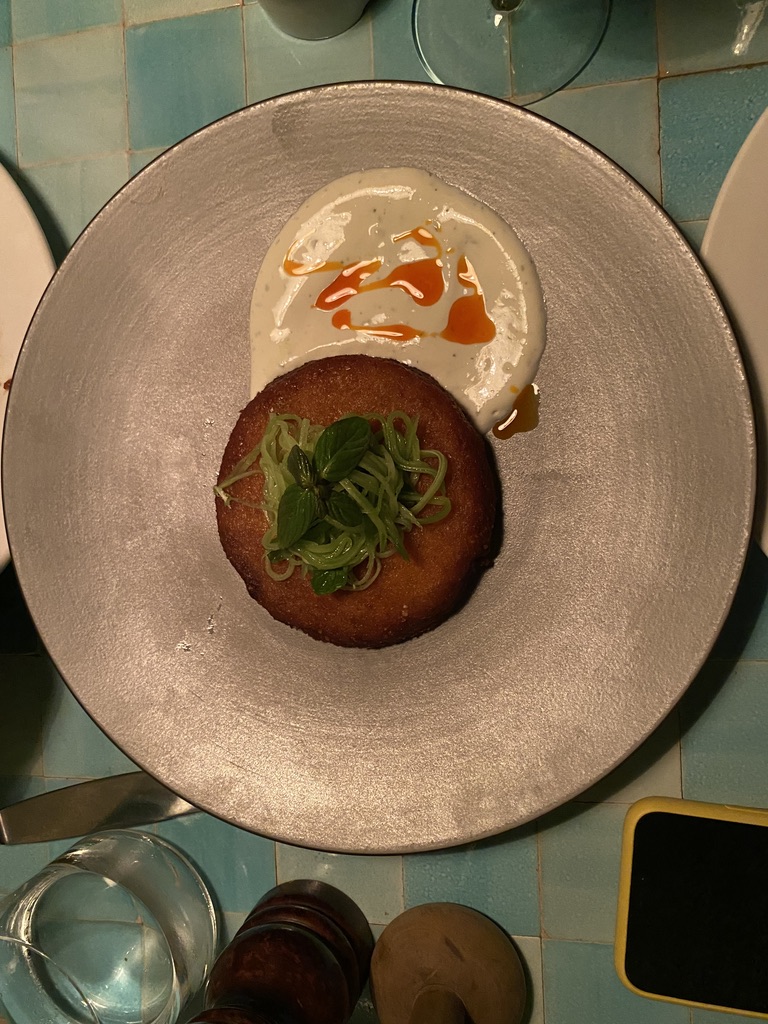
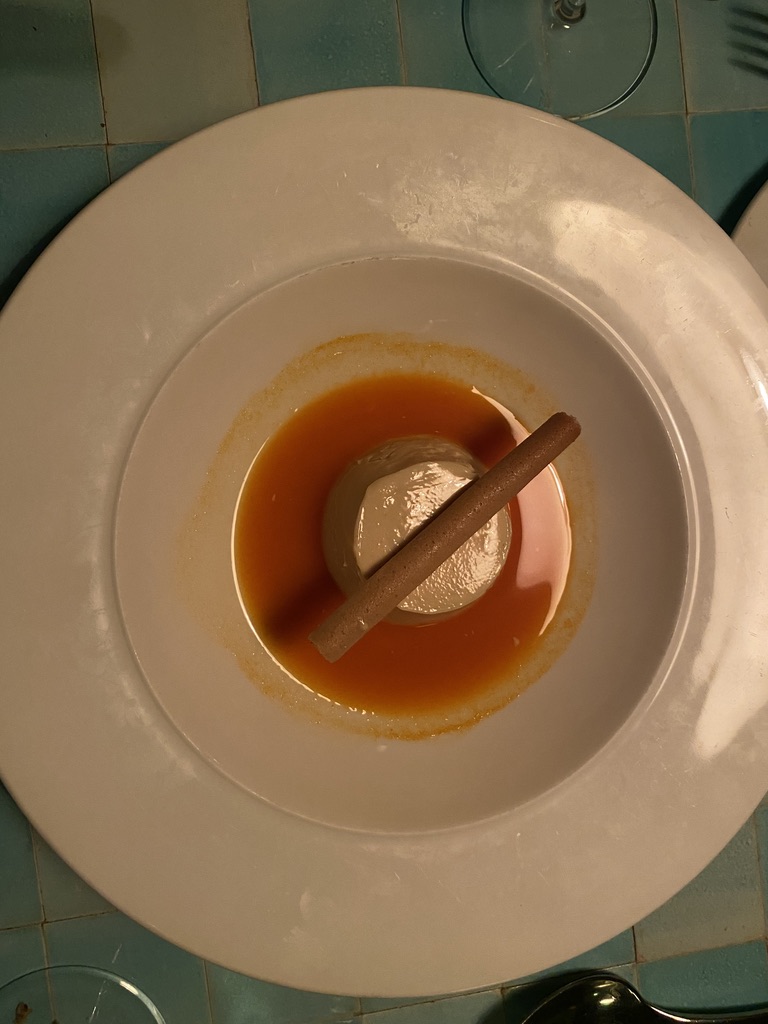
We feasted on four appetizers and the octopus for the main course. It’s apparently octopus season and all the restaurants are featuring an octopus dish. We had what they called Kefta Decomposed which was a wonderful steak tartar that came with a crusted potato on the top – in the shape of a golf ball – and when you cut into it there was an egg with the yolk totally raw and swimming into the meat; manti (of course!); a fried local cheese with honey, chili oil, tamarind, and hazelnuts; lamb sweetbreads with some kind of carrot spread and walnuts. The meal was great and it was a much livelier place than Asitane would have been. We walked back to the Georges, admiring the amazing Galata Tower always in our view.

Oh… my gift to Mike – a personal trainer at God’s Gym in Oakland.. an interesting, old fashioned gym without the newfangled machines. So be on the lookout for a new Mike (but give him some time…)
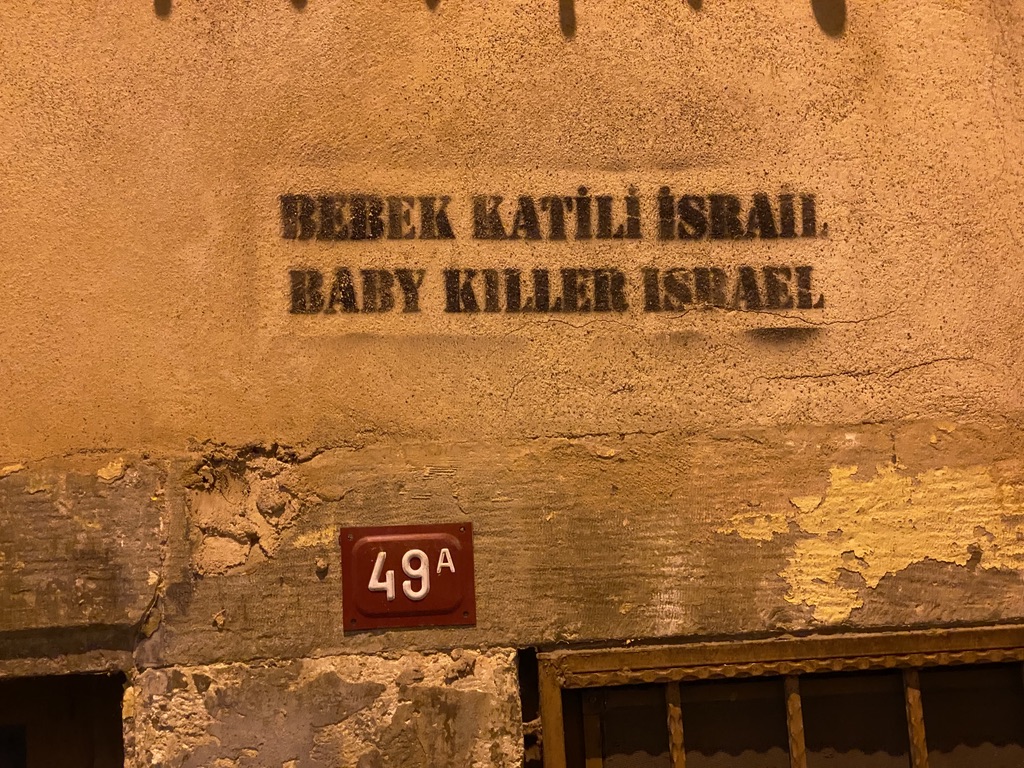
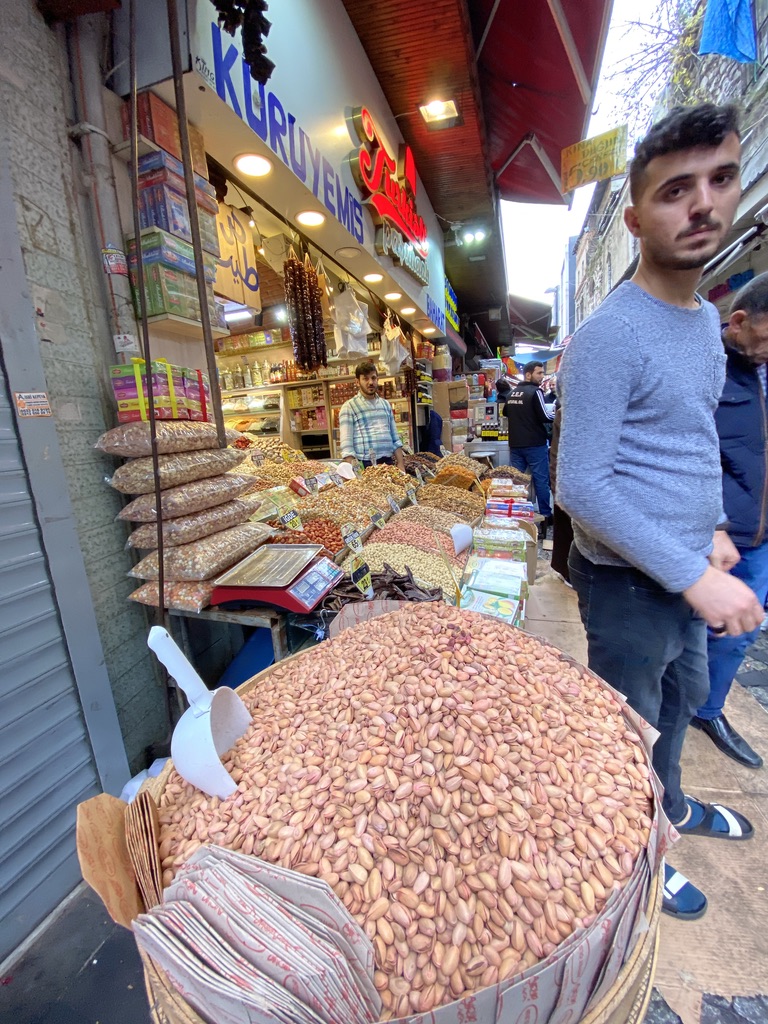
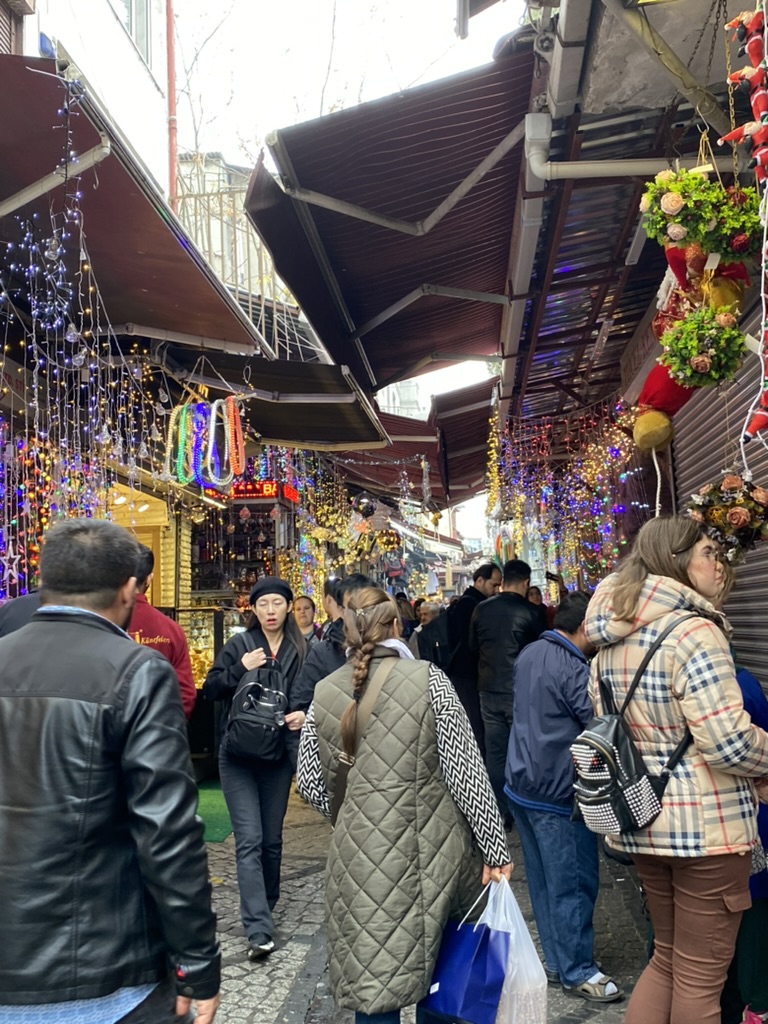
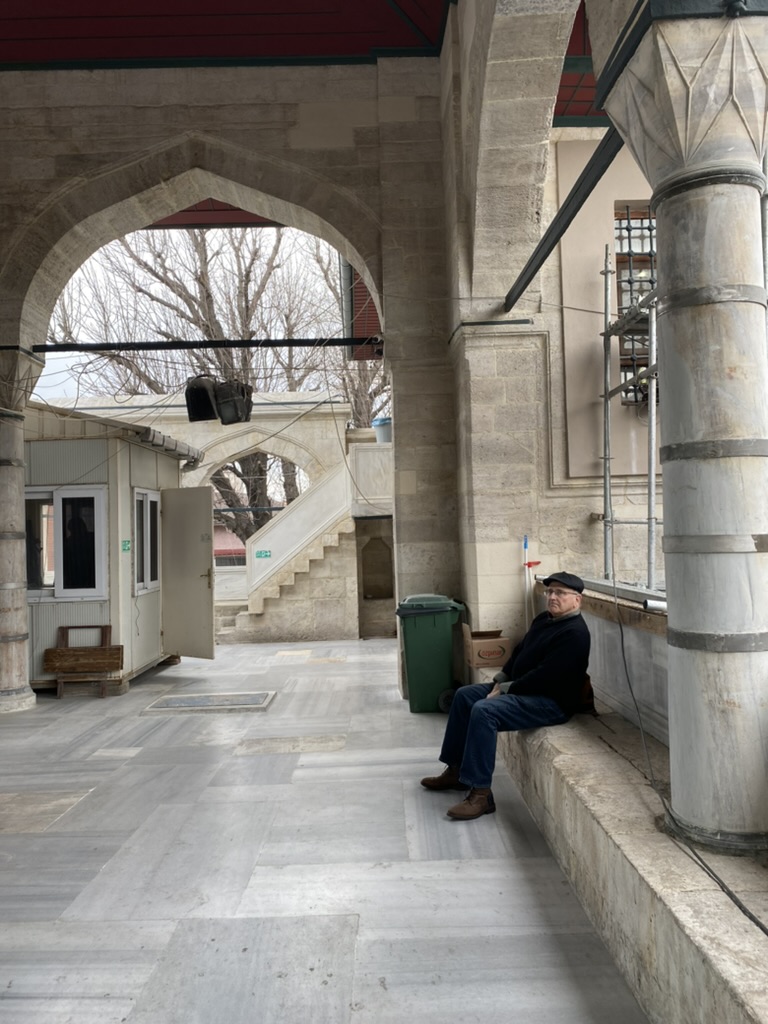
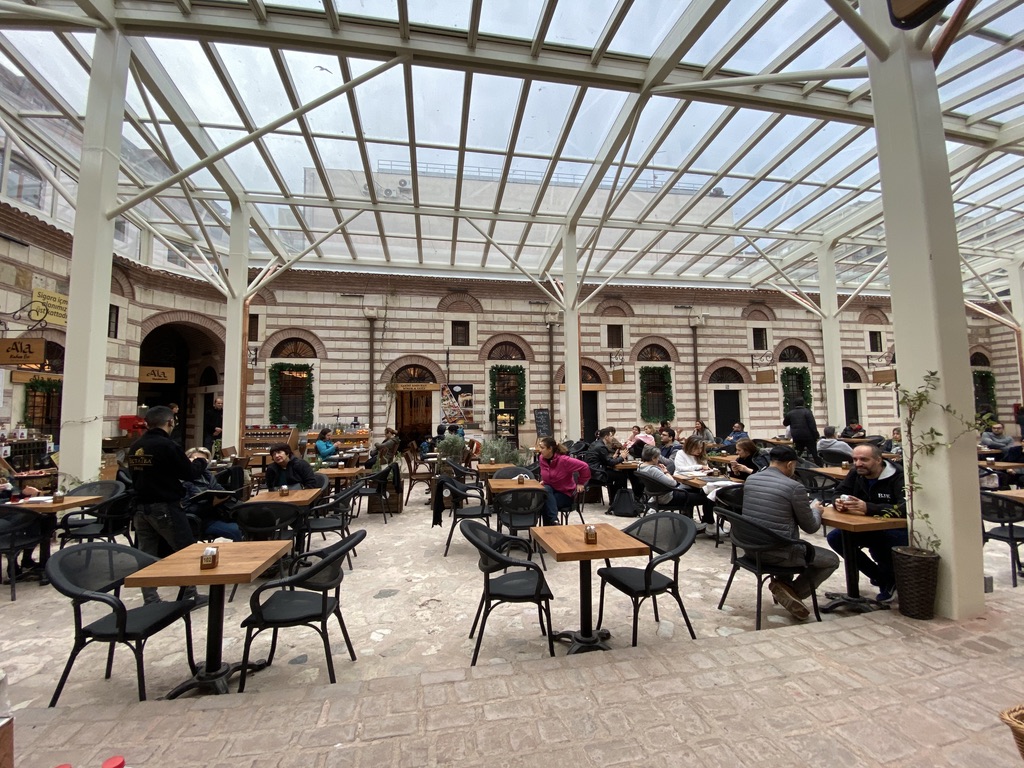
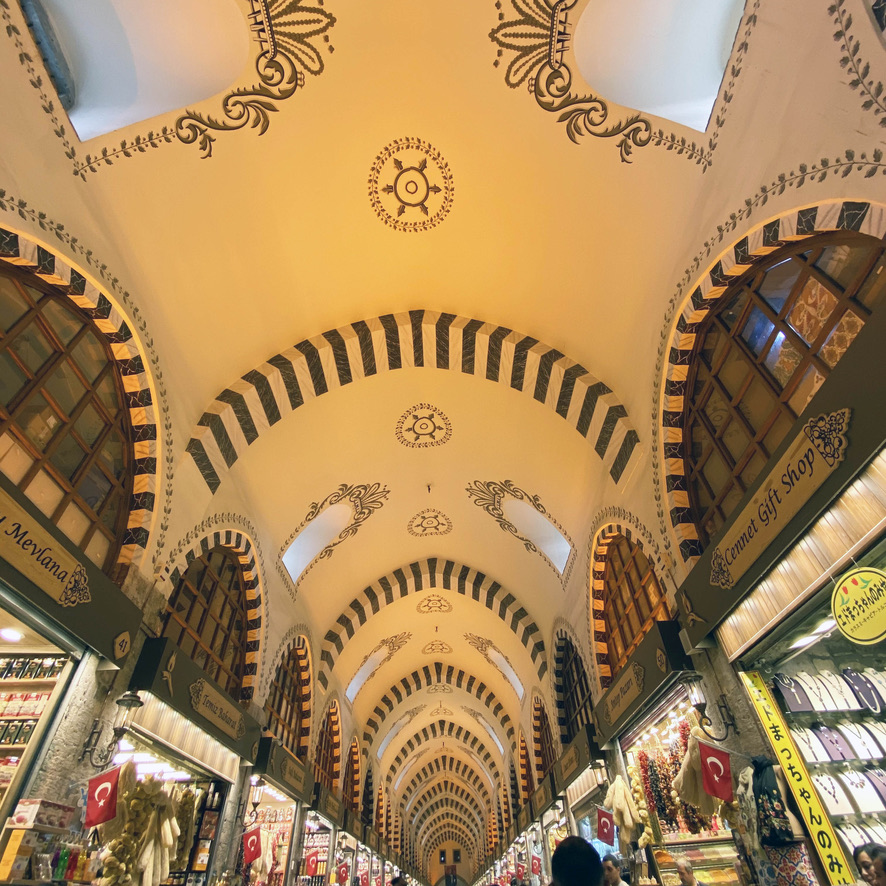
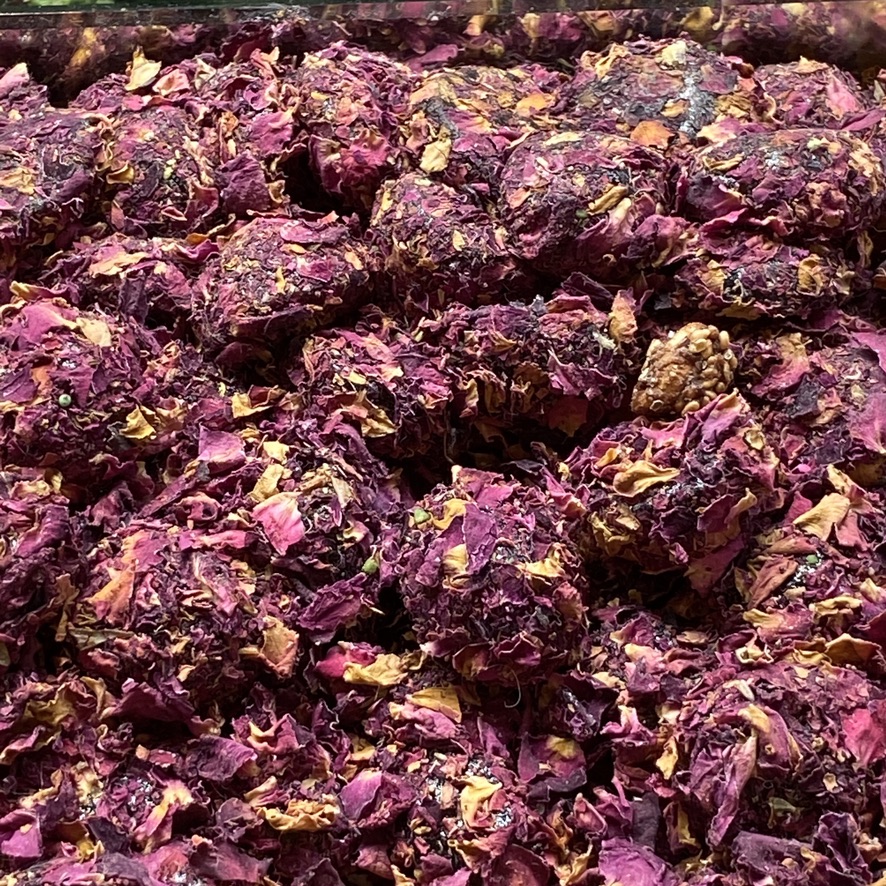
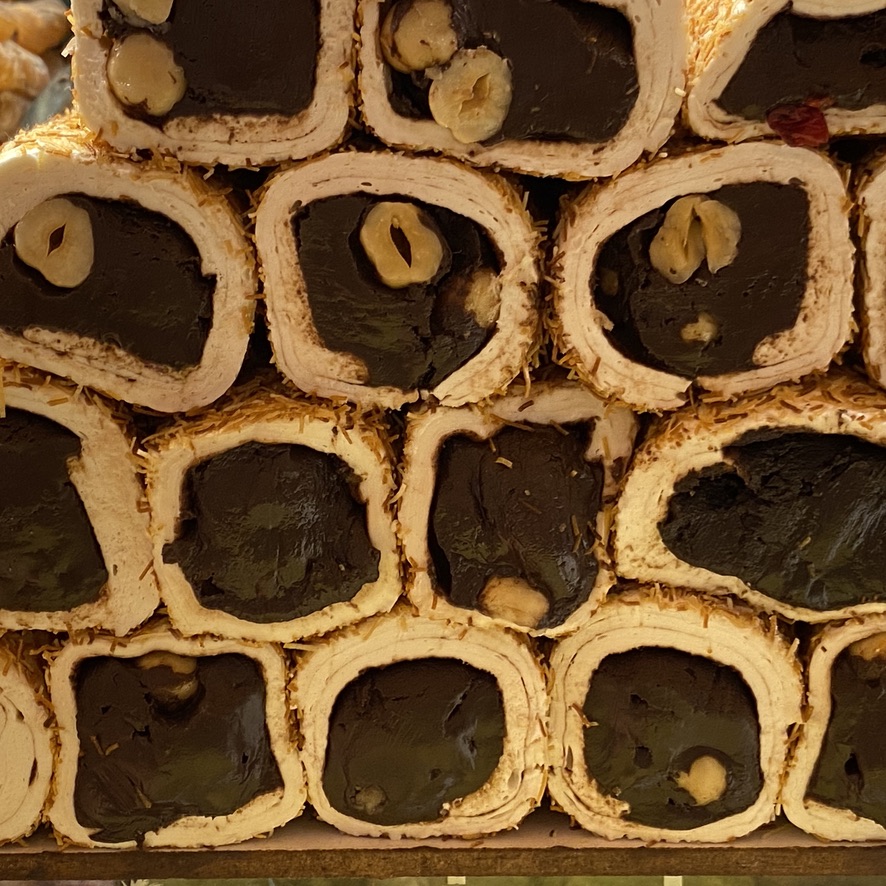
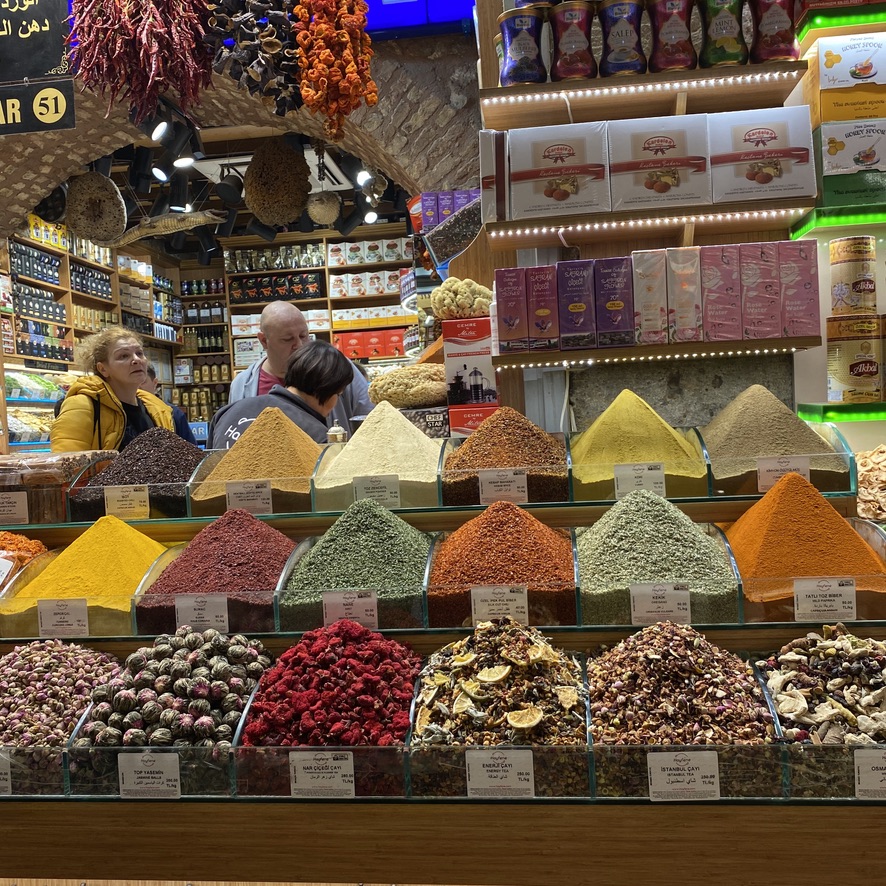
Today, we started with breakfast on the rooftop again (shakshuka for me; poached eggs over spicy avocado for Mike) and then headed out to visit the Rustem Pasha Mosque which we had heard was quite beautiful and much less of a tourist attraction than the major mosques. This one is located amid a thriving market with hundreds of stalls surrounding the complex and shops built into the wall as well. We walked from our hotel (about 1.5 miles) and finally located the entrance to the mosque – through a narrow passageway within the market and up a flight of stairs. But alas, the mosque is undergoing some restoration, so it was closed. We then strolled to the Spice Market and stumbled onto a beautifully restored courtyard that had recently been restored and converted into an outdoor café circled by small shops that sell the same things on the menu – baklava, halvah, coffee, teas, and a large assortment of nuts, along with traditional coffeepots and other tea and coffee paraphernalia.
We are now trying to decide where to eat (Sundays are challenging) and then need to re-pack (fortunately since the bags didn’t arrive with us, we really didn’t unpack too much). Our flight tomorrow to Geneva is in the morning.
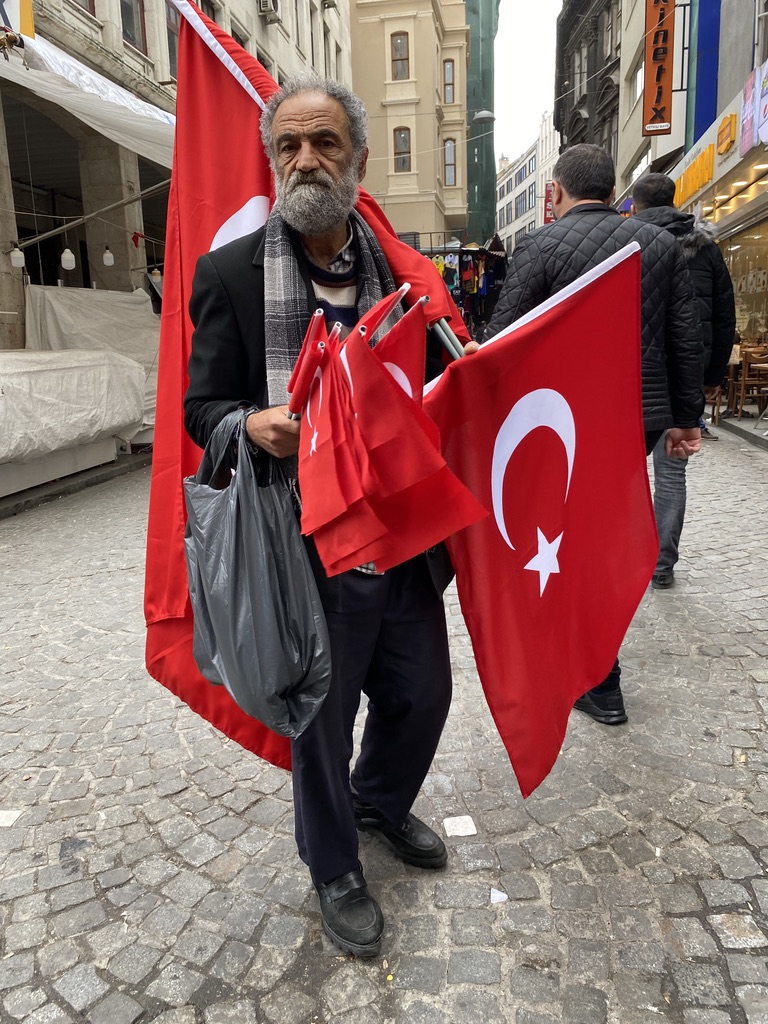
Now for a bit of local politics … What we are hearing is that while there is grave concern about Erdogan, there is also great excitement about the new mayor of Istanbul – a proven progressive and the successful campaigns of progressives in several of the major Turkish cities. There is concern about the growing authoritarianism throughout Europe, and shock and dismay about what is happening in the US. Trump is described as a total fool and embarrassment. And in conversation, people bring up the fact that it is impossible to understand how the US cannot have universal healthcare. No big surprise here.
Take care
Next travelogue will be from Geneva.
Fern
 Fern's Travel Notes