December 20, 2019: Trials and Tribulations of Travel
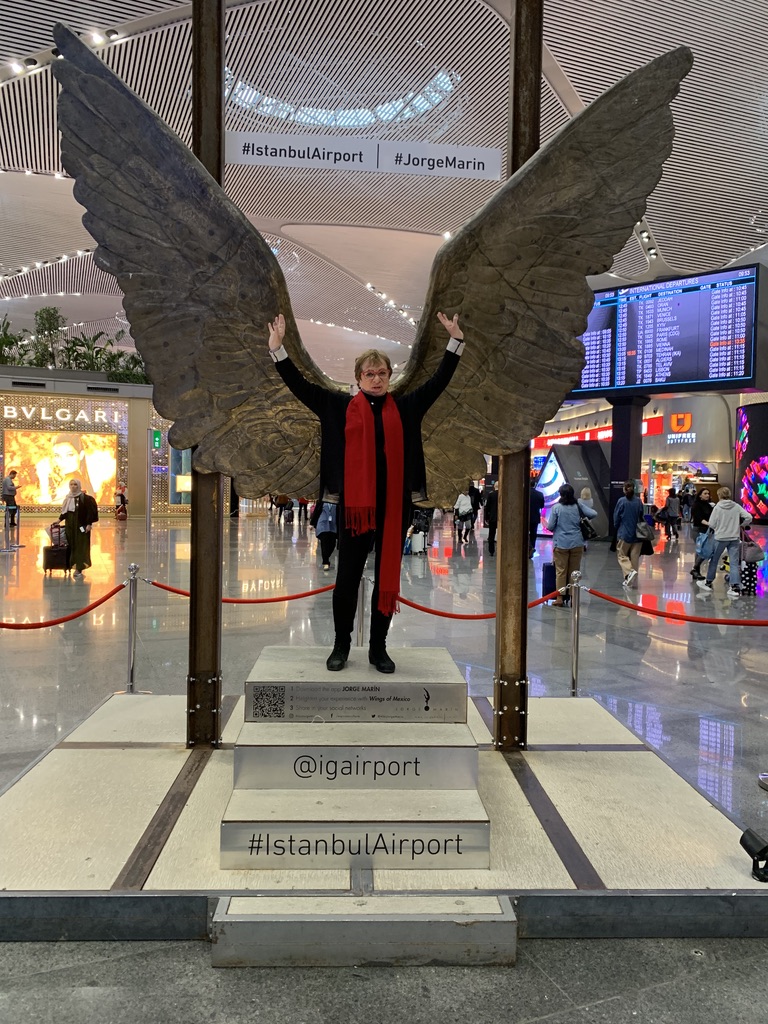
Greetings from Istanbul, Turkey (where it is a bit past midnight). As always, feel free to read or toss; keep or pass on to others with an interest in travel.
We just started our 2019 travels (as many of you know, we generally take a fairly complex trip in December – although after this year, now that I am no longer teaching and not tied to the academic calendar, we are considering moving the annual trip to September/October – stay tuned). This has been a more difficult trip to plan than other years and you’ll find out more as my travel notes continue in subsequent days. Anyway, the crux of the trip is Uzbekistan and Azerbaijan. But we wanted to be in Geneva to celebrate the holidays with Mike’s family. (One of his nieces lives in London but comes to Geneva for Christmas, and the other lives in Geneva. And this year, there are three grand nieces / nephews under the age of two!)
To fly to Uzbekistan (Tashkent) one needs to go through either Istanbul or Moscow. Having been to both cities we easily selected Istanbul as our connecting link; and because we would be going to Geneva for several days prior to Uzbekistan, we decided to do a three-day layover in Istanbul (for Mike’s birthday on the 21st of December). Since we’ve been here before we figured we could spend these three short days exploring neighborhoods we hadn’t visited on prior trips. So we were excited about this little “travel interruption.” We had an entire suitcase of gifts, so we needed to check a bag—something we have not done in decades. We also had a bit of a dilemma in that —not being accustomed to checking bags, we decided to buy luggage locks. Then we couldn’t figure out how to set the code. Mike blamed all of this on defective locks (!!) but it was clear that we just didn’t understand the directions(although they were written for a fourth grader). Once at the airport, waiting to check the damn bags, I ran to a shop and bought three luggage locks that used KEYS! We were able to make two work and one bag wound up being lockless.
Anyway, after flying for about 25 hours (following an intense 24 hours of trying to finish office project-related tasks, sending off the annual FTA card, running around to get last minute “necessities” for travel, and meeting with an attorney about our will (!!), we packed into the wee hours – not quite as organized as usual, but completing the tasks at hand. I finished at about 2 am. Mike crashed by midnight.
Since we knew we had to bring an extra suitcase to carry the gifts – mostly for the kids – we figured we might as well check our own suitcases and just bring computer bags as carry-ons. Thus we checked in three bags, two of which somehow got connected to Mike’s ticket. Our flight to Paris (where we would change planes to Istanbul) was to leave at 2:25 pm, and to board at 1:40. The plane boarded at SFO pretty much on time and given our status we were on the plane early. But 2:25 came and went. At about 3:00 we were informed there was a problem with the oxygen masks. The issue would be fixed by 3:30.. and then 4:00 … and finally we had the go-ahead signal at about 4:40. While we had a fairly cushy layover at Charles deGaulle, each successive delay tightened that window. We landed at CDG at 11:30 a.m. and after some totally screwy instructions, we found our way to our connecting gate just as it was boarding.
The Turkish Air flight was pleasant, although Business Class seems to mean that you are in the same seats as the back of the plane, except that the middle seat is blocked. Food was actually good on Turkish Air.
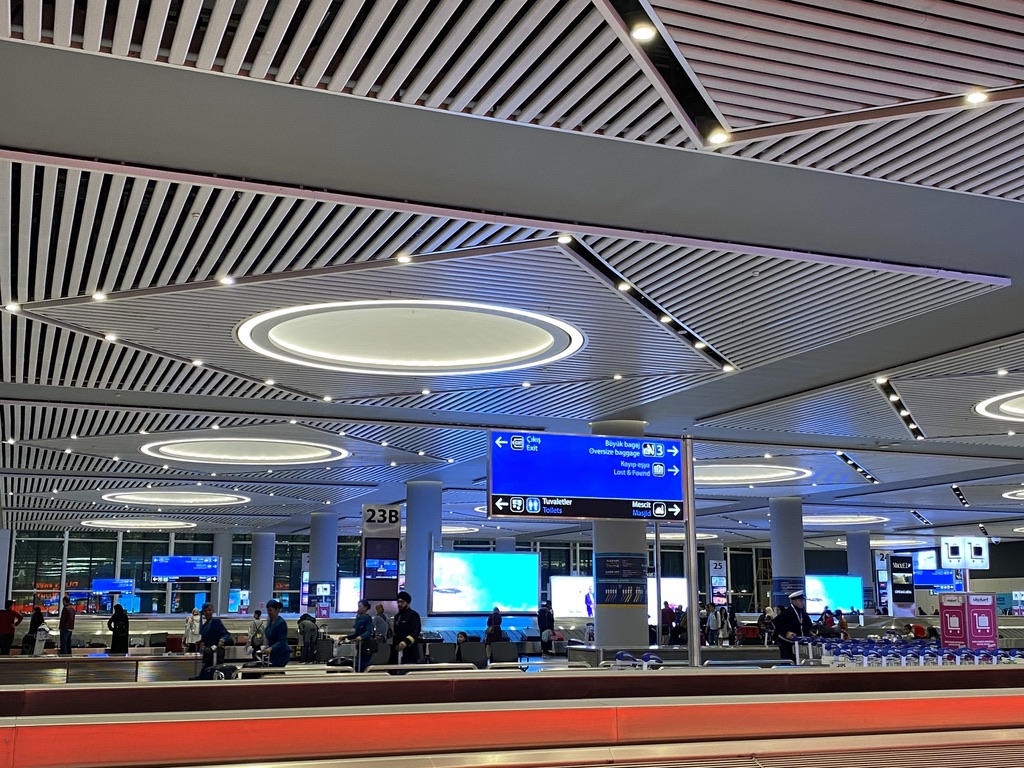
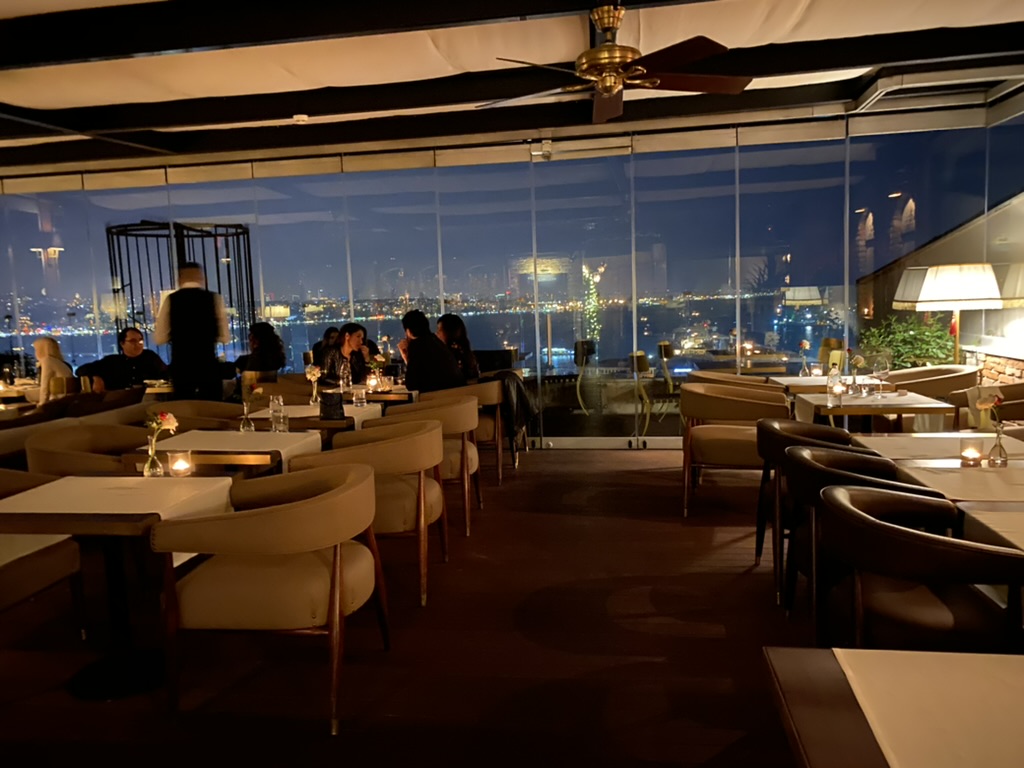
Well after 26 hours, we landed in Istanbul (the airport is very new; not the same one we came to on our last trip here in 2010. Anyway, one of the three checked bags arrived (Mike’s!) and the other two were not on our flight. After strolling the extremely large baggage claim area, we resigned and went to Turkish Air Baggage Claim. They seem to feel that the two bags didn’t make the connection in Paris to Istanbul. They gave us a phone number and we headed to our hotel. We were really tired but got the carry on bags up to the room and then headed upstairs for dinner. Turns out that the hotel (Hotel Georges)is quite delightful and they have a wonderful rooftop restaurant and bar.
We ate and then Mike headed down to our room to crash and I sipped my wine glazing out to the wonderful skyline and twinkling lights of this 15,000,000+ city. Glad to be here. Hoping our bags come (one of the missing bags contains all of the presents; the other has all my gear and all kinds of work that must be done on the trip.
Will report back tomorrow.
Fern
10/28/2019. Farewell to Amsterdam and the Netherlands — We shall return; An active day of eating, discussing social housing, and more
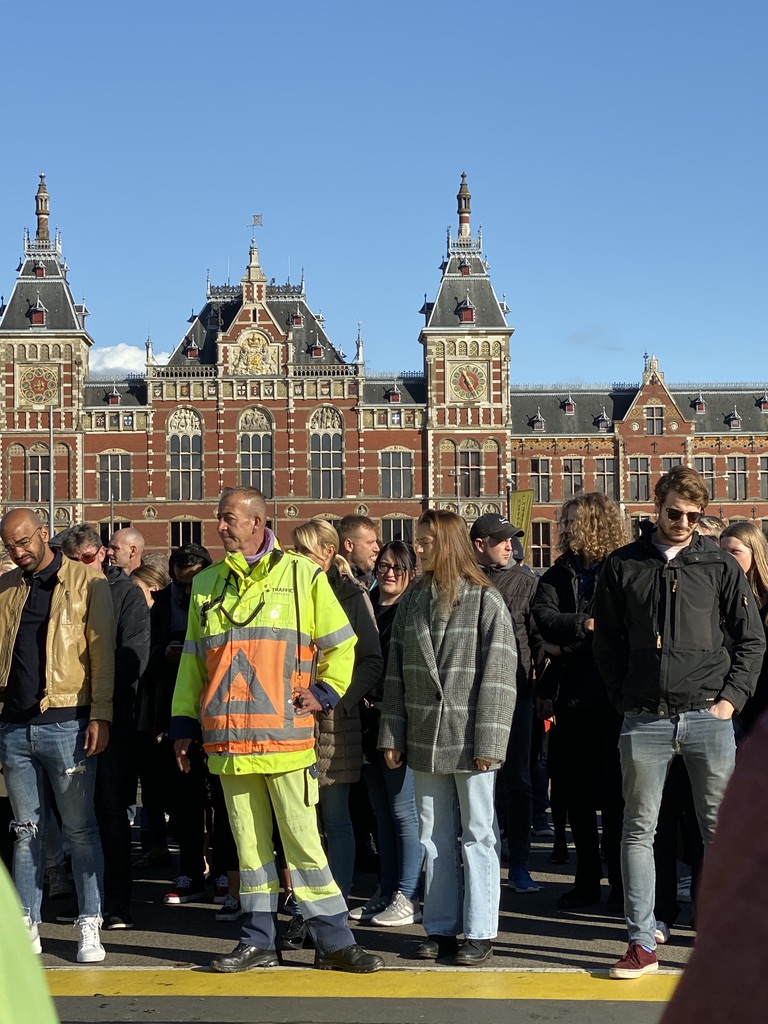
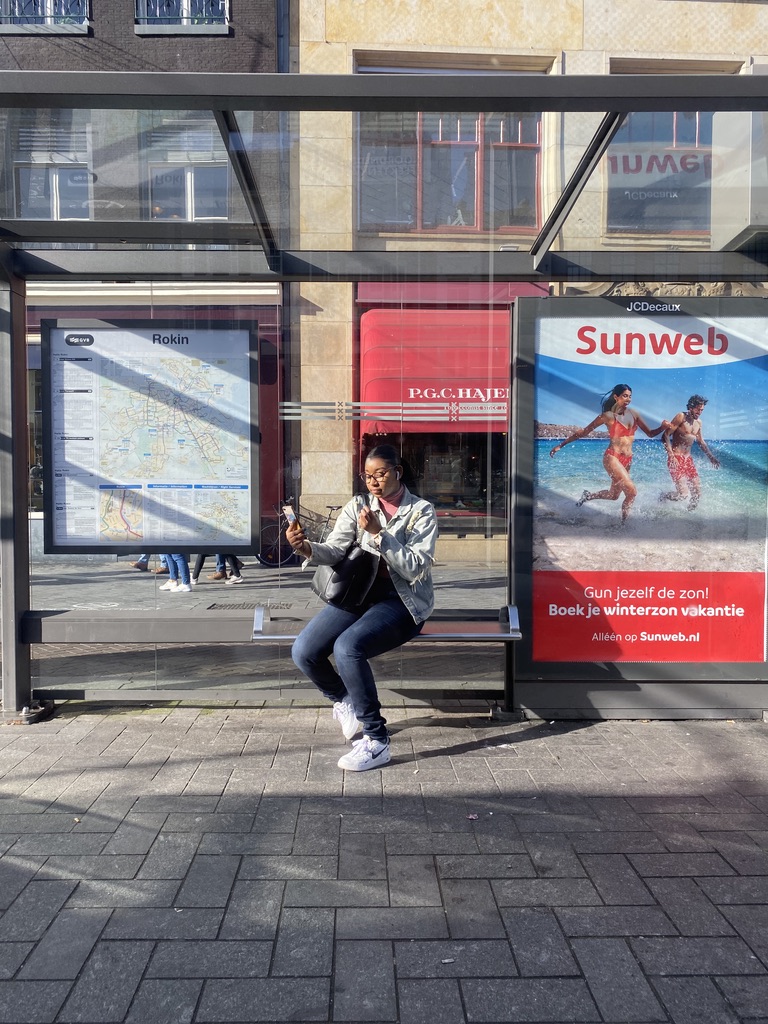
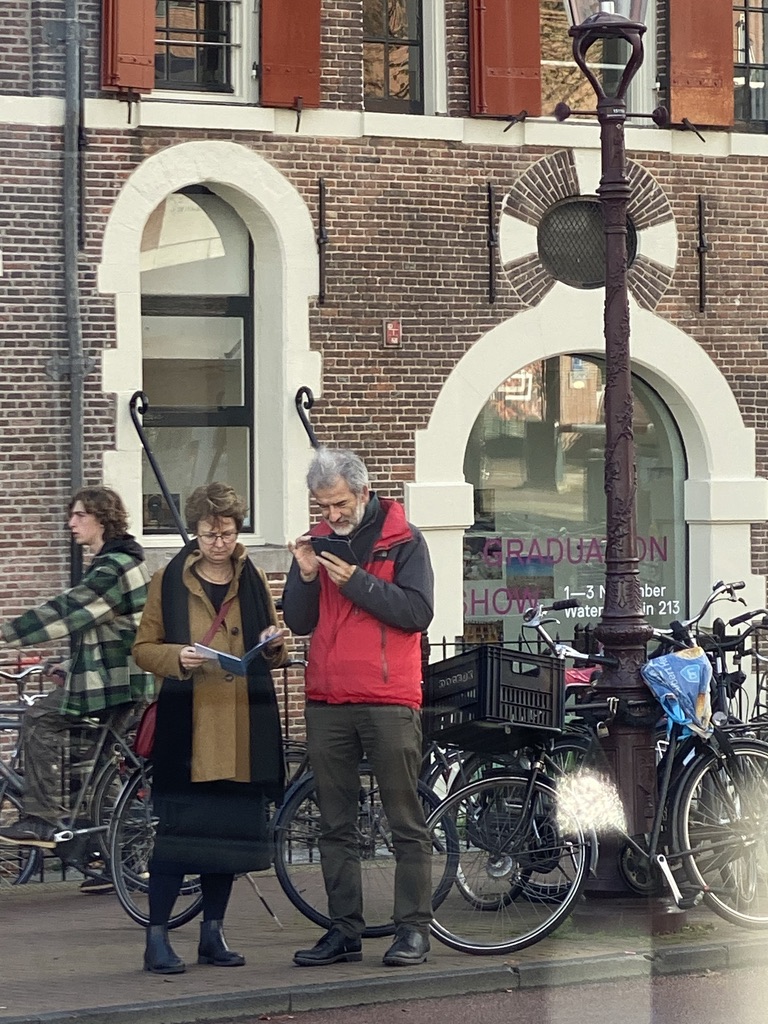
Packing to leave – Greetings from Amsterdam one last time.
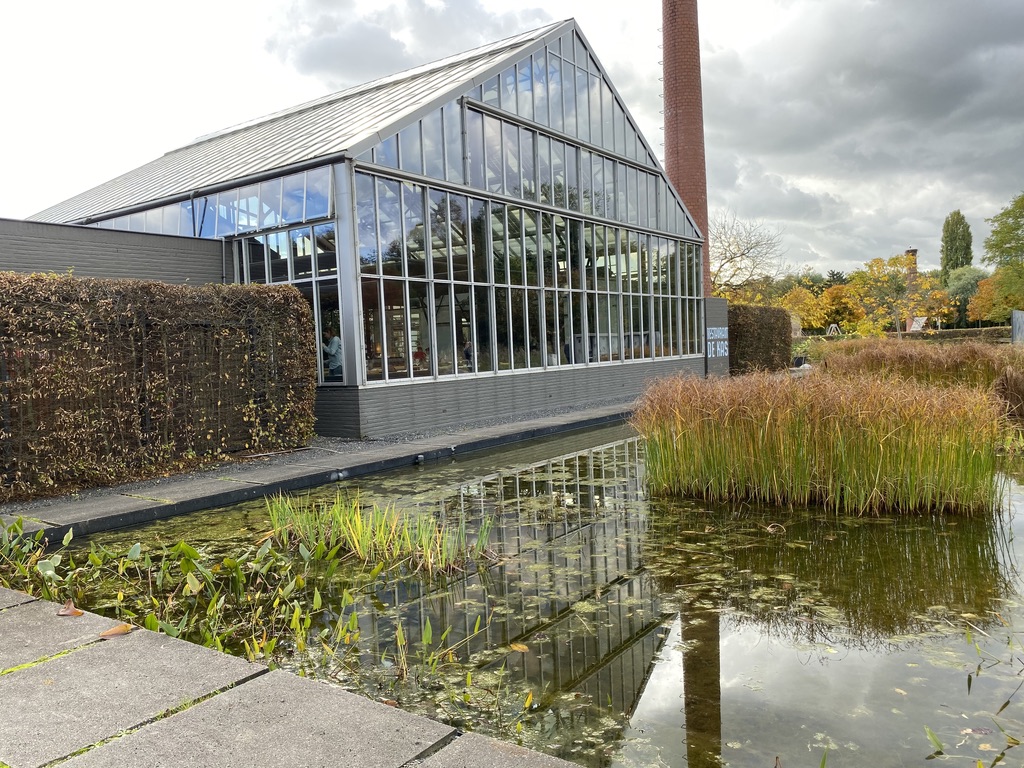
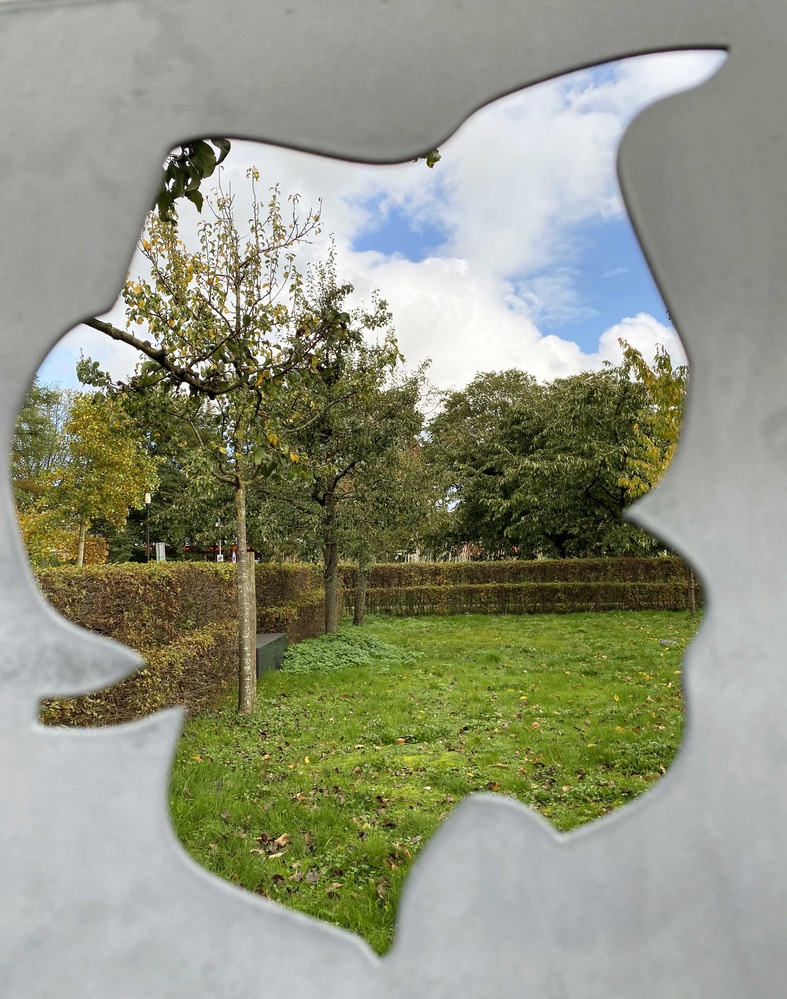
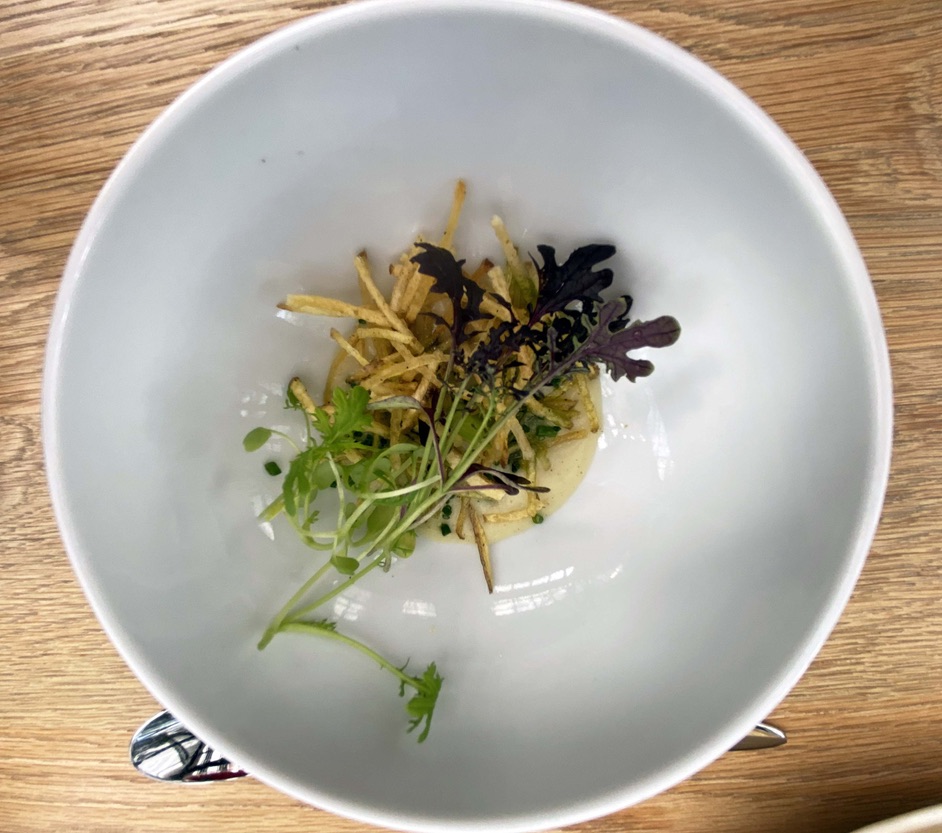
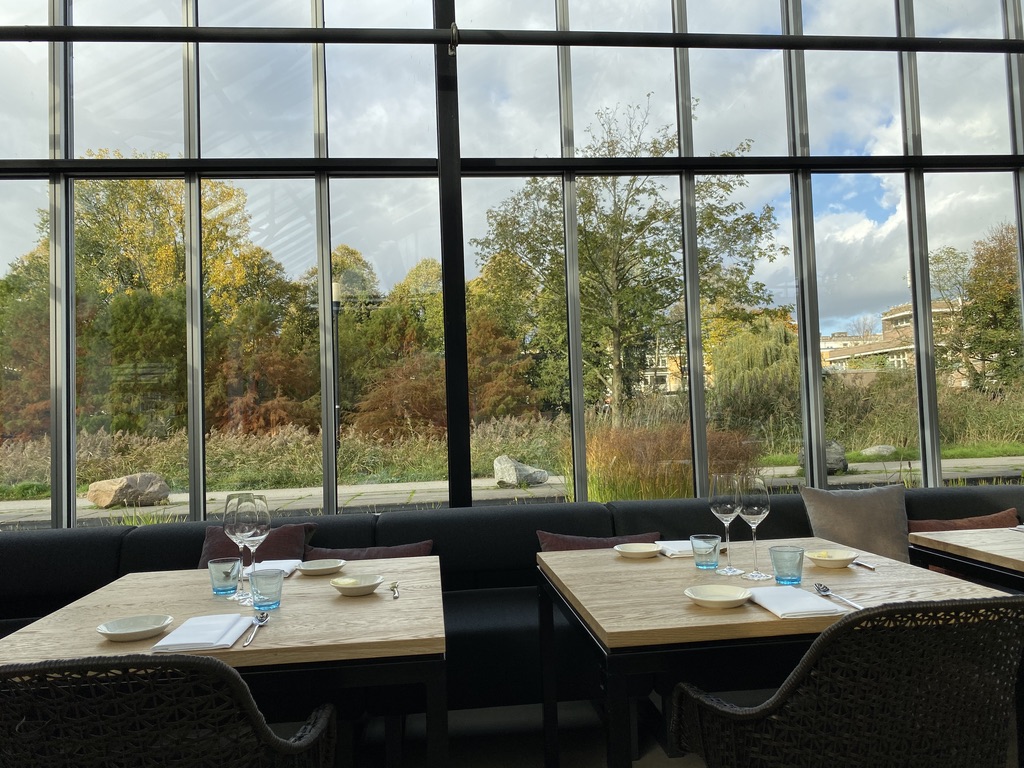
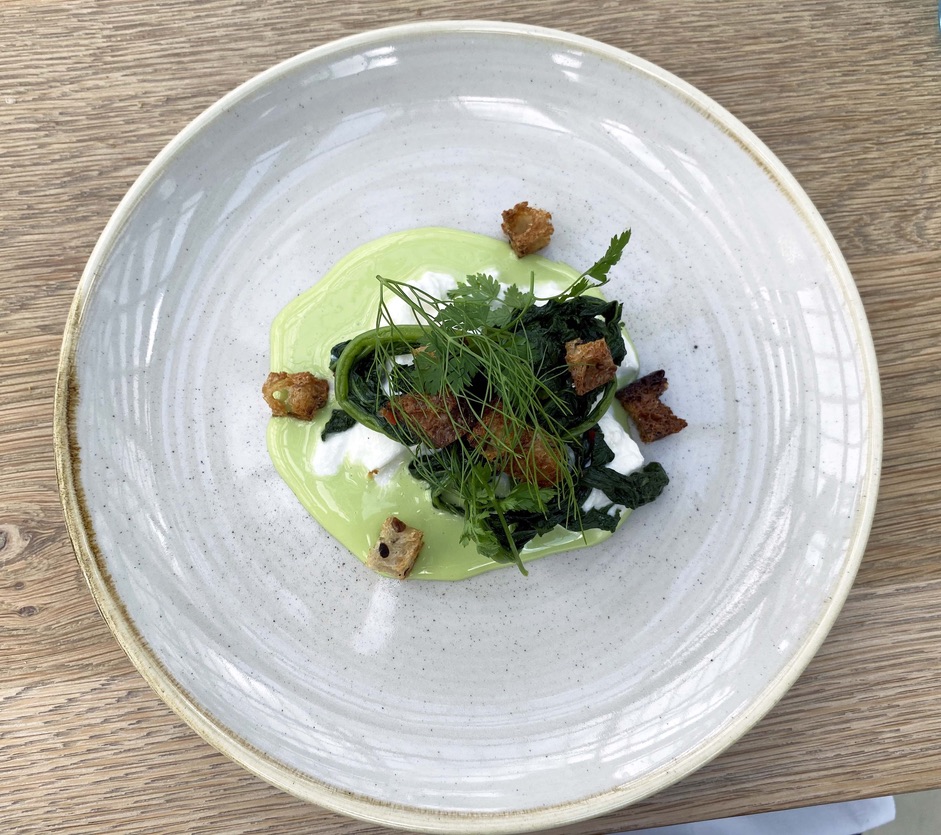
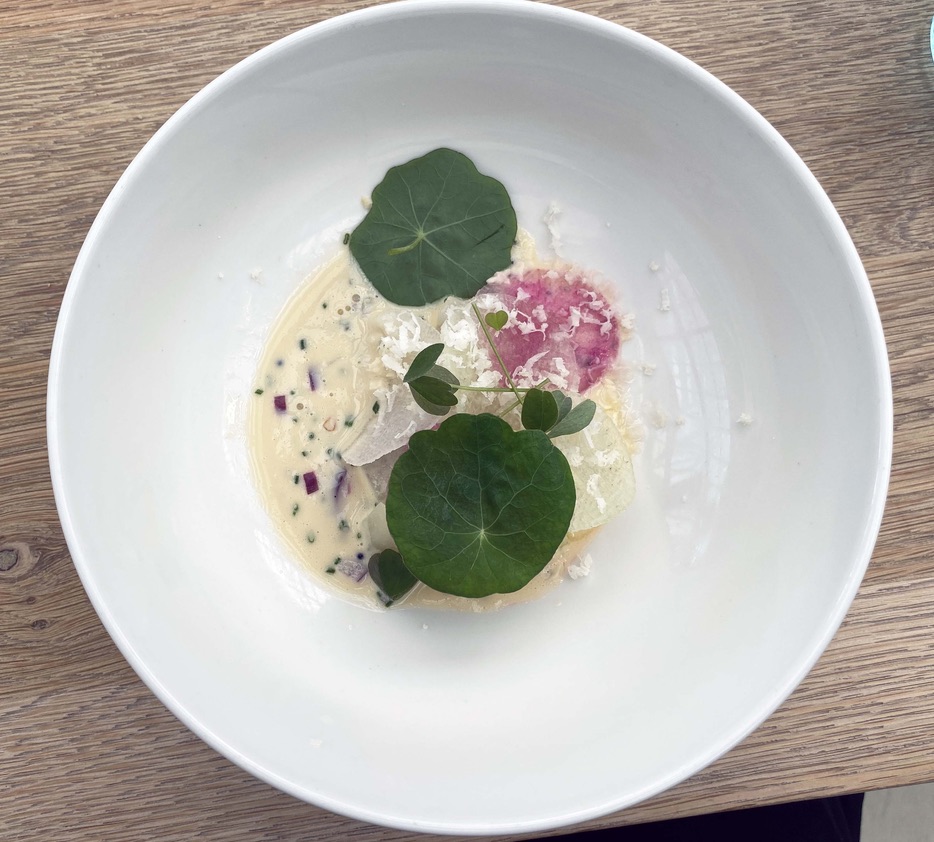
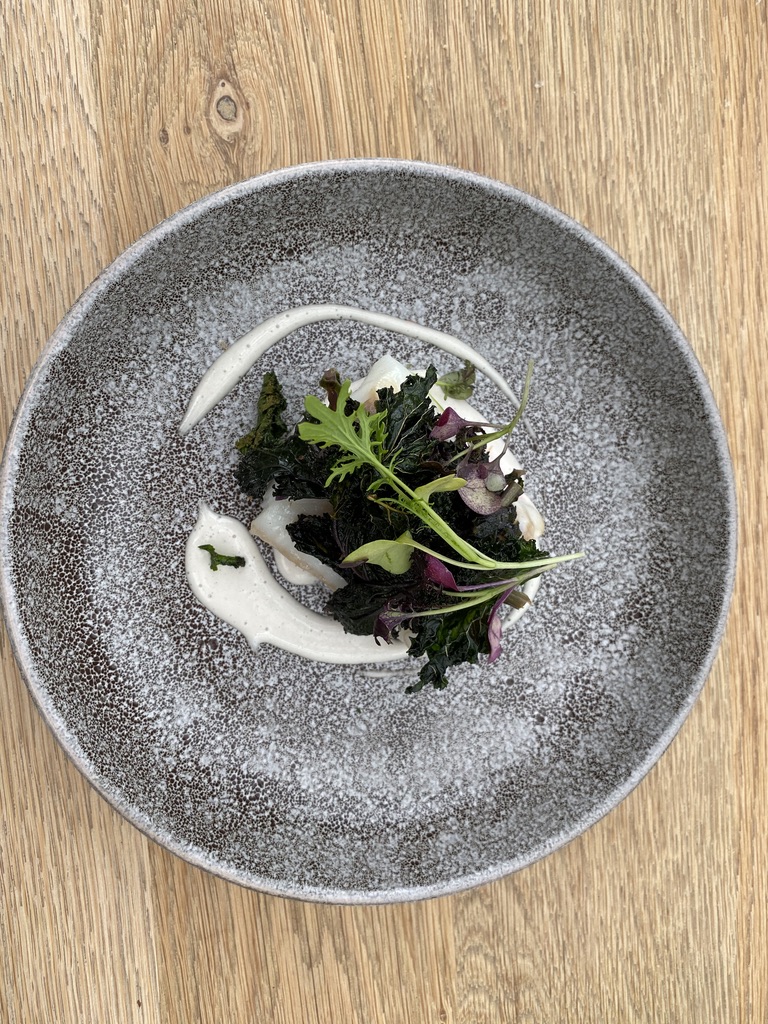
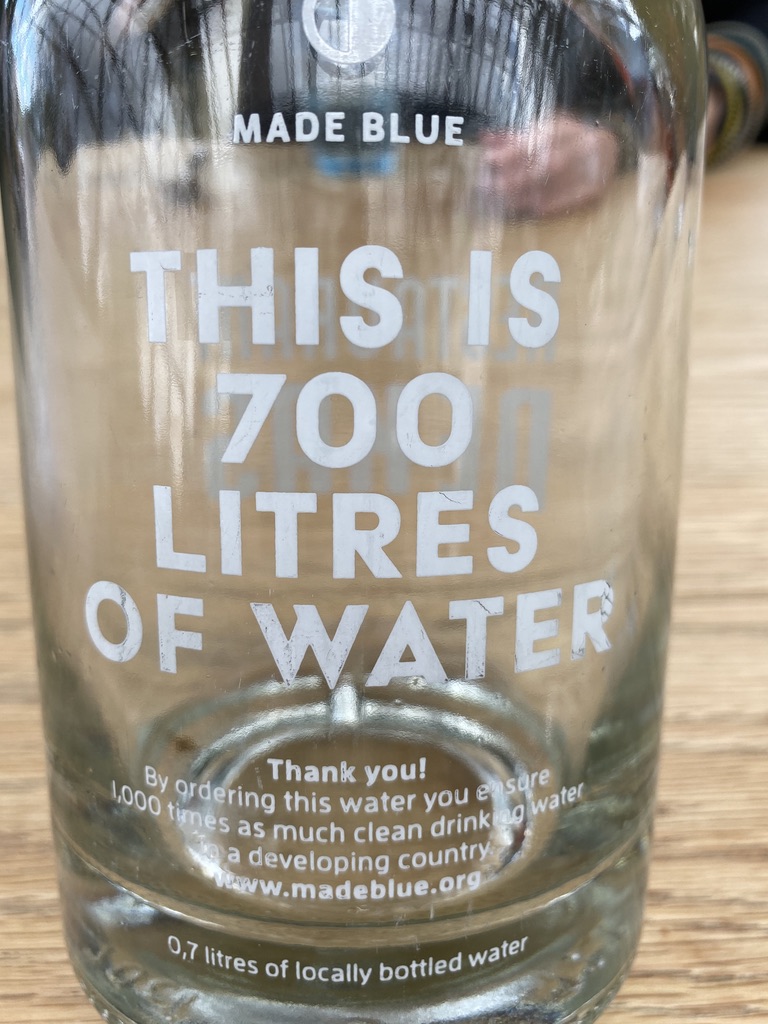
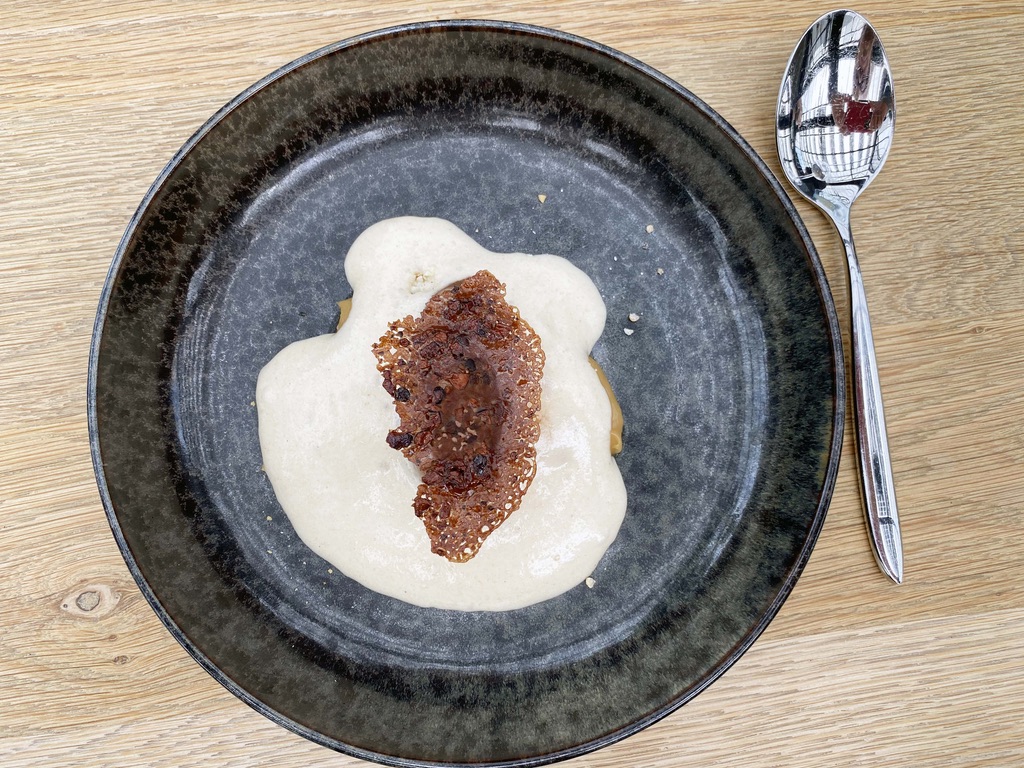
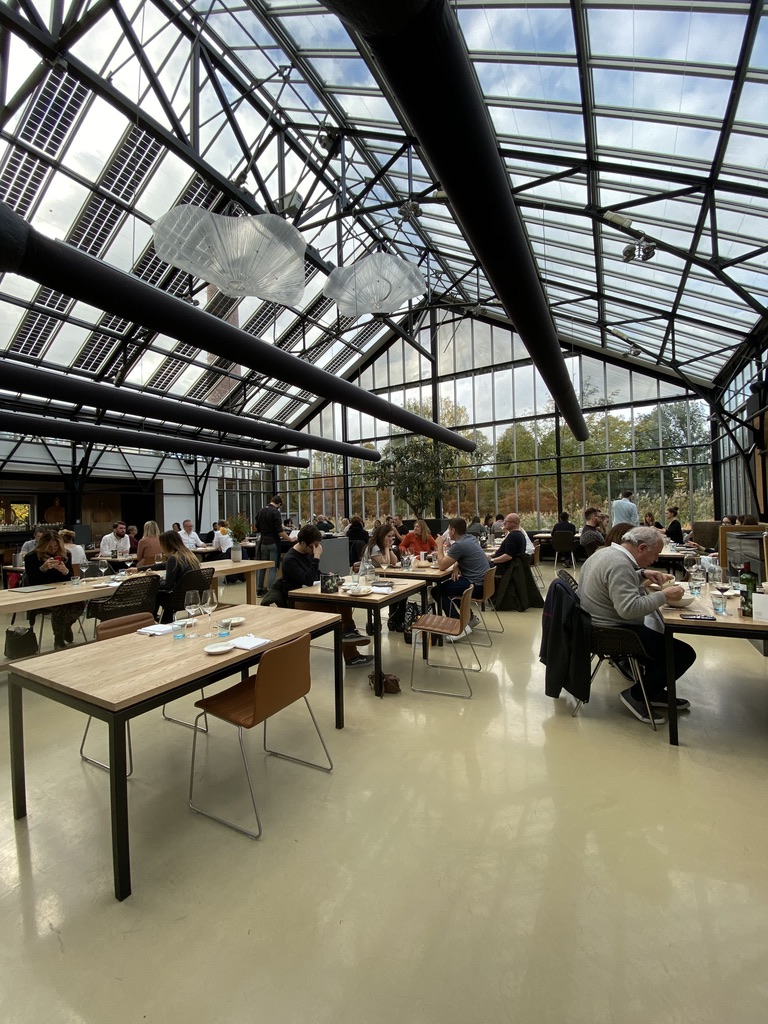
It’s been a great last day. After spending a bit of time in the early morning doing some work (yes, work!) and a bit of organizing so that packing won’t be too awful later in the evening, we headed out for a wonderful last lunch. We took the tram and changed to a bus (did it all correctly, today, no mistakes! Getting to be a local) to get to DeKas Restaurant which is located in a wonderful greenhouse just inside Frankendael Park. Apparently it was slated for demolition and the owners decided to repurpose the greenhouse and these restauranteurs decided to use part for a working greenhouse and the other part for a charming, spacious restaurant. They also have a 4-acre farm on the outskirts of Amsterdam so all of the food is sustainably grown. The restaurant’s specialty is combining sweet and sour flavors.. so they use interesting vinegars in many of the preparations. “Picked in the morning, served in the afternoon” is the mantra here.
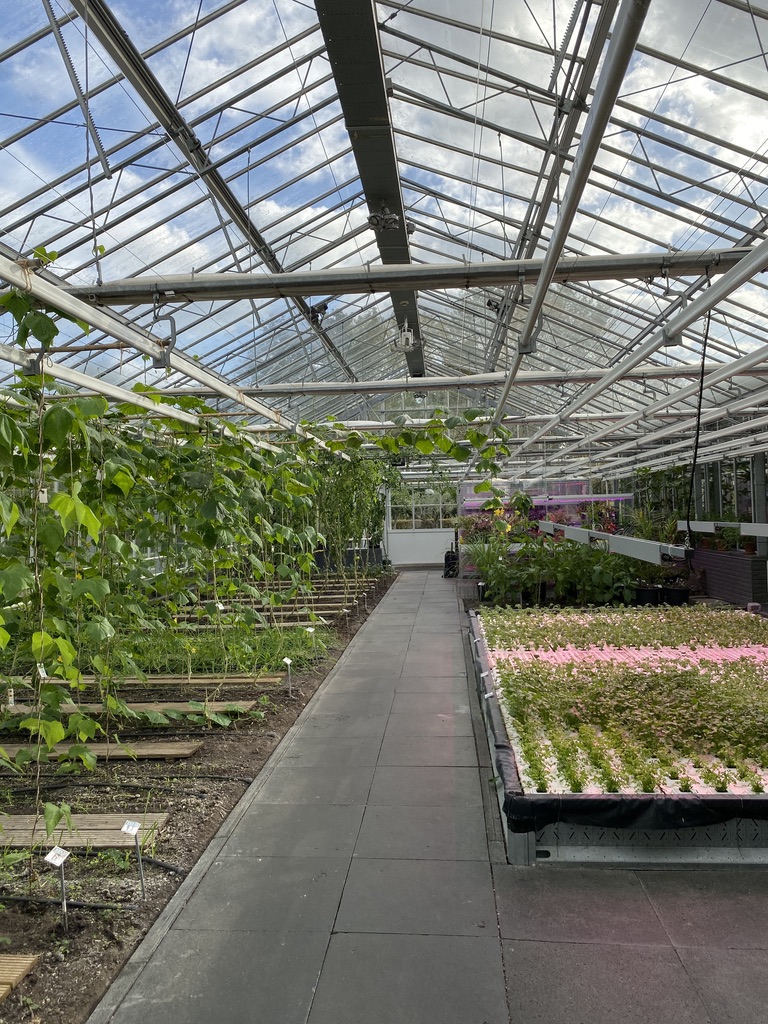
It was a wonderful meal – (big on various kinds of kale!) – and each portion was plated like a work of art. Interesting conversation with the waiter who suggested we try a Dutch wine! It was quite good. (White). He said the Dutch wine business is in the early stages but that given global warming they expect the wine regions to change and that the Netherlands will become a significant player in the wine industry.

From there we boarded a bus again and headed to the Tassenmuseum – a small museum devoted to exhibiting handbags and luggage. Apparently Heinz en Hendrikje Ivo had collected small antiques. One day, Ivo found a leather handbag from the 1820s, made of tortoise shell and was fascinated by the beauty and started researching the history of the handbag and went on to build an amazing collection which they initially showed at their house (turning it into a little museum). Some years later the museum moved to its present location in a canal house in 2007.
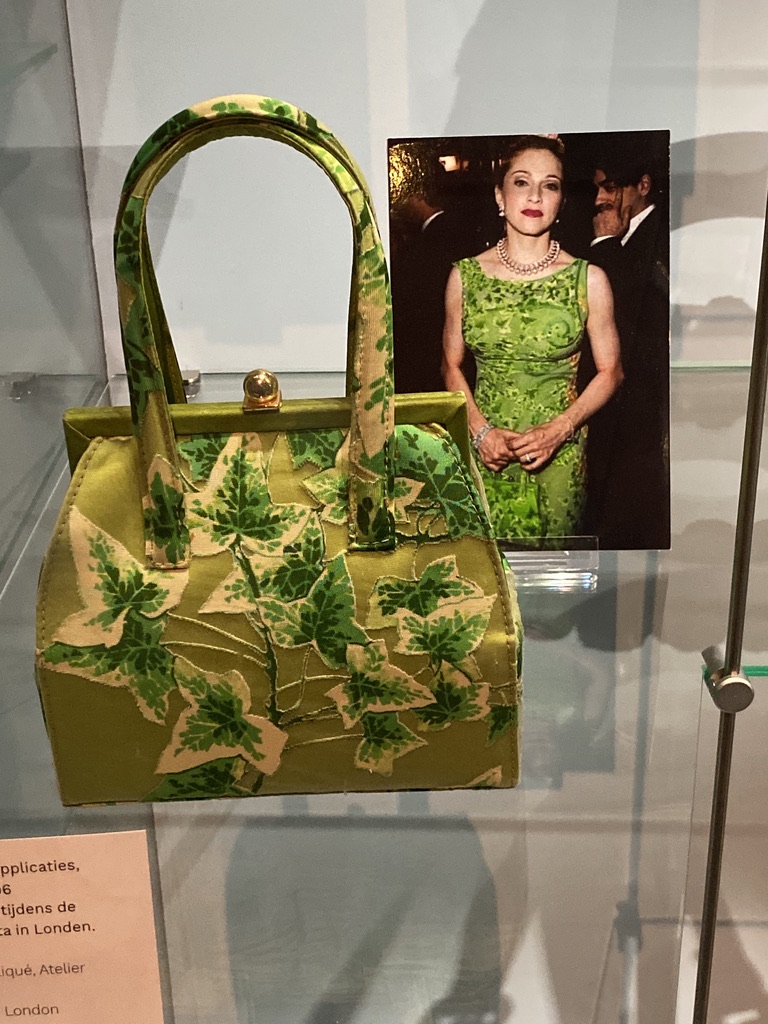
The exhibit is very well done and the collection probably has more than a thousand items – from 17th century bags to current, from a green handbag used by Madonna when she attended an event in London to the purse carried by Teresa May. We strolled the exhibit which was fascinating and well documented, and then hopped onto a bus to take us to Het Schip – a social housing project in northwest Amsterdam.
Het Schip (the “Ship”) is an apartment building in the Spaarndammerbuurt district that reflects the architectural style of the Amsterdam School of Expressionist architecture. It is considered perhaps the single most important example of this style of architecture using brick expressionism. It was designed by Michael de Klerk and it vaguely resembles or reminds one of a ship – hence the name. While there is a huge amount of design integrity, it’s quite different from different angles. It was designed in 1919 to house working class residents in 109 units and to include a meeting hall, and a post office (which is now a museum of the Amsterdam School.
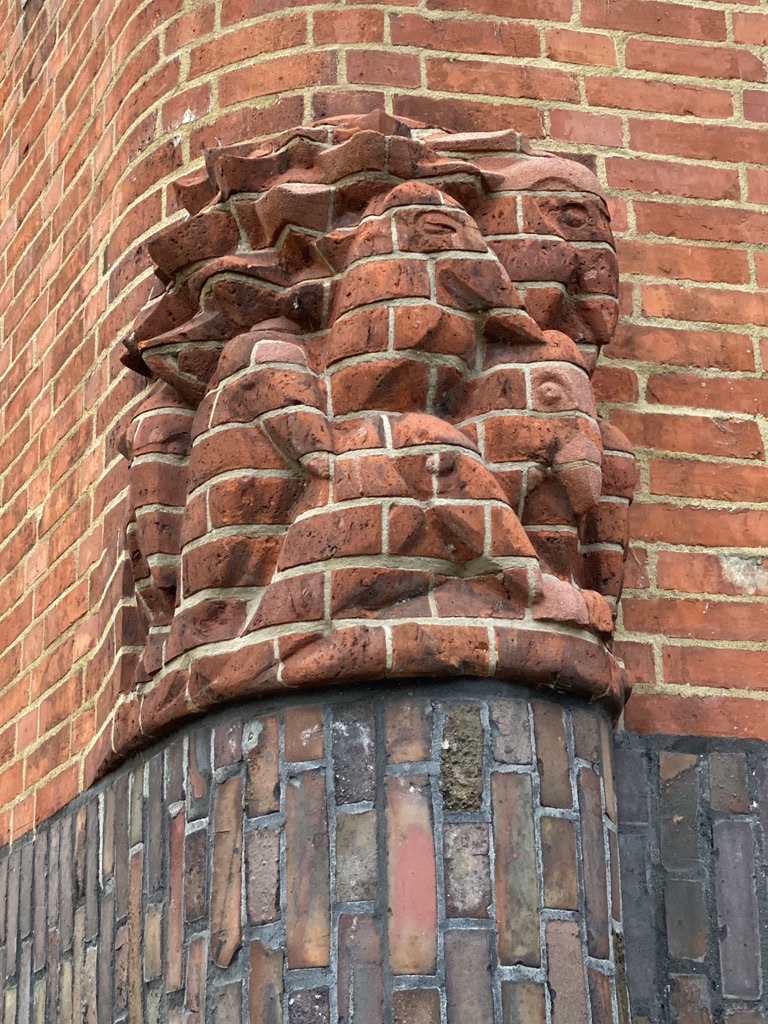
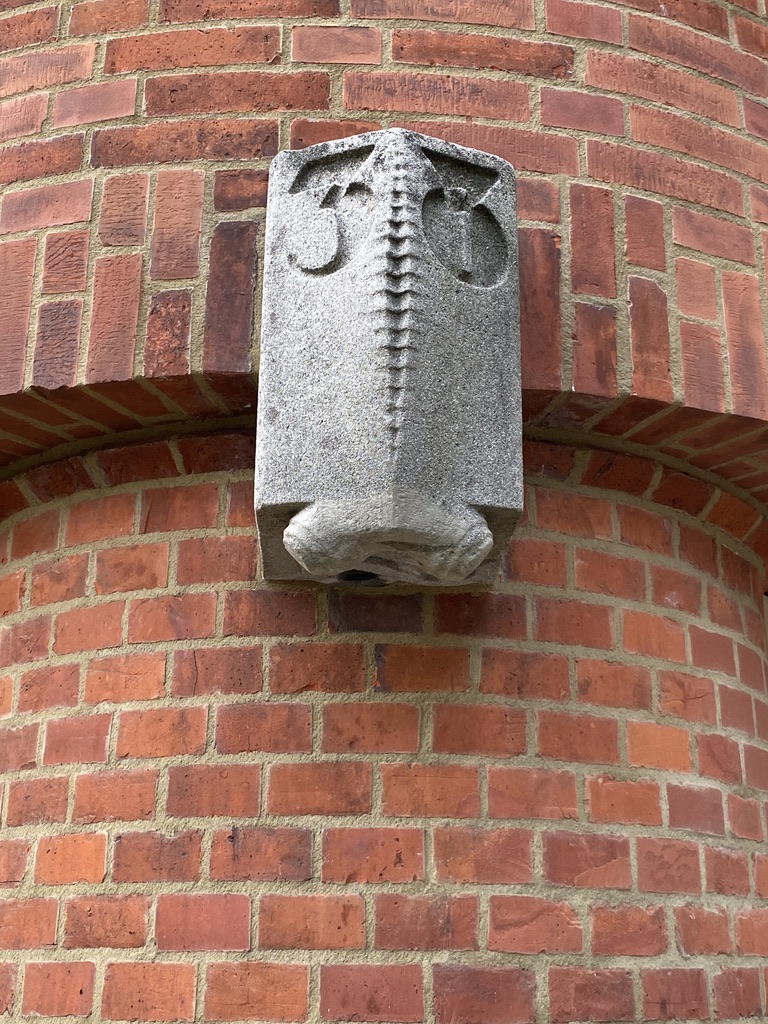
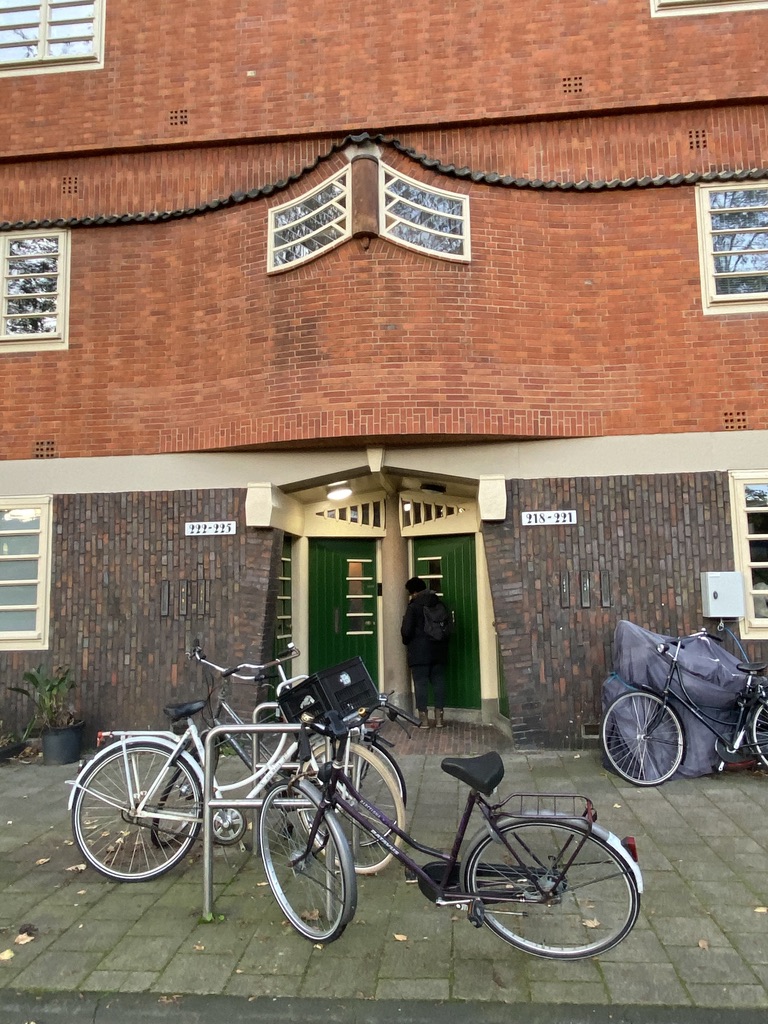

In the 19th and early 20th century, Amsterdam faced a housing shortage, with many working-class people living in cramped quarters – often without electricity, heat, or running water. Often several people lived in one room. In the early 1900s (1901, I think), the Dutch government passed the National Housing Act (Woningwet). This law set high standards for housing and resulted in the demolition of old, inadequate tenement-style buildings and also created new housing reflecting the desired living conditions and were developed with prices that made them accessible to Amsterdam’s low-income citizens. This law also set aside financial resources for the development of other low-income housing. One of the affordable housing developments created after the passage of this act was the Spaarndammerbuurt, where Het Schip and several other Amsterdam School social housing projects are located. Most of this housing was funded by cooperative housing associations and workers collectives, socialist organizations, and religious groups. One of these groups commissioned the architect, Michel de Klerk, to design and build three blocks of “proletarian housing,” including Het Schip.
The apartments in this complex reflected a radical change regarding living conditions for the poor and working class people in the early 1900s. The units included several rooms rather than the typical single-room occupancy that was common at the time. They also included flush toilets and had good natural light and ventilation from windows. Ground-floor units had gardens. The building also housed a post office, and a telephone box.
We had planned to visit, and then found out that the little museum that explains the building was closed on Mondays. We decided to go anyway, thinking that seeing it all from the outside would be fine.
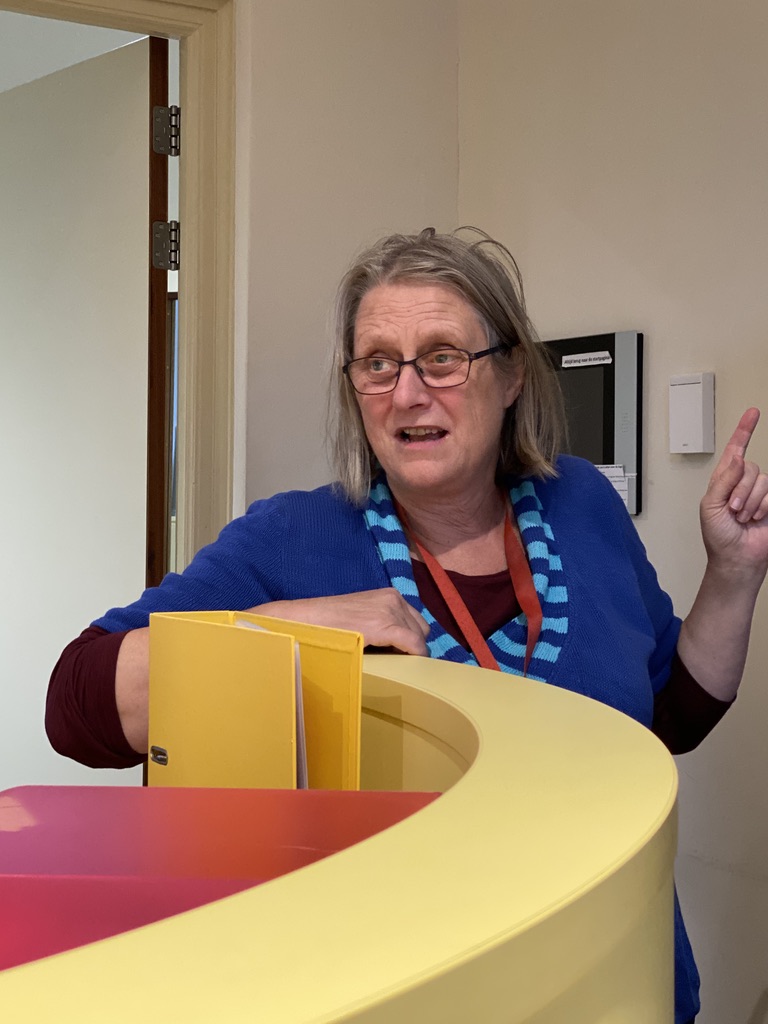
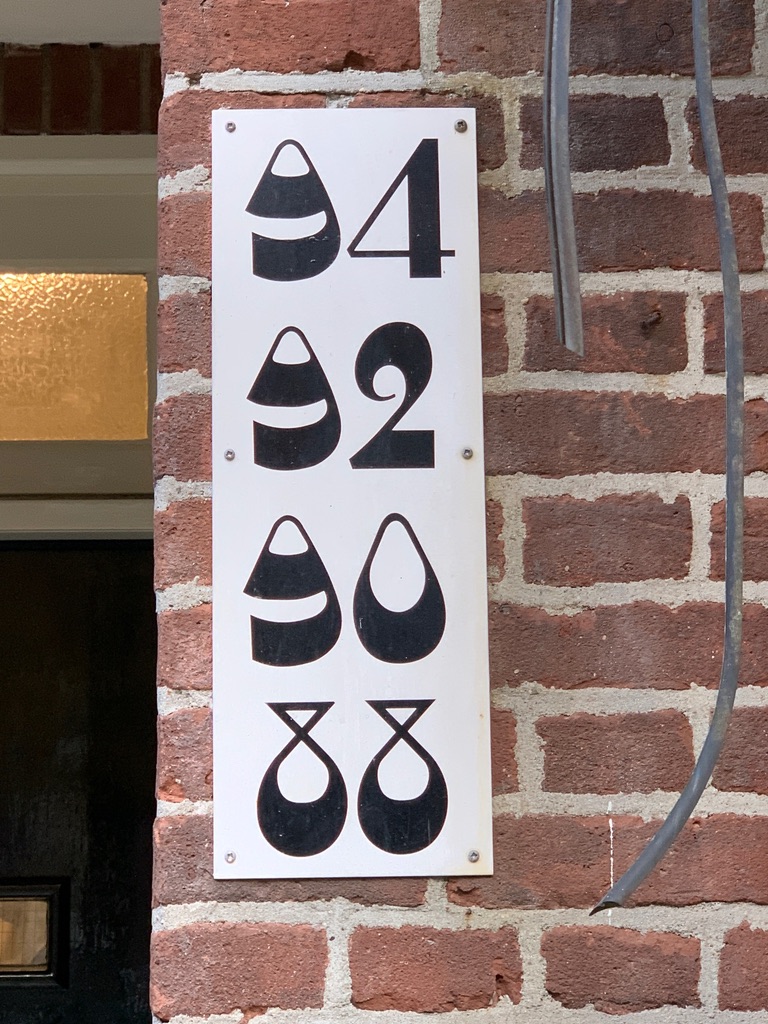
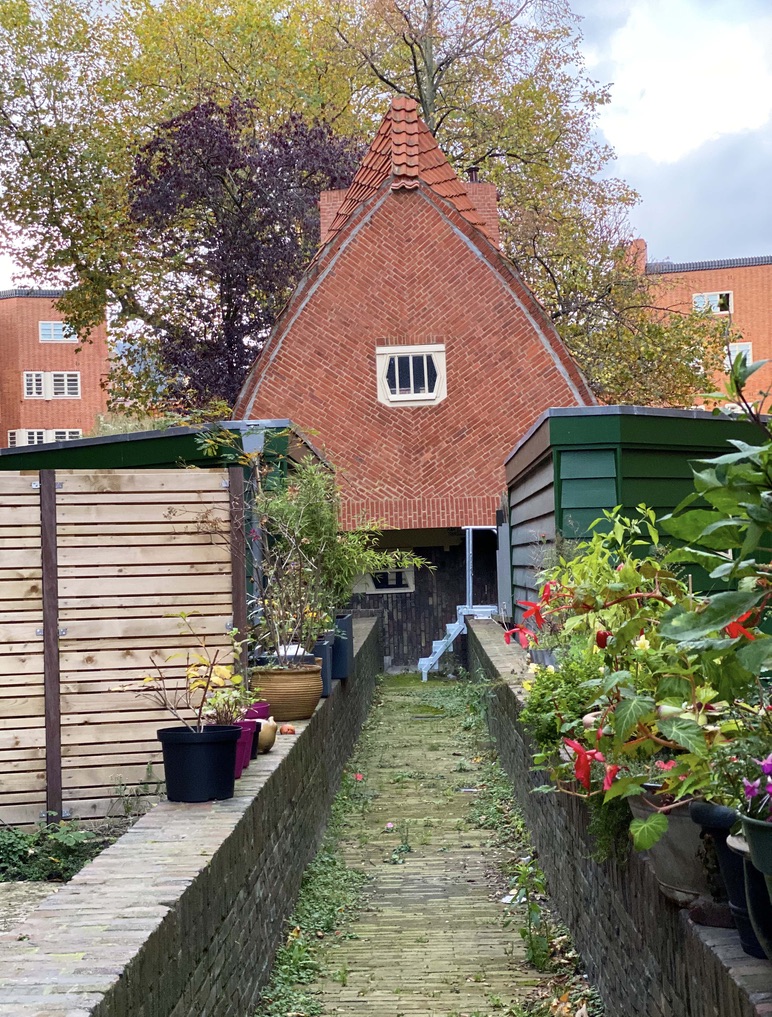
So, we got there and were walking around the perimeter and then I decided to try the main door (leading to public spaces) – It was open so we walked in.. We were checking out the lobby (cautiously, knowing that perhaps we weren’t supposed to be there) when a woman appeared. She asked how we got in and we explained that the door was open. She was a bit flustered but then we struck up a conversation. Turns out she founded the little museum and is very active in the social housing movement. Apparently one day she stopped at the post office and admired the building and was told it was to be demolished. She thought that was a terrible situation and fought to reclaim it as a museum to honor Dutch architecture, Het Schip, and social housing. She’s been managing it ever since. She gave a us a quick history of the place including the fact that there had been a small school at the site and deKlerk literally designed Het Schip to be built around that school – above it and adjacent to it and behind it. The school is no longer there and additional housing was created.
The craftsmanship, details, and overall design are amazing to see – an honor to the residents. Alice (the woman) is feisty and intelligent. She talked to us about more recent struggles to ensure that social housing will remain forever in the hands of low income people and not go the way of the UK which privatized units within their social housing and made efforts to increase the amount of privatization. We talked about the need for affordable housing in the US and when we finally bid adieu to Alice she cheered us for caring about this issues amid (as she called it) these “Trumpies” who want to destroy civilization! We promised to tell everyone we know to come to visit Het Schip – so I am doing that here. Don’t go on Mondays because the museum is closed and you might not luck out to meet Alice.
She let us stroll the courtyard, and then we walked the entire perimeter. From what I can tell, the design ensures that every resident has their own “front door” on street level, even though some doors lead to staircases that lead to second or third level units. Resident gardens are thriving and the entire complex is very well maintained; looks like lots of kids and families as well as singles.
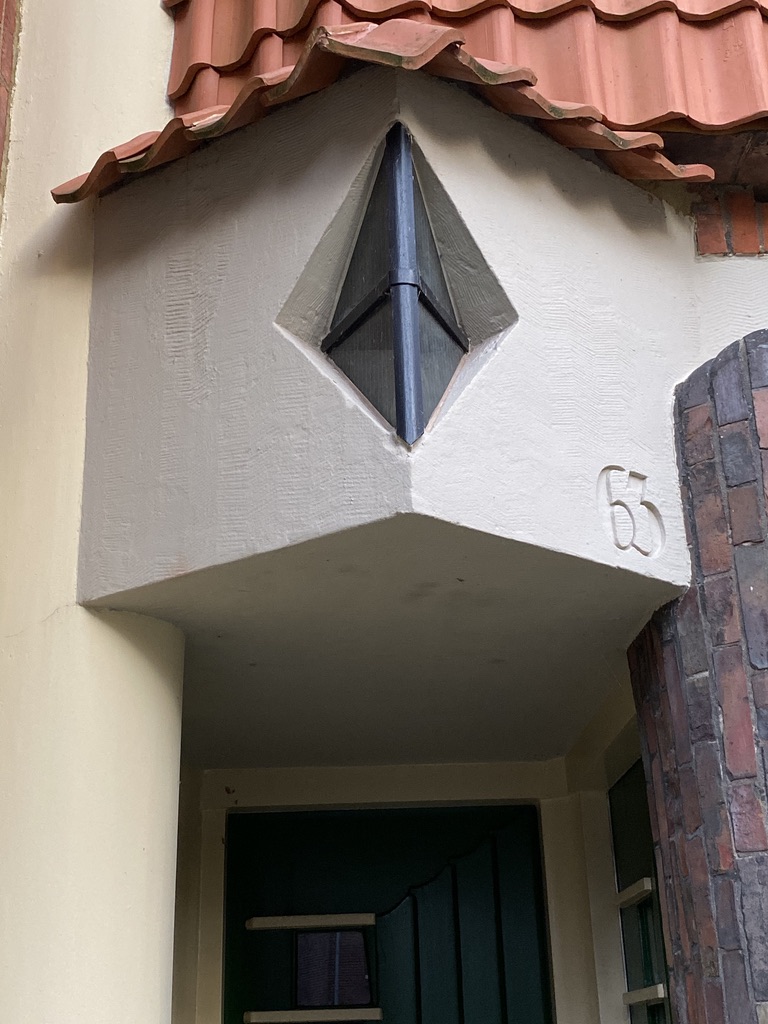
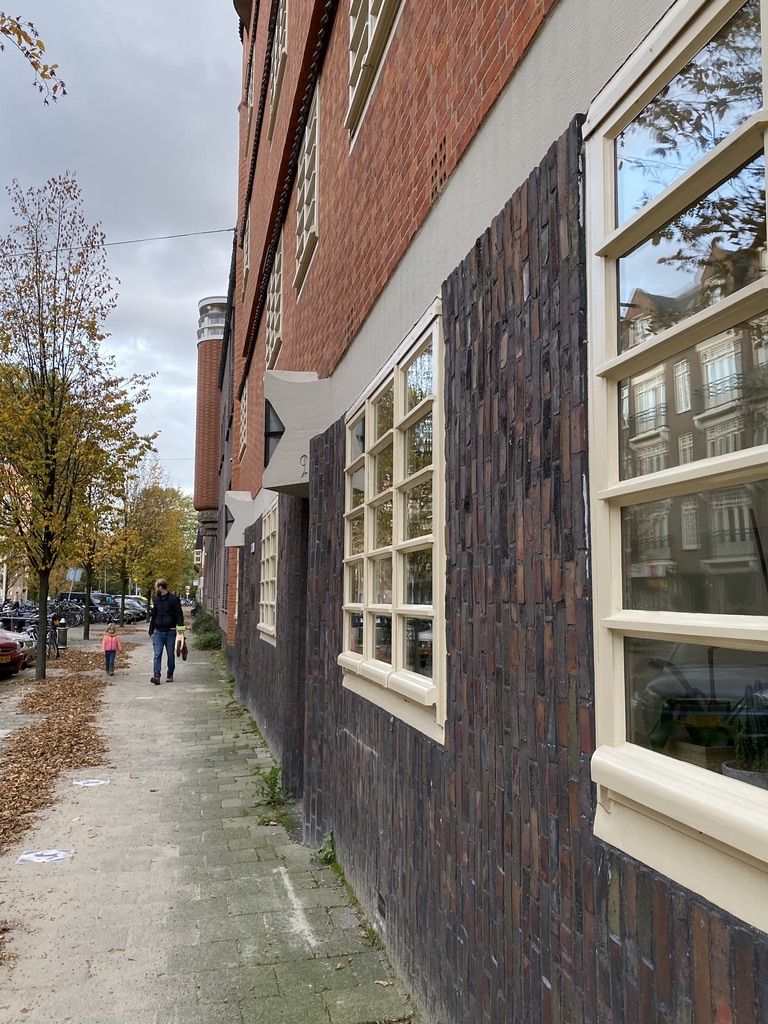
As it got dark (we had to change our clocks on Saturday night so the sun sets at around 5:30 now), we headed to the bus and back to the Central Station, from which we could walk back to our hotel. We just finished dinner (decided to eat at the hotel so that we wouldn’t lose much time) and now I’m wrapping this up and shutting down, packing, and headed to bed – Need to head to airport at 7 am.
See you all stateside. Hope the fires are subsiding (but we are well aware of the realities – it’s all over the news here).
Best –
Fern
Trains, Trams, Buses, Boats, Feet, and More. 10/27/2019


Greetings from an exhausted American in Amsterdam
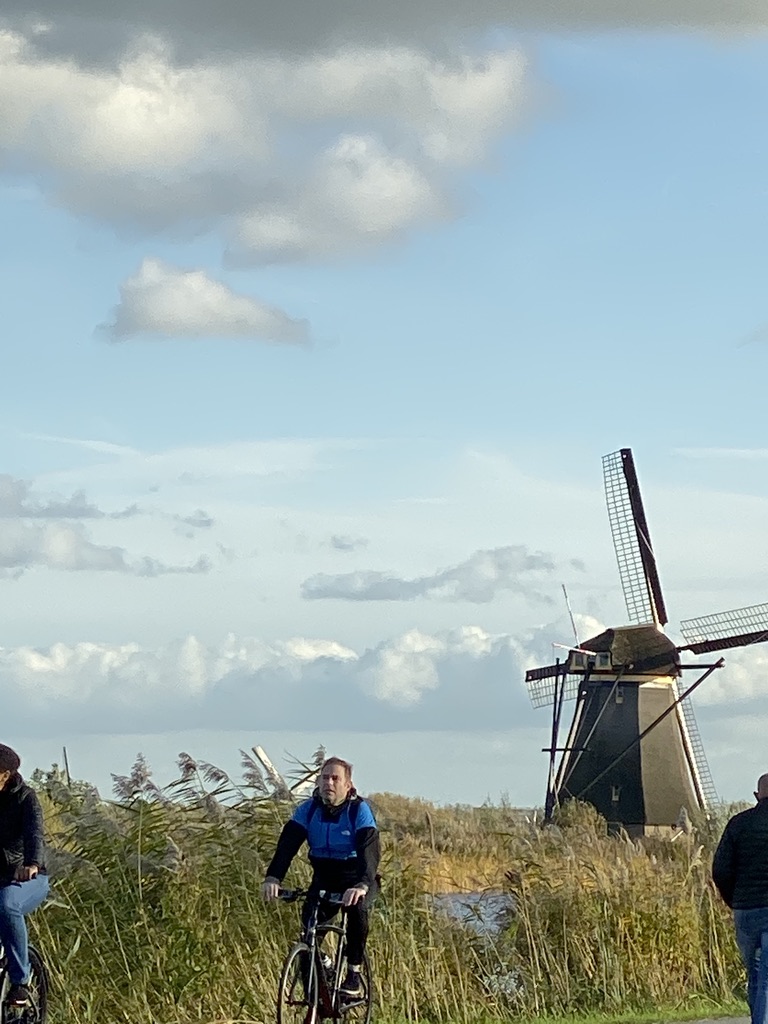
We started our day with a relaxing (although a bit rushed) breakfast at the hotel, and then headed to the train station (Amsterdam Central) to catch a train to Rotterdam where we would then supposedly find out how to get to Kinder Dijk – which is about 15 kilometers from Rotterdam. It is the site of a “community” of 19 windmills begun about 270 years ago and are now a UNESCO World Heritage Site. Many of us associate windmills with the Netherlands, and here at Kinder Dijk they blend seamlessly with the landscape – and are functional and performing an important role in the ecology of the region. Strolling the 800-acre site and wandering over small bridges and into marshlands and along paths that take visitors to the front steps of 250-year old windmills, following and crossing over the canals is transformative.
Construction of hydraulic works for agricultural drainage and settlement began here in the Middle Ages and has actually continued to the present day. Kinder Dijk is an example of the typical features associated with this kind of technology – dykes, reservoirs, pumping stations, administrative buildings and absolutely stunning and well-preserved windmills. It’s known that the Netherlands has had centuries-old challenges with rising waters and the collection of windmills at Kinder Dijk was constructed to address flooding. These windmills sit on a waterlogged plot of land surrounded by two rivers. The area has always been threatened by floods. So, to keep the water at bay, residents built a series of what we might call “earthworks” way back in the 13th century. These dykes, sluices, and canals channeled water away from homes and farms and protected the area for generations. But by the 18th Century, this system needed to be updated and the set of windmills were constructed, beginning in 1740. They are extremely large and were designed to drain the wetlands. By harnessing the wind, the windmills transferred water from lower parts of Kinder Dijk into a higher basin that flowed into a nearby river. This created an expansive irrigation system that still exists today.
OK.. So it was worth what it took to get there.
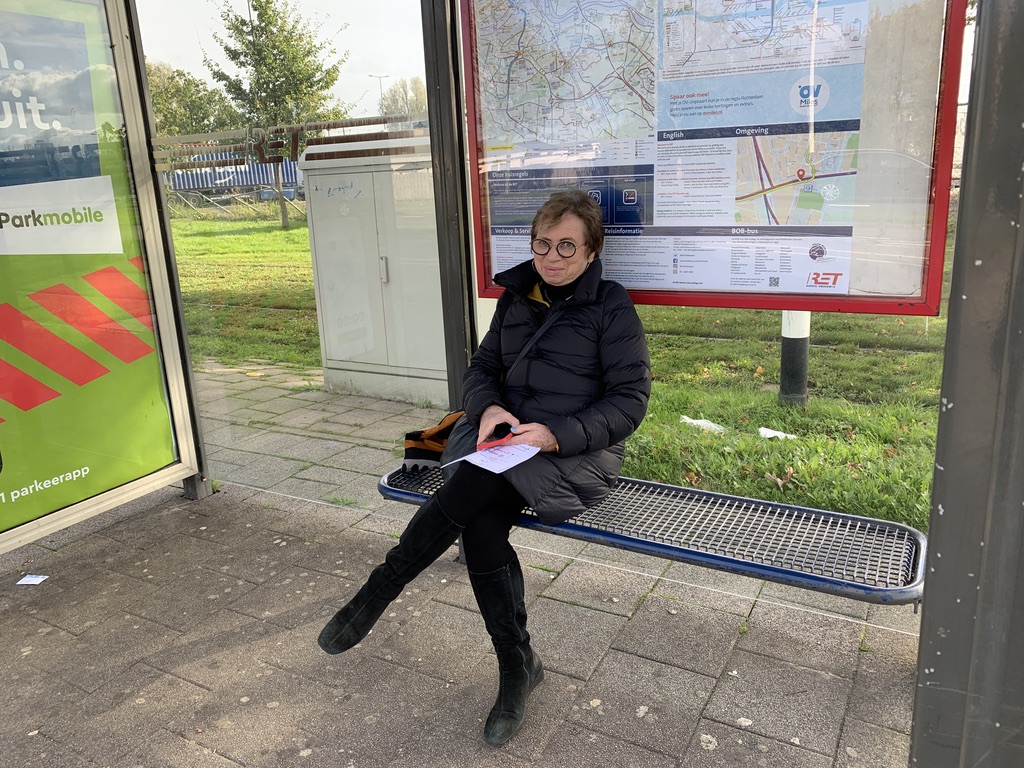
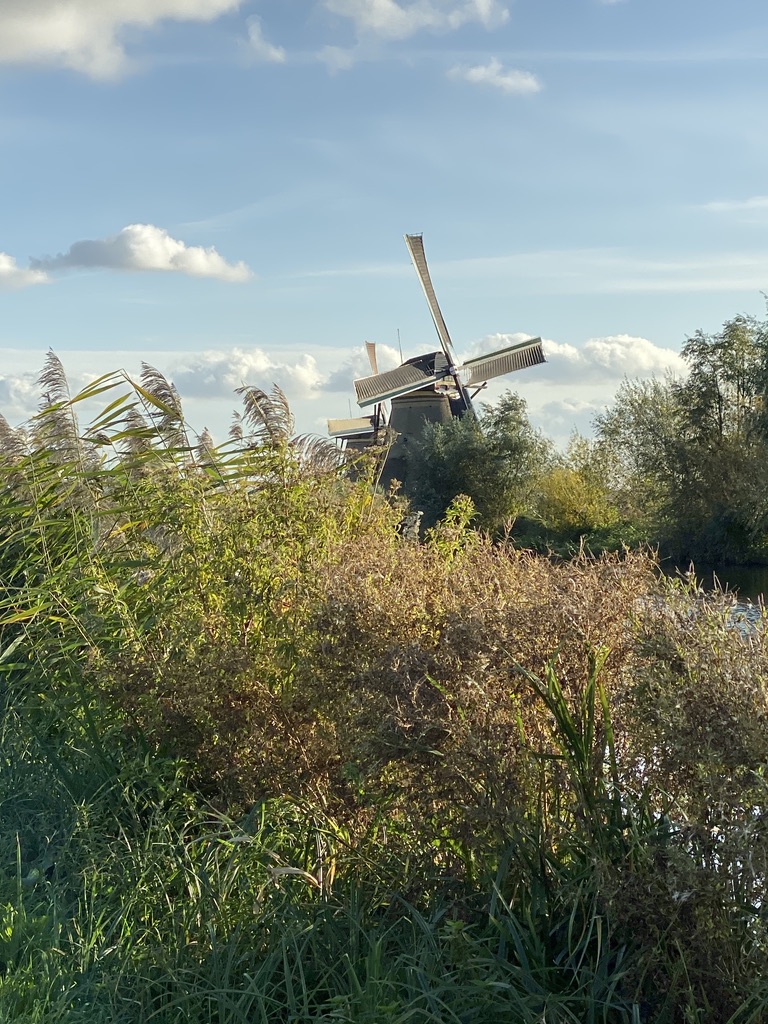
We walked to the Amsterdam Central Station, bought one-way tickets to Rotterdam (we weren’t certain what route we’d take to get back to Amsterdam), and had a pleasant trip to this other, lesser-visited city. But after we came up to the Rotterdam Central Station, there wasn’t any information as to how to go the next 10 or so miles to Kinder Dijk. We had heard there was a waterbus from Rotterdam, but there isn’t any water close to the station. We also heard there was a bus, but there wasn’t any information. So we found our way to the info desk and were told we missed the waterbus and they only run every two hours. They guy was helpful and said we could take Tram 23 to Beverwaard and then there would be a bus that would get us to Kinder Dijk. The tram would leave from the station in 8 minutes (transportation here is amazingly efficient – 8 minutes means exactly 8 minutes). We literally went straight to the tram, without a stop at the ladies room. We hopped on the tram without a ticket, but we were able to purchase it on the tram – credit card only (as it is everywhere here), and marveled at some of the architecture we could see out the window. Rotterdam (I don’t think I have ever been there before) is clearly a re-made city, following WWII, with lots of good architecture, interesting housing, clean roads, good transportation, and friendly people. We knew that we were supposed to get to our stop at (exactly 1:01). As the time approached, Carol said she thought we had seen the stop before – sure enough we had taken the wrong tram (21 instead of 23) and we had actually now come full circle. The staff person who rides the tram explained that we were on the 21 not the 23.. so she guided us to go a few more stops and then deboard and cross over and take #23; we had lost about 20 minutes.
Boarded the 23 and headed to the correct stop and then tried to find the bus (#489) being extra careful to get on the right bus. But there weren’t any busses in sight. Then we spotted what looked like a bus yard and figured our bus must be in there. We went through some gates (which we thought was strange) and then passed dozens of trams and went into an office, where we were told we were not supposed to be in that area at all. We left and then realized (or thought) we were totally locked in. We were in a tram yard – where all the trams begin or end their trips, come for repairs, etc. The whole setting was eerie. As we approached the automatic doors that open when a tram comes, we spotted a fence door and tried to open it, but it was locked. Fortunately, before we could freak out, a tram drove up and the gates opened. The tram driver stopped – amazed that we were standing there and asked what we were doing. We explained and he looked incredulous, but he opened the gate for us and we then went once again to find bus 489. We spotted a little bus shelter and sat and waited. The bus ride was about 25 minutes and wound through some lovely villages, canals, and farm areas.
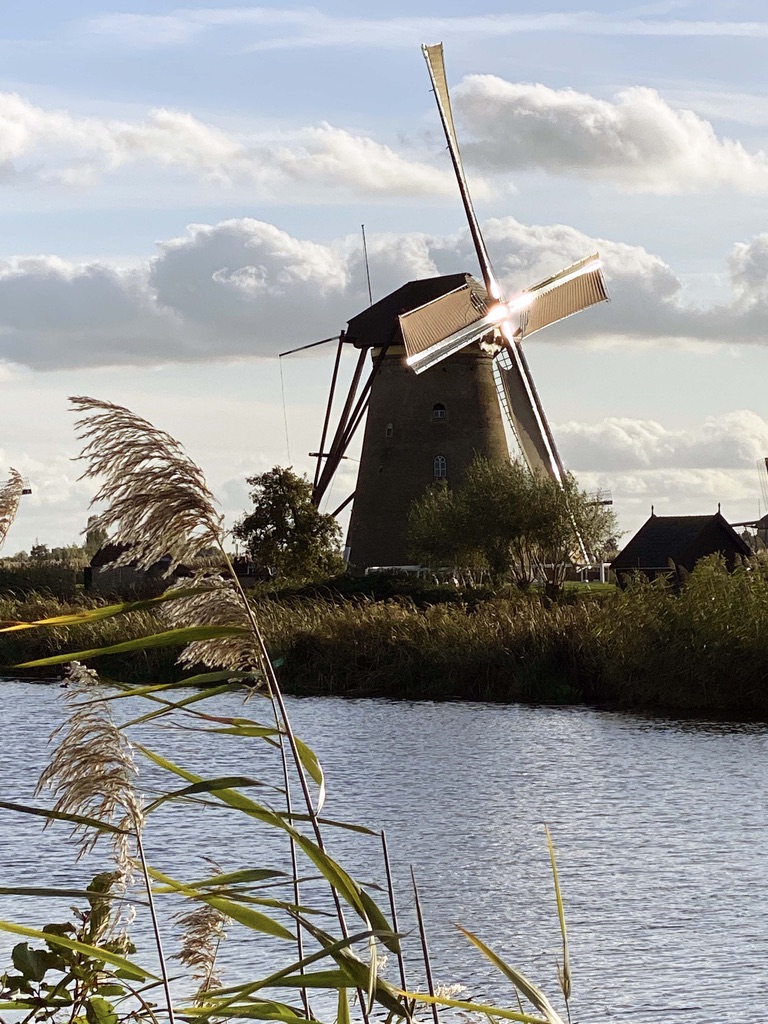
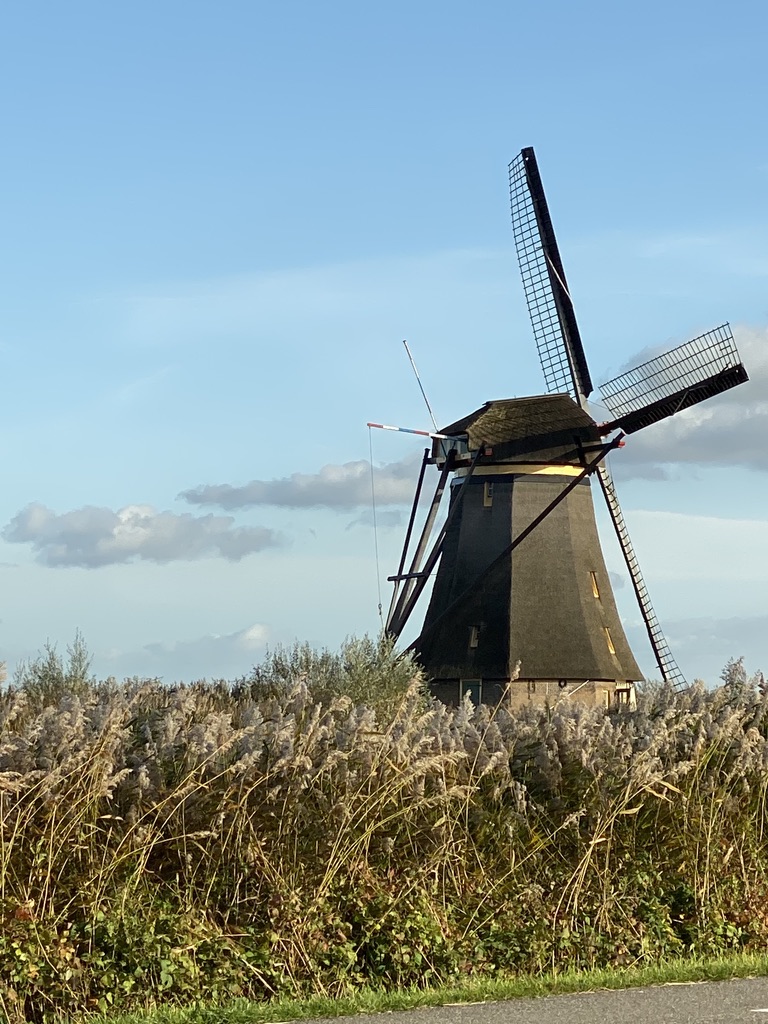
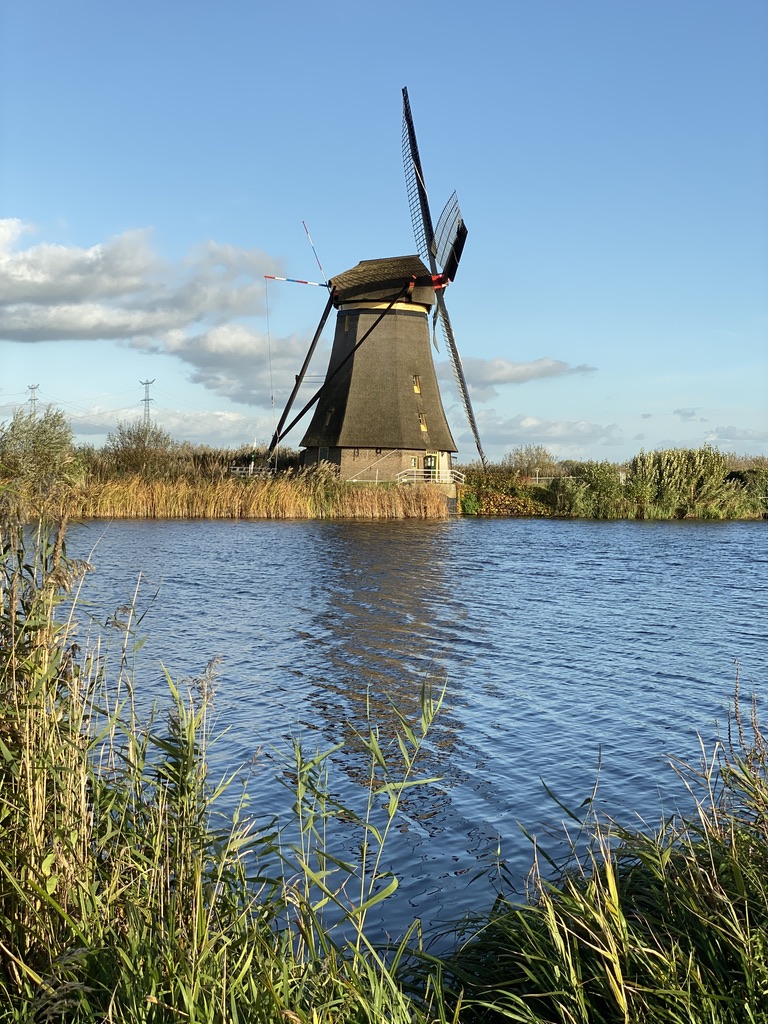


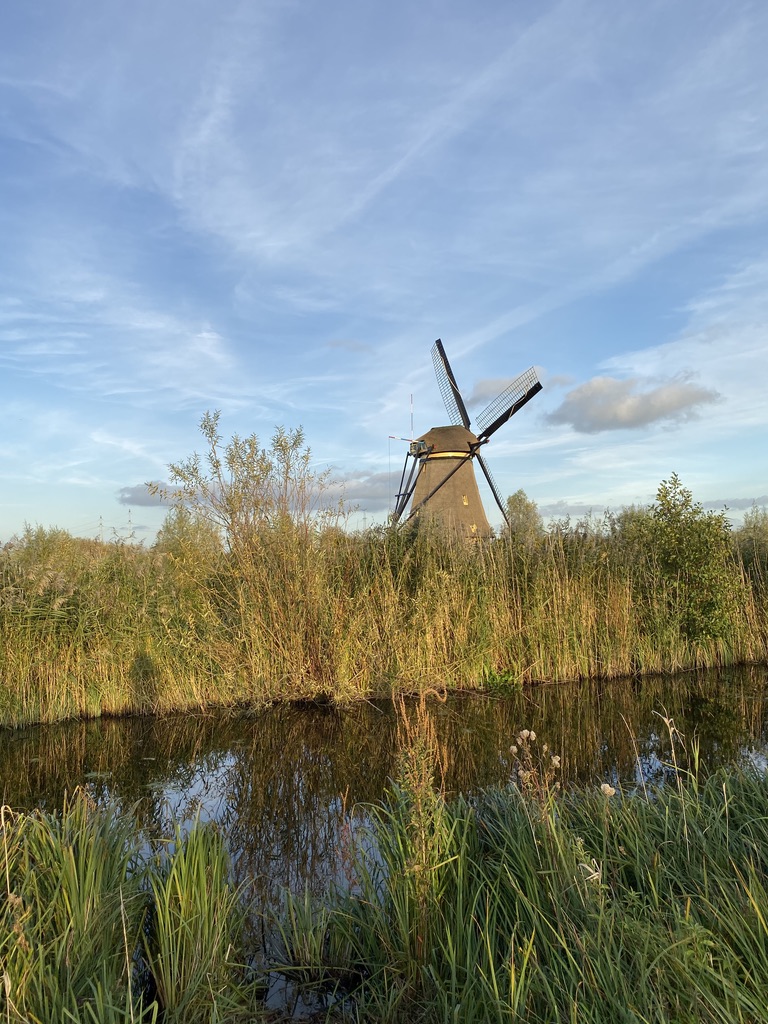
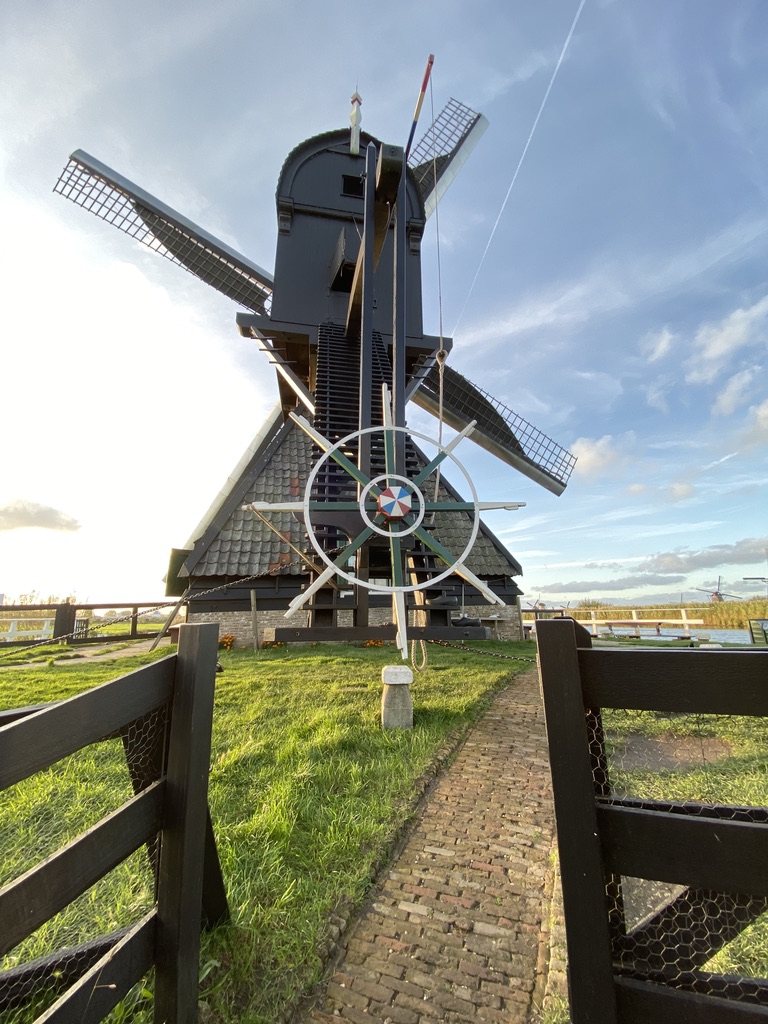
Eventually (3 hours after we began the 1.5 hour journey), we arrived at Kinder Dijk to stroll and to stare in awe.
After about two hours, we realized we had to return,. When we bought our tickets for Kinder Dijk, we inquired about the return trip and were told the last waterbus to Rotterdam would be at 4:00 and that was way too early for us. We were then told we could take a very small ferry across some canals to catch a different waterbus and that ferry (the last one) would depart at 5:14. This seemed perfect. We got to the “dock” at about 5:10 when an actual waterbus pulled up, but it was going to Dordecht. The attendant told us this would be the last boat for the day and that if we didn’t take this one we had to go back by the bus/tram combo we had used to get to Kinder Dijk several hours before. Problem was – this waterbus was going to Dordrecht and we didn’t think there were any “direct” trains from Dordecht to Amsterdam.
We hopped on the waterbus and decided we’d figure it all out when we got to the Dordecht Station. The ride was smooth and quick – sort of like taking the ferry from Manhattan to Staten Island. Naturally the waterbus doesn’t arrive at a pier at the train station, so we called a taxi to get us to the station – about 7 minutes away. The sun had already set about 45 minutes before – Europe changed their clocks – moving back by an hour, midnight last night. We got to the train station only to be told by the clerk that the “fast” train to Amsterdam would leave in exactly one minute; she sold us a ticket (they are flexible and not assigned to particular trains), and then flat out told us we missed the train. The next one wouldn’t come for 30 minutes and it was not the direct express (meaning it would take about twice as long and stop many times).. So be it. We waited and eventually arrived back in Amsterdam at the Central Station at about 8 pm.
We had already decided, while on the train, to find a very simple place for dinner and to go directly from the train before heading to the hotel. We did a little research and decided to take a taxi from the station to Bird – a Thai restaurant, in Amsterdam’s Chinatown. It’s on a walking street with scores of small restaurants. We found it and there was a line of about 30+ people trying to get in. They do not take reservations. Tired, hungry and a bit surprised, Carol held our place in line and I headed out to scout the nearby places to find an alternative. About 8 minutes later – Carol texted to say to come back that the line had begun to move and it was going fast. I turned around and we made our way into Bird. It was perfect, and also quite charming. Great Thai food, two levels, friendly staff, and a good mixture of locals and foreigners.
Back at hotel. Sending this and heading to bed. Just heard on Al Jazeera that Trump said Al Baghdadi was “whimpering and crying, while running through a dead end tunnel, begging to be saved.” Oh, I have to get a new mindset ready as I head to the states in 36 hours.
Tomorrow will be my last missive on Netherlands.
See you stateside.
Fern
A Day on the Streets of Amsterdam. 10/26/2019
Greetings from Amsterdam –
Our journey is nearing an end – but not quite.
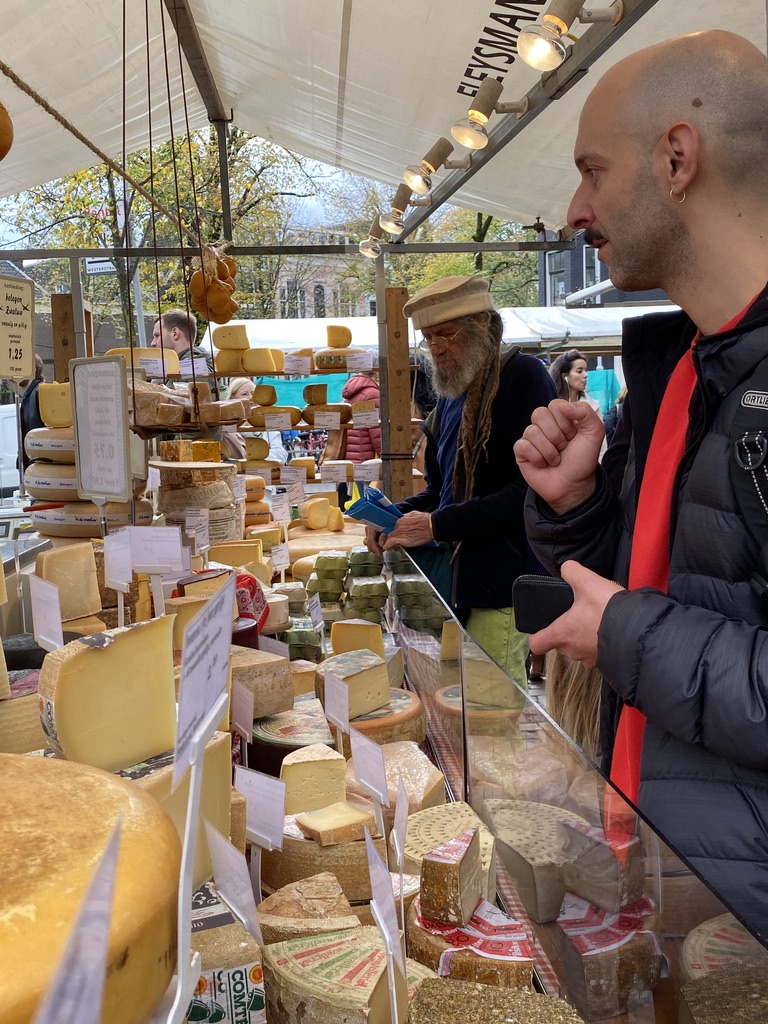
Today (Saturday) we headed to the Saturday Market at the Noordermarkt (“Northern Market”) in a square in the Jordaan neighborhood (one of the wealthy areas of the city), and adjacent to a large church (Westerchurch, I think or maybe it’s Noorderkerk). En route we stopped at a very cute little café for a simple breakfast (pastries with coffee for Carol and a great green juice for me). Apparently this market dates all the way back to the 17th Century. From what I read, during WWII, the organizers of the famous February Strike held their first meetings at Noordermarkt Square to protest deportations of Jews by the Nazis. There is a plaque at the church commemorating this activity. The market includes mouth-watering pastries and breads, fruits, cheeses, meats, and also interesting trinkets, fabrics, and handmade goods (again, many expressing the country’s interest in recycling and reusing materials). We saw bags made out of old military tents and things made out of old wool suits.

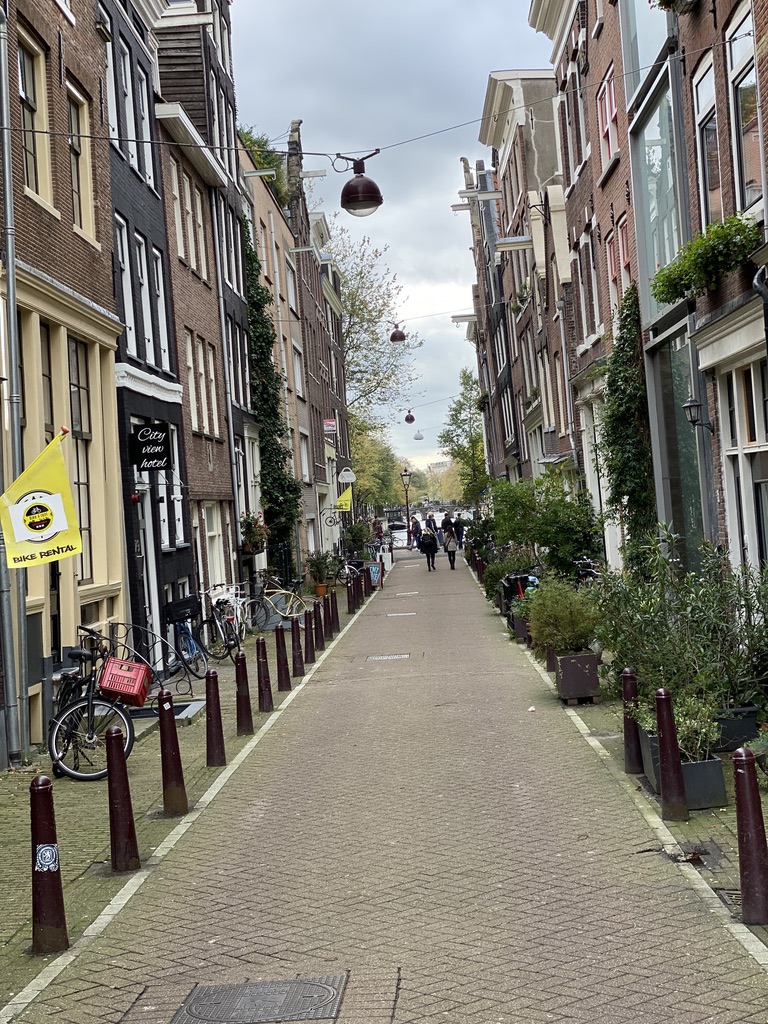
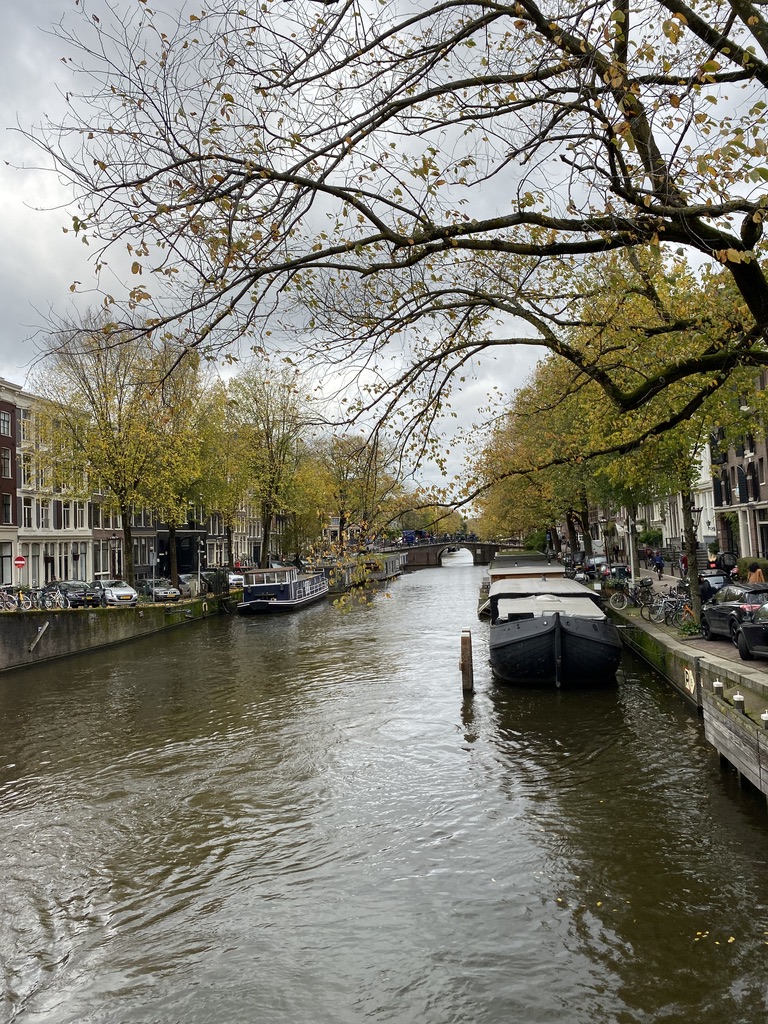
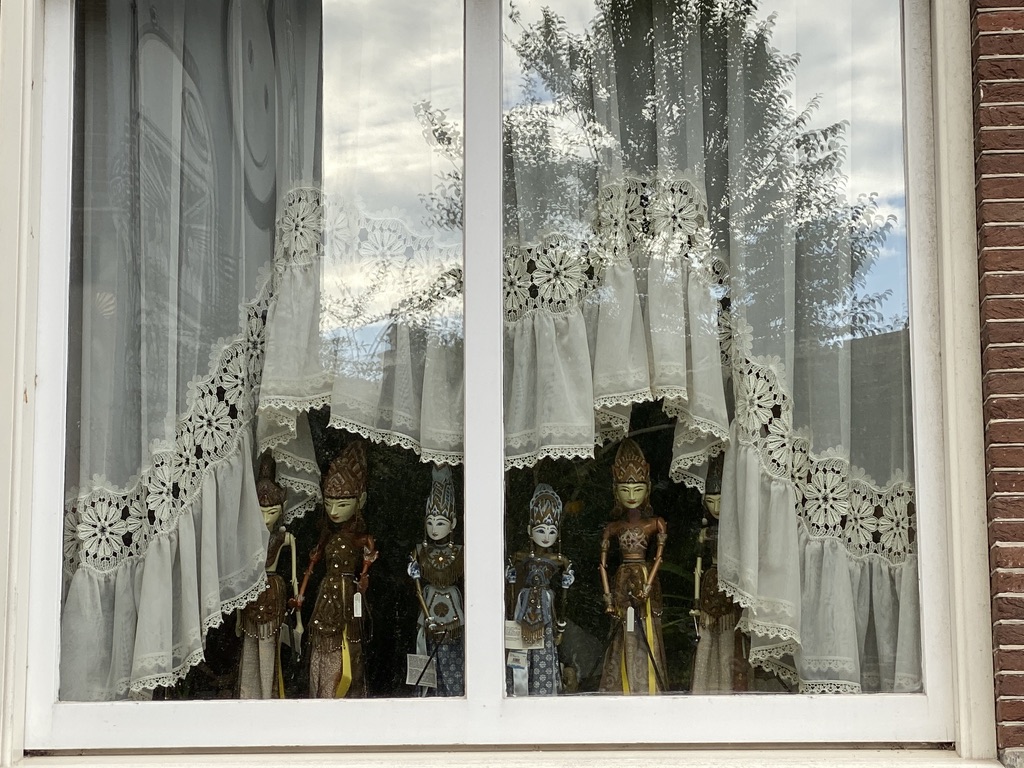
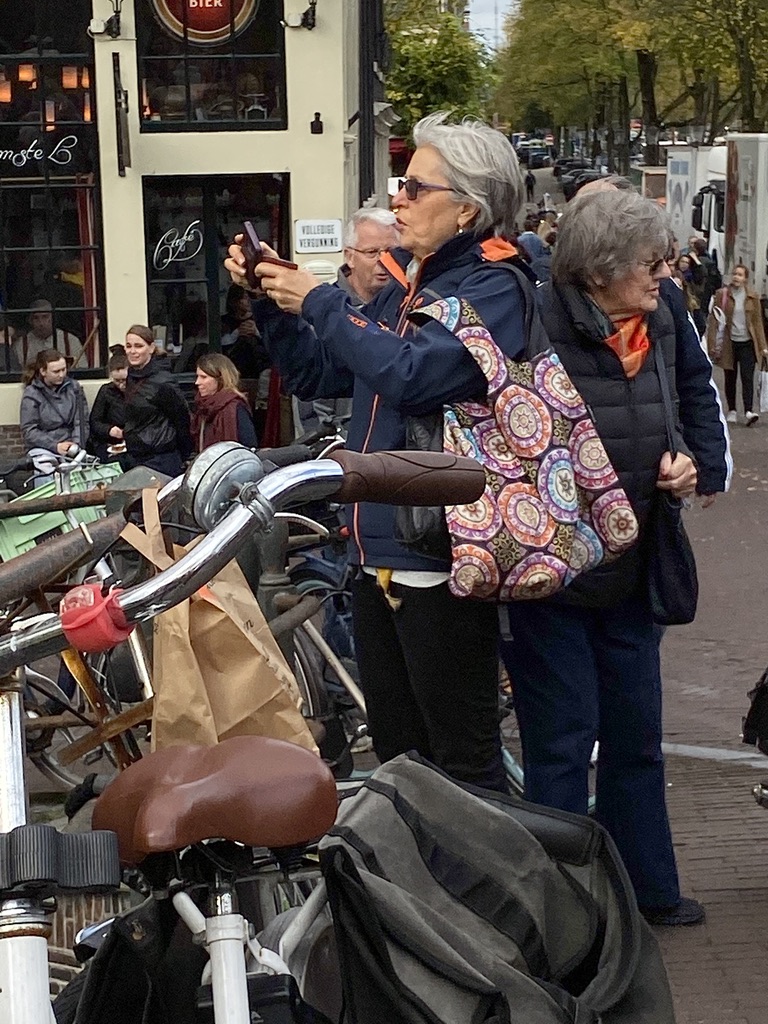
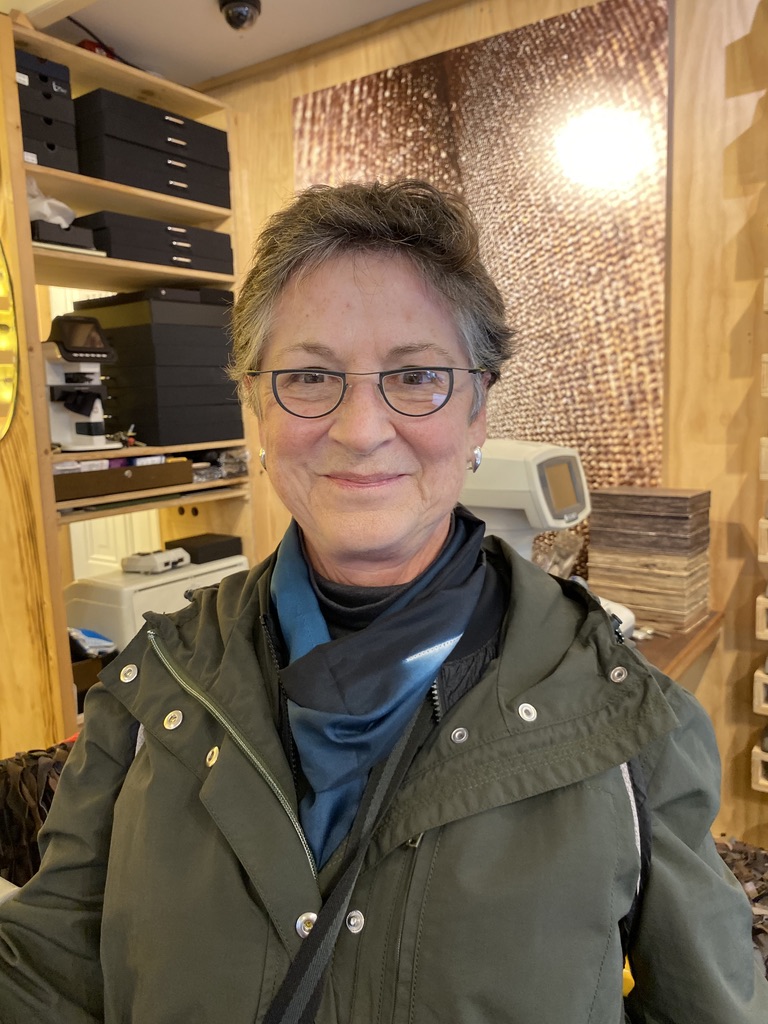
From there we strolled the Joordan and criss-crossed dozens of canals. Today was our shopping day so we strolled the famous “nine streets” – a series of small streets lines with somewhat quirky and eclectic shops and cafes that straddle the city’s grand canal. It’s known to locals as De Negen Straatjes or ‘The Nine Streets.’ It’s got lots of vintage and designer shops. We did help the Dutch economy a bit, but frankly we were pretty restrained. Although Carol accomplished her goal of finding a unique pair of eyeglasses (very chic!) and I also accomplished my goal of switching from a shoulder bag to a very sharp cross-body bag. We’ll see if I can get used to the switch. I know it will be better for my back.

We then headed to see some of the almshouses — Almshouses–collections of small apartments around a central courtyard that generally has a well-tended garden. The one we went to has a single gate and was tucked away behind a street façade within the center of the city. The earliest of these ‘hofjes’ was built in the 13th century. I believe this is a very Dutch housing and community type. Most were built in later centuries and were set up as housing for singles and very low income or destitute Dutch people. Wealthy Amsterdammers built them for elderly widows who could live there for free in the last years of their life. Now, they seem to house students and artists. They are like peaceful oasis in the middle of the city.. small in scale overpowered to some extent by the robust gardens. There are signs that say they welcome people visiting but to “keep the peace” of the community. The one we visited had about 12 small units surrounding the courtyard. The houses were each two stories. Some were built by Catholics and “rented” only to poor Catholics. Great solution for contemporary homelessness.

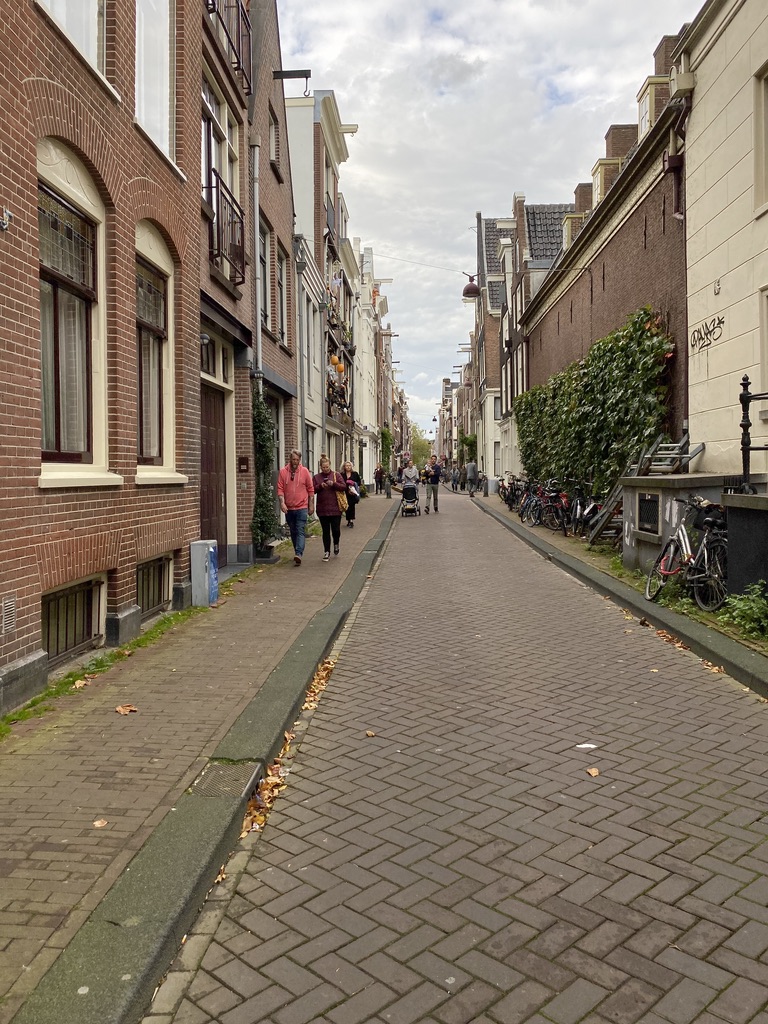
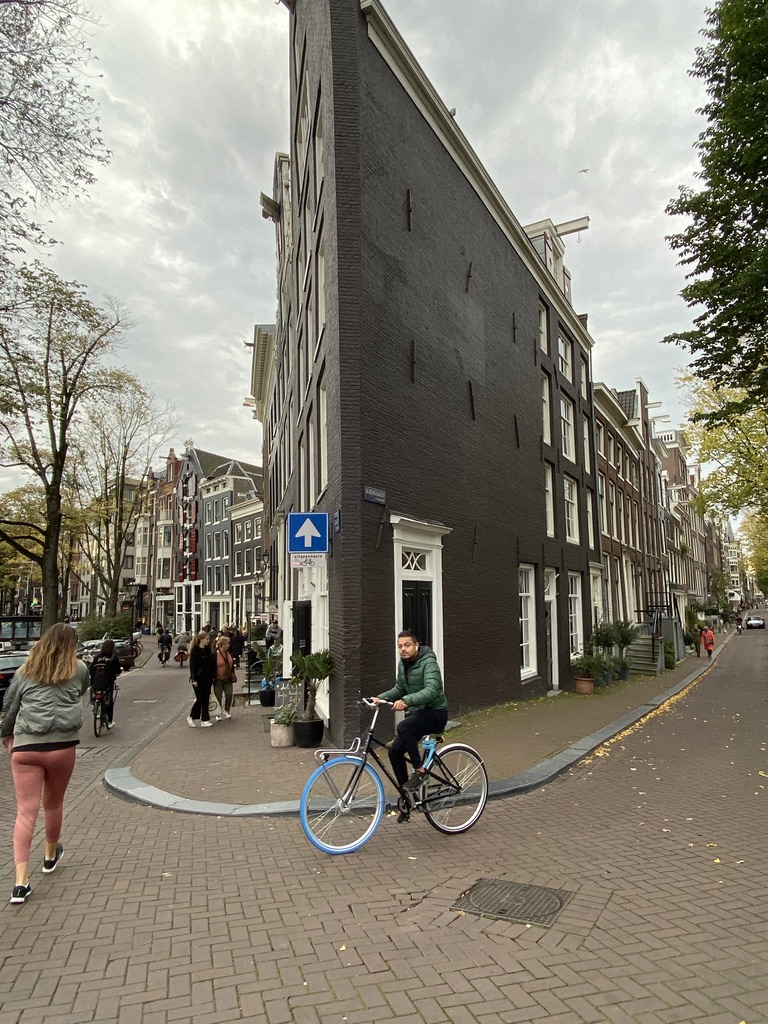
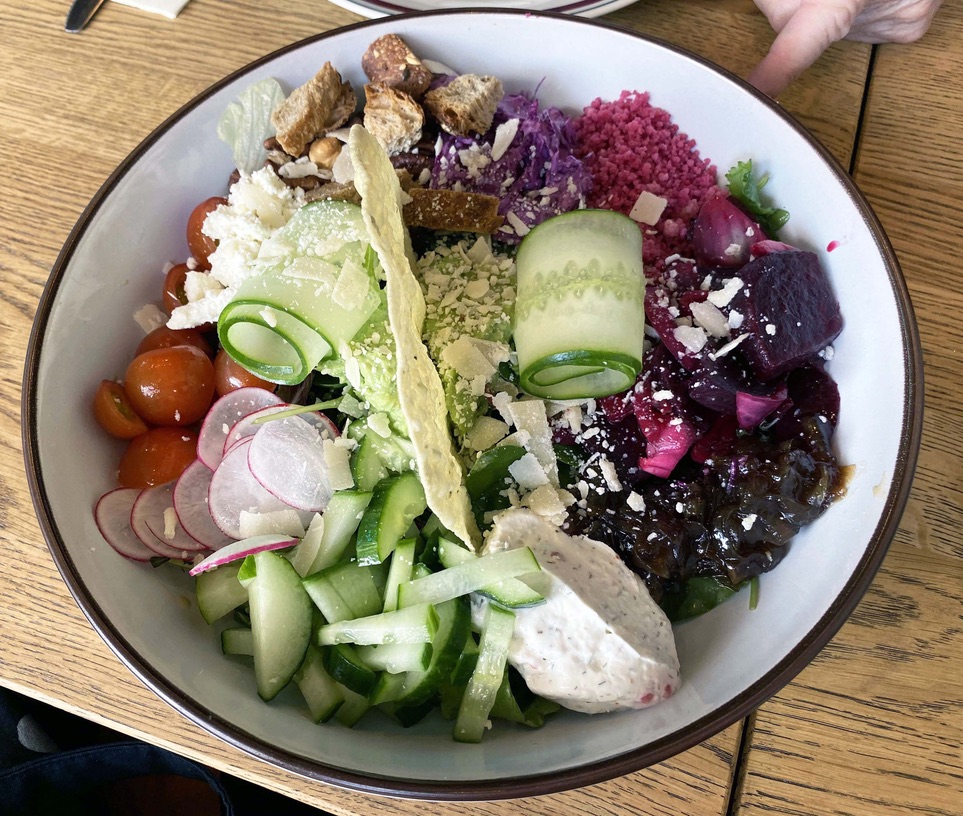
En route to the almshouses we stopped for a wonderful salad and pasta. After more strolling in the nine streets and beyond – we headed back to the hotel for me to be in time for a client conference call, and then headed to dinner.

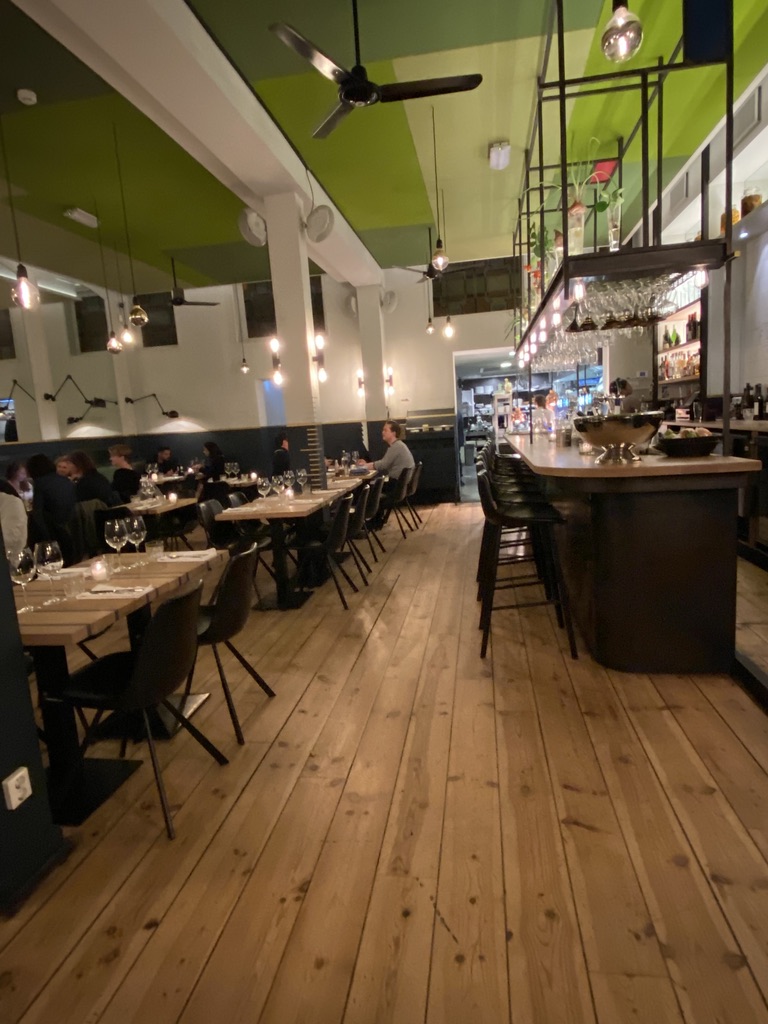

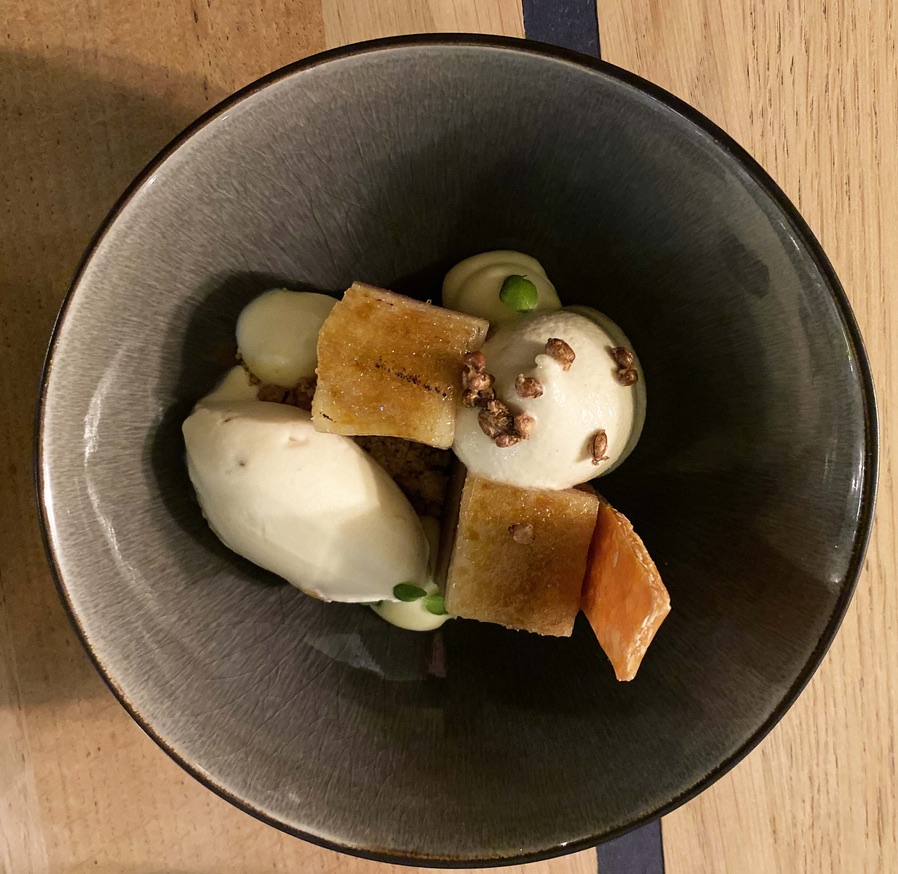
Tonight we ate at Floreyn (considered “modern Dutch”) – quite wonderful. Started with a great steak tartare (shared), followed by haddock (for Carol) and veal (for me).. and then we succumbed to wonderful desserts — “deconstructed pies” – strawberry for Carol – with watermelon slivers goat yogurt and watercress; deconstructed apple pie for me with ground almond, citrus, and cinnamon ice cream.
Following our very over-indulgent day, it started to rain and we hopped in a taxi to the hotel. Tomorrow we will head to the “kinder-dijk” – about a two-hour trip by train and “waterbus.”
Again- hope you’re all safe and sound and far from the fires.
All the best
Fern
A Religious Day in Amsterdam! 10/25/19

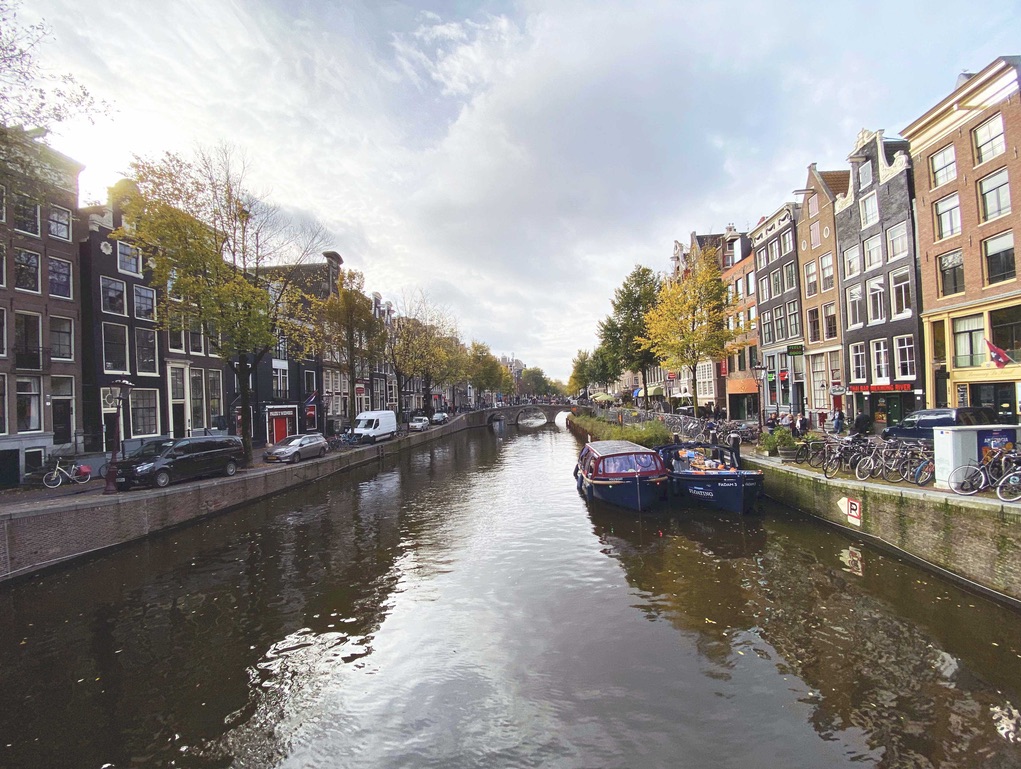

Greetings from a very sane and peaceful nation where cops don’t generally carry guns, where concern over the environment is evident, where bikes reign supreme (to every pedestrian’s fear), and where the general population is articulate, well-read, and clearly dismayed over the US’ actions –
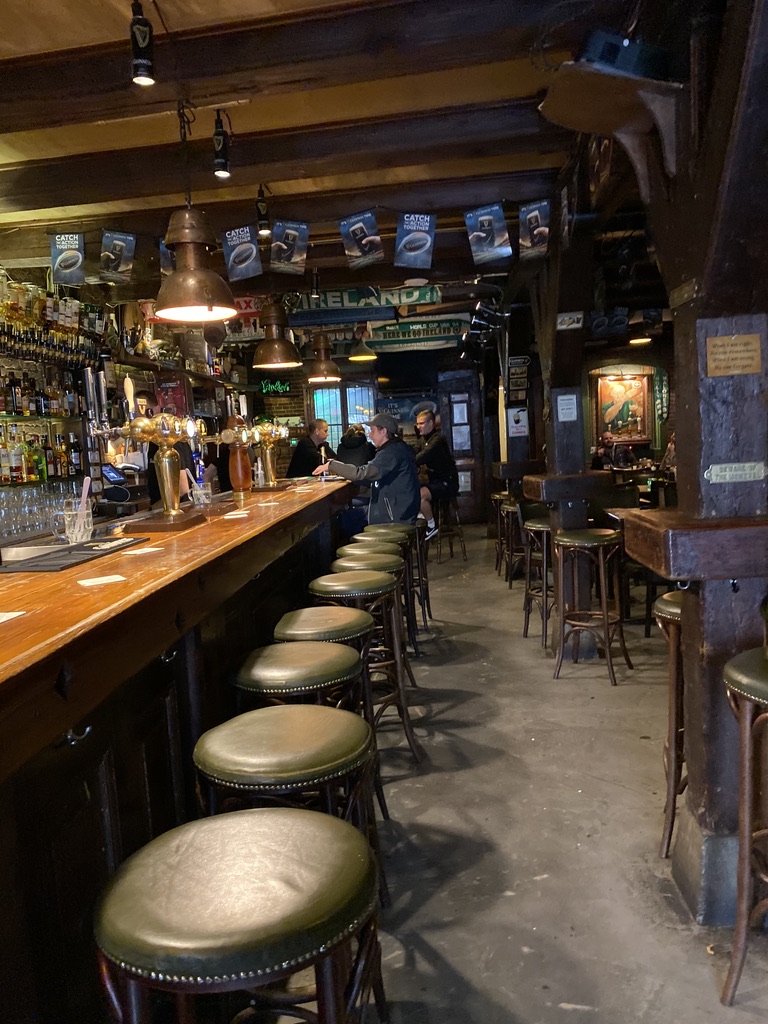
So, we started out a bit late and headed out without breakfast.. we walked a bit and scrutinized numerous possible places for breakfast or brunch and before we knew it we were not in an area that had much choice (there’s actually a multitude of places but it was a bit late and many places were already on lunch menus. So we wound up inside a very old, dark Irish pub (Molly Malone’s) where most people had already been drinking for a while (from the selection of 75 whiskeys), but they had really good home-smoked salmon and also the Dutch staple – tomato soup and wonderful brown bread, so we indulged (sans alcohol).

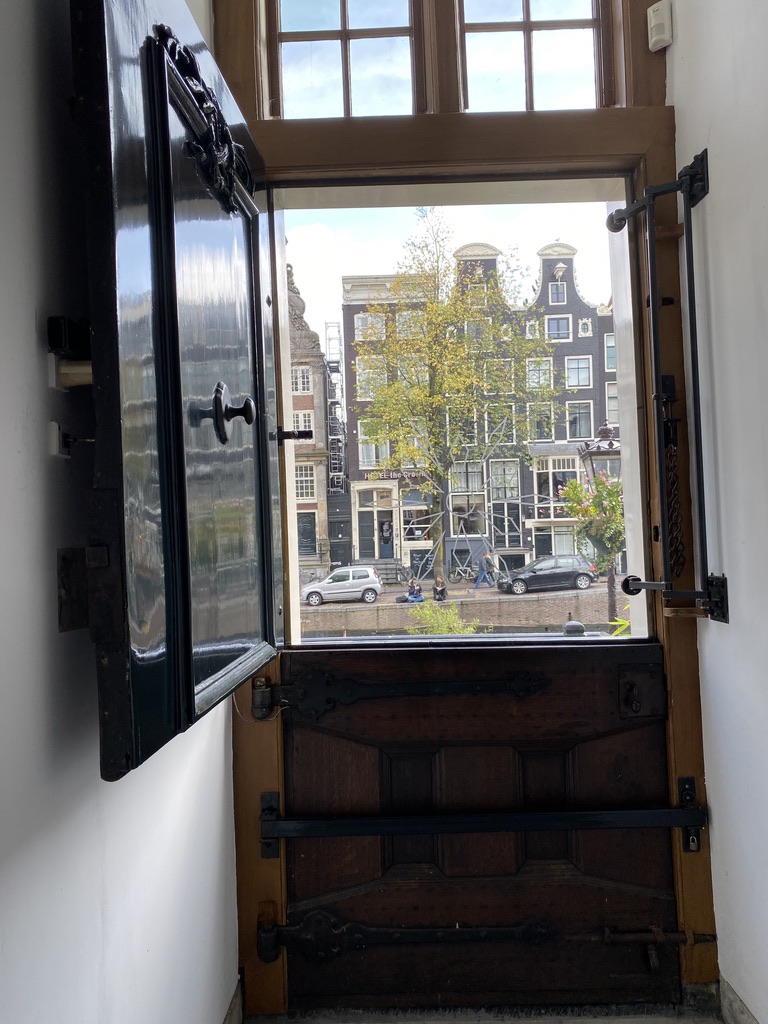
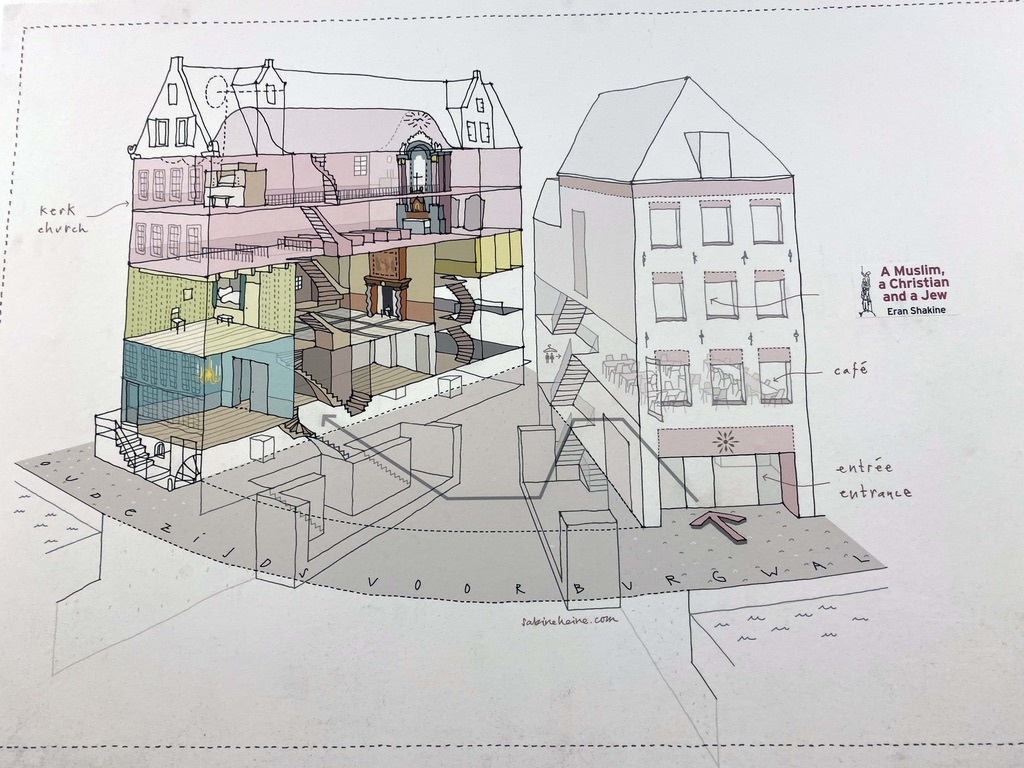
Then we headed to this unique building known as the pink cathedral – one of the “hidden” or “secret” churches in Amsterdam –- Our Lord in the Attic. These secret churches (‘schuilkerken’) came about because of the Protestant Reformation when religious attitudes began to change and also because of the Eighty Years War, when the Netherlands won their independence from Catholic Spain. Most Catholic churches transformed themselvesm(or were transformed) into Protestant churches, and the Netherlands became an independent Protestant-influenced republic. Catholics were forbidden to worship in public or in a church that looked like a church. Thus, religious Catholics created churches in their houses that were hidden from view behind the facades of private houses and large canal houses.
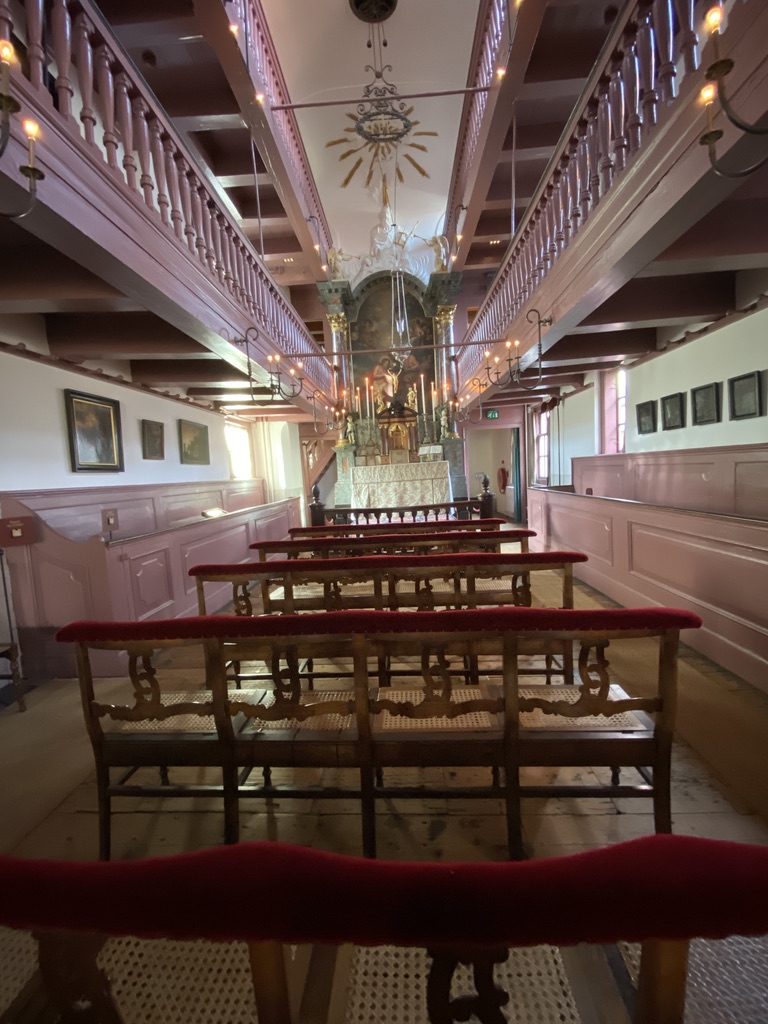
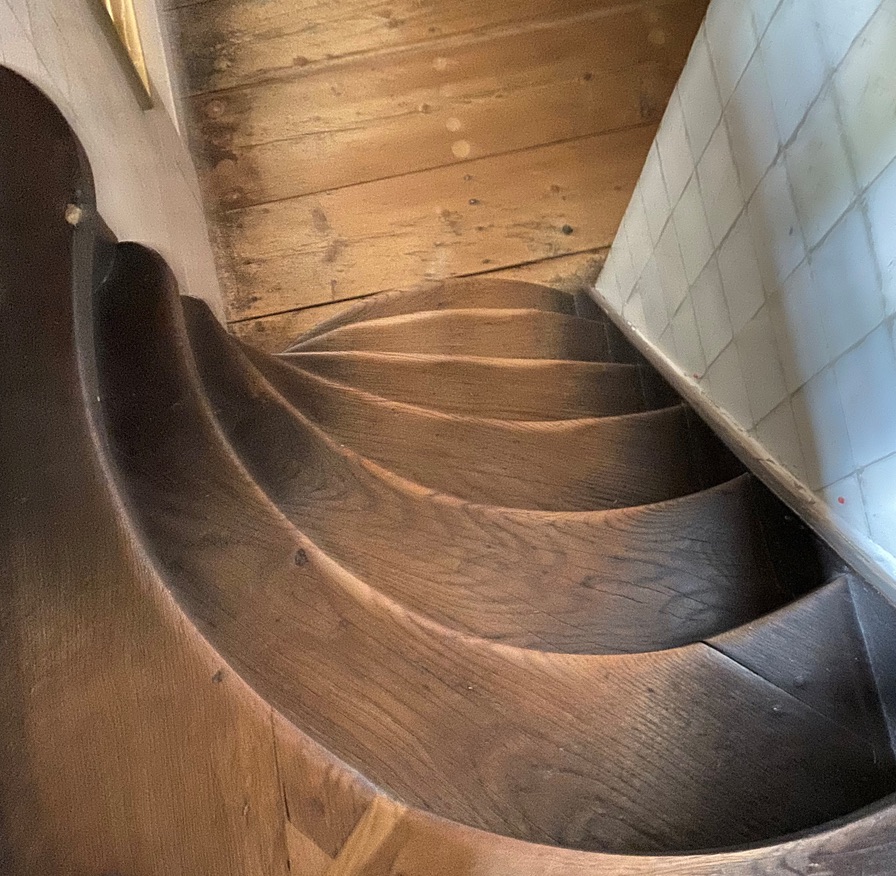
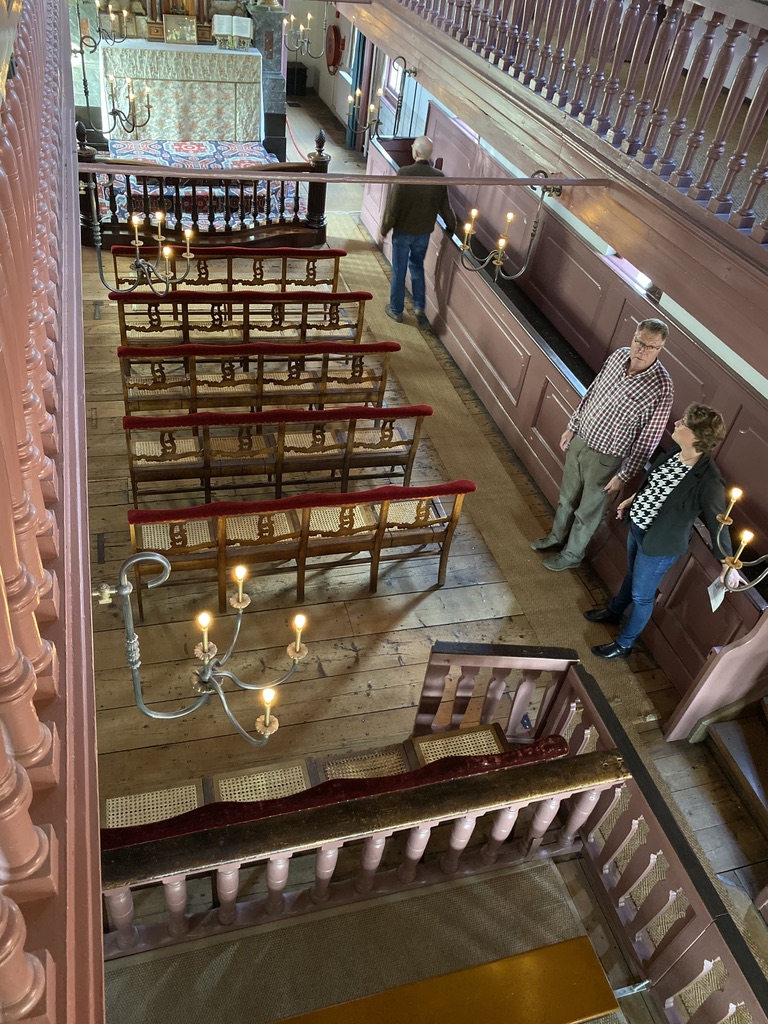
By the 19th Century, Amsterdam became more tolerant and people of all faiths could openly worship as they chose. And large Catholic churches were built, and most of the hidden churches disappeared. But Our Lord in the Attic, exists as it had centuries ago.
The story is amazing and the building is incredible. It’s a large 17th Century house situated right on one of the canals. The first two large floors are a residence and the top two floors are a full church, complete with an altar, pews for about 80 people on the main floor and more seats on the balcony level. There are two confessionals, an organ, a room to prepare the sacraments, as well as a room for the priest – and more. The owner of this building was a German merchant (Jan Hartman) who was responsible for the construction of the building. It remained a functioning parish for 200 years.
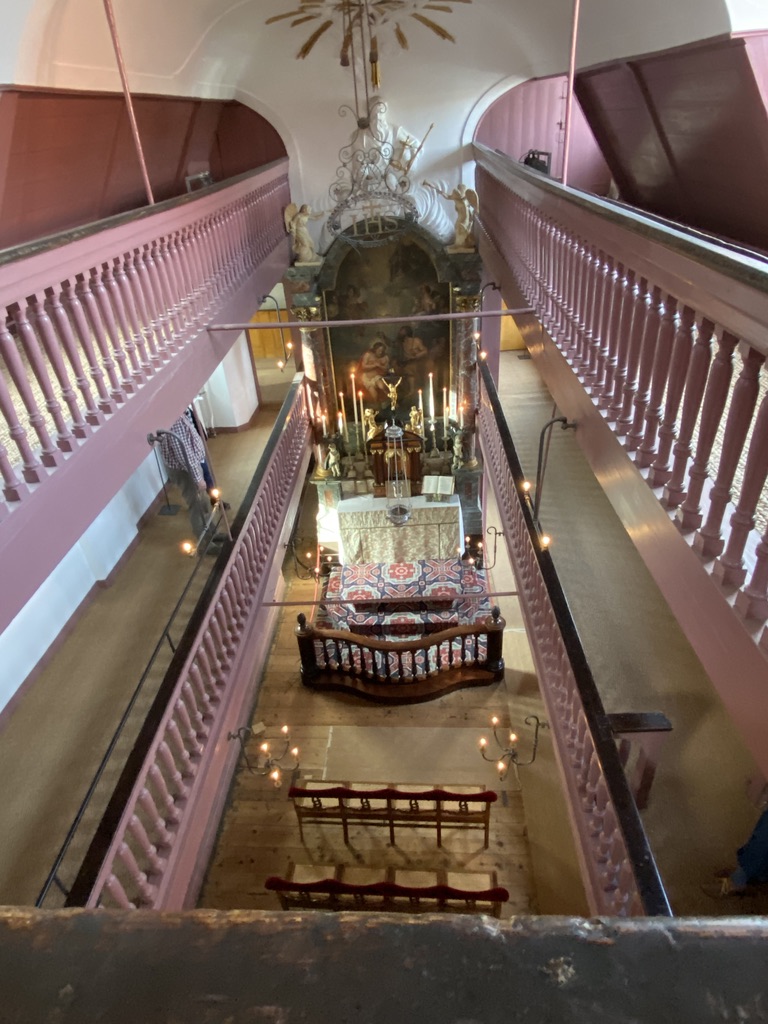
From there we walked (total walking today was 7.1 miles and up and down 11 floors!!) through several neighborhoods and across many canals – en-route to FOAM Museum but then we re-routed ourselves and will go to FOAM tomorrow or Monday.
We headed to the Portuguese Synagogue since we were already on this religious roll. It’s located in the old Jewish Quarter and dates back to 1675. At that time it was the largest synagogue in the world and supposedly demonstrated Amsterdam’s religious tolerance at that time. It is lit by 1,000 candles on holidays; there is no electricity. Amazingly, it survived WWII and is still in use (sort of). Spanish and Portuguese Jews had fled the inquisition and became merchants in the Netherlands. As we left the synagogue we asked about the monthly concert we had heard was held in the sanctuary. Turns out it was last night. We thought it would be great to sit in this large candle-lit space for a concert. Oh well, didn’t time that so well. We also asked if they still held Shabbat services and they said they did. We asked if we could come and they answered positively and said the services begin at 6 pm.
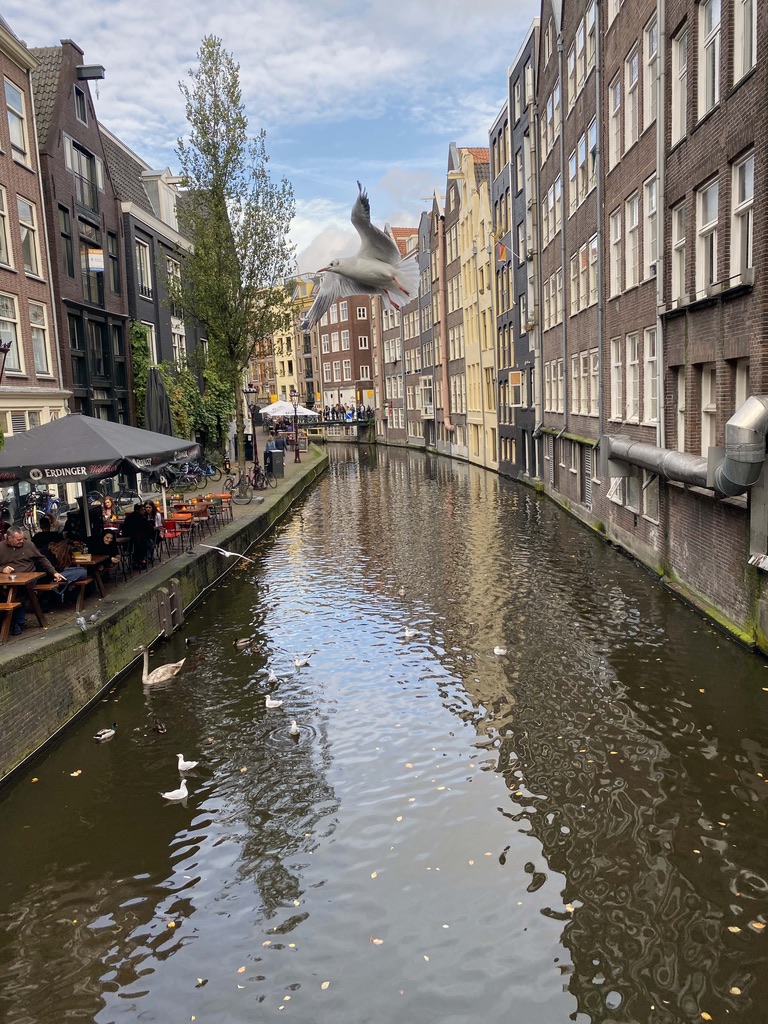
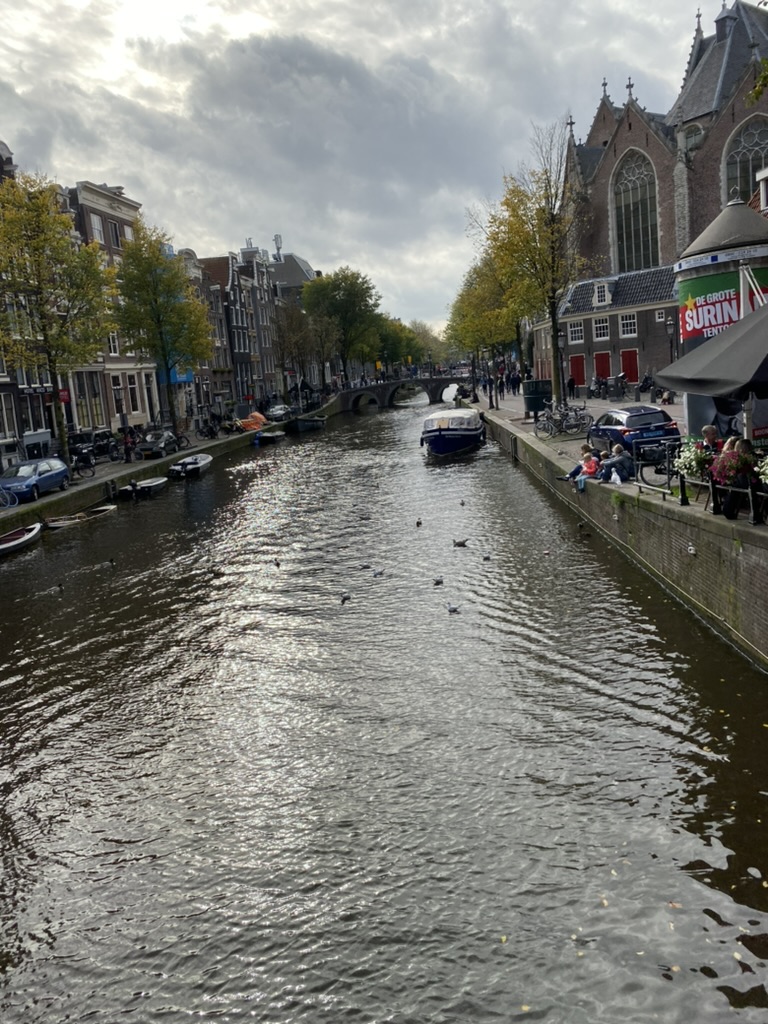
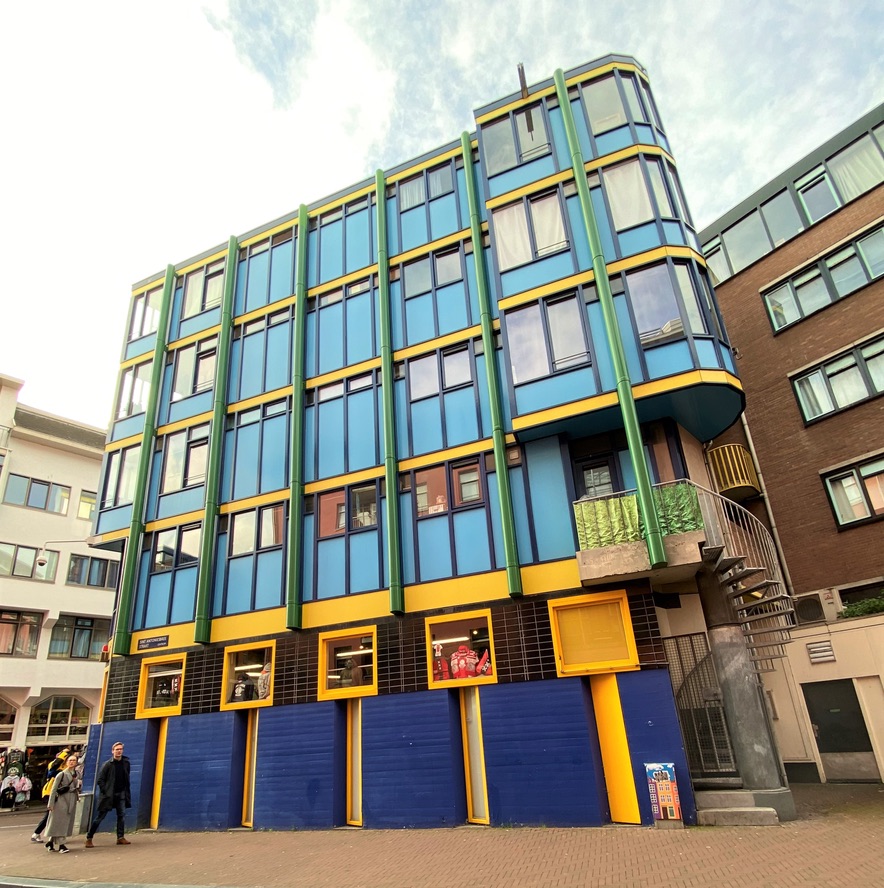
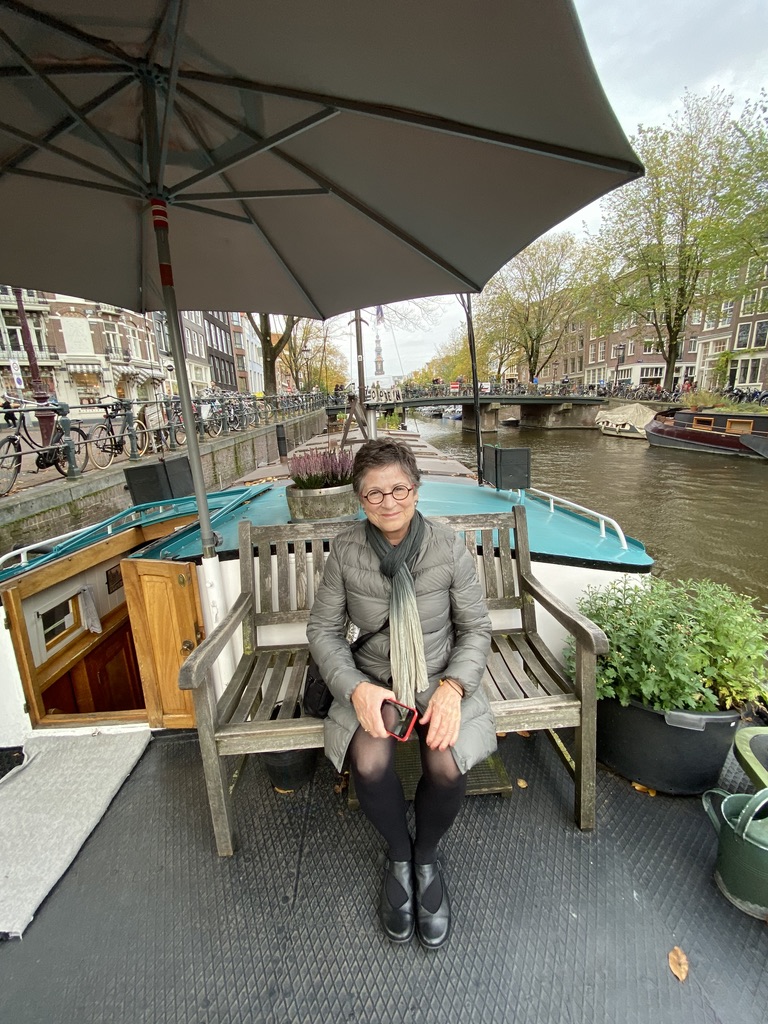
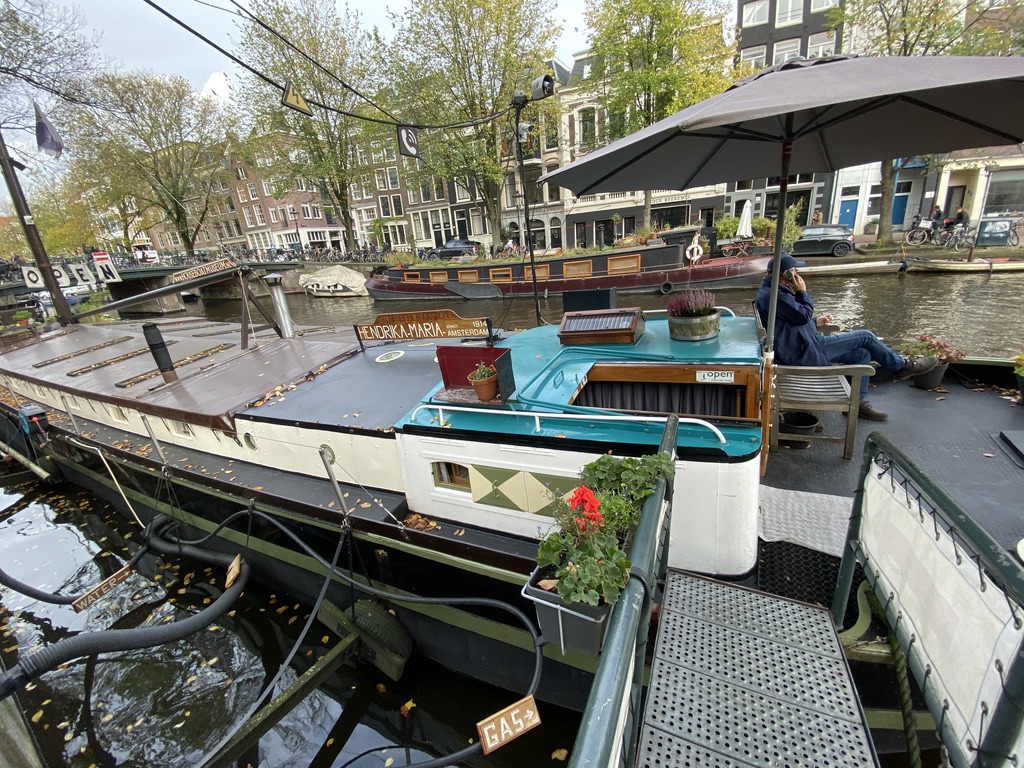
We strolled to the houseboat museum – really just a simple houseboat with some photos and a video – but interesting. Decided I could not live in such tight quarters; I am way too claustrophobic. Then we headed for a warm drink (it was really cold and windy today), and decided we’d walk back to the synagogue and see what the services were like.
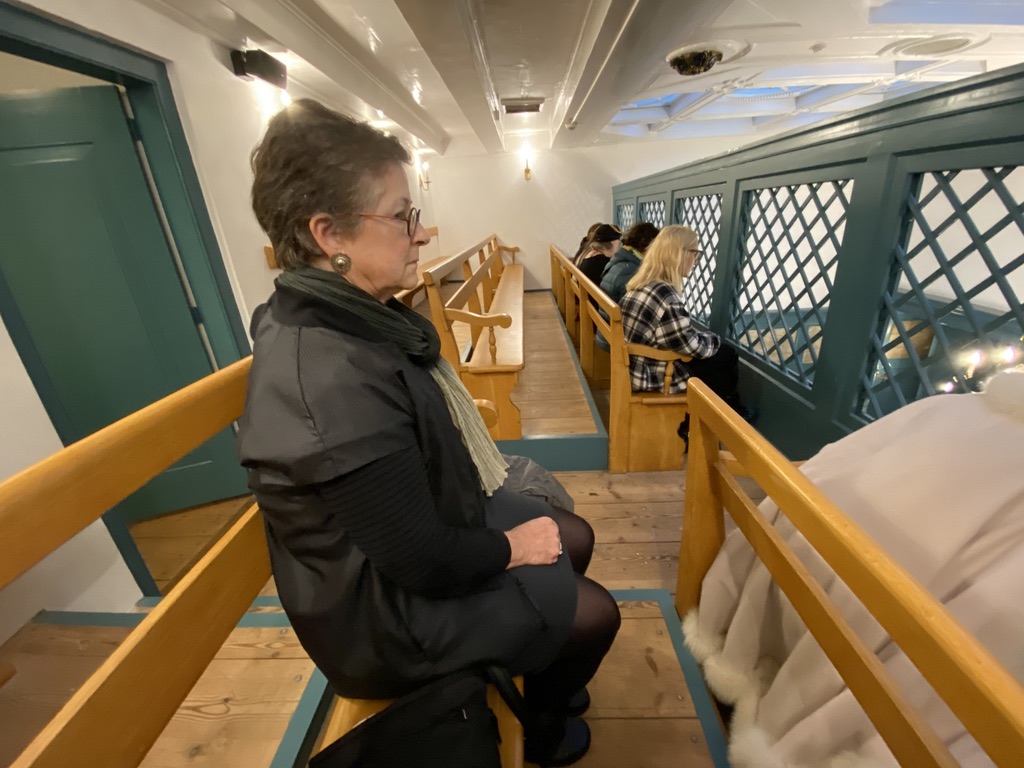
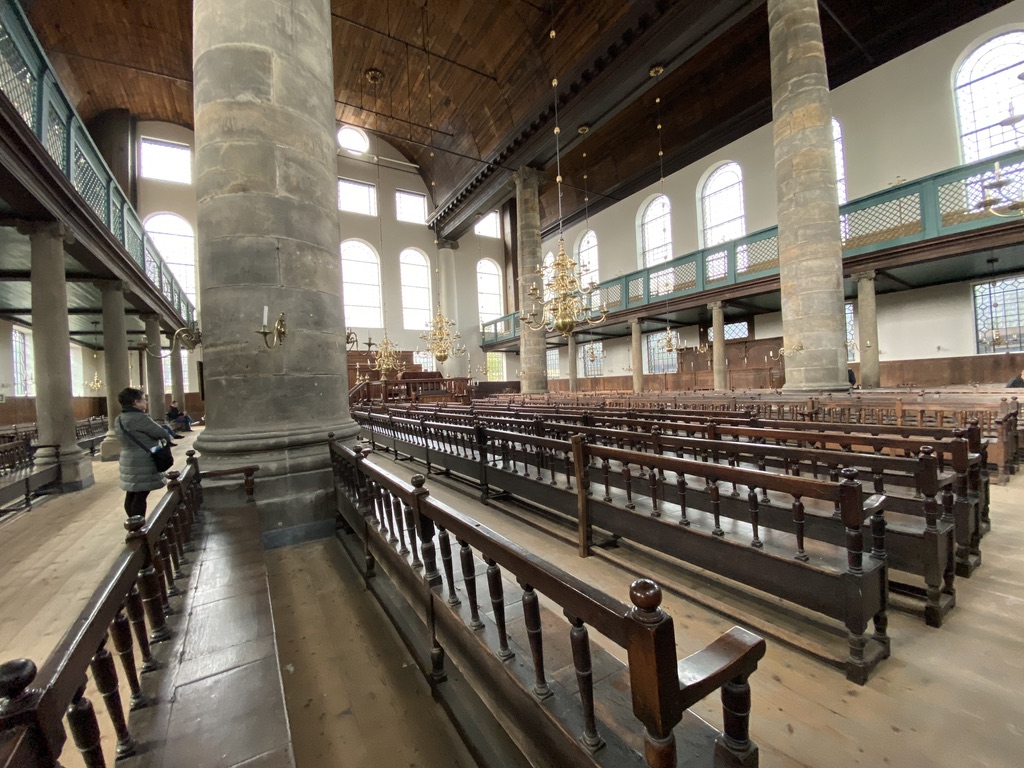

We anticipated sitting in that grand space with all the candles and also listening to a great choir. We arrived back at the synagogue and were greeted by a young man who asked us a lot of questions about why we wanted to visit and where we were from and what we did, and subtly asked if we were Jewish. There were some police nearby (this time with guns) and they only let us into the property two at a time. They asked some people for their passports. No problem – we understood. Finally we were in the courtyard area and we headed to the front door of the synagogue but it was locked; we went around the side, but all doors were locked. Then we saw a young couple in the courtyard and asked them. We were told they use a small building, called the winter synagogue, for weekly services, not the main synagogue – there went the dream of the 1,000 candles. But we were already there, so we went in and were ushered to the balcony level (for women) because the men sit downstairs in the main space. It is a very orthodox synagogue and women and men are definitely not equal.
Since neither Carol nor I speak or read Hebrew, and since I am not a practicing Jew, the experience was a bit foreign. Fortunately the service was quite short; just prayers, no sermon. There were a total of 10 men downstairs and 12 women upstairs. Apparently that is the standard number of people they get on any Friday night. No wonder they are not using the main sanctuary. Toward the end, as we exited, we chatted with a woman who turned out to live in Alameda. She’s in Amsterdam to do research for a historical novel she’s writing that involves a Jewish girl in 17th Century Amsterdam. We wound up going to dinner with her at a really good reistafel restaurant about a 15-minute walk from the synagogue. It was an interesting conversation. She’s actually a trained attorney; grew up on Mercer Island (near Seattle), but has family in the Bay Area and wound up moving to San Francisco about 35 years ago. She, too, was born Jewish but had no real affiliation. She is fourth or fifth generation American, which is very rare for Jews. She no longer practices law, and being a novelist is her full time job. The book sounds interesting. We shared a cab (enough walking) and headed to our hotel.
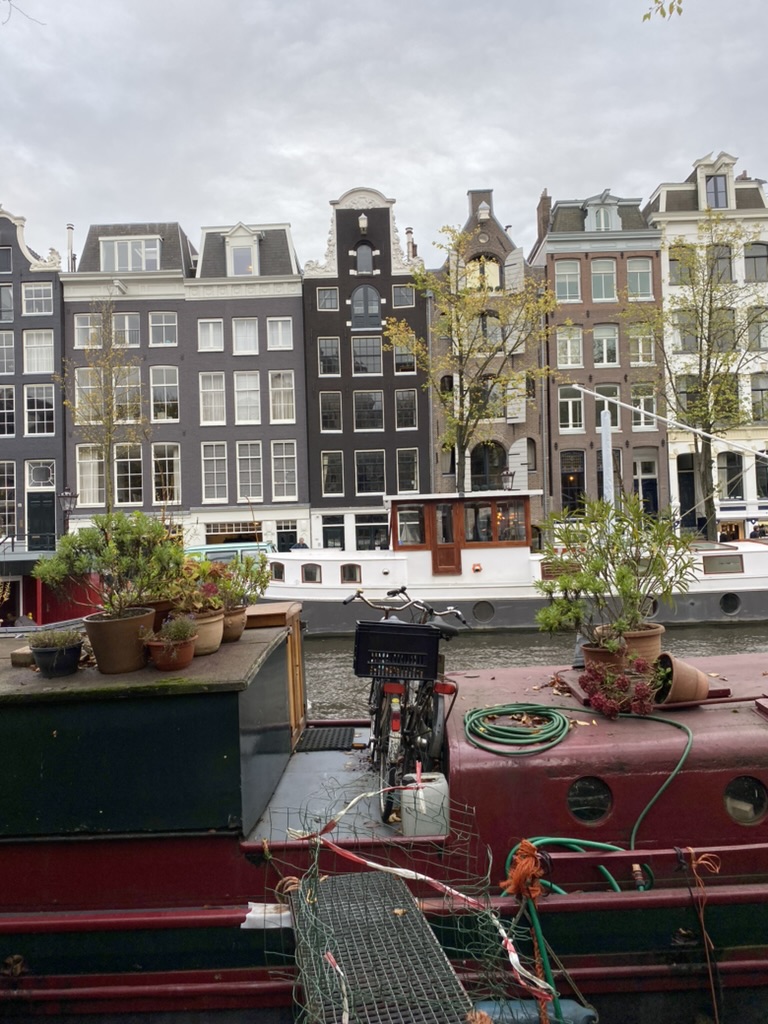
That’s it for today. Tomorrow is another day.
I’m sorry to hear about the fires and the heat in California. Hoping those of you in the Bay Area and southern CA are safe and well.
Fern
A busy, busy day — and finally in Amsterdam. 10/24/2019

Greetings from Amsterdam.
It was a crazy and very very long day.
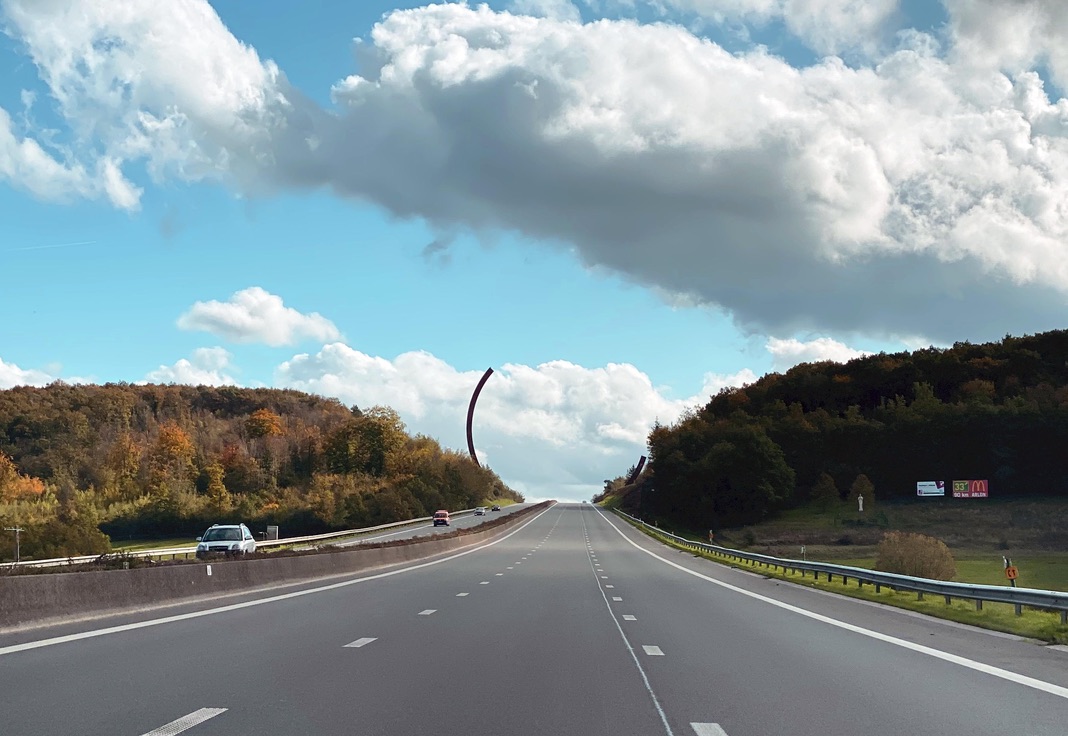
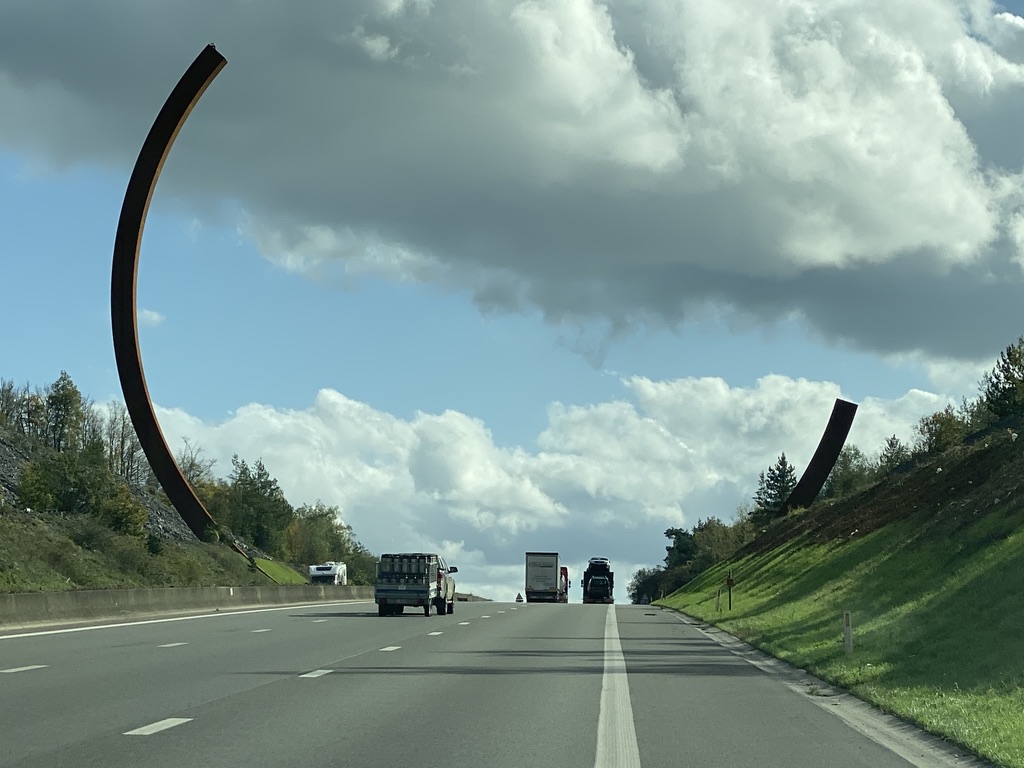
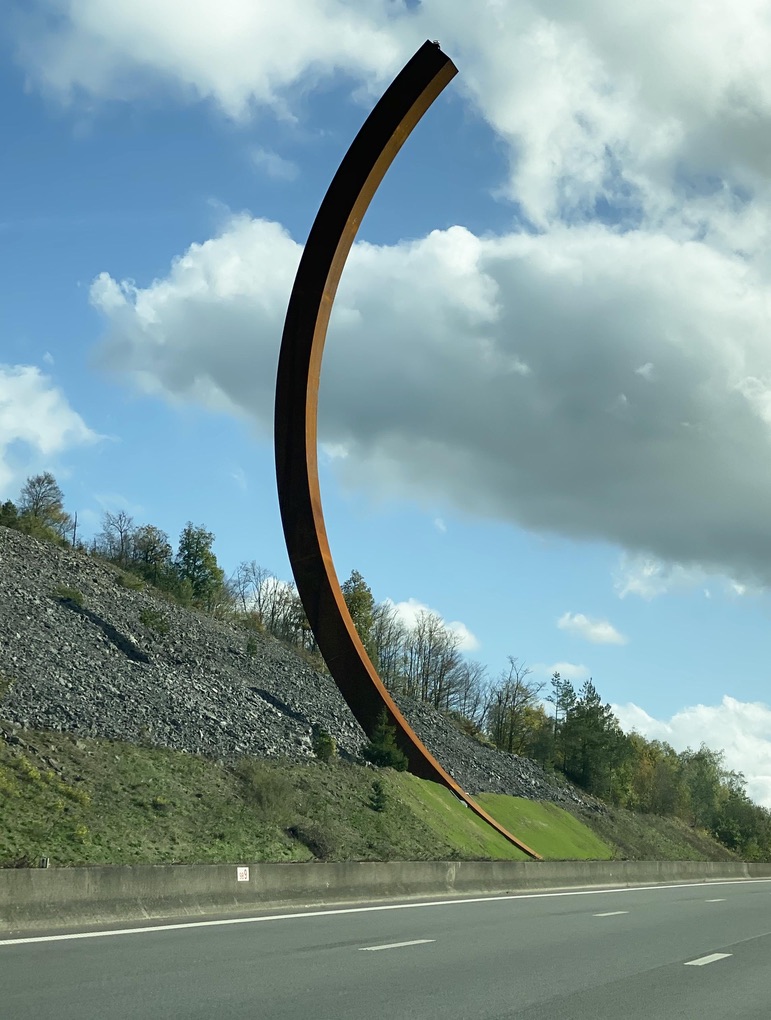
Had quick breakfast near the railroad station in Maastricht, where we went to purchase tickets for our train much later in the day. Wanted to avoid any lines and be sure we could get the train we wanted. Then started our drive to see the L’Arc Majeur – located somewhere about 15 miles beyond Namur in Belgium. I had seen an article about it and we decided to visit. It’s a 200-ton sculptures composed of two arches that don’t complete a circle and are of different sizes – it gives the impression of a semi-circle or a circle set into the road. It was originally commissioned by French President François Mittérand, but was abandoned at least three times. And now it sits on the highway #411 in Belgium and was inaugurated yesterday (we are such trendsetters to come and view it the very next day!; guess if we were really on the ‘in’ list, we would have been invited to the inauguration. Funny, we thought about going yesterday and had no idea there was the official “opening.” The sculptor is Bernar Venet. It took 6,500 hours of work by welders and steel fitters to create the piece.
Some basic facts: Conceived in 1984; 200 tons of corten steel; Cost $2.5M British Pounds; 1,000 cubic meters of concrete.
Naturally we didn’t drive in a straight route and stopped and saw numerous wonderful small villages along the way. Then, after seeing the arc, we realized we were really hungry so we drove to town after town, but the Belgians are like the French and have very strict hours for when lunch is to be eaten. And we were late. It was about 2:45. So we got to see quite a few adorable small villages as each told us we were too late for lunch. Finally we stumbled on Wellin, a town that appears to have built a whole economy on tourists (and lots of school kids) coming to see caves and kayaking. Anyway, we were able to get some much needed lunch. From there we headed back to Maastricht to return our rental car (at the Maastricht Airport) and to catch a train to Amsterdam.
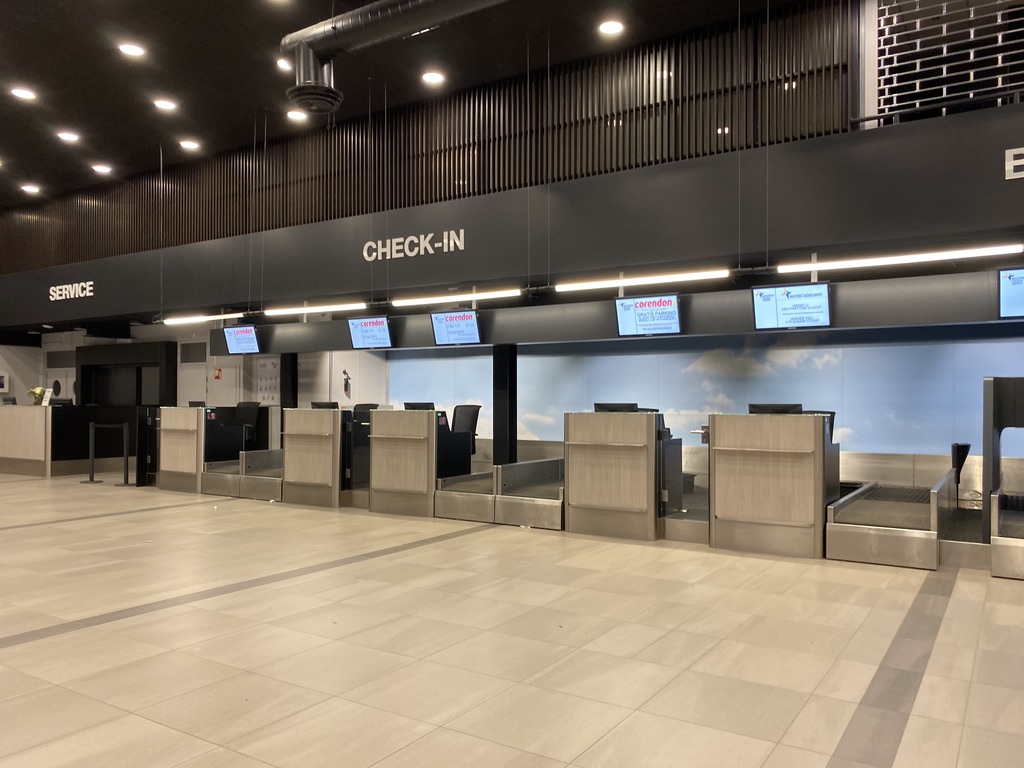
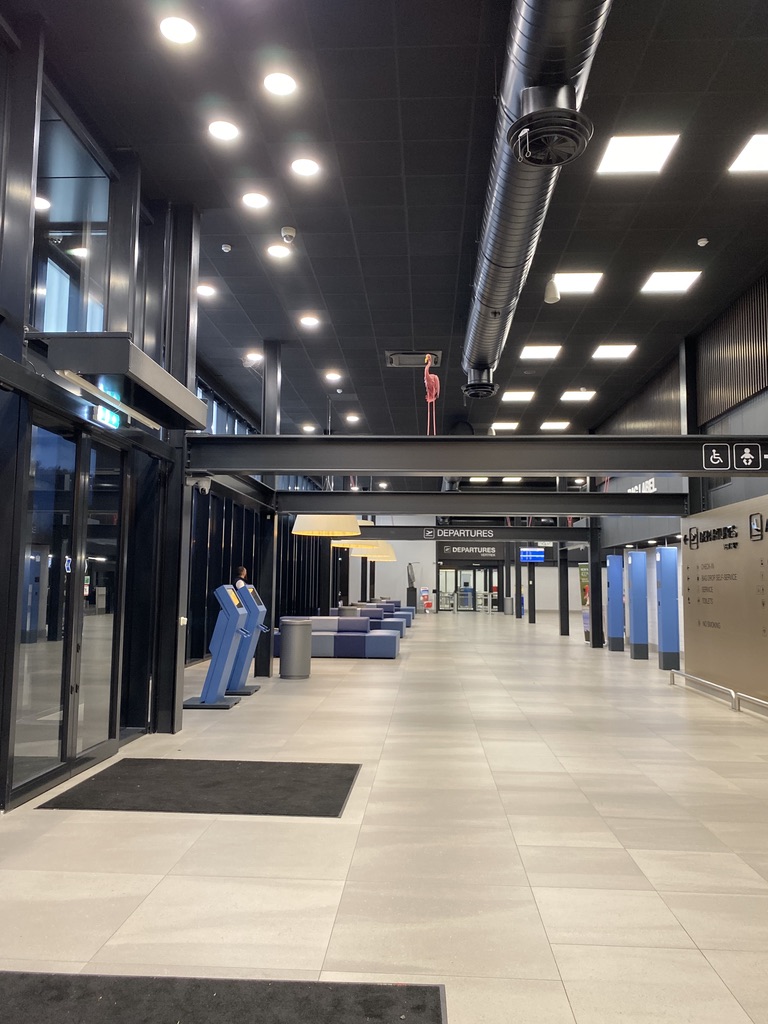
The drive back was considerably longer than the drive to the Arc – lots of traffic and construction. I had driven the whole way to the arc.. and drove about halfway back when I realized I was really really tired, so Carol got us back to Maastricht. By the time we go to the tiny Maastricht Airport it was about 6:30. We couldn’t find any place to leave the car. So I went into the airport to inquire and Carol waited in the car right in front of the terminal. Turns out the last flight of the day had already taken off and the terminal was deserted (although open!). The rental car “desk” was empty; no agents at the counter; the security section was closed off. It was a bit surreal. Finally, some guy came out of a door and I ran and asked what to do with the car. He explained that we needed to bring it to the parking lot and then put the key into this “tube.” Just as I went out to tell Carol, I saw two cops coming virtually out of no where to tell her she was illegally parked and needed to move! We explained our predicament and that we were just going to get our baggage out of the car and she would move the car. Then we asked where we could get a taxi. They explained that there was a post about 100 feet from where we were standing and it listed all the taxi numbers. We thanked them and put the bags inside the “abandoned” airport and Carol took off with the car. I started to go to the post to find the phone numbers for the taxis, but now some woman appeared to say we couldn’t leave our bags inside the airport (I suppose regardless of how small the airport they all follow protocol) unless one of us was with the bags.
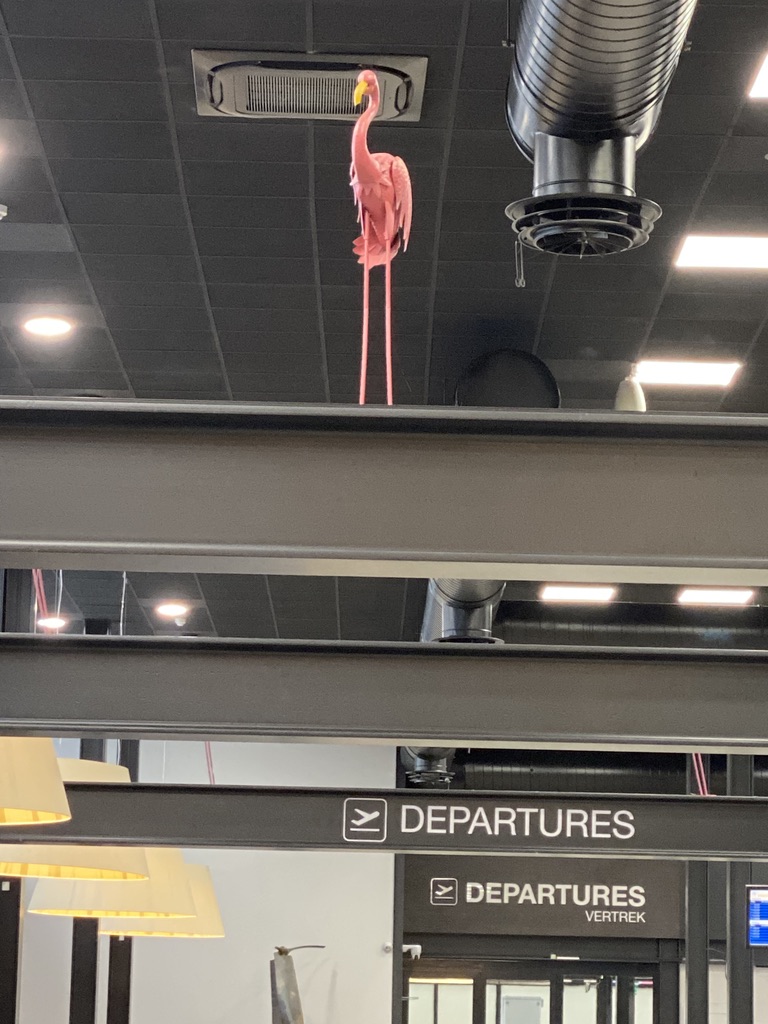
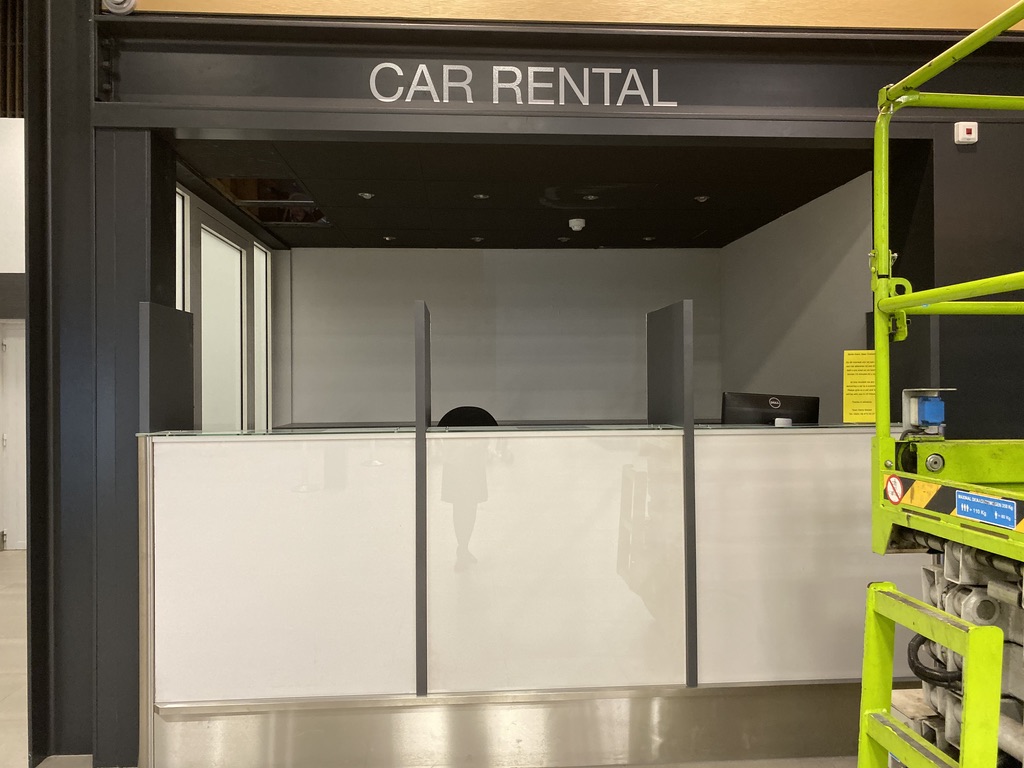
Anyway, we managed to call a taxi (whose driver turned out to be from Morocco) and we had some interesting conversation as he whisked us to the train station. We made it to the 7:30 train and would get to Amsterdam at about 10 pm. What we hadn’t really accounted for was that the train had double decker cars and neither of the levels were on grade with the entrance to the train. And since this was what they called an Intercity (all Netherlands) train, it didn’t have any special place to put luggage. Most people were just going short distances like Utrecht to Amsterdam. So we struggled to get our bags down to the lower level (fewer steps than getting to the upper level. We had to take over about five seats to keep our baggage out of the aisles and to have seats for each of us. After two hours we decided we should perhaps start bringing our bags up the steps so that we’d be ready to get off the train in Amsterdam. Just then. Two cops boarded the train (no guns) and they were trying to figure out what we were doing. After we explained they said we should sit down and relax and that when we got to Amsterdam they would gladly carry our bags off the train! Wow!
We arrived at the hotel – a bit exhausted, ate at the hotel bar.. More tomorrow. Need to unpack and get to sleep. No CNN – but I am happily watching Al Jezeera.
Best –
Fern
Maastricht!! October 23, 2019
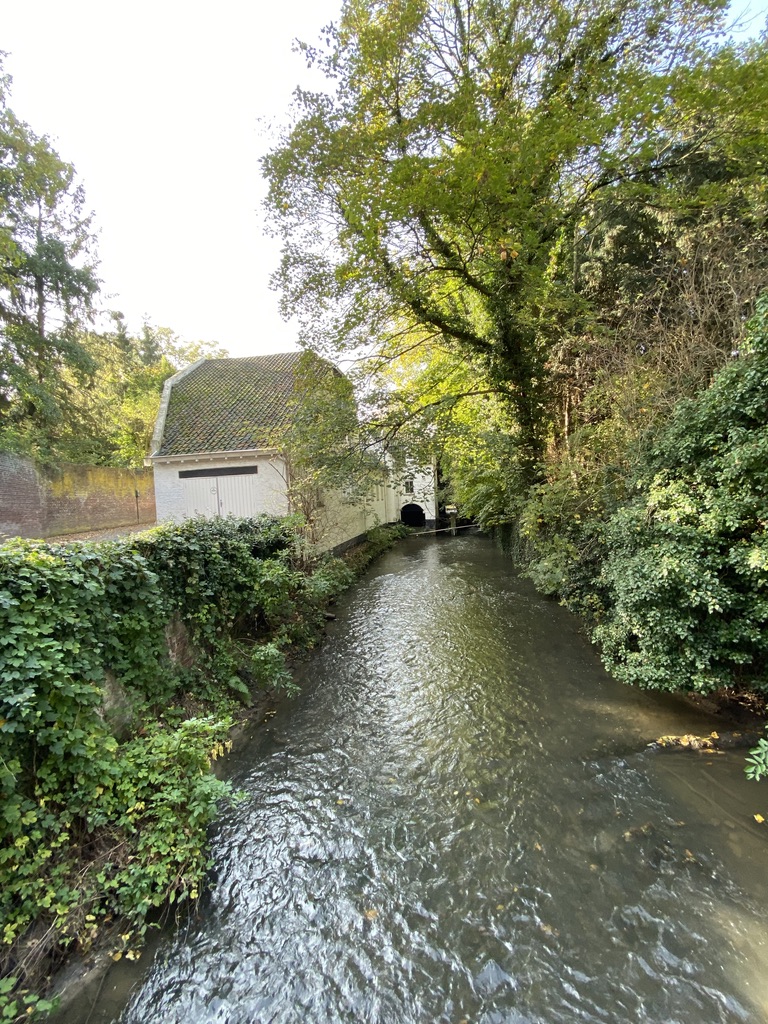
Greetings from Maastricht – one of my all-time favorite towns.
First, apologies for inserting the wrong date in yesterday’s post. It’s definitely October and not September – although I would definitely like to get an extra month inserted into my life.
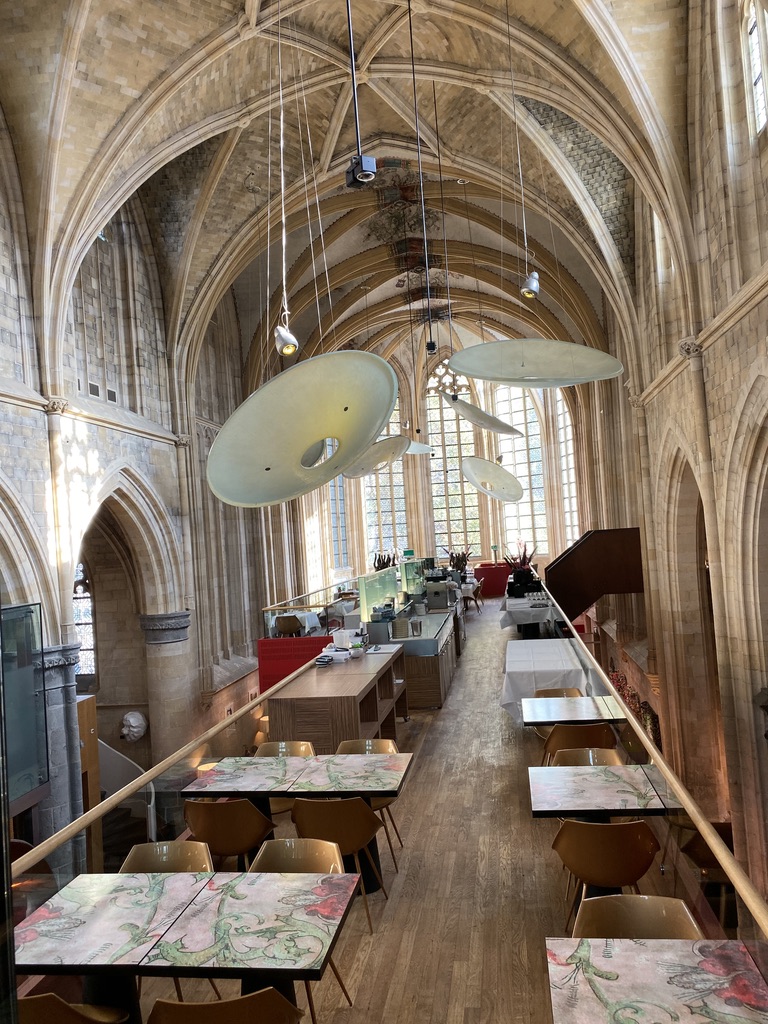
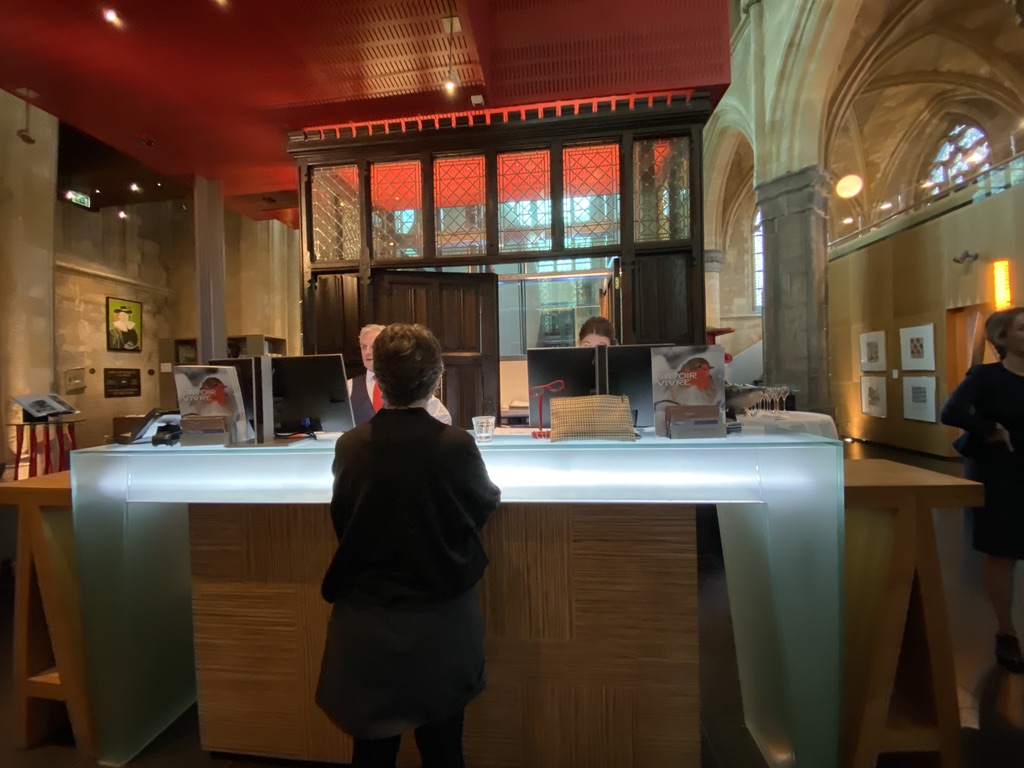
We are still exploring some of the quirky aspects of Kruisherenhotel, and the juxtaposition of the 14th century religious building with the boldness of the inset interiors and furniture. Needless to say, we are quite delighted with our choice. On prior visits to Maastricht, I stayed at the main square.

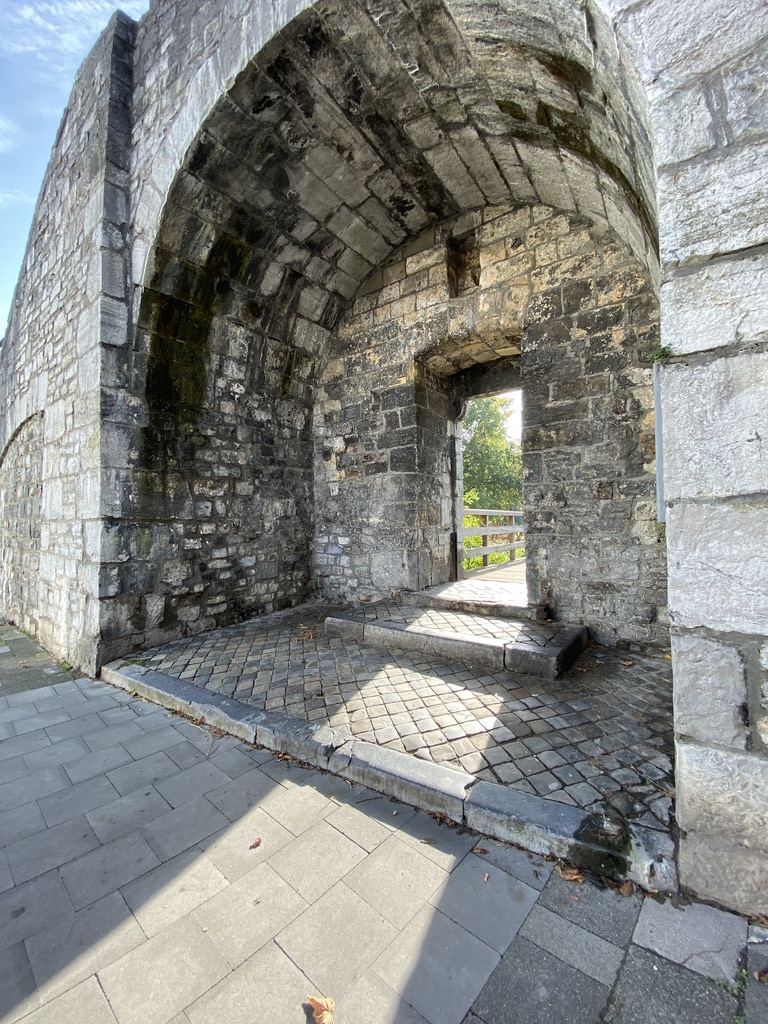
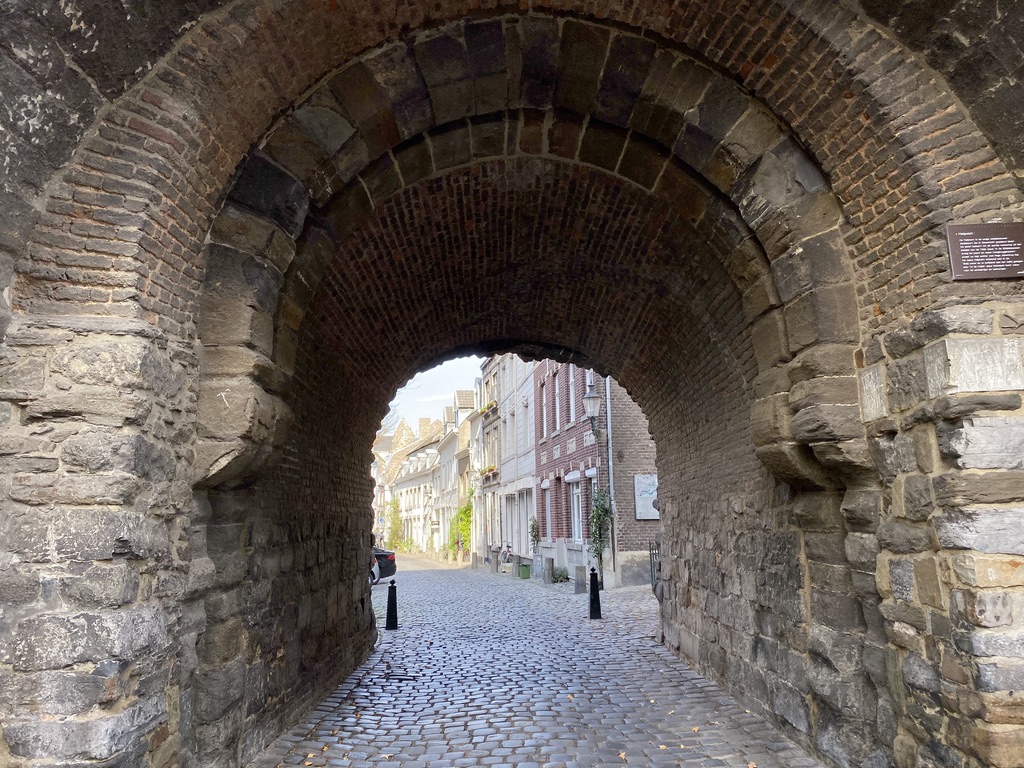
After breakfast we set out on a long walk that took us to the medieval city wall, wonderful lush green parks, the university, lively squares, narrow cobblestone streets, and many, many historic buildings. We are told that there are nearly 2,000 buildings that have heritage status – which is second only to Amsterdam. Beyond this, there are another 3,000 or more buildings listed on a local register. We stopped briefly at the main basilica, then crossed the pedestrian bridge (again) and strolled to the train station and back to the hotel. Oh, we did have a nice light lunch somewhere along the way. Got back to the hotel to get a little work done and to relax before heading out to dinner.
We chose Bon Vivant – a little French bistro just a few blocks from the hotel. Food was good; it was quiet and is situated in a cave-like setting in the “basement” of the building – complete with barrel vaulted brick. Like being in a tunnel. Then strolled back to hotel and here I am writing this short(!!) post at just about midnight.
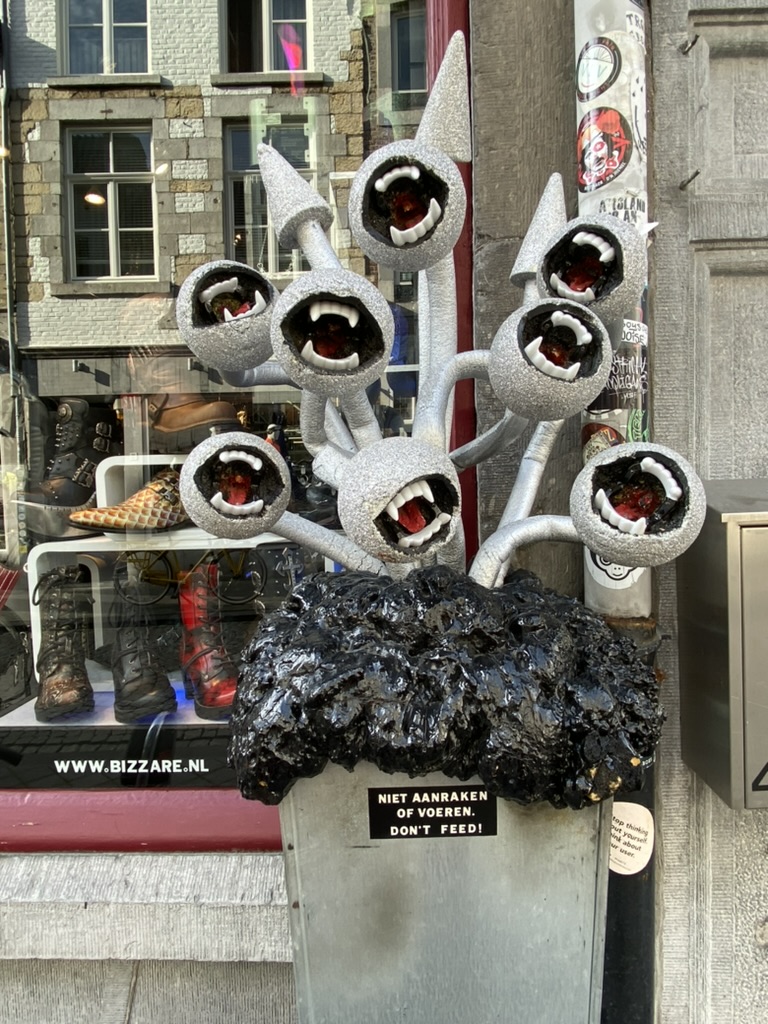

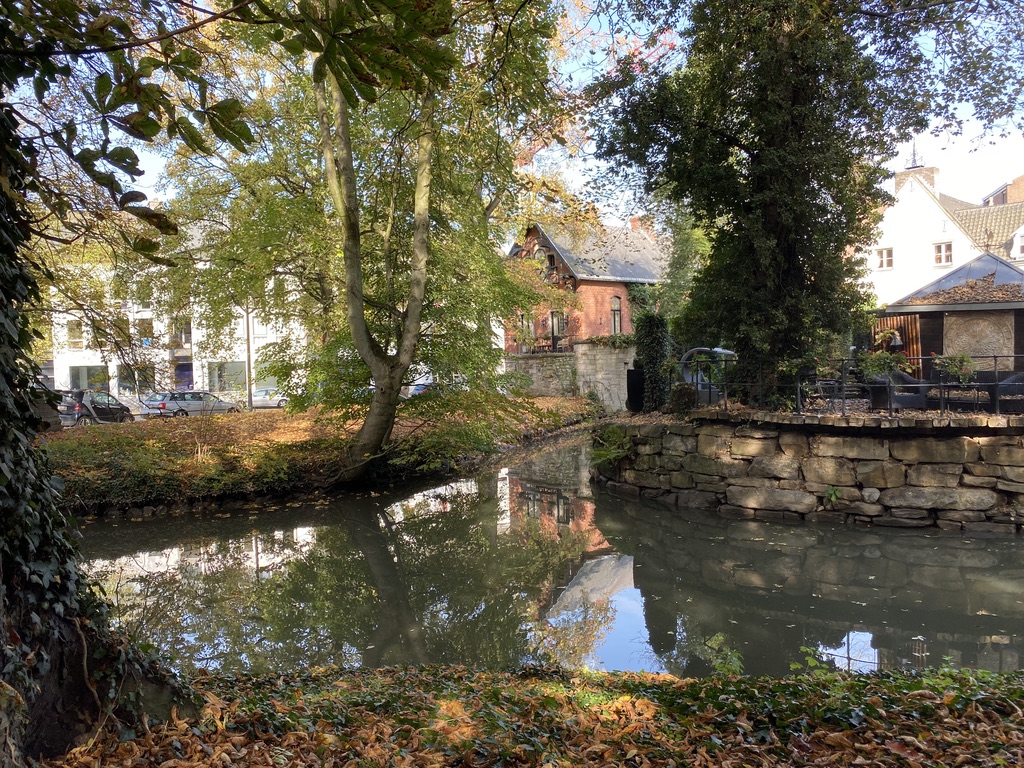
I’m going to sign off to pack and respond to emails. Tomorrow we will drive across the border to a small town in Belgium to see a very particular bridge… then head back to Maastricht to return the rental car and hop on the train to Amsterdam. Should be interesting to make all the connections.
Best –
Fern
From Eindhoven to Maastricht.. October 22, 2019
Greetings from Maastricht, Netherlands
Hope all is well and that you are all surviving in spite of the Trump Daily Trauma. Unfortunately we get CNN here – loud and strong, so there’s no escape.

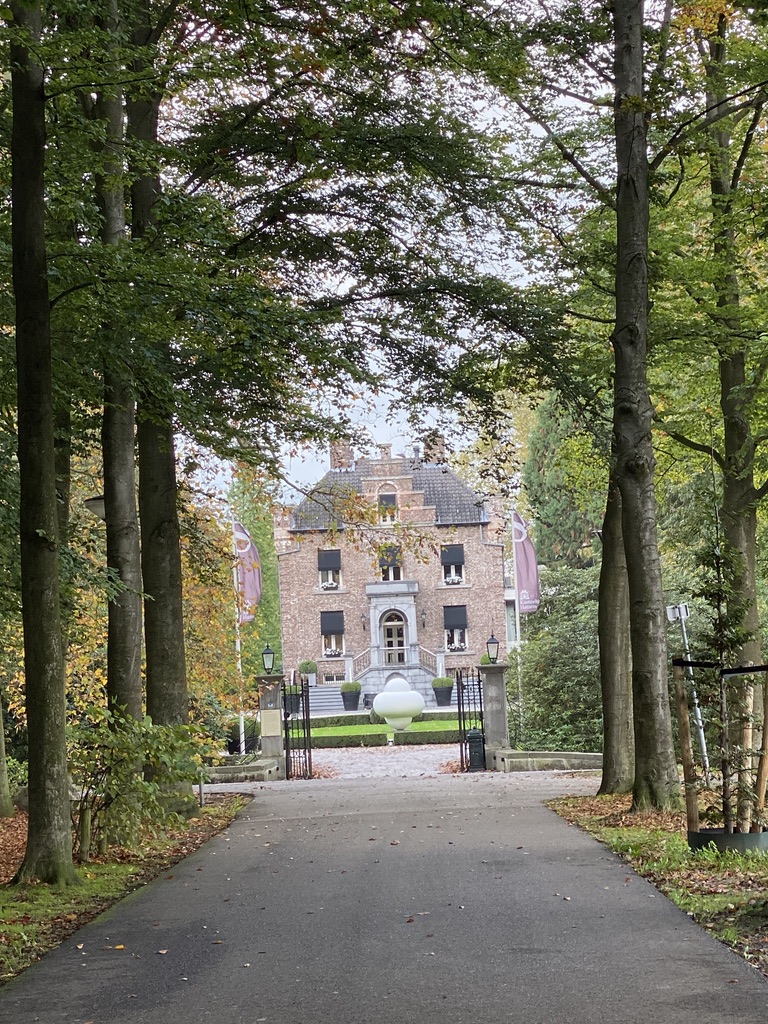
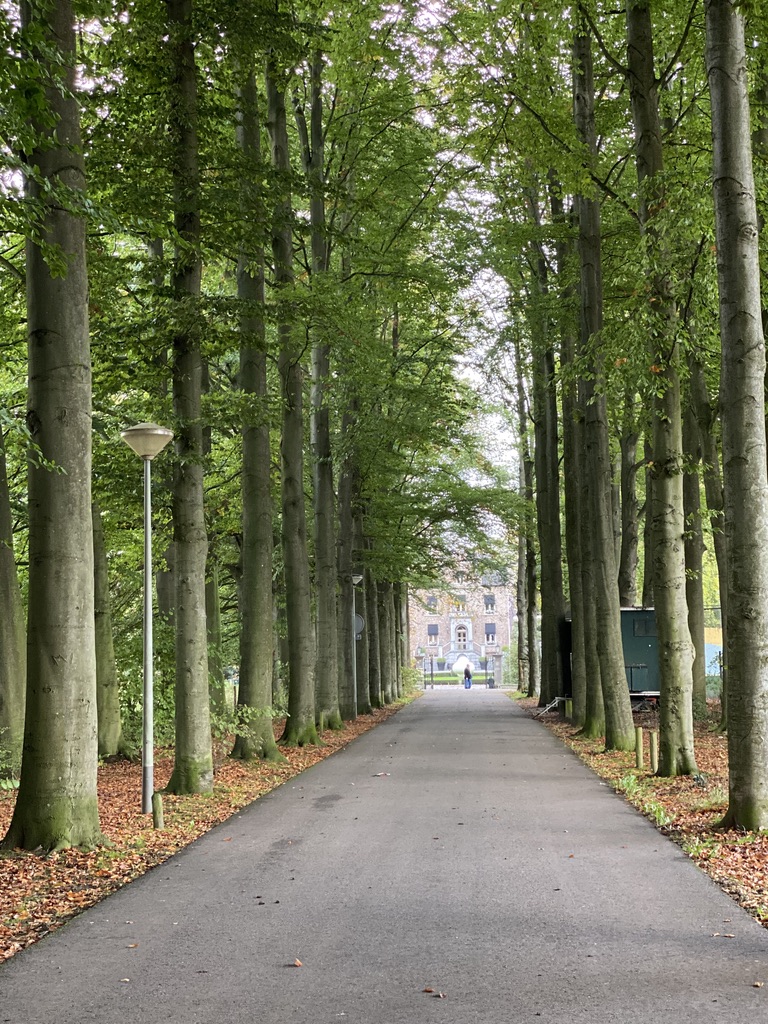
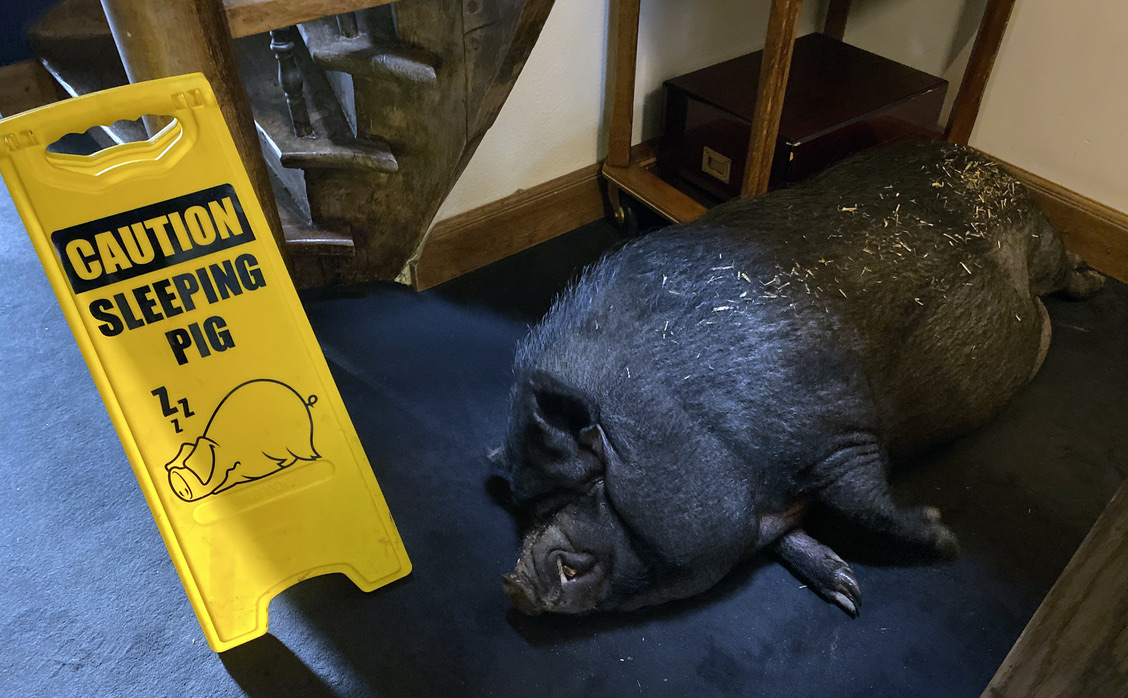
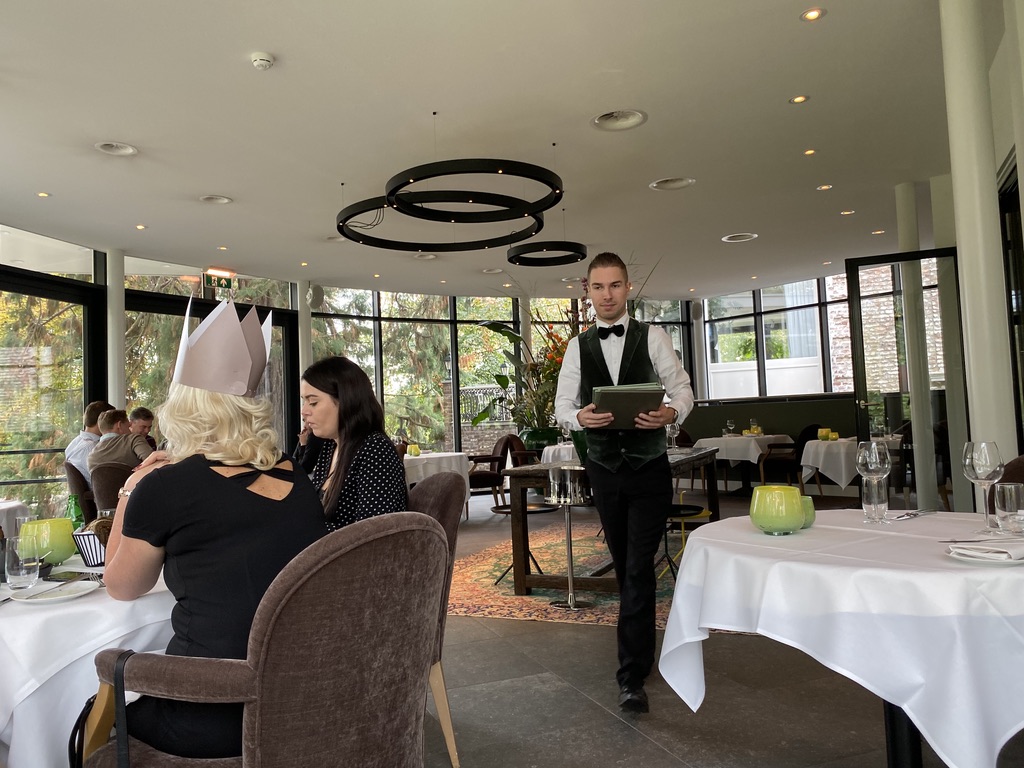
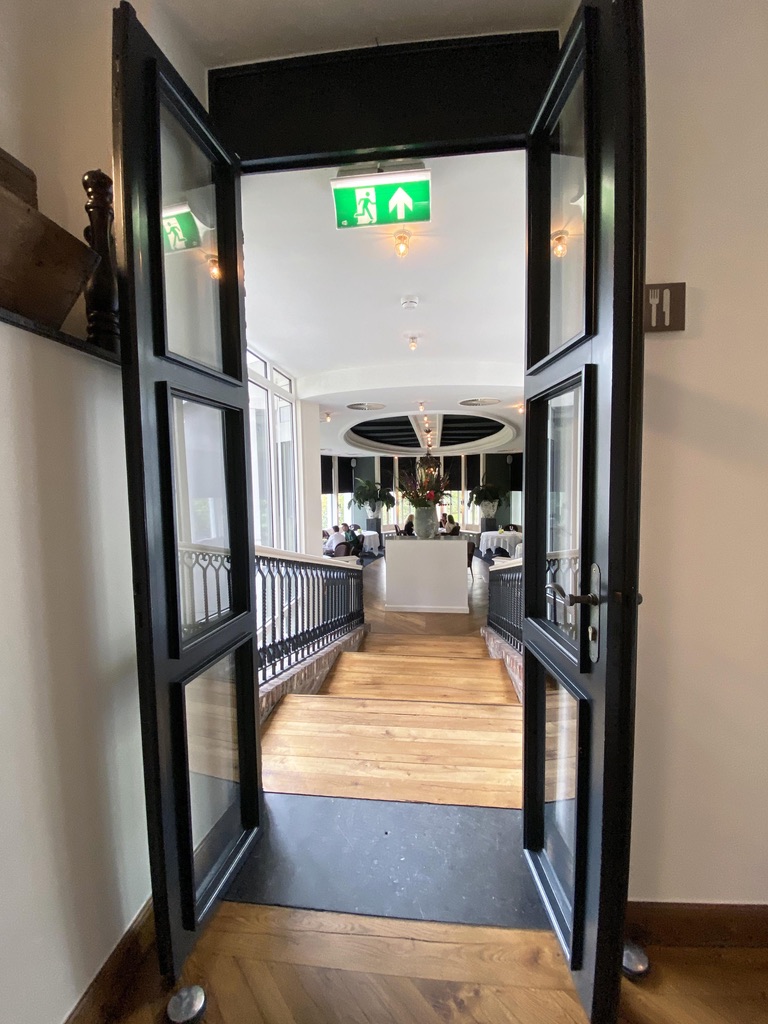
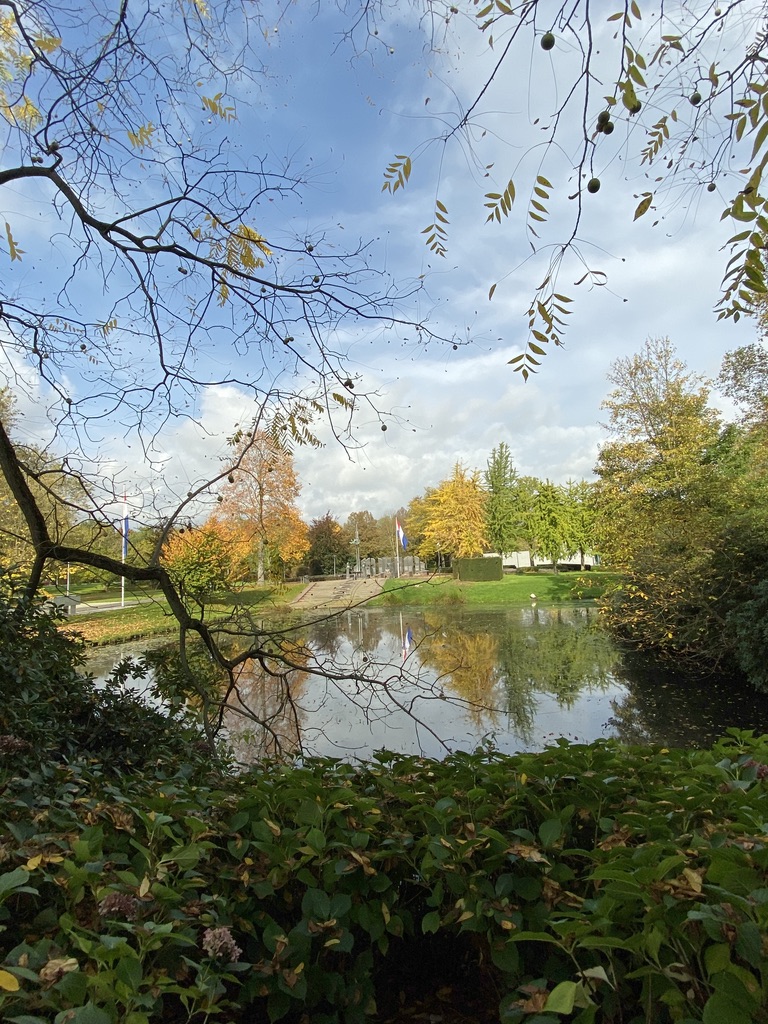
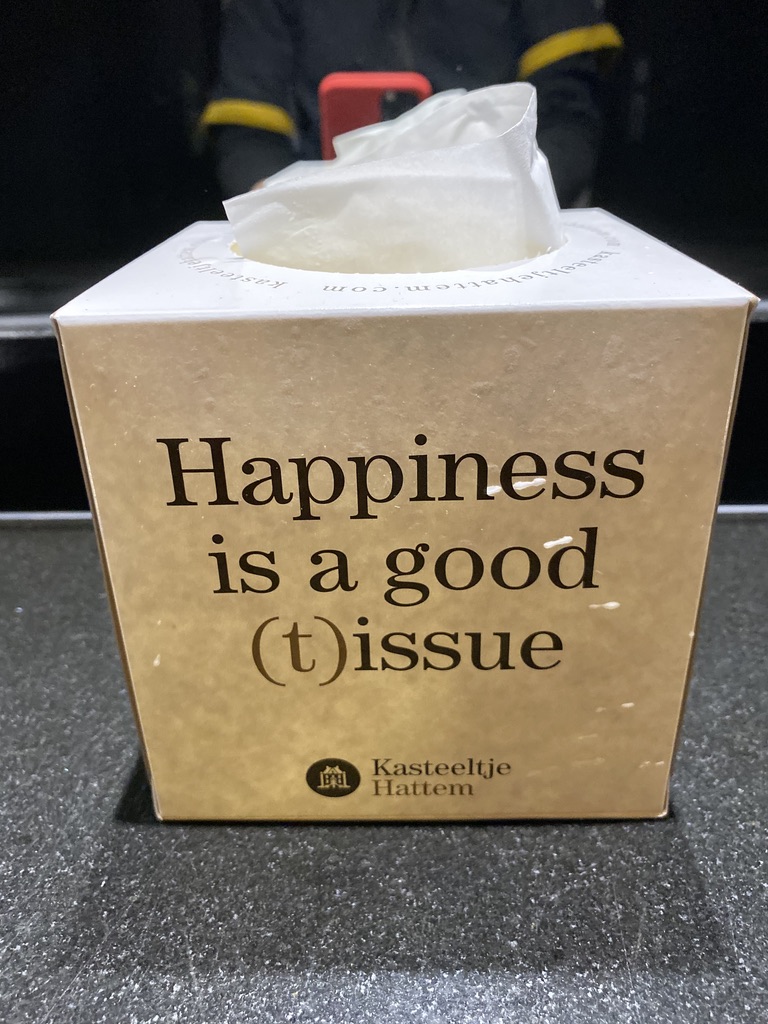
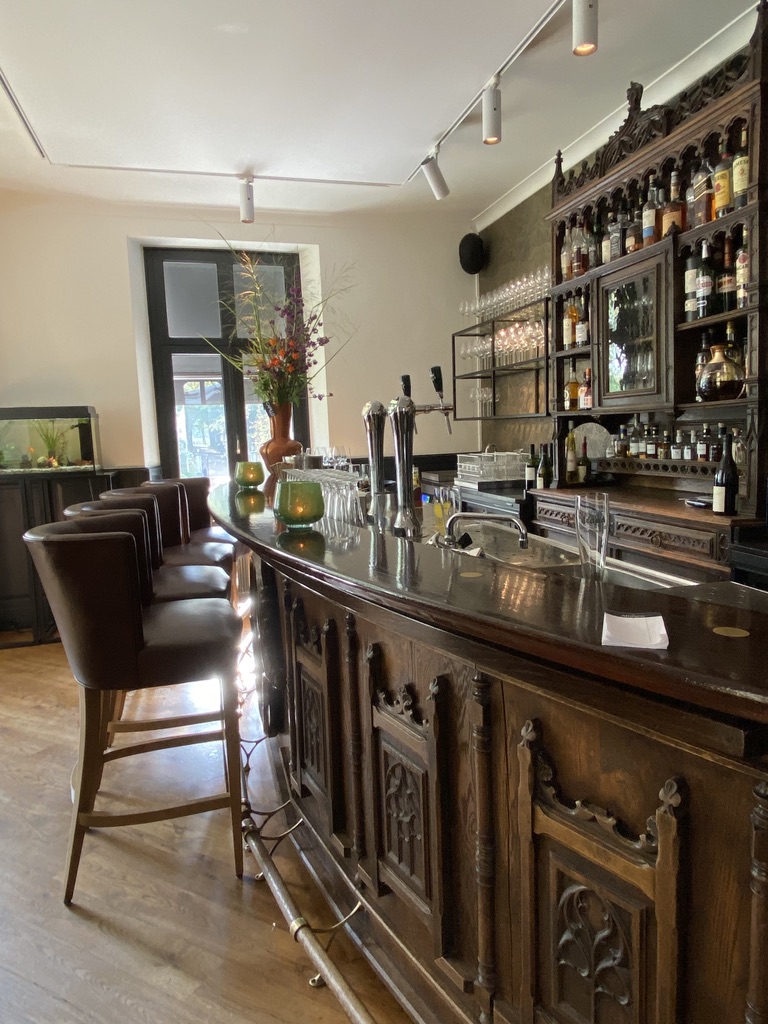
After an early breakfast in Eindhoven, we packed up and headed to Maastricht (a wonderful town that I’ve personally visited four times prior to this trip, but it was Carols’s first visit. We decided to take small roads which added to the simple 75-minute journey, but gave us a chance to really see the Dutch countryside and to stop in a few small towns en route. Our plan (??) was to stop for lunch in Roermond – a town with lots of canals and rivers running through. We surveyed the town and then looked for a place for lunch and literally stumbled upon the smallest castle in the Netherlands which had been converted into a little inn with a wonderful restaurant. Kasteeltjm Hattem, sits on a river and was certainly more than we had expected for lunch. The castle itself is pretty spectacular, sitting in a wonderful park with a grand drive to the front of the building. We had a delightful lunch which was interrupted briefly by a stray chicken that strolled into the elegant dining room, and as we exited we met the “sleeping pig” – which I believe might have been on its way to the butchering process, although it was treated very much as a pet. We shared two lunch specials: lobster salad and steak tartare.


From Roermond we made our way – slowly– to Maastricht – which from our long walk around town seems as wonderful as it was in all my prior visits. But, before I describe the town, let me tell you about the Kruisherenhotel, where we are staying. It’s a former monastery and church and was built in 1438. Late in the 18th Century, the French conquered the Netherlands and the Order of the Holy Cross was driven out of the Netherlands. Under French rule, the monastery became an accommodation for soldiers and some parts of the church were used as barracks and to store weapons. The former monk cells were used as dormitories and an eating area and some rooms were used to manufacture ammunition. In 1815, the intention was to sell the property, but again it reverted to being barracks and also a munitions store. By the end of the 19th Century, there were efforts to find new uses for the site. Around that time, the Historic Building Trust of the Netherlands saved the site from further ruin. Victor de Stuers, co-founder of the Trust was born and raised in Maastricht and decided the property should be restored. He approached his friend who was a government architect. The restoration was completed in 1921 and then the National Agricultural Research Station was moved to the building. But the old church proved to be too cold for research so they moved that function to the cloister. Over the years the church was used as a postal service, offices for the Food Inspection Department, and also as a sports facility.
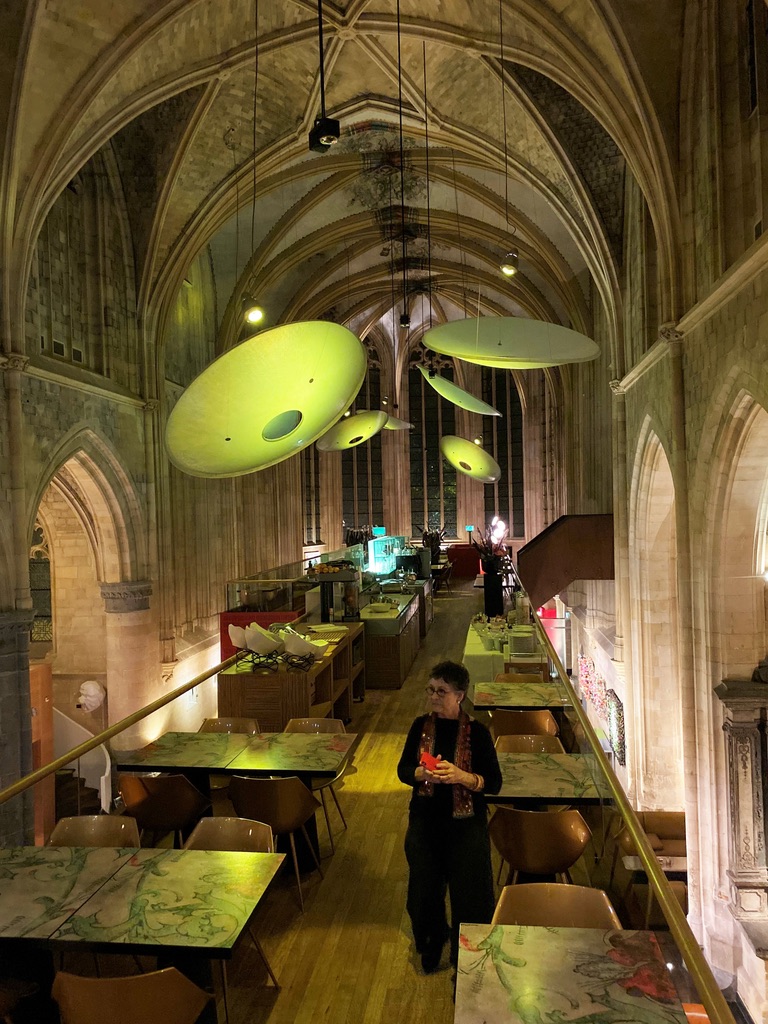
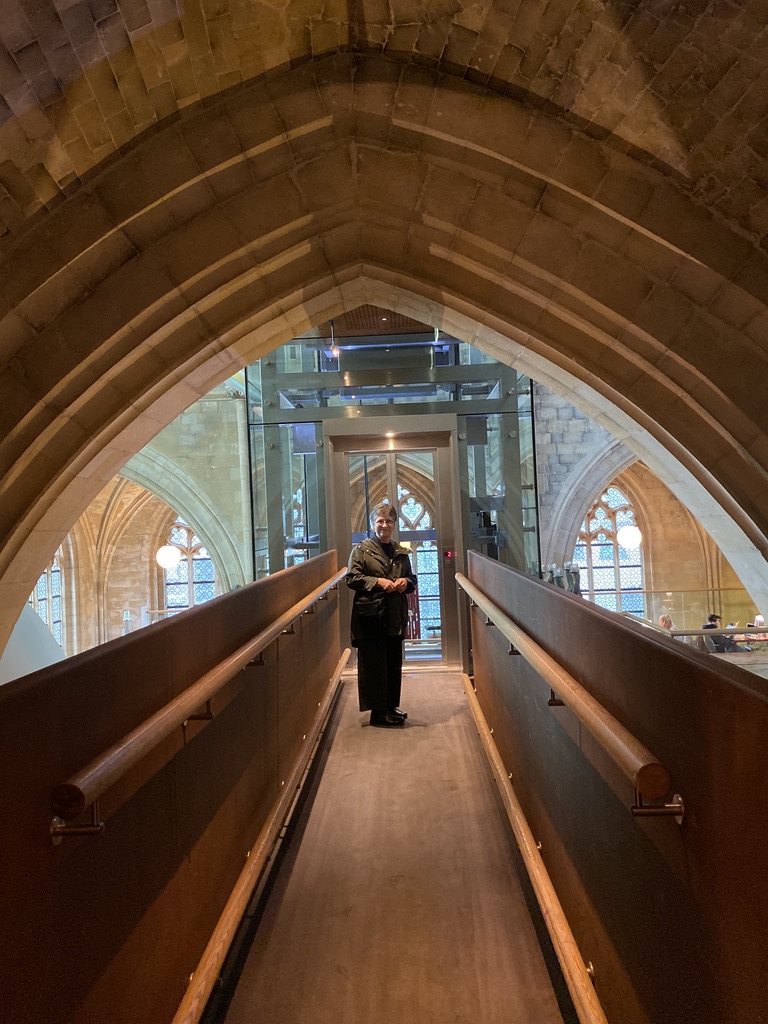
During WWII, the buildings stored copper that was requisitioned by the Germans and used for munitions. At the end of the war, the Allies hid various goods on the site to prevent them from being stolen. The church served several other diverse functions over the next decades and finally Camille Oostwegel a wealthy Dutch man who studied hospitality, was looking to develop a hotel, and selected the Kruisheren and decided this was a perfect venue (I agree!) –supposedly paying homage to the building’s former use as a place for people to stay. While he received support from the city of Maastricht for his plans, the Historic Buildings Committee was less enthusiastic. Apparently the guidelines for historic buildings state that they can only be renovated if the building remains in its original form. So – the architects had a real challenge.
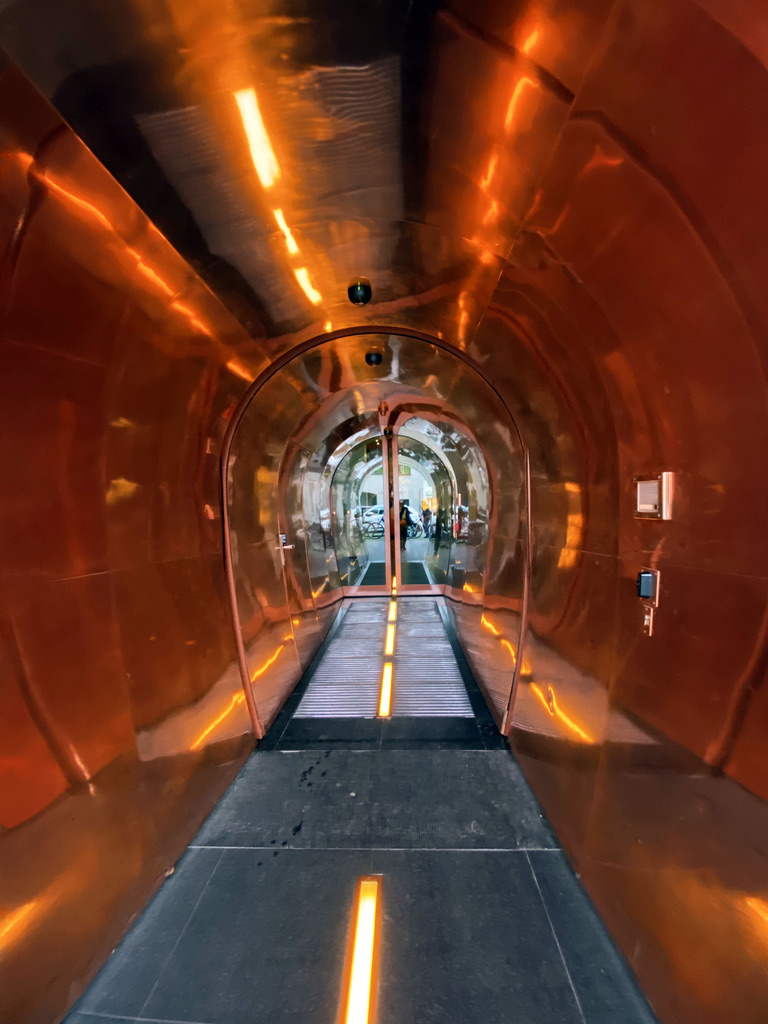
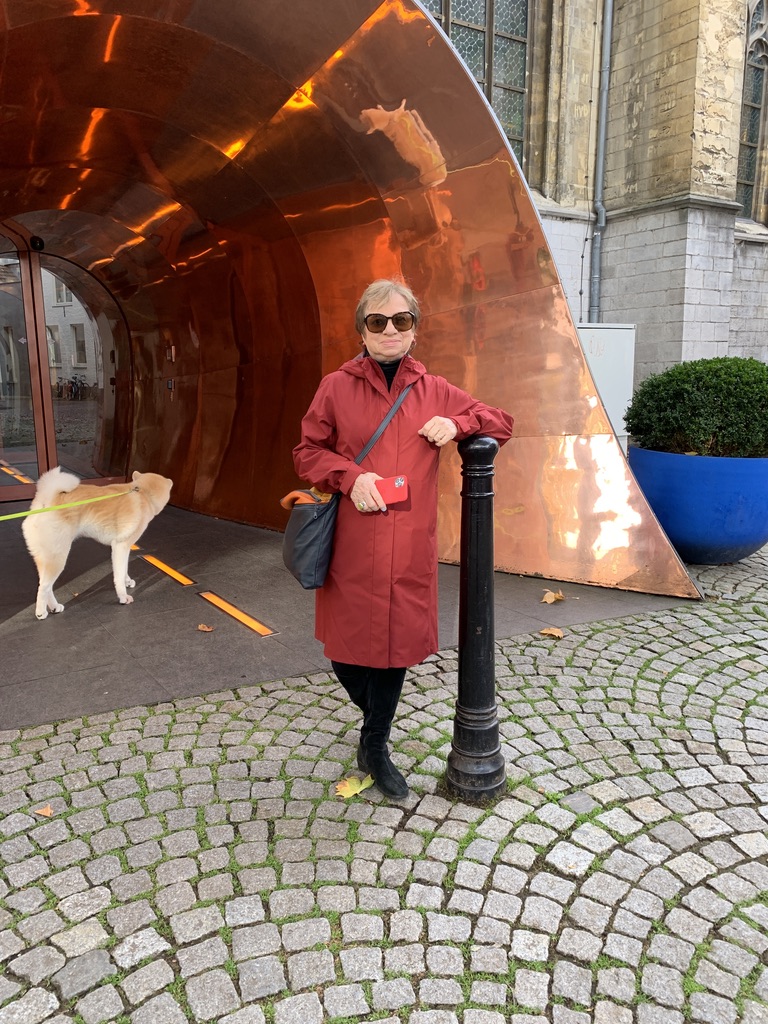
They eventually designed a building that sort of sits inside the original building and everything that has been added can be easily removed. The result is amazing. The entire “shell” of the church and monastery remain in tact and repaired. But a very contemporary set of structures has been set inside. It’s hard to explain.. but imagine a glass elevator “floating” in the space of the medieval church, that gets you to the floors above; imagine an orange “floor” that floats above the original first level of the church. On that “floor is a bar and restaurant, with nothing really bolted to the walls of the original church. Because the hotel needed some offices and they could not build walls that attached to the church walls.. the architect created an egg-like form that sits inside the building where the office workers sit. Even the entrance to the hotel is a structure that holds the automatic sliding doors – it’s a polished copper “tunnel”… and so much more.. The photos don’t yet do justice to the space… I’ll try to capture better over the coming days.
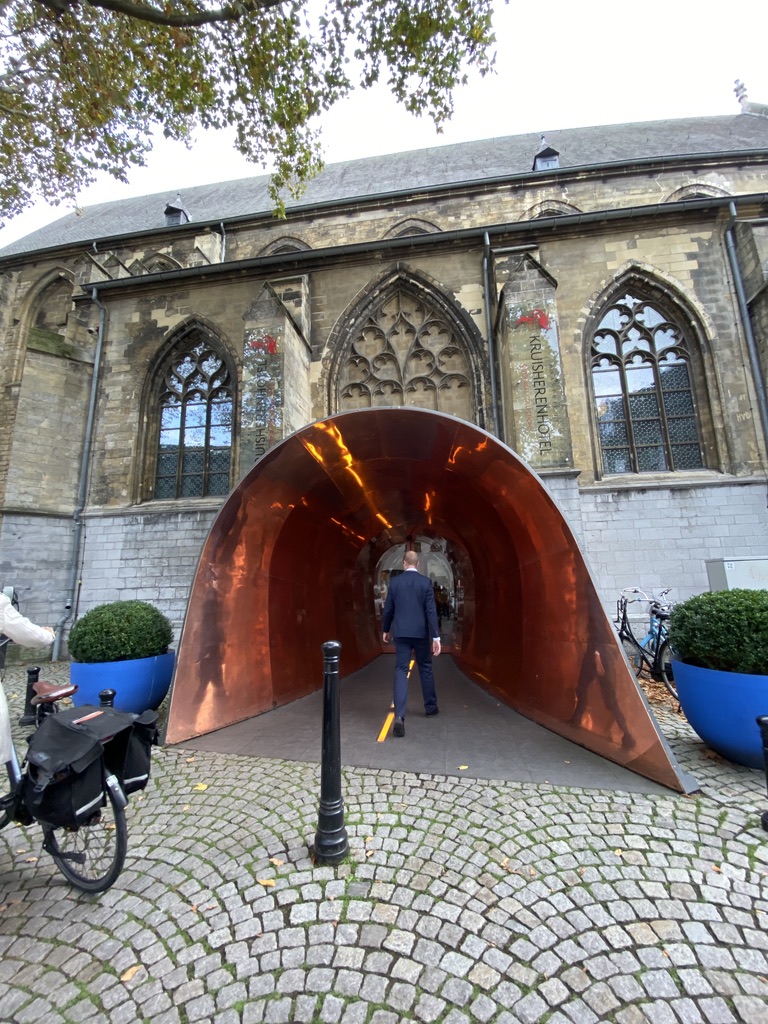
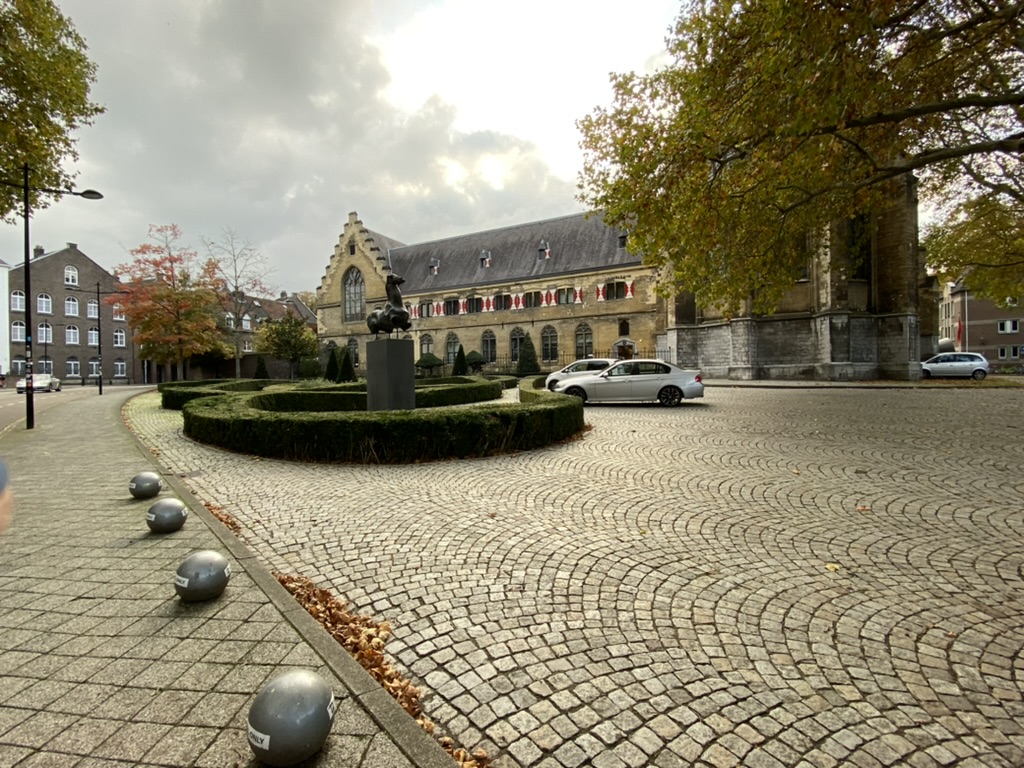
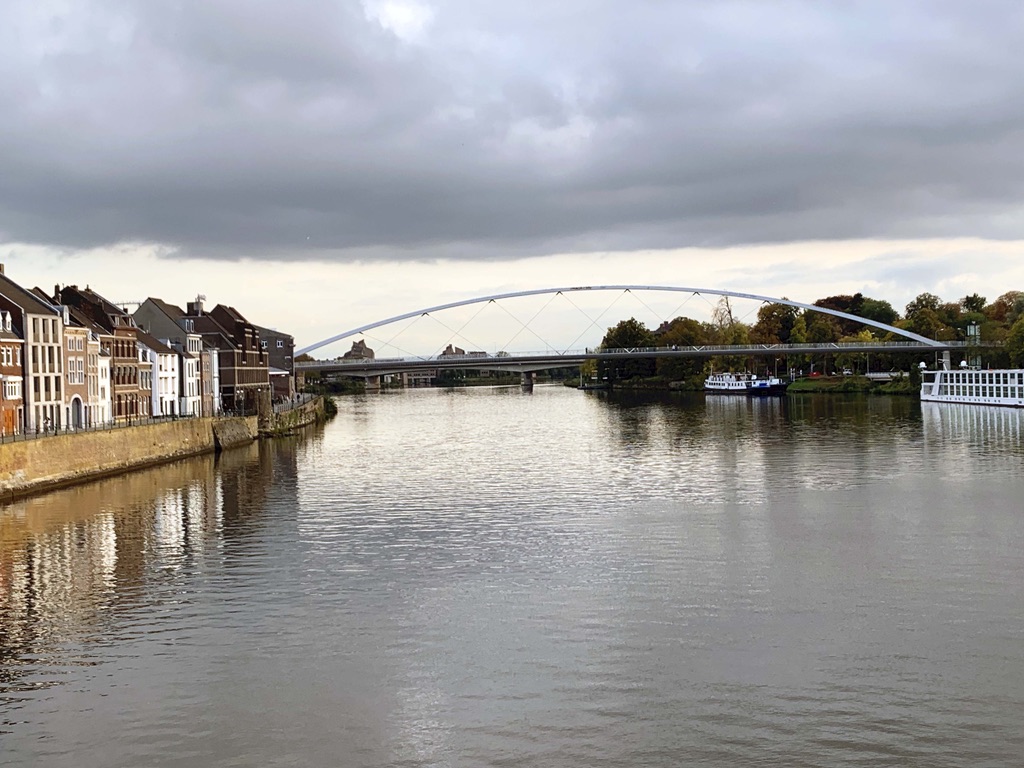

Anyway, after checking out our rooms, and the hotel itself we strolled the city center… crossed the River Maas on the footbridge.. and eventually (after getting some work done) strolled to dinner across the street at a little Turkish restaurant called Mandalin – Turkish, with a bit of a French twist. Food was great (started with a mezze plate, moved onto my very favorite Turkish dish – manti – but they did it with a bit of a twist in that it had portobello mushrooms and truffles, and our main course was the rack of lamb… ).
Strolled back to the hotel and had an after dinner drink in the apse of the church!
Oh, to make things nearly perfect – the sun came out today.
All the best –
Fern
Eindhoven. October 20 and 21, 2019
11:00 PM (local time)
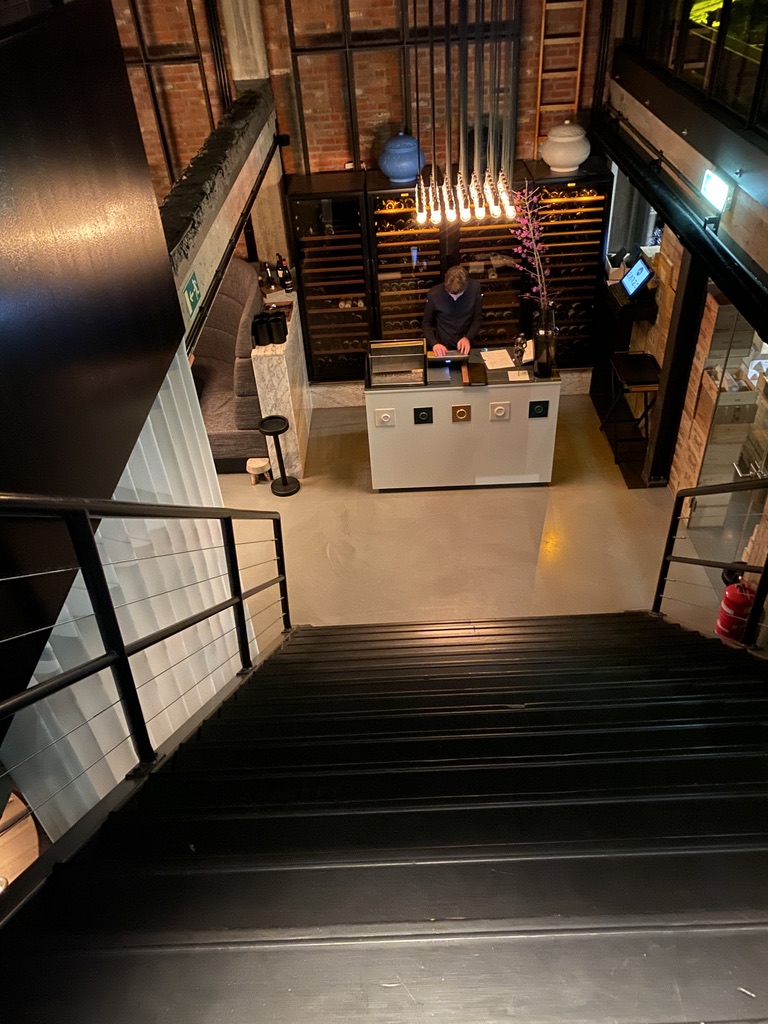
Greetings from Eindhoven
It was a jam packed day.
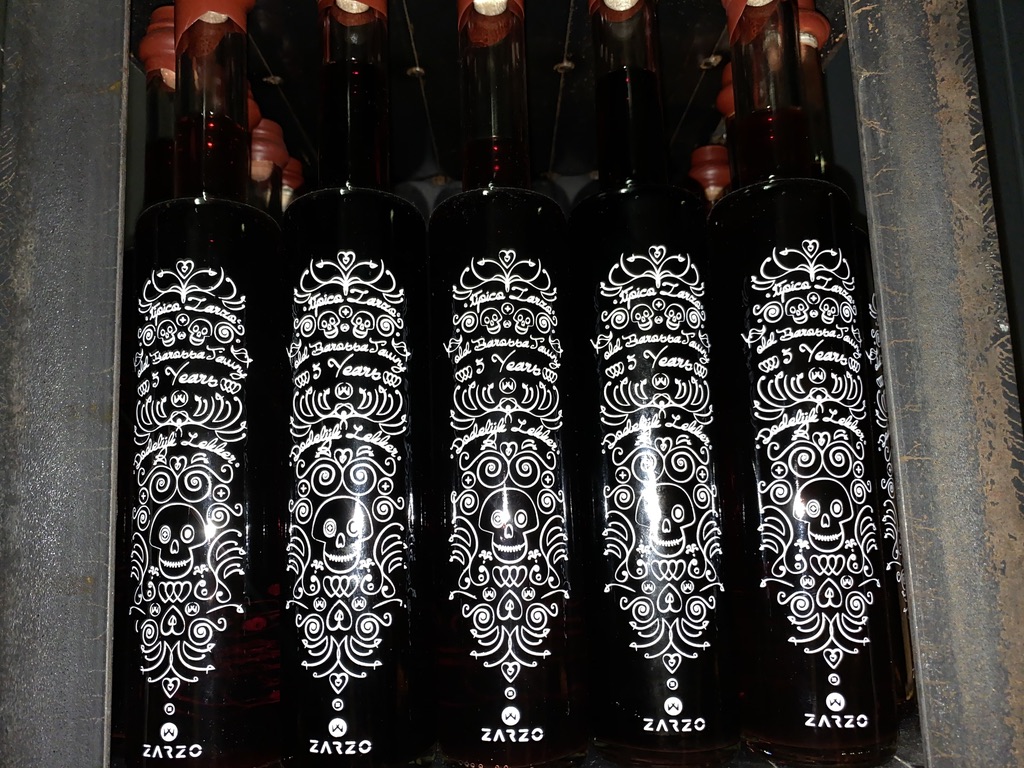
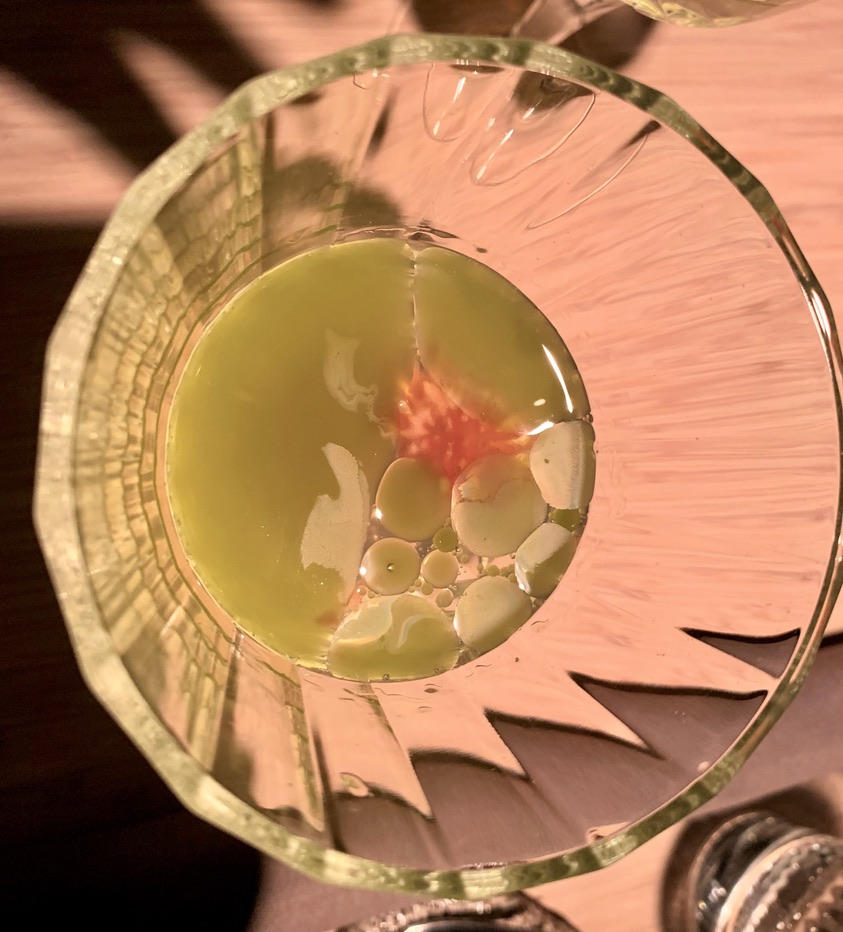
But first a bit about our Michelin star dinner last night at Zarzo – a fairly unpretentious space in the central area of Eindhoven. It’s sort of Spanish fusion, a bit difficult to describe, except to say it was fantastic. We had the 5 course fixed meal (they had 6 and 7 course meals as well). But in addition there were several surprises that showed up at the table in addition to the selected meal. We started with an amazing chilled basil ad tomato “gazpacho” served in a wine goblet. We asked how they made it and I think they cut the tomatoes into quarters and spread them out and put salt on them and they stay overnight. Then they create an emulsion of basil which is pressed so much that it’s just a liquid to which they add Spanish extra virgin olive oil and then they add some of the tomato. I’m not planning to try it, but it was amazing. They then brought two or three other sample tastes (including a sour cherry with what I think was a pesto, small bites of raw mackerel with some kind of dipping sauce, a homemade wafer with a wasabi-like paste and herbs and dried mushrooms – each dish served on a plate or platter made special for that dish) before the actual meal began. Then we had veal tartare served along with some kind of amazing potato (I think) bread and some dipping ingredients. The veal tartare had caviar, crème fraiche and herbs.
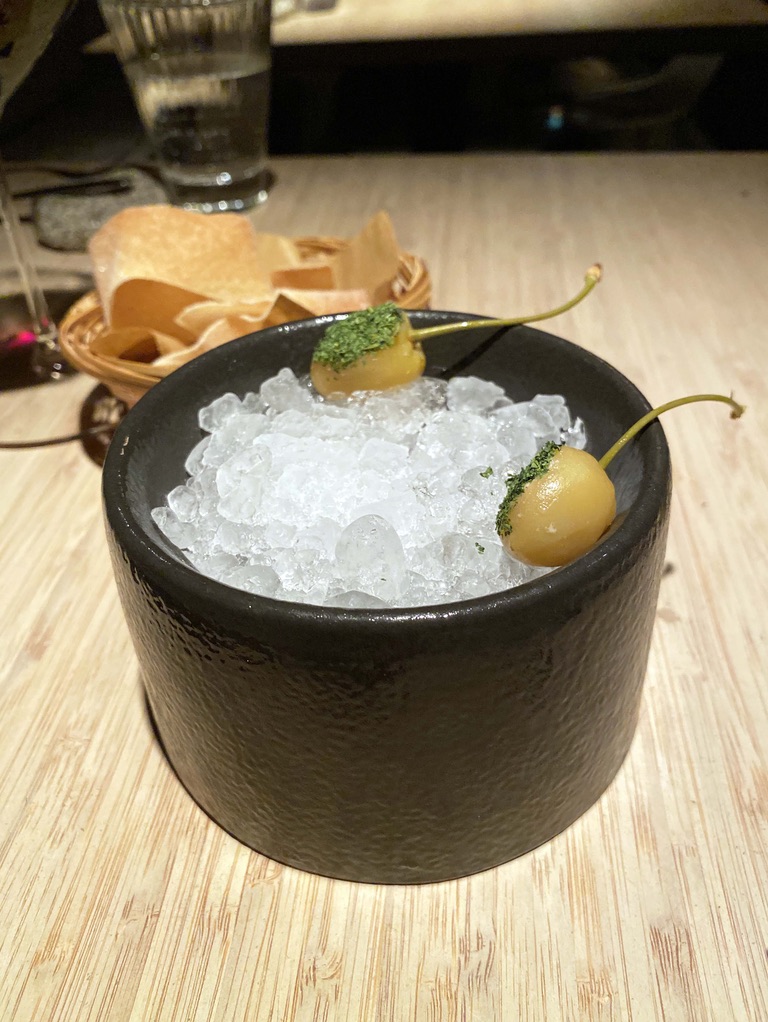
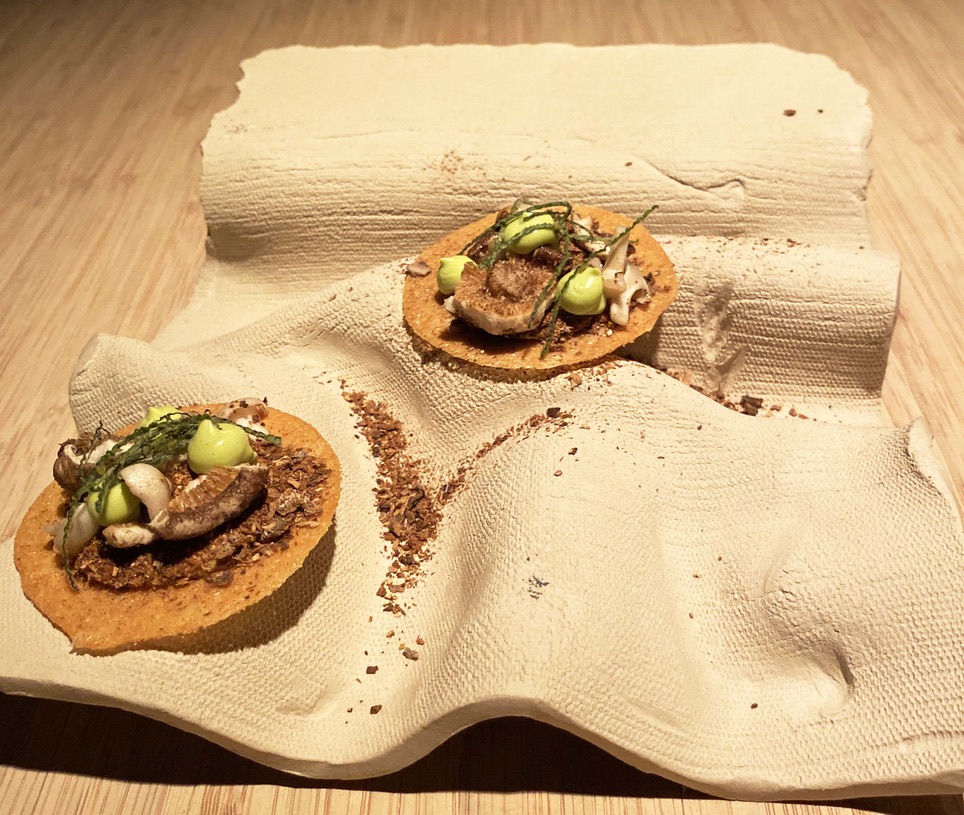
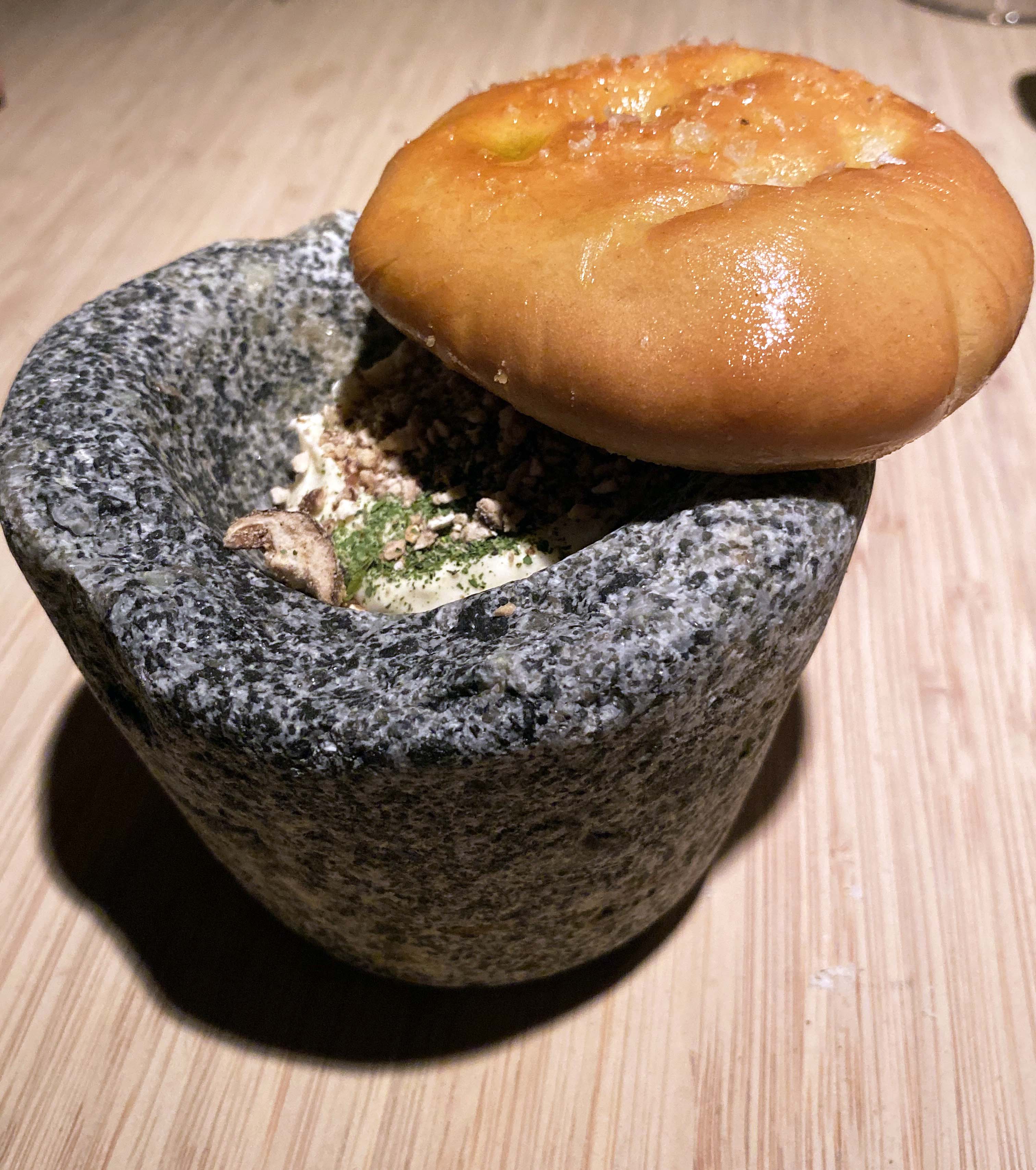

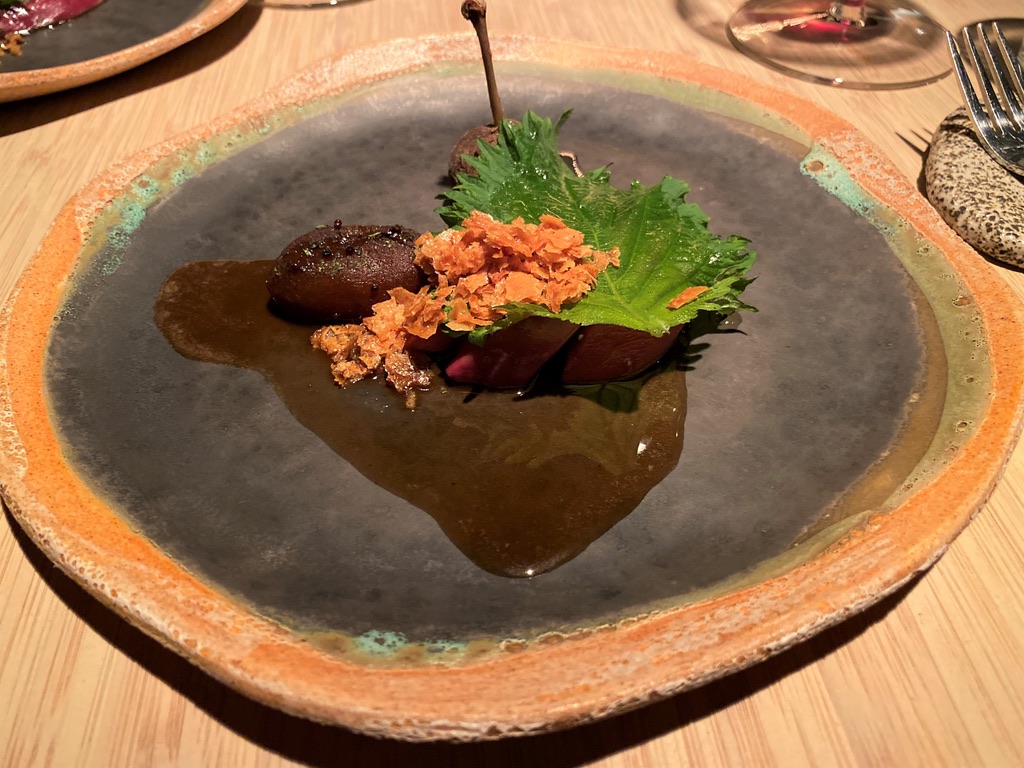
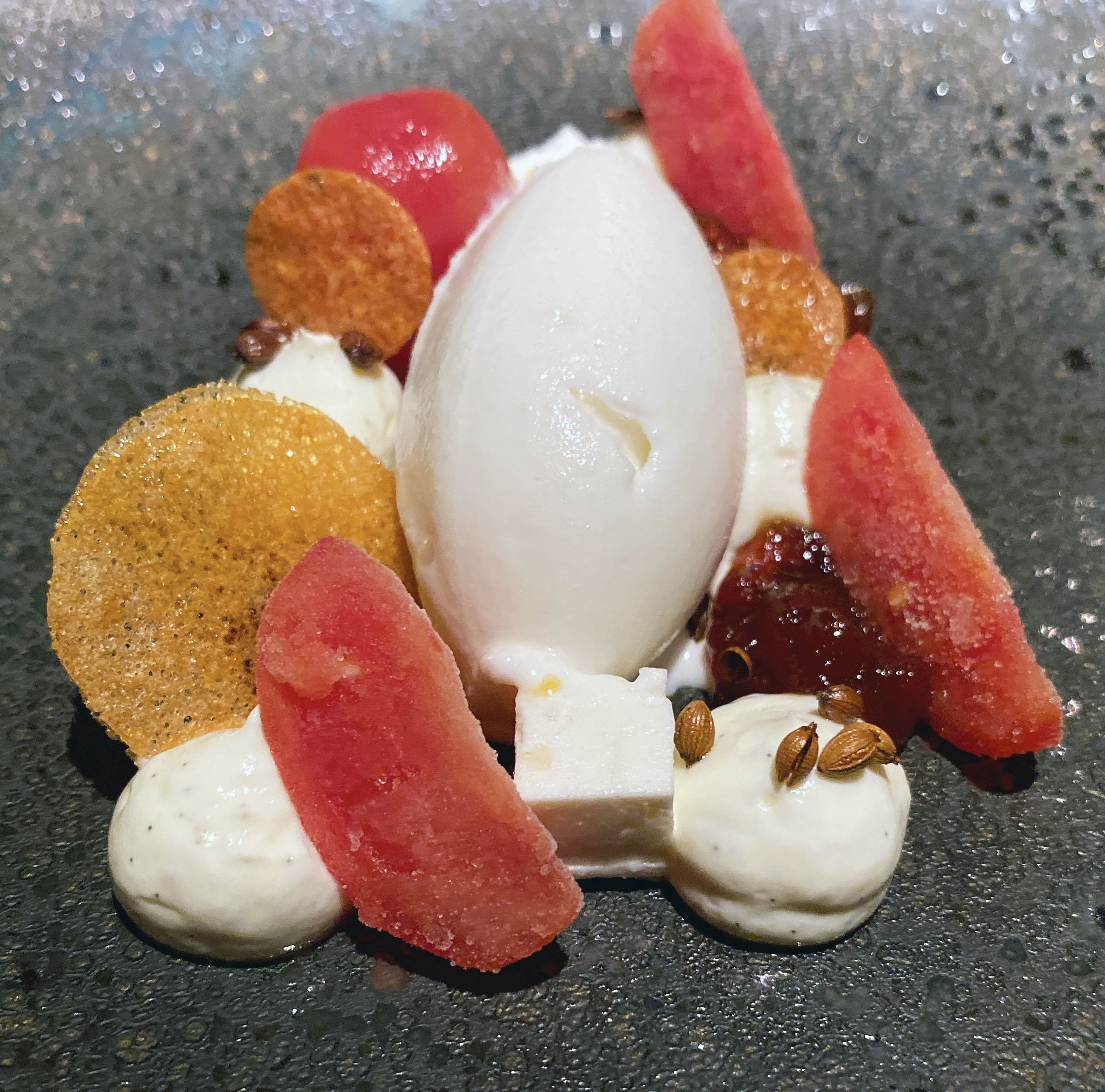
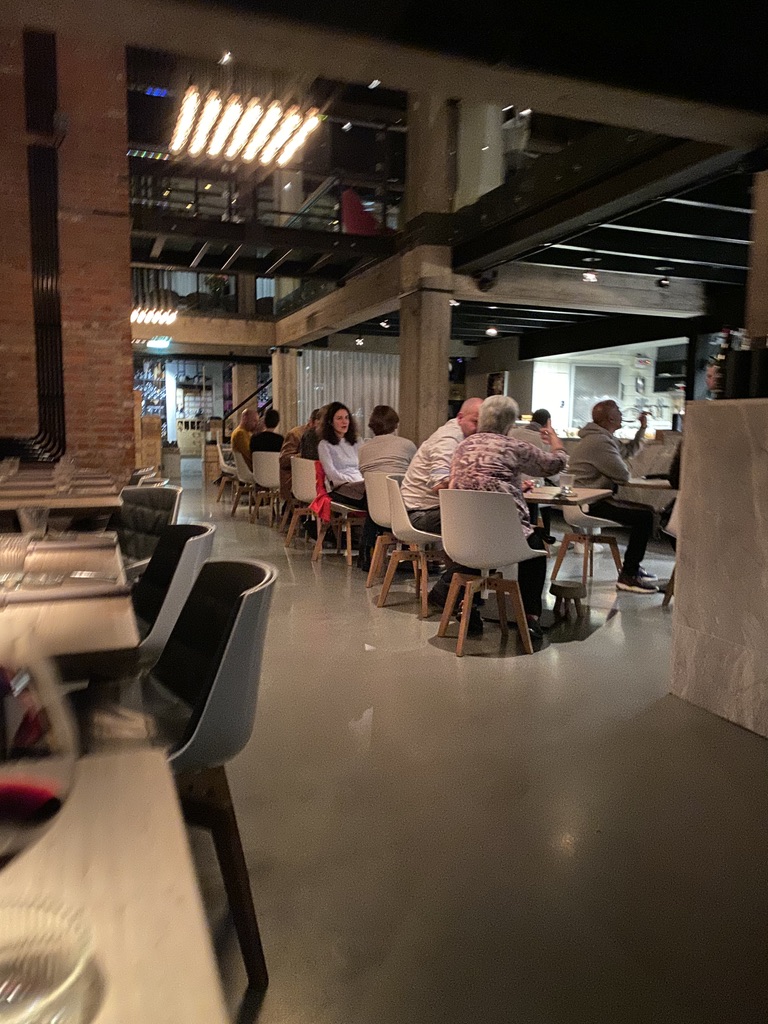
I don’t remember all of the dishes and don’t want to make everyone’s mouth drool.. but there was a pigeon dish with pear, a garbanzo dish with herbs and raw egg and some kind of cream (or at least that’s what I think it was)… I know the photos don’t do it all justice.
Needless to say, after that meal and several glasses of wonderful Spanish wine, I was pretty beat. Hence I didn’t finish the posting last night.
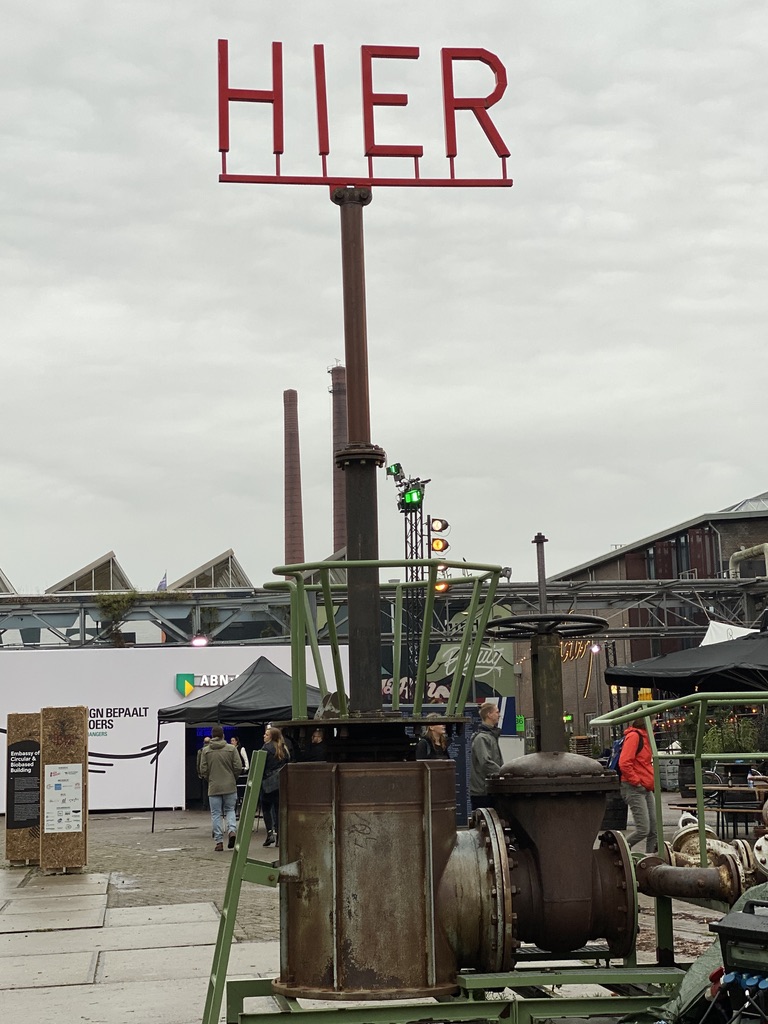
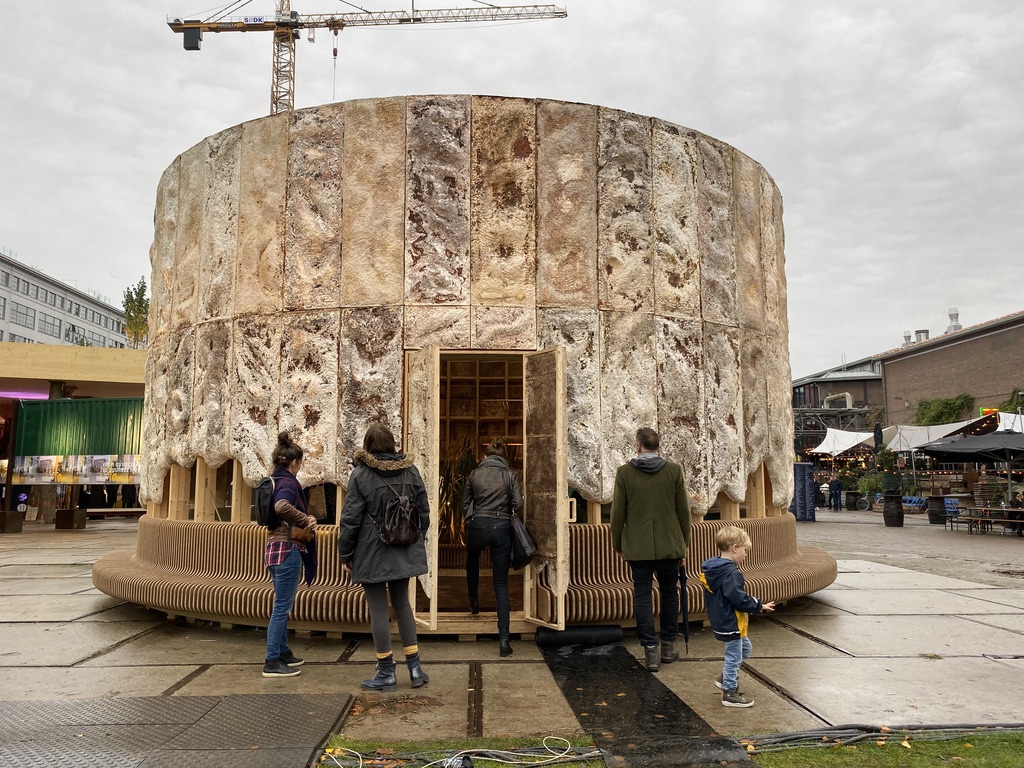
After breakfast this morning, we headed (by car – with me driving and Carol navigating) to what is known as “Sectie C” or Section C – a section of town that has been populated by artists and makers for decades – occupying abandoned and/or no longer usable warehouses and industrial buildings on a fairly large tract of land surrounded by a cute neighborhood. The whole property was open because of Design Week and again most of the exhibits had to do with sustainability and ways to change Dutch practices for the better. One particularly fascinating project was the Wikkle House.
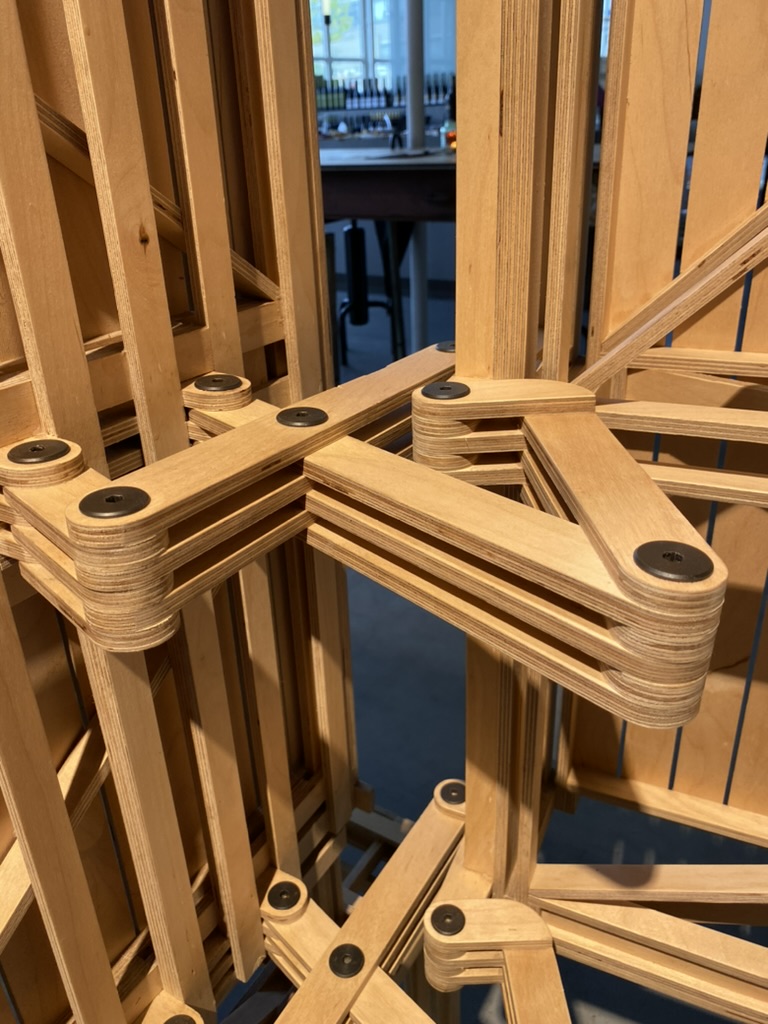
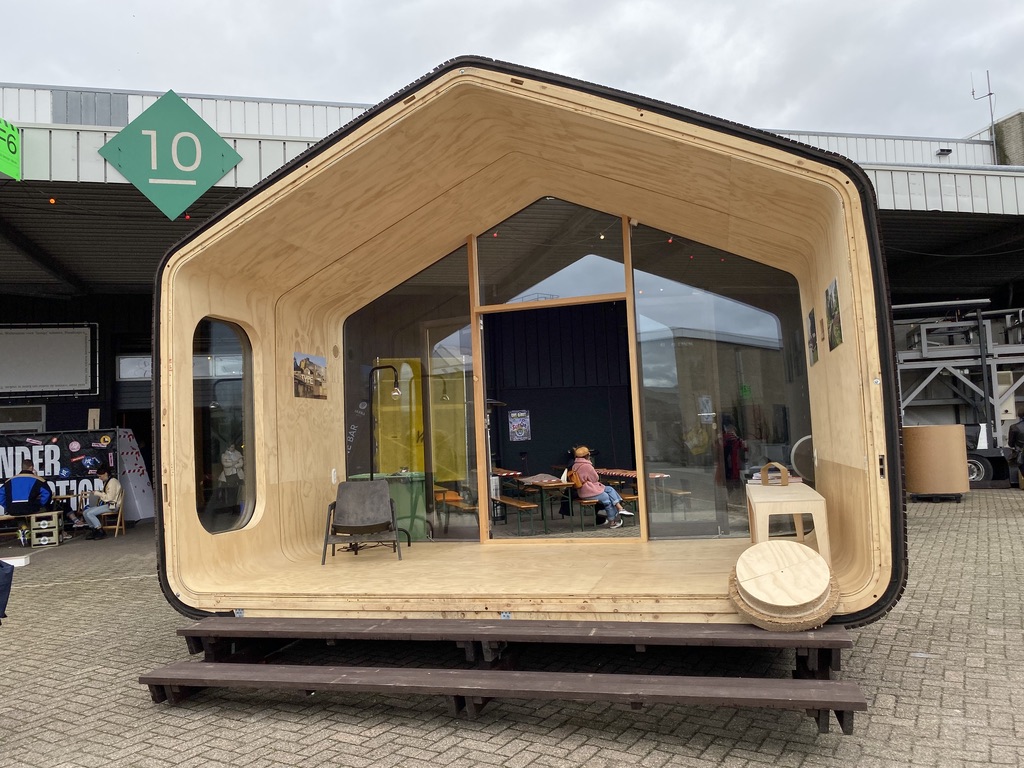
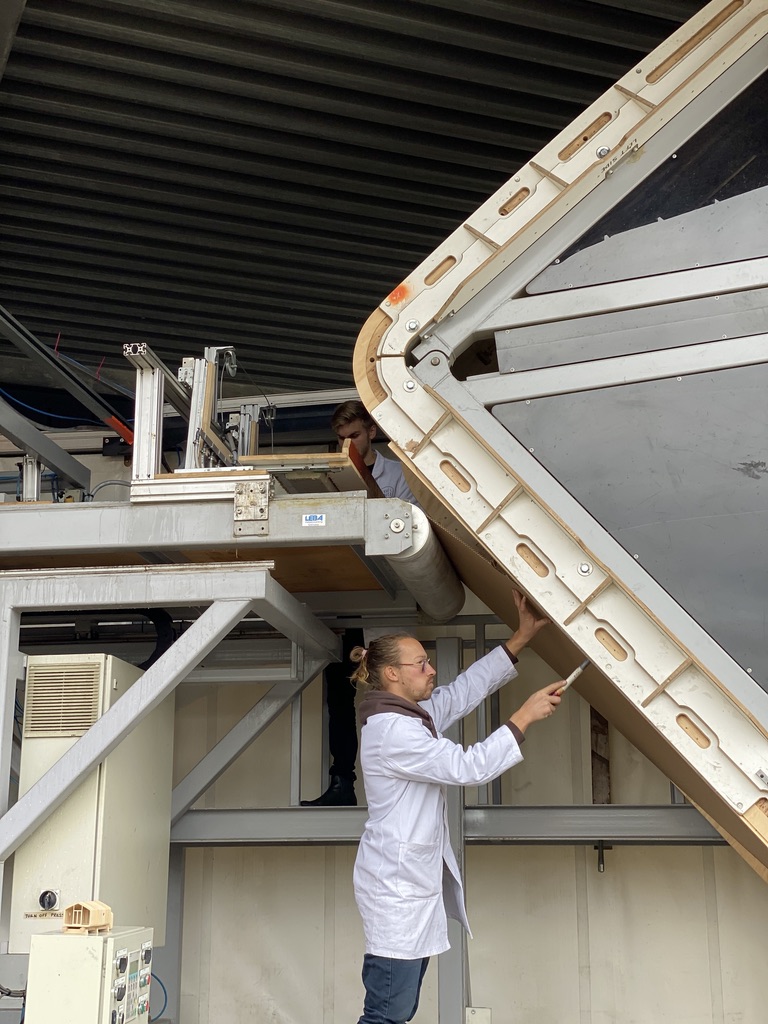
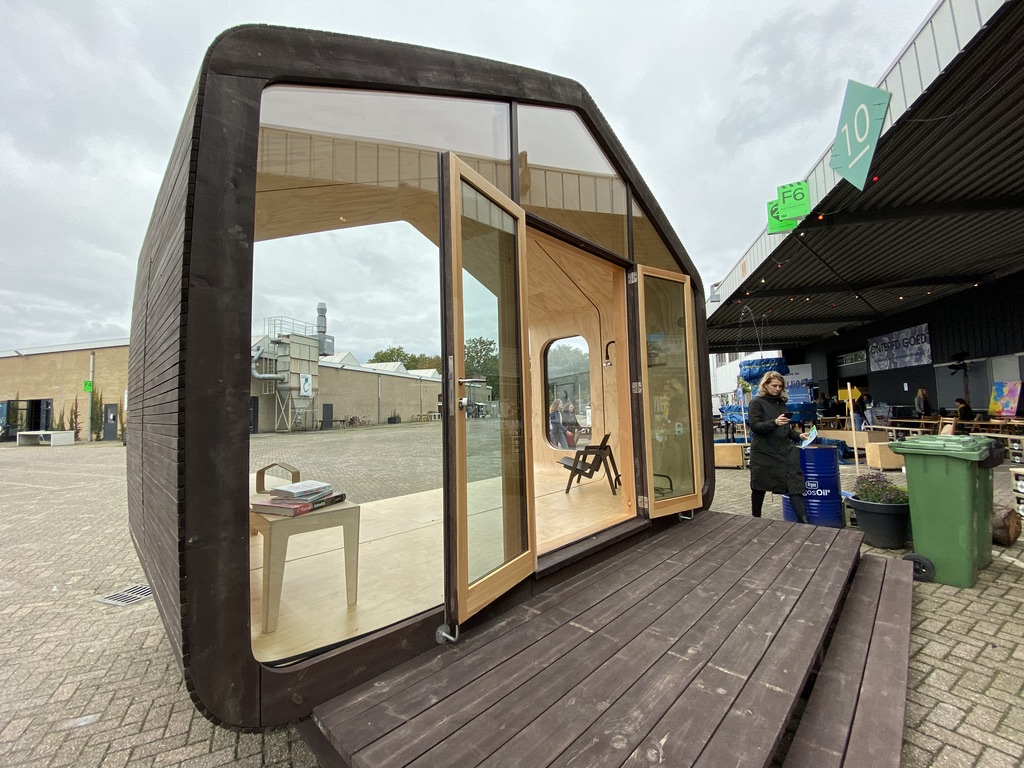
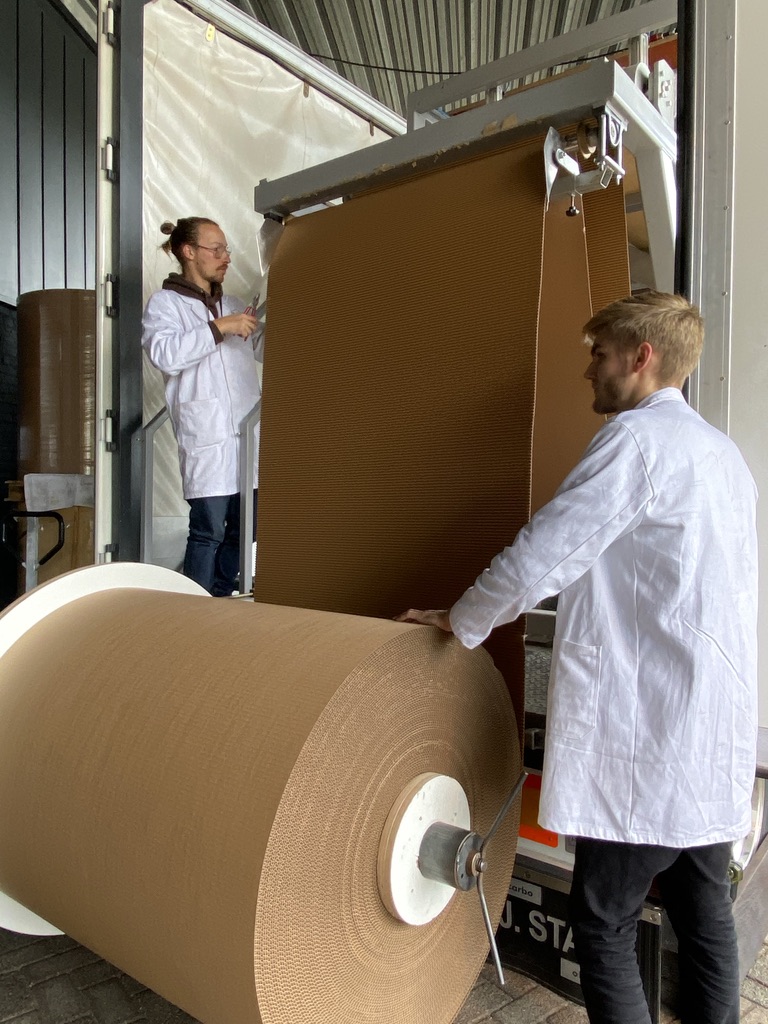
It’s a long story as to its origin and the making of the machine that actually fabricates the house, but it’s made of 12 layers of corrugated cardboard with a thin piece of wood separating each set of the six layers (for rigidity and also to enable the insertion of electrical tubes and other utility needs) and then covered with a plastic like (but definitely not plastic – they described it to us in English as “the raincoat”) and then another layer of wood. The units are modular and can be created using as few as two sections or as many as needed. We say one with five sections and one with just two.
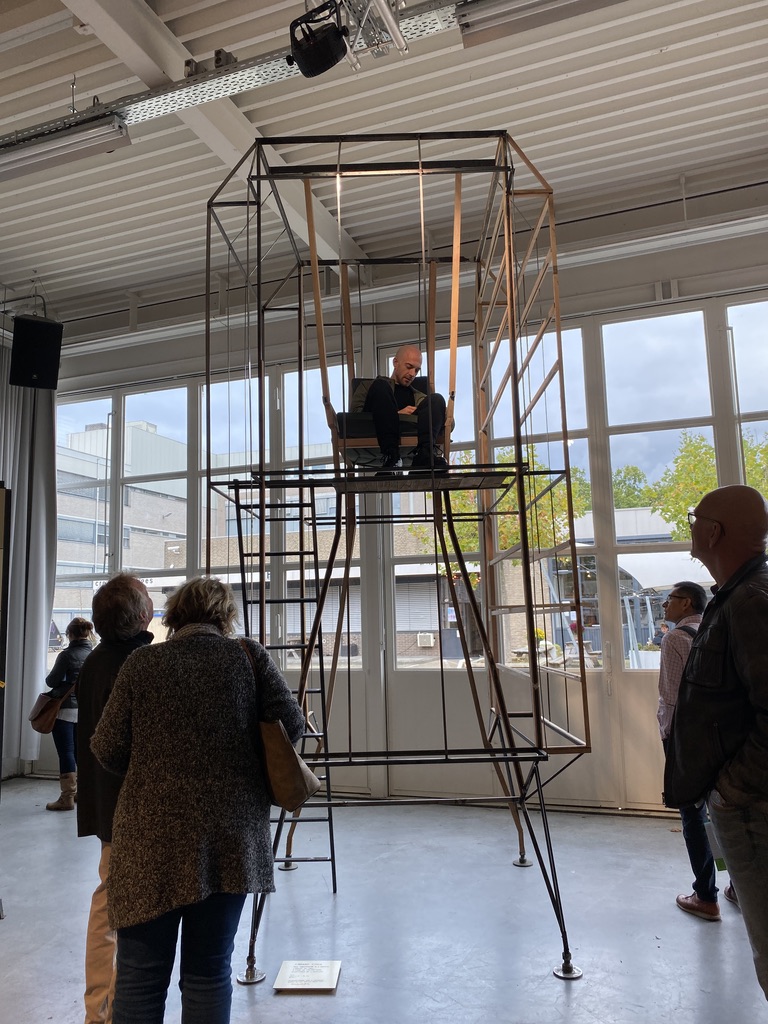
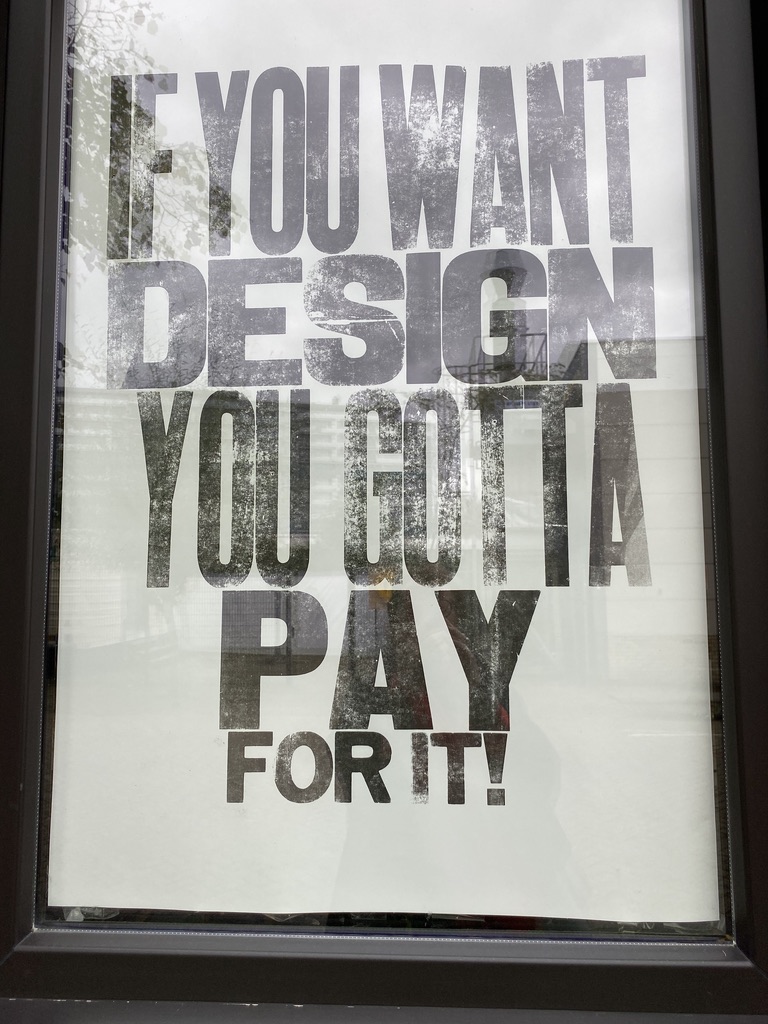
We strolled all of Section C and then stopped in one of the studios for a simple wine and cheese lunch. One thing about Design Week – there are eateries everywhere – each with different ethnic foods and everything looked and smelled fantastic. We opted for the wine and cheese because it was in one of the few indoor areas. Most of the others are outdoors and it was getting pretty cold and windy.
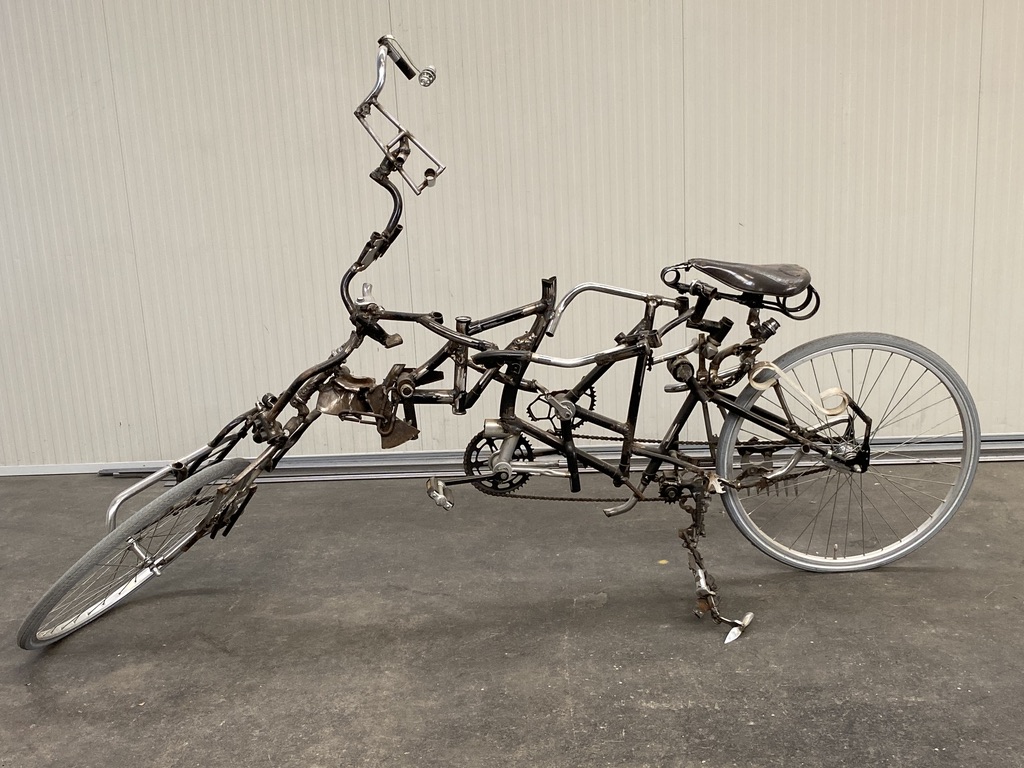
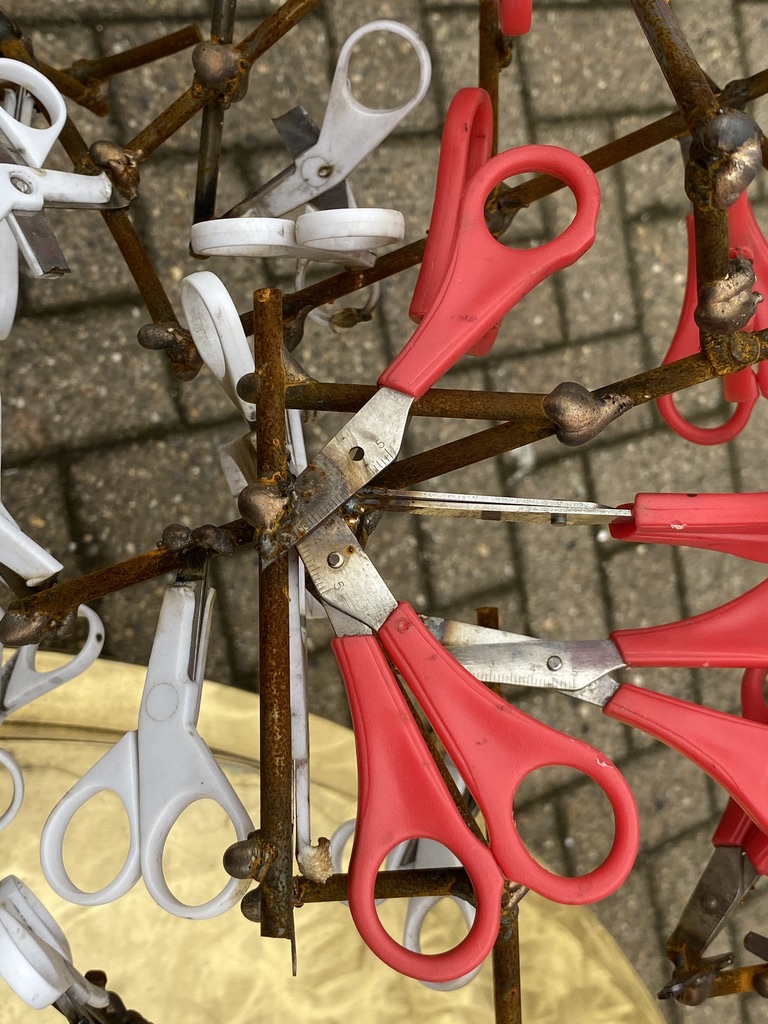

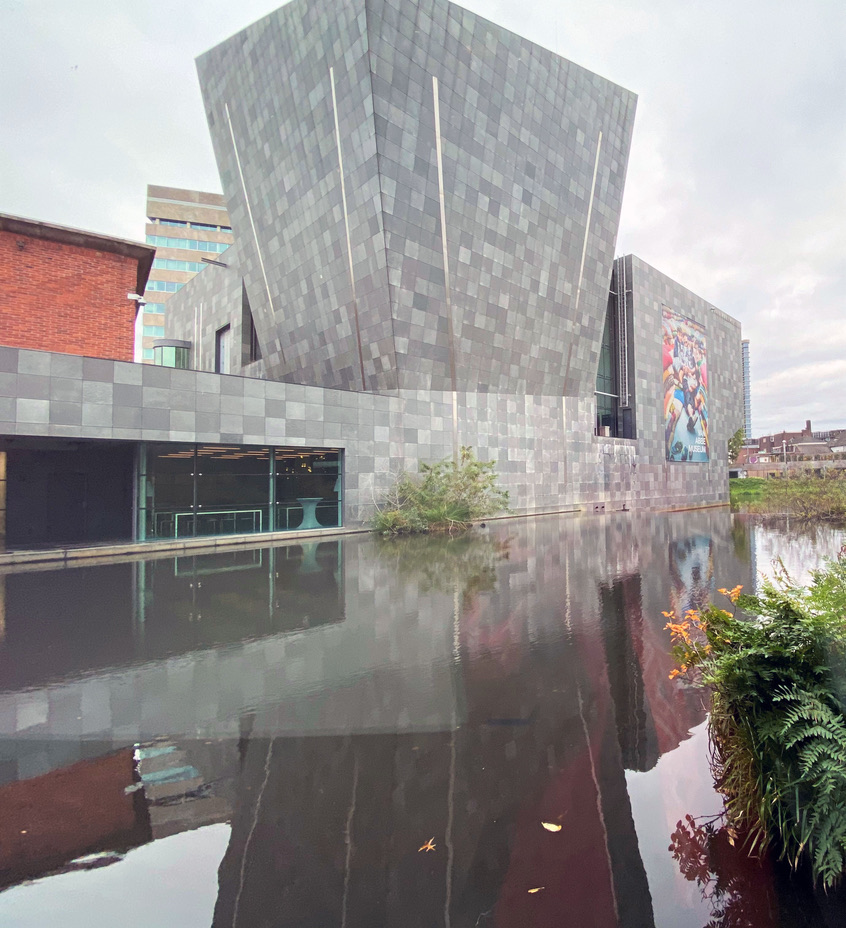
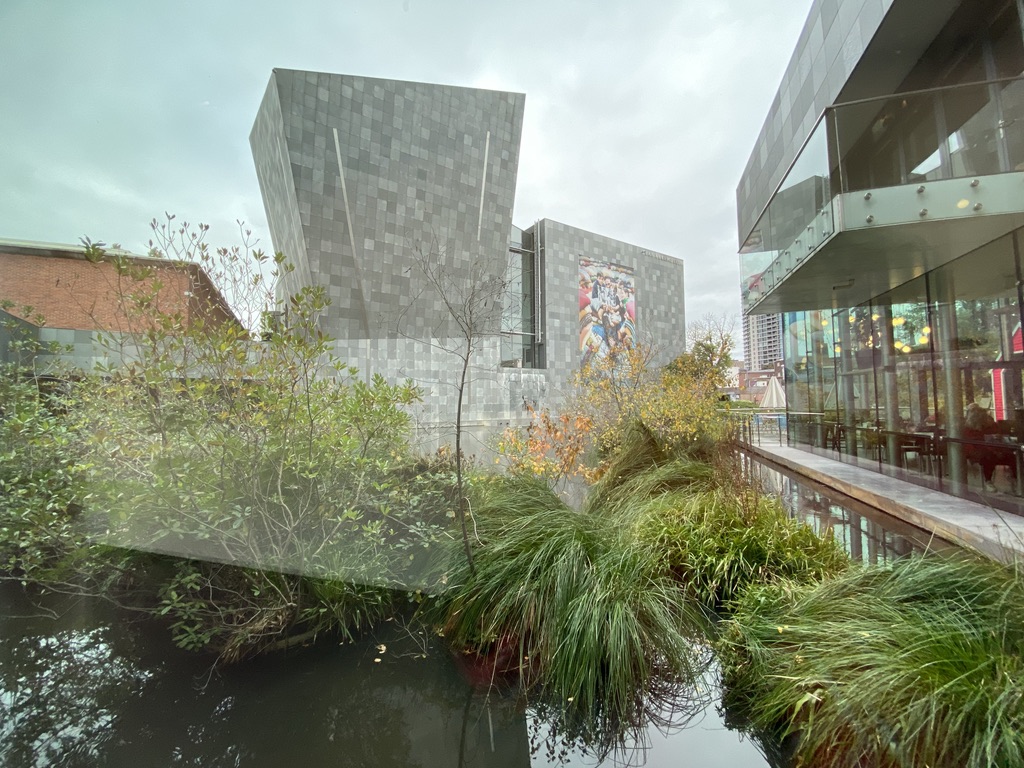
Then we drove to the Van Abbemuseum which –keeping with the theme – had devoted about 2/3 of the museum to artists working on sustainability issues from a more global position. Driving is fine because no one here drives very fast, but the big challenge is making sure not to hit any cyclists. Fortunately they seem to totally follow the rules, the lights, and stay on bike paths which are everywhere and soften the streets. Bike paths are wide, go in both directions, and have their own lights. Anyway, the museum is about 85 years old and was totally renovated about 15 years ago, including the construction of a new building that wraps around the old one from the rear and the side – creating a rather large complex. The museum sits on the River Dommel so it has an unusually natural setting, albeit within the heart of the city. I think they widened the river a bit and added some kind of “fish ladders” and created a bank along the river that abuts the museum. There’s a sort of “lake” feeling which is felt when you sit in the museum café (which can be reached by a little footbridge that brings you into the back side of the museum. The façade of the new building is covered with a natural stone that came from Lapland.
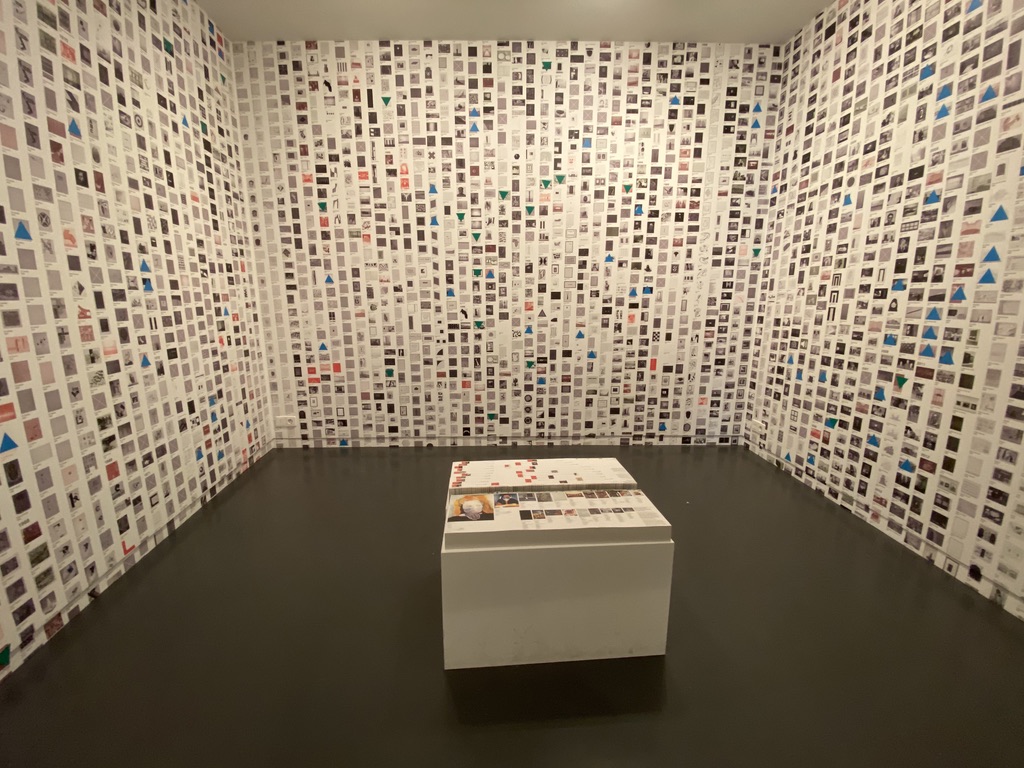
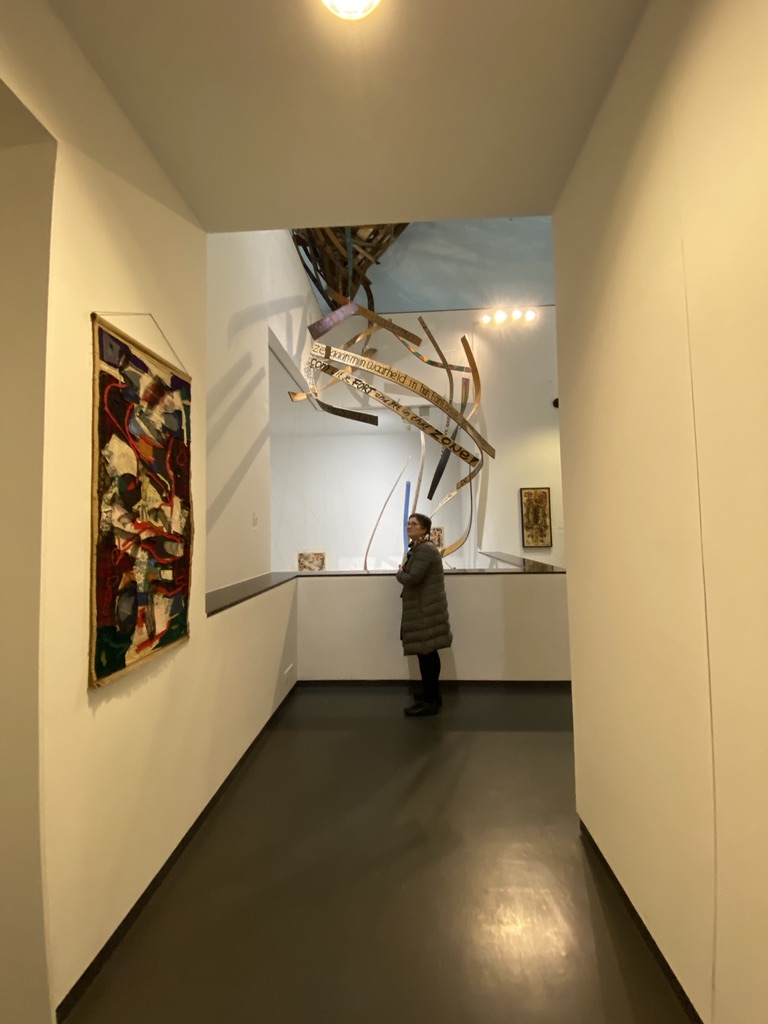
What’s been good is that these artists are really becoming storytellers, accumulating a great deal of research and finding ways to convey important messages and to explain complex information graphically and through unique projects. As many of you know, despite my training in the arts and my long association with arts schools, I hate museums and only go on rare occasions. But this was worth it, and beyond that it did seem like everyday people were attending these events and the museum – so my concerns about rarified art for investors were eliminated. There was virtually nothing here that anyone could purchase and own – except perhaps the growing concern and need to act on important issues.
By now it was close to 6:00 pm, so we headed to the hotel to think about dinner (eating, eating, eating), but along the way we spied what looked like a really cute store which had a lot of vests and scarfs made of felt. How lucky that we found a parking spot right there in front of the shop. As it turned out it was really this woman’s apartment (first floor) and she makes wonderful vests and scarves. She’s probably in the high 70s/early 80s and has lived and worked from this flat for decades. Her story was interesting, The building was constructed in the 1930s as rental units and stretches an entire block. She was trained as an architect and had her office there (I believe living behind the office). But the city (about 10 years ago) decided to tear down that whole housing block because it is very close to the Philips Eindhoven Stadium where soccer is played. I suppose they felt they could sell the property to a developer. Anyway, she led the fight to preserve the building and just last year (maybe two years ago) they won the fight and everyone remained in place in the building they had called home.

She was feisty and interesting, although we also learned she had a stroke just two weeks earlier and was a bit concerned about her health situation. She was flustered when she couldn’t remember how to use her Apple Square to accept our credit cards. Yes we made a purchase, and no she no longer considers herself an architect, but her clothing is very constructivist and architectural.
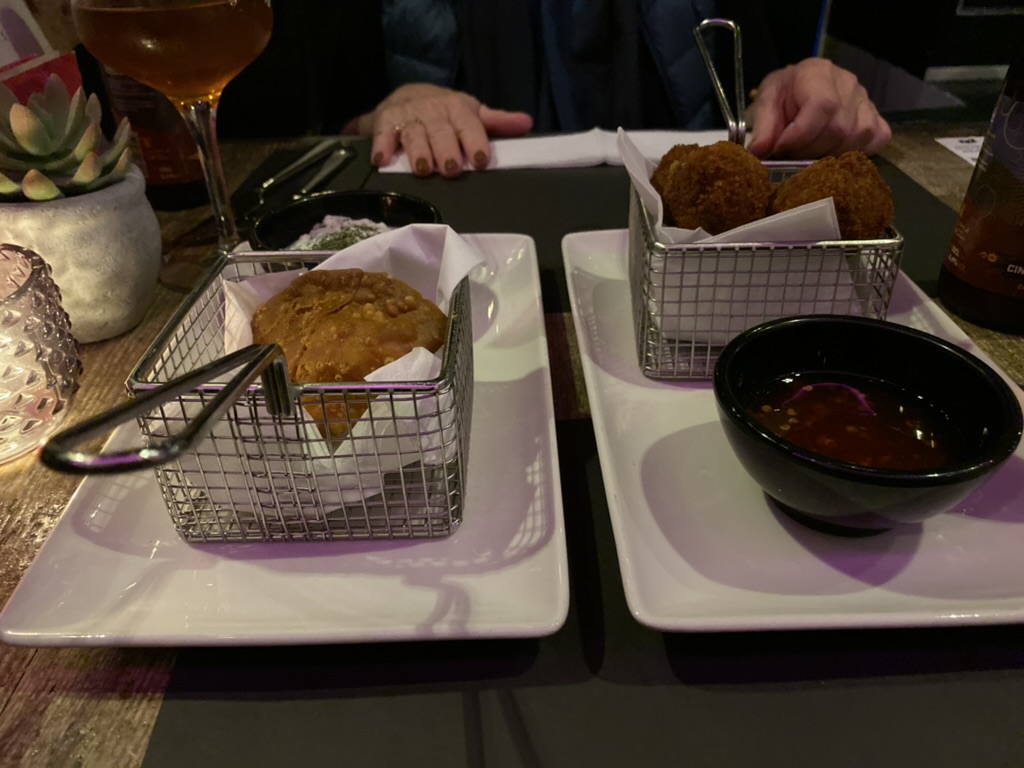
After a very brief stop at the hotel we headed out to a restaurant called Flavor and Spice (Indonesian with a touch of Afghani!). We took a taxi so as not to get totally lost in the neighborhood where the restaurant sat. It was adorable. Only seats about 30 people. A couple – probably about 50 years old – own it and she is the one who figures out the menu and cooks quite a bit. Her husband is the co-owner and he tends bar. He’s Dutch and she’s Afghani (having emigrated about 25 years ago with her family, but then lived in several other places including India). I think her father was an Afghani diplomat way back when.
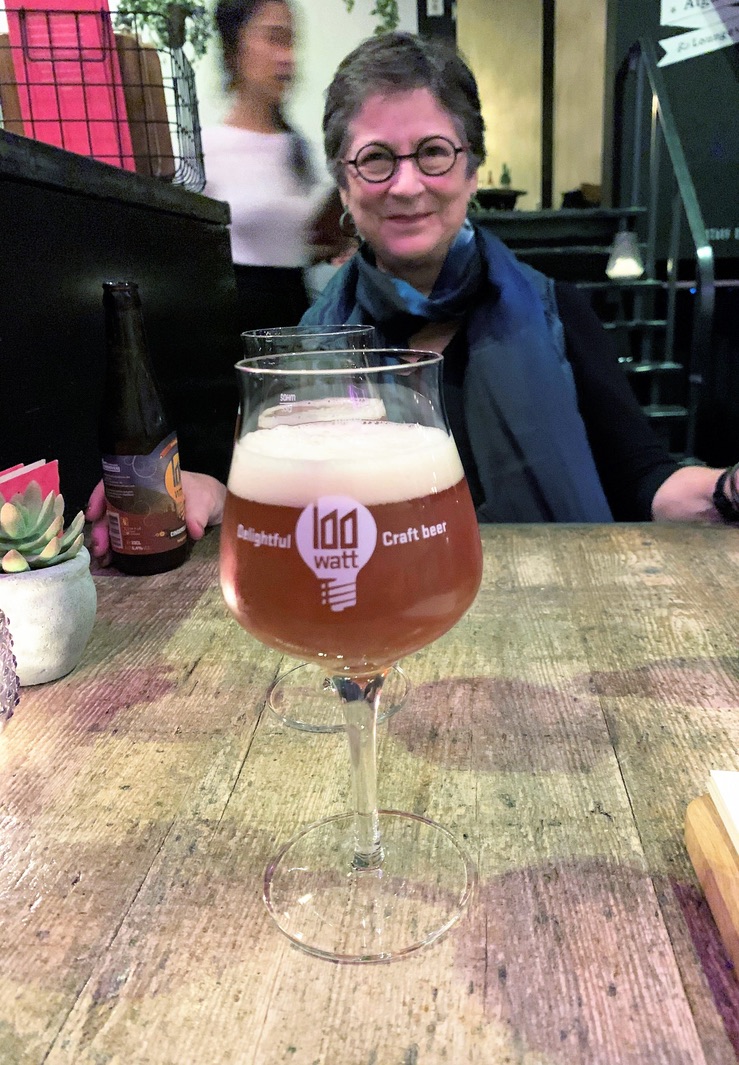
She’s a nutritionist by training and is very into maximizing food usage and eliminating waste. She purchases food daily at the market and figures out exactly what she needs even if it means running out of dishes. She professes to have hardly any waste – organic or otherwise. Food was great, including a really nice Dutch IPA.
That’s it for today.
Stay well.
I glanced at CNN tonight and was sorry I did! But you know I’m a news junky so…..
Best –
Fern
Groeten uit Eindhoven. 10/19/19
Greetings from Eindhoven (Netherlands) –
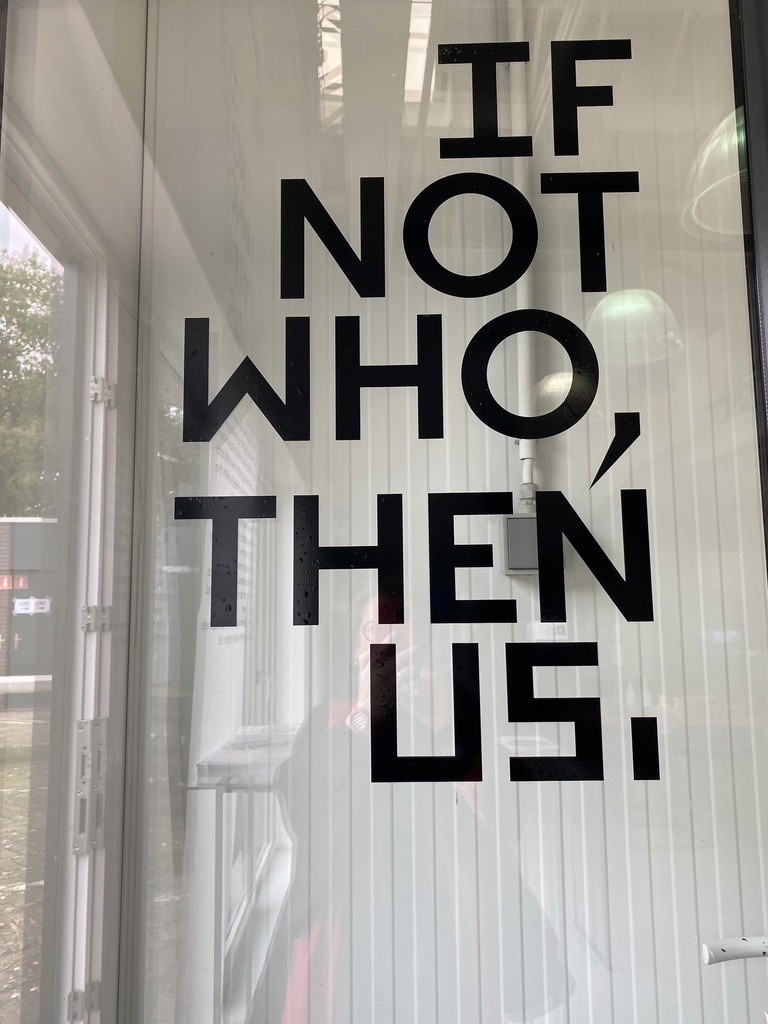
I’m in the Netherlands for about a week, with a good friend from LA. We’ve been trying to make an annual trip and we’ve been pretty good in recent years (Santa Fe, Marfa Texas, Montreal, and now Netherlands). We started out in Eindhoven where the Dutch Design Week Festival (one of the largest design weeks in Europe) is going strong. The theme is “If not now, then when?” – and includes literally hundreds of talks and more than two thousand exhibits ranging from major museum shows to visits to small studios. A lot of it seems very conceptual rather than concrete. But it’s a big event for this city of 230,000 people (fifth largest city in the Netherlands).
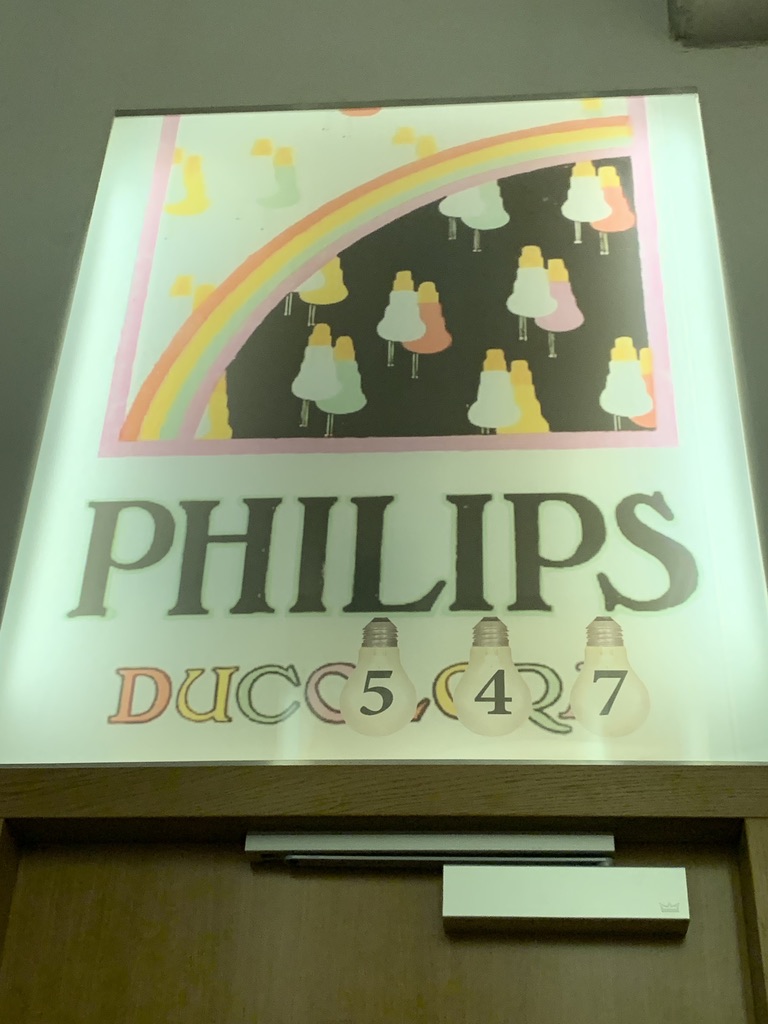
Eindhoven is home to Philips, the well-known Dutch company that started out as the manufacturer of light bulbs — and grew into one of the world’s largest electronics companies. A lot of Eindhoven’s growth can be traced to Philips. And as a result of the company’s presence, there are many high tech companies here and Eindhoven is a successful tech and industrial hub in Europe.
Arrived yesterday afternoon – met up with Carol at the Amsterdam Airport (my flight was about an hour late, so Carol explored the airport for two hours)! We then went to pick up our rental car to head directly to Eindhoven – it should be about a 90-minute drive, but somehow we got wrapped up in the loop road around the airport and went in circles, and then as we got close to the hotel we made a wrong turn and had to do a bit of back-tracking, so it took us close to three hours to get here. I drove and Carol navigated.
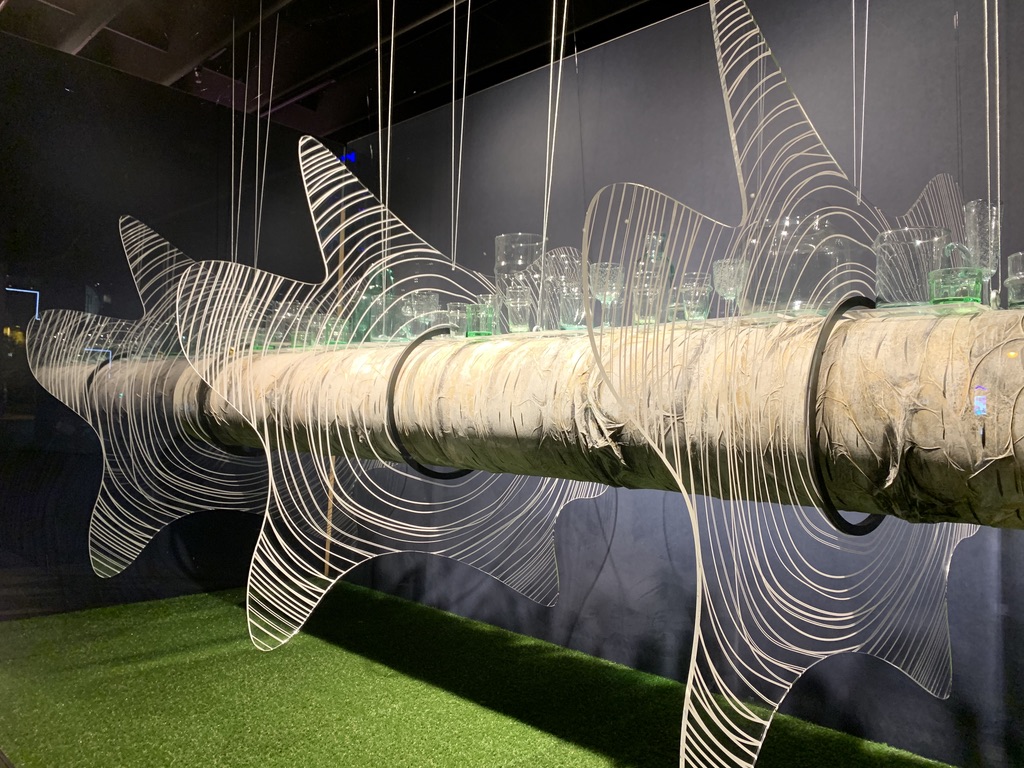
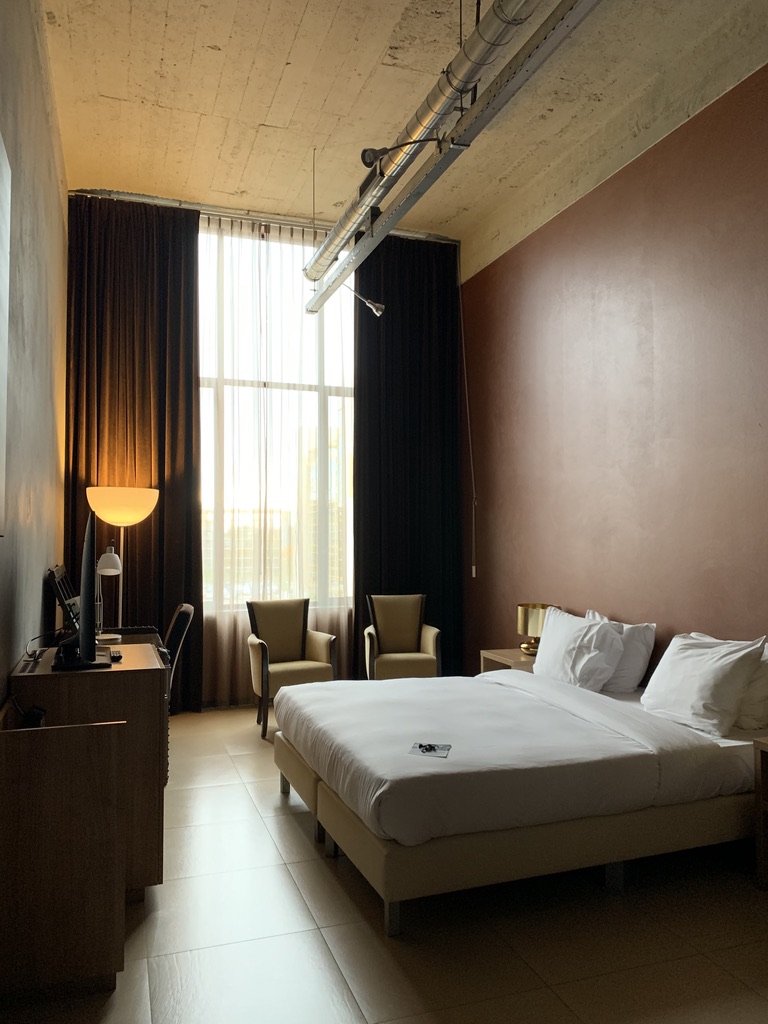
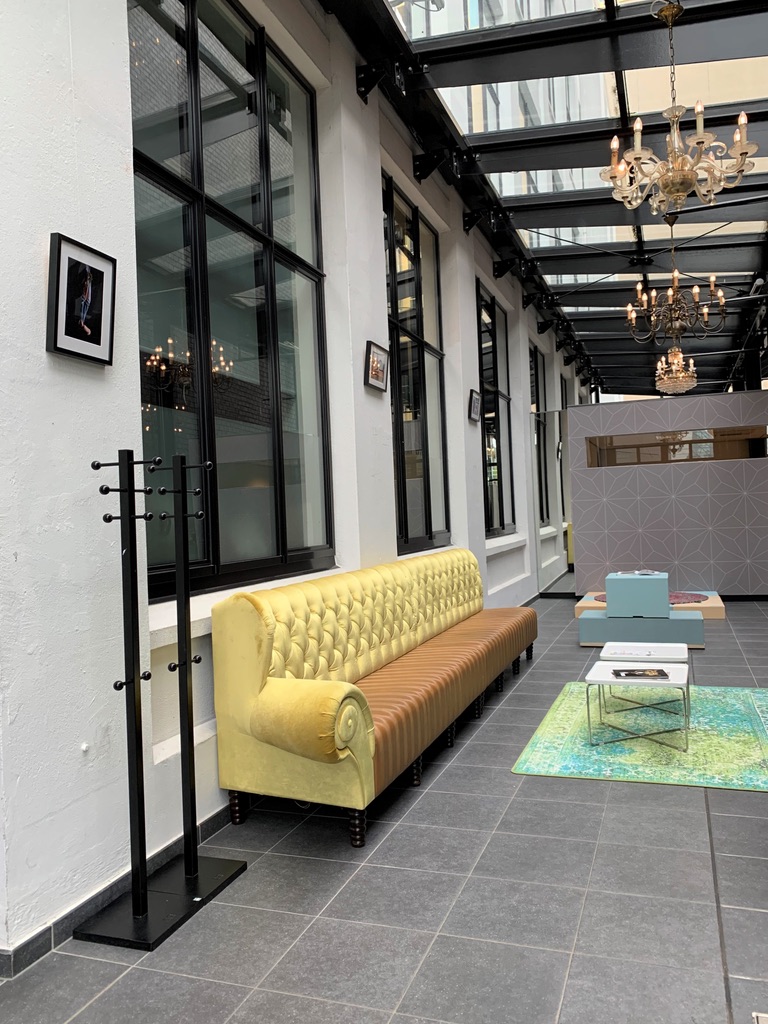
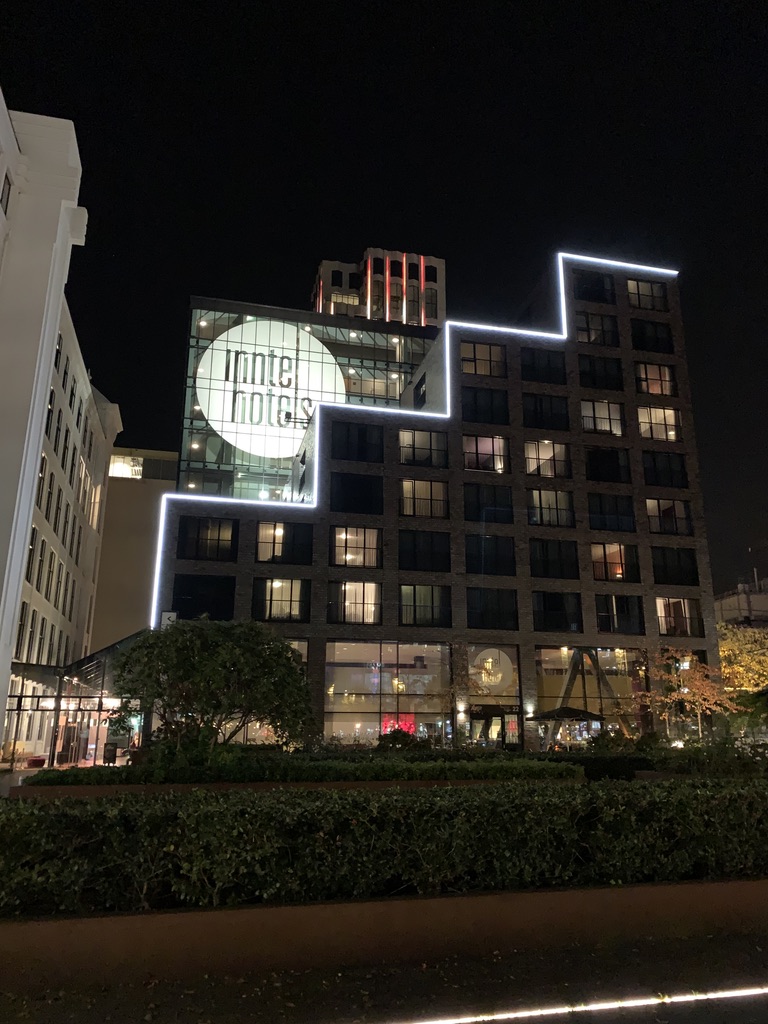
Our hotel, Innhotel Art Eindhoven, is actually the 1909 building that housed the Philips factory and is where the first light bulbs were made. The architects did an interesting job to retain the industrial character of the building, including having rooms with 15’ ceilings. The interior designer – on the other hand – must not have realized that Philips made light bulbs, since the rooms are really dark (dark walls and not too much lighting!)
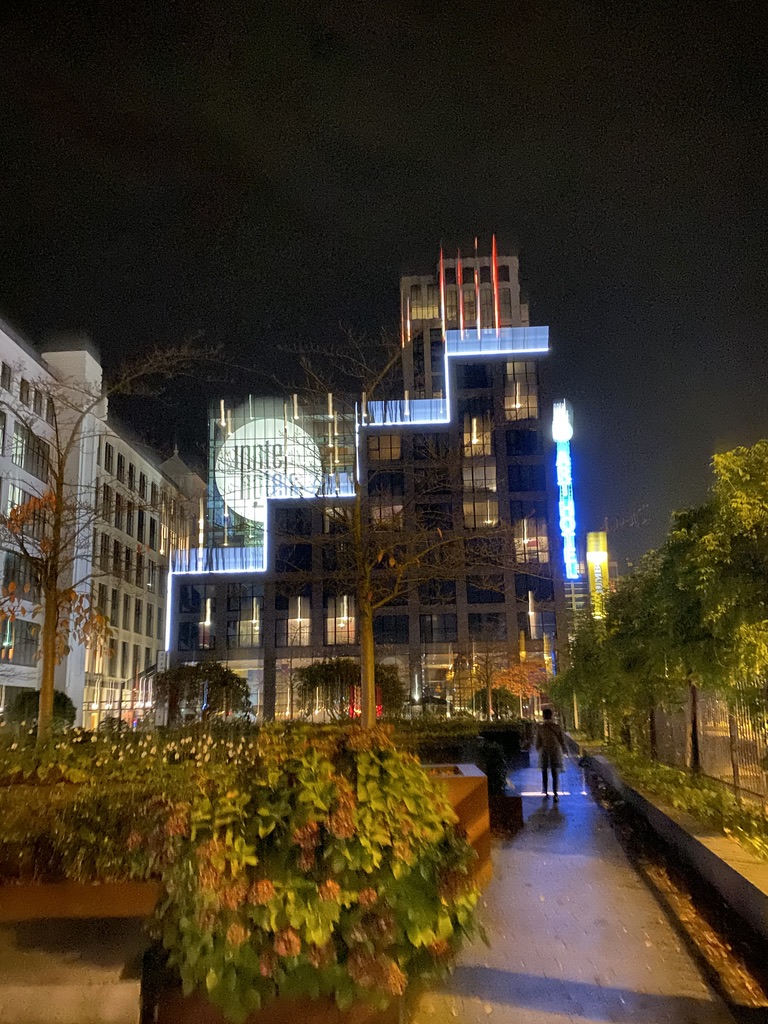
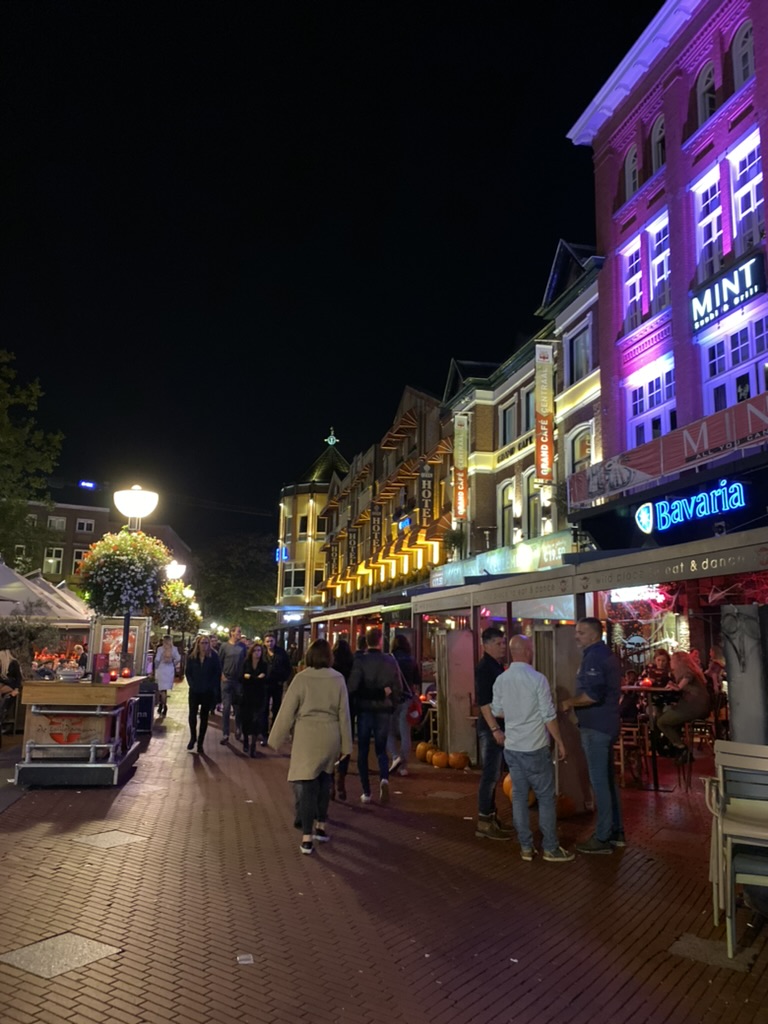
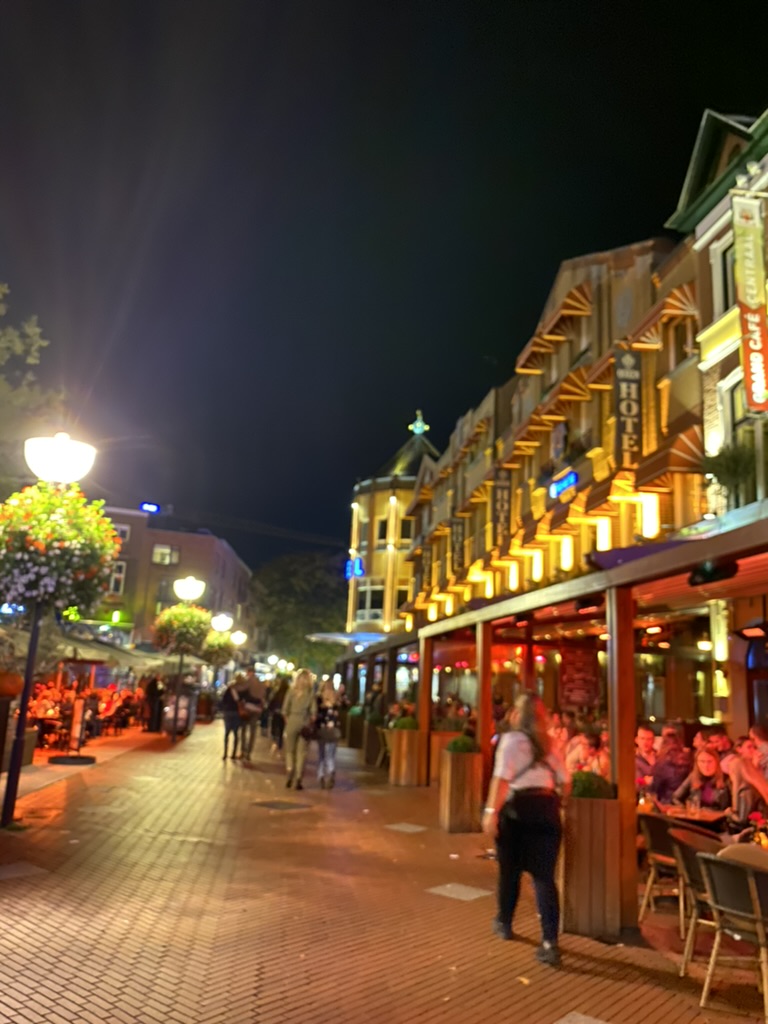
We freshened up and headed out to a very lively part of Eindhoven called Kleine Berg, which seems to be comprised of only walking streets, lots of twinkle lights above, more bars and restaurants than you can imagine and lots of little shops, outdoor eateries, and bookstores. We walked from the hotel (nearly everyone else is on bikes). We were among the last people to have dinner at Berlage – mostly shared plates from an eclectic menu. Food was good, wine great, and prices quite reasonable when compared to the Bay Area or NY. We strolled back to the hotel arriving in our rooms around midnight. I actually worked for a few hours and probably hit the bed around 4:00 am. But after a good night’s sleep (5 hours) woke up ready to hit the ground.
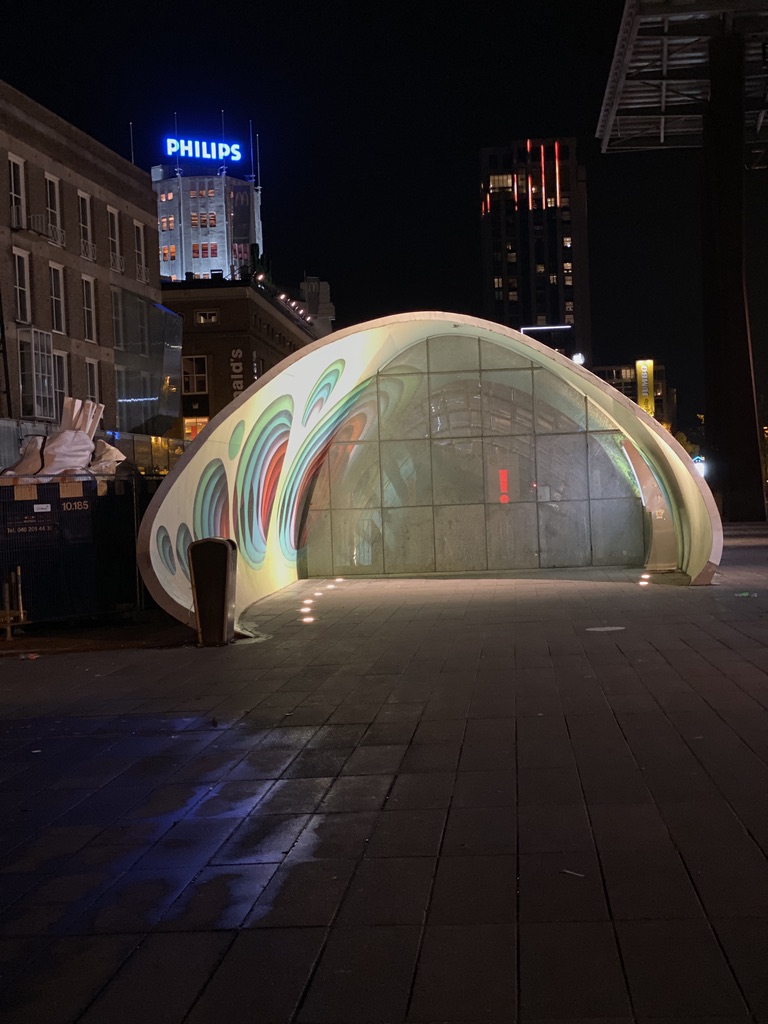
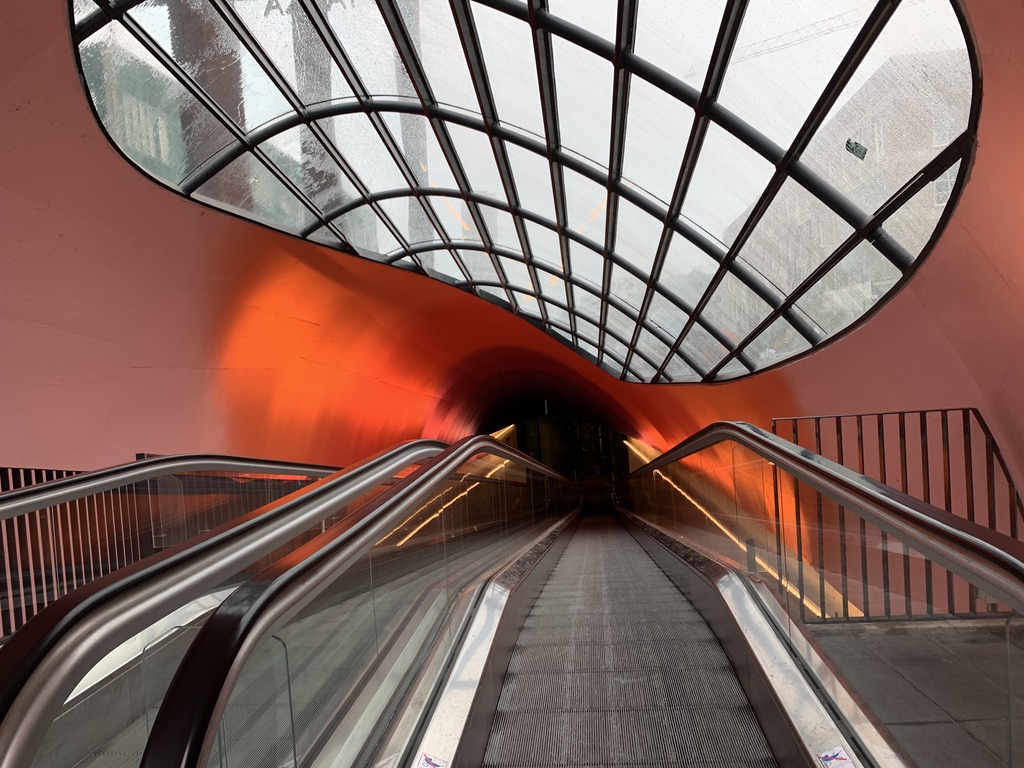
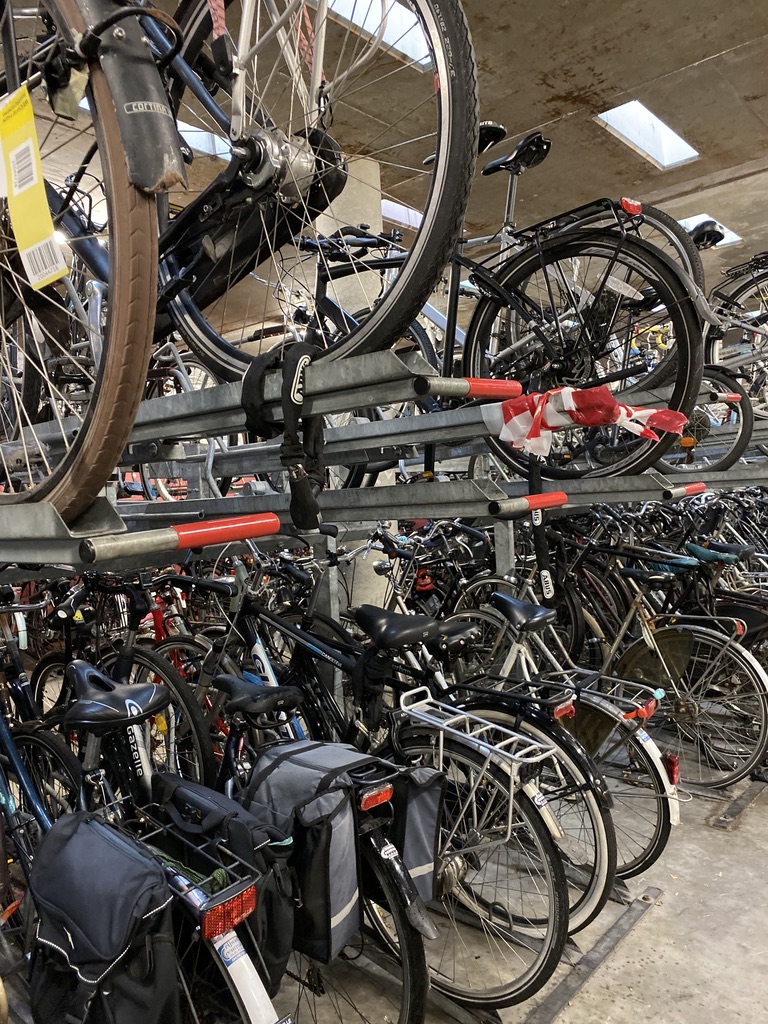
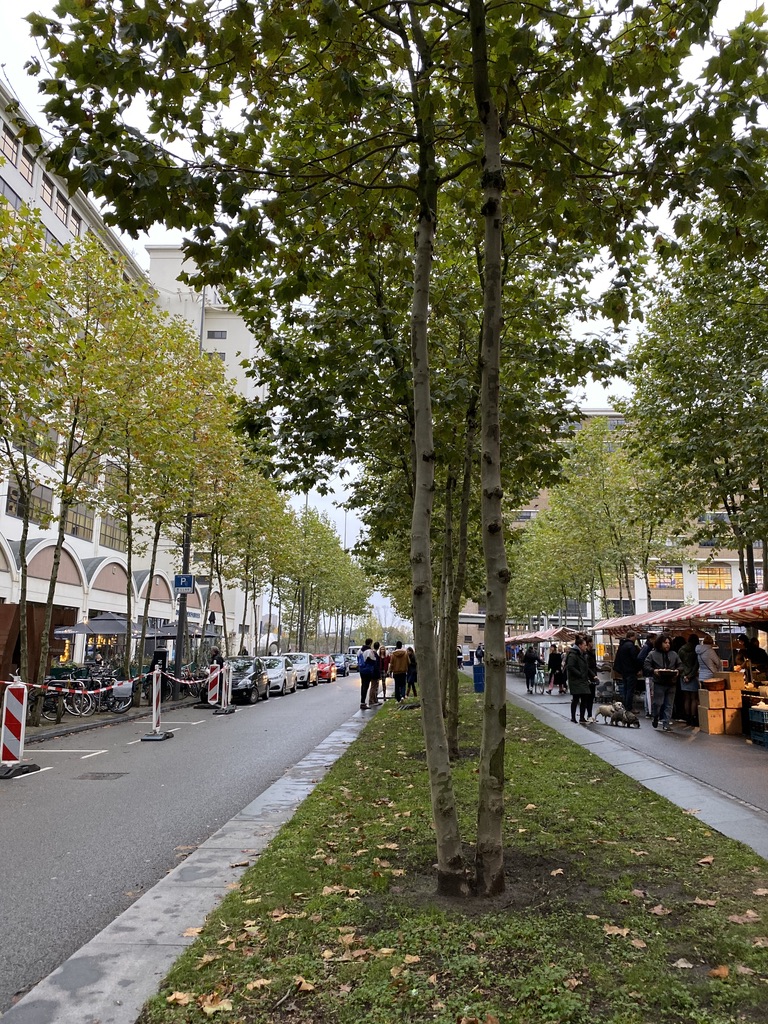
We set out at about 10:30 and in spite of the rain, we decided to walk to get our passes for the Design Week events and exhibits. En route, we stopped to take an escalator (sort of a moving ramp) inside an amoeba shaped structure to what we thought might be some kind of tram system — Turned out it is a huge bike storage area where people park their bikes to go to work or shopping.
Interesting note about Philips (whose name is everywhere here in town) – the family had prepared for the German invasion, so when the family and the Philips directors learned that the German invasion was to take place the following day, key family and company leaders fled to the United States, taking a large amount of the company’s wealth with them. Somehow, they managed to run the company from the US. throughout the war. Operating from the US as the North American Philips Company, they managed to run the company throughout the war. At the same time, the company was moved (on paper) to the Antilles, to keep it out of German hands.
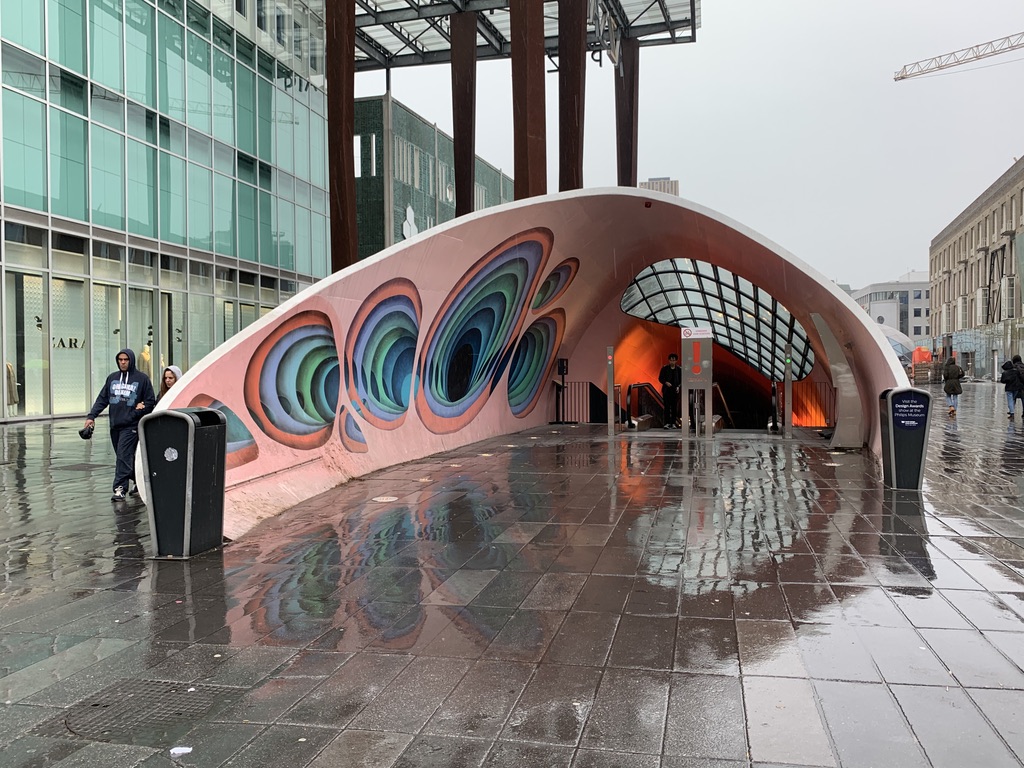
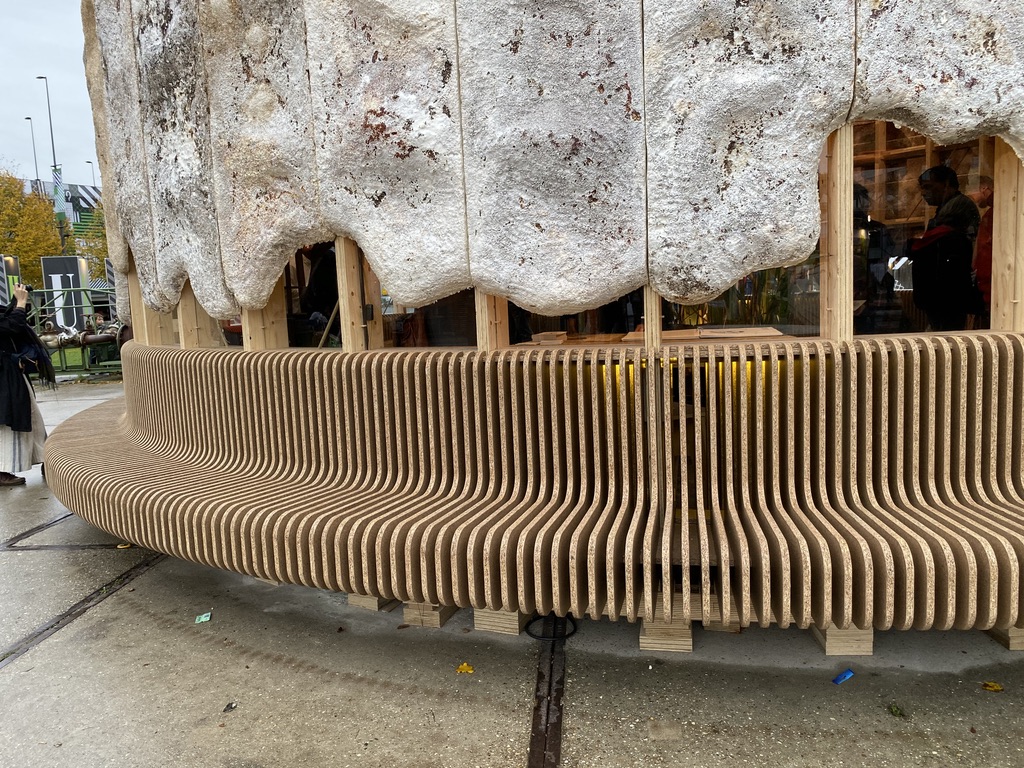
It was supposed to take about 20 minutes to walk to one of the registration areas for the Design Week events, but we managed to misread the beginning of our journey on the map, and wound up in a very different part of the city – interesting with lots of Muslim markets and small shops. Eventually we realized something was really wrong so we hopped in a taxi (mostly women taxi drivers) and got set in the right direction. We were actually headed to the Feel Good Market, en route to the Design Week registration. It’s a once-a-month Sunday market where craftspeople sell their wares – it stretches for about 10 blocks. So, we got our registration bands and also walked the market, and went to see many exhibits. There are more than 2,600 exhibits spread out all of the city, in five clusters. The city has done an amazing job setting this event up (its been going on for about 20 years) with over 100 venues operating simultaneously. The theme is clearly sustainability and there is a great effort to make the event carbon neutral – minimal plastic (if any), bikes, electric cars, public transit, no bags for any purchases, all structures made of wood, etc.
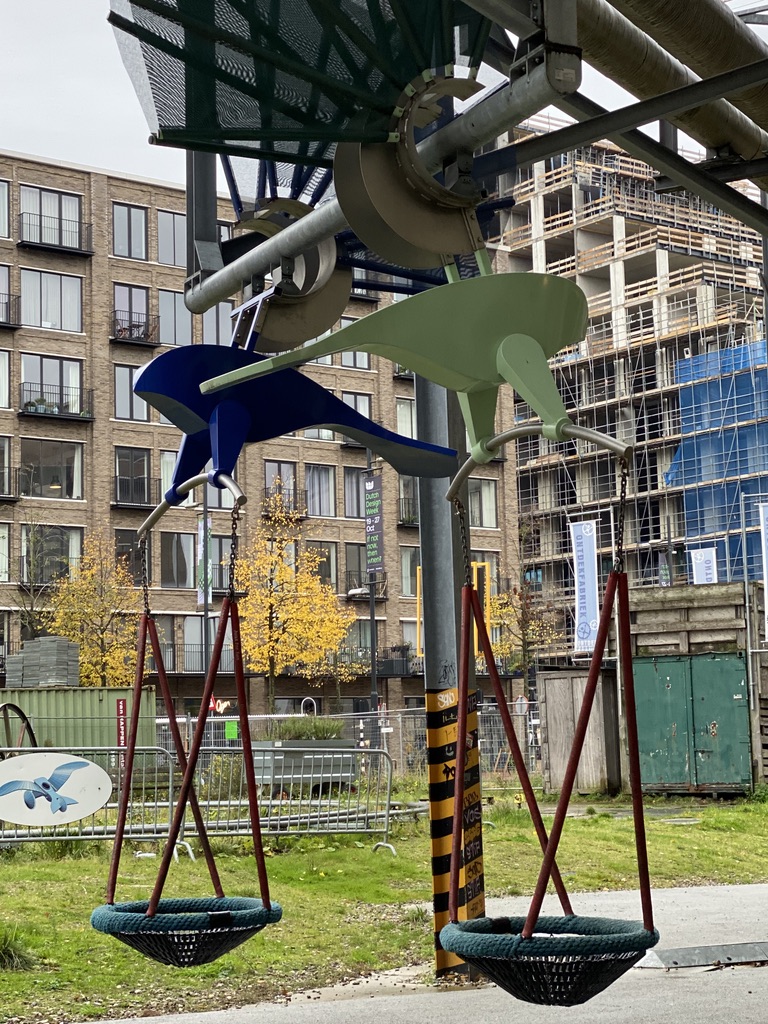
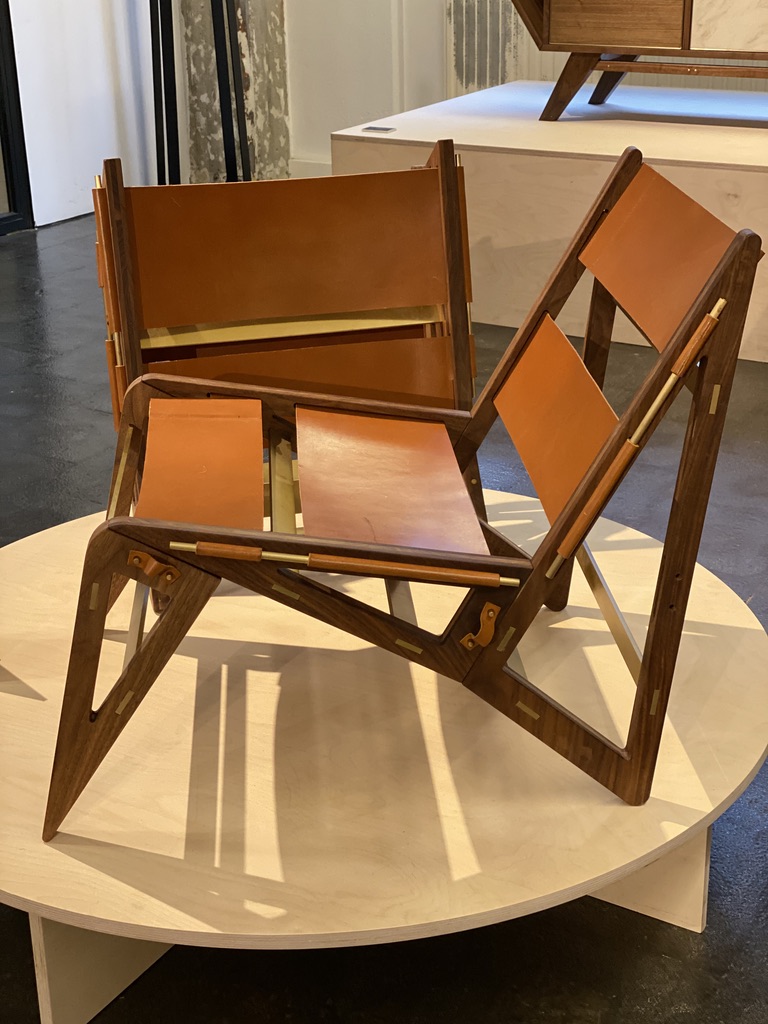
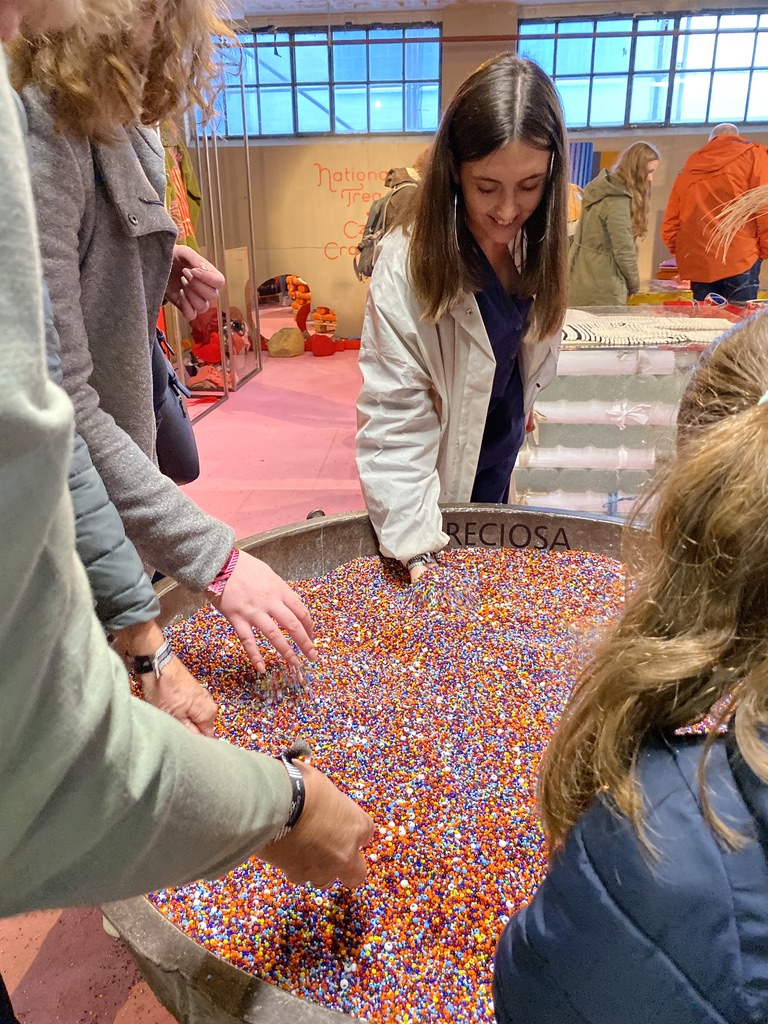
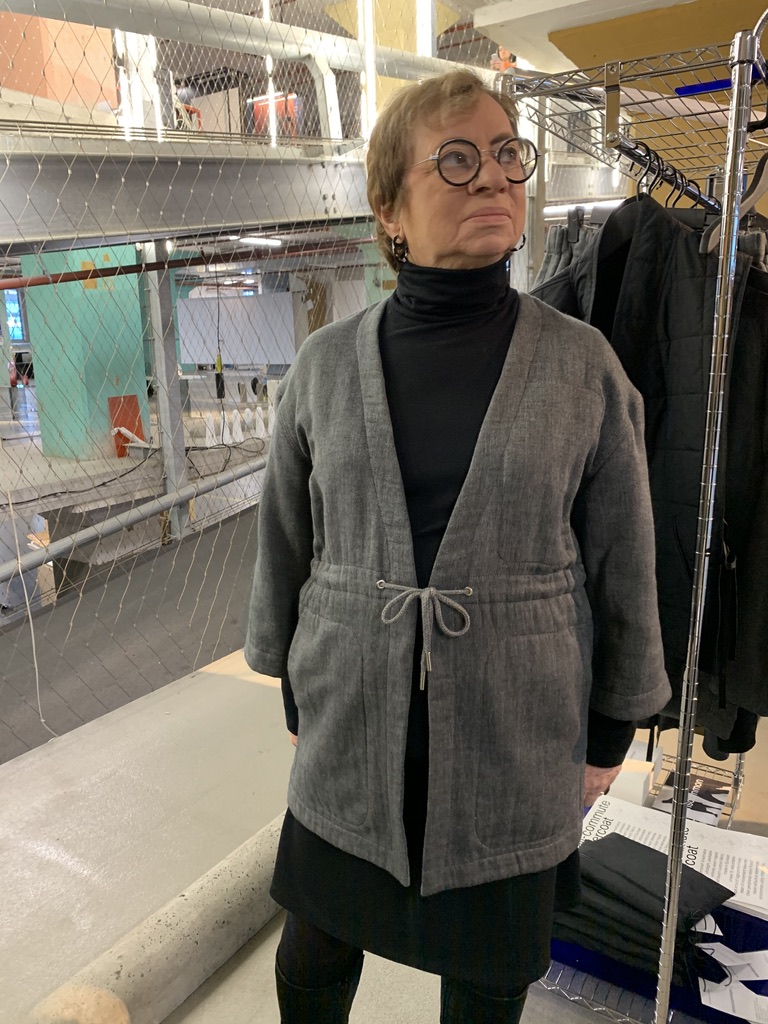
Many of the exhibits focused on interesting roles related to large companies, showing that it’s more than the development of sustainable products and about a process that might require entirely new business models. The exhibits showed the importance of clients (big companies, for the most part) understanding they have a stake in embracing sustainability and that, they can and should make informed choices.
The whole week seems to be a draw for experts and community people to discuss practices and challenges and to develop a network of changemakers who see options for alternatives that meet current and future needs – and the bringing together of issues like health, safety, mobility, sustainable product development, architecture, technology, as well as core urgent issues related to water, climate change, and food. One key issue seemed to be promoting the use of wood in building design and moving away from the Dutch reliance on brick, steel, concrete.
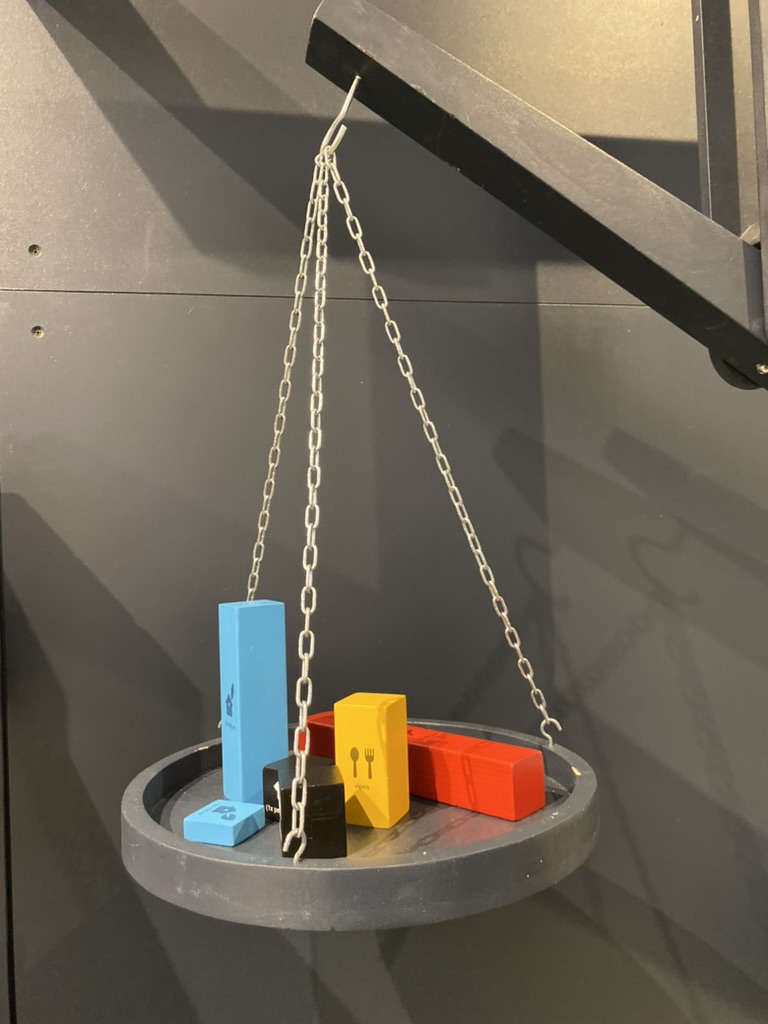
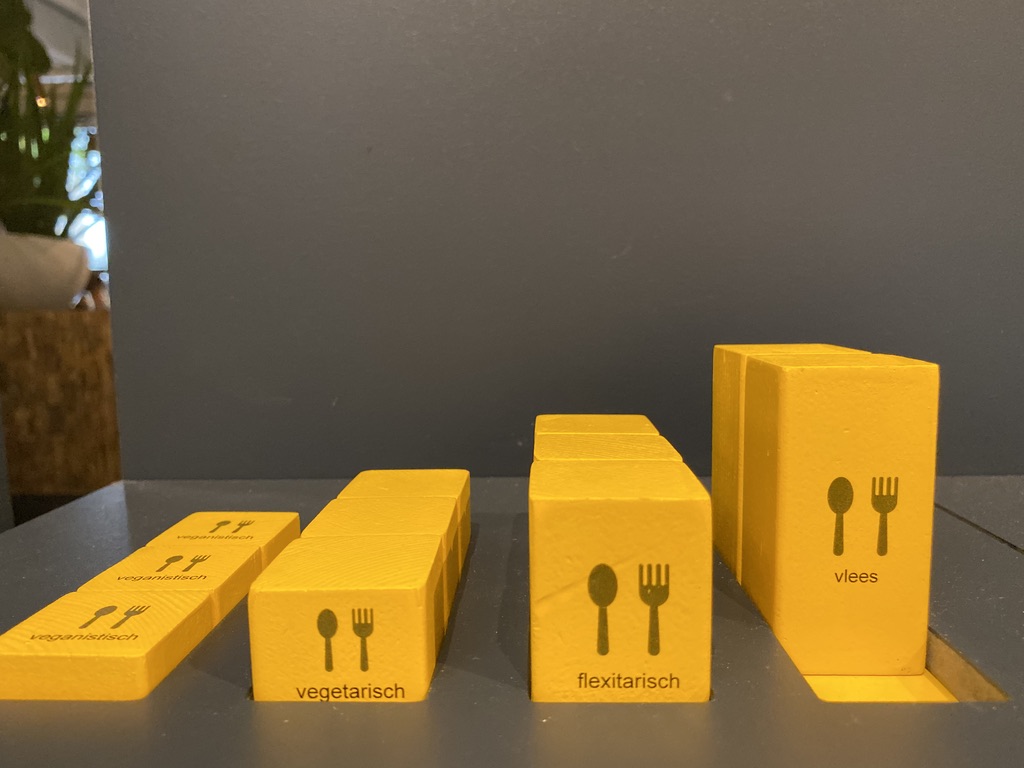

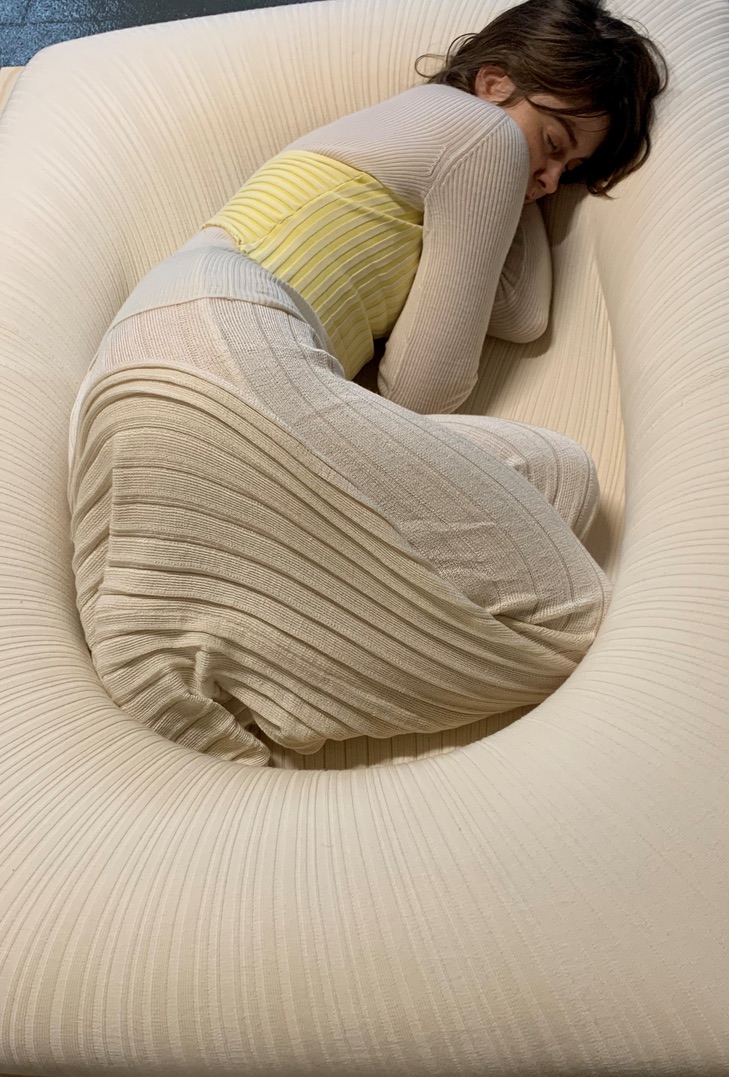
One very interesting young woman with whom I spoke – a recent graduate student at the University of Rotterdam – had developed a very fascinating and very graphic way to have participants understand just how much “energy” they consumed through a clever and visual set of three-dimensional blocks of various sizes and weights – self defining how many times they did laundry, how frequently they purchased electronic gadgets, how frequently they flew, etc. You put these “blocks” on a special scale with a counterweight for the maximum amount per person… and see if you topple the scales. It confirmed that my large amount of airline miles was really a bad thing, but not having children balanced that off!


After several hours, we stroll back to the hotel in the rain, with just enough time to freshen up and head to a restaurant that came highly recommended — Zarzo. Will report on that tomorrow.
All the best –
Fern
 Fern's Travel Notes