Day One — very extended — in Sydney. July 16/17 2015.
Didn’t finish this last night (Friday night) so I’m wrapping up today’s (yesterday’s) report now and sending
Hi “Mates”-
It’s now close to 10 pm in Sydney, Australia on Friday night; It’s about 5 am I believe — in California.
So as I approach my 47th hour.. beginning on Wednesday morning at about 6 am when I awoke in Oakland until now — I’m truly beginning to fade. But I’m going to hang in as long as I can to draft this memo, although I might finish it tomorrow morning. Since I’m now beginning to fade – big time.!
For those who are not aware that I’m even gone —
I’m speaking at a conference called “Engagement Australia” which is focused on the role of universities in engaging with their communities. I’m giving a quasi-research paper, running a roundtable, and participating in the closing panel discussion. Conference starts on Monday (my presentations are not quite finished yet) and goes through Wednesday. I leave on Thursday afternoon in one of those not-to be-believed flights that lands in SF before it takes off from Sydney. I’ll be in the office on Thursday, as I arrive at about 8 am.
I left on Wednesday night (July 15) at about 11 pm after a long and complicated day of work in California. Arrived in Sydney at 6:30 am on Friday. Thursday just evaporated in a poof! Naturally, my hotel couldn’t check me in as check in is at 2 pm… so I had a second breakfast (already had one on the plane) and sat in the lobby for about three hours and then my room was ready. I would have taken a walk but it was pouring and quite cold. Sydney is getting more rain than usual (maybe it’s our west coast rain that they are getting) and it’s colder than usual. I’m not completely prepared for the cold.. but I’m faring ok.
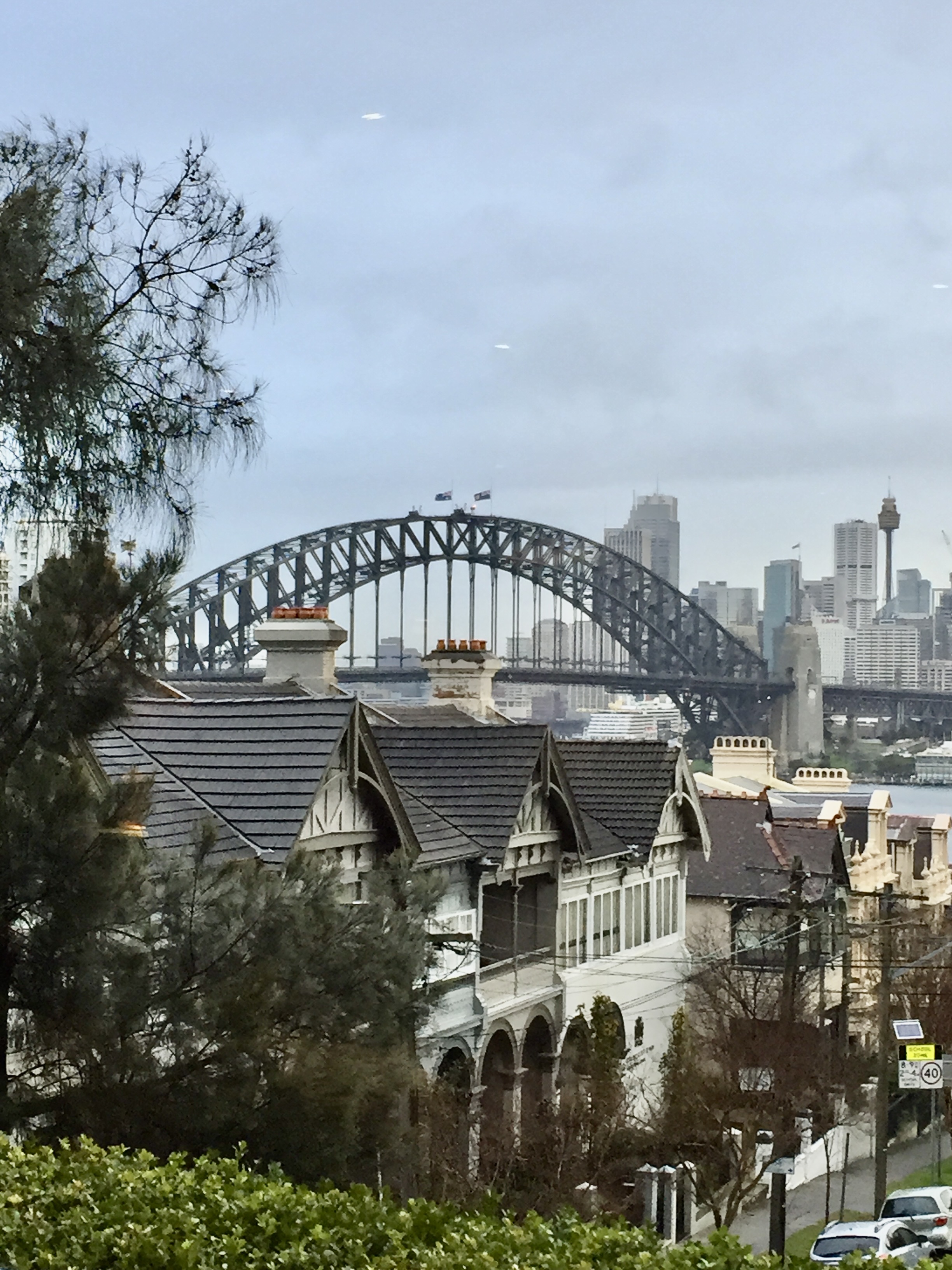
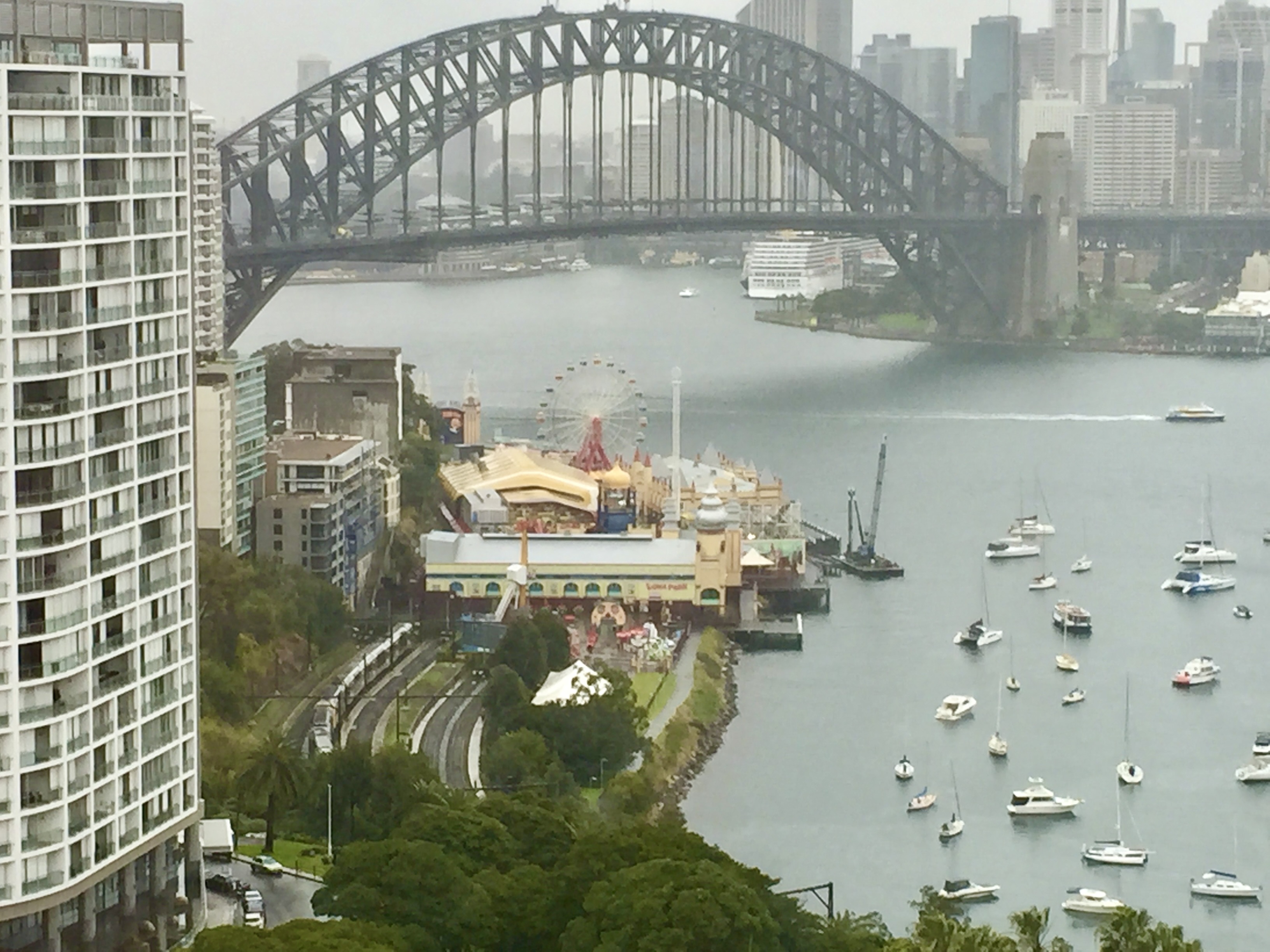
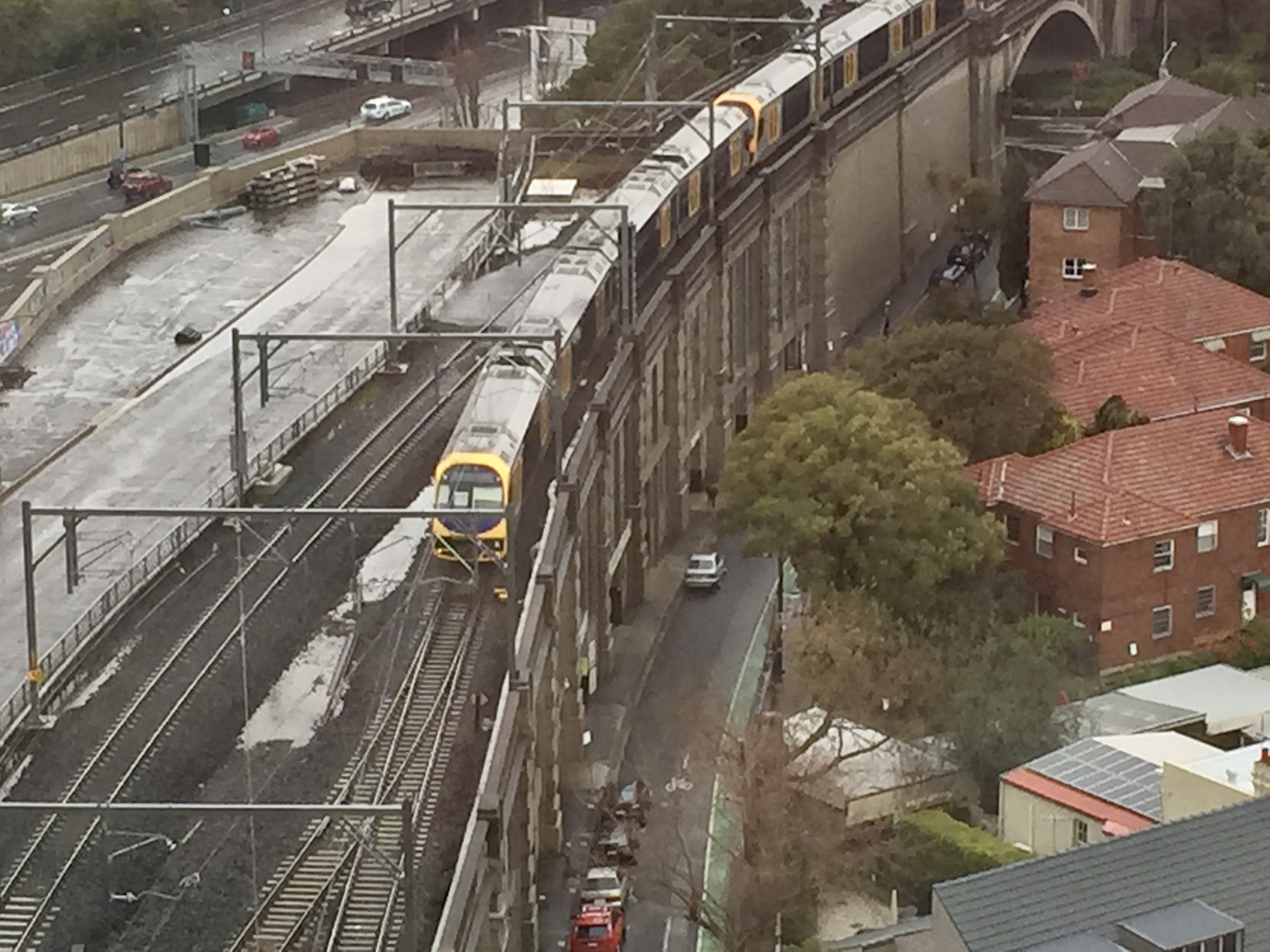
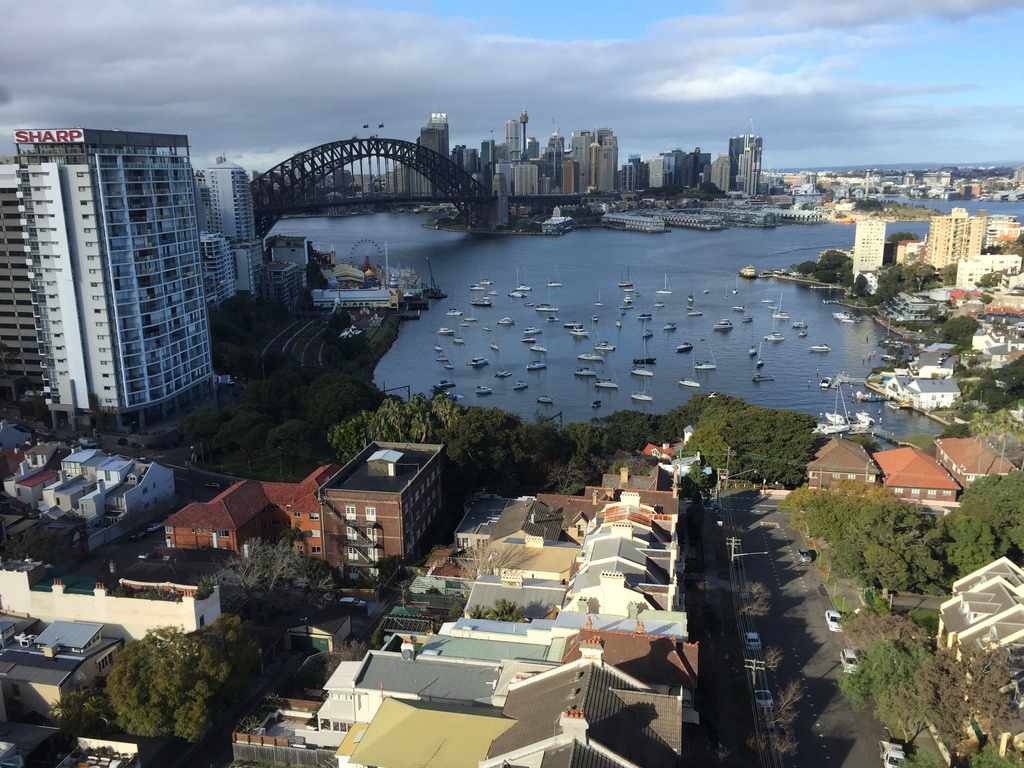
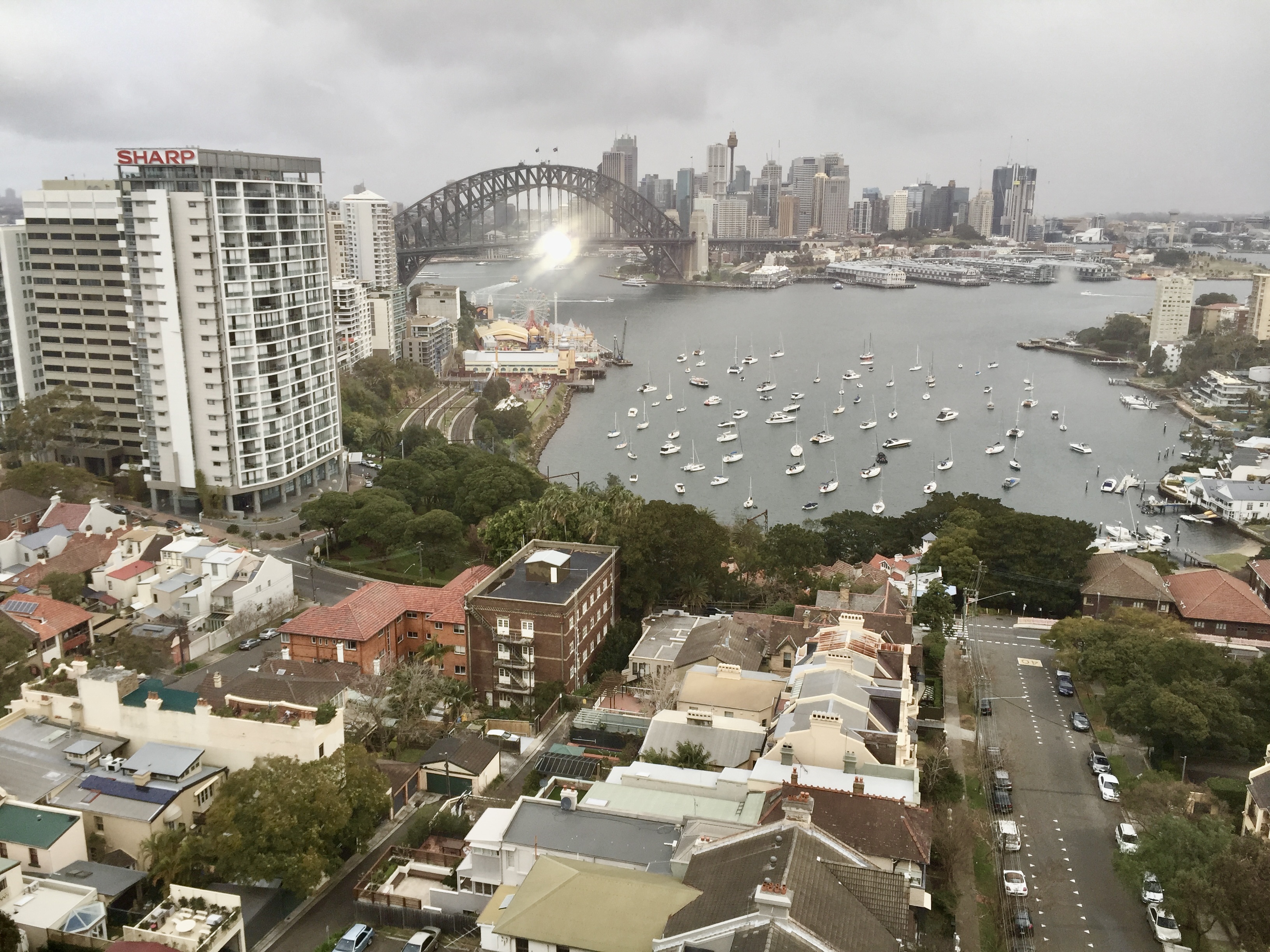
Got my room on the top floor with great views of the harbour and city.. the train actually goes under my hotel and the hotel is built up above the street. Cool.. From my window I can see the train zipping through. Can’t hear a thing and building doesn’t shake (unlike some NYC buildings where you can feel the subway. Showered; changed out of the clothes I had been wearing for about 35 hours and was determined to stay up all day so that I didn’t suffer from jet lag. So off I went.
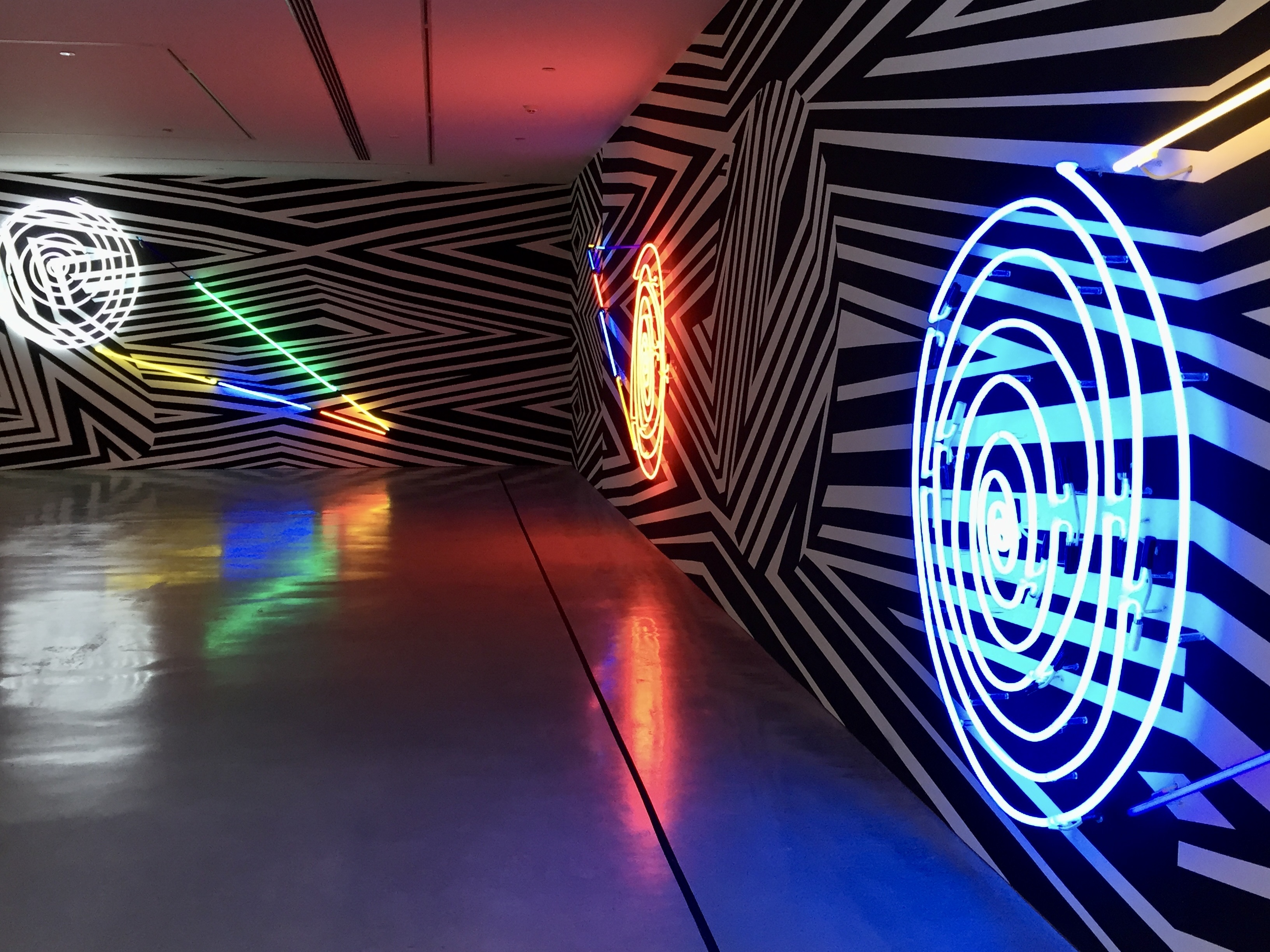
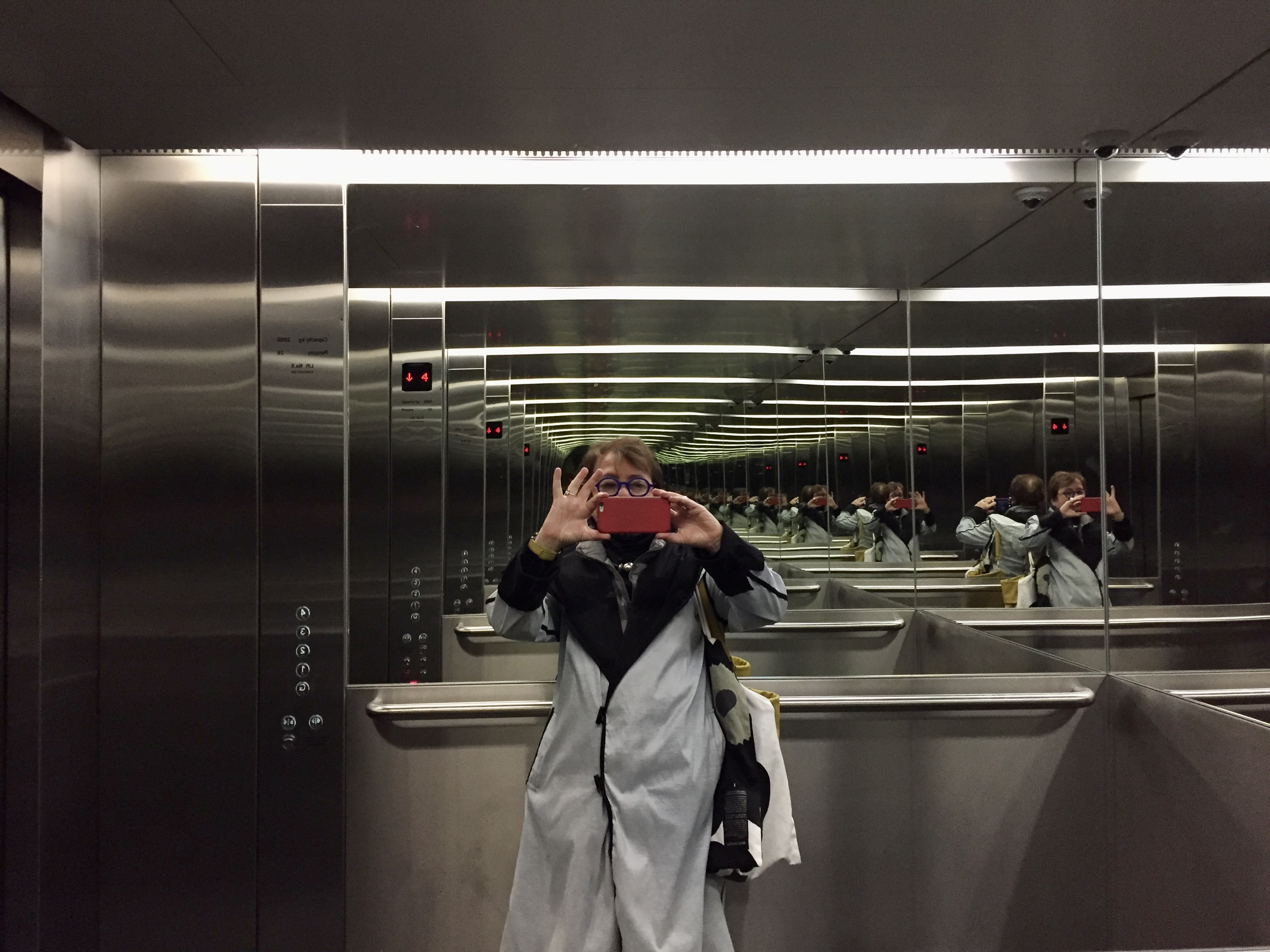
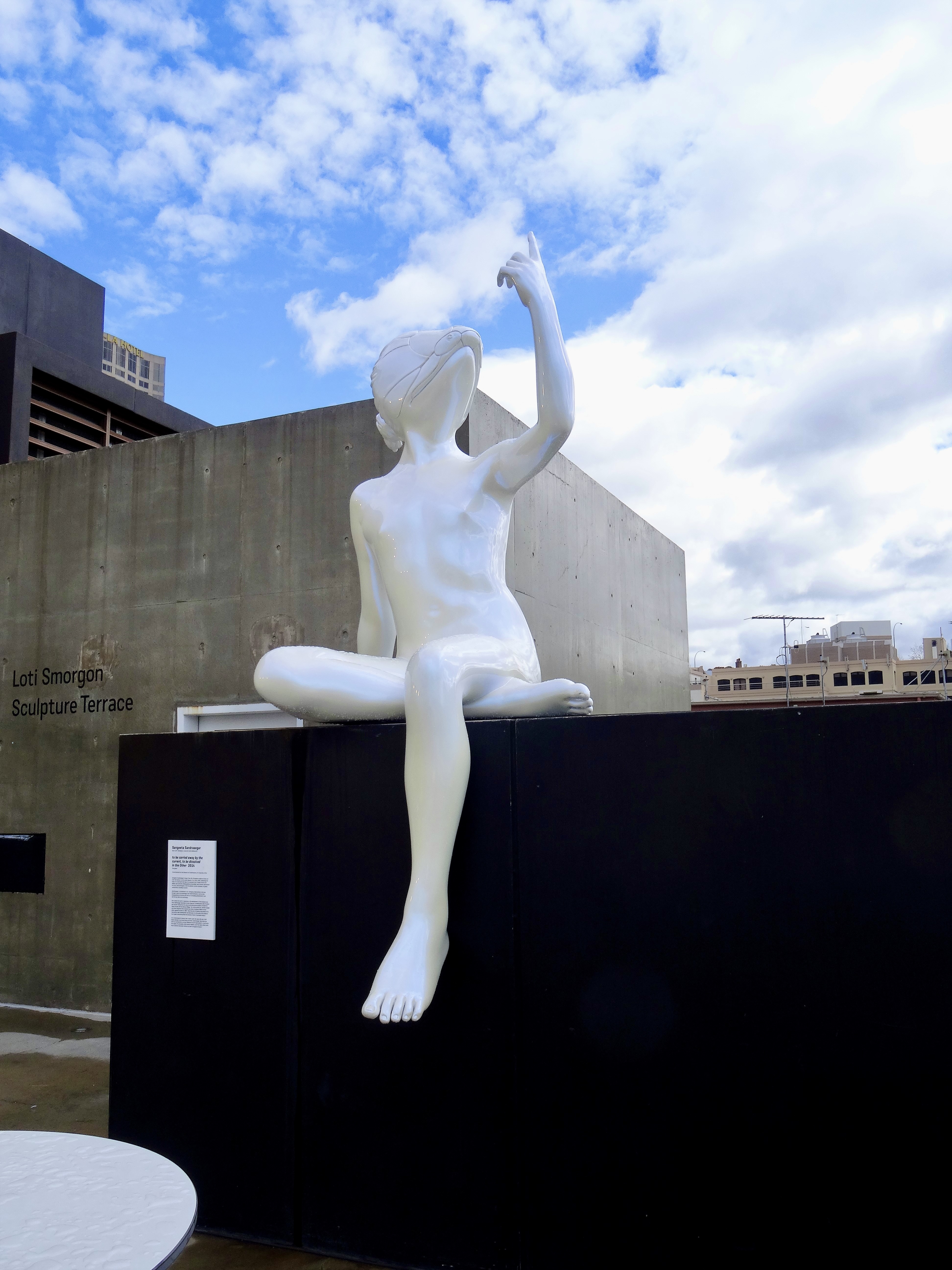
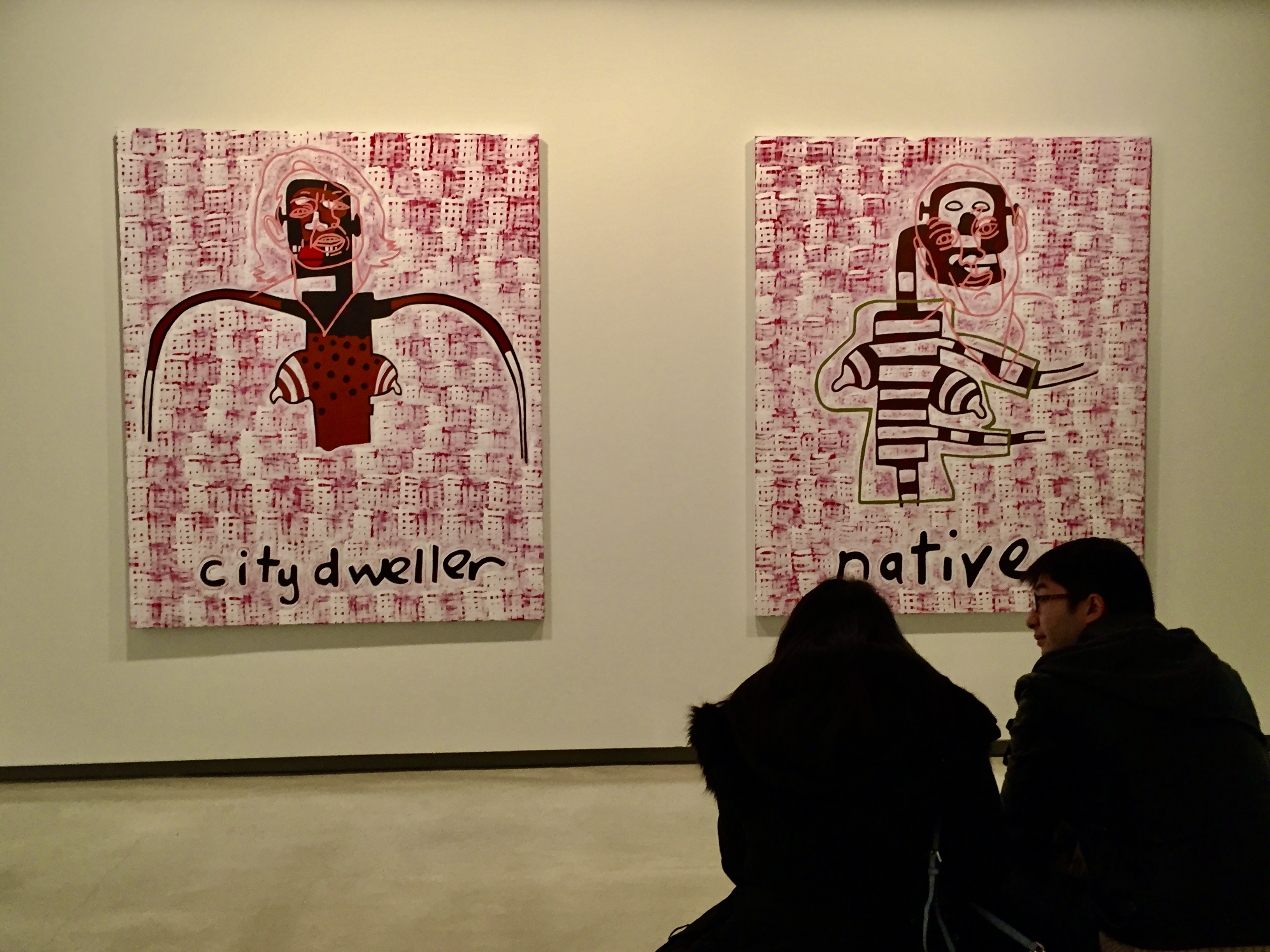
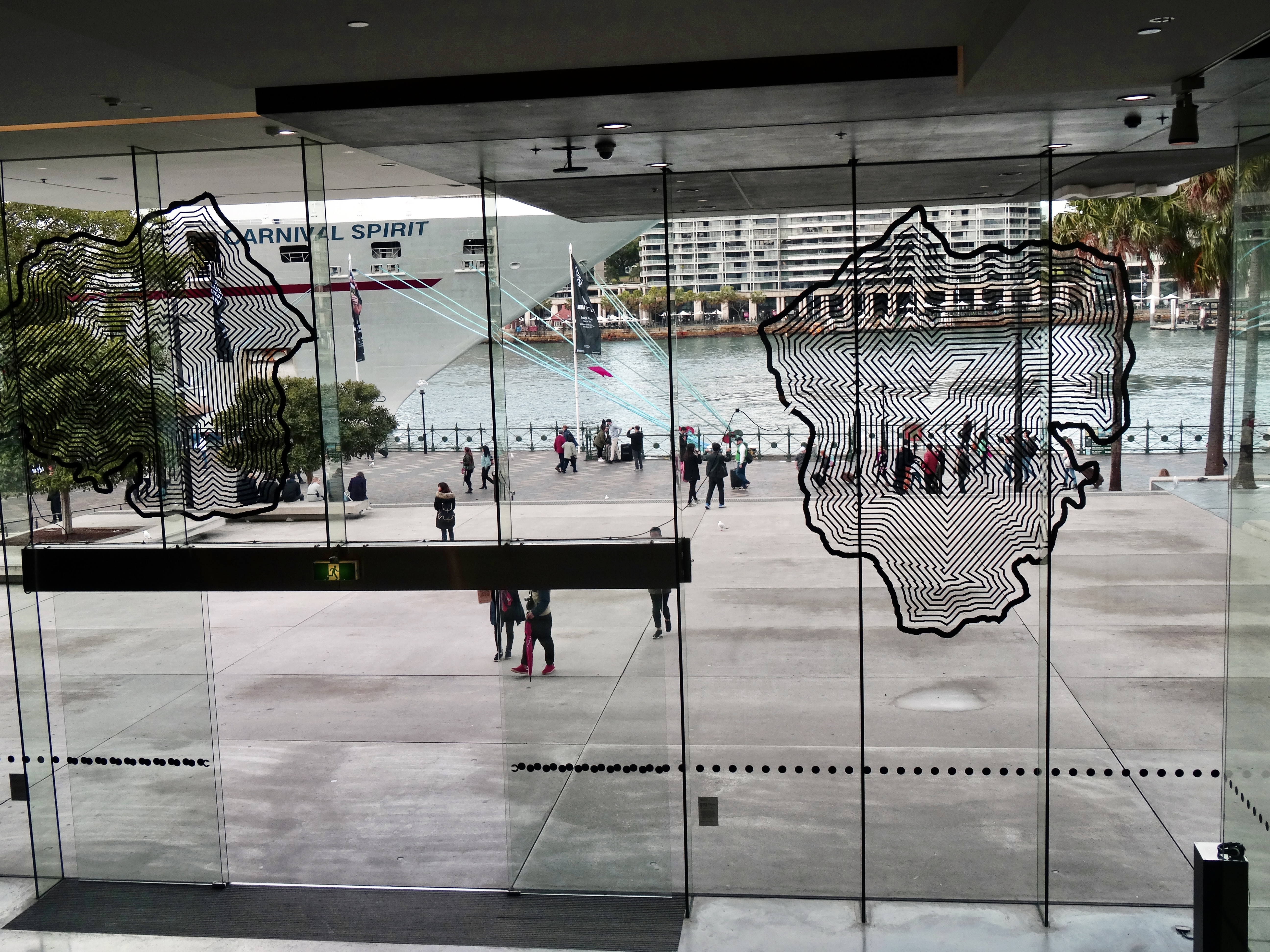
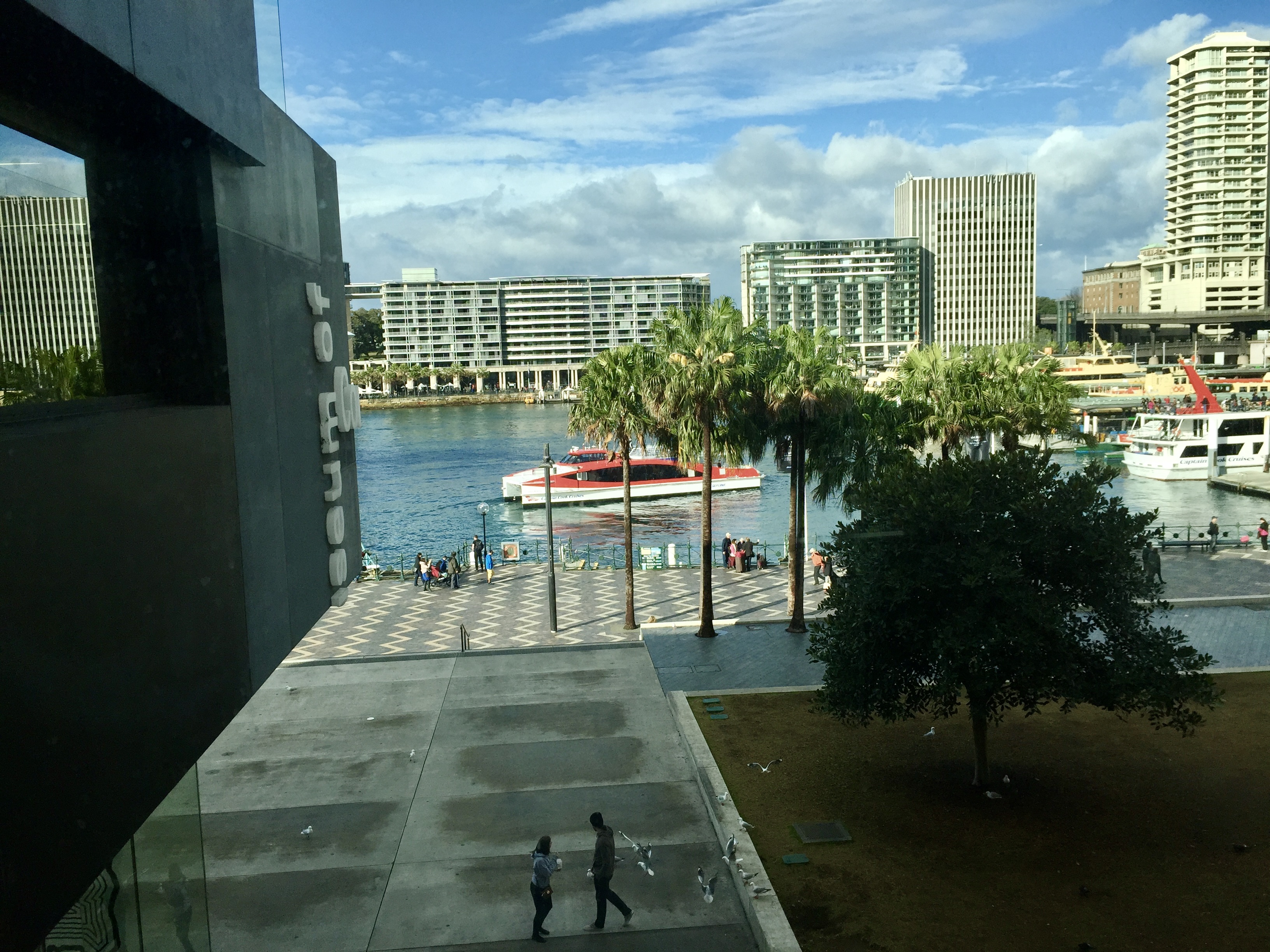
Headed for the Museum of Contemporary Art.. figured I needed to go to things that were indoors because of the rain, which had subsided but was hovering above in dark clouds. Museum has only contemporary Australian art which was interesting; some edgy, quasi political statements.. but as you know I’m not a big fan of museums as warehouses of culture, so I decided to avail myself of their rooftop café which had great food and fantastic views and some interesting sculptures.. Foodies: I had a salmon and potato salad with all sorts of herbs.. mint, parsley, dill etc. in lieu of any lettuce, with a very nice lemony dressing. From there I strolled the area called The Rocks.. stopping in at a crafts collective that wasn’t very good and then walked to the Strand Arcade… which was great.
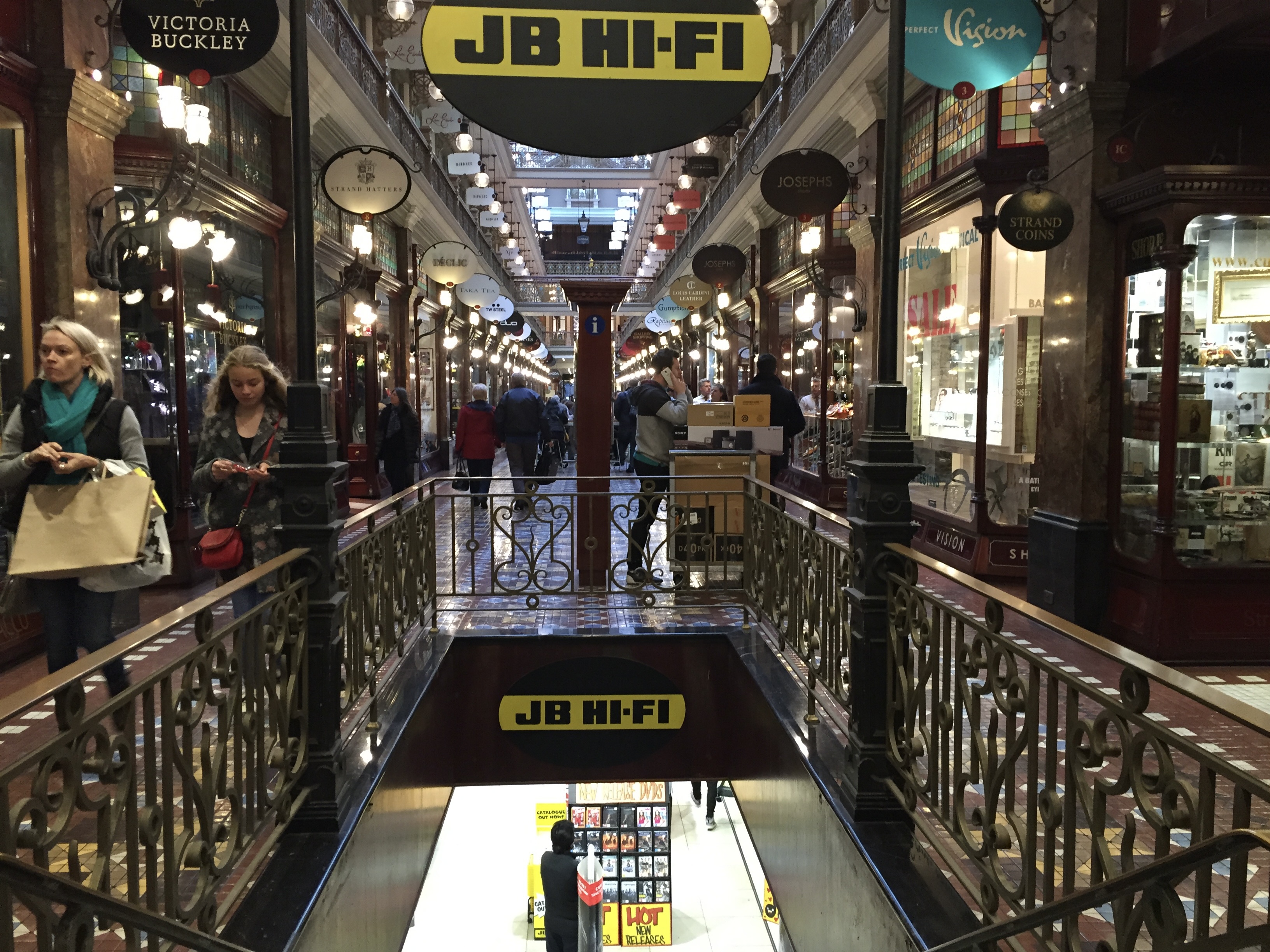
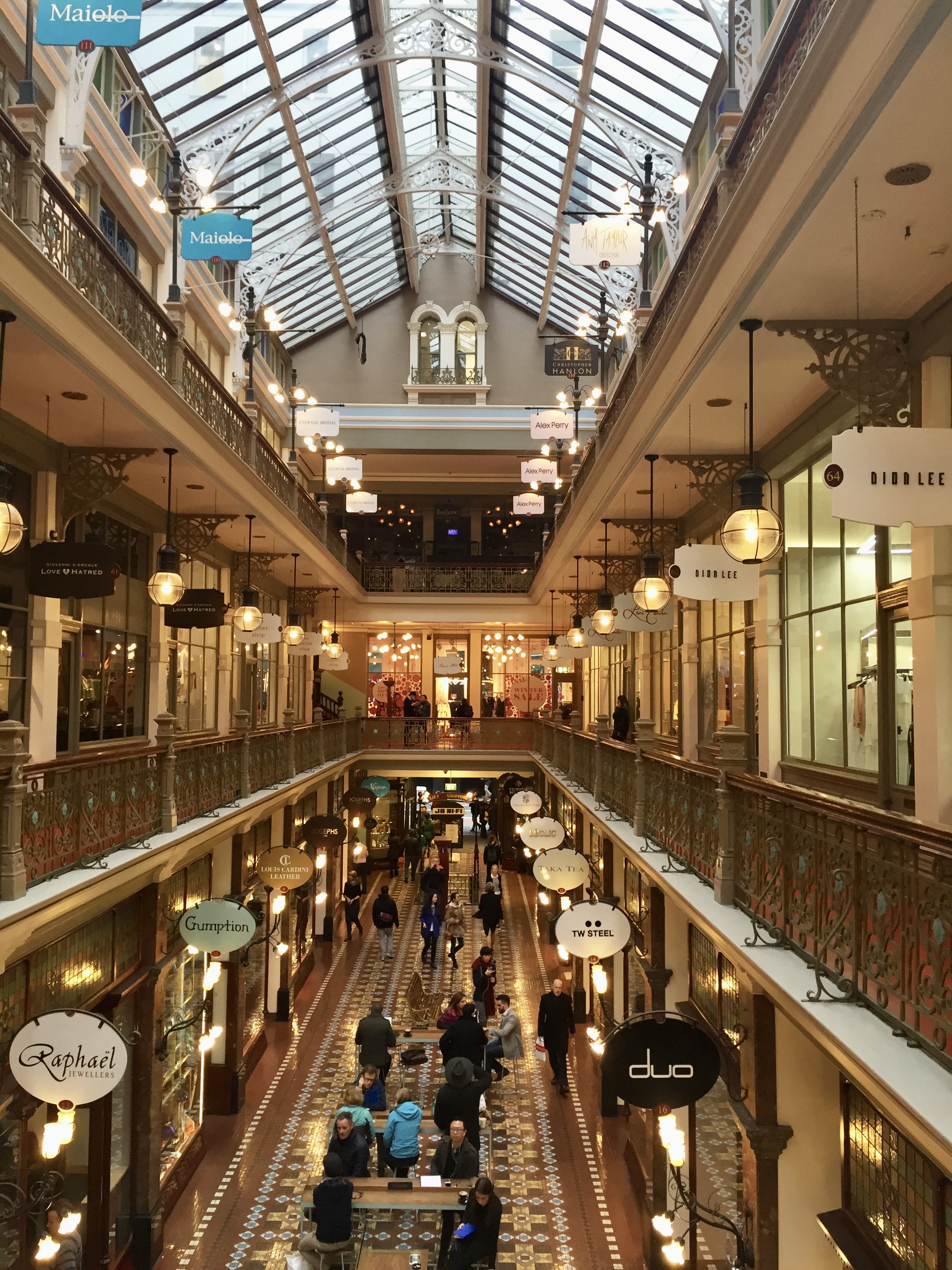
It’s from the 1890s — one of those grand arcades built during the Victorian era. I think it’s the only one remaining in its original form. And it’s like some of those arcades in London.. probably was a very fashionable shopping street in its day.. and it’s been preserved and renovated and remains a shopping arcade, with a second floor showcasing Australian designers. My understanding is that it became run down and in the 1980s there was an effort to renovate and it was reopened in its original splendor. The story also says that when they demolished a nearby building after a fire they found some Australian red cedar logs that they used to replace ones that had rotted. I strolled the arcade and went into a few shops (you know I’m a great shopper).. and found a really interesting store that sold jewelry and housewares all made out of beautifully colored acrylics… and learned they were having a warehouse sale at their “factory” shop which was quite a distance from the central area I was in… It was now 4 pm and I figured I had to stay up through dinner, so I ventured to a neighborhood called Redfern.. took the train, figured out how it works.. got off at Redfern, but couldn’t find the address on my iPhone GPS… so I hailed a taxi (you hail them here just like NY.. none of that mamby pamby phoning for a cab)… He got a bit lost too.. but eventually we found it (it was easily only about a 10 minute walk. Went to the sale (which had some nice things, but realized I couldn’t carry back bowls and such, so I just got a simple necklace and a pair of earrings (always good things to get when traveling since they don’t weigh anything).
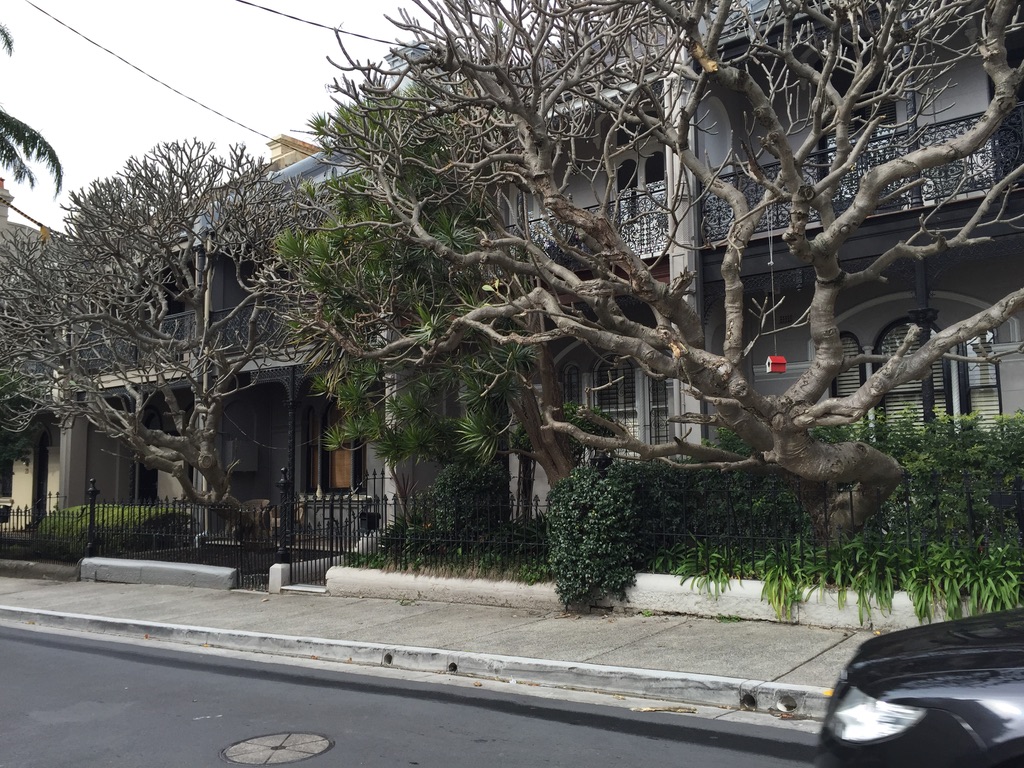
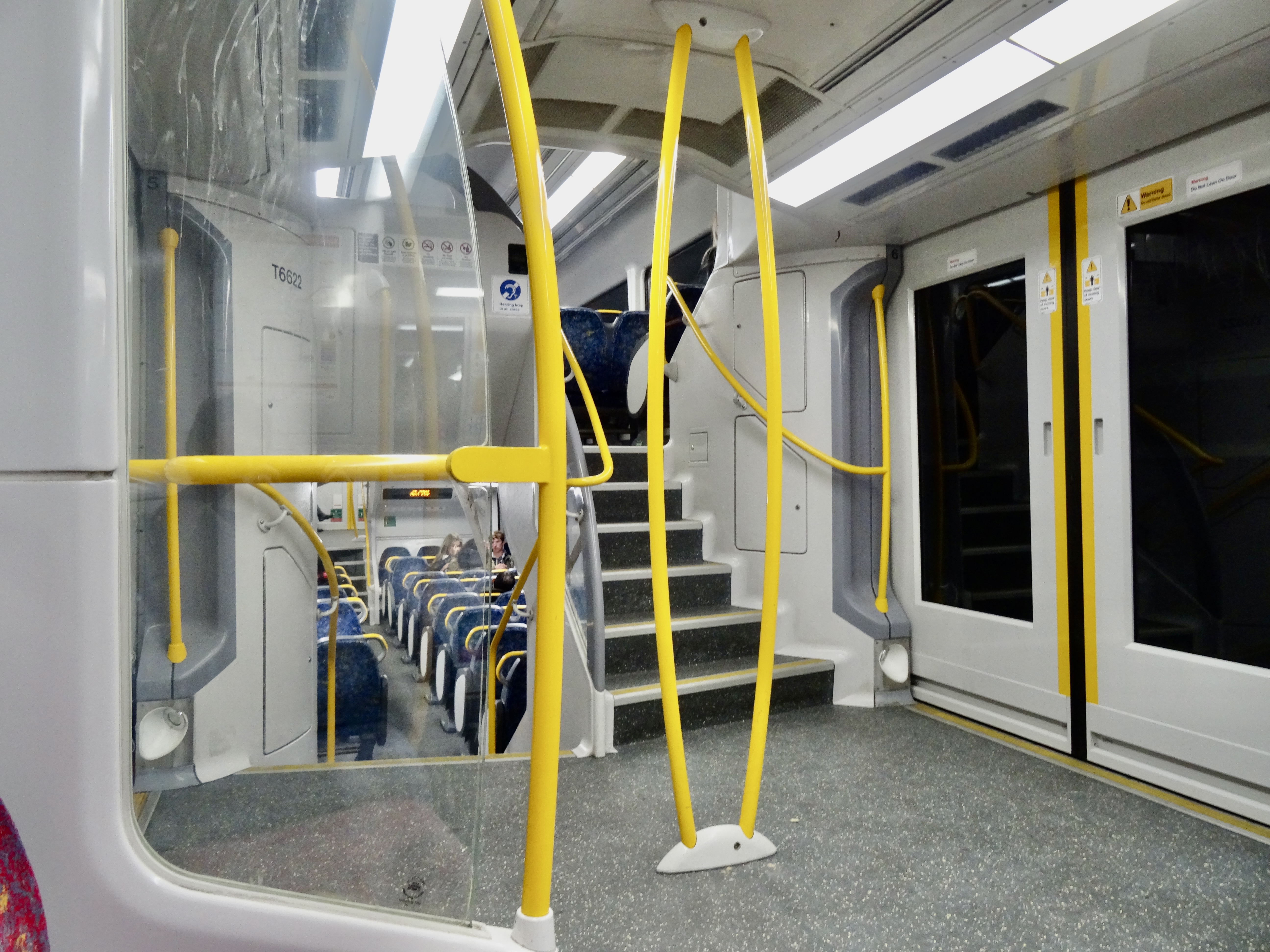
Then I meandered my way through this alley system (in the dark — I didn’t calculate that while I entered the shop when it was light, it would be dark when I exited)… to the train station and headed back to the hotel.. Train system is pretty efficient here, but not cheap. Changed clothes and was going to head to a restaurant in The Rocks section, but decided that at 8 pm my 45 hours of being awake was beginning to take its toll.. So I walked a few blocks from the hotel (I’m in North Sydney — more about that in another note).. to a Thai restaurant called Kinn Restaurant — sort of upscale Thai.. Food was good, not great. And then at about 9:30 headed back to the hotel.. and finally went to sleep.
Today, (It’s Saturday at 9 am here already.. Gee you Americans are just so slow.. cannot keep up with us here in Australia.. hurry up and get to Saturday).. I’ve got to put some time into both talks (!!) but first I’m headed to Paddington Market — a Saturday market.. and to that neighborhood.. and then probably long walk to Australian Museum (??) and maybe to go up to the top of the Sydney Tower (something Mike loves to do when he travels.. see the city from above.. I will do it if there aren’t any long lines of tourists — hate those tourists).. and then after working on the presentations, I’m planning to go to the zoo so that I can quash everyone’s thought that I wouldn’t see any kangaroos! And tonight I got tickets to a concert at the Sydney Opera House.
More tonight after Saturday is over.. and you’ll all still be on Friday. Fascinating.
All my best to everyone.
Looks like it’s blue skies today, but very cold. They even had some snow just north of here.
Fern (from down under)
Part Two — Last 36 hours (actually last 24 hours)
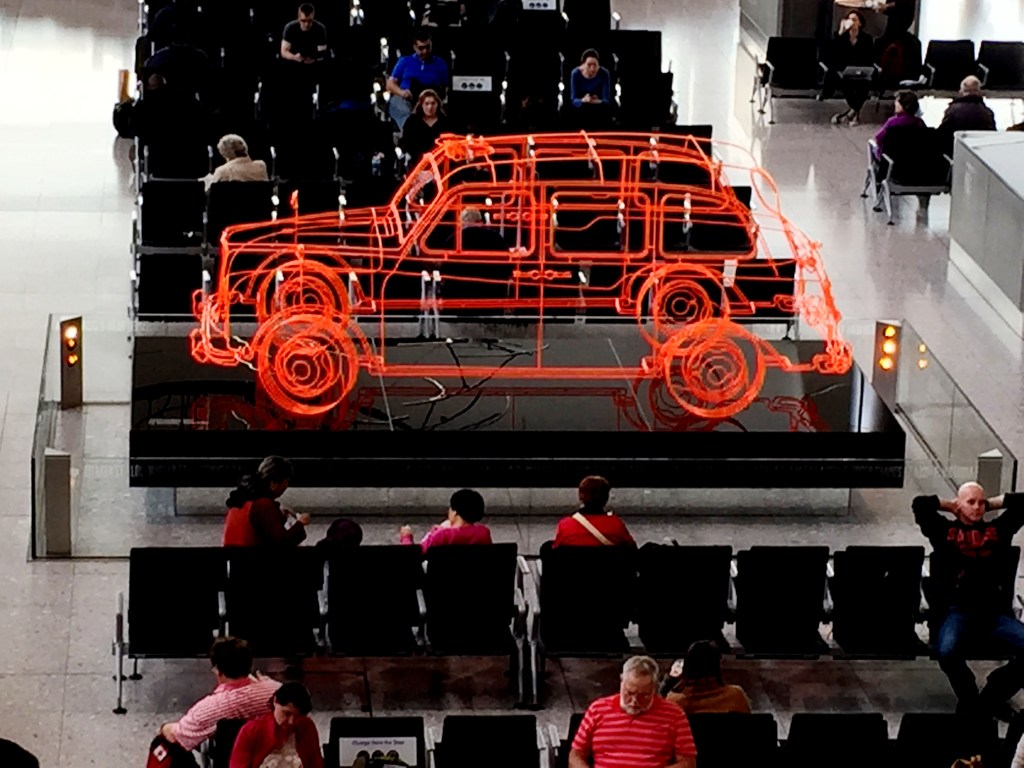
This final part is being written en route to SFO from Heathrow. By the time you get this, I will be on the ground in California.
Greetings from United Flight 900
Started Monday morning with great plans for a long walk (including a visit to the oldest synagogue in London, which I learned was only a few blocks from the hotel) and finishing another project I had brought with me and shopping and…. But obviously very over-ambitious.
Opted to get work done before setting out to meet Emma and Hem for lunch at yet another wonderful restaurant; Indian — Gymkhana (which I had hoped to try when I was in London in November, but it was booked). We were all still a bit full from the big dinner the night before, but we managed to get through the two-course meal. They had two, three, and four course meals for lunch. Cannot even imagine how anyone could eat more than the two course version. I opted for the dosas with duck and cocoanut chutney followed by a spicy baby goat dish with vegetables… Lots of small starters and the usual Indian accompaniments.. We talked and ate.. and then Hem and Emma set off to Tiffany’s to do some wedding ring shopping ( I think just looking and getting ring sizes confirmed). I headed to the tube back to Threadneedle, deciding it would be best to get back to work rather than take the walk I had planned.
Then at about 7 I headed to Kennington to see Lara and Elliott’s apartment and have dinner. They live in a Council Housing high rise. Council Housing (social housing) is sort of like our public housing. The building is 1970s vintage; concrete; one of three towers; about 15 stories. Kennington is a politically progressive area and so a lot of council housing was developed there. Under Thatcher, there was a big effort to sell off council housing and turn it all into market rate ownership. Apparently a friend of theirs bought a unit, and now Elliott and Lara are renting that unit from her. While the entrance to the building, the lobby, and the hallways could be improved, the units are quite nicely done — two levels within each unit; terraces with great views; two bedrooms; and nice kitchen with eat-in zone. They say that apparently 10% of the units were sold and the remainder remain in the pubic supply. It’s a strange situation it seems, with 90% of the housing being subsidized and 10% being private. Not clear how well it works, but they seem to like the apartment.
The last 36 hours in London – May 25, 2015
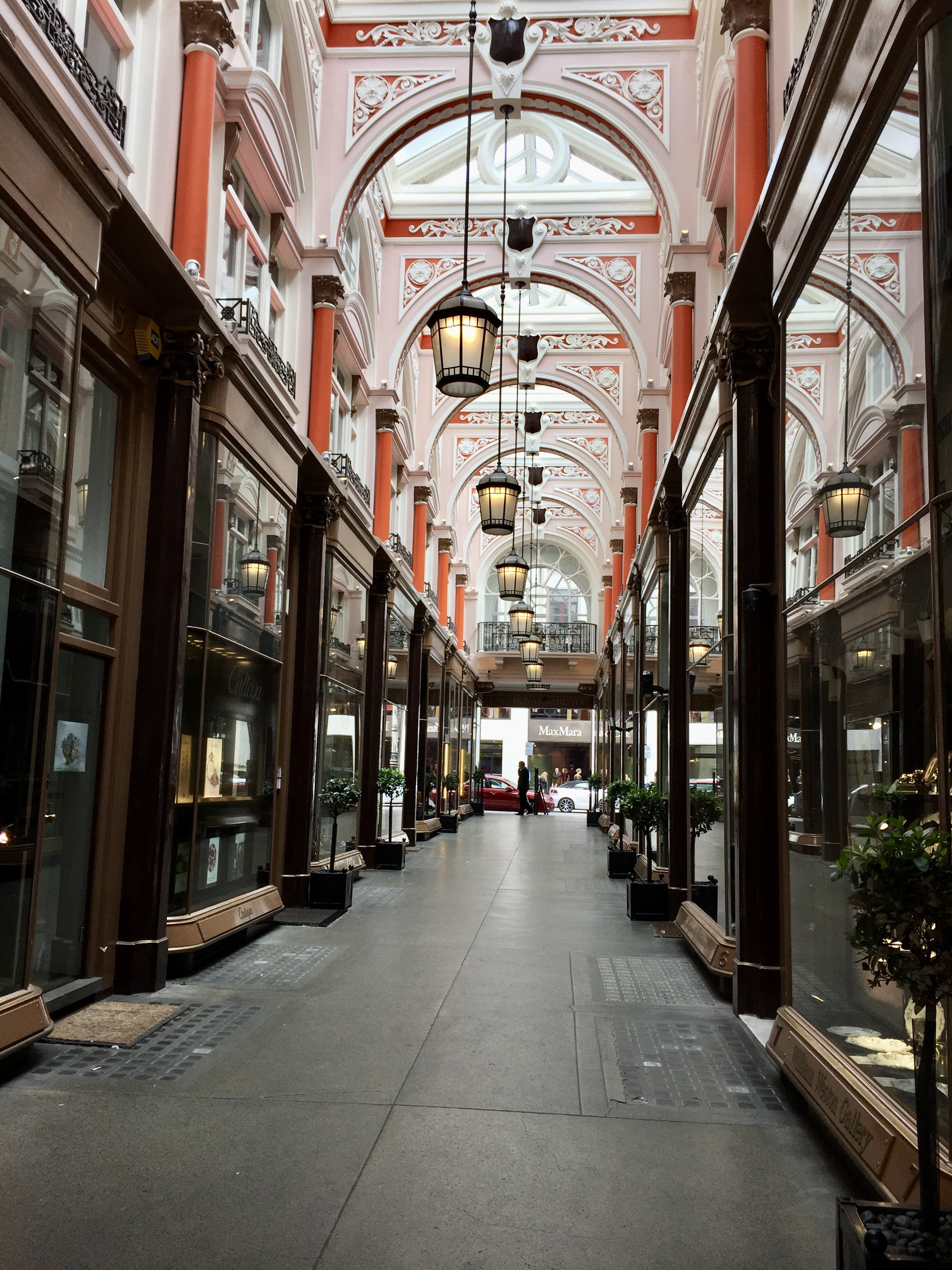
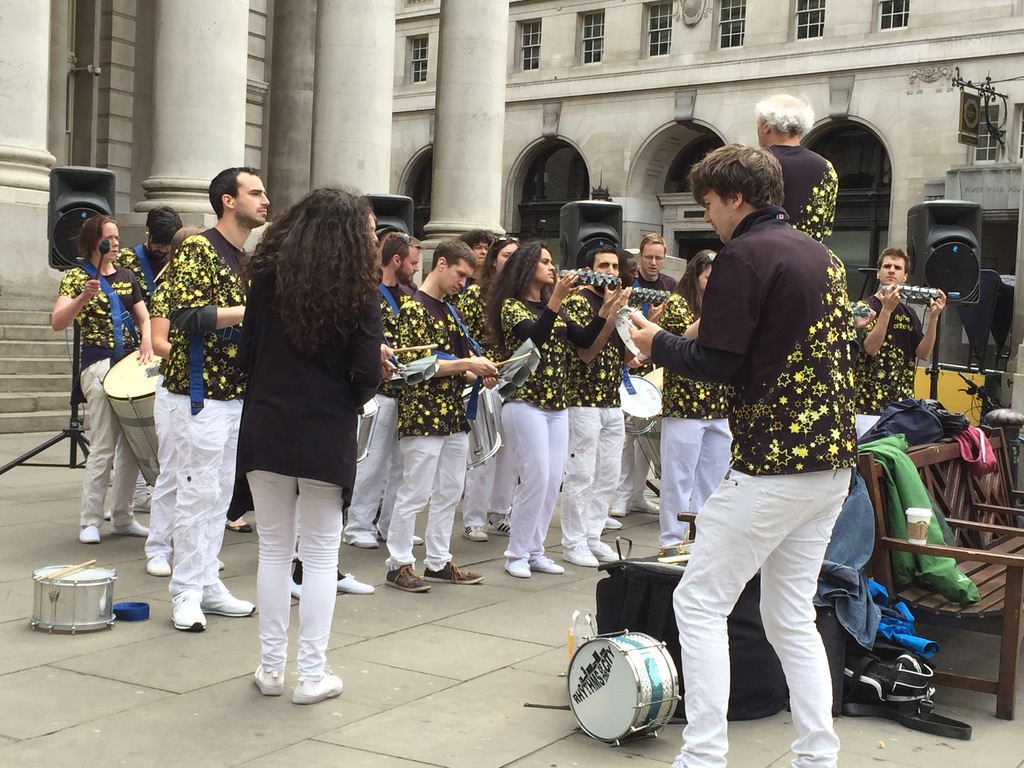

Greetings
My last note (yesterday) focused on my first 36 (or 48) hours (and mostly gastronomy) and this second note focuses on my last 36 hours here in London. Short trip indeed.
It’s now about 10 pm on Monday (Memorial Day — which is also a “bank holiday” here in the UK. I think I left off on Saturday night after dinner.
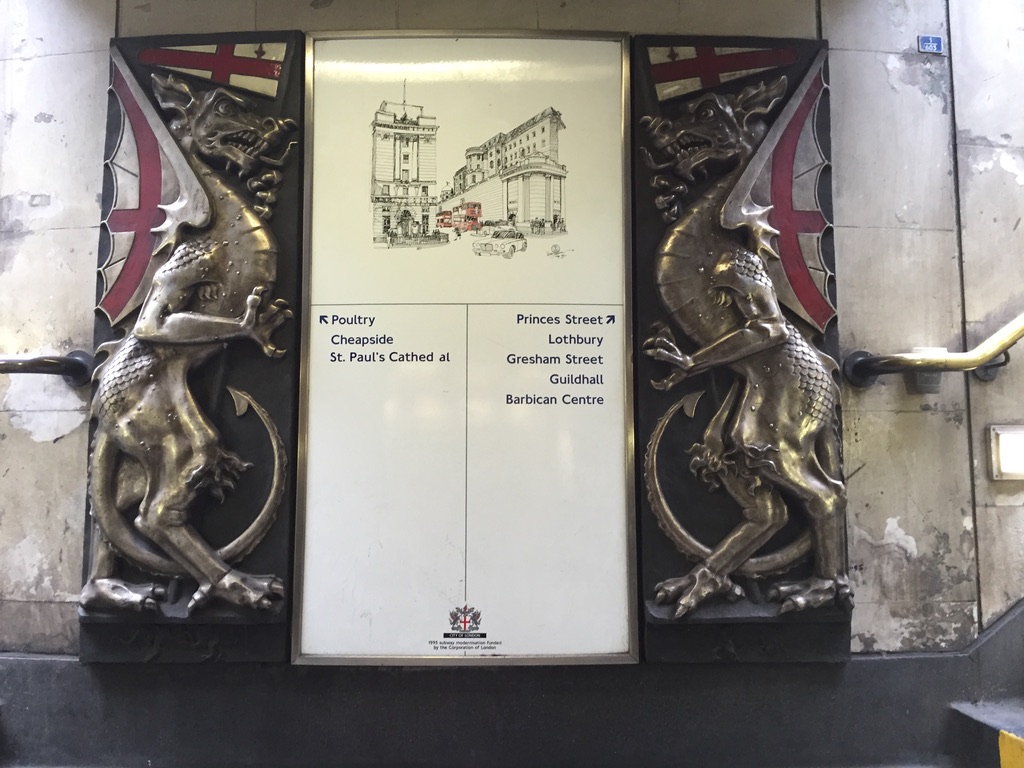
On Sunday morning (yesterday), I strolled the neighborhood which was deserted given that I’m really in the very center of the old City of London, where all the banks are located (hence, my tube stop is Bank Street!). It’s the area where all the big bank headquarters (the old bank buildings) are located. Indeed, my hotel is a repurposed old bank building. The Bank of England is located just a stone’s throw away and has been located here since 1734. The London Stock Exchange used to be here on Threadneedle Street. So the street is buzzing with “suits” Monday through Friday, but given that I’ve been here over a weekend, it’s totally dead.. but very convenient and walkable to most places and the Bank Street tube station has the Central, Waterloo, Northern, and City lines.. so everything is close at hand. I worked for several hours catching up on all the work I brought with me and was committed to finish.
Then mid-afternoon, I strolled back to Spiralfields Market which is known to have a special “made market” on Saturdays and Sundays. It was packed.. stall after stall filled with handmade clothing by locals, jewelry, and other goodies. I didn’t buy anything, but took in the site and the numbers of stalls. I also strolled up a few blocks to St John’s wine and bread bar and was able to get a nice bottle of champagne to bring to dinner. Walked back to the hotel so that I didn’t have to carry the bottle around for the rest of the day, and also made sure it stayed chilled. Then ventured to Covent Garden to stroll that neighborhood and to find a small housewarming gift to bring to Emma and Hem’s. After many false starts at this shopping goal, I finally found a really nice (well designed) watering can with rain spout and great gardening gloves — which seemed ideal, given the great interest in getting the garden going at their house (and the jump start with plants purchased the day before when we had lunch at Petersham Nursery).
By then it was drizzling (that kind of misty dampness without any noticeable rain drops).. I caught up with Lara and we headed back to pick up the chilled champagne and off we went to Leyton to see the new house that Emma and Hem purchased just a few months ago.
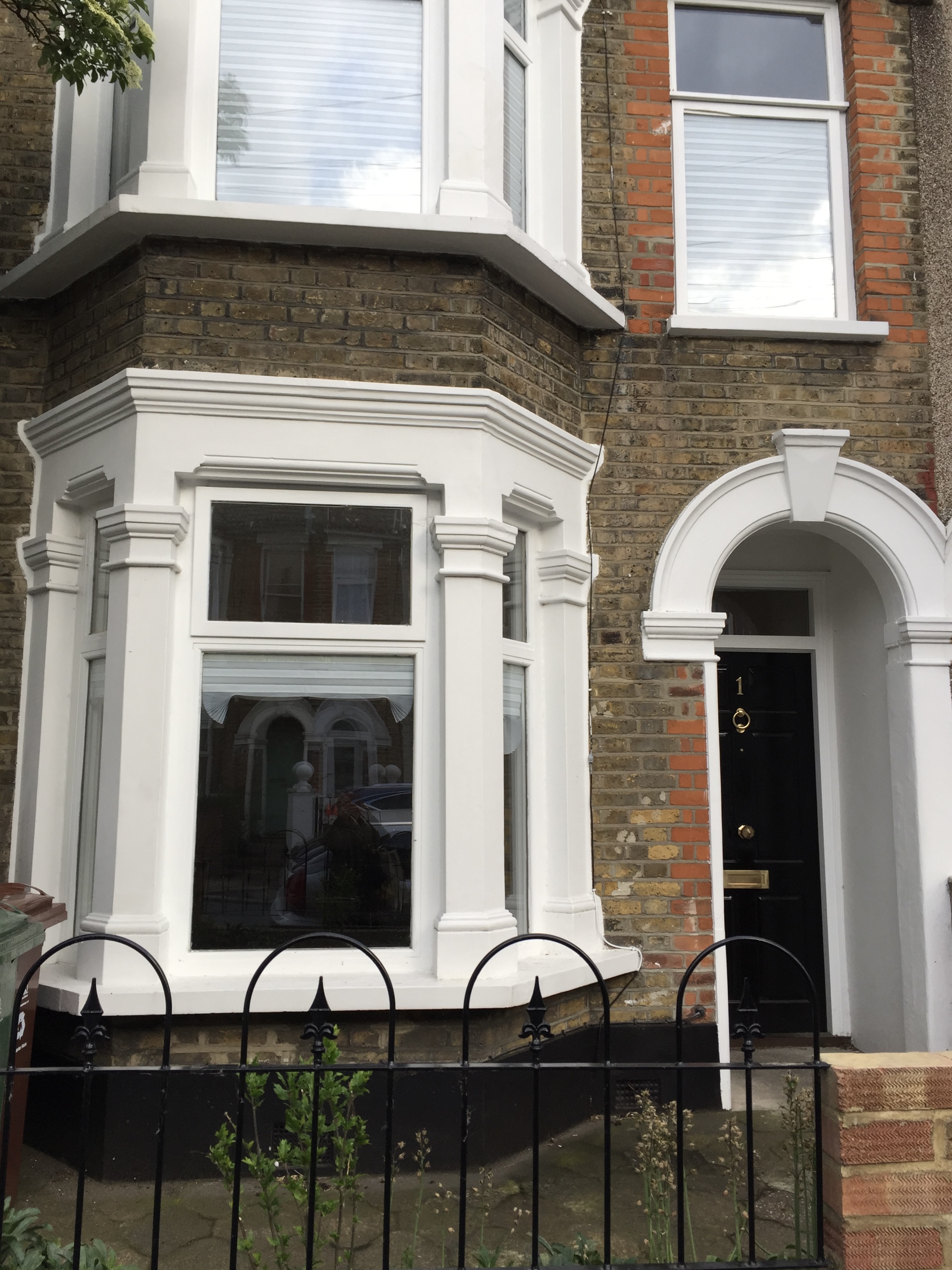

To get to Leyton from Bank Street is actually quite easy — about four stops on the tube and then a city bus (or a walk of about 40 minutes). Given that we were running late, the bus made the most sense. Getting out of the tube at Leyton you are transformed into a very different place than my little world on Threadneedle. Leyton is within Greater London — in East London and part of the Waltham Forest Borough. I think it’s basically about 6 miles from central London. Leyton includes part of Olympic Park, where the 2012 Games took place. I gather there are some remainders that locals enjoy, including a fantastic swimming pool. Leyton is mostly residential, with some neighborhood shops (or at least that’s what it seemed like from the bus window). Houses (many of which, like Emmas, are row houses of a nice scale) seem to have been built in the late 1800s and early 1900s.
My quick and dirty research reveals that some housing in Leyton was ruined during WWI, and then about a decade later the area was built up to become a strong industrial zone where neckties and thermoses were manufactured. But Leyton suffered during WWII because of its proximity to the docks and the rail yard. After WWII, Leyton faced significant industrial decline that lasted about 50 years… But as East London began to develop (and gentrify) things began to change. And with Leyton’s proximity to the site of the Olympics, many improvements were made to the infrastructure.. Leyton is clearly a place where many immigrants moved and remains a population that is majority non-white. Most people would say it’s a working class district, but it’s clear that there are also many Emmas and Hems settling there — given the high cost of real estate in East London and other neighborhoods located closer to the center. The bus from the tube to their house was heavily populated by Pakistanis, but our short walk from the bus to their house on Simonds Street gave a sense that many Asians, Eastern Europeans, and Africans are also living in Leyton.
The house is adorable — two stories but with some interesting stair configurations: three bonafide bedrooms; 2-3 bath rooms, depending on how you count; great kitchen and dining and a really good size living room with bay style windows. The guy who lived there previously did a fairly good job renovating, so it was in move-in condition. Other than the fact that there truly aren’t any closets, the house is great. (But they are tackling the closet issue — trying to decide between armoires or built ins –my guess is they will go for the latter, since the house is old, but definitely updated with clean lines and well thought out modern details). All wood floors that have been scraped and sanded. Oh, they also have a garage which they use for storage since they don’t have a car.

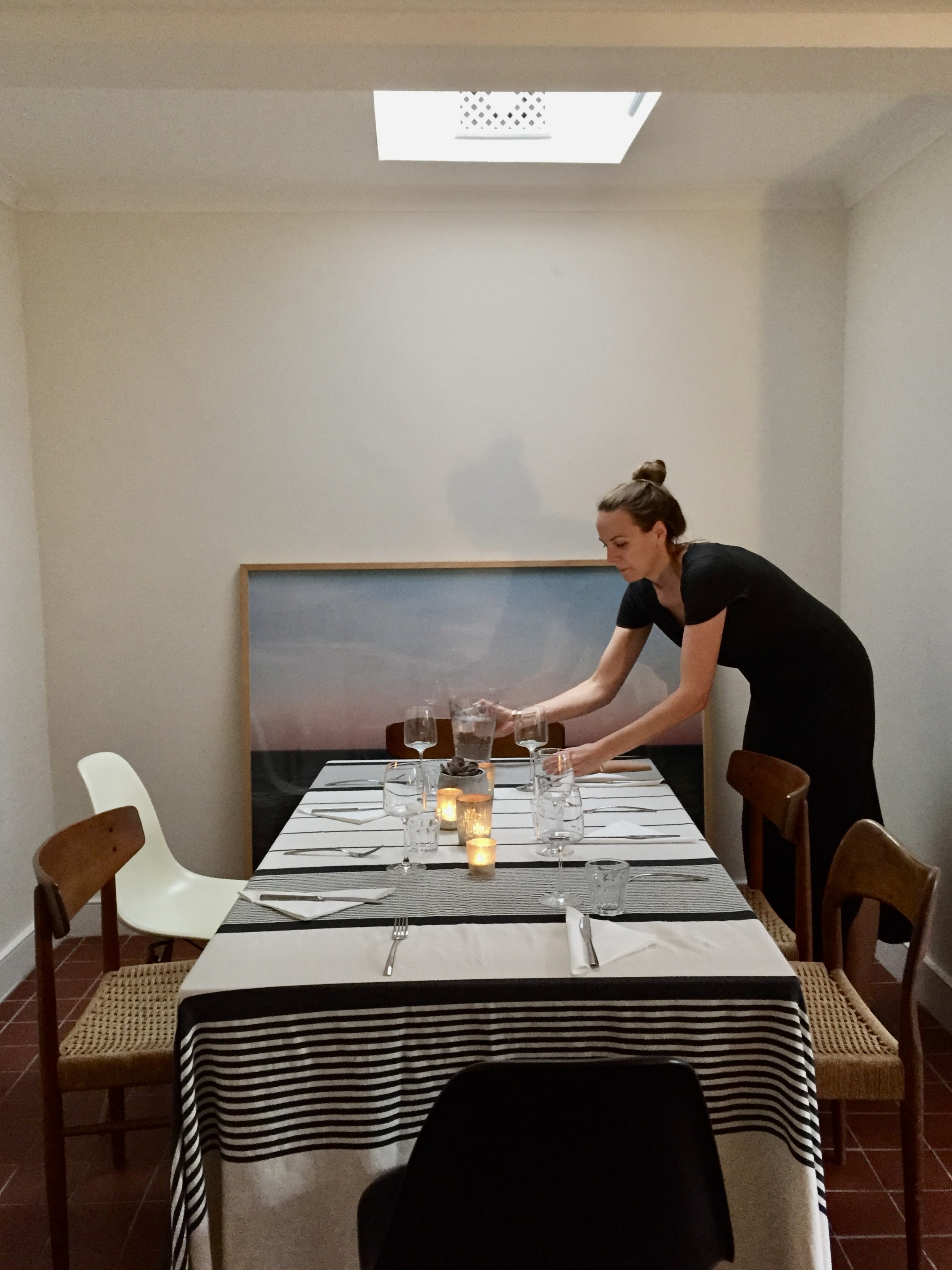
We had a great dinner (Lara and Elliot joined in) — definitely in the Michelin star category — cooked by Emma and Hem (who are very busy planning their August wedding). After a long night of food, wine, champagne, and good conversation, we called for a cab to take us to the tube station. It was pretty funny, since Hem called the local taxi number and the guy said: “Well you live right around the corner from us — the taxi company — so why don’t you just walk over and the taxi will be waiting. So off we went.. I took the tube back to Bank Street and got there just in the nick of time.. as the tube shuts down at midnight. Got out of the station at just about midnight and only one exit from the tube was still open.. so I had to meander a bit to get back to Threadneedle.
Gotta get to bed so as not to miss the 5:00 am wakeup call… But I’ll send one more note from the plane about today’s adventures, including another great meal, and seeing Lara and Elliot’s place which is in “council housing”…
Best — 86 hours is really a short time for this visit.
Fern
36 hours in London. May 22/23 2015.
Greetings from London –
The story starts with the fact that I had an unused ticket that was to expire and I decided that rather than giving it back to United Airlines, I’d hop over to London for Memorial Day weekend.
Crazy? Maybe.
So after an incredibly intense Thursday, beginning with being deposed for a lawsuit involving a van hitting a pedestrian (who was in the crosswalk and walking with the light in her favor), moving on to facilitating a meeting at the San Mateo County Office of Education, I dashed to SFO to catch a nonstop flight to Heathrow. Plane left at 7:30 p.m. and I arrived on Friday around 2:30 p.m. Must admit that I’m pretty spoiled about travel given my high status with several airlines so this was the first time in many years when I haven’t been upgraded into Business Class. I was first on the upgrade list, but no seat came through. It was fine, although the comfort of having a seat that lies flat like a bed, and getting attention on the plane was sorely lacking. Anyway, arrived safe and sound.
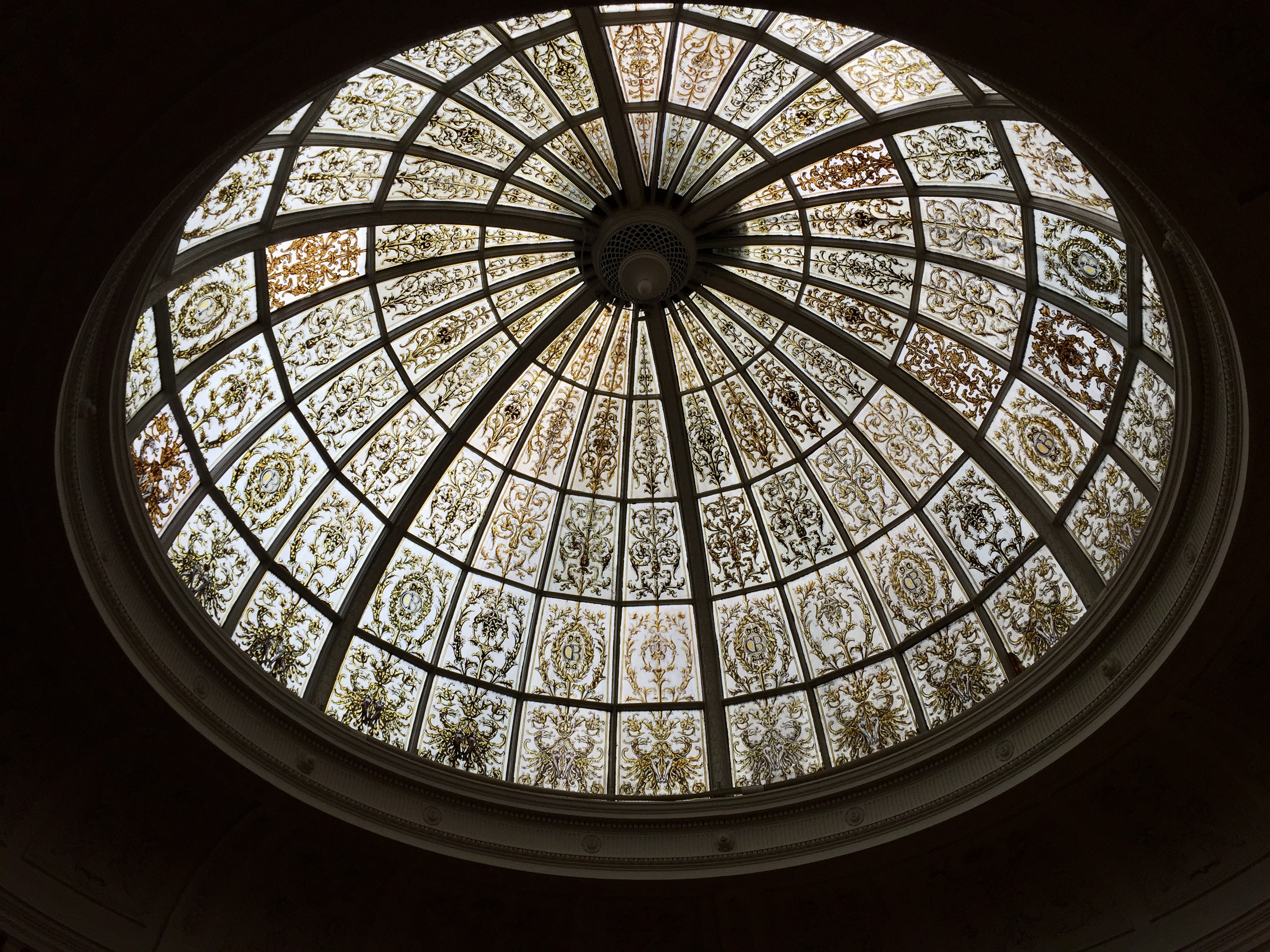
Immediately took the Heathrow Express to Paddington and then taxi to the Threadneedles Hotel (located in the one-square-mile of the City of London). I chose Threadneedles because it’s affiliated with Marriott and I had a lot of points. I feared it would be a typical Marriott and I generally shy away from American chain hotels when traveling. But Threadneedles is actually quite nice — located in a former bank building with very high ceilings throughout and a wonderfully huge stained glass dome in the center of the lobby. I believe the dome is from about 1850. The hotel is sort of eclectic old and new. Rooms are large and very “connected” — so I’m a happy camper. And the location is great.
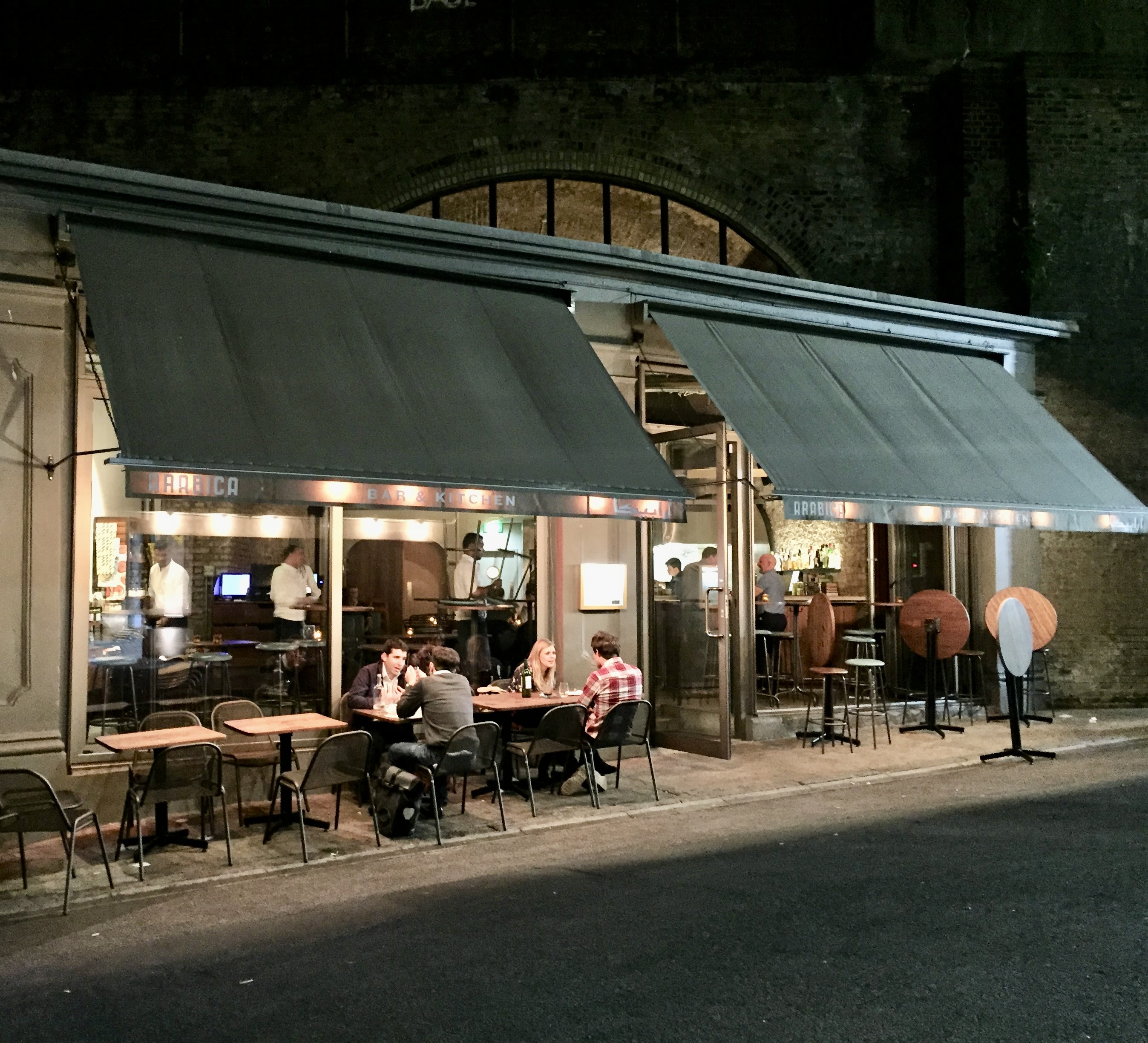
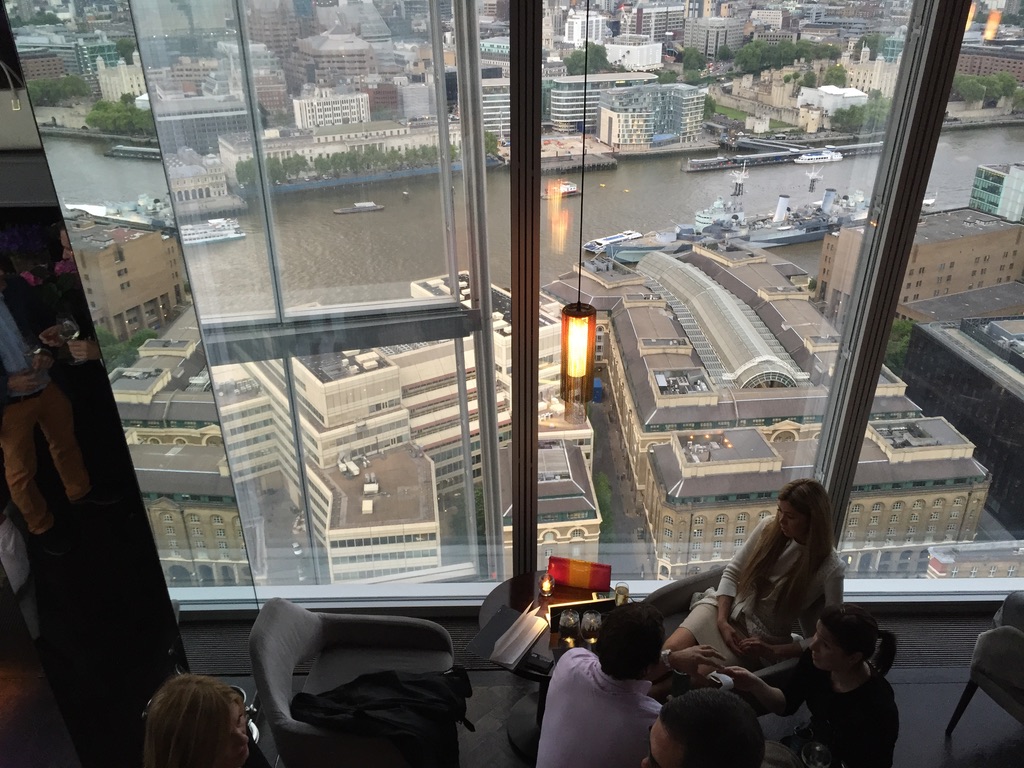
Dashed inside the hotel at about 4:30 — just enough time to shower and head to Borough Market to meet for two hours with a professor from Coventry University (who I met when I spoke at a symposium there in November). We met at Arabica, a bar and restaurant (where I was scheduled to have dinner at 8:30 with Mike’s niece and also my god-daughter). So off I went. Good conversation and then between drinks and dinner Emma (Mike’s niece) and I took a stroll to the Shard. It’s a 95-story skyscraper designed, I believe, by Renzo Piano. It’s part of the London Bridge area development. It’s more than 1,000 ft. high — tallest building in the EU — and includes restaurants, apartments, viewing floors, offices, shops.. their idea of a vertical city. It’s sort of a glass pyramid. I believe that it is owned by the government of Qatar! We went up to the 32nd floor where one of the bars is located and where we could take in a really great 360-degree view.. Then we walked back to the restaurant.
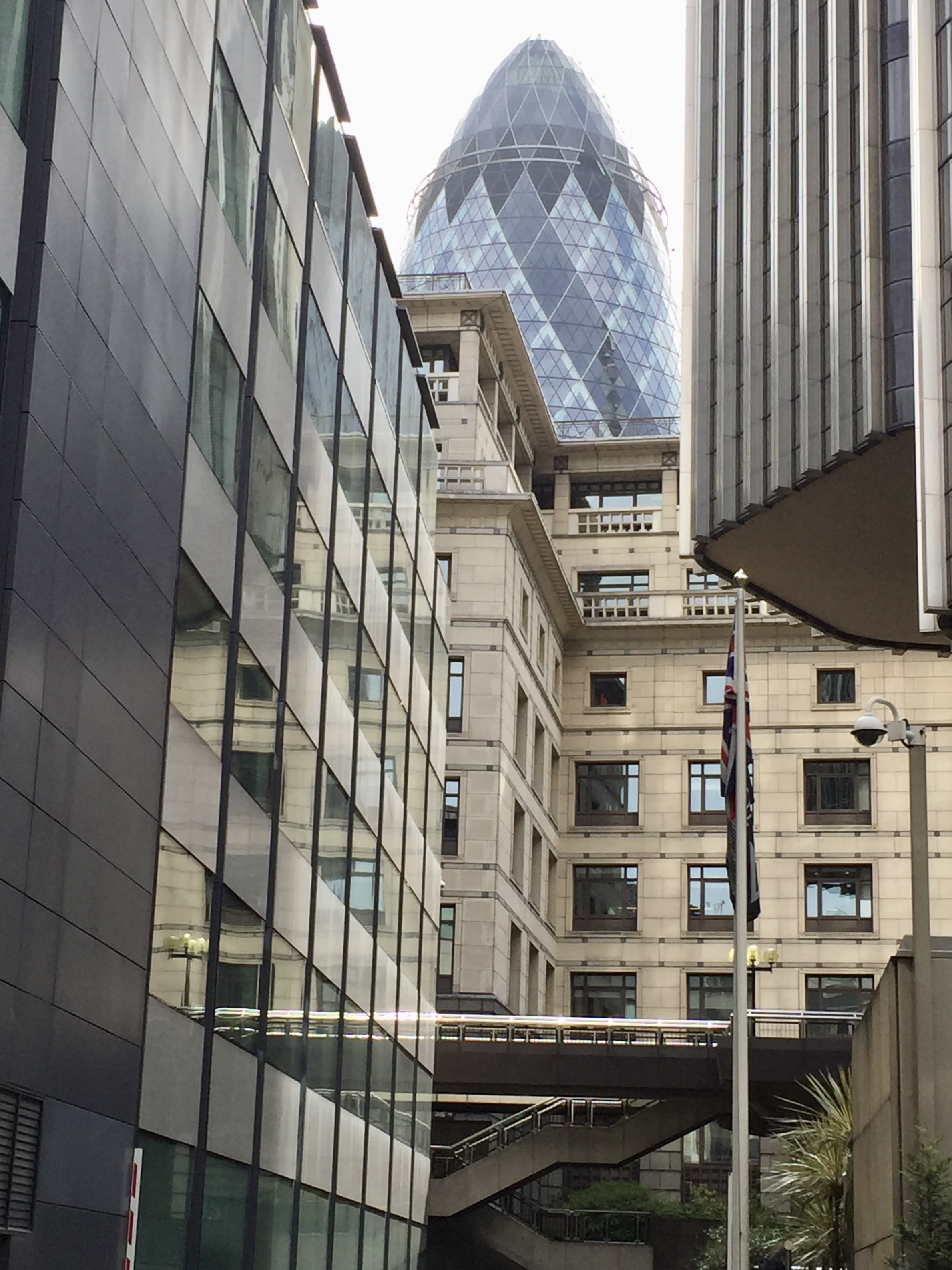
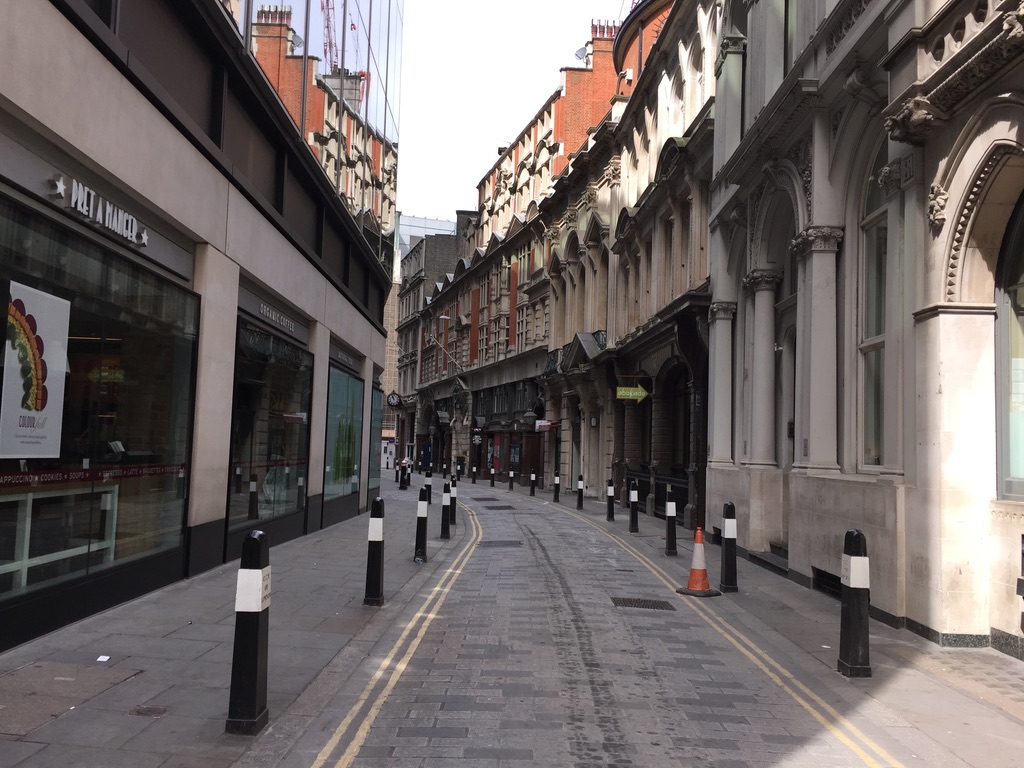

OK Foodies, here we go..
Dinner at Arabica (Mediterranean sharing plates)… muhummara spread (spiced red peppers with ground walnuts) with pita; chicken and pistachio shish (with lots of cardamom, honey, and some green chilies); lamb with walnut harissa; tabbouleh; heritage tomato salad; and some eggplant dish that had lots of lime and lemon and some other ingredients.. and topped it all off with mouhalabieh (a milk pudding with saffron poached pear and pistachio).. and chocolate covered dates stuffed with almonds. Good conversation and catching up all around amid great food. The restaurant is very modern in design, set in an industrial locale inside a Victorian arch with bricks and steel. Obviously quite hip. After dinner we strolled a bit and eventually took a taxi to the hotel. By now I had been going for about 39 hours..

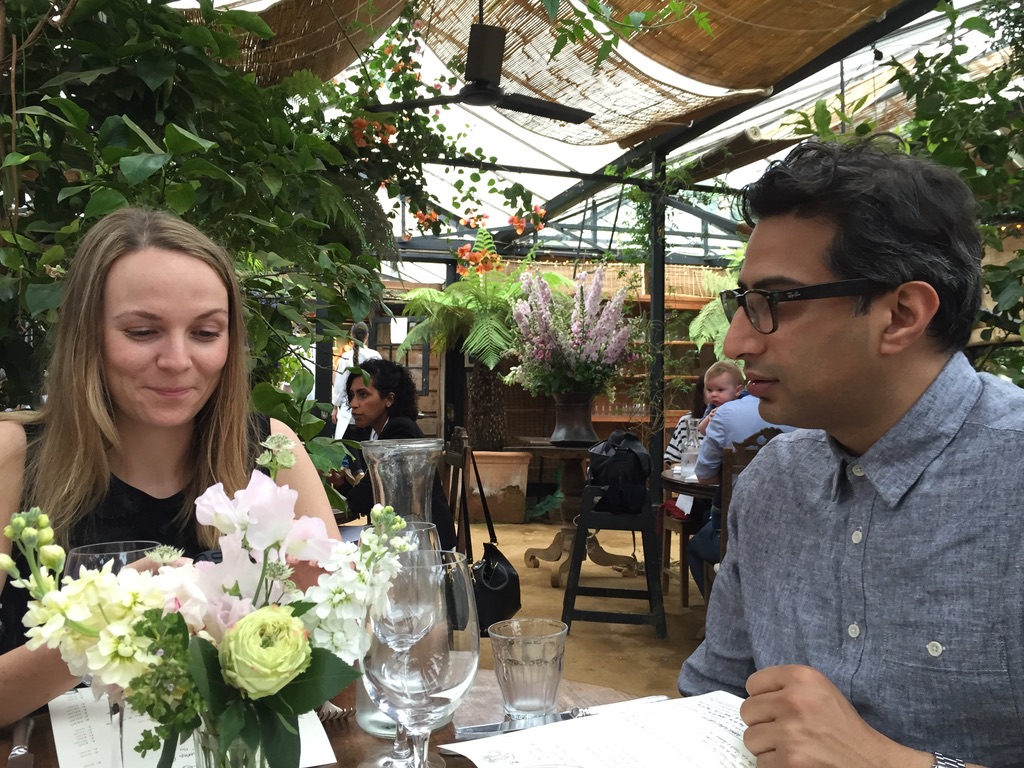
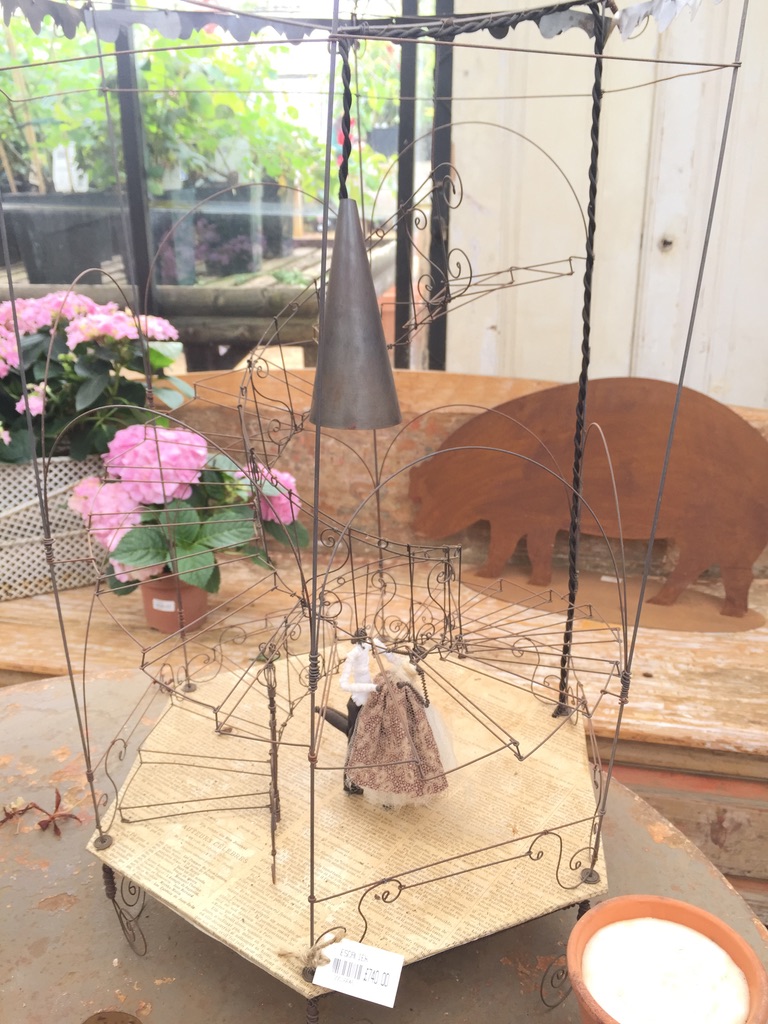
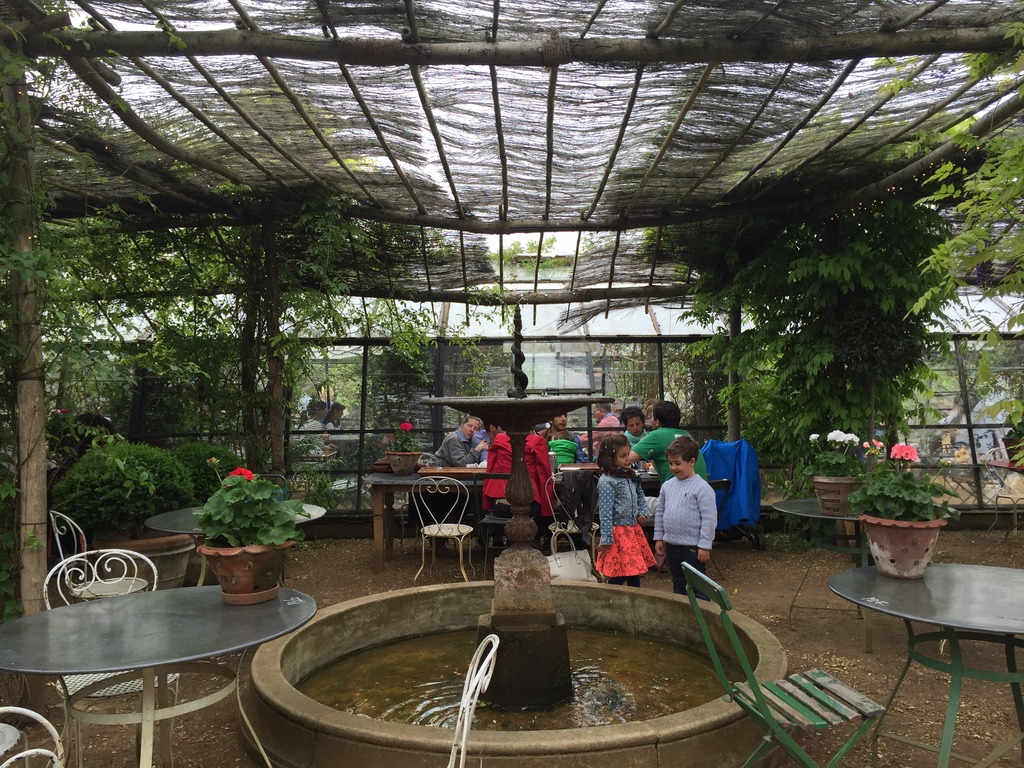
Woke up this morning and headed to meet Emma and Hem (the fiancé) at the Bank Street Tube Station — hopped on the Waterloo line and then on the train to Richmond where we headed to Petersham Nursery, in Richmond on Thames– A restaurant set inside a greenhouse amid a few acres of greenery and plantings. It’s a Michelin star restaurant.. and you are literally sitting among the plantings.. It was a bit overcast, so it must be delightful when the sun is out. Today was Emma’s birthday, so it was a bit of a birthday lunch. We had several wonderful appetizers including fried borage with chickpeas (squash blossoms); lasagnette with green beans and pesto; john dory; speckled hen cooked with mascarpone, prosciutto, romesco, and a few other things; and a great salad; and green bean side dish.. and for dessert which came adorned with the obligatory birthday candle: a lemon tart and also a cake with elderberry ice cream.. By the way, they were very big on using lemons.. Amalfi lemons.. I assume flown in from the Amalfi coast, but couldn’t really discern any particular taste.
After this, I headed to the hotel to get a sweater (It’s in the 50s and 60s) and then met up with Lara and walked to Spitalfield Market and Red Church street… and then eventually made our way to dinner!!! Went to 40 Maltby — which is a small place (yet another one of these tiny restaurants) where you only have stools, no chairs… and it’s literally located under the arch above which the train whizzes by.. creating the feeling you are inside the station. But the food is great.. we shared several dishes and good wine.. and lots of talk..
And now, I’m headed to bed.. It’s about midnight here. And by the way, to enable me to do all that eating (actually the portions are very very small), I walked about 7 miles (per my app on the iPhone!)
Tomorrow I will work all morning to make up for all this play time.. and then catch up with folks in mid afternoon.. and head to Emma and Hem’s new house in Leyton.
I’m here for just three and a half days.. I get back to the states on Tuesday; straight to the office.
Fern
58 Hours in Coventry, England. November 19, 2014
Hi All –
Well, this is a first… I was almost done writing my little Coventry travelogue and my computer crashed… and the entire document disappeared.. While I still think it is somewhere here, I cannot find it at all.. Not even part of it.. So, though frustrated, I am starting fresh here on the plane from London to Seattle via Houston… and hope that my frustration will not impact the stories.
Here goes (I’m really terrible at redoing anything, so this may not be the best of my travelogues… which I remind you are all on the blog site – about 300 of them, produced over the last 9 years).
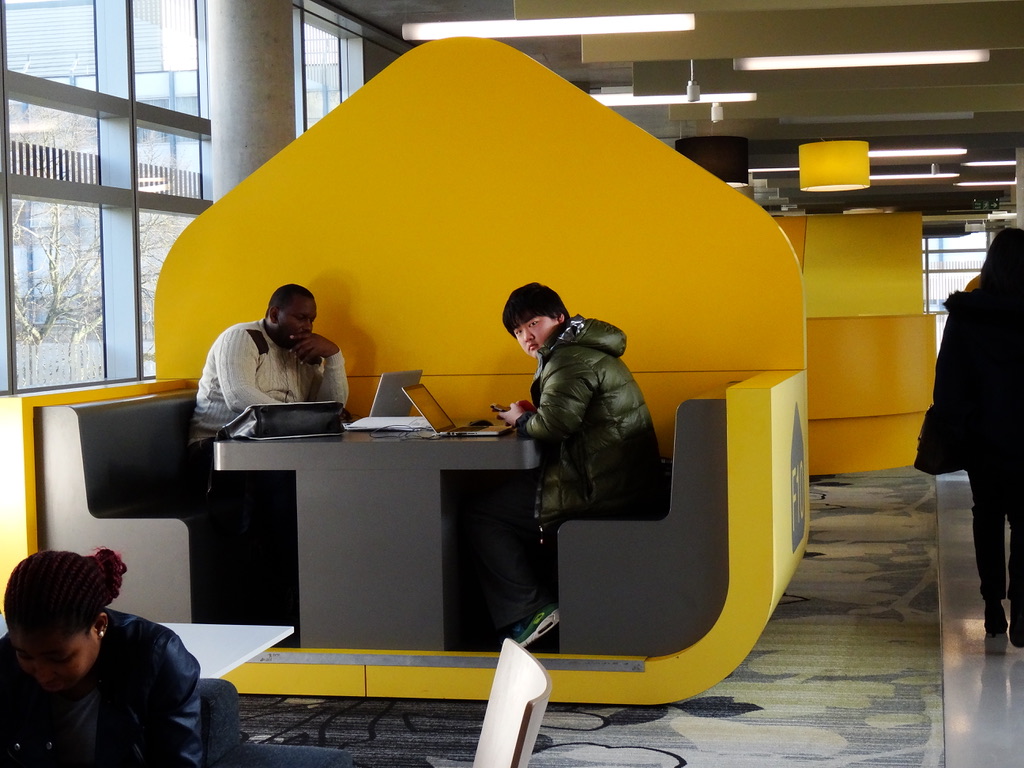
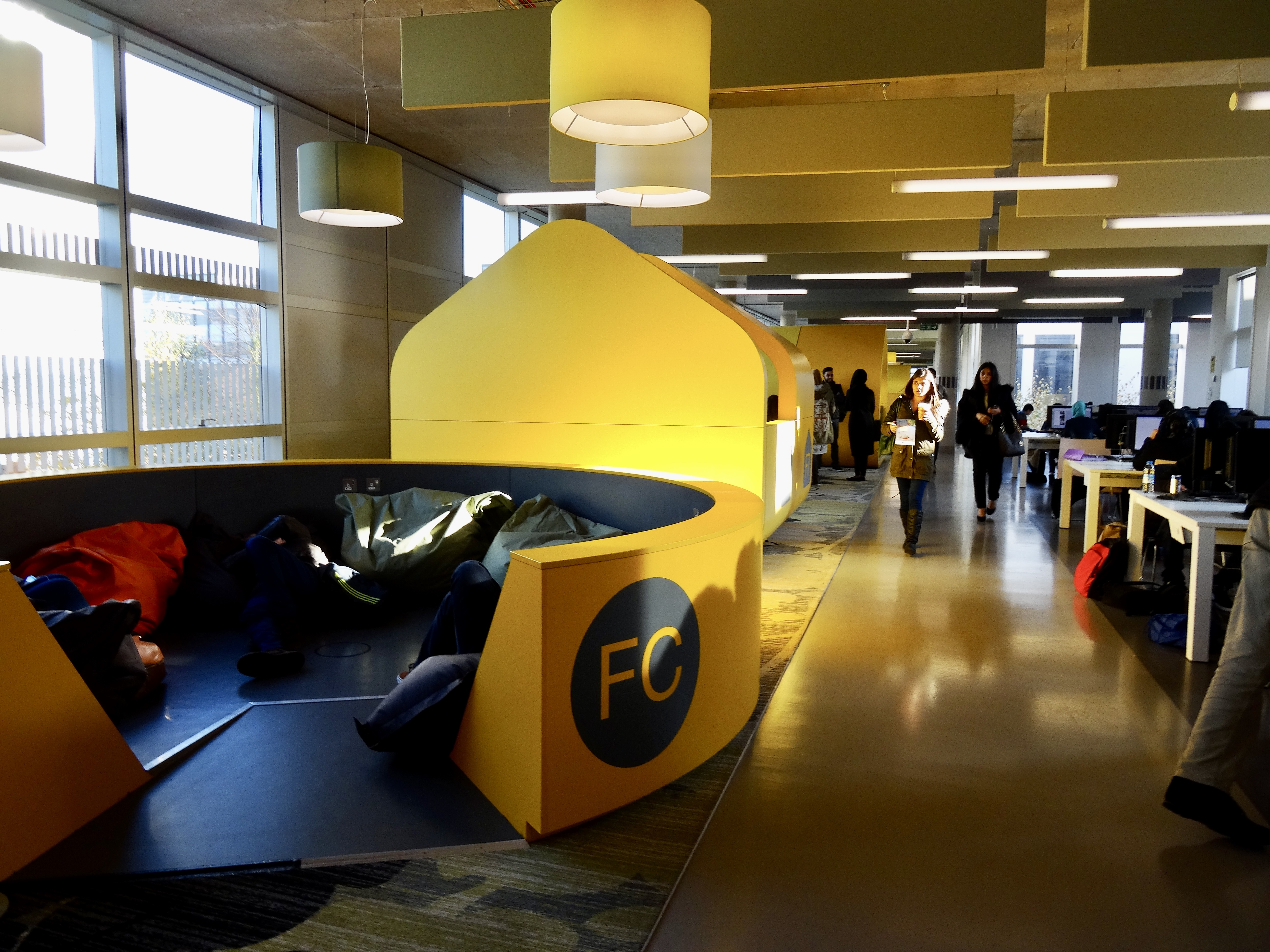
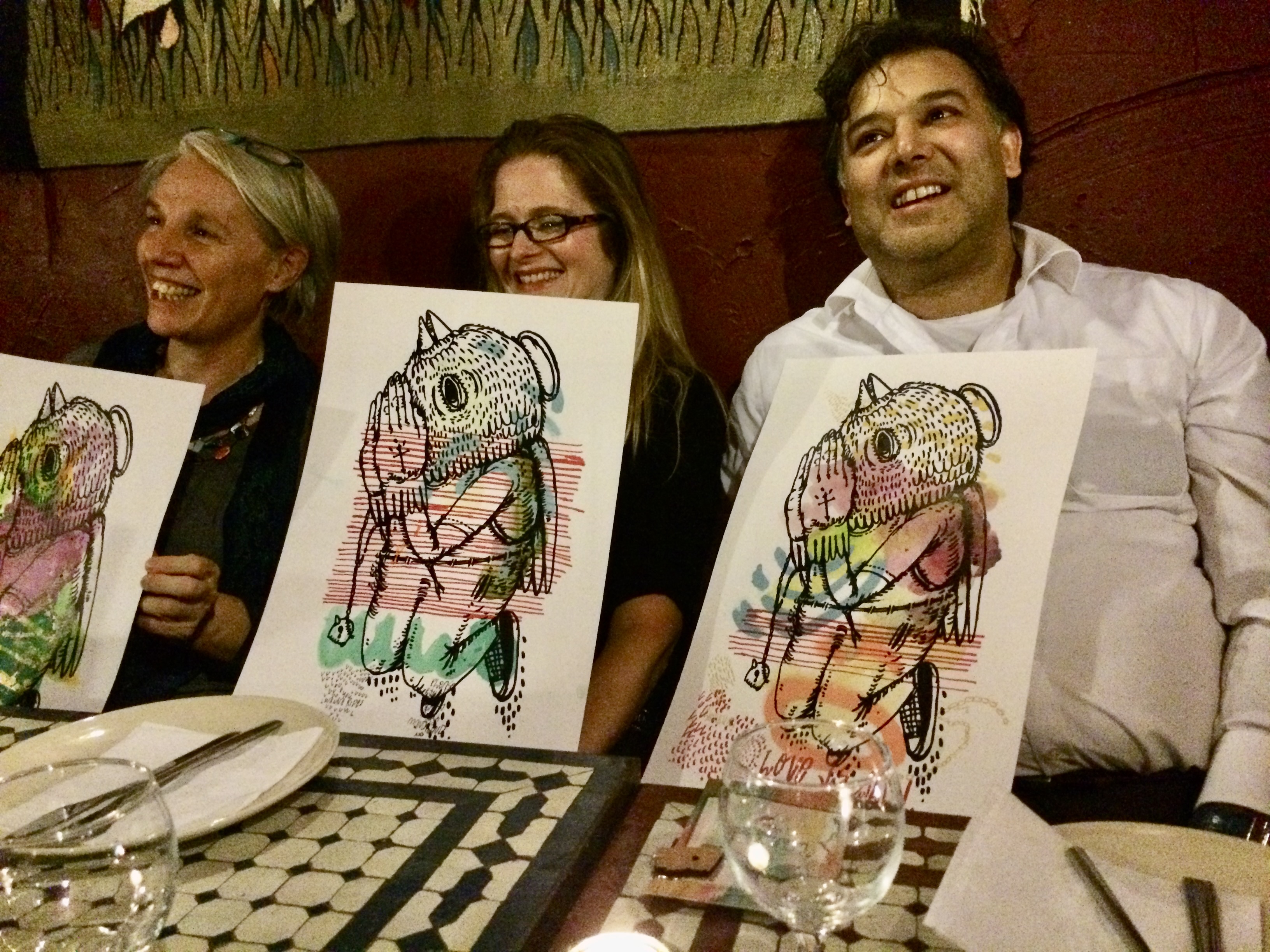
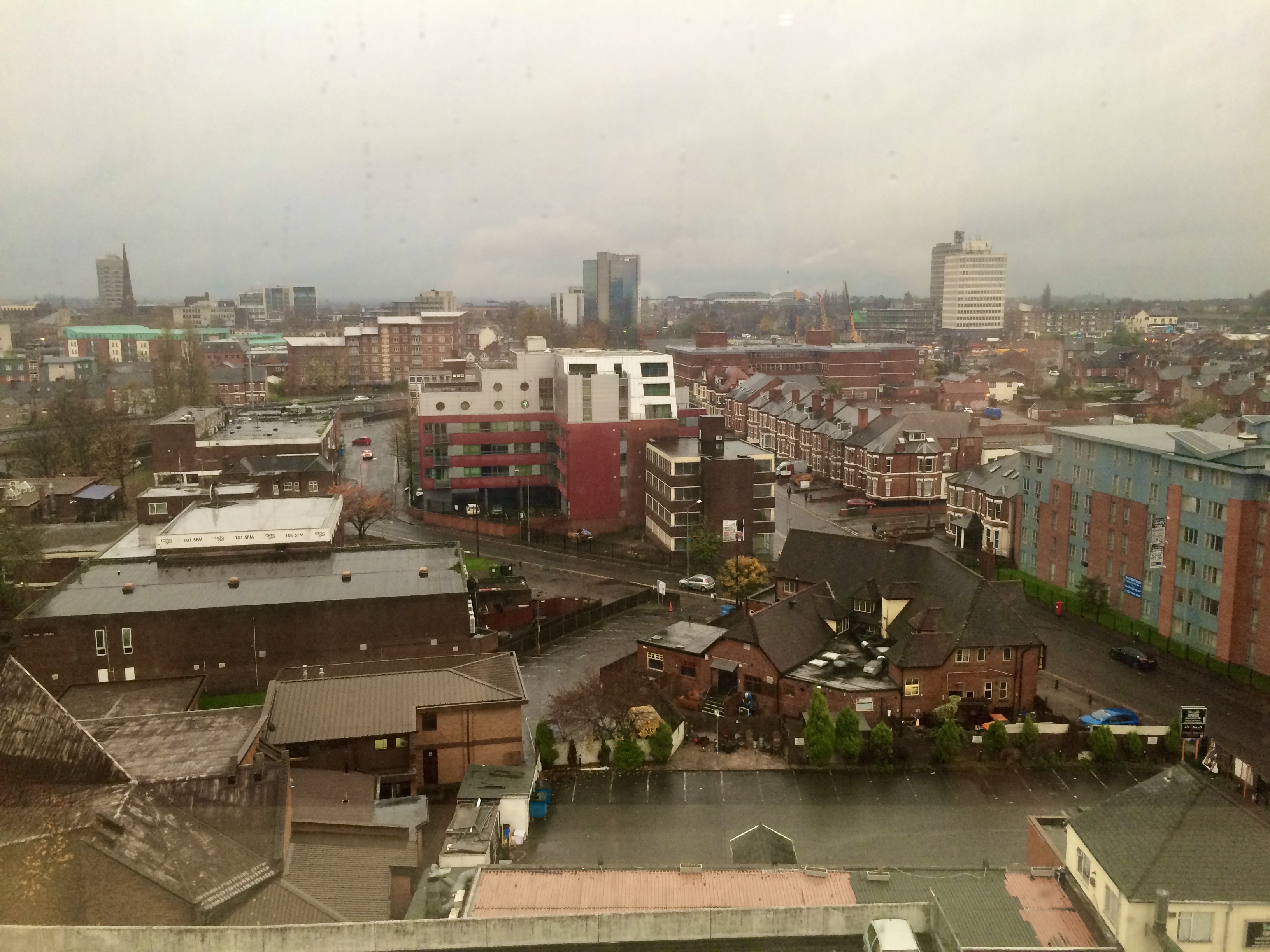
Arrived in Coventry Sunday night – by train having started in London – to be greeted by rain. It was a short 1 hour ride from Euston Station. It was hard to get an immediate impression of the city as it was damp, cold, and dark. Settled into the “luxurious” Ramada Inn.. And then Chris and I (Chris is a colleague from UWT and we were both invited to this symposium) decided to venture out for dinner. We had heard that Spoon Street had some nice restaurants so off we went. Spoon Street is one of the few areas (about a two block strip) that is representative of old Coventry, with most of the city being destroyed during WWII. To get to Spoon Street we walked down dirt paths (a shortcut suggested by the hotel receptionist who clearly is not trained in the world of the hospitality industry that usually suggests a carefully configured and often not direct, walk that ensures you see the “best” of the city) eventually reaching the “subway” (underpass) which takes you beneath the complex road system above. The subway is important because the road is totally impassable to pedestrians and gets you from one side of a set of ring roads that are criss-crossing everywhere. After you emerge from the subway you walk between the IKEA and the Casino (another non-place) and wind up on Spoon Street (about 15 minute walk in total). So there are a handful of Medieval structures – all of which are now restaurants and bars. Many of the restaurants (including the one recommended by the hotel) were closed because it was Sunday.
We opted for an Indian restaurant which was fine (except for the canned okra in the okra curry side dish that we ordered). We walked back (same route) to the hotel and then I did some FTA work and polished up my presentation for the symposium the following day. We would be picked up (“collected” as the Brits kept referring to it.. They would “collect” us each morning) at 8 am in the morning.. After a few beers at the Indian restaurant, I’m not certain how much fine-tuning I really did.
OK.. So now why I am here and then more about Coventry and Coventry University which is the reason for my visit.
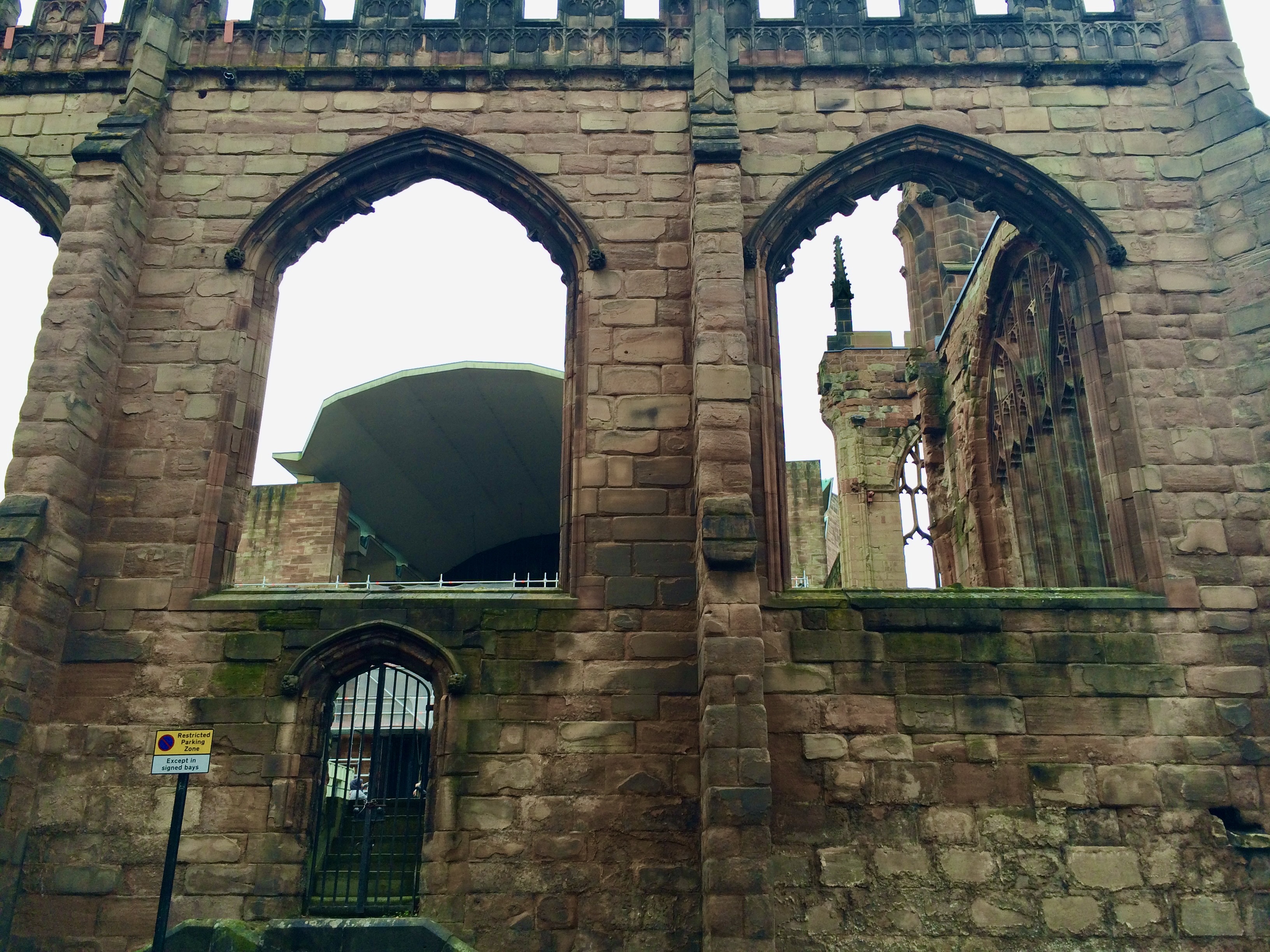
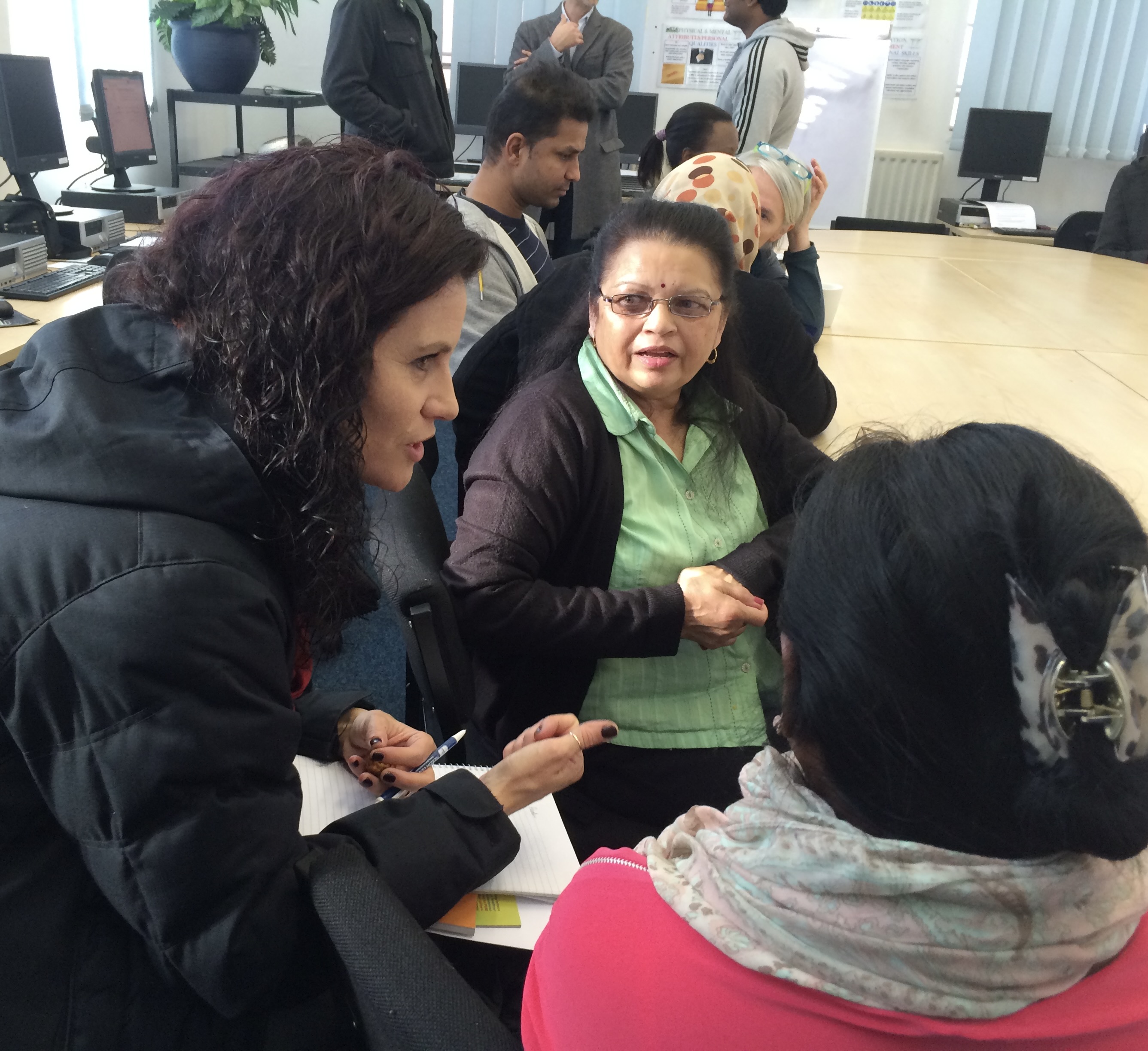
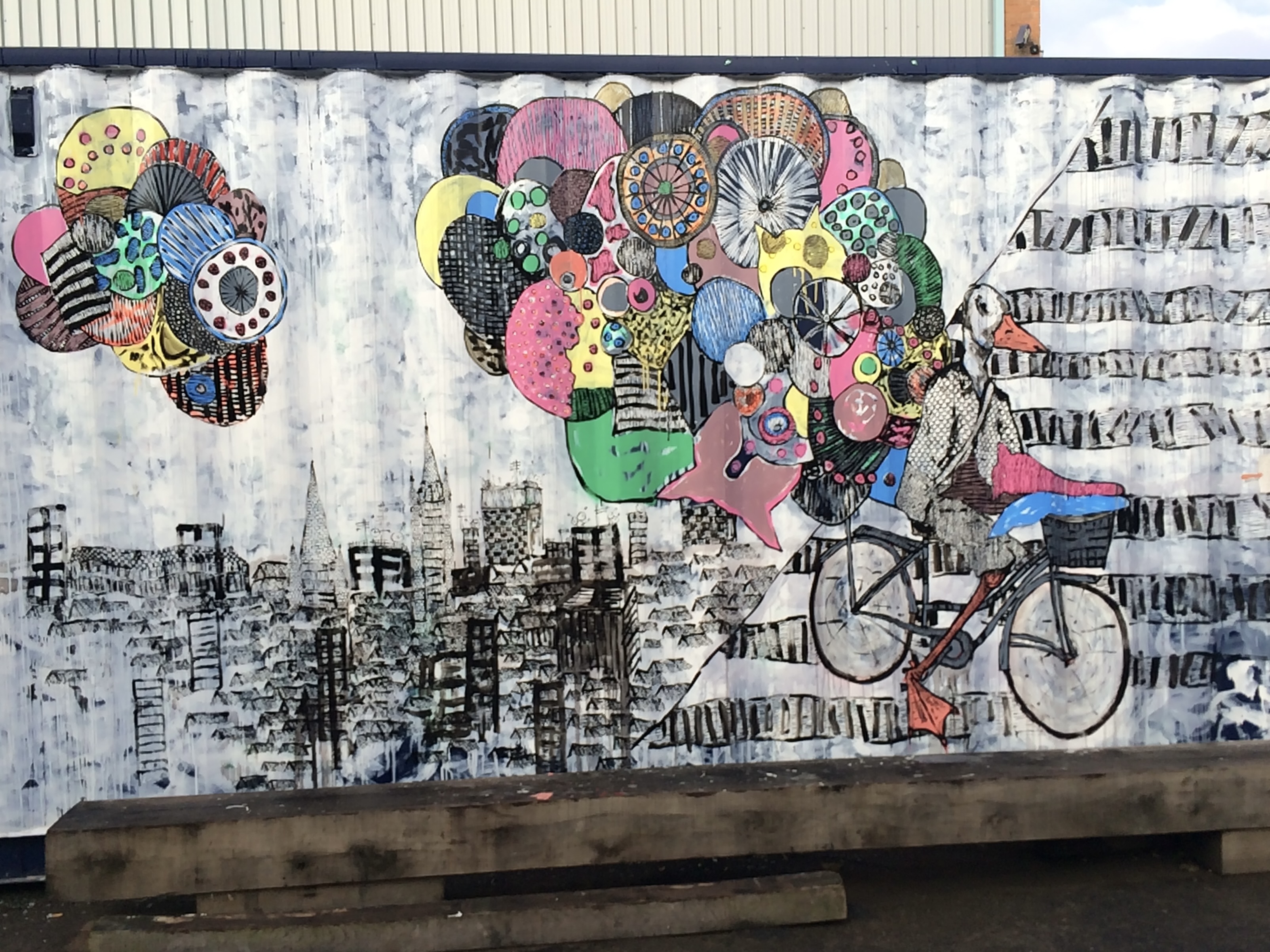
Coventry University is a fairly large (28,000 +/- students), openly ambitious “modern” British university located in this somewhat depressed (or as they say “disgustingly average”) city of about 330,000 (or 370,000 depending on who’s counting). I believe they use the term “modern” to differentiate newer universities and/or colleges and polytechnics that converted to university status in 1992 by act of the national government. It appears that Coventry has surpassed many of the others in status and based on banners hung everywhere was voted “Best Modern University in 2013 and 2014″…
Coventry University began as a training school for people in the silk industry that was the main economic driver of the city about 150 years ago. It evolved to train workers for the bicycle industry and then the automotive industry, etc. – always reflecting the jobs and companies of the city and region. It became a polytechnic some years ago – to include planning and engineering – and then when it took on university status many things changed. From a 98% local student population it is now just 30% local students, has a global footprint (but also professes to be “local”), has branch campuses in London and elsewhere in Europe and soon Asia, and is a major research university in the UK. It is still heavily tied to local industries and also attempting to “build” a modern industrial base in the area, so there are many partnerships with companies.. And to some extent they seem to be very reactive in their approach to creating programs within the university – heavily driven by external needs (of the business community).
For some reason (not completely revealed), the university administration – realizing that it was no longer very engaged with the local / regional community – decided to launch something they are calling the City University Initiative (which includes a conglomeration of programs such as the Neighborhood University, 40 x 40, the Age Project, etc., a research faculty and project directors). As background for their new initiative two senior faculty traveled to the US to visit universities they had heard had been successful at engaging with community. This included University of Illinois Chicago, Arizona State University, and University of Washington Tacoma (where as you know I am a faculty member). They had also heard (maybe even read ??) a 200-page document FTA had produced in 2007 for ASU documenting the work of many universities across the US and setting out a strategy for ASU to become socially embedded in Greater Phoenix.
After I met these folks, they decided to host a symposium with people from these universities (the ones mentioned above) to learn more and to brainstorm with their staff and leadership. So, that is why I spent 58 very intense hours in Coventry, ending early this morning when I took the train back to Euston, a taxi to Paddington, and the Heathrow Express to get to the airport by about 10:30 am to catch this flight to Houston and on to Seattle (so I can teach tomorrow).
OK. I’m not going to go into detail about the meetings.. Which would be a dissertation on its own… There were 5 Americans including me and Chris and the Coventry group included senior leadership, the president of the University, and the newly minted staff and program managers (all of them having been hired within the past few months). There were about 10 folks from Coventry (with some moving in and out depending on the topics).
The first morning included a lot of presentations from them, from us and some good Q&A (mostly the Americans asking the questions to better understand why we were invited!) We had lunch in their student cafeteria (one of many). We were all pretty shocked by the fact that you need key cards to access all buildings and also all of the rooms, including bathrooms and food places. (Obviously, you can imagine that I had a lot to say about that in relation to the idea of working with community!) Apparently all of the UK is like that with all public buildings including schools and libraries. And at the grade schools, students gain access with fingerprint machines.
The afternoon was filled with discussion and an effort to hone in on similarities and differences between the US universities and Coventry.
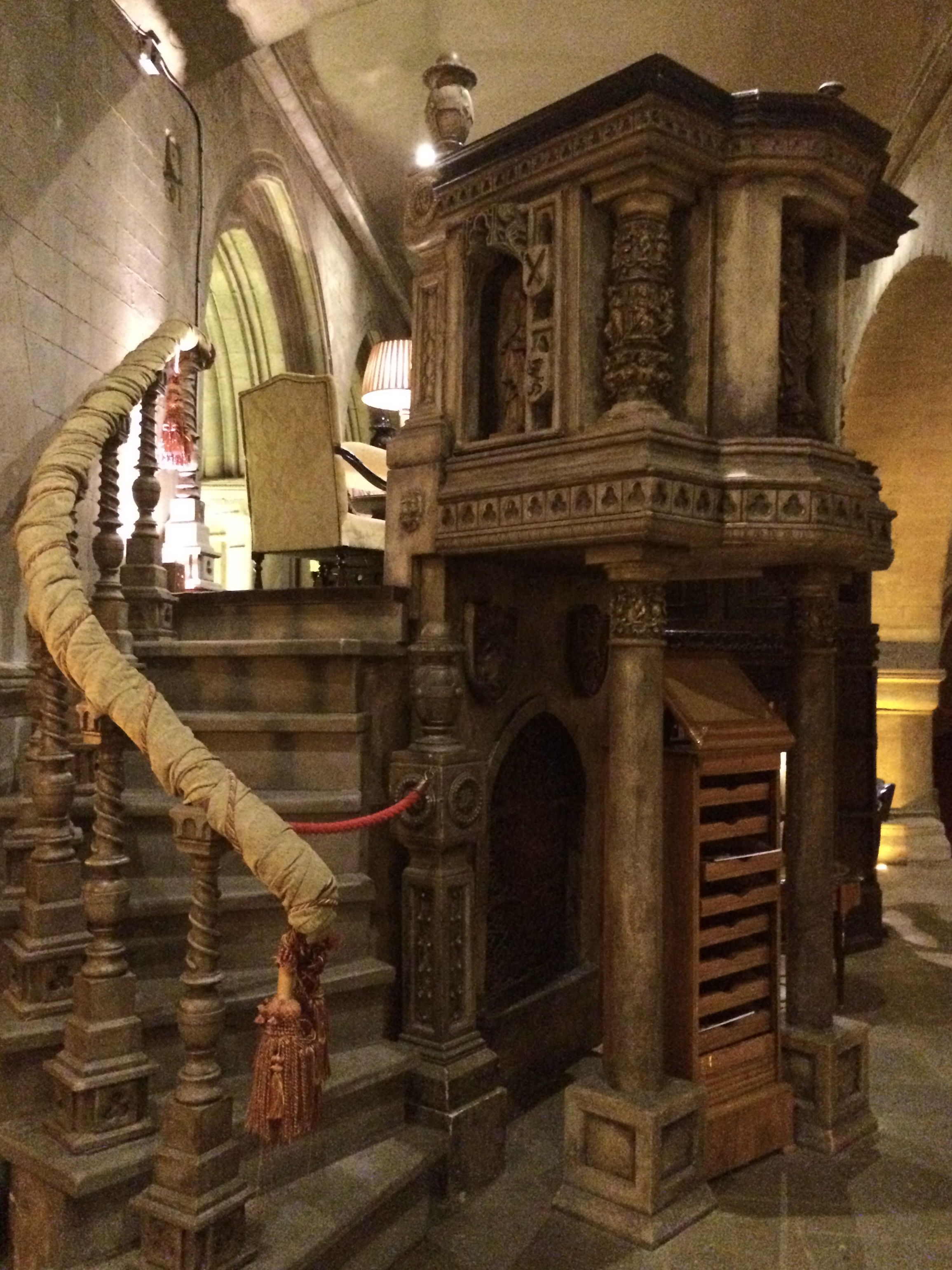
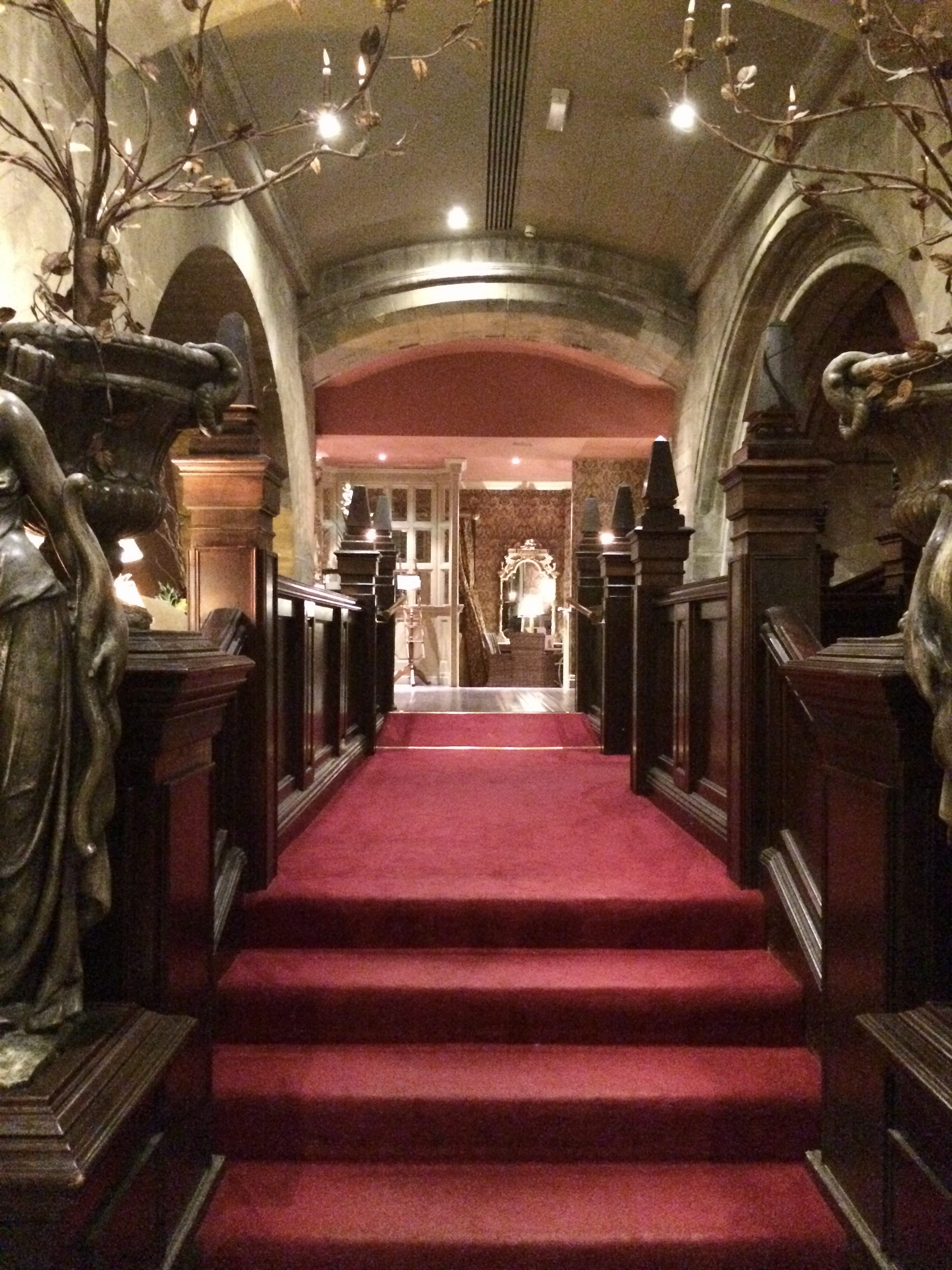
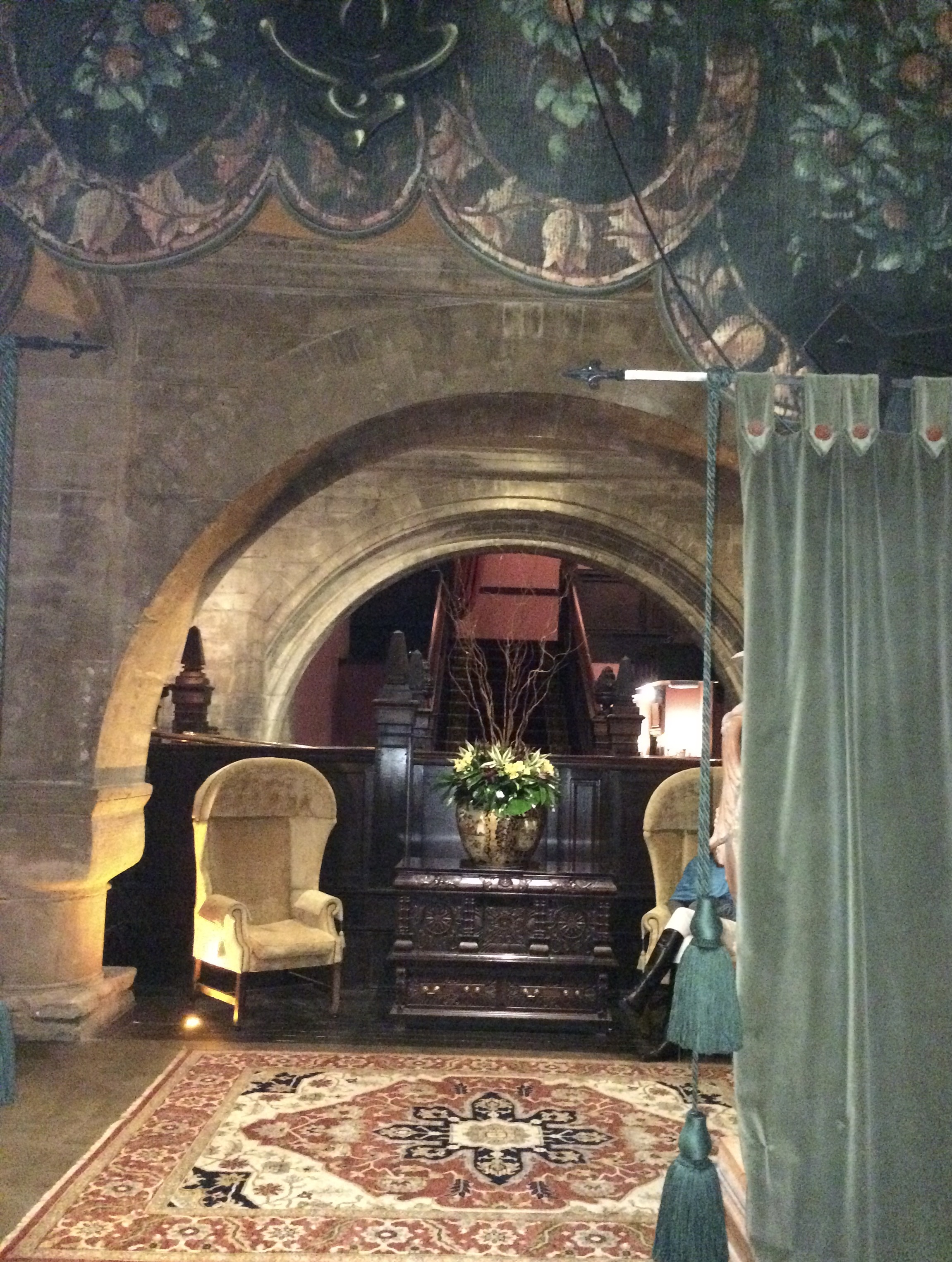
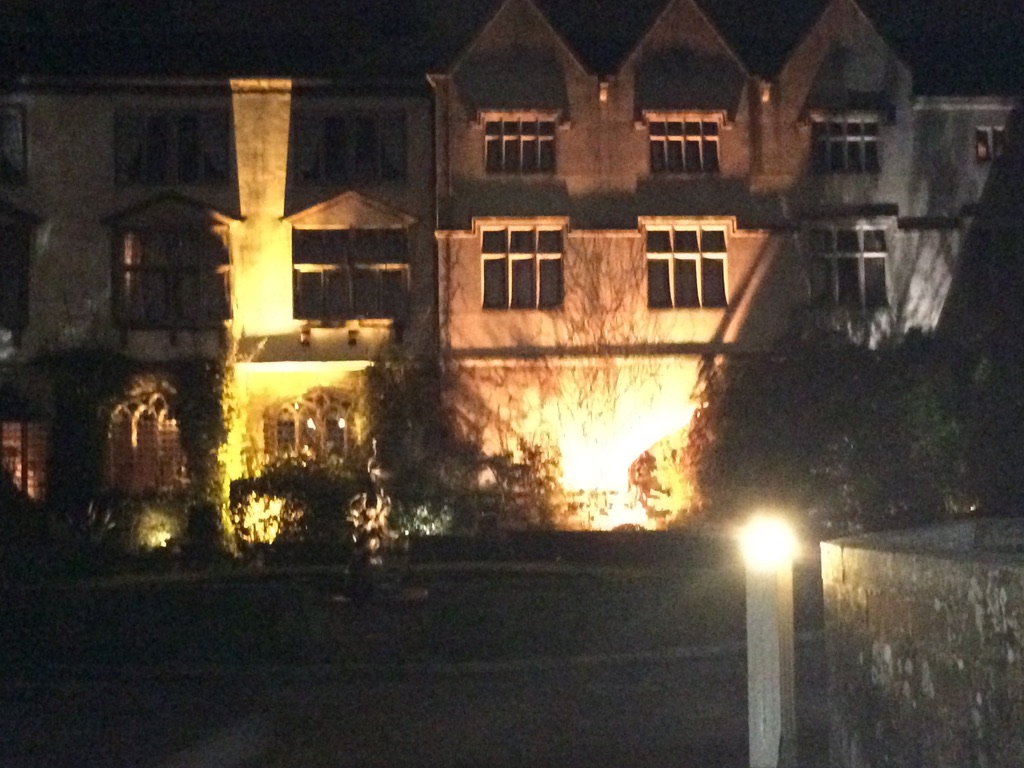
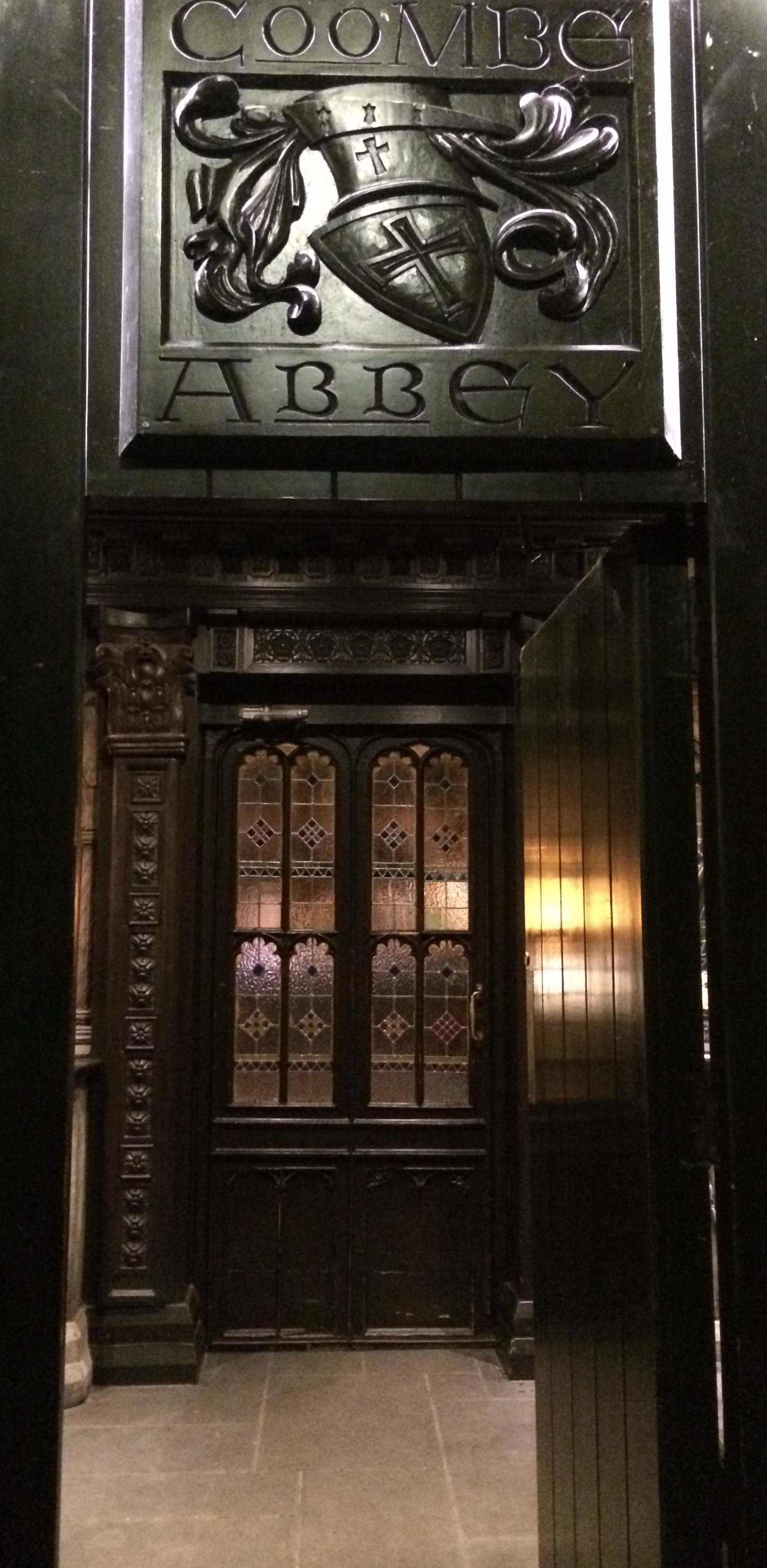
In the evening we all went to Coombe Abbey which was founded as a monastery in about the 12th century. It later became royal property. It has a very interesting and complicated history which I didn’t completely get… but it involved the Gunpowder Plot.. Later the same architect who designed Buckingham Palace designed an extension for the Abbey… and then for several centuries it was owned by an Earl… Then around 1960 the city of Coventry bought the property which was in disrepair and vacant.. It includes 150 acres of parkland which is public now… The very very colorful history was told to us before and after dinner by a talented orator dressed as a monk. To get to the place (about 20 minutes from town) you walk from the parking area over a moat… The building has undergone many many changes and part of it (an extension) was built in the late 1800s I think as a French chateau. An interesting California connection is that after a private owner decided to sell the property (he had been living in the place alone – all 140 rooms for himself), he decided he could make more money if he tore down large portions and sold the stone. It turns out that he sold the stone to the Hearst family for the building of St. Simeon! I guess it’s all the years with the monks and then the single owner that created many of the myths, including the belief that the place has ghosts.. Didn’t see any. If you go to Coventry, you can stay at the abbey, now turned into the hotel. It’s a real trip! Don’t check into any of the lower numbered rooms.. They’re the ones with the ghosts. There are 140 rooms in the hotel now (I think).
Dinner was a long formal event hosted by the President (whom I was seated next to) beginning with champagne toasts, moving into several courses with the main course being lamb.. Lots of desserts.. Matching wines and aperitifs…
We were collected and dropped off at the Ramada at about 11:30 pm and we 5 Americans decided to continue on at a student bar close to the hotel. We closed that place down at about 1 am.
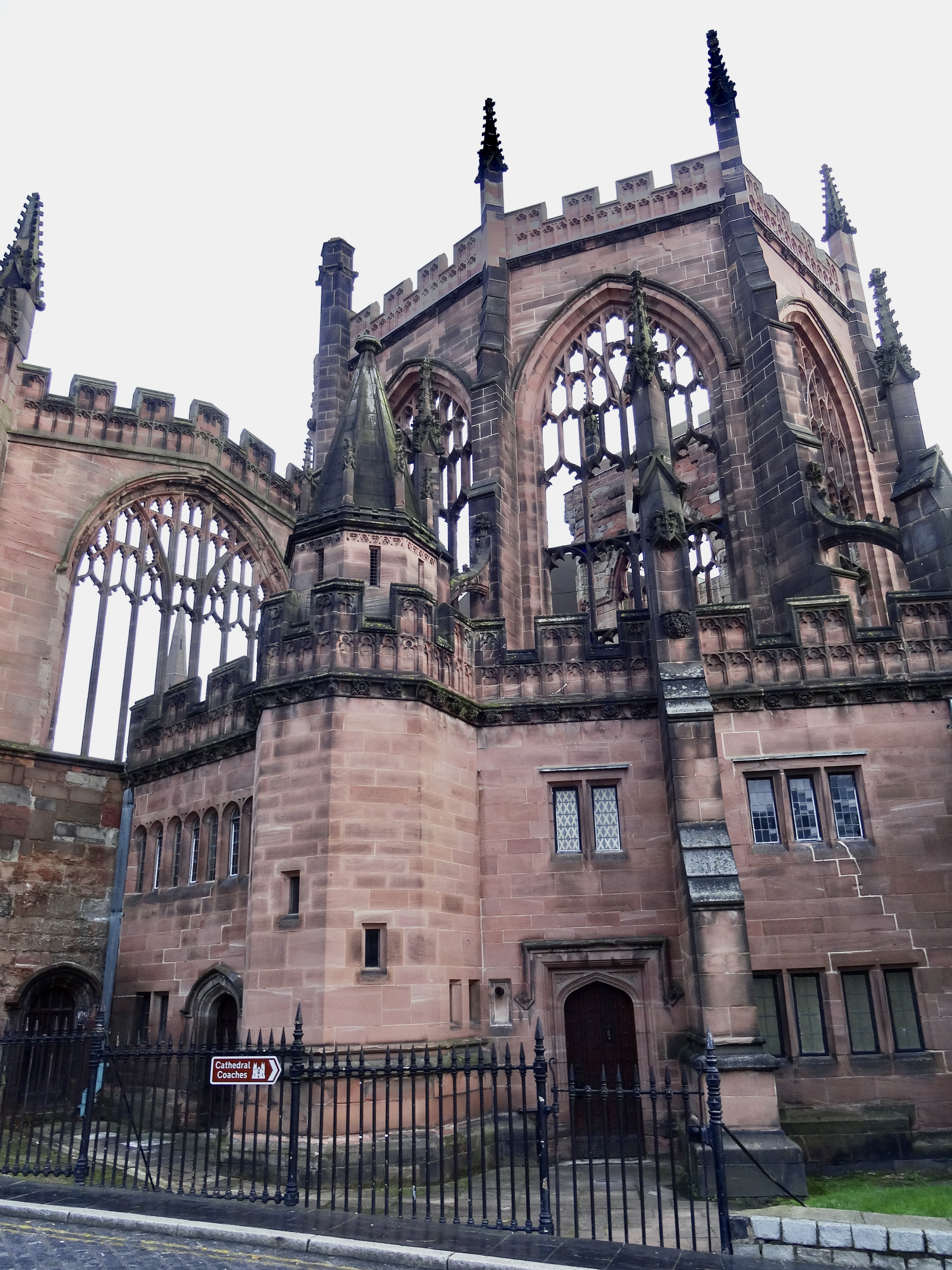
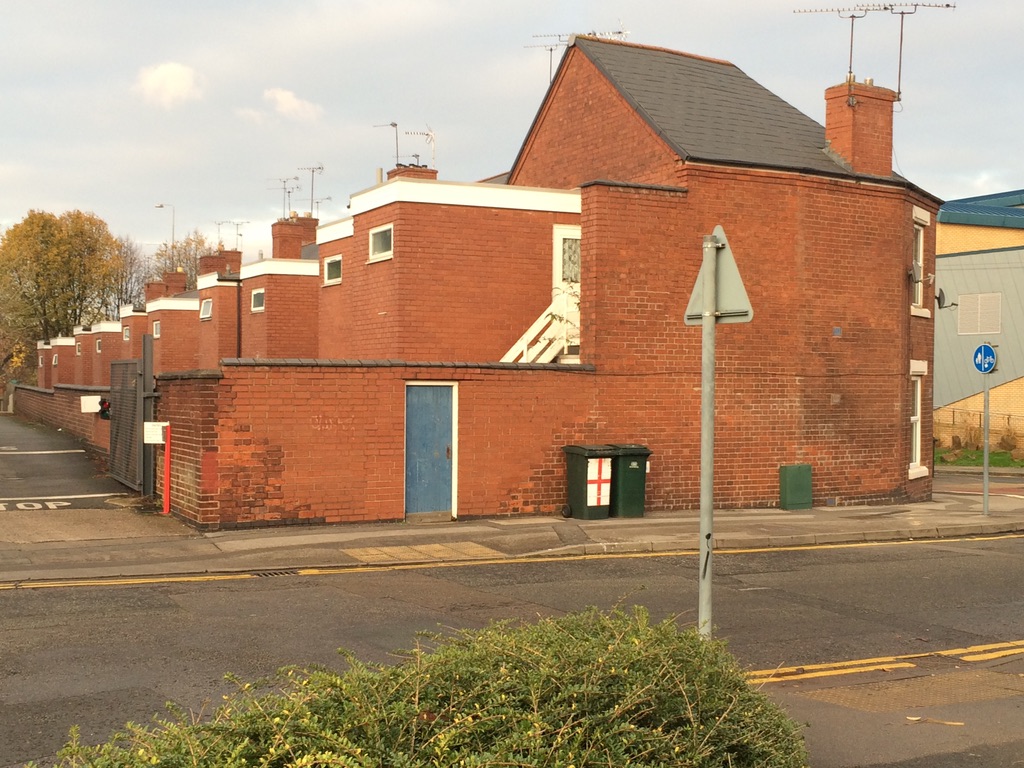
Day two (which seemed to start about an hour after we got to the hotel to sleep) included site visits to several programs and a huge amount of walking in the rain. We passed the quite famous Coventry Cathedral – the old demolished one standing next to the new modern one. The city of Coventry has a long history of being a haven for immigrants and also a city of “reconciliation.” Both the university and the new Cathedral have a lot of programs that focus on trust, peace, and reconciliation. Some of our stops included meetings with students (from every part of the world). It’s a huge campus, but very much an urban campus with less green than we see in typical American universities. But then again it’s an urban campus.
Lunch was in a very cute part of the city – walking distance from the University. And lots more talk about how to collaborate and what that would look like. As we walked back to the offices for the Initiative we wondered why the project wasn’t located in the neighborhood we had just walked through rather than in a very official building with key card entry.
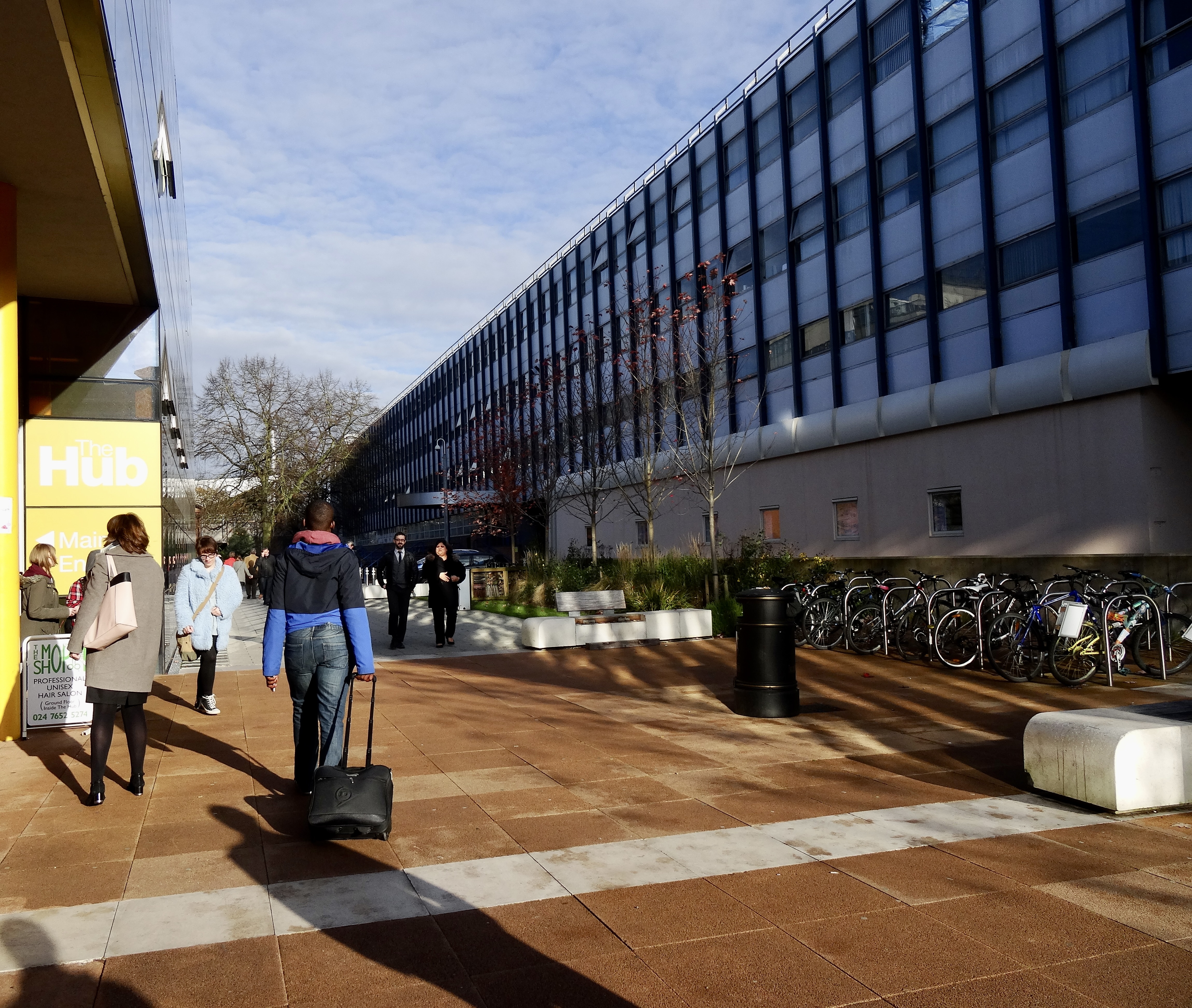
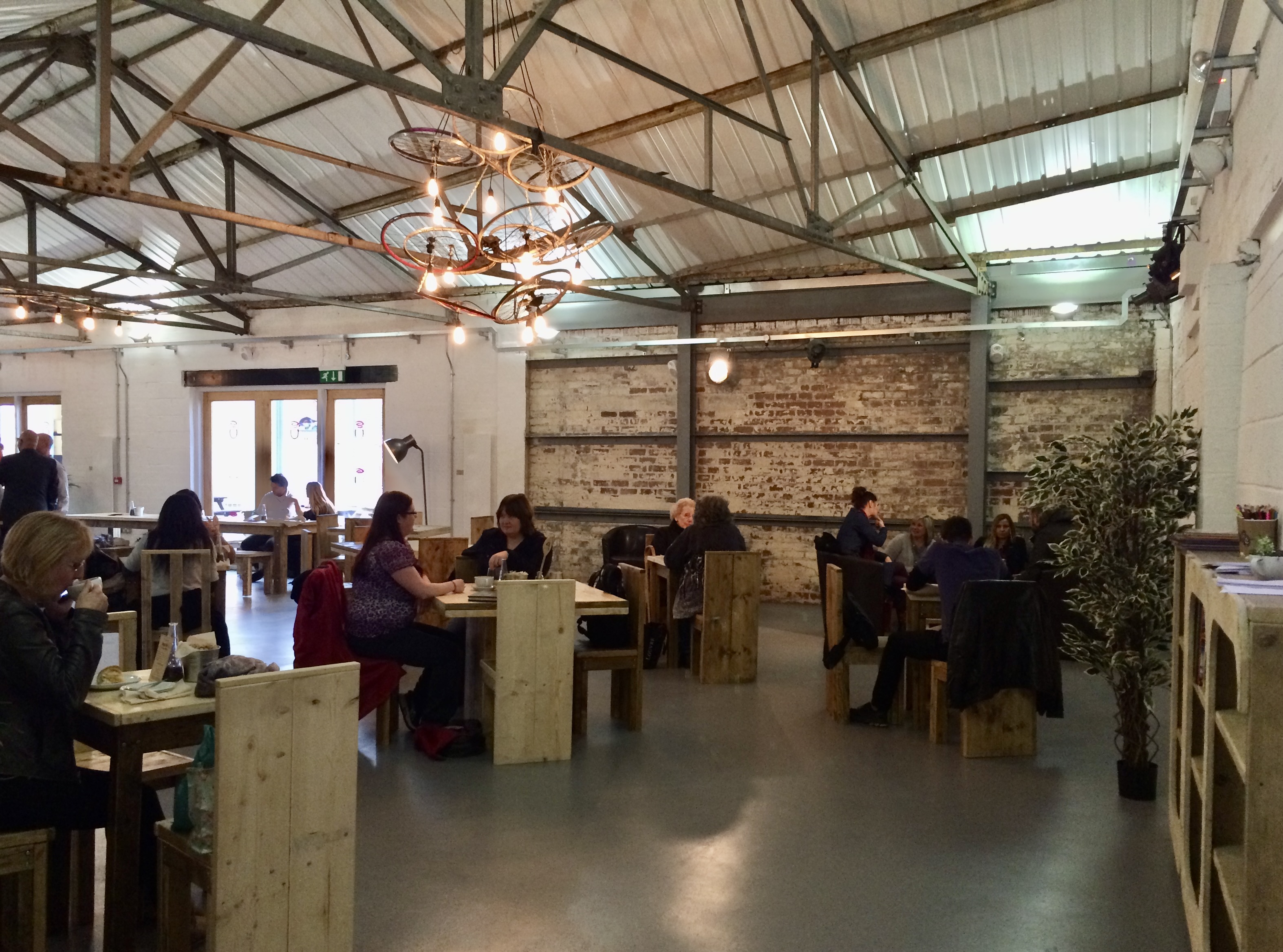
At the end of the day, we met with a group of Commonwealth Scholars (all from Africa) who had been selected competitively based on the work they were doing in their own country related to racism and peace. That was actually a fascinating conversation, although divorced from the Initiative.
Dinner was at a wonderful little Mideast restaurant called Habibi.. A lot more wine and talking and eventually heading back to the hotel after midnight.
So that sums it up… 58 hours in Coventry… 48 hours in London (see other post)… and about 40 hours of travel if I combine both directions and include travel to and from airports… There you have it.
I’m tired, am fortunately upgraded and am on that new Boeing Dream Plane. Anxious to get to Seattle to sleep in my own bed but that won’t happen until well after midnight (and my body time will be about 8 am). See you in California on Saturday. Lots to do before Thanksgiving.
All my best –
Fern
Weekend in London. November 16, 2014
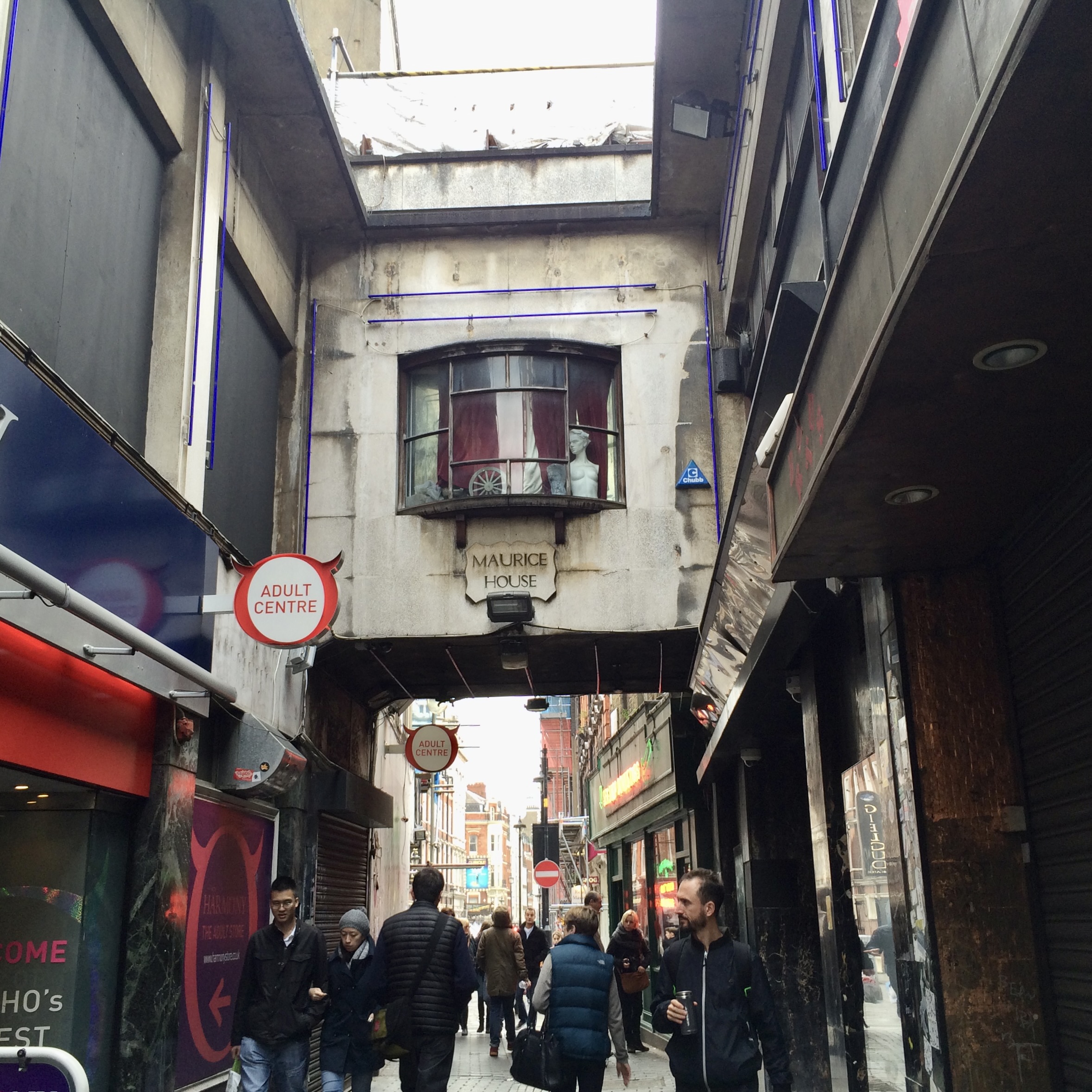
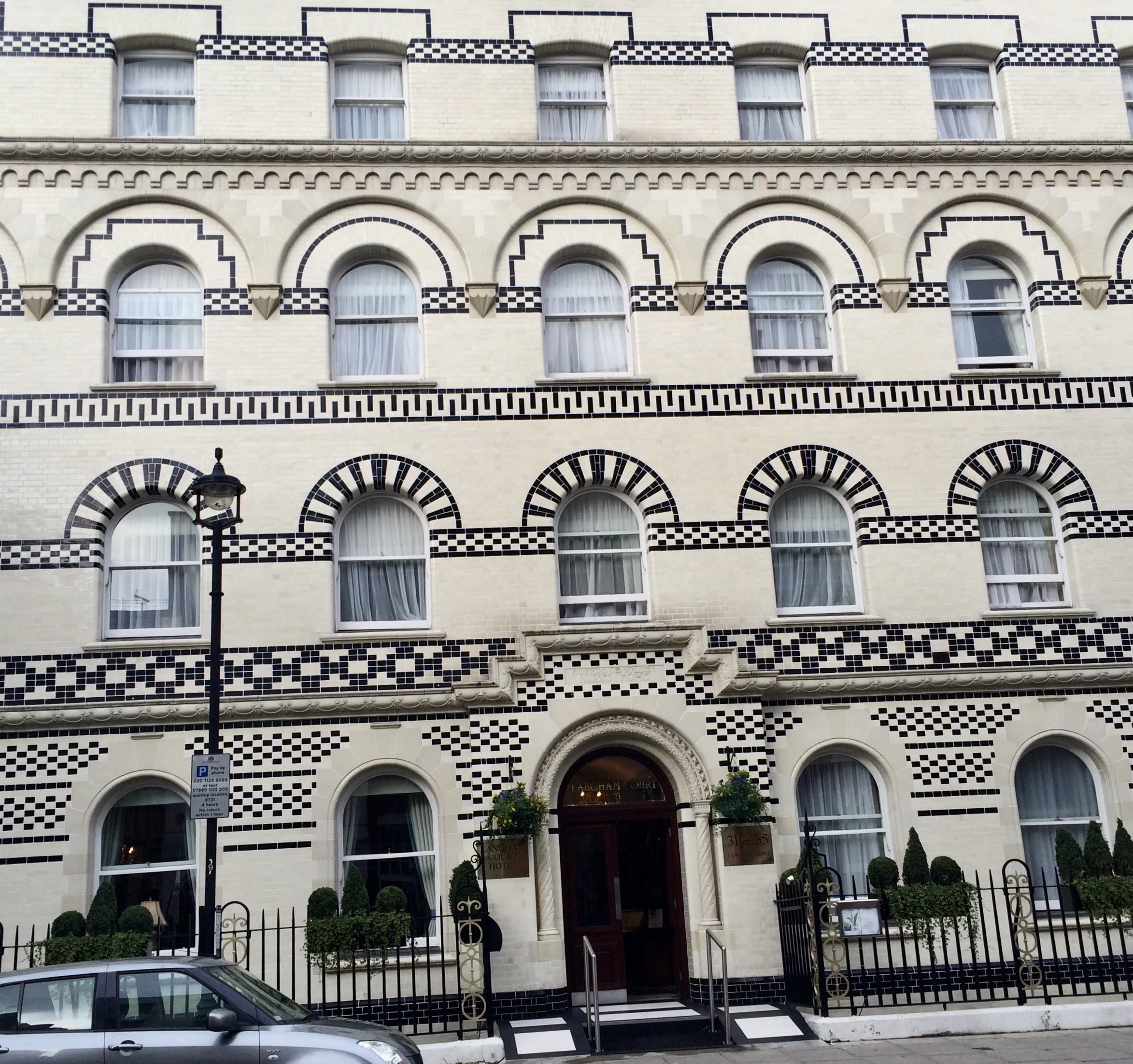
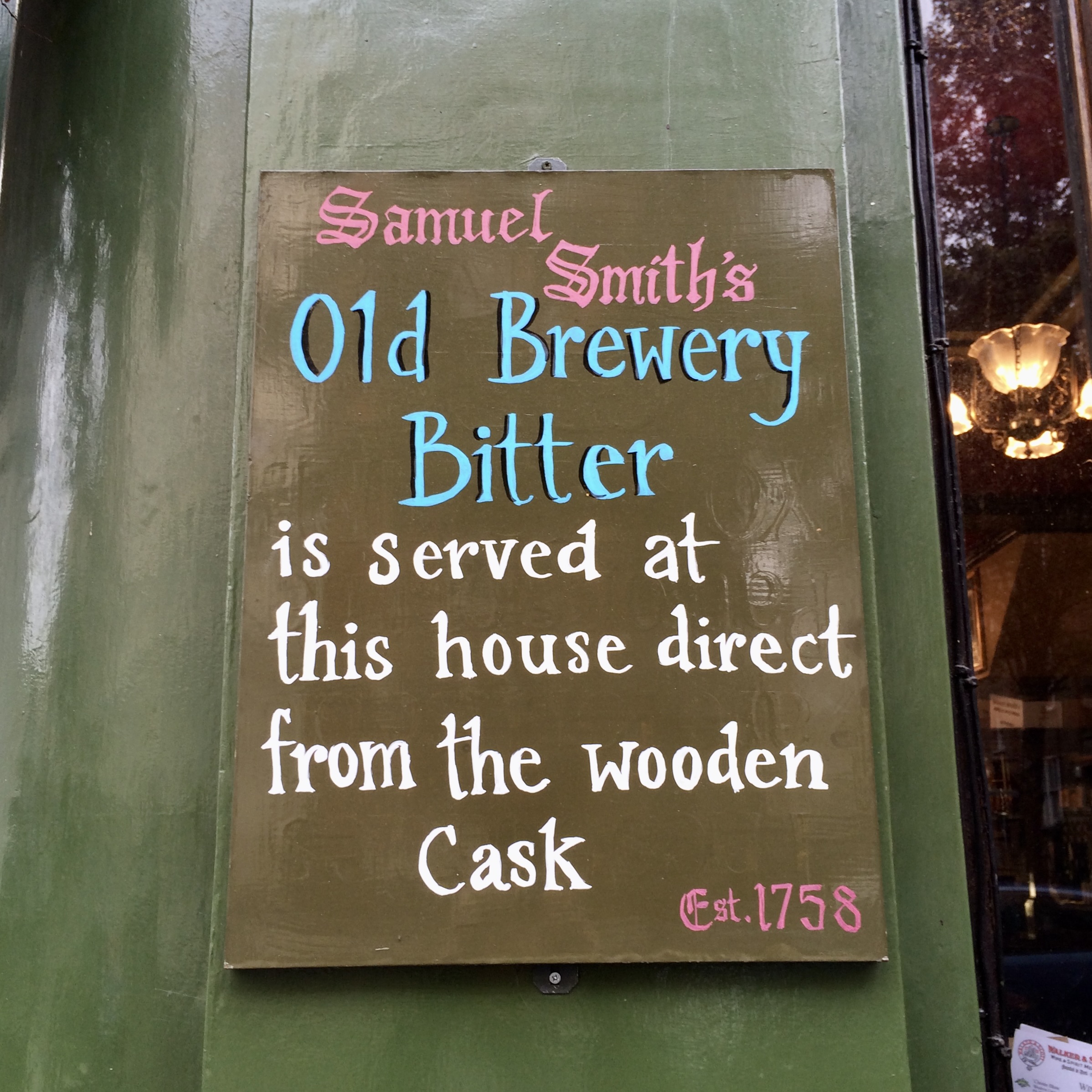
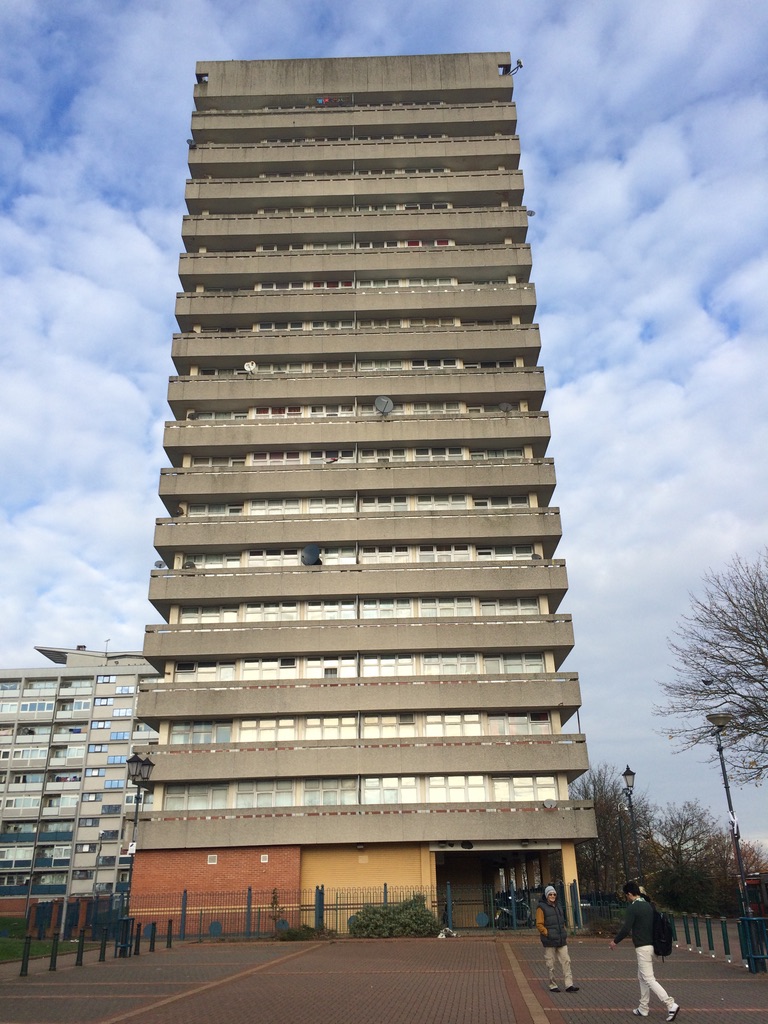
Greetings from Coventry, England (just arrived by train after spending the weekend in London).
So this will not be my usual exotic travelogue since it’s not a very exotic trip.
Arrived in London on Friday afternoon after a somewhat complicated week and flight. I was in LA on Tuesday (to press check the annual card for the office Open House) and in Seattle on Wednesday — arrived in Oakland after midnight and after spending most of Thursday at the office, headed directly to SFO. Had hoped for an upgrade but as the day went on, my chances became dimmer and dimmer, even though I was first on the list for an upgrade into first class. When I got to the airport, both business and first class were booked solid, and completely checked in full. So I settled in my economy seat (took out everything I’d need during the flight from my bag).. Then just after they closed the plane doors they moved me to business class… Turns out someone in first class was a no-show, so a global person was put into first class, opening a business class seat for me! At least I would be able to get work done and also (hopefully) sleep.
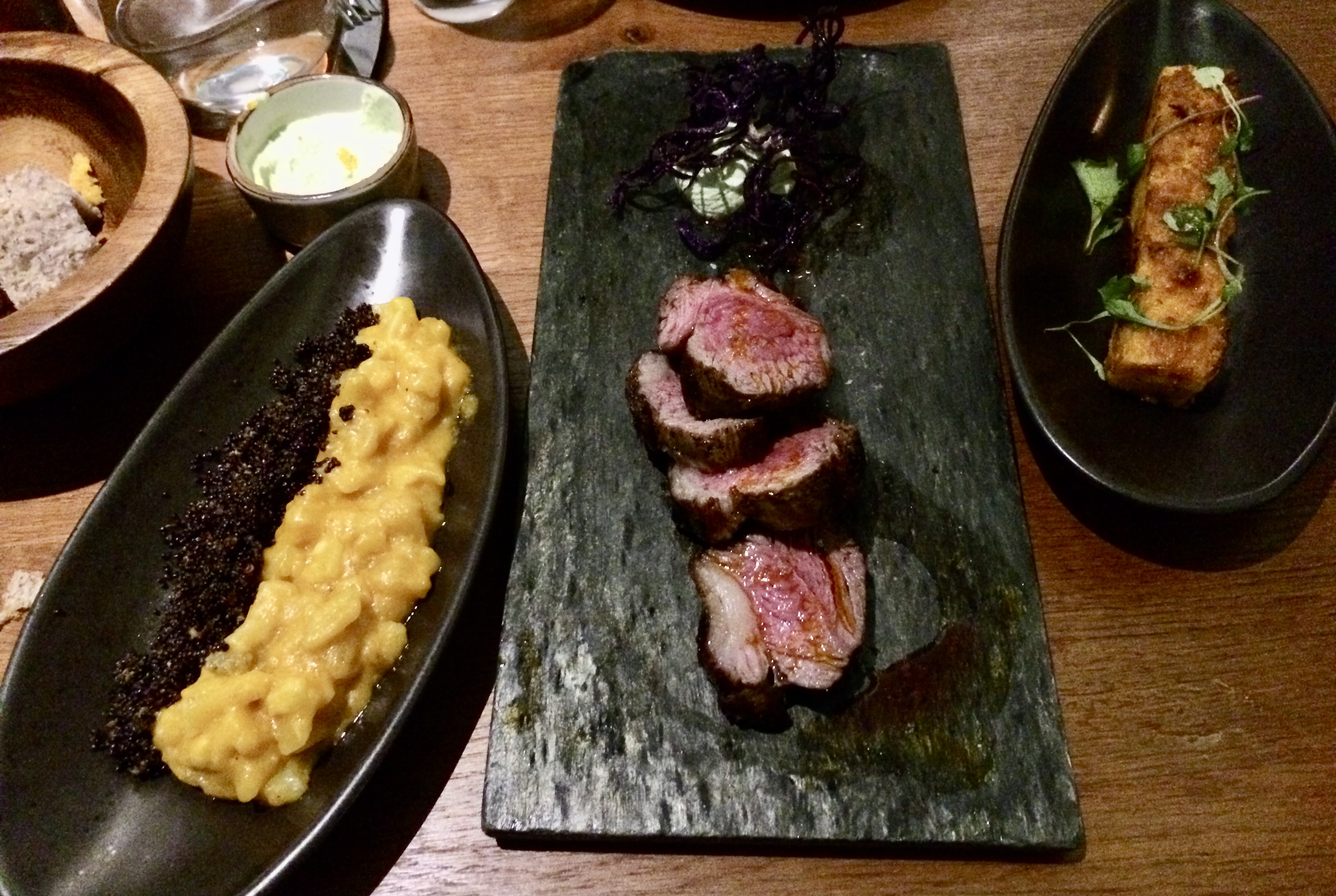
Arrived in London at about 2 pm Friday… and after settling in met up with Lara (god-daughter who now lives in London) for dinner at Lima Floral (Actually, we first went to Lima only to find that our reservation was for Lima Floral — a 5-minute taxi ride away). As the name implies — Peruvian food, but definitely with a contemporary twist.. We started with classic Pisco Sours (naturally!) and several starters including ceviche, crudo mar (sea bream) which comes with a sauce made of tiger milk; escabeche salad, followed by a lamb dish and a monkfish stew… topped off with a dessert of chocolate (sort of mousse) with Peruvian cacao and wood sorrels and then a bit of sambucca to cap it off. We just about closed the place down. Food was fantastic, with all sorts of South American spices and marinades.
I warn you this travelogue is heavy into food.. since I’ve been to London too many times to have to do much sightseeing.
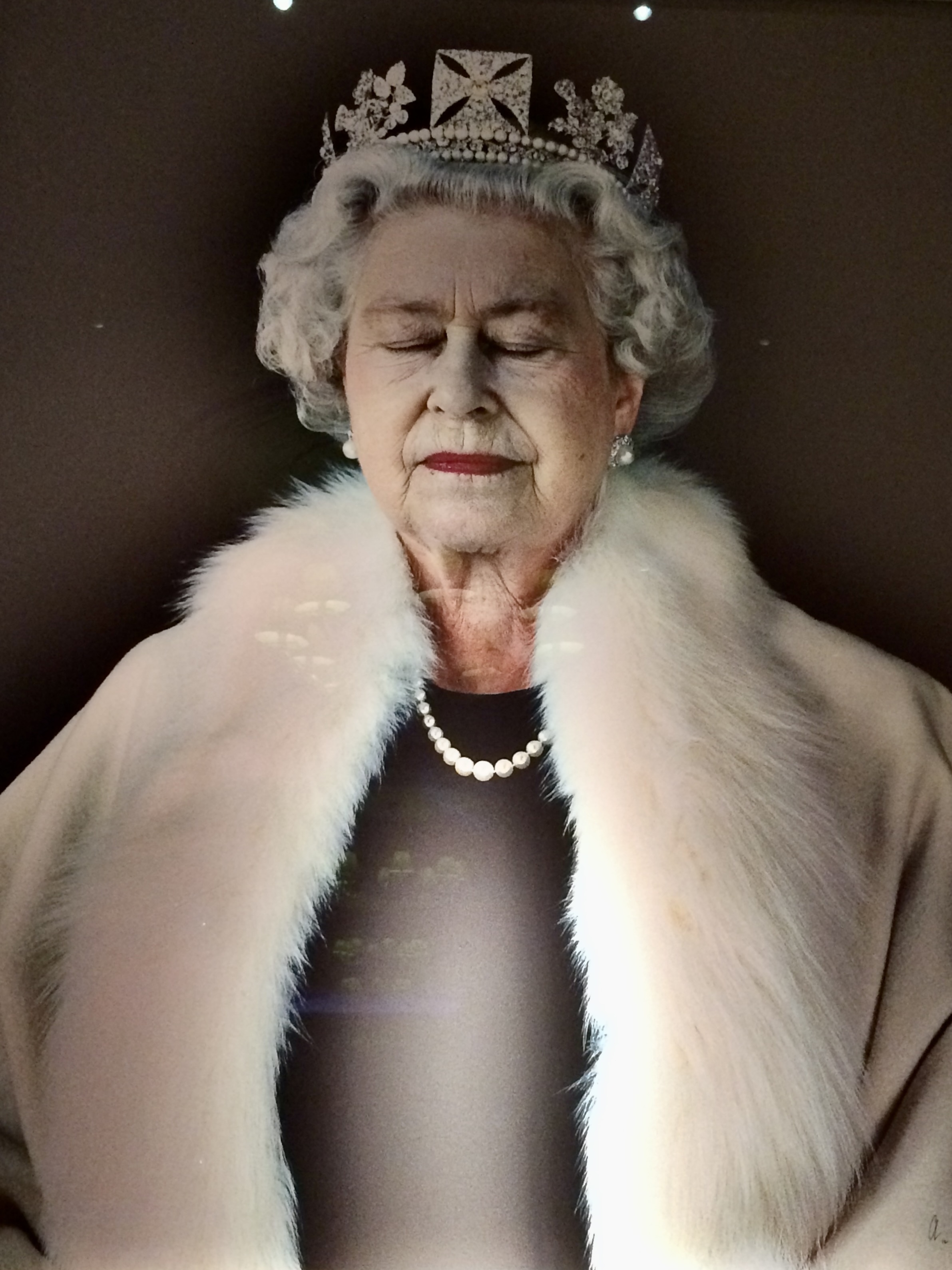
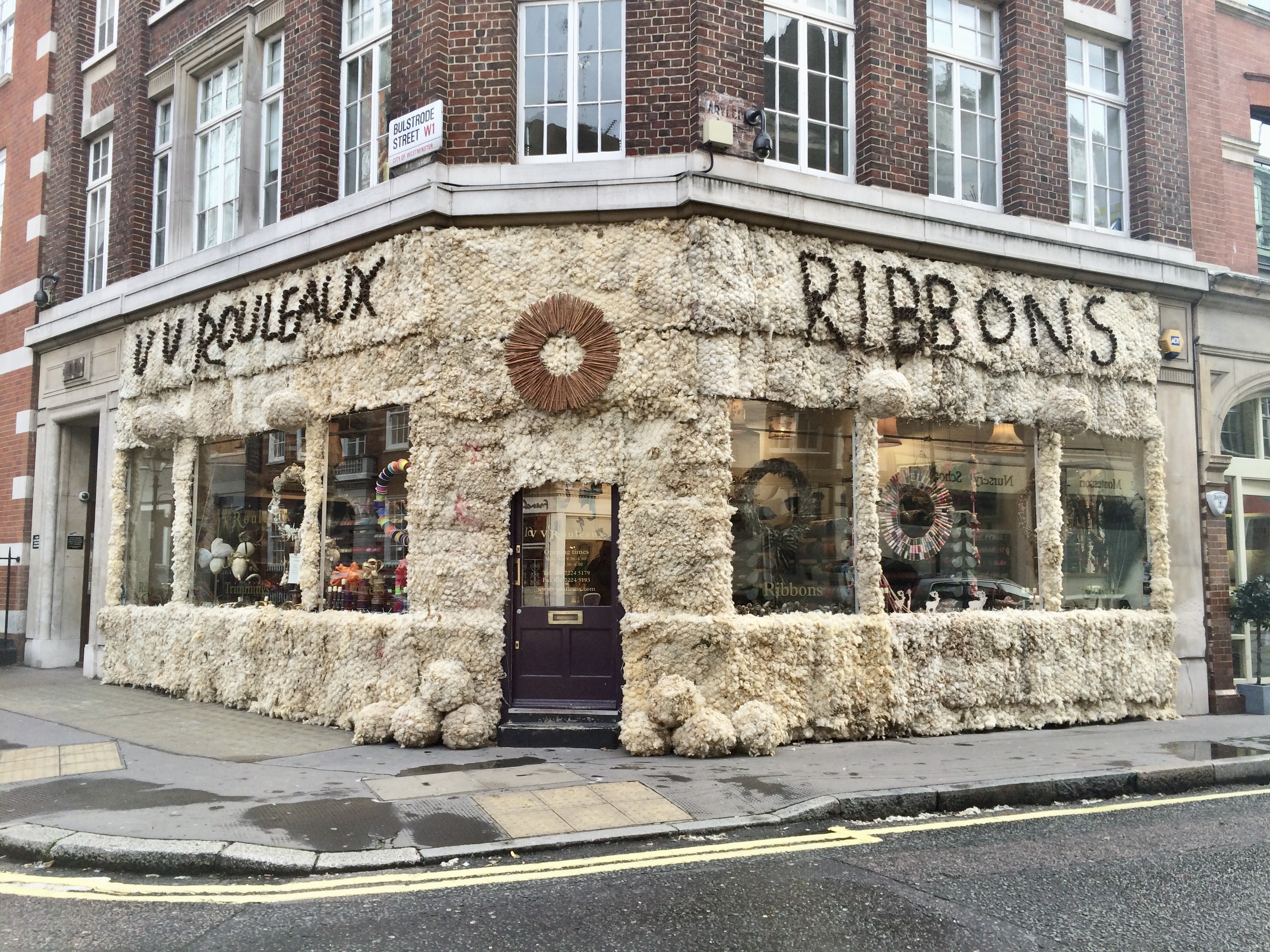
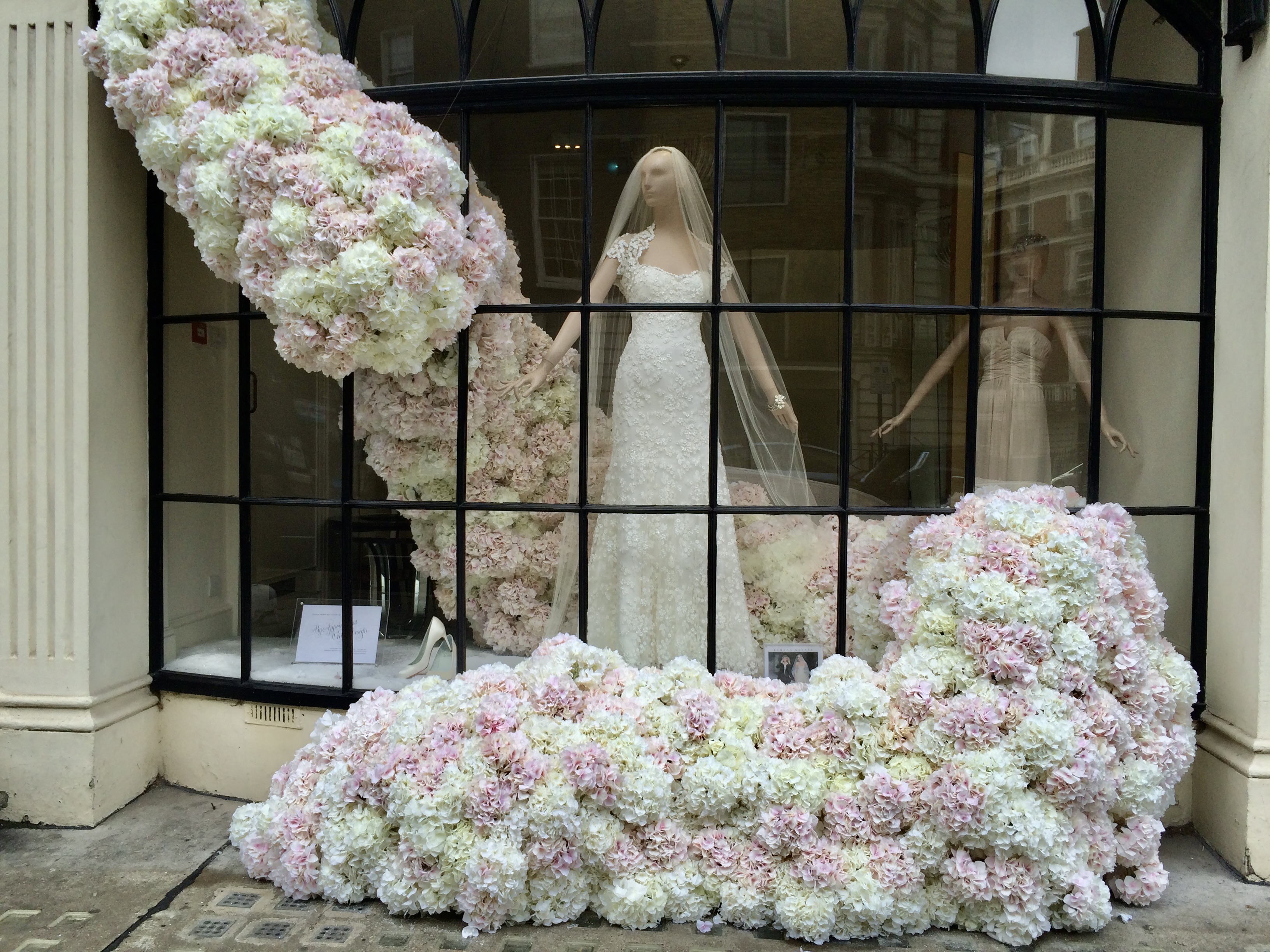
Stayed in the Marylebone neighborhood.. hotel lobby complete with huge print of the Queen with her eyes closed. It is a classic image— done by ‘accident’ by the artist, Chris Levine. Looks like she’s meditating. The story is that he was commissioned to do a portrait of the Queen in relation to 800 years of the Isle of Jersey’s “allegiance to the crown.” He was doing it as a holographic portrait, a process, a high resolution digital image using a camera that moved along a track taking hundreds of images every few seconds. At times the Queen could rest for a few seconds. I guess she closed her eyes at some point during the rest and he snapped the image. In recent years, the Queen has been fair game and many different artists portrayed her in less than royal ways…. as a commoner, as a Black woman, etc.
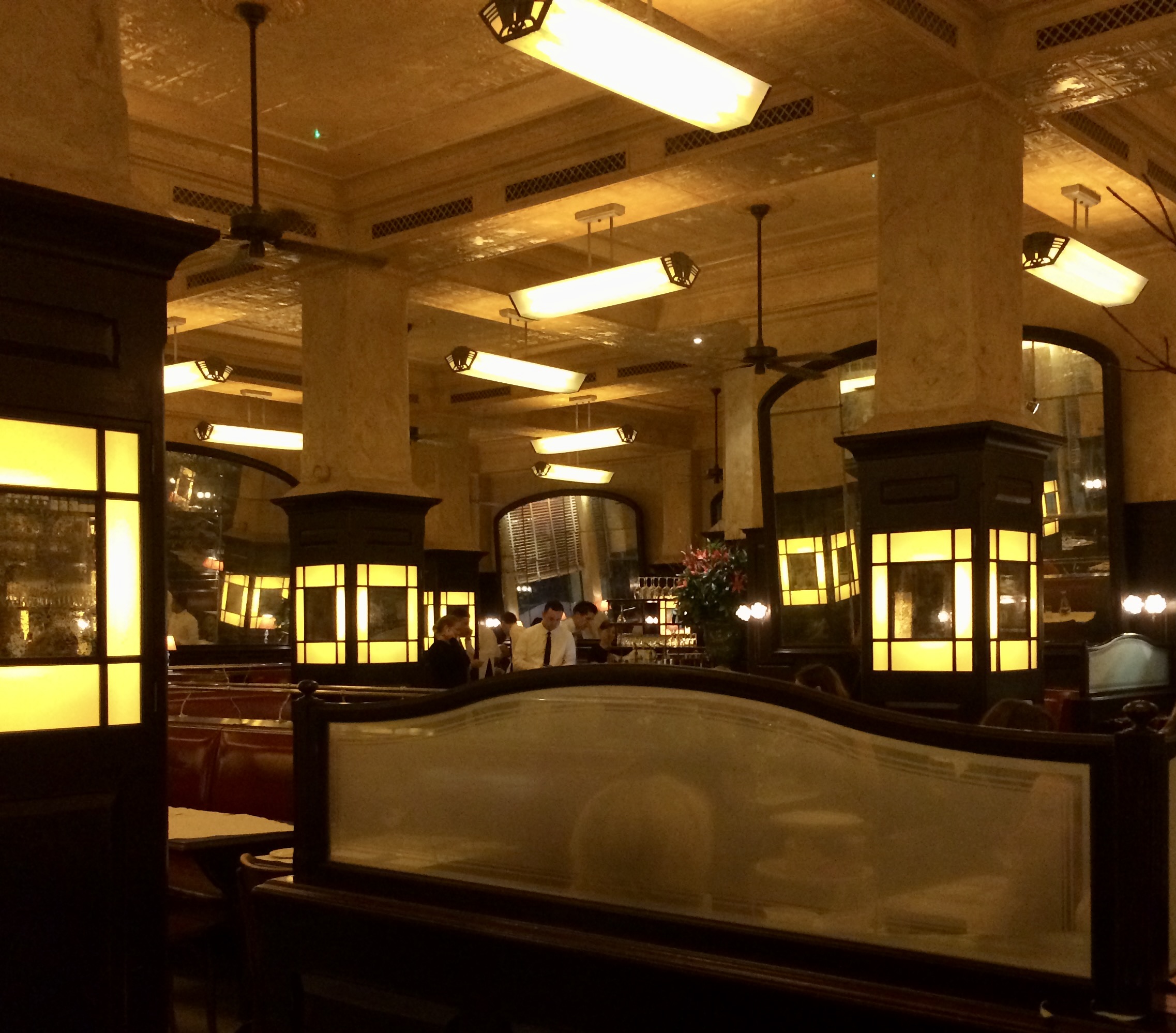

On Saturday, I explored more of Marylebone and Covent Garden as well as Soho and some other neighborhoods (managed to do a little shopping as well) and had very leisurely lunch at Balthazar in Covent Garden. In the past few years I’ve mostly stayed in East London so it was a change to be on the west side and definitely very different. And then at dinner, was joined by a colleague from UWT and also by Lara’s husband. The four of us shared about 9 different small and larger plates — each better than the next. After practically closing the place down (last ones to leave at about 1 am), headed back to the hotel to pack up.
On Sunday morning I took the tube to meet up with Lara in Brixton (an area in South London where I had never been). Brixton is a multiethnic community, with a large percentage of people of African and Caribbean descent… or at least before recent gentrification. brixton has a rich history, including as a wealthy “suburb” at the end of the nineteenth century. The main street of Brixton is called Electric Avenue because it was the first street in London to be lit by electricity. By the start of the twentieth century those big houses were converted to flats and the middle class was replaced by a large influx of working class people. The area grew quickly and soon the largest shopping center in South London opened, along with a large market, a cinema, and a theater. It is said that Brixton was the shopping capital of South London in the 1920s complete with large department stores and the earliest branch of Bon Marche. The area was bombed during WWII which contributed to a housing crisis and also urban decay. Later Brixton was the focus of slum clearance and the building of a good many “council houses” (affordable public housing).. and then large populations of immigrants started to settle in Brixton in the 50s… mostly West Indians, and more recently Portuguese and other Europeans and Africans. Apparently there is also home to a lot of seniors, although you wouldn’t know it from those populating the cafes in the Brixton Market.
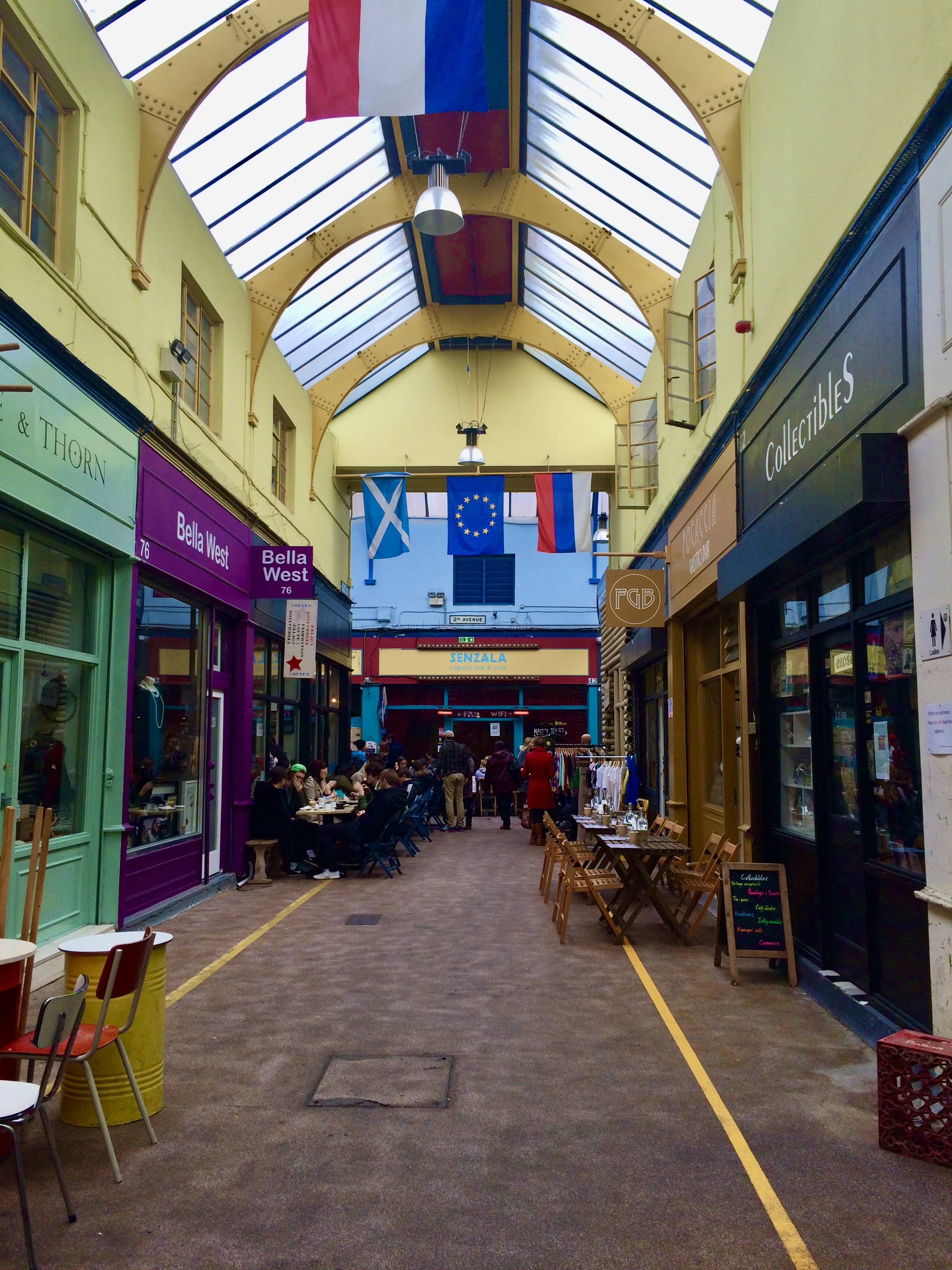
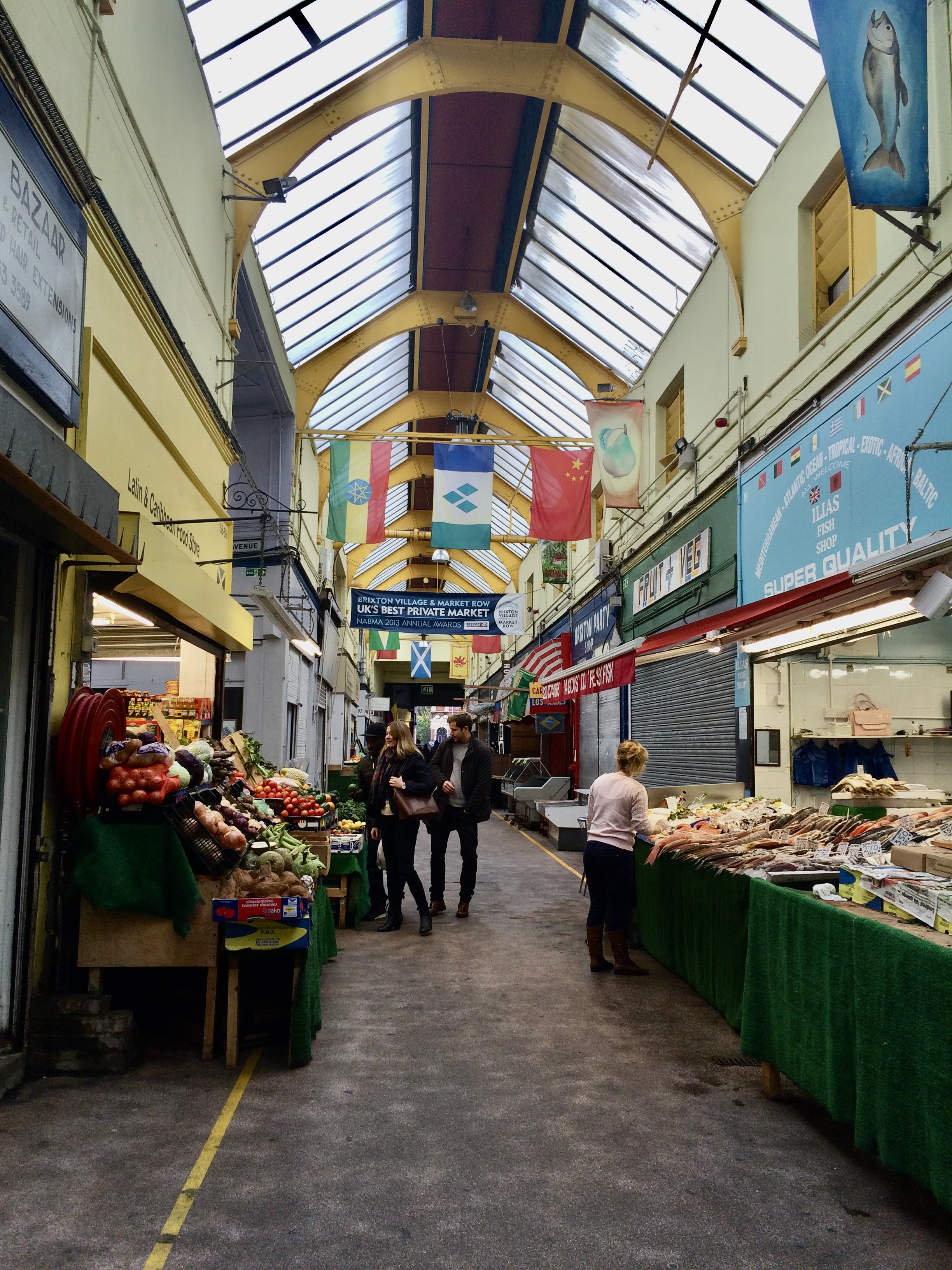
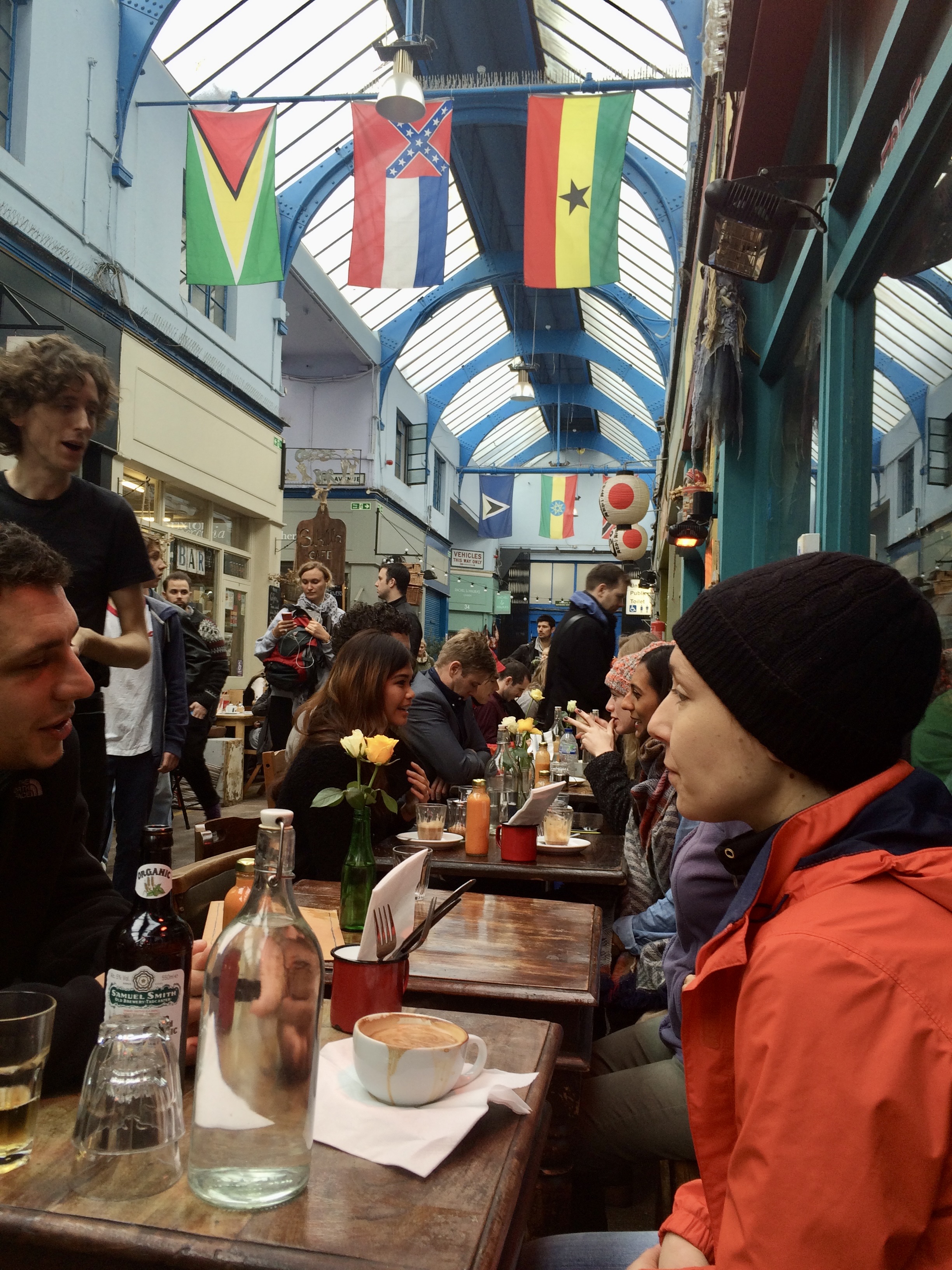

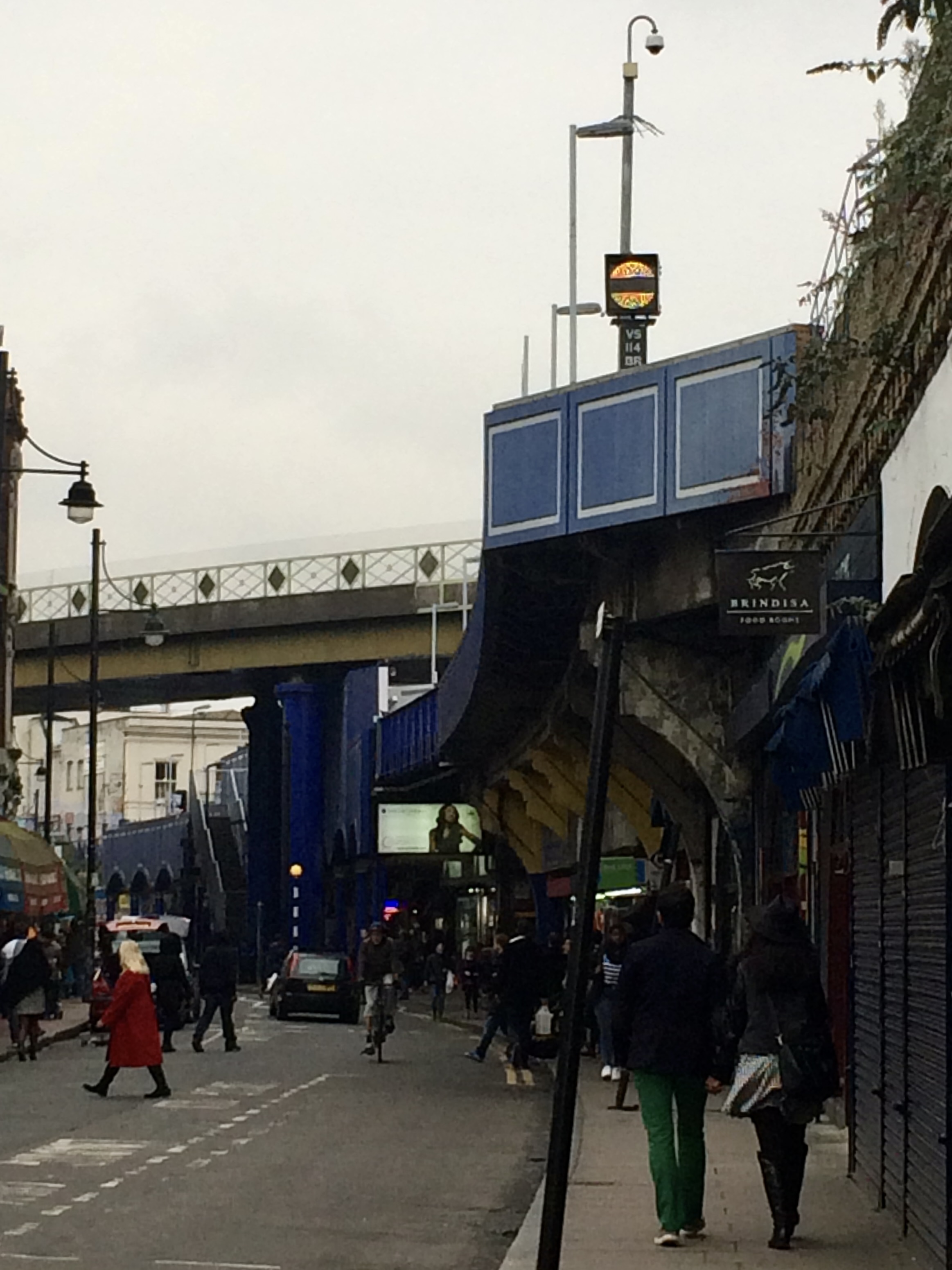
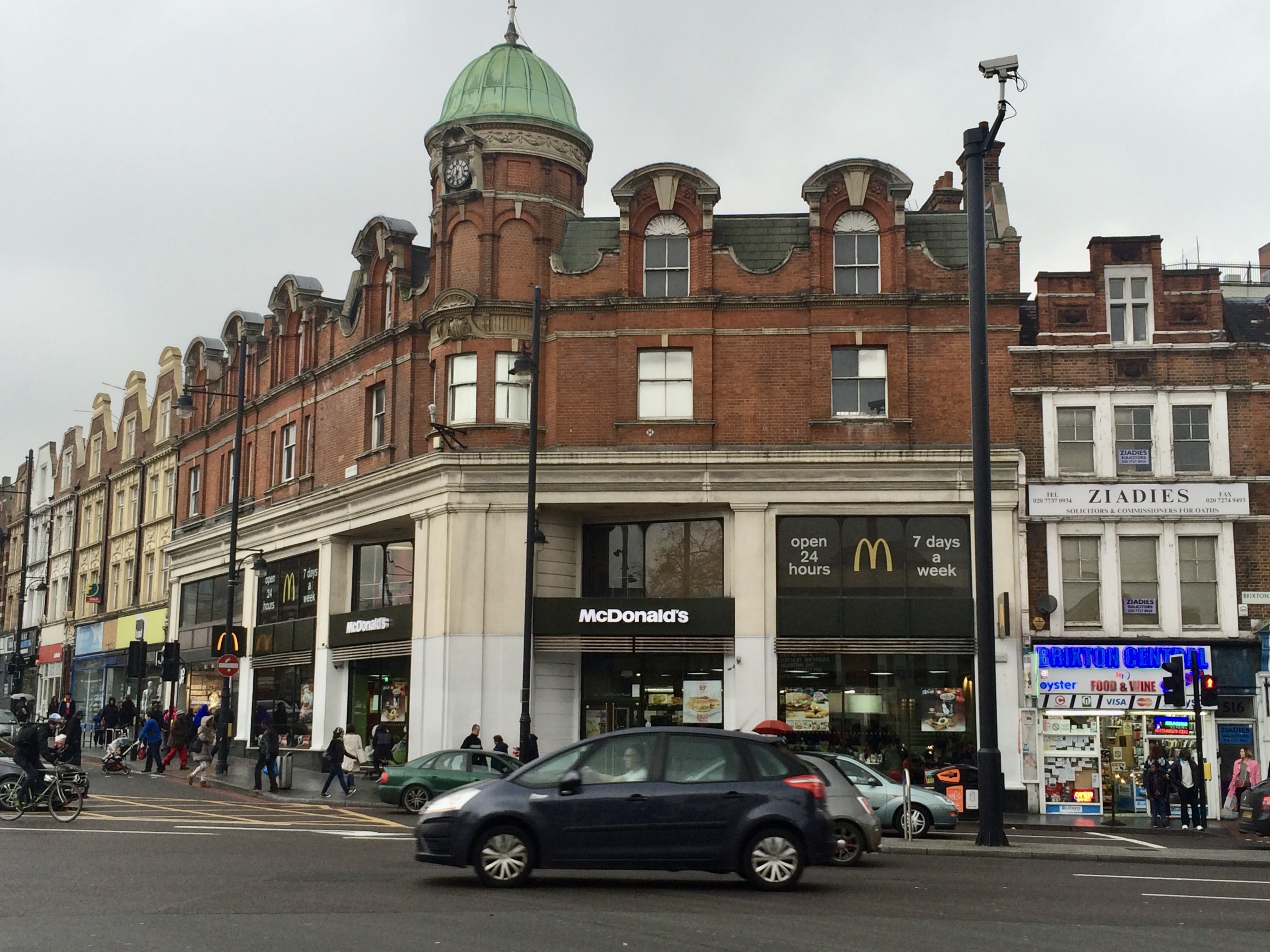
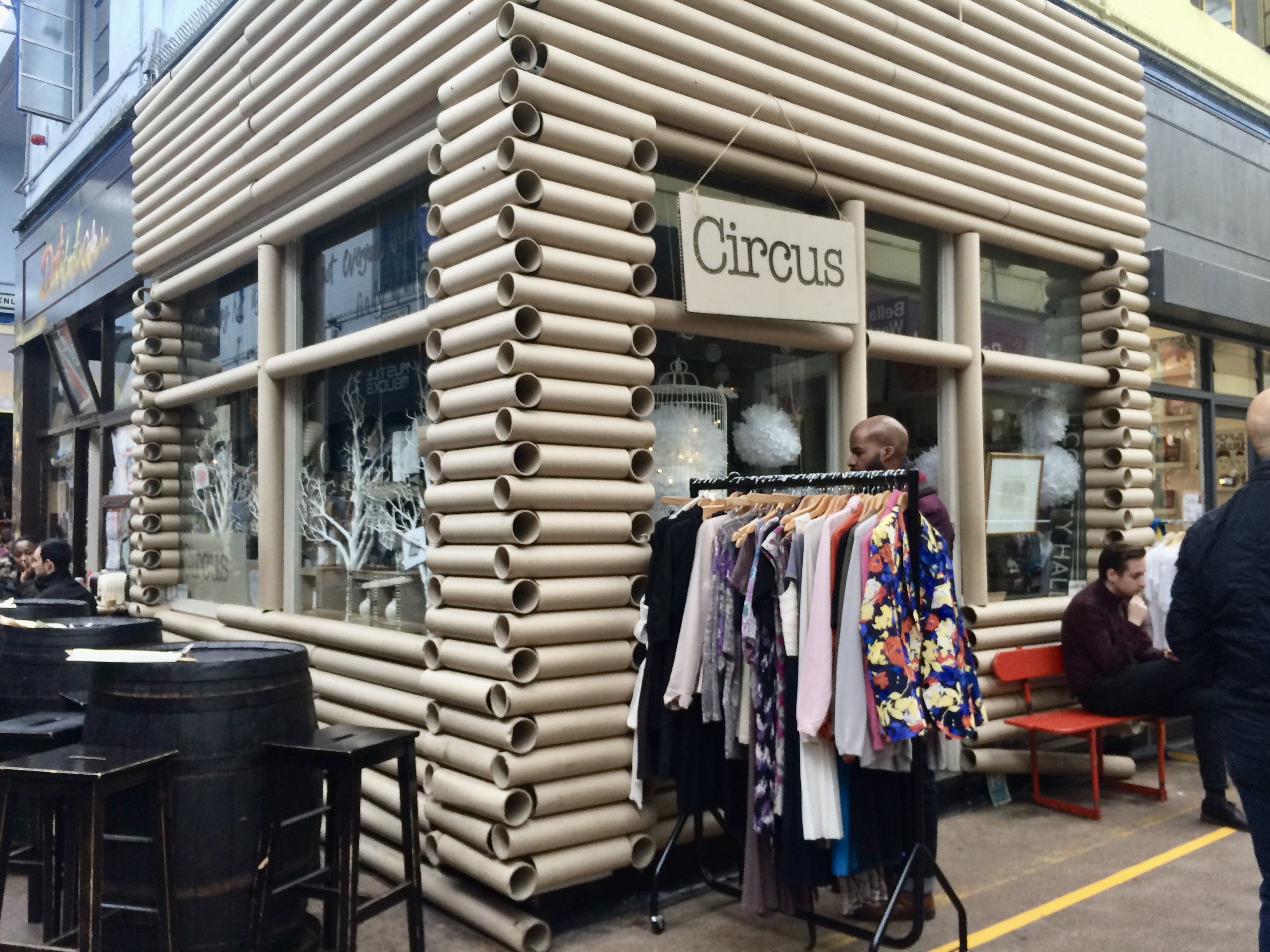
Today, Brixton Road is home to a new middle class — young people who cannot afford central London.. and the market (actually a series of three separate buildings) has been transformed into scores of little cafes and shops but the exterior streets are lined with ethnic food stalls and shops. We ate in a tiny little place that served buckwheat savory crepes of every description.
And then I headed to the hotel to check out and hopped in a taxi to the Euston Station to catch the train to Coventry.
Arrived in Coventry on Sunday night… More in next email where I’ll explain why I’m in Coventry and what it’s like.. very different from London.
Fern
Farewell to Poland. Almost 48 Hours in Warsaw
September 30, 2014
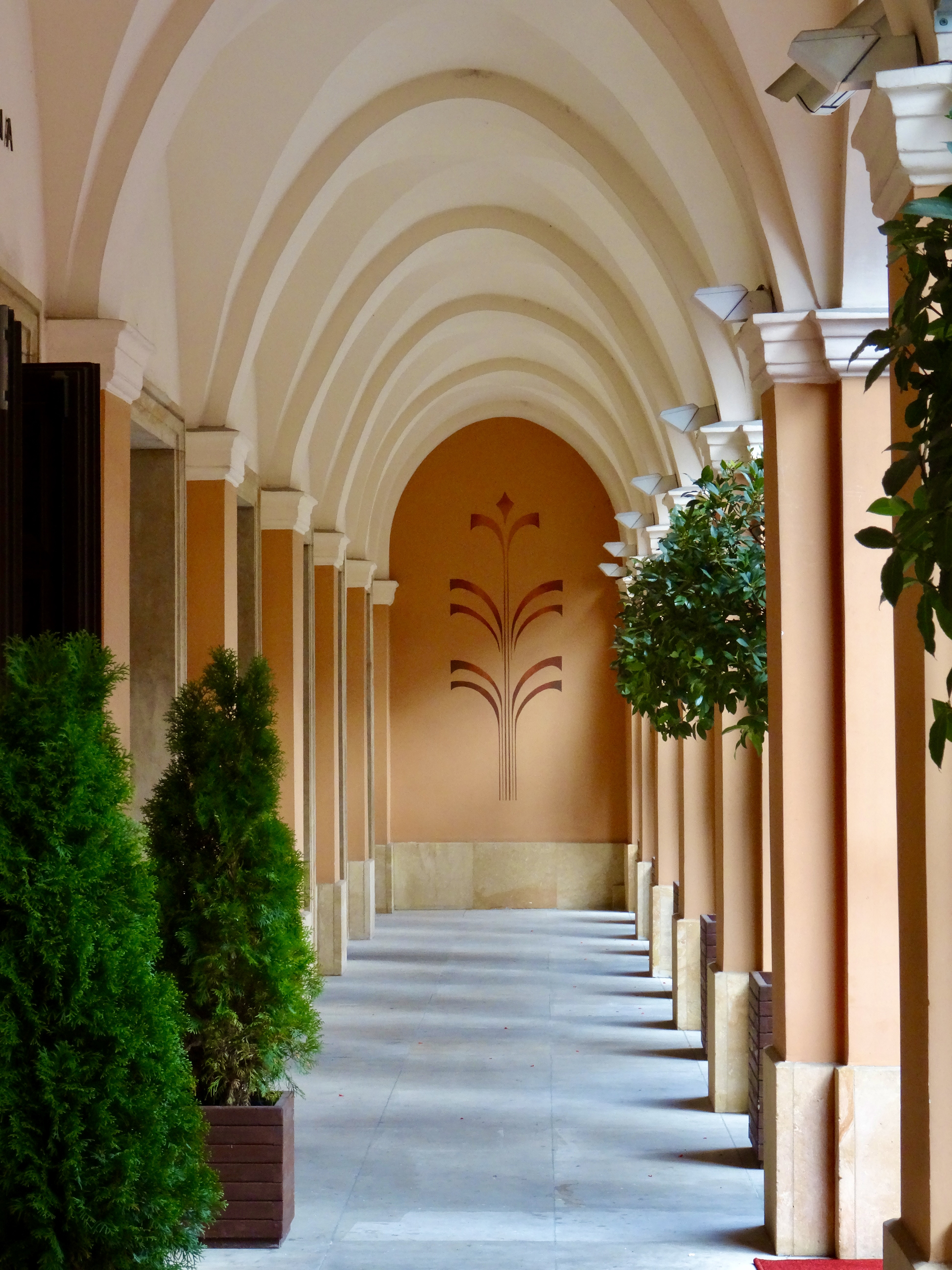
Left the Bristol Hotel in Rzeszow at 5:45 am (although I could have left an hour later; airport is very tiny and also very close to downtown). Arrived in Warsaw at about 10 and took taxi to the Hotel La Regina. The 30-minute drive gave me my first glimpse of the city I hadn’t visited in 30 years. Frankly, I didn’t remember or recognize anything. The La Regina is a small, boutique hotel located on the edge of the “old town” — it’s upscale, tasteful, and one of the hotels where you just know the service will be impeccable which it was.
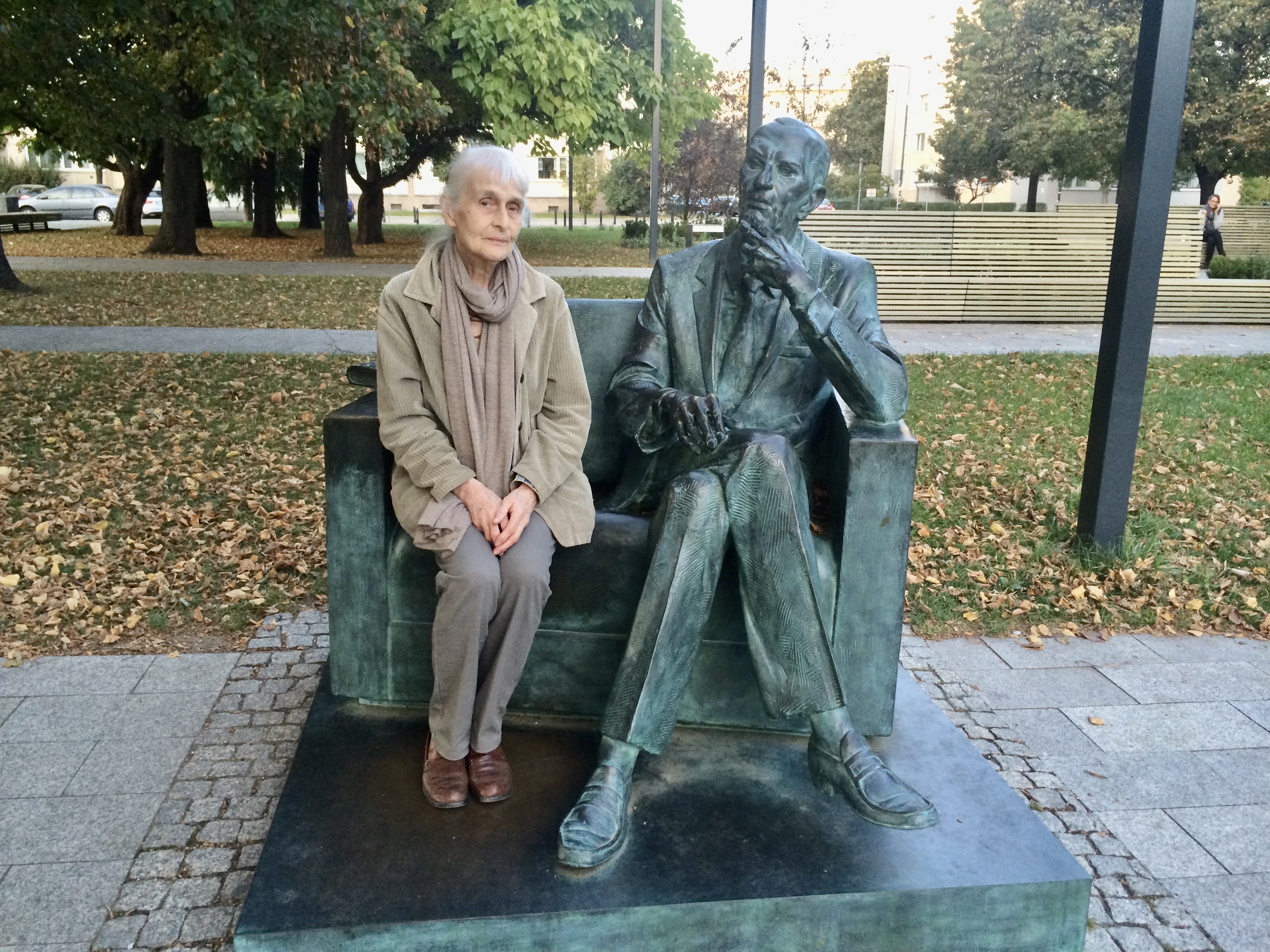
I decided to stop in Warsaw on my way back to the Bay Area (even though it would be very brief — under 48 hours) because I could connect with an old friend who lives in the city. She is the widow of someone who taught with me at Penn State many years ago. We’ve kept in touch and visited them when they were at University of Texas Arlington. Barbara moved back to Warsaw three years ago when her husband Andrej died. It was good to know someone who knew the city so well — having gone to the University there and maintaining close relations with family and friends in the city over the 20+ years she resided in the US. During all those years, she also kept her small apartment — the one she had during her student days. Some years after the “transformation,” she and her husband bought another apartment in the same neighborhood (which she says has changed drastically since the government decided to build the soccer (football) stadium just a few blocks away.
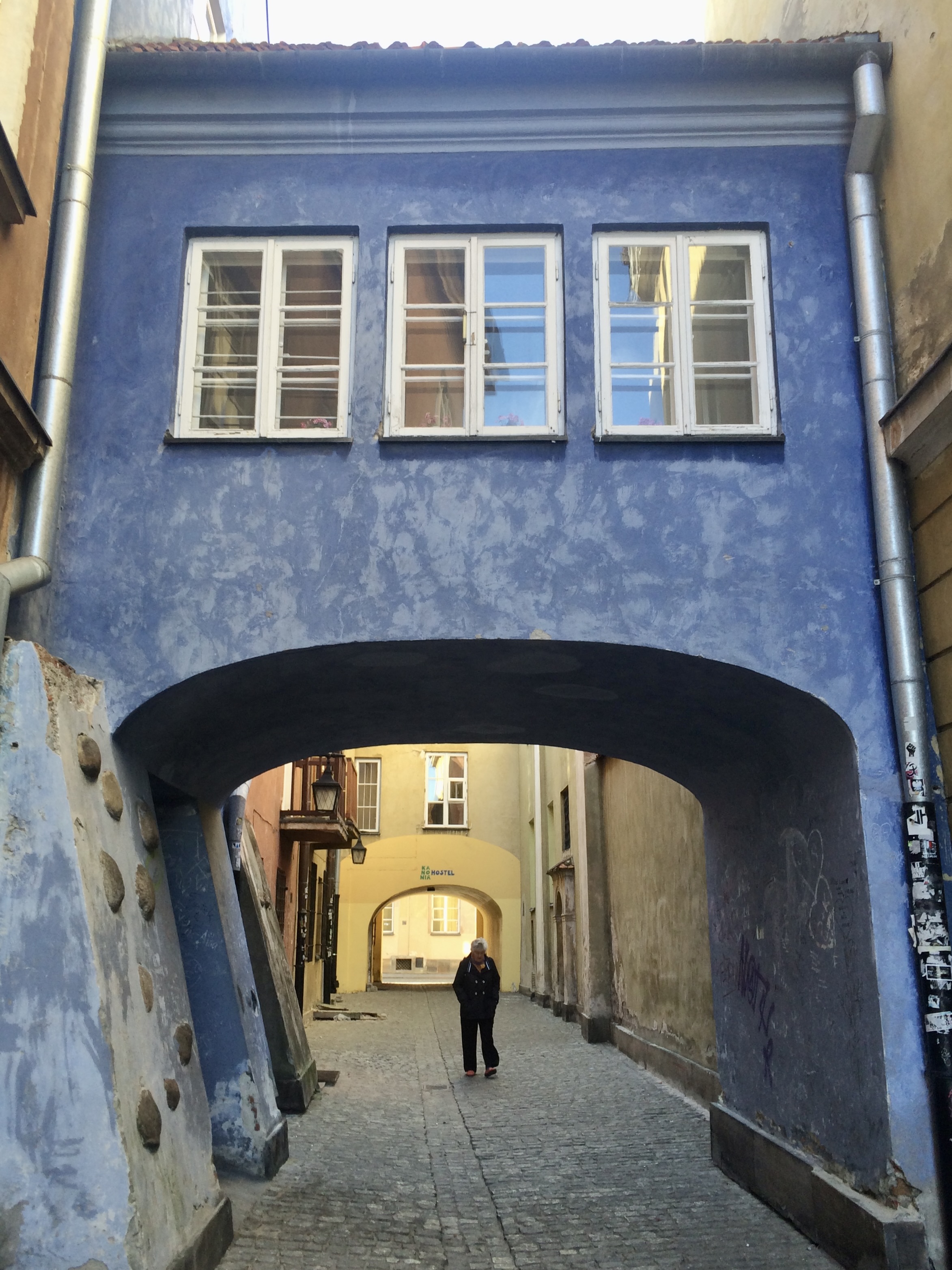
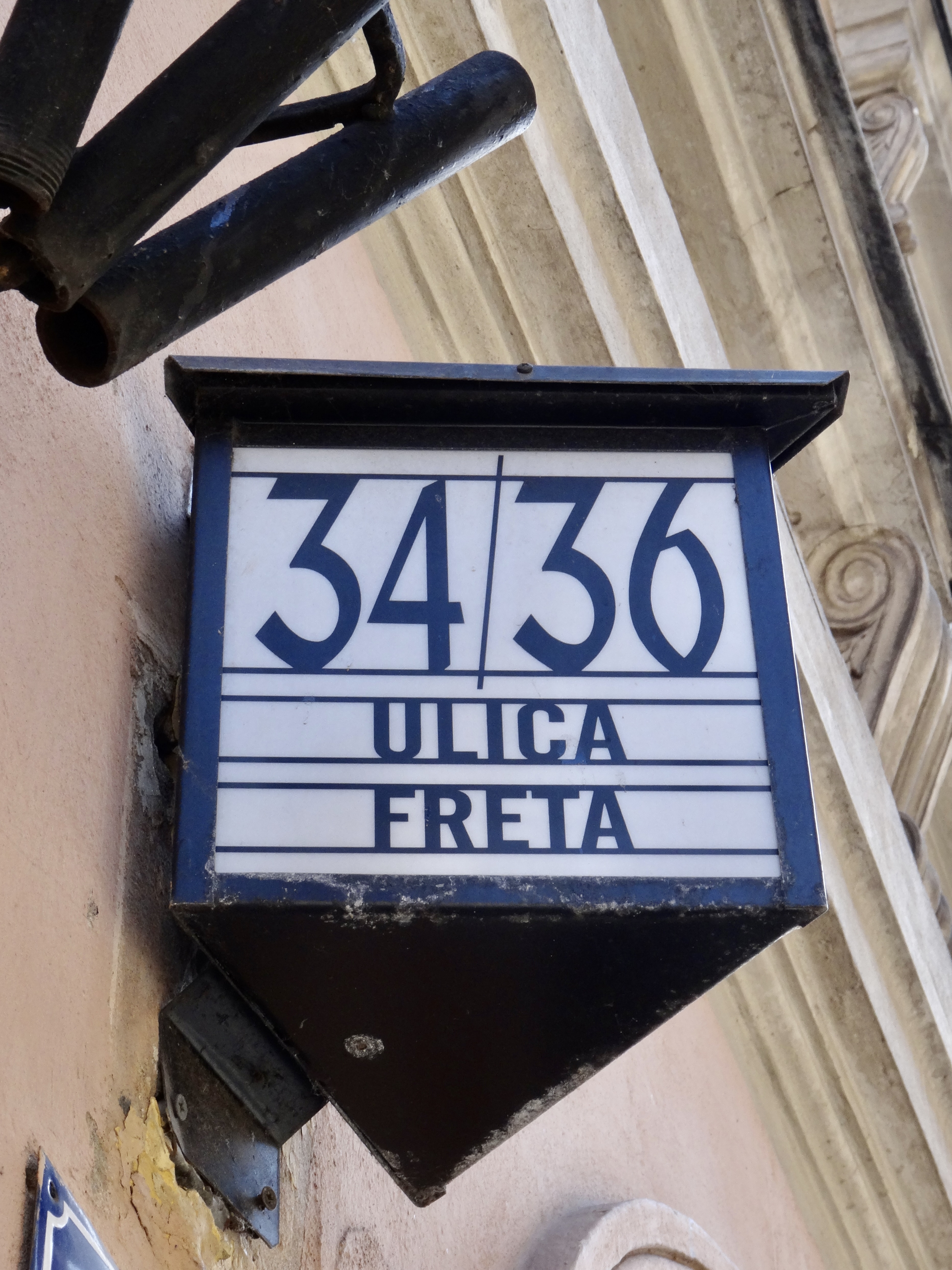
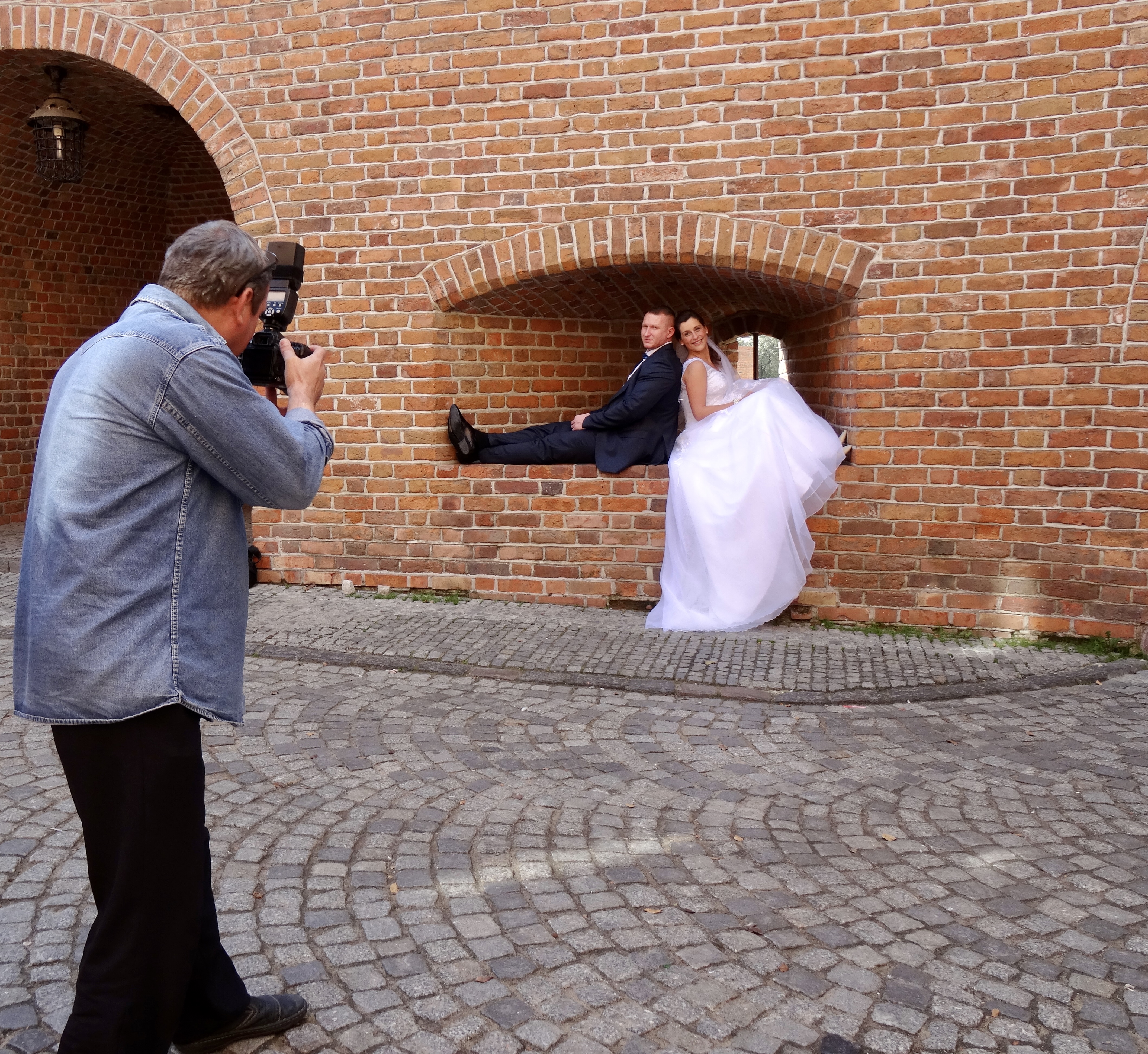
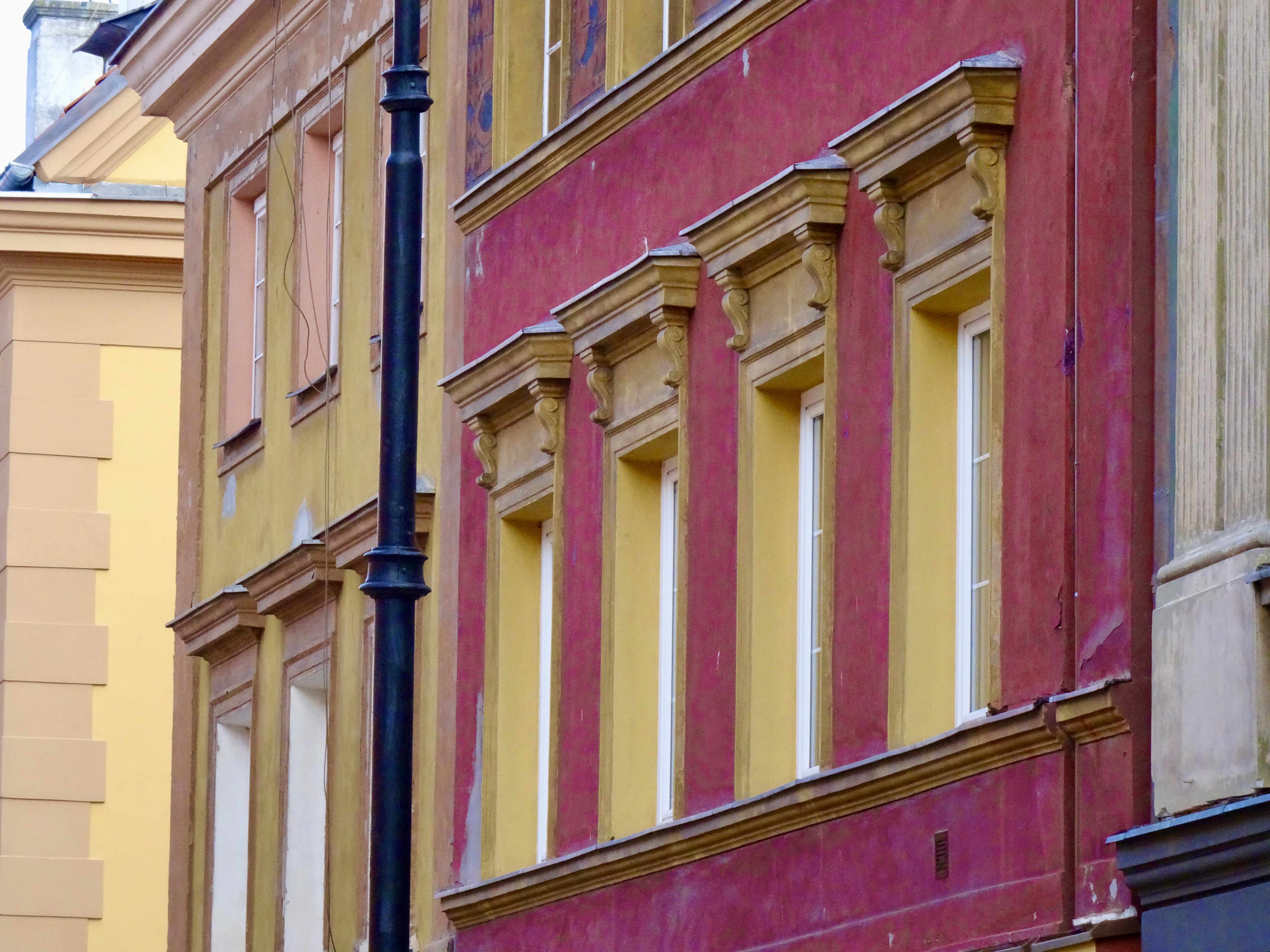
Anyway, we sort of miscommunicated in that she thought I was going to call as soon as I got to the hotel, but somehow she forgot to send me her phone number. Thus, it took a few hours until we met up with each other. So I took the opportunity to walk to the old town. The La Regina (part of a group of hotels called Mamaison) which is located at the edge of the old section of the city. Now, when I say “old” it is an important term to consider here in Poland. The Old section of the city (dating to 1300s and 1400s in part and then 1700s in other parts) was completely destroyed during WWII (including the Royal Palace which is a huge multi-story structure that stretches about two square blocks and was constructed in parts over a few centuries beginning in the 14th Century). Anyway, after the war there was much discussion about what to do with the old section (then-non-existent) and in 1971 a decision was made to completely reconstruct it (including the palace) in its original form using all the skills and craft from the original construction.
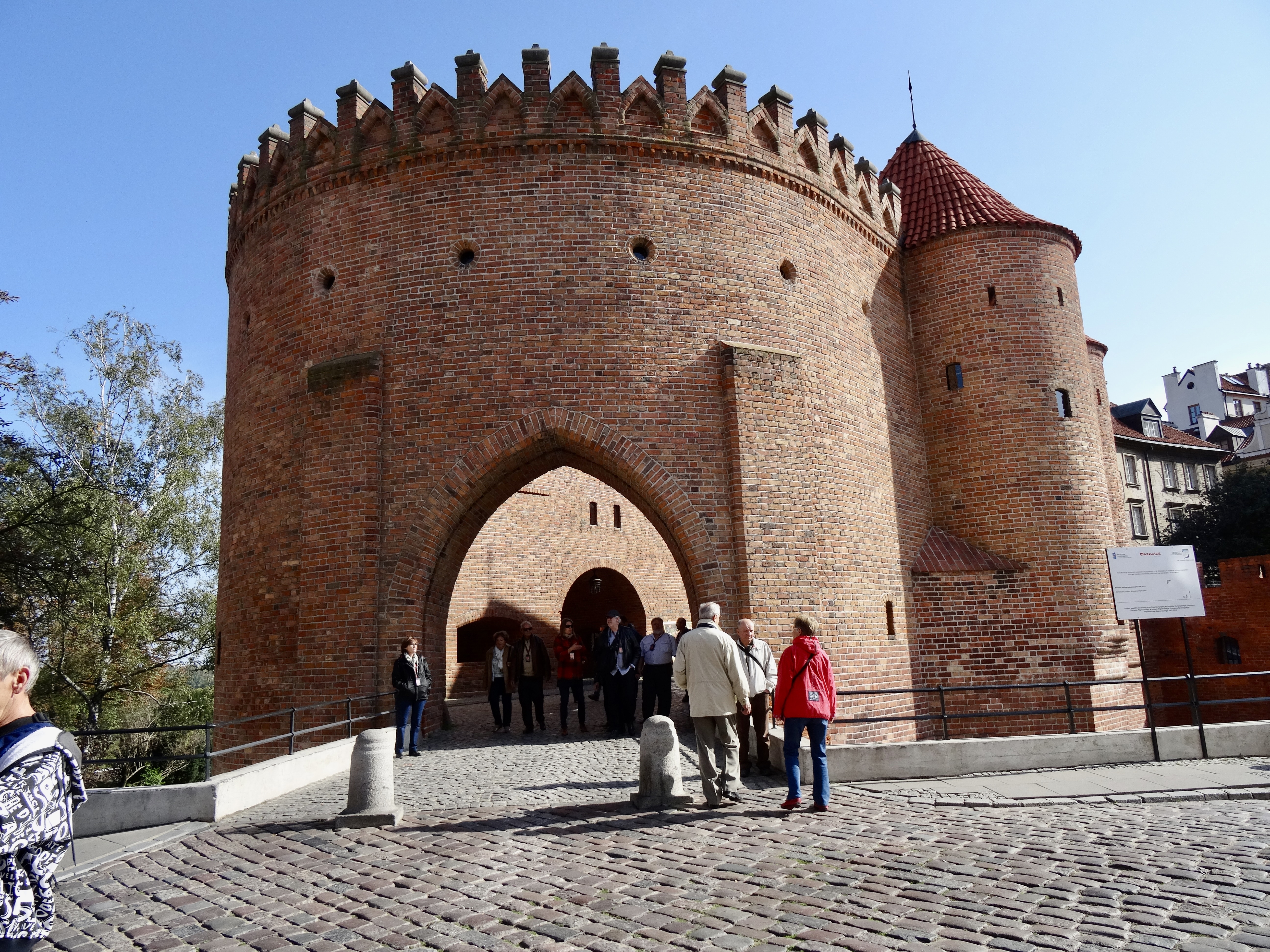
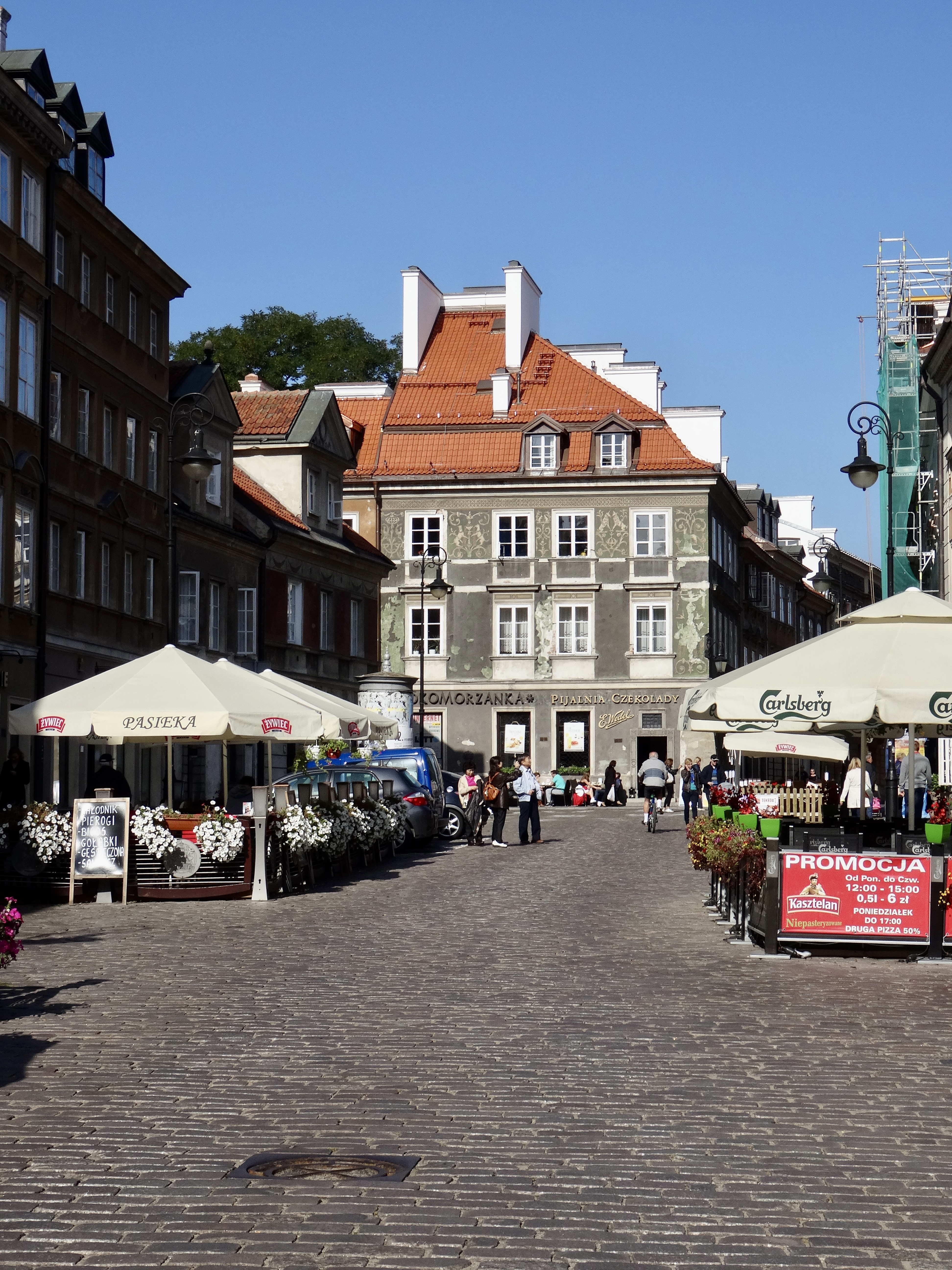
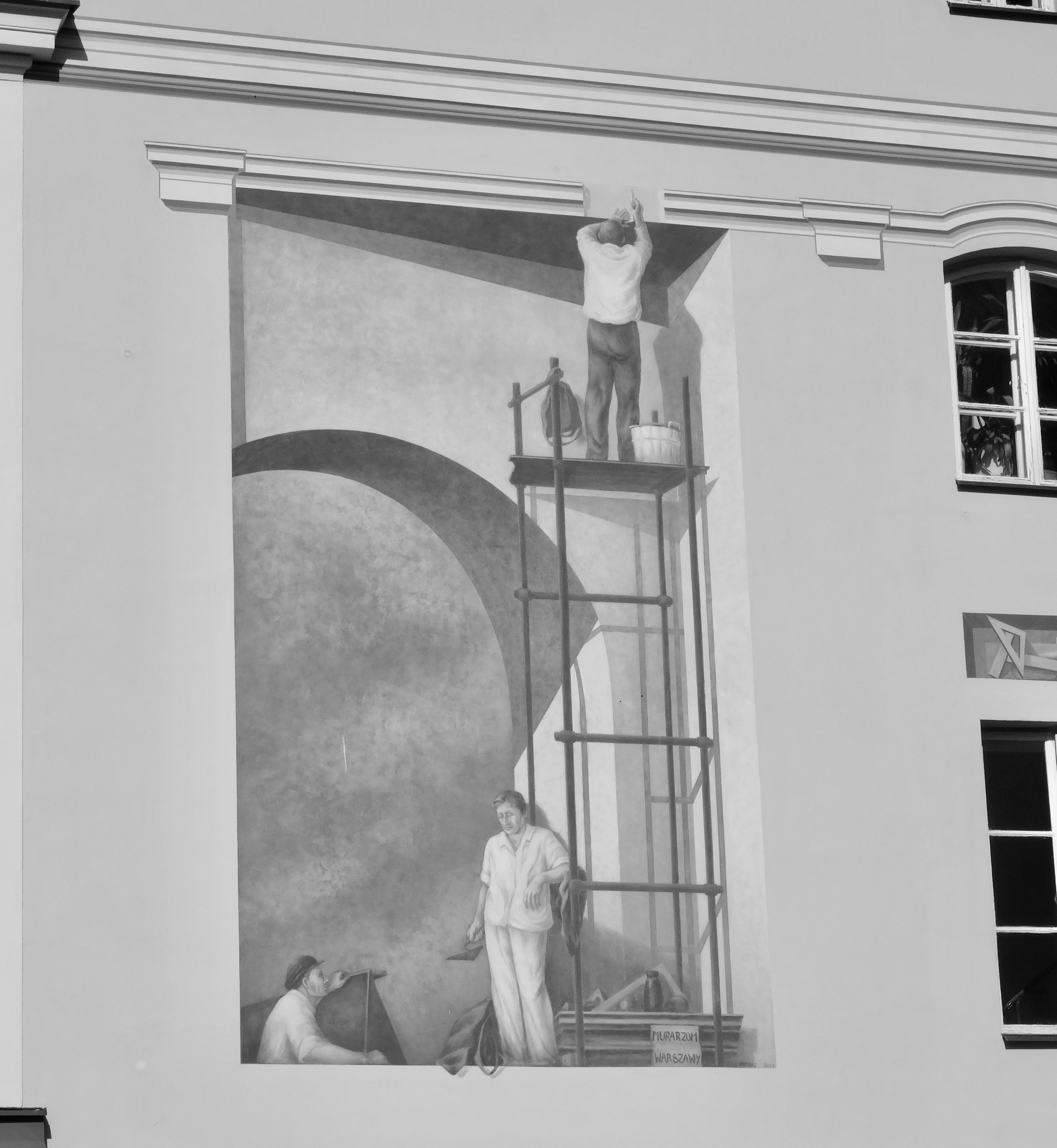
Factories and ateliers were created to make the fabrics and the gilded frames and the furniture in the same techniques of what was being replaced. And the entire section of town was made to look like it looked when it was destroyed. Disneyland? Well maybe, but it was done so well and with such finesse and with such an effort to make the center of town look as if it had survived all those centuries that I have to admit I was a bit perplexed as to how I actually felt about it all. The Poles are very proud of the decision and of the skill that went into do the recreation (not rehab and not renovation since all of it was totally rubble after 1945). Apparently Hitler had a plan for the site, including the location of the palace — to create a very special Aryan village.
I roamed around a bit and then Barbara (my friend who lives in Warsaw phoned me –she realized I didn’t have her number–and we connected, naturally in front of the palace. I hadn’t gone inside when I was strolling (in my boot!), but she really wanted me to see it and I was glad she insisted. I was shocked that such a building replete with details that could only be done by craftsmen trained in every conceivable sort of trade — trades and skills that I thought had long disappeared. Barbara was obviously extremely proud of the effort and the results. I was in awe.
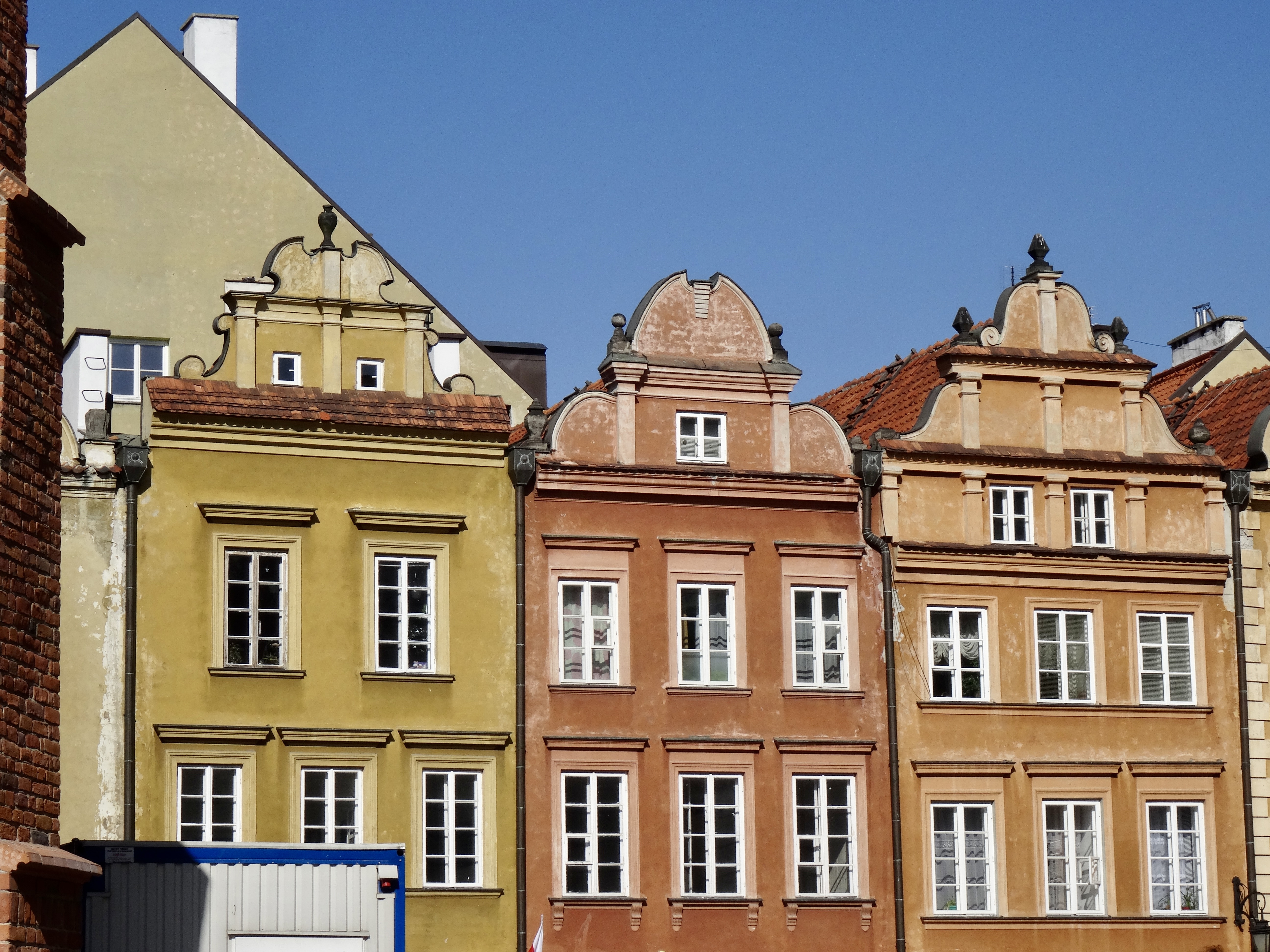
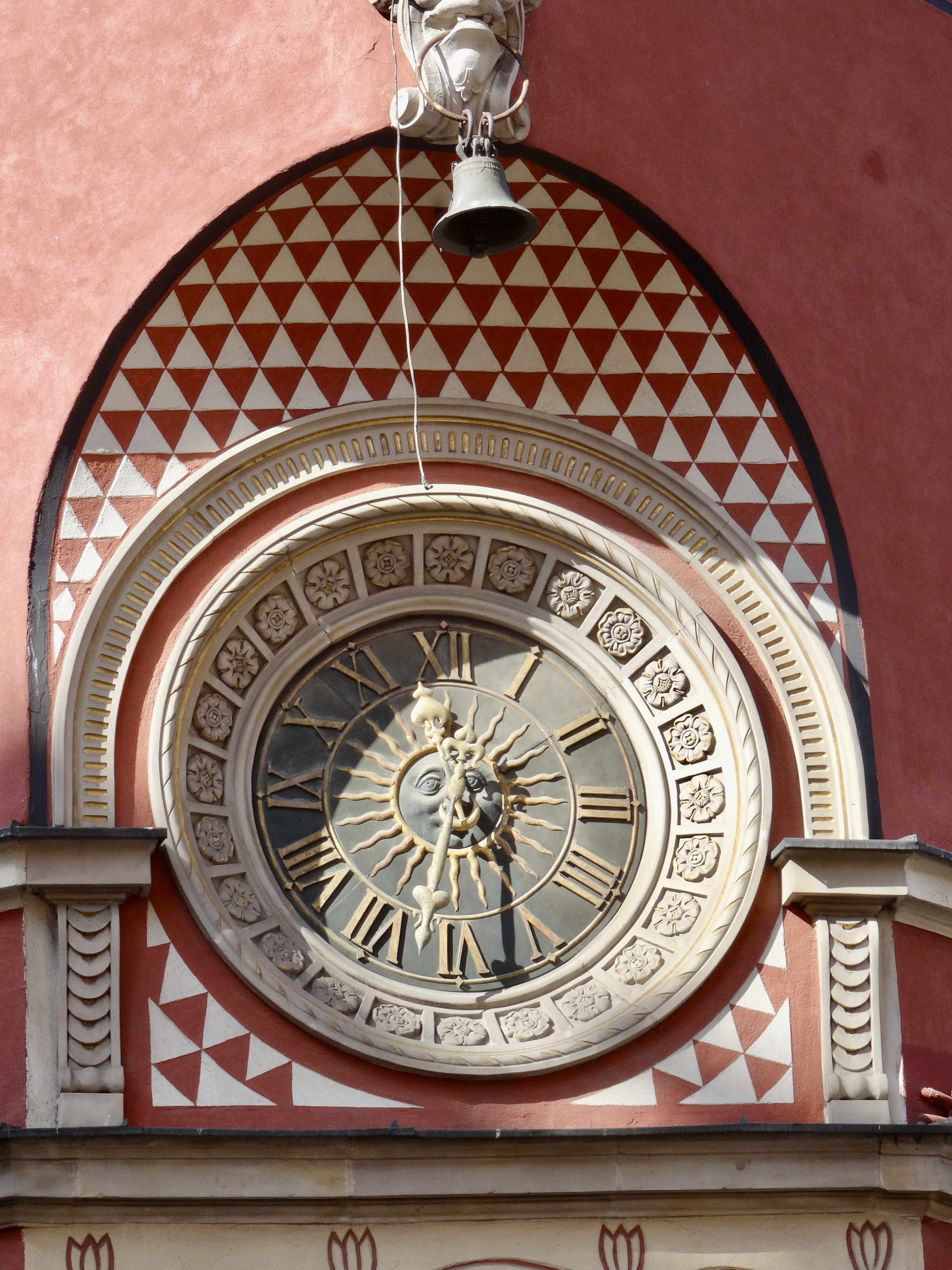
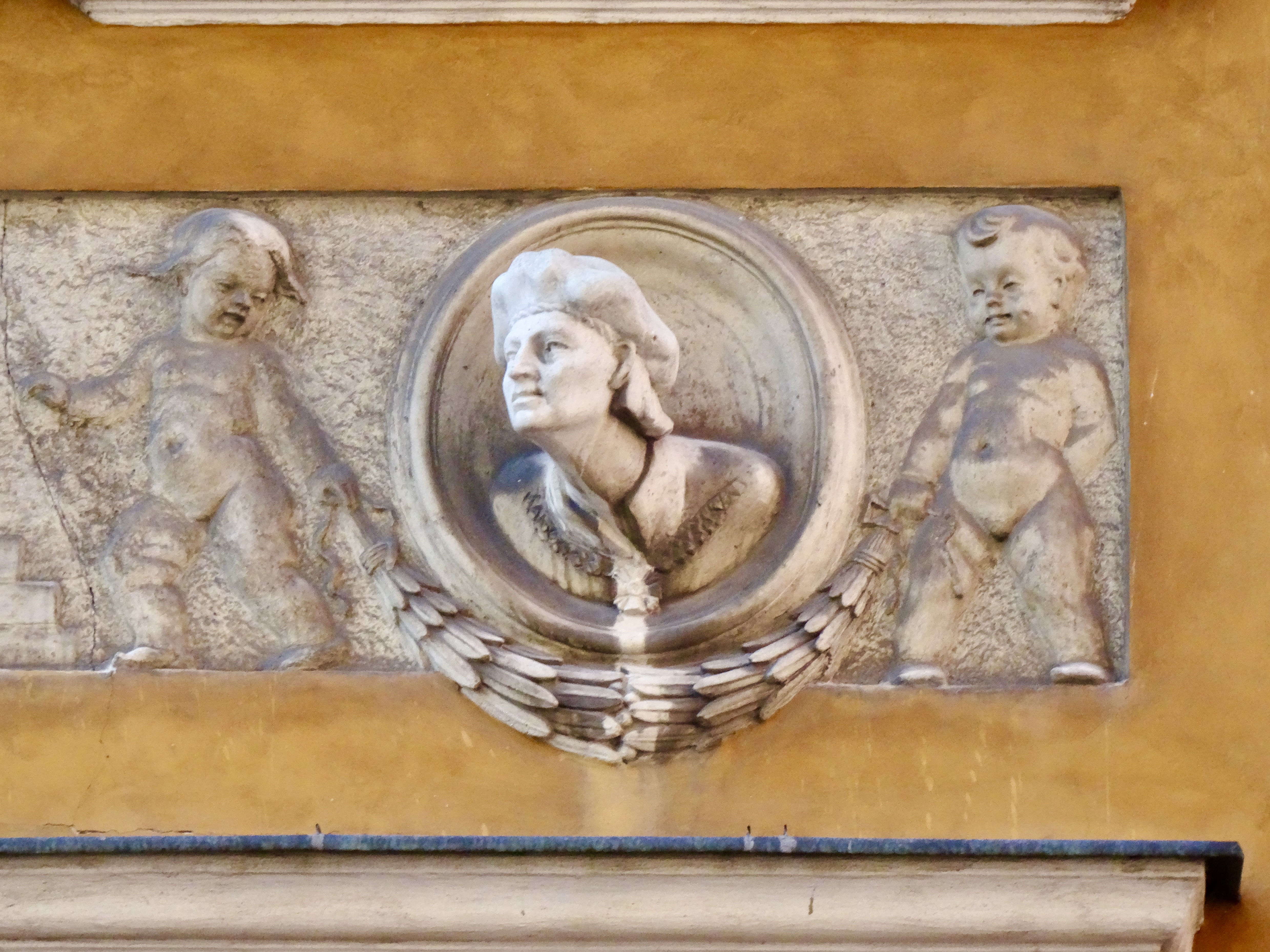
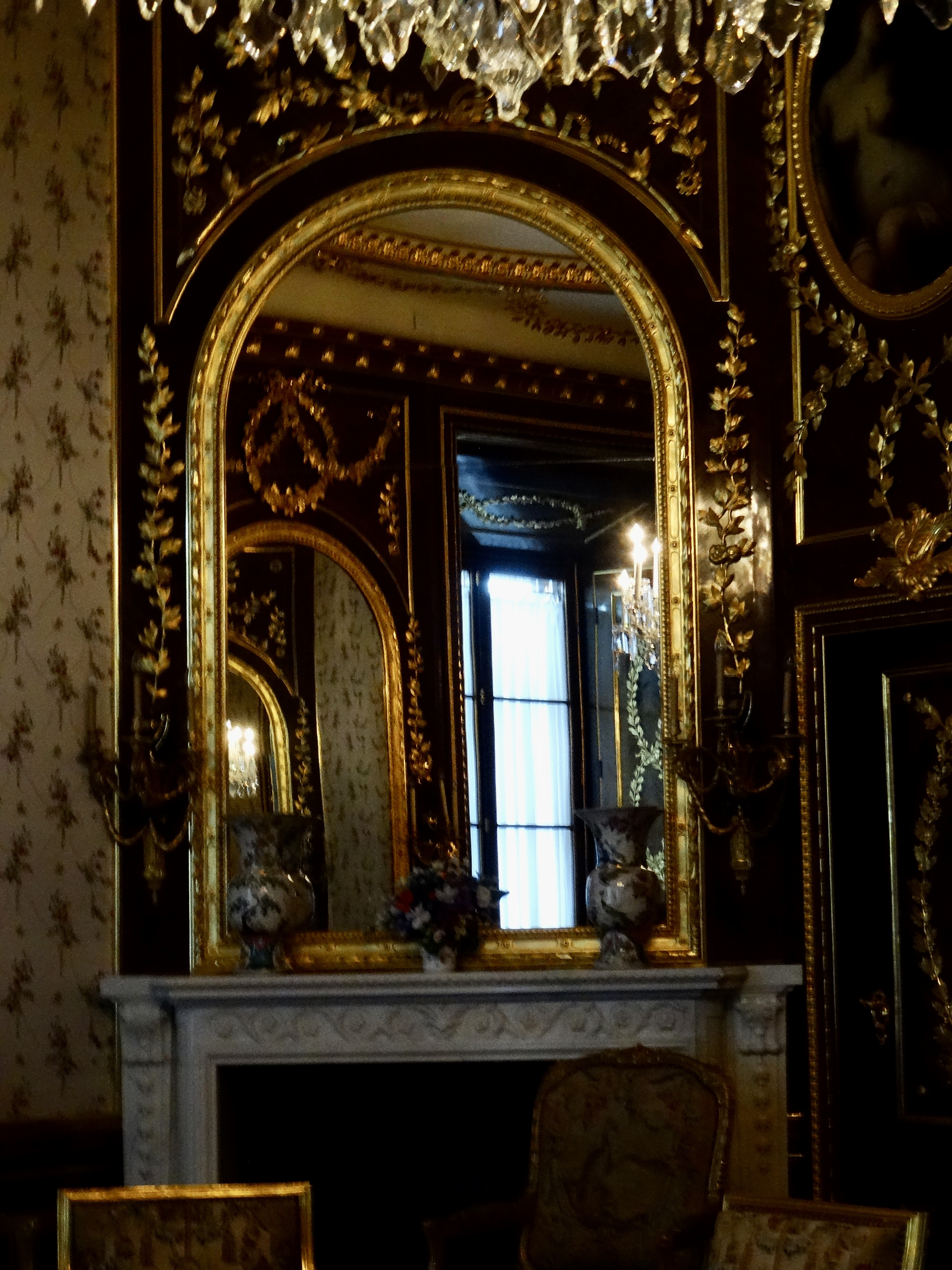
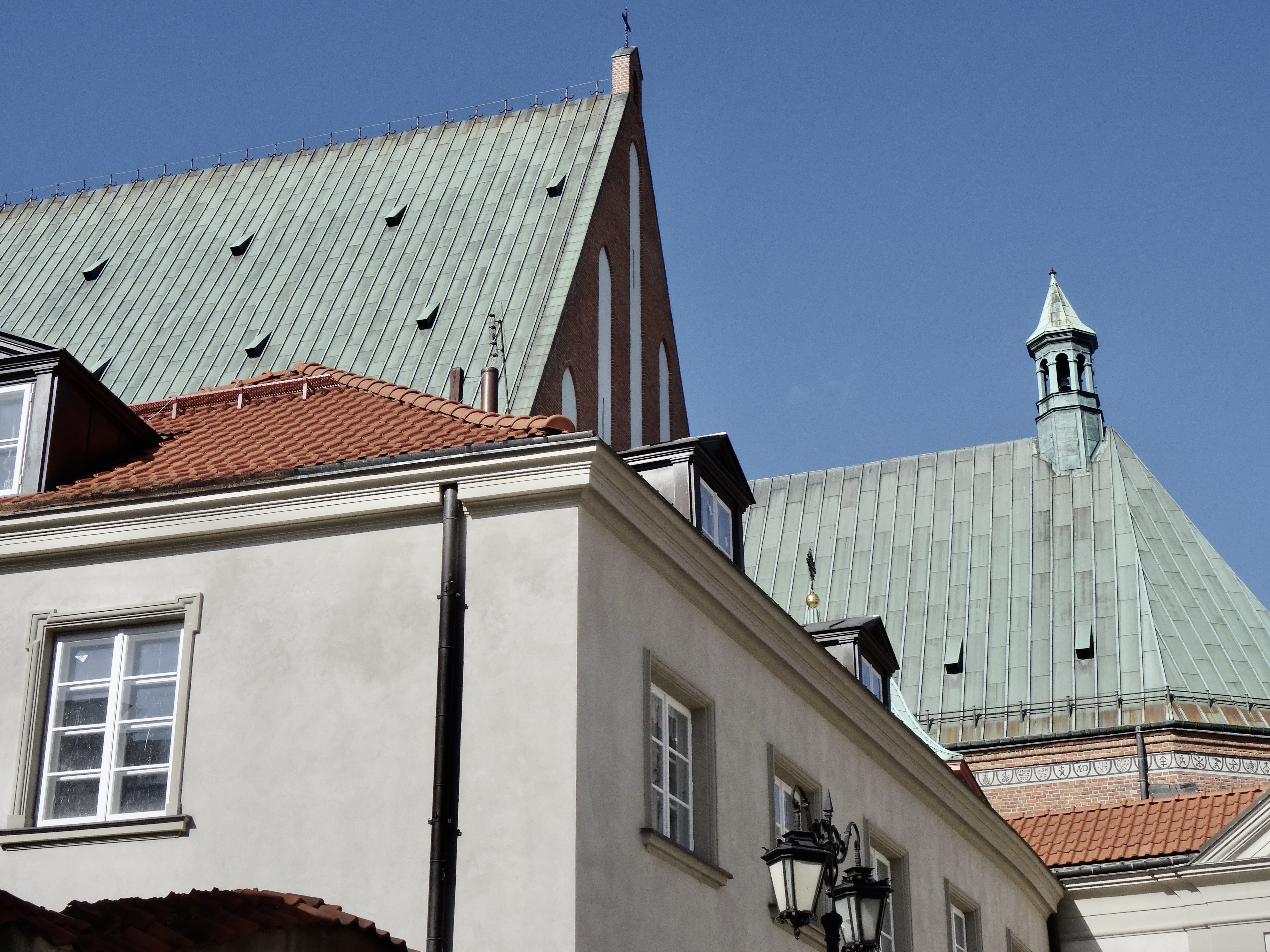
The palace has put together an interesting exhibit (in the basement since every nook and cranny of the upper floors have been built to match exactly what was there in the 1930s) that takes you through the history of the creation of the palace and through the destruction, which is what makes the experience even more amazing. Barbara is very opinionated and I think as a senior “stateswoman” feels she can comment about everything, even in public. So she was quick to criticize the last part of the exhibit/film which takes you through the period from 1971 (the decision to reconstruct in the exact form) to 1980s when the palace reopened. She was correct in her criticism. The early years from 13th century to 1945 (it’s actually split into two different rooms and two different styles of presentation/multi-media) were powerful with incredible graphics, photography, Chopin, and a very good script and voice-over/narration. But when they did the third part of the exhibit (the reconstruction), there was no fanfare, no sense of importance, and no sense of the jubilation. But Barbara described vividly the day the decision was made and the excitement of the completion of the project. Interesting. (And certainly a political decision). Barbara said that nearly every Pole (especially those in Warsaw) volunteered to help the craftspeople.. and that they donated money and also objects to help outfit the Palace (e.g. crystal from particular periods that their families had stashed away — to replace the artifacts that were destroyed.)
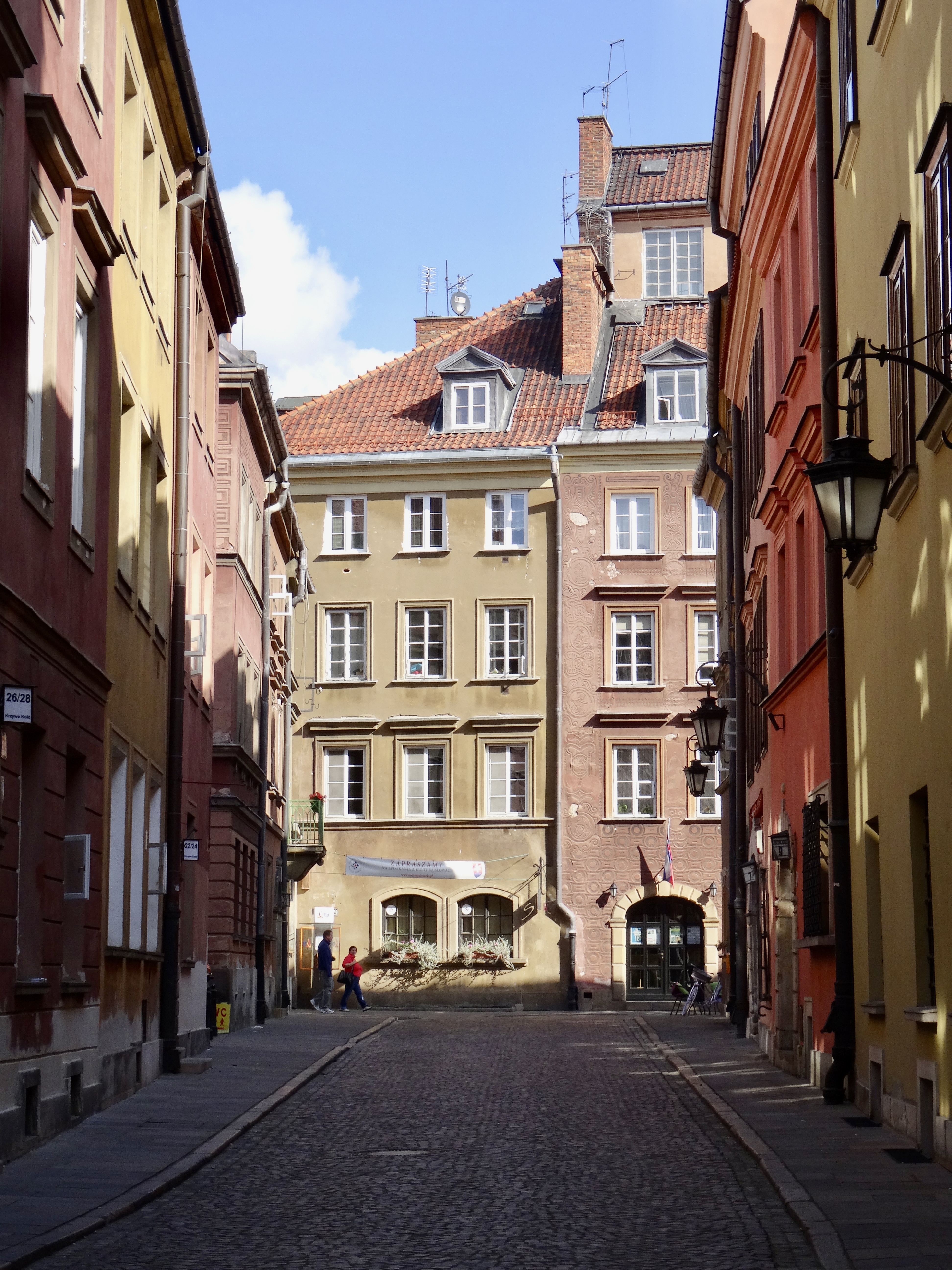
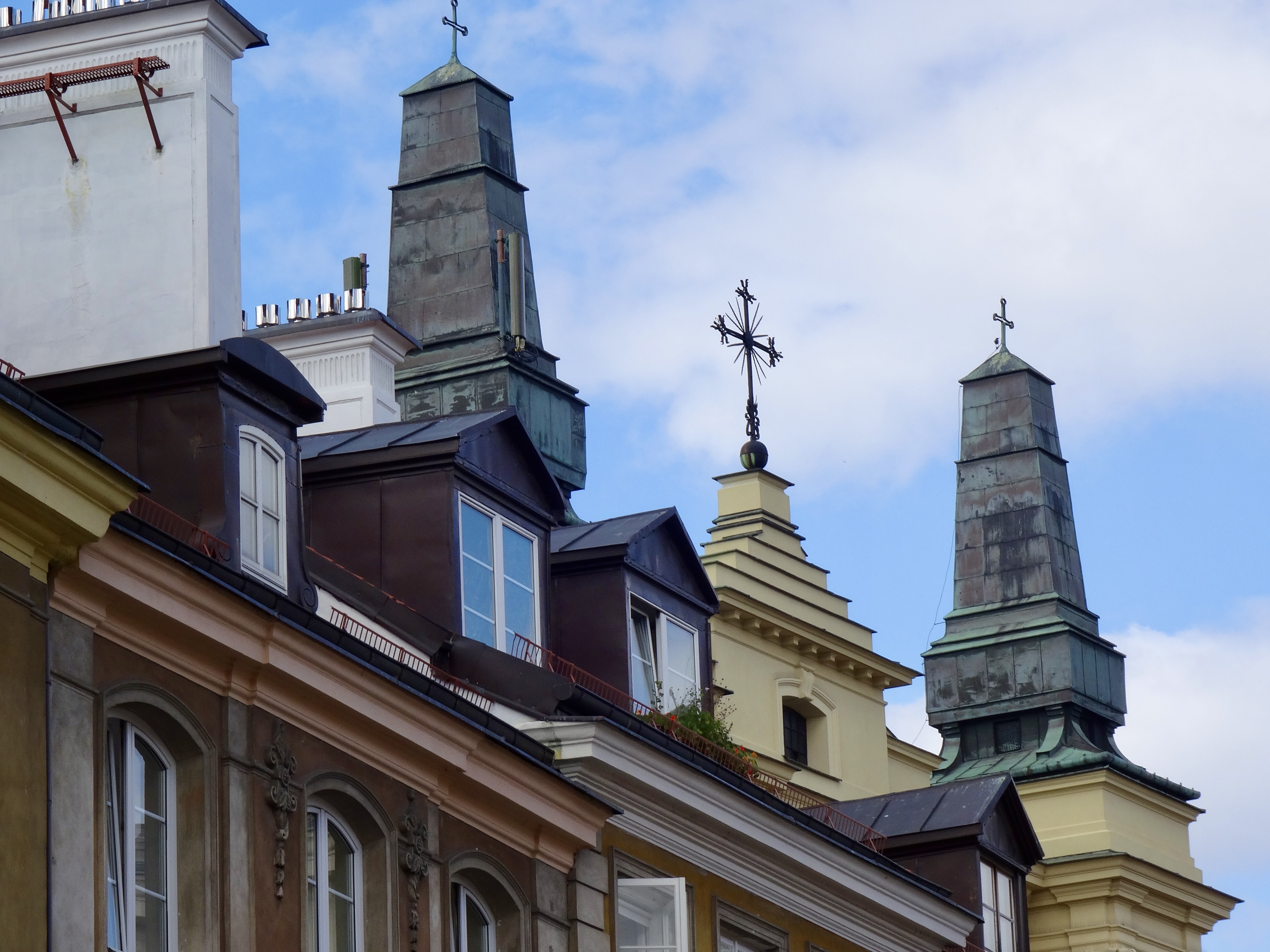


But the most fascinating thing to me was how they had all the drawings of what had been — in order to recreate it. So here’s what I know:
- Architecture students over the years had been drawing and measuring every nook and cranny of the palace for decades; somehow those drawings were hidden, preserved somewhere and they were used as the base for the construction.
- The old town section had been painted many times by an Italian painter who loved Warsaw. His paintings were used as the base for scale and color and detail for the town center.
- Once the war began, the curator of the palace began to hide paintings and as many artifacts as he could in people’s attics and basements all over the country, so a portion of the objects were preserved, but certainly not all of them.
- The curator snipped samples of fabrics and wallpaper and other details and saved all of this (making it possible to recreate bolts of fabric to match originals).
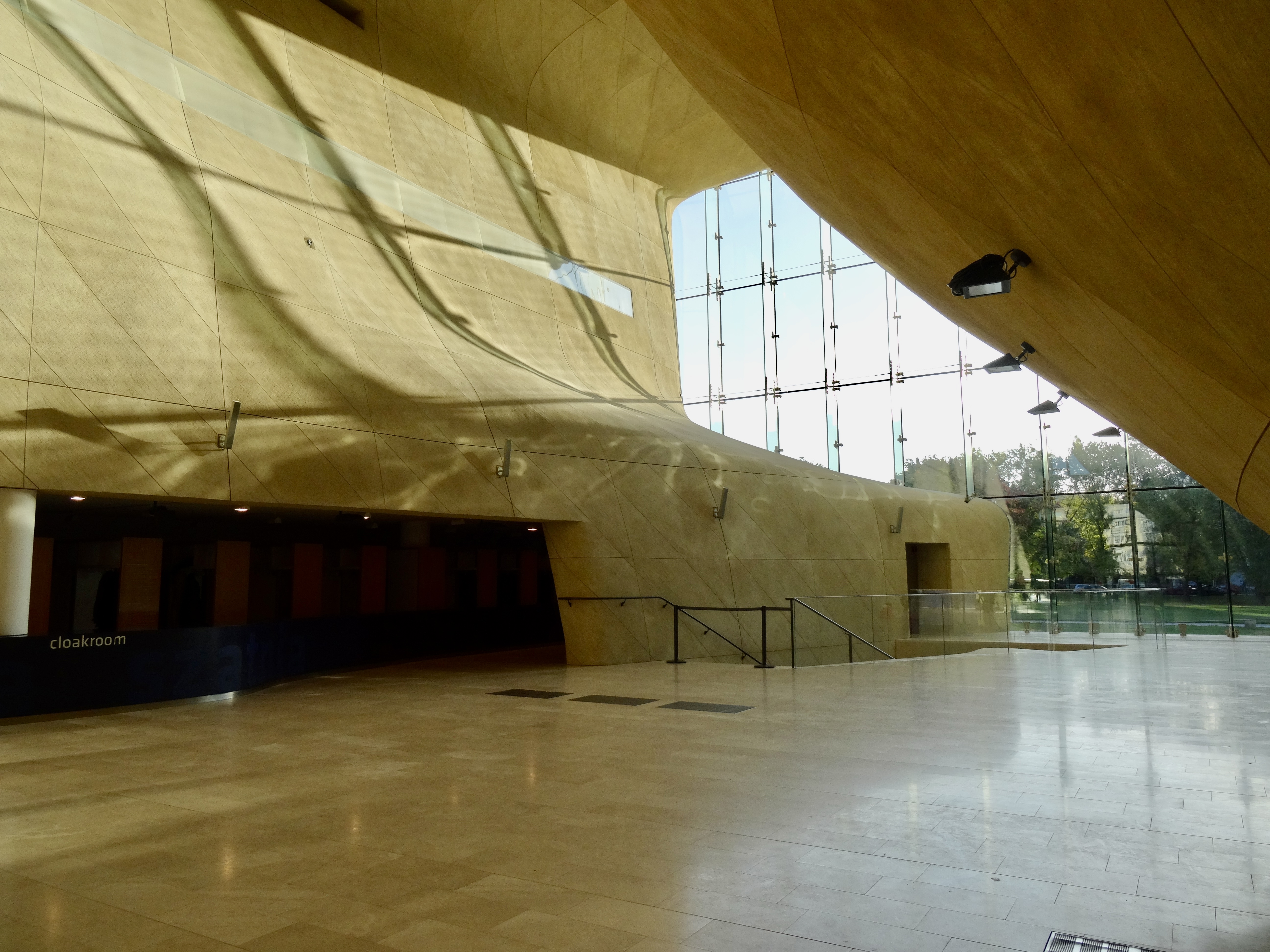
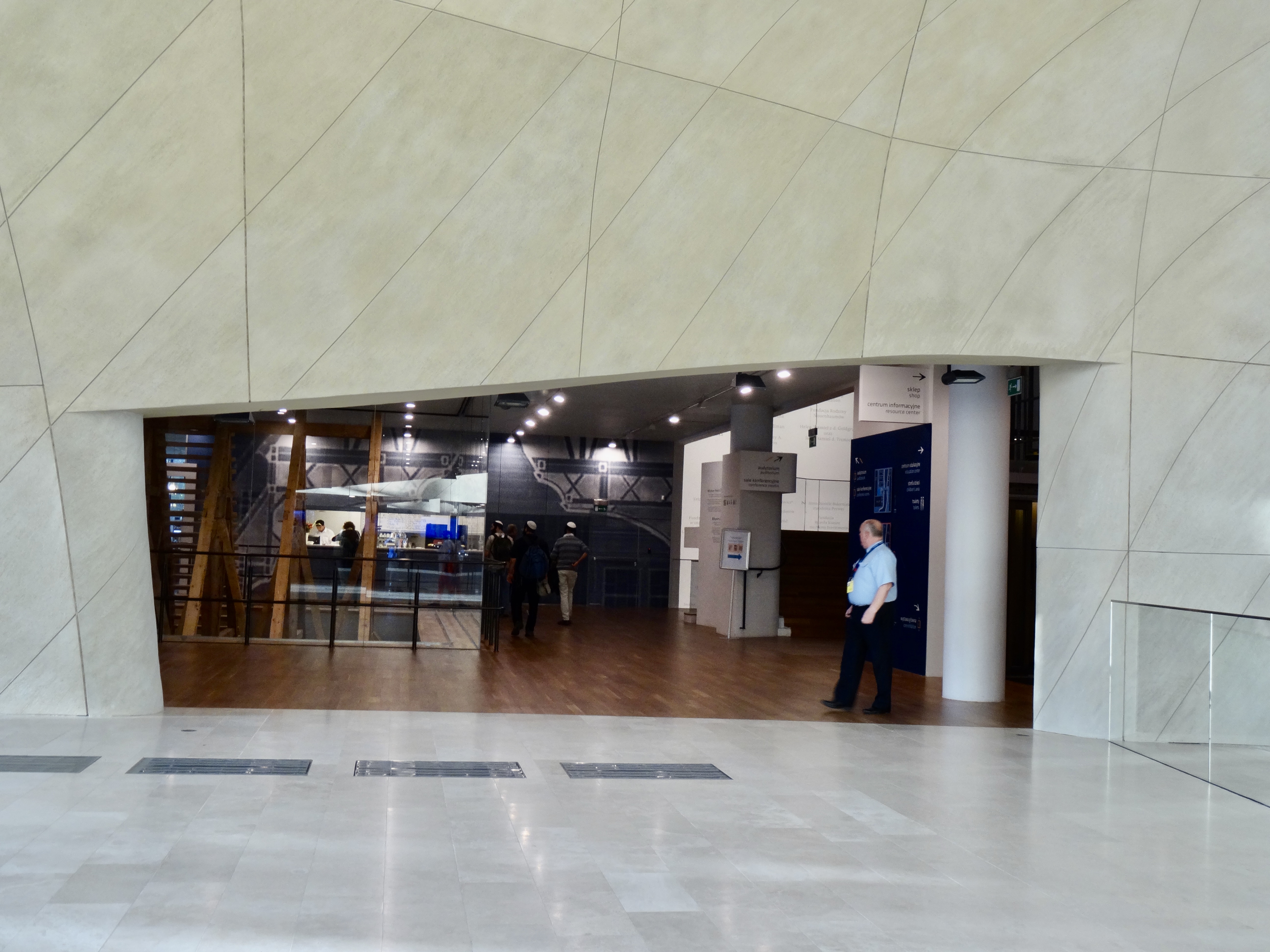
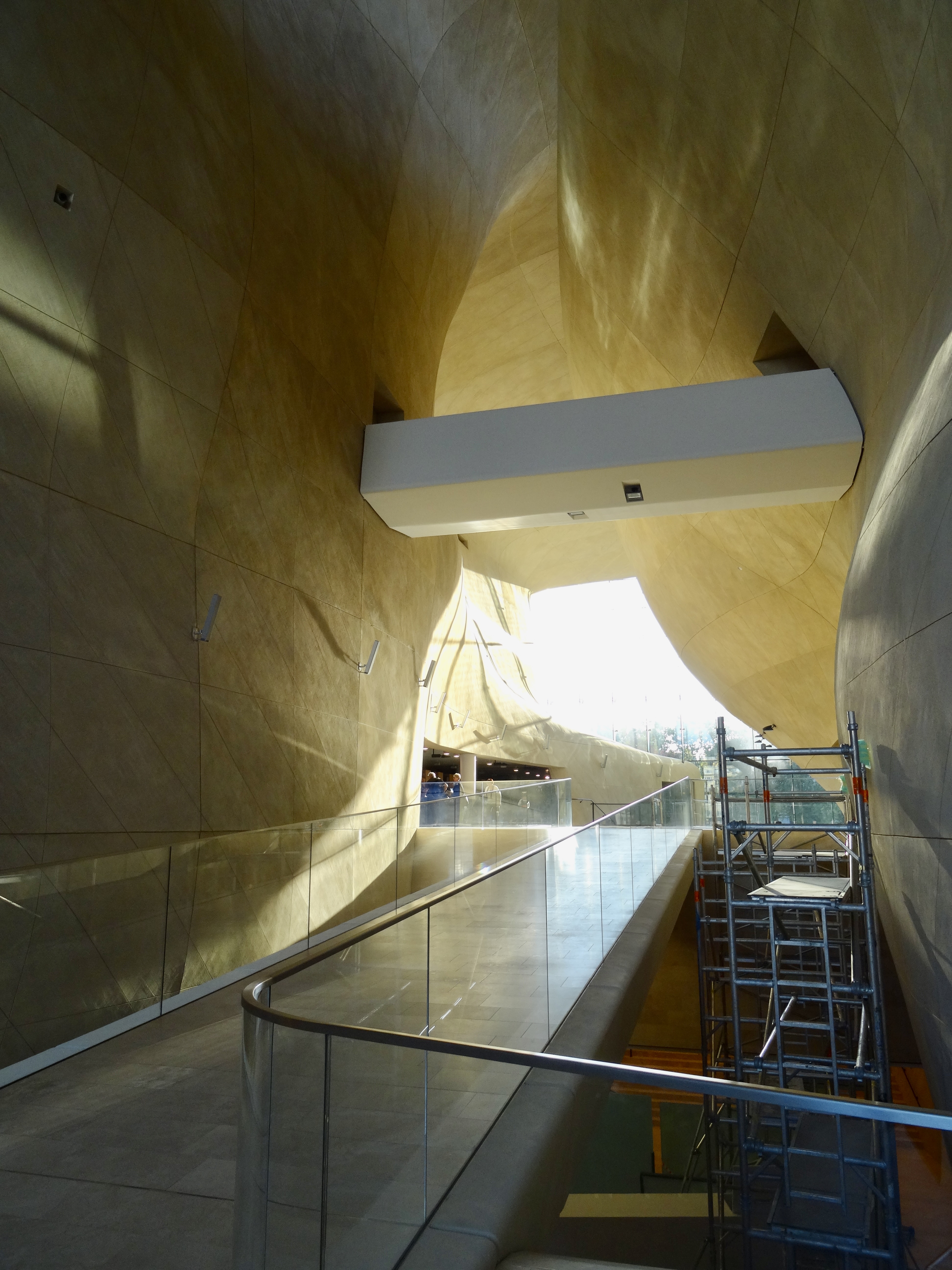
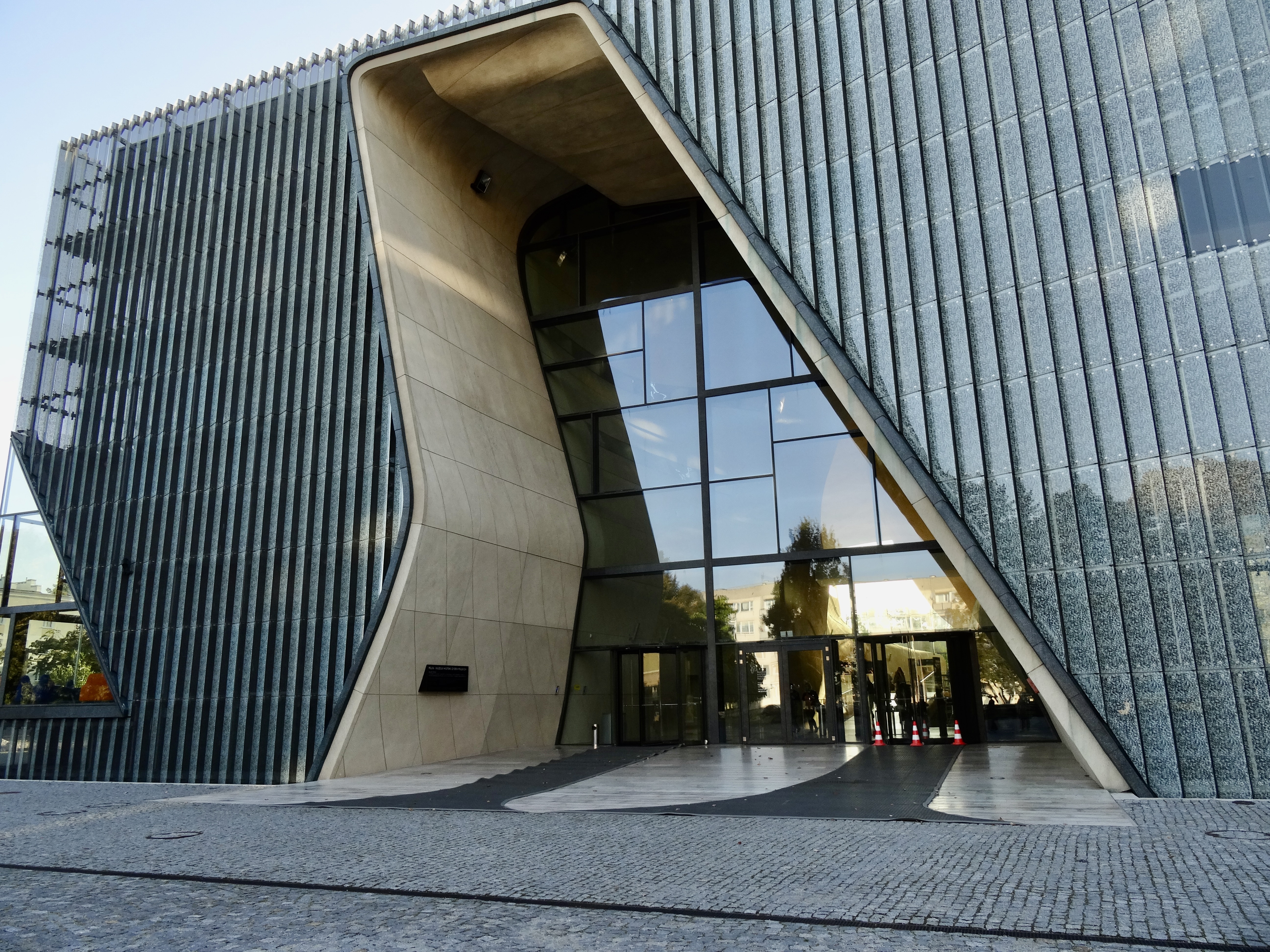
After the Palace, we headed over to a new Jewish Museum that had recently been opened in Warsaw (in the neighborhood of the old ghetto). It was designed by a Finnish architectural firm (and you know how I’m all things Finnish) and Barbara thought I’d like the architecture. Must say that I never experienced so many “Jewish” places in my life, before this trip. My very unaffiliated position has not exactly made me a frequent observer of these things.. But the building, Called POLIN, was quite stunning. And it was definitely still in the earliest days of opening as only one exhibit section was open with signs announcing when the rest of the exhibits would open. The architects were Rainer Mahlamäki and Ilmari Lahdelma. By the way I didn’t like the façade pattern that was made of letters (Hebrew and Polish) that said “Polin” or Poland. The building has a huge entry area… and the intention of the museum is to be the whole history of Polish Jewry.. not just the period during the war.. so it’s a large undertaking for the exhibits. By the way, on the donor wall the Koret Foundation (SF) has a very prominent place. After this, we headed to a special pierogi restaurant… Zapiecek.. which was located on Aleje Jerozolimskie (that’s the street name).. just off Nowy Swiat which is a happening street with cafes and coffee shops and close proximity to the University. We shared a “small order” or savory pierogis (9 of the medium sized dumplings filled with things like spinach and mushrooms and cheeses) and a “small order” of the sweet ones (filled with sweet cheeses, apples and raisins, jams, berries, etc). We also had soup as a starter.. You could have rolled me out of there… But pierogis are the thing to have… along with Polish beer.
We talked well into the night and closed the place down at close to midnight when Barbara (who refuses to take taxis) realized that the tram line would be ending soon. So off we went.. Me to the hotel and Barbara to her apartment.
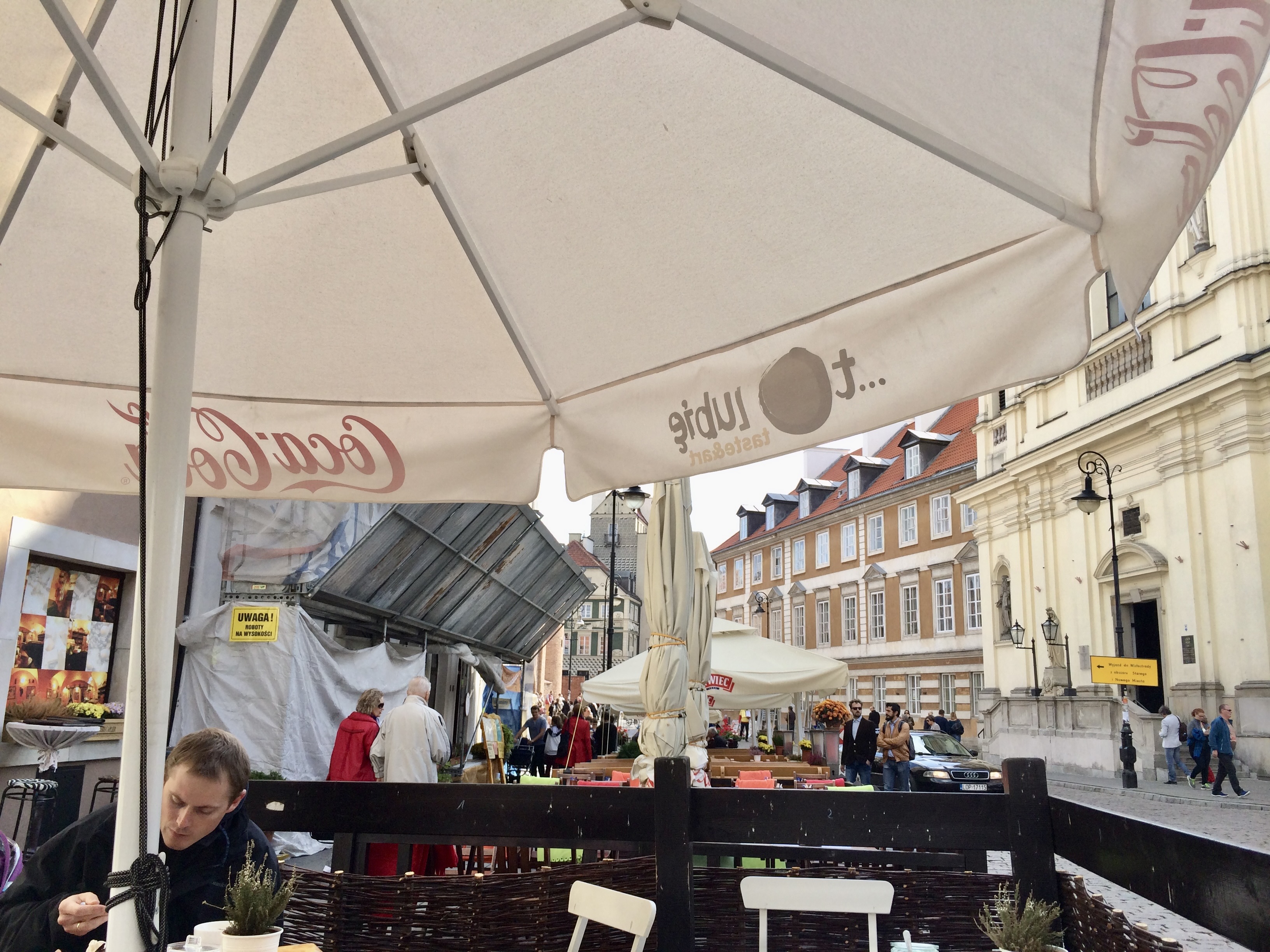
The next morning (my final day in Warsaw and in Poland), we met mid-day so that I could have a few hours to catch up on work and also to do a little gift shopping (which didn’t turn out to be too productive –just four very nice hand painted small plates).. and some decorated Polish eggs for people at the office back in Oakland. After I woke up, I headed to my newly found breakfast café, a few blocks from the hotel.. (I had eaten there the day before, so I was sort of a regular already)… The café plays Beatles and Rolling Stones music.. Actually it was a great little place with just about four seats inside and about 10 outside under a canopy… They baked their own breads and made their own jams.. I was in heaven… It’s called To Lubię.. and they have a sign outside that says “Life’s too short, eat cookies” It’s actually built into the bell tower of a Dominican church… Supposedly all their recipes come from the monks from the monastery located behind the church.. including the liqueurs which seemed really interesting, but it was breakfast! (I believe that “To lubię” means “I like it!” They serve lunch and also I believe light dinners.
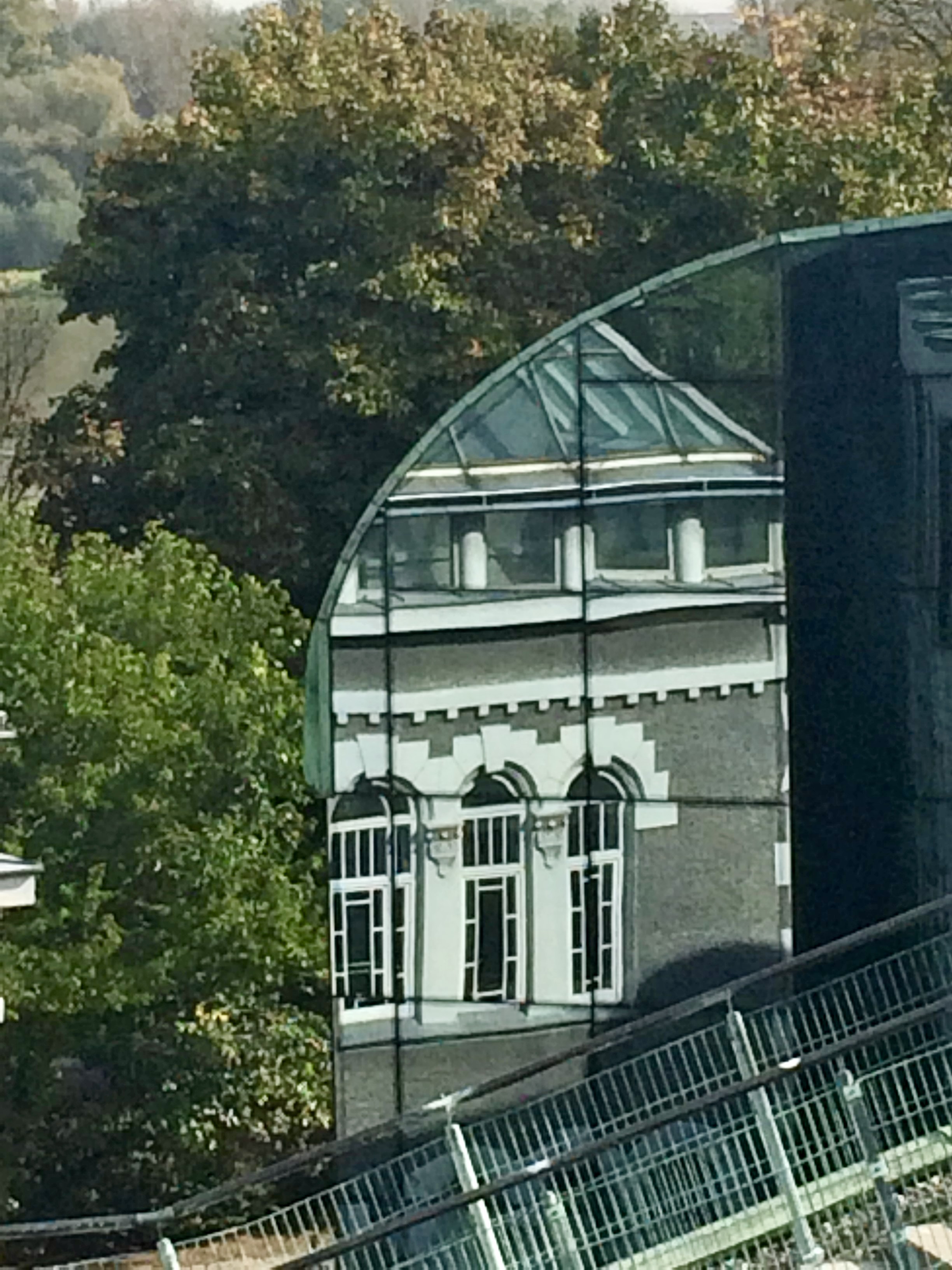
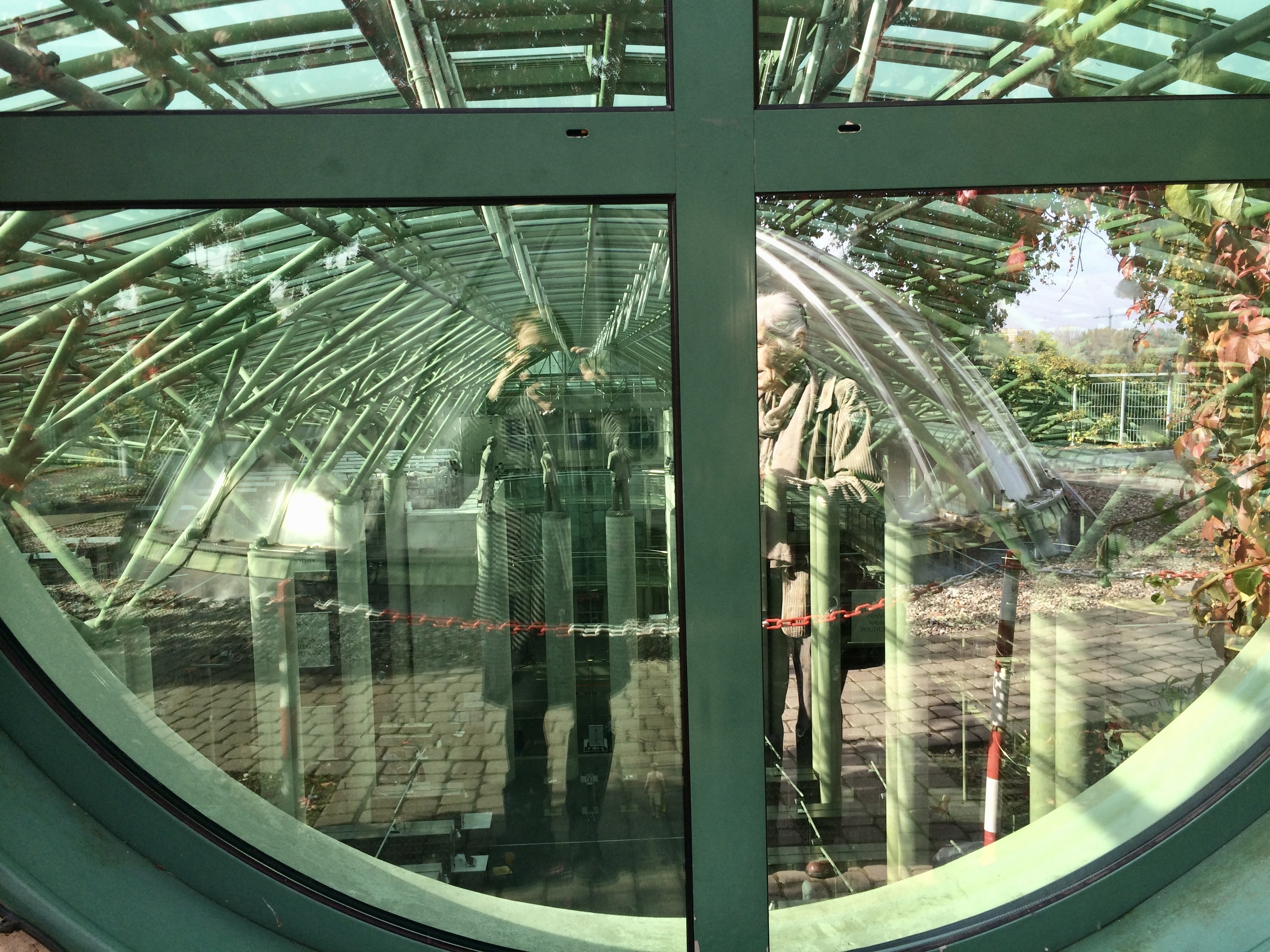
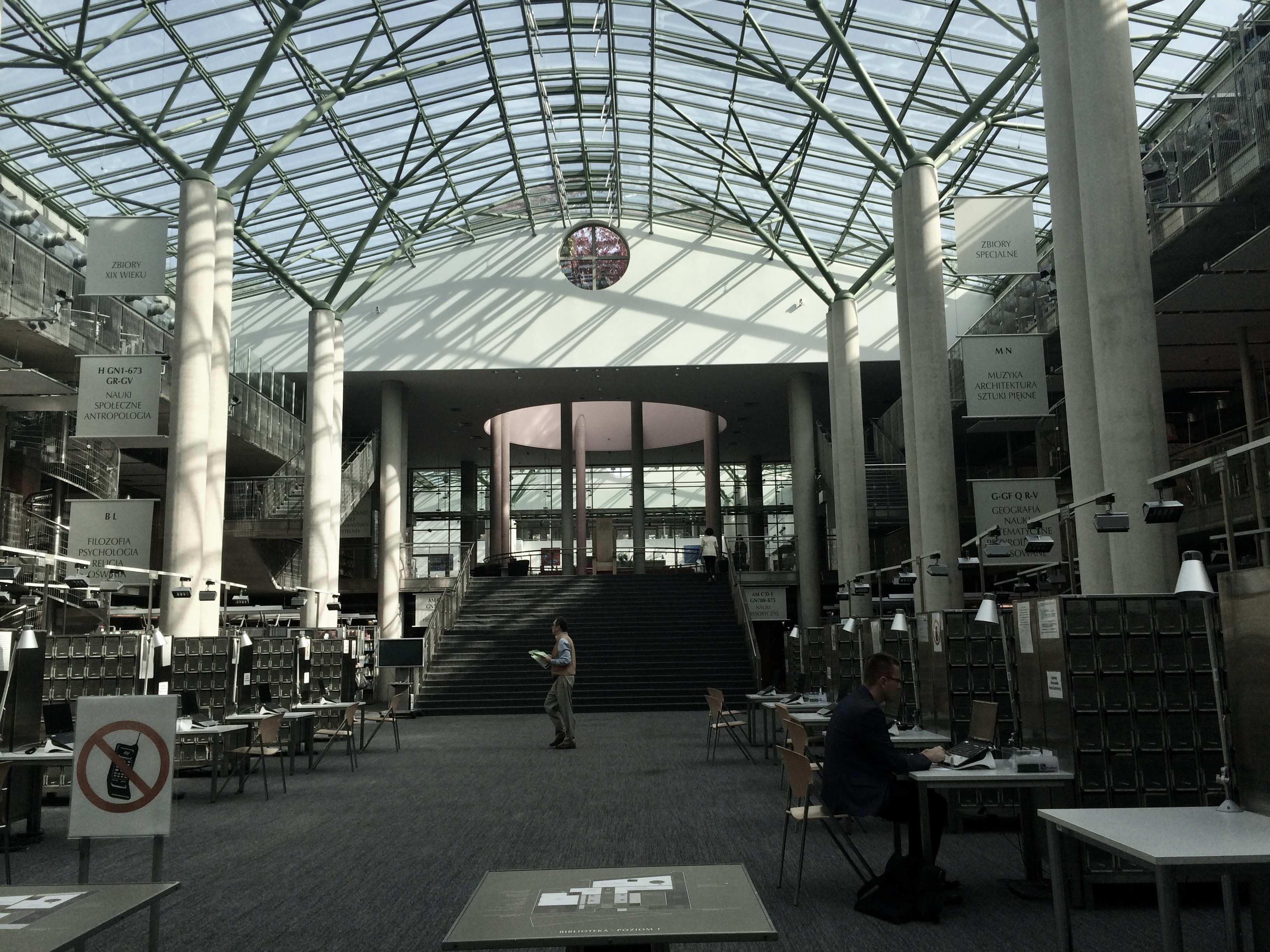
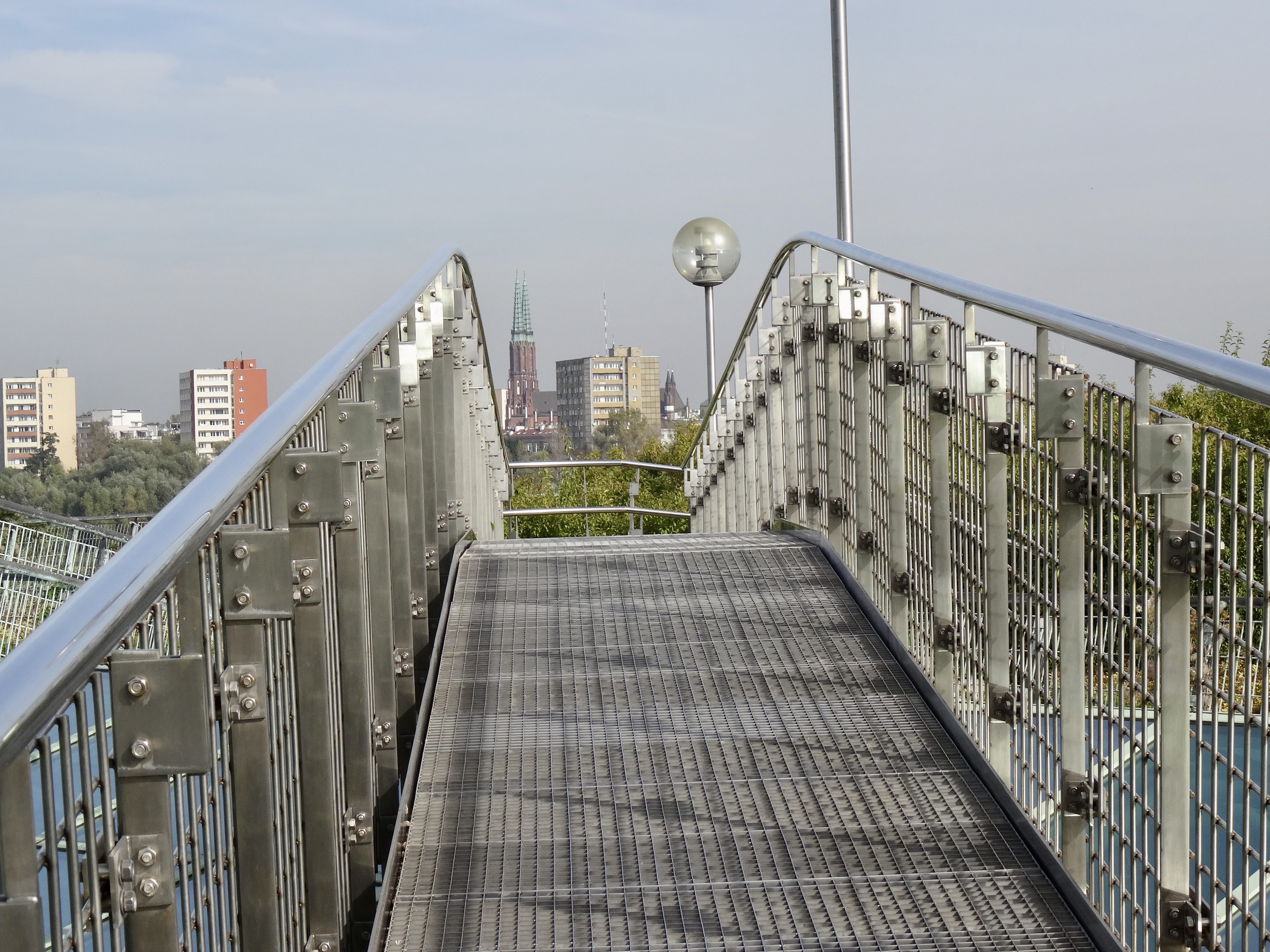
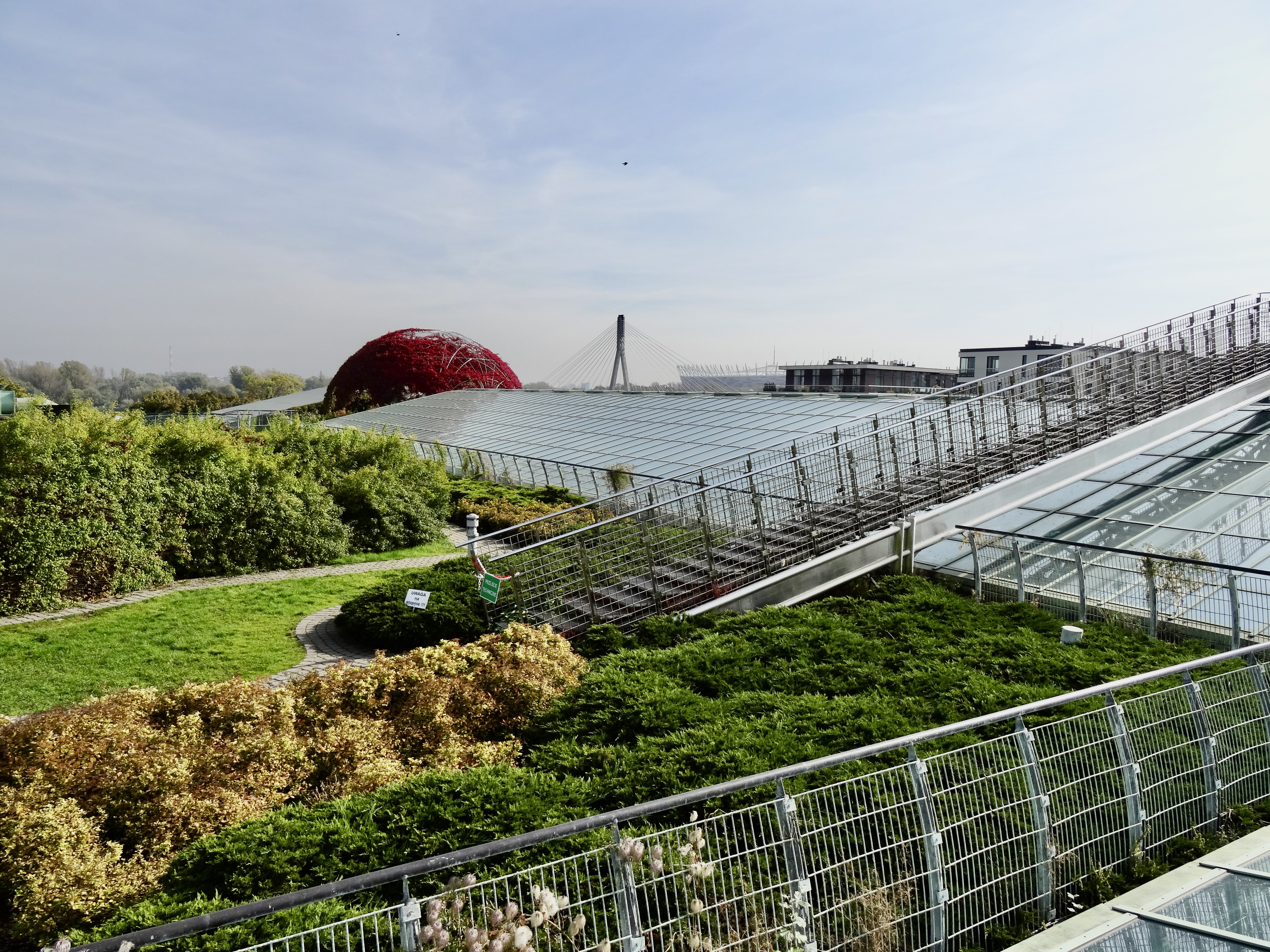
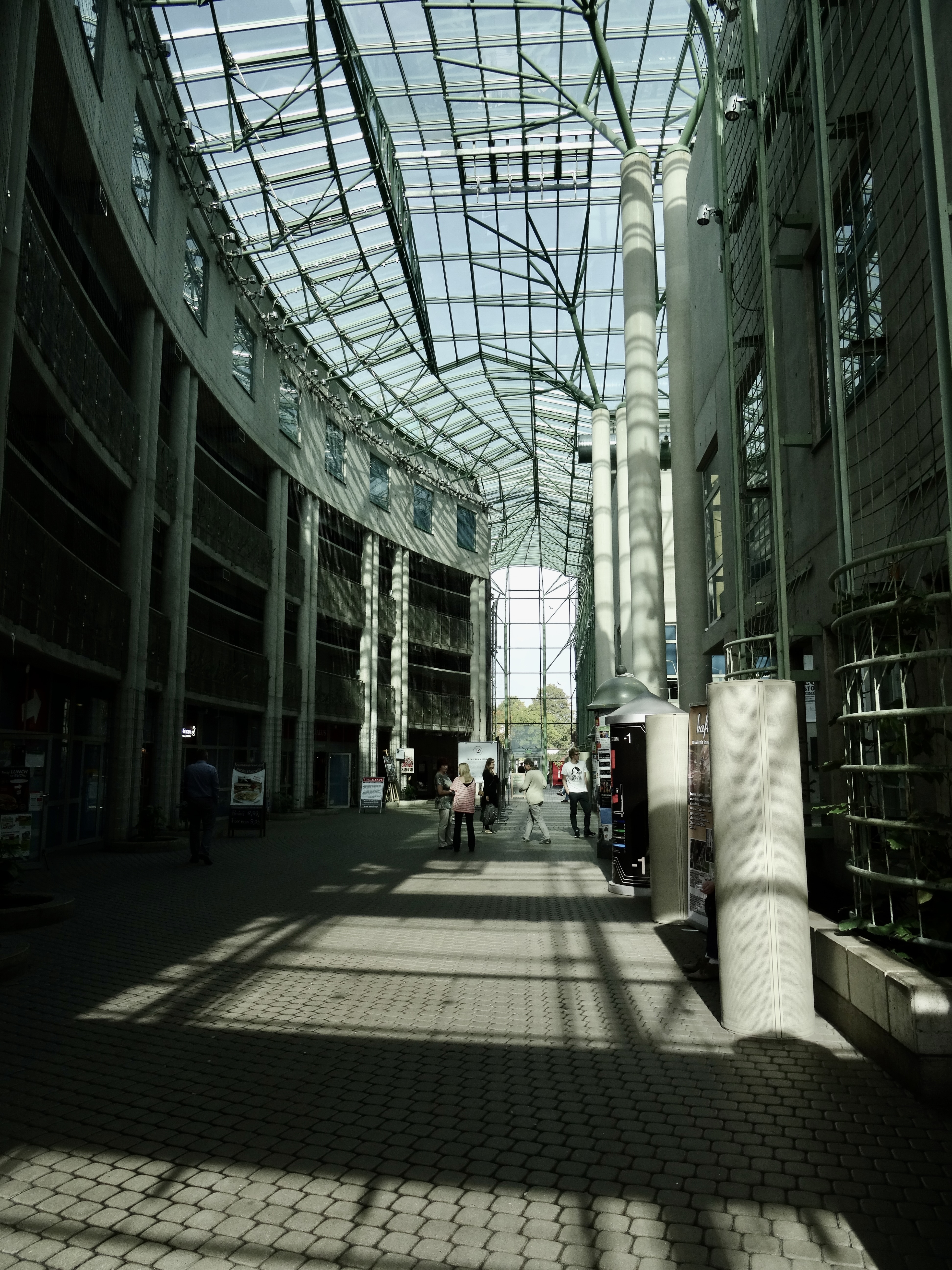
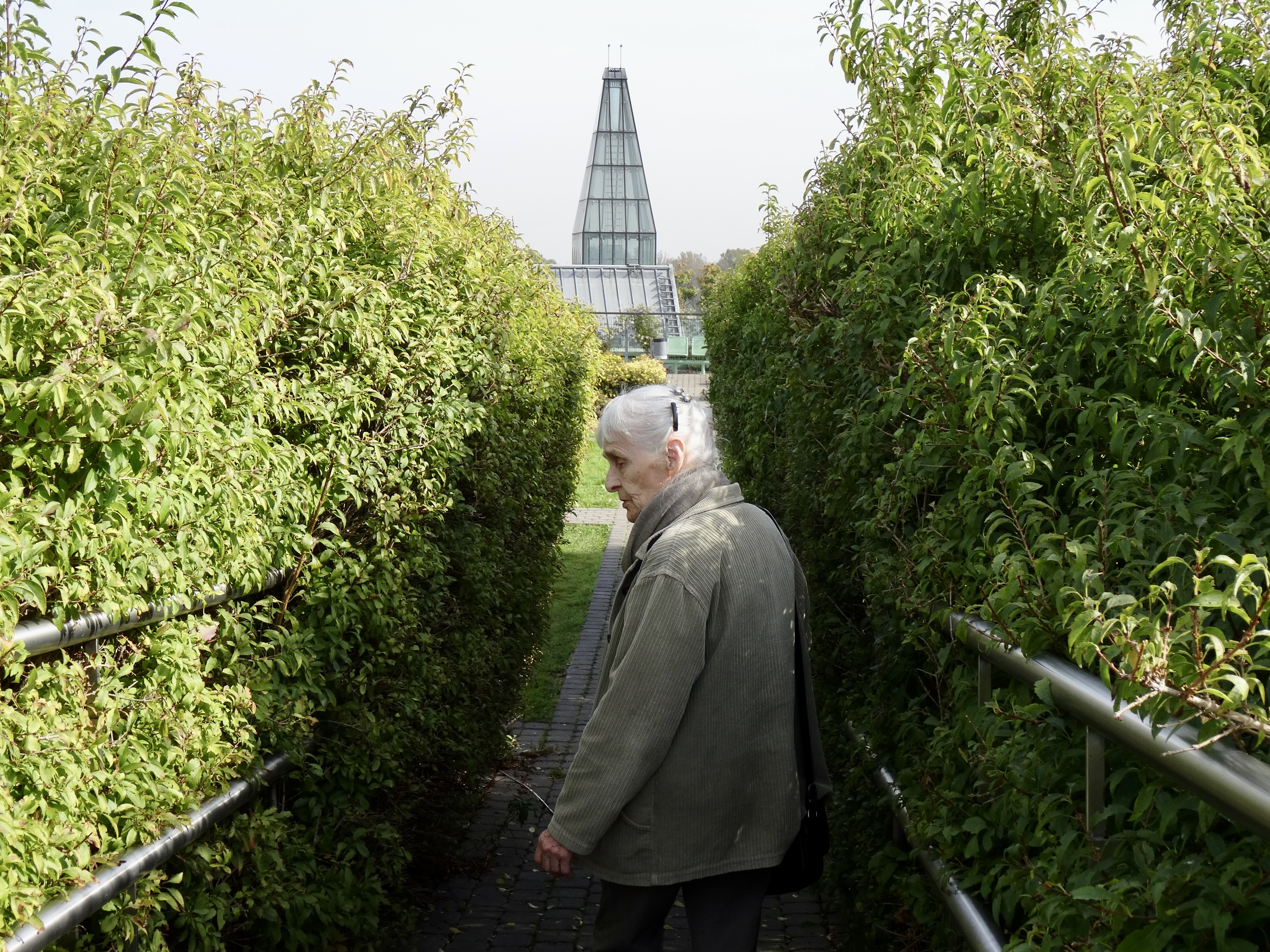
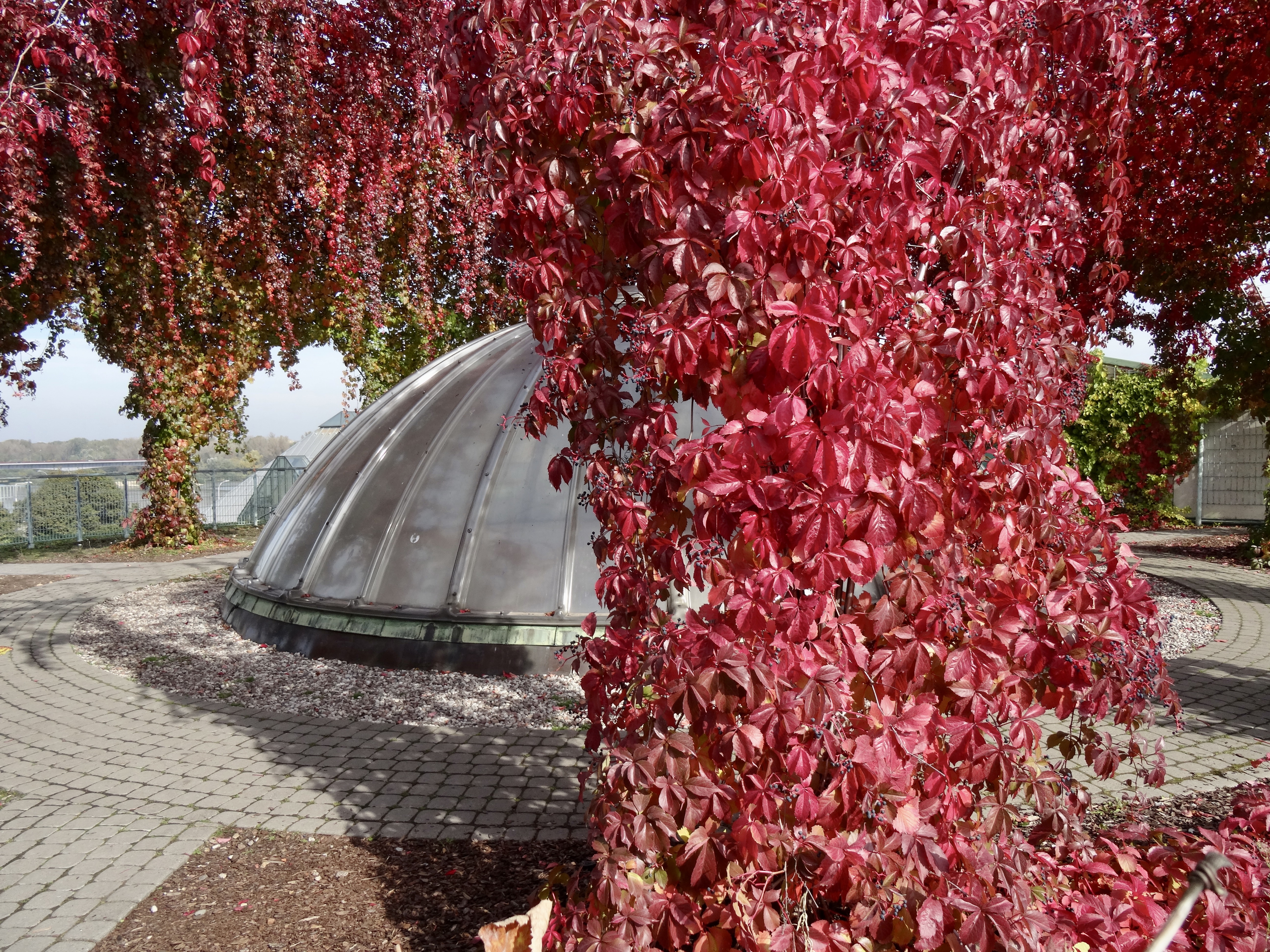
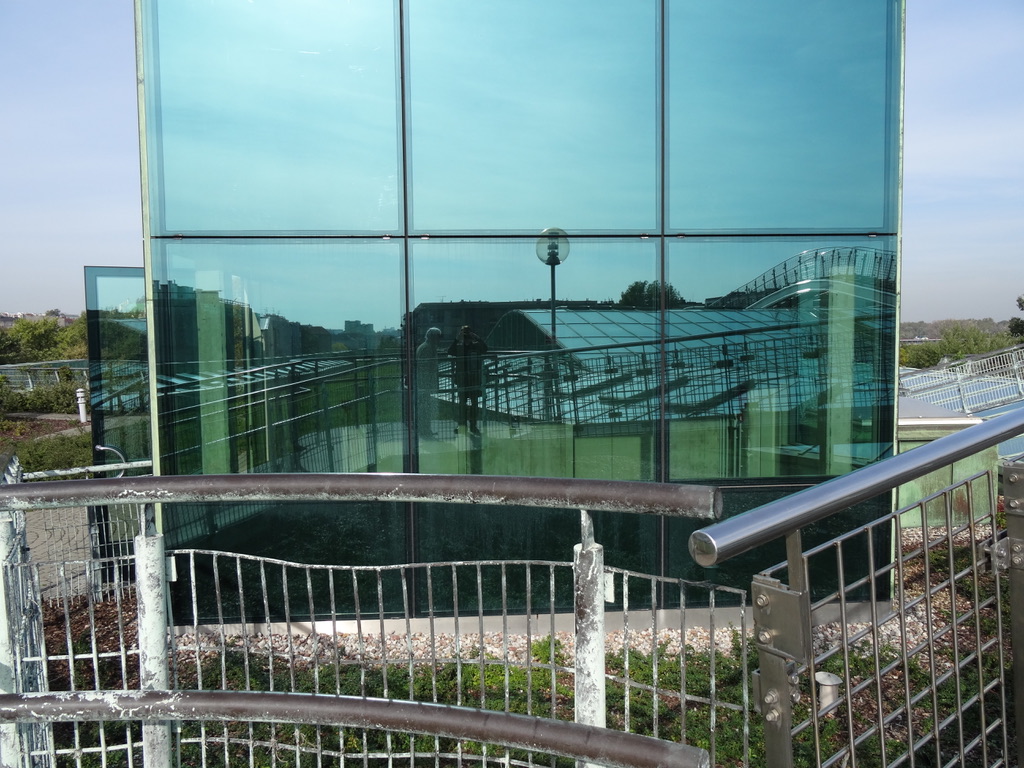
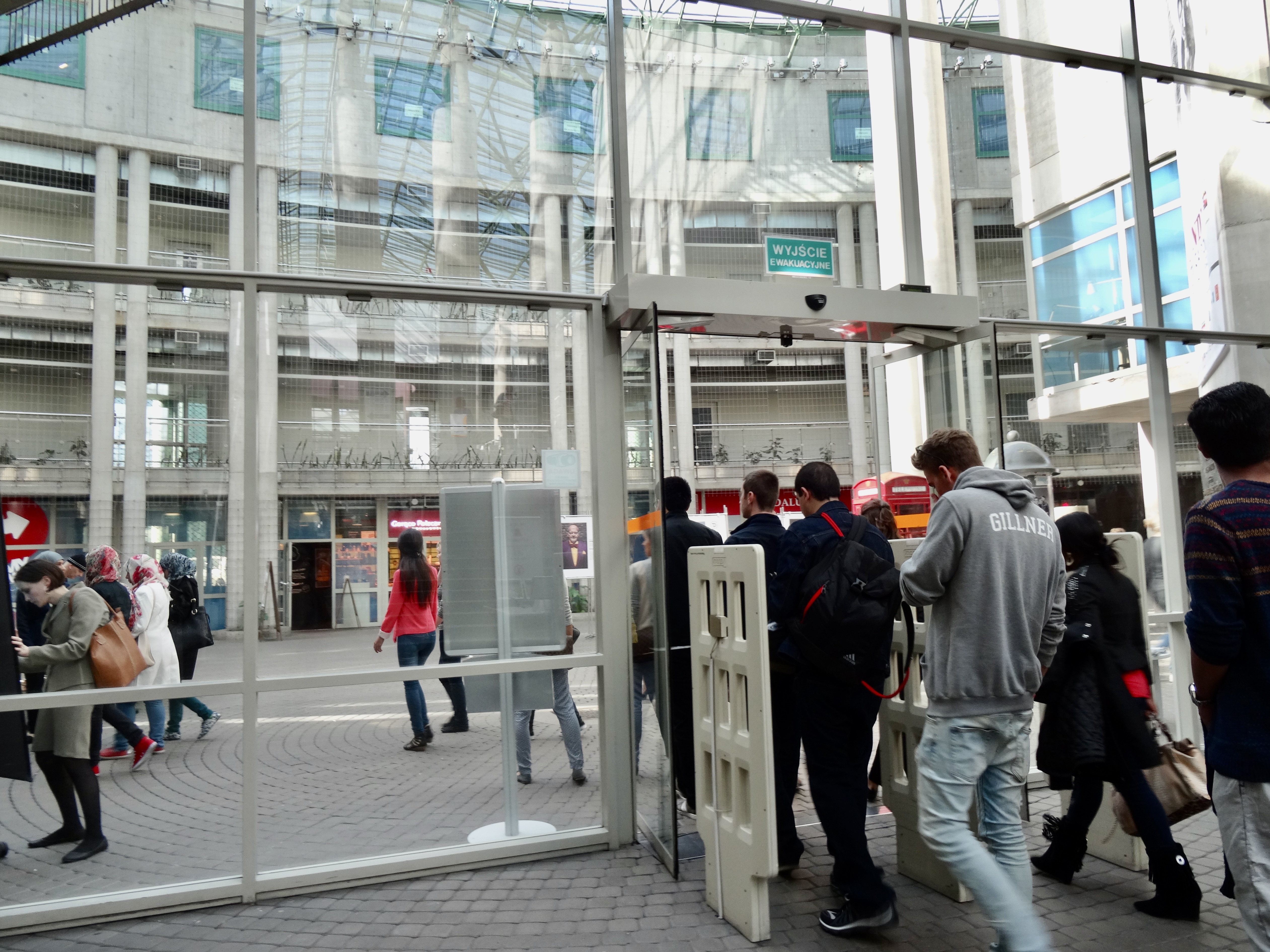
I then met up with Barbara at the University of Warsaw Library.. which I had read about and which was supposed to have very interesting gardens on the roof and also good views of Warsaw from that roof. Well the building is rather strange. Barbara hates it.( remember she is very very opinionated and given that she is well into her 80s I think she feels she has the right to articulate her feelings—about everything) She thinks it is a total waste of space and that it doesn’t feel like a library inside.. but she does prefer books and the library is obviously geared to a lot of new technologies. Anyway, like many university libraries these days, the first floor entrance area is like a commercial street with shops and cafes.. and then you enter the library..
It was designed by two Polish architects after a competition for the selection (Budzyński and Badowski ).. and it was opened around 2000. I’m told it was blessed by Pope John Paul II. The rooftop garden wasn’t what I expected.. it is accessible to everyone and you can actually walk up a series of ramps from the street and not go through the library to get to it.. (although given my “boot” they let me take an elevator to the garden).. But the garden isn’t really tended and there aren’t many places to sit.. I had envisioned a series of vegetable gardens and great areas to sit outside and read/study.. But that was not the case. We walked to a little bookstore café to get a snack.. and then I headed to the hotel to pack before meeting up with Barbara for dinner. Our conversations got deeper and deeper into contemporary Polish politics and the situation in this “post-transformation period.” In general, many people feel that Lech Walesa was “used” and that soon after the transformation, factories closed and the economy and services deteriorated.. They say they have “freedom”.. but what does that mean.. freedom to travel, yes.. but no money to go anywhere.. Unemployment is very high and the Poles have become the cheap labor source for wealthier nations.. Many Poles have been relocating to places like Ireland to find work. Complicated…
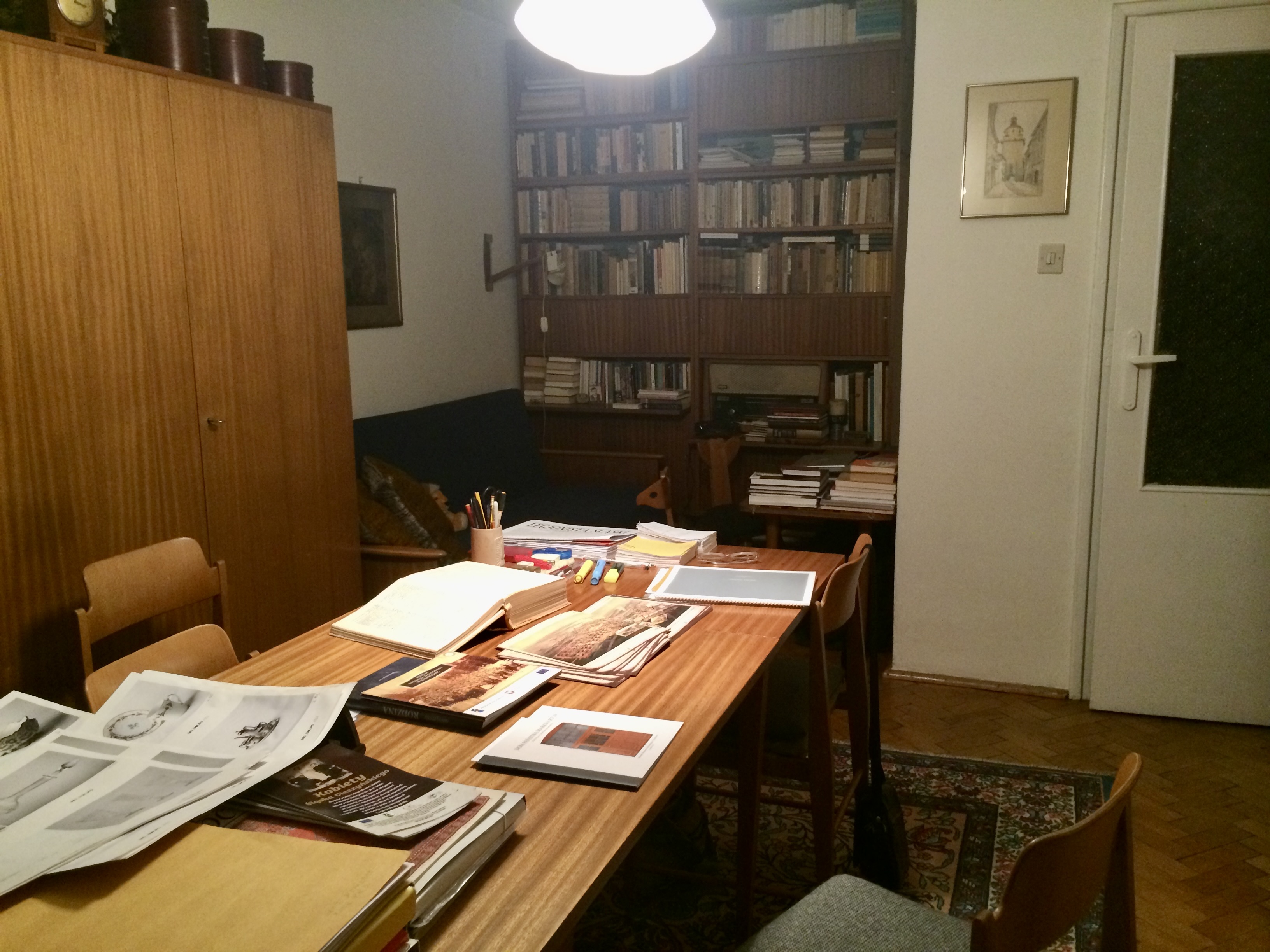
So a few hours later I took a taxi across the bridge to Barbara’s apartment. It is a total of 170 sq. ft.… one room essentially and very very well organized. She has lots of books so in addition to the walls of bookshelves that make the apartment feel even smaller.. if you open any cabinet — even in the bathroom — it’s filled with books. But she manages to sleep, cook, eat, and work on a wide assortment of projects.. all in this little space. I’m in awe as I can never have enough space. She’s been working on a catalogue of an exhibit of her late husband’s things.. and she showed me the catalogue for a wonderful exhibit that she curated that showcased the company town where her grandfather worked.. He was in a factory that made linen. Amazing archival photos and actual implements that had been handed down to her from her grandparents and parents. The catalogue is a gem.
We headed to an Italian restaurant for dinner.. Pasta.. more carbs.. and starch… and wine.
And after a lot more talking… I headed to the hotel at about midnight.. to await my 4:30 am wake up call.
That’s it.. I’m heading back now… See you in California or Washington.
Best.. Fern
The Interesting Discovery — follow up to September 27, 2013 missive
Since several of you have asked what the discovery was… so here it is, and I won’t discuss it tomorrow.
About 30 years ago when Mike and I went to then-Czechoslovakia for the second time — visiting a Czech planner (Lallin) who had lived in Finland when we lived there — our friend, Lallin, took us on an unexpected journey. We had visited him and his family a few years before and when we met his parents they asked where Mike’s family is from since they recognized the (somewhat Anglicized) name “Pyatok” (probably Piatek). Mike didn’t know, but when we returned to the states he asked his mother and she said that Mike’s grandparents (both paternal and maternal) were from a place called Maly Lipnik. So, when we reappeared a few years later, Lallin set us on a journey that he took with us.. and unknown to us, he plotted a route to get us to Maly Lipnik (a place he had never visited). When we got there.. and saw the village sign on the roadside we laughed, took pictures and figured that was that.. But Lallin had bigger plans. He wanted to knock on doors in this tiny, very old-fashioned town and see if he could find Mike’s relatives.
So he knocked on doors and speaking Czech was able to engage in conversations.. At one door, the woman seemed very animated and Lallin was talking a lot, so we thought we had uncovered a long lost relative.. but alas Lallin said that the woman was so excited that someone had come to visit from Brno (second largest city in Czech), since apparently the village had been long forgotten in its mountain location and being quite Catholic and not pro-Communist… so he couldn’t even tell her about us because he thought she’d have a heart attack. Anyway, we did find a cousin or something on Mike’s father’s side. The town was divided by a creek.. on the day we were there, the men were involved in horse trading (much of the agricultural work was being done by horse) and the women were washing clothes in the stream! (just imagine Mike trading horses and me washing clothes in the stream!).. anyway, it was an interesting trip.
So, as I planned this journey to Bukowsko… and was looking at the location on the map, it dawned on me that the town was very very close to the Slovakian border. Mike then got interested in the location and its proximity to Maly Lipnik. Turns out that (by the way the crow flies), the two villages (Bukowsko, Poland and Maly Lipnik, Slovakia) are about 60 km apart. So perhaps we met in another life.. but I don’t think I was the one washing the clothes in the stream. Perhaps I was the woman protesting the fact that the women were doing the washing while the men were having a good time, drinking and supposedly trading horses.
That’s it.
Fern
Finding My Roots – September 27 2014
September 27, 2014 (#3 in the Poland Travelogue). Rzeszow – Lesko – Bukowsko, Poland and parts in between.
First a bit of background explanation before telling you about today’s expedition.
As the time got closer to my departure to Poland and I thought about whether to add a few days onto the conference (which would end on a Friday so it made sense to go somewhere for the weekend), I began to think about the fact that I was last in Poland when it was part of the Eastern Bloc under control of the Russians, then called Soviets.. and the fact that I was told as a child that my grandparents on my father’s side were Polish. So while I really wanted to visit Torun (and I sort of planned a driving trip from Gdansk to Torun to Lodz to Krakow), I decided to see if I could find out anything about where in Poland my paternal grandparents were from. This little genealogy study began about six weeks ago. My father died at the age of 60, before I turned 30 and as a family we were much closer to my mother’s side — so I started with just about zero information. My paternal grandfather died before I was born; my paternal grandmother didn’t speak much English and she wasn’t a very warm, nurturing grandmother. Indeed, I only saw her a few times a year and I know I thought she came from another century (which she did). In any case, my starting point was pretty minimal.
So I began by seeking out my cousins on my father’s side. While I’m very close to the cousins on my mother’s side, I hadn’t seen or heard from my other cousins in years — in fact decades. My brother and I are the youngest of the six grandchildren on my father’s side. About six years ago I was in Philadelphia and contacted the oldest cousin who I knew had gone to U-Penn and on to Penn Law School and remained in Philly his whole life. I hadn’t seen him since I was a child. We had a pleasant dinner and I gave him a publication about my office, and that was the last time I had any contact with anyone from that family. Well a few years ago he died and I got an email from his daughter. She said that when she was clearing out his things she found this publication and she figured we must be related because of the last name.. and so she wanted me to know the news. I thanked her and that was it.
Now, I thought I should ask her. Maybe her father or her grandparents (my aunt and uncle) who lived longer than my father, told her things about the family roots. Most important, I wanted to know the name before it got changed to “Tiger,” since I always figured this was not the original name and was given to my grandfather at Ellis Island. She responded quickly saying she had no information, but that she forwarded my email to another cousin (her first cousin, my second cousin, I believe) whom she said knew some facts because her son (relation to me?) had to do a family history when he was having his bar mitzvah. This information was forwarded to me — imagine starting out with heavy research done by a 13-year-old who is now at Tulane! Well the kid found out what year and what boat my grandparents came on and also the years of birth and death. From that I went searching on ancestry.com and some Jewish genealogy site for Poland.. and found the name of the town where my grandparents (both of them, as far as I can figure out) came from. I also learned that the name might actually have been “Tiger” well before they came to the US (although I don’t really trust that information). It appeared that my grandparents were from a place called Bukowsko. After googling and finding more than one Bukowsko my life got complicated. But eventually, it became obvious that it was a very small village in southeast Poland — extremely rural and impoverished, but with a very long history of Jews (dating back to the 16th century). This all made sense since my mom always said that while her parents came from big cities and were therefore supposedly “sophisticated,” my dad’s parents came from a little shtetl in a rural part of Poland.
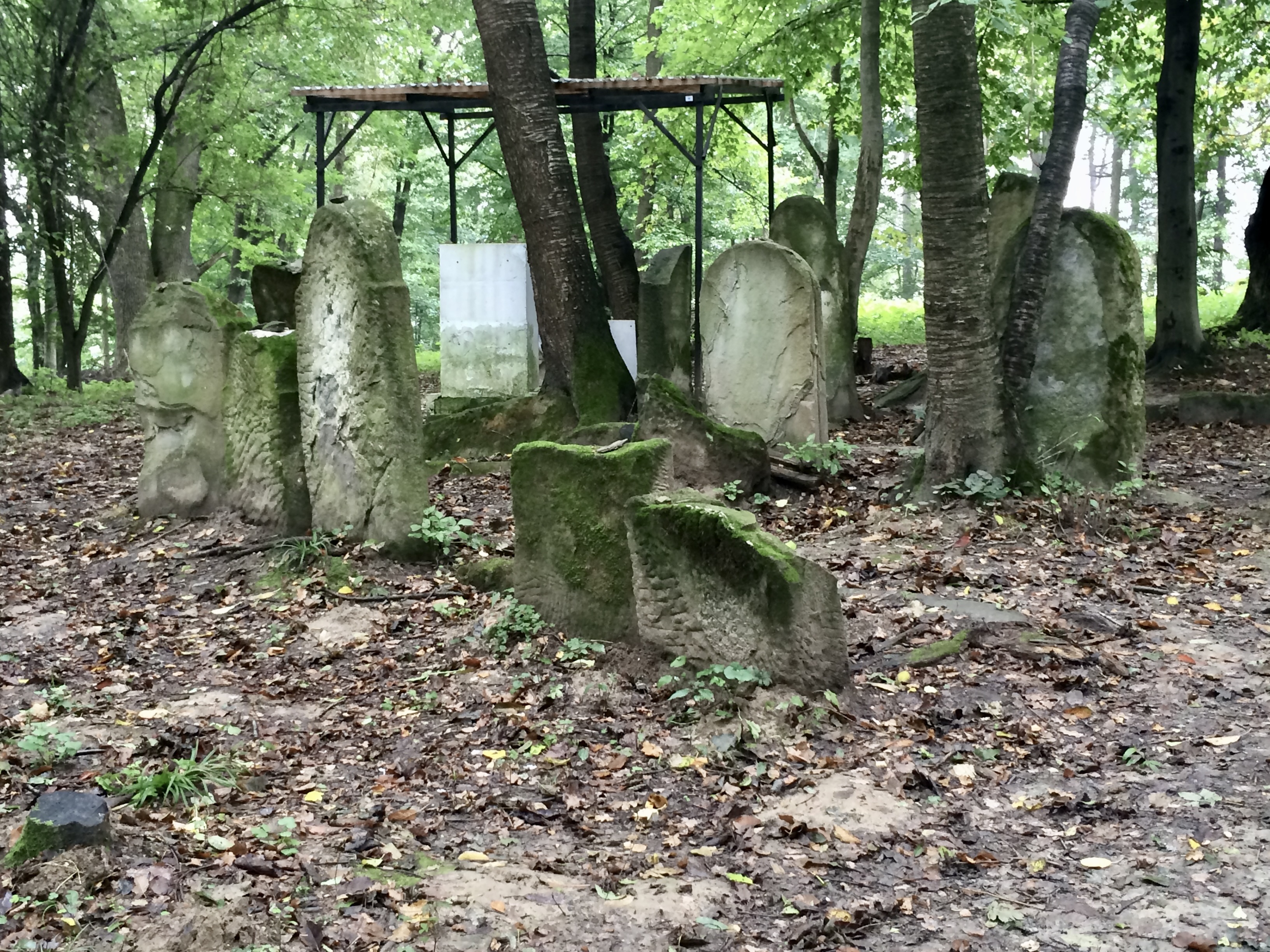
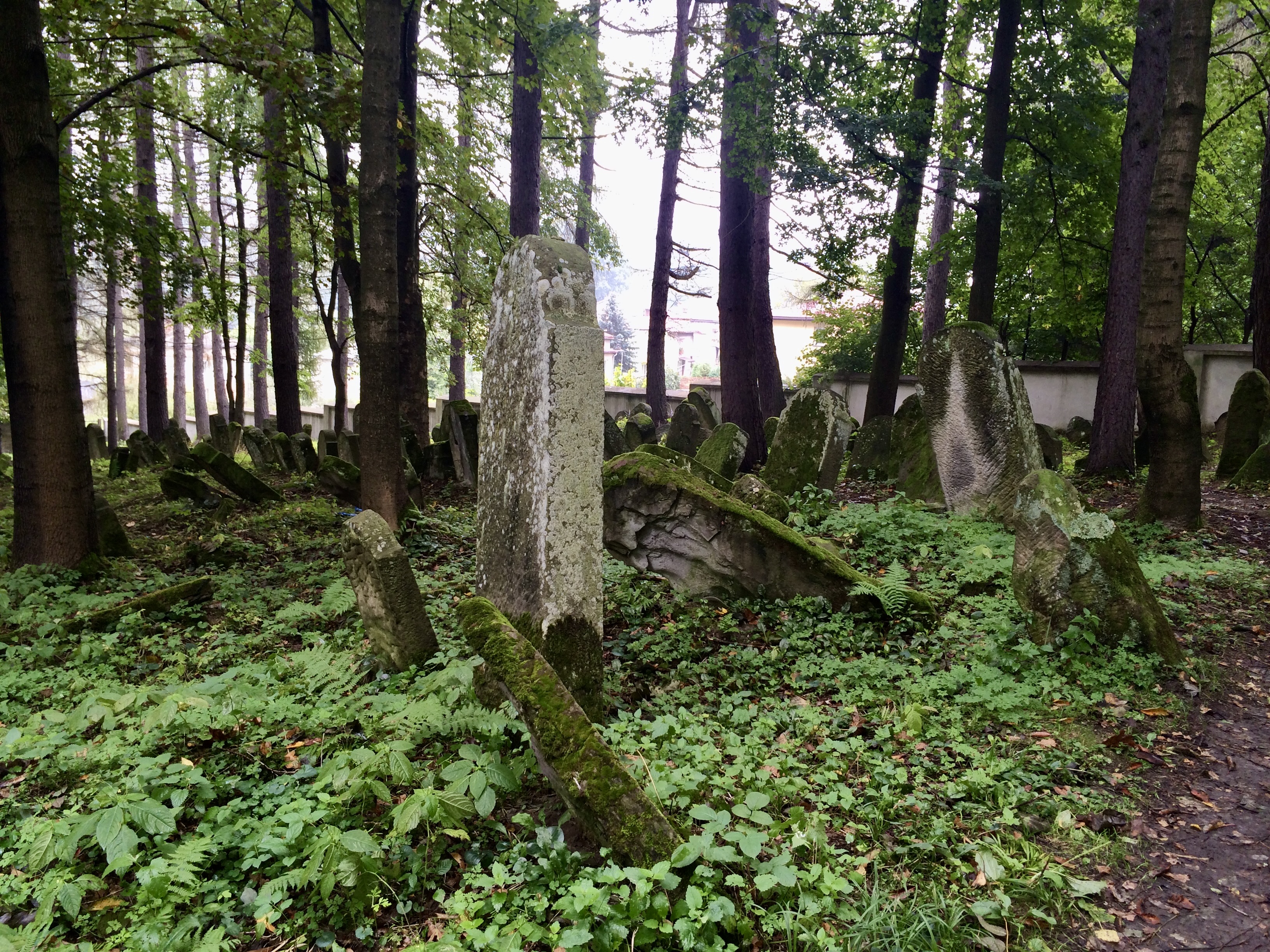
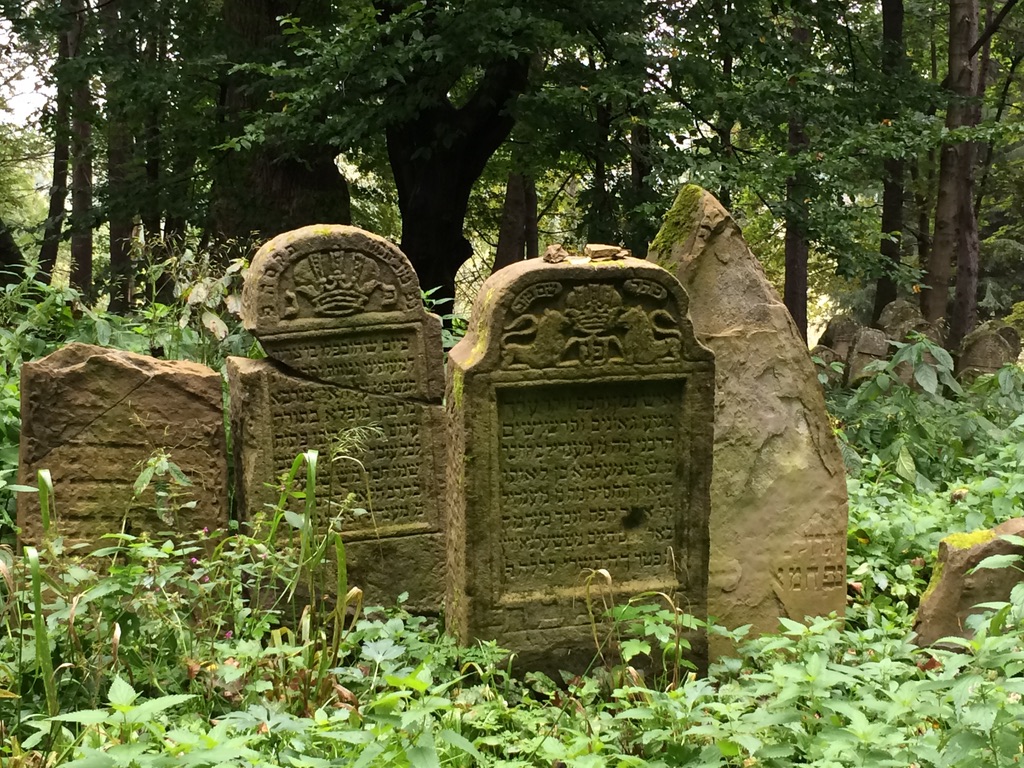
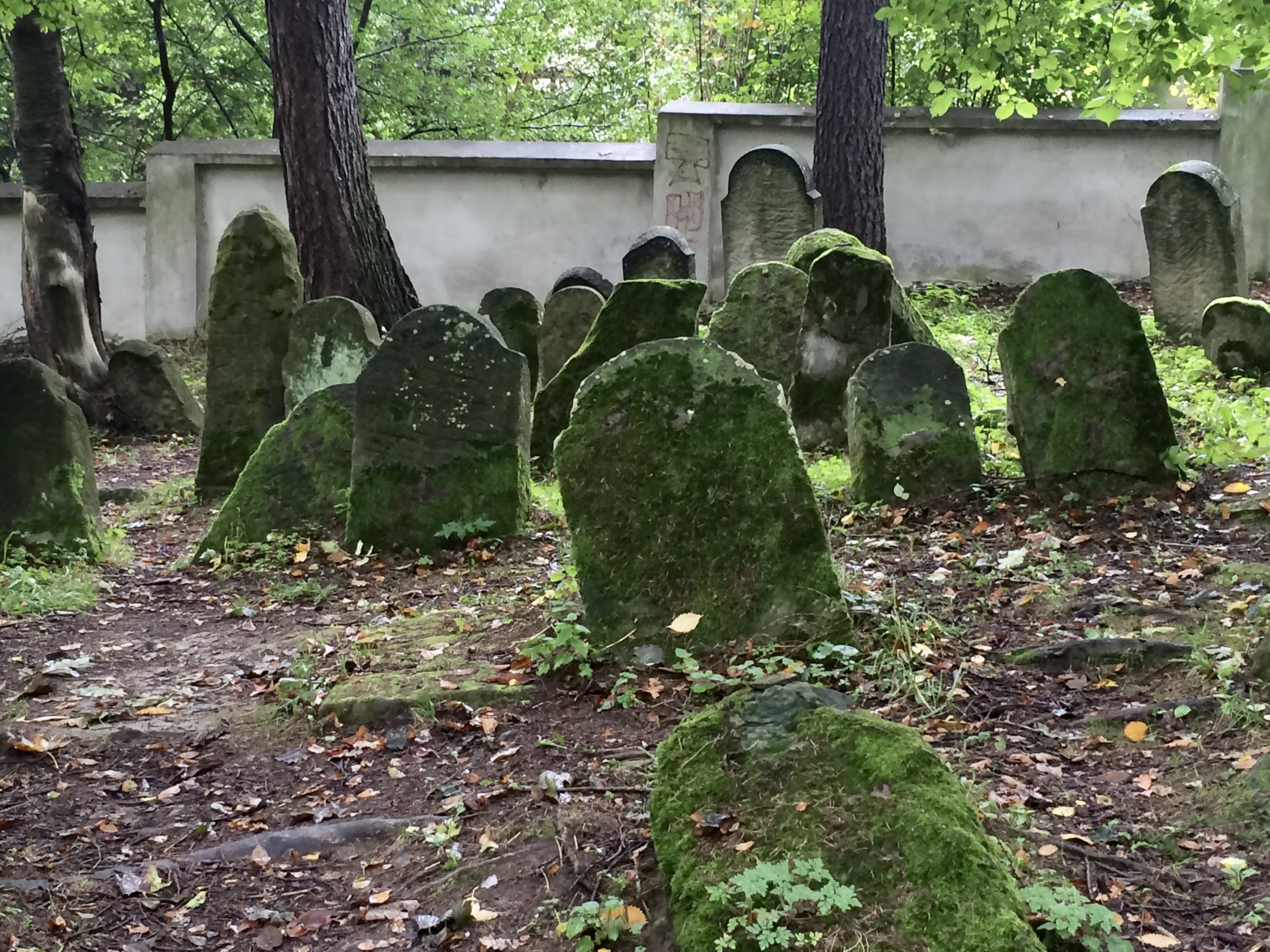
With that information, I decided to ditch Turon (a UN Heritage city) and Lodz and Krakow.. and go to Bukowsko, in spite of the fact that clearly there was absolutely nothing to see in Bukowsko! I did learn that there is a very large Jewish cemetery in Lesko which is about 20 minutes away. So I added that to my itinerary. Initially I planned to fly from Gdansk to Krakow and drive to Bukowsko (about 3 hours or more), but then I searched and found out that there was an airport in Rzeszow (remember pronounced jeshjue) and that would make my drive to Bukowsko only about 1.5 hours. I was set. Then as the date came closer and I looked at my “booted” foot, I thought I might need another driver or at the least someone to come along and share the driving. But who? I decided to contact the University of Rzeszow and see if any faculty member might be interested in spending the day with me. Actually, I figured that they might suggest a graduate student who would want to practice English. i said I would pay. This led me to Anna, with whom I began an email conversation. .. and then today at 8 am she and her cousin Mihal and I ventured to Bukowsko and Lesko. (Anna is a PhD in Political Science and a lecturer at the University — 31 years old, extremely bright with an amazing capacity to speak English and quite knowledgeable about both Polish social issues as well as EU programs being implemented in Poland. Mihal is probably about the same age and is in the Polish Army. His English was halting but he was quite friendly and pleasant — and he had the car!) Initially I said I’d rent the car and I could drive if she just gave me directions. But she said the roads are bad and that if would be difficult for me, so her cousin was the answer. Anna does not drive.
First about the journey and then later more about Anna and Mihal.
We left the center of Rzeszow and headed southeast, through many small towns and villages and agricultural communities — frankly pretty non-descript through what they refer to as the Sub Carpathian (or Podkarpacie Province) Area. .. Anna and me talking the whole time — finding out about how the University works, her research topics, life in Poland today, the region we were traveling, etc. While she and Mihal were from cities only about two hours from Bukowsko and Lesko, neither of them had ever been there, so it was in many ways an adventure for them as well as for me.

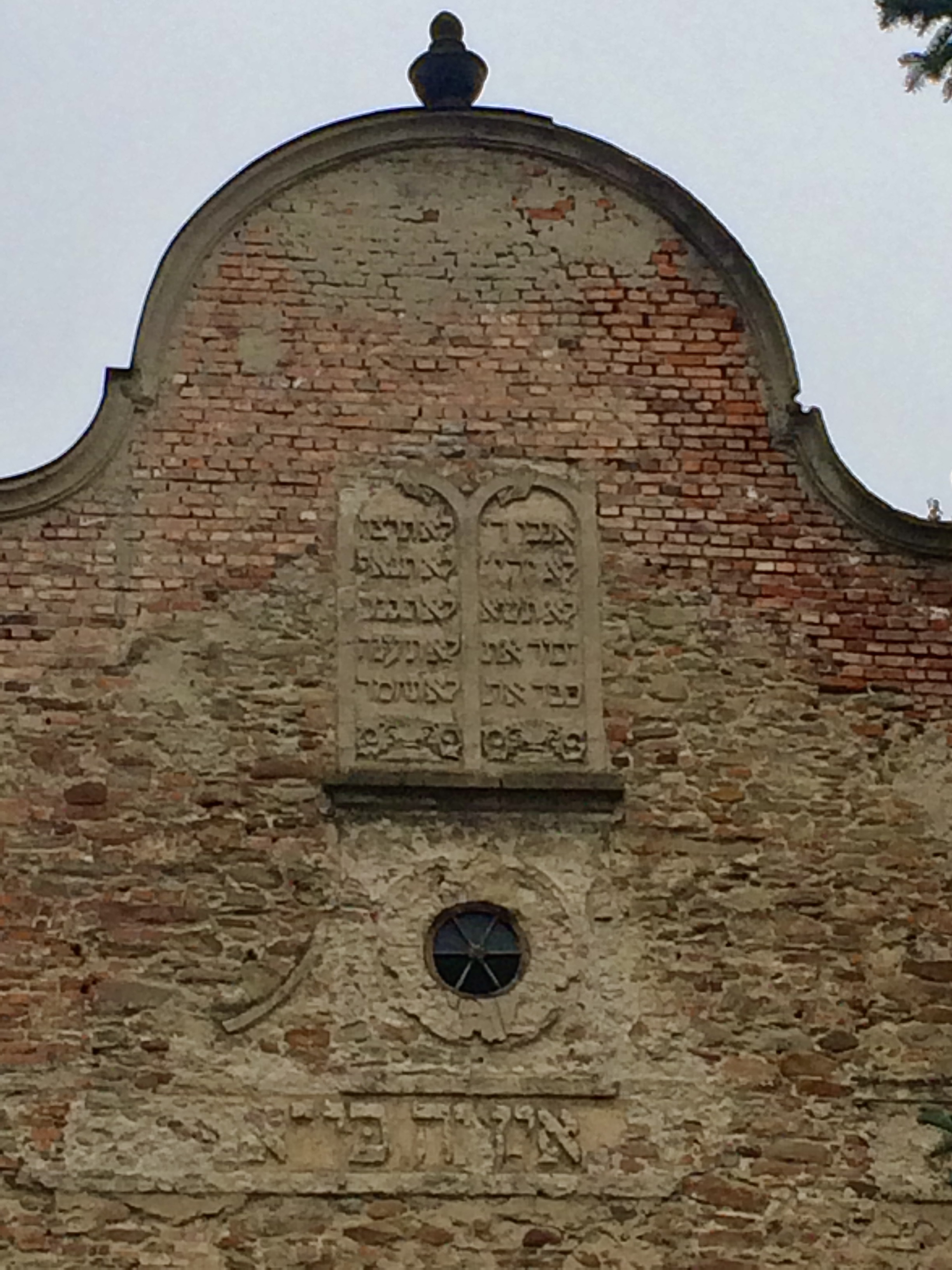
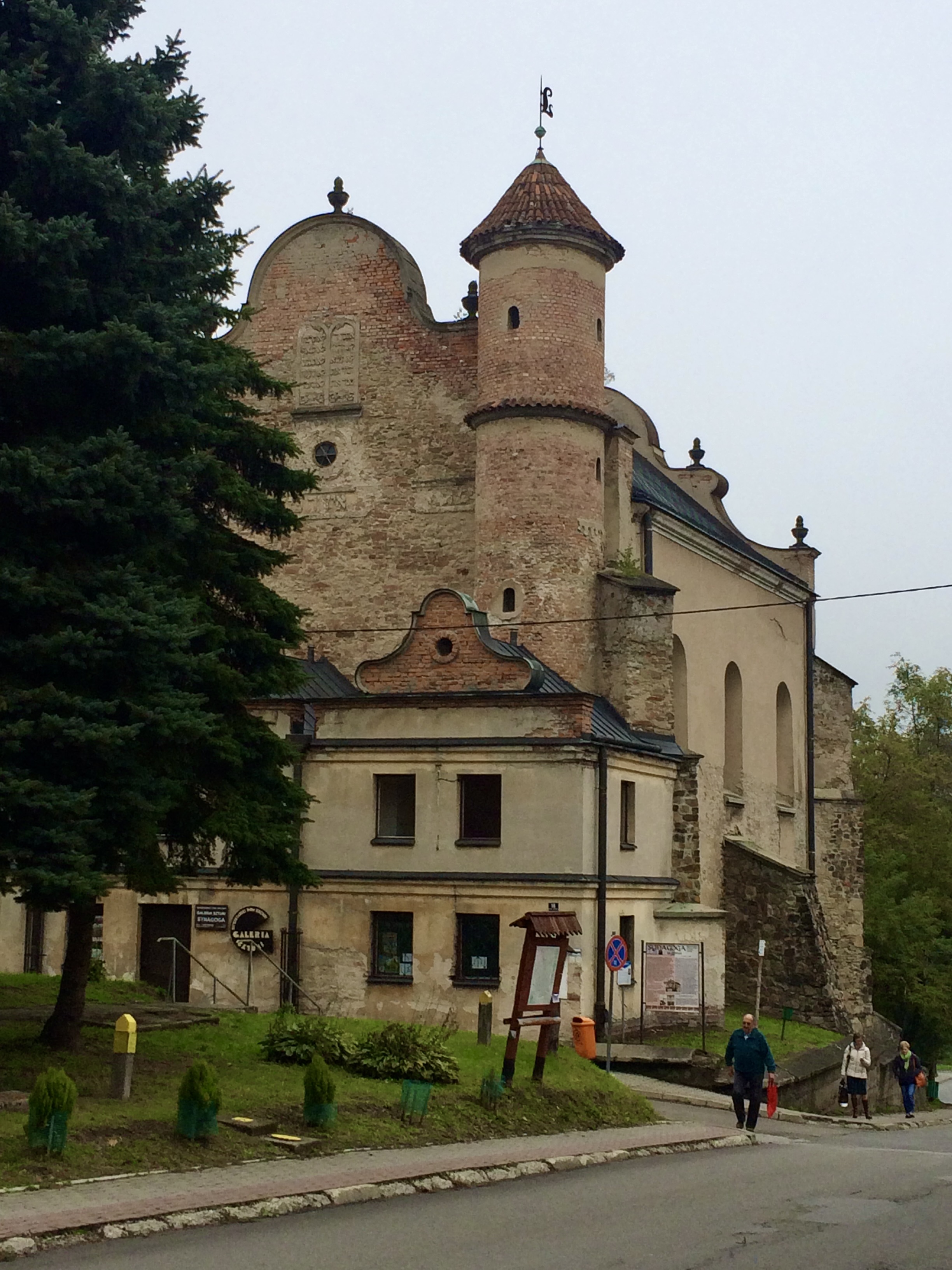
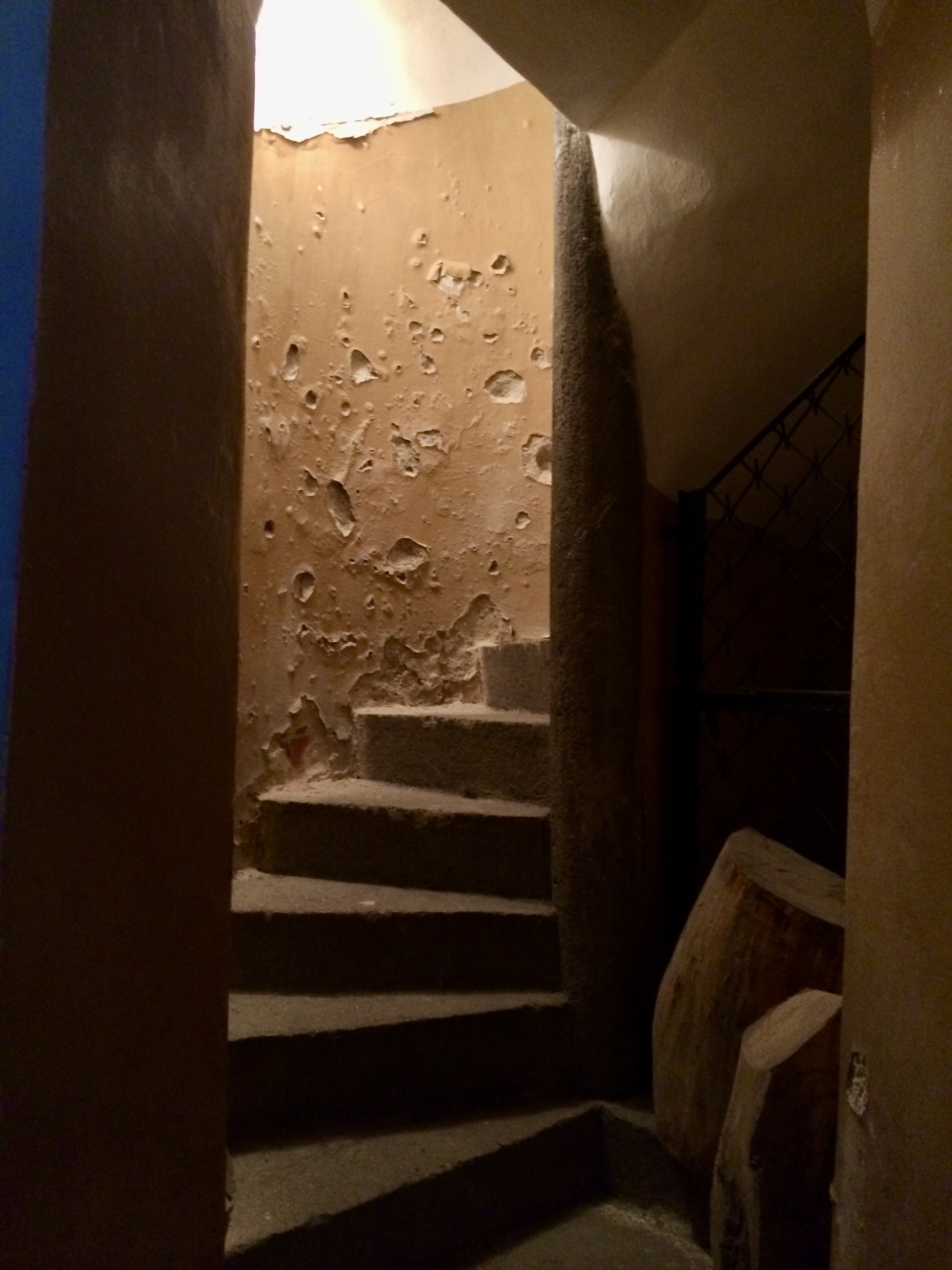
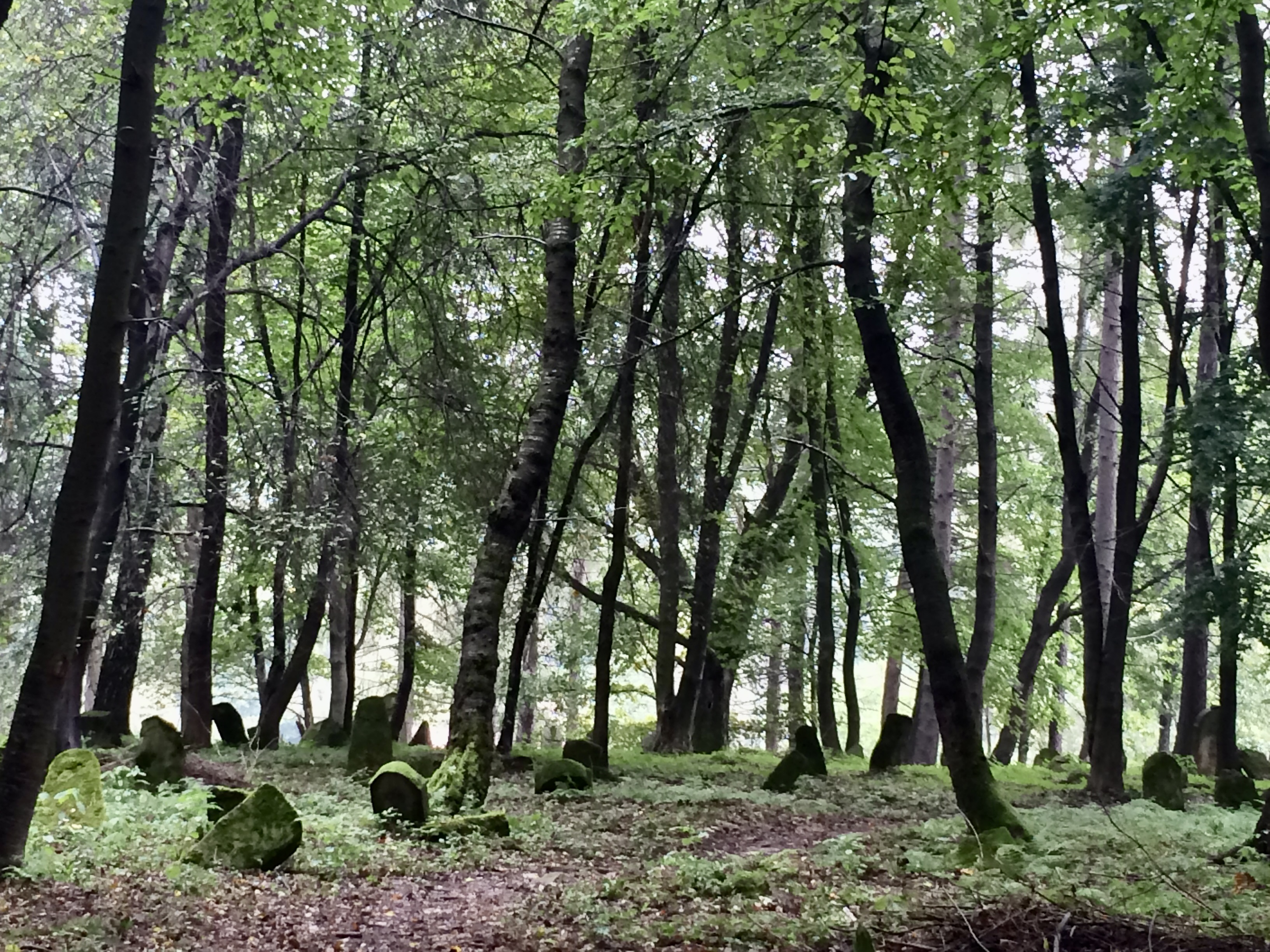
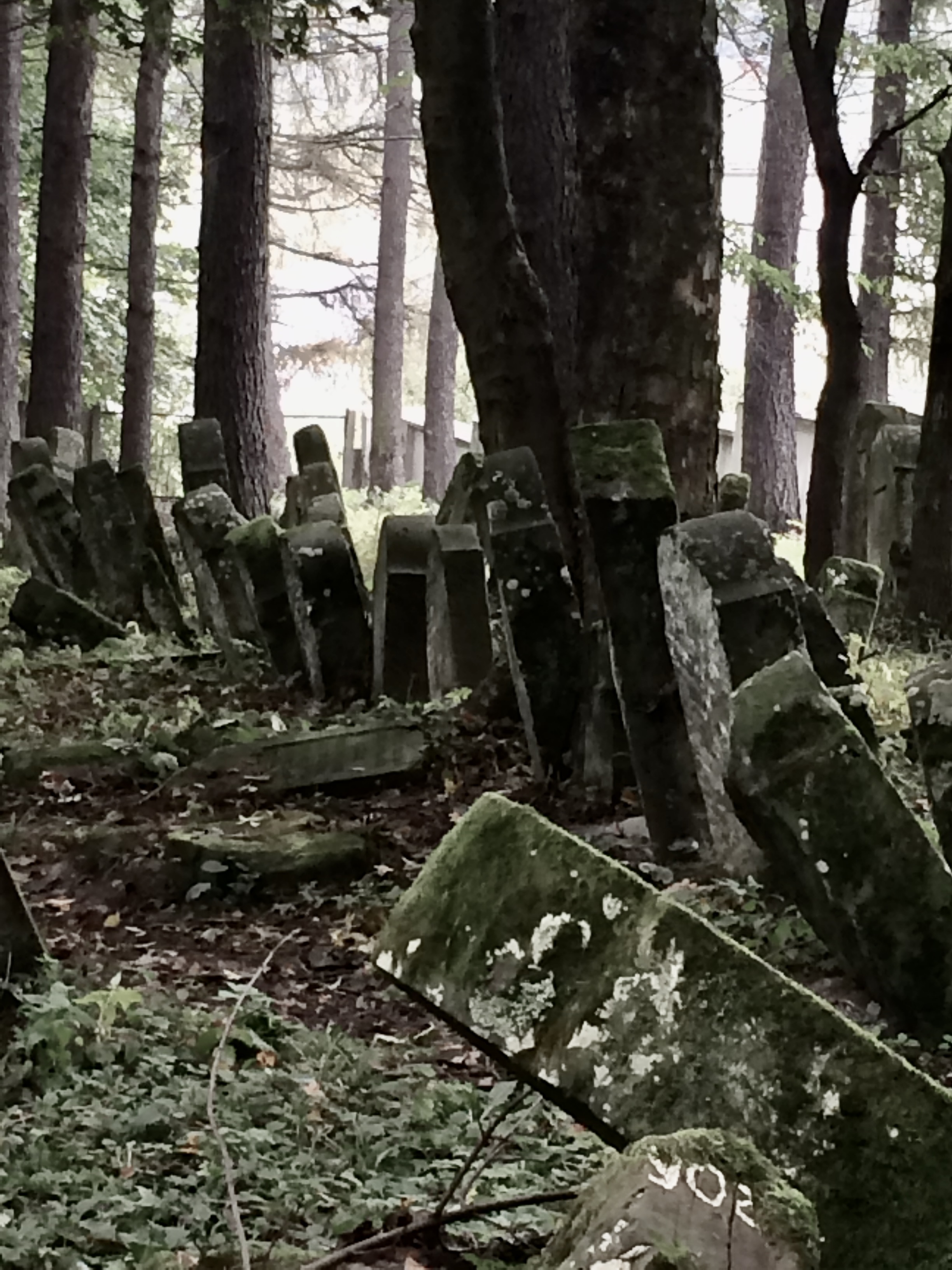
About 90 minutes later we were in Lesko (population about 6,000) and home to a synagogue (now a sort of “art gallery” which was more like a flea market) and a very large Jewish cemetery. Apparently by the 1930s about 60% of the population in the area was Jewish. The synagogue dates to the 1600s. After the war there were no longer any Jews. We parked the car and walked about 5 blocks (not so easy with the boot) in the very misty (and moody) atmosphere of the town. After walking through the former synagogue, we headed to the cemetery — another two blocks — which is situated on a wooded hillside. We soon found the “gatekeeper” — a local guy who was smoking and apparently keeps the key to the gate. We walked the stairs — about two stories high — stone steps covered with moss and wet leaves (another challenge for the boot!) to view the “remains” of more than 2,000 graves — mostly falling over and worn with age. Still, many graves were visible and some were half-buried or covered over with tree roots. Most were sinking. Not being able to read Hebrew I cannot say if any Tigers were located there — although I would imagine they are. Without any Jewish community in close proximity (the entire population of Poland has only 25,000 Jews today), there isn’t any one to care for the graves and the area is totally overgrown. We trodded through the hillside and then reversed our steps down the hill and stairs and to the car. Naturally, I left a few little stones on some of the monuments.
We then took a bypass to see Lake Solina a manmade lake (and dam) that is a popular summer destination. Today, however was cold and damp so there weren’t very many people. And then we went to Sanok (a town that would probably be quite charming on a summer day) for a late lunch because Anna knew a restaurant there. We ate at Stary Kredens where the chef is apparently quite well known and appears on a television channel much like our Food Network. I had the traditional Polish soup — Żurek which is made from fermented rye flour, and contains various meats, like pork and Polish sausage as well as potatoes (naturally) and mushrooms. It has a sour taste and was actually quite good, followed by an overly large portion of duck with cherries accompanied by cabbage, which Anna and I agreed we should have shared instead of getting two orders.
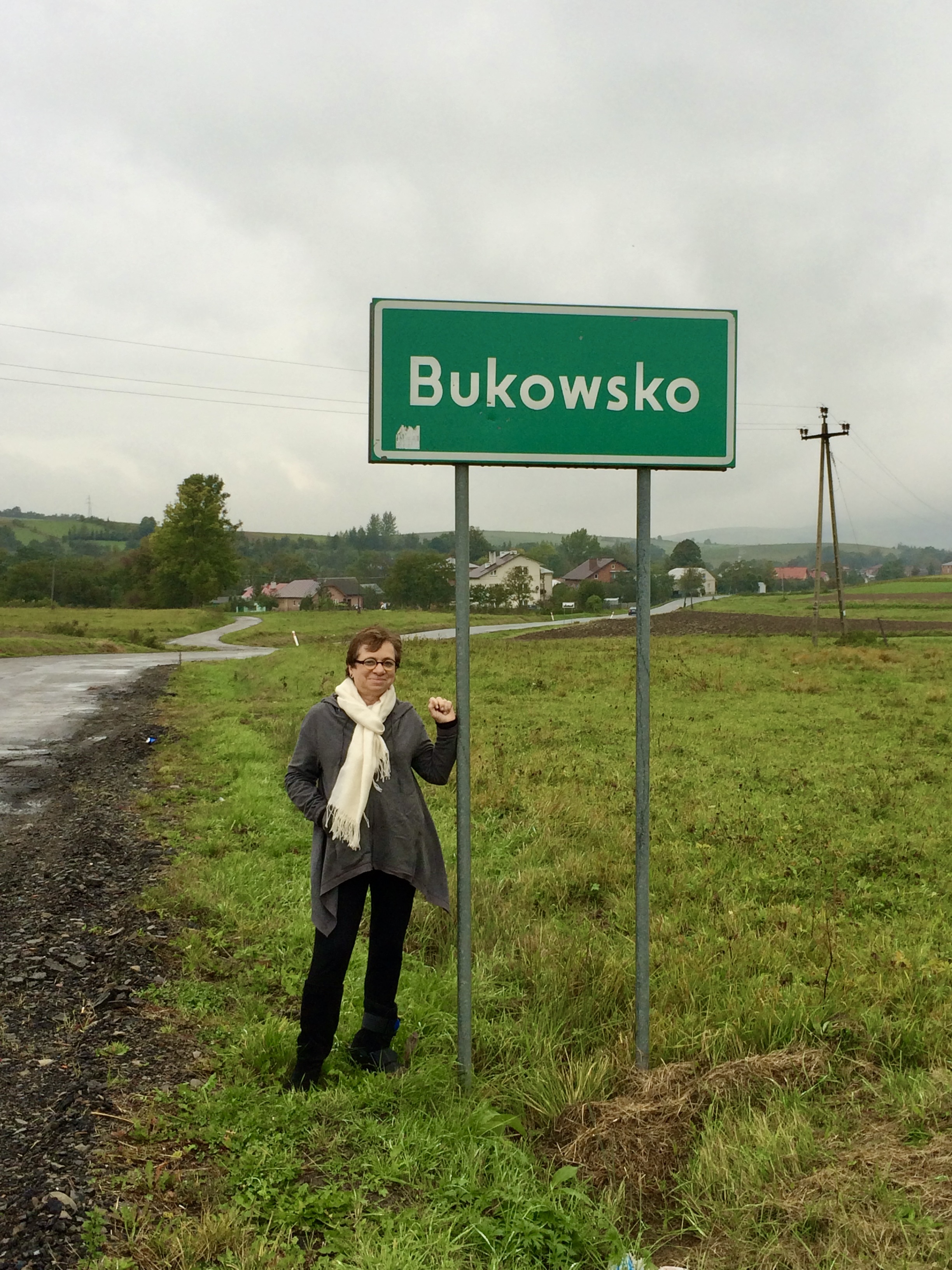
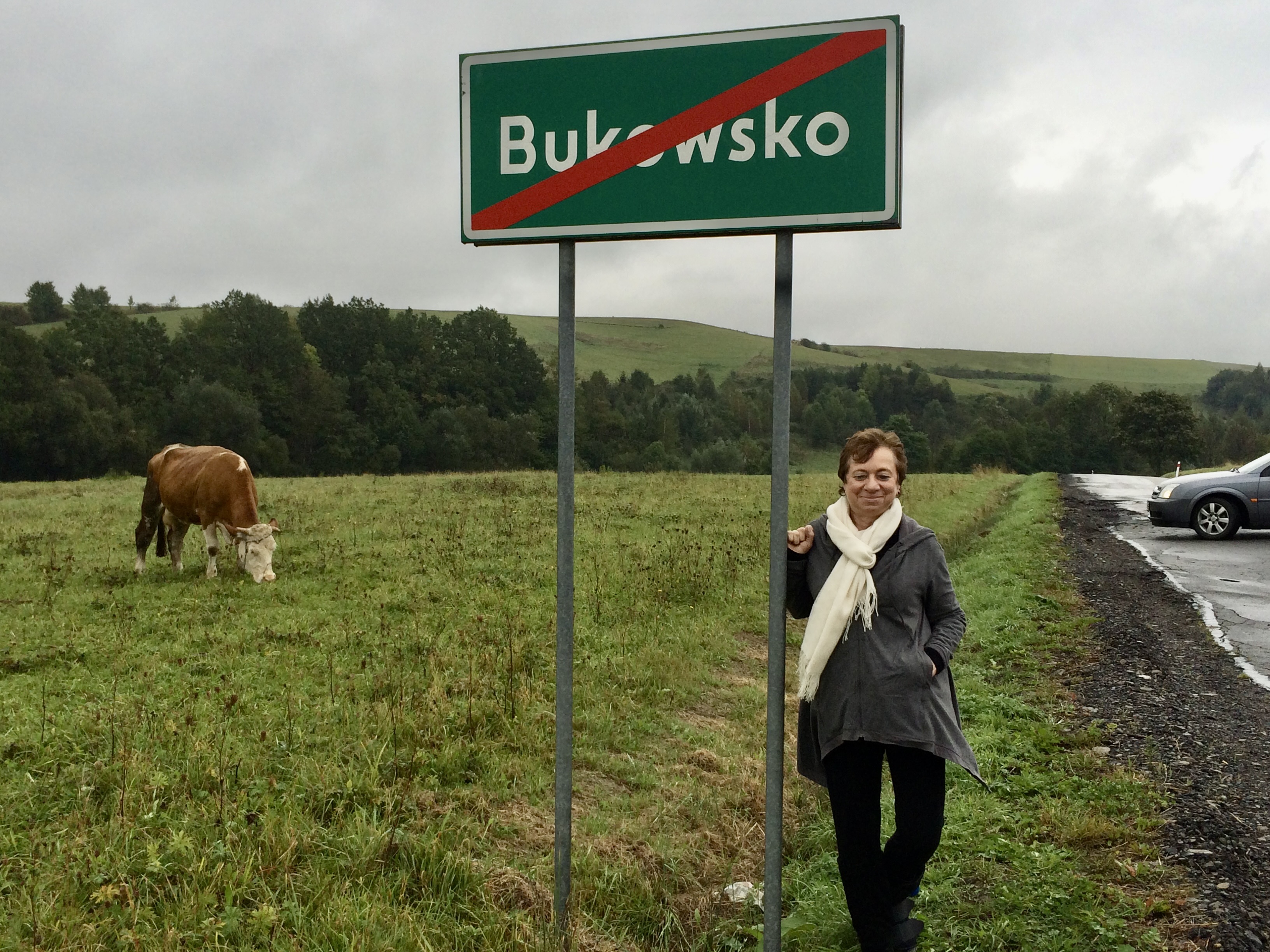
Then it was onward to Bukowsko in the misty rain. Well, not much to say. The town — if you can call it that — is really just a road that winds for about three miles with houses that look as if they were built in the last two decades. People in Bukowsko seem prosperous as the houses are quite large. Clearly any trace of history has been long gone. Took some photos standing by the Bukowsko road sign and headed back to Rzeszow.. tired and ever more curious about my roots and the fact that family histories in some families are very strong and preserved and in others somewhat fleeting.
This has gotten so long, I will sign off now, but I do have more to say about the area, its proximity to Slovakia, and an interesting discovery. More tomorrow. It’s 8:45 and I have to eat dinner and pack. I leave at the crack of dawn tomorrow for Warsaw — 36 hours and then I’m back to the US.
Fern
Gdynia to Gdansk to Rzeszow, via Warsaw — September 26, 2014
Since my Polish doesn’t seem to be kicking in.. I’ll just start with — Greetings from Poland
It’s Friday night and I am in Rzeszow (pronounced — Jeshjoo — Who’d know?). I realized I was pronouncing it incorrectly since what I had read indicated that the university here was quite new and growing, but when I said that to someone at the conference (after I pronounced it Reshow) he must have thought I was talking about a different city and university because he said “Oh no.. that university is several hundred years old.”
Anyway, for a day that was supposed to be very simple and mostly travel it turned out to be quite a day!
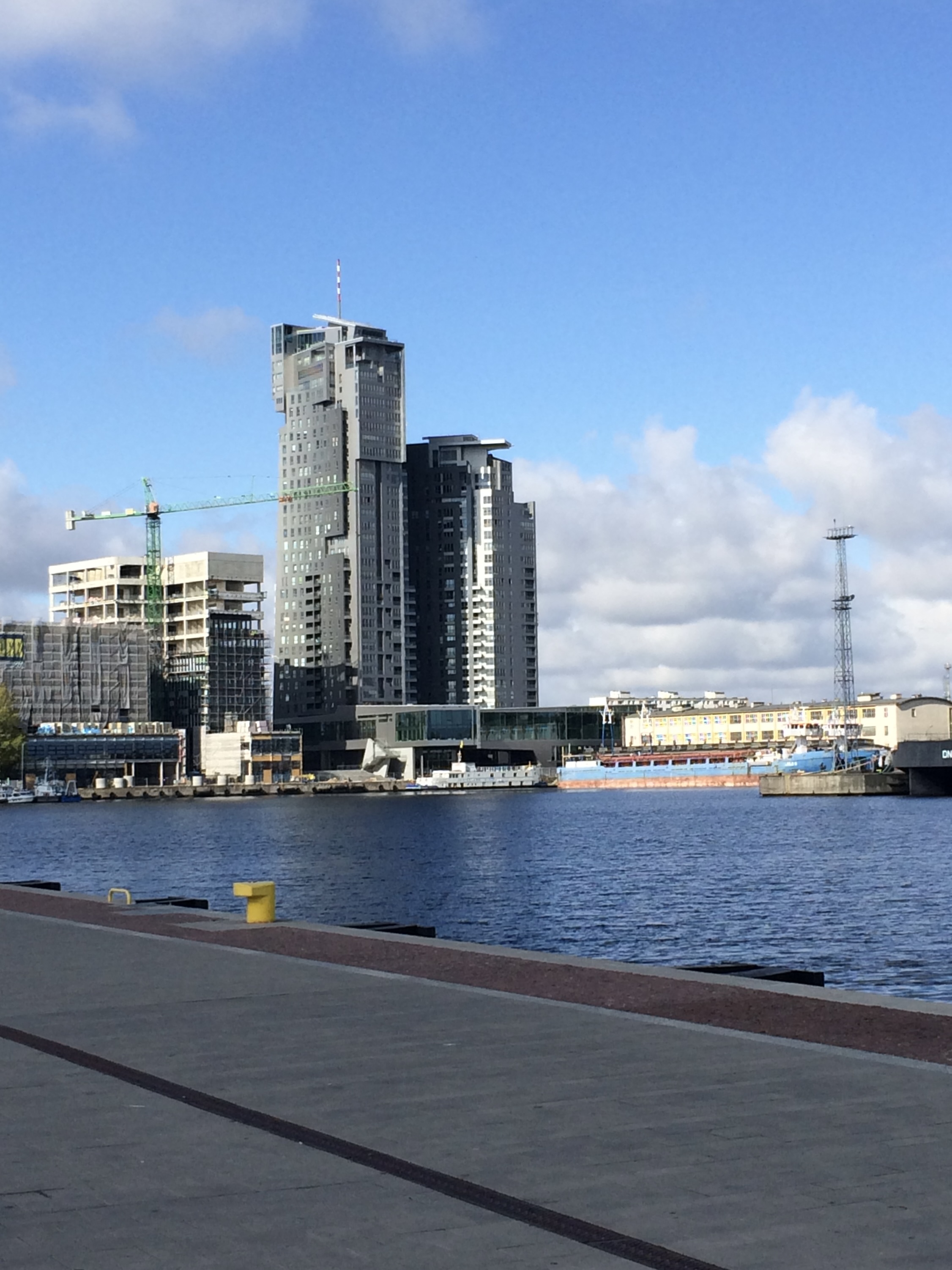

I packed more than I needed since the weather was so unpredictable (based on weather.com before I left).. and my shoe situation (needing to have only right shoes, since the left is in the boot and needing to balance the boot with the right size heel… ) and then I picked up some books at the conference.. and the conference proceedings weigh a ton.. so I decided it would be good to ship back a box with heavy things (mostly the books, but padded with some clothes I clearly didn’t need). I’ve shipped things back from all over the world on various travels.. even from Kathmandu and South Africa and all over Latin America.. thus I figured it would be easy in Poland. I talked with the hotel reception desk several times and it seemed to be a very complicated process (or so they thought).. But I persevered and last night I thought it was all arranged. But this morning when I came down to reception they said I had to fill out all sorts of papers and that it had to go by DHL (who wouldn’t take a credit card and said I had to be present to transfer the box to them) and it went on and on.
I decided to head to the final conference session and figure it out when I got back to pick up my bags before going to the airport. In the meantime, the reception desk called DHL again and printed out the forms and then said I needed to talk to DHL, which was complicated since the first two phone people didn’t speak English and as you know my Polish is not quite up to par! Finally an English speaking person came on and the reception desk gave me the forms. But the forms were all in Polish. Just as I was beginning to show — just a bit — of frustration, a guy showed up at the reception area, who acted like he knew me — Tomasz — who asked if he could help. Turns out he is an architect interested in city planning and he was volunteering at the conference. He was in the lobby at that moment because he was gathering all the conference goers together to get on the bus to go to the conference center (The conference has buses that go back and forth most of the day between the various hotels and the center.)
He talked with the reception and with DHL (in Polish) and then said — “Forget it.. We can find a better and cheaper way to do this — with the Post Office.” I had asked that of the reception desk yesterday but they made that seem like it was impossible. Anyway, Tomasz took the box and we went on the bus to the conference.. He sweet talked (he’s quite a charmer) the conference desk to hold the box while I went to the final session (to hear Alex Krieger from Harvard give a very good talk on waterfront development challenges and opportunities).. and then I went to the lobby to meet up with Tomasz. He was on the phone with his mother who was going to go to the post office to get a number and stay in line so that when we got there we wouldn’t have to wait!! I was a bit embarrassed but Tomasz said it was no problem .. his mother goes to the post office all the time and she knows “the ladies” there. And that whenever Tomasz travels he sends picture postcards to “the ladies” in the post office so they know him and his mother.
OK.. off we go in a taxi to the post office and to meet his mom. Lots of negotiating seemed to go on, but the cost of shipping the package dropped by 80%! Indeed DHL was going to charge the equivalent of $180.00 (which seemed awful, but I was actually desperate as the bag was too heavy for me with that stuff in it. So now it cost only $20 or something and it is coming to the US at the same time as DHL would have delivered it. Well, that is if you really believe it will make it to the US at all. I had valued the box at $500, but the post office lady told Tomasz I should put “no value” because if it said $500 USD it would seem very valuable and good chance it wouldn’t make it to the states. Someone would steal it. I’m not guaranteeing anything.
Then Tomasz decided that there was enough time to give me a little tour of Gdynia. I actually had seen very little as by the time the conference ended each day it was dark. So we did a driving tour, after we went to get his car.
By the way, it turns out that Tomasz is the one who asked the question at my talk about my coming to Poland to become the President of the country to get things moving in the right direction! So he followed this up by telling me that everyone in his row (I assume all Poles) were “wowed” (his word) about the process I explained in the talk. He said they couldn’t believe it was done.. wanted all sorts of information. Tomasz did his schooling in Australia so his English is obviously excellent. He started out as a jeweler, had a business making original jewelry (silver and gold), went to Australia and then had to come back to Poland because his father was dying.. then returned to Australia to go to architecture school.. and eventually returned in the past few years. Anyway, he’s very fixated on the Gdynia waterfront and what he sees as terrible decisions on the part of officials. (I think he’s right, but it’s obvious that economics is driving decision-making and that private investment can do whatever it wants in Poland).. We had an interesting talk about these “very very rich people” in Poland that he talked about — who they are and how since the fall of Communism they amassed this money. Tomasz’s answer which is a lot like the information we got from our friends in Czech Republic many years ago is that the former Communist leaders were able to get themselves into high positions, to make lots of money, and to hold on to assets..
As a result there is a bit of a backlash against heroes like Lech Walesa, who many Poles feel turned on them.. knowing full well that while it all looked like the fall of Communism, in reality those people still have great power in the new capitalist system. Apparently Poland is more extreme than the other former eastern bloc countries.
So then I went to the Gdansk Airport, but my plane was about an hour late, meaning I would miss my connection to Rzeszow.. Wasn’t sure what I would do, but figured it was best to just proceed as planned. The LOT flight to Warsaw from Gdansk was fine (once we boarded), but there were stairs to walk and I had my carry-on bag with computer which was sort of heavy.. When we arrived in Rzeszow more stairs.. If there were lifts, I couldn’t find them and language is more difficult than I expected. While I was in a sea of English at the conference despite participants from more than 30 countries, on the streets of Poland most people do not know English. It’s interesting since English is very common now in other eastern European countries. Even the airlines people were hesitant in English. And few taxi drivers spoke any English. I think it probably also reflects the fact that they don’t get as many American or British tourists as other countries.
The flight from Warsaw was fortunately late as well, so I made the connection.. and went on a small turbo prop from Warsaw to Rzeszow.. kind of like flying from San Francisco to Fresno. Arrived in Rzeszow — more stairs.. (not easy with my foot in that damn boot). Checked into the Bristol Hotel.. a large old hotel on the town square. The hotel has a casino in the basement. I needed to get cash and they said there was a bank machine on the lower floor.. Suddenly there I was in the Vegas of Rzeszow.. small mostly slot machines.. I think I’ll skip it.
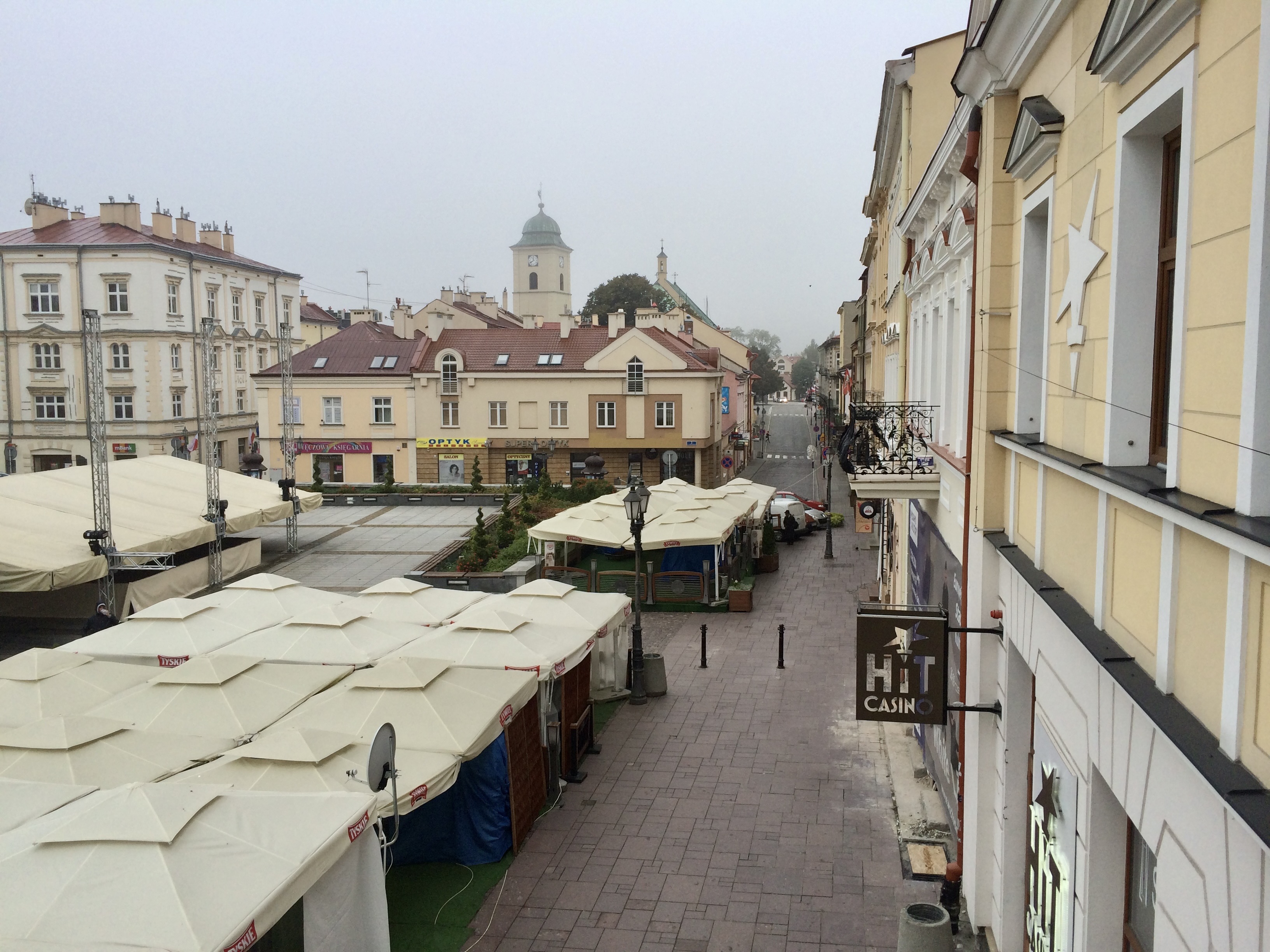
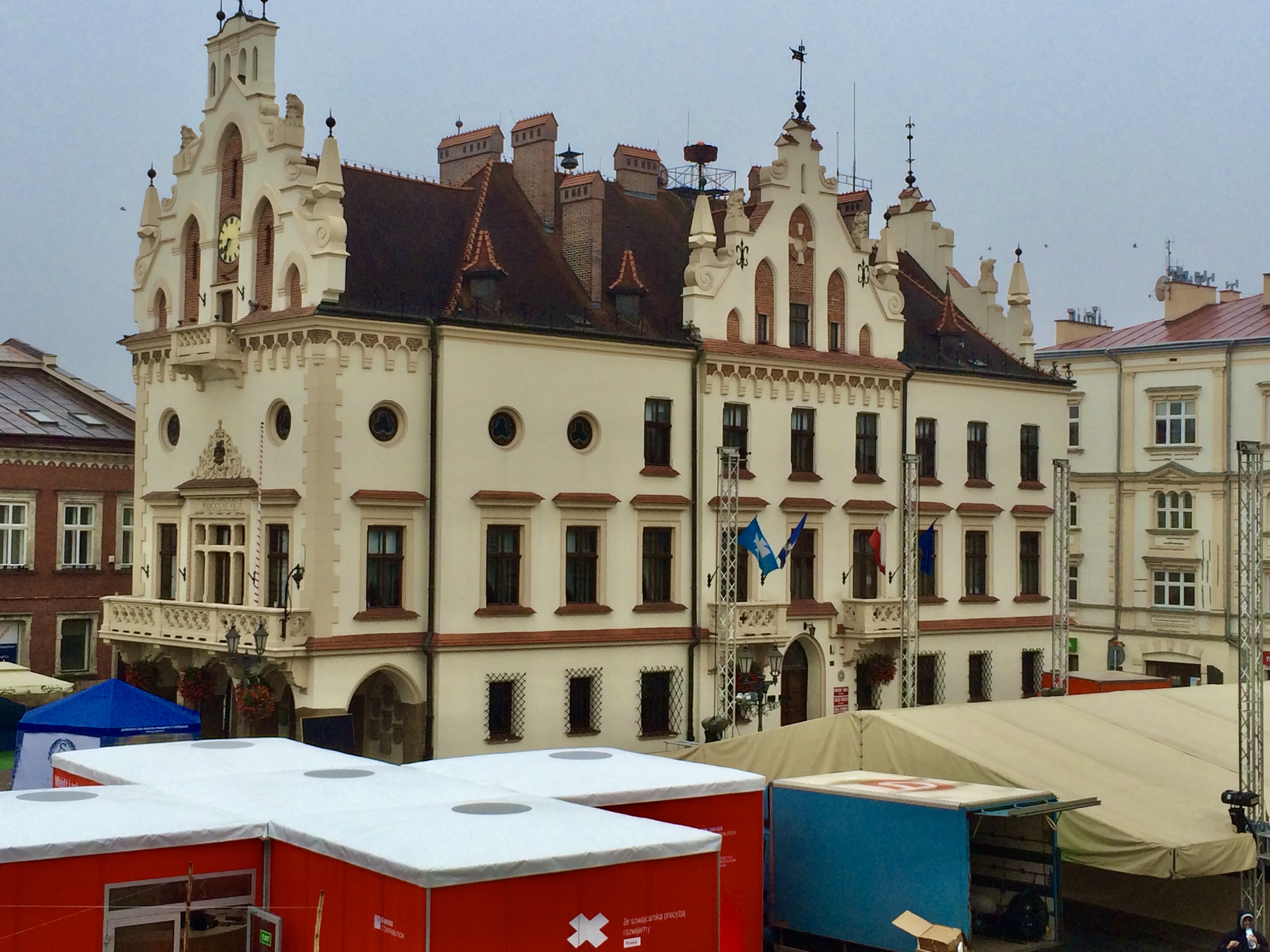
Went for Italian food at DaVinci’s… Perhaps Leonardo is turning in his grave. My advice would be not to come to Poland for the cuisine. Their national foods are starchy and very high carb… the international stuff are attempts, but somehow they just use too many ingredients.. like at DaVinci the lasagna had meat and salami (but I think they meant sausage) and all sorts of additional ingredients beyond typical lasagna. (I didn’t order that).. Again, prices are very low.. I had a salmon tartare (lox) appetizer that had more lox than you’d serve to three people; pasta (supposedly with an arabiata sauce, but not quite as it was pretty bland and lots of onions.. that’s another thing.. they love onions.. they put them on everything); a very very large beer that I couldn’t come close to finishing; and a bottle of sparkling water… The bill was about $18.00… By the way, I had beer because when I asked about wine.. by the glass.. he said there were two red wines.. one was sweet and the other was sweeter.. Beer sounded really good.
Given the prices.. Maybe retirement in Poland? (just forget about gourmet foods). Tomorrow it’s my day to find my roots… More then –
Best –
Fern

