HONDURAS 12/31/2010: Americans in Honduras – Dia 12: Birds and Politics
Ola en el dia ultima de 2010
31 Diciembre 2010
After a leisurely breakfast out on the patio of the Hacienda, we set out for the Macaw Mountain Park — a bird sanctuary and large park with trails, a little cafe, and a river running through. I should note that mornings and afternoons when daylight streams into our room here at the Hacienda, it’s totally delightful. We’ve also been able to connect wirelessly, for a change, so bye bye ATT (at least for this last day of our travels.)
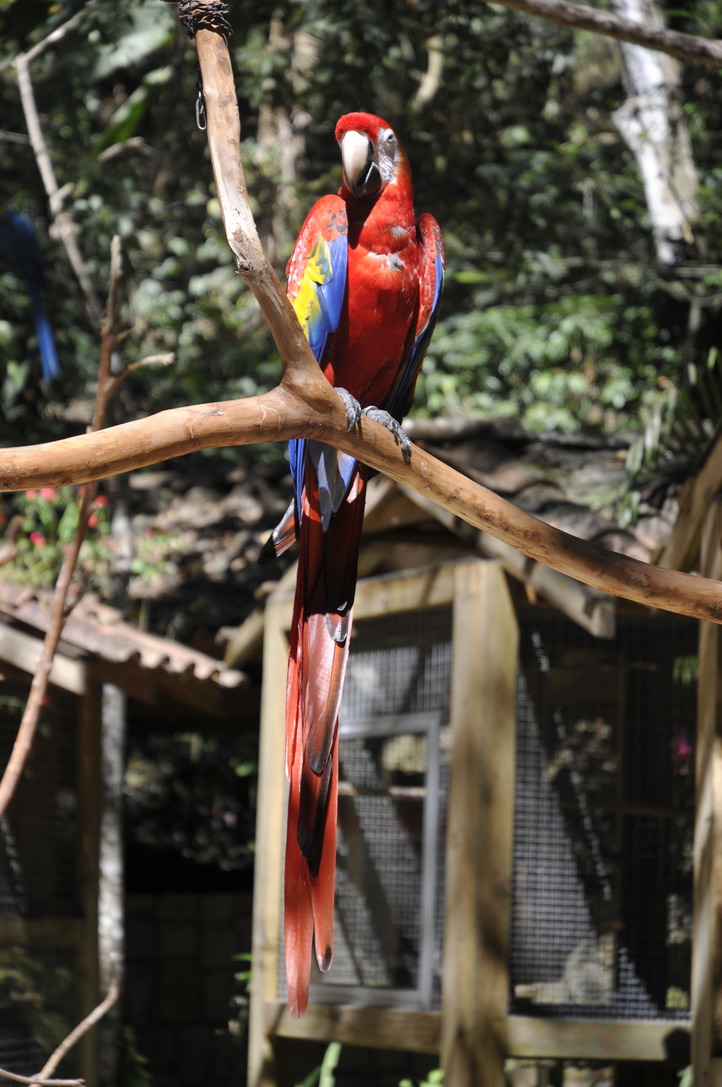
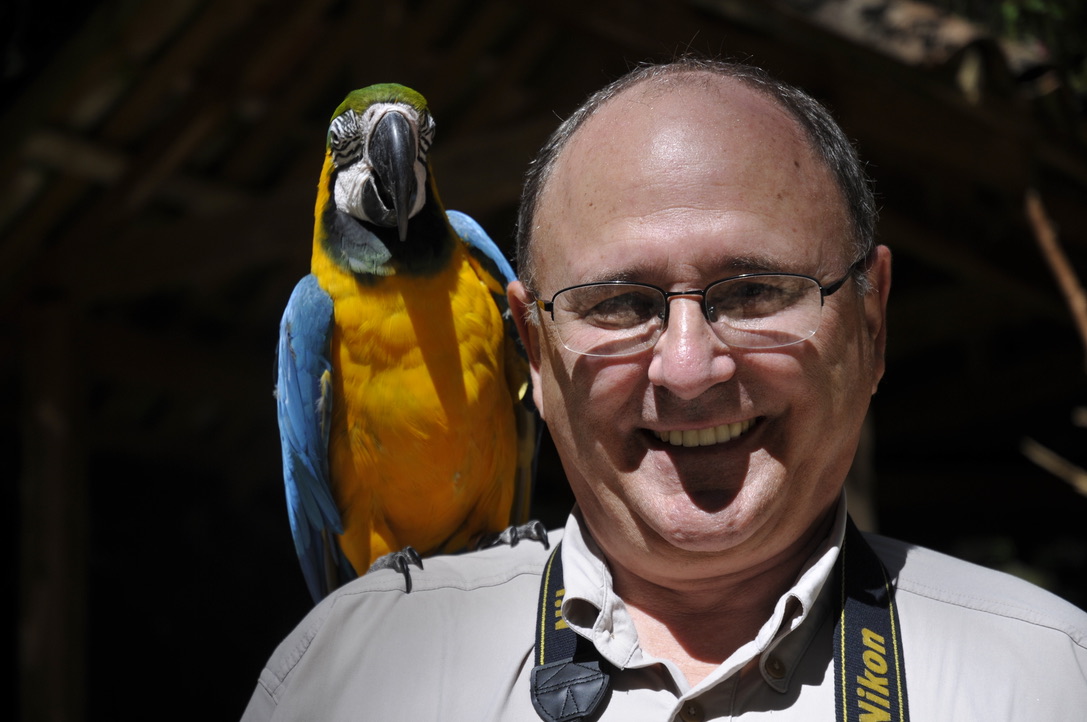
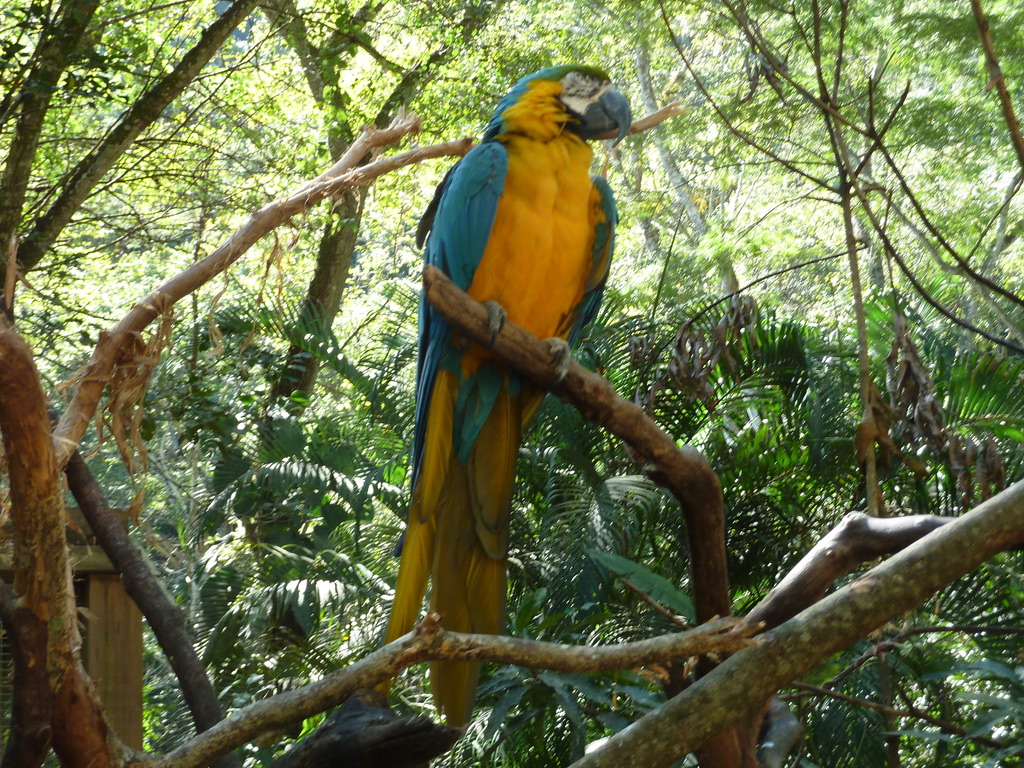
So, for the bird sanctuary… Toucans, macaws, parrots (many different species).. many many just flying around … some are rescue birds.. There’s one spot where a guy with a long pole can get each of about 30 birds to come on the pole and then he places the bird(s) on your shoulder or head … naturally, so that visitors can have their picture taken… OK, OK.. I had one on my shoulder! Mike too… Photos to prove it.

Last night at dinner, we engaged in a conversation about Honduran politics and it can be simply summed up (and re-affirming everything others here have said)… It doesn’t really matter who is in power, the country is very corrupt and run by the narco-gangs. Everything is based on bribery and corruption.
Some feel Zelaya made a difference; others seem to feel that there is truly no difference. The main issue seems to be that once there is an election, the president is supposedly in power for four years.. but that they really only function for two of the four at best. The first year is total chaos. And the fourth year nothing happens .. so at best the two middle years hold promise, but not much. When a new administration takes power every government worker loses their job and is either re-hired or not… everyone even street sweepers (if such a position exists). This is what was explained to us.
So, the sense — to some people here — is that whether or not the US was involved in the coup.. and whether or not Zelaya found himself caught in a struggle between Chavez and the US… for the people of Honduras there isn’t much difference in their lives… not until the narco gangs can be dealt with, and Honduras is way too poor to do anything about this.
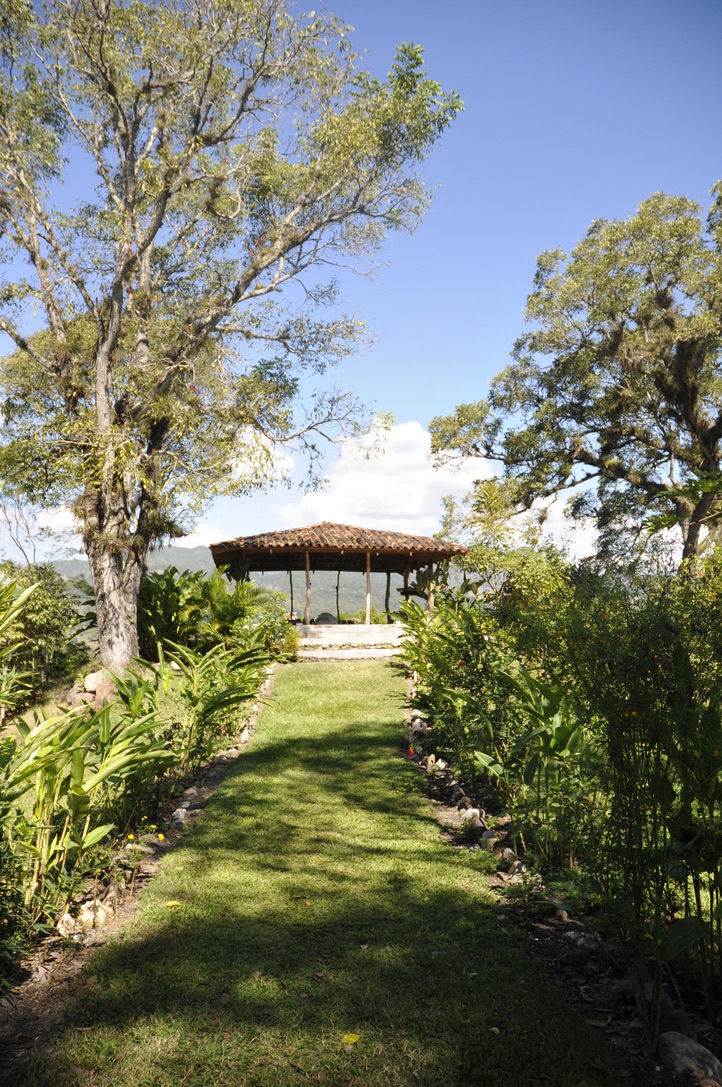
But, alas, places like Copan and the Hacienda continue on — peacefully and apparently without problems.
We did hear a few horror stories about Columbian and Mexican professionals traveling through the country en route to Copan being detained (although not for very long) and questioned. And we are now quite certain that the police stopping us yesterday definitely wanted money.
Anyway, we head to San Pedro Sula Airport in the morning. It’s about a 3.5 hour drive and we are keeping our fingers crossed that our little Hyundai makes it for this one last trip. Our flight is at 5, with check in at 3.. but we are leaving here at 9am… just in case.. and also because we need to return the rental car and have no idea how the process works. If we are there with a few hours to spare.. no problem. I brought lots of work with me.. and only did a small portion of it.
Tonight, for new years we are headed out of the Hacienda into town. The Hacienda doesn’t serve dinner on either New Years Eve or Christmas Eve so that its 25 staff members can be with their families. On Christmas Day and New Years Day they open the place for the families of the staff.. with a big lunch and other activities. Too bad we won’t be around for that. Should be fun. Hacienda San Lucas’ staff are all locals.. and many are related. Some of the younger staff have gone off to school to learn to be guides or to run hotels. Actually, they are a fairly large employer… and staff is well treated.
So we head to a restaurant named Taty Zaty or something like that. We are not driving, since getting to and from here or even just driving anywhere in the dark is really treacherous, and we’ve avoided it whenever possible. Pilo, from the Hacienda, will take us and then pick us up. Not sure how the town celebrates.. but driving the other day … all along the roadside there were stands selling fireworks of various kinds … Each stand had enough stuff.. that if ignited would be like an IED in Iraq.. And we counted more than 30 stands within a stretch of about 1/4 mile… Scary… Not sure who’s buying them, but hopefully they are not near the restaurant.
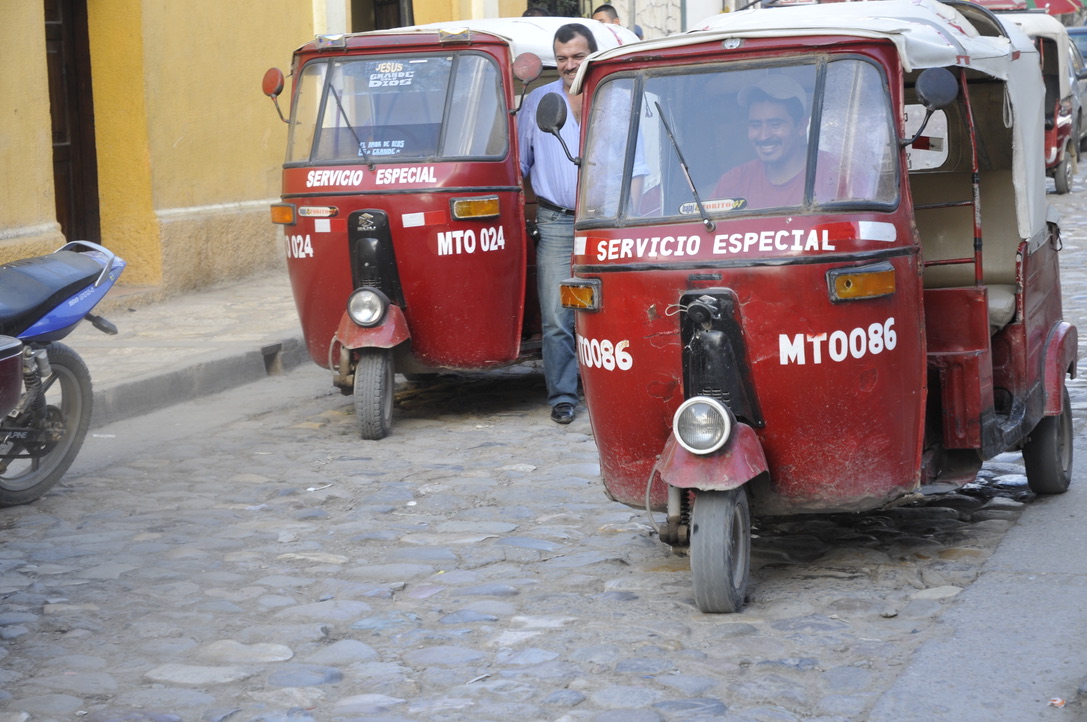
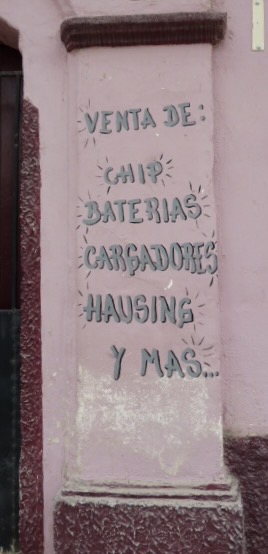
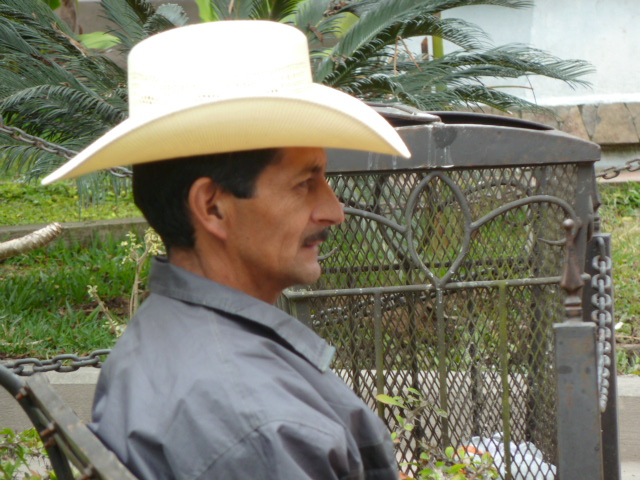
Oh.. one last comment, overall.. If ever you’ve seen some contradictory iconic images.. it’s everyone — cowboys, kids, farmers riding donkeys with hay piled high, the drivers of little three wheel motor scooter “taxis”… everyone is on a cell phone. Not sure who’s really studied this phenomenon.. how this device is changing cultures around the world… especially developing countries.
Signing off.. See you in the states in 2011
Feliz Ano Nuevo y gracias por leer (leando?? ) mis letras de Honduras (????)
Fern
HONDURAS 12/30/2010: Americans in Honduras – Dia 11

La Cena de Dia Diez y mas en Dia Once
Hola en la dia antes de ano nuevo
Hacienda San Lucas
Copan Ruinas
Hola –
Here I sit in the office area of Hacienda San Lucas, high above the river that runs through the town and about 6 kilometers from the “bustle” of the town of Copan (which is a more touristy town than any we’ve been to so far, but cute with many tiny shops, restaurants, cafes, and a very nice parque central).
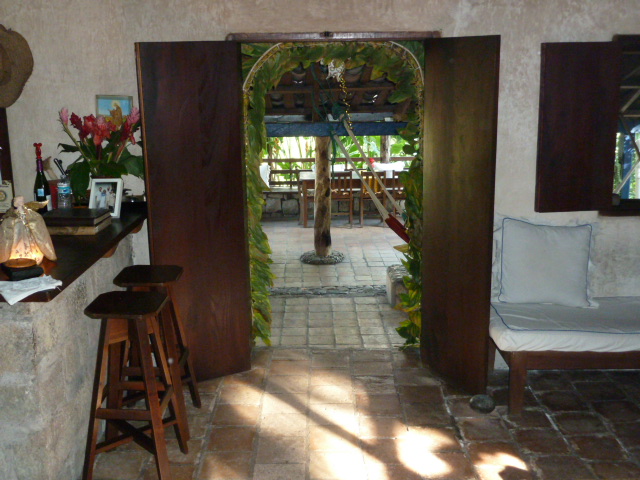
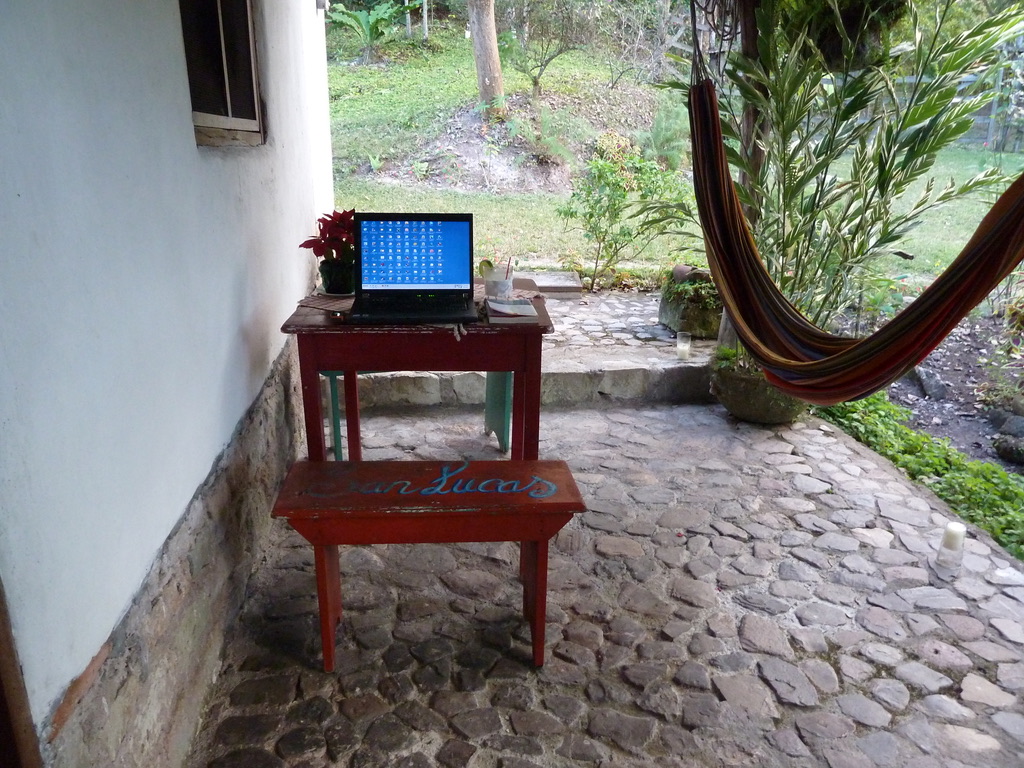
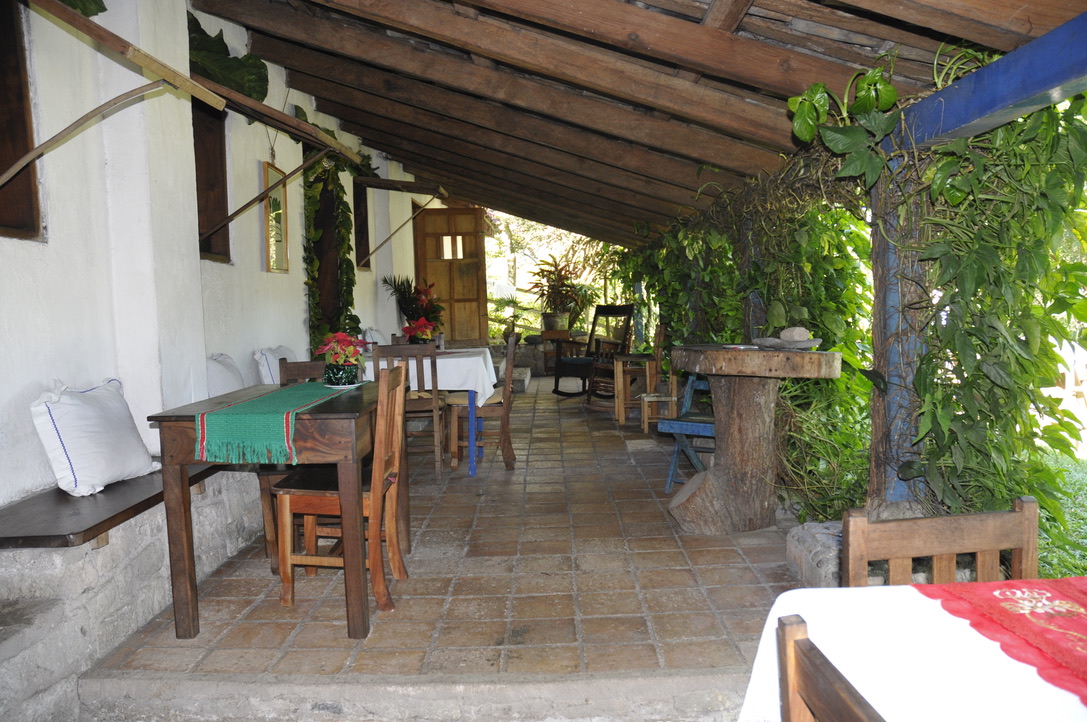
Last night was quite an experience. With our one electrical outlet in the bathroom and the very large amount of electrical wire wrapped around a wooden cable that is about 2.5 feet in diameter in the center of our room, we set out to get connected to the outside world. And of course our 15 candles and two solar powered lamps that provide about 15 watts of light each.. It all worked fine, especially with all the light the computers gave off. So, feeling quite secure, we went to dinner at the hacienda at about 8. The dining “room” is really outside the main farm house (the entire place had been a farm — more on that later). Hundreds of candles light the area, so it was totally charming and the night air was perfect.


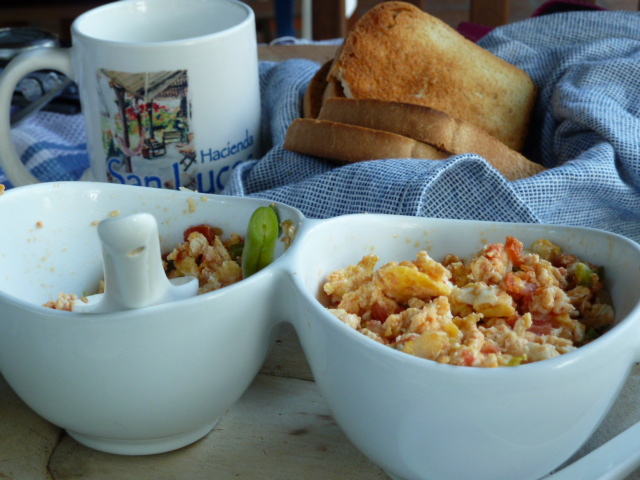
For the foodies, dinner was wonderful. Started with fresh fruits and some local cheese, and a few marinated vegetables. Next came a carrot ginger soup. Then chicken with rice and vegetables, salsas, frijoles, tortillas.. and a great Argentinian Pinot. For dessert a papaya cake soaked in rum with fresh banana ice cream.
Feeling stuffed, but satisfied, we set out back to our room and then… my computer just went totally bonkers. The power here is a bit sketchy; and I think the irregularity of the electricity set something off. I couldn’t turn the computer on; I couldn’t shut it down. I got messages I never saw before.. I was a bit freaked. At about midnight after literally scores of tries, I decided to just go to sleep, turn the machine off.. and let it sleep too. (Yes, I had turned it on and off many times.. without luck)..
This morning I woke up.. and lo and behold; there it was.. just fine. So here I am … now able to tell the tales of December 30.
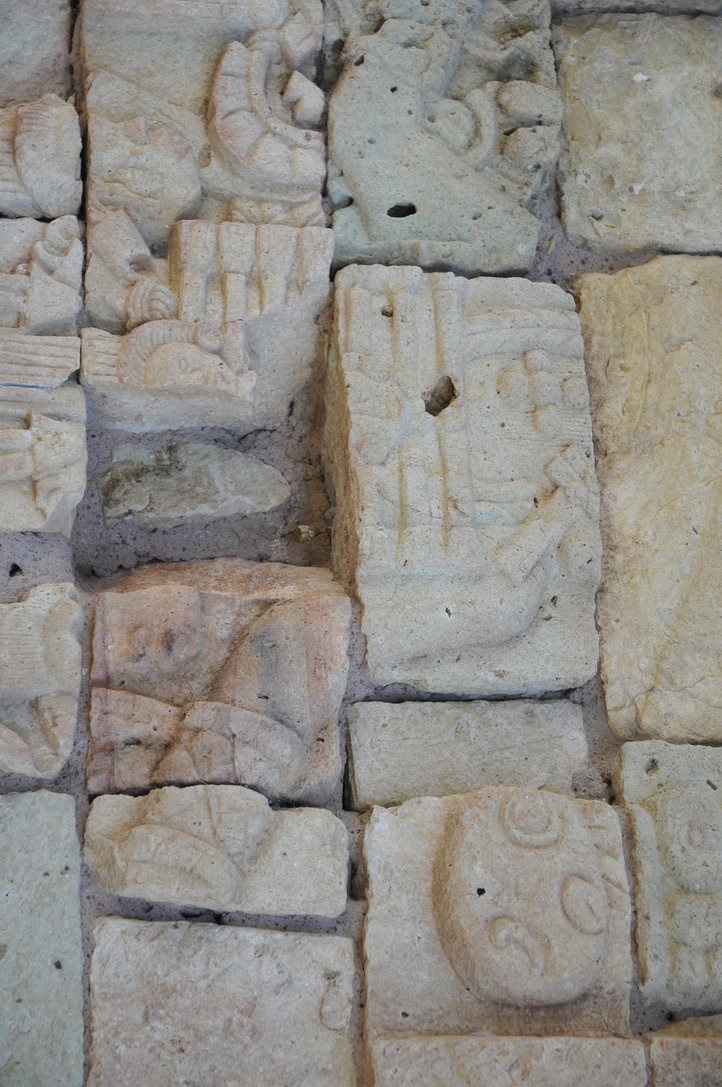
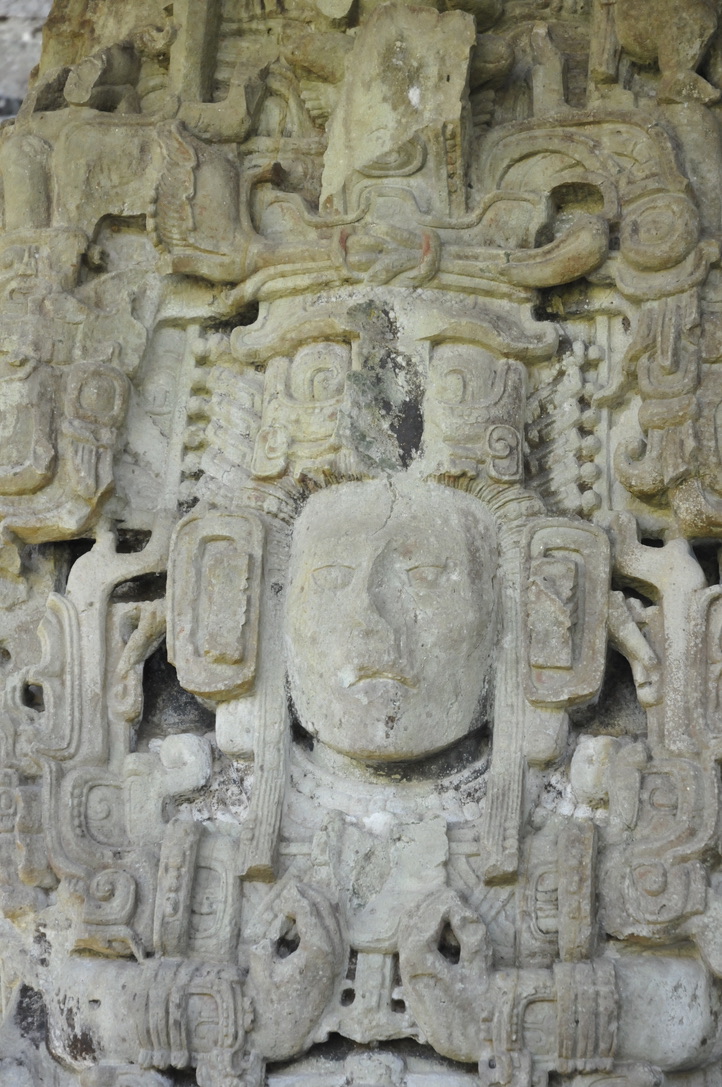
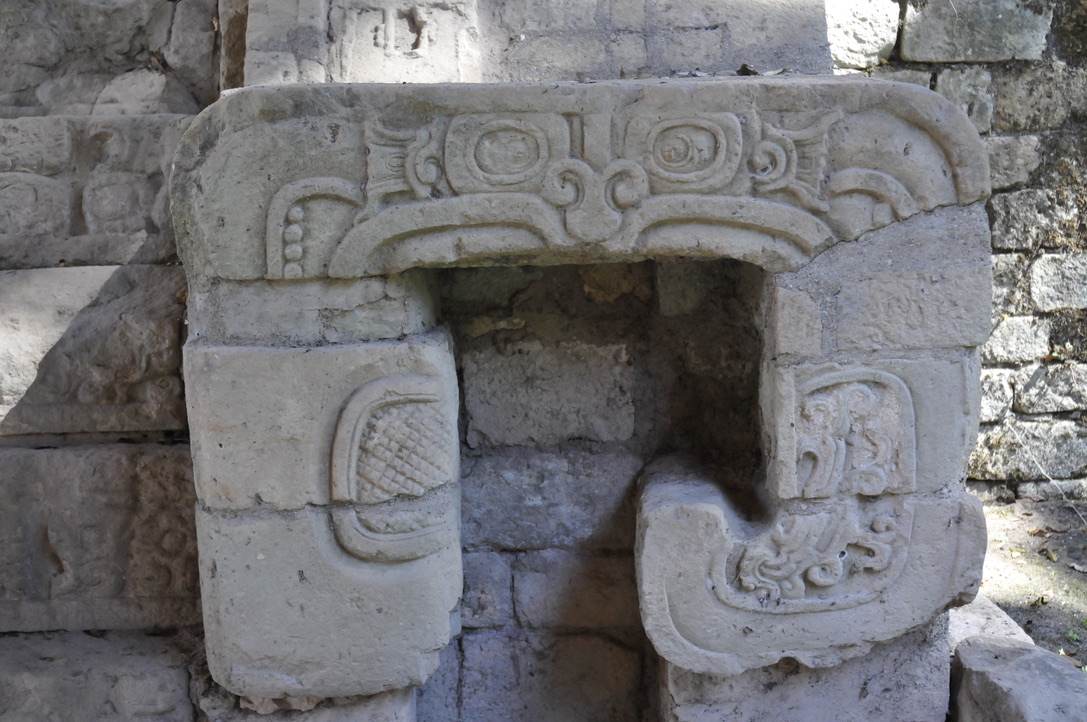
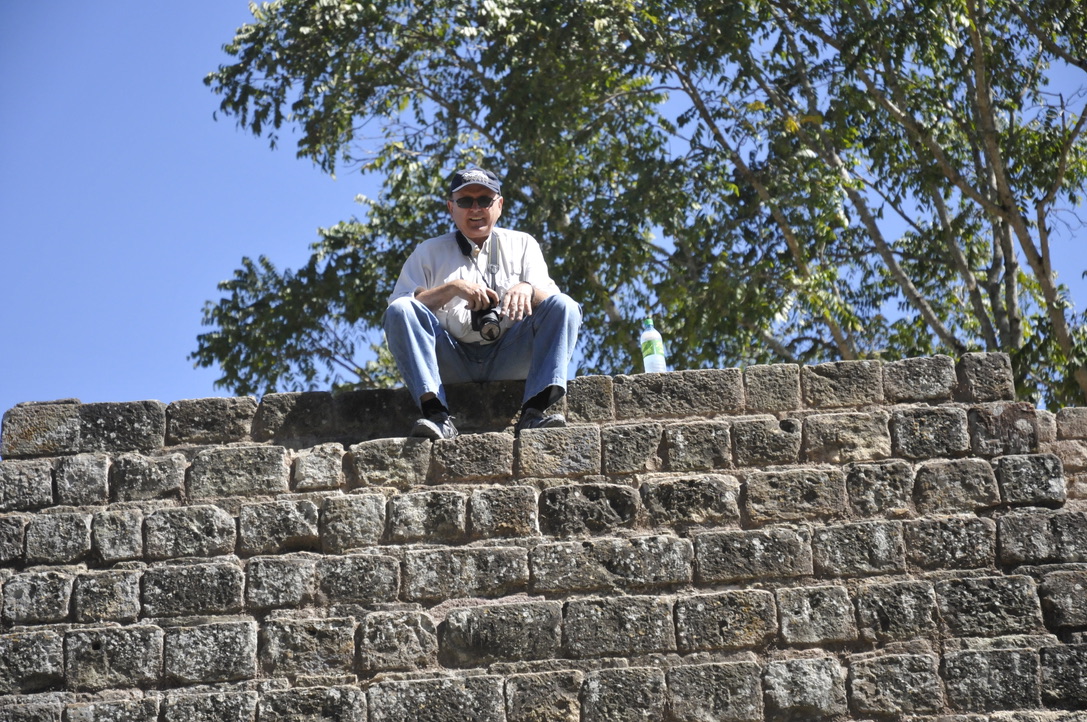
We drove to the ruins late this morning.. after a leisurely breakfast and walk around the grounds. Once again we drove down the very very rocky road along the river, up and down hills; having to move aside for any other vehicle or vice versa… and then through the town and to the Parque Arceologico. The Mayan “city” is interesting and fairly sprawling, but nothing compared to the likes of Tikal or Palenque or Tehuacan, and other sites we’ve seen over the years. We walked and climbed the site for about two hours. The Mayans’ quest may have been for language and mathematical and astronomical systems to explain life and the world; my quest was for shade! It was hot.. in the mid 80s and very humid (just think — this is the coldest time of year). It’s very pleasant in the shade when there is a breeze, but the walk through the ruins is in the hot sun. This is not my strength. But we walked the site — slowly and with two water bottles we bought at the entry.
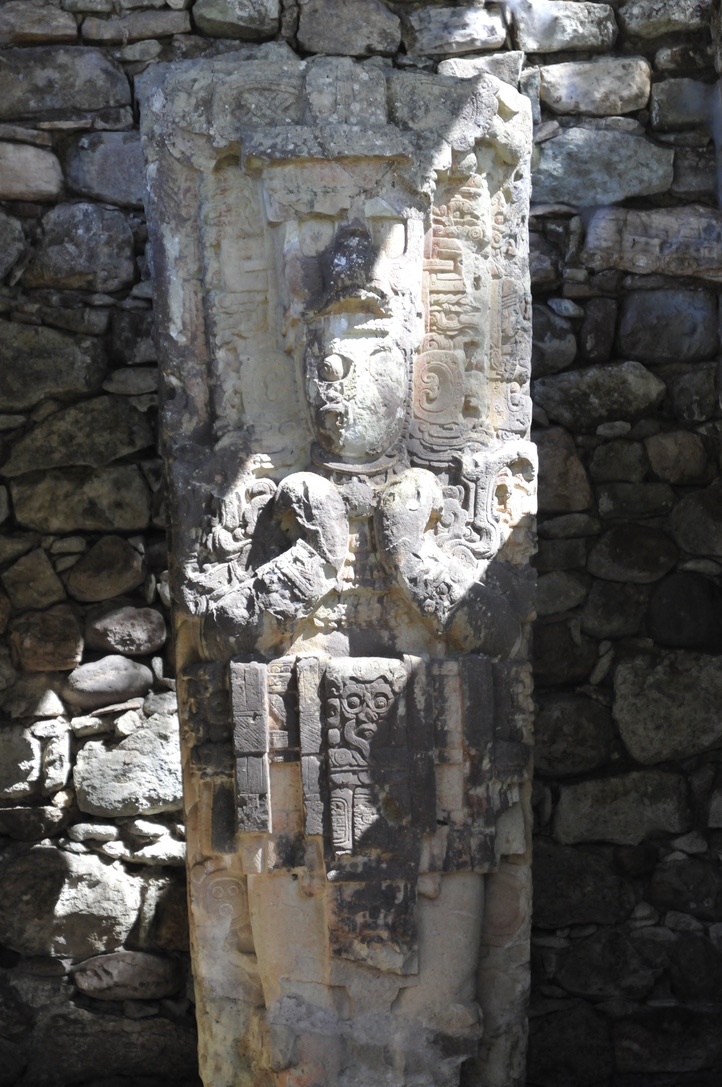
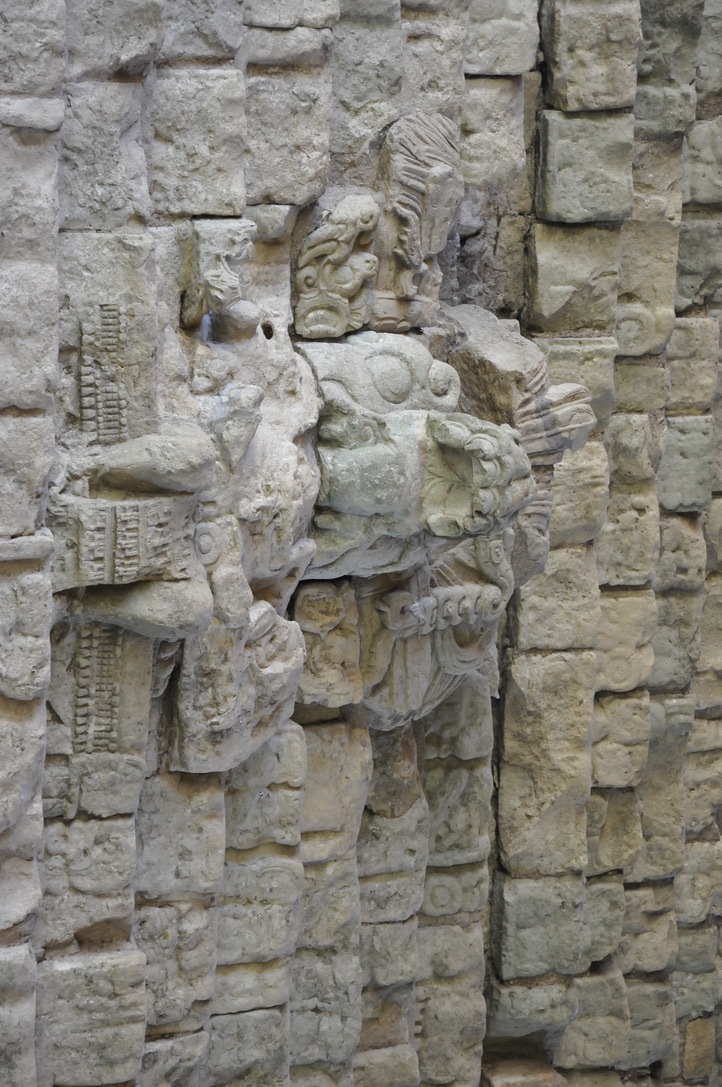
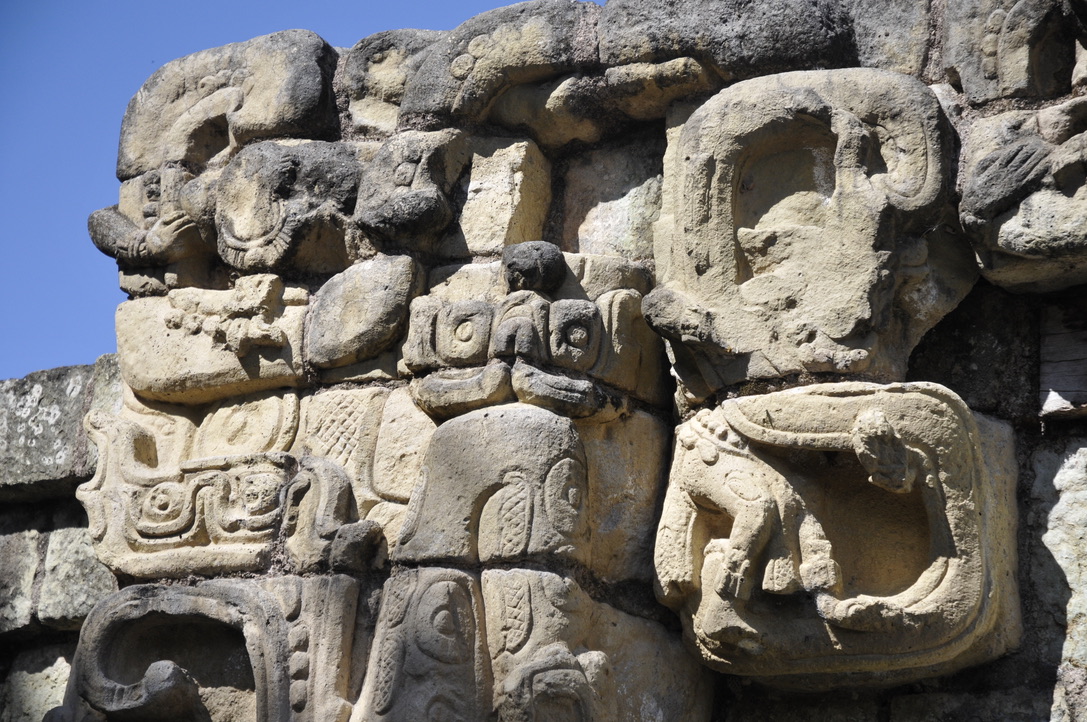
Then we took off for the town. Honduran crafts are really not on the same level as Mexican or Guatemalan stuff, so our purchases have been few.. except for bringing back several bags of coffee beans (and we don’t even drink coffee).. They are packaged (at least the kind we got) in organic cotton sacks with embroidered birds and hand sewn shut.
As we approached the Hacienda at about 4:30, we were introduced to Flavia .. the owner. She is generally at the place all the time. But she had a bad fall at Christmas and was laid up yesterday when we arrived. Her story is very interesting.
This century-old farmhouse and all the property belonged to her family, although neither she nor her family ever really lived here. Her father was a doctor who practiced in Tegucigalpa. He married a “city girl,” but always loved this land and the ruins nearby (which were virtually unknown outside of the very local area at that time)… So, though he practiced medicine, he traveled as much as possible to tell people of the importance of Copan. And he forced the family to come to the farm yearly, although the children hated coming.
He was influential I suppose, and over the years would talk about Copan to anyone who’d listen. He loved the area.
Meanwhile Flavia was sent to boarding schools in the states and eventually married an American and settled in western Kentucky!! She had two children, and described herself to us as a real “soccer mom.” When she turned 50 (she’s 64 now) she got divorced; her kids were in college or at least somewhat independent; and she returned to Copan for the celebration of the opening of the park (I think it was the park, or maybe the archaeological museum in Copan, which honored her father). She decided to visit the farm. There were hundred of cows and the house was uninhabitable. She made a decision then and there to move back to Honduras and start a new life, rebuild the farmhouse, and restore the property. Because she didn’t have the funds to do this, she sold off the cows – one at a time.. and with the money, she bought the equipment and the supplies and hired locals to work with her… And eventually she had the two original rooms restored (she said when they took off the roof some of the walls fell). She built the road (the one with all the rocks).. and little by little she expanded to 8 guest rooms.
There was no electricity and no water when she started. As she ran out of money, she improvised. So, the story of the Hacienda and Flavia is interesting..
Back to our room…It’s hard to describe our “closet”… it’s a rod that is actually a heavy branch of a tree hanging (actually swinging) from two “nails” which are bent to enable the “branch” (rod) to sit between them.. the nails would be about 2 feet if they were not bent. All of this hangs on two cords from the ceiling.. and the closet is doorless. Thus – the ash from the burning candles gets over all the clothes. But the closet is an example of Flavia’s ingenuity.
And moving to contemporary times… Flavia’s children live in the states. One is about to begin graduate work (in photojournalism) at the J School at Berkeley! He and his wife and child will be living in the married student housing in Albany! Her daughter lives in San Francisco. She finished law school and just passed the Bar; her husband is an engineer with the city of SF..
As we were talking, an old friend of Flavia’s came by to say hello (she lives in Tega) and heard us mention “Oakland”.. turns out she graduated from Holy Names College in Oakland as a foreign student. So, the world continues to get smaller and smaller.
Hope you are well and that those of you on the east coast have shoveled out of the snow, and that those of you on the west coast are drying off from the rains. We suffer neither of those problems here.
Our days in Honduras are coming to a close. Tomorrow our plan is to go to some amazing bird sanctuary in the mountains (where I hear it is nice and cool)… and then come back here to pack before it gets too dark to see anything in our room..
Final daily thoughts tomorrow, or maybe another from the San Pedro Sula Airport on Saturday before we take off.
Best —
Fern
HONDURAS 12/29/2010: Americans in Honduras – Dia 10
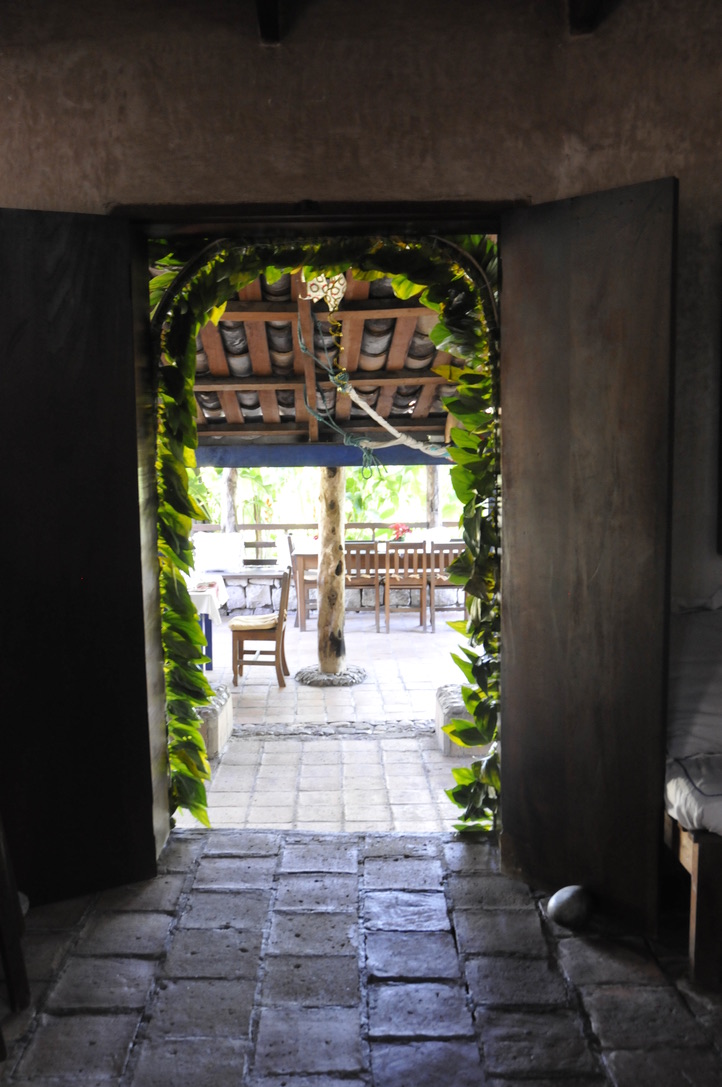
Hola from Copan Ruinas
29 Diciembre a las siete de la noche
It’s about 7 pm. We arrived in Copan Ruinas about 90 minutes ago. It was a much longer day than we had anticipated, but perhaps among the most interesting. Is that possible that something could be more interesting than the death-defying boat trip from Tela to Miami or the basket ride to the sewing co-op?
We left Gracias after breakfast (weather turned gorgeous) and decided to take a bit of a side trip to Campa which is about 16 km away.. but took about an hour to get there… Muchas “bechas” muchas pozos… potholes the size of craters with no warning .. about every 50 meters.. some as deep as 6″ with sharp, abrupt side walls. .. kind of like sink holes… several washes across the road.. a few questionable single lane bridges. But, countryside was beautiful.. rolling hills, very agricultural. We arrived in Campa and visited the little church and the Lenca ceramic collective and strolled the town. Most of the Lenca pottery is made in Campa, by just a few families.. They have a small museum in an old school house that explains the history of the craft. Again, Campa (tiny as it is — maybe a few hundred people, but a town complete with a Catholic church and a Jehovahs Witness meeting hall) seems to think it will start getting tourists so we noticed a lot of road repair in the town and signs about little hotels coming soon.
We made a few purchases which we now wonder how we will pack since they’re all breakable. We hoped to continue on to two smaller (??) towns called Alta Cruz and Tonolio (??) where they make handmade paper, but as we assessed timing and the distance we had to go to reach Copan Ruinas and our guess about road conditions, and we decided we needed to turn around and head to the “highway.” Good decision.. The return drive was about as long as the first. We stopped in Gracias (now that we know the town so well) for lunch … and then headed out to Copan. It was already 2:30 and the drive was to be about 2 hours +. Between many, many more “beches” (or “pozos”) and derombles and signs warning of falling rocks (they actually need a few more of those signs) and many, many, many tumulos (speed bumps).. the drive was a bit like sitting in a roller coaster..
Oh, we also got stopped by the police and military today several times. All along the way, there are little orange cones that appear at unexpected locations on the road and you slow down.. There are usually about 6 police and some soldiers standing around these cones.. In the past they have just waved us on.. or barely looked up from their cell phones. Today, for some reason, we were stopped about three times. Though we continued to say “No hablamos espanol…; hablamos espanol muy poquito” (which I think was a good thing), they pressed with questions.. mostly asking where we were from, where we were going.. One of the cops talked a lot. I’m pretty certain he wanted cash. But we continued to act totally naive.. Eventually he asked for our passports and then the car ownership info.. and then waved us on.. He shook our hands three times.. I think we were supposed to grease the palm. (Dumb Americans)
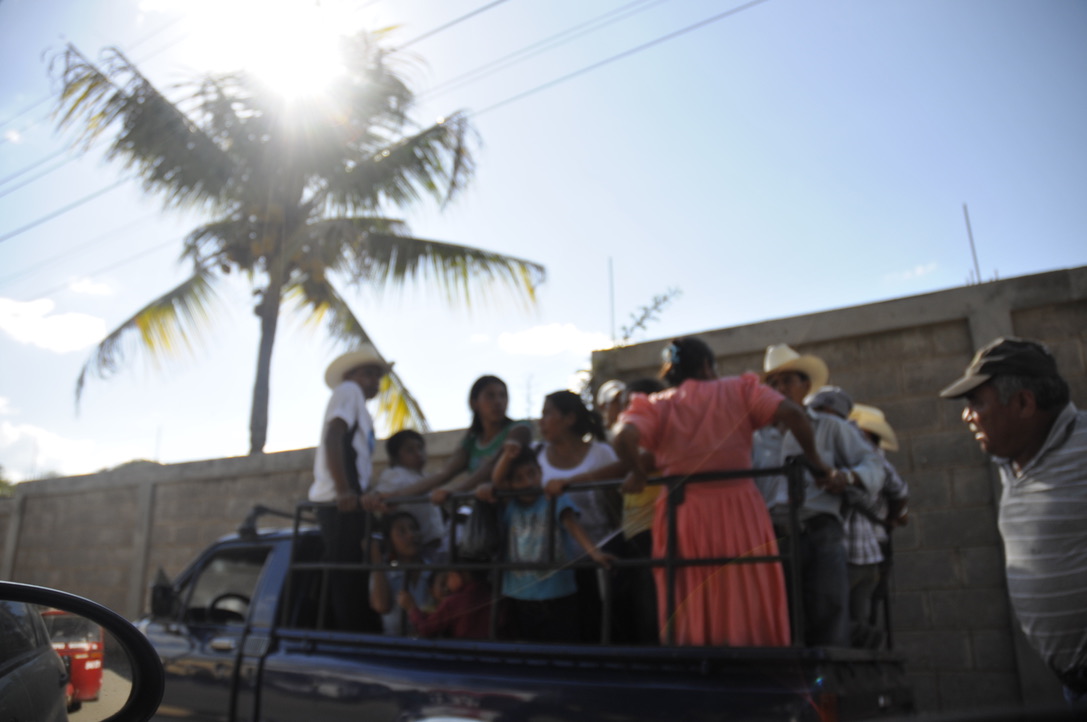
Most locals are moving around in open trucks packed with people in the back (we counted 15 in one little pickup truck) or buses that are totally packed and with some people riding on the roof, along with mattresses. Seems as if the buses double as delivery trucks, especially for mattresses, as we see this all the time.
We arrived around 5:30pm at Hacienda San Lucas.

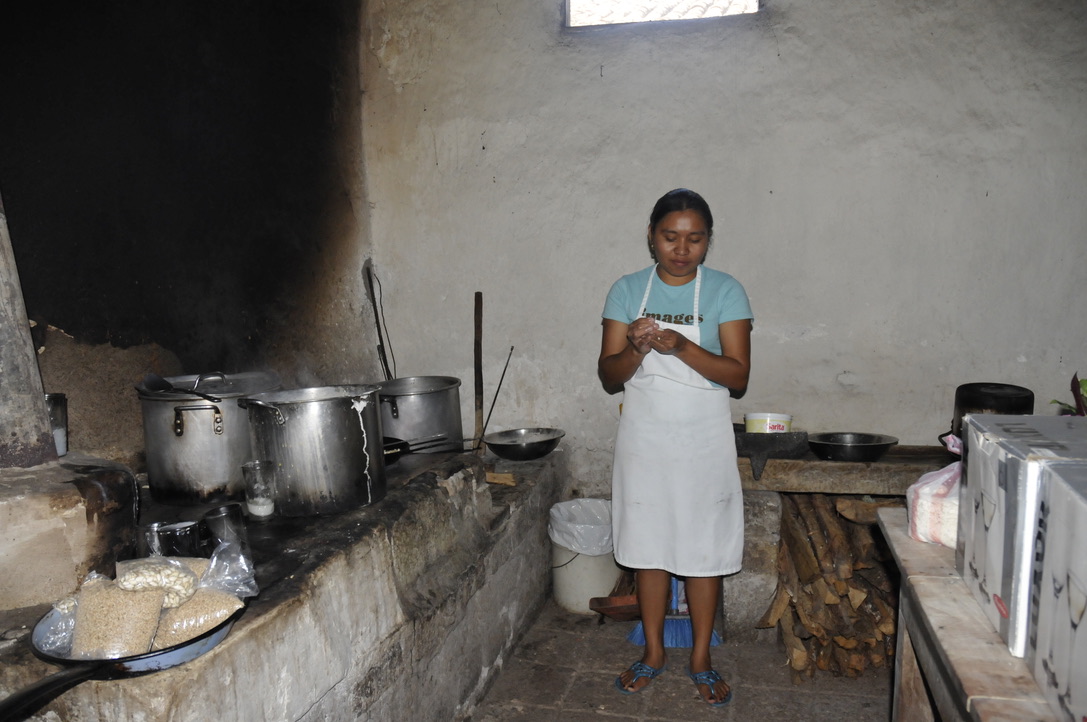
Hacienda San Lucas has been described as the best place to stay in Copan, so I think we envisioned something like Las Cascadas in Ceiba. The NY Times wrote an article about it; the guidebooks rave. Well.. so far we’ve only really seen our room since I decided I wanted to completely unpack, and it was already nearly dark. This is our last stop and on Friday we need to be completely organized and packed to leave early Saturday morning for the airport to fly out late afternoon on Friday.
OK.. so here’s the scene… and I think it will all be much better in the morning when daylight comes.
The drive from the “main” road to here is completely dirt and rock. (We’ve been pleasantly surprised that our rather junky rental car — had we known the driving conditions, we would have gotten 4-wheel drive — has survived.. although seeing it is laughable.. completely covered in dirt.) The Hacienda is located about 8 km outside of town perched on a hillside. It has 8 rooms and is more than a century old, and has been in the same family the whole time. The setting seems delightful although it was already getting dark when we arrived, so we couldn’t see much.
Now.. here’s the interesting part.
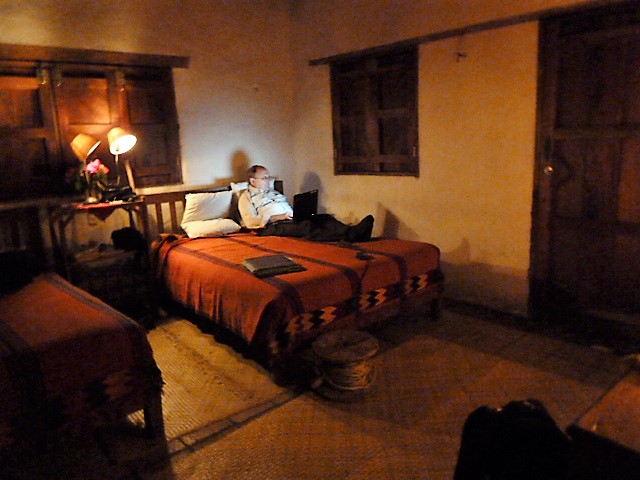
Our room.. about 400 sq ft has wood shutters on all the windows (no glass.. only screens, so maybe not really windows).. a little back patio.. wood trusses. The walls are stone and adobe.
But.. here’s the kicker.. no real lighting.. so we have candles everywhere. No electricity in the bedroom area. One outlet in the bathroom (definitely no hair dryer here)…
Naturally, with all our gear to charge (iPhone, 2 Blackberries, 2 Lumix cameras, 2 Nikons, 2 computers, 2 iPods, and 1 Kindle).. we were a bit shocked. I had visions of sitting in the shower writing this email connected to the single outlet. We have 14 candles glowing in the bedroom now.. and the one light bulb in bathroom..
But.. to Mike’s chagrin, I asked if they had an extension cord (actually I asked for two) thinking I could connect to the bathroom outlet and then use the computer in the bedroom… We also asked for more candles.. that’s why we have 15.,. other rooms have only 8. Well, lo and behold, they came back with a wooden spool with about 100′ of electrical line and two outlets. It’s the kind of thing you see at construction sites.

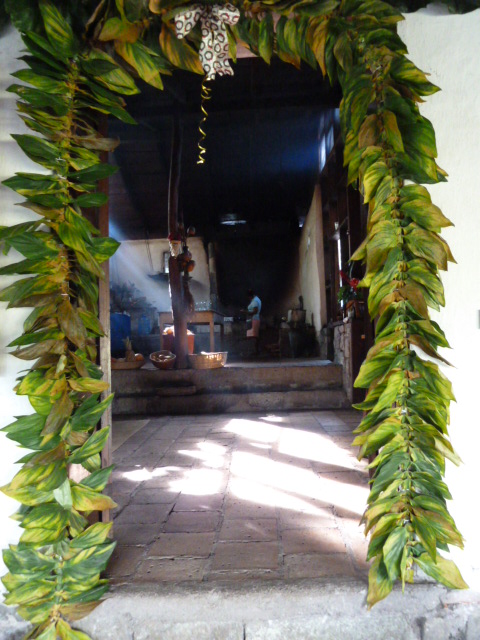
So here we both sit… with two computers connected to this giant roll of wire (which is then connected to the bathroom outlet). It’s quite a scene.
But then the biggest pleasant surprise.. No problem connecting to AT&T!!! Actually there’s also a wireless here with a strong signal but not secure.. so we’ve opted for AT&T. Maybe I’ll be daring in a while and switch to the wireless (called Iguana).
We’re headed to dinner here at the Hacienda in a little while. Food is supposed to be excellent. Tomorrow we will explore the ruins and the town. Friday, our last real day, we may make some more little side trips, and on New Years Eve we go to a restaurant in town. I think Copan will be interesting, but I fear there will be a lot of tourists, which will be new for us. We really haven’t run into any Americans yet, and only a couple of tourists (Canadians, Germans, Swiss).. in 10 days.
More tomorrow (or if the meal is spectacular, perhaps a little food update tonight).
By the way, when I said I needed some light (I said I was a writer and needed to work — in Spanish) since so far no one here has spoken any English, although the manager has sent emails in totally perfect English.. Carlos, who carried our bags to the room, said it was very romantic this way with just the 8 candles.
Viva luz! y Gracias cuando hay carreteras buenas.
Hasta Luego.
Fern
HONDURAS 12/28/2010: Americans in Honduras – Dia 9

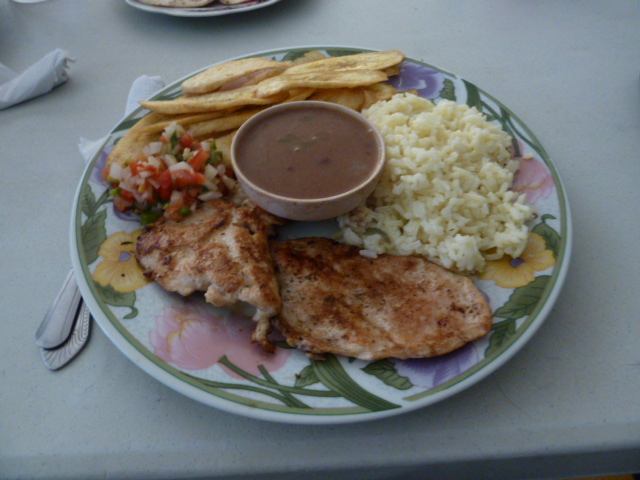
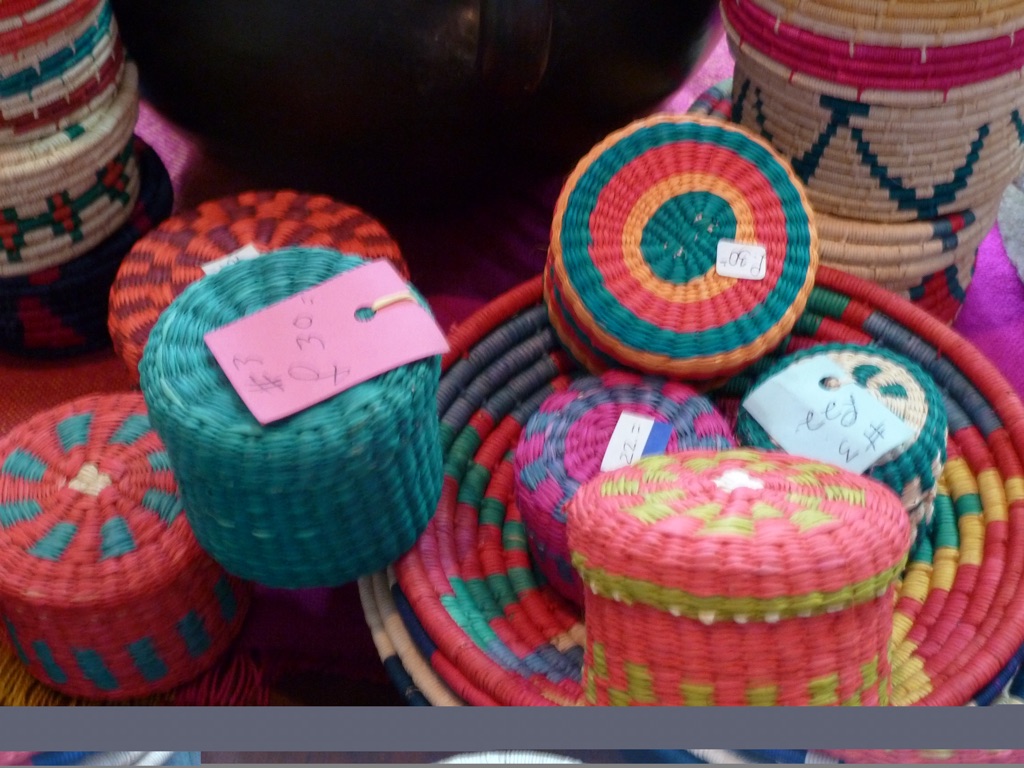
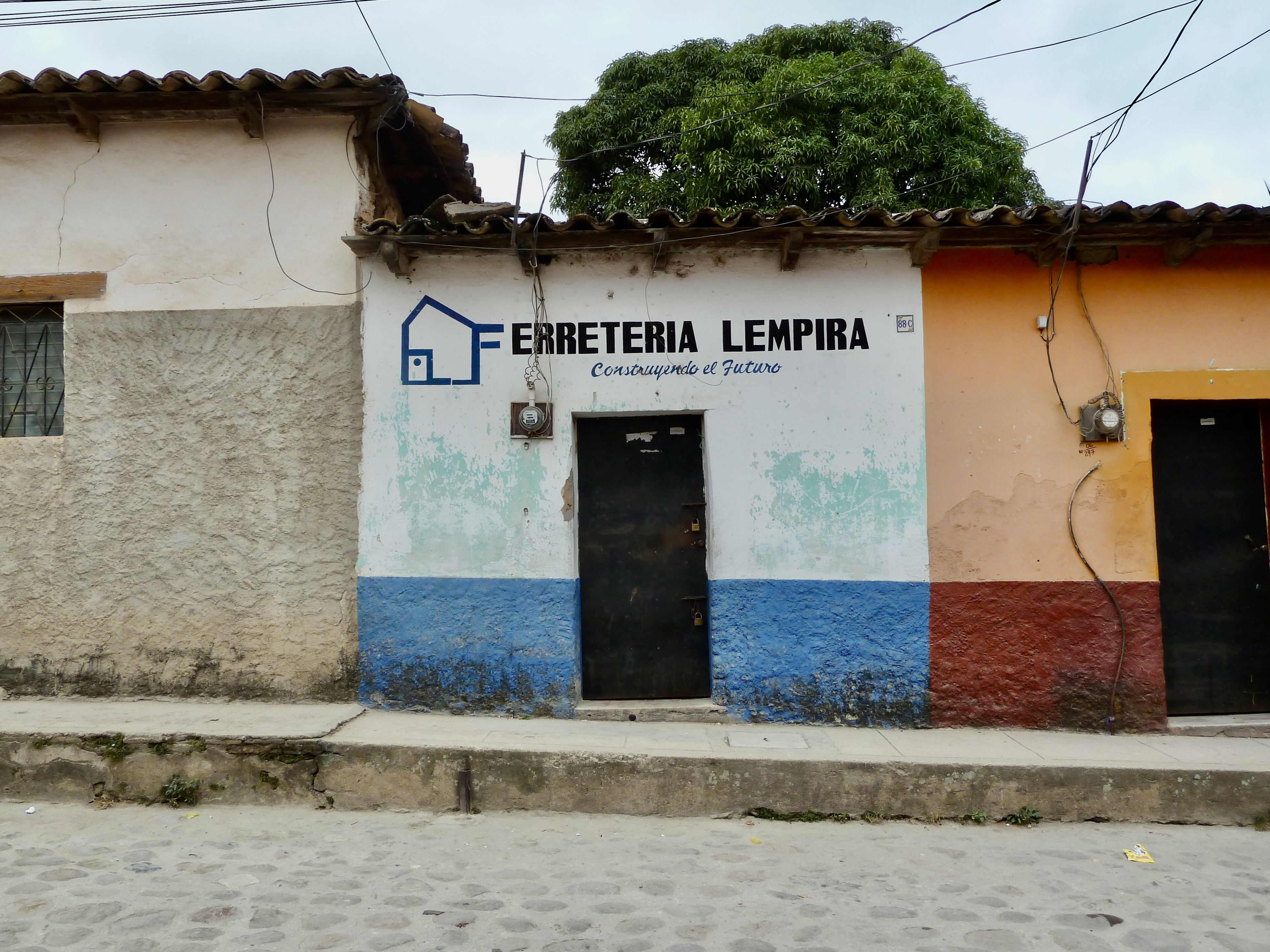

Los Dos Americanos en Honduras en Dia Nueve
De San Pedro Sula a Gracias
We left San Pedro Sula for Gracias this morning and traversed very rural roads and many small towns for about 4.5 hours, stopping for lunch in Santa Rosa de Copan.
And now we are in Gracias—a small town with a population of about 12,000 in the”urban center.” The town is in the mountains at the base of 25,000 with about half of these people living in the “urban center.” It’s known as the Lempira District.. and at the peak of Montana Celaque it’s about 2,800 feet. It was a two lane road all the way, although there are no lines at all to distinguish these lanes. Frankly, it really doesn’t matter whether there are demarcated lanes or not, since no one really adheres to them.. and over these four hours the most important thing was staying clear of the many many deep potholes, so you’re always swerving into the other lane to avoid the potholes.
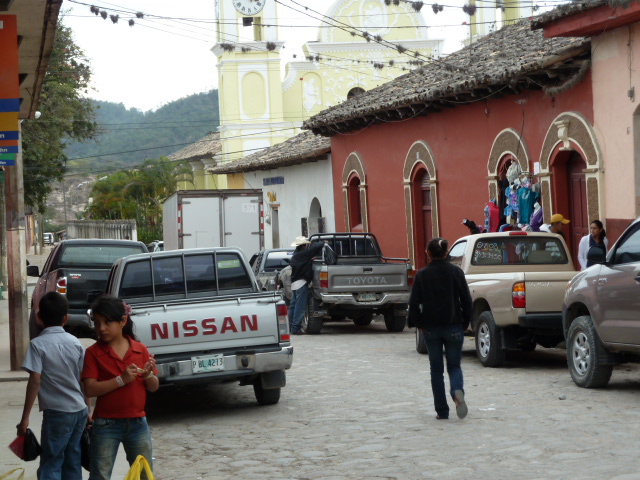
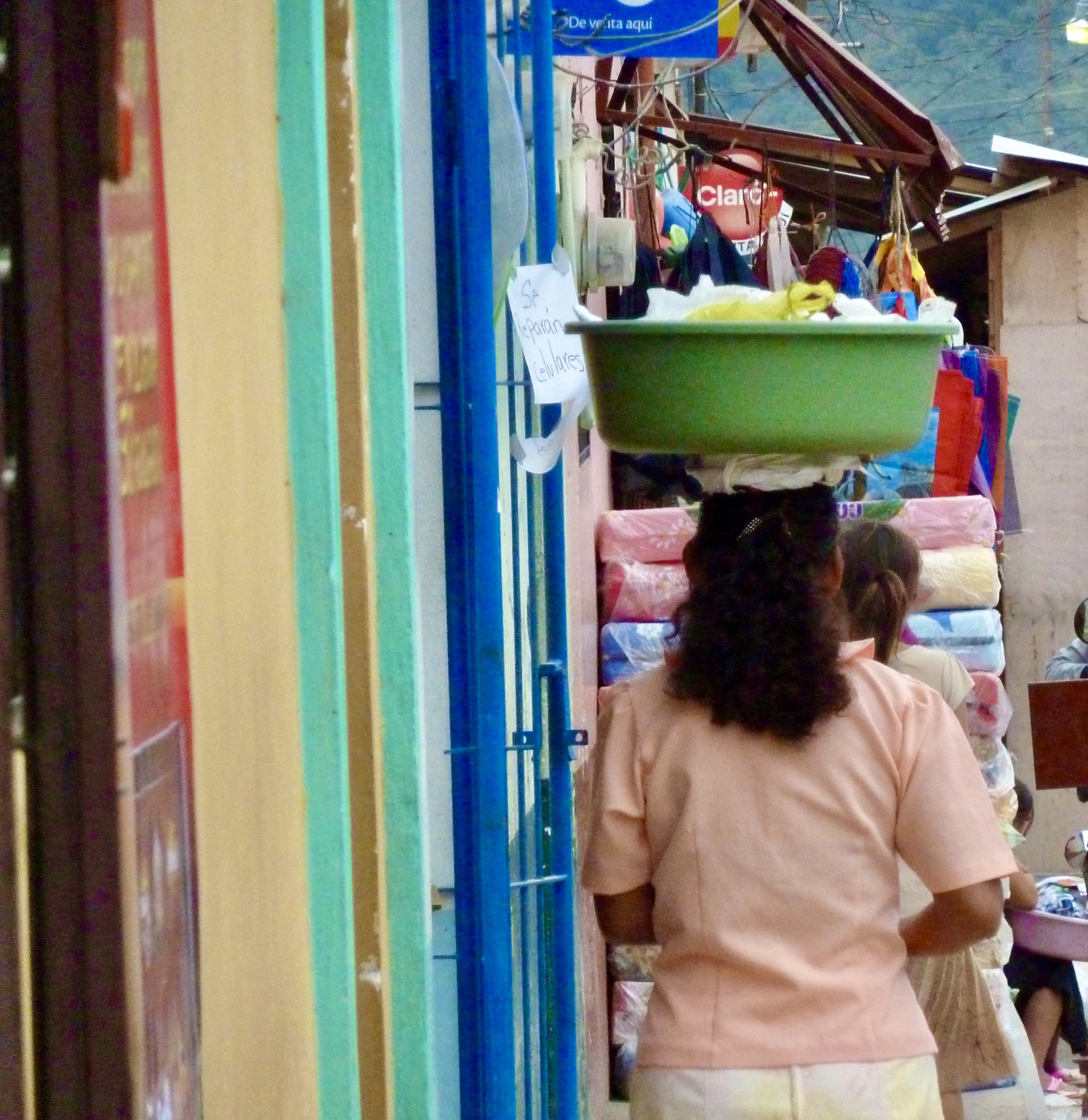
I decided to “stroll” the town while Mike chose to relax after the drive (he was the primary driver). Everyone is really friendly; no one speaks any English (not even at the hotel); sidewalks are about two feet off the ground and very narrow, so walking is pretty exasperating. On the narrow “sidewalk” you’re constantly confronted with little outdoor stands extending from the shops, so it’s good exercise going up and down the two foot step..

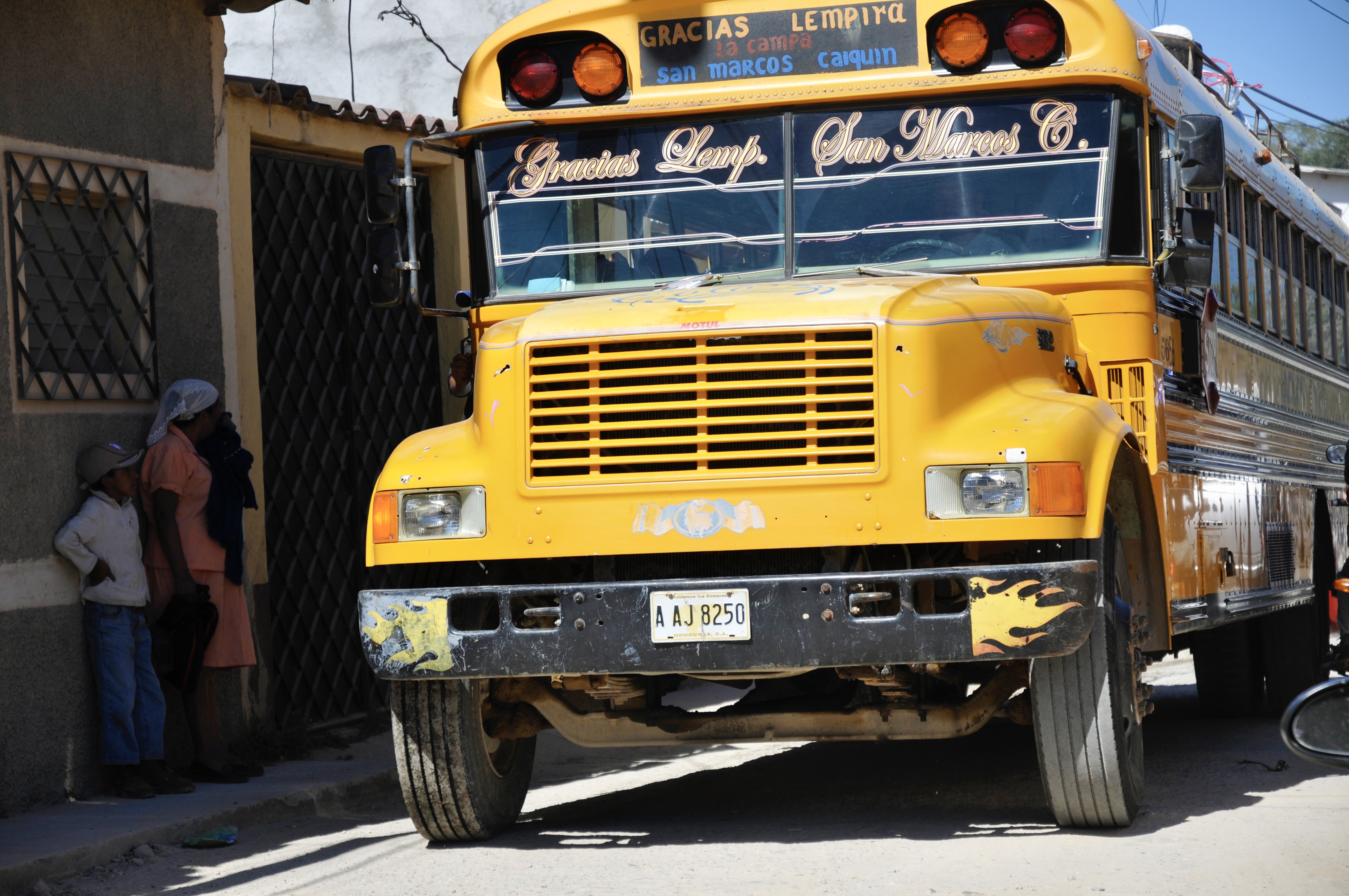
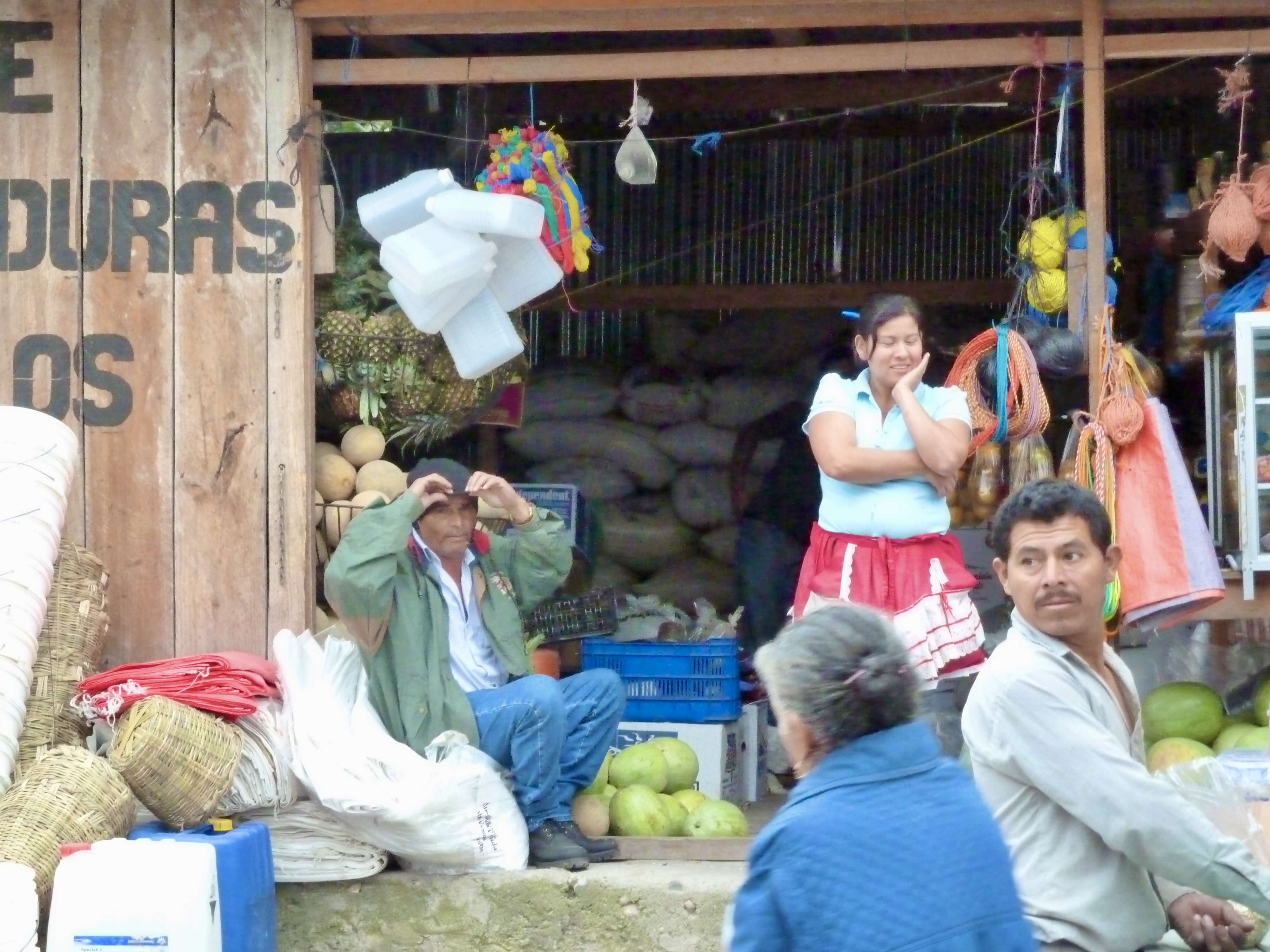
Not much here in Gracias, although the town seems to think it’s a good tourist destination and several hotels are under construction. It is close to a very large national park, so adventure travelers might decide to use this as a jumping off point, and there are a lot of small colonial towns in the region, even one that was founded by Jews in the 1500s (whose name I do not know)! Tomorrow, en route to Copan, we’ll stop at Campa, which we hear is interesting (generally that means a parque central and a church.. maybe a market).
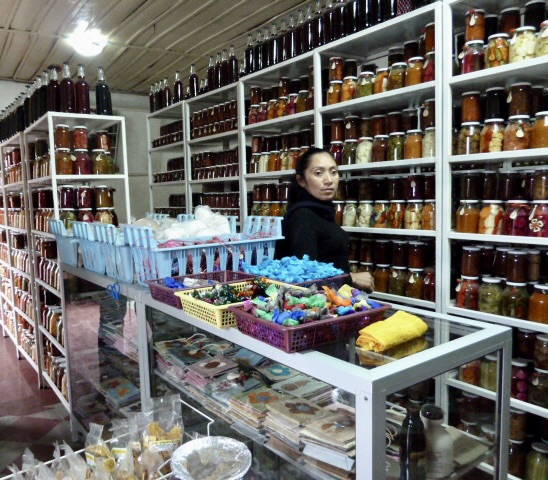
On my walk through Gracias, I bought a bunch of homemade jams (mango jalapeno, pear rum, and some others that are a bit unidentifiable and unlabeled but smelled great) in a tiny shop where the staff was unbelievably friendly and stuck with me as I asked many questions in my very bad Spanish and had to have them repeat the answers numerous times. Honduran Spanish is fast and clipped.. not as clear as Guatemalan Spanish (or so my feeble ear says).

The shopkeeper told me that a not-to-miss spot is the Agua Termales (hot springs). There are two: one is the municipal one; the other is private. She told me (and I think I understood correctly), that the municipal one is free, more fun, and very beautiful, but also very crowded; the other is very nice, “expensive” (which probably means about one US dollar), but also very safe. Unfortunately, all we can do is look, since we didn’t bring bathing suits.
I located what looks like a nice restaurant for tonight (we’ll see)…
Oh — In our little stop in Santa Rosa de Copan, we had lunch at a place called “Pizza Pizza”.. .where they had a real brick oven .. It was pretty good.
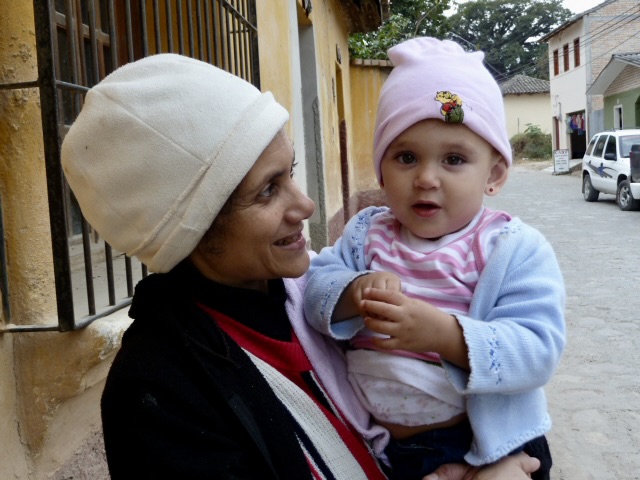
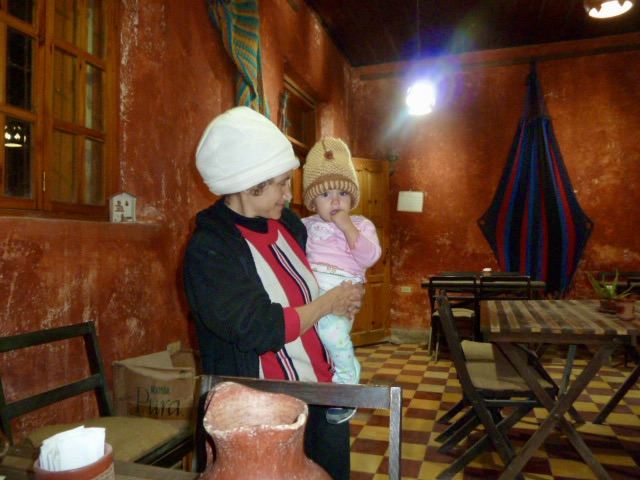
Dinner turned out to be good… a teeny tiny place and we were the only diners! And it turned out that a woman whom I photographed earlier in the day (with a baby — her granddaughter) was at the restaurant because it is her daughter’s place. Very small town. But dinner was good.. like having a home-cooked meal.

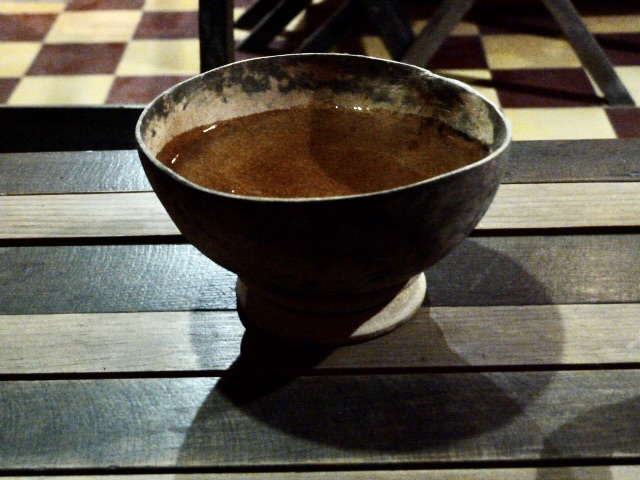
OK.. That’s it.. You’ll hear from me tomorrow from Copan Ruinas.
Fern
PS… Apparently the name Gracias is the town’s name because when the Spaniards arrived after being tired after having trekked through the mountains, they said something like “Gracias a Dios hemos llegado a tierra plana” (Thank God we arrived at flat land.)
HONDURAS 12/28/2010: Americans in Honduras – Dia 8
Americanos en Honduras Dia Ocho


San Pedro Sula –
Last night’s dinner turned out to be a fiasco. We taxied (after dark no one is on the streets, and taxi seemed way smarter than our car) to a restaurant we had read about in a guidebook and also on line. We made reservations. Got there around 8:30 and we were the only guests. We sat in the “non-smoking” section, although I doubt it would have mattered.
We were told it was a bit pricey for Honduras, but the books also raved about the food and service. Well… not for us. Other than a fairly decent flan for dessert the meal was really awful, and it was about double or triple what we’ve been paying for dinners. Service was fine, until the check came.
The waiter explained — as we looked shocked — that there were all sorts of “taxes” which seemed to pile up one on top of the other, including a liquor tax of 17% which somehow got applied to the whole tab. We were annoyed and felt really “taken,” but the issues were too complex for my vocabulary, except for me to be able to express outrage in Spanish. Then the waiter told us that the 10% tip that showed up clearly on the tab was for the chef, not for him, and so he requested a separate tip. To make things really annoying, when we took out a credit card, they professed that their machine doesn’t work and he needed cash. Not having enough lempiras, we rather sheepishly, paid in cash and left quite annoyed. When he called for the taxi, he told us it would cost $5 for the cab.. but it cost $3 coming to the restaurant. When we go in the taxi, we asked the driver the amount and he easily said the equivalent of $3! without any bargaining whatsoever.
So, should you find yourself in San Pedro Sula — avoid Chef Mariano and/or Restaurante Arte Mariano or Marino (it’s spelled differently in different books, but same address). OK.. enough complaining.

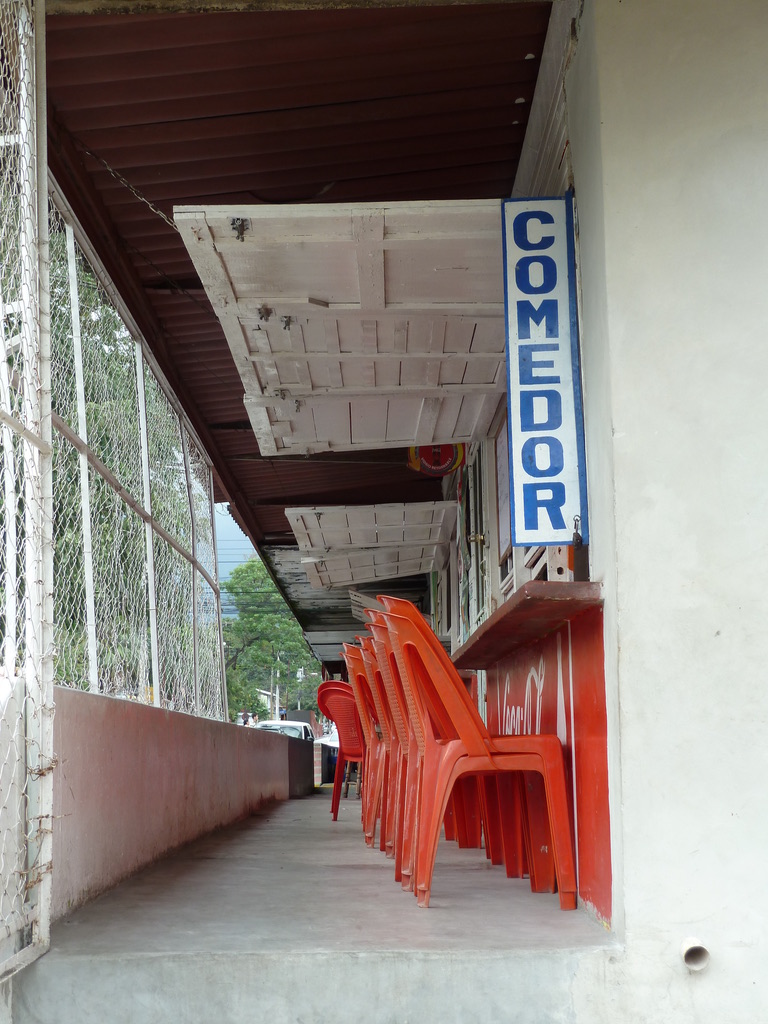
We began today in San Pedro Sula, by somehow missing the breakfast at the hotel (it ends before 9, and we really didn’t get to bed until about 1 am. So we meandered to Parque Central which is basically the center of San Pedro — which is close to the hotel (about 4 blocks away) and rather deserted. As we understand it, the core of San Pedro, the second largest city in Honduras and the industrial hub and transportation center… went the way of American cities, with sprawling suburbs for the middle class and wealthy and the abandonment of the core. So downtown is considered “dangerous” and doesn’t have much residential. On the whole the city is pretty dreary, but everyone has been friendly.
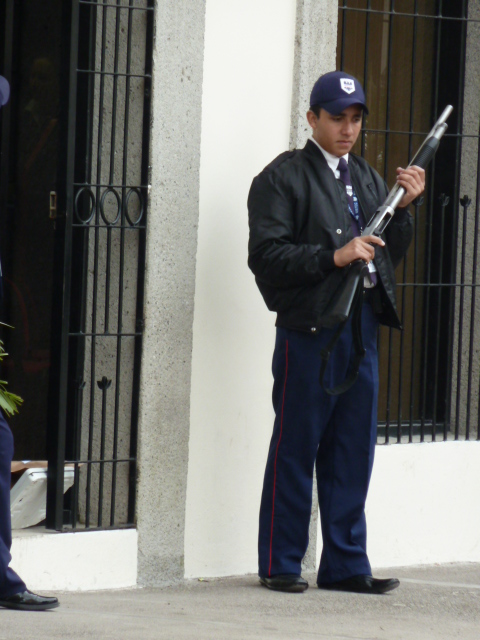
We found a little cafe and had liquados… and then walked to the bank for Mike to cash some travelers checks (big mistake to have brought them instead of cash, which I did) which requires a lot of paper work. We waited on several lines at the bank and eventually got cash.. The ATMs are pretty much all over, but Mike decided to rid himself of the checks. Like elsewhere, we passed through numerous armed guards, where the men are swiped with metal detectors (not women).
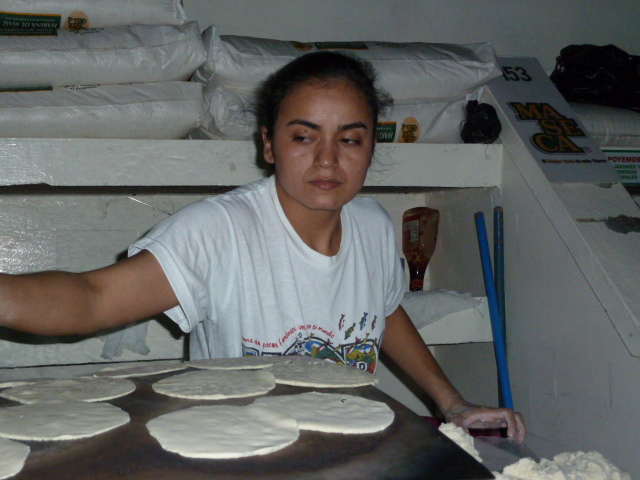
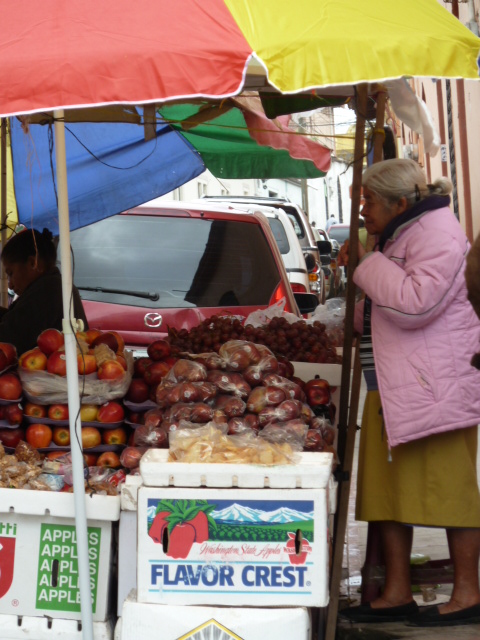
We then headed to Mercado Guamalito — a sprawling indoor market with hundreds of stalls selling everything from crafts to fruits and vegetable to spices to everyday necessities. We meandered for a few hours, taking it all in.. watching dozens of women at separate stalls make fresh tortillas, and just checking out the scene. In the center of the market is a “cafe” and along many of the edges are little cubicles with about four stools each where women serve specialty foods.

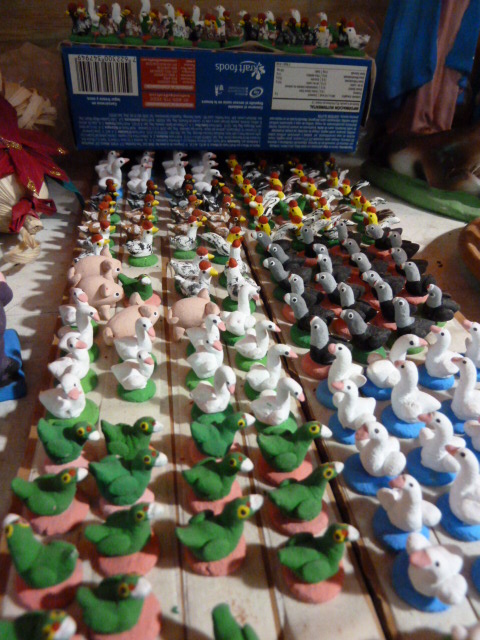
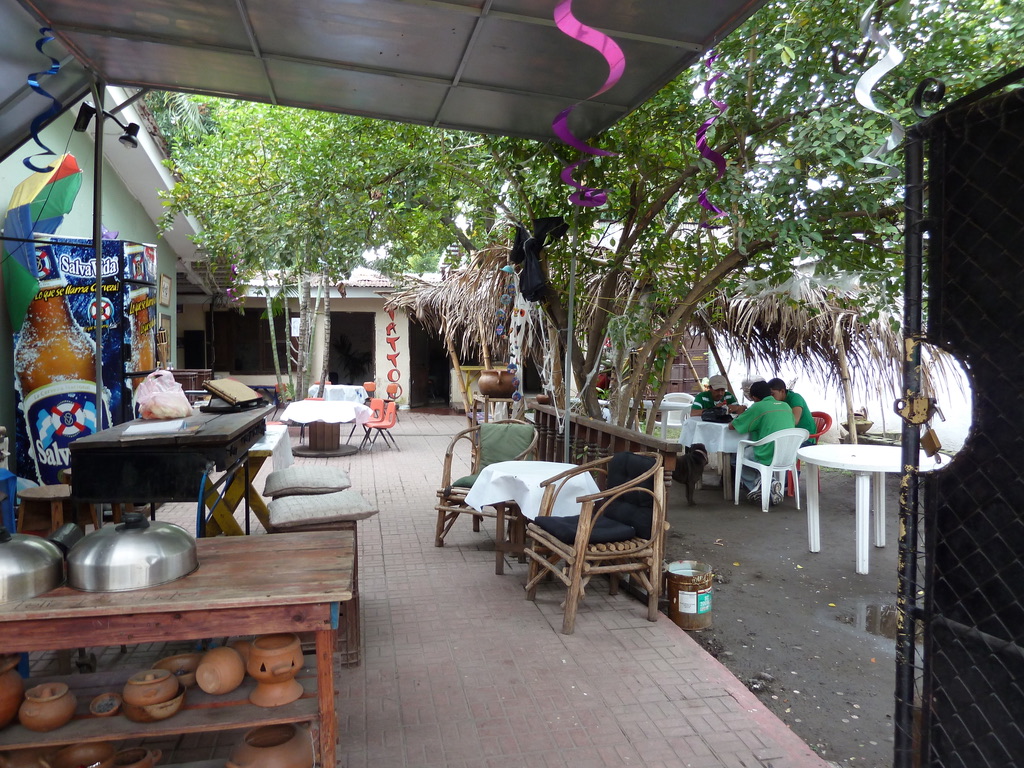
From there we headed to the archaeological museum, and then found our way to a little hole in the wall place for some almuerzo tipico (chicken fillet, rice, frijoles, and tortillas).. run by what looked like a Caribbean couple with a very cute kid (about 18 months) named Carlos.
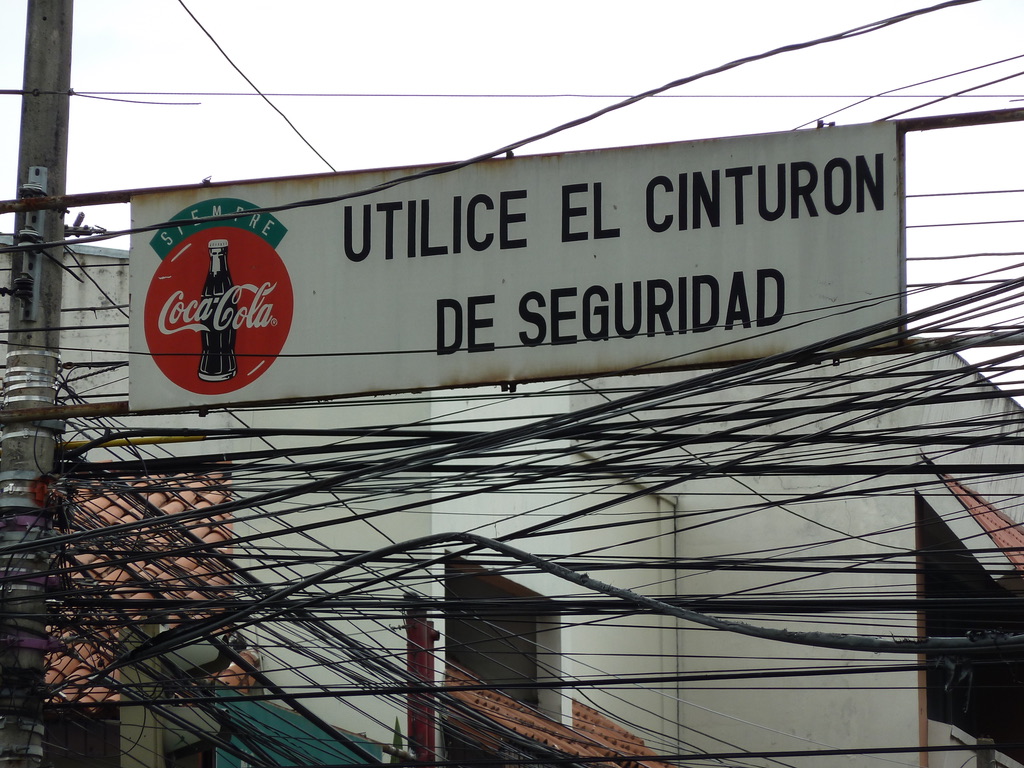
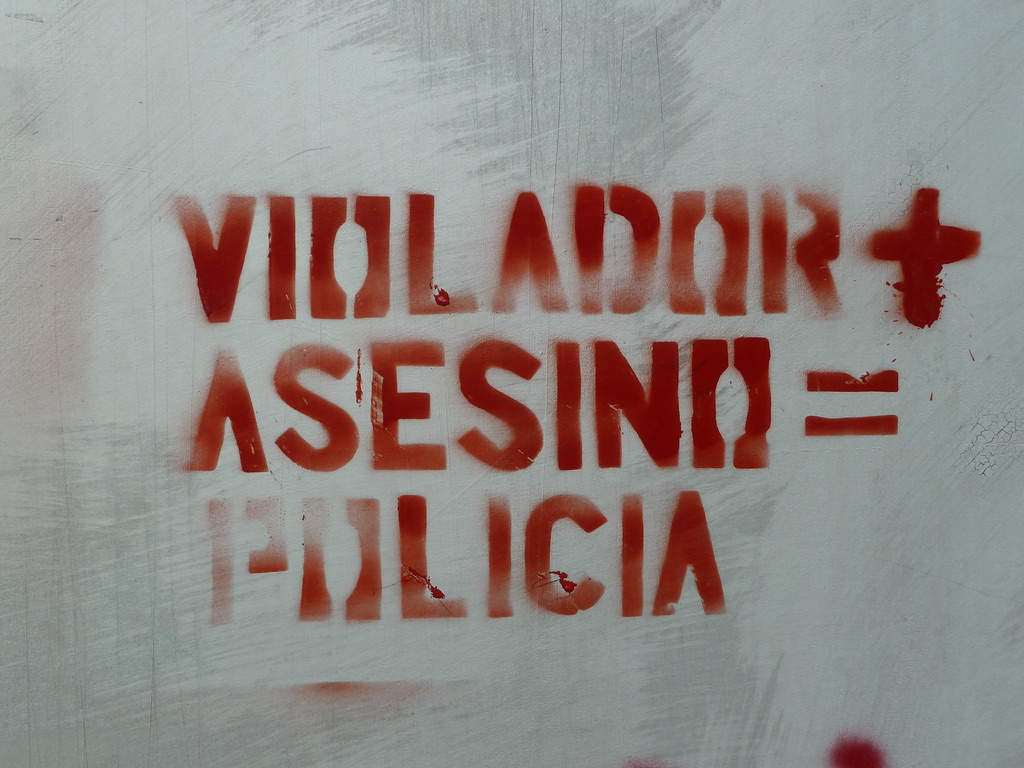
Wherever you walk, you spot political graffiti (not quite rivaling the proliferation of Coca Cola messages) — mostly in support of the ousted president Zelaya (referred to as “Mel”)… He was first a conservative and then became a liberal (son of wealthy family involved in logging and timber) and forged an alliance with other Latin American countries, most notably Venezuela’s Chavez. In Parque Central there are many banners supporting equity and justice and a plaque dedicating the park to Zelaya who was ousted in a coup about 18 months ago. So now the country is run by the military. There seems to be a lot of difference of opinion as to how much Zelaya accomplished. He attempted to do major land reforms (in a country where about 90% of the land is owned by about 1% of the population and where unemployment is recorded at about 25% and poverty rate is more than 50%). Apparently he even wanted to reveal the salaries of the wealthy, etc.
Prior to the coup of 2009, Zelaya ran afoul of the press and some of his own supporters and attempted to extend his term of office, prior to a change to the constitution (or so I think)… Anyway, most of the graffiti is tied to support for the National Front for Popular Resistance (FRNP) which is a group farther left than Zelaya. We can’t get too much of a handle on the impact of the military power (other than seeing so many armed soldiers everywhere); in between Zelaya and the current regime there was an interim president, who I gather, was from the very wealthy class. His role was to hold things together for 6 months…
Under Zelaya, small farmers got government subsidies, interest rates were lowered, minimum wage was increased, schoosl served meals for children from poor families, free education was introduced, and free electricity was supplied to very poor Hondurans.
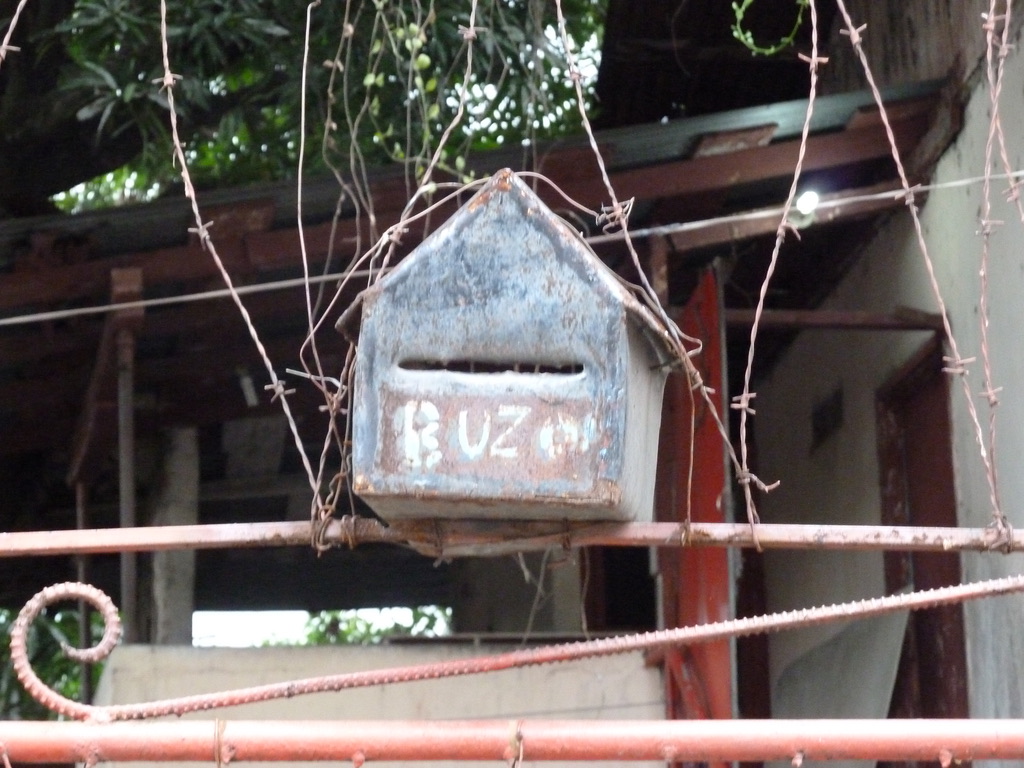
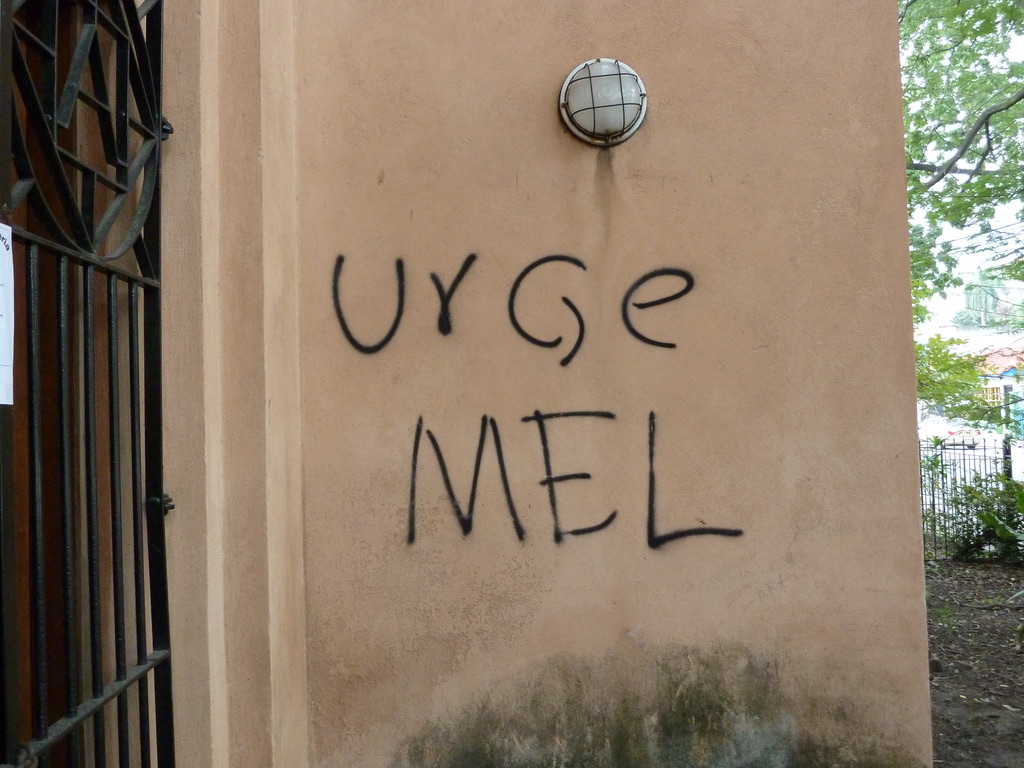

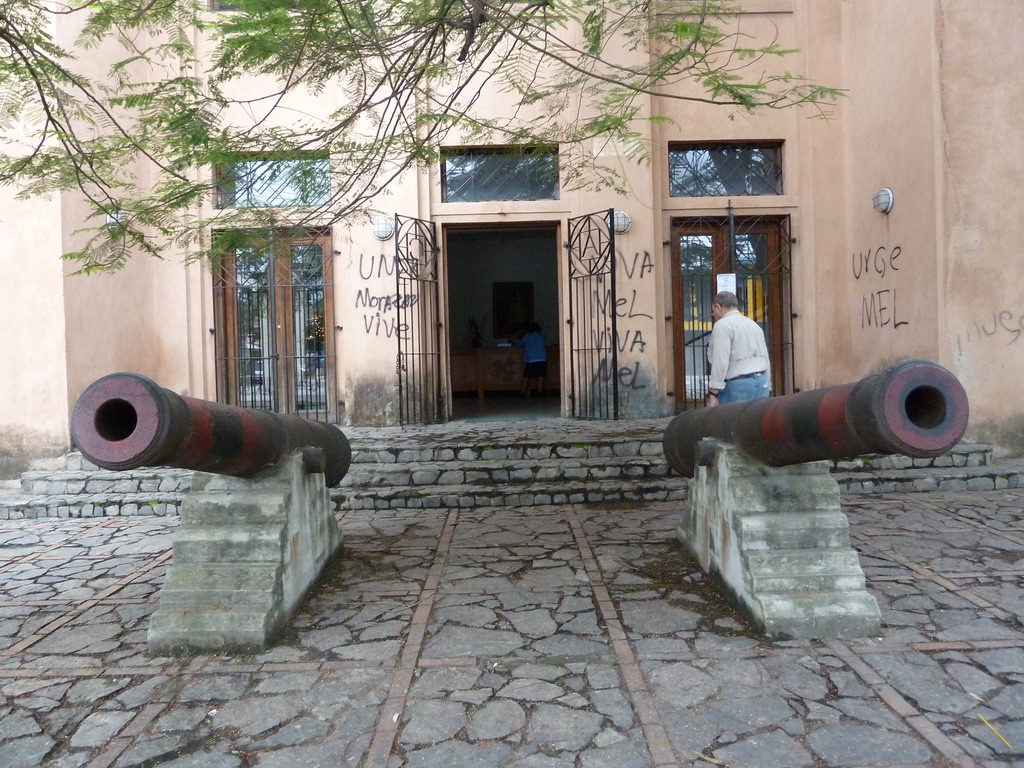
It’s difficult to get a read on what’s really going on, or on what role the US plays or Catholic church plays or has played. Our Spanish is not good enough for those coversations, and whatever small conversations we attempt on the topic don’t really go anywhere.. People are probably a bit nervous to enter these kind of discussions with foreigners and strangers.
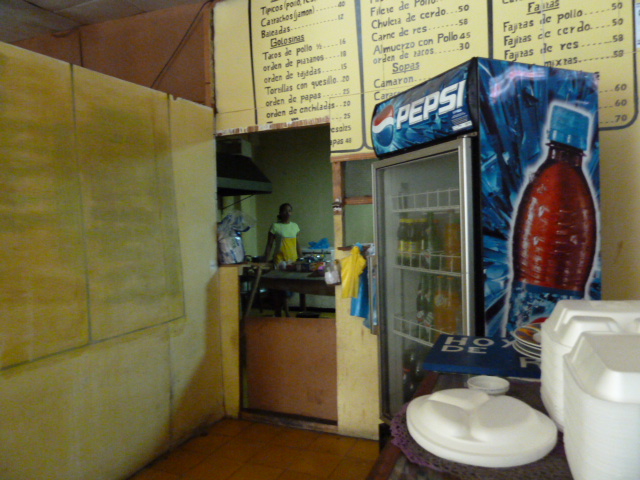

Eventually we headed out to dinner.. to a steak restaurant. My stomach was a tiny bit queasy and the thought of the same Honduran food that we’ve had almost every day was more than I could bear. Steak was probably not the best remedy, but I’m feeling better so maybe it was just that I was tired.
Anyway, we leave San Pedro tomorrow.. head to Gracias for one night.. and then off to Copan for three nights and then head home.
More from Gracias.
OK.. This little addendum to today’s travelogue is mostly for foodies.. but perhaps everyone else will find some interest.
I had scoped out the town earlier today, and also read about a restaurant called Rinconcito Graciano. When I found it today, it was closed but the woman outside (with baby in tow) said it opened at 7. I said I’d be back around 8.
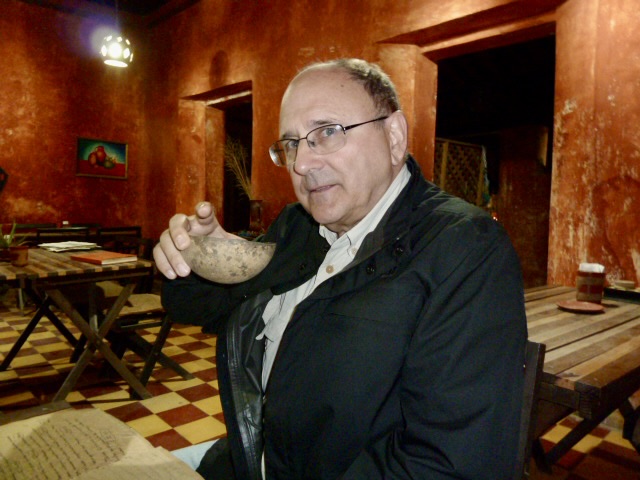
What I had read was that the owner and chef (Lizeth Perdomo) is involved in preservation — both of the town and of the traditions of Lenca cooking passed on by her grandmother and great grandmother (family recipes). When we arrived the door was locked but Lizeth (who turned out to be the woman I met in the afternoon) immediately came to the door, unlocked it, and let us in. It’s her house, and the front room (and also a tiny side yard) had been turned into the “restaurant.” You guess it– Mike and I were the only diners.. but what a treat. Lizeth (at least this is what I think, since the conversation was totally in Spanish) grows most of the food; she only uses natural ingredients grown locally. The little pillows on the chairs are stuffed coffee sacks; the menu is handwritten on recycled paper. Drinks (she didn’t have any wine or beer, although natural home made brews are on the menu; we could have walked around town to get some beer or wine and bring it in, but it seemed to complicated) are served in the scooped out shell of some kind of vegetable… and then sit on a little wooden disk for “stability.”
We started with a cucumber juice (naturally, I must have asked 10 times to confirm that she didn’t use any water in making the juice)… which was just cucumber and lemon.. It was sublime!.. We had ticucos (tamales made with loroco – a central American flower bud – and also beans and some other stuff; and chorocos (which seemed also like a tamale). Both were great.. Oh by the way, everything is served on lenca pottery (a dark brown heavy ceramic, somewhat crudely formed; she cooks with lenca pottery too)..
For the main course Mike had some vegetarian thing.. that seemed a bit like a cross between an omelet and a frittata.. but was neither, with herbs and vegetables. I had the beef. We shared a side dish of chayote.. And then we shared another different juice, whose origin we have no clue… but it was also wonderful. We ended with “chocolate” which was a hot chocolate but made with cacao, vanilla, cinnamon, and some other spices.. and didn’t really taste chocolate-y..
All in all, a fantastic meal. I just don’t quite know how Lizeth makes a go of this. So, should anyone be thinking about traveling to Gracias, Honduras… be sure to eat here. It’s totally unique… including us keeping an eye on her 16-month-old while she intermittently runs in and out of the “kitchen.”
By the way, (again if I got it straight)… Lizeth went to the University in Ceiba and studied marketing. She’s been written up in a lot in magazines, so maybe she’s got a marketing plan… but based on the sign-in book that she asked us to fill out, she hasn’t had too many customers. She said it was busy in the summer and that the restaurant is now 8 years old.
Speed is not a strong suit here in Gracias.. It took us more than two hours for the meal (and remember, we were the only diners). Lizeth’s garden is in the back of the house, and the kitchen looks like it’s still in the Lenca era… but somehow she does it. .. including making her own bread (whole wheat) and thicker-than-usual tortillas (both of which were wonderful).
Remember Rinconcito Graciano.
HONDURAS 12/26/2010: Americans in Honduras – Dia 7
Ola de los dos Americanos en Honduras en el dia siete; Greetings from grimy San Pedro Sula, where we just arrived.
To finish off Christmas Day (yesterday).. there were eventually 6 of us at Las Cascadas, by last night. We met the couple that arrived before we did — Harvard grads about 35 years old; PhDs (she in neuroscience – studies memory loss PhD from Cambridge; he’s Canadian in finance – did his undergrad in sociology and PhD also at Cambridge in International Trade). They live in Toronto, where she’s on the faculty at the University of Toronto. The other couple who arrived just before dinner were Hondurans who live in San Pedro Sula and were (I think) a bit annoyed to hear all this English being spoken.
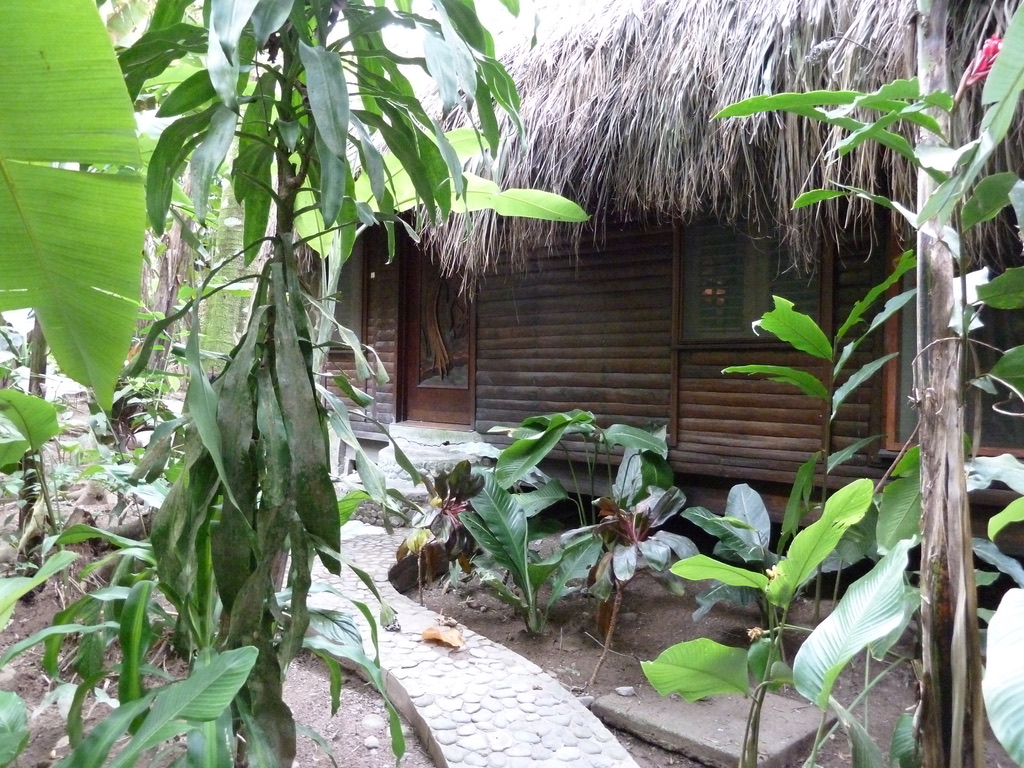
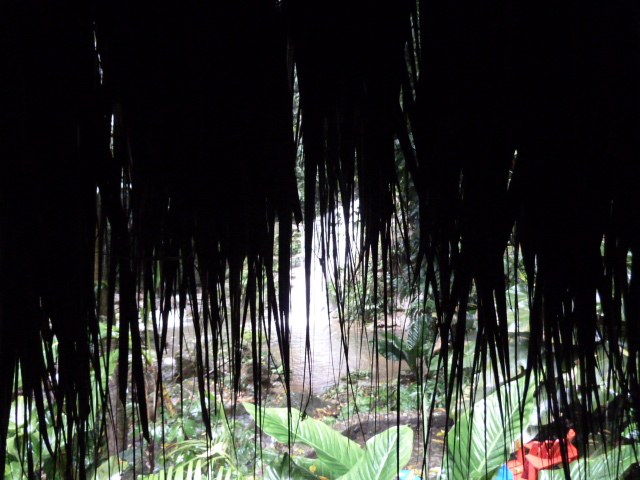

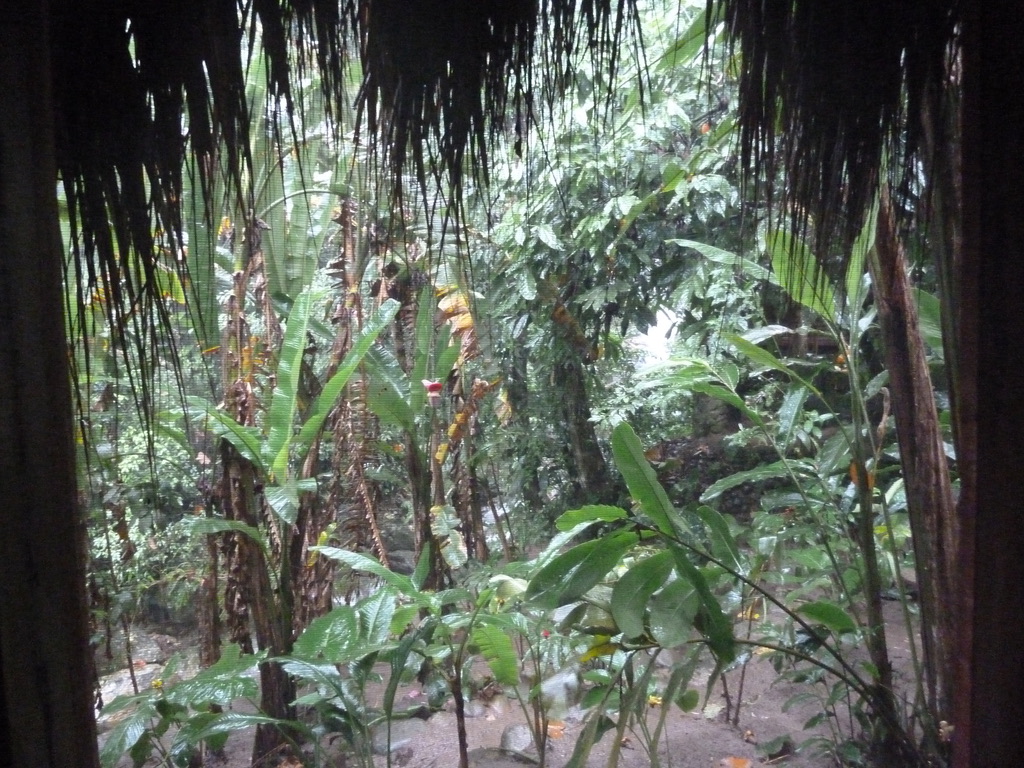
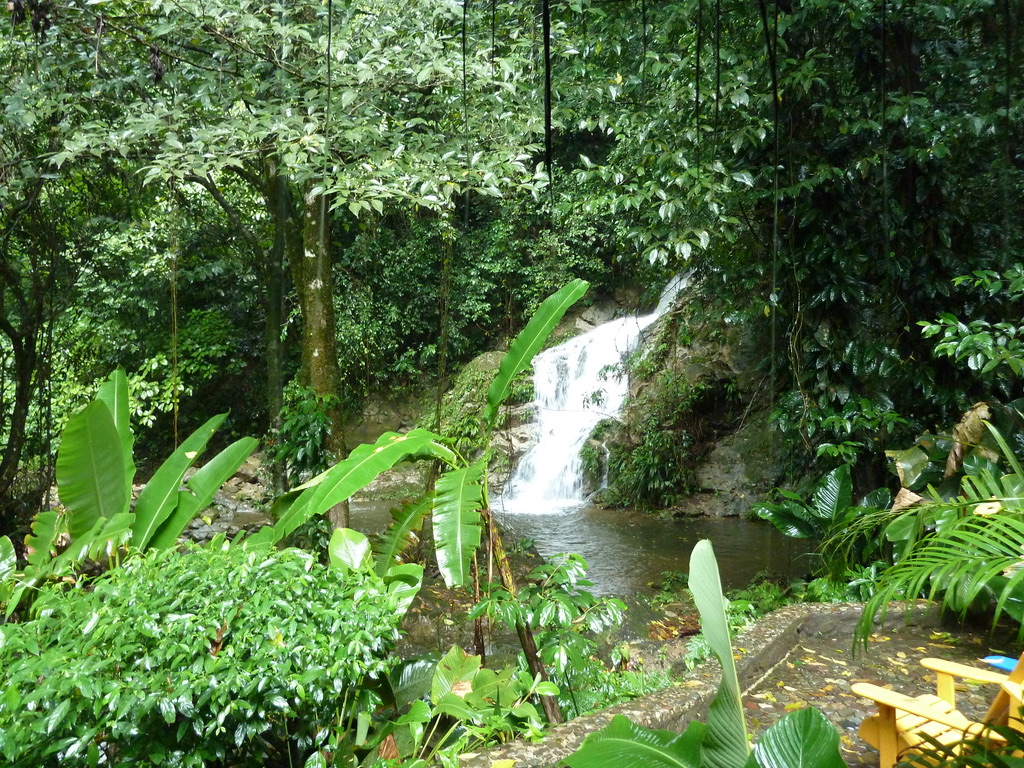
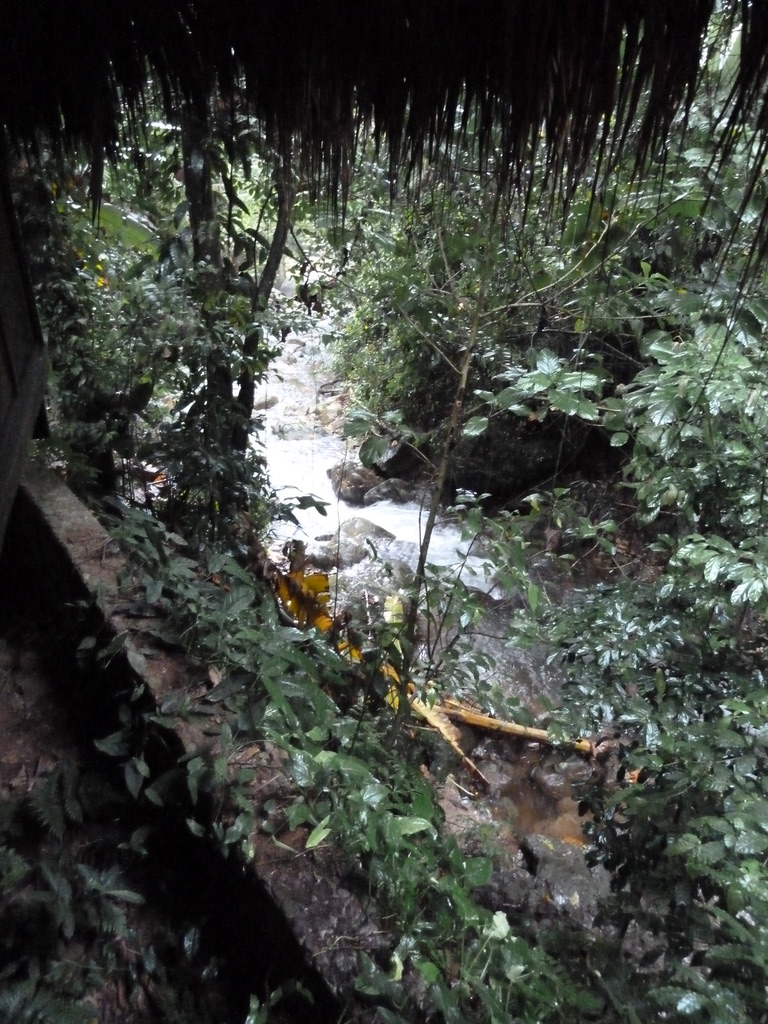
It began to pour (and rain in the jungle is loud and intense, although often it’s so dense that you don’t even feel the rain), just as we all piled into a van to head to this Christmas turkey dinner up the road. Wasn’t exactly what we imagined and it was a bit odd to have a real American meal in the jungles of Honduras, but I think Bruce really wanted a break from work, and we all accommodated. We met several of the ex-pats who are living and working in Ceiba—some are in the tourism industry (mostly guiding rafting trips and hikes, or managing small hotels) and some are working with NGOs, including an interesting young woman from Altoona, PA (very close to Penn State’s main campus at State College, where Mike and I once taught) who is running an after-school language program for 10-20 year olds, where photography is also on the curriculum, and where the goal is to encourage young people to think about sustainability for Honduras. They do a lot of training in eco sustainability, and some of the kids give guided tours through the jungle. (www.guaruma.org). Seemed like a really good organization.
We also met a bunch of expats from Saskatchewan, various parts of Canada, and the US. Interesting folks who have either decided to live here in Central America for short periods, or for life. They all seem extremely happy.
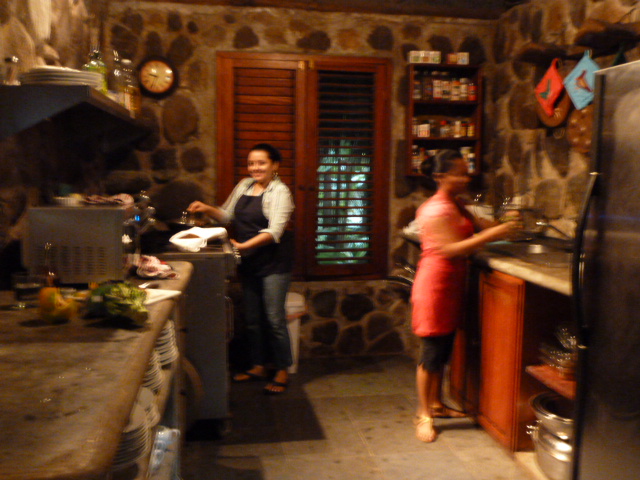
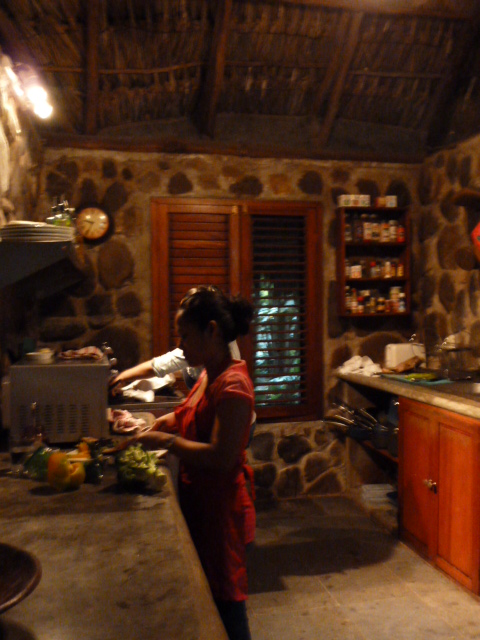
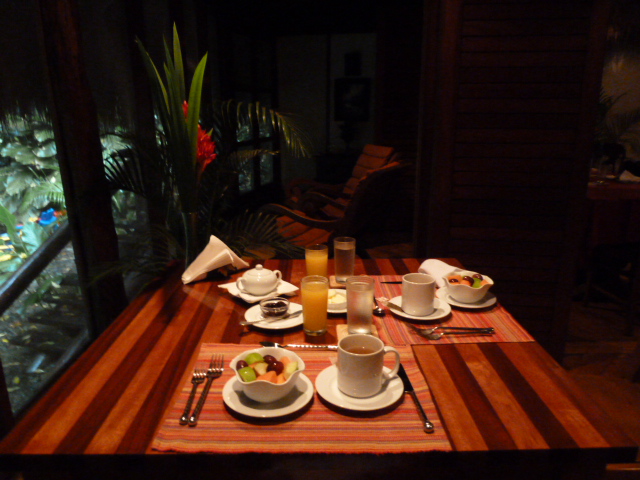
After dinner, as the rain continued to descend, we went back to Cascadas for drinks, conversation, and Mike and Bruce played chess.
It poured all night long.. and for a while we thought we might have to stay another night at Las Cascadas, which would have been nice, but complicated because our room was already booked. So, after breakfast, we decided to brave the rain and head out down that 6 kilometer dirt (mud) road. As we loaded the car, the rain lessened, and while the drive was not exactly smooth… it was all doable. We headed into Ceiba to see the town, which might look good with sun (nothing ever looks good in the rain – except the rainforest, jungle)… but it seemed dingy. We grabbed a bite at the Expatriate Bar and Restaurant, where about 10 Americans and Canadians (who live in Ceiba) were watching the football game on the infamous flat screen TV.. and headed to San Pedro Sula – our next stop. (The Honduran couple at dinner were from San Pedro, so I asked — in Spanish, because their English was similar to my Spanish – about the best things to see in San Pedro, their response was quick and decisive: “NADA”… so we figured it would be fine to get to San Pedro by dinner.
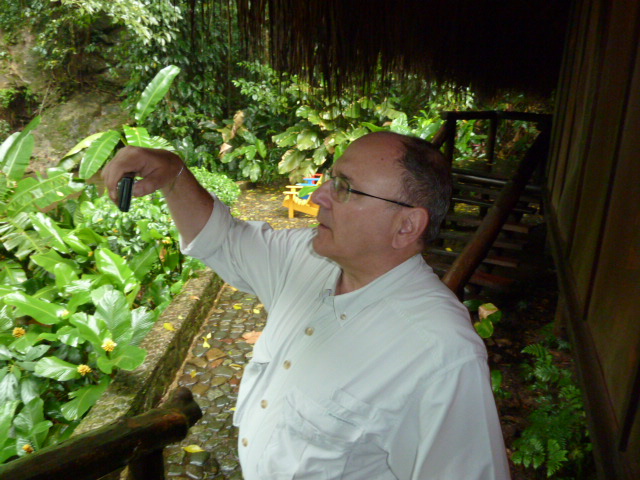
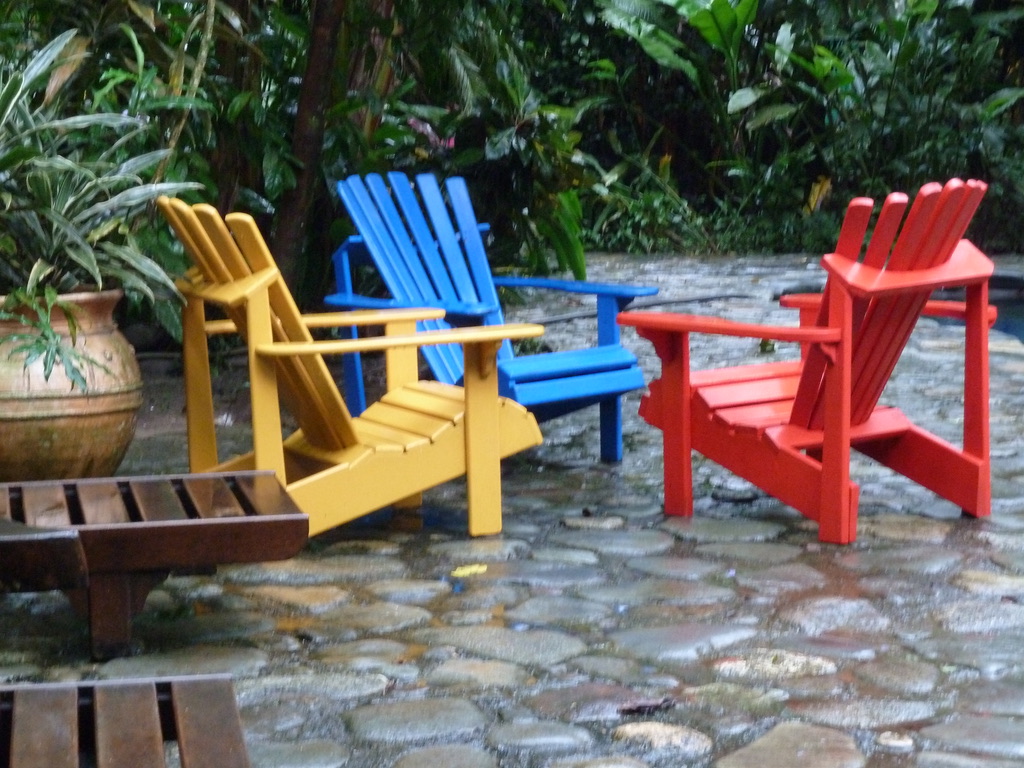

We’re here now. It’s grimy and depressing, but then again, it’s raining! Fortunately while our little hotel is not in a very good neighborhood, it is immaculately clean (I think I’ll take clean over location)… And they have wifi!
So, we’re here — we’re off to dinner soon. We’ll take a taxi because finding things in the dark is really hard. In Honduras the street signs are infrequent, and then when there are signs – they are only printed on one side of the sign. So you never know what street you are actually driving until you are at an intersection. They really could use some signage advice in general. We drove for two hours before seeing the sign to San Pedro Sula and then it was just in time to make the turn onto that road.
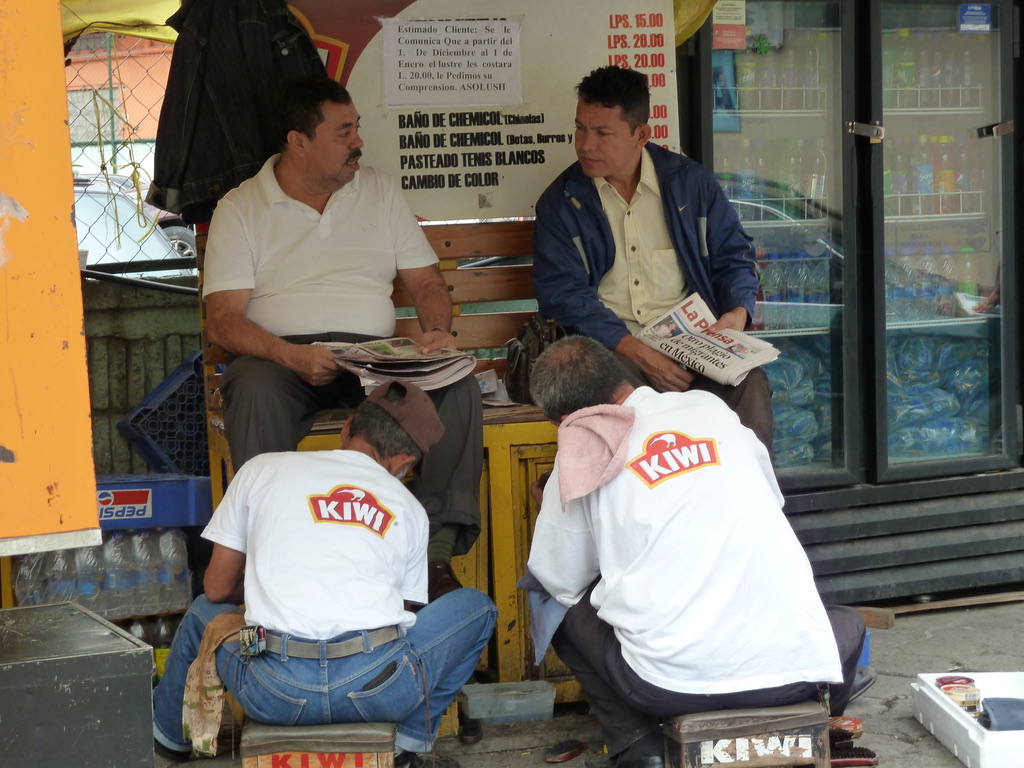
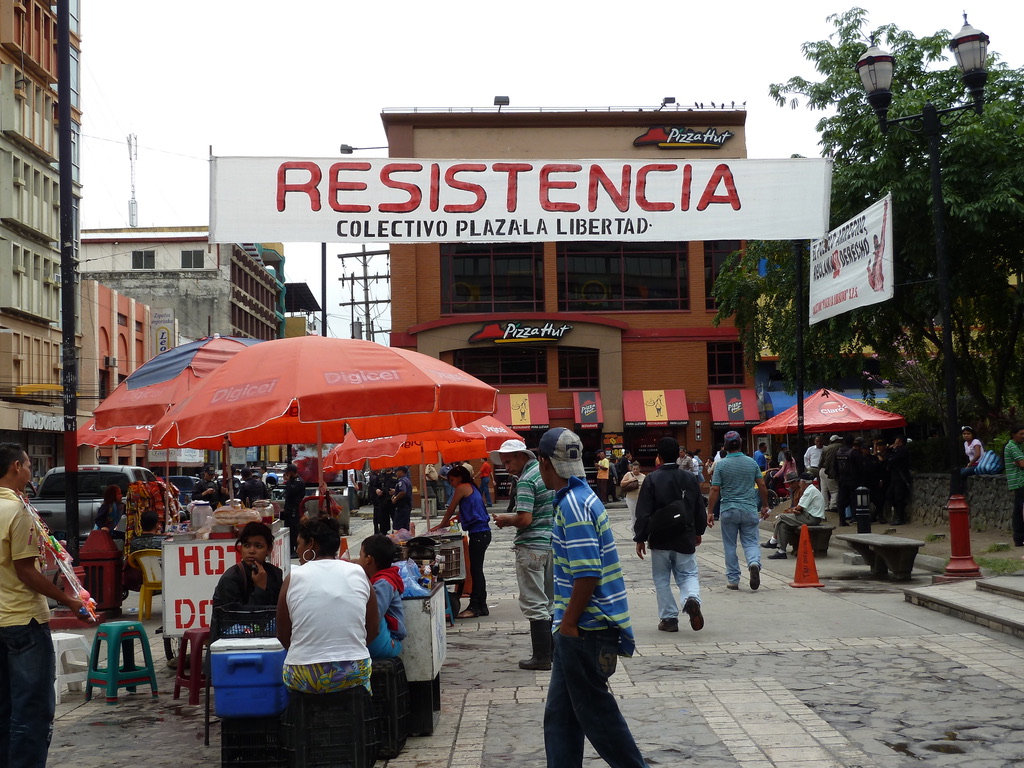

We’re not expecting much in San Pedro. We hear there’s a good market that we’ll visit in the morning.. and maybe just rest up. We’re here for a second night and then we have a very long drive to Gracias.
I’ll let you know tomorrow what we find here in San Pedro Sula.
Fern
P.S. I finally let Mike read all of these travel notes and he said I did not describe the boat trip to Miami correctly…According to him: We started out in a river and had to cross into the surf of the Caribbean and the connection between the river and the Caribbean surf was only about 20 feet wide and 2 feet deep. So they had to lift the motor out of the water, get out of the boat, and walk it through the shallows.. and then shove it into the oncoming surf, drop the motor, rev it up, and blast straight into the waves that were breaking in front of us… That’s when we started rocking and rolling across the crashing waves….
On the way back, the boat had to surf the waves until we hit the shallows of the river.. then they hop out of the boat and walk it into the river. OK.. That’s Mike’s two cents.
HONDURAS December 25, 2010: Americans in Honduras – Dia 6: Feliz Navidad

Feliz Navidad de Las Cascadas, circa de La Ceiba, Honduras
Dia Seis
First, a bit about getting yesterday’s and today’s email to you. There is absolutely no service within about six kilometers of the lodge. Actually, there is some kind of wifi in the dining area, but we have yet to be able to connect, and decided that 36 hours of no cell and no blackberry is actually a good test of our ability to make it for short periods without communication tools. Mmmmmmmmm…….
Anyway, to send the December 24th email which you should have gotten on Christmas Day.. I drove out of the lodge up a dirt road for about 6 kilometers.. where lo and behold—in the middle of nowhere—a connection popped up. I actually realized this morning when we drove around the area (more on that in a minute)… when my blackberry started buzzing.. So when we returned to the lodge, I transferred the daily report from yesterday to my Blackberry, and then drove up the hill and pushed “send” from the Blackberry… pretty clever.. ??
OK.. so we began Christmas morning (actually you’d never know it was Christmas here.. ) waking up pretty early to little howling monkeys that roam the trees that surround the lodge (Not to worry, we are well protected in our incredible cabin, totally screened and glazed appropriately)… and then some amazing bird sounds.. and of course the constant white noise of the waterfalls that surround the whole lodge. By the way, there are only four rooms in this place (I think I said previously that there were 9… I erred.)
Las Cascadas is owned by a very entrepreneurial American architect/developer who hails from Michigan and apparently spends a lot of time developing condos for wealthy foreigners in Roatan, one of the Bay Islands north of here.
Must say, he’s got great taste and is sensitive to the surroundings and sustainability (albeit a bit on the cushy side—for which I am grateful).. the lodge seems to be a hobby and a way to enable him to come and spend time in this amazing part of the world.. or maybe it’s a giant tax loophole, in that it is not possible to make any money with only four rooms.. at best 8-10 guests??
Right now there are only four of us.. We haven’t met the other two, but will meet them tonight when we all head up the road for a Christmas turkey with the expats who live in this region. The turkey was grown right here .. and I guess all of these foreigners decided to make Christmas dinner. We are invited, but need to chip in some money which seems quite fair. I think most of these people work as guides for rafting and other activities in the region, and some work with NGOs — one of which we visited briefly today.
After breakfast, we followed Bruce’s truck up the hill (Bruce is the on-site manager– an interesting guy, probably mid- to late-30s who hails from Montana, but has lived in many places, including Brooklyn! where he was living on a boat in a canal that is between Queens and Brooklyn… We Brooklyn folks are everywhere (well, he’s not really a Brooklynite, having lived there only 2 years)… He’s traveled a lot, lived in Roatan (Honduras) for a year or two.. before Brooklyn. He’s been the manager for about 9 months, and really loves and knows a lot about the area. He seems well connected well with the locals, using both consumables and adornments made locally (ok.. he also gets things from Guatemala, and in order to keep the place at such a high end, it’s obvious that many things come from elsewhere, but he tries to be as sustainable as possible).
Followed Bruce’s truck so he could stop and introduce us to numerous folks, and then he could take off to pick up the other couple staying here, who had gone rafting (guess they don’t have a car). This was a good idea, because we could then take our time at each of the places – en route down the hill. So Bruce took off as we got to the last introduction, and then we could linger and make our way slowly back, stopping at all the places he had connected us with.
The first stop was probably the most amazing.. and to be added to the once-in- a lifetime experiences list.
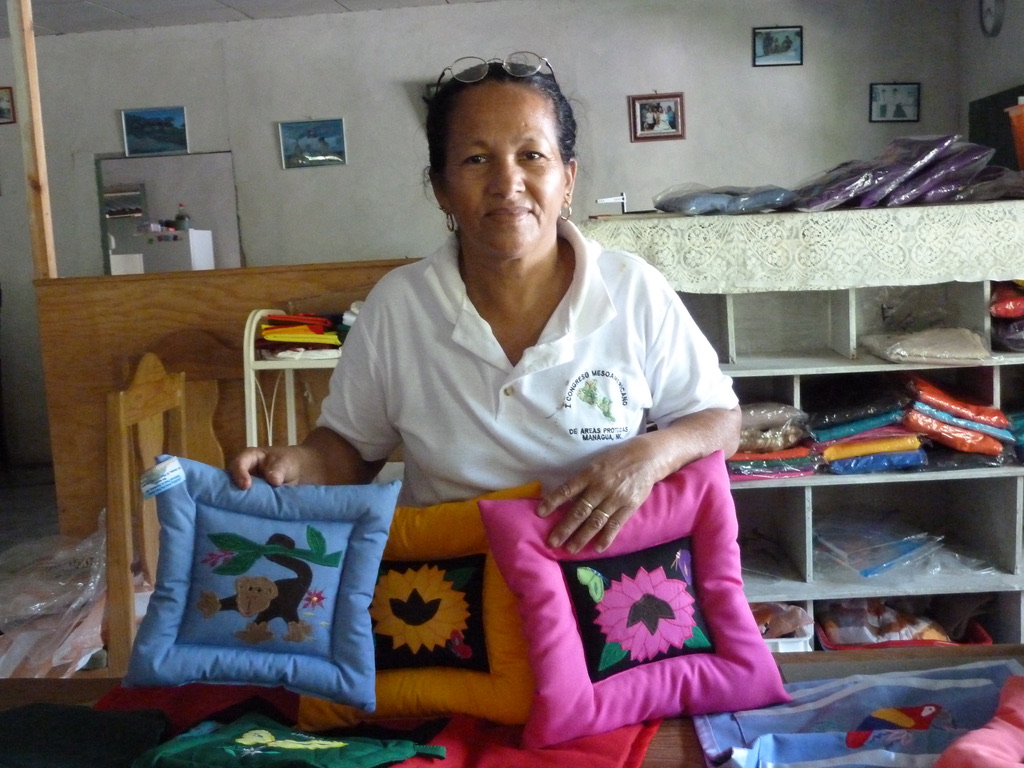
We went to meet Rosaria, who founded, with some other women, a women’s sewing collective. If I understood the story correctly (since it was all in Spanish)… Rosaria and her family worked hard and saved money and 16 years ago she realized that she and the other women sewed well and perhaps they could make money sewing various things like aprons and tablecloths. They saved for one sewing machine.. and then another, and now they have about 8 sewing machines (all rather old) and they have a small cooperative and sell their goods to a few shops that cater to fair trade. Somewhere along the way, an American woman from New Hampshire lived close by and helped them get more established (or so I think) and later a woman from Japan came also. As the cooperative got known, I think someone from the World Bank came and loaned some money for them to grow larger (a micro loan, perhaps?)…. maybe. You can take all of this background information with a grain of salt, since my conversation was all in Spanish, but I think I got it right.
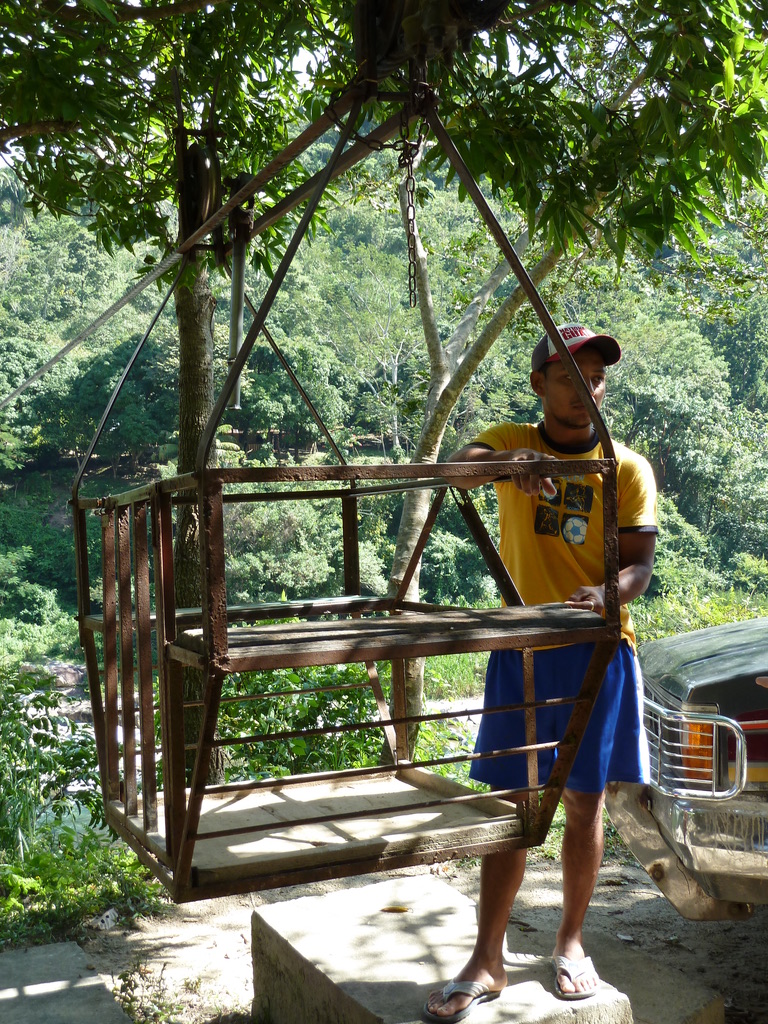
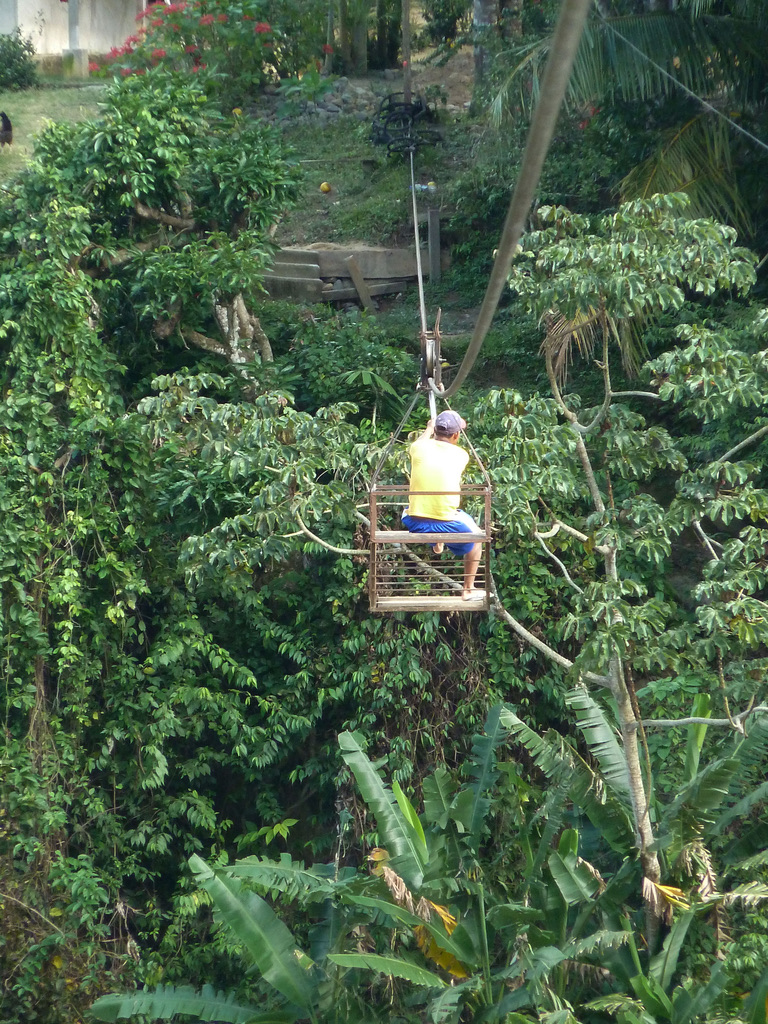
Anyway, getting to Rosaria’s place is something else.. she is across the river from the road.. with no access by car or paths. Twenty-five years ago, the men in the village constructed a cable that holds a basket that traverses the river.. which is deep in a canyon… so the cable is about 15 or 20 stories above the river… You guessed it.. Mike and I crossed the river and back in the little rickety wooden basket that rides along the cable with little wheels that sit on the cable.. Rosaria’s son stands in (and sometimes is sort of hugging the basket while standing at its edge outside) the basket, We sat on little facing benches inside the basket. He maneuvered a pipe-like apparatus that provided the momentum for the basket to glide on the cable.
OK.. we made it across the Caribbean on that little boat with swells and being airborne several times, so we crossed our fingers and figured it would be ok.. After all, the children in this little village across the river do this several times a day.. to go to school, etc.
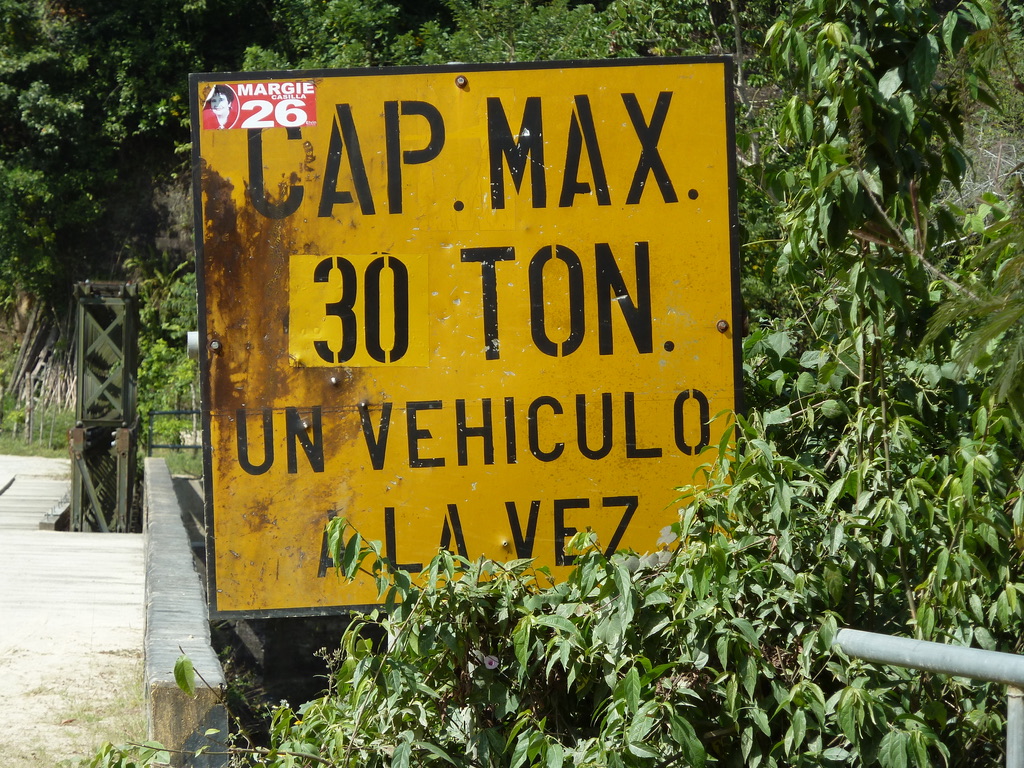
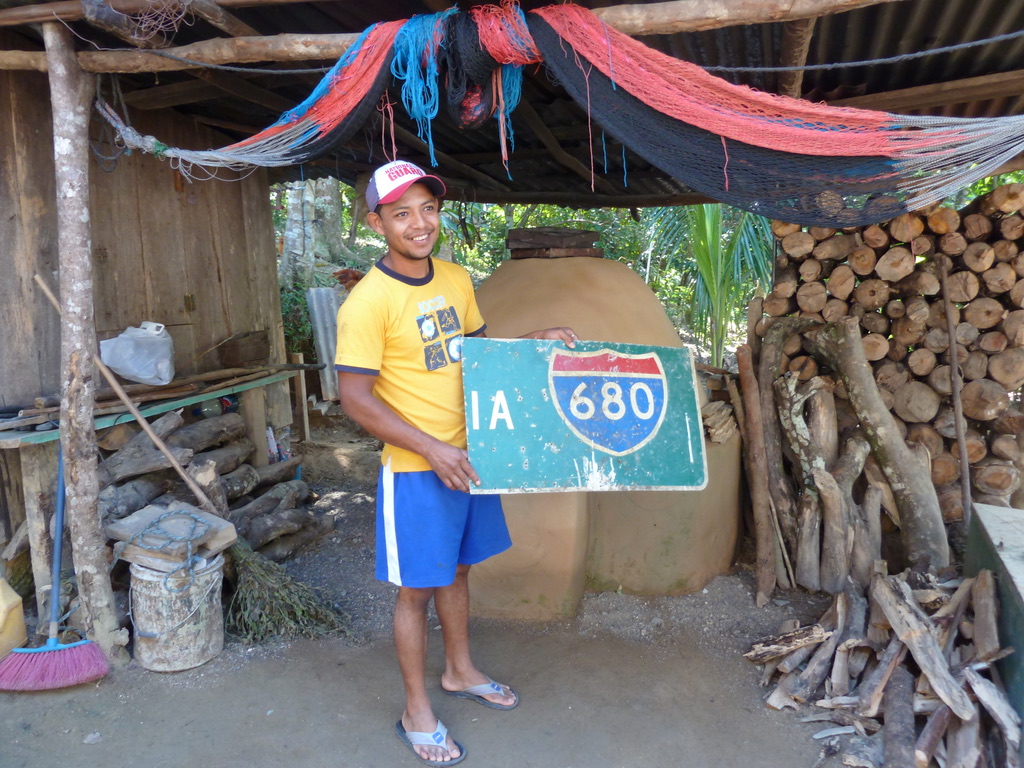
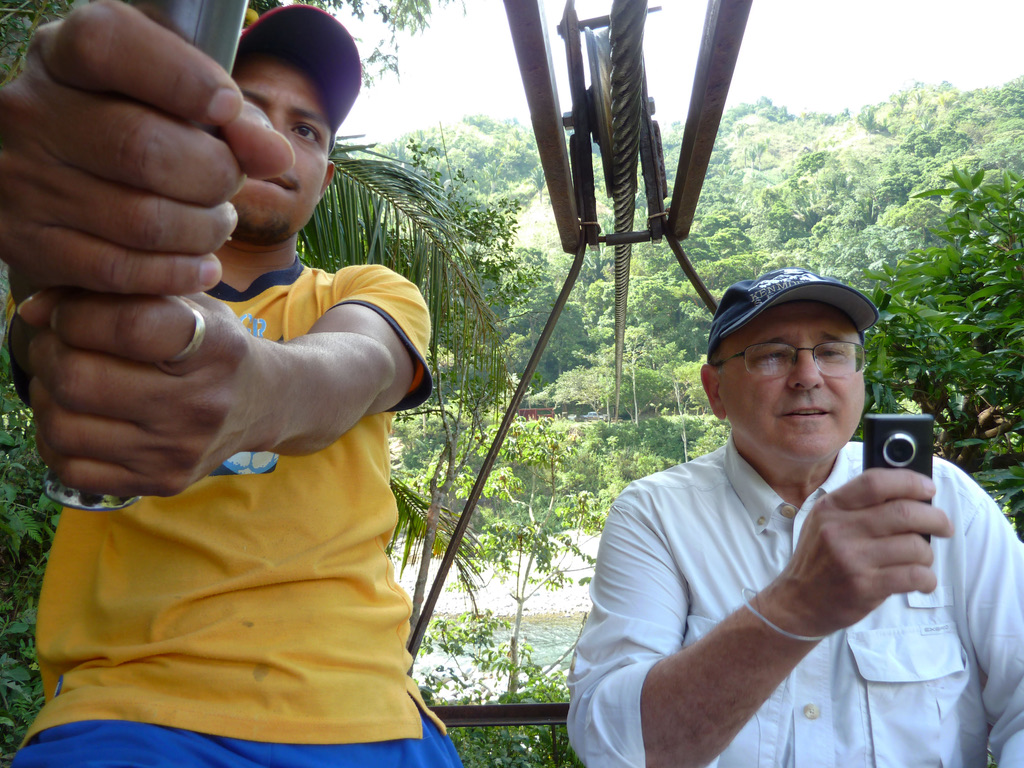
We spent time with Rosaria and got her story (as best we could with my rather limited Spanish)… and then got back into the basket (a “canasta” I believe) and went back to the other side of the river where our car was parked. The family is quite entrepreneurial. They are building another house next to their house, with four guest rooms that they hope will become a small bed and breakfast, with Spanish classes. ?? It will be ready in about 6 months and they will be sending me all the information so that I can recommend it to Americans.. I’ll be taking sign-ups soon! Contact me. You’ll have to take the basket back and forth—with luggage?
By the way, did I mention the other day that the children in the little Garufina Village (the one we went to via the boat ride) – Miami- bike 18 miles to get to school.. 36 miles a day.. even in the rain.. It takes them 90 minutes each way.. Makes going across the river in the canasta to get to school pretty tame.
All the equipment and materials to build the new house have to come across in the basket with the guy pulling on the pipe in the basket laden with the goods. Must make you think twice about any purchase. We clearly lead very easy lives.
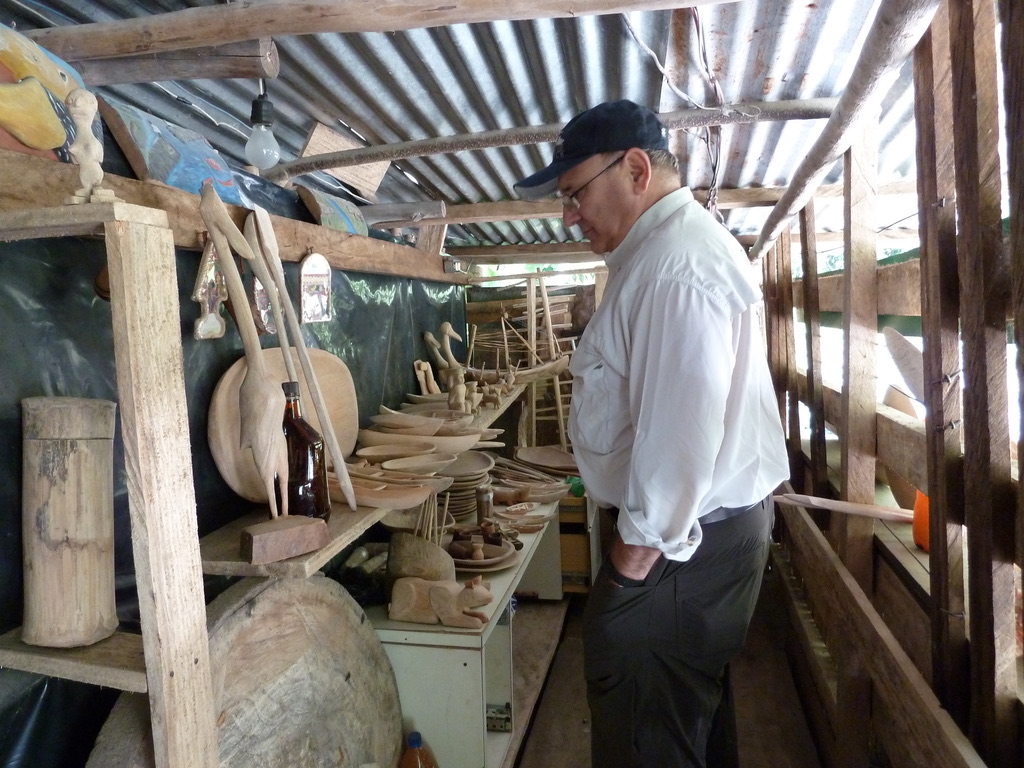
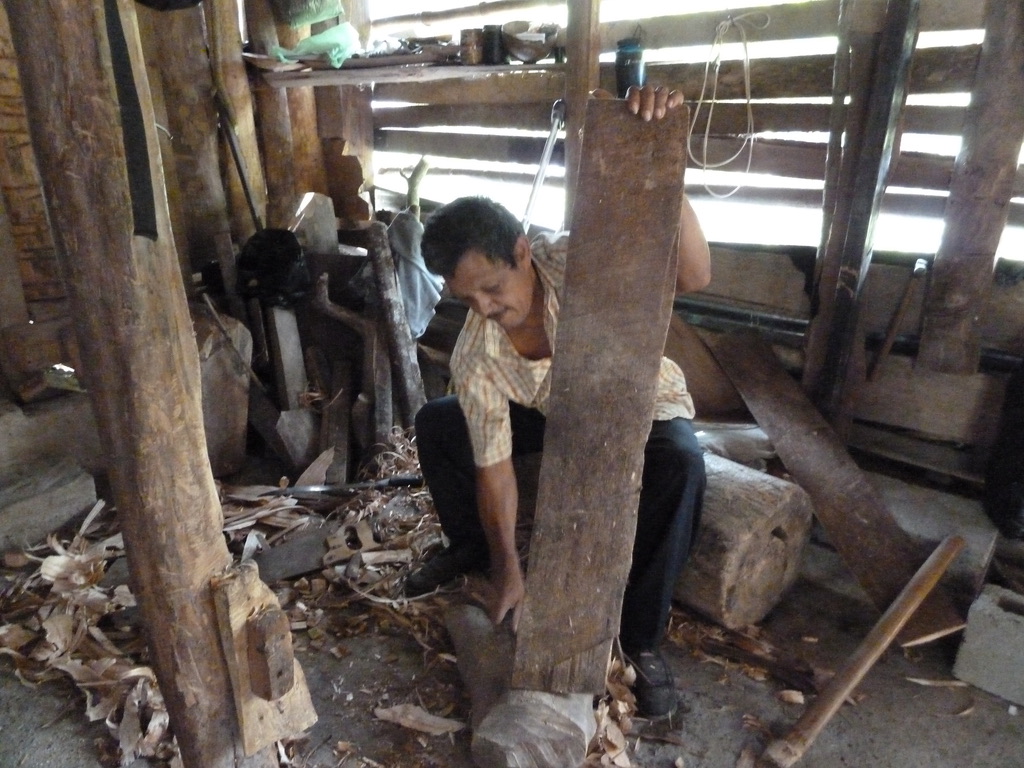

From Rosaria’s we headed to a wood carver who had been in a bad car accident (he was a “pedestrian”) which totally smashed his leg… We bought a few wood serving dishes.. very simple.. no adornment.. quite nice.
Now that’s it for today; we’ll be heading to the turkey dinner soon.. back up that road.. Hopefully no basket travel in the dark!
Merry Merry… Feliz Navidad
Fern
HONDURAS December 24, 2010: Americans in Honduras – Dia 5

This will be coming in several parts, because I don’t have any Internet service. Imagine — Both Mike and me… no cell connection, no blackberry connection, no iPhone, no computer… But I’m writing this note in parts and will attempt to send it through the Blackberry when we are within a service zone (if not, you will be getting it on December 26)… but in reality it is now about 7 PM on Christmas Eve. We just arrived in heaven! Although getting here was hell!
We are in the most luxurious jungle lodge imaginable. Nine cottages connected by stone paths on more than 90 acres. Our cottage is about 800 sq feet.. We have a little loft above our bedroom; a screened in patio with mango wood couch and chairs, a giant bathroom with stone tub, and a huge outdoor shower, surrounded by palms. From the patio we can see the waterfalls (there are several on the property).
Now for the earlier part of the day…
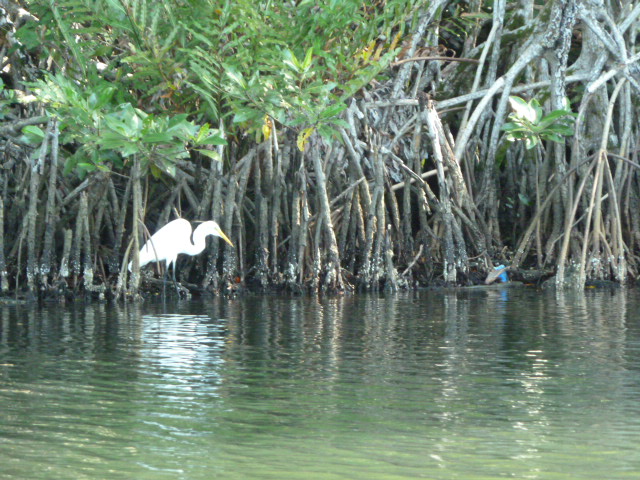
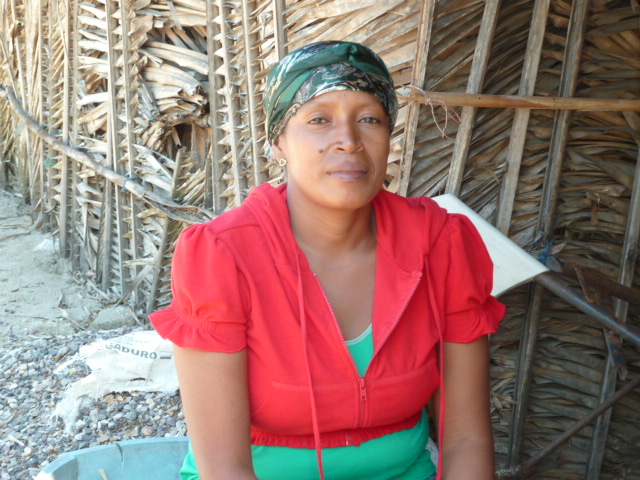
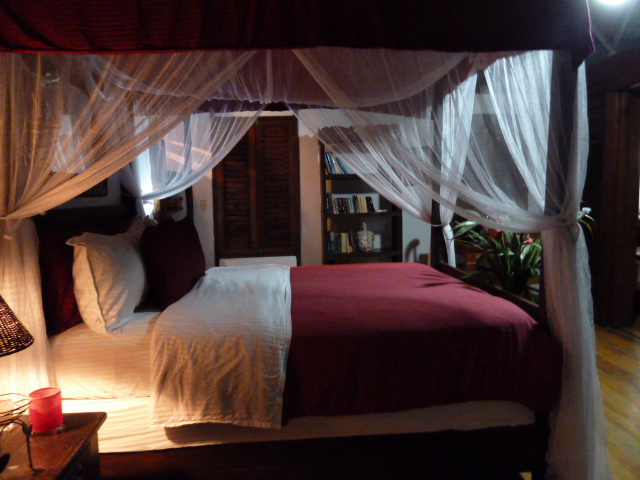
Before I go into the travails of the day, let me also exclaim joy in that this jungle lodge has hair dryers and all the best bath products. I’m in total heaven.. oh wireless would be nice but… ??
So, we began the day at the Cesar Marisco Hotel (the shrimp restaurant hotel) which I didn’t really like much and felt that everyone at the place was hustling non-stop. When we asked about getting to this Garufina village we had read about (interestingly named “Miami” — but as different as night and day).. they immediately wanted to set up a tour, so we deferred…
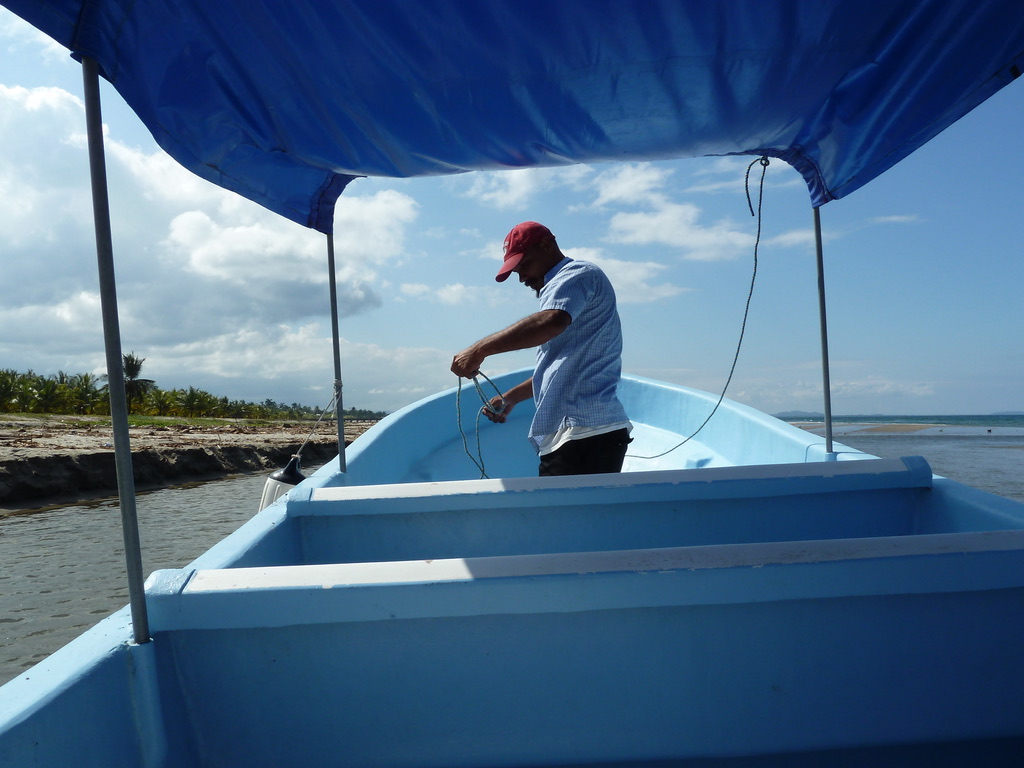
I decided (much to Mike’s disapproval) that we should either drive to Miami (all dirt roads and it rained very heavily yesterday).. or find a guy with a boat and pay him to take us to Miami (it’s on a peninsula across from Tela… about 10 miles by car and about 30 minutes in a motor boat out in the Caribbean Sea). We walked to the wharf and down to the sea where we saw some guys repairing boats. They said it would cost 2,000 lempira (about $100 round trip).. That seemed very expensive, so we walked away and decided to find another route.
But, then we thought about it, and while $100 seemed very expensive in Honduras, it wasn’t that much for us.. so we turned around and went for it. But the guy didn’t have the motor for his boat and it would take an hour to get it… Anyway, one guy called to another and then another and then Raul arrived, and he had a boat. Turned out Raul is the “hefe” so two young guys actually took us out to sea on Raul’s boat.
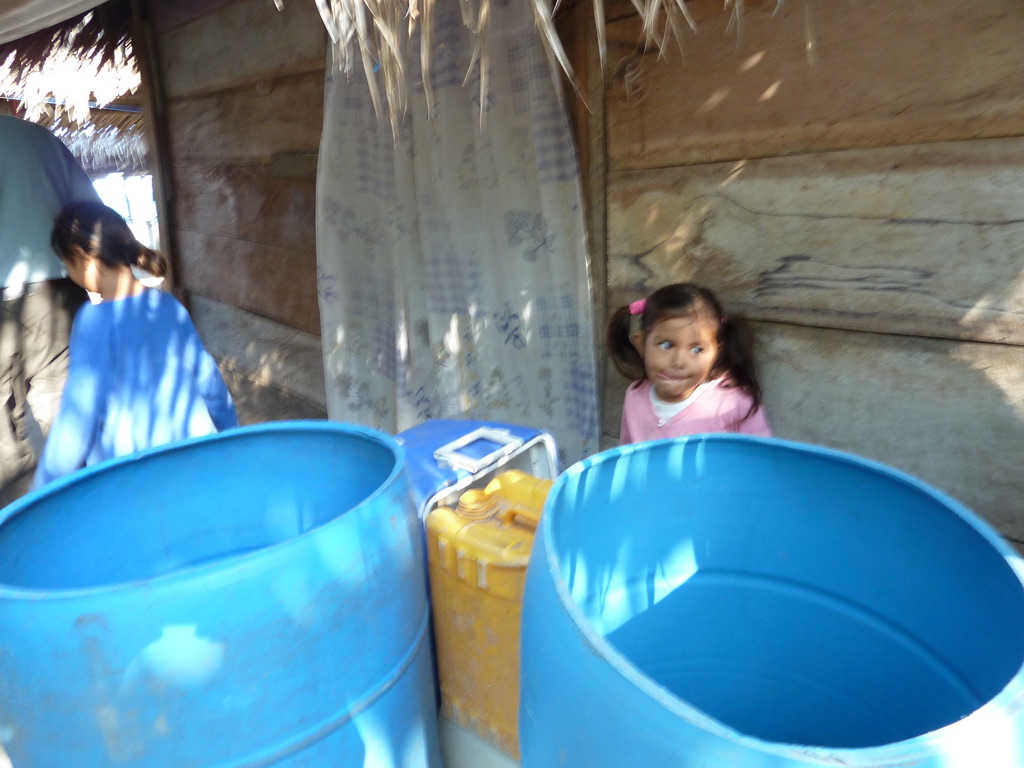
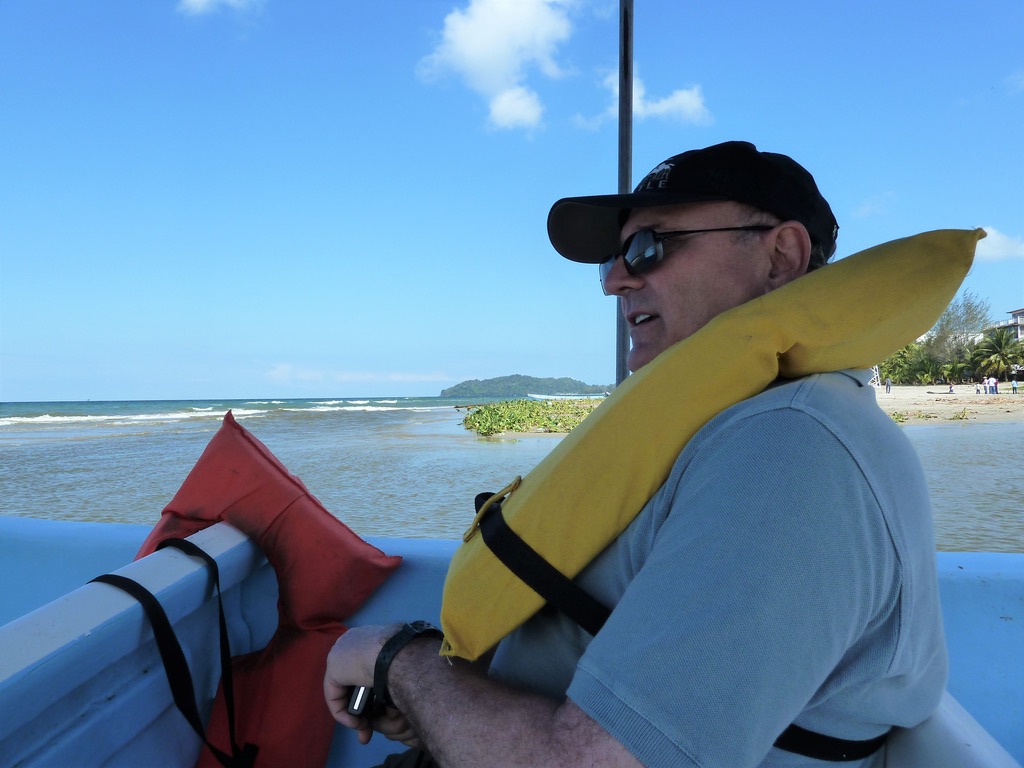
The boat trip out (just Mike and me, the “scout”, and the boat operator) on this approx 30′ fiberglass, well-used, open motorboat.. about 5′ at the widest dimension.. a bit scary to say the least. We were fully airborne at least once, partially airborne numerous times, and the rest of the 35-minute trip was nail-biting. On the trip out I was pretty sure I might live in Miami for life, to avoid taking the boat a second time.
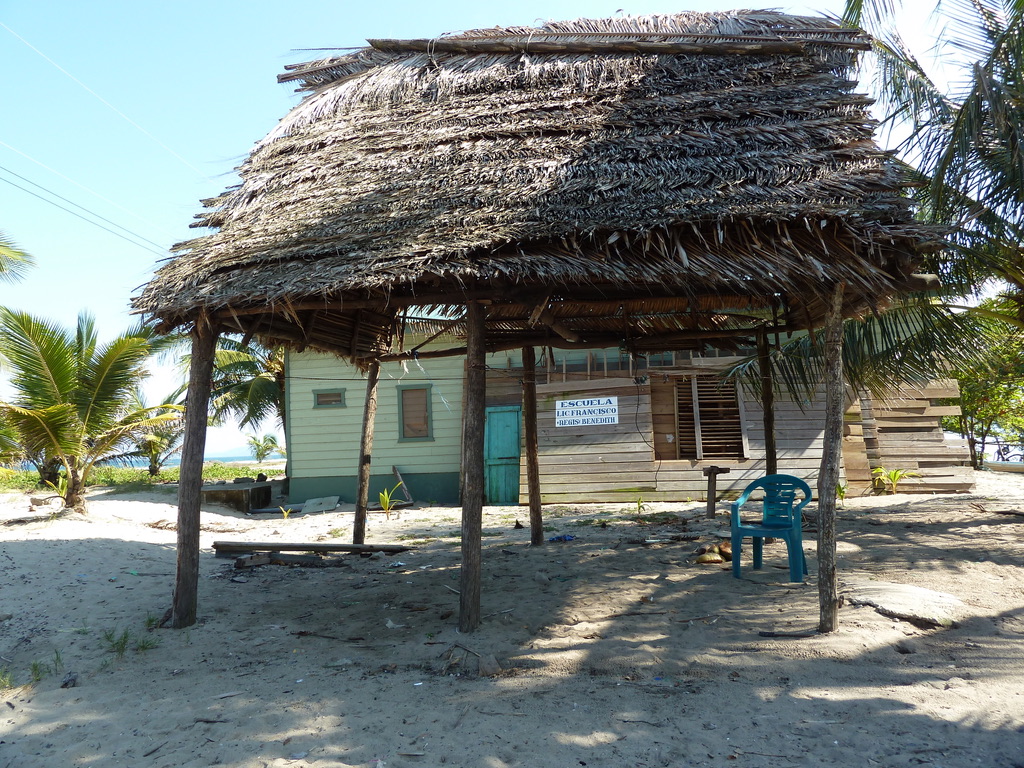
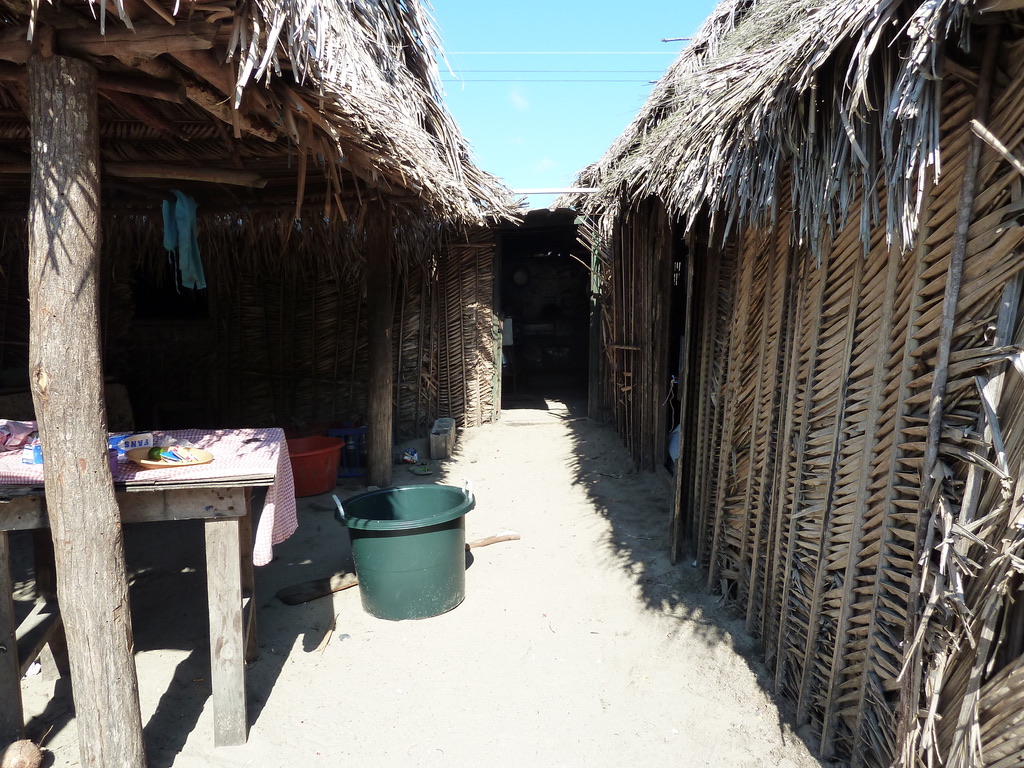
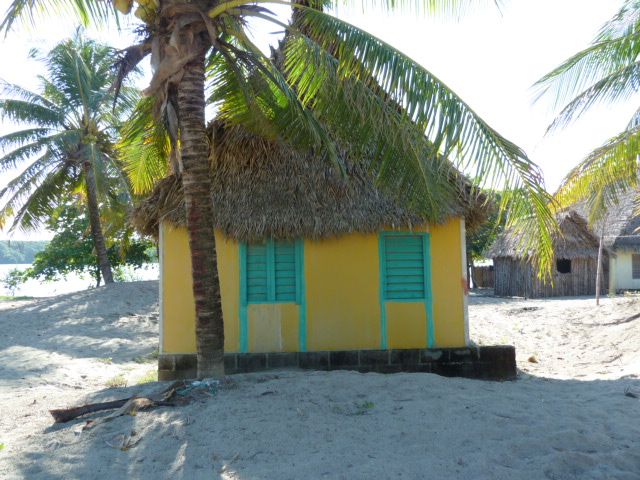
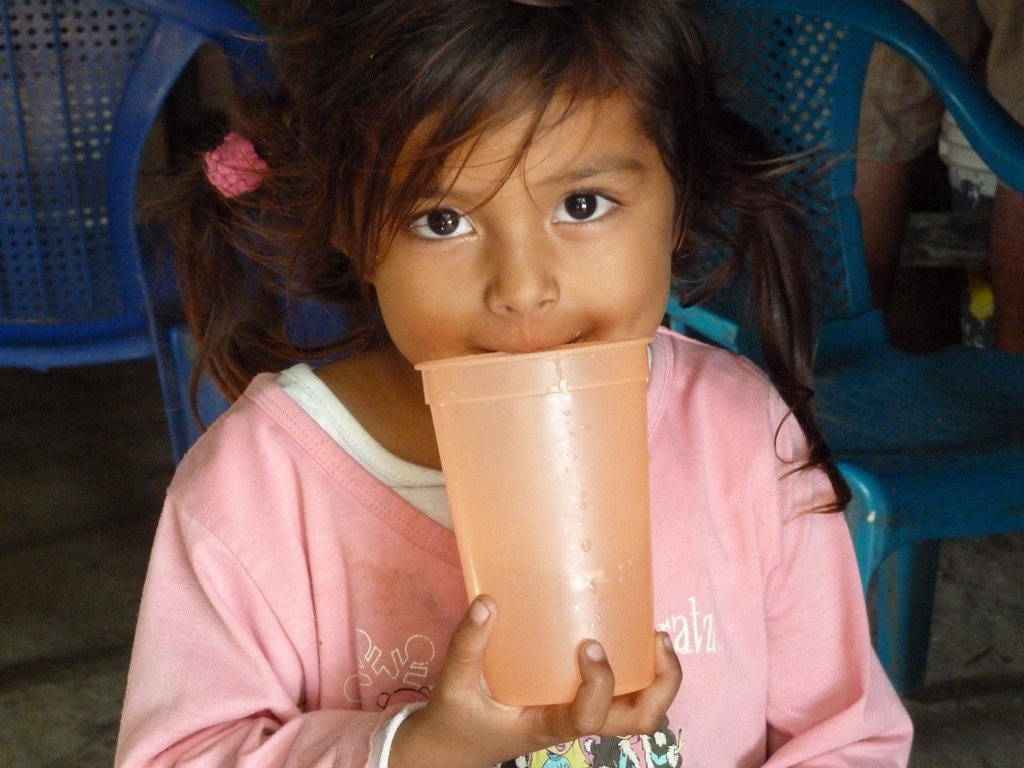

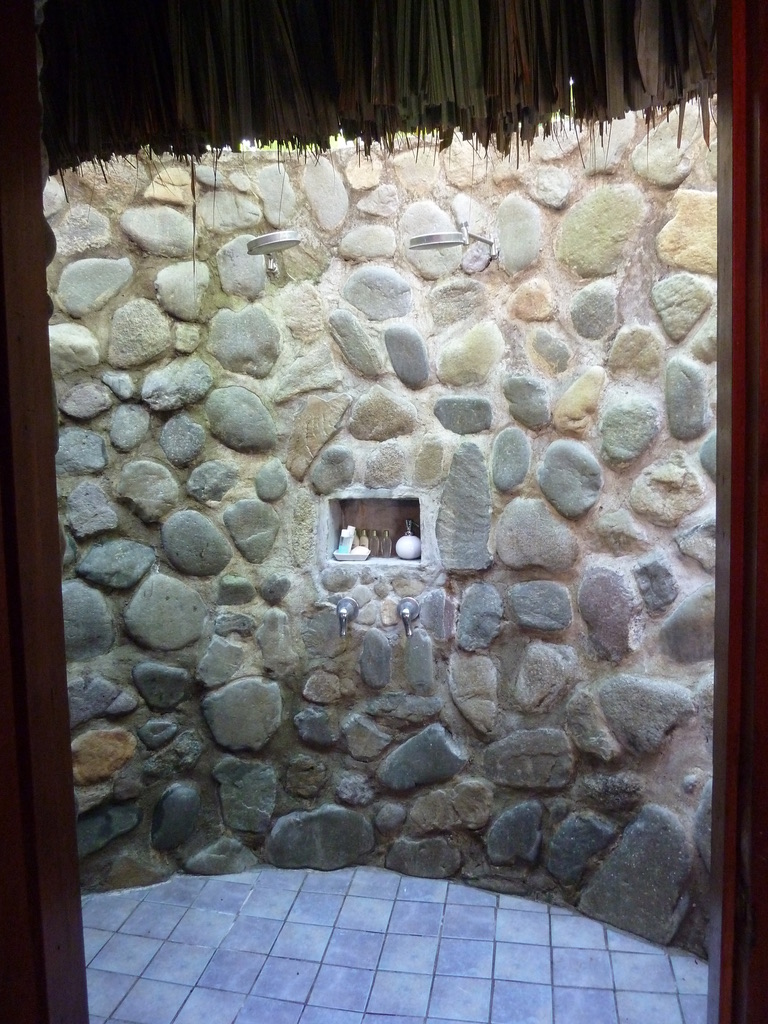
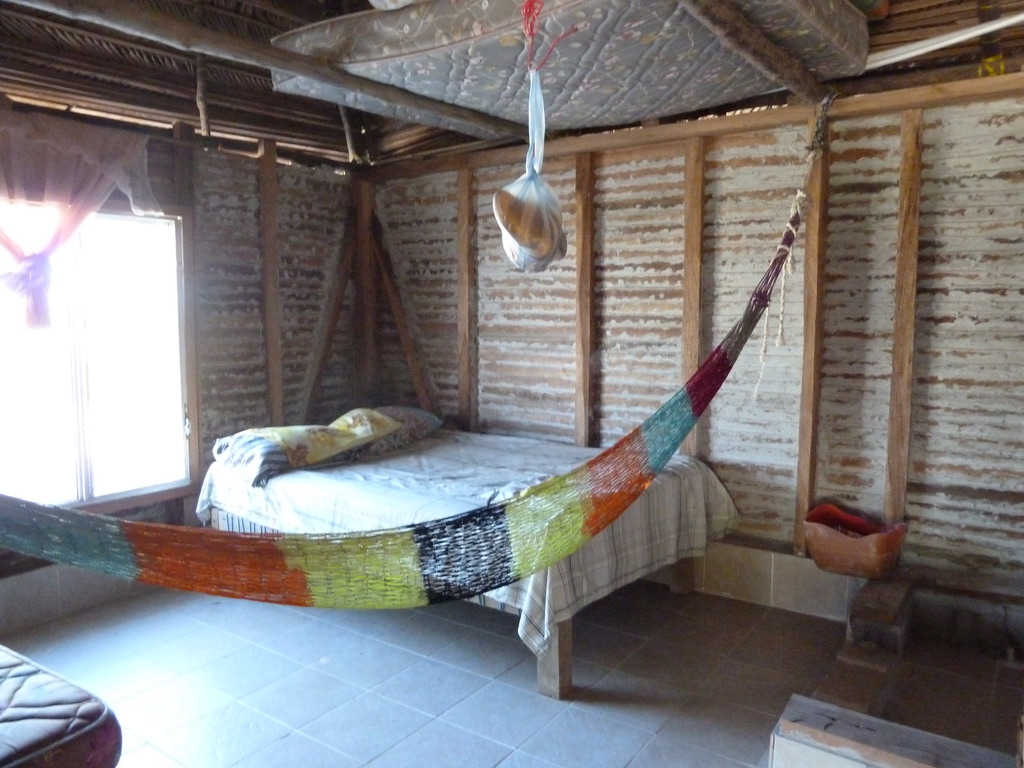
So, Miami is a village of about 200 people — all Garufina — a people who trace their ancestry to Africa and Carib Indians. They live without any electricity, and no running water, in thatched huts that are about 150 sq ft… There’s a tiny school for the very young children (some of whom followed us everywhere). I gather they get occasional tourists — mostly at a special holiday — Semana Santa — at Easter time. The Garufina don’t believe in government; they just think evryone should do the right thing. How novel!
Life is pretty simple there.. although cell phones have made their appearance; not sure how they charge them.
We spent about two hours; and we waited about an hour for our food, cooked by Celine.. apparently some of the women just open their kitchens if people come and then charge for the meal. The boat guys told us Celine was the best. It took her about an hour to cook the meal, tipico food… and totally locavore.
We had fish (not sure what kind, but it had just been caught) that she smothered with very finely grated coconut and palm oil. Cooked on an open fire in a small pan. Fresh frijoles, and fresh plaintains, slightly sauteed.. Totally great; best meal so far. We sat on little benches under a canopy of palm fronds and looked out at the Caribbean. Maybe I can do this??
But, alas, we took the boat back, and the return trip (with the late afternoon breezes) made the outbound trip seem calm.. Took about 45 minutes since we were going against the currents; the swells were about 4′.. anyway, made it alive.
Then we set out to find Las Cascadas (where I am sitting now).. We drove to La Ceiba (about 90 minutes) and then per directions turned onto a road which turned into a dirt and rock fiasco about 1/2 km later.. We were sure we took a wrong turn.. turned around.. asked in a bar.. and we had been heading in the right direction.. so we continued (in the dark) along this rocky, muddy, dirt road…
and we eventually wound up here at Las Cascadas.. a true find!.. but no wireless… no TV.. no connection to the world.. but heaven.
Just had dinner.. fillet mignon, real vegetables, edible salad. Margaritas. Chilean wine, and even after-dinner drinks. We are totally totally happy.
More tomorrow on Christmas Day… never got to that midnight mass in Ceiba.. the thought of driving that road again, was just too much. Tomorrow we hike.. (moderate trail to the waterfalls) and I think we are going to check out a woman’s sewing coop we heard about.. Nothing too strenuous.. Need to be ready for another great meal.. By the way, Bruce – the manager here at Las Cascadas (and the do-it-all guy – bartender, chef, chief guide, etc. lived in Brooklyn for two years (on a boat in a canal) and in Roatan for a few years, and in several other places.. and is originally from Montana.. came here for this job in March..
Best — Fern
HONDURAS December 23, 2010: Americans in Honduras – Dia 4: Driving the Honduran Economy and more


Hola —
Dos Americanos en Honduras – Dia Cuatro (Comayagua a Tela)
We made our way (actually quite easily) out of Comayagua, and except for missing one sign (the only sign on the road for the connection to Tela, so we needed to take an alternative route on much smaller roads which actually proved more interesting), made it to Tela quite easily (about 5 hours, including a stop for rather dull chicken — again — on the roadside, gassing up, and stopping to buy bananas from a kid on the road).
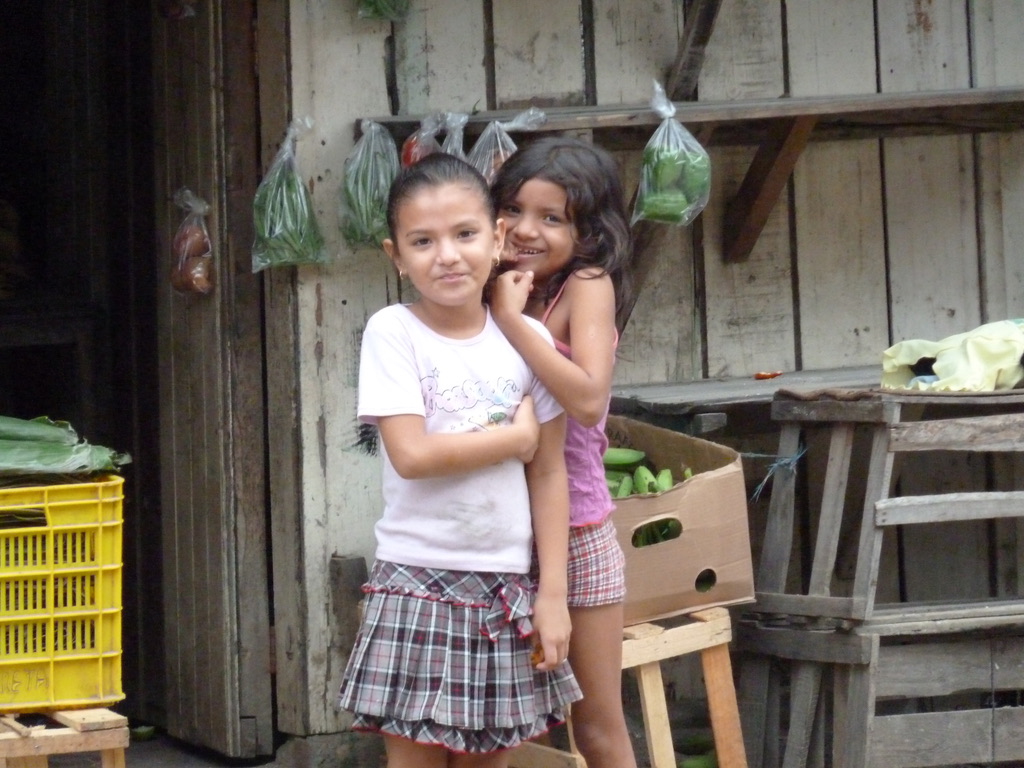
The countryside is pretty and very rural. Beginning about an hour south of Tela (which is on the north coast), the road is flanked by lush palm groves. Along the roadside are teeny stalls — each selling just one item: bananas (the very small ones) or coconuts or a fruit whose name I forgot that is red on the outside with thorns.
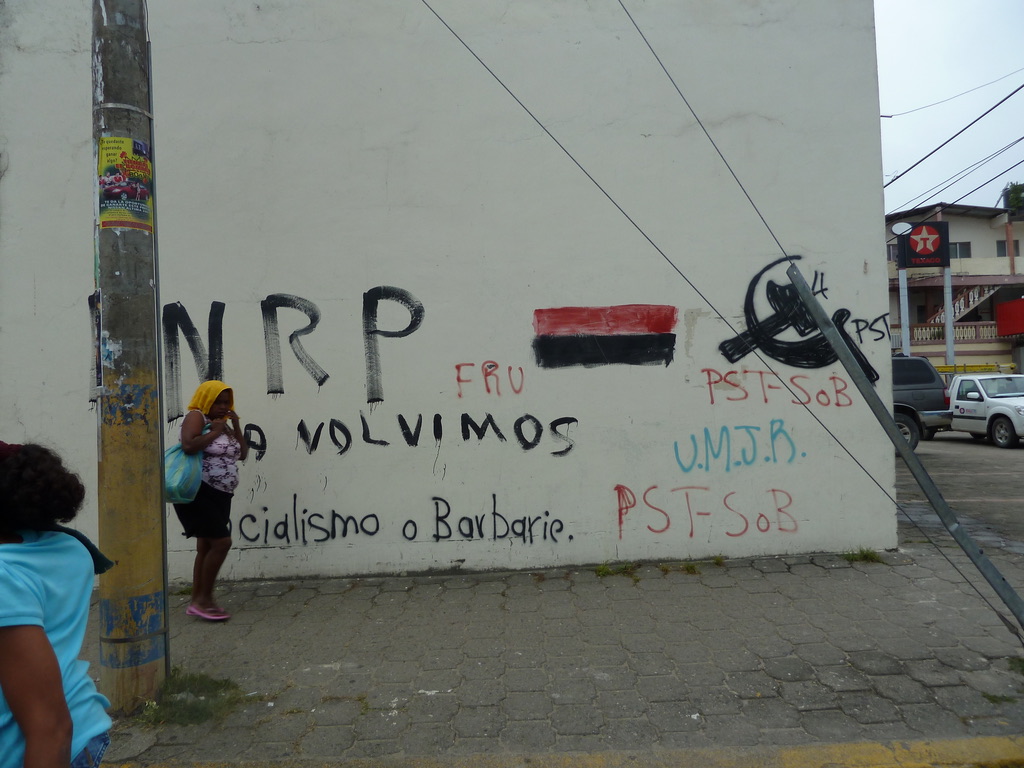
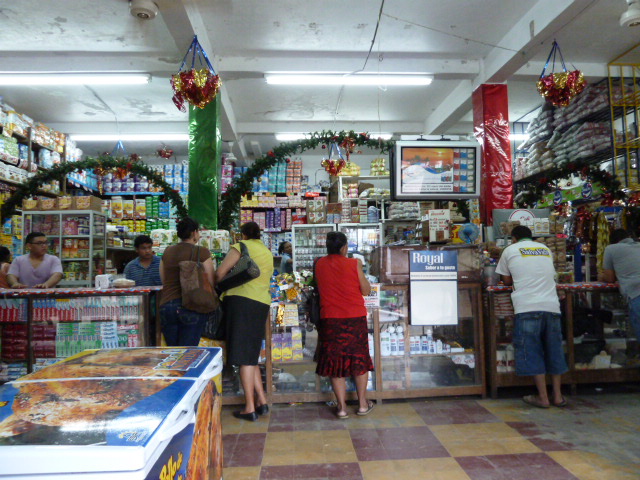
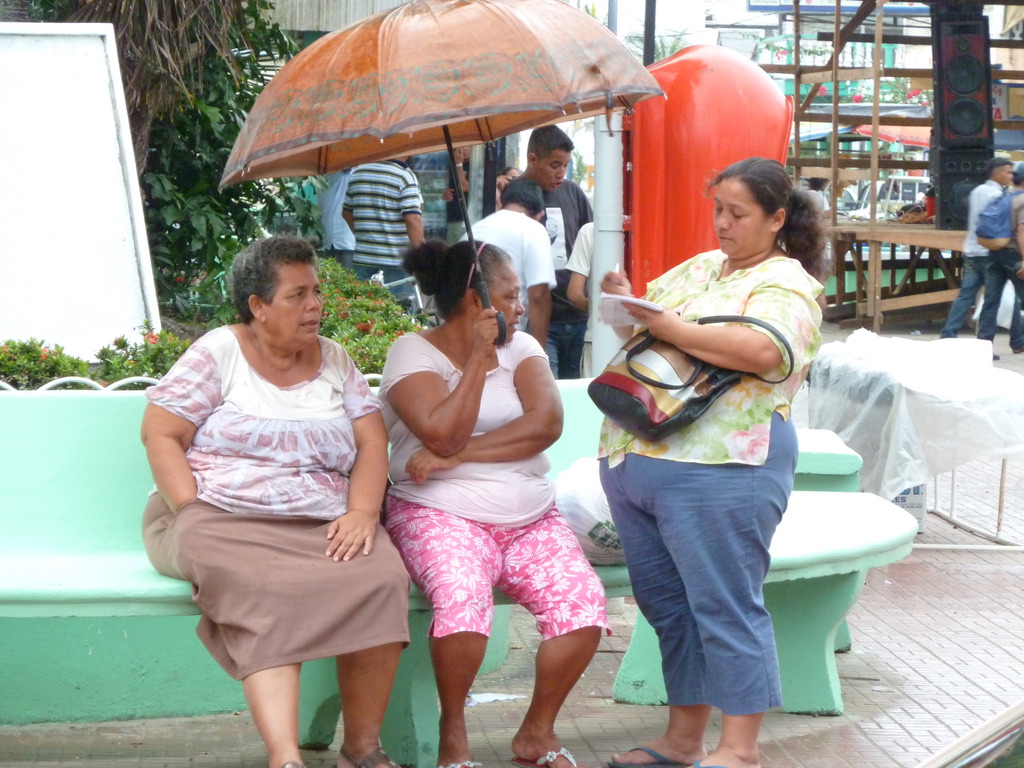

I’ve figured out that the economy is driven by four things:
1. Barbed wire (or concertina wire, as Mike calls it) which is everywhere — on buildings, fences, roof tops — although there seems to be less of it here in Tela;
2. Coca Cola which appears to have paid for the sign that greets you in every town (adorned with the logo in a size mostly larger than the town name) and at every roadside shack and painted on the sides of many roadside buildings;
3. Digicel, the cell phone company here, which seems to be taking its instructions from CocaCola and is whose logo is also appearing everywhere (though not as prolific as Coke); and
4. Flat screen televisions which are everywhere — in every hotel room, no matter how cheap, in every restaurant, no matter how fancy, in every bar, in every shop, in every shack!
The Coke phenomena is unfortunate and a result, I assume, of having poor water and thus being taken advantage of by the American-owned, iconic sweet drink company. Today, despite the availability of bottled and purified water, the Hondurans appear totally addicted to Coke (Pepsi and 7-Up are running a close race), and whenever we asked for bottled water, people thought it was strange. Indeed it’s pretty common to see young children holding and drinking from giant “family-size” bottles of Coke.
We arrived in Tela a few hours ago and despite rain, decided to take a walk through the town which is laid out in a simple grid. Tela has a definite Caribbean feel and the Garifuna people trace back to Carib Indians. The story is that the Spanish began looting the riches of South America in the 1600s sending ships up the Central American coast on the way back to Spain. French and English pirates used the Bay Islands (off the Tela coast) as the base for expeditions to attack the Spanish ships… At times the Brits controlled the islands and then they went back to Spain.. Anyway, in the late 18th Century, African slaves from the Cayman Islands and the descendants of Carib Indians were “dumped” in Roatan. These Garifuna people set up permanent settlements on the islands and the north coast of the mainland of Honduras.
The influence is apparent in the building styles (thatched roof wooden shacks on stilts), the music, and the food — which we hear is really good (grilled fish in garlic sauce and stews made with coconut milk and seafood stews that include sweet potatoes, yucca, and malanga (a root vegetable similar to yams).
Wherever you walk, kids hawk pan de coco (coconut bread); we haven’t tried it yet, but I’m sure by tomorrow we will have lost all self-control.
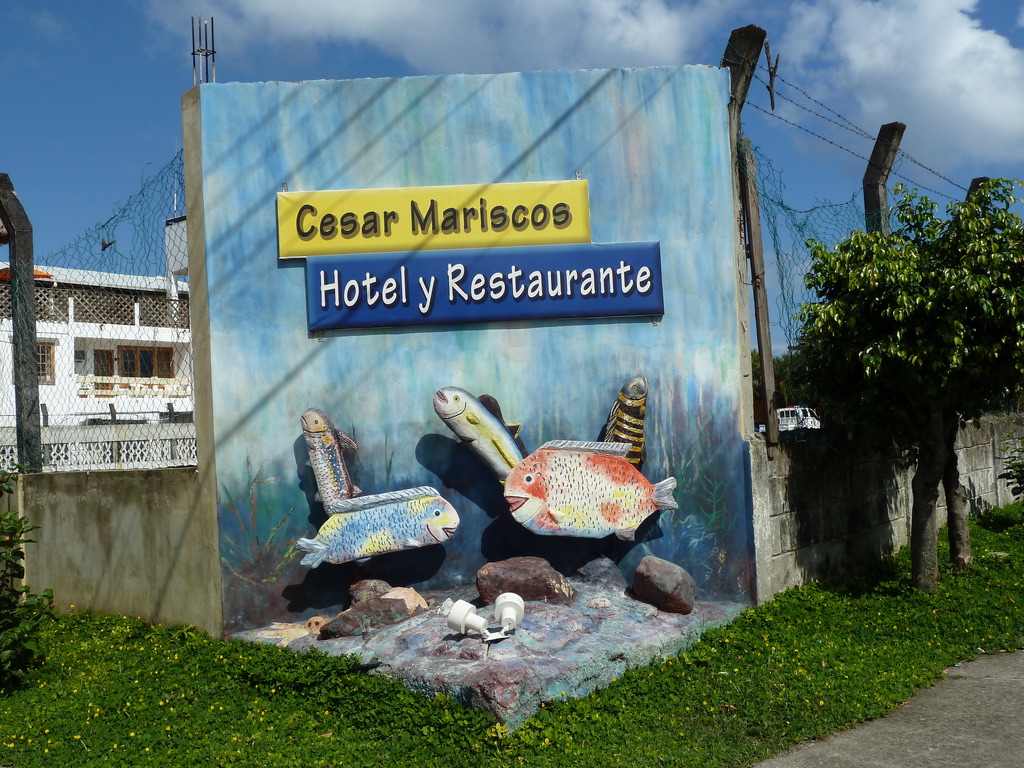
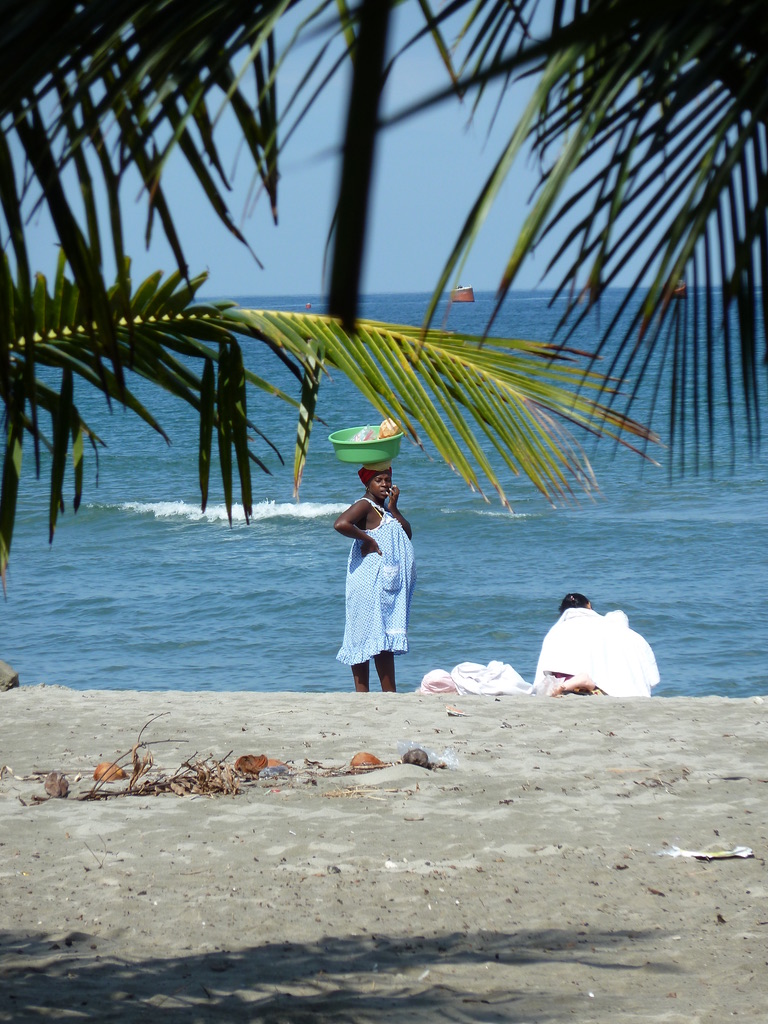
We are staying at Hotel Cesar Mariscos — yes, the “shrimp” hotel, which is really just a few rooms above the Cesar Mariscos Restaurant, where we will eat tonight. Cesar (if there is such a person) is quite an entrepreneur — with hotel, supposed best restaurant in town, bar that stays open late, guide tour operations, and somehow linked with the kids who sell the pan de coco. It’s pretty basic, although naturally we have a flat screen tv, and we do have air conditioning.. and a little balcony facing the beach. So what could possibly be wrong with that?
More tomorrow (when I’ll fill you in on the dinner) after we attempt to visit a Garifuna village called Miami and drive to Ceiba (our next spot – we think a fairly luxurious eco resort in the rain forest — for two days — complete with private yoga teachers). We’re also hoping to find a small church to see what midnight mass is like in Honduras (we’ve observed it in Mexico, Ecuador, Vietnam, Guatemala, and some other countries and it’s always interesting.)
Hasta Luego.
Fern
P.S. Mike is getting really good at driving here (admittedly defensively) and since he seems happy driving I’m content to be the passenger. Probably won’t last, but for now, it’s fine. Still a bit frightening to see huge trucks coming at you in your lane, but somehow it works. Didn’t see any accidents all day. Tomorrow we head to Ceiba, where there were 9 murders yesterday (apparently narco-gang related). The hotel operator in Ceiba got in touch and said not to worry.. I said, “no problem, we’re from the states — lots of murders every day.”

