23. Part One: Behind the Wall: Hebron. 1/10/23


Greetings after a very long and very intense day on the other side of the wall–
Today was a vey complicated day… I’m posting two notes, because I don’t think I can get everything into just one story.
We hired a driver that a friend in Chicago recommended. We had a few conversations with the driver over the past few days since we were unsure about having a driver. We were pretty clear about what we wanted to see and how we wanted to see it, and didn’t want any sort of “guide.” But our plans also kept changing. Should we go to Hebron? Bethlehem? Nablus? Ramallah? We wanted to get a sense of the West Bank and of the daily life of the Palestinians living there. We also wanted to avoid monuments and religious sites. We really just wanted to walk. Finally, we settled on Hebron, the Palestinian city located in the southern end of the Israeli-occupied West Bank, and Bethlehem, a completely walled off city less than an hour from Jerusalem. This way we’d see one city that is occupied and where Israeli “settlements” point to the difference between the lives of Israelis and the lives of Palestinians (Hebron) and one city that is completely walled off and where it is impossible for Palestinians living in Bethlehem to go to neighboring Jerusalem or for that matter to anywhere in Israel. While Israelis can come and go to Bethlehem, residents of Bethlehem cannot even go to the only airport in Israel—they must get to Amman, Jordan and fly from there. So first our visit to Hebron.

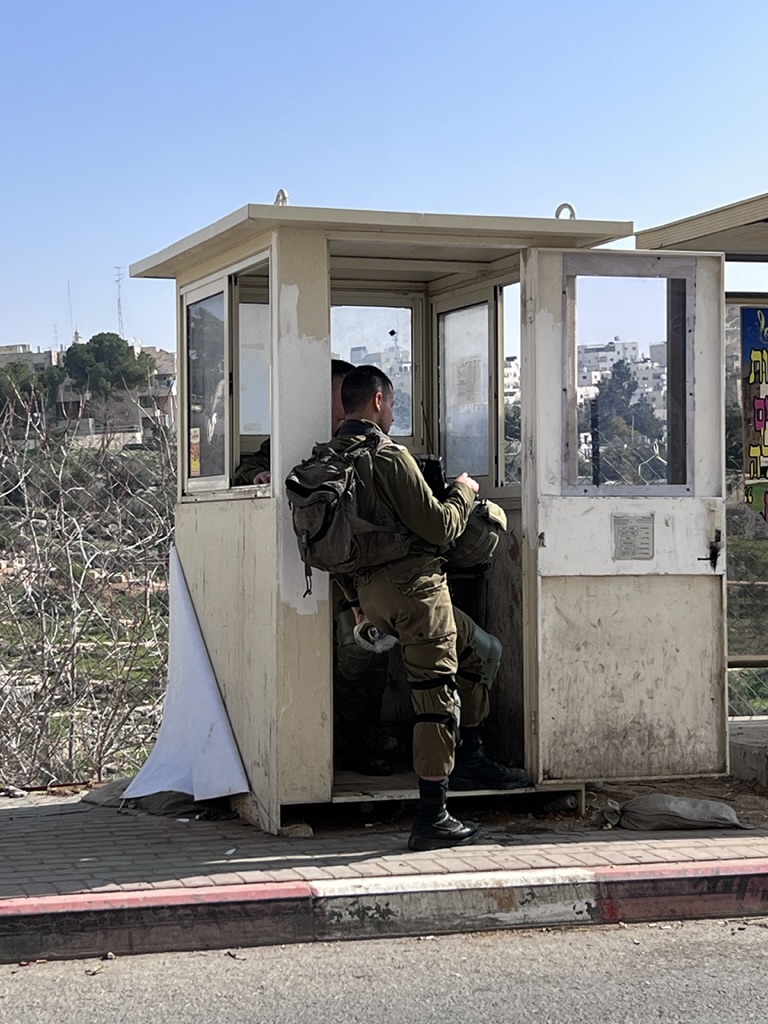
We drove past miles and miles of “wall” on our way to Hebron; passing through numerous Israeli settlements that are large complexes of houses, including multi-story buildings. They are relatively new and have electronic fencing, soldier guard booths, and other security measures to ensure that only residents and Jews can enter. Similarly, bus stops are secured by soldiers as well as large steel bollards to prevent Palestinians from driving into settlers waiting for the bus. The lives of these Jewish residents (settlers) are behind these gates and within those gates they have their own shops, schools, and all the amenities of suburban neighborhoods. There are well over 20,000 settlers (or occupiers) within and around Hebron (according to whatever information I could find) and the number is expanding all the time.
We saw many buses headed to the settlements; they are easily identifiable because they have bulletproof windows and double sets of tires.
On the drive, we chatted with Charlie, our driver, who is Christian and married to a woman whose family lives in Bethlehem (more on that later), who says that the wall that edges the road from Jerusalem to Hebron costs one million dollars per kilometer because of its depth and thickness. According to our own research, the more than 400-mile-long wall actually cost close to 5 million US dollars per kilometer. He also says that the settlers receive free housing and that nearly all of these settlers are orthodox (politically conservative) Jews from other countries, including Russia and the US (currently many Ukrainians are also coming). He calls ALL of the West Bank a ”prison with an open roof.” Some are prisoners by choice in gated communities; others are prisoners not by choice.

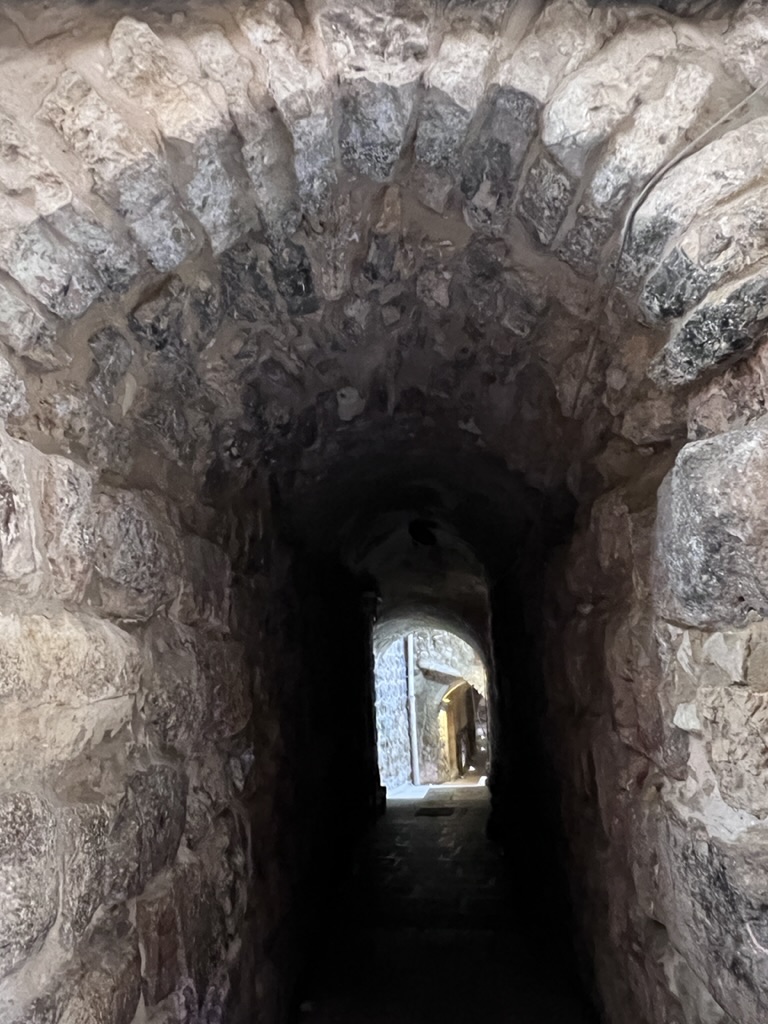

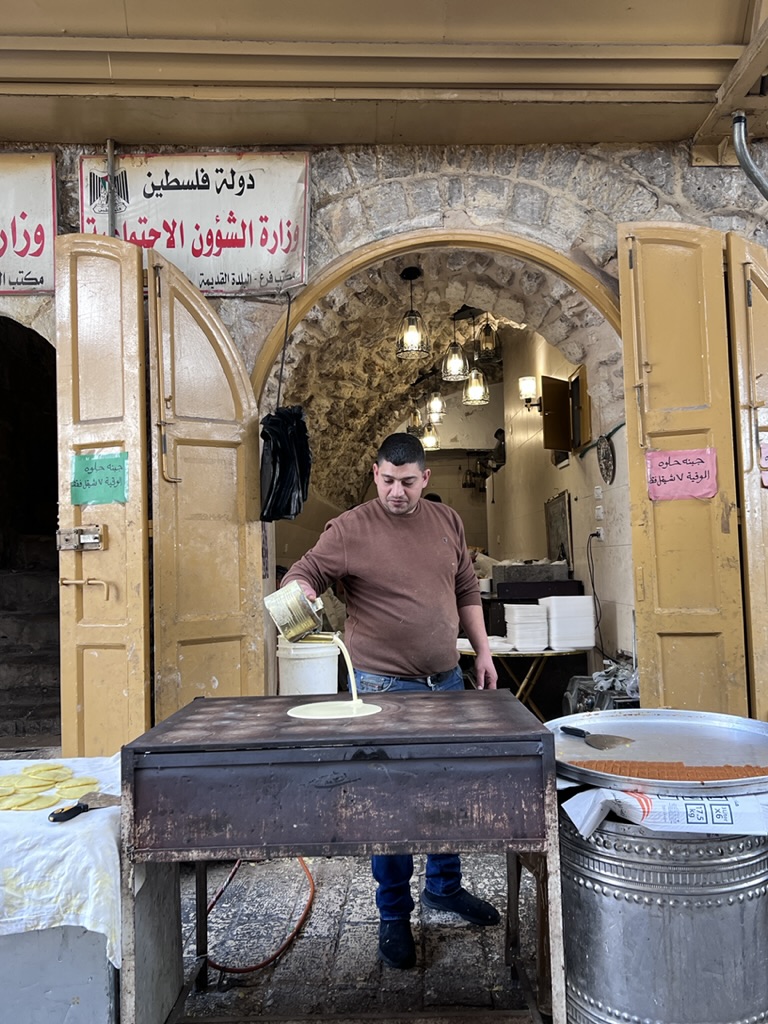
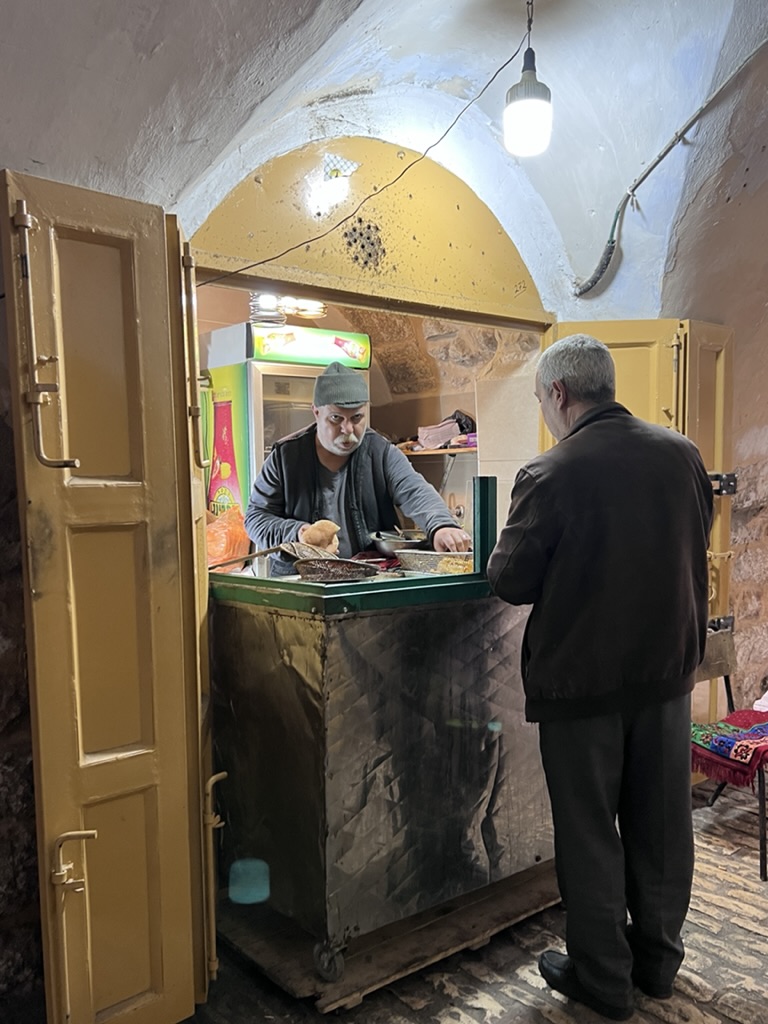
When we got to Hebron, Charlie parked the car and walked us to the entry of the market and then we were on our own. For about two hours or more we walked the Palestinian market and surrounding streets. There was another older Palestinian market which is basically deserted. This is the “newer” market. It’s pretty much like all other markets we’ve been to, except that it is pretty quiet with few shoppers. No Israelis shop here. And there weren’t any tourists. So, it’s become a totally local market for Palestinians. Shopkeepers and others in the market were extremely friendly although only very very few spoke any English. The goods were a combination of fresh produce, meats, and fish and also clothing (pretty much all commercially manufactured) and soaps and kitchen goods. Very few women were in burqas; most were in regular western garb, and some had hijabs.

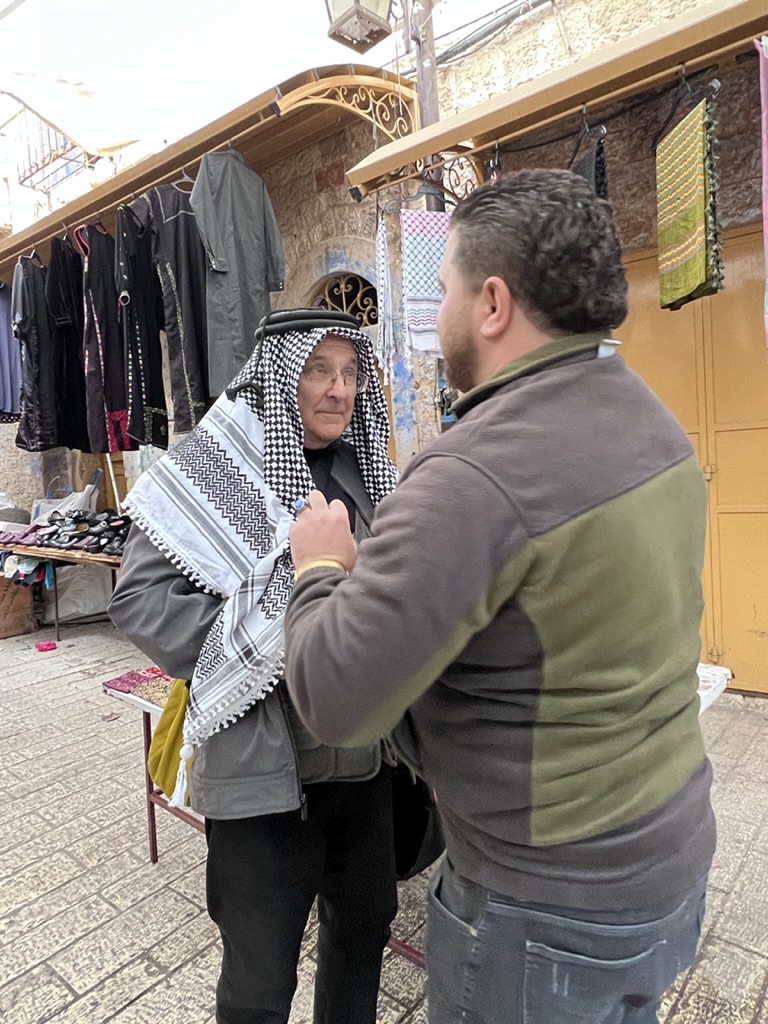
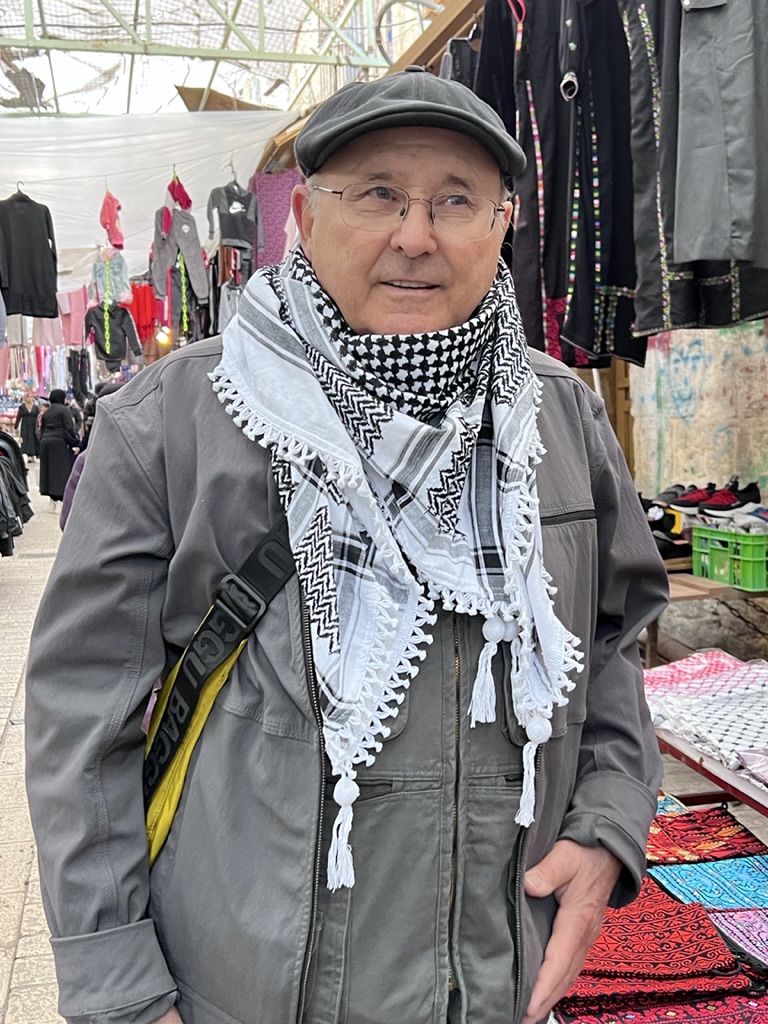
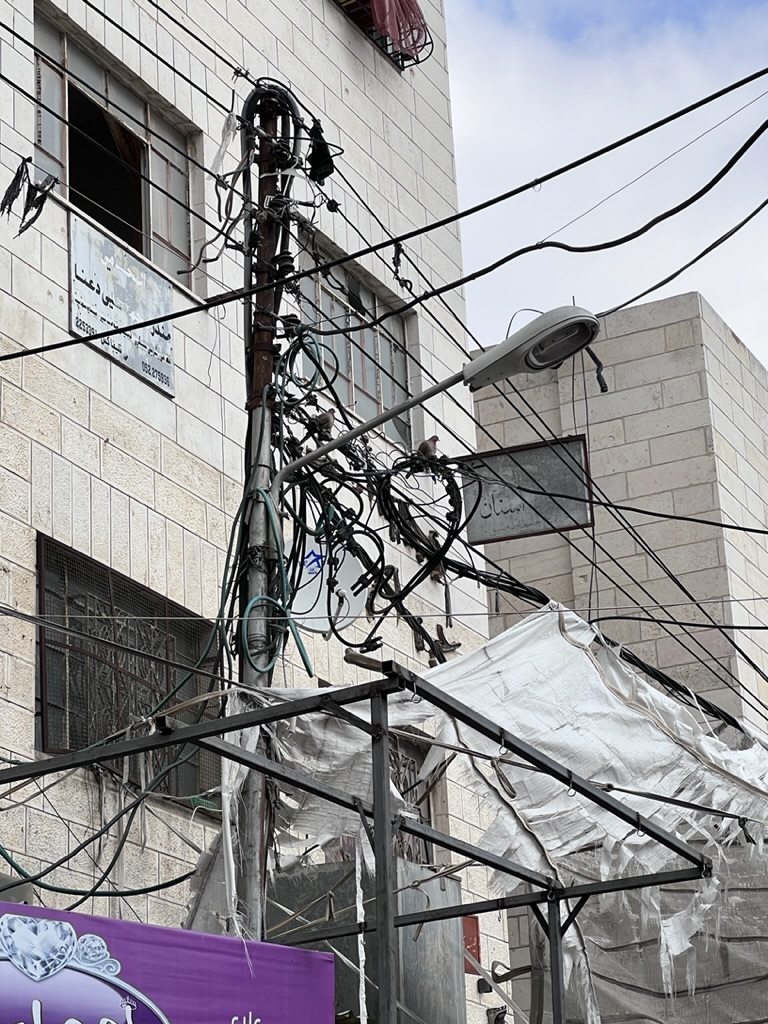
We stopped at a stall (one of many) where the classic Arafat scarf/headgear (keffiyeh) was sold. The shopkeeper was insistent that Mike try the scarf on and showed him how to use it as a scarf wrapping the neck and also as a headpiece as we’ve all seen on Arafat. ran into a stall with products made by women in Palestine who are part of an NGO that supports women in need. We talked with the woman at the table whose English was quite good. We learned that she has traveled to the states numerous times to give talks about the plight of Palestinian women and the current situation in the occupied areas. She was very articulate and pretty much echoed Charlie’s comments about the plight of the Palestinians. She stressed the importance for Westerners to visit Palestine to better understand the issues and she pushed the concept that people need to support both sides in this struggle, to make things equal.
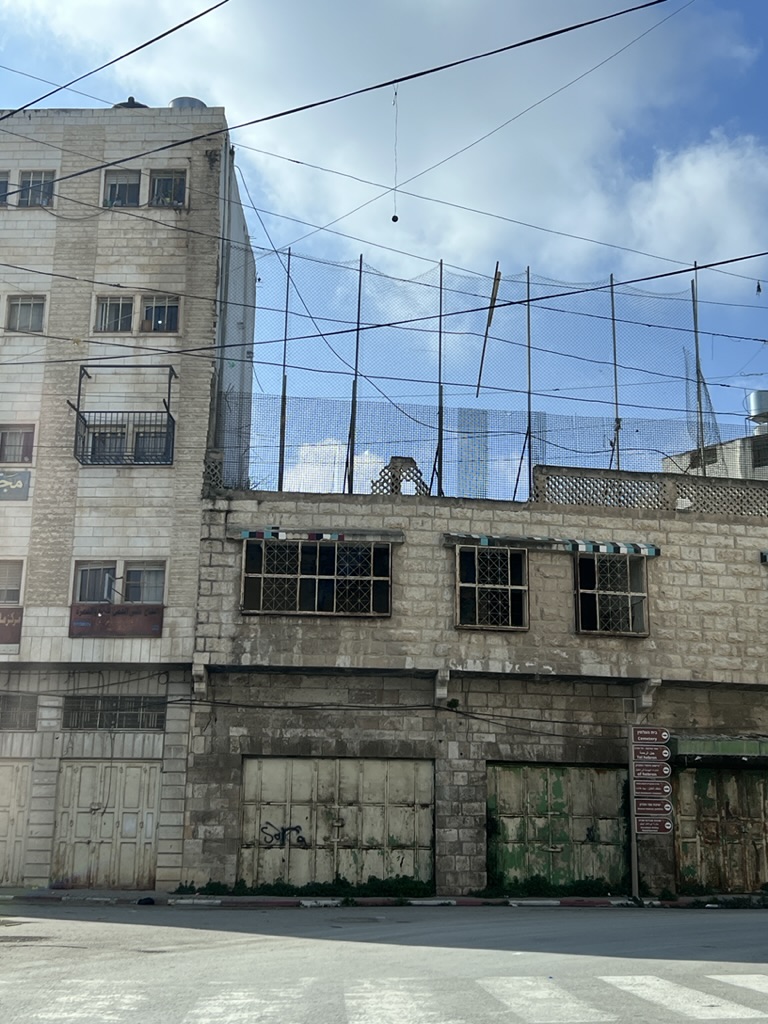
There were many boarded up houses we saw which it seems are now being claimed by Jews although were owned by Palestinians. Jews believe this is their land and they have the historic rights to the land and the structures on it.
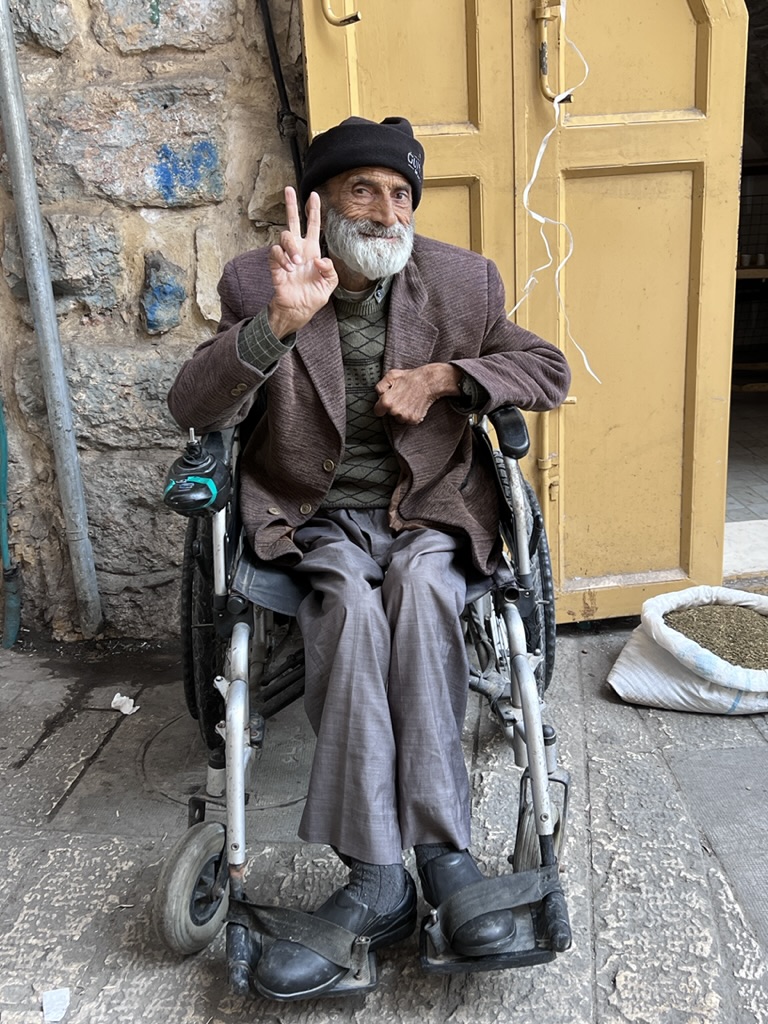
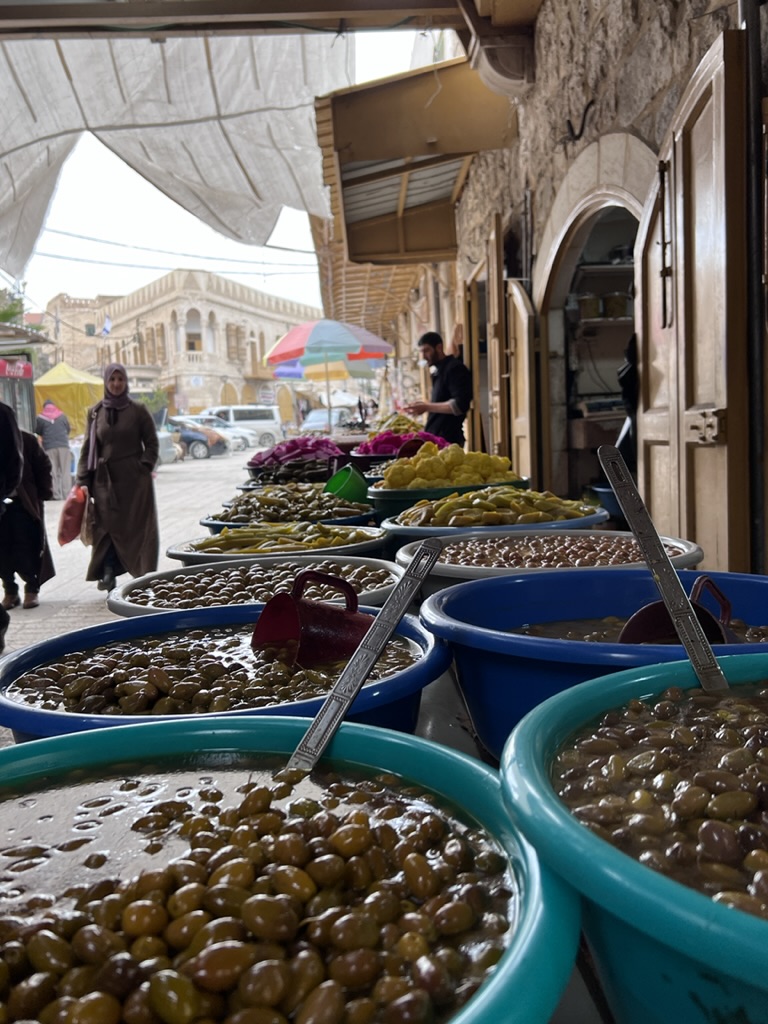
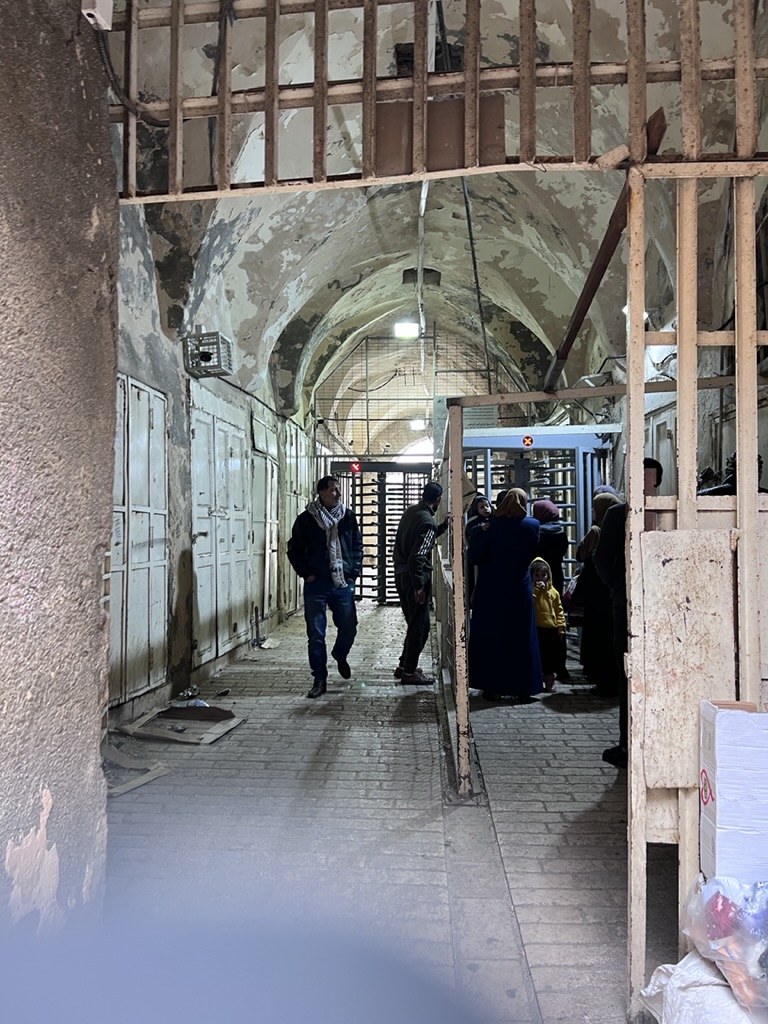
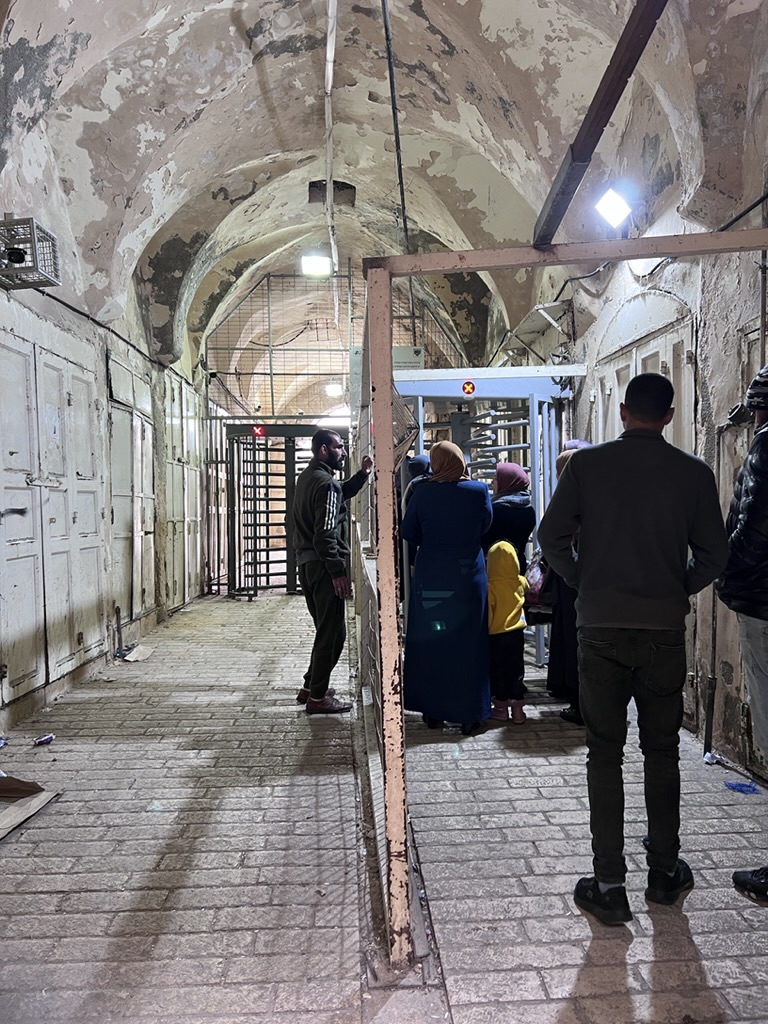
The experience in Hebron was complicated to understand… the origins of this forced separation, and the difficulty of comprehending what life must be like for Palestinians—the isolation, the rules, the limitations, and the powerlessness. In some ways it was especially difficult considering the information and emotional impact of the exhibit at Yad Vashem the day before where we were totally immersed in the loss of freedom and rights of the Jewish people under Hitler. Is there not a relation between these two situations?
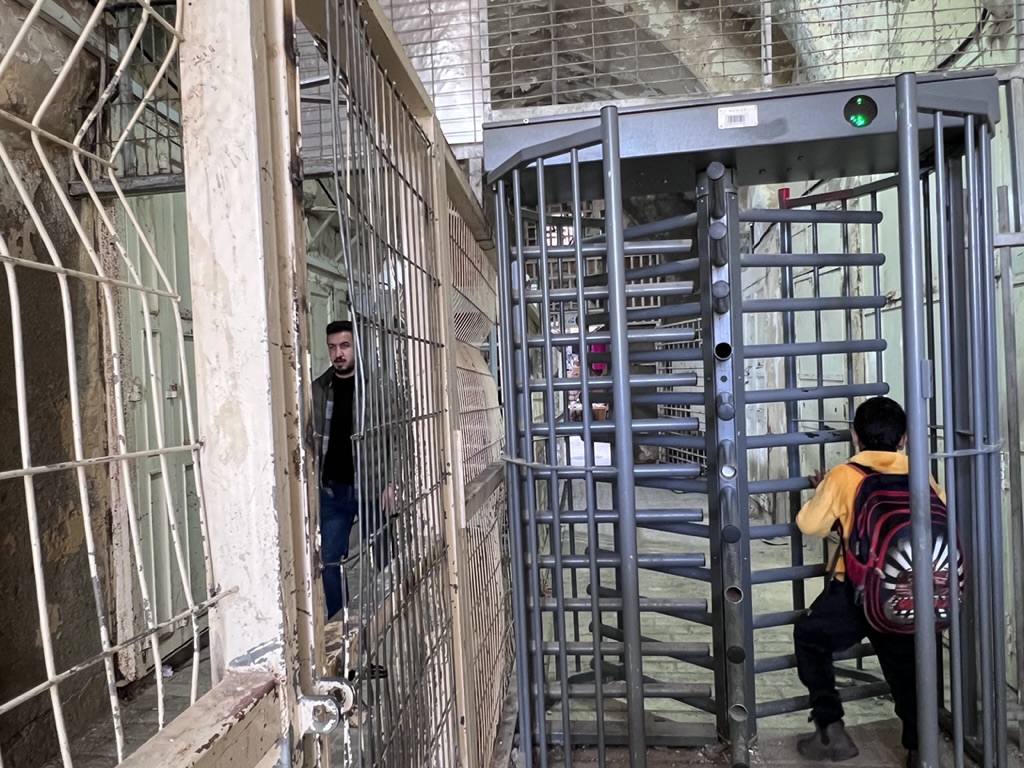
When we were ready to leave, we needed to go on a queue that led us to a full vertical turnstile. Once the turnstile was opened for us to use it (red light/green light) we had to show our passports. Only foreigners and those with special IDs could exit because this took you to Zone B. Maybe I have this slightly wrong.. In any case, we got through after showing our passports and met up with Charlie several blocks away.. to make the drive to Bethlehem where our experience would be different.
So much more to say, but don’t want to run on…
Best –
Fern

