September 30, 2026 – Day Three in Seoul
After a quick breakfast at some pastry shop along our route to the subway, we took the train to the Gyeongbokgung Palace (that was closed yesterday). open and free today for “Culture Day.”
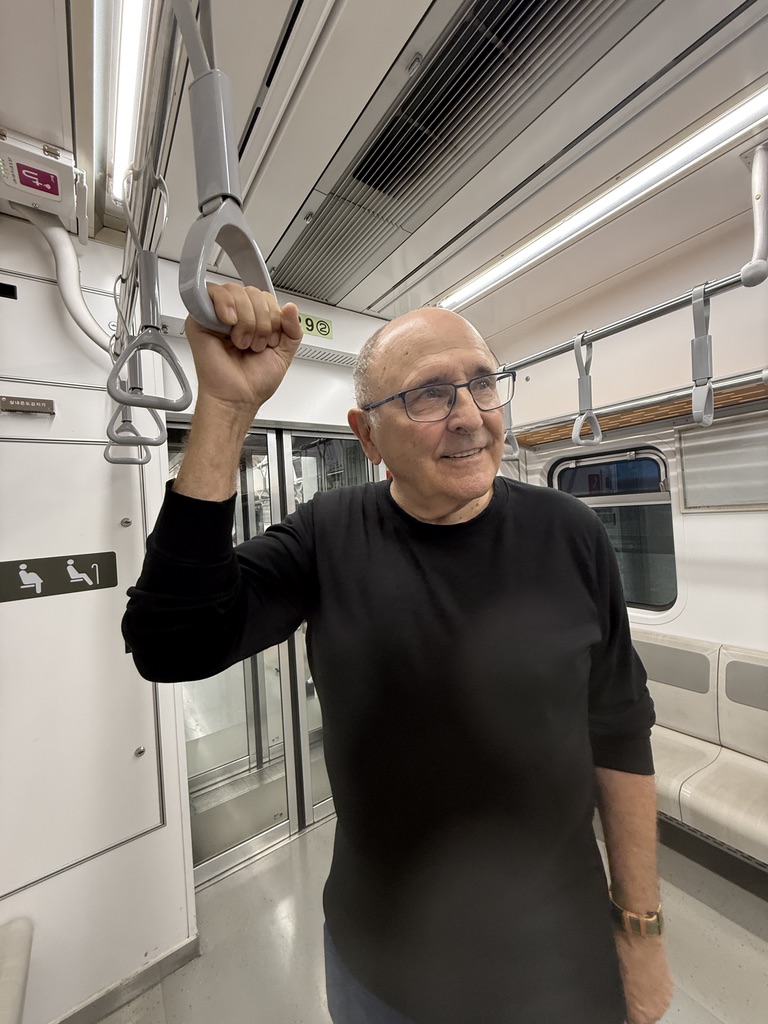
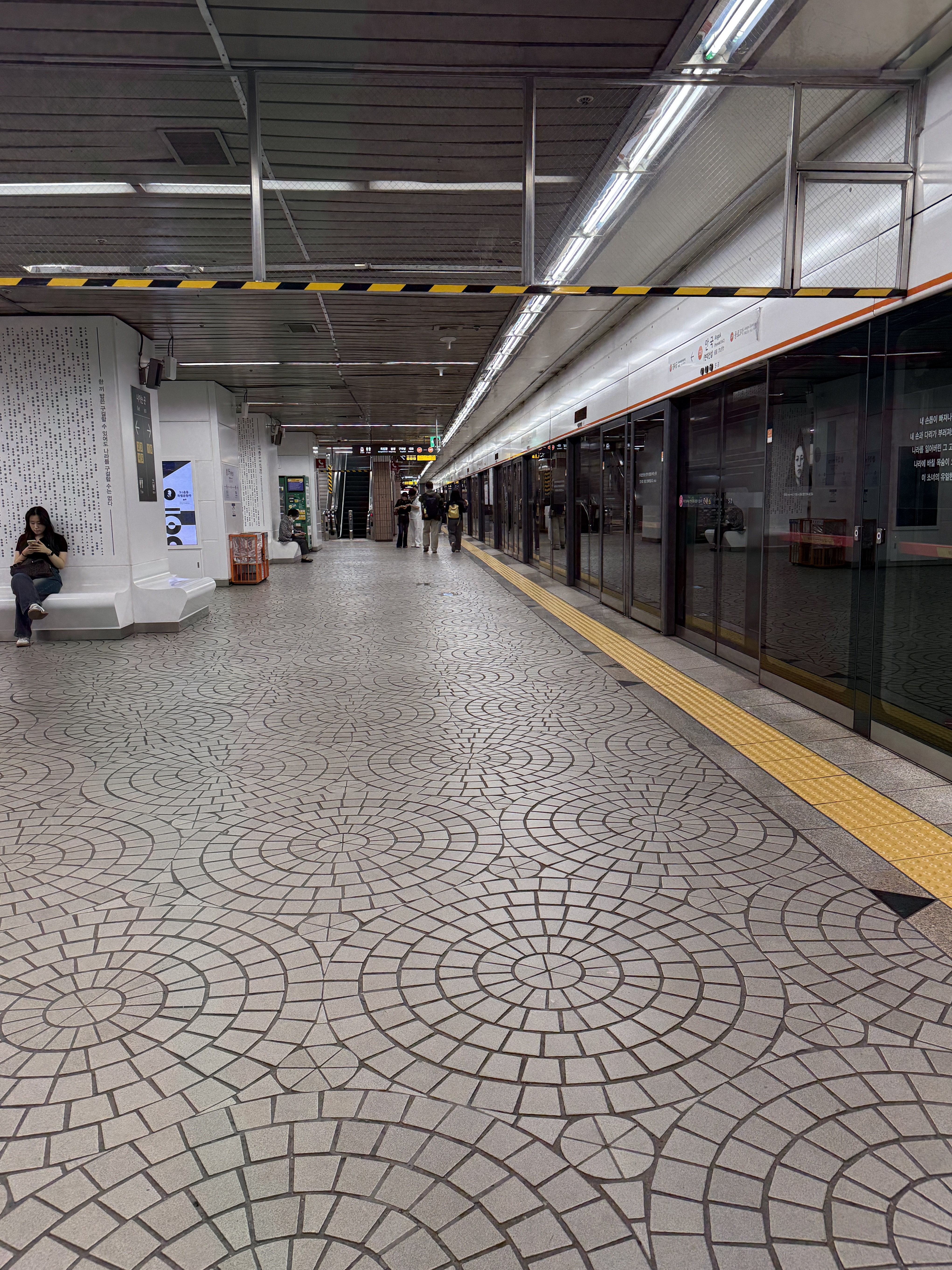
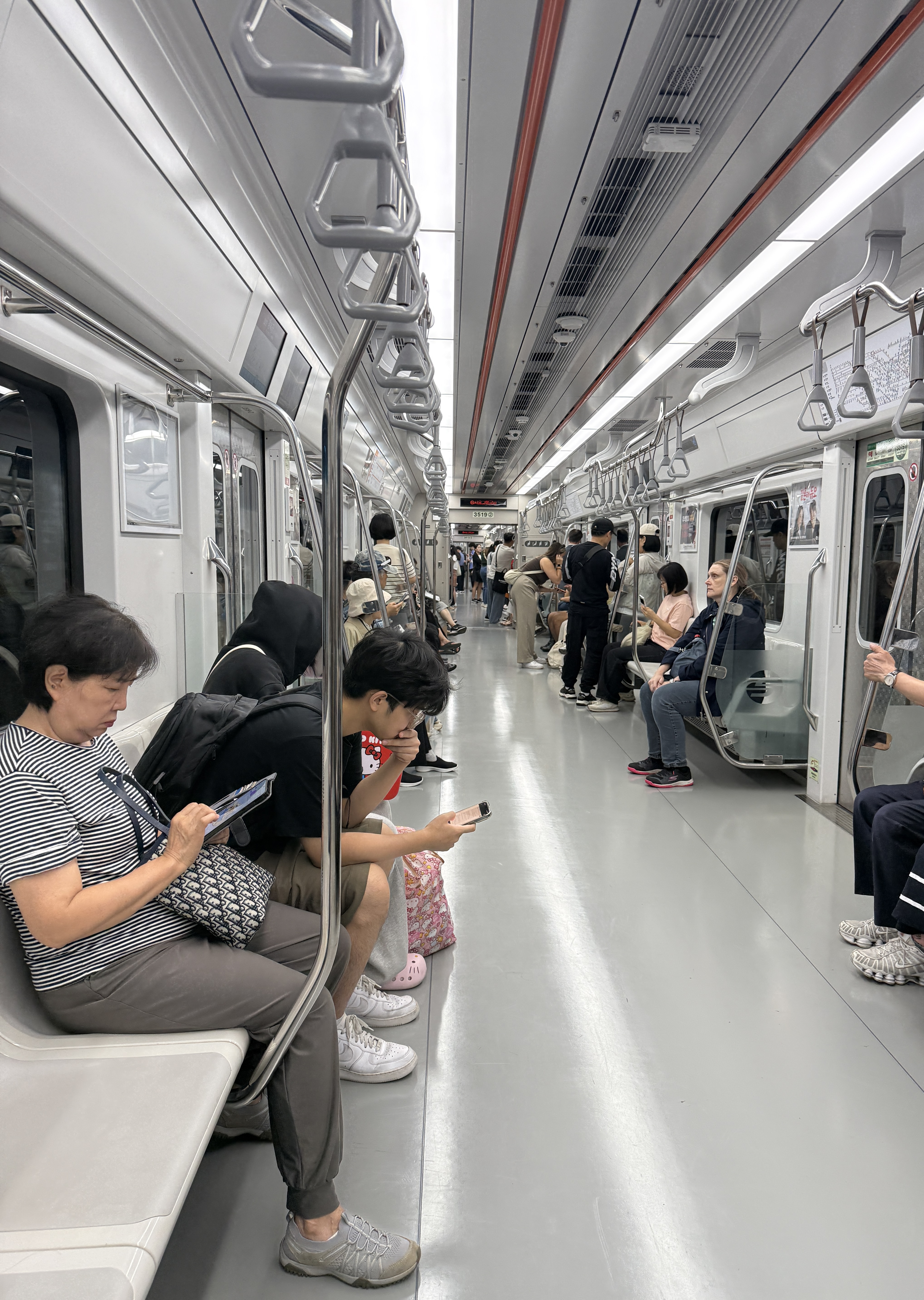
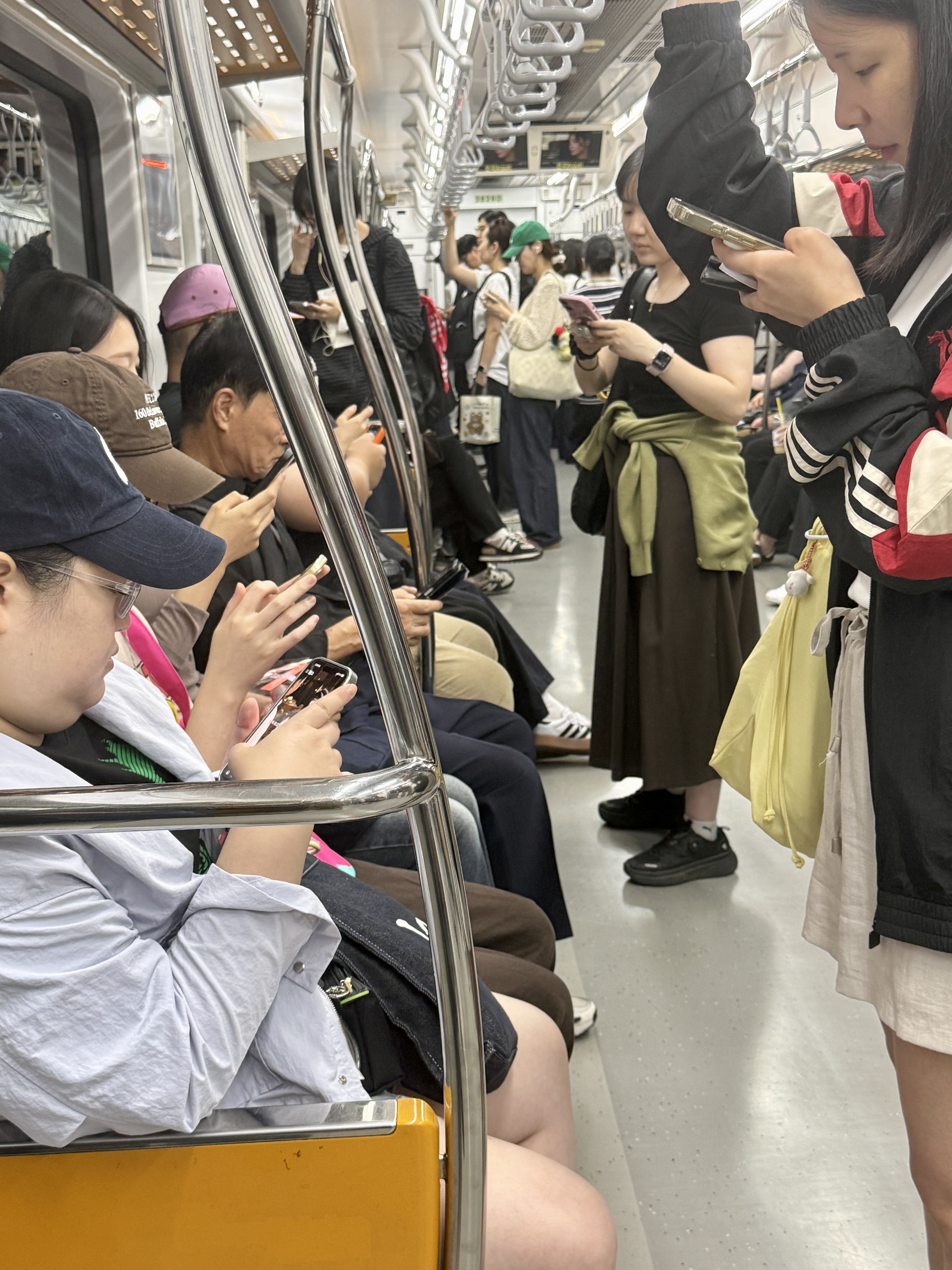
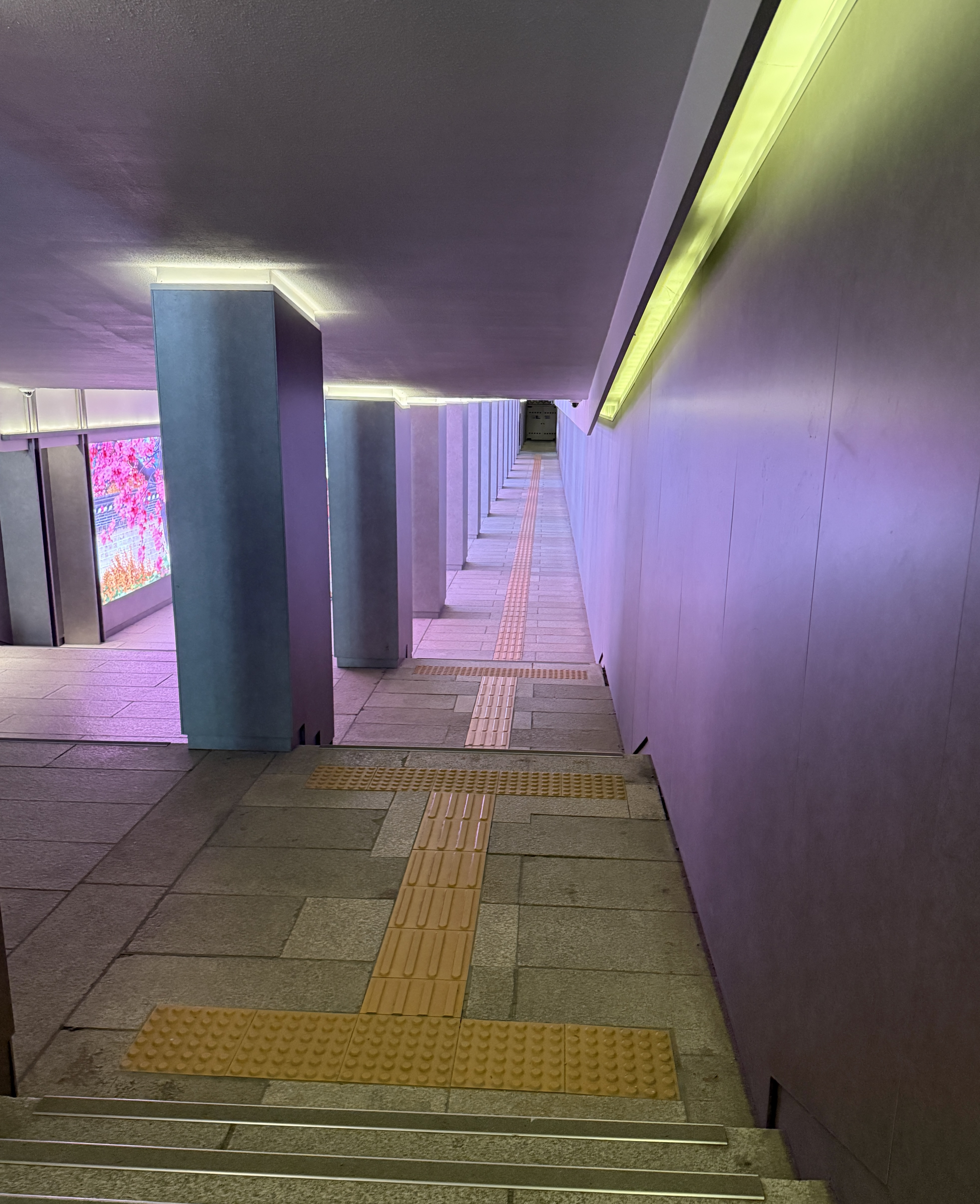
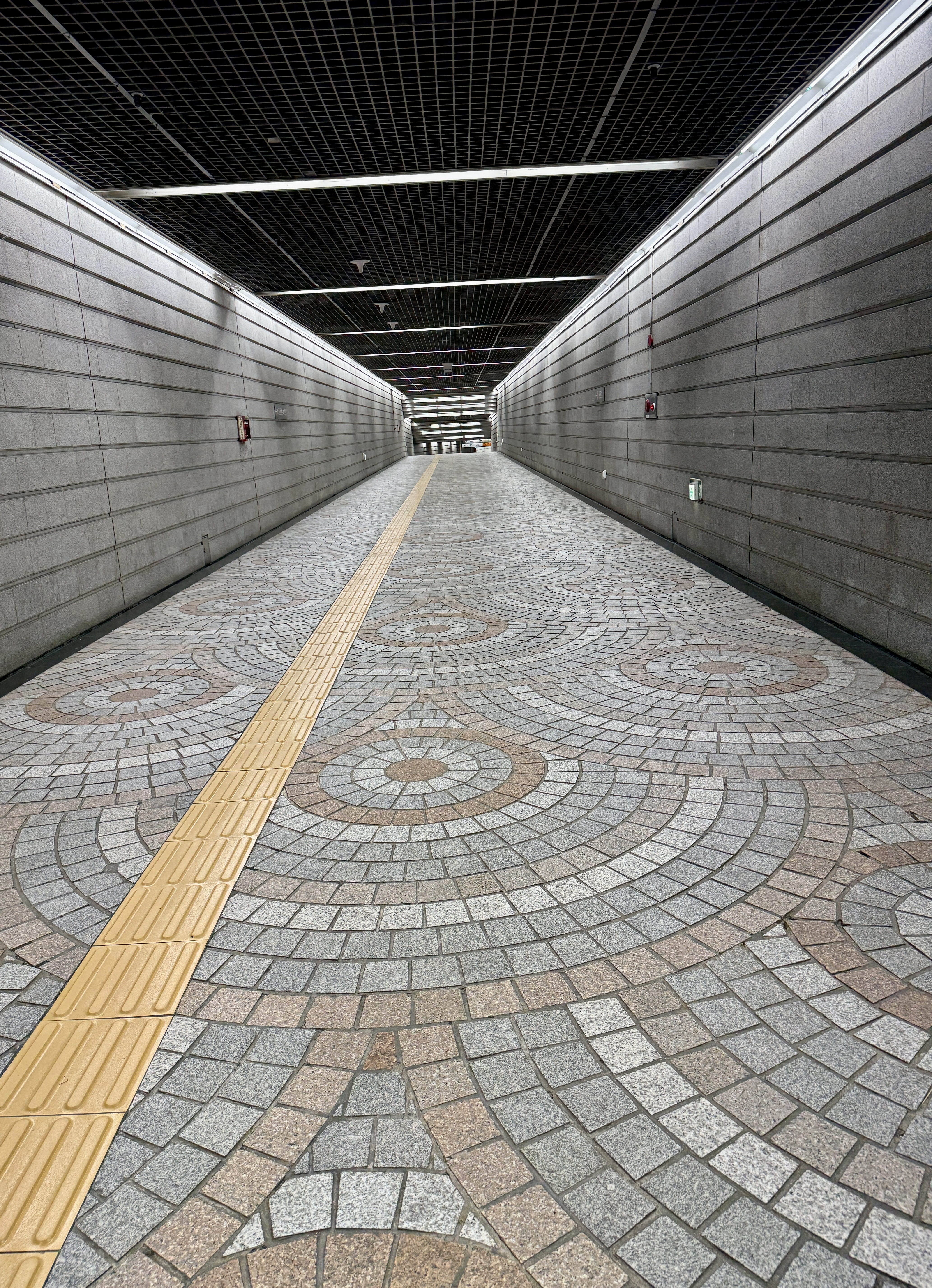
But first: the subway. Immaculate doesn’t quite cover it. The floors literally sparkle, there’s zero graffiti, zero trash — remarkable given that trash cans are nearly impossible to find. The trains are prompt, smooth, and run like clockwork. And everyone — everyone — is on their phone the entire ride, including us. What struck me: ask anyone for directions and they immediately look it up on their phone. As a diehard New Yorker, I’m used to people just knowing which train to take — though I’ll admit Queens might stump a few of us. Signage is excellent and navigating in English is surprisingly easy once you get the rhythm of the system.
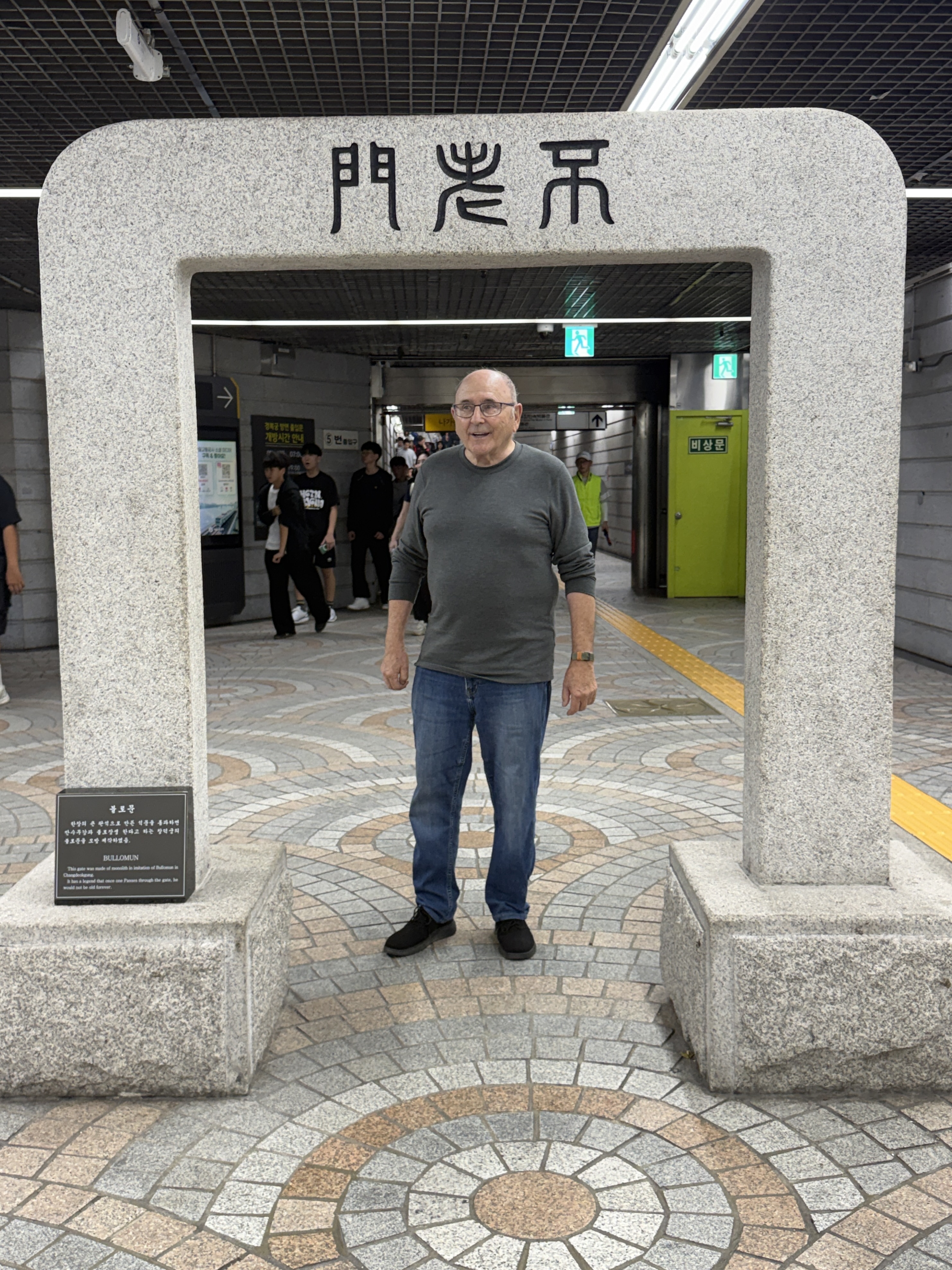
One more note: Mike walked through some ceremonial arch said to guarantee longevity. We’ll be watching for results.
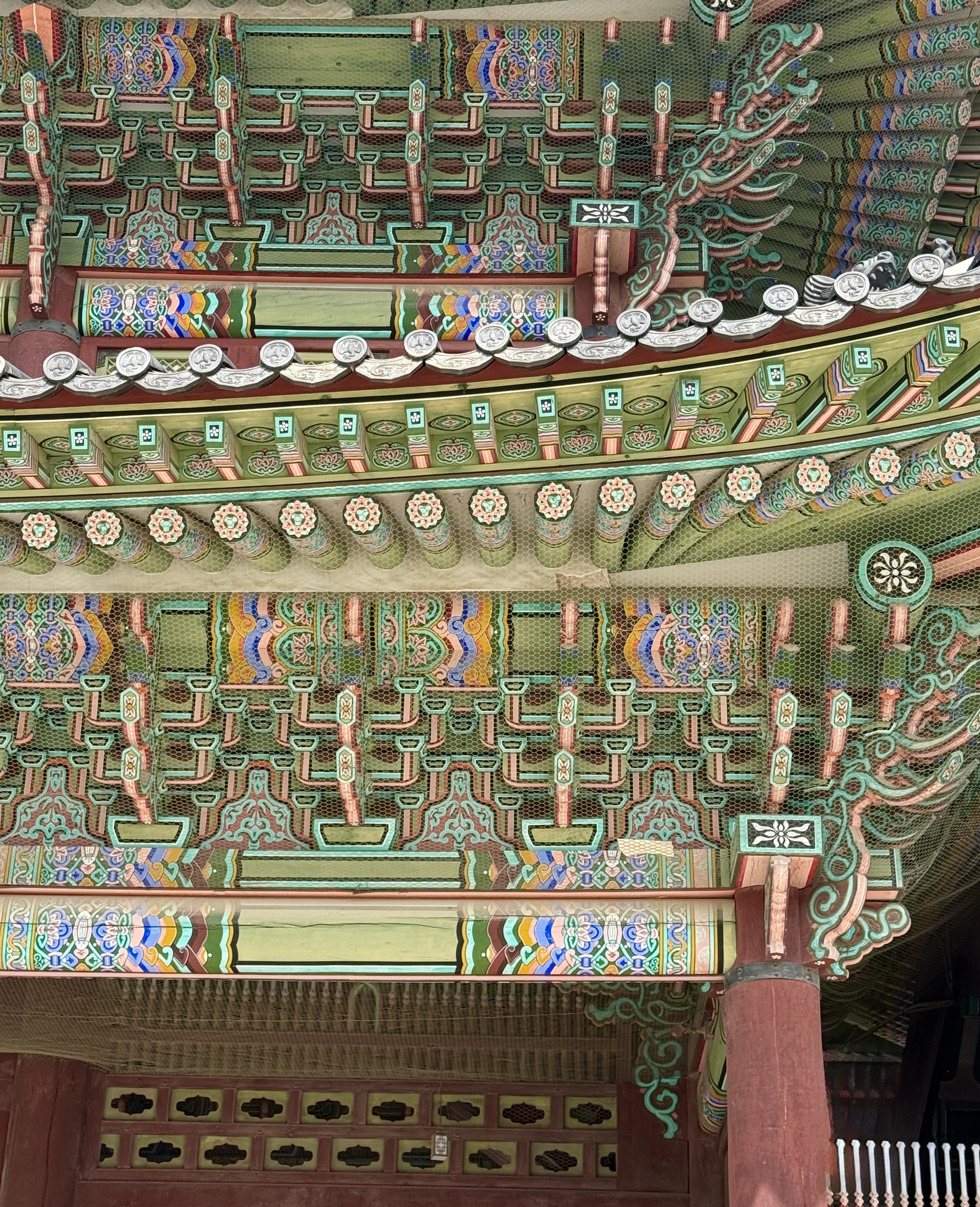
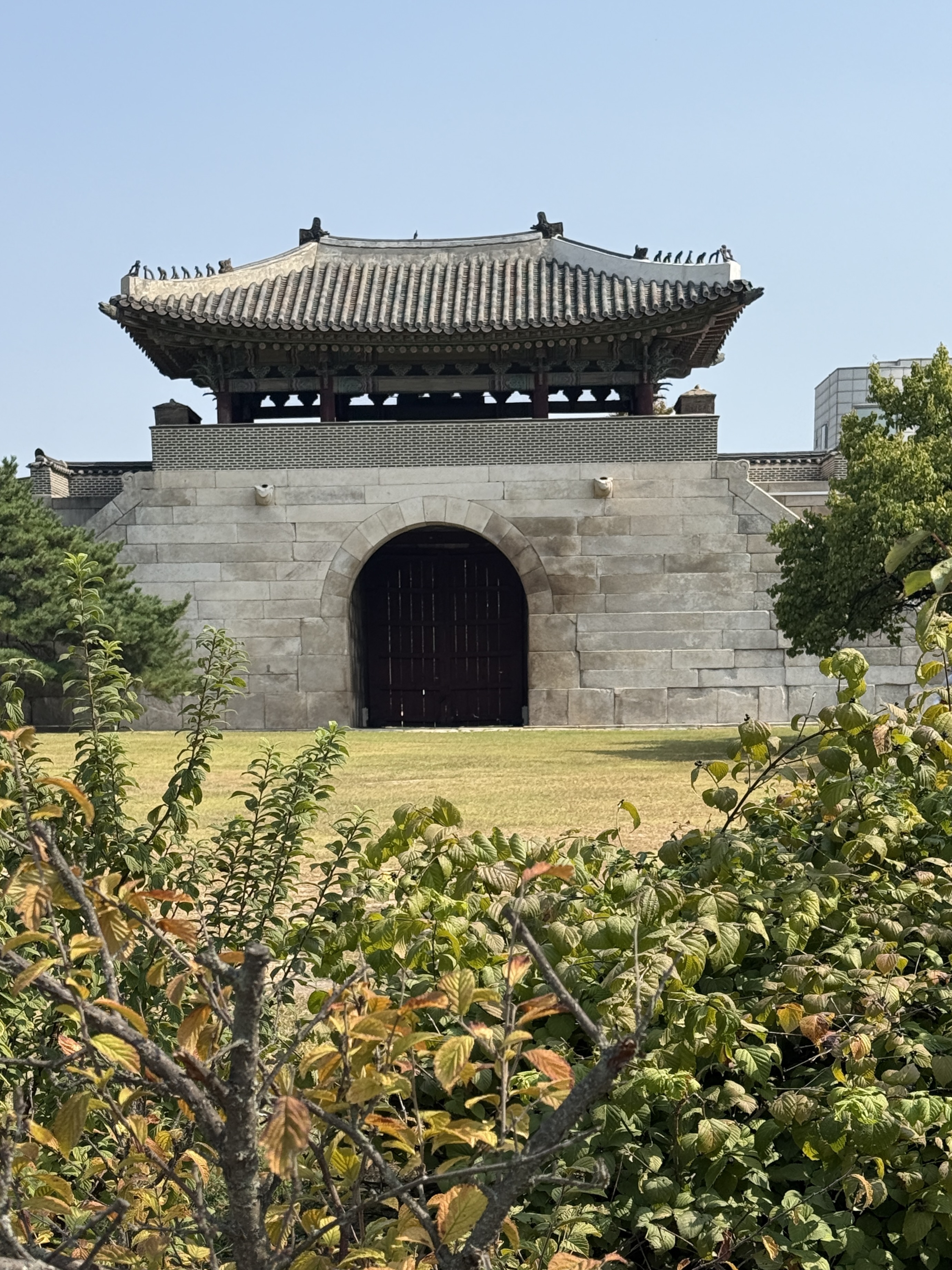
On to the palace. Built in 1395 as the first and grandest royal palace of the Joseon Dynasty, Gyeongbokgung is Seoul’s most visited landmark. In 1592, during the Japanese invasion known as the Imjin War, the palace was completely burned to the ground. It sat in ruins for nearly 270 years before being rebuilt in the 1860s — only to be systematically demolished again under Japanese colonial rule in the early 20th century.
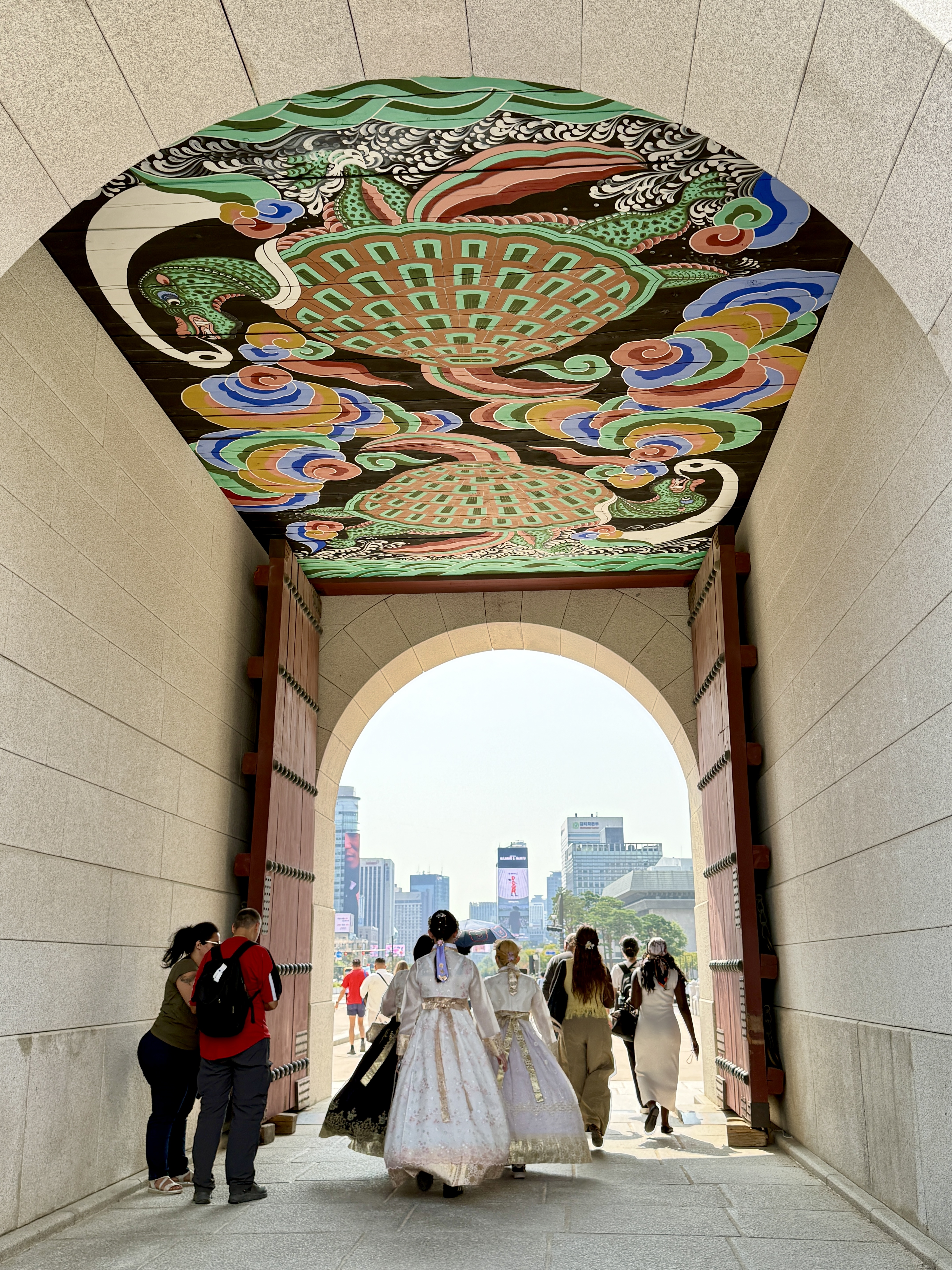
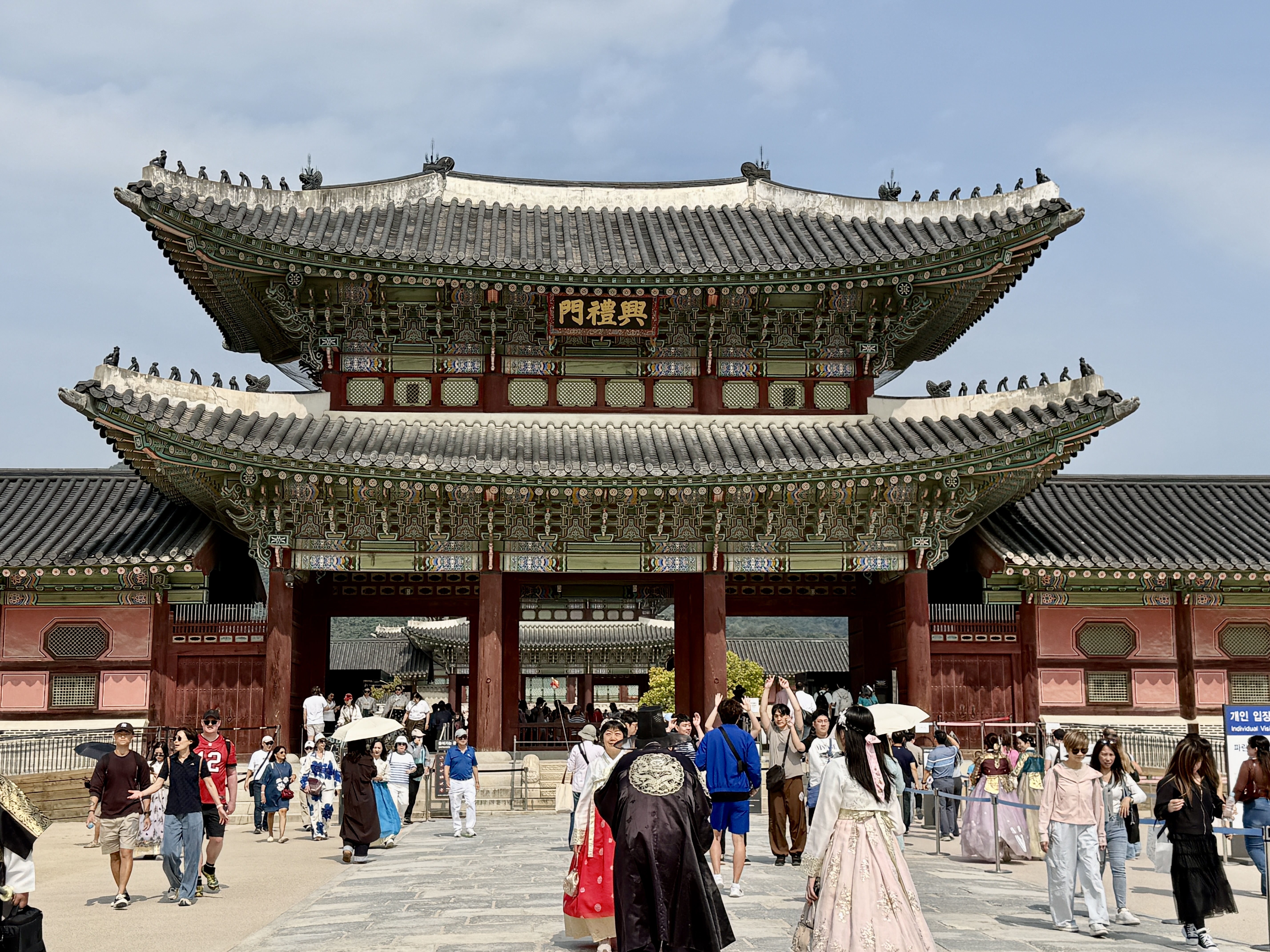
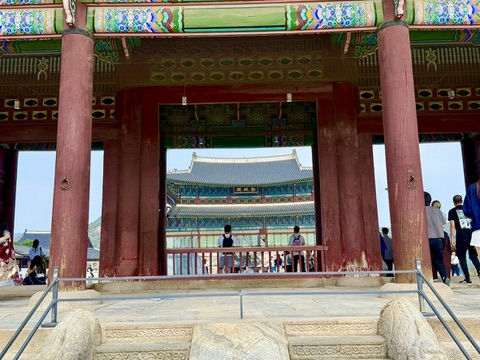
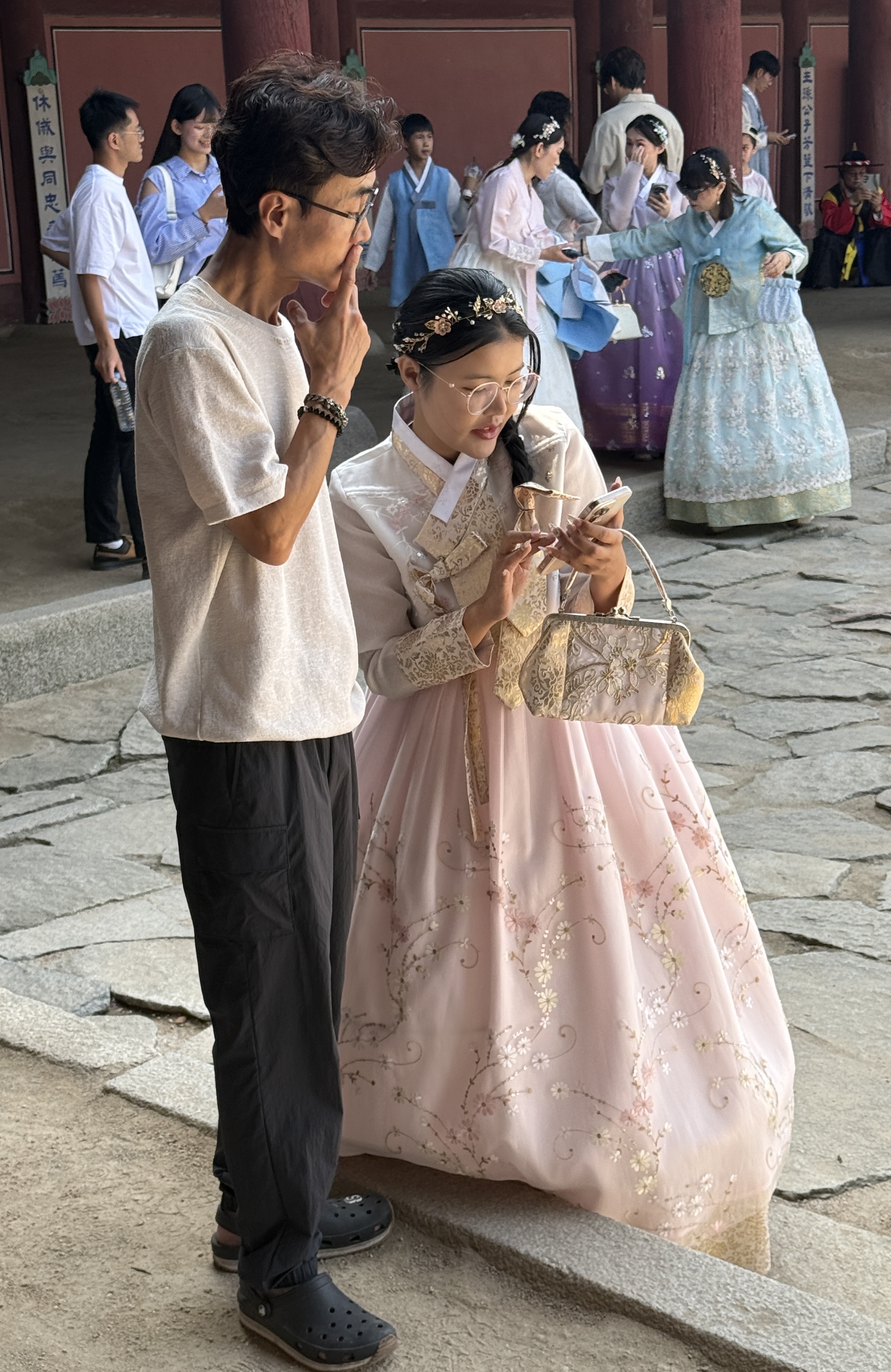
Before you even reach the palace gates, you notice it: easily half the visitors — Korean, foreign, young, old — are dressed in full Joseon-era costume. You can rent these costumes all around the neighborhood, and on free admission days, the costume perk is just for fun. It’s unabashedly a selfie operation — everyone jockeying for the perfect shot, primping, posing, finding their light. Charming and a little absurd in equal measure. Look closely though, and beneath every billowing silk robe: jeans. We did not partake. Surprise, surprise.
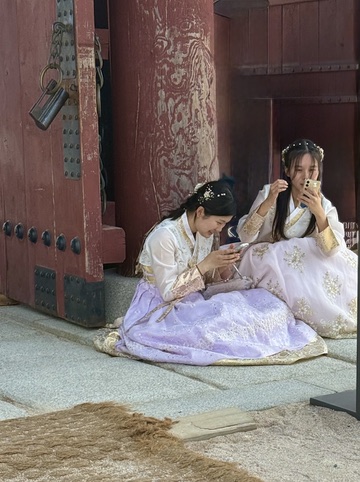
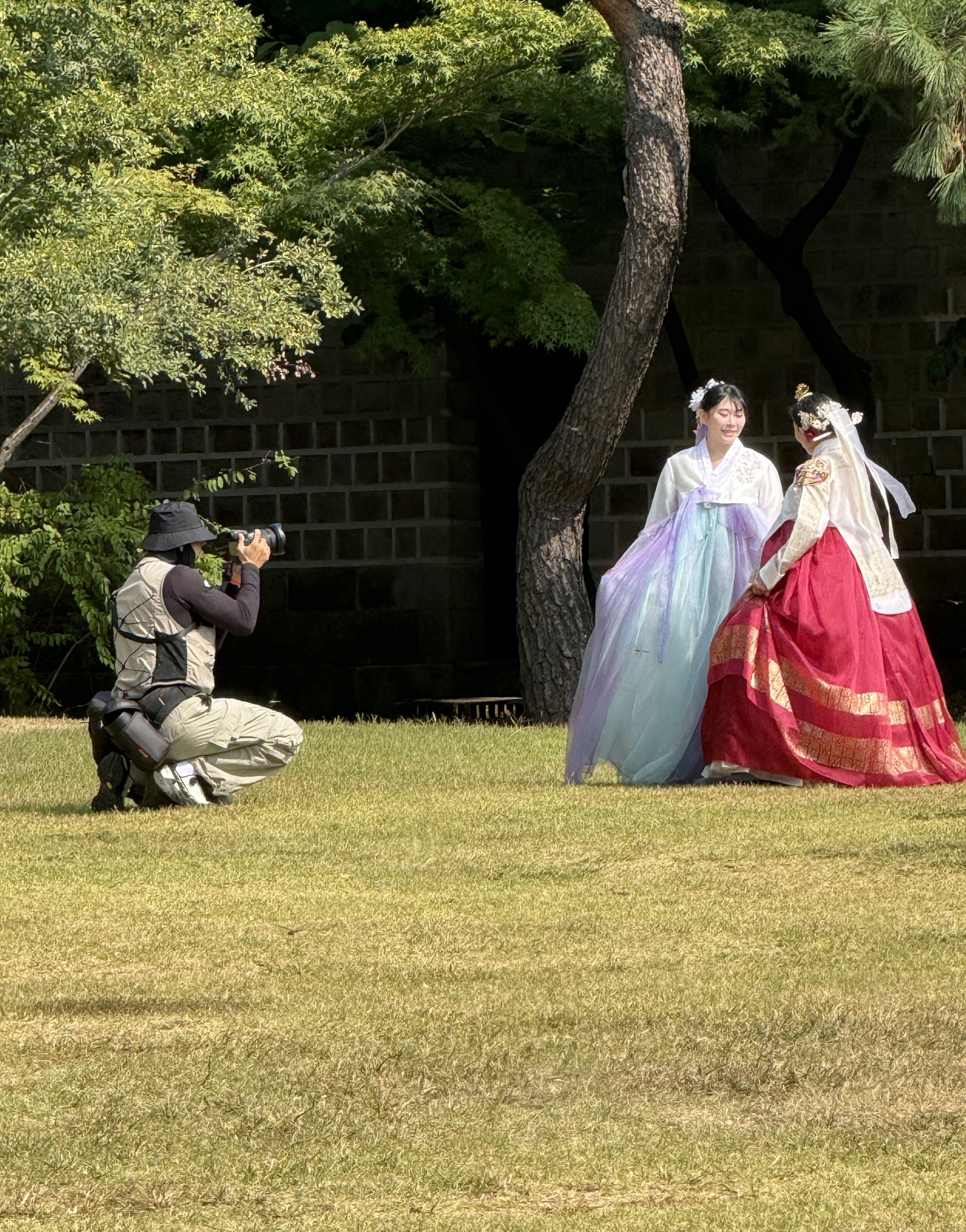
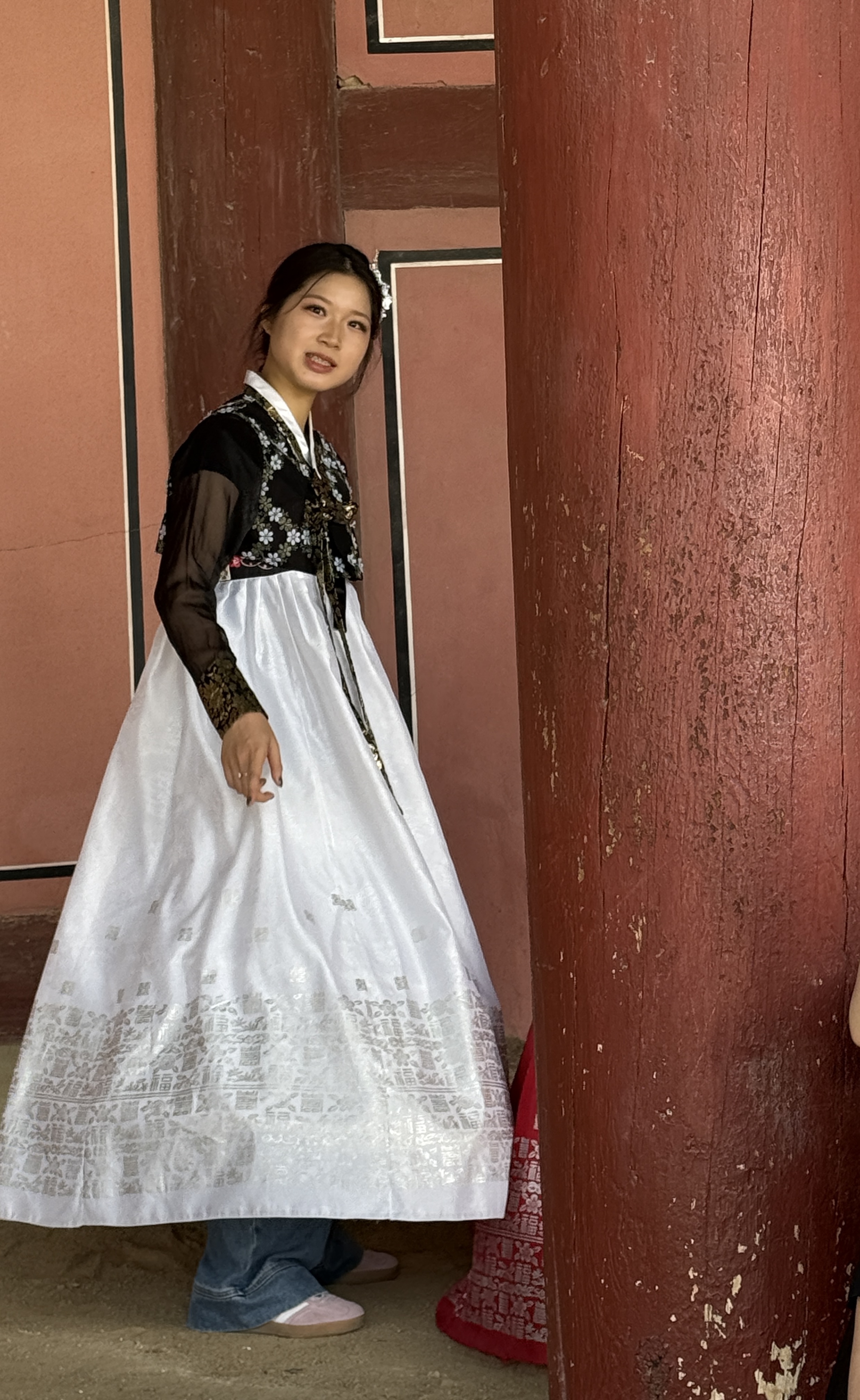
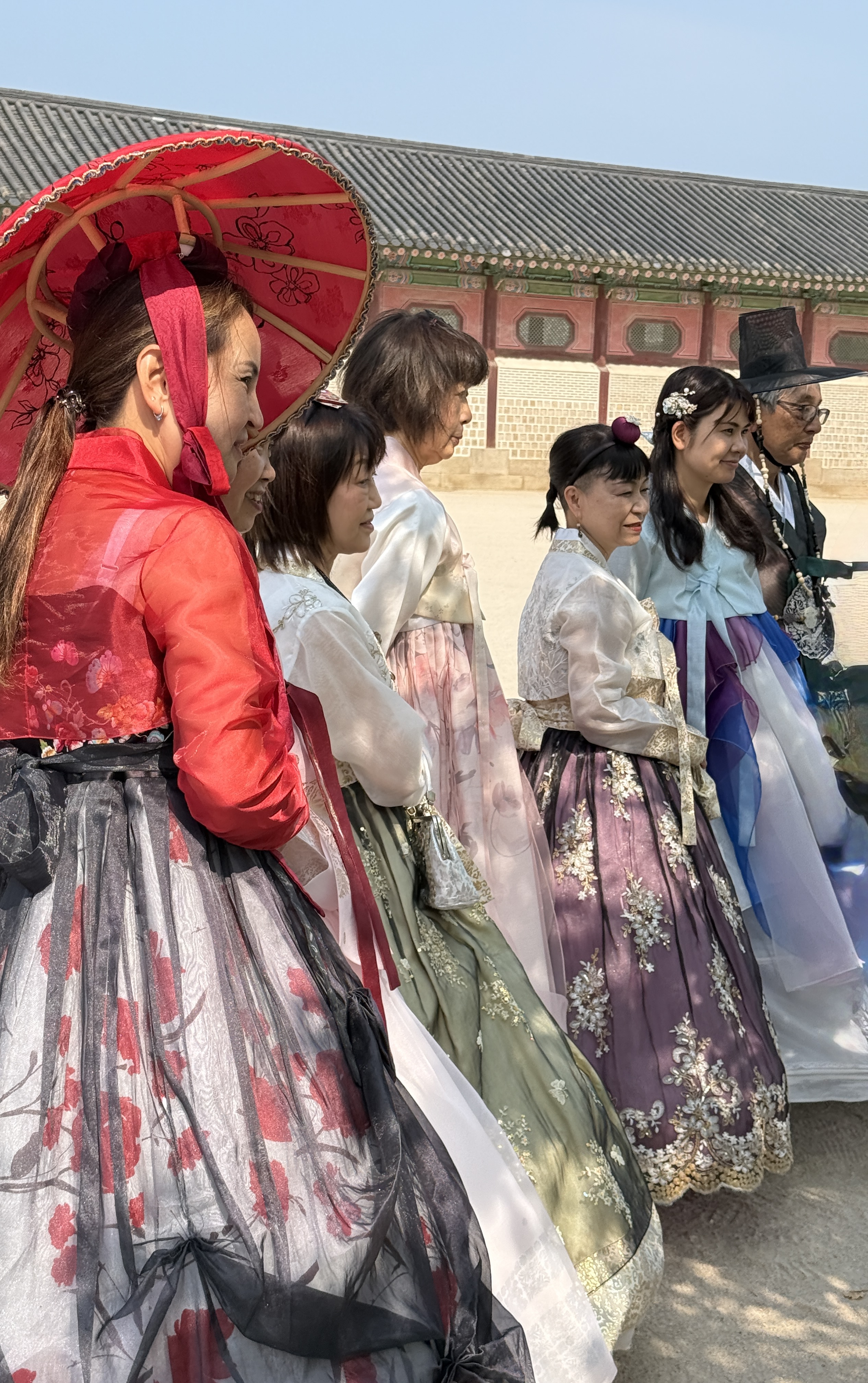
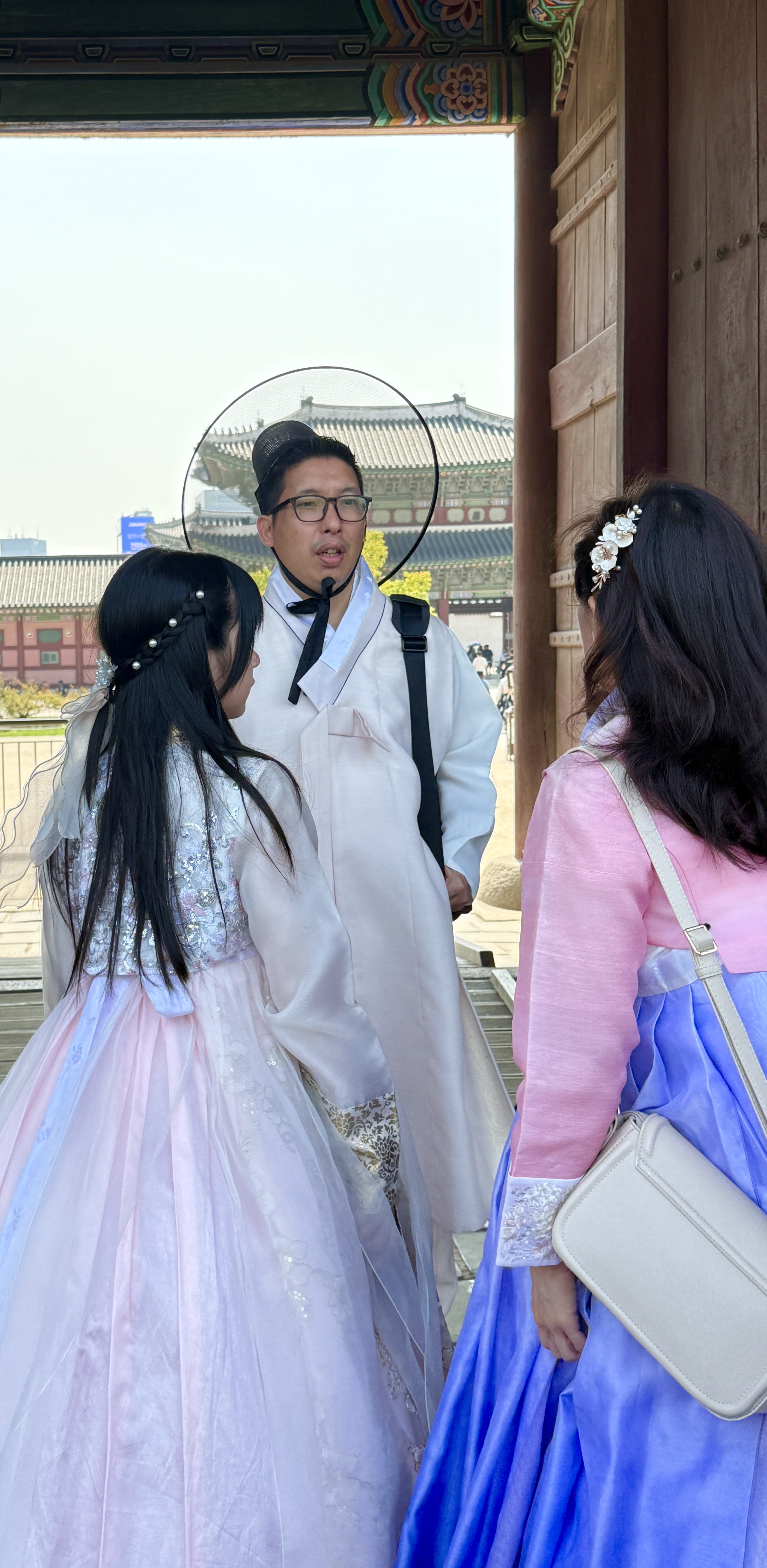
From what I’ve read, during Japanese colonization (1910–1945), Gyeongbokgung Palace was systematically dismantled as a deliberate act of cultural erasure. By 1915, more than 90 percent of the palace’s structures had been demolished. The Japanese also built their colonial Government-General Building directly in front of the throne hall, literally casting the palace in its shadow. By liberation in 1945, only a handful of original buildings survived. Restoration began in earnest in the 1990s — and has been ongoing since. The Governor-General Building was finally demolished in 1996, a powerful symbolic act, and reconstruction of gates, pavilions, and royal quarters has continued ever since, with more still planned.
One delightful perk: entrance is free if you arrive in traditional “hanbok” — so on free admission days, like today, the costume is purely for the pleasure of it. Frankly, it didn’t look so pleasurable in the heat and humidity.
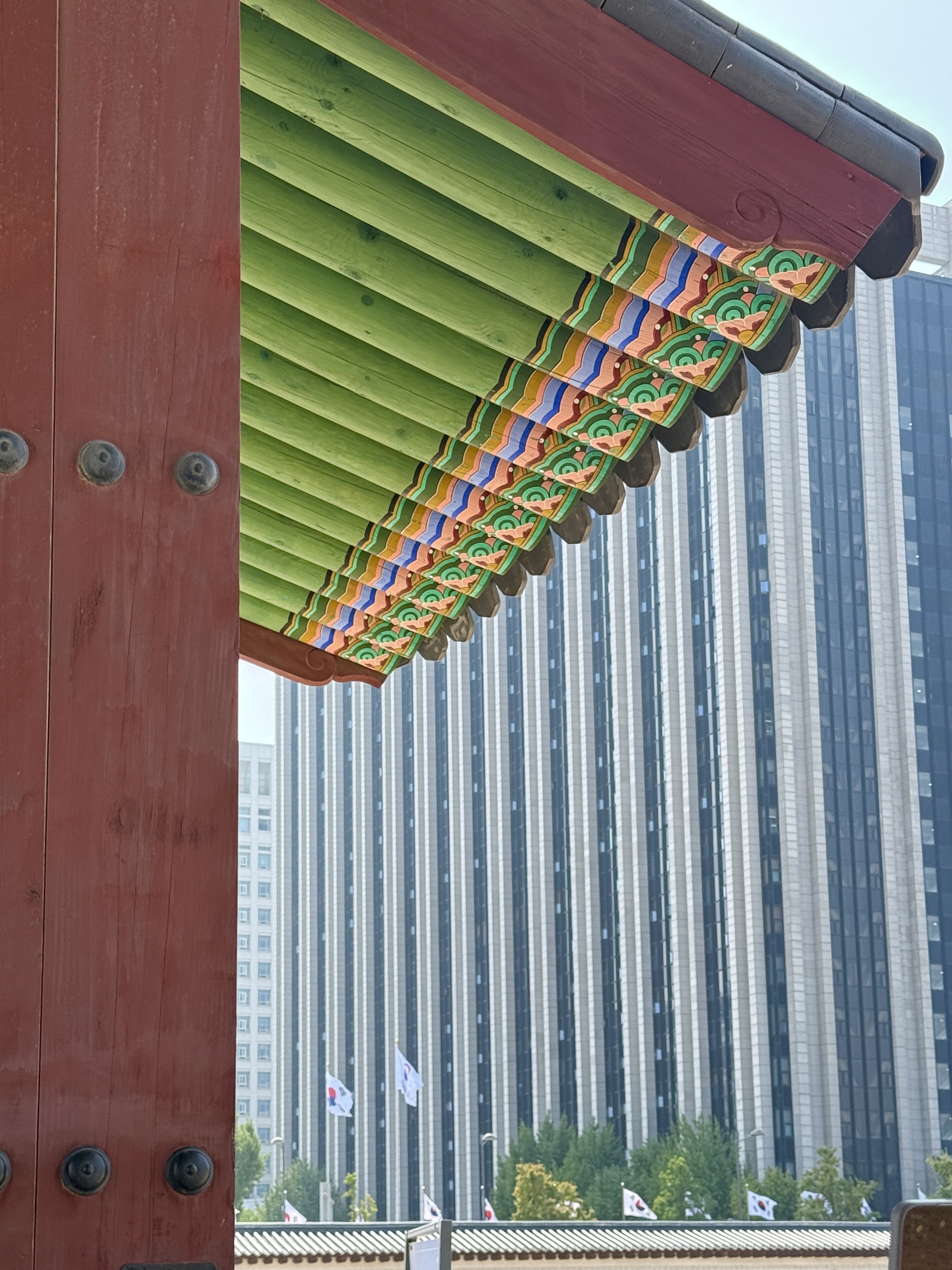
What strikes you immediately is the setting: this vast, ancient palace complex sitting squarely in the middle of one of Asia’s most modern cities, hemmed in by glass towers and corporate high-rises.
From the palace, we headed back by subway to the hanok to check out and grab a taxi to take us to our new hotel on the other side of the city in the modern, hectic area of Hondae. We are now at the Ryse Hotel… a modern hotel. We are on the 13th floor (apparently they don’t have those superstitions about the number 13 and we have a great city view. By the way Seoul has a population of 10 million and the density is greater than Brooklyn!
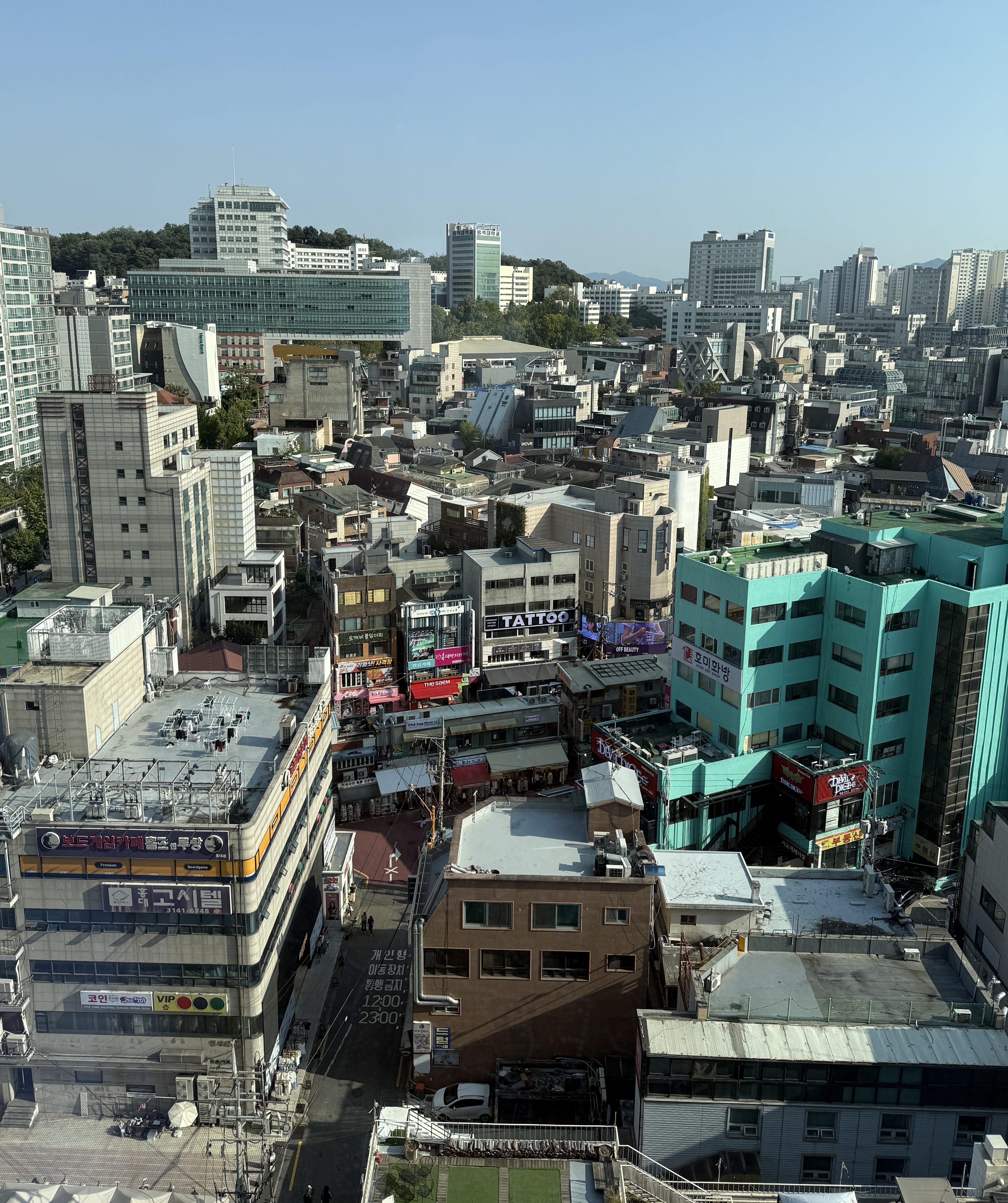
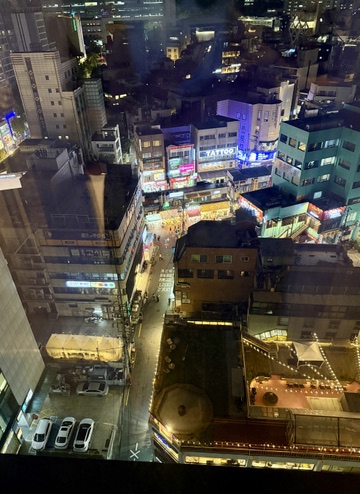
Now we are off to dinner — at Moochaeseck. Will report on it tomorrow. We were planning to walk, but now it seems to be raining, so we may need to take a short taxi. Hmmm… It’s a place with a rooftop and view. Guess that won’t work.

