October 2, 2026: Seoul — A City of Contrasts
18,000 steps; 6.5 miles; 14 flights,
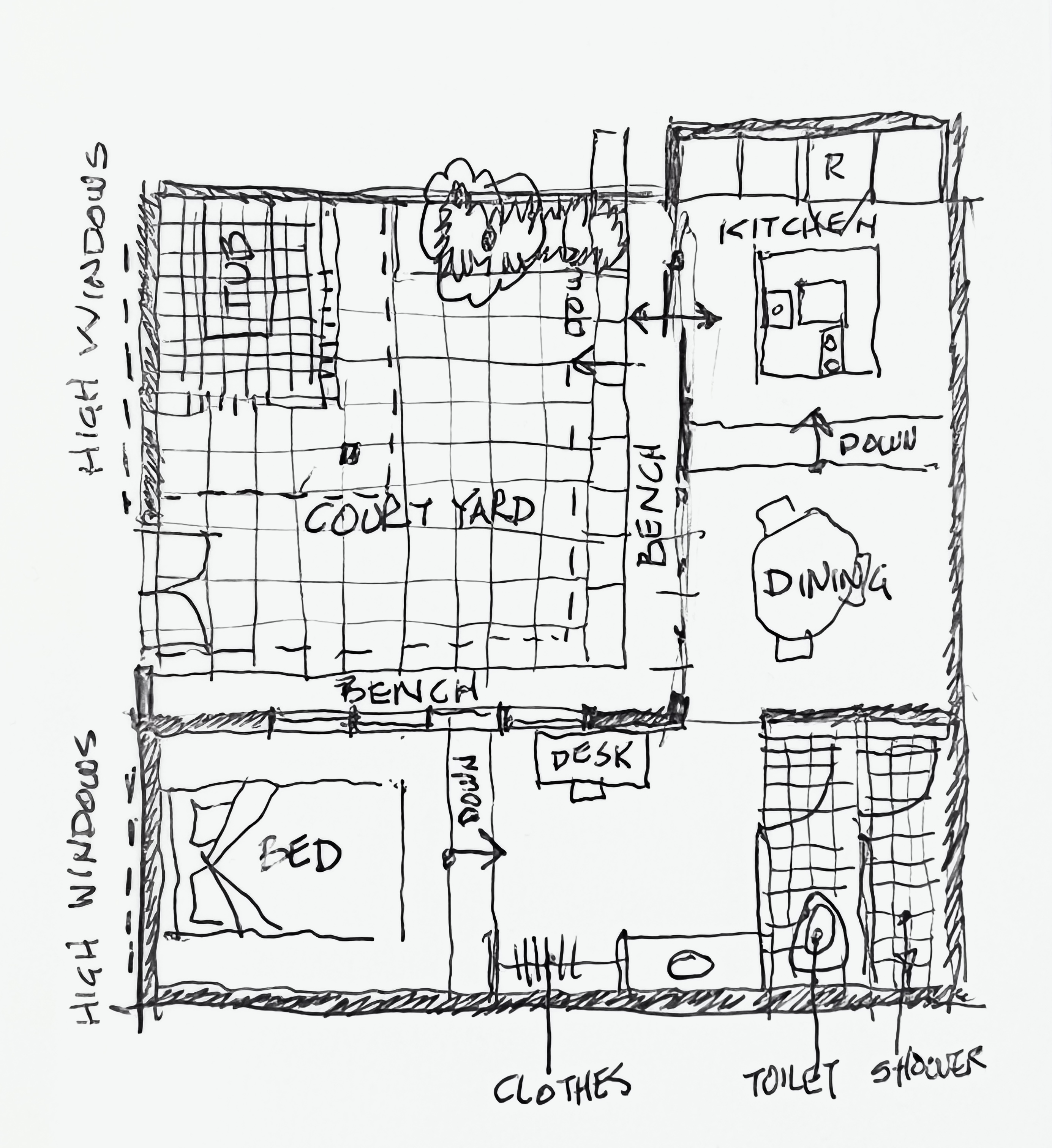
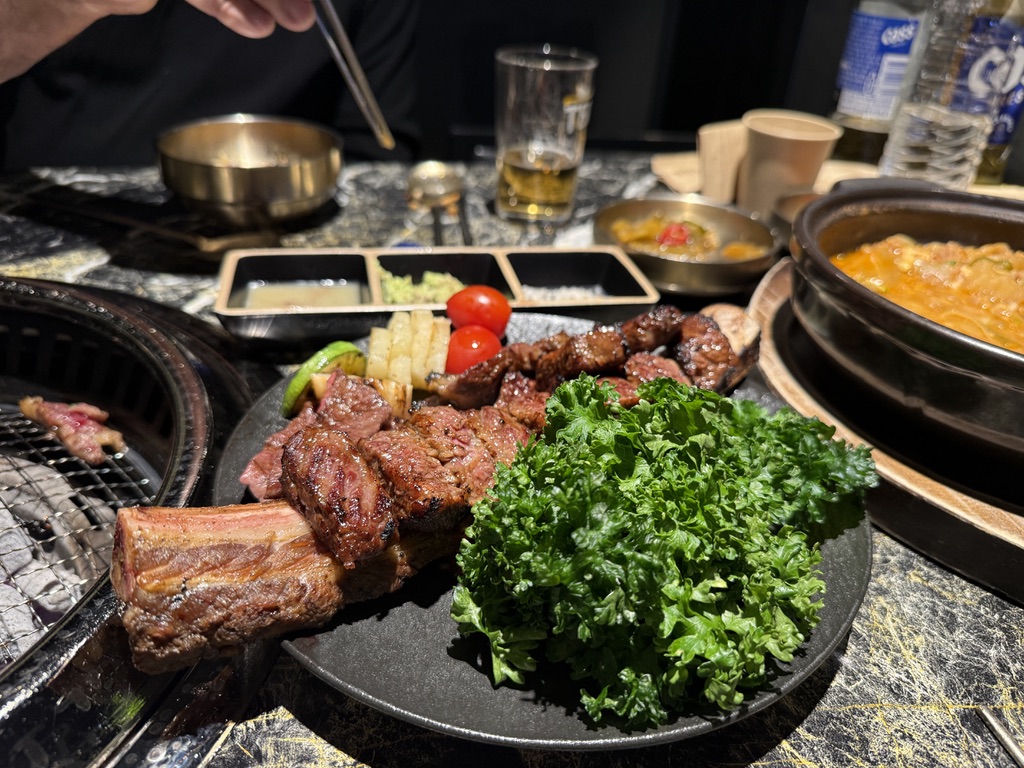
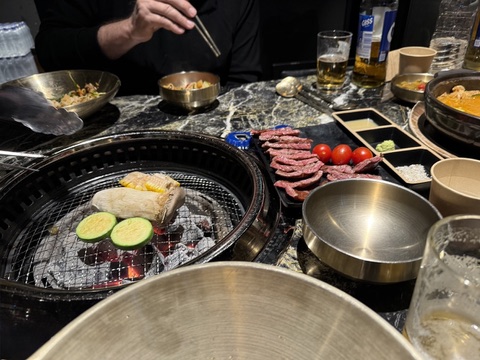
Before getting into today’s adventures, for those who asked… here is a little drawing (compliments of Mike) that shows the floor plan of the hanok in Bukchon. And also some photos of the BBQ dinner last night in Hongdae. And, yes we are walking a great deal— averaging about 5 miles each day and going up and down the subway has brought us to between 10 and 15 flights (according to the app, which calculates it as going up and down to make a flight) each day. And we are doing fine with language… the apps work well, although I’m a bit slow and Mike hasn’t used it at all yet. We’ve stopped people on the street who have been very helpful, even if they only speak a few words of English. Mostly we are always looking for the subway entrance and that is easy to ask… and we’ve gotten pretty good at using Naver (sort of the WAZE of Korea). Now onward to today.
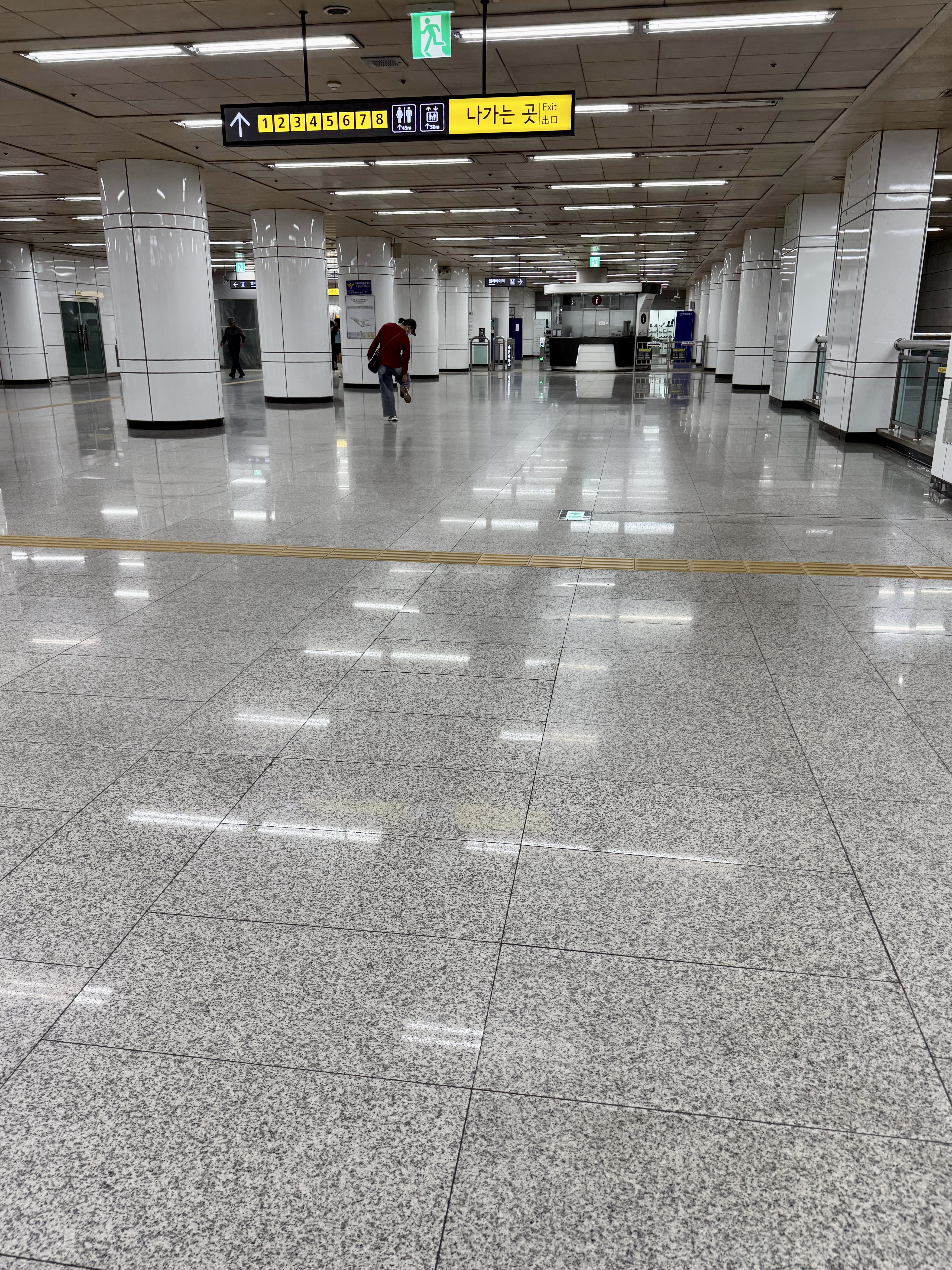
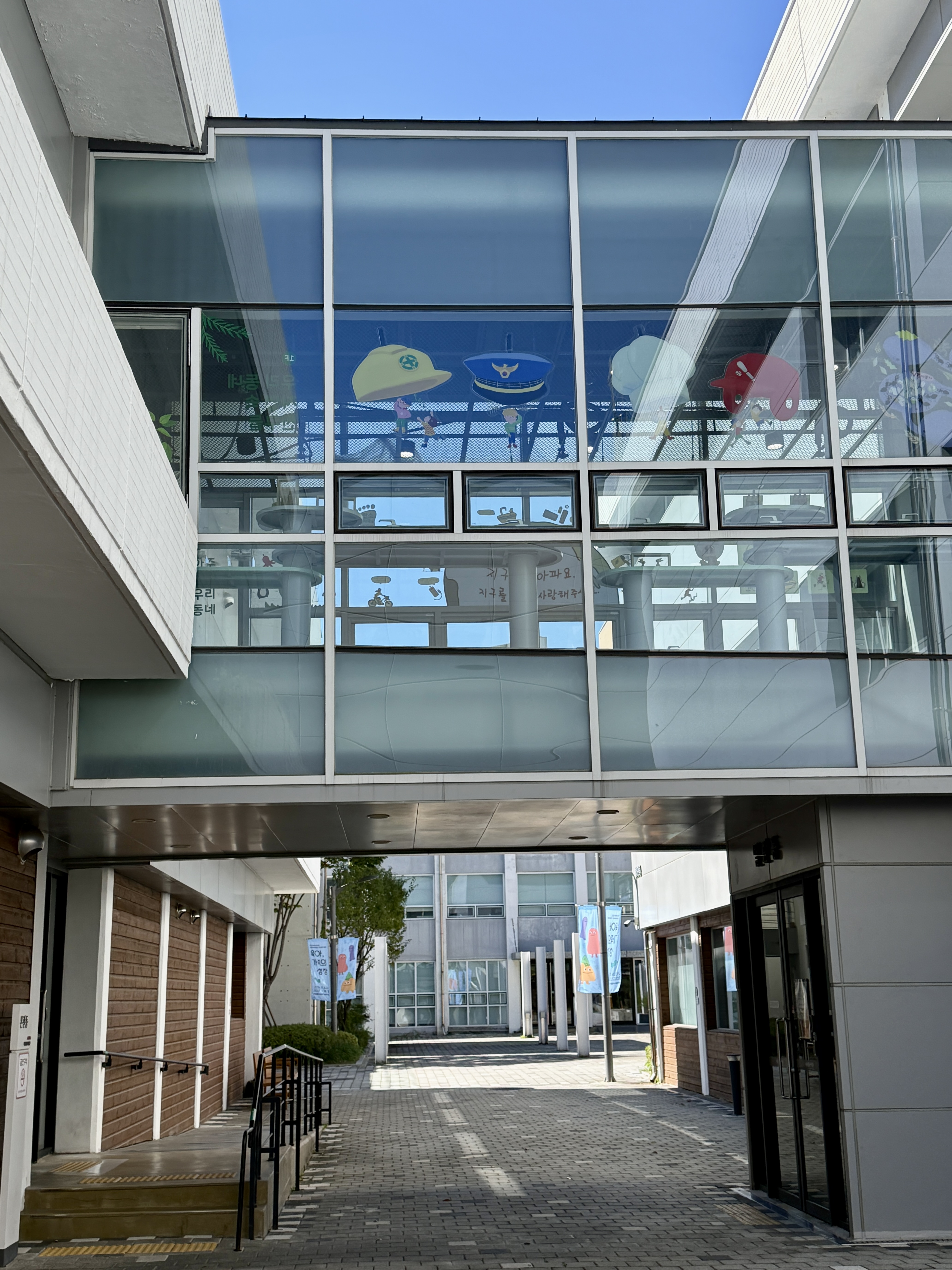
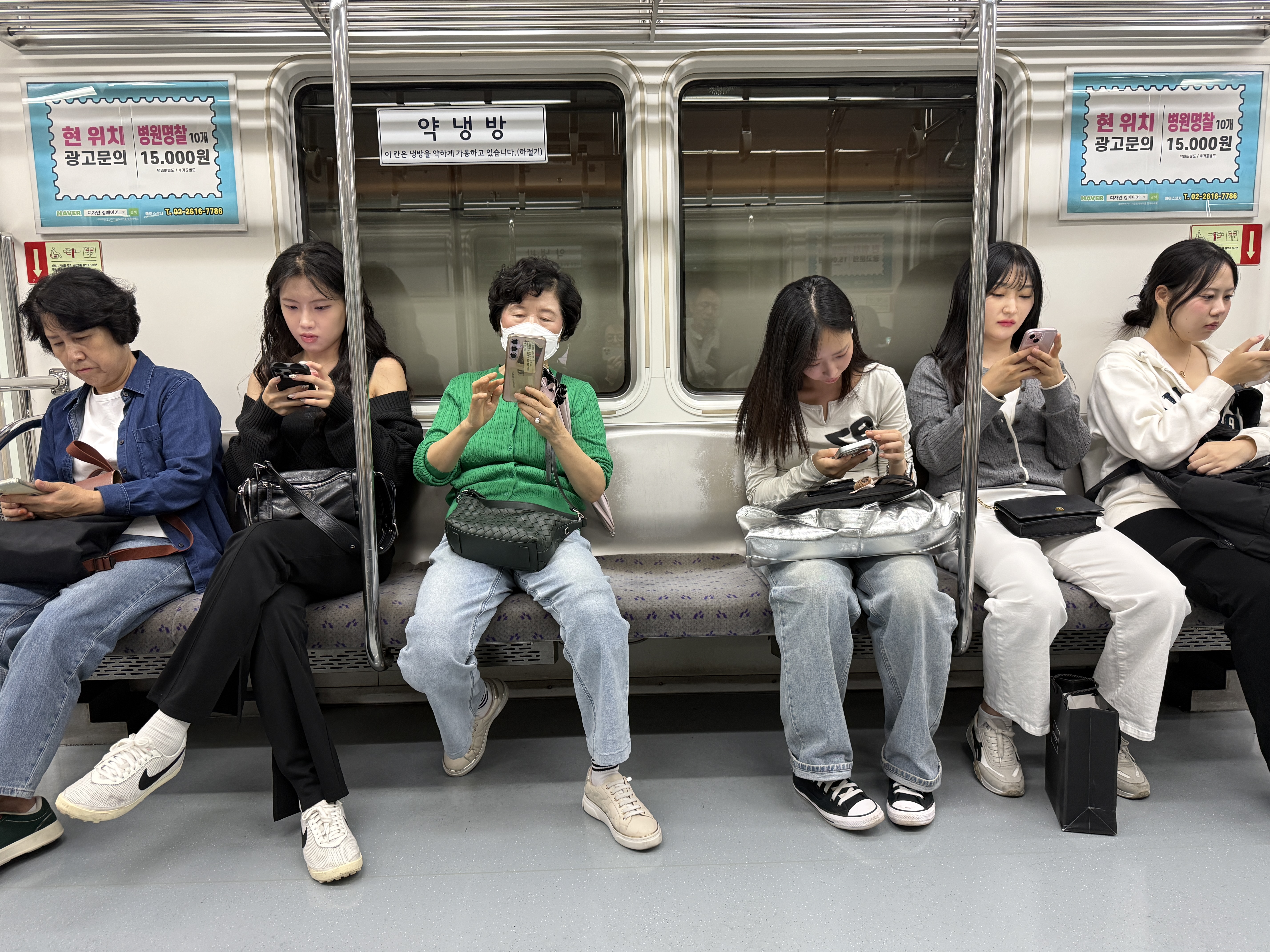
We began the day at Offer — our little cafe across from the Ryse Hotel; it’s fast, good, and has become our hangout. We had planned out what we hoped to see today, but then on the spur of the moment we shifted plans and decided to get to some “normal” neighborhoods where real people live and work, and did a bit of research and decided to head to the Nowon-gu area which is in the northern part of the city. We also knew that there was a Museum of Urban Life located in the area. So off we went– about 45 minutes by subway, using two different lines and then a bit of walking. As my pictures show, I remain obsessed with the cleanliness of the subway (and actually the city streets as well). No gum on the floors, no grafitti, no litter. When we were in Uzbekistan the subway stations were also immaculate but you saw a woman (always a woman) sweeping and washing the floors–all the time, at every station. Here, there is no evidence of anyone doing the cleaning,so even if they wash the stations in the evening… somehow they remain spotless through the day. And I’m having fun photographing everyone on their phones. I guess it’s sort of like this in NY, but I’ve never noticed it as much as I do here.
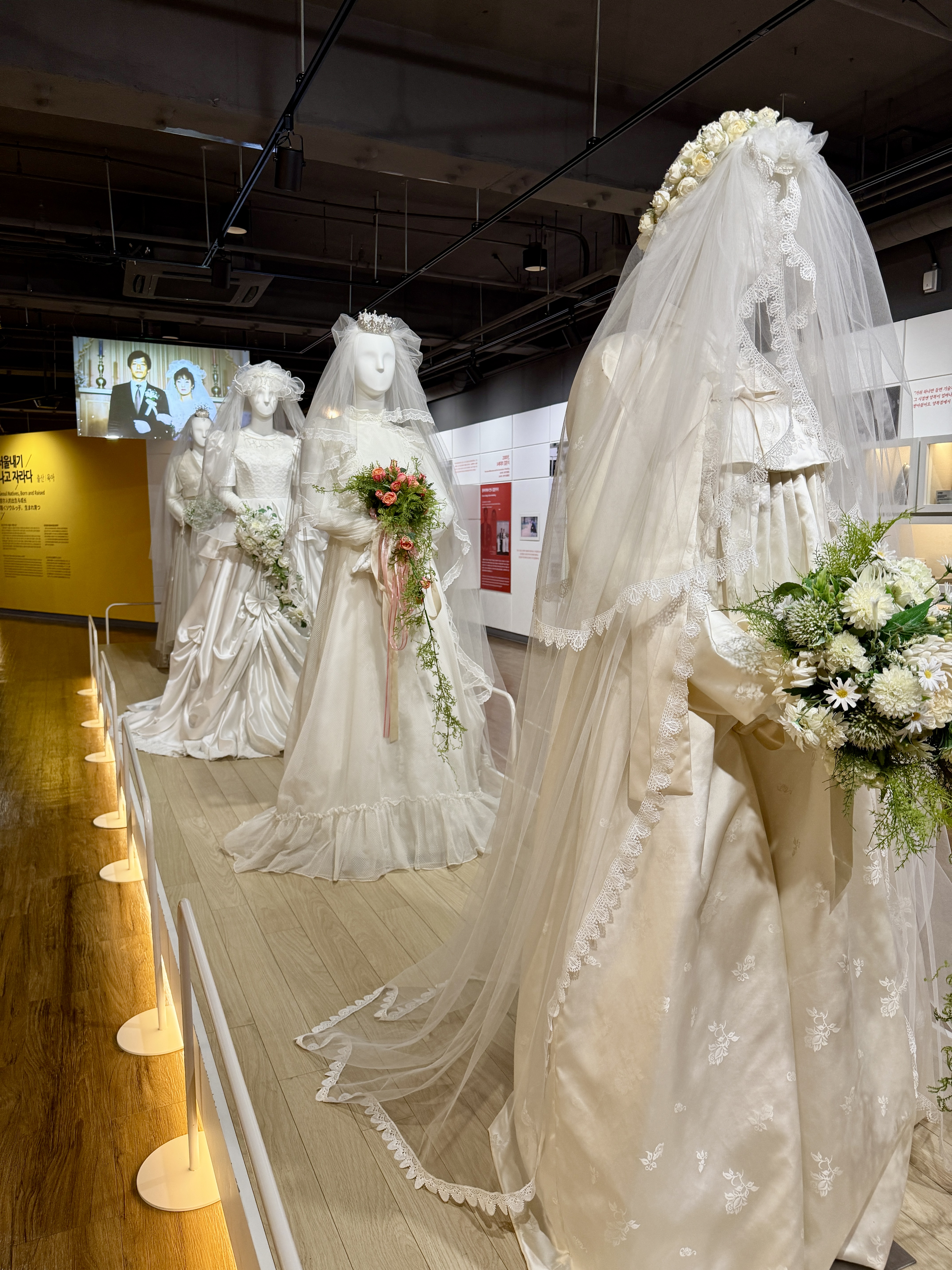
The Seoul Museum of Urban Life was actually quite interesting. It is located in a former court building that was abandoned when a newer court (or prosecutor’s office) was established. There are some parts that are devoted to children with activities like seeing the city throjgh the vantage point of an ant (clever). The museum has preserved many artifacts of working class life in Seoul in the decades between 1950 and 2010 (maybe a little later), and has developed some interesting exhibits focused on various topics from housing design to population growth to elections to child rearing, sports, and weddings.
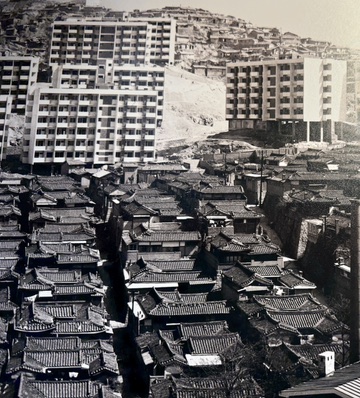
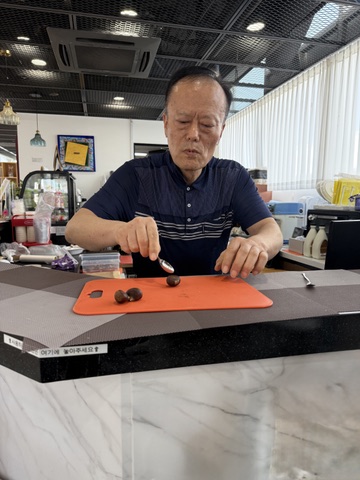
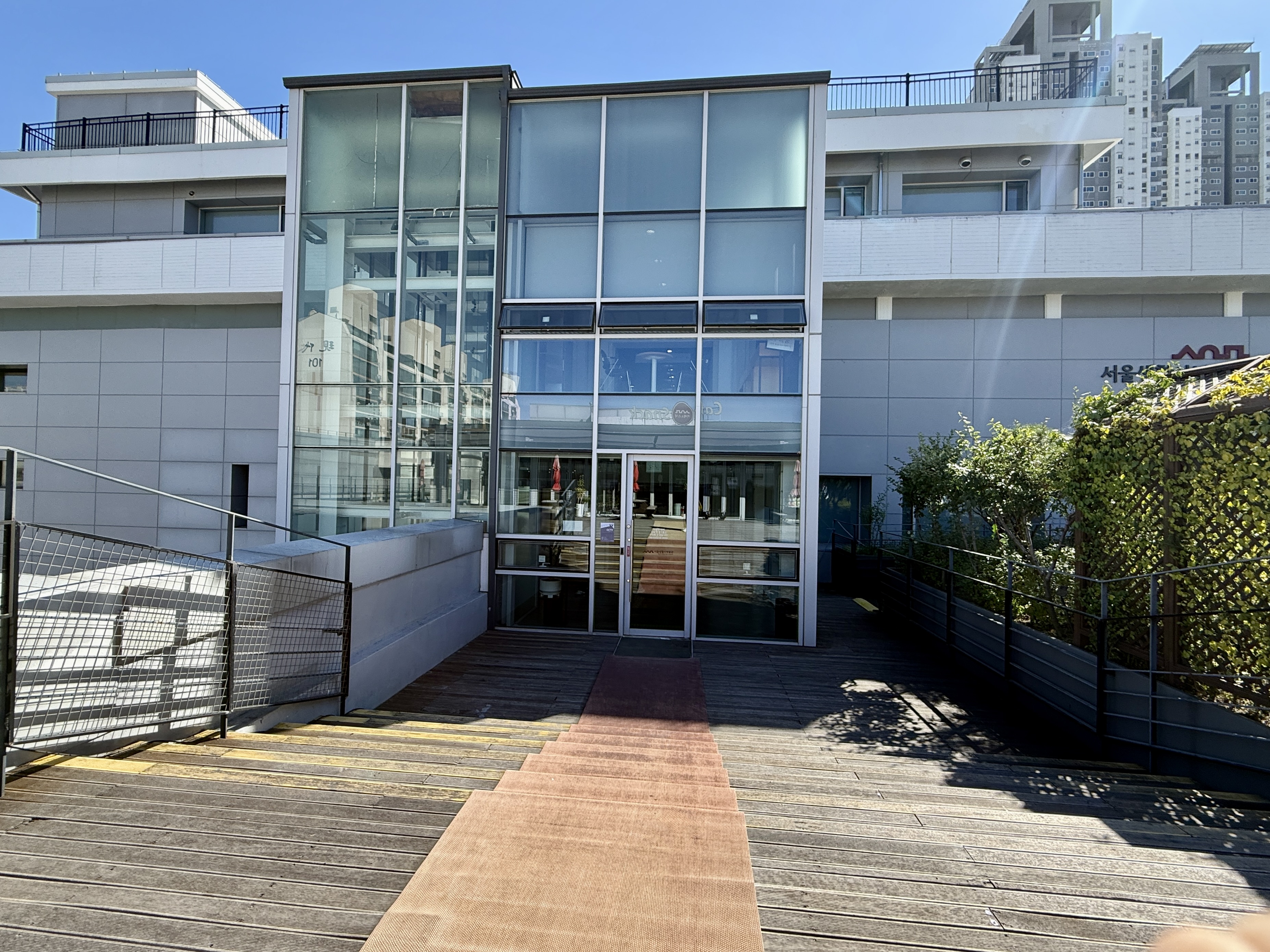
After strolling through the museum, we stopped briefly at the cafe on the third floor to get something cold to drink. Naturally, the menu was automated but it had a translation button so we were fine. Then the guy who worked there (about 70 years old) asked where I was from and began to cut open some chestnuts for me (a little gift, he said). Then Mike came and ordered a smoothie or something and the guy shows up with two hard boiled eggs for us. And when we were about to leave he handed us two bottles of water. Extremely friendly. The museum was pretty empty so maybe he was hoping we’d “spread the word.” I love when museums are located within neighborhoods rather than in special zones creating a “culture hub” or downtown. Museums should be accessible and local.
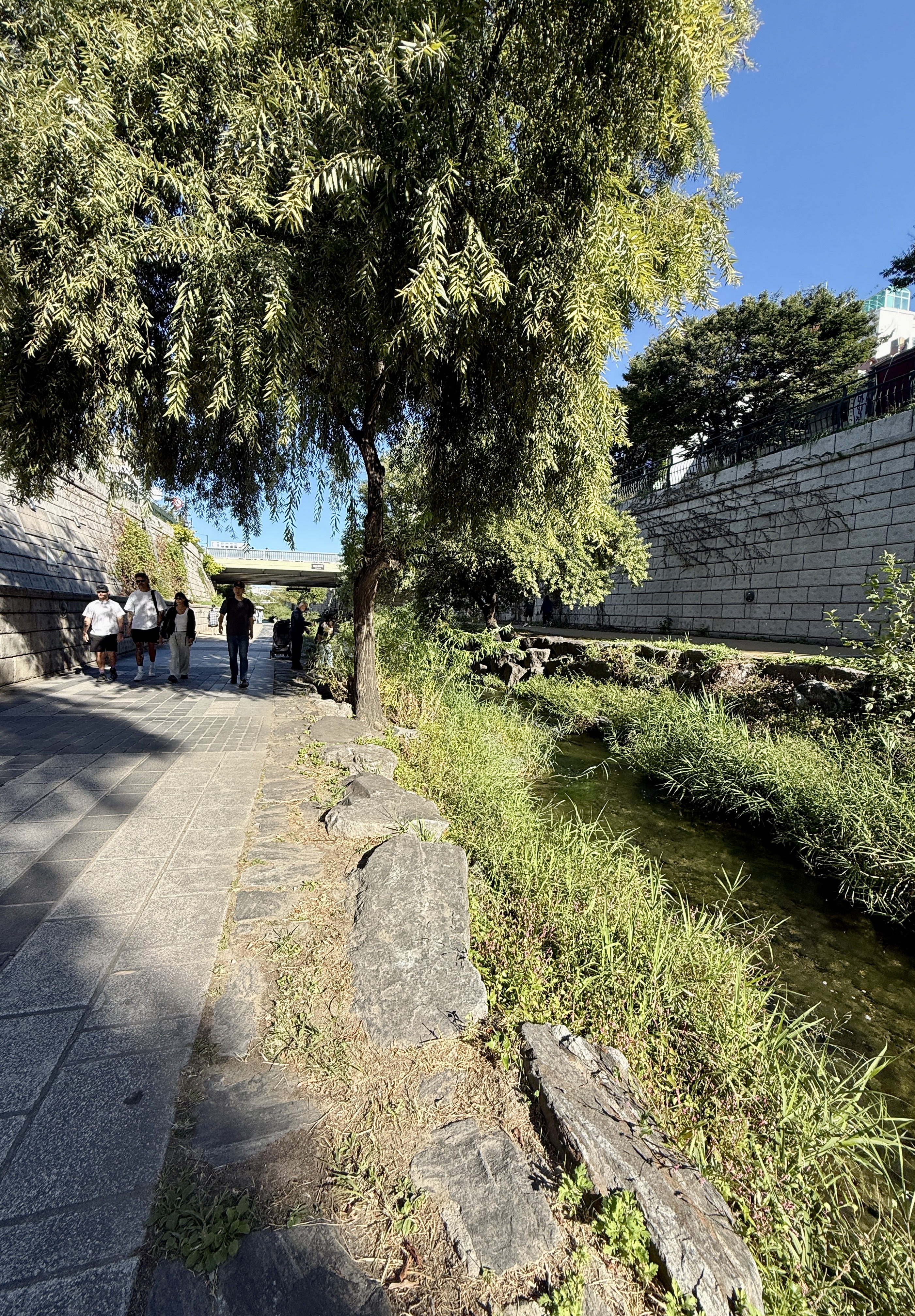
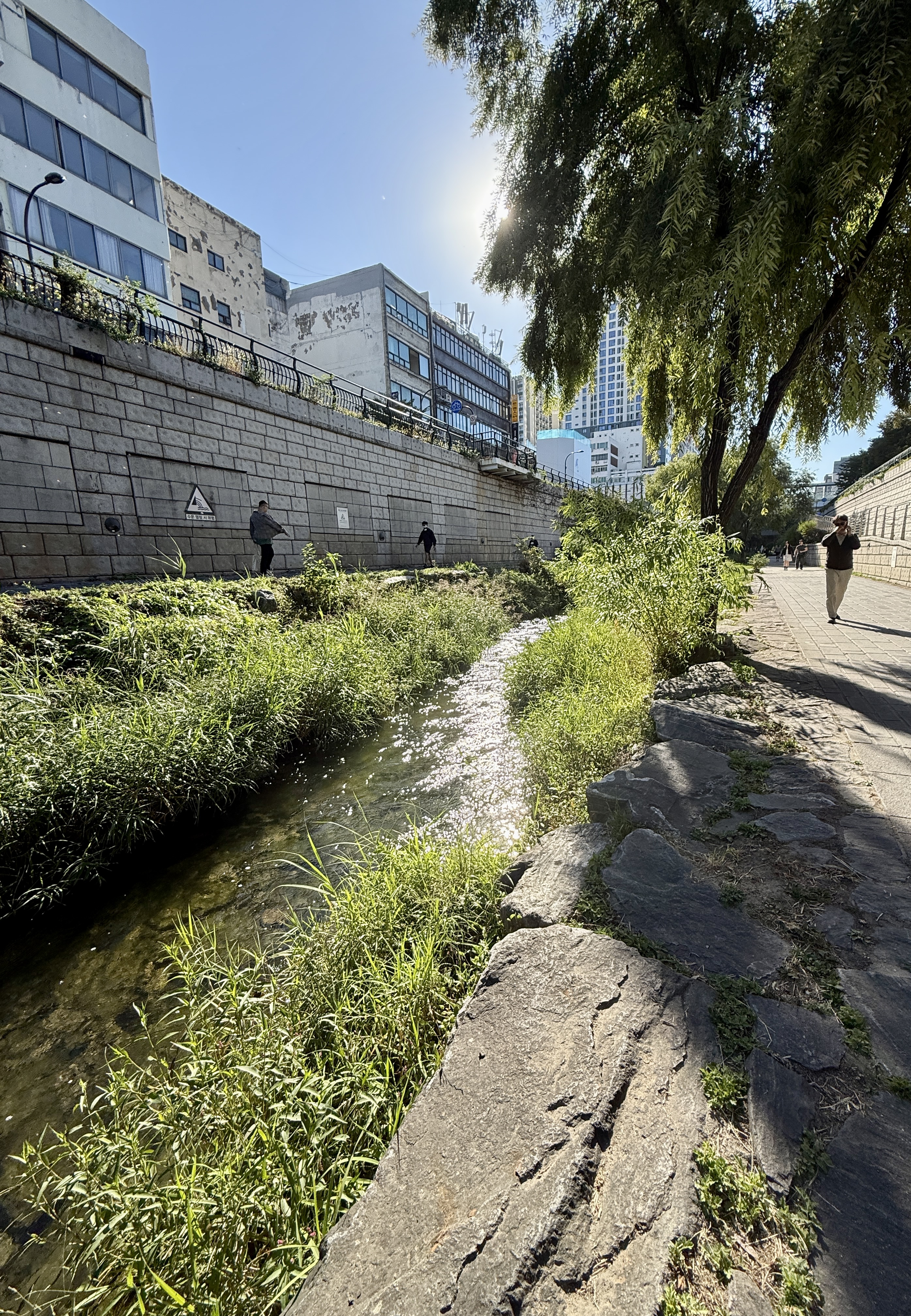
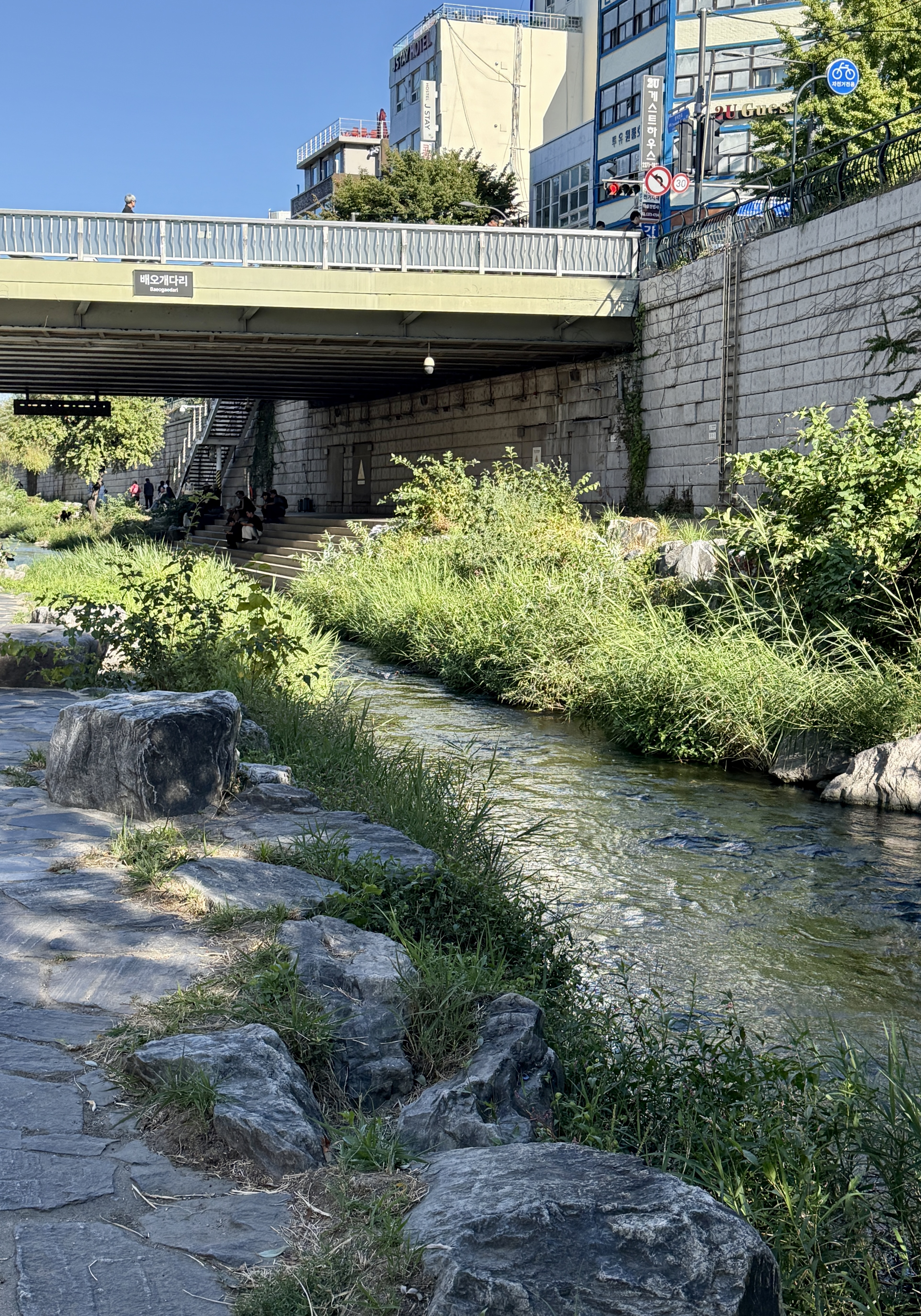
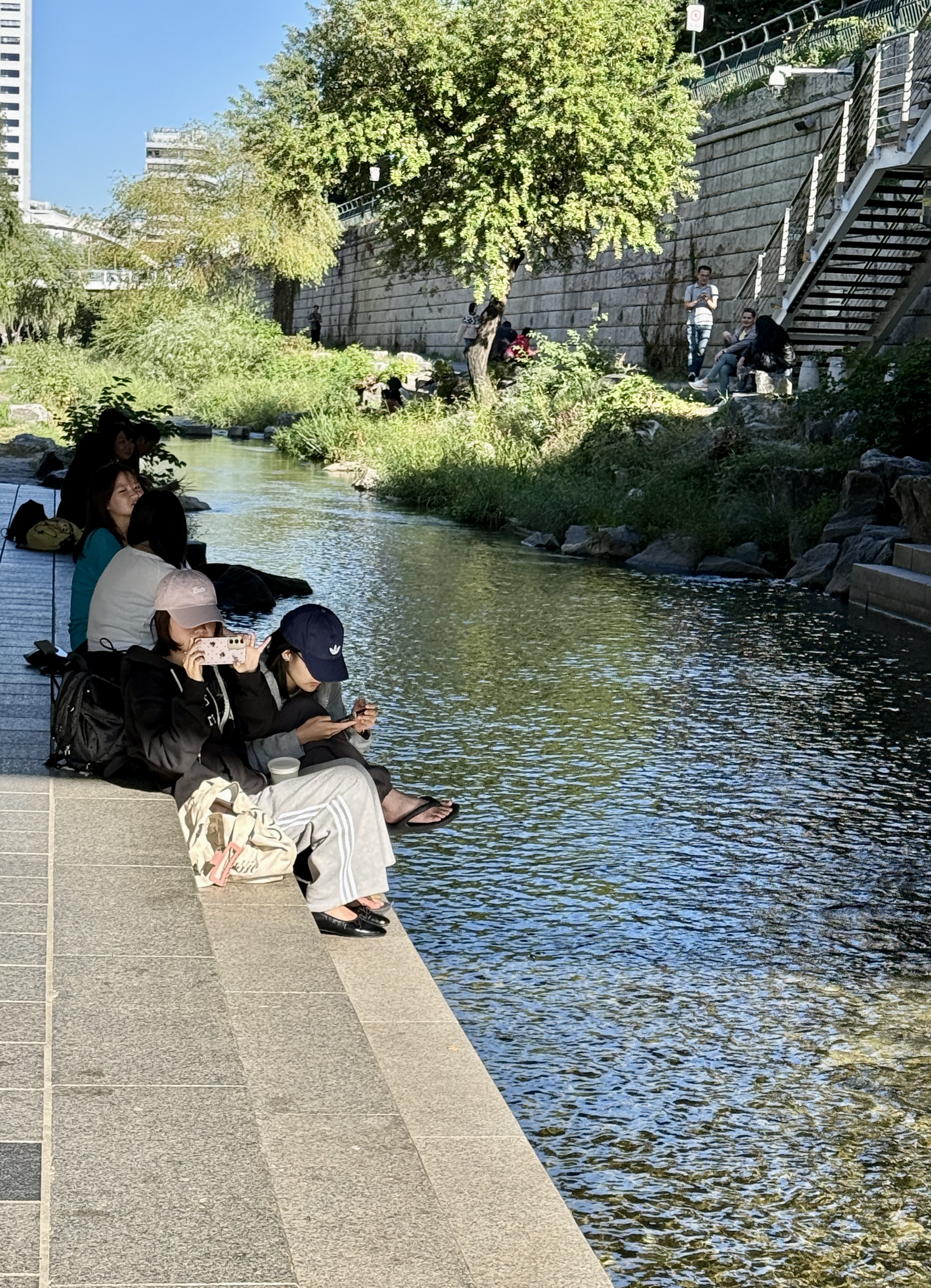
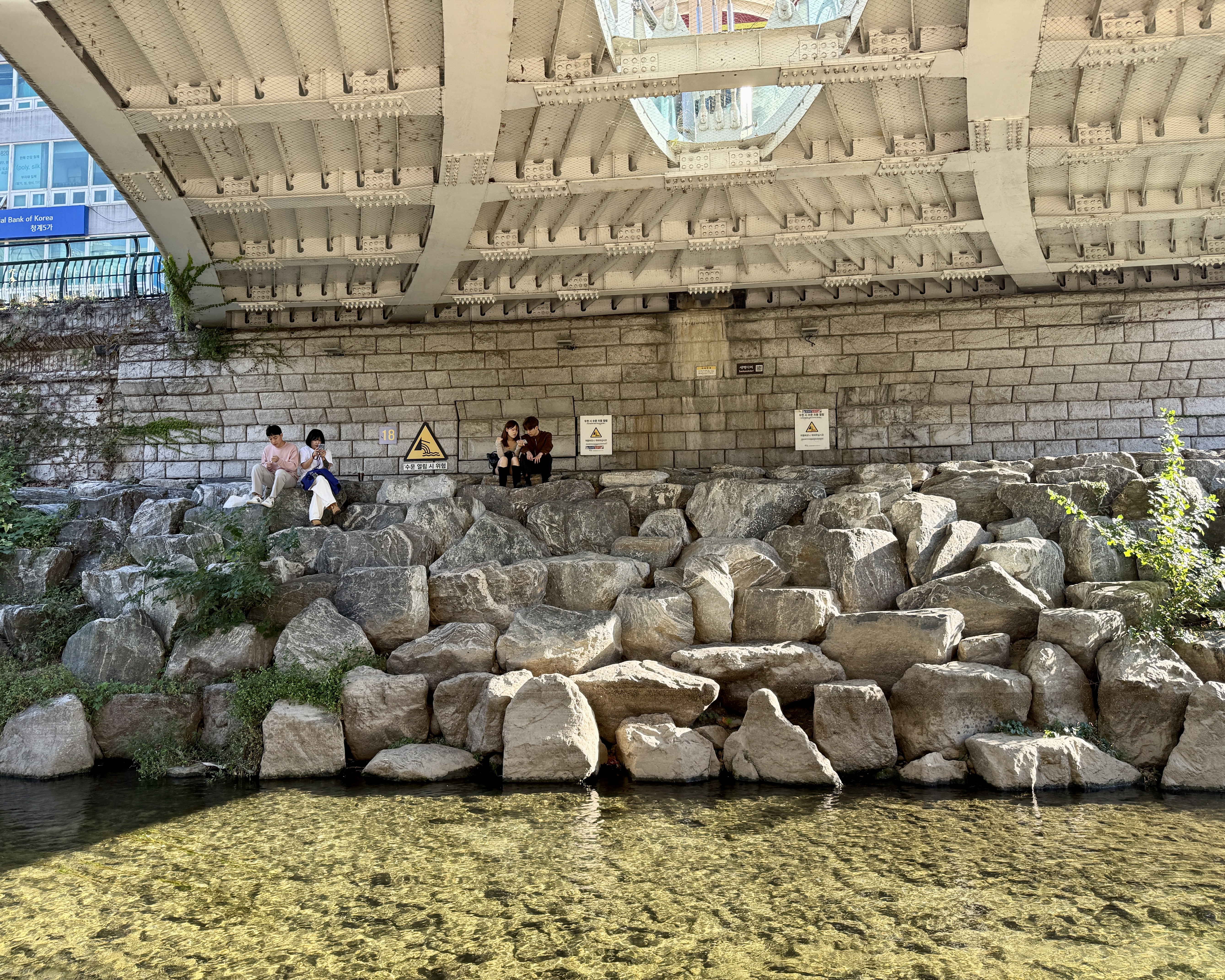
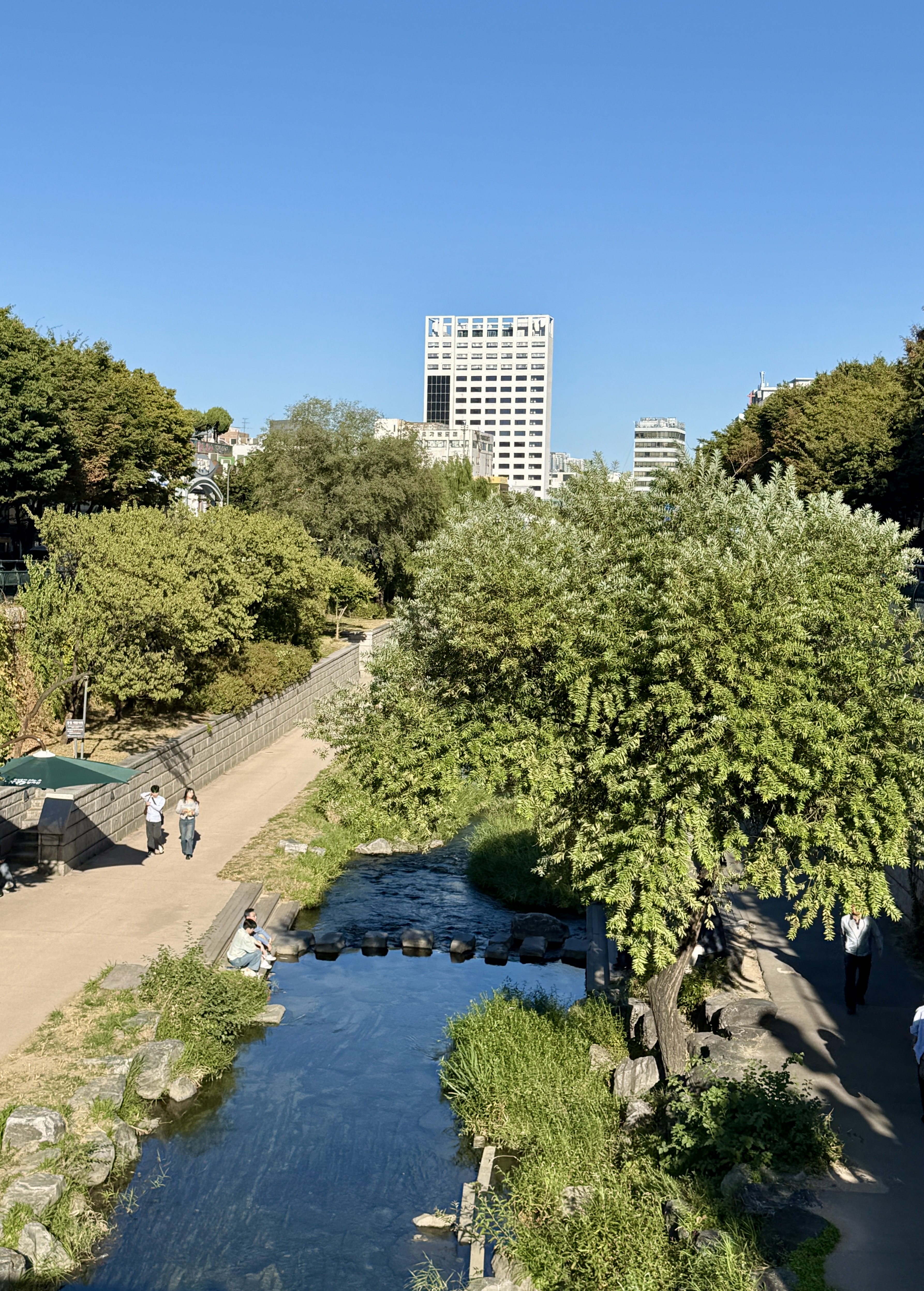
Then we headed to Sewoon Sangga, a 1967 megastructure that was considered state of the art at the time—a brutalist structure with bridges above streets that connected multiple buildings. It was in pretty bad shape, but it turned out to be right at the center of the reclaimed river project, which sits below street level in that area: Cheonggyecheon. And just as we were finding this gem, we got a text from a Korean American friend in Seattle reminding us to visit this project. It is a 6.8 mile river (sort of more like a stream) that had been coverd over with a two-story highway in the 60s when development overruled environment. Shops grew alongside the expressway and there was probably a generation that never even knew there had been a stream below.
In the early 2000s the mayor of Seoul decided to demolish the expressway and reveal the stream underneath. Surprisingly the water was clear and today there are 22 bridges that cross the river creating a sort of sunken park below the hubbub of city life. It’s kind of like Seoul’s Highline… or maybe its Lowline. It’s beautifully planted and edged with stepping stones and plenty of trees. It is charming and relaxing to stroll through (which we did — but not the whole 6.8 miles). A definite gem and literally a breath of fresh air, with lots of people milling about and enjoying the space, The walk back to the subway provided us the chance to stroll past tiny shop after tiny shop –each dedicated to one item: sewing machines (old ones being repaired); motors; light bulbs (similar to what we’ve seen in many developing nations).
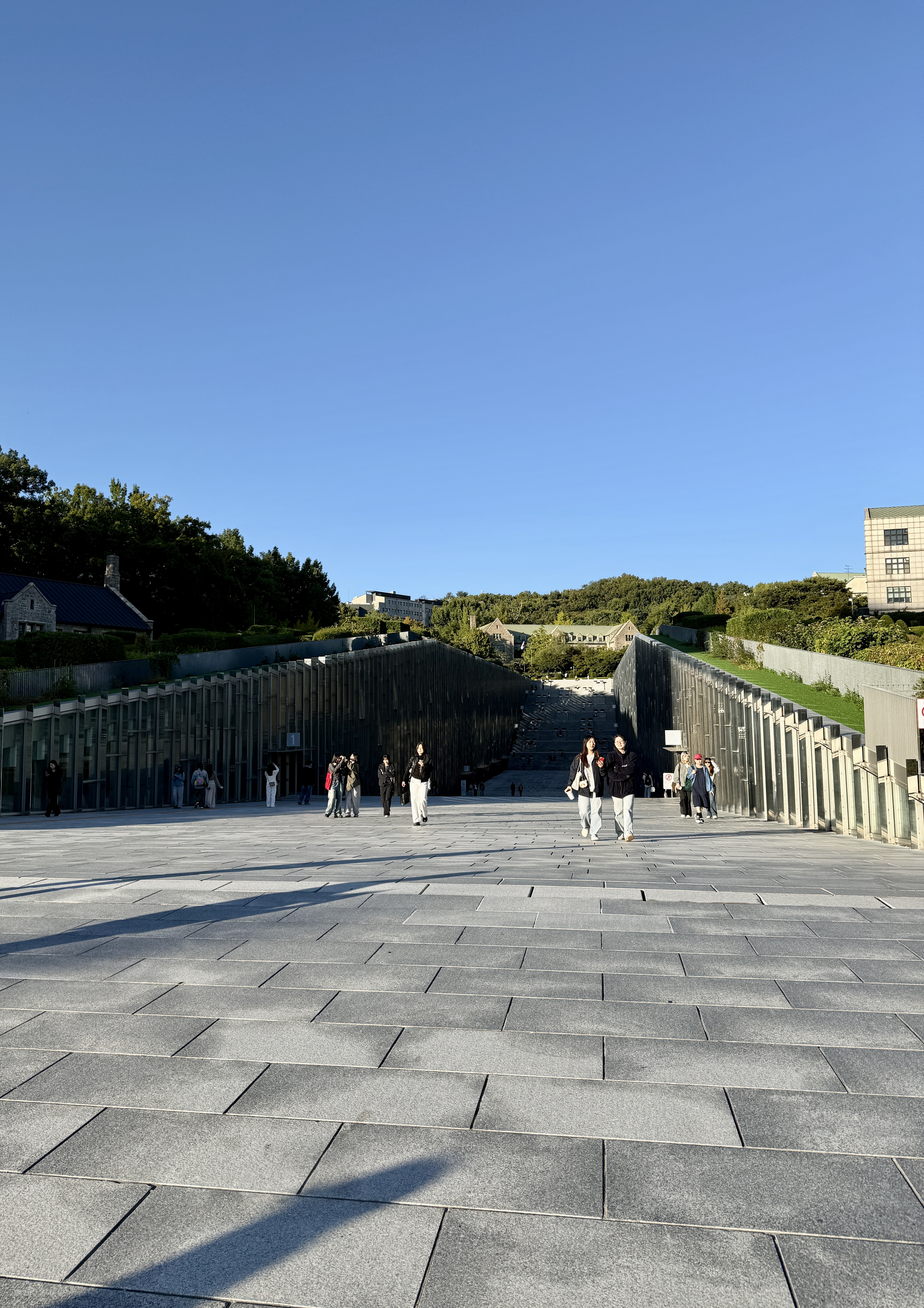
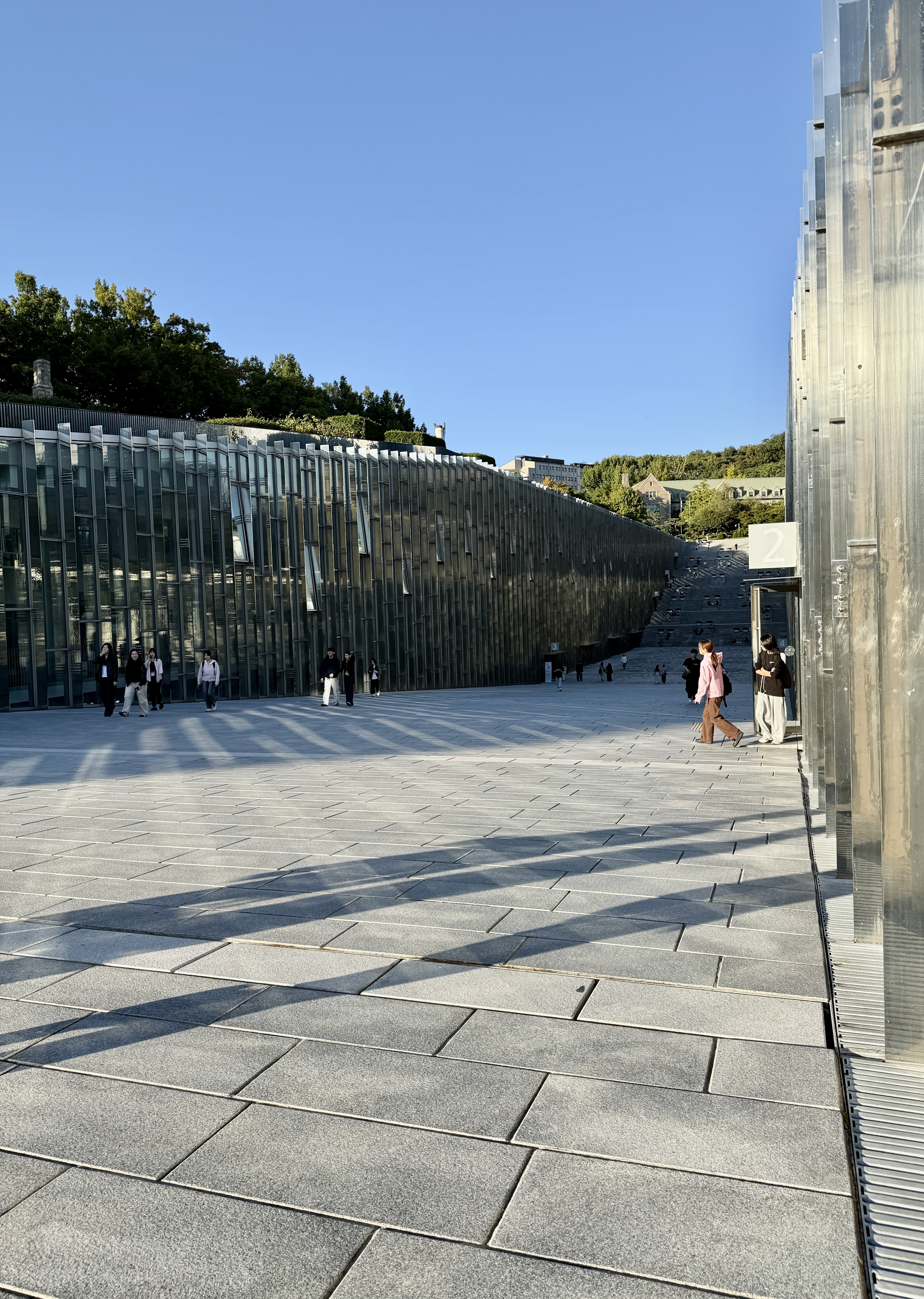
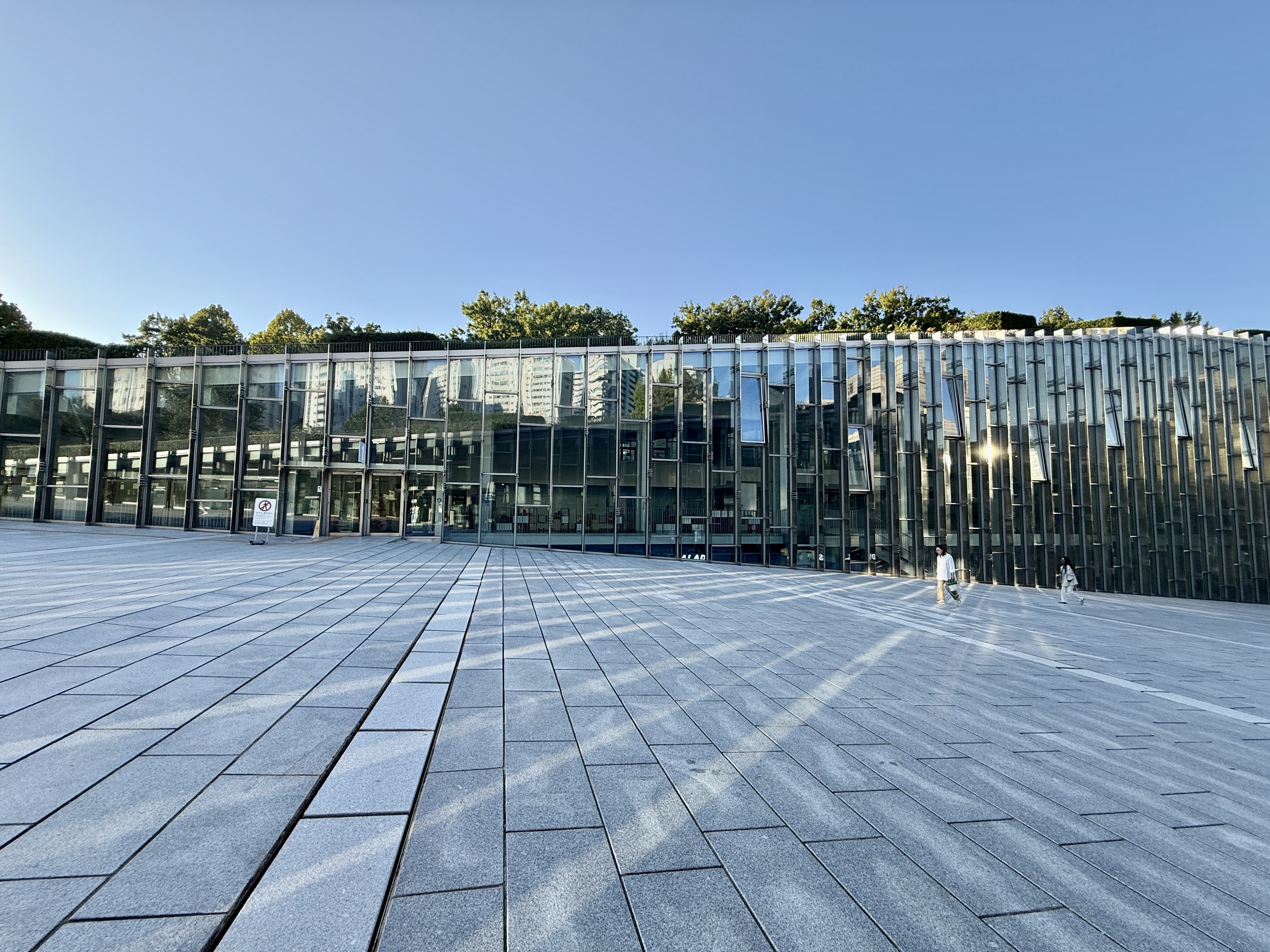
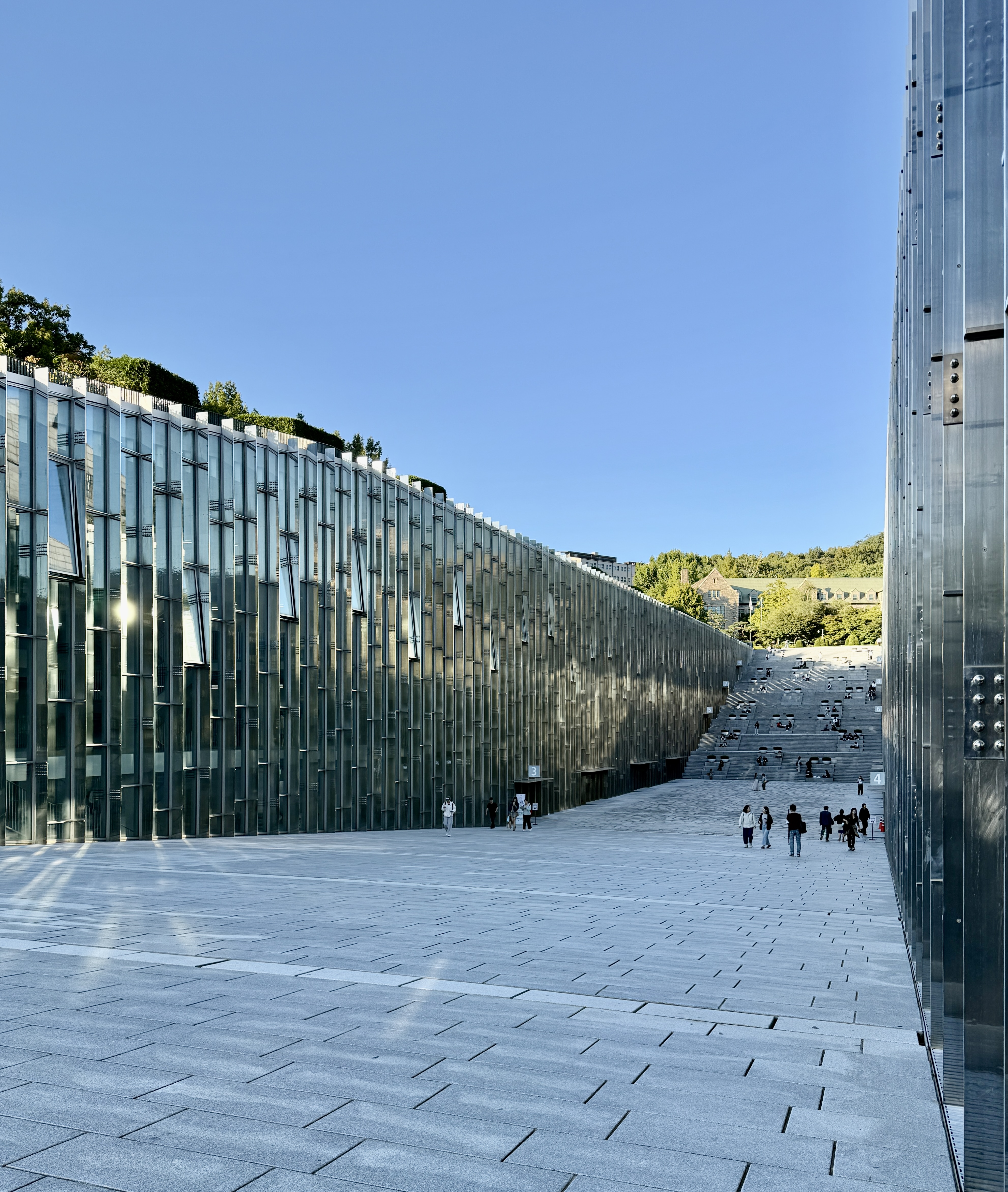
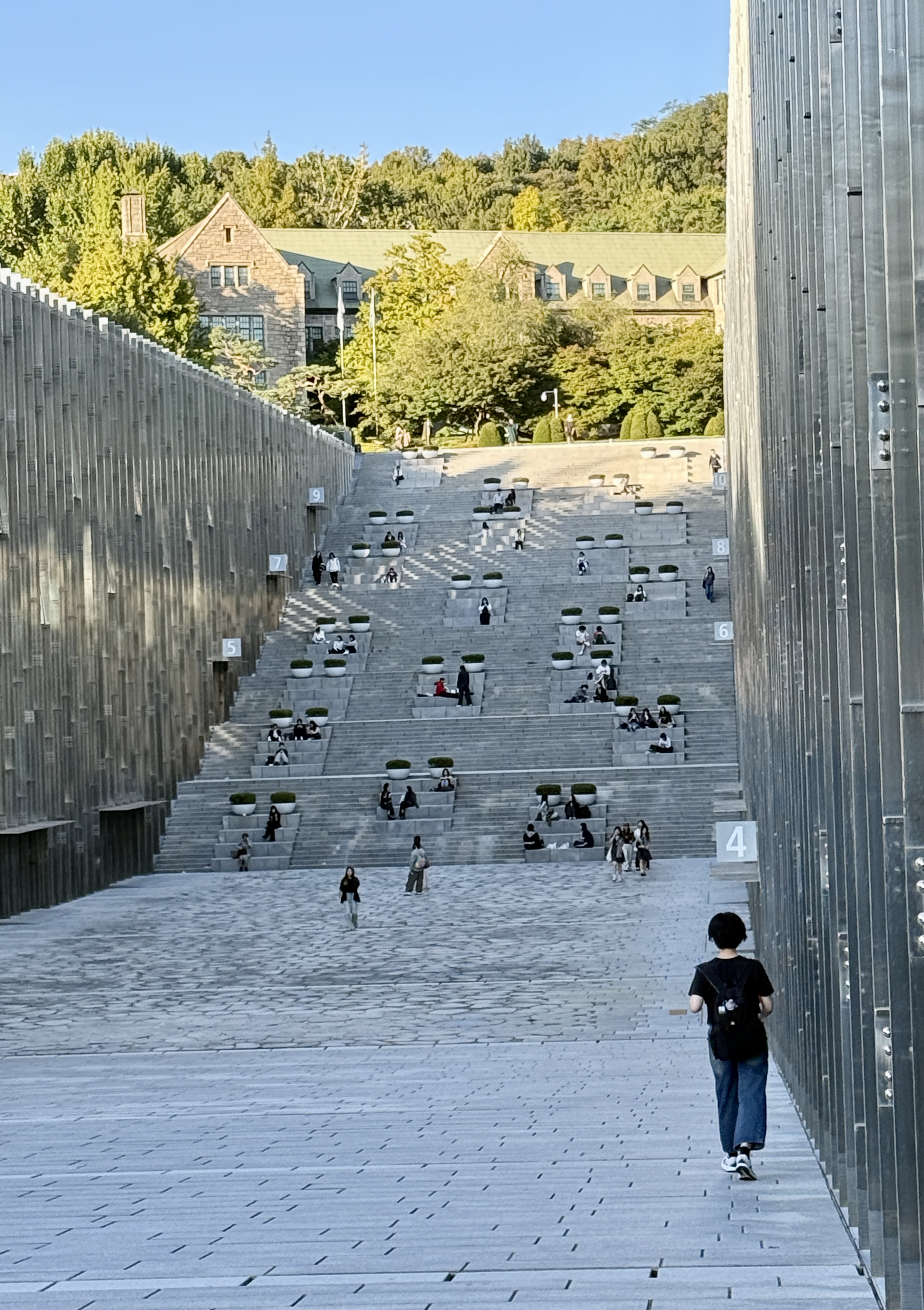
Then we trekked back to the subway to reach our next stop EWHA University, the world’s largest women’s college in the world (23,000 students). It’s a real urban university, with an incredible campus.It’s built on a series of hills and the French architect was commissioned to do new buildings. Rather than spoil the beauty of the natural setting, he buried the 4-5 story buildings underground so that the roofs are green and merge with the hillside. Running through the middle of the two “buried buildings” is a paved chasm with a gently ramping hill on one side and a stepped forum on the other.
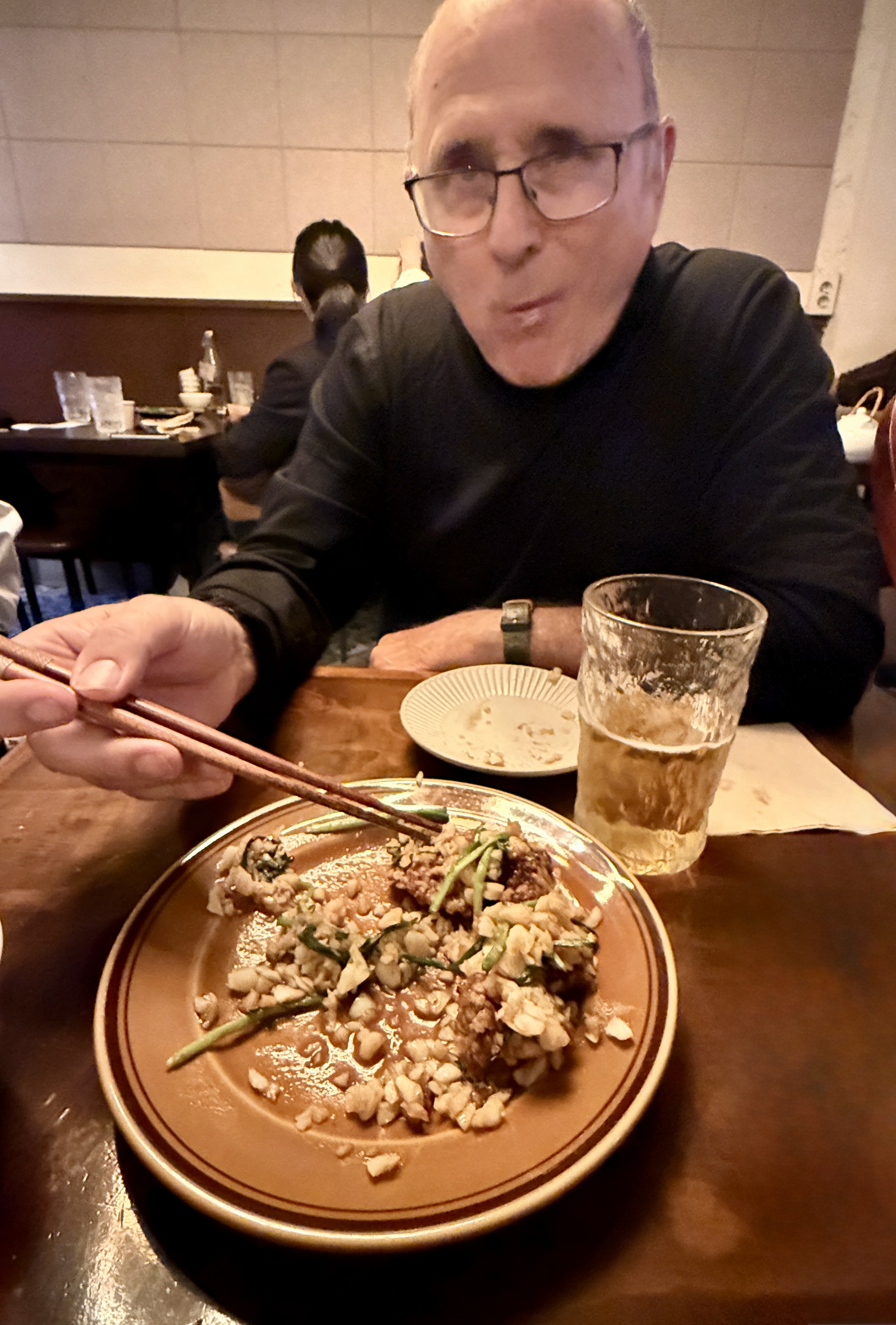
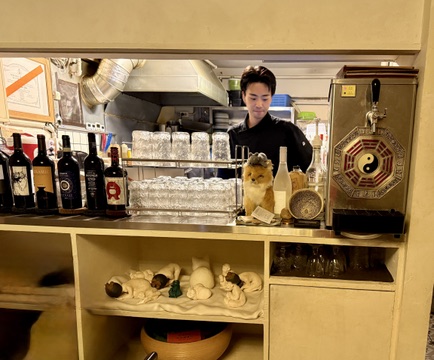
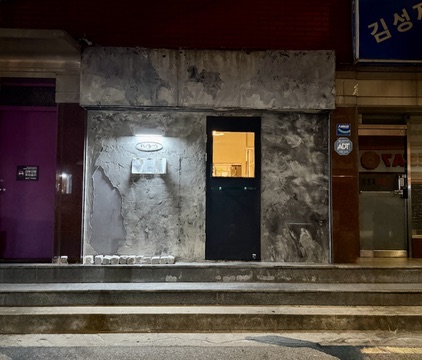
We headed back to the subway (by now pretty beat) and to the hotel to freshen up for dinner. Tonight we went to a tiny place called Hangonggon in the Mapo-gu district. Can’t remember where I heard about it but we decided to give it a try. We had some trouble making a reservation and finally sent a note on Instagram. They were adamant that I phone exactly an hour before our reservation, which I did. Hangonggon seats about 16 people (that’s it!) and is very casual. There is no name on the door and no signage anywhere. The menu is small and includes about 7 different fried chicken dishes. We chose the honey mustard garlic version, and we had the spicy pork noodles as well—and beers. At the end of the meal they gave us each a glass of some kind of after dinner wine. Then we walked back to the hotel, making a quick detour for some great gelato.
That’s it. Hard to believe tomorrow will be our last full day in Seoul. So much more to see and do. Guess, another trip needs to be planned.

