22. Milan. Like a Typical Milanese. May 2 2023.
First the really good news…. Mike tested Negative today!!! Just in time to leave Milan, so by the time we leave tomorrow, he will have spent 7 days being in Milan, looking at the four walls of his room… and the weird television shows he’s been watching. Today he said he watched crayfish mate in a stream while raccoons were hunting them. But, all is good. We are going out to dinner tonight and then we leave the hotel at 8 am tomorrow morning (Wednesday); we arrive at SFO around 10 pm same day.
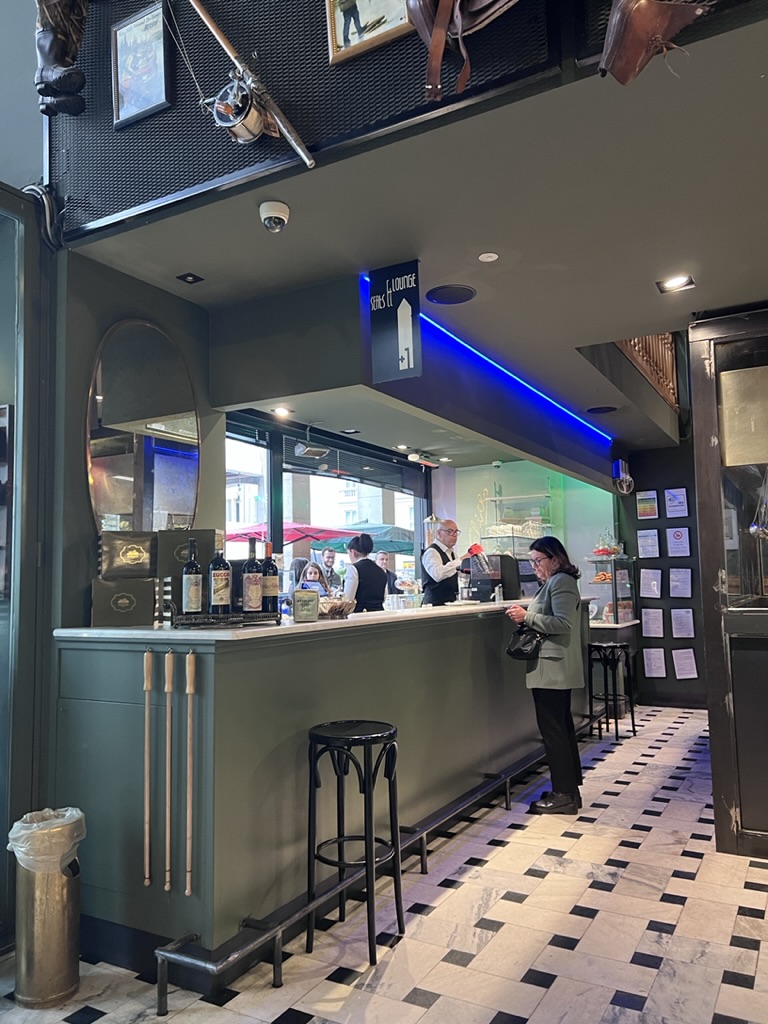
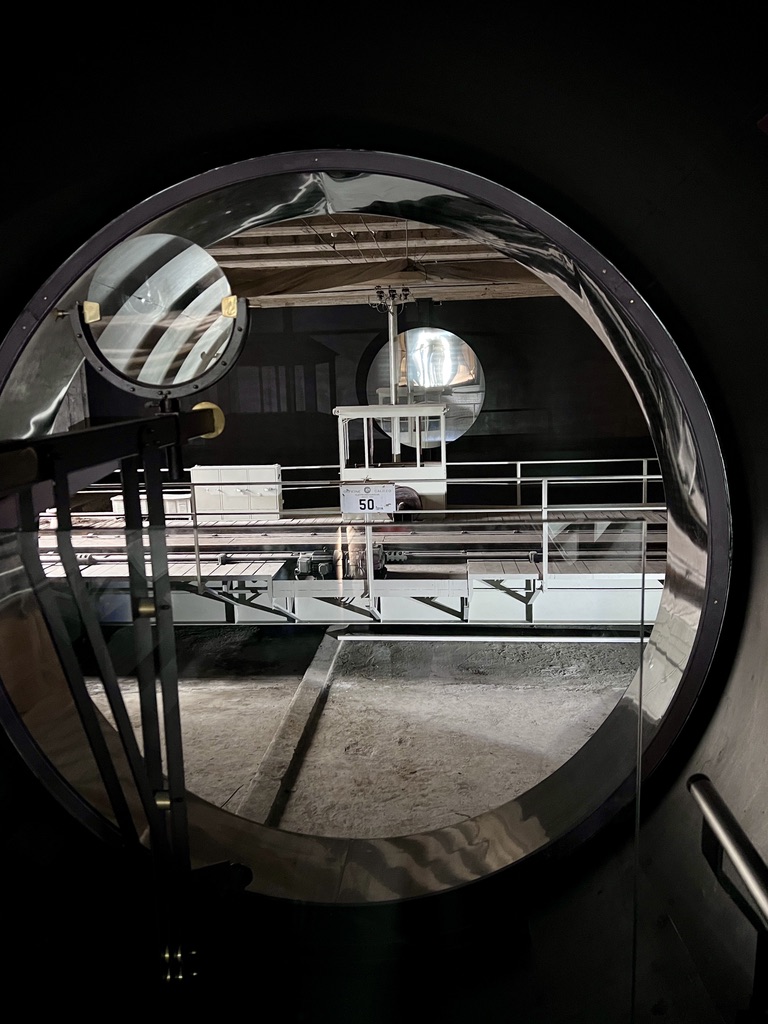
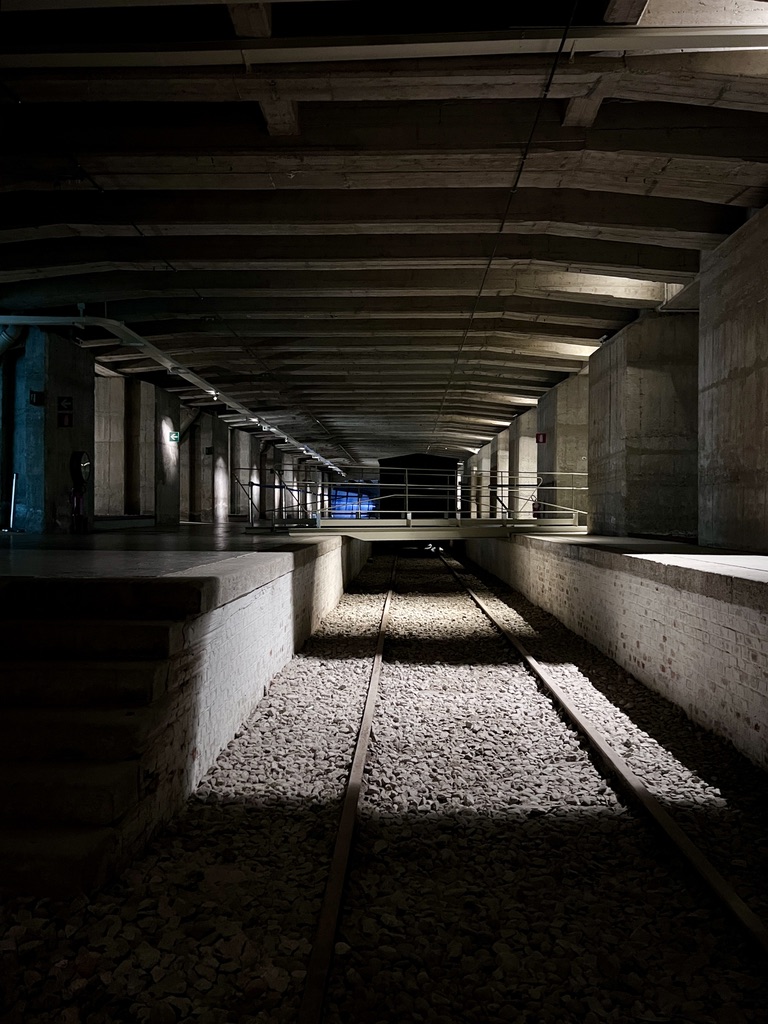
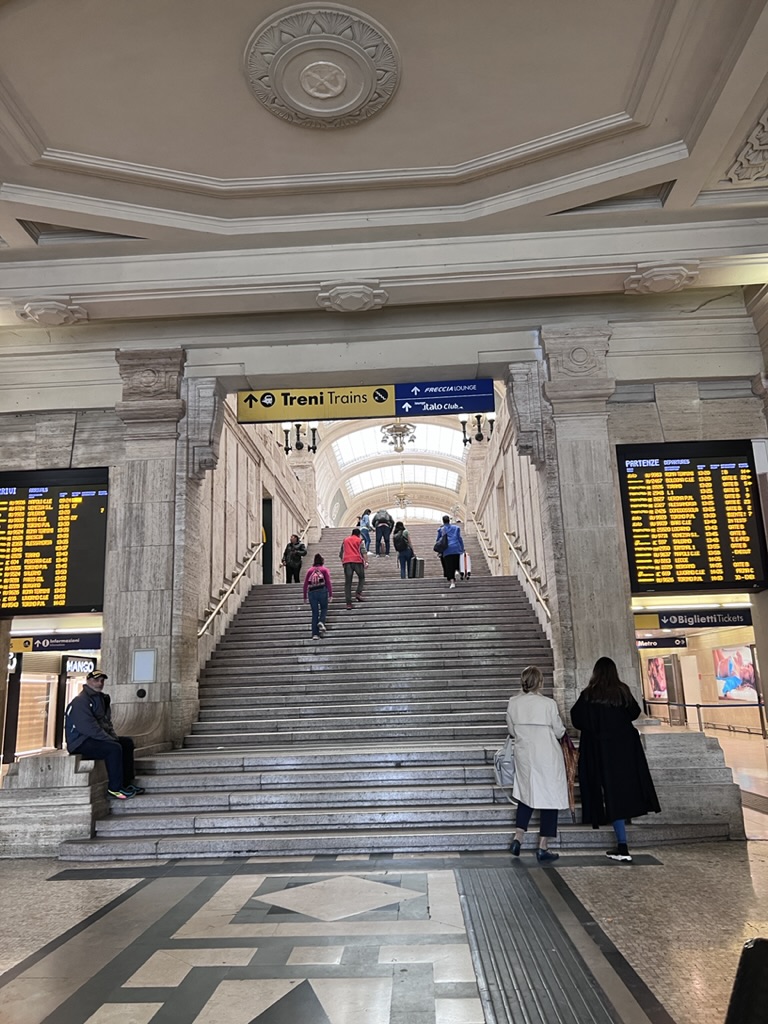
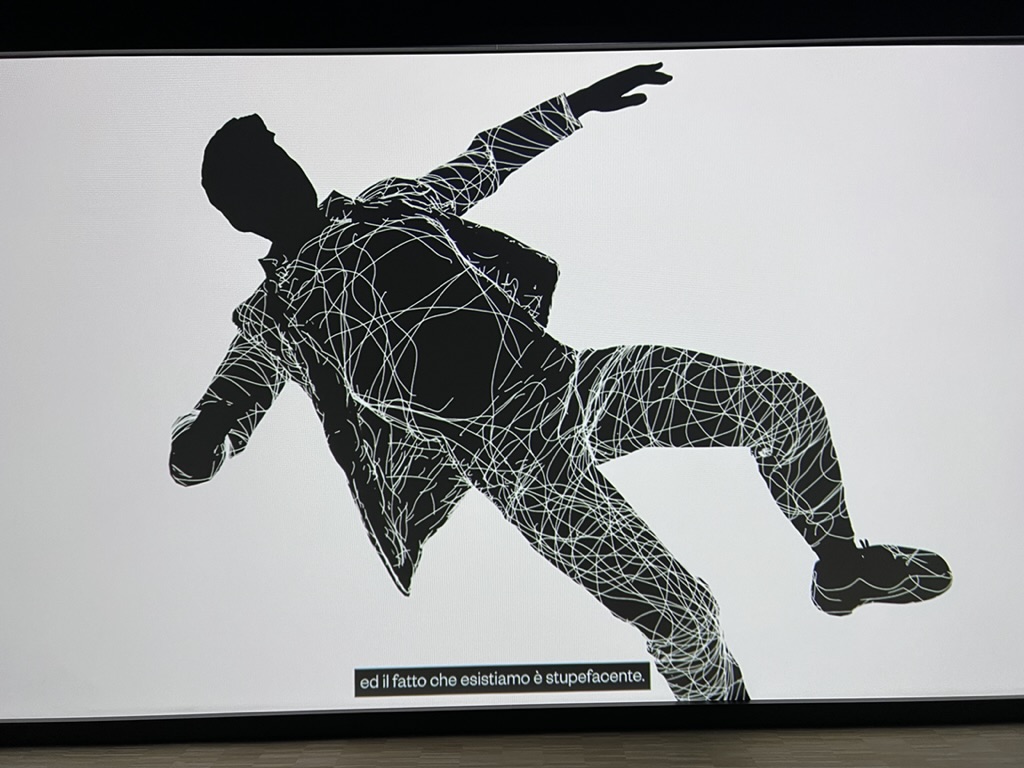
Today it actually didn’t rain so I headed out—first to the Shoah Memorial which is located at the Central Station, in the area where between 1943 and 1945—away from public view and where previously mail was loaded and unloaded. In this area, hundreds of deportees, mostly Jews, were forced onto rail cars that had been used for livestock. The cars were filled body to body with Jews and then raised in a railroad car elevator between tracks 18 and 19 and then deported to concentration camps. The area has remained mostly unchanged physically. It is filled now with some of the original rail cars and then with small viewing areas where videos of documentary interviews with survivors are shown.
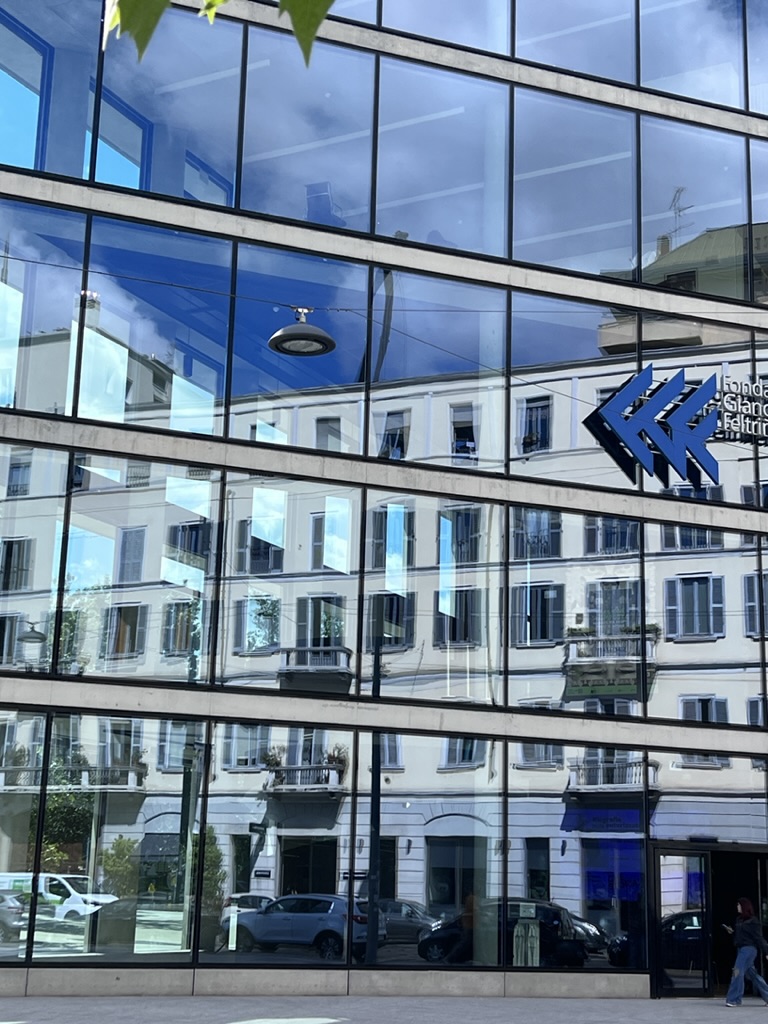
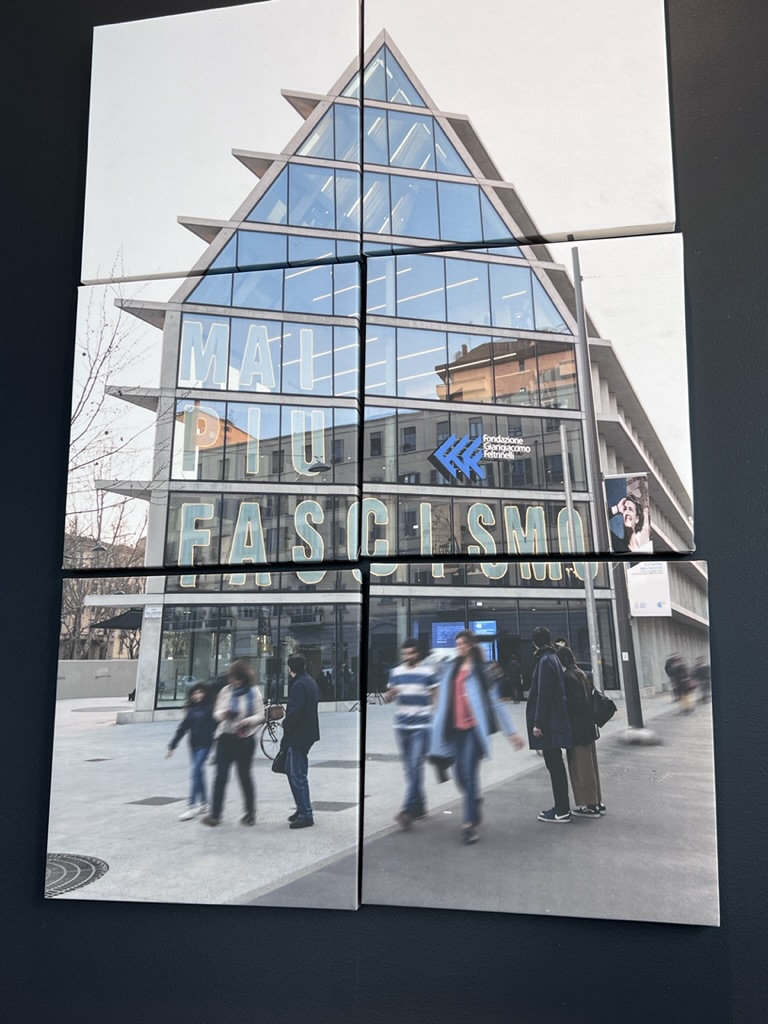
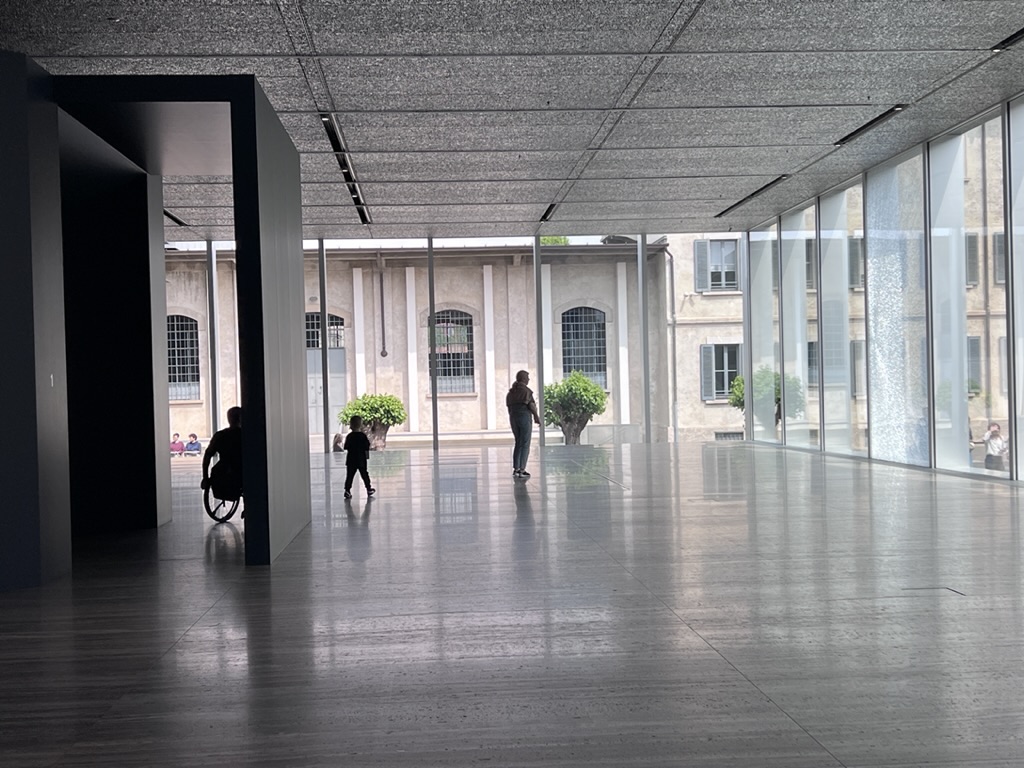
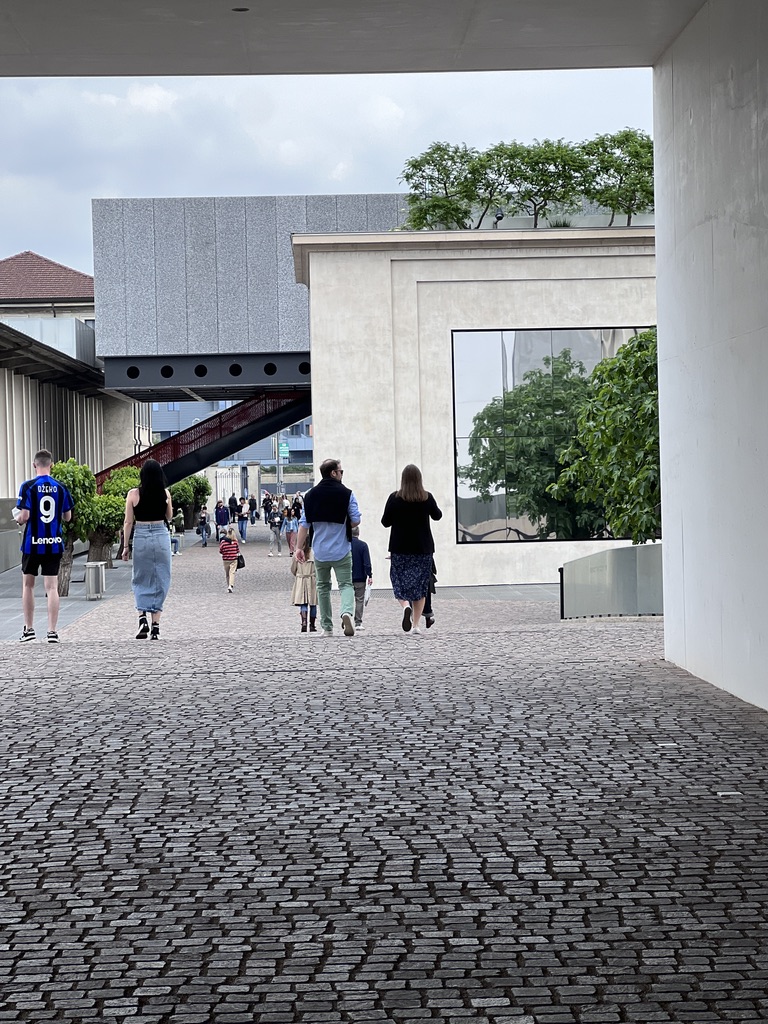
From there I walked about a 1.5 miles to the Fondazione Giangiacomo Feltrinelli, which is dedicated to social practice art. It’s within an interesting building. When I arrived, there weren’t any exhibits (everything was under construction), but the 5th floor was open and there were good views of the city. Then, somewhat exhausted I took a taxi to Peck—a gourmet food shop established in 1883. Pretty amazing place.
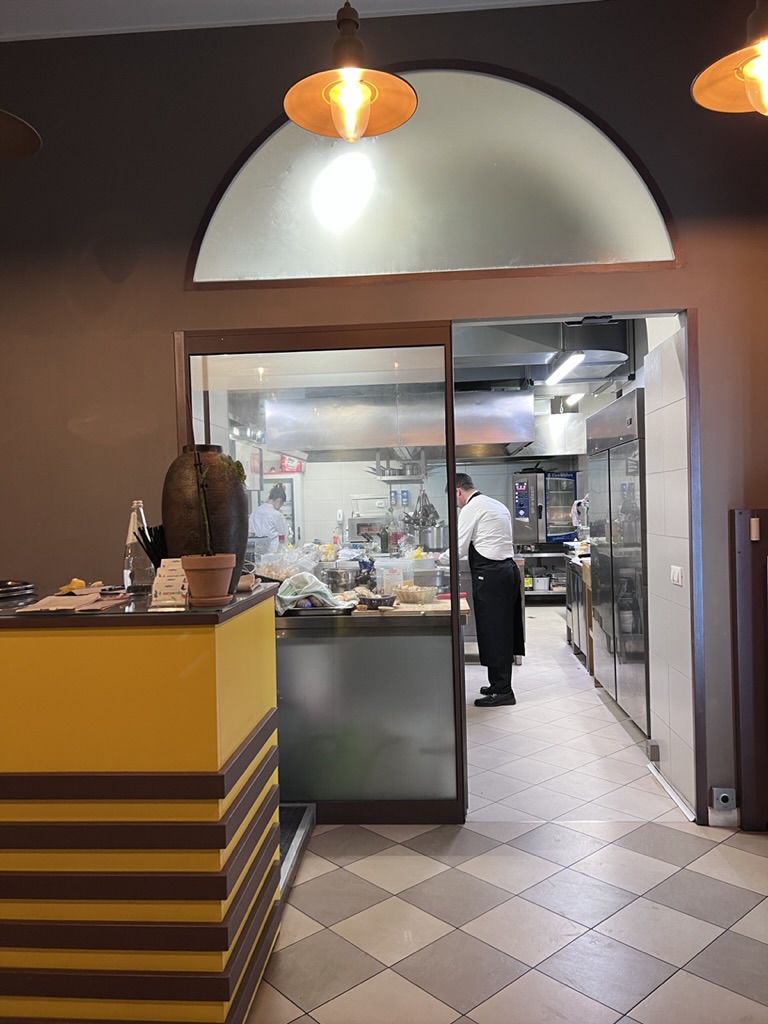
Then a little packing, and off to dinner at La Brisa—a charming little restaurant with amazing food. We started (after two different “gifts” from the chef) with the beef diaphragm tartare which was great; shared the pasta with octopus which was prepared perfectly—octopus was soft and tasty; then we had the crispy pig with some veggies; and finally we had the pear tatin which had a bit of whipped ricotta on the side. I had wine; Mike is abstaining for a few ore days until the Paxlovid is out of his system.

That’s it… gotta pack and get up really early to get taxi to the airport.
Be well –
We’re ready to get home; sorry we missed Geneva, but we will figure out when to come—most likely Christmas.
Fern
21. May Day in Milan. May 1 2023. (Day 6 in Milan)

Happy May Day/Workers Day !!
Hope you are all well. Mike seems to be improving. Today he technically completed his 5-day isolation and also his Paxlovid regimen. Still tired, but definitely seems to be moving in the right direction. I’m hopeful he can join me for a really nice dinner tonight and maybe even stroll Milan a bit tomorrow, before we head to the states on Wednesday morning. We’re keeping the two rooms until we leave, as a precaution. Buy shares in Hyatt (or some particular brand of Hyatt called “small luxury hotels.”) Given the number of days we’ve stayed here and the two rooms, stocks are sure to go up. Mike’s been watching Italian television and he’s got a few Italian words now like “dragon” (drago) and “other dragon” (altra drago).
It’s May Day and I reminisced a bit about varioius cities where I have experienced May Day, inlcuding Paris and Helsinki, where May Day is a big deal politically, but also includes a lot of drinking.
Before heading out, I had a little chat with the woman at the hotel who I think is the manager; she’s probably in her late 30s and speaks English very well. She asked a bit about me and always asks how Mike is doing. In reality she probably knows his situation better than me because staff come in with room service food and to clean the room (although he leaves when they come and he goes to sit on a little deck). Anyway, turns out she is from Ukraine and has lived in Milan for about a decade. She went to university in Toronto which explains her English proficiency. We chatted a bit about the situation in Ukraine; her mother came to Italy for a year but has now returned; her grandparents never left; she has many cousins who fled to Italy, Portugal, and other parts of Europe. Her mother went back to Ukraine about a week ago; she was frustrated, had a good job in Ukraine and couldn’t work here in Italy. She says her family is safe. She says the Ukrainians see little hope for any resolution as long as Putin remains. I asked about Zelensky and she said that within the country Ukrainians see him as a god. But she also said that she gets a good perspective on the war because she can read and listen to the news in many languages and from different sources — US, Russia, Ukraine, Italy, etc. which she says enables her to find balance in the reports.
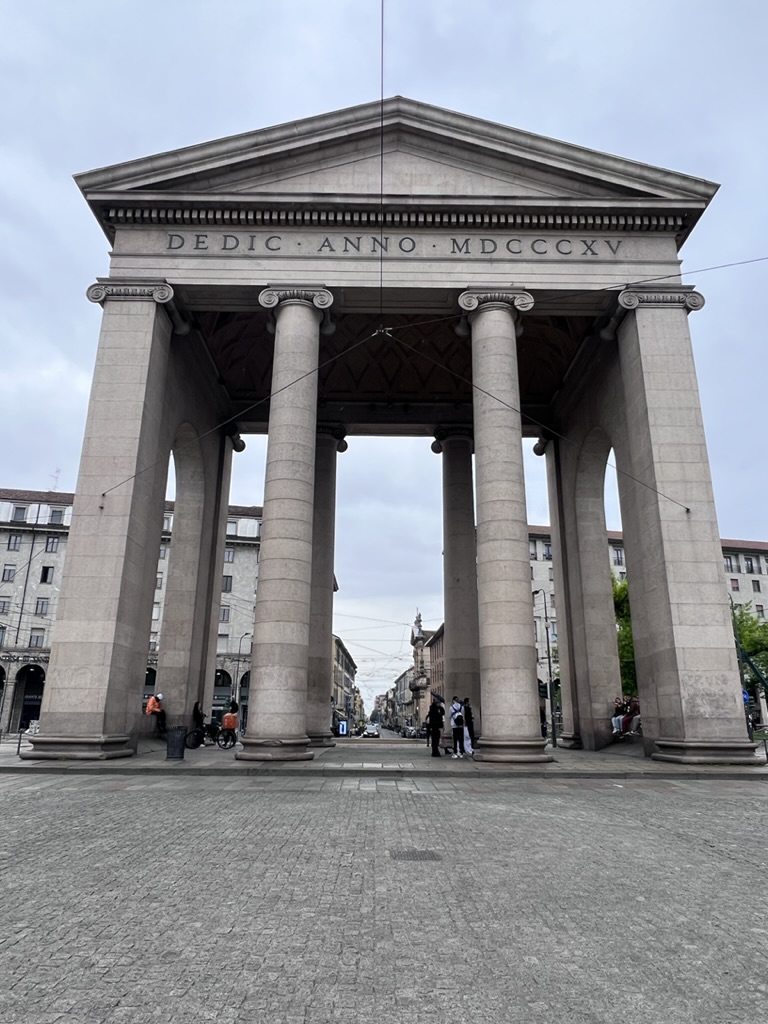
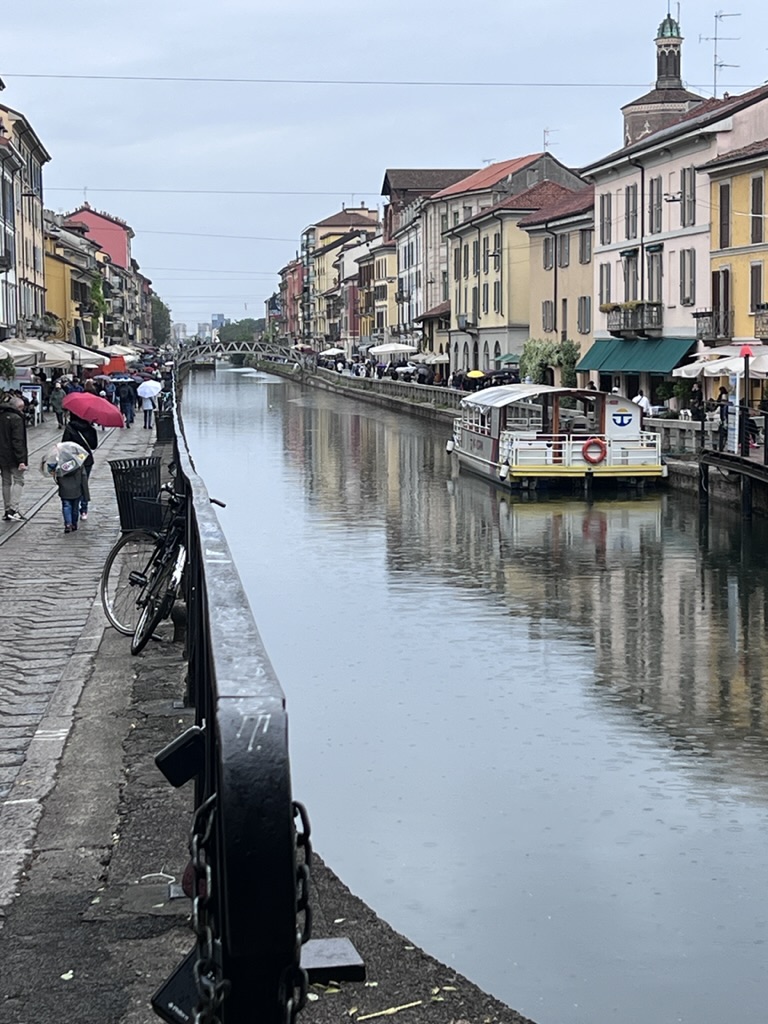
Then, I had my ritual stand-up pastry and juice for breakfast at a little café and since it was raining a bit, I decided to take a taxi to the Arco Porta Ticinese, which is one of three remaining original 12th Century walls of Milan. Wasn’t really that interested in this “gate” but needed some place to tell the taxi to go. I really just wanted to walk in the Navigli neighborhood and also along the canals that line the area. But, for your information, these 12th century walls are gothic style and originally there was a tower on top to watch over the navigable moat. But that part of the canal was filled in over subsequent centuries. The canal is quite lovely and goes a long distance—must be beautiful on a sunny day, which this wasn’t. The Navigli is known as having a lot of quirky charm and also for its active nightlife; basically, I think it’s one of those neighborhoods where people hang out alot—during the day over coffee, and at night over wine and beer. But given that today was a holiday and it was drizzling, the place was pretty quiet which was nice.
Before I say more about the Navigli and my 4-mile walk, around the area and ultimately to Porta Genoa, I need to tell you about my taxi ride from the hotel to the wall. First, it was a female taxi driver, the first one I’ve had in Milan and only the second female taxi driver I’ve had in Italy. But the funny part was that her stepfather is American and his brother lives (or at least lived until about 6 months ago) in Oakland!! Pretty cool, don’t you think—and so very random. She got me to Navigli.
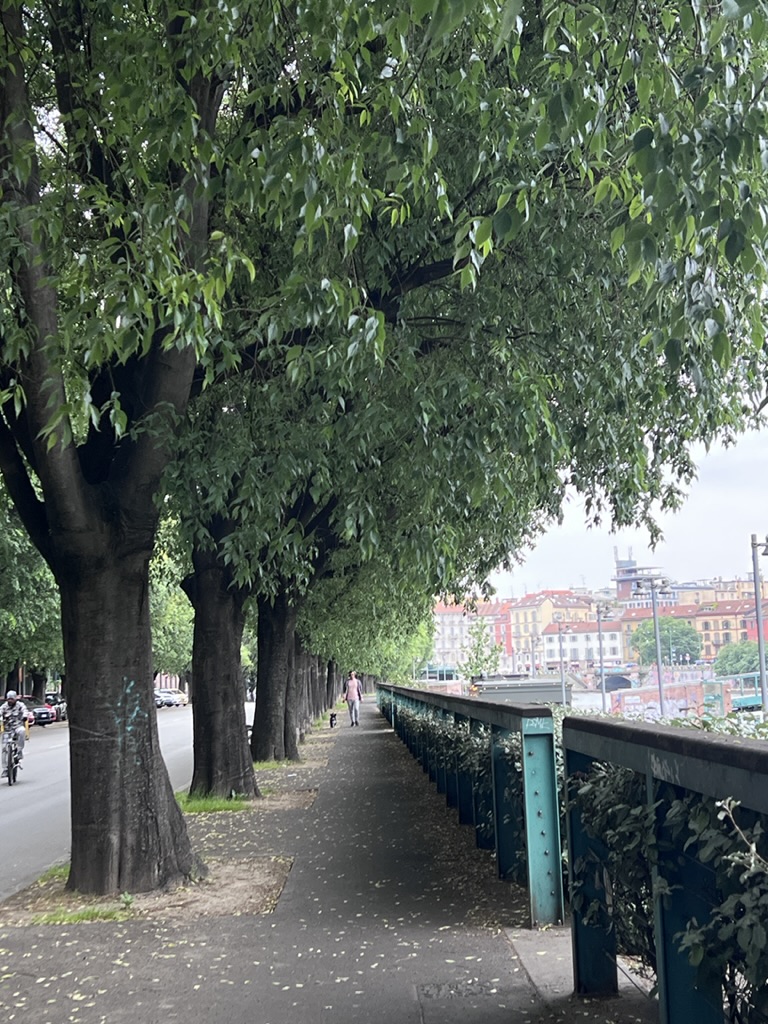
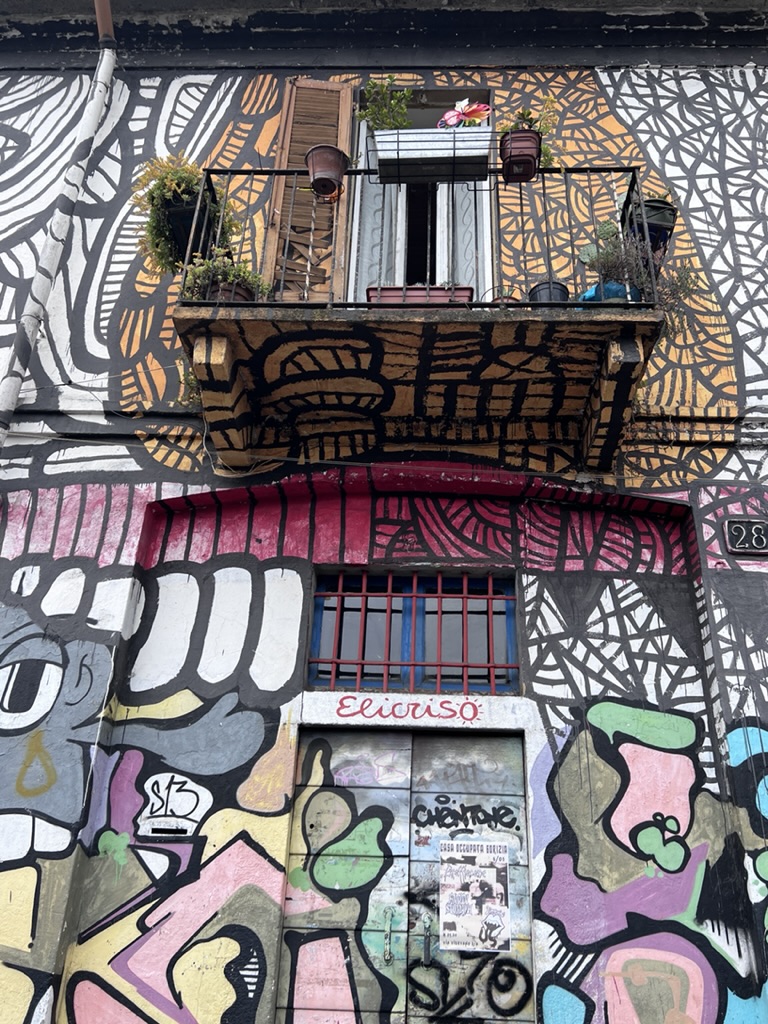
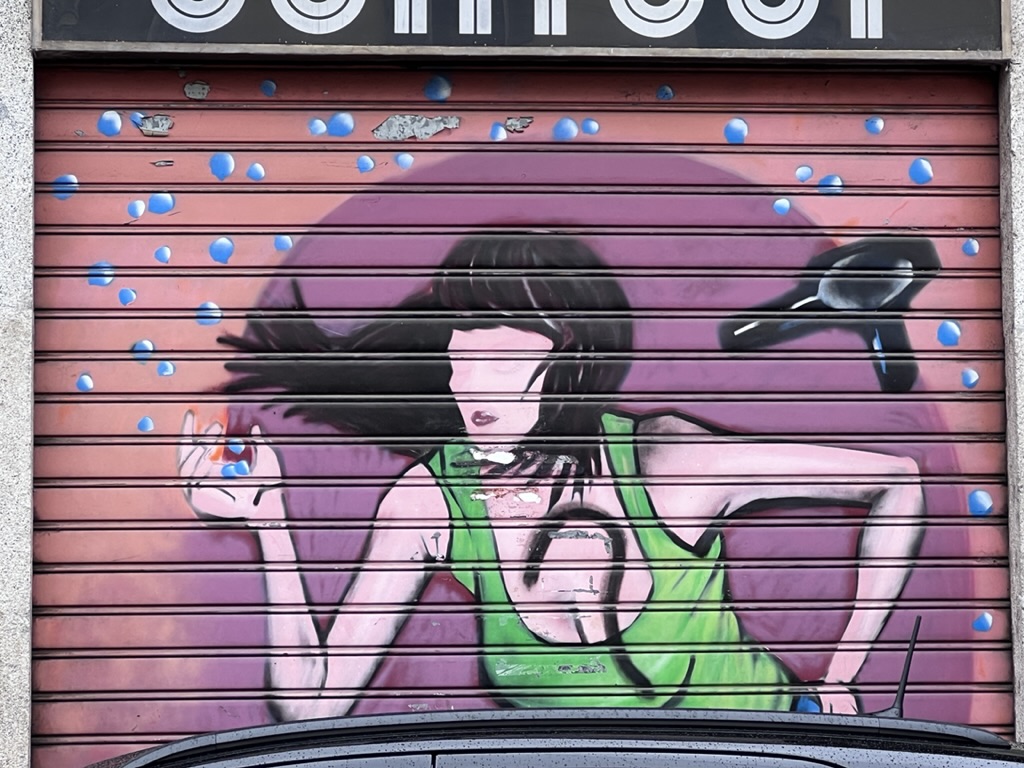
The navigli, which I sense translates to something like navigable is named after the man-made canals that were used for transporting goods and people, and for irrigation too. From what I understand Milan was like a landlocked Venice, crisscrossed by waterways that are now hidden under paved roads. And it was on these waterways that the marble needed for building the Duomo was transported into the center of the city. Most of the canals were filled to make way for cars and trucks, but Navigli remains pretty charming with the few remaining canals. This is an area of Milan where there are buildings where apartments have “shared” balconies.
The waterway is home to many activities like rowing and canoeing and alongside there’s cycling. I also saw someone fishing. I’m told if you are daring you can actually take a dip in the Naviglio… I walked and walked amid the intermittent sprinkles, and thought I’d head to Porta Genoa but got sort of lost and my GPS didn’t seem to direct me to where I thought Porta Genoa was.. so, I decided I’d just head pack to where the taxi dropped me off and find another taxi. But as I walked, I began to see the carabinieri (the national police) blocking streets and clearly preparing for something. They blocked all access across the main street, Macellaria Populare; I figured there was probably going to be a May Day parade.
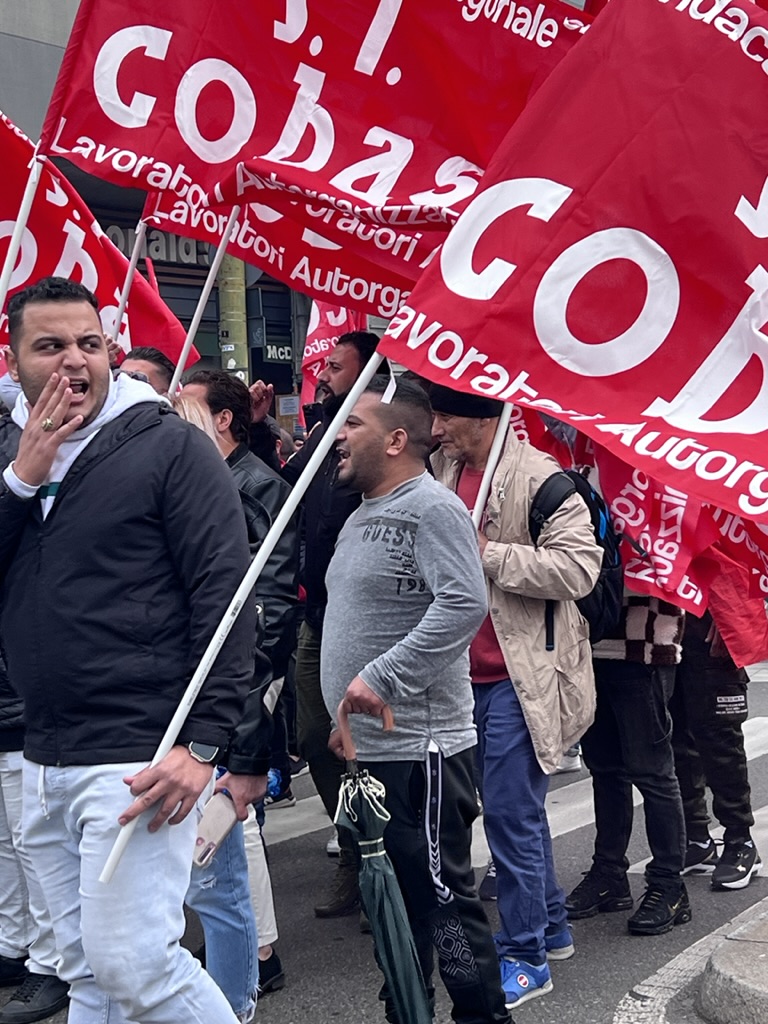
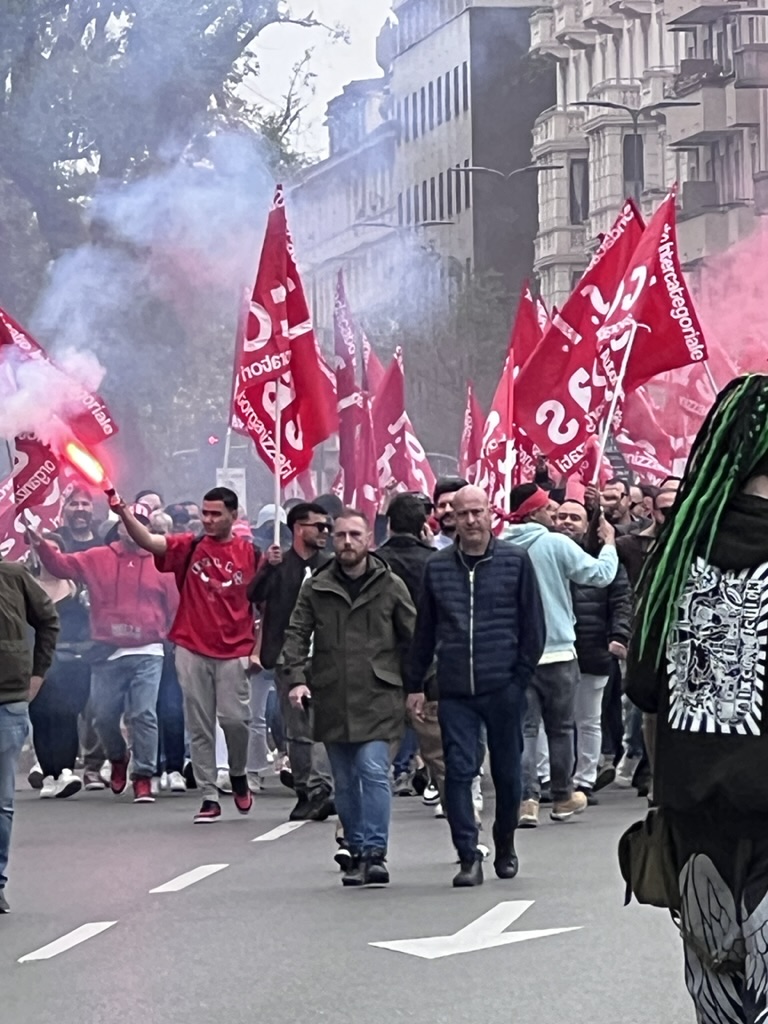
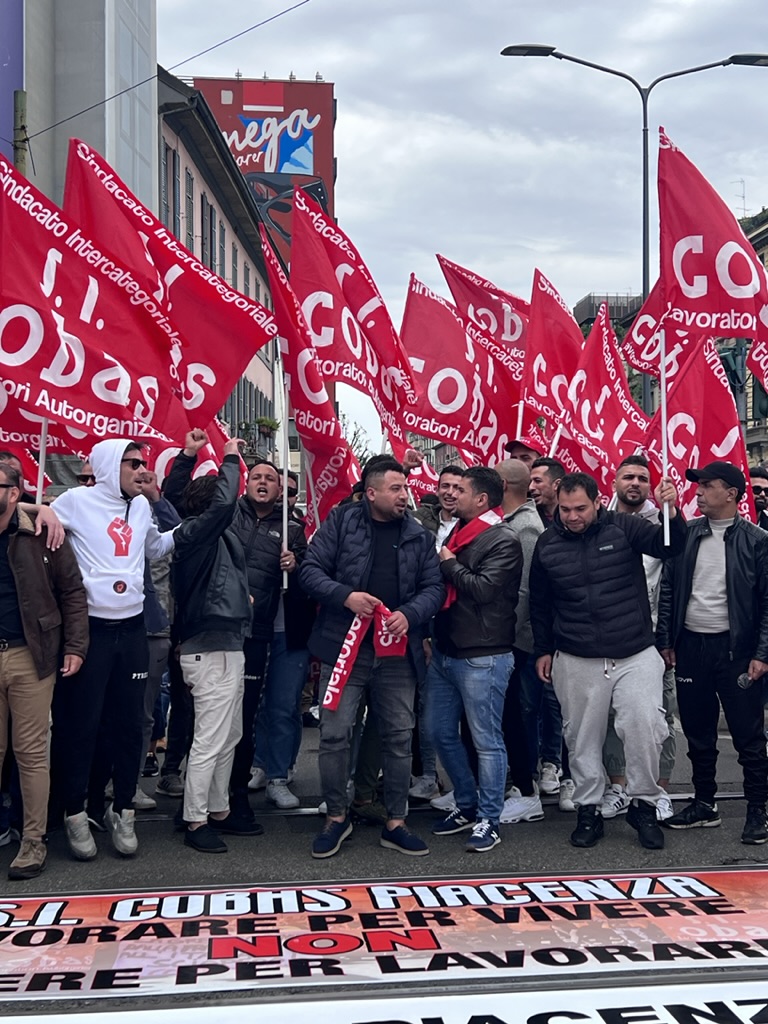
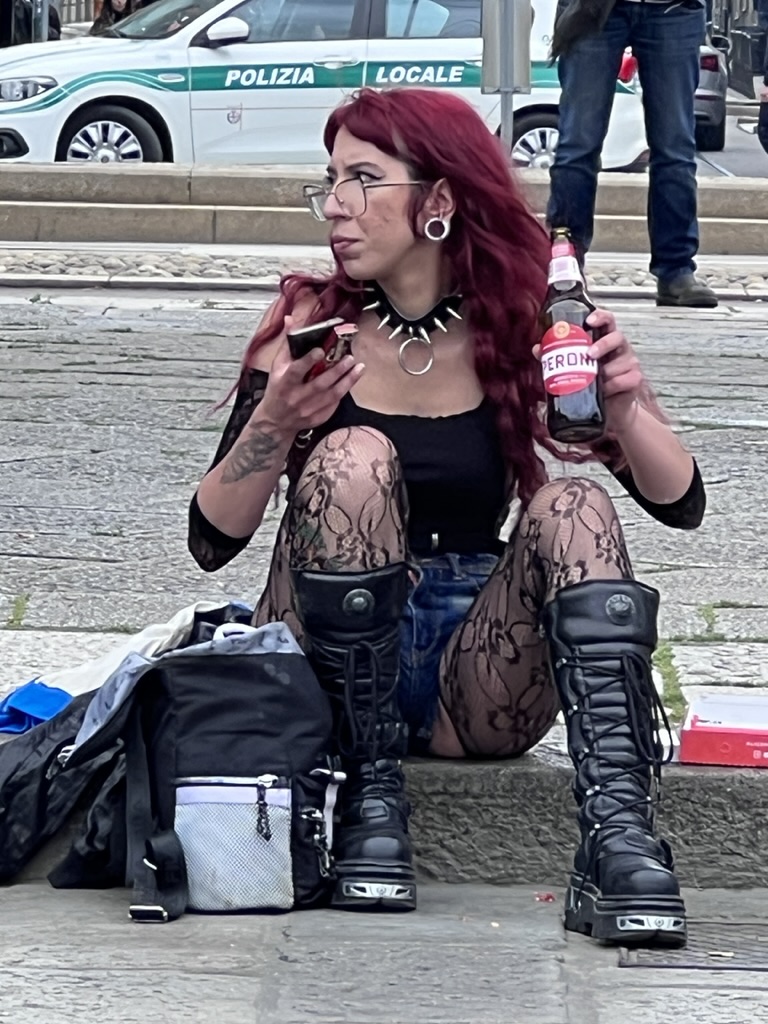
I thought it was an interesting neighborhood for a parade, since it’s definitely not in the center of town. Figured I should hang around, although I was really hungry. As I strolled closer to the start of the avenue, which the police were flanking, I began to see the seeds of a march/demonstration—so I got closer and next thing I was smack in the middle of the May Day demonstration of the Italian Communistas and Socialistas. They had a fairly good turnout and a large percentage of the marchers were people of color and immigrants. They carried signs that talked about repression and unemployment, I think.
And then music started to blast the streets… Bob Marley’s “Get Up Stand Up for Your Rights,” followed by some Italian songs… and they marched. I stayed a while and then decided to head back to the hotel, but no taxi could get to my location because of all the streets being blocked. Finally, I stopped one of the cops to get directions to a taxi stand, but his explanation was unclear and seemed very complicated. Given the rain and the fact that I had already walked about 4 miles, I didn’t want to walk the additional few miles. I stopped another cop (fortunately they were all over the place, although they seemed pretty passive, and the demonstration was quite calm). This next cop spoke some English, so he was able to explain where I had to go to get out of the blocked streets and get a taxi. But first I asked a bit about the march. He said that the “main Workers Day march took place in the morning in the center of town (probably at Piazza del Duomo) and that this was an “alternative parade and demonstration.” I liked his choice of words—“alternative,” so I asked (knowing full well by the pamphlets being distributed) if this was a march of the Communist Party and he said “yes” and again said it was “the alternative” group.
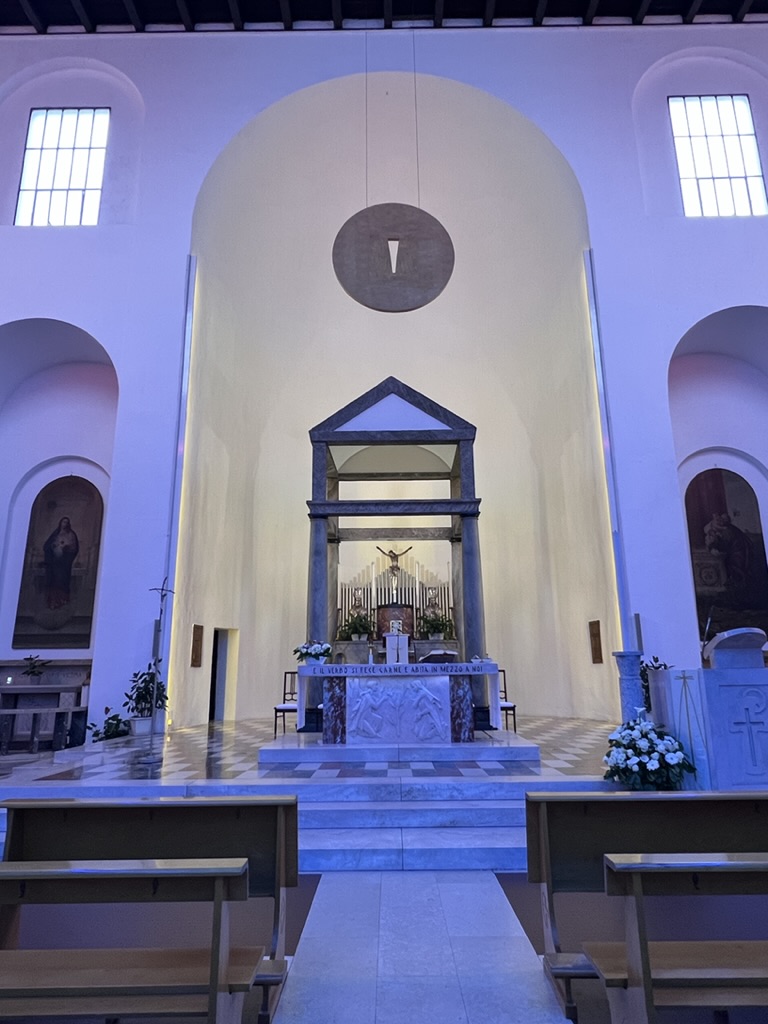
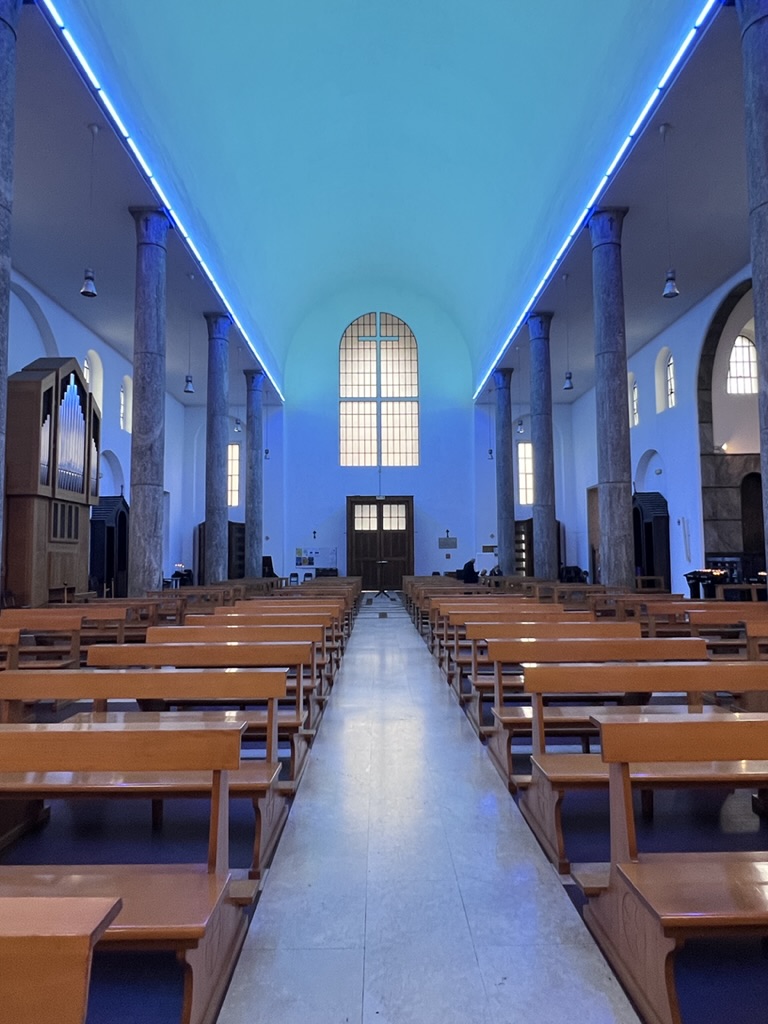
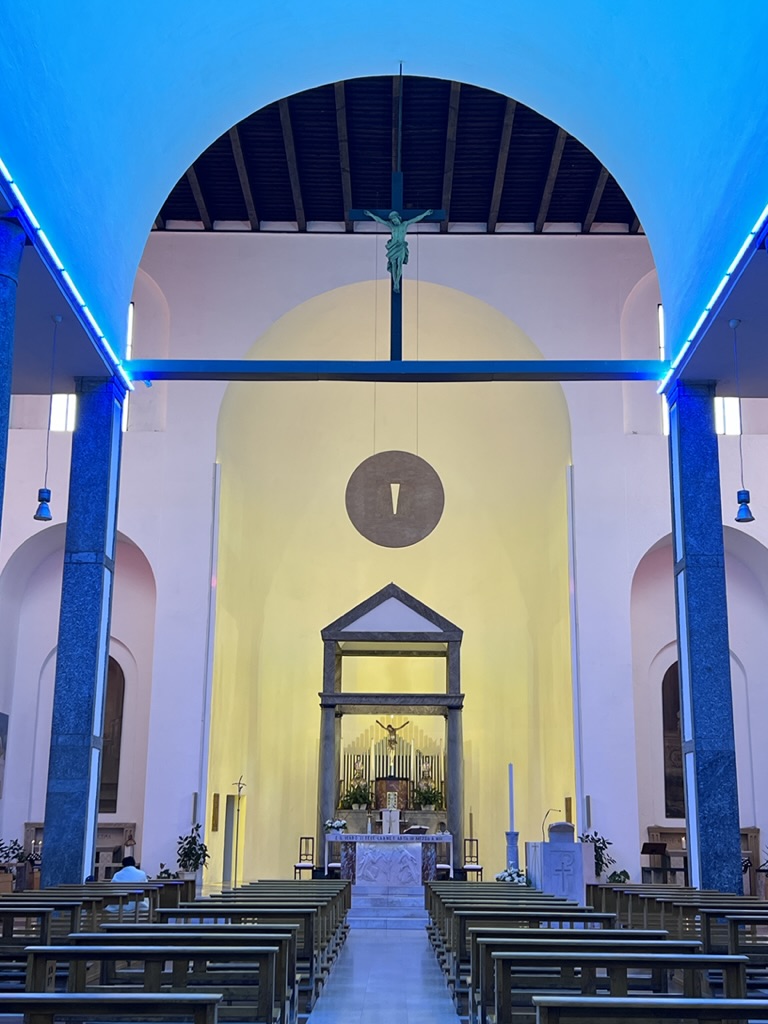
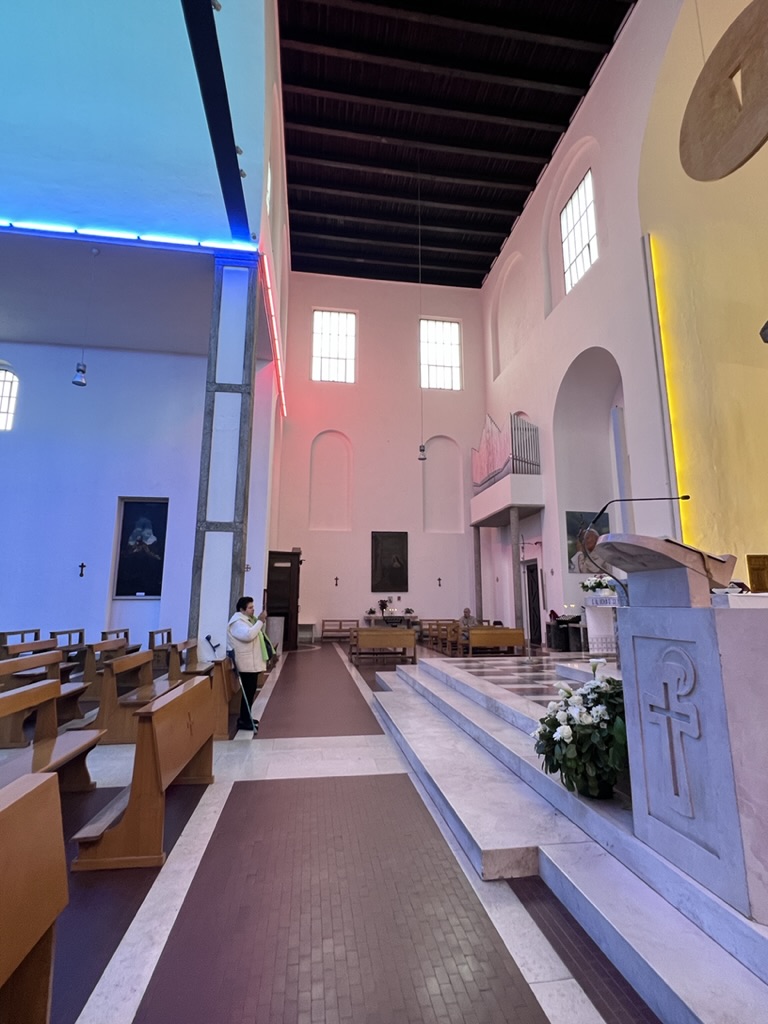
I wound up having to walk to a train station about a mile away and found a taxi. After an hour or so, I headed out again to a small church called Santa Maria Annunciata located in a low-income section of Milan known as Chiesa Rossa (Red Church?) toward the southern part of the city. In the late 1990s, Reverend Giulio Greco invited the American artist Dan Flavin to be part of the restoration and renovation of the church. Flavin’s permanent installation was the centerpiece of the renovation of the 1930s church. I think that Flavin actually died before the installation was actually unveiled (he died two days after the work was completed) and I believe that the Prada Foundation helped fund the artwork.
If you’re not familiar with Flavin’s work, he’s best known for his works that utilize fluorescent light and often does this in relation to specific architectural contexts where the installations will be placed. By using light like the commercially available fluorescent tubes which are linear, he is able to emphasize the structure of the architecture, although at times he purposefully contradicts the architecture. Flavin is considered part of the Minimalist Movement of the 60s/70s. It’s a bit strange for his work to be the centerpiece of a religious building because he has never used any symbolic or spiritual elements in his work. Still, from what I remember from art school days, Flavin does have some kind of religious background. I think his parents wanted him to become a priest and they sent him to some kind of seminary and he was drawn to the drama of the liturgy.

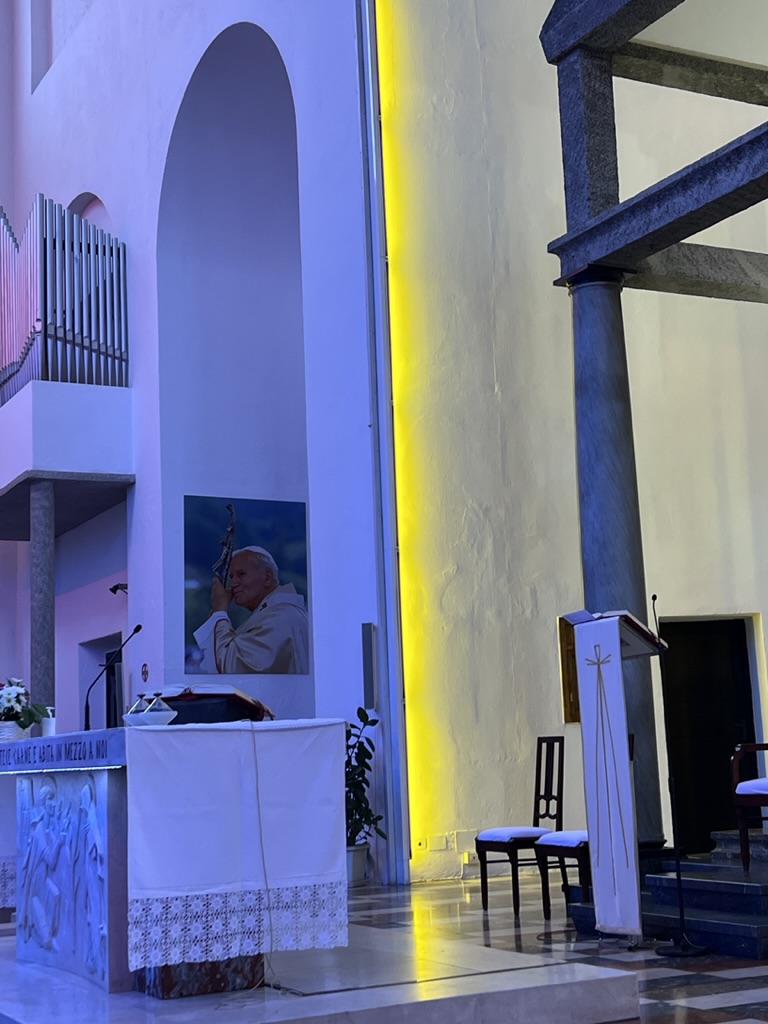
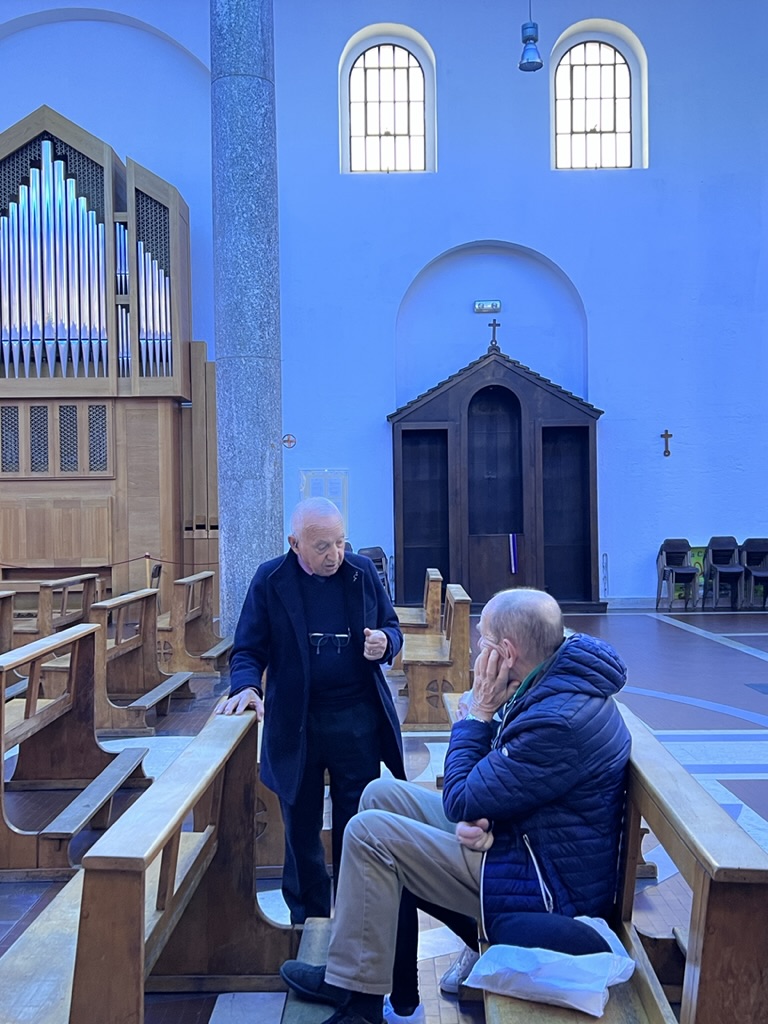
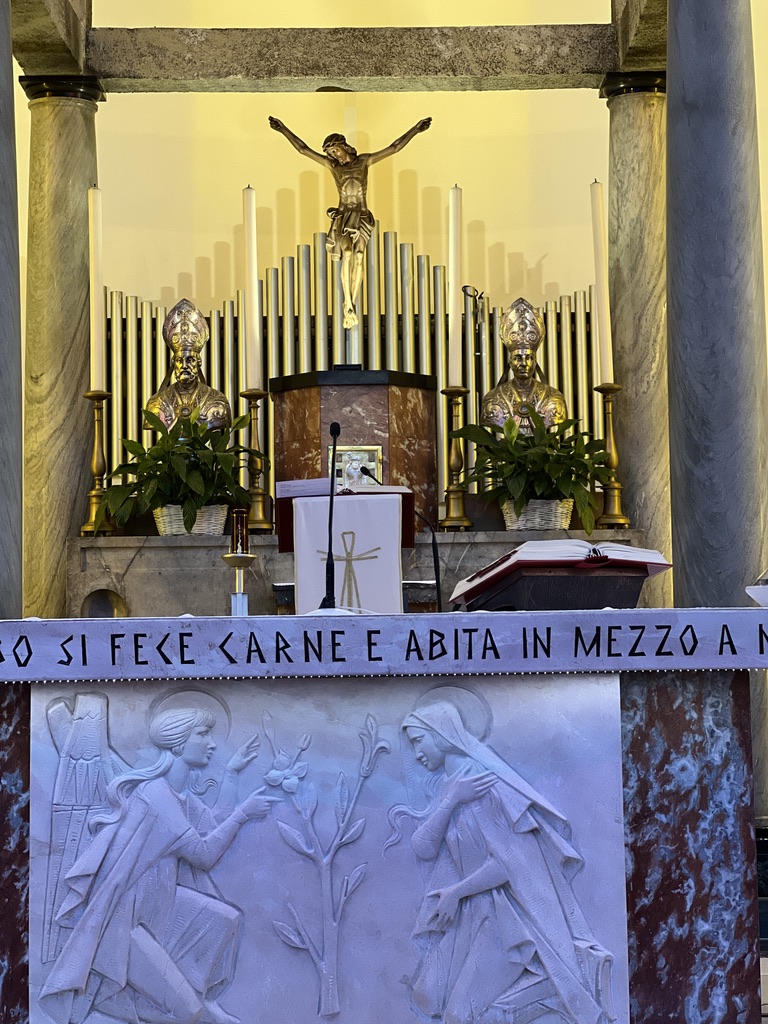
It’s a really wonderful installation — the interior of the church is stark white …. And the placement of the lights brings in green and blue and pink and these ultraviolet lights fill the entire church with chromatic elements that completely change the space and I imagine that the colors and feel are very different at different times of day.
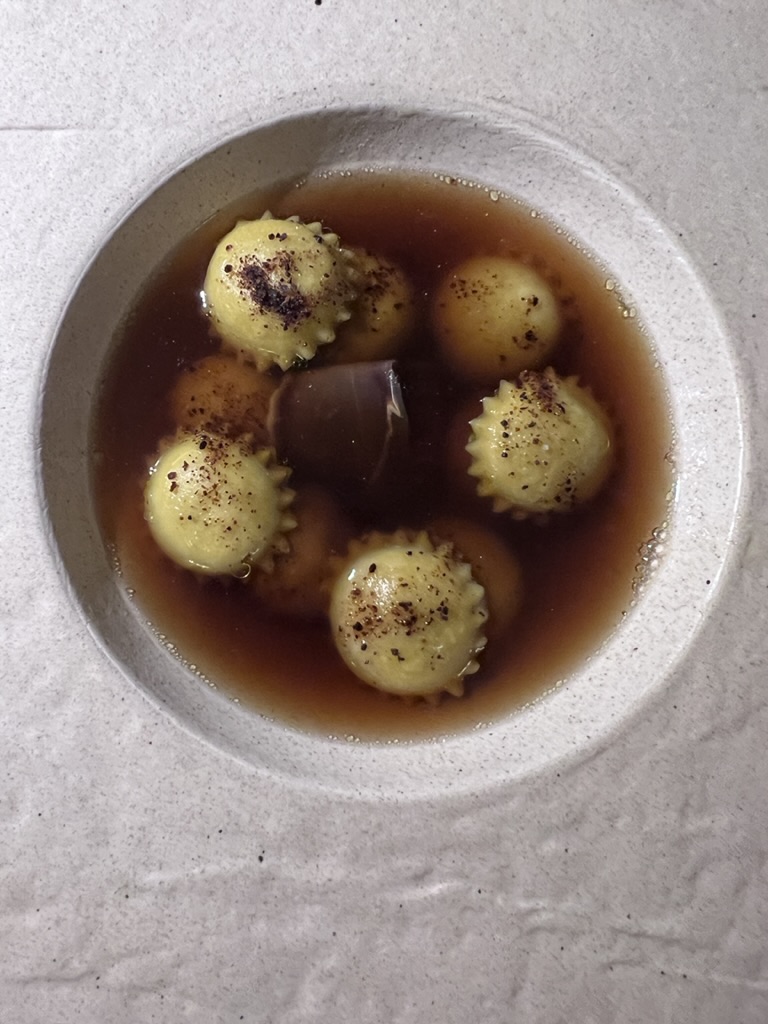
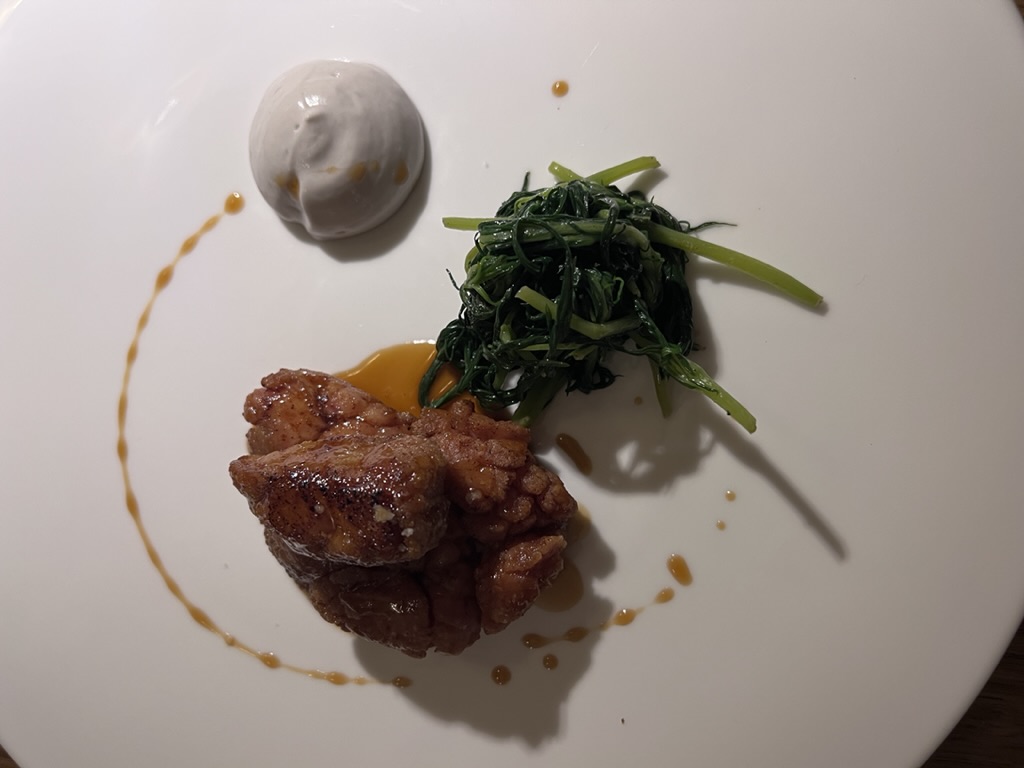
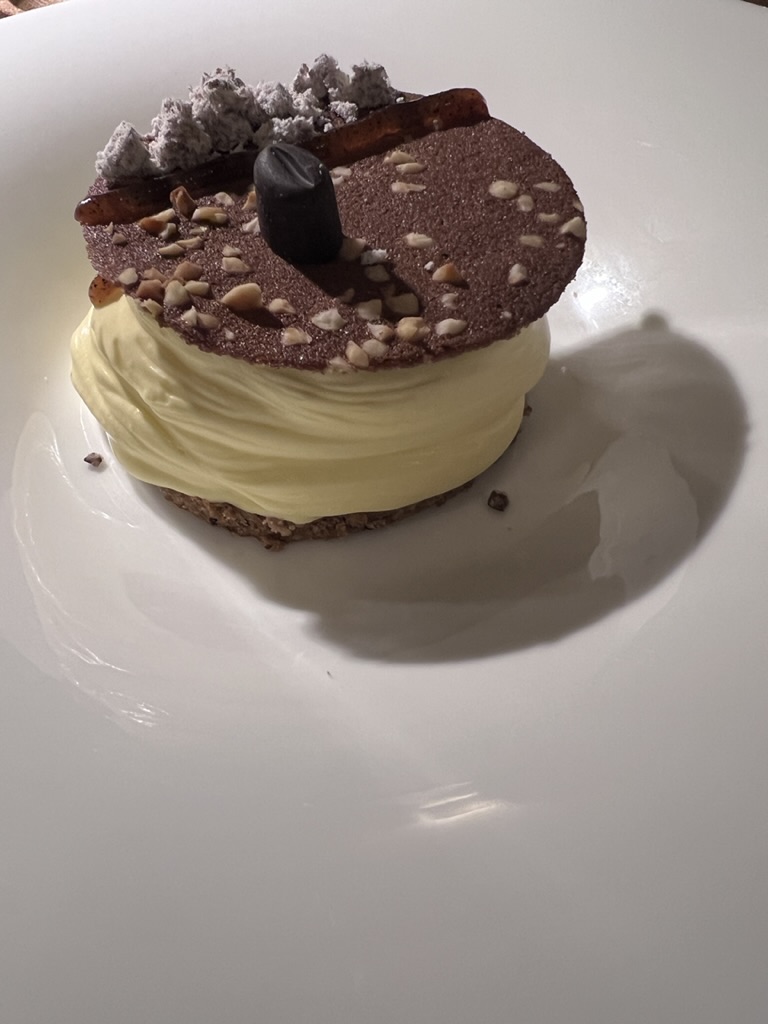
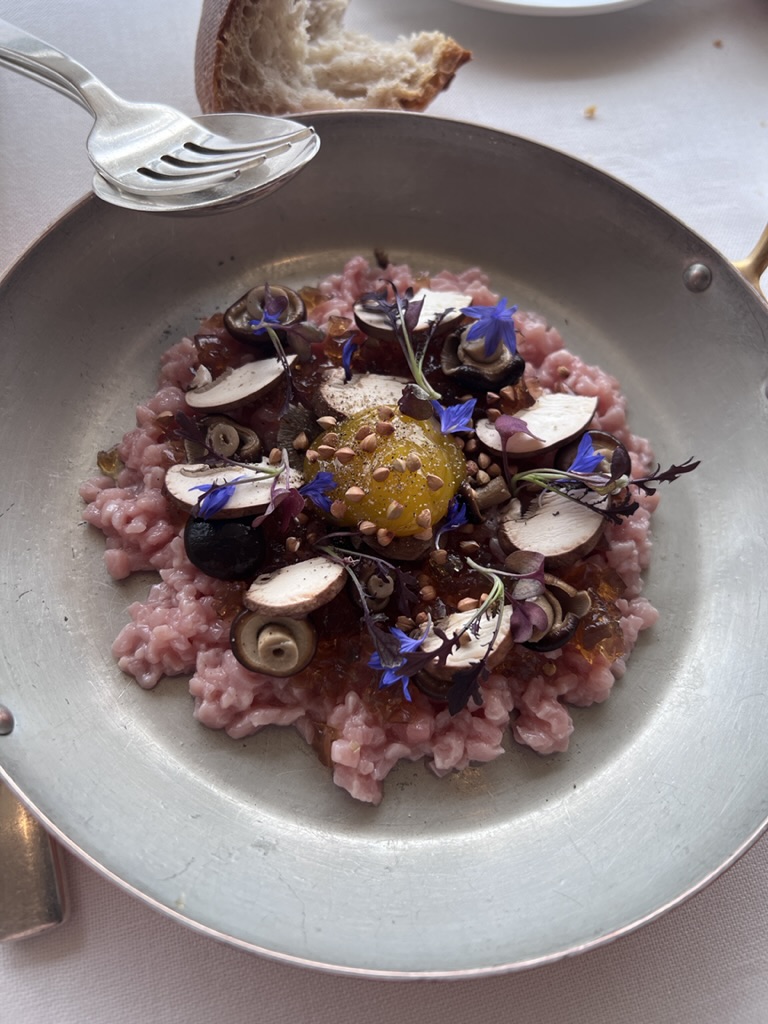
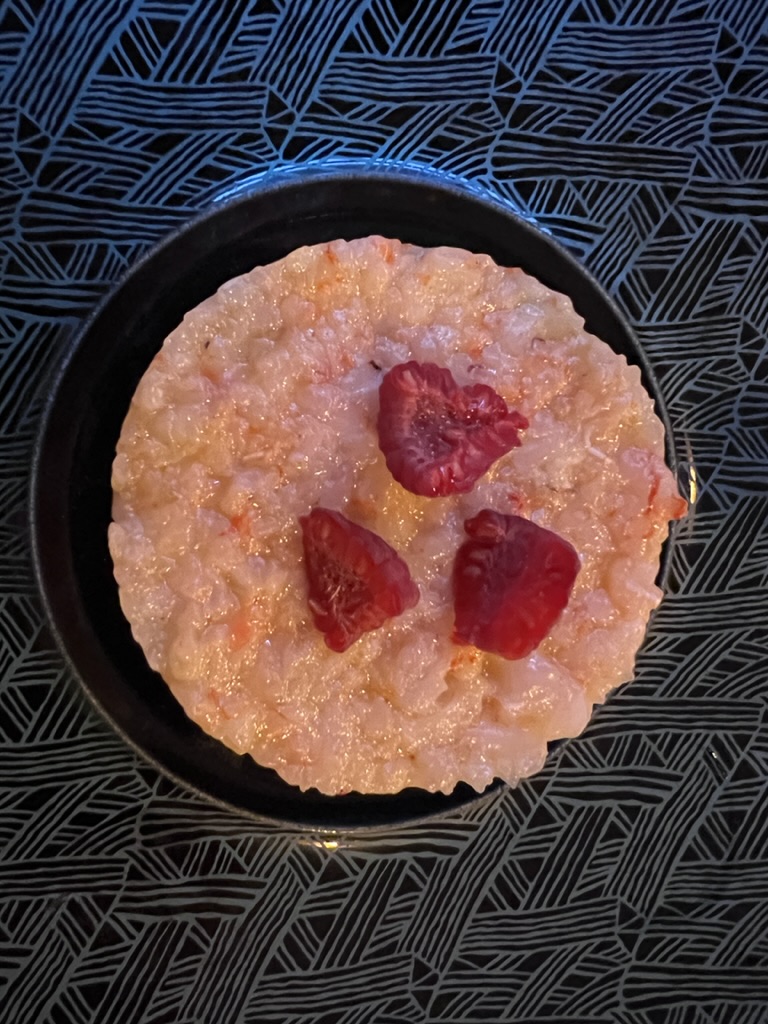
With that, I headed back to the hotel to check on Mike who felt he was up to going out for a real dinner… To celebrate we headed to a Michelin star place called L’Alchemina, where every dish was a little work of art.
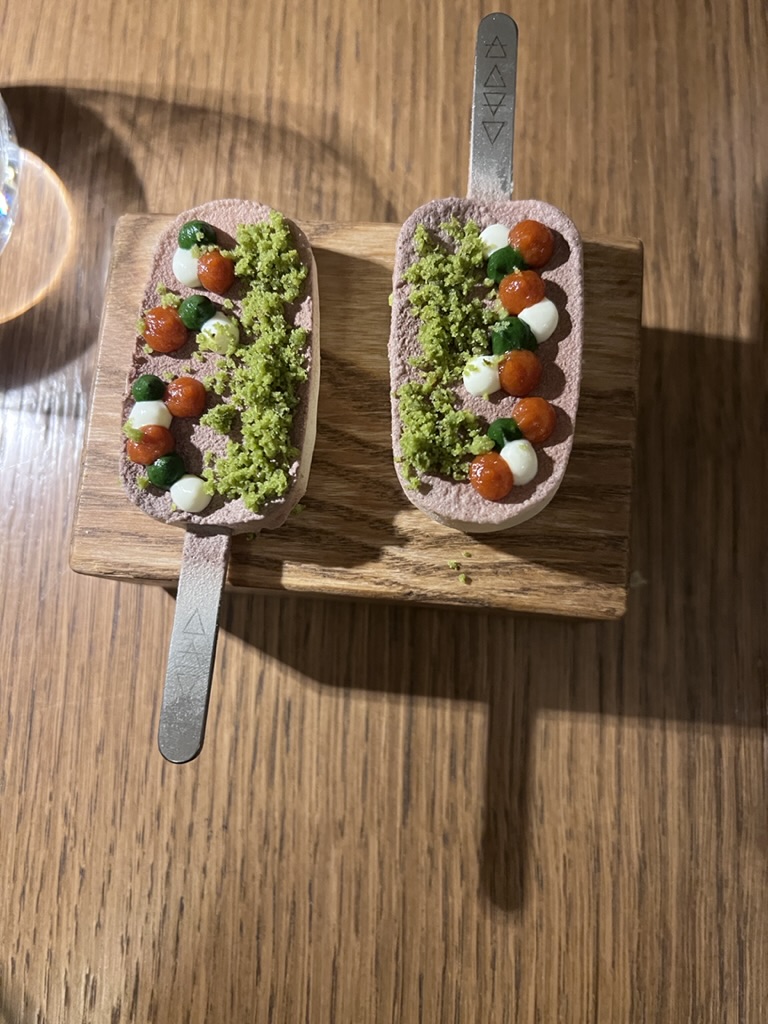
And now I’m back and ready for bed. Tomorrow it is supposed to rain most of the day, so I think my last day will be packing and getting back to my book so that I feel I was productive for at least a little bit during this trip.
All the best.. Maybe more tomorrow if I decide to leave the hotel. I’ve pretty much seen what I want to see here in Milan, but if the weather clears, I may do my favorite thing when I’m traveling—taking the metro and just getting off at random stations and walking those neighborhoods, but no fun if it is raining.
Fern
Hope you are all doing well. We are finally confirmed on flights—leaving from Milan to SFO via Newark—arriving on Wednesday night. We will find time somewhere this year to get to Geneva; maybe Xmas… if we can make it work.
I started my day dealing canceling our reservations for the Geneva hotel and train from Milan to Geneva. Indeed, it feels like we live in Milan (not a bad thing). Yesterday, three different groups of people asked me for directions and one salesperson continued to speak to me in Italian and finally said, in English, “Gee I could have sworn you were Italian; you look Italian.” I took it all as a compliment.
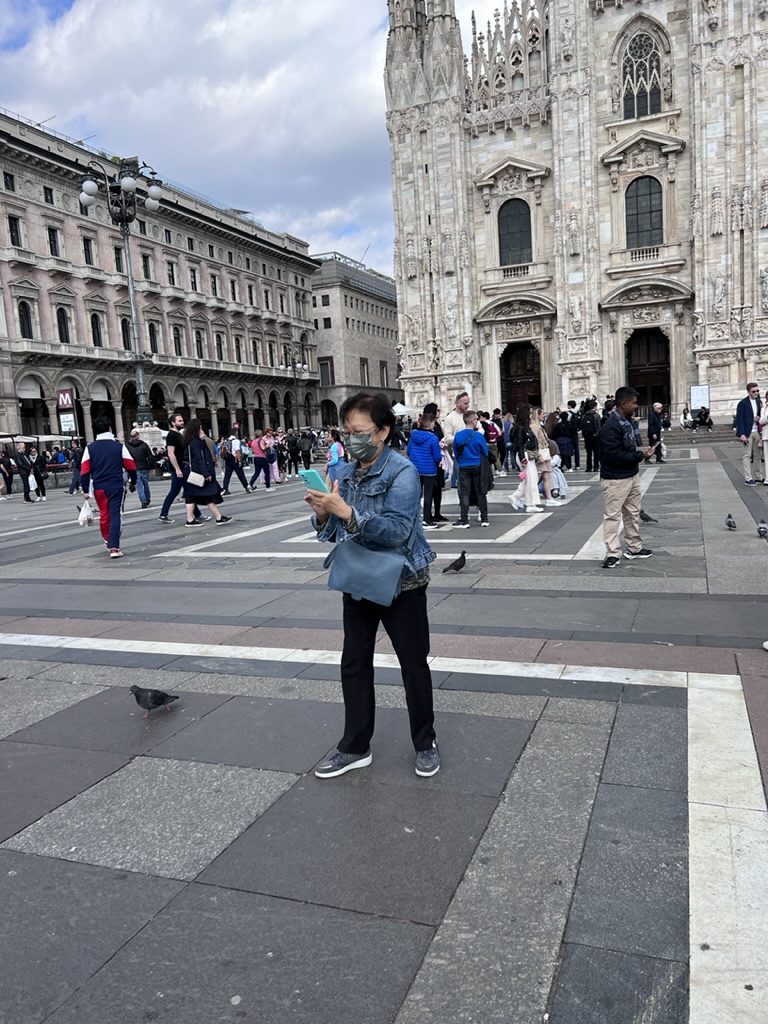
And one note— there are an estimated 4.7 billion photos shot on phones each day (!!); I am convinced that at least a billion of those are taken here in Milan. While everywhere you travel you see people taking photos, especially selfies, with girlfriends, boyfriends, parents, children in front of or next to whatever monument, piazza, restaurant, museum, canal, building or whatever, it does seem like the proliferation is greater here in Milan than anywhere! All over, people are primping as they use all of Milan as a backdrop for pictures of themselves.
Mike is slowly emerging back into the world, but the laryngitis hasn’t gone away yet. Tomorrow, he ends the five days of isolation and the Paxlovid regimen. Hopefully, he’ll have two more days to just rest and maybe stroll before we head back.
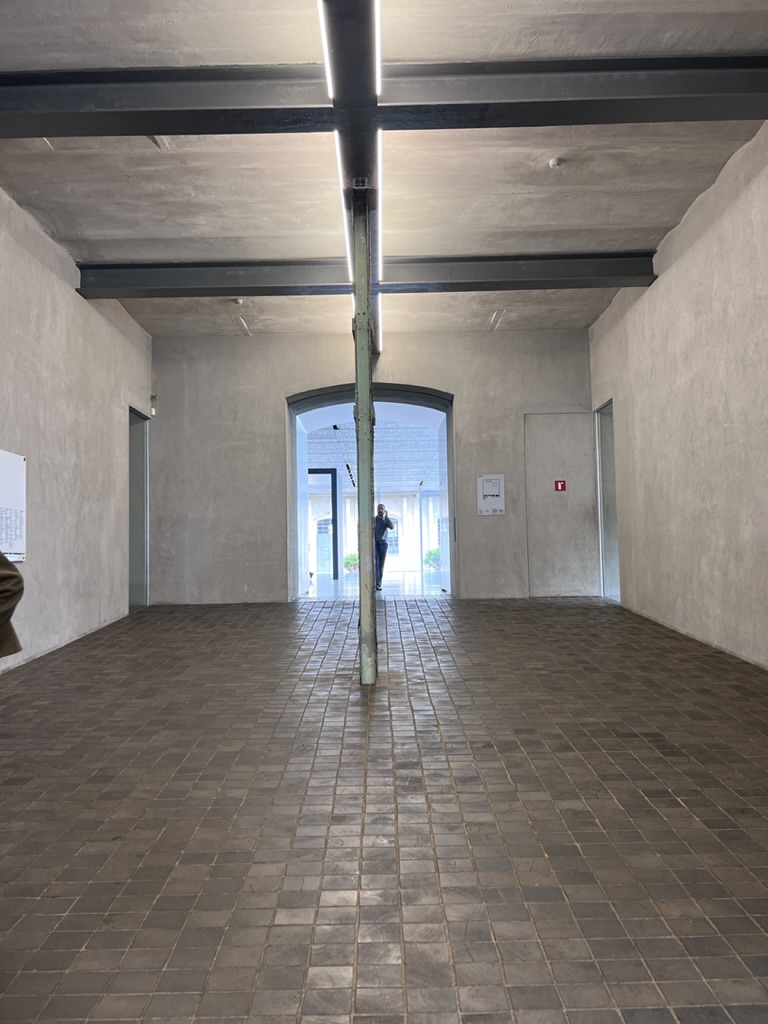

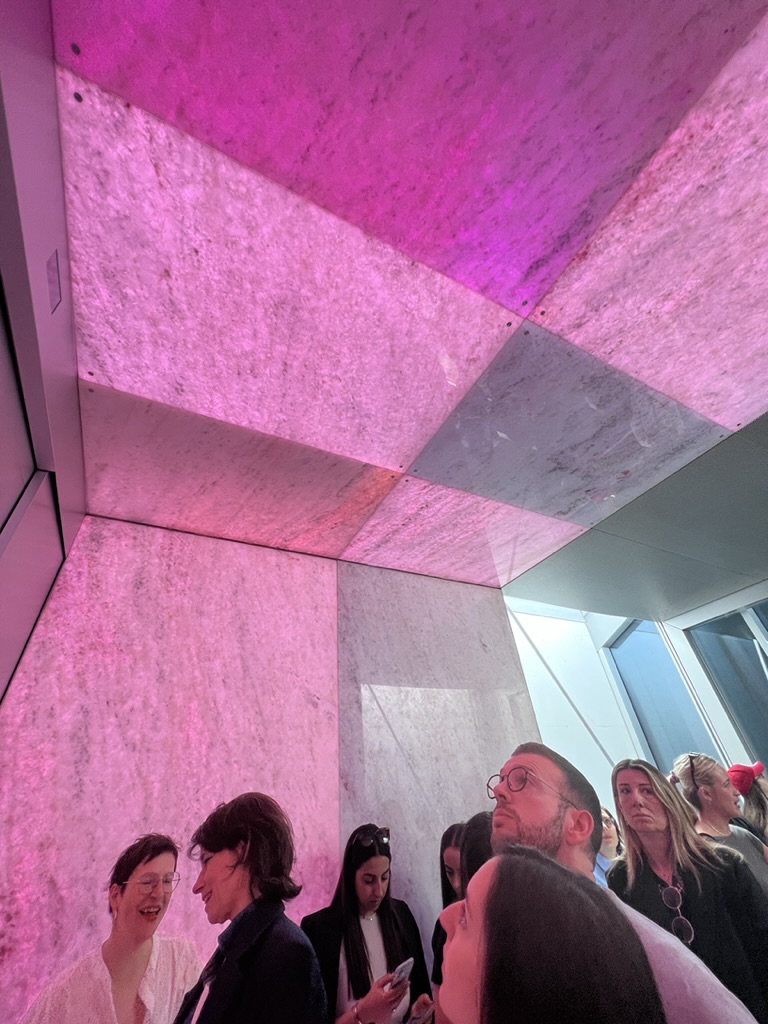
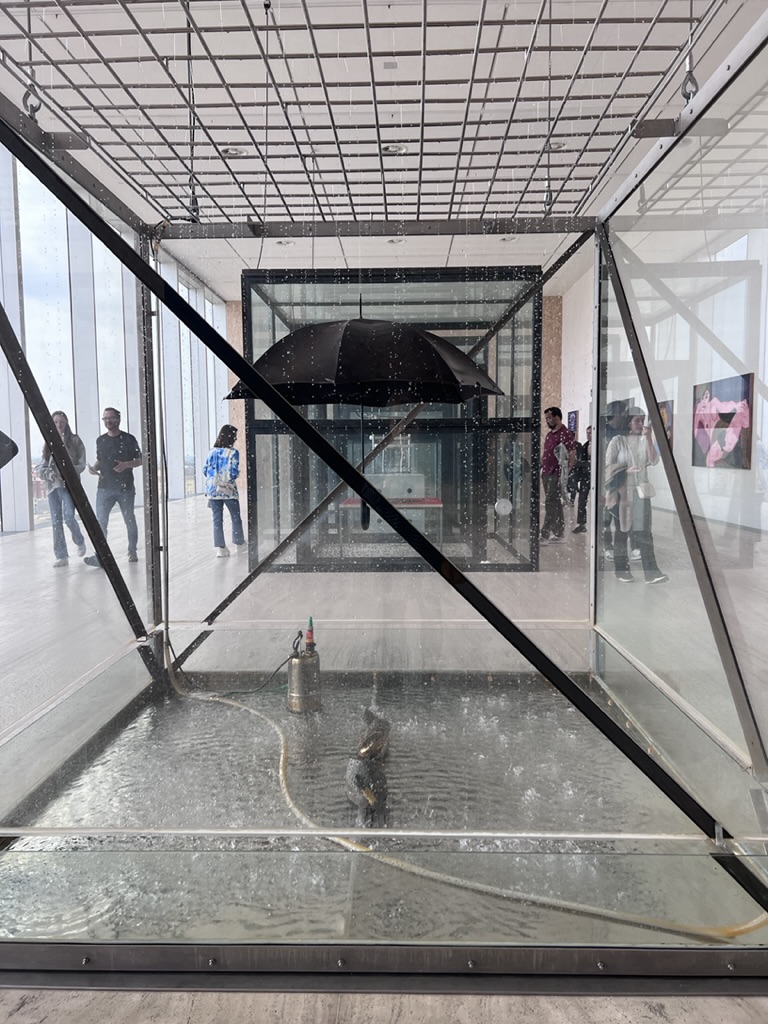
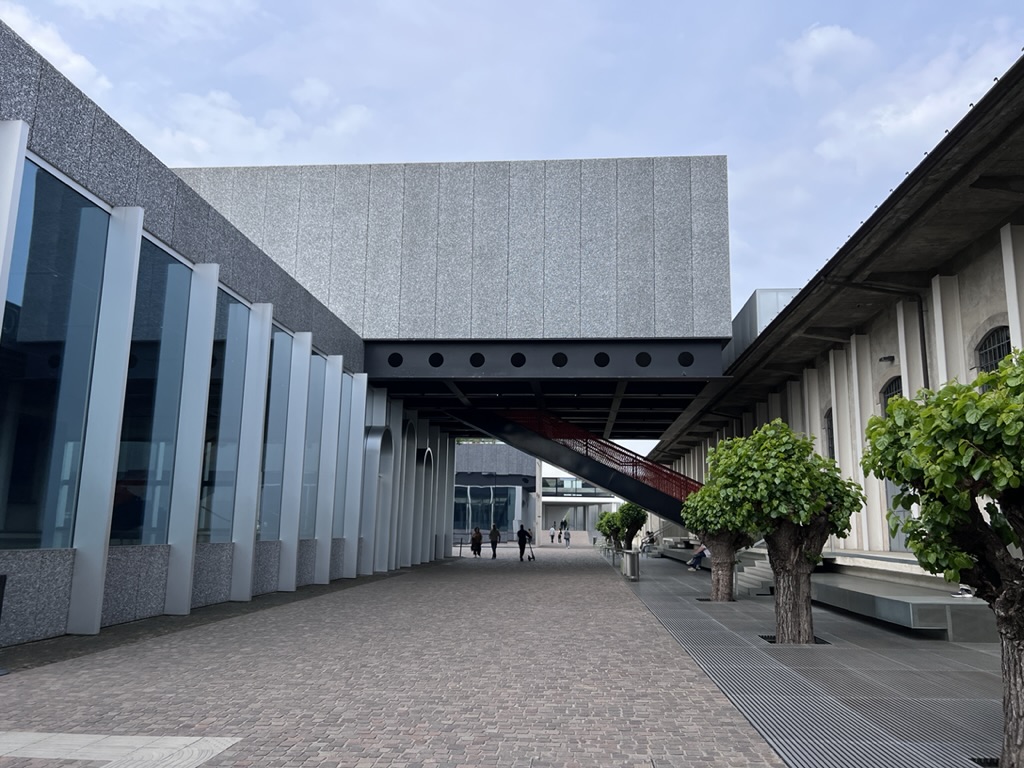
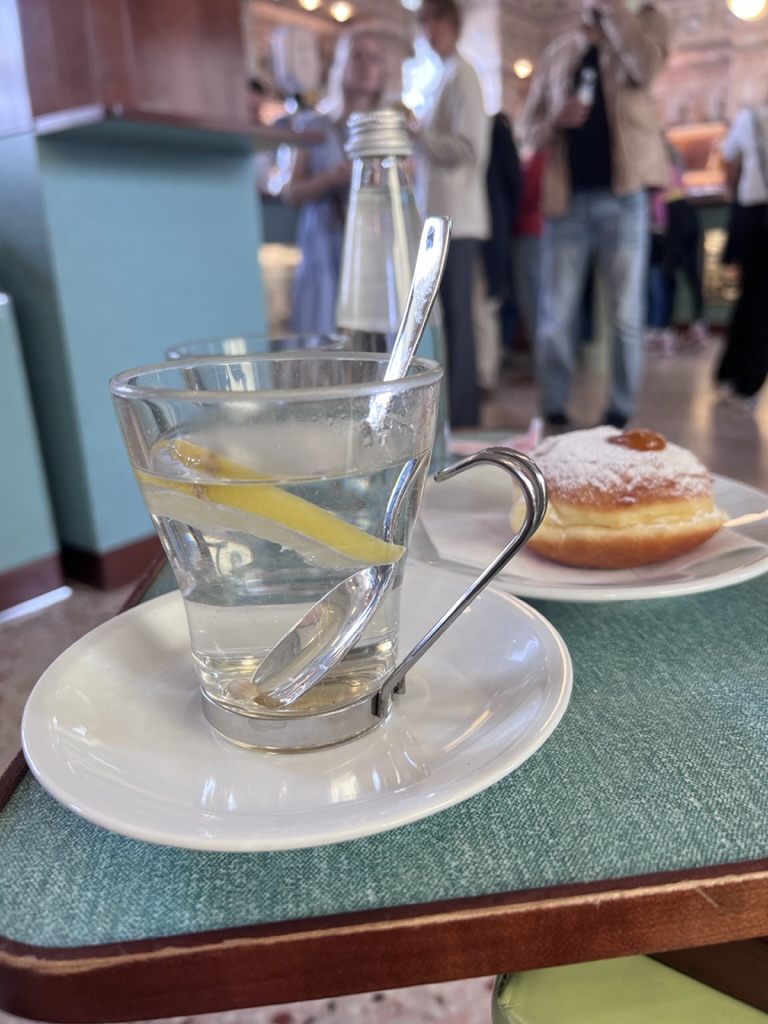
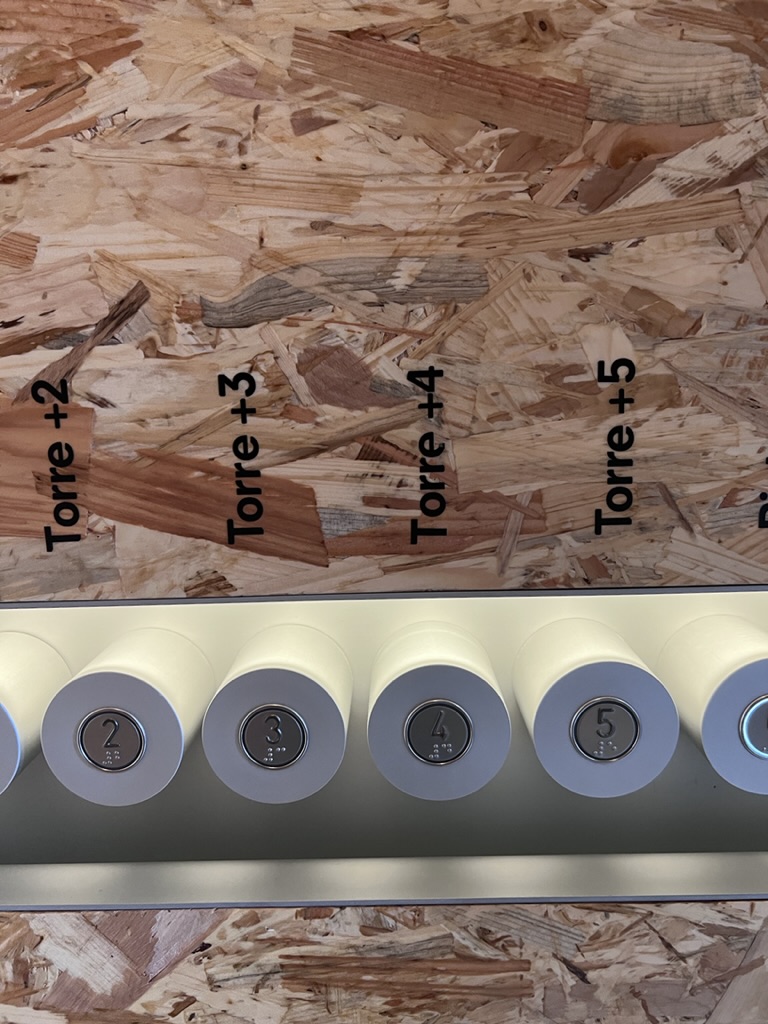
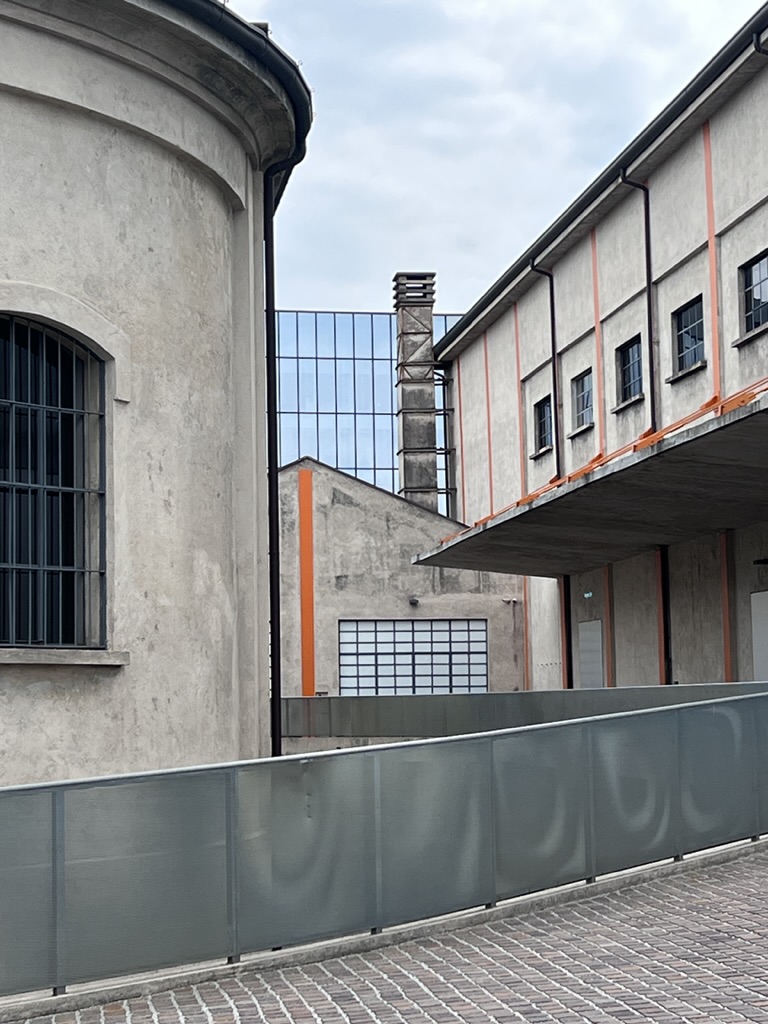
I headed out this morning by taxi to the Fondazione Prada which is in the southern part of Milan. Was going to do Metro, but wanted to get there more quickly as I hadn’t had breakfast and figured the place had a café. I was correct. In fact the café was designed by filmmaker Wes Anderson; it’s sort of kitschy, called Bar Luce and is designed to refer to various landmarks in Milan from the 1950s and 60s, which can be seen in the color palette and various finishes like veneered paneling, formica, and the furniture. Armed with morning pastry, I was ready to view this huge 5-acre complex/campus which had been a distillery in its productive life. Sort of ironic that now it houses artworks from the collection of (or commissioned by) the founder and designer of a luxury fashion house. The historic buildings have been converted to house different activities of the Foundation and also temporary exhibitions (mostly very large scale installations). There are also new buildings. One is called the Tower, one that is covered in gold leaf and is three stories, and the Podium which has huge spaces on each of two floors.

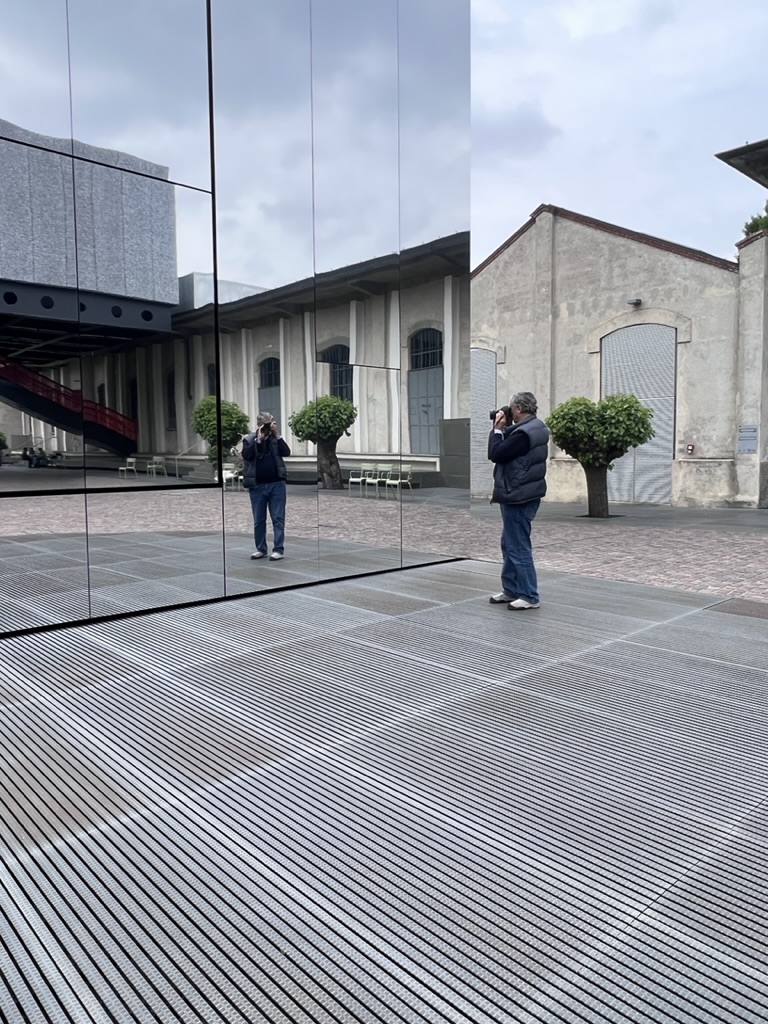
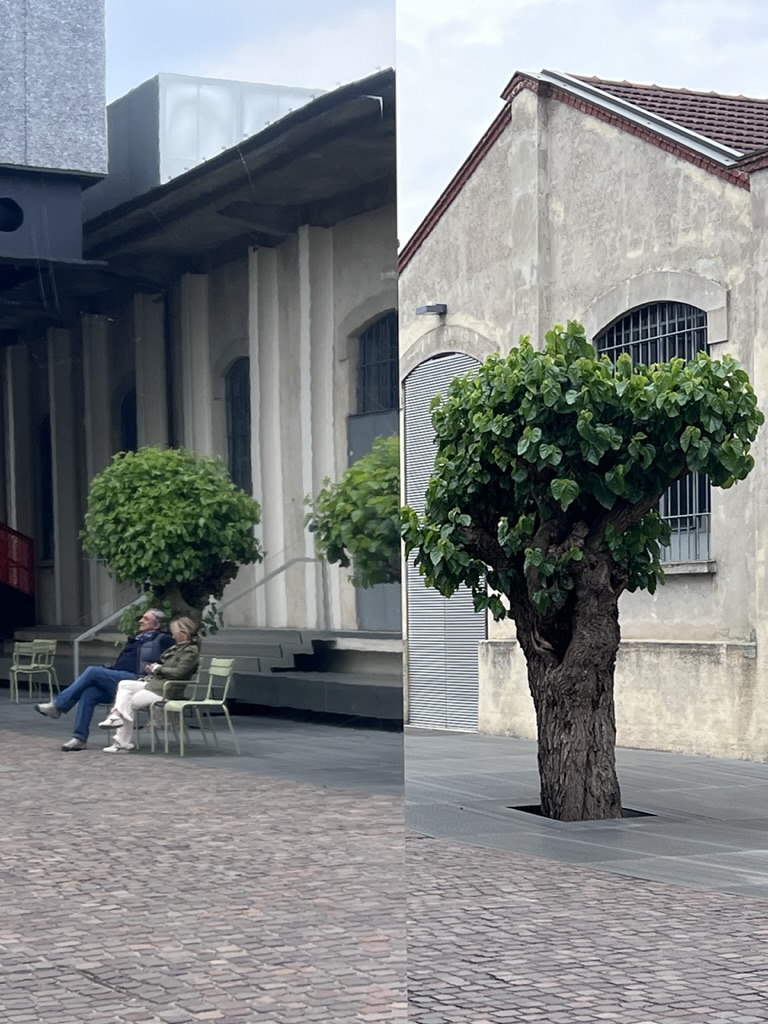
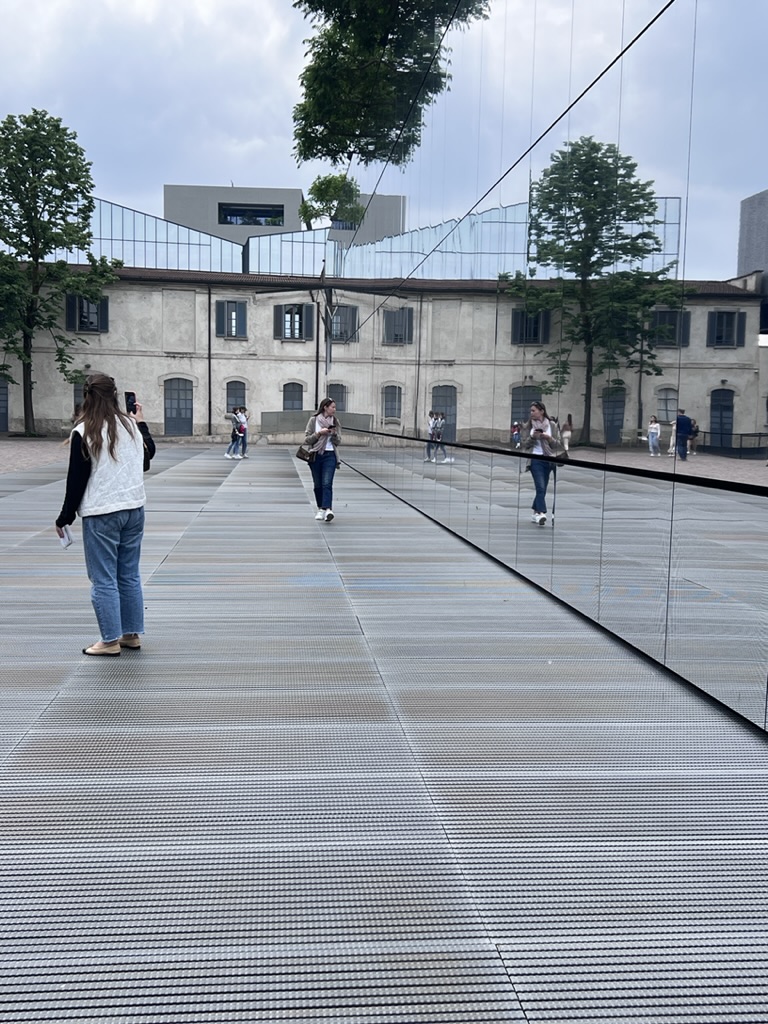
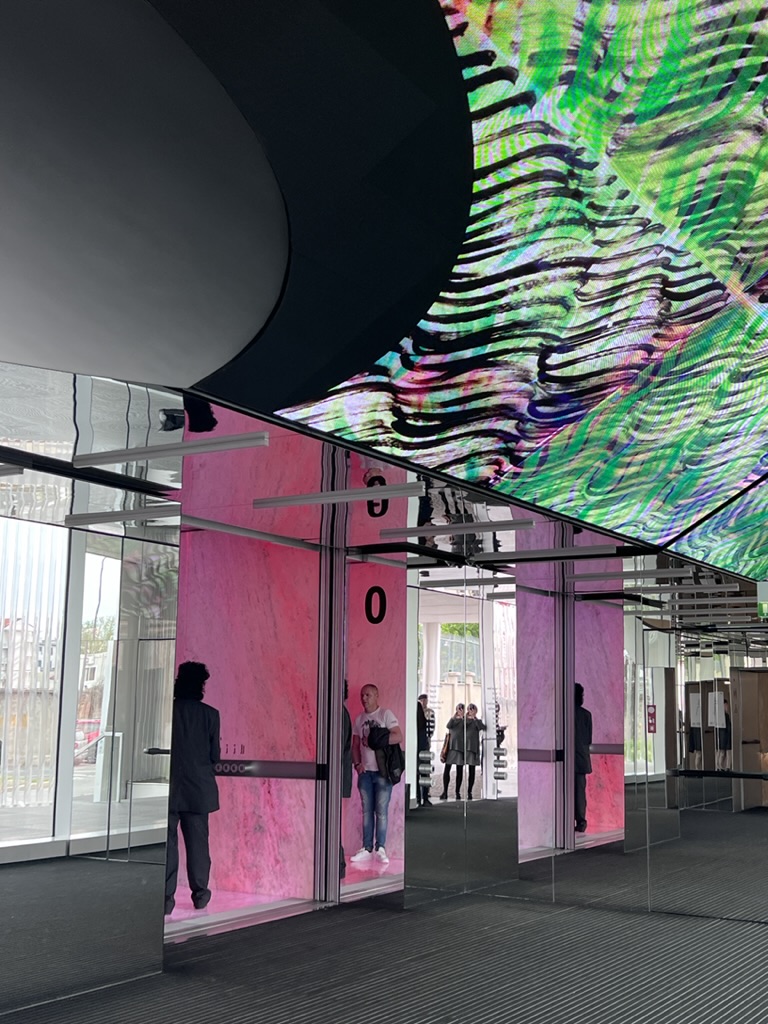
The architect for the project was Rem Koolhaus. I was very mesmerized by the campus which has multiple buildings clad in reflective surfaces, so that you are always looking at reflections showing what is behind you as well as looking ahead. The elevator (which is gigantic) in the tower has some marbleized light red surfaces that change color as the elevator rises, based on how much light is coming into the elevator.
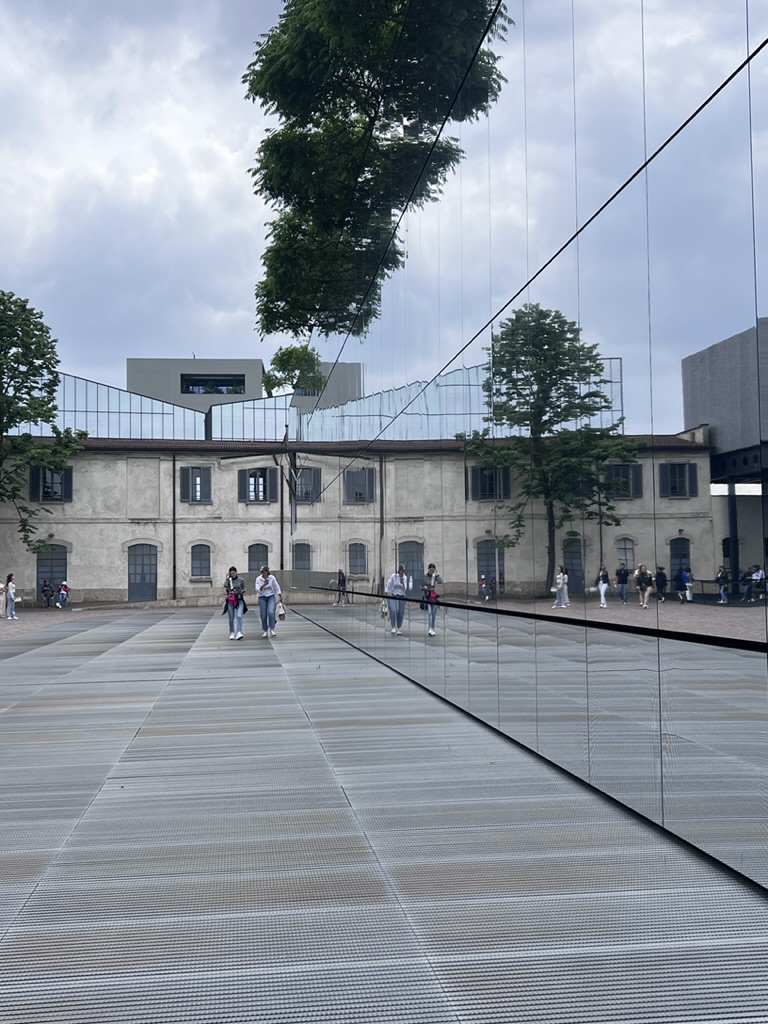
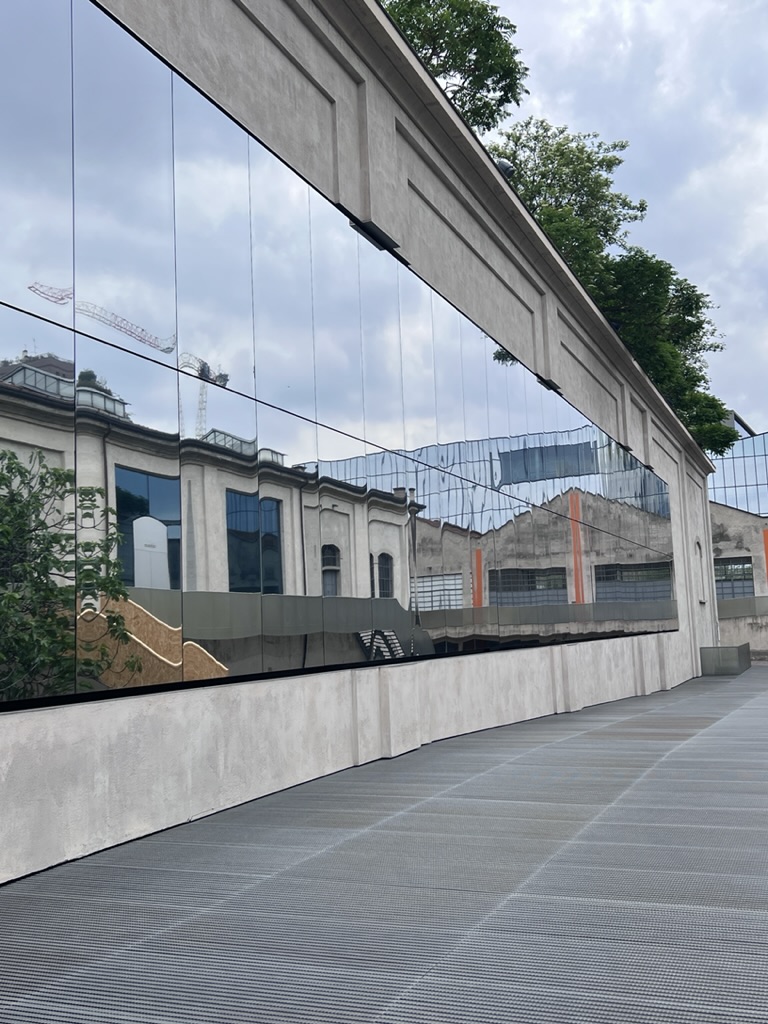
While I actually liked the complex, I found it totally strange that this was once a workplace where people held blue collar jobs, and probably lived close by in what has been described as a “scruffy” neighborhood… Well no more. New buildings are popping up in close proximity and the scale of this campus totally changes whatever community still exists nearby. Must have taken the sale of a lot of Prada handbags to build this complex; the price tag has never been revealed and probably never will be told since it was all private money— as I said lots of handbags! And, it’s amazing what you can do when money is no object. That said, previously industrial buildings have long found new uses as art spaces.
After lunch at the Torre Restaurant at the top of the tower building—a wonderful soaring space with windows and views of the city into the distance. Unfortunately the food doesn’t match the space. I’d give it a 2 out of 5, but with prices that are 5+. Headed back to the hotel since rain was predicted and went to the pharmacy to get Mike some lozenges.


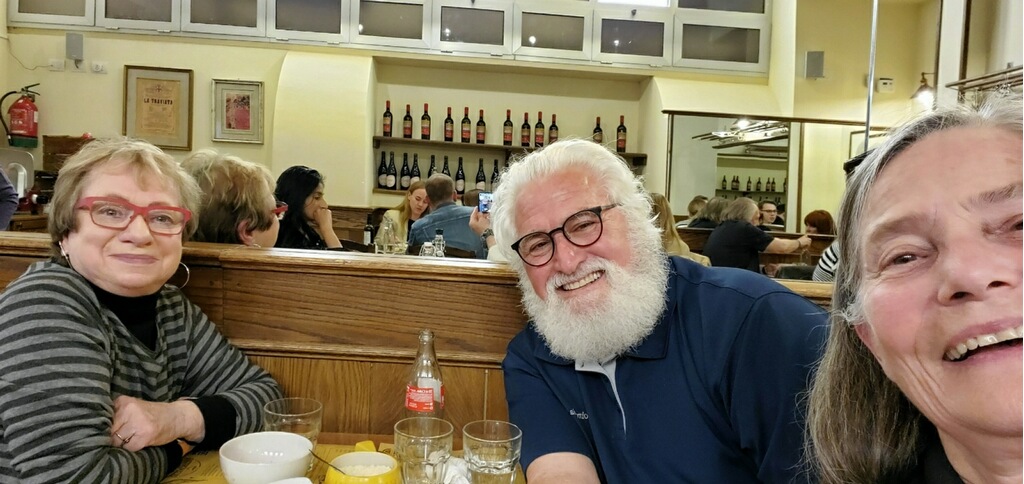
And then got a surprise text from friends from Phoenix—who it turns out were in Milan today. Switched plans (I was going to have dinner at a fusion restaurant called—appropriately—Benoteca, a Japanese/Italian place) and instead found a little hole-in-the-wall place to have dinner with these good friends, who are traveling for 7 weeks through Italy and France, and having a blast. Disappointed Mike couldn’t join in, but he’s been a real trouper. I’m hoping he’ll be able to leave the hotel tomorrow and maybe join me for dinner.
I’m trying to be really careful so that I don’t come down with Covid and that we can leave as planned on Wednesday. So far, so good…
Finally, another observation: on this trip and on other overseas travels over the past 7 years or so, I’ve noticed a definite decline in interest in the US. Years ago, when we traveled abroad, people were curious about the US and they seemed to follow it on the news. Some Europeans, Asians, and others were almost mesmerized by what they saw as this giant, powerful, and wealthy country. Some hated the US (most especially during the Vietnam War when we lived overseas) and some tried to mimic aspects of US culture. Today, I sense minimal interest in the US on the part of Europeans, more of a sense of the failures of the US and its foibles. You can see it on the news—barely a mention of US issues; far deeper interest in global issues and in the events in other parts of the world. I’m glad. When asked where we are from, we never say the US… we always say “California,’ thinking it’s sort of “code” that California is different from the rest of the country. Every so often you’ll spot graffiti that mentions George Floyd or other racial comments. But overall, we are just another country across a very big pond.
Tomorrow, I plan to visit a few more neighborhoods and also to see the Dan Flavin installation at some church… and to see what may or may not happen on May Day, which is a national holiday here in Italy called Festa dei Lavoratori or Festa del Lavoro— Workers Day. I’m guessing parades? Demonstrations? Strikes?
Stay well.
Fern
19. Milano Milano!! April 29 2023.
First the update on Mike: This morning he thought he was on the mend and over the hump, but by late afternoon he was coughing a lot and felt terrible. So we are not going to Geneva (will see if we can go at Xmas).. At this rate, the new baby (Mike’s niece’s third child born in January) will be in college before we see her. But this is for the best, for everyone. After about two hours on the phone with United, we were able to find flights that didn’t require big additions to the cost. We will leave on Wednesday from Milan to Newark and on to SFO; not my preferred route, but it will be fine. Hopefully, by Wednesday Mike will be up for the trip.
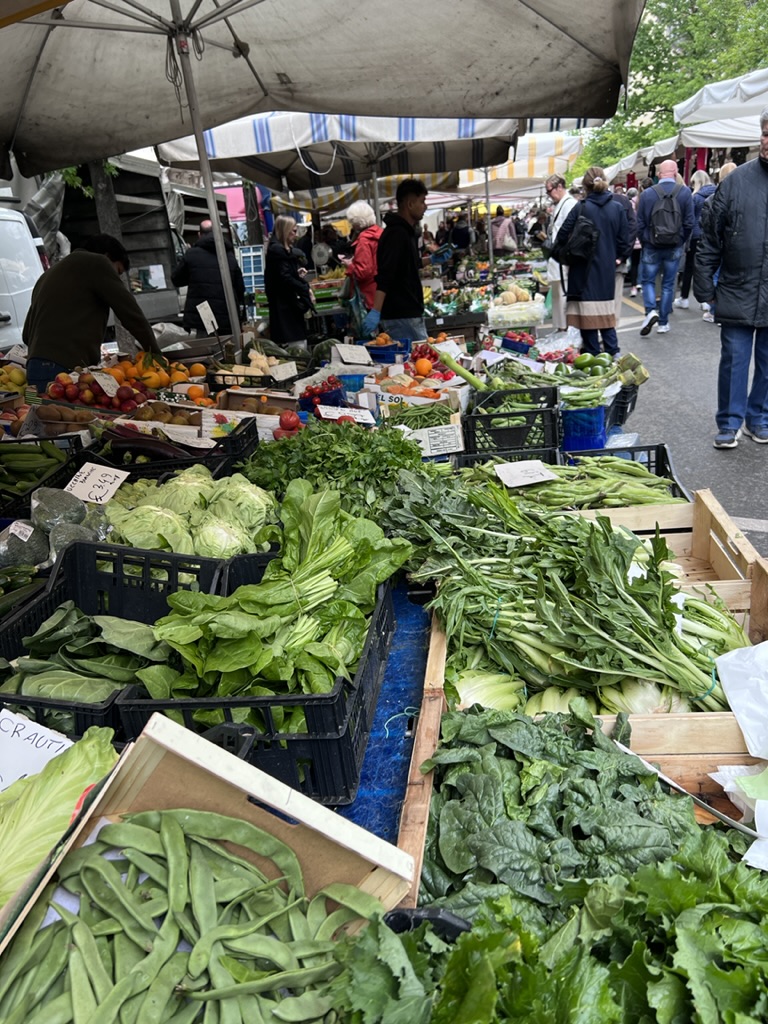
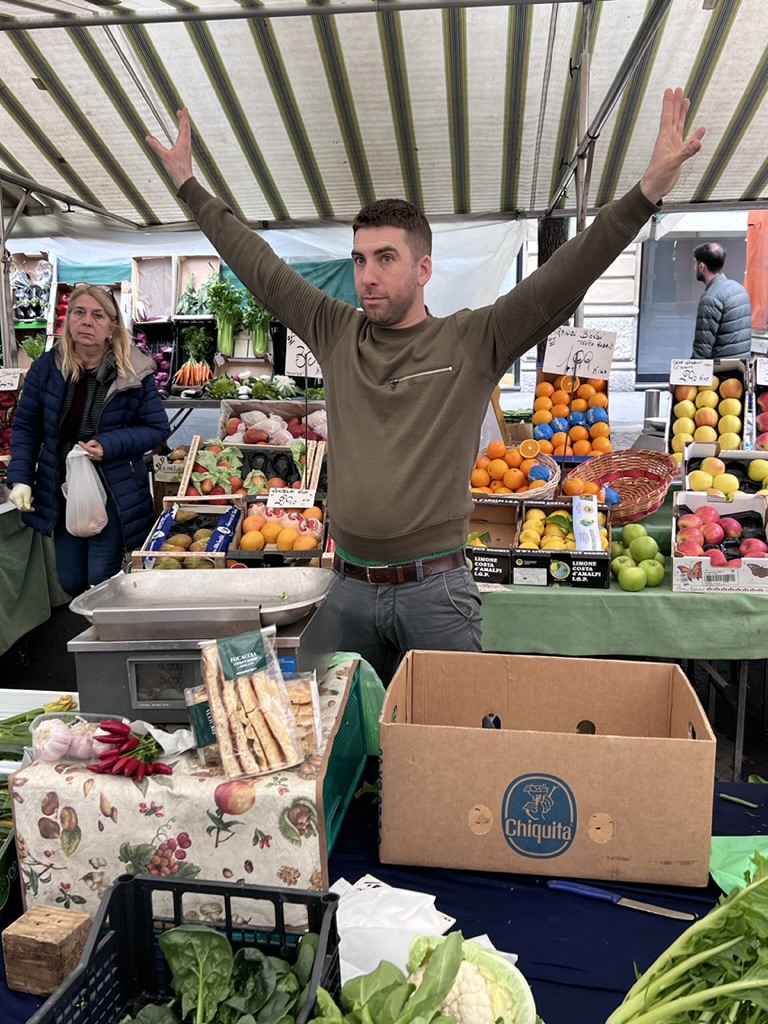
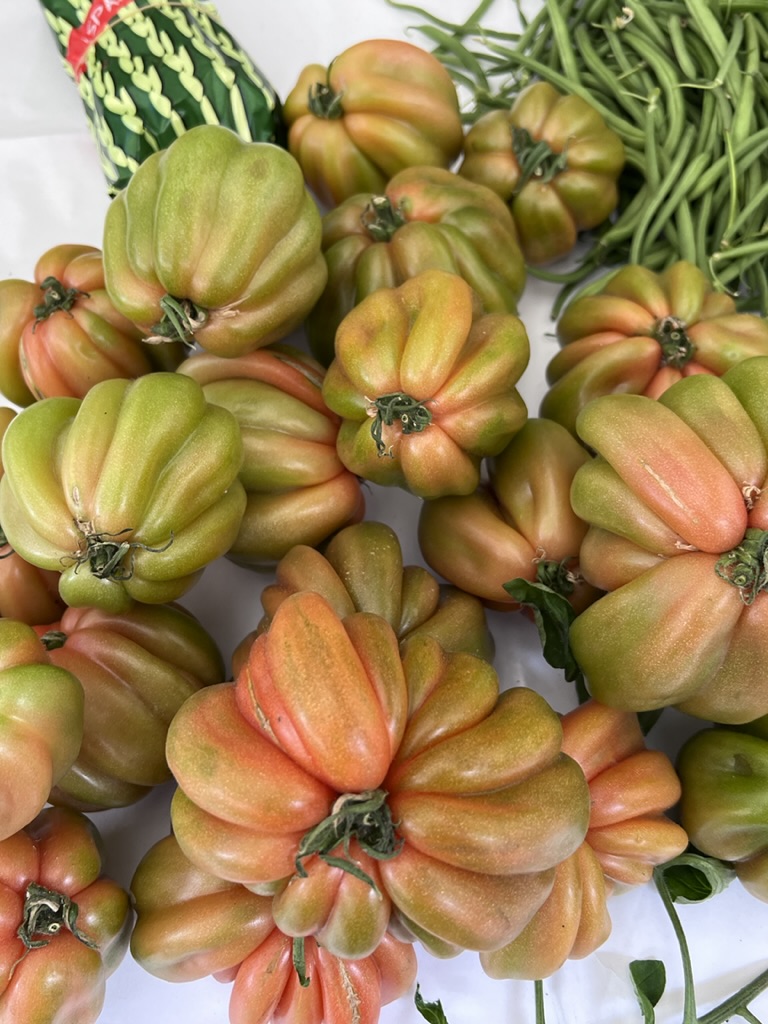
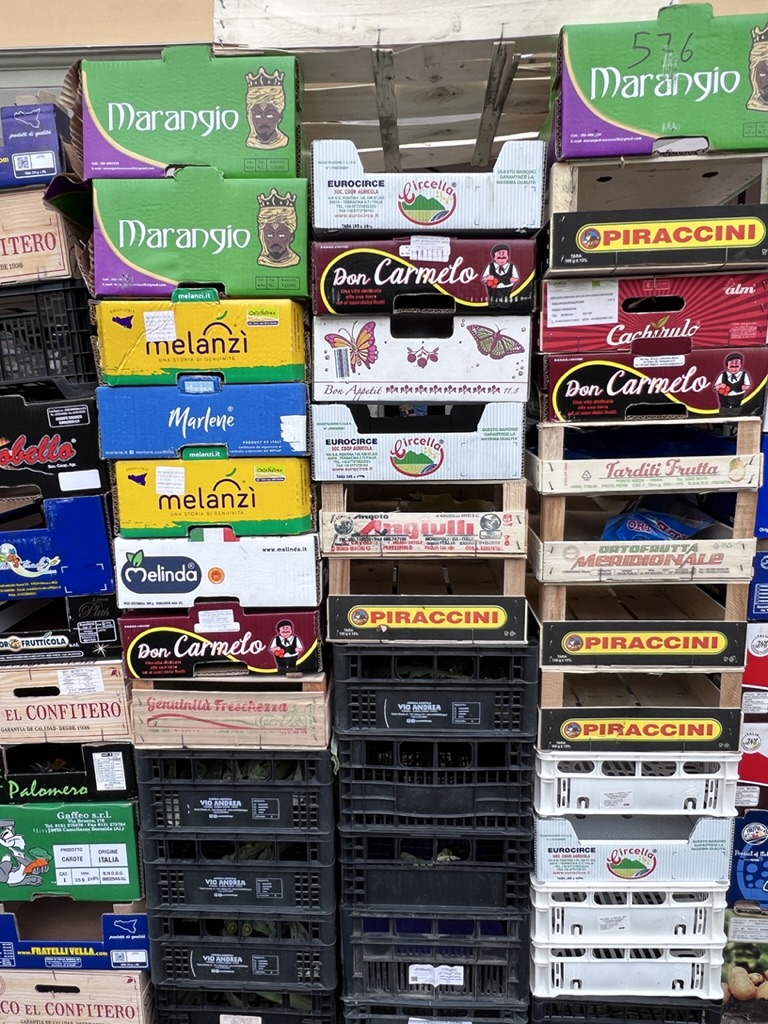
In the meantime, I’ve been explouring (or re-exploring) Milan. I headed directly for the Isola neighborhood after a quick stand-up morning snack at a local café. Took a taxi so that I could then walk around that neighborhood. Isola is one of those “up and coming” (translate—gentrifying) neighborhoods that used to be a working class area and is now hip and full of restaurants and galleries and cute boutiques. They compare it to Rome’s Trastverre but it’s not quite there yet. Today was their market day which stretched for blocks and blocks of fresh veggies and fruits and cheeses and meats and also used clothing and kitchen gear and all sorts of goodies from underwear to toys. I strolled and strolled and strolled. The taxi driver was a little confused as to why I was going to “this” market and told me about others that were “nicer.” He didn’t speak much English but I got the message; he also told me that in “this” neighborhood I needed to be sure to hold my phone and my wallet very close.
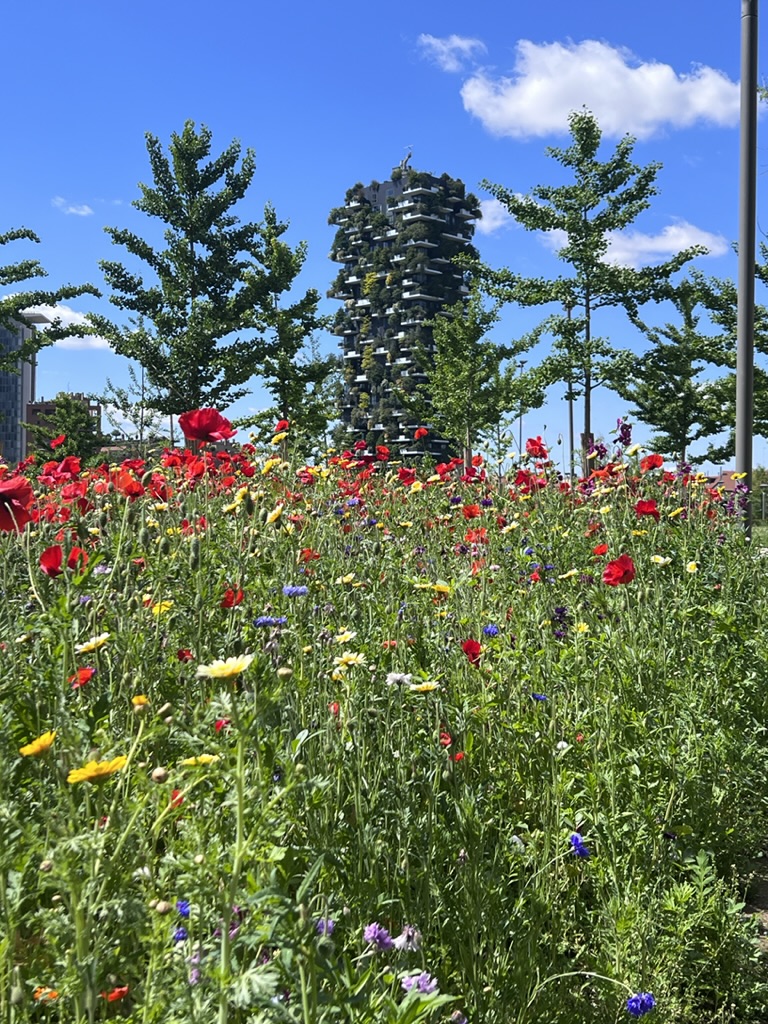
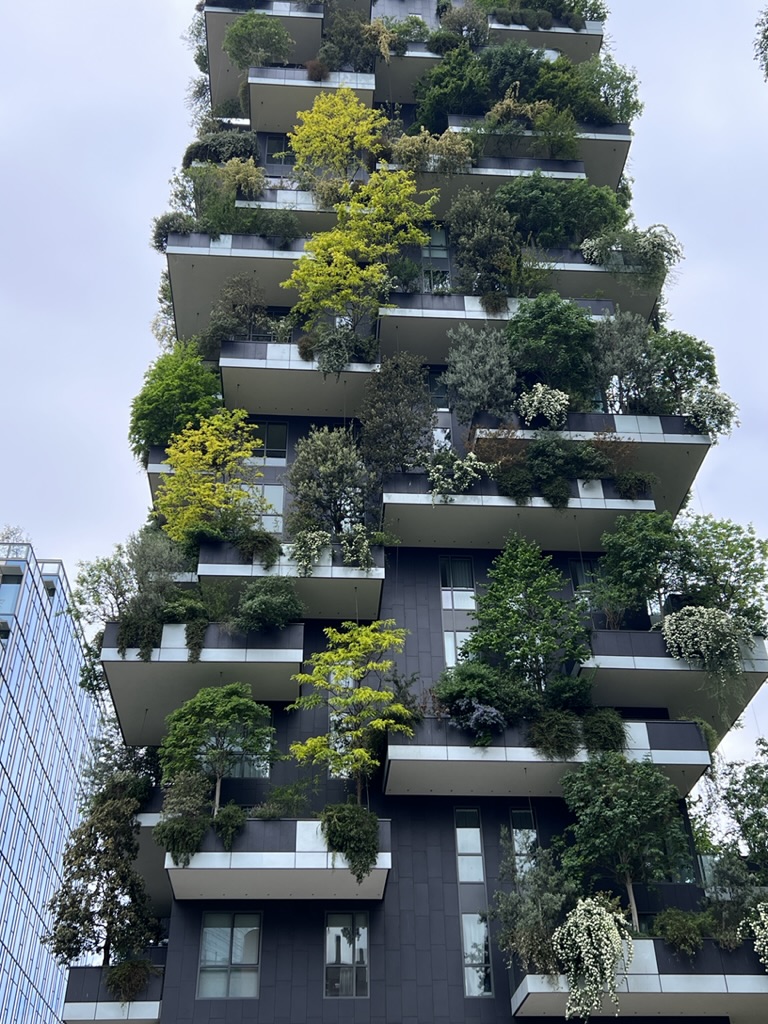
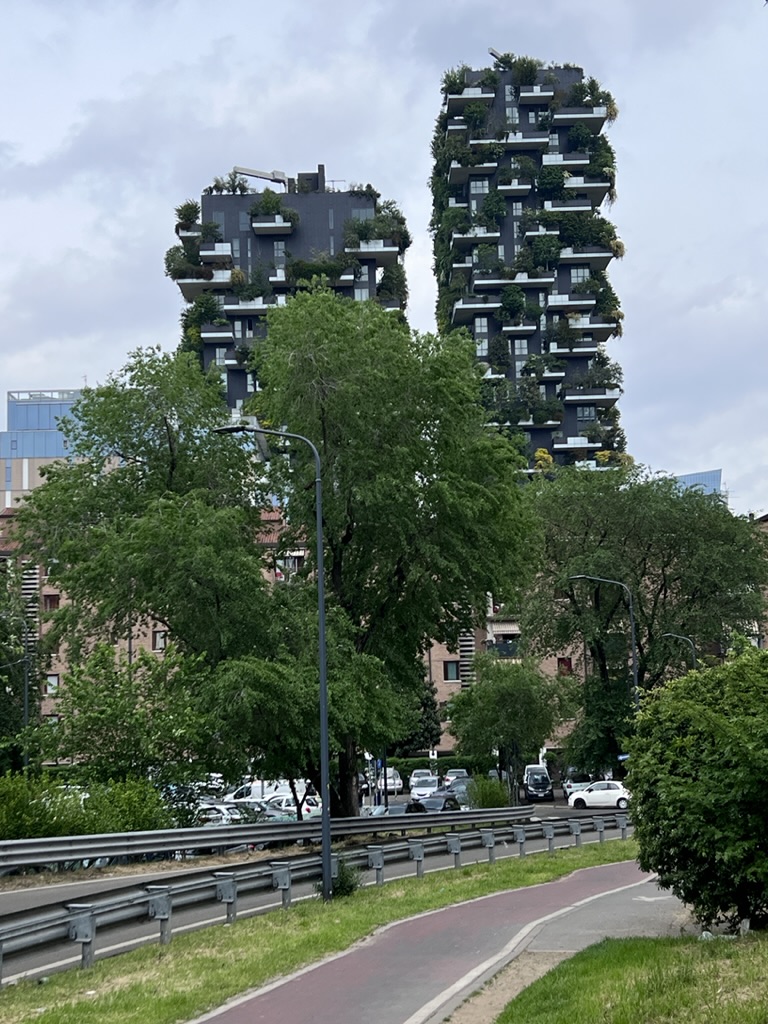
Along the route to Isola, I spotted the Bosco Verticale so I asked the taxi driver to stop for a minute for me to photograph.. Actually it’s very difficult to photograph this high end apartment complex.. The Verticale is supposedly a successful example of green urban development. The building changes as the seasons change; there are more than 15,000 plants and 90 different species of trees, shrubs and floral vegetation.. and the green which I have read is the equivalent of about 8 acres of forest, which is capable of absorbing 30 tons of carbon dioxide per year. The building of the Verticale is one of many ways that the Isola is changing.
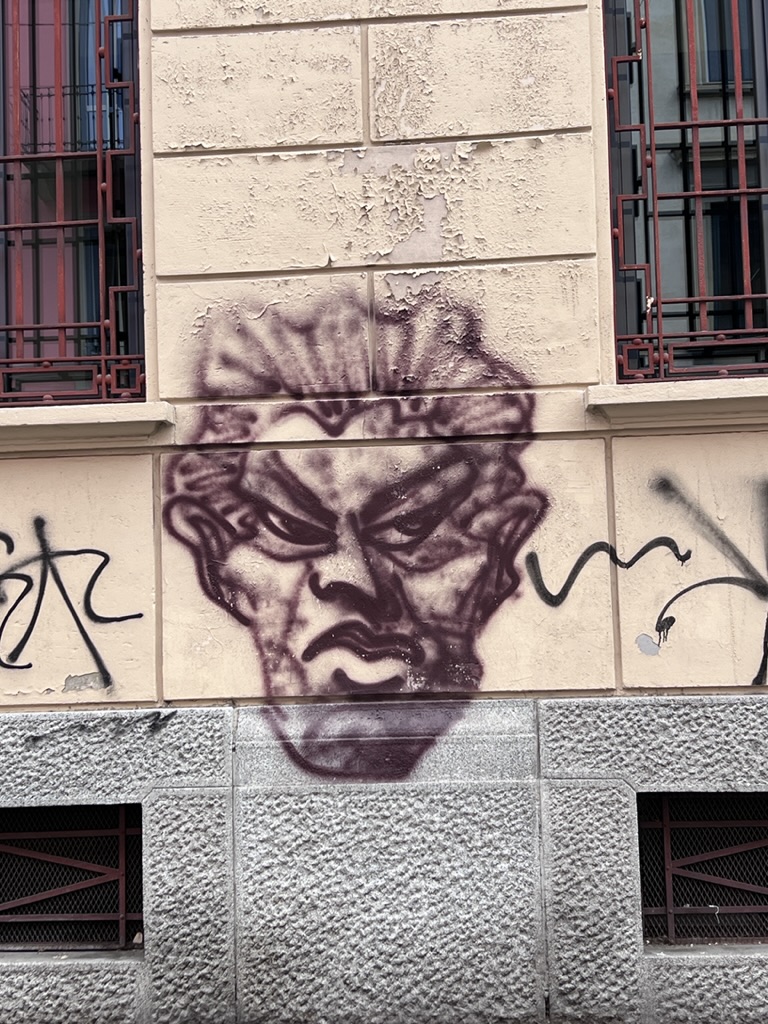
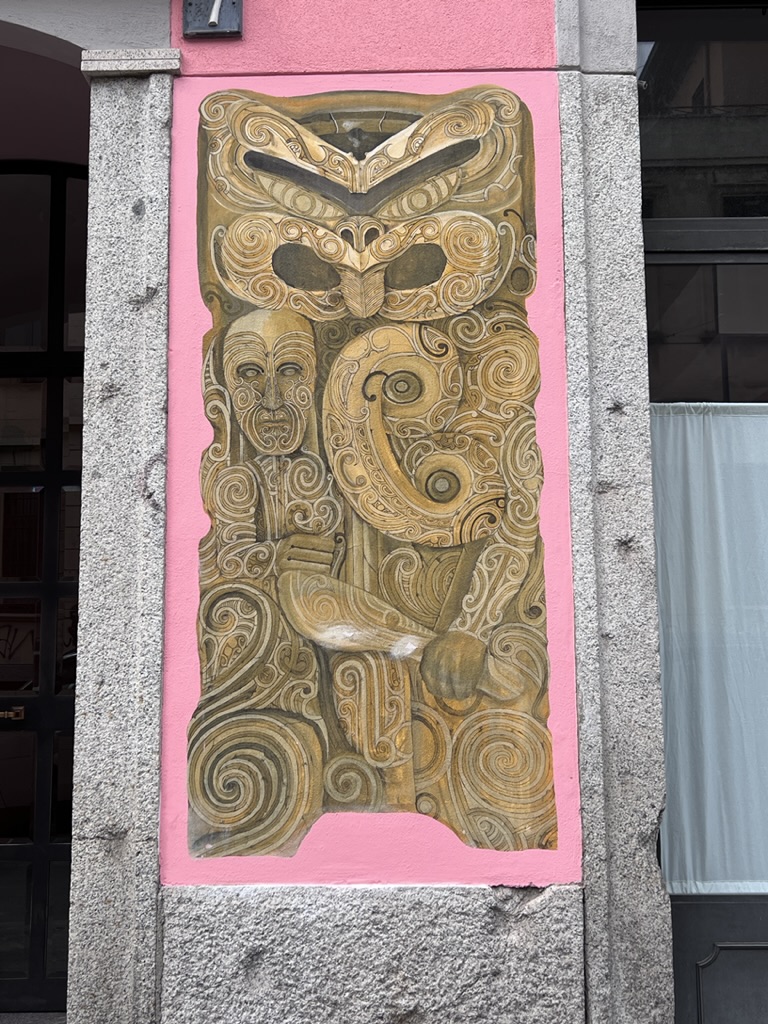
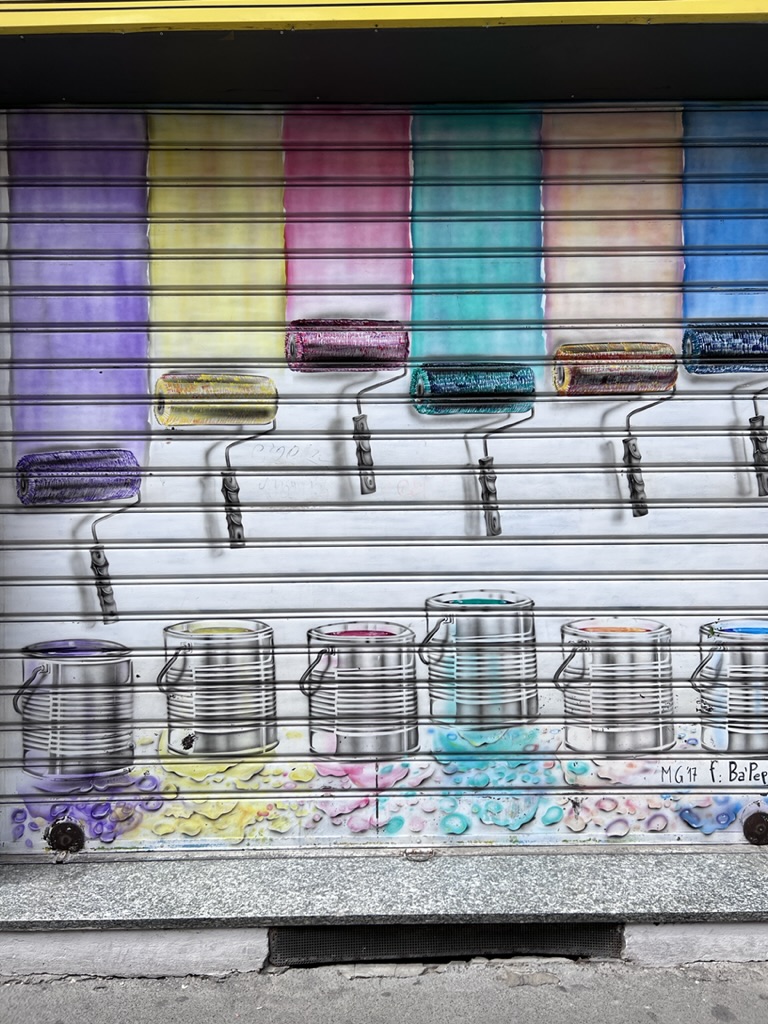
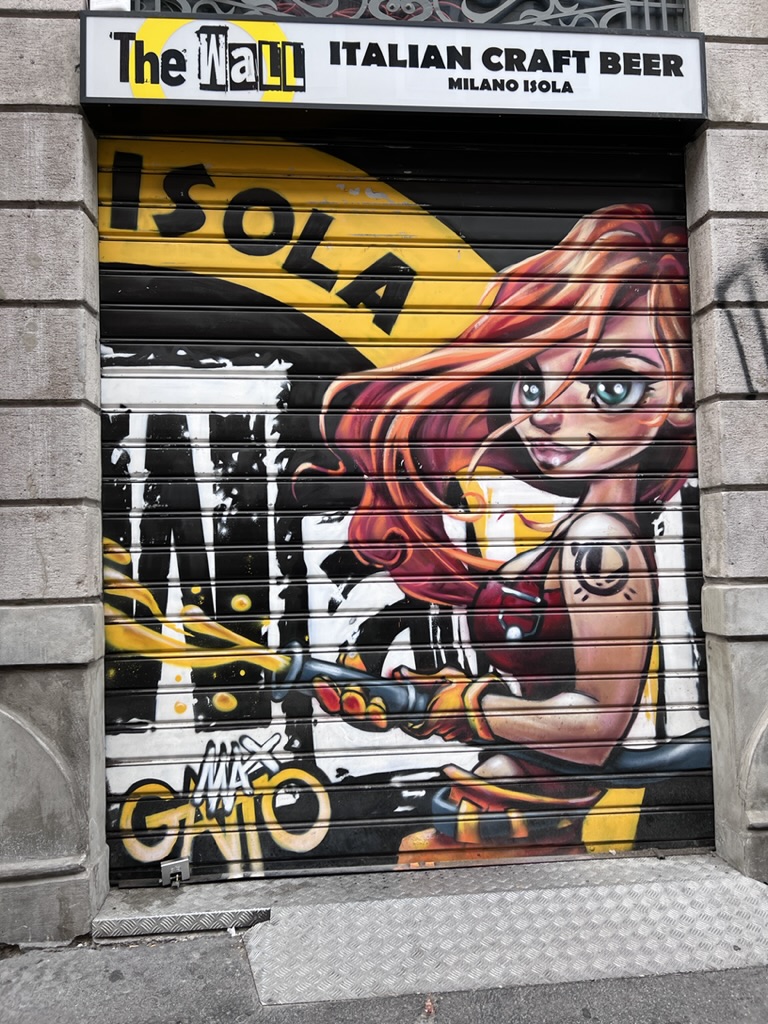
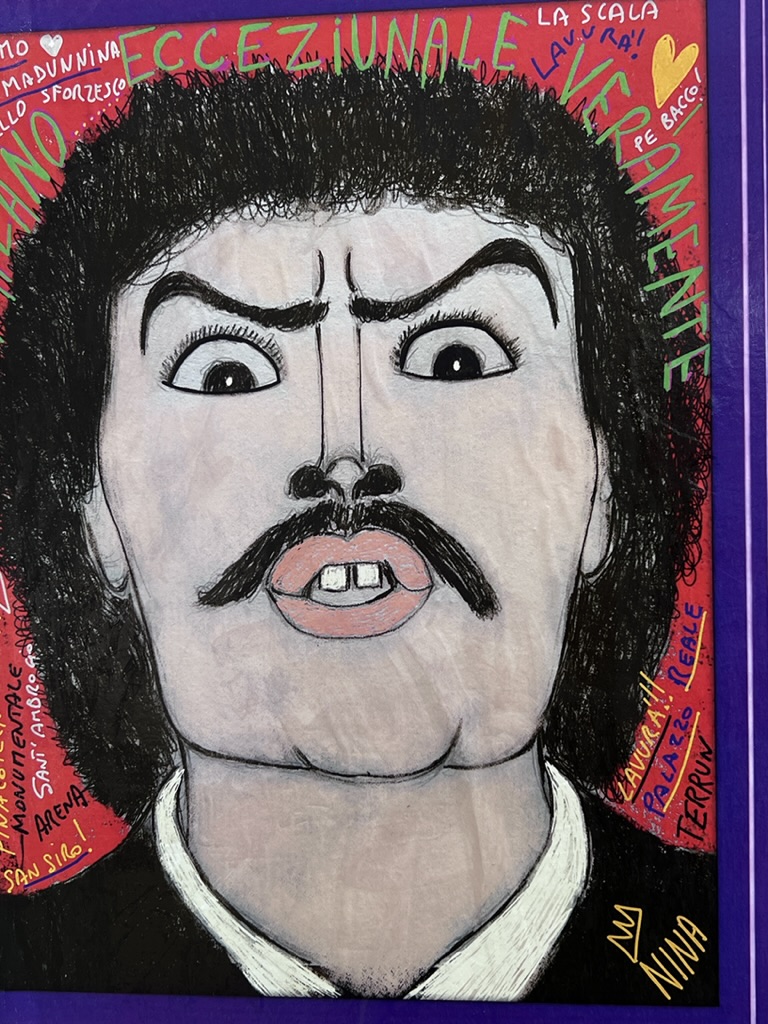
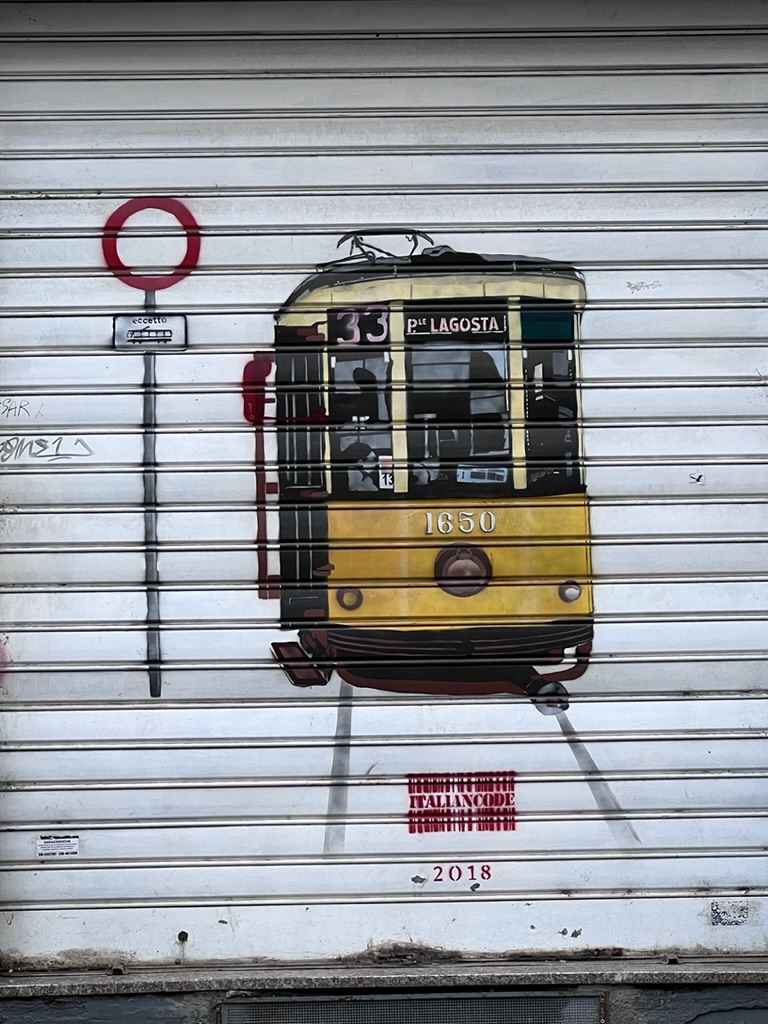
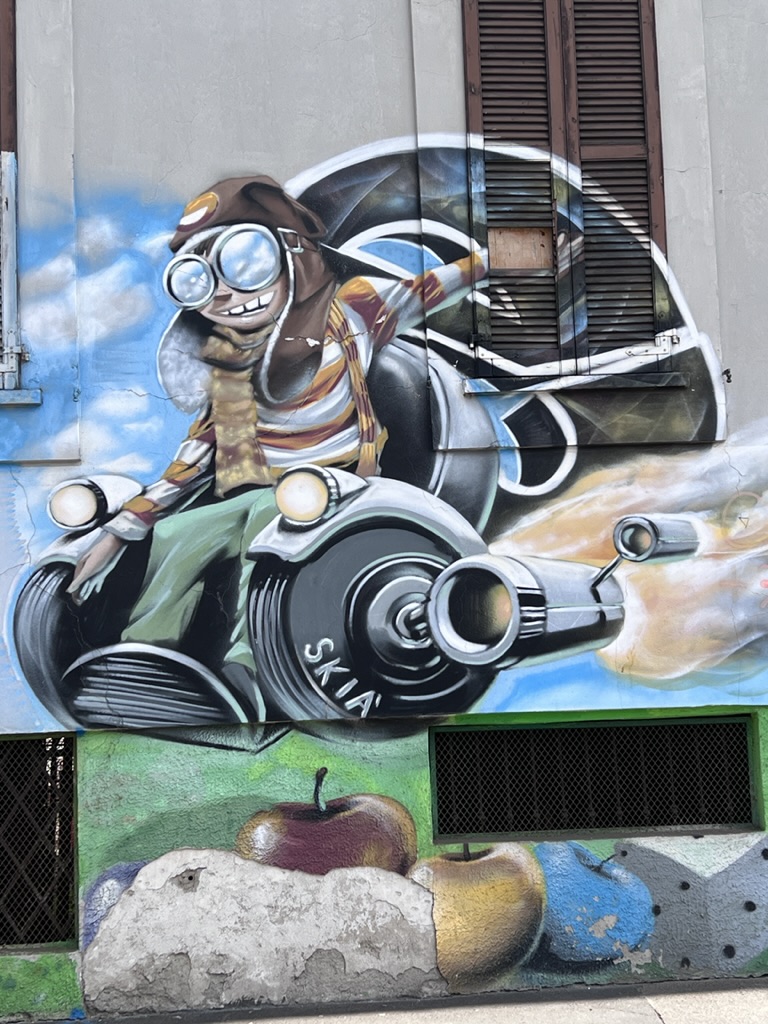
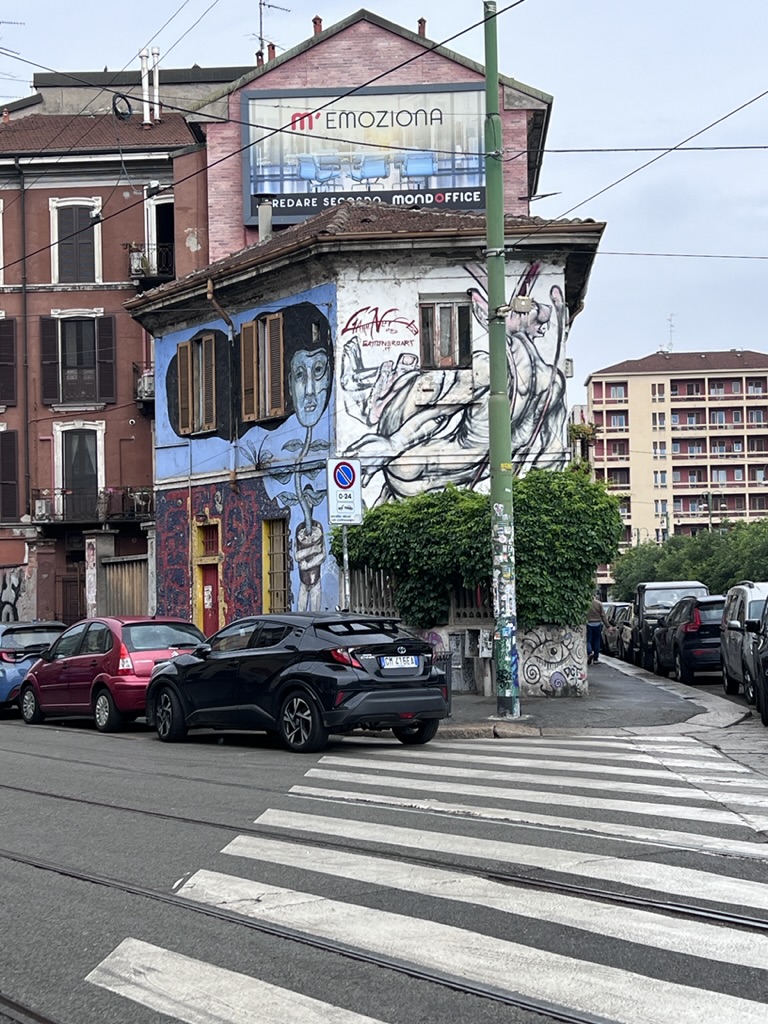
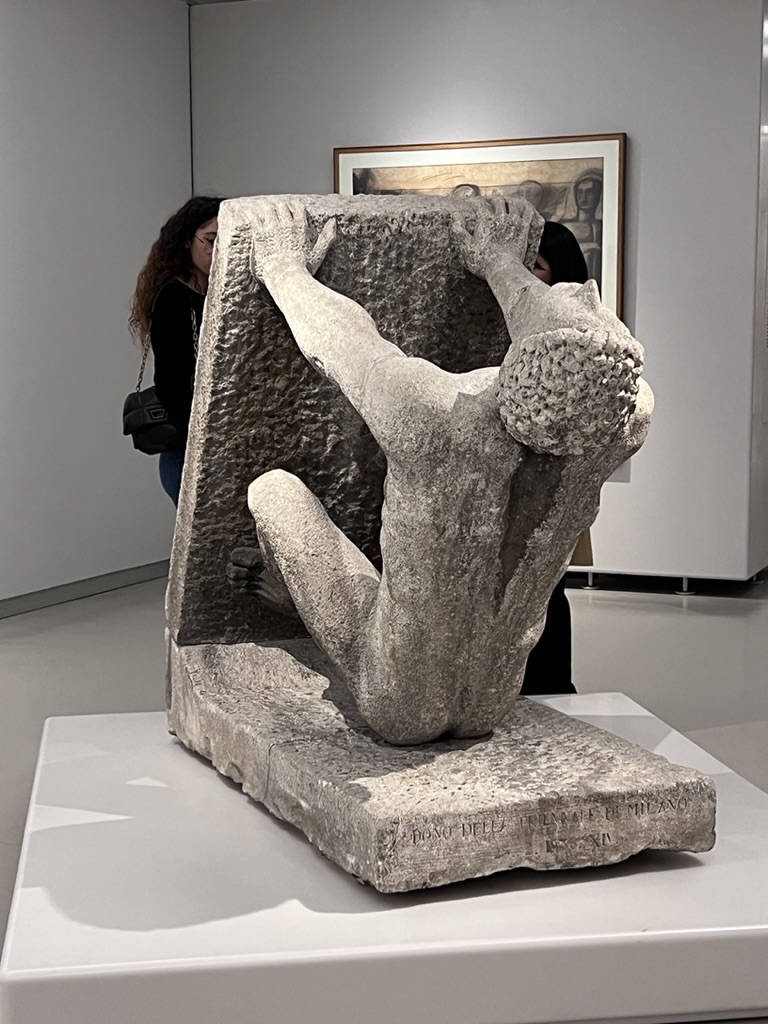
The Isola, like almost every neighborhood in Milan and also throughout the country is filled with murals and graffitti. And Italian cities seem to have absorbed graffitti as a part of life that’s here to stay. After hours bopping around the Isola, I headed to the Metro and took the train back to a stop near the Duomo to visit the Museo del Novecento — an interesting building that is focused on 20th-century Italian art. The museum was designed to show the art works in a linear fashion so that one moves along historically through the different “movements” of the 20th century. The building overlooks the Piazza Duomo and there are great views from each floor.
It’s a good collection and walking through and reading some of the text I was reminded of one of my favorite movies—“Manifesto”—where Cate Blanchett plays 13 different roles—the lead in each of the 13 stories–each of which depicts the writings of 13 different manifestos in the world of politics and art— Futurism, Dadaism, Bauhaus, Communist, etc. It’s a sort of a stew of these artists’ manifestos—and questions the role of artists in society. Among the 13 different personas that Blanchett performs, she’s a school teacher, a puppeteer, a newsreader, a factory worker, and a homeless man. If you haven’t seen this movie and you care about the arts—try to get hold of a copy.

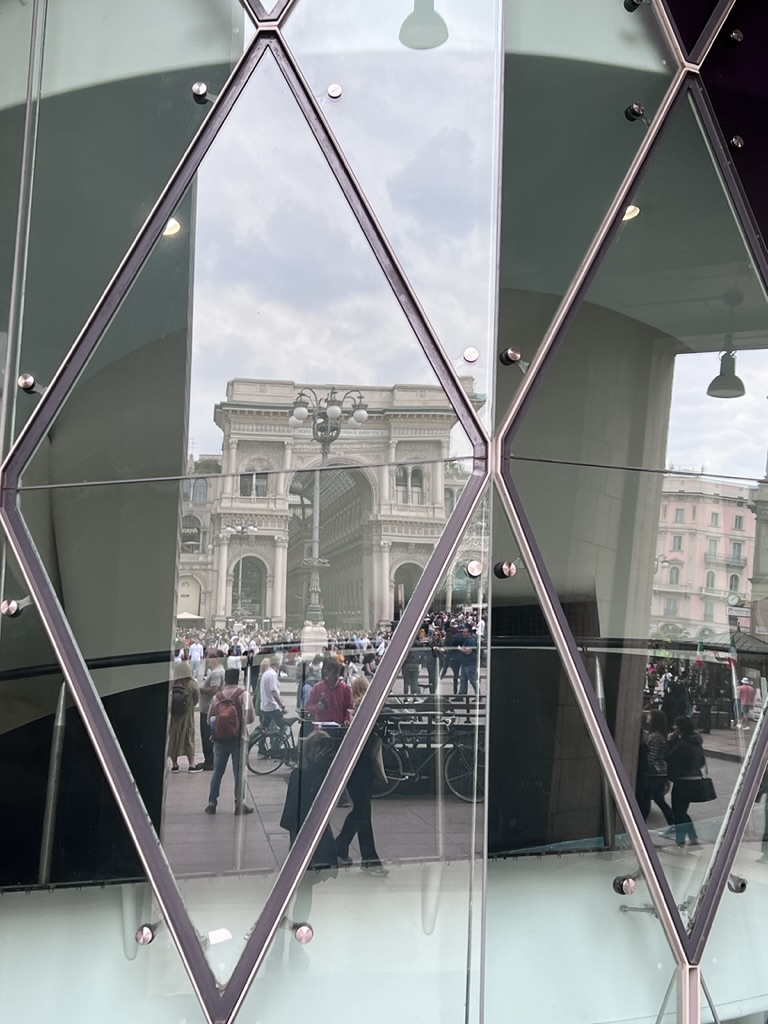

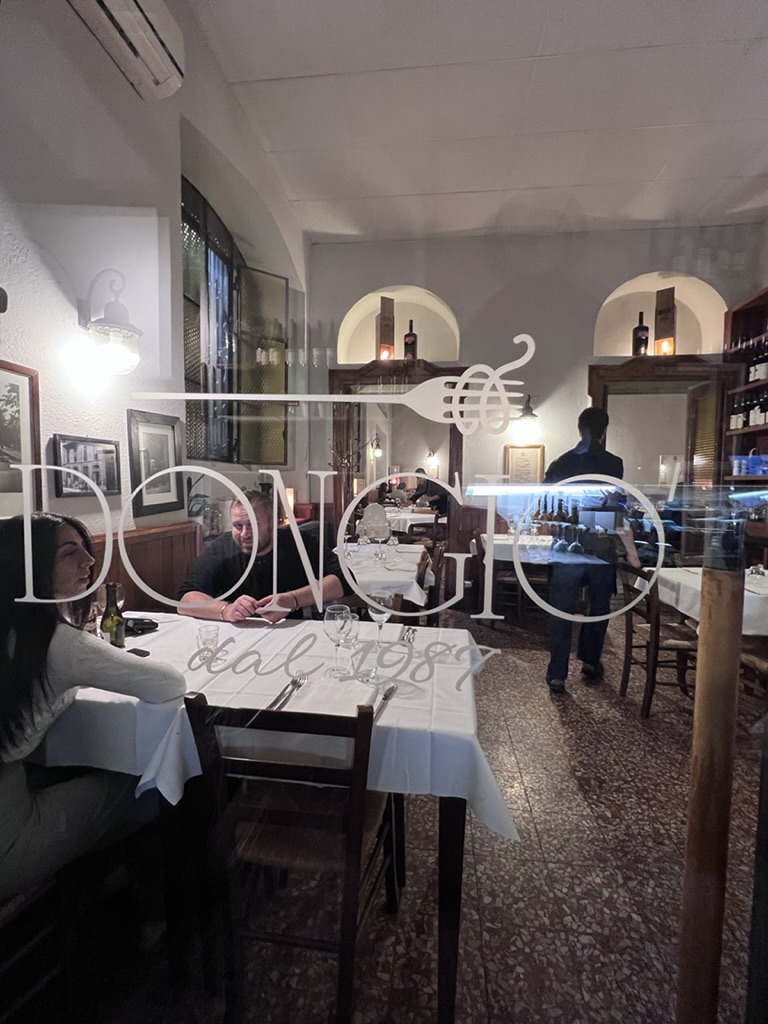
By then it was after 7:00, and I headed back to the hotel. Given Mike’s awful experiences with room service and delivered meals, I went to pick up some sushi for him… The issue about the food is that the hotel is small and doesn’t really have a kitchen or a restaurant. So they bring the food from a “sister hotel” a few blocks away. By the time it gets to the hotel, it’s cold and not so appetizing.
Then I headed for a really late dinner at a family restaurant in the Porta Roman area, which I hope to explore during daylight tomorrow (although the prediction is for rain??!!)
That’s it for me… lots more to tell, but it’s late here (after midnight and time for Wordle) and I’m getting sleepy.
Hope you are doing well.
Fern
Day Two of Paxlovid for Mike
While Mike is pretty much tied to his room here at the hotel, watching Italian TV (I think he seems a little better than yesterday), I figure I should take advantage of this return visit to Milan. I’m in a separate hotel room and feel fine.
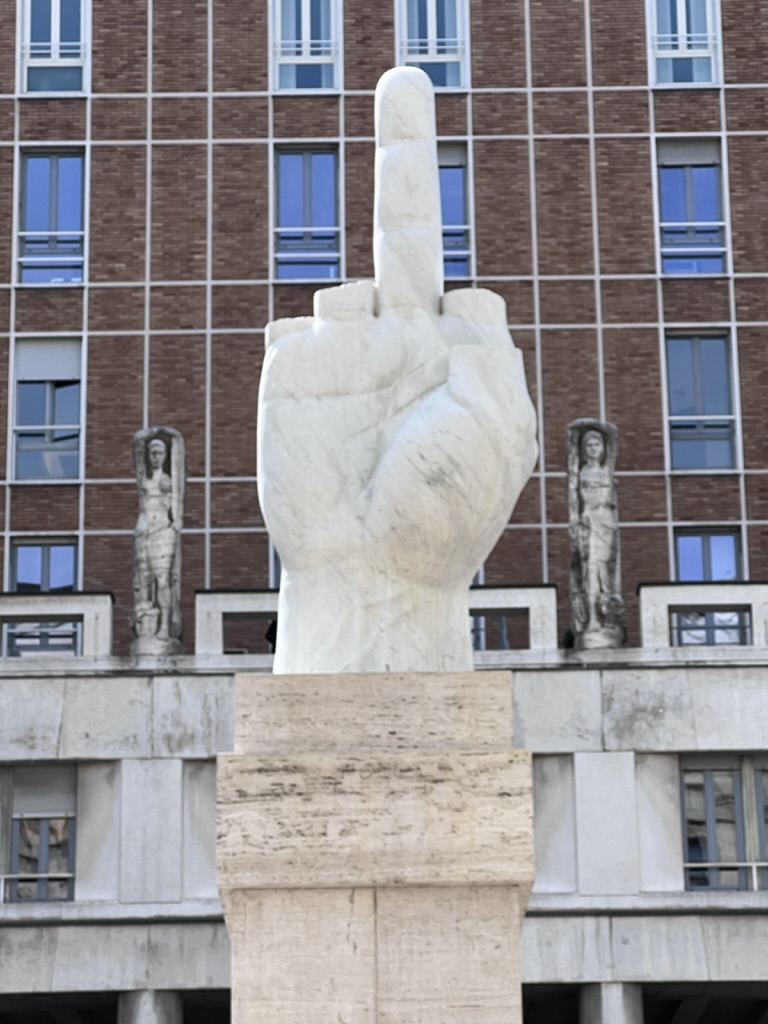
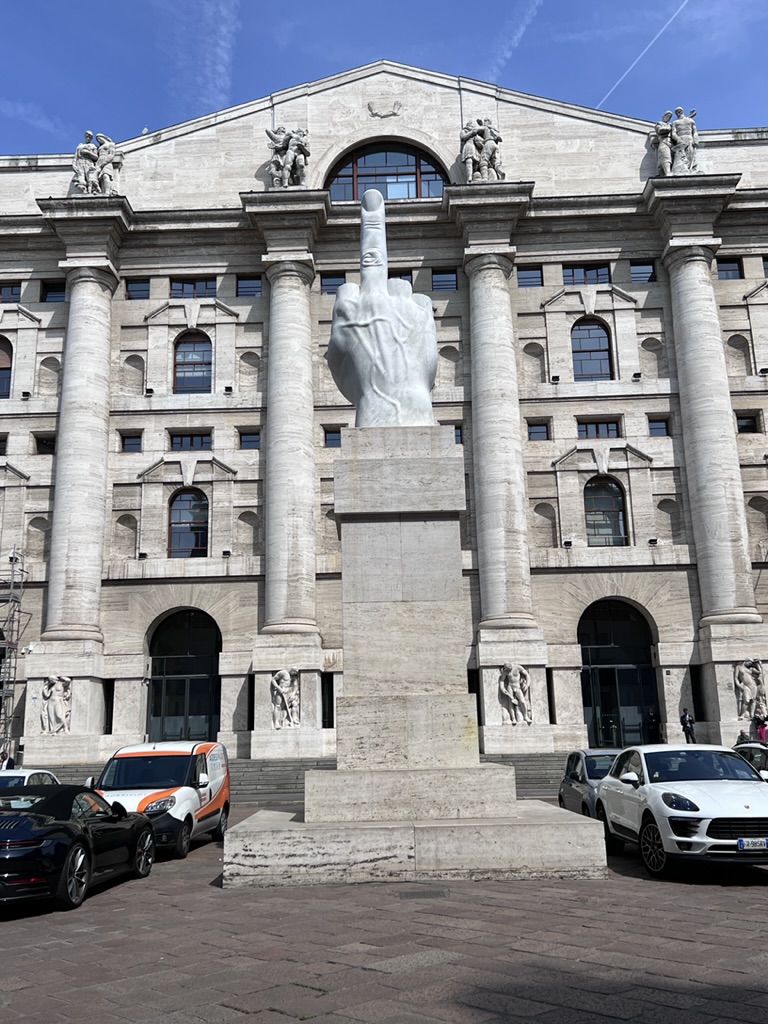
So I walked… about 6 miles total and climbed about 8 floors. I walked from the hotel to the Piazza degli Affari, where I saw the famous “finger” which is strategically facing the Italian Stock Exchange, the Borsa… a sort of “F*** You” to the world of bankers and corporate CEOs. The statue is titled “L.O.V.E.” which stands for “Liberta, Odio, Vendetta, Eternita” (Freedom, Hate, Vengeance, Eternity.) It was created in 2010 by Maurizio Cattelan, who is well known in Italy for controversial art works. The statue was supposed to be temporarily placed in Piazza Affari but the Milan municipal government decided to keep it in the piazza indefinitely. The artist has never commented on the meaning of the statue, but everyone assumes it refers to the economic crisis that affected Europe from 2008 forward. The stock exchange is a fascist-era building. It should be noted that Piazza Affaari is in a business district and not a tourist destination, although word has spread and people do come and take pictures-–mostly of themselves with the statue. When I got to the piazza, there were just two other people there.
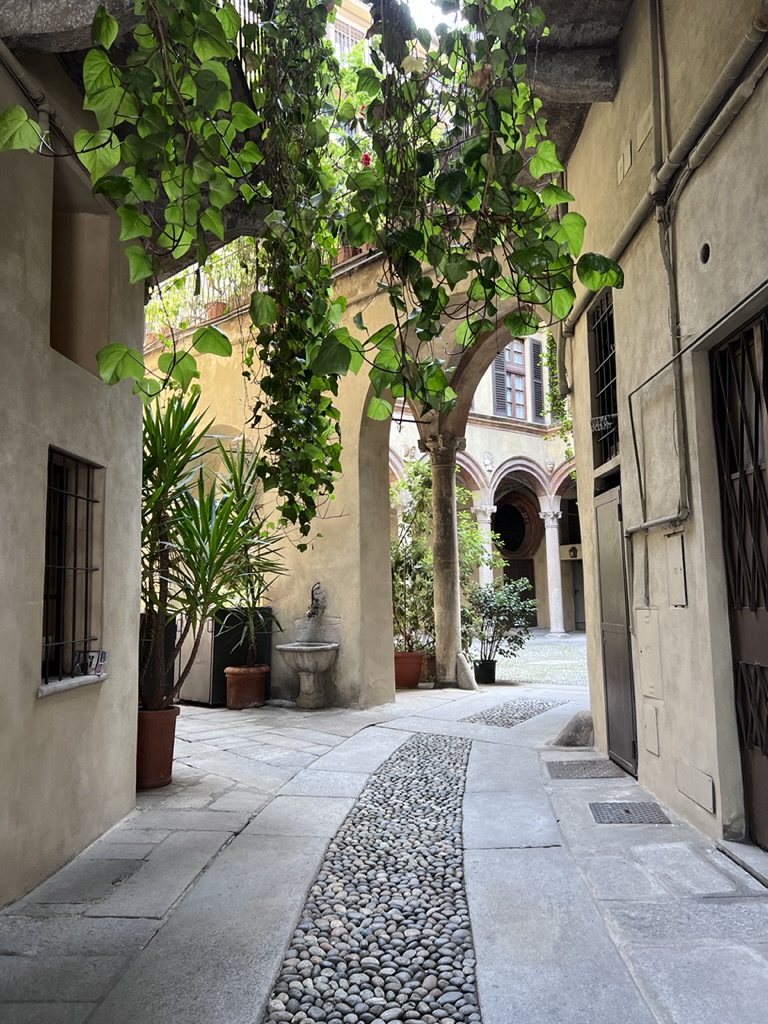
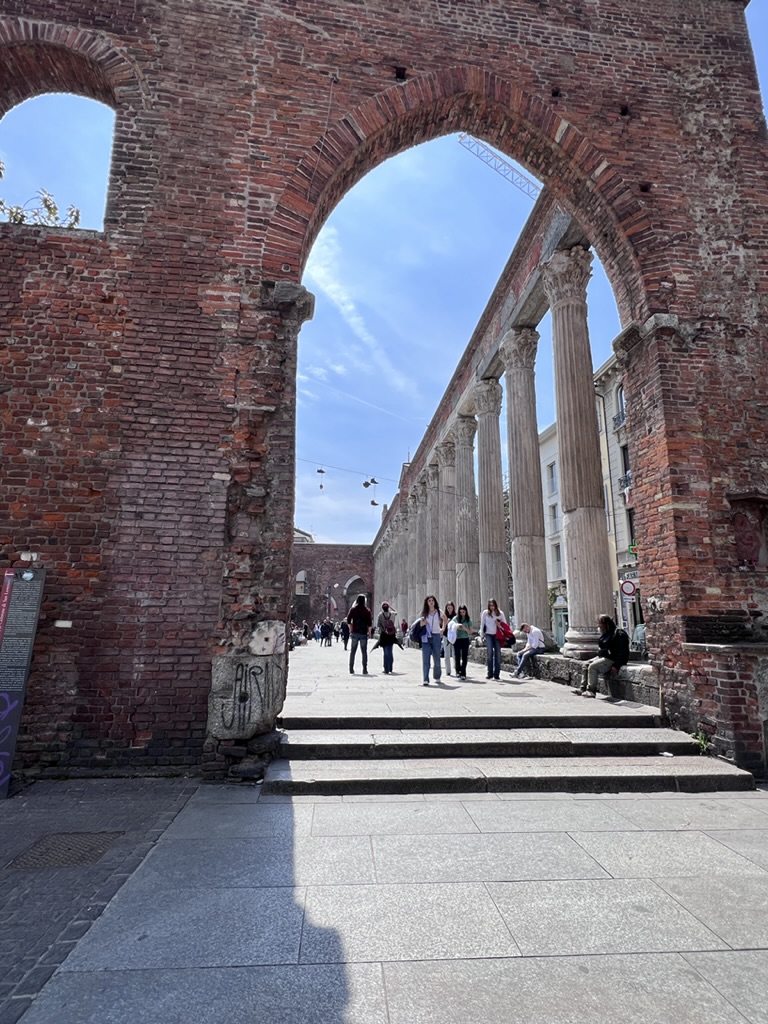
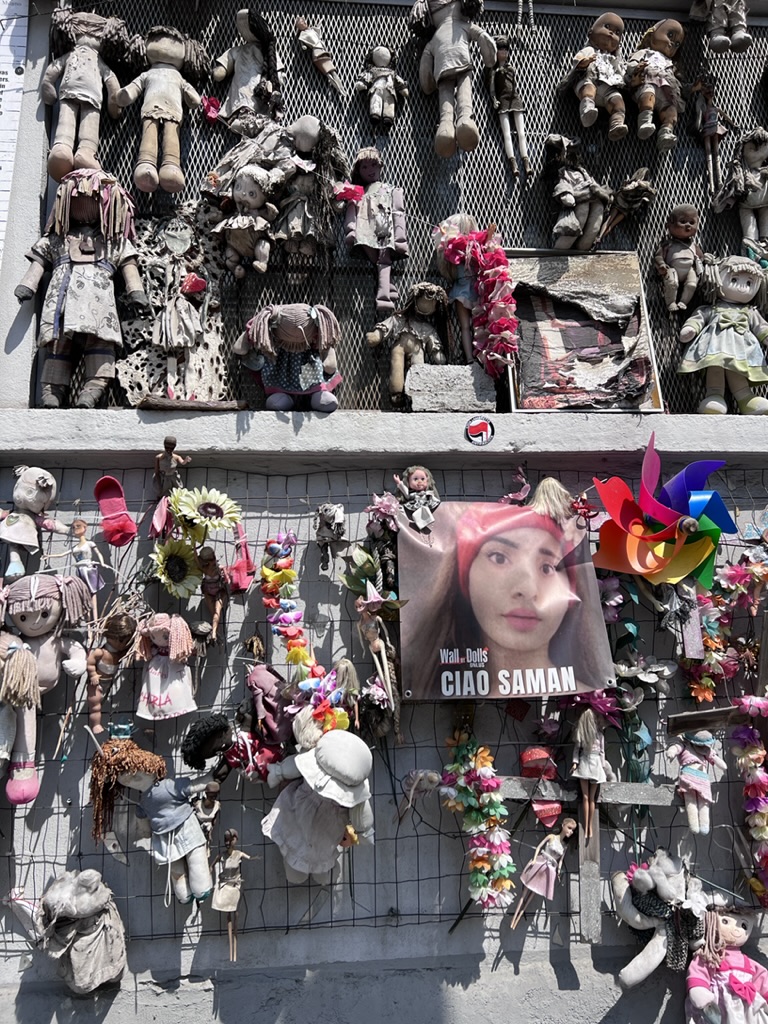
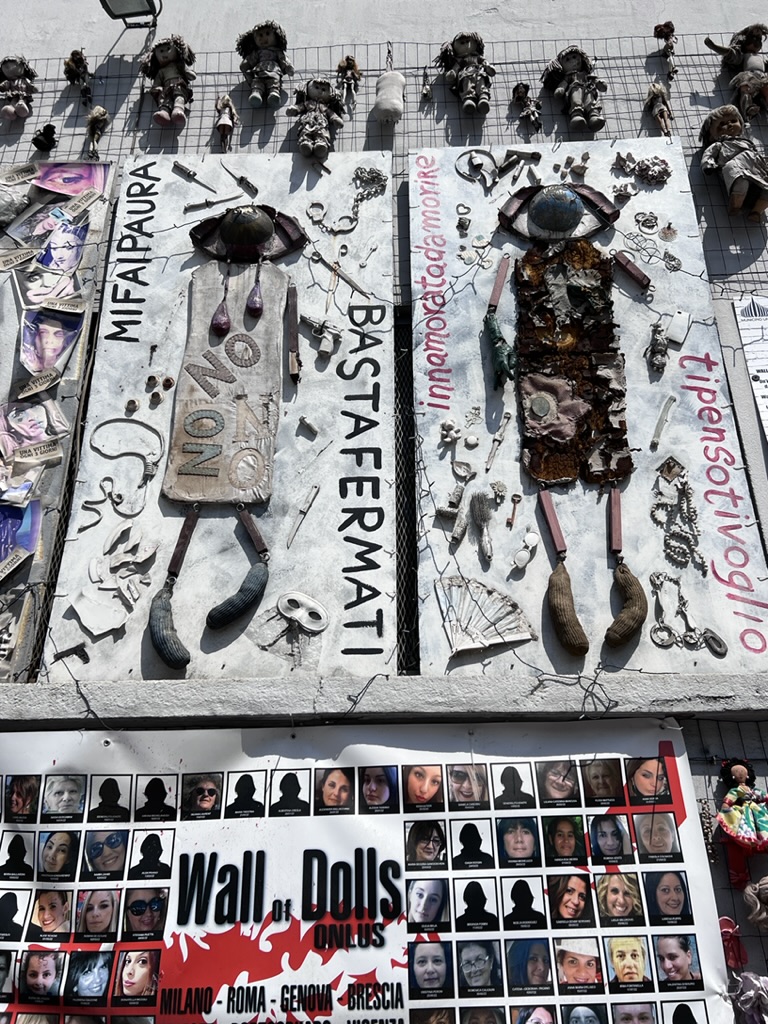
From there I walked through the medieval part of Milan through the Cinque Vie and on to Santa Maria Presso San Sanitoro, a 15th Century church… and just roamed the neighborhoods in and around this path I set out on… I went to see the Wall of Dolls, a protest art piece with scores of dolls tied to a wall—symbolizing crimes against women. Eventually I returning to Piazza Duomo and to the hotel to check on Mike. We are actually now neighbors as he is in Room 106 and I’m in 107. If we knew Morse Code we could communicate; instead we are opting for iPhones—the contemporary Morse Code.

After a brief refreshing rest at the hotel, I headed out to actually visit the Duomo. I figure when in Milan—one must see the Duomo, even if you’ve seen it before. With ticket in hand (actually don’t think we needed to pay for tickets years ago) I trekked (along with many others) up to the roof and terraces of the building. The Duomo is 350 feet tall and has 135 spires. It was (according to my phone) six flights up and six flights down. These narrow stairwells with uneven treads and risers brought me to the many terraces and the roof where you could see the spires and trusses up close and get great views of Milan.
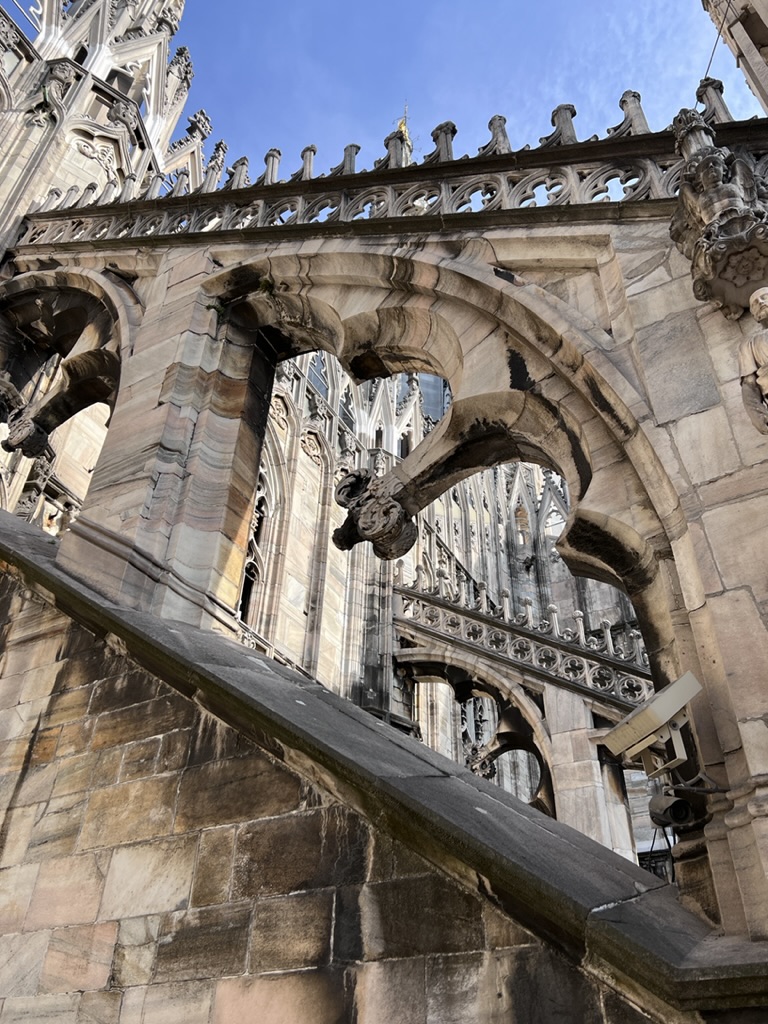
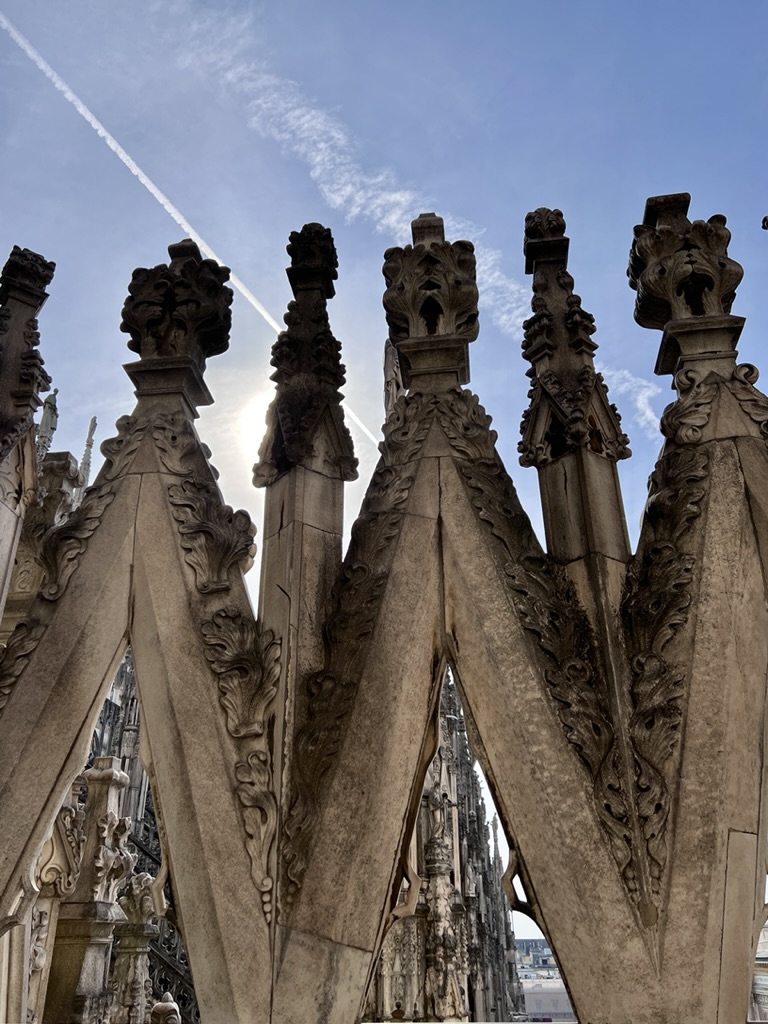
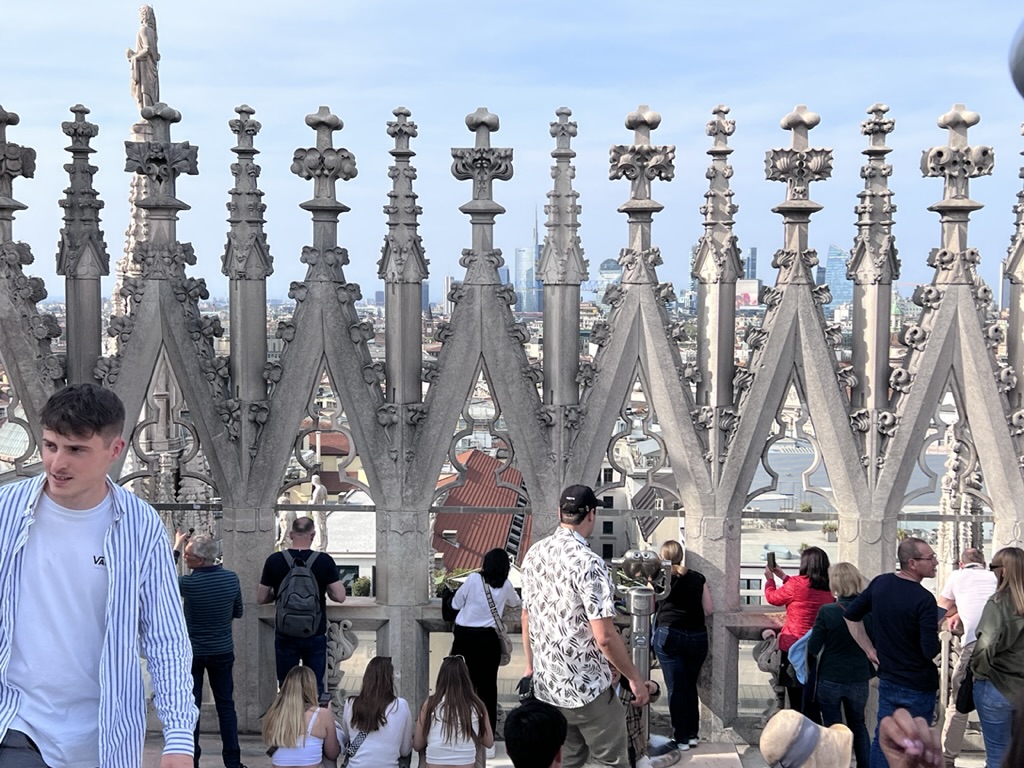
Construction of the Duomo started in 1386 and was initially intended to be made of terra cotta, but once the design was revealed and the grandeur was understood, the project was done in marble that came from the Lake Maggiore area. In order to get the marble to the site, canals had to be dug and those canals are visible along the “navigli”. Thousands of artists and sculptors were involved in the construction and architects from across Europe were invited to participate – 78 different architects were involved. The church was consecrated in 1418 but in reality only the nave was finished.. Construction of the church continued for several centuries more. Frankly I had forgotten how many stairs there were (256 to get to the terraces); had I remembered I might not have done it. But I did do it and glad I did. And the inside of the Duomo is spectacular –- in some ways more “barren” than so many other churches in Italy. There are supposedly 3,400 statues, 135 gargoyles, and 700 figures within and on the façade of the building.

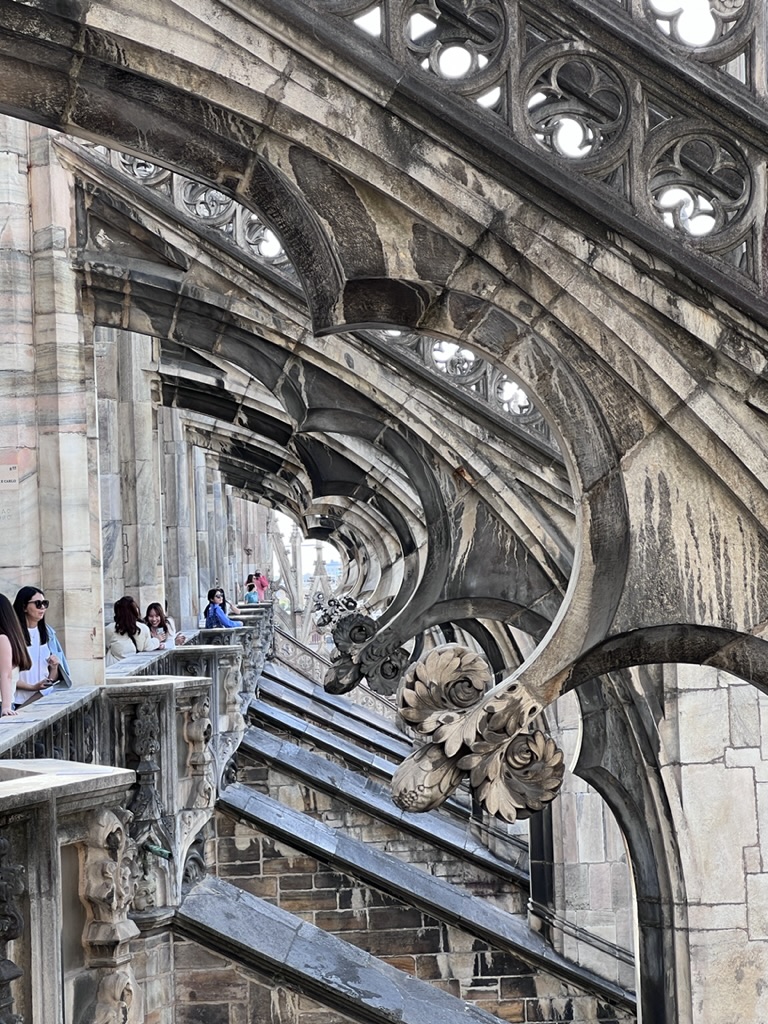
Following the Duomo I headed back to the hotel briefly and then –-having already walked more than 15,000 steps (and my foot is not totally great yet) and climbed all those stairs—I decided to take a taxi to dinner. And unlike last night when I took a taxi I was much more careful with my pronunciation of the street name (Last night I needed to go to Via Corsico, but I guess my pronunciation made it sound like Via Corsica—big difference, totally different parts of the city. Ate at Il Carpaccio; interesting menu.
And then I headed back to the hotel.
Tomorrow is another day. Hoping Mike will be well enough to see a little of Milan before we leave. I think his isolation will end on Sunday. Keeping fingers crossed.
Best –
Fern
17. Milan: April 27 2023.
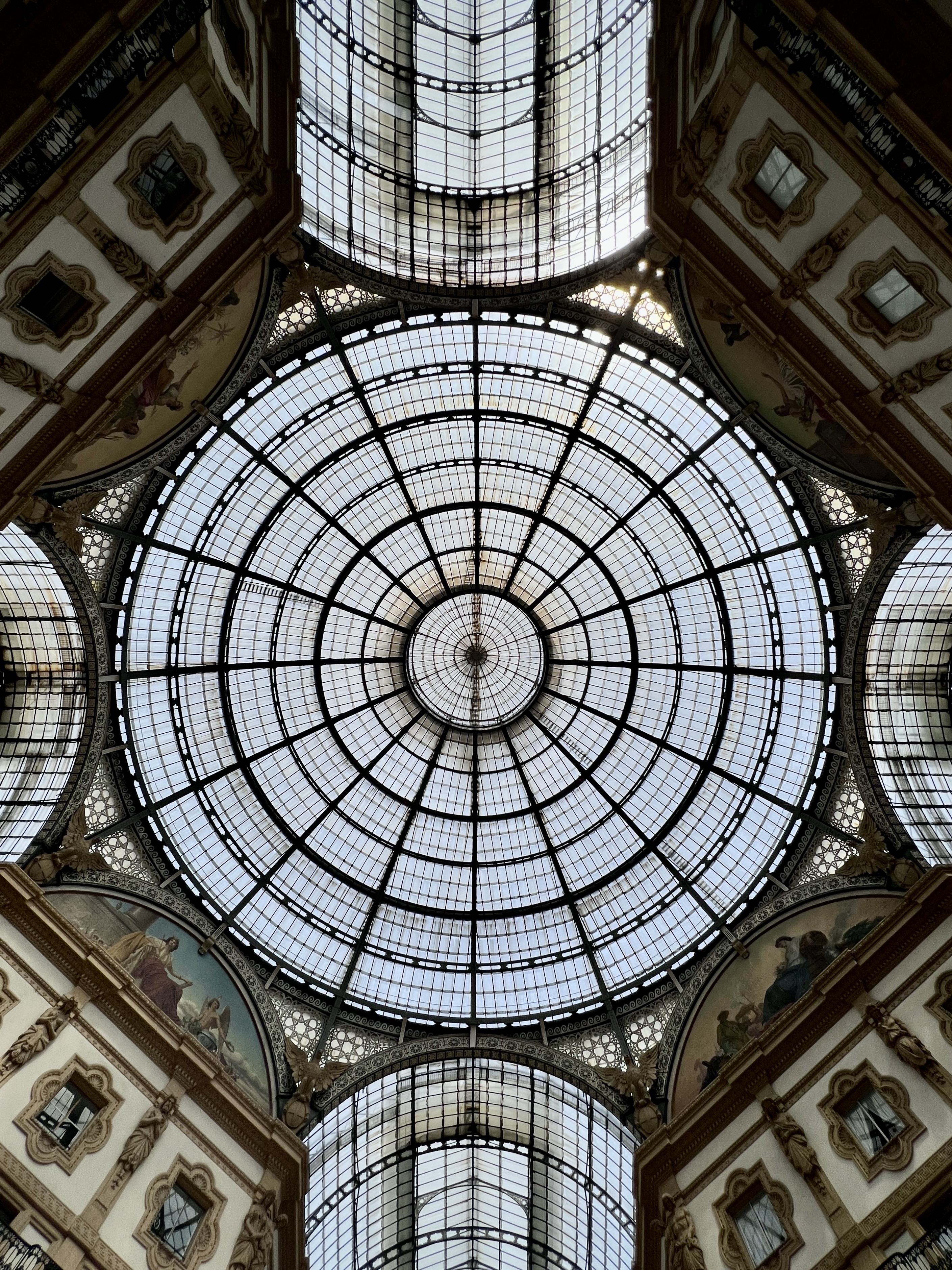

Messy day… I’m now in my third room at the hotel, and they only have 21 rooms. But hopefully this is my spot for the foreseeable future.
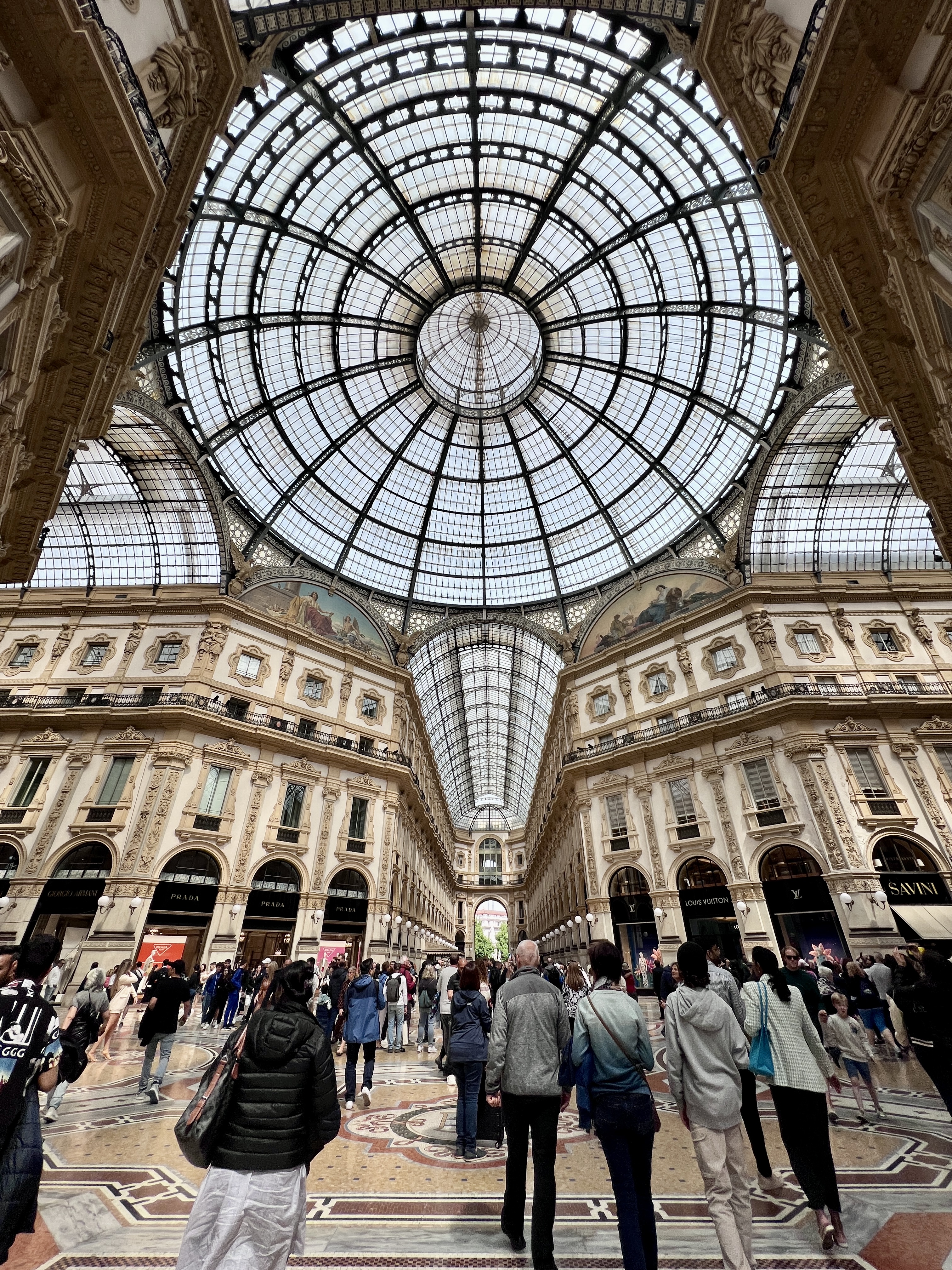
Thanks for all the notes about Mike’s health and my gout attack. Mike’s on Paxlovid, which we brought with us from the states. Good thing, because I don’t think they prescribe it here. I’m doing better although I probably shouldn’t have walked as much as I did today—about 3.5miles. Since I had to be near the hotel to move my stuff from room to room, once the new room was ready, I just took a short walk back in Piazza Duomo and through the Galleria. Follow-up on the Leonard Cohen “Hallelujah,” it seems as if all of the different singers who perform in the piazza do at least one Leonard Cohen song each day. So high likelihood that you catch it a few times in a day…. which is fine by me.
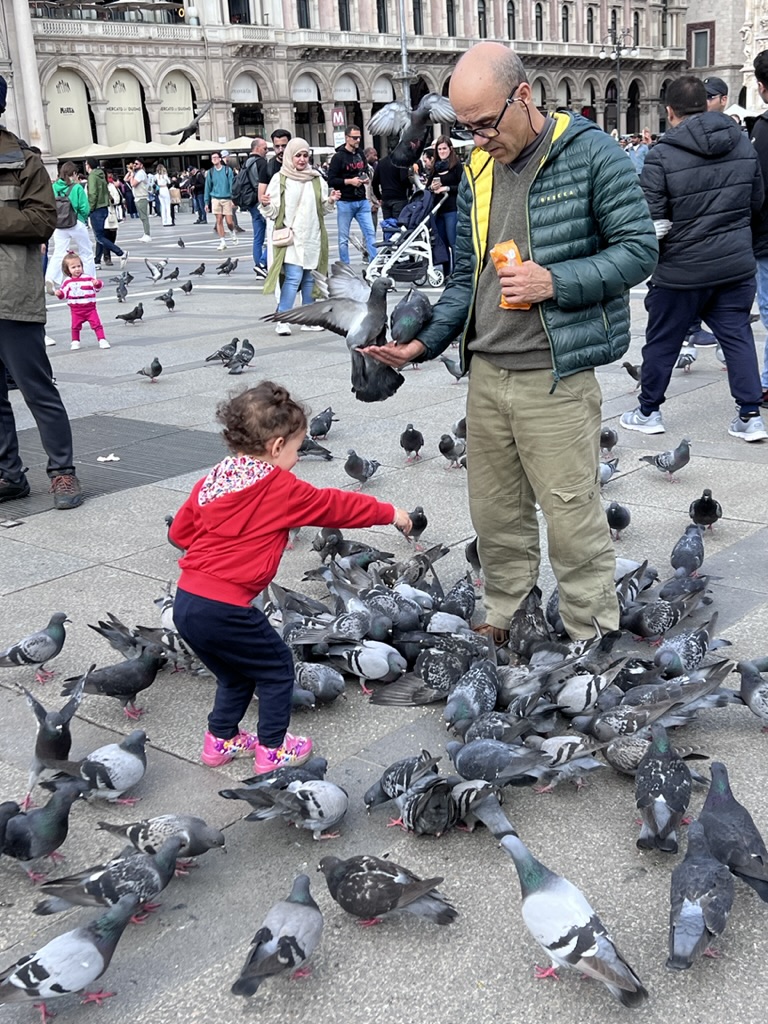
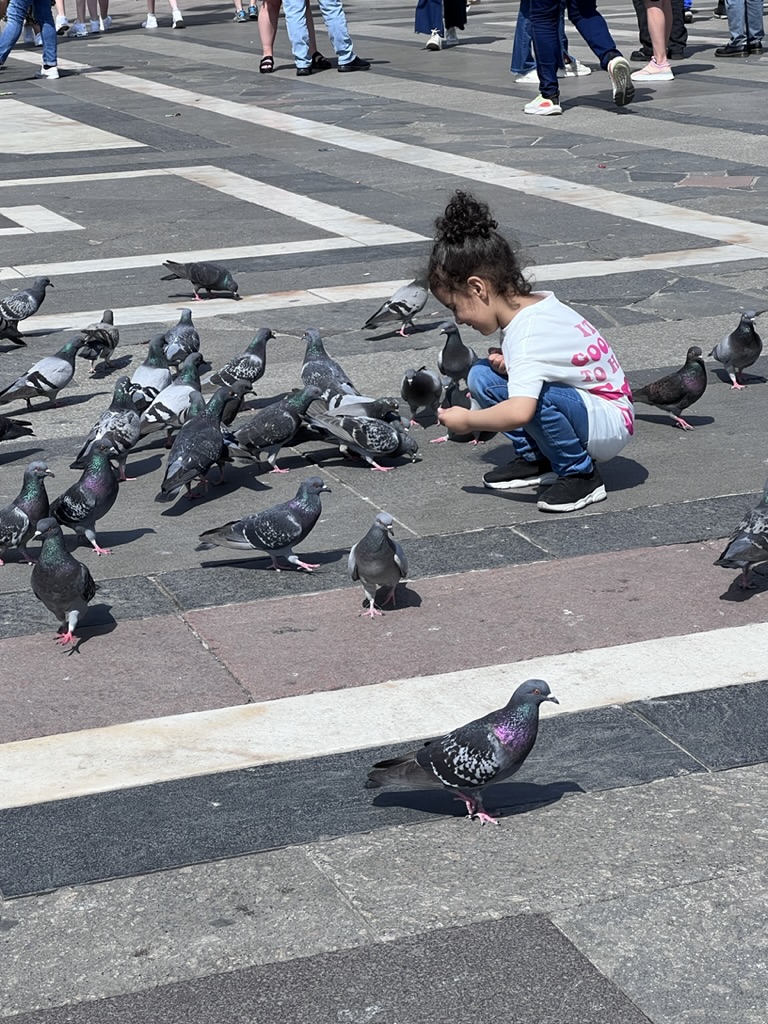
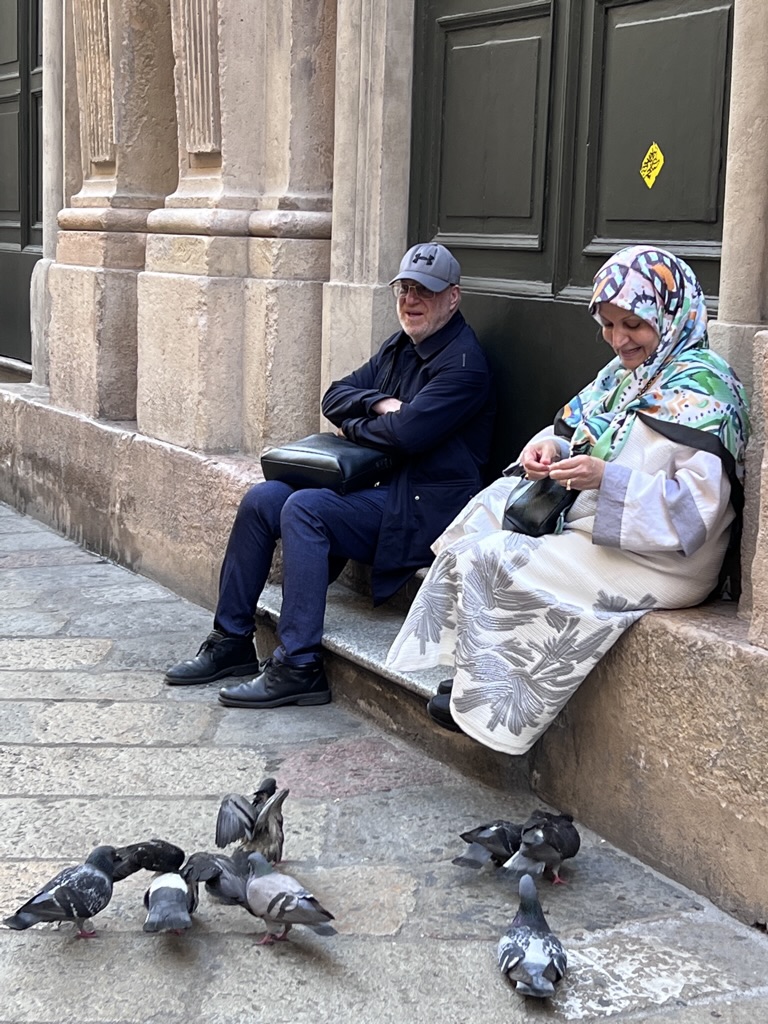
The pigeons were out in full force, as they usually are and as they have been for decades (or maybe centuries?) Once the room was ready, I got settled in it and then had to deal with returning the rental car. Since Mike has been doing most of the driving and I’ve been the navigator, I was a bit concerned about being both the driver AND the navigator, having to negotiate getting from the hotel which is in a pedestrian zone to the train station. I asked the rental car people if they would pick up the car but that wasn’t going to work. Then one guy at the front desk suggested that he could drive his motor scooter in front of me and he’d lead me to the rental return. But in the end Mike decided that he could handle driving the car if I navigated… we both wore N95 masks in the car and kept the windows wide open. Once we got to the drop-off (near the Central Station), Mike got into a taxi and headed back to his isolation room at the hotel.
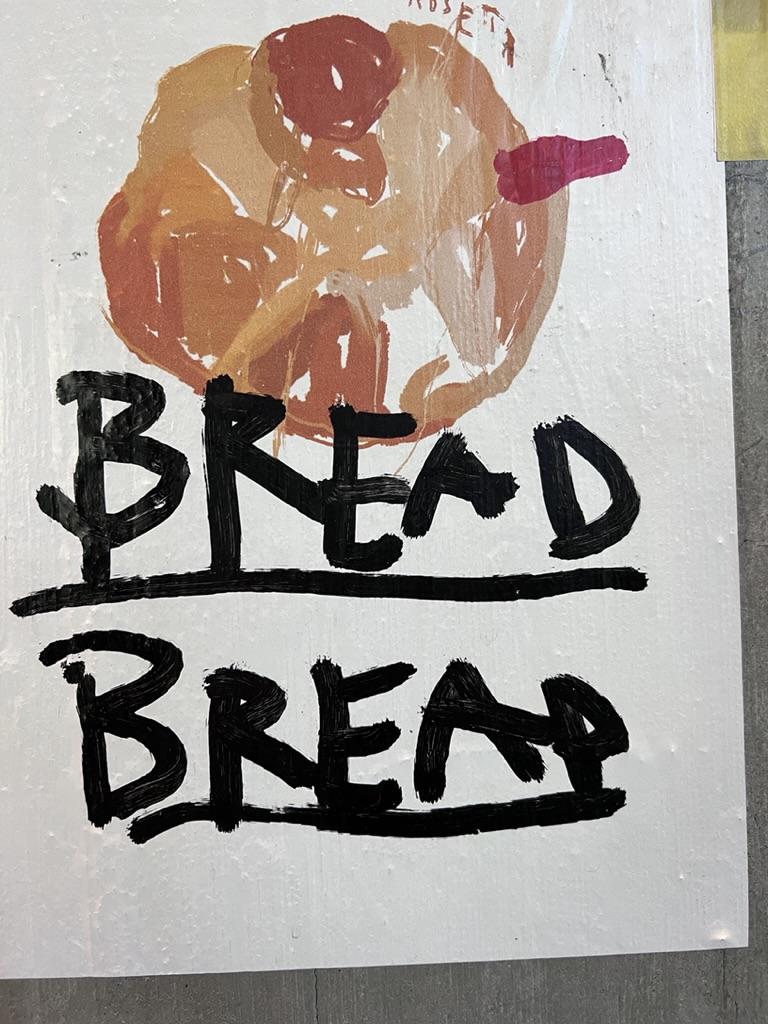
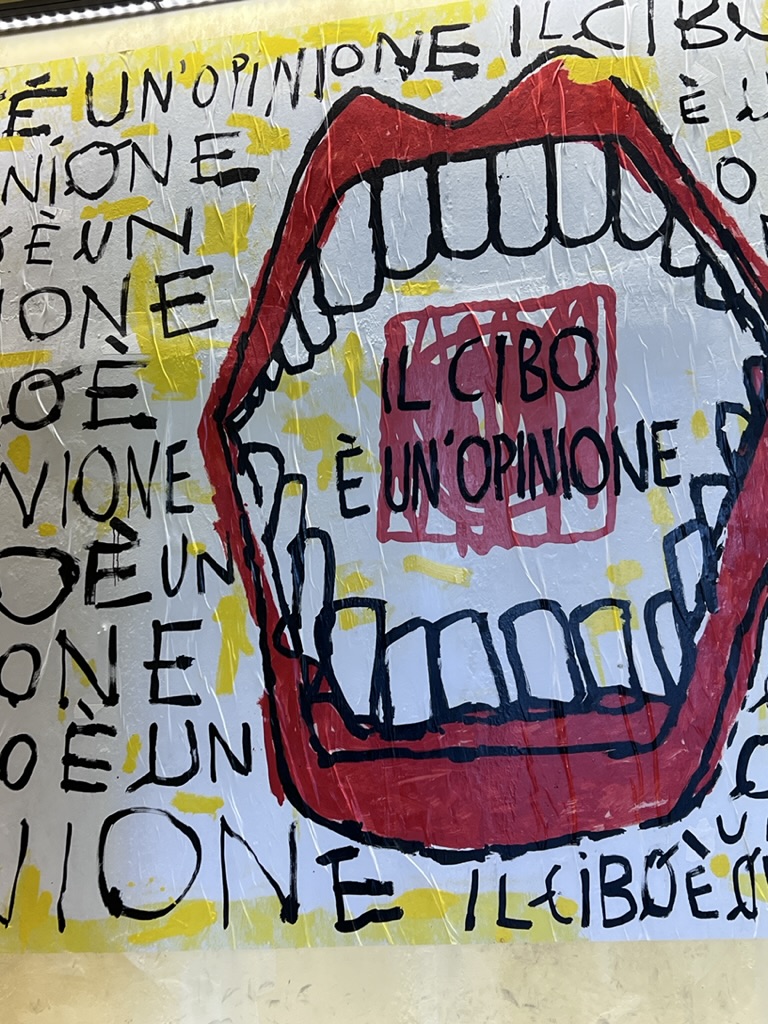
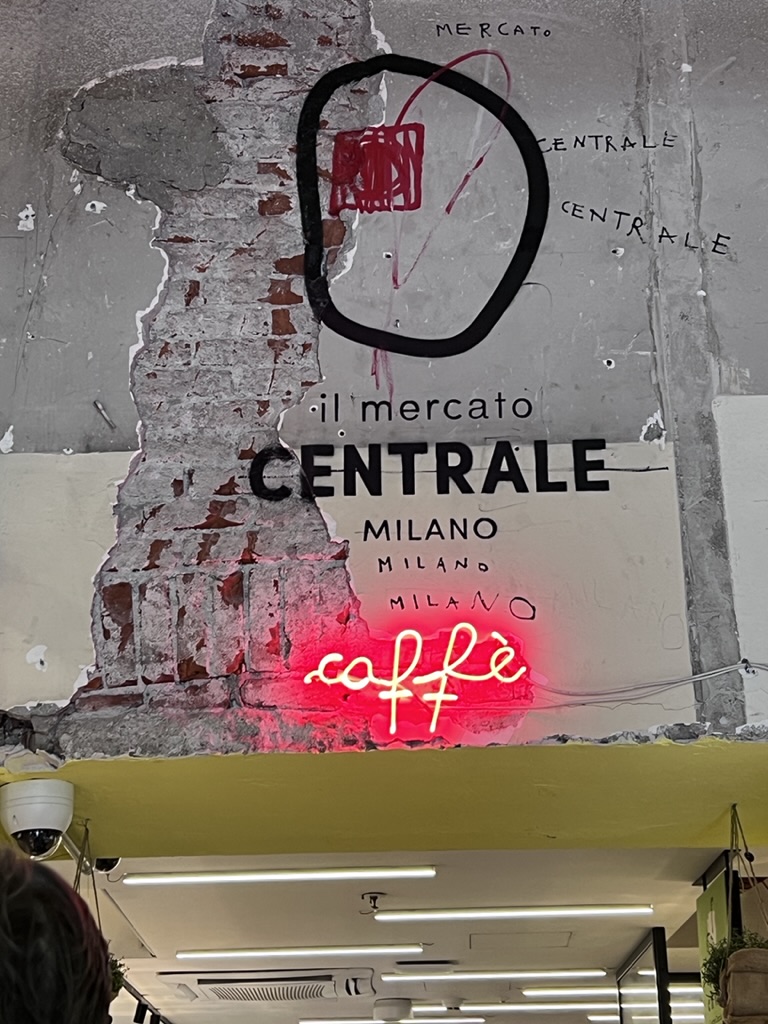
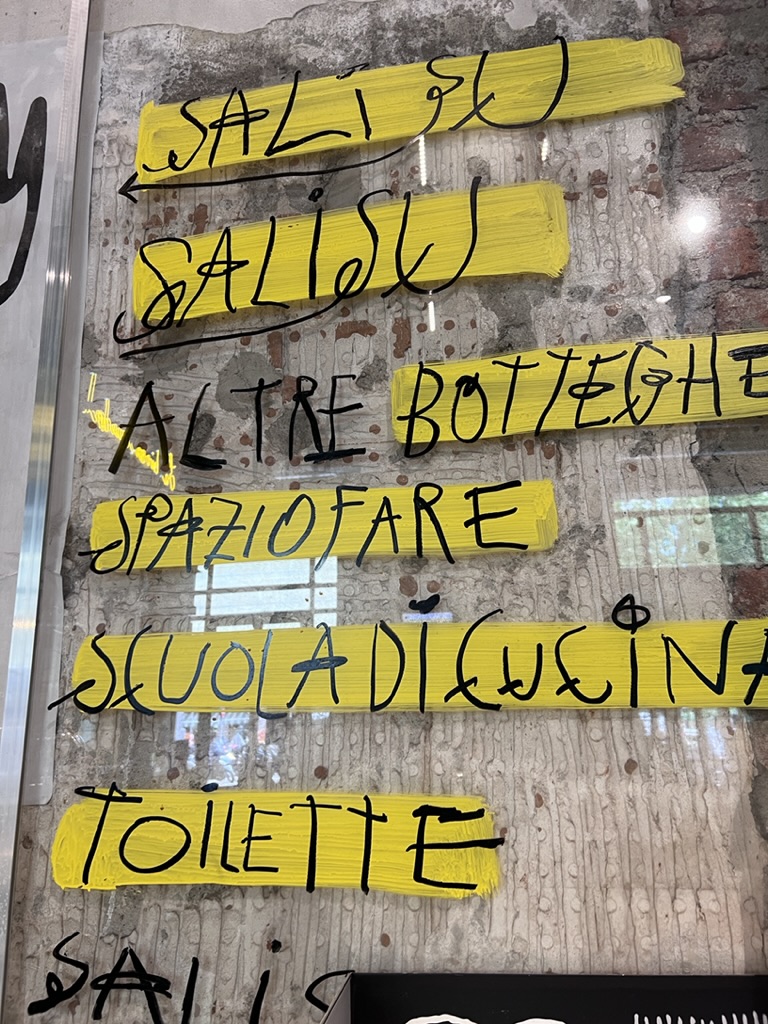
I strolled the area and neighborhood near the station and also walked through the Mercato Centrale—a hip series of food stalls, with great graphics and good food. Then I headed to what they call Platform 21 (a secret underground platform) where Jewish prisoners from the San Vittore Prison lined up to be loaded on freight cars and taken on trains to extermination camps. It was 3:35 when I got there, knowing it closed at 4. Turns out you have to be there 30 minutes before closing. So, I probably won’t see it, unless I come back to this area another day.
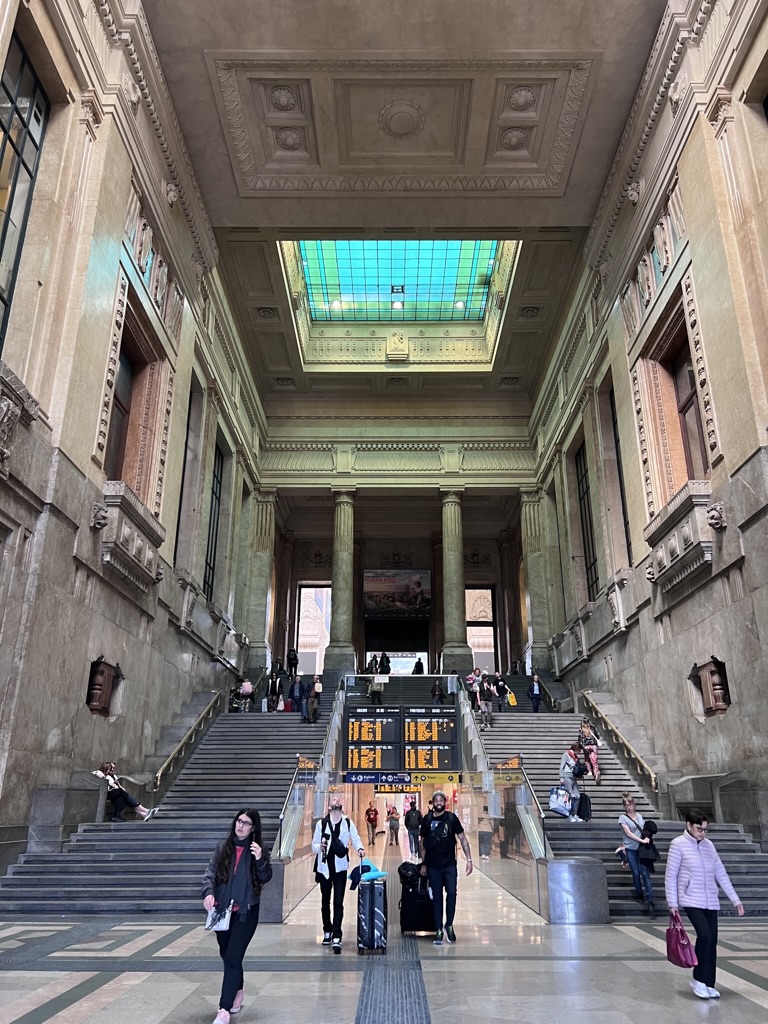
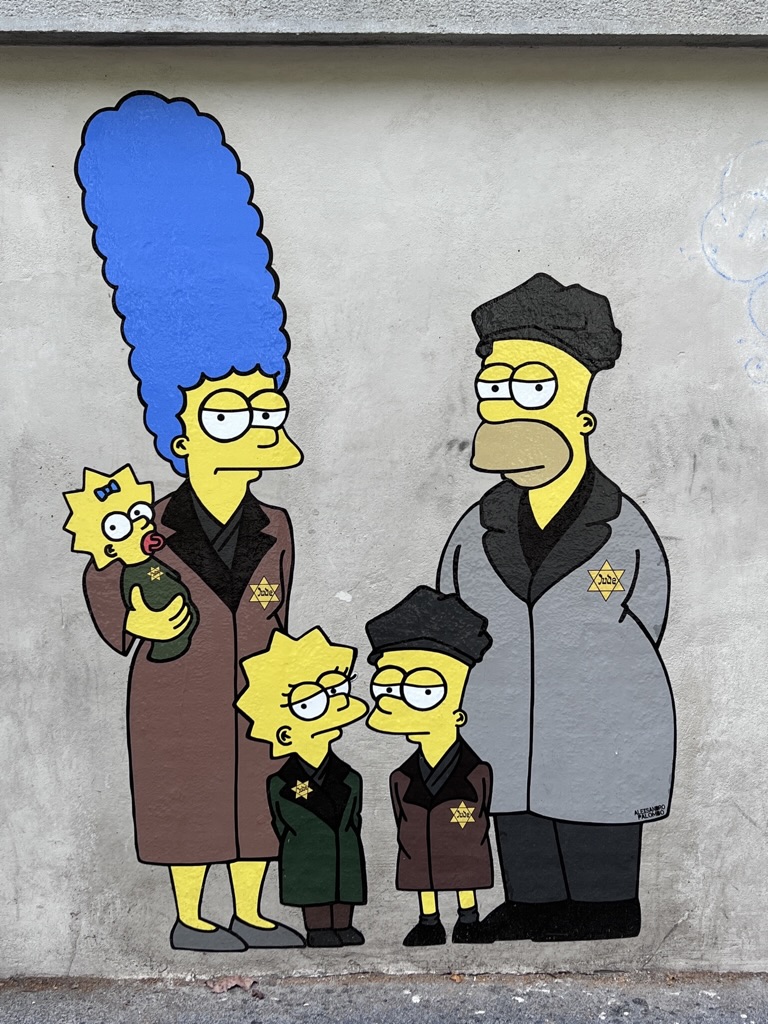

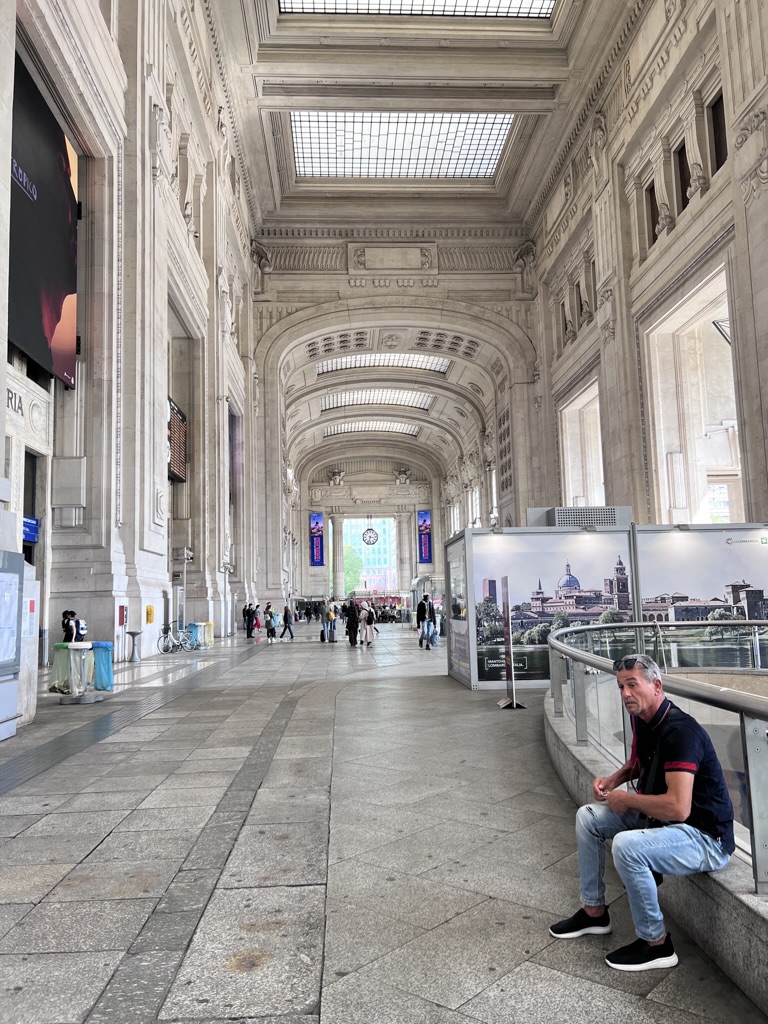
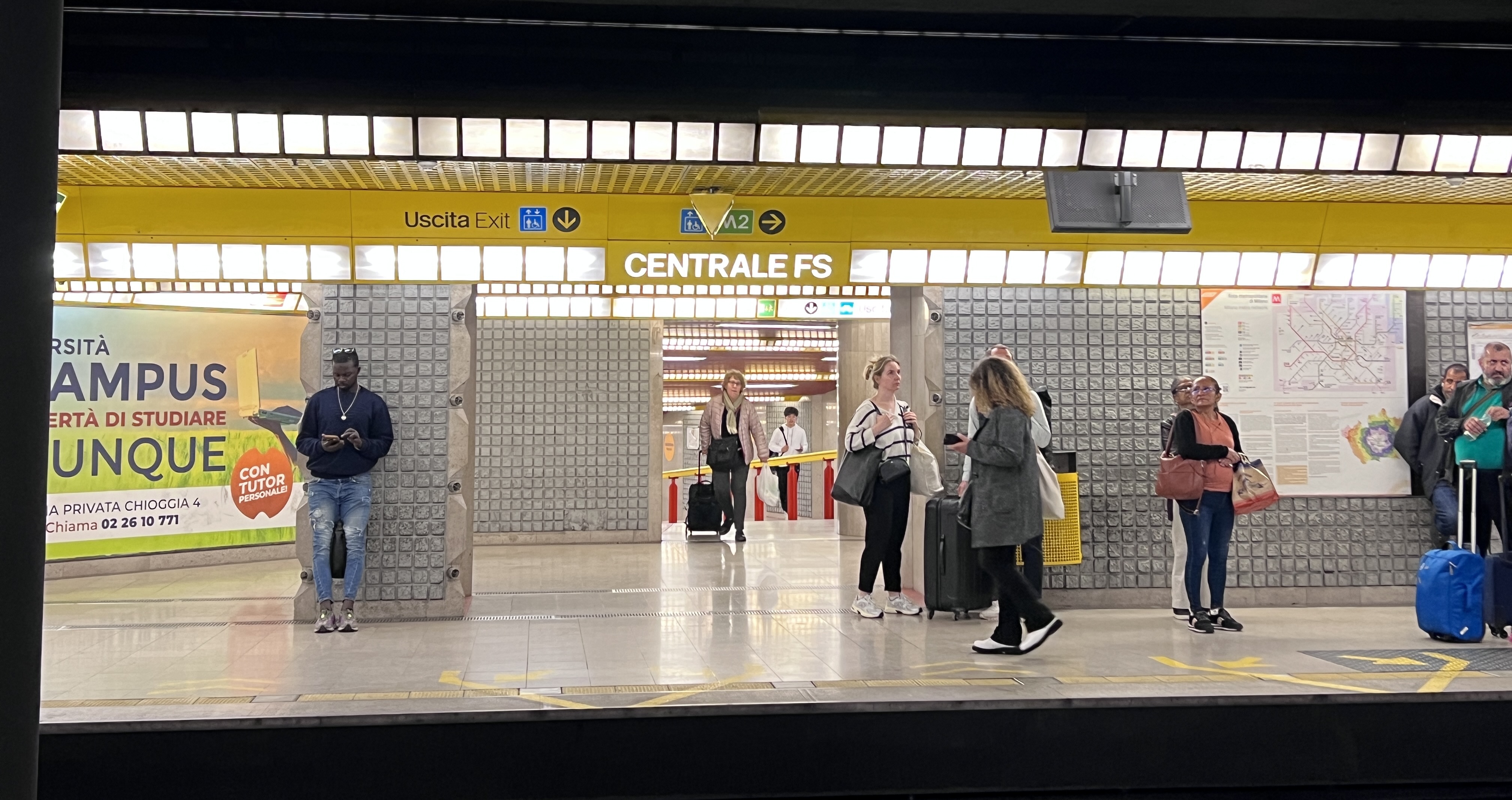
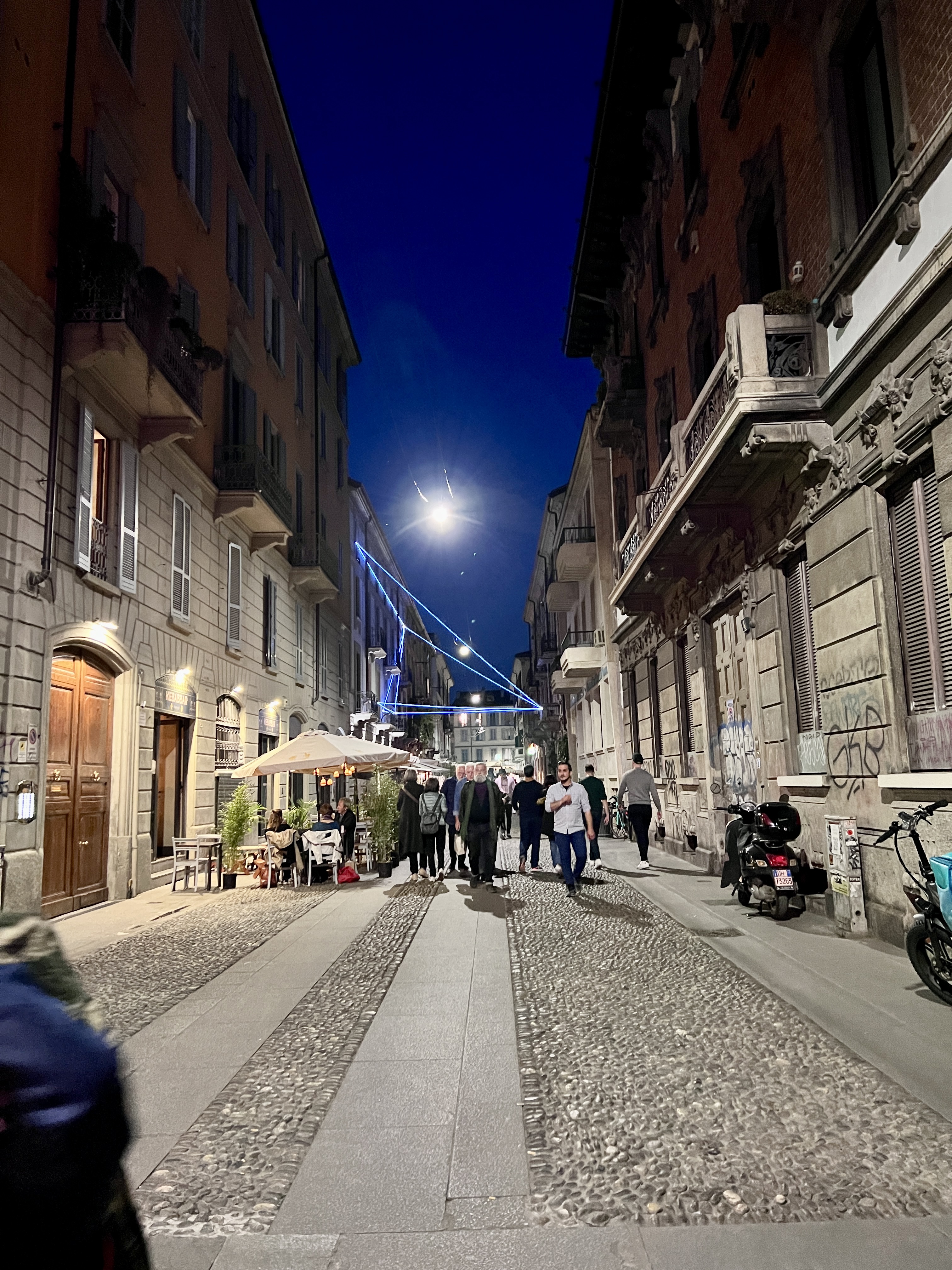
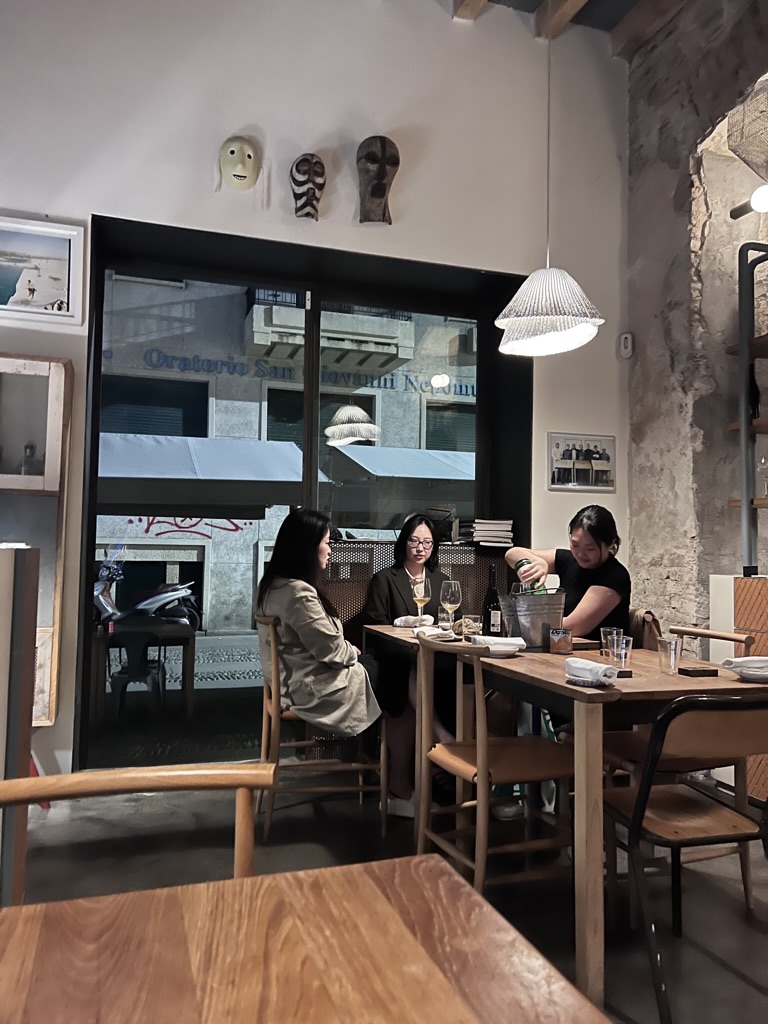
Then I walked to the Metro station and decided to test Milan’s public transit which seems pretty efficient if you’re in the central area. Got back to the hotel, checked in on Mike, and then decided to go to the restaurant where Mike and I had a reservation for tonight. Mike ordered in… So I ate at 28 Posti which is a really sweet contemporary Italian restaurant that focuses on no waste and innovative dishes.
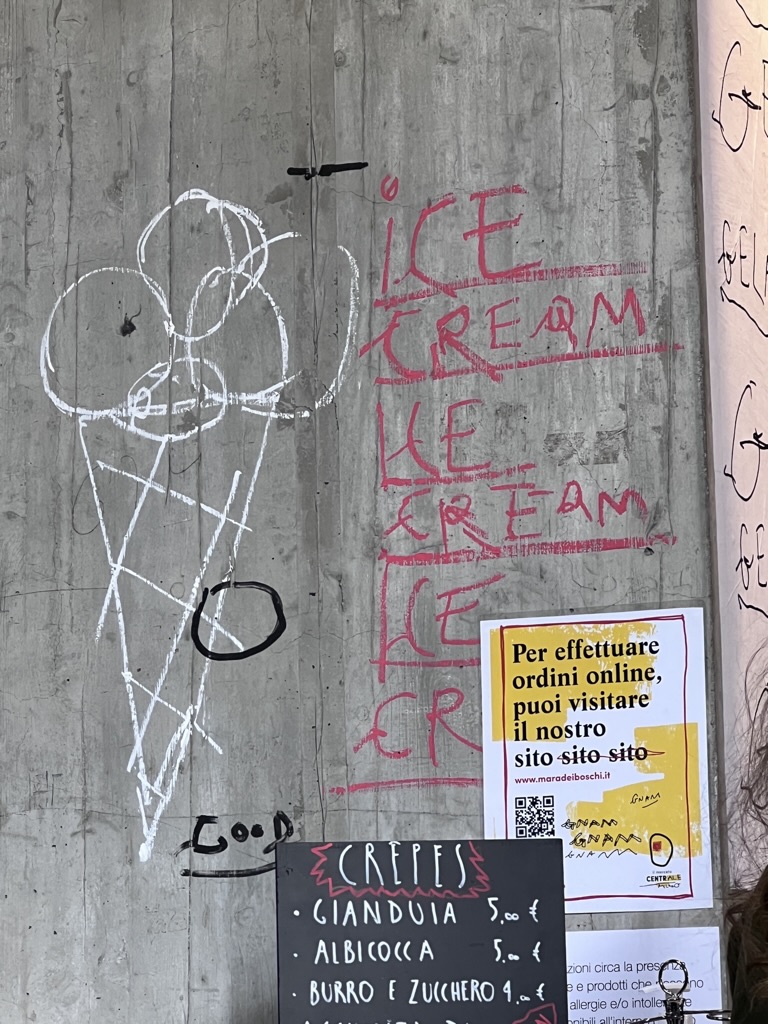
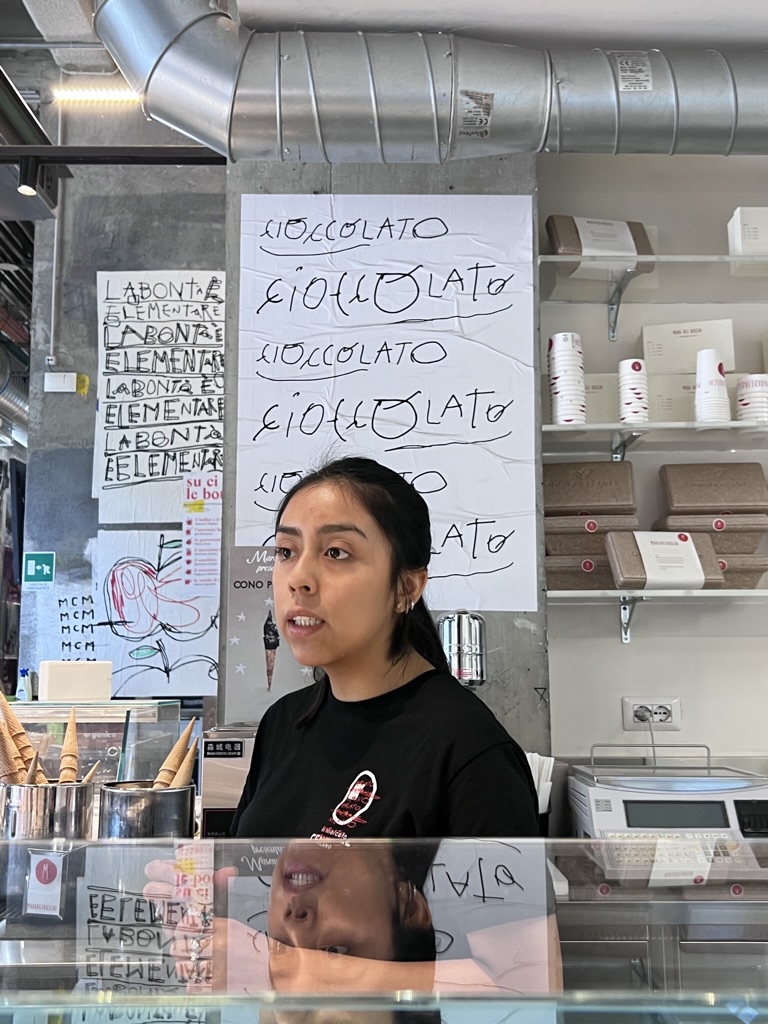
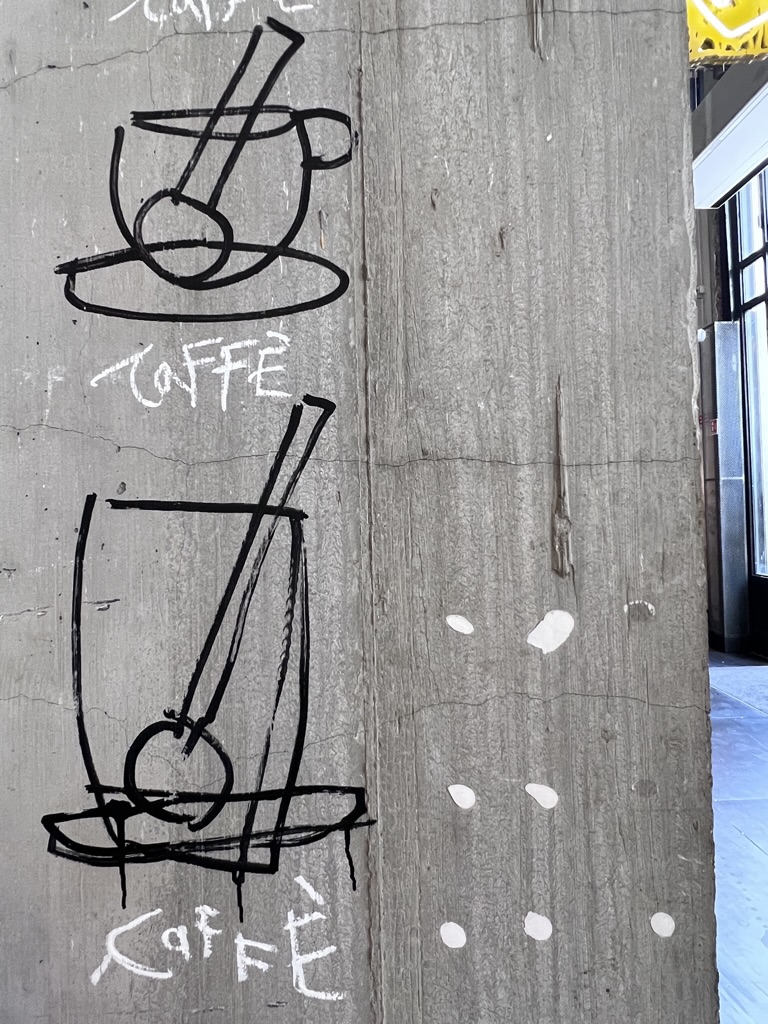
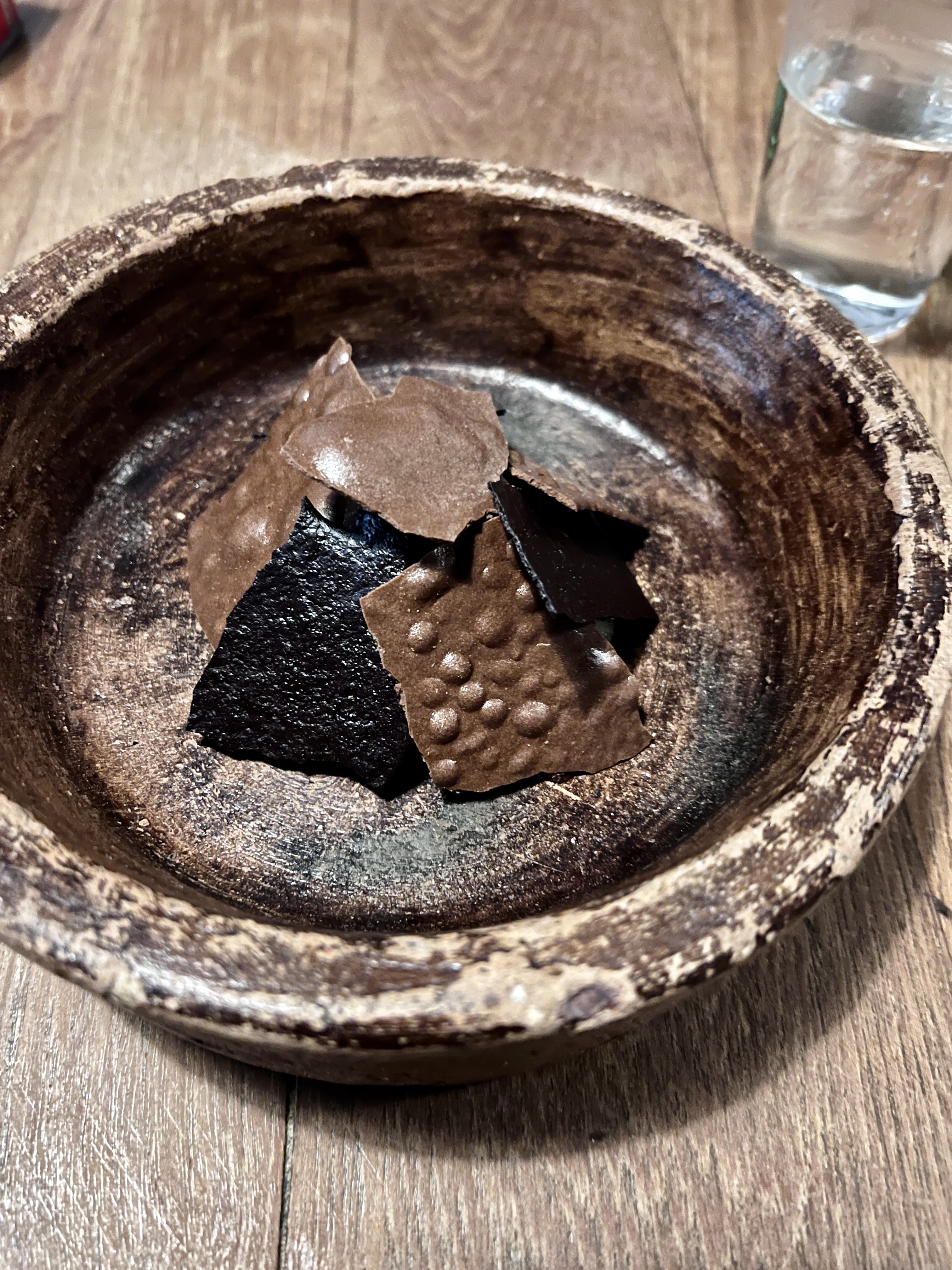
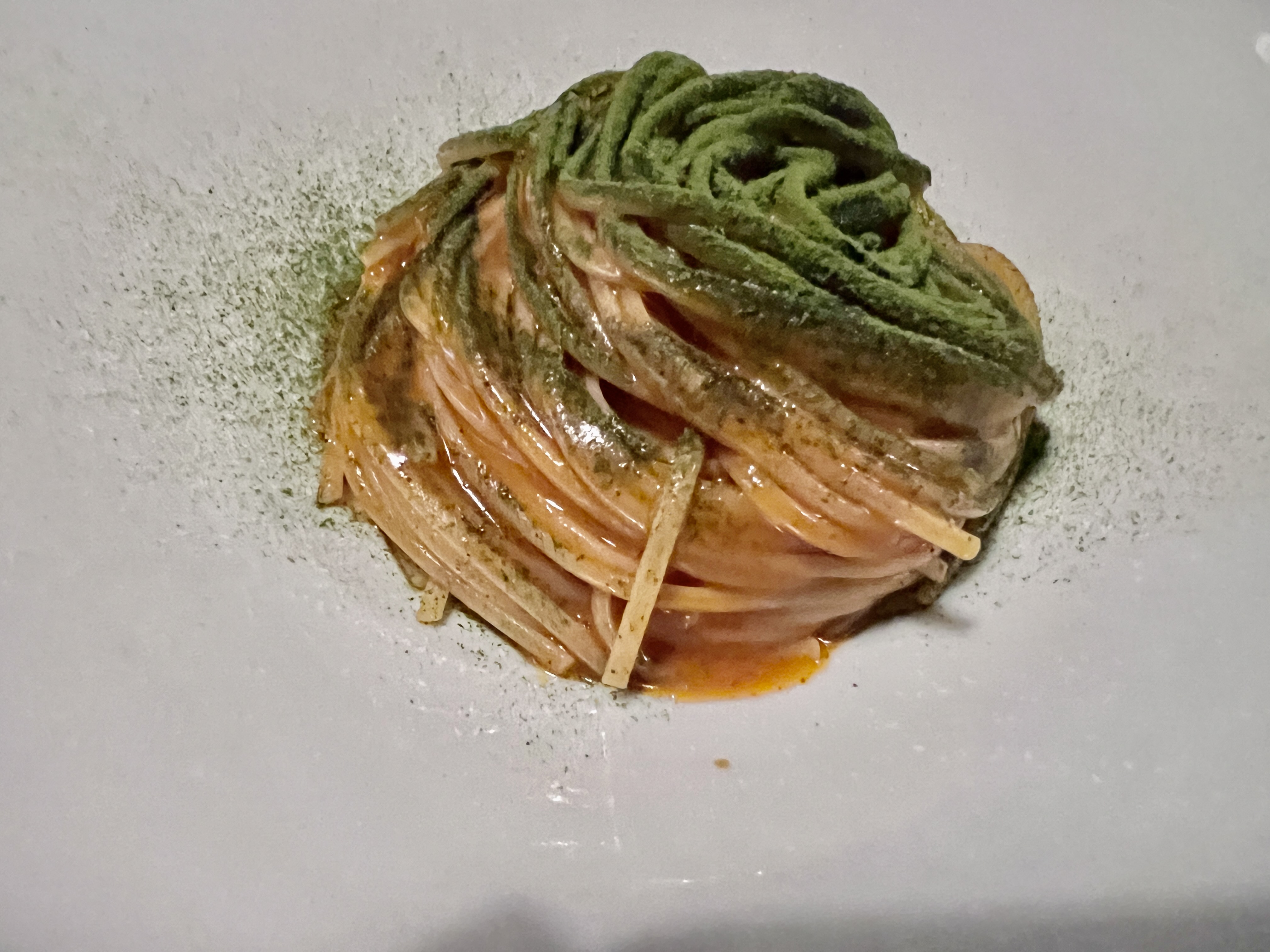
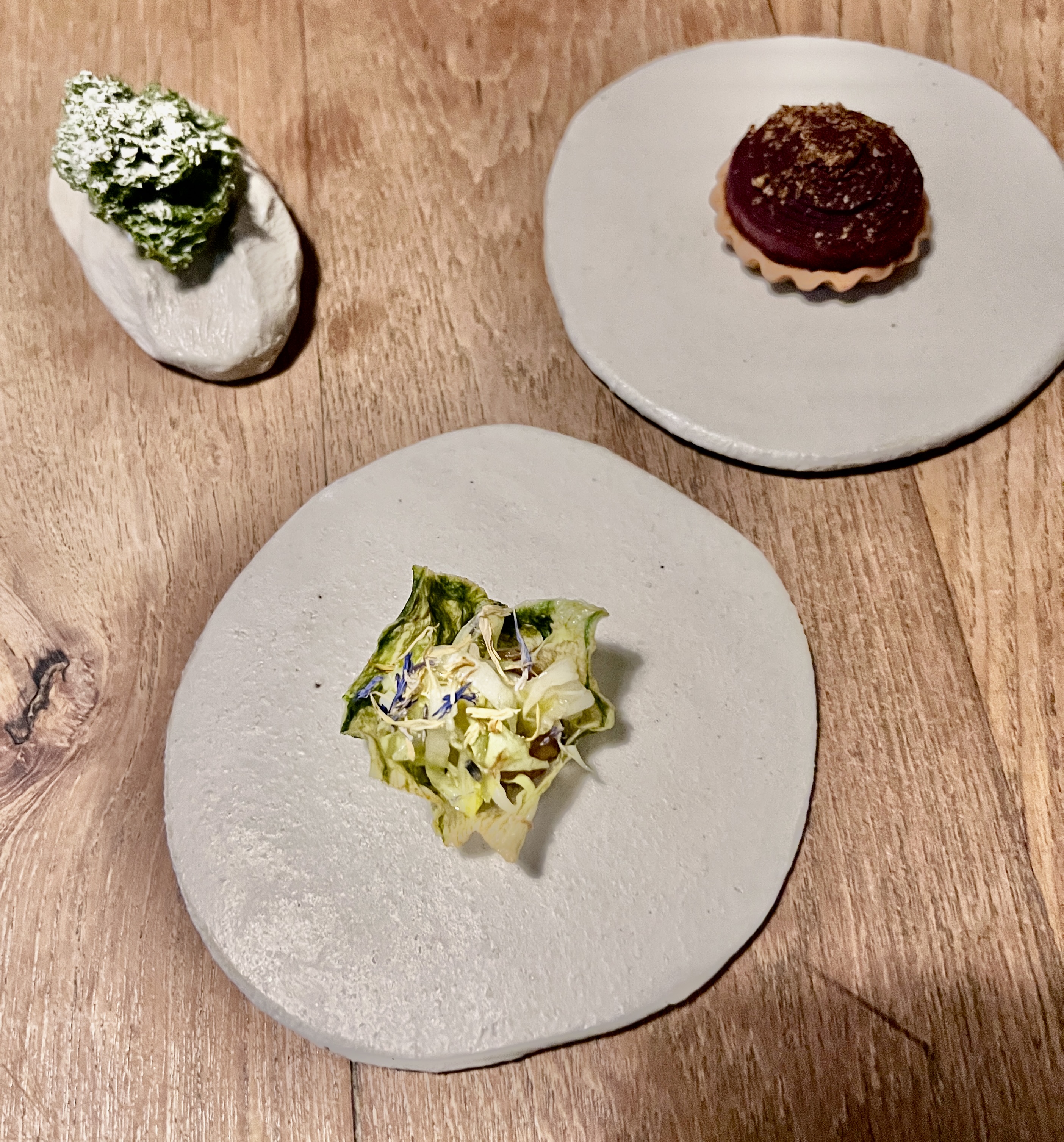
There were three little amuse buches as “gifts of the chef” which were delightful and there is no way I can tell you what they were. Then I had two dishes.. baby artichokes that had been roasted and then they poured some kind of potato, black truffle, tarragon oil on… And I had the spaghetino (?) that had a fish and shellfish broth and was topped with a sprinkling of some kind of red pepper. I did have dessert but couldn’t finish (needed my “plus one” to share the meal)—some kind of porcini mushroom gelato with carob and tiny apple chunks alongside very very thin chocolate crackers and carob crackers. Then they brought a thank you gift from the chef—which I brought back to Mike. I think they were various fruits that had been either dried or gelled. They looked great.
I taxied back to the hotel and here I am.
I’m hoping that I’m in better shape tomorrow and will get out of the center of Milan into some neighborhoods. Mike will be in his room and hopefully feeling a little better. Keeping my fingers crossed that he feels well enough to have at least one day in Milan outside the hotel.
We will assess the situation regarding Geneva on Saturday, but right now it’s not looking good and we are likely to leave for the states from Milan, not Geneva… but that’s another story and will require finding flights. Haven’t even started that yet.
Best –
Fern
16. Verona to Milan: April 26 2023. Unexpected changes to itinerary; unexpected way to spend last days in Italy.
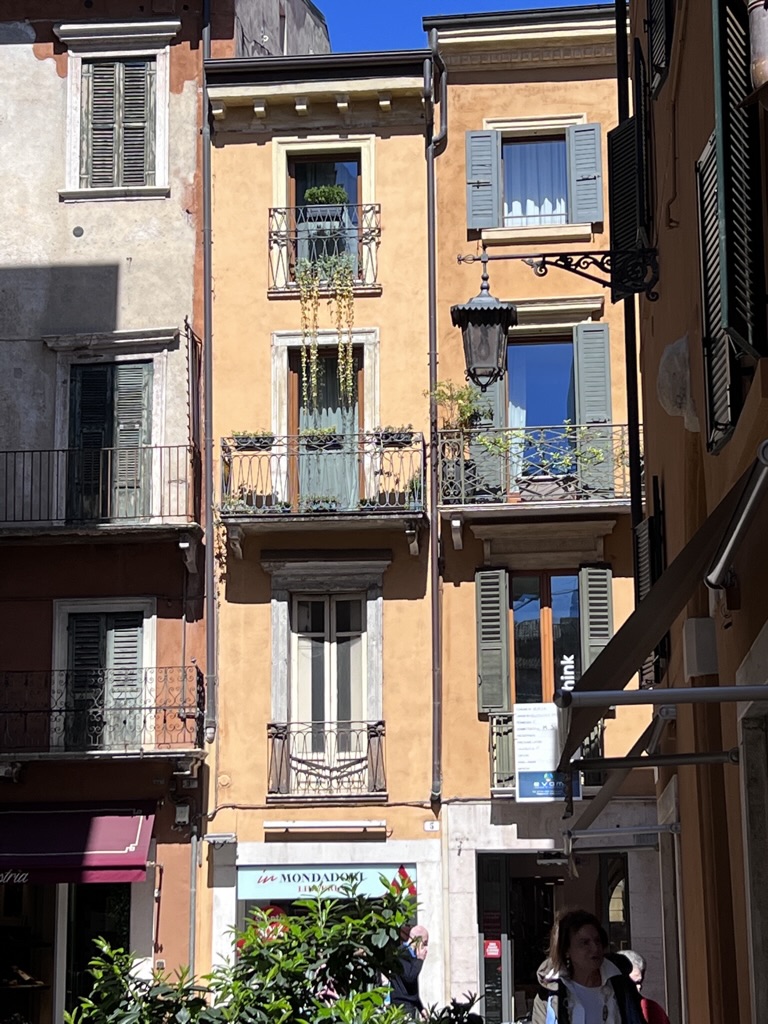
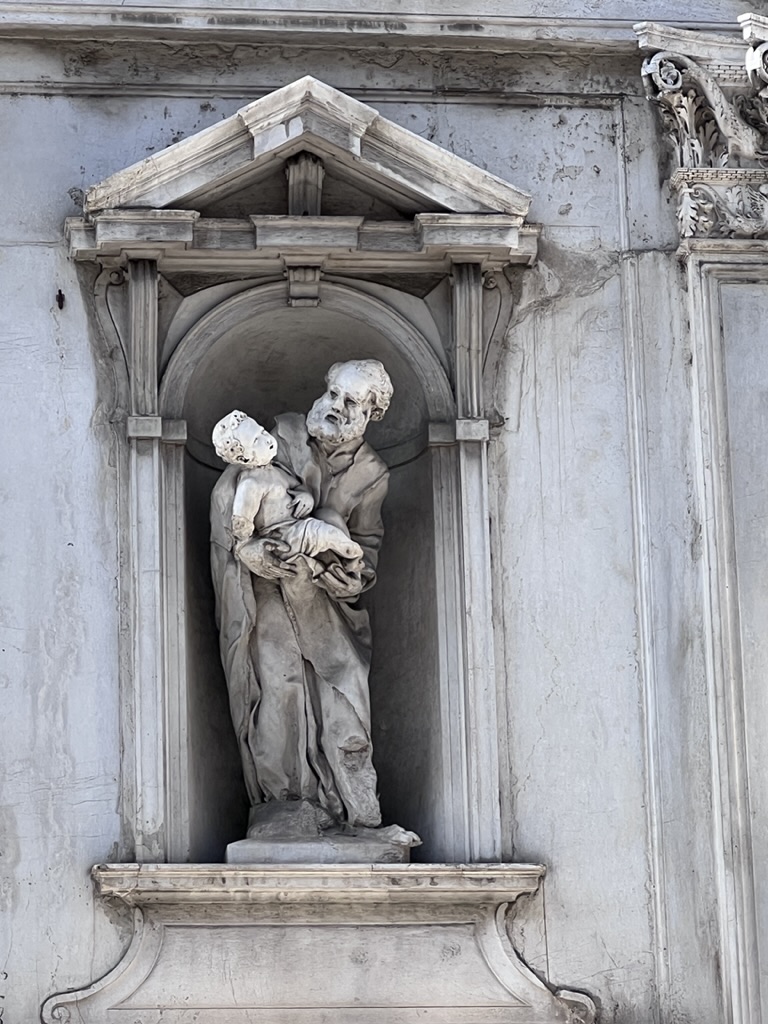
26 April 2023
Ciao-
Well, where to begin?
We were supposed to head from Verona to a little place called Castle Strambinello, today—in order to gain access on Thursday (tomorrow) morning to see Damanhur which per its own website is “an international community founded by spiritual researchers, pushing the boundaries of perception to bring catalyzed personal-collective growth, and galactic understanding of our connection to the universe.’ Those of you who know me well are probably laughing already, but we really wanted to see this place which includes what looks like an amazing subterranean ‘cathedral’ that they call ‘the Temples of Humankind.’ The complex was dug by hand into the mountain. It’s decorated with mosaics, stained glass, sculptures, and wall paintings. You can google it and see why we were interested in seeing it. We did however laugh and say that we would send word out that if you didn’t receive a blog from me tomorrow night you should send out a search party, since it’s clearly some kind of cult and perhaps we were kidnapped! (Only kidding). After the visit to Damanhur, we planned to head to Milan for four nights and then on to Geneva.
But a few things happened and the final one just toppled the plans.
Both of us had developed bad colds—congestion and coughing—around the time we got to Verona. Once this started, I took the antibiotic I had brought with me because it was clear that it was bacterial. It seemed to begin to ease the symptoms for me. (I must have been to about three pharmacies for various over-the-counter remedies for both of us: cough medicine, nasal spray, lozenges, etc..) But just as the cold (for me) was easing up, I got a gout attack, which normally is not a big deal (I take a pill for the gout daily and thus don’t usually get any gout attacks, but somehow I got this gout attack (maybe too much wine), which really is like having a bunion or some sore on your foot; no real visual sign, but it hurts. Anyway, because I was taking the antibiotic for the cold/virus I wasn’t sure if I could take the gout medicine. I googled and really didn’t understand the answer, so I went to two pharmacies in Verona. The pharmacist said “Nessun problema” translated to “no problem.” But I was very wary because I wasn’t sure he really understood the question and initially thought I wanted to refill the prescription. So I went to a second pharmacy, and they pretty much also said that it wasn’t a problem. But the way I understood the information on Google, I thought it said the opposite. So I didn’t take the gout medicine and figured I’d suffer with the pain for a few days.
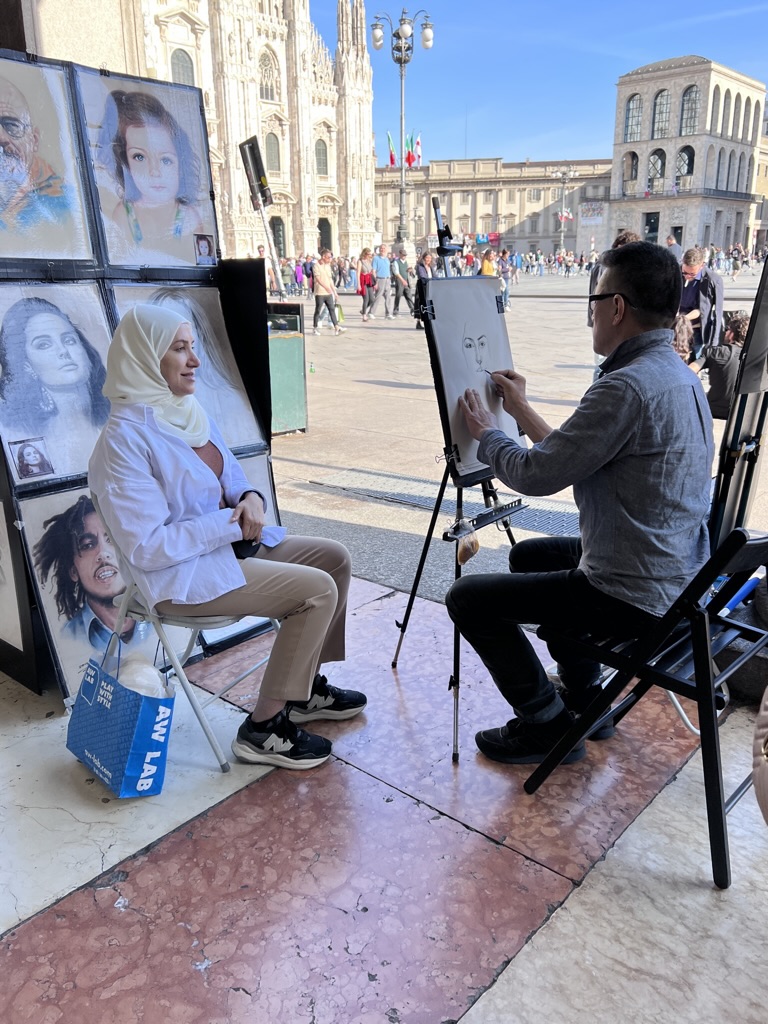


But Mike really felt miserable this morning as we set out on our drive. We got to Brescia and stopped for lunch and decided at that point to ditch the Castle and Damanhur and head directly for Milan, where Mike could just jump into bed and sleep off his cold. Therein began a series of phone calls to cancel the castle and Damanhur and to see if the Hotel Gray in Milan could take us for an extra night, arriving tonight instead of tomorrow night. (Hope you’re following all of this mess.) When we stopped in Brescia we went to yet another pharmacy, and again I showed the two pills and asked if there would be a negative reaction between the two. Again I was told it would be fine and again I was not sure the pharmacist understood the question.
So we drove on to Milan and Mike was feeling awful.. and I took over driving. We checked into the hotel which is located within earshot of the Duomo and the Galleria. Mike jumped into bed and I went to yet another pharmacy close by, thinking that as a big city I might get a pharmacist who spoke and understood more English and could explain any reaction between the drugs. Sure enough this pharmacist seemed to really understand the situation and warned against taking both drugs simultaneously. Glad I hadn’t taken the gout pill.
As I reached the Piazza del Duomo which is just down the street from the hotel and where the pharmacy was located, a woman with an amazing voice was singing (in Italian) Leonard Cohen’s “Hallelujah”.. It was magical. My memories of previous trips to Milan are all good and we were looking forward to these few days. To me, Milan is like the New York of Italy, in spite of the fact that it only has about 1.3 million people. But I couldn’t hang out. Went back to the hotel and we both realized we should take the Covid test (which we brought with us).
Mike tested positive; I am negative. Then the recommended procedures began to settle in. I am now in a separate room at the hotel; Mike is in the original room. I had to quickly gather my things and thankfully was able to get the only vacant room at the hotel—which is a weird room, and hopefully they will move me to another room tomorrow. Mike is having all his meals by room service. The menu is very very limited (surprising given the rates we are paying for the hotel!) And we are now paying for two rooms. The 5-night stay will be like a mortgage payment… maybe higher. But it is for the best.
The hotel did seem to know all the protocols. And I have reviewed everything online on the CDC’s site. Assuming I continue to test negative, it seems that I can move about out in Milan, but I will avoid going inside places and given that we are traveling alone and I’m now without Mike, I’m really traveling alone, I don’t think I can spread anything to anyone. Mike will continue to test daily and we will see what transpires. I will also test daily. Our big question really deals with whether or not we can actually leave Milan in 5 days (supposedly that’s the recommended isolation period for Mike)… which would be Monday and that is exactly when we are supposed to head to Geneva, by train. Assuming I continue to be negative (keep fingers crossed), and I isolate for 24 hours, I’m free to move about. But we shall see how comfortable the family in Geneva is with all of this. Stay tuned.
The challenge now will be meals for Mike. The hotel, surprisingly at these rates, has a very tiny restaurant (and limited menu choices,) and having just had dinner at the restaurant, my report is that it is not very good. We had reservations for several wonderful dinners here in Milan. Anyway, we are glad to be in Milan, but a bit deflated. And Mike is not so good. We brought Paxlovid with us so he’s already on the regimen. If I test positive, I’ll need to rely on whatever drugs Italy is using since we only had one Paxlovid regimen with us. Since Mike already had Covid once—about a year ago–when we asked for the Paxlovid we figured it would be for me.
Fortunately we are not at the one star Verona hotel! The Gray is upscale and pleasant (although rooms are small), we both get CNN in our respective rooms; and I even found Law and Order in English! So I’m really set….
More tomorrow.
All the best. Stay safe.
Fern
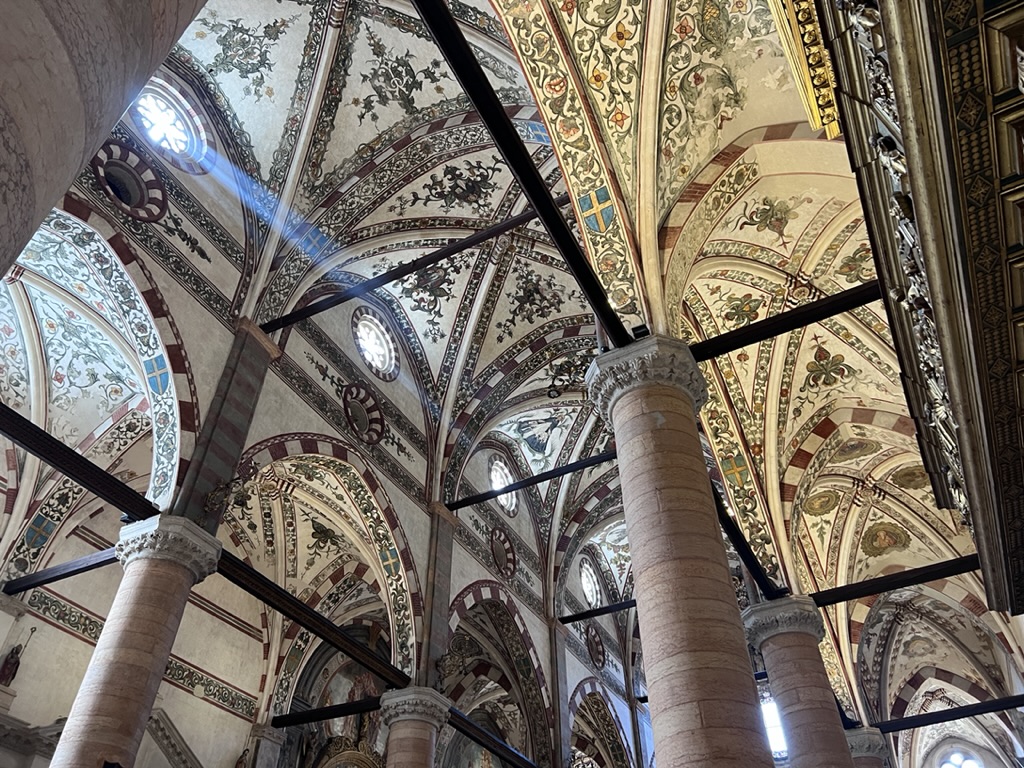
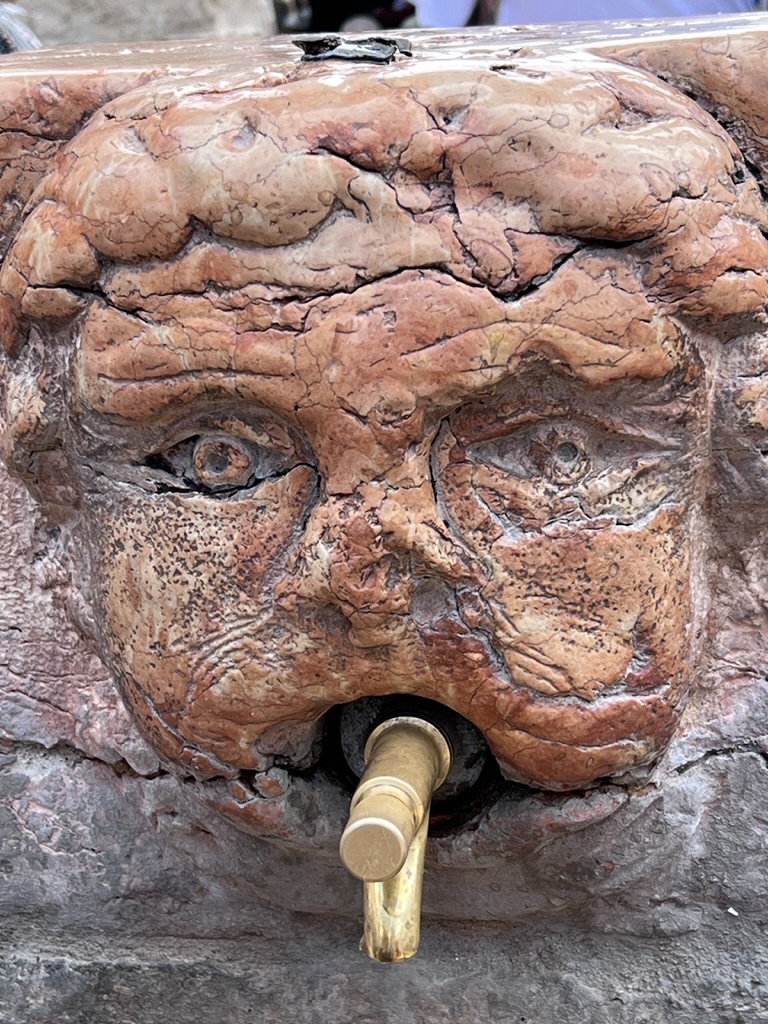
Greetings from rainy Verona-
Hope all is well. So Biden’s in for 2024. Mmmmmmm…. It’s going to be bruising; if it’s Trump/Biden again we’re in for a roller coaster ride. Trump somehow manages to have his missteps slide right off. As president and candidate, Biden will be scrutinized a great deal more. There are so many unknowns. With only 42% of Democrats supporting the reelection right now, Biden will need to get both Dems and Independents (and maybe some rational Republicans) enthused about his campaign. And Trump Republicans—well nothing to say there, as they continue to support him without question and without any sense of history or the potential of this megalomaniac in office. And so much can happen in the next 18 months.
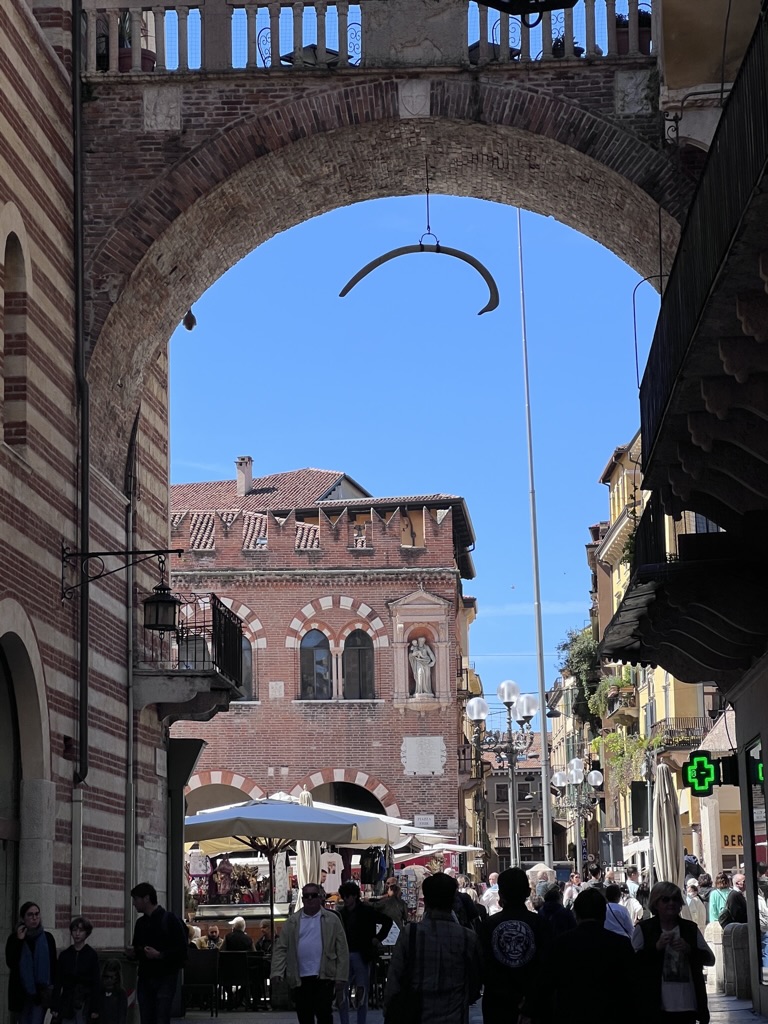
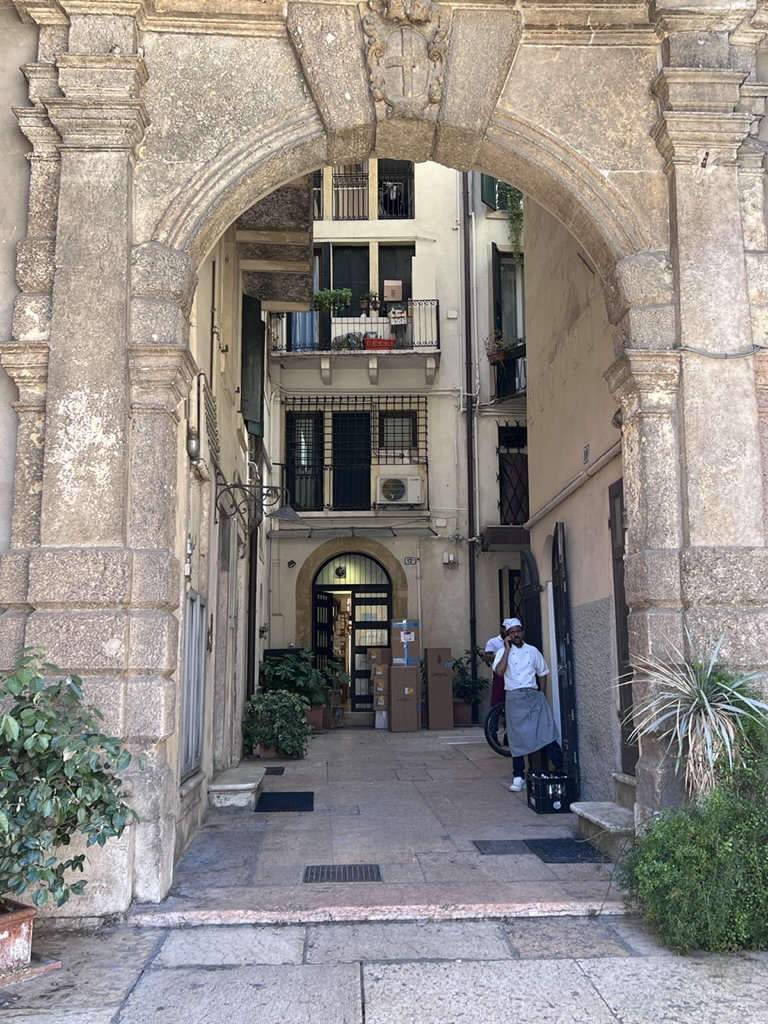
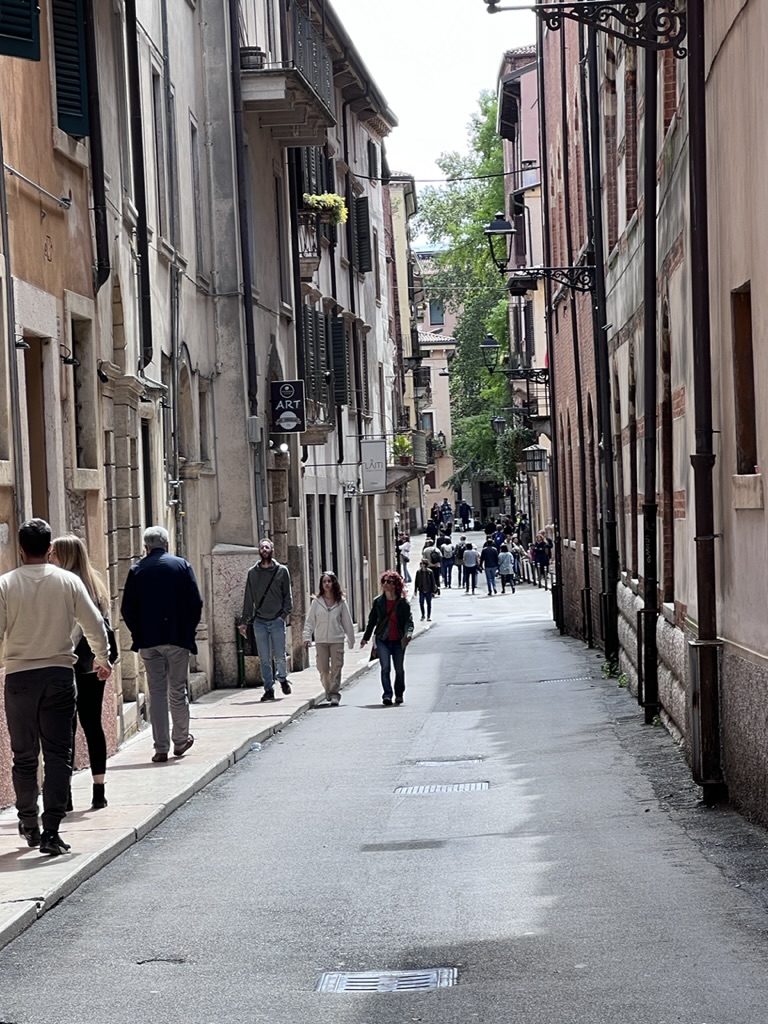
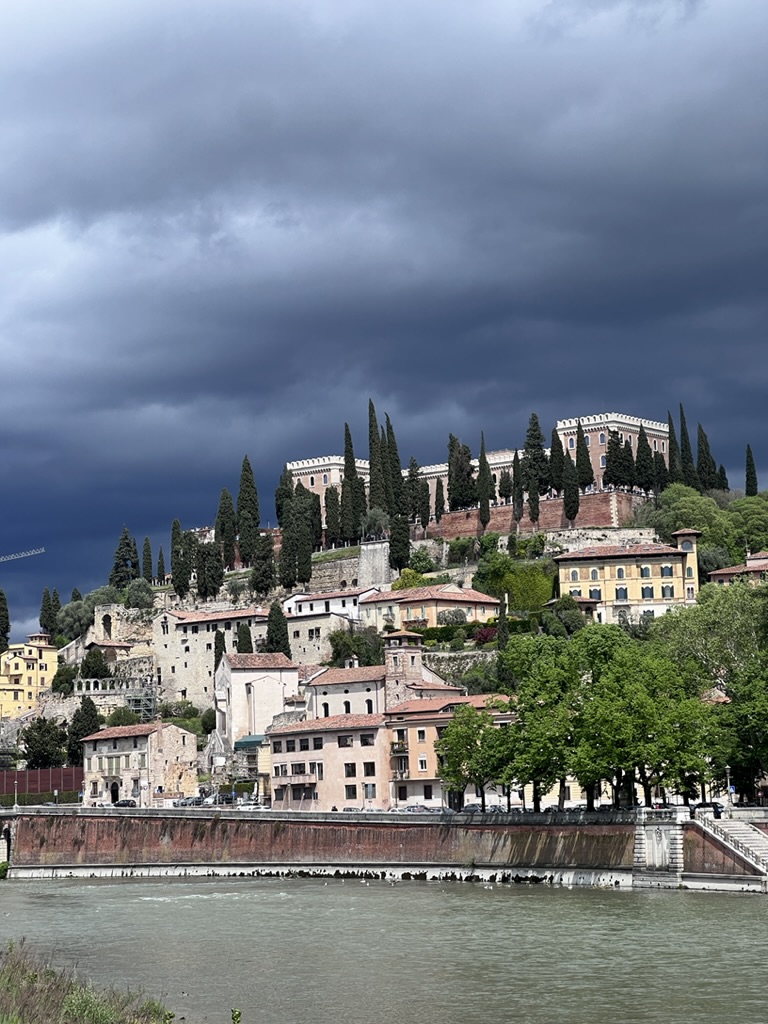
OK, back to Verona which is a beautiful and historic city that dates back to the 1st century B.C.E, flourished during the 13th and 14th centuries, managed to take preservation seiously in later years, and continues today to be an example of a city that has developed continuously over a two-thousand-year period. But alas, or perhaps because of the beauty, the city is flooded with tourists (and it is not even high season). But they don’t venture far from the main pedestrian streets (which are no more than 20’ wide) within the old city, so as long as we move to adjacent streets and smaller lanes and alleys, we have the place to ourselves—well practically… We are walking the original street patterns that wind and follow the river’s edge which curves and curves throughout the town.
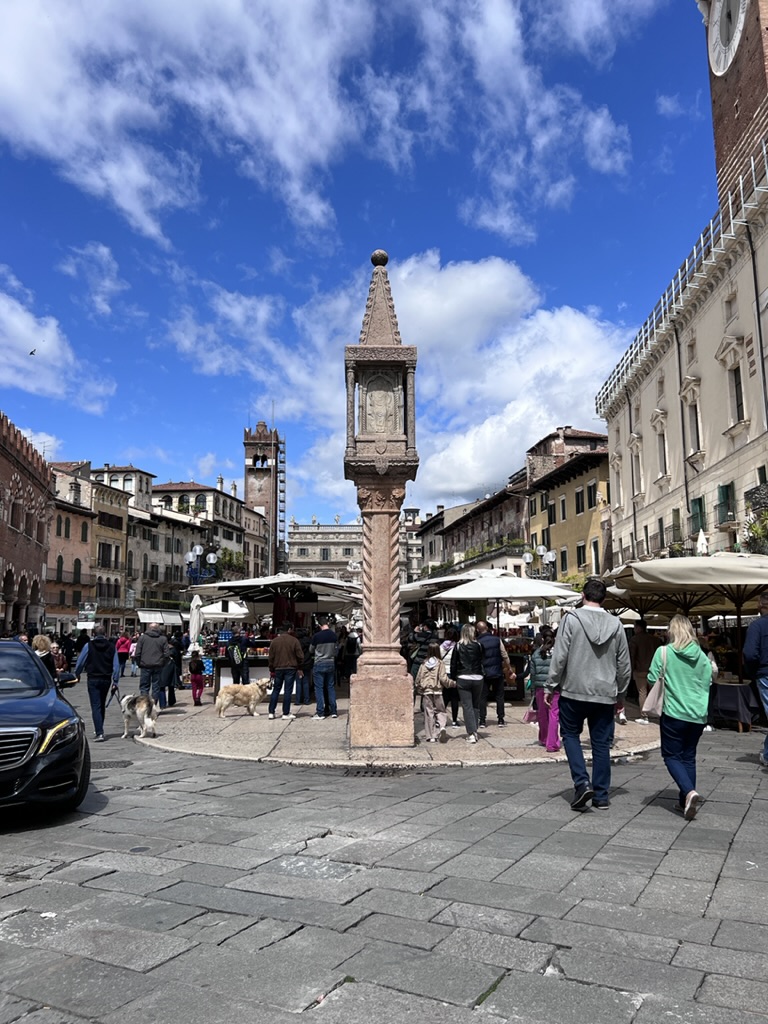
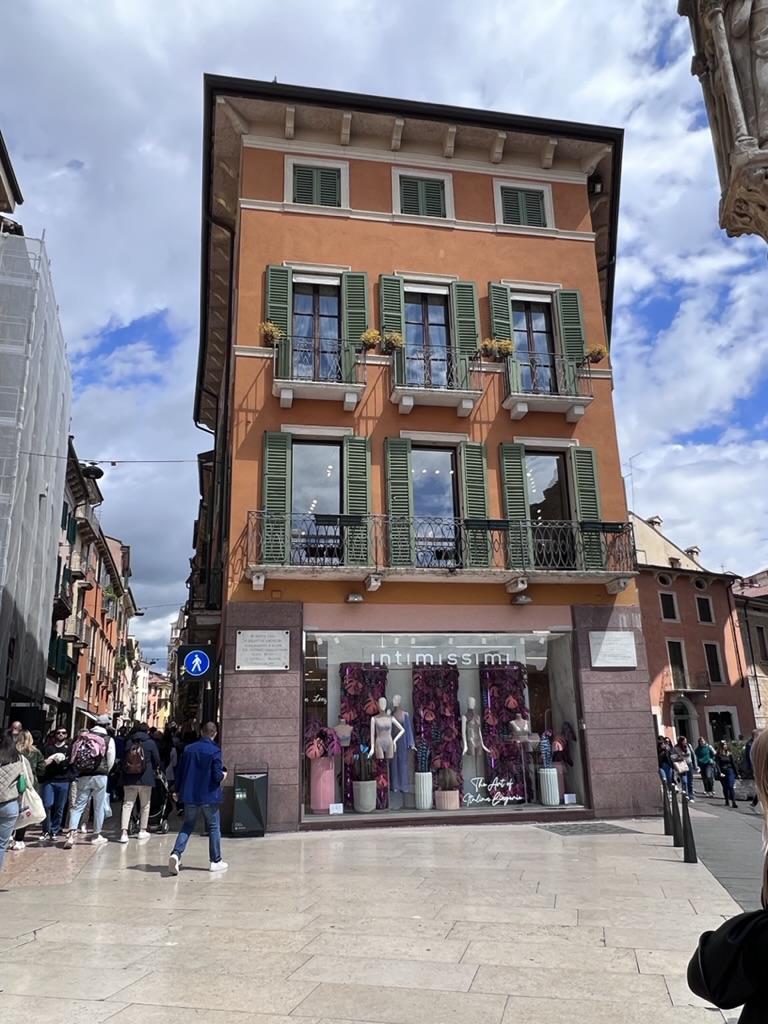
The city has definitely adjusted to tourism, and it drives the economy. Unlike everywhere else in Italy where shops close between noon and 2:30, Verona stores (at least in the center) remain open. While English is still not heard regularly, nearly all people in the hospitality industry can speak English easily. It is odd, though, to walk along beautiful streets lined with buildings that are centuries old and to see the ground floors of those buildings completely overtaken by chain retail behind floor to ceiling glass “sheets”—sort of homages to Zara and Guess and Sephora. In the center of the city is the amazingly large Arena—a Roman amphitheater built in 30 CE and still in use today as a venue for large scale performances.
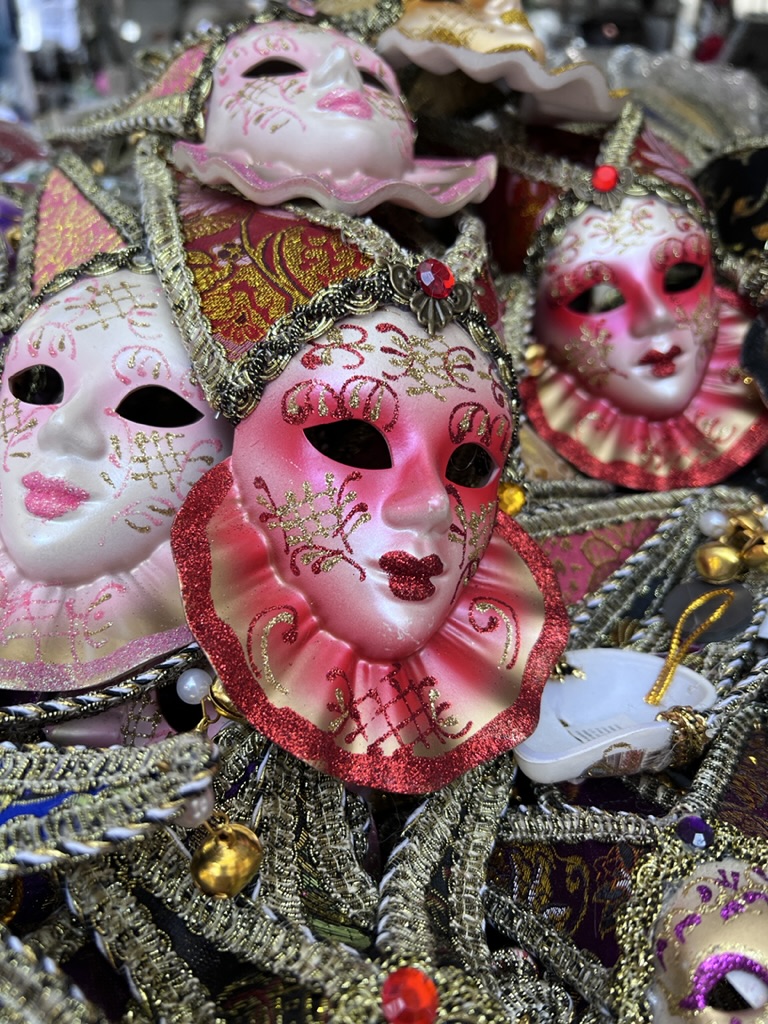
A simple stroll from our hotel to the main piazza (Erbe) is testament to my comments. There is a large open-air market, probably the site of a market for thousands of years. Only now, there are no fruits and vegetables and no cheese — only souvenir trinkets at little stalls. So, the physical is wonderful, the spaces are reminiscent of history… but consumerism has overtaken the grounds (of the old center city).
We didn’t go inside the Arena because the lines were just too long and we were really in need of an escape route from the crowds who had identifying markers for their tour groups, so we found a truly nice walk to the river through local streets, which was great. Eventually, we stopped for lunch at a small café right on the river and lucked out in getting a table riverside. But our luck would not last long as the dark clouds started moving our way and we moved inside the restaurant…. And then we had to walk through wet streets and rain to get to the hotel to take shelter. Thus, while I still think it’s a great city, our experiences have not been stellar. We are headed out to dinner very close to the hotel—not by choice, but because we don’t really want to get stuck in more rain. We actually had a reservation at what looked like a great restaurant, but decided it was too dicey to walk that far. Hopefully this place will be ok..
Mike has now downgraded our hotel to ½ star! But it is clean and well located, and we’ve had some other amazing hotel experiences so one bad egg isn’t terrible.
Take care –
Fern
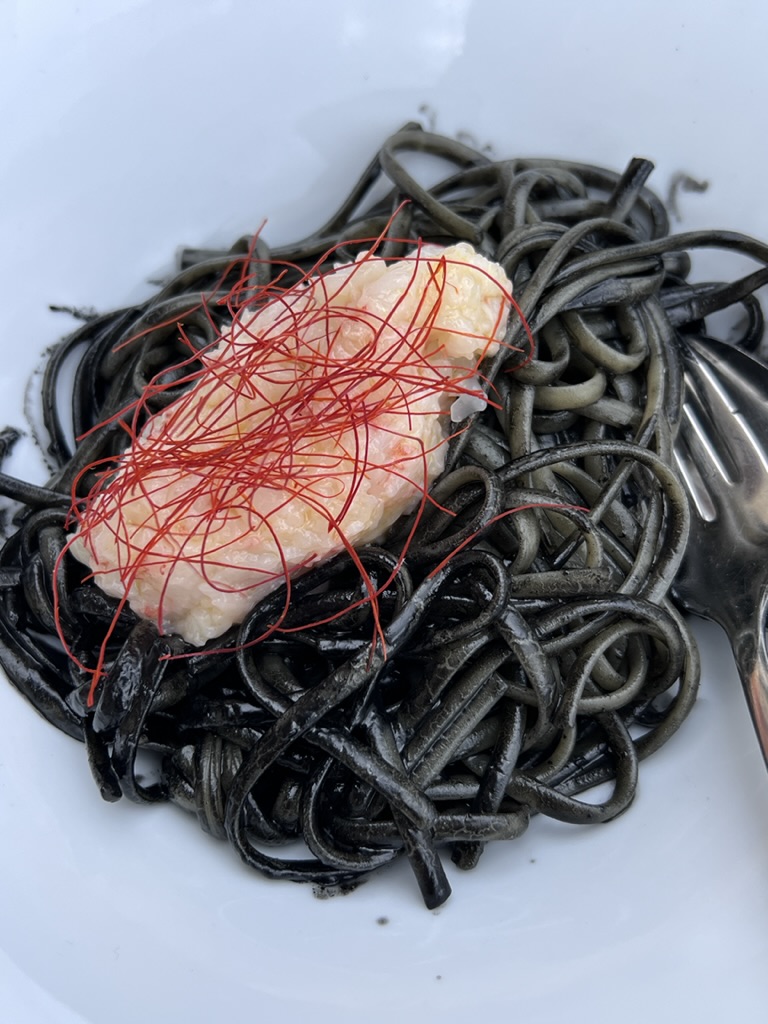
PS As we were about to leave for dinner, we realized that Mike had been carrying a cross-body carry bag (in which we were keeping things like raincoats when we walked) and it wasn’t in the room. We checked with the lobby of the hotel and then retraced our steps and realized he must have left it at lunch. But we had no idea of the name of the restaurant and so as we sat at our dinner place, we were both on iPhones trying to recall the name and location, which bridge was it near, what part of the river… Mike figured we’d just walk there tomorrow morning before we head out of Verona. But I knew better, than to wait for the last minute. Anyway, finally found the name and called. And the bag was there; good thing we dealt with it because they were closing tomorrow for a two-week holiday! Mike took off right after finishing dinner and I dealt with the check and headed to the hotel, where we both are sitting now. And the little local restaurant Greppia turned out to be quite good. Had amazing pumpkin ravioli with some sort of apple mustard and sprinkled with pistachio dust. Other dishes good too but this was really special.
14. Trieste to Verona via Treviso. April 24 2023

Greetings from Verona
We left Trieste after a very quick breakfast so that we could get on the road at a decent time.
Within about thirty minutes of driving, we were immersed in a huge downpour—as if the Adriatic just got dumped on our car and the road. At times, we could only see about 20 feet in front of us, maybe less. And as usual lots of trucks on the road—kicking up more water. Then a little before we got to Treviso, where we planned to have lunch and walk around the town, the clouds broke, and we actually had a few moments of sun and just drizzle for the rest of the day.
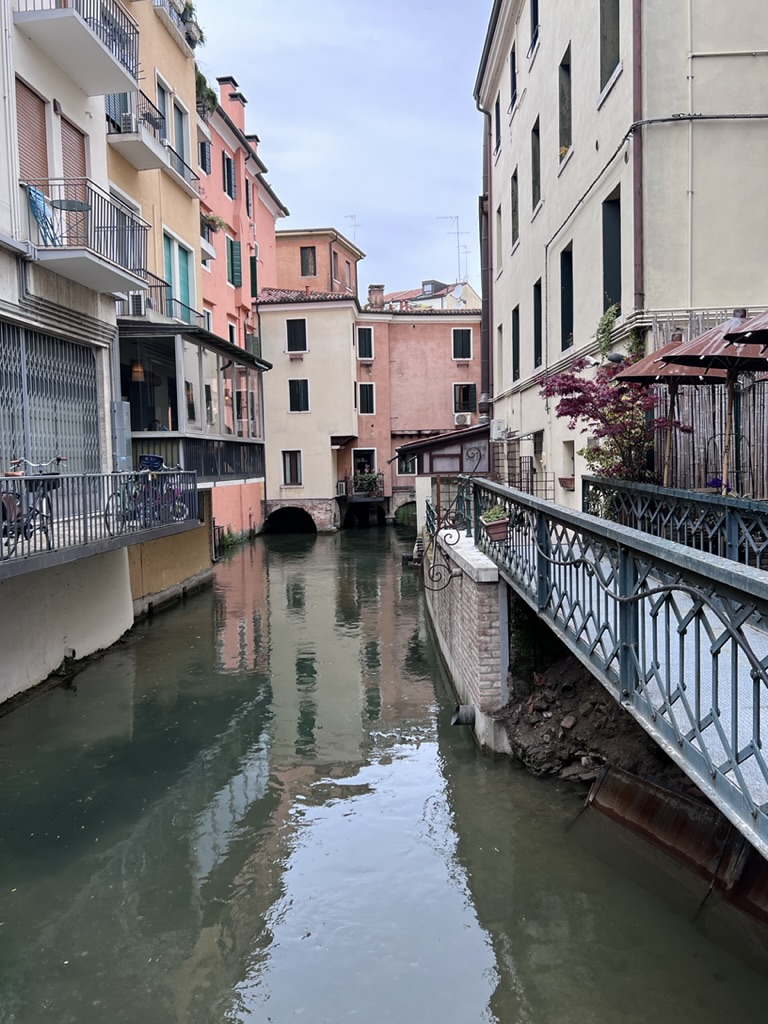
Given that it’s easier to have a destination to put into GPS as we drive into these towns around lunchtime, Mike decided to make a reservation for lunch in Treviso which is about halfway between Trieste and Verona (our next real stop). We’d heard good things about Treviso and we had never been, so we decided that would be the lunch and afternoon stroll location. Turns out that Treviso is quite delightful and definitely worth a stop.
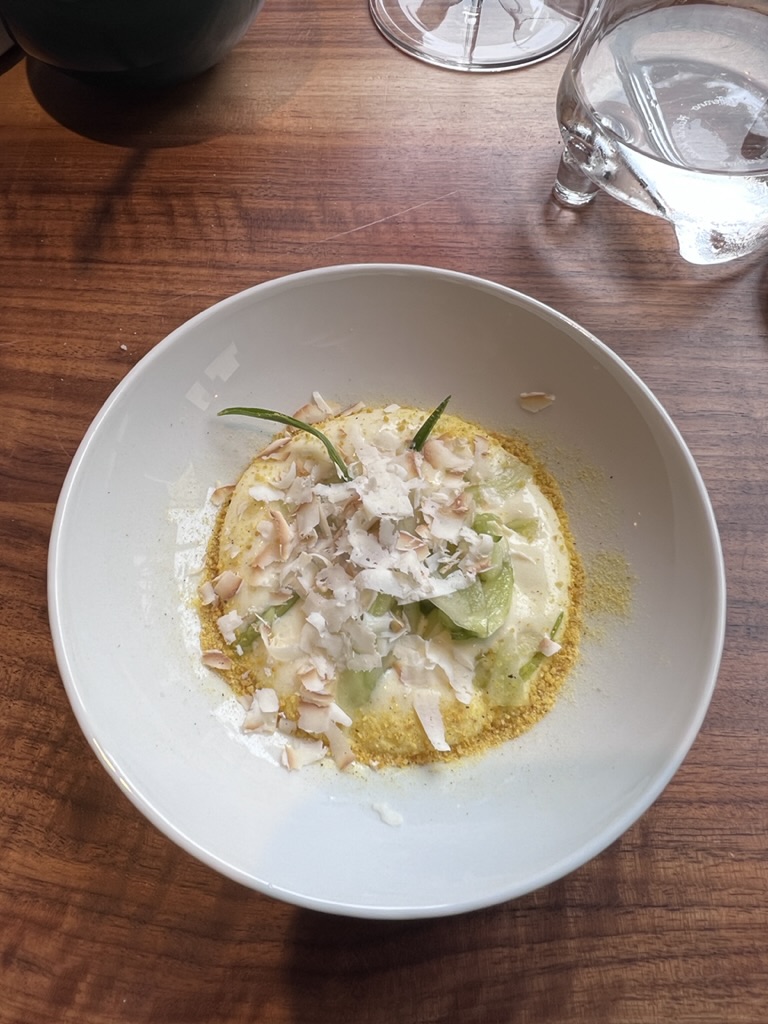
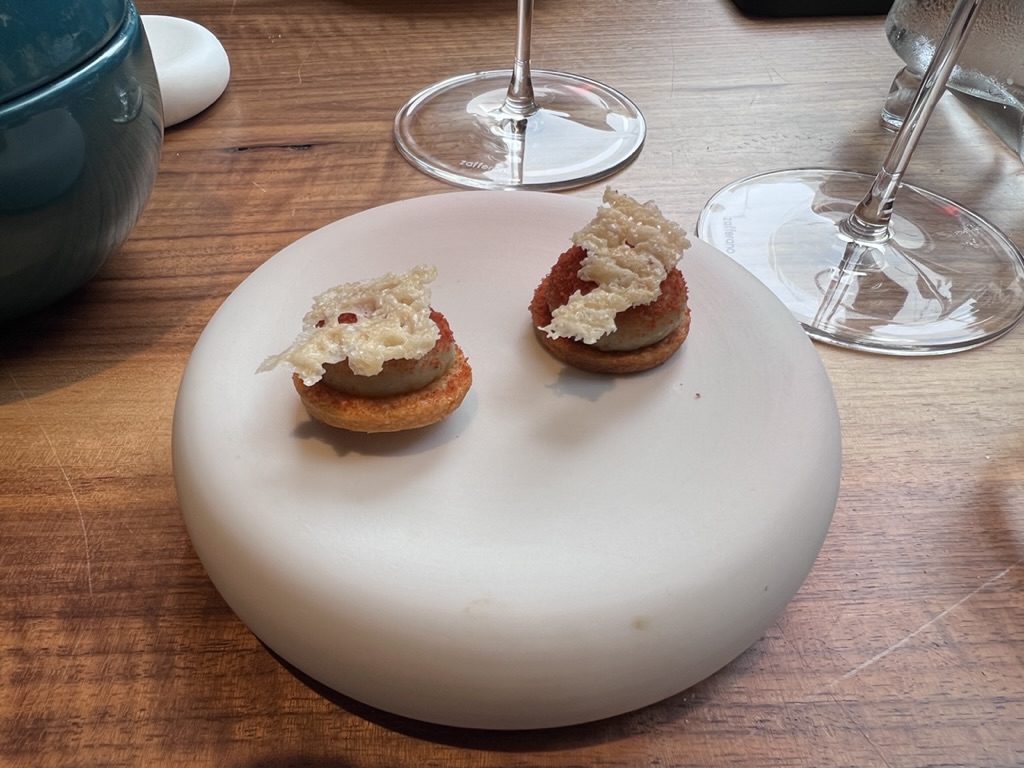


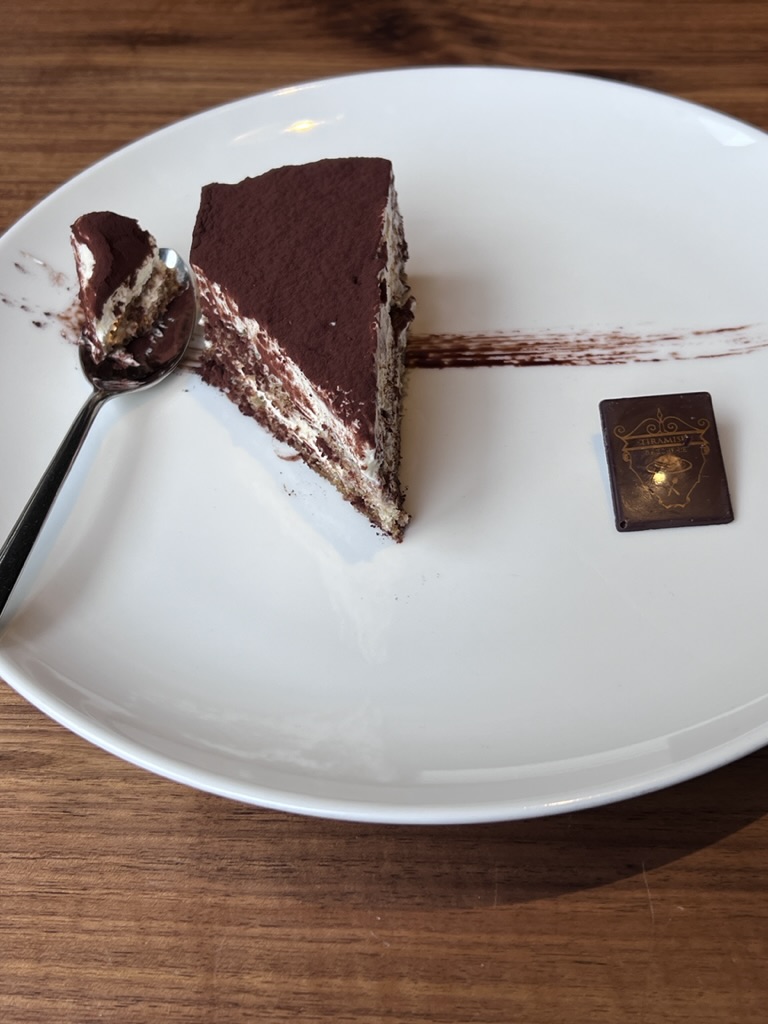
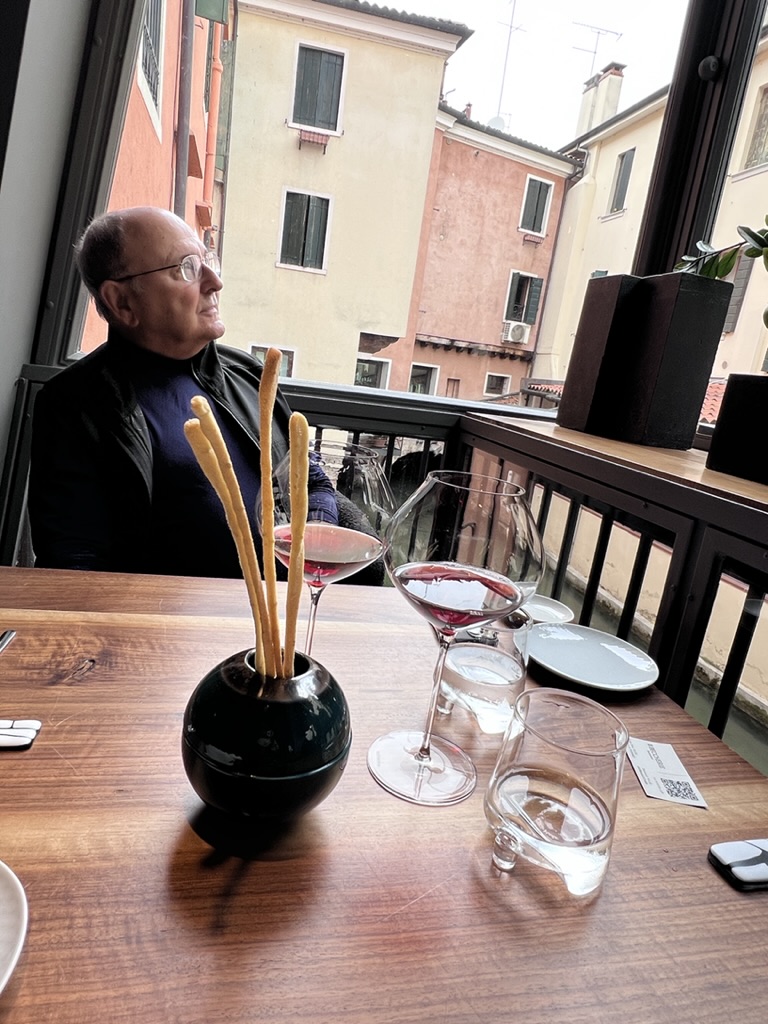
Due to the rather leisurely lunch at Le Beccherie, which is located right on a small canal, surprisingly with water clear enough to see to the bottom (Le Beccherie was worth a trip all on its own) and the fact that the weather was so uncertain, we only had time for a very short walk to and from where we had to park our car (outside the historic center) and a few detours to see some great streets. So, Le Beccherie… we really were just looking to have a simple lunch…was a huge surprise. We shared a starter and a pasta and a dessert. But before we began the meal four incredible little “nibbles” – “gifts from the chefs” (which is the norm in the high-end restaurants) arrived at the table… one more aesthetic than the other and each just wonderful little bites, along with fennel bread sticks and fantastic olive oil. Our starter was a beef tartare that looked like dessert when it arrived at the table—beef with lemongrass foam and a tart green sauce, along with some other ingredients. The pasta was a homemade egg chitarra pasta with hazelnuts and miso butter topped with grouper tartare and a little caviar. For dessert we tried their supposedly famous tiramisu…which we were told was literally invented there in Treviso and also learned that the word “tiramisu” is one of the five most famous Italian words in the world.
The origin of tiramisu – or so the story goes—dates to when the then-owner of the restaurant, Alba Cameol, in 1955, was pregnant and her mother-in-law worried about her diet. She prepared hearty breakfasts each day and included zabaglione and coffee. She wanted to be sure her daughter-in-law had the energy to face the demands put on her by the restaurant and the pregnancy. Once the baby was weaned and she returned to work in the restaurant, she decided to add a new dessert into her menu.. and that dessert was inspired by those breakfasts. First there was a lot of experimentation and finally in 1972 they decided the new dessert was perfect and ready for inclusion on the menu. They had tested ricotta and other ingredients, and finally settled on fresh mascarpone. In that same year, Le Beccherie exhibited at the Milan Trade Fair and ended their menu with Tiramisu. I think that this recipe has received some sort of honor from the Italian government. So, how could you possibly pass that up… not us.
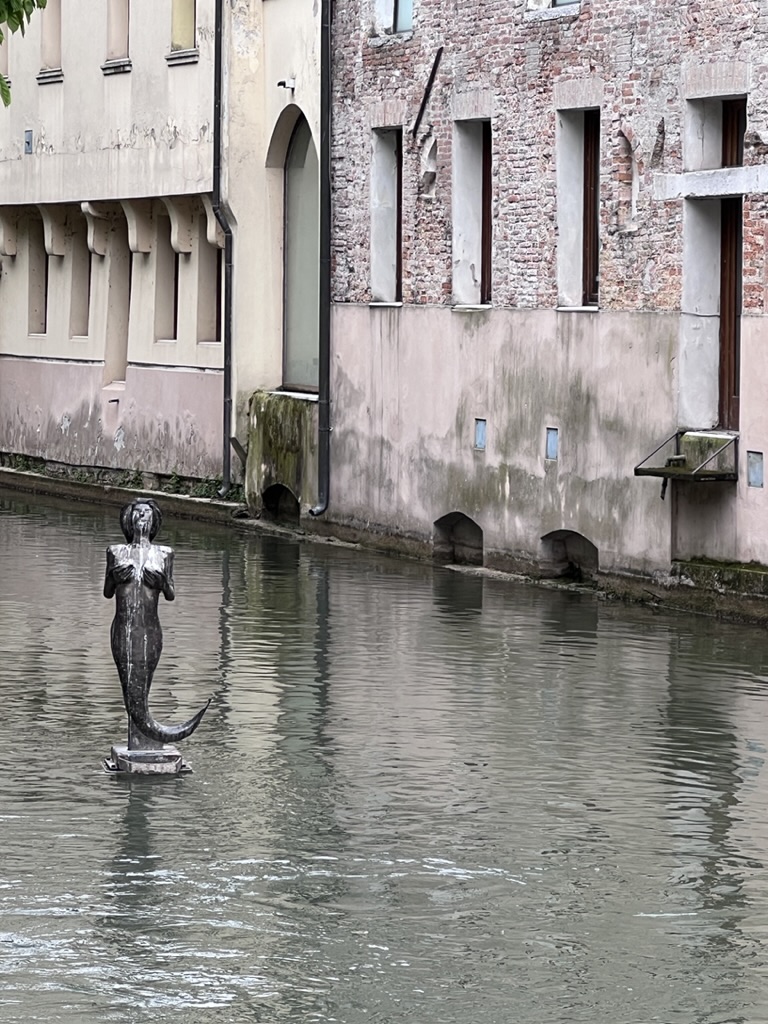
Treviso has about 80,000 inhabitants and the river runs throughout the town, so you are constantly crossing wonderful little foot bridges to get around town,
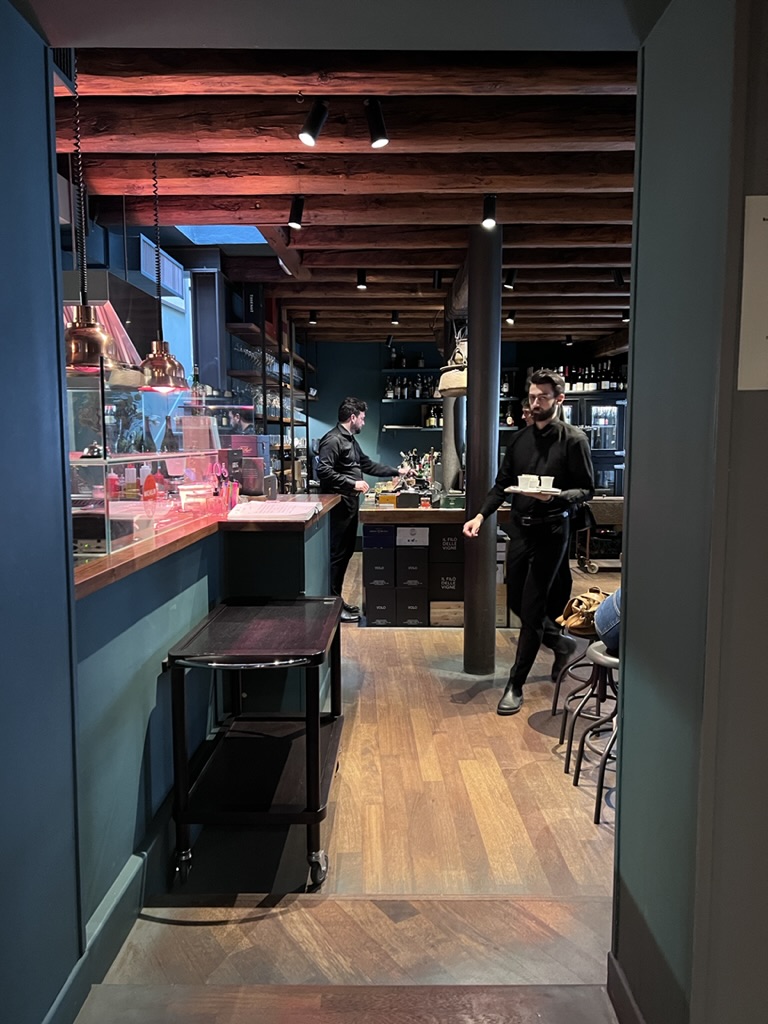

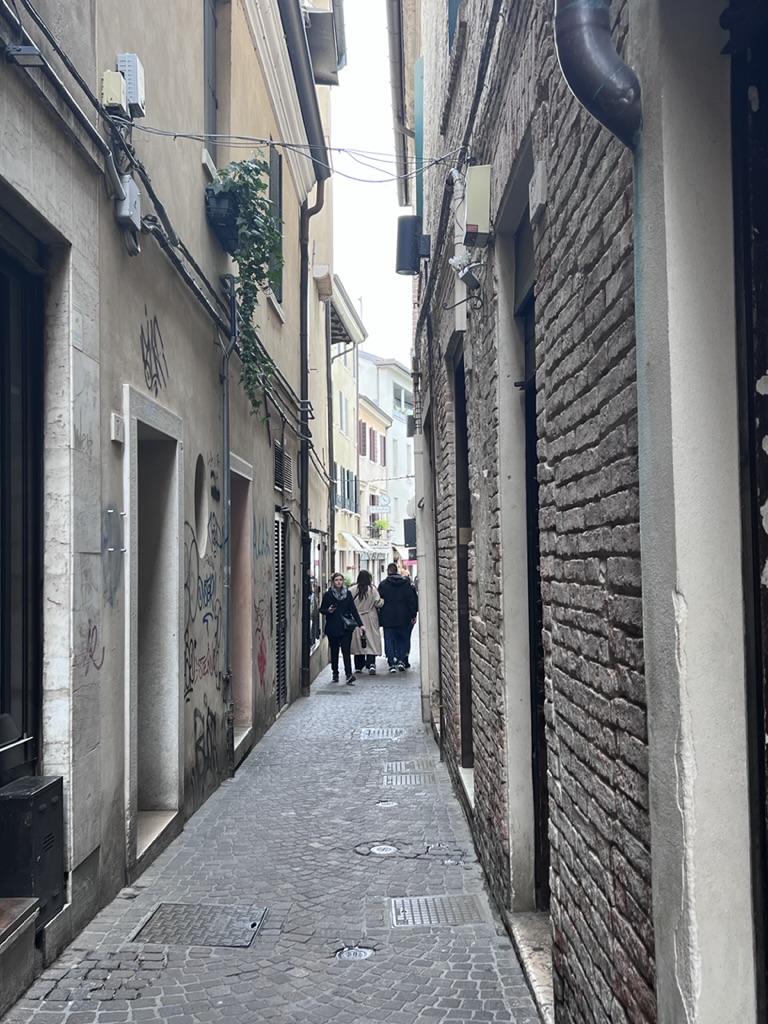
Once we located our car, we began the drive to Verona (population 280,000) where we will spend the next two days. We drove through beautiful countryside, vineyards, villages, and hamlets with what seemed like oversized churches for their location in such small villages. Nonetheless, they were lovely and impressive structures. Eventually we arrived in Verona—which looks delightful, but we had a really hard time finding the hotel. We are located inside the historic center which restricts cars. We had to have our car “licensed” in advance to be able to drive in just to unload our luggage. Then we parked in a public garage, where the car will sit until we leave Verona. As we strolled to dinner, we could sense that Verona has a great vibe, lots of young people (there’s a university), and wonderful amenities—lots to explore tomorrow. Anyway, the GPS somehow could not really pinpoint the hotel’s location, so it would say we were “here” but we weren’t really. After two phone calls to the hotel and some very detailed instructions, we got to the hotel, dropped off the bags and “registered.” The challenge had been that the roads are very very narrow and there are tons of pedestrians walking everywhere and not expecting cars since so few are allowed in. But still those that are allowed into the town must navigate people and streets that clearly were not laid out for cars. We had to drive across piazzas and make turns that cars really cannot make. I think we looped around the town three times before we finally got to our destination. One issue was that the hotel is on a tiny alley and the GPS doesn’t quite acknowledge it.
I think that’s it for tonight.
All the best… Got some snippets of US news tonight so I gather Tucker Carlson is out (aw shucks!!) and that Don Lemon is gone as well (Aw shucks, again! Was this tit for tat? And planned by the owners of both stations to happen simultaneously?) In any case – for my two cents—no great loss.
Fern
P.S. From the lap of luxury at the Savoia Excelsior Palace in Trieste, with our two balconies and room that was probably 600 sq feet + about another 200 sq feet with the wardrobe room and bath and foyer, we are now in the very very modest Albergo Mazzetti Hotel which while noted as being 3-star is probably more like a 2-star (or in my opinion, maybe a 1 star or star-less)… this being based on the Savoia being a 5-star (and maybe I’d give it six out of five). So it’s a bit of a downward slide here.. but also a nice balance in our journey—moving between such extremes.


Buonasera or as they say in Slovenia (the language that needs to get a few more vowels)–Dober Večer…
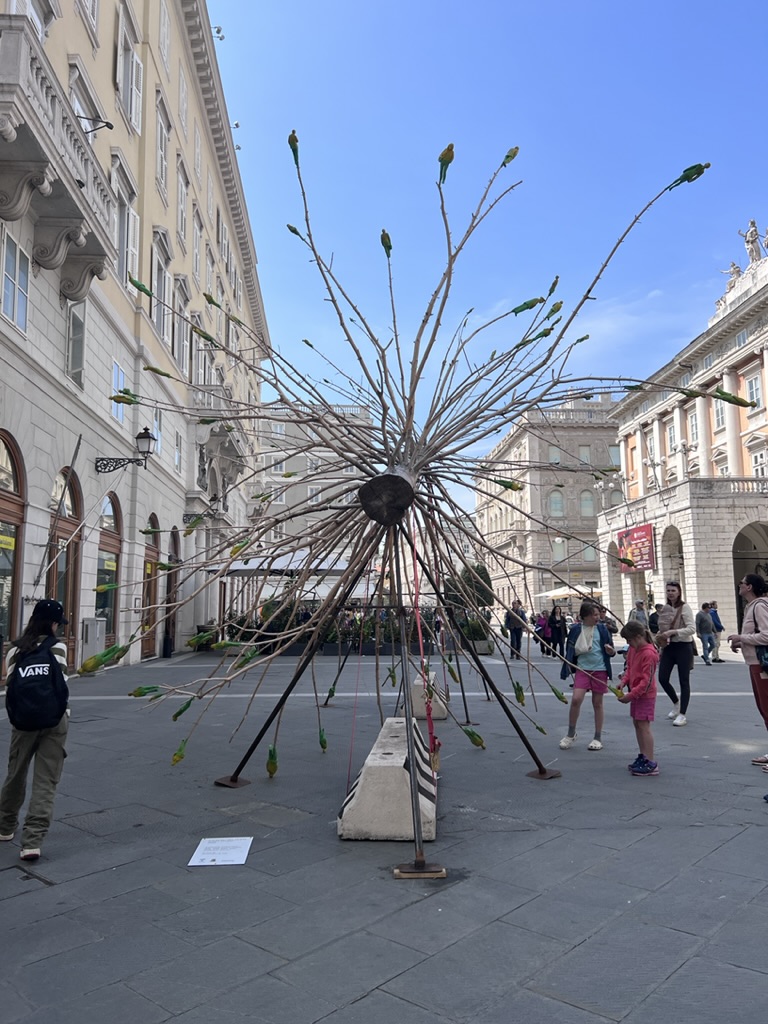
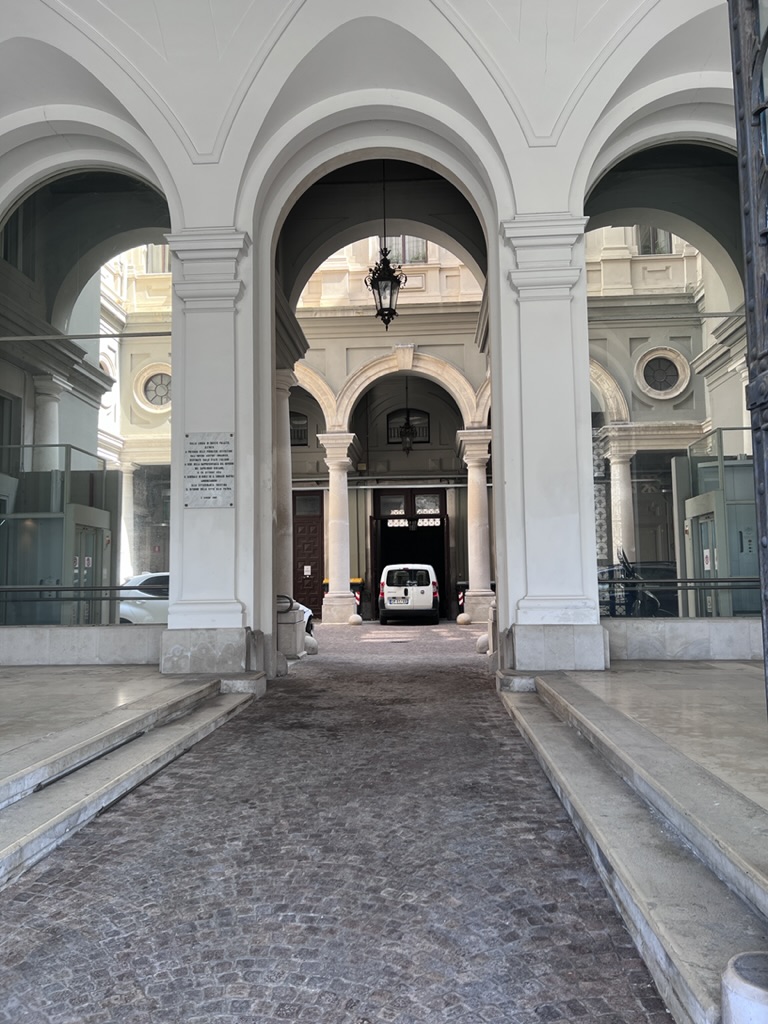
Before getting into today’s adventures, I want to give a little more clarification about that singing and dancing in the piazza yesterday for Trieste’s Carnivale. It was truly ironic to see these turn-of-the-century pompous and–to my mind–pretentious buildings as the backdrop to all of the joyous kids and adults frolicing and singing everything from the “YMCA” to the “Macarena” to “Old Macdonald.” Certainly not what the architects of the Austro-Hungarian empire imagined. If you can imagine the most decorated tiered-wedding-cakes and think about walking between and among dozens of them—-that’s what it’s like to walk through the “official” parts of Trieste. A bit like the buildings of the Gilded Age in the states—but more so.
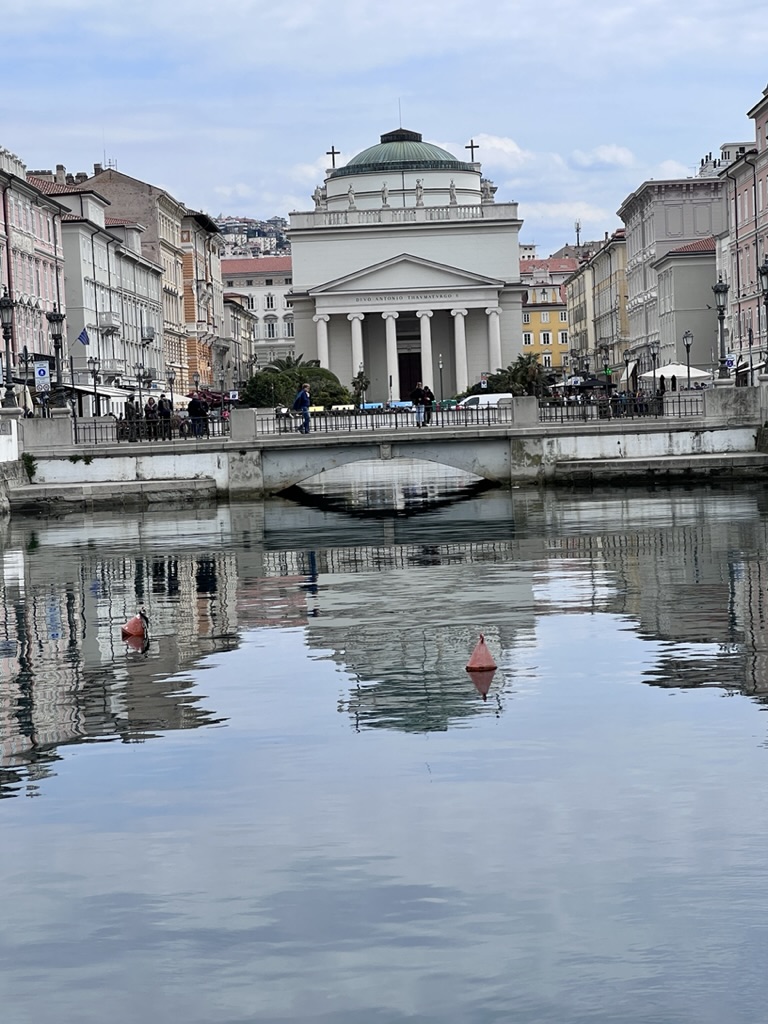
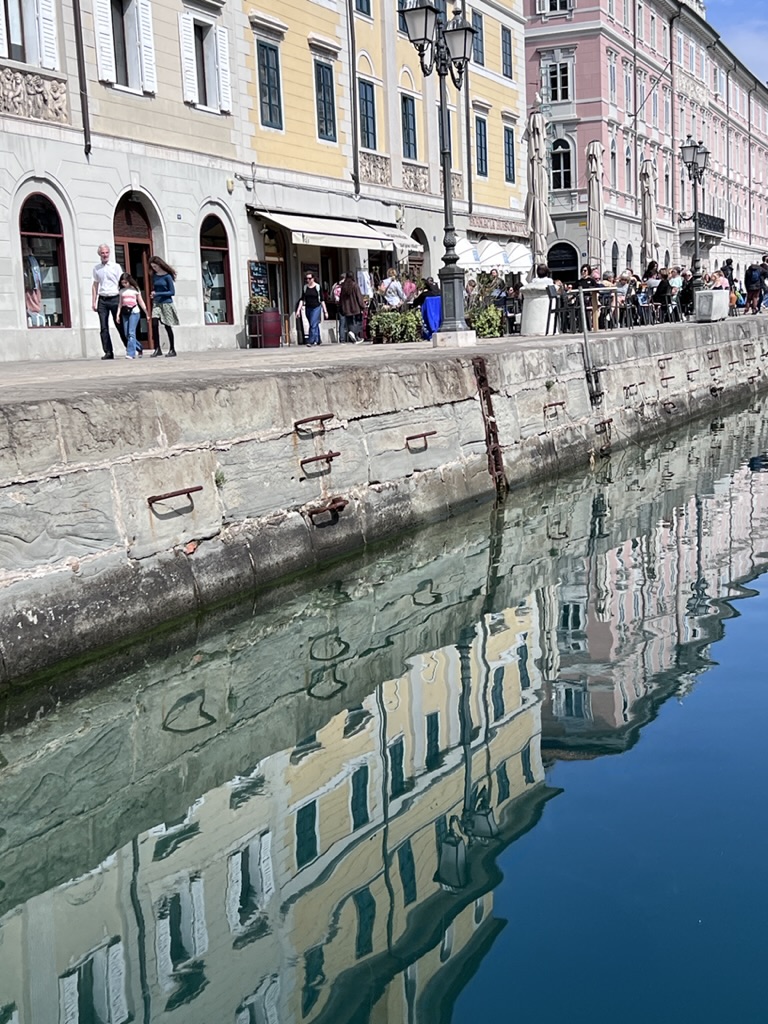
We headed out to stroll the town— no real destinations—walked across the canal and into some neighborhoods. The city was out in full force as it was a really beautiful day and it was a Sunday. One thing to note—here in Trieste, as in every other Italain city (and actually probably throughout the world, as we’ve noticed this on many trips to Europe, Asia, and the Middle East) there are lots of bookstores!! Someone must be supporting these book stores. Eventually we stopped at a place for lunch along the canal and sat on a floating deck, luxuriating in the great weather and view. Many waitresses seemed to look a lot like Melania and I’m guessing they, too, are Slovenian and commute to Trieste for work.
I decided I really love the Italian language and recognize how different it sounds here from the Italian I heard growing up in my neighborhood in Brooklyn, which was populated pretty evenly by Jewish families and Italian Catholic families. But the Italian spoken in Brooklyn had probably gotten corrupted over the years after families lived in Brooklyn for decades and the English of immigrants merged with their Italian. And none of these people ever returned to Italy—rather they created a new kind of working class Italy in Brooklyn. But the Italian spoken here (especially in the northern part of the country) is super expressive and works well with people’s facial and hand emphasis of what they are saying. Just like the Swiss refer to “High German” as distinct from “German,” maybe NY needs to have another term for the Italian that is spoken there.
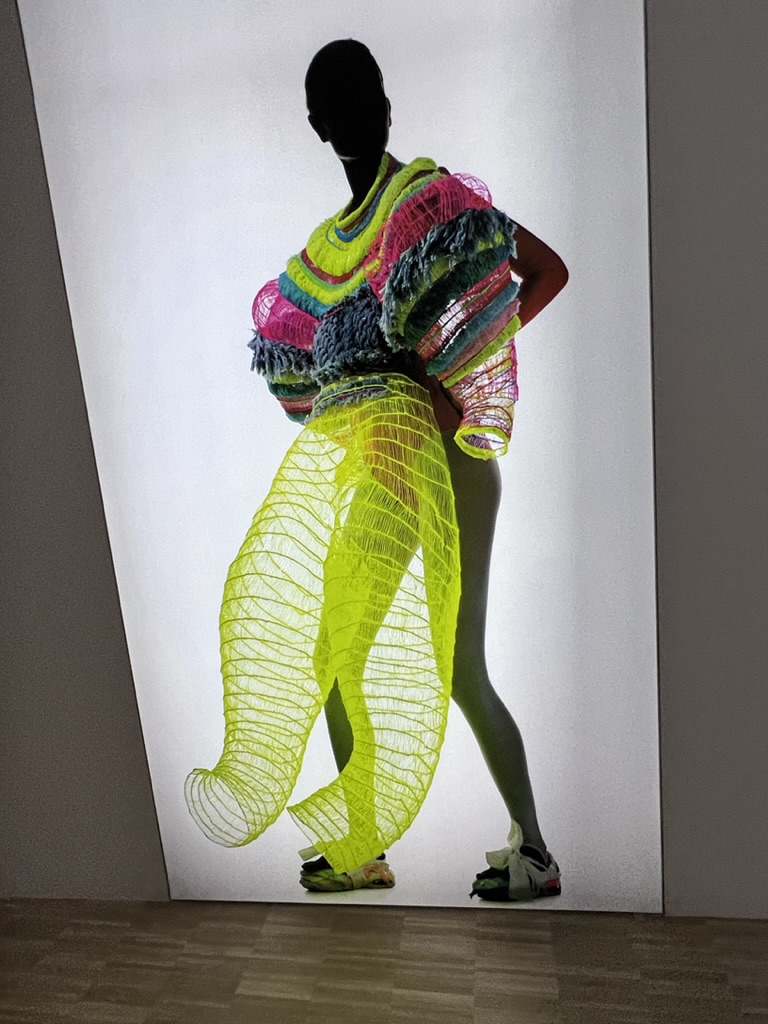
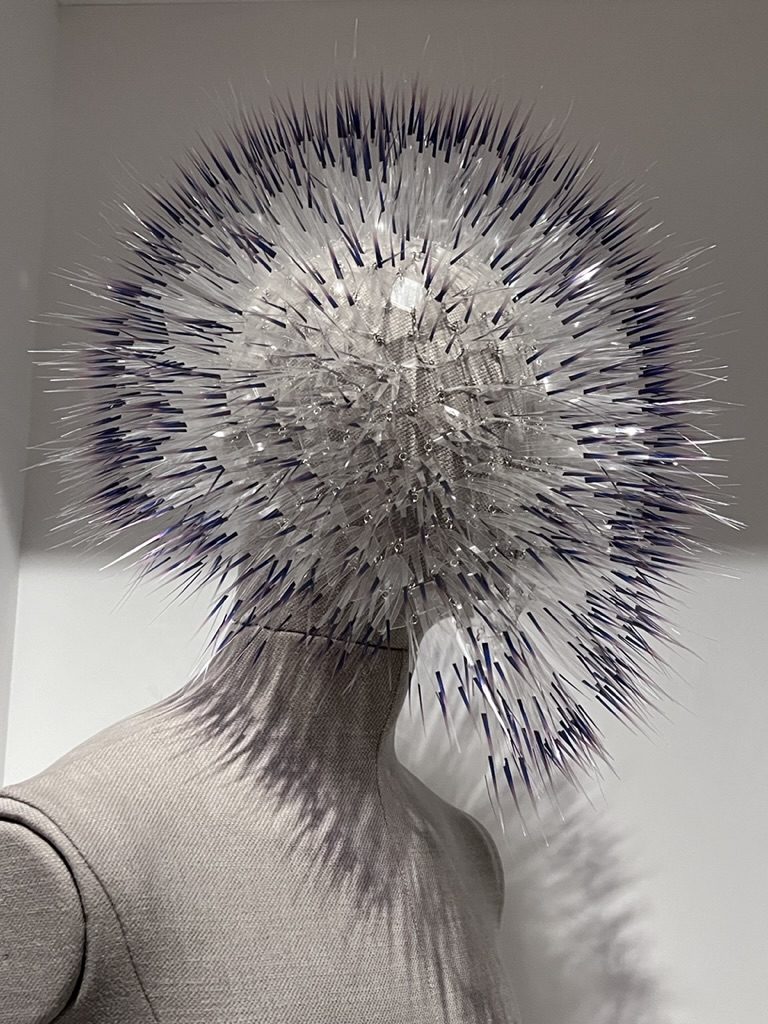
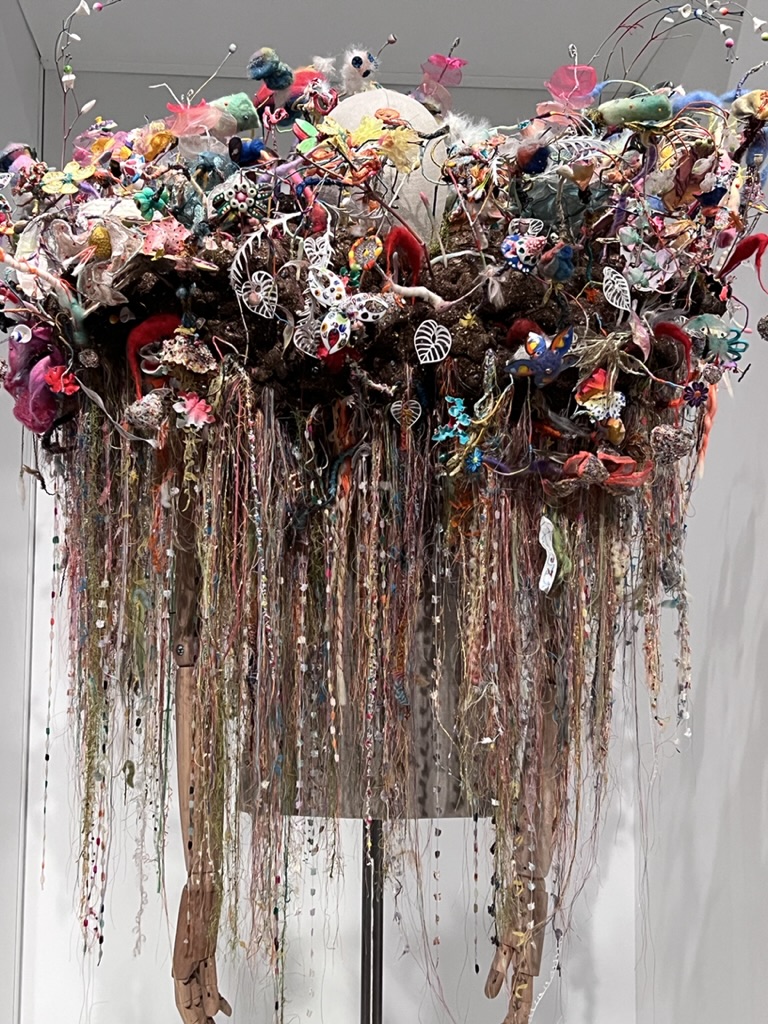
We stopped in at a small museum that had a show called ‘It’s Arcademy.’ A juried show of fashion designers’ creativity in making art fashion or making fashion art—whatever. It was sort of fun seeing things like hats that are so huge, they need to have an attachment that sits on the shoulder and neck of the wearer to support the hat.

Then we carved our way around town, stopping occasionally and ultimately heading back to the hotel to relax a bit before dinner. By the way, my laryngitis is about 75% gone, but I still have a bad cold. Dr. Fern decided it was time to take an antibiotic (which I brought with me). And now with just one day of the antibiotic the coughing is all but disappeared (well maybe it’s 25% of what it was) and I hope by the time I finish the regimen (3 days from now) I’ll be as good as new.
We had decided a while ago that we would have dinner tonight in Slovenia since it’s only about a 15 minute drive from the hotel to the border towns of Slovenia. We had read about a restaurant in a Michelin list and figured we’d give it a try. Actually there were several that sounded fantastic, but the drive would have been longer. We had been to Slovenia more than once when it was part of Yugoslavia, although I don’t remember what villages we saw, only the big cities.
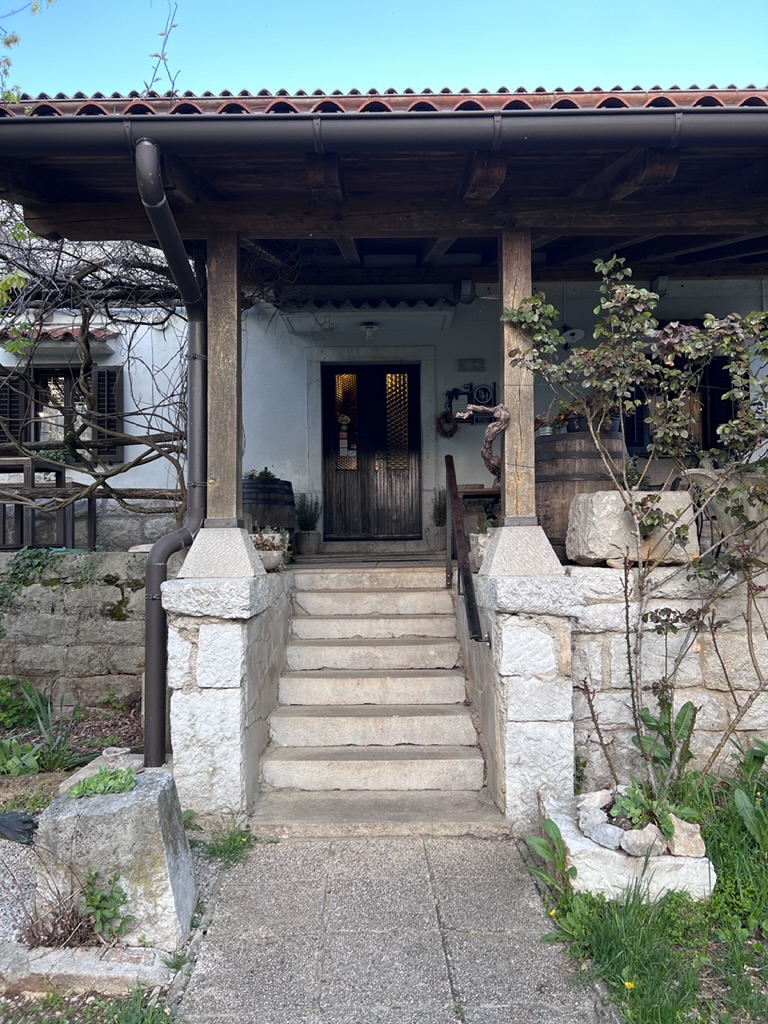
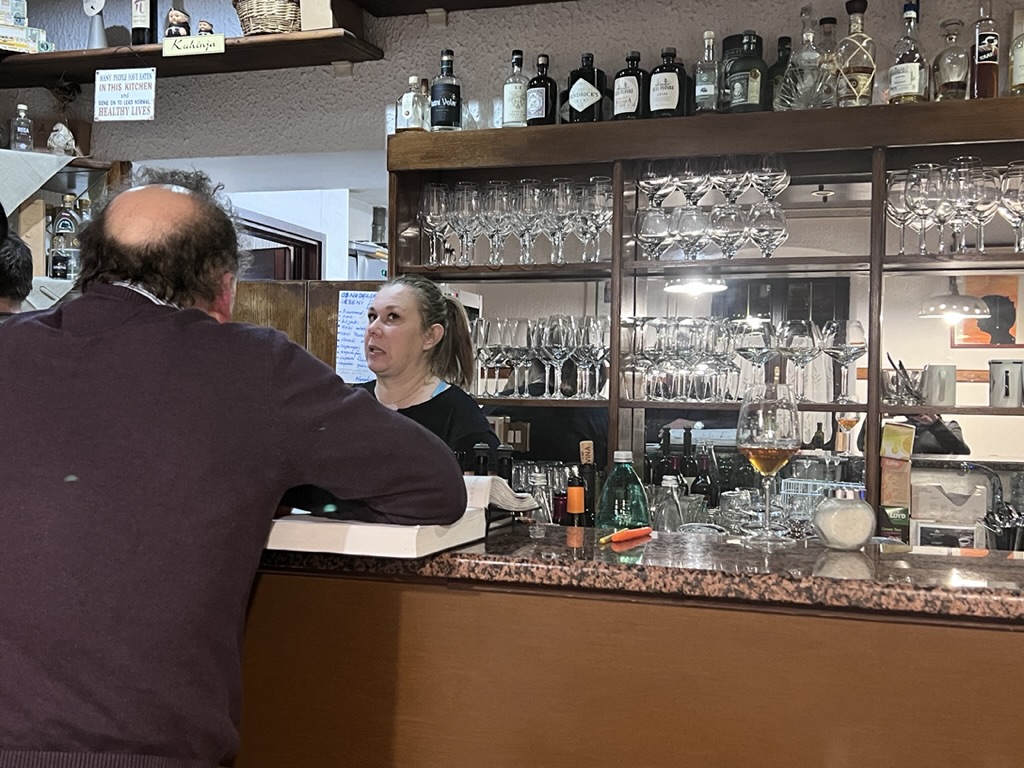
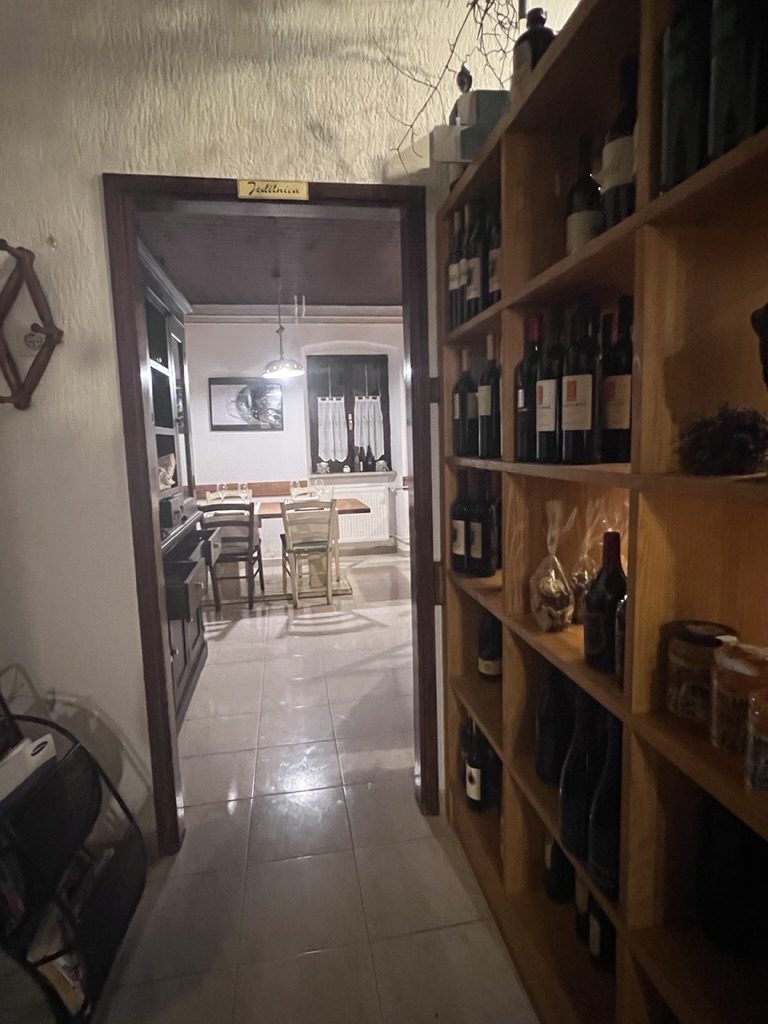
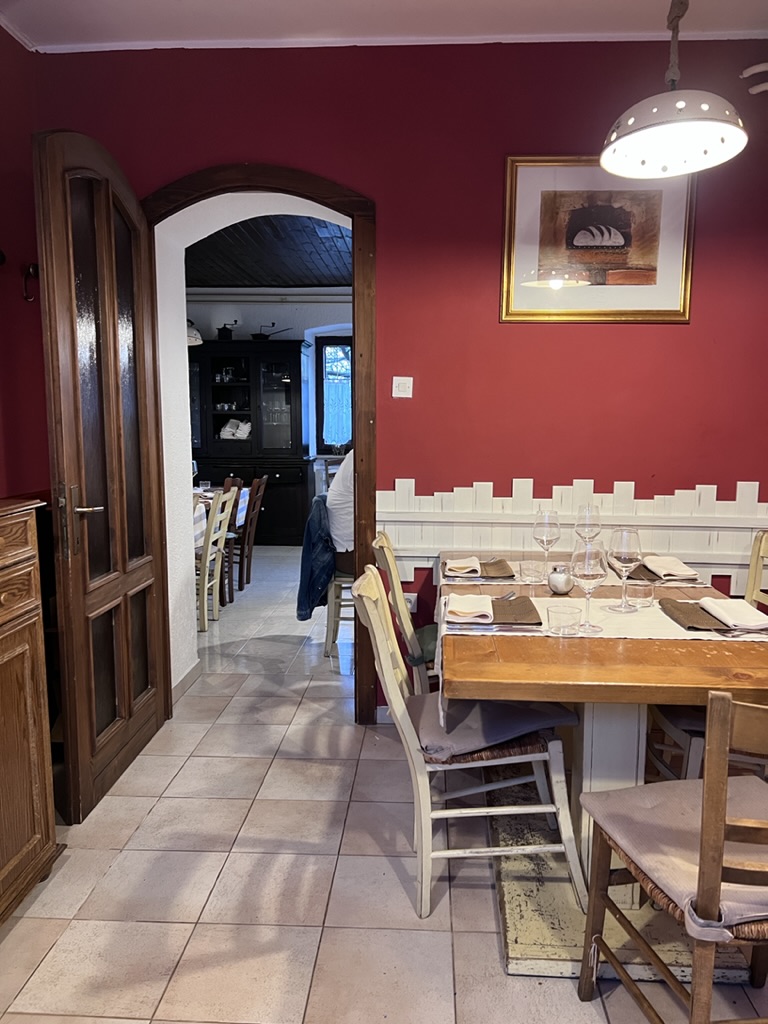
Anyway, we headed to Gostilnica Ruj, located in a little farm house at Dol Pri Vogljah (remember I said they needed more vowels). We purposefully left enough time to get there early and walk through the town. Alas, there was no town, so we were just very early for our reservation, so we drove to find a real town and eventually drove through Sezana (population 6,000) and then headed to the restaurant. Gostilnica Ruj is essentially a former farmhouse that is now home to the restaurant. Very quaint; food was quite good (and not as “heavy” as I had imagined. There are about three small dining areas and a small bar. Seemed like the other diners were mostly Italians, but some were speaking Slovenian. The road to the restaurant was pretty windy and uphill. On the return trip, the GPS got a little lost and couldn’t locate us so we just tried to find roads that went downhill. Eventually the GPS came to life and routed us to the hotel. Frankly, being on those dark isolated roads would have been far scarier in the states than here—because you’d know that the likelihood of people having guns would be a sure thing. Here that is very very unlikely.
OK.. back at the hotel.
Headed to Verona tomorrow, with a possible lunch stop in Treviso; we shall see.
Best-
Fern
 Fern's Travel Notes