

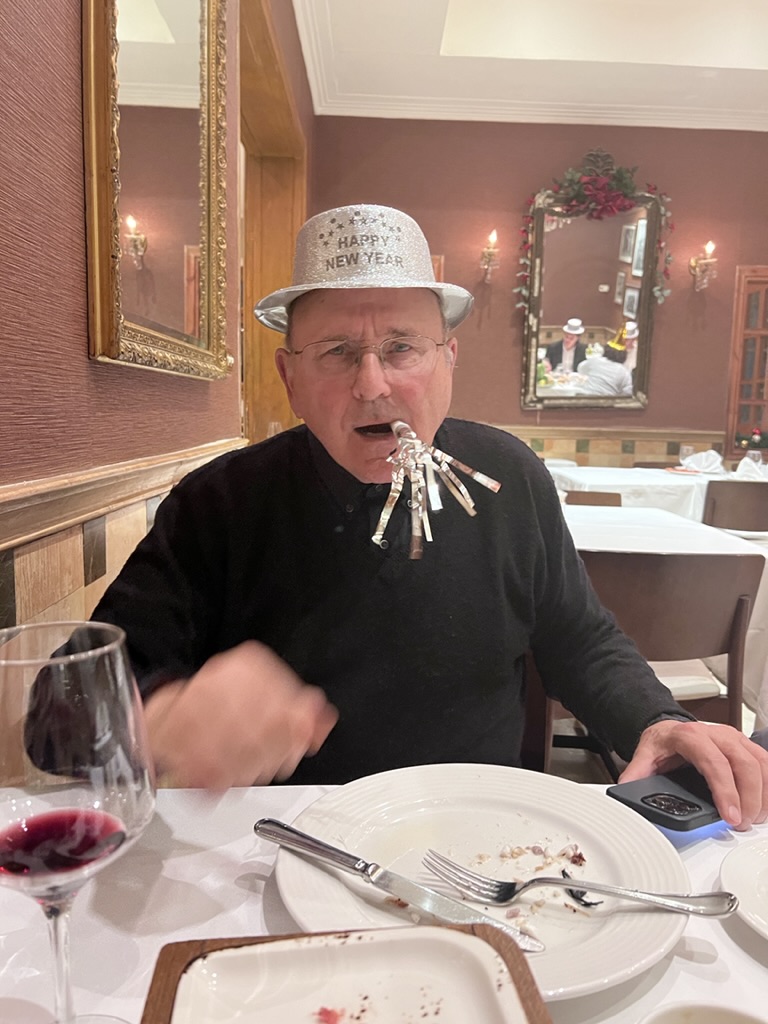
Greetings and Happy 2023
Last night’s birthday / New Year’s Eve dinner at Fakhreldin (Amman) didn’t disappoint. Getting to the restaurant was interesting; we actually took a hotel taxi as opposed to a local taxi, sine it was clear that getting close to the hotel was going to be complicated if drivers didn’t have appropriate “access” to get into various streets around the downtown area. The 10-minute drive took about 30 minutes with a lot of U-turns and bypassing normal routes to avoid traffic and street closures. By the way, started the meal with Arak – a translucent, unsweetened aperitif that is anise flavored; good and strong. Alcohol is far more prevalent here in Jordan than it was in Egypt, although the wine selection is generally thin. Jordan wine is not to our liking so we’ve been sticking with South African cabs and various Italian wines that they offer.
Fakhreldin is in a house built in the middle of the last century and is one of the oldest houses in the neighborhood. It is set back from the street and like other impressive houses built for the wealthy, was designed to overlook the street and passersby. We were at the restaurant at midnight and by the time the revelry ended, and we reached our hotel it was after 2:00 am. We crashed.
This morning we left our “marvelous” room. When we checked into the hotel four or five days ago, the receptionist told us we were upgraded to a “marvelous” room, even though we had booked “only” a “spectacular” room (they really use these terms). We laughed and asked—purely out of curiosity– if there was something even better than marvelous, or what the other categories were, and we were told there were also “magnificent” rooms. Anyway, given that we didn’t sleep much and that we knew it would take time to get our rental car (our plan was to drive straight to Petra—about 4 hours south of Amman), we made what I think was a smart decision: we would stay overnight at the Dead Sea tonight, and drive on to Petra tomorrow (Monday), get there by early afternoon and stay one night instead of two nights, and leave Petra on Wednesday, mid-day, as planned.

We picked up our rental car (Sixt) at the Amman Airport and that was a scene. The car is several years old and has lots of dents and scratches. The guy who checks out the car to note all the damages was circling every part of the diagram, and then he said—“a typical Middle East car.” So, I don’t think there will be any problem if we add a few more scratches. They also take an advance, refundable deposit—in case you get any traffic tickets while driving the car.
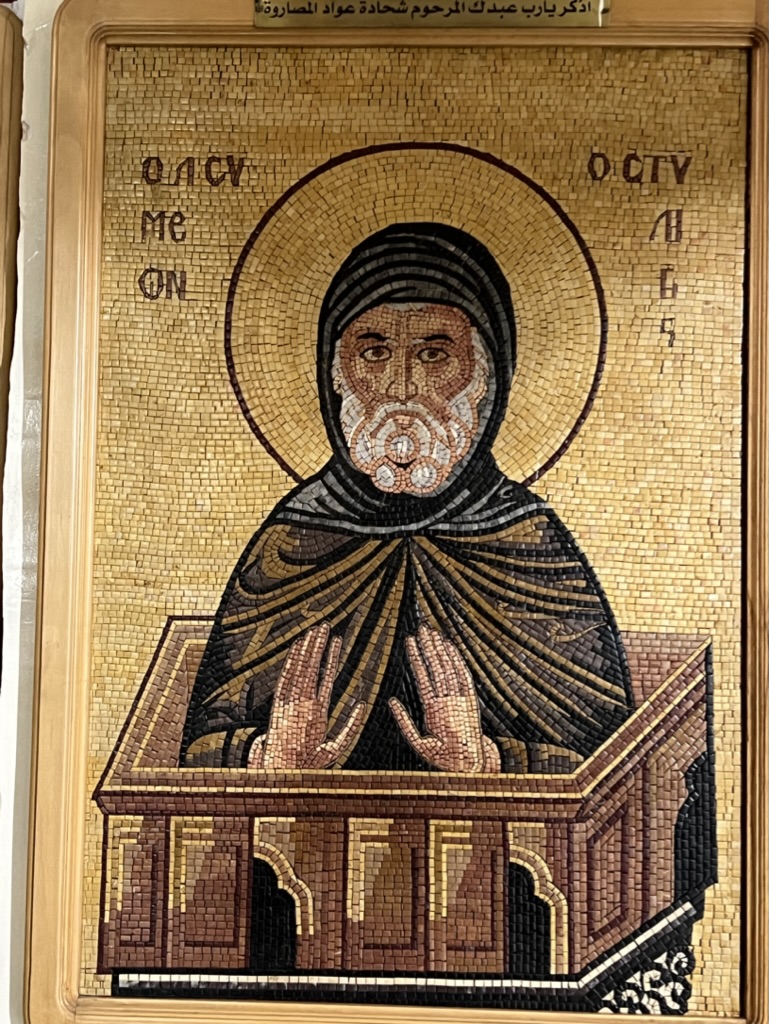
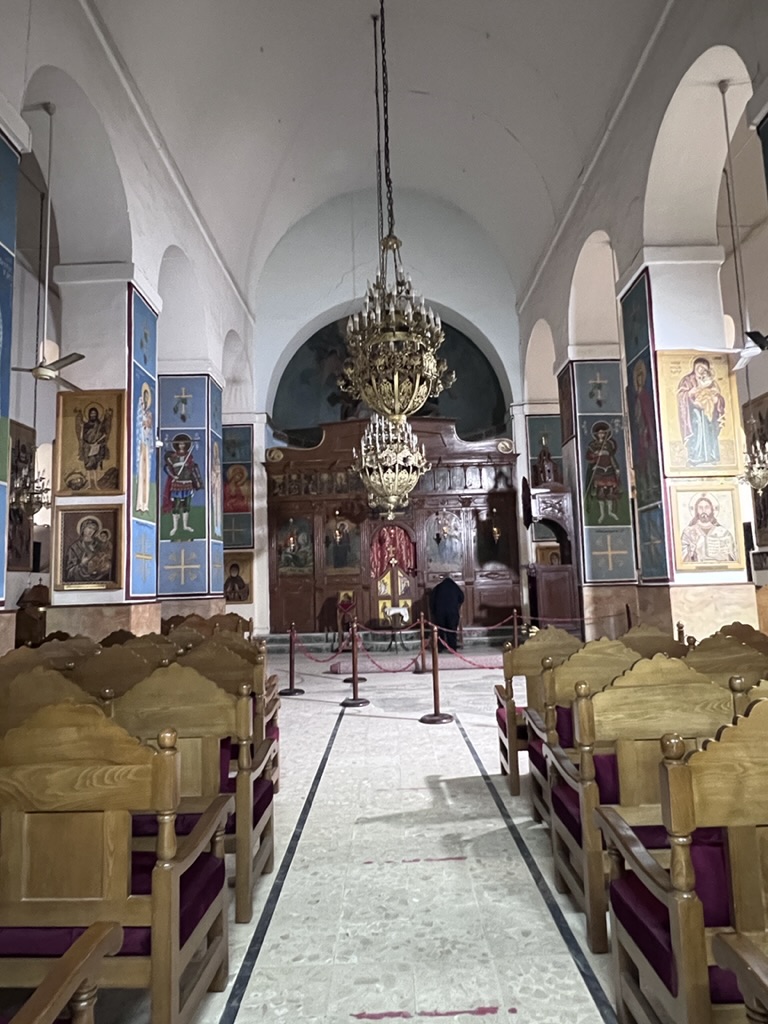
And then we were off. The rental car place gave us a little Wi-Fi hotspot gizmo that we plugged into the USB slot and that enabled us to get a strong GPS signal. Since we now had only about an hour’s drive to the Dead Sea, we decided to take a small road as opposed to the Sahara Desert “Highway.” We drove on pretty bumpy, rocky roads and went to Madaba, an ancient town with a population of about 60,000. It dates to the Middle Bronze Age and was ruled by the Romans and Byzantine empires from the 2nd to the 7th centuries; it has a large Christian population. We drove through narrow, dirt streets to get to the top of the hill and parked so that we could walk to the St. George’s Greek Orthodox Church which is known for its incredible mosaics. The church itself is pretty modest and only about 150 years old. But when they were building the church, construction workers came across the remnants of a Byzantine church. Among the rubble the flooring that was discovered wasn’t just an ordinary mosaic. It was the oldest map of Palestine and scholars say it provided many historical insights into the region. The map dates to 560 AD and depicts major biblical sites in the region. There are also many other mosaics throughout the church.
From Madaba we continued on this older, smaller road – through lots of rubble — until we eventually joined in with the “highway” and found our way to the Kempinski Ishtar hotel right on the Dead Sea. After checking in and getting our room, we walked down to the water (naturally we don’t have bathing suits with us, since we never find ourselves in ‘resort-like’ settings) and surveyed the massive hotel grounds that meander and meander. We stopped for a snack in one of the three restaurants on site. When we checked in, they said there was an Italian restaurant, a Lebanese restaurant, and an ‘international’ restaurant. We stopped at what we believed to be the Italian one. We asked the waiter, but he said (in limited English) that this used to be an Italian restaurant but was now Mediterranean. We sat and looked at the menu which was all pastas and pizzas. We also asked about the International restaurant, but he said that was now Mexican (?) In any case, there are Italian, Lebanese, and “international” restaurants on site. We decided on Lebanese for dinner, and it was fine.

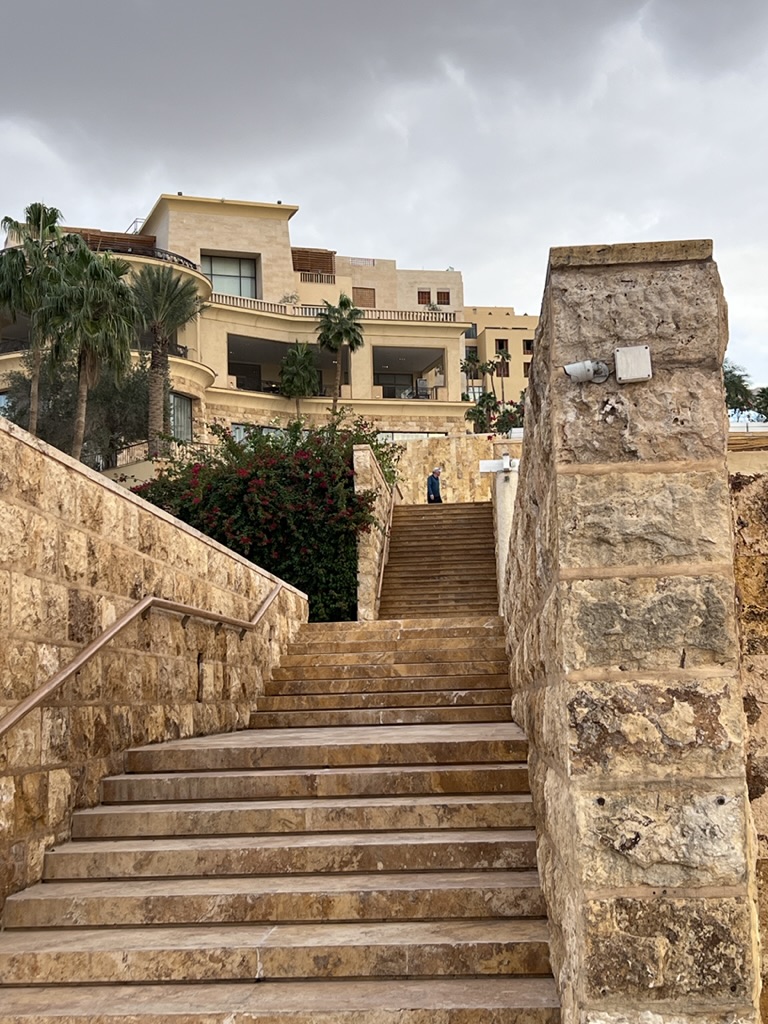
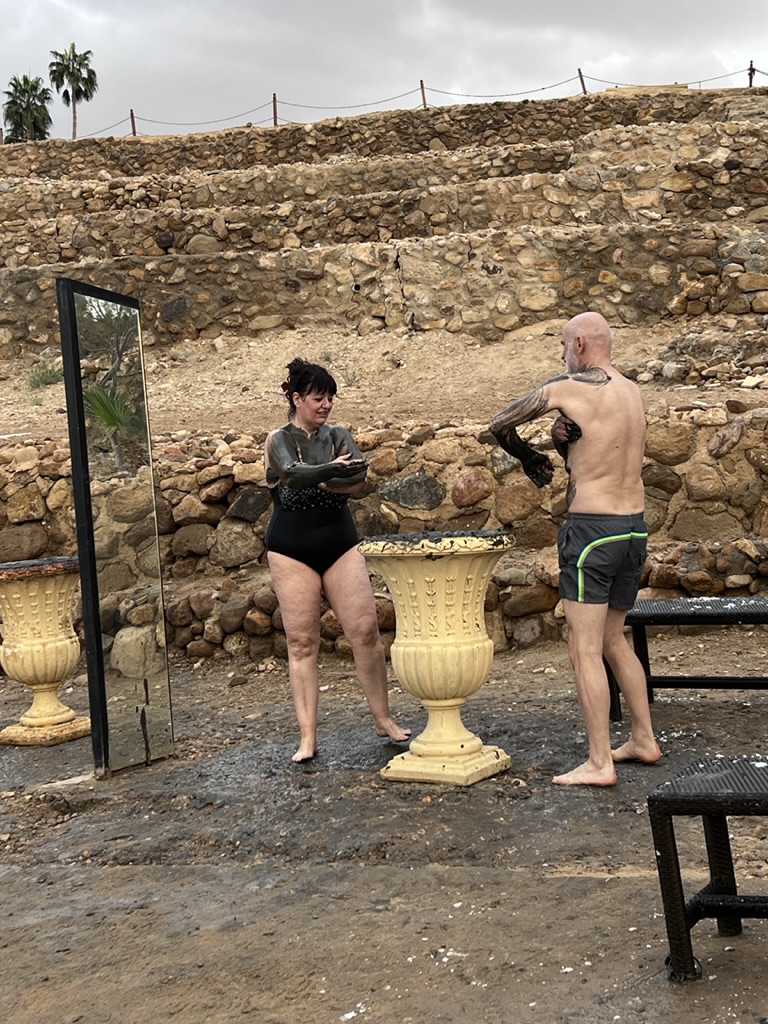
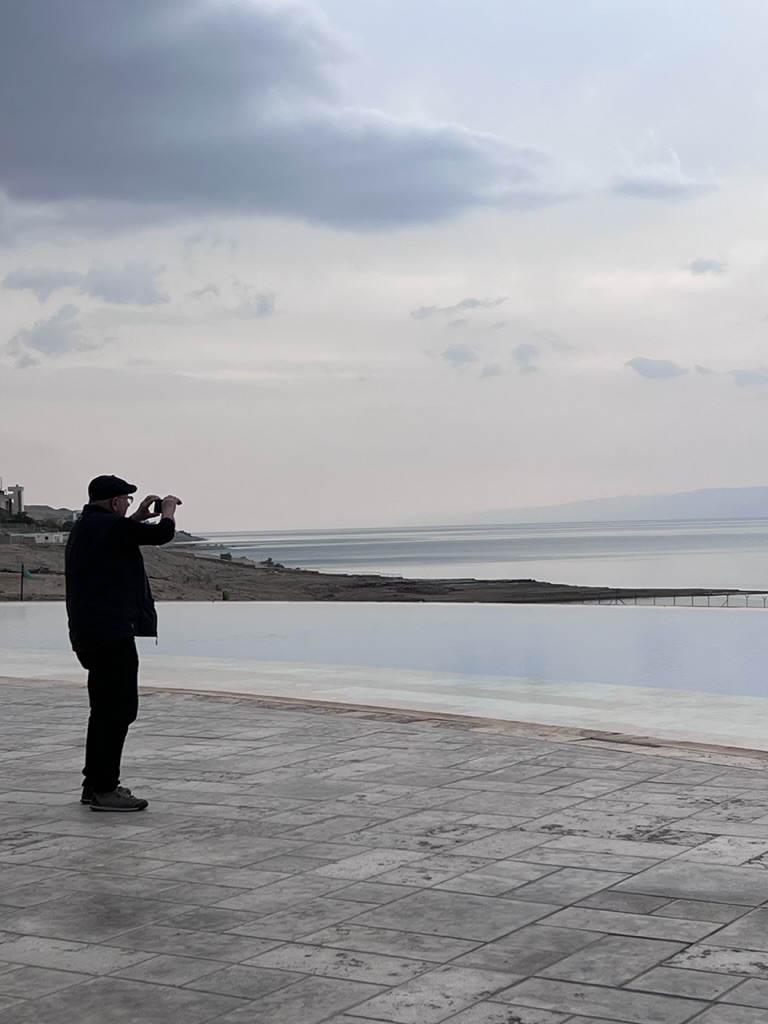
There is a big spa here with many different offerings. Most likely we will try something out when we return for one night, after Petra. I figure I’ll be in need of a good massage by then.
For those of you who were shocked that we were driving ourselves—the roads are good, it’s not crazy driving as it is in the cities, and we’re glad we’ve got the independence to come and go as we please and to stop whenever we want. We’ve driven in far more complicated situations in other countries. So, unless it gets more difficult as we get to Petra, I think it will be fine.
All the best for 2023 and beyond.
Fern
14. The Other Amman… And Happy New Year. 12/31/22
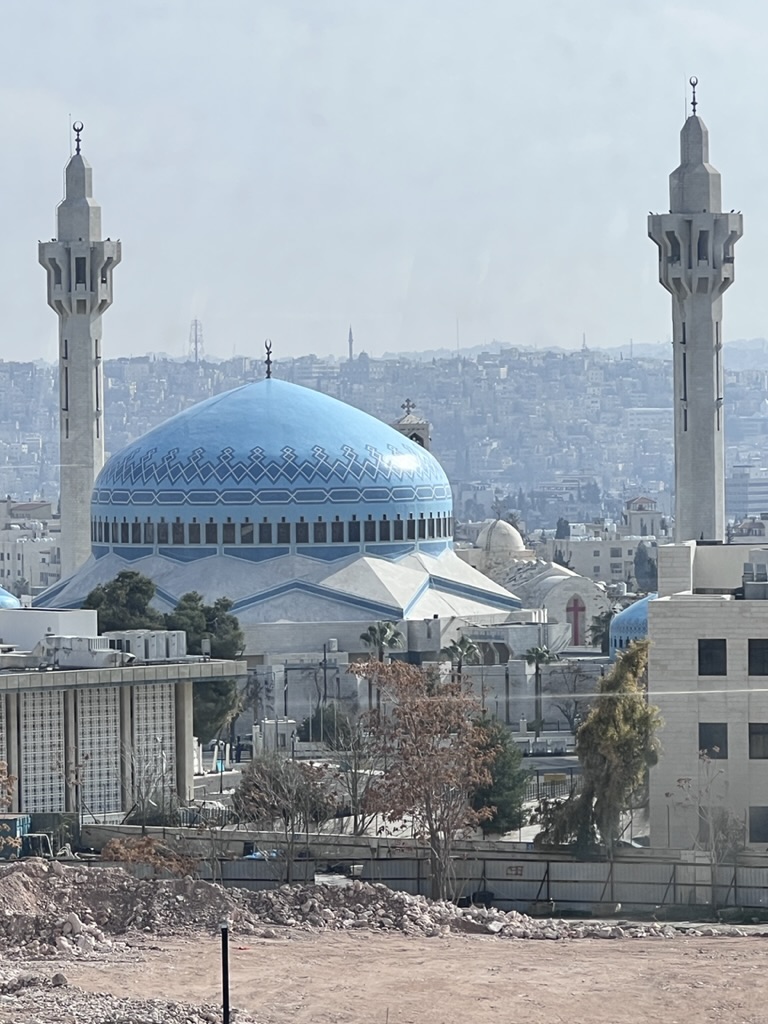
Happy New Year –
Taking a few minutes out to write up today’s report, before we head out to celebrate New Year’s (and my birthday).
Today, we decided to walk in the neighborhood close to our hotel (and to the upscale apartment and office buildings close by). It was like entering another world from where we walked yesterday amid the cluttered vendor stalls and markets, where everyday Jordanians were shopping and eating and visiting; where traffic was backed up at all times; where the smells of spices and fresh meats and fish could be sensed around us; where cats roamed free; and where kids hawked for people to chose goods from their parents’ shops.
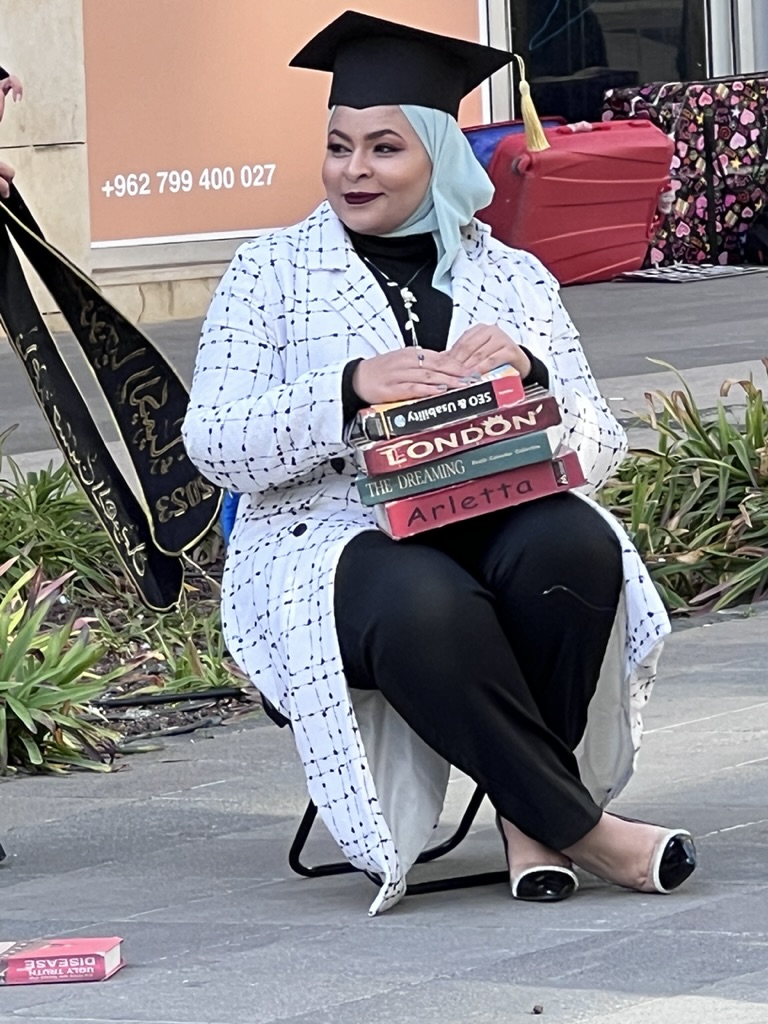
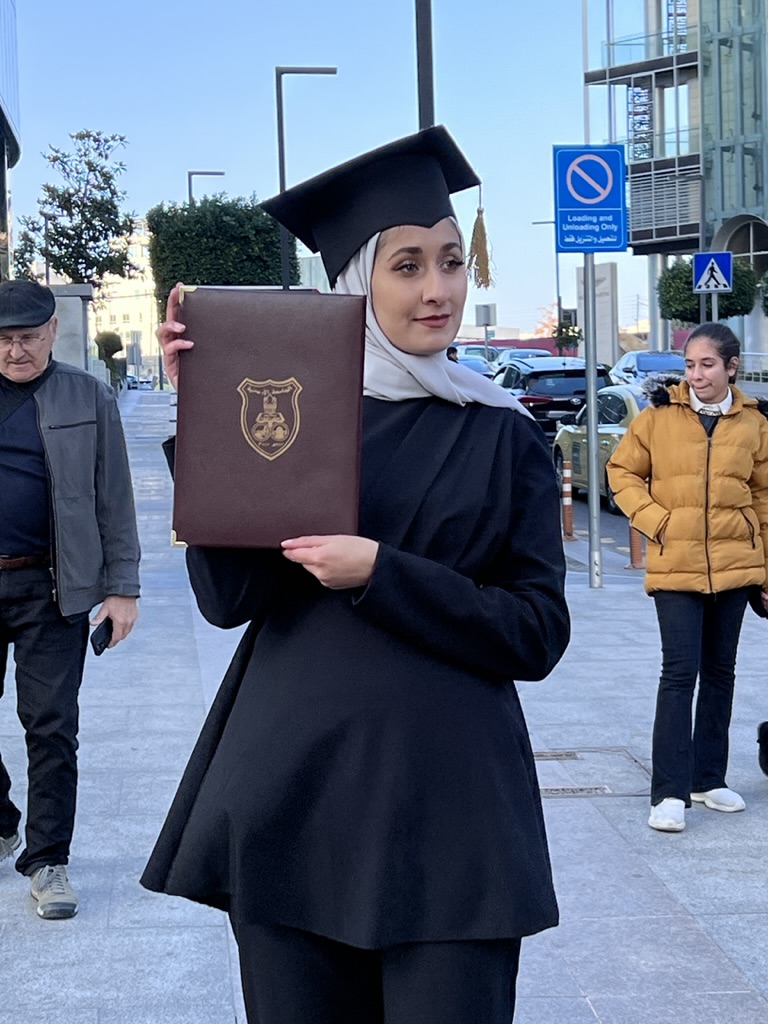
One other thing, apparently on the day of or day before graduation (college, masters, doctorate), graduates pose with books that are clues to their academic years—technical, travel, etc.) and families and professional photographers photograph them.
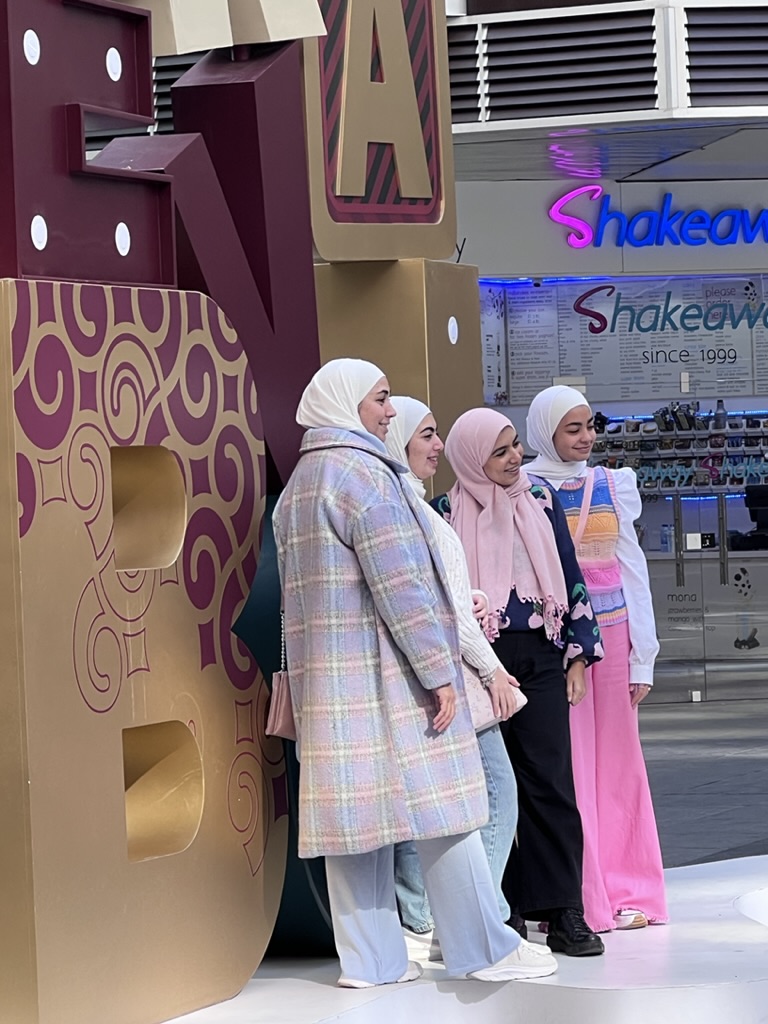
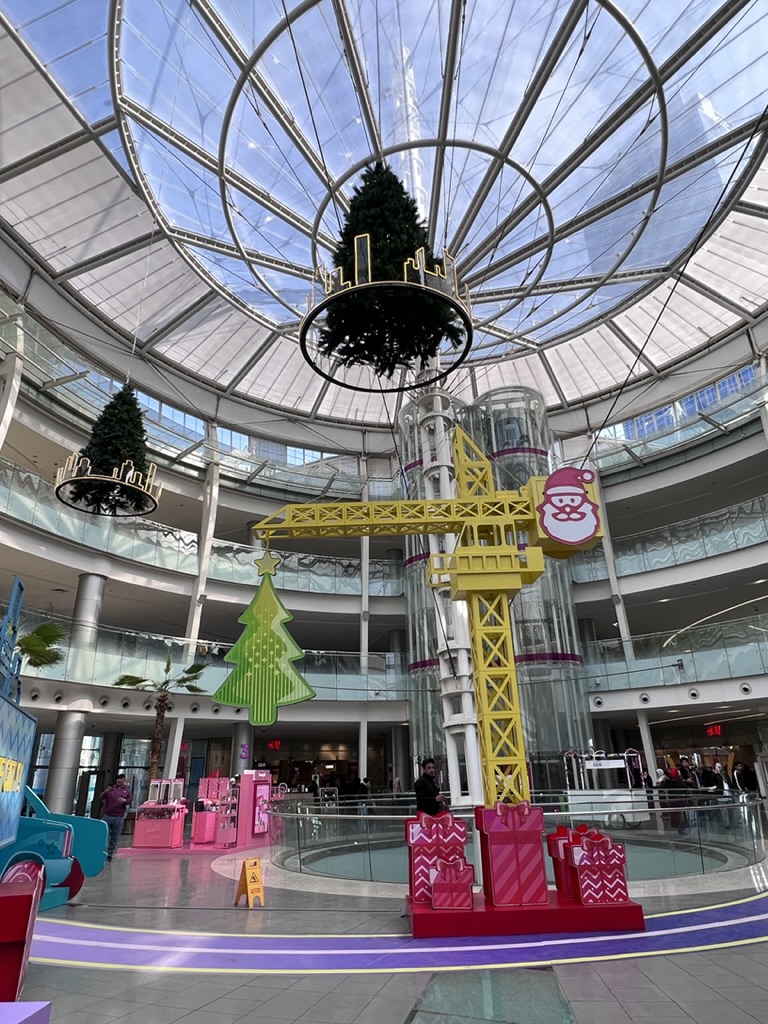
Two or three blocks from our hotel is a giant indoor/outdoor mall that could have been dropped in from any city in the US, complete with stores like Zara, L’Occitane, H&M, Ecco, and of course McDonald’s, KFC, and Starbucks where Jordanians (mostly young with simple hijabs) lingered with lattes—computers going and everyone on the phone. And in this zone, there are marked pedestrian crosswalks, where cars actually stop or slow down .. sometimes. You could have been anywhere except for the abundance of hijabs and the occasional burqa. The Abdali Mall also acknowledged Christmas with Santas and decorated trees and other holiday goodies. After people-watching in the mall (watching burqa-clad women stroll past stores selling lingerie and mini-skirt outfits), we continued to walk from this upscale area (where likely the Jordanian 1- or 2-percenters live and where foreigners living in Amman probably reside if they are here with international companies). We walked past what looked like a very modern hospital (good to know in case of an emergency).
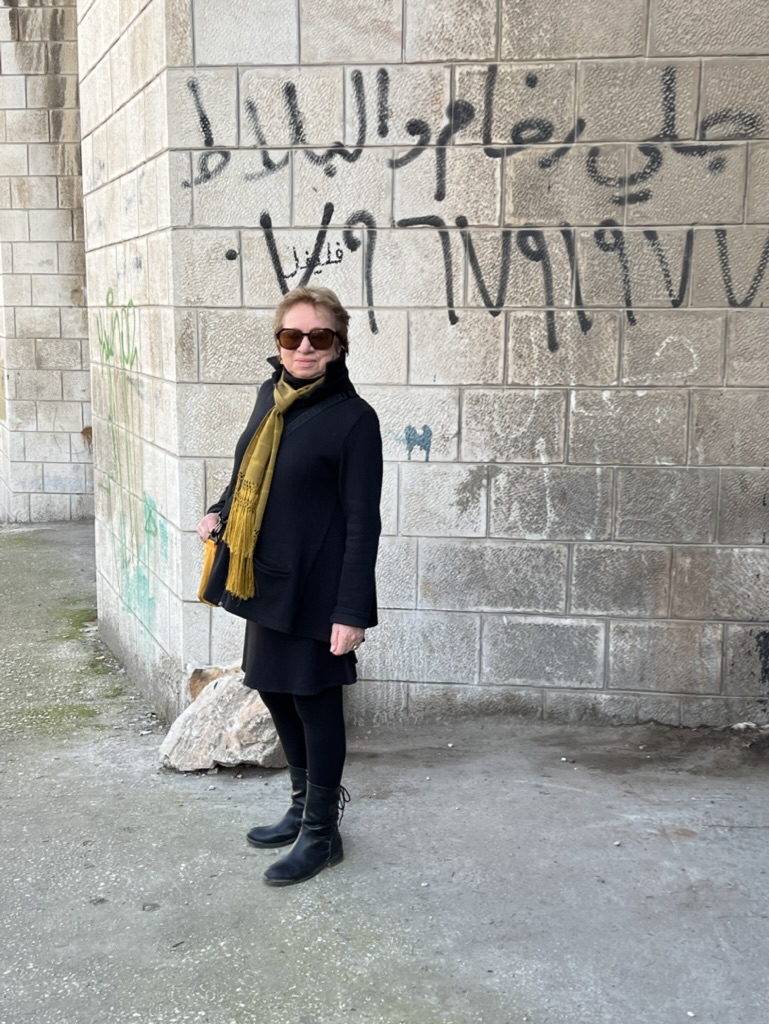
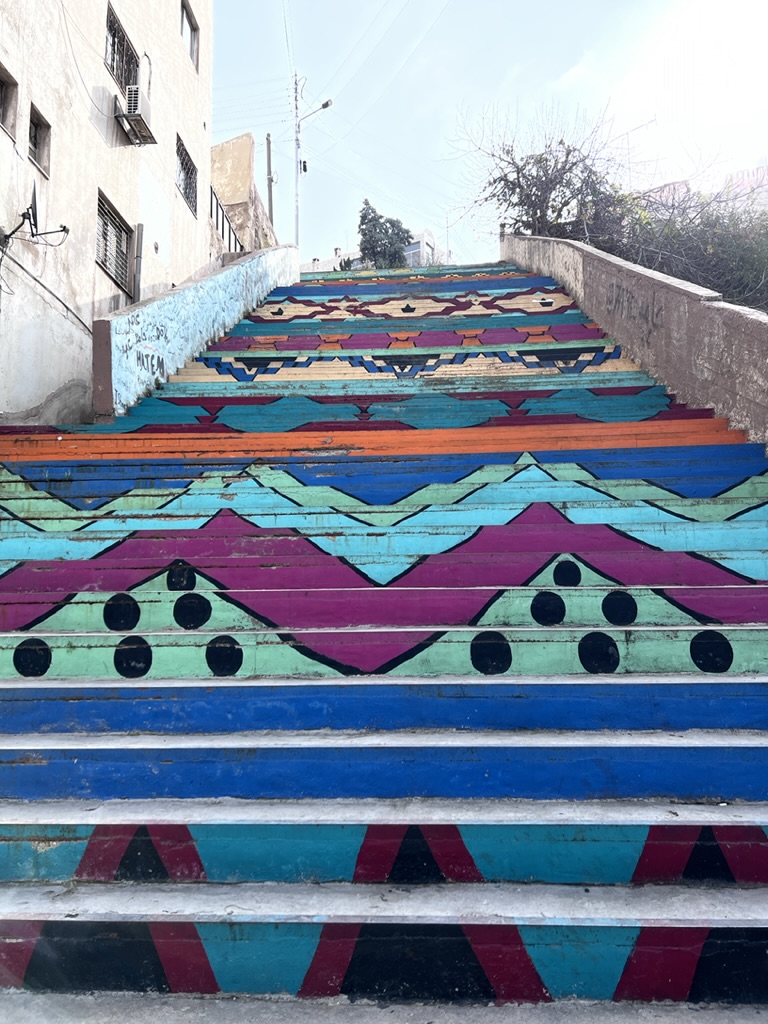
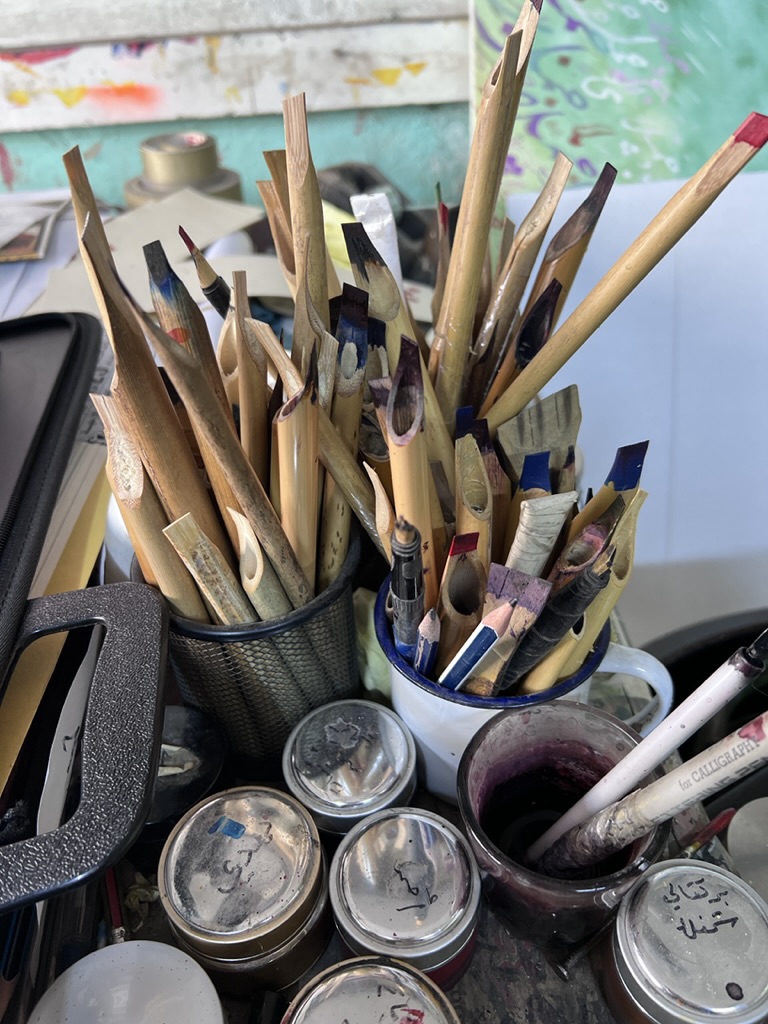
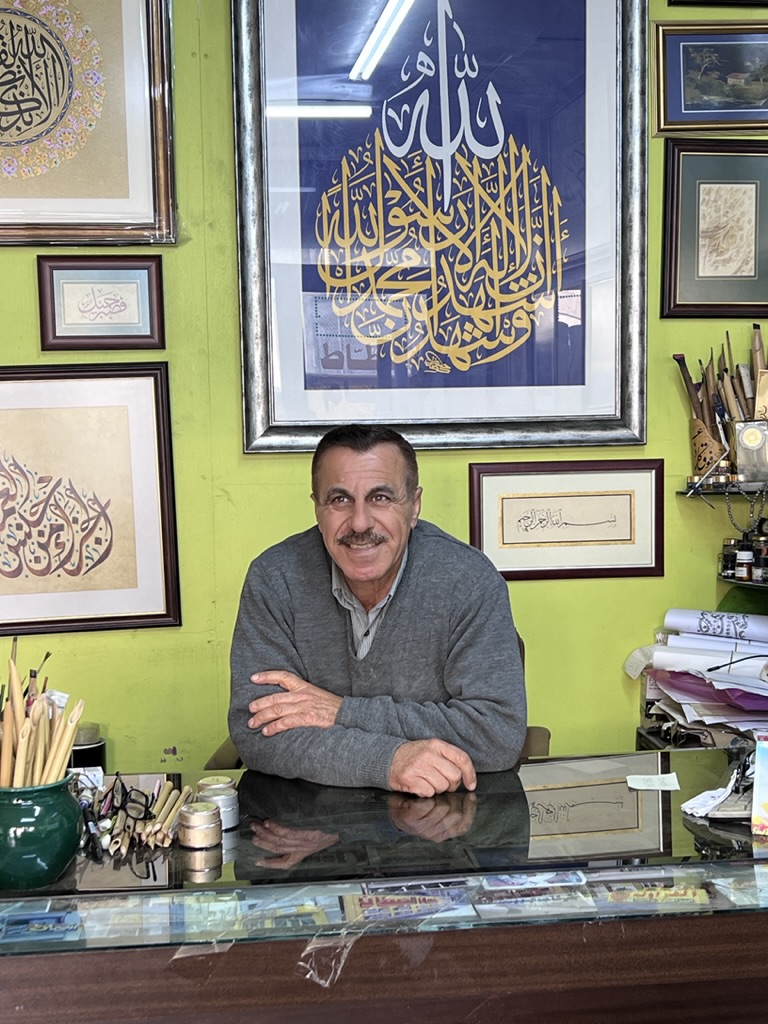
As we walked, the nature of the neighborhood changed quickly and we were soon back in the more normal areas of Amman – low rise, 5-story walk-up apartments, ground floor tine shops, traffic buzzing around and difficulty crossing streets. At one shop on a busy street, I noticed beautiful calligraphy on a table inside and lots of tools that calligraphers use. I looked inside and actually entered the space and made eye contact with the man I correctly assumed to be the calligrapher/owner. He didn’t speak any English but we sort of communicated. I explained that I was trained as an artist and I think he understood. By then he was showing us portfolios full of his work, and then he phoned someone and gave me his phone. It was his son who spoke English (fairly well). Obviously the father was now trying to sell us one of his works. The son soon arrived to be the translator.
The father seems to take on commissions to craft these artworks—all with Arabic letterforms. He does peoples’ names and he also does lovely poetry. It seems as if he charges by the word, and he is a well-known calligrapher in Jordan. Well, ofcourse, we just had to have something (especially since we had now been in the studio for about 30 minutes). The cost of doing both of our names was pretty steep, and the cost for one of Kahil Gibran’s simple one line poems was way out of our league. So Mike decided it would just be my name (after all it is my birthday). It would take two hours, so we headed to our initial destination (lunch at Najla’s Kitchen—a simple vegetarian restaurant about a 40-minute walk from the hotel, on what google maps called “mostly flat” but which required some pretty steep climbing uphill and when descending).
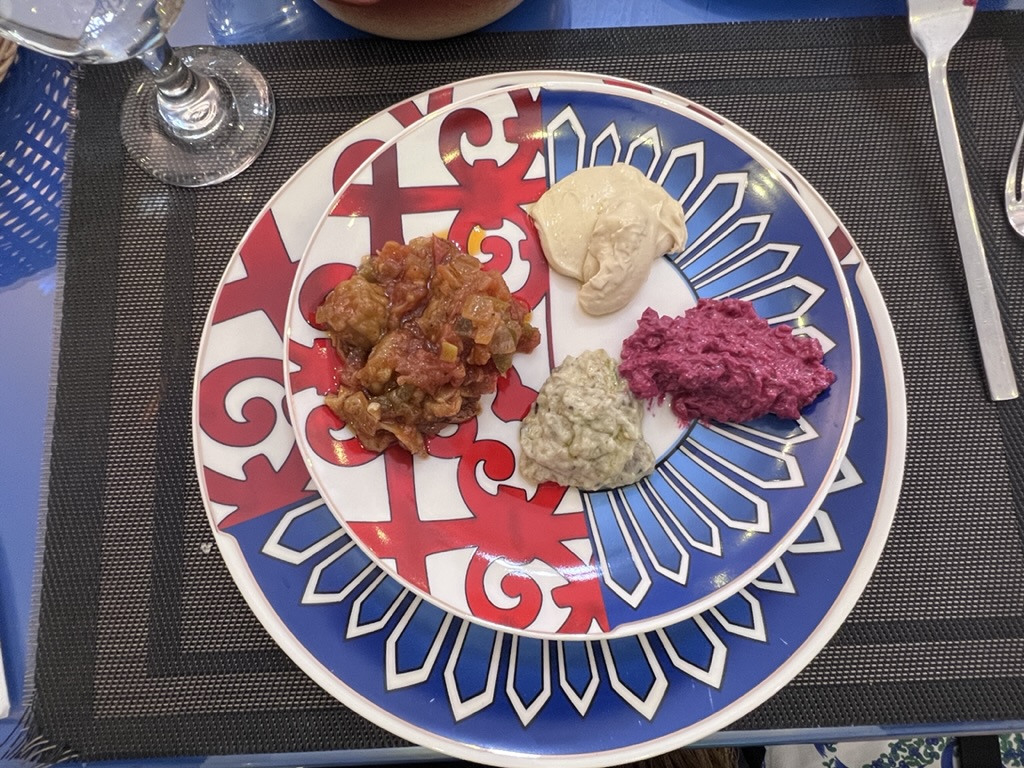
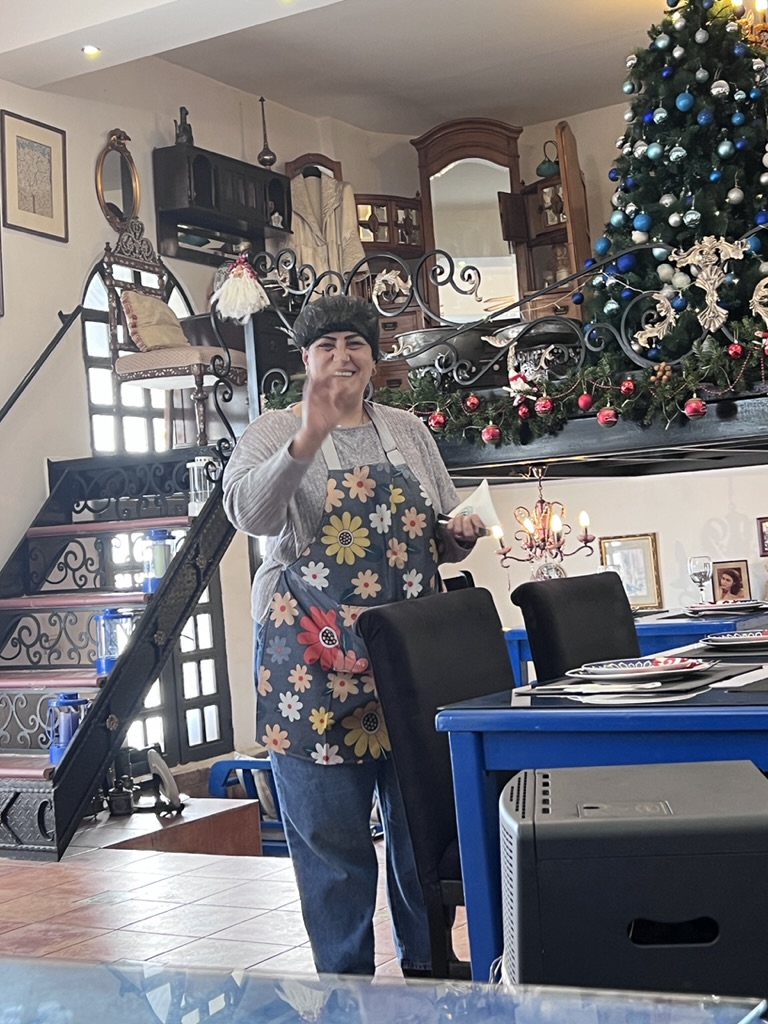
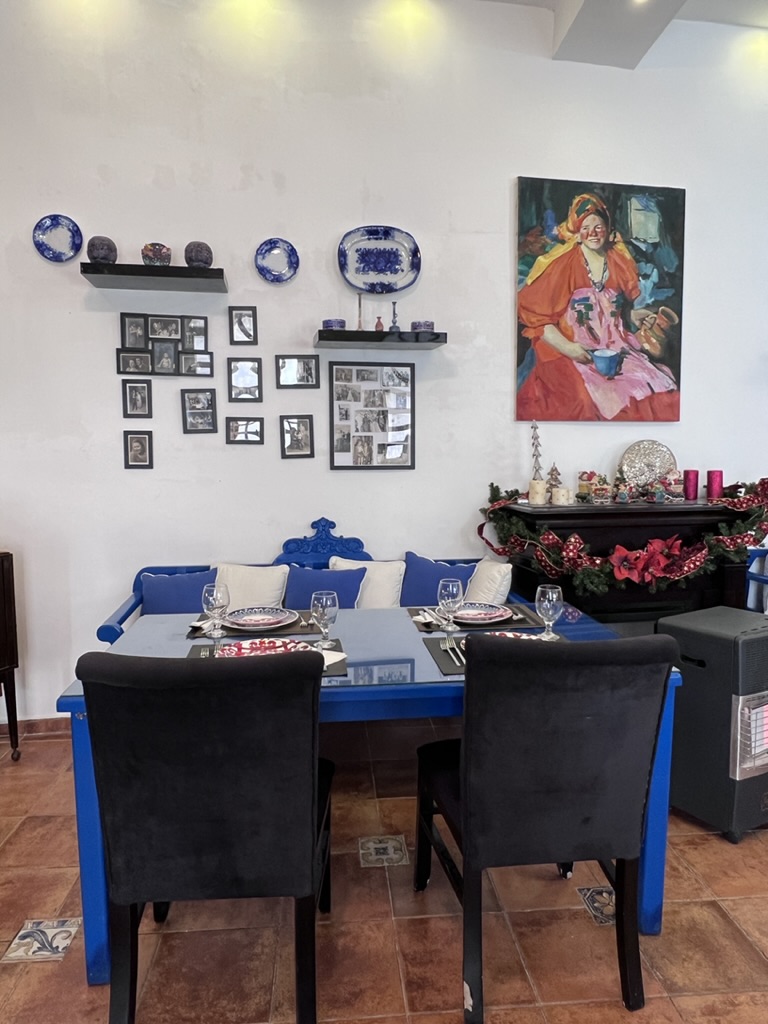
We arrived at Najla’s which was quite wonderful, but I think all this pita bread (which is beyond fantastic and made fresh everywhere) is very fattening. Turns out that the woman who runs the restaurant is from Austria. Najla is named for her brother-in-law’s mother (or maybe grandmother; the story was complicated) who was a great cook. The little restaurant is furnished with all of the stuff from the mother/grandmother’s house and they use her recipes.
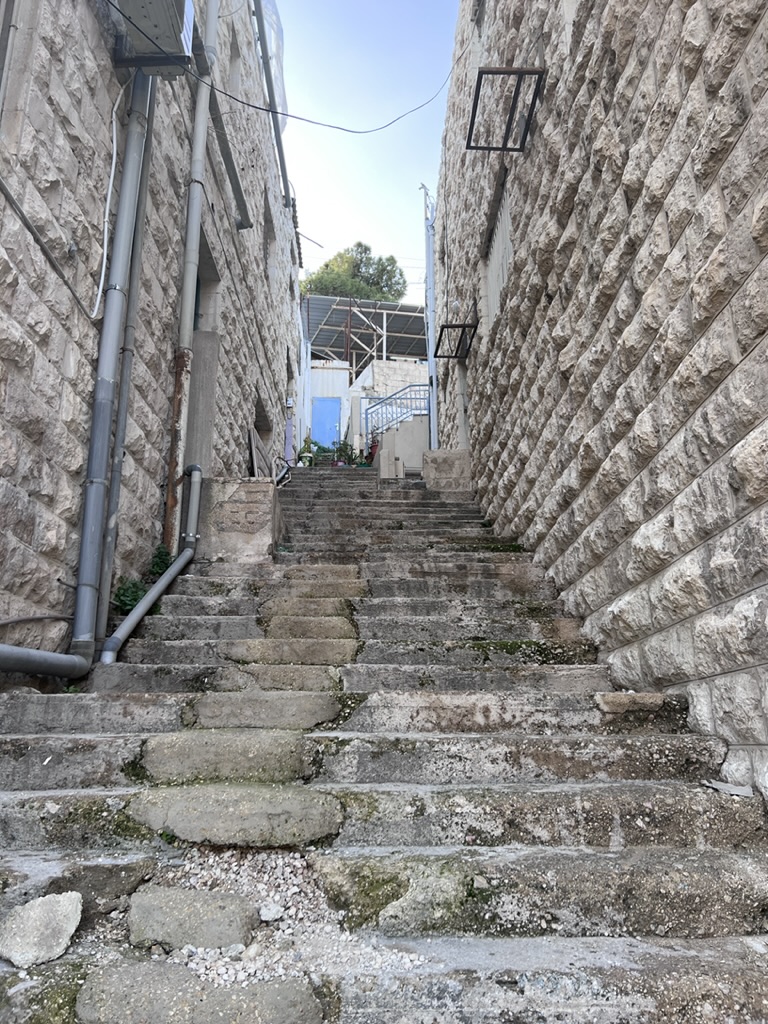
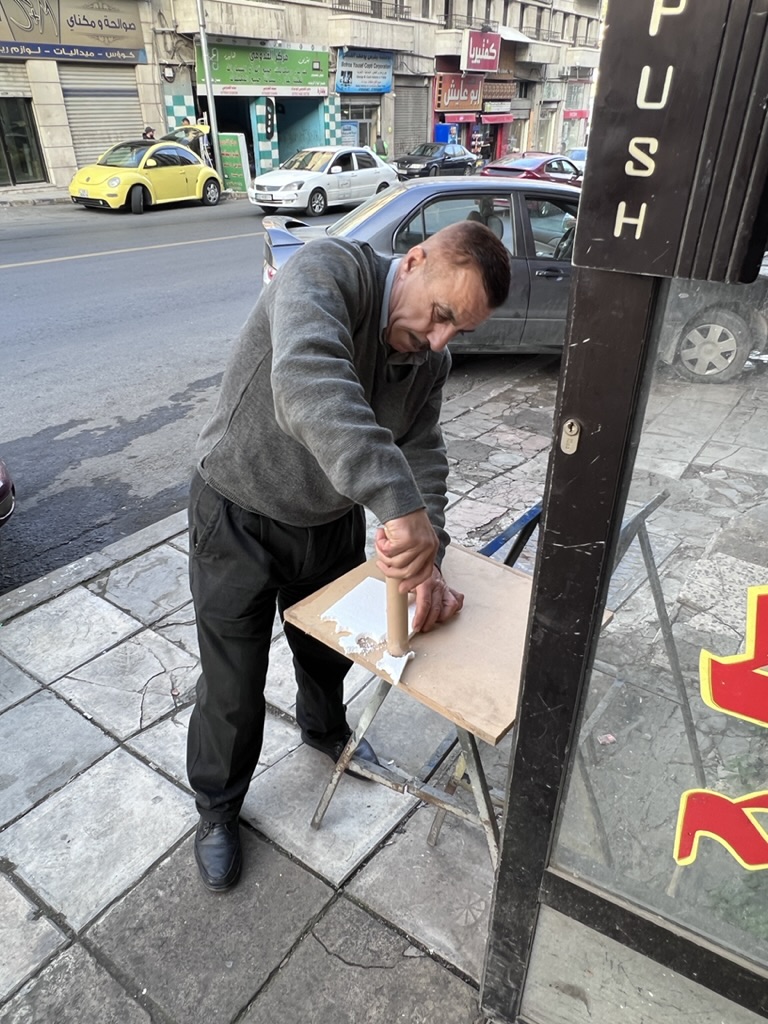

After lunch, we strolled back to pick up our little calligraphic art piece (which we will frame and hang in Oakland). As it turned out he combined both of our names on the piece.
Now we are back at the hotel, packing for our drive to Petra tomorrow. We have a rental car and will drive ourselves. Wish us luck. We figure we’ve driven all through Thailand, and much of Latin America, so how much worse might Jordan be? We shall see and let you know. I’ll also let you know how our dinner at Fakhreldin tonight. It’s supposed to be the best independent restaurant in the city; the woman at Najla said we will love it. That’s a good recommendation for us.

More tomorrow
Fern
13: Amman. 12/30/22

Greetings from Amman –
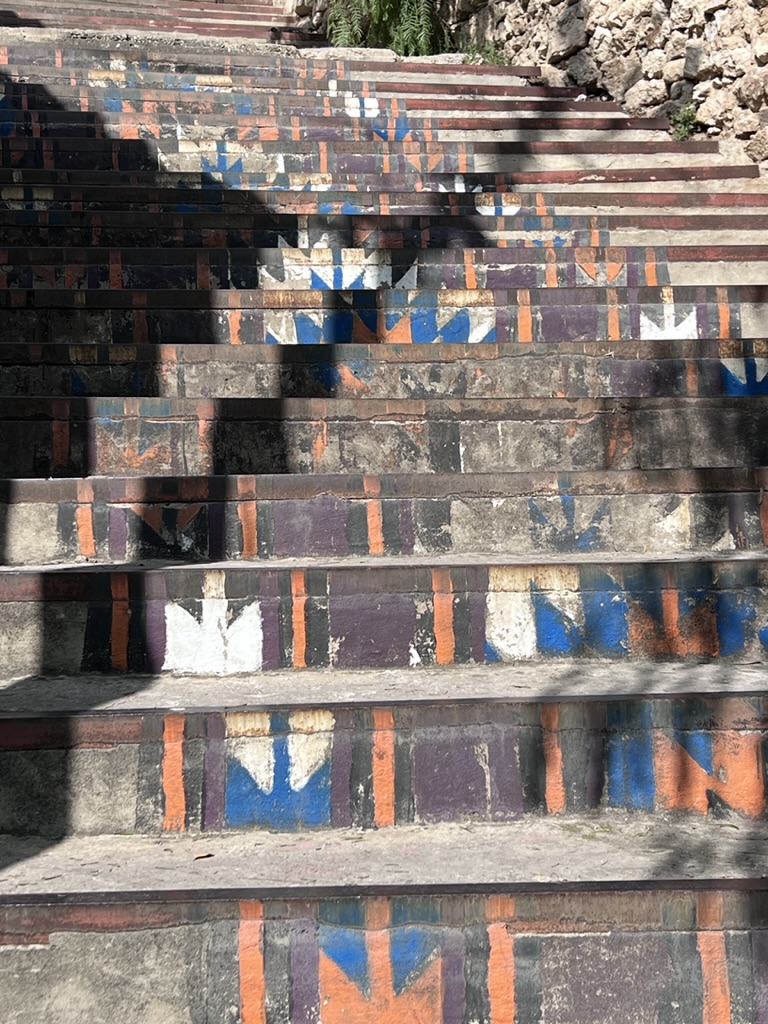
Following a fantastic breakfast at the W, we set out for Darat al Funon, an arts space that was created from vacant historic houses and warehouses about 30 years ago. They have an outdoor theater and gallery spaces, and more. We took a taxi to “Paris Square” which is actually a traffic circle and walked from there.. all cobblestone streets and steep slopes. We were walking downhill. Passed all sorts of murals and little cafes, and lots of shops that were closed. I think this was the arts district. As we approached Darat al Funon, we realized that it, too, was closed. Friday is the official weekly holiday (I guess like Sunday in the US). So we just continued to walk in the direction of the Roman Theater (which was going to be our final destination.
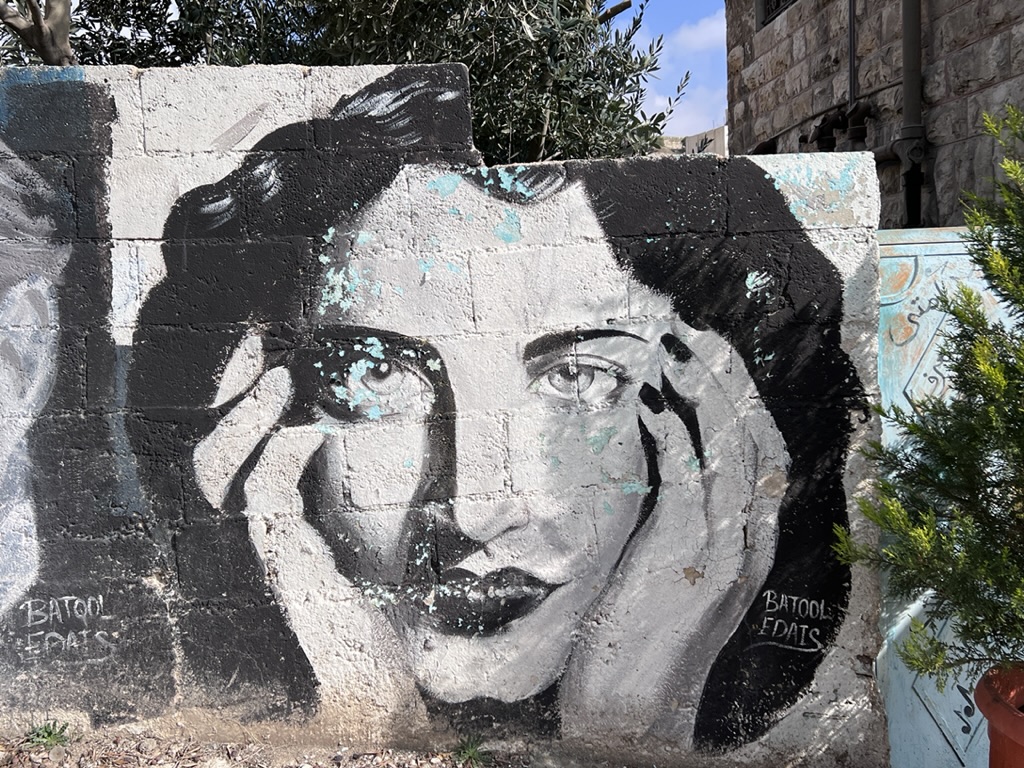
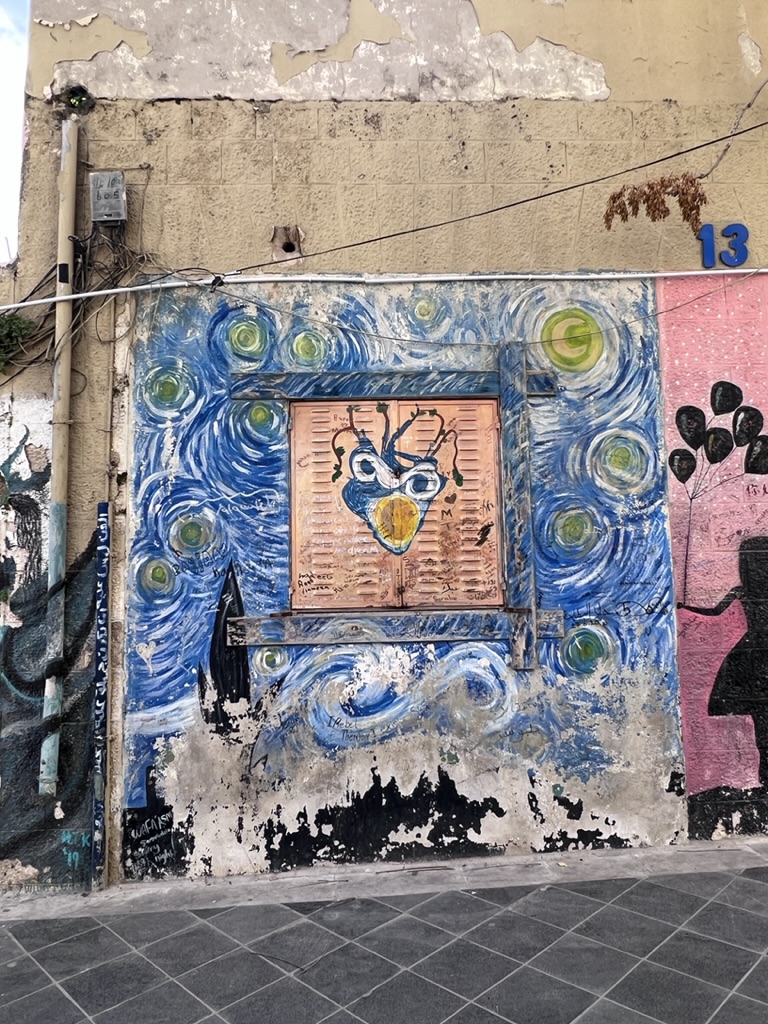
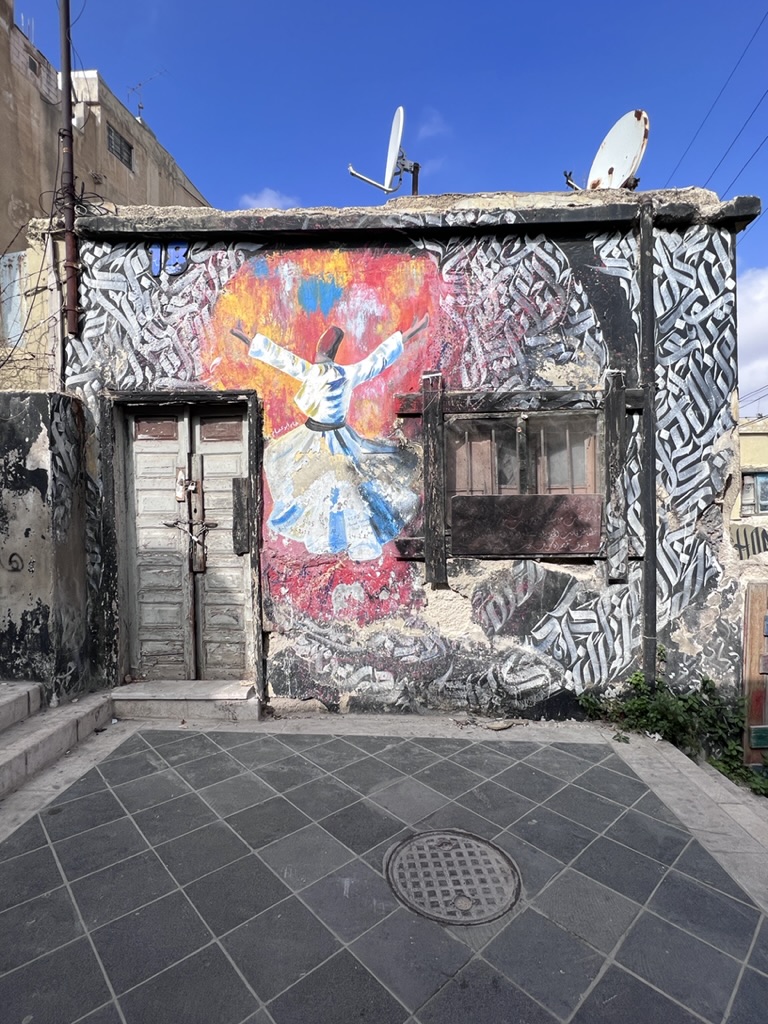
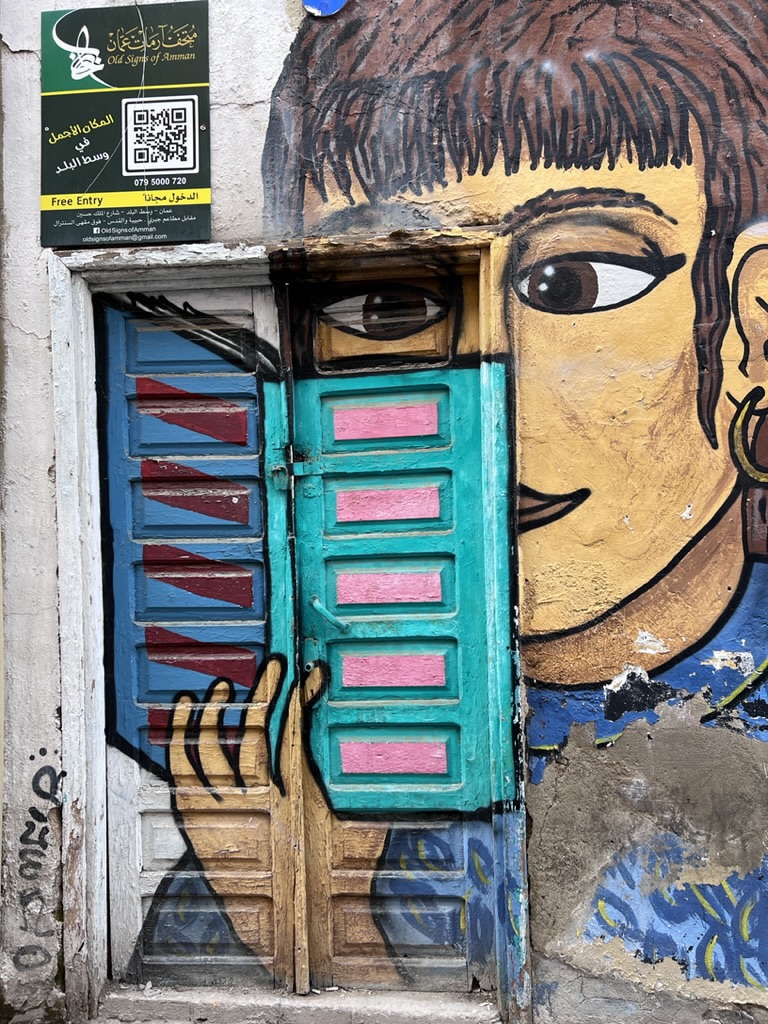
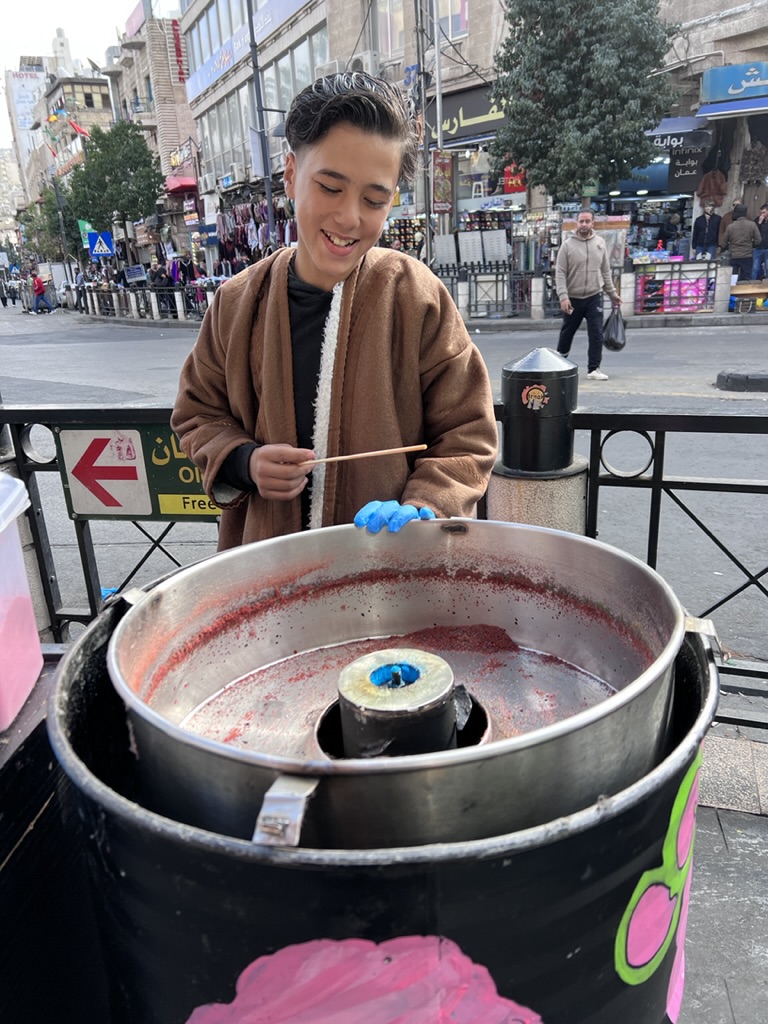
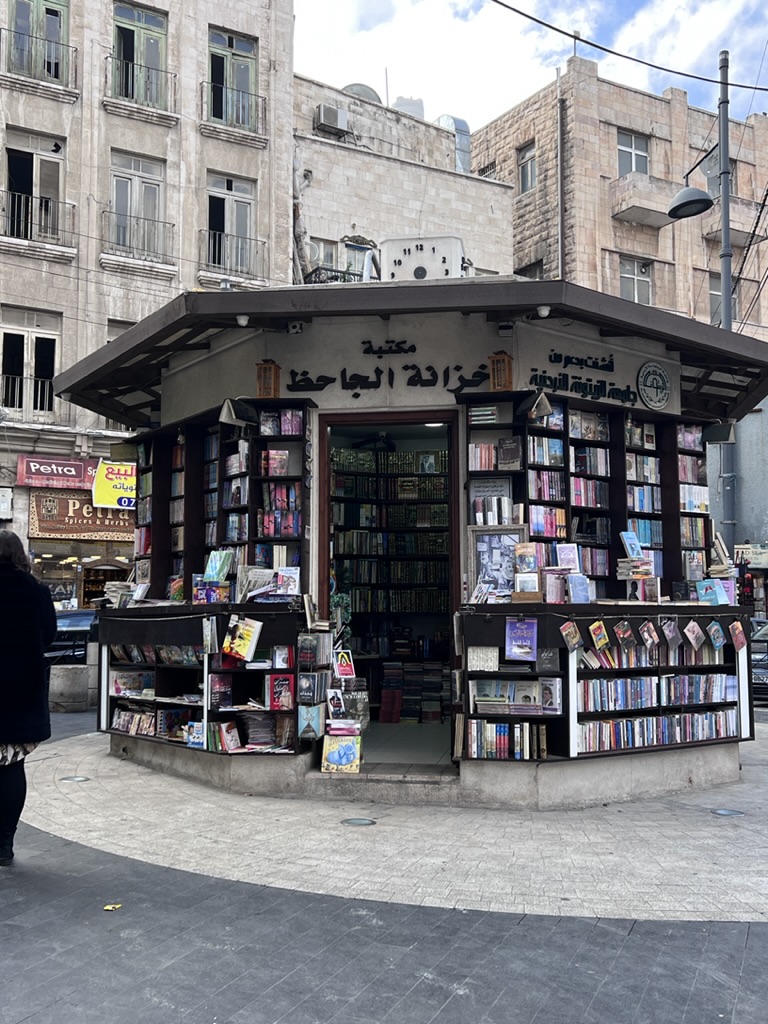
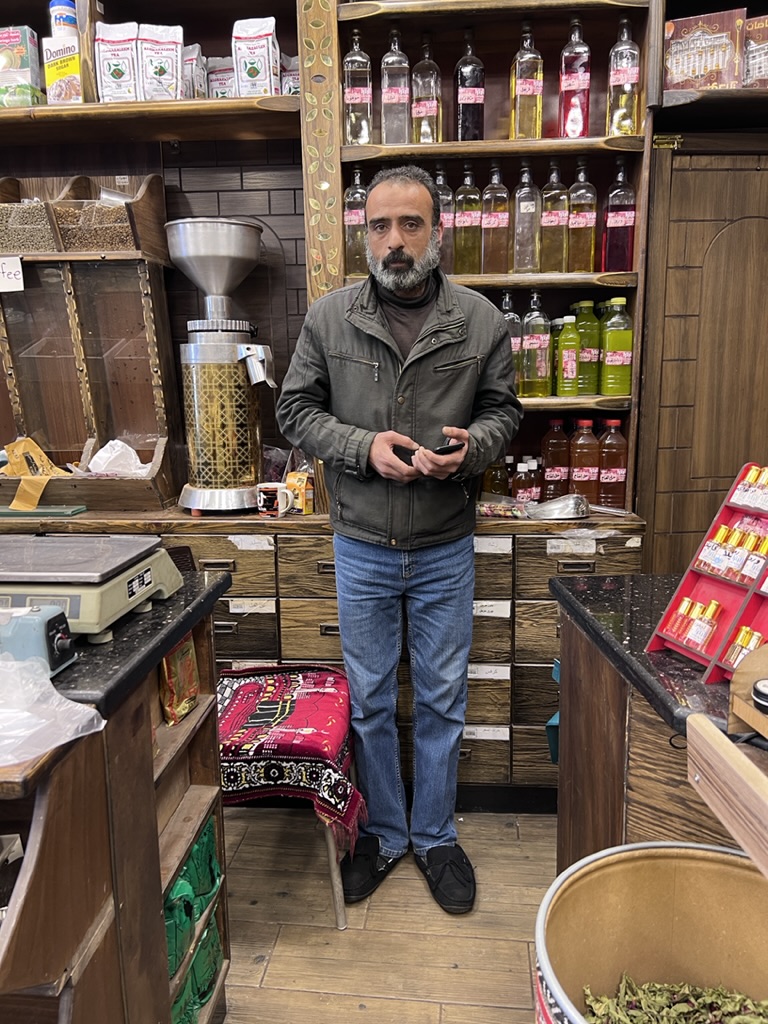
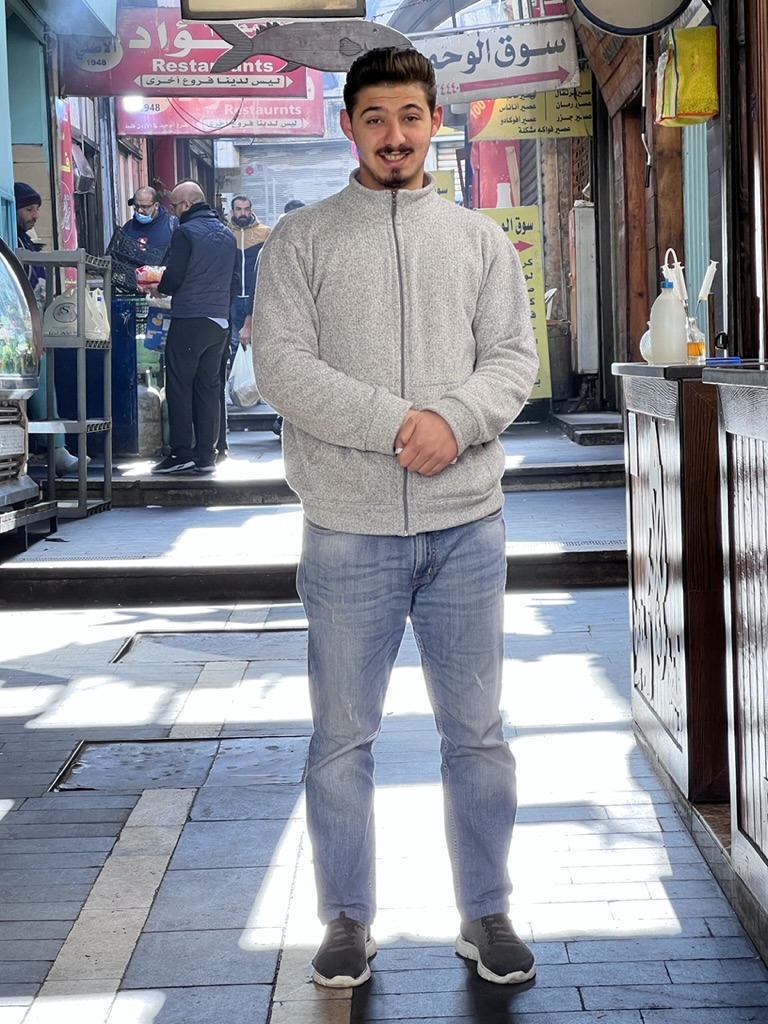
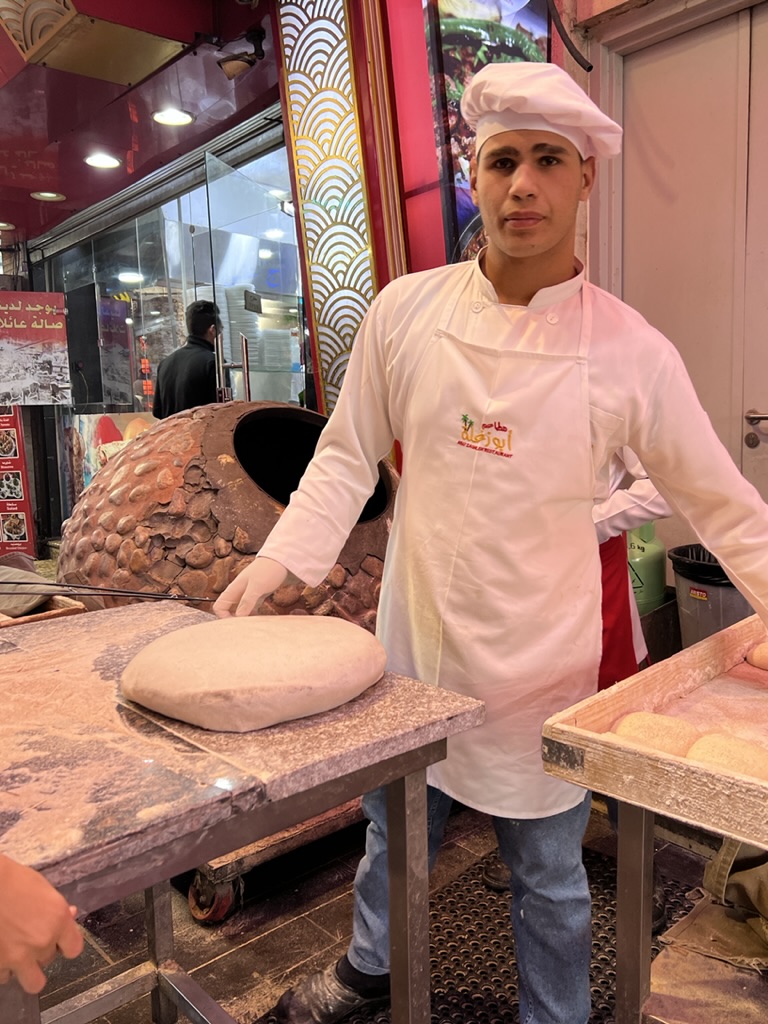
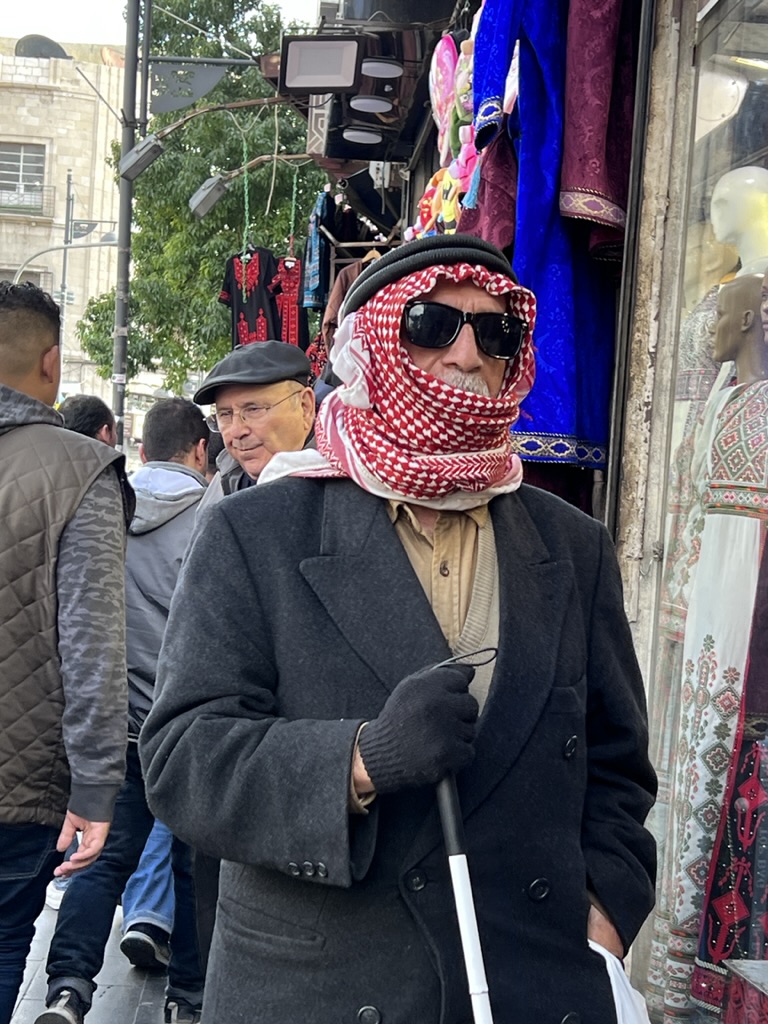
But we were pleasantly surprised as we walked down narrow corridors and streets to suddenly empty out into what seemed like at least a mile-long strip of tiny shops and vendors in the street—with lots of offshoot smaller streets. We meandered for a few hours just taking it all in—spice shops and stalls, tiny shops that sold everything you can think of, herb stalls (Mike bought some kind of oil that is supposed to be good for the knees!; I bought some interesting soaps, including one made in Syria—the packaging on one of the soaps says that it “whitens”—didn’t get that one since I figure I’m white enough already), clothing stores, vendors with piles of tee-shirts just all jumbled up, food stalls, electronic stands, and of course many shops and outdoor stalls to purchase burqas and hijabs for women and long shirts for men. The vendors were all friendly and open to my taking photographs by the dozens; no one really tried to get us to buy anything even when we went inside to look at what was being sold. The streets were crowded and vendors were yelling what I assume were “marketing pitches.” And at the appropriate intervals, the calls to prayer were heard throughout the streets, but frankly the vendors and shoppers in this area didn’t seem to notice.


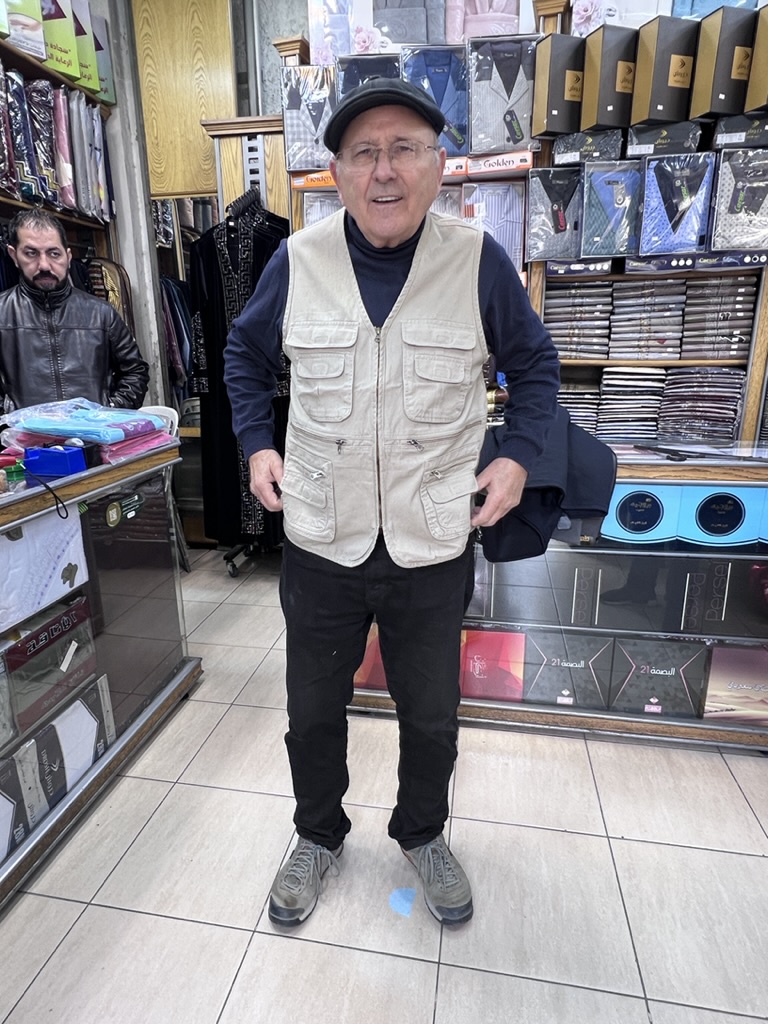
On one street we noticed really nice men’s vests with lots of pockets; Mike has several of those Scott-e-vests which are pretty pricey and he loves having all those pockets. We went into the shop and Mike is now the owner of a new vest that cost about 1/20th the cost of the Scott-E-Vest. Probably should have bought more than one, but always thinking about packing for our return (and we already have those three alabaster things).
In some ways, these shopping streets remind me of the major shopping street in my Brooklyn neighborhood in my childhood days (where my grandfather had a tiny shop that I remember well.. it began first as a pushcart, before my time). 13th Avenue in Boro Park, Brooklyn was a working class shopping street filled with small stores that were also packed with goods and with people. By the time I was growing up the pushcarts and outdoor vendors were mostly gone, but the shopkeepers all had “stands” outside their stores (sort of old-fashioned “promos” to try to get customers interested enough to come inside the store). My grandfather’s shop was big enough to hold about 6 customers at a time, because it was so filled with products.
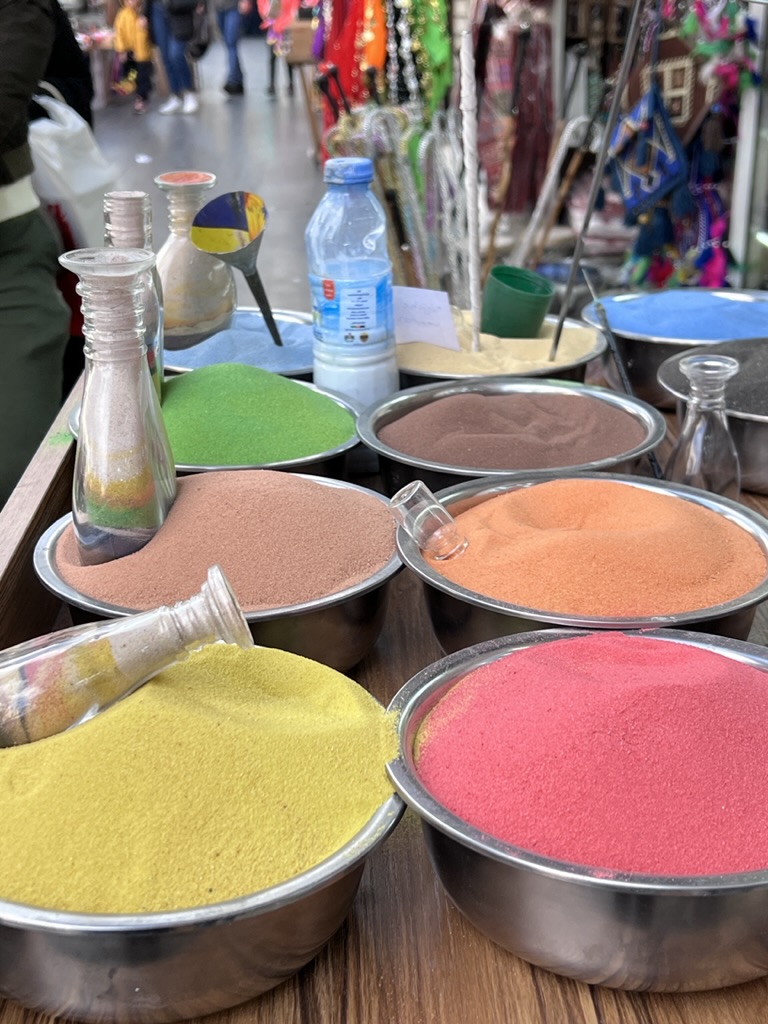
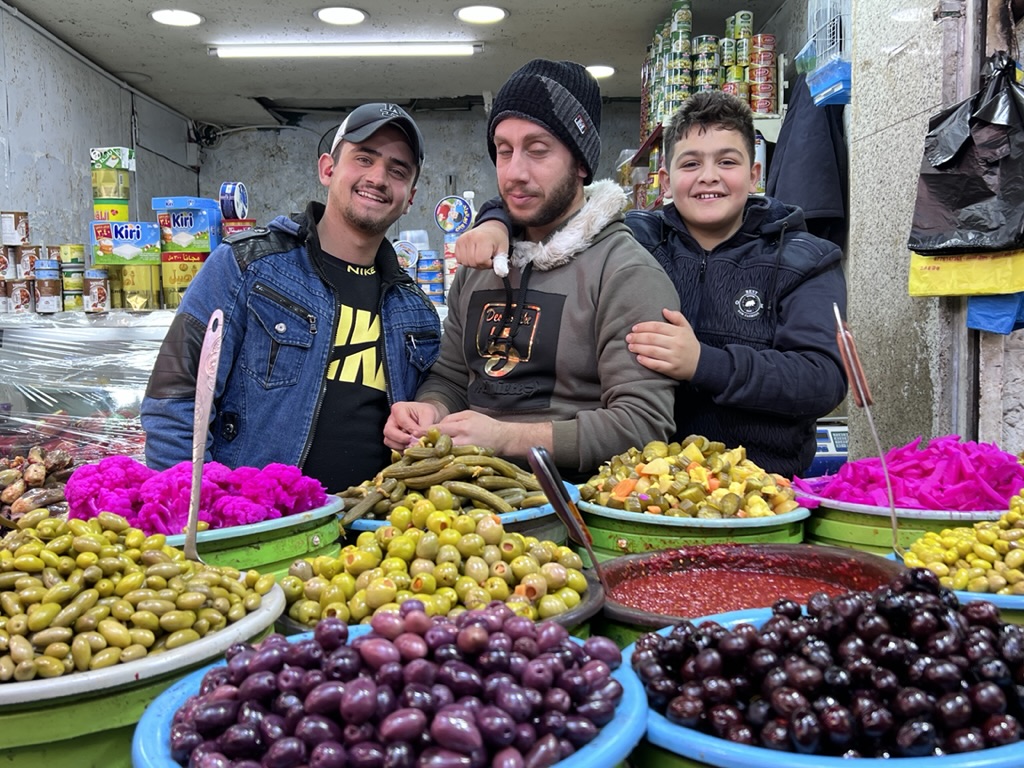
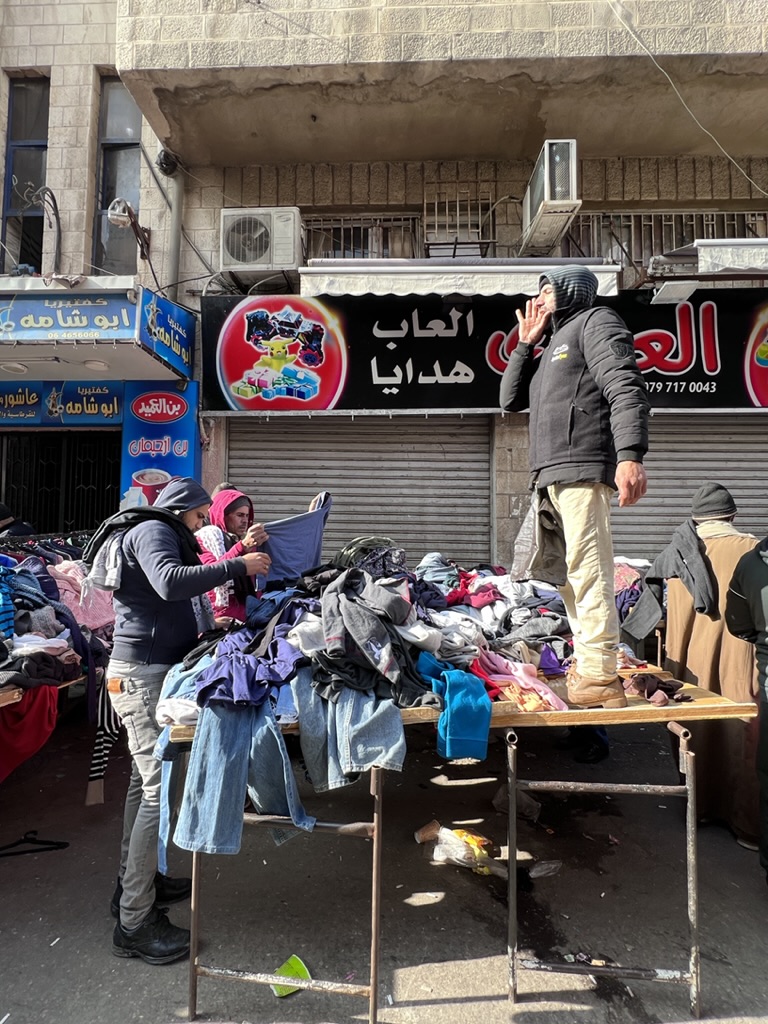
By the way, we are getting pretty good at negotiating taxi prices. Today we paid just 5 JOD for basically the same distance that Mohamed charged us 25 JOD.
We eventually made it to the Roman Theater which seemed to be the gathering place for families of every conceivable part of the middle east. It’s quite impressive, built at the end of the 2nd century AD (when Amman was known as Philadelphia), at the direction of Emperor Antonius Pius who holds the distinction of never having had to lead the nation in war. The Theater seats 6,000, and was designed to be oriented toward the north to keep the sun off spectators. Spectators were separated in the seating area by class, gender, and nationality. The rulers sat closest to the action of the stage, the military got the middle section, and the general public including slaves, servants, and others squinted from the top rows. In reality the theater was designed so that there were clear views from all parts of the theater and the acoustics were excellent throughout the theater.
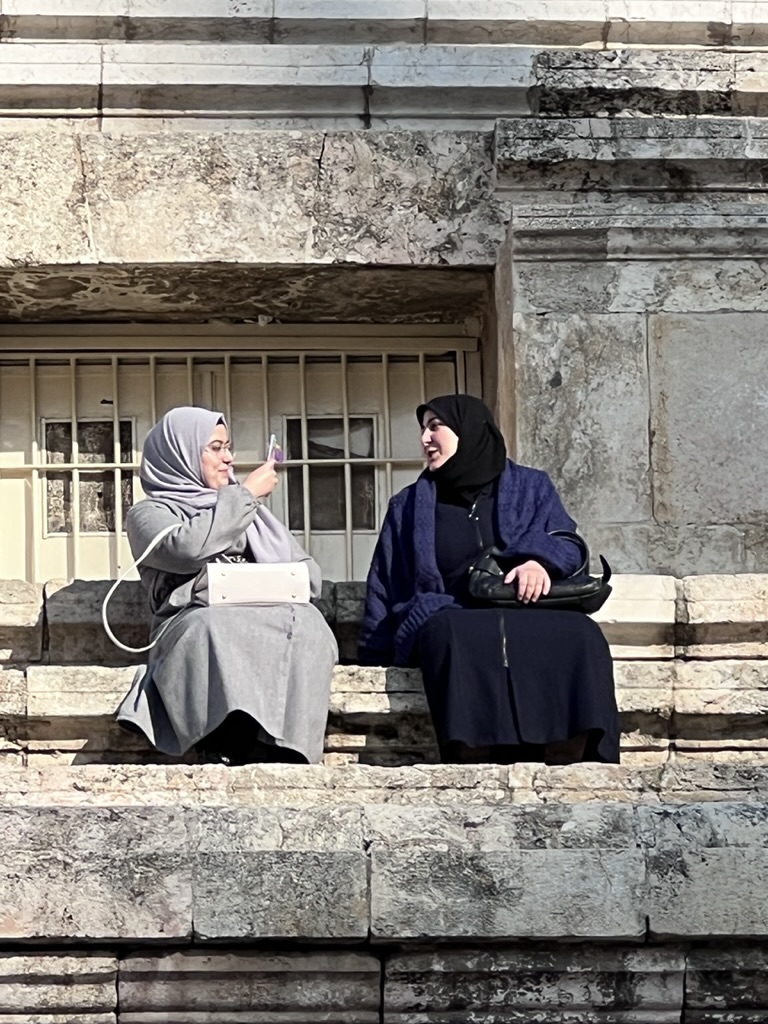
While we were people-watching a cop came by (perhaps to test his English) and told us that there are several “secrets” about the theater. One of them is that someone could stand at the far right of the stage and another person at the far left – approximately 200 feet apart—the two parties can hear one another perfectly; he referred to this as the “Roman-era mobile phone!” The people-watching was great; everyone taking photos with their phones and many taking selfies; strange to see photos being taken by women in hijabs and even burqas—a sort of culture clash of old garb and new technology.
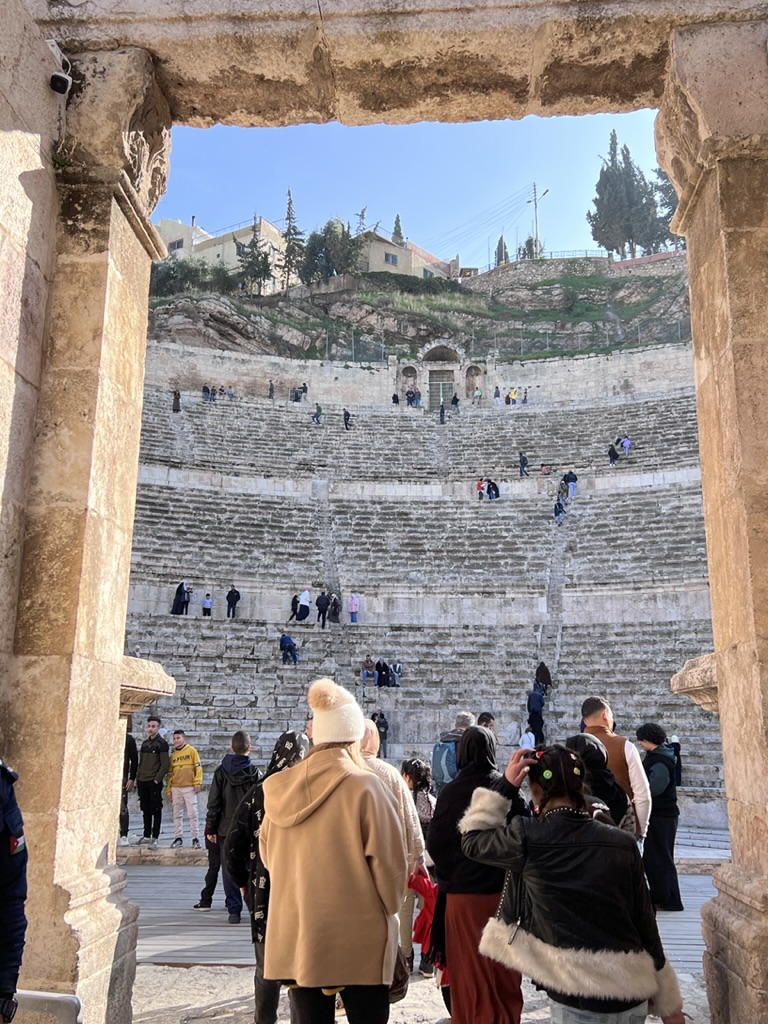
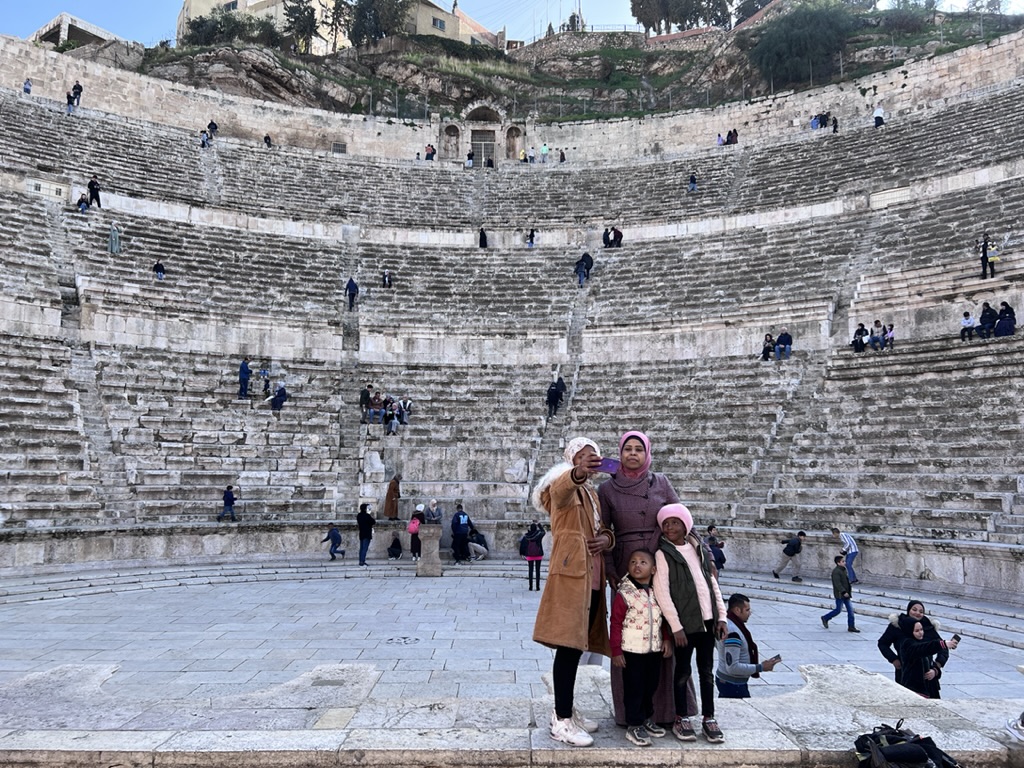
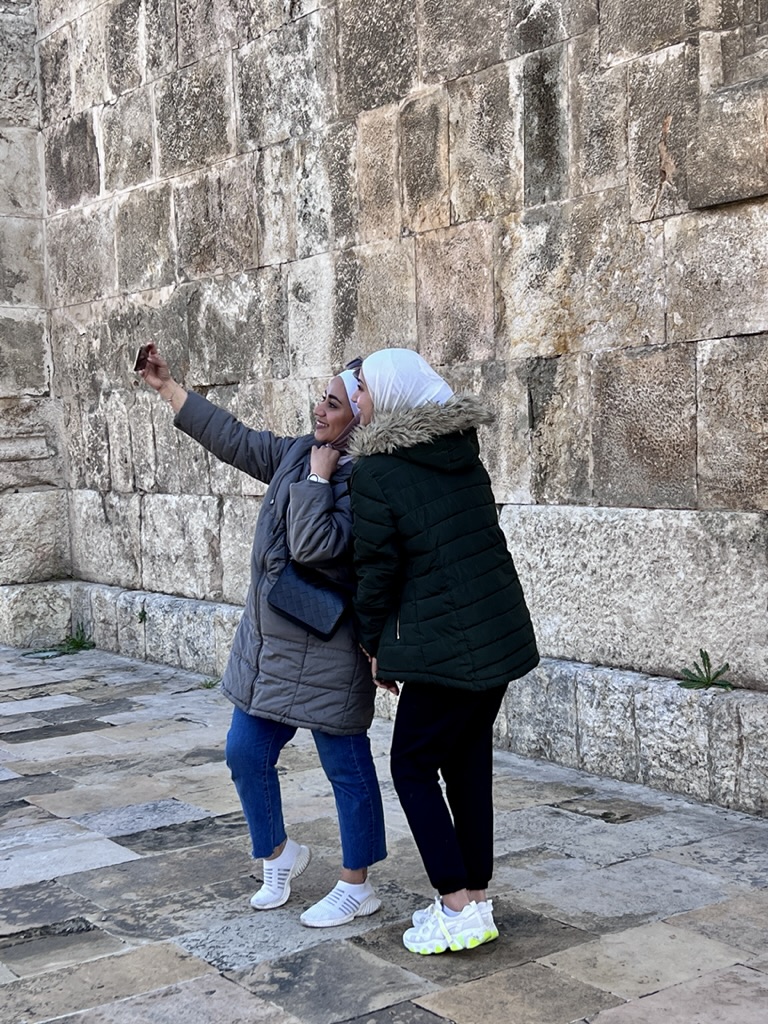
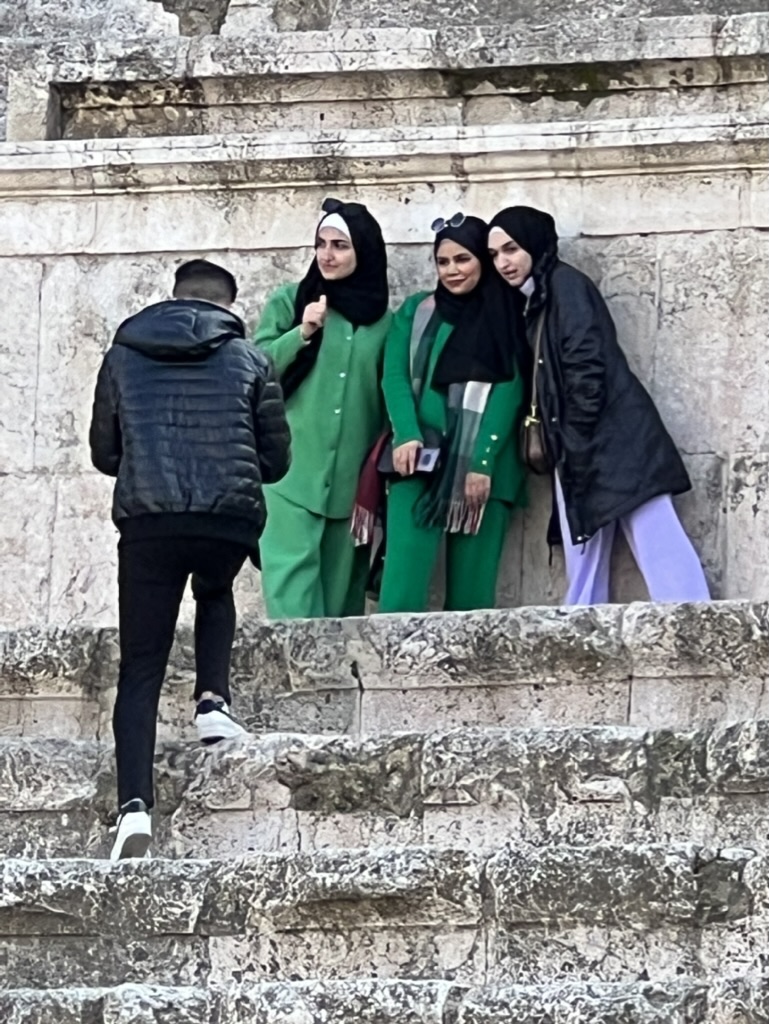
After watching the action, including several kids playing football (soccer) in the “pit” we strolled to the plaza outside and eventually found our way back to the hotel.

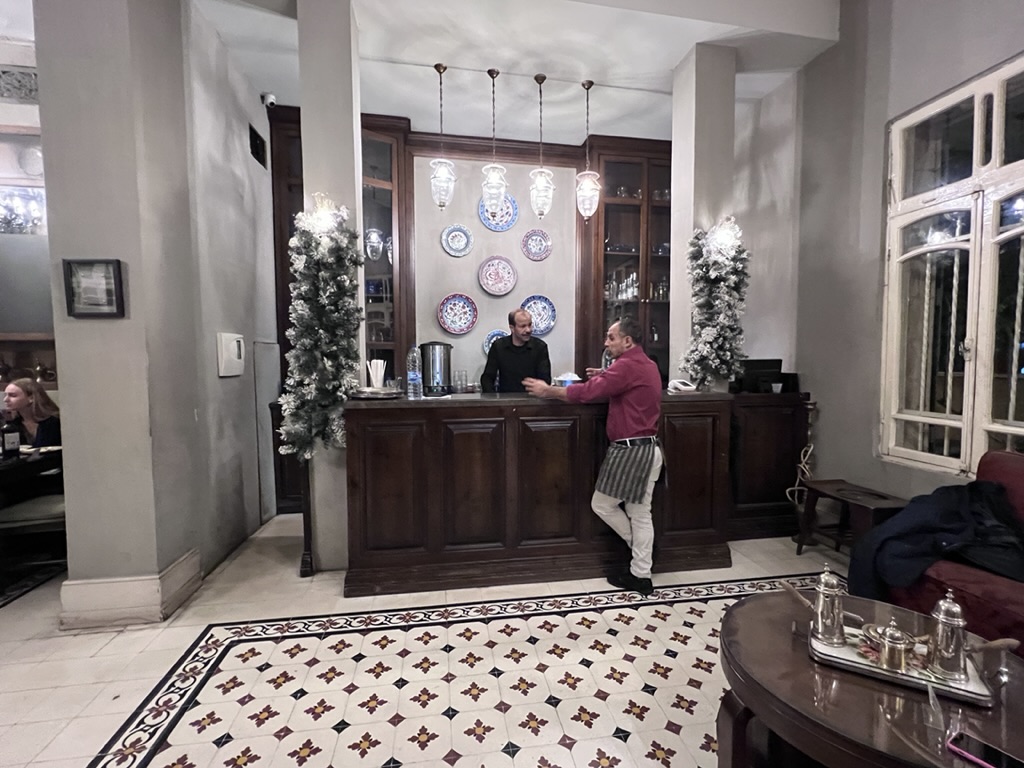
We went to Sufra for dinner—which was quite good, only we ordered way too much. Two mezzes (a labneh with pickled aubergine and spices; and an arraya) and two mains (two different fetayeh which are cooked and served in clay pots); we ended with a simple dessert and herb tea. We also had wine; they didn’t show any wine list… just said they had red and also white. We had a local red wine which was simple and fine.
That’s it for me… signing off until tomorrow, New Year’s Eve.
Fern
12: Amman: City of Contrasts 12/29/22


Greetings from Amman-
Started the day late (as you might imagine), missed breakfast but had a simple and quite good lunch at the W, and then we set off. Found a taxi close to the hotel and headed to the Citadel. Our driver, Mohamed (he’s the third Mohamed we’ve had as a taxi driver) was born in Palestine but emigrated with his family when he was just two. His English was barely existent, but we managed to get our points across, By the way, most of the serving class (drivers, hotel housekeepers, waiters, etc.) are non-Jordanian. The housekeeper for our room is from the Philippines.
The Citadel is in the center of town, along with many other historic sites (some of which we will visit in the coming days, I suppose).. Most of the structures still visible at the site are from the Roman, Byzantine, and Umayyad periods and the remains at the site include the Temple of Hercules, a Byzantine church, and the Umayyad Palace. We initially thought we could walk from the Citadel to Rainbow Street (a buzzing avenue of shops and restaurants, which is especially festive—we had been told—on Thursday nights. Jordanians’ weekends begin on Fridays and Thursday evenings are times to be out and about. But we now understand the meaning of Amman being a city of seven hills! It is really difficult to walk because you are always on an incline, in the center of the town.
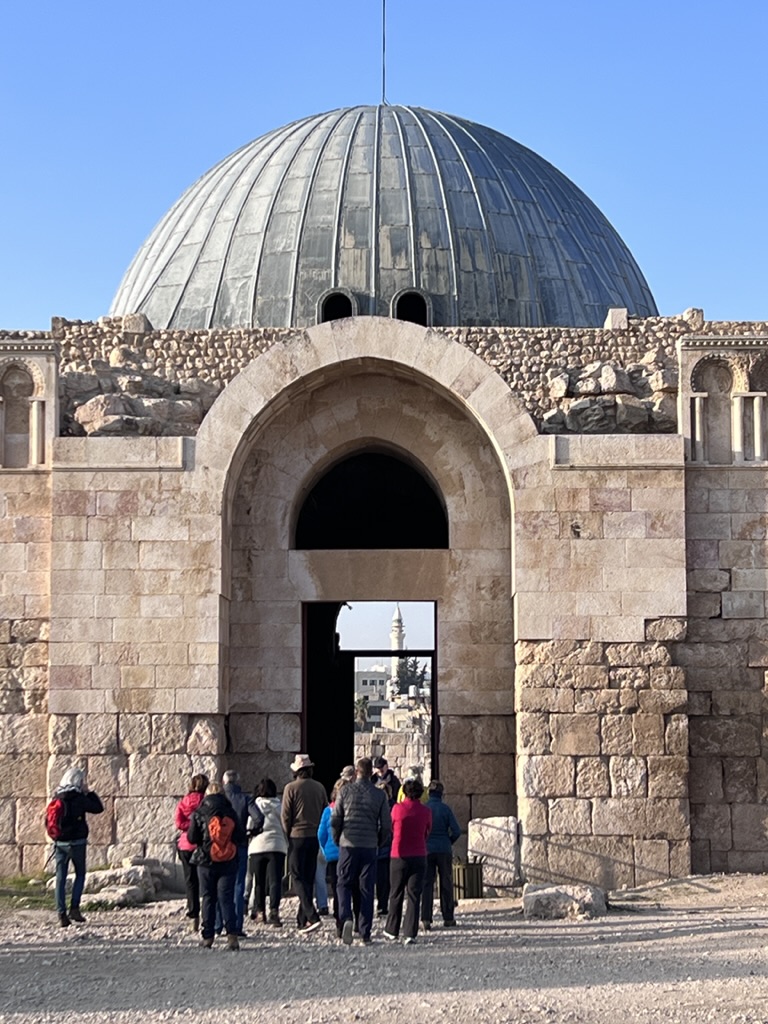
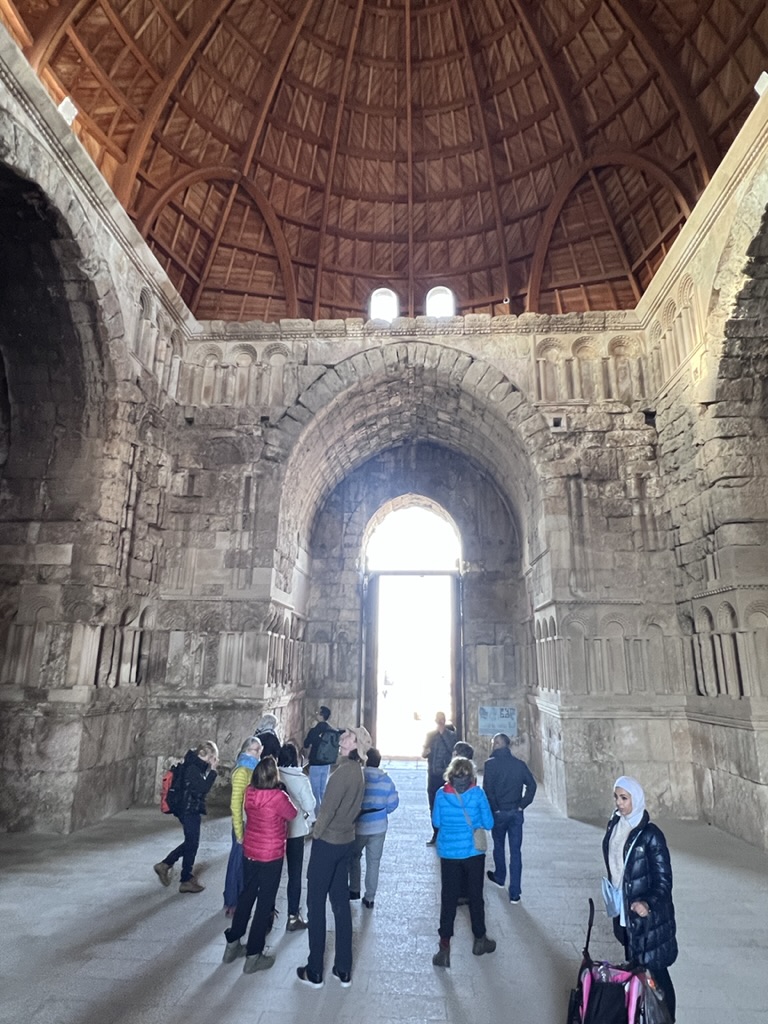
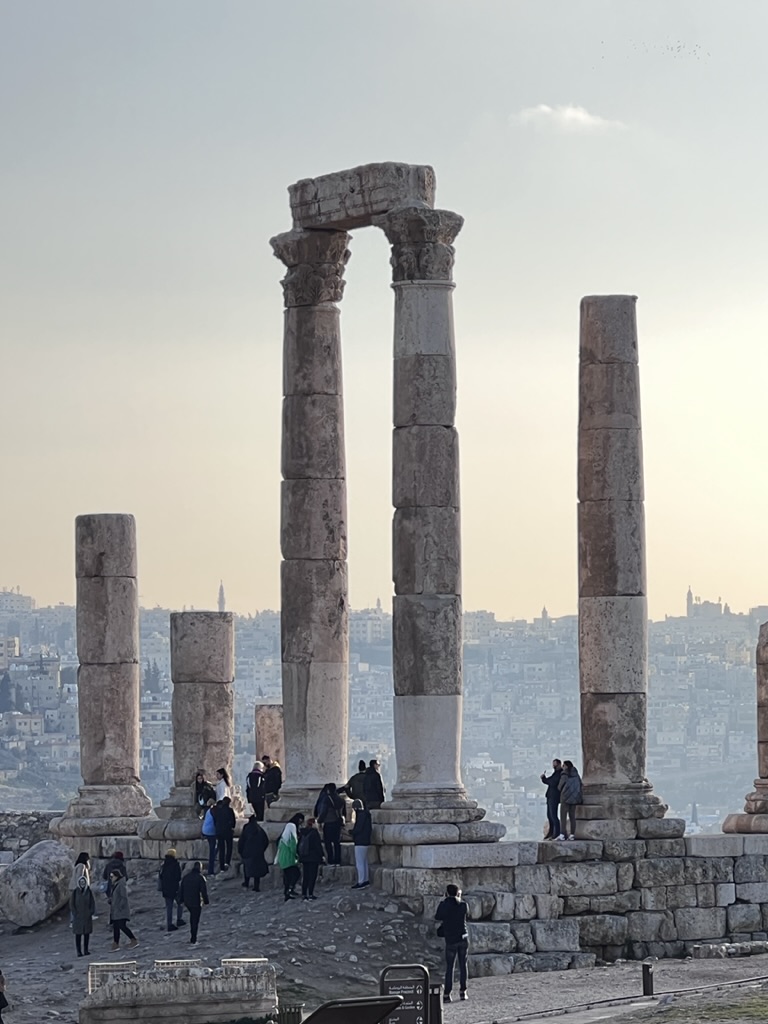
So we had Mohamed wait for us (an unnecessary decision we realized later because there were tons of taxis all around the Citadel) so that he could take us to Rainbow Street.

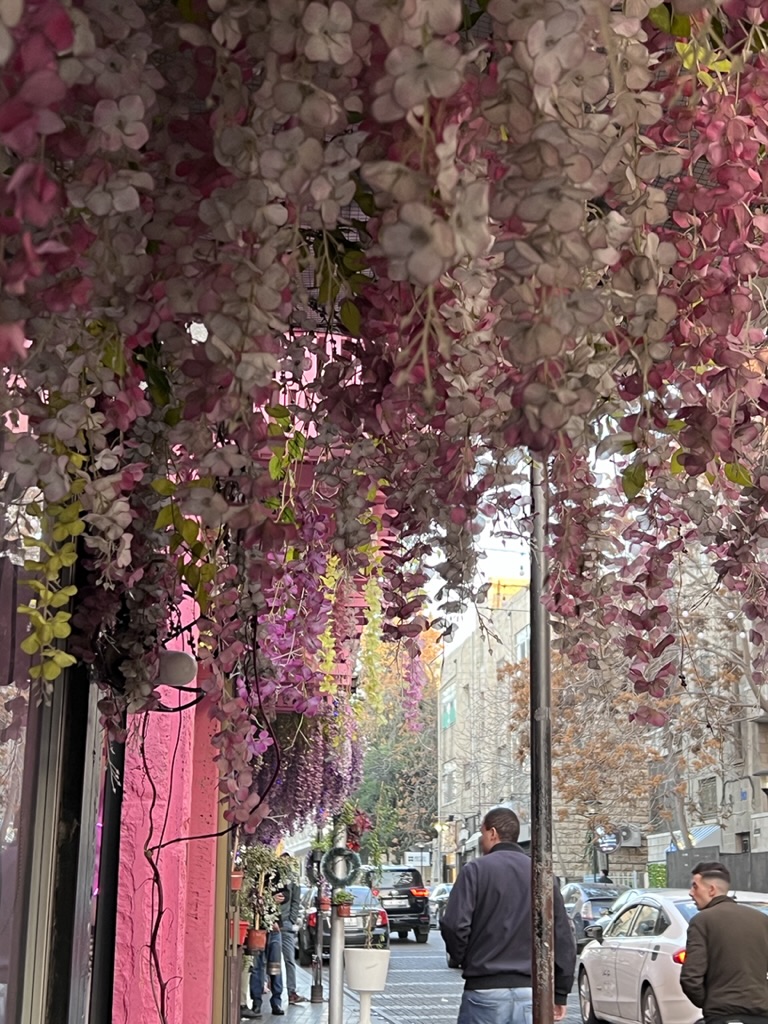

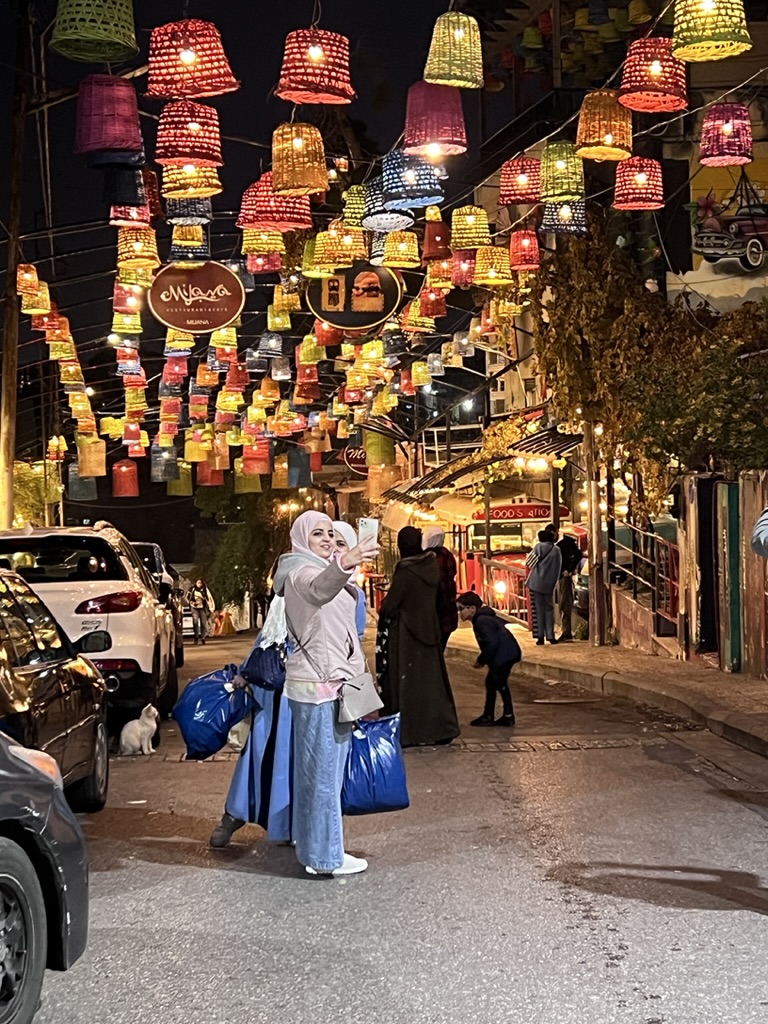
We got out of the taxi as soon as we arrived at Rainbow Street, which is clearly a somewhat upscale Amman area—sort of like walking in Rockridge for those of you who know Oakland. We poked around in shops and just checked out the scene. They have all sorts of things like colorful baskets, lights, and fake flowers strung across streets and buildings, adding to the festive nature of the area. We checked out two shops that sell only handmade Jordanian goods (mostly by women); the crafts are quite good. Then we tried to get into a little restaurant called Sufra that we had read about and knew was in this neighborhood, but they were totally booked (we made a reservation for tomorrow night) and walked up and down Rainbow street trying to decide where to eat (a place with wine, which is far easier here than in Egypt, but not universal).
We finally settled into a little place with a very cold courtyard (I’m now wearing my puffy coat!; it’s in the 40s at night). They had little propane heaters so we managed ok. The heaters turned out to do double duty. When they brought the pita bread for our mezze order, the pita was not warm and we asked if they could warm it up— voila.. they just put the pita bread on top of the heater. Good thinking.
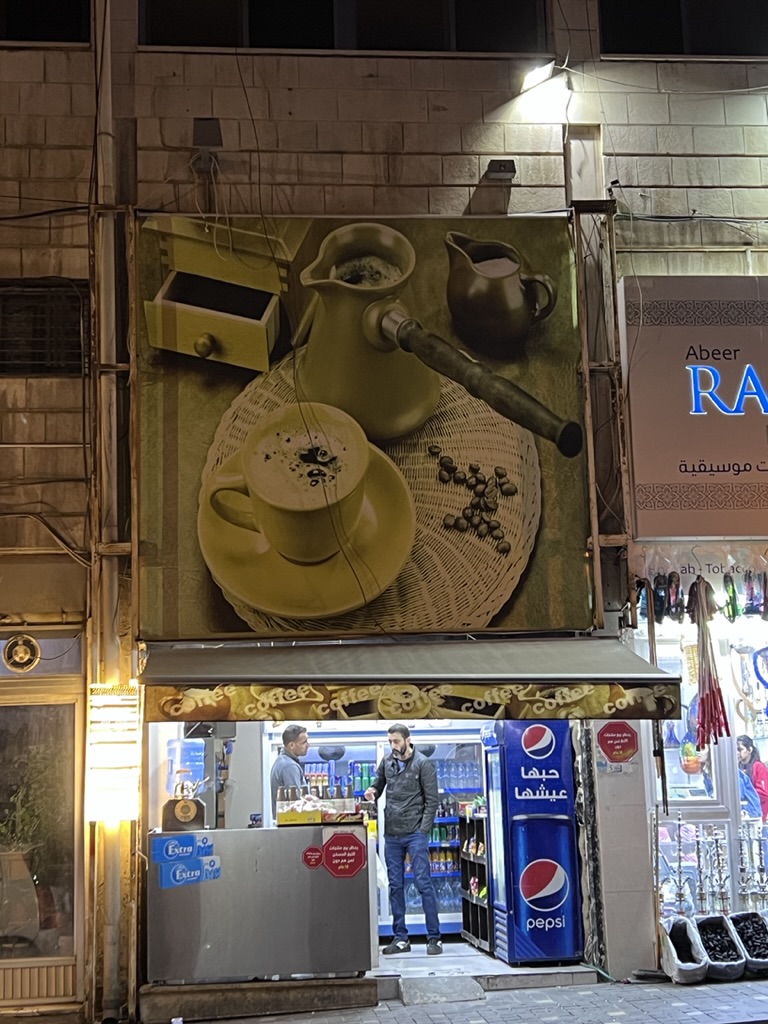
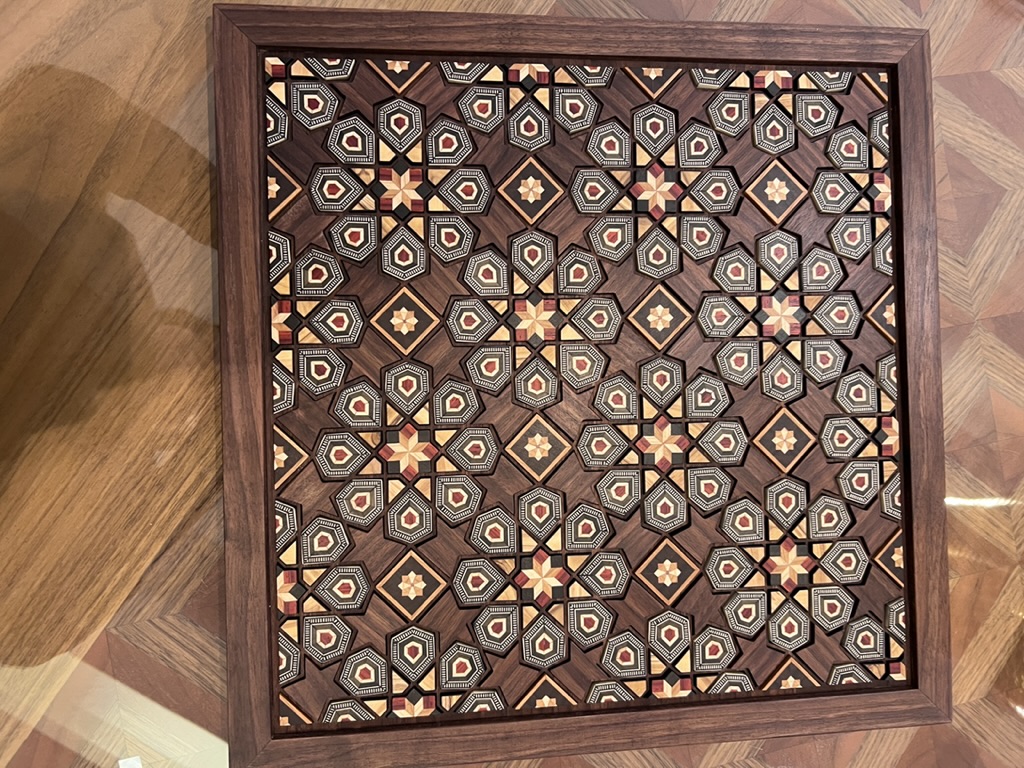
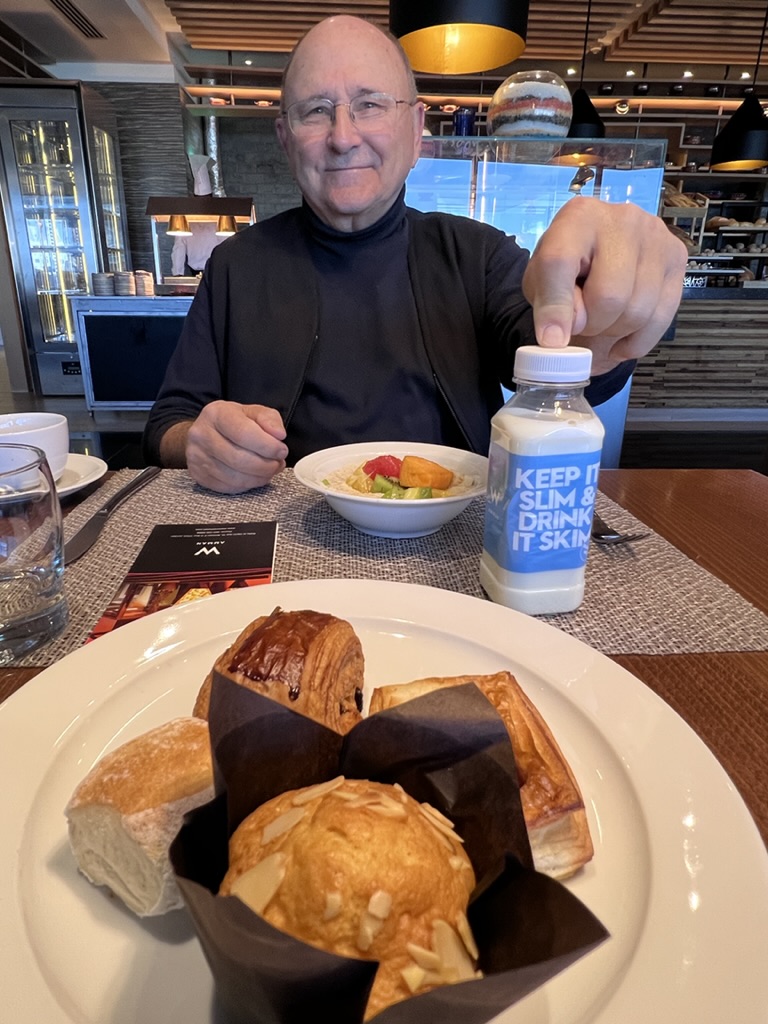
Jordan’s infrastructure is clearly more developed than Egypt—with traffic lights, paved streets, driving lanes, and showy tall buildings. Our area (where the W is) is clearly well maintained. As we’ve driven around the city (one day summary only) we’ve seen where everyday Jordanians live which is more akin to what we saw in Cairo–modular, flat-roofed and multi-story made of sun-dried adobe bricks, so the city has this overall brown/ochre color. From what we’ve read, the average salary for Jordanians living in Amman is about $17,000 (USD) per year which is considerably higher than Cairo. There are about 675,000 registered Syrian refugees living in Jordan, whose total population is about 10 million. We might try to visit one of the Syrian refugee camps, but they are located about an hour from Amman. Slum housing is also abundant and we will likely try to visit some of those areas, but our time here is really limited—we leave for Petra on the 1st of January. So we’ll see how much we can actually see and do.
The meal on Rainbow Street was fair and we probably would have gotten a better meal at the hotel, but we wanted to eat out on the street, and away from the hotel. There were some amazing falafel places but you had to eat standing up on the street and we were too cold and too tired to do that. Came back to the hotel to have a drink and some dessert, and now I’m signing off; it’s about midnight. More tomorrow.
Fern

Greetings –
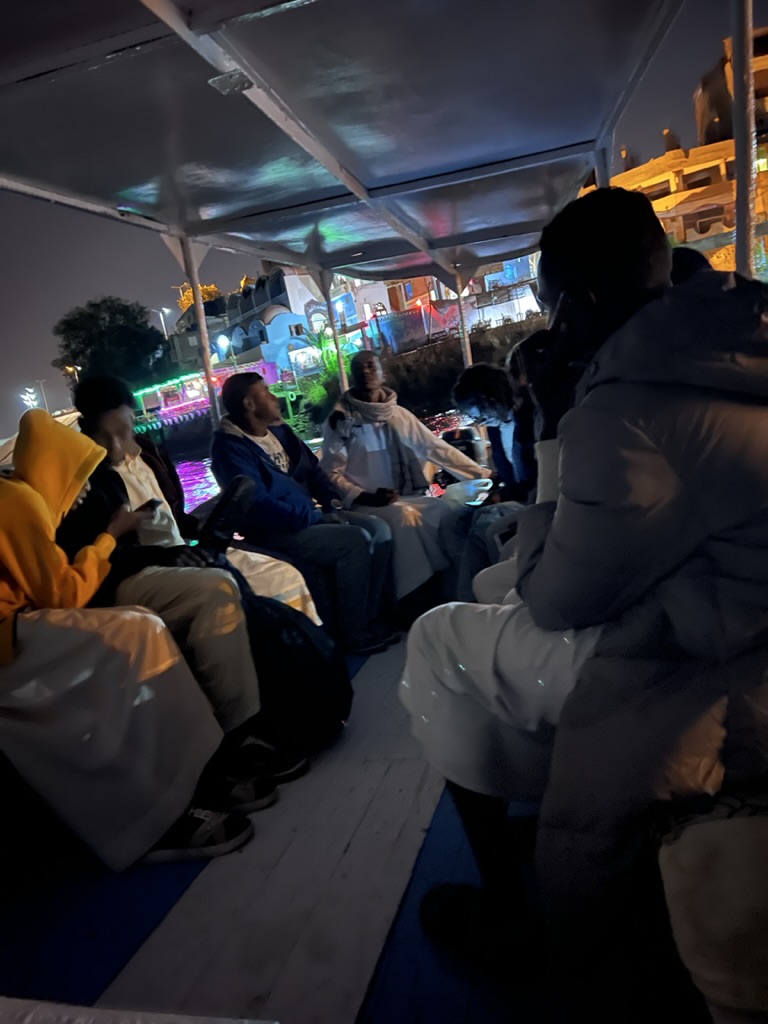
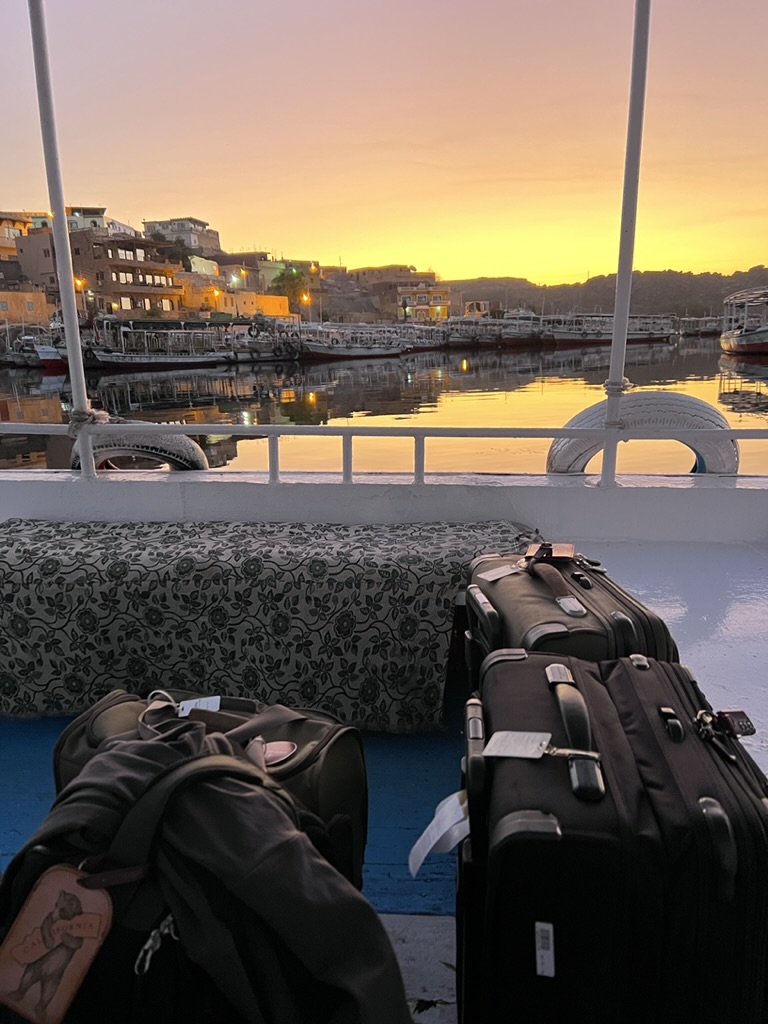
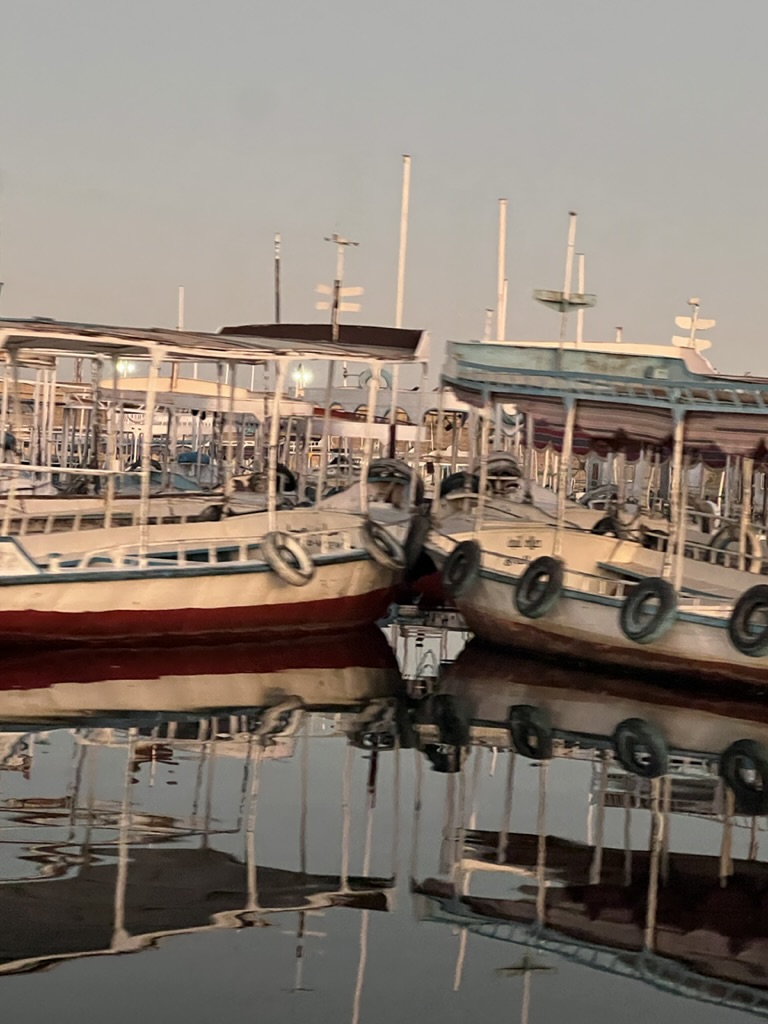
We prepared for a really difficult Wednesday, by getting back to our room at BenBen earlier than usual; getting totally packed by about 9:30 pm and showering so we could get up at 5:00 am to catch the boat and meet up with Allah to head back to Luxor to get the plane to Cairo and then on to Amman. But once again, hot water for just three minutes, We moved to a much, much less luxurious room that supposedly had hot water, but that too turned out to be hot water for only a few minutes. Anyway, we managed to be ready at 5:00 am—taking the little boat with the outboard motor to the dock to meet up with Allah and head to Luxor (a drive that can take anywhere from 2 hours to 5 or 6 hours!… depending….) We knew that Allah was a little anxious, worried about getting us to the Luxor Airport on time. The hotel packed us a little breakfast in fancy turquoise bags—sort of like getting a present from Tiffany’s.
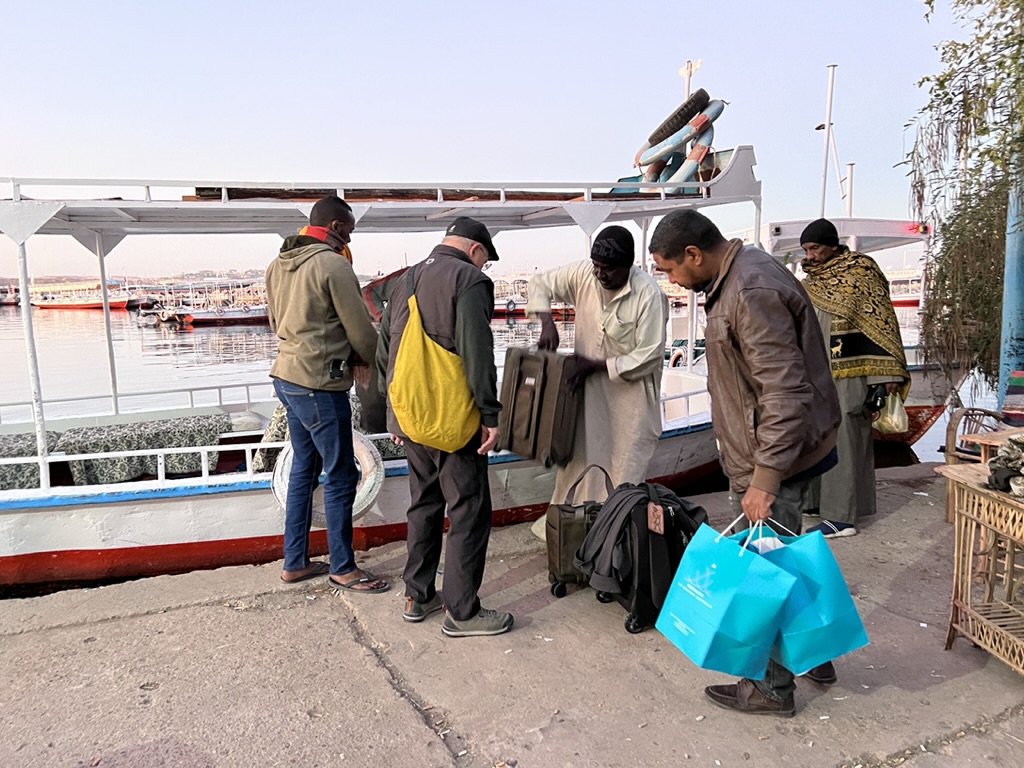
Then off we went. Allah explained that he was going to take us on their “highway” and that at times we would need to pull these black curtains closed on the windows in the back. We did it about two times and then on the third time, we could see him talking to a cop at a checkpoint, and we could see him holding a little packet in his hand (which I assume was some cash) but then he was on the phone… and next thing a guy came into the car and sat in the passenger seat next to Allah. He said “halo” to us, and then he and Allah talked as Allah drove. We were able to open the black curtains. Then the guy got out and Allah explained that he was a policeman and a friend and he was “escorting” us to the next checkpoint. I suppose the “cop” got out to repeat this process with another car.
Foreigners are supposedly not allowed on the highway, and there are these checkpoints from time to time. Allah said that if he got caught with us in the car the repercussions would be minor, but we’d lose a lot of time. So this “escort service” was the solution. It worked and we made it to Luxor in record time—about 2.5 hours. We had so much time that Allah suggested he take us to either another temple or some other tombs we had not seen or to a factory where they mine and make things from alabaster. We opted for the latter which might have been a mistake; but we were tombed out and templed out by then. We were also pretty tired and the temples and tombs require a lot of walking.
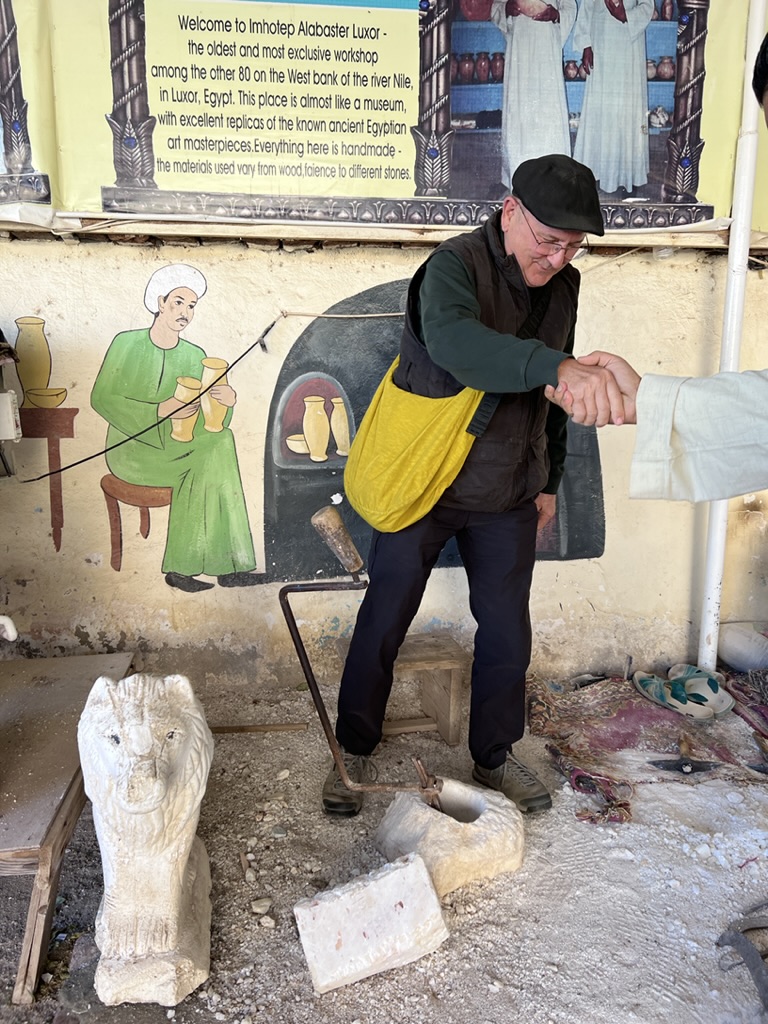
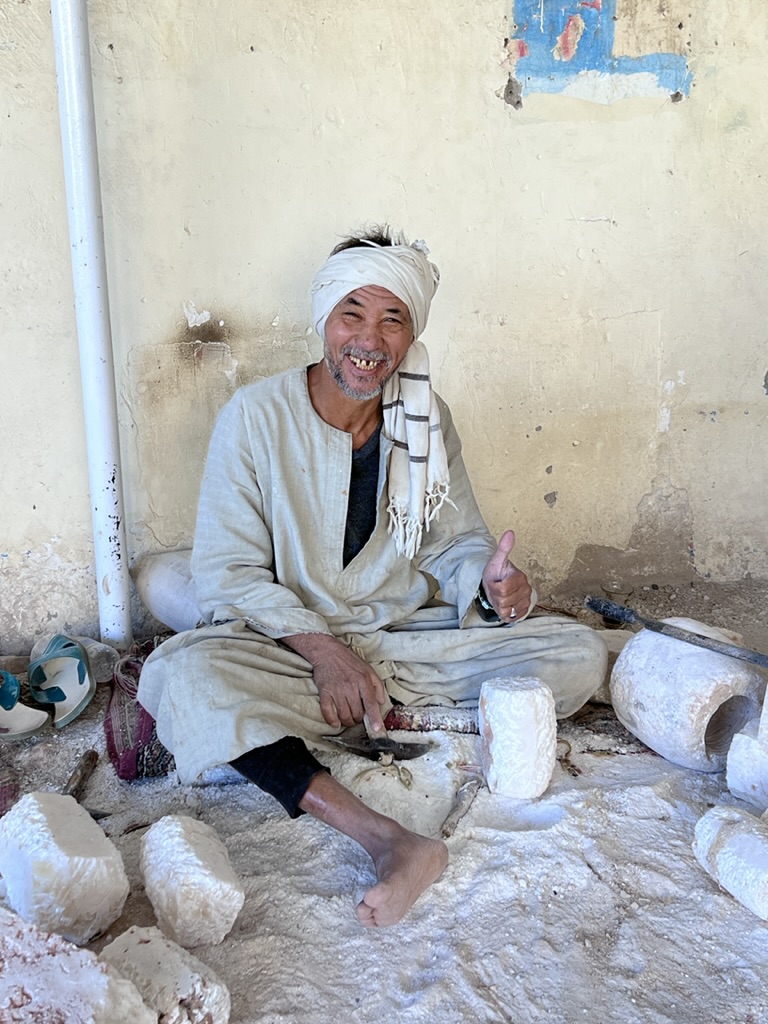
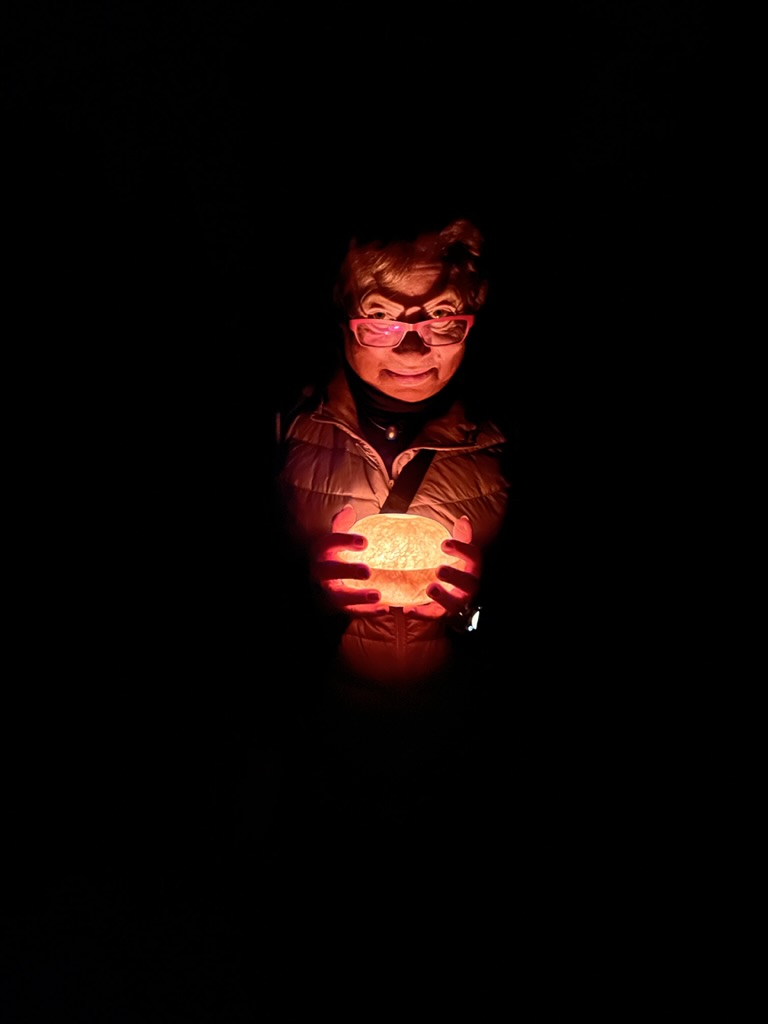
The alabaster place was– as expected—a bit of a “show” with a very large Egyptian man explaining how they mine the alabaster and how they create objects from the stones and how they polish it, etc. He was an amazing sales guy… always saying we didn’t have to purchase anything, but that he just wanted to show us things.. But you feel obligated after having him spend time. The best part was that it was just us; we weren’t in one of the many other alabaster places that had a lot of big tourist buses outside. And yes, we bought three very small and very simple alabaster candle holders (which the guy kept saying we could fill with perfume at the base and then light the candle and have a very romantic evening!) When we looked at a slightly larger version, he stressed it would hold more perfume for an even more romantic evening.
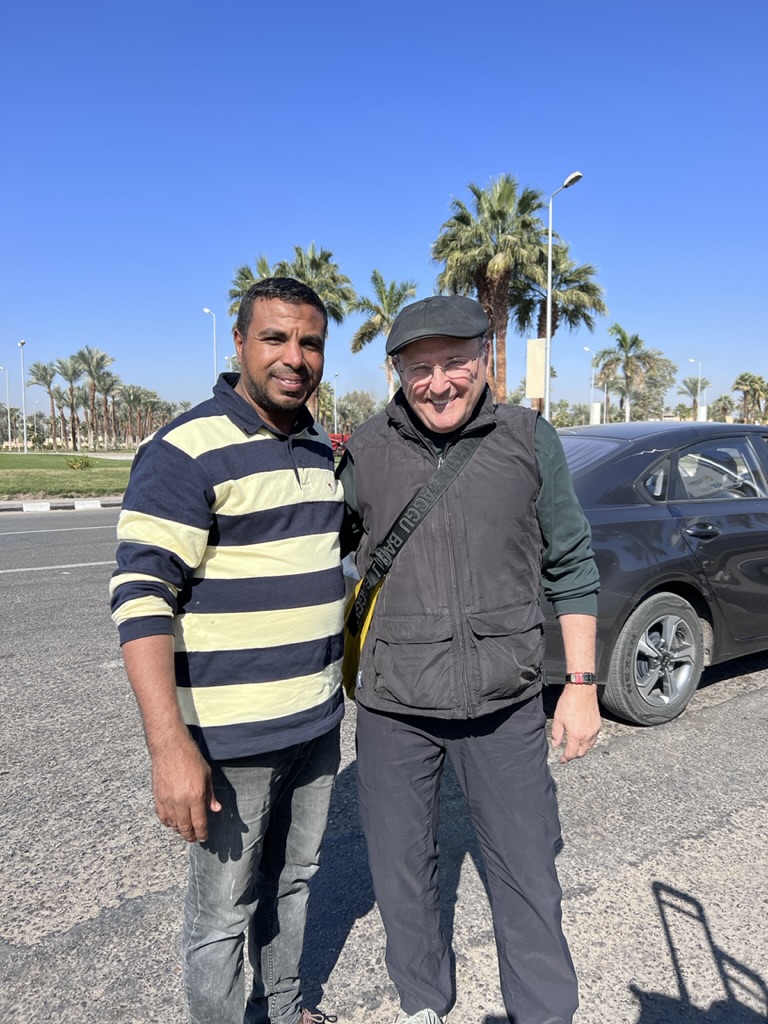
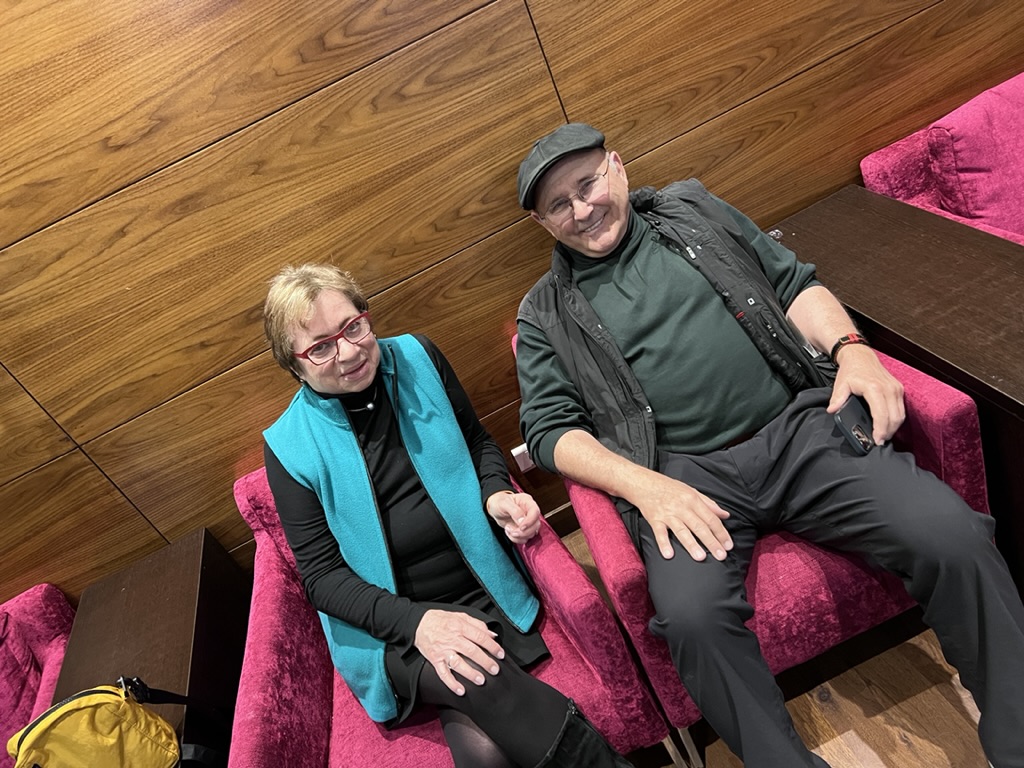
Then Allah drove us to the Luxor Airport where we waited for the plane to Cairo. You have to go through about three security checks to just get into the airport and then onto the plane; shoes off (no TSA Precheck!); computers out; hand body scan in addition to the metal detectors. Finally we boarded the plane for the very short 75-minute flight to Cairo. We were in business class so they even serve a meal in that short time.
By the time we landed in Cairo at about 3 pm we were really beat. Our flight from Cairo to Amman would not be until after midnight. Hanging out for at the Cairo Airport or at the “VIP” Lounge just didn’t sound great, so we made a very spontaneous decision to find a hotel (hopefully right at the airport) to catch a nap and shower with real hot water. Fortunately there was a Le Meridien within the airport, so off we went. Turned out to be a really good hotel, and we were able to get an “hourly” rate, since we’d be there less than 12 hours (actually just about 7 hours). It was probably the smartest thing we did. And turned out they had a really good Lebanese restaurant in the hotel, so we had a good meal before walking back to the Airport to get the flight to Amman.
More security checks, more body scans, and a very funny requirement to sign a book and hand write our passport number—very bizarre, but everyone, Egyptians, Jordanians, and foreigners had to go through this step. The flight from Cairo to Amman was also short—another 90 minutes or so, but by the time we reached the hotel, checked in, and got into our room it was nearly 4 am.
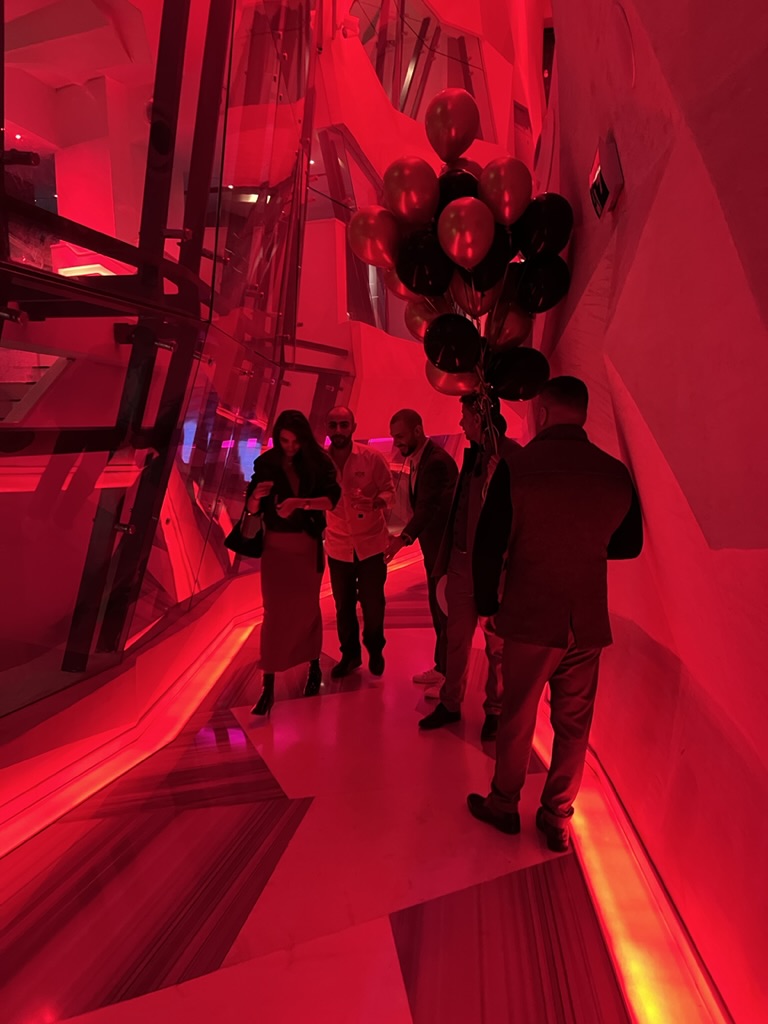
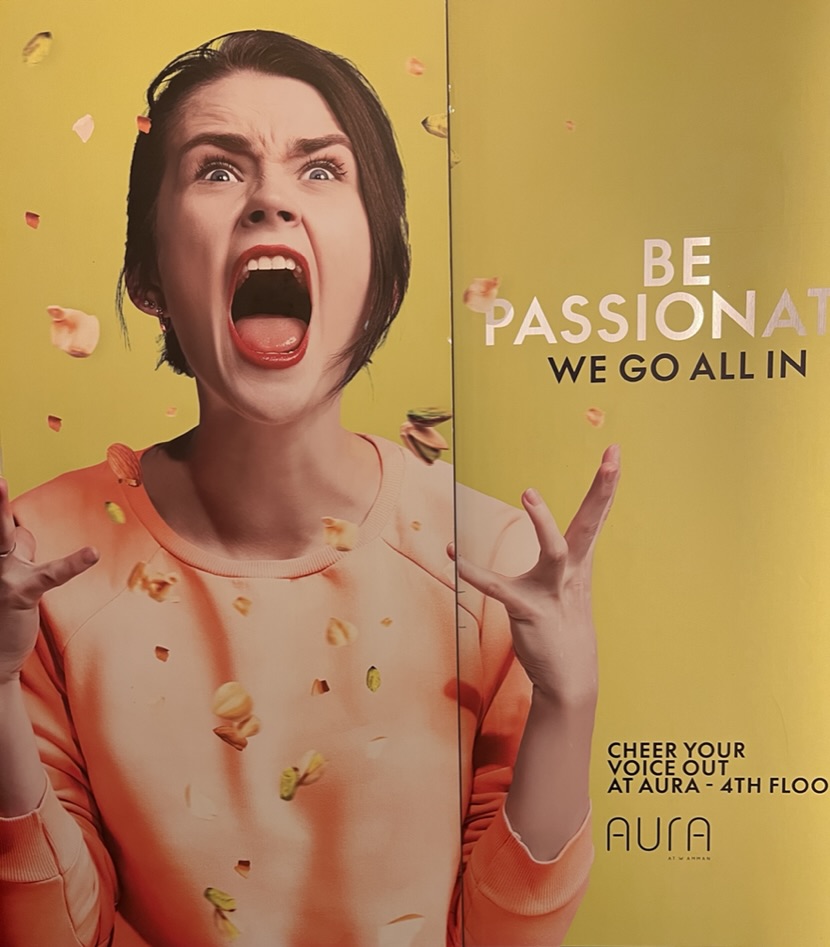
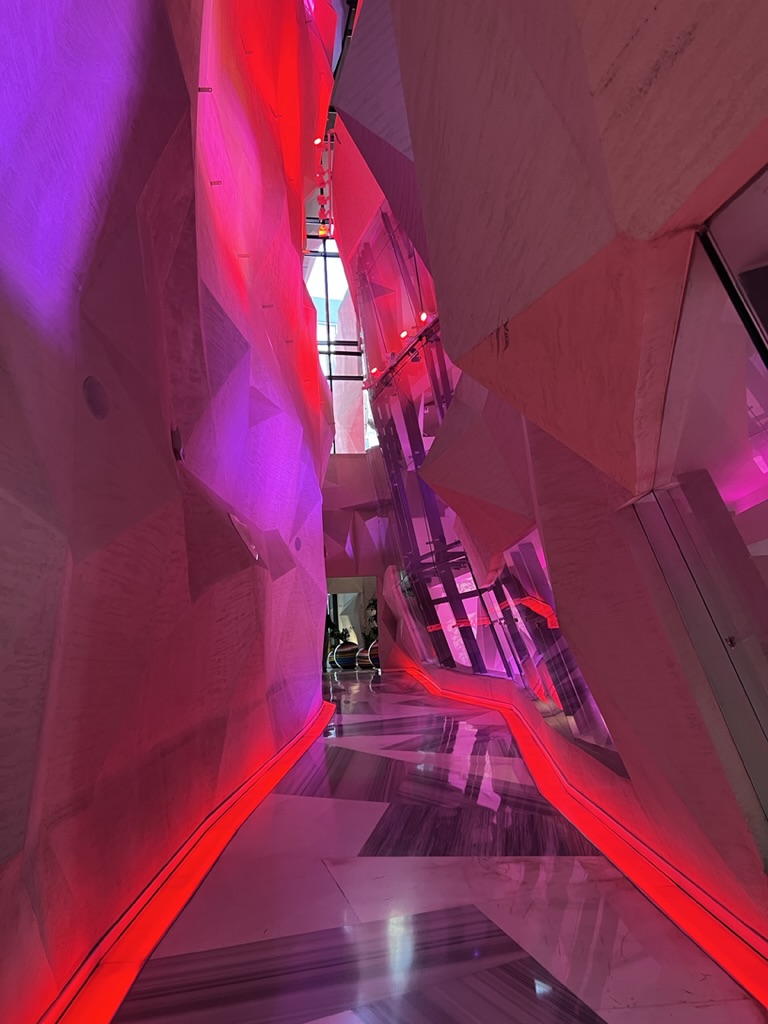
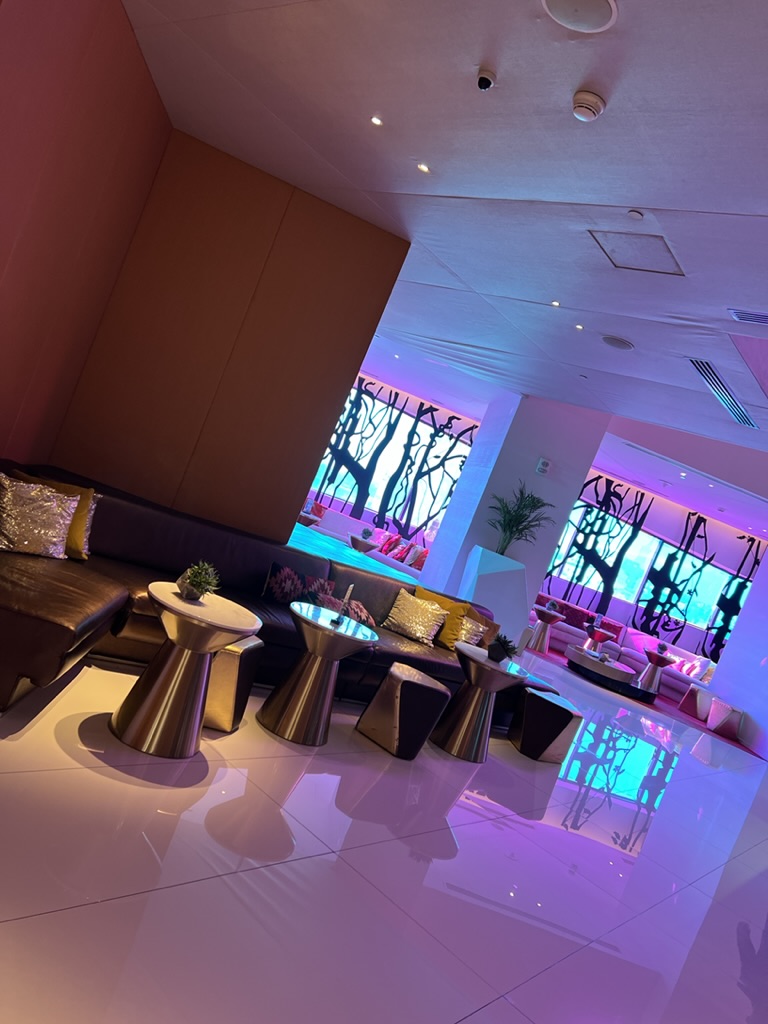
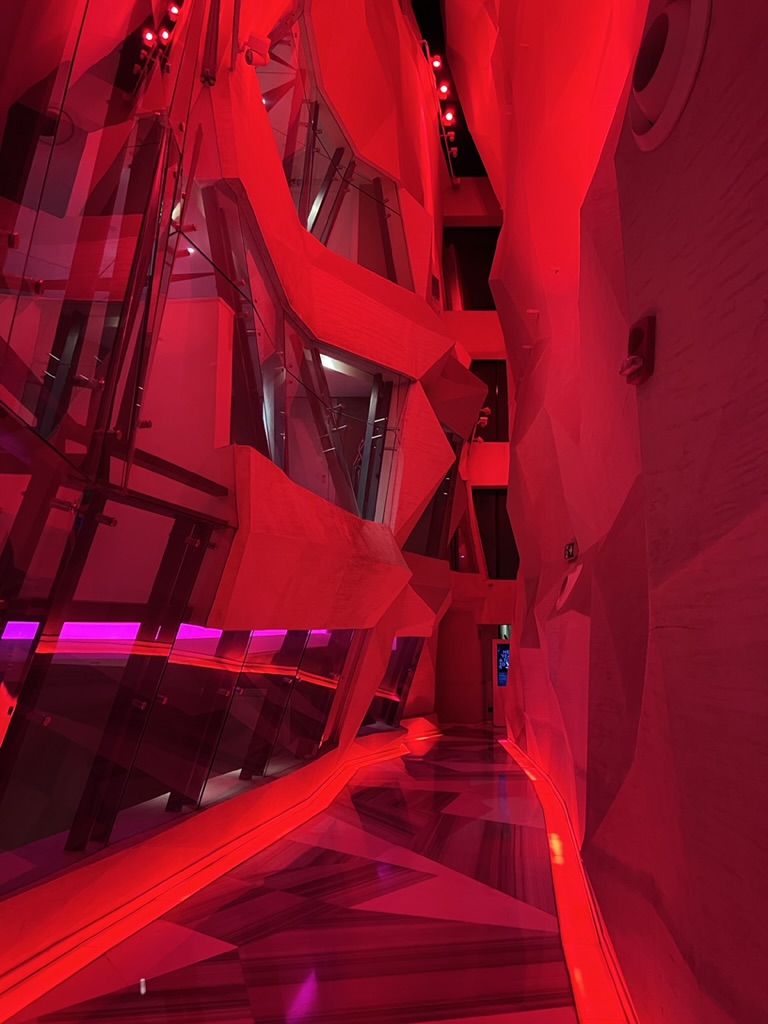
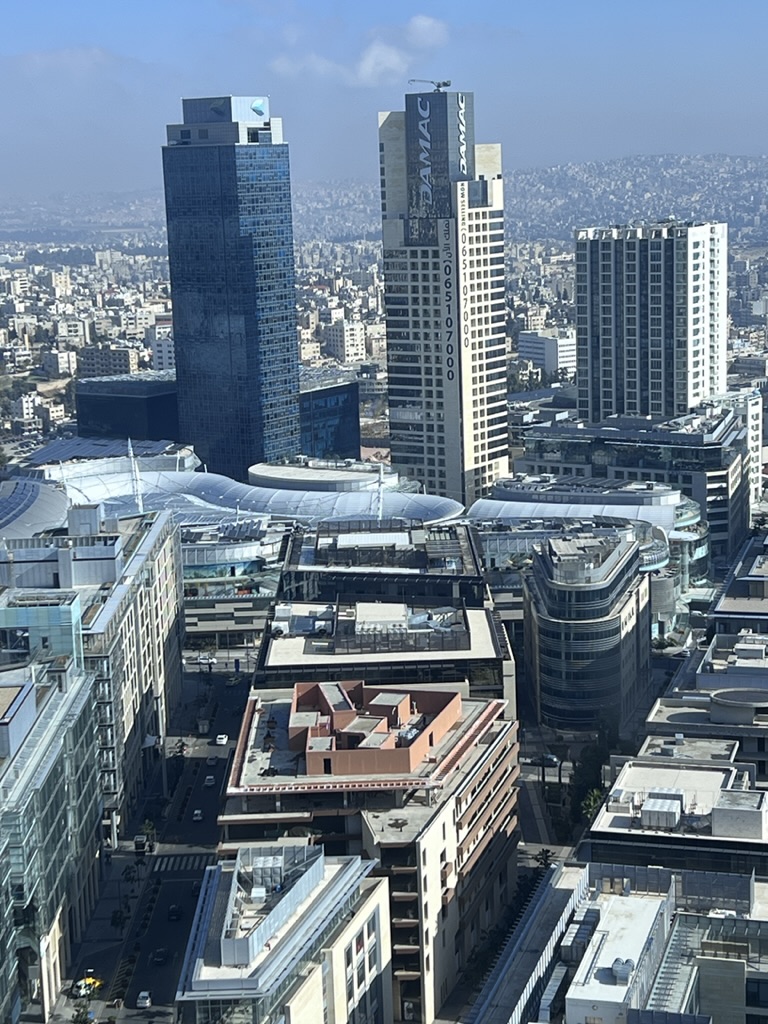
We are actually at the W in Amman – very glitzy and filled with mirrors and colored lights wherever you walk. Since we were going to be in Amman for New Years Eve, we figured we should be in a party hotel.. and that we are. By the way, our room would house a family of about 6 in an affordable housing unit, according to Mike. The bathroom itself is probably the size of a market rate studio apartment. We are on the 29th floor in a corner room with commanding views of the whole city. You enter the hotel at street level and then walk through what they call “the canyon” which is brightly lit with reds and purples and the spaces become narrow and then wide and narrow again—like a natural canyon!!
More to come as we explore Amman
Fern
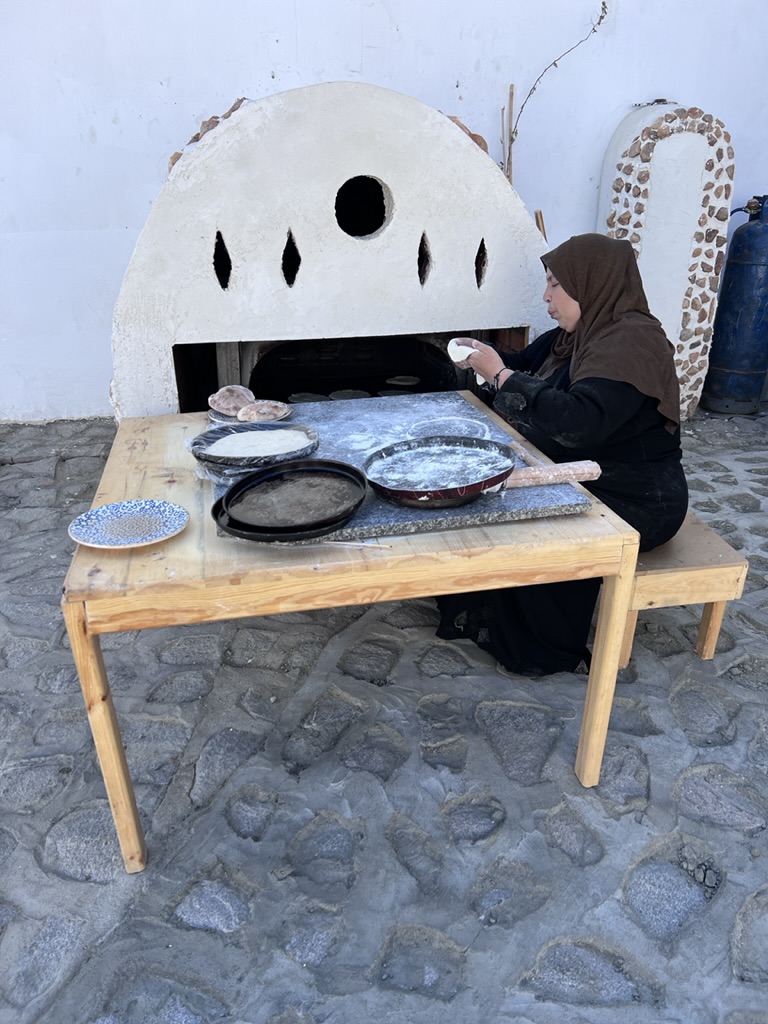
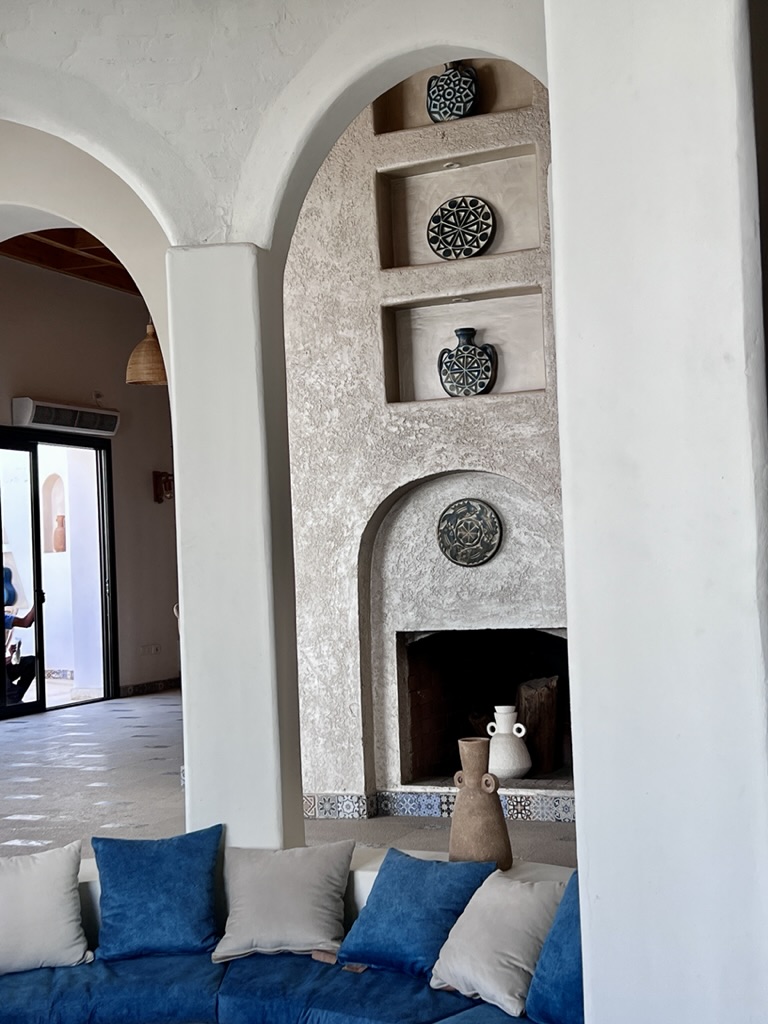
Greetings from Aswan after a very long and exhausting (but great) day (after a bad start)-
Woke up and jumped into the shower which turned icy cold after about 2 minutes…with shampoo on my head. Did the best I could and we phoned the front desk –- This is a pretty expensive and new place; small boutique hotel. I’ve stayed in places where the water is an issue, but not at these rates! They apologized and sent “engineers” onto the roof. They also decided we could shower in another room where guests had not yet arrived. Mike went to that room and after two minutes the hot water turned icy cold. We were clean but annoyed. We decided to move on and get going with our day, while they supposedly worked on fixing the problem. At breakfast, everyone else seemed content so I assume they had hot water.
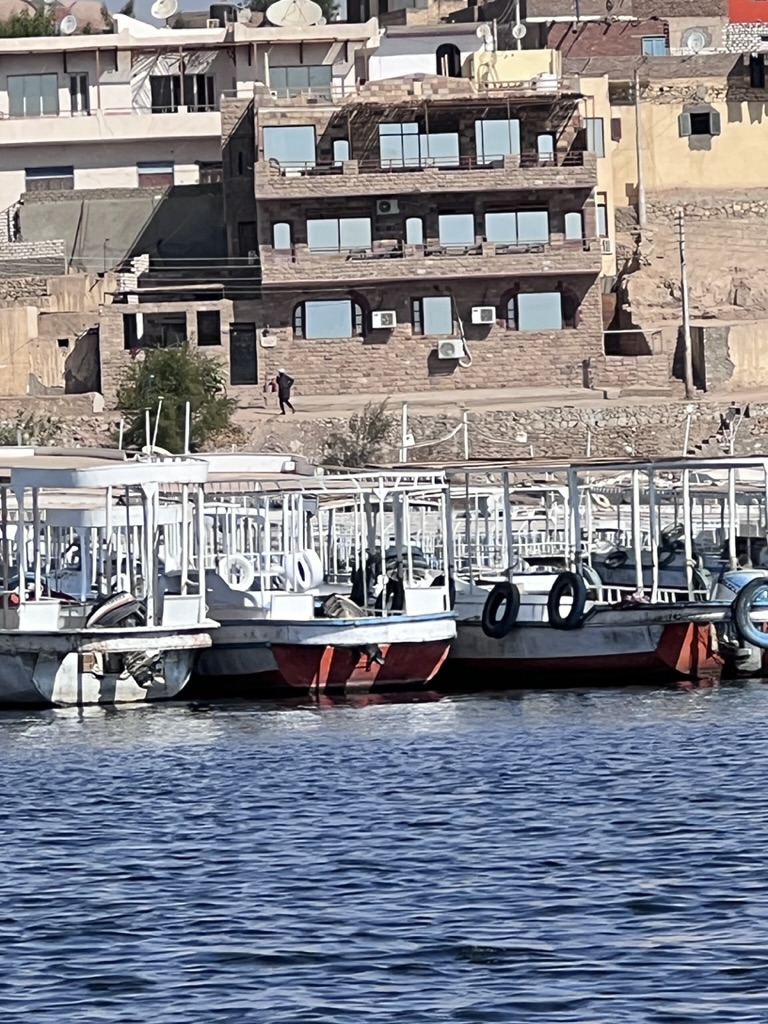
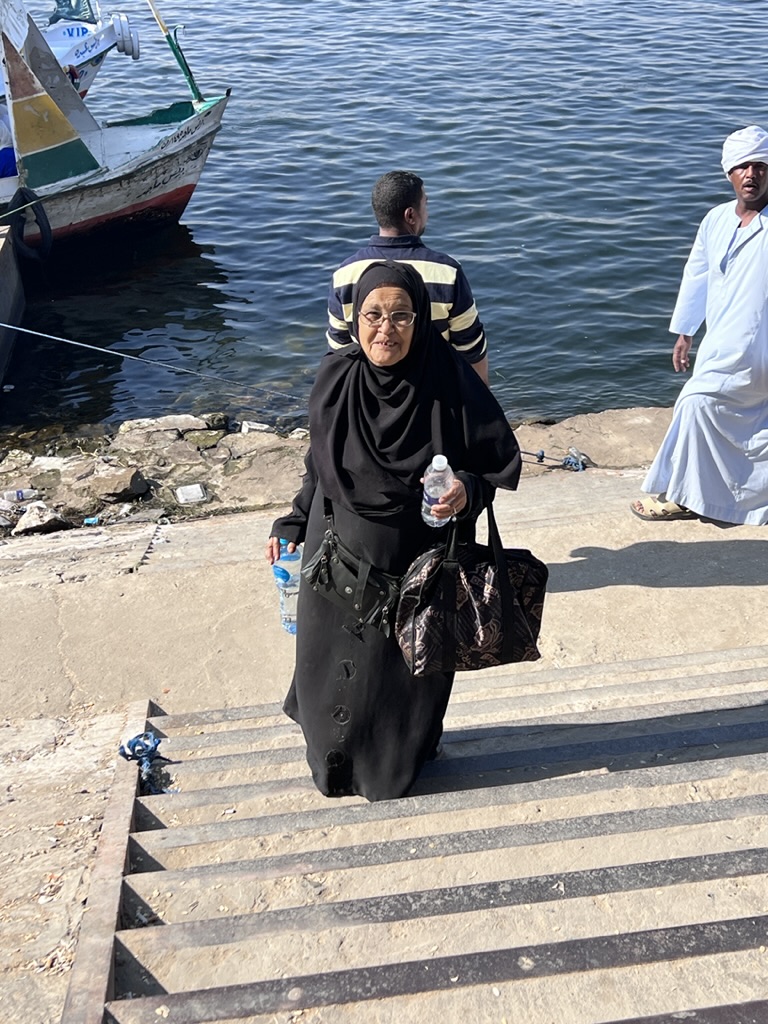
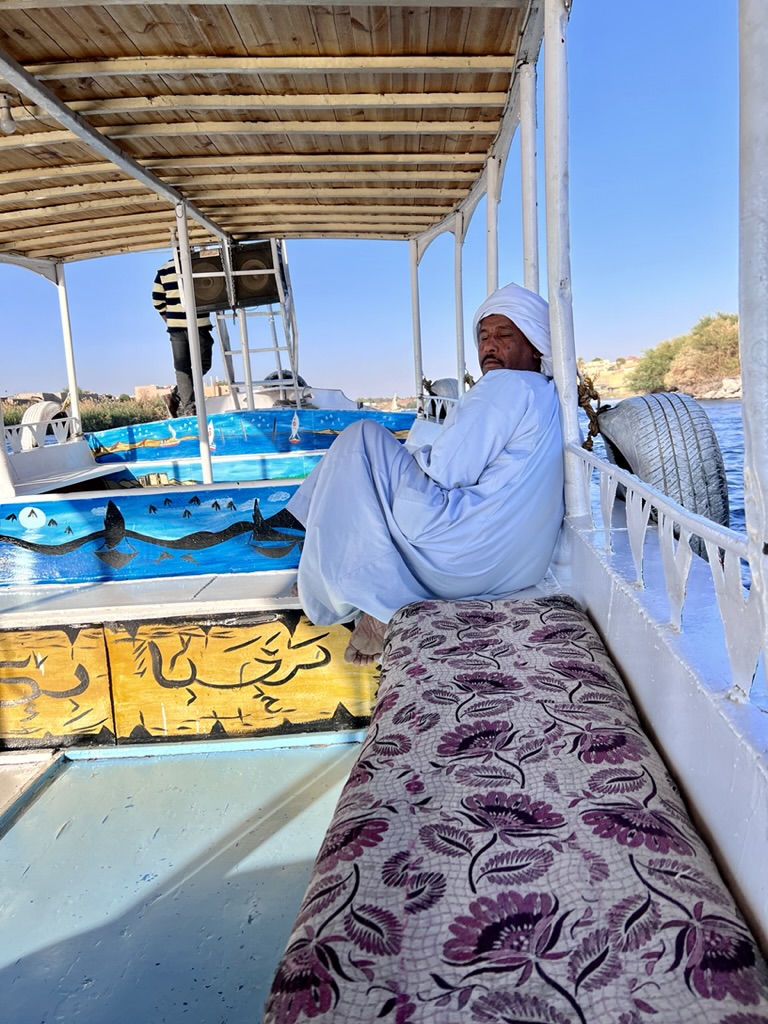
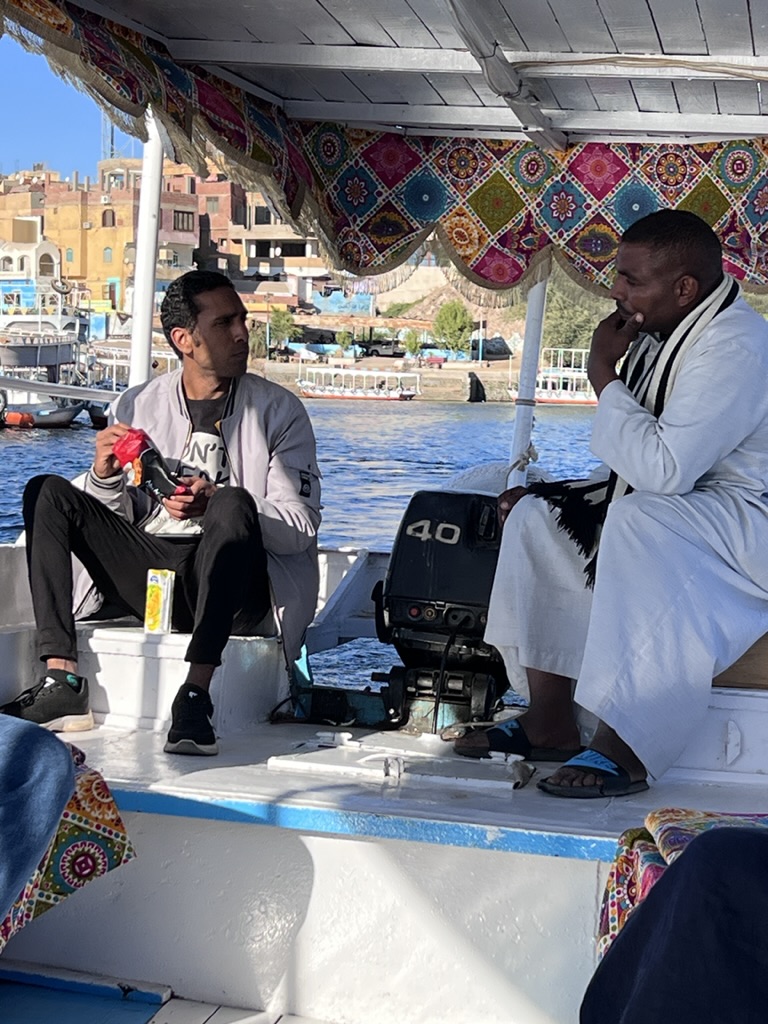
We headed to the little boat (that is our access to the rest of Aswan) that goes from the hotel to the dock in Aswan. Actually, we’re getting to be real pros getting on and off this little boat (sort of a metal tub with an engine and decked out with cushioned bench seating along the edges. Most of the time it’s just us and the guy who steers the boat (who’s always barefoot and wears the long coat-style shirts that are traditional rural wear in Egypt). When we got to the dock, Allah was waiting with the car. He’s very infatuated with this thing called “the unfinished obelisk” so we agreed to go see it.
In short, the story is that it was commissioned in around 1450 BCE and would have been the tallest obelisk in the world if completed. The workers decided to carve it out of bedrock and then cracks appeared and they abandoned the project. The base is still attached to the bedrock; it’s lying on its side.
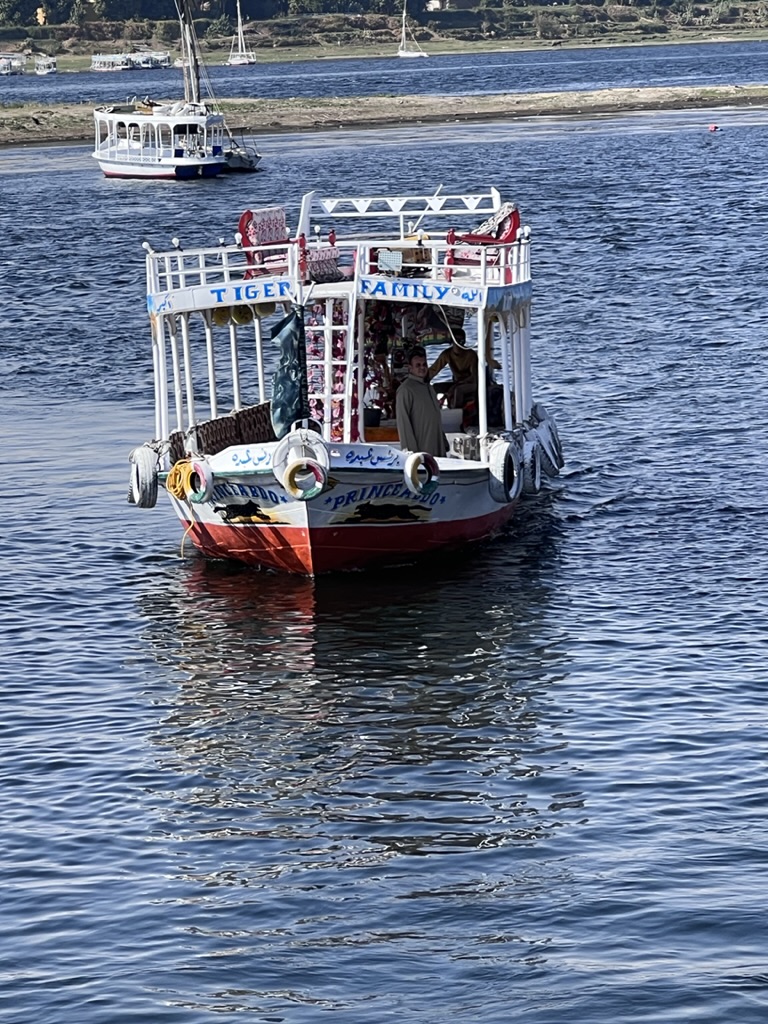
When we hired Allah to be our driver for these days we told him what we wanted to see, and he also made some suggestions. From what we know Allah has studied “commerce” (finance or business in our jargon); now he is going to school to learn tourism. Maybe we are part of a school project. Anyway, we wanted to visit a working Nubian village. Nubians are indigenous peoples in Sudan and Egypt. In this case we were headed to another island in the Nile—an hour-long boat ride to get there. We went to a different dock to meet the boat. The boat was similar to the one we use to get to and from the hotel, but that’s only a 10-15 minute ride. As we waited, one boat came to the dock called “Tiger Family,” and I really hoped that would be our boat. Most of the boats at the dock were filling up with tourist groups; we kept our fingers crossed that those large groups of foreigners would not also be going where we were going since that would really overwhelm these kinds of villages. (They were not!)
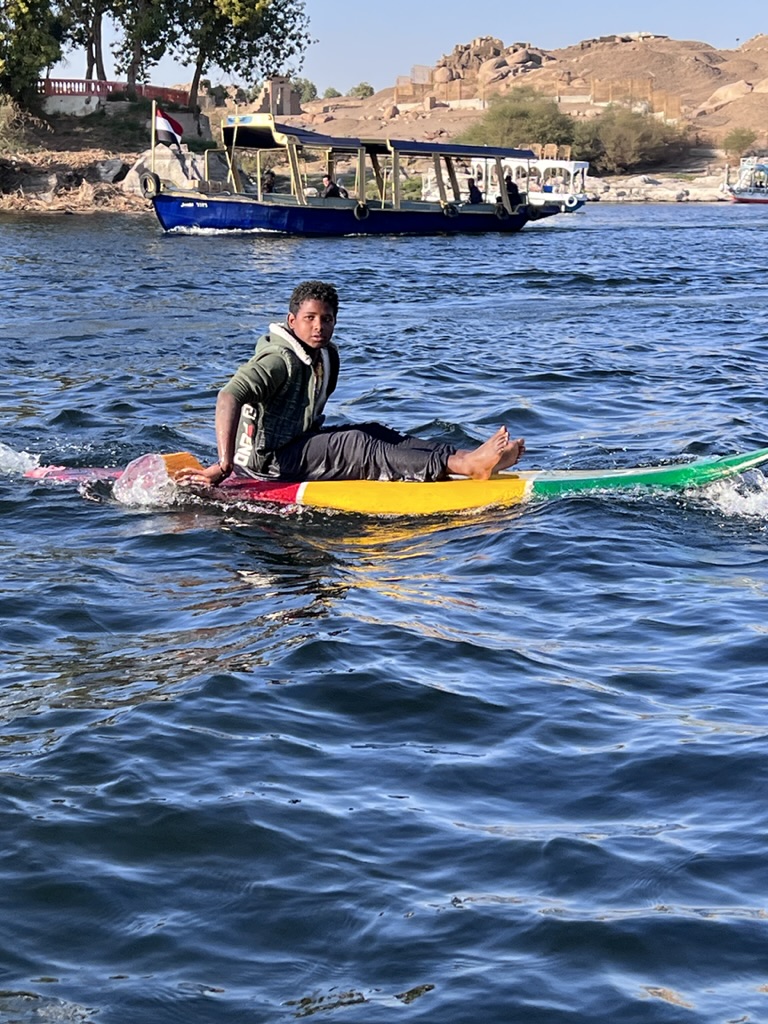
Soon another boat came along and it was just for us.. The guy steering the boat had his 12-year-old son with him and the kid actually steered the boat most of the time while the father looked on—occasionally giving direction. It’s truly amazing how many different types of water vehicles are moving along the Nile—including young boys who paddle along on small surf boards. When they get tired they grab on to one of the boats like ours and “hitch a ride.” We putt-puttered for about an hour and then got out of the boat and walked into the Nubian village, which I dare say has obviously been transformed by the fact that tourists come to the village (although while we were there you could count on one hand the number of foreigners). Still, you can see the influence of foreigners in the murals and the names of little cafes. But you can also still see the lifestyle and the warmth of the people.
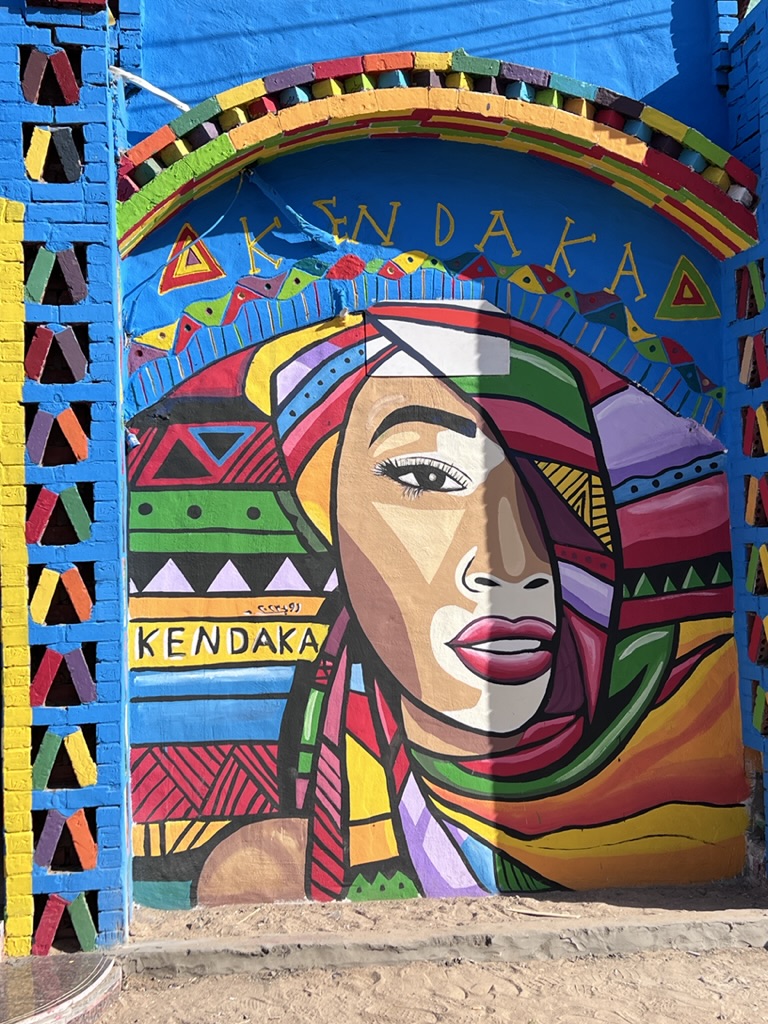

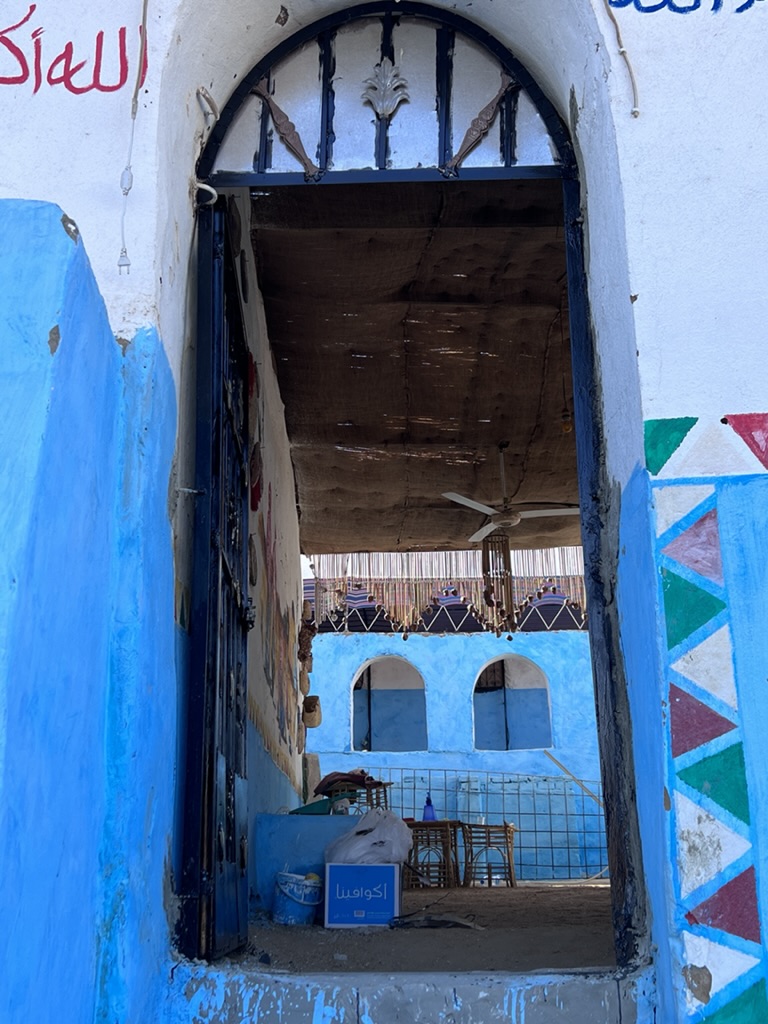
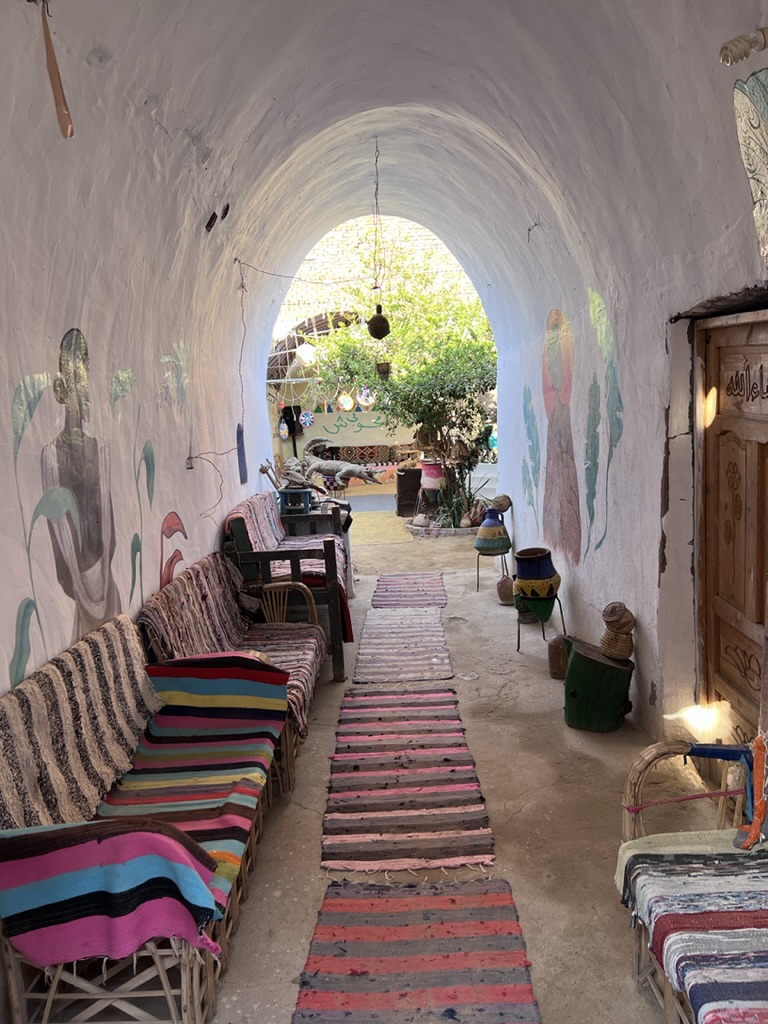
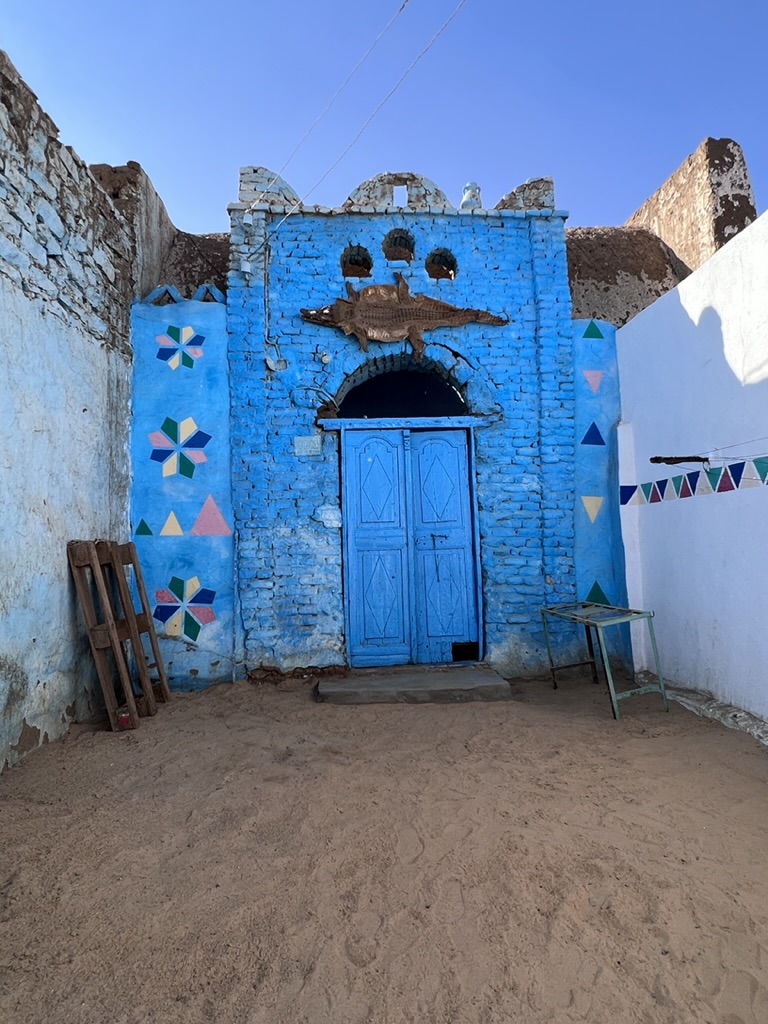
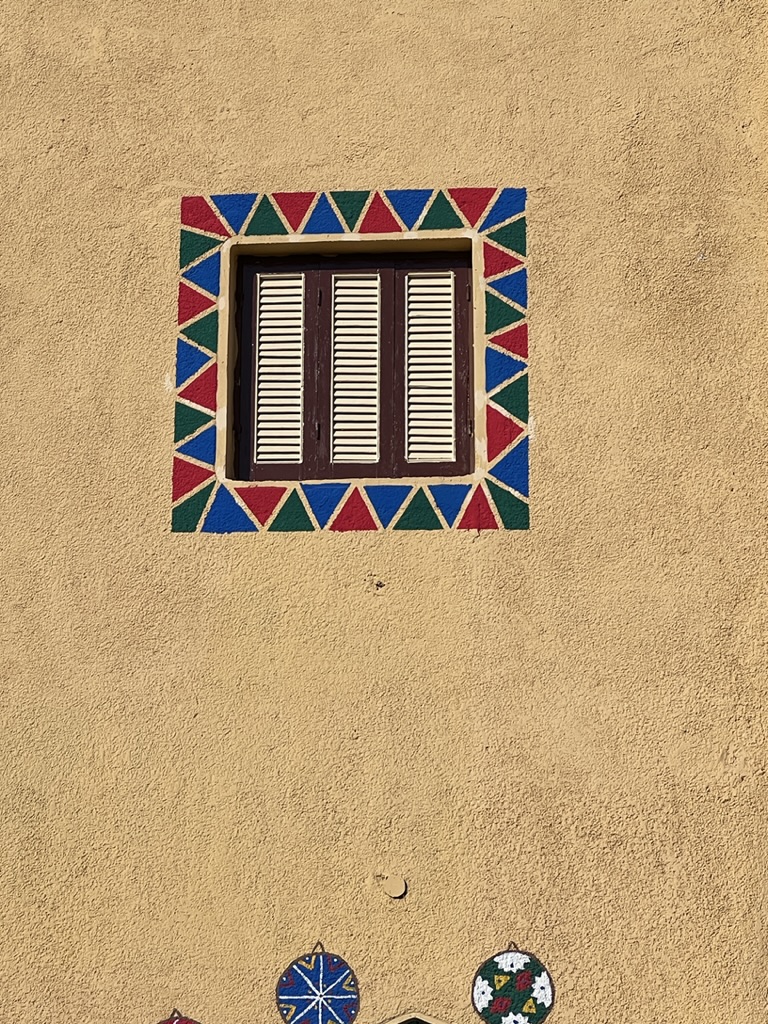
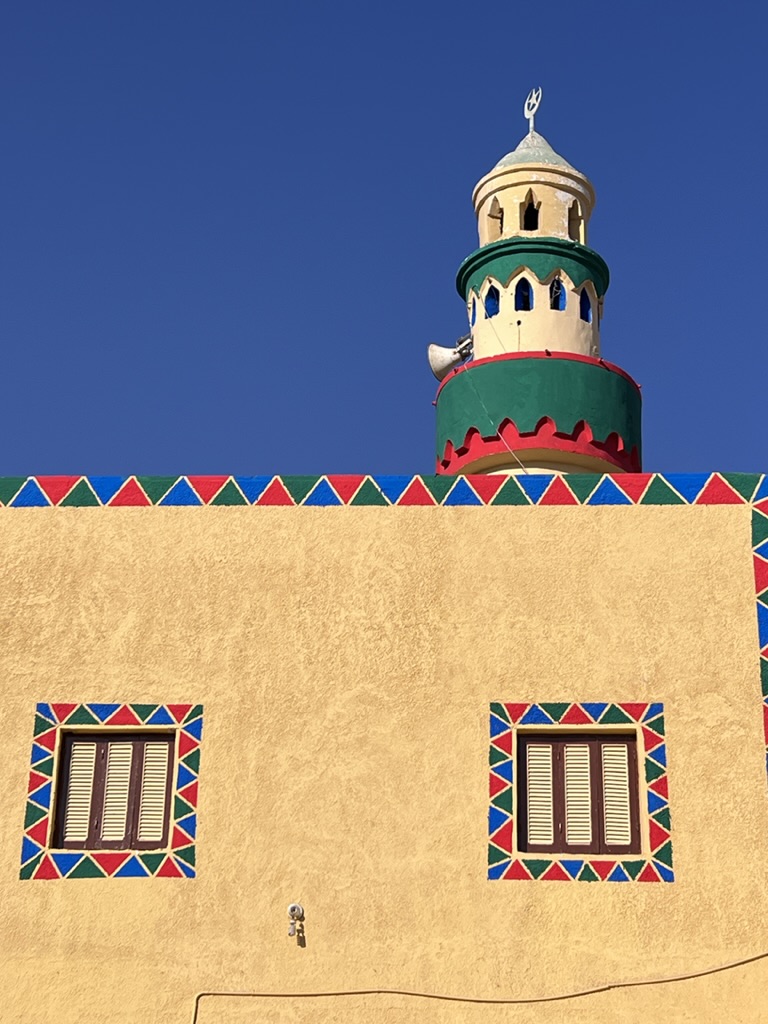
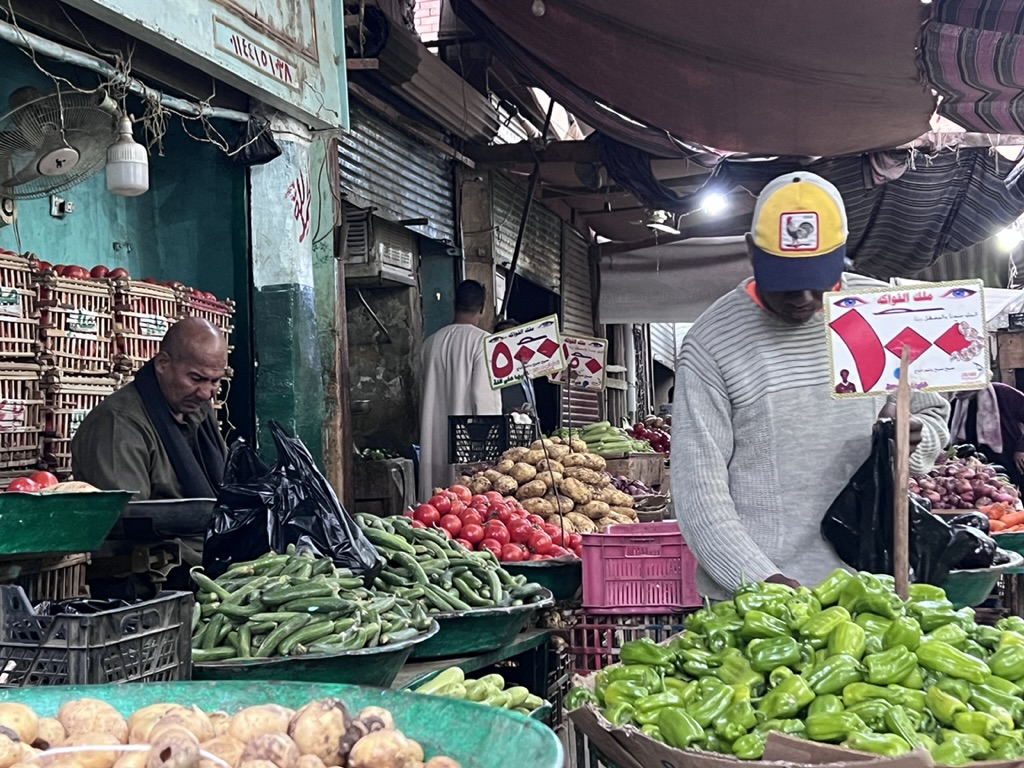
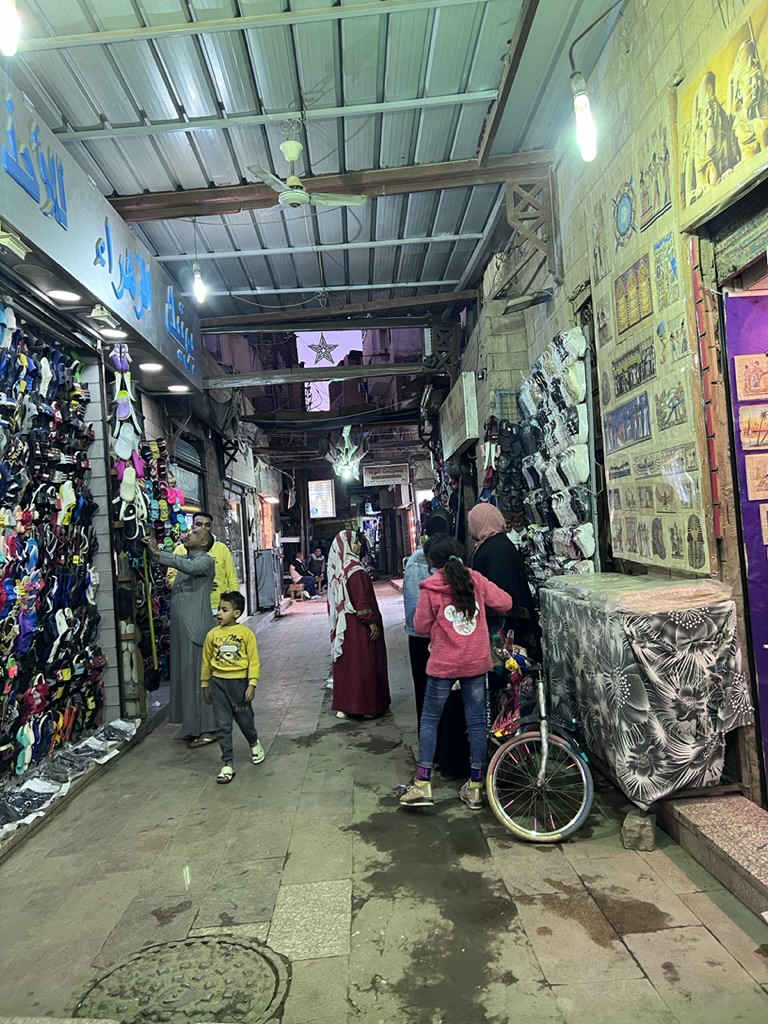
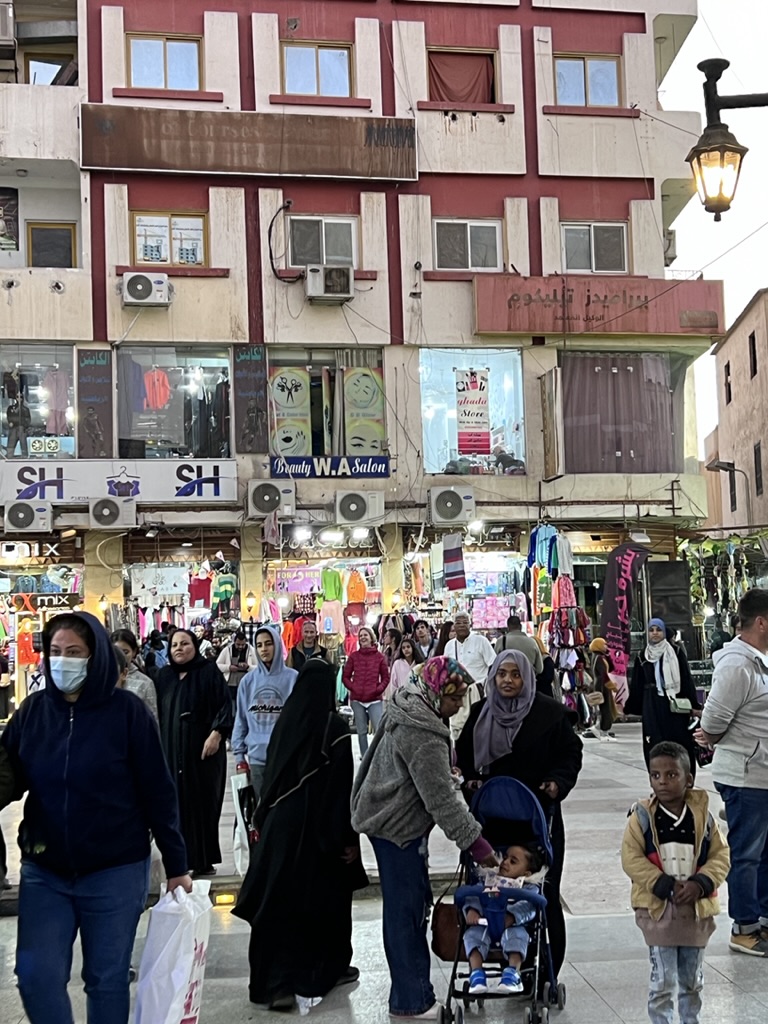
We got back to the boat about 90 minutes later and headed back to the dock; the trip back was about 50% faster in this direction because of the currents of the river. Then we asked Allah to drop us off at Aswan’s big souk/market (a very very linear souk) that probably stretches for a mile or so. It’s situated between blocks and blocks of 5-story residential buildings that frame the market. There is also now (probably about 15-years-old) a wood structure that helps to contain the market. We walked the entire length of the market and also took some offshoot streets where food and meat and fish were being sold. People in the souk seemed to think we were from France (a compliment?) and they kept asking us questions in French. My less-than-high school level French seemed sufficient to be friendly and polite. Unfortunately Egypt doesn’t have a lot of handmade crafts and most of the market (other than the food areas) sell commercial, manufactured clothing, dishes, shoes, etc. Then again, it’s clearly a big spice market with the traditional pyramid format displays of incredible spices (and also some pigment dyes). Those displays enrich the market,
While it’s a big and busy souk, it is incredibly tame and organized when compared to souks in Morocco or Tunisia or to large markets in Asia and other parts of Africa. This was like a walk in the park! One reason is that there aren’t any motorized vehicles in this Aswan souk; that always adds to the chaos. There wasn’t he kind of pushing you get in other big souks. And the food stuff—live chickens and other animals –were at a minimum.

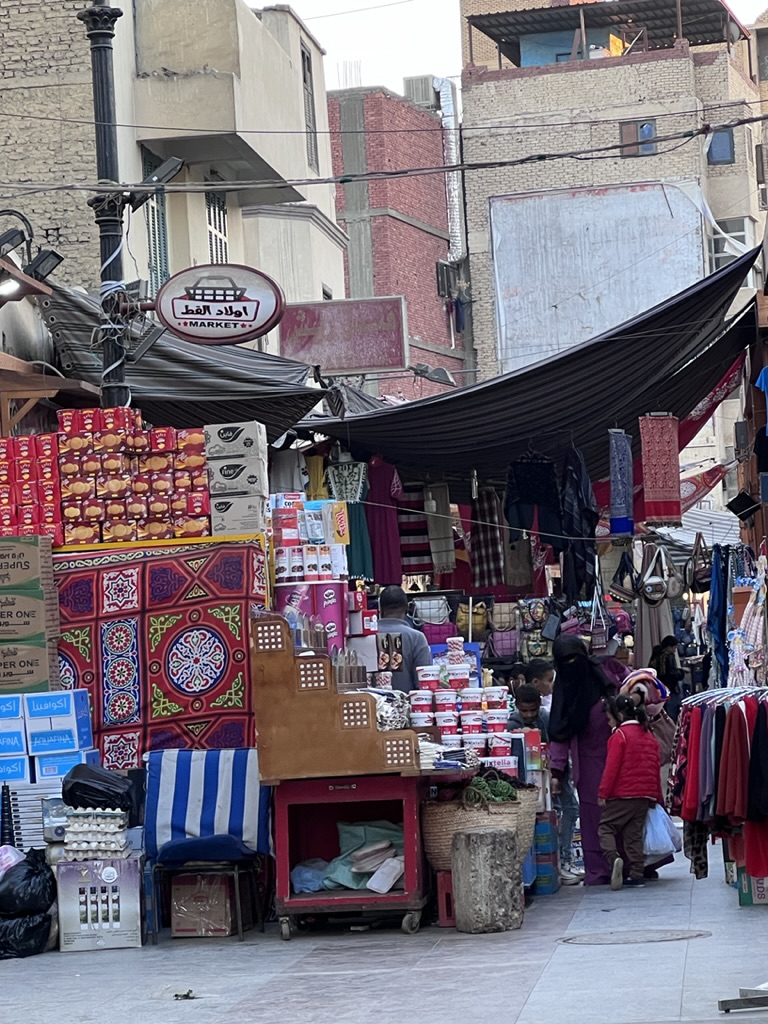
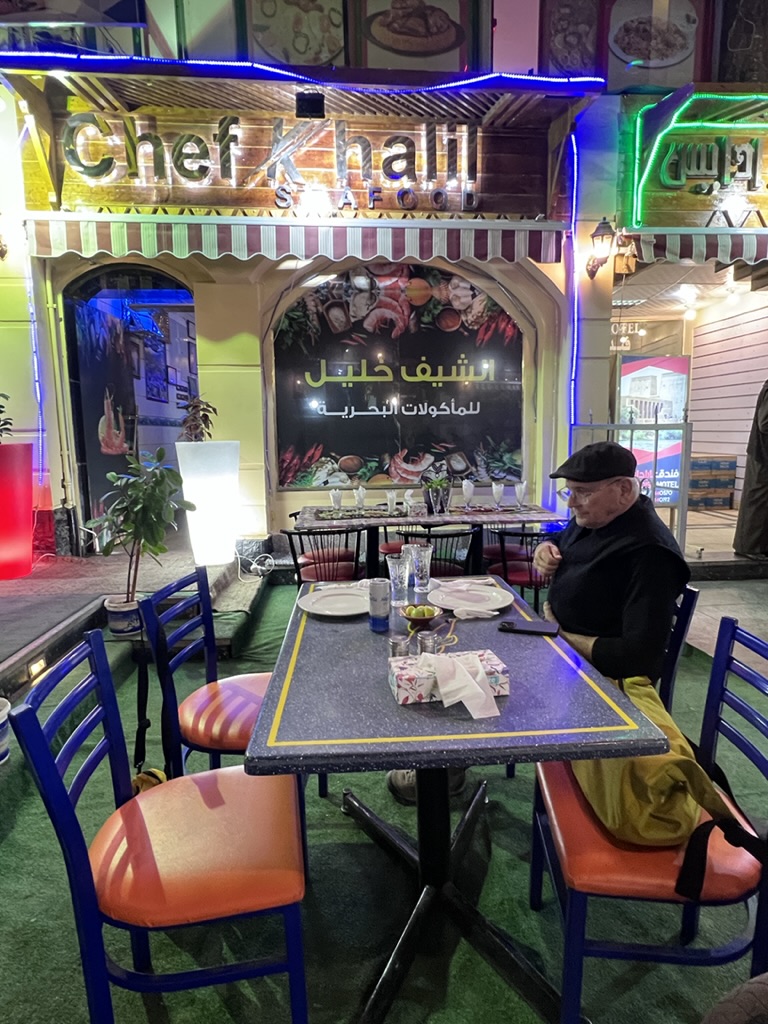
After strolling to the end and back again, we settled into a little fish restaurant (Allah had suggested it—“if we could find it,” he said) and had an early dinner. Mike ordered the mixed fish grill and I ordered the Nile fish “casserole”. Both came with “salads.” Before the main courses arrived, the waiter appeared with bowls of baba ganush, tahini, spiced aubergine with vinegar and peppers and herbs (that one was fantastic), and tabouli, along with fresh pita bread. That could have been dinner. Then the main courses arrived. They were good (especially mine, which was the fish in some kind of tomato sauce with spices) but we struggled with all the bones!. The only thing we missed was a nice glass of wine with the meal; alcohol is not served in many restaurants (except tourist restaurants and restaurants inside hotels). We sat outside – in the souk; actually the little restaurant doesn’t have any tables inside.. they just cook inside the little space.
We then met up with Allah and he drove us back to the dock to meet the boat back to Ben Ben. This time a whole bunch of workers were also on the boat. I guess it was the night shift for the hotel.
We ended the day early (or at least tried to) because we need to be at the dock at 6 am tomorrow morning in order to drive back to Luxor to catch a plane to Cairo and then a plane to Amman. Supposedly the hot water problem was resolved… but when I tried to take a shower (tested the water this time).. it was hot for about two minutes and then ice cold. They moved us to another room… no where near what our other actual room was like… but it has hot water and we leave in just a few hours, so it doesn’t matter.
This is it for Egypt. So much more we’d like to see and do. Perhaps a return trip?
Best – Fern
9B: Luxor to Aswan: Cars, Boats, Feet: 12/26/22
Greetings from Aswan –
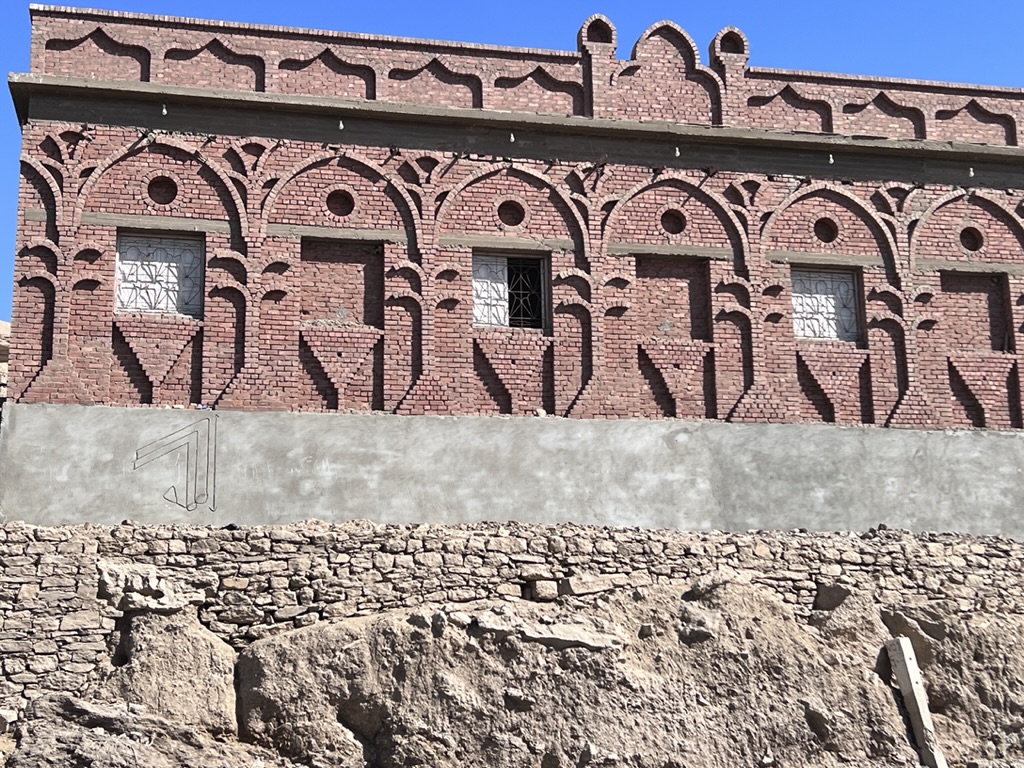
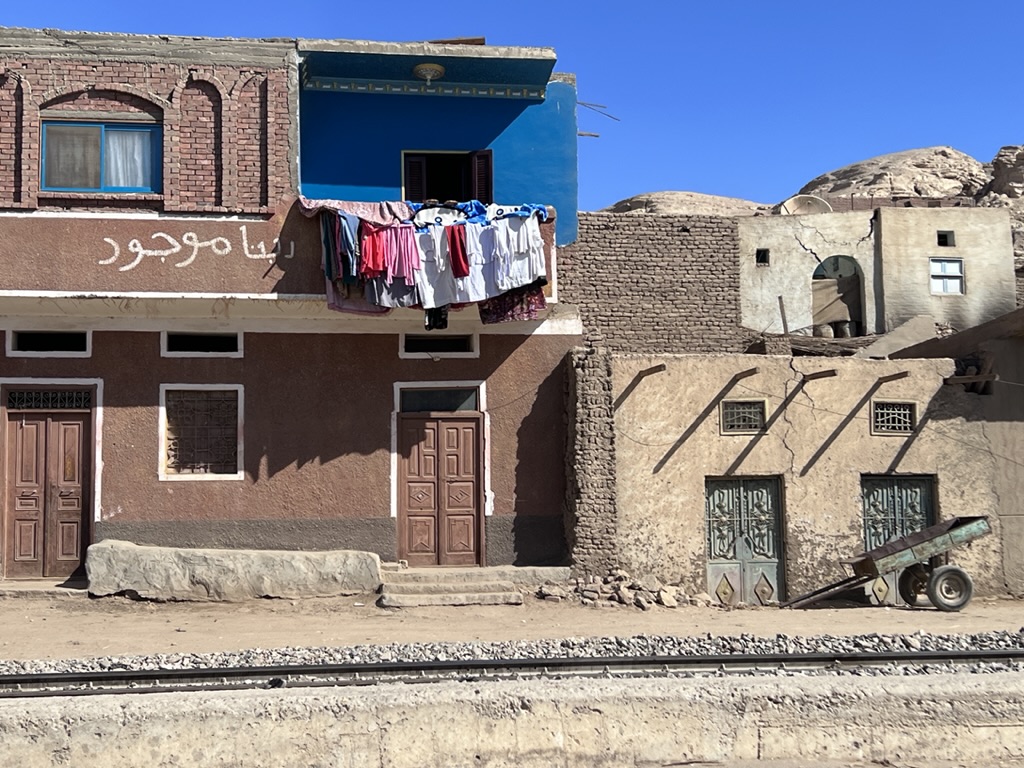
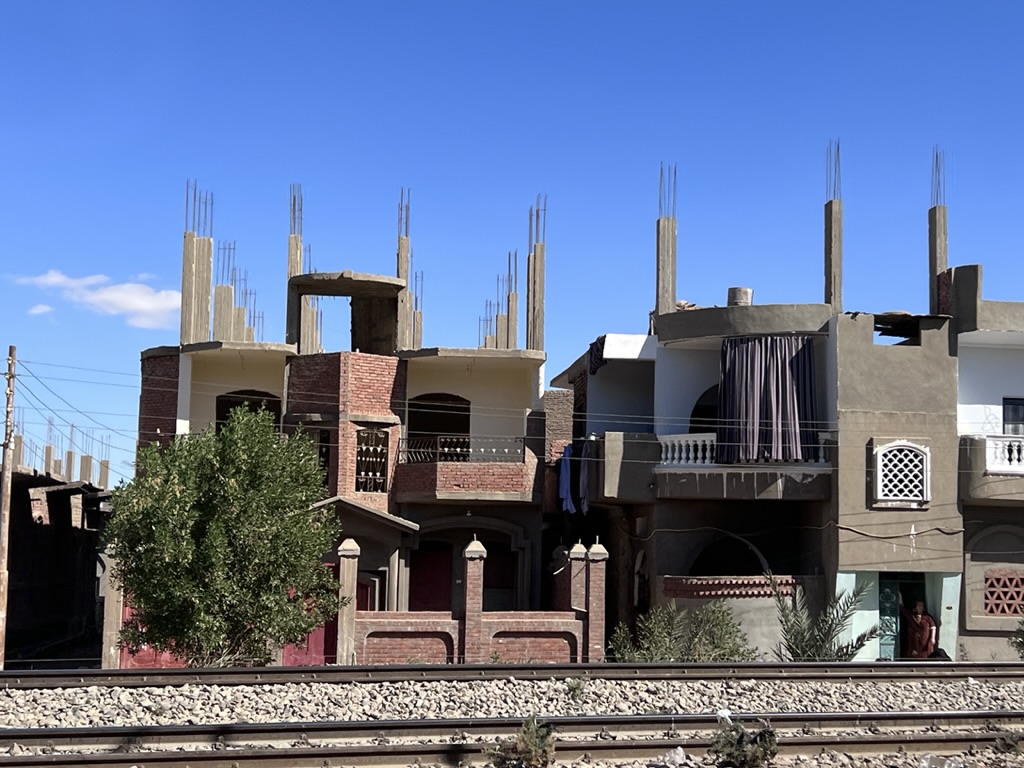
Set out this morning for Aswan — a four-hour drive from Luxor, mostly along a pretty bad road that goes through numerous tiny desert villages and agricultural land. Abdul was there to meet us, with his cousin. Turns out his cousin would be the one to drive us, which is fine. His name is Allah. His father and Abdul’s father are brothers.
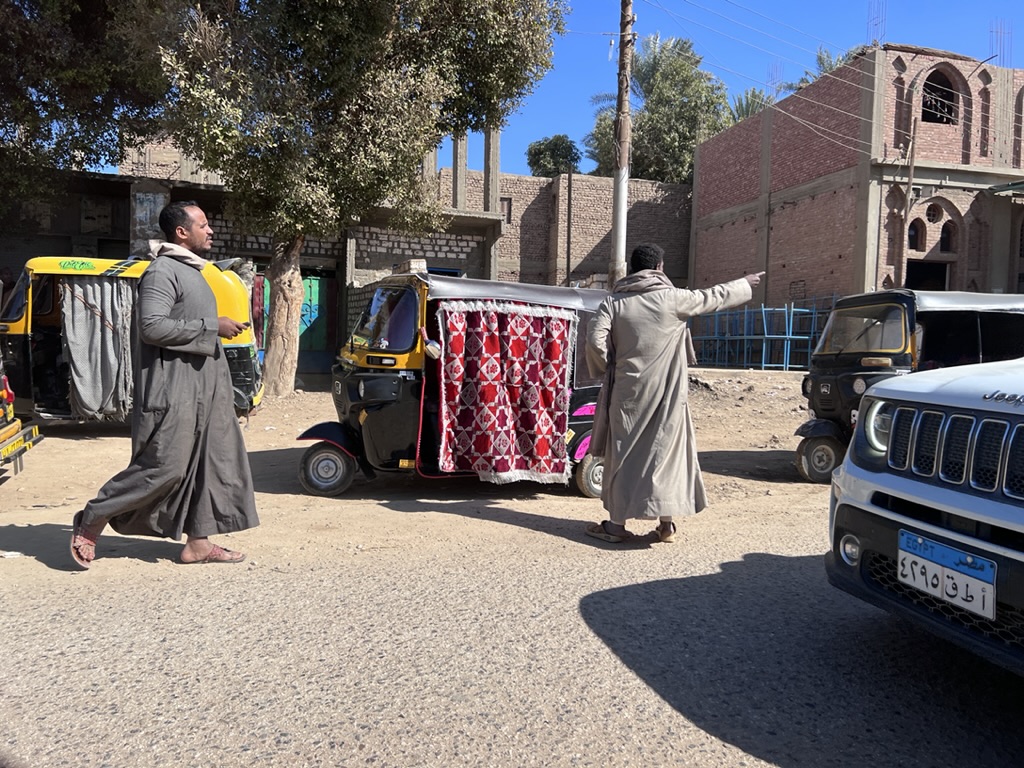
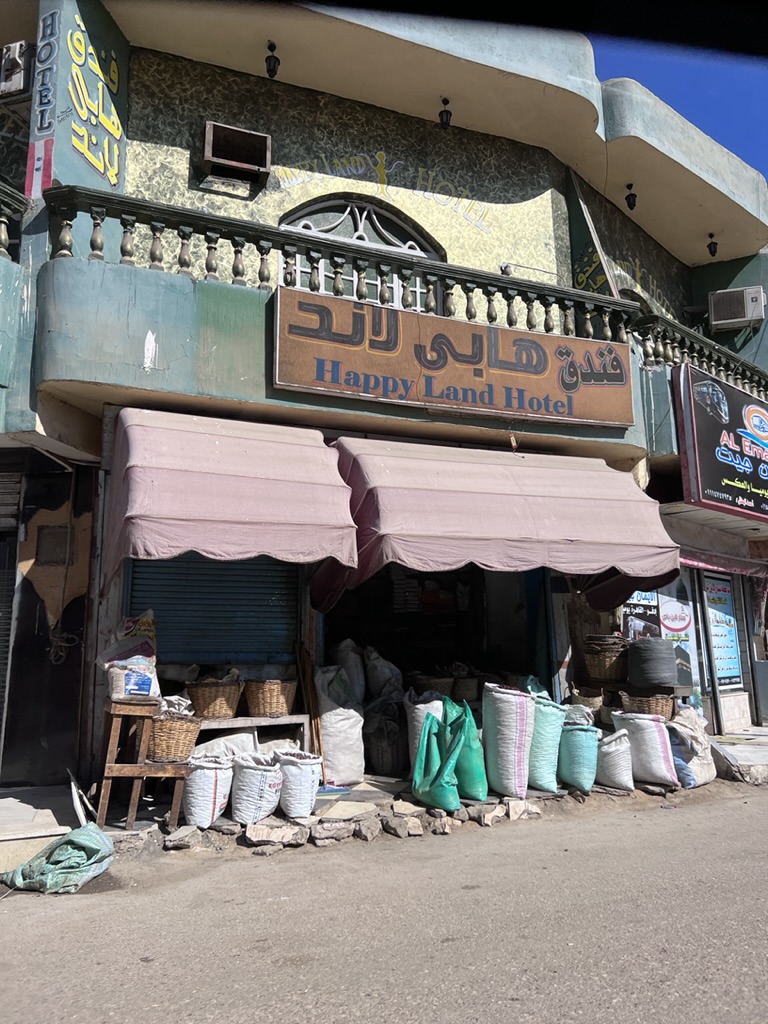
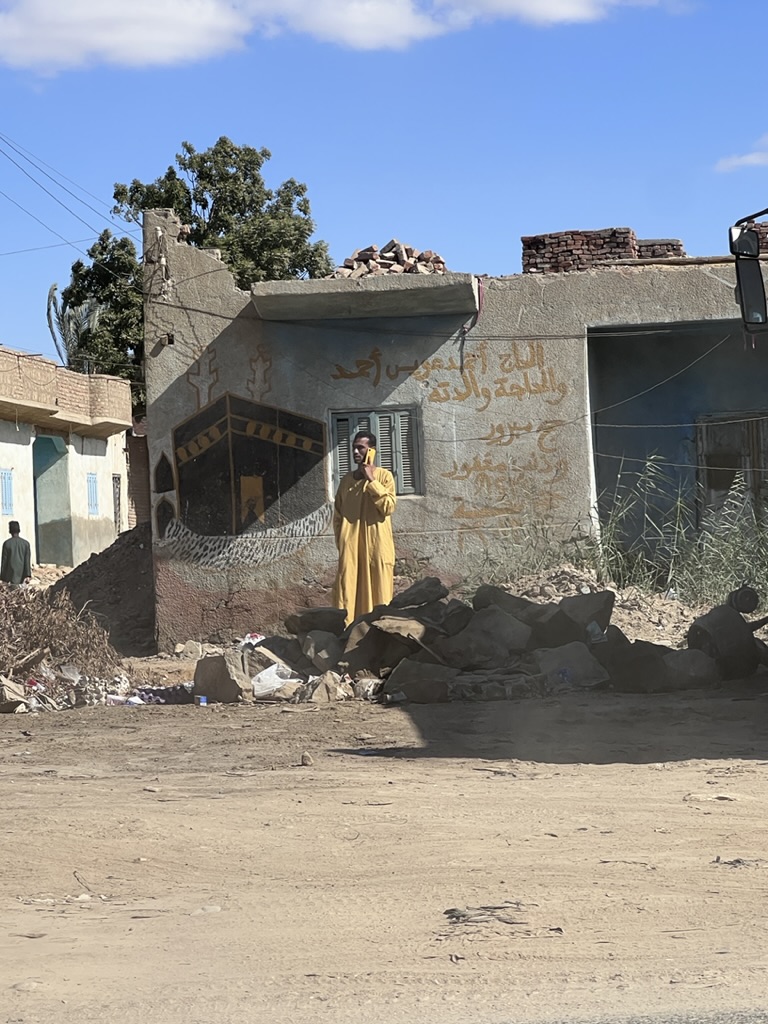
As is the tradition in Egypt, all of Allah’s father’s sons (there are 5) live with their parents, along with wives and children. The married daughters (there are two) live with their respective husband’s families. Allah’s wife works; she is a teacher as is one of his sisters. He has two young children, one of whom is in primary school. The drive is slow because of the road condition and because you are required to stop periodically at police checkpoints (of which there were about a dozen over the 100+-mile drive. Not sure what the police are looking for, but the trunk must get opened and Allah shows some papers.
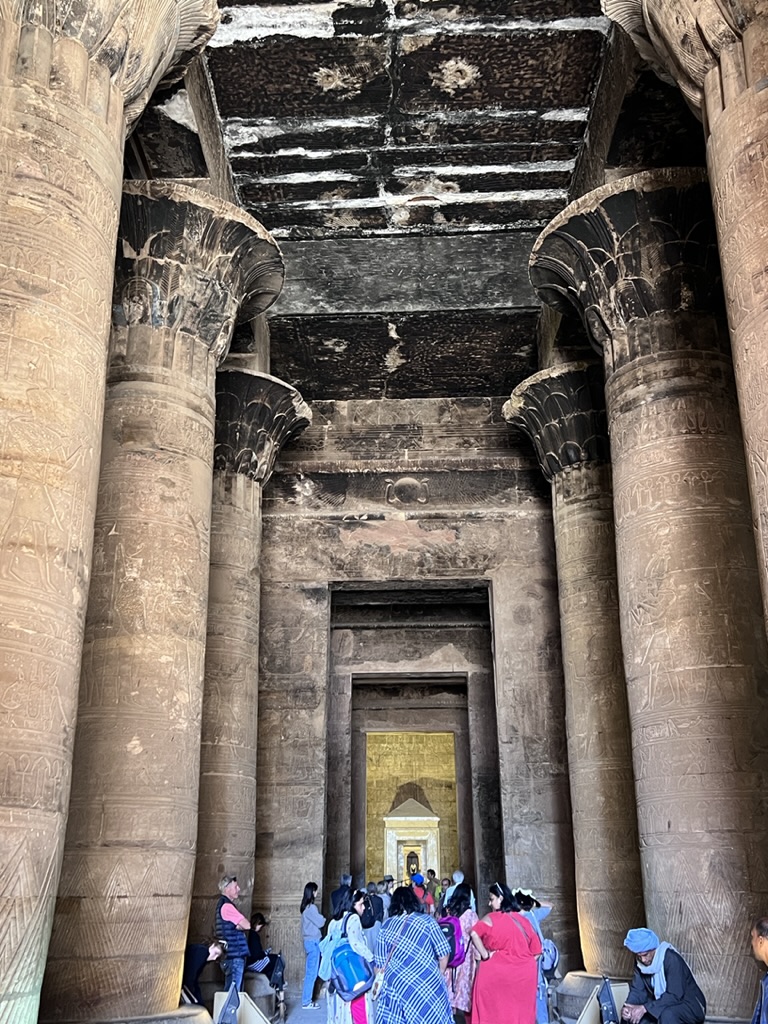
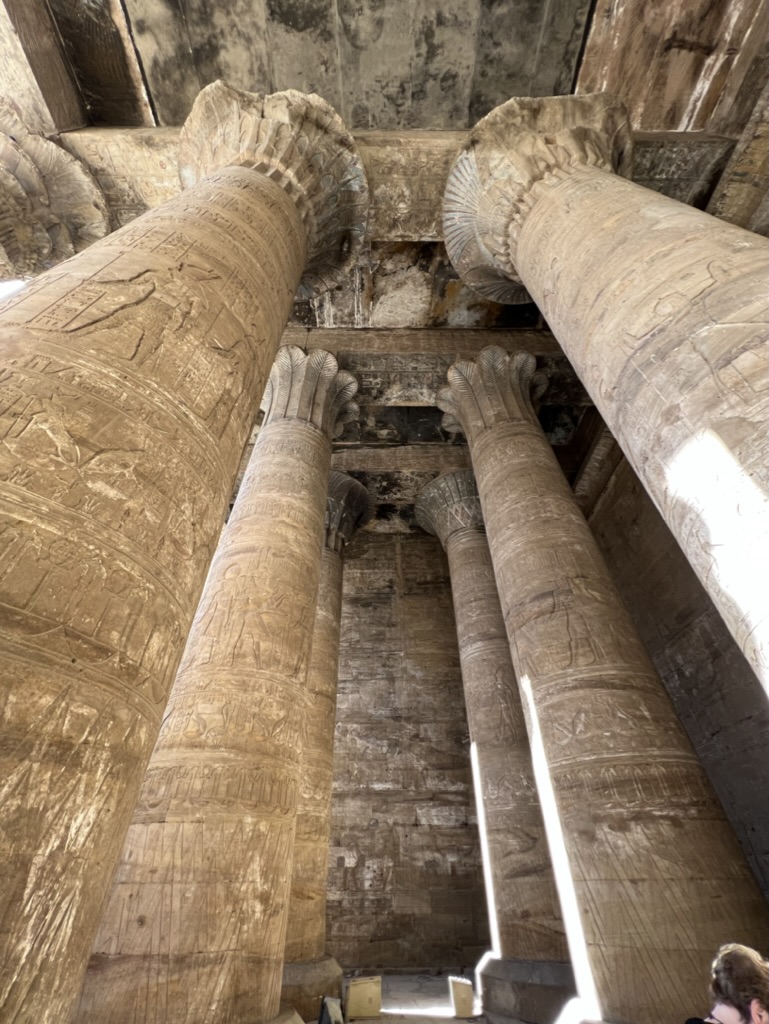
Along the way, we stopped to see Edfu Temple (I’m beginning to get templed out). Edfu is one of the best-preserved temples in all of Egypt. It was built in the Ptolemaic Kingdom between 237 and 57 BC. And then we changed from the smaller road to “the highway” where we could go about 40 MPH. Apparently tourists are not allowed on the highway. Not clear as to why, but Allah explained that he had black curtains on the windows and at a certain time we needed to cover the windows with these black curtains. If he were to get stopped (and he was pretty sure it wouldn’t happen) he would “talk” to the cop (most likely he would know him already) and then everything would be good. I think that meant a little cash would change hands.
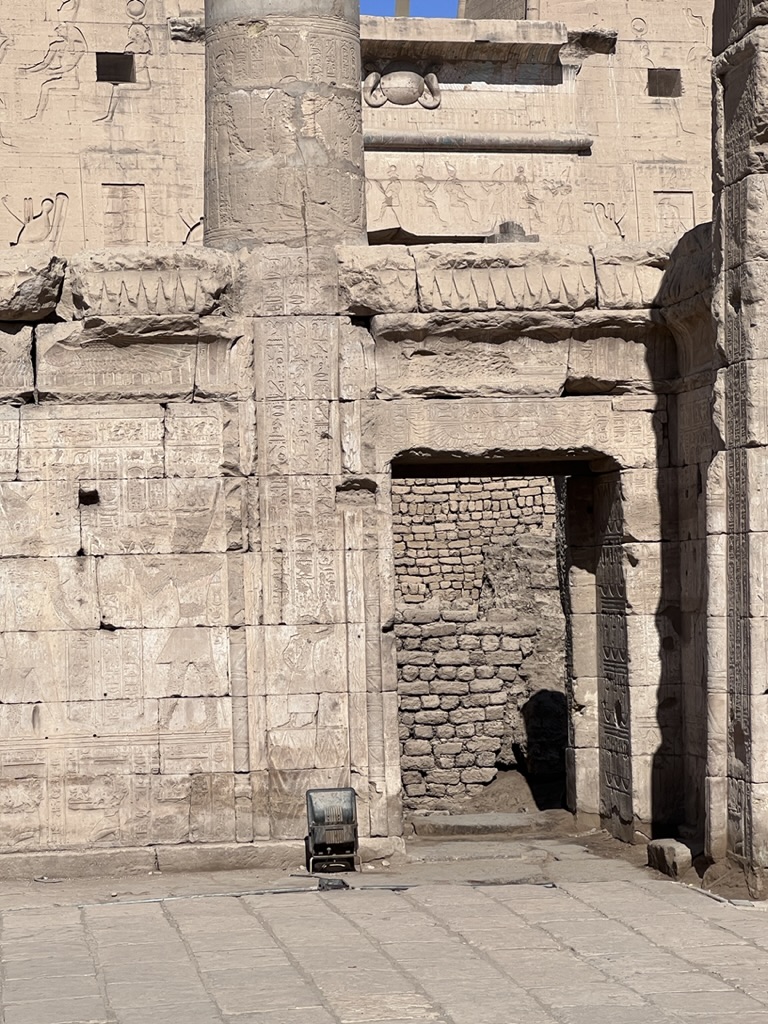
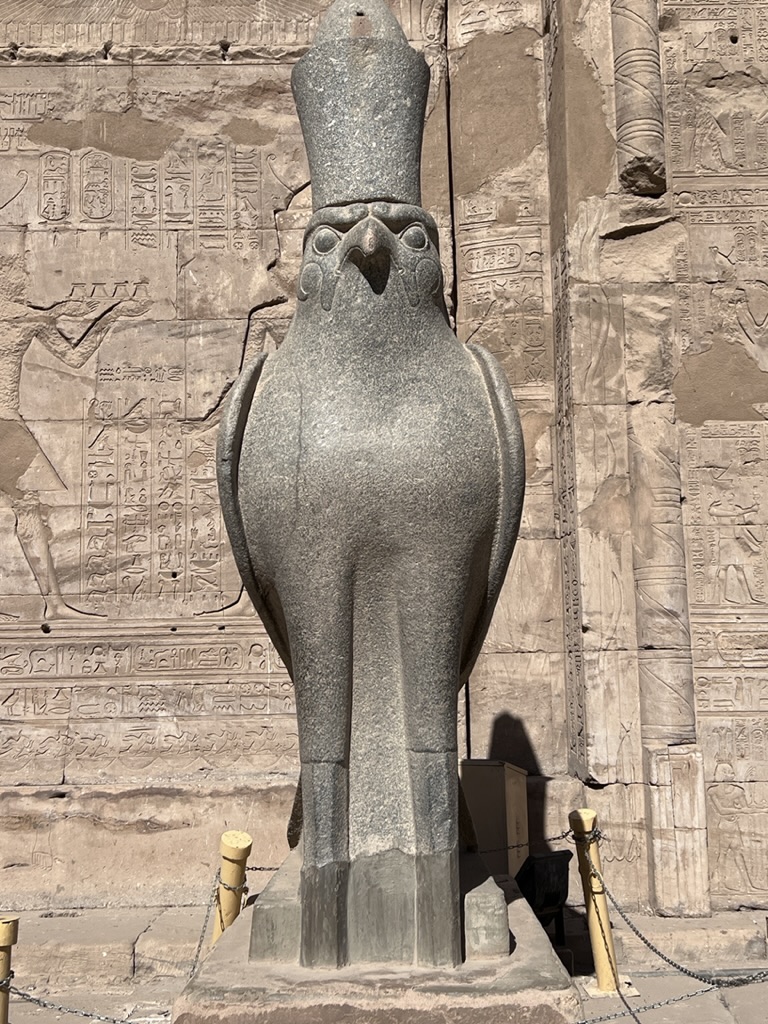
We made it just fine on the highway and none of us are in jail. Along the way, we crossed over the “old dam” that was built by the Brits and could see the much larger Awan Dam in the distance. We had received an email from the hotel BenBen Hotel, telling us to call them 30 minutes before our arrival so that they could send the boat for us?? We had not idea the hotel was located on a small island (so much for being prepared!). Allah took us to the place where the boat would dock.. It was pretty rocky with very very uneven steps down to the “harbor.” Within minutes a boat arrived (open-air motor driven flat boat) and we boarded (rather clumsily as the boat was moving and it took very large steps to get on and off the boat. No life preservers on the boat, as far as we could tell. Really don’t want to end up in the Nile.
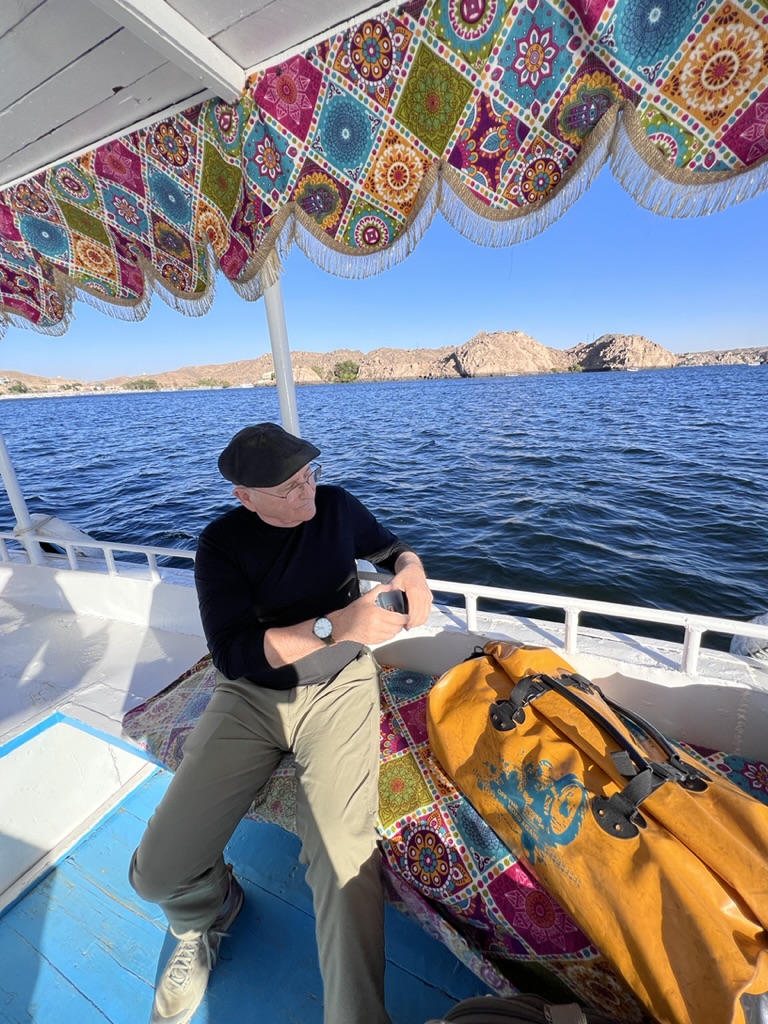
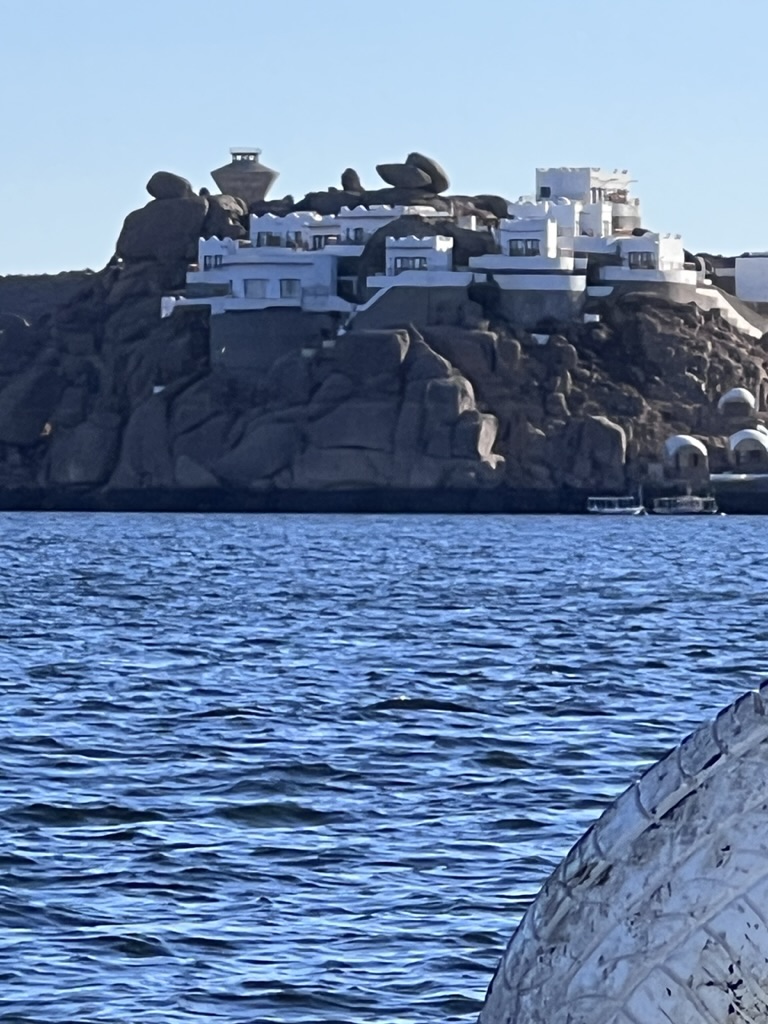
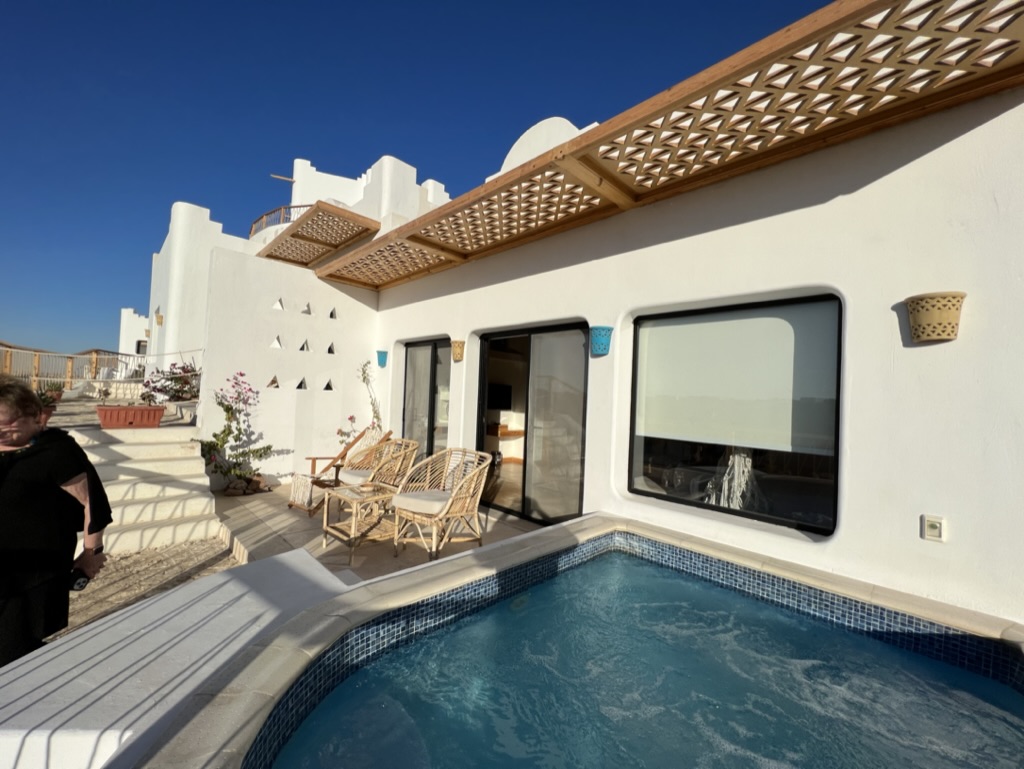
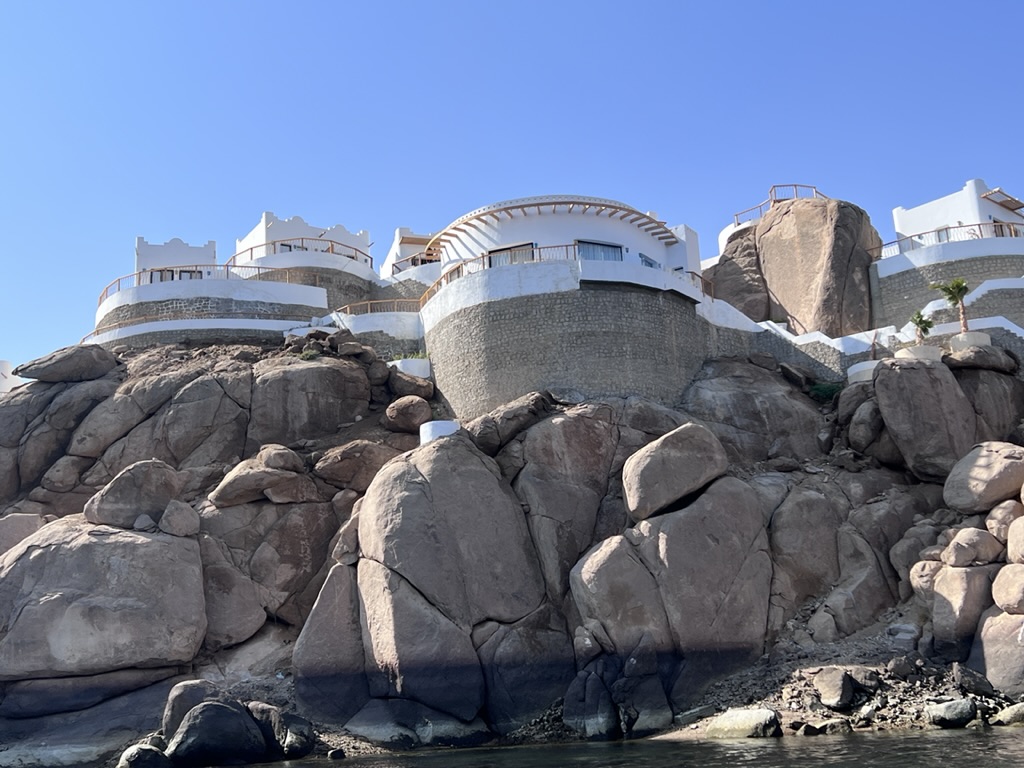
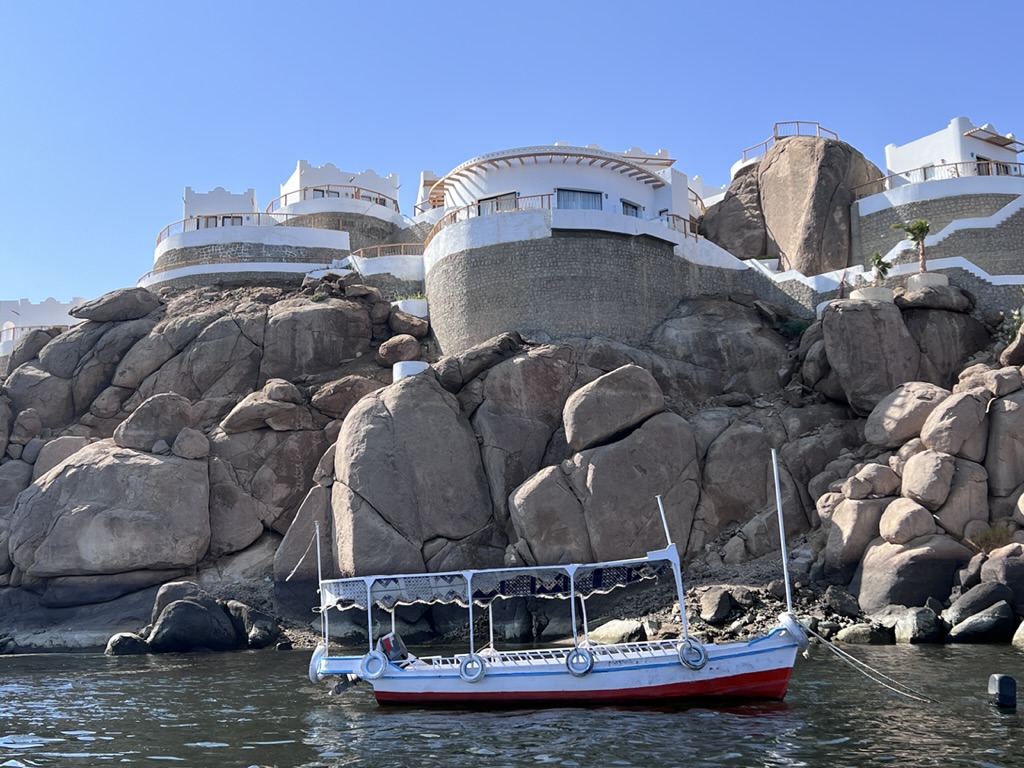
We then took the 15-minute ride to Ben Ben… which is pretty fantastic, from what we’ve seen thus far. It’s only one year old. All the rooms have private Jacuzzis on the decks (too bad we don’t have bathing suits). The hotel sits about 40’ atop what look like boulders and the siting is pretty amazing with commanding views of the Nile. More on the hotel tomorrow and also on our dinner tonight and late night trip by boat in the dark (no lights on the boat) to get into town for dinner.
All good. We only have about 40 hours in Aswan, so unfortunately I don’t think we’ll have much time to enjoy BenBen.. Tomorrow we head to a Nubian Village—and to our favorite place.. the souk (market).
Take care
Greetings-
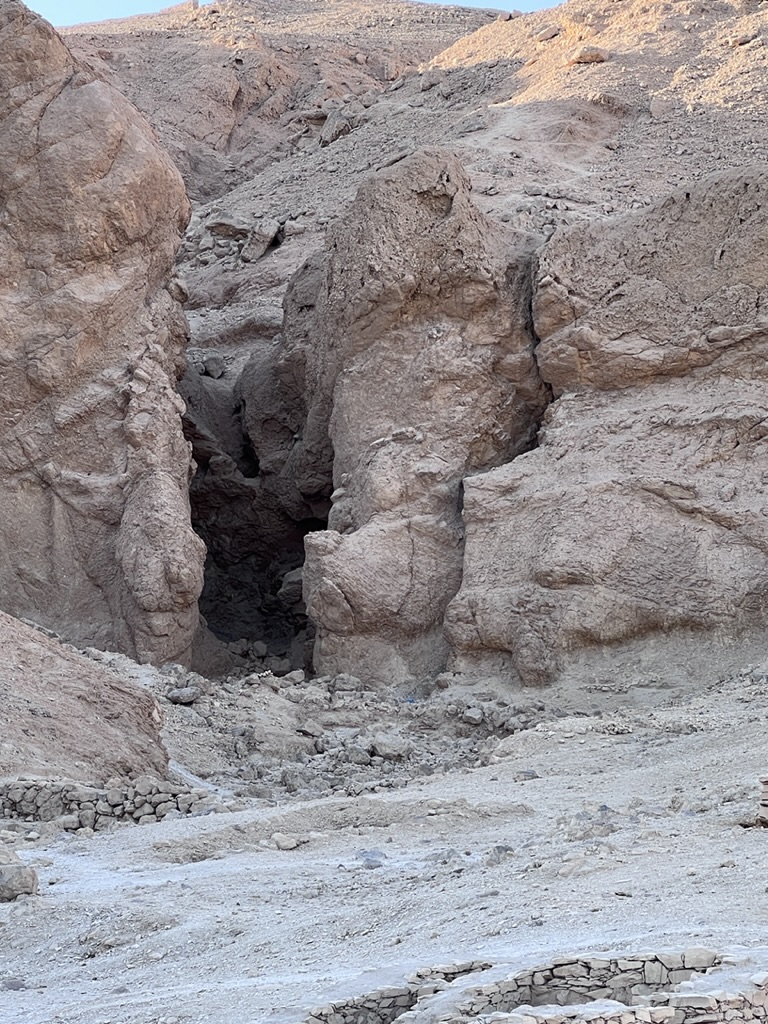
We set out on Sunday for the Valley of the Kings and then the Valley of the Queens – all day, death. Tombs, tombs, and more tombs.
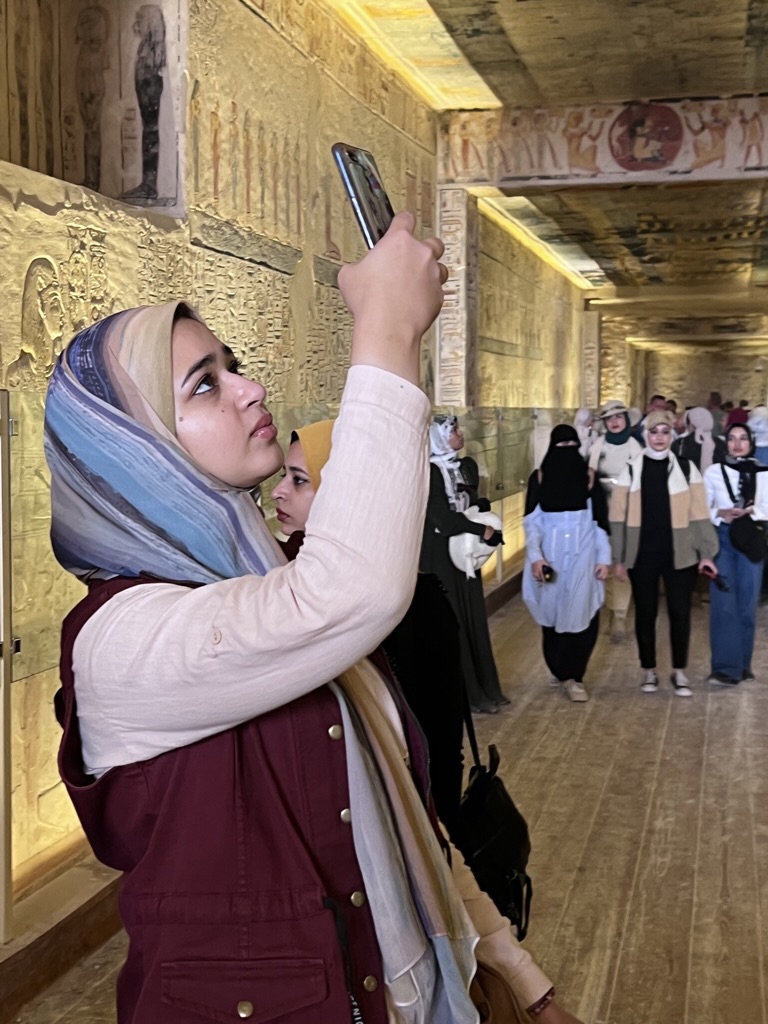
Abdul picked us up and we drove across the bridge over the Nile to the west side… arriving at the Valley of the Kings about 40 minutes later. Roads are pretty worn– mostly dirt and have lots of rocks and bumps. There are also a lot of soldiers (guards) that you pass from time to time along the road. We bought our tickets for the Valley of the Kings (the prices for tickets at all official places of interest have price tiers, with foreigners paying a great deal more than locals—not sure the exact difference because the lists for locals are in Arabic). I’m fine with that, but I will say the prices were not cheap.
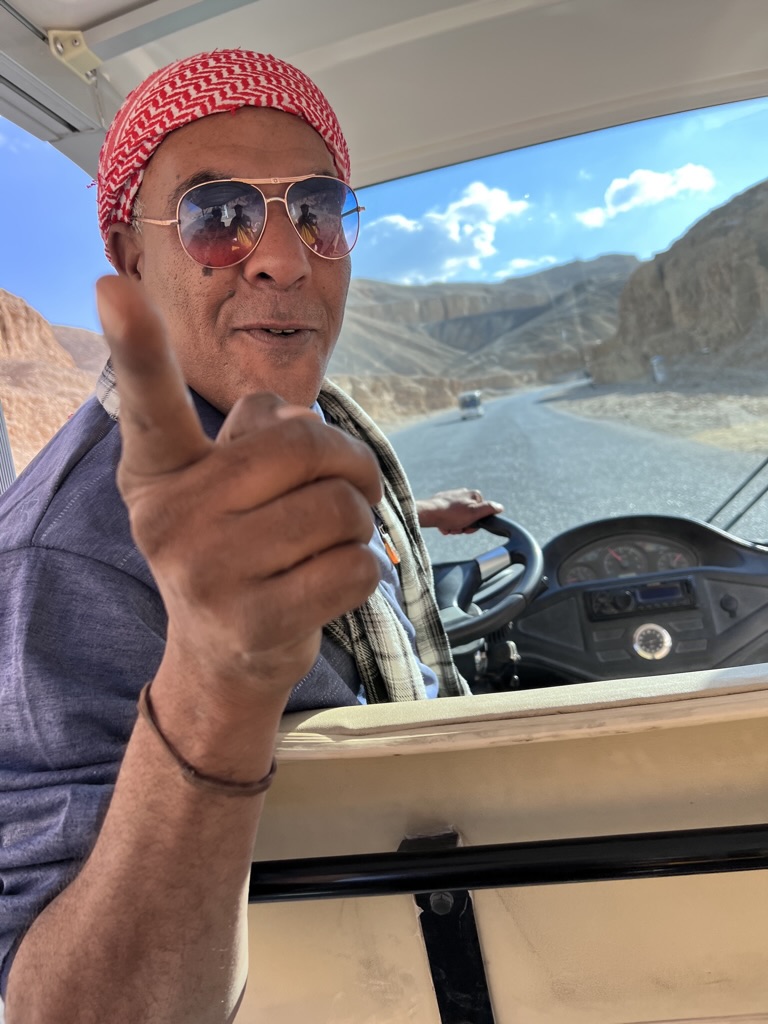
As soon as we got the tickets, we went through the metal detectors; we have become very expert at getting the digital tickets to open the turnstiles—it requires a bit of rubbing and moving your scan code over the reader. We figured out that to get to the area with the tombs you need to hop onto a little open-air electric cart (holds about 12 people) and that we did. We sort of dashed onto one, because it was obvious that most people (maybe nearly everyone) was with a tour group and their “leader” was in front of each of the carts with a big sign noting the tour group. Then it turned out you needed to pay a small fee to use the cart (the tour groups had probably prepaid), so we got off and went to another ticket booth to get our tickets for the cart. Jumped on another one and off we went. They let you out just in front of the area where vendors are trying to sell you all sorts of things that are branded with King Tut and other dead leaders. We passed.

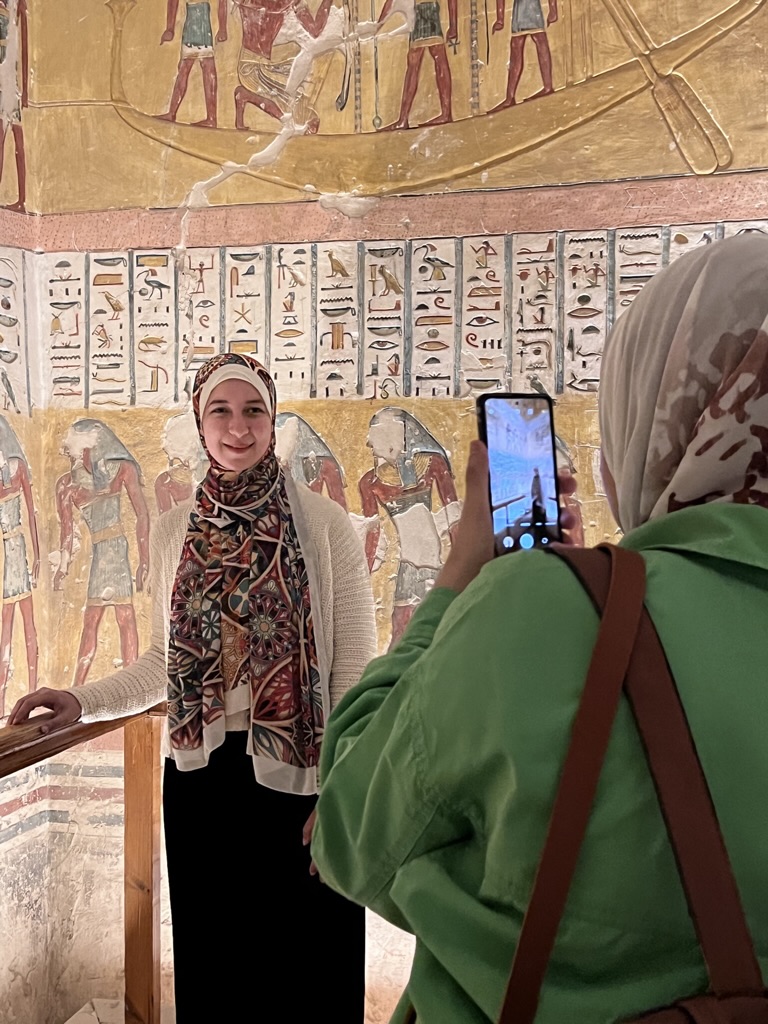
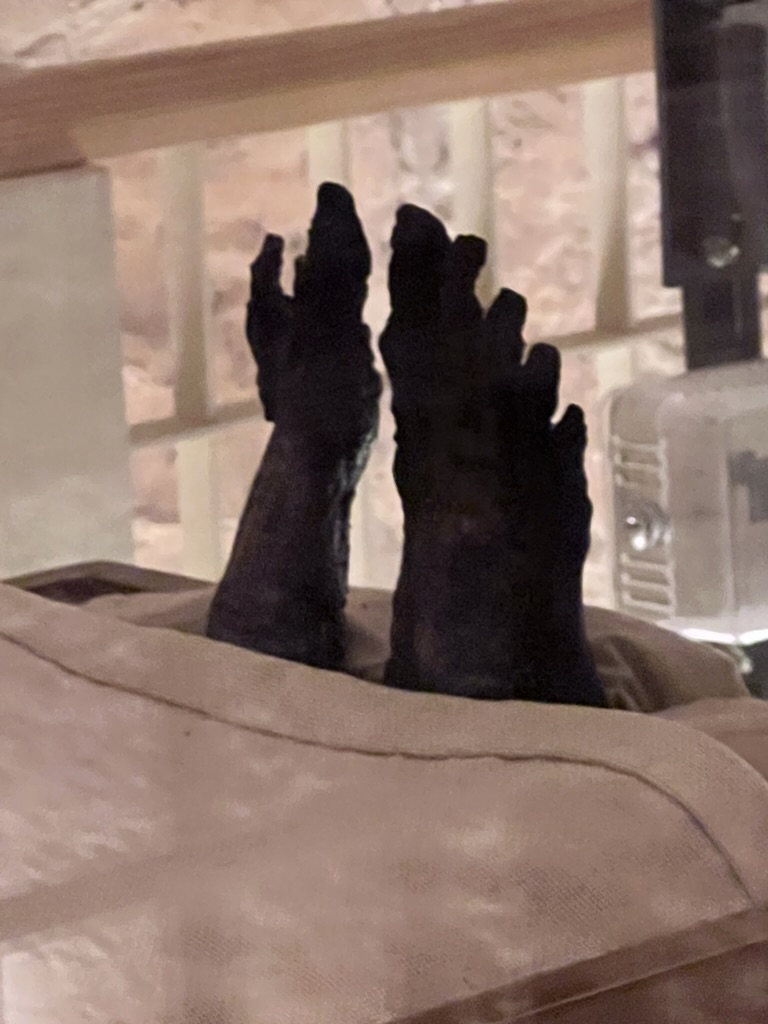
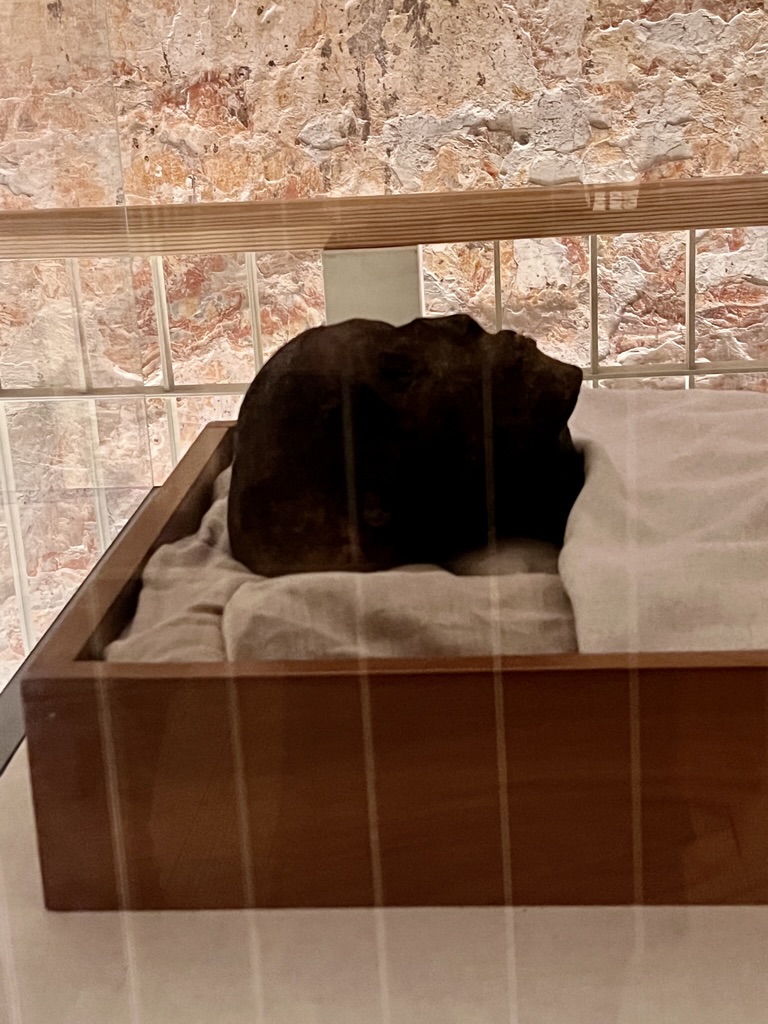
We visited three different tombs and then decided we should see the King Tut tomb, so we walked up to that entrance. At each entrance they punch your ticket. When we got to the King Tut entrance we learned that you needed a different ticket (in addition to the regular ticket), so we walked down and took the little cart again and went back to the ticket booth to get the additional ticket. Costs as much to see King Tut tomb as it did to see all the others combined But, here we were, how could we not visit King Tut?
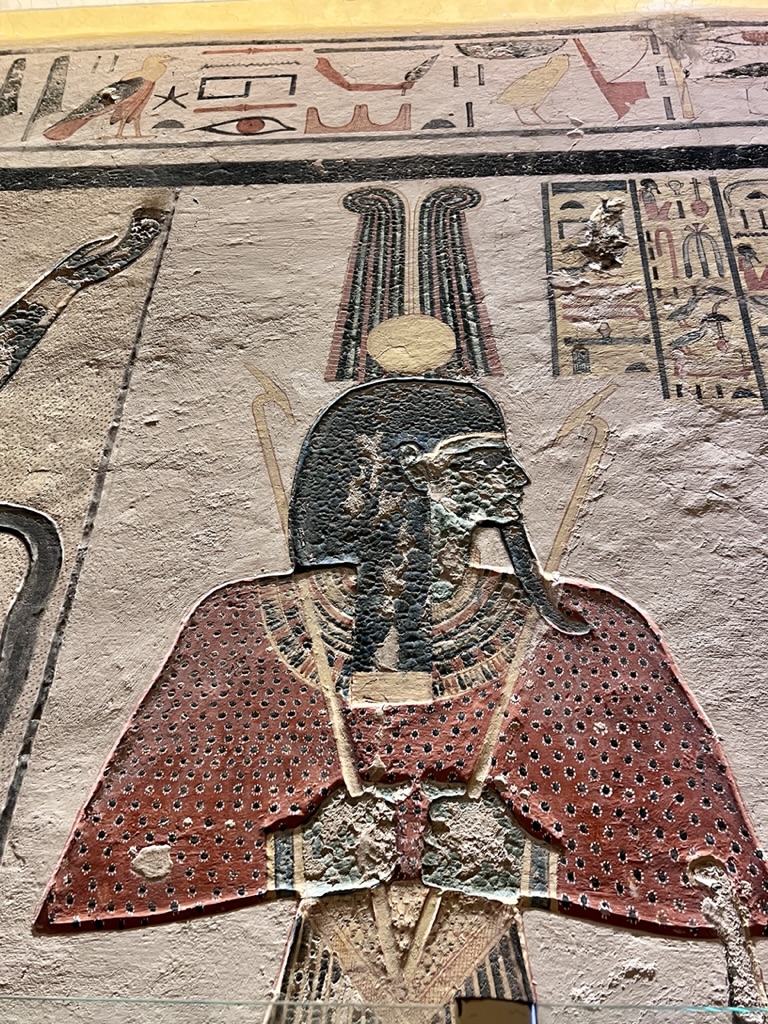
With the new ticket in hand, we went down about two or three flights ad there he was… short guy… His head is visible and his toes (see photo above of toes of King Tut); the body is in a shroud. His tomb is obviously more decorated than the others, but his tomb was actually pretty barren as most of the decorations were taken away and put into other museums across Egypt (and probably also around the world). He died at 19 (!!) — last pharaoh of his royal family to rule during the end of the Eighteenth Dynasty.
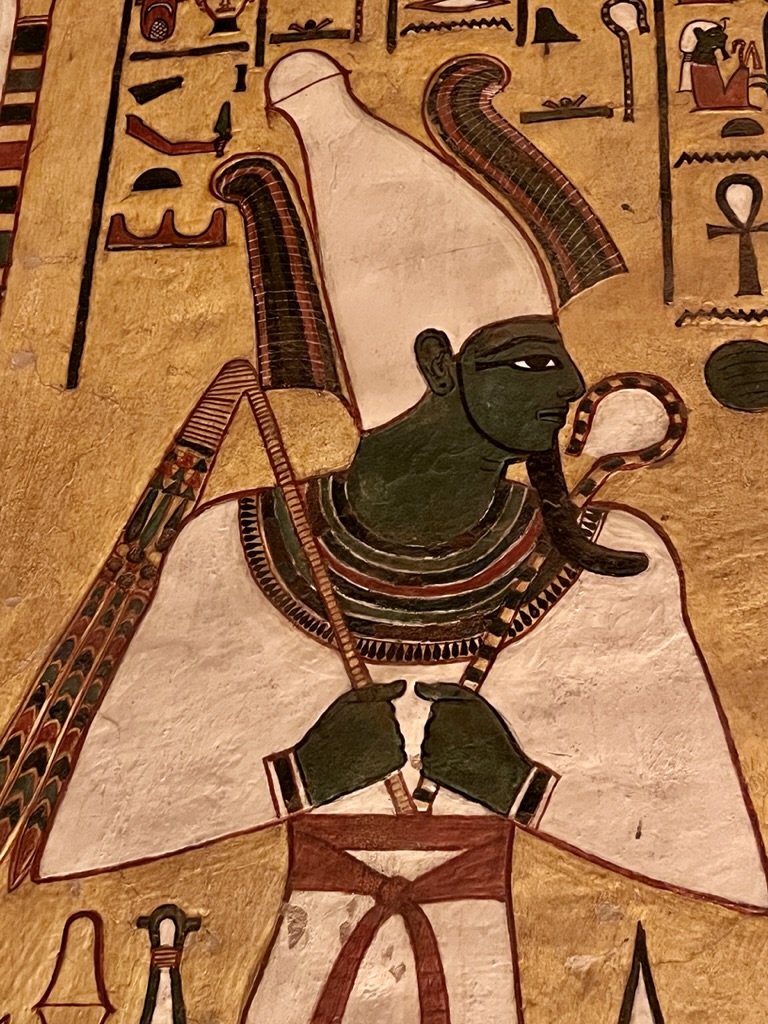
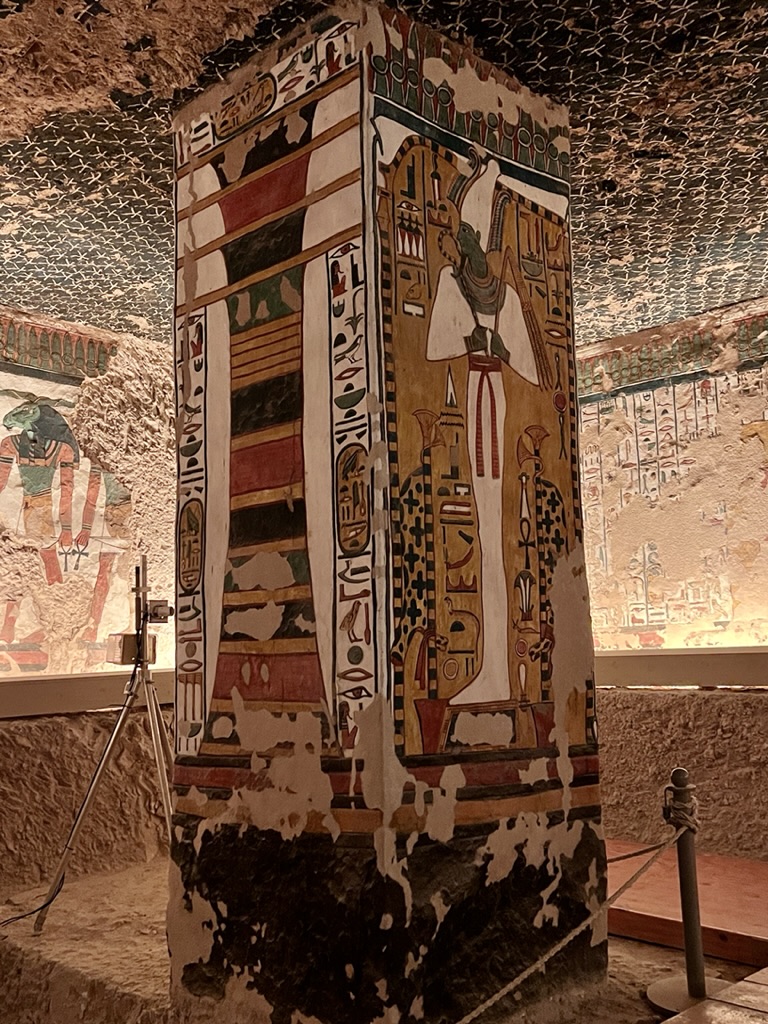
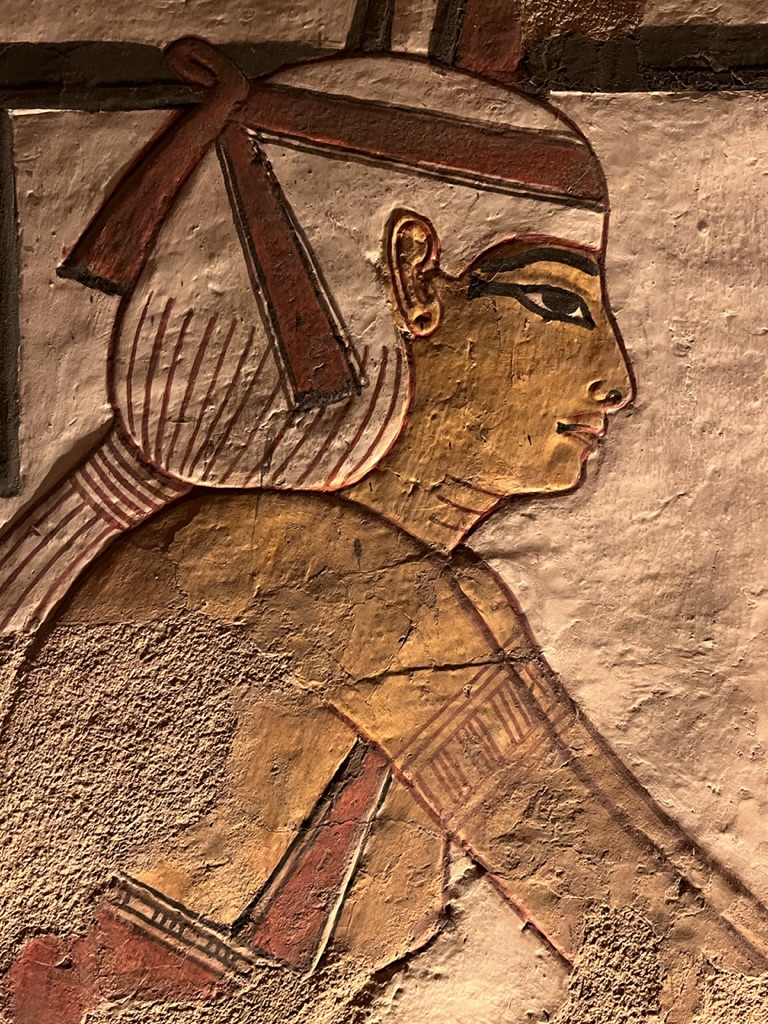

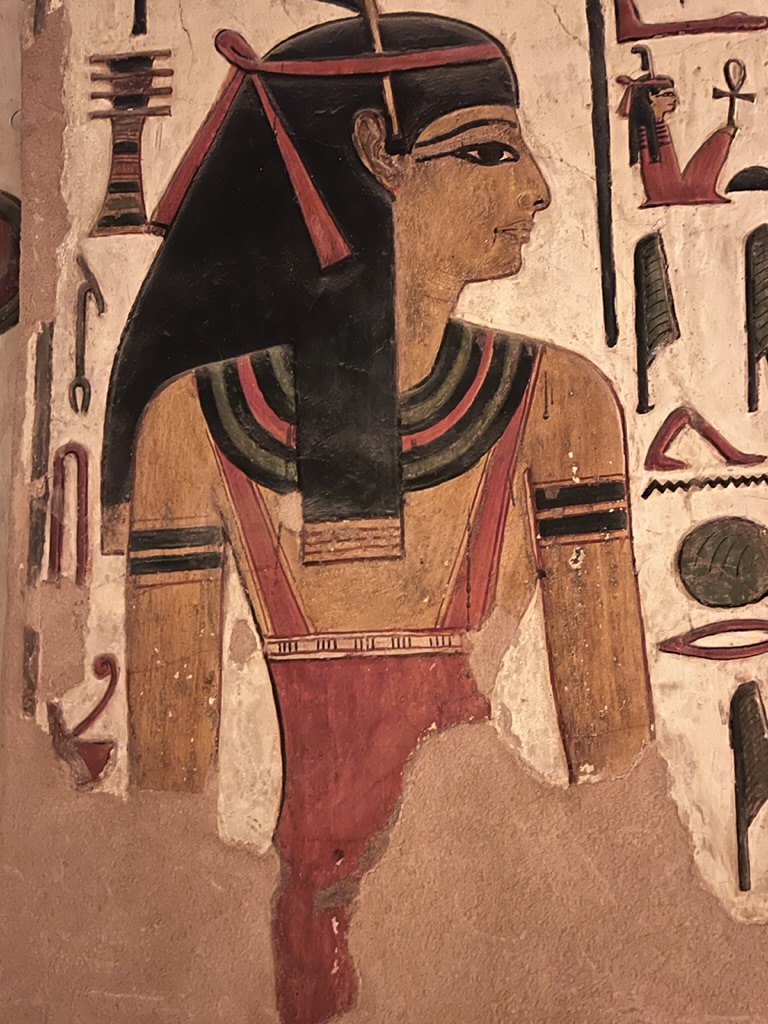
Then we headed to the Valley of the Queens, which is less visited than the Kings (naturally) and also less well preserved. But we decided we needed to see Queen Nefatari (not Nefertiti). Known as “Lady of Grace,” “Lady of All Lands,” “Wife of the Strong Bull,” “Great of Praises” and many other nicknames, Queen Nefatari was clearly one of the most famous Egyptian queens and an iconic woman of Ancient Egypt… obviously a powerhouse, based on her tomb.
Like other kings of Egypt, Rameses II had a large harem of wives, but at any one time only one wife was considered the ‘chief queen.’ Rameses was a busy guy and had 8 queens over his lifetime, but Queen Nefatari was supposedly his first and most beloved. The tomb of Nefatari was the best preserved and most amazing of all of the tombs we visited, with colors still rich and preserved.
Then we made our way back to our hotel and quickly headed out again—for dinner at Al Moudira, a very small, elegant hotel on the West Bank of the Nile within the Al Moudira Hotel. We had tried to book that hotel months ago, but it was impossible; it’s booked many many months in advance. So, we thought we’d visit it and have dinner. As the taxi drove down the remote road to Al Moudira we noticed there weren’t any lights on the streets or buildings. When we approached the hotel, they came out to tell us that dinner was still being served but that all power was out and everything would be by candlelight.
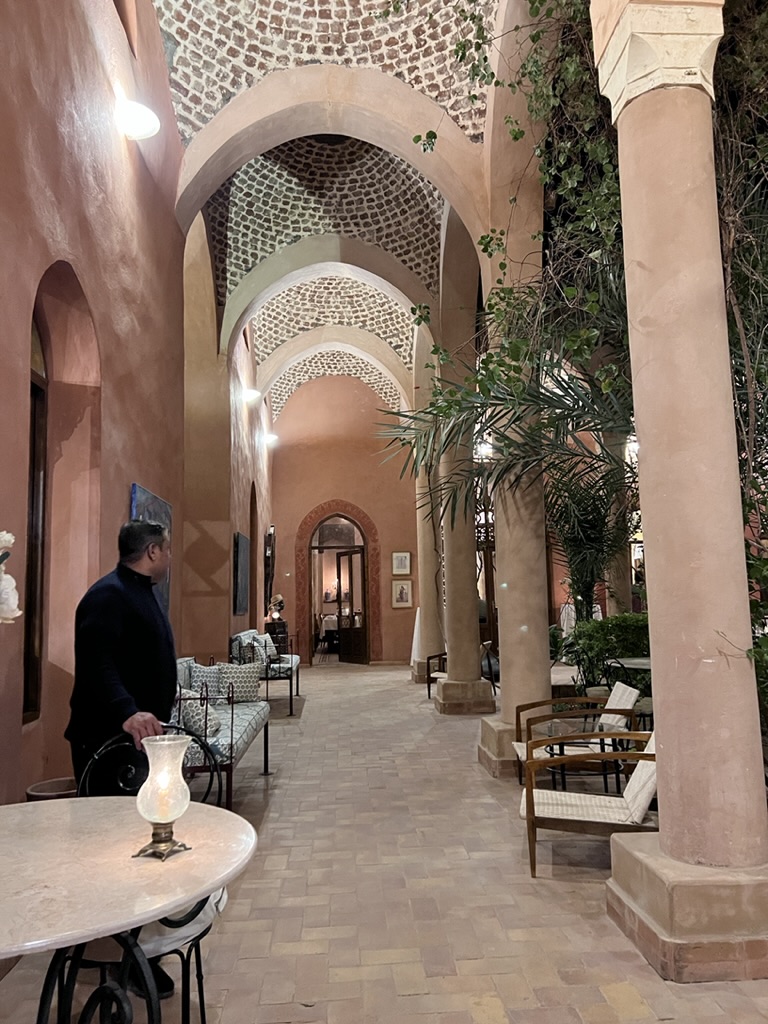
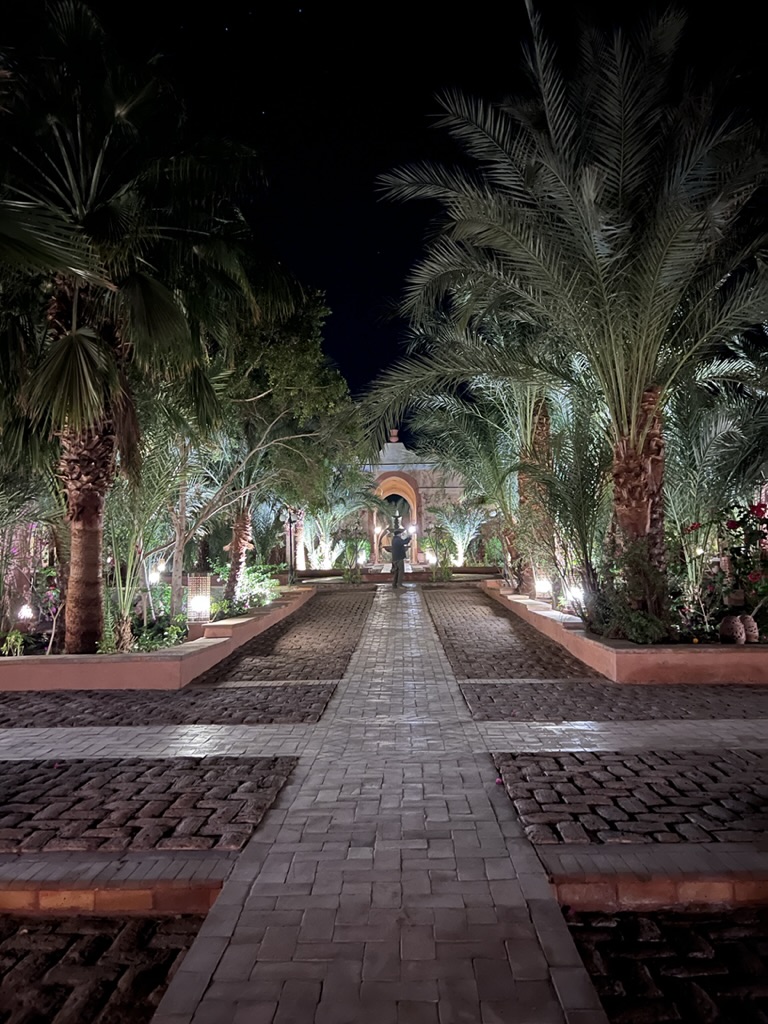
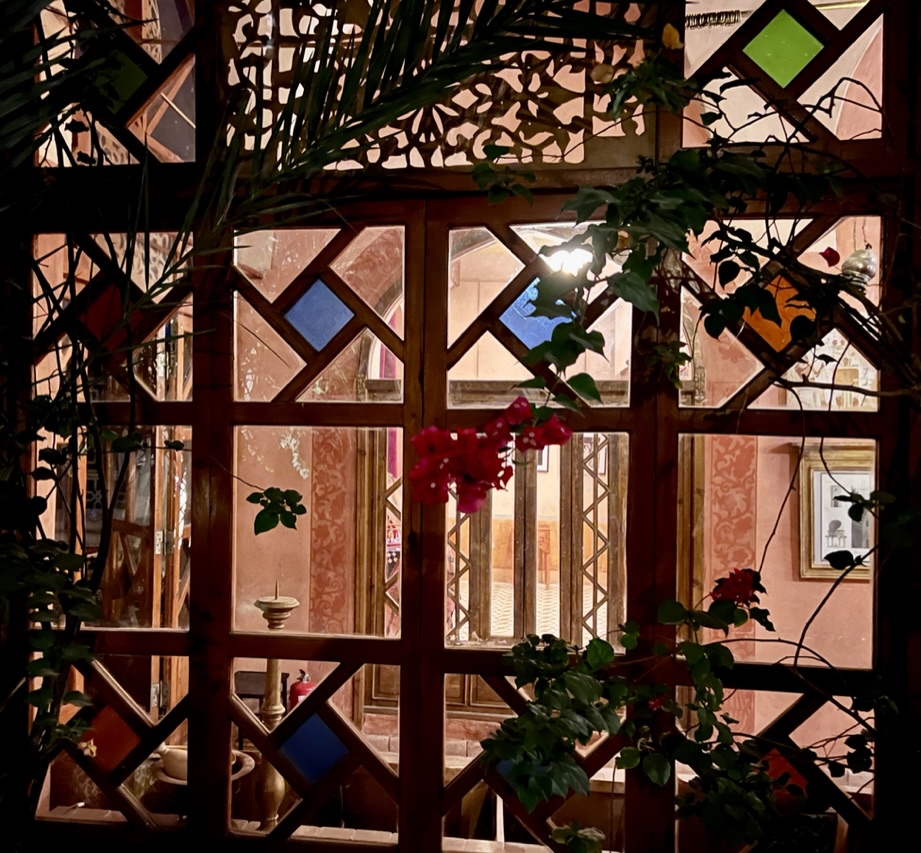
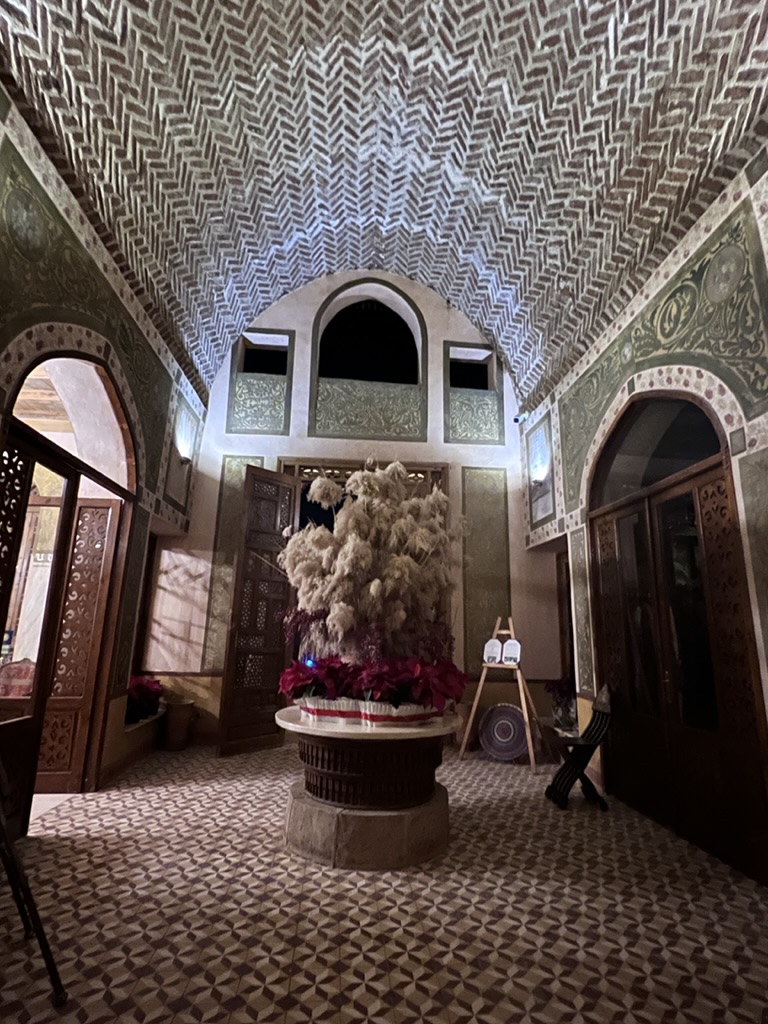
We got settled in the amazing dining room, began to order and voila the lights came back on to quite an applause from the assembled guests.
Dinner was not great, but the setting made it all worthwhile. The story of the hotel is interesting; conceived by a wealthy Lebanese woman who had lived in many places around the world including 10 years in Tuscany. She decided to settle in Luxor on the West bank and hired an architect who specialized in building traditions of a bygone era. Every detail was considered and the frescoes on the walls are superb. We strolled the grounds and then headed back to our hotel to pack and prepare to leave the next morning.
Best –
Fern
8. Luxor Egypt: Cairo to Luxor: Tombs and Taxis; Abdul and Abdul (and Abdul) 12/23/22; 12/24/22


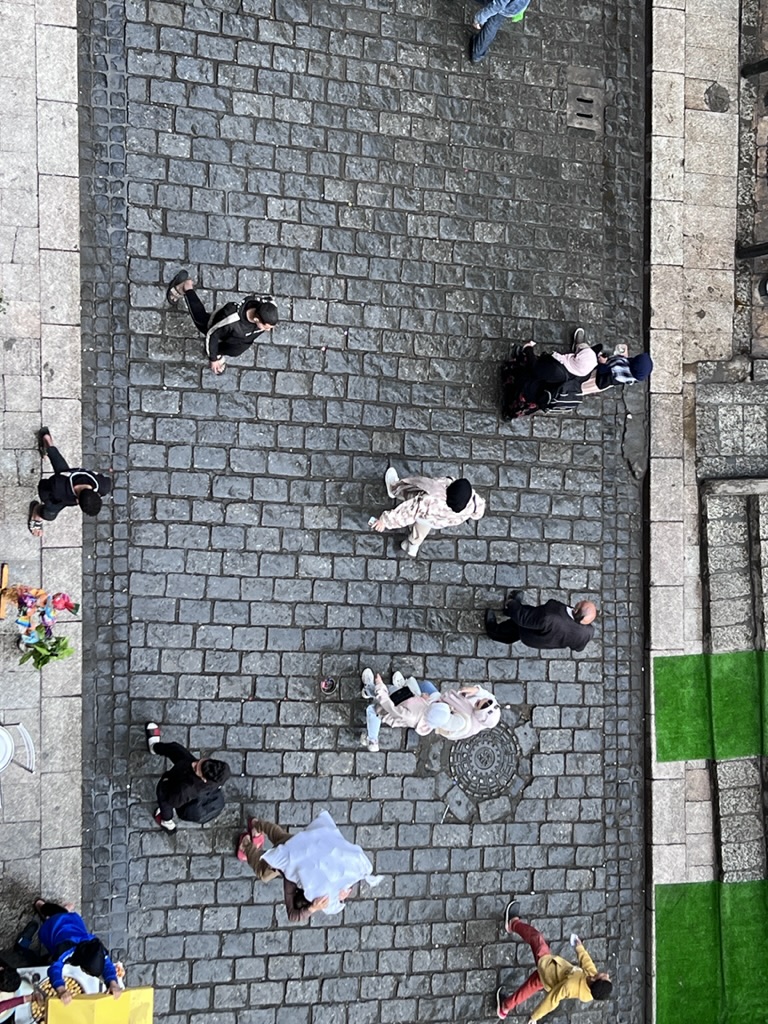

Greetings from Luxor, Egypt
I trust you are well and enjoying the holiday season—
We left Cairo last night for Luxor. The airport was fairly calm, and other than the fact that the flight was about 30 minutes late, all was smooth. Landed in Luxor (population 1.3 million – a tiny village compared to Cairo) and found our way out of the airport and into the taxi world of Luxor—much calmer than the airport taxi world of Cairo. Taxis at the Luxor Airport are yellow; all Cairo taxis are white. We are staying at the Luxor Hilton – not our first choice, but apparently this is a really popular time for families from all over the world to visit the Nile area. By the time we started booking hotels we had very little choice. It’s fine—probably about 17 years old, set back from the street with a long drive. Like the big hotels in Cairo, “city taxis” need to be “screened” before the hotel guards lower the hydraulic barriers to enter the hotel grounds and the drivers need to show their licenses. Very humiliating; no one asks for our identification. I suppose some of this is due to the infamous Luxor Massacre in 1997 that ended with 64 dead, predominantly tourists, including Americans.
But the staff is friendly and accommodating. They were very surprised when we checked in that we were not part of a group and that we were not going to join other guests for the Hilton Christmas Eve Dinner. (We already made a reservation for dinner at a small restaurant, that we hope will be good.)
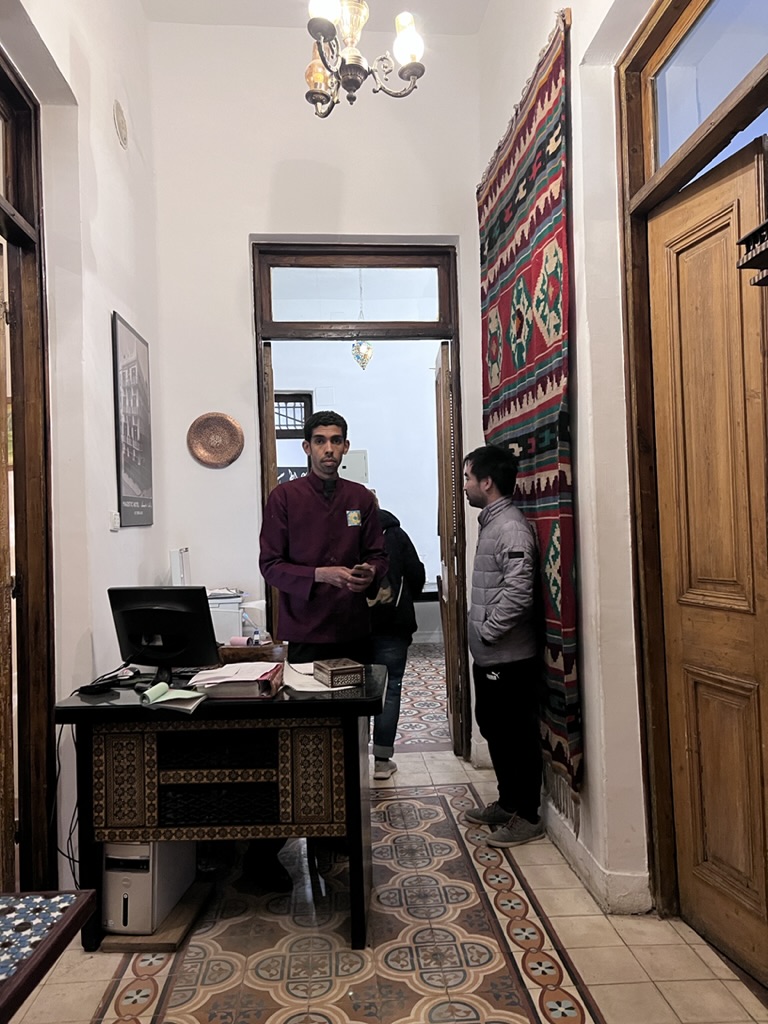
As soon as we checked into the hotel, we immediately left our room and headed by taxi to some local restaurant we had heard about which turned out to be in a very modest neighborhood (maybe a slum). The restaurant was located inside a 6 story, walk-up hotel, called the Nefertiti Hotel (frequented by lower income Egyptians and maybe back-packers). The restaurant, Al Sahaby, was on the very top floor so we trudged up the uneven stairs. The offerings were sort of street foods and we realized as soon as we got inside that it probably wouldn’t have any wine or spirits. We ate and headed back to the Hilton to get a drink (one very positive feature of the Hilton—they have a bar). The taxi driver who took us to the restaurant and came back to drive us again is named Abdul. He is the fourth Abdul taxi driver we have had since we came to Egypt.
Anyway, Abdul was the perfect driver for us. He’s quiet, doesn’t push to show us places, gets it that we are happy strolling alone and having him wait or return for us, and doesn’t overcharge. In fact we’ve given way more than what he requests because his initial pricing is very low. He’s also very gentlemanly. He has a super cute little daughter in his What’sApp photo – probably about 2 years old; actually, maybe it’s a grandchild.
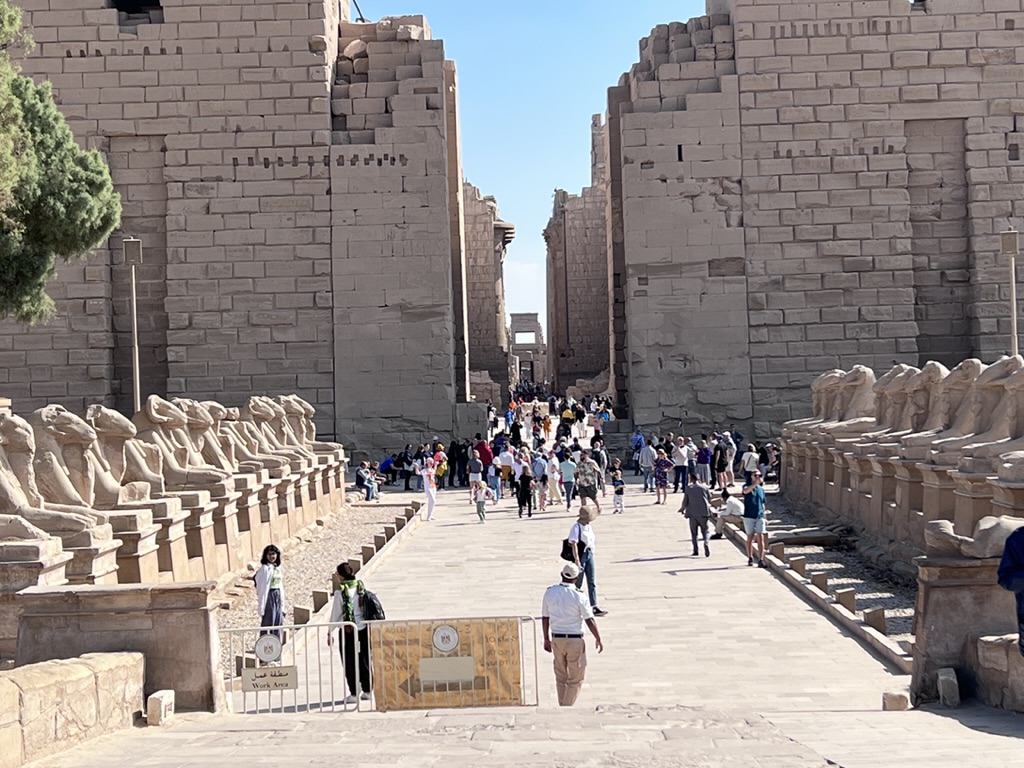
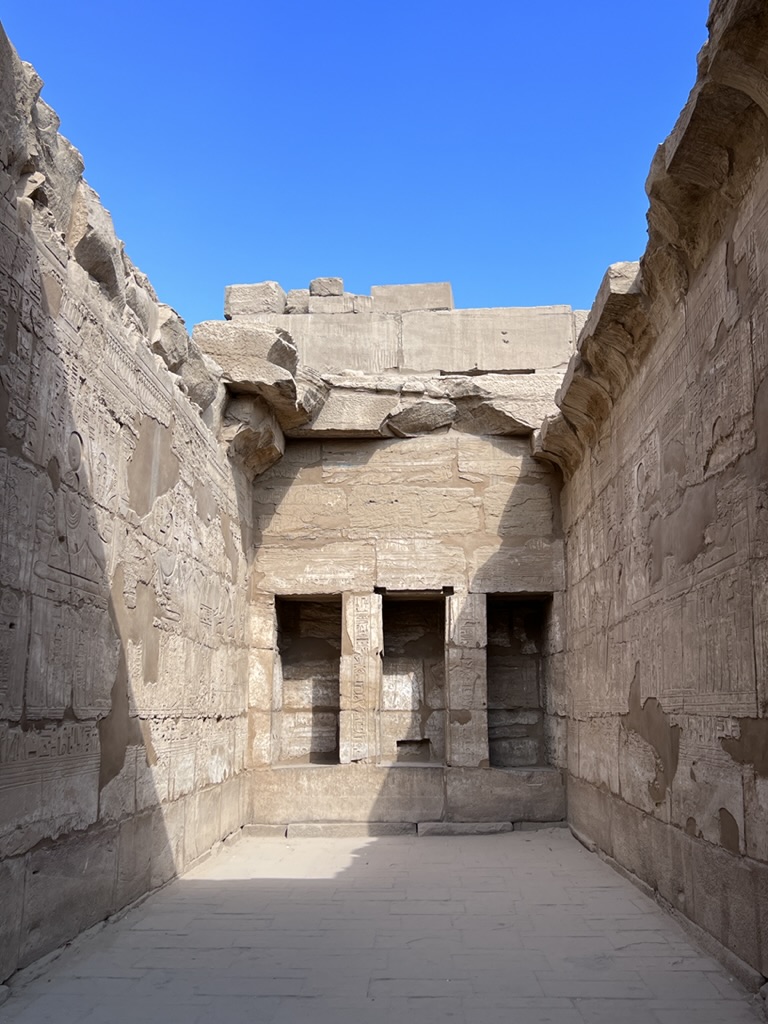

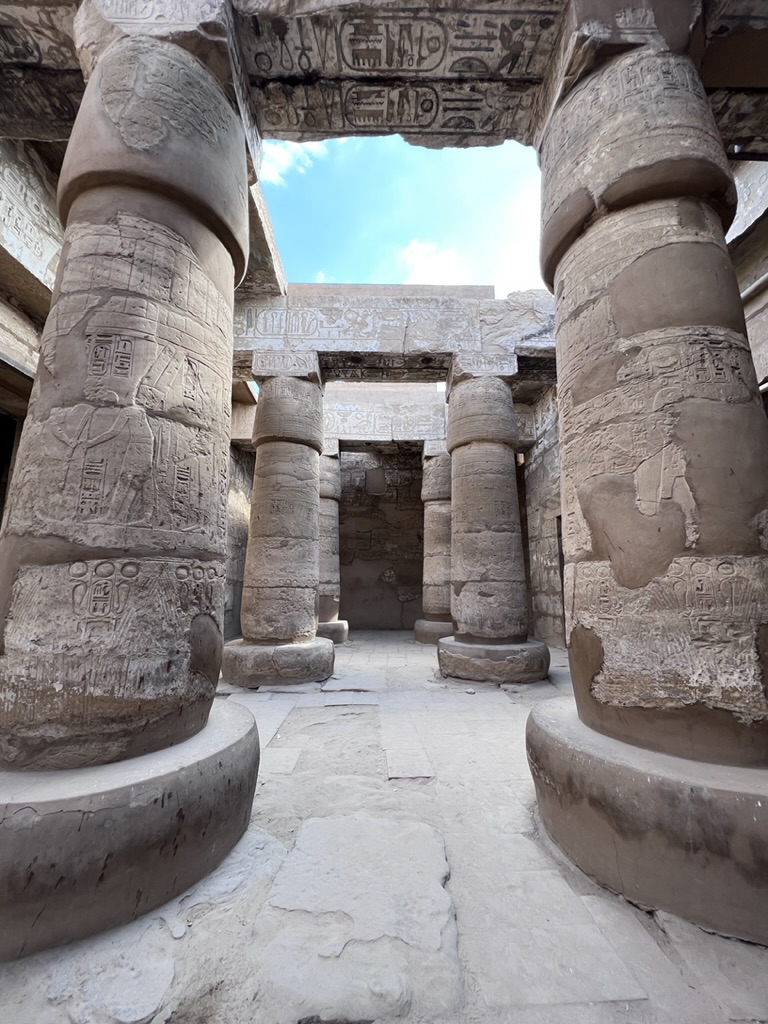
So we asked Abdul to take us to the Karnak Temple this morning and then to Luxor Temple. It’s walkable—about an hour, but mid-day heat is pretty strong and there isn’t any real shade—it is the desert. He was happy to do it and very accommodating. When we emerged from the Karnak Temple complex, Abdul was outside in a very nice car with his “cousin.” He said we would be using that car from now on… but “same price.” It was pretty cushy.
The temple of Karnak is really a city of many temples built over a two-thousand-year period and must have been totally awe-inspiring at its heyday, as it’s pretty spectacular now –even after being weathered and pilfered. It was easy to see how uneducated Egyptians of that era and the workers/slaves who built it for the pharaohs as a place of the gods could be enticed by working for a god or pharaoh with this power. The great temple at the core of Karnak can apparently fit Milan’s St. Peter’s and Paris’ Notre Dame Cathedrals within its walls. Construction at the complex began around 1970 BCE and continued through to 300 BCE. Karnak is actually comprised of four main parts, but only the largest part is open to the general public; some has yet to be excavated and some is too decayed to allow visitors. Construction occurred during the reign of 30 different pharaohs, each of whom added sections to the complex (and of course, statues of themselves and their wives).
From what I read, more than 80,000 servants and slaves were tasked with serving Amon-Ra (the sun god) in Karnak and more than 5,000 statues were erected in his honor… Quite the guy!
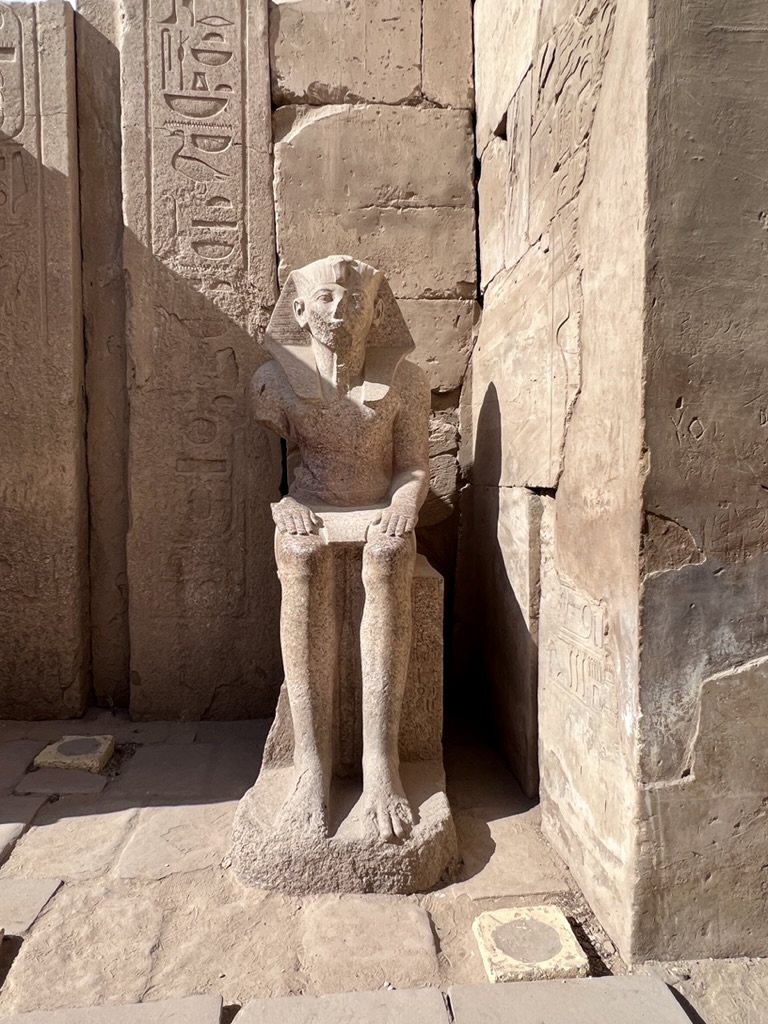
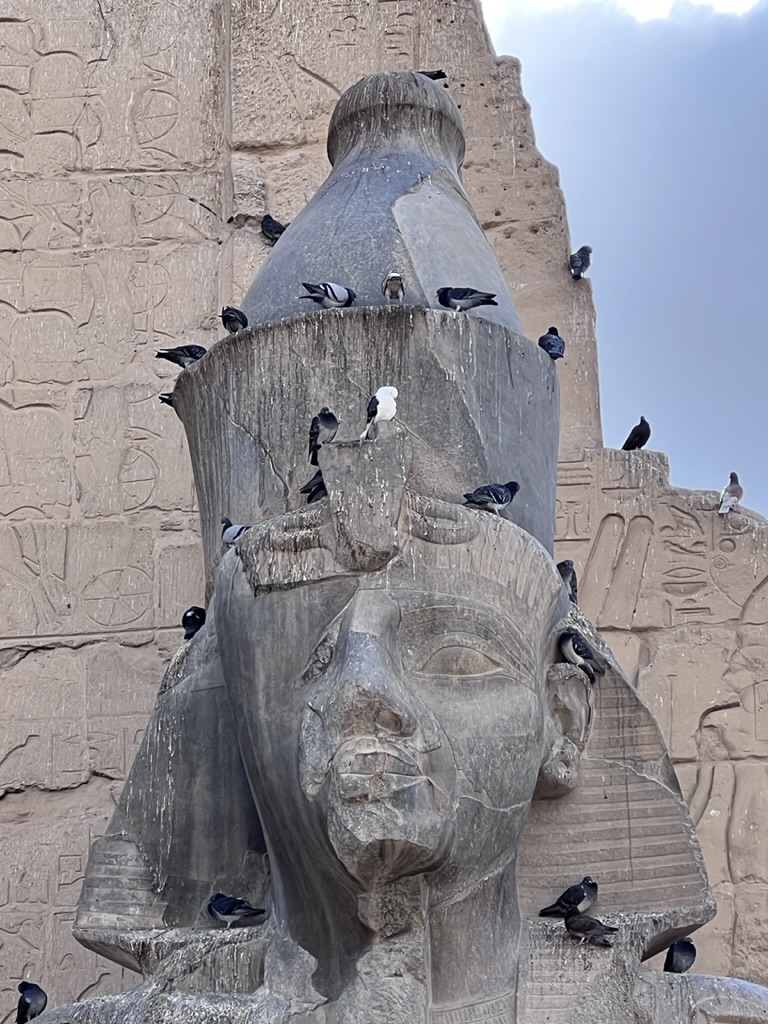
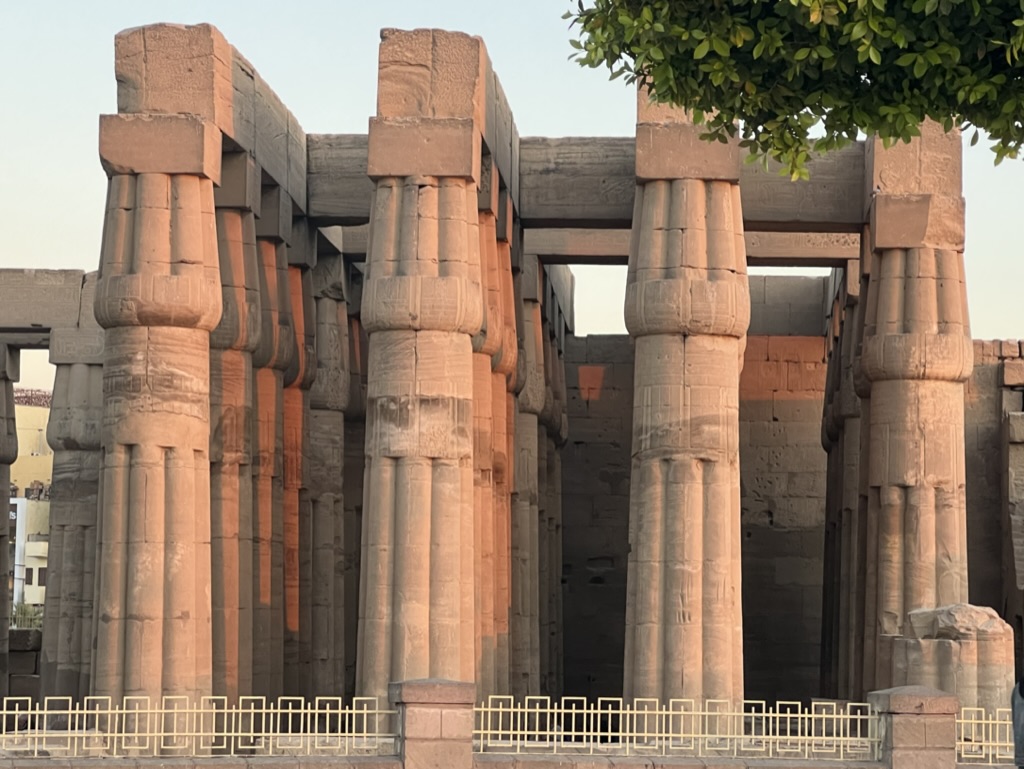
From Karnak Temple we headed to Luxor Temple, also on the east side of the Nile, which was built in 1400 BCE. If I remember my art history correctly, this and other temples of that era were built with a lot of “illusionism” – things were made to look like they were the same height but in reality, they were not of equal height. This was especially true for things like the obelisks at the temples. In the middle ages, the Muslim population of Luxor settled in and around the temple and as the population grew they started building on top of the temple, which was already in ruins. Centuries of rubble was on top of the temples, until excavation began in earnest in the 1880s and continued until the 1960s. Over time, rubble had buried three quarters of the temple which included courts and colonnades. By the 1880s there was not just rubble, but also stores, houses, and other structures which needed to be cleared away in order to do the excavation.
Before leaving Luxor Temple we “strolled” what is known as the Avenue of the Sphynxes (or path of god). Historically it went in a straight line from Luxor Temple to Karnak (close to two miles)–lined with human-headed sphinxes.This incredible area was opened to the public just one year ago—taking 70 years to uncover and restore. Apparently, the first trace of the avenue was discovered around 1950 when an archaeologist discovered 8 statues near the Luxor Temple and then another 17 were uncovered in the late 1950s. And then another group of 55 were located close by and finally the complete route of the walkway was determined and there were 1,057 statues lining the walk. There are lion’s bodies with ram’s heads and there are full ram statues and then there are the ones that are lions’ bodies and human heads.
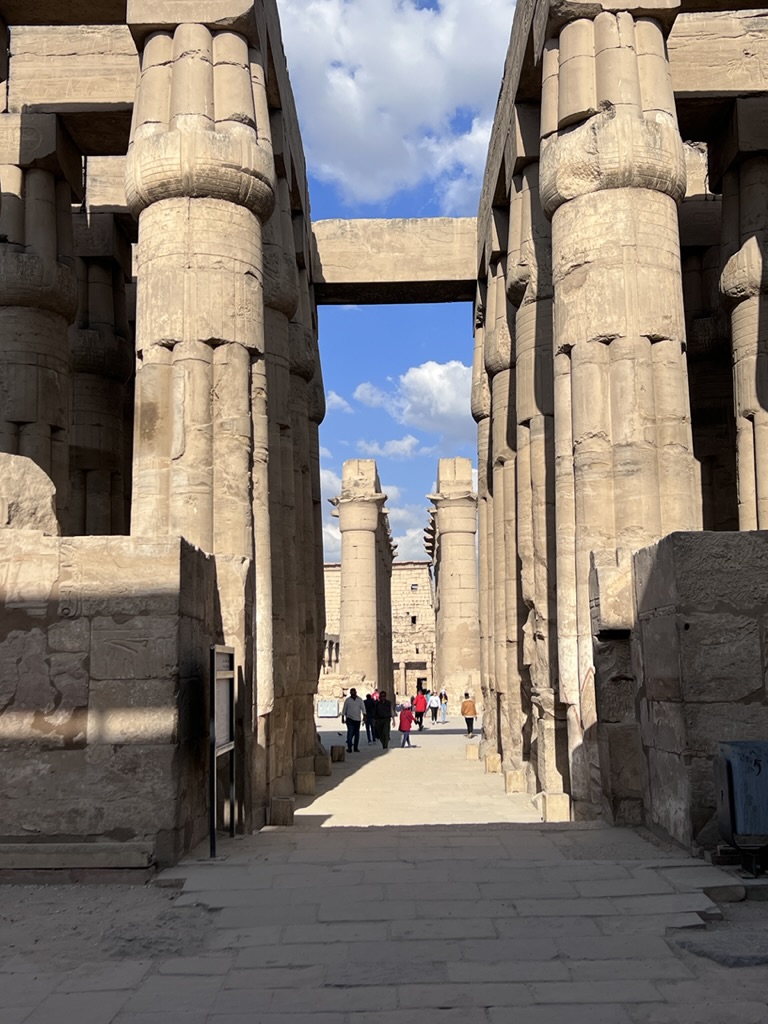
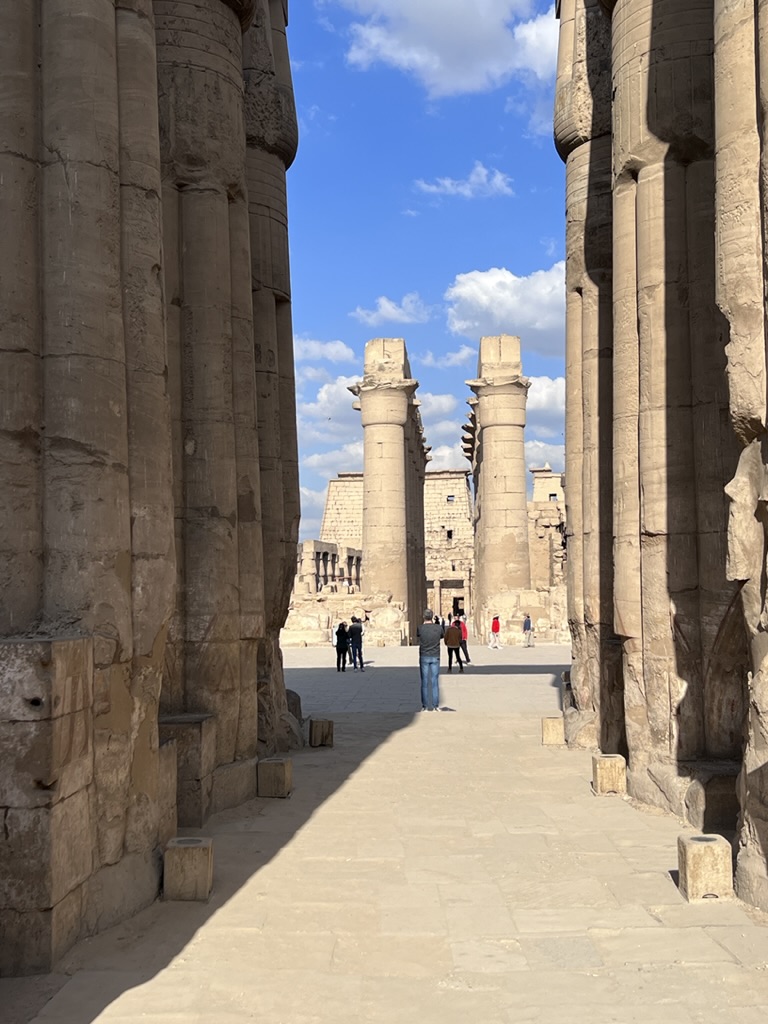
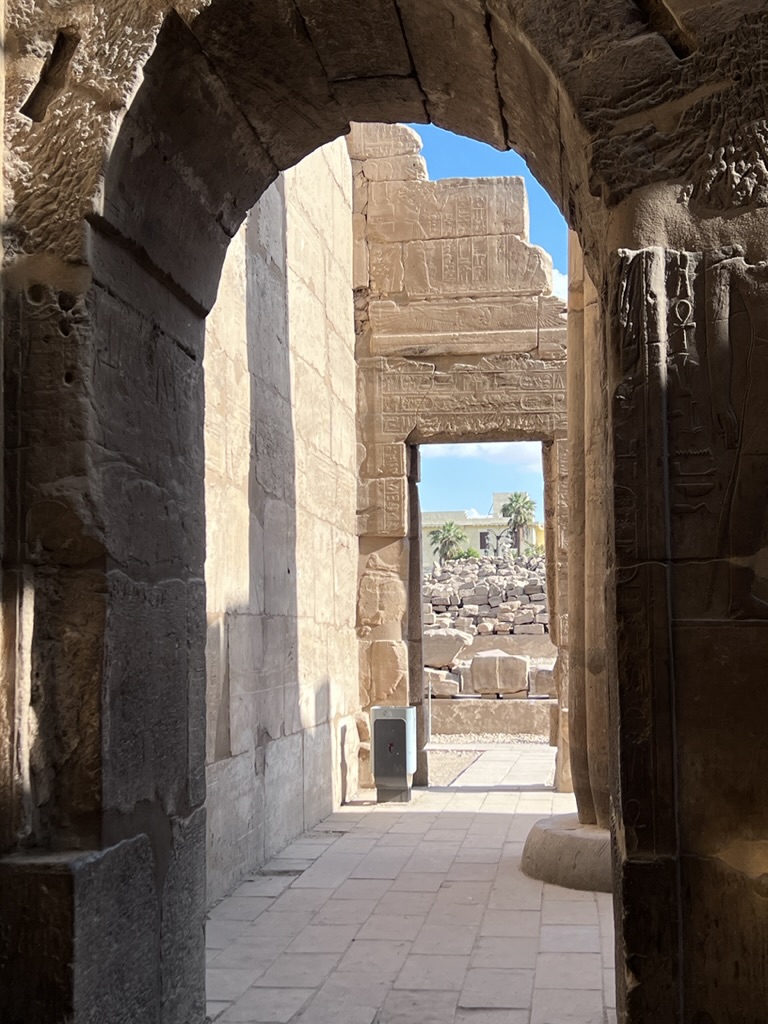
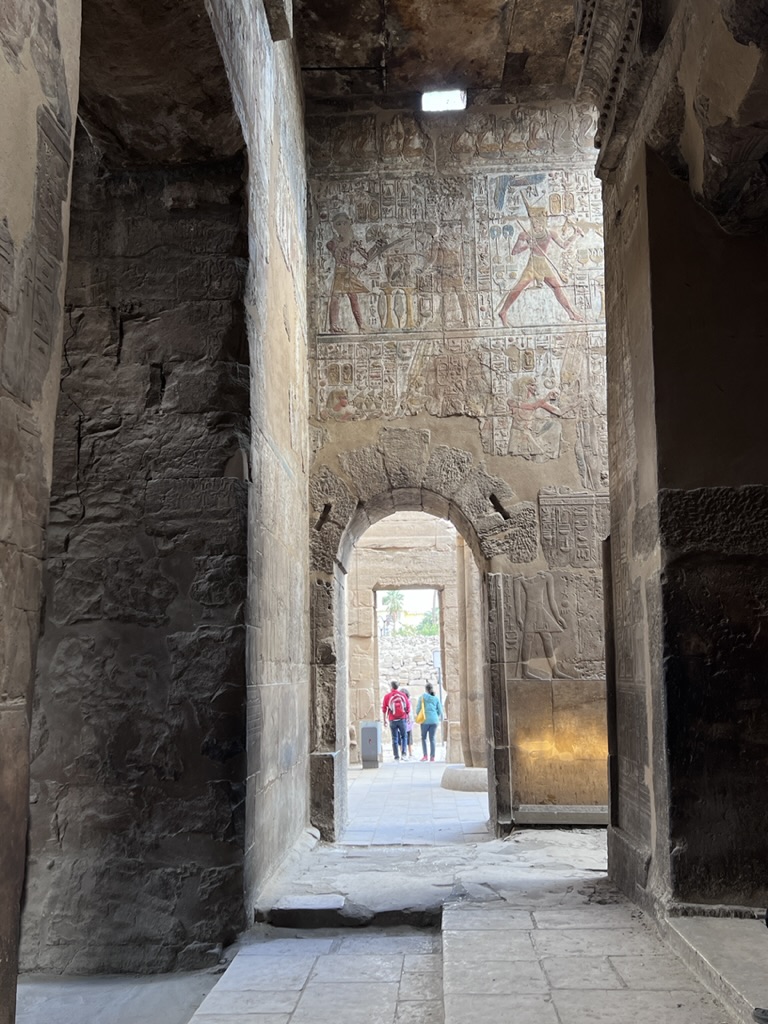
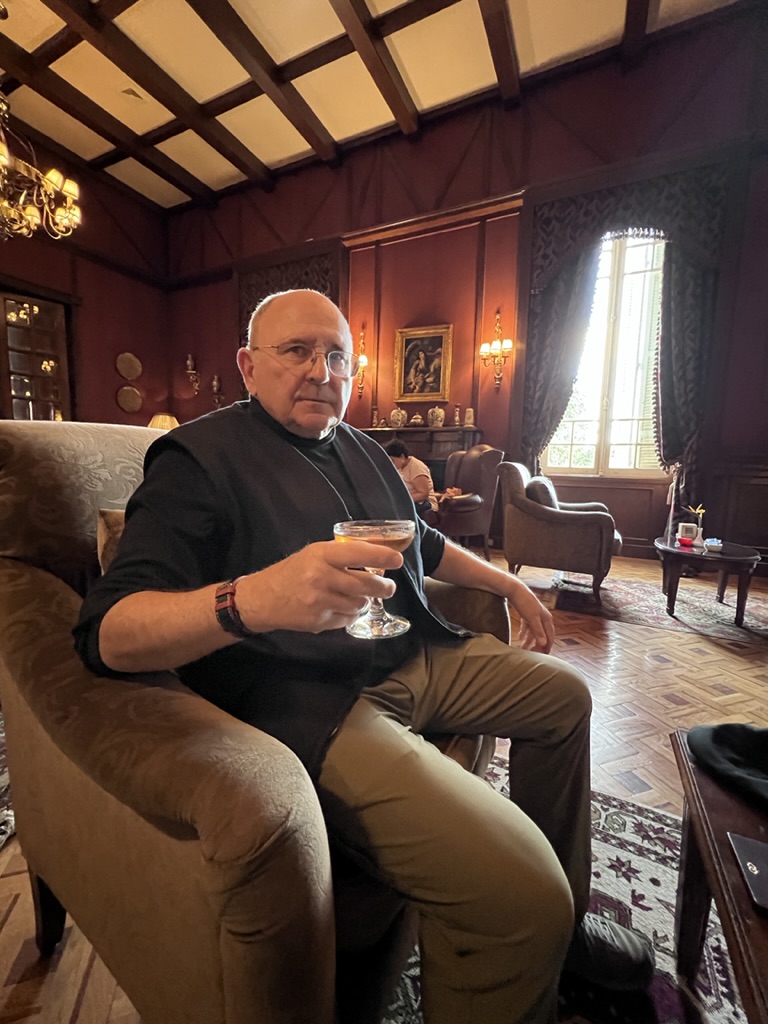
It’s a pretty impressive scene and most difficult to capture on camera! I actually preferred Luxor Temple to Karnak. From Luxor Temple we made a short stop at the Winter Palace (from around 1900) which is now the Sofitel Hotel (we had looked into staying there, but it was booked). We had drinks in the Royal Bar (we were the only ones there) and then checked out the spectacular grounds. In the brochure it notes that Agatha Christie, Jackie Kennedy Onassis, Al Gore, and a host of celebrities have stayed at the hotel (including Richard Gere quite recently).

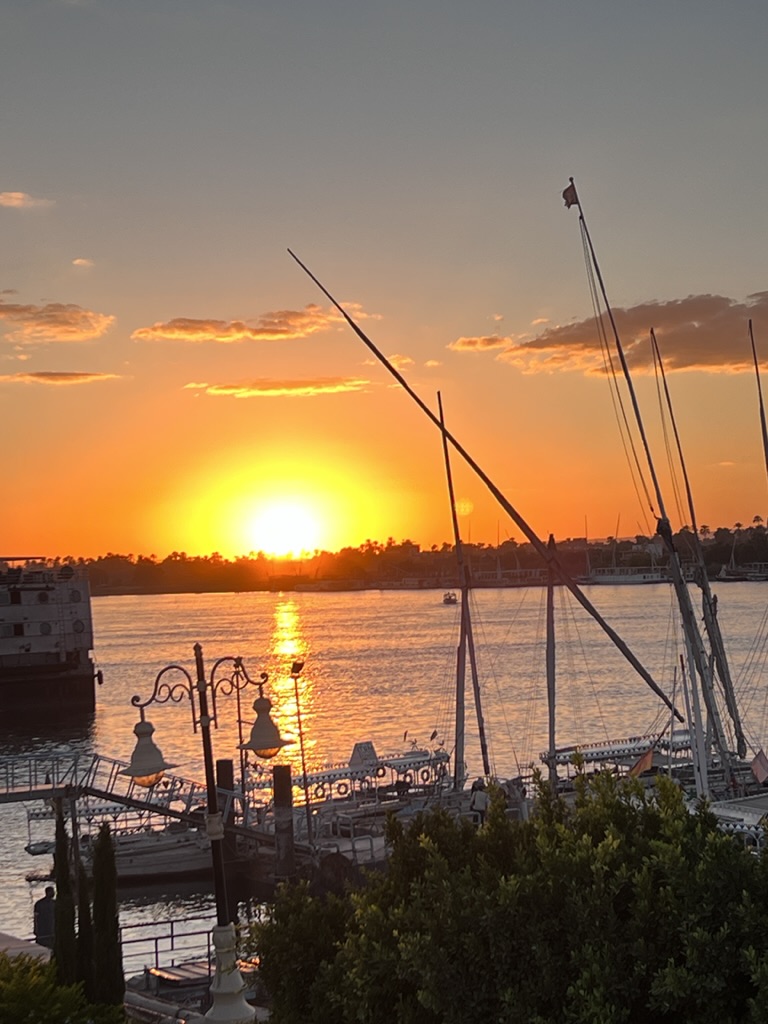
After a stroll along the Nile, we hopped into another taxi where the driver kept asking if he could drive us to a host of other places. When we declined and said we just wanted to get back to the Hilton, he said he needed to make money because he has 7 children (ages 4-26). I remarked that was a big family and then he said his wife “was like a rabbit!” I nearly responded, but kept my cool and just stepped out of the taxi. (The wife is like a rabbit? And what about his role?) We then freshened up for dinner at Sofra (a family-owned restaurant somewhere here in Luxor). See end of this note for comments on Sofra.
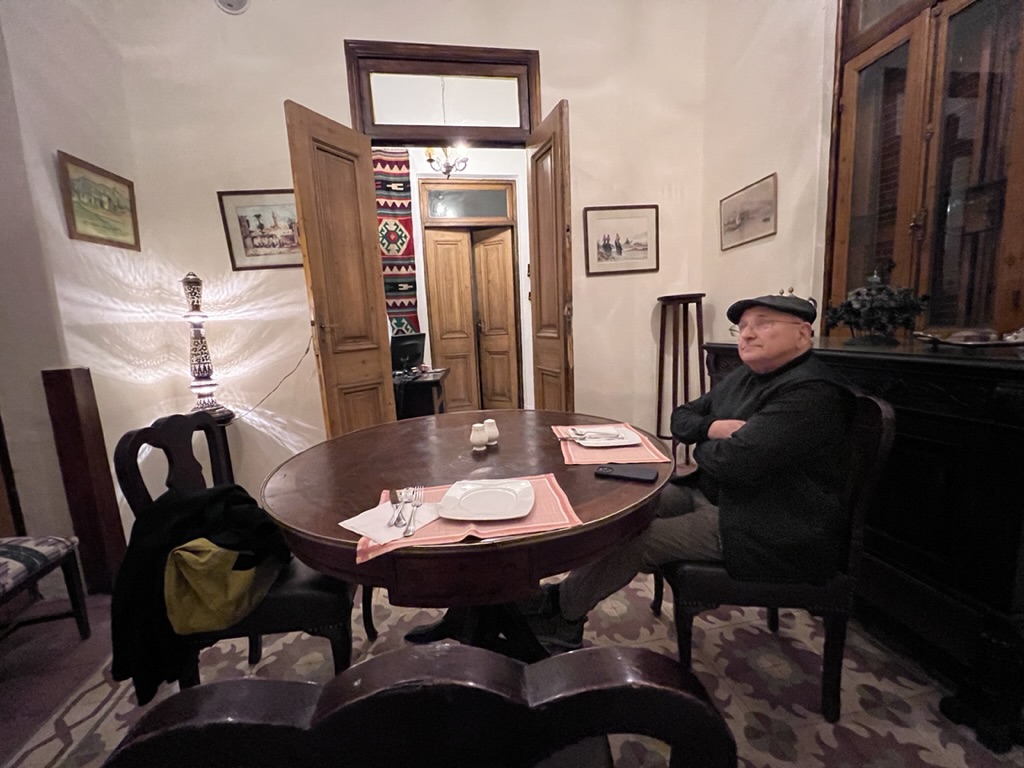
Took yet another taxi from the hotel to Sofra Restaurant which is located fairly close to Luxor Temple. Our taxi driver, Hamada, seemed to know his way around and knew of the restaurant. We had two starters (stuffed baby eggplants and sambousas; the sambousas were great) followed by a main course that we shared—a mixed platter of kebabs with a rice that is a mixture of brown rice and what they call vermicelli (in the translated menu), We shared a simple rice pudding for dessert. And no wine. Sofra is a nice little place that is clearly popular with upper class Egyptians and foreigners (who appear to be living in Luxor or Egypt as they knew all the staff when they came in the door.) Food is good, not great. When we arrived they suggested we sit outside, but the evening temperatures here are quite chilly—in the 40s and 50s (despite daytime highs in the low 70s) abd they don’t have heaters. We opted for indoors, but they seemed not to really have a table for us, They gave us a “private room” with a large circular table that could easily seat 6 or 8. We were fine, except that the location of this private room was adjacent to the restaurant reception desk and across from another “private room.” Our views were of the people eating in the other private room and waiters coming and going from the reception desk.
Left the restaurant and now we are calling it a day.
Best Christmas greetings-
Fern

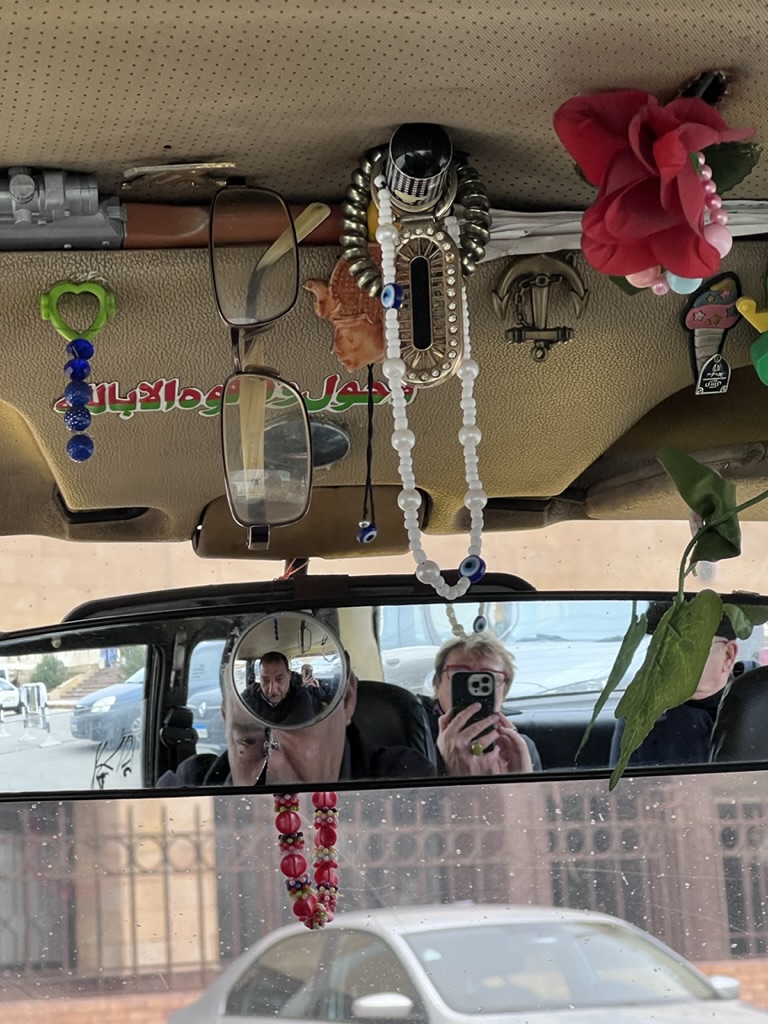
Greetings from Cairo as we pack up to head to Luxor (one hour flight) tomorrow
So, yesterday was Mike’s birthday and we celebrated by going to the Garbage City as described yesterday (a typical birthday celebration); and then last night we went to a very hip restaurant called Sachi in the Heliopolis neighborhood (about 20 minutes by taxi from our area in the Islamic center of Cairo). Getting out of the taxi in Heliopolis and entering Sachi more than highlighted the class differences in Egypt. Sachi is a very upscale restaurant (incredible food that is described as Japanese/Mediterranean fusion) and I’m certain that none of the diners (all 40-something Egyptians) have ever been to the Garbage City, and rarely frequent the Islamic center of old Cairo, where we are staying. Like in all cities, it’s totally possible to live one’s life without knowing what is going on outside of your small geographic location.
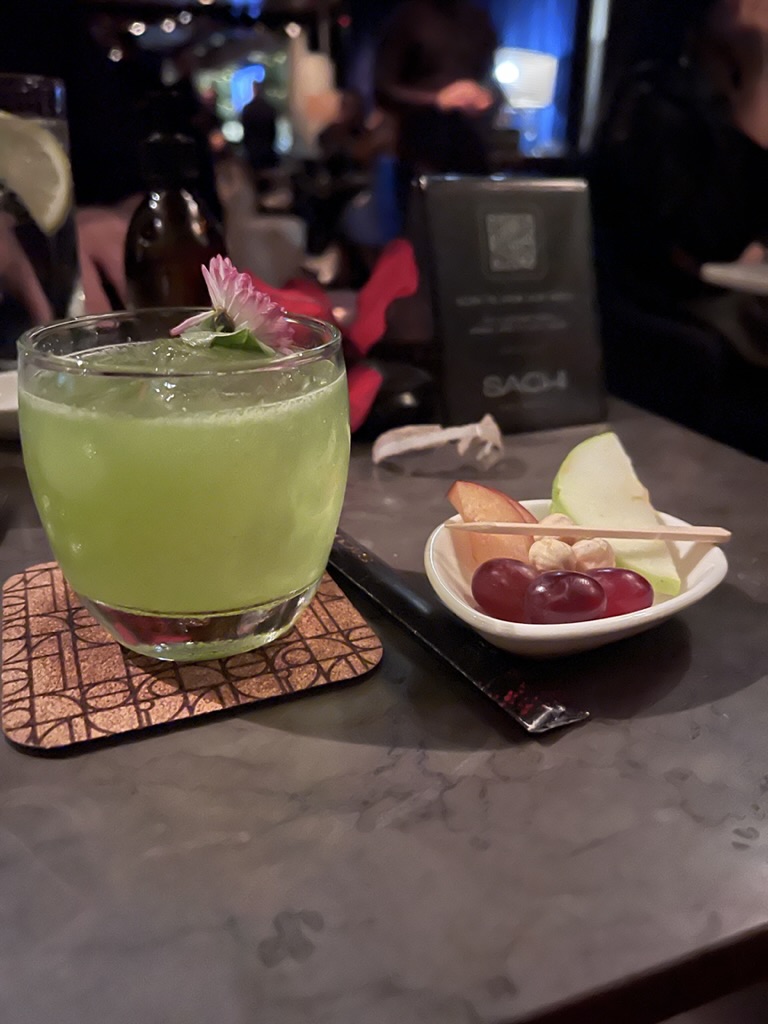
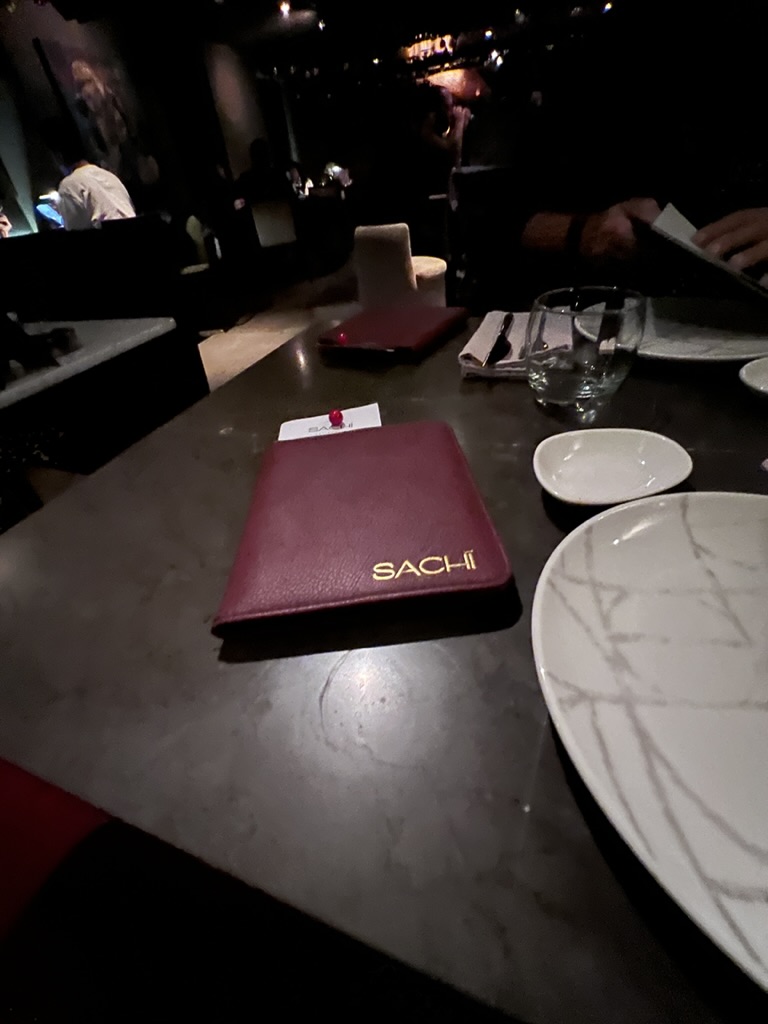
Among other things we had great cocktails (mine was some kind of vodka/basil smash); starters – citrus sea bass tartare with mango and citrus dressing, centered around finely sliced avocado; calamari with a lemon yogurt; for mains we had salmon with Yogurt Tahini Sauce, Walnut and Cherry Tomato Salsa; and a pasta dish with tomato, pine nuts, and caramelized eggplant. We’ve been drinking Egyptian wine which is quite good.
Thus, Mike’s birthday was divided into two parts – Third World and First World.
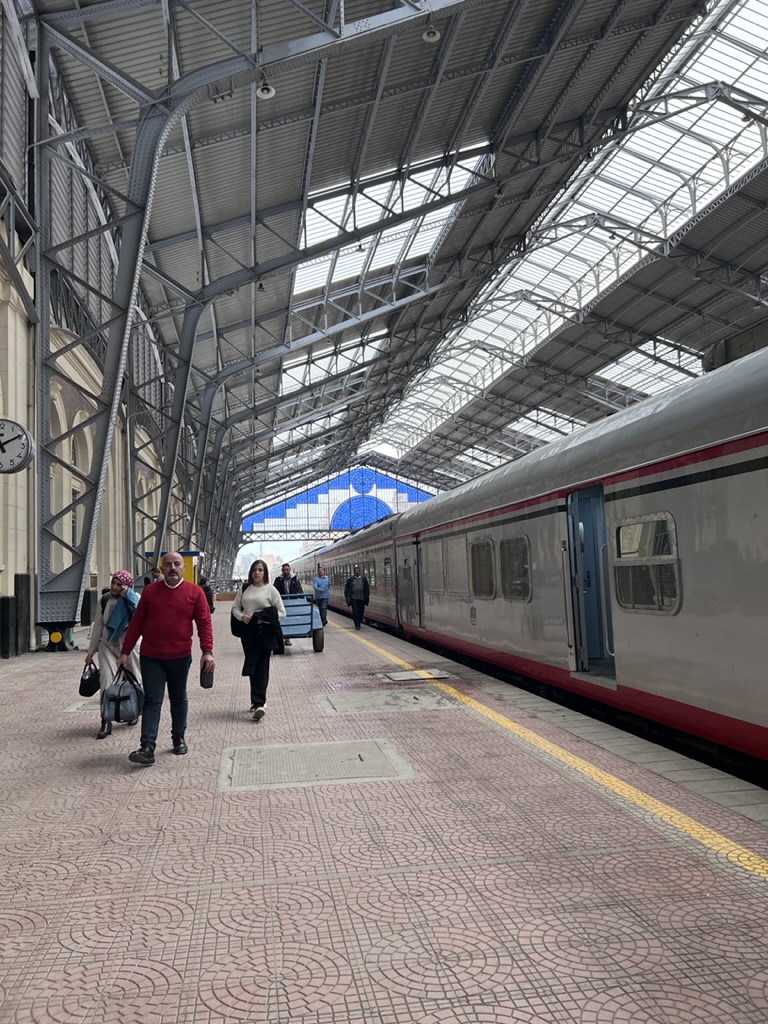
Today, we got up extremely early (5:30 am) to get to the train, which was at 8:00. We knew we’d have to find a taxi to the train station and fight traffic (since it seems to be a 24/7 thing) and then to navigate the station and finding our train. The Riad packed us little breakfasts, which we ate inside our friendly tourist police office at the train station. One of the cops was asleep when we walked in and the other was also having his breakfast. This one seemed a bit more formal than yesterday’s cop. He did take us to the correct platform and explained the sequence of the cars so that we could wait in the appropriate place to board. The job of the tourist police seems to involve roaming around the station looking for foreigners and offering help if needed. So, the walk from the office to the train platform was slow as the guy stopped every time he saw someone who looked like they were not Egyptian.
Finally got onto the train – this was the VIP fast train and First Class within the VIP train. Frankly cannot imagine what the “standard” train here in Egypt is like. But it was fairly efficient and got us to Alexandria in time (just in time for the rain; first bad weather since we got here). A few funny things about the train: there is a digital display on the wall at the end of the train car that shows weather, time, and date. Nothing was correct. They had the temperature at about 80 degrees F but it was more like 60, the time 20 minutes fast, and the date about two months ago.
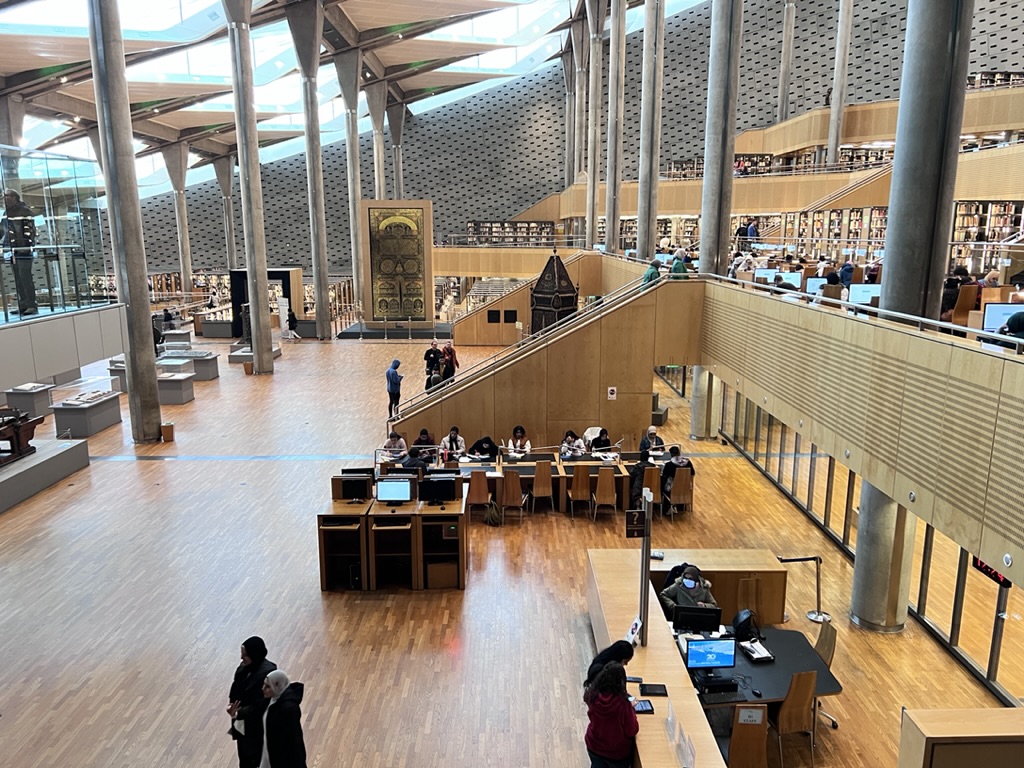
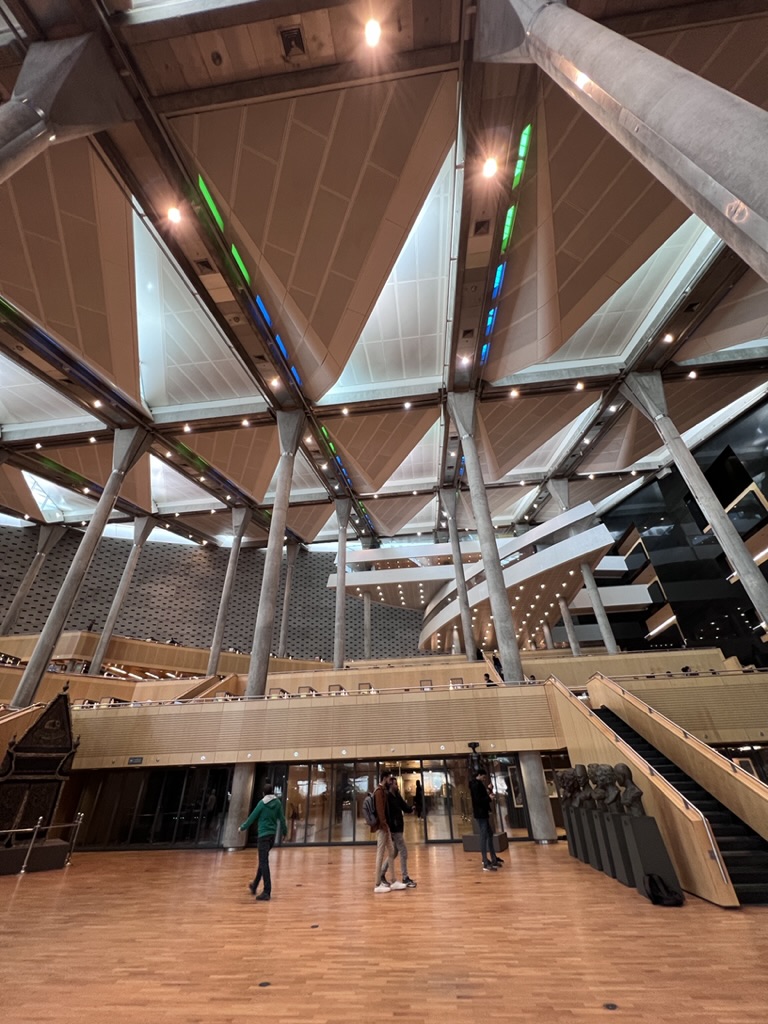
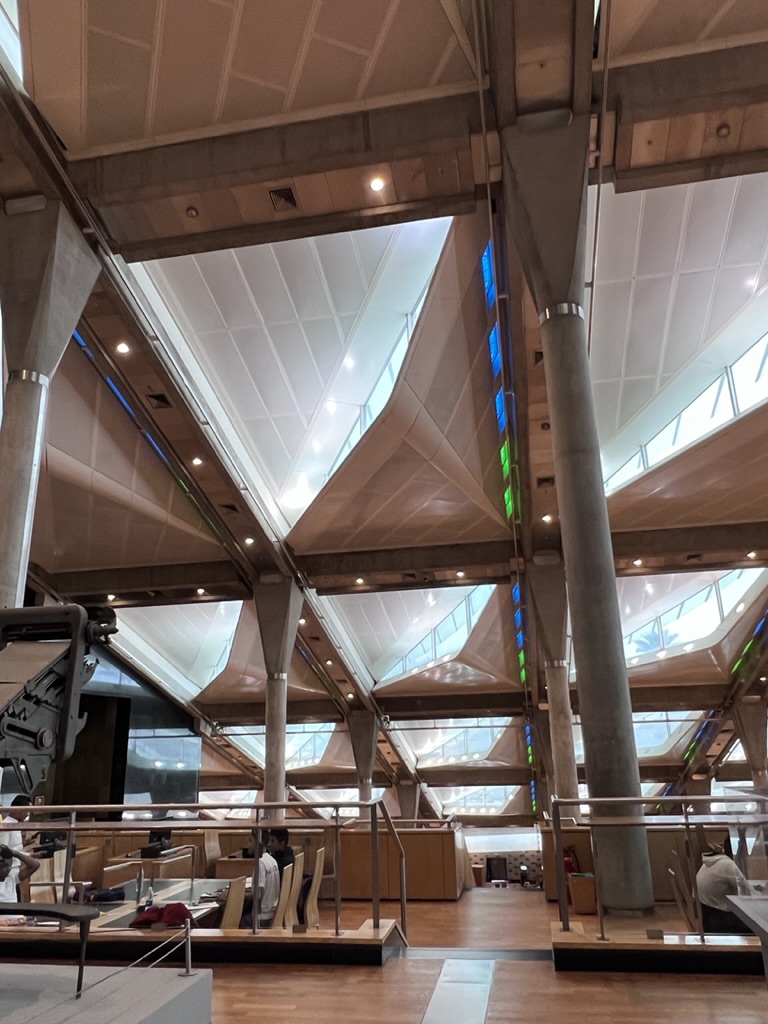
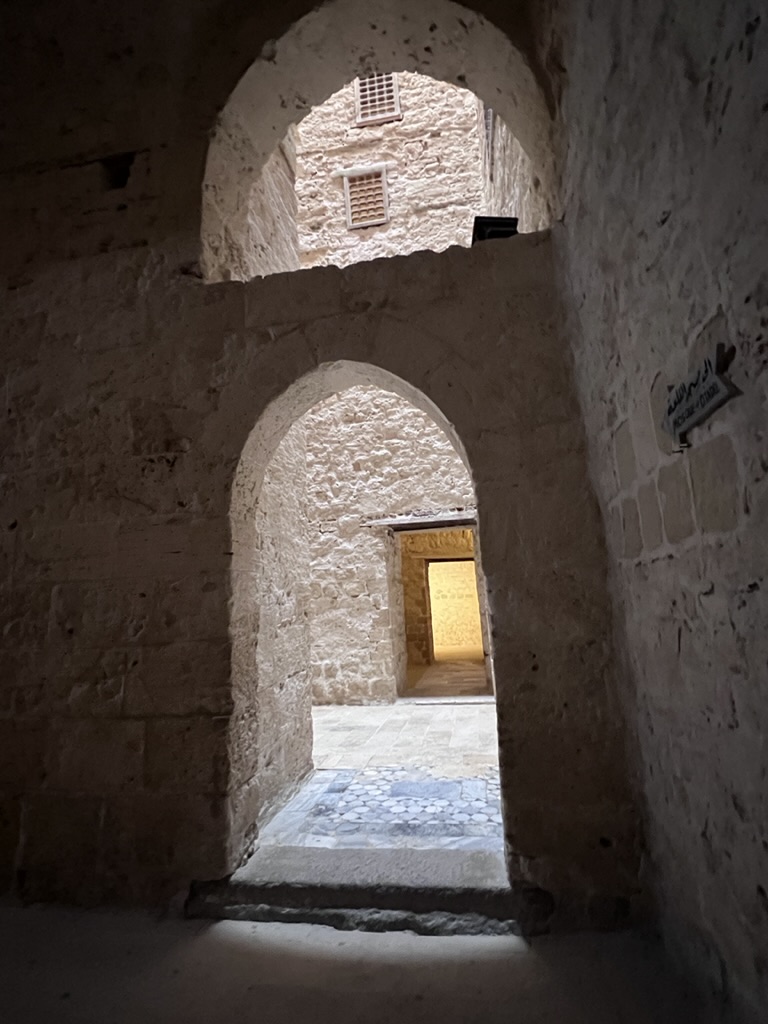
Arrived in Alexandria and headed to the 15th Century Citadel (Citadel of Qaitbay) – built as a defensive fortress on the Mediterranean coast. It was erected at the site of the Lighthouse of Alexandria which was one of the Seven Wonders of the Ancient World. There are some complicated tragedies that occurred including a massive earthquake and now a small mosque sits on the site. From there we hopped a taxi for a quick look inside the Biblioteca of Alexandria – the amazing library. I won’t go into the history of the original library which began around 245 BC and set Alexandria as a city of intellectuals. But in the 1980s there was an international architectural competition for a totally new, modern library. The competition was won by the Norwegian firm Snohetta. And was completed in 2002. It functions as a modern library and cultural center, and also commemorates the original Library of Alexandria. It’s quite a complex building—a beautiful display of modernist thinking; inspirational and functional with everything woven into a shared atrium-like space with cascading shelves of reading and research areas under a single roof that was creatively serrated with solid and glass openings to provide constant daylight without the annoyance of sunlight.
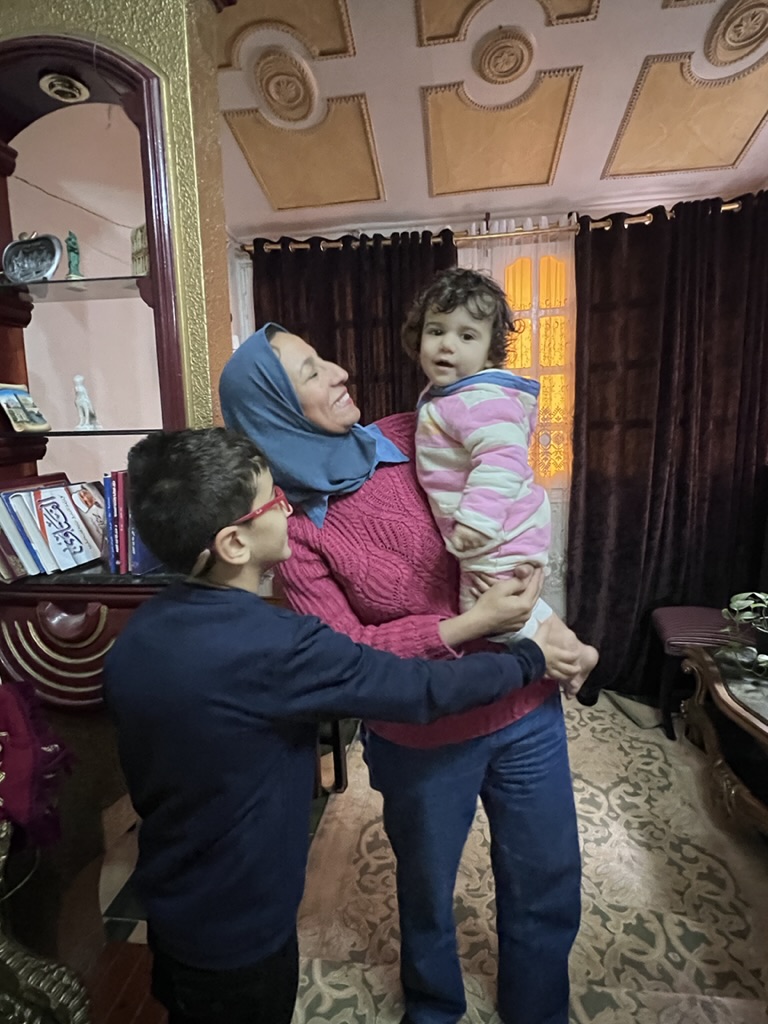
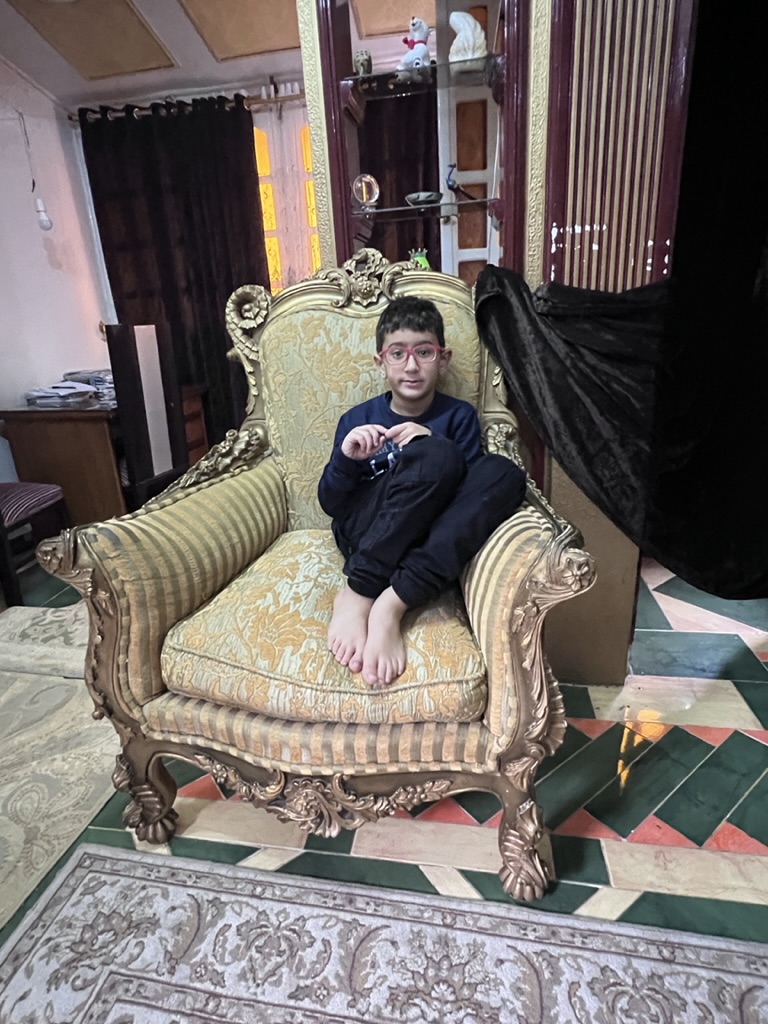
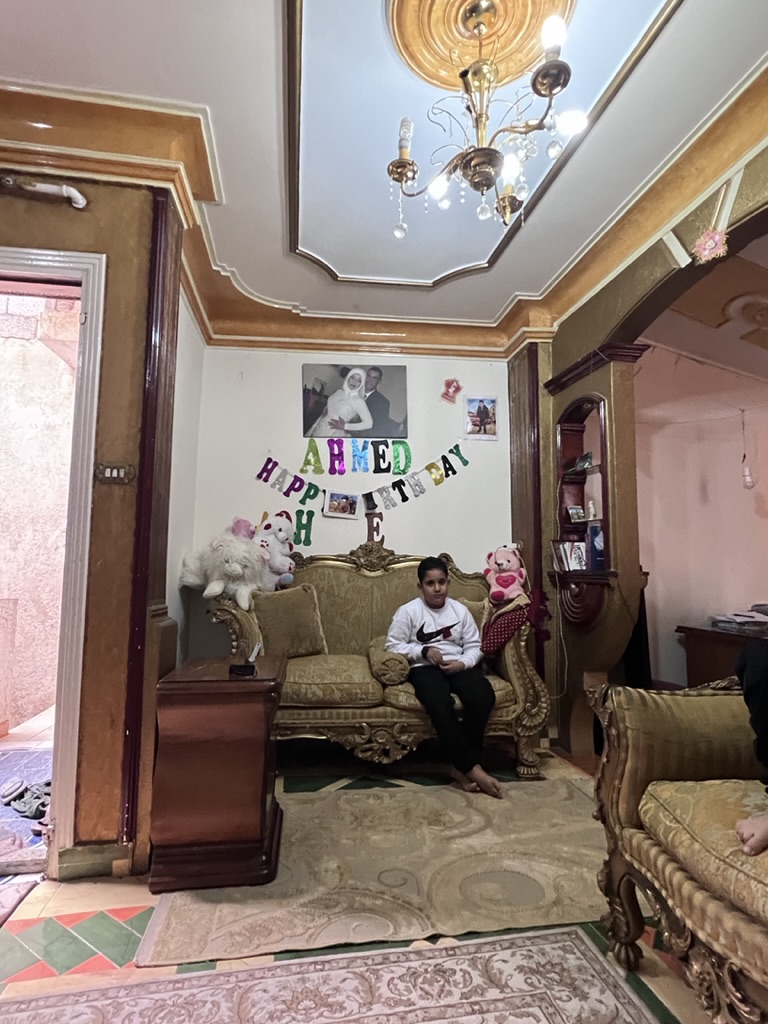
Then we met up with Mona, a former graduate student of mine when I taught at ASU. I only had her in one class but remembered her to be thoughtful, mature, inquisitive, and driven. Together we all taxied to her home which was about 40 minutes from the library. She lives with her husband and his two children in a five-story building in an area we would (and she does) call a “slum area” on the outskirts of Alexandria. Mona is a PhD and her husband is also well educated, along with the rest of the siblings and parents. Mona works for an NGO that provides micro loans to women and encourages women entrepreneurship. Her husband used to be a diving instructor in Sharm al Sheik but now owns two small boats that are used for fishing; his passion is definitely the sea. So, in a way it was interesting to see that these slum areas are inhabited by all kinds of Egyptians.
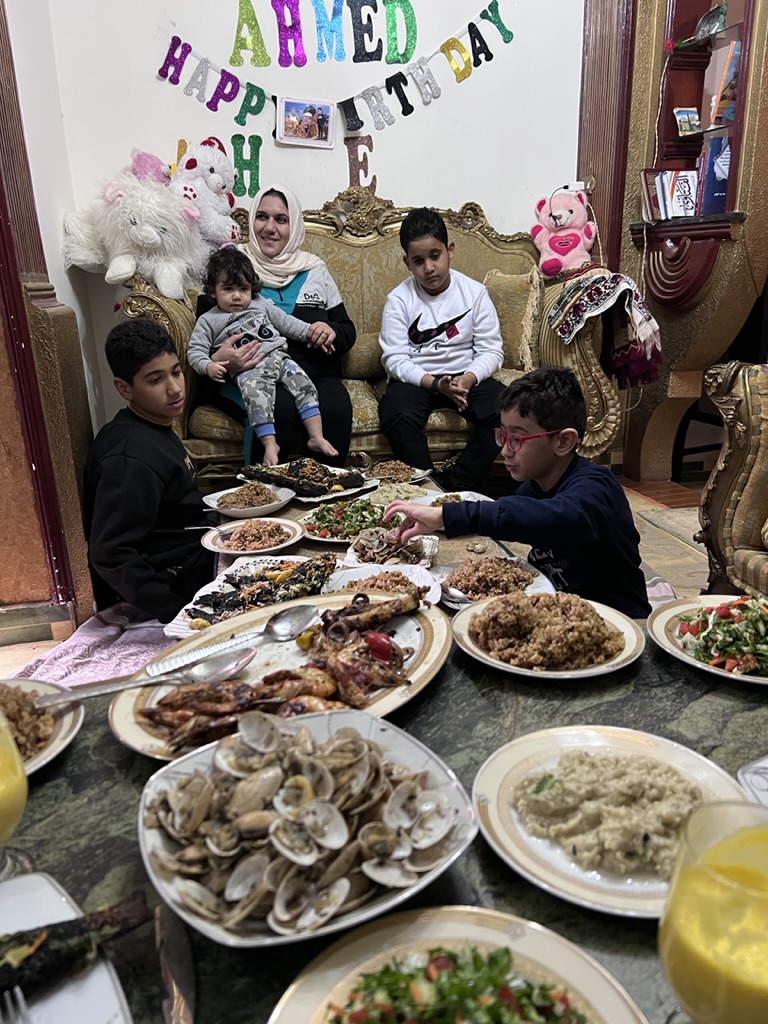
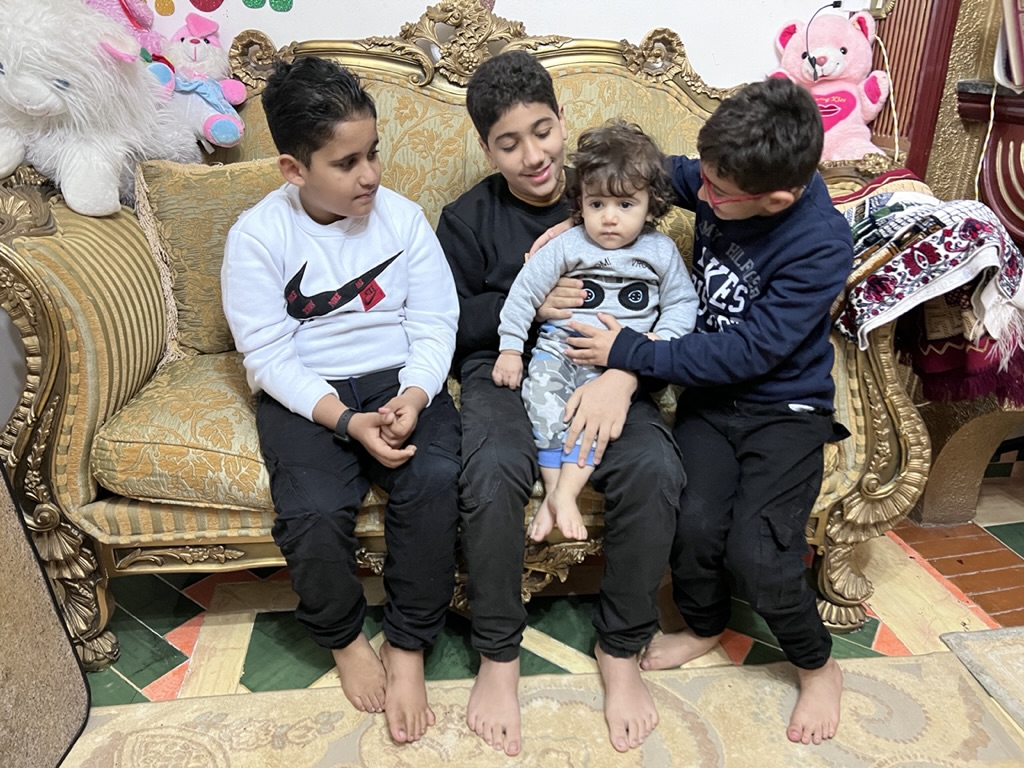
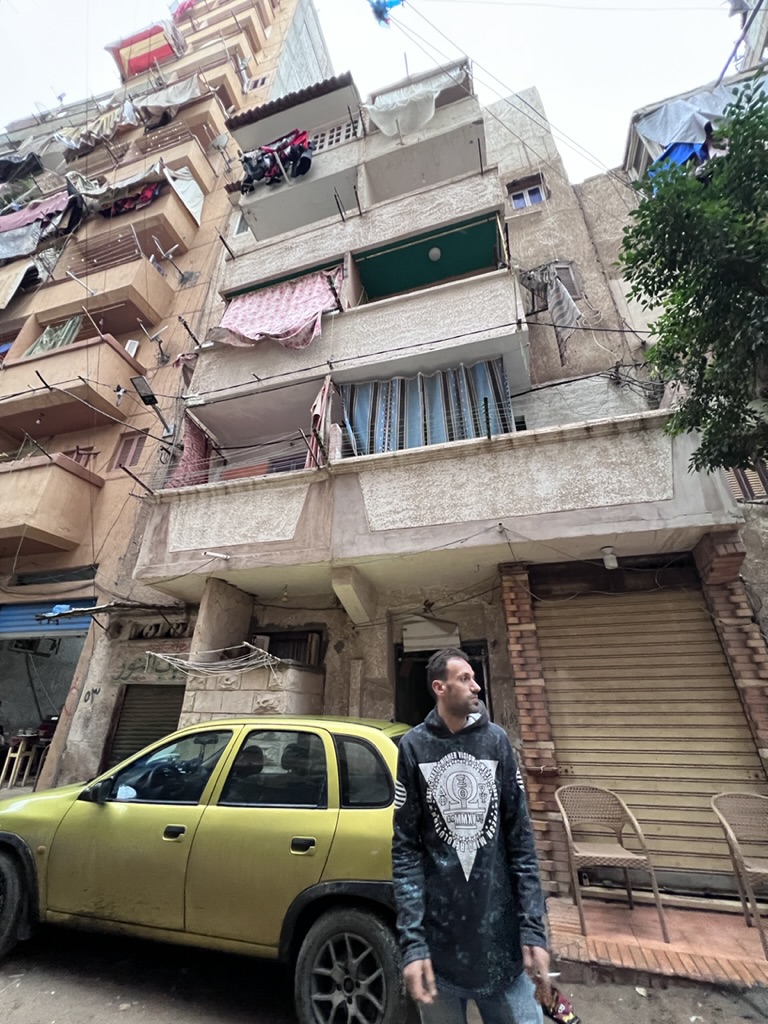
The house contains 10 “apartments” – all of which are occupied by her husband’s family. It was built by his grandfather about 70 years ago, with well-intentioned ideas but limited craftsmanship and using the hand tools of the 1950s. Everything is “approximate,” so every tread and riser on the five story walk up was different. The street (and all the other streets nearby) was lined with similar 5- to 10-story buildings constructed with this “approximate” construction. As we entered the building through an outside stair, it was pitch black inside the stairwell (until we got to the 4th floor where light came from the rooftop). Given the uneven concrete treads and the unfinished nature of the stairs, it felt treacherous to ascend and I began to dread the descent as well. Eventually we used our phone flashlights to at least see how the next step differed from the one before… and we made it to the apartment.
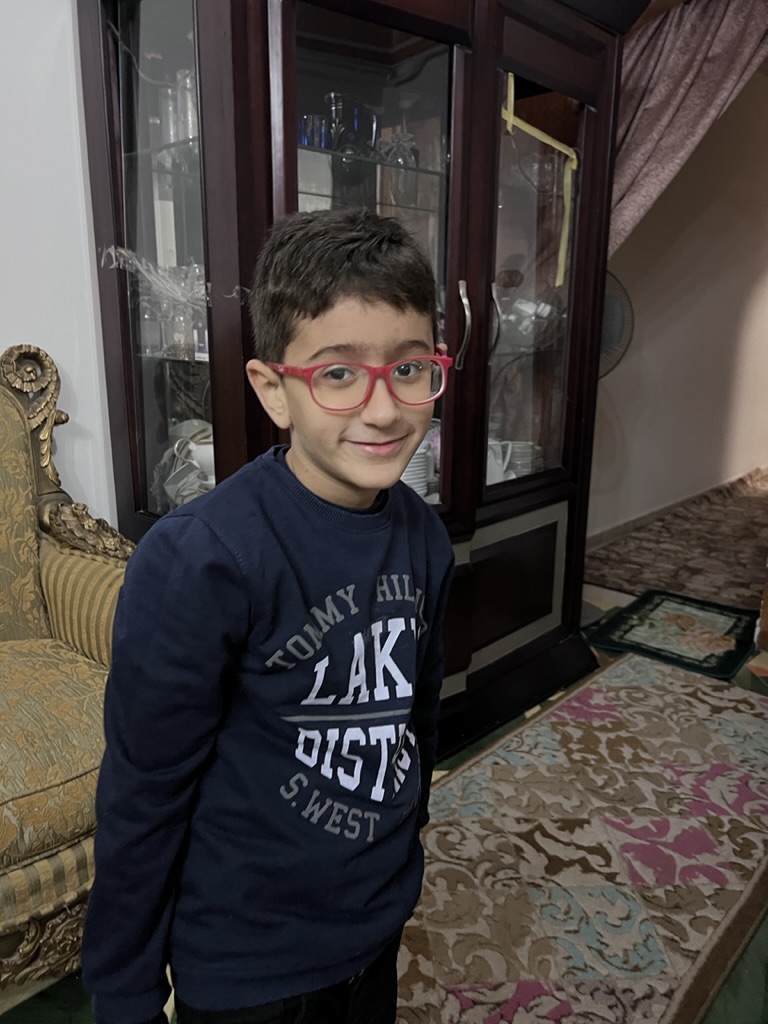
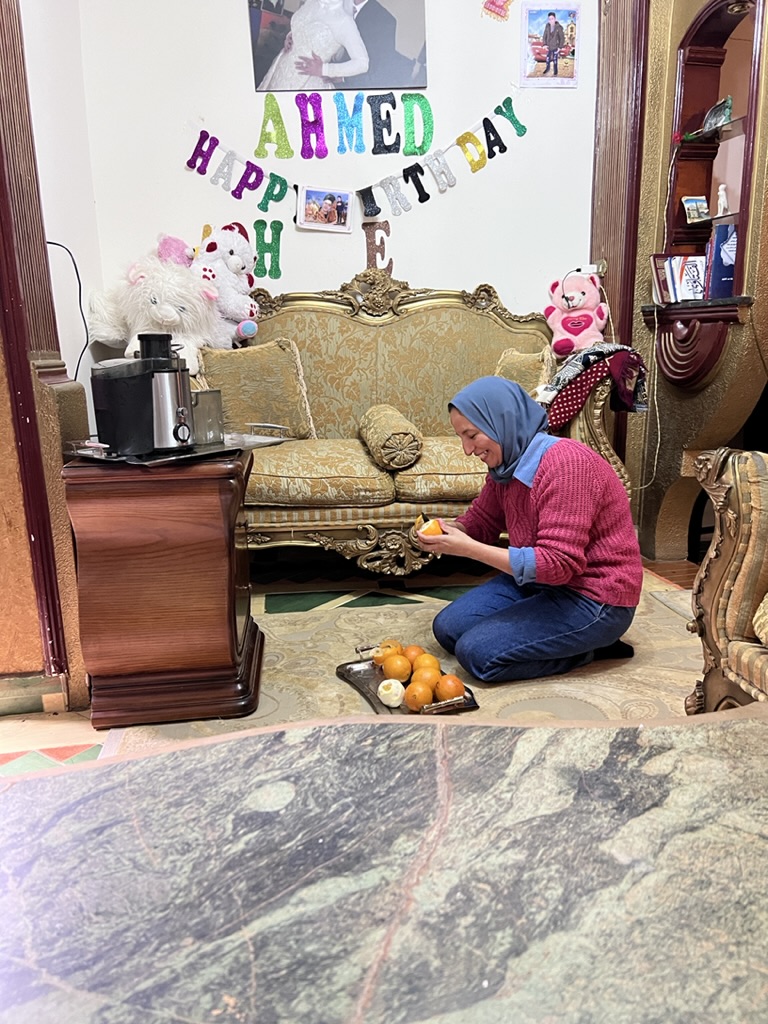
We were immediately greeted by Ahmed, the 7-year-old and later joined by the 12-year-old and two cousins of similar age (all boys), and a baby who belonged to the husband’s sister. Then came the sister-in-law. Everyone lives in this building in separate apartments: siblings and their families; the parents; cousins.. and maybe more. It’s like a big commune with everyone moving fluidly between apartments.
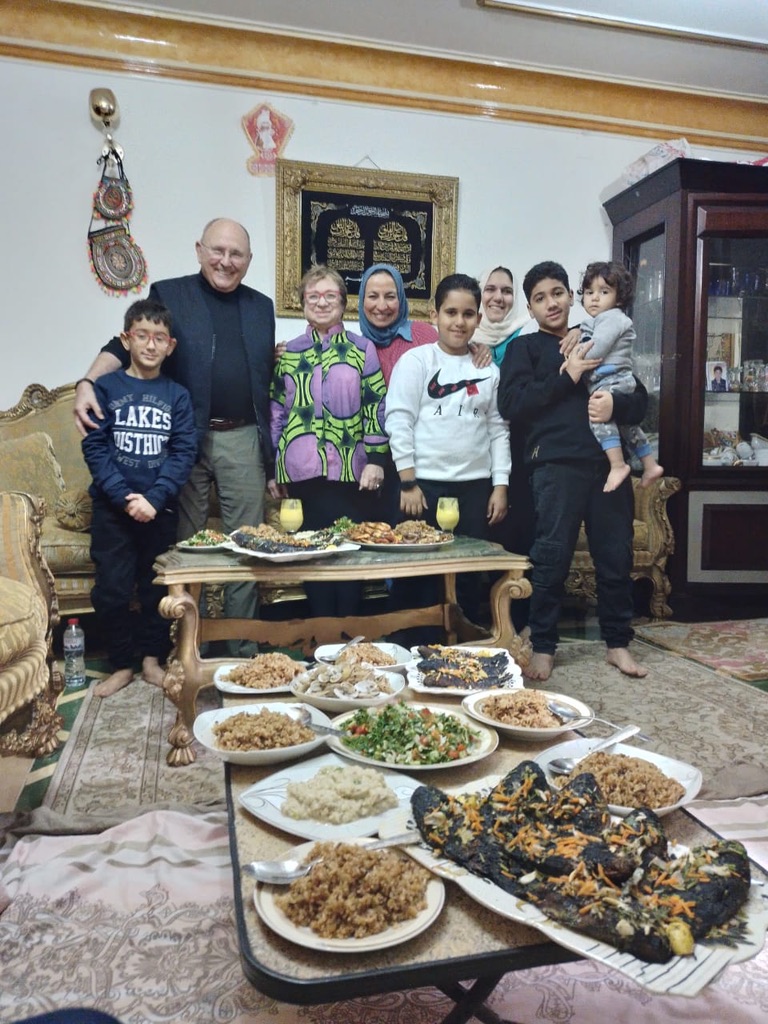
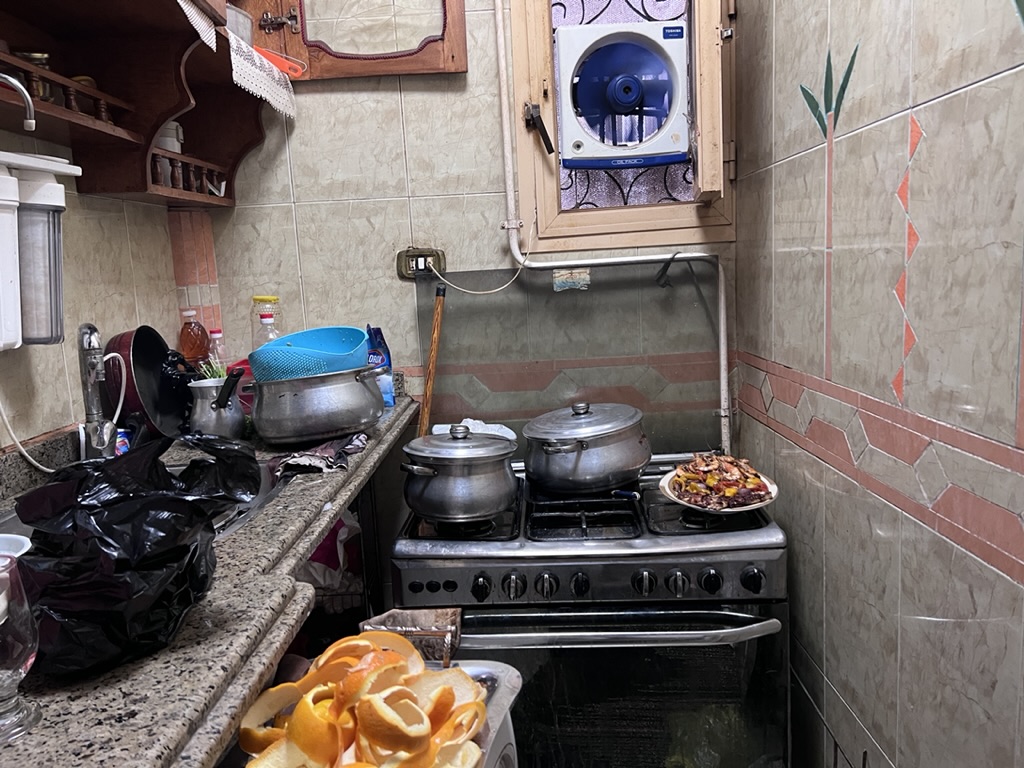
Each apartment is probably about 900 sq ft; the kitchen is about 50 sq ft. Somehow, they have a 6-burner gas stove, a sink, and a washing machine in that tiny kitchen. The refrigerator was in a separate room (bedroom) next door. There is a living/dining room, two bedrooms, a bath, and some alcove areas used as study areas for the kids. Mona’s husband was busy preparing our feast from well before we arrived until about an hour later – hustling about that tiny kitchen to ultimately emerge with two different fish platters (one with fish from the sea and one with fish that was “farmed”), octopus, tiny clams, shrimp, rice, tabouli, roasted vegetables, and fresh-squeezed orange juice. They are Muslims and don’t drink. We all squeezed into the living room to eat (they were seated on the floor, and we were on a couch—fearful that Mike wouldn’t be able to get up if he tried to sit on the floor). The food was fabulous; simple but perfect.
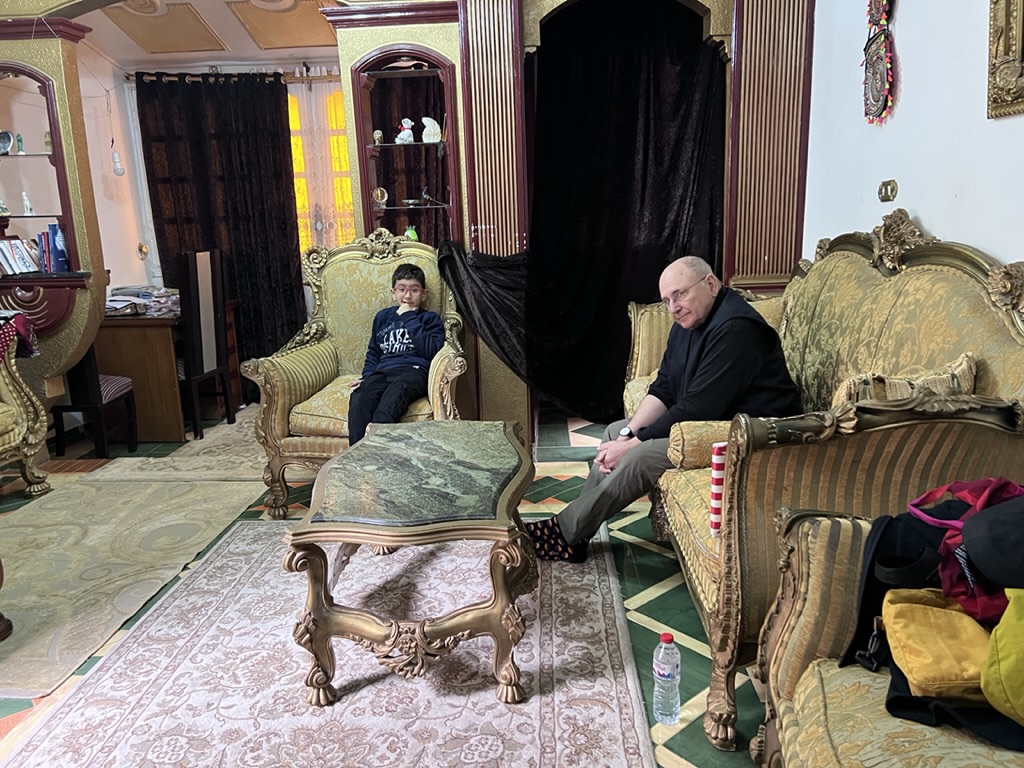
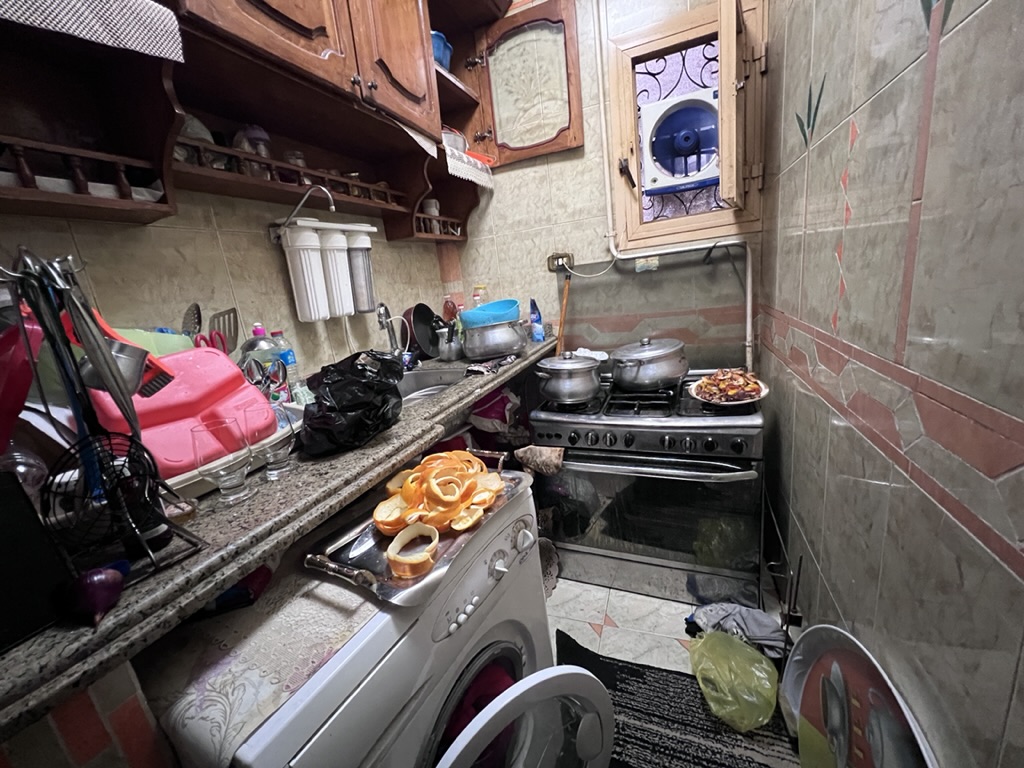
We chatted about politics (theirs and ours), tried to understand the reason for the total collapse of the Egyptian Pound, and the history of the building they lived in. They were totally gracious and warm. Mona seemed genuinely happy we visited. I was the first American from her ASU days (a decade ago) to come to Egypt and look her up.
At about 4:00 we began to get antsy about making our 6 pm train. The original plan was for us to take a “toc-toc” to a local train station and then travel to the main station. But as time got tight the plans kept changing and eventually Mona’s husband borrowed a car from one of his brothers (he has 4 brothers) and he drove us to the station. We were a little confused because he took us to a different station from the one we arrived at. We got to this different station with about 10 minutes to spare, but were a little lost and kept asking where to go. As we waited on the appointed platform, three different trains heading to Cairo arrived—fortunately, a young woman who spoke English (quite well) helped us and explained that these were all trains to Cairo but not ours. Ours arrived next and we boarded. Arrived in Cairo at about 9:00 pm and trekked into the center area where our hotel is located (15-minute walk).
A great final day in Alexandria. Now we pack to head to Luxor tomorrow,
All the best –
Fern

