9/9/26.. Des Moines, in all its glory.
DRAKE. CAROL’S DES MOINES LIFE. NEIGHBORHOODS. ARCHITECTURE. ART. STATE GOVERNMENT.
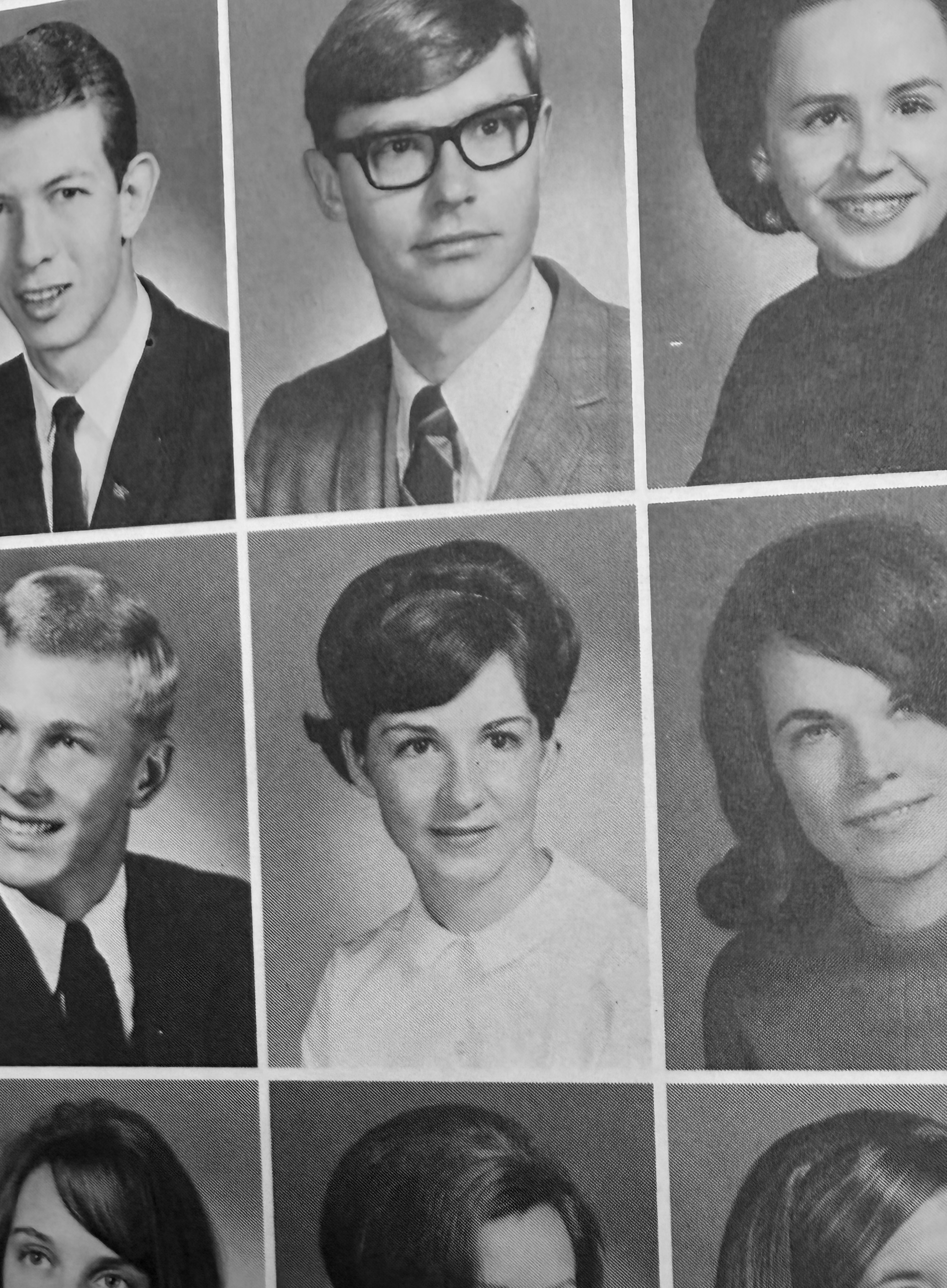
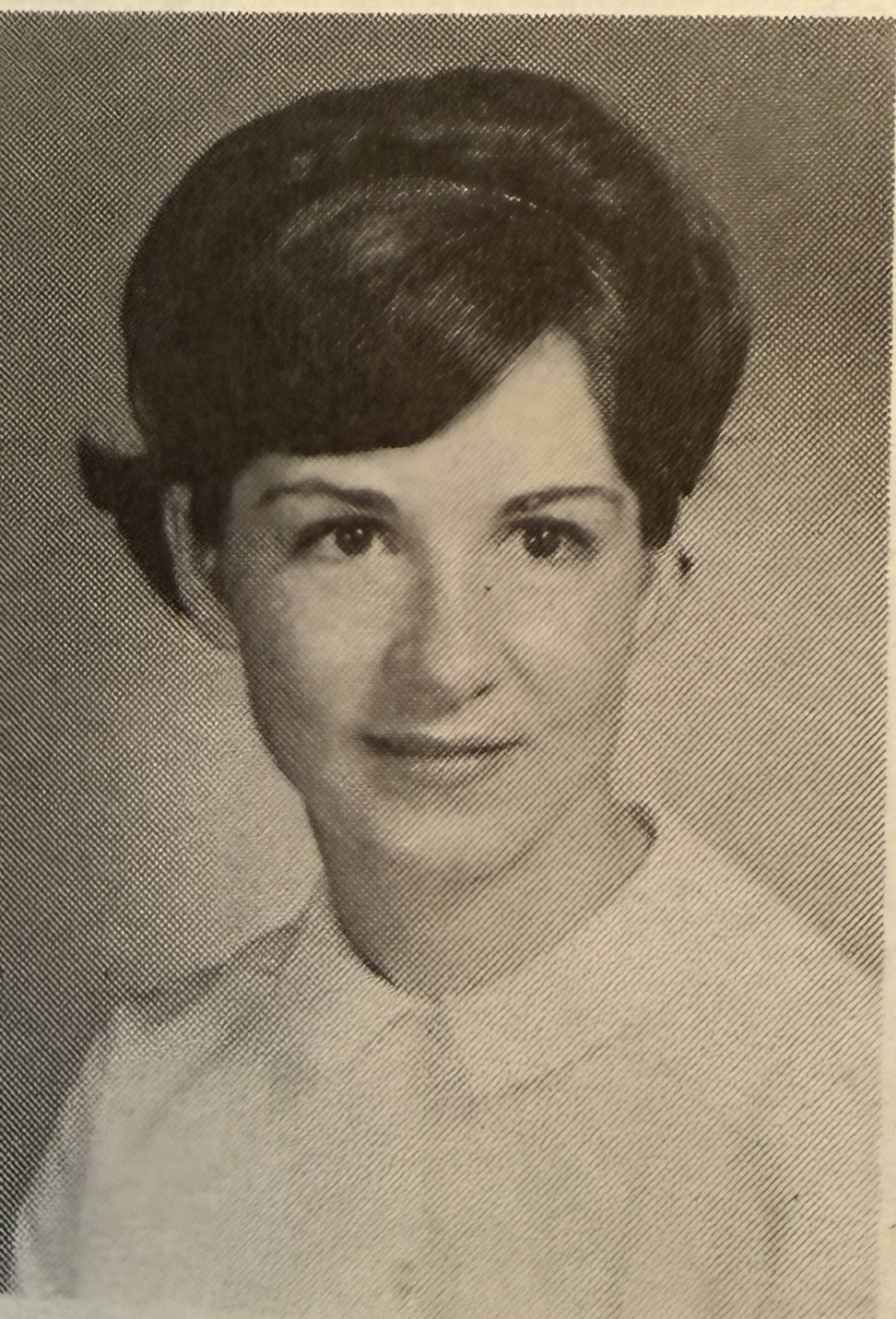
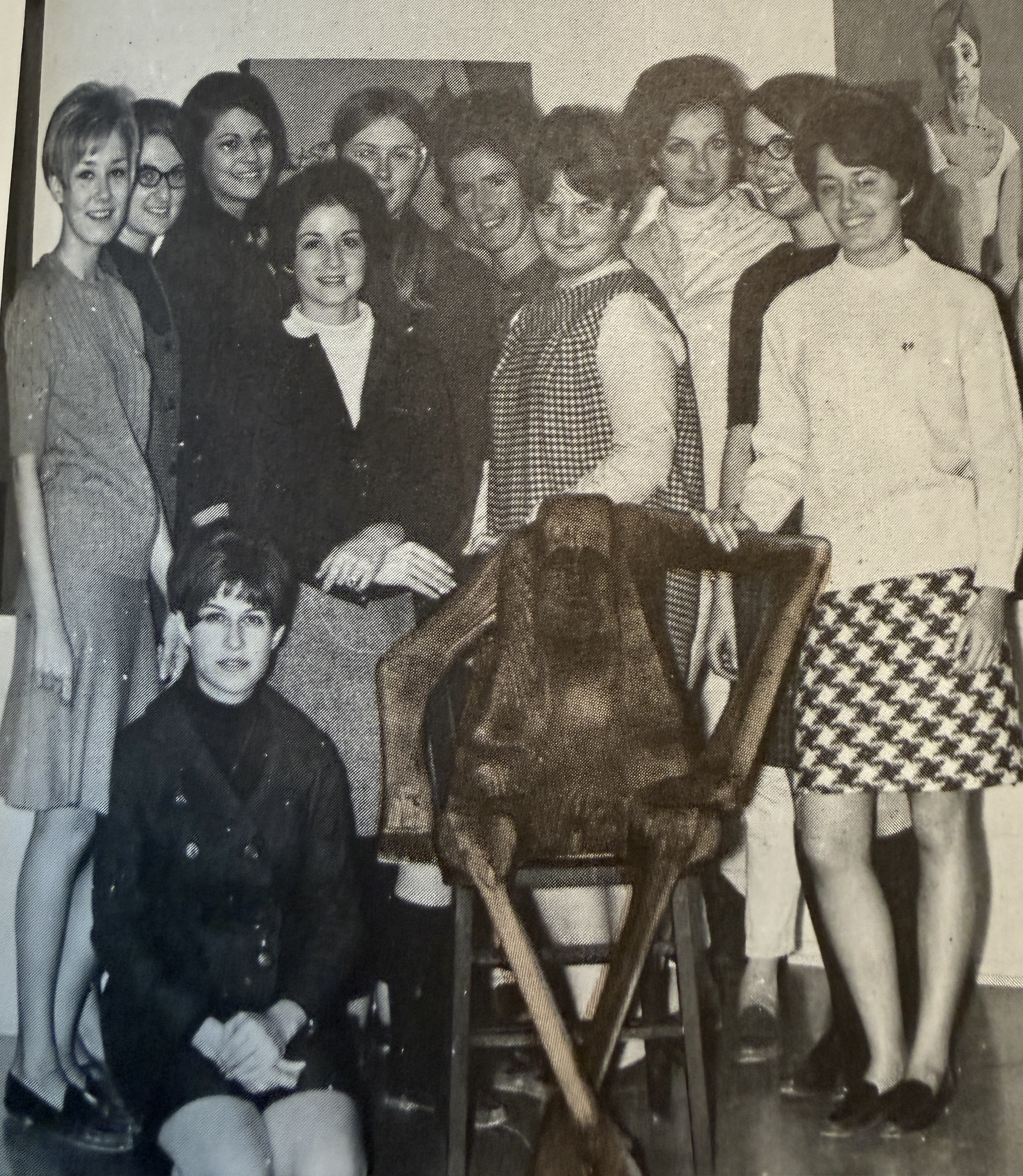
After breakfast at the hotel (Hotel Fort Des Moines), we headed to the Drake University campus (where Carol did her undergraduate work). As I’ve mentioned, we had previously (on other girl trips) visited my childhood city (as well as homes and schools) and we have been to Chicago where Adrienne lives. So on this trip, it was Carol’s turn to show us her home city– Des Moines. Frankly, I had only been to Des Moines once in my life and I think I was just driving through on a solo cross-country trip decades ago.
Carol had contacted the Alumni Office at Drake because she especially wanted us to see this wonderful, very small meditation chapel (Oreon Scott Chapel) designed by the Finnish modernist architect Eero Saarinen as part of the broader campus master plan. Apparently it was somehow connected to the philosophy or theology department. We started out at the Alumni Office where Andy (director of alumni affairs?) happily greeted us and gave us a good pitch about the school He certainly did his homework and had the yearbook for Carol’s graduating class out and open to her photo on the table in the conference room. We had a good laugh seeing Carol with a bouffant hairdo. We chatted with Andy about current admissions and other academic status issues of small colleges. Then we headed through the campus to the chapel which was quite a treat.
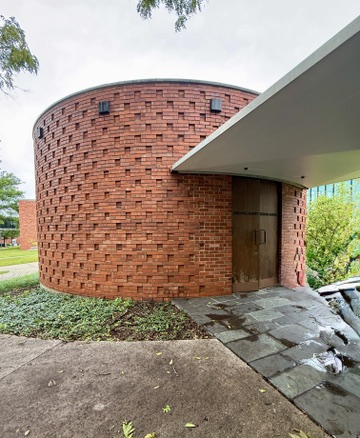
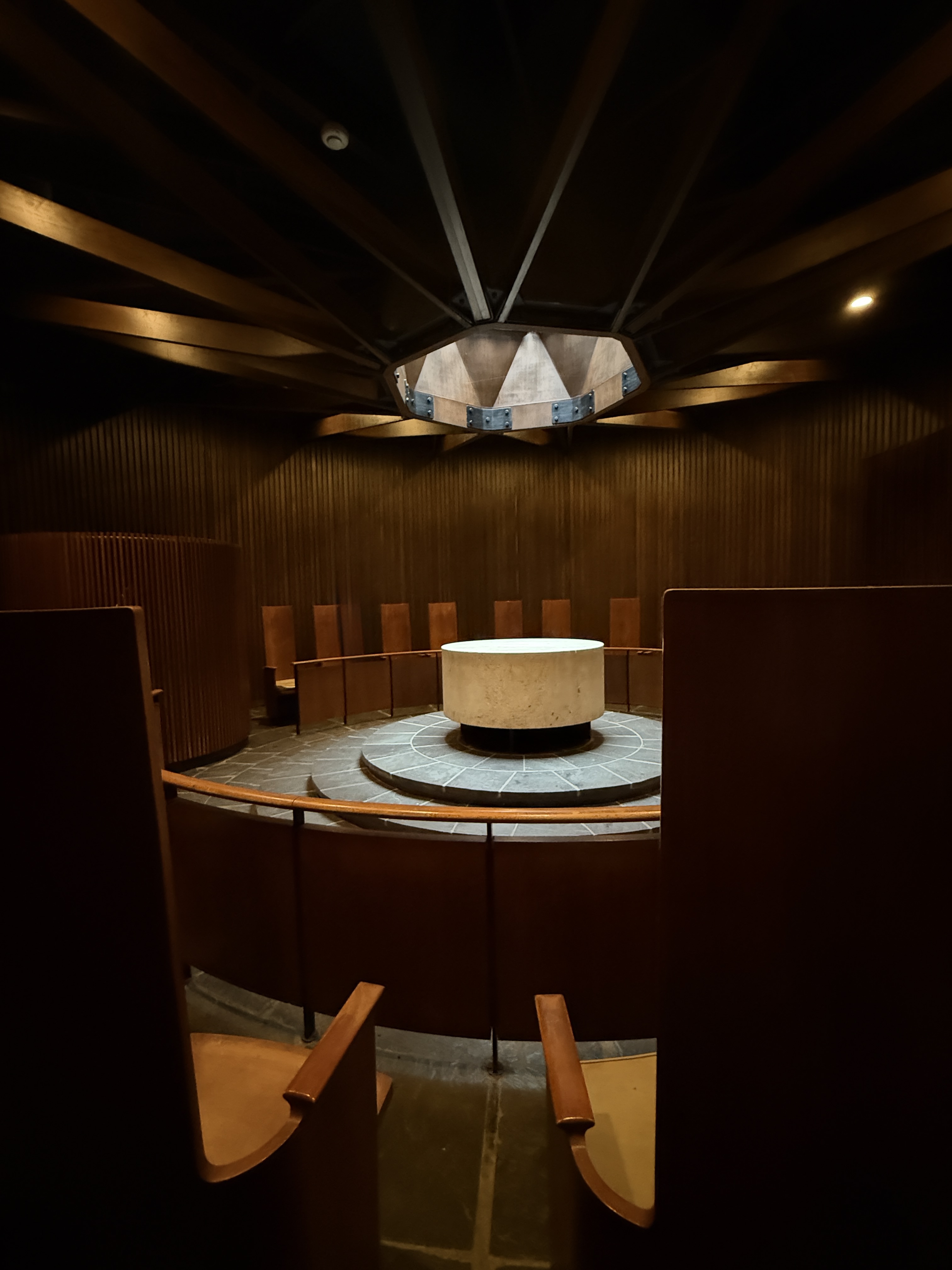
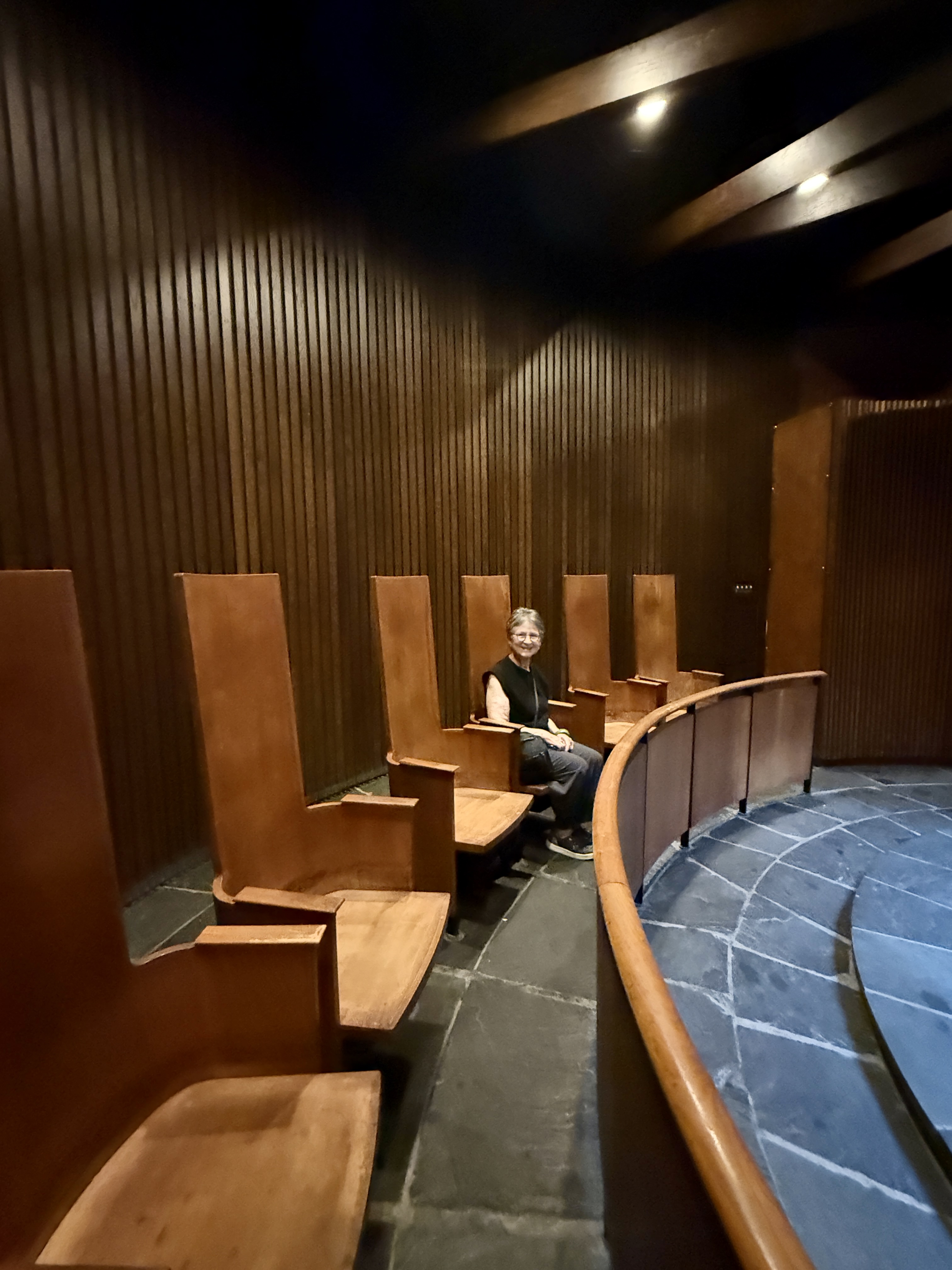
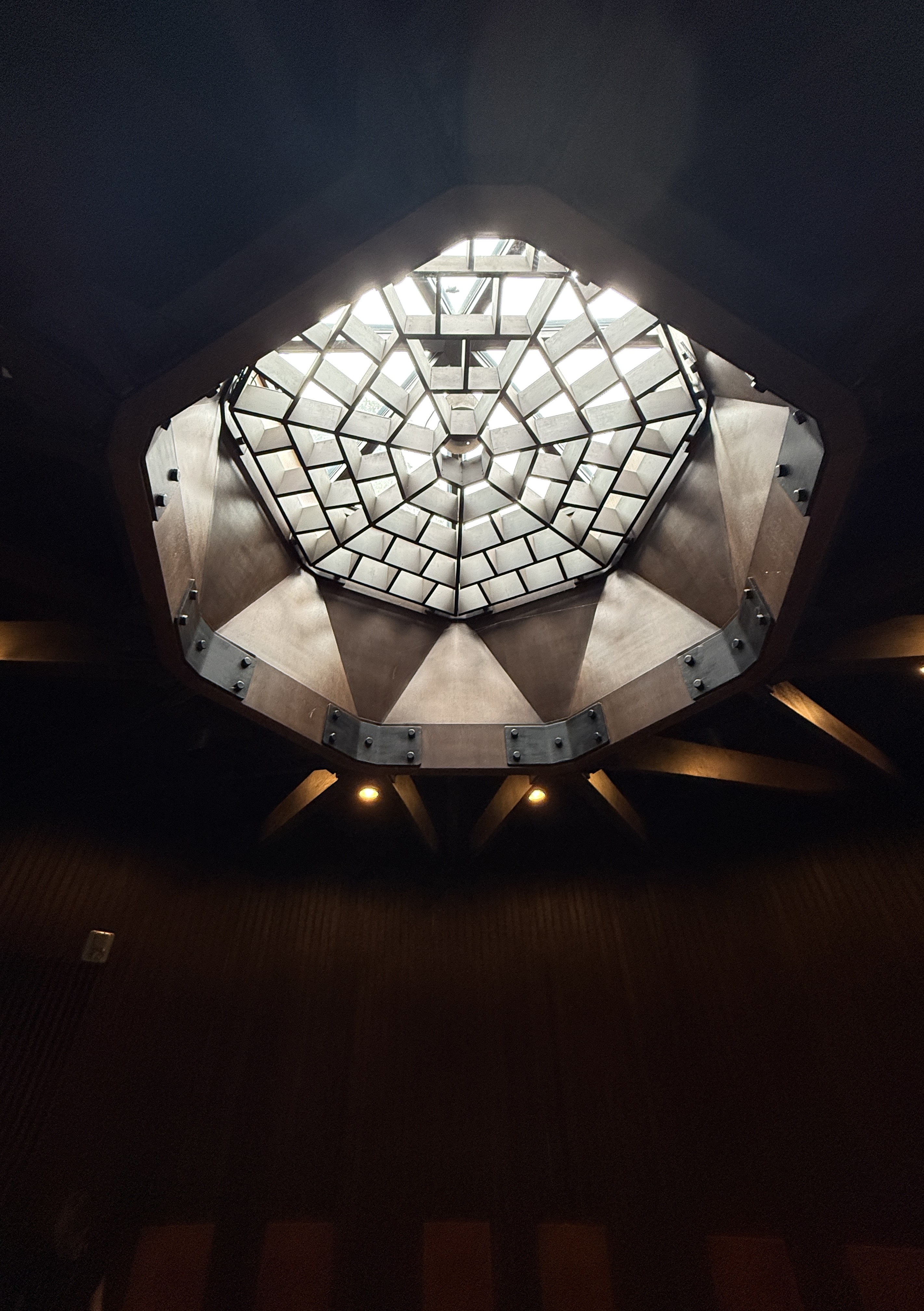
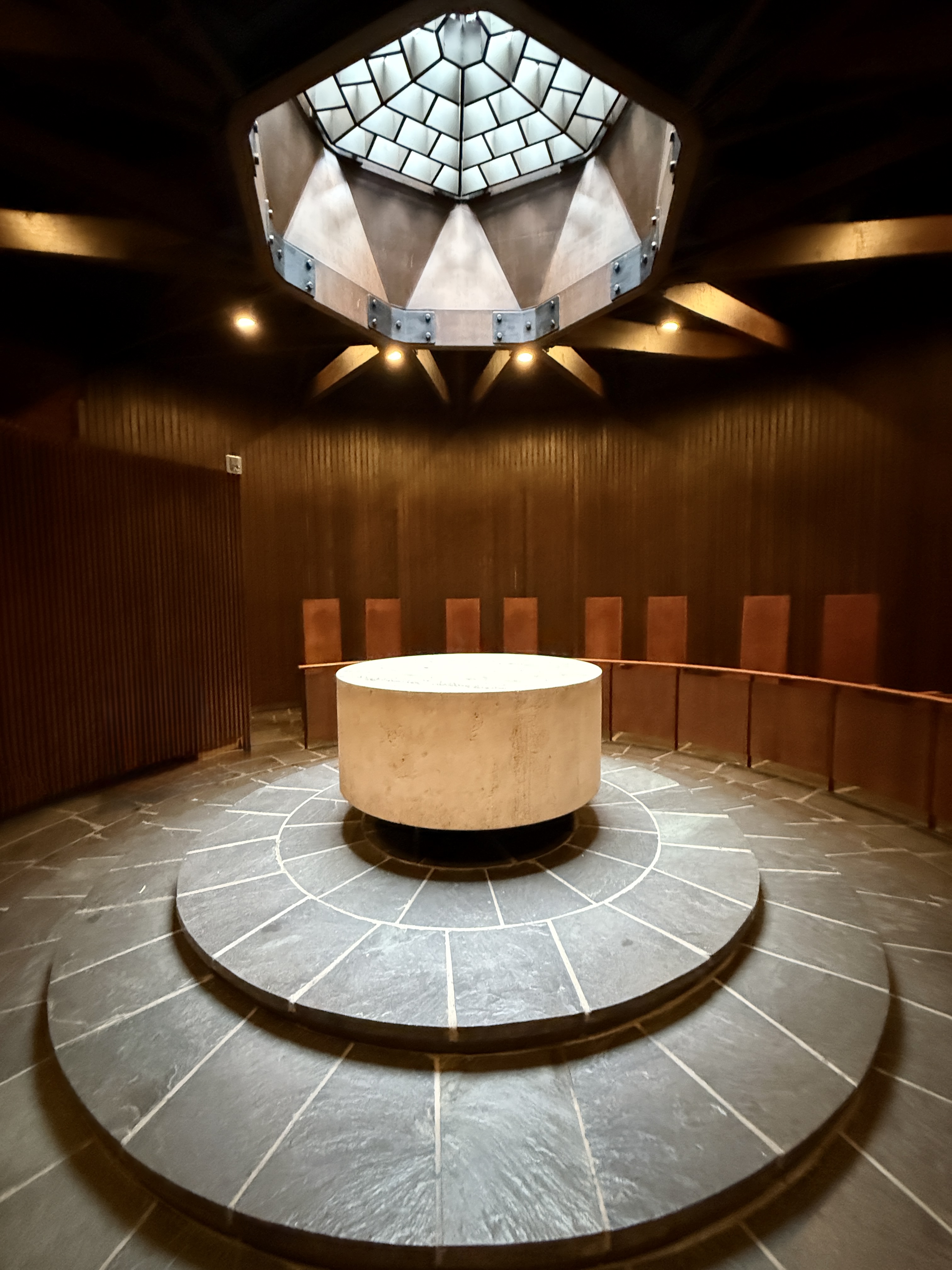
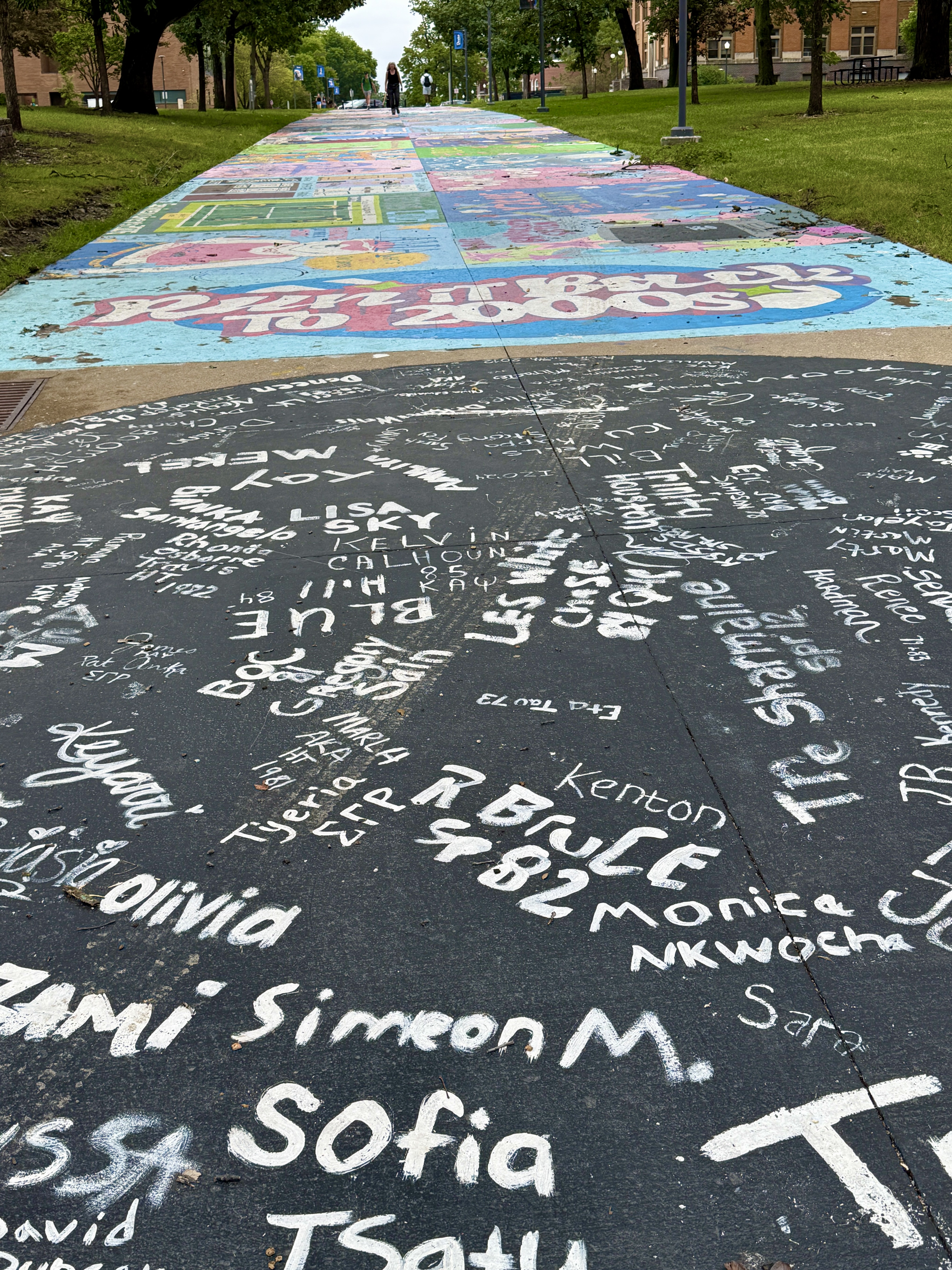
We strolled the campus a bit. It’s a nice campus, with some significant buildings by big name architects of the 50s and 60s. The campus plan was originally done by Saarinen in the 1940s. But, nothing looks great on an overcast day! And as we drove to the campus we saw the results of last night’s storm—many fallen trees around the city; trees crushing cars; and tree removal trucks and crews everywhere.
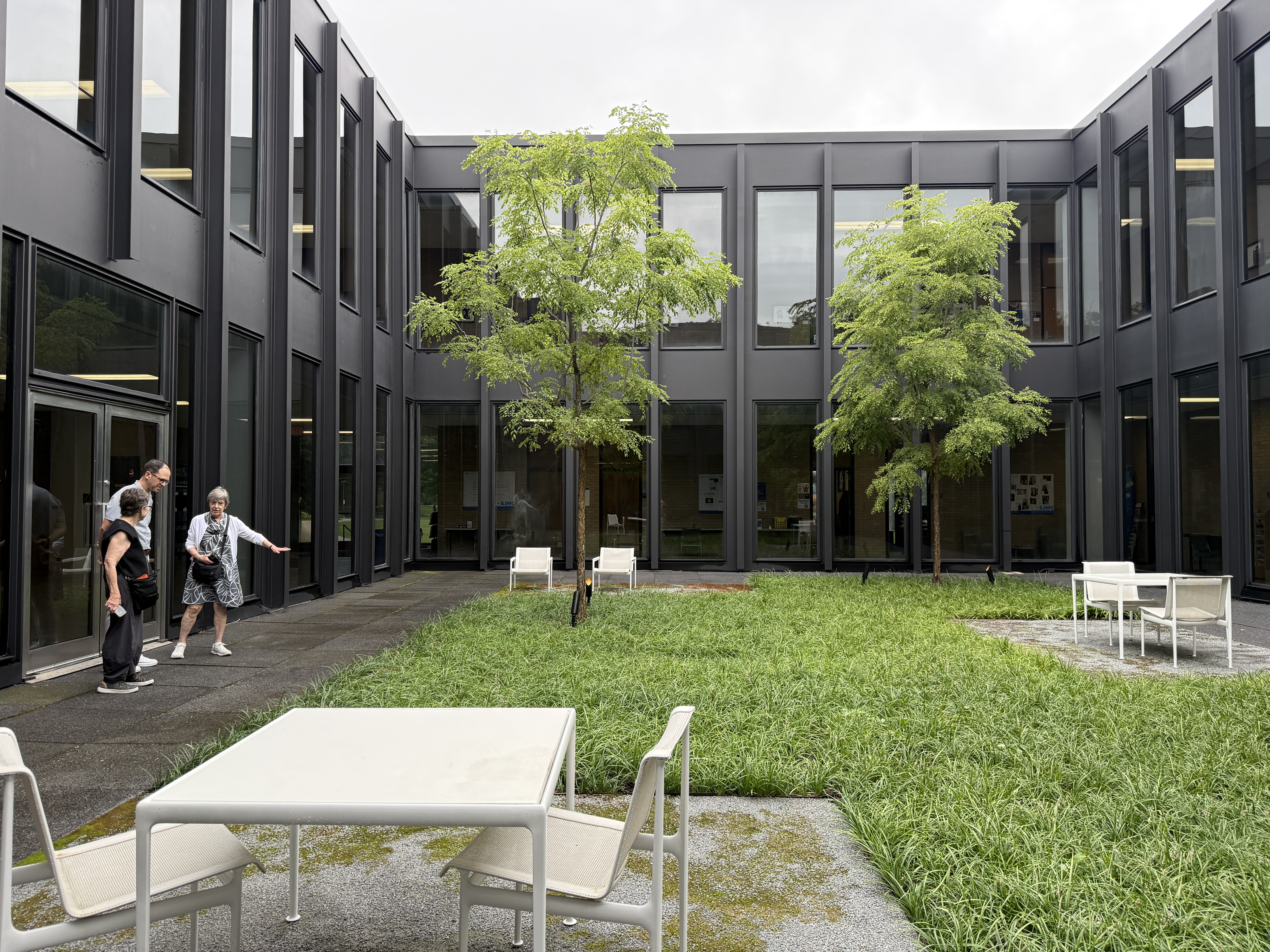
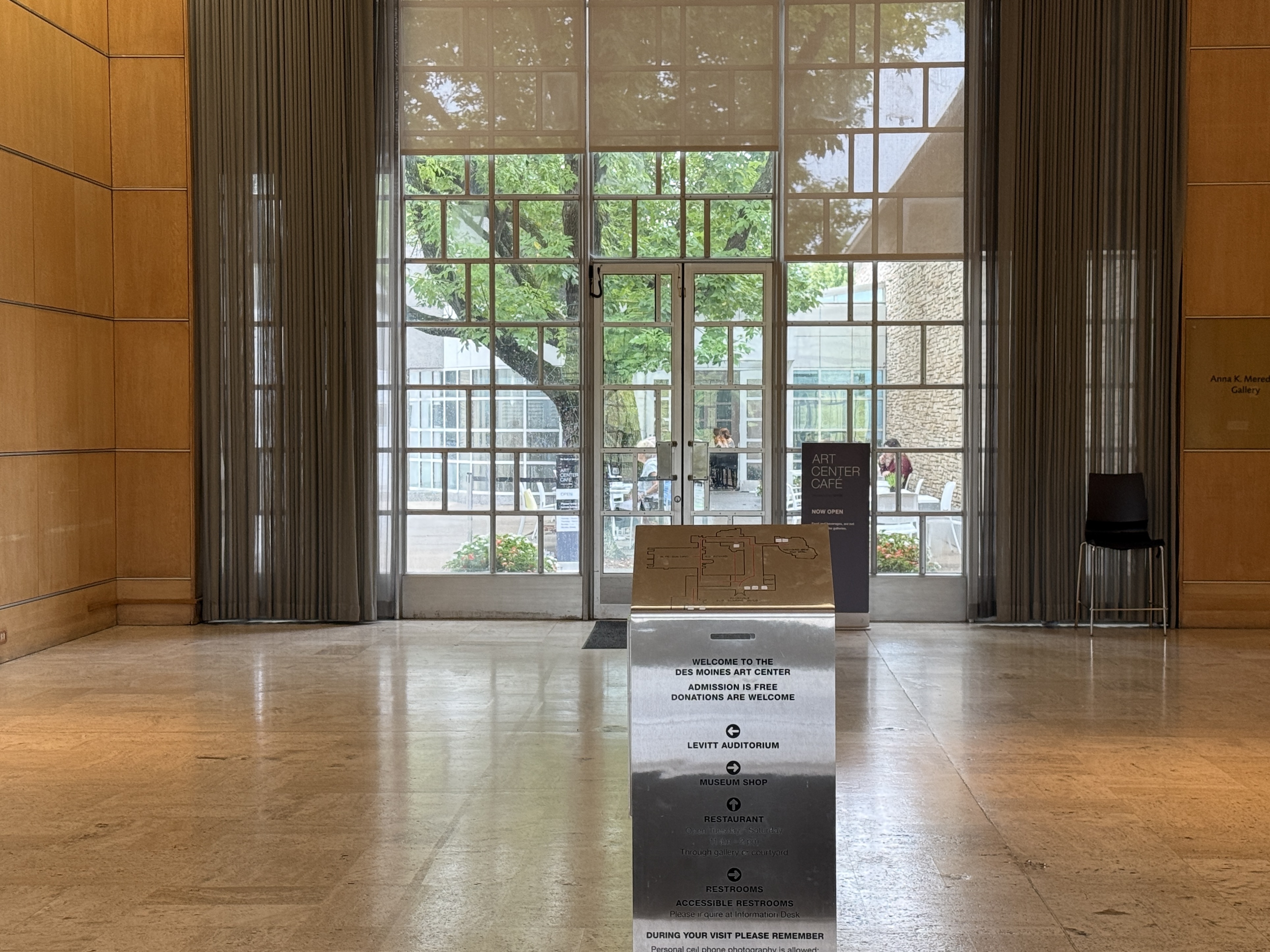
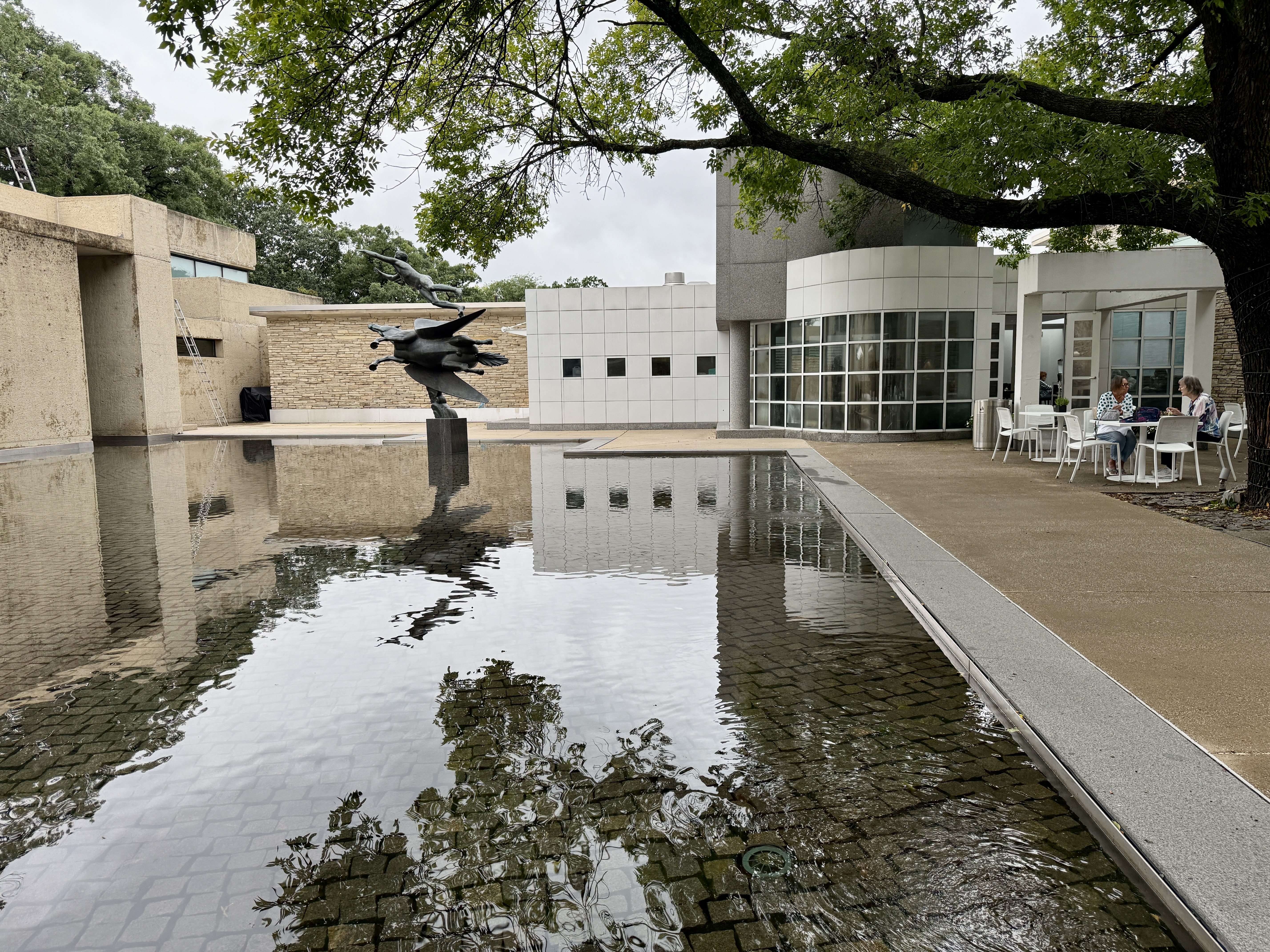
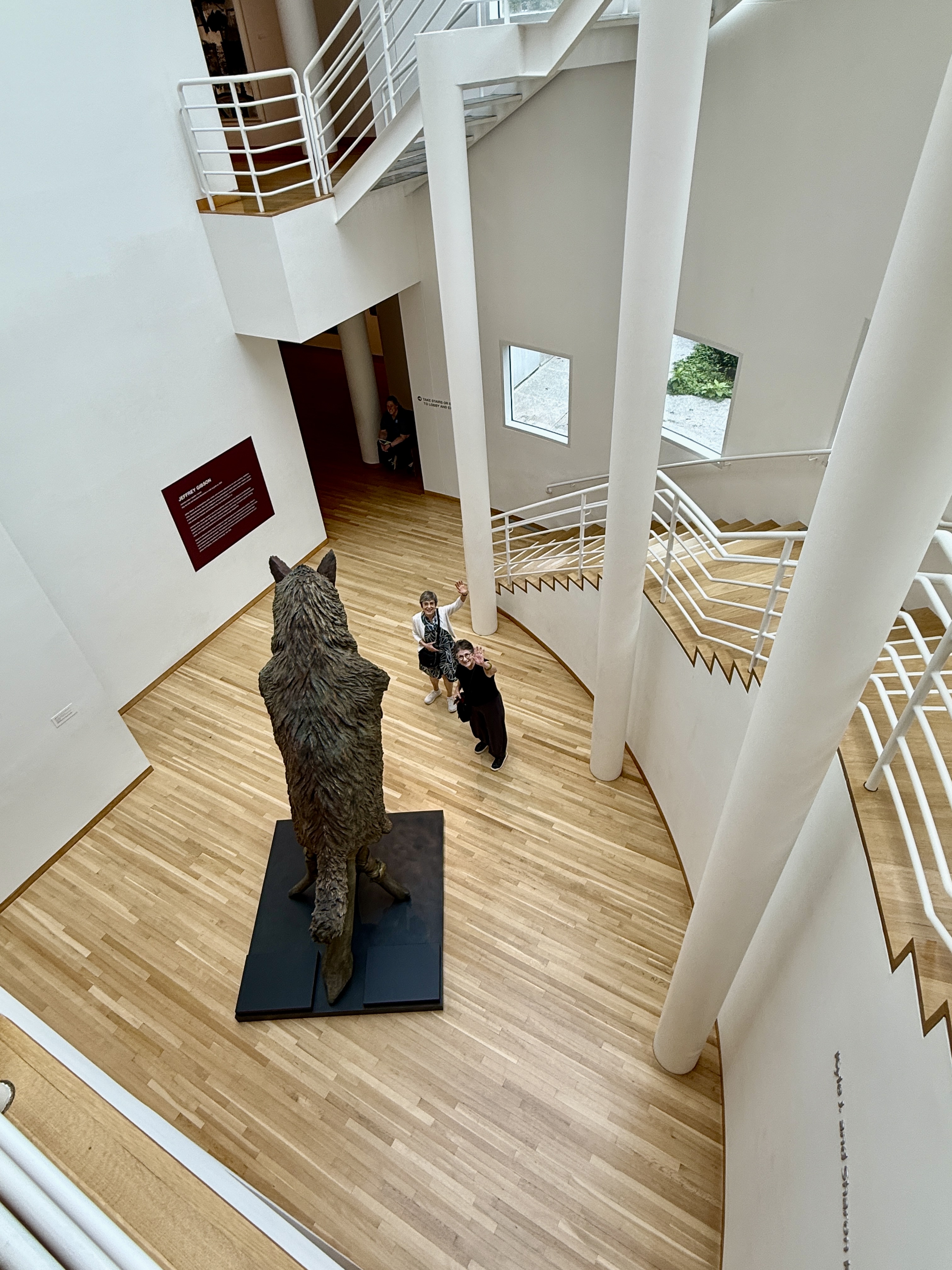
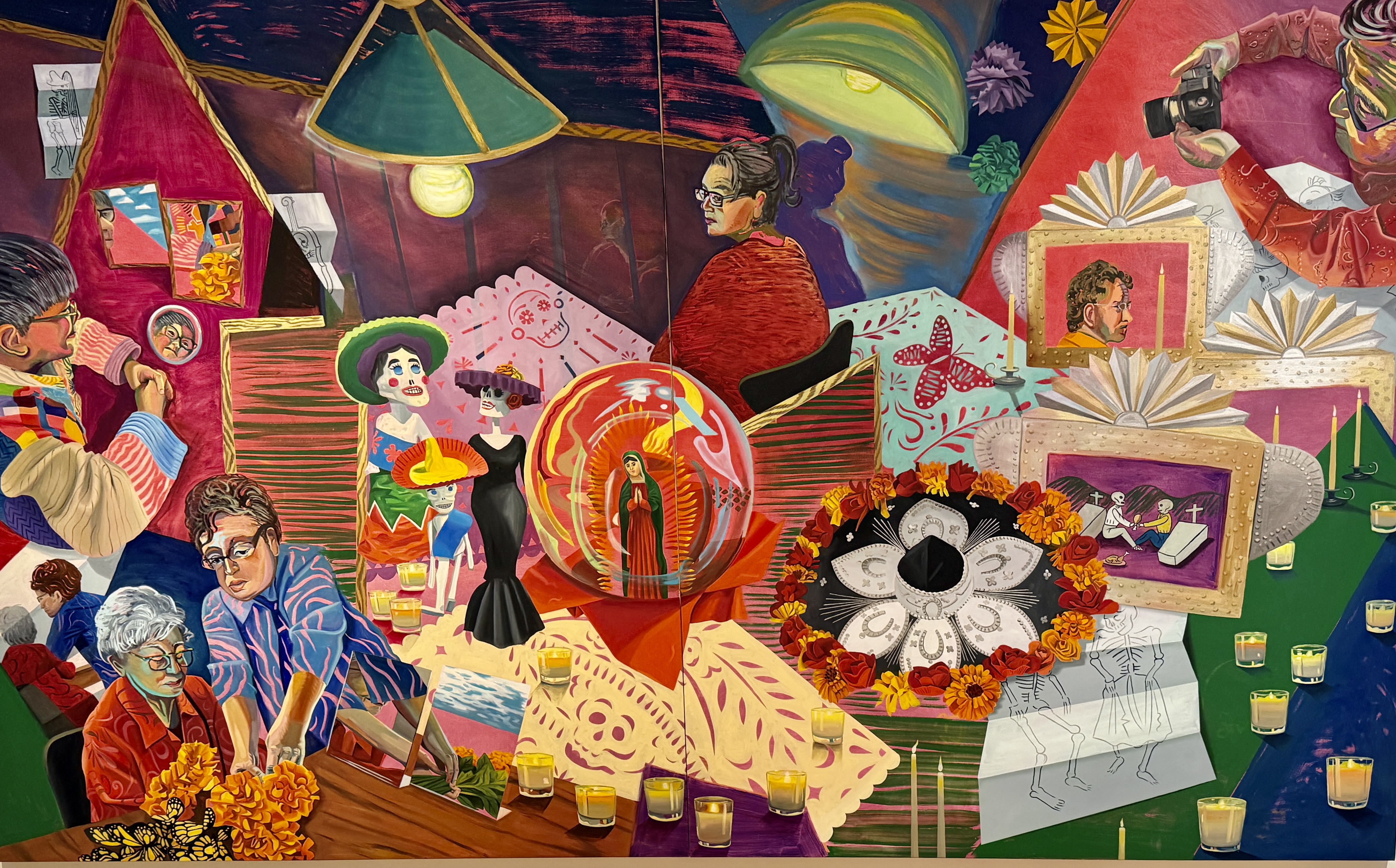
From Drake we headed to the Des Moines Art Center which is impressive for a small city. There is a large main gallery that rotates several exhibitions throughout the year, and several other galleries with traveling exhibits and areas that showcase the permanent collection. There are outdoor sculptures and a rose garden. And the museum surrounds an external reflecting pool.
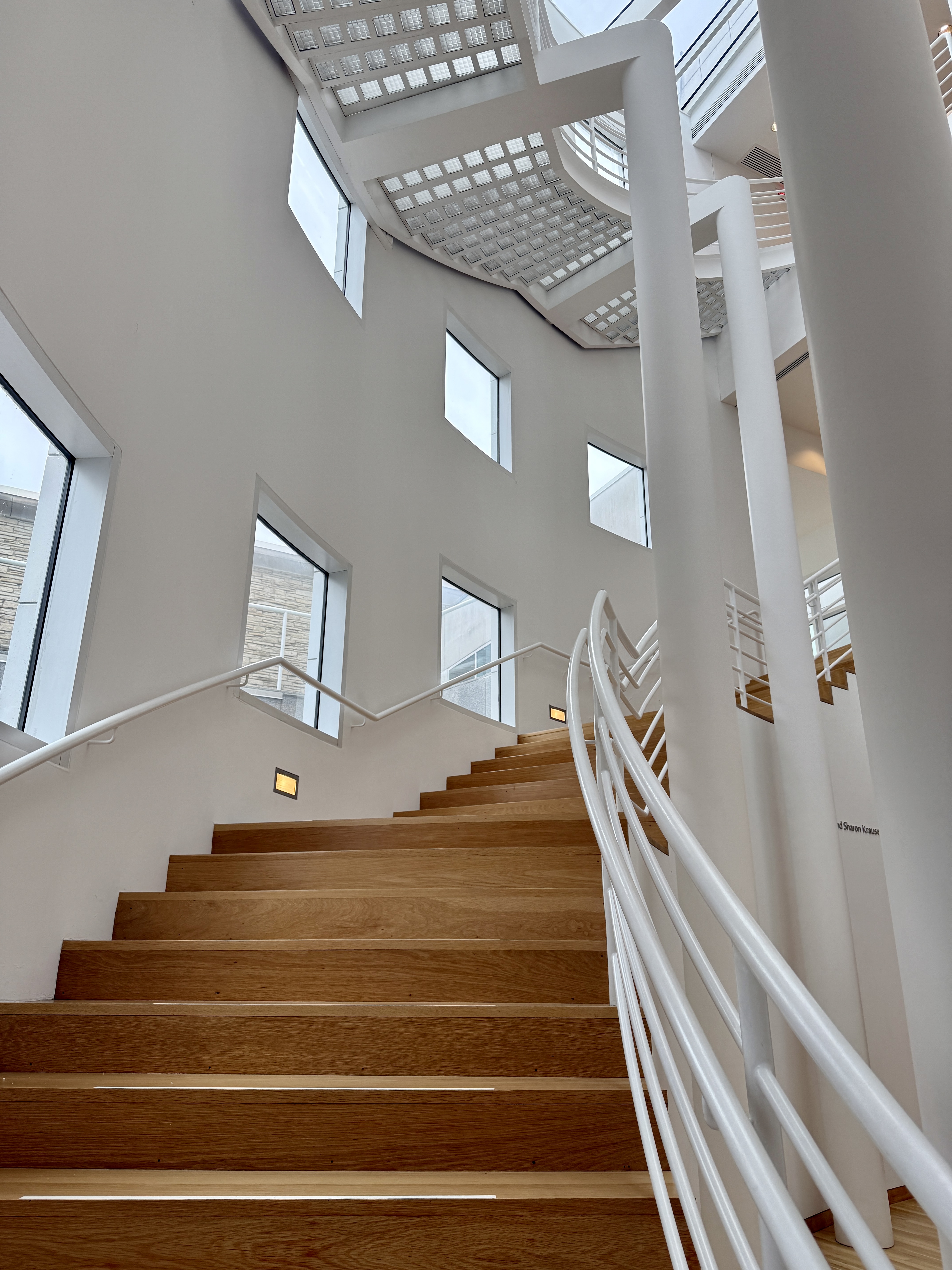
The original museum wing was designed by the Finnish architect Eliel Saarinen in 1945; the first addition was designed in a more modernist/brutal style by I.M. Pei in 1966. There are some that say that Pei designed the south windows, which look out onto the rose garden, to spell out “PEI,” but he denies this. The most recent wing was designed by Richard Meier in 1985. There’s a nice cafe (where we had lunch) and a good gift shop.
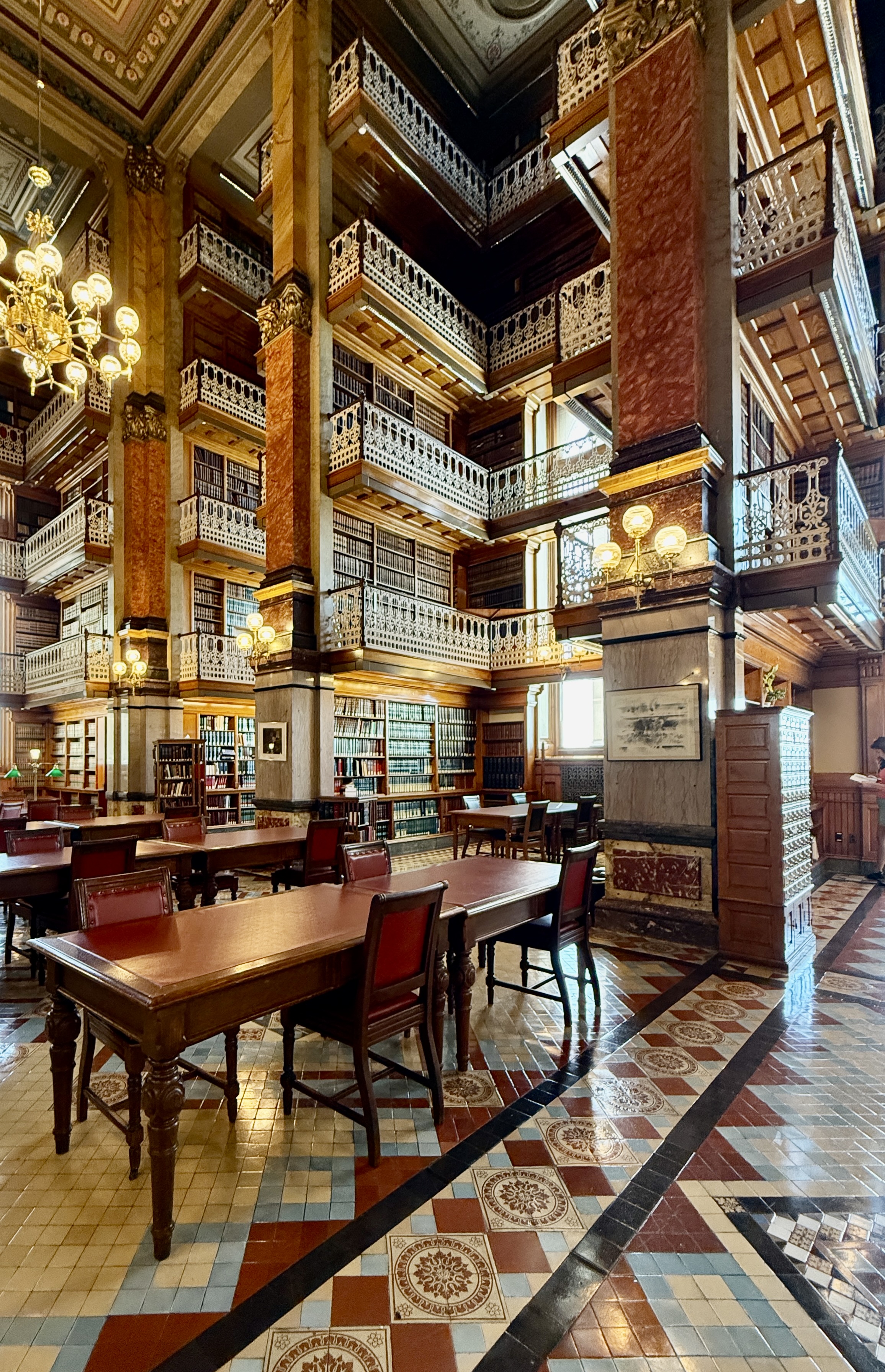
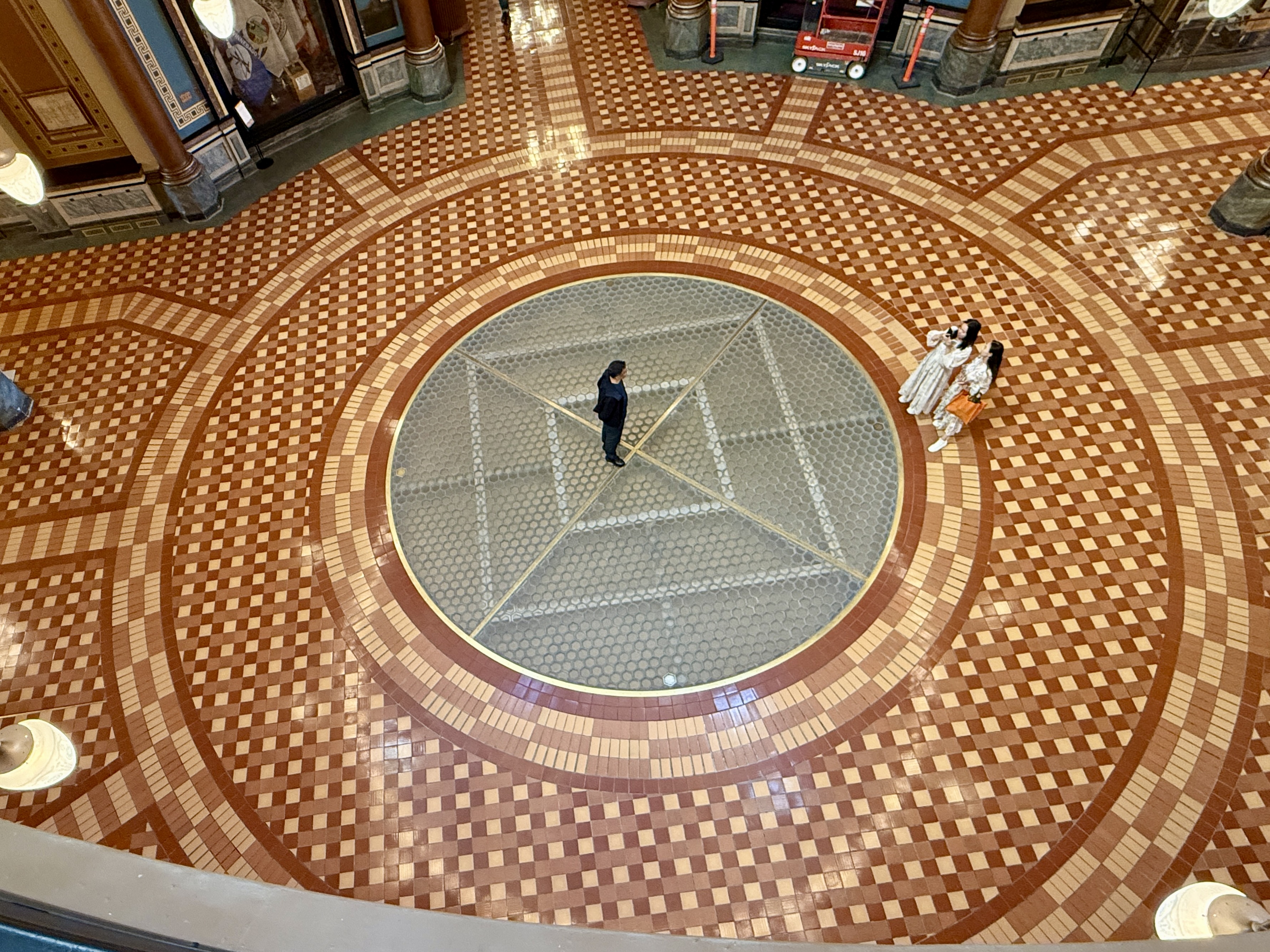
From the art Center we headed to Carol’s childhood home and drove past her elementary, junior, and high schools. A trip down memory lane for her, so we heard stories about her long walk to school (no public transit and no school bus). And then we headed to the State Capitol to see the Law Library which is a spectacular four-story room with a large central skylight, stained glass and floor tiles that date to the 1860s. There are very ornamental balconies throughout the space and wrought-iron spiral staircases. There are also original gas lights that have been wired for modern day electricity.
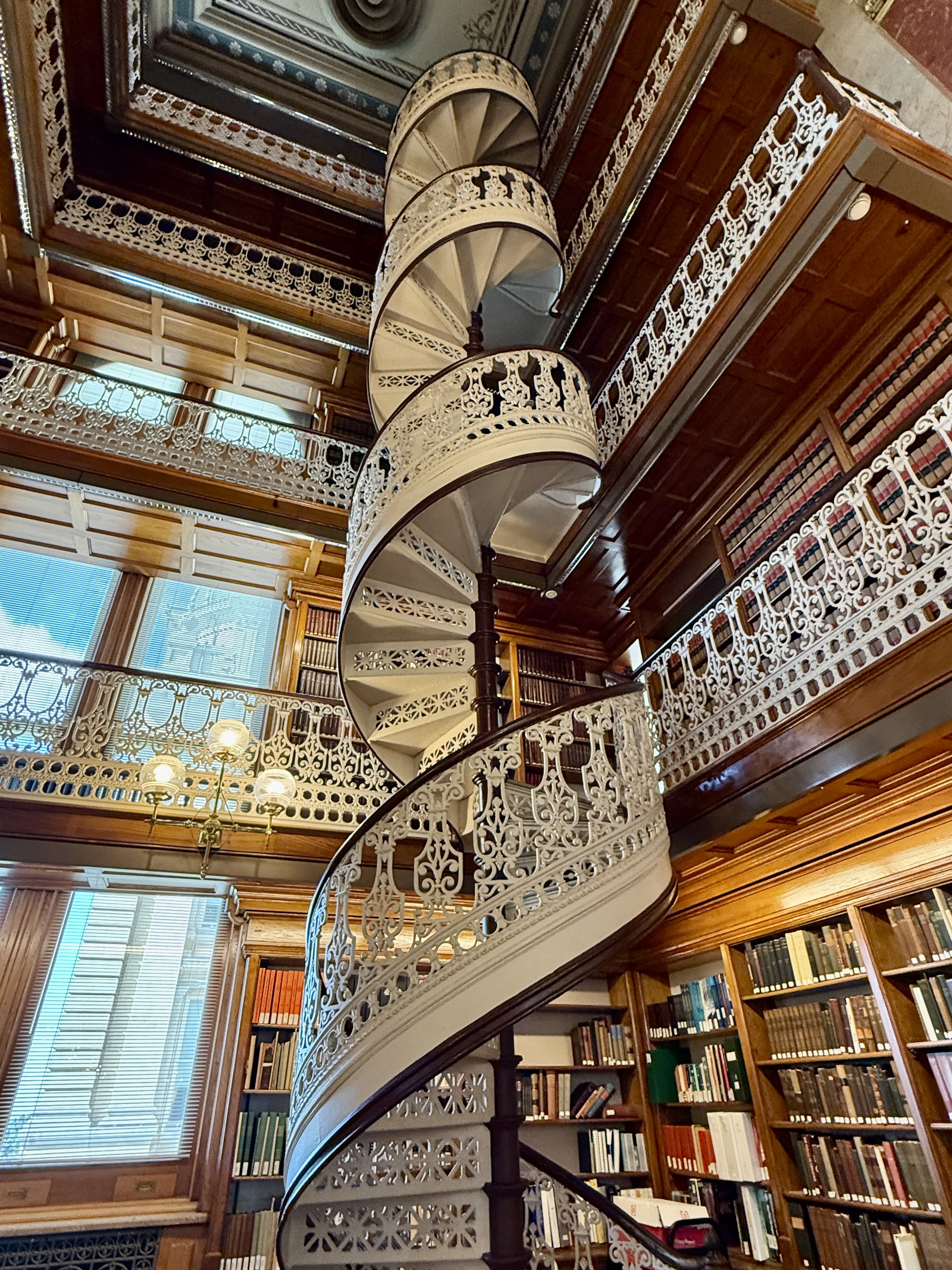
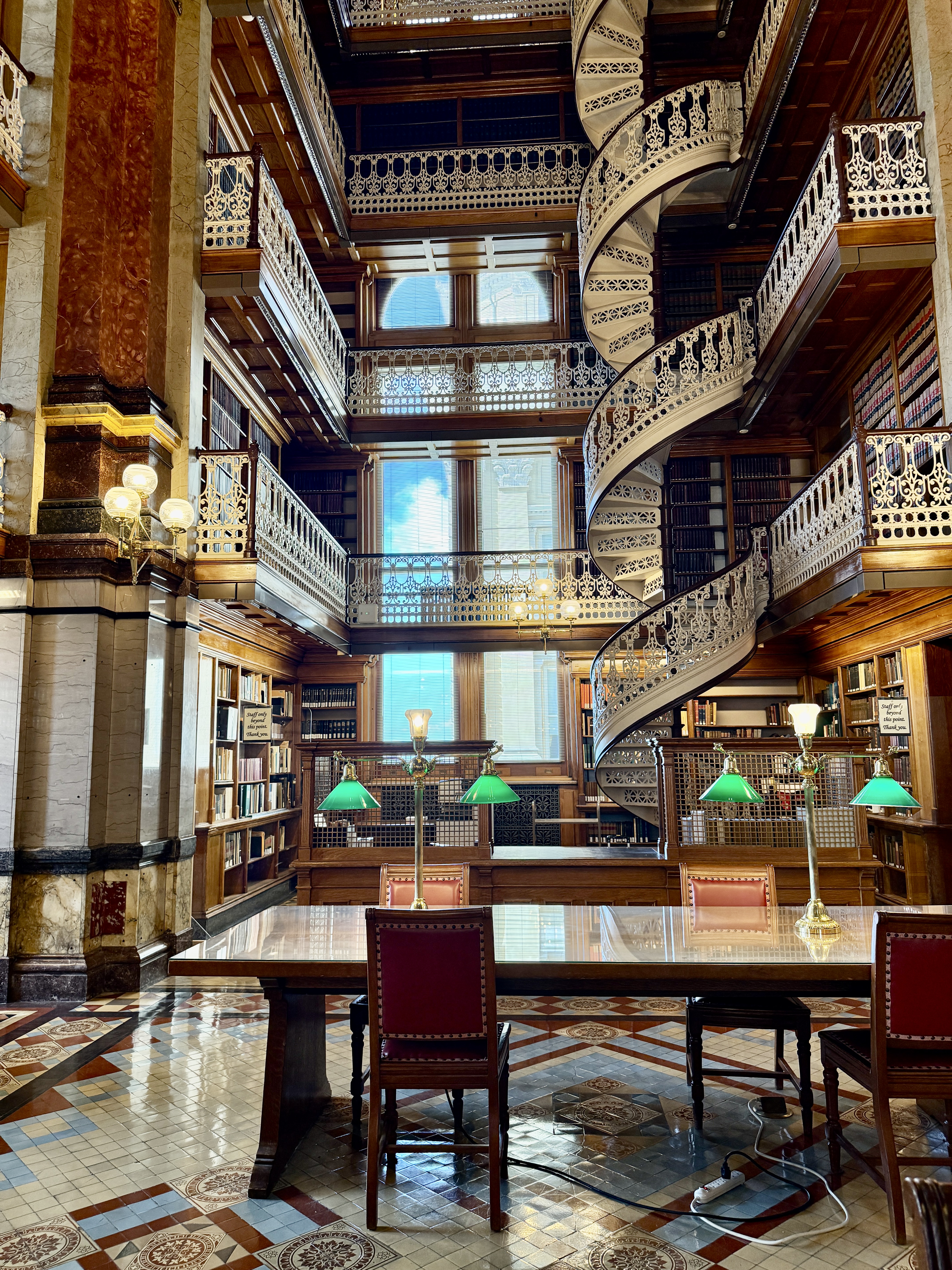
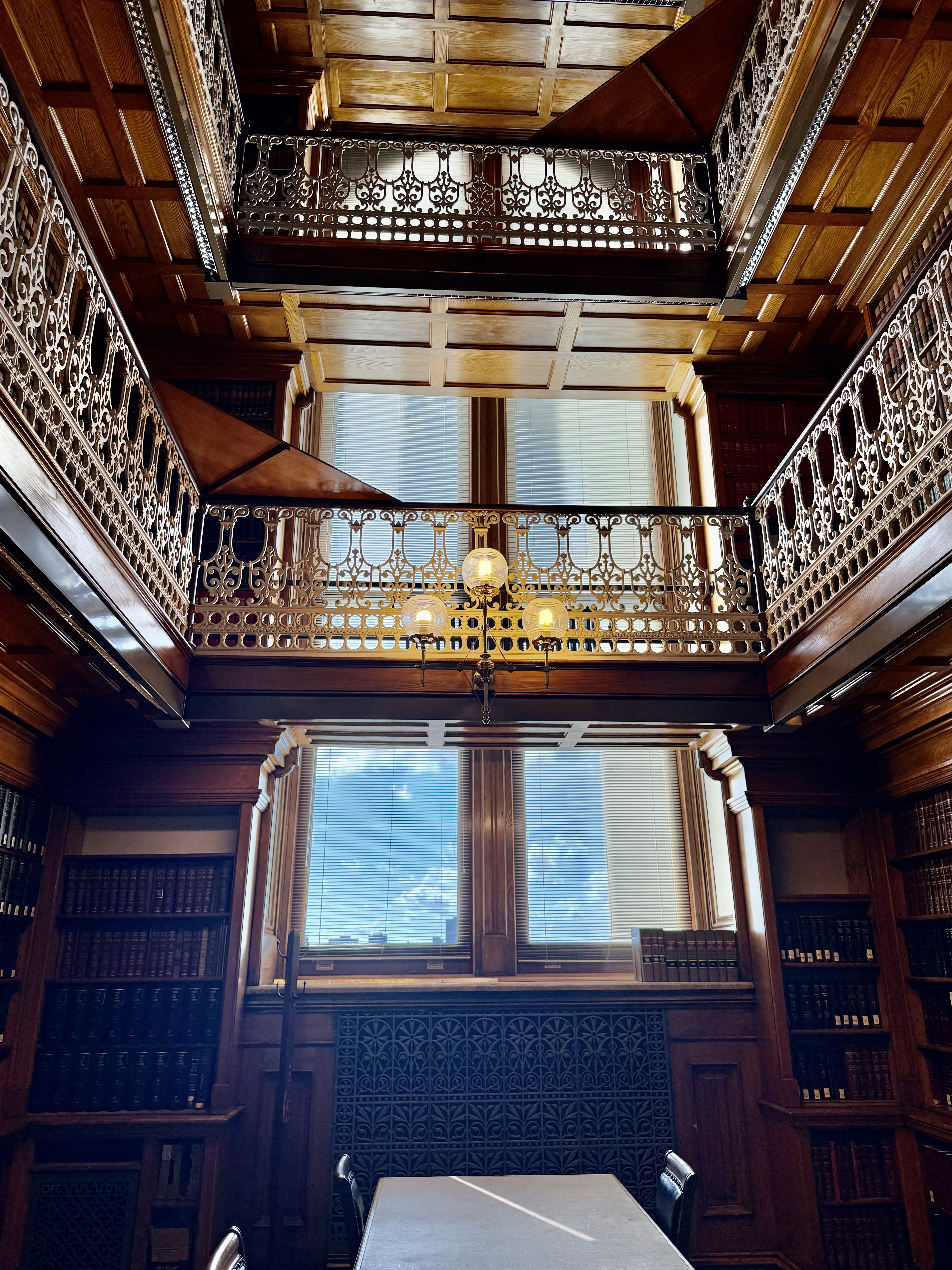
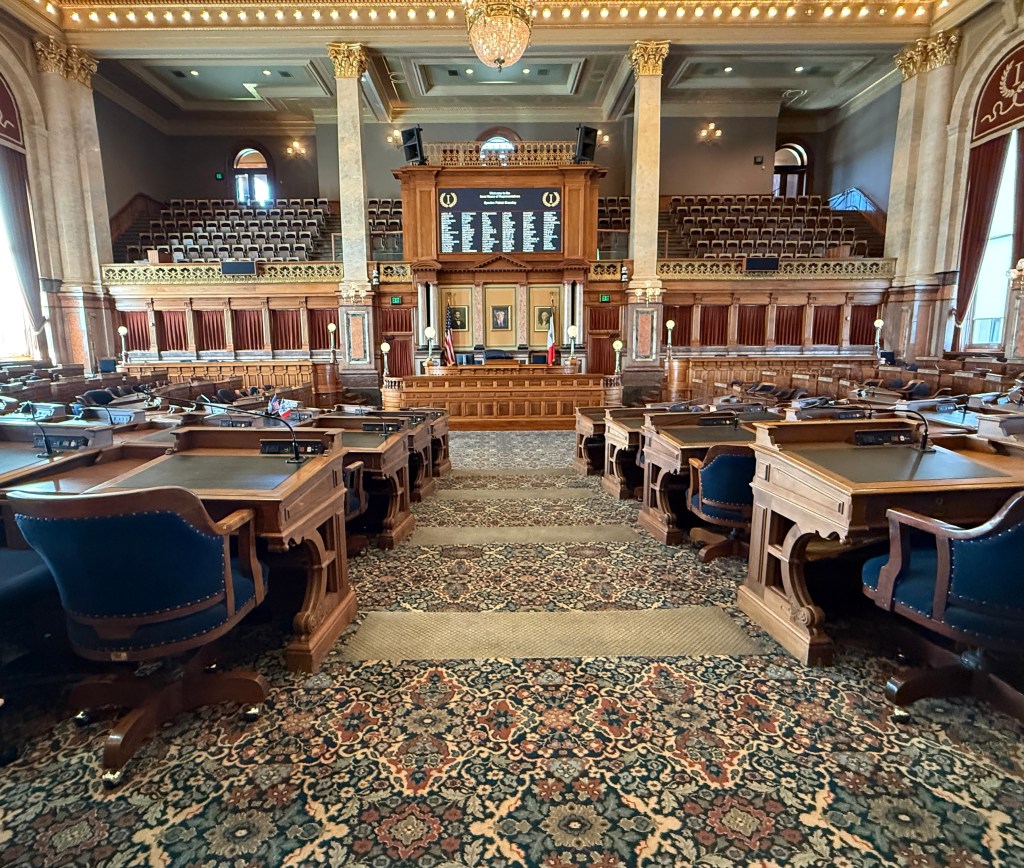
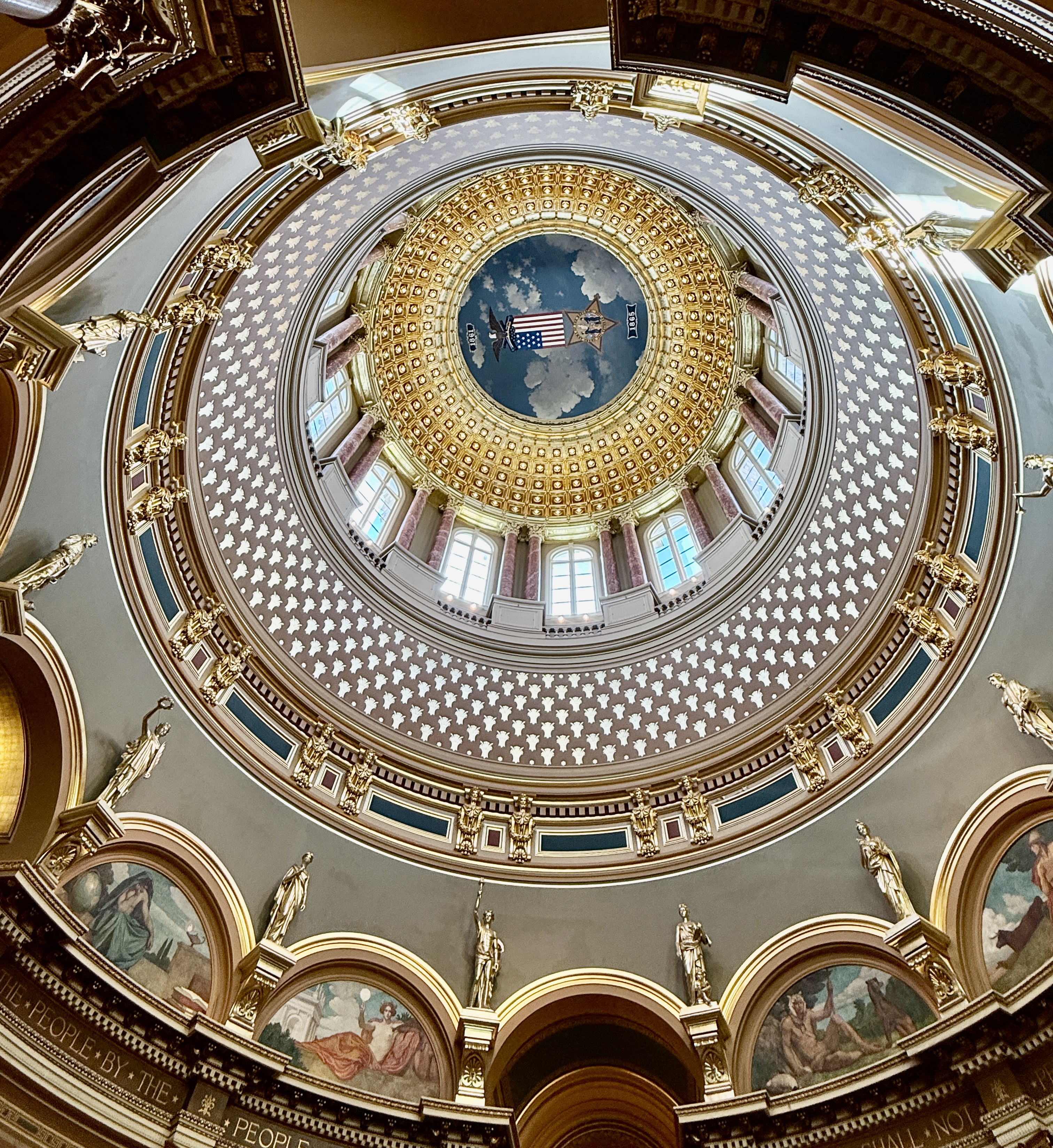
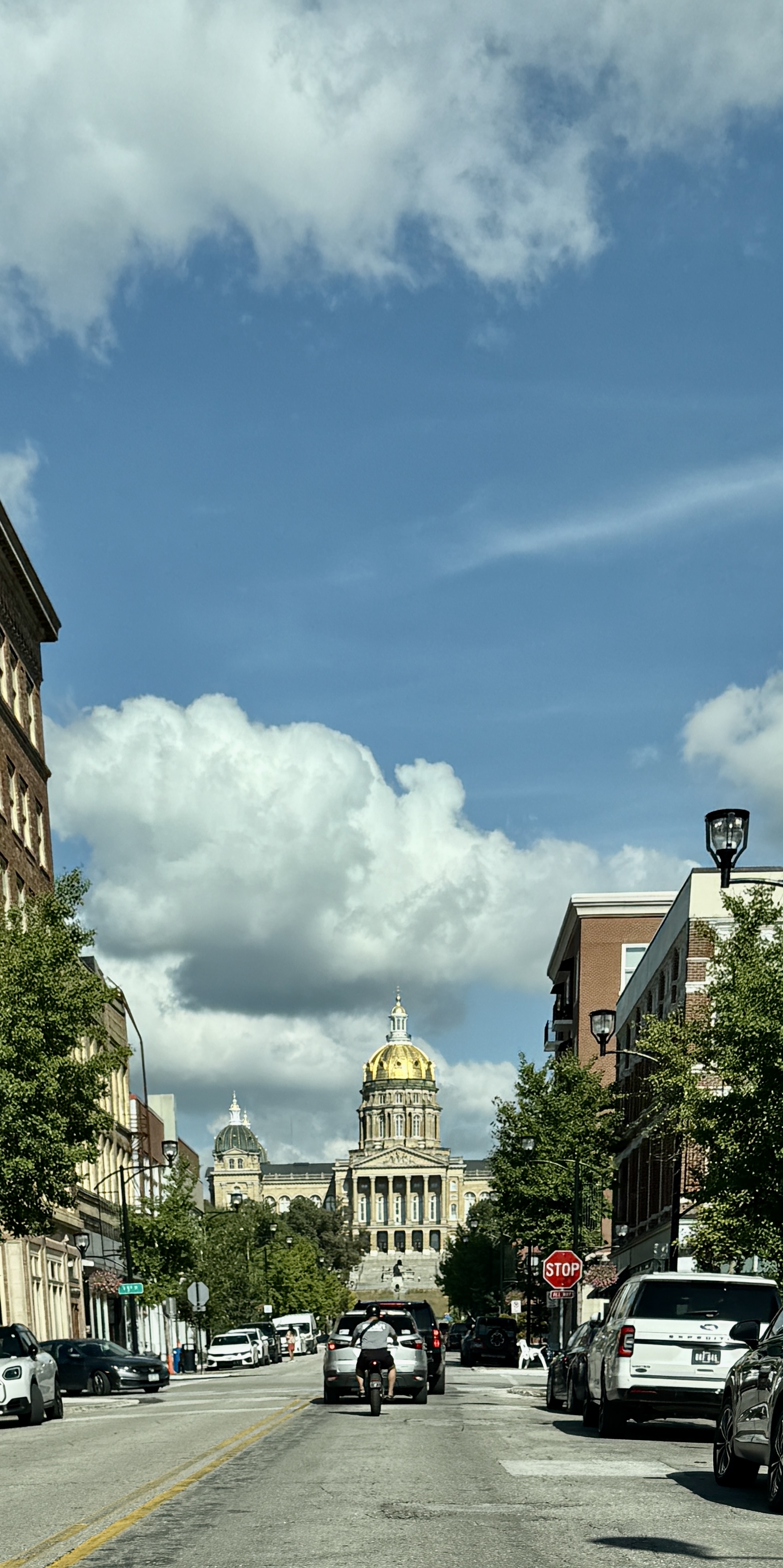
We strolled through the capitol.. with its five domes, including one large golden one which is apparently gilded in real 23K gold (Trump watch out!) The building houses both the state house and senate chambers, the governor’s office, and supreme court chambers. It dates to 1871.
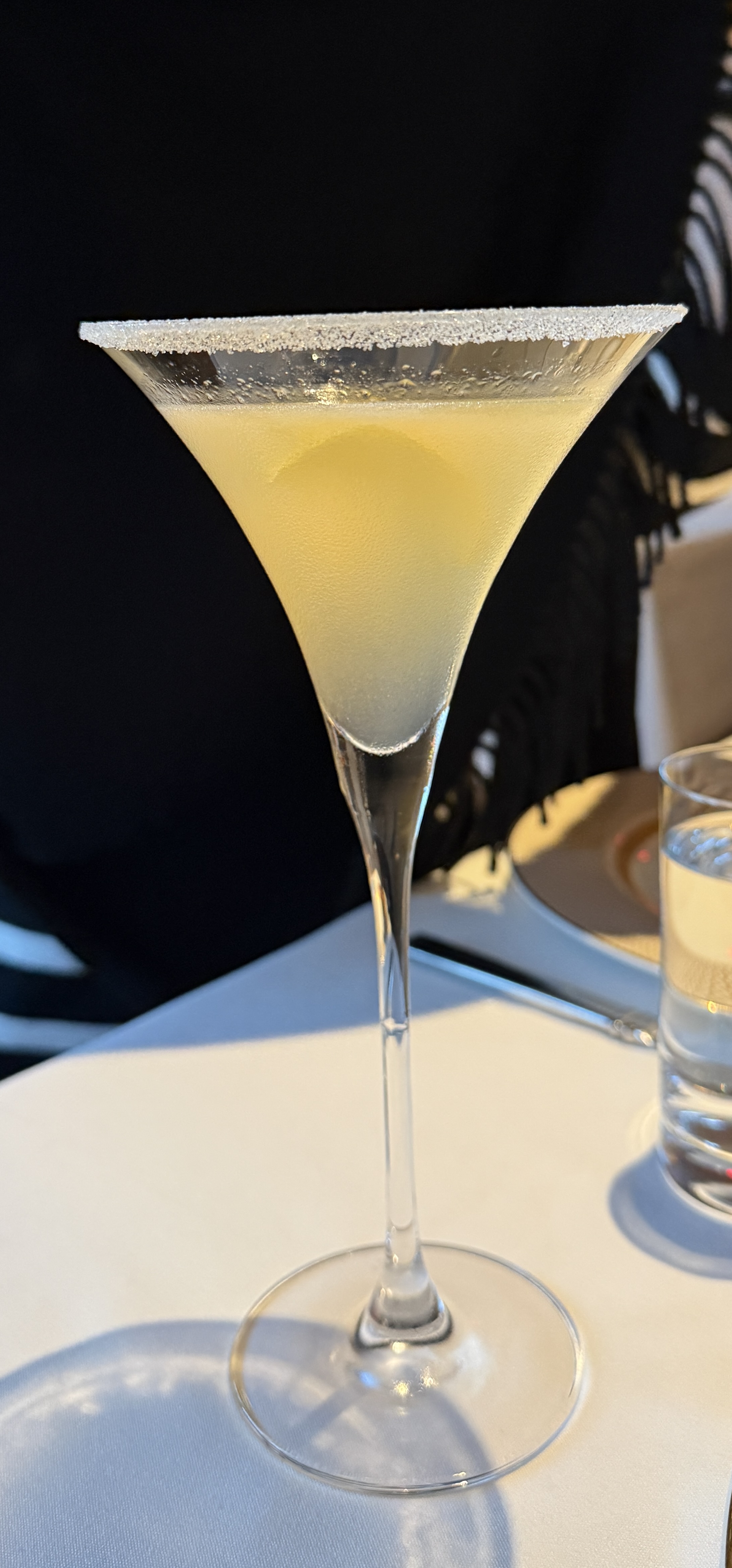
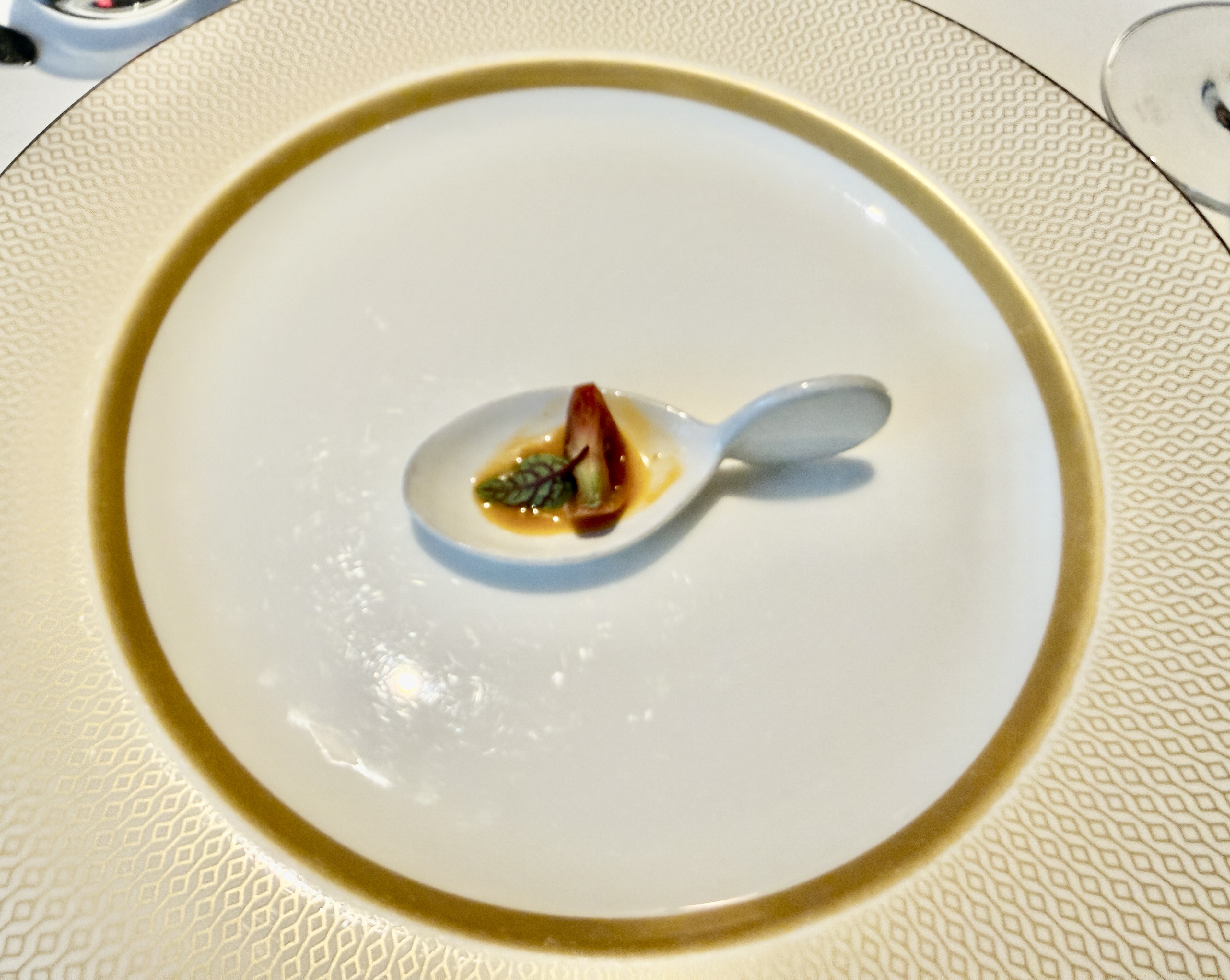
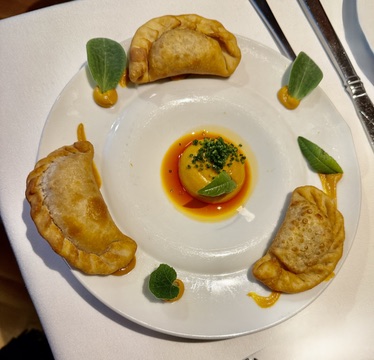
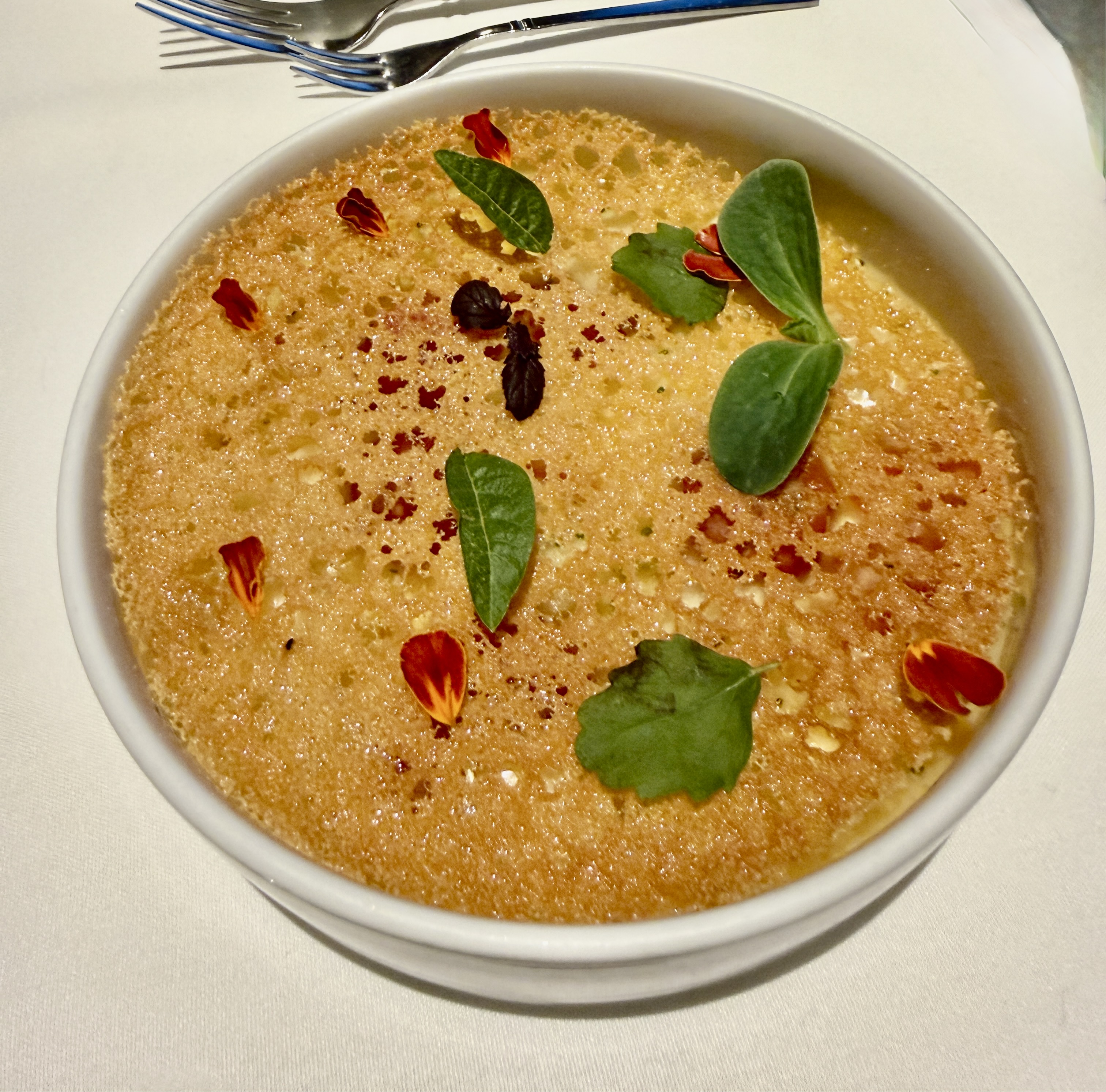
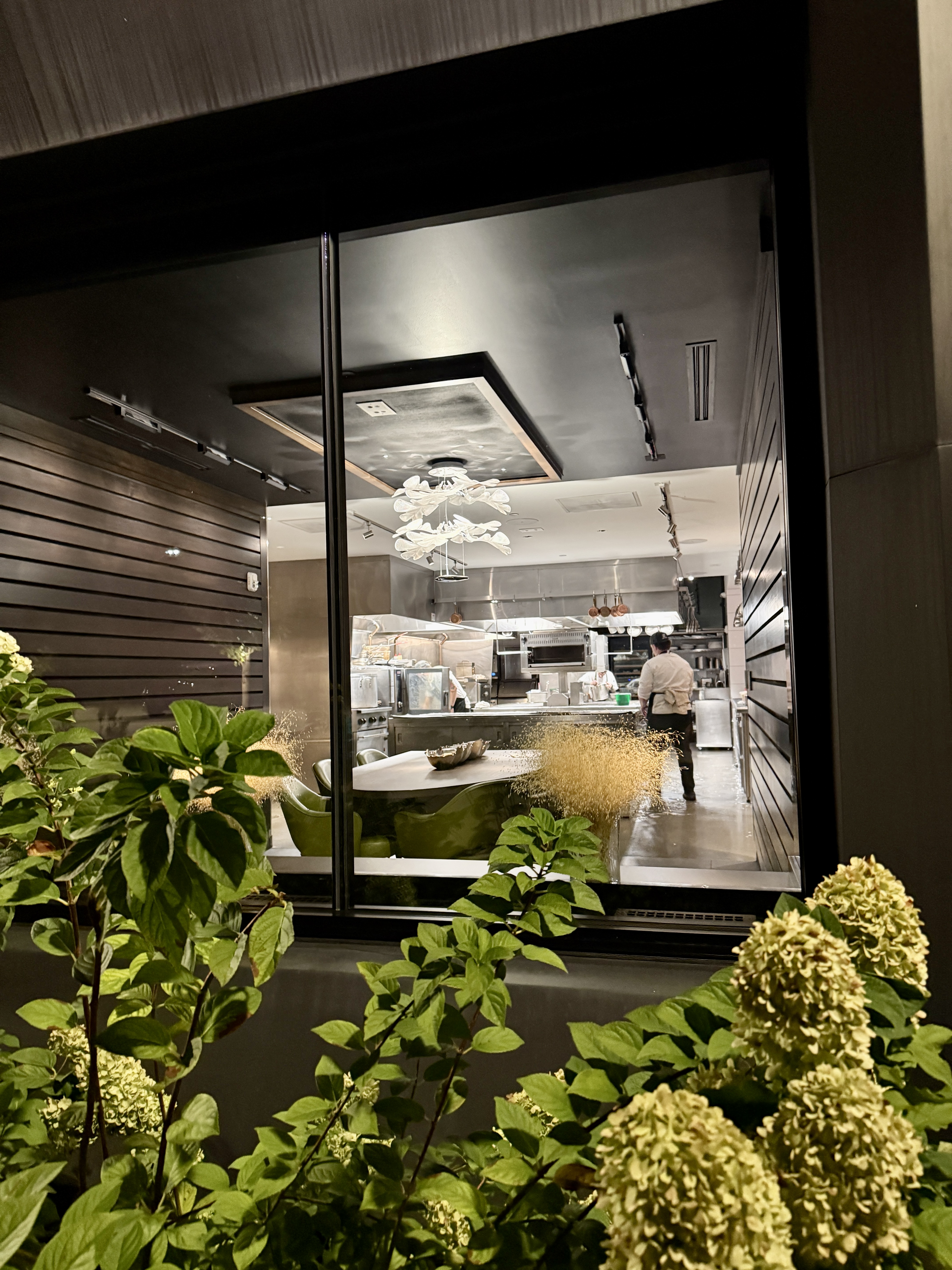
After a quick stop at the hotel, we headed to dinner at a fairly new restaurant called Oak Park which was wonderful. The restaurant sits in from of a large garden where the restaurant grows much of the vegetables that are served on their very seasonal menu. After cocktails, we shared three starter plates: oysters, mini duck confit filled filled empanadas, and gnocchi sitting in a tomato beurre sauce and topped with a potato lace tulle and herbs. Then we shared two entrees: black bass with fennel, shallot, rice chips served with sweet corn and roasted tomatoes; and “Amish chicken” that melted in your mouth sitting on the plate with a small salad of pickled ramps, roasted onion, and some other stuff… It’s definitely an upscale eatery with great service. We ended with two desserts: a pumpkin souffle that had some kind of cocoa flavor and I think cinnamon ice cream.. and an order of madeleines.
Now I’m back at the hotel… going to pack up to leave in the morning. I’m back tomorrow night.. and then it’s life as usual.
9/8/26: From Amana Colonies to Ames to Des Moines
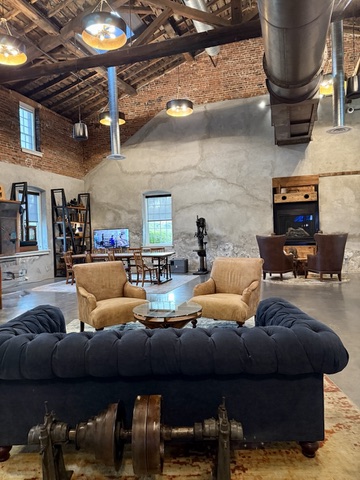
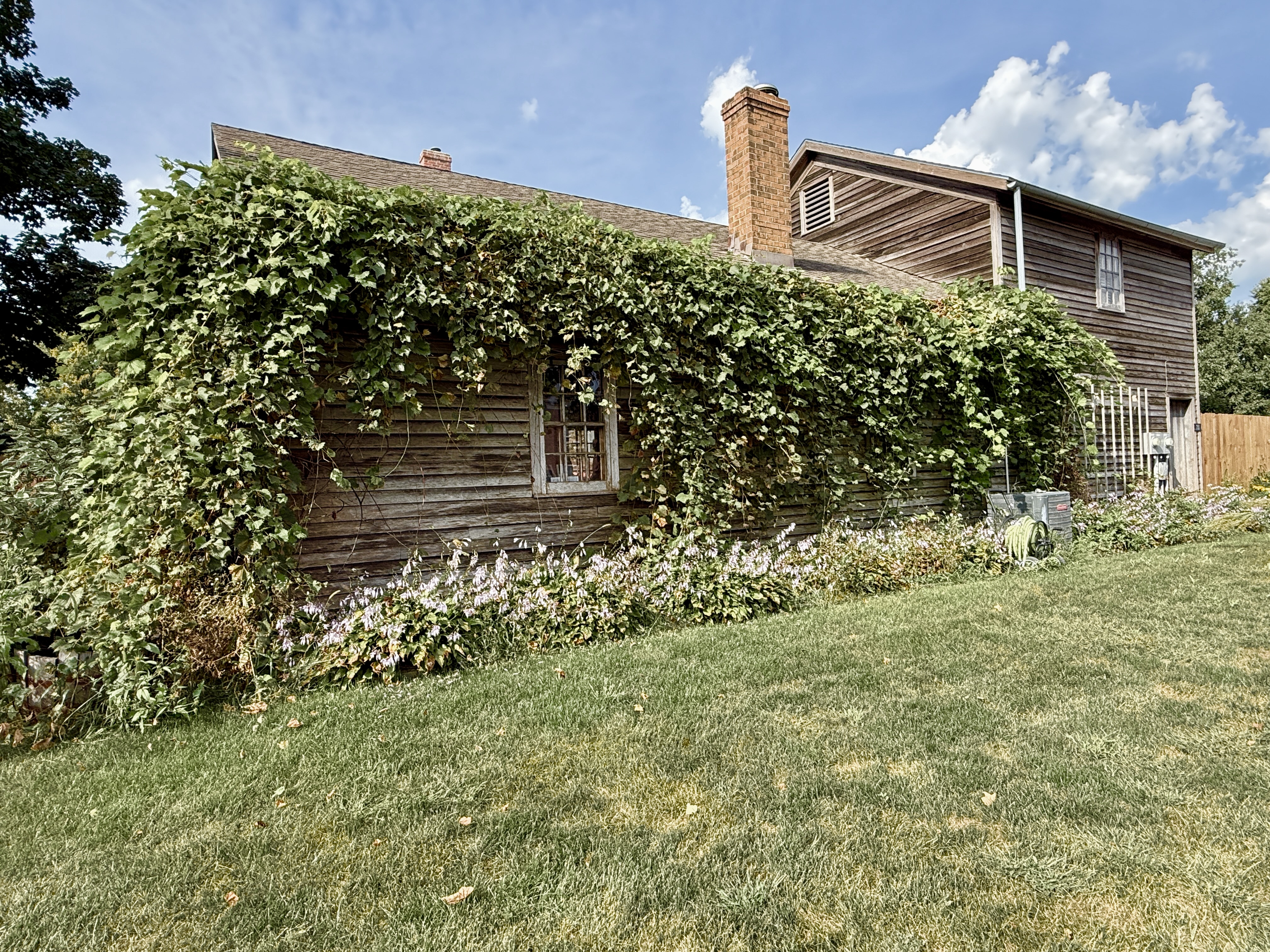
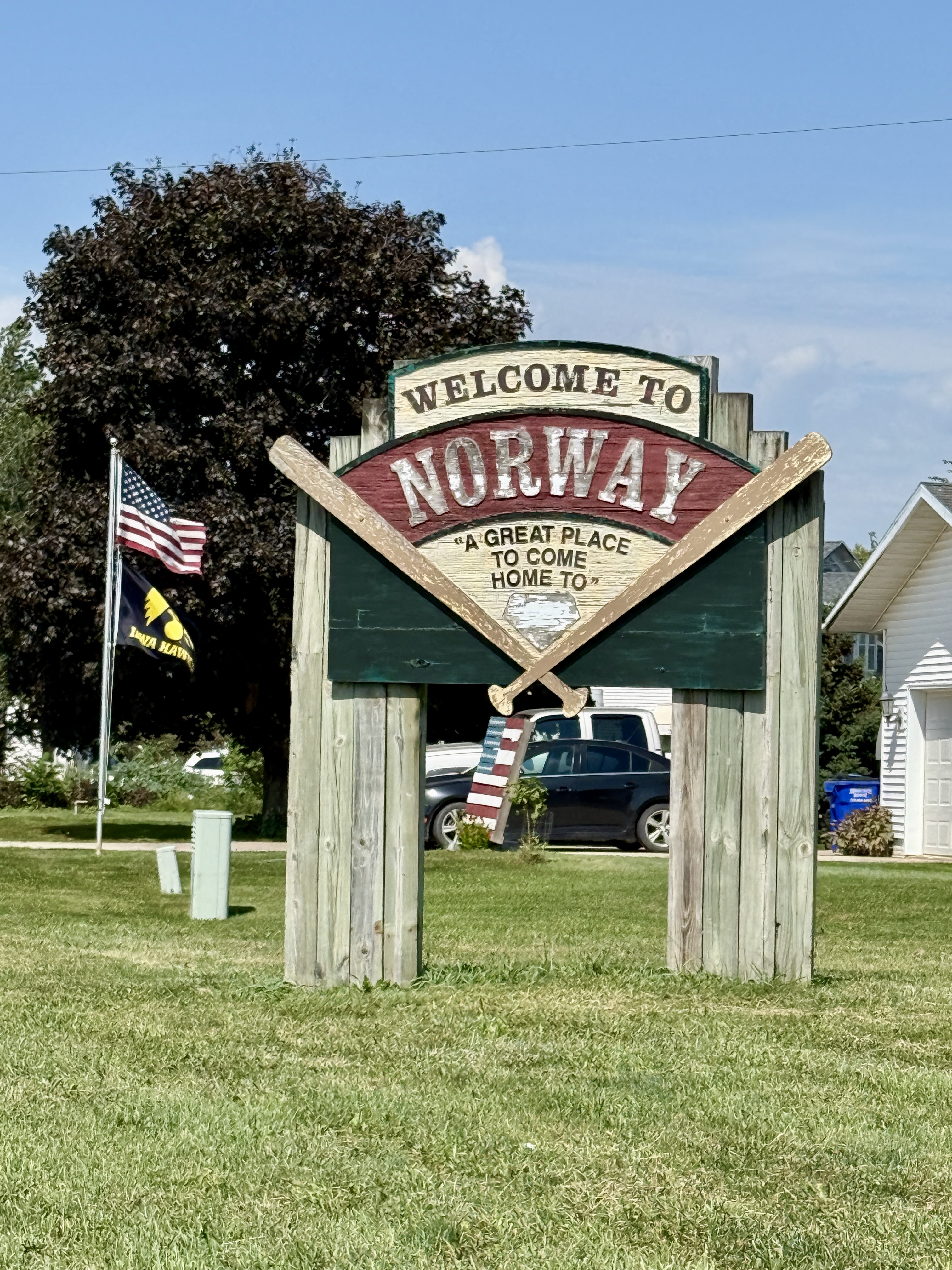
We headed to a local cafe for breakfast, but it was closed. We tried another one only to find that nothing was prepared fresh.. all packaged and pre-cooked. We tried another one and a few more mishaps. Finally we drove back to the hotel where we had eggs and toast. Prices here are unbelievably low. Scrambled egg, hash browns, and toast costs $7.00. Then we drifted around the town which is like a picture postcard and we headed to Ames, home of Iowa State University to see the Grant Wood murals at the library. Along the drive we stumbled on (or saw signs for) quaint little towns including Norway, Madrid, Marengo, and Brooklyn.
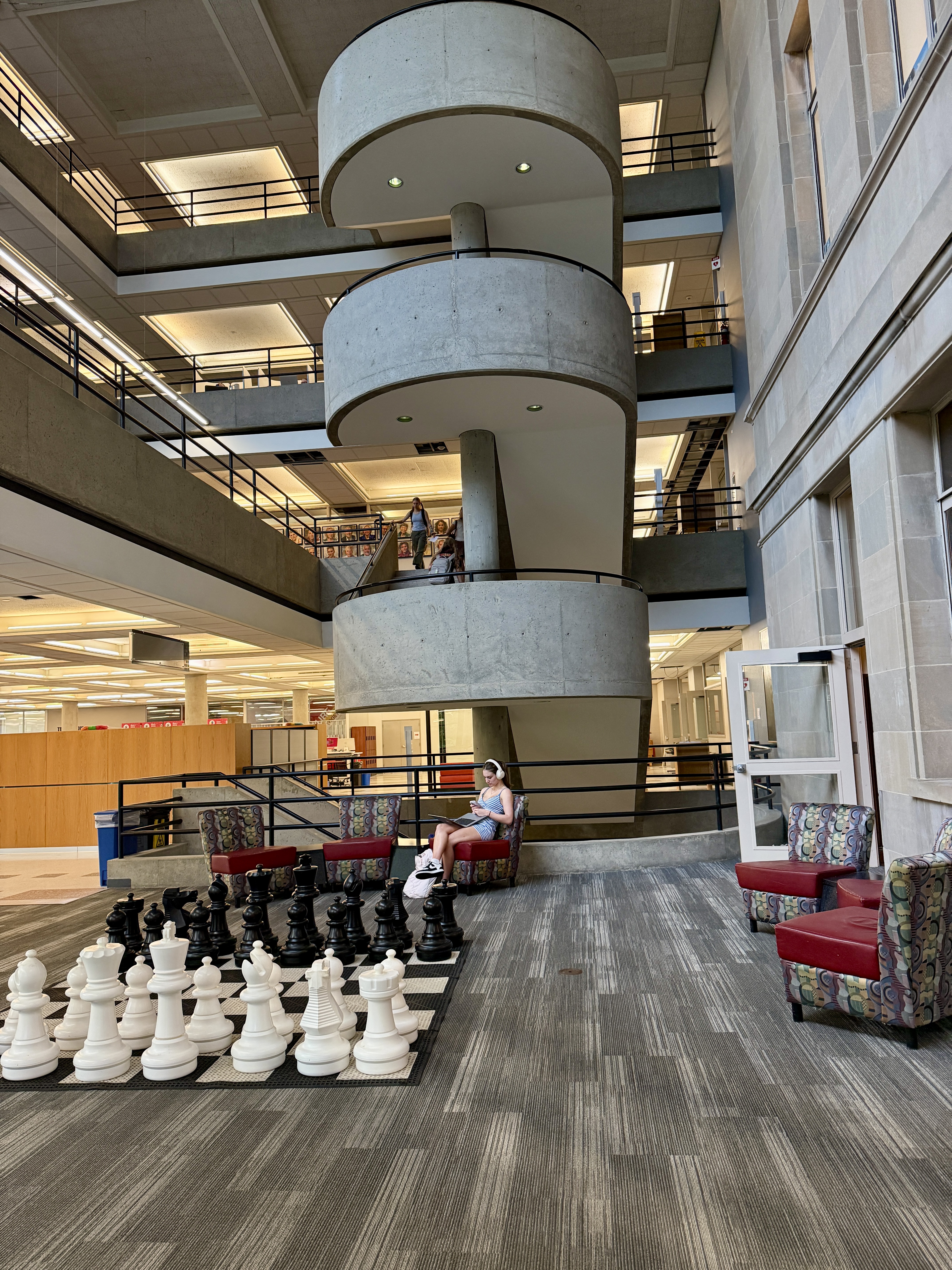
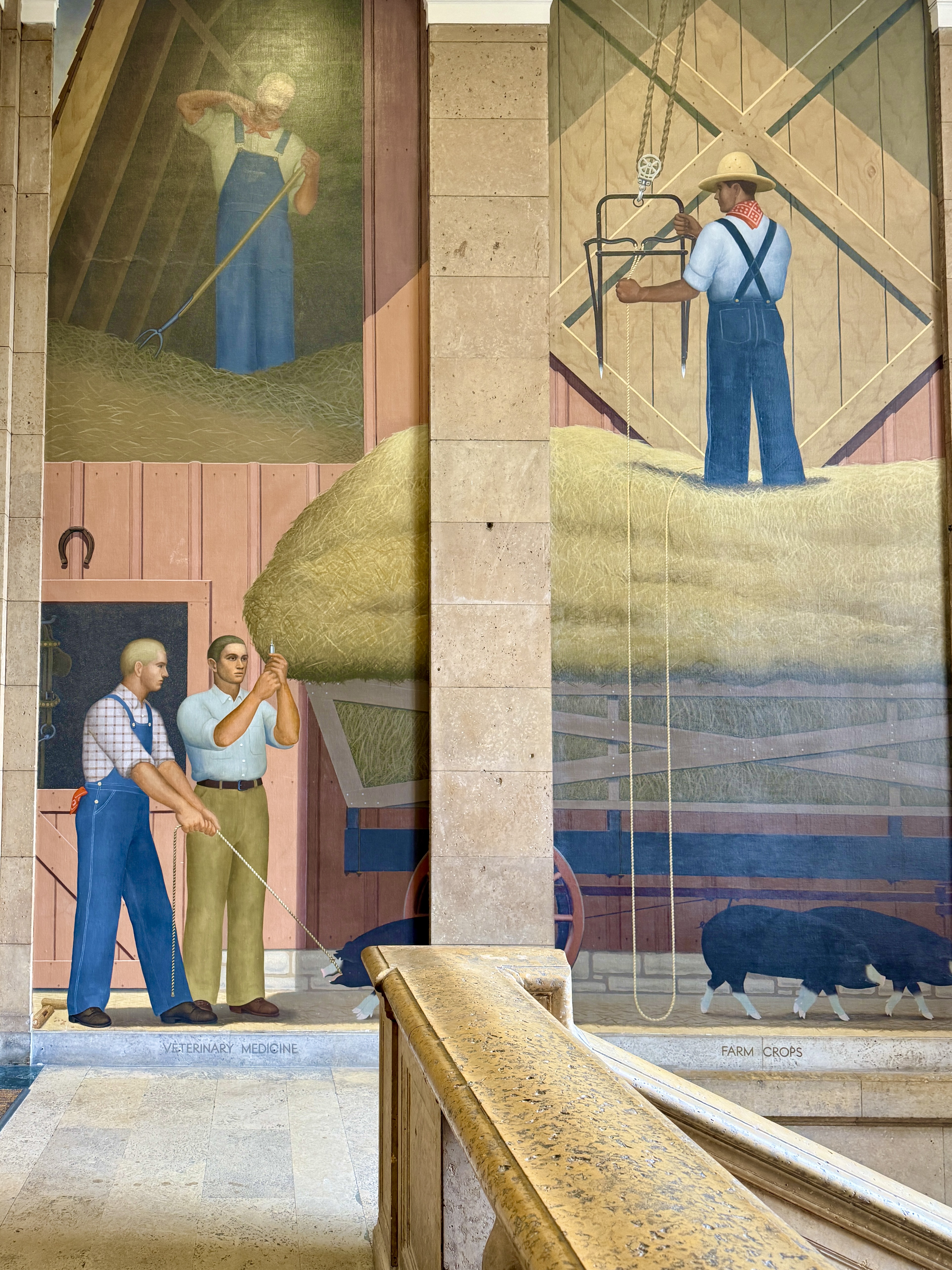
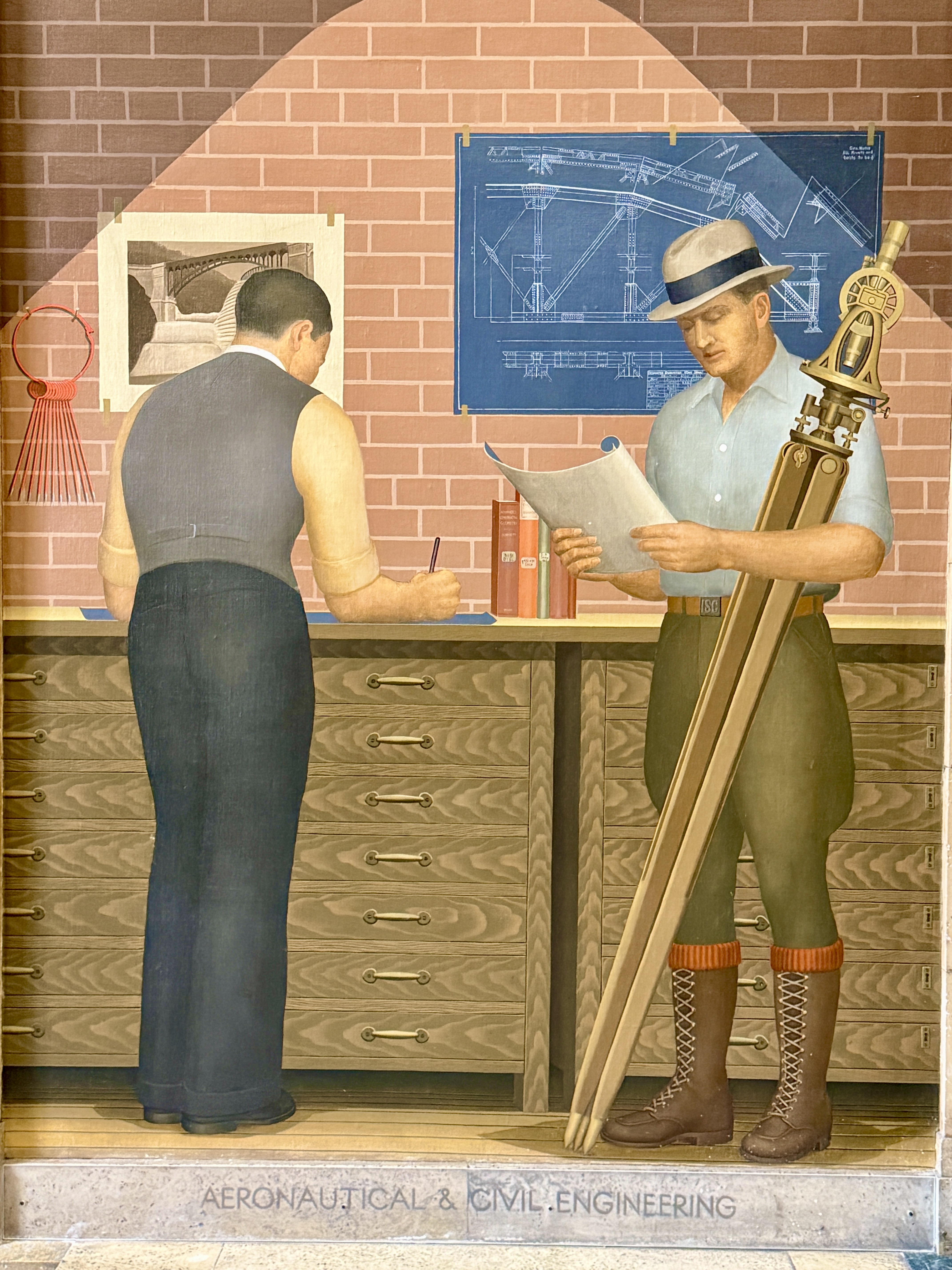
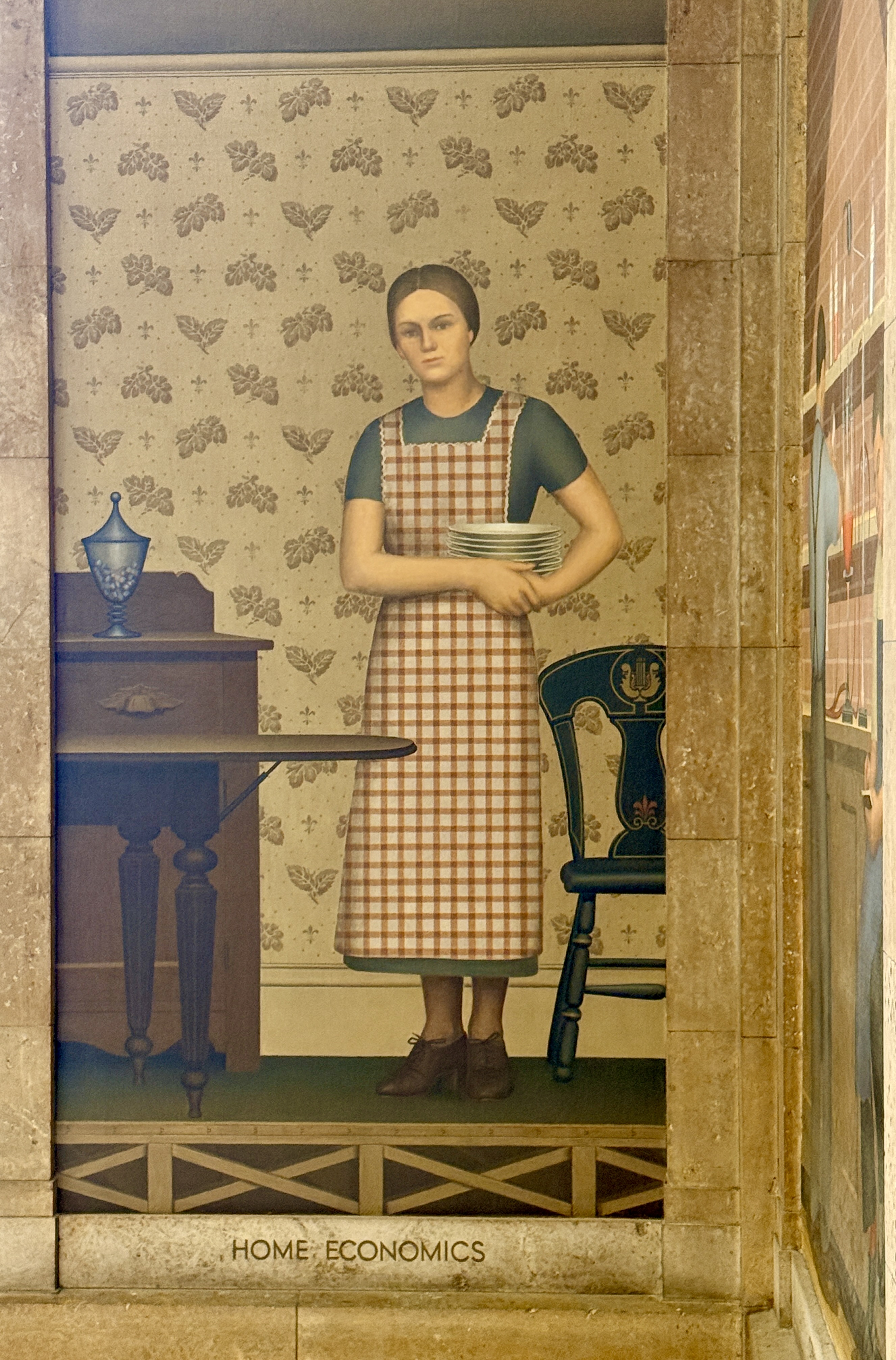
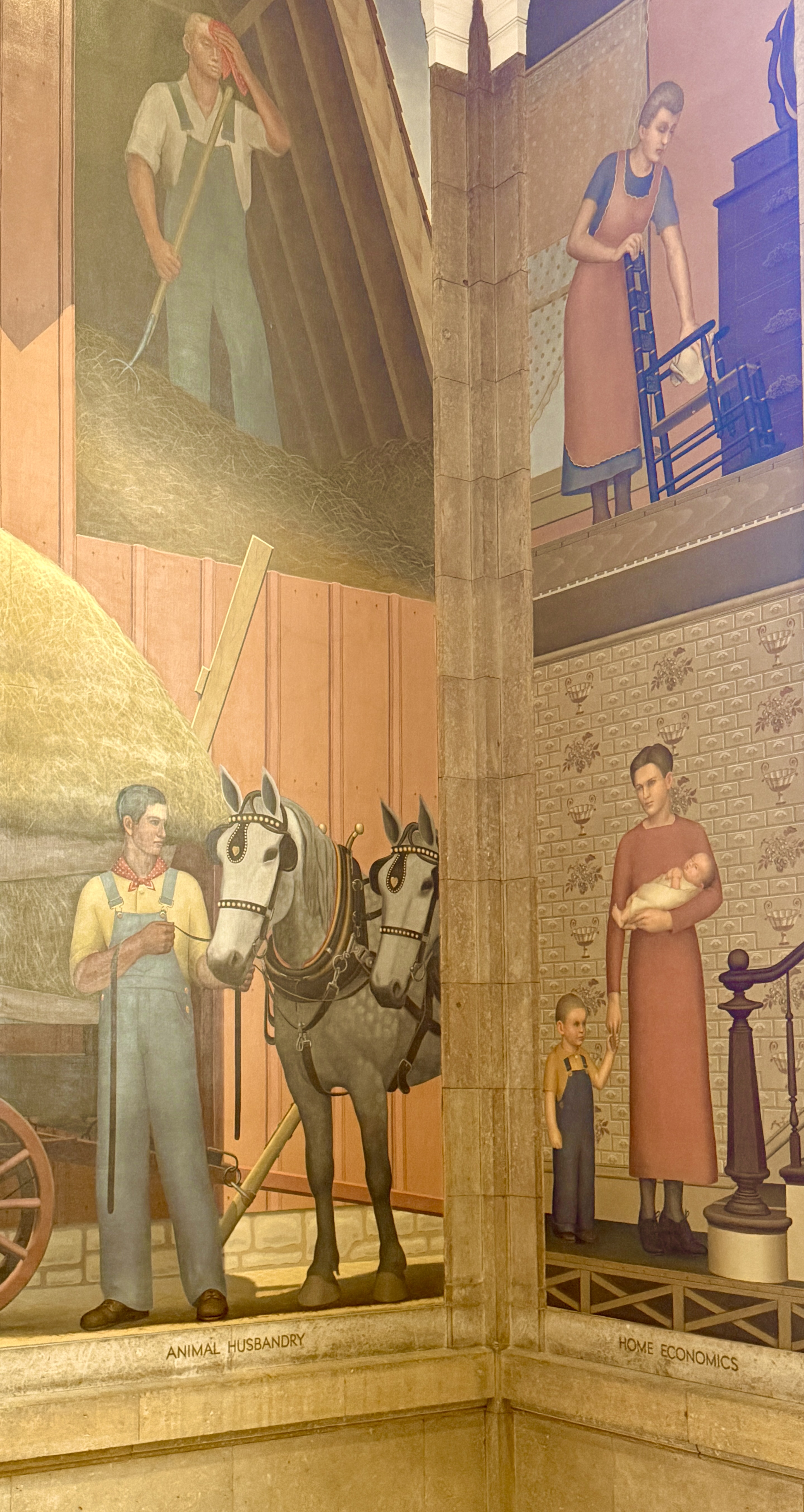
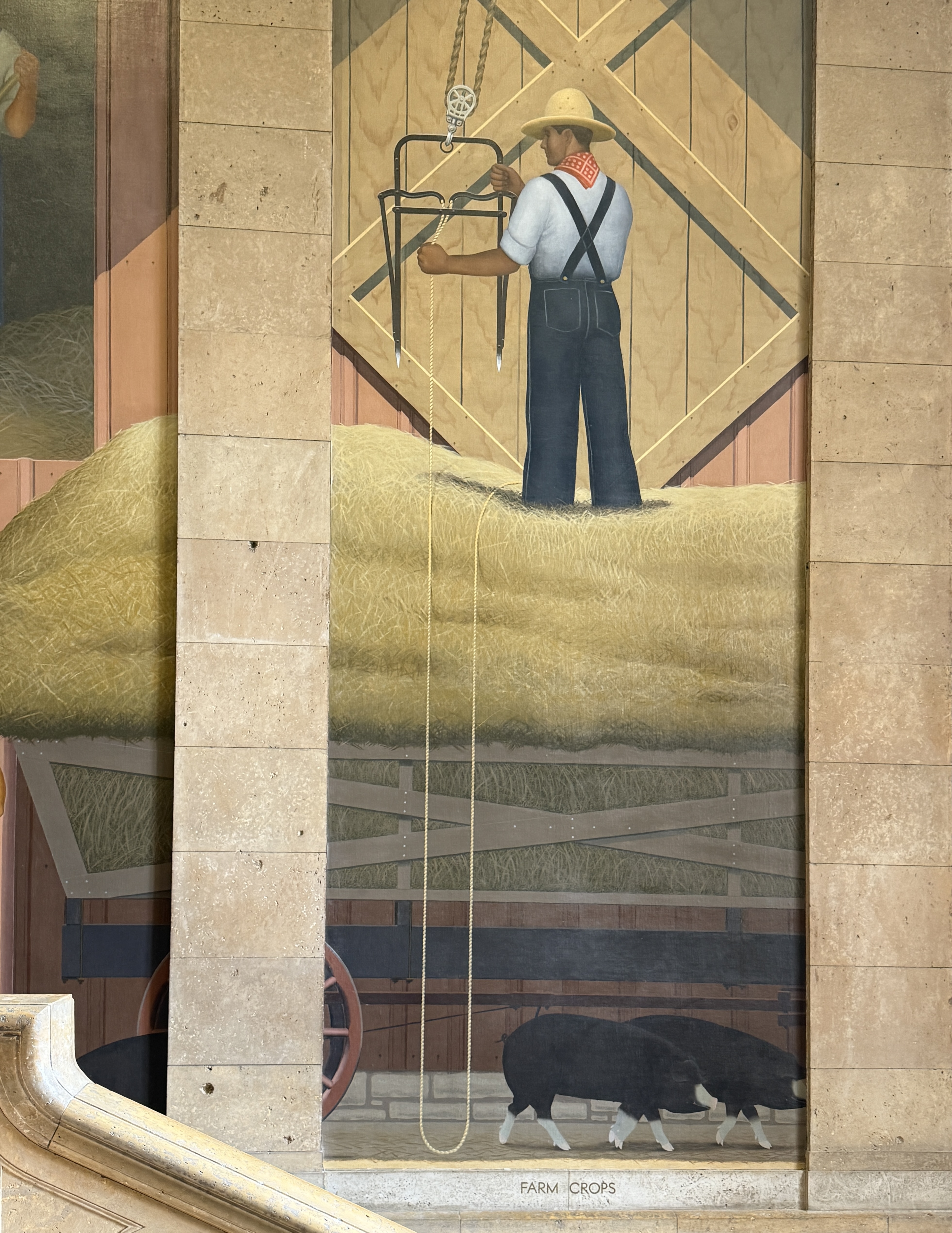
Within Parks Library at Iowa State there is a series of Grant Wood murals designed specifically for the original campus library, through the WPA. The paintings were executed with the help of local Iowan painters, chosen by Wood from paintings he saw at an exhibit at the Iowa State Fair. The series depicts workers in particular fields .. notably all men, except for the panel on Home Economics which features women. The library has since been expanded and modernized so these murals are a bit buried into the older section. They represent a regional style of painting rather than the European movements of the time. and are uniquely American — honoring the value of work and the Midwest at a time when the US was in the midst of the Great Depression. Bringing art to a public space without the velvet ropes of museums enabled everyday people to see his work. They are not as vibrant, complex, or powerful as Diego Rivera’s murals but they reflect a respect for work and the common man. Unlike Rivera, Wood’s murals are nostalgic and folksy. Rivera’s work is political, radical, and promote social revolution. His work is epic.
Then we searched for some place to have lunch, among very very limited options. We finally found ourselves at Dough and Sauce–a local pizza joint.
And then we were off to Des Moines, where Carol has planned some pretty special activities for us over an intense two-day visit. It took about two hours to get from Amana to Ames and then about 40 minutes to get from Ames to Des Moines. It was overcast, hot, and muggy. I drove for the first 45 minutes or maybe an hour and then Carol took over. After all, it’s her home turf.
FROM GRANT WOOD TO WOOD WORKING. Before heading to our hotel, we made a stop to meet and visit with Carol’s younger brother who had worked in an engineering position at John Deere for his entire career. He built his house which sits on two (?) acres. He’s developed a second career using his passion for wood and craft, so the garage, shed, and addition to the property has been turned into a woodworking space, a lumber yard, and more. He mills logs, planes the wood, kiln dries the planks to a very exacting temperature and ensures that the wood is free of any larva or moisture where growth can occur… then flattens the wood planks and then makes things with the wood. Some of it is commissioned by customers and some are just his own ideas for practical thIngs that can be made of beautiful wood, like cutting boards, levels, picture frames, rulers, and more.
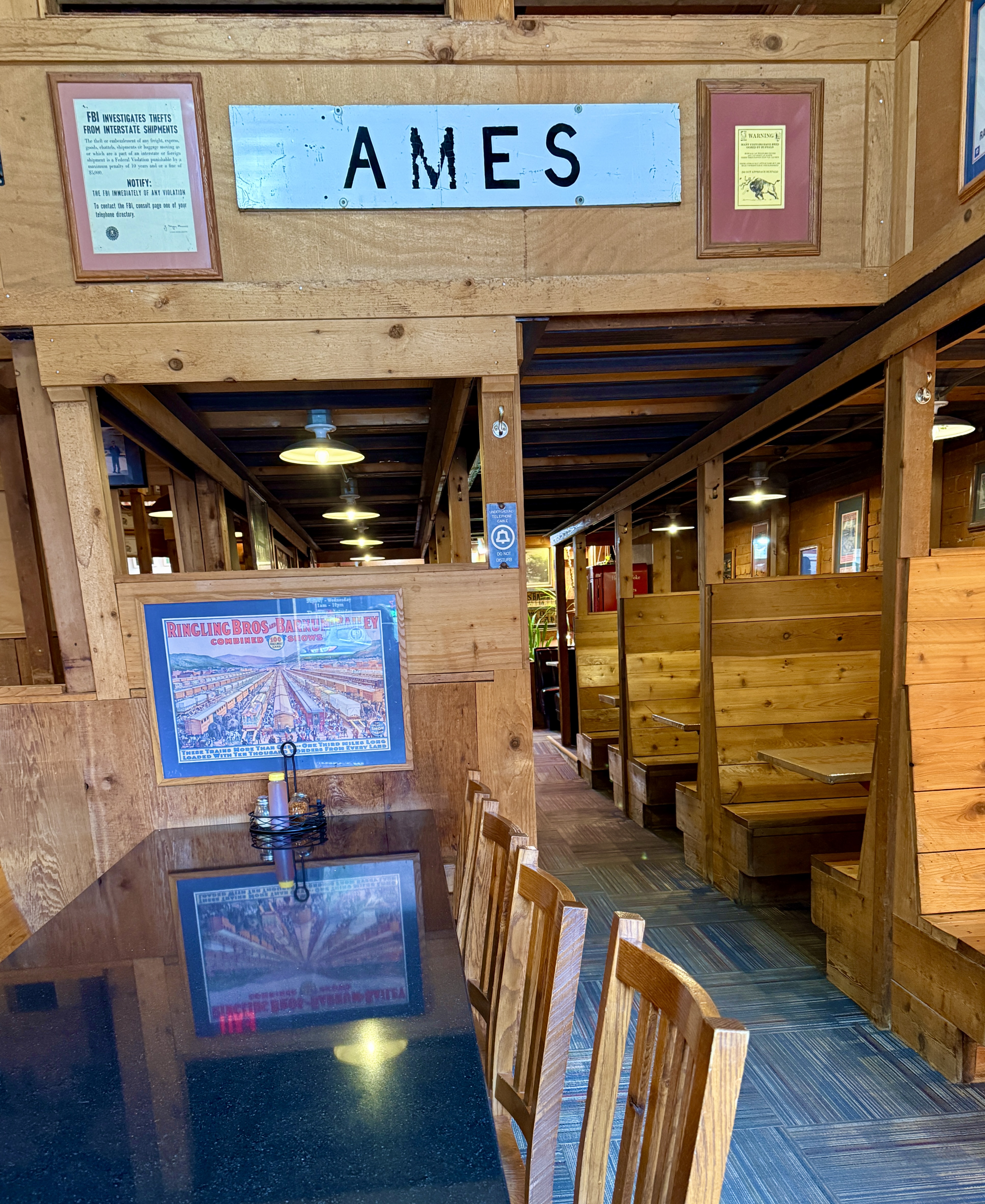
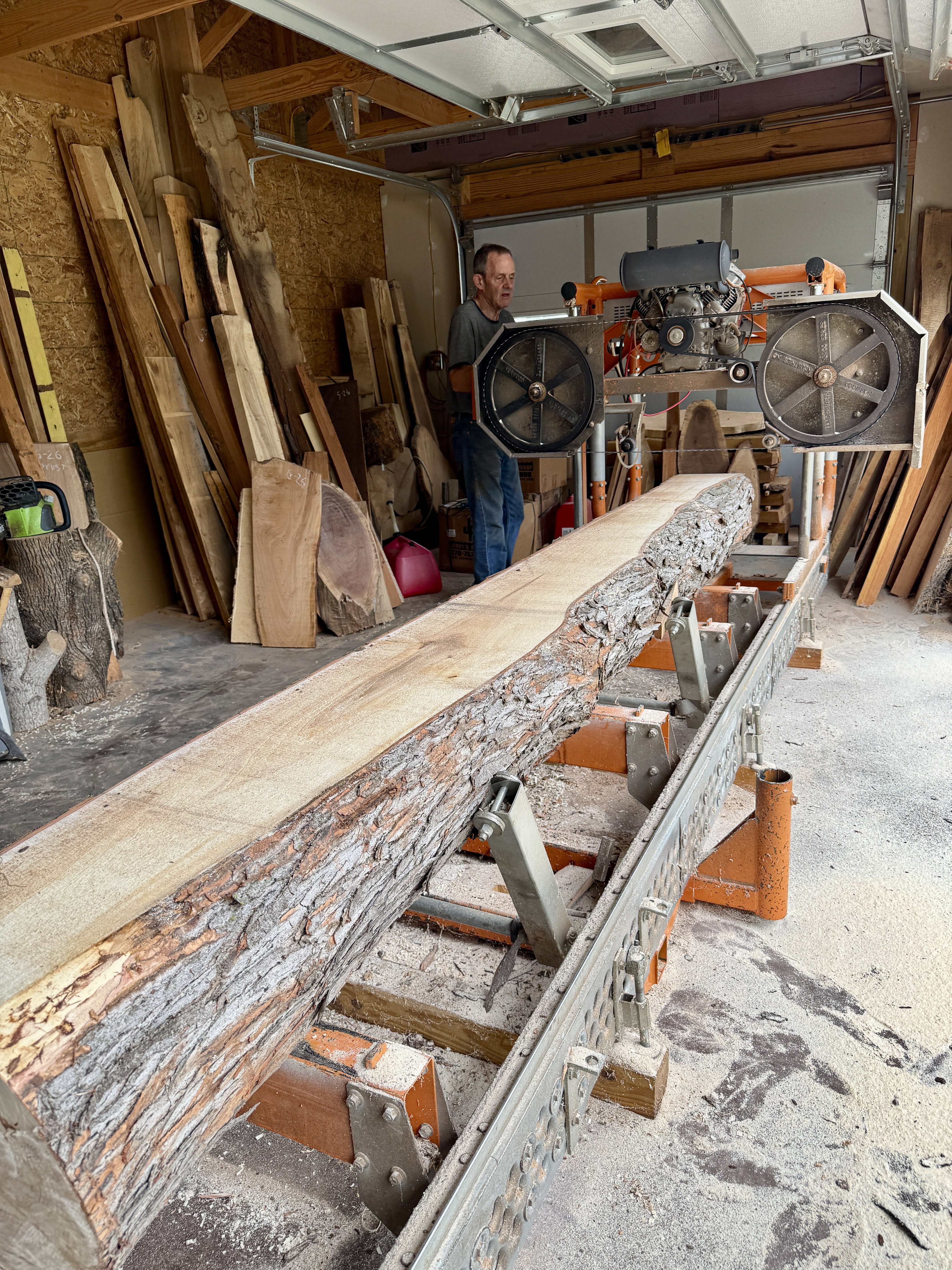
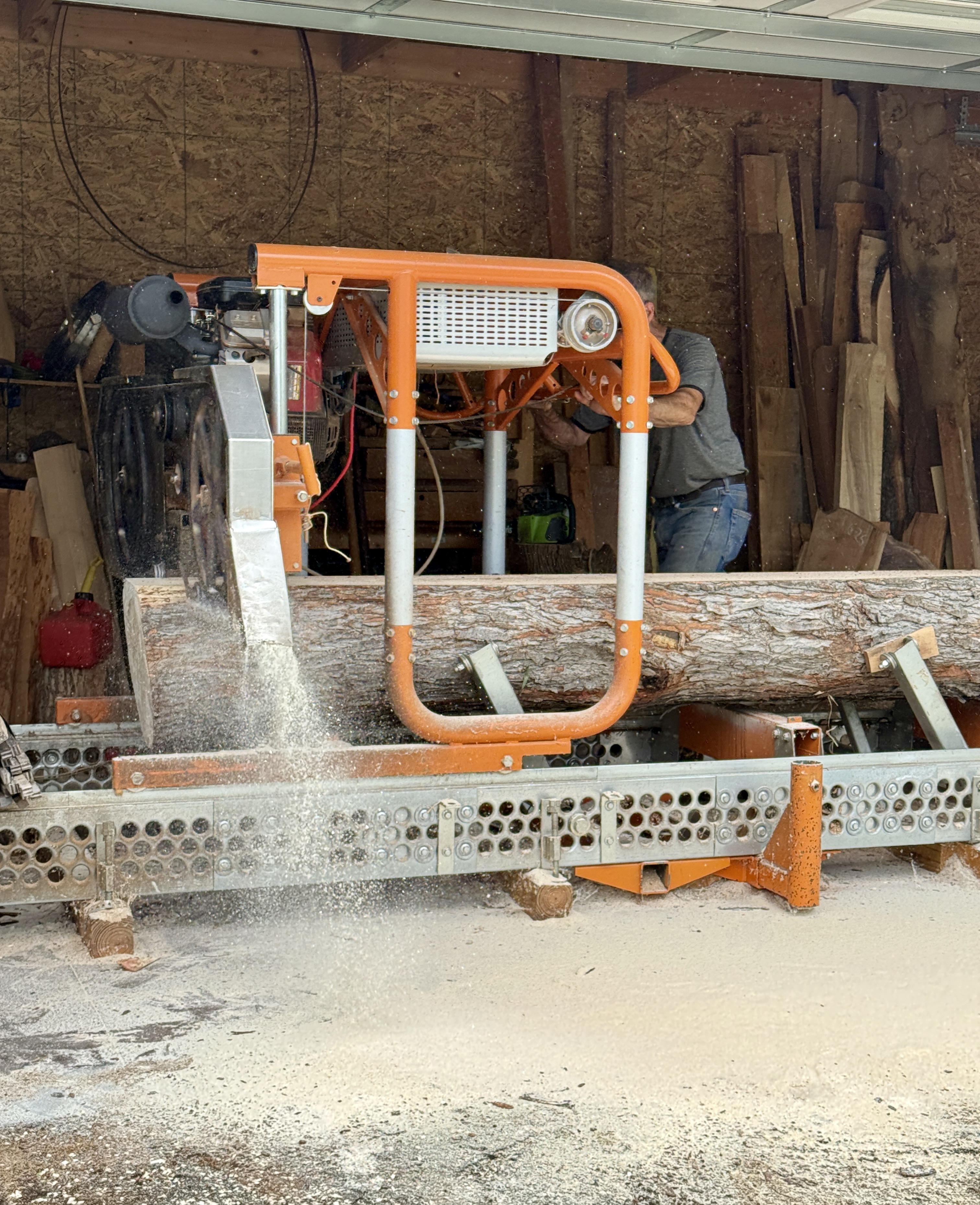
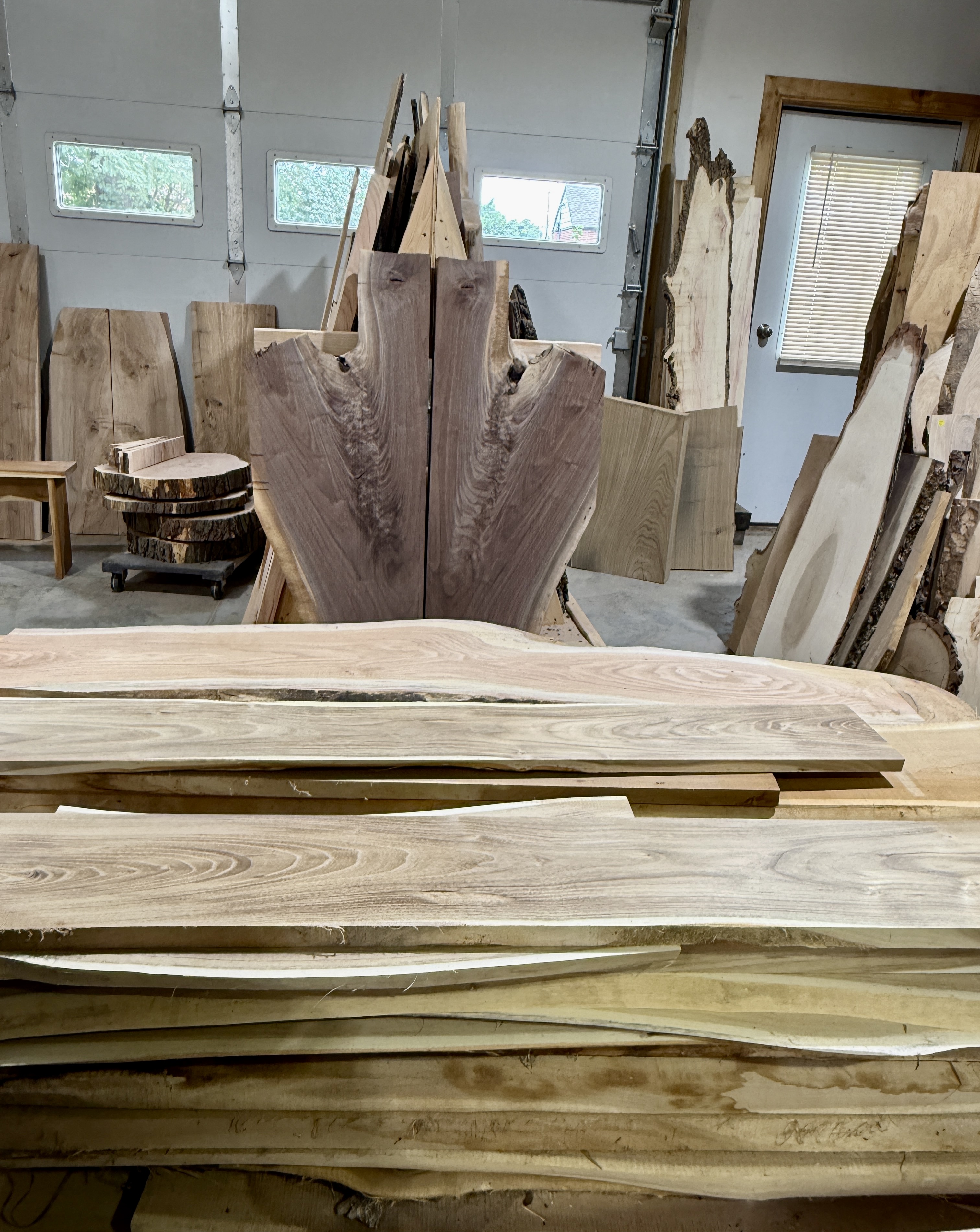
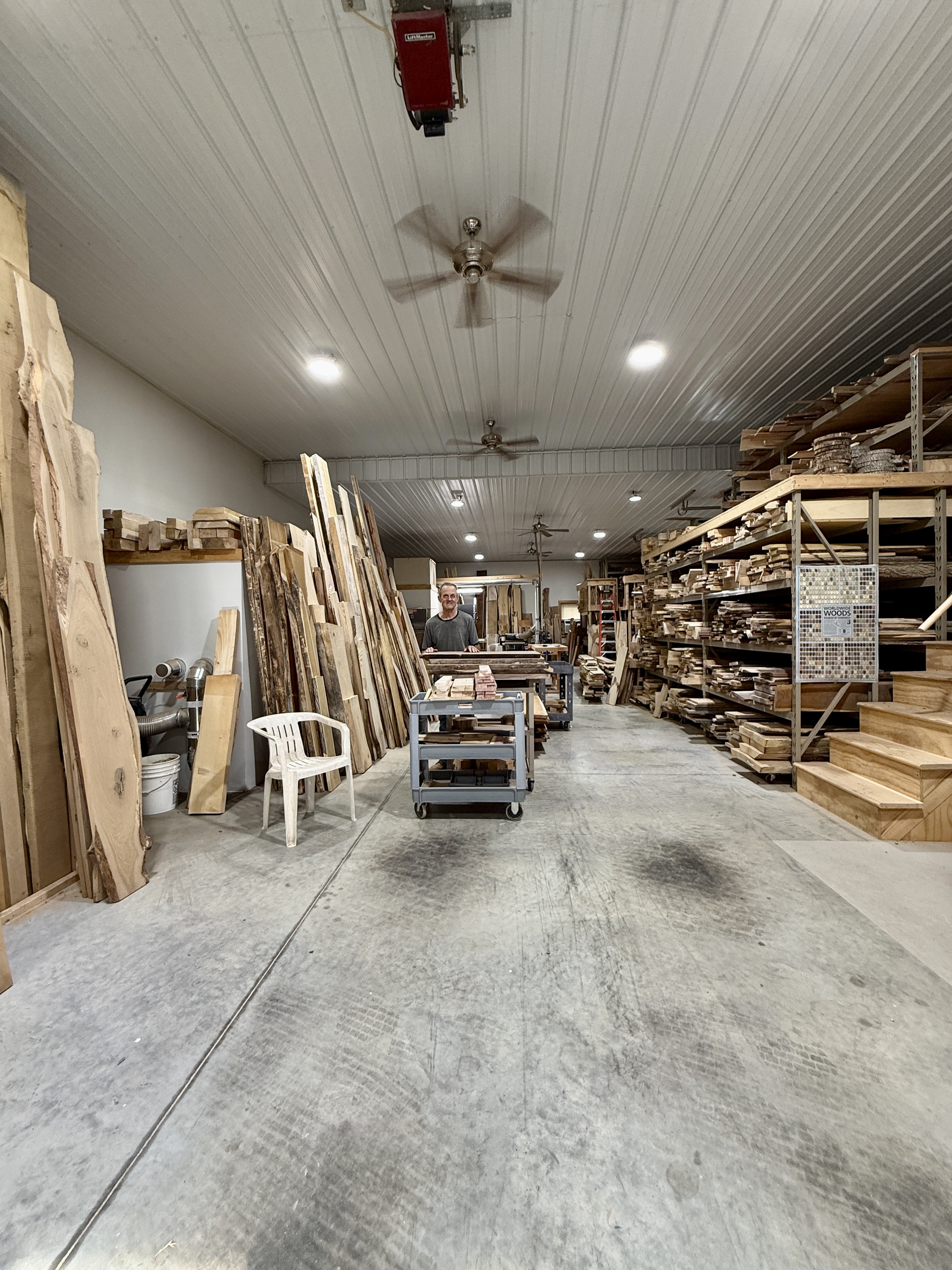
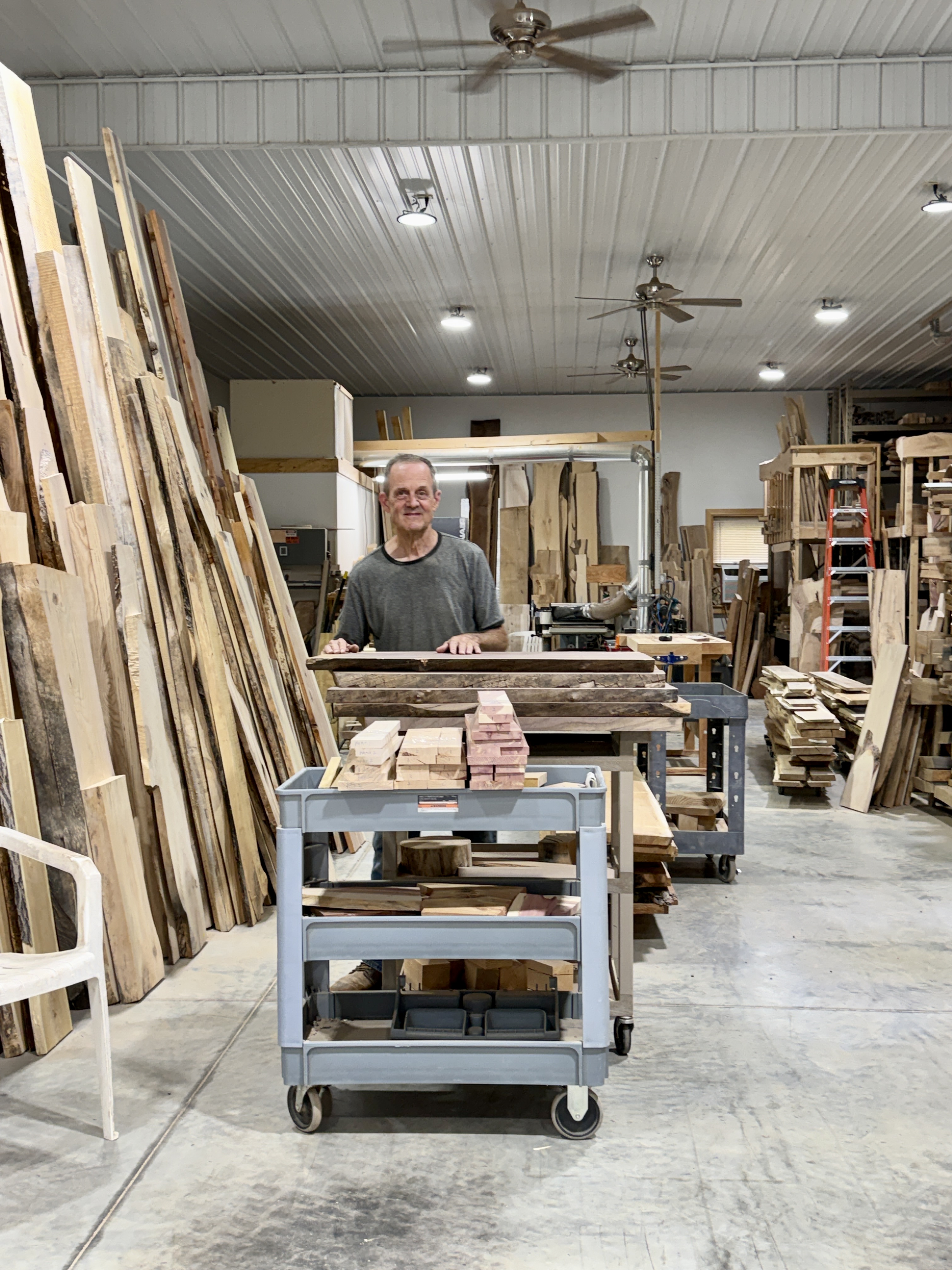
After getting a very informative tour and insight into the workings of wood and admiring many of Tom’s work, we headed to the hotel, Hotel Fort Des Moines to check in and head for dinner at Carol’s other brother’s house which is clear across the other side of Des Moines. The weather was looking more and more bleak, and as we drove we were suddenly in an absolute deluge with lighning and thunder and even hail. It was impossible to see out the window and for a time we pulled over to “wait it out.” We thought there was a break and decided to drive on… which we did… very slowly. It was really blinding. Eventually we made it to Jim and Linda’s where the outdoor barbecue was brought inside. Linda raises horses on their 14 acres but it was way too wet to head to the stables. It was great to spend an evening with die-hard Iowans who are active and engaged in local, statewide, and national issues. So we heard a lot about efforts to turn Iowa blue.
And we learned that Linda can trace her ancestry back to the 1600s. I was amazed. I can barely tell you anything further back than my grandparents, and even there I don’t have a lot of details. She has books and documents and her history includes some incredible stories. Her history includes the fact that she is a direct descendent of Elizabeth Key (Grinstead) who was born in 1632. Key’s mother was an indentured African woman and her father was Thomas Key, an English planter and member of the Virginia House of Burgesses. Key was charged with fathering the mixed-race Elizabeth. Initially he denied this, but eventually accepted his parenthood. He arranged for her baptism and supported her financially. At some point (maybe he went back to England?) he placed Elizabeth into indenture for a nine-year period. Upon reaching the age of 15 she was to be free. But that did not happen.
Years later, she sued and her lawsuit was one of the earliest “freedom suits” by an African-descended person in the English colonies. Soon after she won her suit, the Virginia House of Burgesses passed a law that would prevent other indentured servants from suing for freedom. They established that the social status of children would follow the social status of the mother, not the father. This was different from British law that stated that a child’s status was based on the father not the mother.
Much of this story is documented in several research papers and also included in a book by Ibram Kendi, “Four Hundred Souls.” I was fascinated by Linda’s history and the fact that there is so much documented information. So, it was a good dinner with great conversation… and a good night with Iowans.
We thought we were leaving during a break in the storm.. but no luck. Grateful we made it back to the hotel in one piece.. wet, but here.
Tomorrow we explore Des Moines.
9/7/26: Road Trip — Chicago to Amana, Iowa
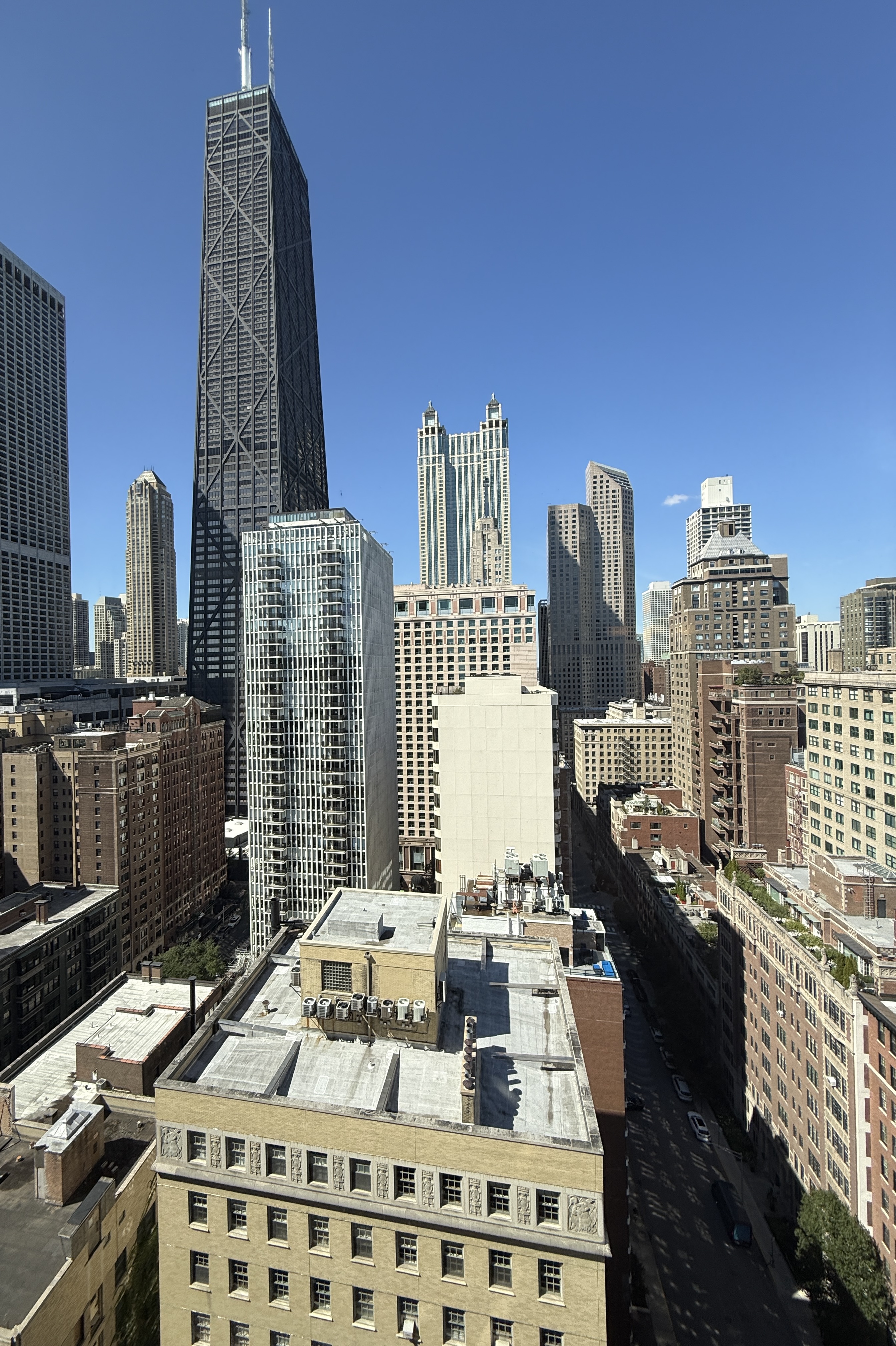
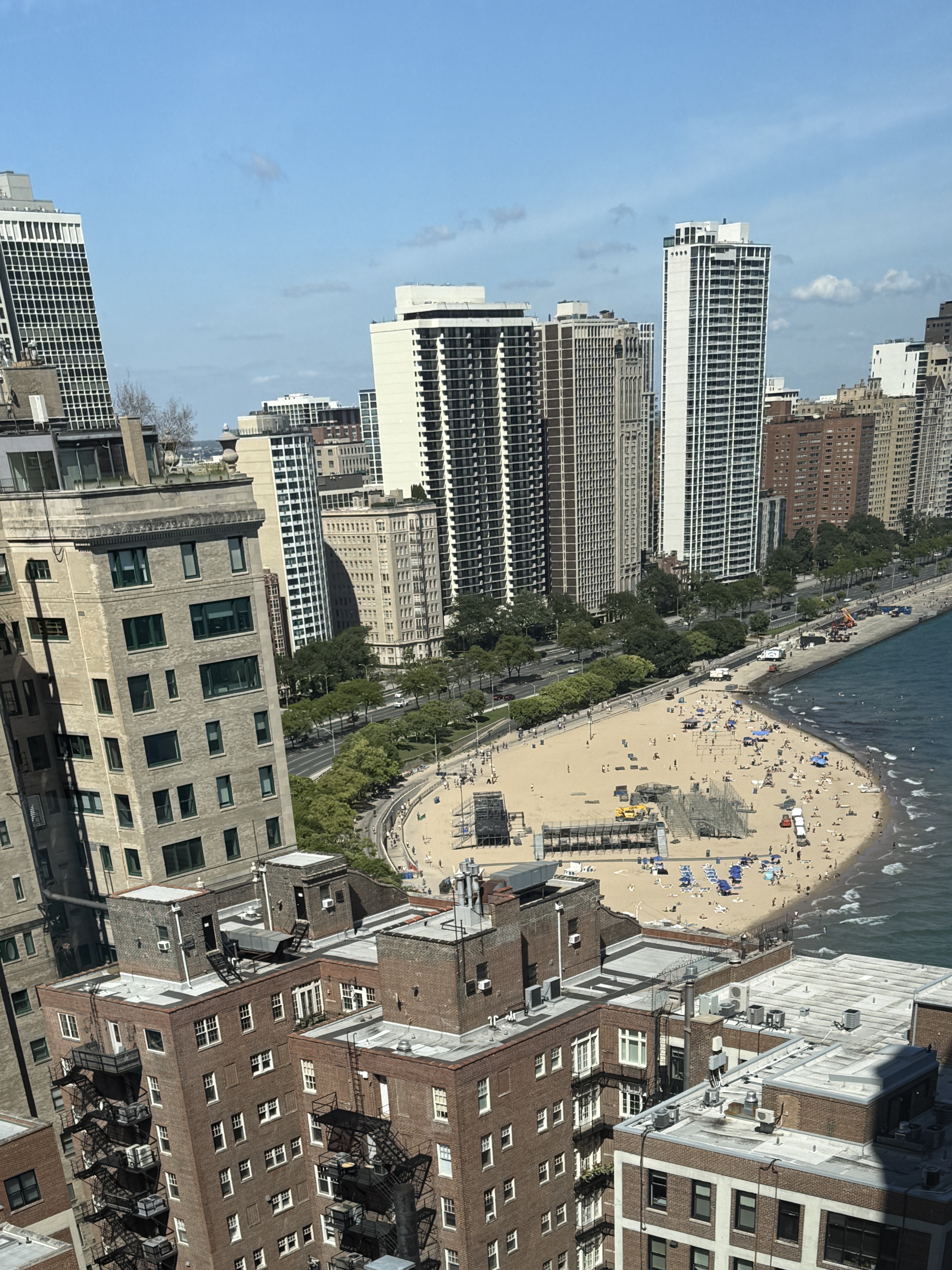
We left the Knickerbocker Hotel and walked to Adrienne’s apartment which was just about 2 blocks away. Rand and Adrienne served a great bagel and lox breakfast with a really special souffle. Then we headed to Midway Airport to pick up a rental car to begin our road trip. We could only reserve cars at the airport (O’Hare or Midway) today, because of the labor Day holiday. I forgot to menion in my previous notes about Chicago—The streets are amazingly clean.. no litter, we didn’t see anhy graffiti and while we did see a few tent communities, they were quite contained. The clean streets and lack of graffiti was both downtown and also in the lower-middle income neighborhoods. It was impressive. And given that the weather was truly wonderful, people were out everywhere with many on the beach at the lake.
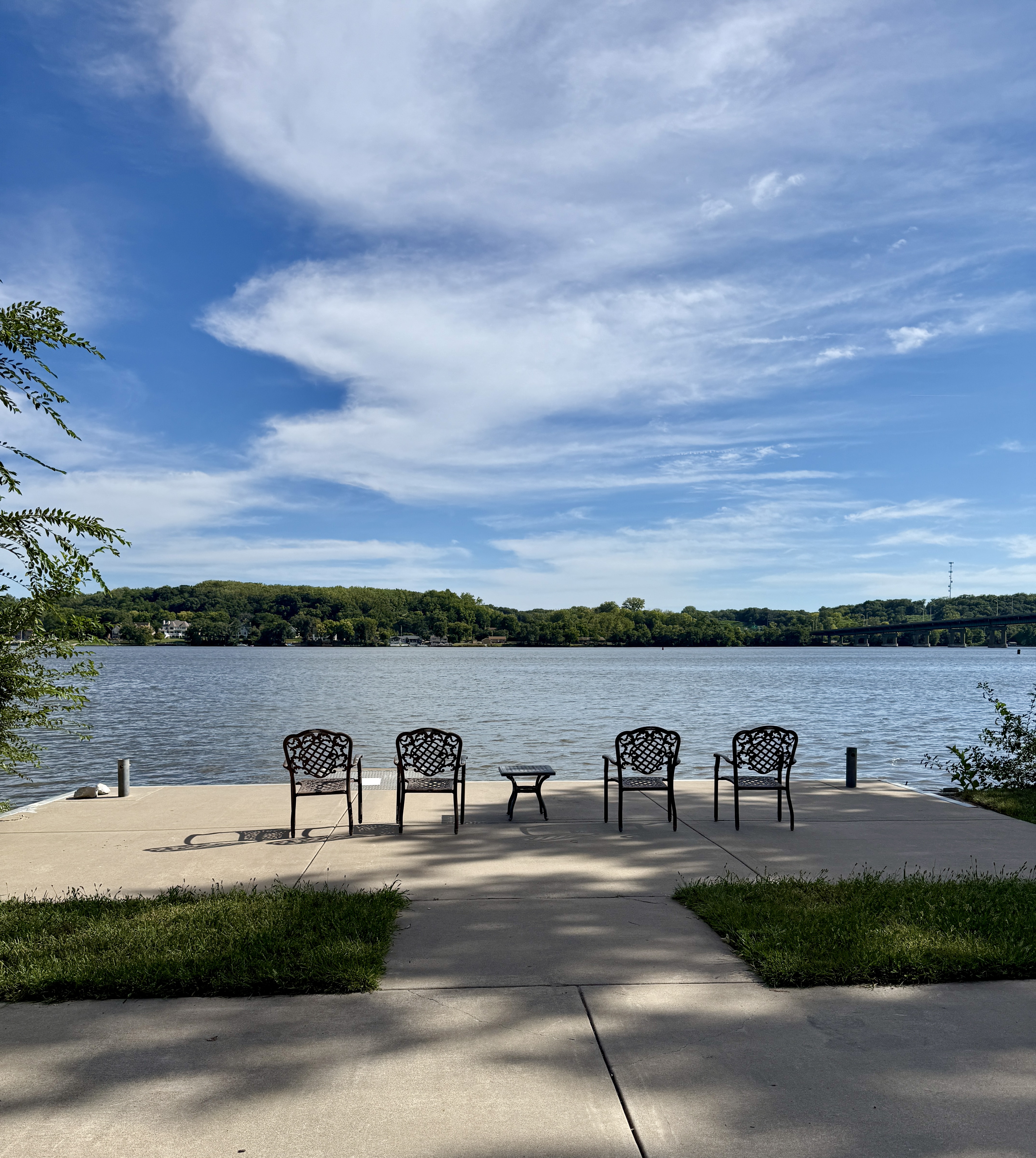
Then we were on the road. Adrienne and I shared the driving (about 4.5 hours0 and Carol navigated. Mostly it was a straight shot on 80.. .flat.. flat.. flat. We stopped for 20 minutes or so at the river to see the division between Iowa and Illinois.. and drove through a little strip of quiet houses that edge the lake.
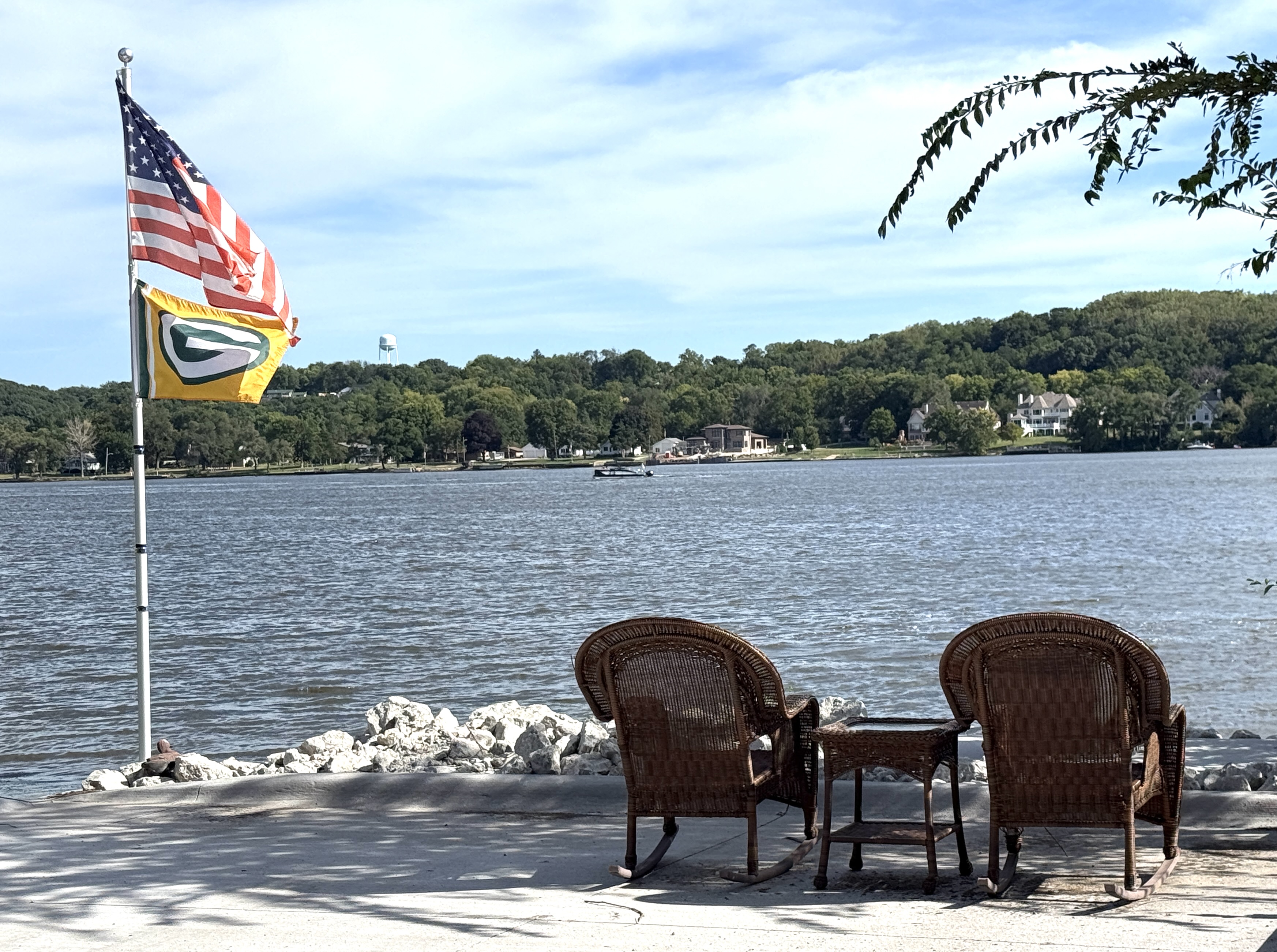
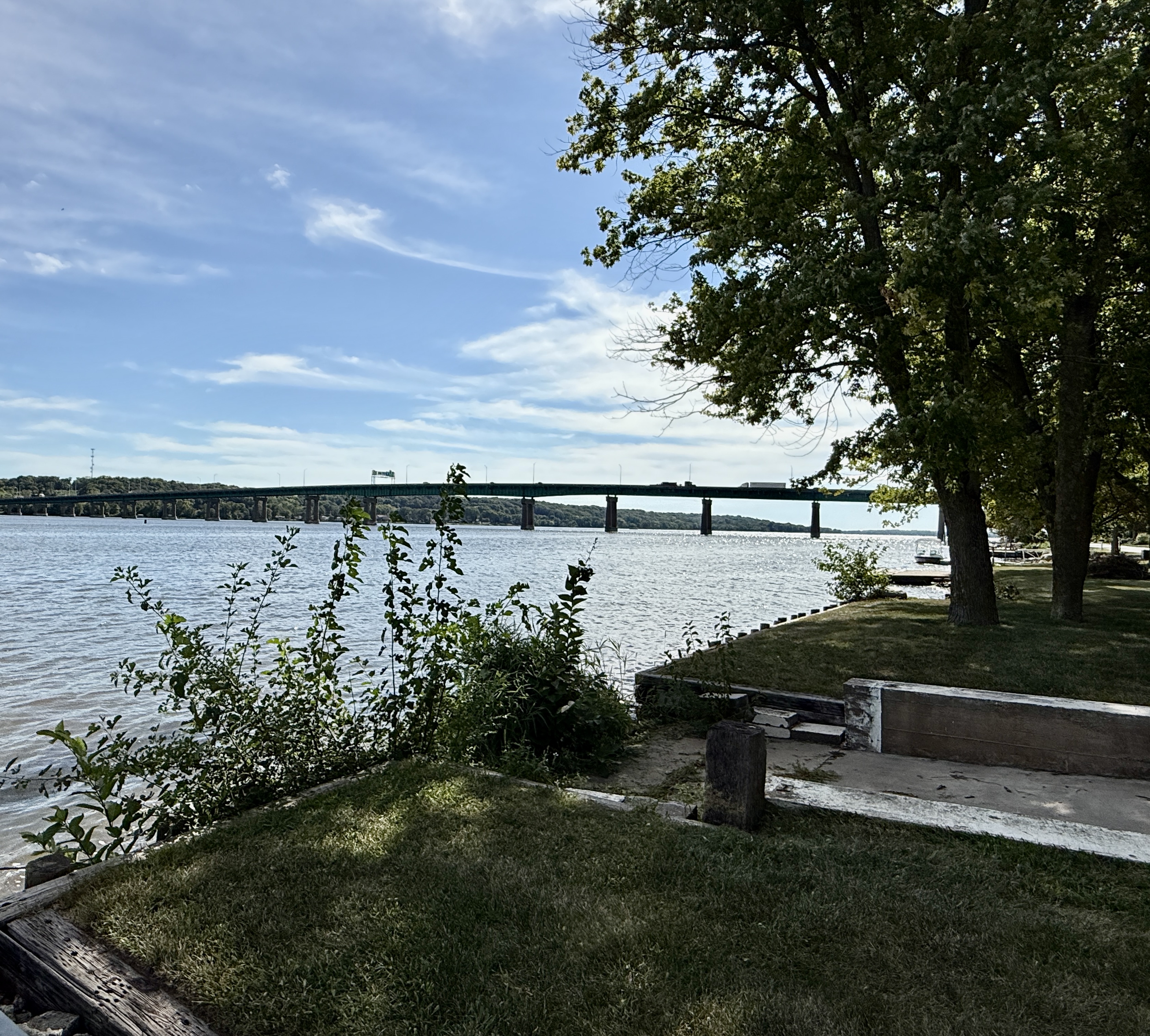
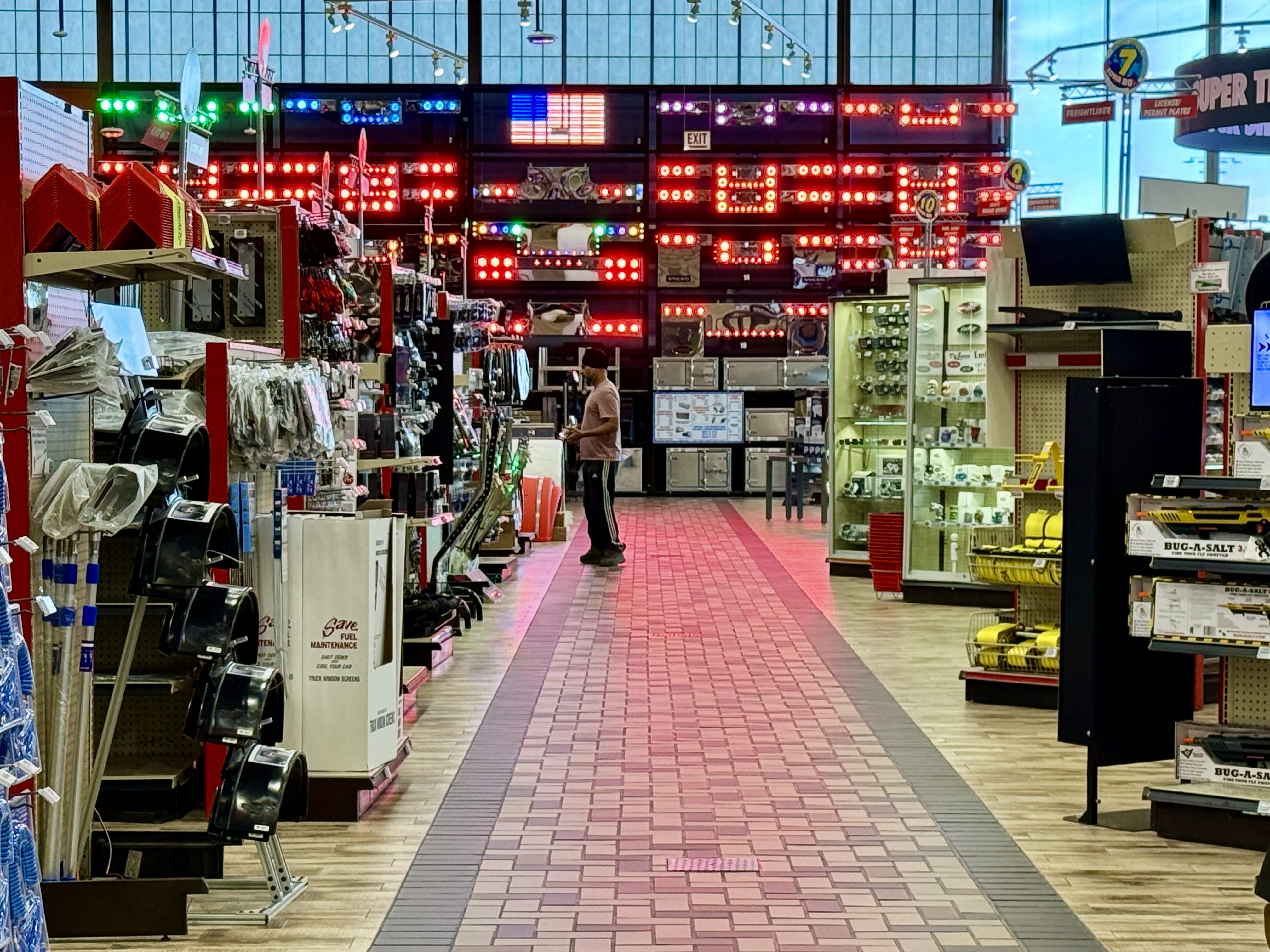
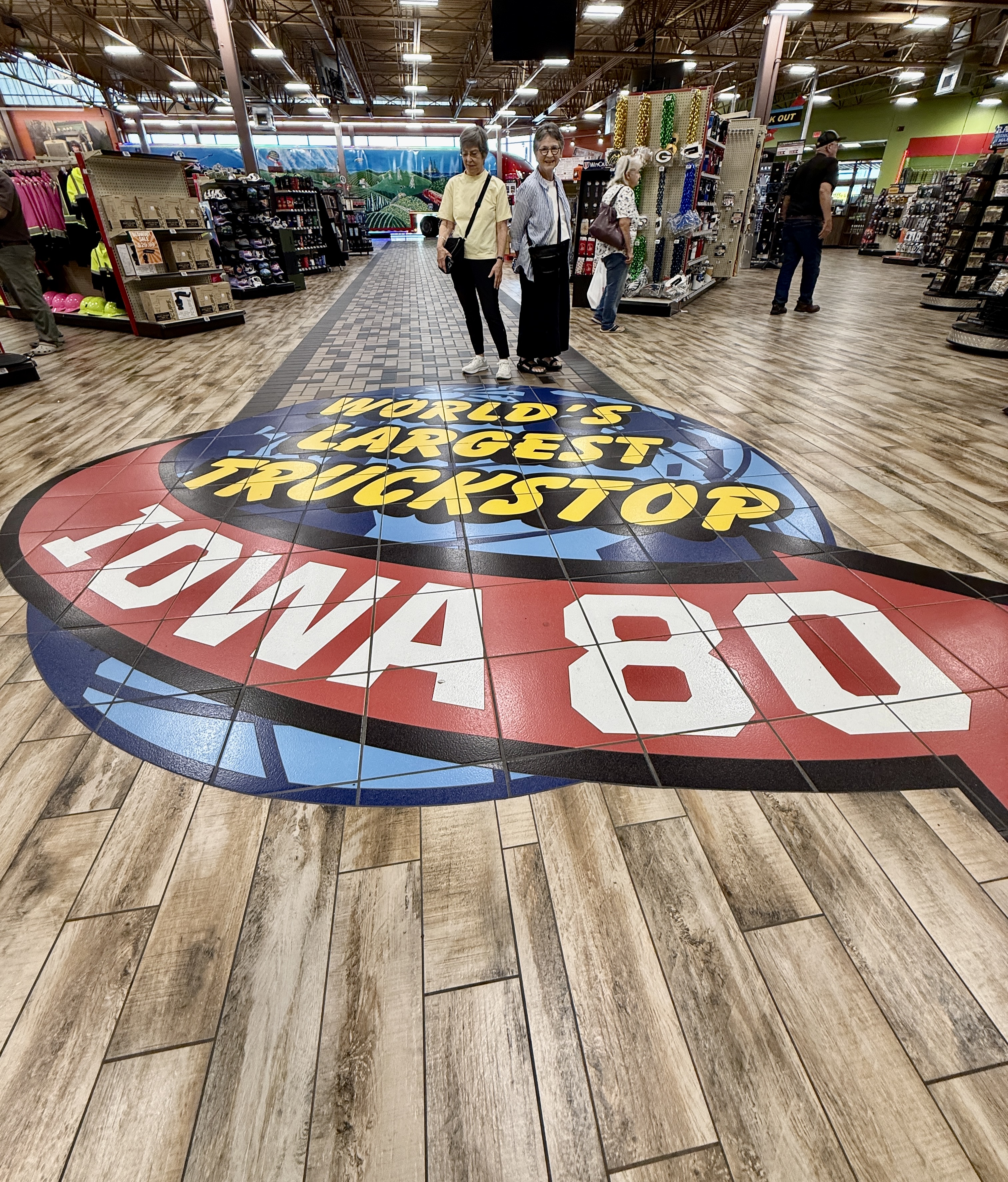
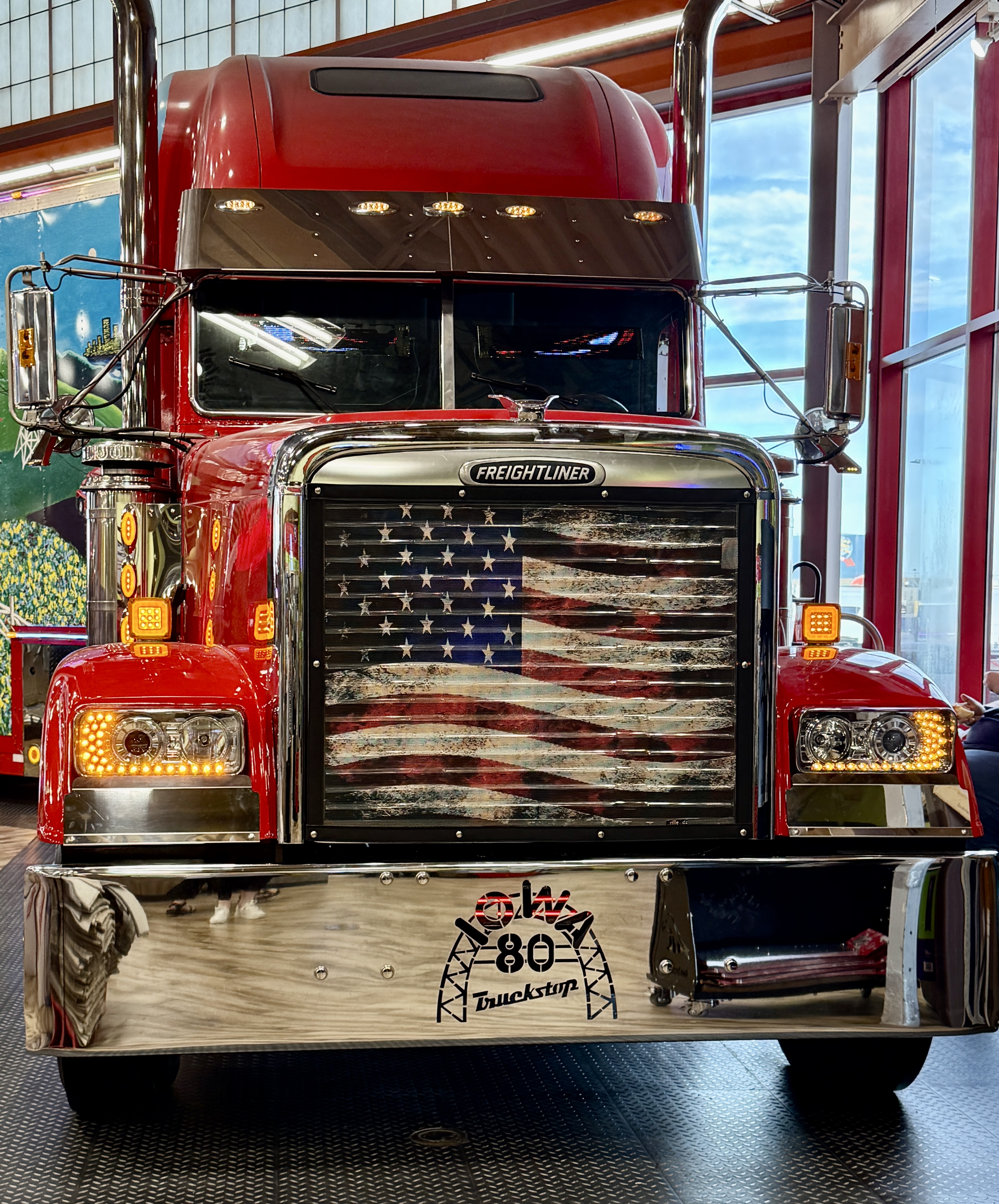
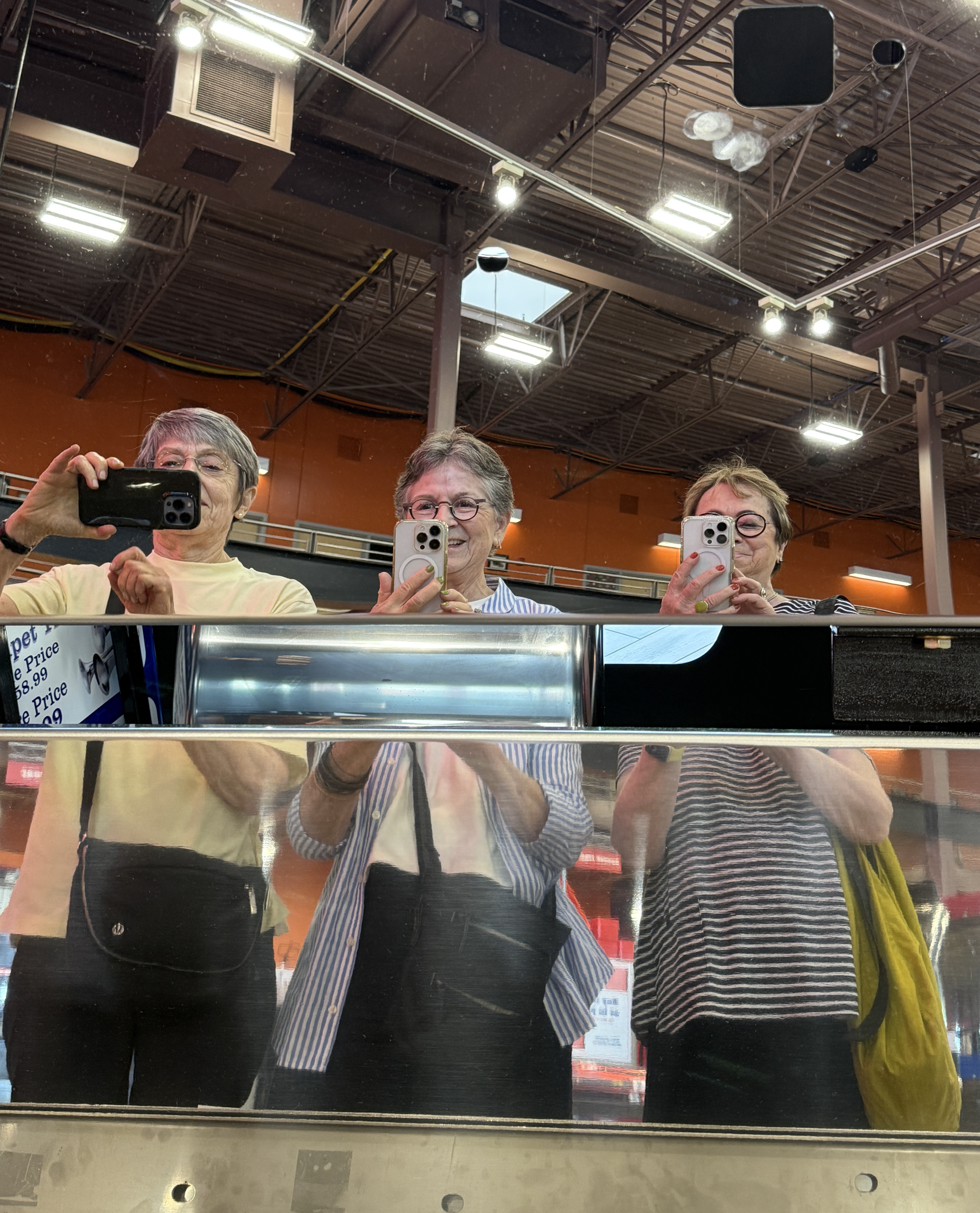
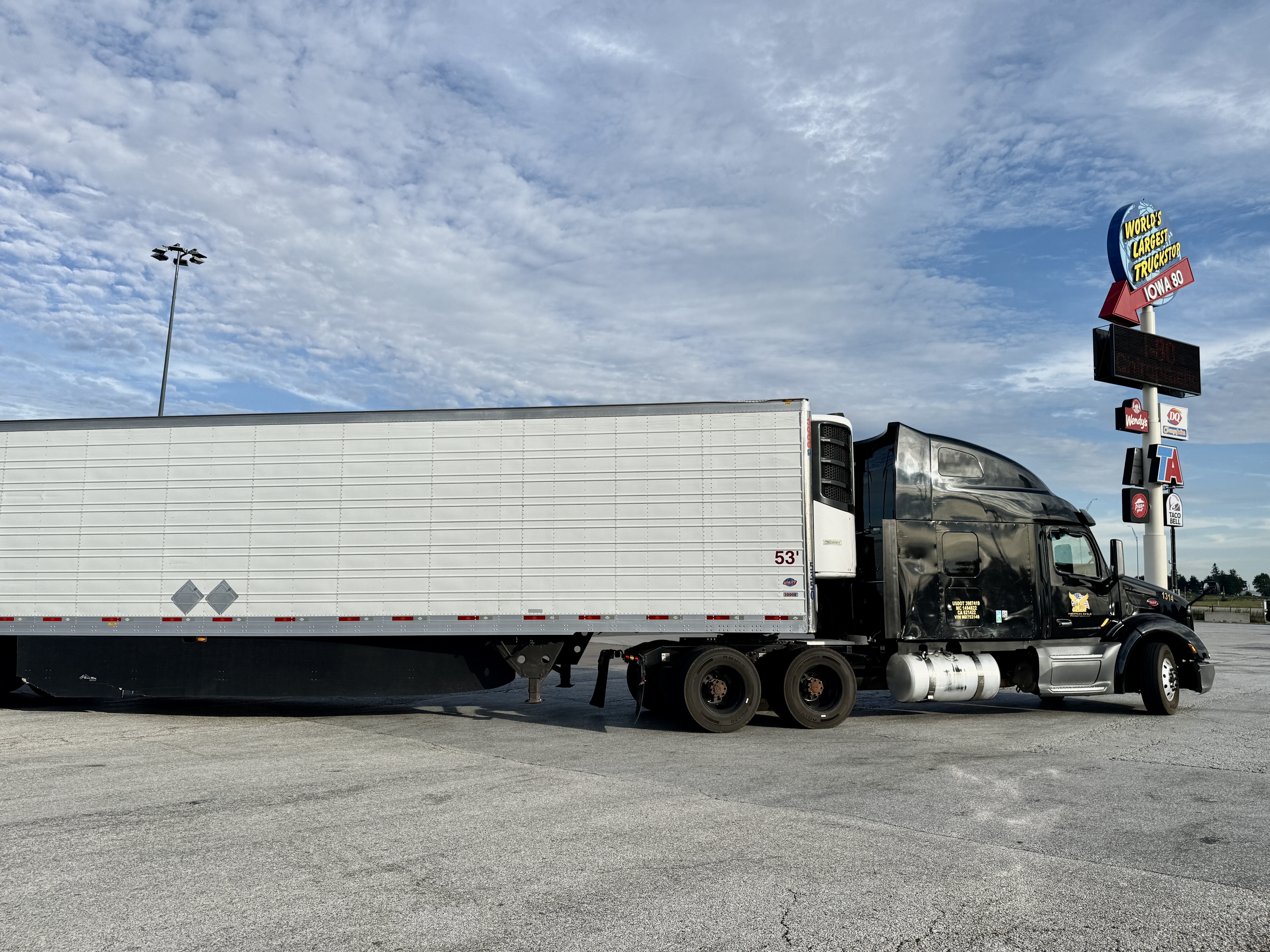
From here we headed to Walcott, location of the Iowa 80 Truck Stop — the largest truck stop in the world. It’s like a little city that opened in 1964. It was opened before the interstate system was completed. It spans 220 acres and has a 67,000 sq ft main building and a parking lot for close to 1,000 trucks, a few hundred cars, and buses. Supposedly it serves about 5,000 people each day. The rows and rows of semis is amazing to see. Professional drivers can find everything they need here at this stop, including showers, a barber shop, a chiropractor, a church, shopping, food, and even a “dogomat” pet wash and a Truckomat truck wash. There is an annual Truck Jamboree, but we missed that as it is in July–a three day event with exhibits and music. And… there is a truck museum.. which we got totally wrapped up in. They have about 125 trucks (full size, originals) dating from 1915 to present and they have more trucks in storage that are not displayed. The “museum” is 125,000 sq ft.

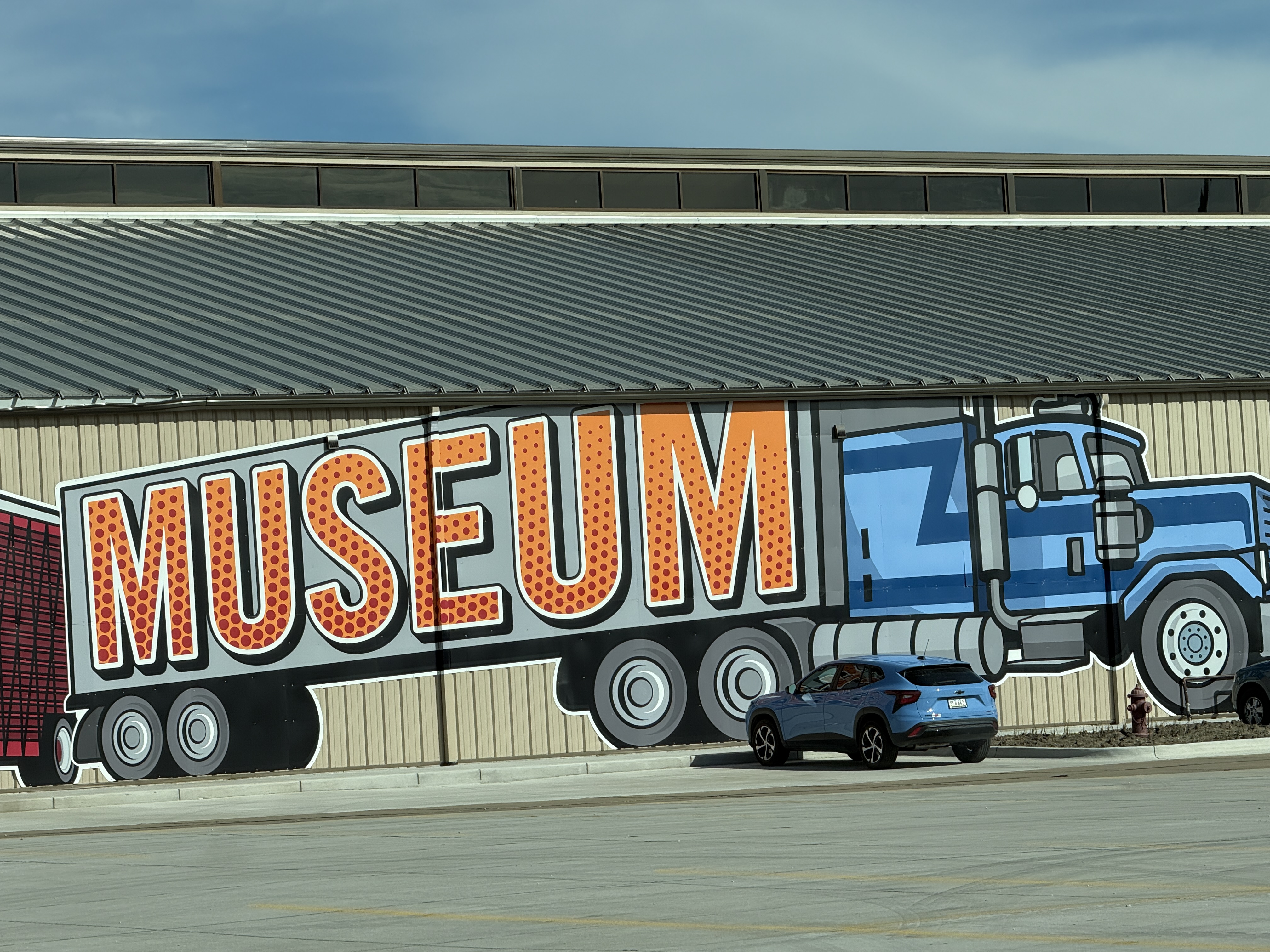
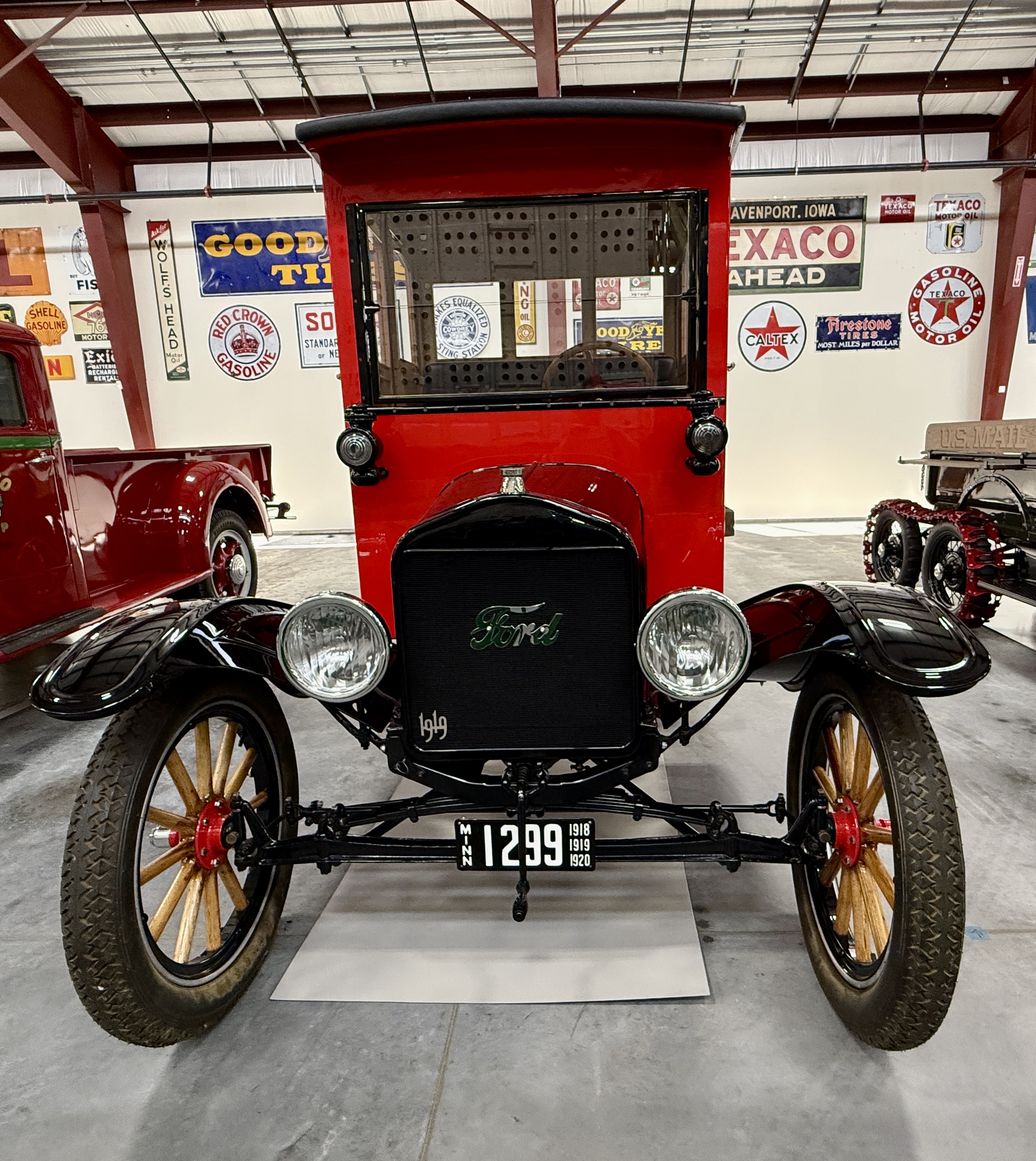
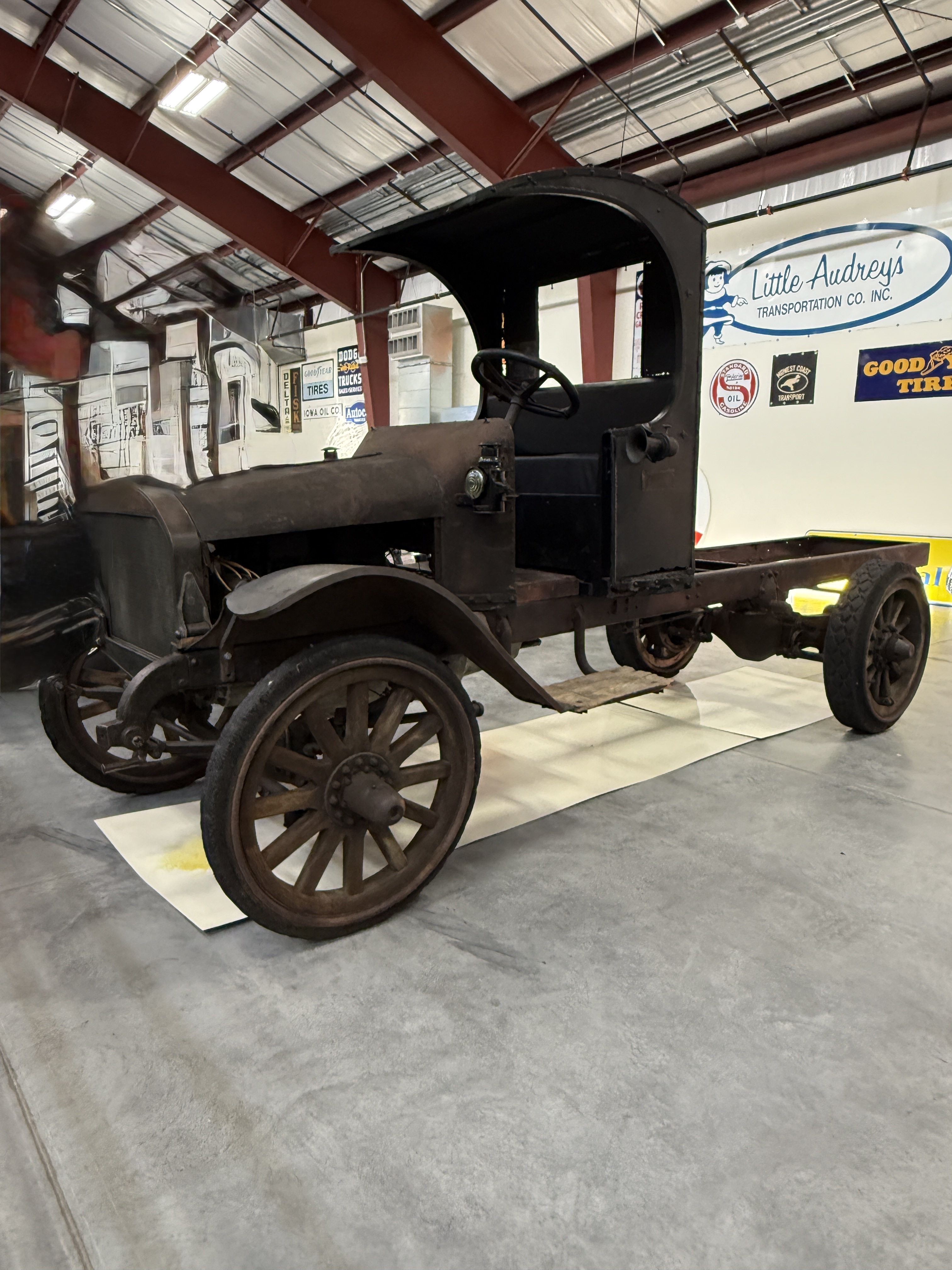
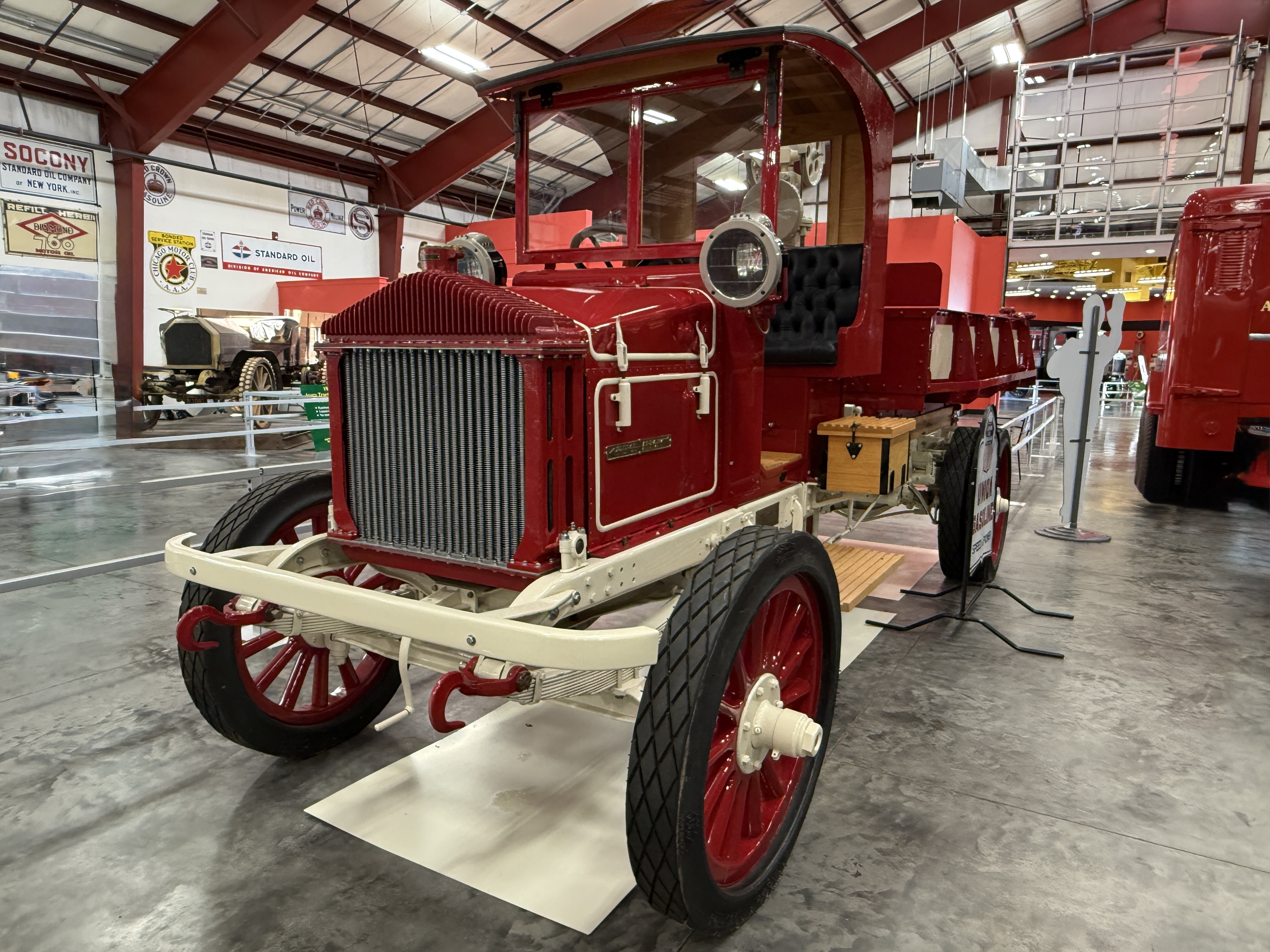
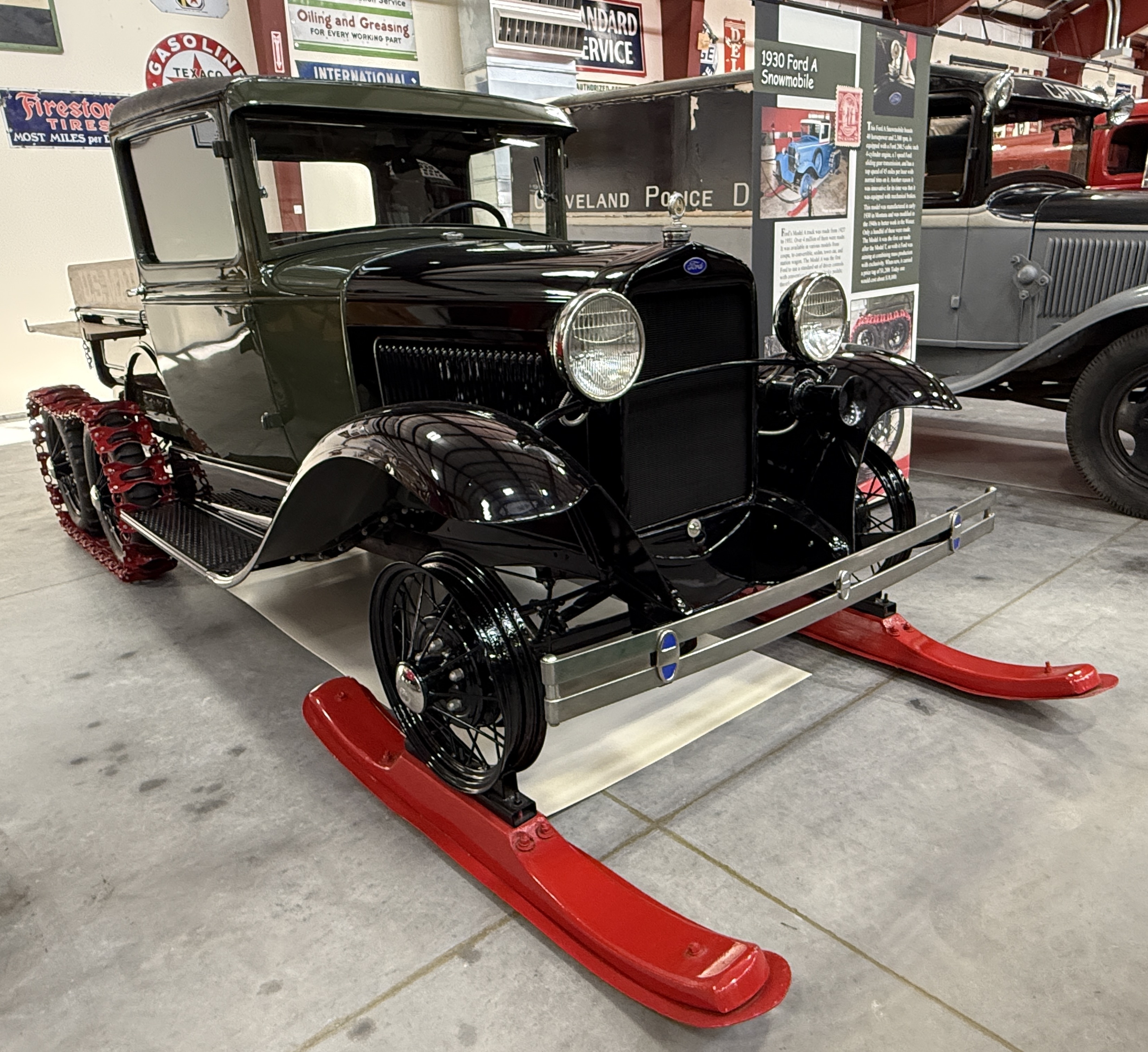
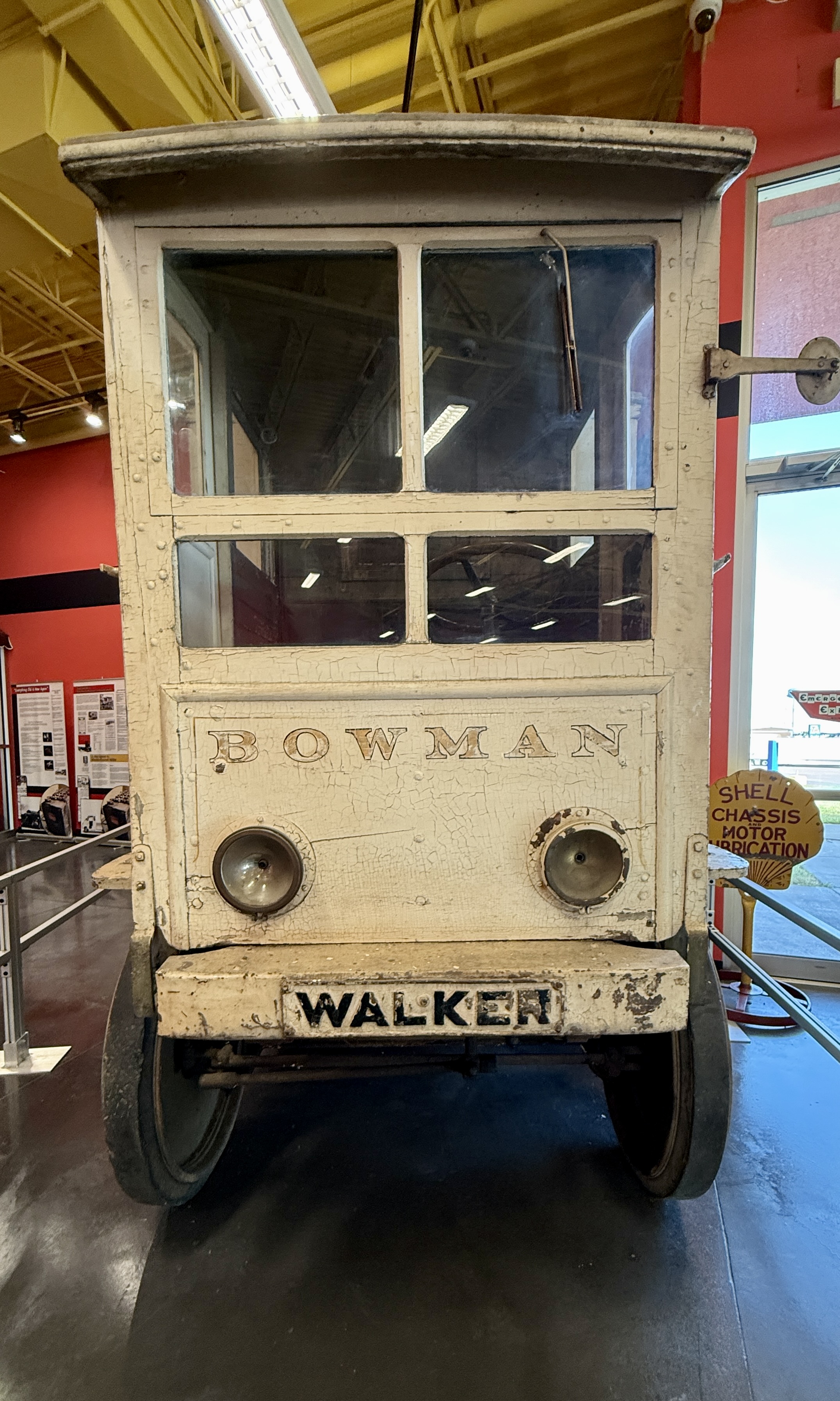
We were pretty mesmerized by our walk through the museum, and then we headed to the main shopping and food zone.


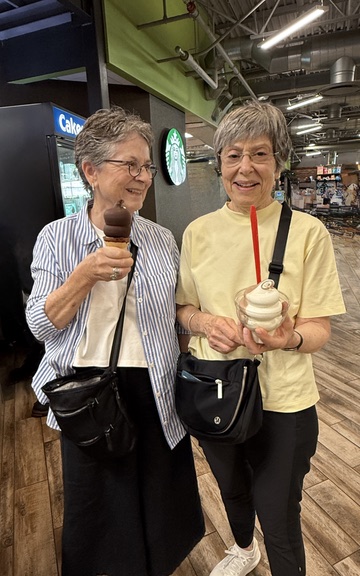
And maybe best of all…. they had soft-serve—-what Adrienne and Carol were craving in Bentonville but we never got to the place when it was open! I’m not a big fan, but I did have a small swirl.
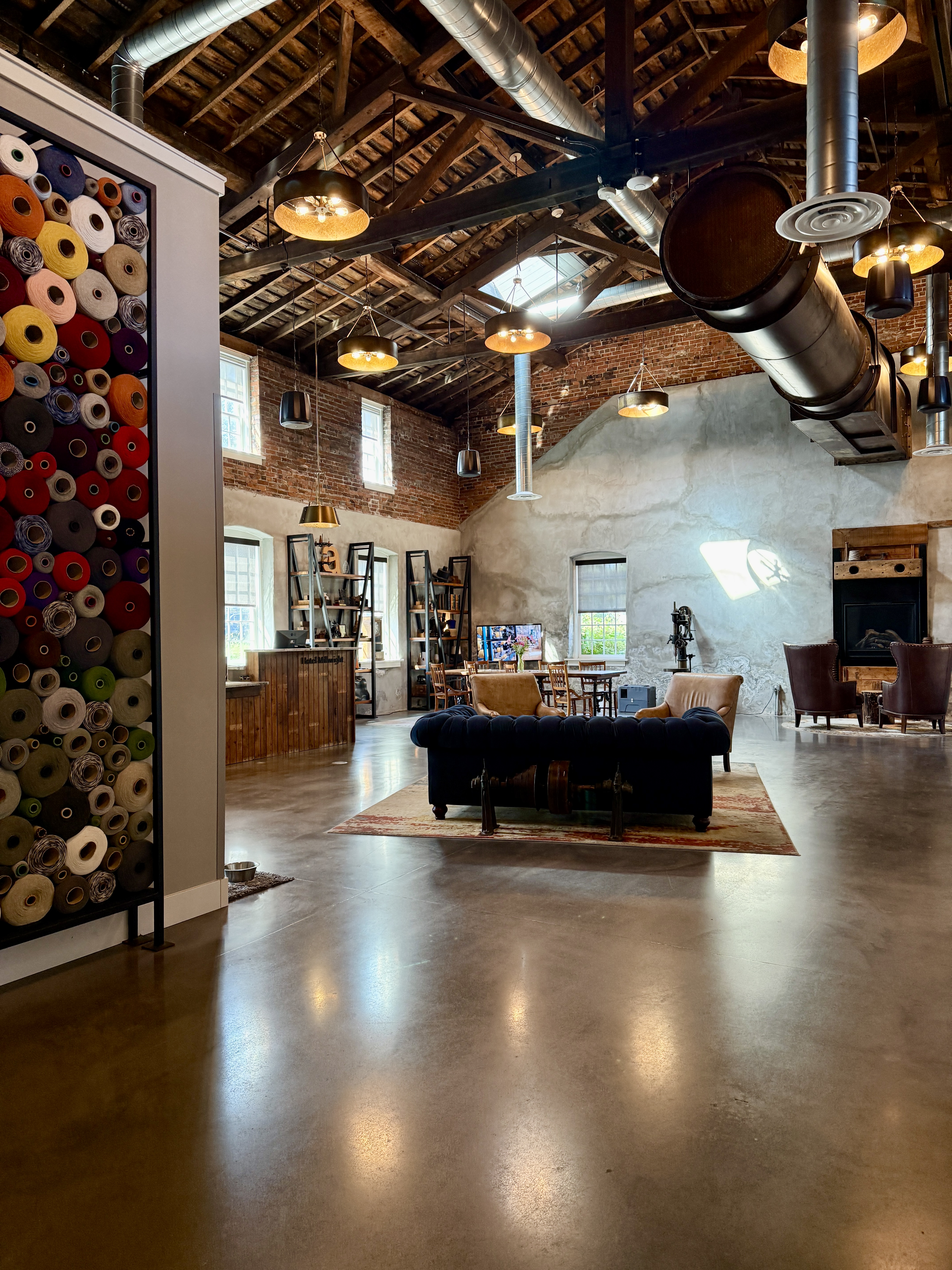
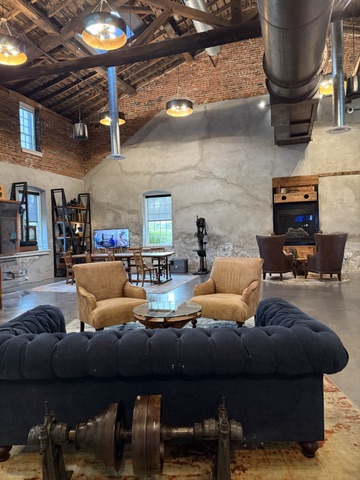
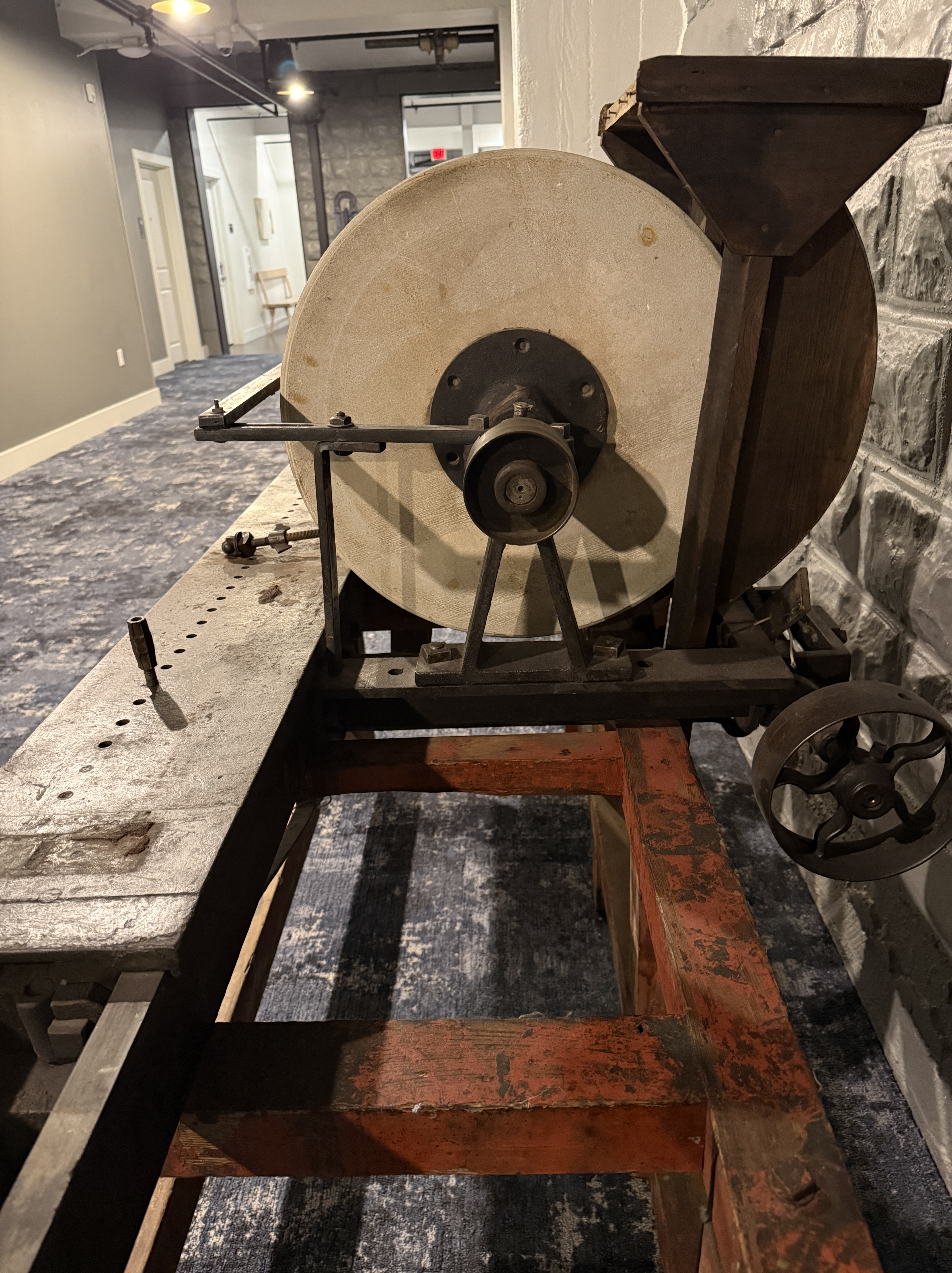
And then we were back on the road… flat, flat flat… to Amana, a small town where we are spending the night at Millwright Hotel. Amana (or the Amana Colonies as they are called) is comprised of 7 separate “villages.” I’m not great at religion topics, but as I understand it… The villages were built and settled by German Radical Pietists (these churches broke with other Lutheran sects to emphasize certain teachings regarding holy living). The radical pietists were persecuted by the German government and also by more traditional Lutherans. When they fled Germany, they first settled in Buffalo, NY and later moved to Iowa because they wanted more isolated surroundings… And they got it!!
For 80 years, the Amana Colonies maintained a fairly self-sufficient economy. They developed craft skills and a farming culture. They passed their skills and techniques to subsequent generations, using hand, horse, wind, and water power, and made their own furniture and clothes. Today, the villages are known for their restaurants and craft shops and is a national historic trust. We will check it all out in the morning before we head to Des Moines.
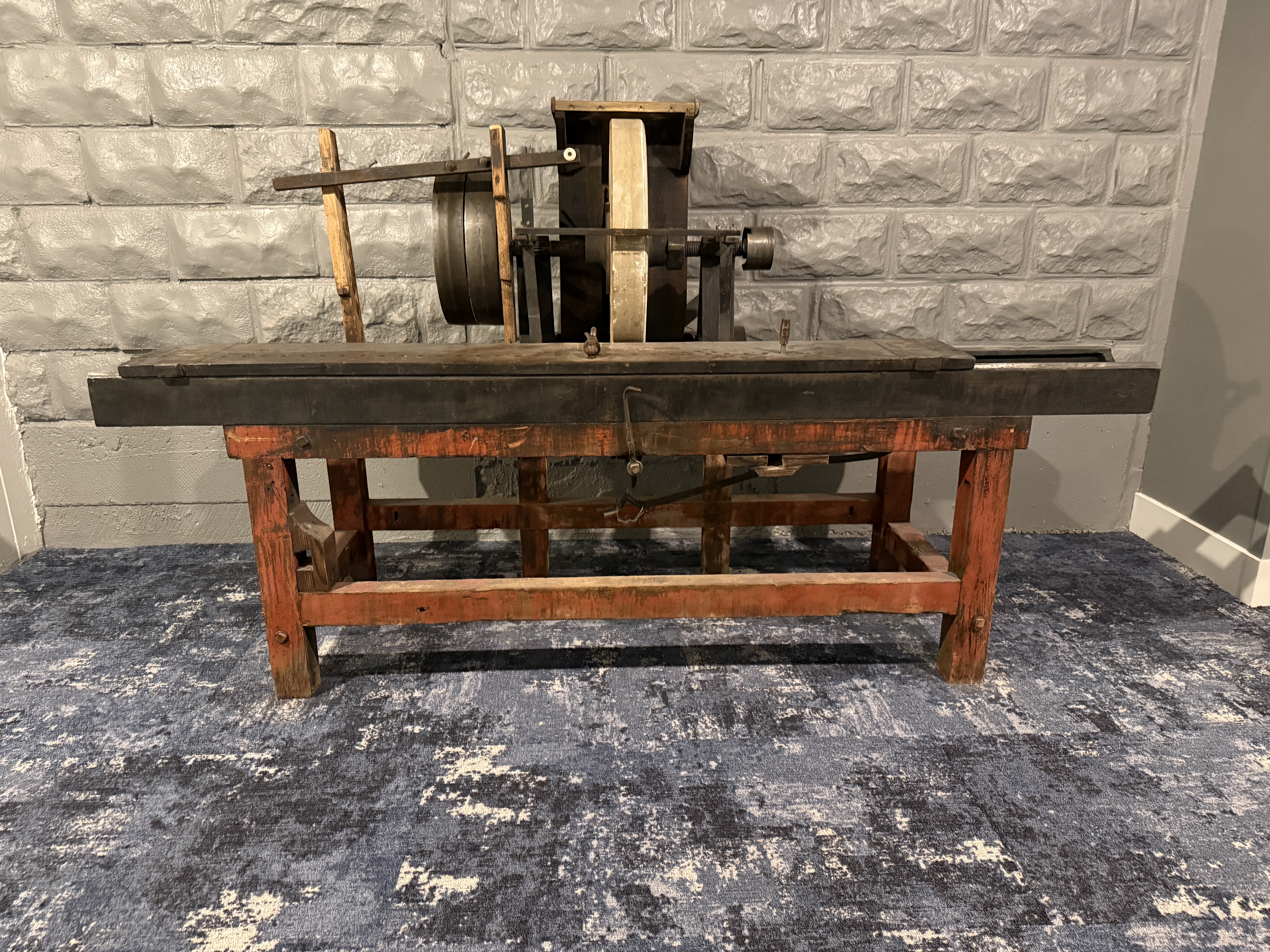
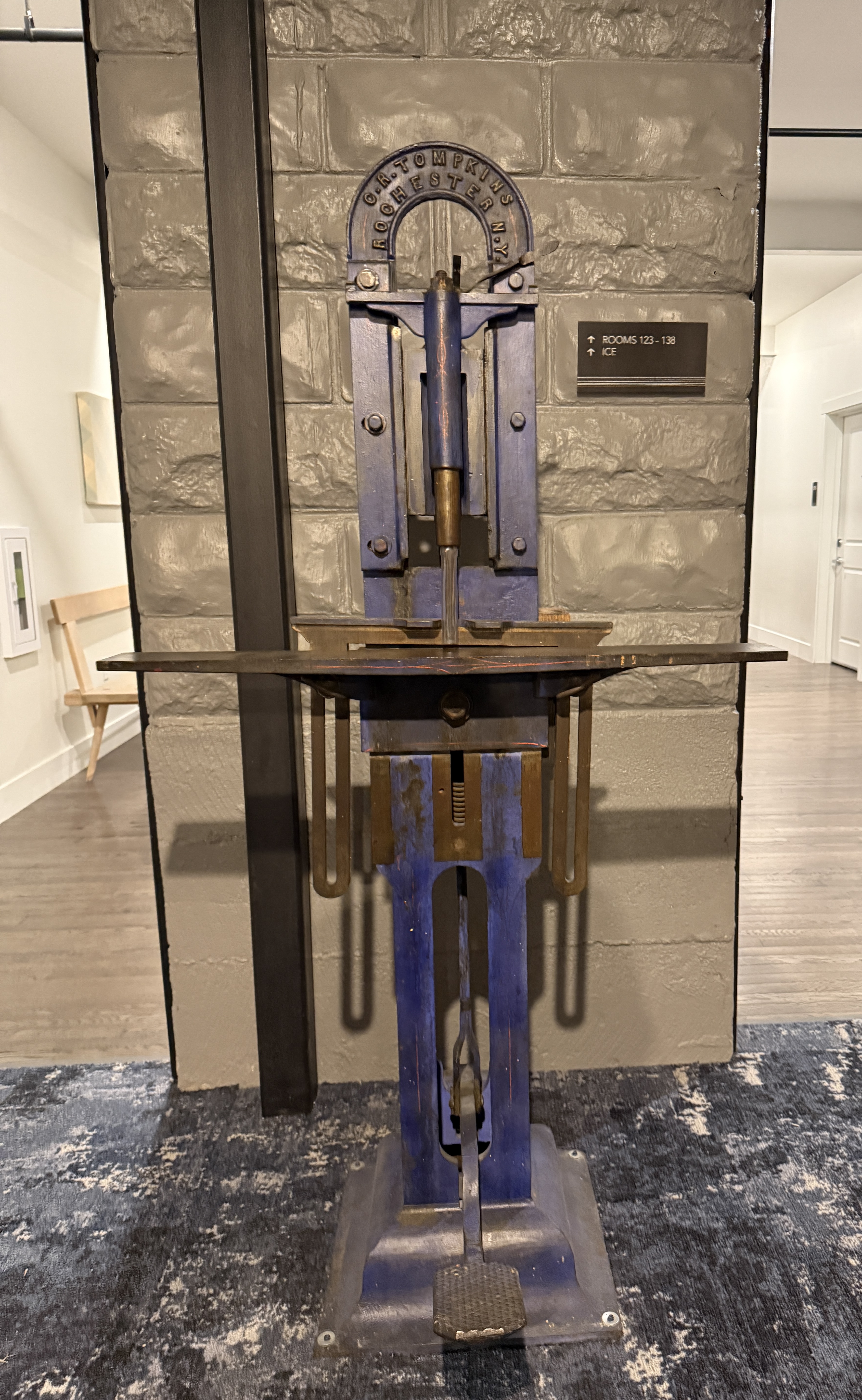

We opted to find a different restaurant from the one in the hotel because tonight was “all you can eat pasta” and it didn’t look too appetizing. Several restaurants were closed because of the holidays so we went to the Brauhaus where, in addition to many many different burgers we managed to share two salads, shrimp-in-a-basket and fish-in-a-basket. I opted for one of the local brews which was quite good and Carol tried the non alcoholic local brew. We also shared a slice of homemade fresh berry pie.
Now I’m back in my room which is simple, large, and fine. Tomorrow we stroll the town and head to Des Moines after a quick stop in Ames.
Hope you had a good Labor Day.
9/6/26: Obama! A Day in Chicago (From Walmart City to the Windy City)
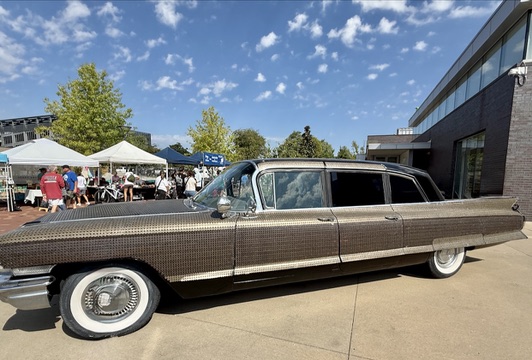
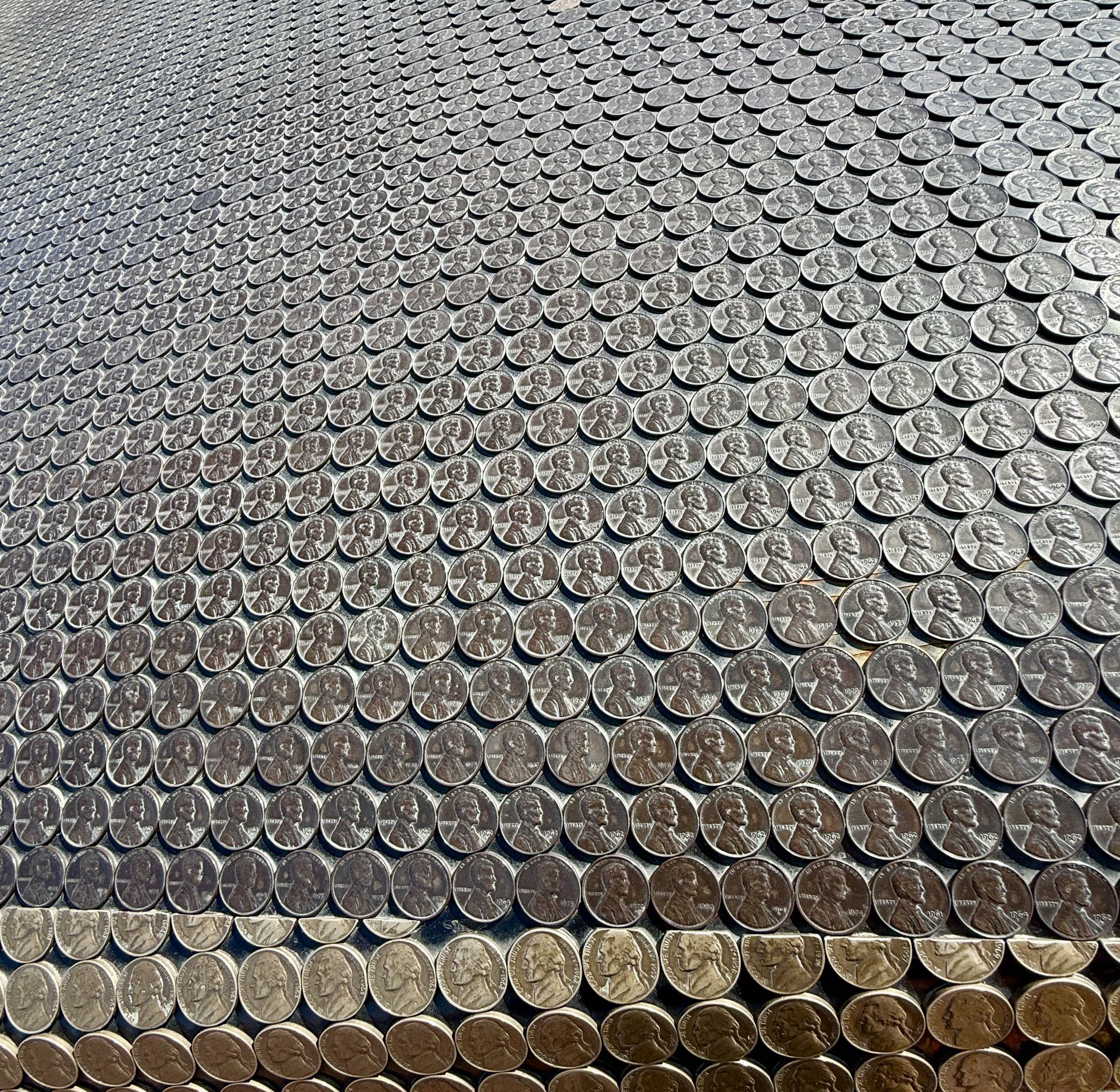
Before we left Bentonville, we strolled a bit and came upon “Making Change” — a cadillac that has thousands of nickels dimes and pennies glued on… It was built in 1962, apparently the same year Walmarts was founded in Bentonville. The inspiration came from the original Waltons five and dime which was founded in 1962. In that year, these new cadillac limos sold for $9,937; while the average cost of a new car was $2,500 and the average cost of a house was $15,000. The average income was $6,000. Gas was .25. Walmarts claims to save the average household $952 annually— so that’s the same dollar amount represented by the coins on the limo… Monica Mahoney is the artist.
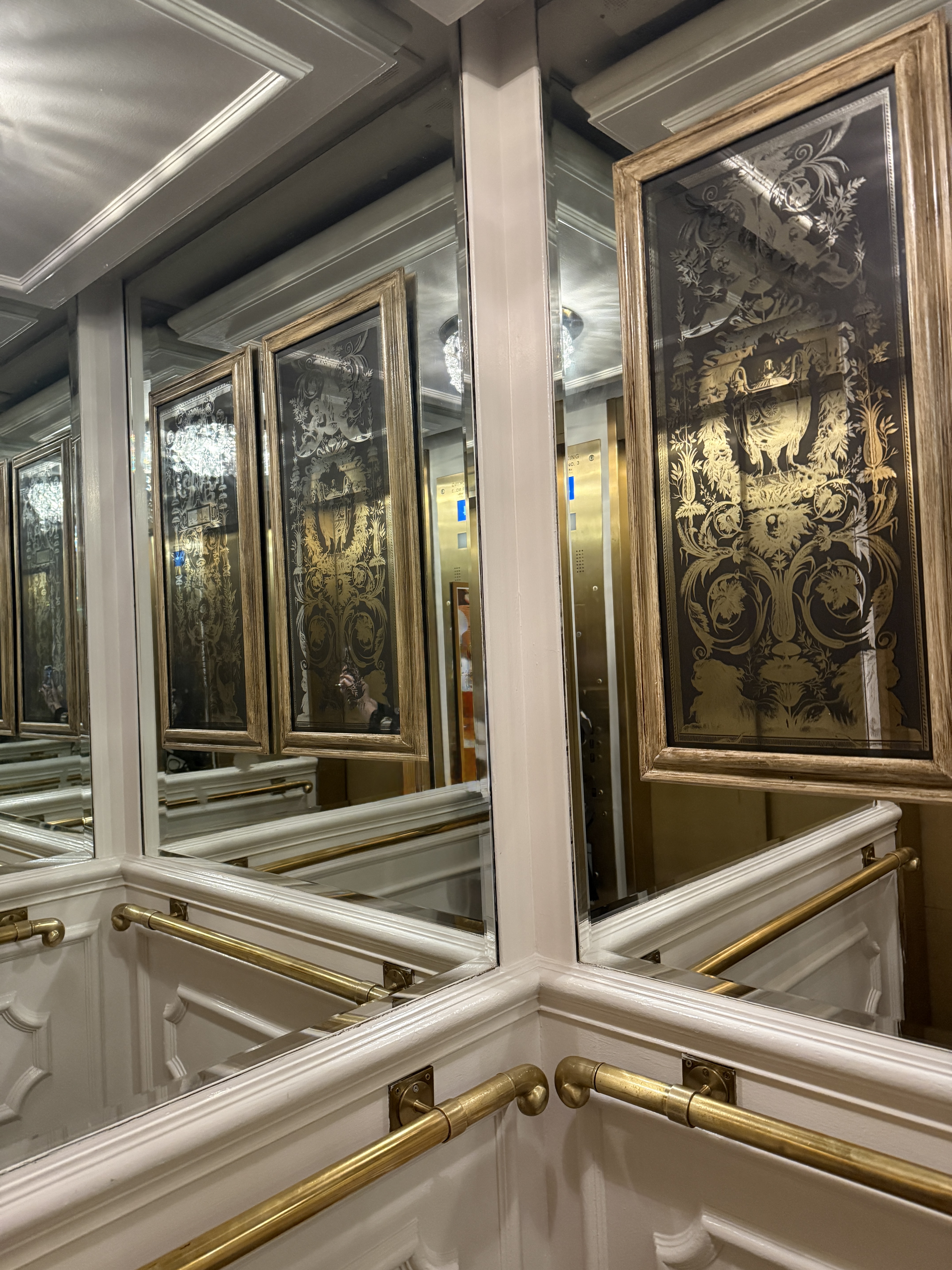
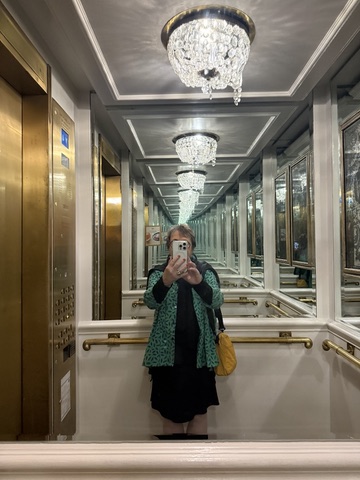
After brunch and a quick walk through the Bentonville Farmer’s Market, we headed to the Bentonville Airport (paid for by the Walton family or Walmarts… and flew to Chicago. About 20% of the plane was filled with pilots and United staff headed to catch other flights in Chicago. We taxied to our hotel — the Millenium Knickerbocker which is located very close to the Lake and whefre Adrienne lives (in one of the Miis towers). But it is a far cry from the well-designed Compton Hotel in Bentonville. It was probably a grand hotel in its day, but thoe days are long gone! But, it’s convenient and we are only here for two nights. In fact, as I write this, I’m packing since we leave in the morning.
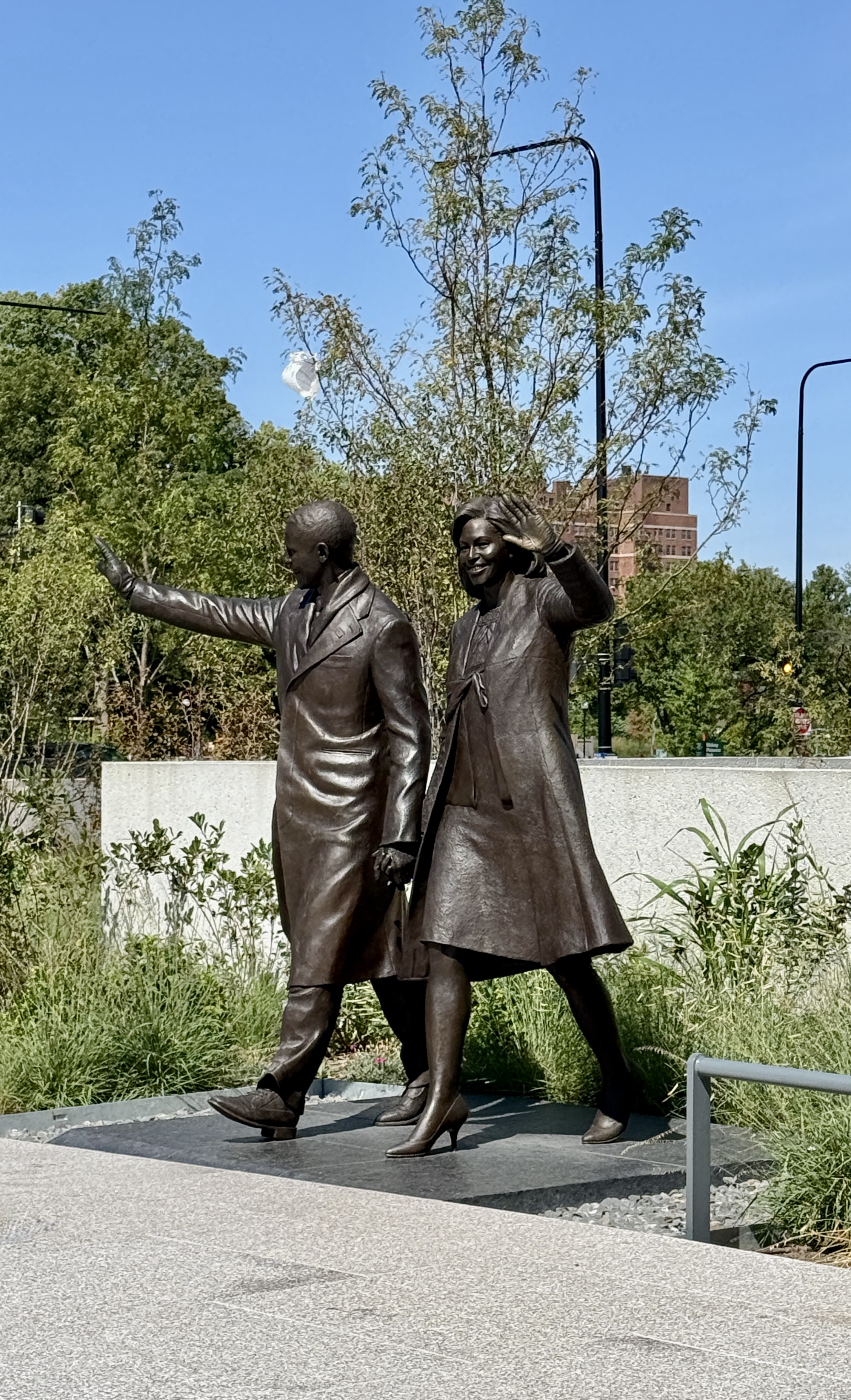
We had dinner at BOCA last night, and this morning Carol and I headed off by taxi to the South Side to visit the Obama Center, located near the University of Chicago campus. As most peopler have read, the reviews of the architecture are pretty bleak, and indeed it is (in my humble opinion) a rather inelegant monolith. But the design of the building’s exterior fades when you get inside. As we approached the building there was a long line. We figured it was the ticket holder’s line. But alas (and we were relieved to find out) it was the line to take selfies with the statue of Barack and Michelle (on the day of the first inauguration).
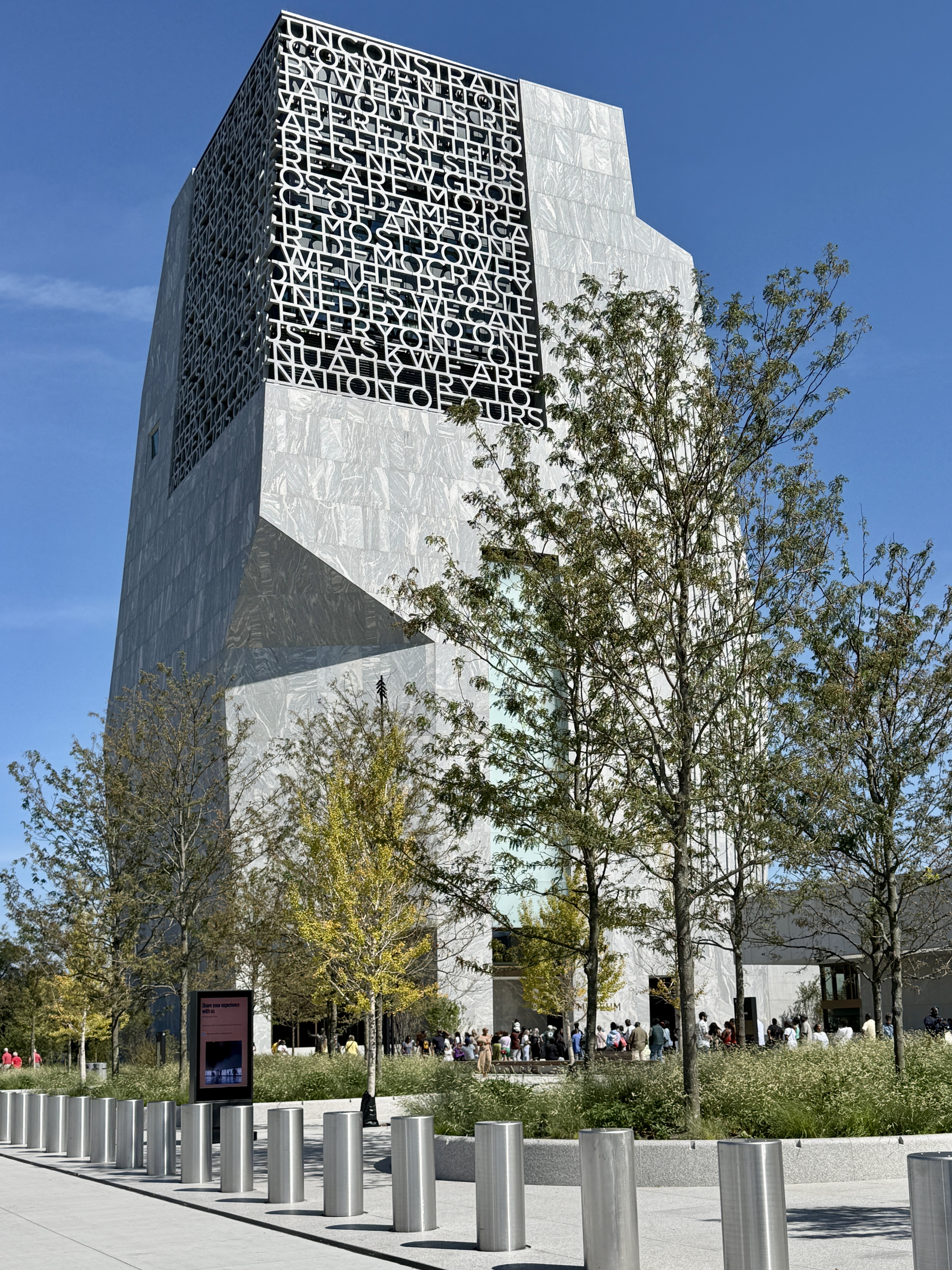
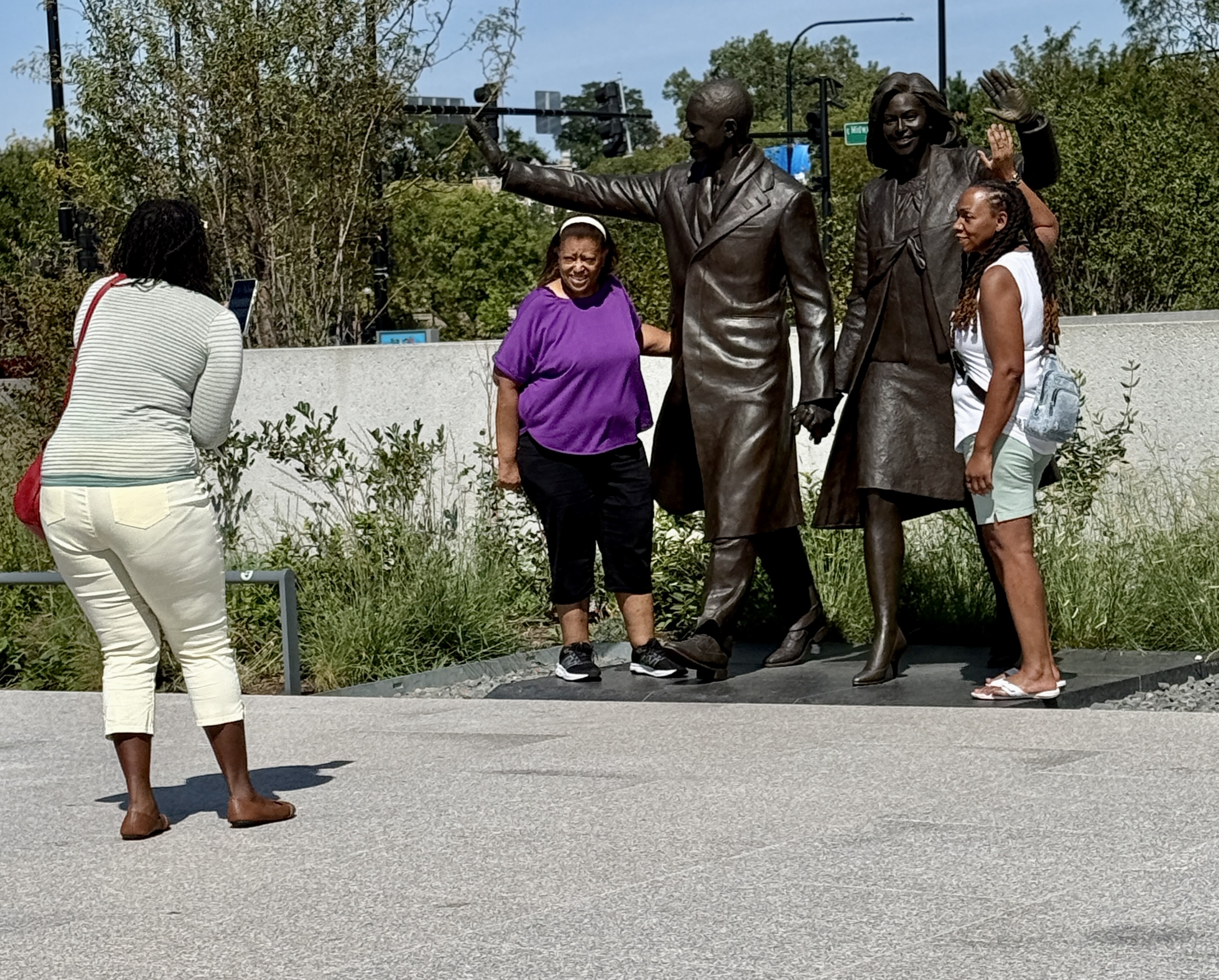
It was extremely powerful to go through the center. It was inspiring, nostalgic, and made you feel both hopeful and also totally upset about the current political situation. The majority of visitors were African American and I think there was a large percent of Chicago residents. There are four exhibition floors that are divided up thematically — Toward a Mote Perfect Union which focuses on Civil Rights history and the key figures who led those movements. There’s the floor that covers the 2008 campaign and the four years that follow and then the second campaign and the four years that follow.. But it’s not really a chronological exhibit with lots of timelines. It’s a very dynamic, visual (and auditory) splash that is comprised of large scale (some video images spanning about 50 or 60 feet tall). Most of it is video as opposed to static photography. Throughout there is narration, with Barrack as the main narrator, so much is in the first person. There’s great acknowledgement of Michelle’s role over 8 years. And everywhere people are trying to take photos of themselves next to images of Barrack or Michelle.
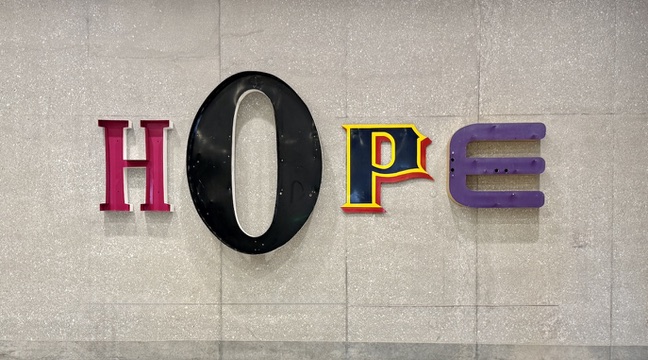
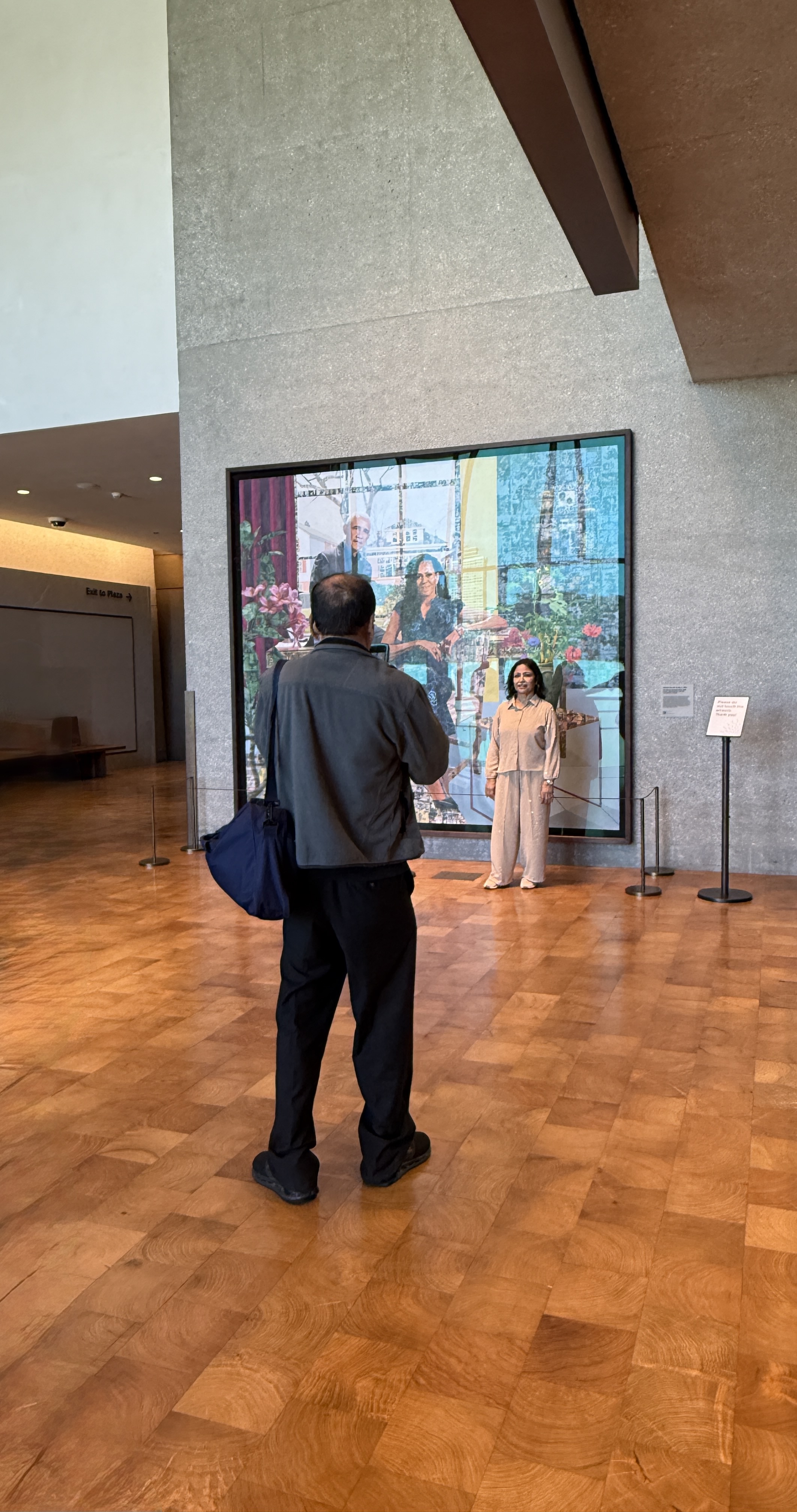
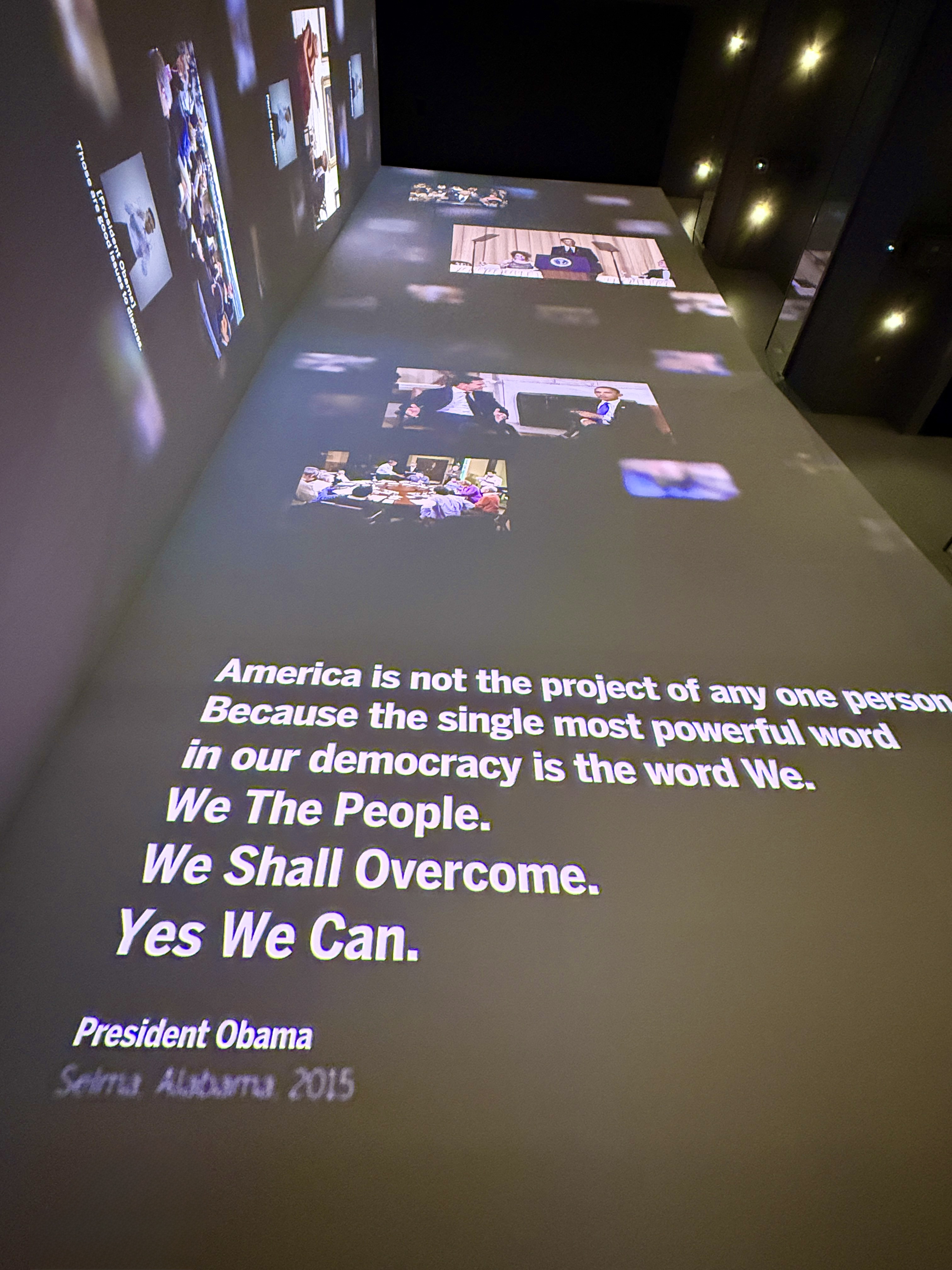
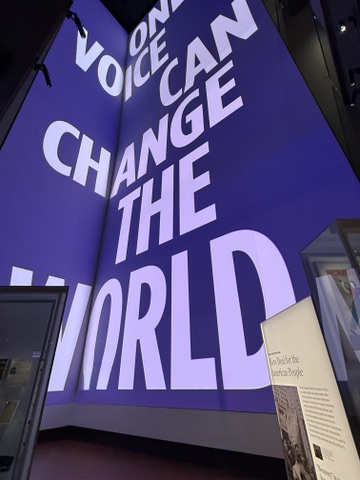
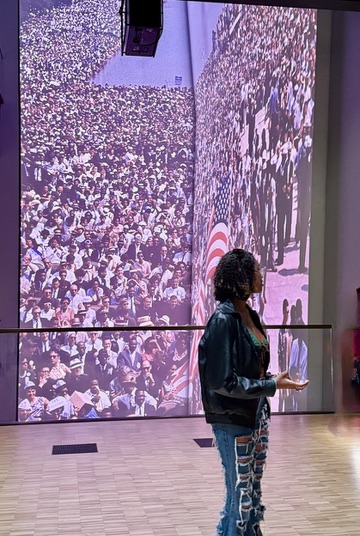
The 5th floor covers marriage equality and gender pay equity as well as science and technology work. There’s a life-sized Oval office replica where you can have your photo taken standing at the resolute desk.
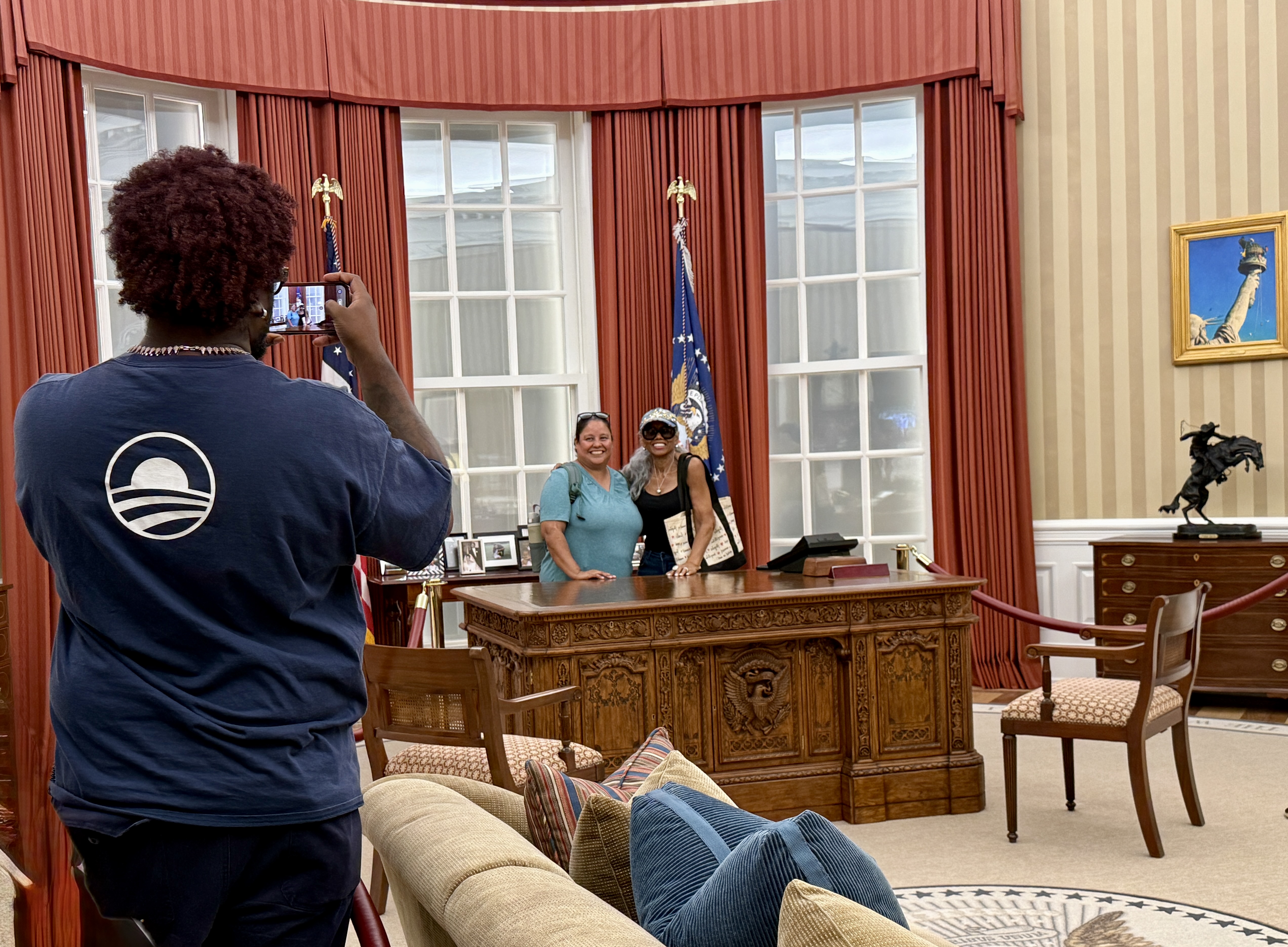
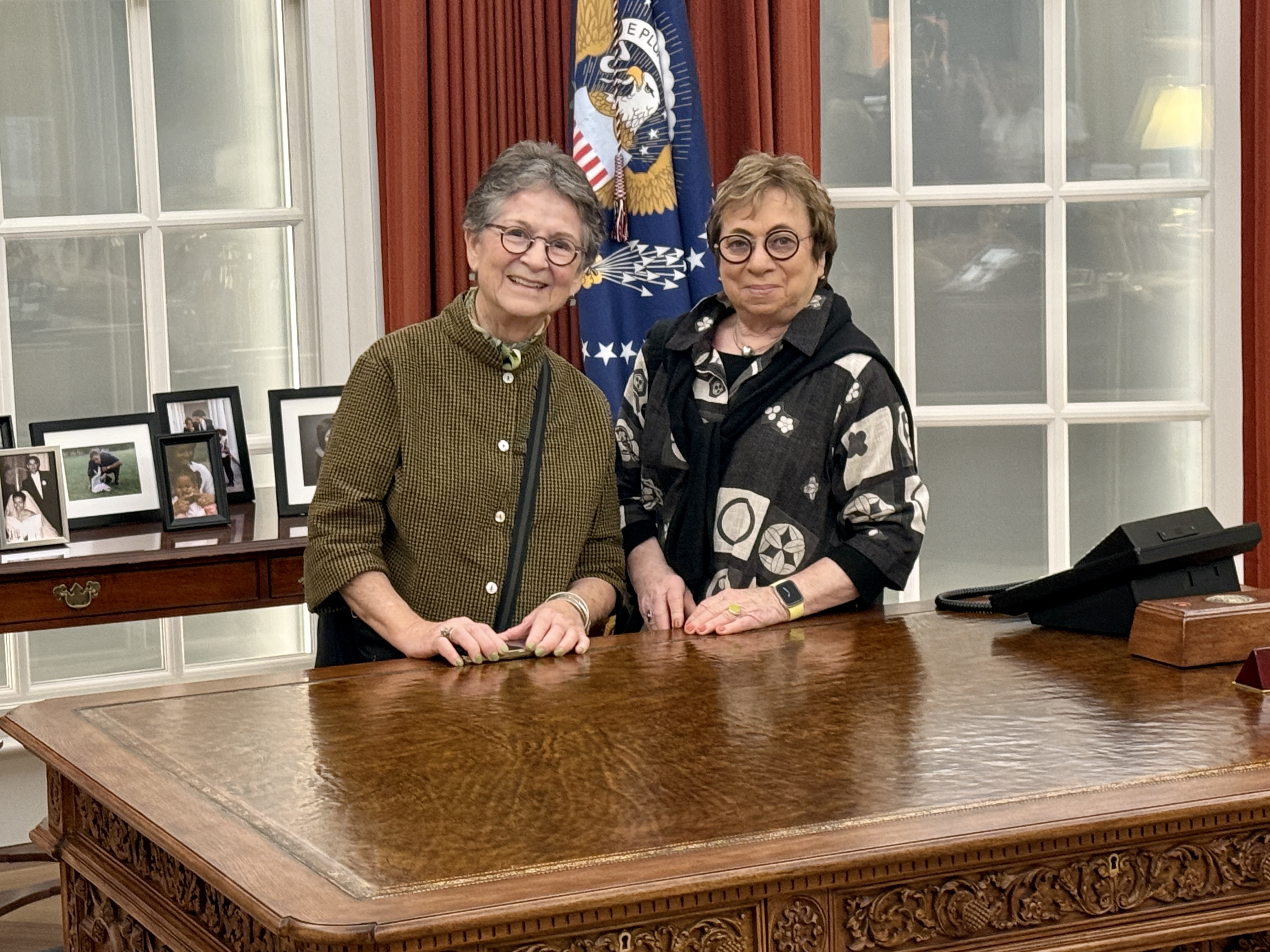

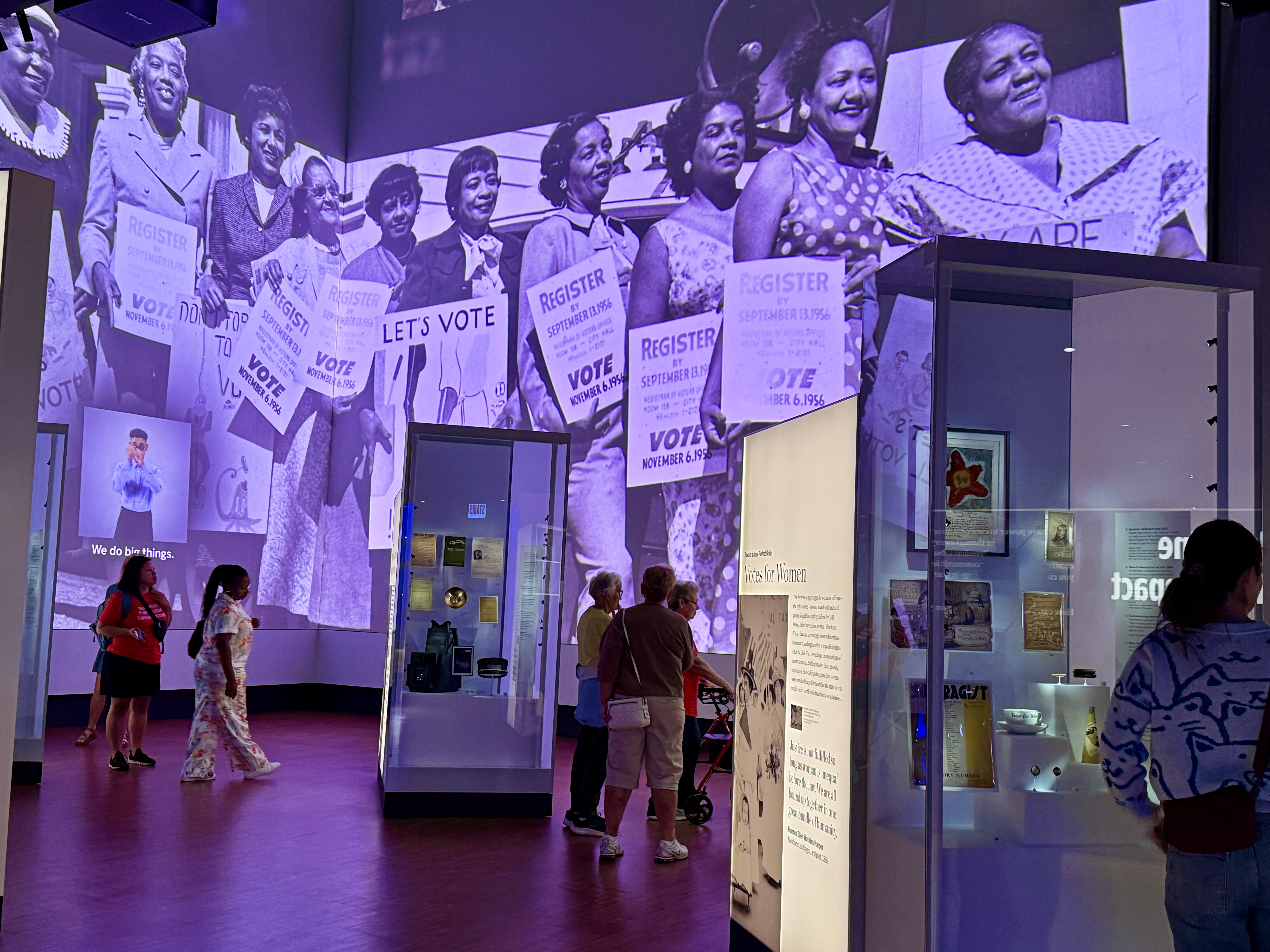
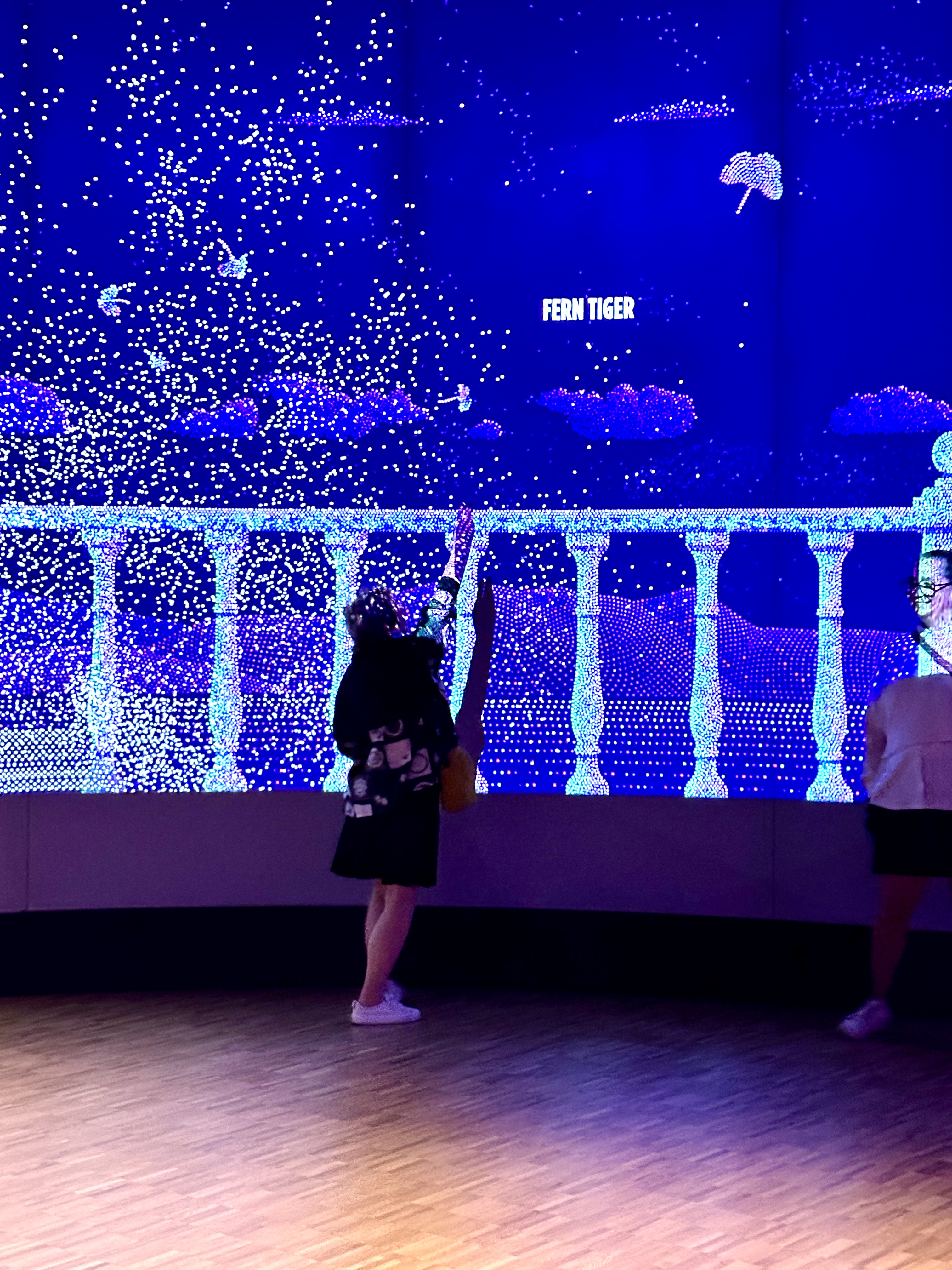
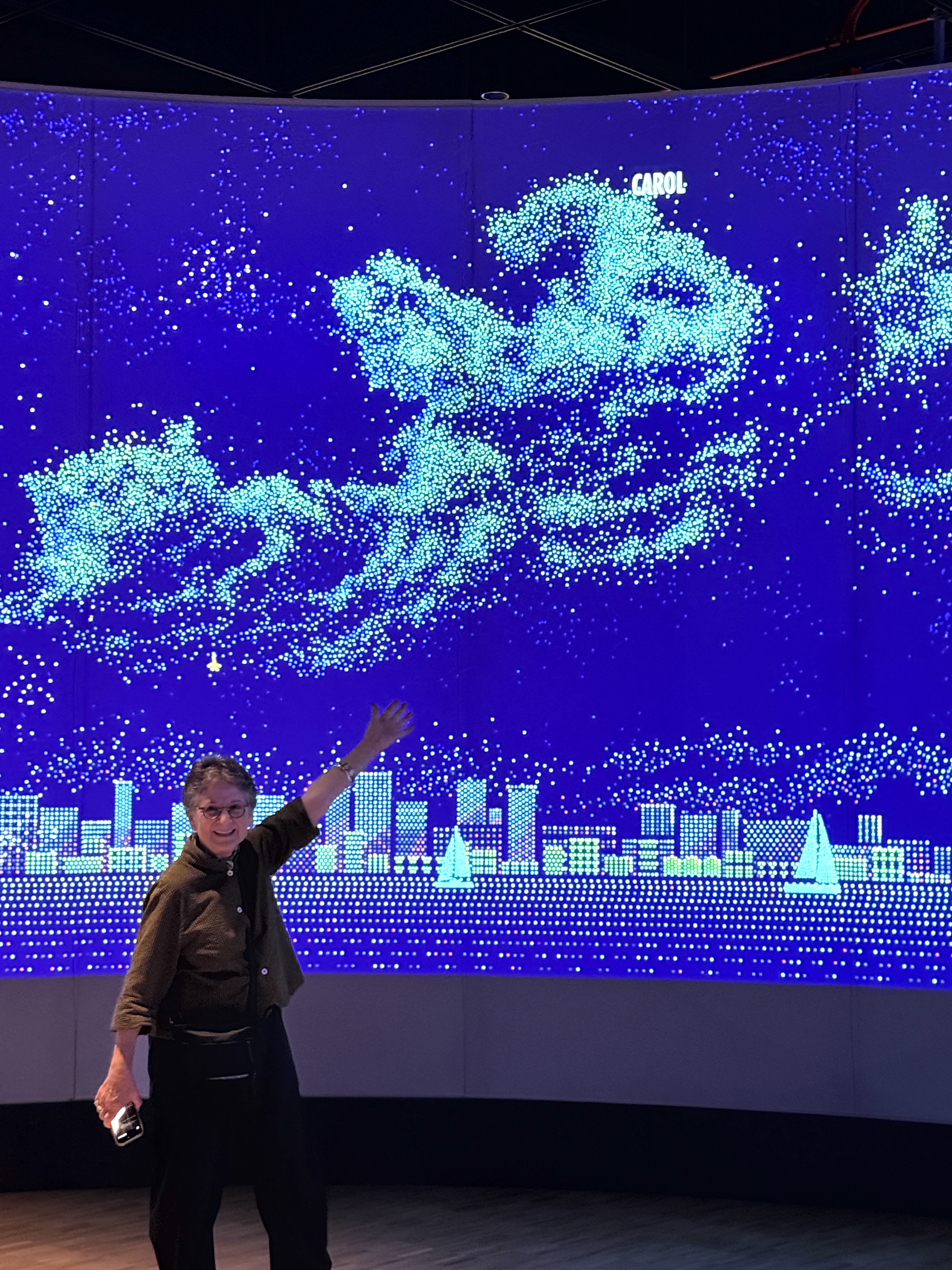
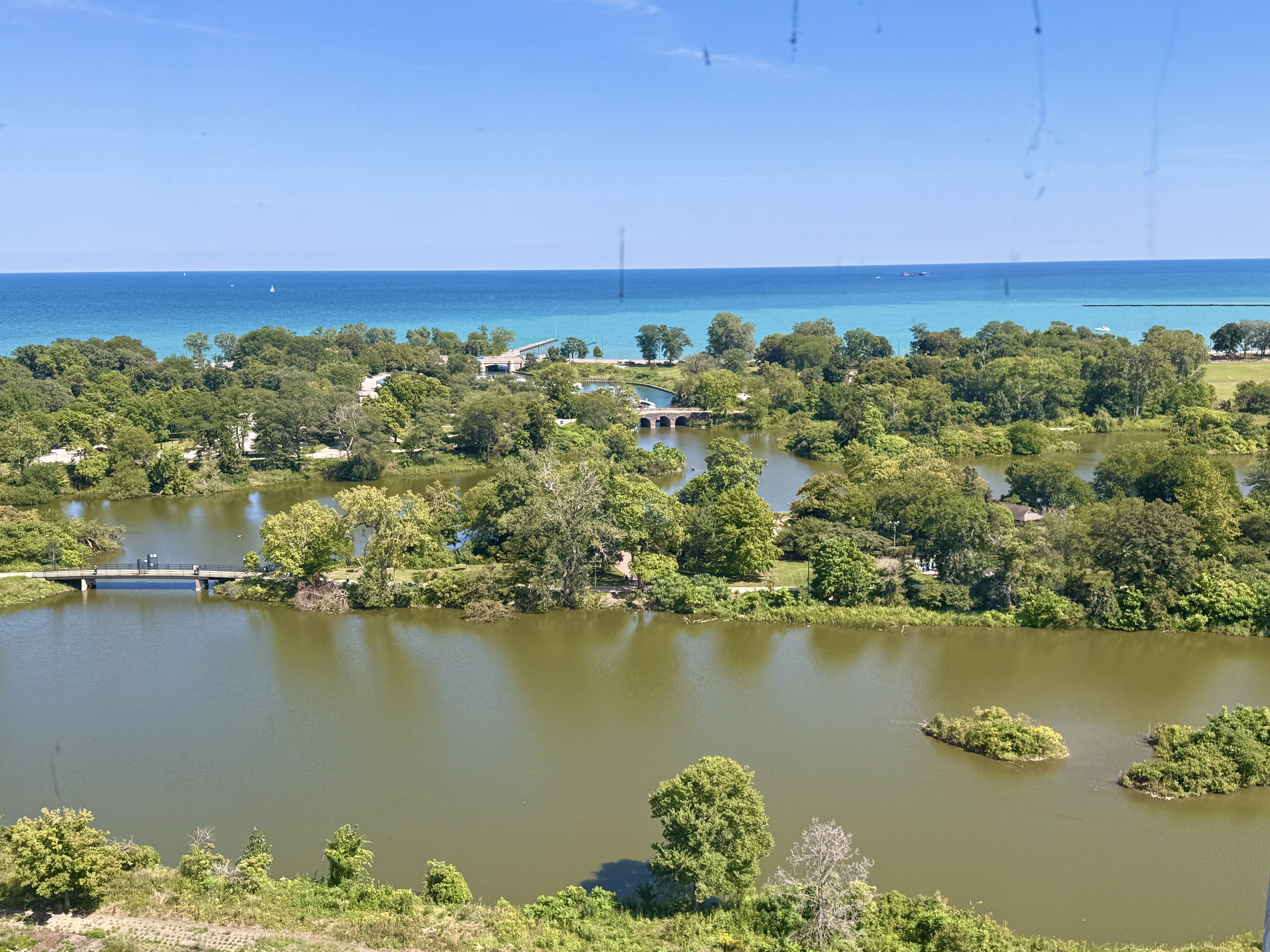
In the Nelson Mandela Sky Room, which is on the top floor (8th) you get amazing views of the city and a trapezoidal skylight that is surrounded by overlaps of hand stamped words from Obama’s speeches honoring civil rights leaders. The room is surrounded by 5′ high words taken from a speech commemorating the anniversary of the Selma to Montgomery march. So you are looking out over the city through the letters and words of the speech. On one floor there is a wrap-around image (floor to ceiling) made of dots.. and the statement that “one dot doesn’t do much but together you’ve got a movement” and there are places for visitors to mark their own name and a few minutes later it shows up on that dot drawing and floats around the space.. representing that collective action can make change.
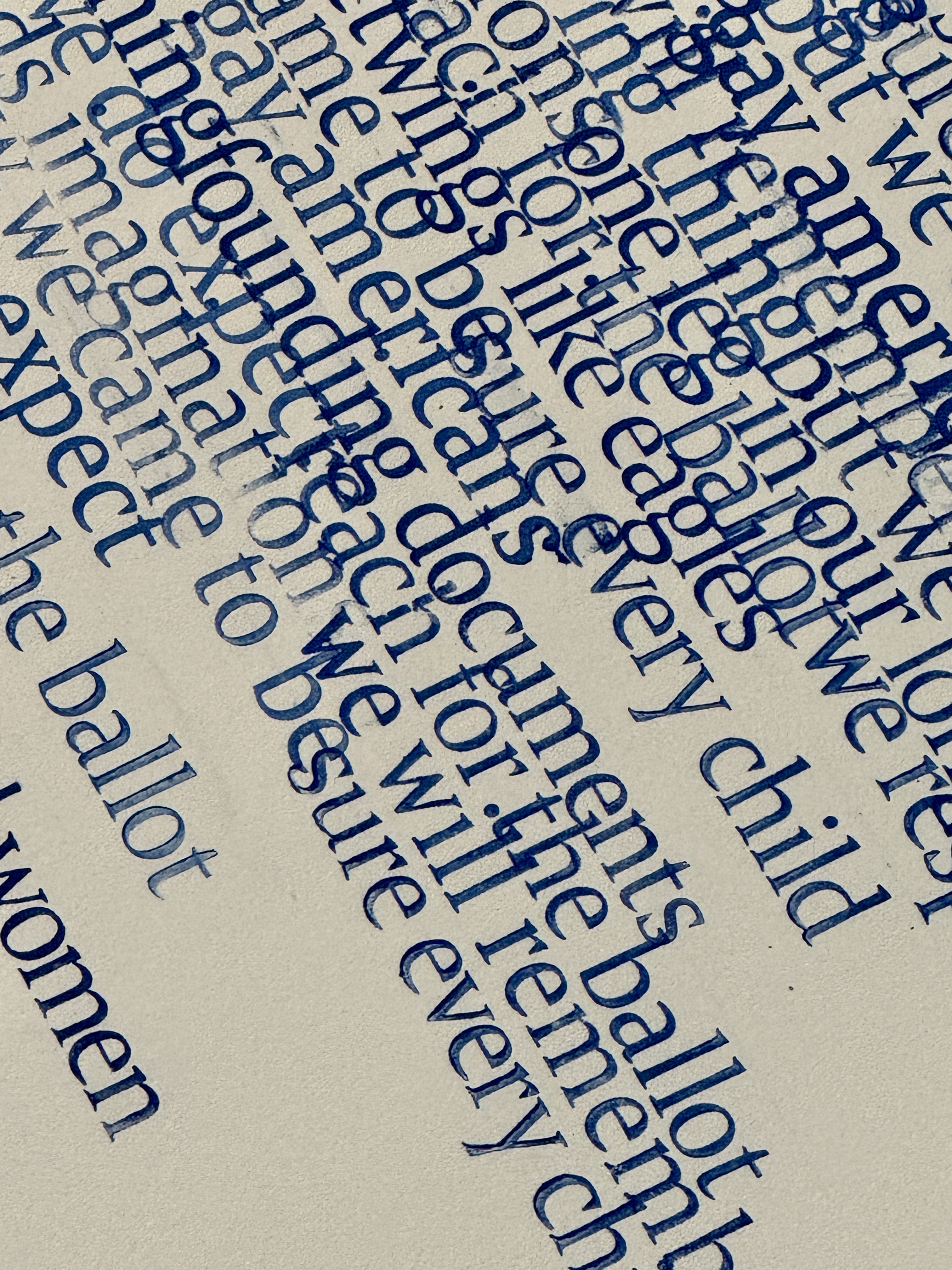
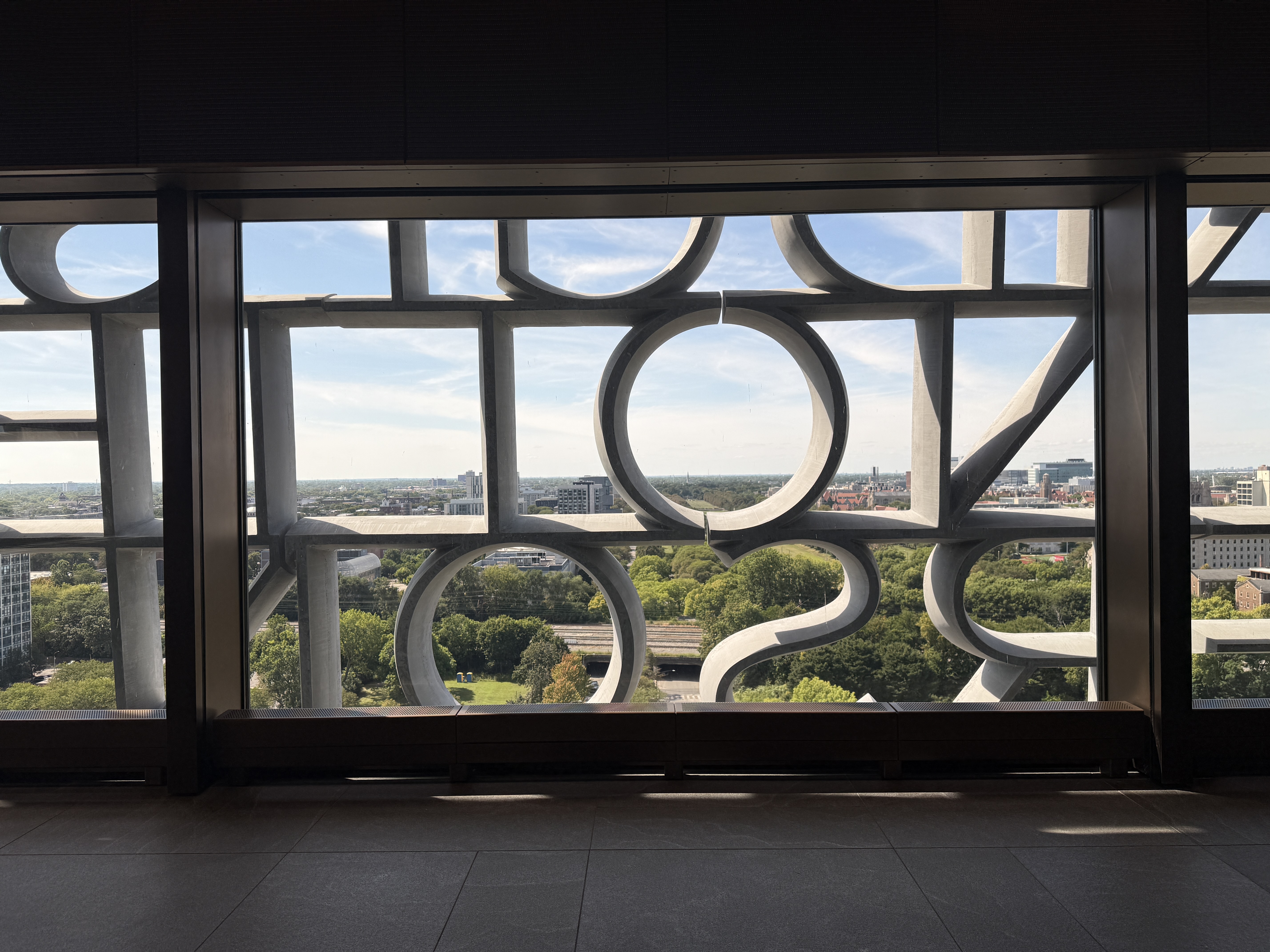
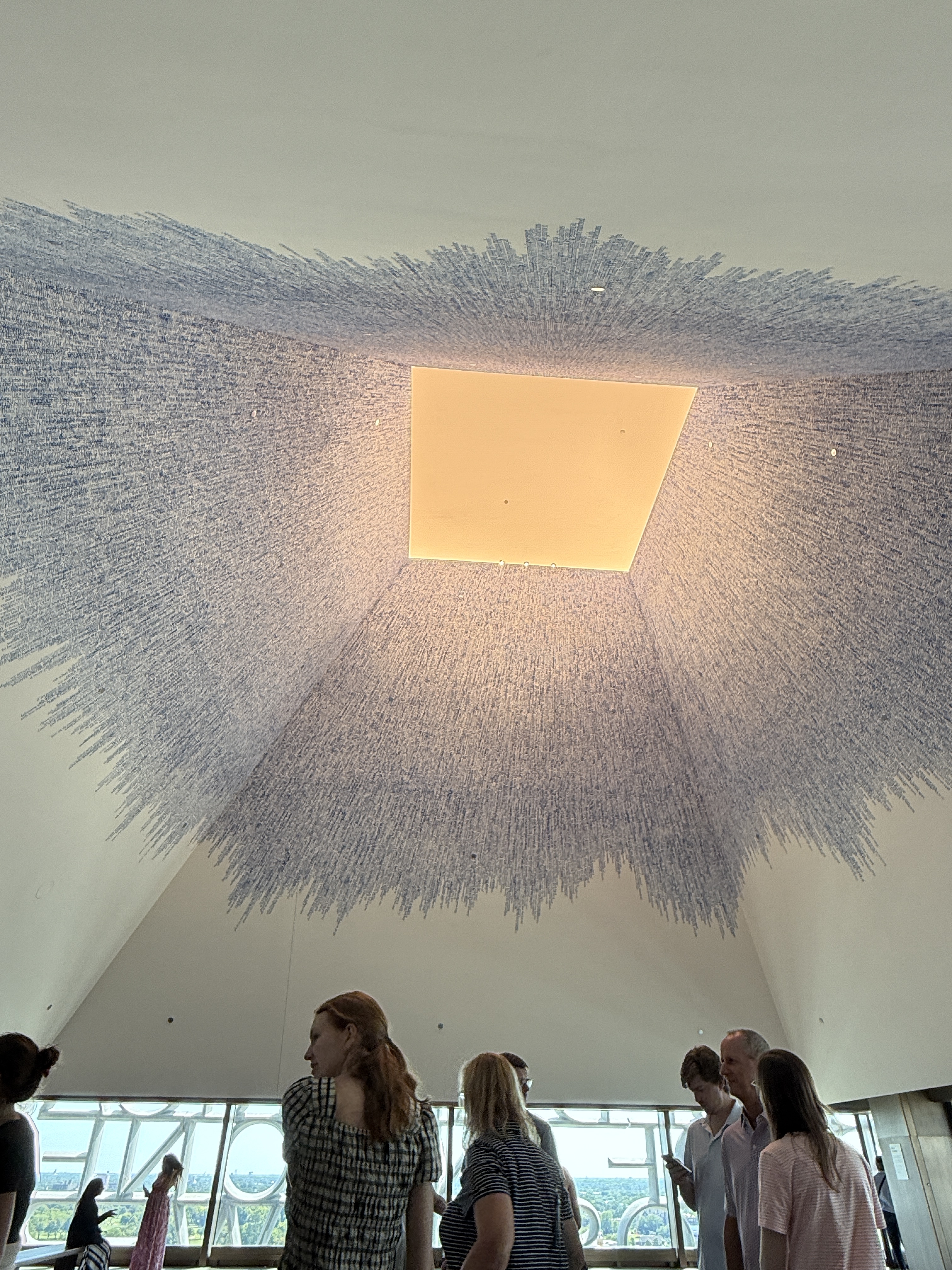
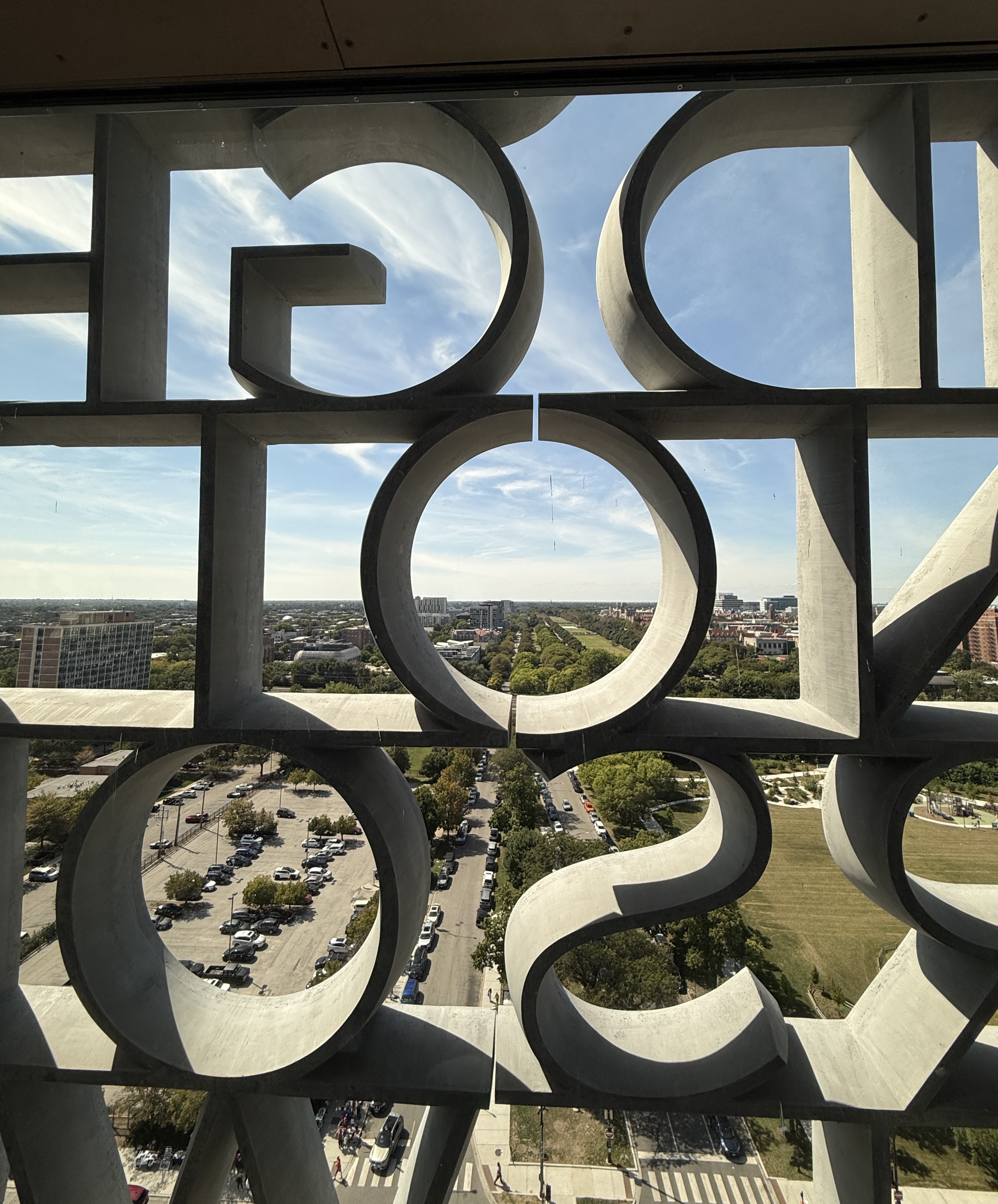
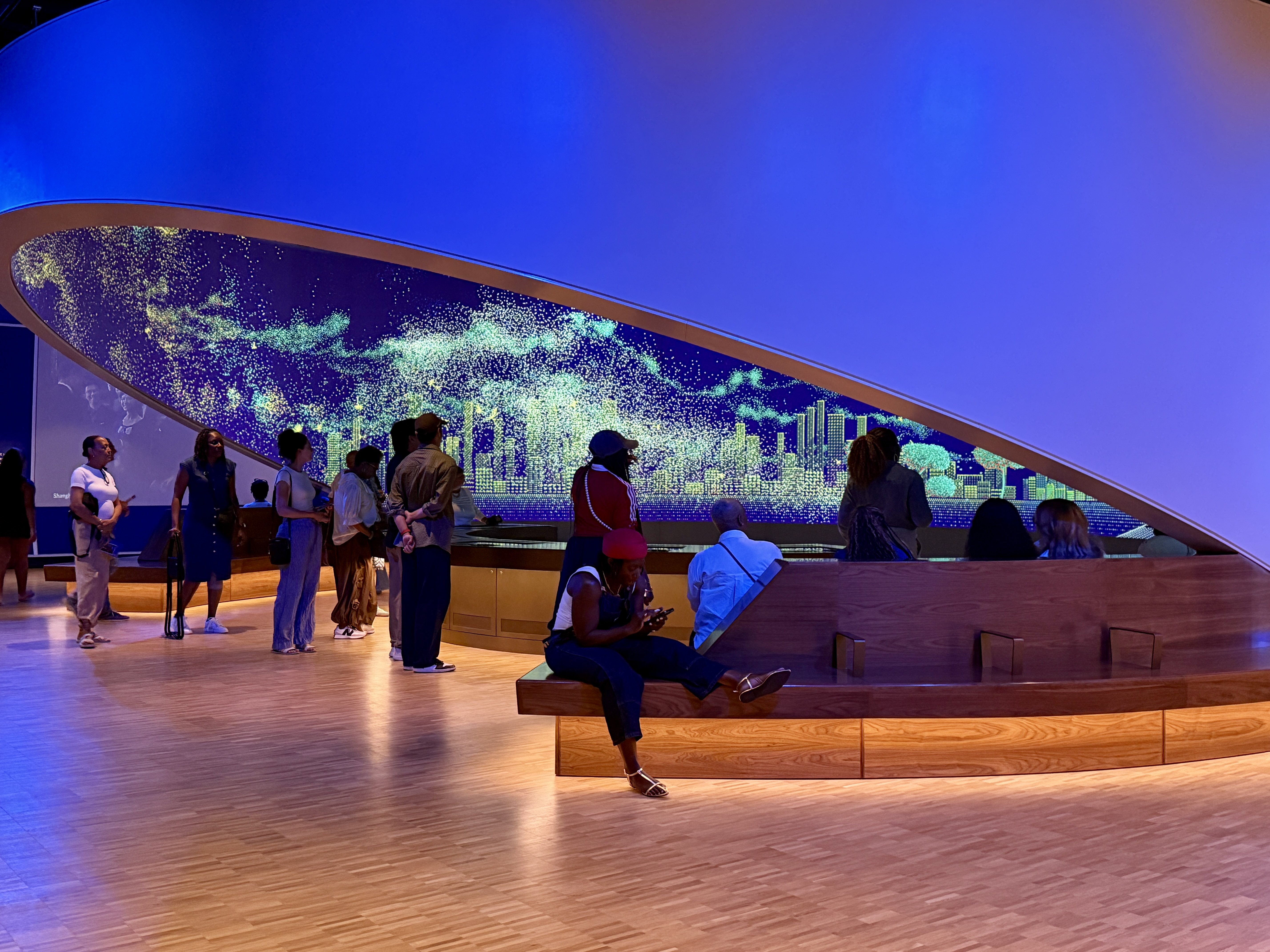
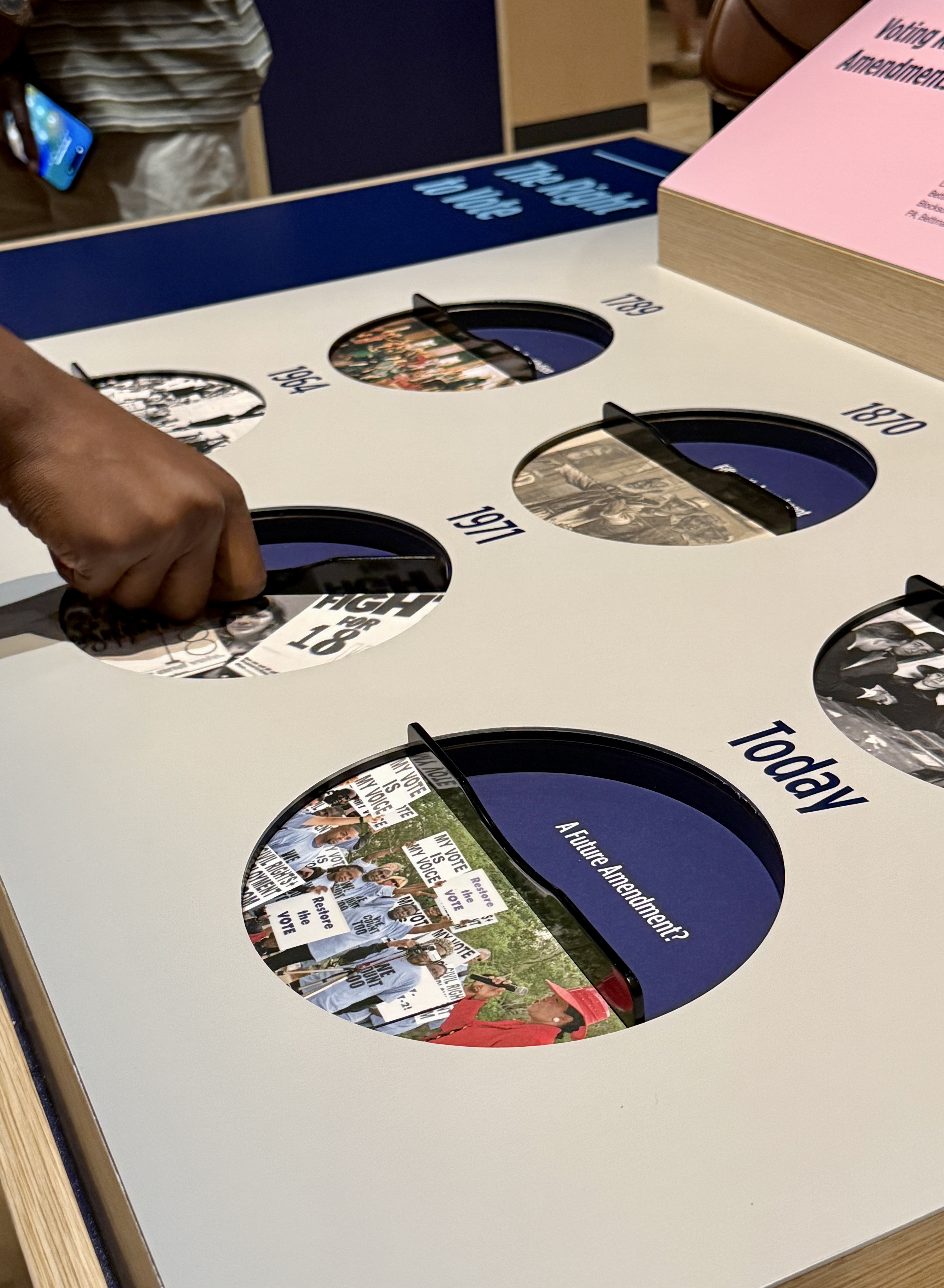
There’s one set of changing and immersive images that can be seen from the lobby all the way up to the fifth floor. And then ofcourse there are the requisite walls of buttons and memorabilia…


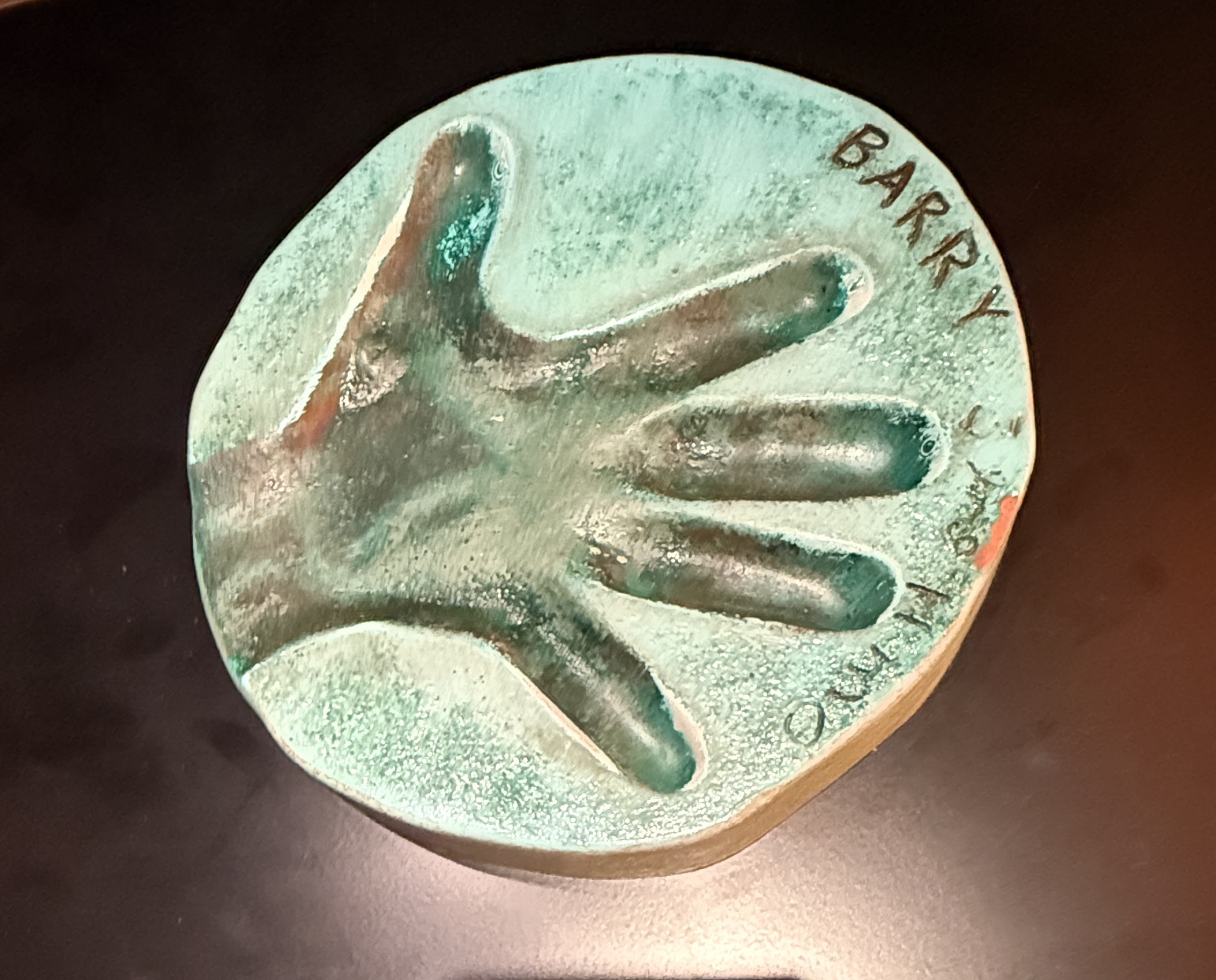

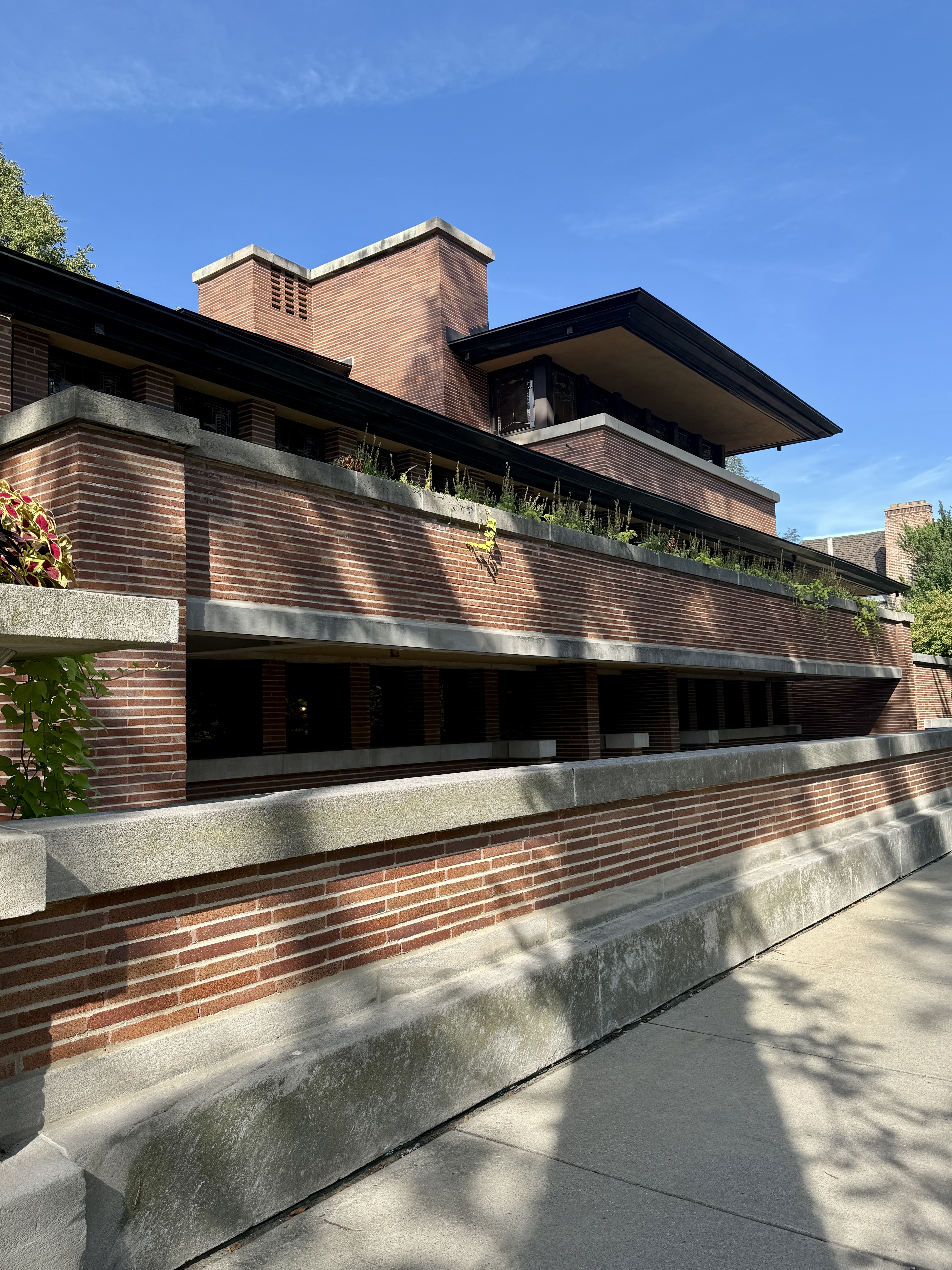
From there we made a quick stop to see Frank Lloyd Wright’s Robie House (which we’d seen before)… and then back to the hotel to meet up with Adrienne who took us on a little driving trip to see where she grew up in Rogers Park– her apartment house, her grandmother’s apartment house, her elementary school and her high school.
We then had a wonderful Lebanese dinner at Beity. Highly recommend it. OK.. that’s it for today. Tomorrow we begin our road trip to Des Moines with several quick stops along the way.
Arkansas Day 2: Chapels, the Ozarks, and Hippie Towns
September 4, 2026. From Bentonville to Eureka S;prings to Bella Vista and More–Arkansas in all its Glory (and Heat!)
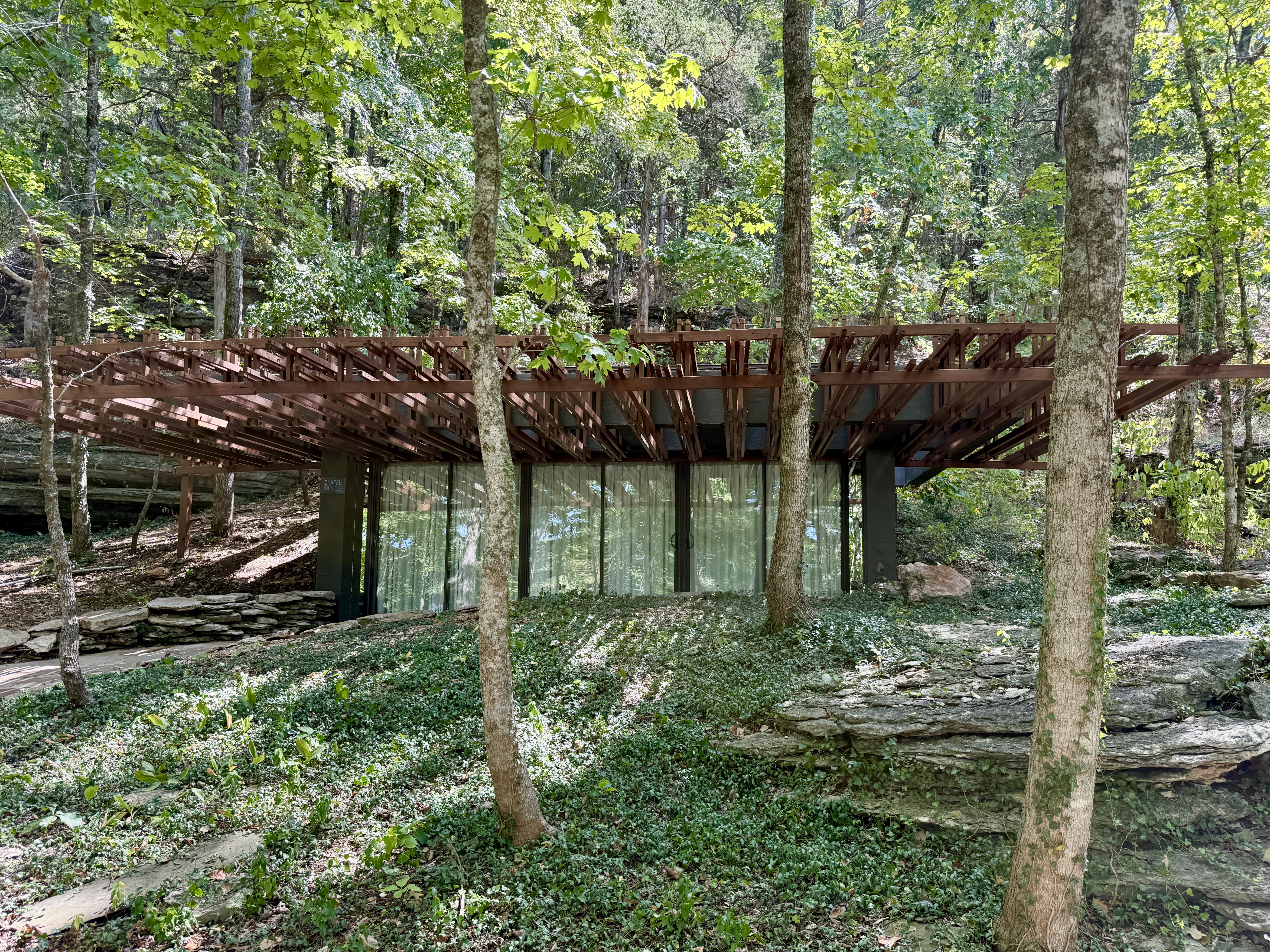
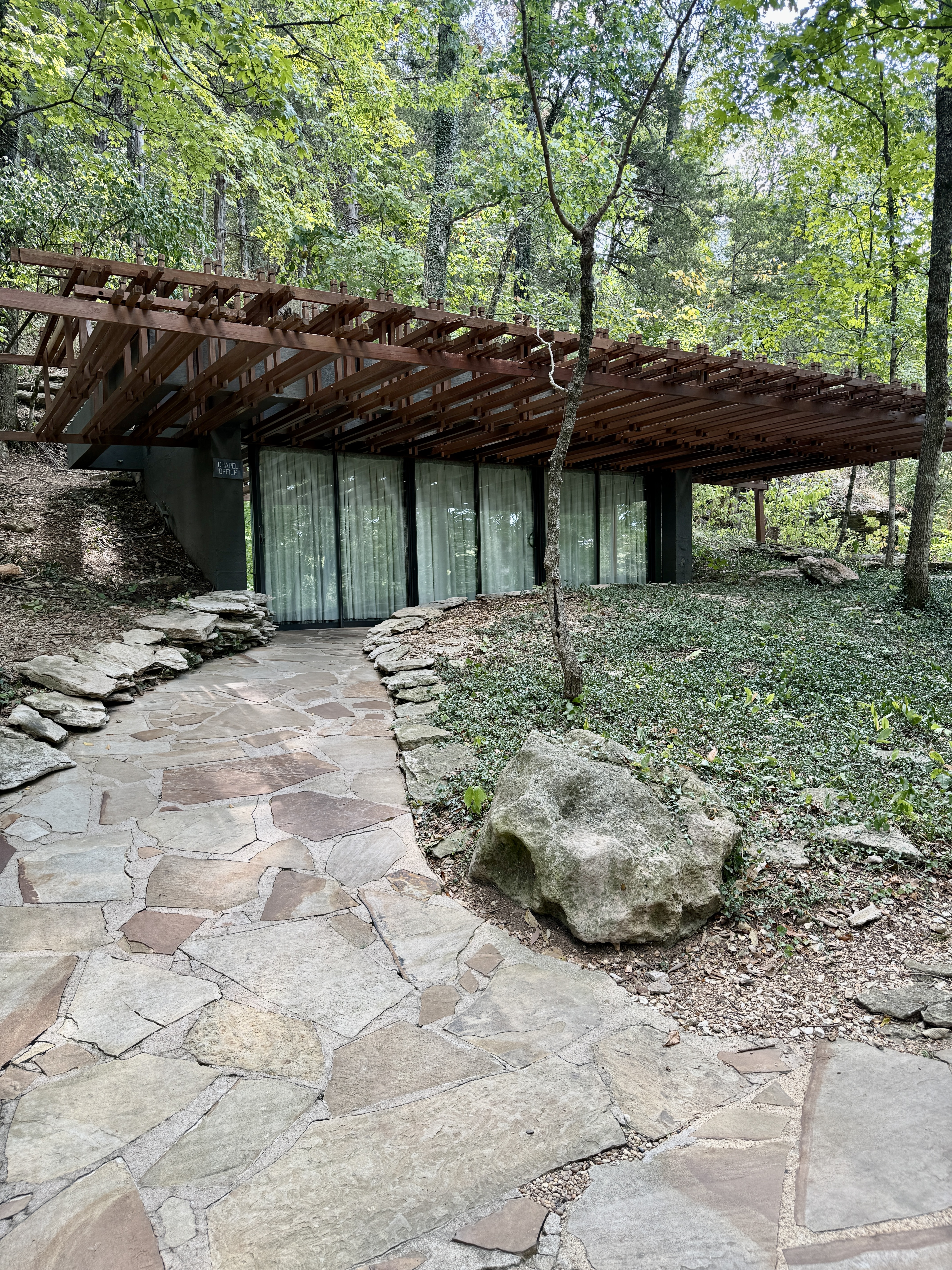
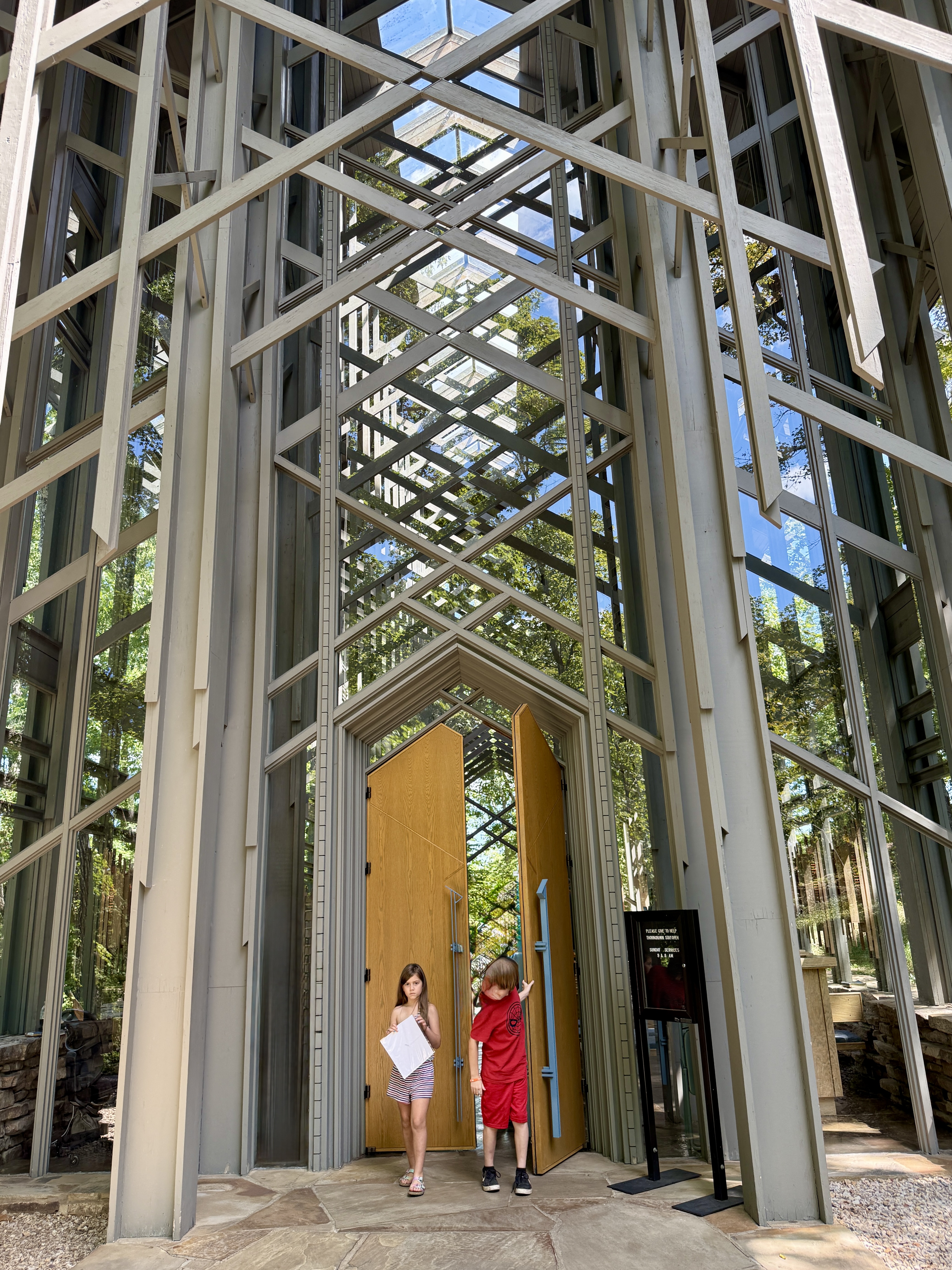
After a simple breakfast of oatmeal and fruit, we headed out of Bentonville to Eureka Springs to check out the Thorncrown Chapel, designed by E. Fay Jones, former Dean of the Architecture School at University of Arkansas. It was built in 1980 and is as pristine and elegant as it mush have been at its opening. Jones had apprenticed with Frank Lloyd Wright, so there are a lot of elements that are familiar. After parking, we headed up the path toward the church and first stopped at what we thought was either the minister’s house or the church office. Apparently it was once the office but now it is a dressing room for wedding parties.
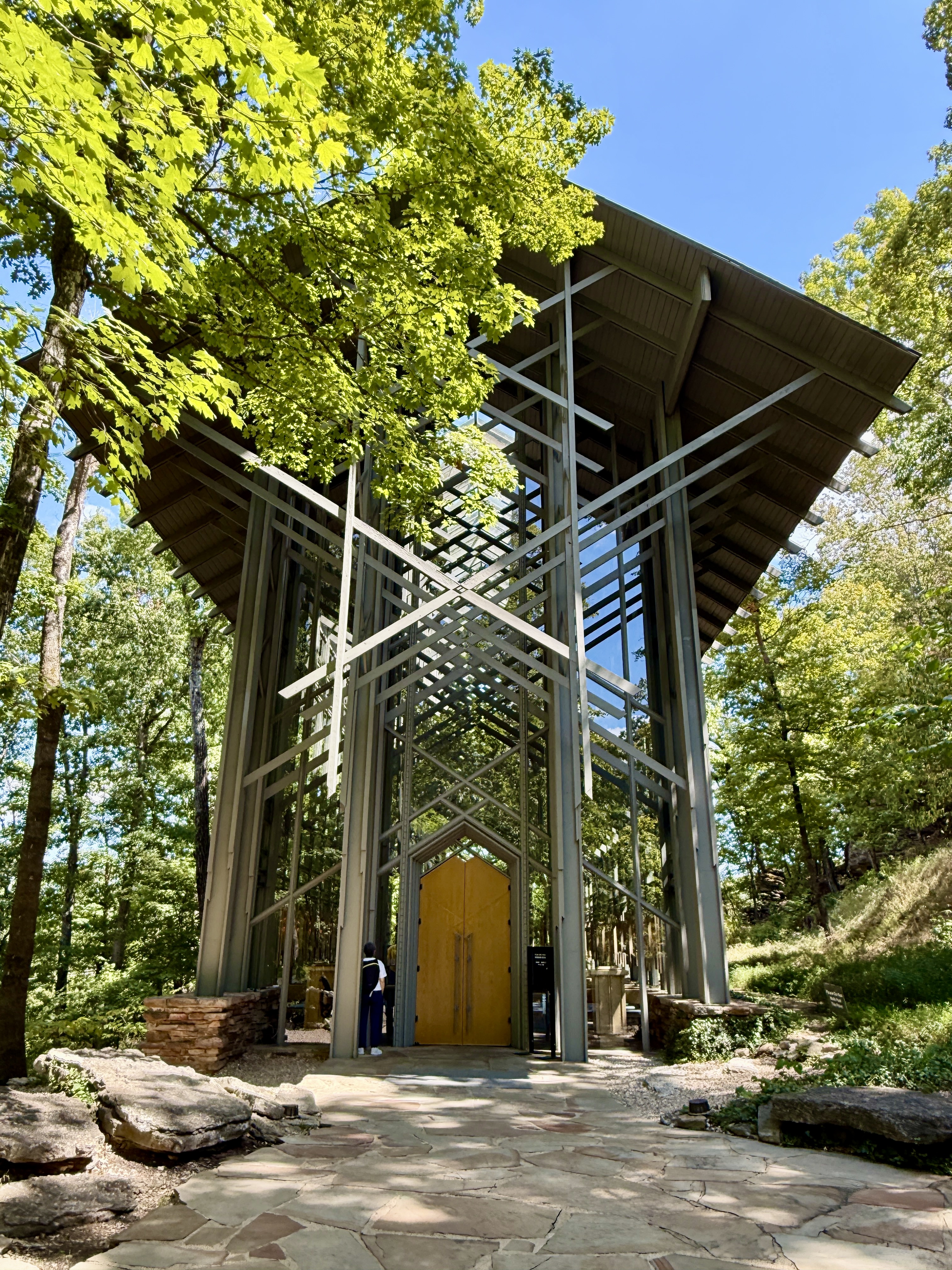
We followed the path and a few minutes later Thorncrown Chapel was peeking out from the trees. From what information we gleaned from a guy who was handing out brochures once we entered the chapel, it was commissioned by a former school teacher who hoped to see a non-denominational pilgrimage/meditation chapel set in the woods. Jones was inspired by Saint Chapelle in Paris which is known for having breathtaking 50-foot tall stained glass windows. At Thorncrown, it is towering clear glass walls that bring the outside landscape in. The retired teacher supposedly moved to California some years later.
The chapel is extremely vertical and has no real adornment except for the views of the forest. It’s constructed of materials indigenous to the region–southern pine and flagstone. The flagstone floor is covered with some kind of clear epoxy which creates an amazingly smooth and somewhat glossy finish. From the outside, and also once inside, it feels like an open-air structure.. but it’s actually a fully air-conditioned, enclosed space that seats about 100 people. While it was intended to be a meditation center, to raise funds for upkeep, many weddings are held in the chapel each year. There is also a worship center down the road where they do hold regular Sunday services.
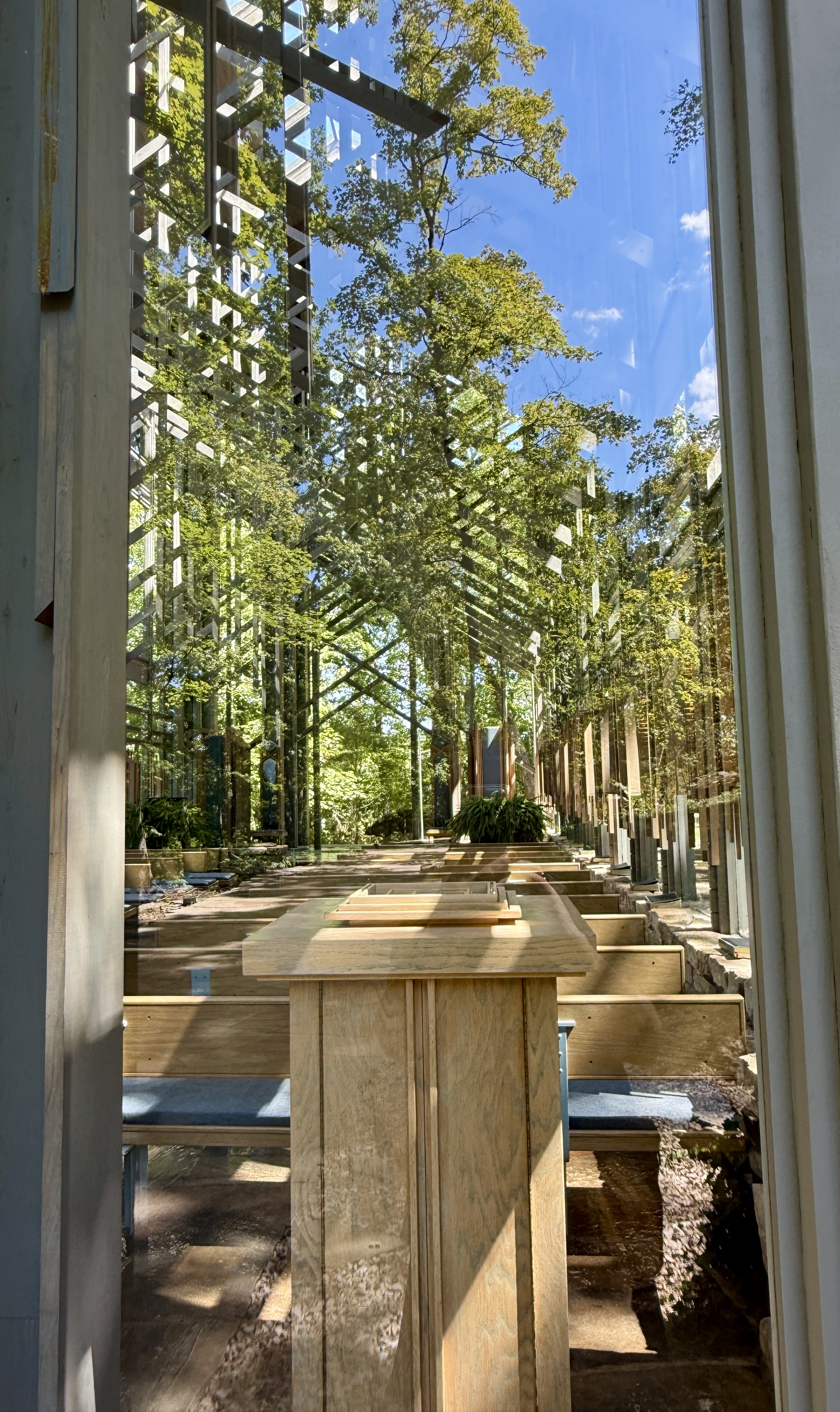
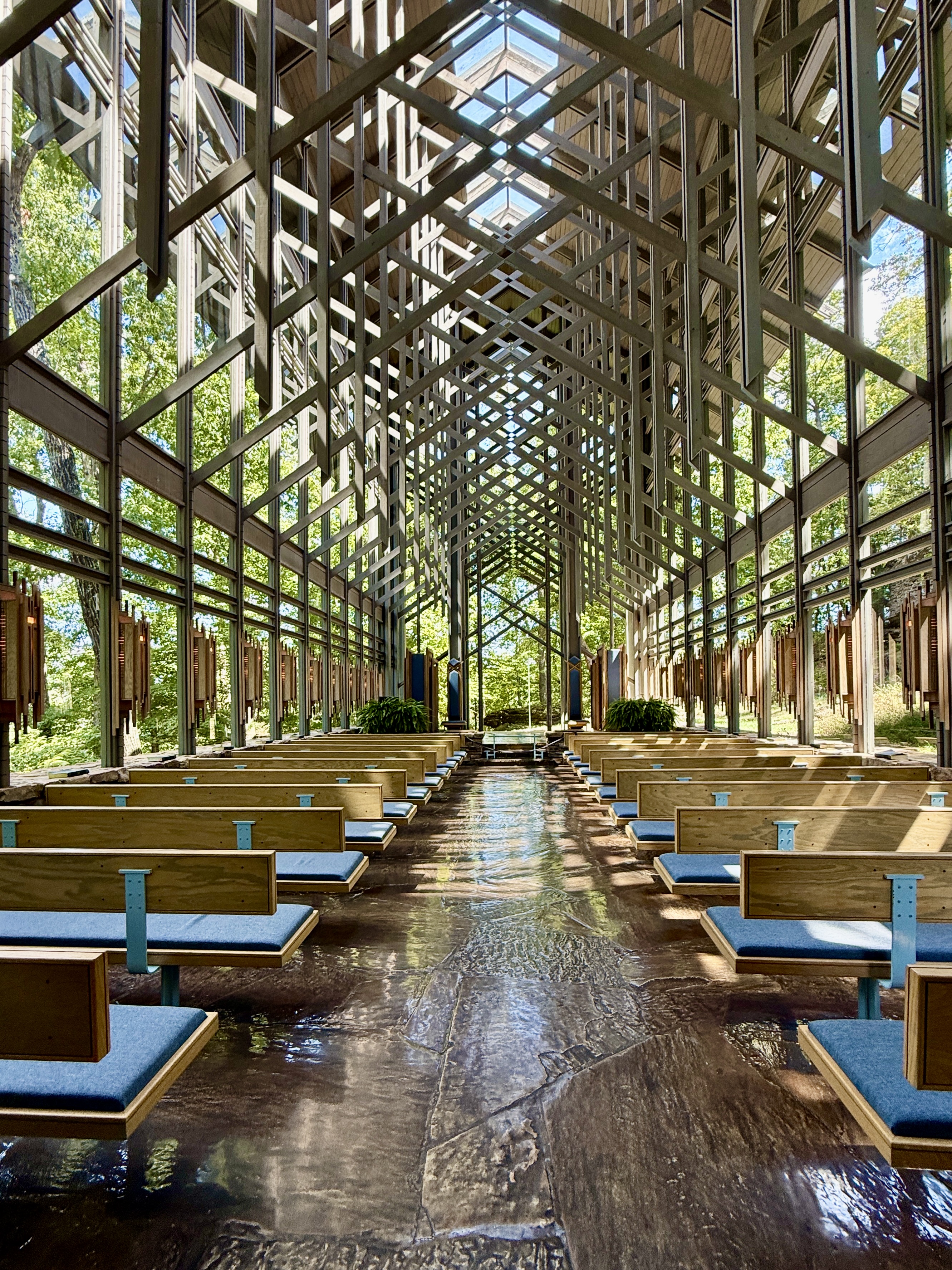
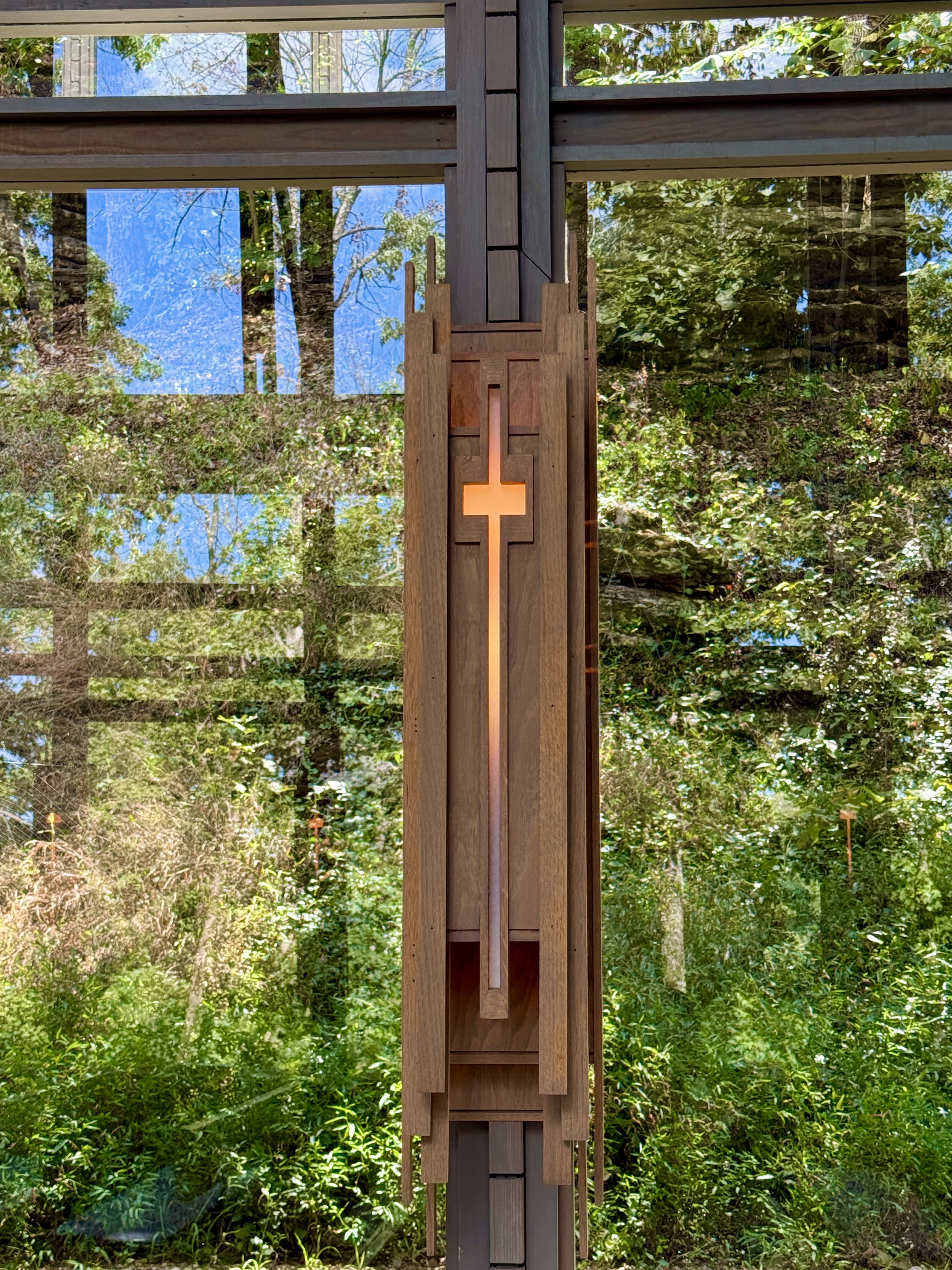
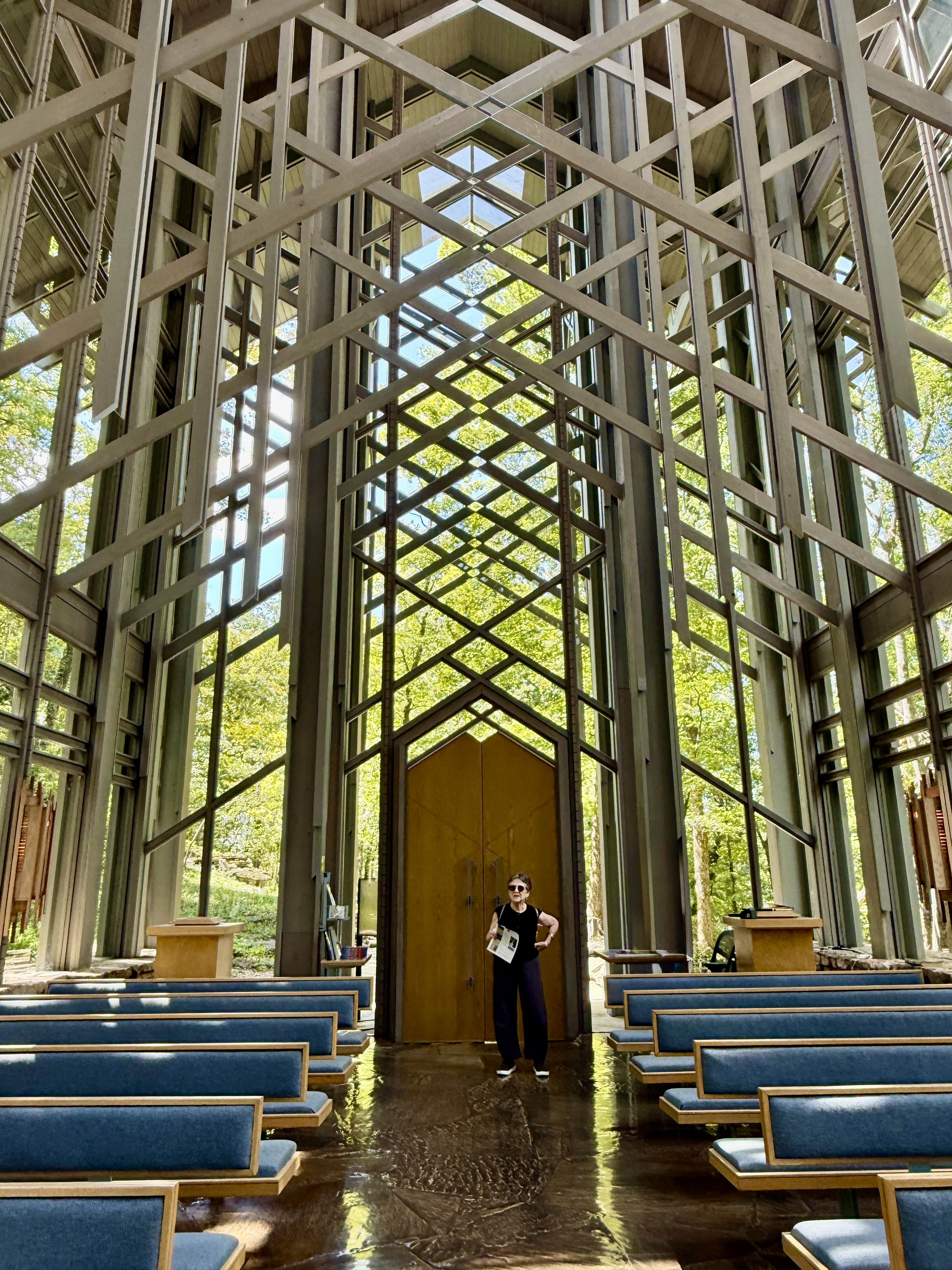
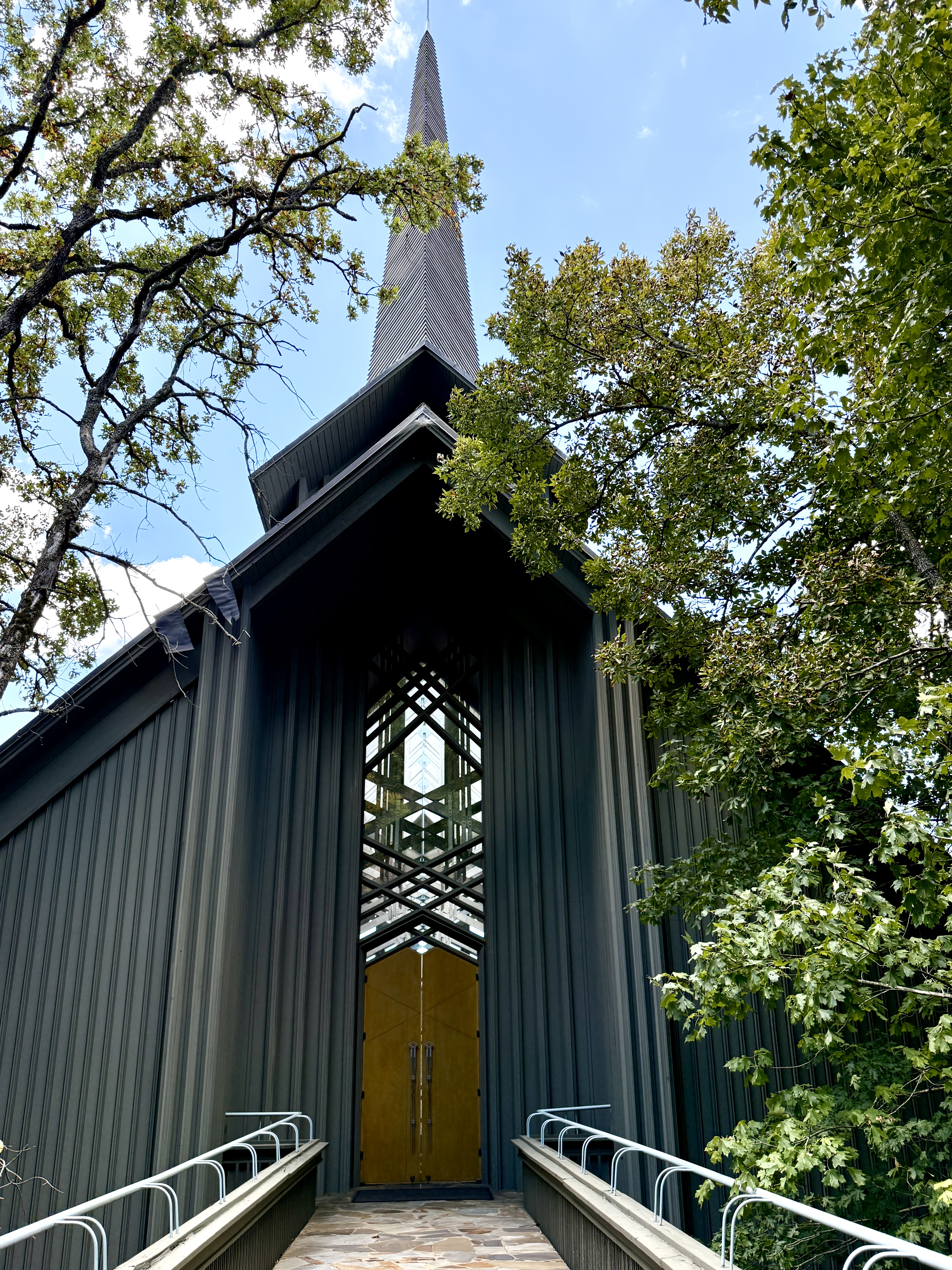
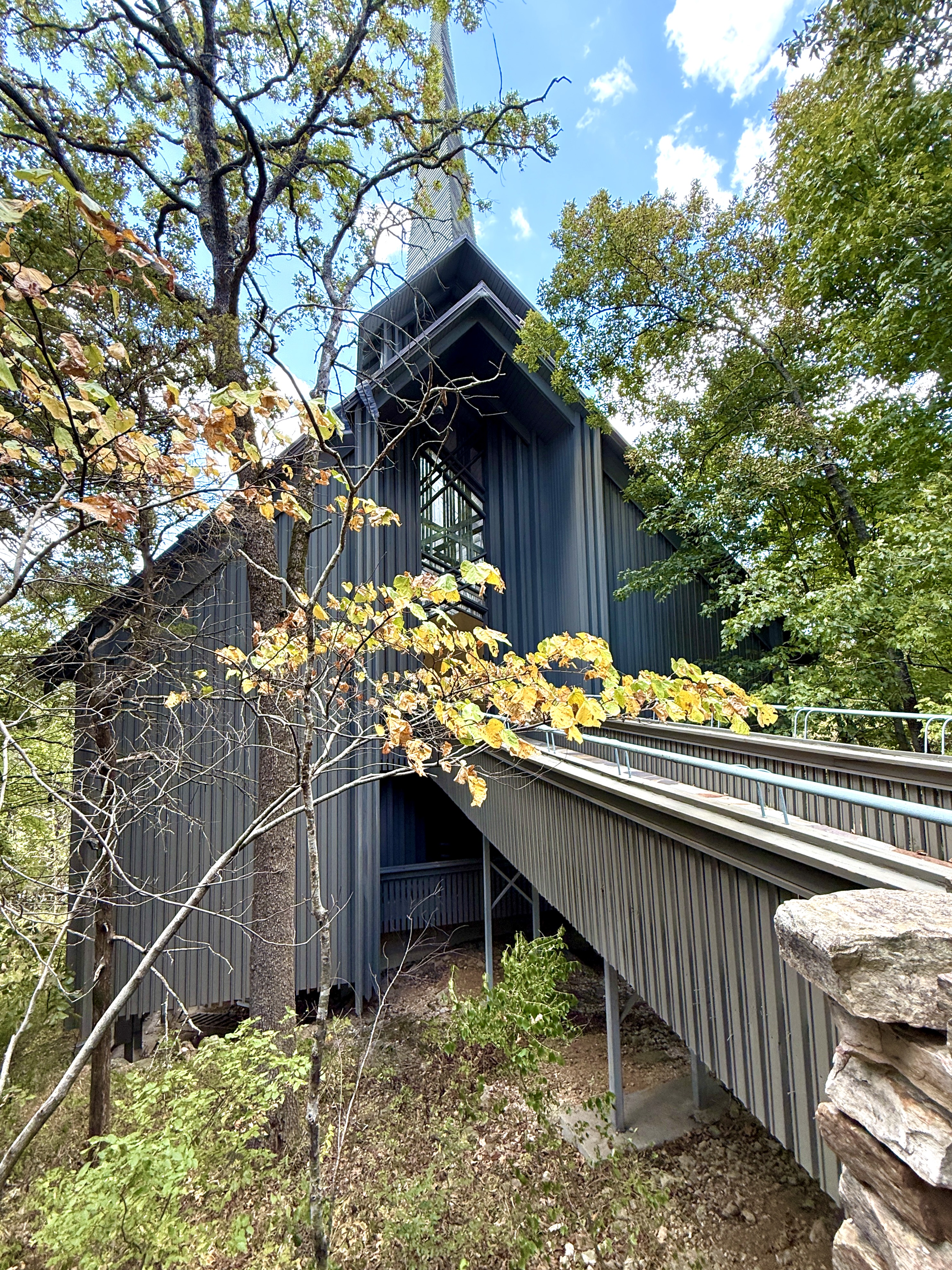
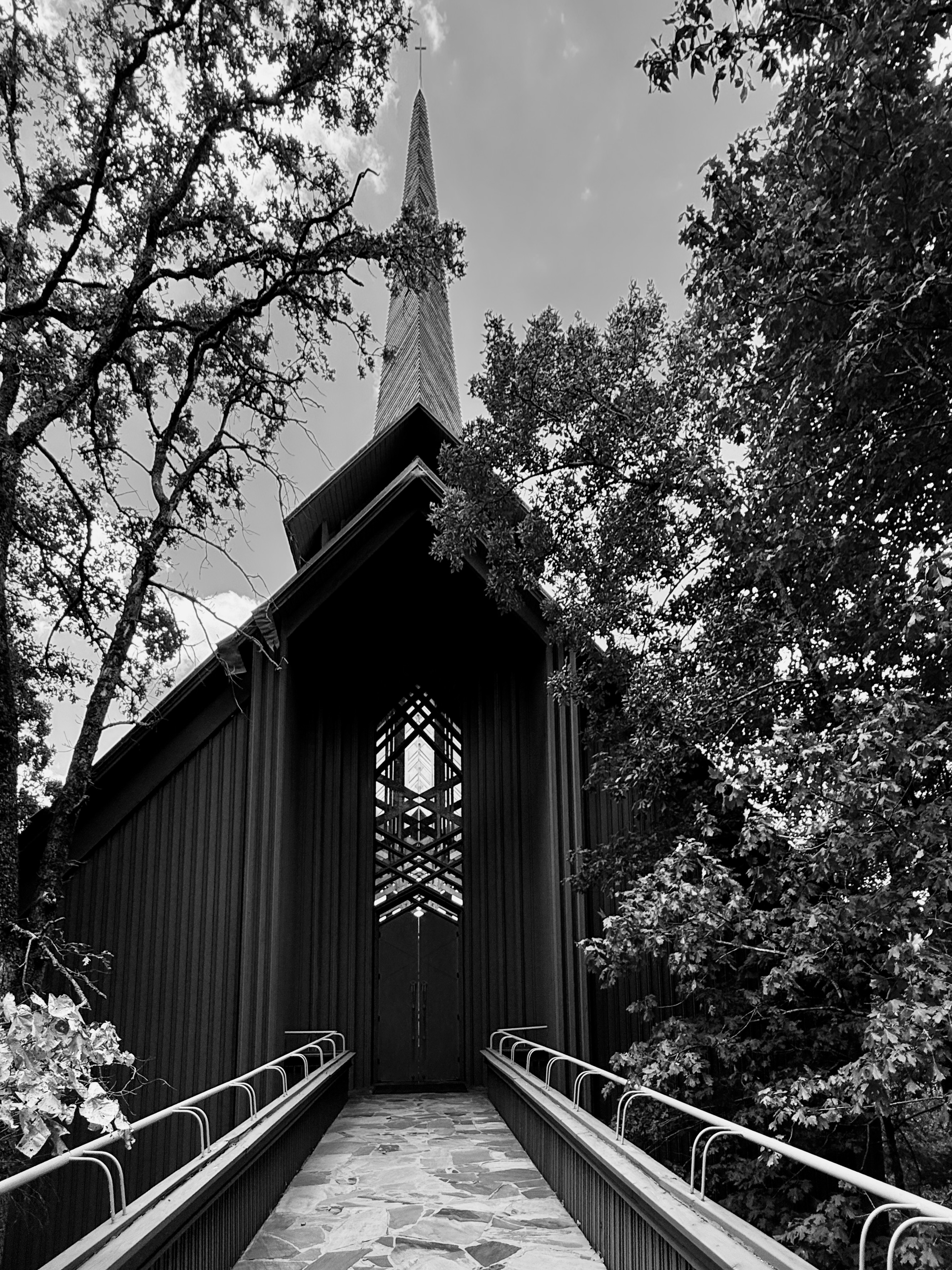
As we headed back to the car, we decided to veer off to a path that led to the “worship chapel.” It was closed so we only saw the exterior, which was also quite lovely, built into a slope, and perched among tall trees.
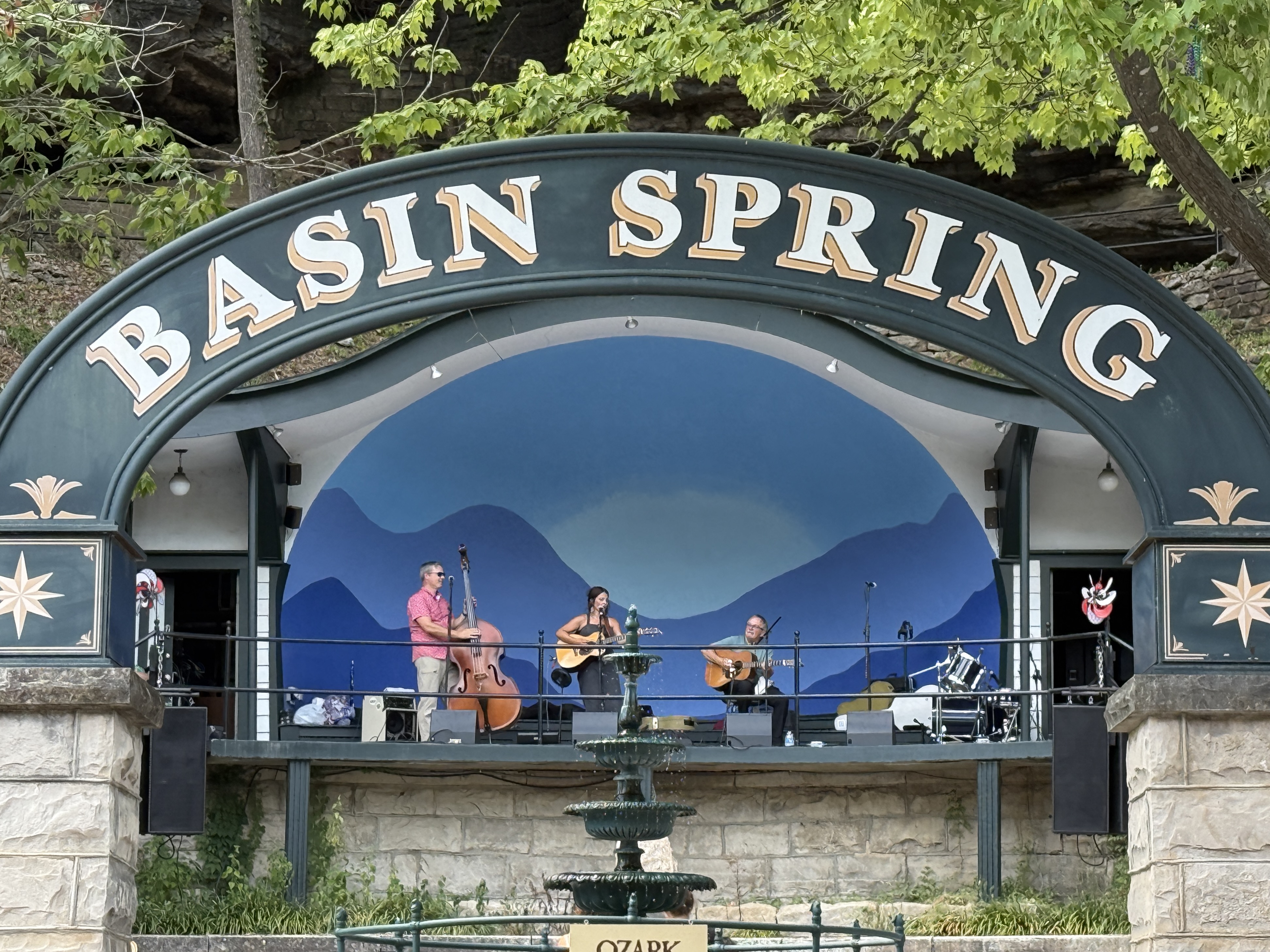
We then headed to the town of Eureka Springs (population: 2,100) where we thought we could find lunch and were also in search of “soft-serve.” Actually that was more Carol and Adrienne than me. But they were very fixated on it and it did seem like a delight in the 97 degree heat. Anyway, we strolled the historic “downtown” Eureka Springs.. which clearly has attracted a bit of a hippie culture. Lots of stores that sell crystals and very easy to find a tattoo parlor. There was some kind of folk festival in the park so you could hear (pretty good ) singing coming from a bandstand–including renditions of Dolly Parton tunes. The town looks like nothing has changes since it was founded in the 19th Century and is home to lots of Victorians. It’s very mountainous so buildings are built on rock and are several stories above street level and are often multi story with entrances on each level.
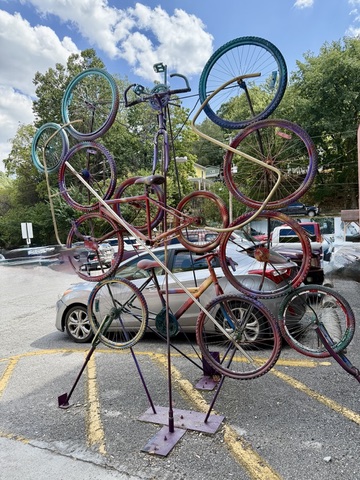
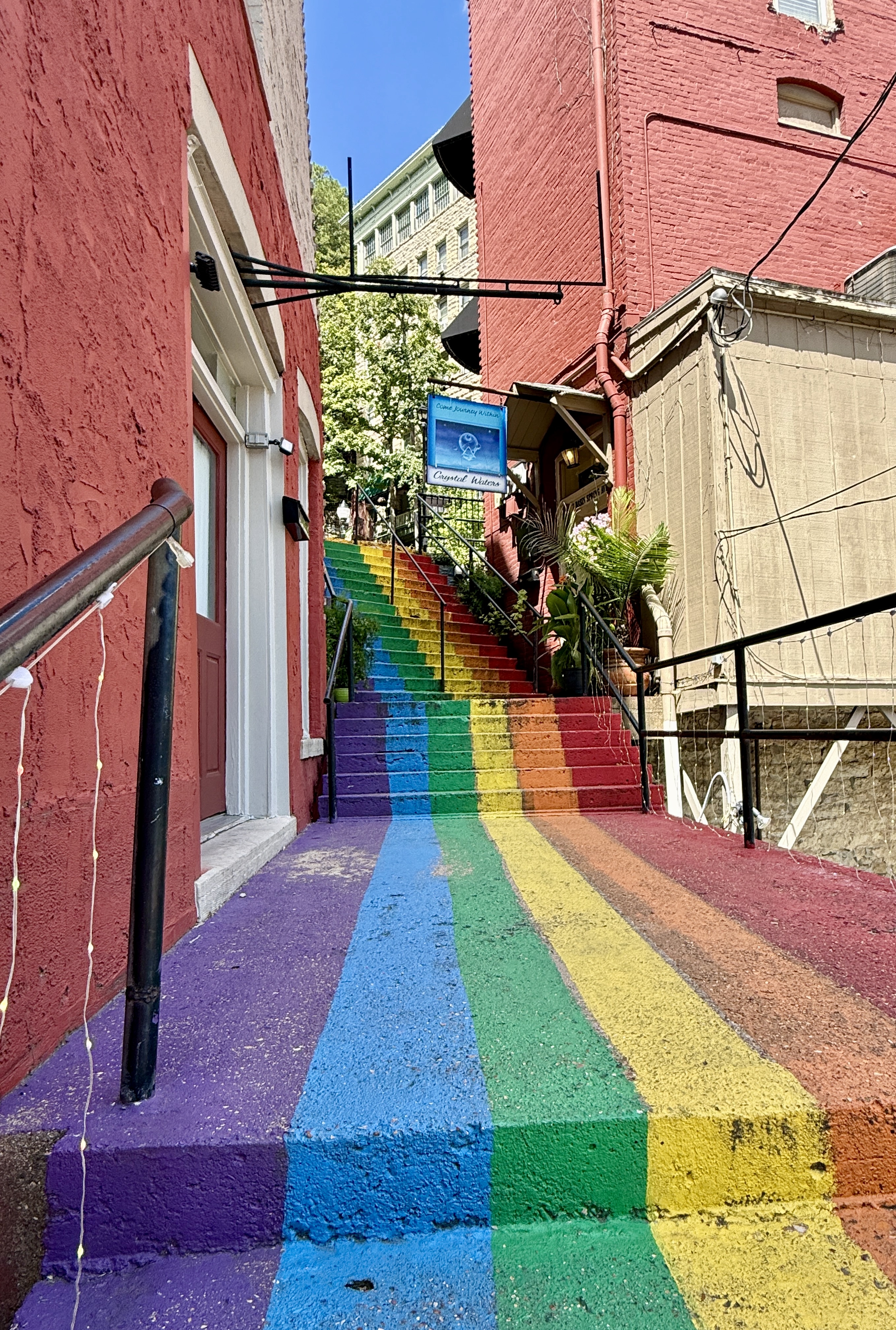
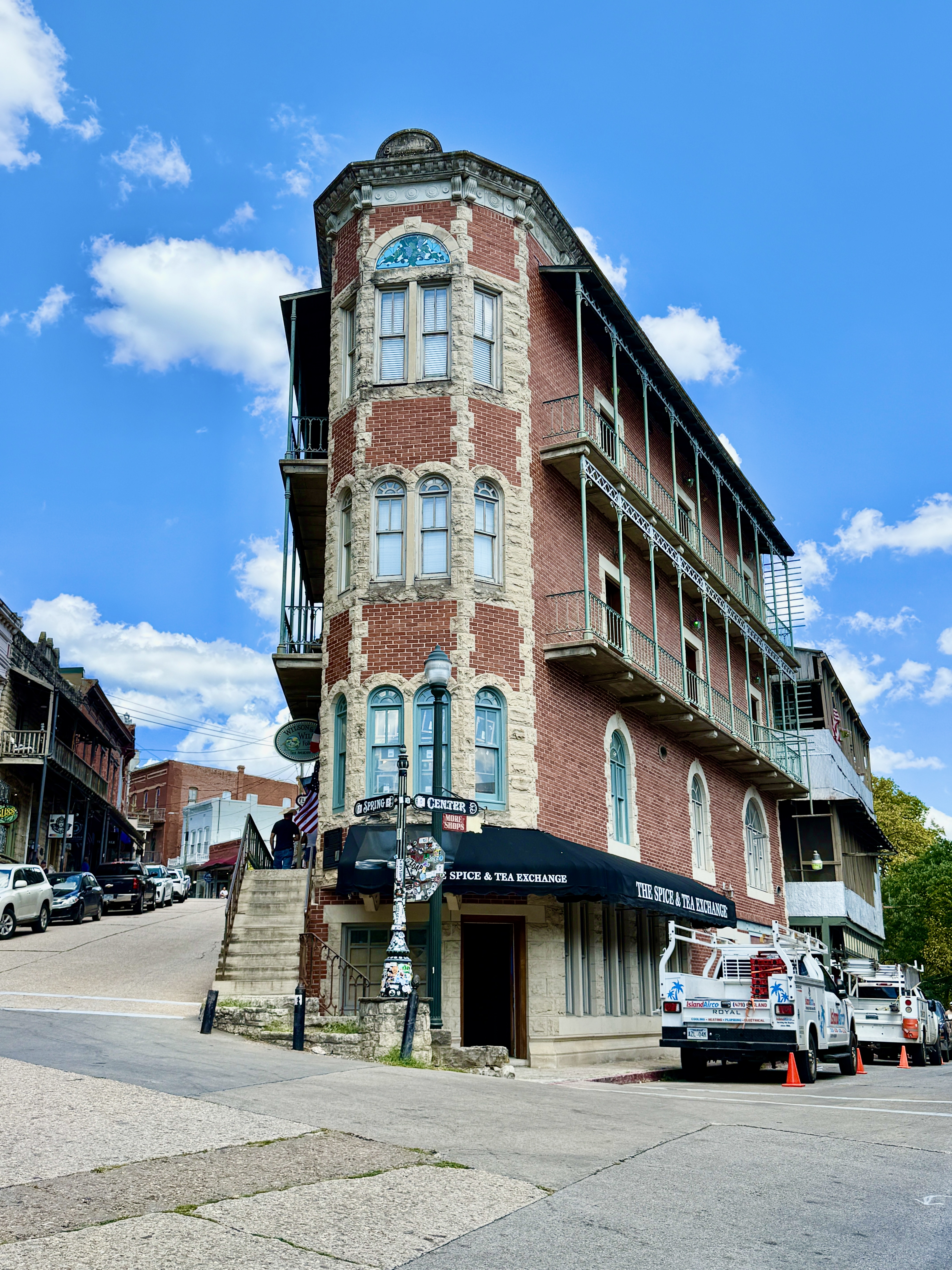
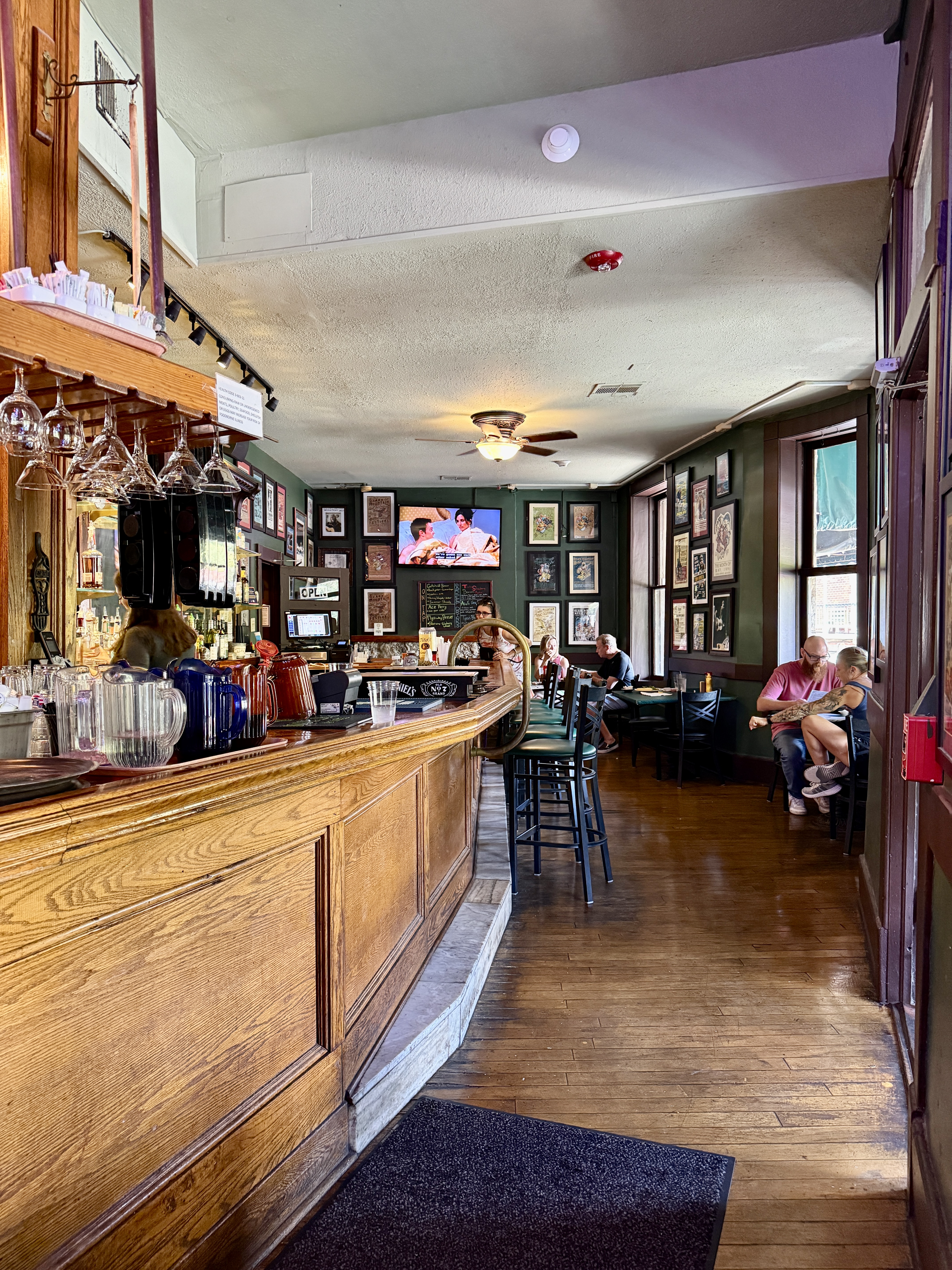
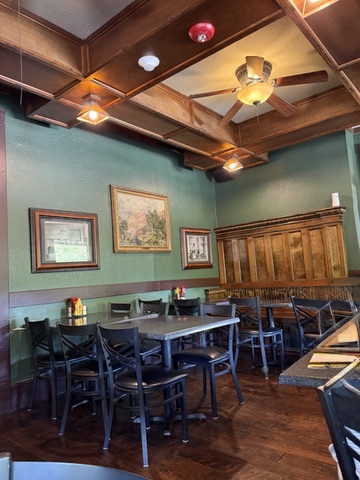
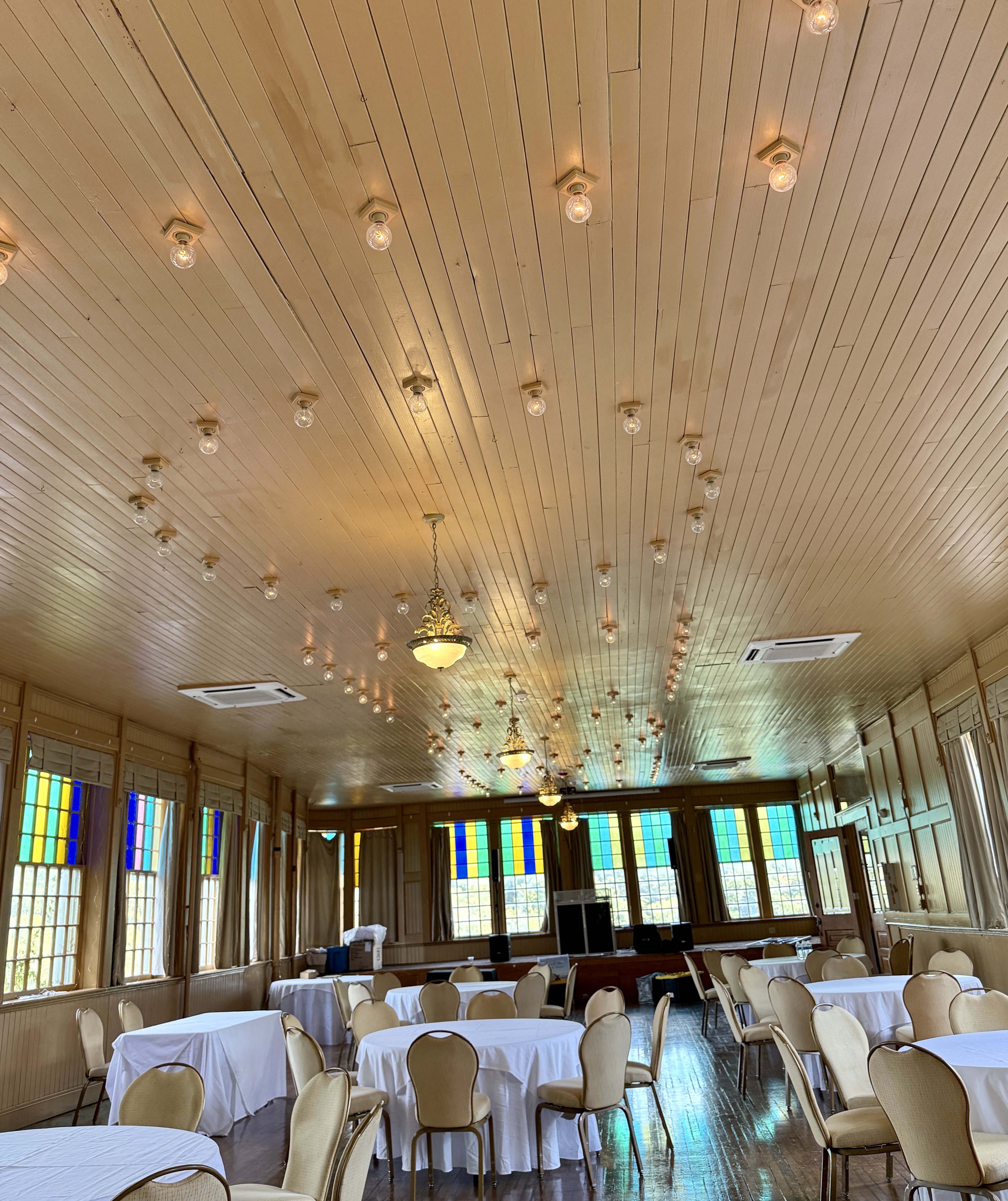
We stumbled on a balcony restaurant inside the Basin Park Hotel (one of those Victorian buildings with entried on every one of the six floors). It was mostly a bar, but we managed to order one quesadilla (big enough to serve all three of us, and an order of “chicken tenders” with honey mustard and a huge amount of fires. We overheard the people in the restaurant talking about a view from the 7th floor so we decided to take the elevator and take a look. But the top floor was 6 not 7.. but we were game. The elevator opened up to a large unobstructed spac that is apparently used for weddings and big dinners. The guy who manages the plac was very friendly and upon hearing we were not from Arkansas (didn’t take more than a few words to figure that one out) so he gave us some background about the hotel and the town which is listed in its totality in the National Register of Historic Places. Here are a few things we found out and saw:
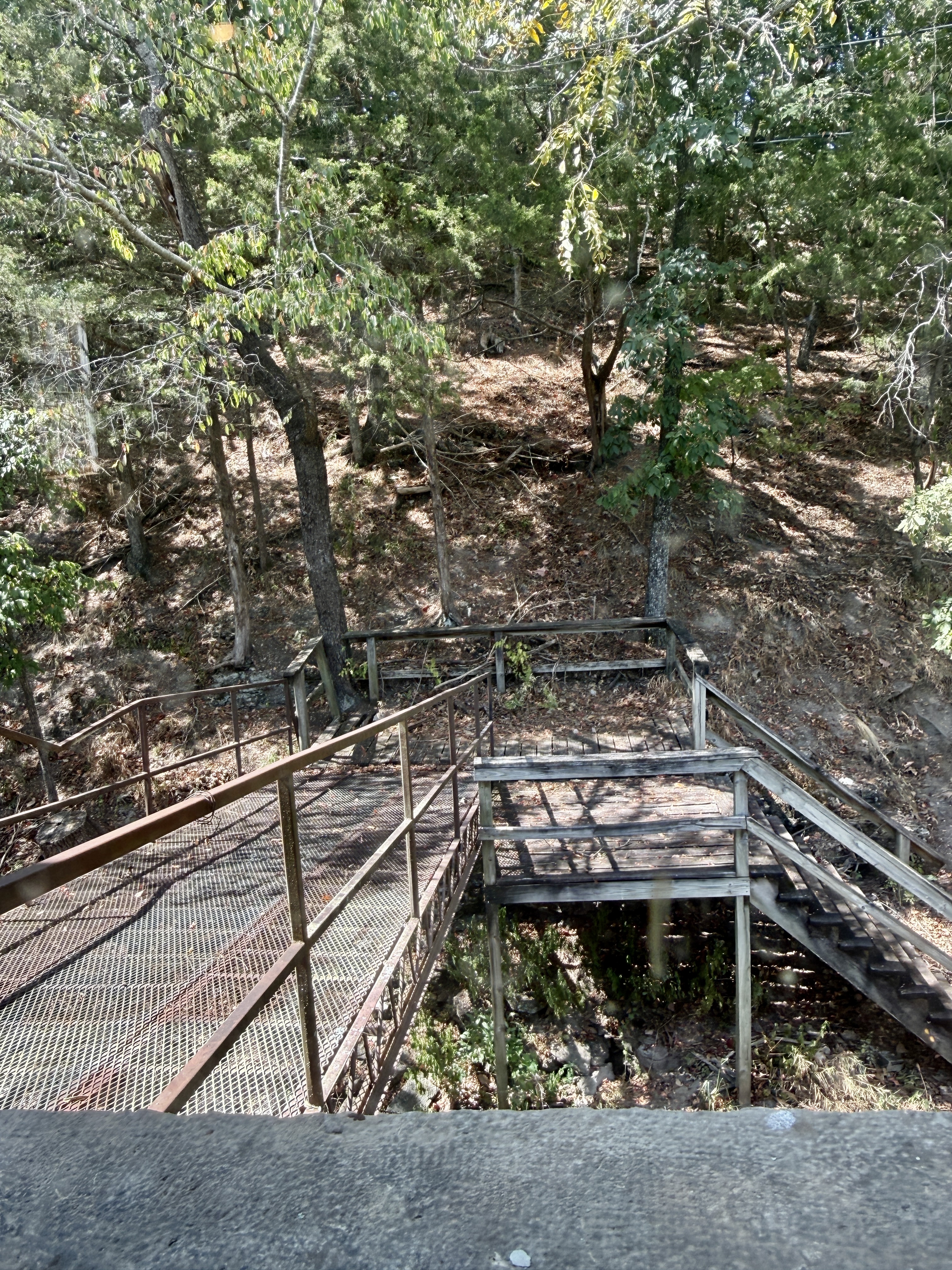
- It is one of those buildings that has street level entrances on every one of its 7 floors (the lowest floor being below the lobby floor…hence the top elevator floor being #6). And the fire stairs are listed in Guinness Book of World Records because each exit starts with a wooden ram and then leads to a flight and then another ramp from the next level and on and on. So the hotel has its front entrance on the floor below the first floor and a ground level emergency exit in the back of the building on the 5th floor.
- One of Elvis Presley’s cadillacs was housed on the top floor for many years, when the htoels top floor was a music museum. It was hoisted by a crane into the top floor in the 1970s.
- The ceiling lights are arranged in circles and squares for dancing purposes. When dancing circle dances, the lights that wrap the circle in the ceiling go on.. when doing square dancing the lights around the squares light up.
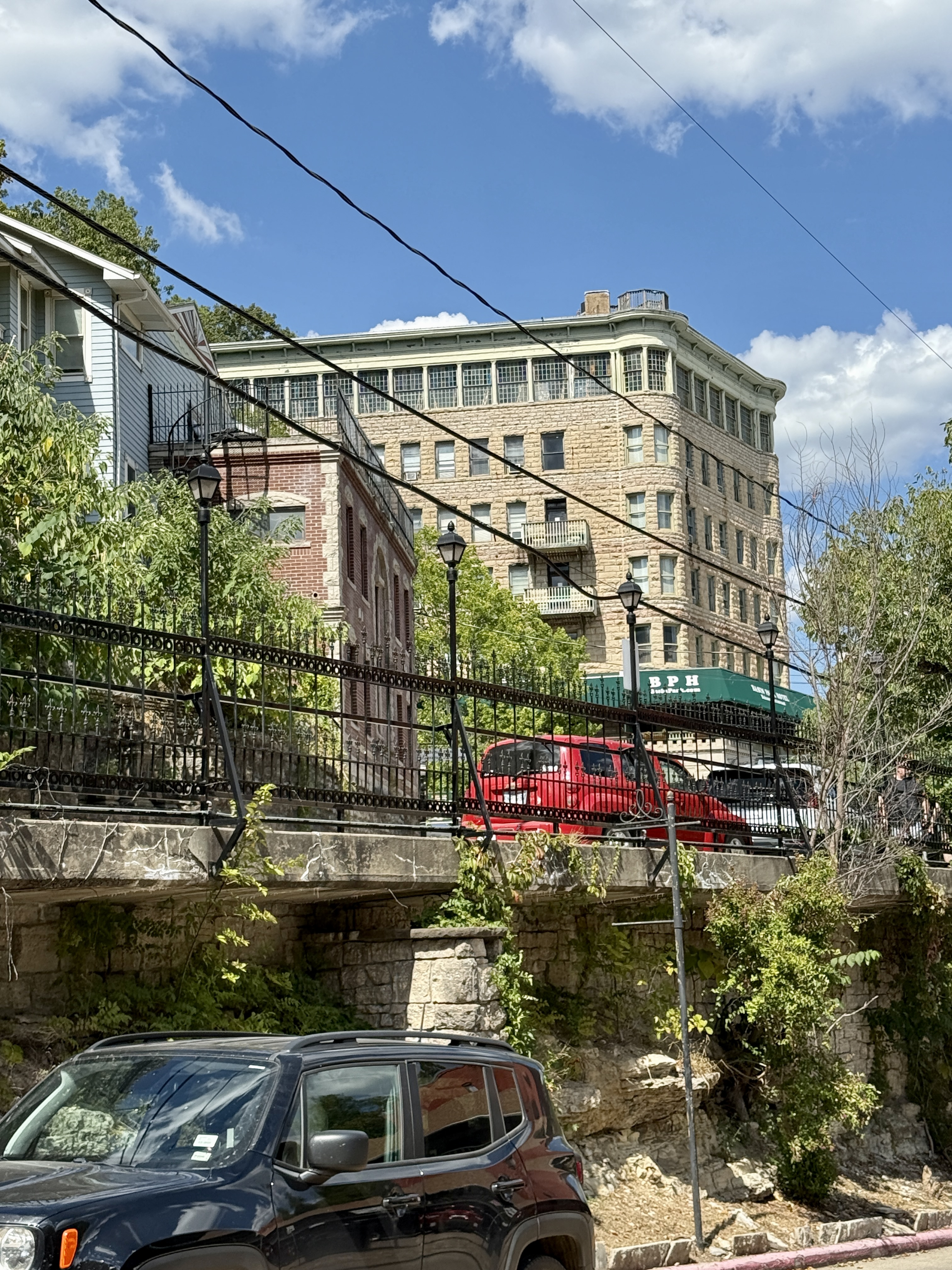
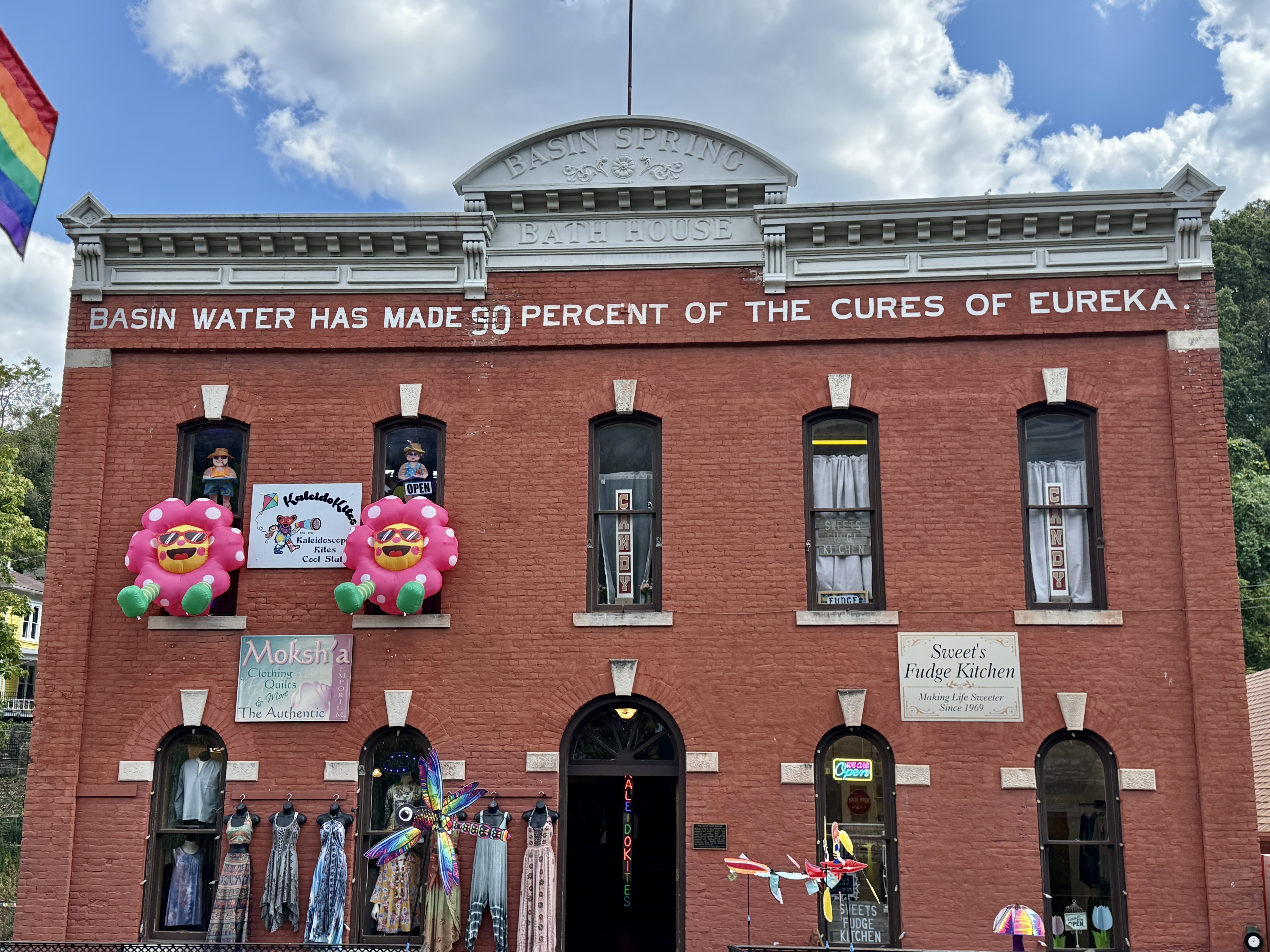
From there (after a disappointing realization that there aren’t any soft serve places in Eureka Springs) we headed back to Bentonville along a different route to enable us to see another one of Fay Jones’ chapels located in Bella Vista, Arkansas. We headed to Bella Vista where there is another chapel designed by Fay Jones (which people mentioned when we said we were going to see Thorncrown). Bella Vista was about an hours drive.. and then just about 10 minutes to get back to Bentonville. So we got to the Mildred B. Cooper Memorial Chapel at about 3:30. Again it was situated in a forested area off a winding path. Unfortunately we could only see the outside because there was a wedding rehearsal going on inside. But we could peek in.
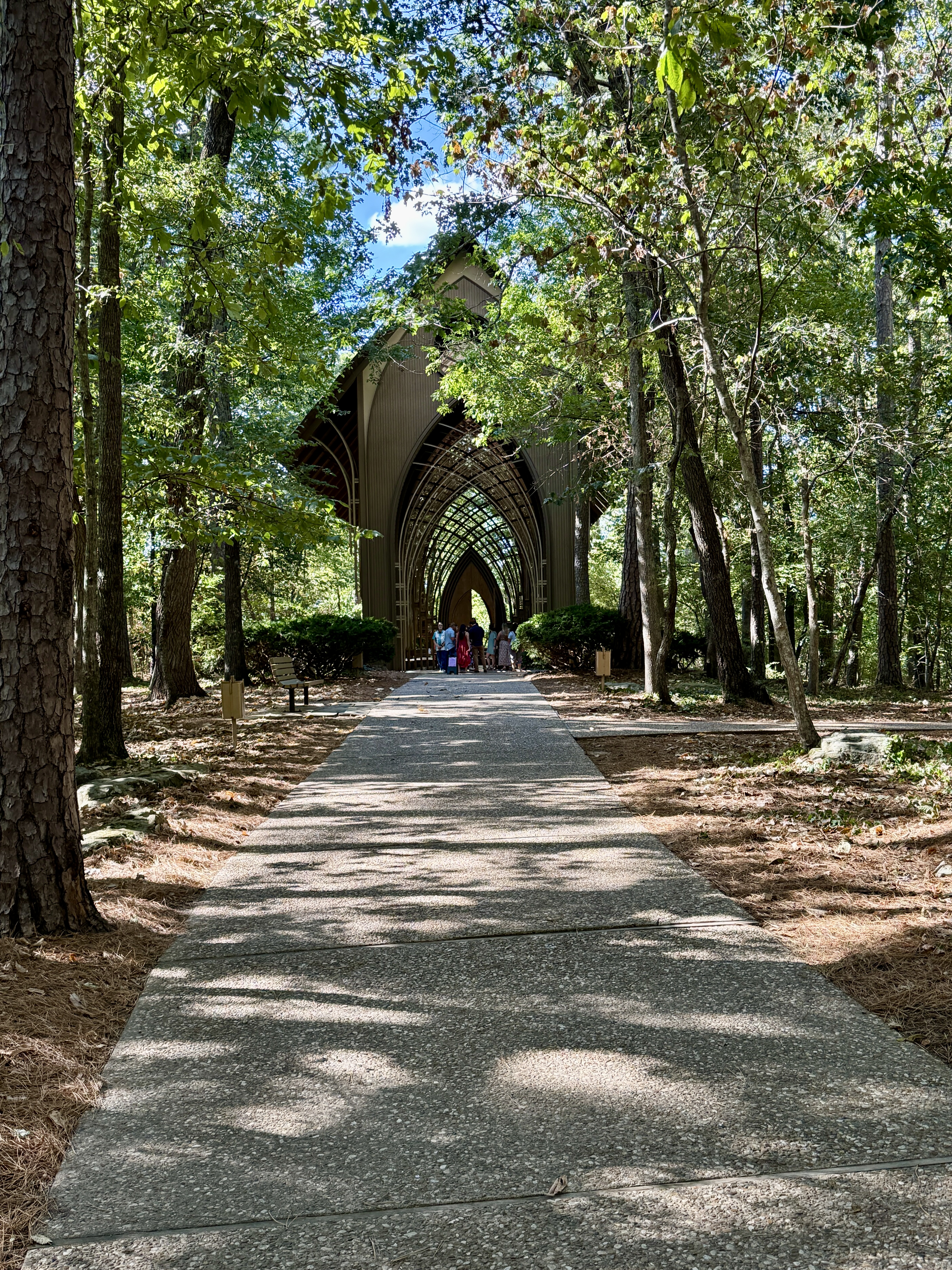
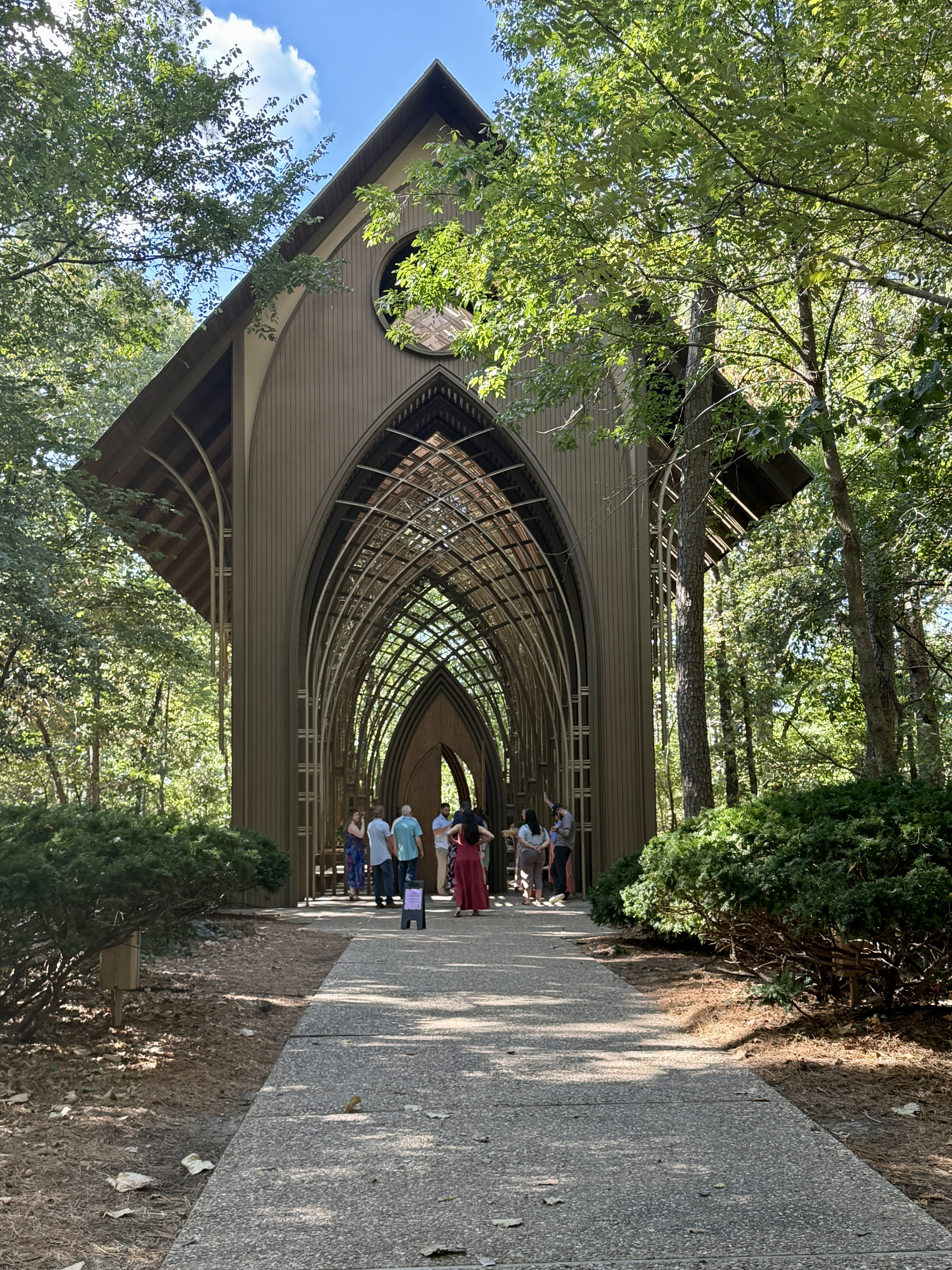
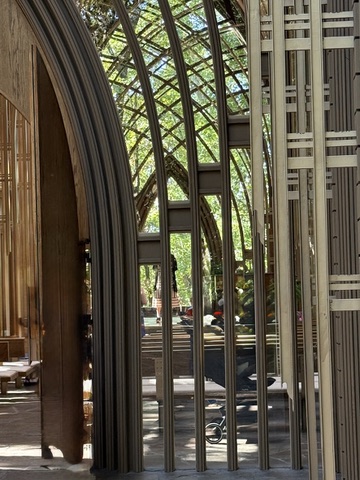
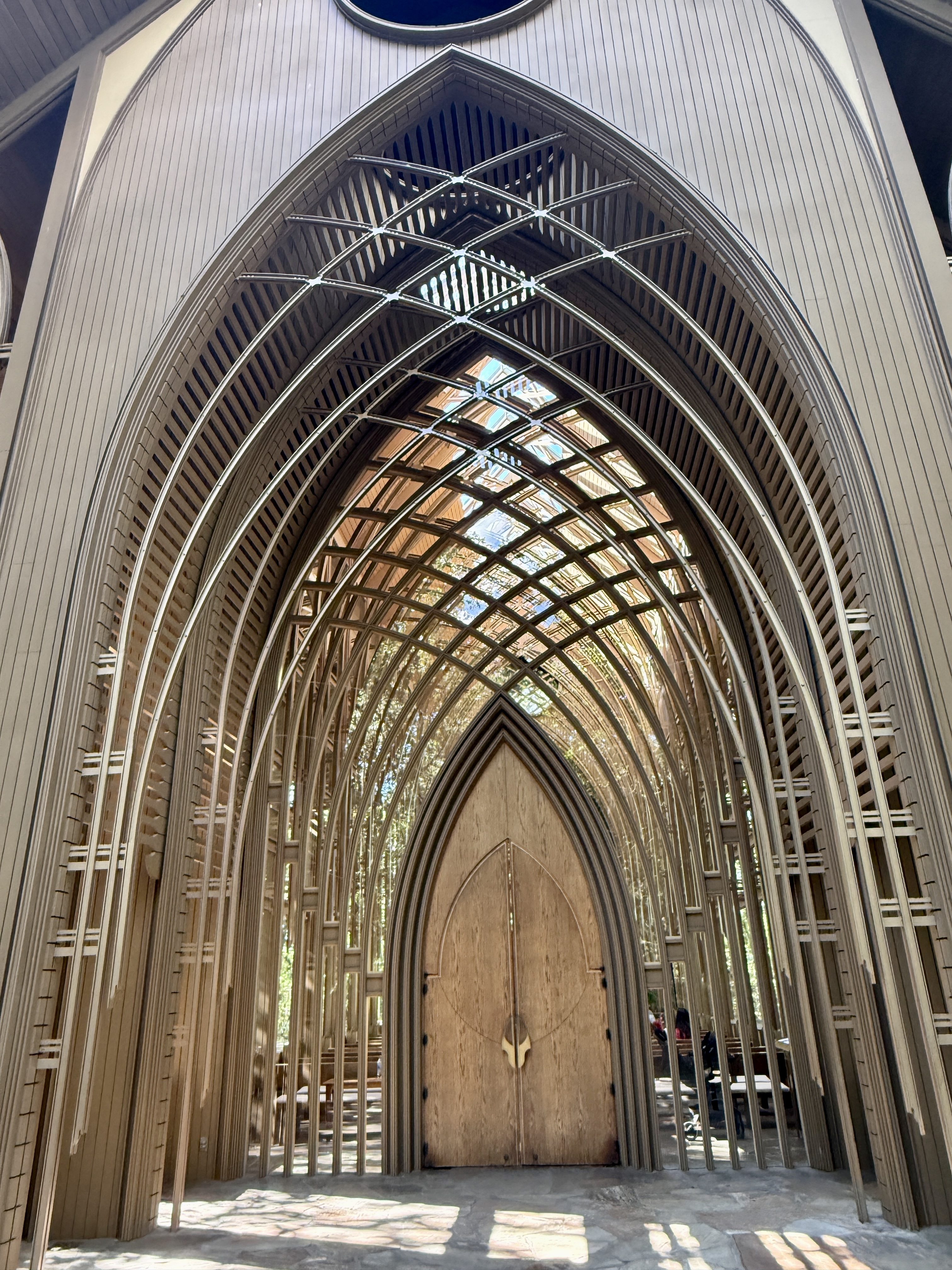
The Cooper Chapel was built a few years after Thorncrown.It’s located on a wooded site near a lake. This chapel is made of steel and also 4,400 square feet of glass to again create a series of arches that go through the entire length of the building. It’s named after Mildred Borum Cooper who was an Arkansas native who was active in the Methodist organizations and in the Girl Scouts. It would have been nice to get inside… Apparently Fay Jones has done three of these kind of churches/chapels in this area of Arkansas, with the third (which we have not seen, in the town of Rogers.
Then we headed back to Bentonville where the town was buzzing with music and activities and some kind of First Friday event. At 7:00ish we drove about 7 miles to a wonderful little restaurant called Ryn, which grows much of the food they serve. We opted for the a la carte menu, although there was a fixed tasting menu. The a la carte menu had six options and we decided to just have them all–shared by the three of us.
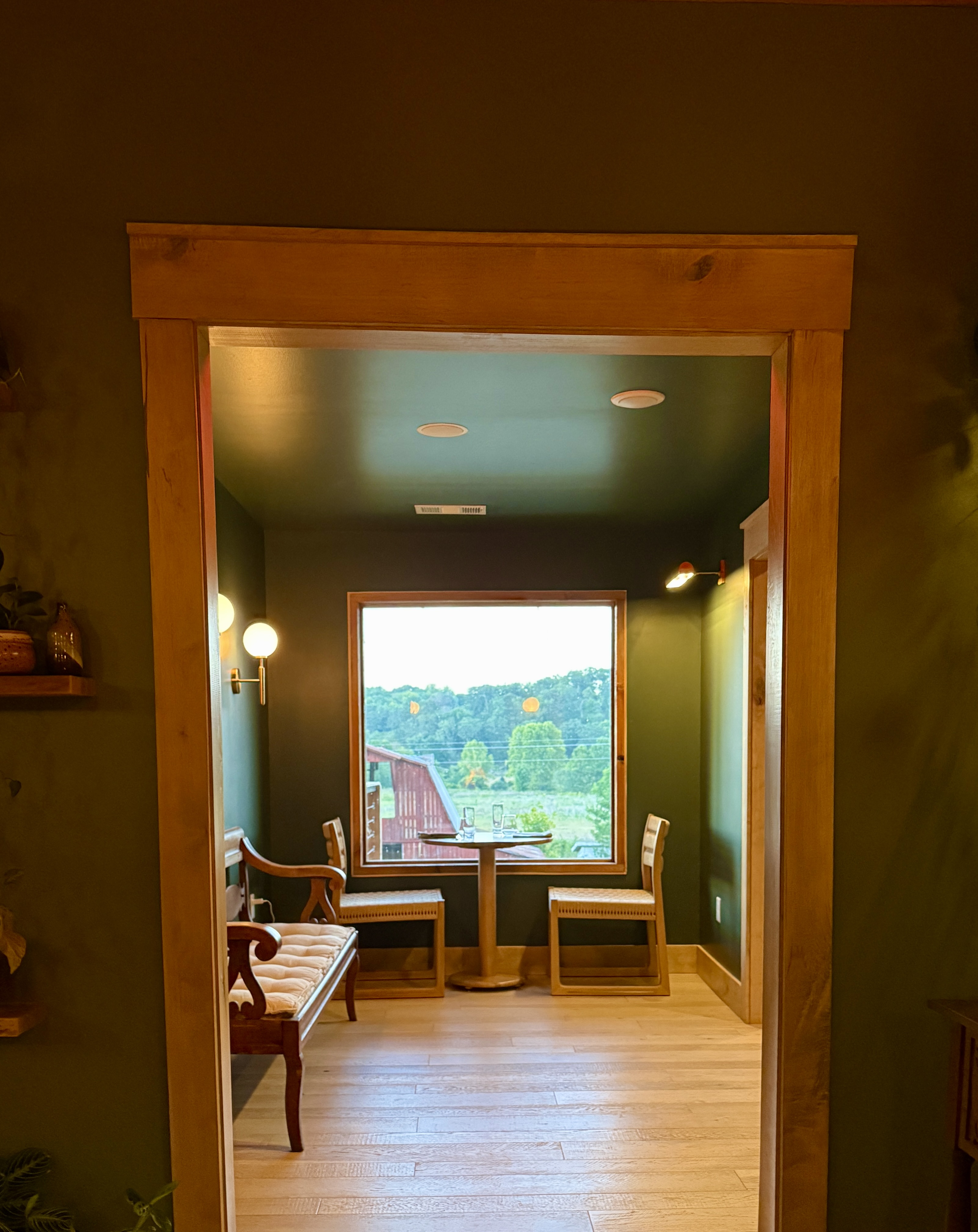
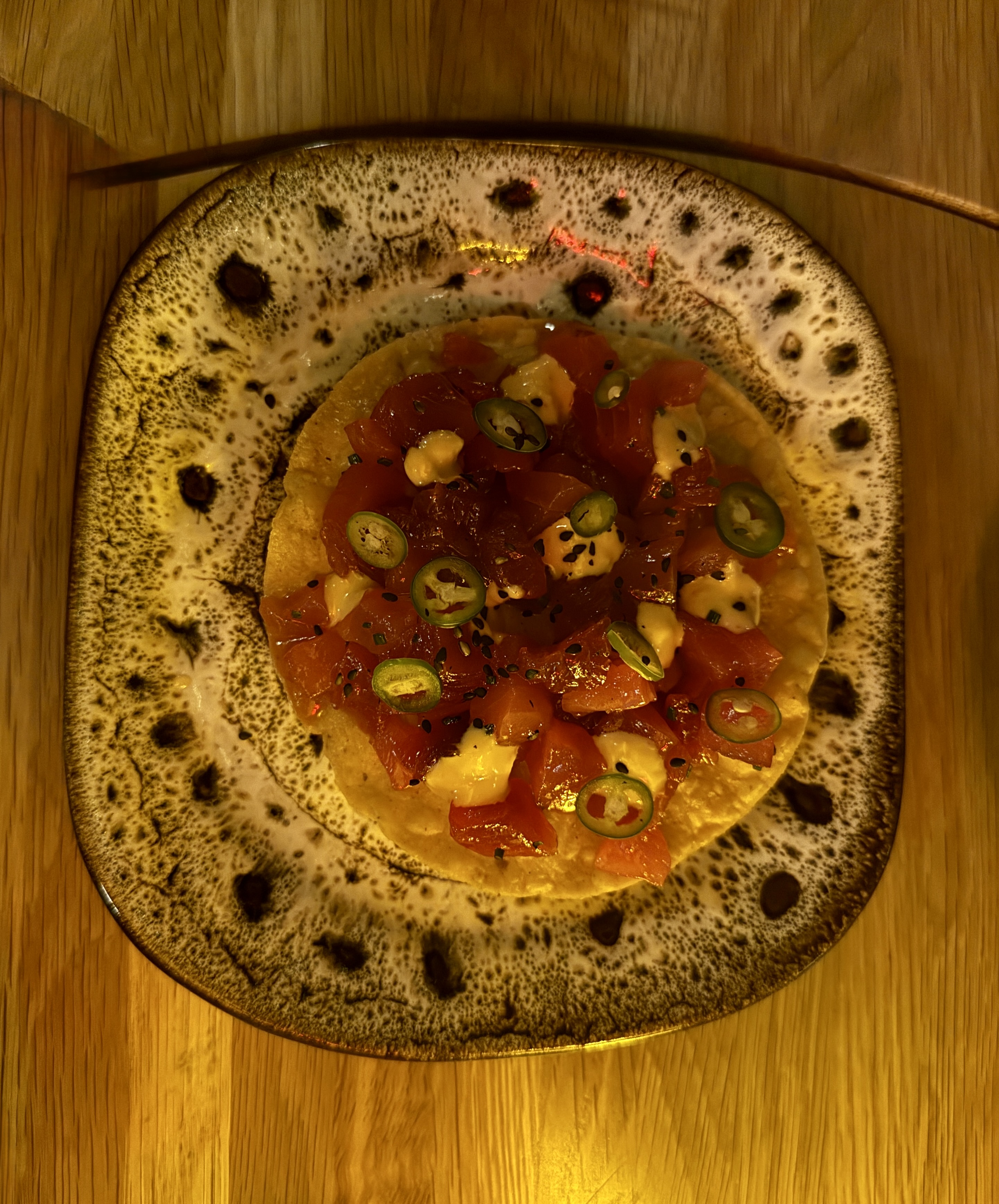
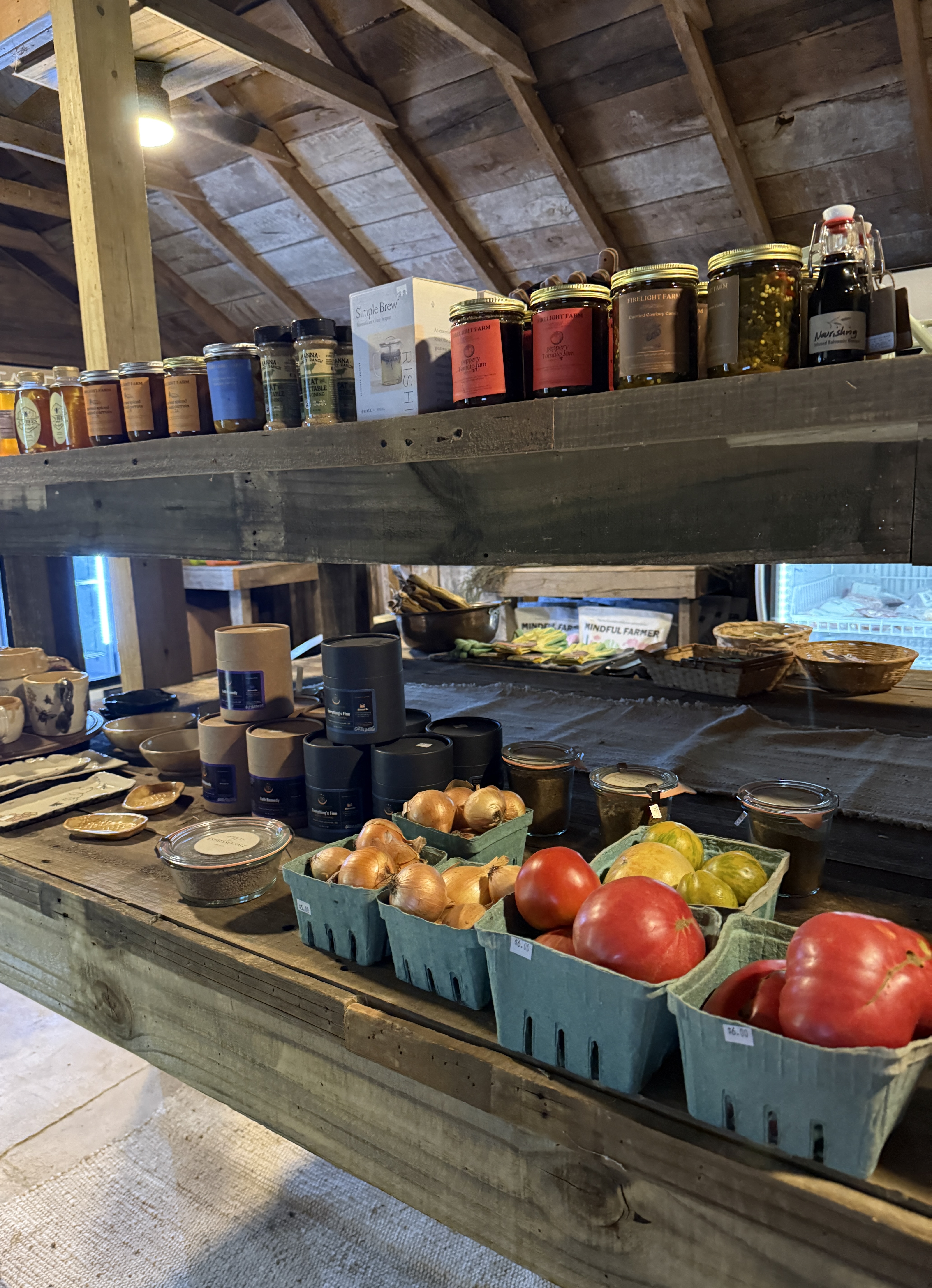
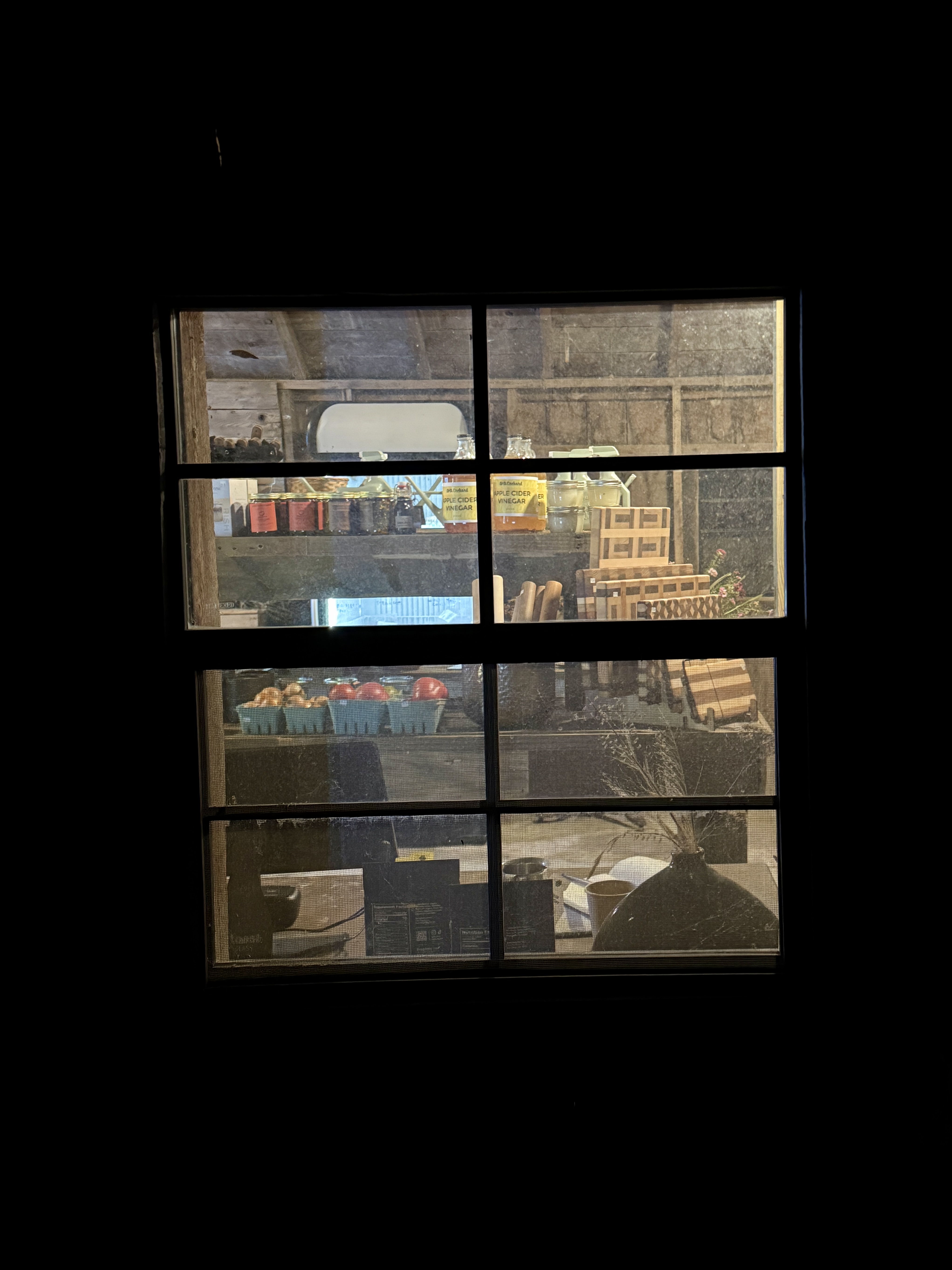
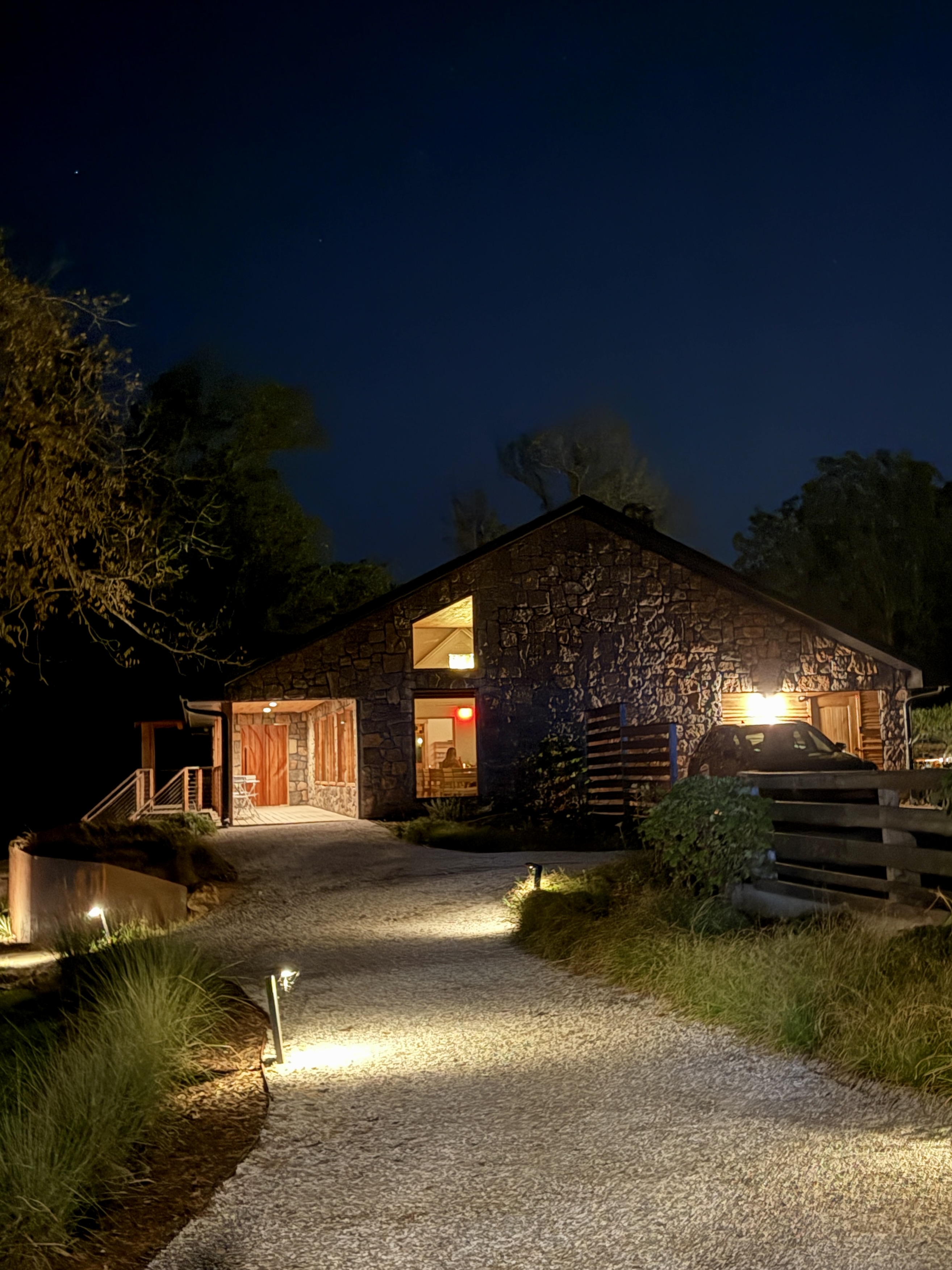
We started with a wonderful cornbread with honey butter, while we had cocktails (Adrienne with a mocktail) alongside yummy tostadas of tuna crudo and assorted spices. That was followed by deep fried mushrooms (maitake, I think). And then we had tomato burrata salad.. with the freshest tomatoes right from the backyard farm. Then there was another dish, but I cannot remember what it was..And then there was a lovely sliced steak with shishito peppers. We topped it all off with a huckleberry crumble ice cream… The staff at Ryn was delightful, with everyone coming to the table at different moments during the dinner, including the chef. Again we asked where people were from and how they liked living in Bentonville… They are from many different places and everyone seems to like living here. They feel safe; they say the area is growing in a good way with good jobs. Much of the lower level jobs seems to be filled by Latinos and manhy places have bilingual signs including the hotel and the museum.
We lingered a bit after dinner and as we walked to the car we noticed that in a small barn that we passed, the restaurant had a little shop that sold fresh produce as well as various cooking utensils, cutting boards, homemade herbal teas, and more. It was totally honor system, You took what you wanted to purchase and went to a computer set up to record the item and entered your credit card. Total honor system. Everything out in the open.
Now we are back at the hotel; I’m finishing this in my room and going to pack. Tomorrow we’ll have brunch and maybe check out the farmers market which is practically in front of the hotel… and then we head to the airport to go to Chicago to the Obama Center.
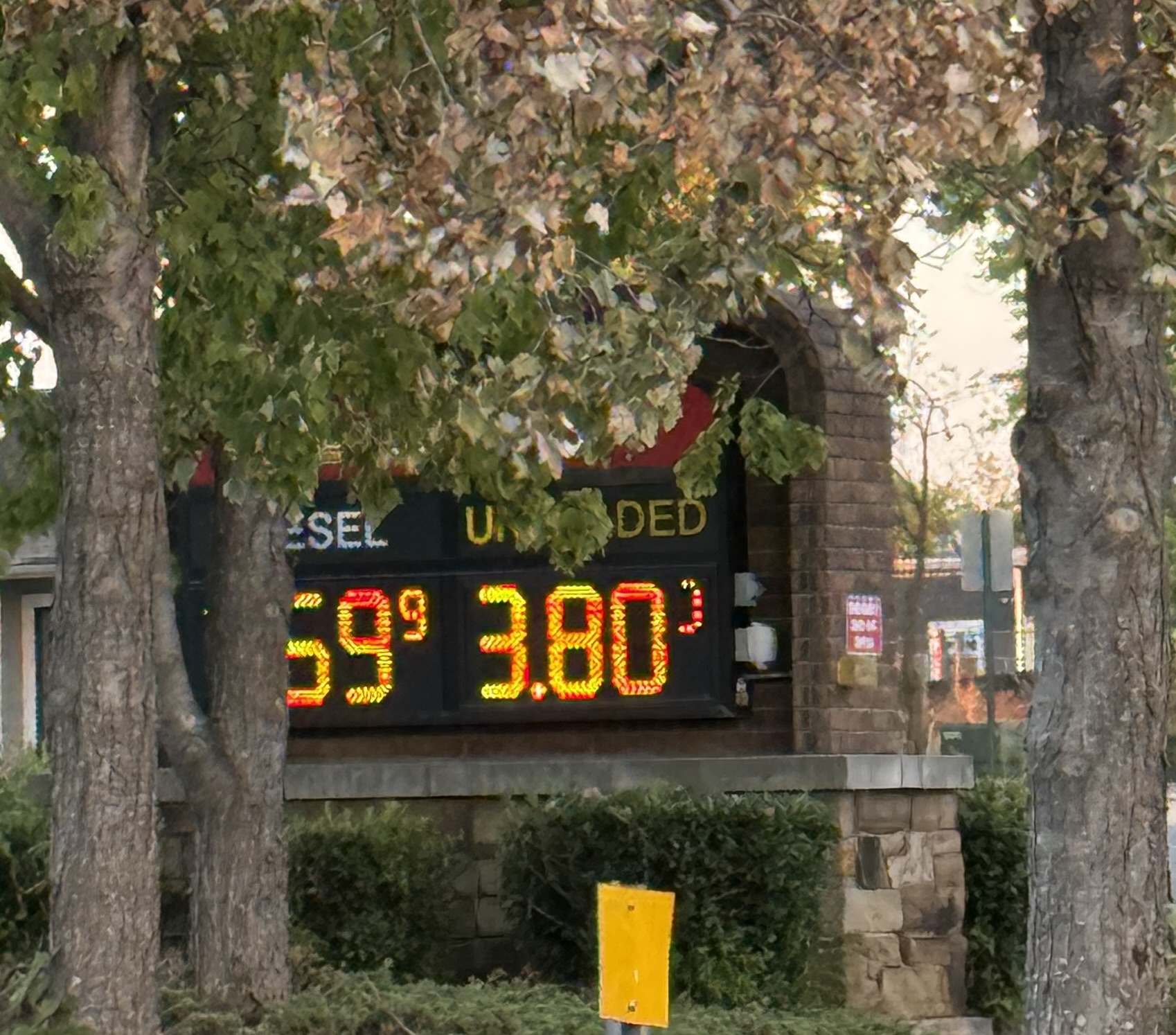
By the way, gas is $3.80 in a regular (non-discount) station. !!
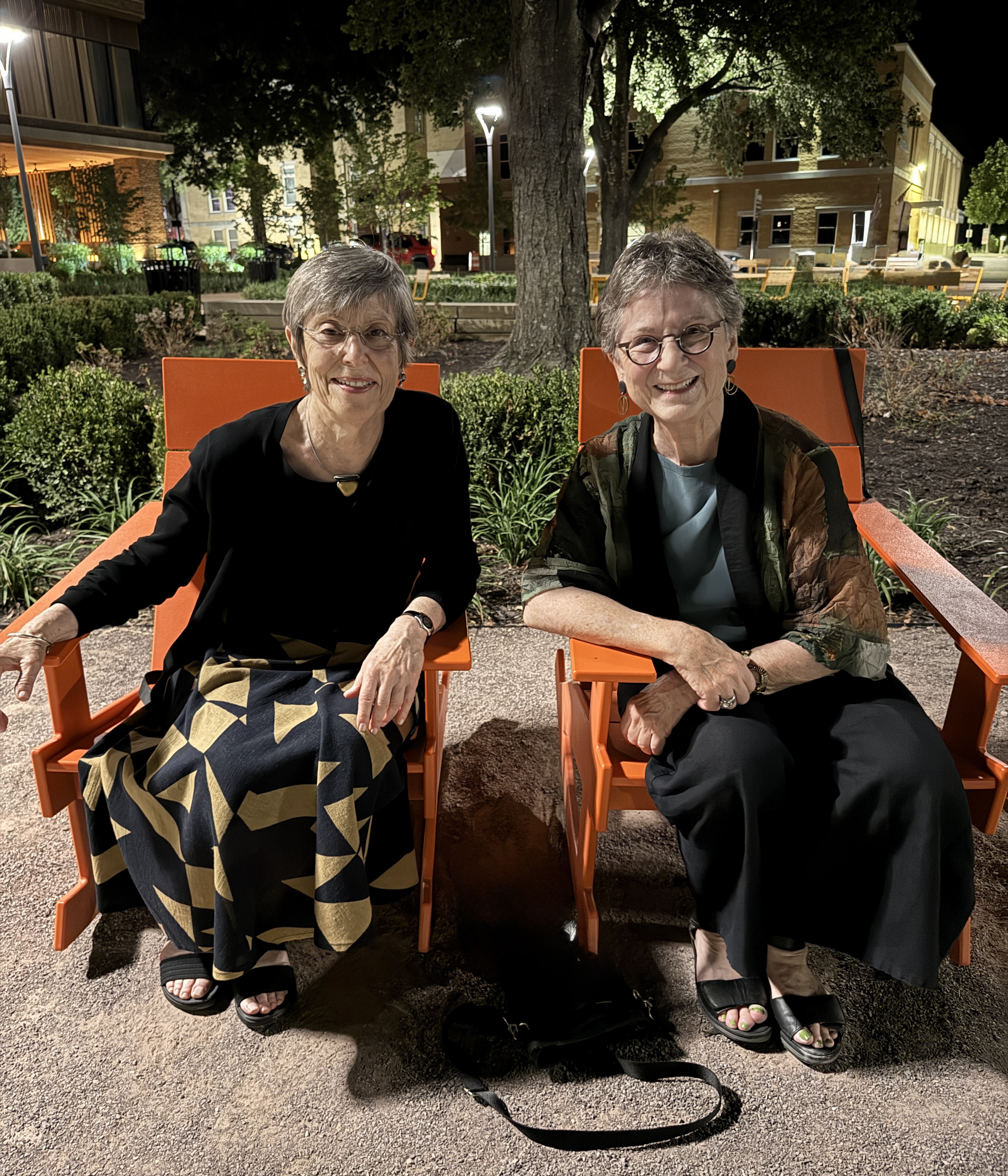
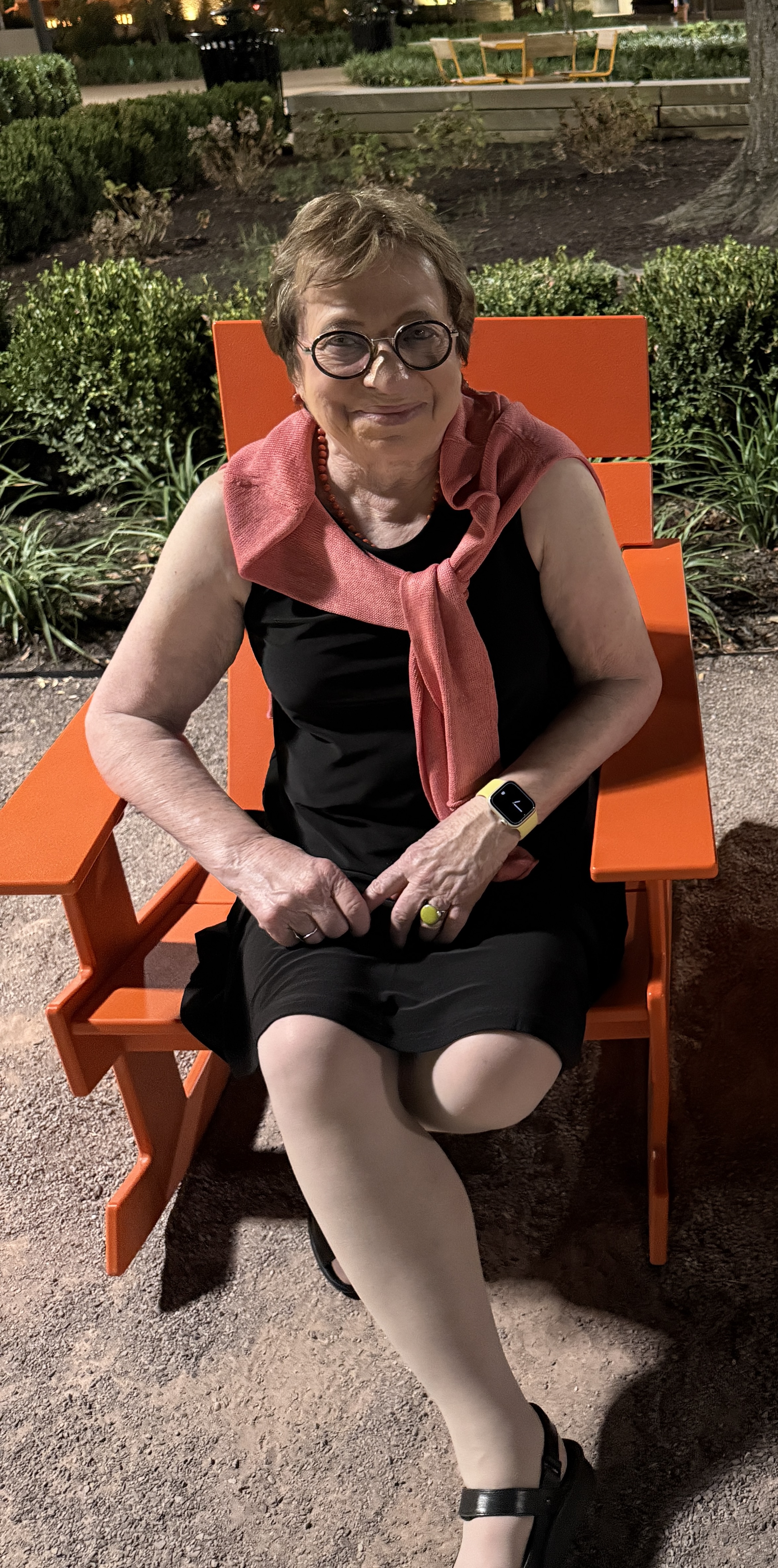
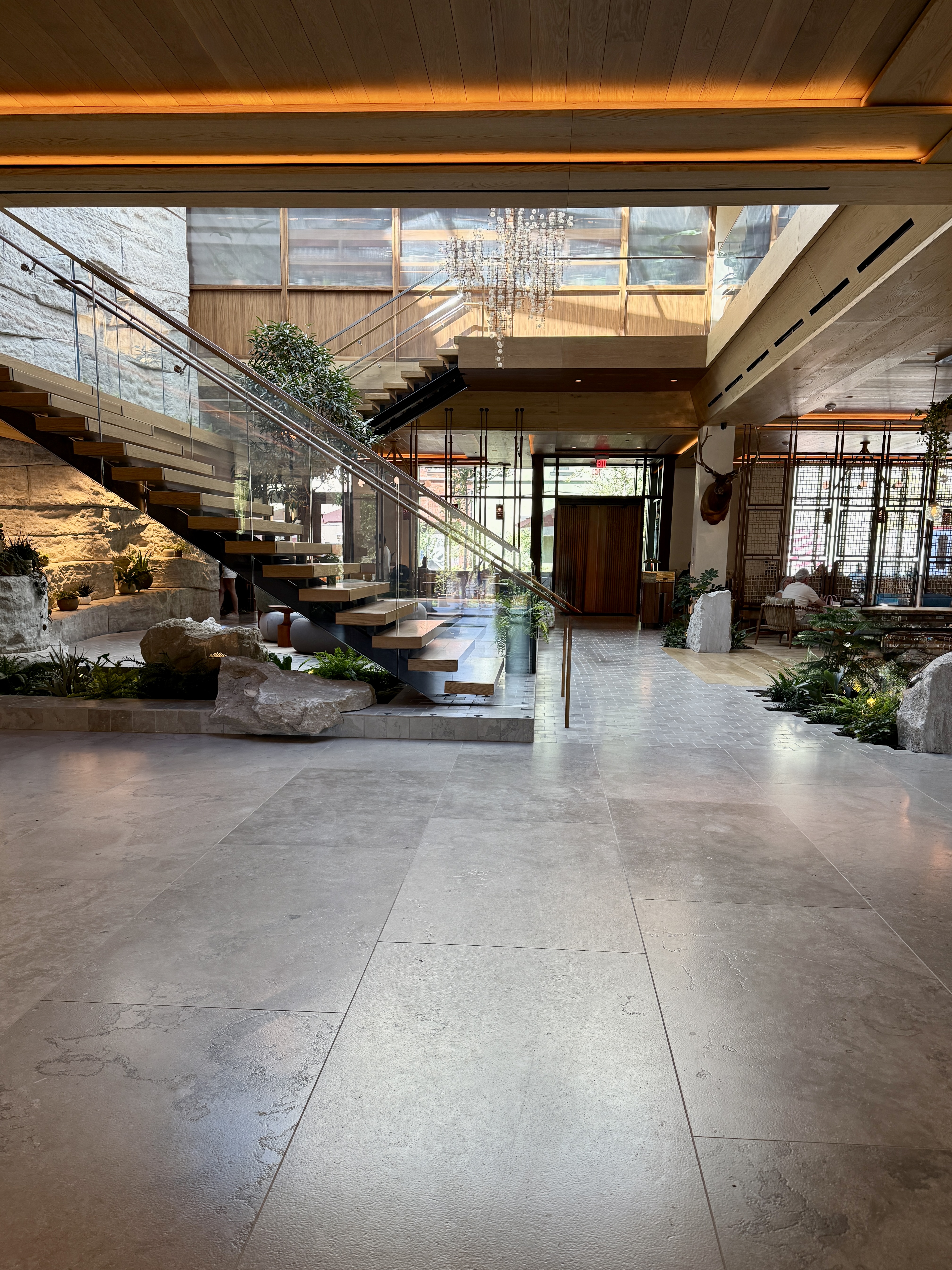
That’s it… another morning in Bentonville and we’re gone.By the way, Bentonville’s population is about 63,000 and home to the very first Walmart store, which was in a renovated variety store and called Walton’s 5&10. Bentonville is one of the fastest growing cities in the state.The county is part of the Trail of Tears route to what is now Oklahoma. And, as you would automatically guess… it’s a red county in a red state, with Republicans winning by about 30-40 points. Sarah Huckabee (Trump’s first press secretary in the Trump One era) is governor and running fior an almost guaranteed second term. Republicans hold 80 of 100 State House seats and Republicans hold 66 of the 75 judge seats in the county. At the very local level (like citry of Bentonville city council or school board) the influx of a more diverse population and tech/corporate folks might be able to swing Democrat, we’re told. There you have it… Trump’s America, I presume.. although we have not seen any MAGA hats and no visible Trump signs, like you see in many small rural towns.
Take care —
More from Chicago. Fern
Bentonville, Arkansas. September 3, 2026
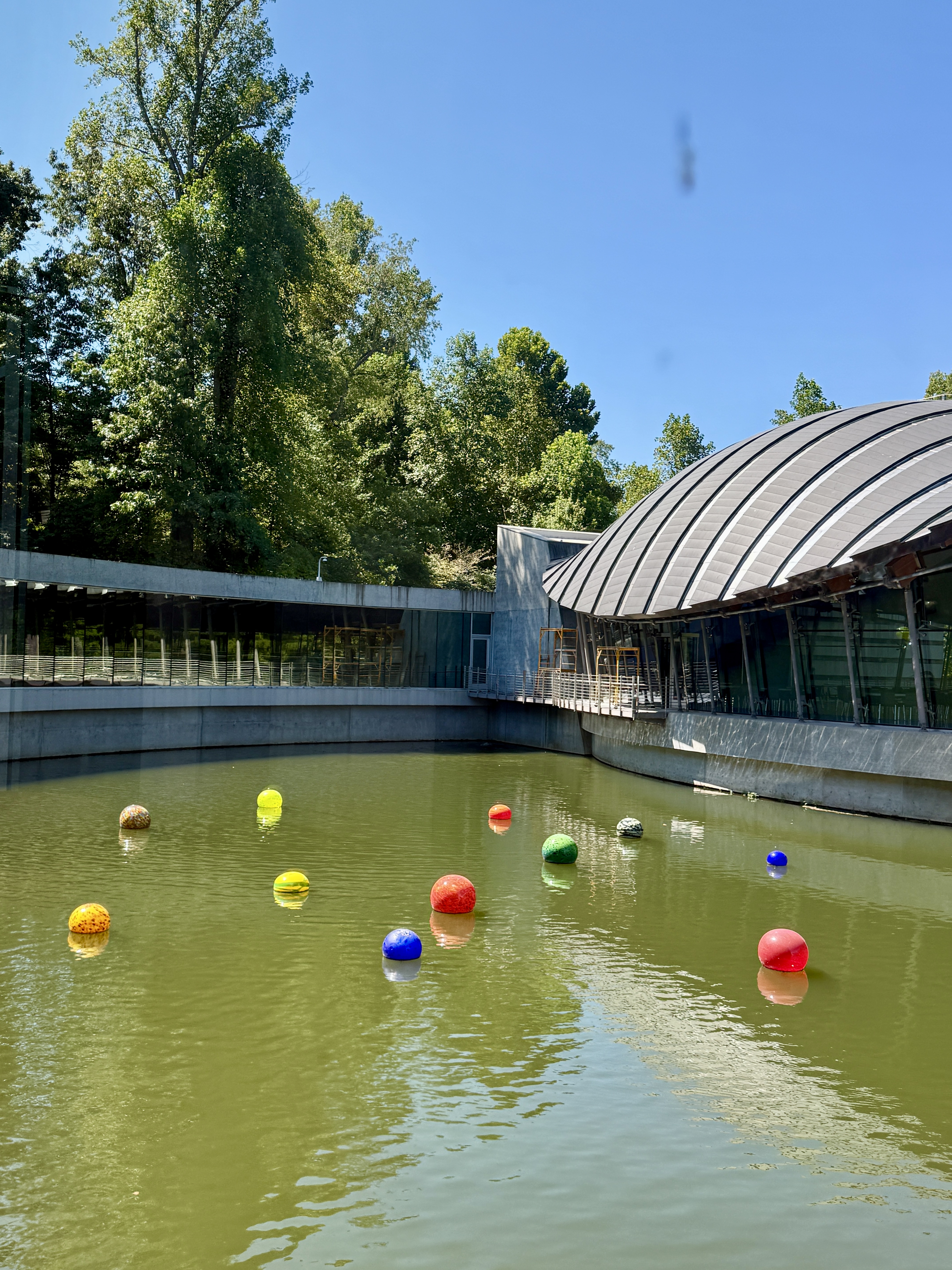
As most of you know, I don’t usually post domestic travel, but this is shaping up to be very travel-blog-ready! So, hang in I’m here in Arkansas and then headed to the Obama Center in Chicago and then a drive to Des Moines. It’s the annual “girl trip.”
After a rather miserable travel day, yesterday, I finally arrived at the Compton Hotel in Bentonville, Arkansas at about midnight! First, I was scheduled to fly on American via Phoenix, but the flight was delayed and had I taken it, I would have wound up spending the night in Phoenix, since I would have missed the connection. I quickly switched to United and got a flight that took me through Houston (not the most direct route) and landed around 10:15pm. I headed out of the airport to find a taxi… and there are no taxis (ever) at the Bentonville (NW Arkansas) Airport! No taxi stand; no waiting taxis; no phones to call taxis. And those of you who know me well, know I do not use Uber!
I went online to find three different taxis listed; the first two couldn’t come because they had been driving since 4 am and didn’t want to come out again. The third said he’d come, but he was 30 minutes away. I had little choice, so I waited. I was literally the only one at the airport (from what I could see). These are not exactly taxi companies. Seems like it’s just one driver, maybe two. Anyway, he arrived around 11 and I sat upfront so that he could point things out along the way to the hotel. I got a little lesson in Bentonville history—home of the Waltons of Walmart fame and the family that paid for Crystal Bridges Museum, which was one of the reasons for this trip. A bit funny, since I’m probably one of just a handful of Americans who have NEVER been inside a Walmarts. (And plan to keep it that way.)
The Compton Hotel is very new and quite lovely; large rooms, wood floors, greatr bathroom, all the amenities.
OK… so today we began with a light breakfast at the hotel and then headed to Crystal Bridges Museum. We drove (although it wss just a 20 minute walk) because it was about 95 degrees outside, and we figured we’d be doing a lot of walking in the museum. Wimpy? Maybe.
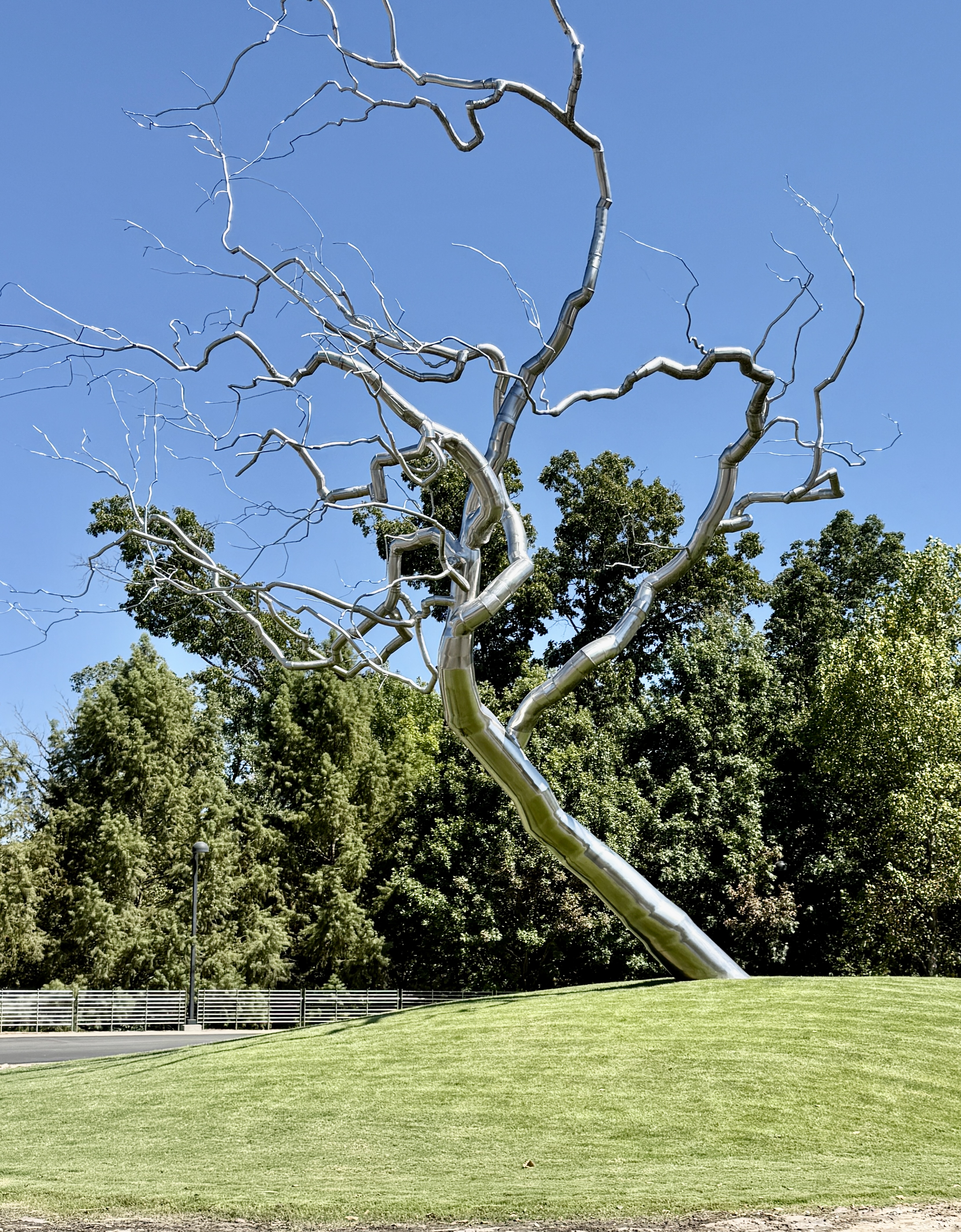
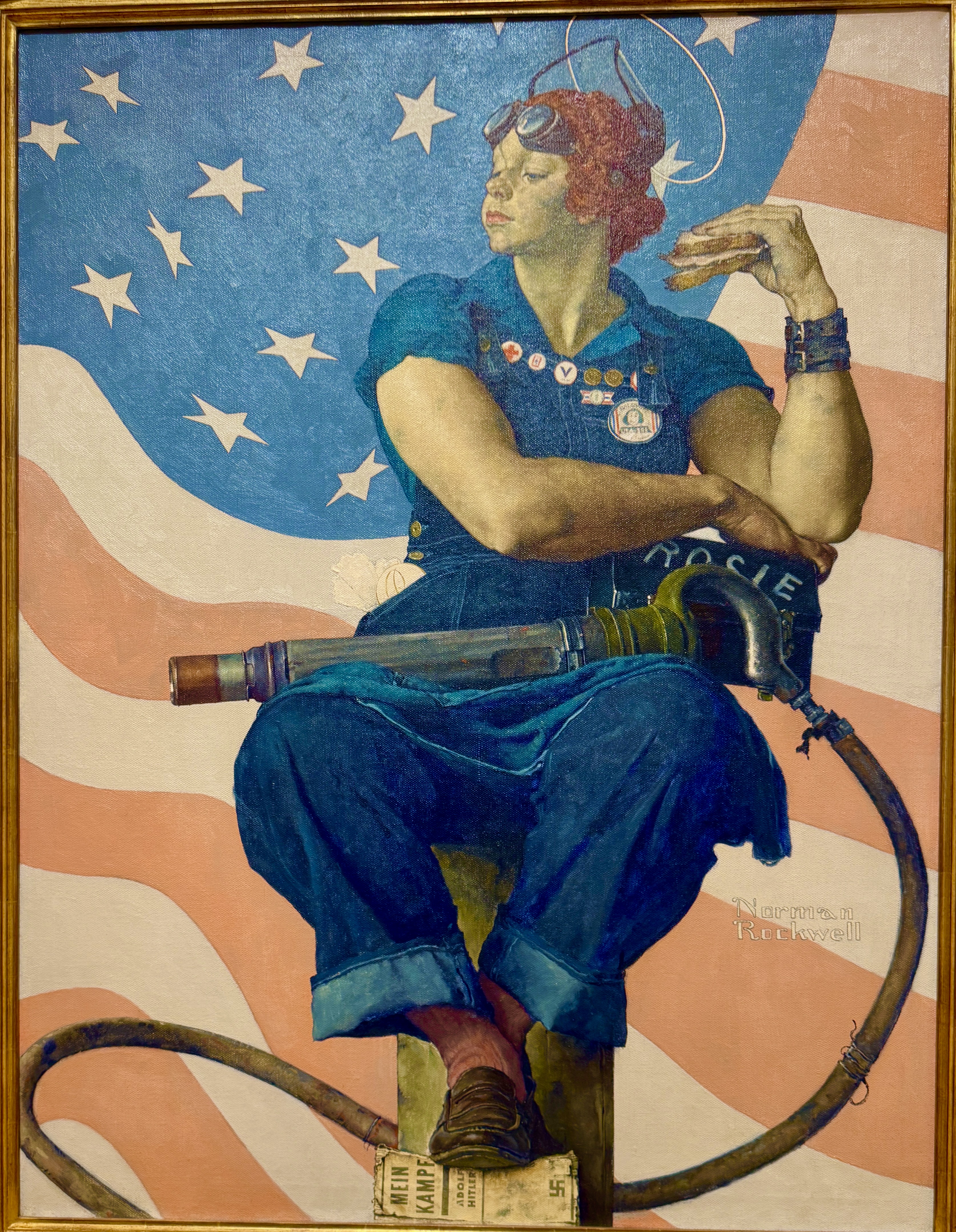
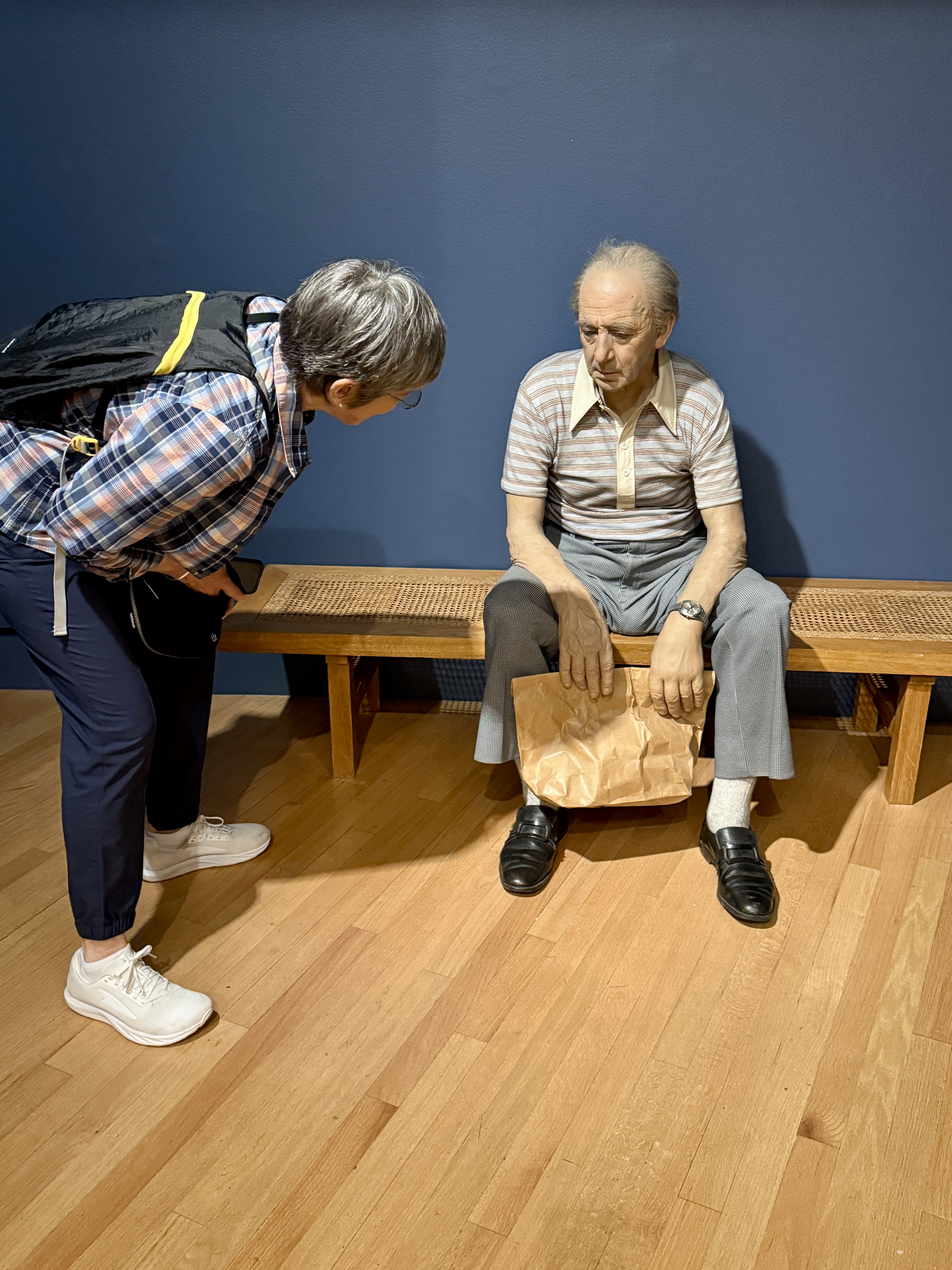
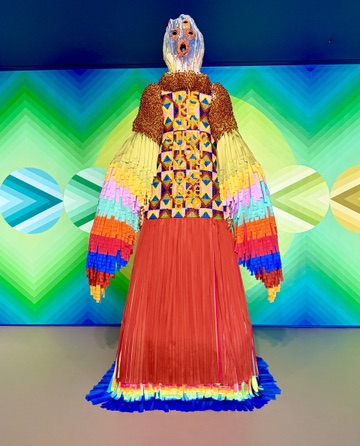
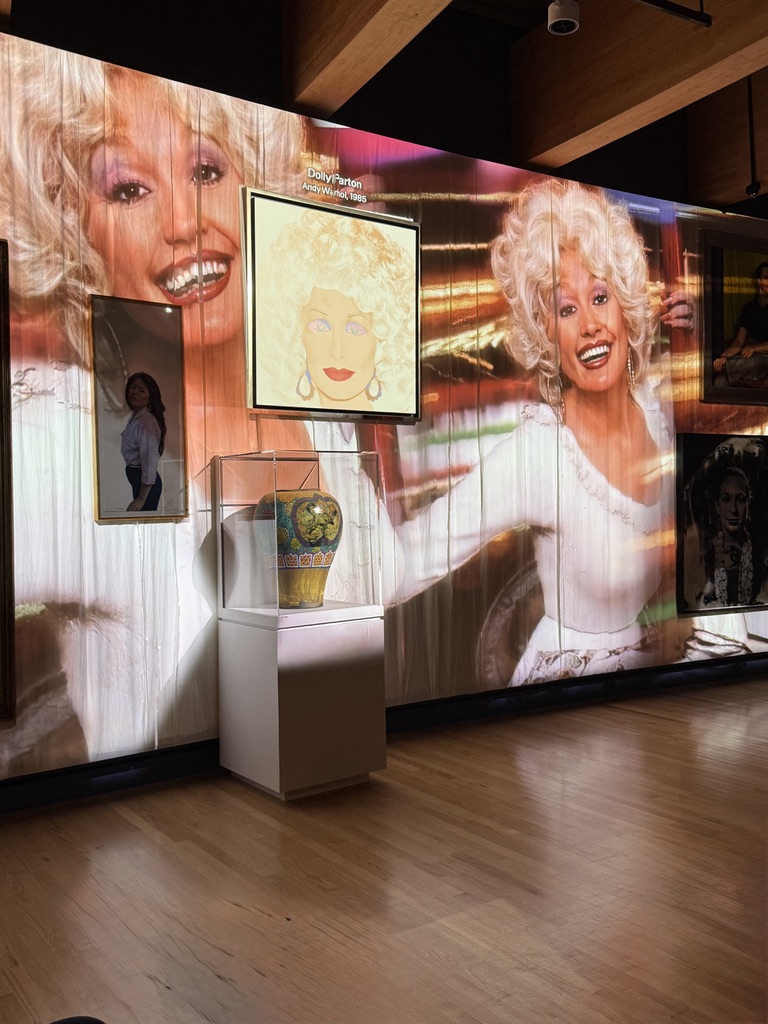
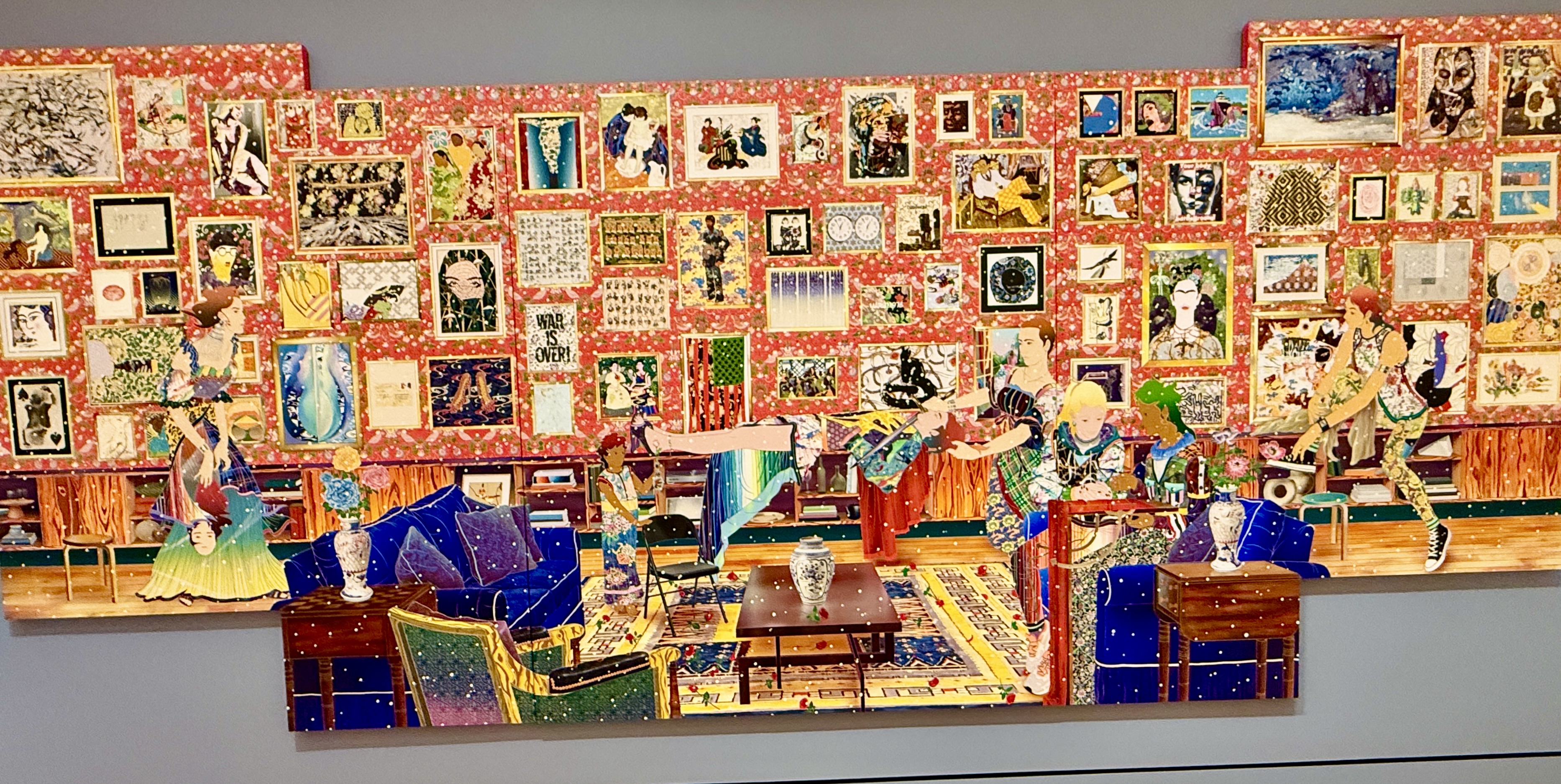
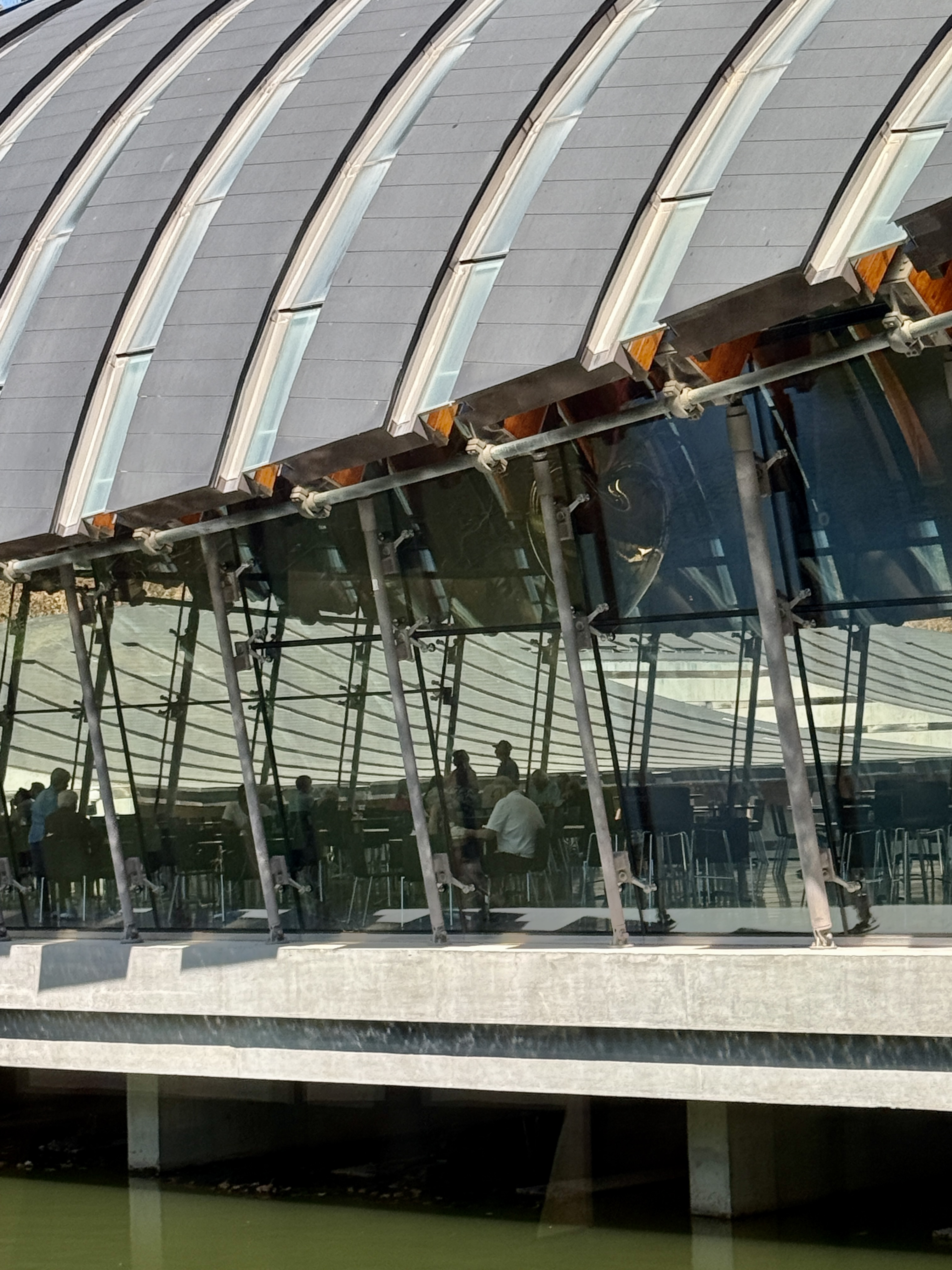
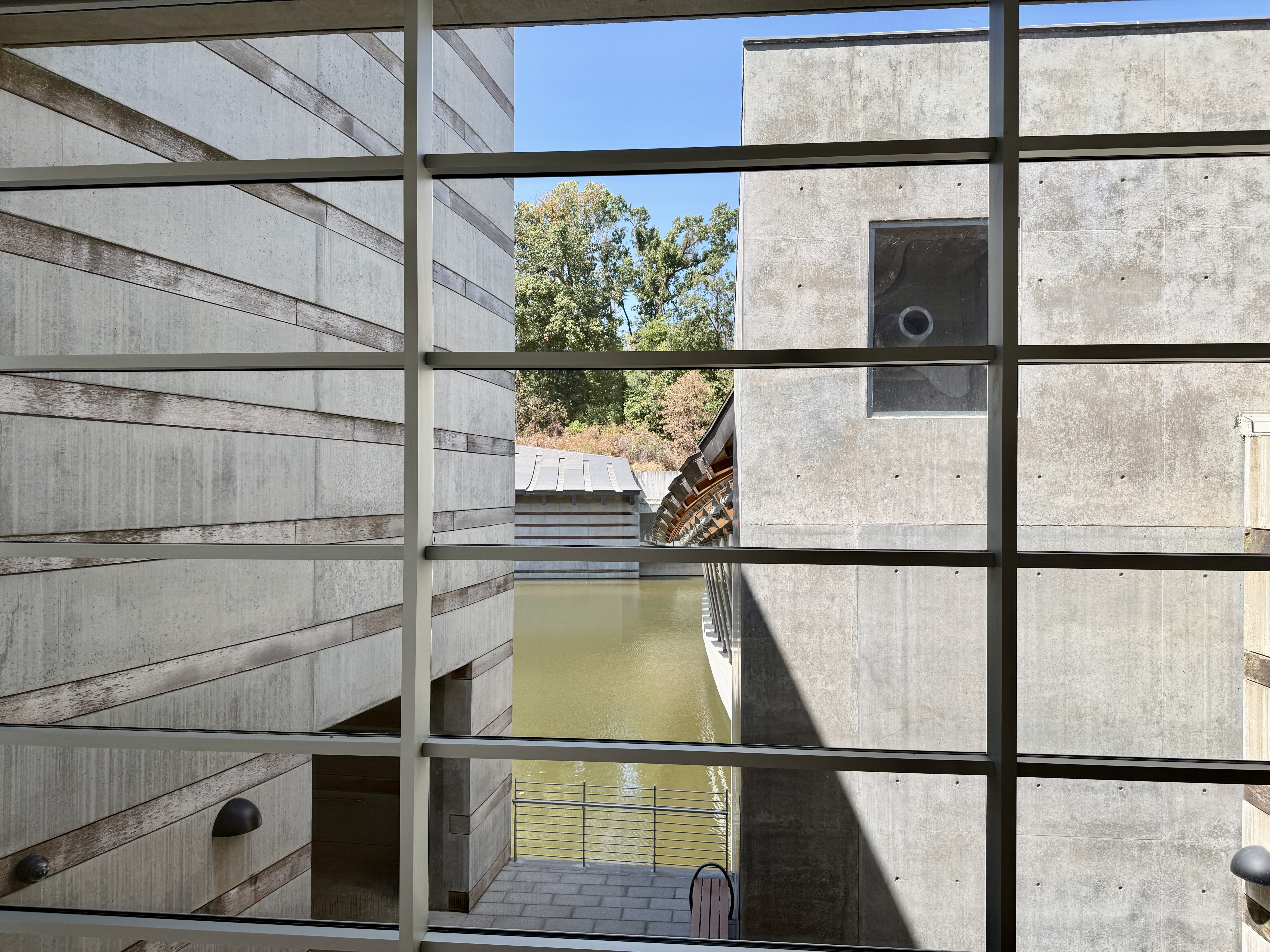
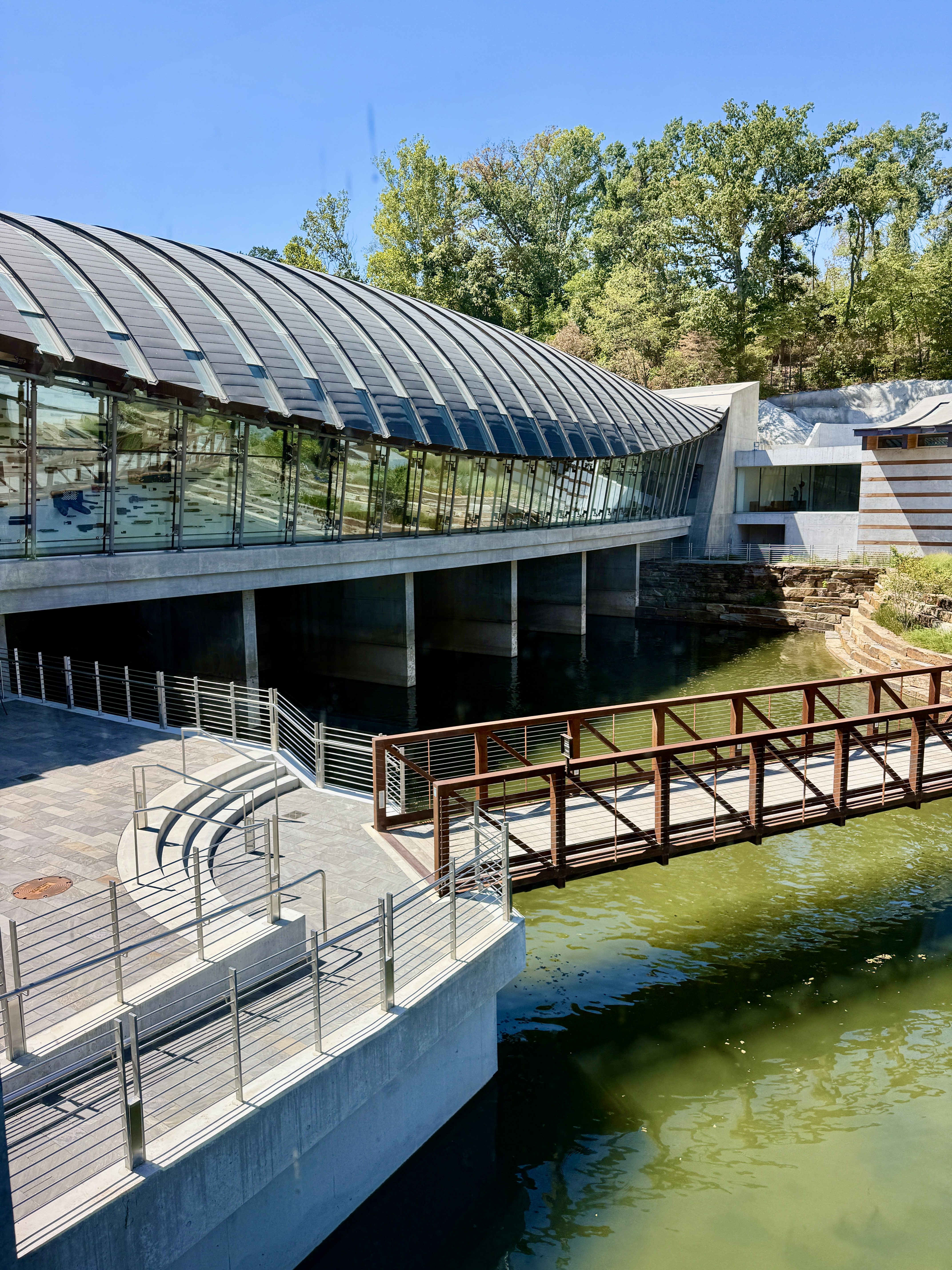
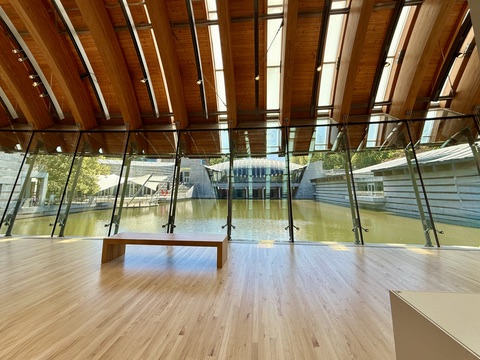
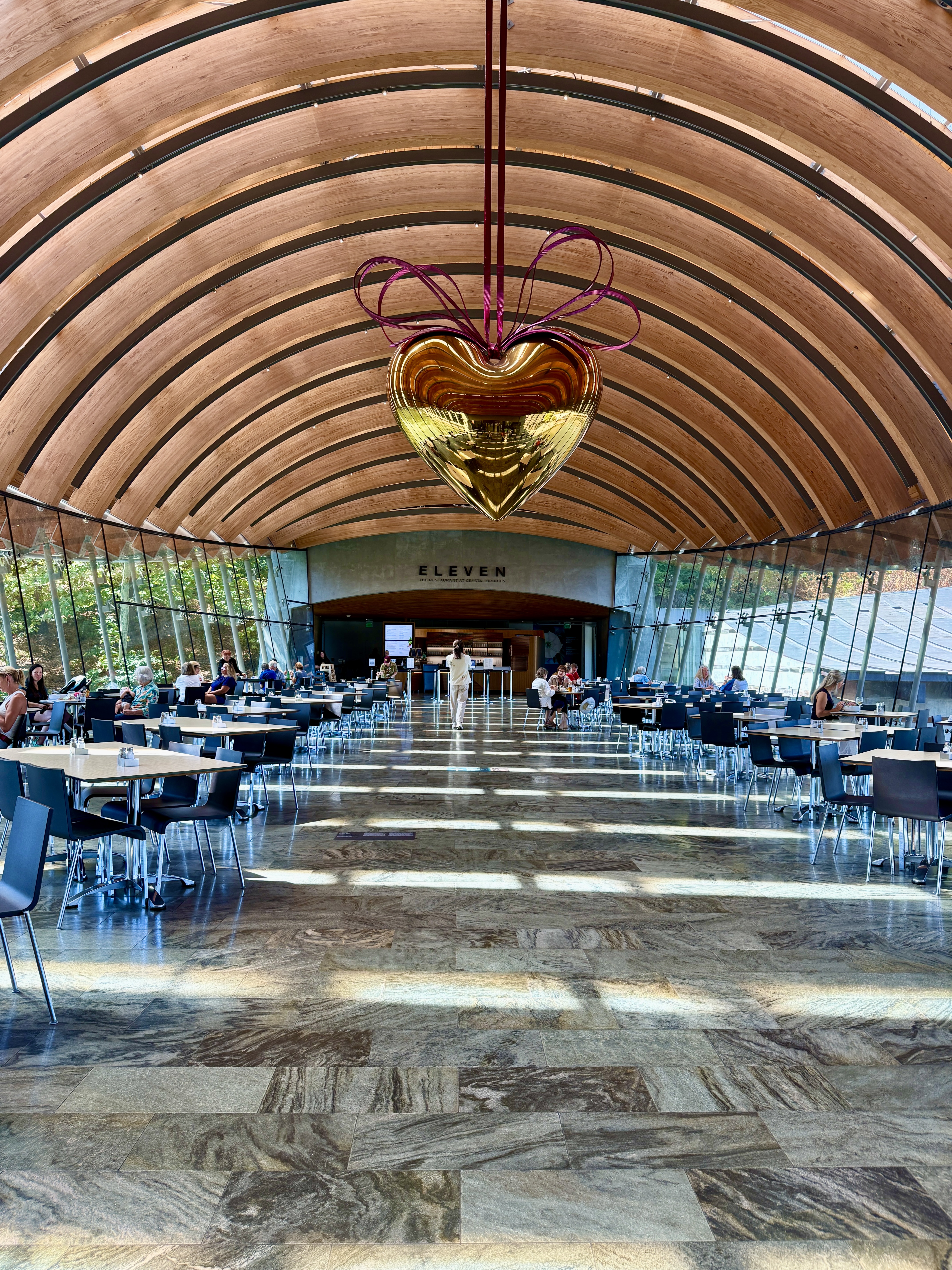
The Museum opened in 2011, was designed by Moshe Safdie, and was paid for by Alice Walton and the Walton family (Walmart). It has a permanent endowment, enabling it to have free admission—forever. It showcases American art and the building is beautifully integrated into the landscape. The initial endowment was $800 million which funded construction, acquisitions, and operating expenses. The endowment was supplemented with funds from Walmart which I think covers the forever free admission. The buildings are situated on a ravine and the Crystal Spring. There are 8 (I think) interconnected “pavilions” made of concrete and wood and copper for the roofs. Some of the pavilions use a sort of suspension bridge construction and they are rooted in limestone bedrock.
The collection focuses on 5 centuries of American art and includes many unrecognized or underrepresented artists and a large proportion of artists of color. The museum also houses some of the Alfred Stieglitz collection which it shares with Fisk University. (There a long story there, which I vaguely remember, but won’t get into here.) Let’s just say the building is quite spectacular and the collection and dsiplays are well thought out and prompt some good discussion. The building was expanded with a big opening of the new wing just recently. In the words of one of the volunteers at the museum, “When we expanded, all of this additional art kept coming and we all kept saying “Where did Alice store all of this stuff? Did she have art like this hanging in all of her bathrooms?”

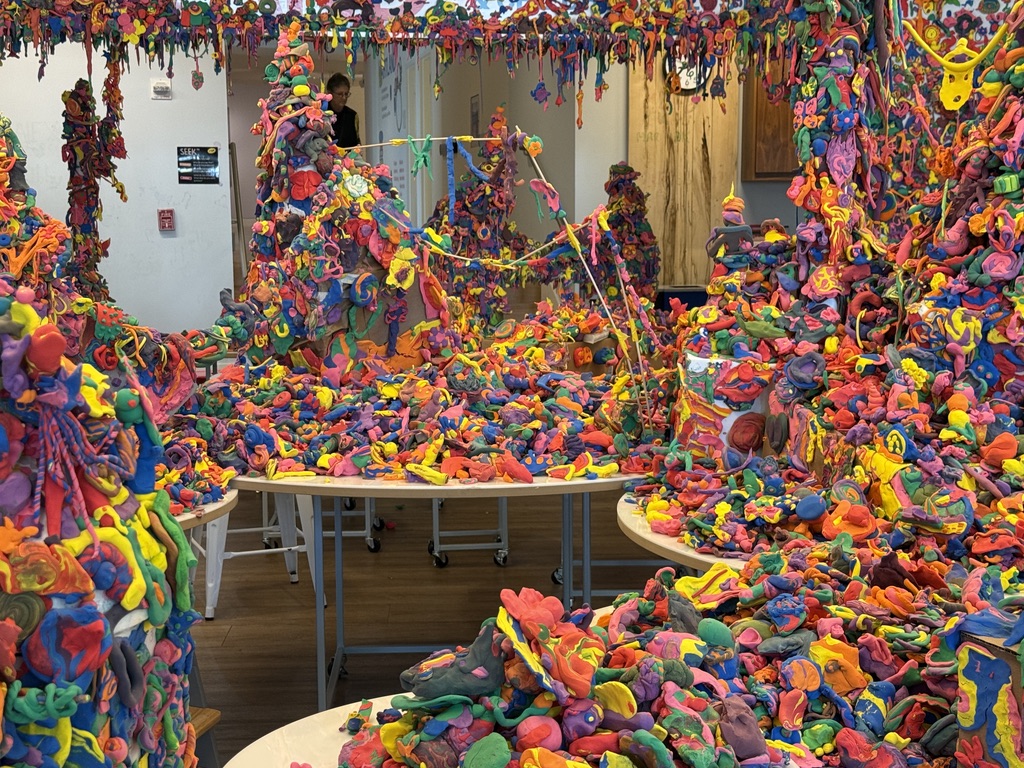
There’s a great space for kids (actually there are many areas to participate and “make art” and one room that has all of this clay which kids and adults can add or change what has been created by other kids. When you come in they ask if you want some new clay. It’s very tempting.We chatted with the volunteer in that room and she told us she was a transplant from many different cities. Her husband was a sports doctor who worked with various teams. She had lived in NY, Boston, Jacksonville, and now Bentonville. She’s a former kindergarten teacher. She likes Bentonville and said “not to judge Arkansas by what you hear on television” although she did point out that the state is about 47th on every list (health, education, etc.) Everyone we’ve encountered has been amazingly friendly and talks about how much they love Bentonville and also that they are a bit self-conscious about coming from Arkansas.

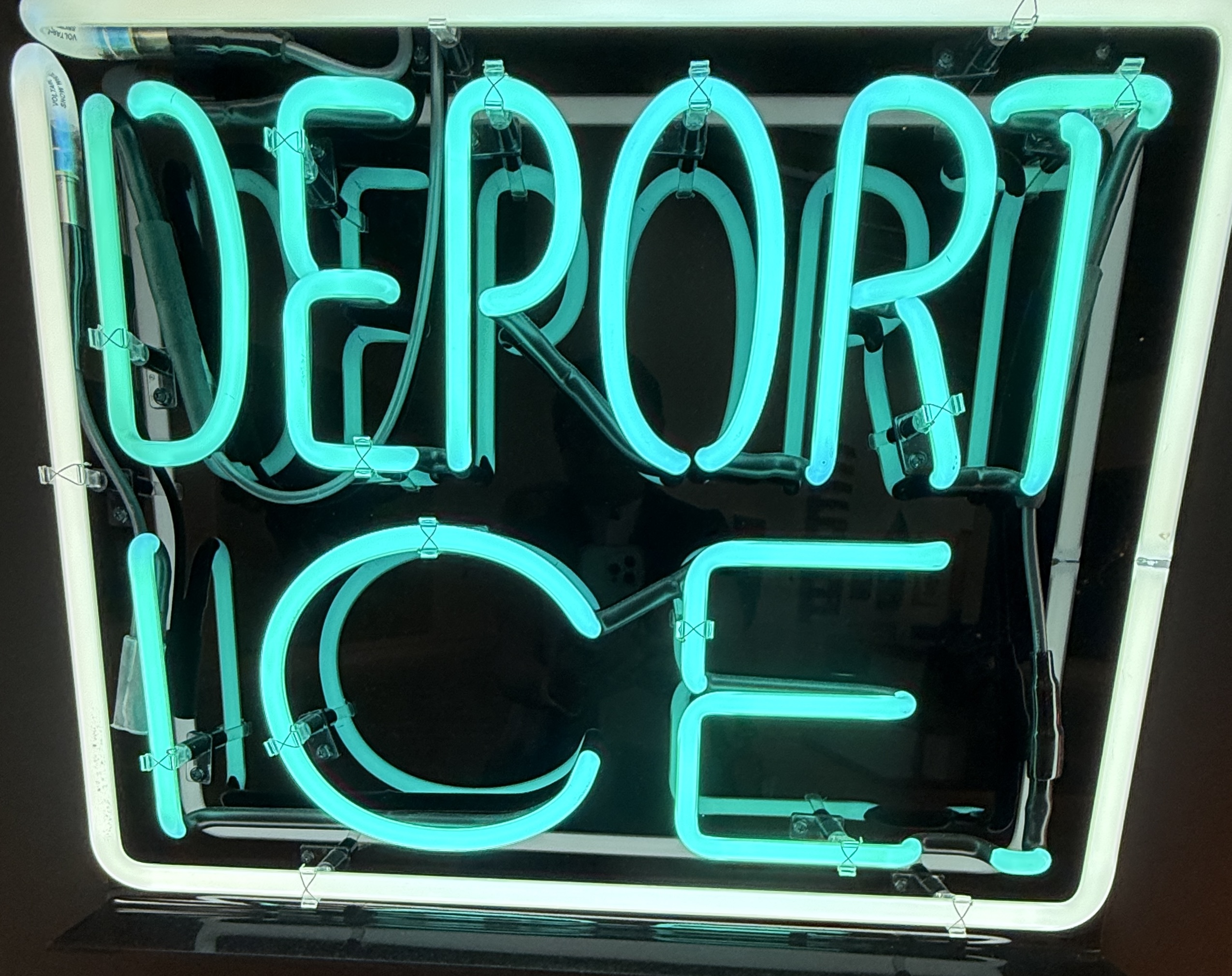
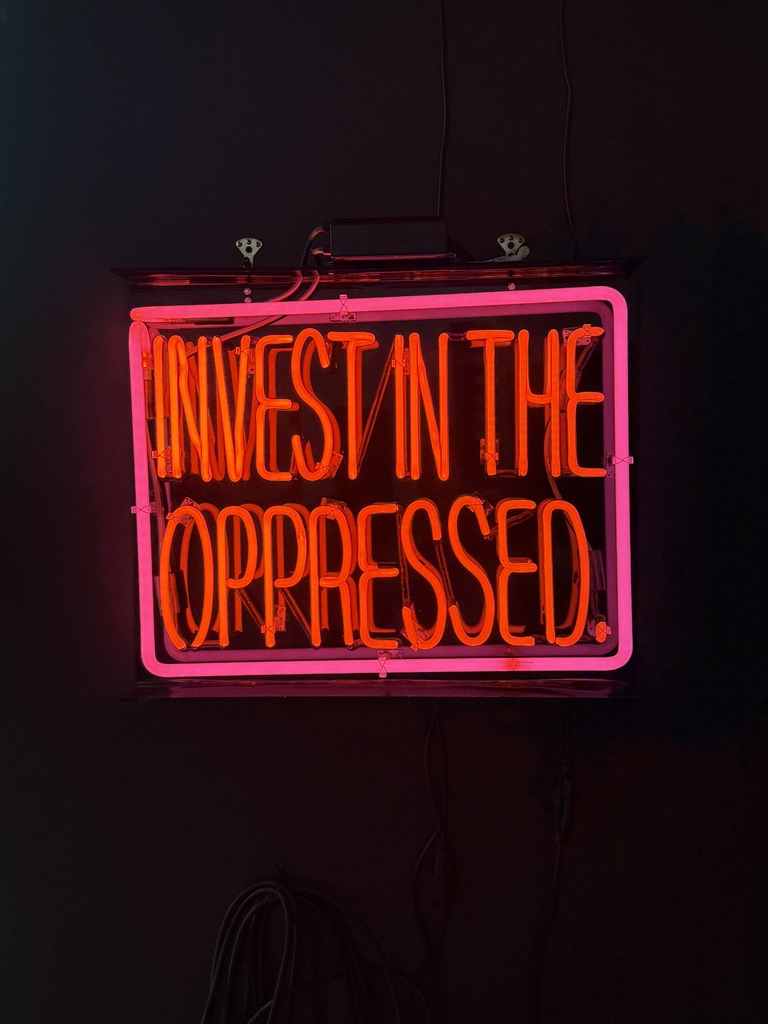
A few points to note: Bentonville is sooo clean; you can eat off the streets. There are lots of outdoor tables and chairs and even couches with cushions and they stay out all night (and are not chained down!) We haven’t seen any homeless or anyone sleeping on the streets. I suppose if there are homeless, Alice Walton probably finds them a place to stay or “gets rid of them.”
We’ve heard that Walmart requires any of their vendors (brands that sell their products at Walmarts) to have some kind of presence in Bentonville (executives, manufacturing, etc.) So leaders from all these companies are located here in town, bringing more stature, a professional class, and money to the community. (This is not verified but told to me by my taxi driver last night.)
After a pleasant lunch at Eleven within the museum, we headed to the Frank Lloyd Wright Usonian house that sits on the museum grounds — having been moved from New Jersey to Arkansas.
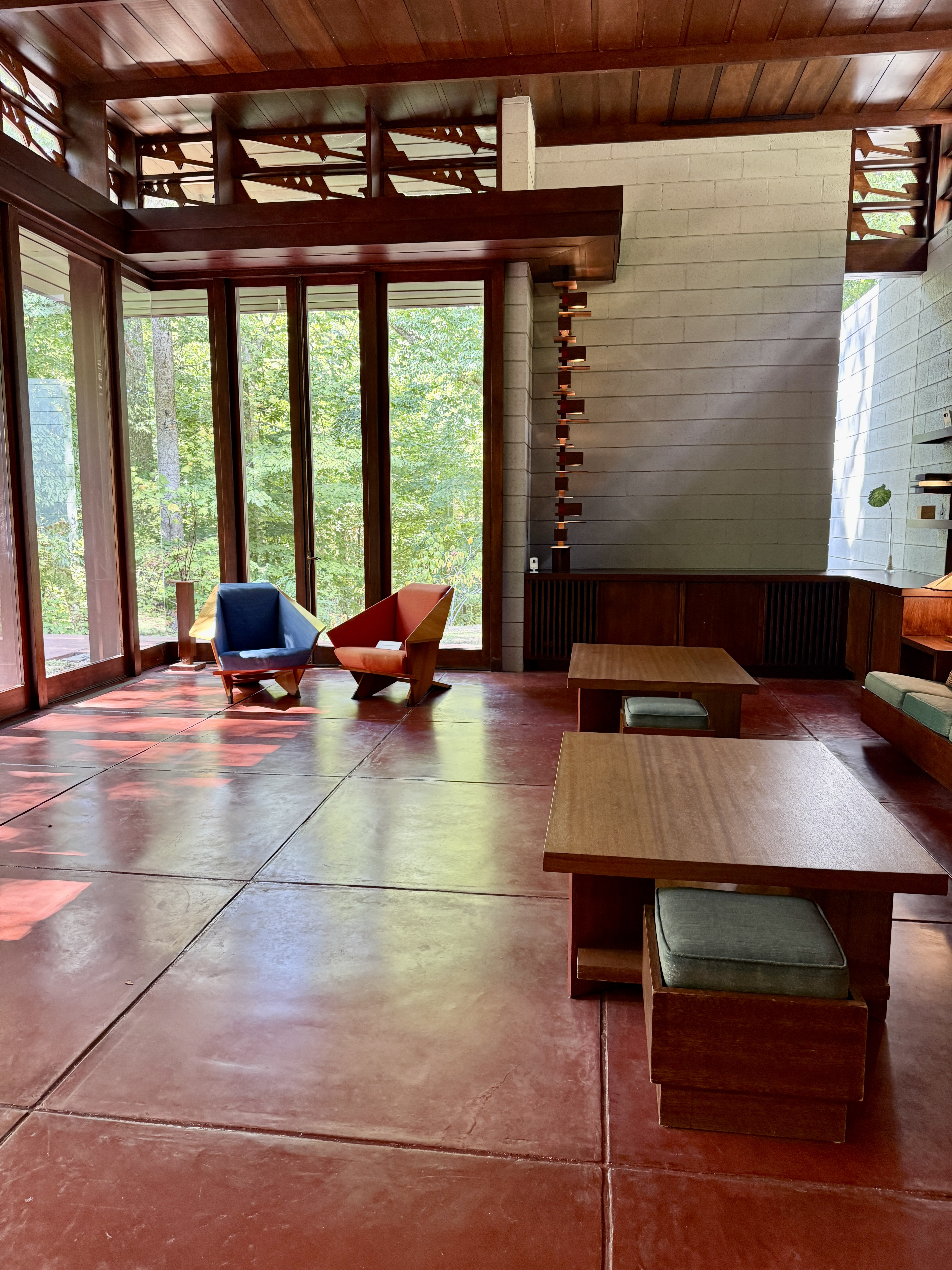
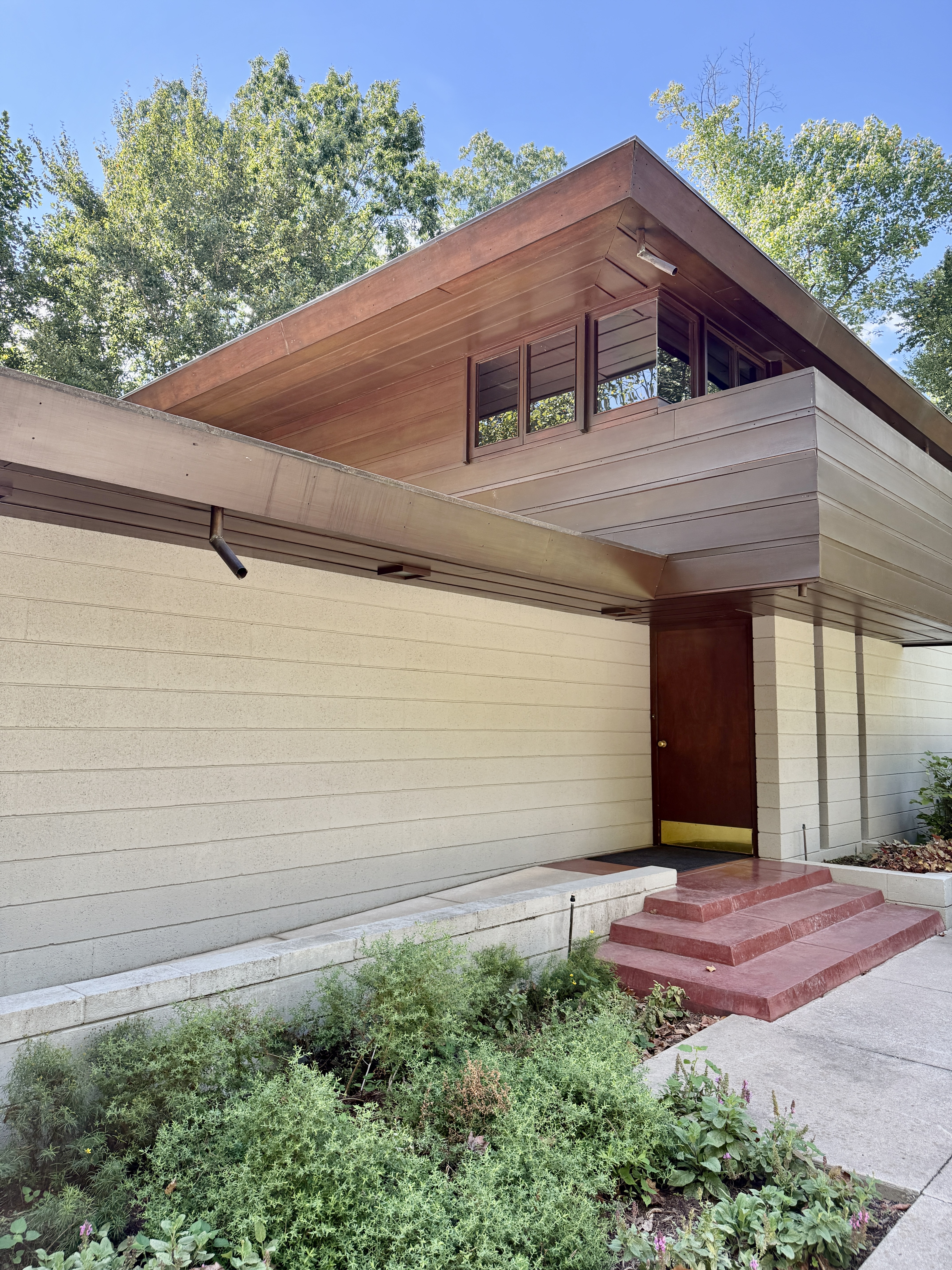
The Bachman-Wilson House was origingally built in New Jersey in the 1950s. for a young couple who approached Wright and had $20,000 to build a house near a creek in NJ. I think the house fell into neglect and had flooded and in the 1980s it was acquired by the Tarantino family who then sold it to Crystal Bridges which relocated the house in its entirety to the museum’s campus. Those parts that were completely damaged were rebuilt to the exact plans of the original construction. Despite all the flood damage, most of the interior was saved. You can go inside, but no photographs are allowed.. (The one photo I have posted here was taken rather secretively and I couldn’t focus or compose the shot.. )
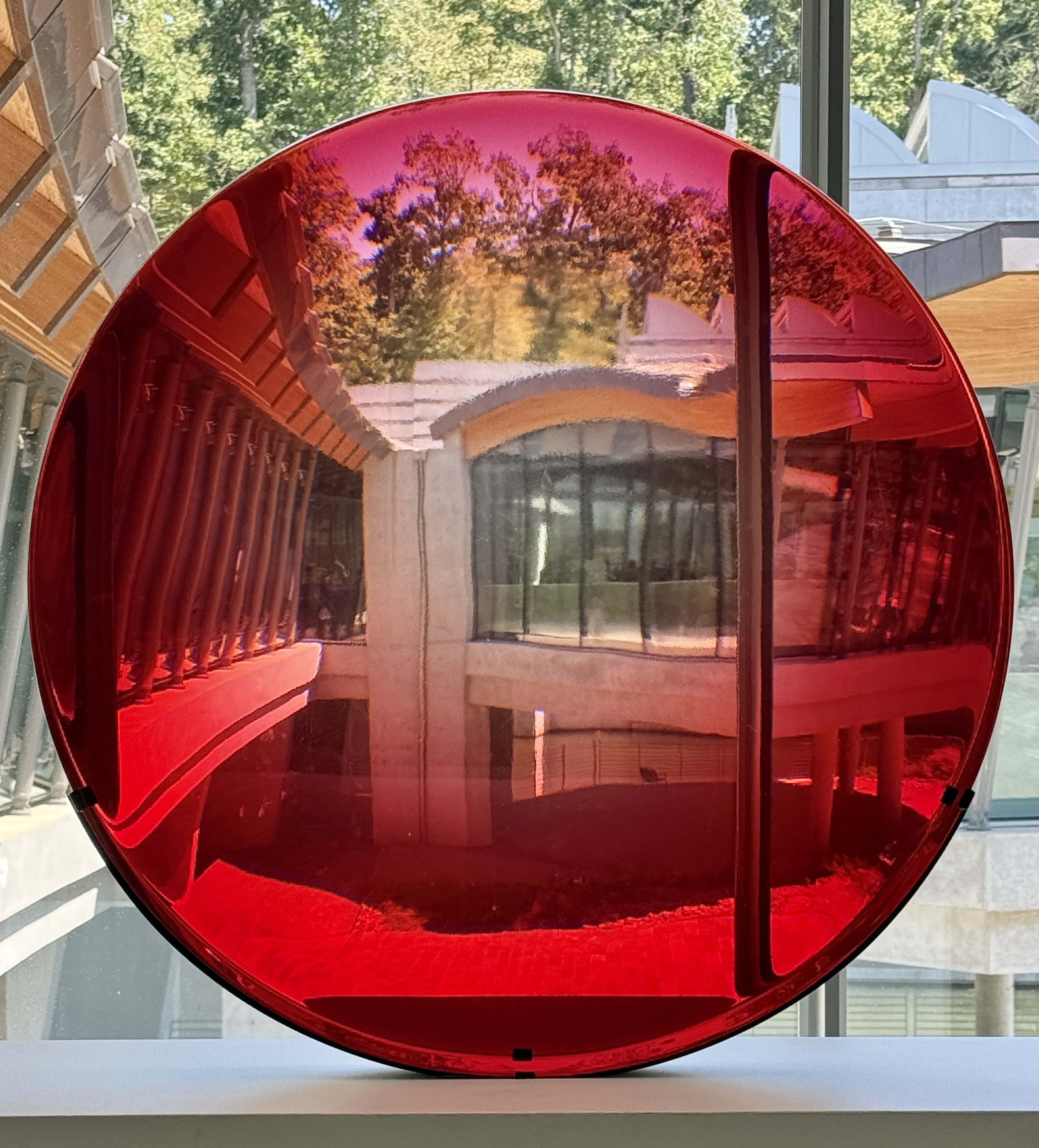
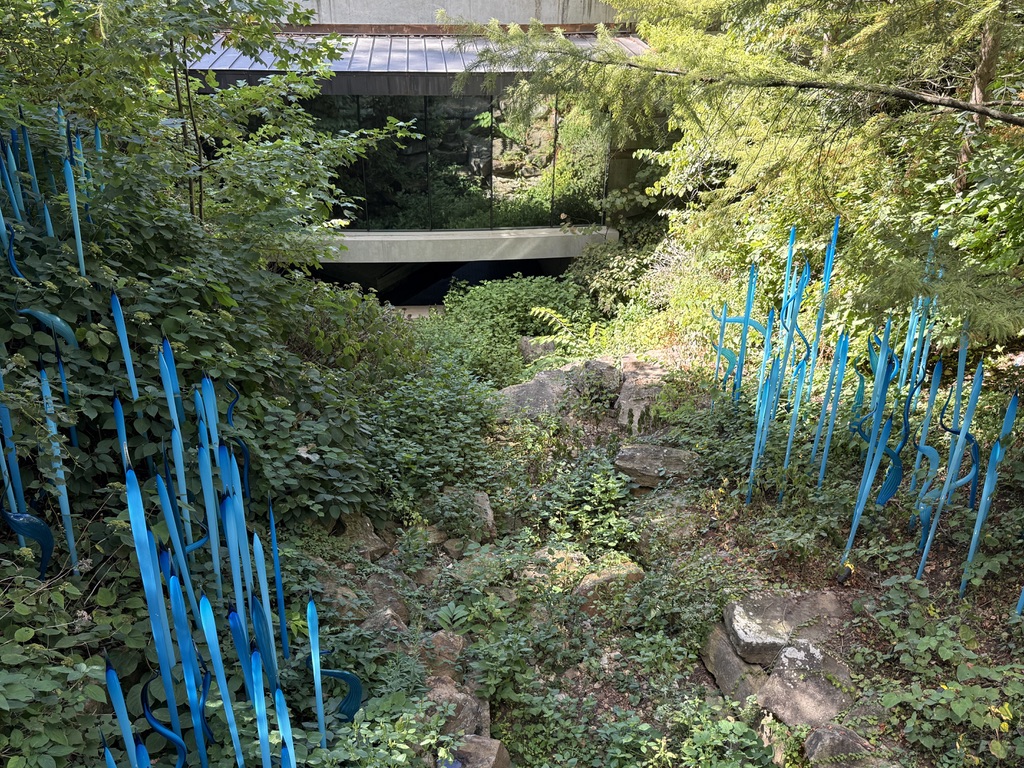
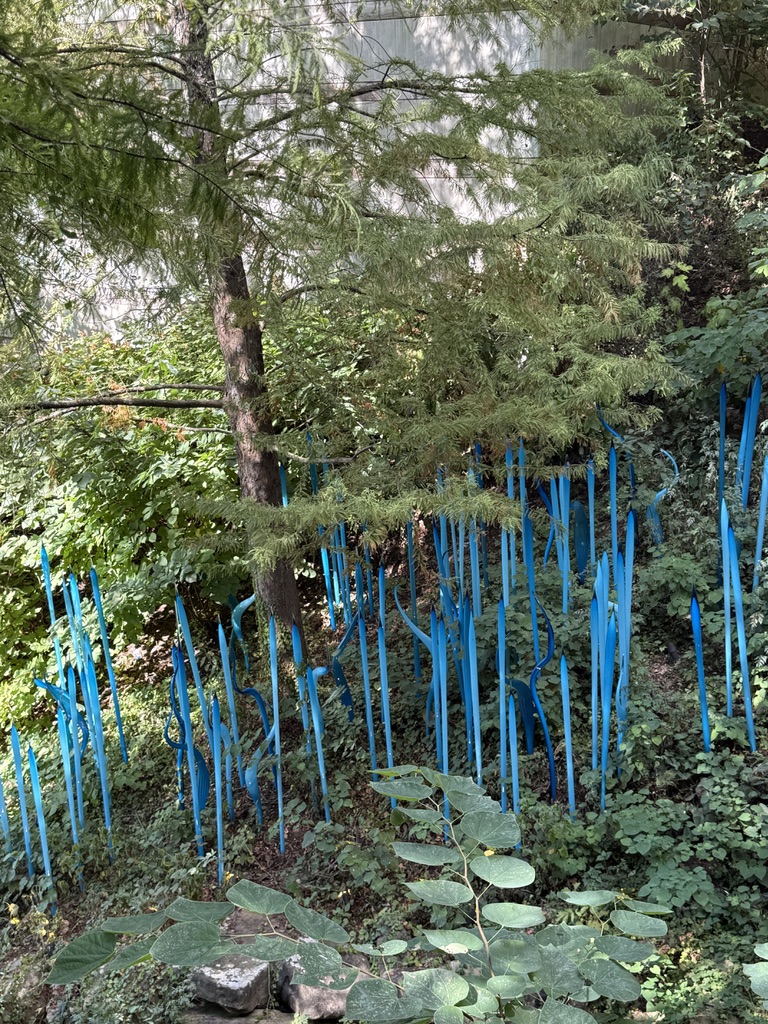
The walk from the museum to the house is only about 4 minutes and you walk over a bridge and into forested land. From the bridge you can see some glass sculpture by Chihiuly.
We then drove (about a mile) to the Momentary which is owned by Crystal Bridges and focuses on more contemporary art and changing exhibits. The current exhibit was by Lucy Sparrow—a felt artist who has created a complete Walmart store from the 1980s within the building… everything made of felt!
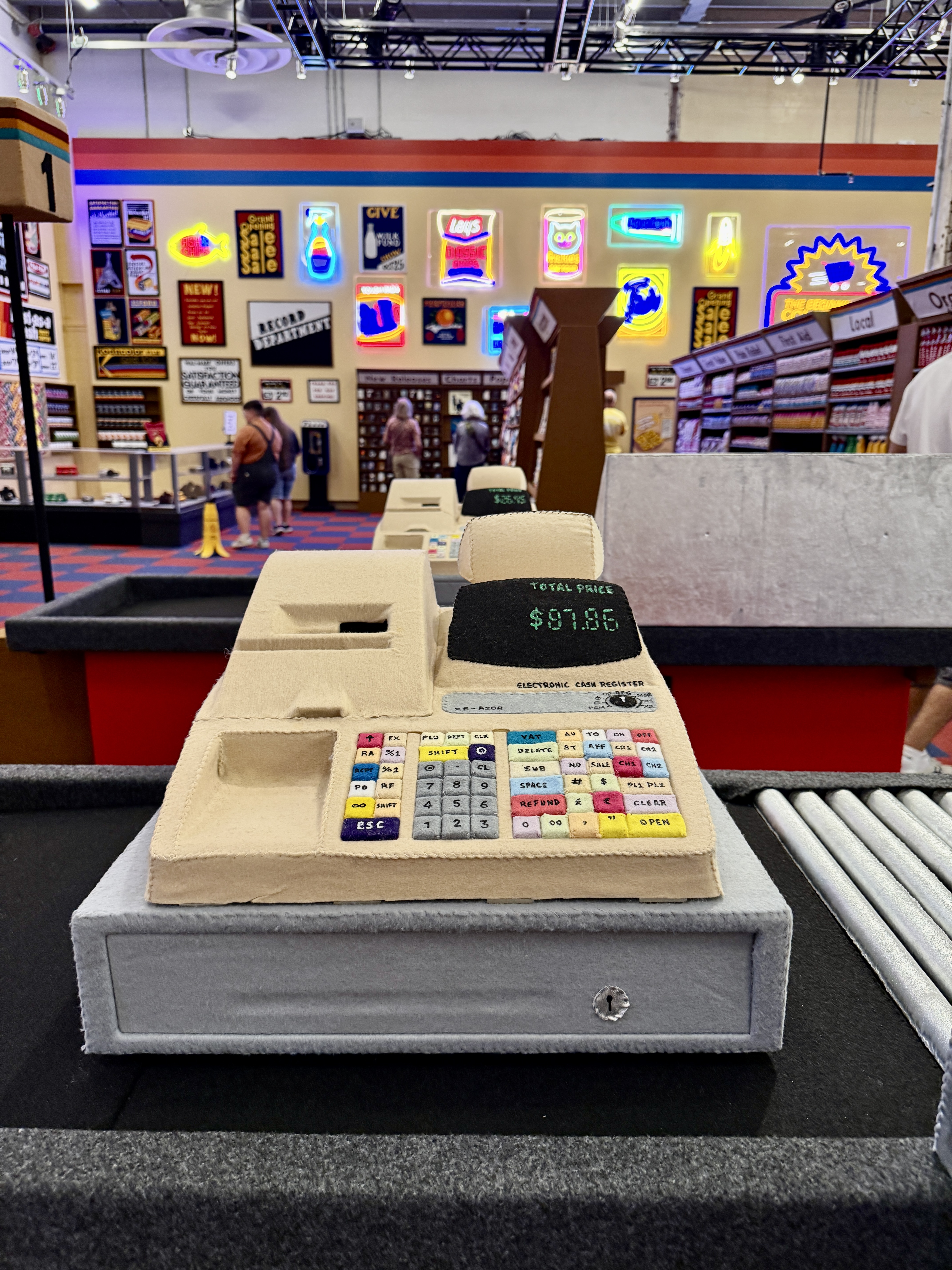

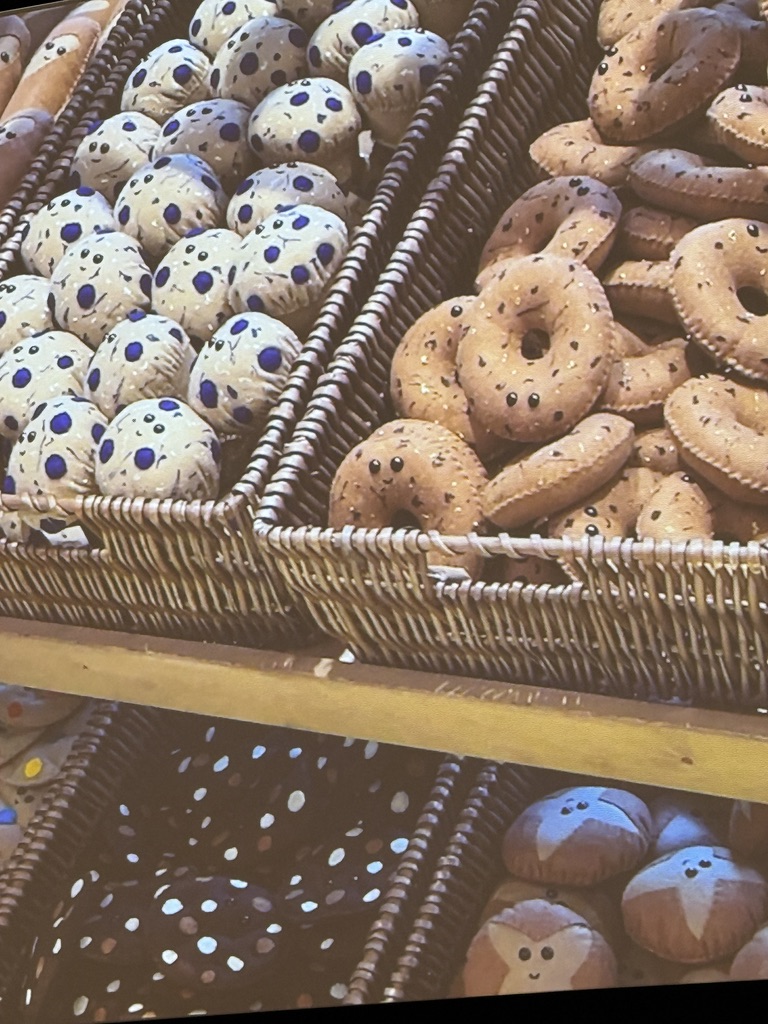
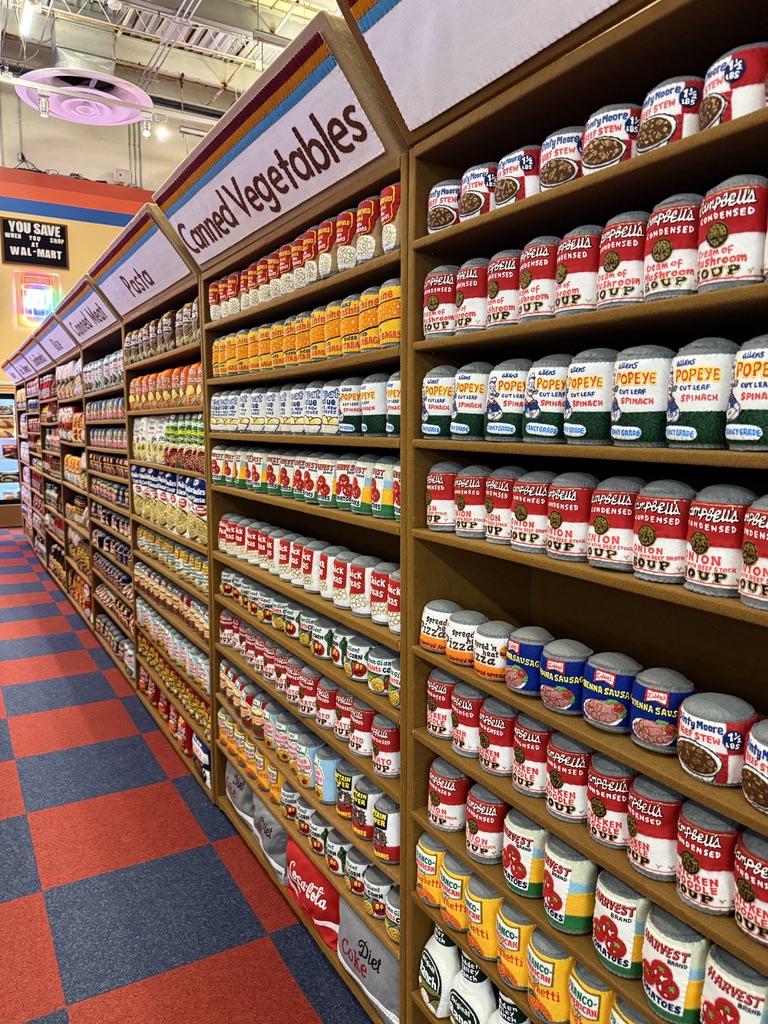

Lucy Sparrow is a contemporary British artist who works with felt and creates life-size replicas of existing objects, like the aisles and aisles of “canned” goods and other sellable things that are in the Walmart replica…. all in felt. She’s had many other shows in NY, London, LA, Australia, etc. One of her early pieces was “Madame Roxy’s Erotic Emporium” where she installed a sex shop in Soho, London. She said that show was inspired by her years as a stripper and her concern about sexually transmitted diseases and also the suppression of some sexual practices in the UK.
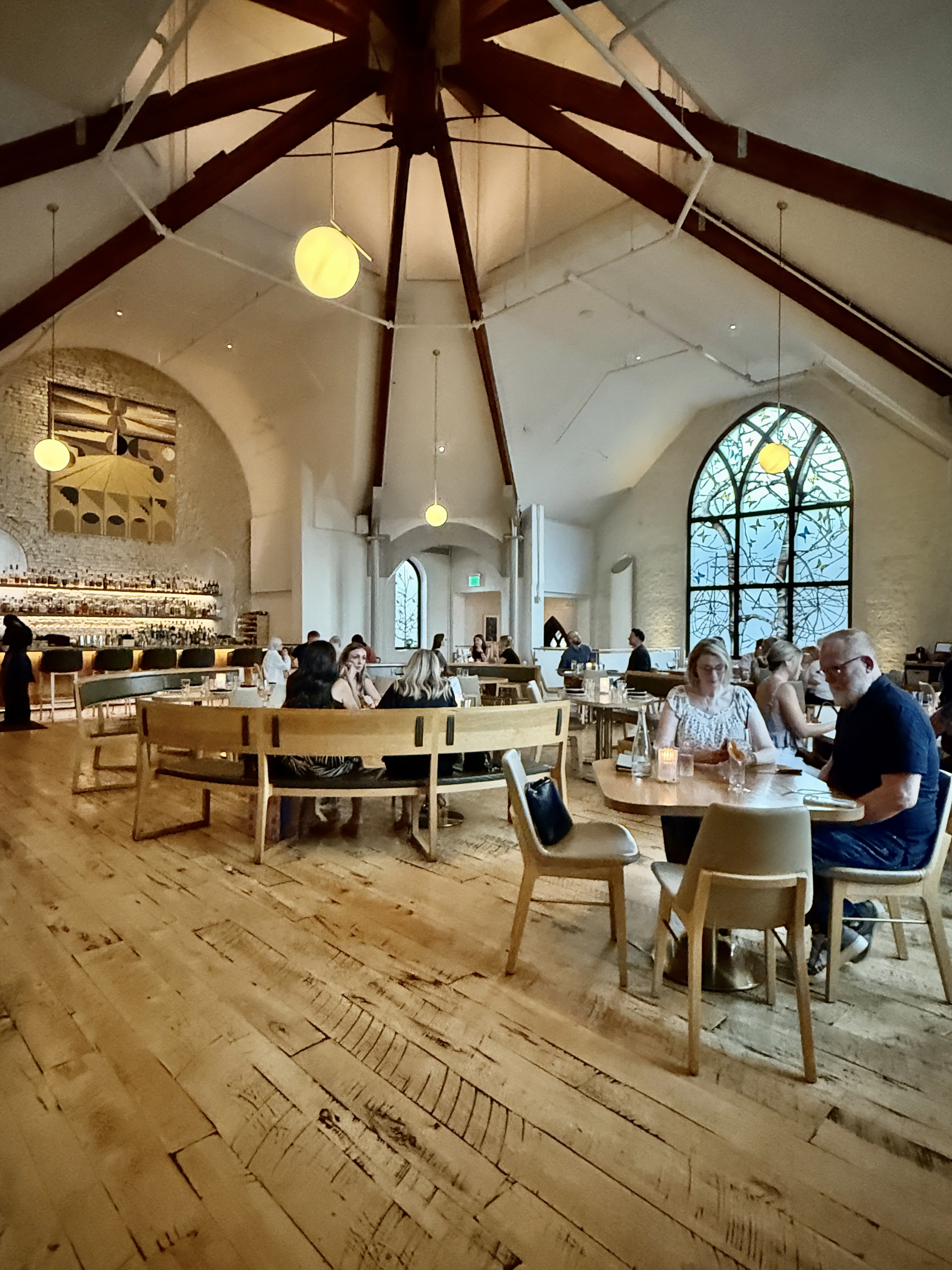
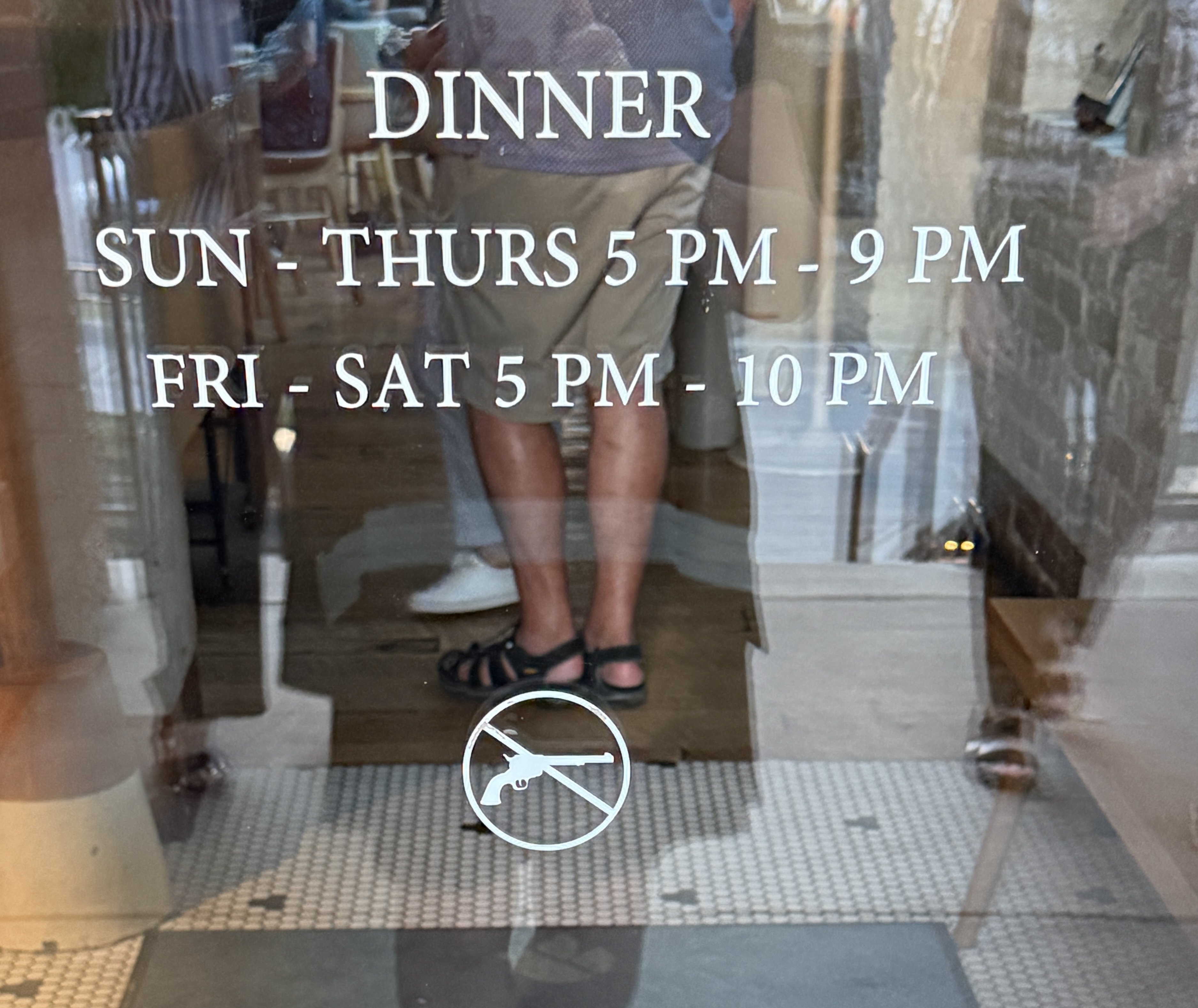
After a brief break back at the hotel, we strolled in the very pleasant warm and slightly breezy Arkansas night–to dinner at Preacher’s Son–a great upscale restaurant in a former church. We were very glad to see that (as you can see on the door) no guns are allowed in the restaurant.
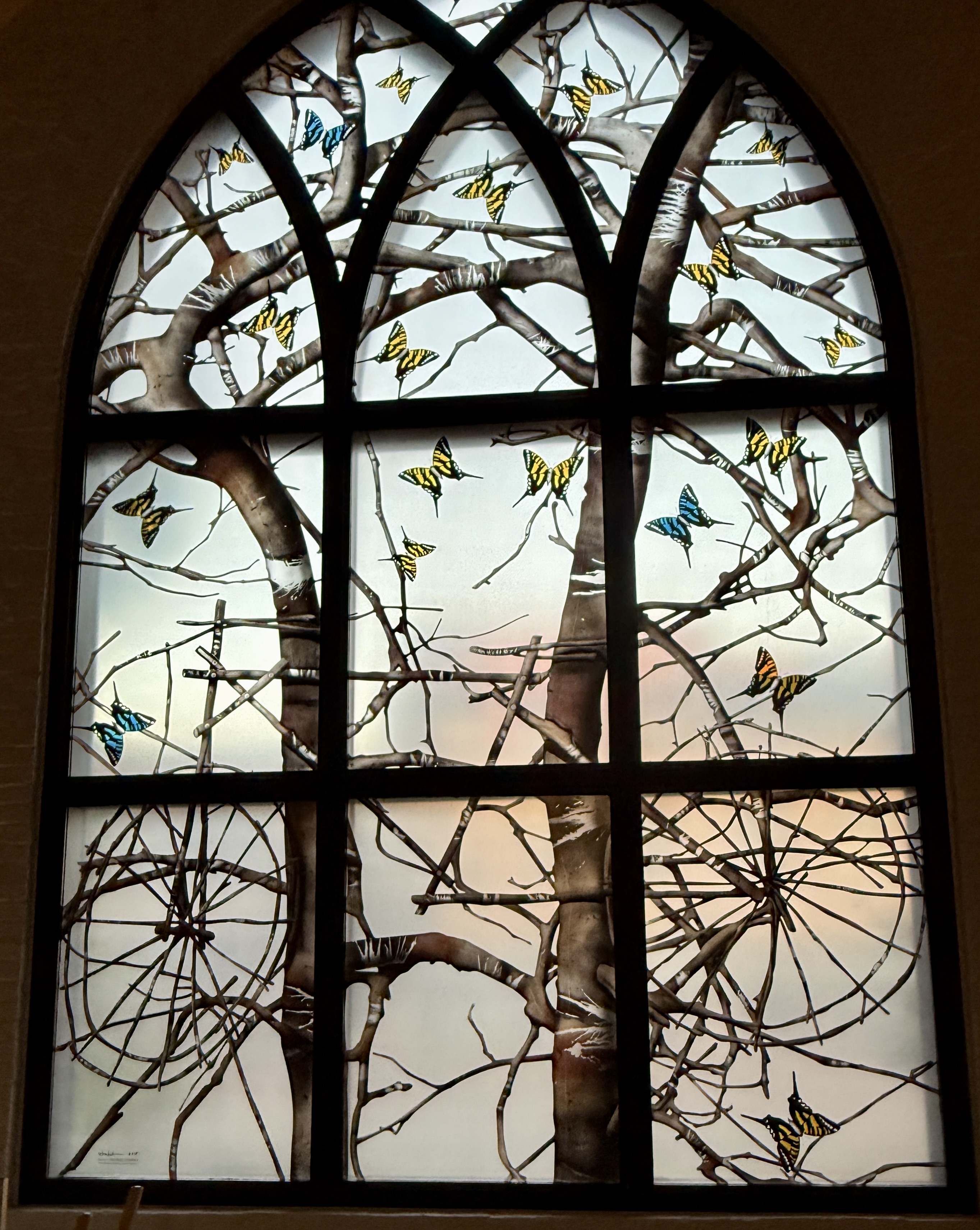
Mmmm the food. Let me try to remember. We shared two starteres: charred carrots that came on a bed of yogurt and some crunchy, spicy stuff.. and tuna carpaccio with watermelon and tomatoes, fennel, and elderflower cream, which was excellent. Then we shared a wonderful gnocci, followed by a whole branzino with beurre blanc and curry powder. Naturally we “needed” dessert so we had some kind of upside down cake with peaches and everything soaked in vanilla. Very yummy.
We strolled back to the hotel… Tomorrow is another day.
Fern in Helsinki: Paiva Numero Kolme (Day 3) October 23, 2013
Hei Hei –
Woke up to a very dreary day.. cold, sort of damp, and absolutely no sun.. so it seemed like it was dusk all day.. I think I understand even more now than before the purpose of Marimekko and how it combats the bad months (November and December are really the worst times of year because there’s not much sun and the snow hasn’t come yet.. Once the snow comes, it can be pretty magical)
So, not sure where I left off, but I think I explained that I walked to where we lived when we were in Finland so many years ago. The area has gentrified, but not our street and definitely not our building. Lots of memories.
The neighborhood is now considered the “arts district” — I guess we were ahead of our time. Several galleries and crafts places, but also struggling a bit. The little bread shop (leipa kauppa) that was on the street is gone, as is the bar where the local drunks used to hang out (I said it was the seedy part of town in those days). Then took a leisurely stroll (Did I mention that it’s cold? It was about 30 yesterday; today it’s a bit warmer) back to the center (keskus). And then I was to meet other old friends for lunch and catch up with Anne and Tapani in the evening.
Many of the little shops have disappeared.. there used to be a little flower stand (kukka kauppa) or shop on nearly every corner — all through the year. The Finns always bring fresh flowers when they visit and everyone has fresh flowers in vases at their home.. all the time. So now you have to go into supermarkets and other shops to get the flowers (which I faithfully did before I headed to Anne’s the day before). And there were also tons of newsstands (sort of like Manhattan) where I could be sure I’d get the International Tribune. Now there seem to be fewer of those stands and I wound up getting the paper at the train station.
I met up with two other friends — Antti and Heidi (Antti is a very well-known interior architect responsible for — among other things, the design of the president’s official home and office, the opera house, and many town halls; Heidi is a physical therapist by training and has held a number of public health positions) — and we had a chance to talk politics (US, world, and of course Finland) and to catch up on personal lives. I was last in Finland four years ago… and somehow although we are good friends there isn’t much communication between trips. Still, once in Finland, it’s as if we were just talking the day before.
Our lunch lasted about four hours.. with a good deal of wine and also some special starting drink that Heidi said was very very healthy and loaded with Vitamin C.. made from buckthorn berries (??)
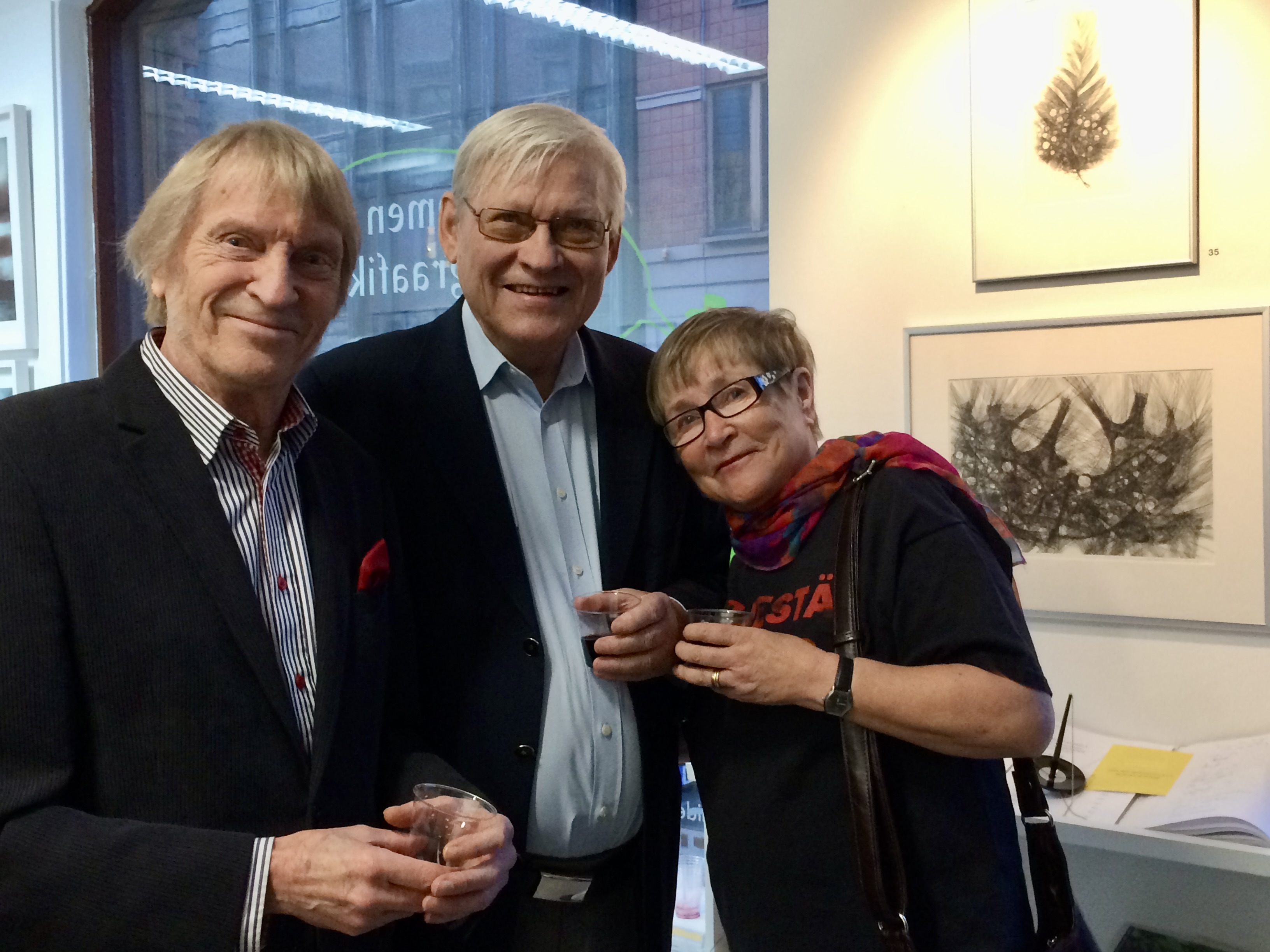
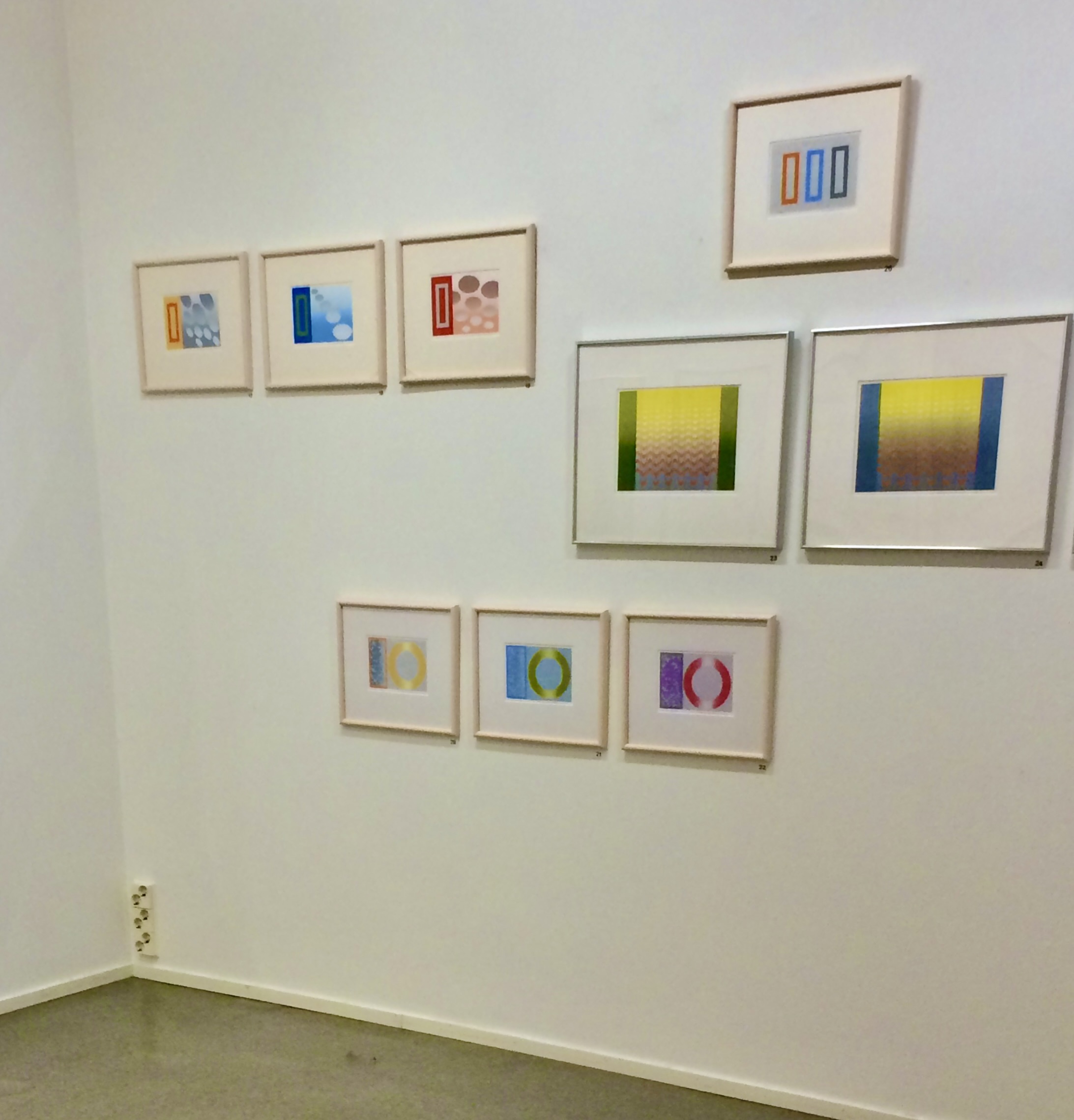
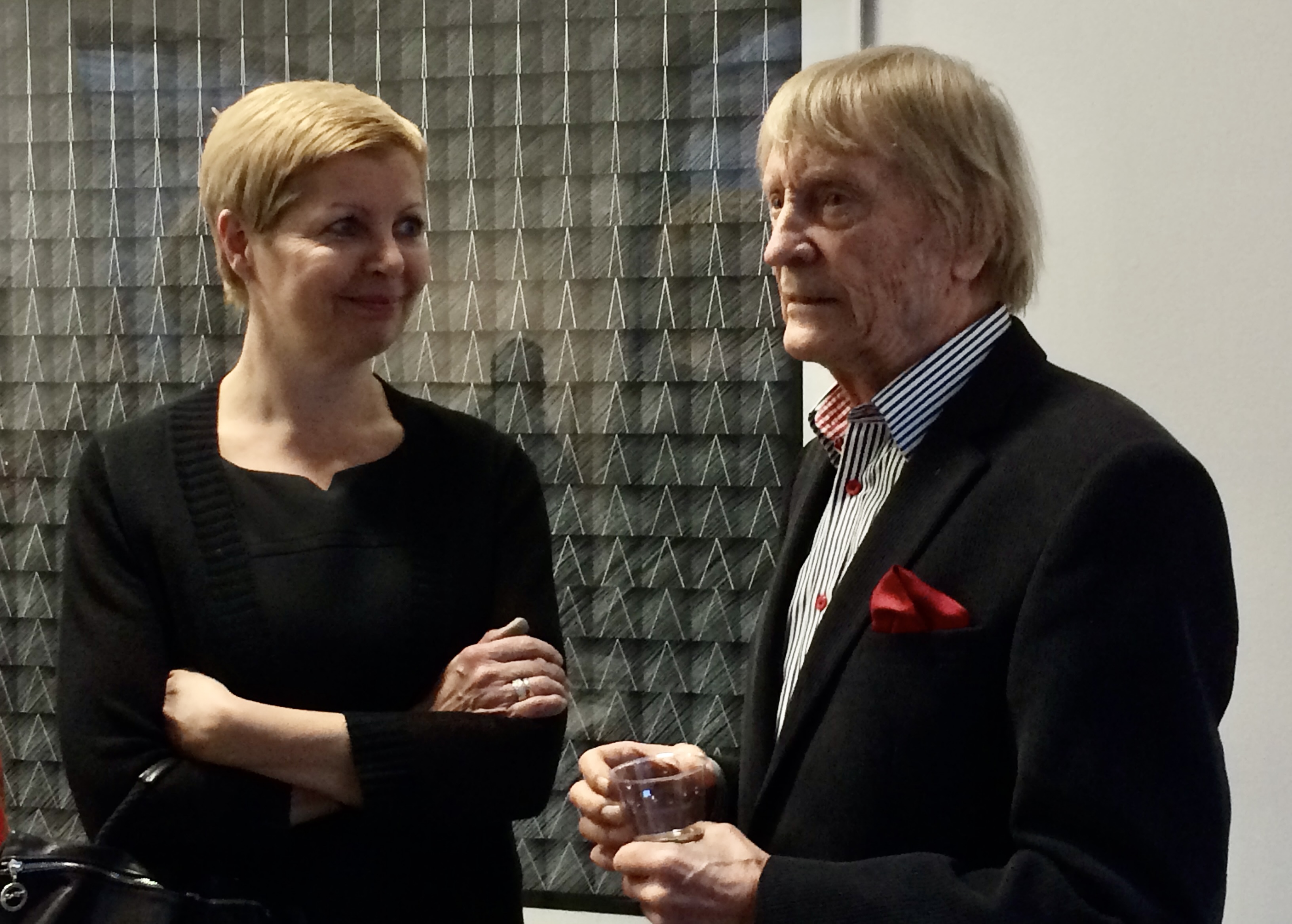
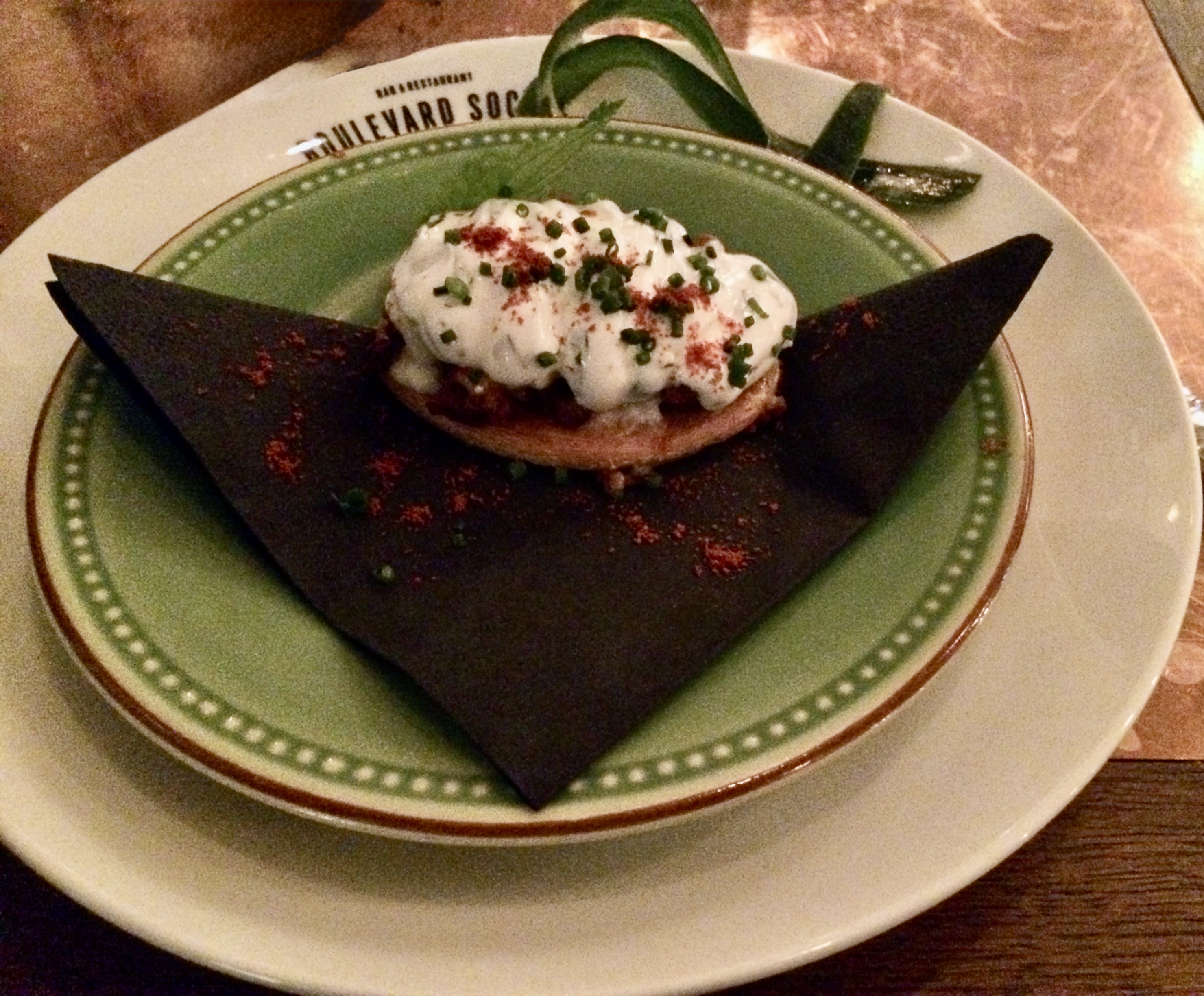
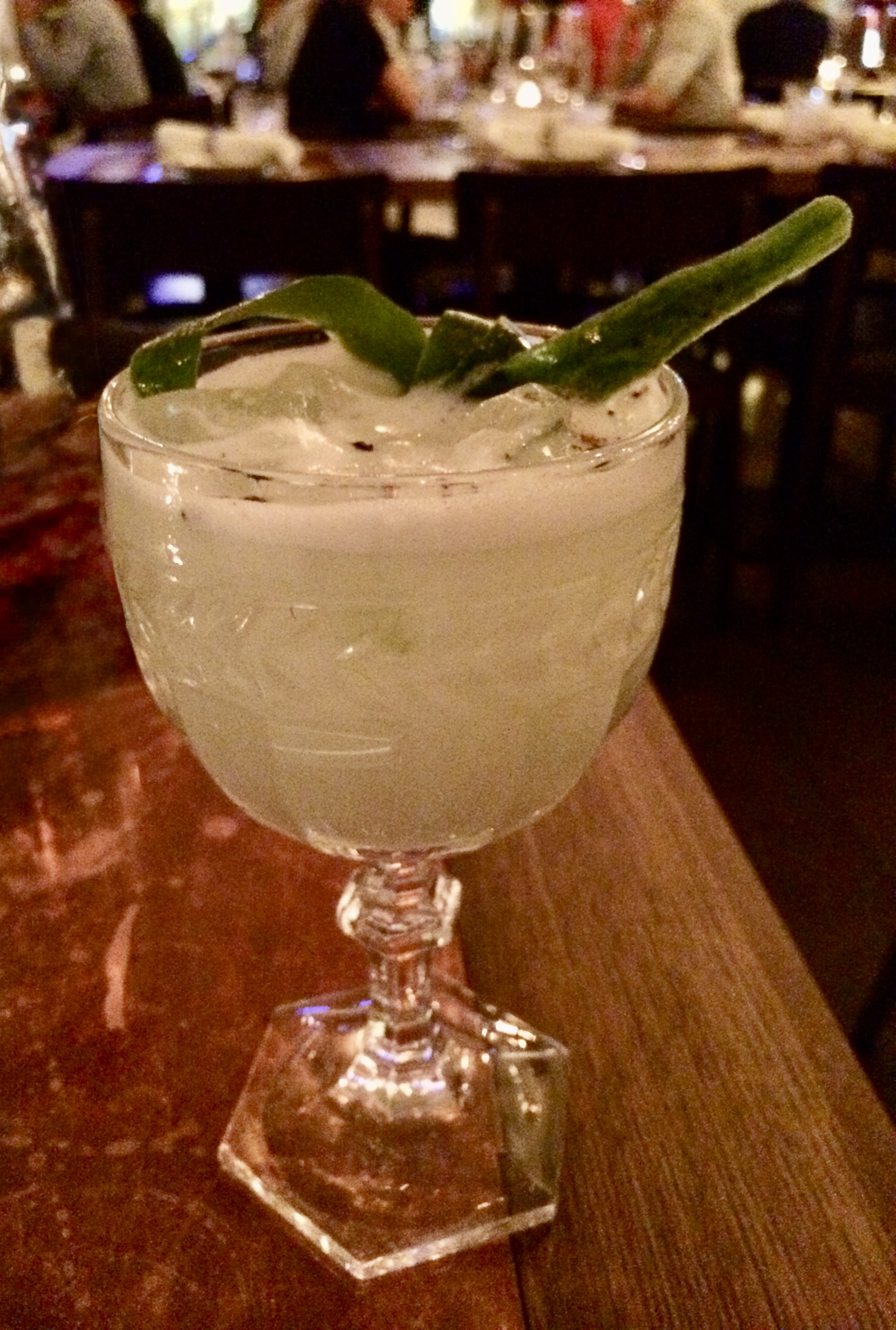
From there, I headed to meet up with Anne and Tapani at an art gallery where there was to be a retrospective of an artist – Matti Koskela – who is now 80 year old – who I met when I lived in Helsinki. Matti was shocked to see me after all these years and immediately proclaimed that the event was international and that I had come for the event. Following the reception, I had dinner at Boulevard Social… the sister restaurant to Ganjin where I had eaten the night before… this one was a Mediterranean theme, and I began with a tsatziki martini! The meal was great and afterwards I walked back to the hotel again..
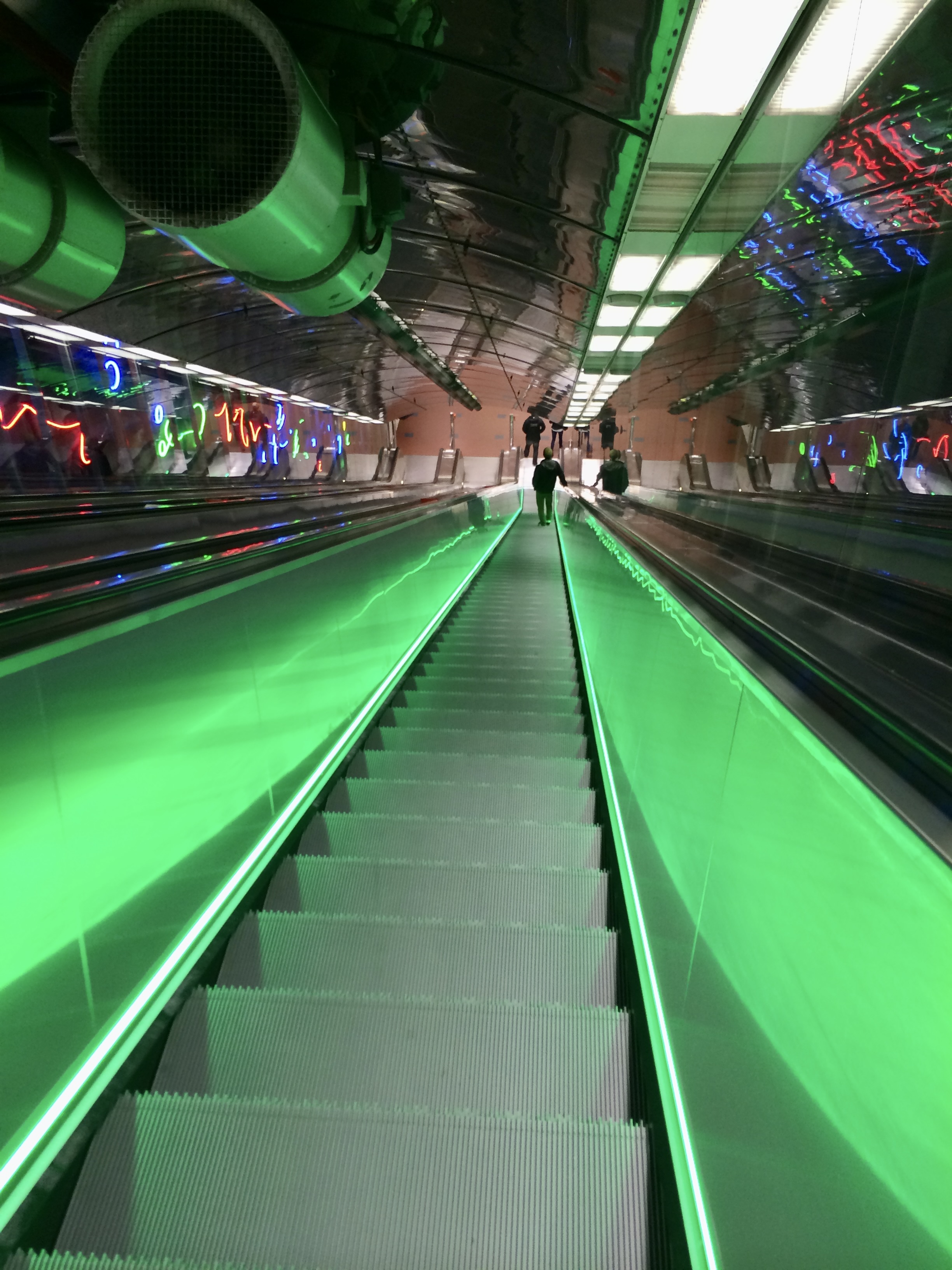
Today, (not having any plans until afternoon) I did some work and then walked to some other neighborhoods.. but the weather was so bad you couldn’t take any photos and it felt like it would rain any minute… Then I heard that there was a big special annual Marimekko sale at their outlet store in Hertiniemi (about 10 miles from the center)… so given the weather and the few free hours, I decided to head out there. Took the tram and then walked about a half mile to a warehouse type space.. a building amid lots of industrial buildings — but recognizable with all the bright red Marimekko branding, including big picnic umbrellas (naturally with Marimekko patterns). OK.. I entered.. it was a mad house by Finnish standards, but definitely polite and low key by American/NY standards. There were a lot of good things available at great prices, things like winter coats (which I would have loved to have purchased) but when I thought about lugging these things on the plane I opted for a few very small, light items. Headed back to catch up with Antii and Heidi again — this time at their flat.
After some afternoon champagne and discussions about the Finnish economy (which is apparently not in great shape) and public education (they only have public schools, no private schools) and Obamacare (which is of great interest to Heidi who was a member of the Finnish General Assembly on Health) and why Americans don’t want to support Obamacare, and other miscellaneous topics.. I got to see their two adorable grandchildren – 2-1/2 year old twins who are totally infatuated with Angry Birds… Unknown to me, Angry Birds is a Finnish company. So there are Angry bird stuffed animals and Angry Bird candy and Angry Bird parks… Learn something every day.
From their flat, I walked downtown (in the rain) where I met Anne and Tapani for the final dinner. More political conversation about US, Russia, Finland. We ate at Kosmo, a nearly-century-old restaurant that was once a favorite of artists and writers and lefties. On May Day, all Finns eat out. When we lived in Helsinki we went to Kosmo for dinner with friends on May Day.. Everyone was Finnish in the restaurant except us.. and our table was speaking English.. And, given that this was during the Vietnam War, some young guy came up to us over lunch and asked “Why are you killing little yellow people?” He was a bit drunk, and although a Finn, his English was perfect American English. We responded that we were not killing anyone; we were having dinner.
OK.. so it’s an old restaurant with lots of tradition, but the menu has been updated and prices match all the other high end restaurants.
I walked back to the hotel.. It’s now nearly midnight. I’m packing and heading back.
Tomorrow morning, just before I head to the airport, I’m meeting with a Finn who has written a book about urban branding… He’s on the faculty of one of the newer colleges. We meet at a café at the railroad station, and then I will check out of the hotel and catch a taksi to the airport..
See you stateside.
Terve Terve
Fern
Final Days in Bucharest, Romania. April 17-18, 2005
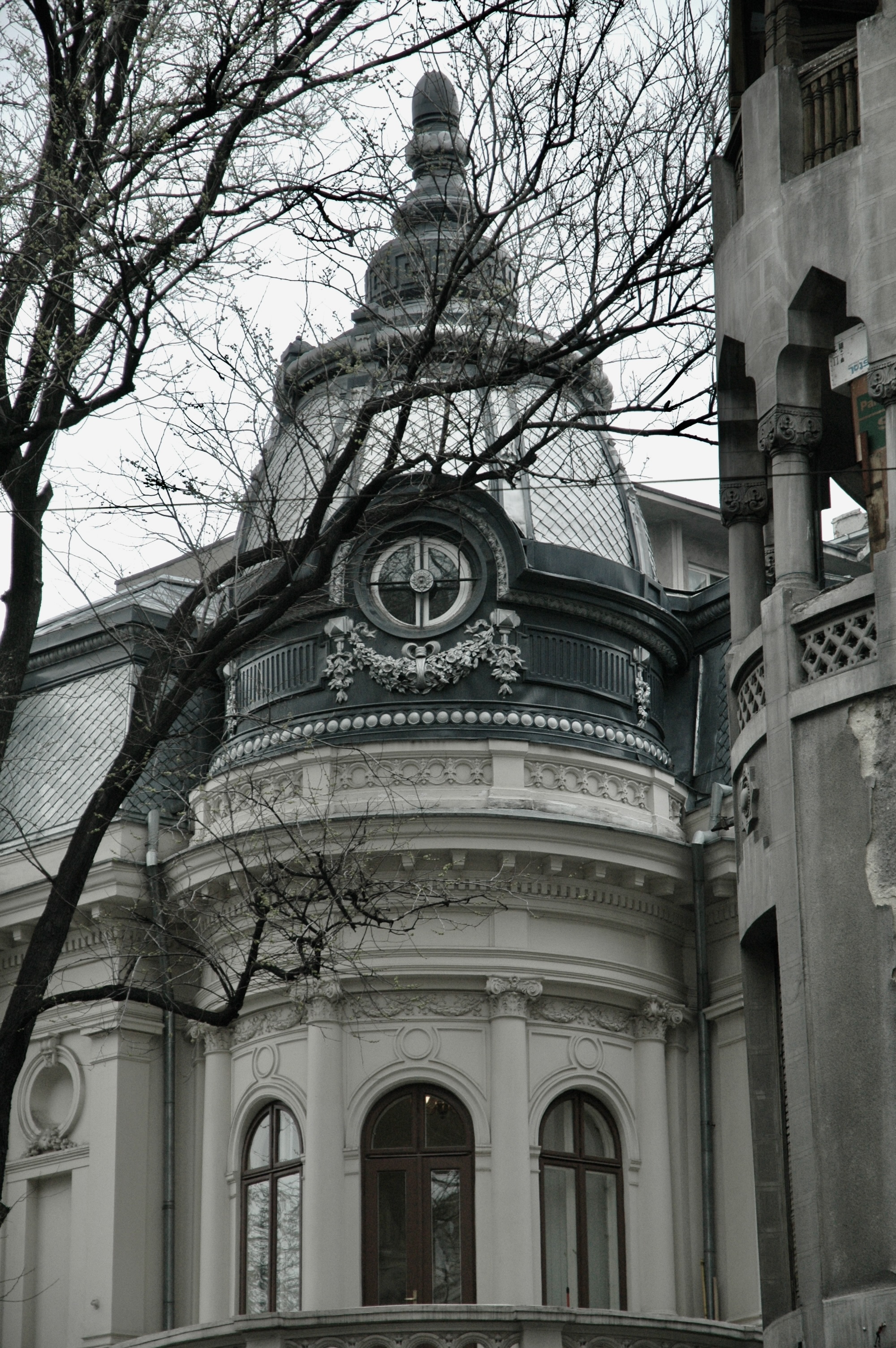
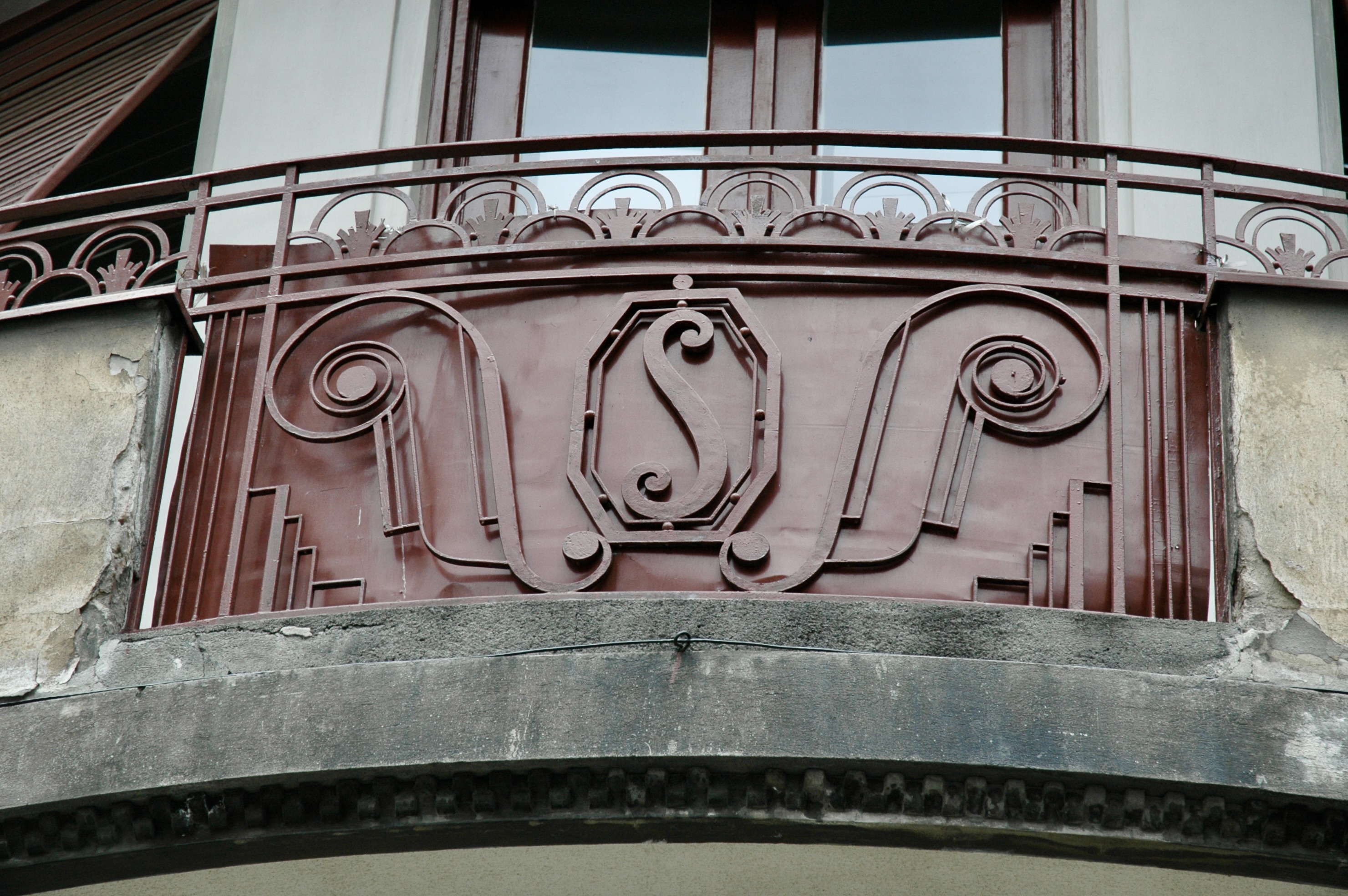
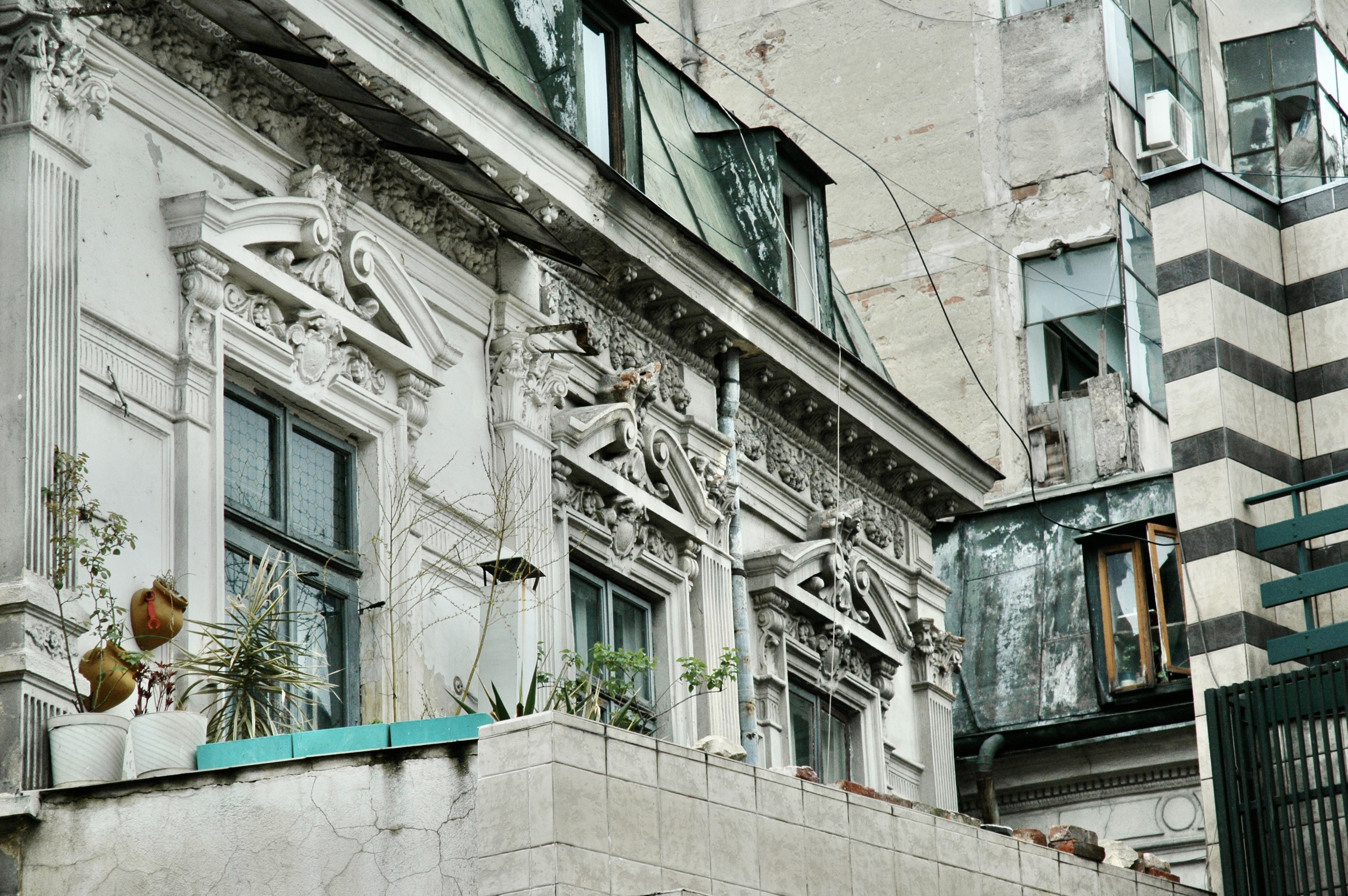
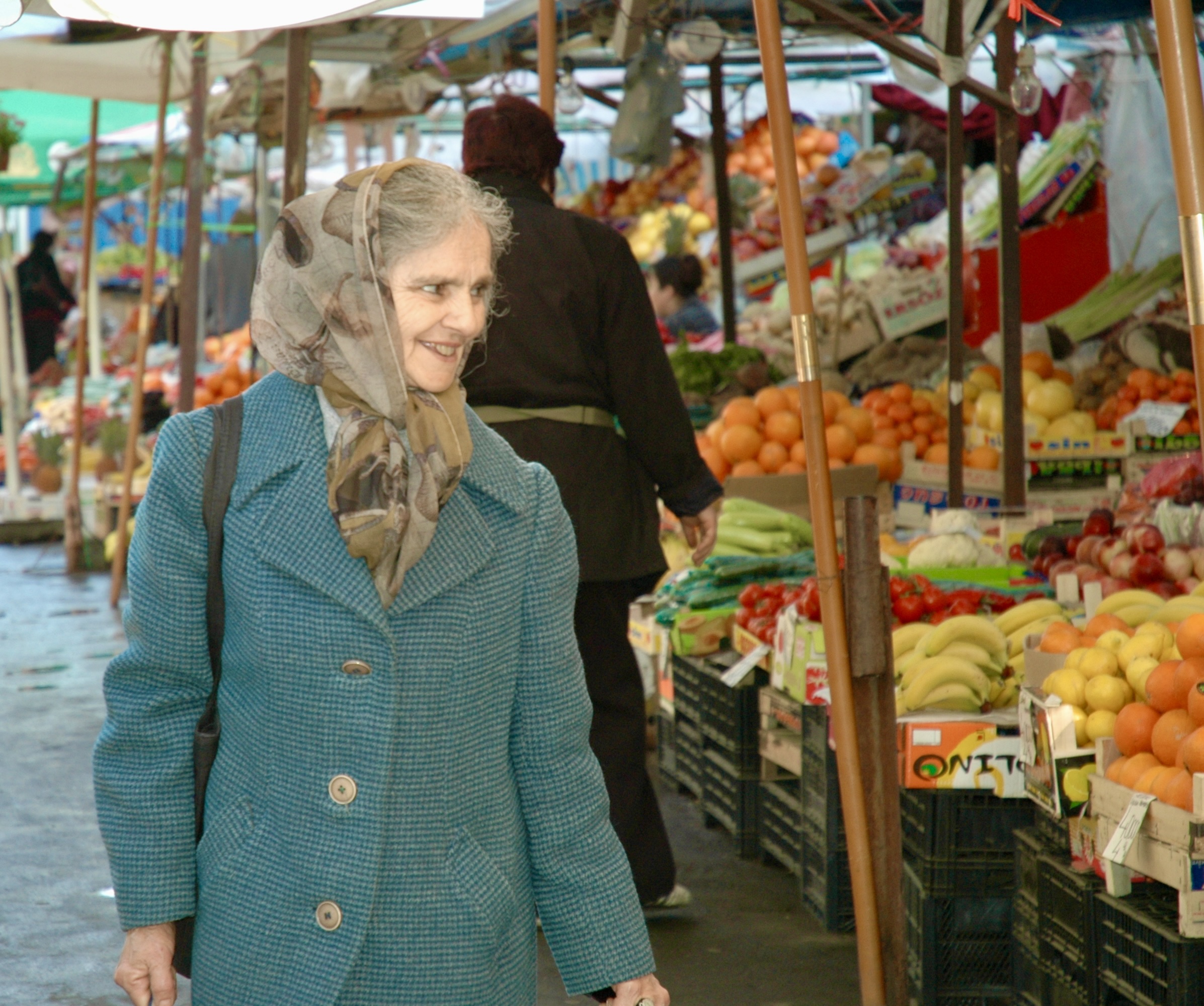
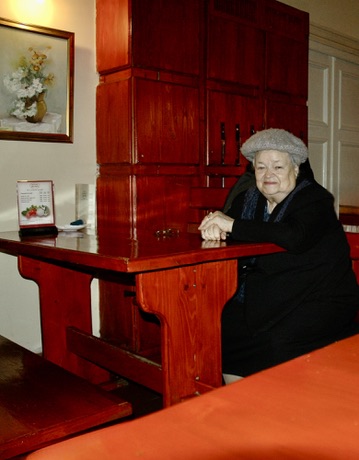
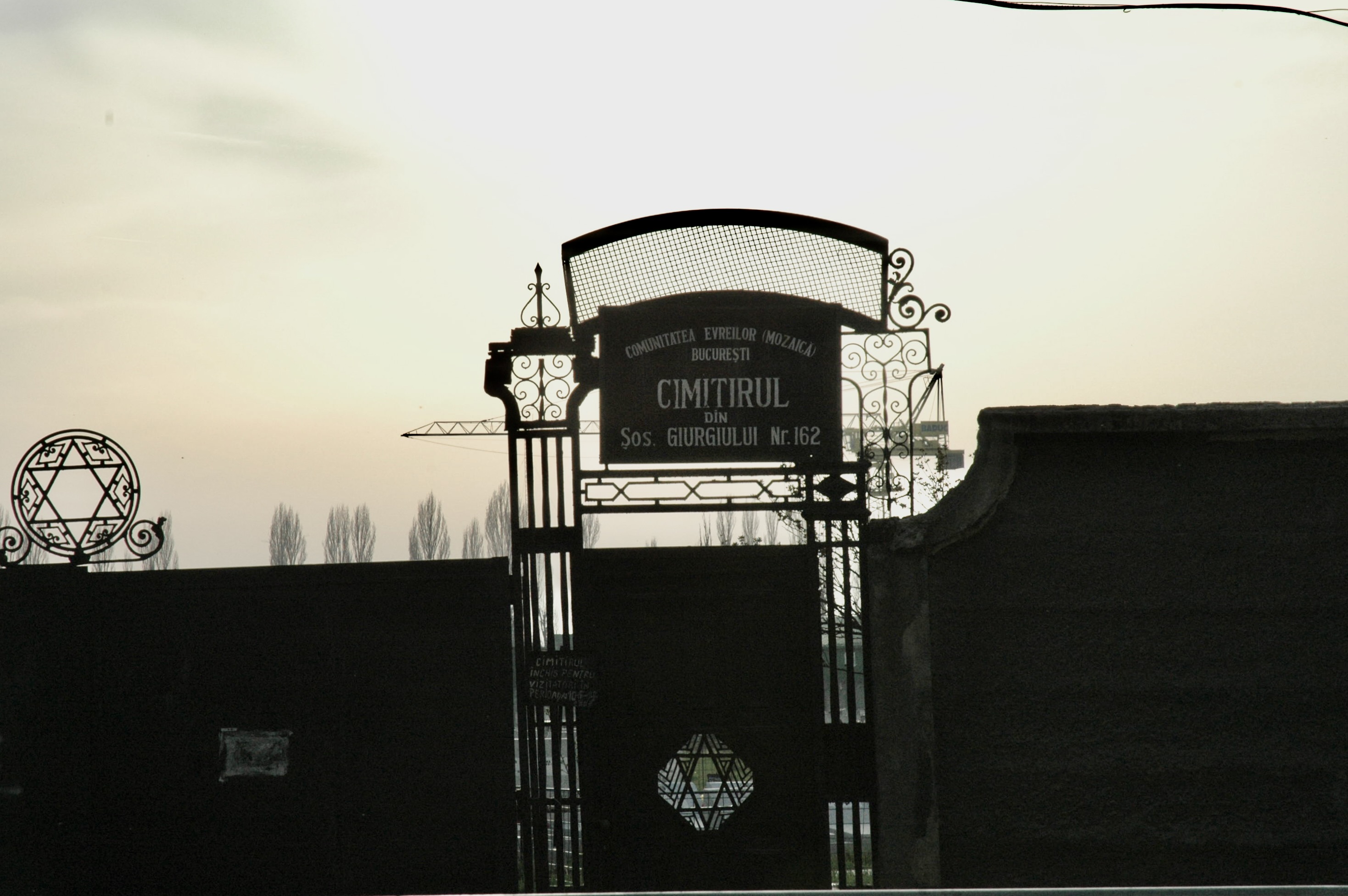
We spent the final days in Bucharest walking around, taking trams, ducking out of the rain, and visiting with some of the friends of friends. We stumbled on a soon-to-be-renovated upscale, hip coffee shop where the proprietor spoke Italian. Apparently there is now a lot of Italian money coming into Bucharest, thinking it will become a new tourist destination. While the cafe wasn’t yet open and there were ladders everywhere, they served us and it looks like the emerging cafe scene will be interesting to watch. It’s important to remember that this was 2005 just about 15 years after the revolution and overthrow (and execution) of Ceaucescu so a new country was emerging, but the physical plant would take years to restore or remake.
The city of Bucharest, was still haunted by the legacy of the country’s dictator. Roumania has a complex history, a multi-ethnic population, and a rich cultural heritage. Bucharest was gritty (and maybe it still is) and was filled with dreary apartment buildings which overtake some impressive 19th century architecture, when it was called the “Little Paris of the East,” but there’s also a lot of charm. I remember that my grandfather (who arrived in the states around 1912) talked about the beautiful city. But Ceacescu demolished many of those buildings and replaced them with Soviet-style residential areas (long blocks of apartments) as well as the Palace of the Parliament (we only saw it from the outside). While we were told that the “old town” was dangerous, we walked there anyway (without any incidents) and you could see that the bones of this neighborhood had potential. I’m told that it is now a lively nighttime area with restaurants and clubs. The Old Town was deserted and dilapidated during our visit.
I have read that after a visit to North Korea in the 1980s, Ceaușescu tore down 80 percent of the historical center including houses, schools, churches—to create wide boulevards, stone-facade housing blocks, and fountains– like what he had seen in North Korea.
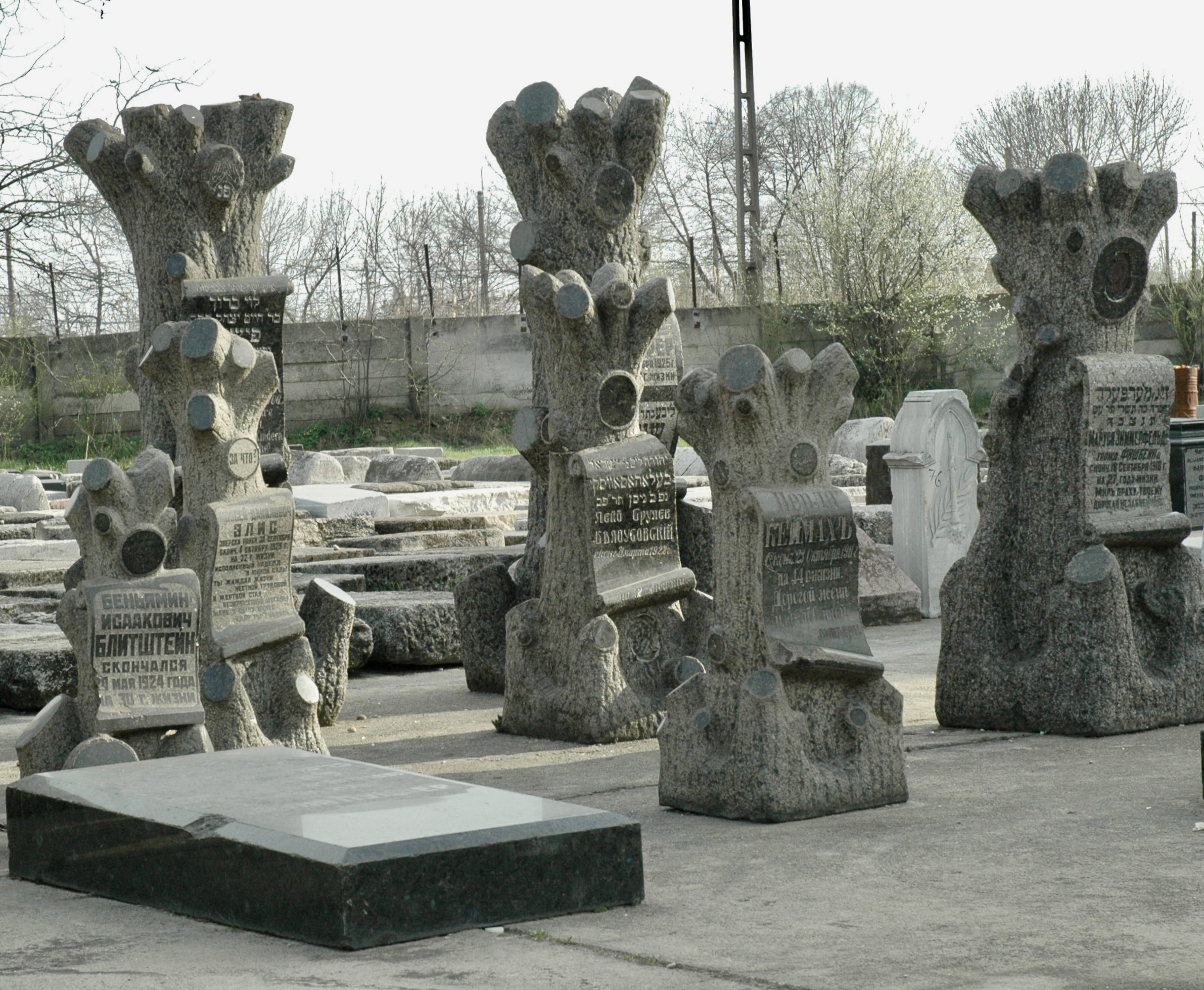
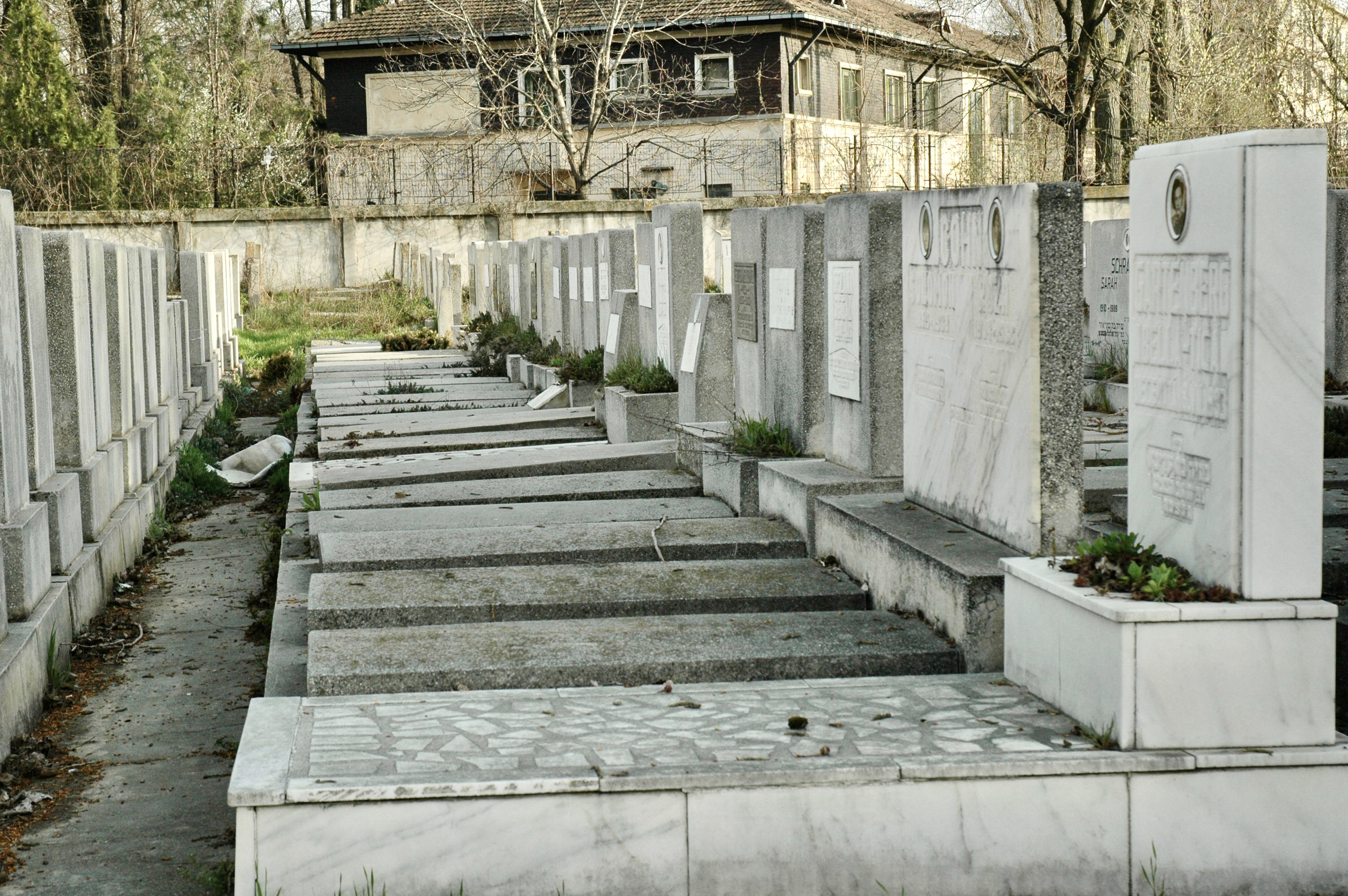
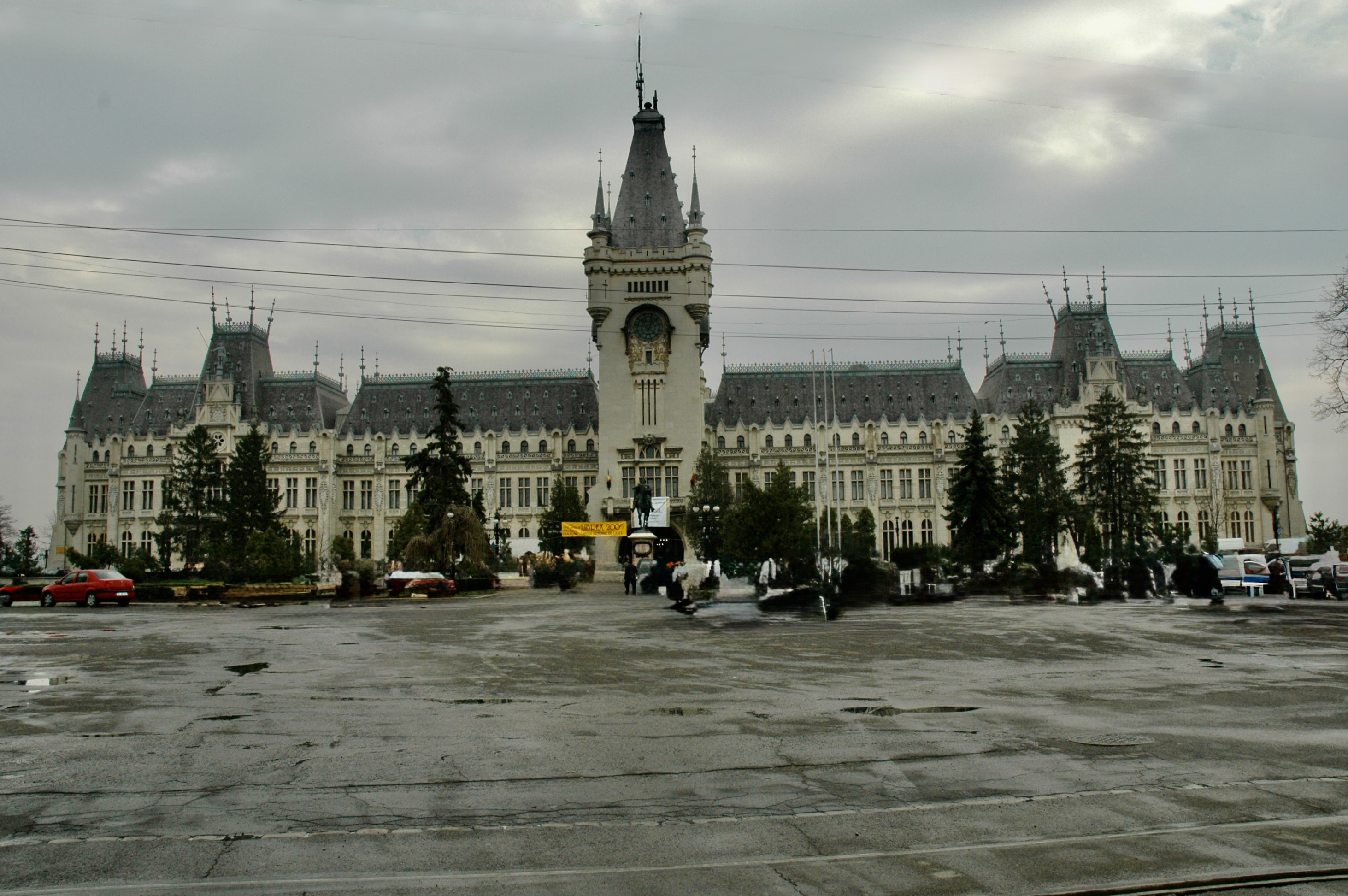
While I’m sure there were some fine museums, we chose to spend our time walking the streets. I guess Ceaușescu feels like ancient history, today, and its entry into the EU probably makes it feel more European than when I was there.
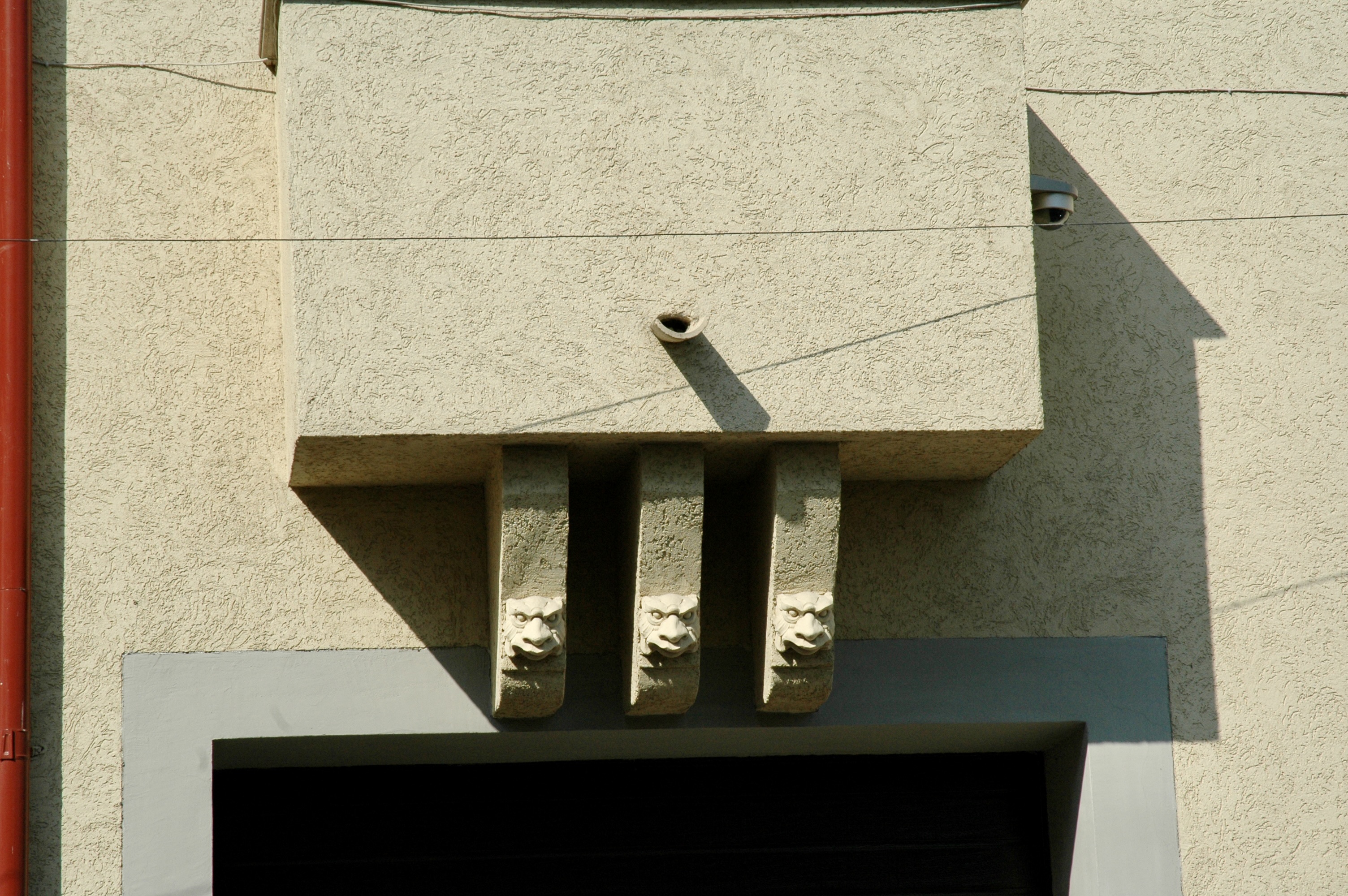
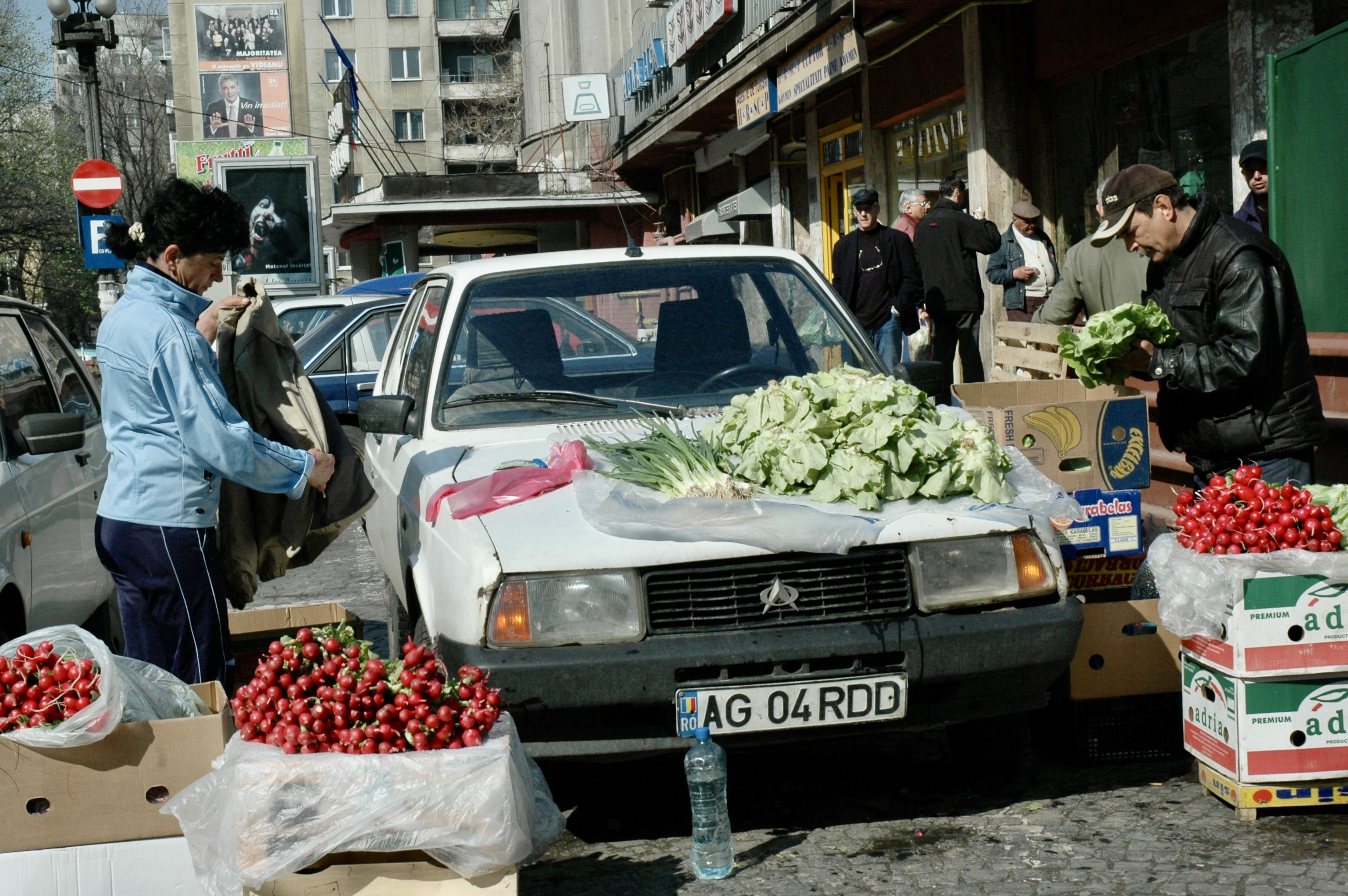
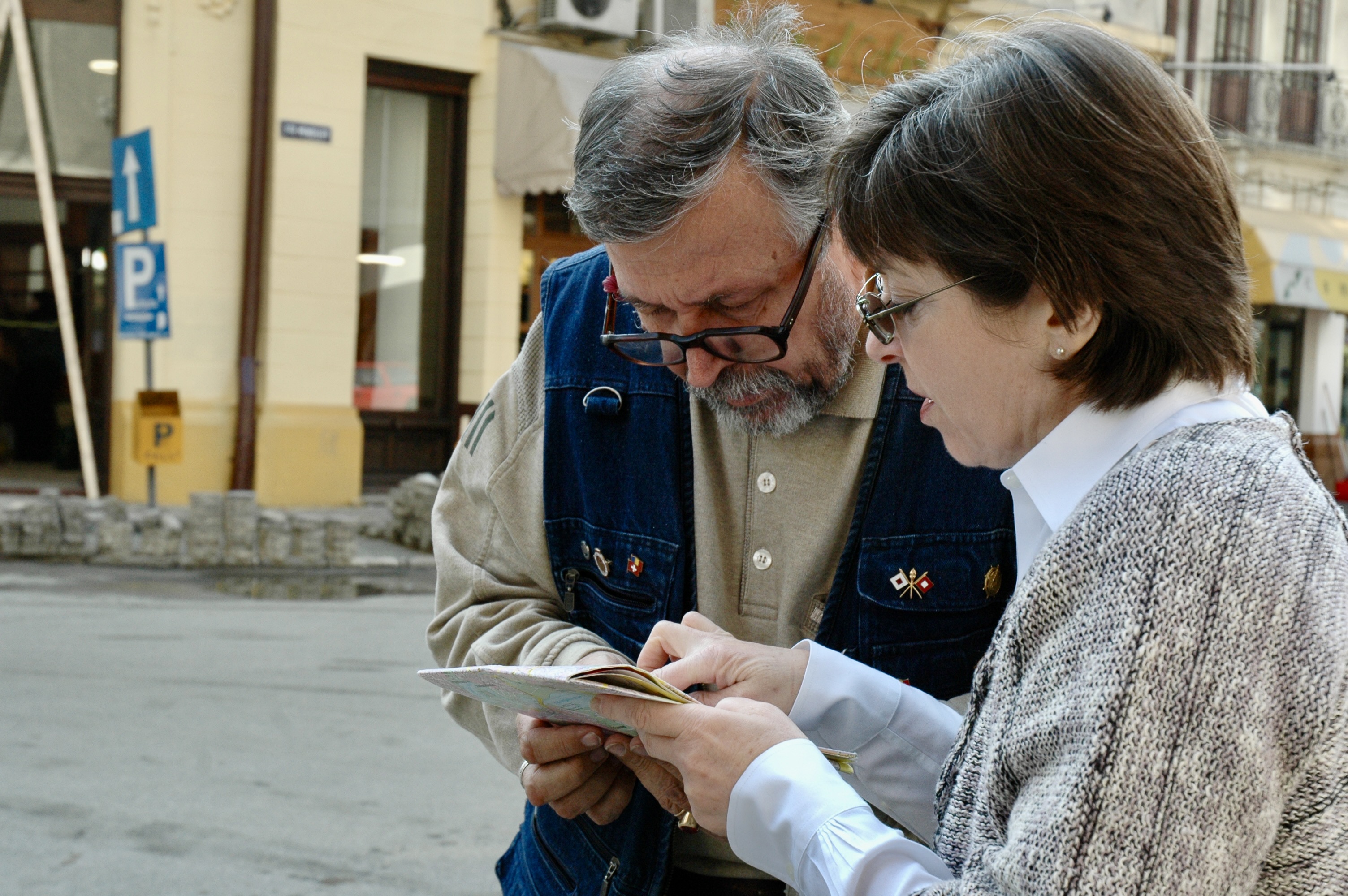
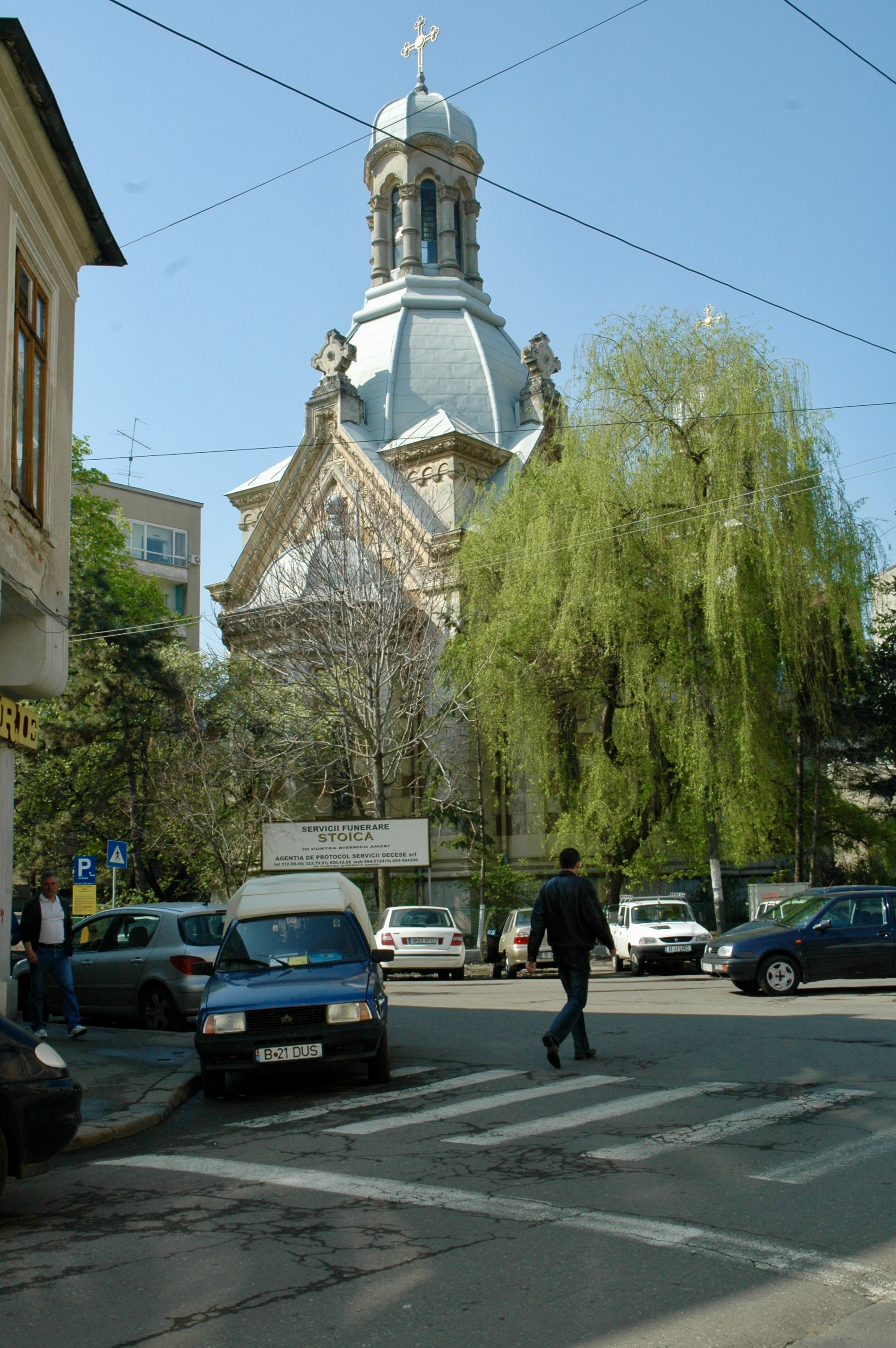
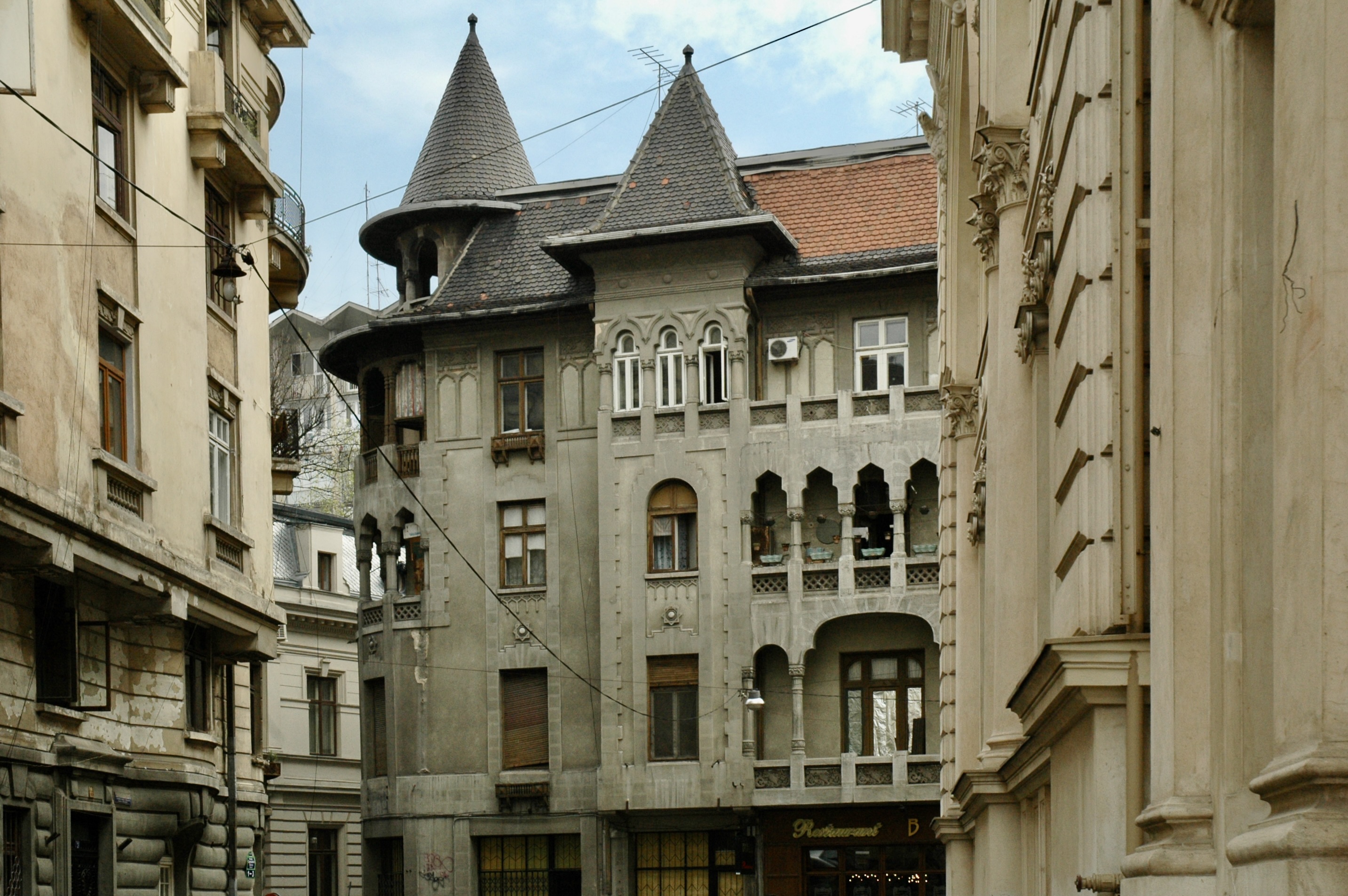
That’s it for Romania. I’m sure I left out a lot… and wish I could find my notes. If I ever do, I will replace the test for these days with the original. But maybe memories are the best way to describe a place anyway. And the response to people who ask if I’d return, the answer is Yes… and I think it is probably a very different place than it was in 2005.
Iasi to Bucharest April 16, 2005
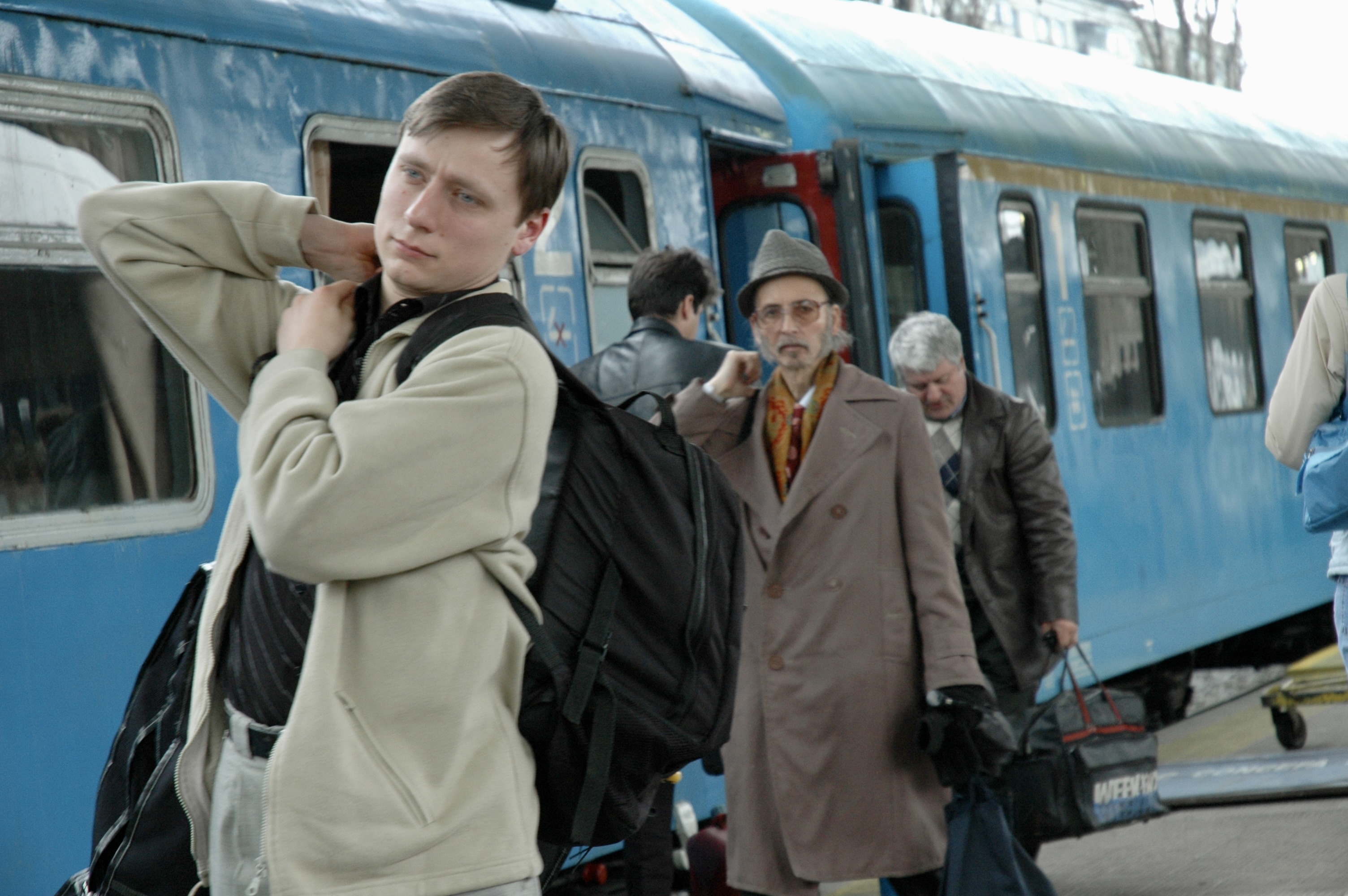
This post is written from memory; the original notes were lost. And I didn’t have the blog set up in those days.
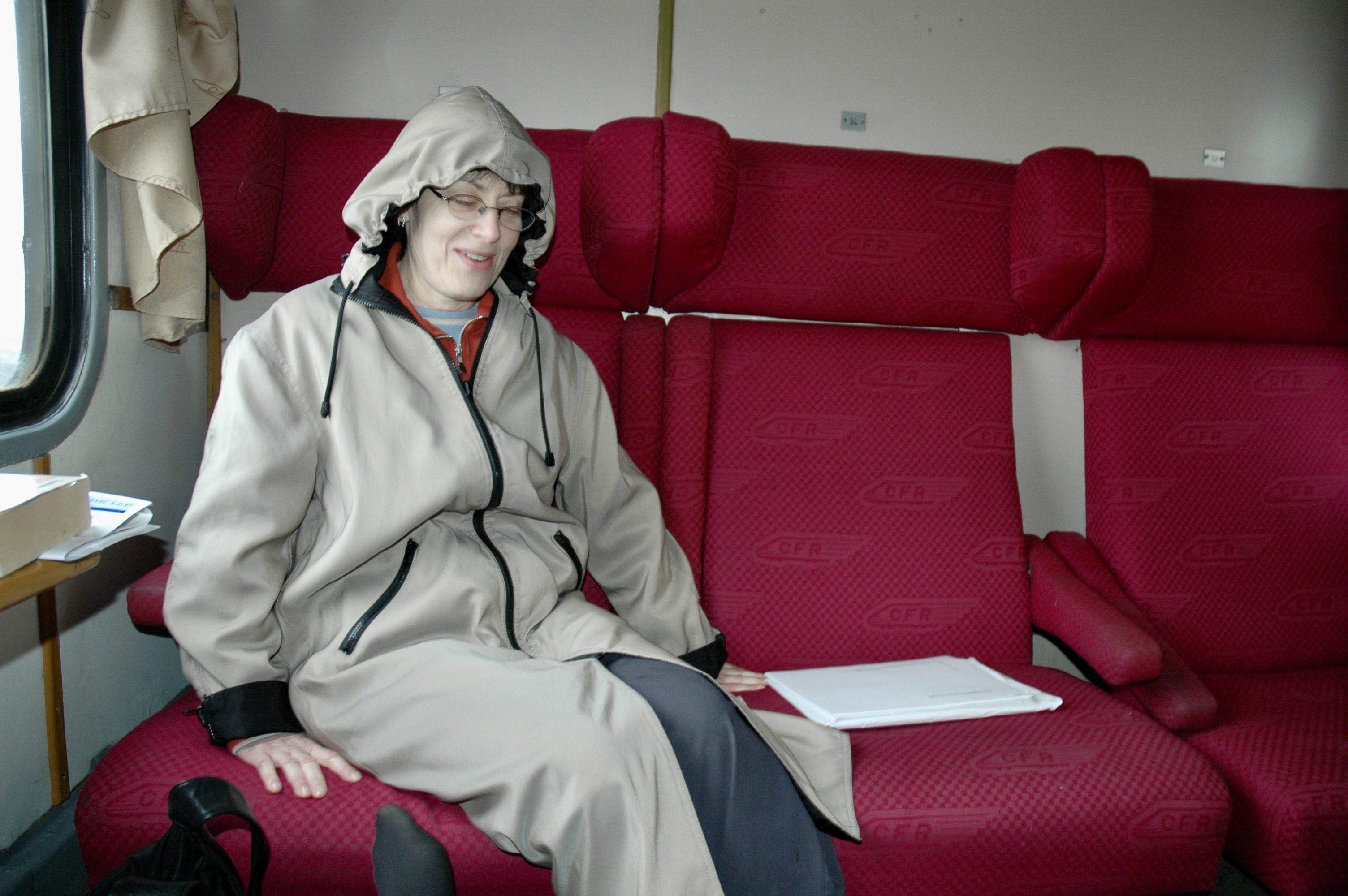
Well, the train from Iasi to Bucharest turned out to be a bit of a comic episode. We decided to go to the train station the night before to get our tickets since it seemed that the train schedule would have us leaving Iasi at 6 am. We figured it would be complicated to get the tickets so getting them the night before made sense. So… before we headed to dinner we went to the train station and the fun began.
We waited on a long line to buy the tickets. Eventually it was our turn, but the person at the counter only spoke Romanian. Several people tried to help us out but their English was quite thin and it was never clear if they understood us or if we totally understood their responses. We knew there were two different trains. One left at 6 am and one left at 6:10 am. The 6 a.m train was the “fast train” and the 6:10 train was the “local”—or so we thought based on what we could see posted on the walls of the station.
So we kept saying “Fast train! Bucharest! 6:00” But it was unlikely that anyone understood. Finally a young woman came to the counter to help us out and she told the person at the booth the tickets we needed. She then showed us where on the ticket we could find the car# and our seat #s. We would be in a little cabin with 4 people, including the two of us. All seemed good, but we were a little skeptical. We then went out for dinner (tickets safely tucked into our wallets).
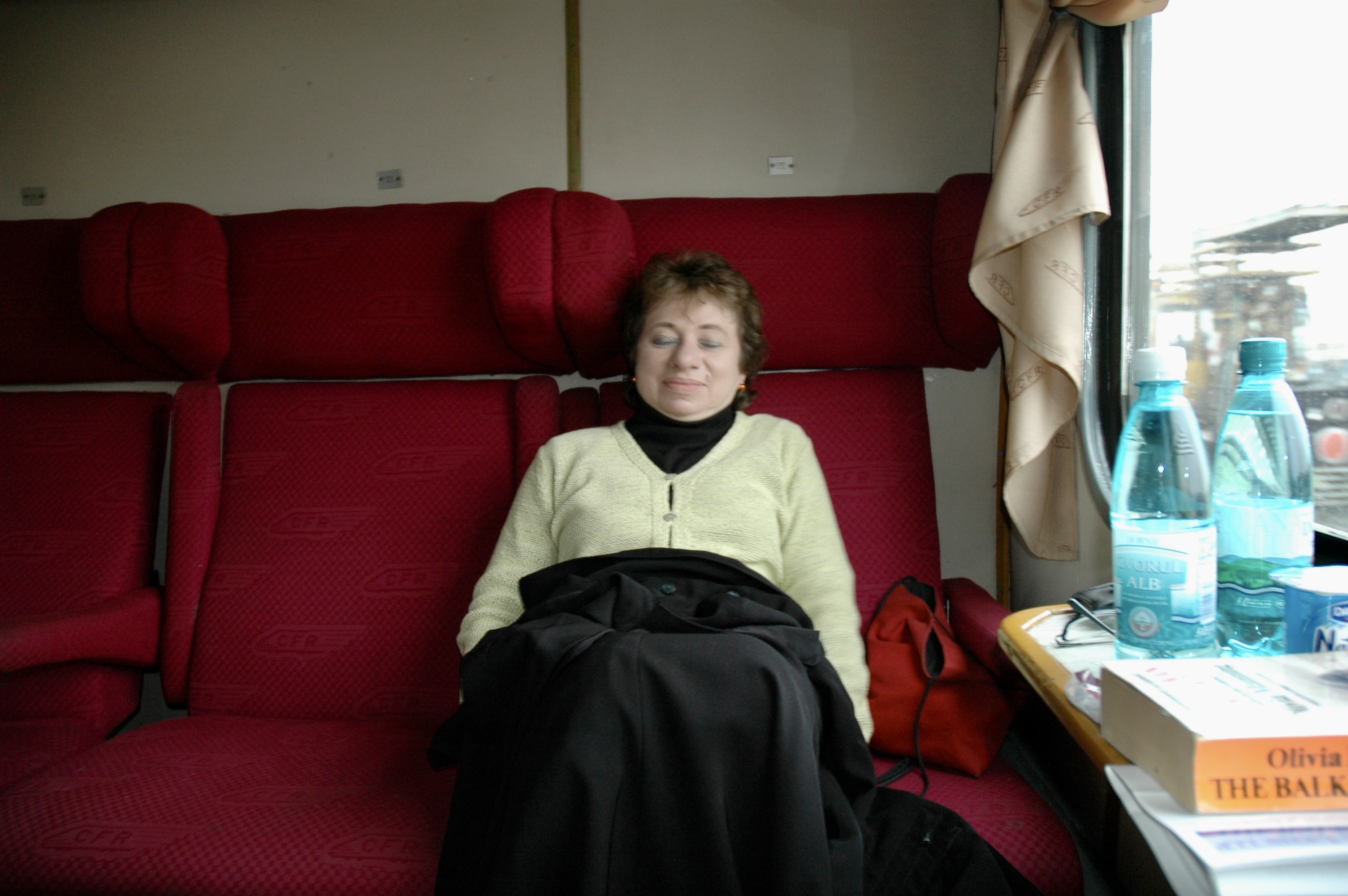
The next morning we got to the station extra early, in spite of having the tickets, and navigated to the track number written on the tickets. We found the track and the car and I said to Adrienne “I think this is the wrong train.” It was very old and rickety; the cabins were old with less than modern conveniences. “This cannot be the ‘fast’ train!” To which, Adrienne said very clearly: “Here’s the ticket. It says this track. It says this train number and this cabin.” I thought we should go back to the ticket window to find out but Adrienne was convinced that we’d miss the train. From the window of “our” train, I could see a shiny new train on another track. I said we should investigate because that was likely our train. but I didn’t want to argue, so we sat in the cabin. It was about 5:45 a.m. The other two passengers came into our cabin. They didn’t speak English but Adrienne cheerfully said “I guess the train will leave soon, since it’s 5:45 and it leaves at 6 am.” There was no response.
At precisely 6 a.m. that bright, shiny new train sped out of the station and we were just sitting in our aged train. We were definitely on the local train (which would take about two additional hours to get to Bucharest.) And at about 6:10, we left the station on the slow boat to China! or rather the slow train to Bucharest. It was a pretty boring train ride but we did see a lot of countryside… which at this time of year was pretty dry and grey.
We got to Bucharest at about 4 pm or 5 pm and took a taxi to the hotel. We met up with Adrienne’s friend and a young Romanian woman she had befriended and headed to dinner. I don’t remember much about the meal or the restaurant.
More tomorrow,
Día Nueve: el último día– January 1, 2026
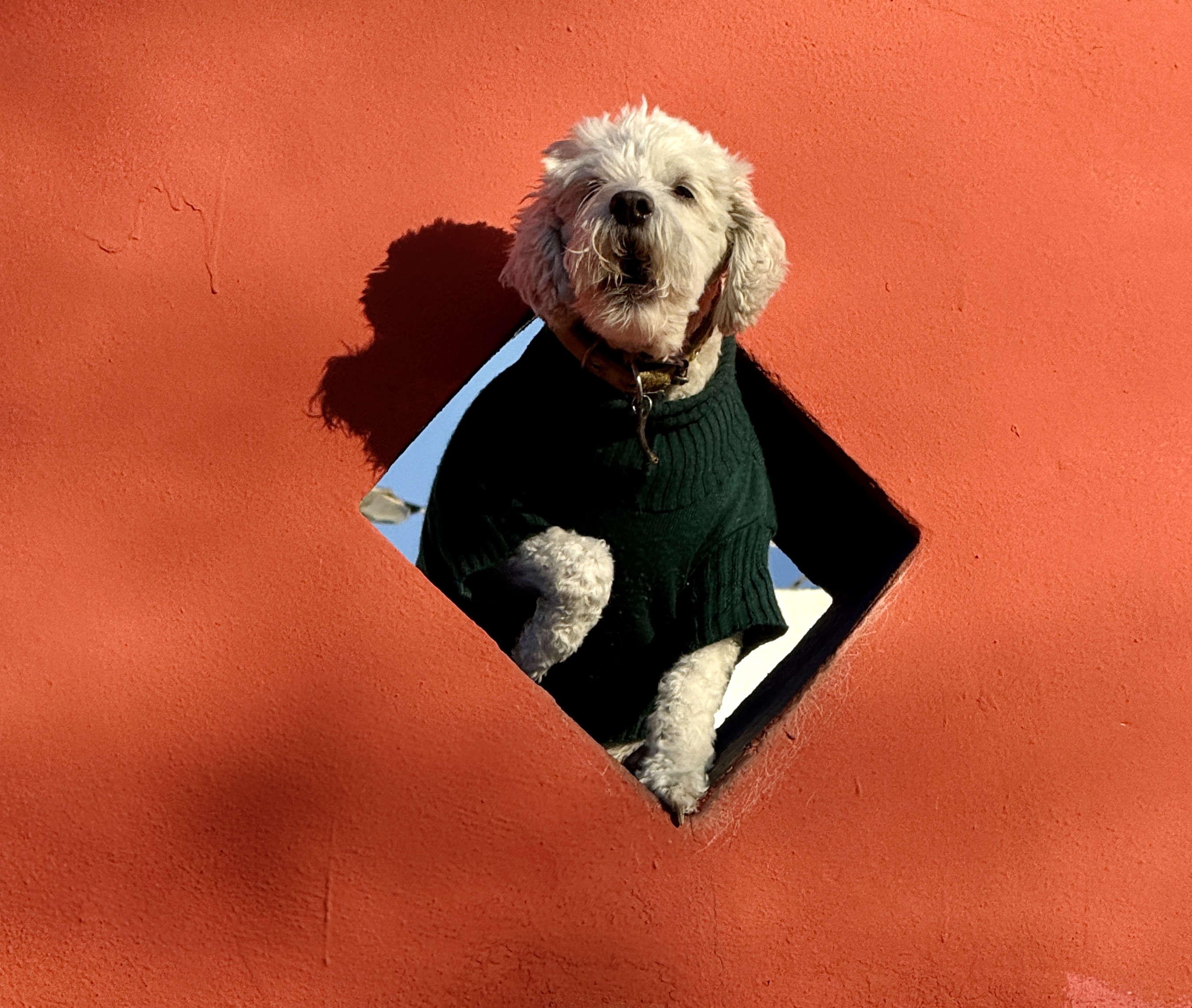
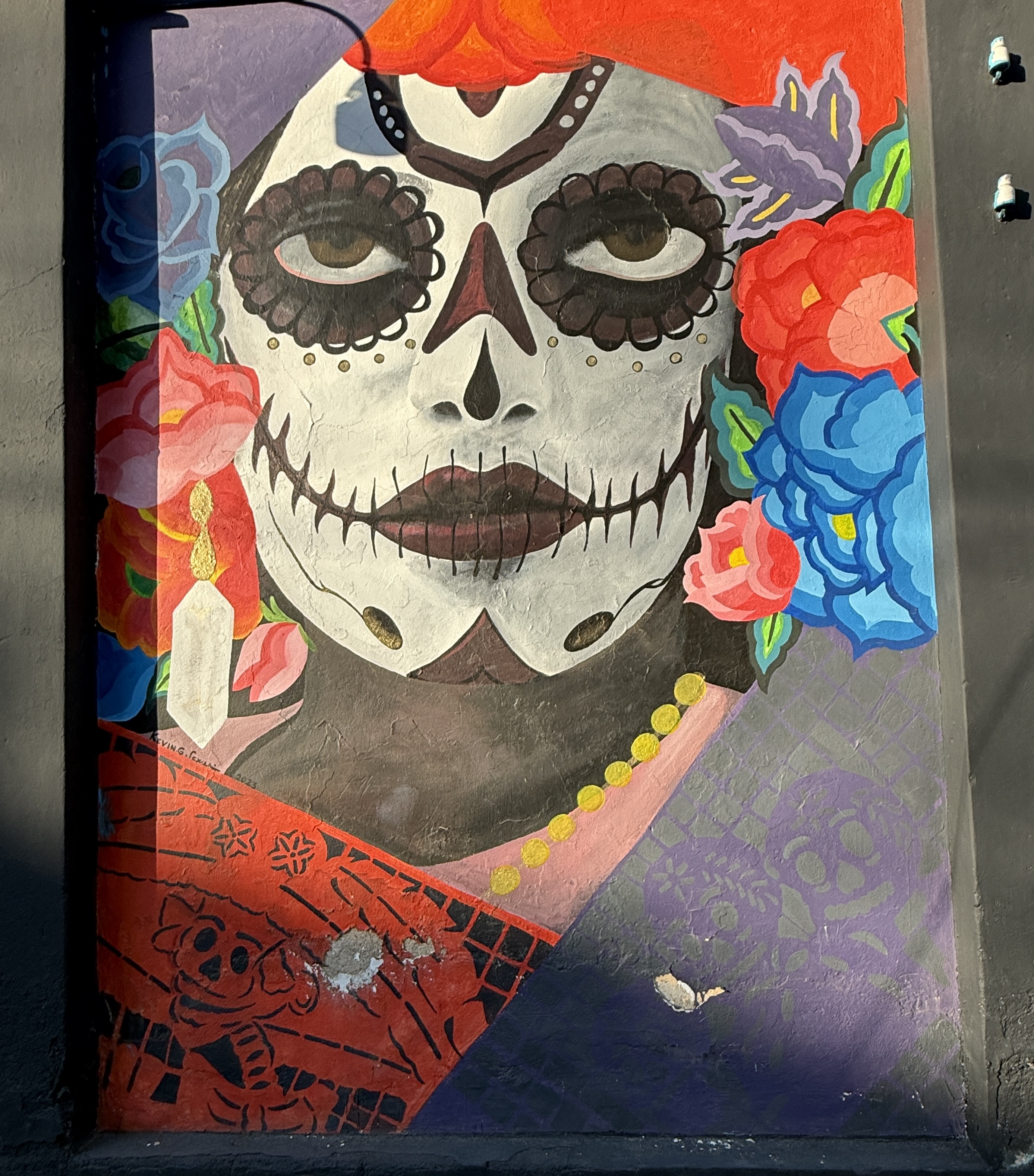
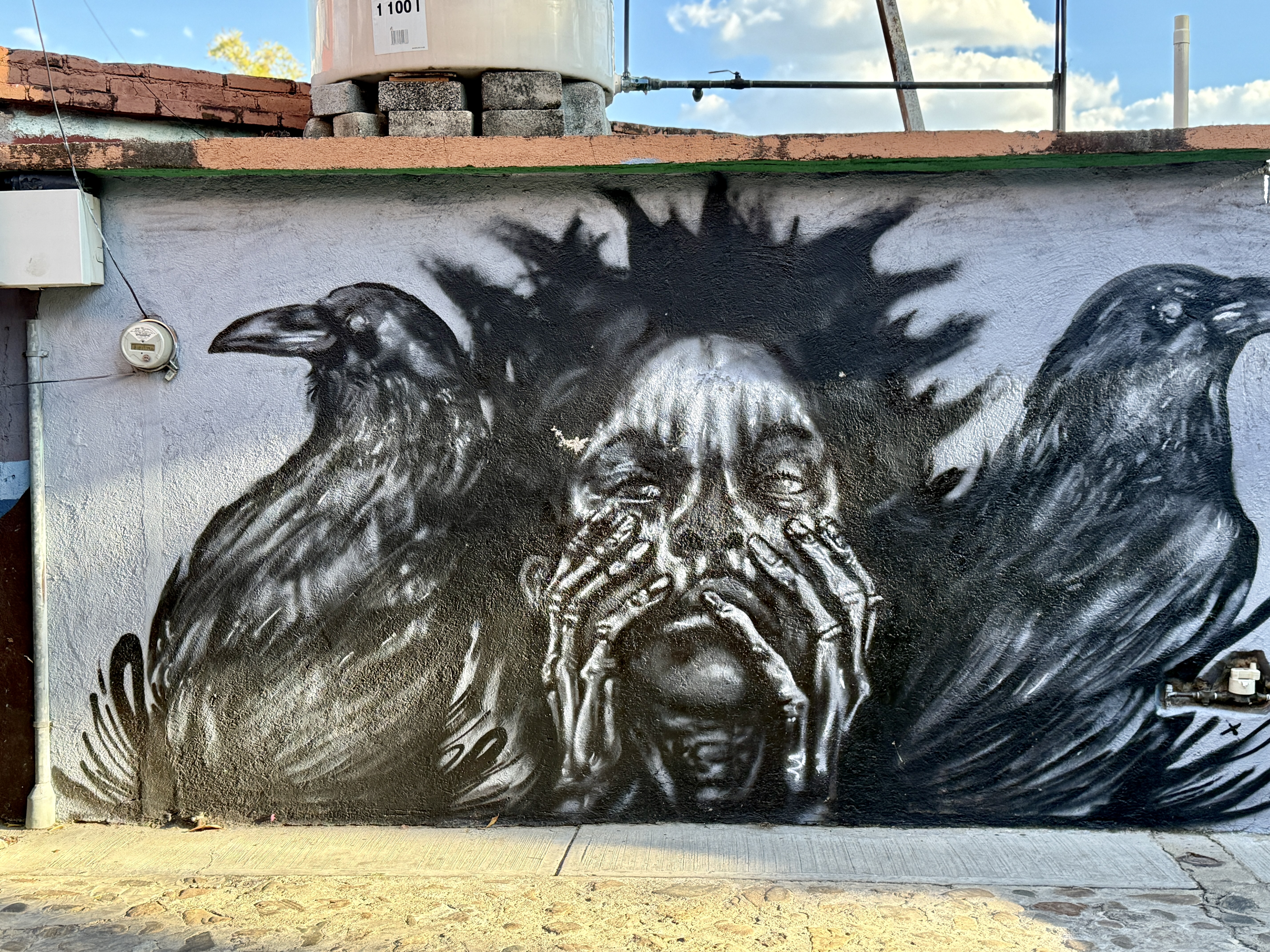
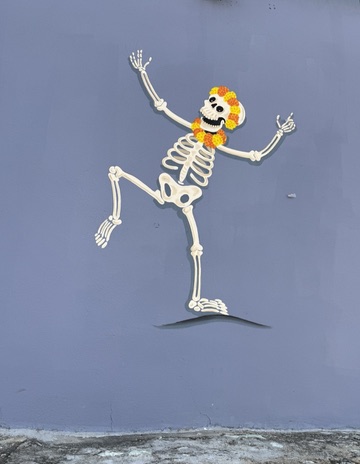
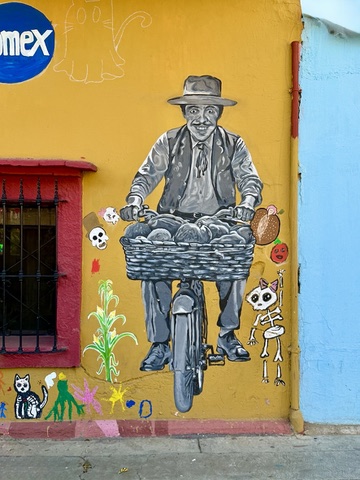
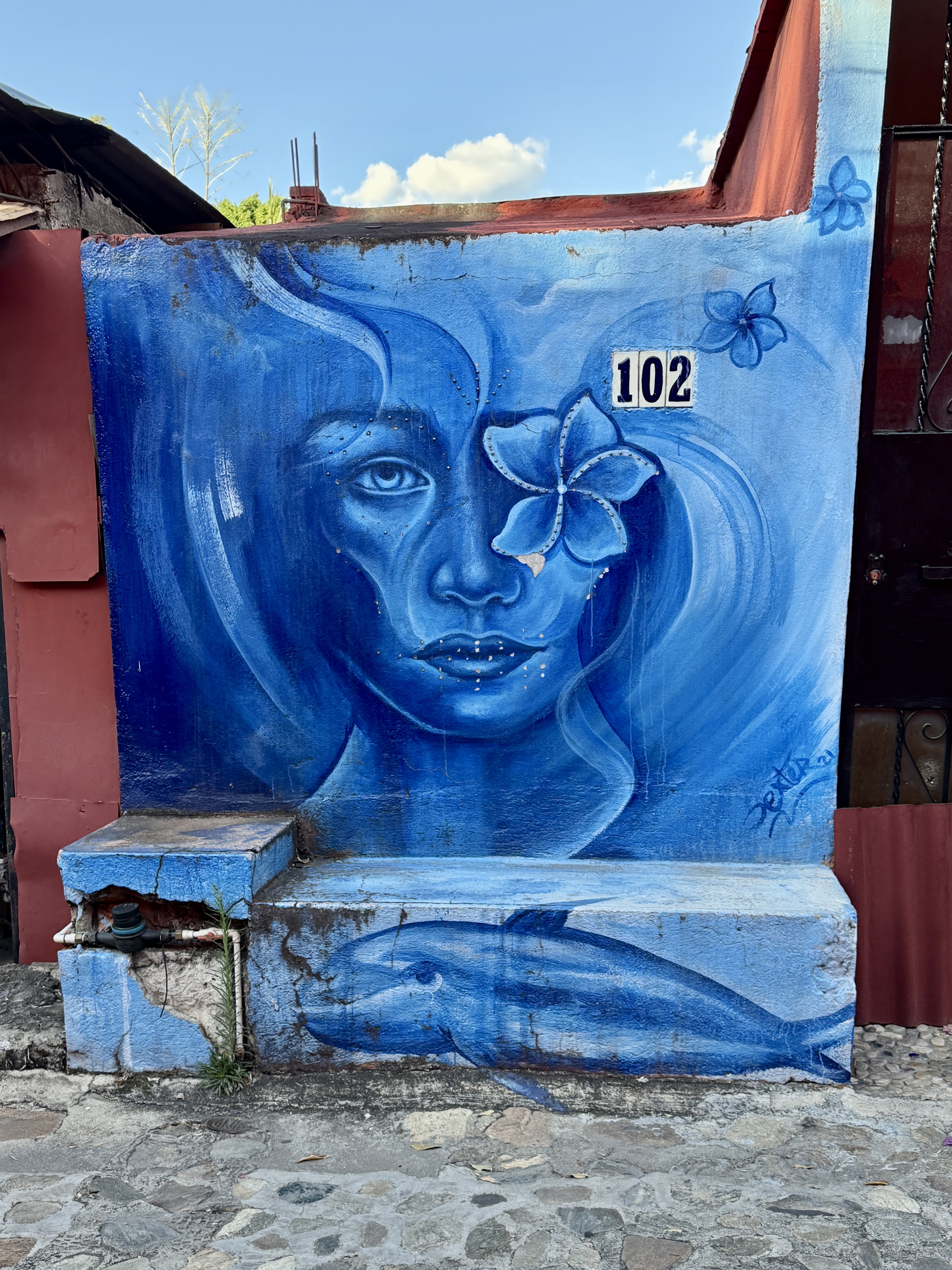
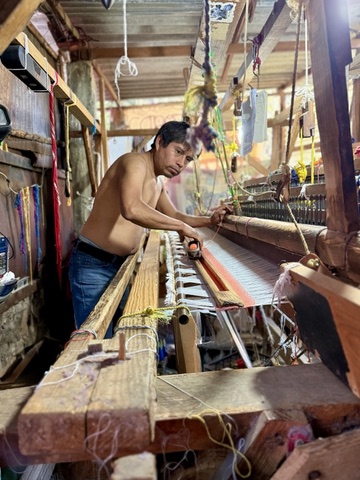
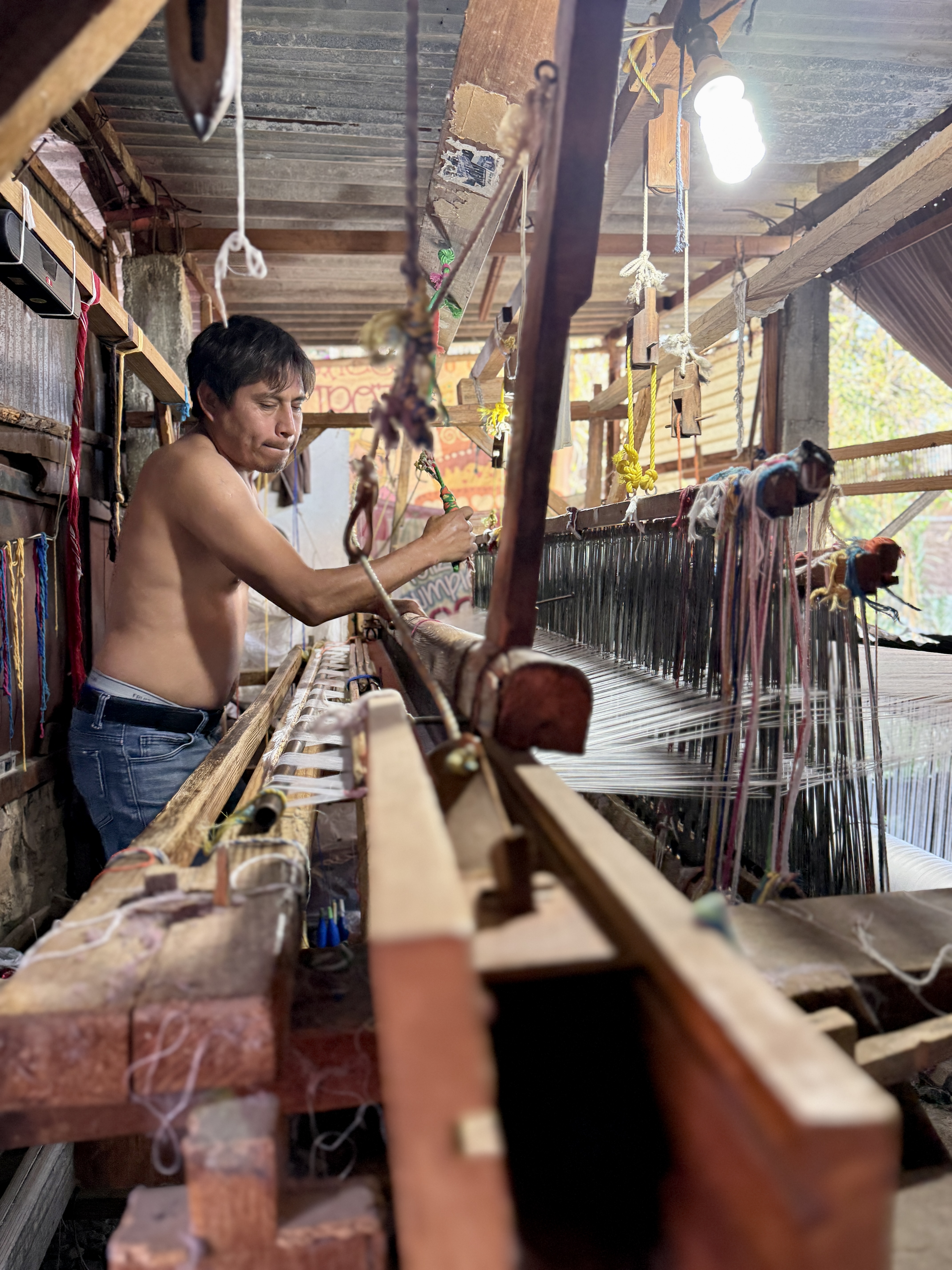
Ok.. so, based on the fact that yesterday sort of never happened–in that we were in bed in the hotel room and missed New Years celebrations and my birthday, I think I can officially say that I did not add a year and am the same age as in 2025. We were able to have a very very light breakfast (pancakes) at the hotel and then figured we were strong enough to venture out for a while. We went to a neighborhood further from the center (taxied there and then walked back)–Xochimilko. Again a wonderful neighborhood with lots of murals and little cafes (but we didn’t dare eat anything. We managed to walk back although at the moment I’m not sure how we did that. We also ventured upon a weaver in his rather cramped studio in Xochimilko.
We did manage to watch nearly all of the Mamdani inauguration… and are inspired, excited, and hopeful that he can accomplish even part of his agenda. And let’s hope what is starting in NY can spread nationwide to counter the current D.C. agenda.

We stopped at a pharmacy to see if we could get any medication and were given some anti-nausea medicine, remembering that once in Switzerland Mike had stomach issues and the medication they gave him worked well. But this is Mexico, not Switzerland. Still, we took the pills but not sure they are doing anything. By the time we walked back, we were feeling pretty miserable again and after resting a while, we realized we should cancel our dinner plans and see if the hotel could make us some simple chicken soup. They brought it to the room, but it was quite salty so we really didn’t eat it. Hopefully we can eat breakfast in the morning before we head to the airport.. And keeping our fingers crossed that the flights don’t make things worse.
By the way, thanks for all the birthday wishes… and the compliments on the photography in these travel notes. Oaxaca is a visual feast. It’s a photographer’s delight.
i’m turning in now—due to dysentery circumstances,,,,,,,,
Hopefully we arrive home tomorrow evening and can normalize.

