November 1, 2025 . Amid the horses and cattle in Lobos Argentina.
November 1, 2025
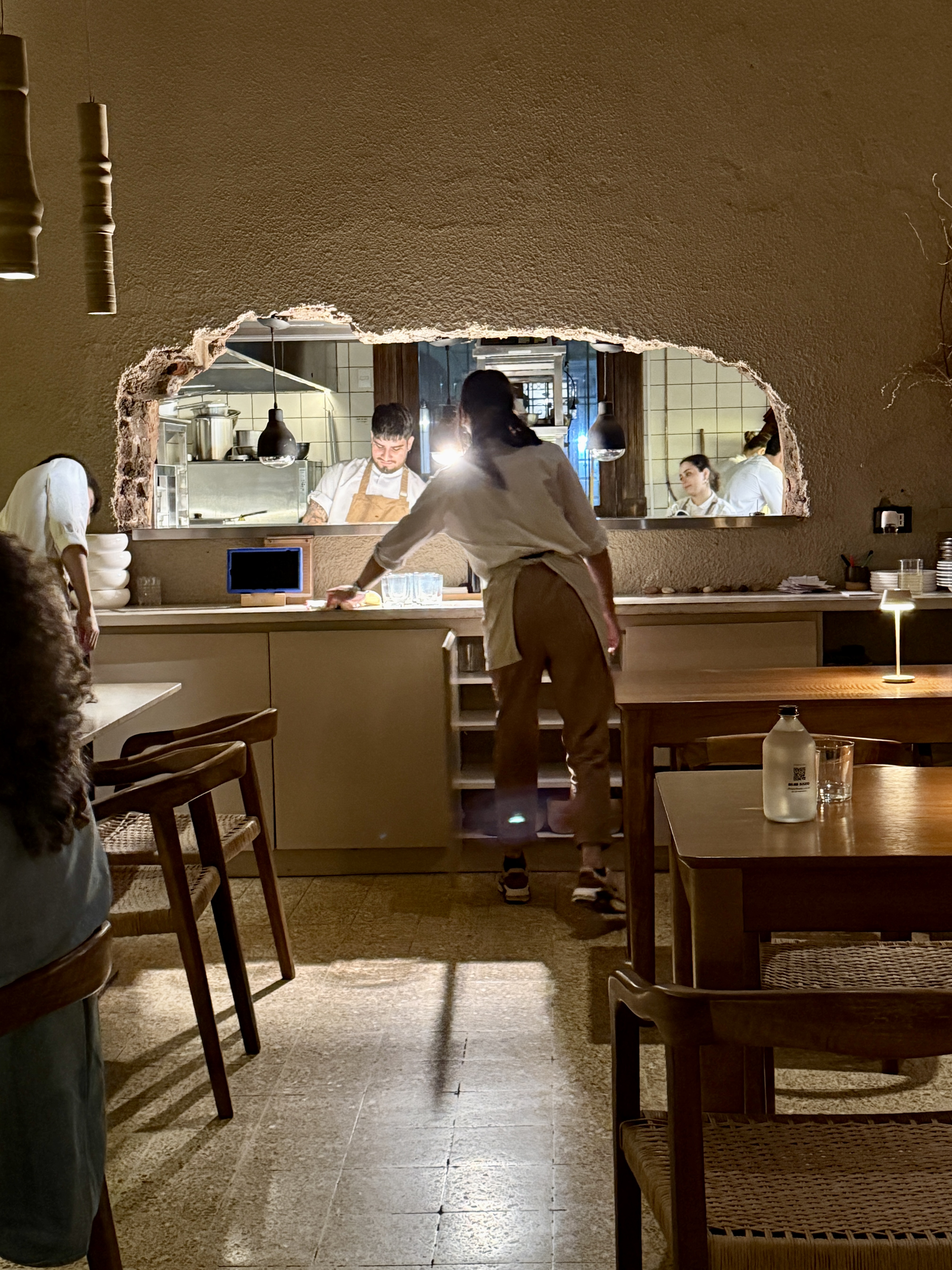
My plan was to begin this post describing last night’s meal in Buenos Aires at Piedro Pasillo.. but alas, while I can tell you that it was truly wonderful and very inventive, I actually don’t think I can remember the details. So this post may get updated when I remember the dishes (or if Peter and Jairo remember and let me know).
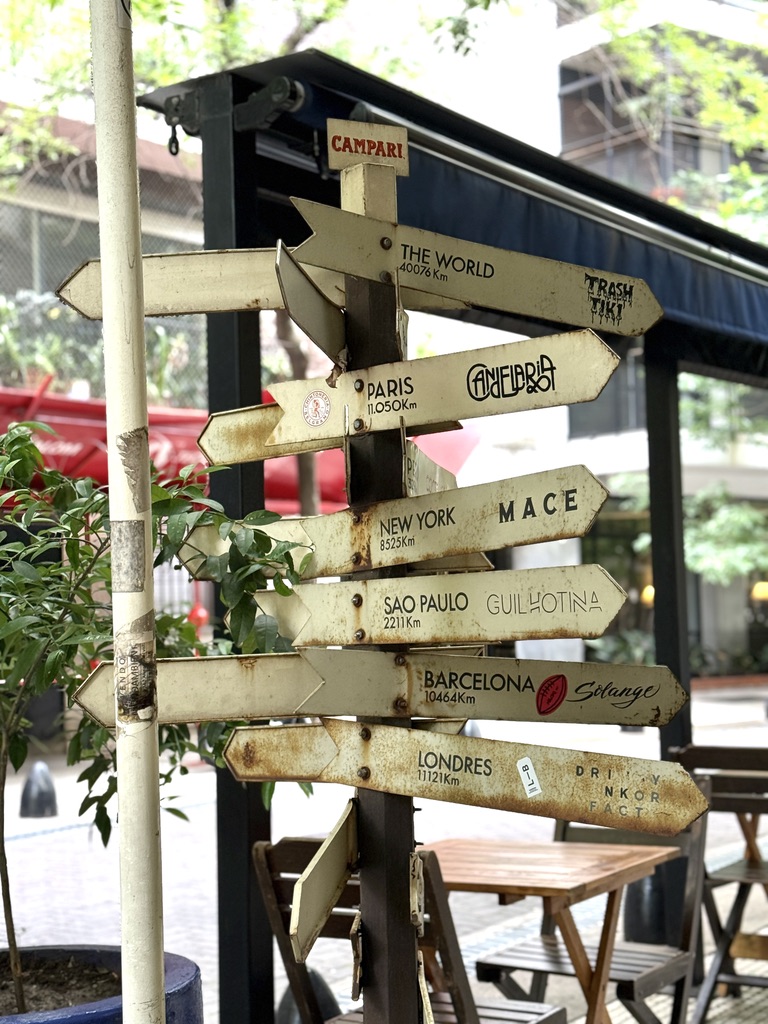
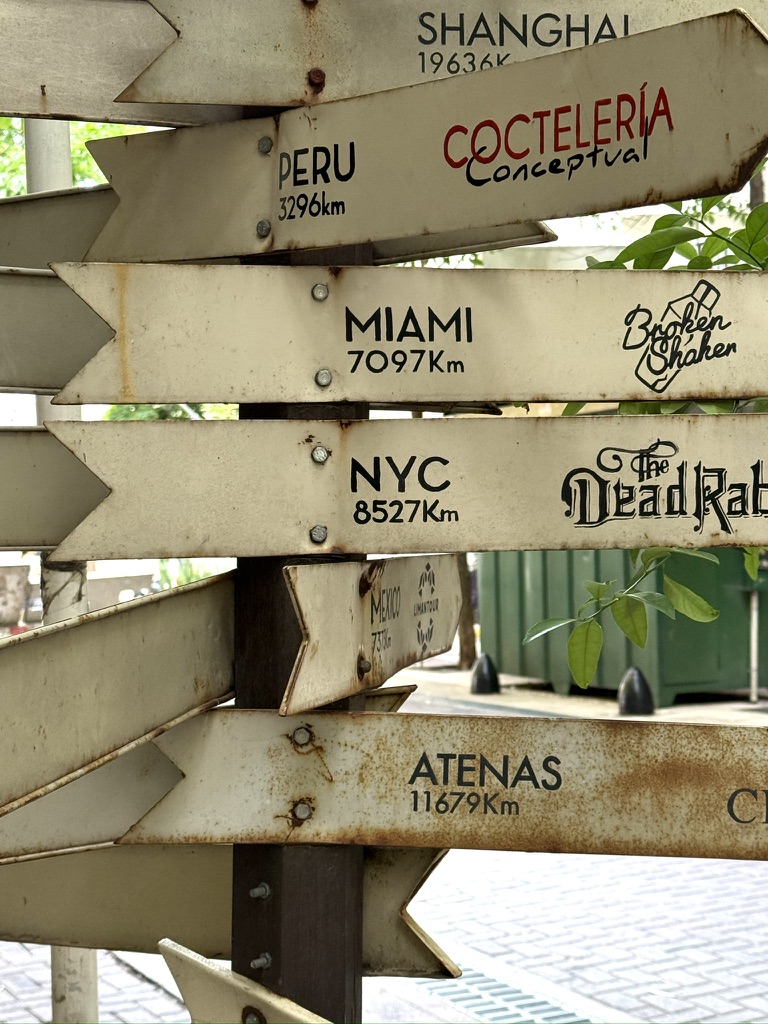
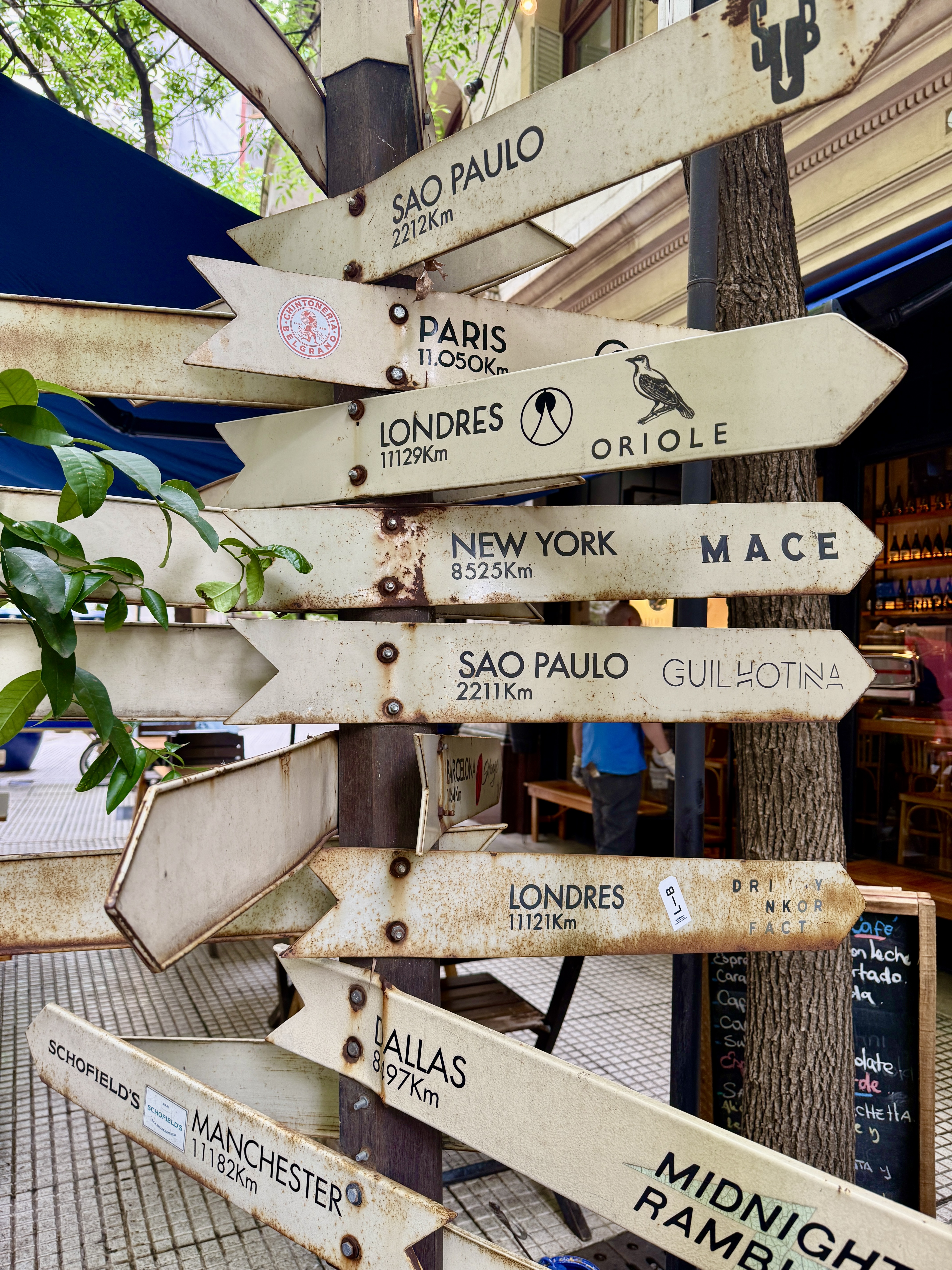
So this morning we had a leisurely brunch and then walked to pick up our rental car from SIXT and to say “Hasta Lluego” to Buenos Aires. Along the way, we spotted and finally figured out what the “direction posts” were that are located toward the end of our street in the Recoletta district. We asumed they were merely giving the distances to great cities around the world. But after a little research—they do that and more. They give the direction and distance to great bars in these cities. And the other post gives the distance to great bartenders around the world. They are conveniently located in front of a really good bar.
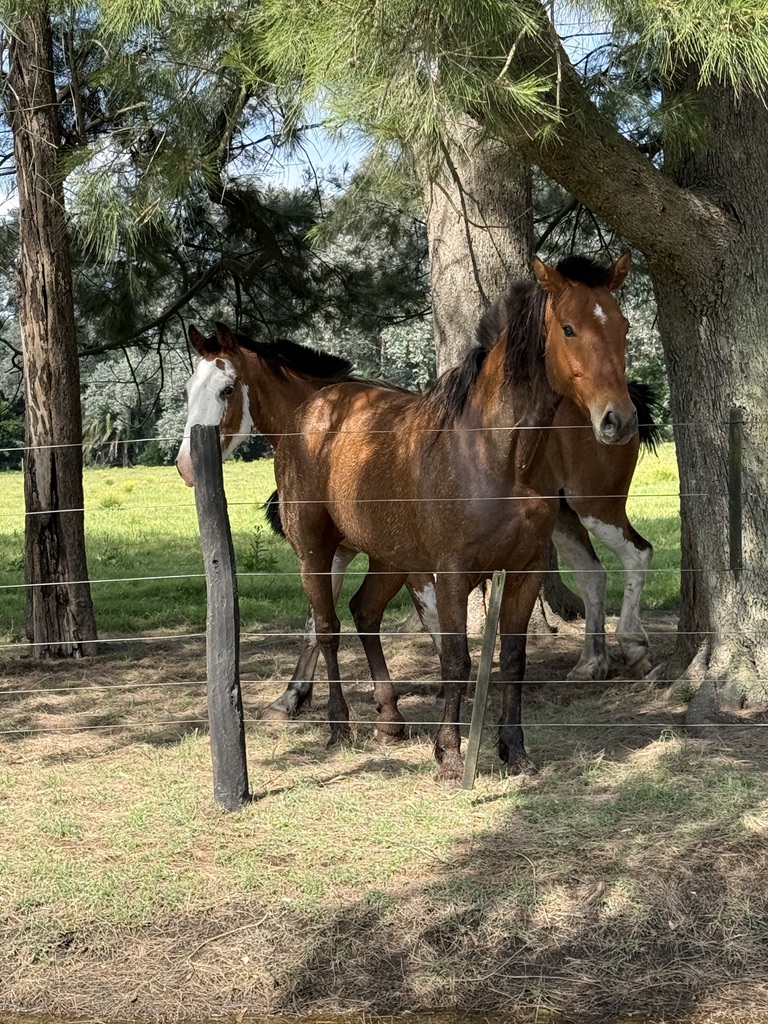
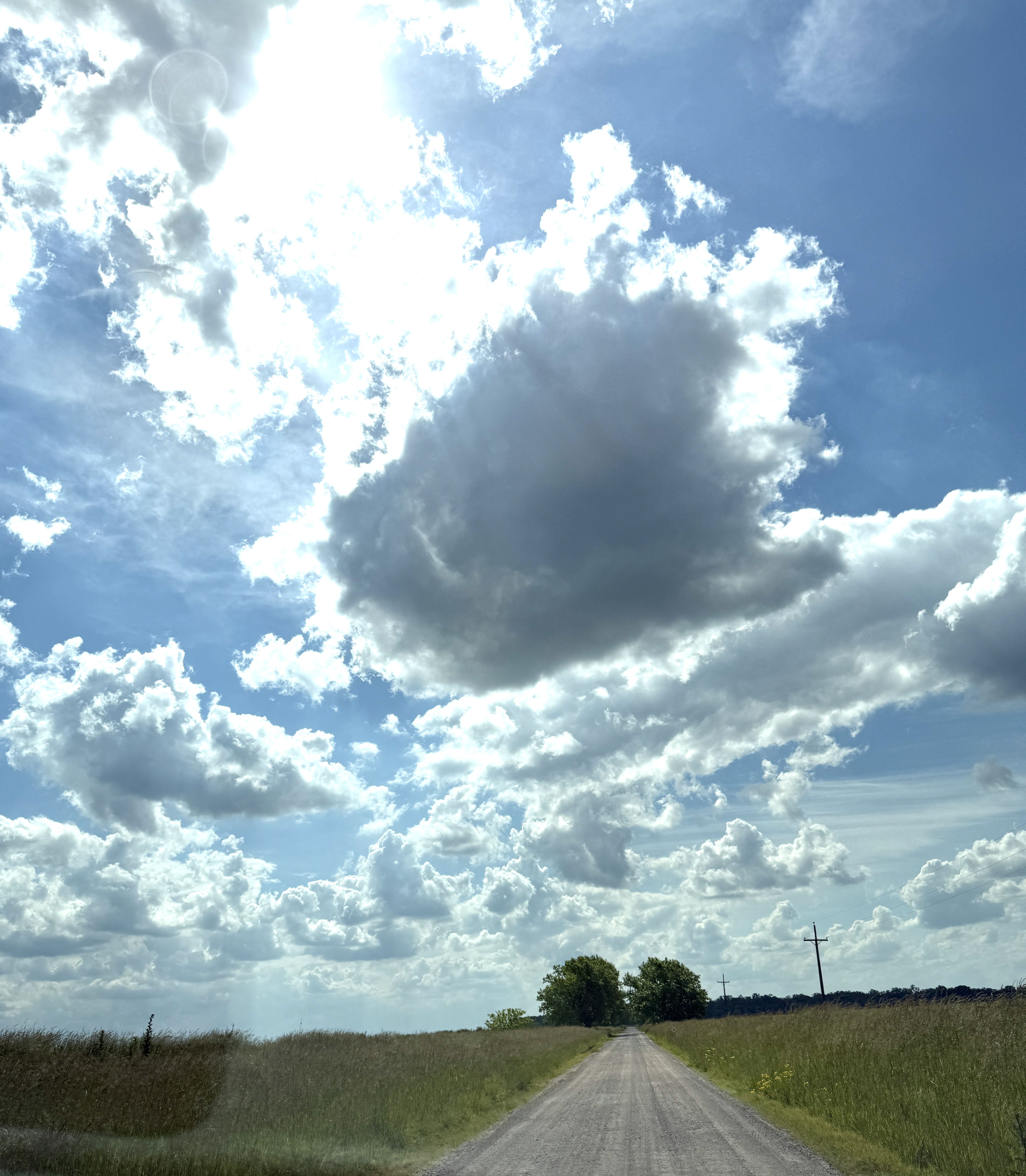
Then we headed north in our cute Renault to see the Argentine countryside. Lobos is about two hours from Buenos Aires and the drive gave us a chance to see just how large and sprawling Buenos Aires is. .. sort of like going from one end of Brooklyn to the other (?) After about an hour we were surrounded by rolling open land, lots of cows grazing, parillas (grills) everywhere and pretty flat. Just us, the cows, grass, trees, and intermittent traffic. We went from the many many-laned Buenos Aires boulevards to a three-lane highway (with tolls) and then to a one-lane (in each direction) country road.
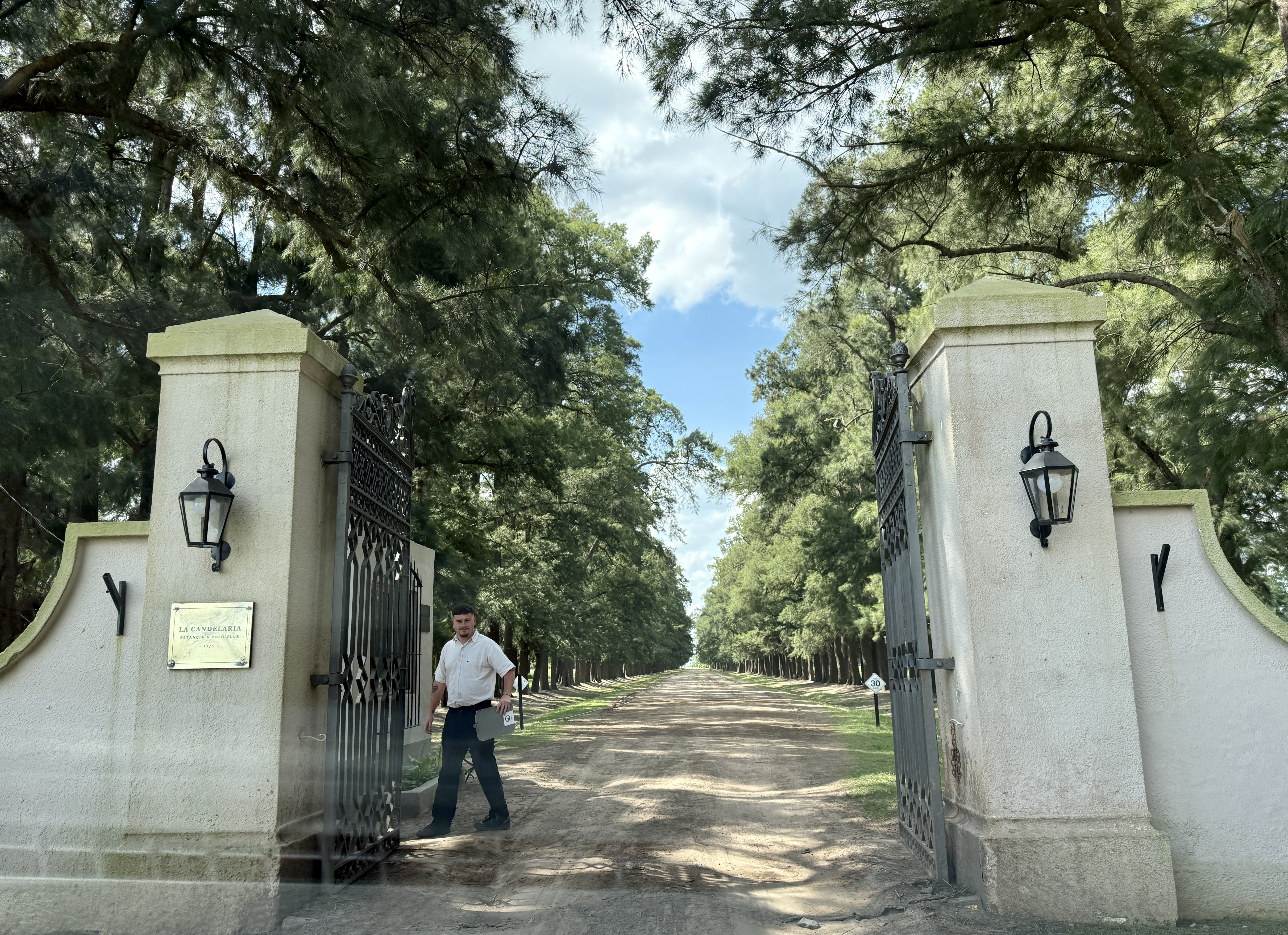
And after passing the turnoff we needed twice, we finally arrived at Estancia La Candelaria—right out of central casting.
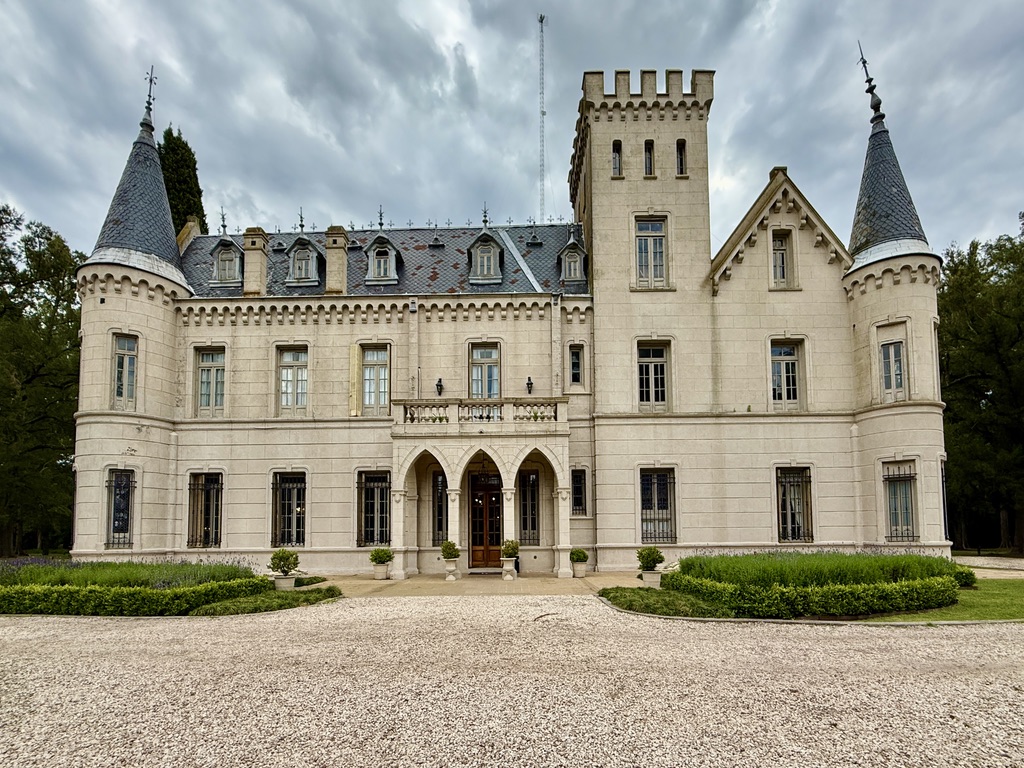
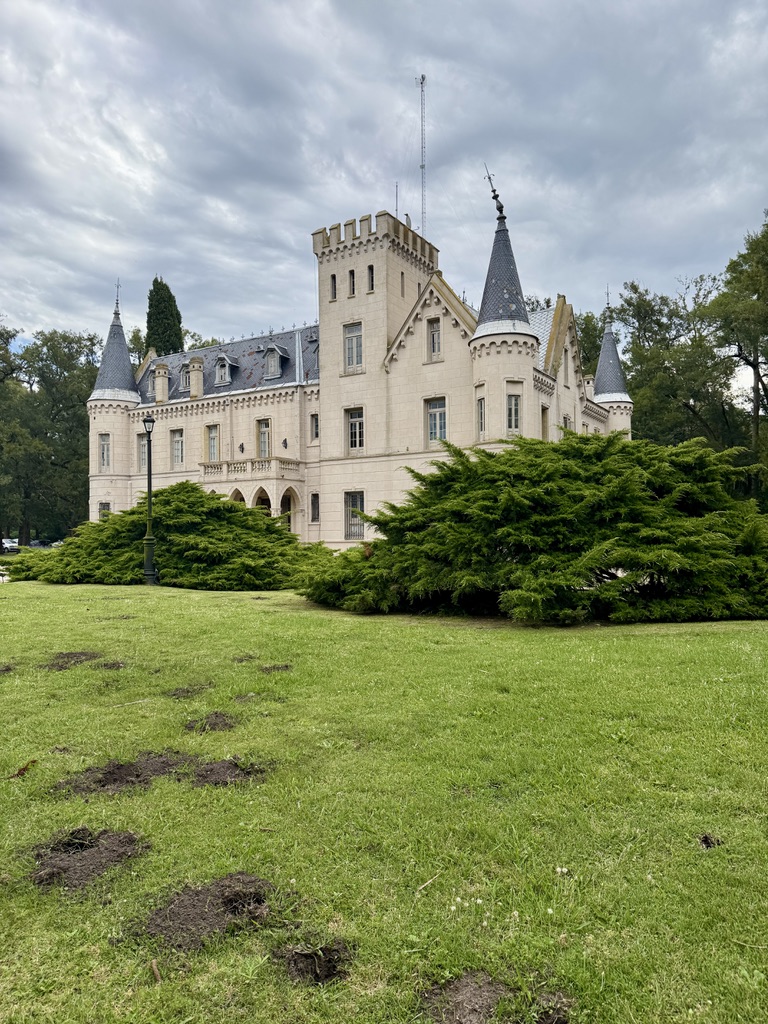
First you enter these large gates, and drive about 1/2 mile down a tree-lined dirt road… with horses roaming about. And then you see “the castle. The story goes that during the honeymoon of Manuel Fraga and Rebeca del Mármol, the two were very impressed by castles they saw in the Loire Valley, France and in 1884 hired a French architect to design a castle on land he had inherited. The “castle” was completed in 1900. I think the original building was about 12,000 sq ft.
Rebeca was devout, and unable to have children, so according to the story told in the materials, she got involved with funding programs for “underprivileged” children and eventually founded the Charitable Brotherhood, which ran a summer camp for these children.
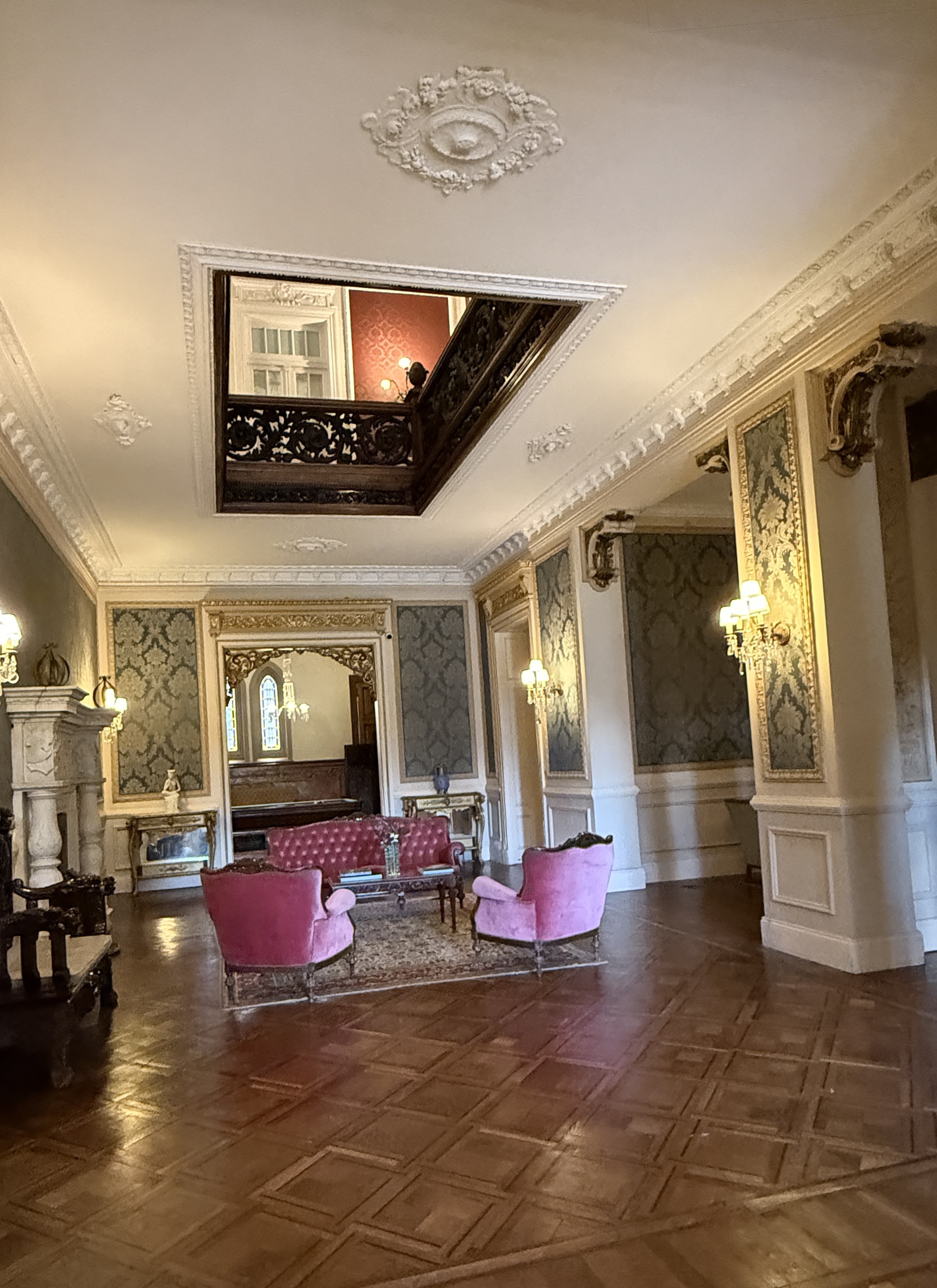
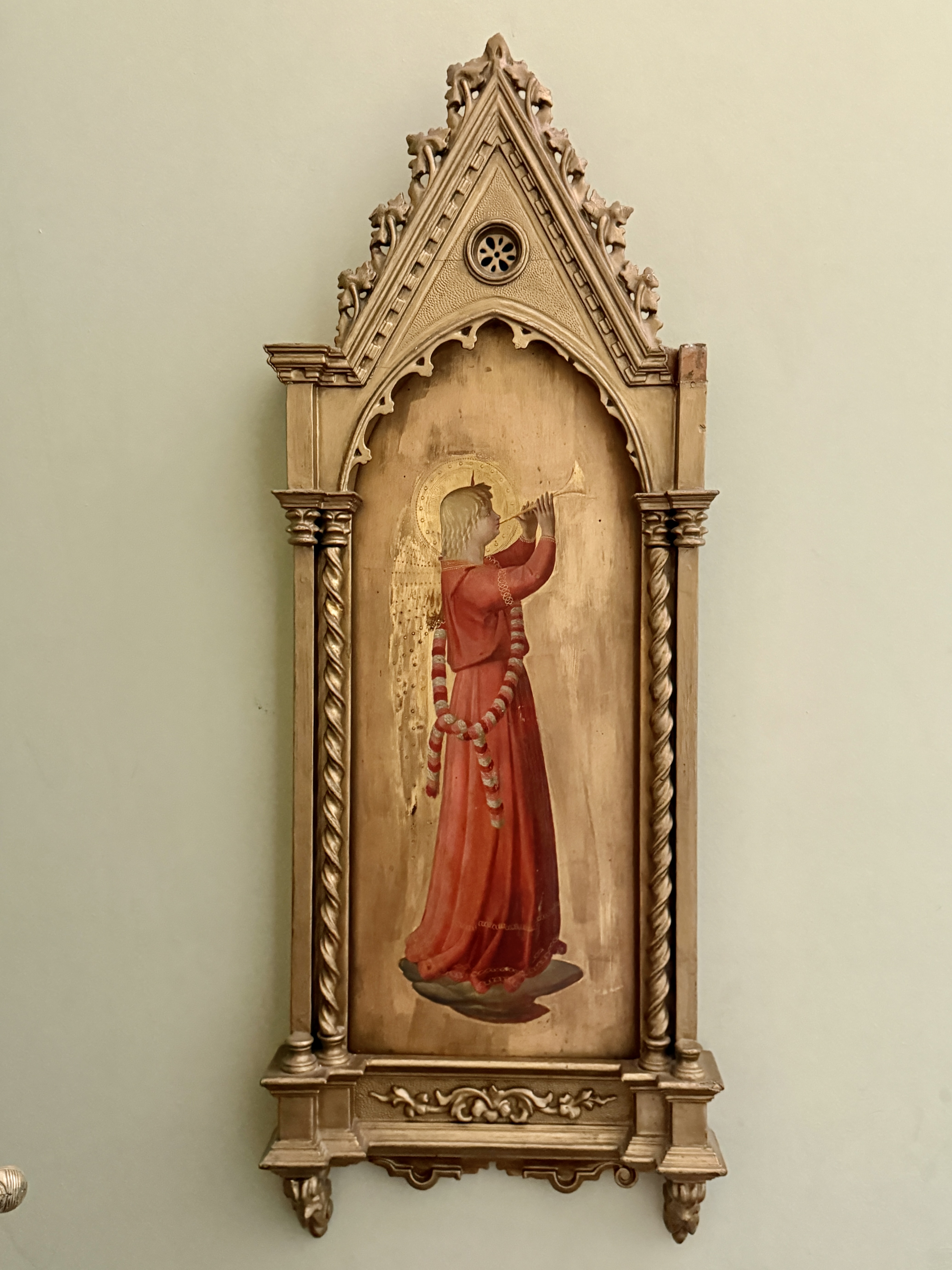
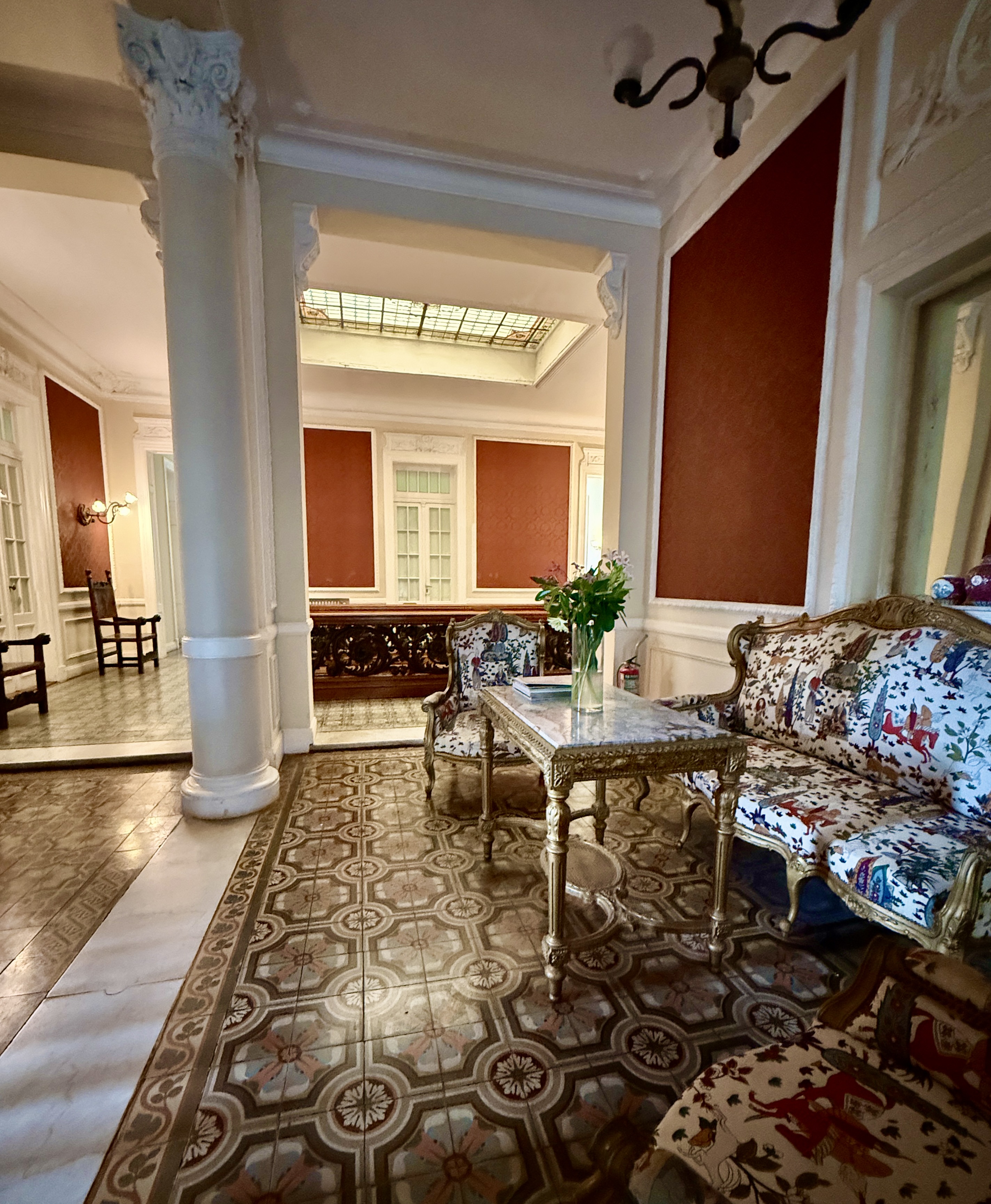
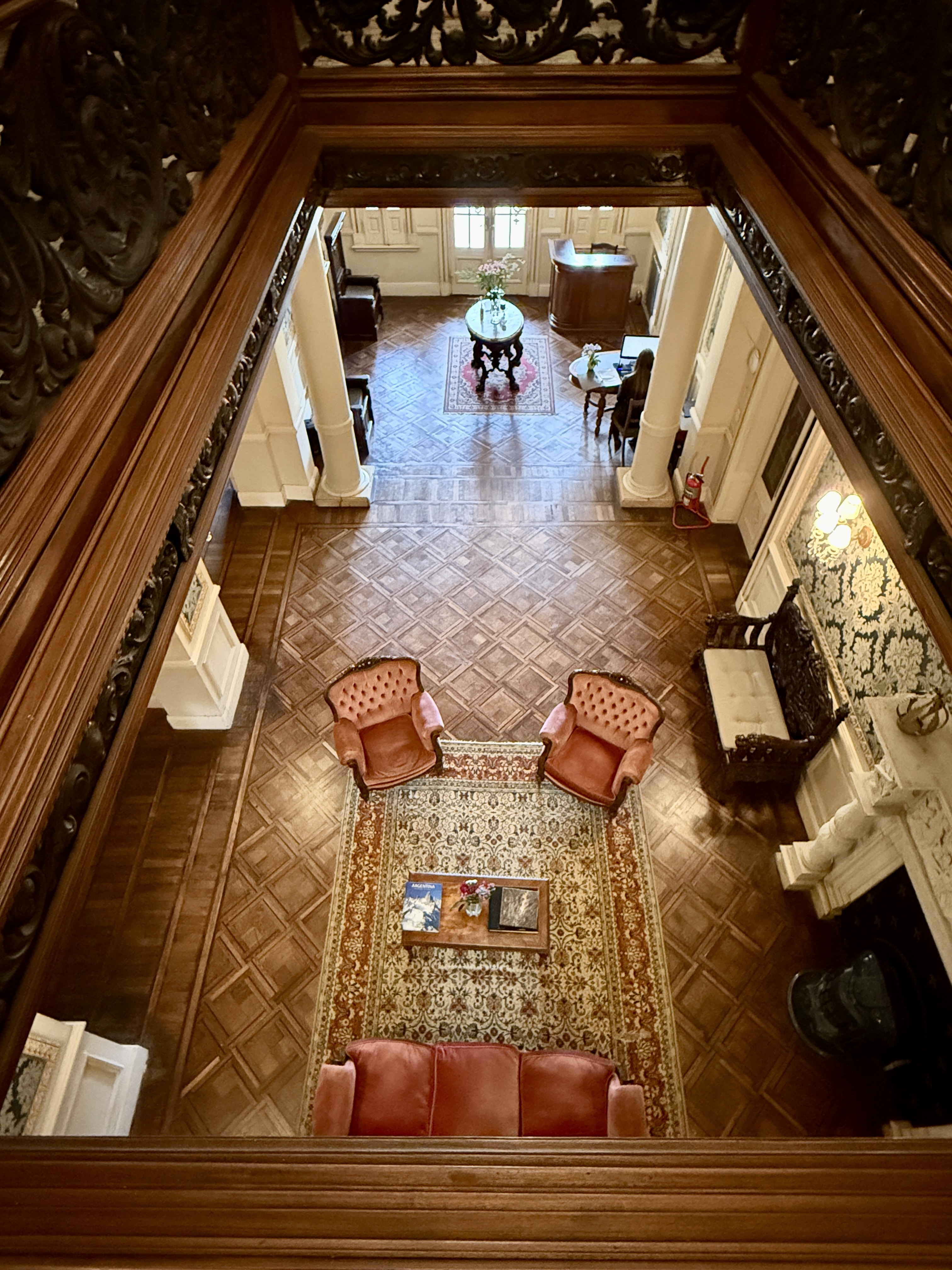
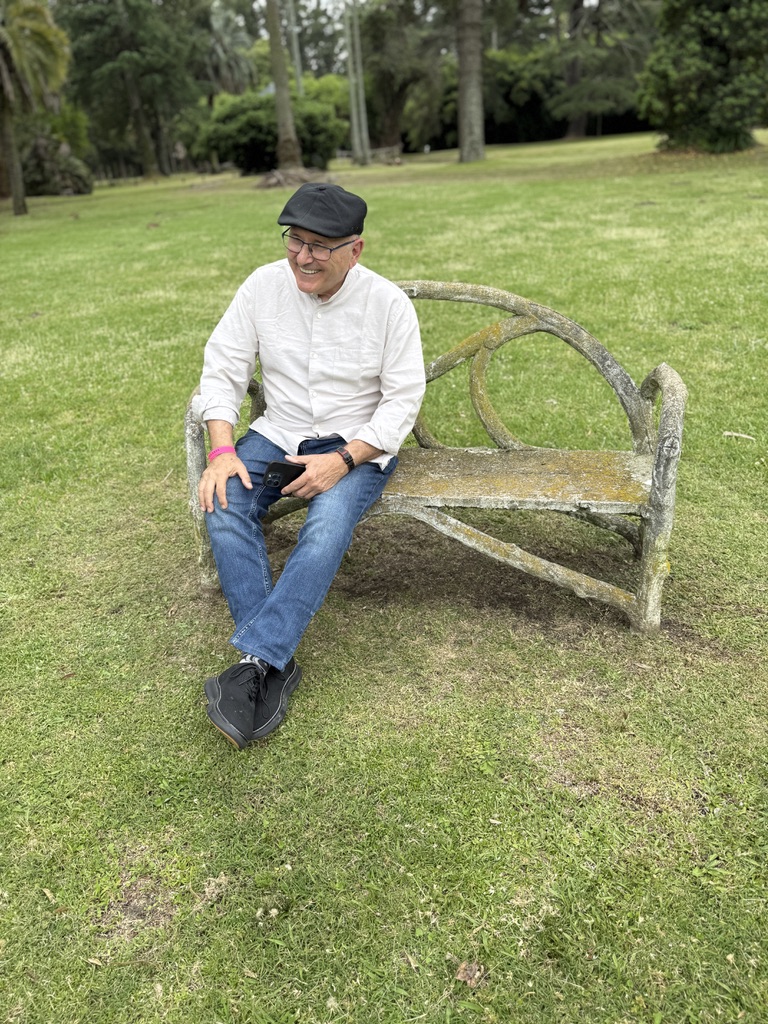
Anyway, the castle is in need of repair; it’s pretty worn; and for me–a bit creepy. I’d also say that –as many of you know–this kind of decor (Trump Baroque, as far as I’m concerned) just doesn’t work for me. Dinner was part of the hotel fee, so we meandered to another building for the worst meal we’ve had in the past 17 days. Not sure how it is possible to ruin Argentine steak, but they did. We had some kind of raviolis as a starter (I didn’t even try them as they looked like paste) followed by a sirloin steak (remember in Argentina, it’s beef, beef, beef.) Mike ordered the chicken in a mustard sauce, which was edible but that’s about it. We had a creme brulee for dinner that didn’t seem to have the burnt sugar top.. We get breakfast in the morning and then we are headed to our final night in Argentina in another small town called San Antonio de Areco. Hope we picked a better place, but not sure. Actually the photos of La Candelaria on the Internet looked amazing (even though I knew the decor would make me nauseous) and the comments were very positive. Aha–the Internet lies.
The grounds are enormous and well maintained. Oh, one last piece of information. There is a chart in the room that shows pictures of several different animals that I suppose you might encounter while walking the grounds, along with information on precautions to take if you do see them. Among the geese, rabbits, and armadillos are also fox and pumas!! So I’ll be glad to get out of here without being eaten alive by the pumas (which we have not yet seen, thankfully).
October 31, 2025 . The Un-Halloween . Buenos Aires
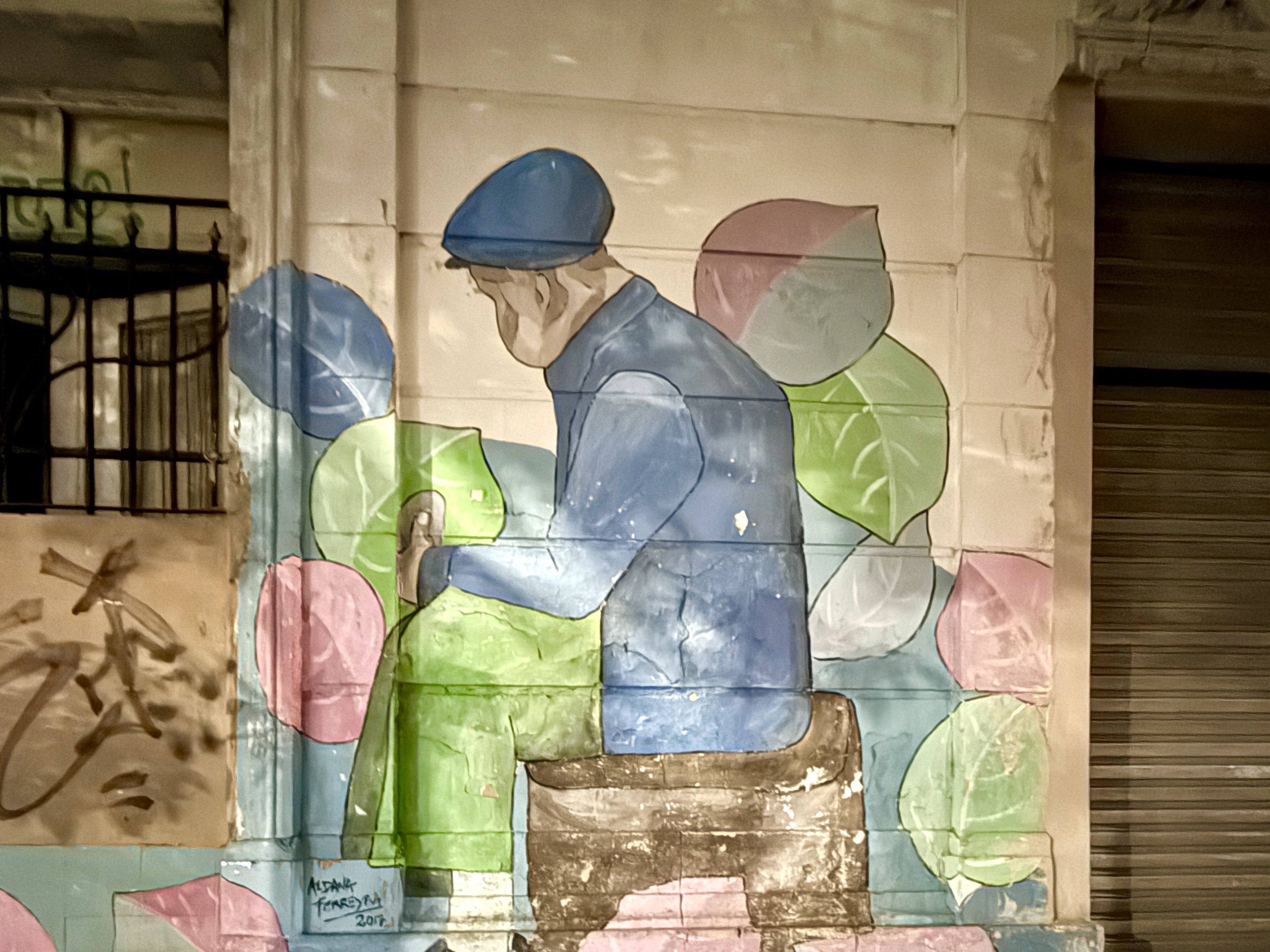
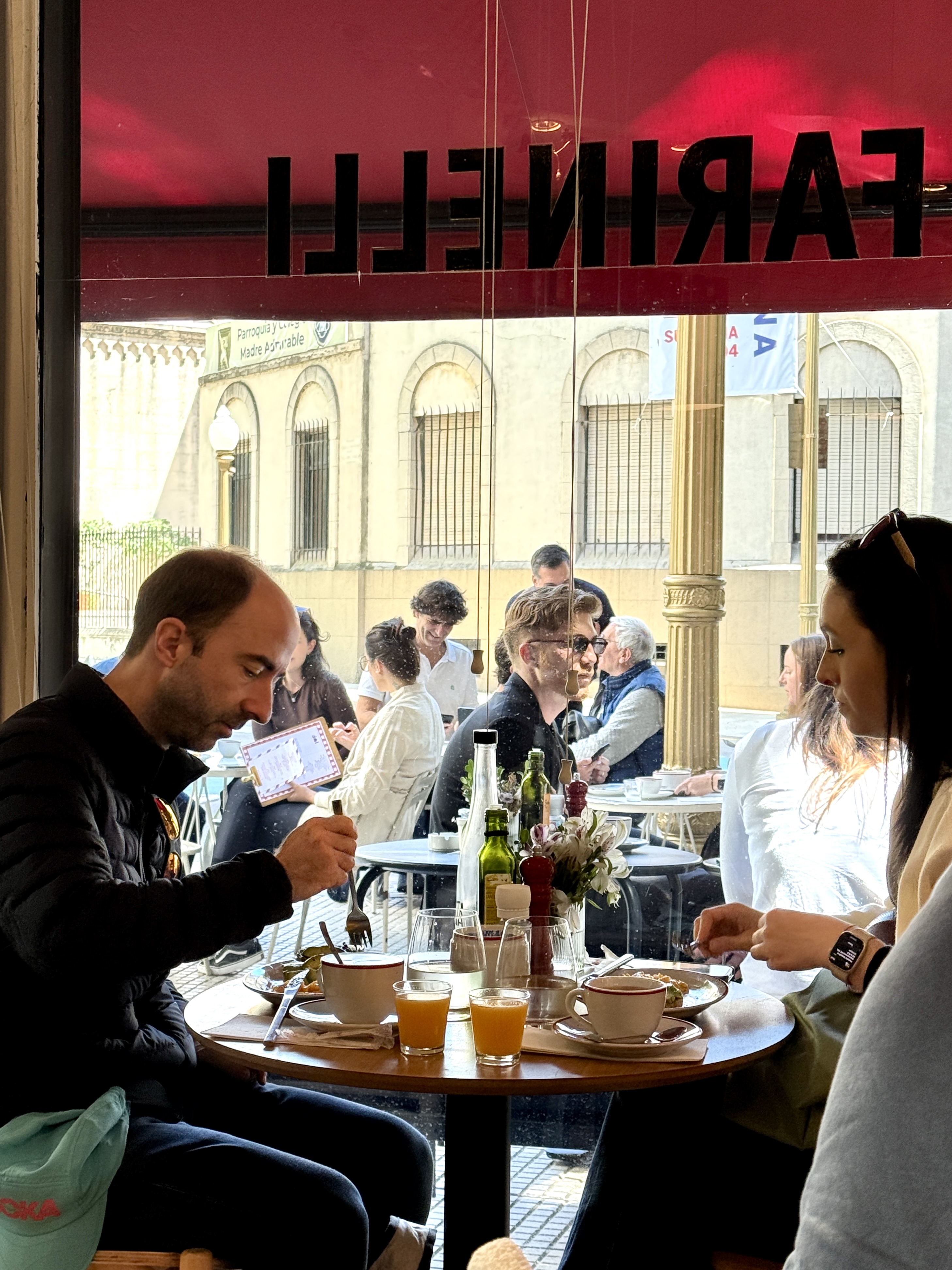
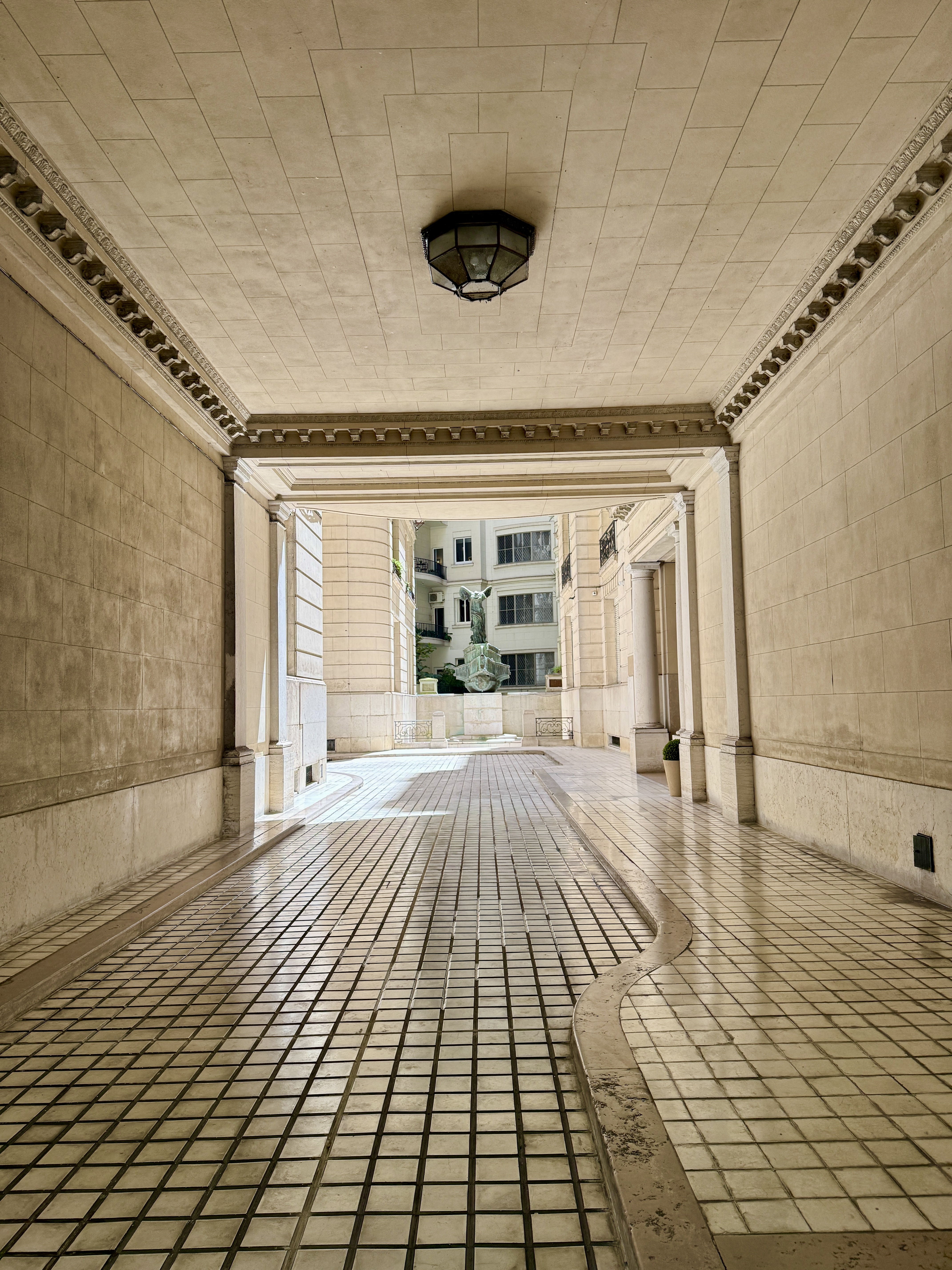
This will be short. It’s about 2 am, and I’ve just finished packing. We leave Buenos Aires in the morning — driving out into the country for two days before we head back to the reality of life in the US in 2025. It was nice to escape for two weeks.
Halloween doesn’t seem to be a thing here in Buenos Aires, and Day of the Dead is taken as a solemn holiday where people remember those who have passed and families have dinner. So, no big to-do here on October 31; frankly I really forgot it even was Halloween. And I’ve never been a big fan of Halloween so this is perfectly fine with me.
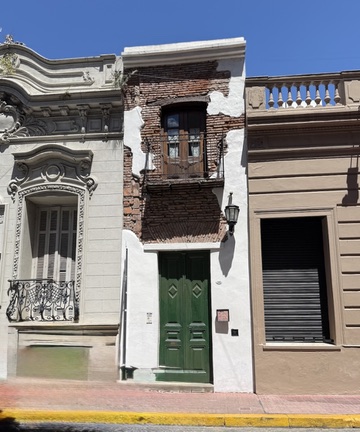
We strolled to breakfast and then went on to San Telmo neighborhood to find the “skinny house”—Casa Minima, the thinnest house in Buenos Aires (and some say in all of South America ??). It’s only 8′ wide on the inside and is wedged between more normal size buildings on the street (San Lorenzo). There are several stories that may or may not be true. Some say that a wealthy landowner who had a slave built the house and gave it to the slave once slaves were freed. But the dates don’t match in that it seems the house pre-dates the freeing of slaves. We couldn’t get inside, so we only saw it from the street. I thikn the full effecct would be from inside.

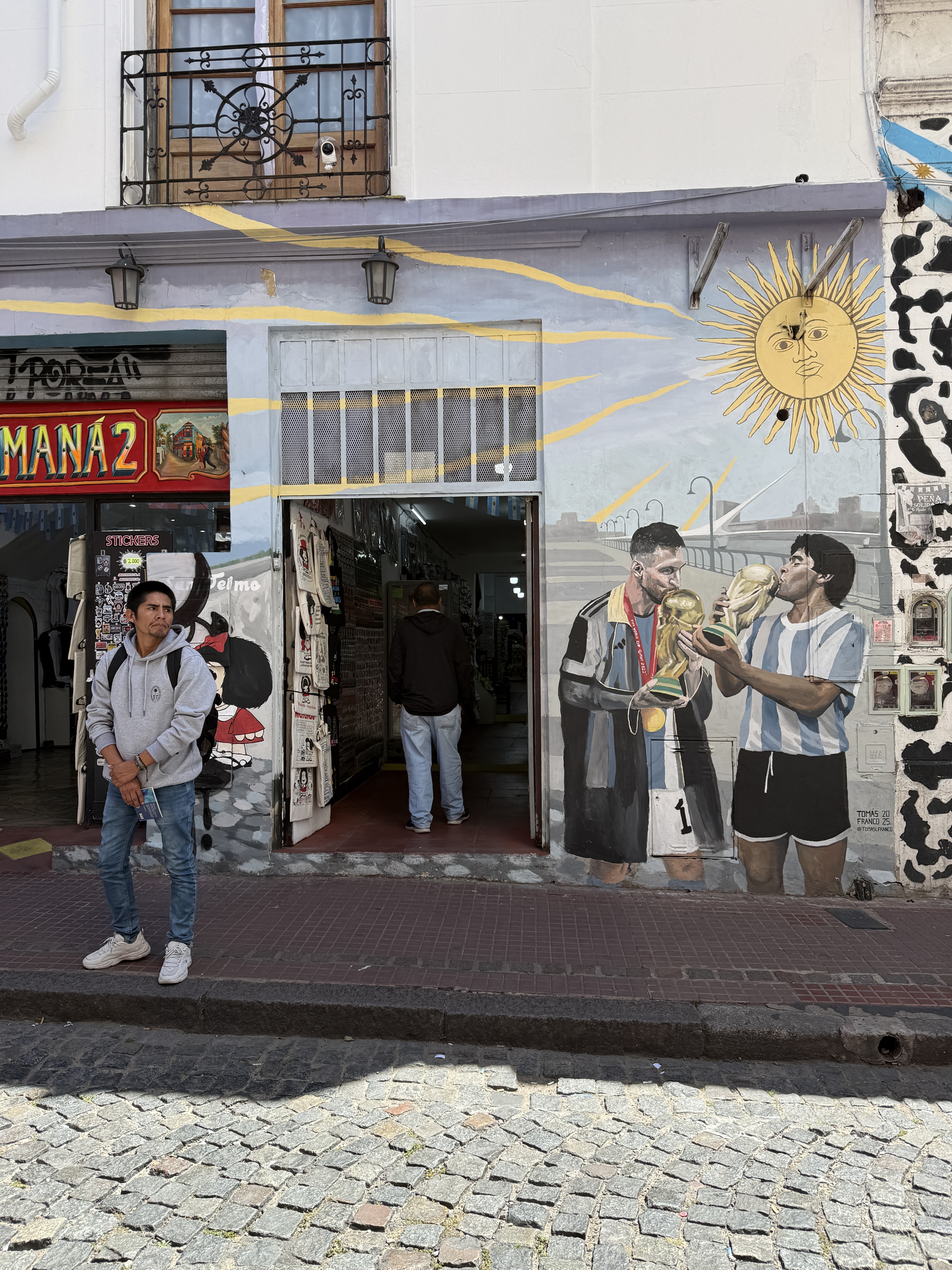
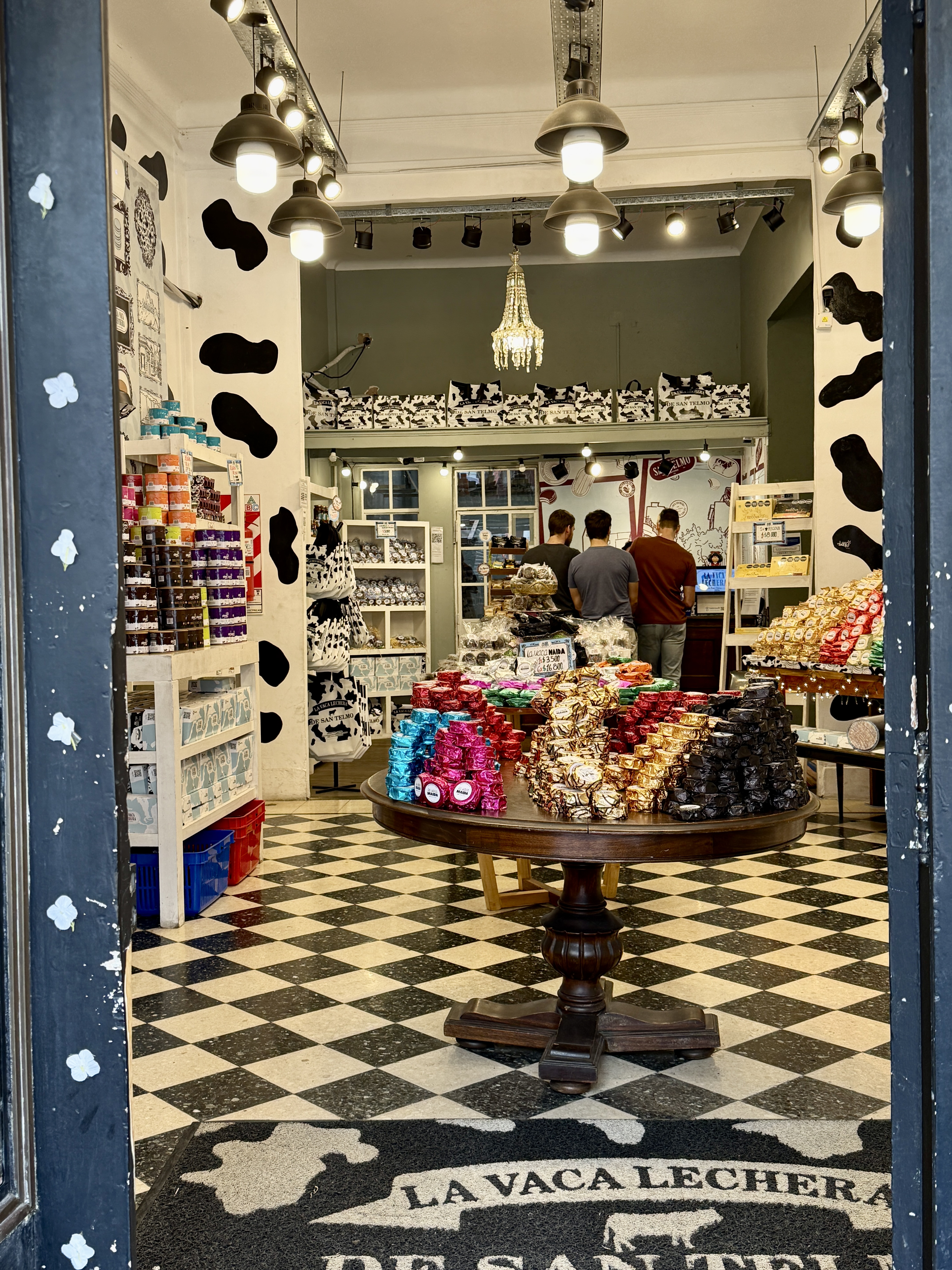
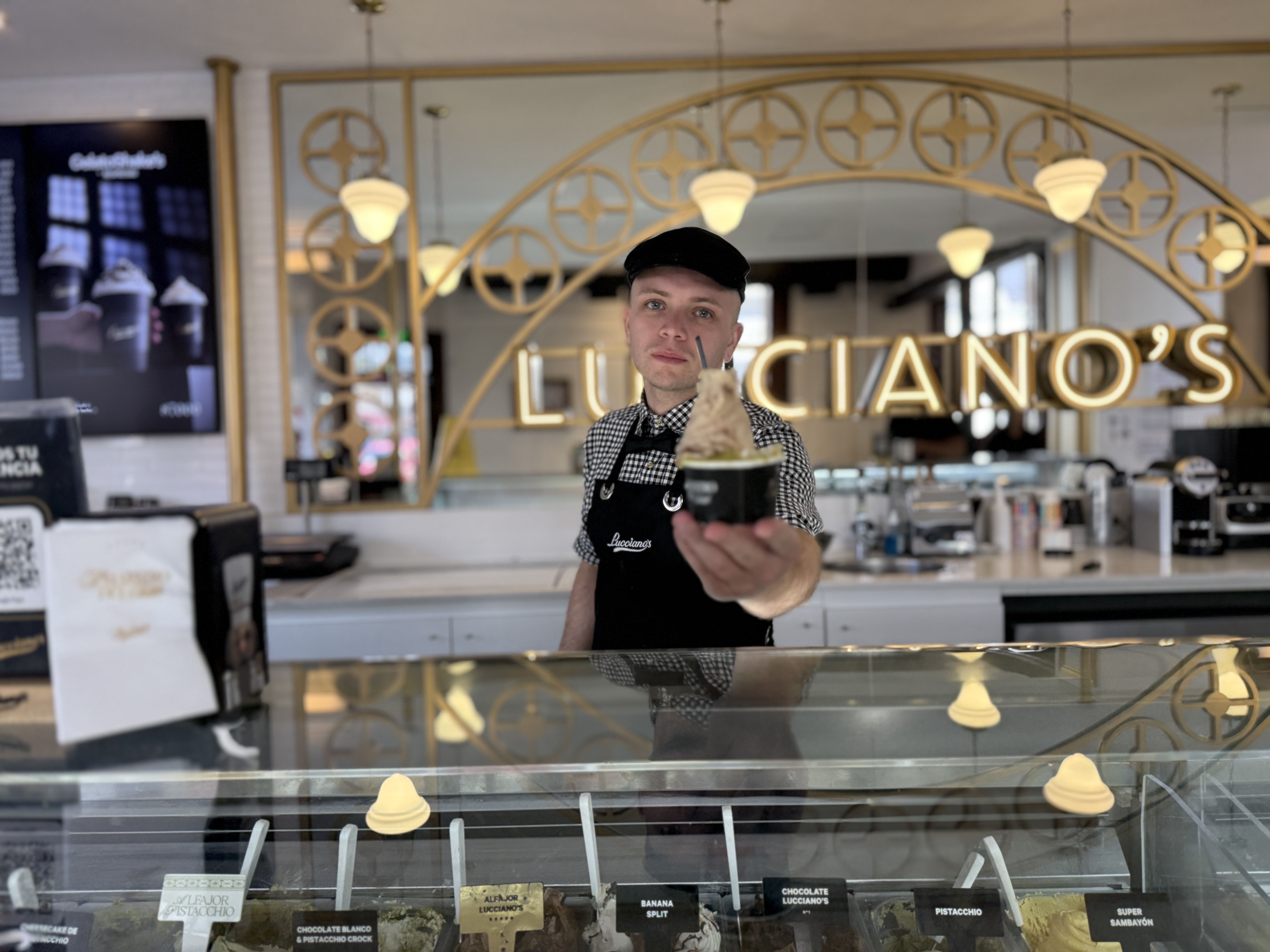
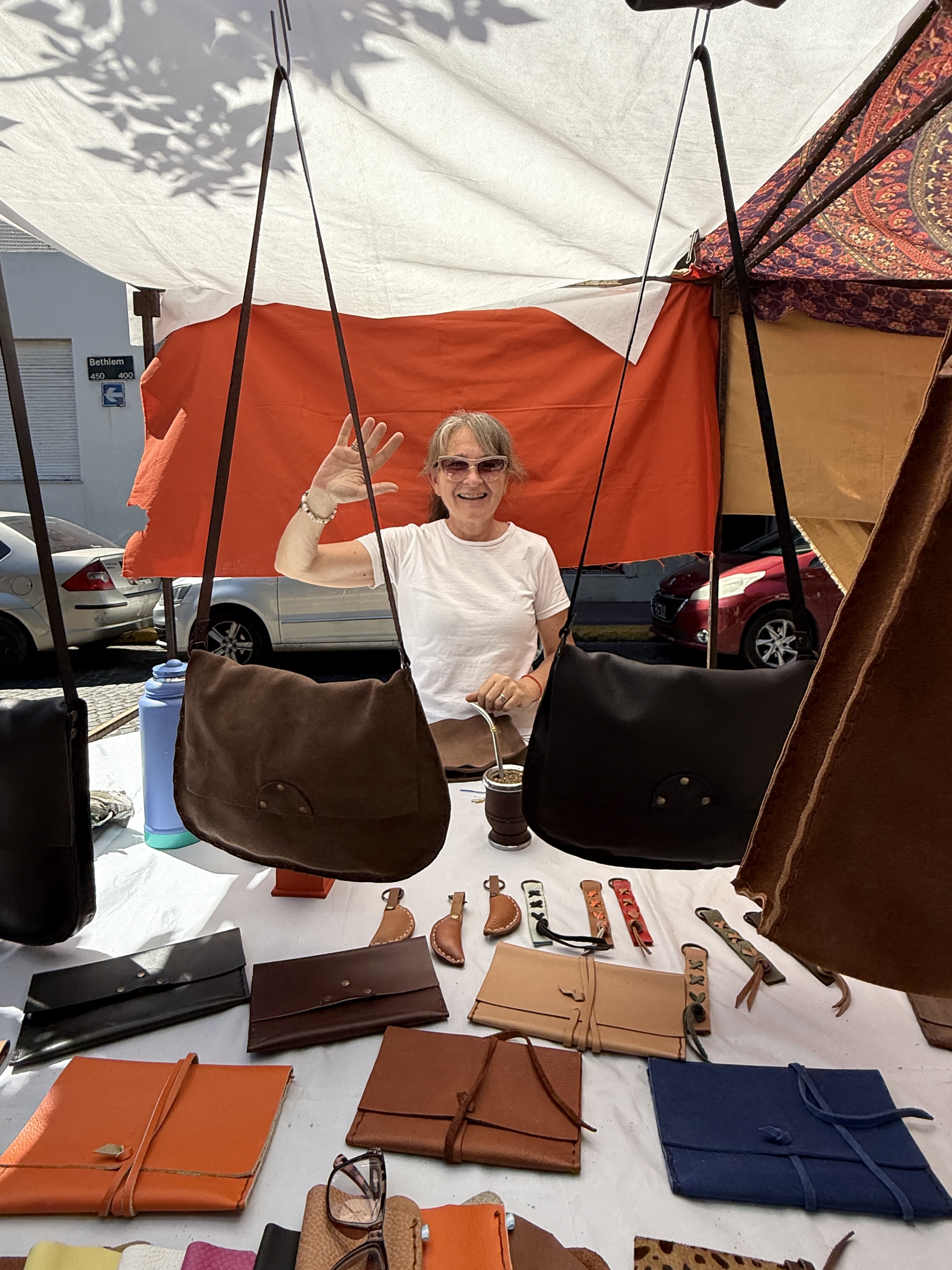
We strolled around San Telmo (again), the oldest barrio in Buenos Aires. It’s quite well-preserved and boasts a large number of old buildings–most of which are well preserved. As the birthplaces of tango, during the mid 20th century, one stumbles upon dancers in the parks. It’s a sort of Bohemian area with lots of galleries, jazz clubs, cafes, antique stores, restaurants, and cobblestone streets.


Then we headed to Ex Esma, the Museum of Memory and for the Promotion and Defense of Human Riights. The buildings were used as part of the main clandestine detention centers by the military dictatorship between 1976 and 1983. The complex honors the victims of state terrorism and tries to preserve the critical memory of that period and also has a mission of defending human rights into the future.
Unlike places like the Killing Fields in Cambodia, this museum makes an attempt to look to the future. As a visual experience it was very underwhelming, especially when thinking about the magnitude of the problem during the dictatorships—people being tossed out of airplanes into the ocean; babies being born in detention cells being appropriated by the state; torture of many different kinds. The museum does make efforts to “showcase” photos of a small portion of the people who were detained (most of whom were killed). But there isn’t any real sense of the horror of the period.
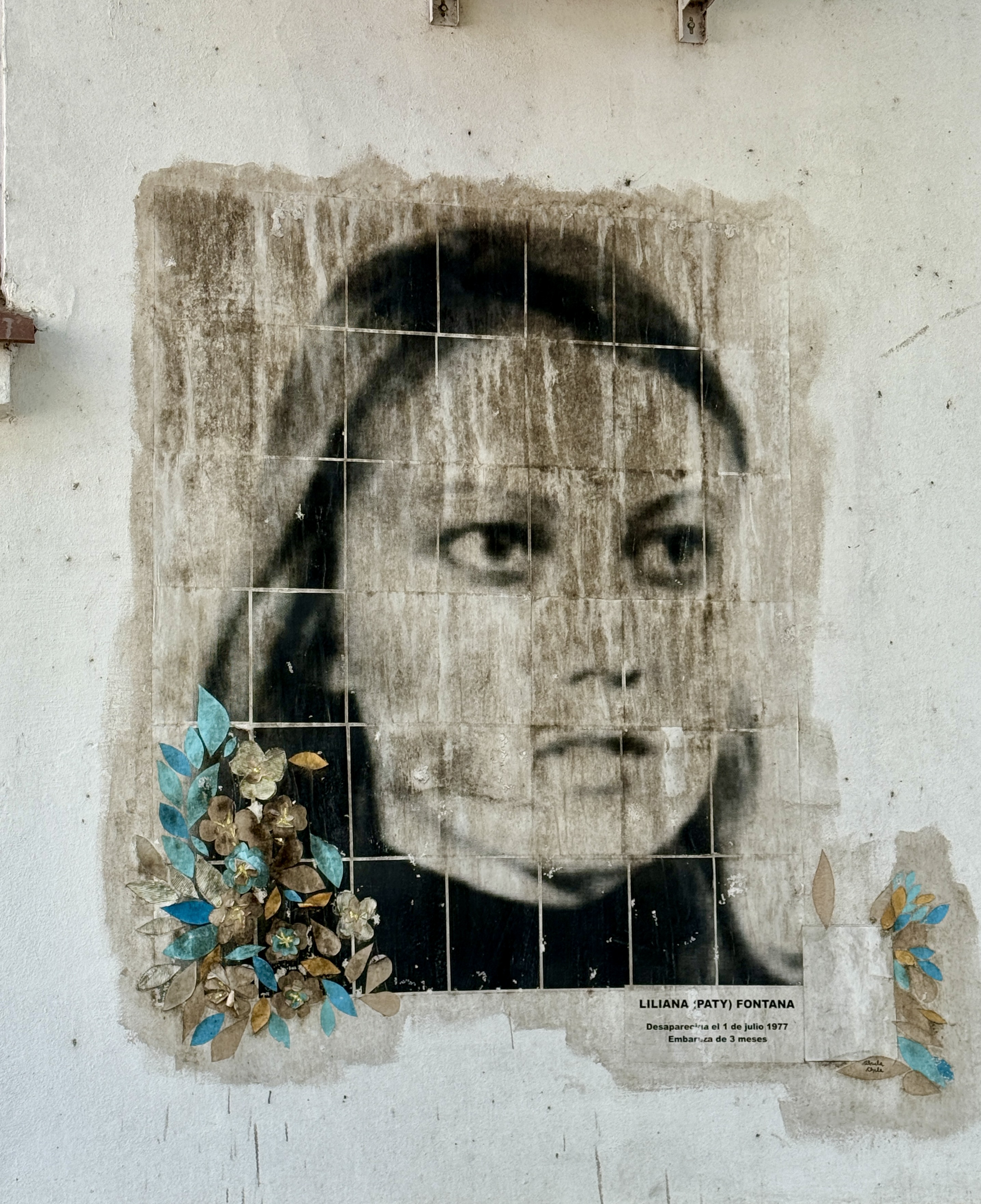
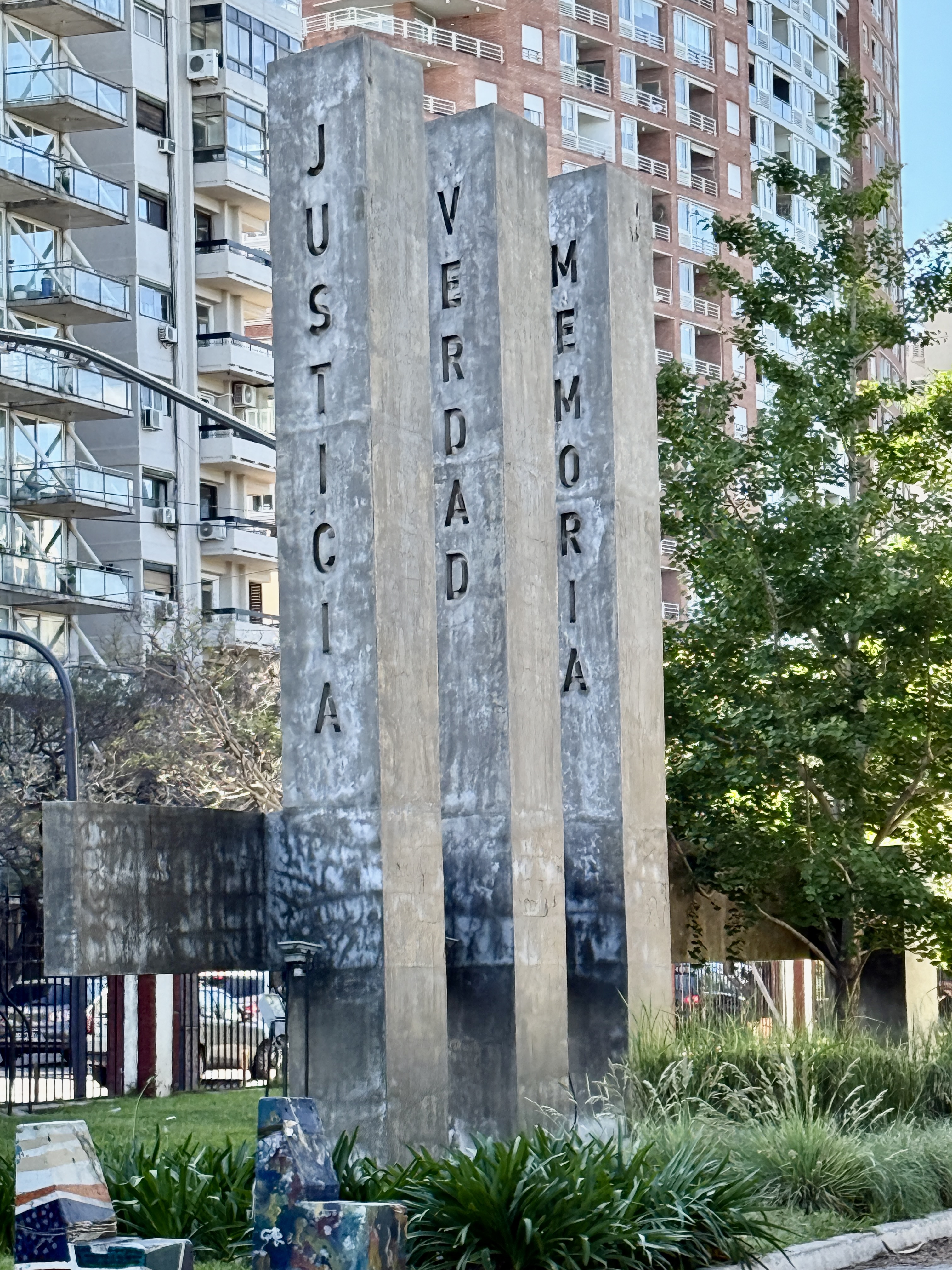
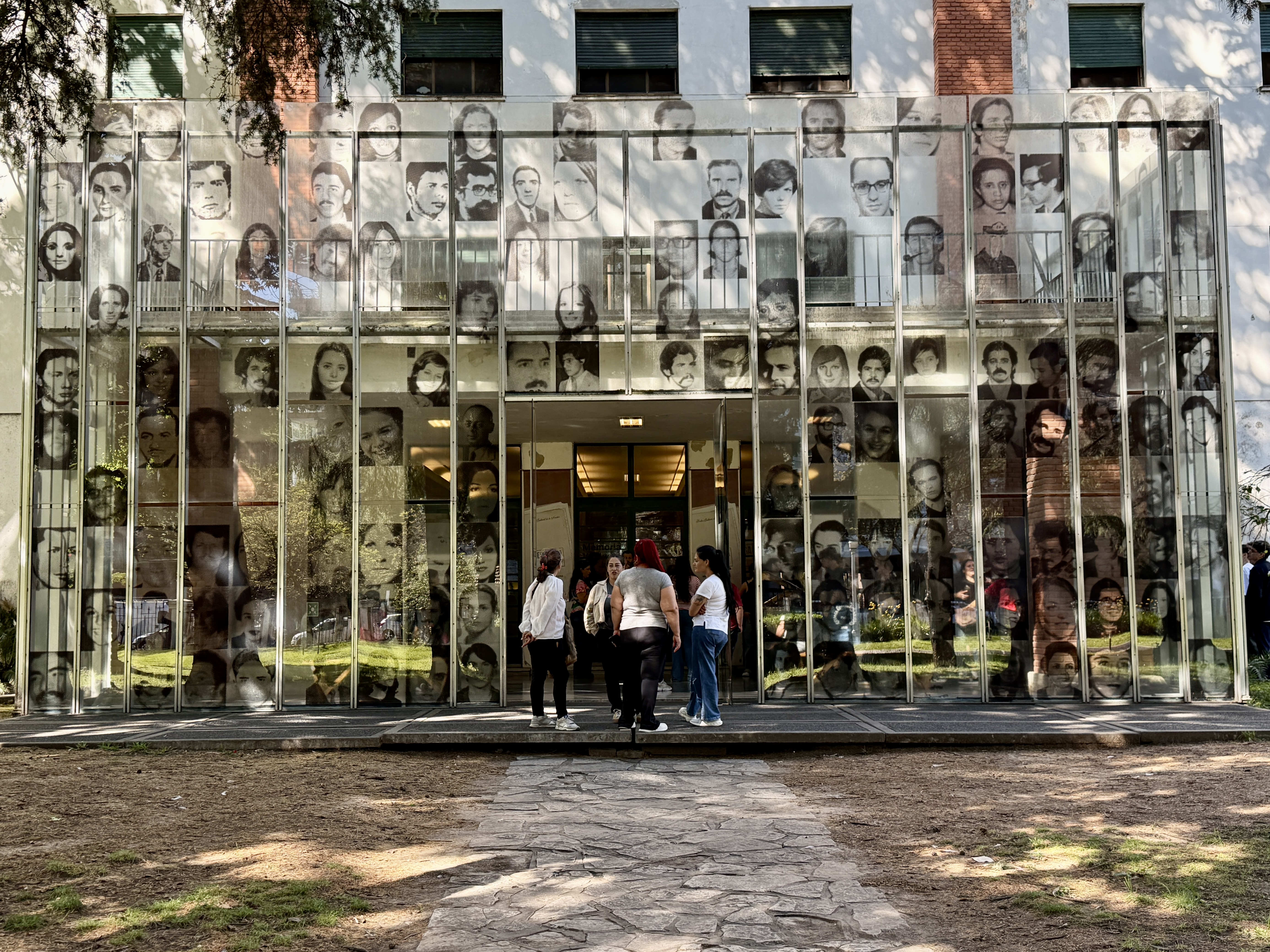
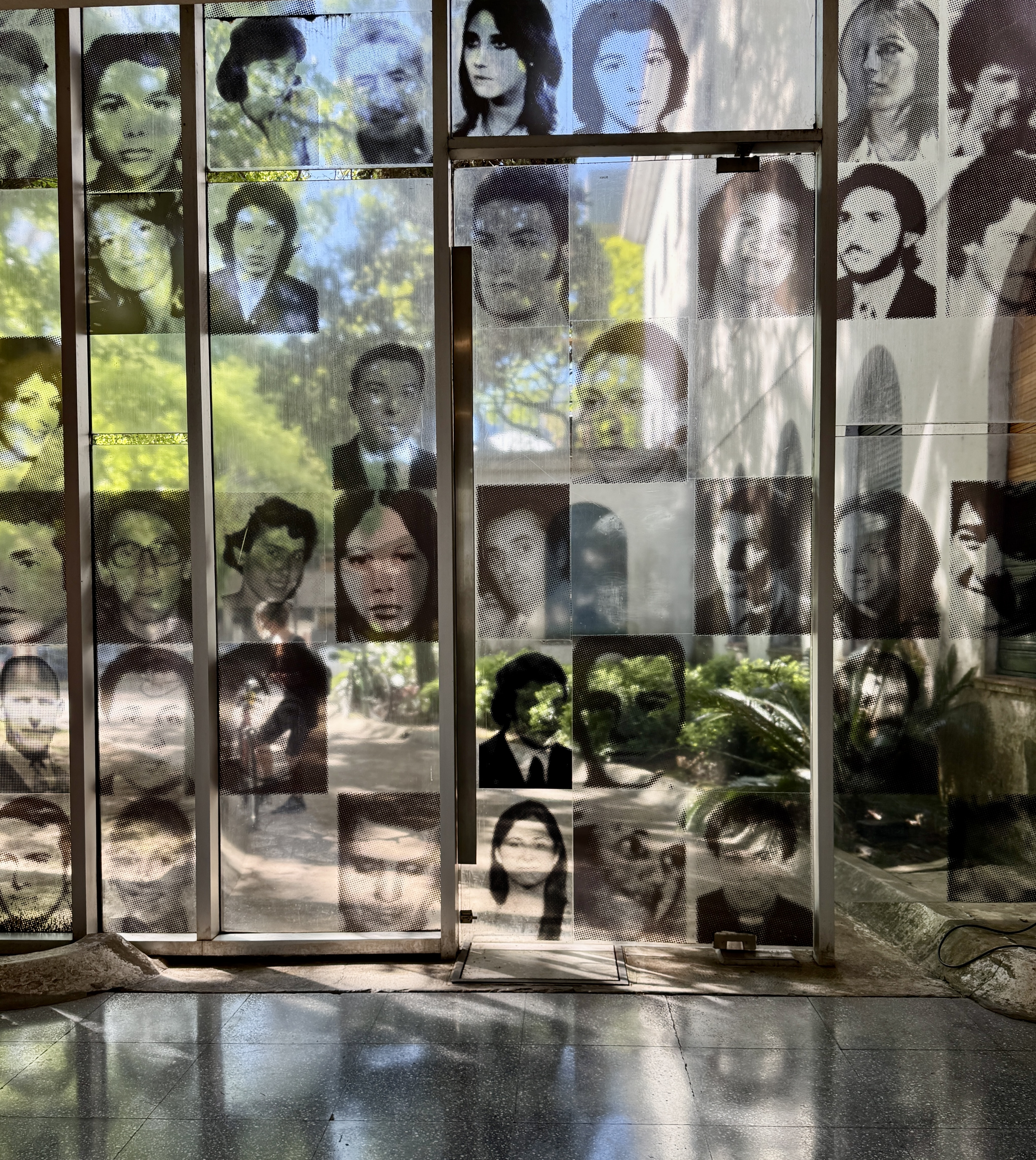
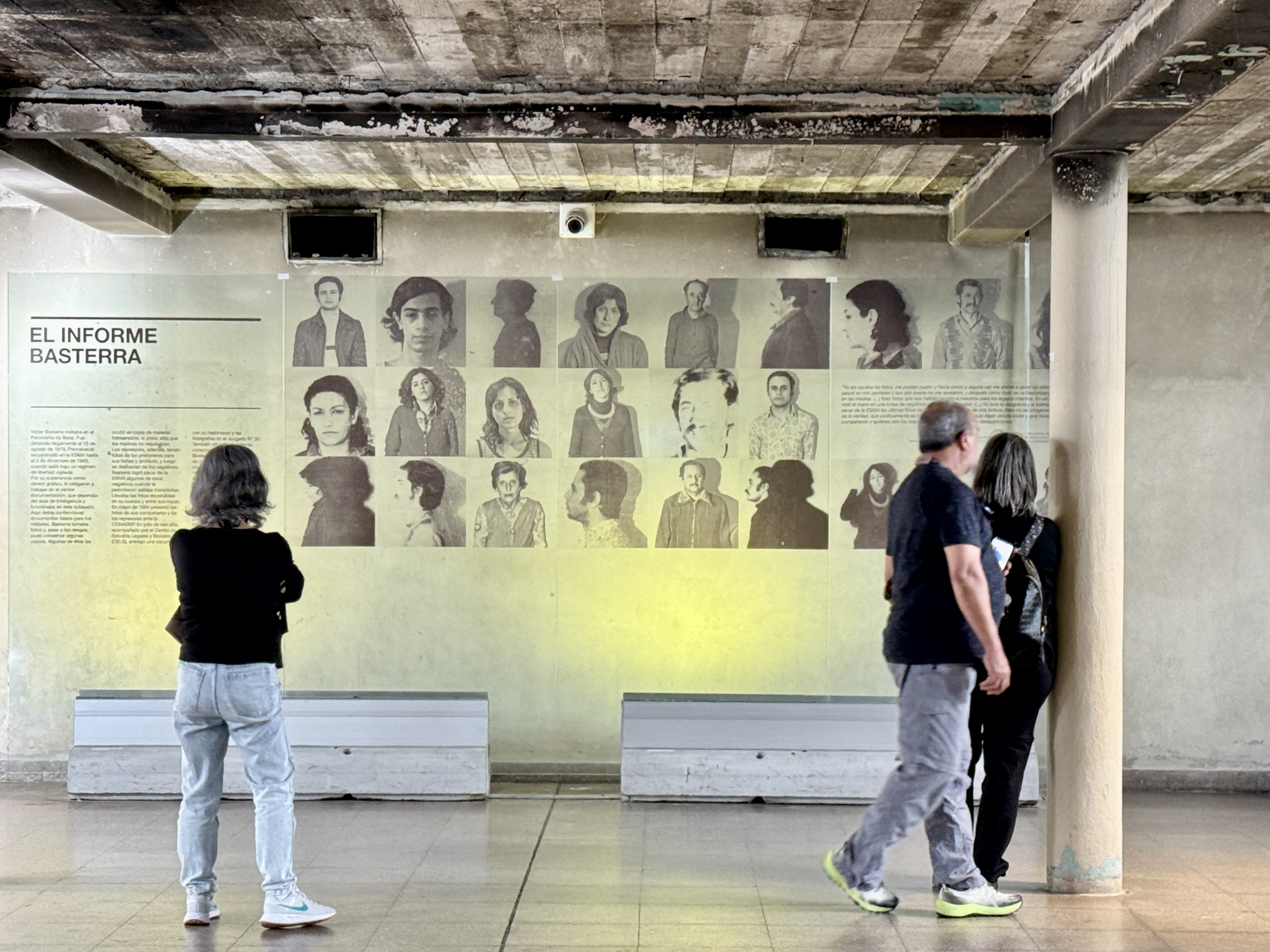
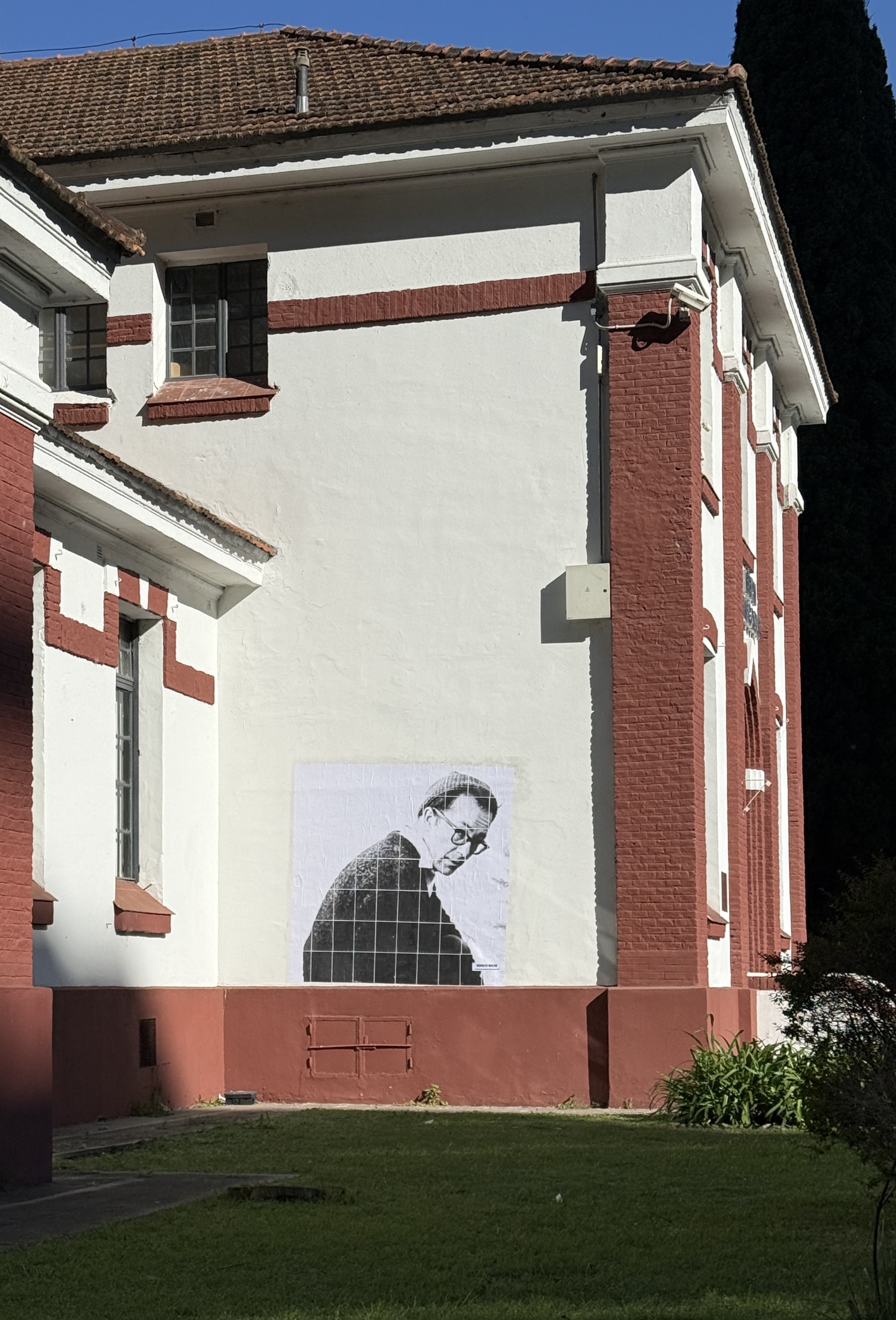

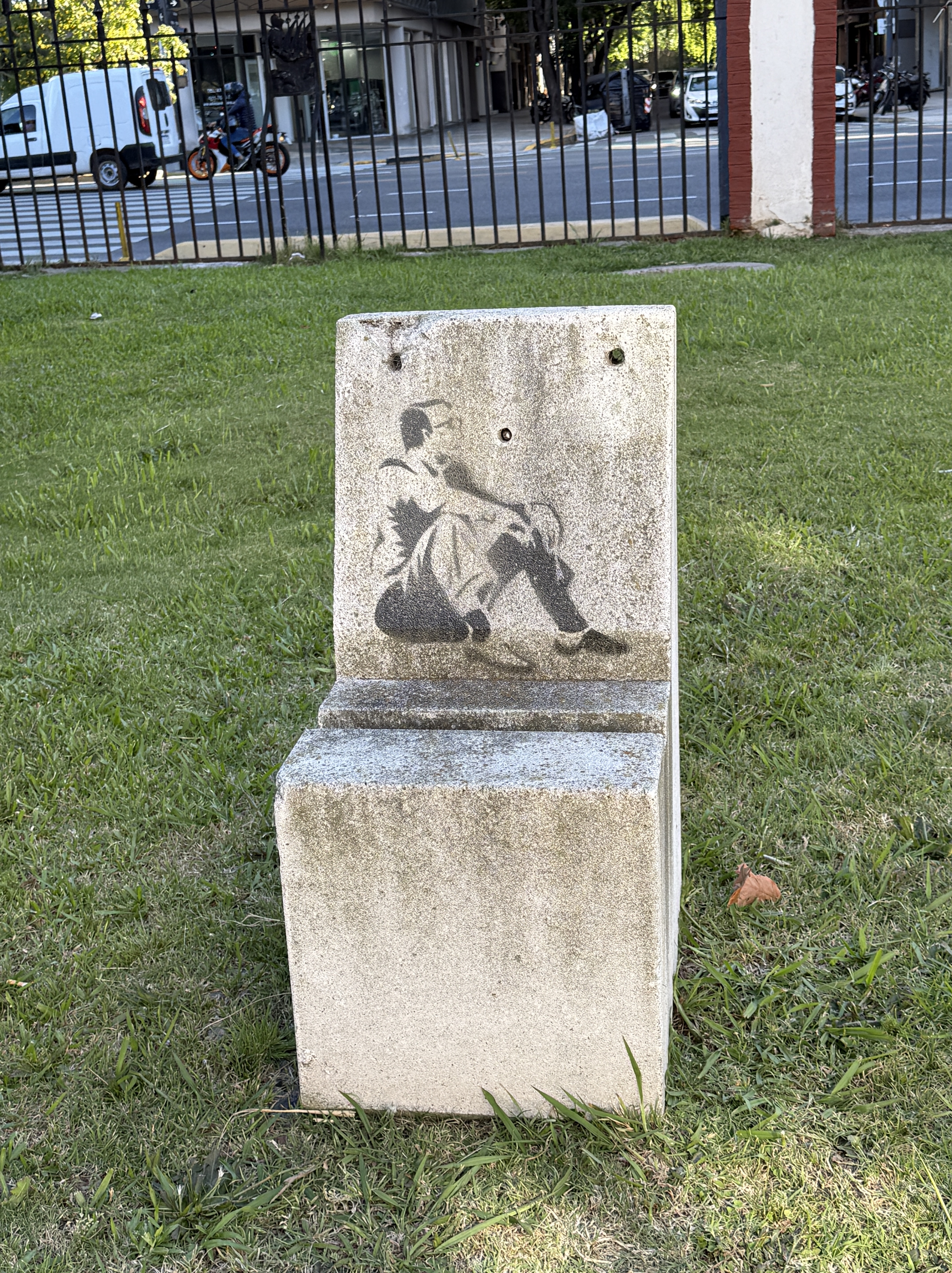
The museum is located at the northernmost part of the city of Buenos Aires, so it’s a trek. We headed back to the hotel to pack, and then to meet up with Jairo and Peter again for dinner and to say our good-byes. We went to a restaurant recommended by one of the concierges here at the hotel and it was a winner–Piedra Pasillo.

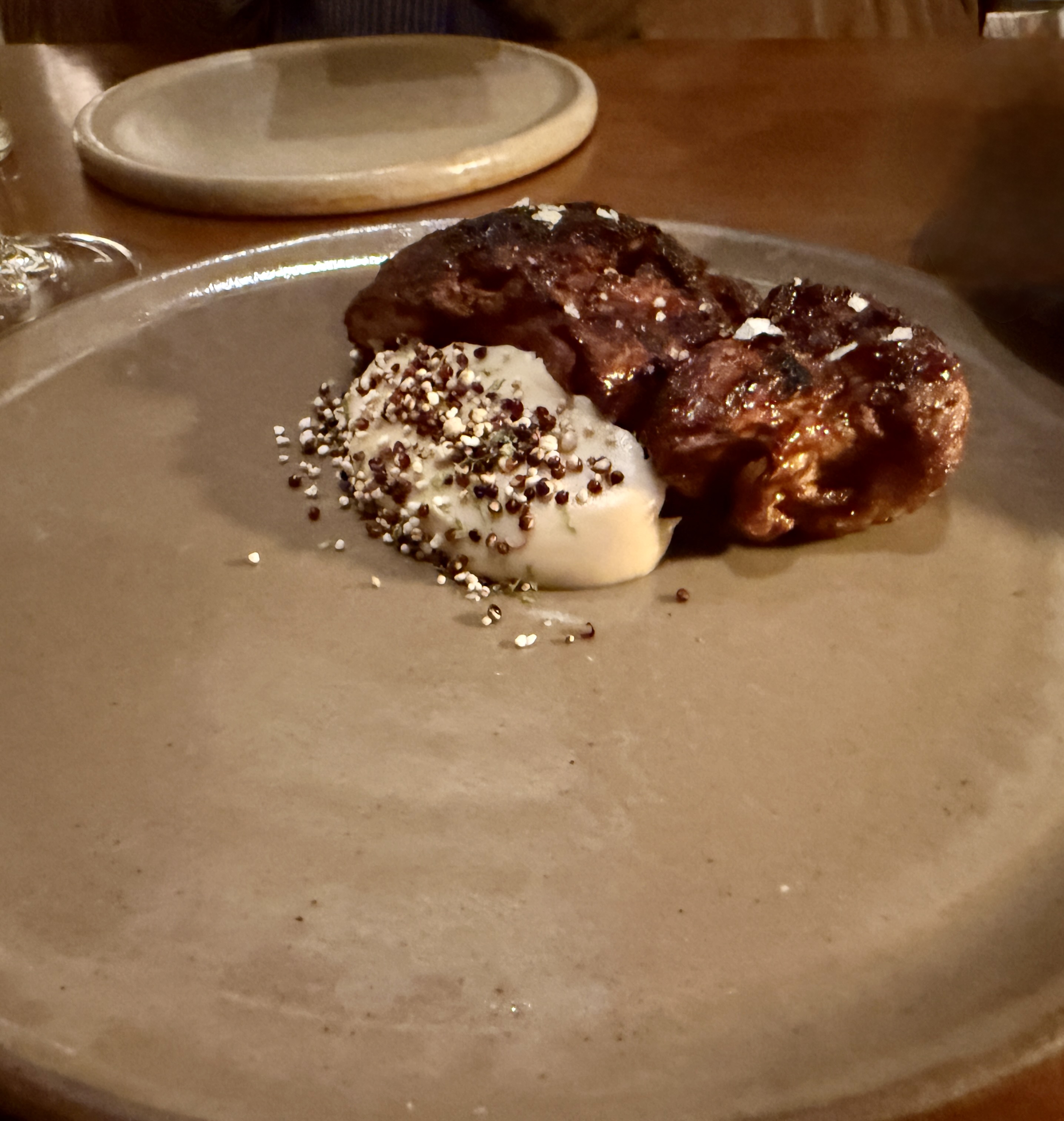
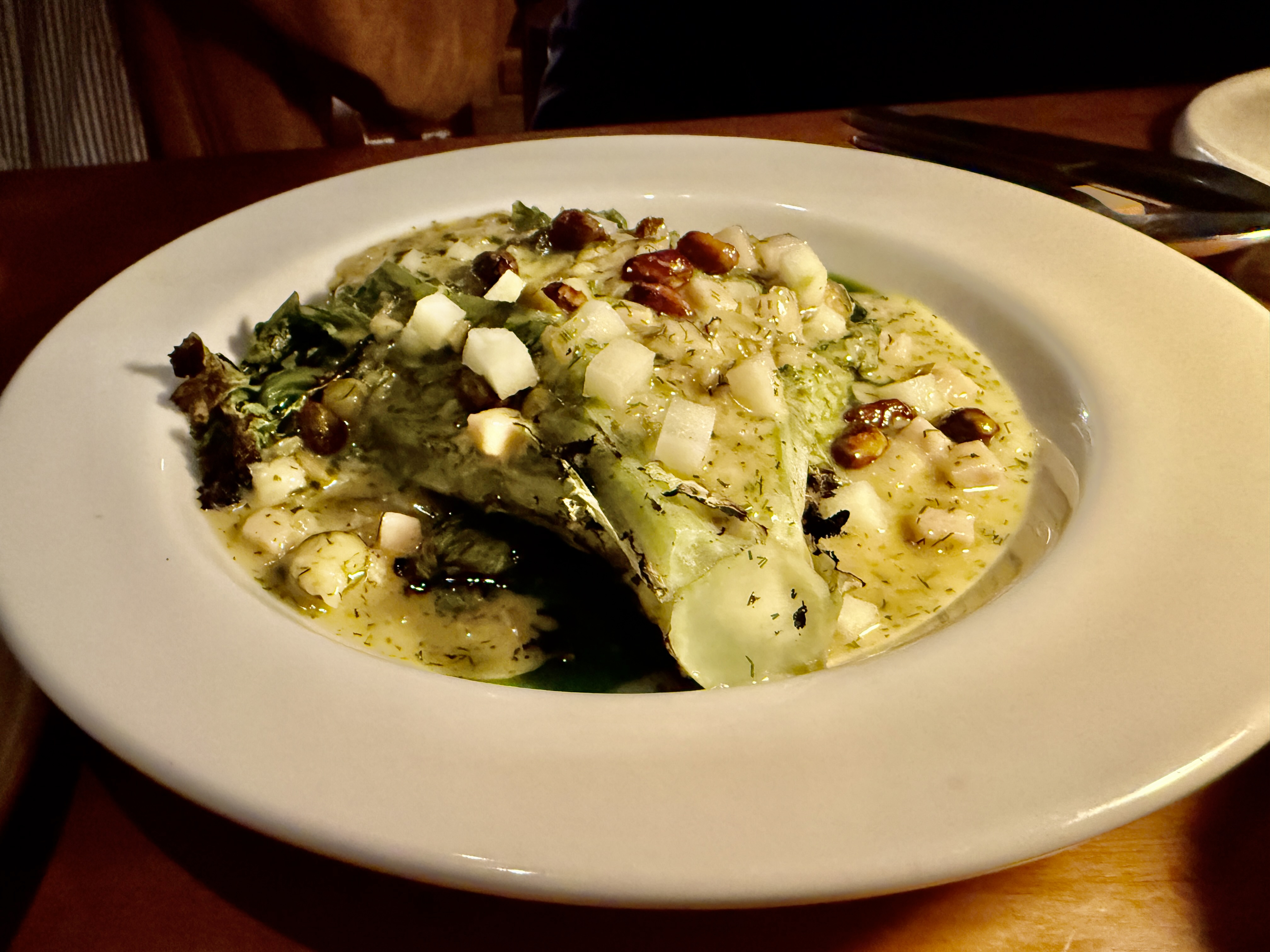
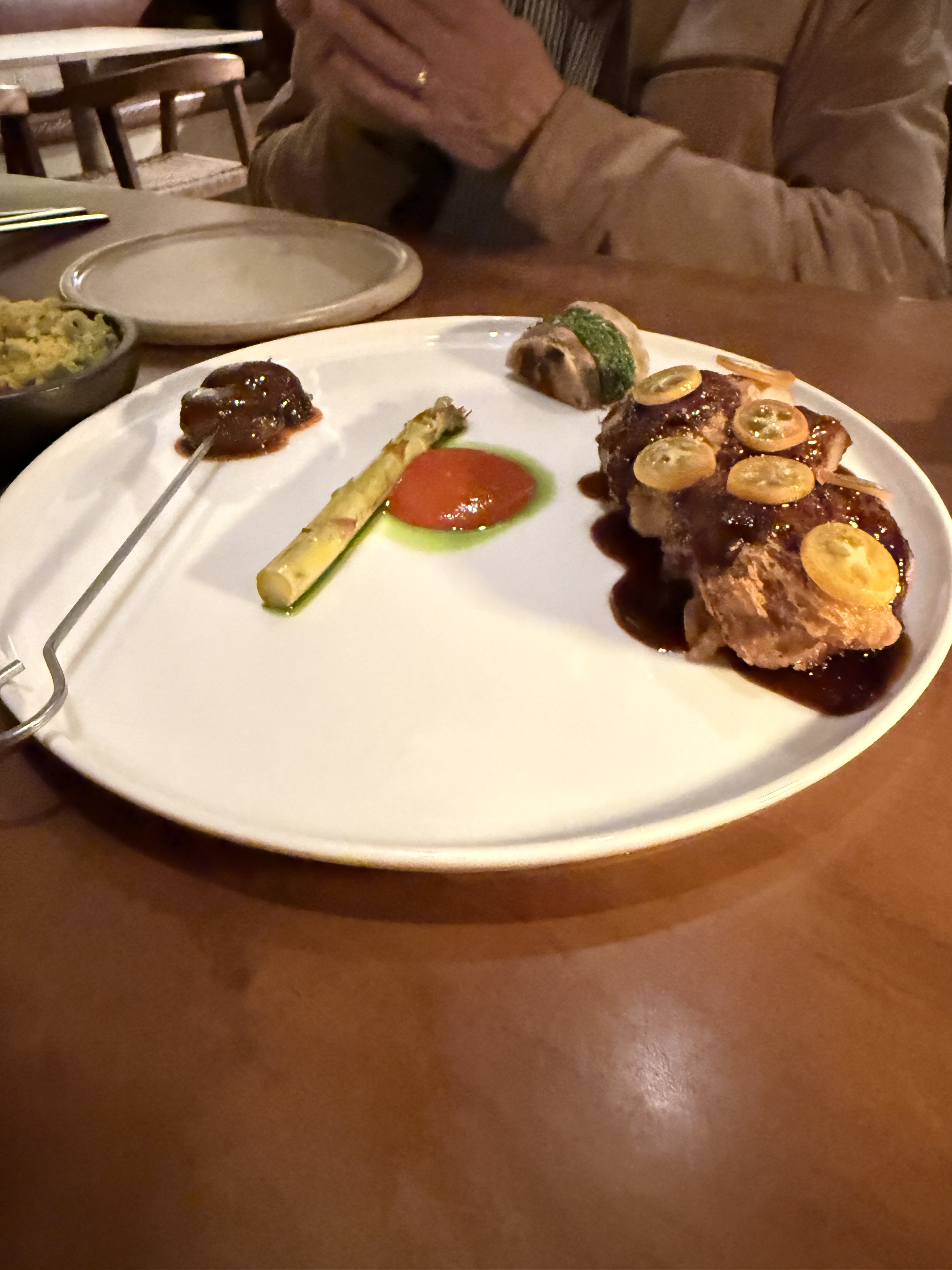
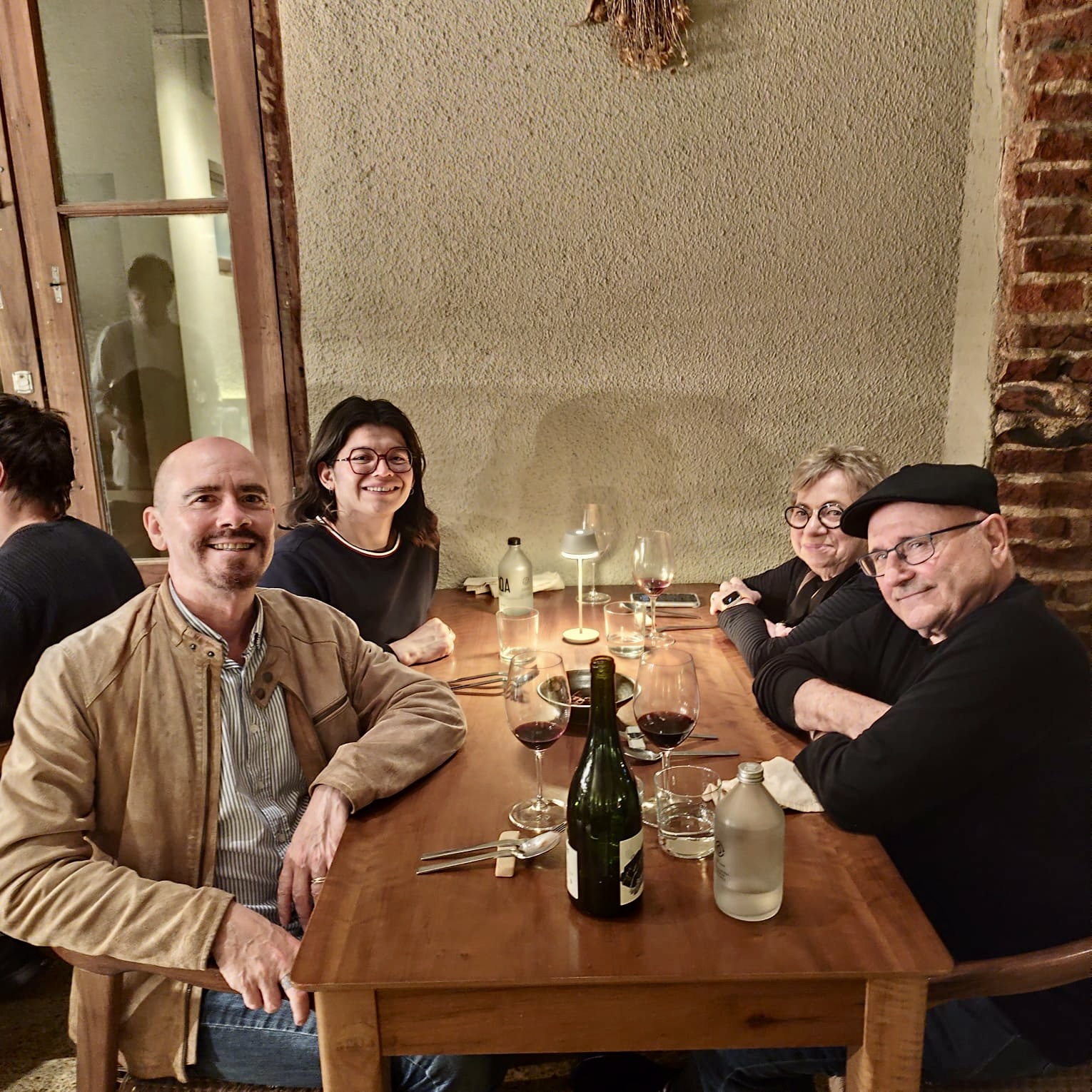
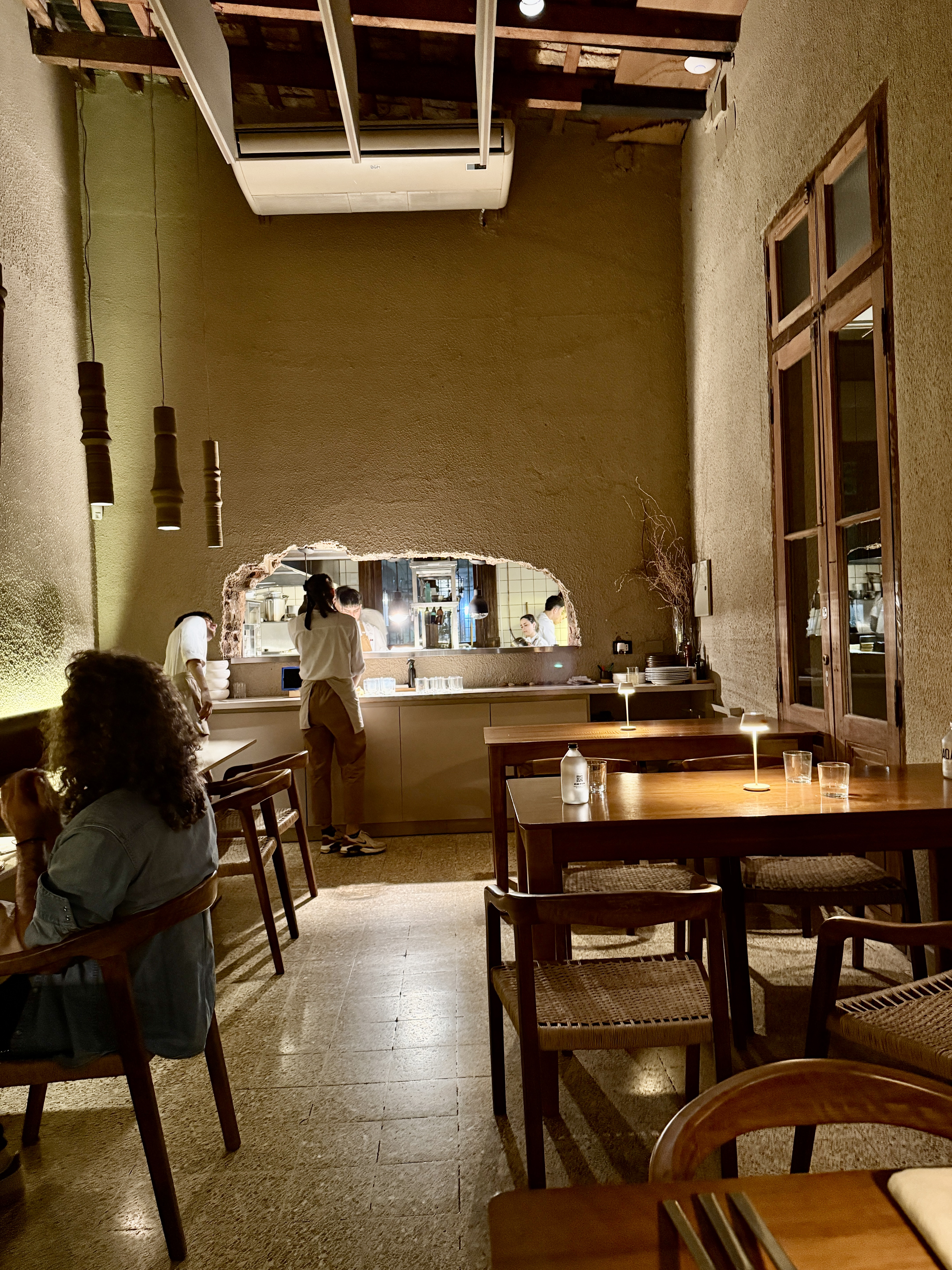
Im fading… Will describe the dinner for the foodies in my post tomorrow from Lobos, Argentina.
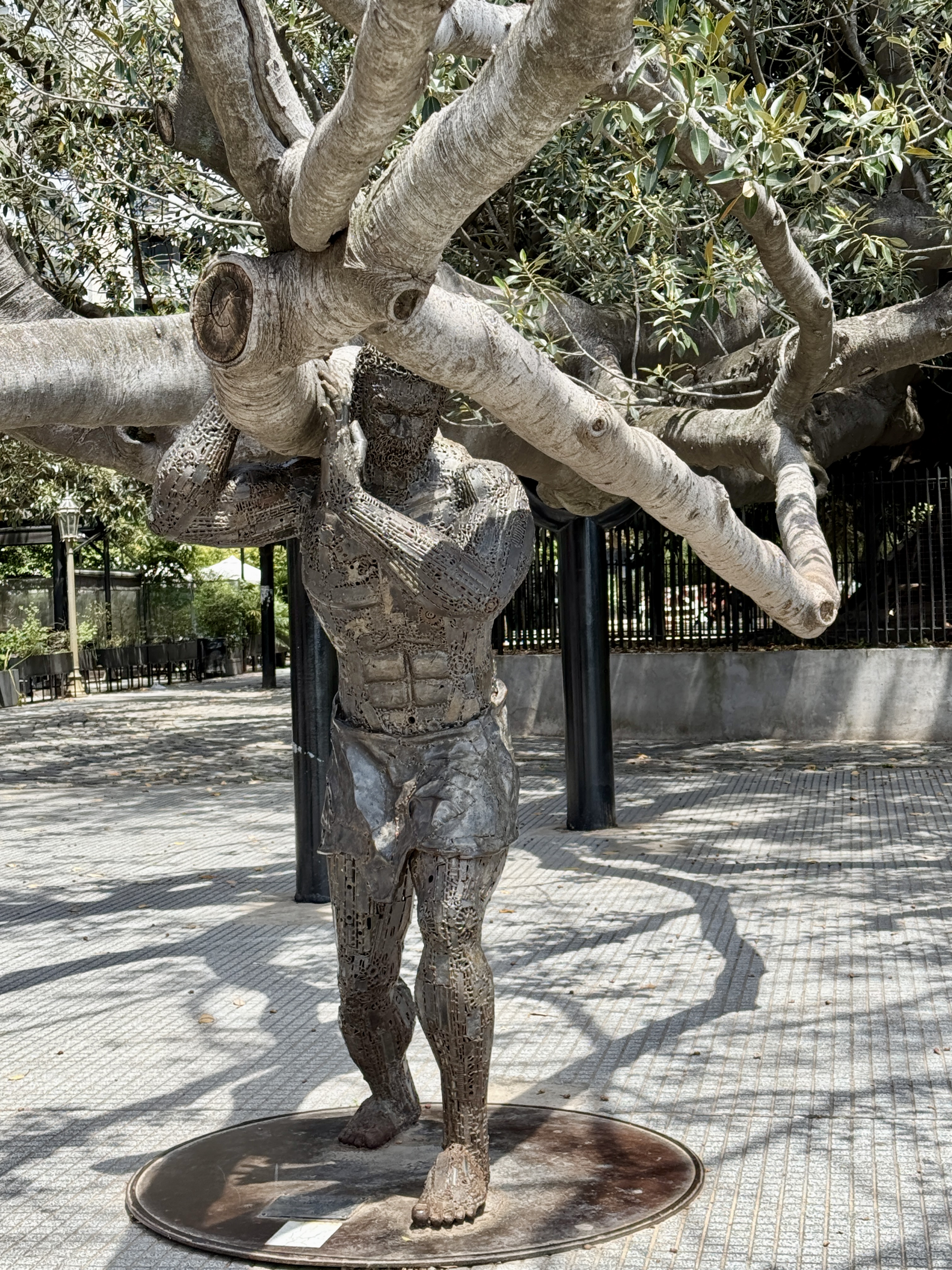
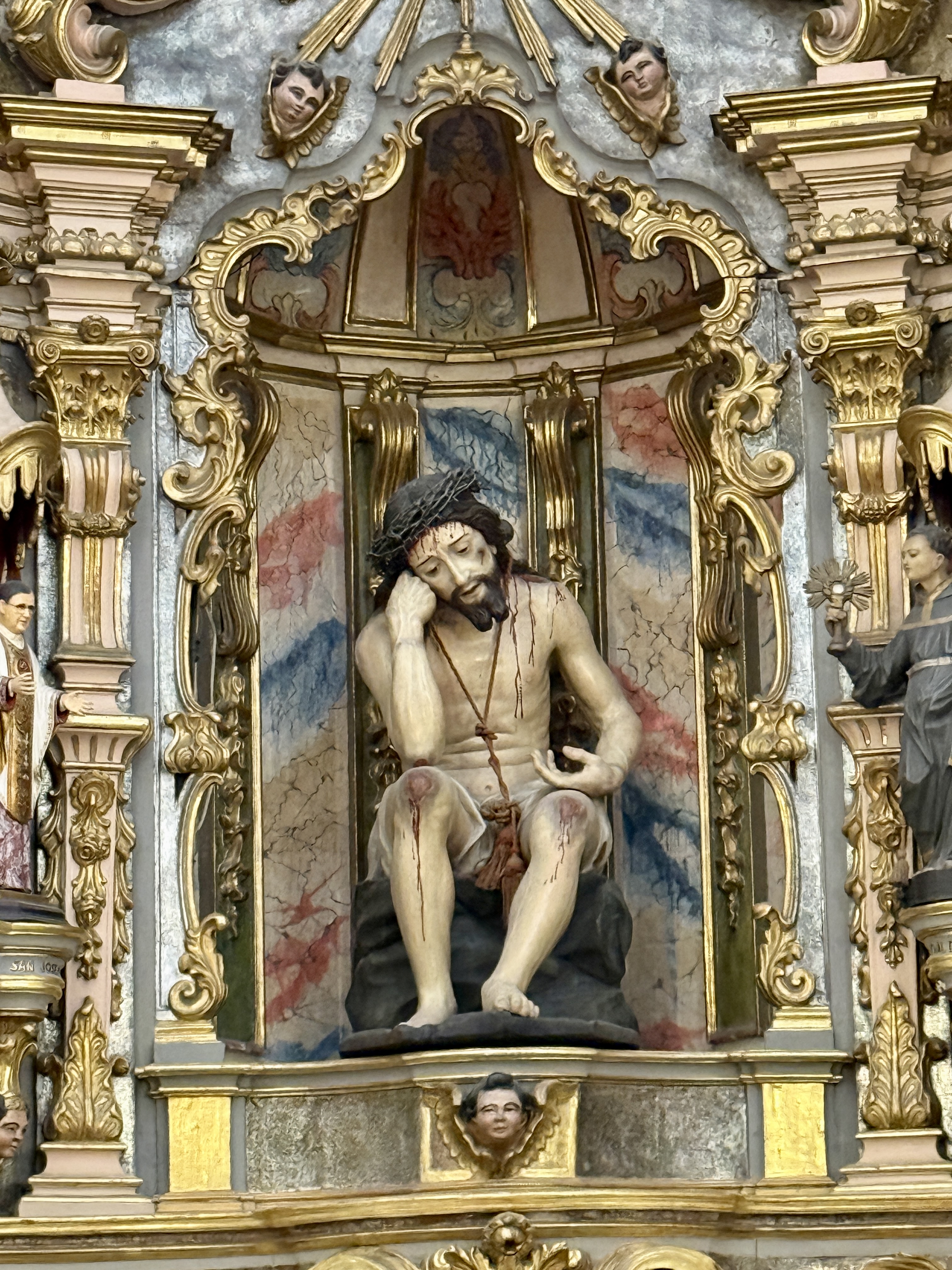
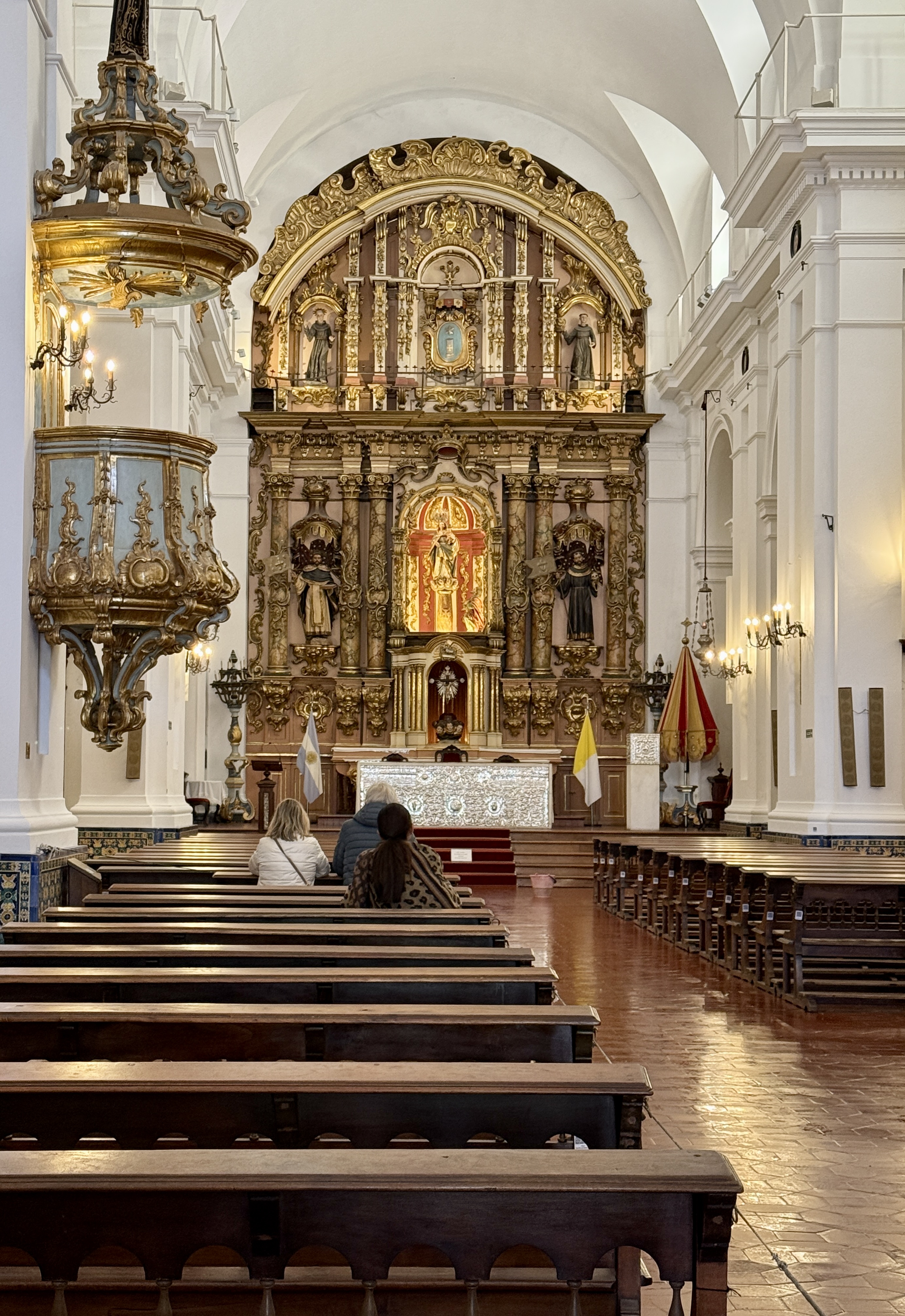
Began the day, as usual, at our little cafe down the street and then headed for the Centro Cultural de Recoletta which appeared to be about a 40-minute walk. We had a lot on our agenda today, given that we lost all of yesterday dealing with the iPhone. So we decided a taxi would be the most efficient way to move around (combined with walking and the metro). The taxi dropped us at what appeared to be the Cultural Center, which was adjacent to a lovely old church, so we poked our head into the church before going to the Center. There was a line to get in and we needed to purchase tickets. Once we got beyond the front door we realized we were in an amazing cemetery… not the cultural center, which was actually on the other side of the church. So we strolled through Cementerio de la Recoleta an incredible cemetery that contains the graves of notable people, including Eva Peron, Nobel Prize winners, presidents of Argentina, and members of Argentina’s wealthiest families over the decades.
It’s like streets lined with large row houses 15′ high and taller. It’s lined with elaborate marble mausoleums that are decorated with statues. The styles of the mausoleums include Art Deco, Art Nouveau, Baroque, and Neo-Gothis. It’s laid out in sections like city blocks, with tree-lined main walkways. Some of the mausoleums are still being used by rich families in Argentina. For comparison, it’s about 1/4 the size of Père Lachaise Cemetery in Paris for those who may have stumbled on, as I did (or purposefully visited) that cemetery. But the feel is very different because it’s very religious and again has this verticality.
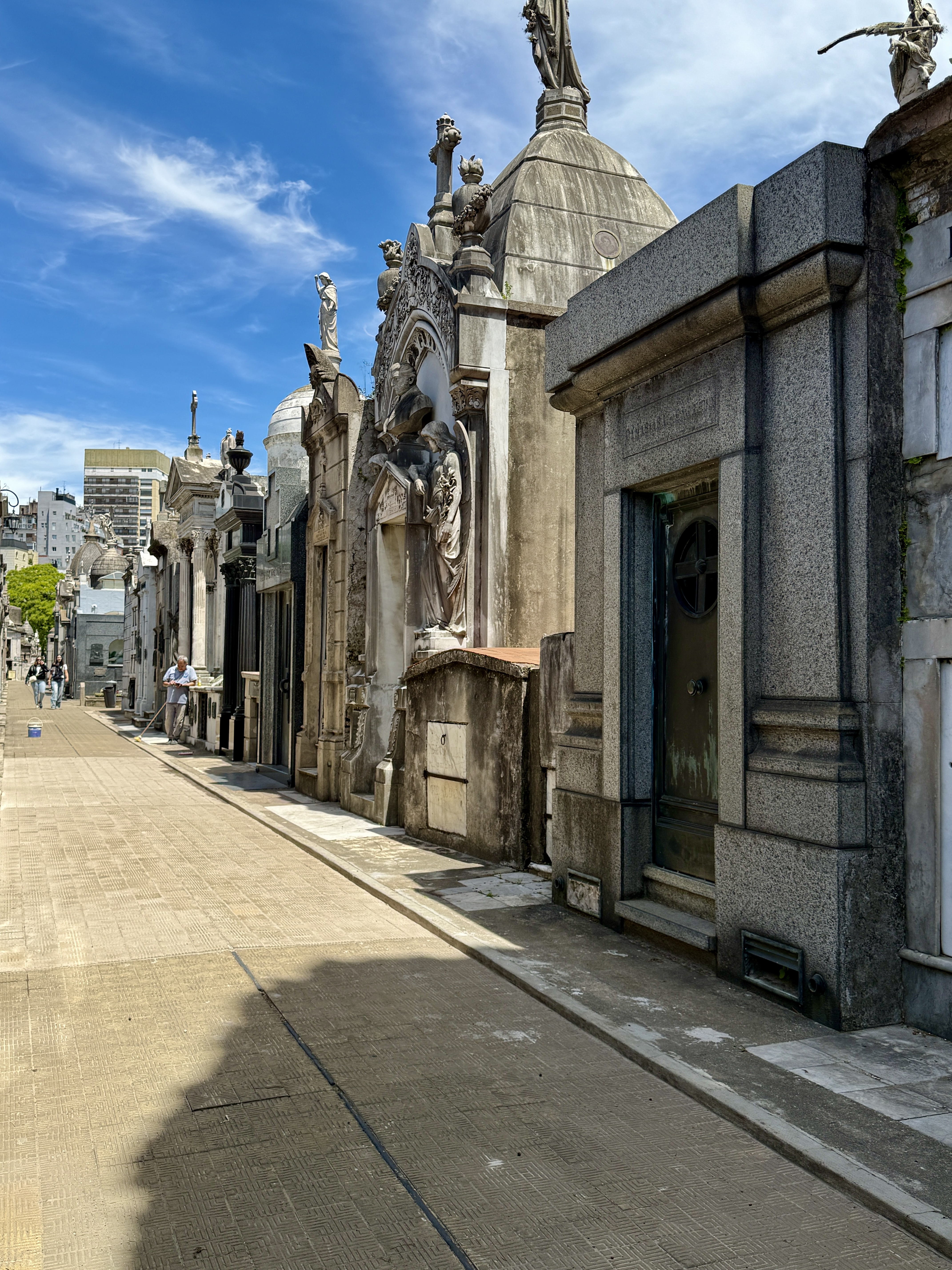

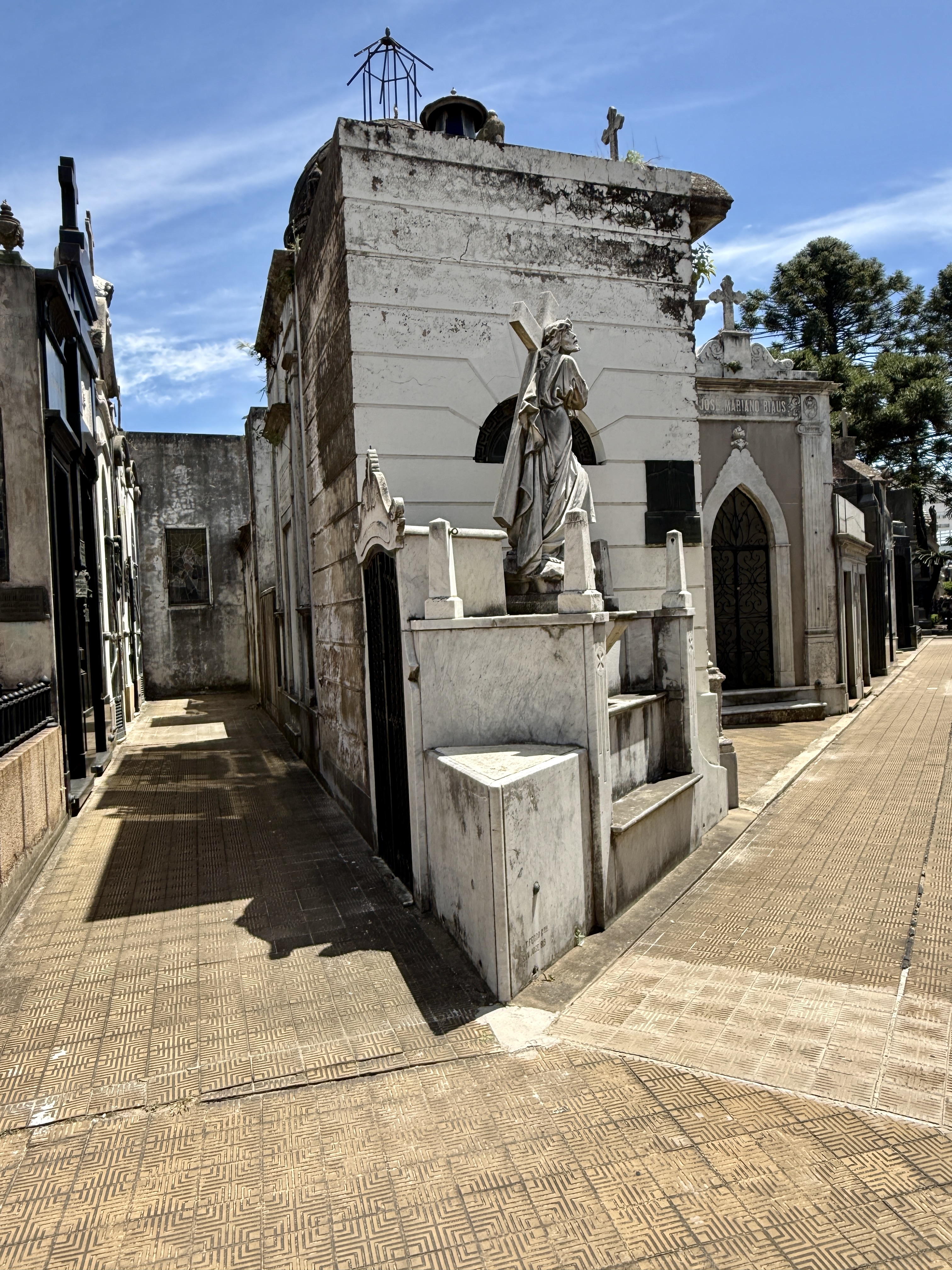
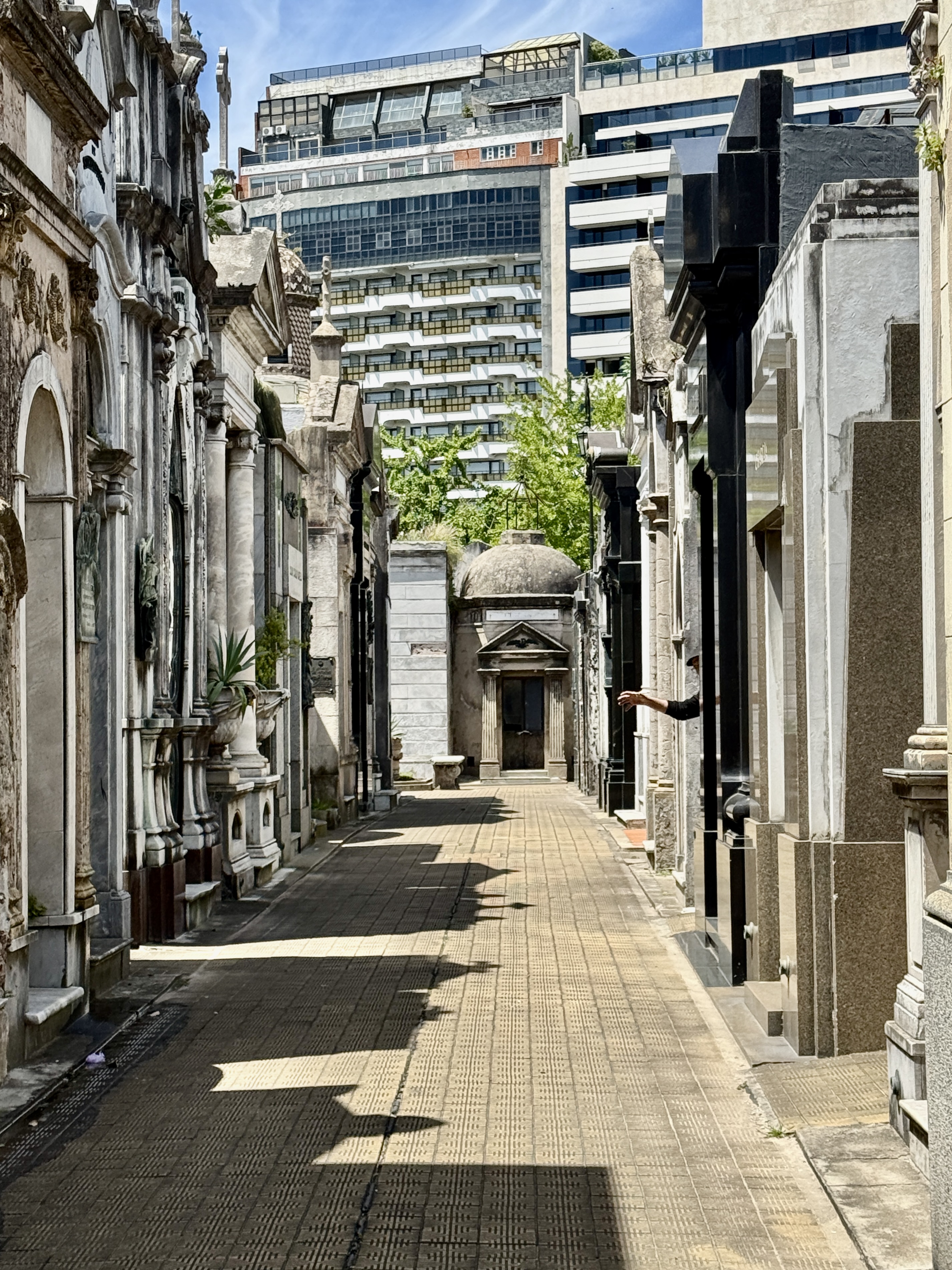
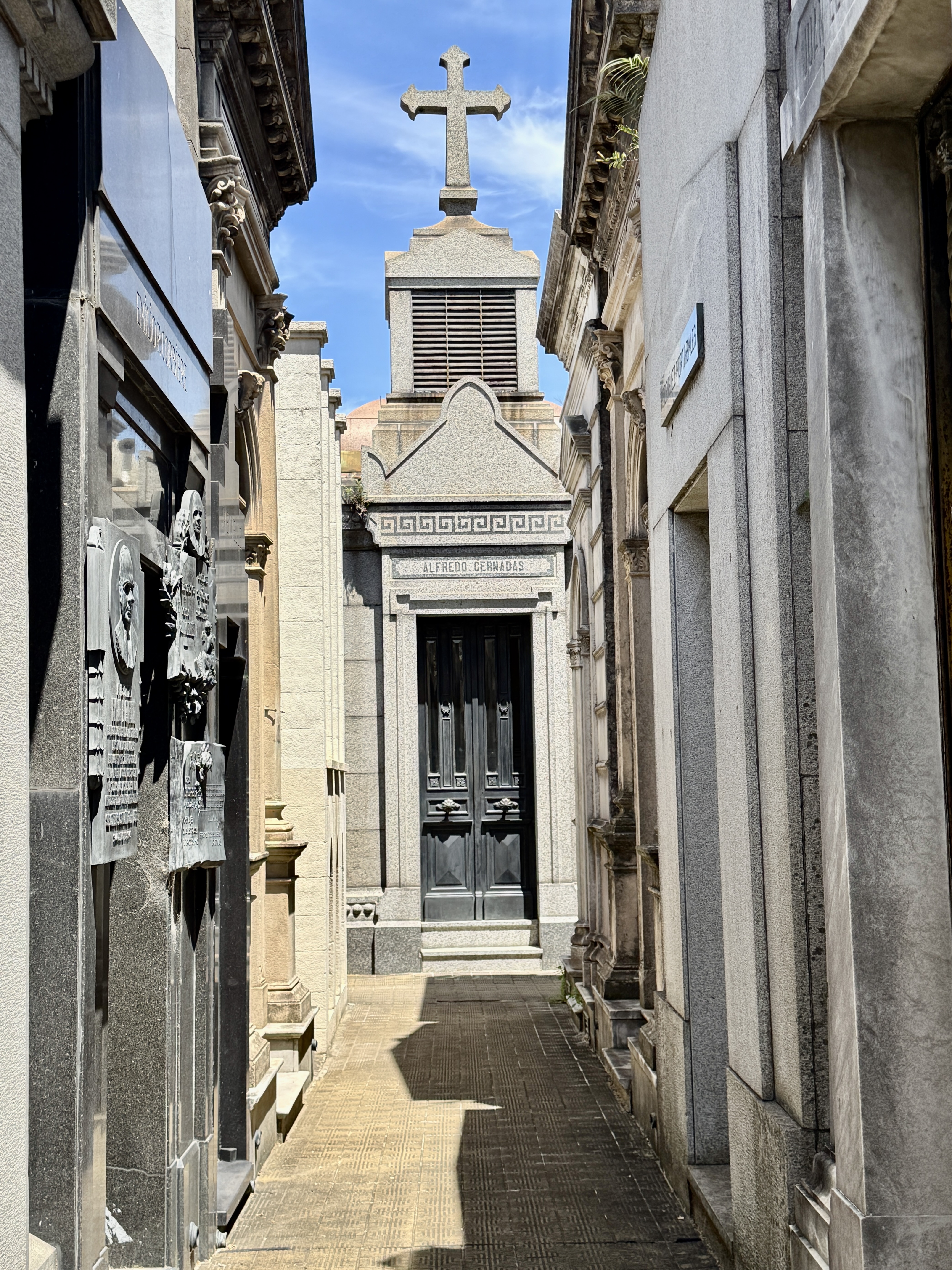
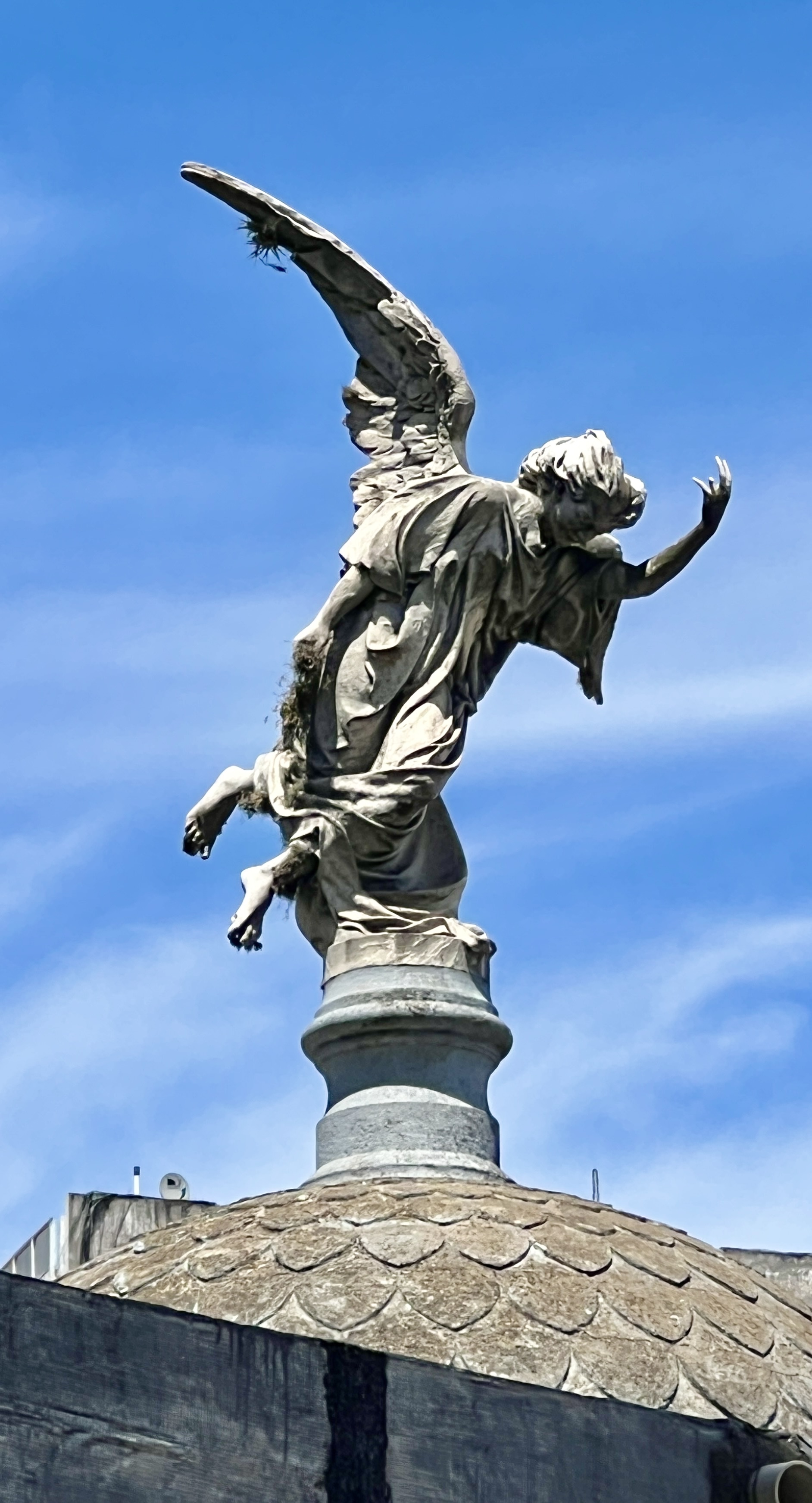
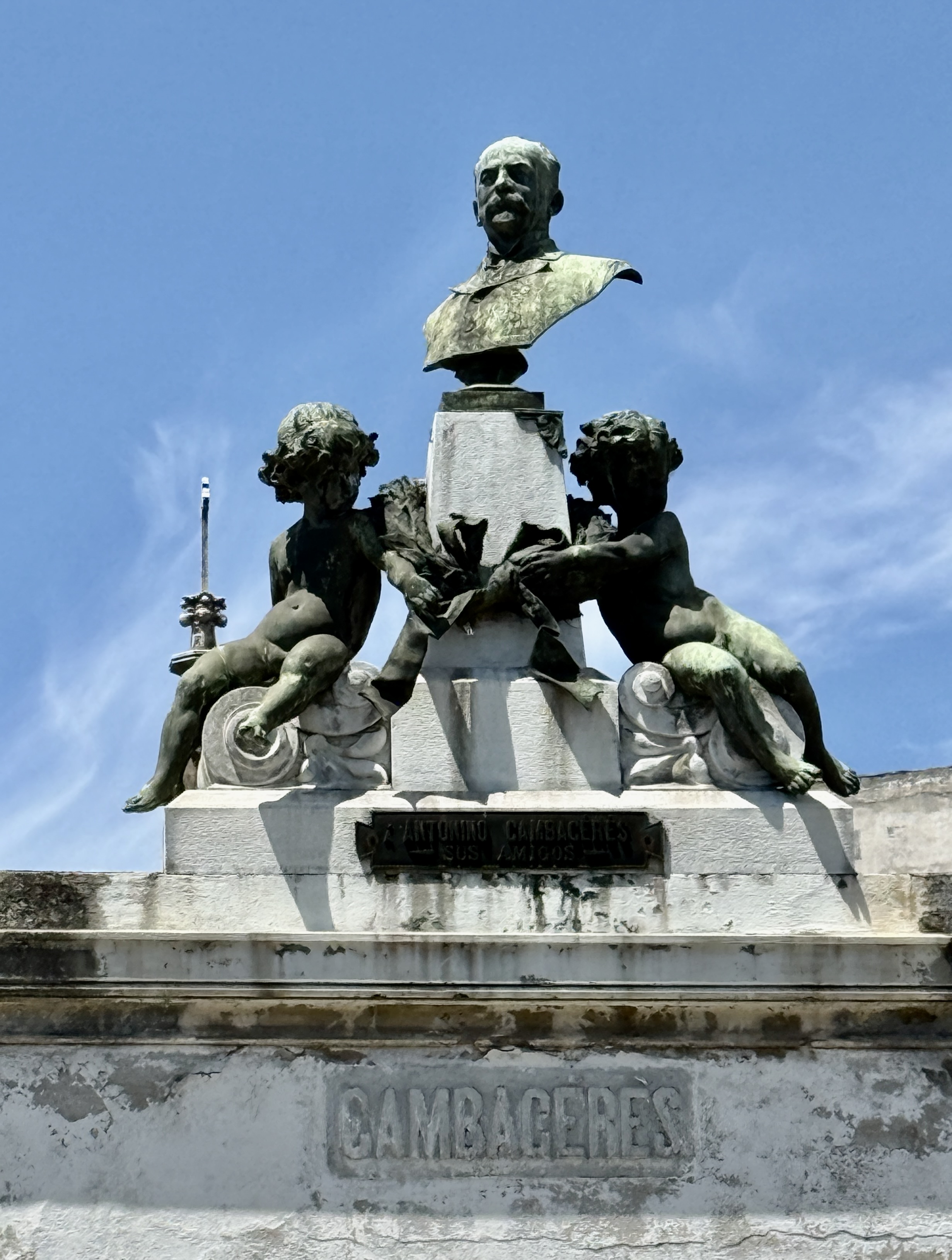
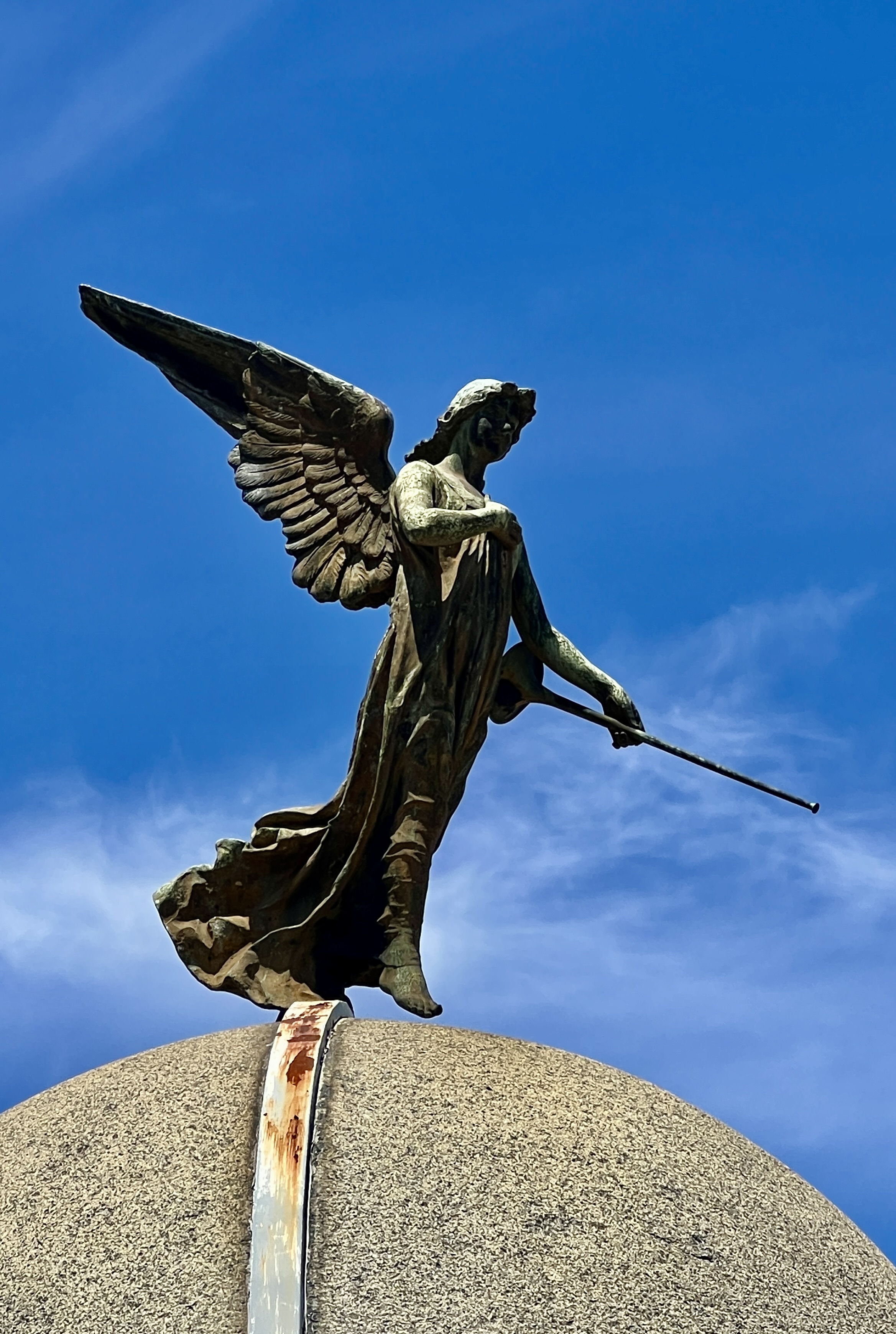
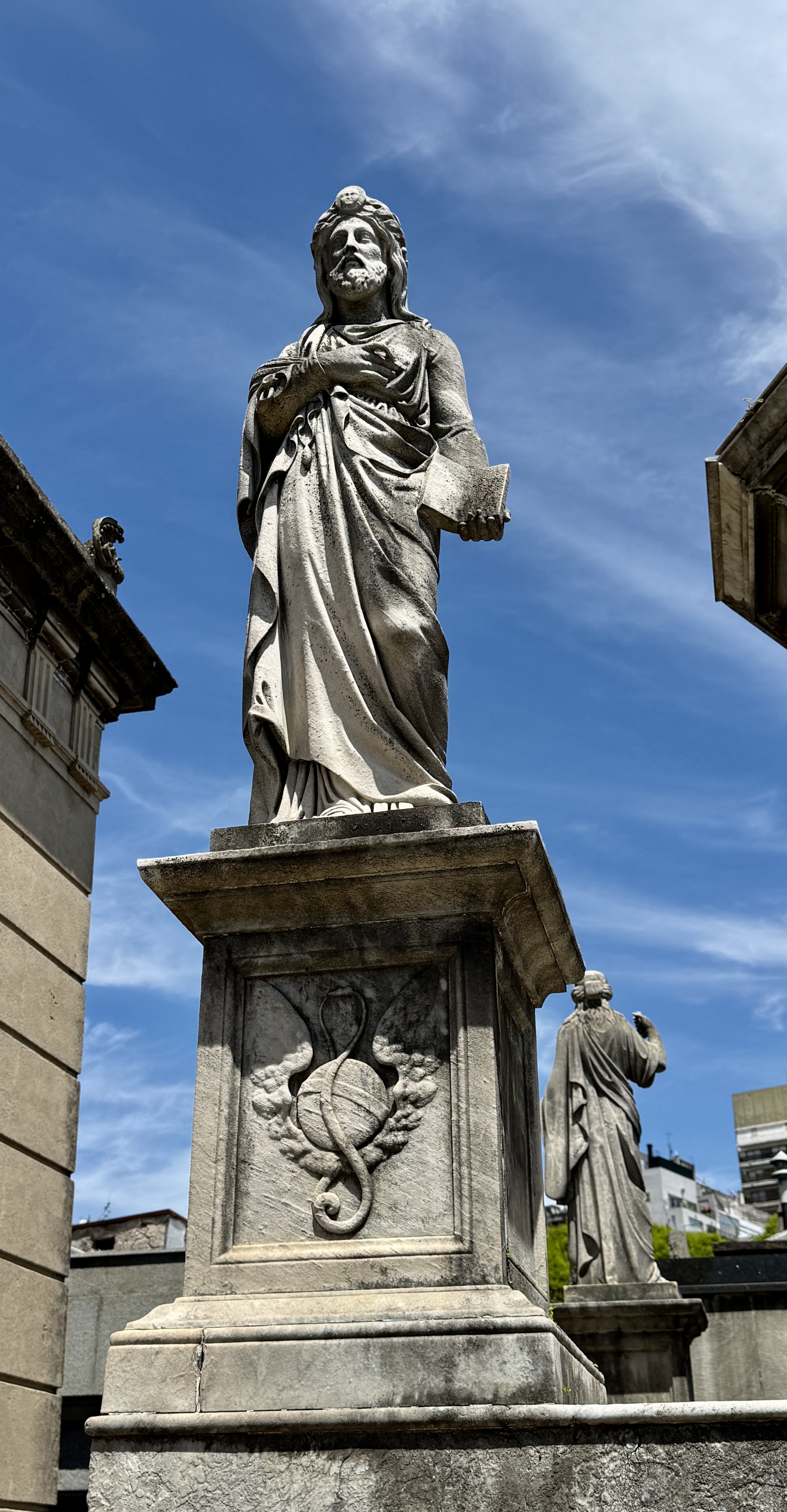
After a quick stroll among the dead we walked to the other sid of the church and arrived at the Culture Center — a contemporary exhibit space that also hosts events, concerts, films, etc. The center was in the midst of hanging two new shows including one for Day of the Dead, so the offerings were slim.
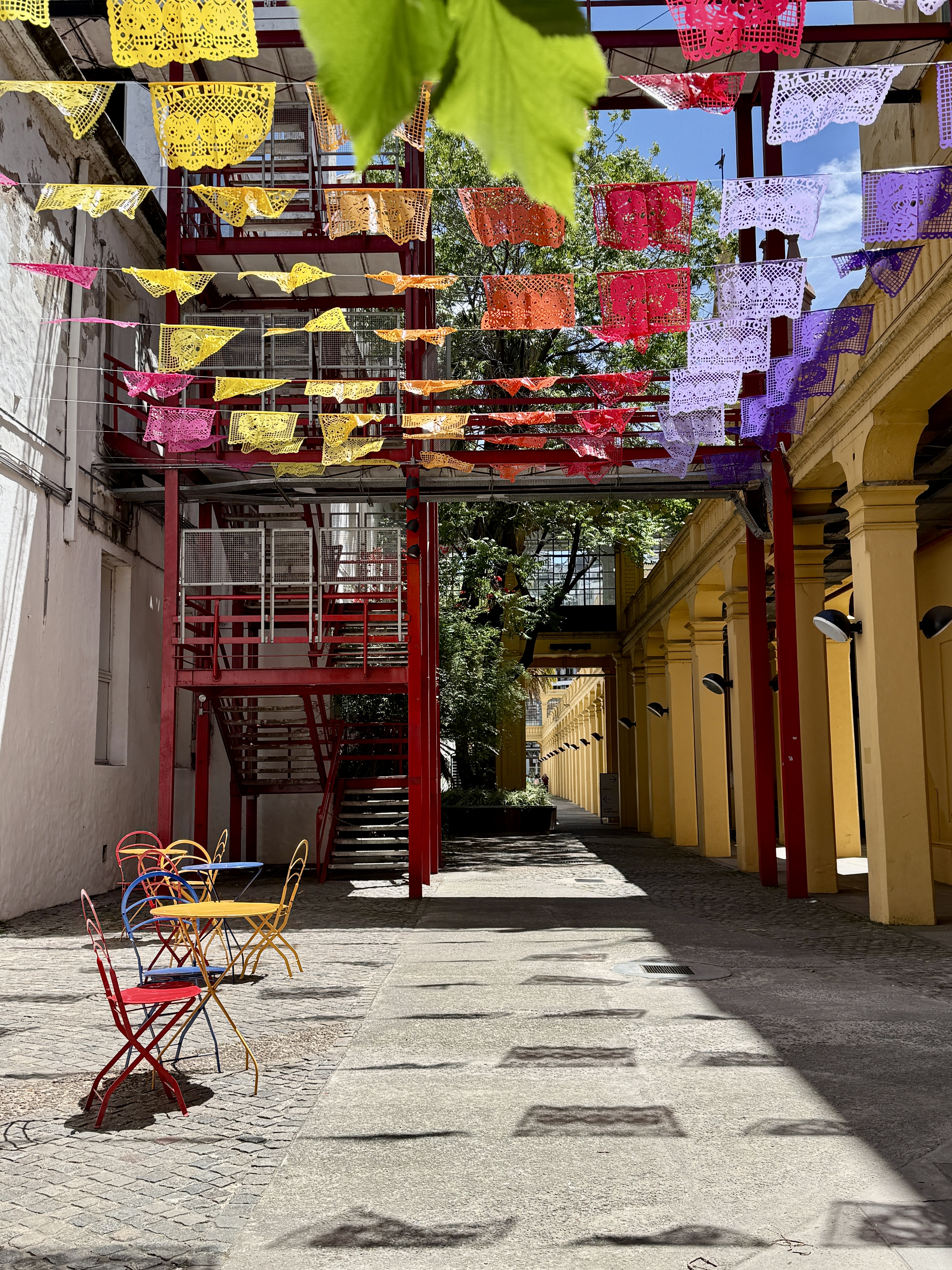

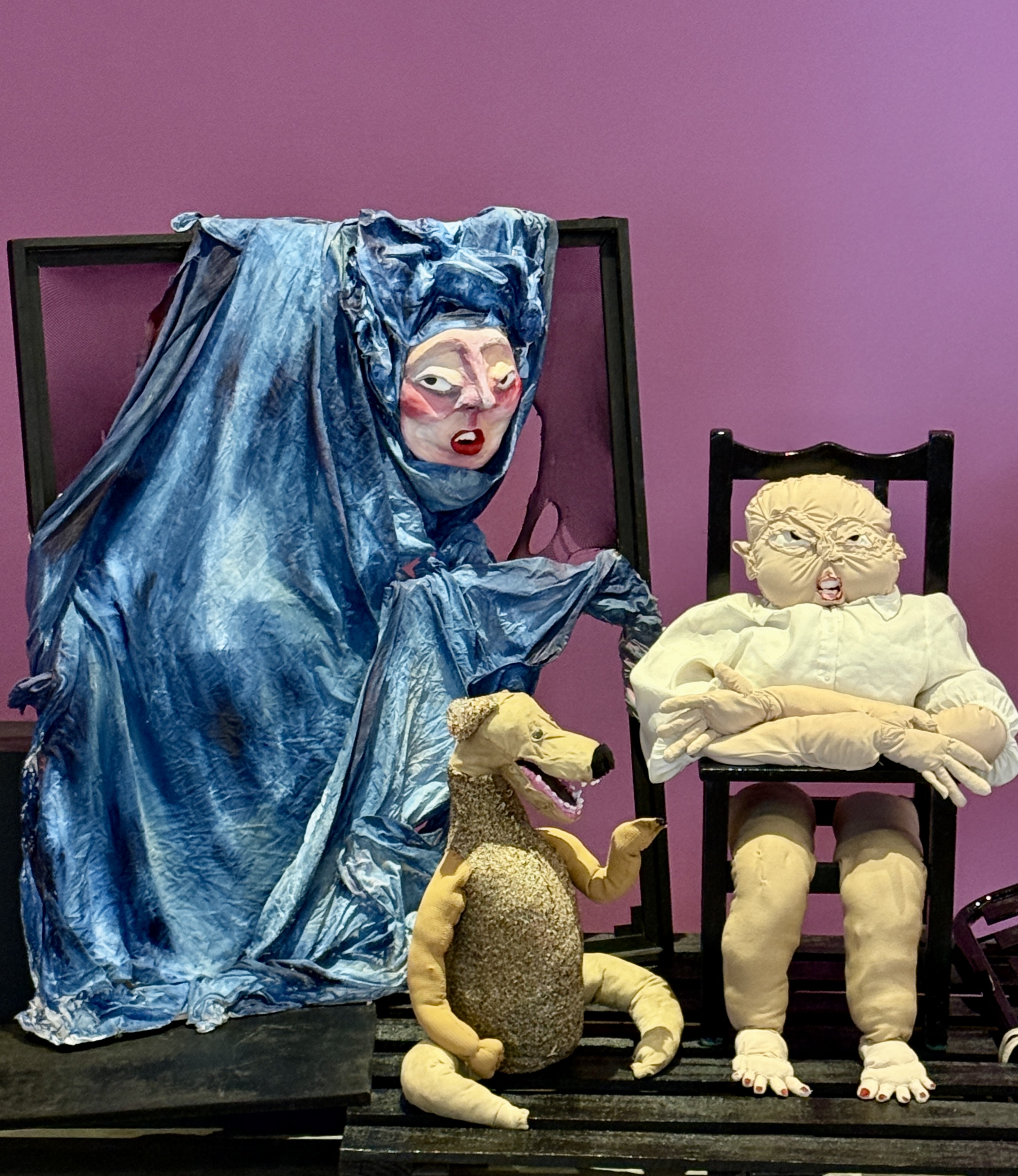
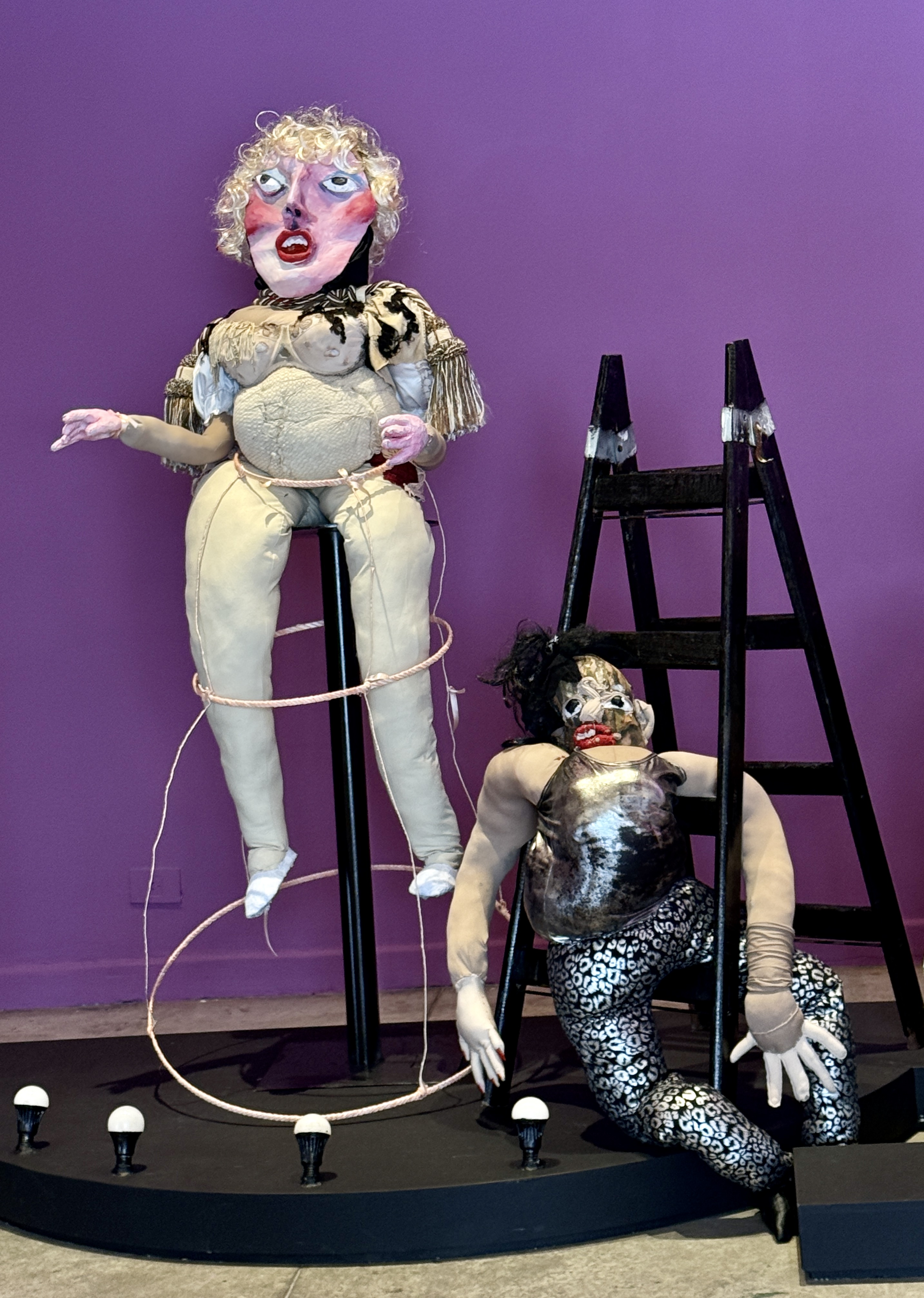
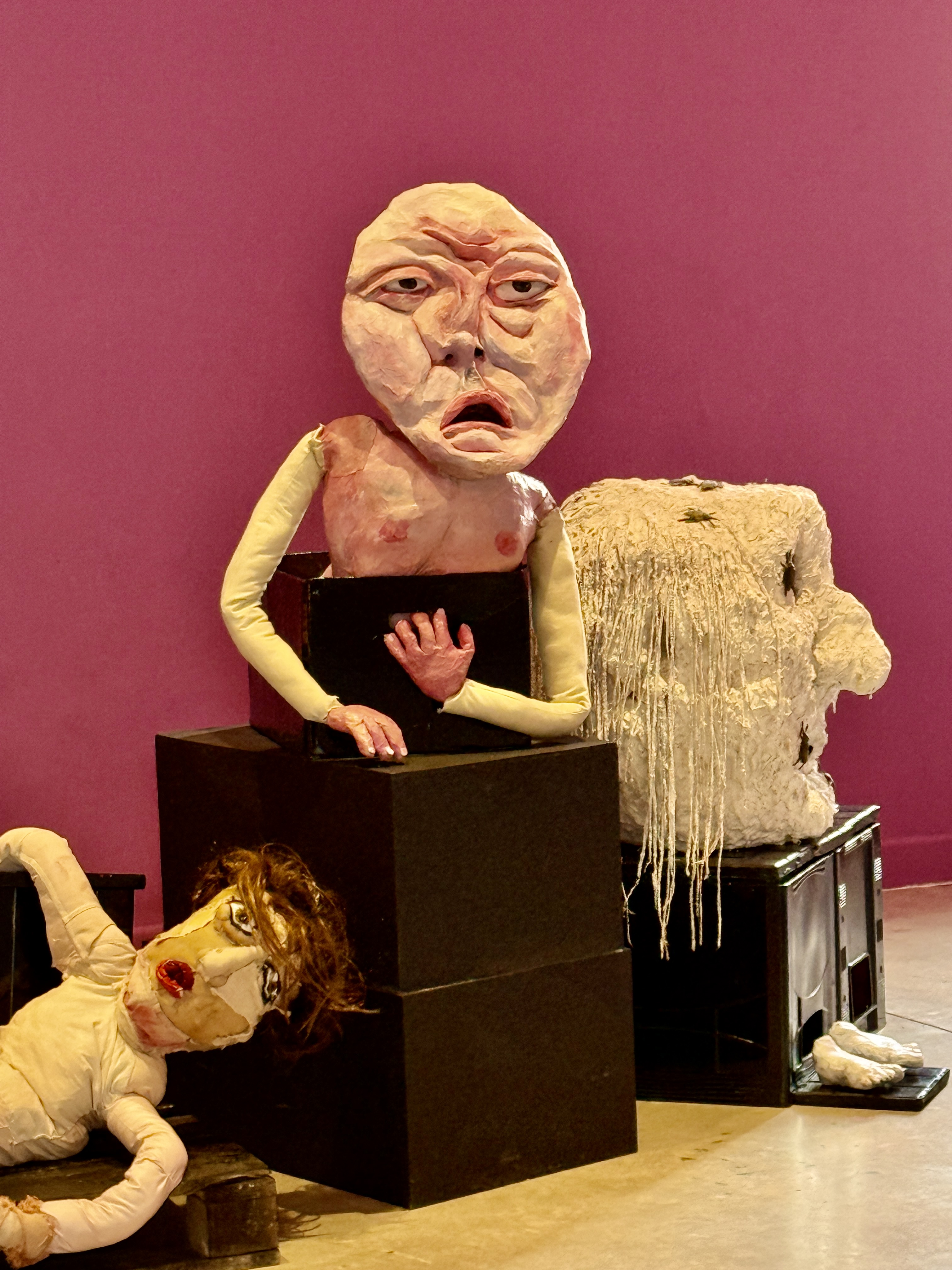
From there we walked a bit and then headed to see a gallery devoted to the work of Xul Solar, a painter and artist who used many different media. He was involved seriously in astrology, linguistics, the occult, and mythology. It is said that he was fluent in 20 languages and went on to create his own language that he considered to be a potential world language. And he created games, a piano with three rows of keys and a a six-note scale.
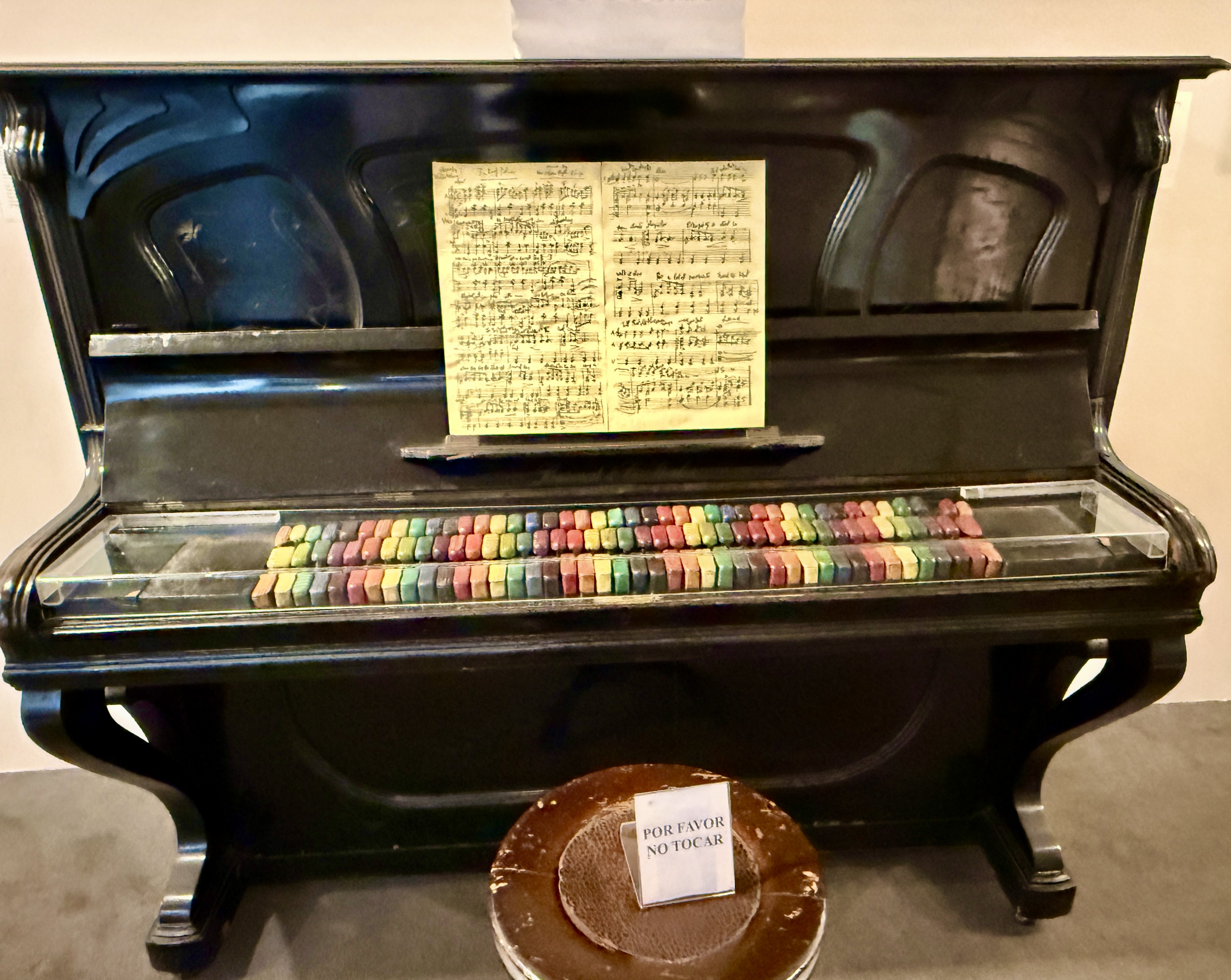
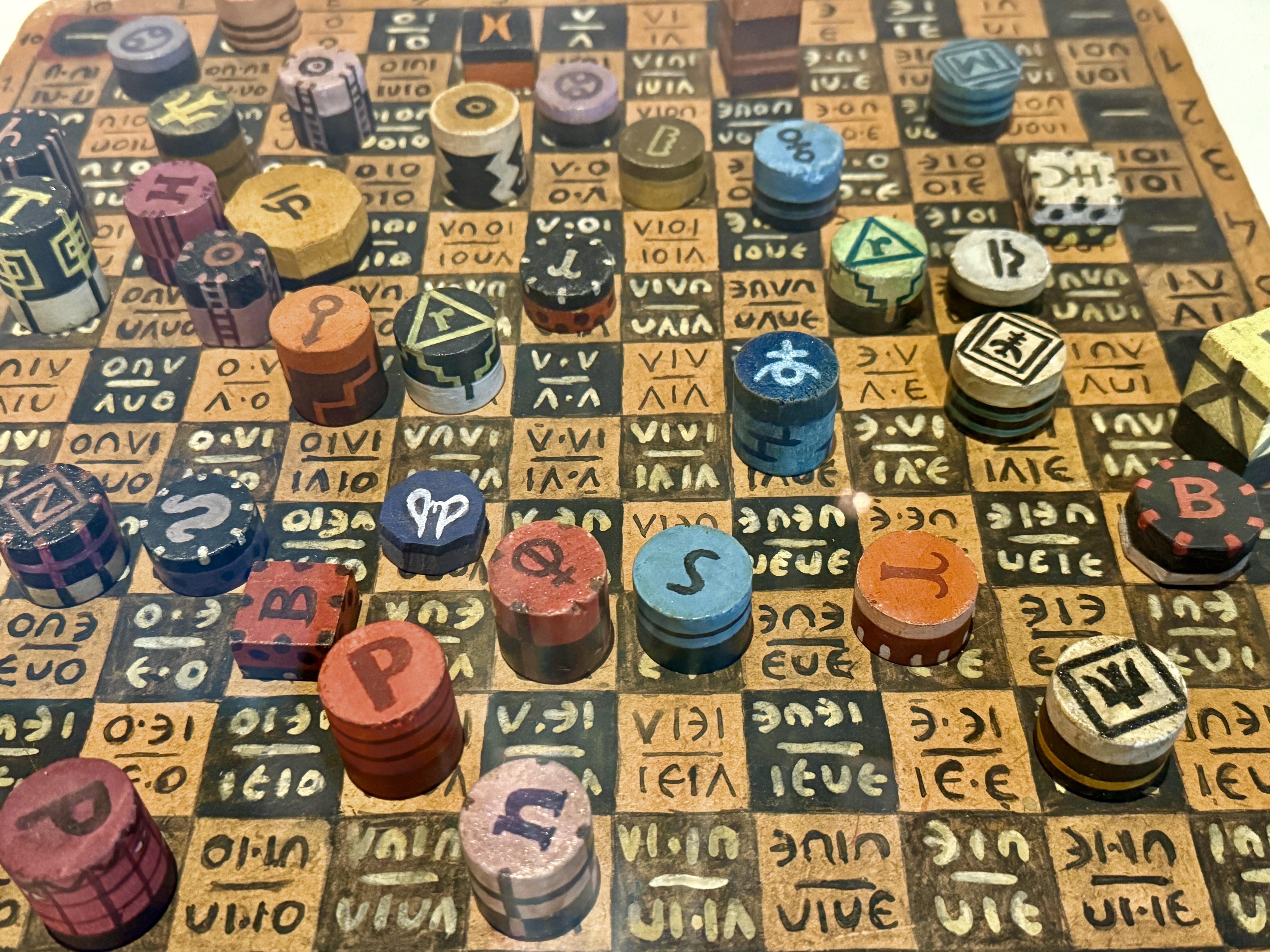
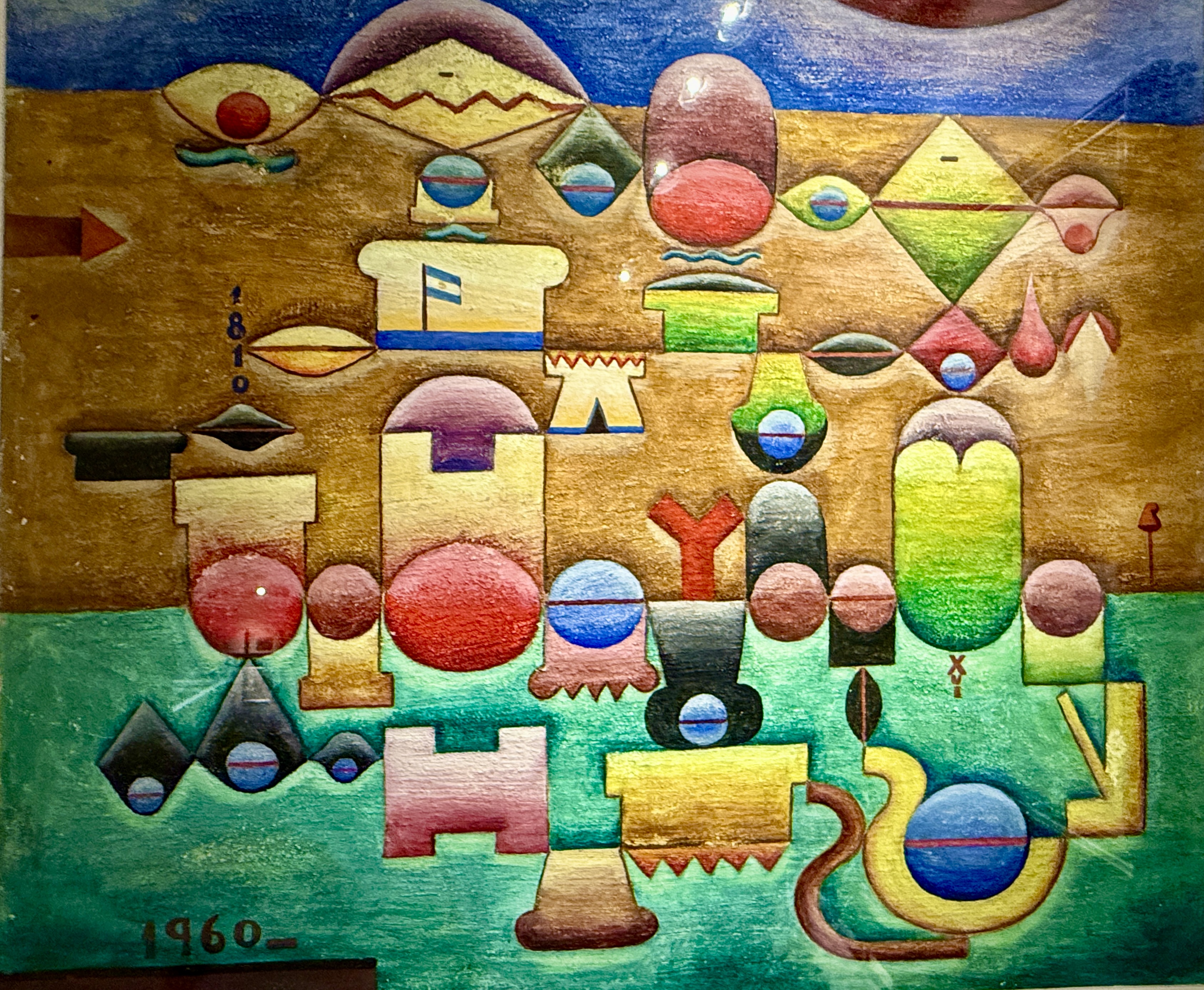
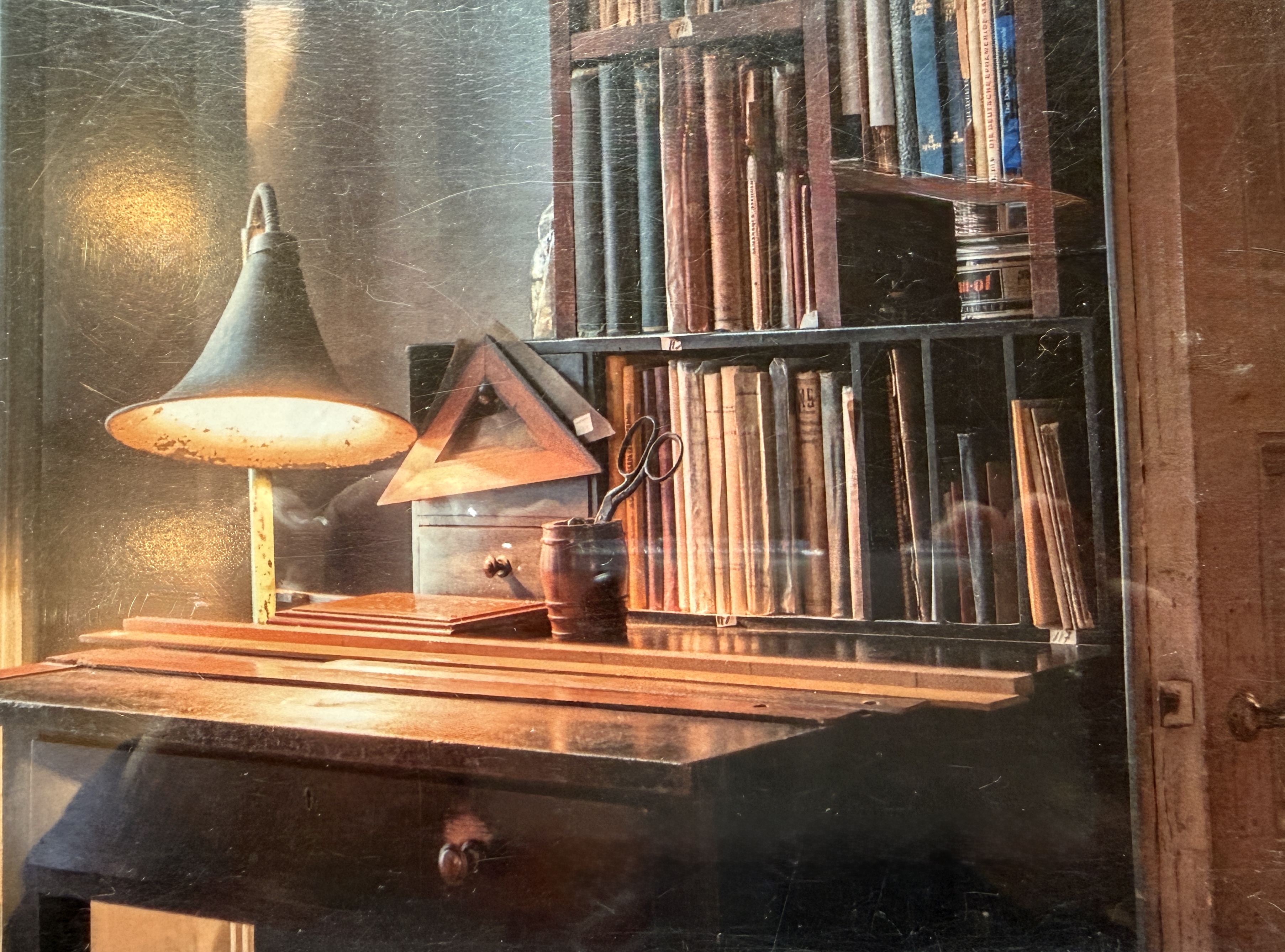
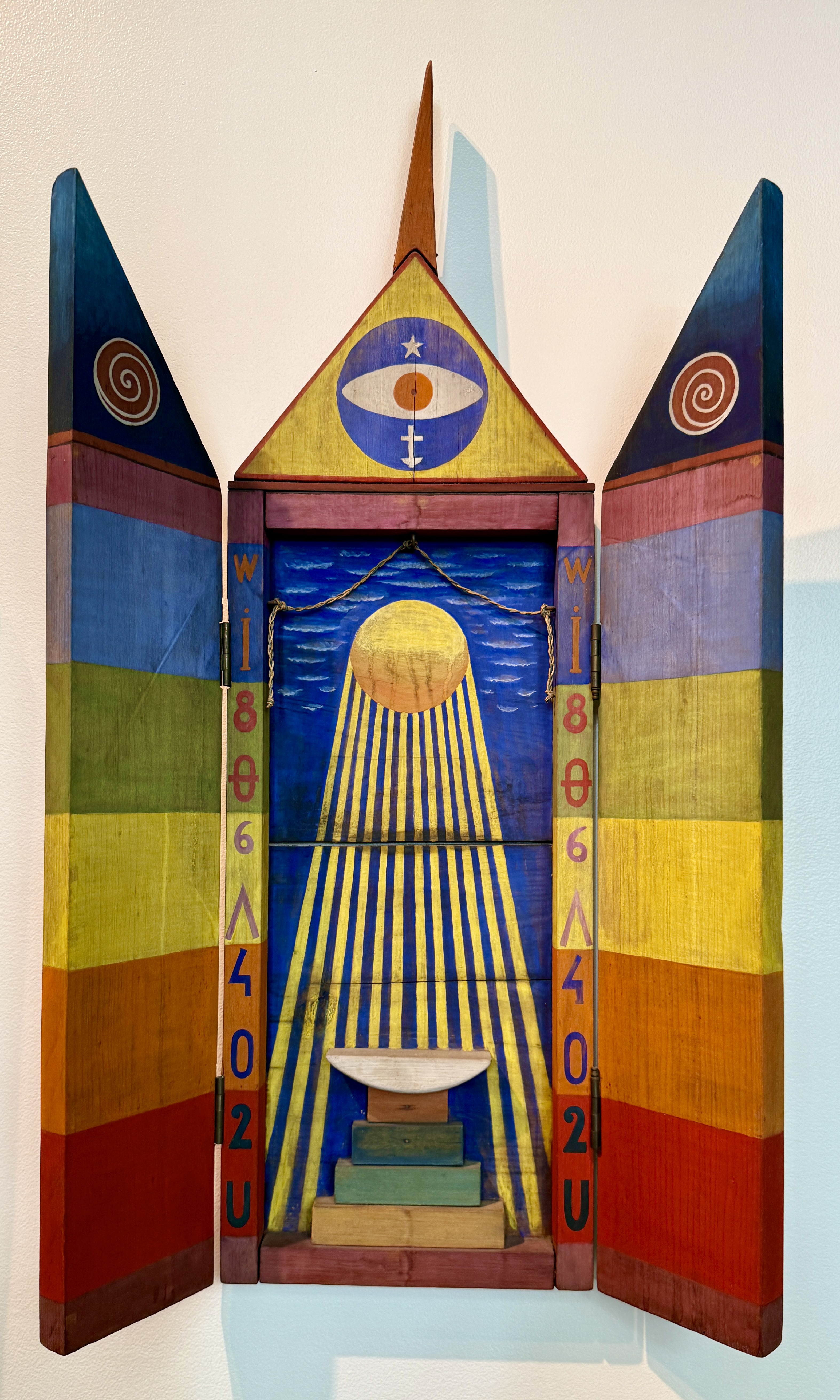
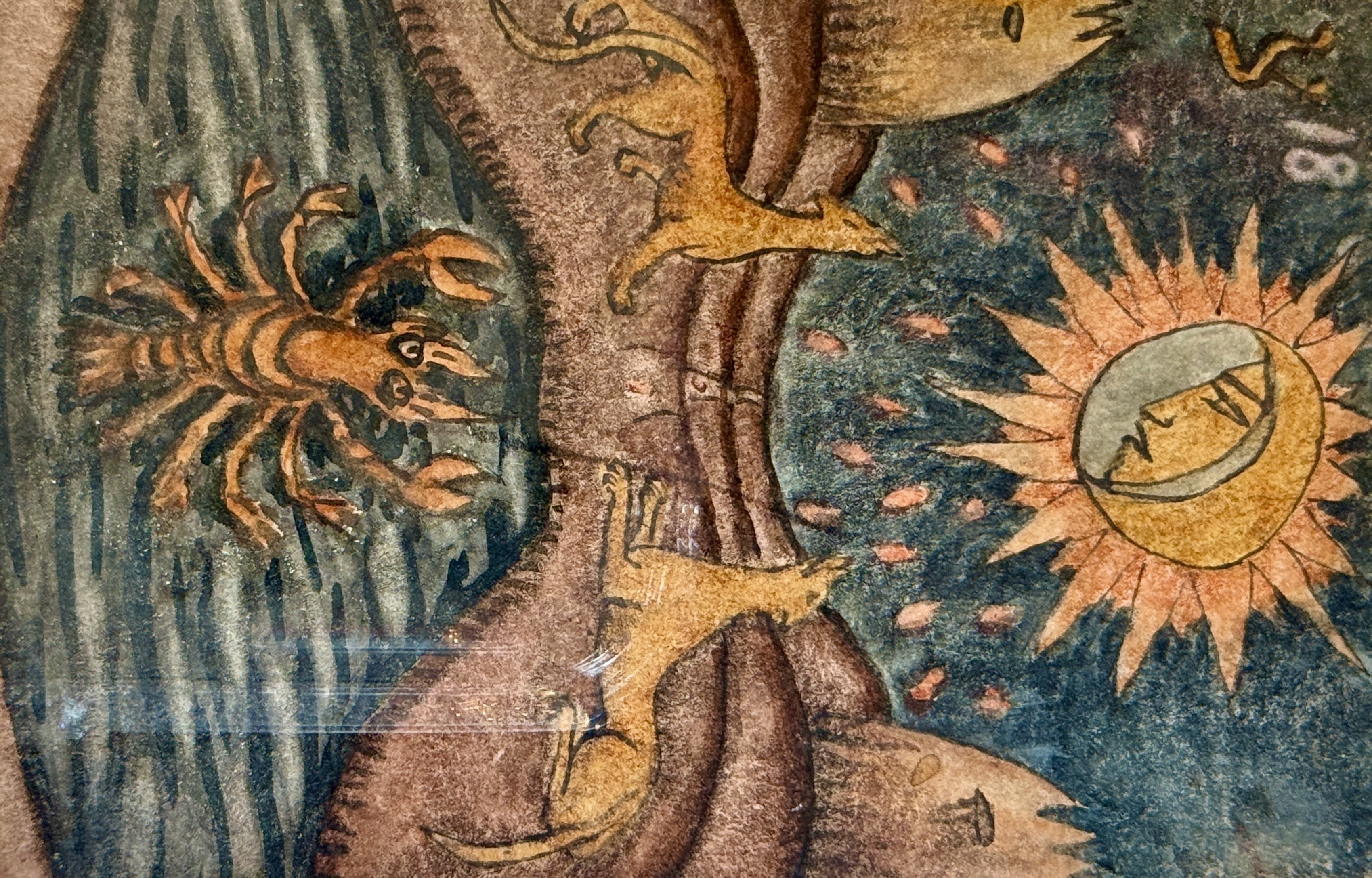
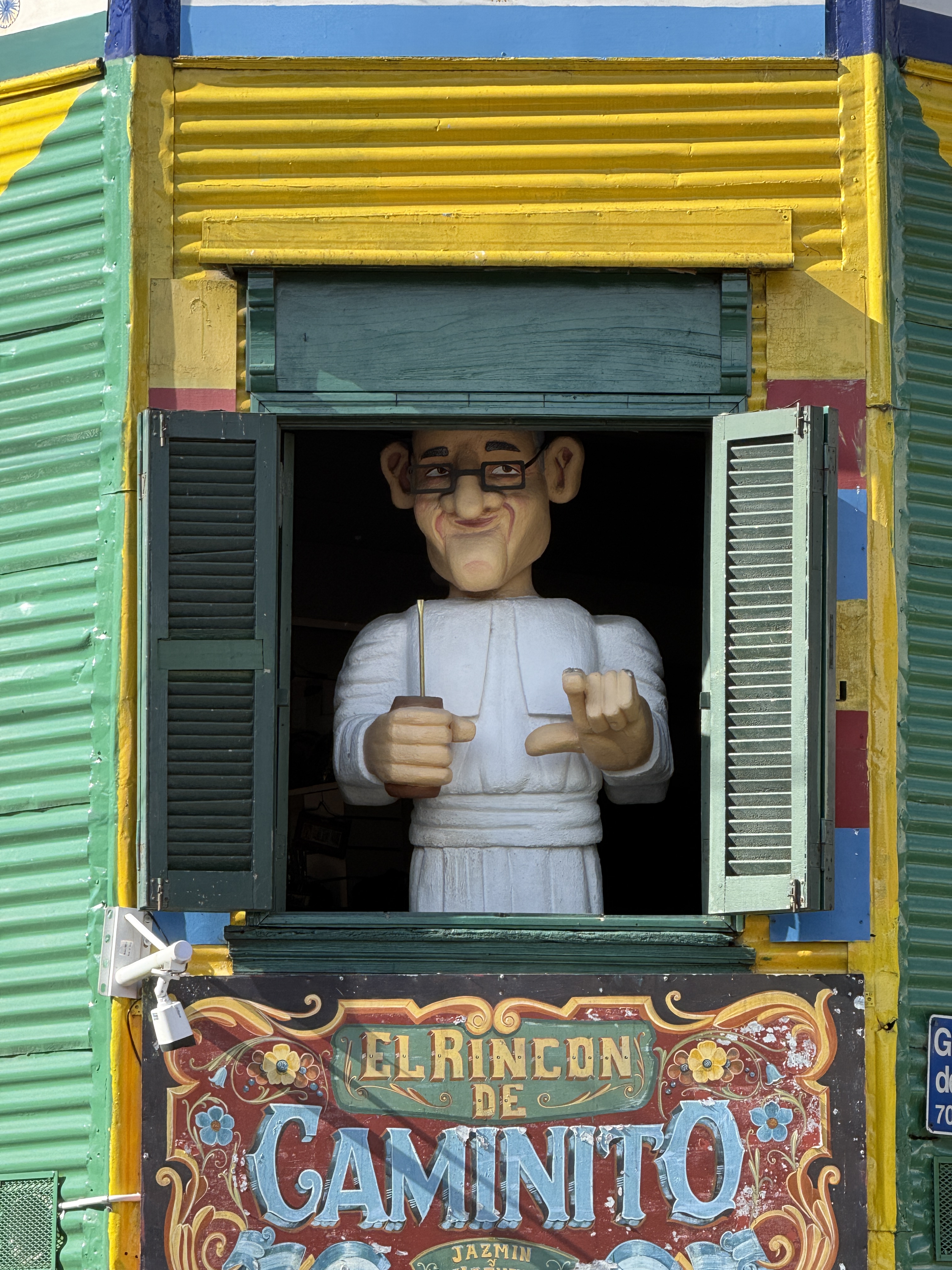
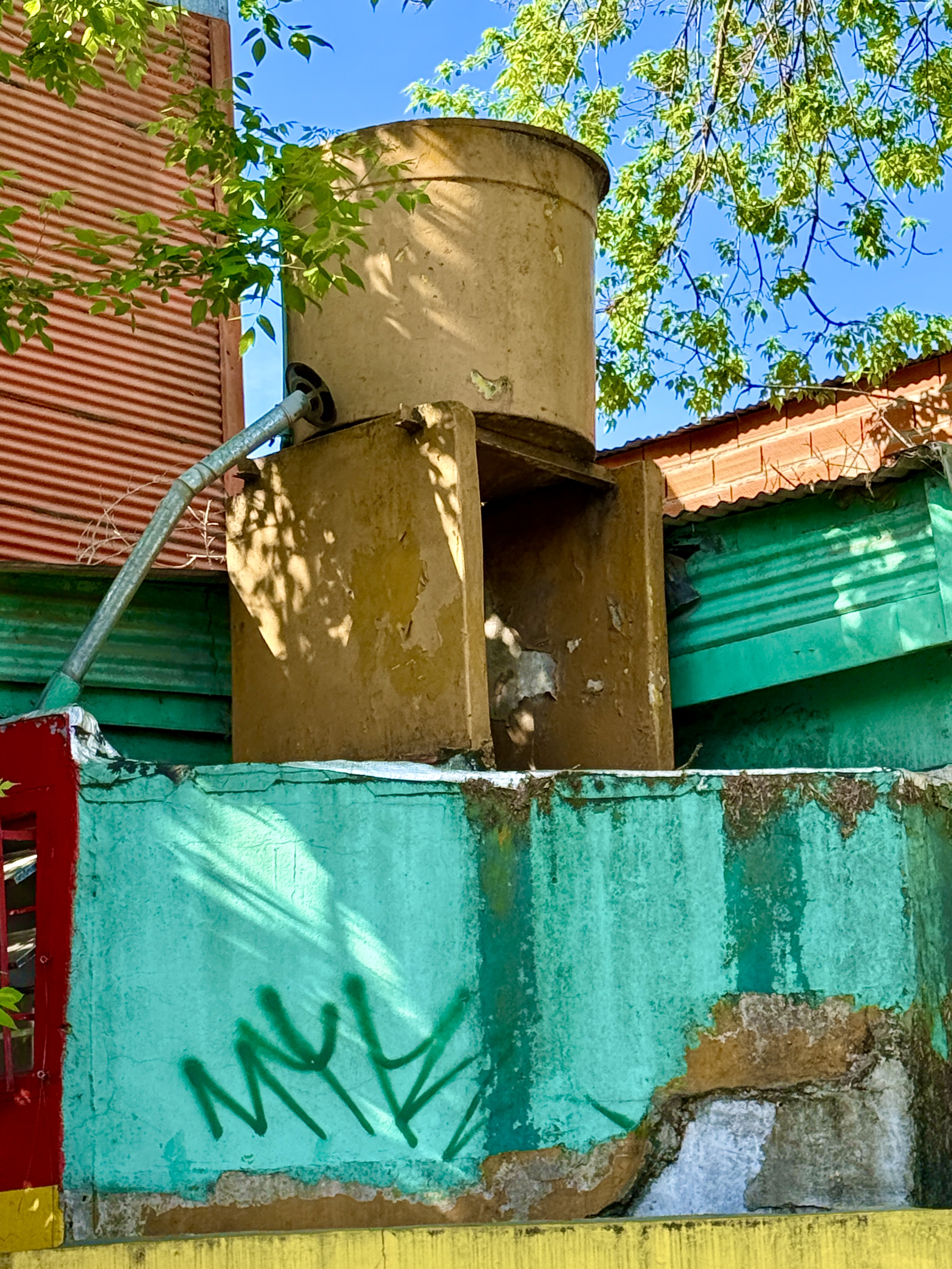
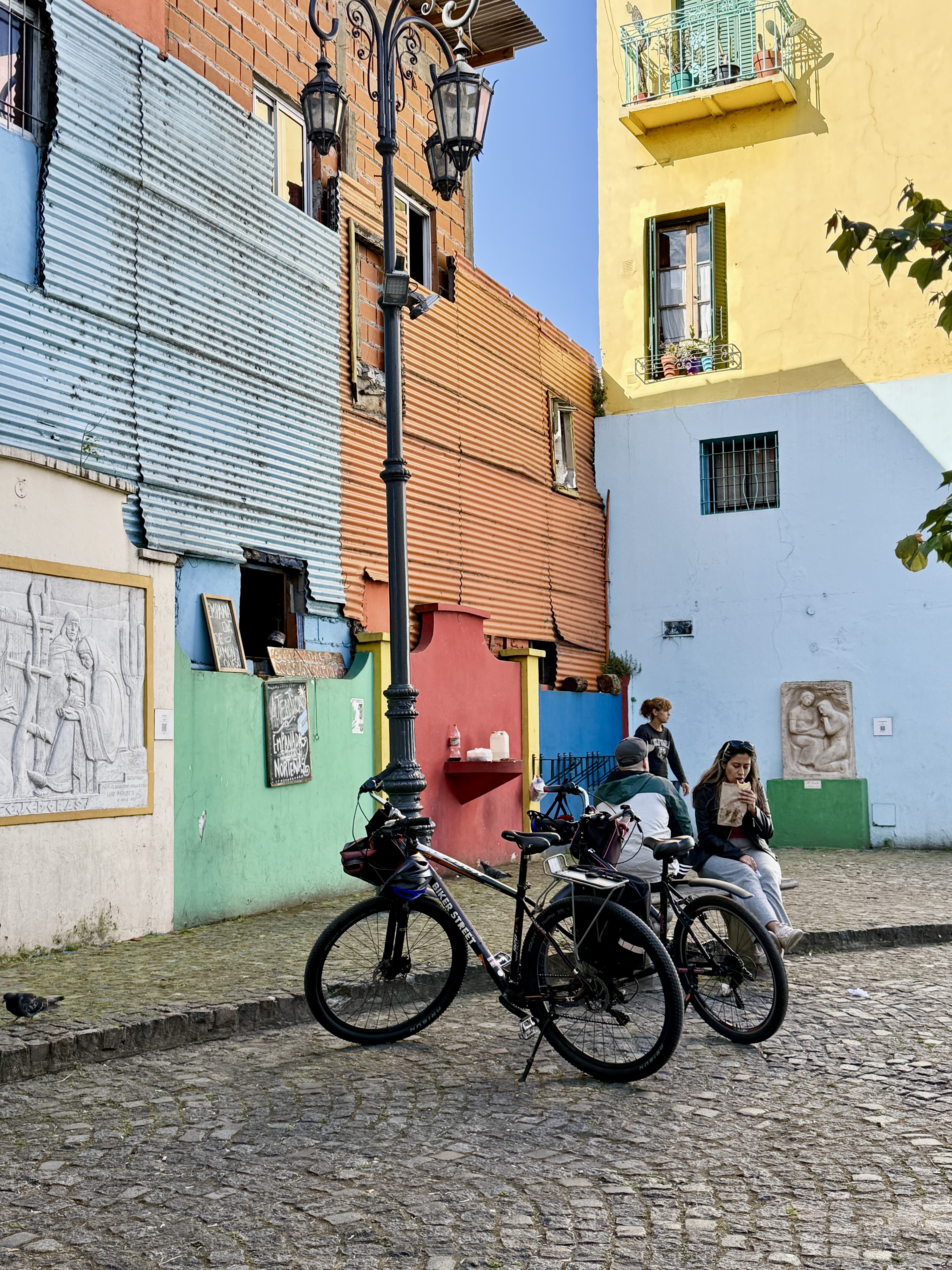
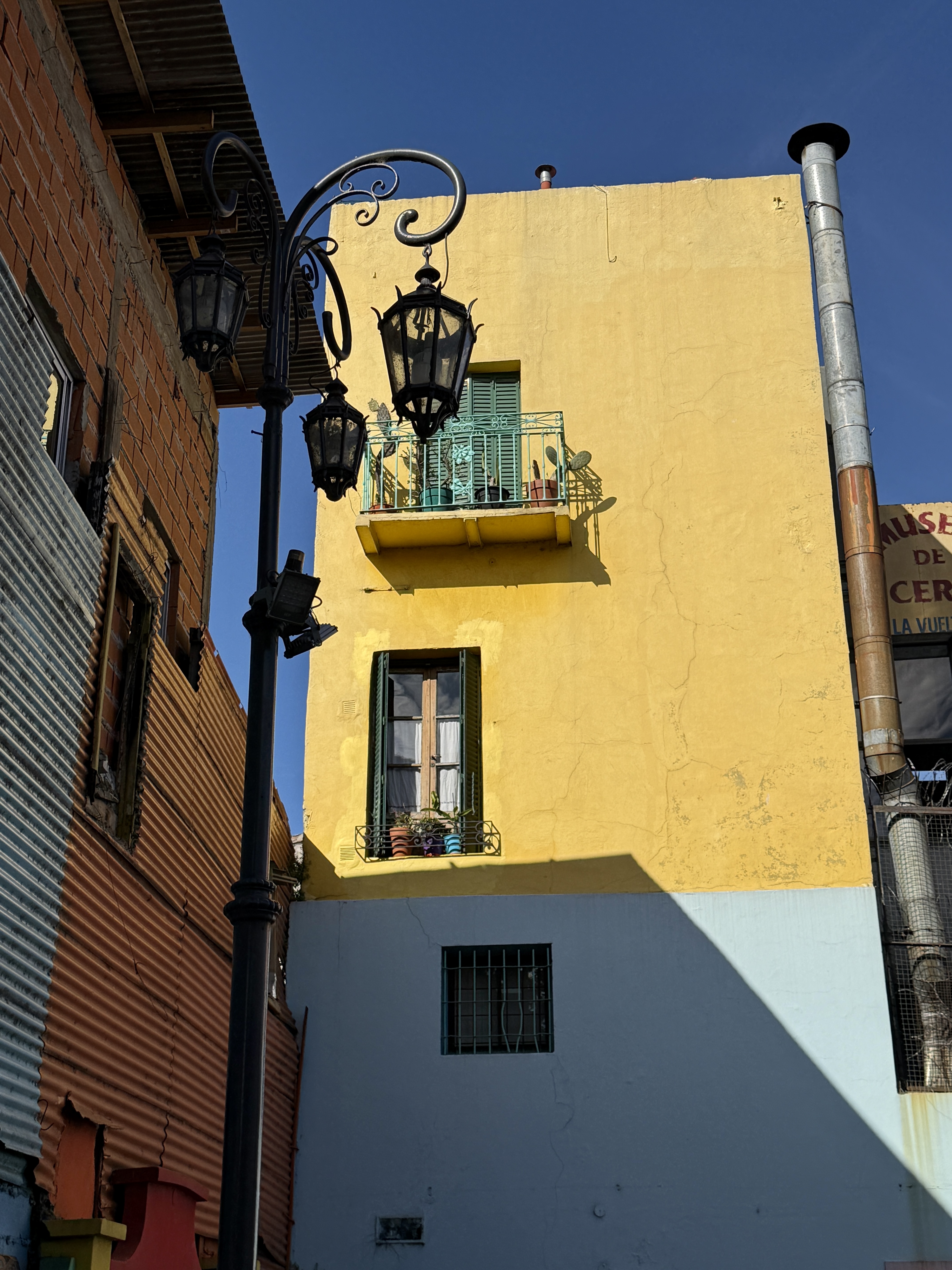
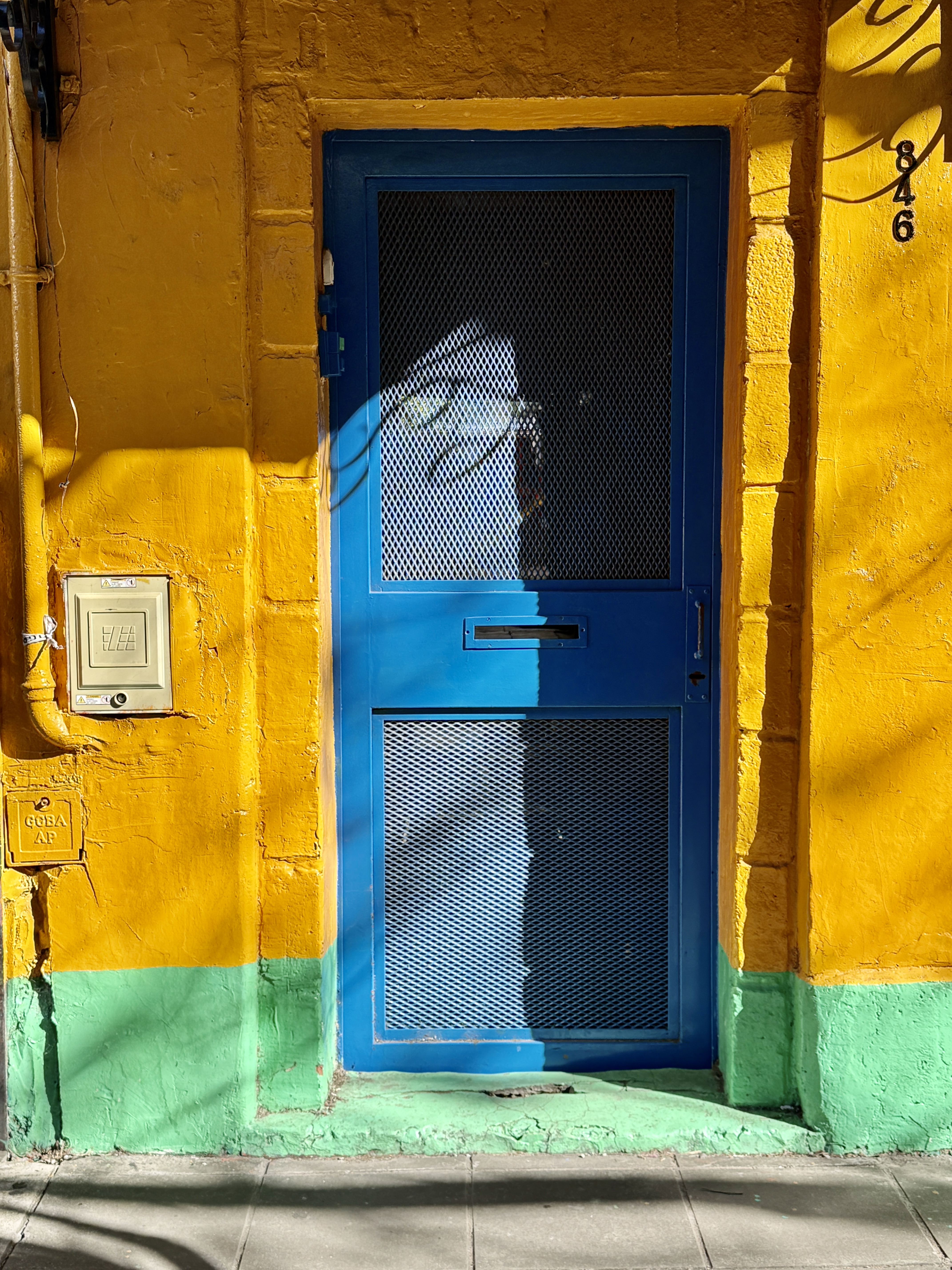
Then we hopped into a taxi to go to see South America’s thinnest house. But while in the taxi, I thought it would be good to see when the house closes for the day. Lo and behold, it wasn’t even open today. Since we were already in the taxi, we just told him to head to Caminito which is in a very different part of the city. Caminito (small walkway) is a street or an alley in the La Boca neighborhood (south of where we are staying. It became famous because supposedly it inspired the music for a famous tango song. As the story goes, there used to be a stream that ran along the route of what is now Caminito. When the stream dried up, railway tracks were put along that route. Then the railroad closed in 1954, and the area became a landfill and an eyesore. And then an Argentine artist prepared the walls facing the street with different colors and then built a stage which eventually became a theater. For more than a century, the neighborhood had been home to immigrants, mostly Italians. Apparently the bright colors that the houses are painted are the result of using leftover paint from the port and shipyard nearby.
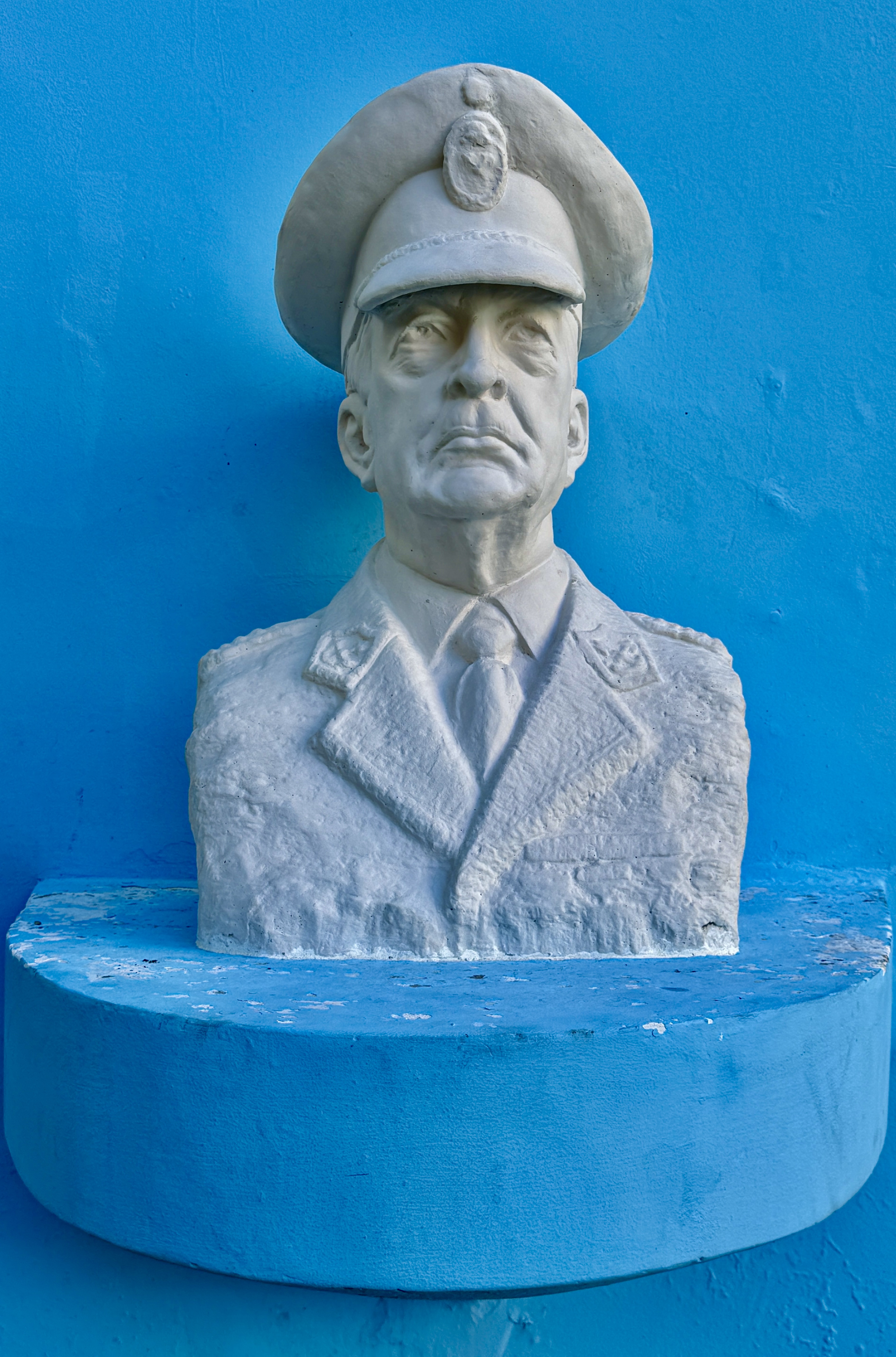
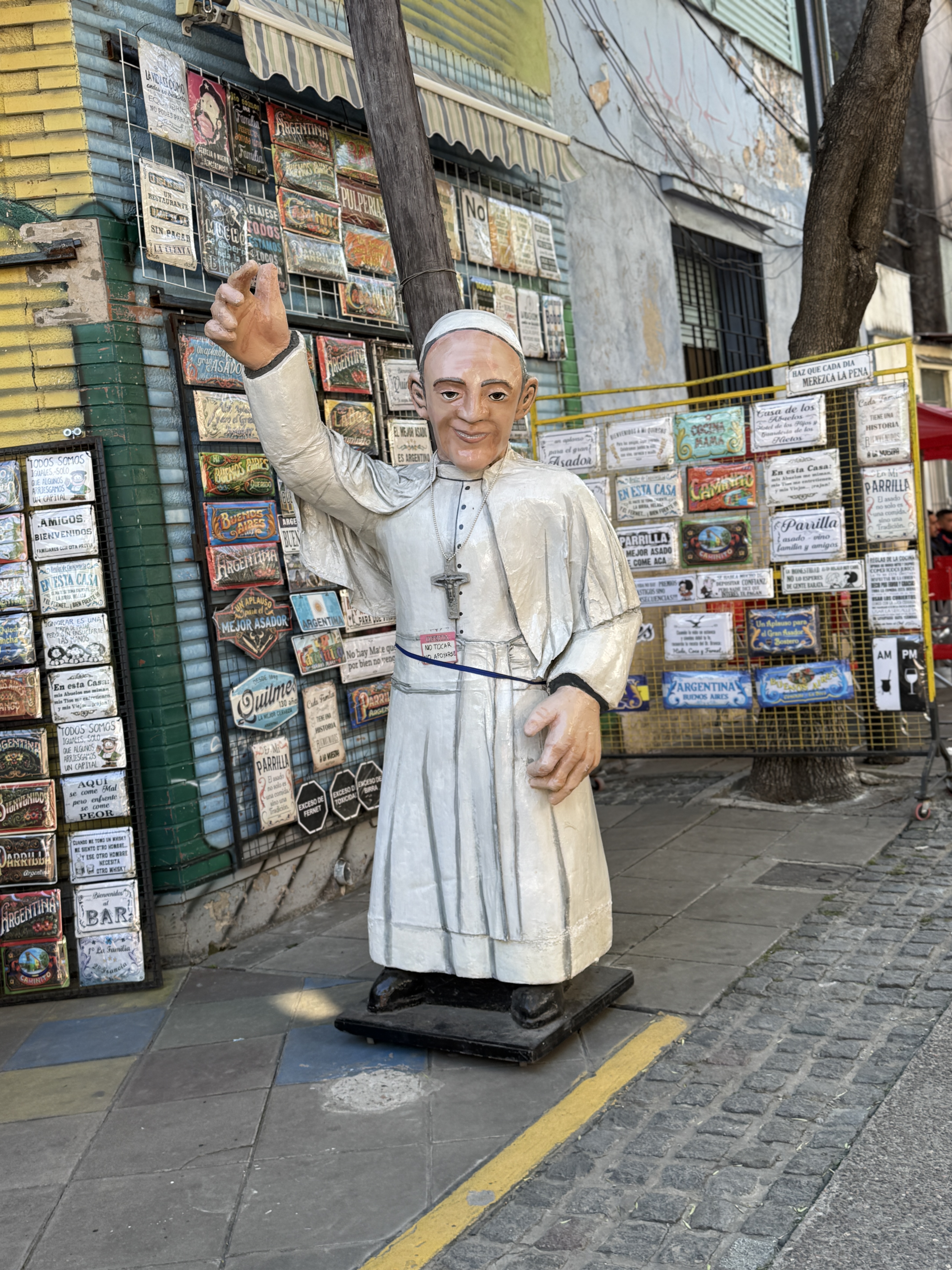
Today, the small area is a bit of a tourist trap with dozens of people taking photographs and selfies. And shopkeepers and landowners have constructed some pretty funny sculptures to make the street even more interesting (and a bit Disney-esque). But still it’s a fun walk.

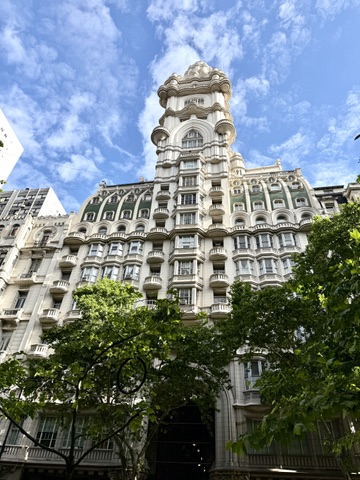
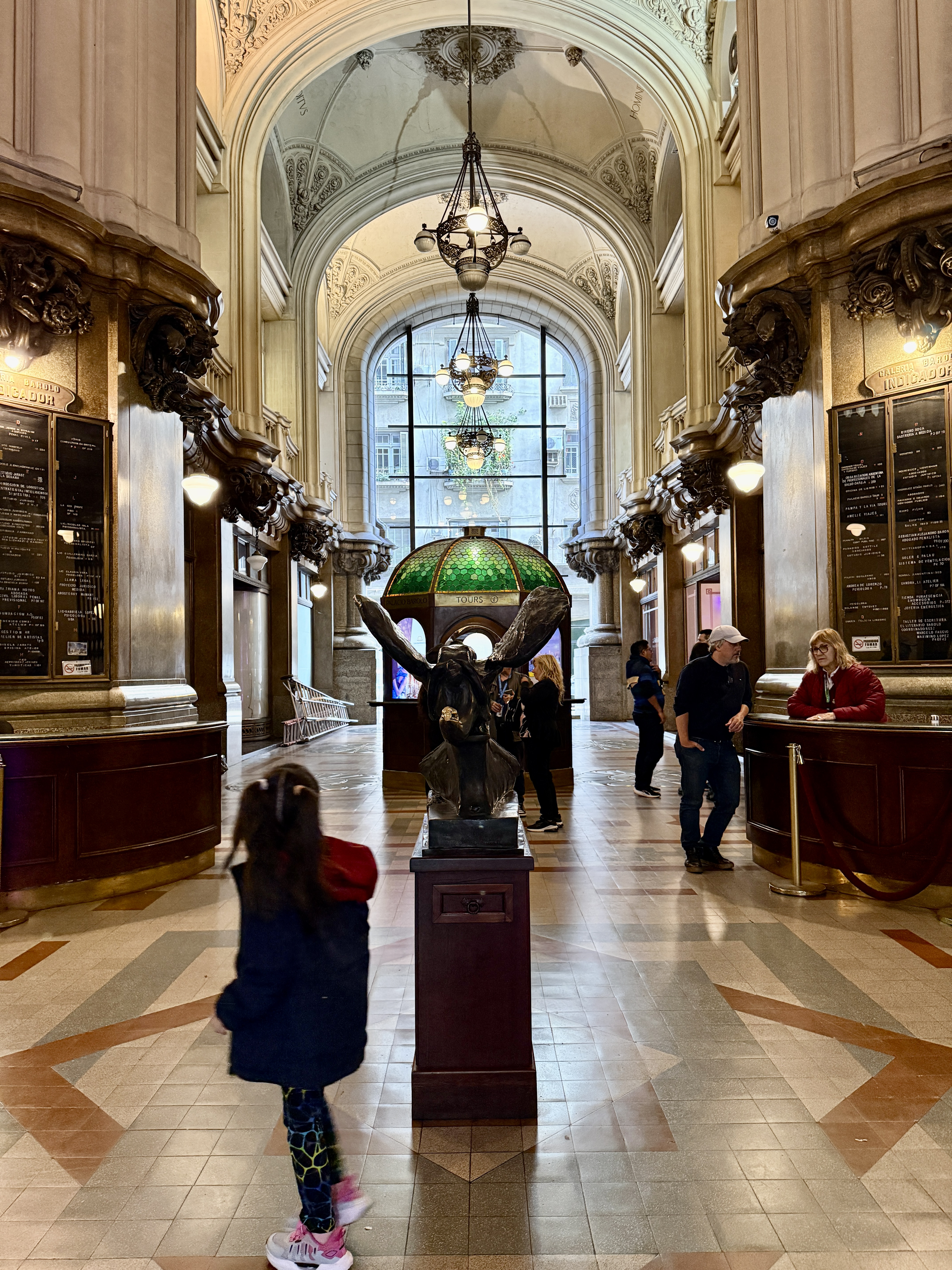
From Caminito, we headed to see Palacio Barolo—an office building, which was Buenos Aires tallest building for more than a decade in the 1930s. It is the sister building to Palacio Salvo that we went to see in Montevideo. It’s just as eclectic as the sister building. The information sheets say that the building was designed according to the cosmology of Dante’s Divine Comedy. 22 floors divided into three sections with the basement serving as hell and the uppermost floors representing heaven.
Since I’ve got a real aversion to tours and guides, we assumed we could just meander throughout the building as we did in Montevideo… But they are much stricter here and the only way we could get beyond the lobby level (Floor 0) was to buy a ticket to go to the bar/cafe on the 16th floor (elevator to the 14th floor and then spiral staircase to the 16th floor). From there you could get great views of the top tower floors. So off we went… for a drink and some cheese and pears.

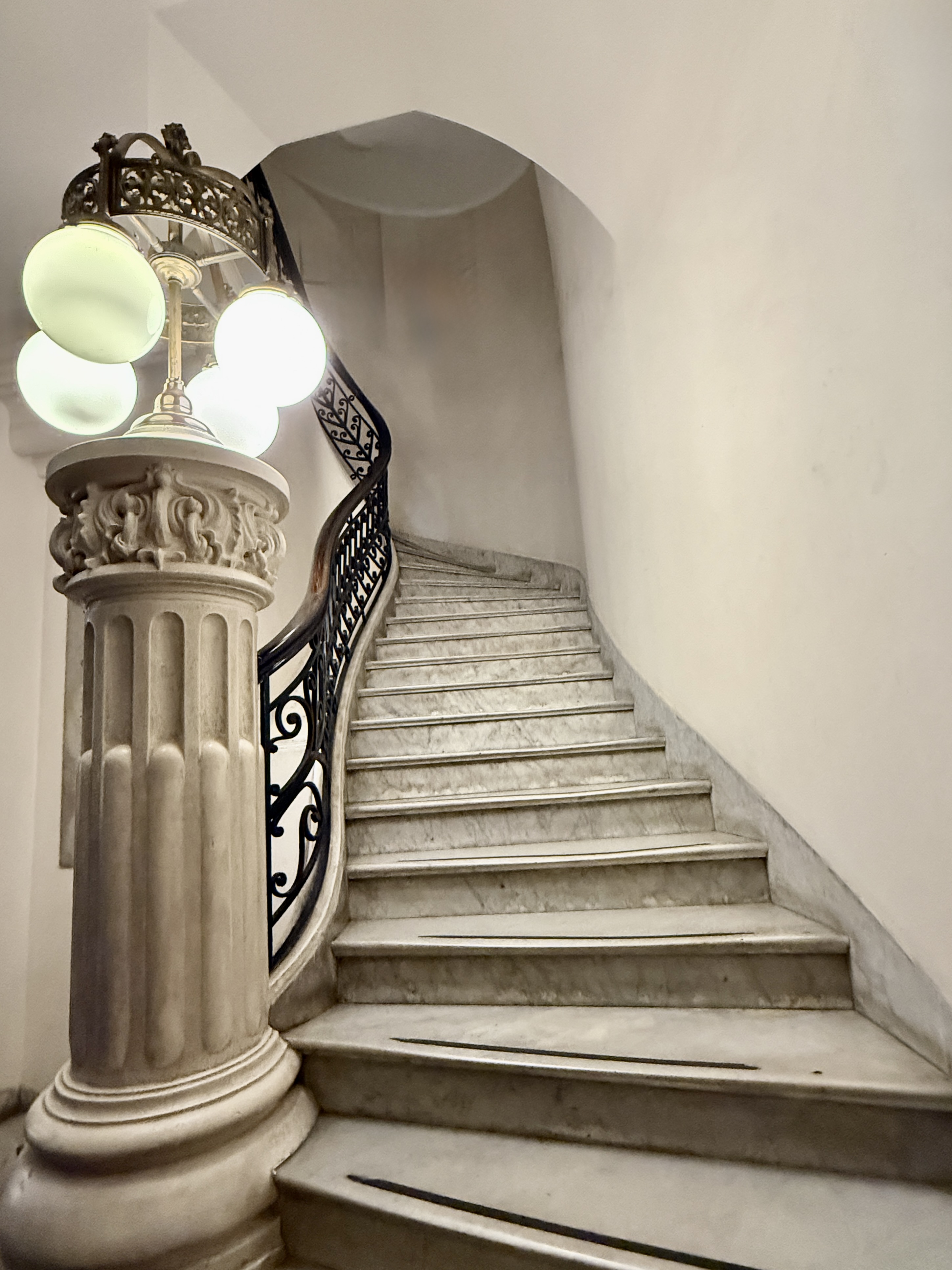
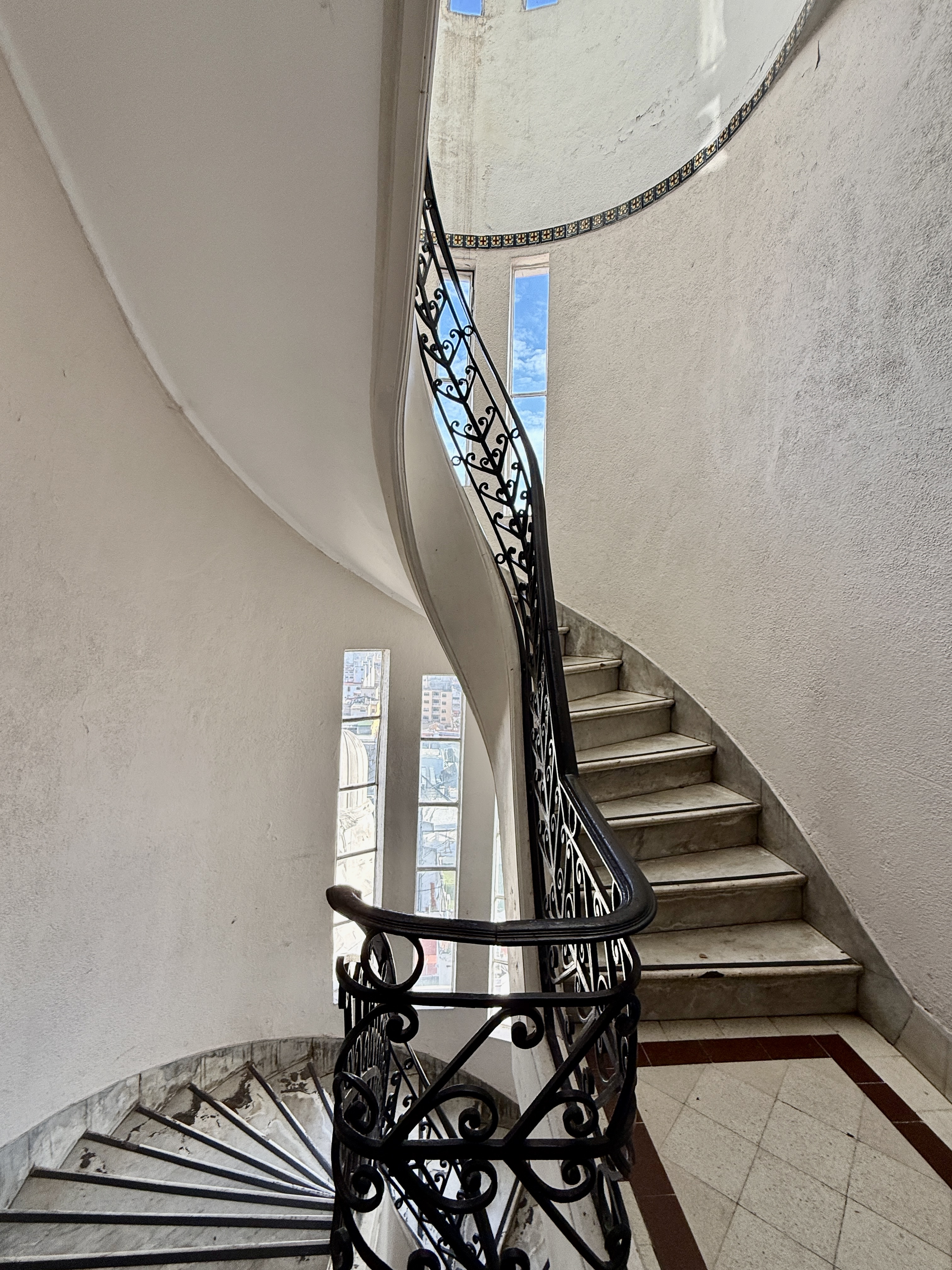
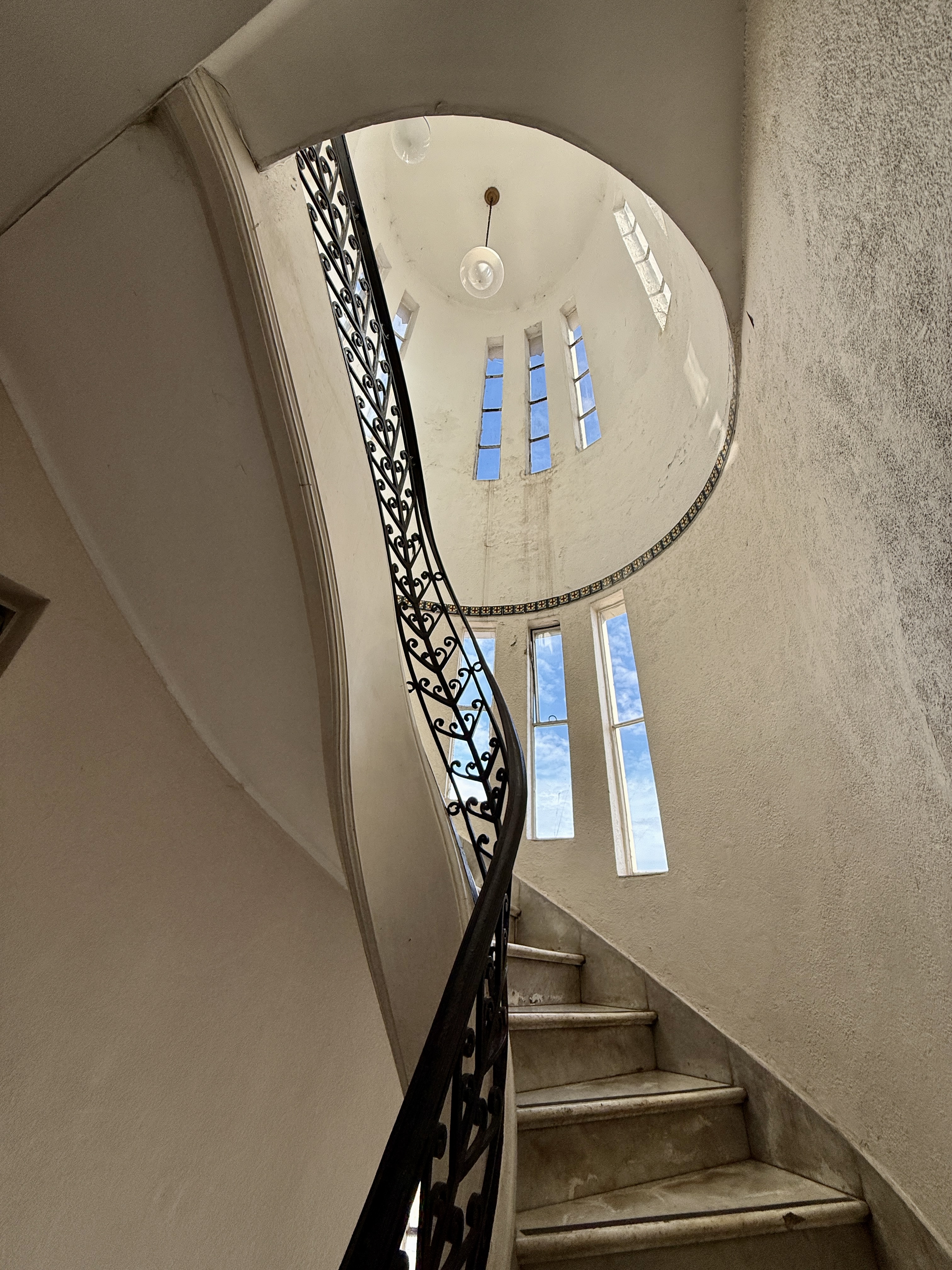
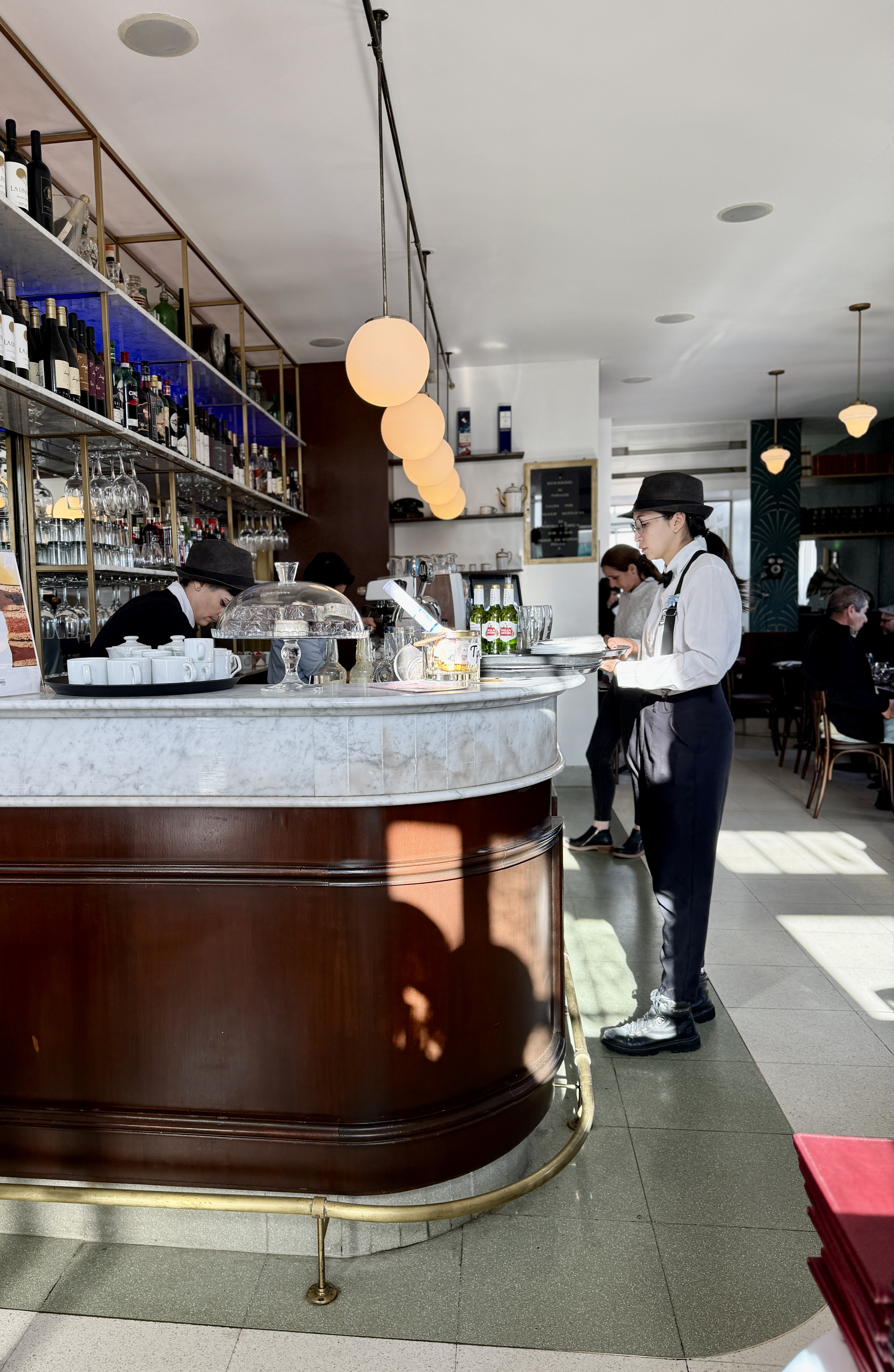
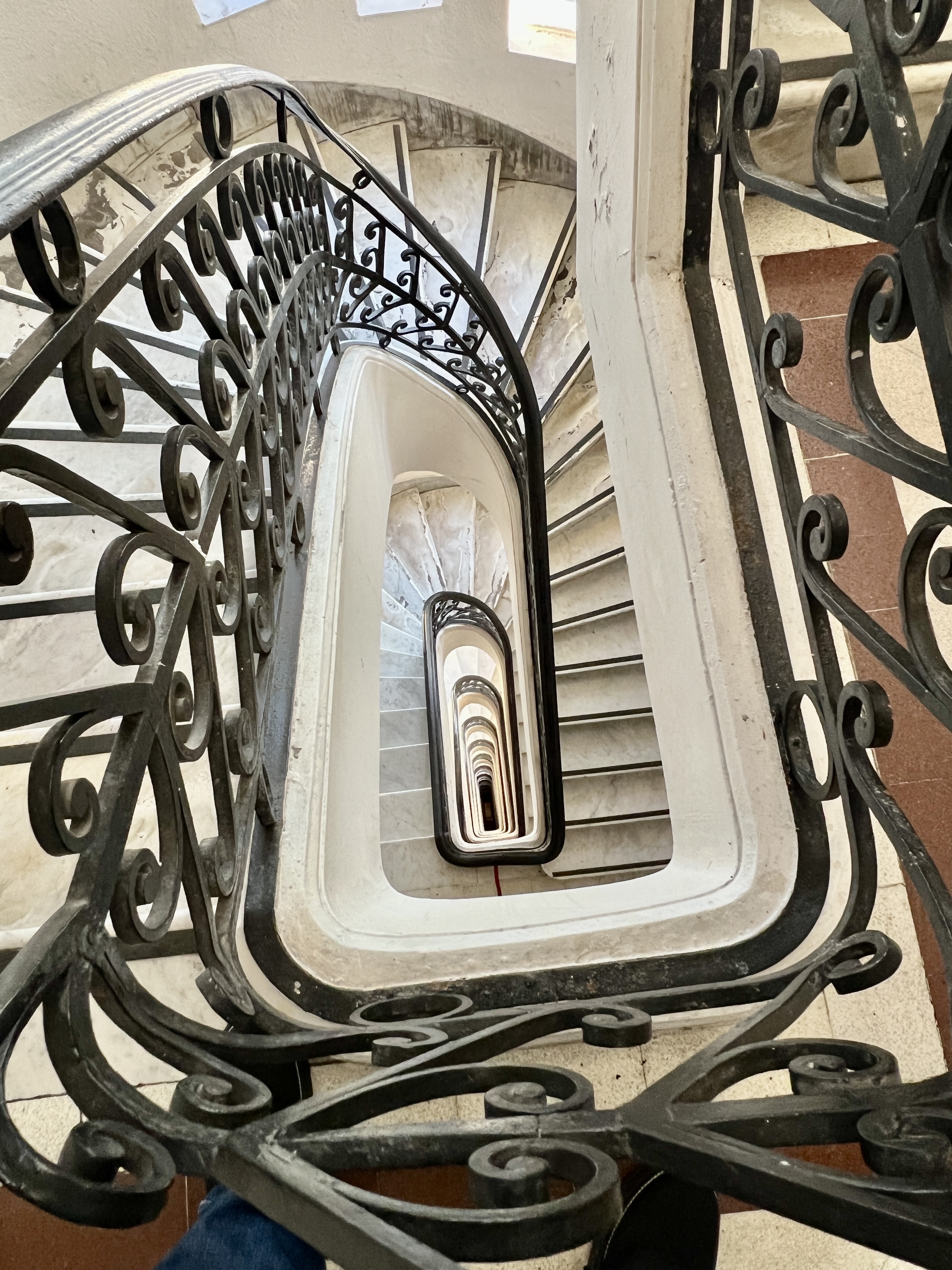
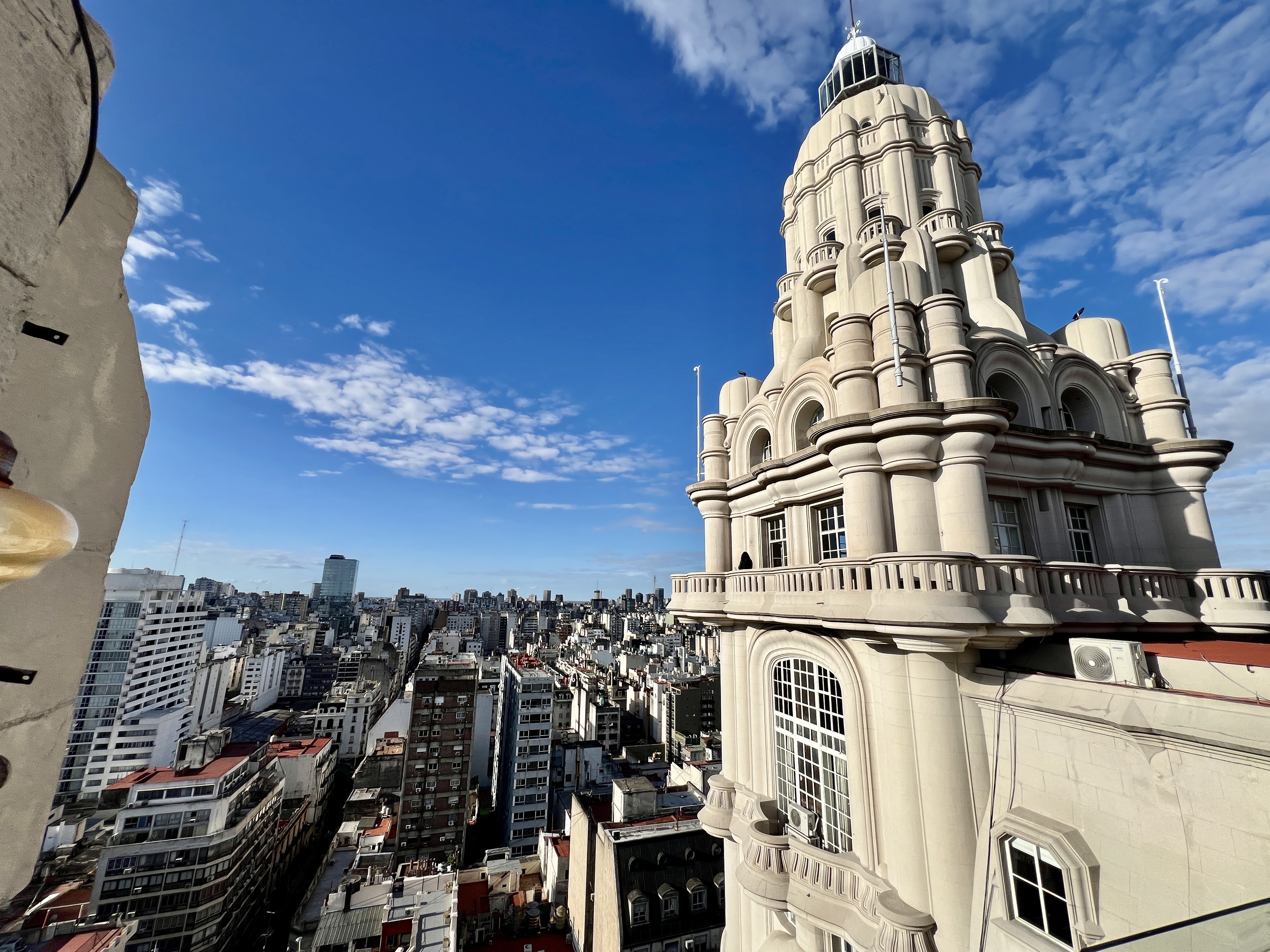
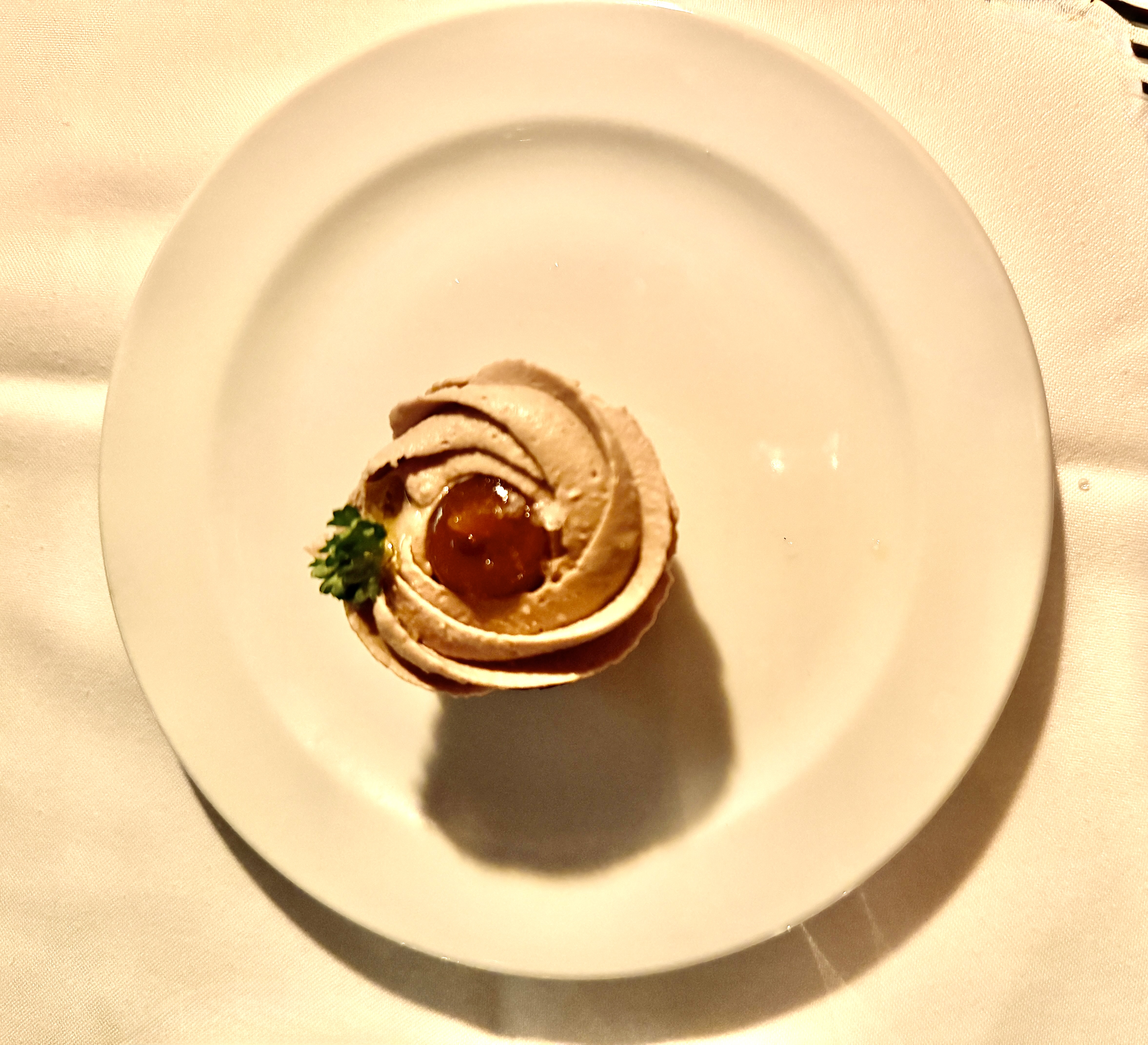
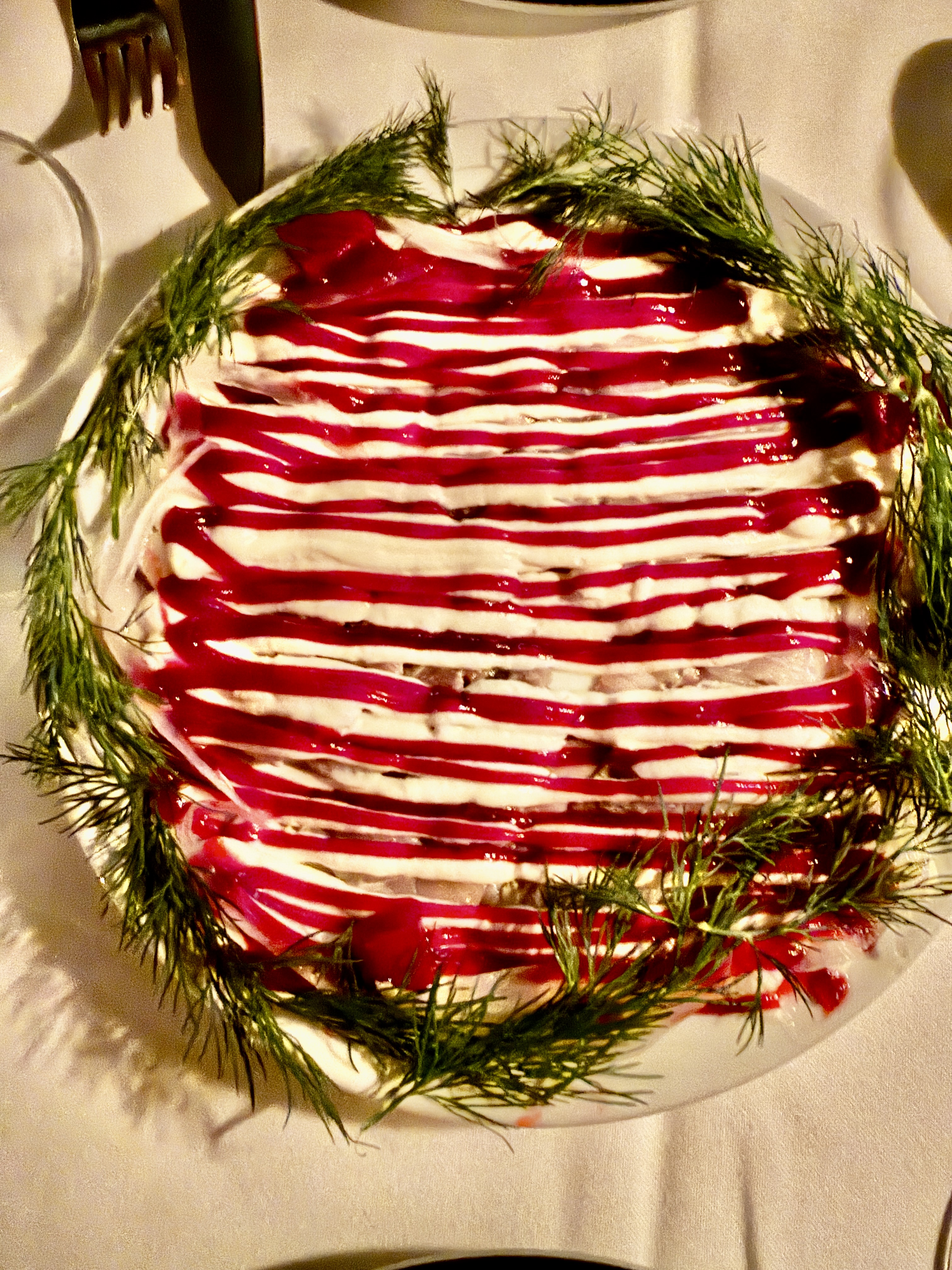
By now it was about 6 om and we had dinner reservations for 8:30. We hopped on the Sube (metro), made one change and then walked from our local station to the hotel. We hadn’t really looked at the distance from the hotel to the restaurant and then suddenly we realized we needed to get going. We took a taxi because it was too far to walk (especially given our 15,000-step day). But the taxi got a bit lost as he punched in the wrong address onto his map program. Anyway, we got there an hour late. Initially they said they couldn’t seat us or we could eat outside. But the temps here are in the 50s at night. Finally, they figured out a table for us. And we were really glad, once the food started coming. Not sure how to describe the menu, but here’s what we had: started with a very tiny luscious pate that was sitting atop a sort of mini-muffin. The bread was on the sweet side. Atop the pate was a little dab of jelly. Taste buds watch out! Then we had a second starter–a cured herring dish that was covered with some kind of creme fraiche and marinated beetroot and with ;ickled onions. It looked fantastic and tasted even better. We followed these starters with our main course–a melt-in-your-mouth sirloin cooked perfectly rare. It was accompanied with a sort of shoestring potato pile. We had some chocolate dessert that was heavenly but we were stuffed and couldn’t finish.
Our days in Buenos Aires are coming to a close. Tomorrow is the last day here. Then we do a little driving loop into the countryside. Sort of sorry that we are missing lots of weekend activities in BA but it will be good to see what happens outside this megalopolis. We leave Argentina on Monday and arrive home on Tuesday…to face whatever craziness is happening in the US. We’ve been following the news online and on BBC, but it’s not the same as living it.
More tomorrow.
October 29, 2025 . Almost Whole Again! . An All-Day Event
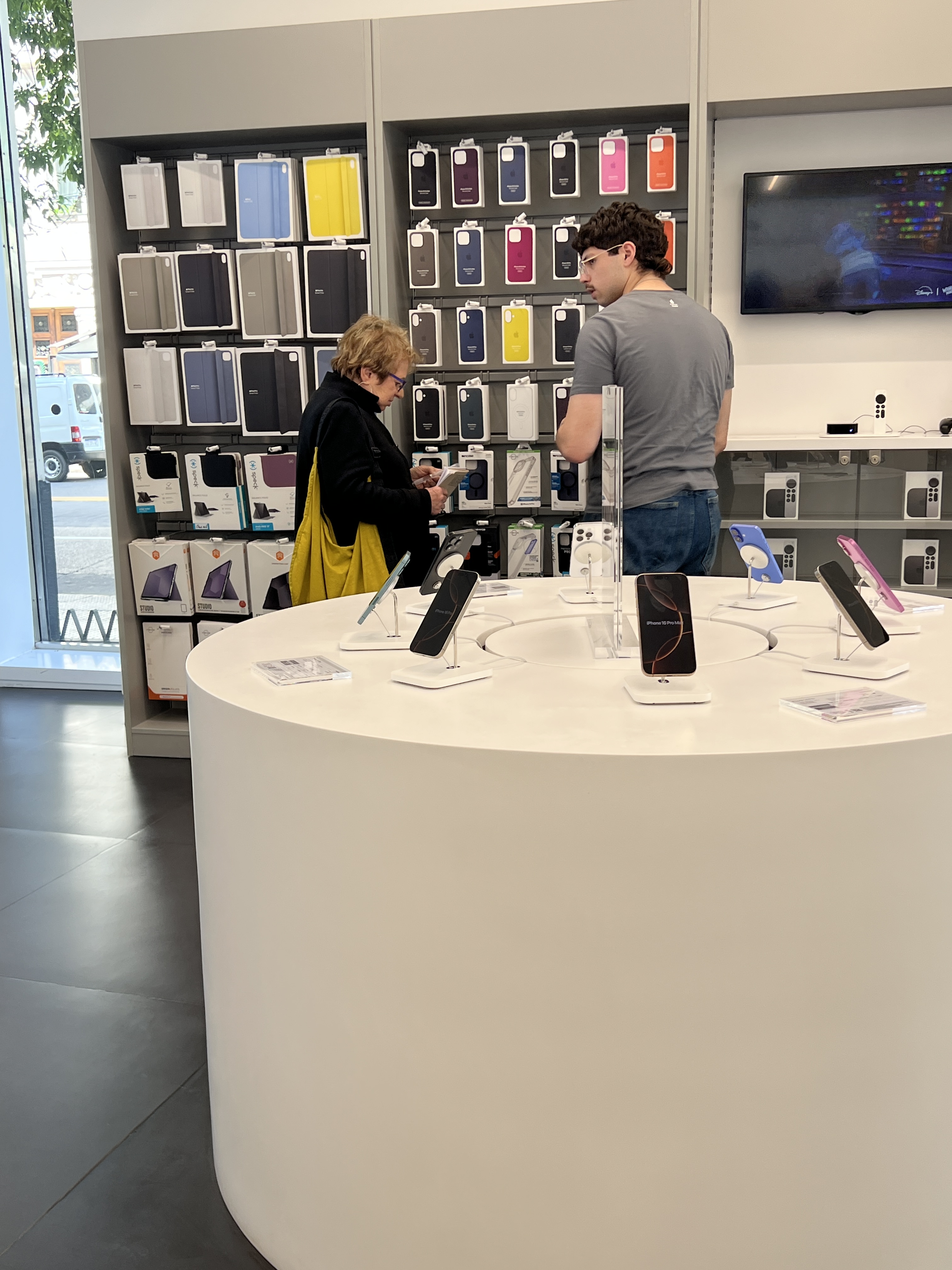
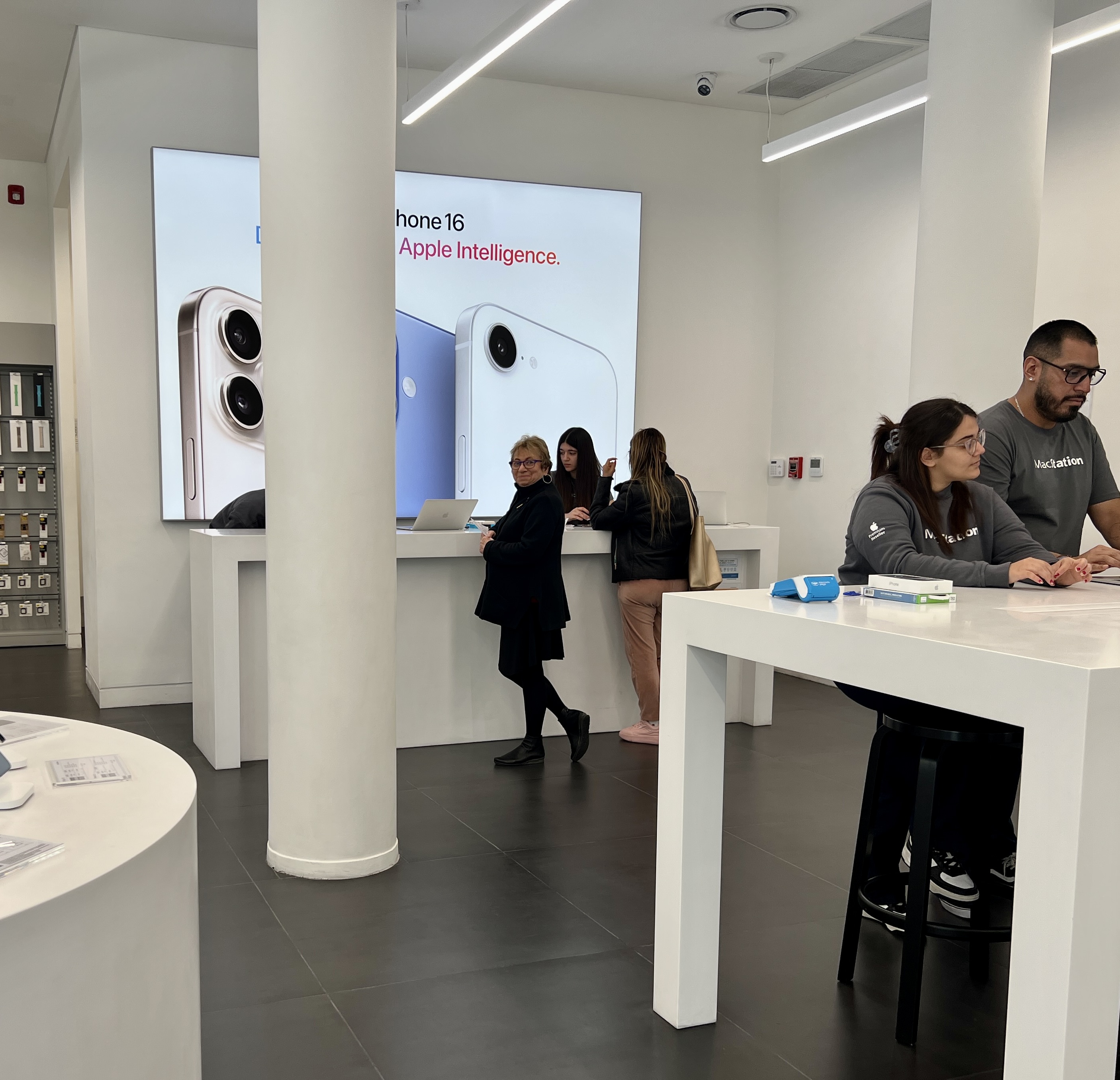

So a bit of a lost day today. After breakfast at our new regular place, I had a long conversation with AT&T to better understand my options with regard to replacing my phone while here in Argentina. Get a new phone and set it up here for the next week. Or go phoneless for a week. I have to admit, just going phoneless for 18 hours was a real challenge. Everytime we left any place, I kept looking around thinking I had left something behind. So, I made the decision to get a new iPhone here. I figure that I can either return it to an Apple store in the Bay Area when I get back and trade it in for a newer model. They only have IPhone 16 here and the largest storage is 256. I had 1T.. But this will do for the immediate moment
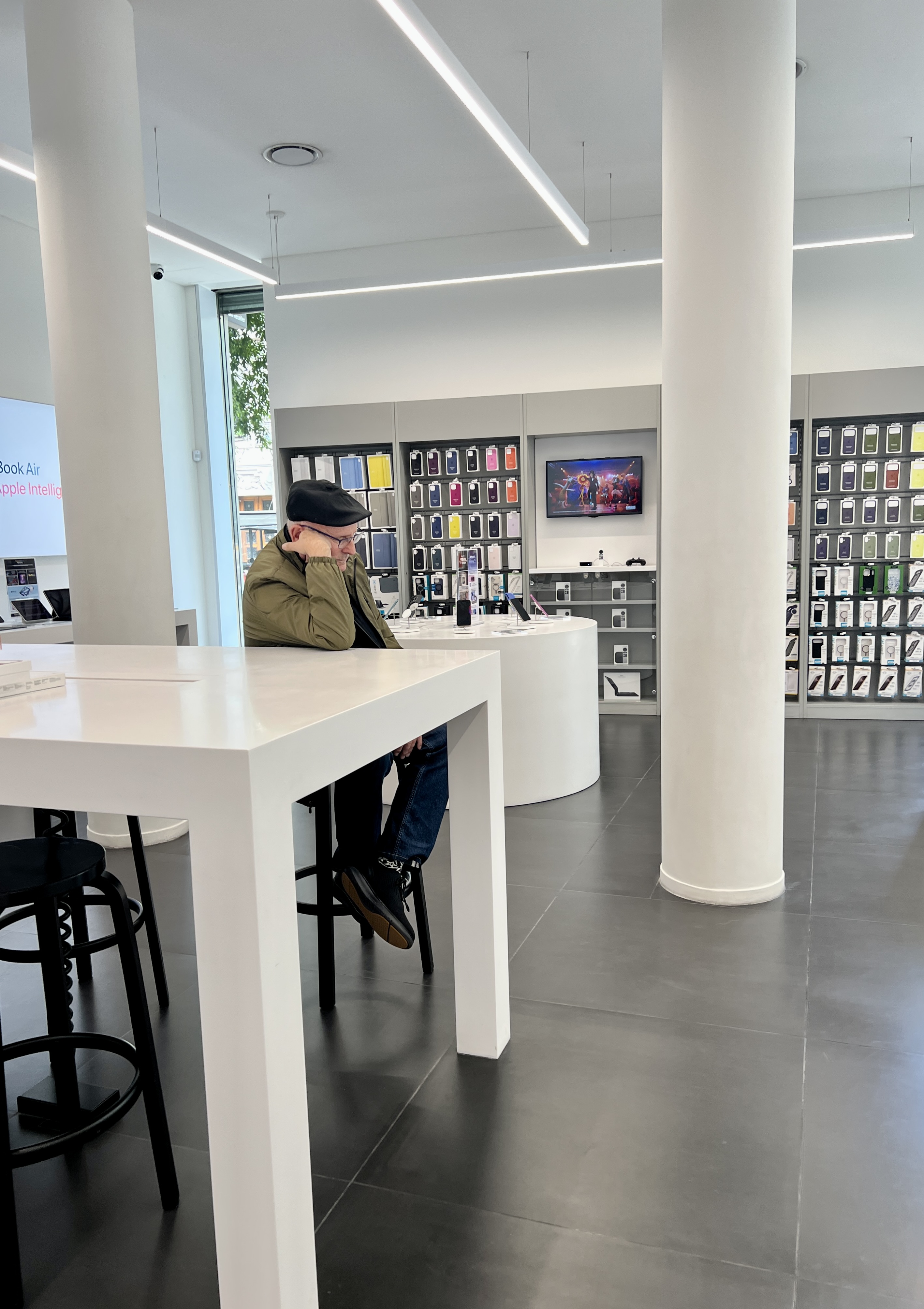
So we headed to the Apple store which is not called the Apple Store here. It is called MacStation. Apparently there are no Apple stores here in Argentina, but these stores are licensed to be the official Apple sales locations. The stores look very much like Apple stores and the salespeople are similarly young, wearing the same kind of tee shirts that you’d find in the US stores.
It took quite a while to get the process done. Mostly it was a matter of going through the new phone steps and then syncing and updating software. But all in all it took about three hours and then we grabbed a bite at a nice restaurant across the street from the non-Apple Apple Store. Then headed to the hotel to deal with getting my email set up… working with my IT guy (in Seattle) and then with AT&T. I’m not quite “whole” yet, but substantially better than yesterday.
Finally at about 8:00 we hopped into a taxi and met wup with Peter and Jairo (from Uruguay) who are here in Buenos Aires for the Gay Pride march and parties. Too bad we leave Buenos Aires on Saturday for a little two-day jaunt into rural Argentina, just as the activities begin. We ate at Reliquia which is located in the Palermo neighborhood–a trendy area with lots of eclectic restaurants and shops. Food was good—we all shared an eggplant dish and their special gnocchi. Apparently in Uruguay and Argentina they eat gnocchi on the 28th of every month and put a coin under one’s dish for luck.
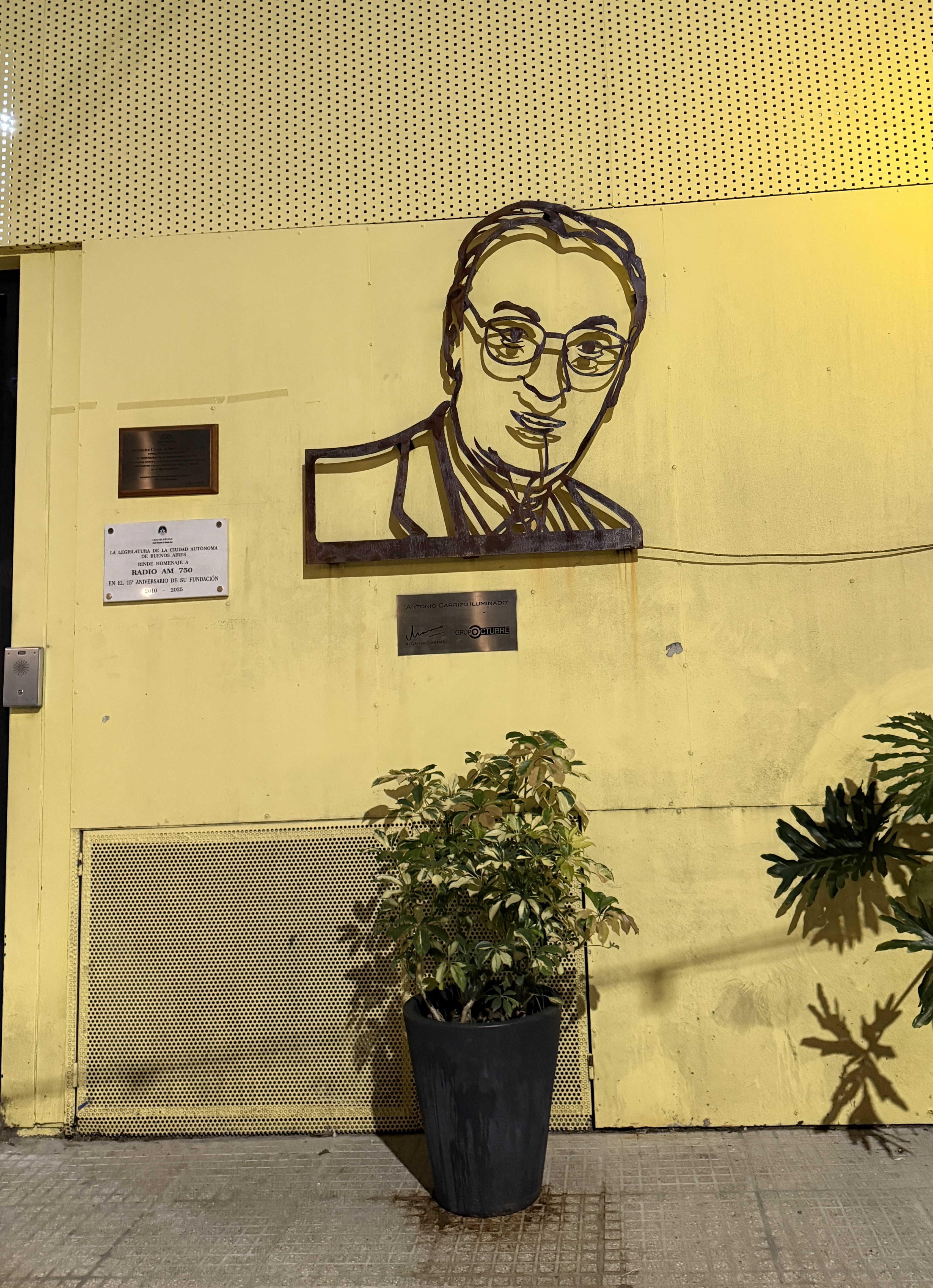
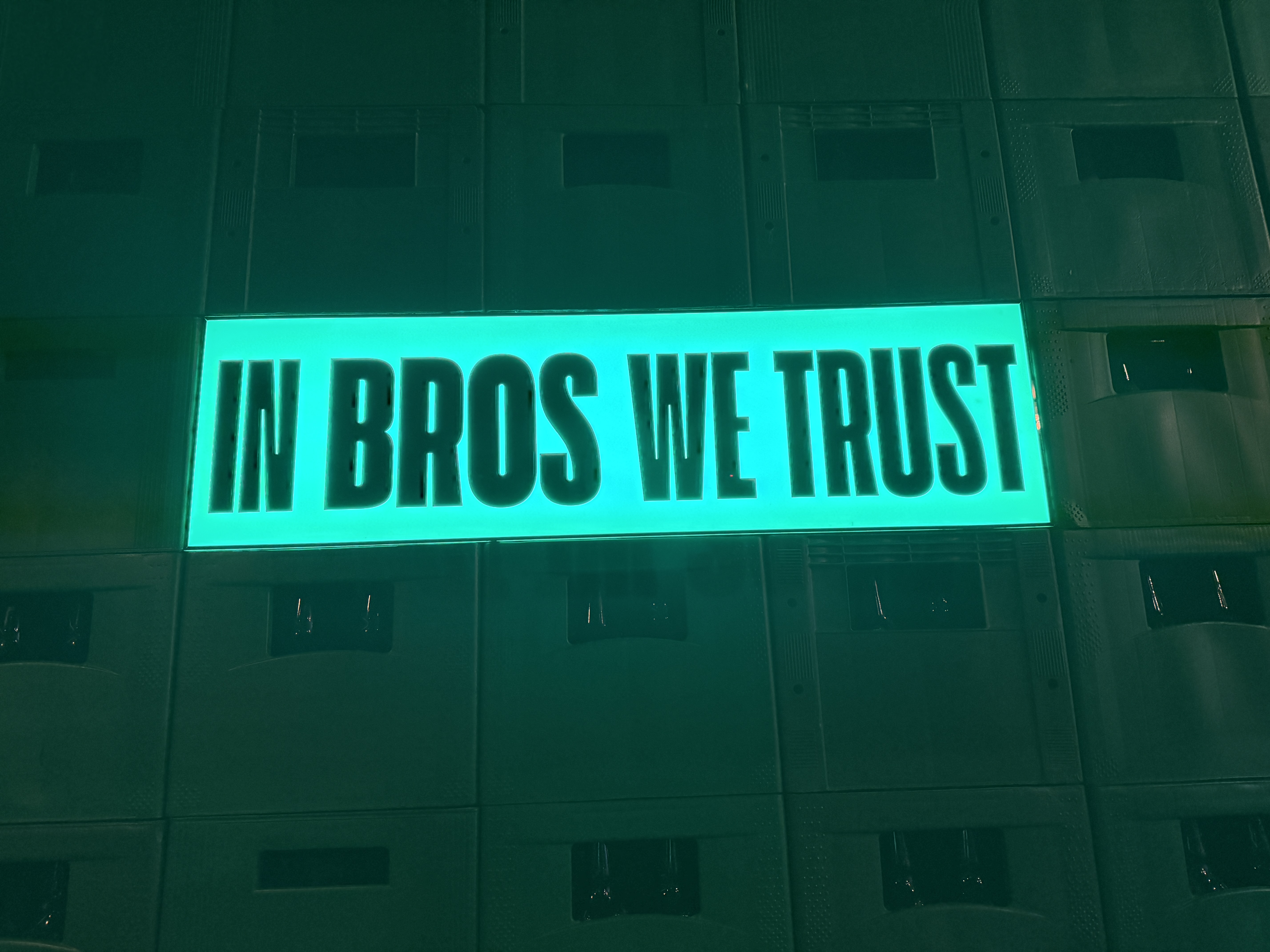
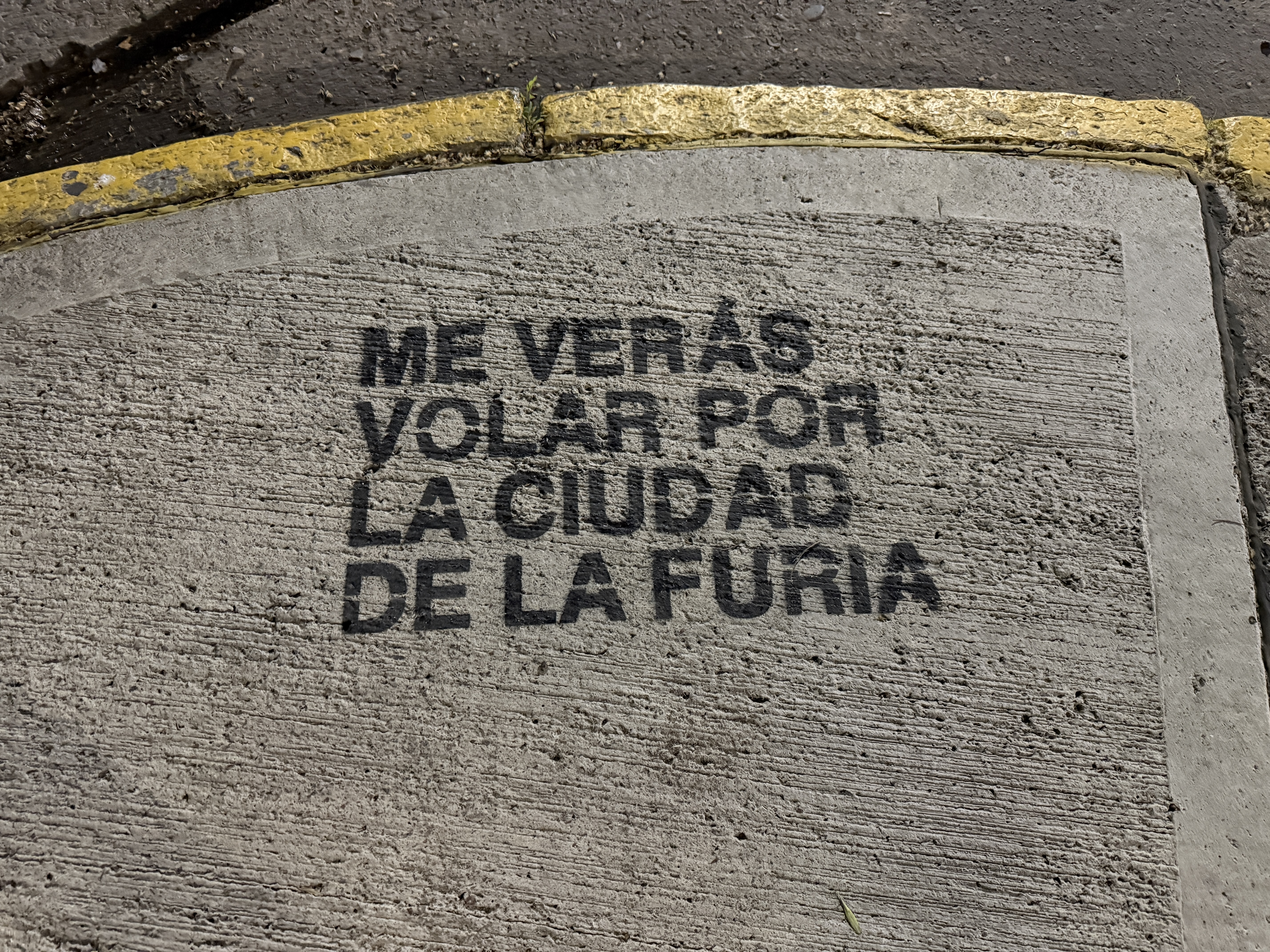
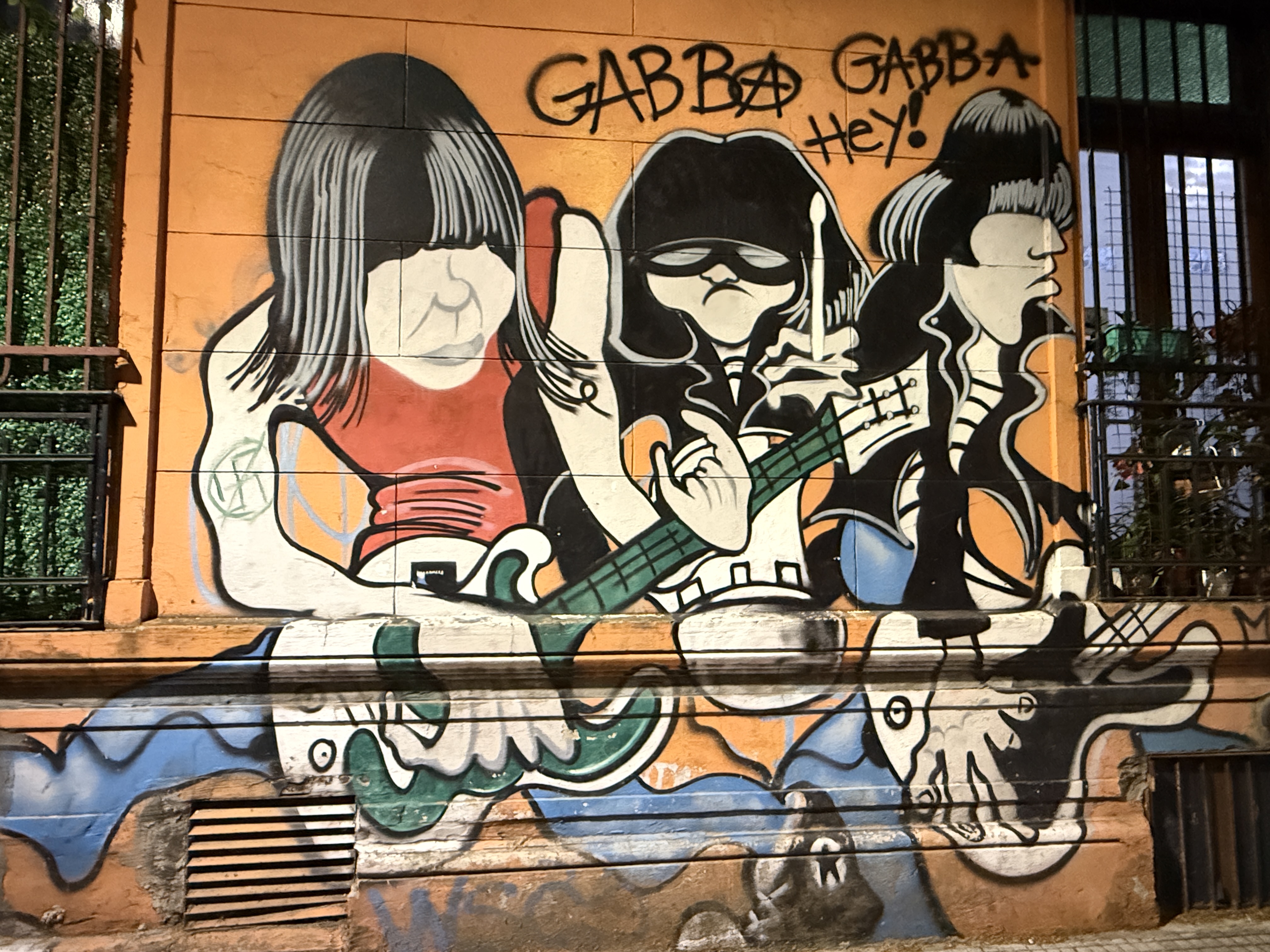
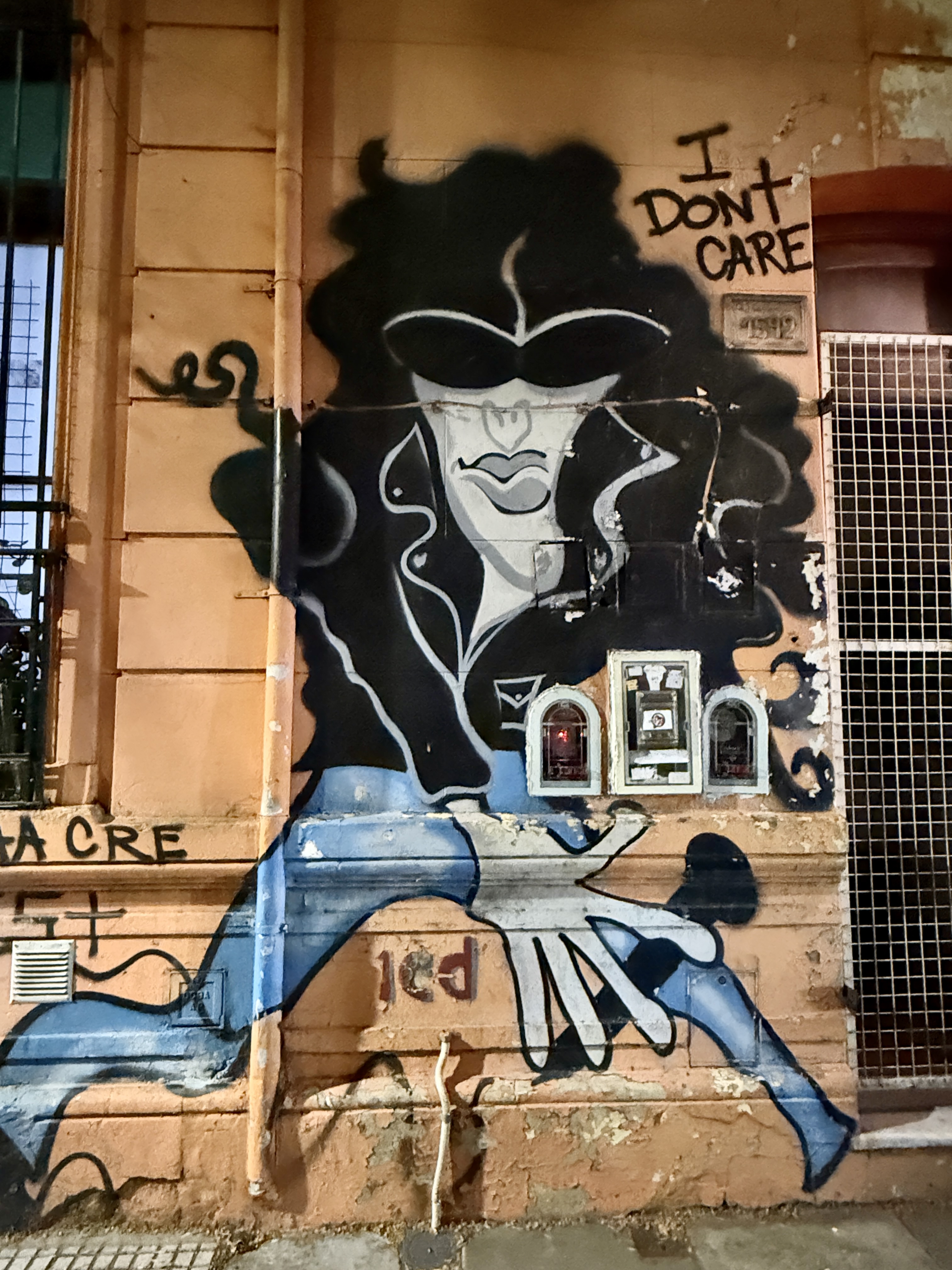
Then Peter and Jairo had steak and Mike and I shared a pasta dish because we were meated out. We all shared a tiramisu and then Jairo wanted to take us to a bar they stumbled on when they were headed to meet us at Reliquia. The bar had a bit of a secret door that led to another room that housed a fun bar. They call it the secret bar. More political conversation and some discussion on what they will be doing over the coming week. And then we taxied to the hotel. It’s late now and I’m calling it a wrap.

October 28, 2025 . Crisis Averted . New Crisis Emerges .
All photos courtesy of M. Pyatok… read below to find out why.
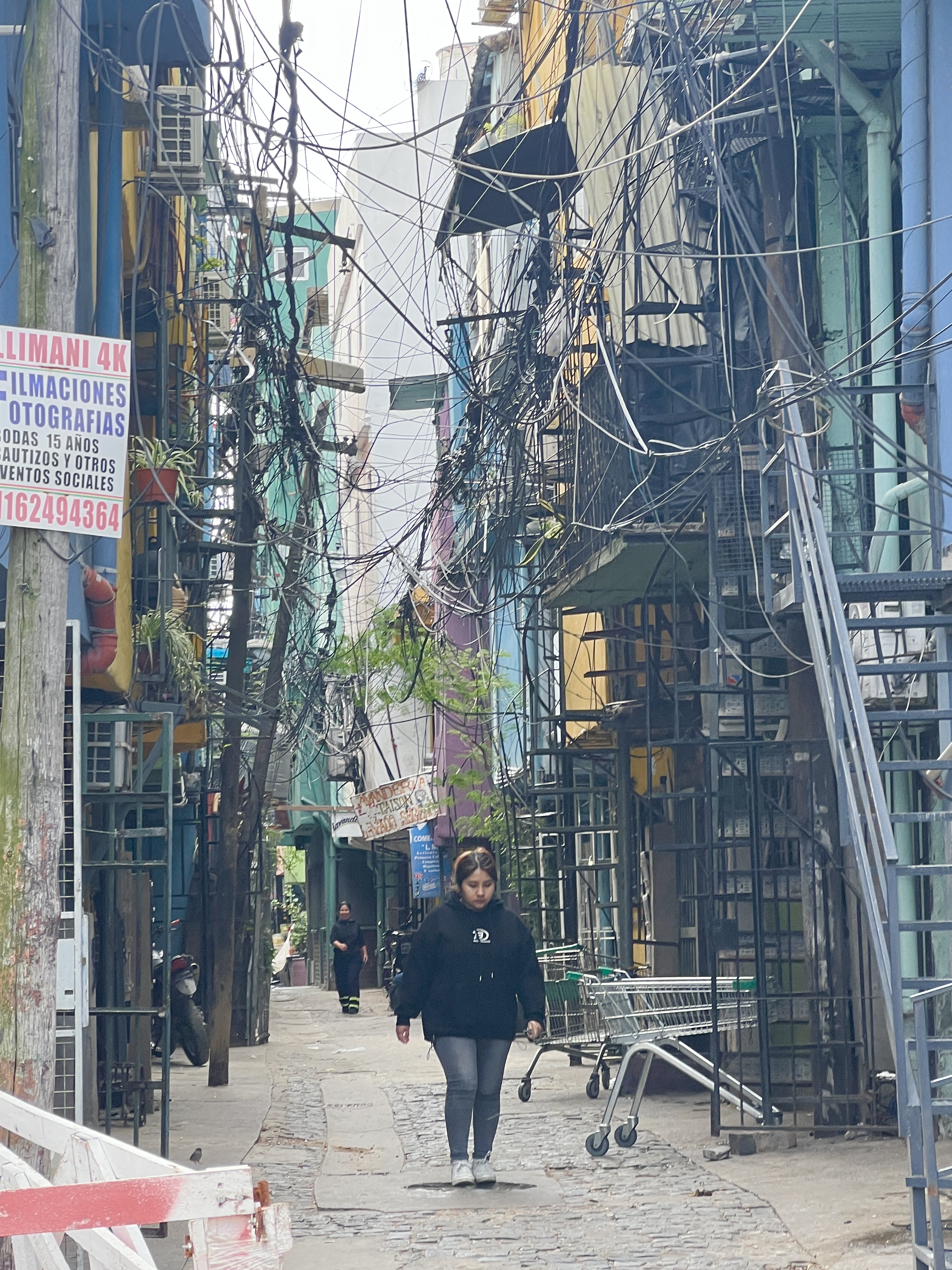
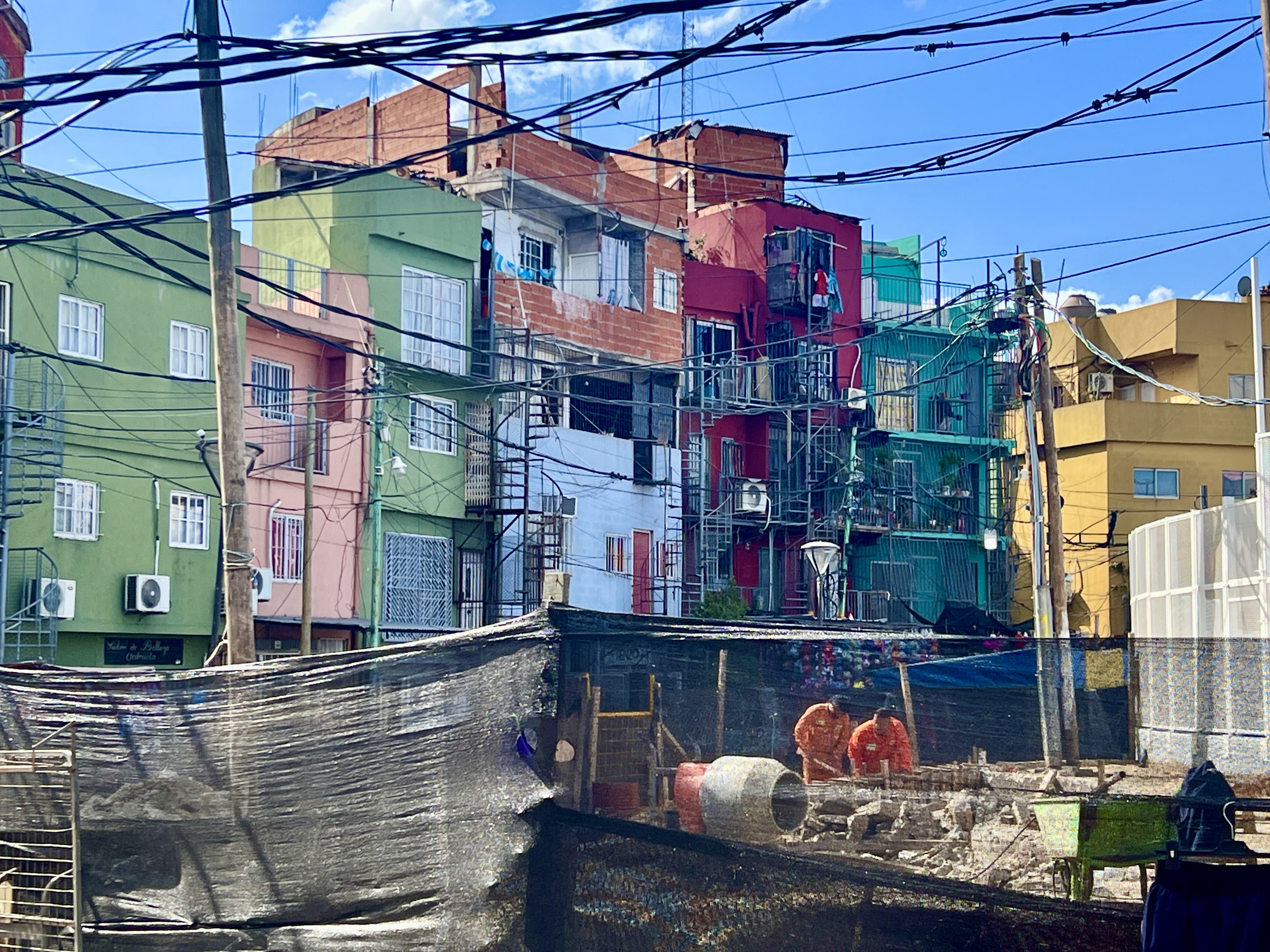

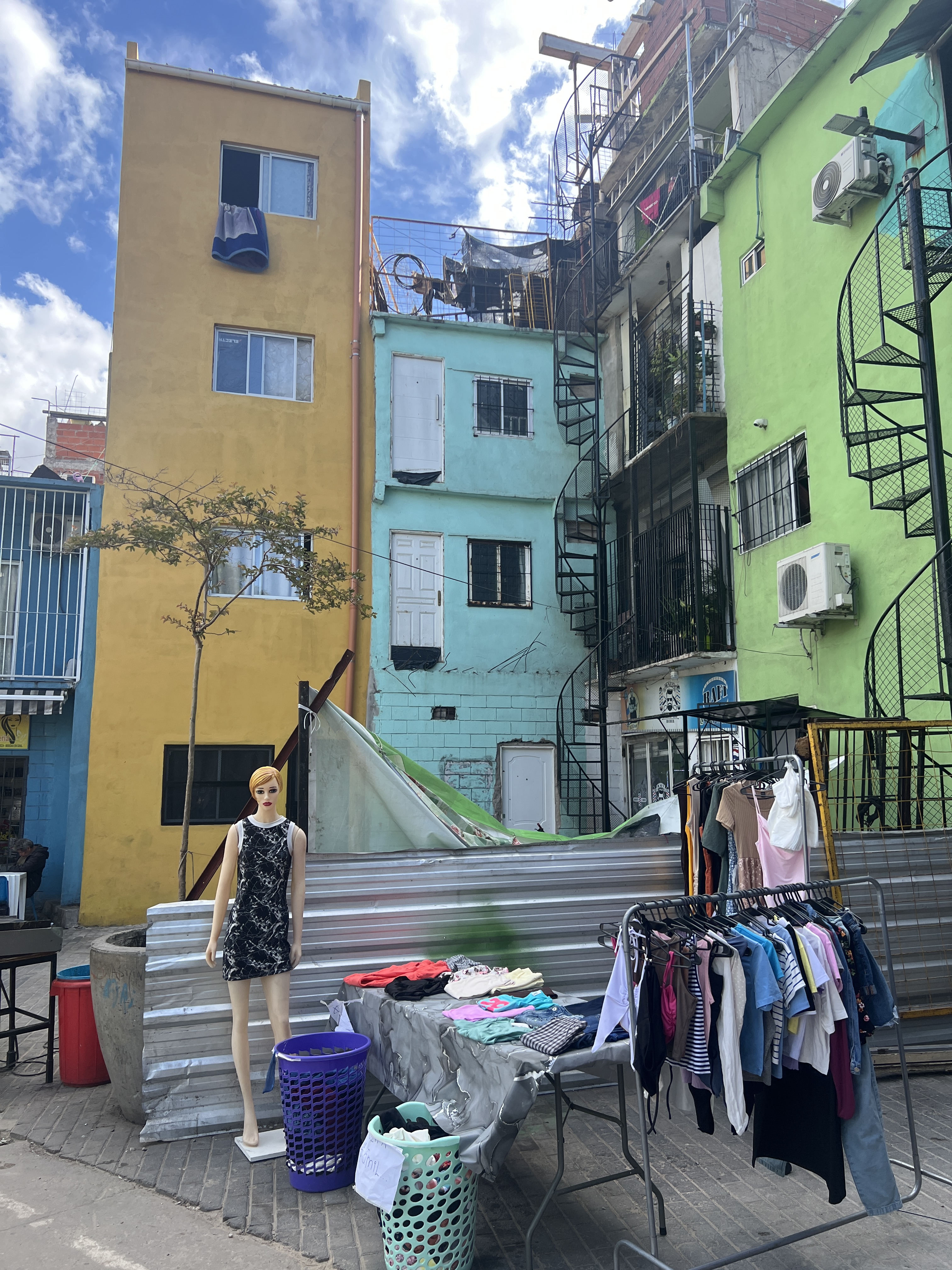
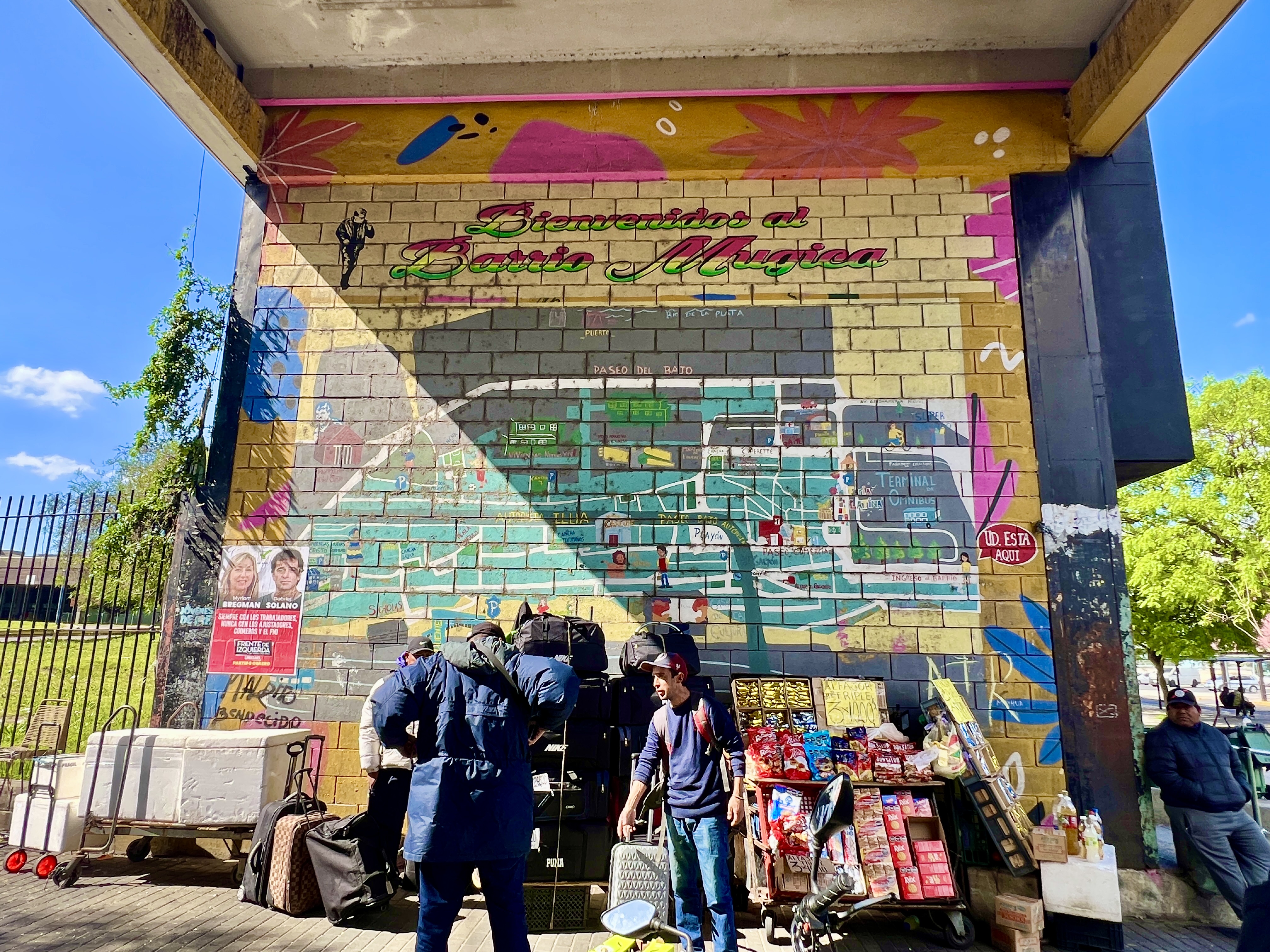
What a day. We set out after breakfast —first to the bank to get some cash (Argentina doesn’t accept credit cards for lots of things, most notably taxis). Then we went back to the hotel to get warmer clothes as the temperature really dropped last night and today–in the 50s. And then we finally headed out. We wanted to go to a very “marginal” neighborhood that is called Padre Mugica (named for a slain priest who dedicated his life to helping those who live in the slums). We can actually see this slum from our hotel window—about a mile away.. we see the tops of the building. Anyway, we went on our way, walking (we had figured out that it was on the other side of the railway station and we could probably walk in less than an hour). First we made some dumb mistake in reading the map and wound up going about five long blocks in the wrong direction. We caught the mistake and reversed our course. Then after walking about 3 miles, I decided I needed to use the bathroom, so I ducked into a little restaurant that was packed and found my way to the ladies room. After about 5 minutes, I thought my purse felt very light so I looked inside and couldn’t find my wallet. Went back to the restaurant but it wasn’t in the bathroom and no one had turned it in. I was freaked. Passport, credit cards, cash, and god knows what else is in that wallet. We went back along the same route all the way to the hotel… and then there was the wallet —in the hotel room. I had taken it out of my purse to take out some unnecessary credit cards and whatever, and I guess I never put it into my purse. Great. Now we could start the day, albeit about 2 hours late. Crisis averted.

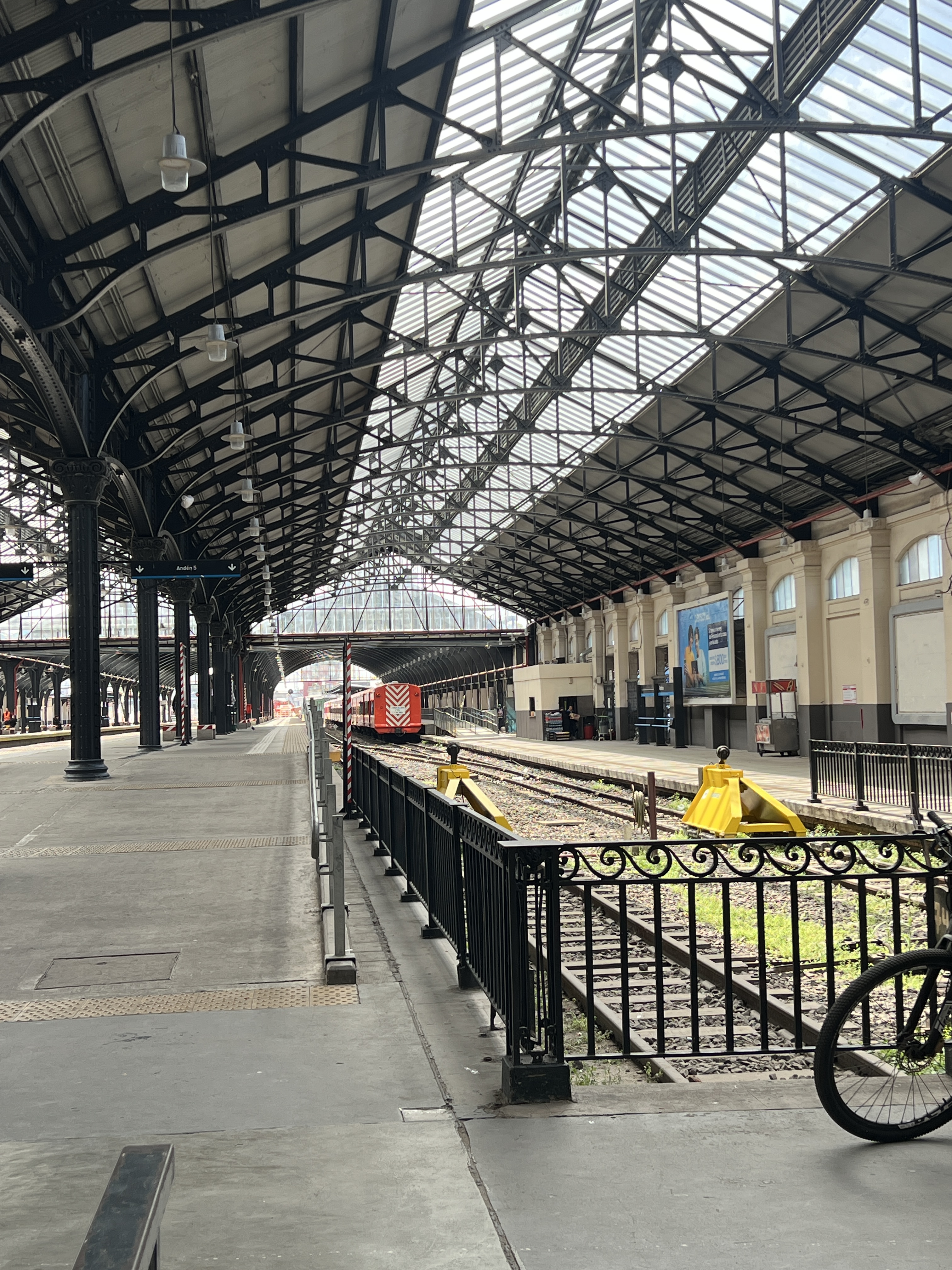
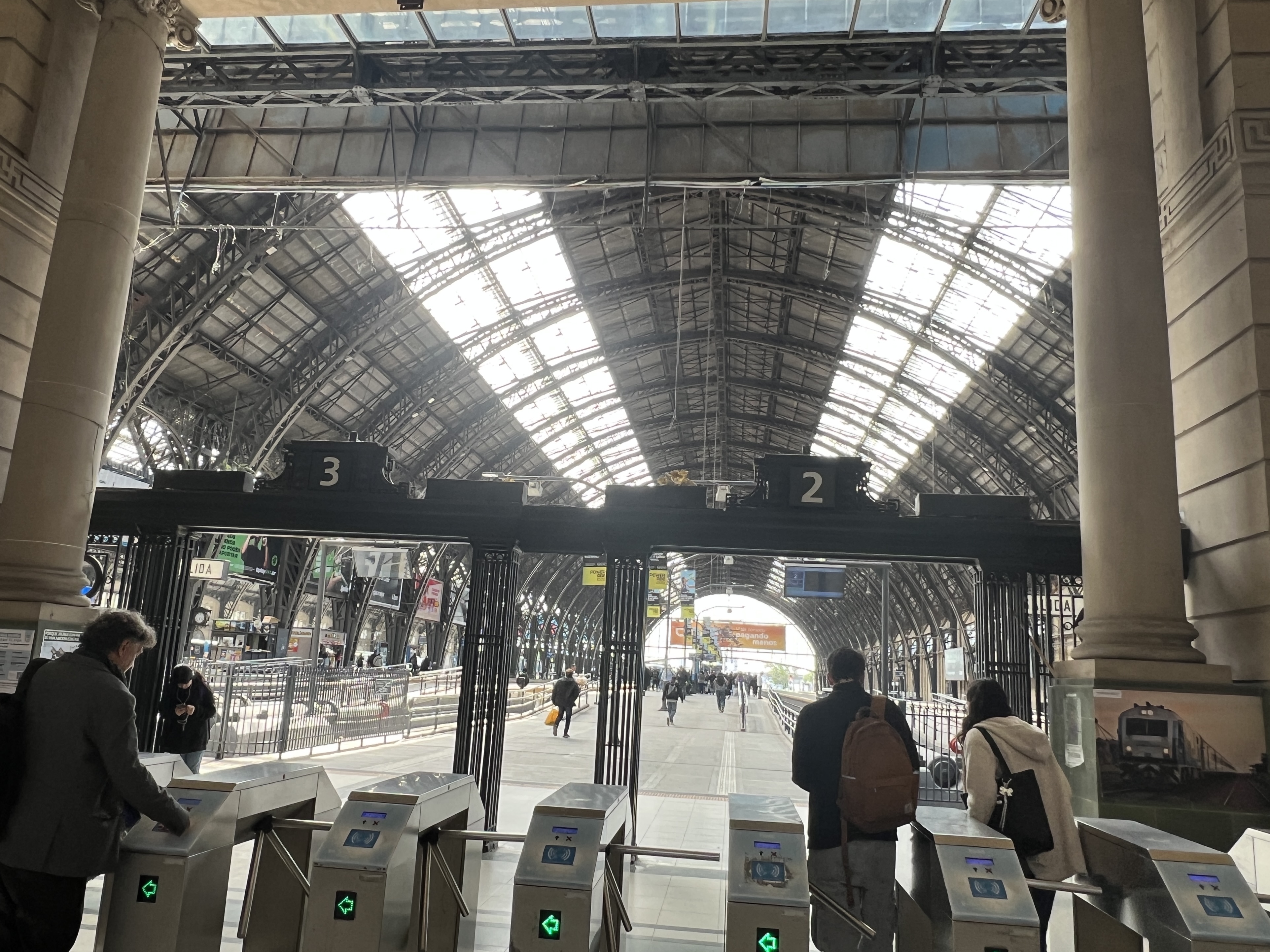
In the interest of time, we hopped into a taxi to take us to where we had been when we turned around–at the railway station. It’s actually a grand old station. As we were photographing we saw several young people hop over or crawl under the turnstiles so as not to pay the fare. Made me think about the bus riders union in LA which managed a campaign called “No Seat, No Fare” and of the many turnstile jumpers there are in NYC.
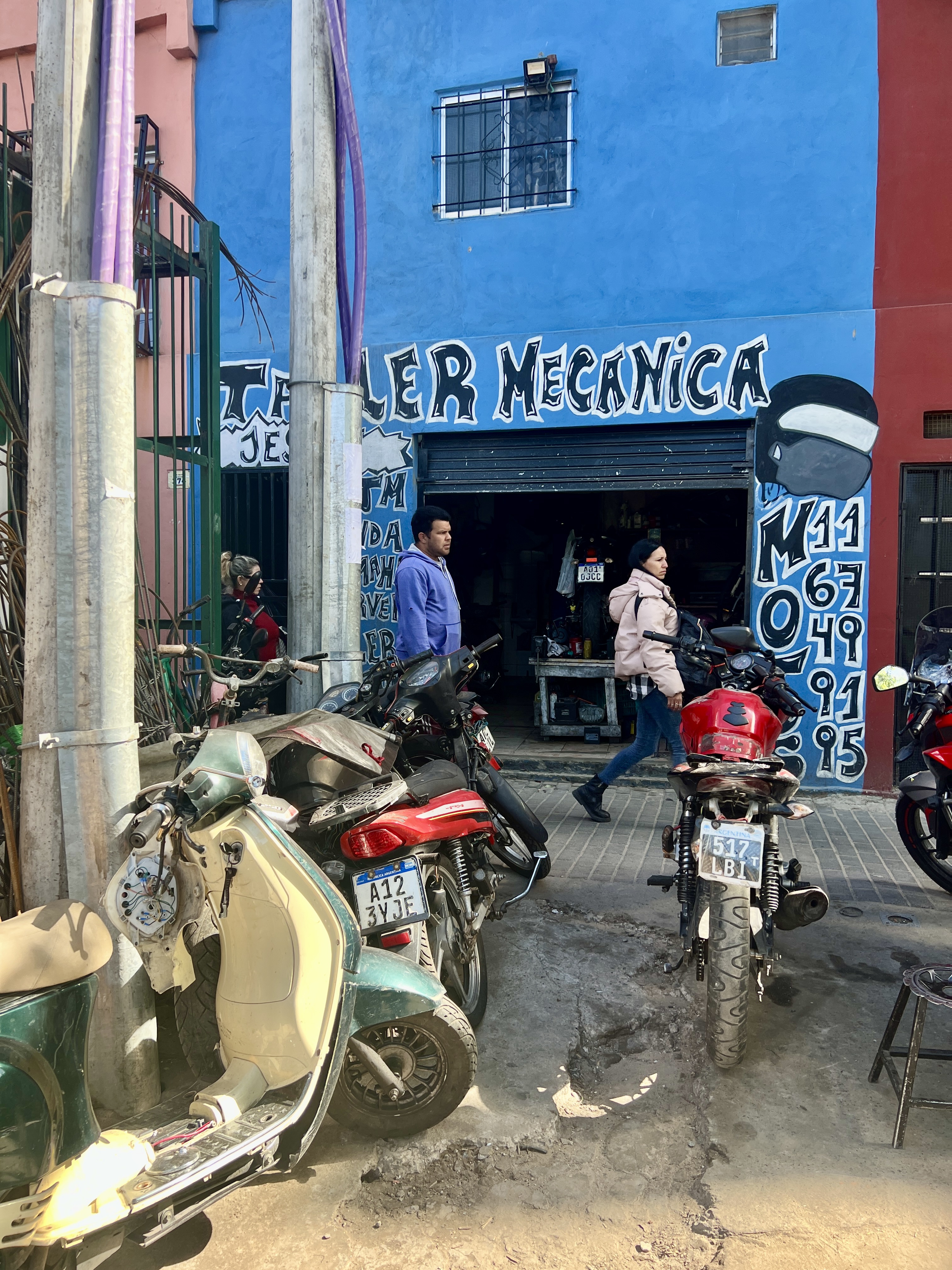
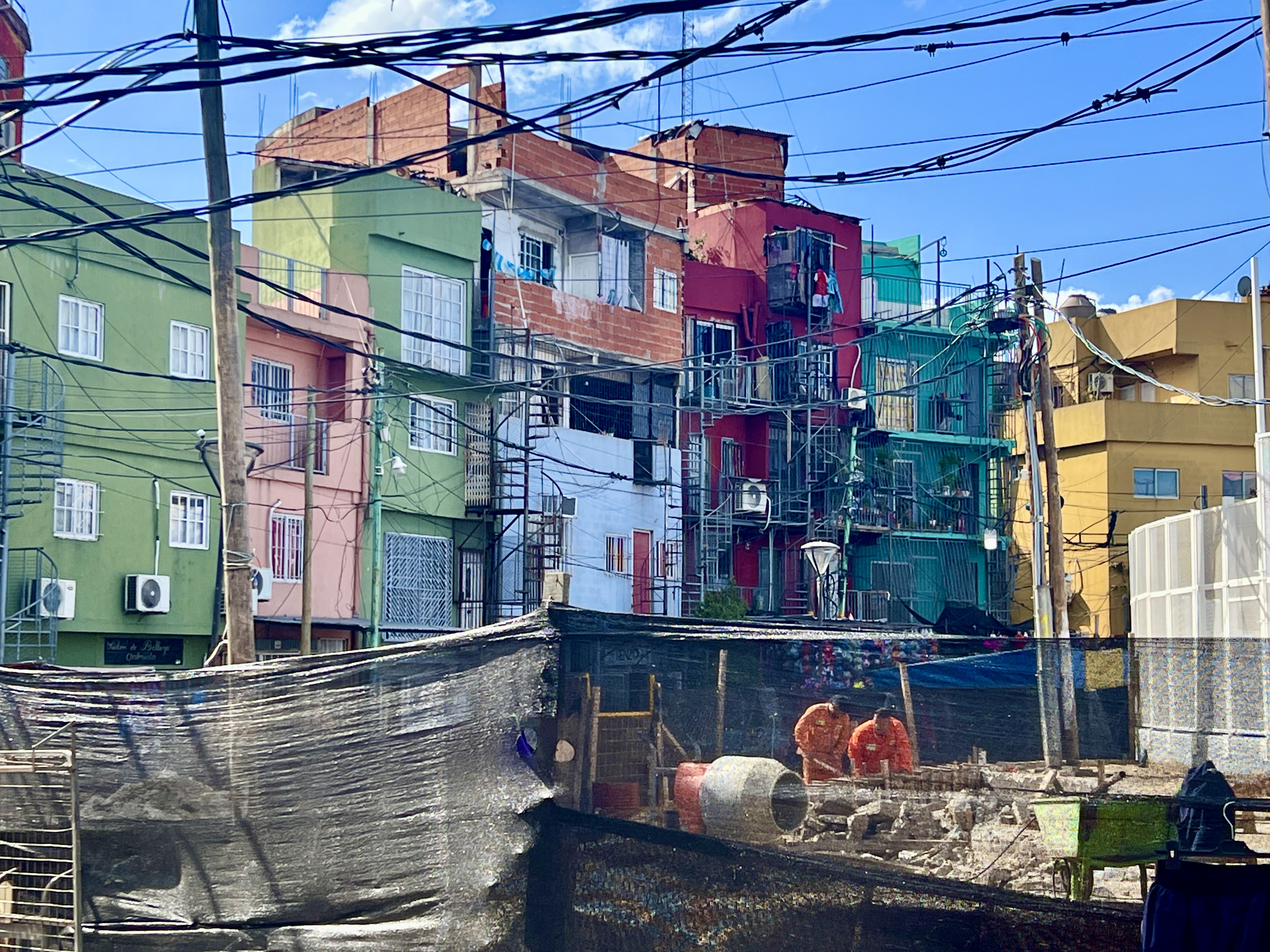
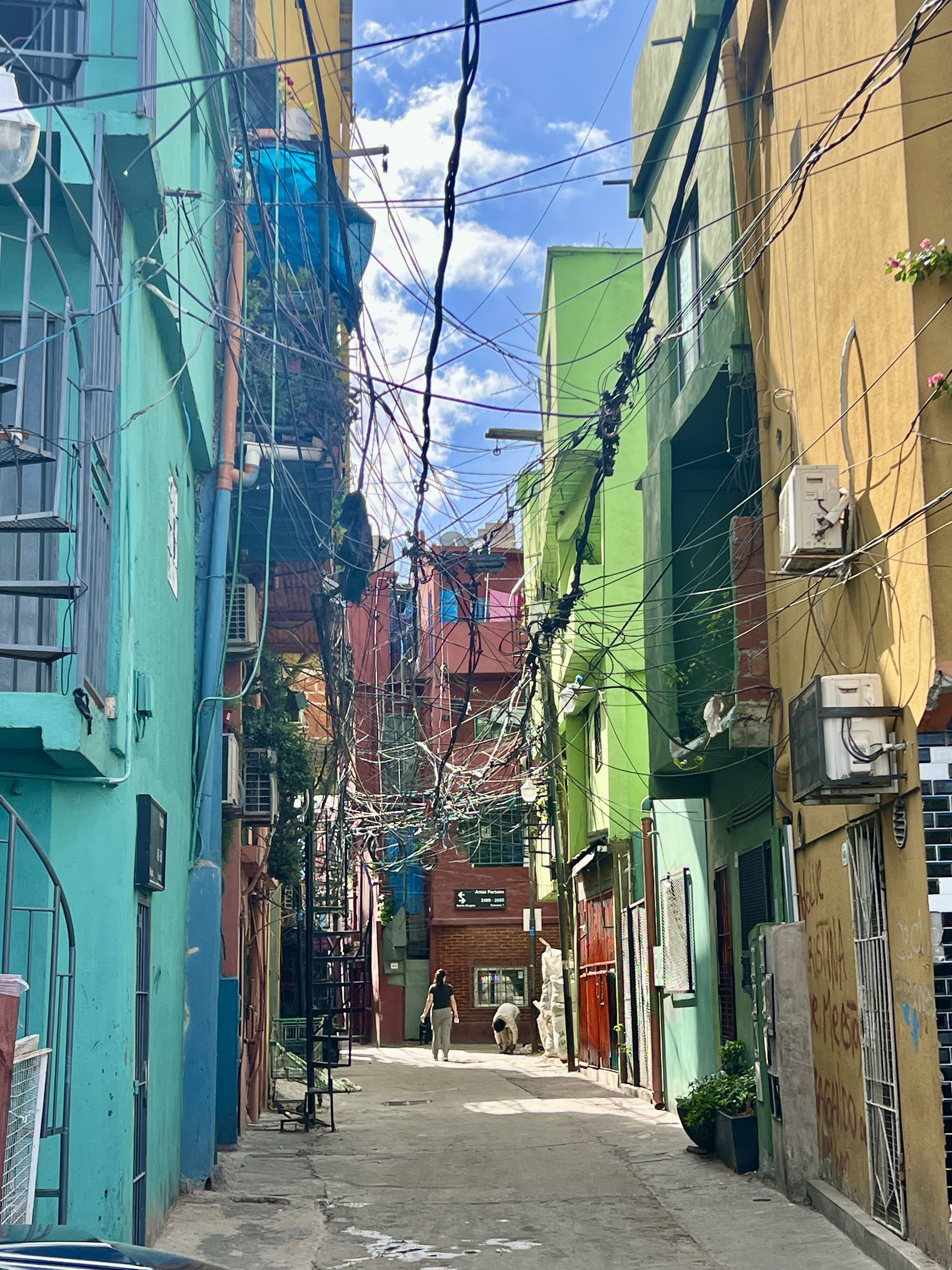
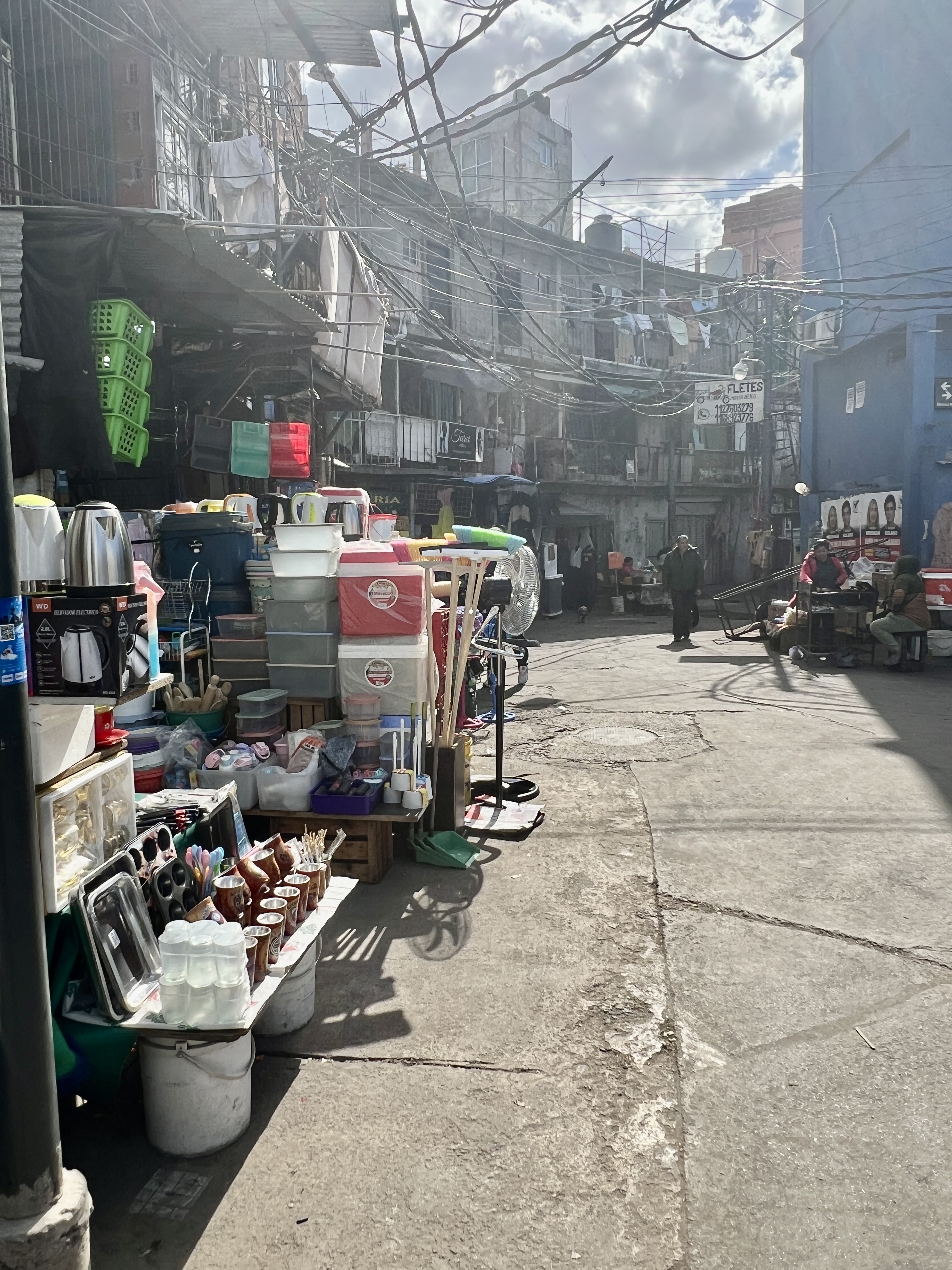
Anyway, just past the railroad station is this neighborhood. Basically it’s clearly a very marginal, low- to no-income area of mostly indigenous people who are clearly living on the edge. It was originally founded by immigrants as a squatter settlement nearly 100 years ago and has probably been transformed and influenced by successive generations of migrants and low income people and families. It’s a squatter settlement that is mostly home-made and grown over the years into 3-5 story self-built concrete structures–constantly under construction. Most have outdoor spiral stairs to connect the different levels. Ground floors are all “businesses” and street vendors—lots of barber shops. The houses are painted in bright colors and the electrical equipment that ties the buildings to the city grid is a web of gerry-rigged connections, much like we saw in Kathmandu and India. I should note that we have visited and photographed in many of these kinds of neighborhoods in South Africa, Chile, Colombia, Mexico, Honduras, Thailand, Guatemala, Kenya, Rwanda, and more—so this wasn’t new to us. That said, things did seem a bit more tense here. Many young men, fewer families (or at least the families weren’t outside), and a fair share of drunk men ambling about.
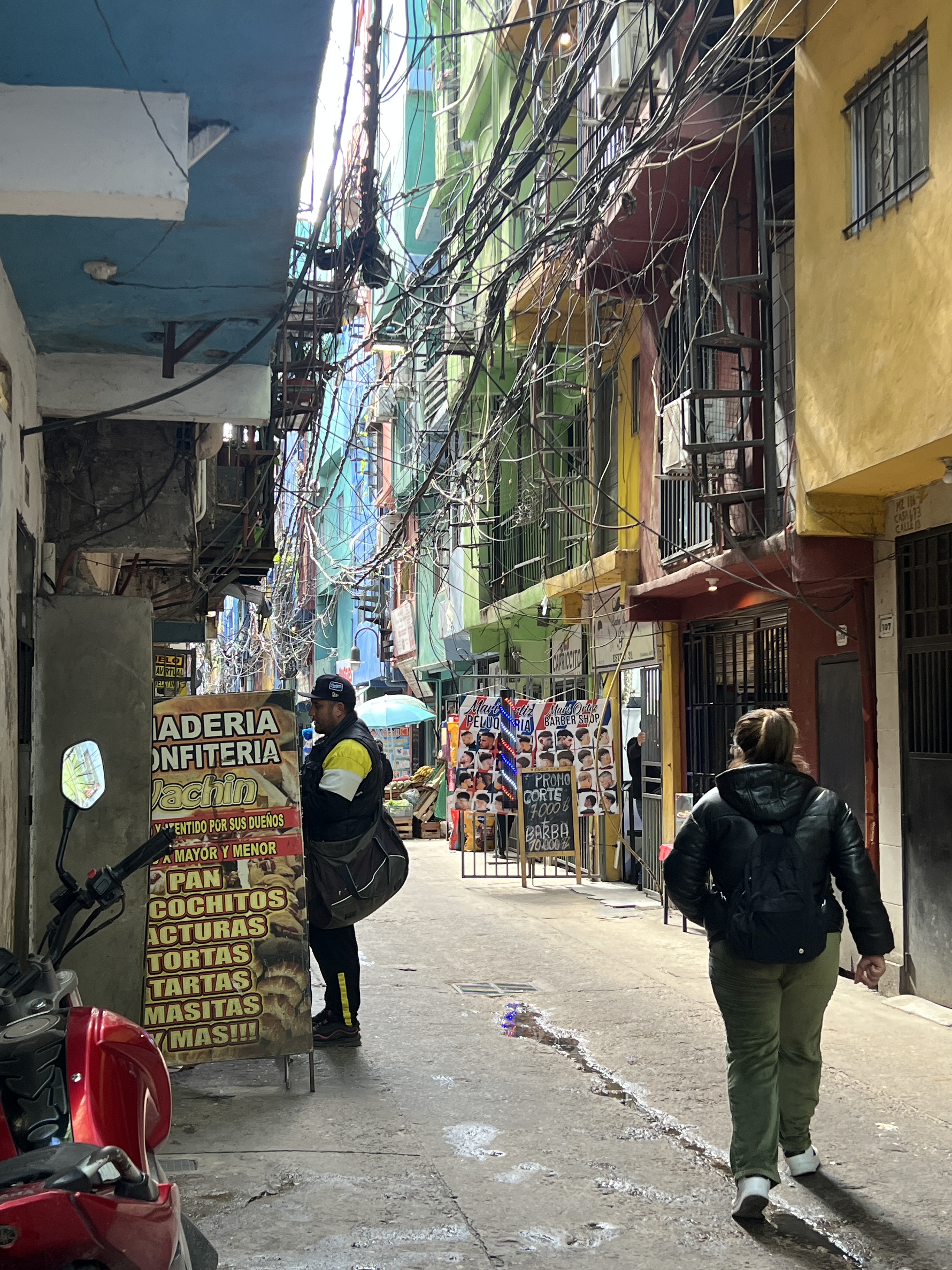
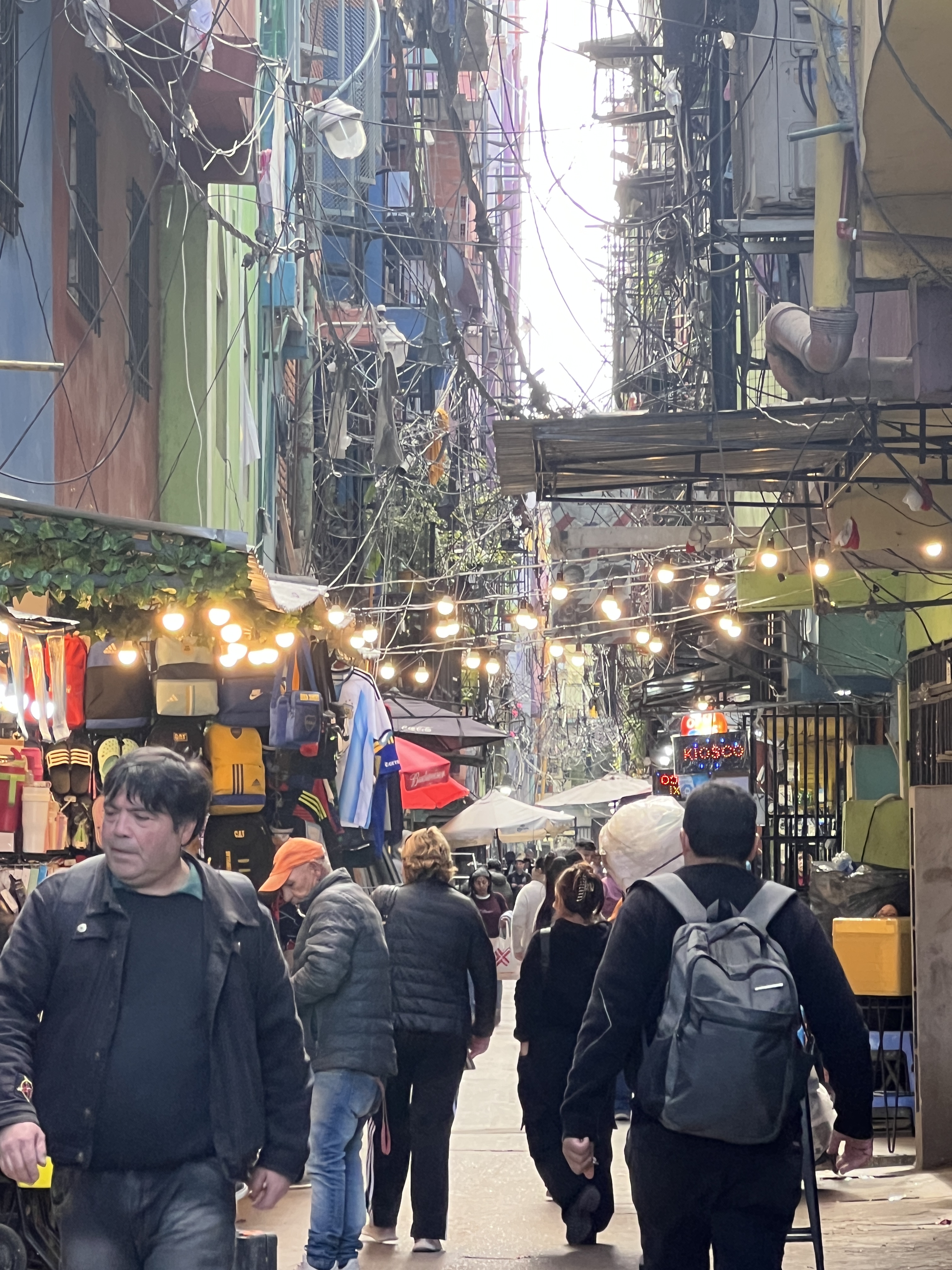

The “neighborhood” or “colonia,” formerly called Colonia 31, is essentially a linear neighborhood wedged between a sea of railroad tracks that converge at the railway station .. and on the other side are the port facilities stacked with thousands of shipping containers. While the numbers of people who live in Mugica are not really known, estimates say there are 40,000 inhabitants. Most are indigenous from Paraguay, Peru, and Bolivia.
As we walked through the area, several people stopped us to say that it was “muy pelligroso” (very dangerous). But we heard that in every other city where we visited the slums. Still we tried to be extra cautious. I had my purse in the cross-body position and kept my phone in my pocket with my hand in my pocket as often as possible—except while photographing. And I’ve been photographing all of my life, so I’m pretty aware of the surroundings… and the iphone is a lot less of a presence than when I carried multiple 35mm cameras and lenses.
We strolled for about 90 minutes and were about to leave the area when I decided to take “just one more shot.” Mike was to my left… and all of a sudden a young guy, maybe 20 years old, ran from behind and grabbed the phone/camera out of my hand and was running at top speed. Mike screamed “Stop that guy!” although I don’t think anyone spoke English… but everyone knew what happened and a big crowd gathered both behind me and also at the other end of the street. One woman found two policemen and they began to run after the guy, but it was hopeless. Frankly, I was glad it was the phone and not my purse and also didn’t knock me over as he grabbed and ran.
I hope he likes reading the NY Times and some of my books on Kindle and enjoys my music selections!
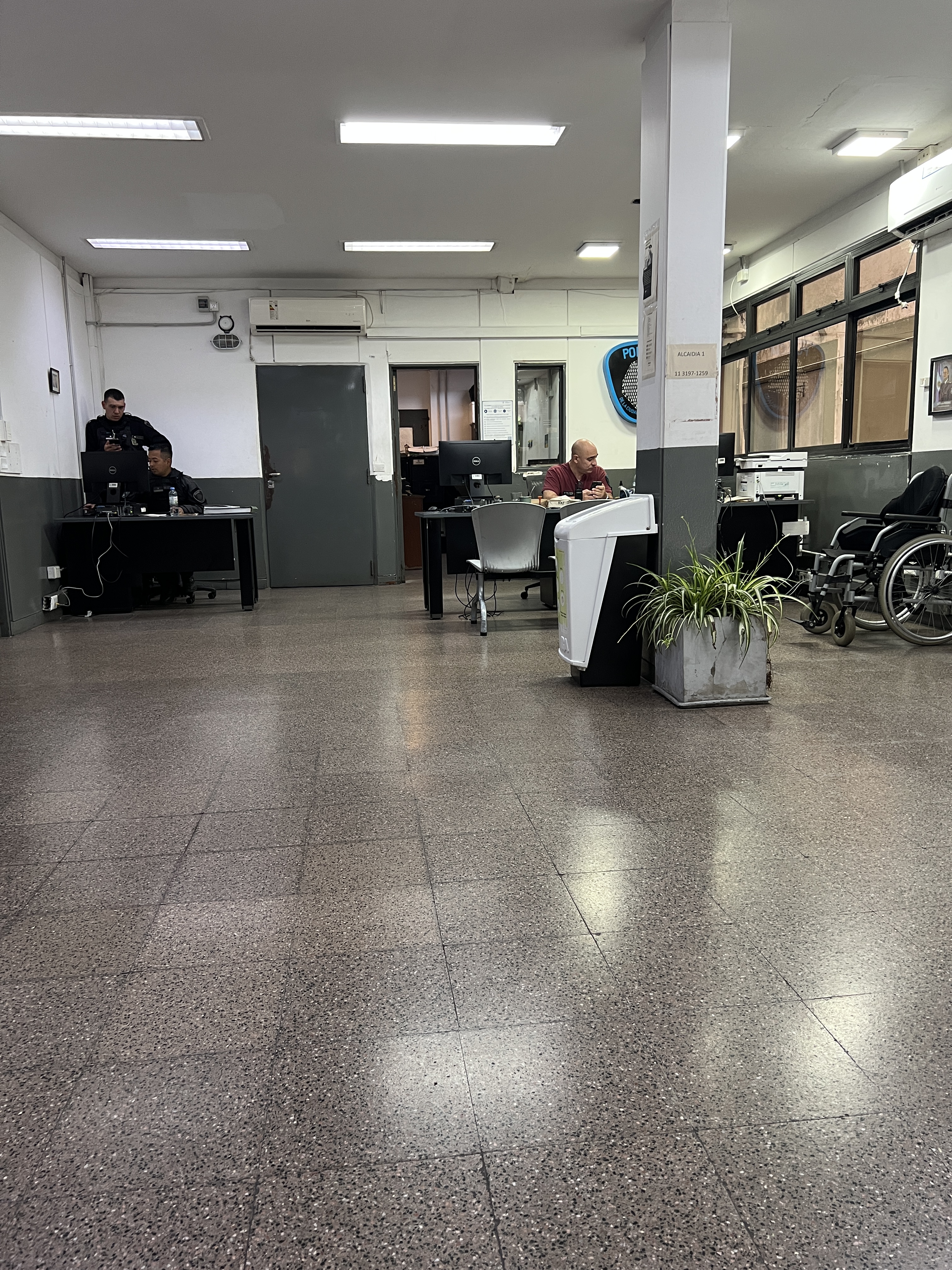
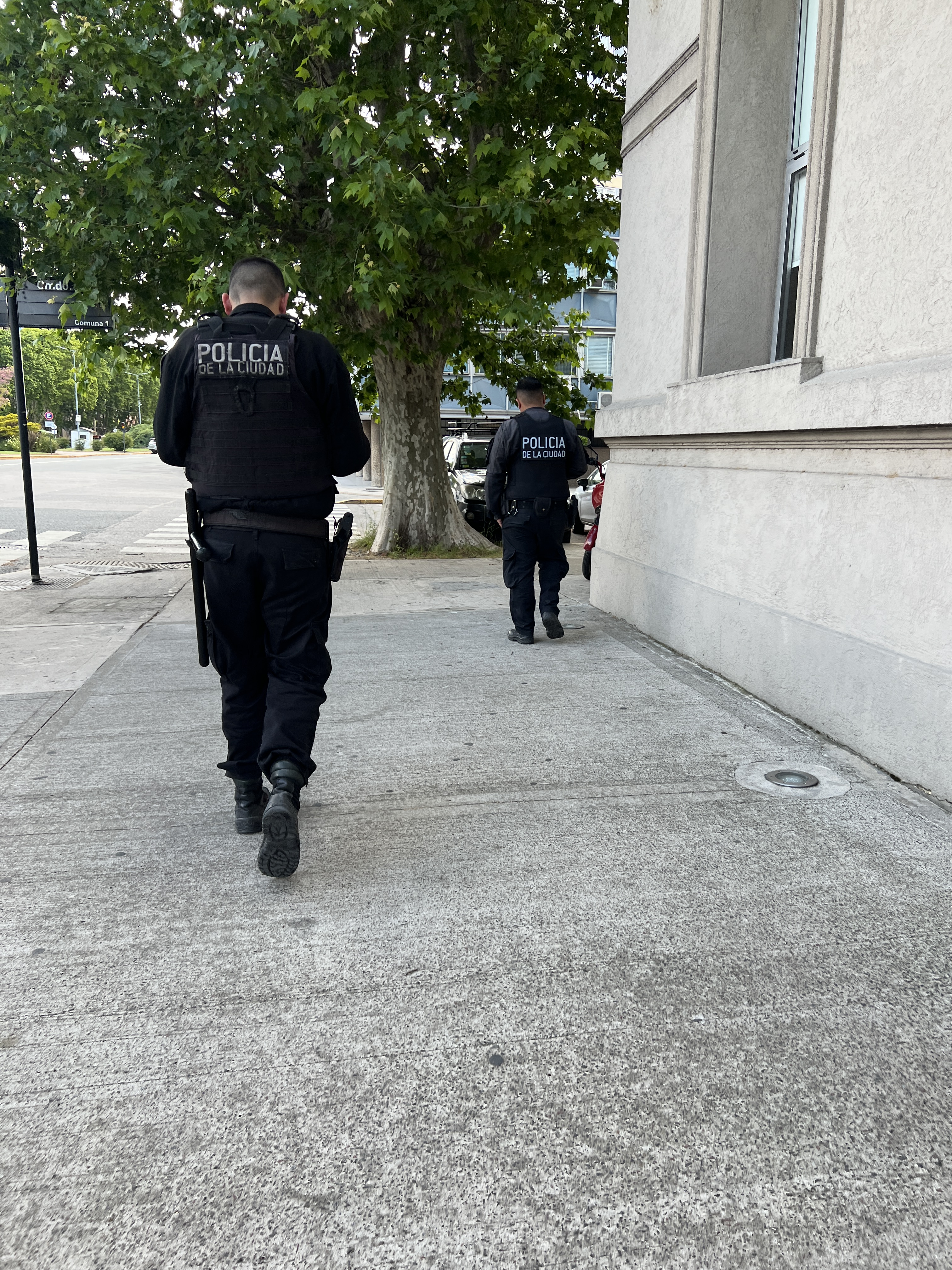
Now the police were involved. Turns out they have a little substation (a trailer of sorts, about 8’x8′) right in the area where the “incident” happened. They ushered us into this little makeshift set up, where the cops have a cat they take care of. One female and two male cops–all fairly young. Not sure what they do all day, but now they had a project—me! They didn’t speak any English and at this point I think I could barely say anything in Spanish. They kept using Google translate, which worked but also got things a bit confused. They kept taking notes. Kept asking if any jewelry was stolen? any clothes stolen? was I hurt… All the answers were “no”… He only took the phone. “Él solo tomó mi teléfono.” They looked at my passport three separate times and Mike’s too. We kept asking what more they wanted or needed, as we were ready to head back to the hotel. The “incident” happened at 4:01 pm. At 5:15, we all got in the police car (unmarked) and headed to a bigger station. They were determined to file this report. They kept telling me it would help with my insurance claim. And they kept calling different police officials. Initially, I thought maybe they were trainees.
We got out at the big police station and went inside but the guy at the reception desk told these two cops we were with that we needed to go to a different station where we would meet with the “tourist police.” Mike says there wasn’t anyone at the headquarters because it was now after 5:00! So off we all went to this other police station located in a nice neighborhood. It was, I think, a local station. We waited in the lobby area for about an hour or more and finally the guy who is the tourism cop showed up. Actually he’s more of a translator or interpreter. He was extremely nice, although occasionally his English was very funny. Like when he asked me if there were any waitresses? I said “like in a restaurant nearby?” and then he checked Google translator and he wanted to say “witnesses.” But when he asked where this all happened and we said we were in Mugica, he nearly fainted.. and just shook his head and rolled his eyes. “Why?” So we explained (using our academic cred as the easiest rationale) that we were very interested in the living conditions of low income people around the world, including in the US. Again he shook his head.
OK… three hours after the incident, we finally left and thanked the police for their hard work. It was clear the phone was long gone. Probably sold for about $10 to someone who might know how to wipe it clean and who will sell it for $100. Tomorrow morning I will head the the Apple Store in Buenos Aires to get a new phone and also to see if they can connect me to email and other digital needs. Not sure this part can happen here in Buenos Aires. We shall see.

Had dinner at Republica del Fuego.. It was fine.. Not great. That’s it for me.
October 27, 2025 . Museums, Metros, Melei, Markets.

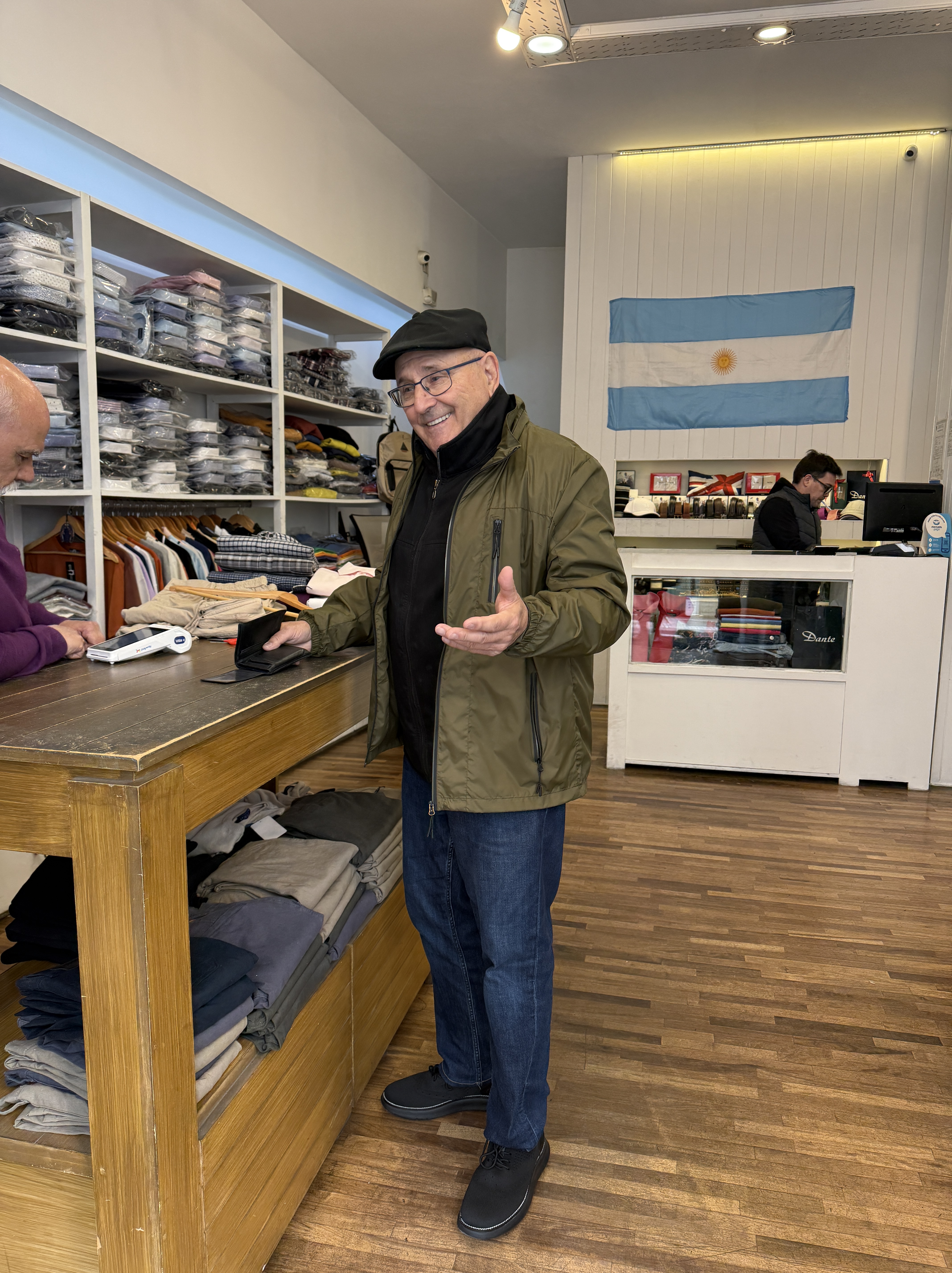
We are now up one ATM card and up one jacket… back to ground zero…except minus one international drivers license.
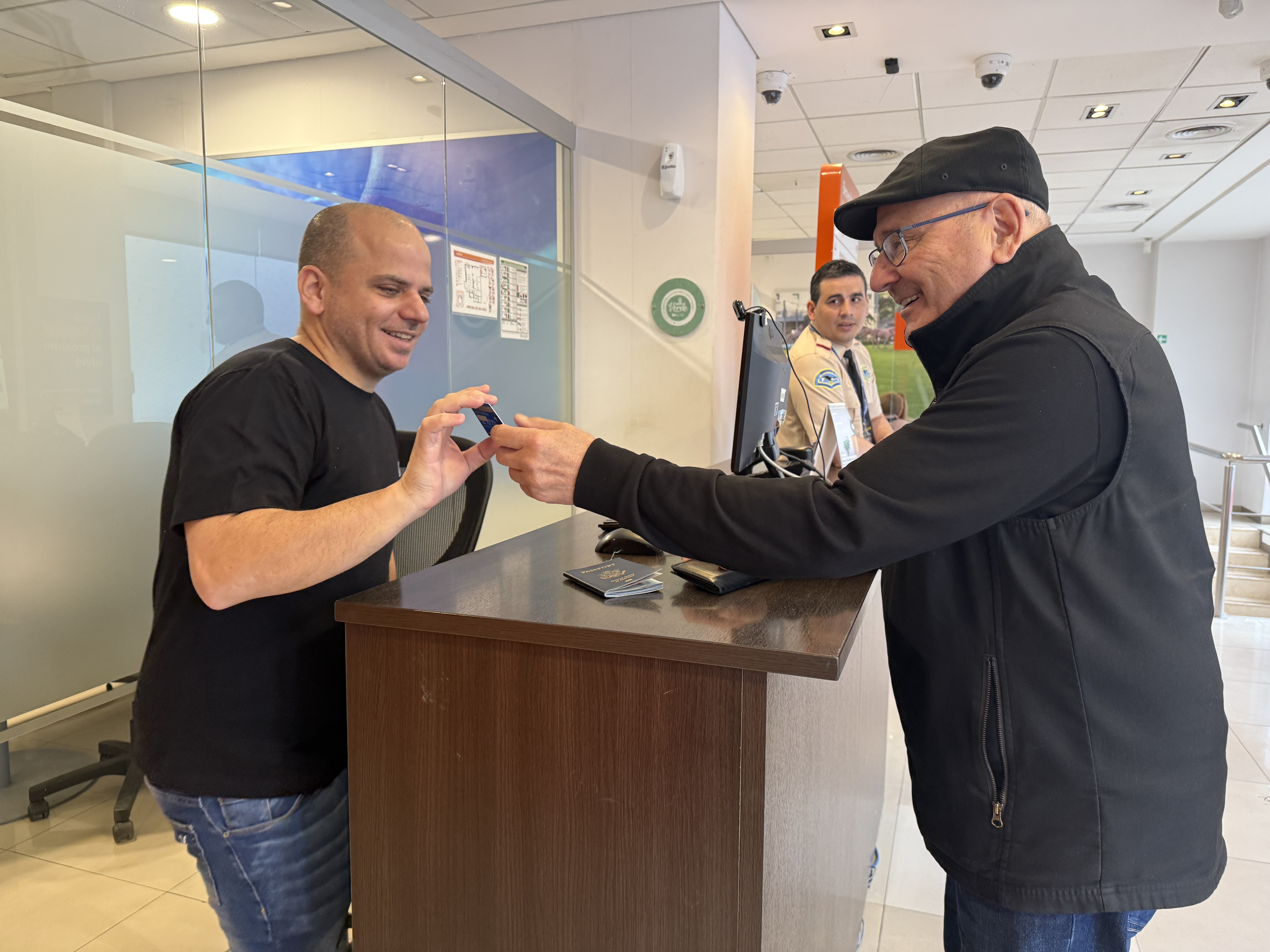
We opted to have breakfast at a little cafe down the street (eggs, medialuna/croissant, yogurt) and then headed to the bank that ate Mike’s ATM card.. We explained what happened and the guy was fairly nonchalant; I think it happens often. We needed to identify which ATM console had the problem and he went in the back… and voila! the ATM card. So Mike is “whole” again. Then as we walked along one of the boulevards we spotted a mens clothing store and Mike bought an inexpensive windbreaker (will probably last a few months) to last him for the remainder of the trip. Good thing, because it suddently got really cold. In the 50s! And this is spring here in Argentina. Seems like it’s going to be like that for the next few days.
From the bank we headed to the metro (Sube) to get to the Museum of Modern Art which is located in the San Telmo neighborhood. We now know the routine so public transit is a snap.

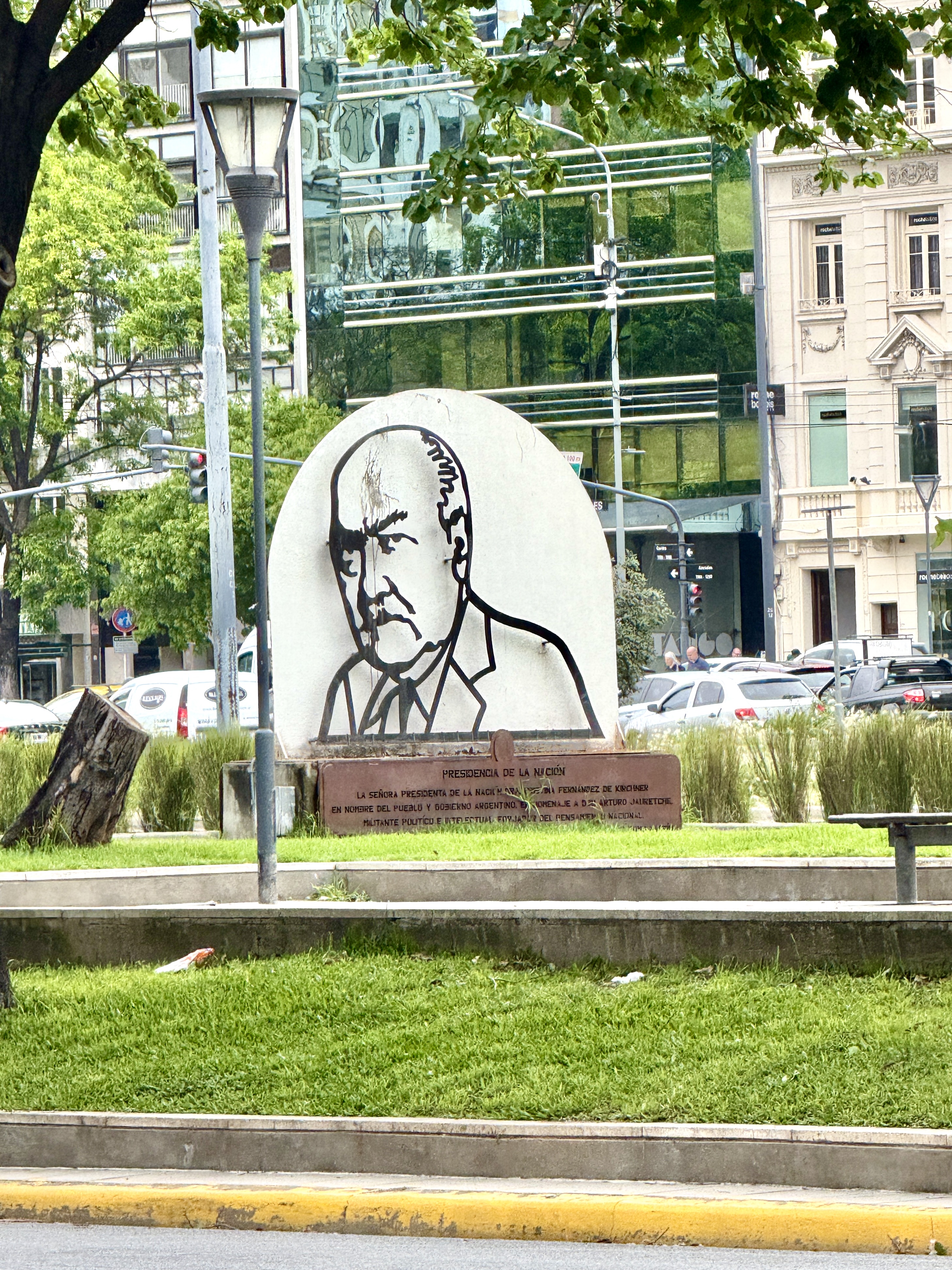
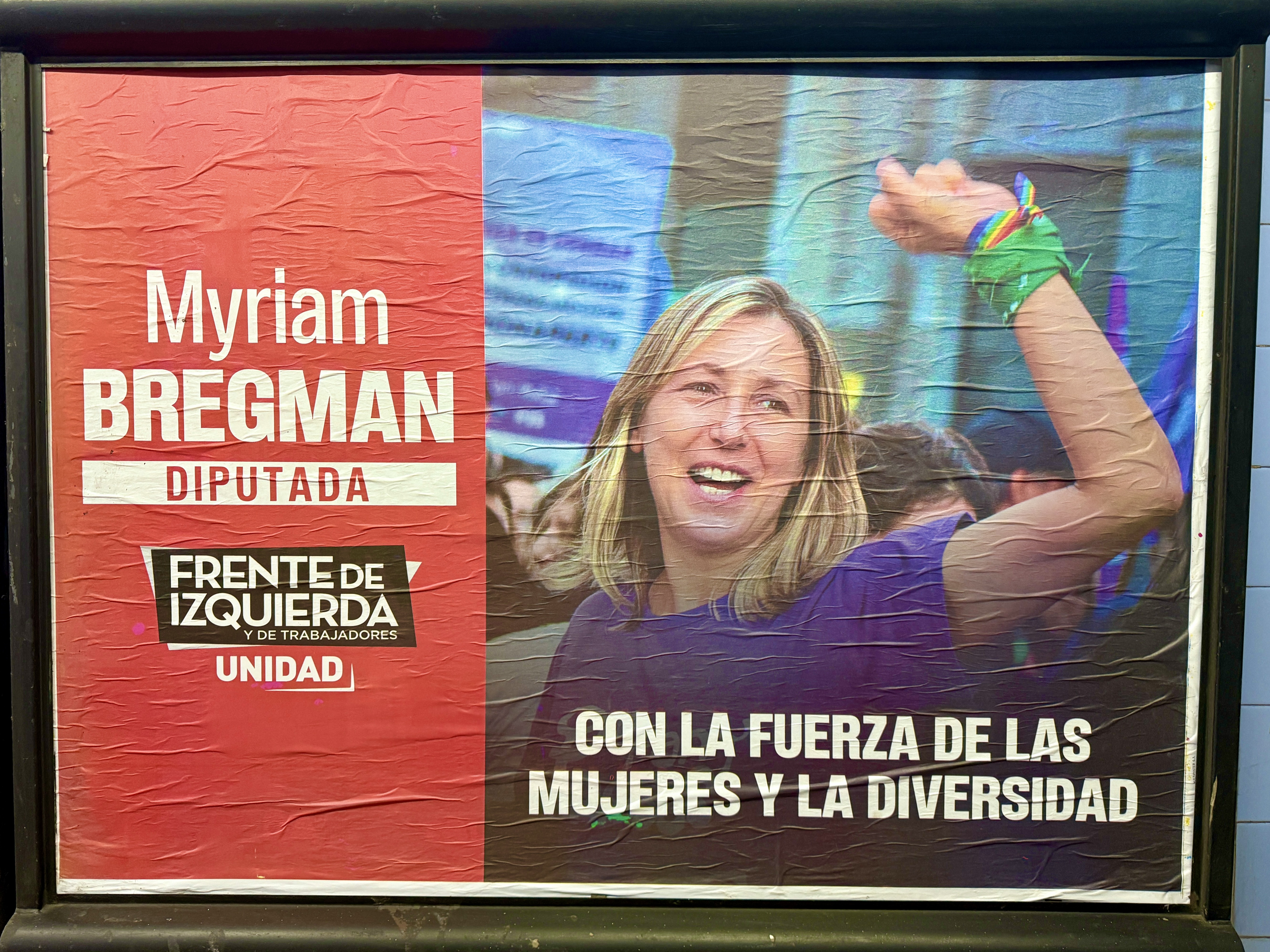
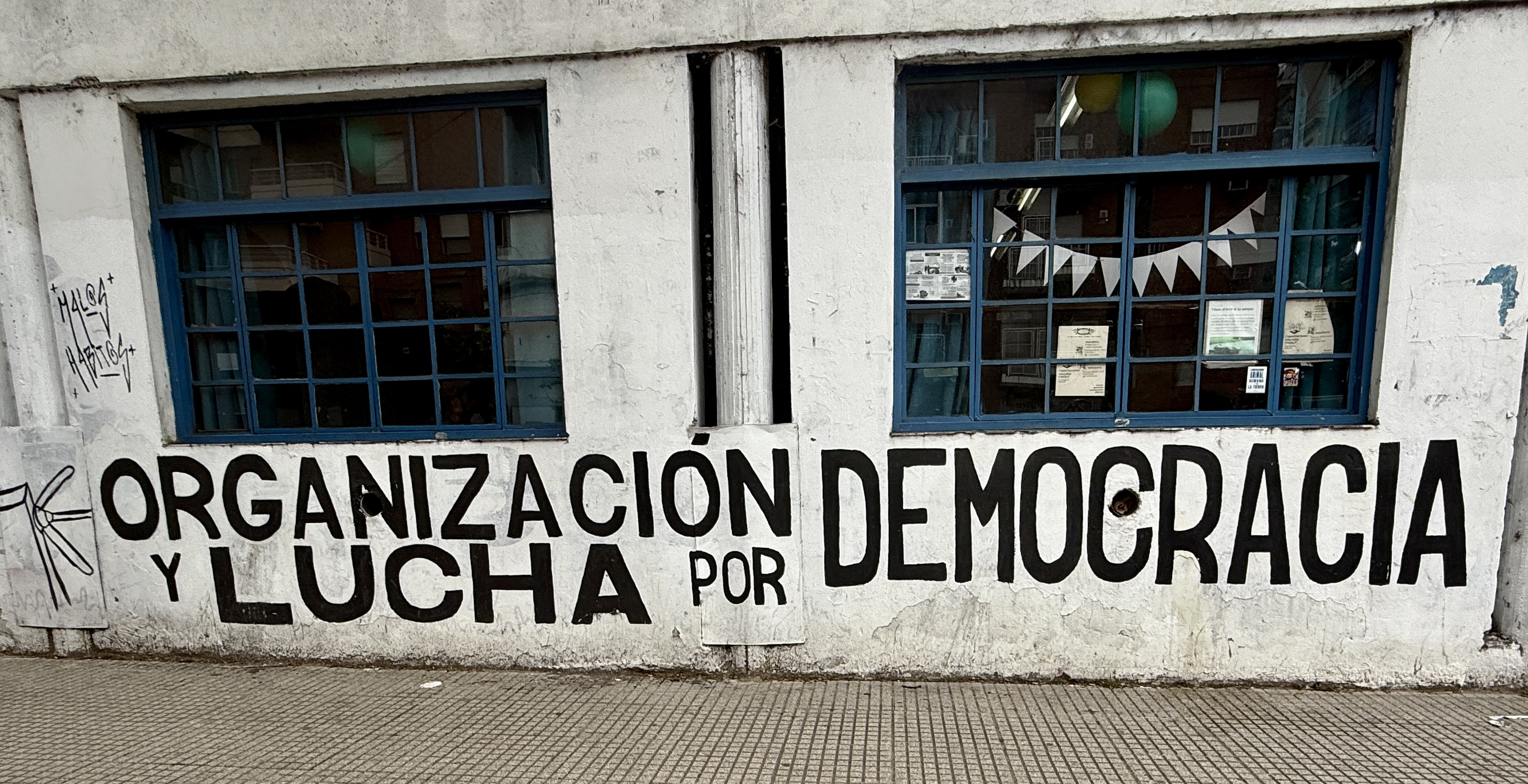
It was about a six block walk from the station to the museum and along the way we could see the remnants of yesterday’s election: lots of signs and posters for different candidates, including for Myriam Bergman, the Jewish Atheist Trotskyite who won reelection by a big margin.
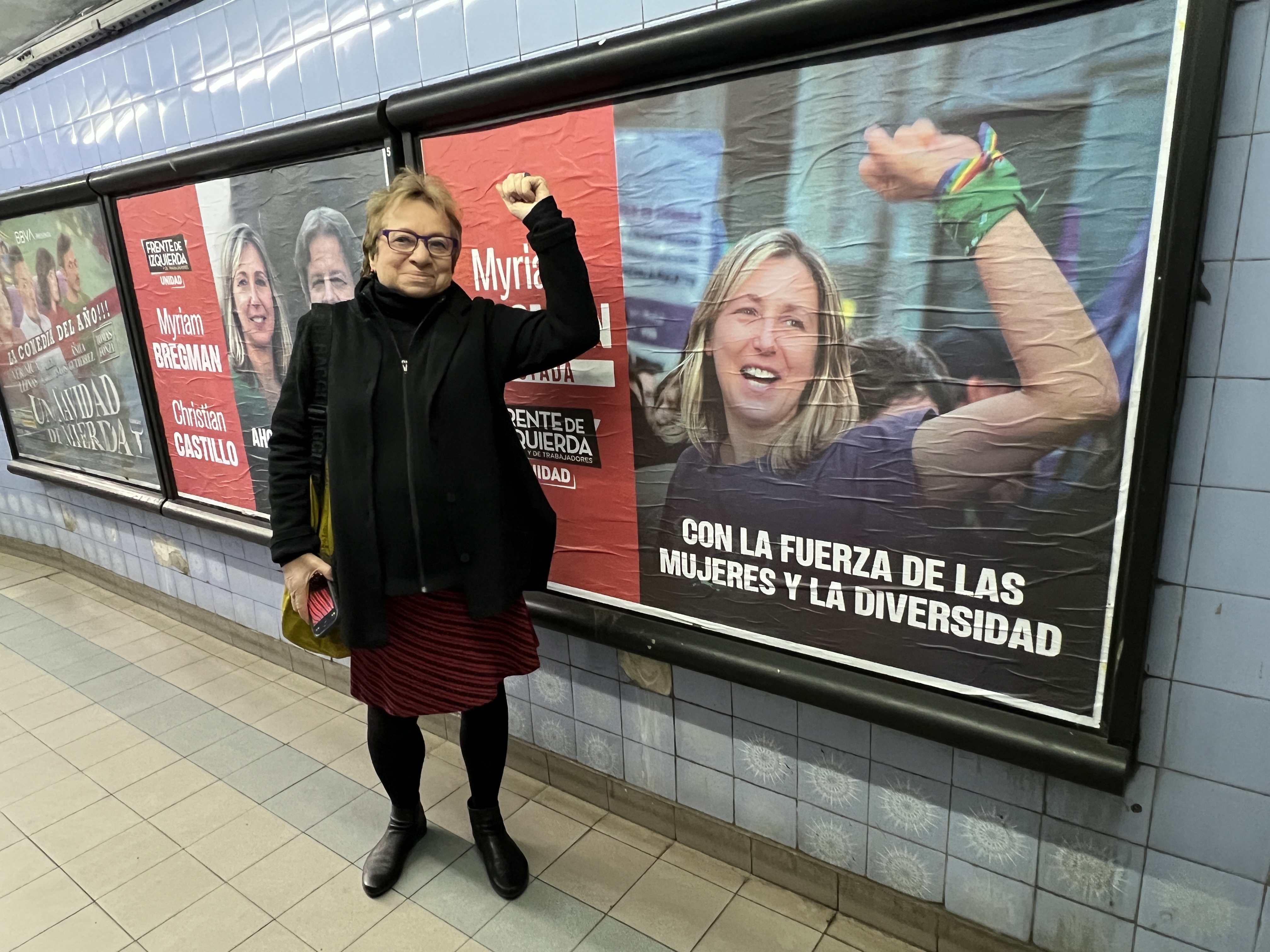
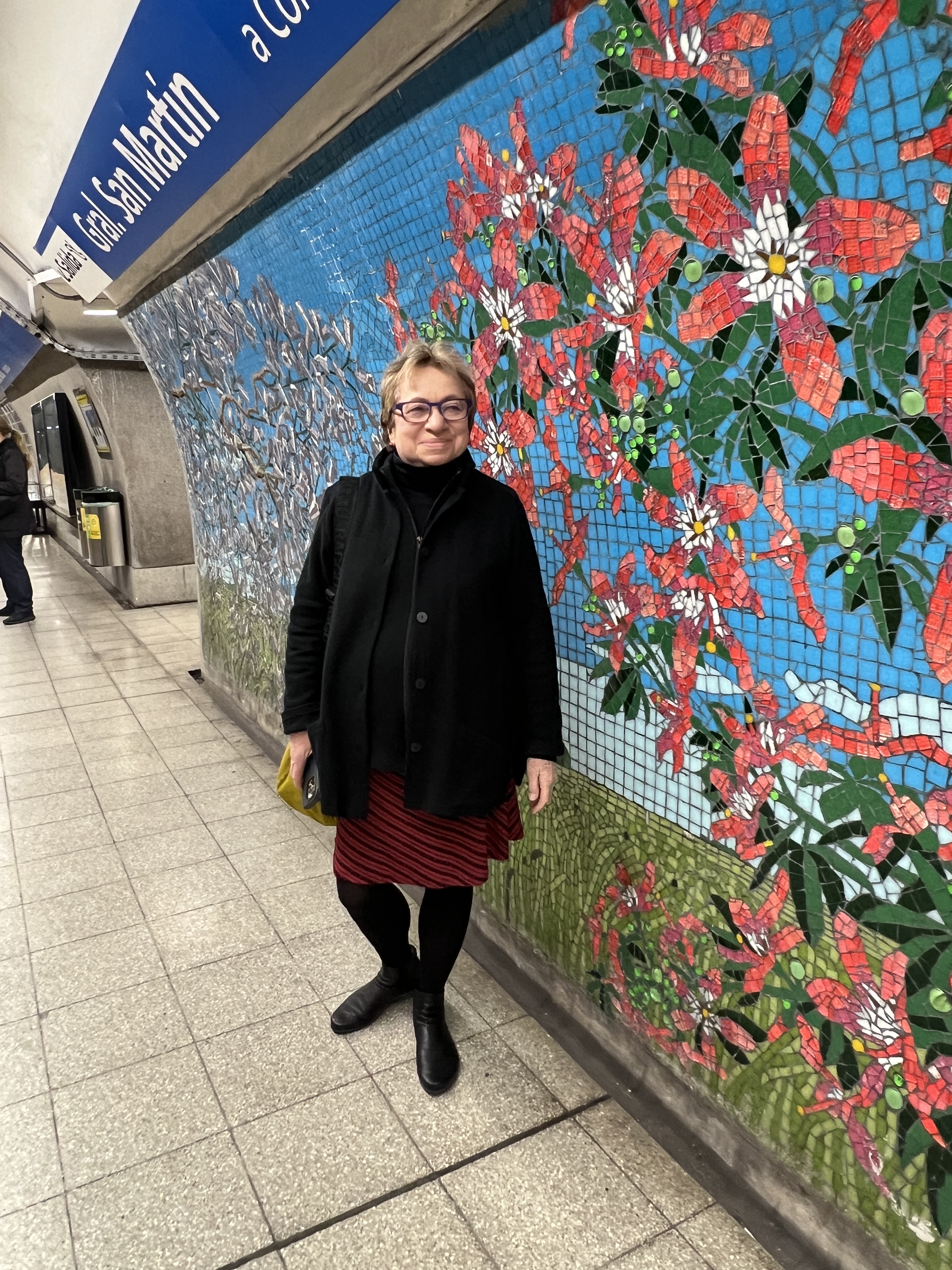
San Telmo is an interesting neighborhood and very different from the Recoletto where we are staying. Clearly lots of artists and political stuff going on here.

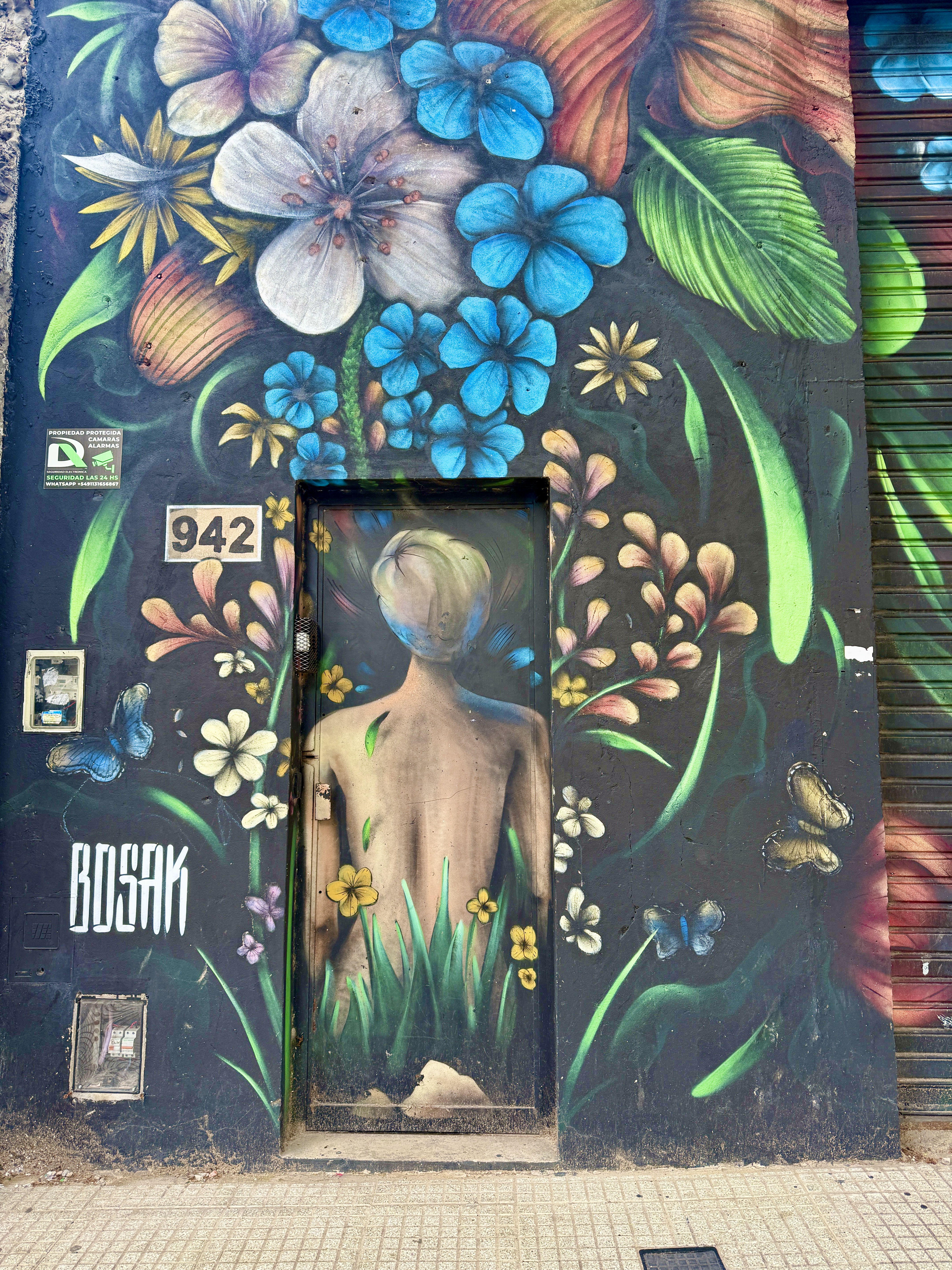
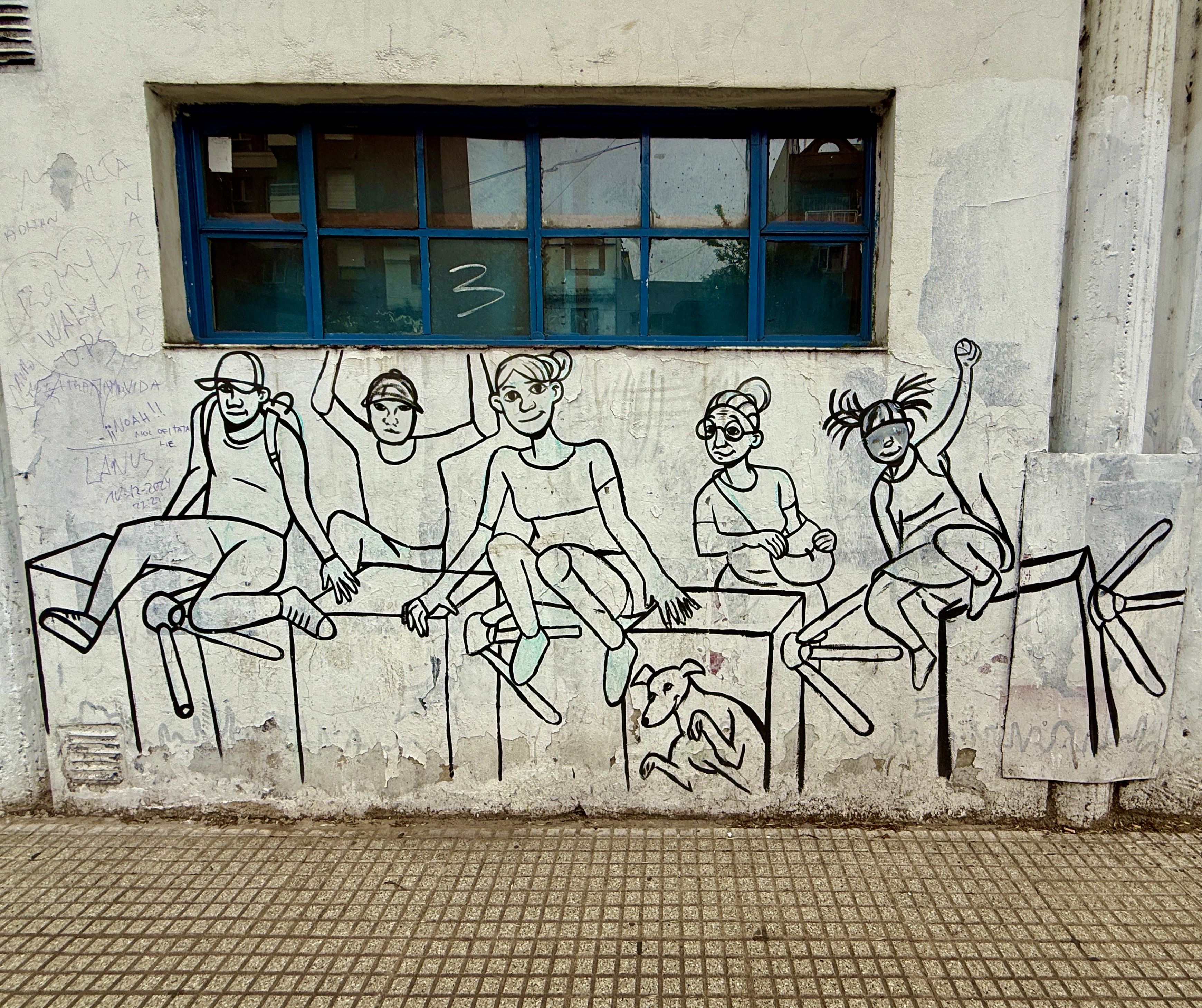
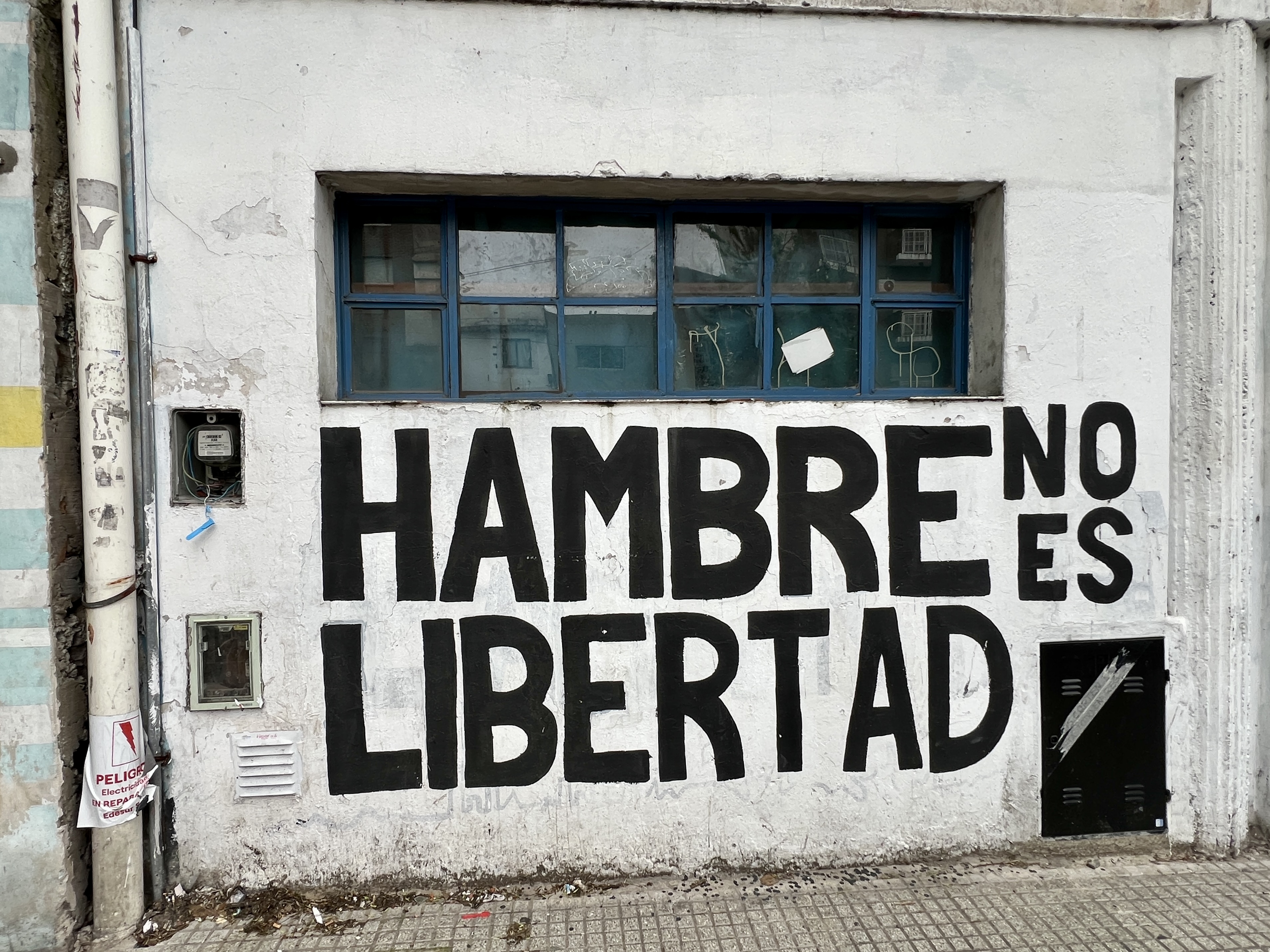
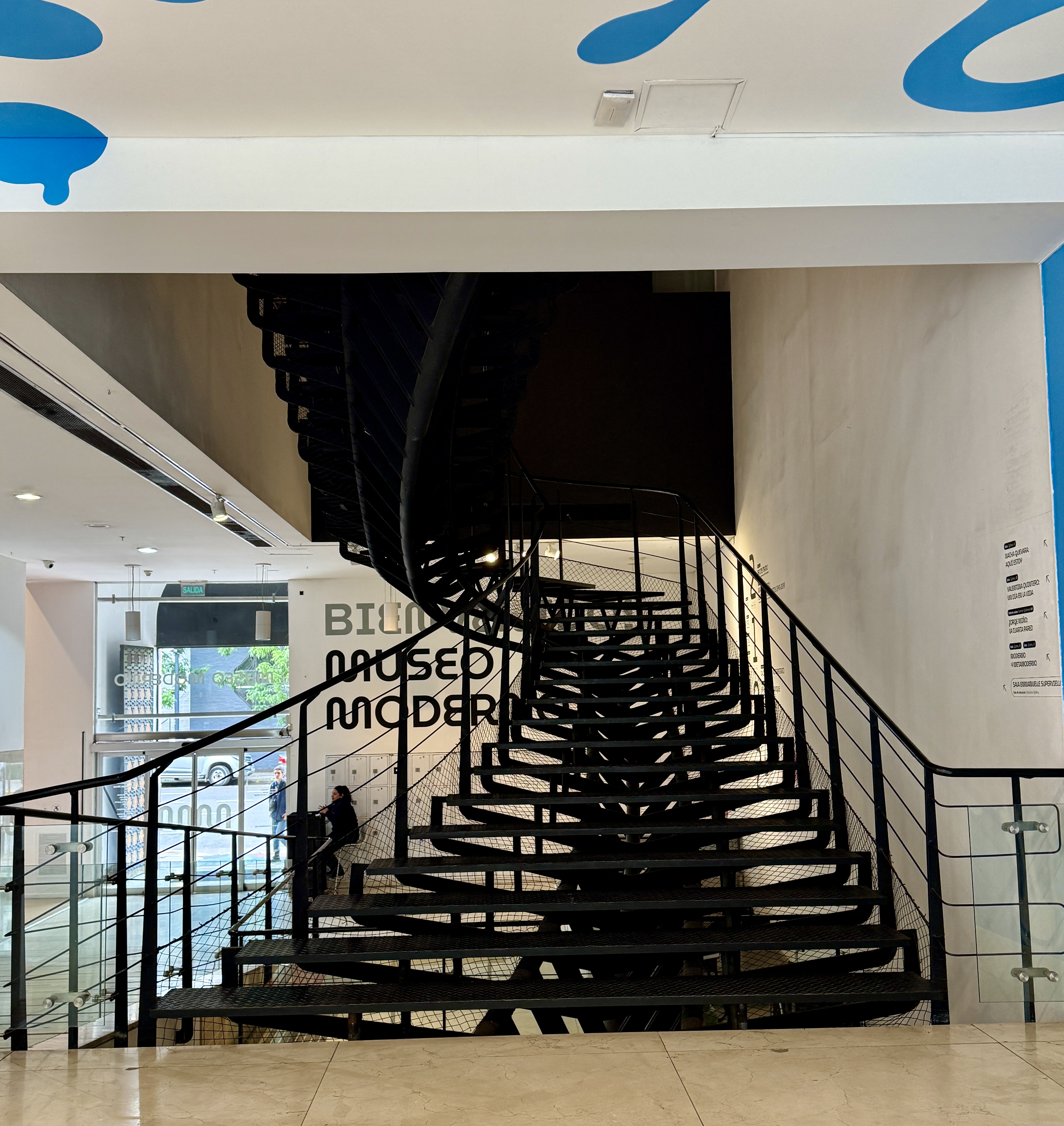
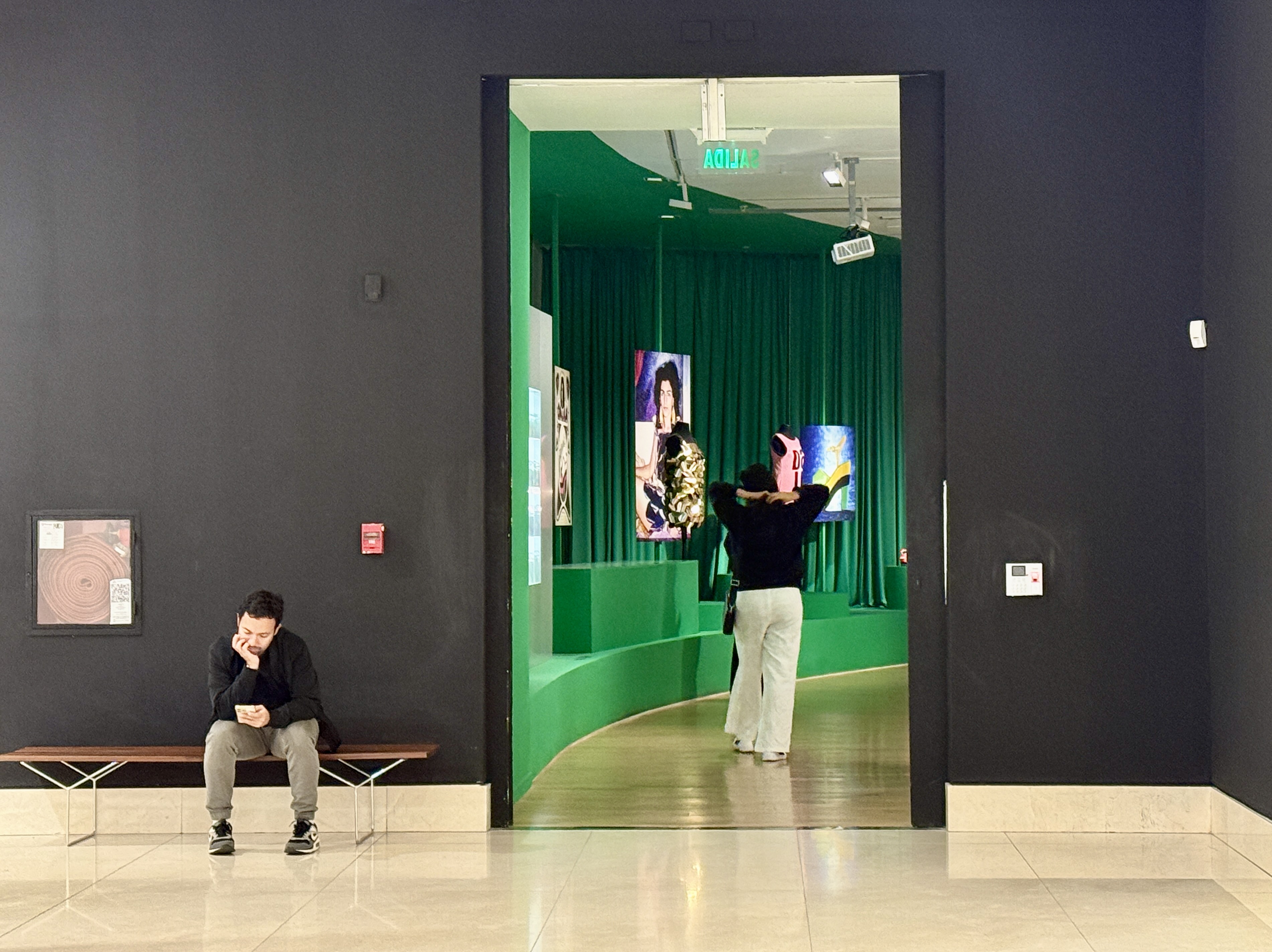
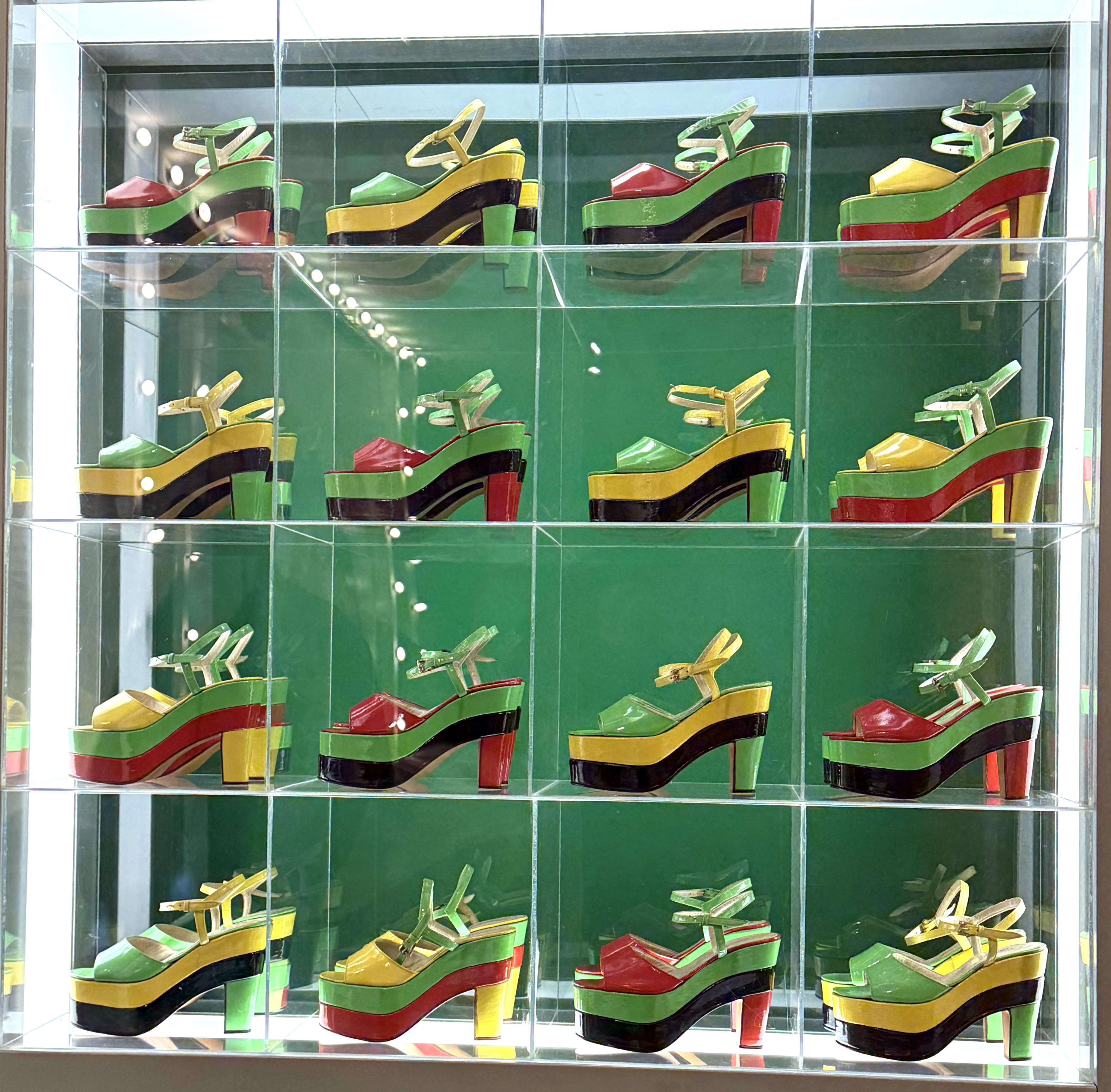
The museum, affectionately called MAMBA, had an interesting show looking into the relationship between visual arts and theater, and some other exhibits. And the museum itself is an interesting structure. It’s a small museum, housed inside a former tobacco factory, so it’s easy to navigate.

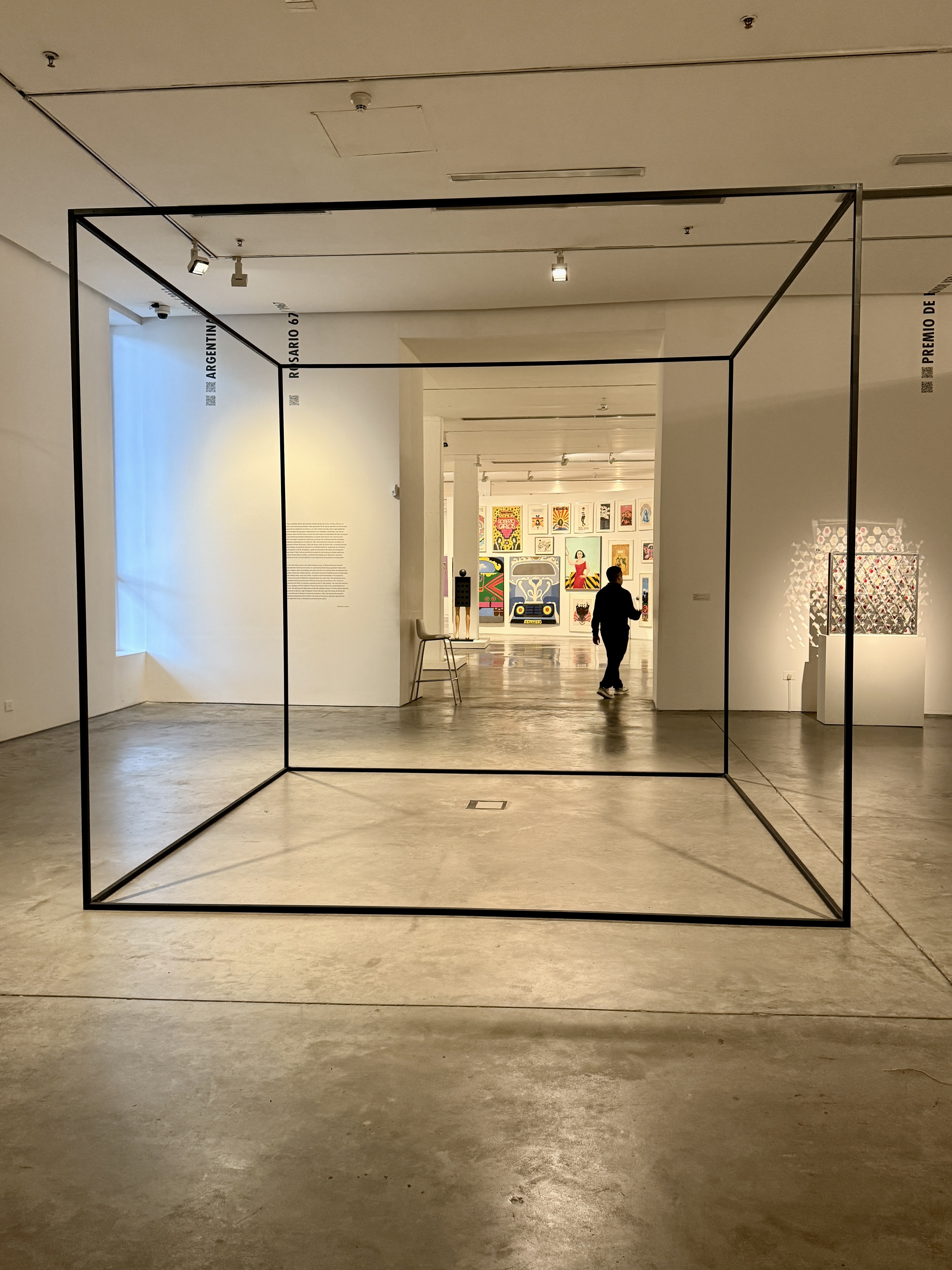
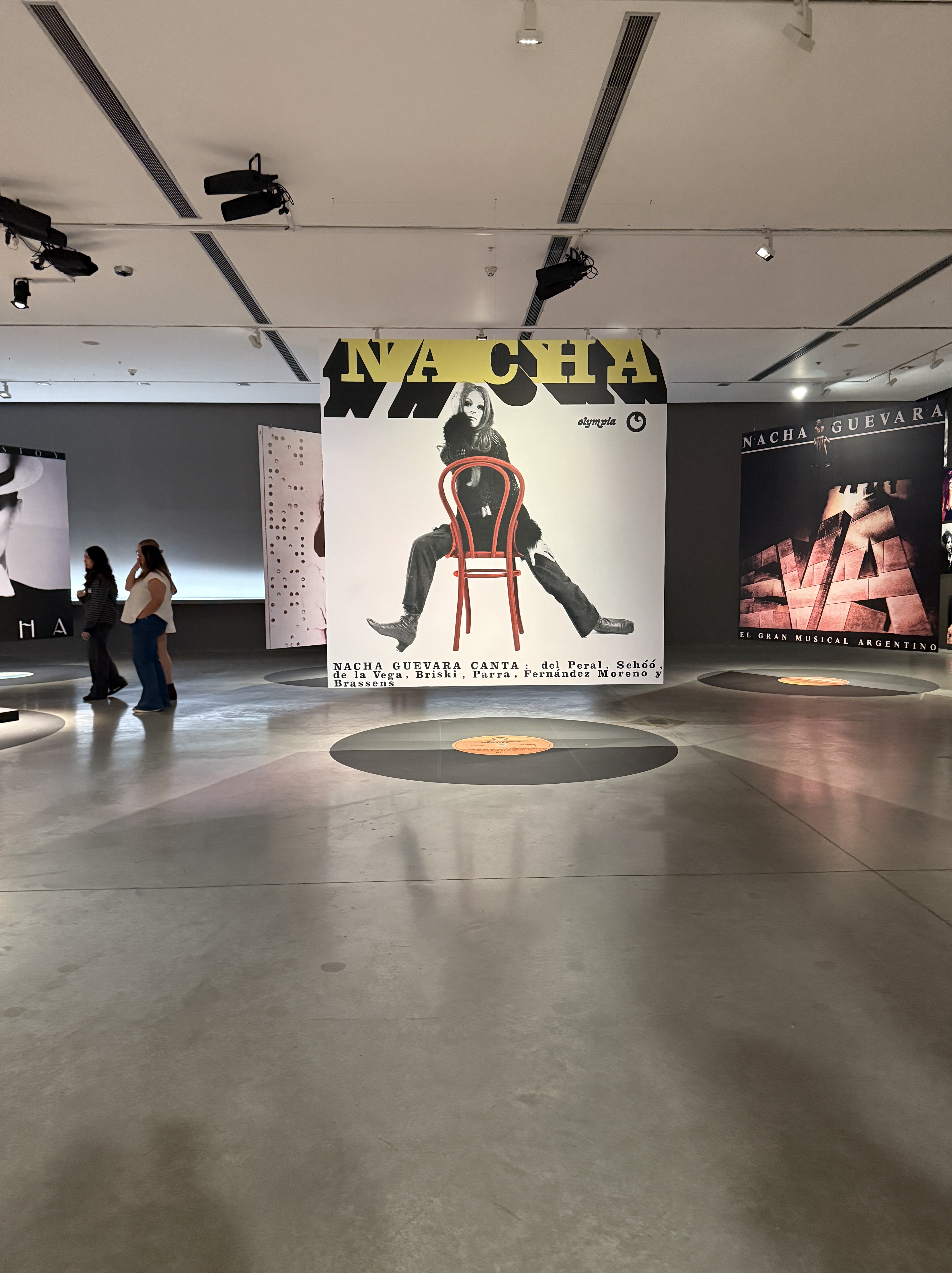
After leaving the museum we strolled through the San Telmo neighborhood to the 100+ year old market, stopping often to walk randomly on small streets. Naturally we stumbled on murals, small shops, and tango dancing in the park. It is said that the tango originated in the San Telmo neighborhood.
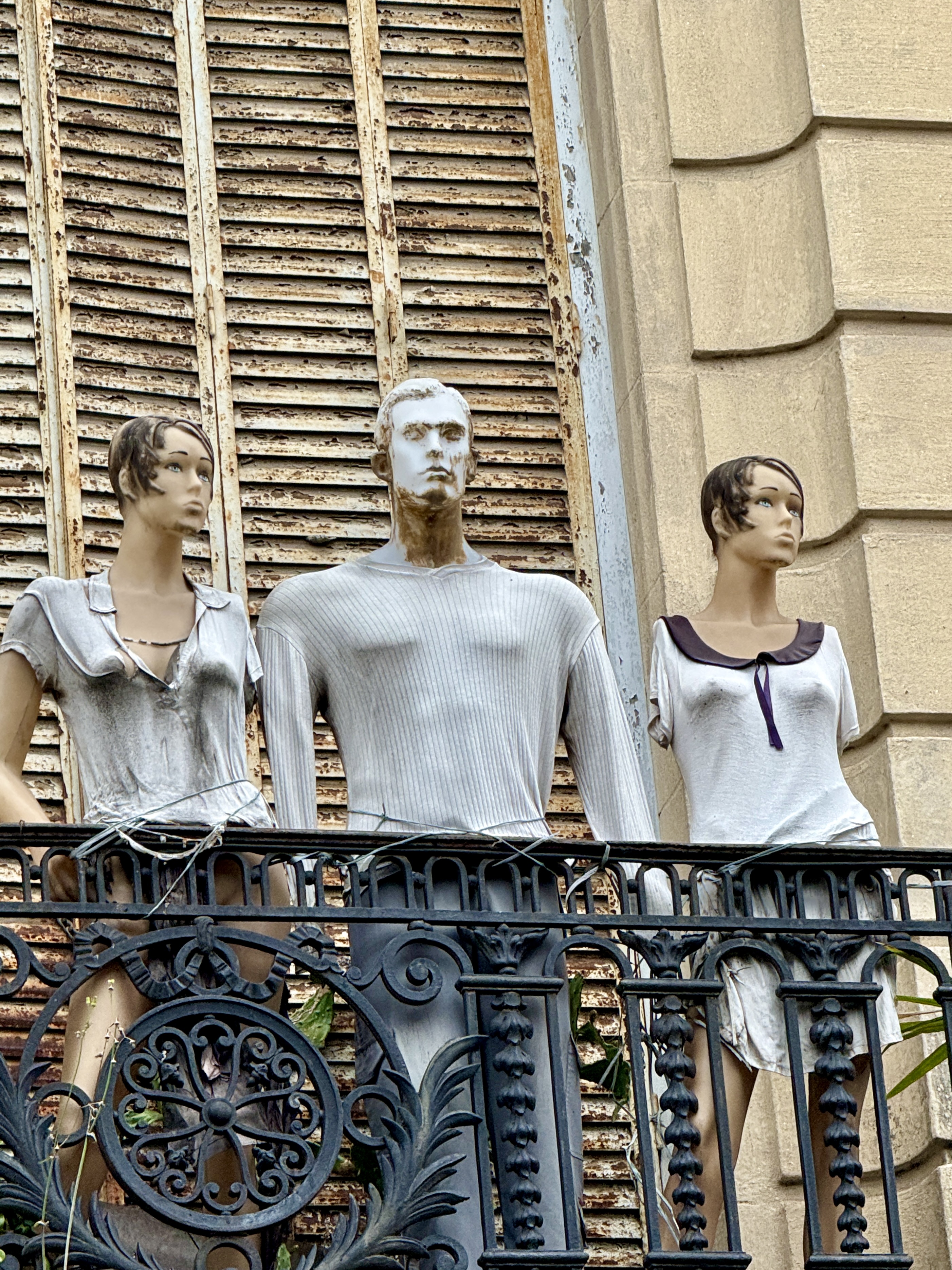
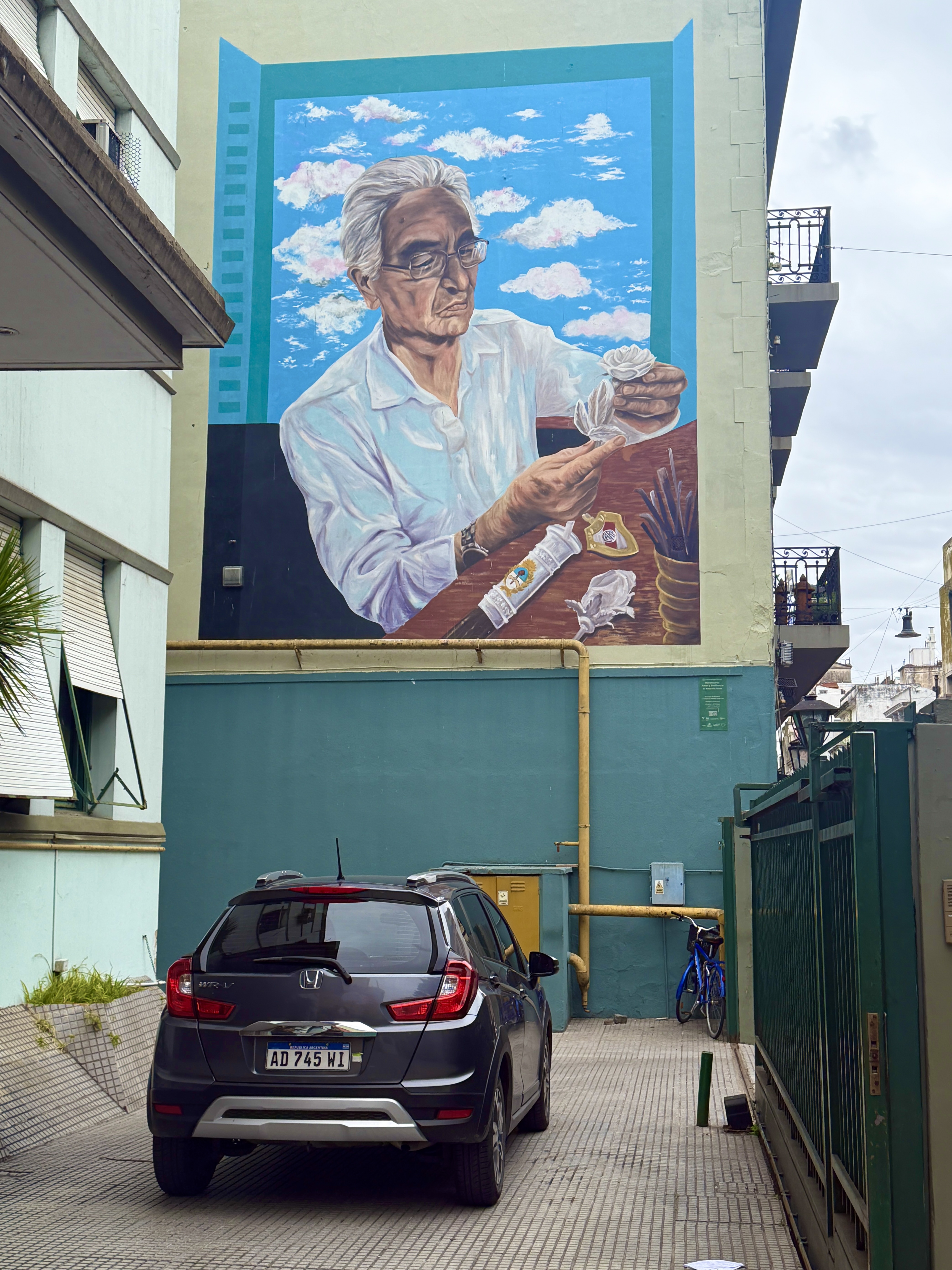

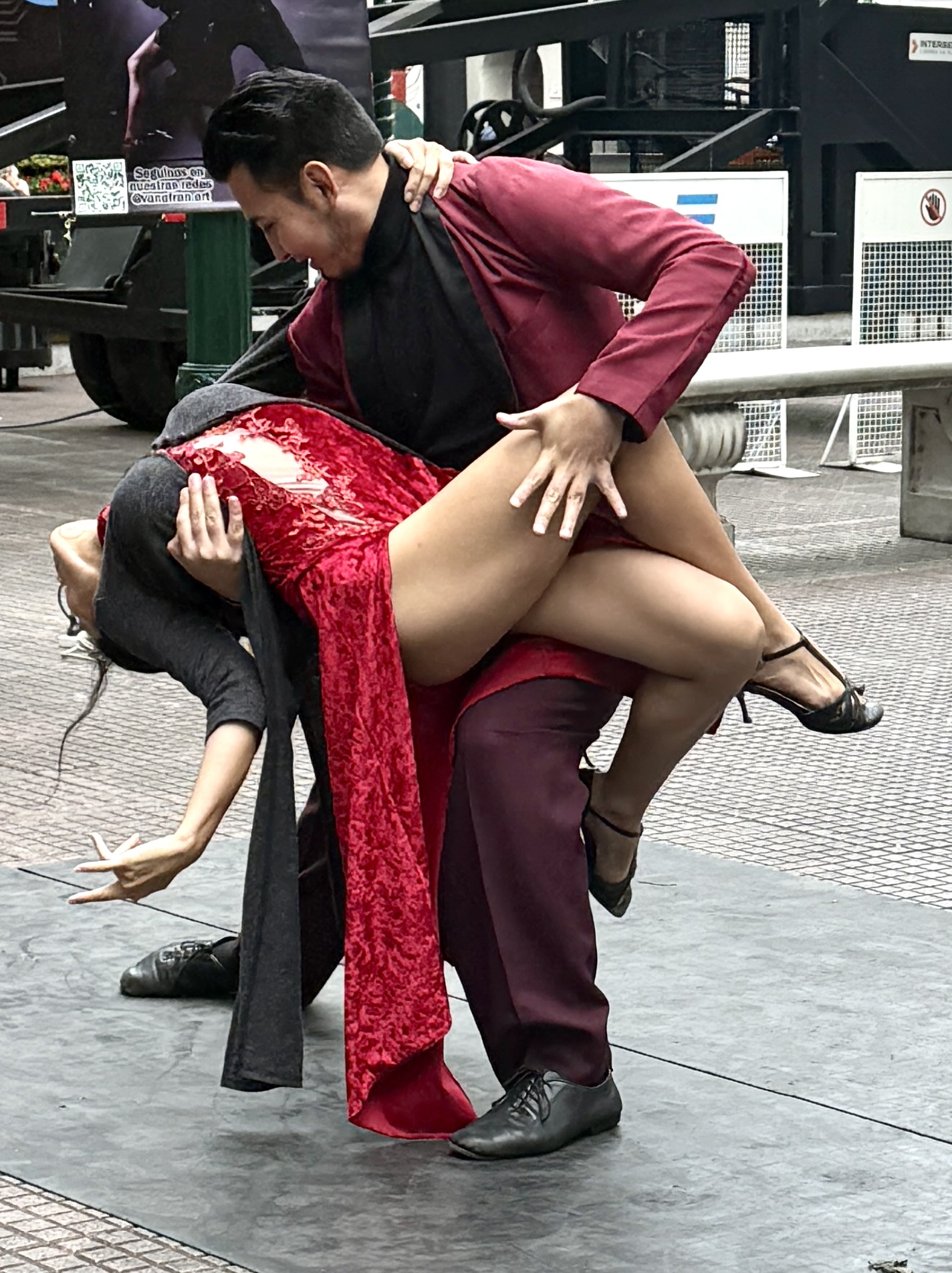
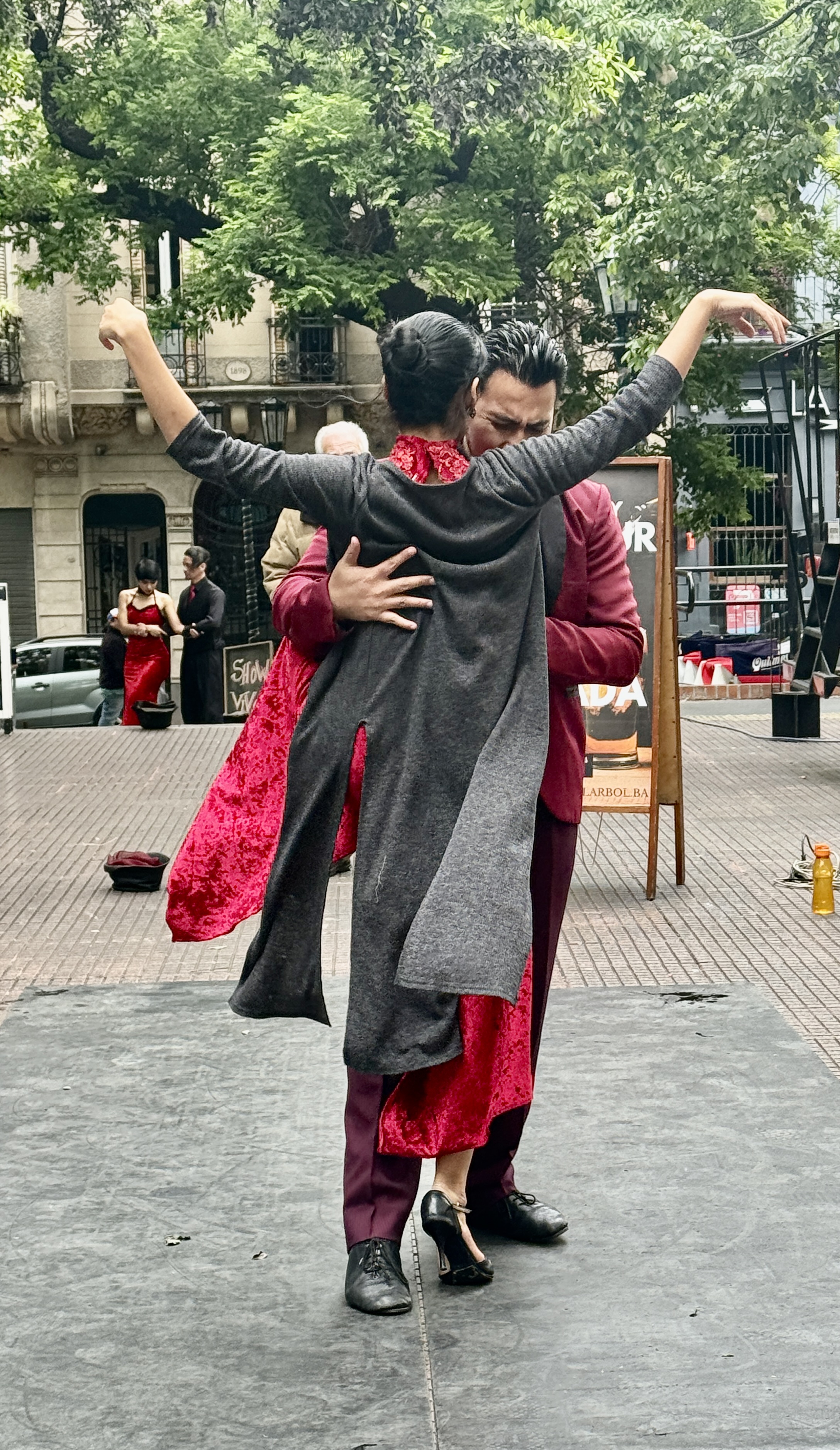
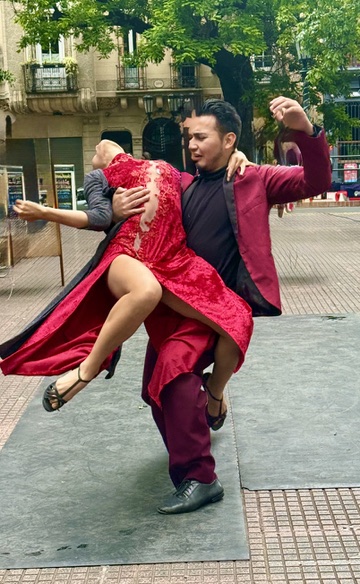
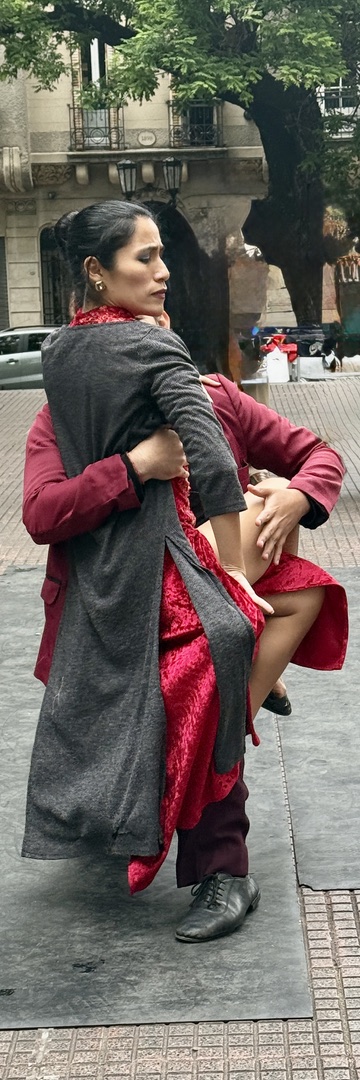
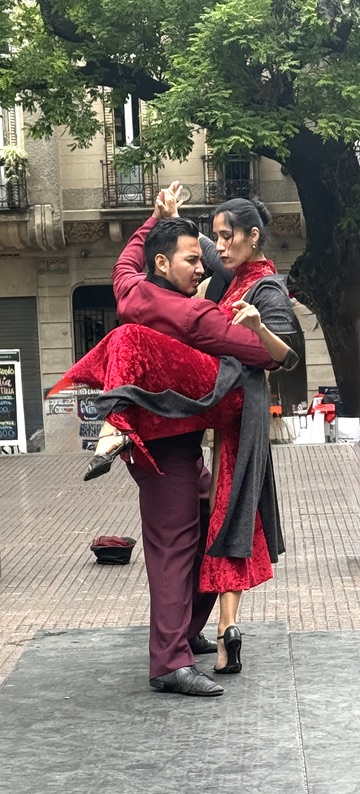
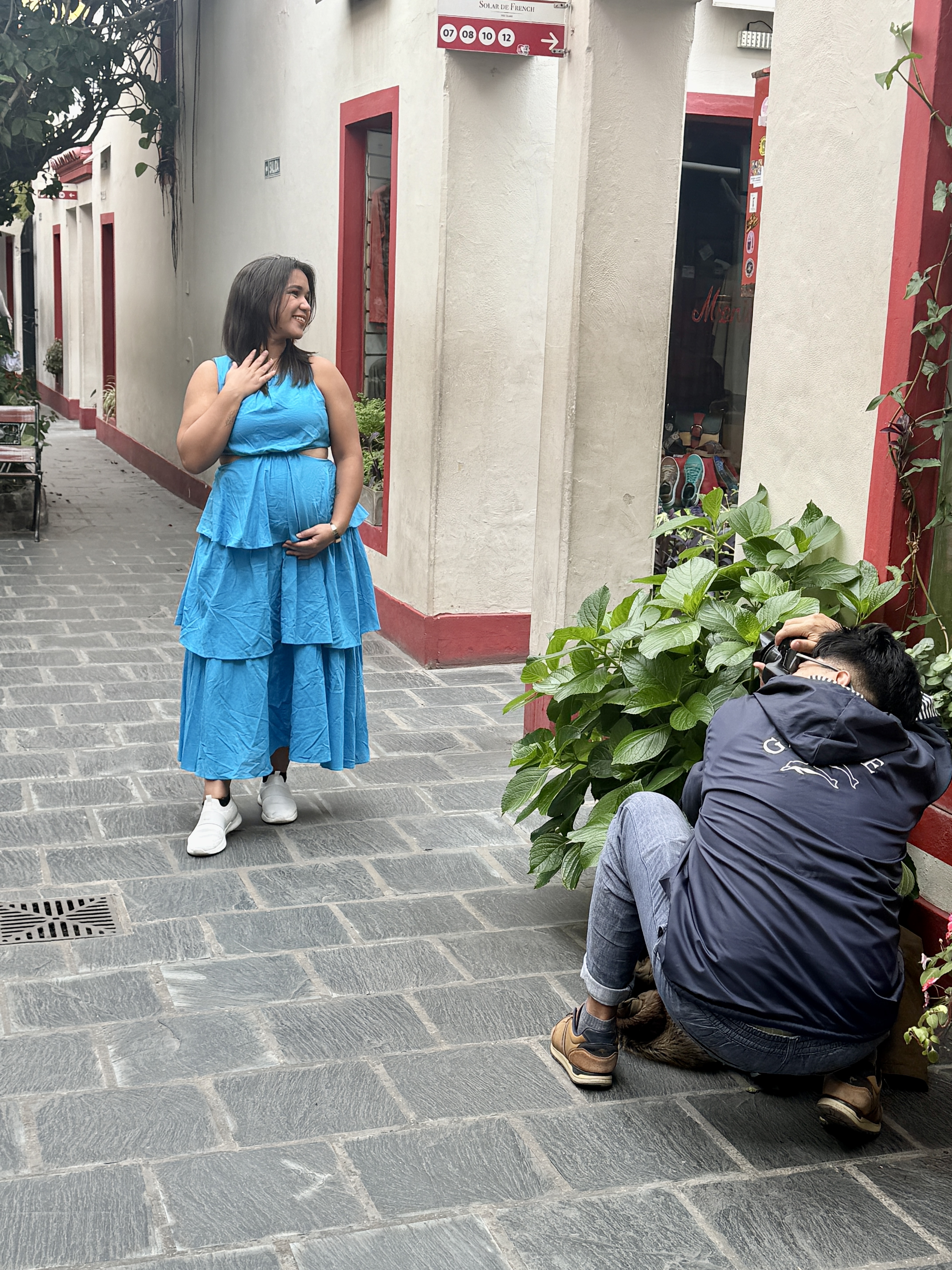
The San Telmo Market must have been amazing in its day. Today, the structure remains, but the interior is filled with restaurants, rather than produce and meat stands. Still it was great to see. And along the way we also found the usual array of “influencers” and wanna be influencers being photographed and doing selfies.
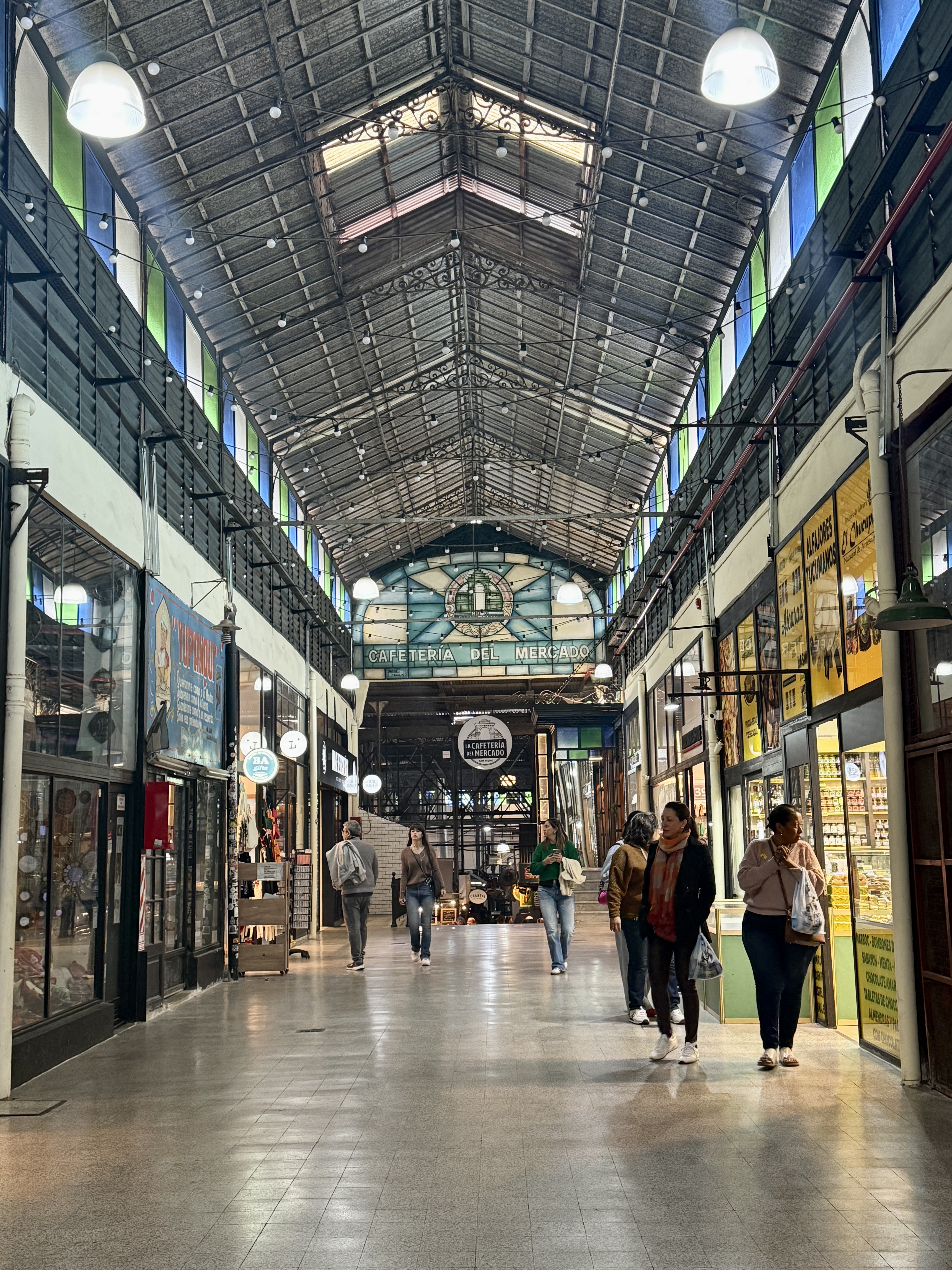
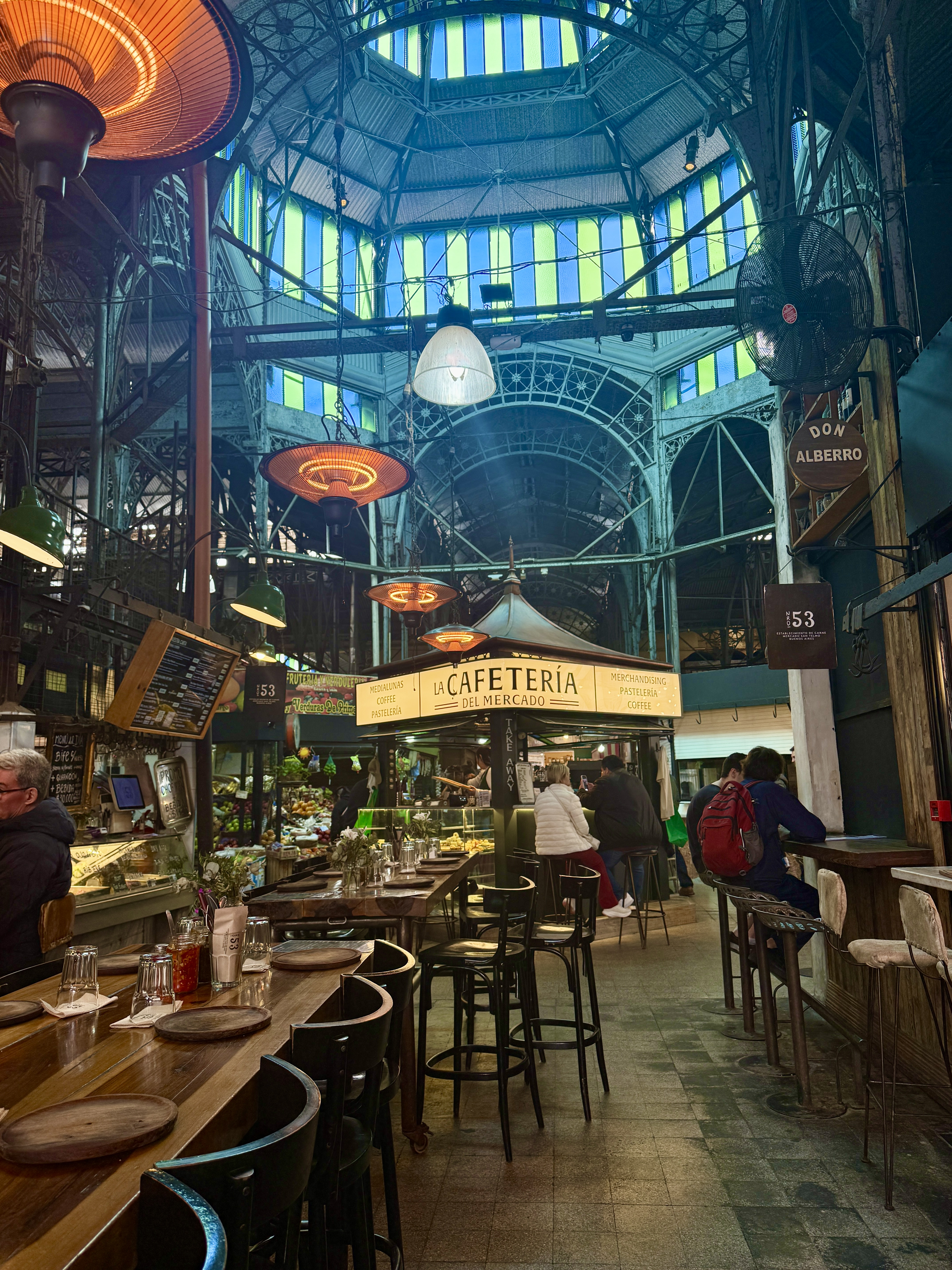
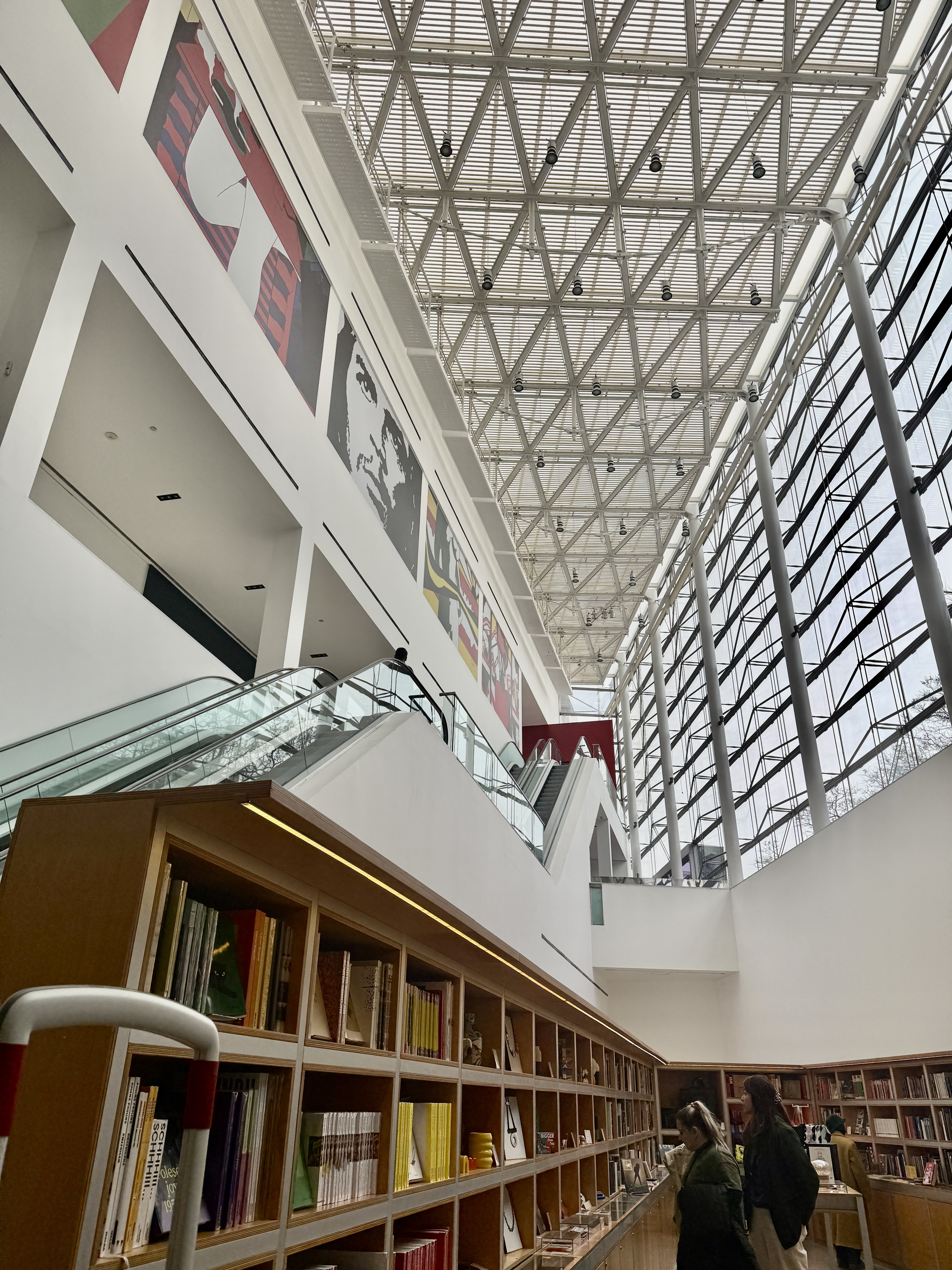
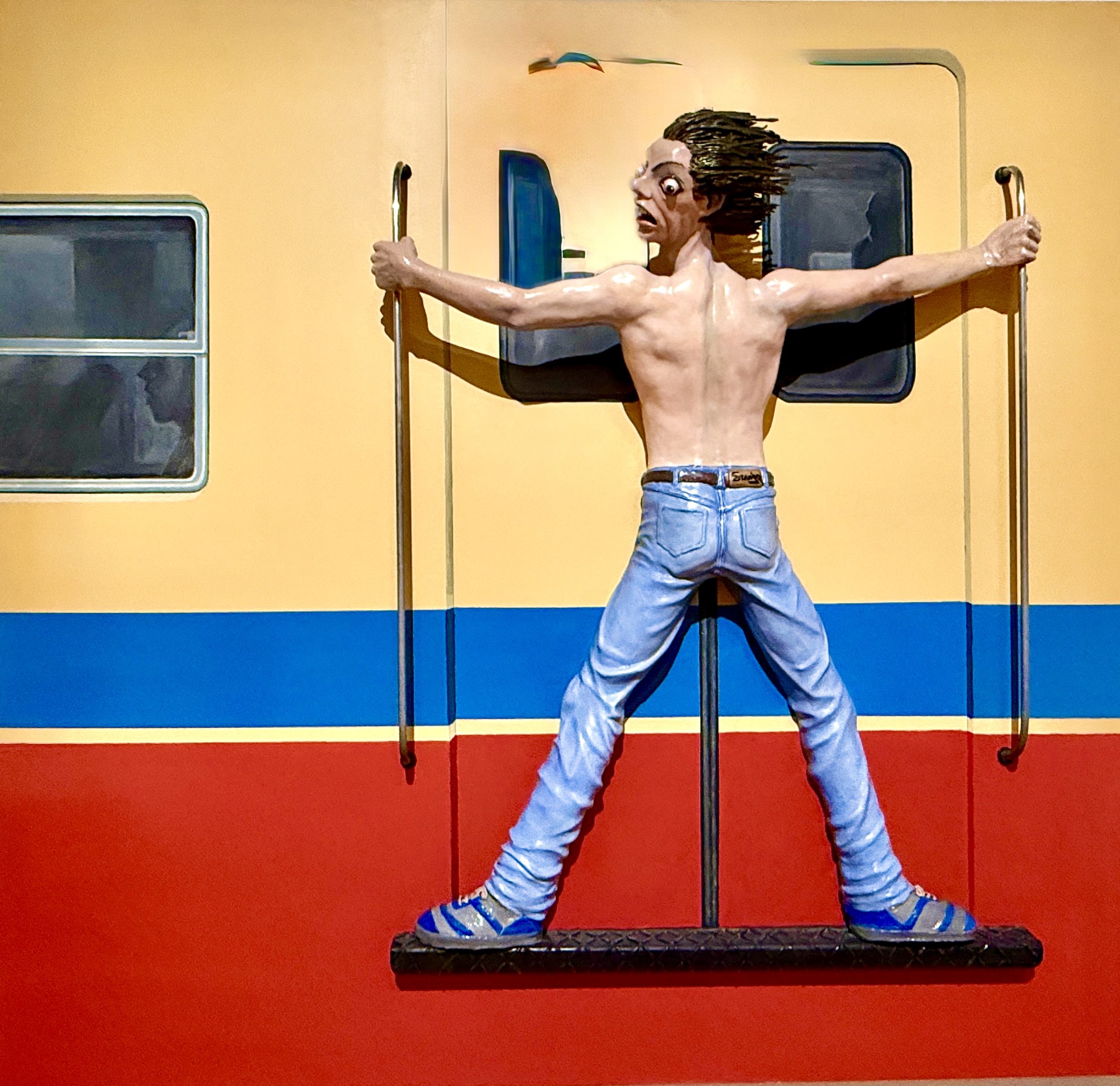
It was now about 4 pm and we hadn’t had any lunch so we grabbed some empanadas at the market and then headed to MALBA, the Museum of Latin American Art / Museo de Arte Latinoamericano de Buenos Aires, was in a completely different neighborhood, across town. The good news is that everything is open late in Buenos Aires, so we were fine. MALBA is a pretty impressive museum, small enough to feel comfortable and intimate with the work, yet impressive enough to anchor decent exhibits. We strolled through the current exhibit, Tercer Ojo, the Third Eye. The title comes from Frida Kahlo’s work (Diego and I) and focuses to some extent on the obsessions of Frida and Diego Rivera also focuses on the kind of vision that goes into collecting art.
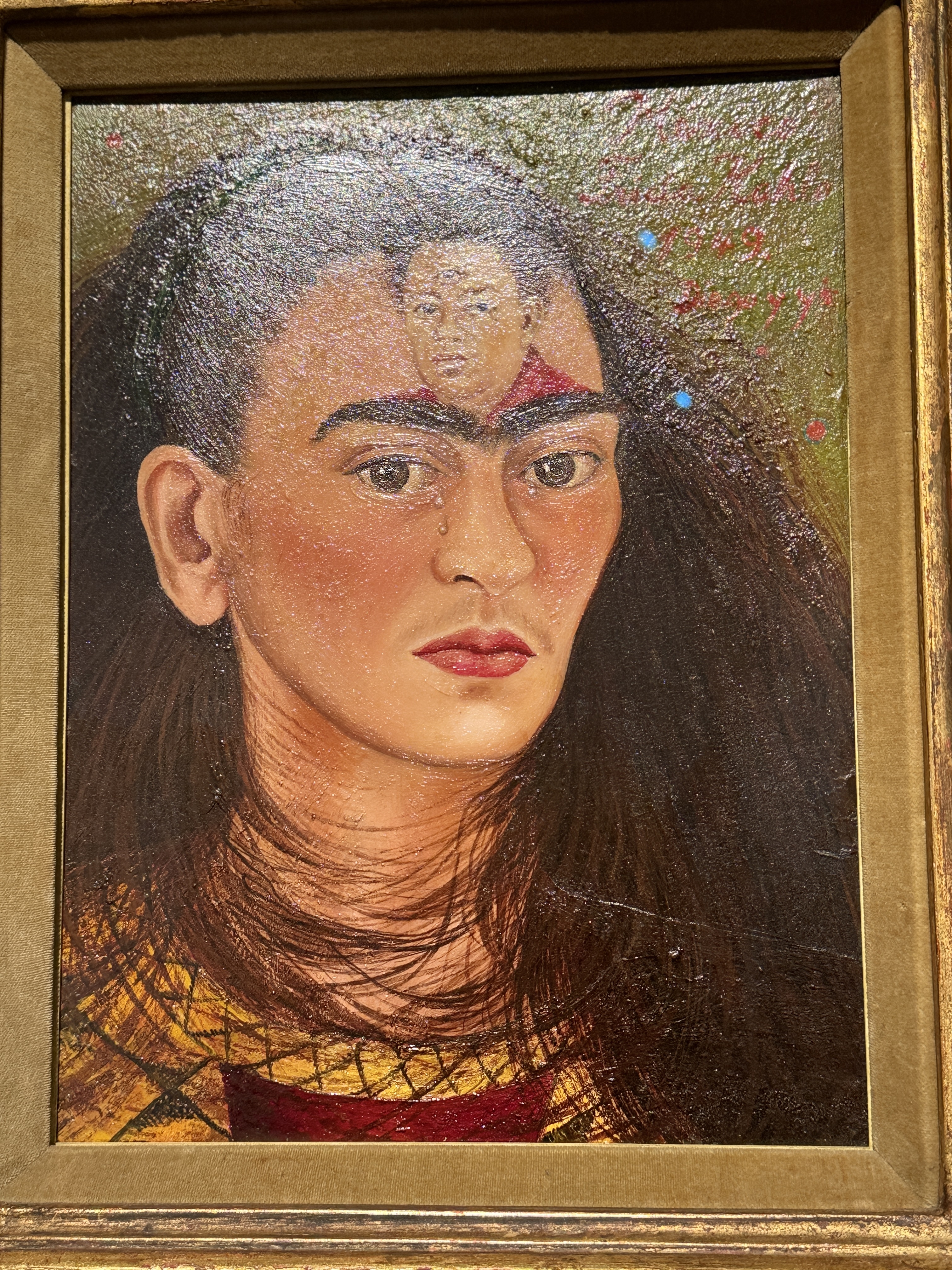
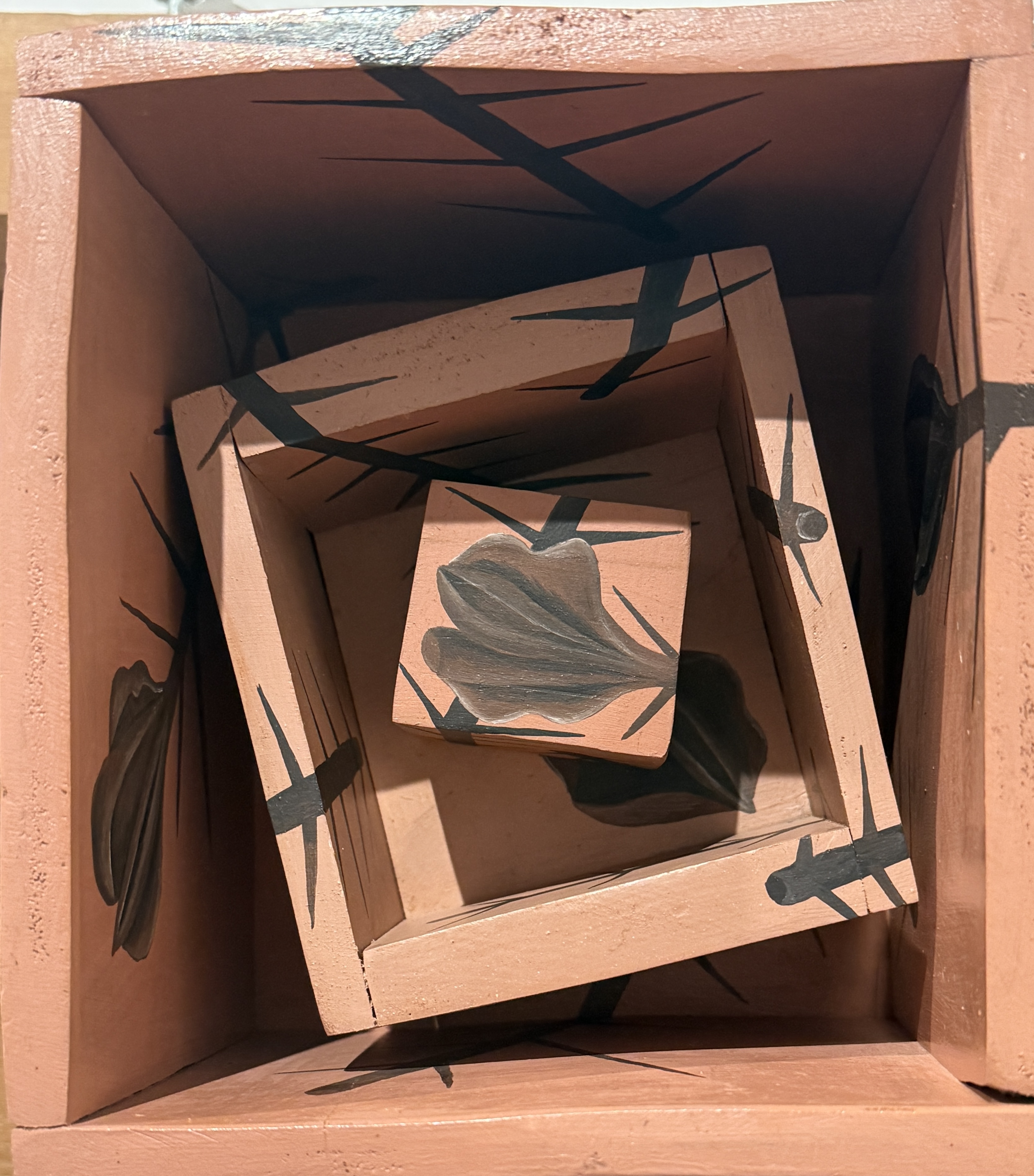
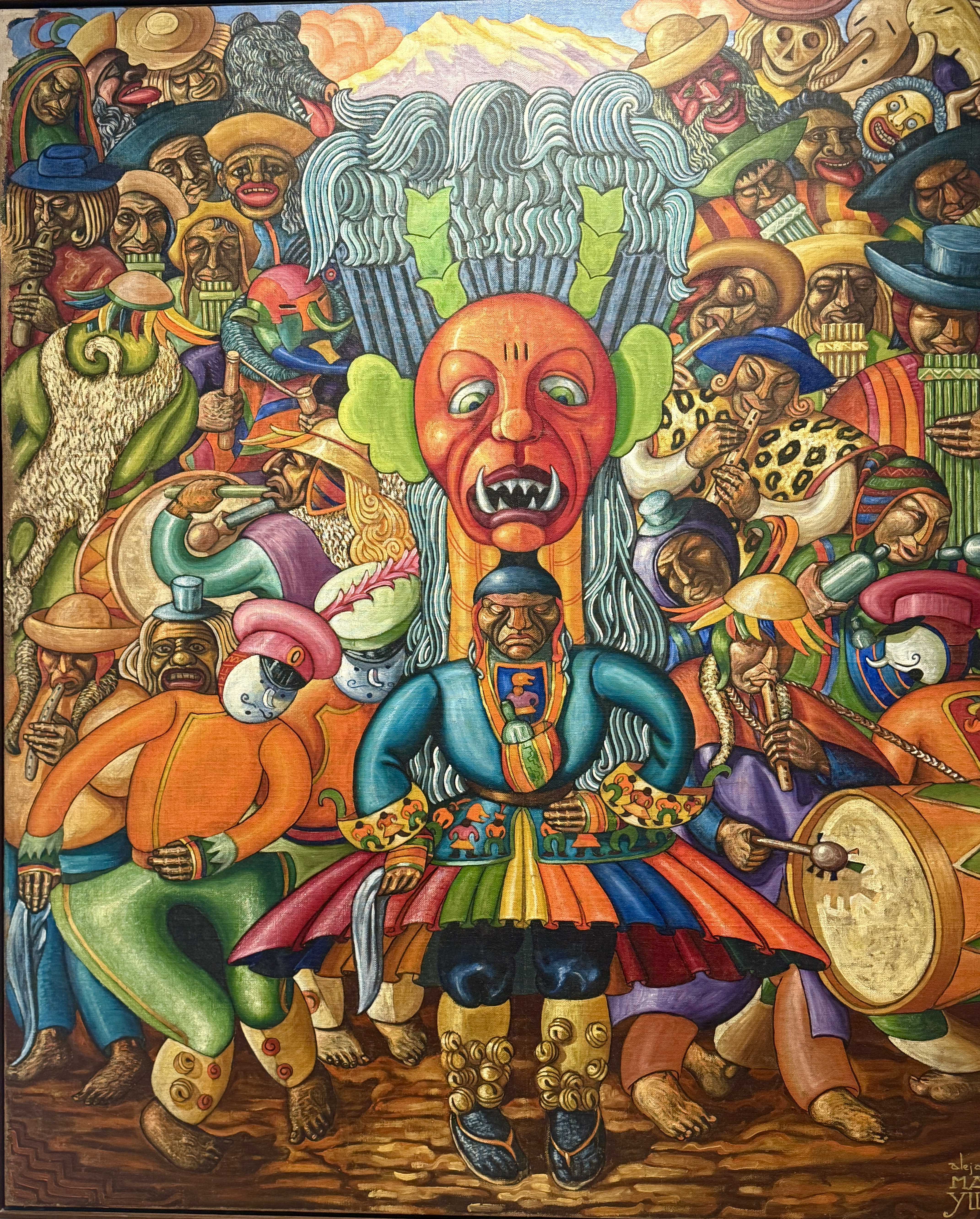
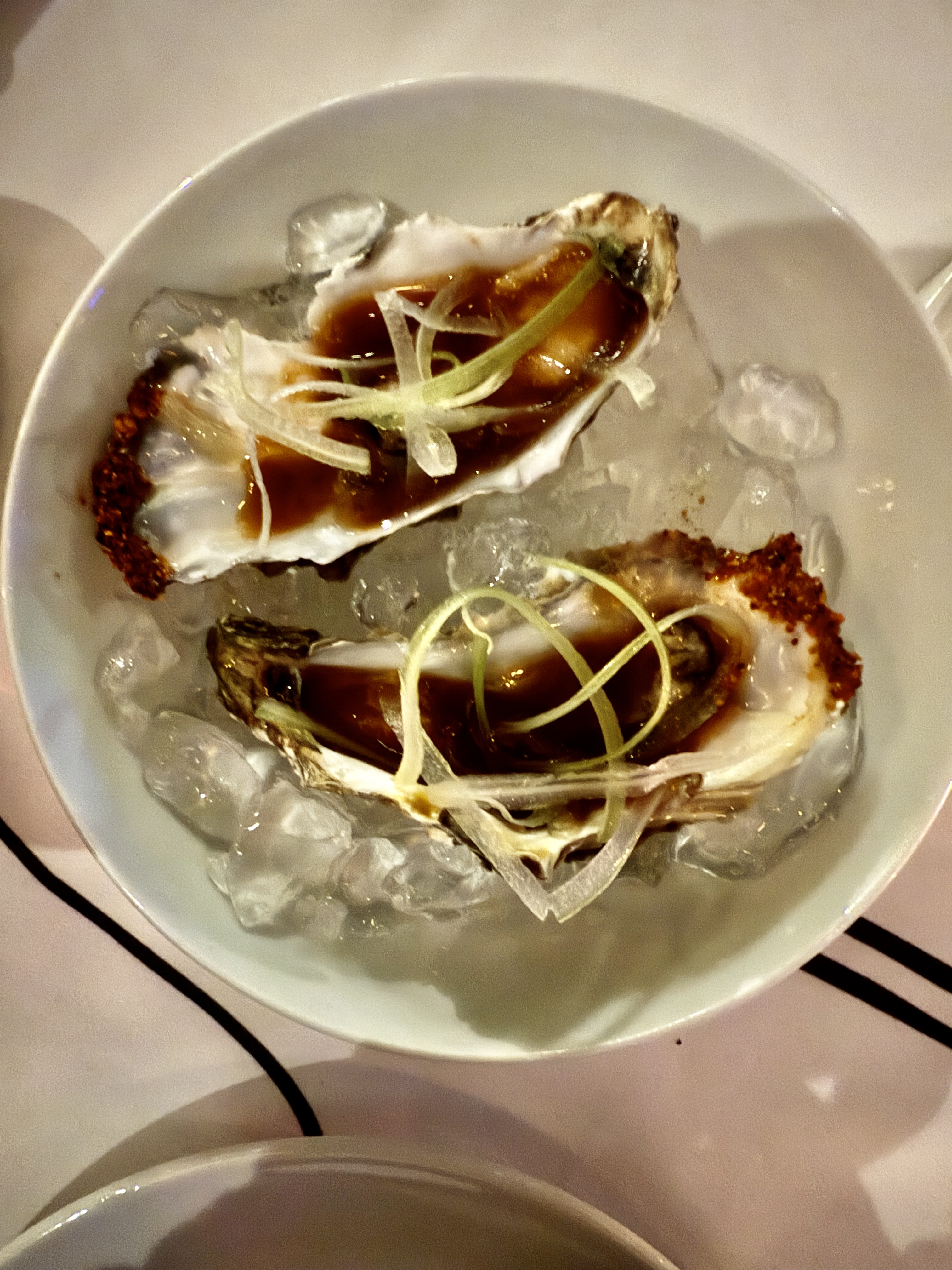
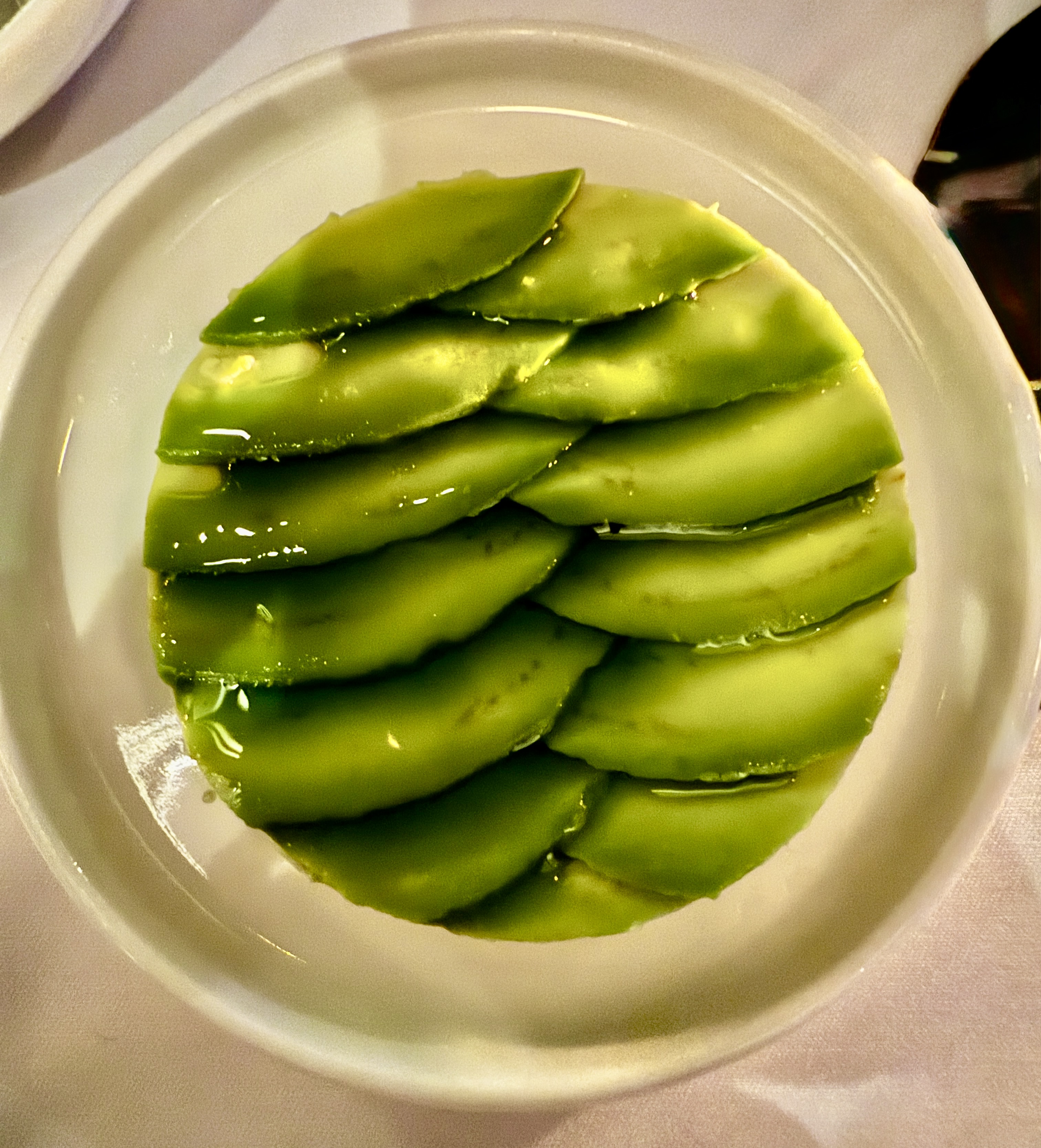
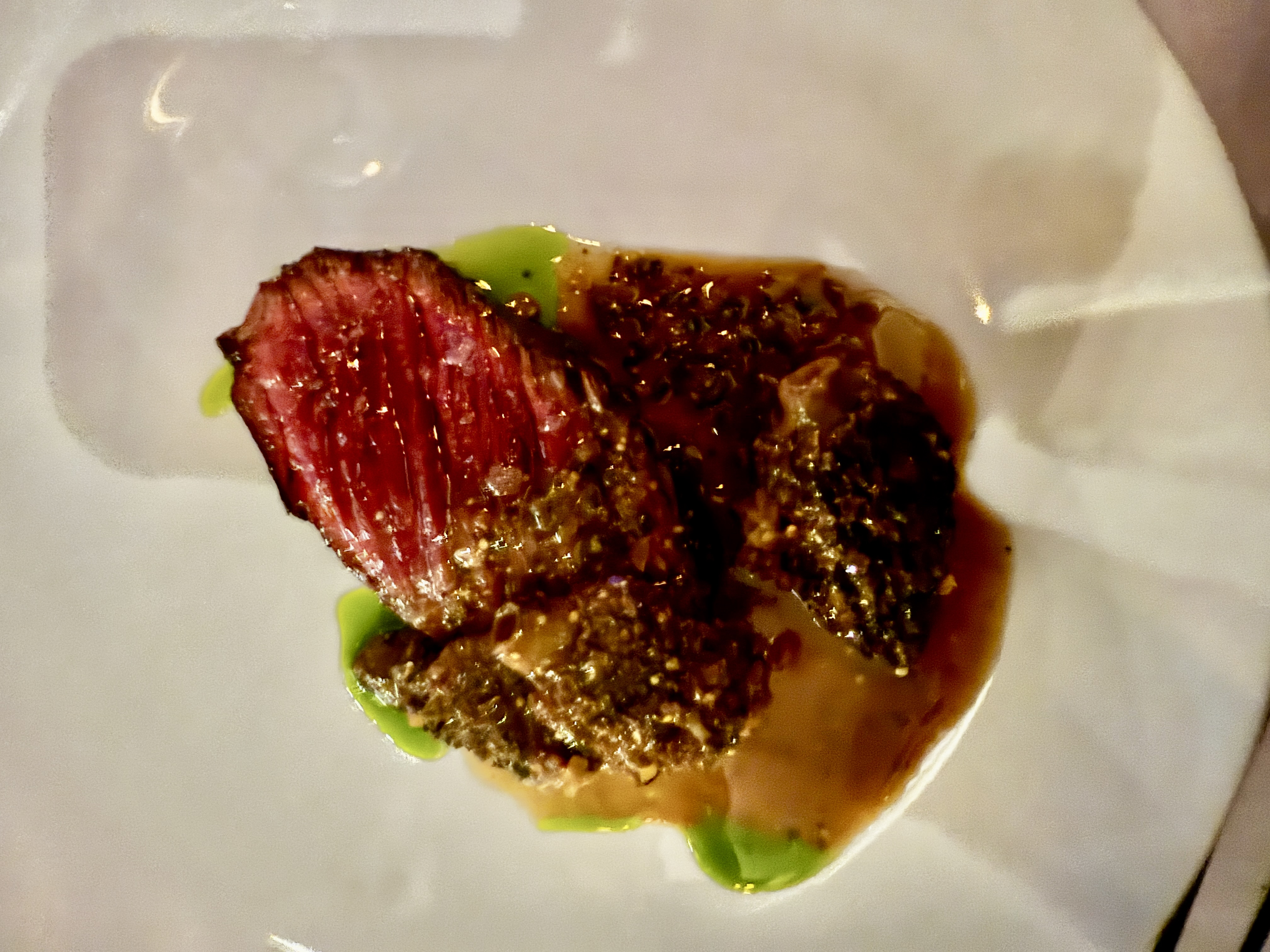
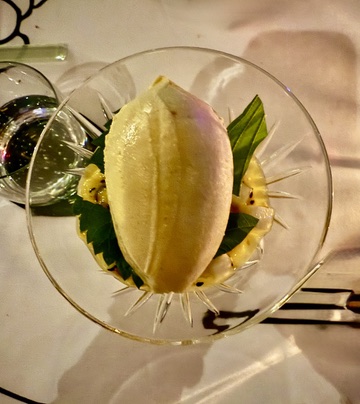
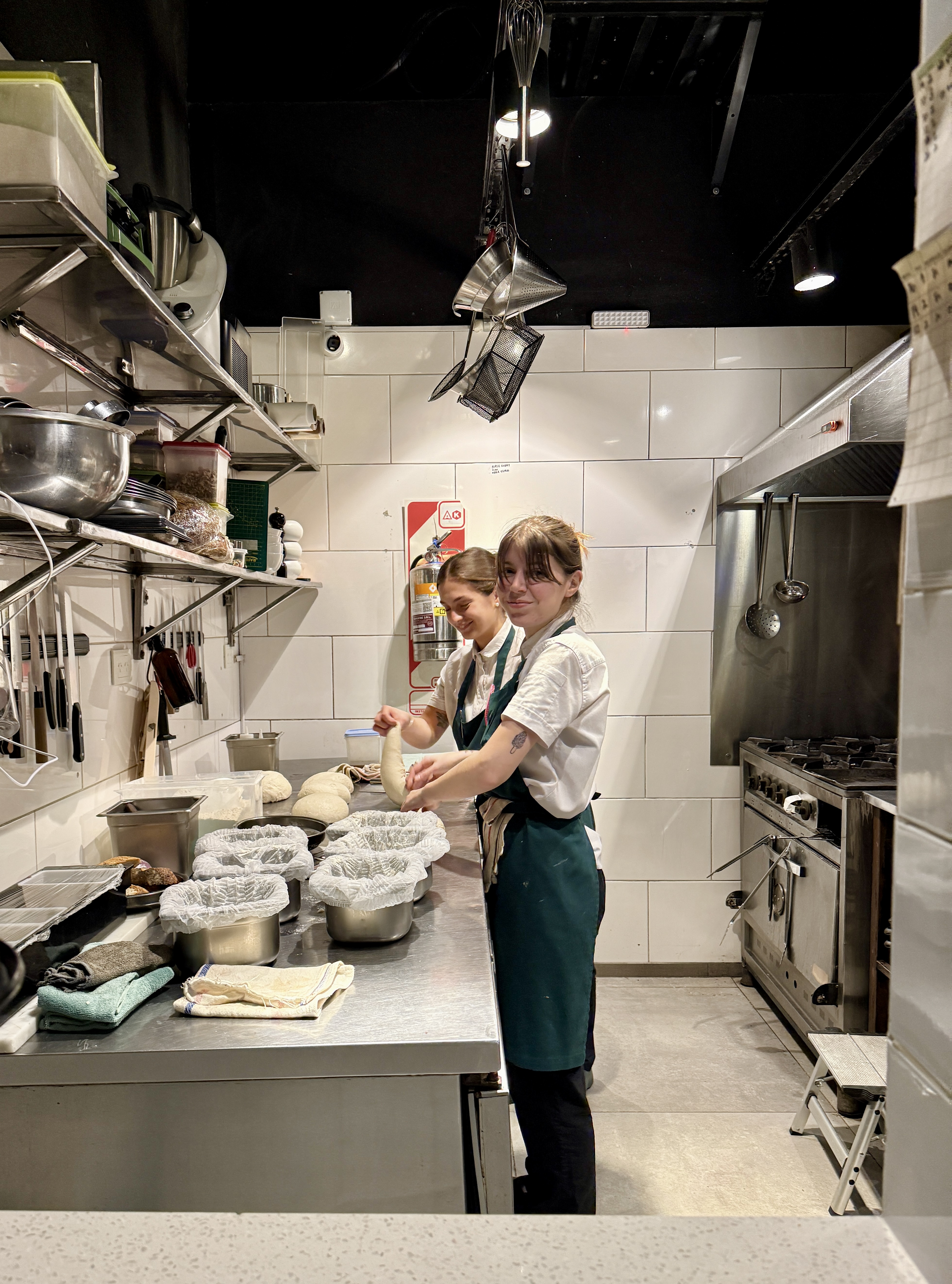
We taxied from MALBA to the hotel and about an hour later headed to dinner at Julia, a small (22 seats), modern bistro-style that says it serves “indie food, which the Argentinians define as experimental, new, not traditional Argentinian food. — “pushing the limits of the minimum”. It’s located in the Villa Crespo neighborhood, which is adjacent or at the edge of the Palermo neighborhood. We had heard about the restaurant somewhere–maybe NY Times?–and booked it from the states. The concierge at the hotel was impressed that we knew of Julia since it is off the beaten path and so tiny. The menu is small and very interesting. We selected the a la carte menu rather than the tasting menu. Started with oysters that were presented as “oysters bloody mary”— spicy with the shell rim having some kind of very spicy salt or maybe a paprika. They were great. Then we had some kind of scallops that were served like a mousse, and then we had carbona cordycep (a mushroom that grows like pasta) which was cooked with some kind of wine or sauce and was seerved with a raw egg yolk on top, making it creamy and delicious. For the main course we shared a flank steak that just melted in your mouth…and we ended with a scoop of curry ice cream and “yellow fruits.” if you’re headed to Buenos Aires, I’d recommend Julia for a special dinner.
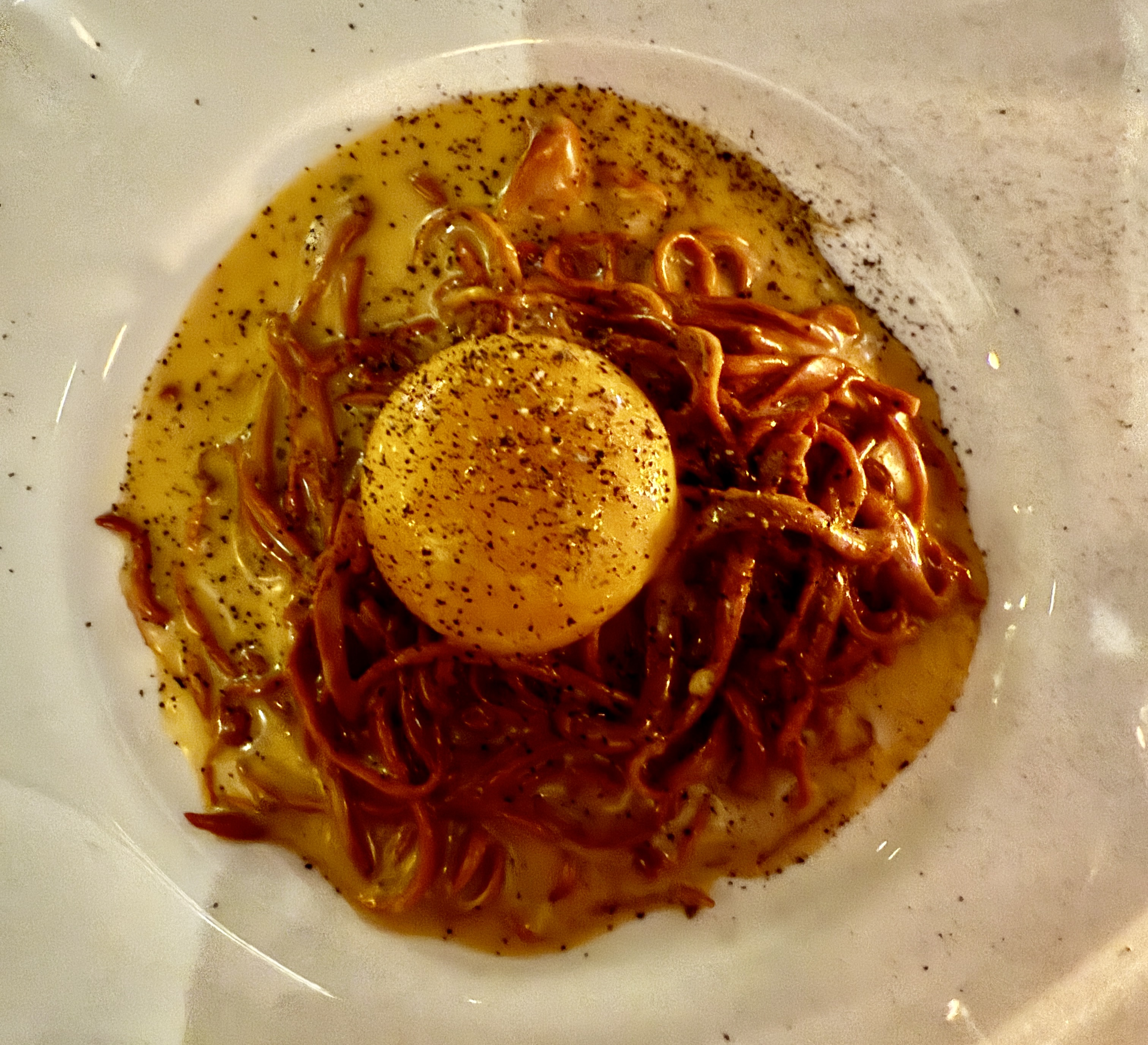

By the time we finished dinner it was about 11:15 (some diners were just arriving at the restaurant!), we walked about four blocks to a major street and quickly hailed a taxi. By the way, taxis are incredibly cheap here. Our 20-minute ride cost about $6.00 and there is no tipping in taxis.
OK… maybe too much info on the food for today, but Julia’s was really special. Haven’t figured out tomorrow’s plans but that will come.It’s about 1 am now and I need to get to sleep. Hopefully, not too many typos. I will reread tomorrow and correct.
October 26, 2025 . Buenos Aires . Definitely a City!
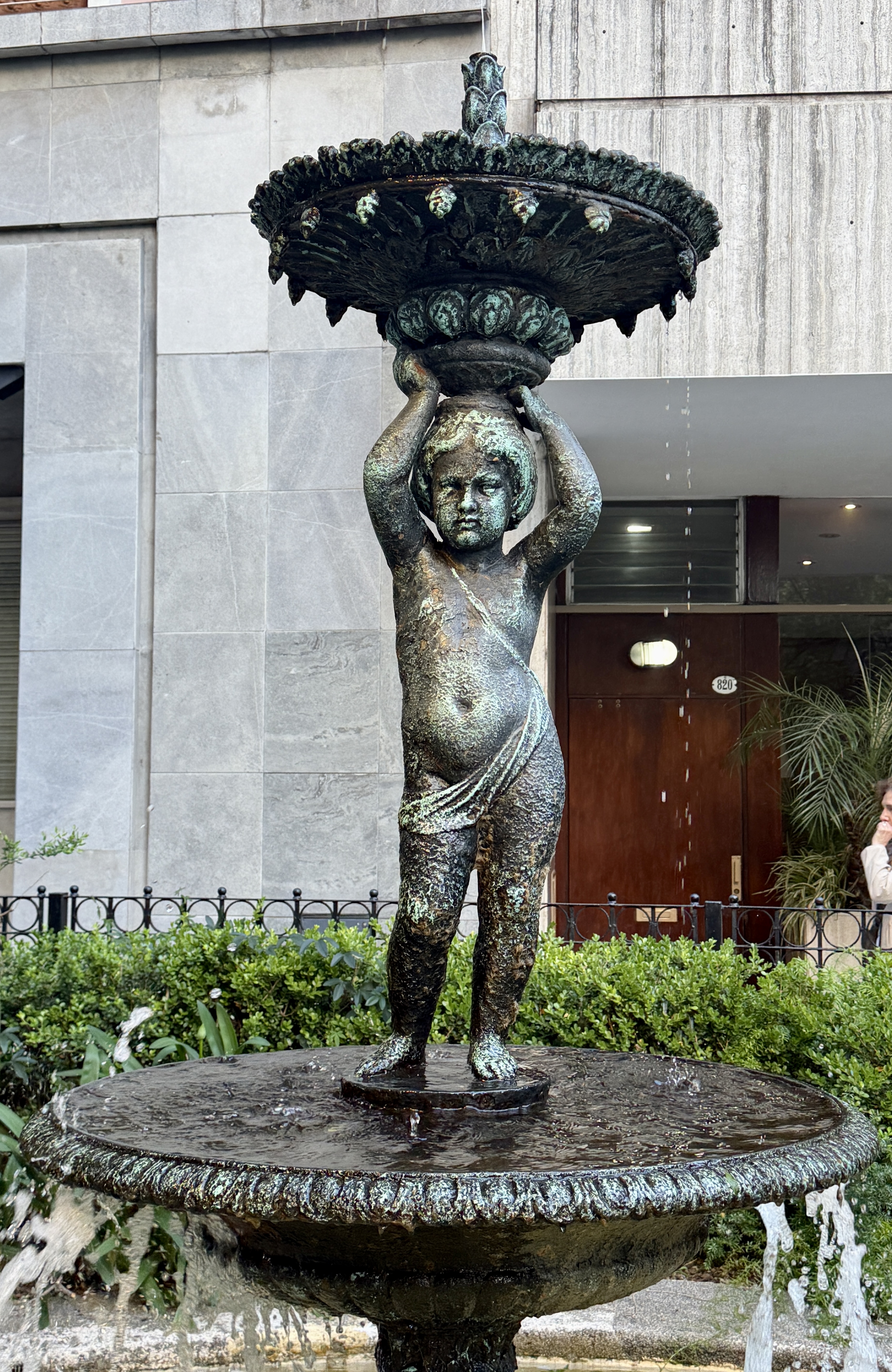
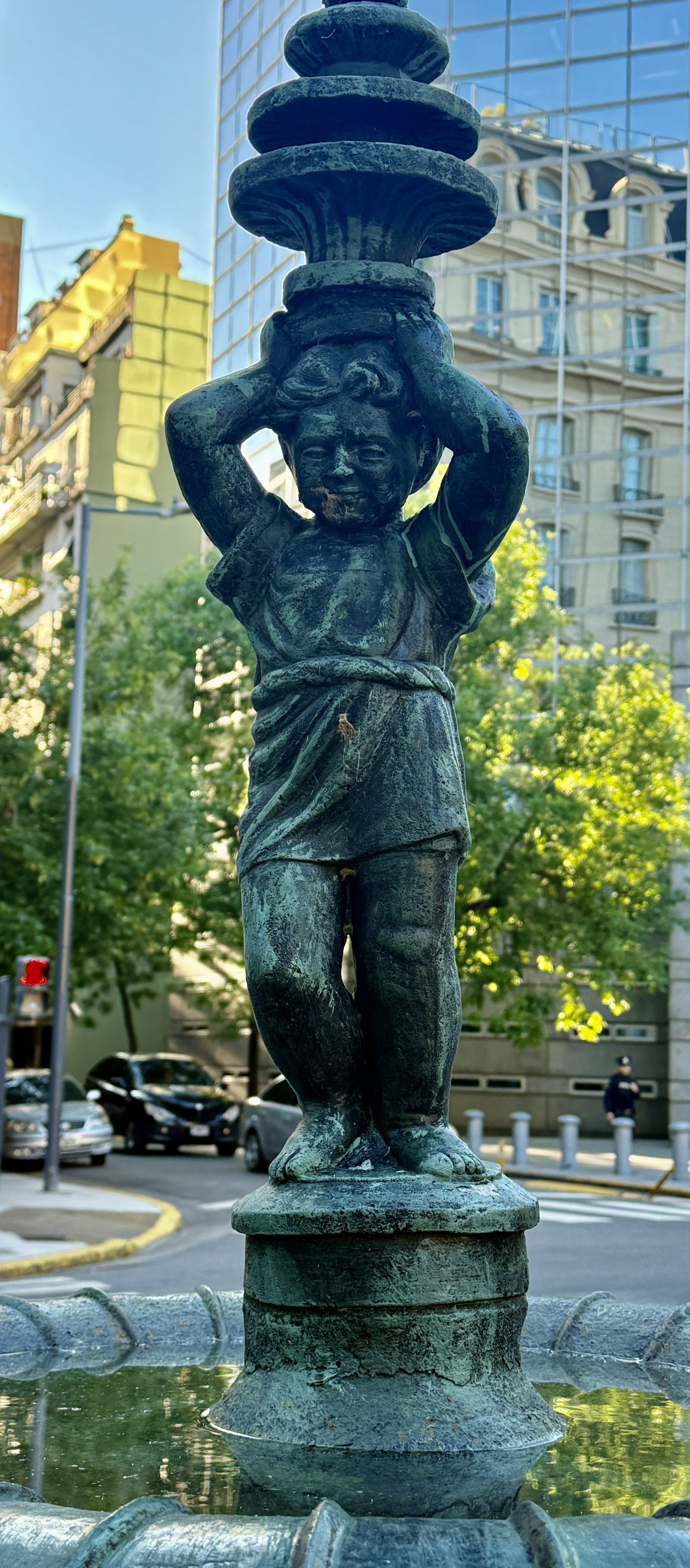
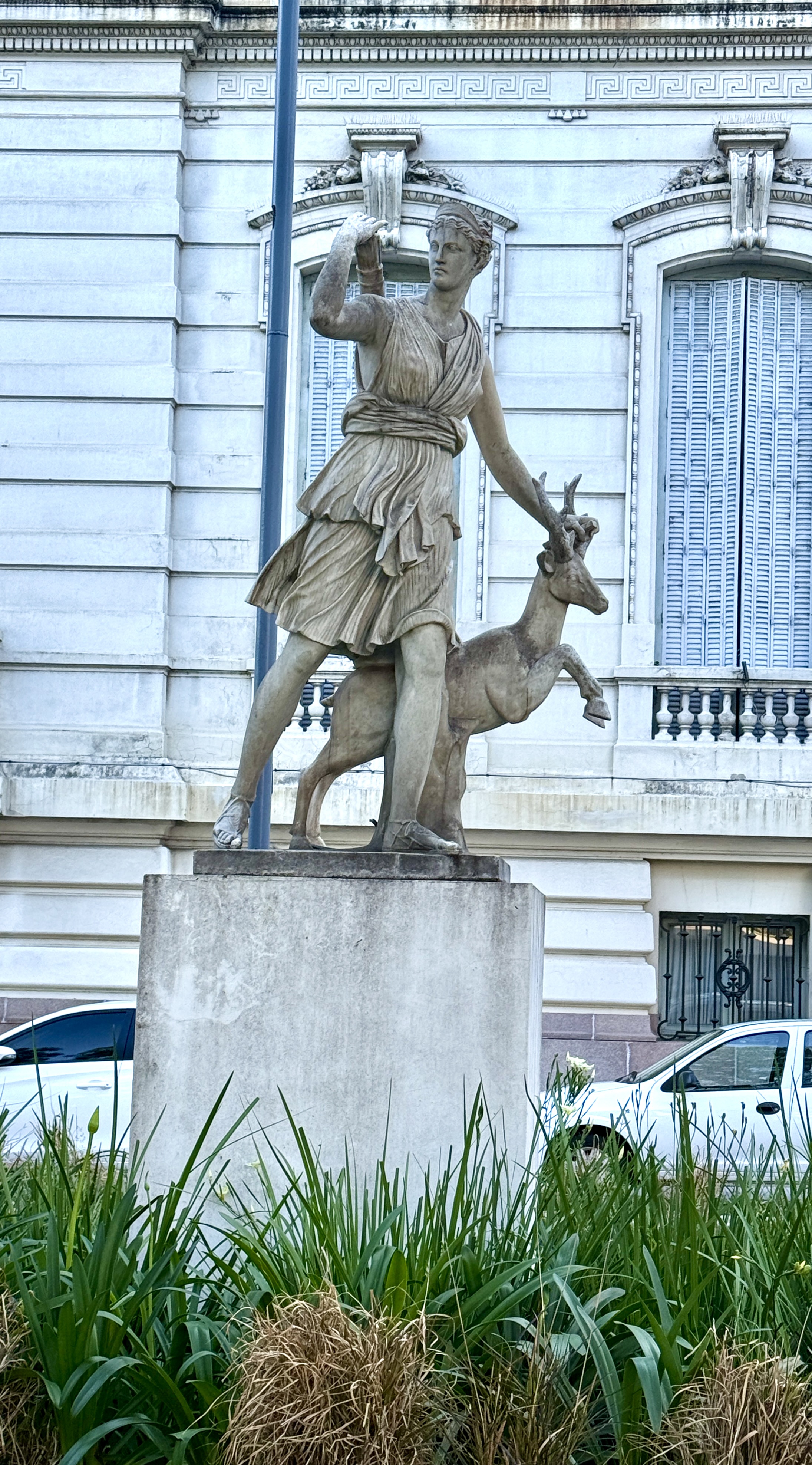
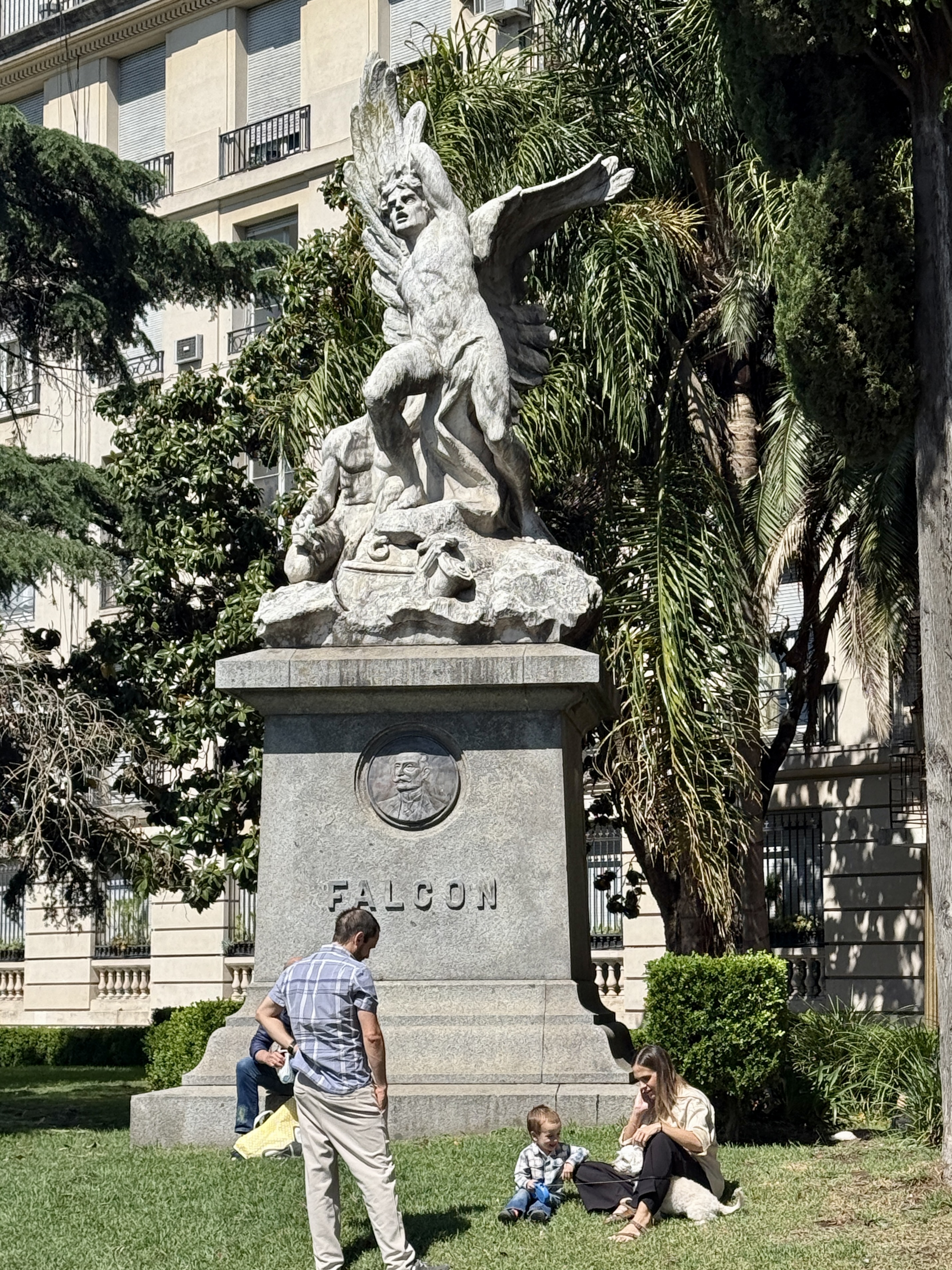
Quite a day…. down one jacket and down one ATM card! Crossed 22 lanes of traffic! Tango dancing on the bridge; the Sube (subway/Metro); and more… all on election day here in Buenos Aires.
We started out with the leisurely breakfast at the hotel and then headed to the ATM that was recommended by the concierge—just about three blocks from the hotel. We had absolutely no Argentinian pesos. The only ATM we found at the boat dock wasn’t working, so we took a taxi last night that let us use a credit card. But it turns out that a lot of taxis won’t take credit cards (even from Argentinians) and the use of credit cards overall is not as prevalent as it was in Uruguay (where you could pay for everything by credit card… and I do mean everything.) According to Peter, Uruguay is nearly a cashless society, at least n Montevideo.
By the way, I had two interesting conversations with one of the concierges at the hotel (well more annoying than interesting). I had downloaded the taxi app for Buenos Aires (because the one in Montevideo was so good), but I was having a little problem completing the sign-in because the app would not accept my cell phone number (I guess they only accept Argentina phone numbers), so I asked if she could insert the hotel number to replace my number. She immediately told me I should take Uber. I explained that I refuse to use Uber (anywhere in the world), but she couldn’t understand that at all. Then she told me there was another app called Cabify, so I asked if it was a taxi and she said no. This was their own Uber. Again I declined so she appeared quite annoyed. Eventually another concierge came over and he inserted the hotel’s phone number and I now have a working app to get a taxi. But frankly, there are taxis roaming everywhere.
Anyway, we got to the ATM and I tried using my card, but it kept telling me there was an error. So Mike decided to try his card which is from a different bank. His failed and he tried again (i had tried mine four times in three different machines at the same bank). On the second try after inserting his card, the whole machine went black and turned off —-with his card inside the machine. We tried to call the phone number on the machine but the line was constantly busy. Then all of a sudden the machine came back on but no card, and actually the machine just kept saying it was broken and they were going to fix it as soon as possible (in Spanish). That left us with no cash and a full day ahead of us, and no debit card for Mike. So off we went.
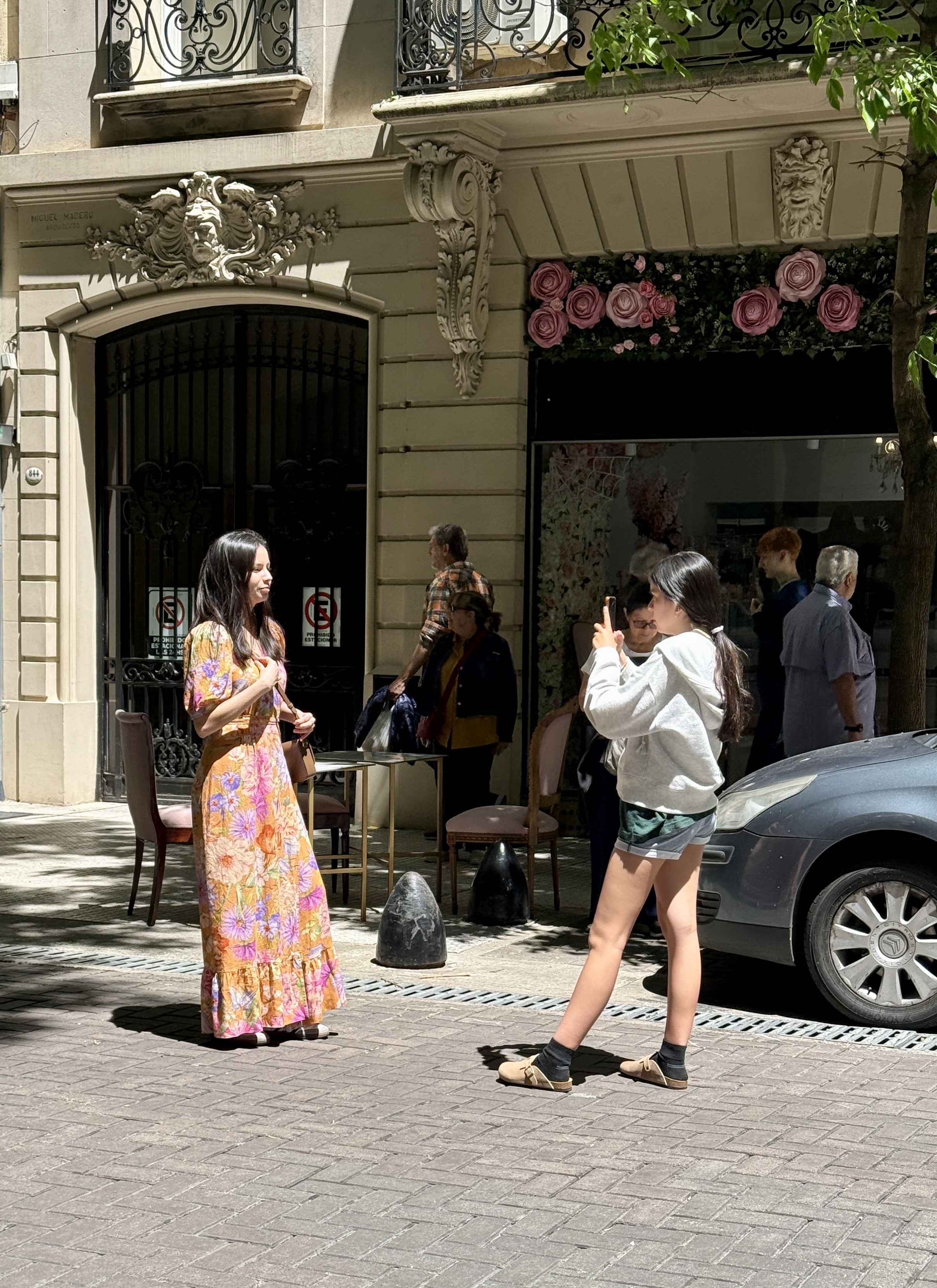
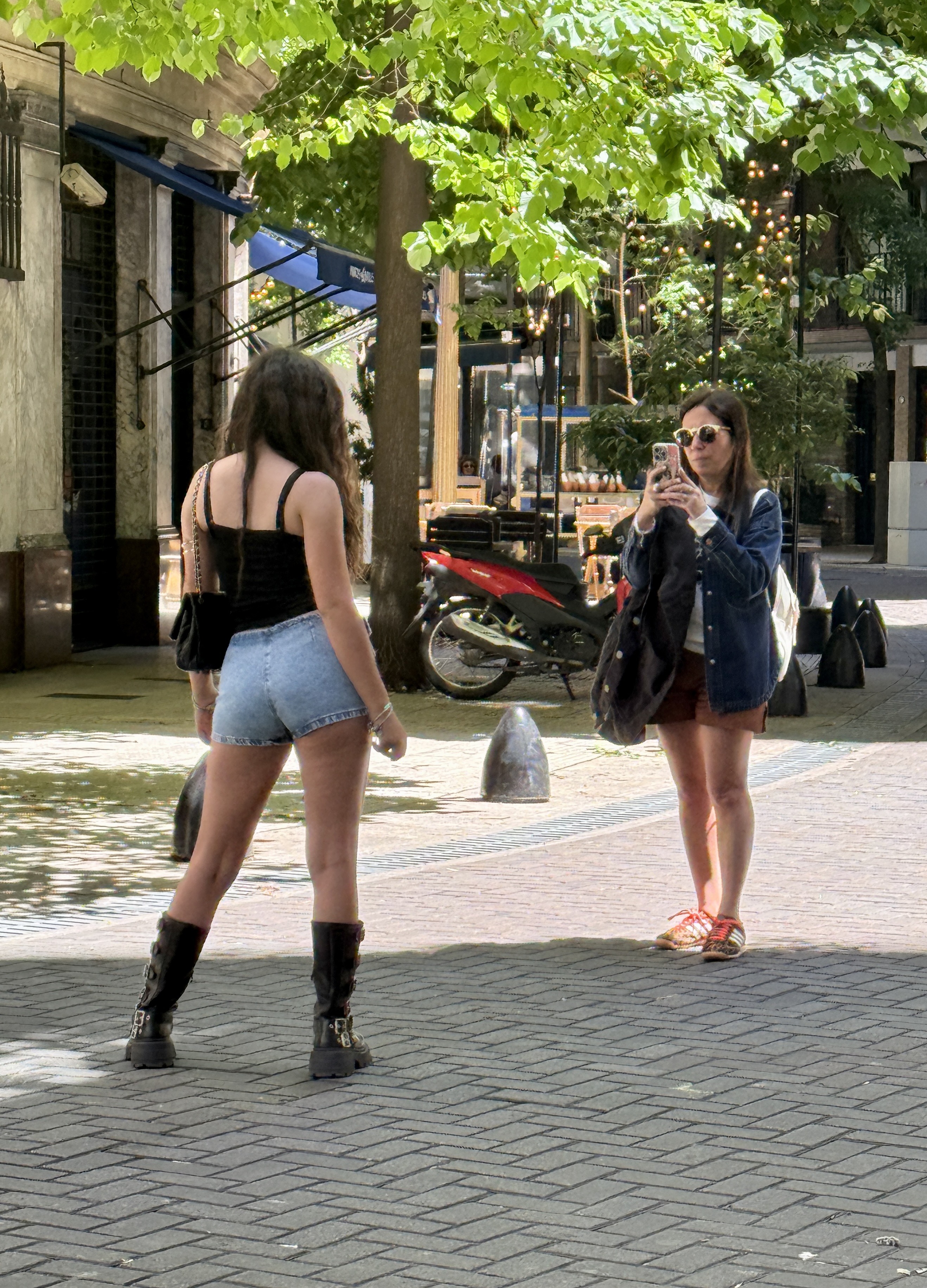
In many ways Buenos Aires seems very familiar; it’s big; it’s bustling; people seem to be in a hurry (even on a Sunday); it’s packed with high-rises—much like NYC. But it’s cleaner and has less graffitti. The density is almost the same as Brooklyn (37,000 people per sq mile); it’s twice as dense as San Francisco and half as dense as Manhattan.
We were heading to el Ateneo Grand Splendid, a huge bookstore located in a former theater. A few things to note along the way… At one point we had to cross 22 lanes of traffic (although it was very organized). That included two lanes for parked cars and two dedicated bus lanes….so a mere 18 lanes of moving cars. There were multiple median strips and two separate traffic lights to get across. Also, along one different boulevard, there were many ‘benches.” At first we thought they were “upholstered” and found them quite odd. But then we realized they were actually concrete made to look like soft cushions. A sort of art piece. And Buenos Aires has a lot of “influencers” or wanna be influencers” that you see constantly taking selfies or having a friend take their photo as they walk around town.
And as I mentioned in yesterday’s post, today is Election Day throughout Argentina. It’s a really important election with more than half of their congress up for election or re-election. Trump is backing the incumbent, Melei who is described as a libertarian. Inflation is at 35% and there are multiple scandals, enabling multiple opposition parties to increase their presence and power. Milei apparently slashed state spending and was photographed holding a chain saw showing him cutting spending (Not sure who was first Elon or Melei). Melei has also visited Mar a Lago; Trump has said that US assistance to Argentina is contingent on Melei’s victory. But Melei is not actually running; this is not a presidential election. It’s an election for Argentina’s congress.
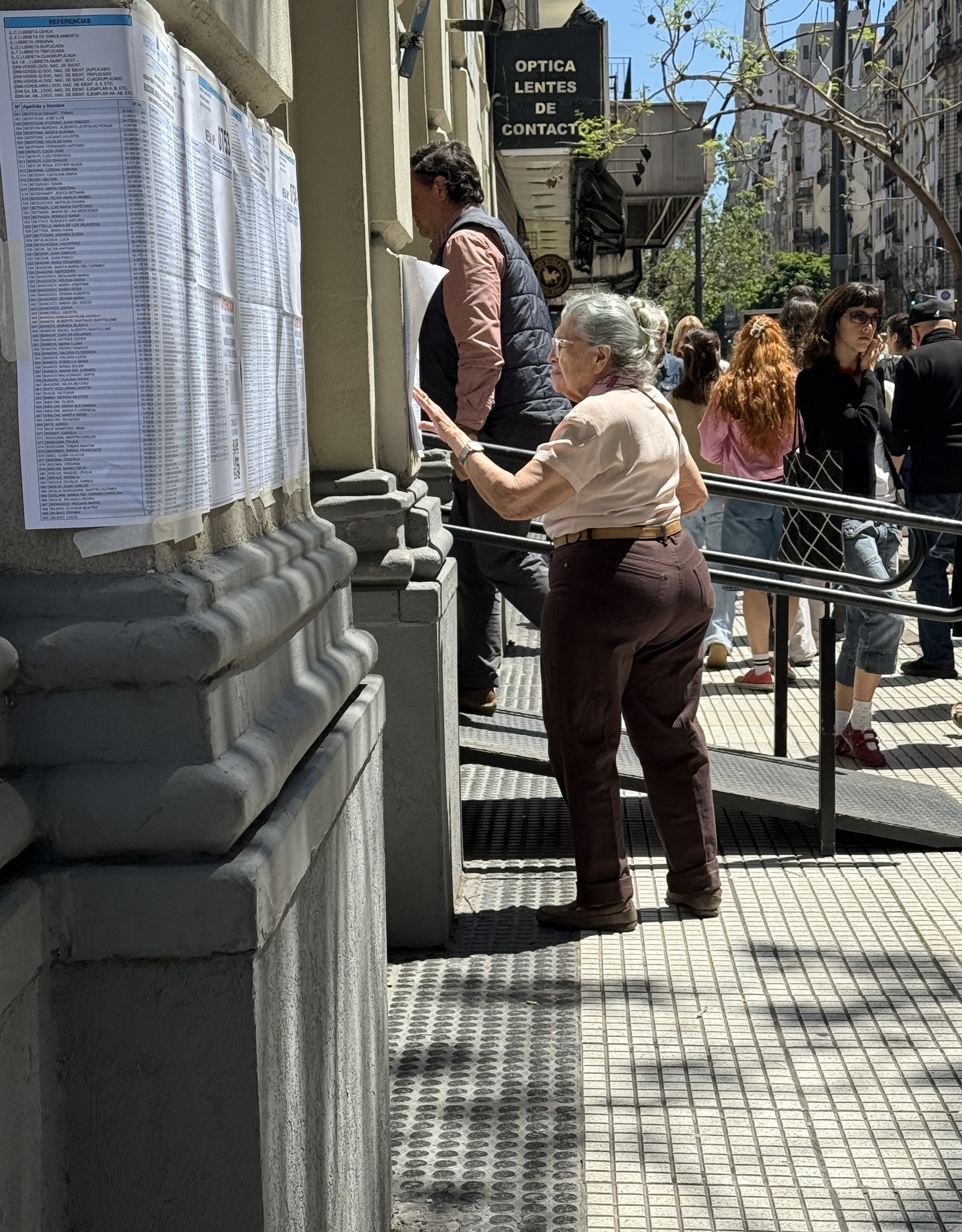
Anyway, we saw lots of people going into official buildings to vote and the ballot was in paper and voting was possible in every public school and other official buildings.
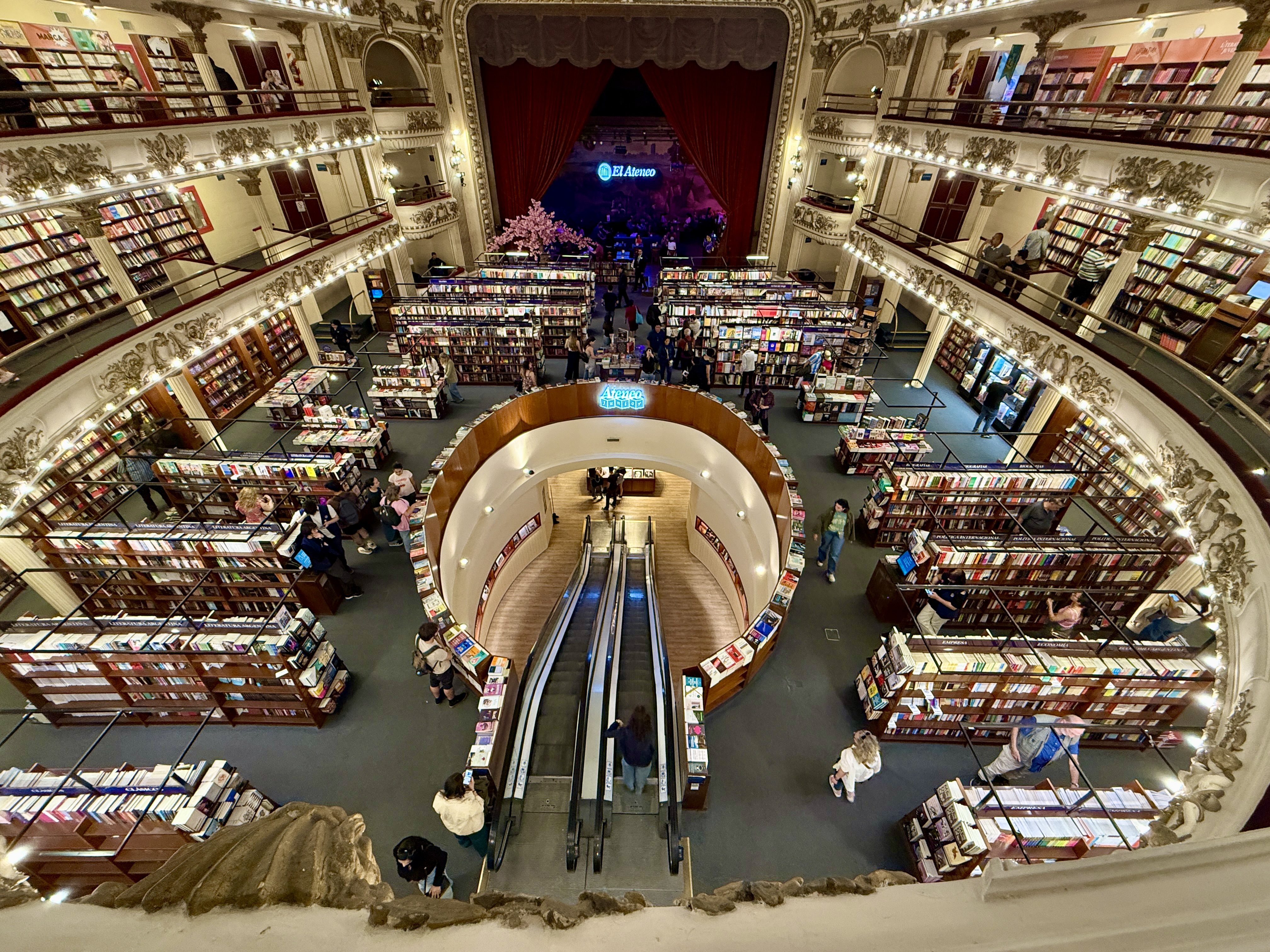
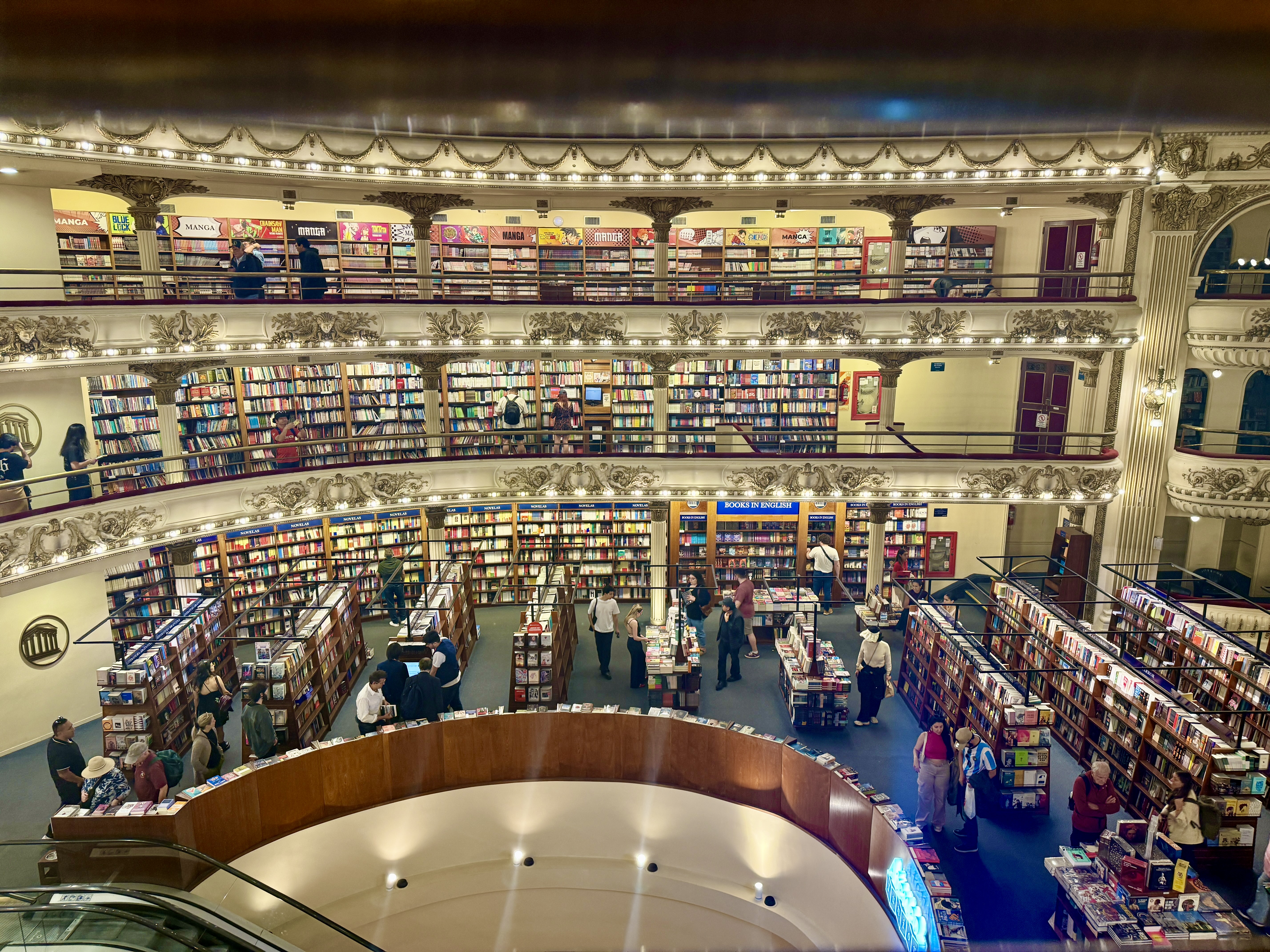
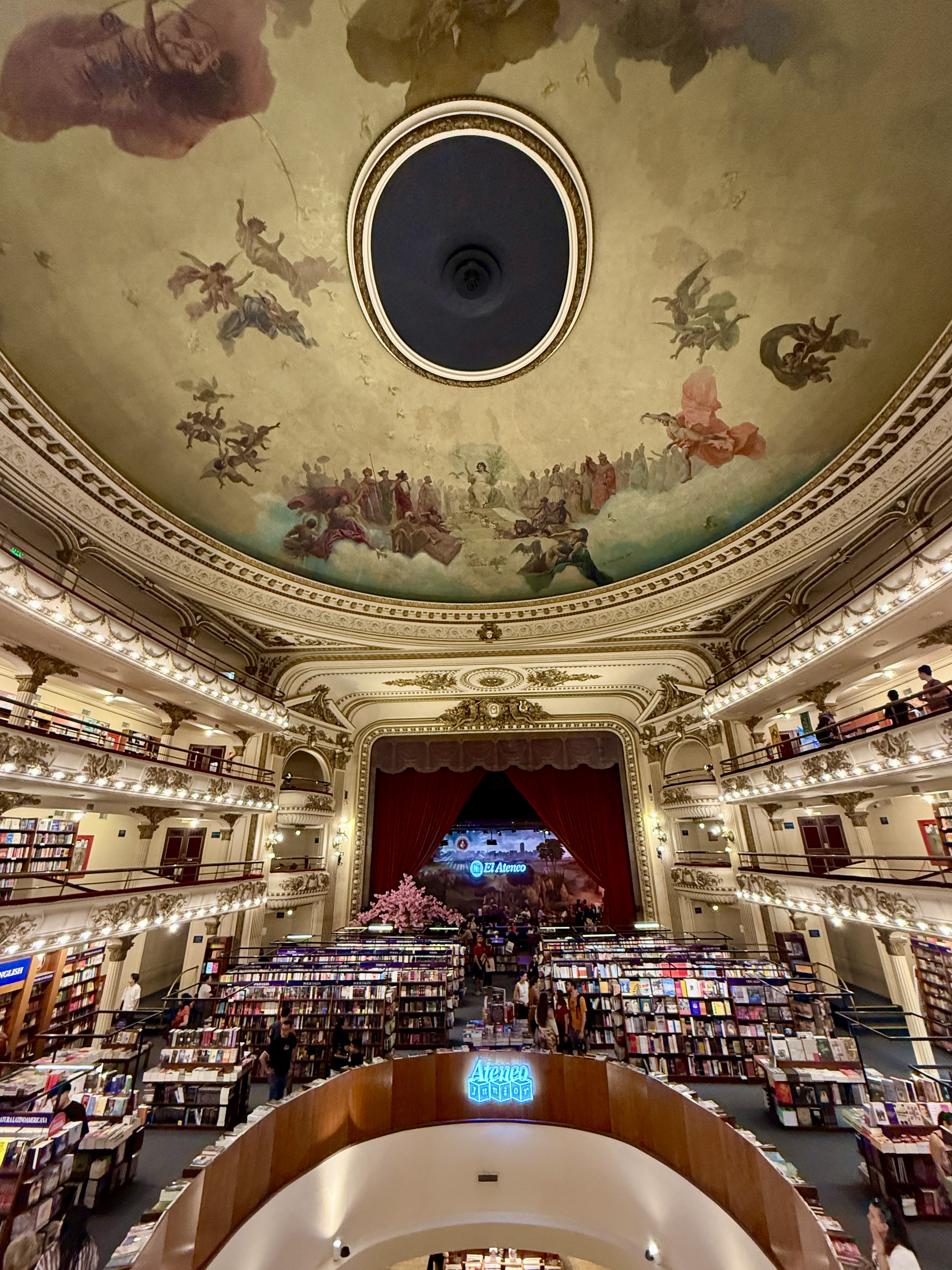
Ateneo Grand Splendid, the book shop, retained the stage and all the “box seats” and essentially the whole interior of the grand theater but removed the seats. According to National Geographic, it is the world’s most beautiful bookstore. It was opened as a theater in 1919 called Teatro Gran Splendid, and includes frescos and caryatids. It had a seating capacity of more than 1,000. In the late 1920s it became a movie theater. and then sometime in the early 2000s it was renovated into a bookstore (using all four floors). We strolled all of the floors and loved being surrounded by so many books. (Alas, they do not have a copy of my book… but oh well!)


From the bookstore, we decided to take a taxi (without any pesos) to our next stop—the big outdoor Sunday market at Plaza Francia, that includes a large craft section. We hailed a cab (just like in NY!) and before we got inside, we asked about credit card payment and he gave an emphatic “NO.” We then asked about using American dollars, because this morning an Argentine guest at the hotel told me that taxis take American dollars as long as they are in small denominations. At first the driver said no, but then he motioned to sit and he took us where we were headed and we did a rough calculation of the exchange and gave him some extra dollars to consider his time going to a bank. It is a huuuuge outdoor market. Must go on for at least a mile and it’s a big circle with multiple rows of covered tables.

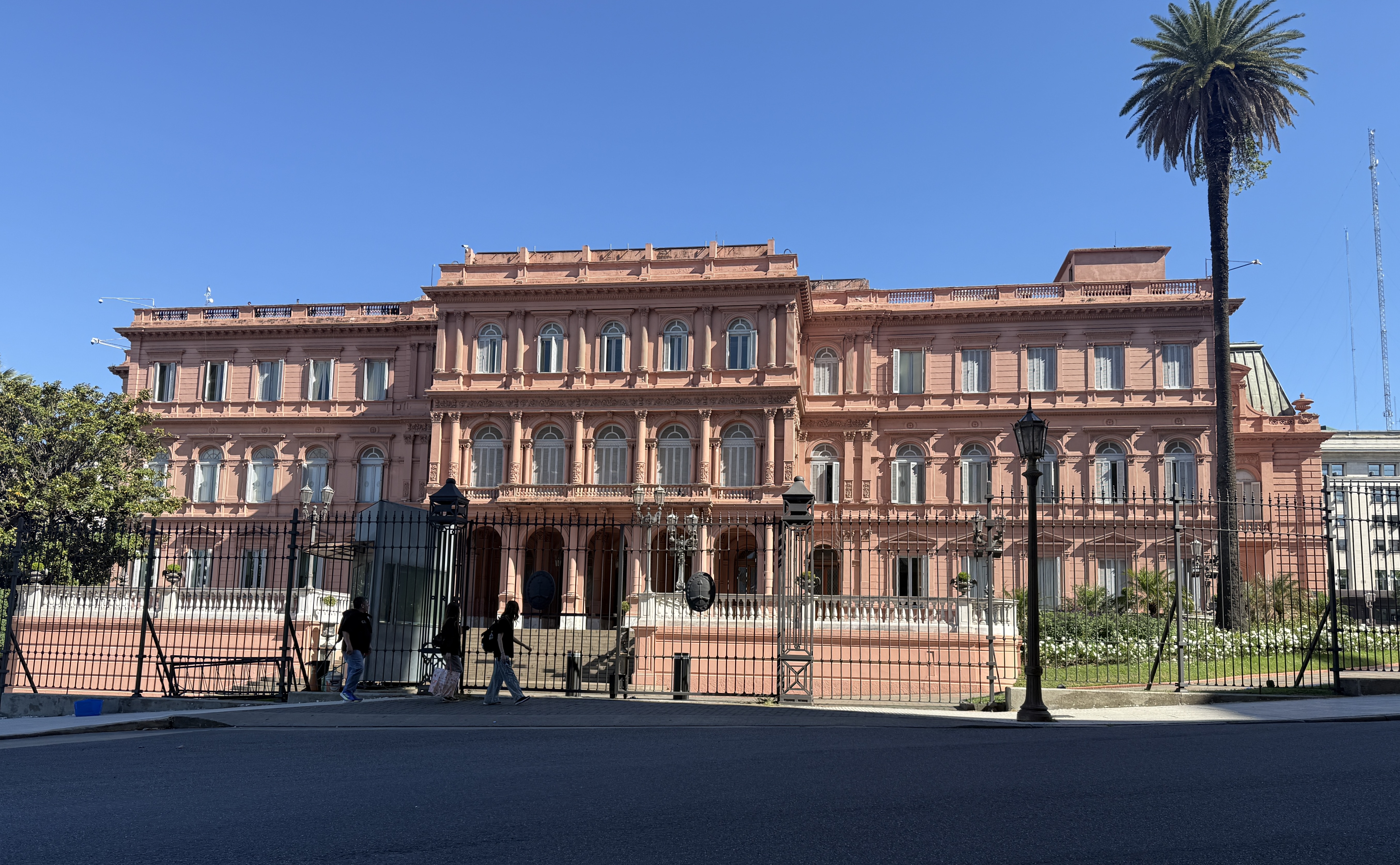
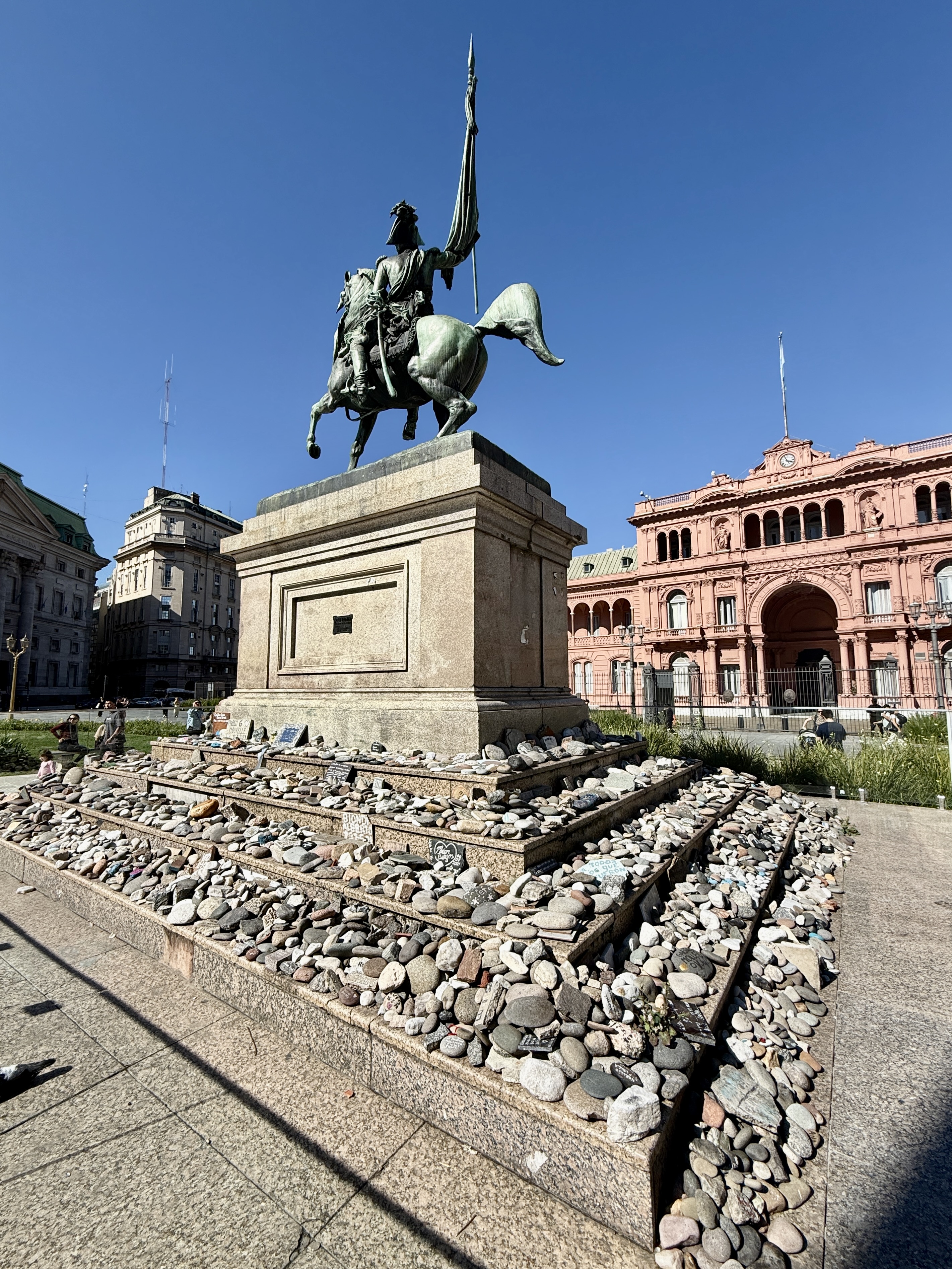
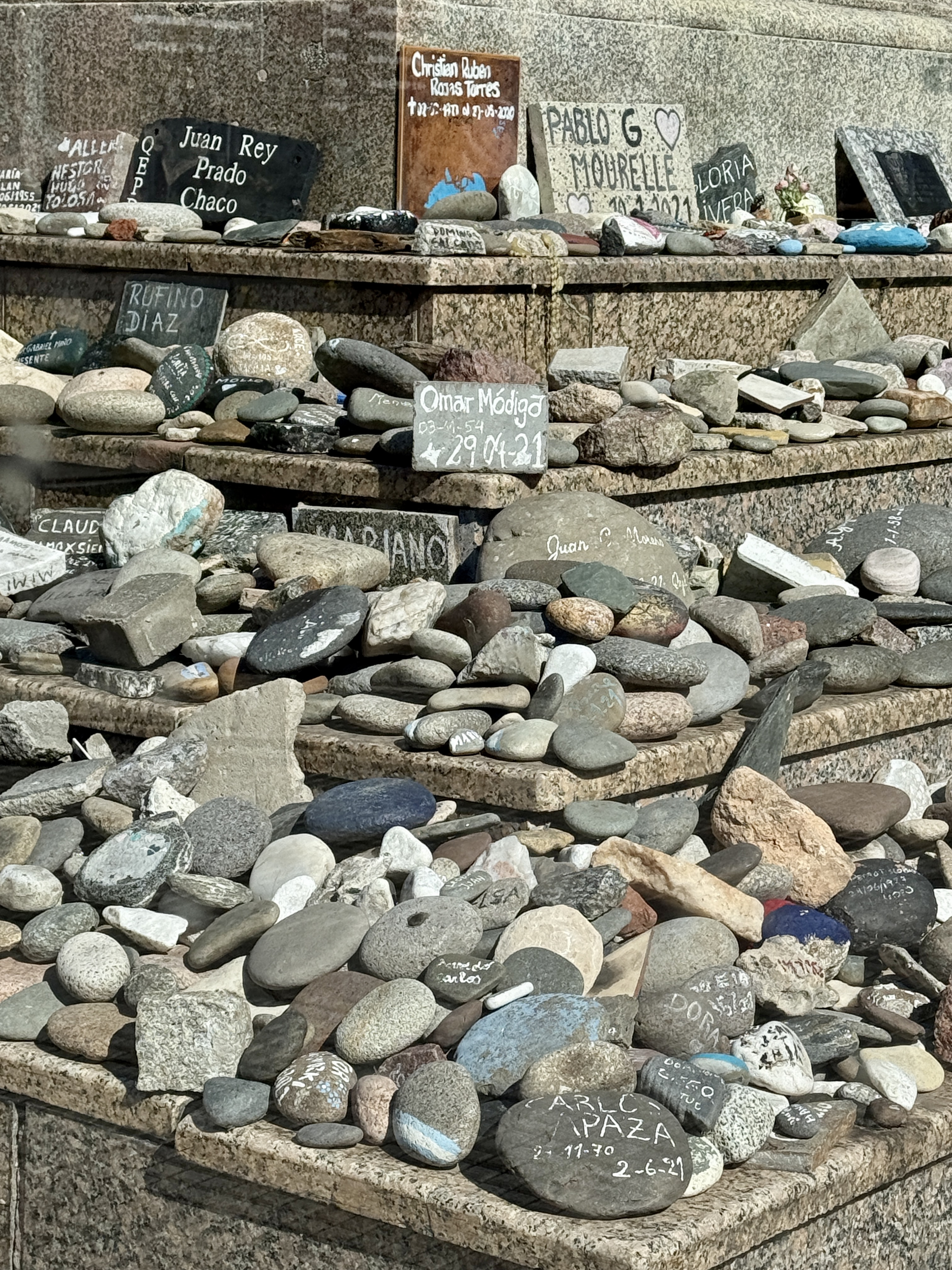
Then we walked to Plaza de Mayo, the site where the “Mothers of the Plaza de Mayo,” (Madres de Plaza de Mayo) — the Argentine human rights group organized as a response to abuses of the National Reorganization Process, the military dictatorship of Videla. They worked to find the desaparecidos (the people who “disappeared” without any arrests or trials or legel process. Most are believed to be dead. The Mothers demonstrated continually in this plaza right in front of the presidential palace. They petitioned to have their children returned alive. Eventually the then president declared a state of emergency and the police expelled the Mothers from the public square. The story of the Mothers has been documented widely in film and books. They still function as an organization addressing a variety of human rights.
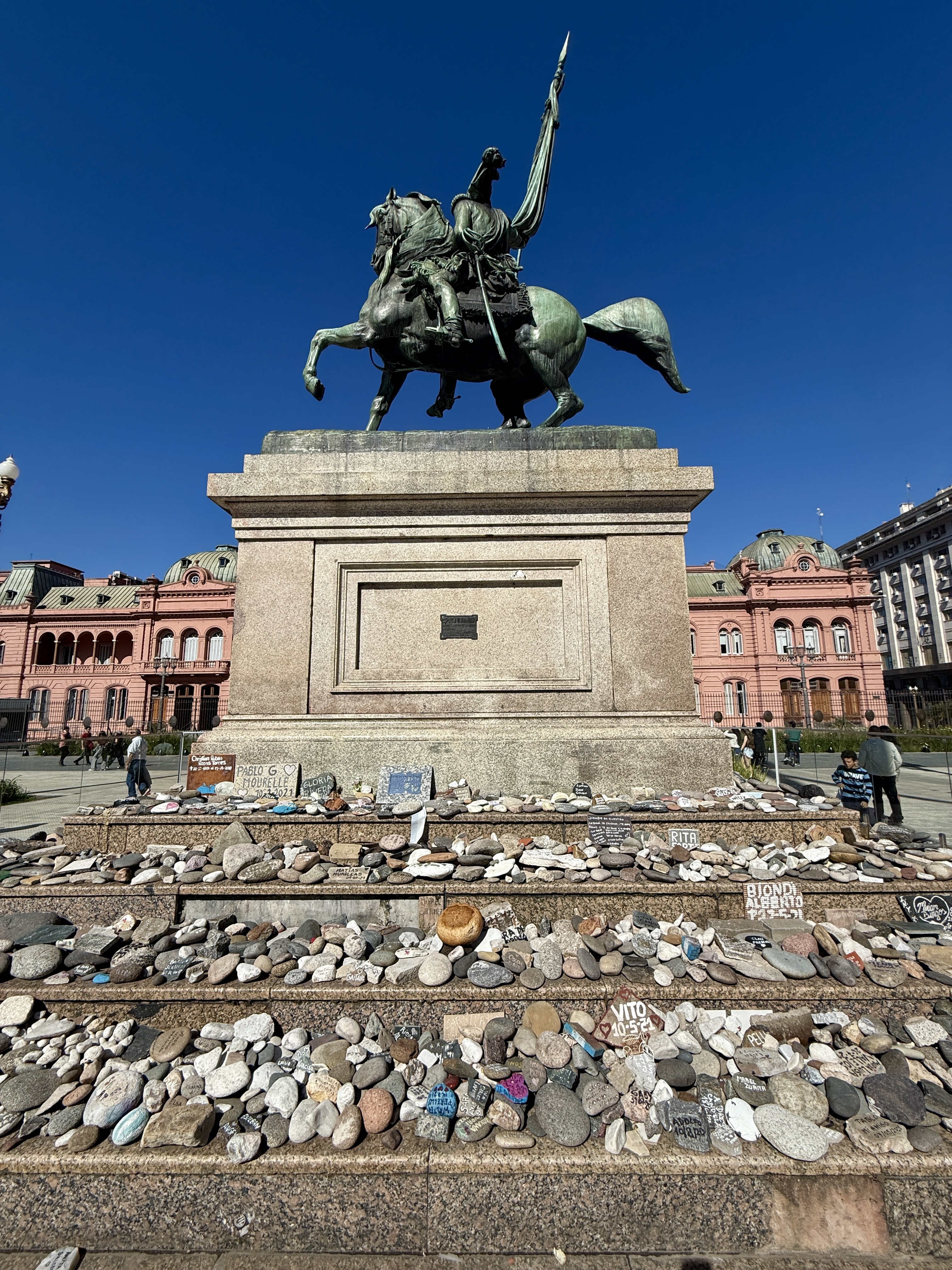
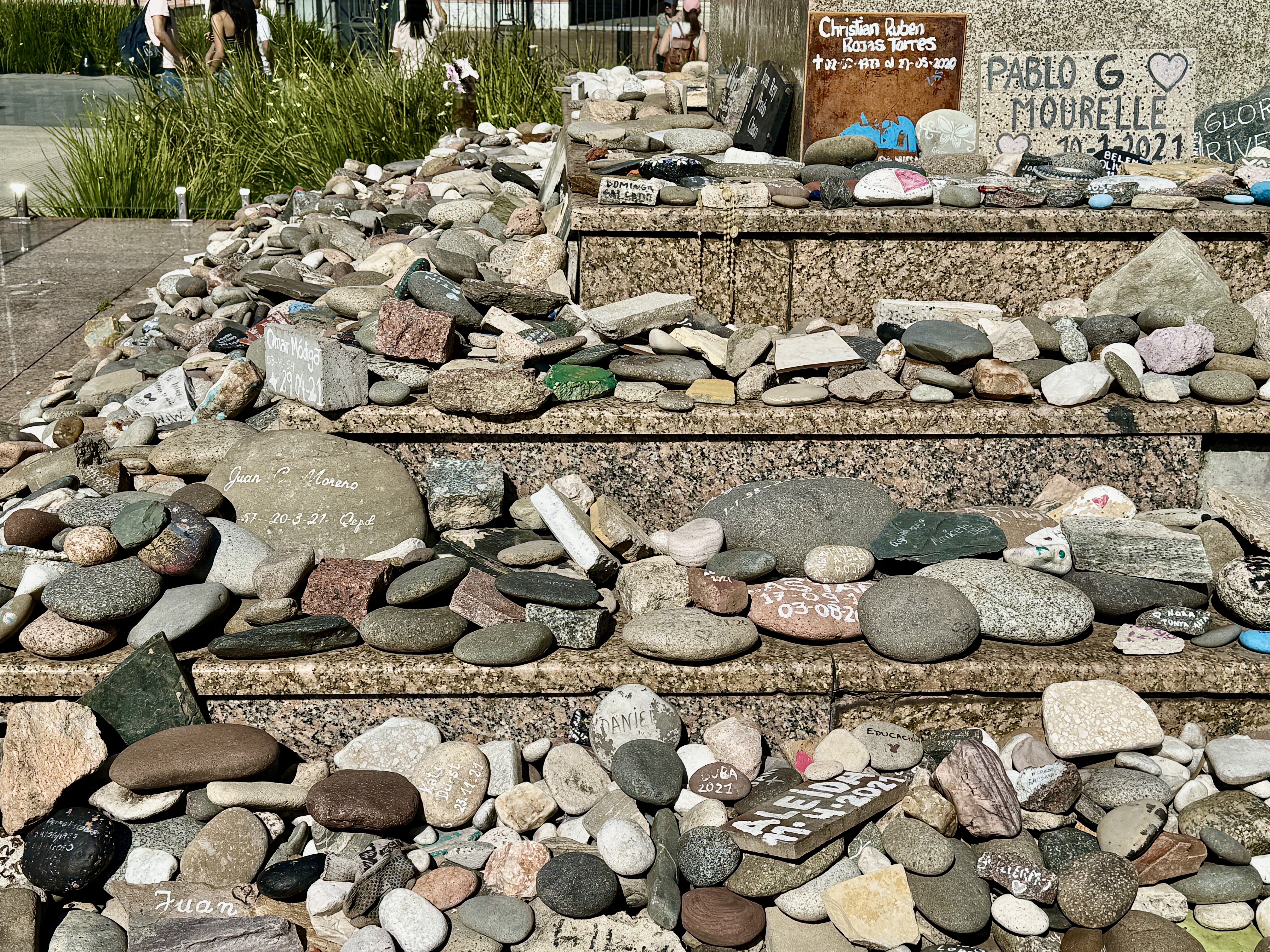
Today at the Plaza there is a monument and at the base there are hundreds, maybe thousands of stones that people have left, noting the names and sometimes dates of the missing.
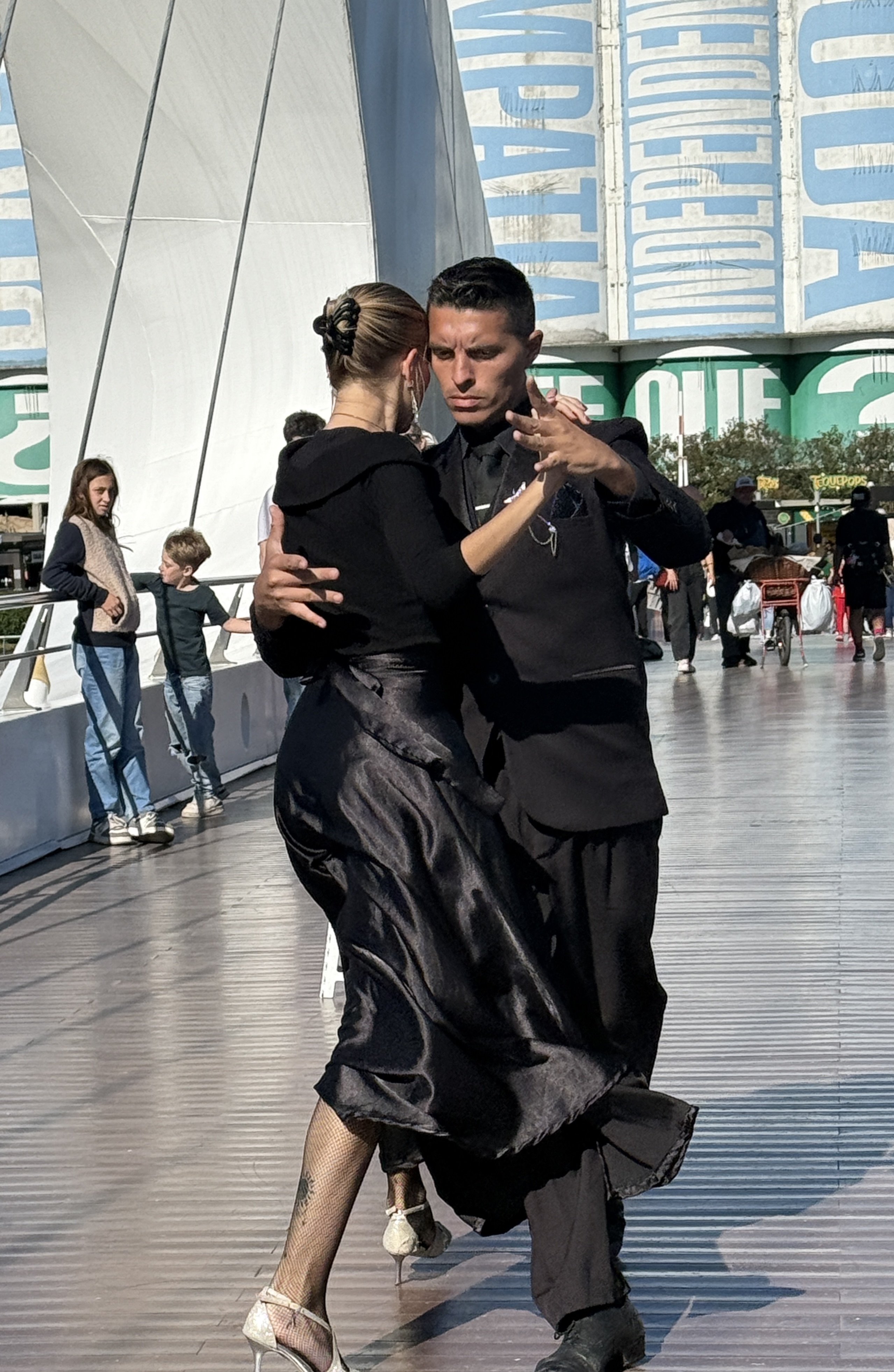
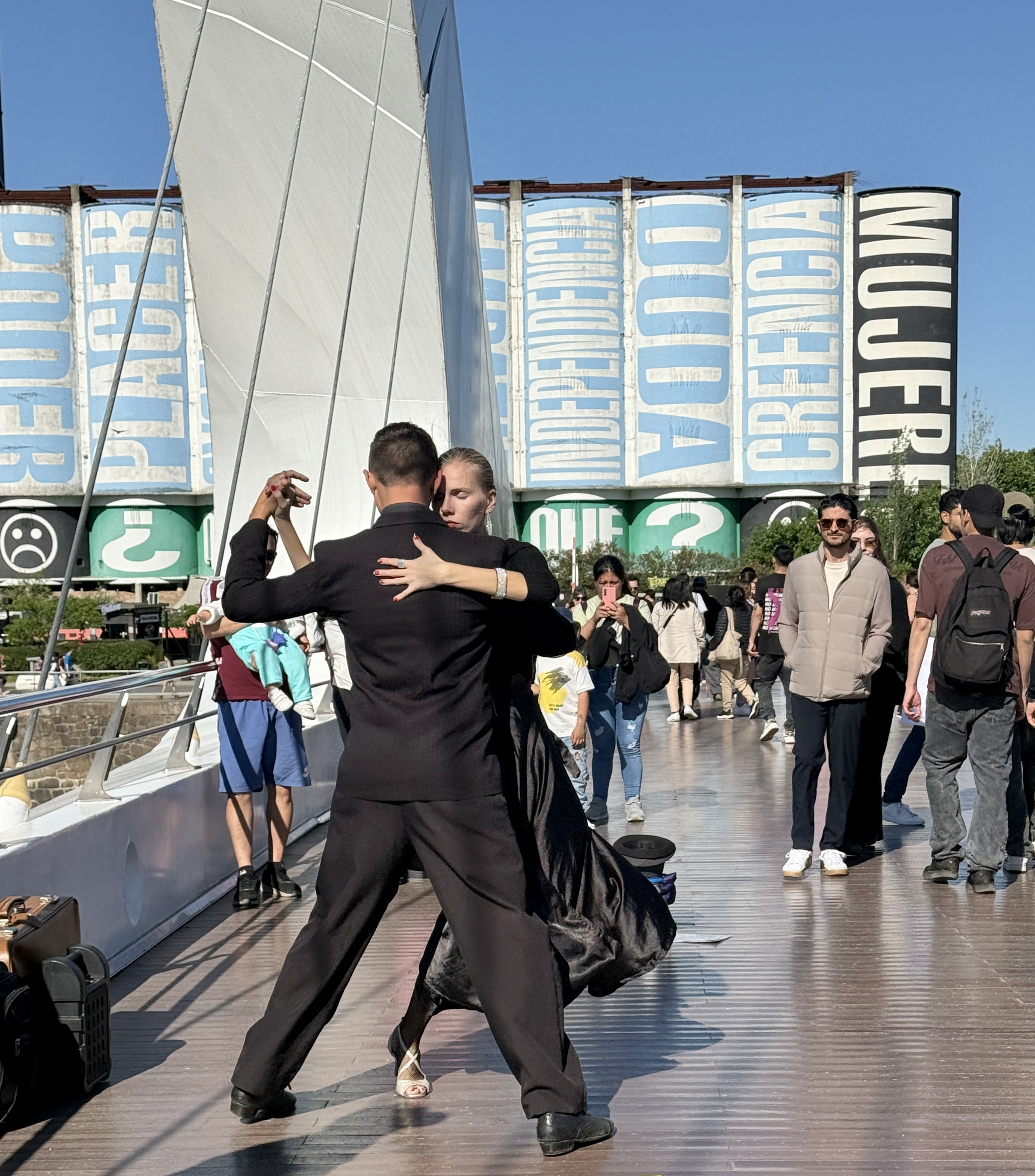
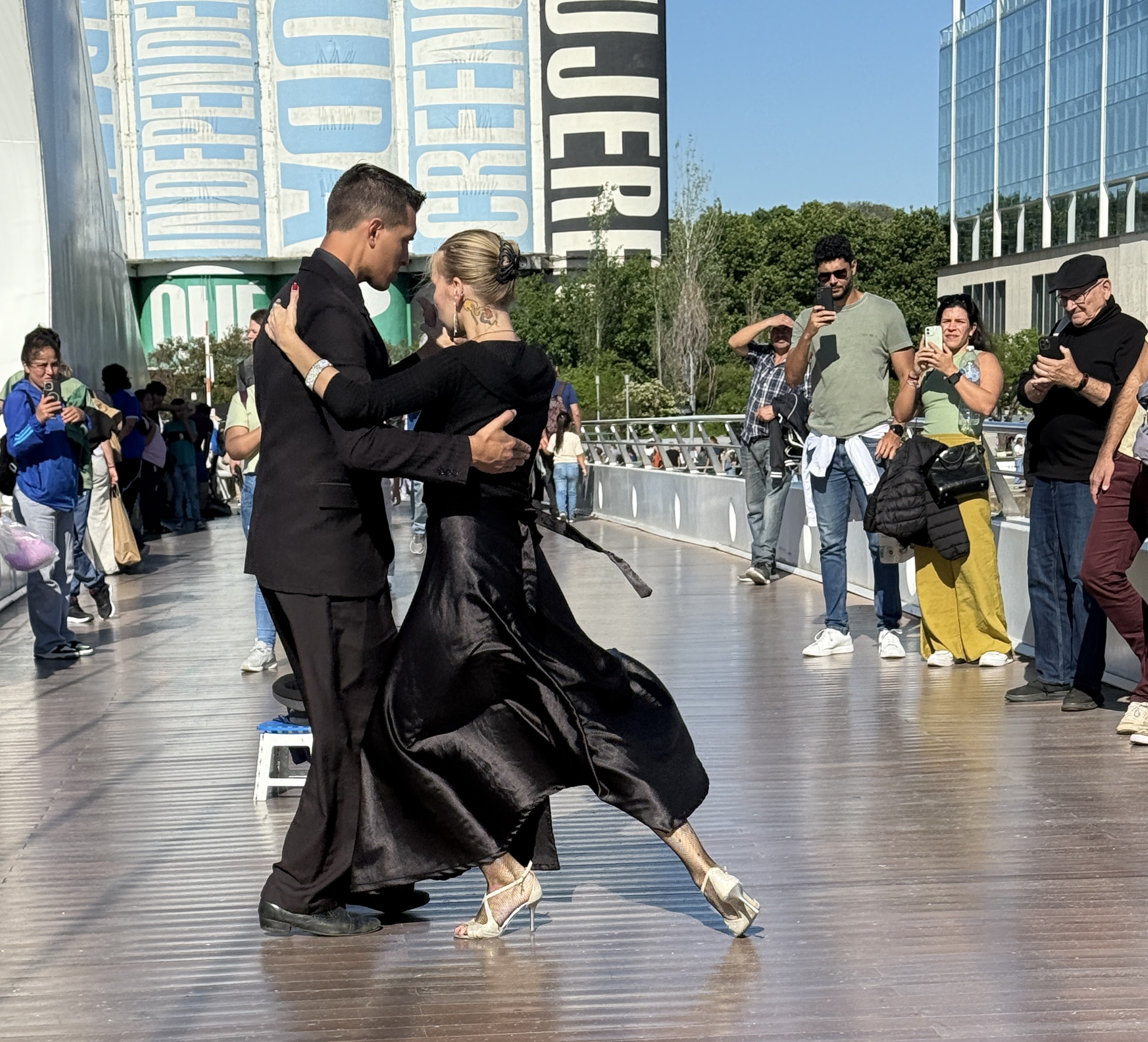
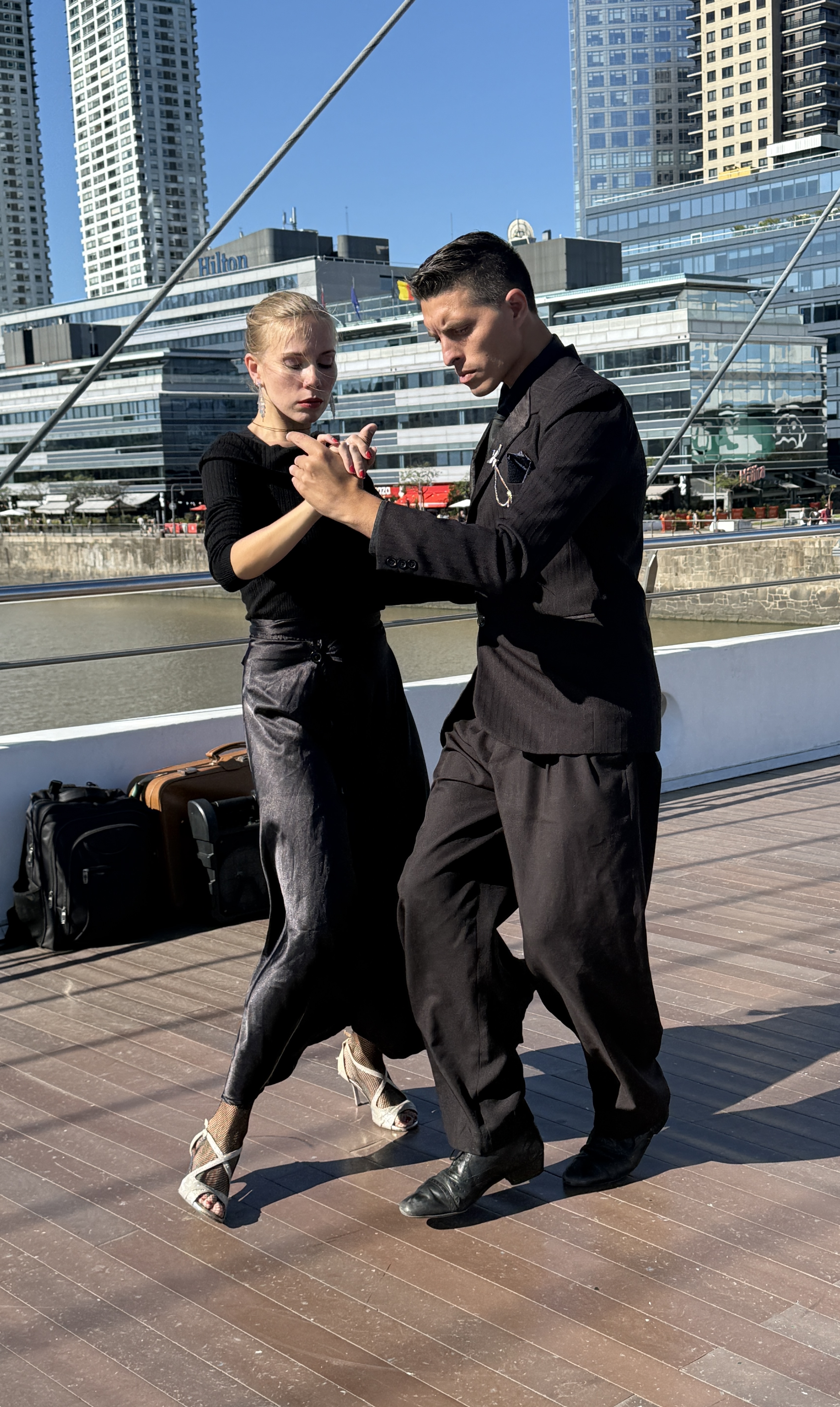
From the Plaza we walked to (and crossed over) the Calatrava-designed pedestrian bridge called Puente de la Mujer (Woman’s Bridge). Supposedly the design resembles a couple dancing the tango (??). And true to form, right there in the center of the bridge as we walked across… there were two professional tango dancers doing their thing.

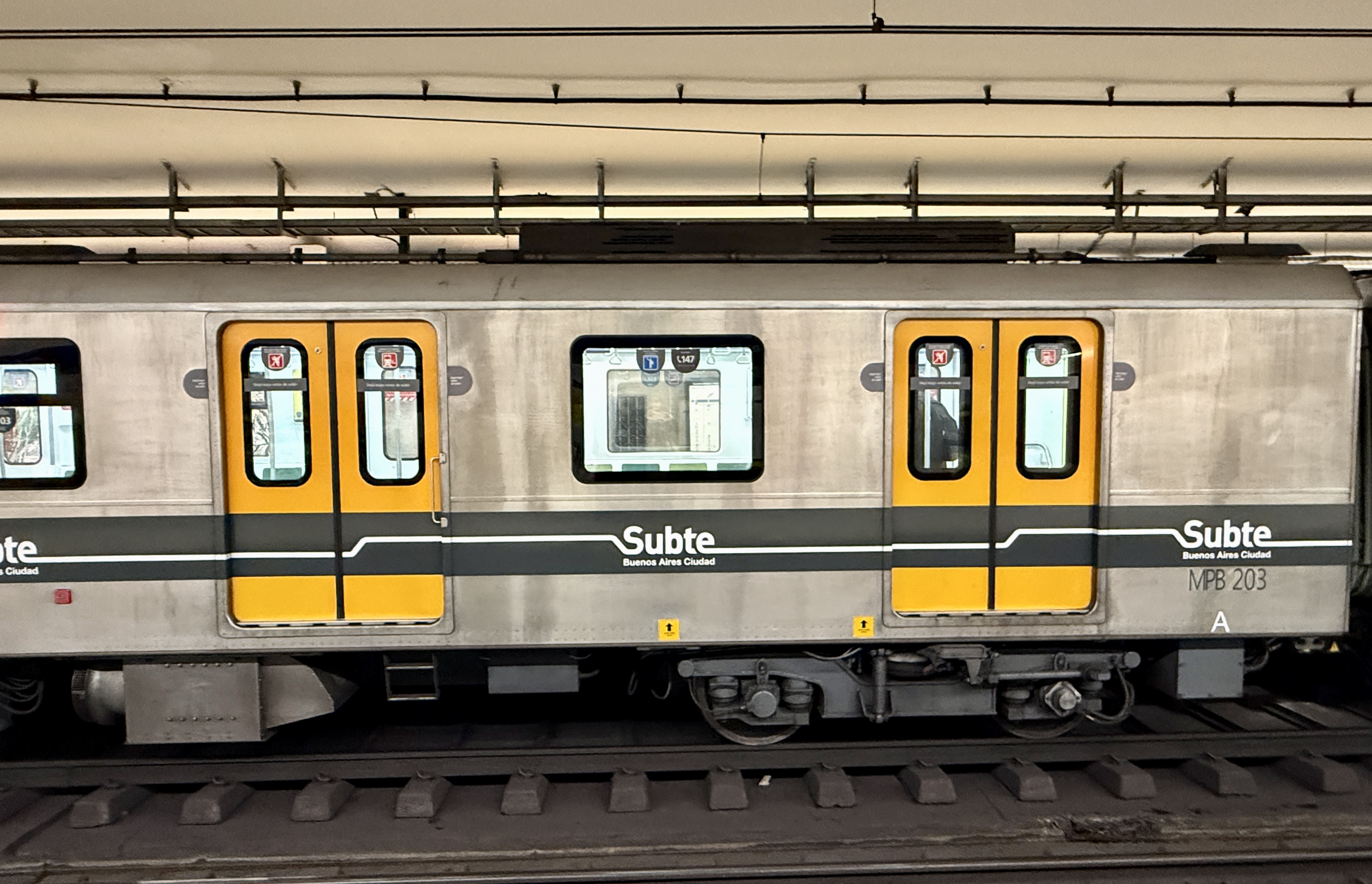
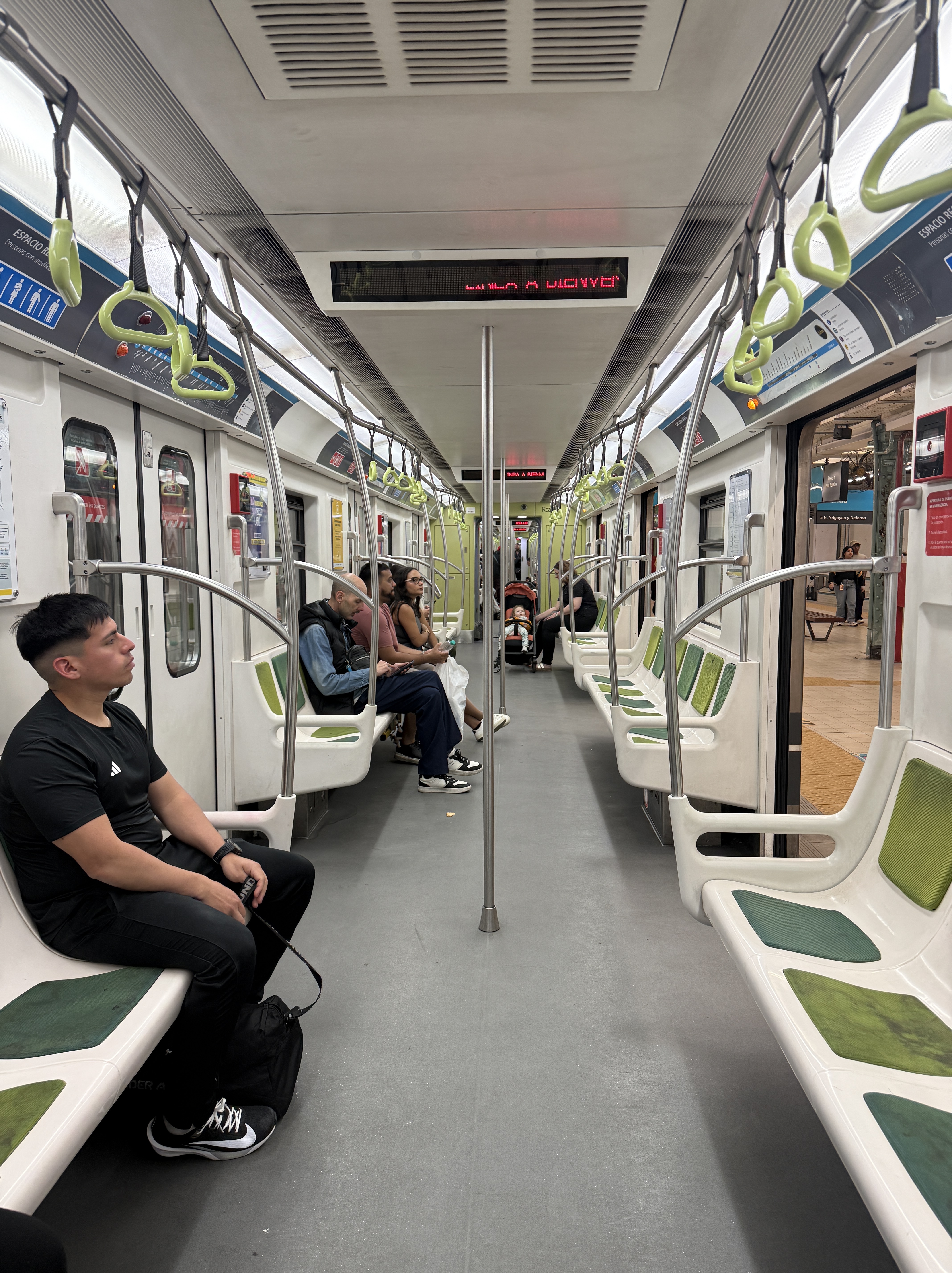
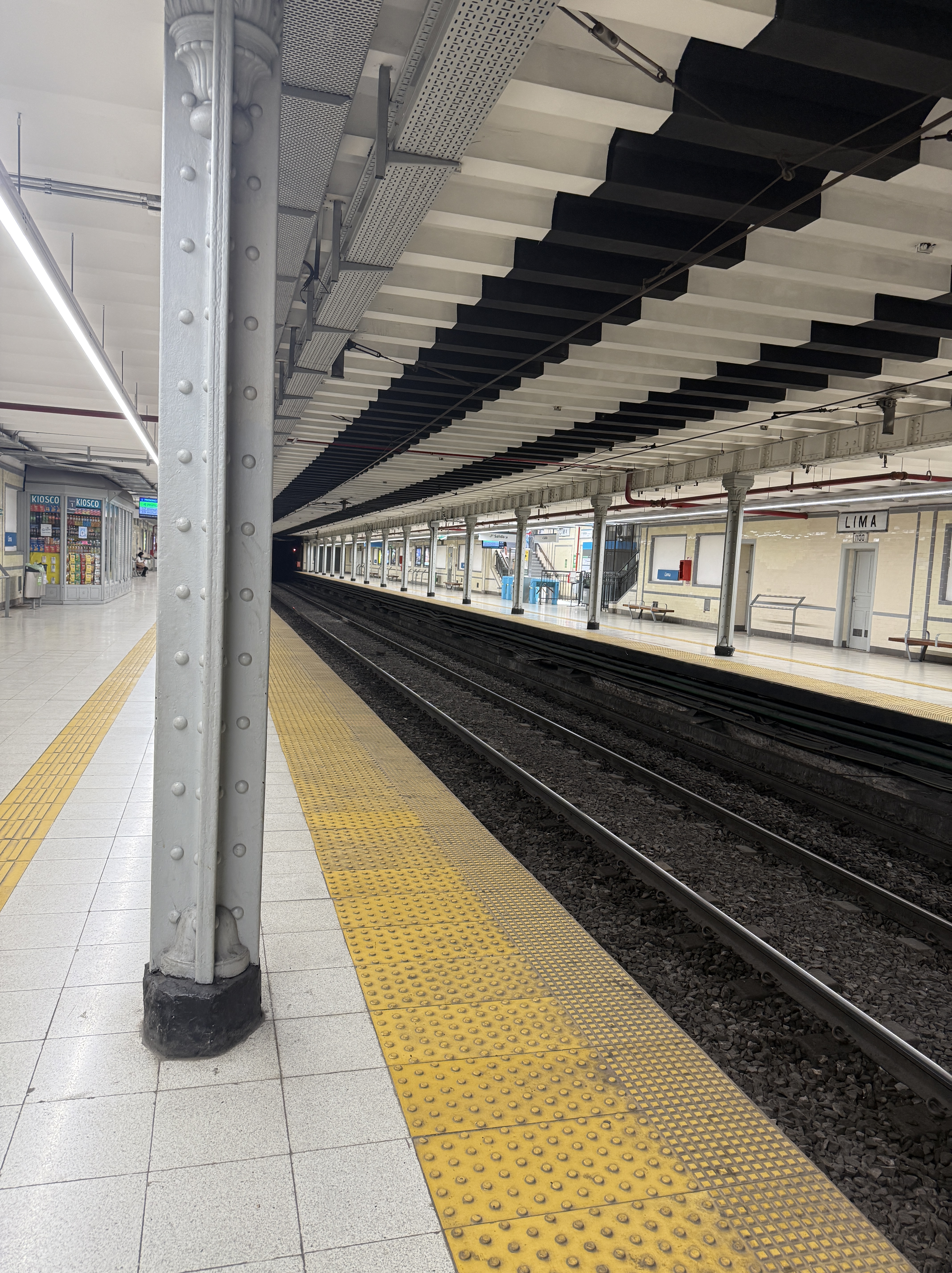
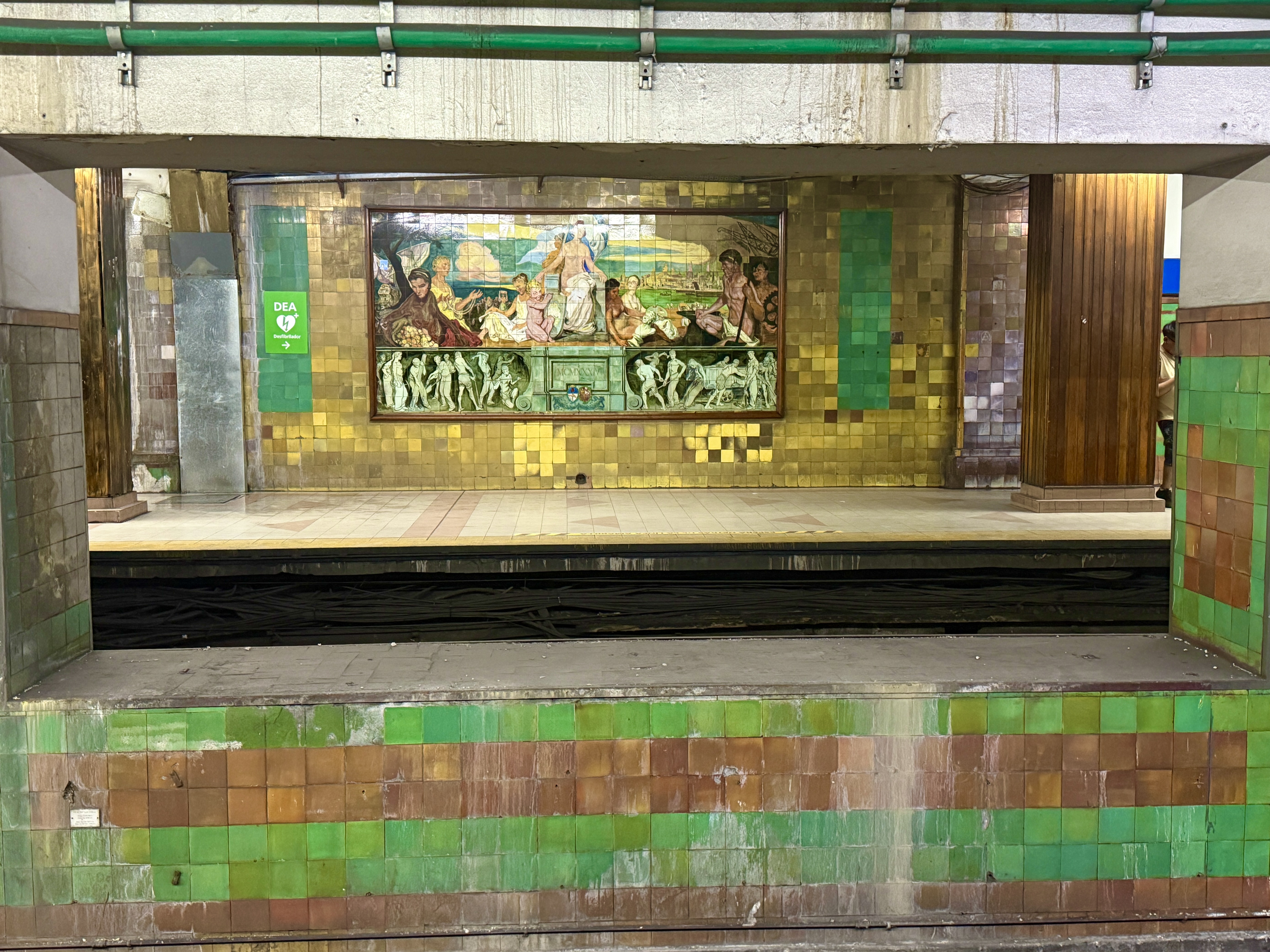
After clocking in at about 15,000 steps, we were pretty beat… and decided to try the Subte (Buenos Aires’ subway system) which looked pretty straightforward. It did however take a while to figure out where there was a station, because the maps don’t show where the stations are, But we did it… Went three stops on the A line and transferred to the C line and then we had about a 7 minute walk to the hotel. It seems efficient, cheap, and clean. But it does involve long walks underground if you are changing trains (sort of like Paris’ Metro). That said, the quality of the stations is a lot like NYC–no grandiosity here.
We had dinner at a Peruvian restaurant, a taxi ride away… upscale, sort of mostly sushi/sashimi. But before dinner we went to an amazing bar for drinks and snack (liquor started being served at 9 pm tonight, because the polls were closed at 6 and they have to wait three hours). It’s called Floreria Atlantico. You enter on street level into a very small florist shop… and then you find a refrigerator door in the shop. When you open that door you go down a steep flight of stairs to a basement and voila! you are in a long thin basement that stretches under the florist shop and under about two other shops… and it’s a bar with very interesting mixed cocktails…one continuous bar. I had something that had chola and ginger and lime. And Mike had some kind of martini (thery have many different kinds).. and we had a snack of sweetbreads (getting my sweetbread fix here since it’s a pretty common dish. In the states it’s rare to find it. At the Peruvian place we had some kind of whitefish nigiri, a tuna sashimi dish, and a shrimp dish. We were totally full when we finished dinner at 12:30 am! Getting to be real Argentinians with regard to our eating schedule.
The results of the election seem to be in from the elections and Meilei’s people got 40%. That means that 60% voted against them but without a clear majority for another candidate.
Argentina’s politics is complicated. So not totally sure what this all means. But more on the elections tomorrow.

October 25, 2025 . Feet and Cars and Taxis and Ferries . From Colonia to Buenos Aires .
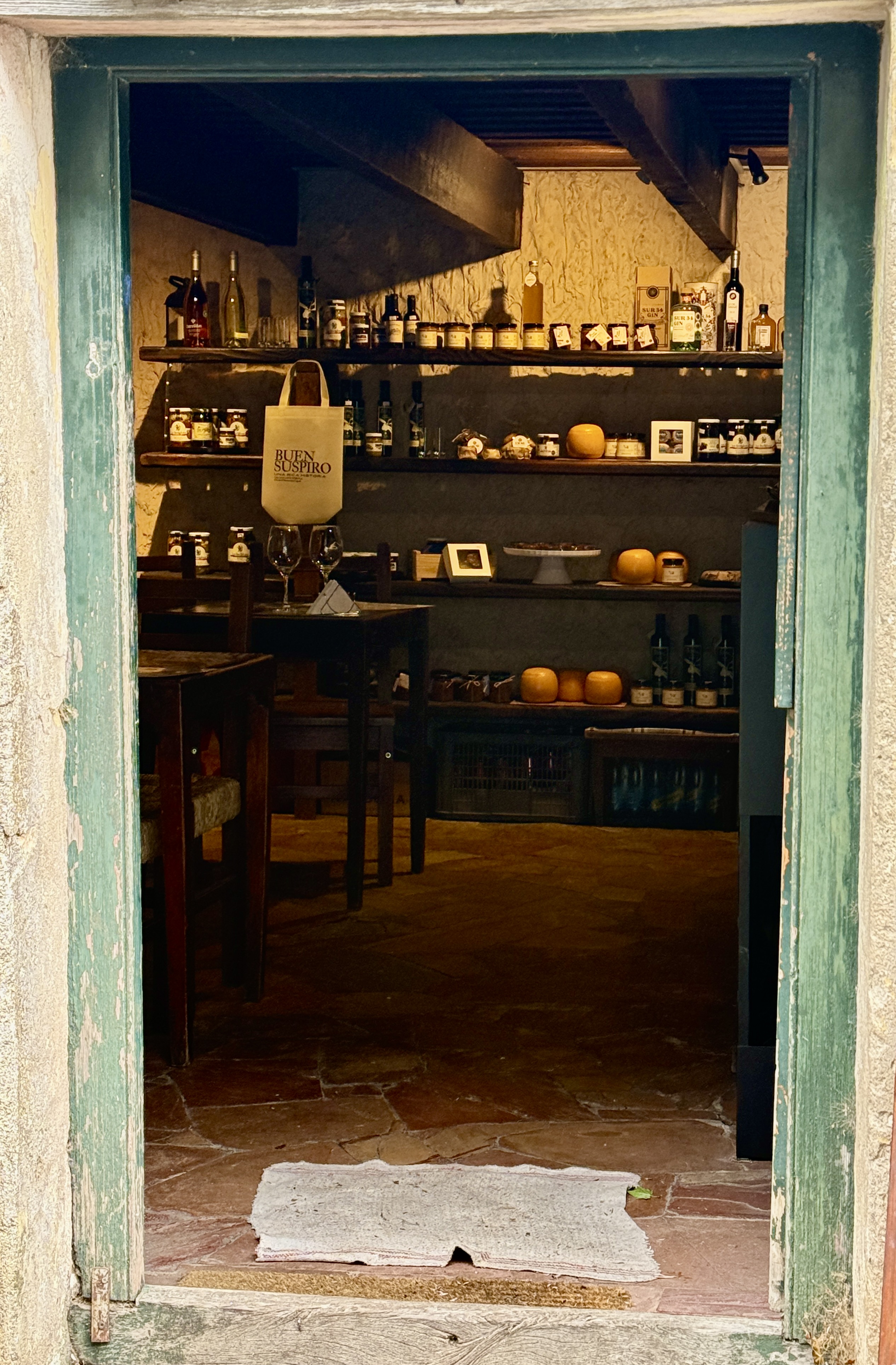
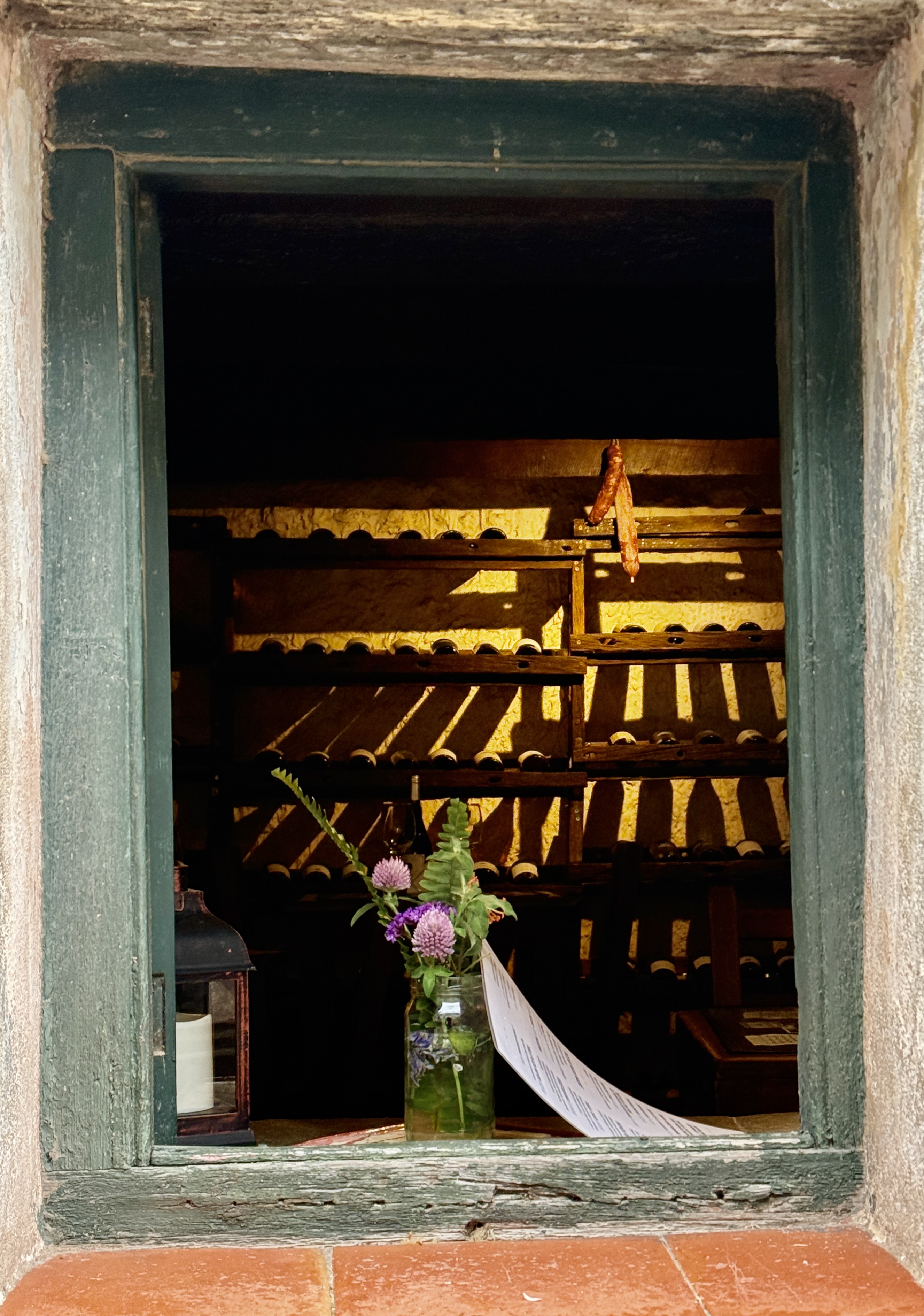
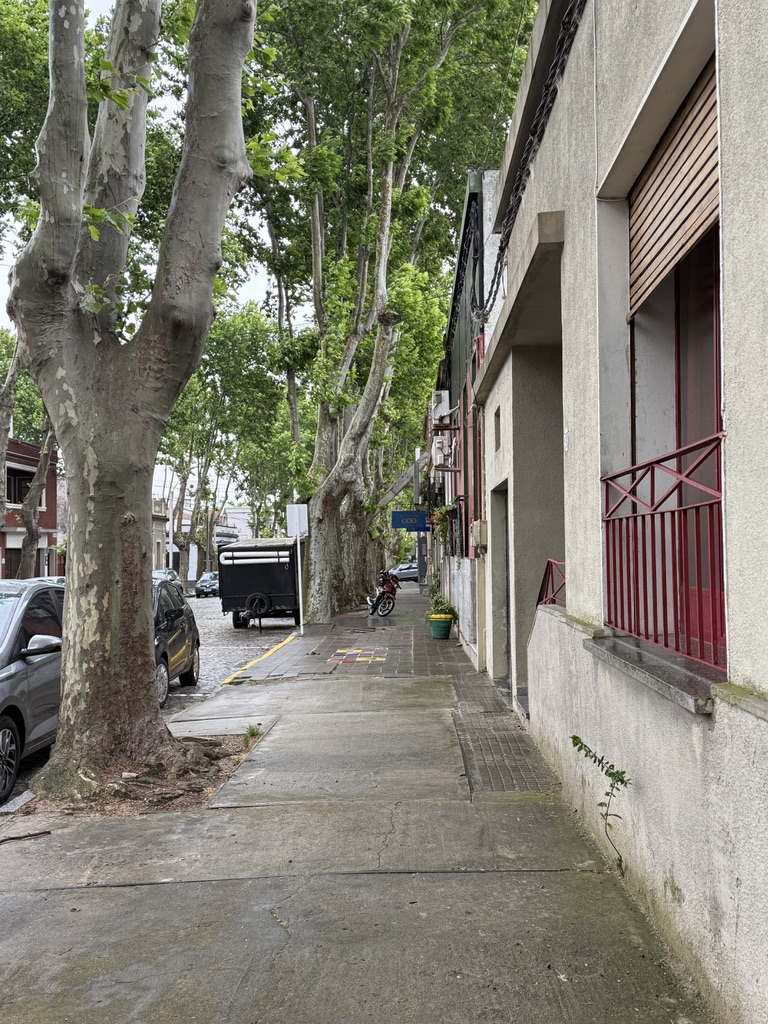
What with constant rain and about 50+ mile per hour winds, we took our time packing and tried to figure out a plan for the day until we had to return the rental car (which we really hadn’t used after getting to Colonia, because the rain was so strong yesterday it would have been crazy to drive to Carmelo. At around noon the rain stopped except for some drizzles every so often, so we decided to take a walk into the newer part of Colonia (and to assess the situation ahead of us—returning the rental car, getting gas, finding the boarding area for the ferry, etc. But it started to rain again and the wind was whipping the trees, so we walked about halfway and then headed back to the hotel for a quick salad… and to the ferry building.
One thing I left out from previous days notes: In several situations, staff and others thought I was a Spanish speaker! I guess my limited Spanish might sound better than I thought and I can manage some stuff in Spanish. Anyway, at the restaurant last night, after I asked for our table and said something else… I asked for a menu in English and they brought one out for Mike, but gave me a Spanish menu. I laughed and said it would be better for me in English and the waiter said (all in Spanish between the two of us) that he assumed I would want the Spanish menu! Actually, I can manage menus pretty well, but when they start getting fancy describing the preparation, I’m lost.
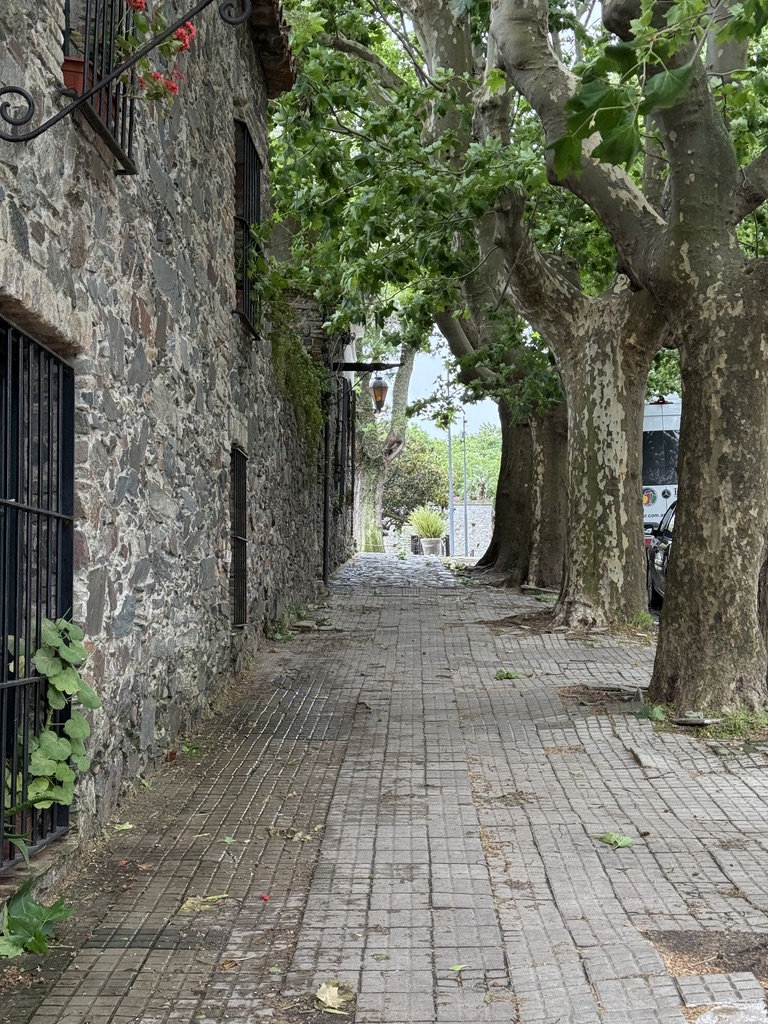
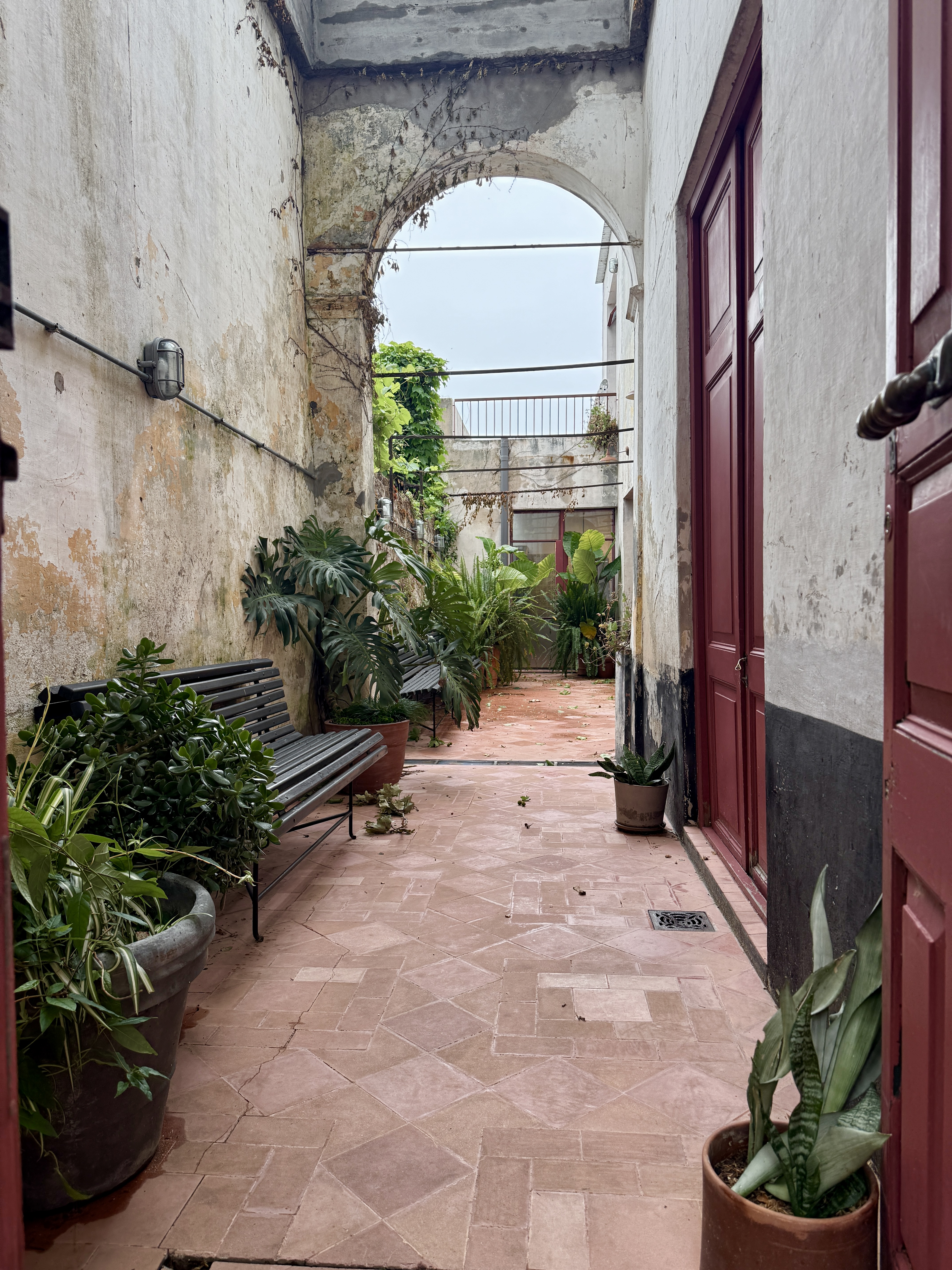
As we were headed back to the hotel, I got a message from the restaurant we were headed to once we arrived in Buenos Aires (tonight). They wanted to alert us to the fact that there would not be any alcohol (not even wine) served at dinner tonight. No alcohol from 9 pm tonight until 9 pm tomorrow night, because tomorrow is the election here in Argentina. First it’s interesting that in both Argentina and Uruguay, voting is mandatory! You can get official excuses from a doctor if you are sick and if you are out of the country, but voting is required for citizens between the ages of 18 and 70. !6 and 17-year-olds also vote, but their participation is optional. Similarly those over 70 years old can decide not to vote, but everyone else must vote. There are stiff penalties for not voting and you could be excluded from government jobs.
Tomorrow, Sunday, (elections are always held on Sundays) Argentines will vote for half of the seats in their Chamber of Deputies and a third of the seats in the Senate will also be decided. While the president is not actually on the ballot, his colleagues are. President Milei’s approval rating is very low so this election is important for him and for the future of Argentina. Our friends are convinced that Milei will lose seats and of course Trump has weighed in with great support for the current leader. I suppose there will be a lot of hoopla in the streets tomorrow and tomorrow night the bars will reopen. Should be interesting to see what happens as the ballots get counted.
We sad “adios/hasta luego” to Charco Hotel and filled the tank with gas. Actually, they still have attendants at the gas station, so we really didn’t do anything except wait for the attendant to fill the car with gas. Then we returned the car and headed for the ferry which was literally next door to the car rental.
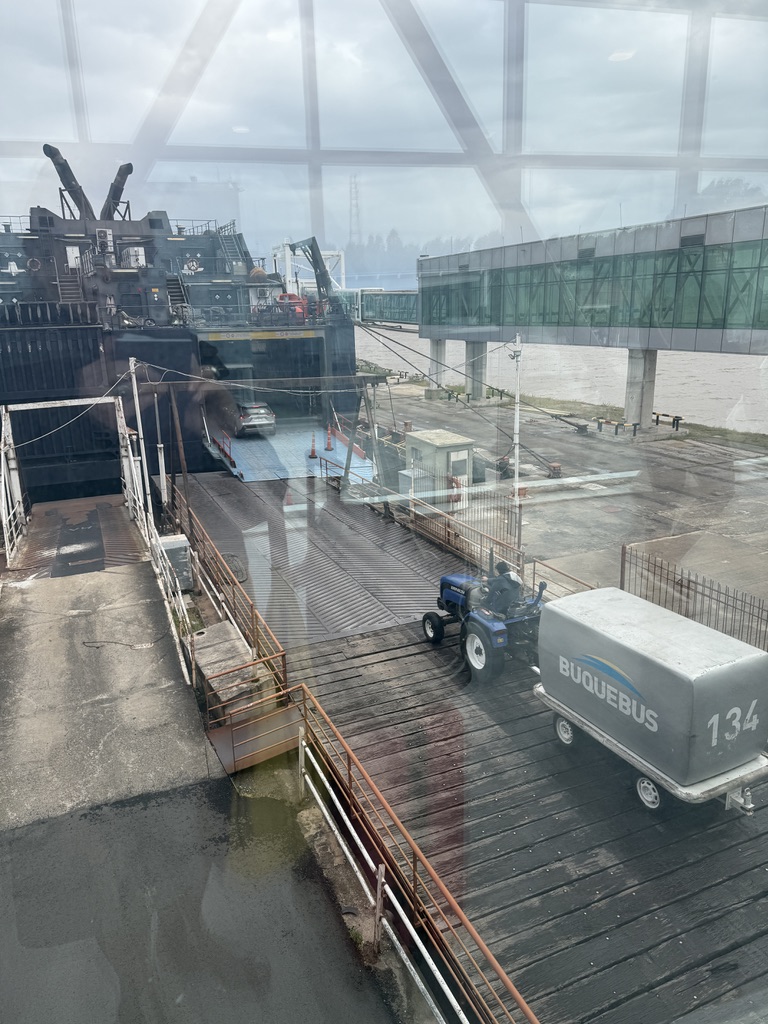
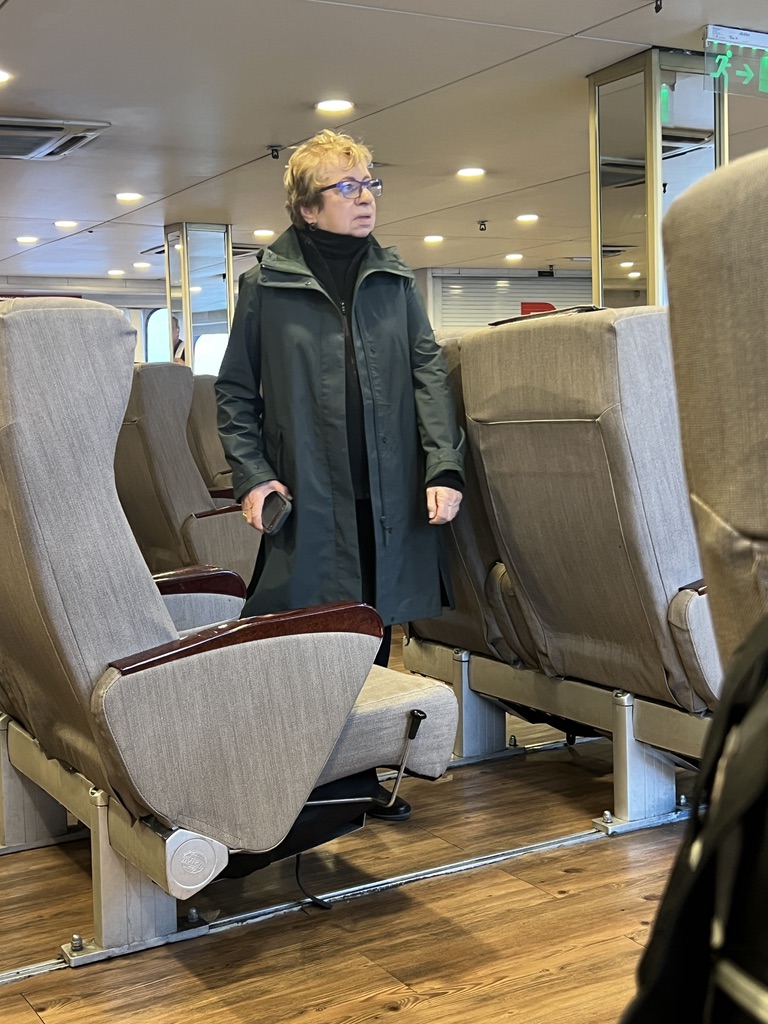
Although it is a very short crossing, we had opted for the business class seats to ensure we had space for our luggage, and because we remembered the ferry from Tanzania to Zanzibar where only first class passengers can take on luggage and even that was collected if it was too large, but in a somewhat organized fashion and then distributed from a locked area for business passengers as opposed to those in open seating whose bags were tossed and scattered and it was a free-for-all in Zanzibar to retrieve your luggage. Anyway, we didn’t totally understand the Argentinian system, but eventually found our way to the business section (which was only about 25% filled) and had a comfortable journey on the Bouquebus Ferry that left promptly at 5:01 as scheduled and dropped us in Buenos Aires at 6:15. When we exited the ferry we understood the advantage and also the mild humiliation of being in business class. We were all ushered out of our special section of the ferry, walking through the “open seating section” and they all had to wait until we were completely off the ferry. There were ferry personnel holding back all of the open seating folks so that no one could break into the line of business class people. So there you have it. They also serve a welcome glass of wine or champagne but we didn’t partake.
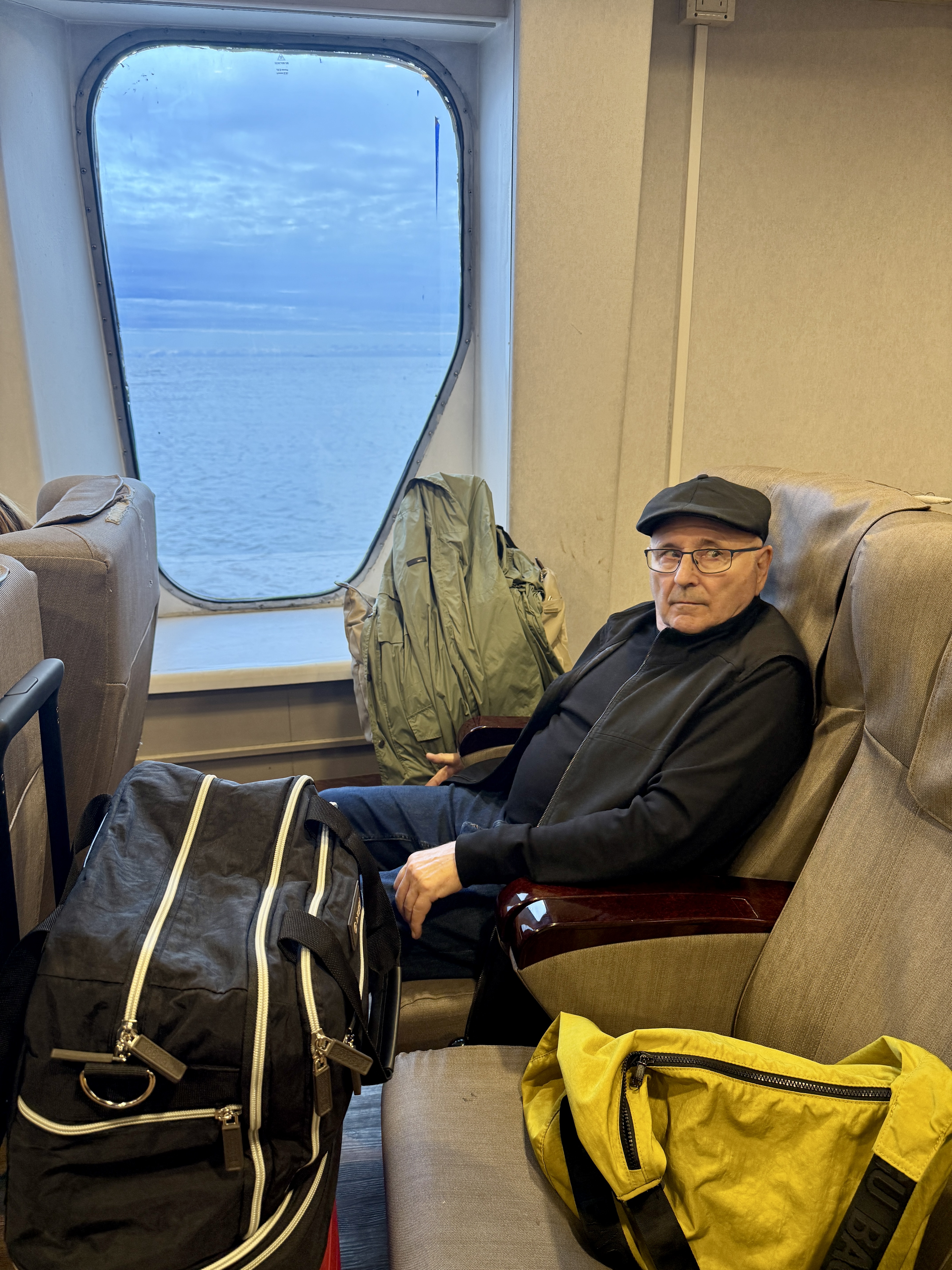

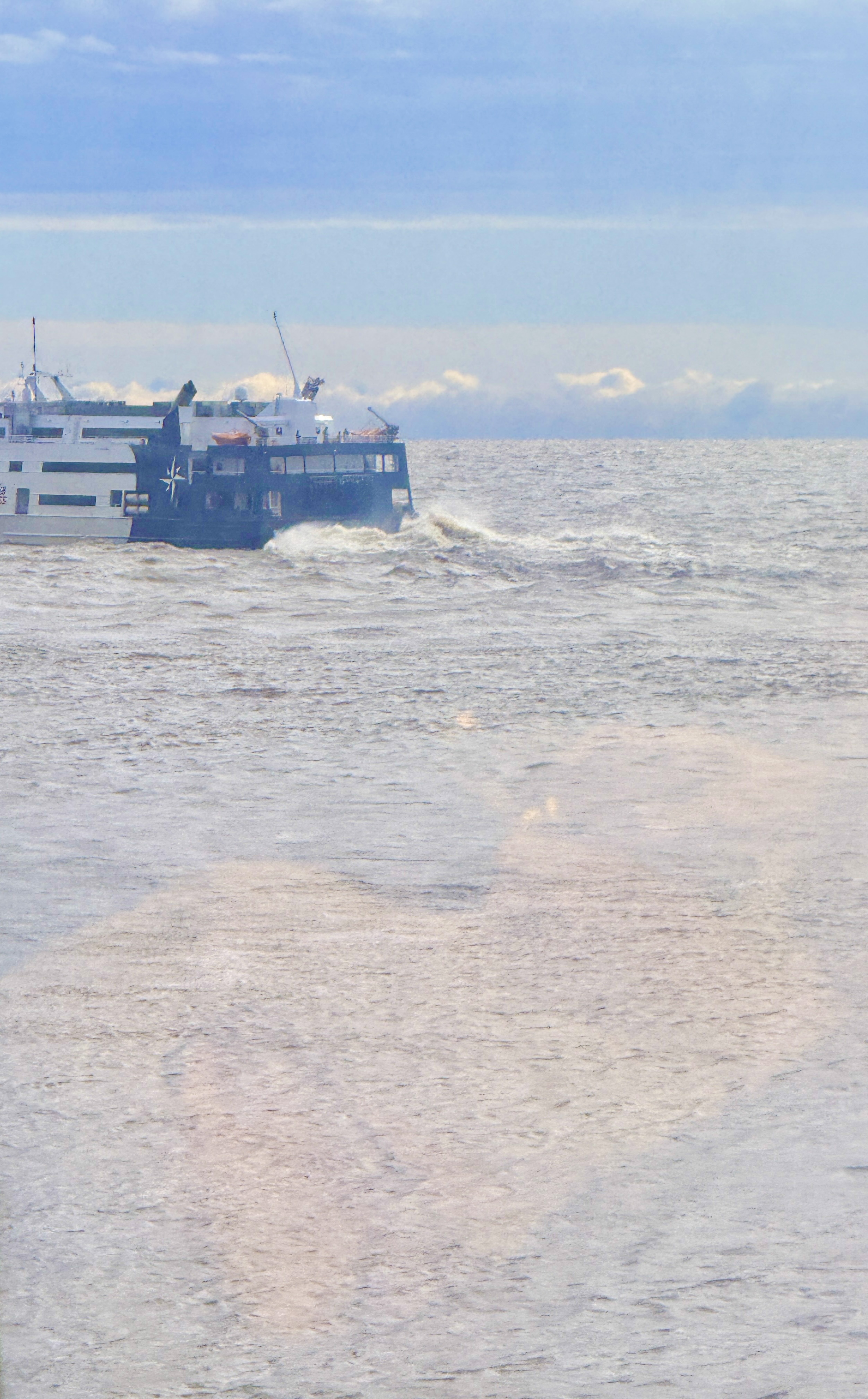
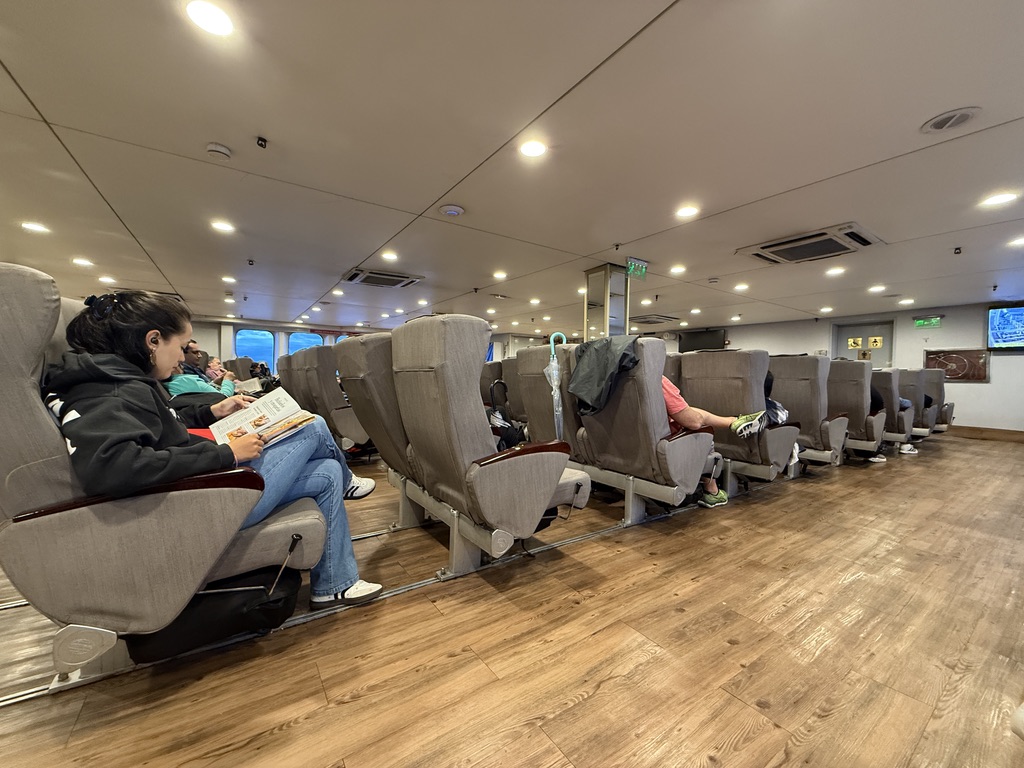
By the time we docked in Buenos Aires, the sun was shining and it was a crisp 62 degrees. We are staying at the Casa Lucia, which seems like a very nice hotel, although we cannot get any news in English–so we’ll have to rely on streaming for information about what’s happening back home. So the big snag of the day—As we got out of the taxi, got our bags from the trunk, and walked into the hotel, Mike suddenly realized that he left his jacket in the back seat of the taxi. The hotel is on a very narrow street and the taxi driver was antsy to move on since stopping in front of the hotel sort of blocked the street. Anyway, Mike ran out, but the taxi was already a block away. Inside the pocket of his jacket is his international drivers license (which we hope we do not need to present when we rent a car for the final two days of our journey; we didn’t need to show it in Uruguay for the car rental). And I guess tomorrow we will be on the lookout for a new jacket. While MIke has very little interest in clothes, he did like that jacket which he bought somewhere in Italy (I think in Orvieto) last year.
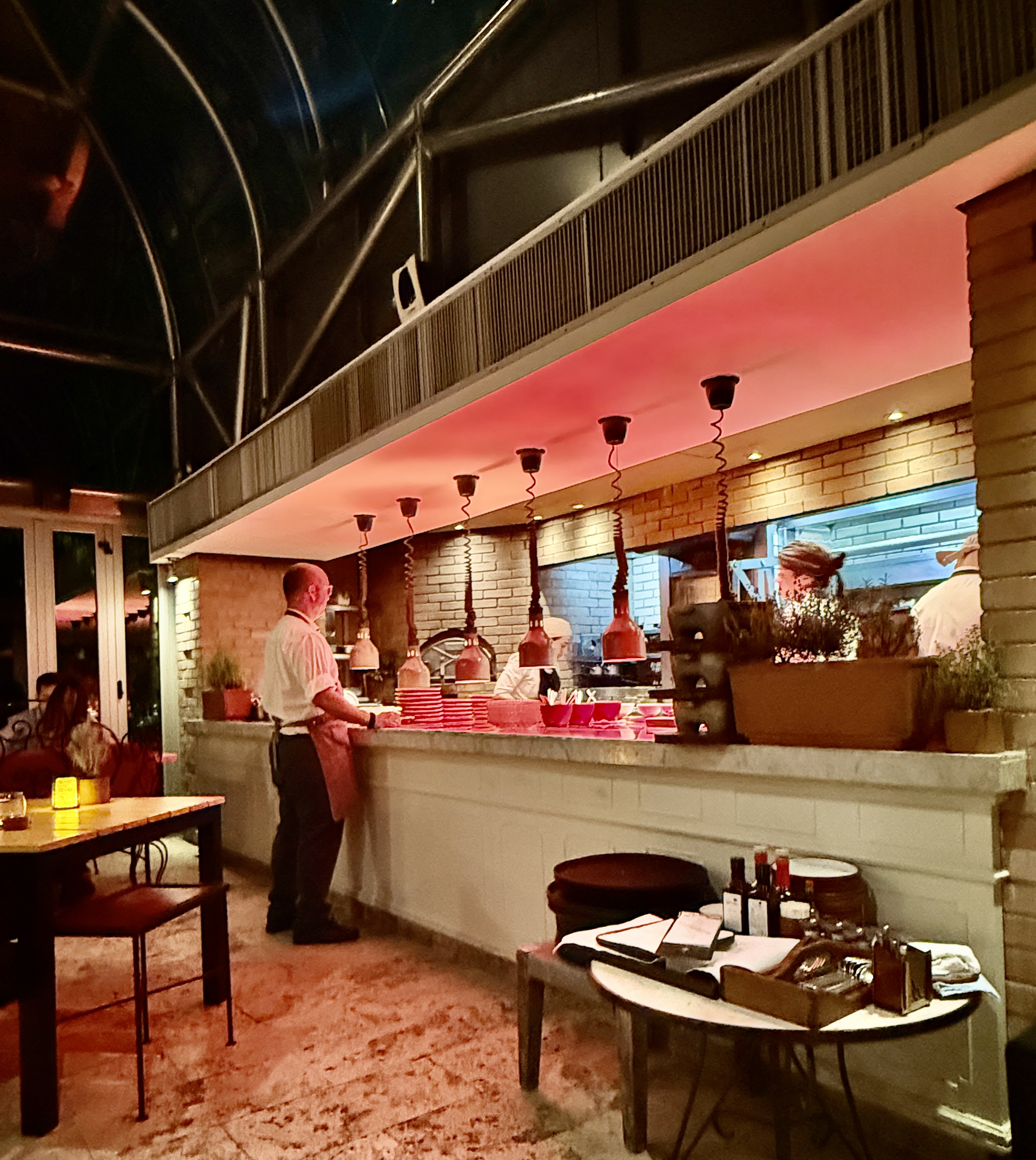
We had made a few dinner reservations for our time here in Buenos Aires and tonight we had selected a place that seemed very casual from the write-up and just a 7-minute walk from the hotel. “Nuestro Secreto” turned out to be quite casual as described, but located inside the Four Seasons Hotel. However it was like a small parilla despite being inside the hotel. Food was great if you are a meat eater. We started with sweetbreads that were either cooked in or marinated in lemon/lime or maybe they jjust put the lemons and cooked lemons on the dish after it was cooked. Whatever! It was really good. Then we shared a steak cooked on the grill–what they called “Holando-argentino Baby Beef… that just melted in your mouth. We ordered a side of roasted vegetables which was like getting another full meal–all sorts of potatoes, squash, asparagus, cauliflower, broccoli, and more, They also served complementary tiny starters–mnini empanadas stuffed with pumpkin. The meal was great, except for one thing—-you really needed a glass of red wine to go with it.

We strolled back to Casa Luciano which is located in what appears to be an upscale neighborhood and is close to the train station, where we need to go tomorrow to purchase our subway passes. So, English is not common in Buenos Aires either, and unlike Uruguay credit cards are not universally accepted (especially in taxis), so we need to locate an ATM quickly. We’ve mapped out a pretty ambitious day for tomorrow, which might now need to include jacket shopping. We’ll know at lot more tomorrow.
October 24, 2025 . Nearly Rained Out . Colonia del Sacramento.
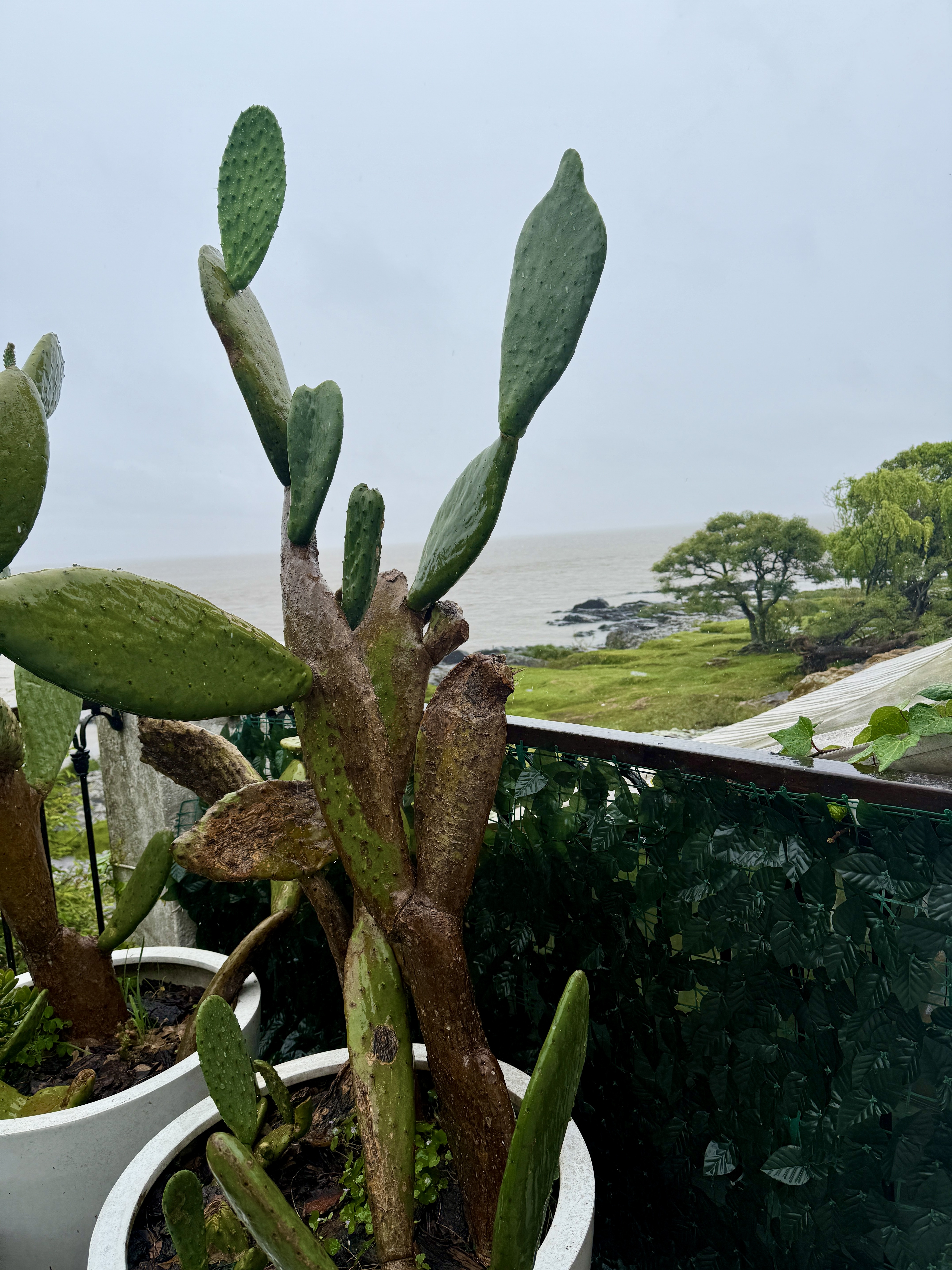
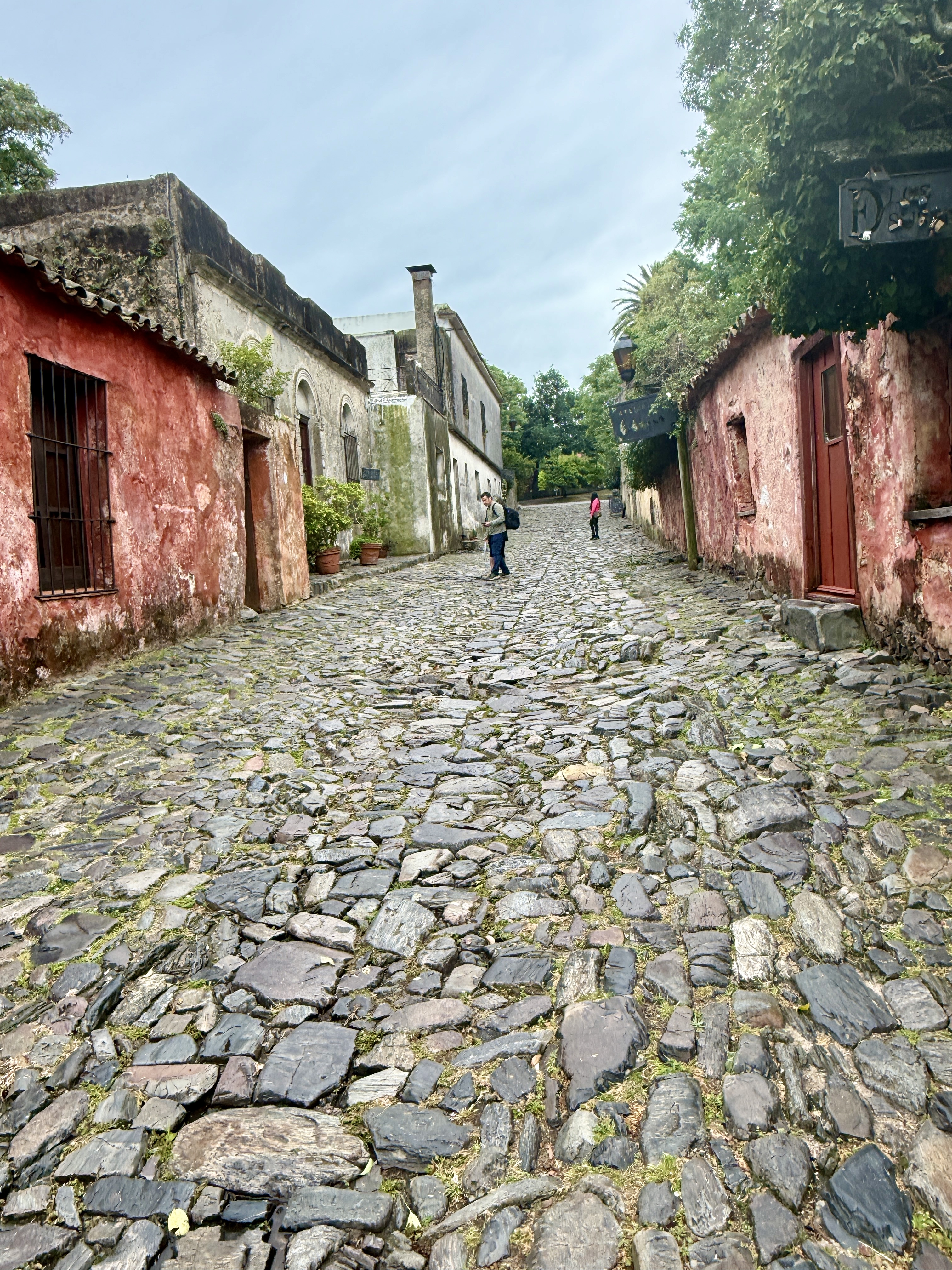
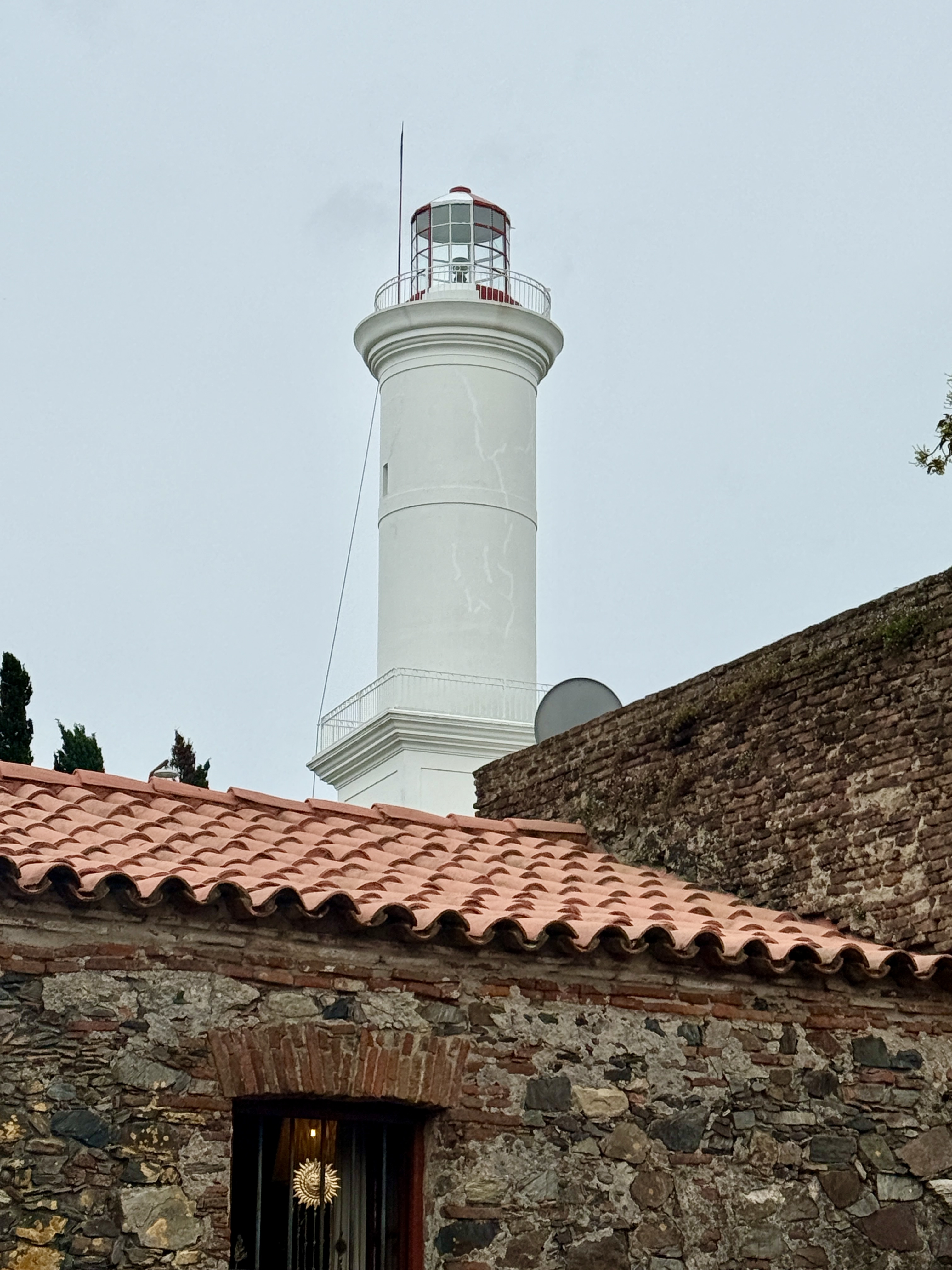
This will be a fairly short post, as we were basically rained out. We had plans to drive to Carmello–another small town about an hour to the west. But we woke up to torrential rains and thunder. We had breakfast at the hotel and I used the time after that to work, while Mike searched for restaurants in Buenos Aires where we will head tomorrow. We monitored the potential invasion of Oakland and are glad evreyone is now safe… for the moment.
A few more notes about Uruguay:
- Because it is a very secular country, “Christmas” is referred to as “Family Day” (a holiday to honor families) and Easter week is called “Tourism Week”–a vacation time to travel.
- Uruguay gets all of its electricity from renewable sources, mostly hydropower..
- There are more cows in Uruguay than people; three cows for every person.
- Uruguay has one of the highest literacy rates in the world.
- It was the first country in Latin America to establish a welfare state.
- There is a national dish called “chivito” which is a sandwich that includes beefsteak, mozzarella, ham, tomatoes, mayonnaise, and olives, and often also includes hard boiled eggs, and is accompanied by french fries. We have not partaken… I hate mayonnaise! and there are just too many things in that sandwich for me.
Anyway, at around 2:30 the rain stopped or turned into a drizzle so we ventured out for a snack (croquetas) and a short walk in parts of the town we hadn’t seen yet.
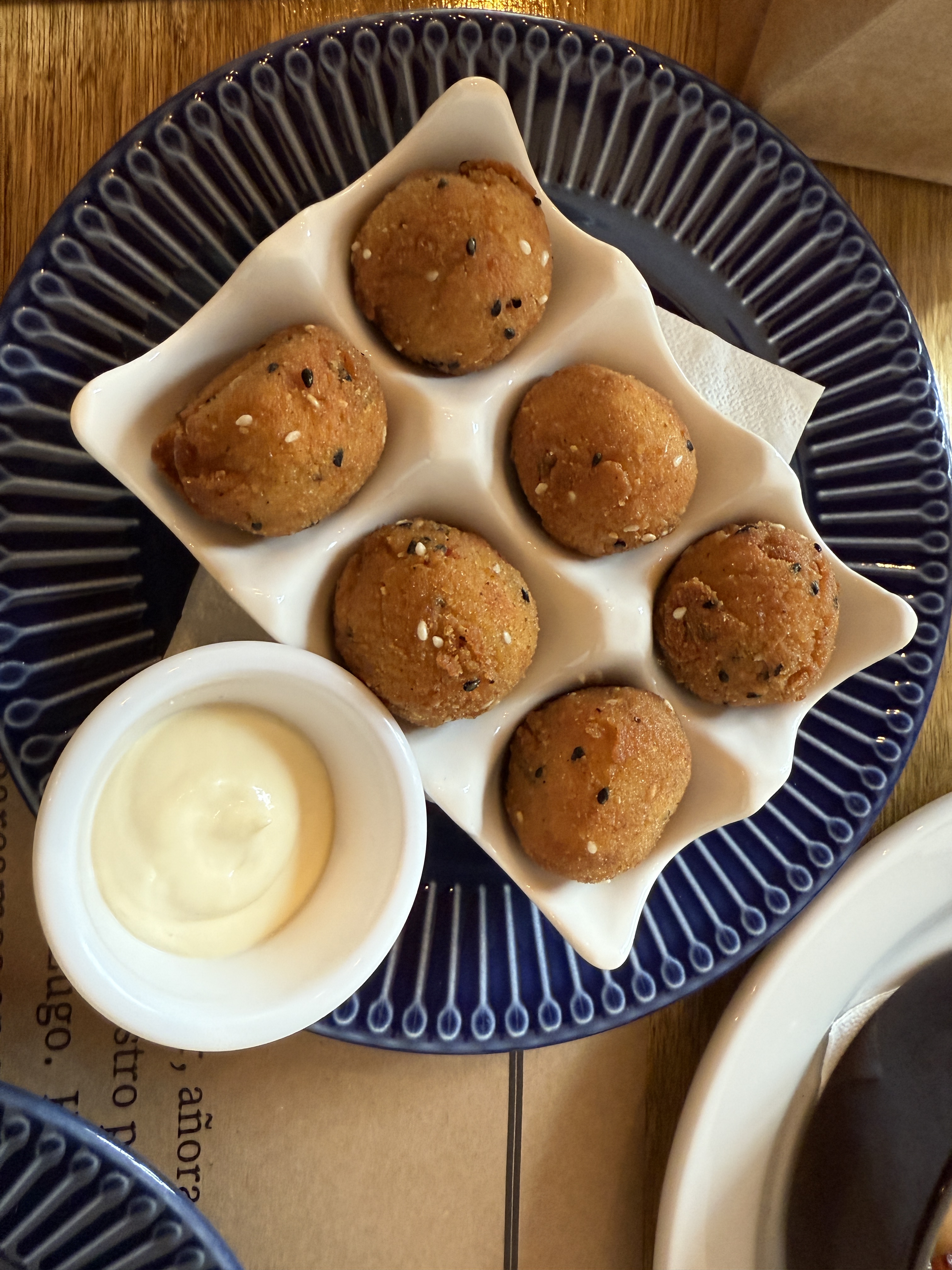
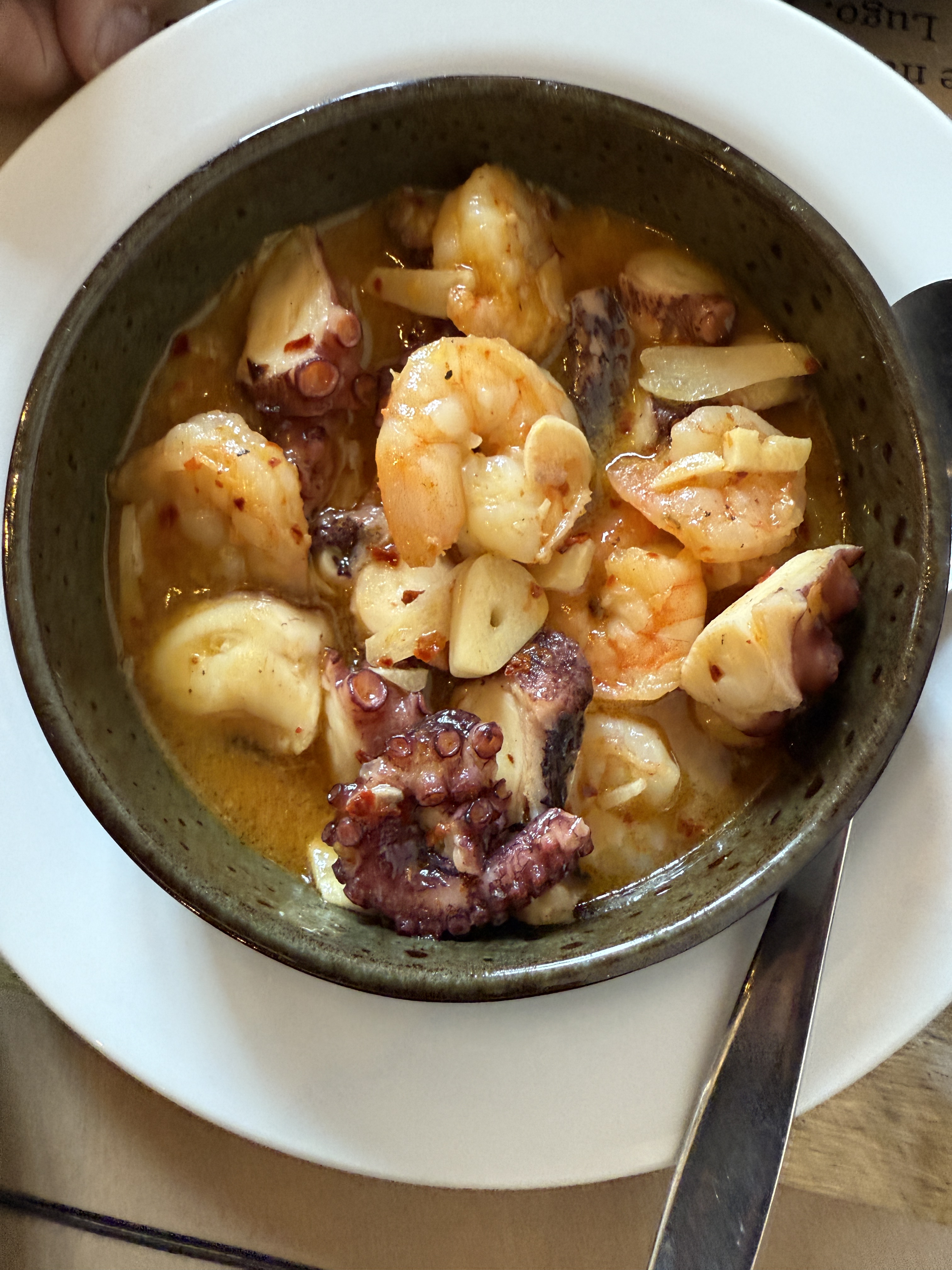
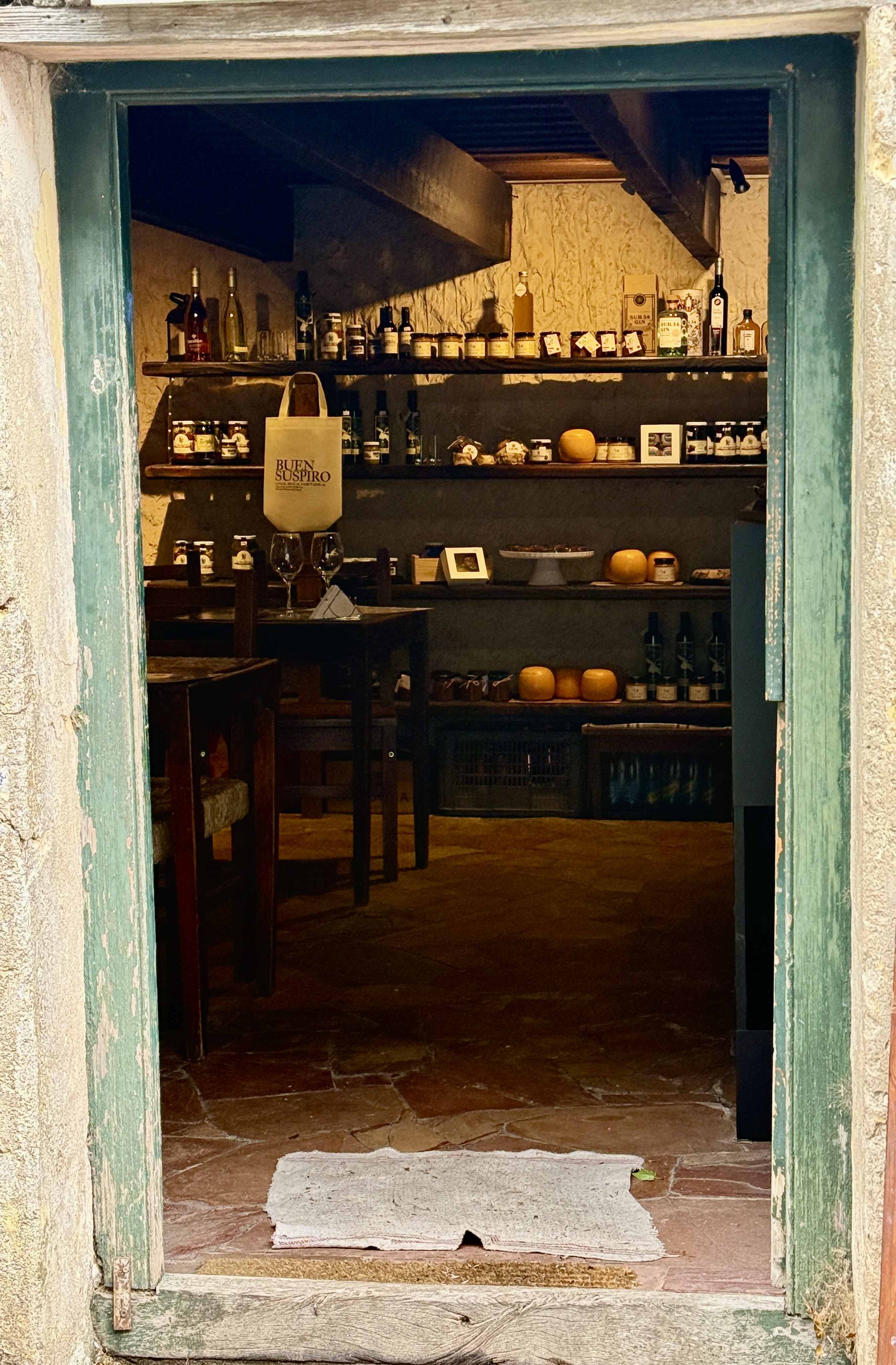
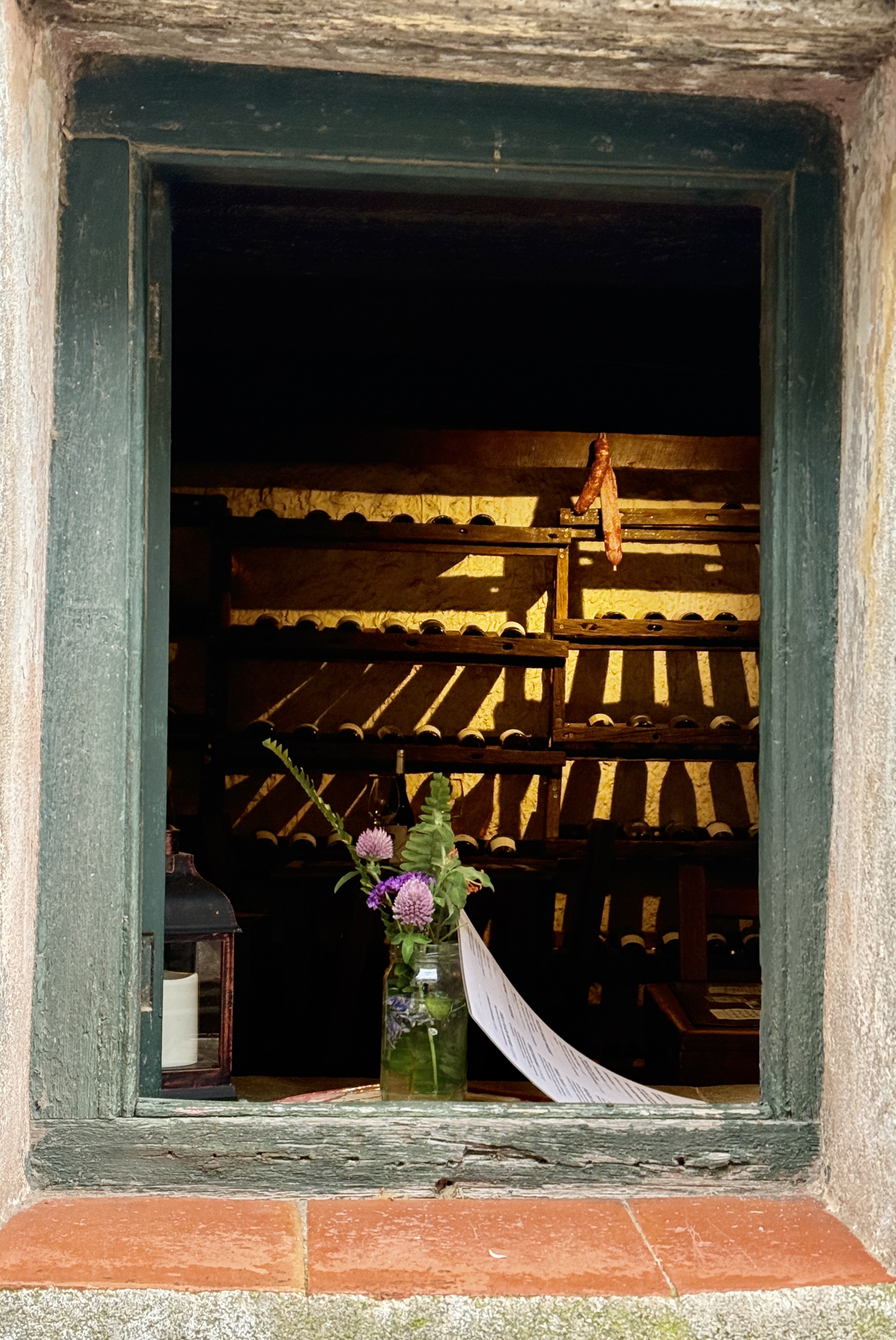
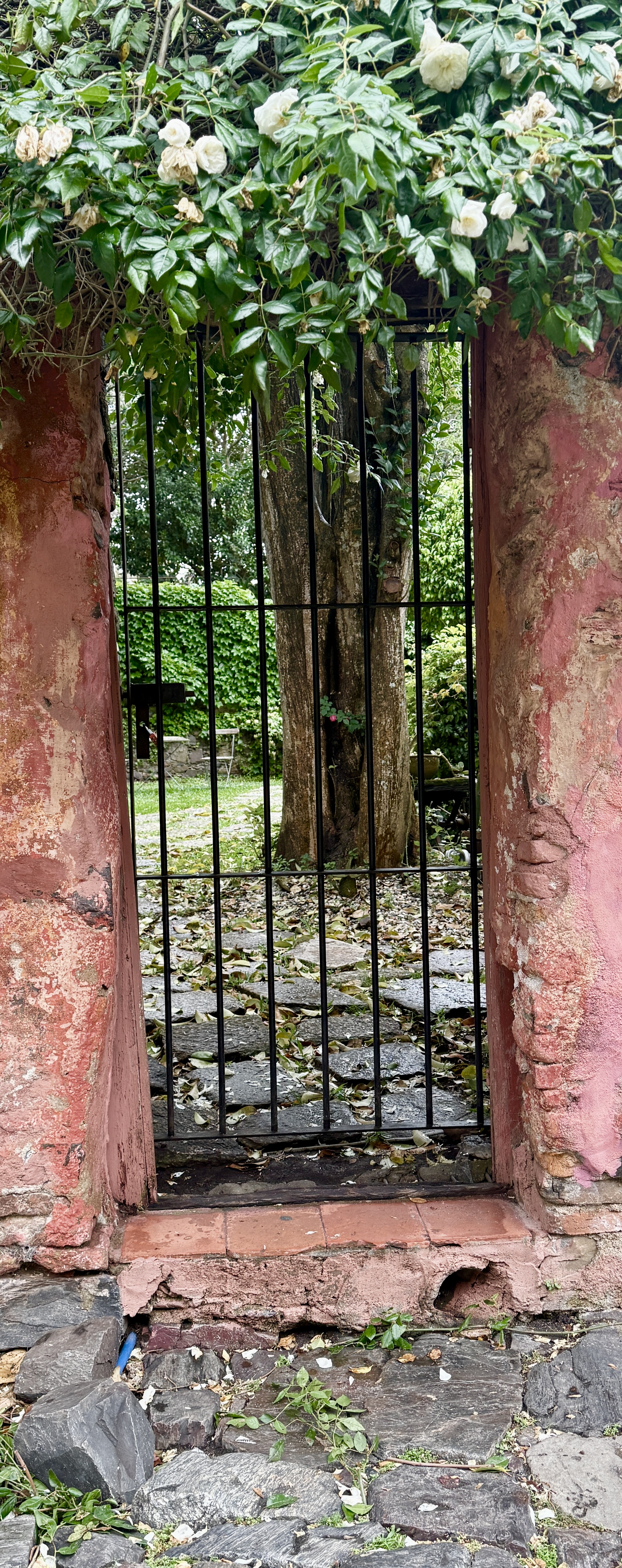
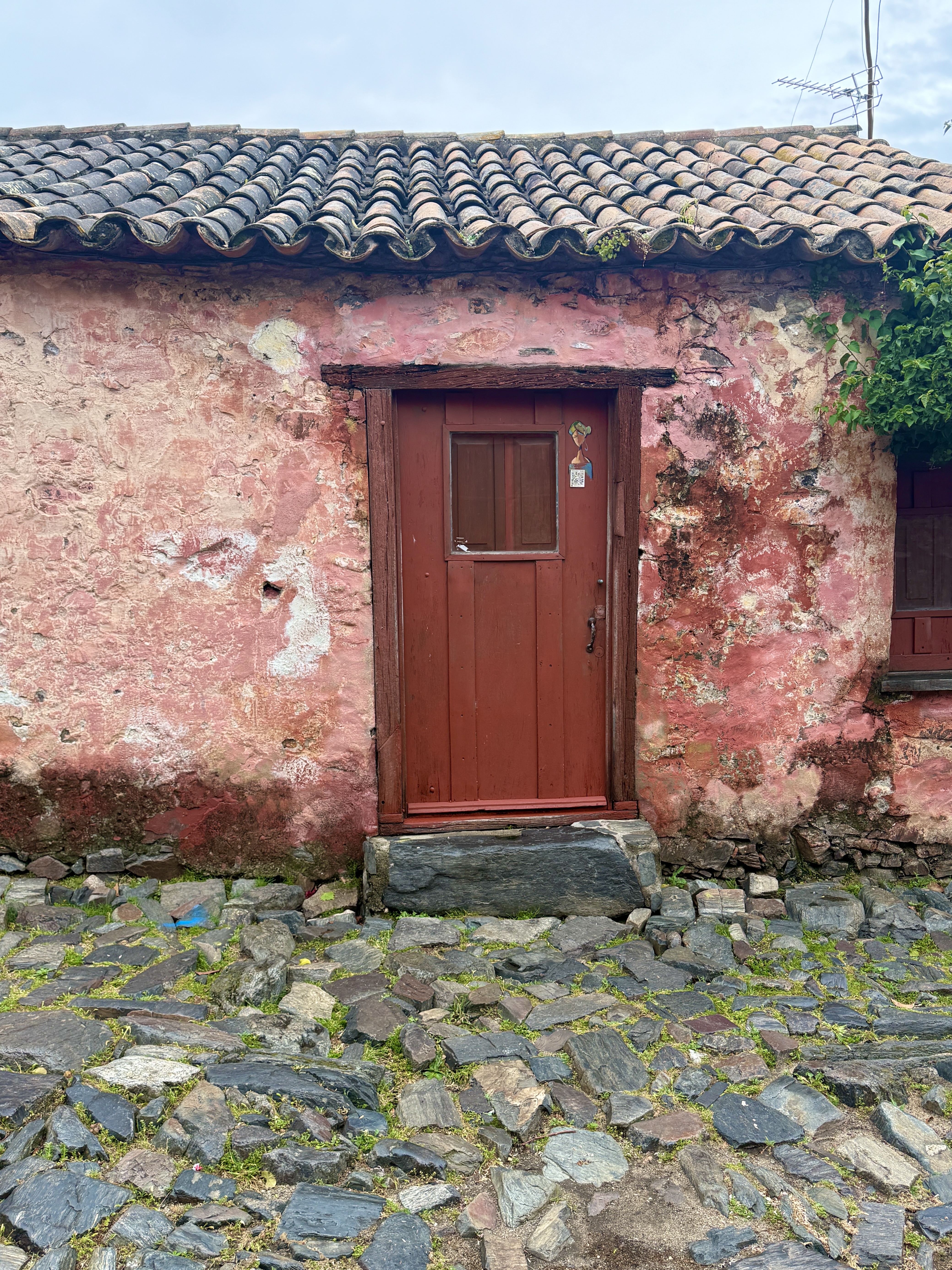
Came back to the hotel (relatively dry) and did some work and also some planning for our time in Buenos Aires. And then we decided to head for dinner at a restaurant just down the street from our hotel — Bohemia. It was pretty good. We had sweetbreads and also a tagliolini dish with grilled shrimp. Basically they grill everything.
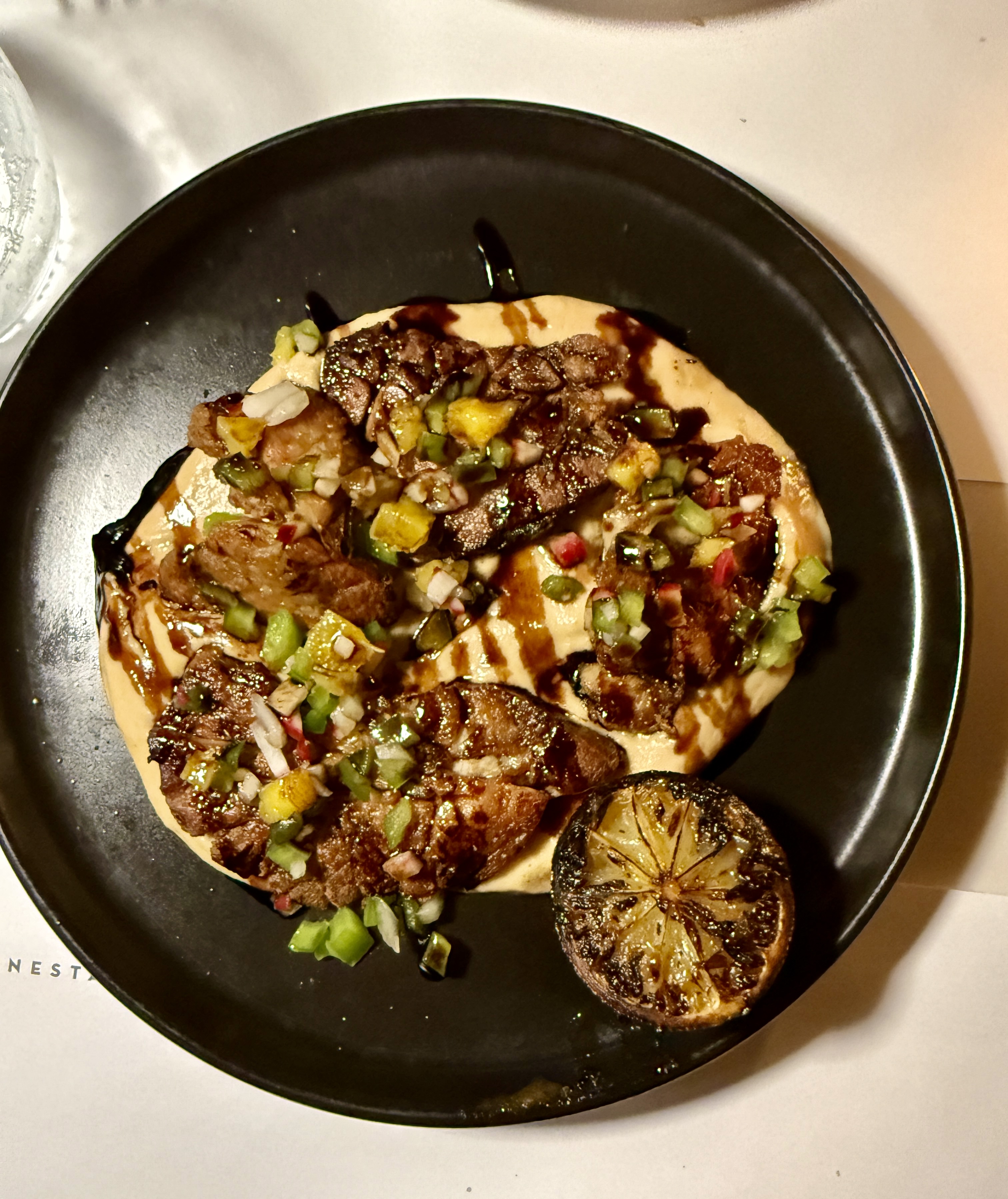
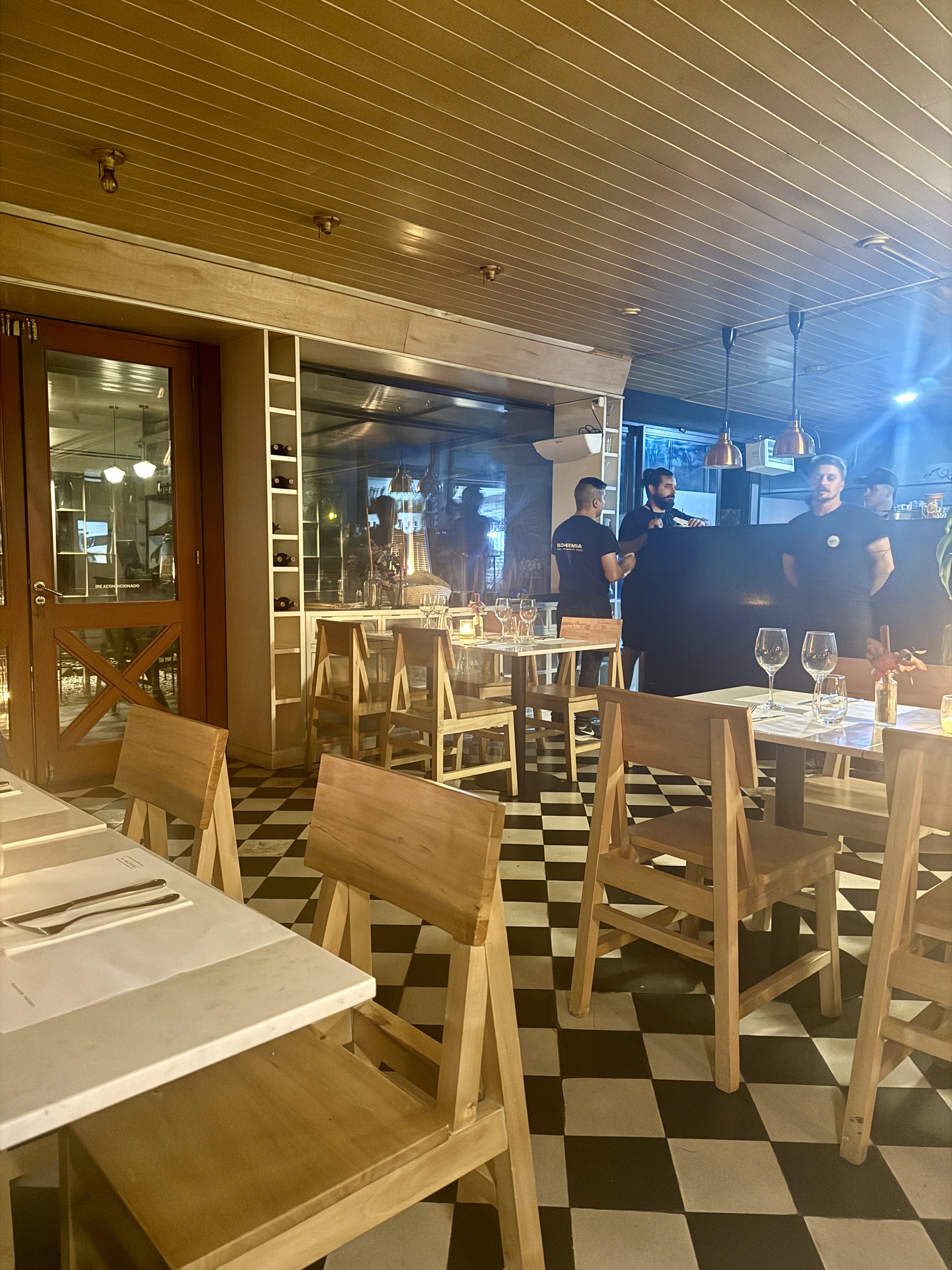

Hopefully the rain will end by morning.
El Dia Ocho . October 23, 2026 . Colonia de Sacramento, Uruguay .
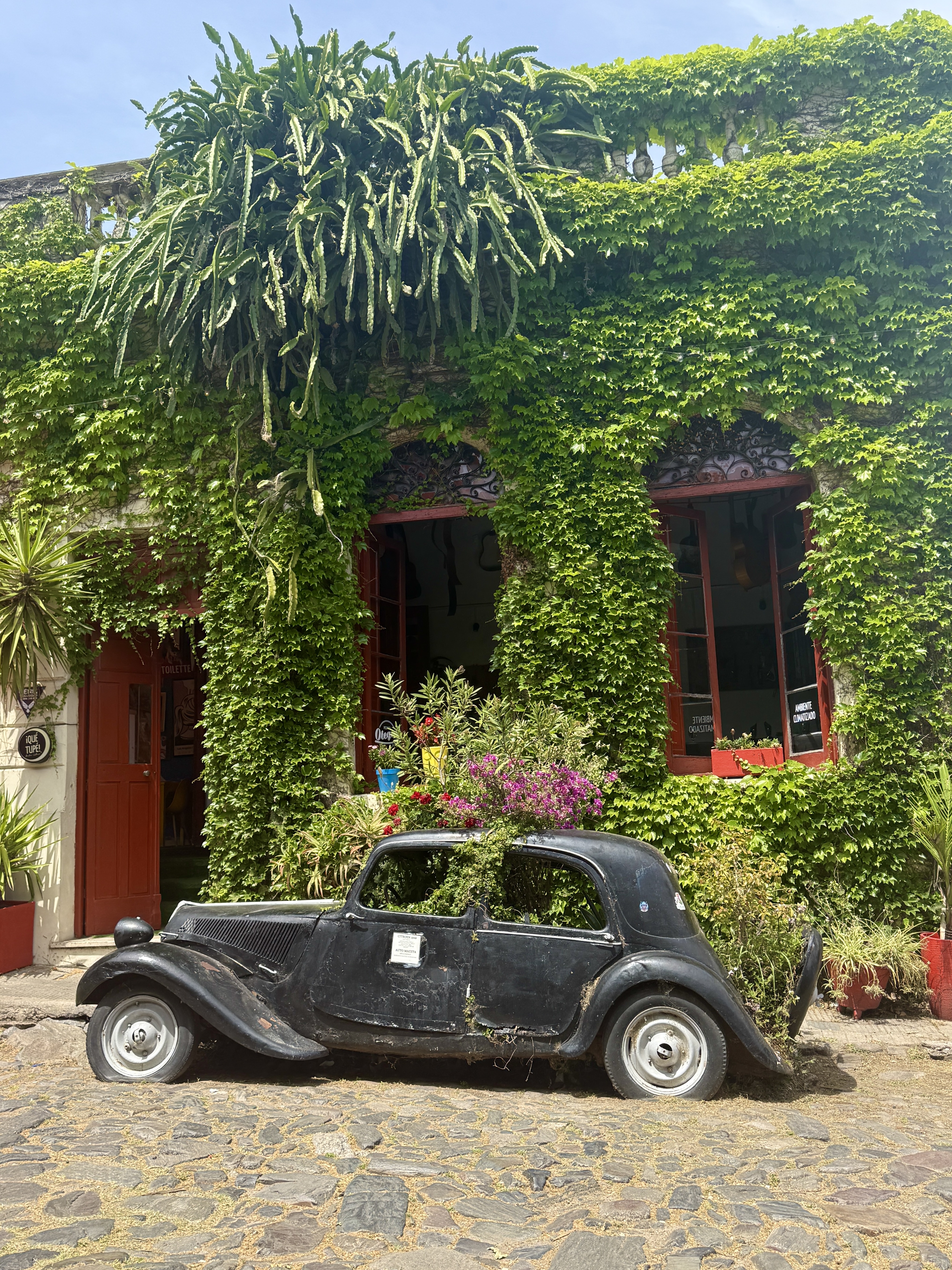
October 23, 2025
After breakfast at Charco Hotel, we headed out to really explore Colonia de Sacramento (“Colonia,” as it appears to be called by everyone). I don’t really understand how it can be called just “Colonia” since there are many other “Colonia de…” here in somewhat close proximity. But, oh well..
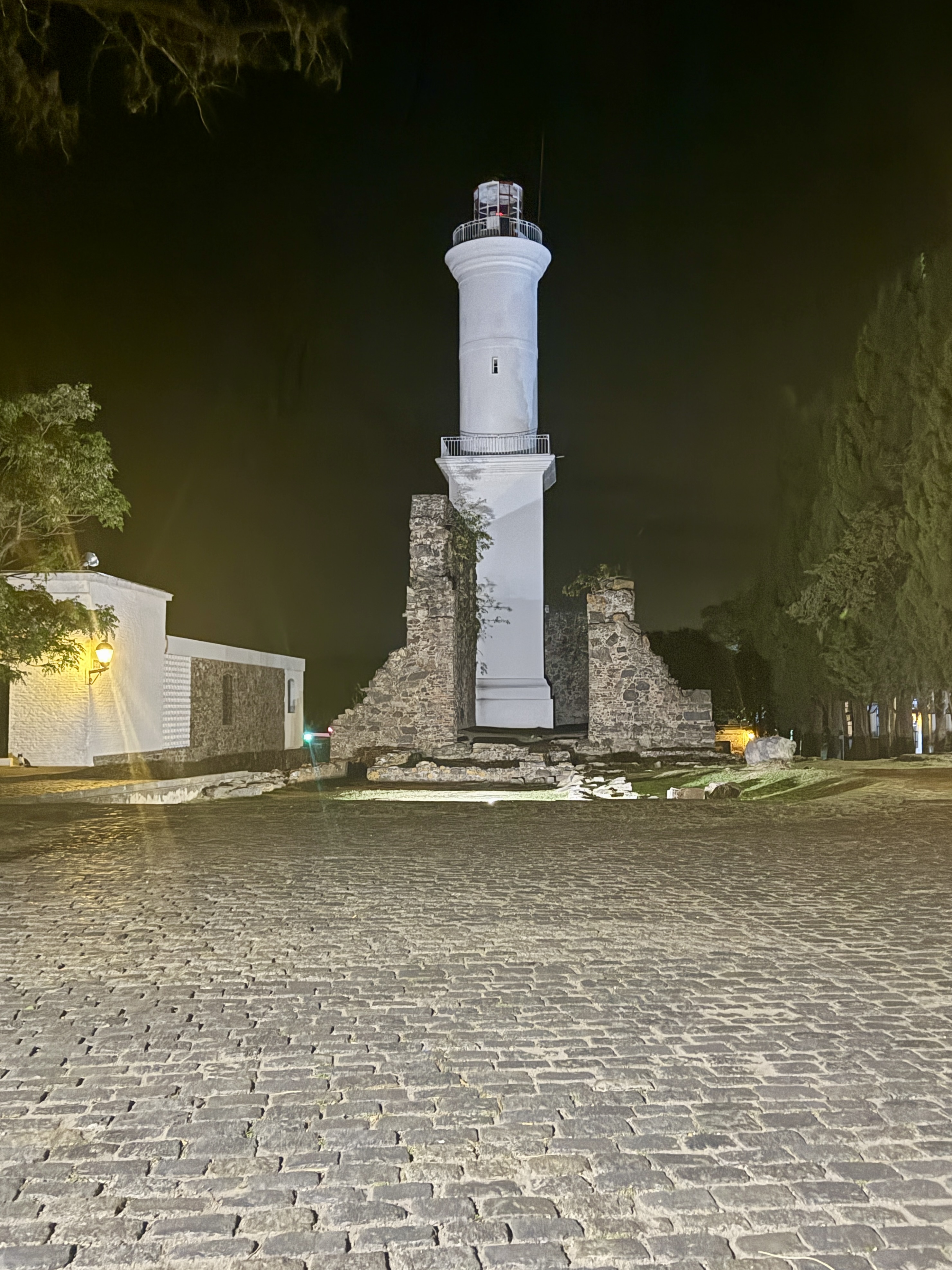
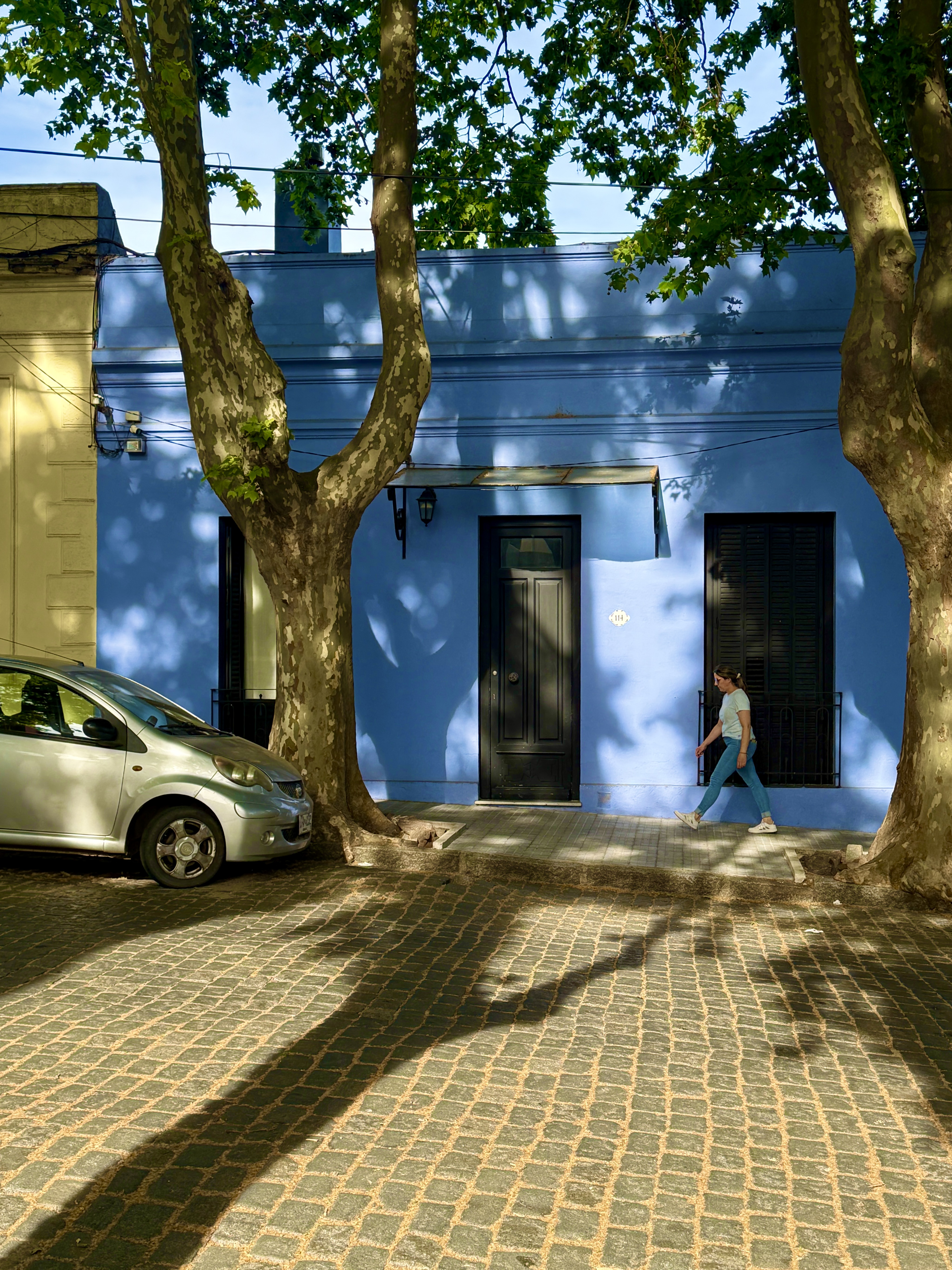
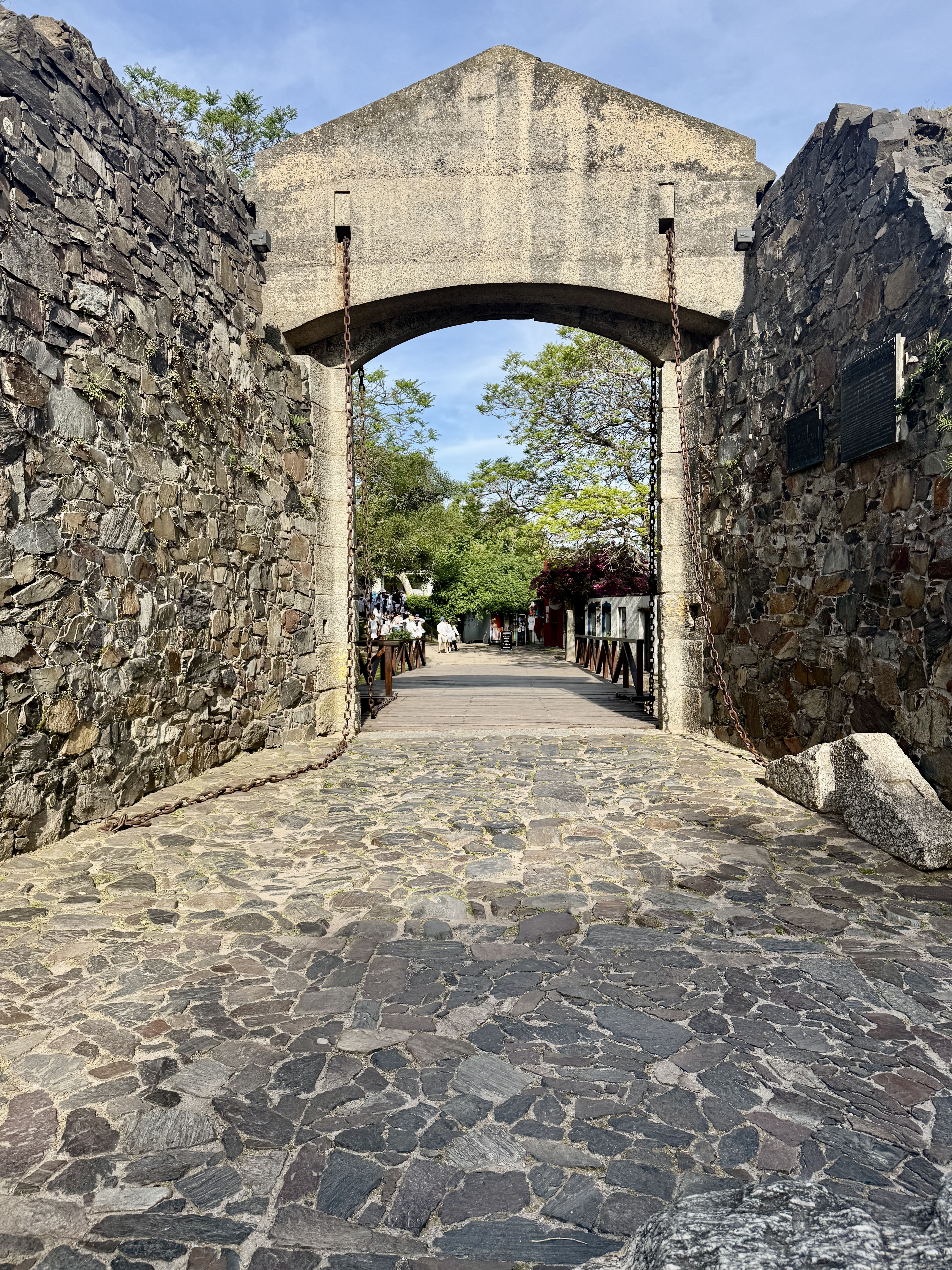
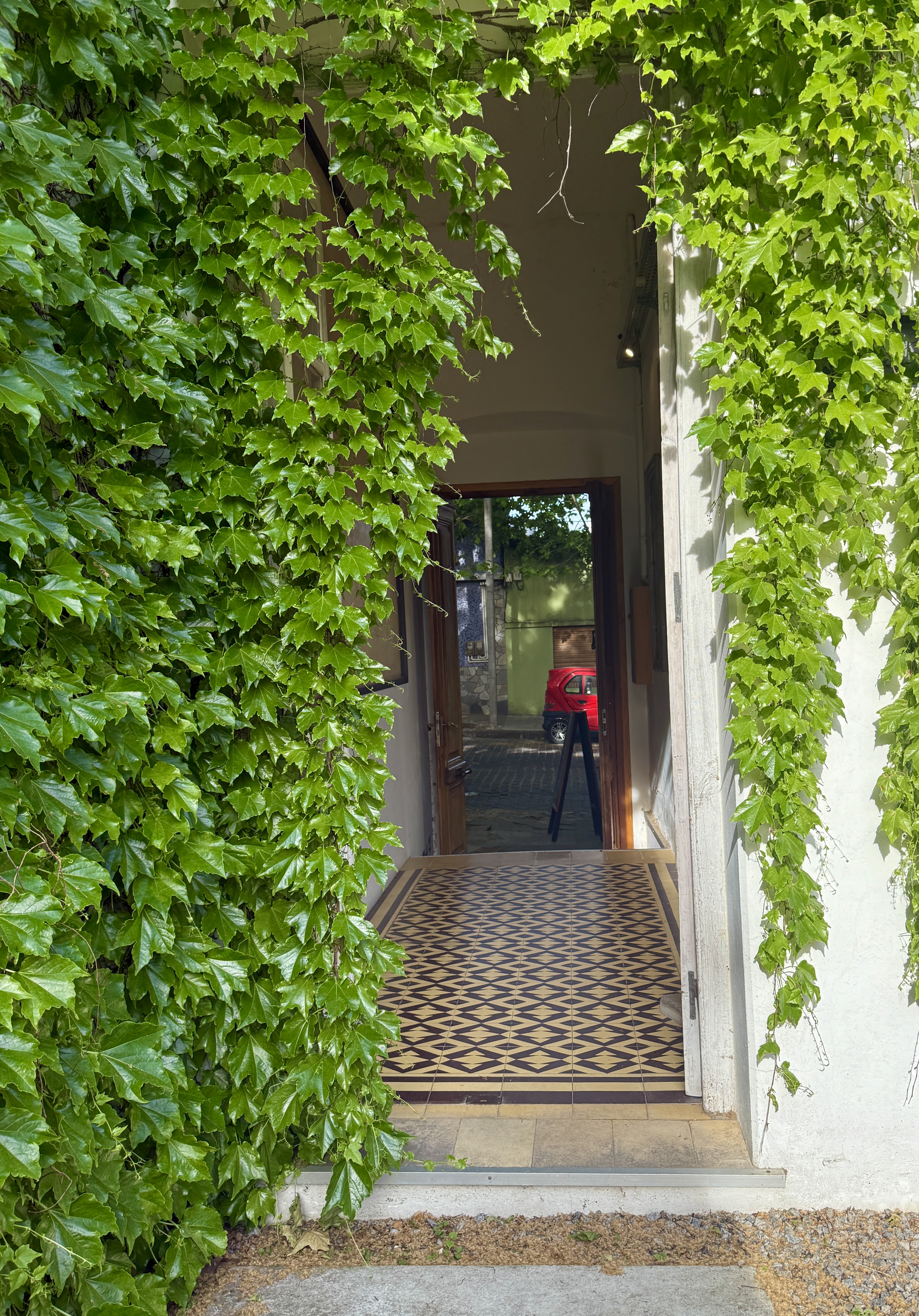
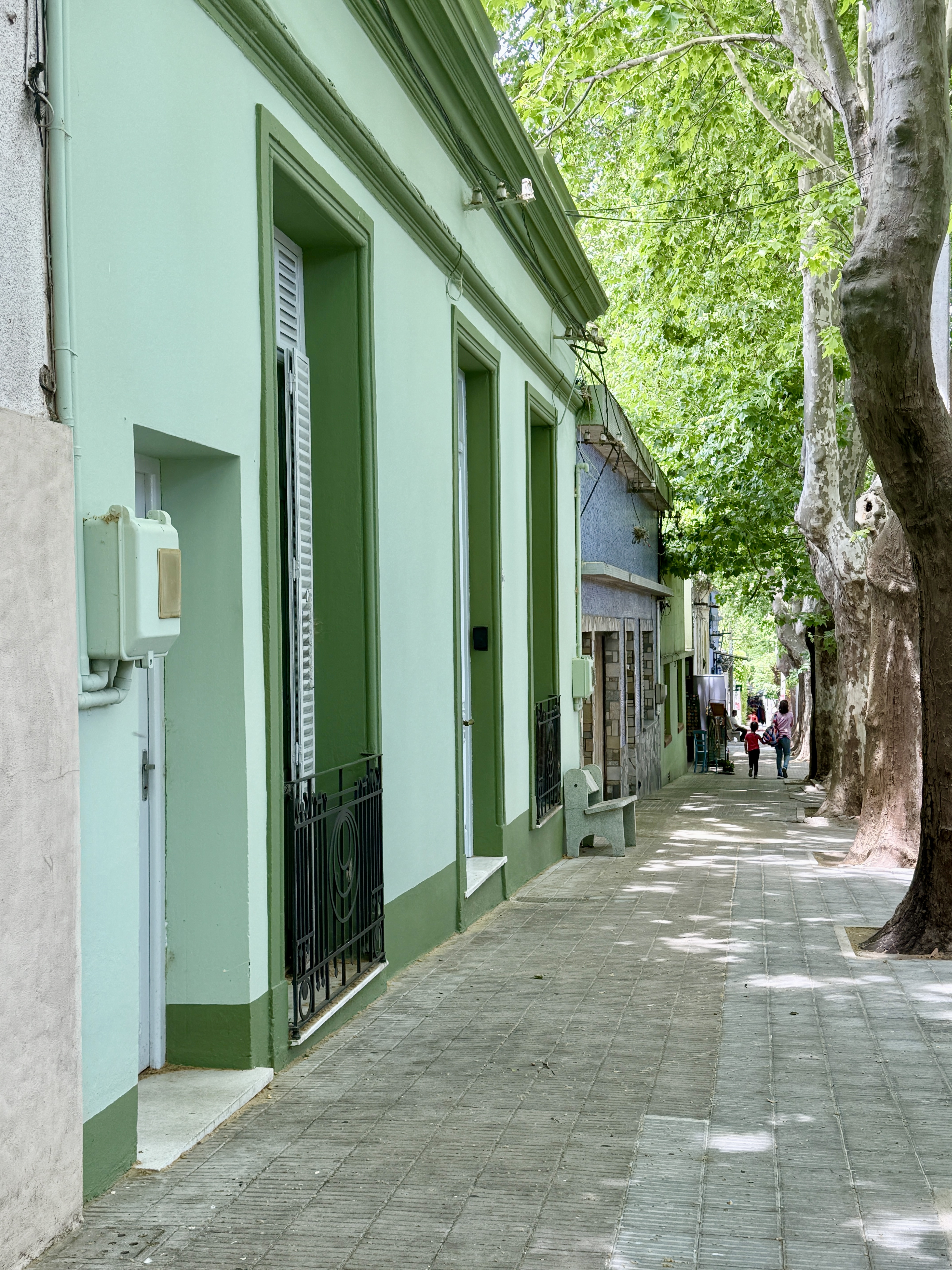
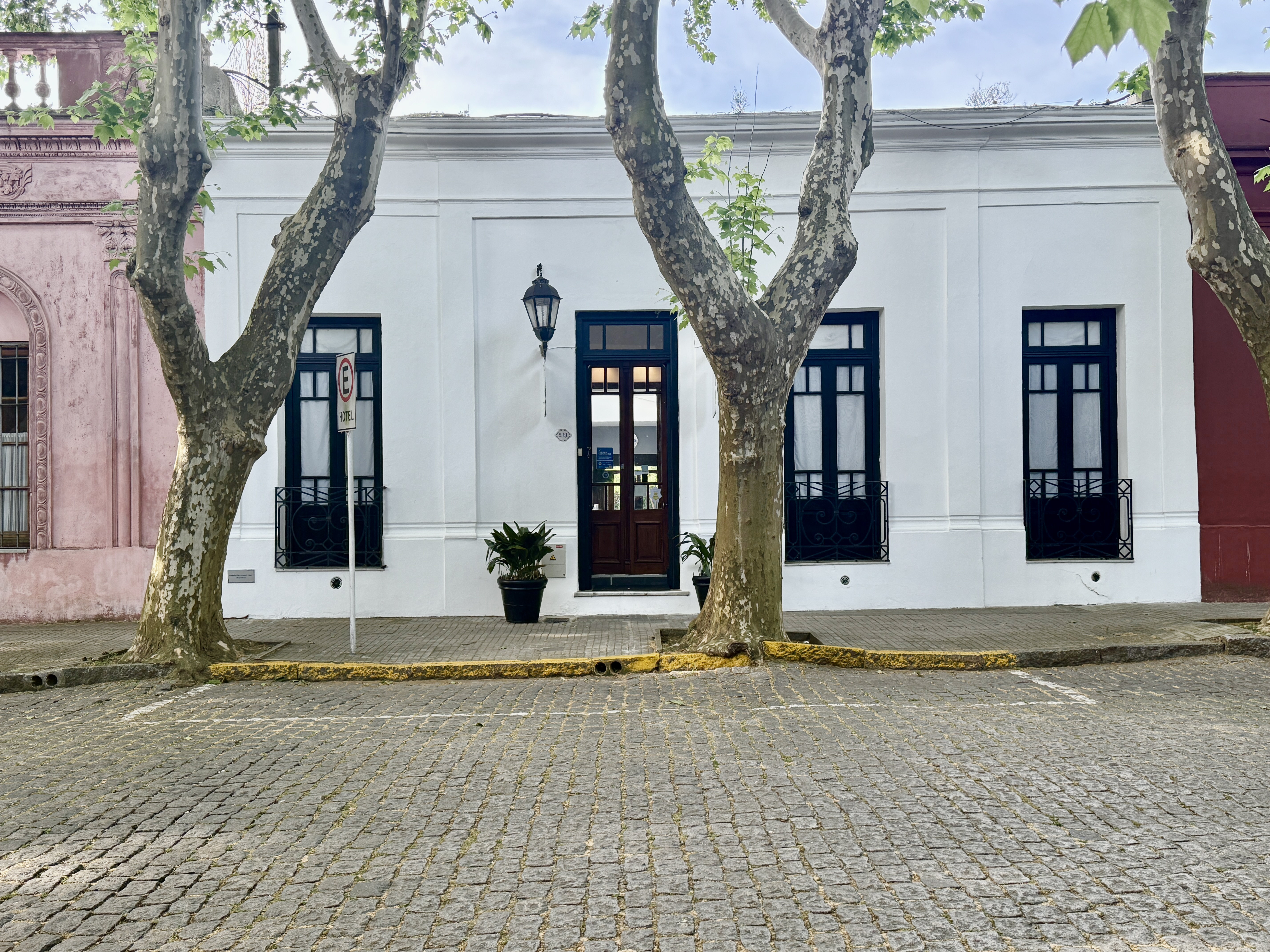
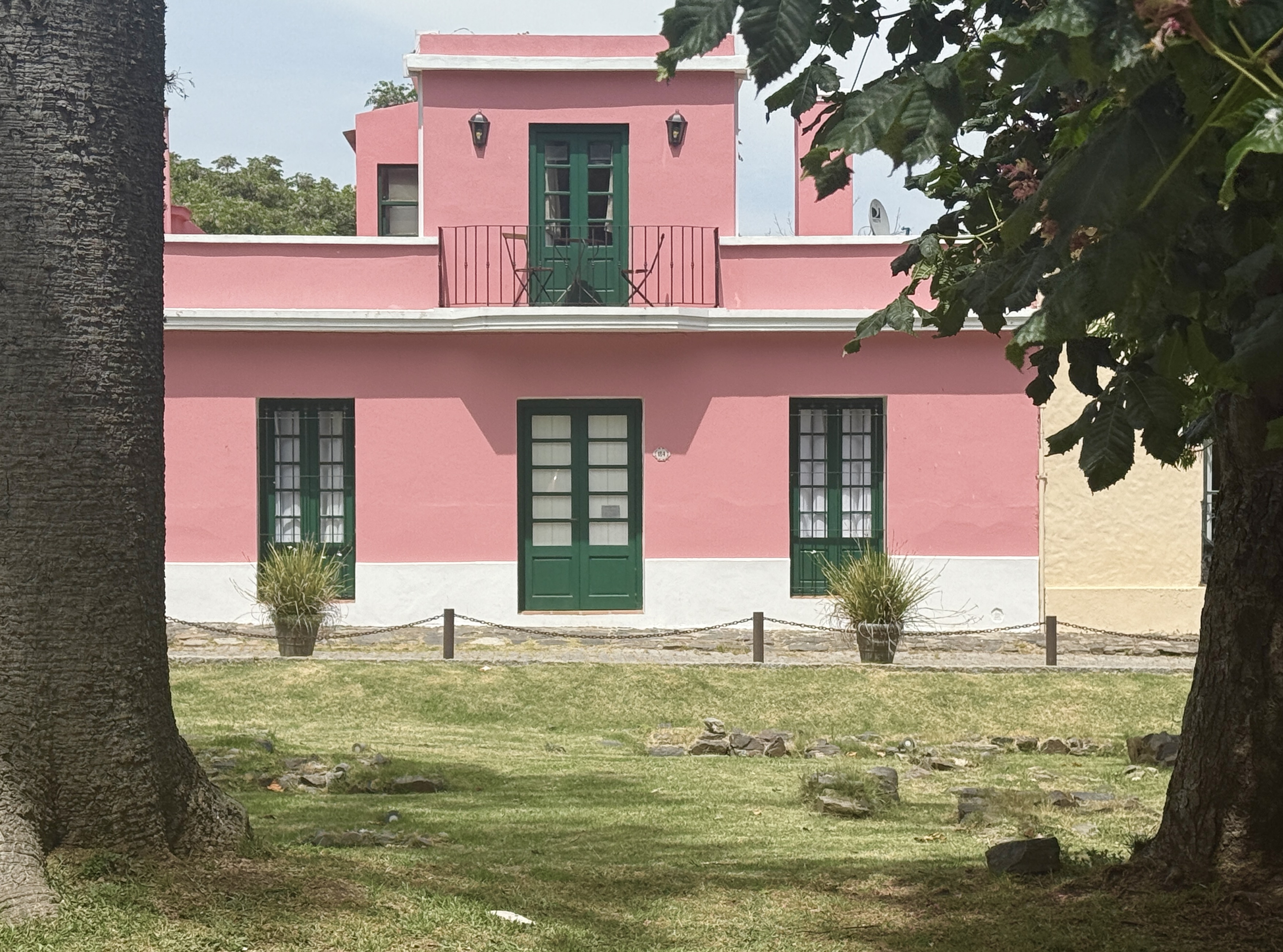
Colonia is charming. It’s got cobblestone everywhere–a bit treacherous, especially at night, but does add to the charm and the historic nature of the little city of 32,000 residents year-round. We strolled to the basilica, the lighthouse, the town square, and throughout the entire old section. It is one of the oldest towns in Uruguay and the historic quarter has been designated a UNESCO World Heritage Site. Modern Colonia del Sacramento produces textiles and has some kind of polytechnic center.
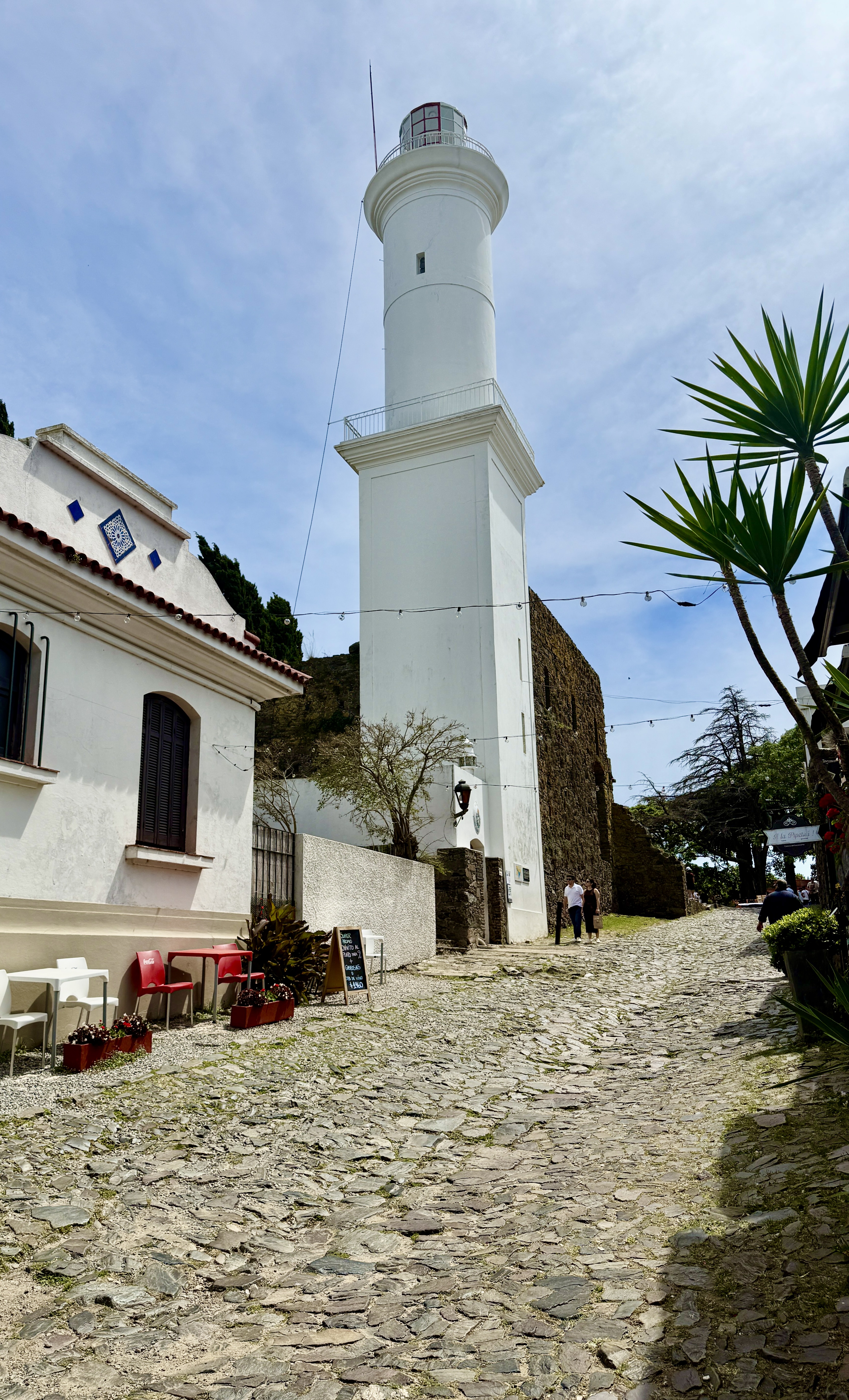
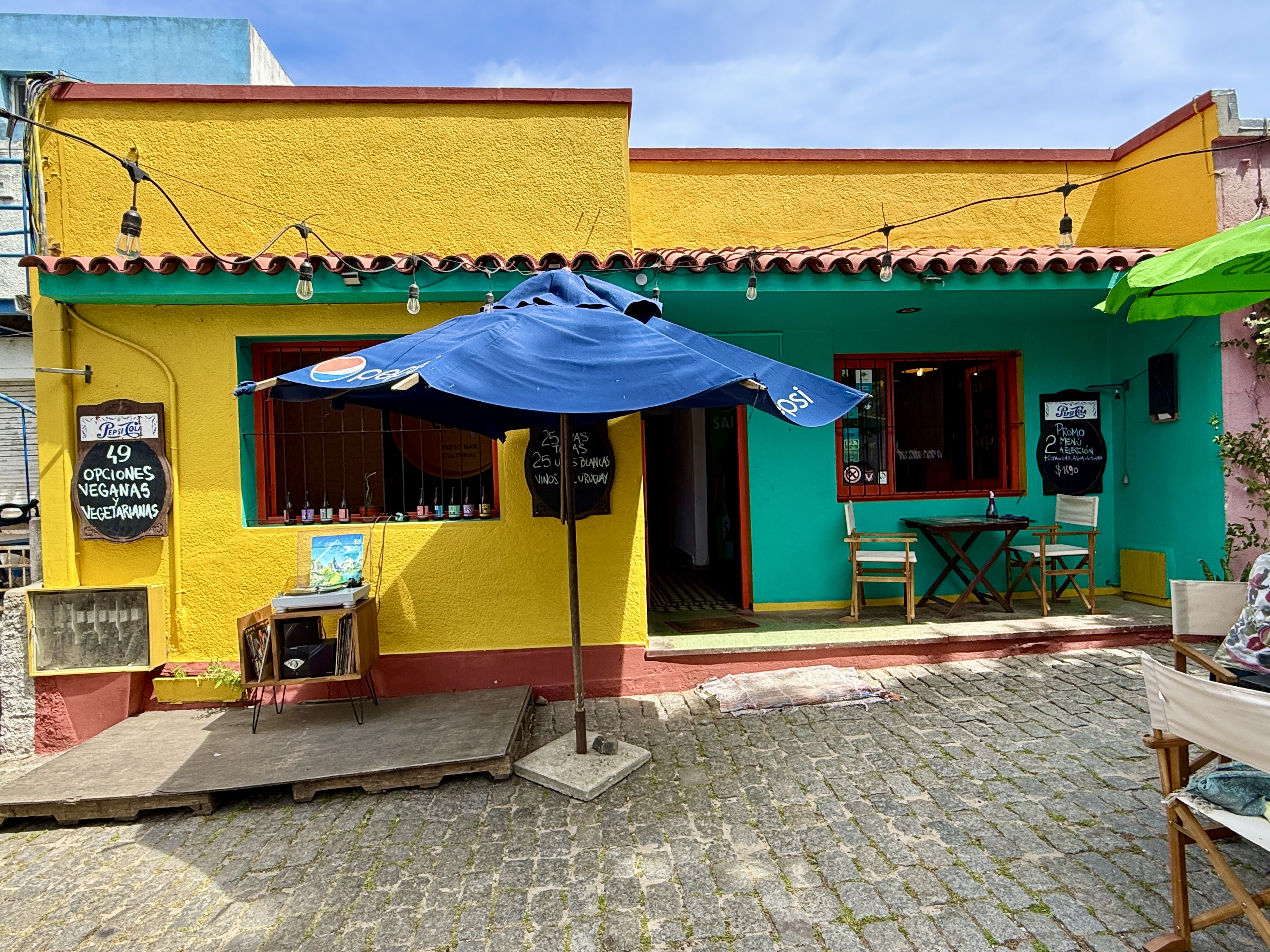
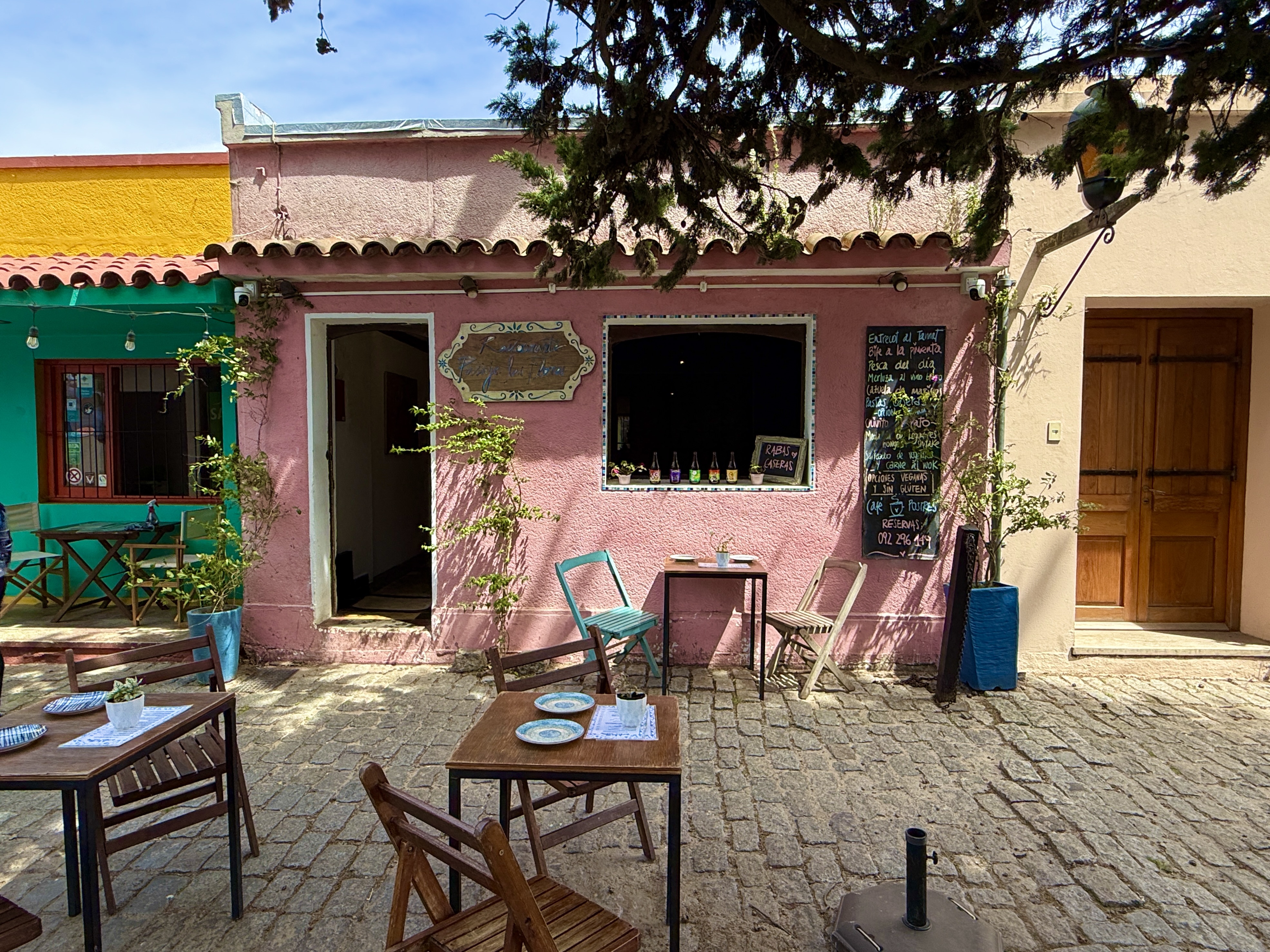

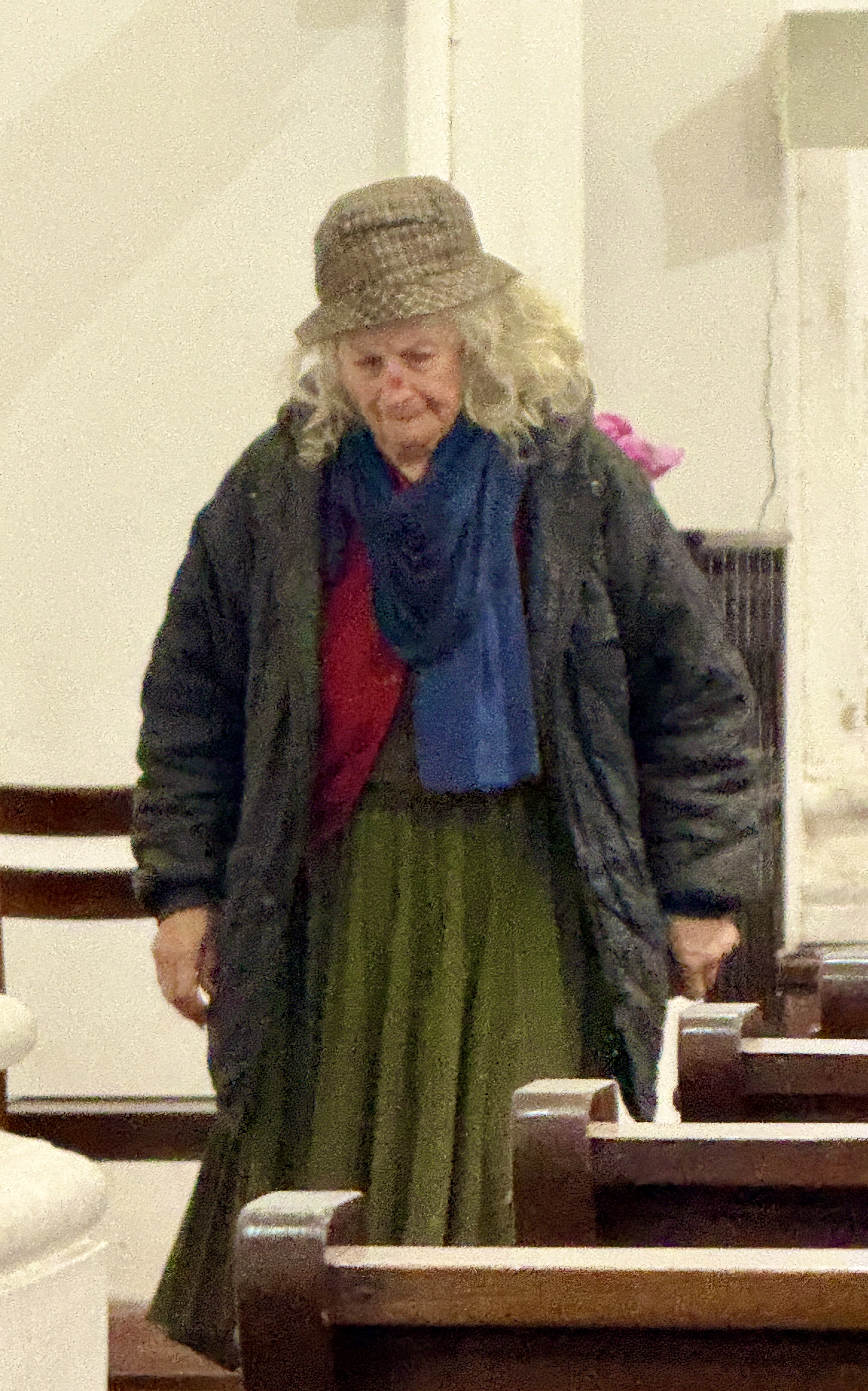
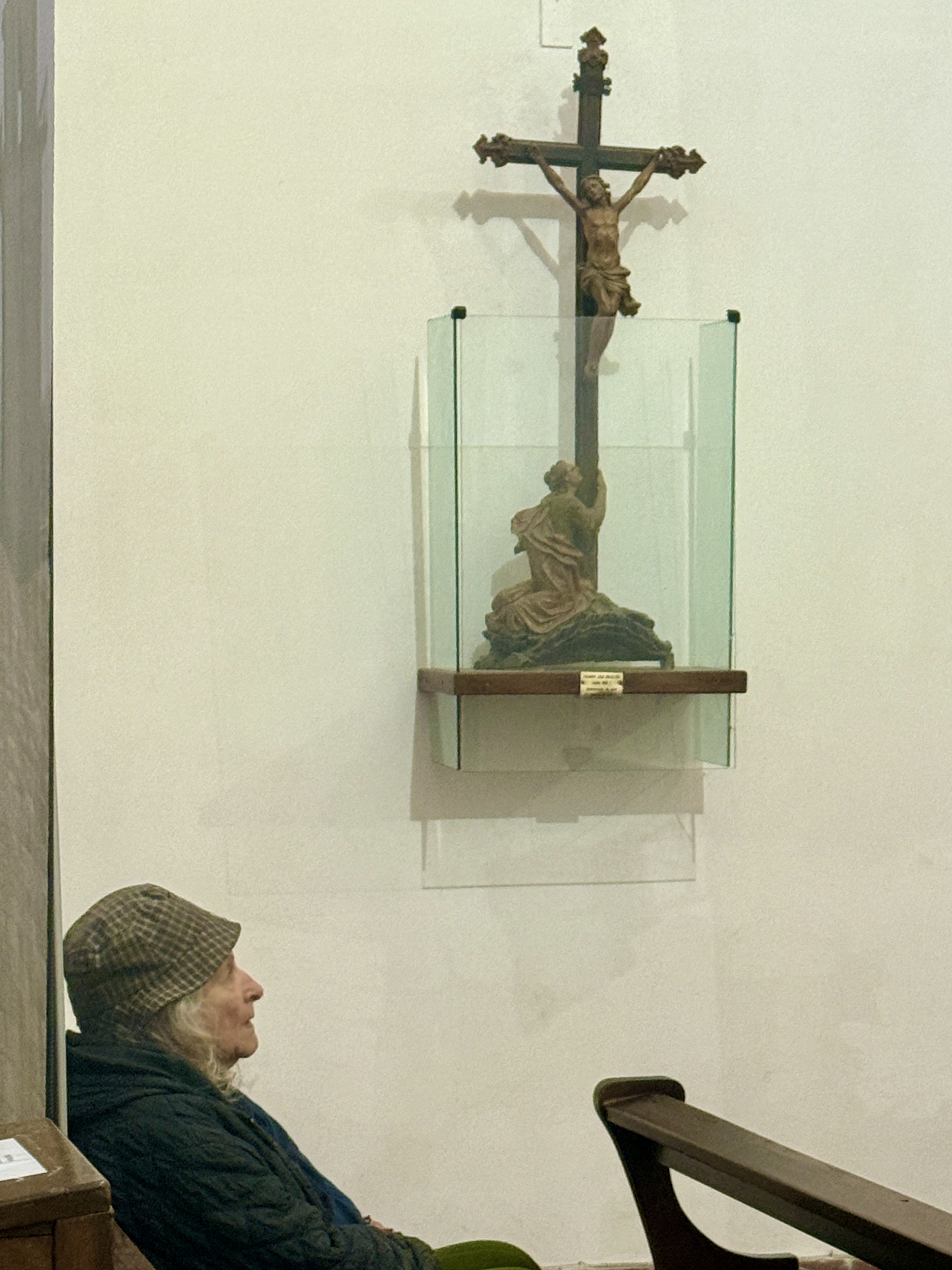
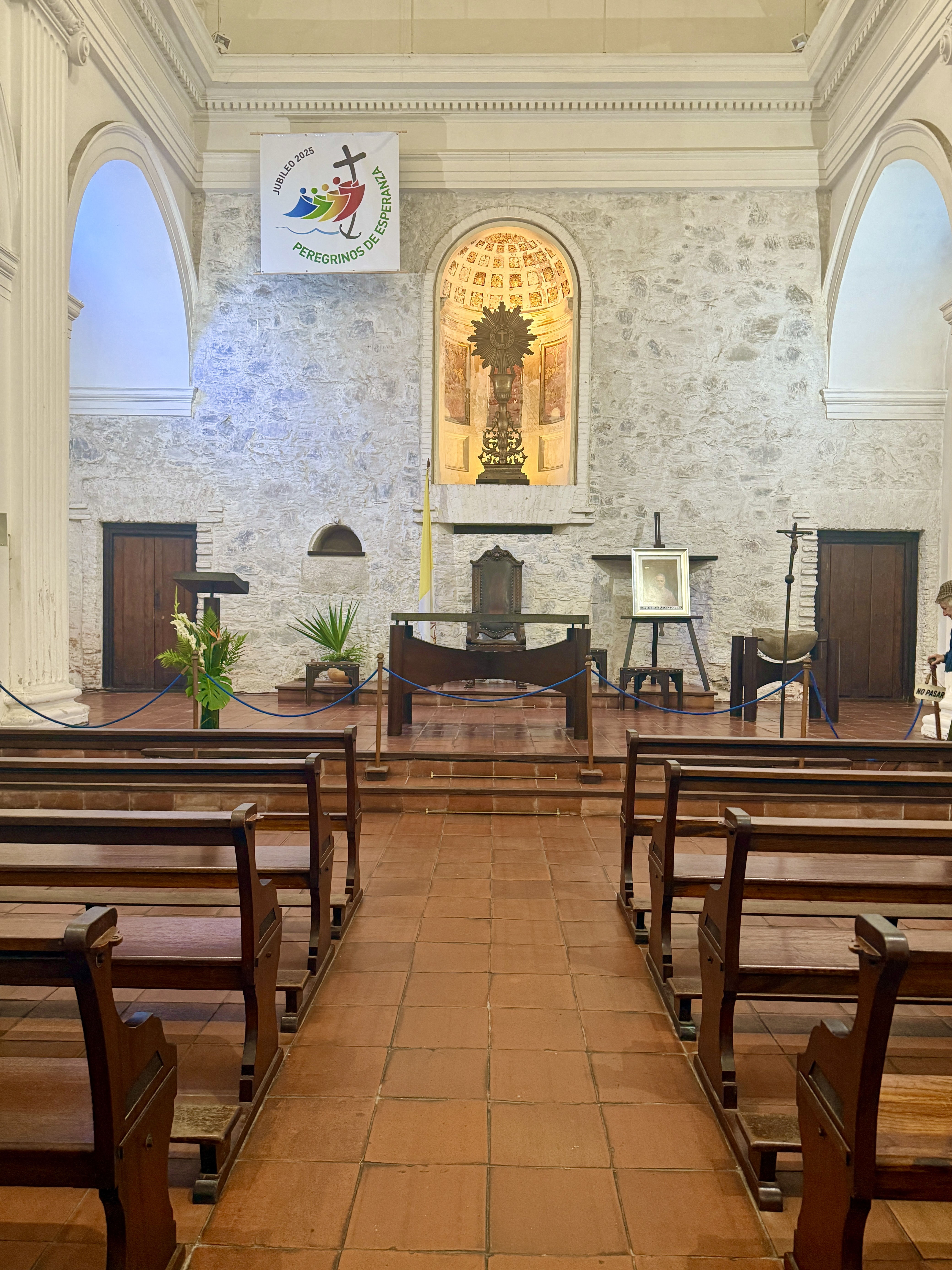
The basilica was sweet, and fairly unadorned. There was just one parishioner, an elderly woman who tried to talk to us in very rapid Spanish. Maybe she thought we were new members of the church since we were sitting in the pews, because we were tired from all the walking–in the heat (and the church was nice and cool). We smiled a lot as she talked. Eventually we caved and stopped for helado (ice cream) for sustenance and again to get out of the heat.
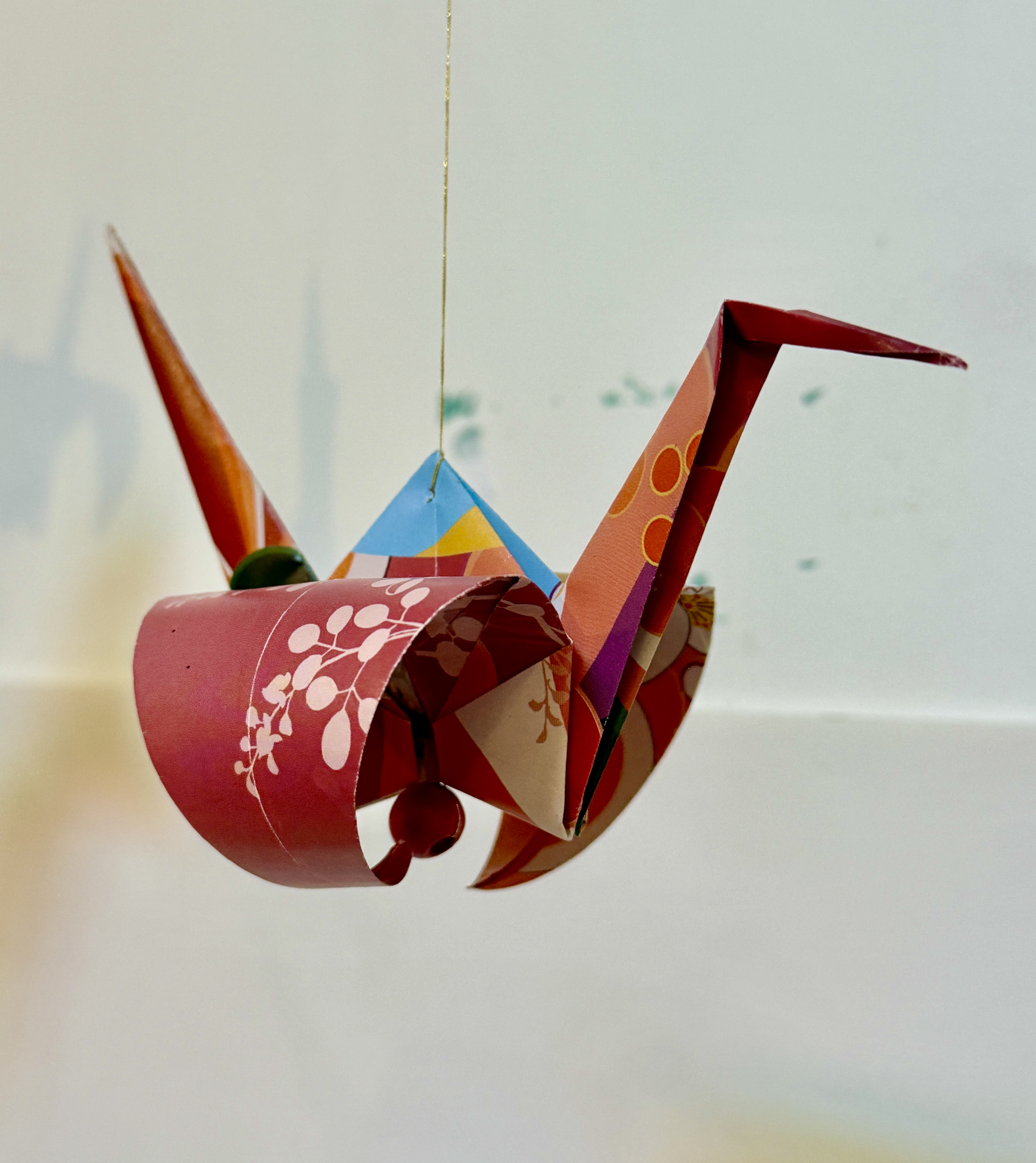
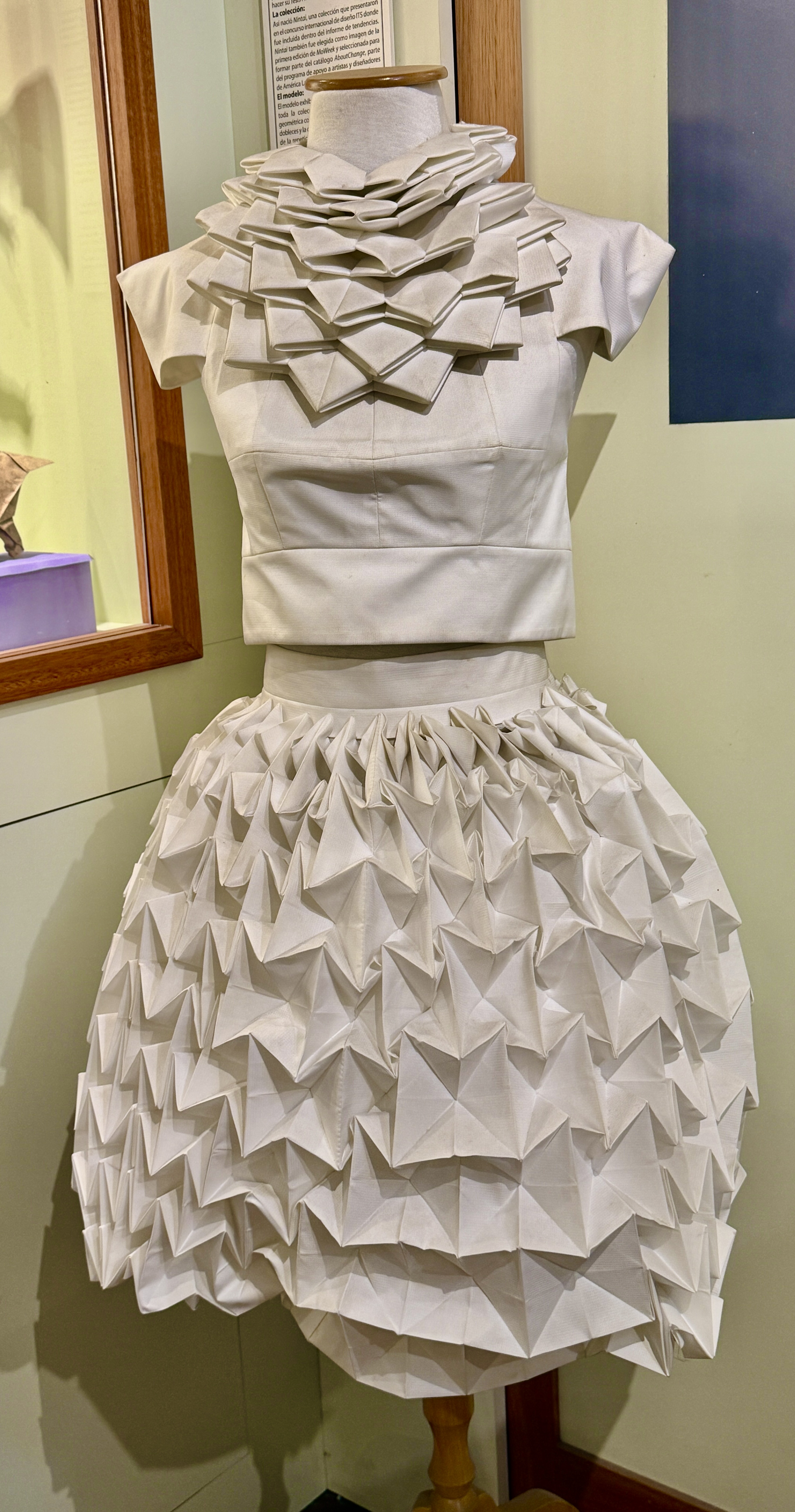
Came back to the hotel to get some work done (yes, real work!). Mike decided to participate in the age-old Latin American activities for warm afternoons…. Siesta time. A few hours later, I left the hotel to stroll some more and take advantage of the cooling weather. I stumbled on a tiny Origami Museum and went inside. It’s a private operation and I was the only one there so the older gentleman who sold me my ticket ($2.50) was clearly ready for a conversation. His English was ok. Turns out the “museum is his wife’s passion. She’s been an origamist (new word for me) since she was a child, and I’m guessing she’s about 80 now. She personally owns all the pieces and a few were done by her. The origami examples are from all over the world. The couple is from Argentina but they lived in NYC for about 20 years. She’s well connected with the global origamist community (who would know?) and many of the artists have donated their work to her for exhibition. The couple decided they wanted to open a museum to exhibit her collection and they were ready to come back to South America. The wife had spent summers as a child in Punte del Este and in Colonia. It was cheaper to buy a place in Colonia, so here they are. The museum has only been open for about a year and required a lot of renovation to make the building work for this new use.
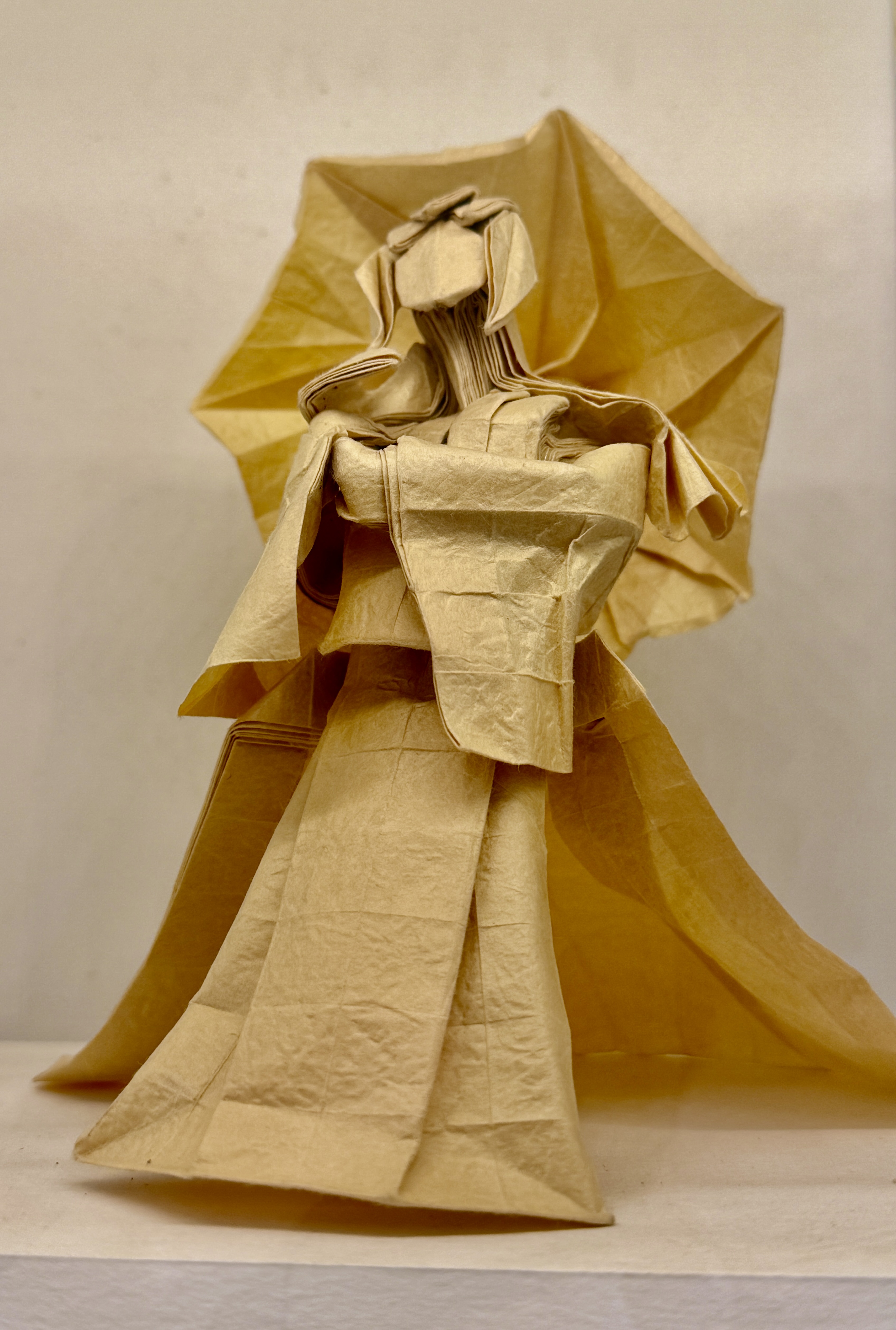
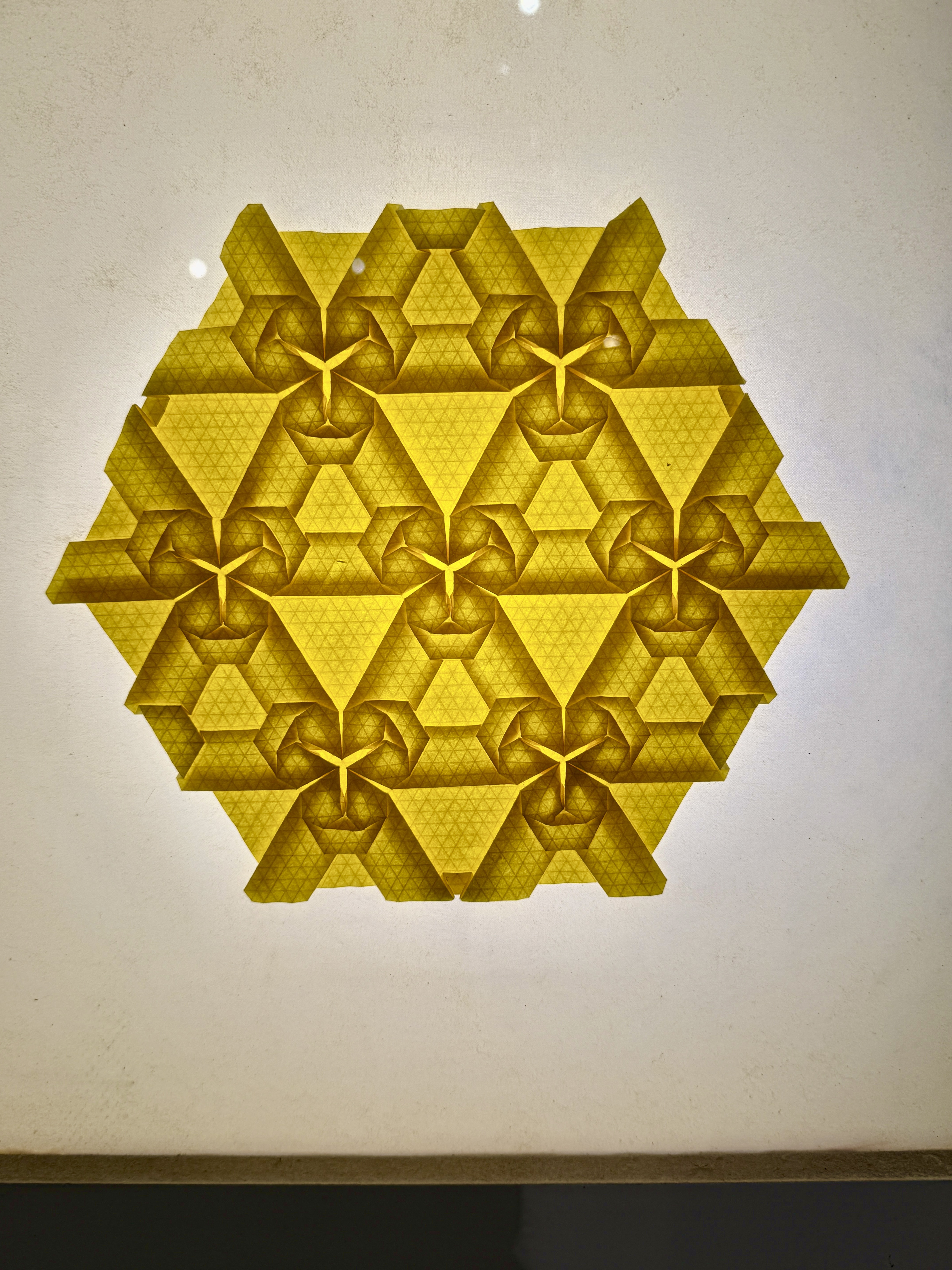
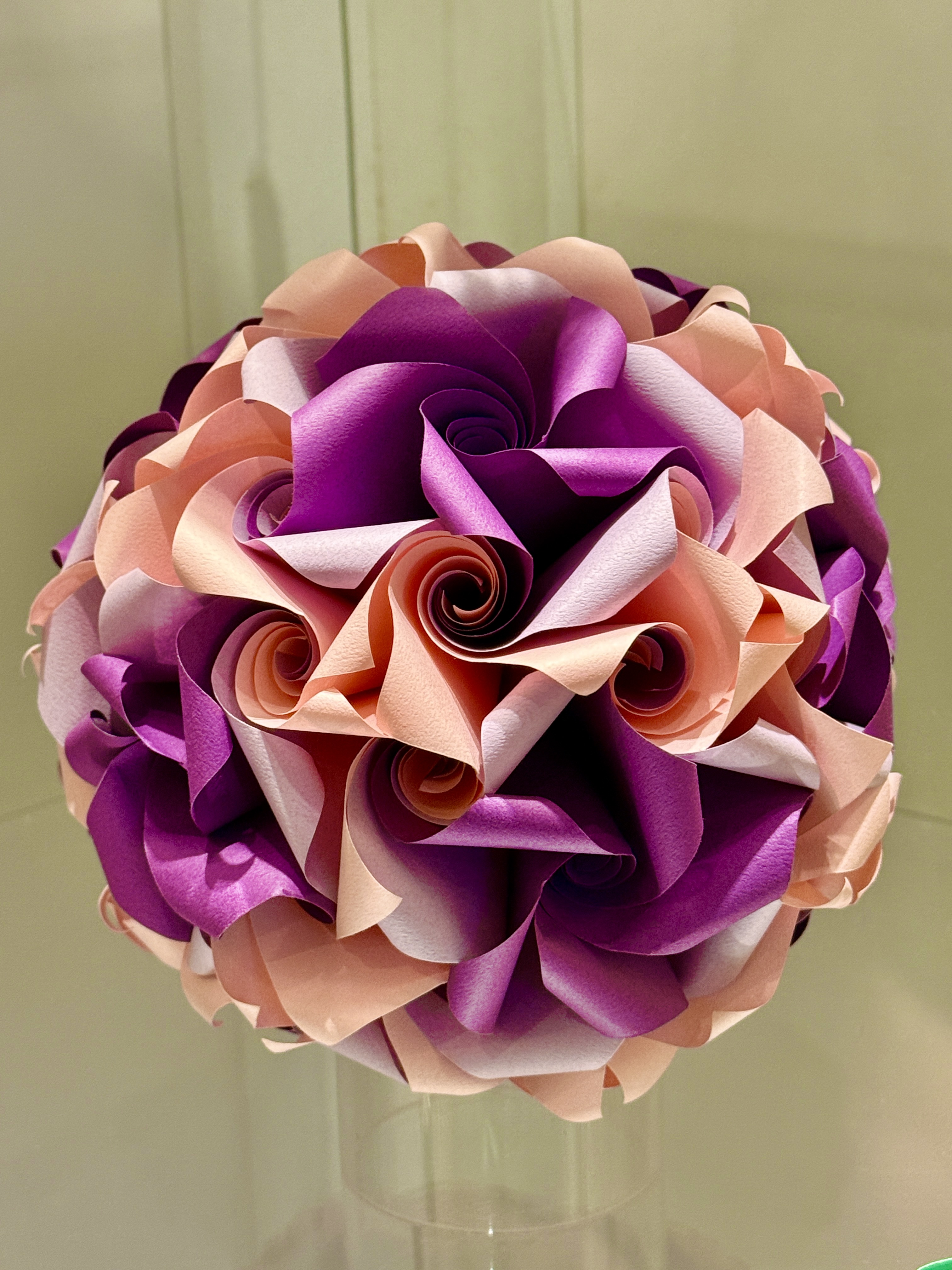
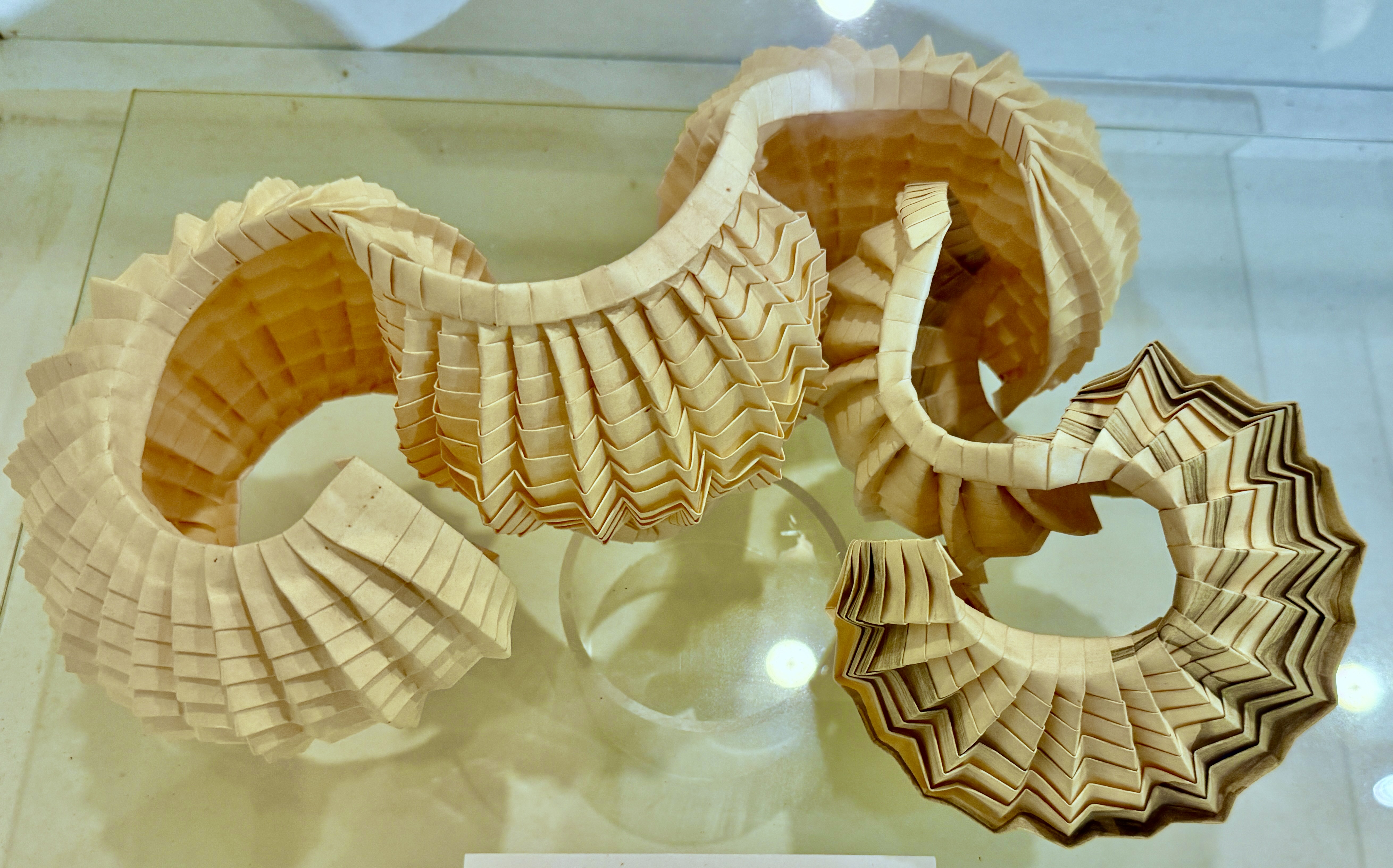
After an hour or so of more work, we headed to dinner at Casa Viera an Italian restaurant about 5 blocks from our hotel. It was better than we anticipated. They gave us a “welcome drink” when we arrived—vermouth with fresh fruits and ice. Very refreshing. We started with croquettas filled with shrimp, cheese, peppers, and spices. We followed that with raviolis filled with roasted eggplant, sun dried tomatoes, cheese, and a host of spices. We had some Uruguayan cabernet franc. And then we strolled back to the hotel in the dark–taking full advantage of the flashlight app on our phones!