August 23, 2014 :: Berlin
Guten Nacht –
Such calm travels… Not as much to report as when traveling in much more exotic places.. So, all is fine in Berlin..
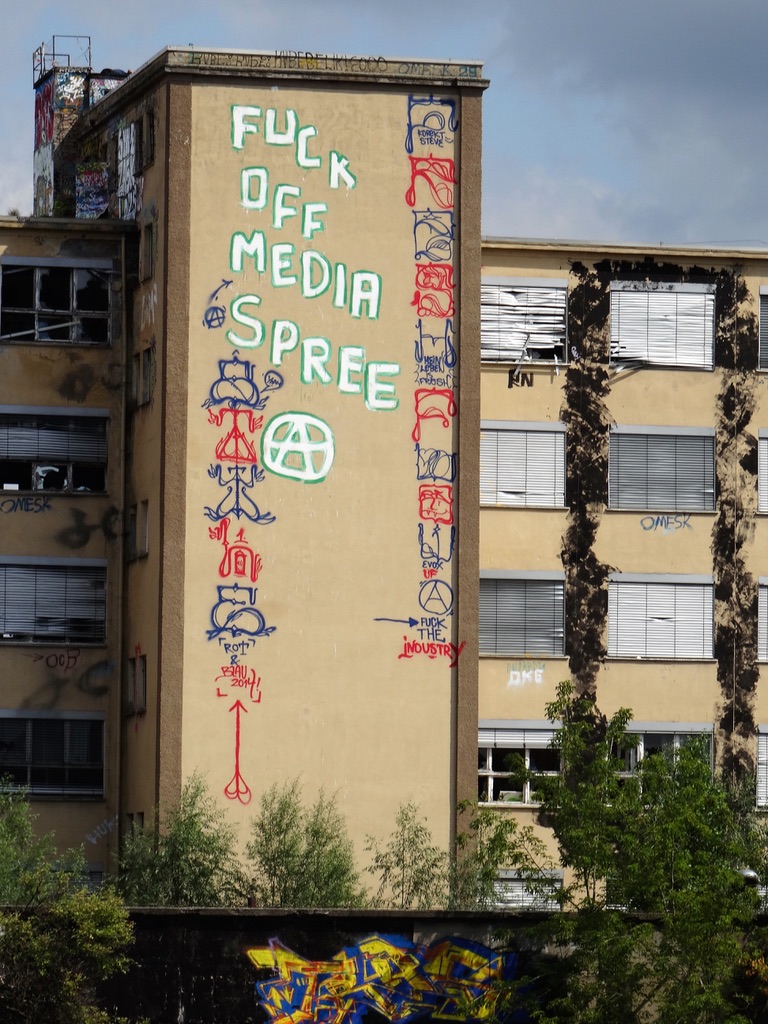
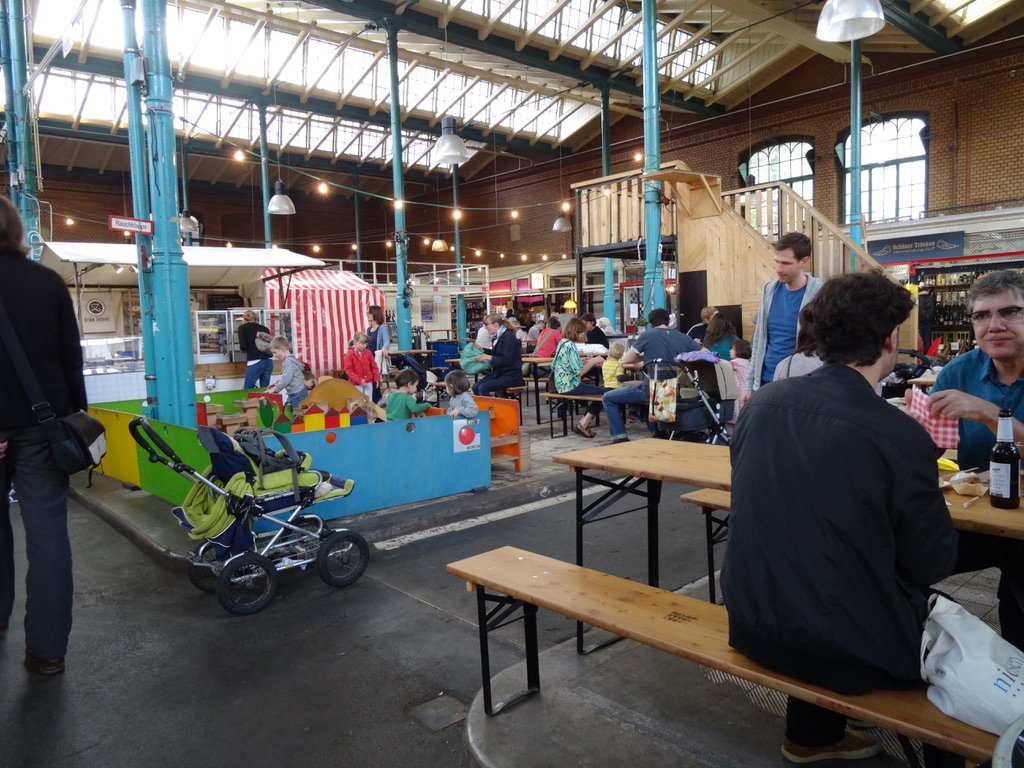
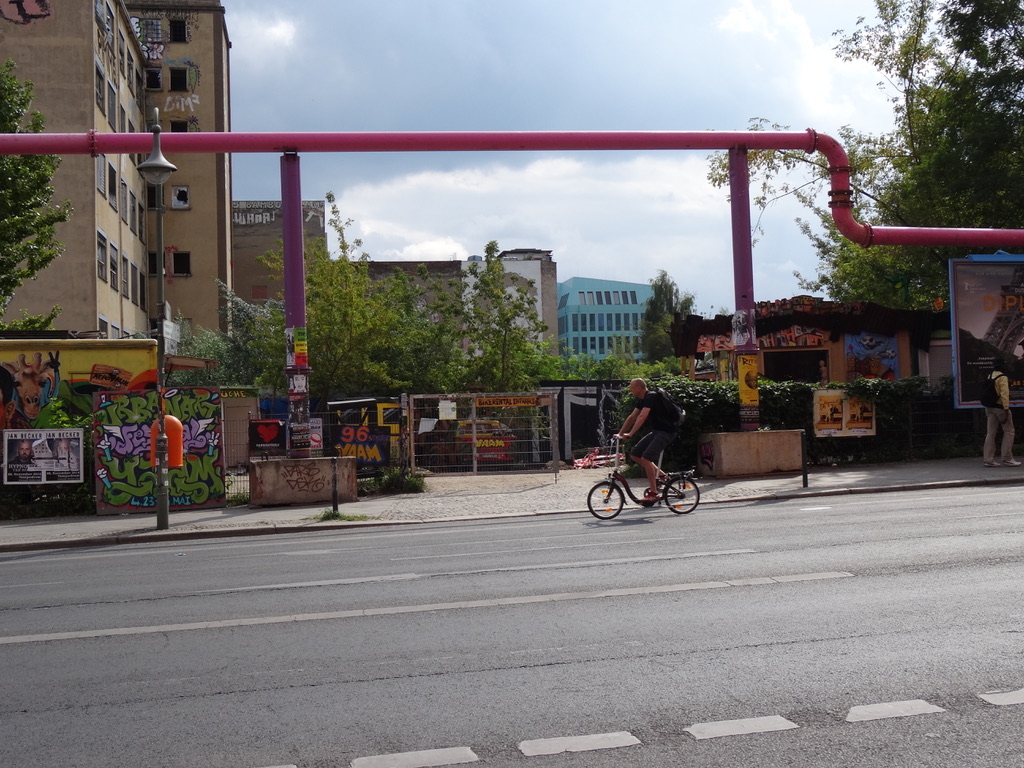
Walked today from Soho House to the Markt Neun on Eisenbahnstrasse — a landmarked building with brick front that goes completely through the city block… in the old Eastern side.. It has decorative reliefs, and is one of four remaining covered markets in the city. Like most markets it’s a big open space with stalls.. but unlike many markets that are overflowing with fresh veggies and fruits and meats and fish… this market has a good supply of all the fresh necessities but it’s chock full of all sorts of stands and carts with cooked foods (street food mostly) and big communal tables.. So we settled in to rest from the 2.5 mile walk and tasted all sorts of goodies. You can get glasses (or bottles) of wine or beer for your lunch as well. The market was opened in 1891 and is located in the old East Berlin (which we visited years ago when it was East Berlin). The walk to the market was pretty mundane moving through areas that are clearly slated for “renewal”… lots of grafitti and boarded up buildings and crossing over the Spree (one of the canals) that once separated East and West.
After our rather slow and long lunch at the market, Mike and Richard took a taxi to the hotel and their apartment and Elizabeth and I walked back.. taking a route that was a bit out of the way.. going about 3 or so miles to get back.. We were headed to a famous flea market, but it turned out that it is only open on Sundays.. After a bit of work.. we all decided that cocktails on the roof of Soho House sounded like a great plan.. From the roof you’ve got great views of the whole city. The crowd at Soho House is probably average age 35.. maybe 40, so we are the “older end”.. but so be it. By the way, the lobby has paintings by Damien Hirt and the slogan of the place is “Eat Drink Nap”.. and Mike says this is a great goal.
It’s been a relaxing two days in spite of lots of walking and doing some work.. . Nothing like our winter trips. So I decided to dig a little deeper into the story of Soho House.. which turns out to be quite a story..
Soho House was built in the 1920s and I think is a bit of a monstrosity in its massive feeling from the outside.. From what I read, it’s 860,000 square feet (considerably larger than the White House). There’s a spa, with a large hammam.. And despite it’s strange history, when you go to the roof deck you can feel as if there are no world crises. Anyway, during the Nazi period, it was used as the headquarters of the Hitler Youth Organization. Interestingly, the building was originally commissioned by two Jews who wanted to turn their little watchmaking company into a department store.. They decided to make the building practical, not beautiful..
When Hitler and the Nazis rose to power, and economic pressures were put on businesses owned by Jews, they brought in two non-Jewish partners front the company. But then these new partners pushed out the founders.. The Jews fled to NY. The non-Jewish owners then rented the store to the Nazis. While the location (which was at the time not in the center of Berlin) was a strange place for the Nazis to create a government building.. the reason for the selection was that it was close to the headquarters of the Communist Party.. and was in a historically Jewish neighborhood.. a good place for the Nazis to locate in the heart of their enemies.
Also, a young Nazi activist who was killed by a Communist (and became a martyr) was buried in a cemetery across the street, allowing the German Youth Leadership to host activities and train millions of children in close proximity to the hero’s grave. Hitler Youth were in the building until the end of the war when the Soviets took control of East Berlin.. The Soviets then turned the building into the headquarters of the East German Communist Party and the Politburo (party elite) had its offices here. . The leaders of the Gestapo also had its offices here in this building.
The East German Communist Party relocated to a more convenient area and they turned the building into the Institute for Marxism-Leninism, which housed archives and a collection of historians who worked on an authoritative edition of the works of Marx and Engels, which I believe was never completed. After 1989 when the Berlin Wall came down and when Germany was unified, the heirs of the original Jewish owners retrieved the property through the various reparations laws. They struggled to sell the building (which some thought was filled with too many bad memories) .. and it stood vacant for more than a decade.. and then the Soho House folks bought the property. They gutted the building completely and left nothing of the original place(s).. Only the white, plain exterior remains — as it was when the Nazis and later the Soviets occupied it. Apparently the grave of the Nazi killed by the Communists can be seen from some rooms. The only history one can note is that some meeting rooms have names like Politburo…
So… that’s what I found out… about Soho House where the hipsters are drinking exotic martinis and people are swimming in the rooftop “endless pool.”
Tomorrow we are taking the train to Dessau to visit the Bauhaus (we visited the Berlin site of the Bauhaus about two years ago… ). Day trip.. leave in the morning.. lunch in Dessau and visit Bauhaus and back to Berlin.
Ende fur heute… Hope you are all doing well
Fern
Ps — For those of you who know our firm’s work with Bayer and the City of Berkeley in the 90s… Coming into town from the airport.. fairly close to the center.. there is a huuuge Bayer complex that stretches about four city blocks with at least one bridge that crosses over the city street connecting two of these enormous buildings.. with a giant Bayer sign on that bridge… !! Don’t think they needed a development agreement here.
August 22, 2014:: First 24 Hours in Berlin
Guten Tag –
Arrived in Berlin last night after a somewhat uneventful, long, and exhausting work day + 26 hours of travel. Left the office at 2:30 on Wednesday — took BART to SFO (trying to reduce my carbon footprint!); flew from SF to Frankfurt and was happily upgraded to business class which always makes it a bit easier… Had four-hour wait in Frankfurt and attempted to sit it out at the Star Alliance Lounge given that we arrived Business Class and are Star Alliance Gold but they wouldn’t let us hang out there because we were not “departing” from Frankfurt in Business Class (flying Air Berlin on flight that is one hour and one cabin… ) Anyway, we headed to a café, found rather comfortable seats and decided that would work. .. problem was the seats were just a little too comfortable so we sort of overstayed.. and suddenly realized we really needed to head to the gate.
At about 6:00 we headed to our gate for the plane departing at 6:55. Well turns out we were leaving from another terminal and the walk was more like a half-hour hike.. then train.. then long walk again. And had to go through security all over again; we assumed flying Germany to Germany would be a snap.. and given that we are accustomed to TSA PreCheck we were not prepared to deal with taking things out of our suitcases, taking off shoes, taking out computers, etc.… So we nearly missed the flight… last ones on the plane and they were paging us.. And they had to search Mike’s bag twice — too much gear!..
OK.. made it and off to Berlin we went. Decided to hop a taxi after arriving in Berlin.. tired, luggage, etc. Taxi dropped us off at a corner and said we were “there.” But the hotel building is so nondescript and absolutely no signage and no lit signs — totally understated from outside — that we actually walked around the corner before realizing the corner building was actually the hotel: Soho House Berlin. Soho House hotels is a company founded in London, in the mid-90s.. originally as a private members’ club for professionals in film, media and creative industries, but it has expanded to include hotel rooms. Thus the “hotel” is actually in two parts with some floors requiring key-access (for members) and others being more public floors. The building and the rooms are a strange cross between chintz and hip.. or maybe chintz is now hip– with exposed concrete beams and columns accompanied by rich floral patterns in the carpets! Rooms are large but somehow no desks… making it difficult to take care of the various projects I brought with me to do for the office. Top two floors have very casual but good restaurant, bar and roof bar with great views of the city. Since it’s a “club” — no photos or cell phones in any public spaces… and believe it or not, the rule is followed.
Got to hotel at around 9 pm.. sort of settled in and headed to the rooftop, but it was a bit too chilly for an outdoor drink,… so went to restaurant. Food was good.. and called it a day (up for about 30 hours by then).. Hotel has great views of the Berlin TV Tower
And then it was Friday…
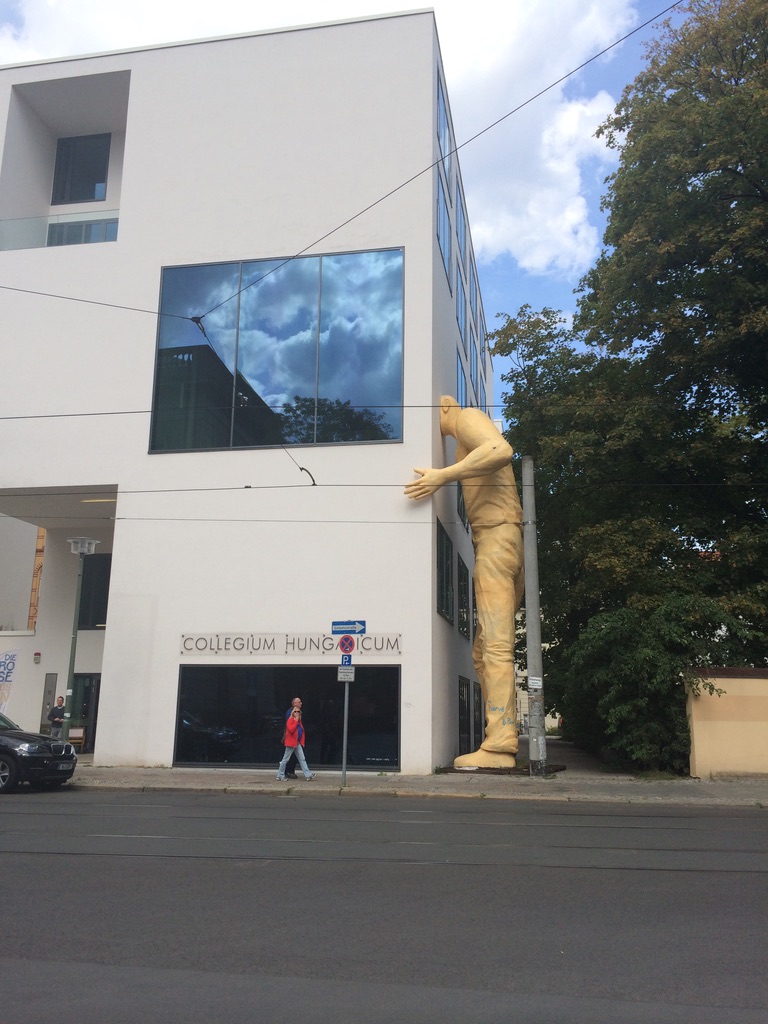

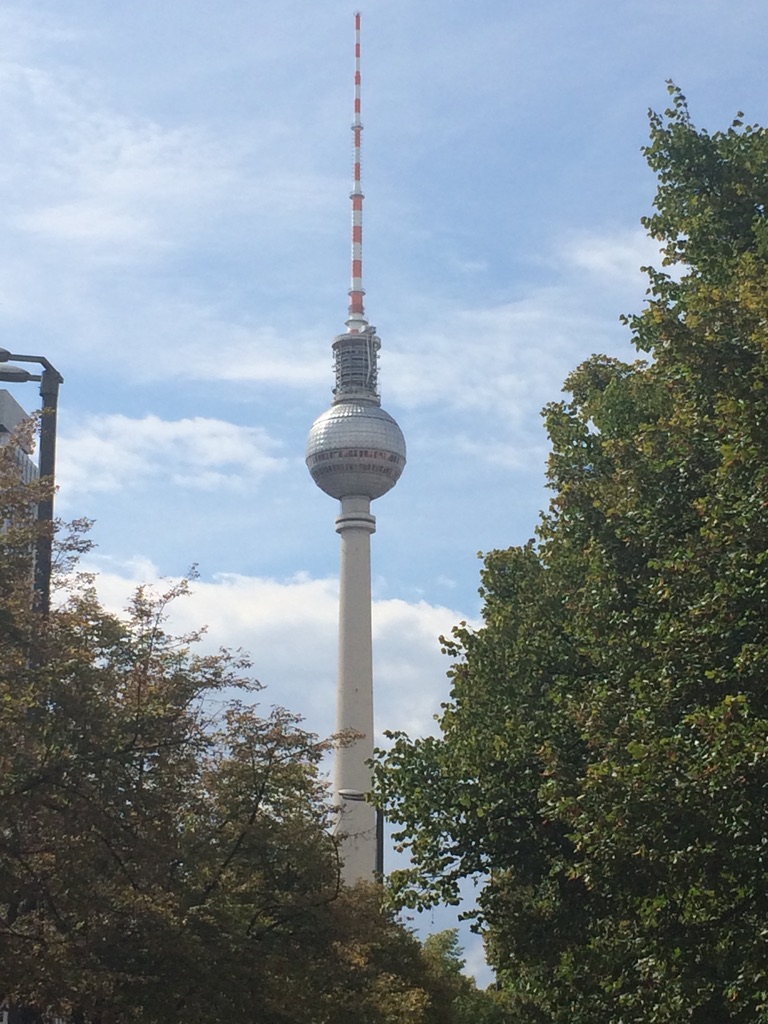
Had breakfast at the hotel and headed out… The hotel is located somewhere between the Prenslauer neighborhood and the Mitte (or at least based on my sense of the city). Having been in Berlin less than two years ago, we didn’t have any real compelling needs to visit or revisit the various things one feels important to take in when seeing a new city. (Actually when we were here in 2012 it had been about 30 years since we had been in Berlin — having come in the 70s by East German boat from Trelleberg, Sweden and then driving ourselves through “East Germany” to reach Berlin.. Now that was quite a trip).
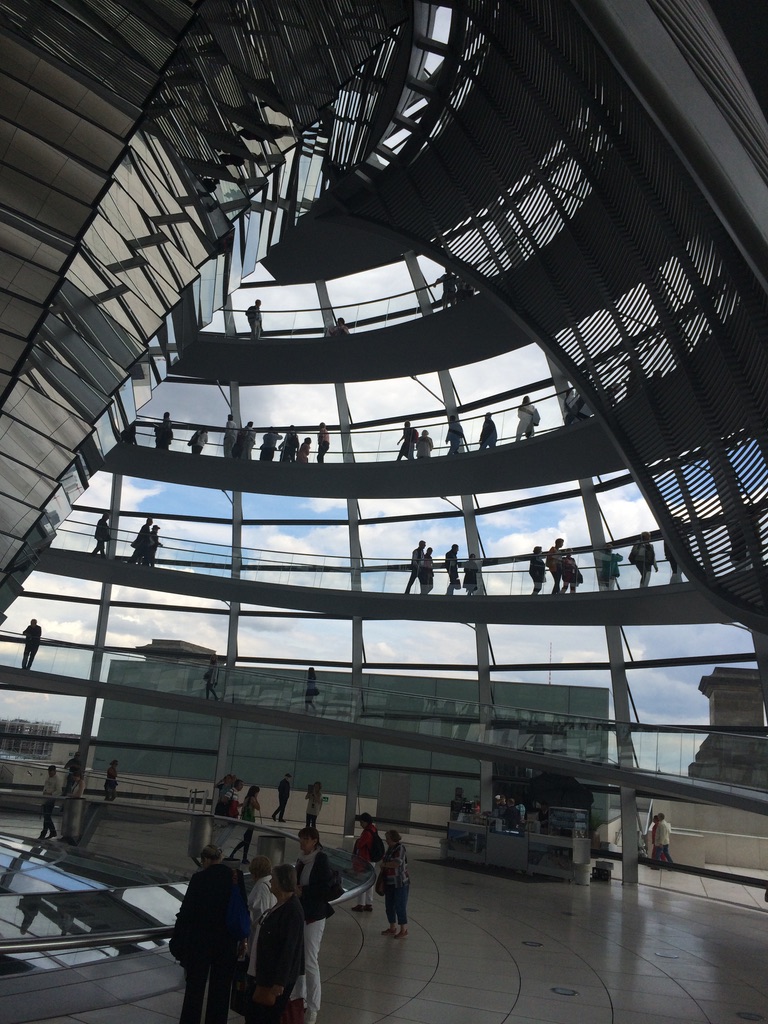
So we headed to the Norman Foster “dome” that is behind/above the Reichstag. Didn’t get there last time. It was about a 2.5 mile walk from the hotel.. and the weather could not be more perfect .. Strolled.. and meandered along the way.
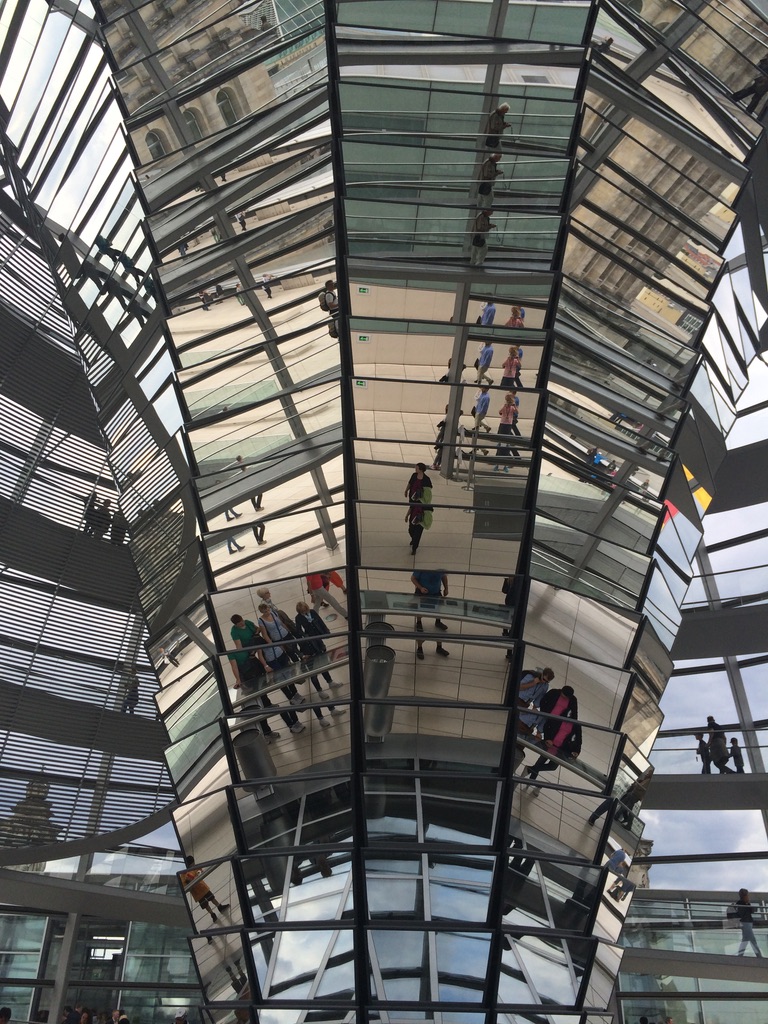
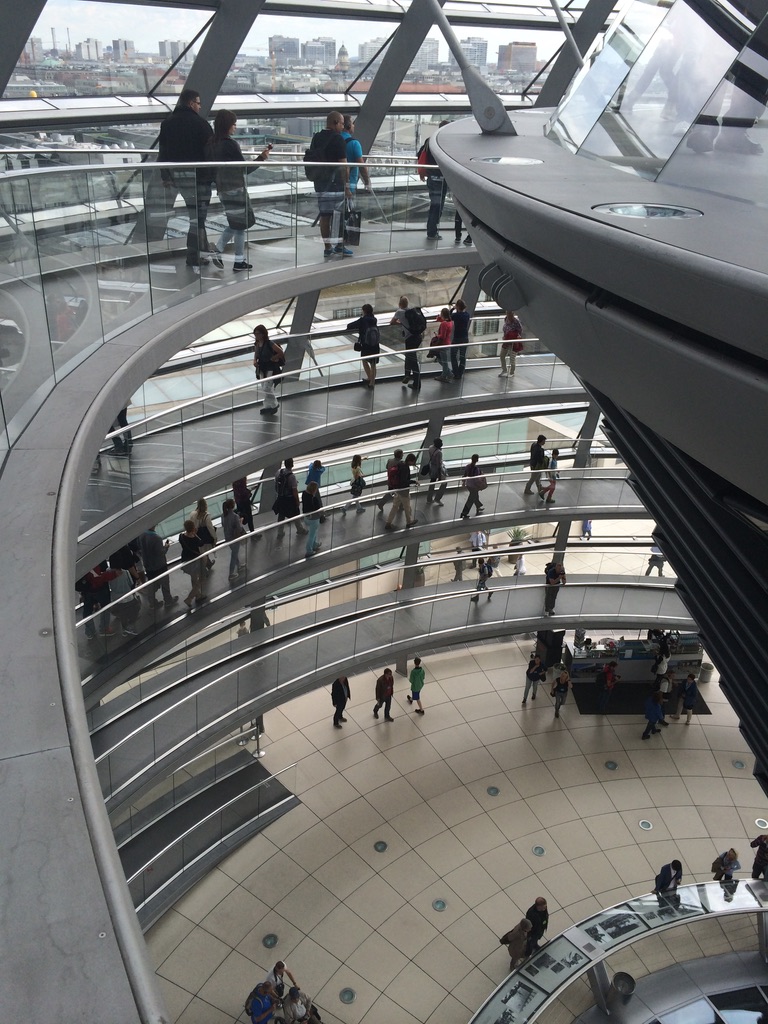
Fortunately, we were warned (advised) that we should make lunch reservations (The Reichstag is the only parliament building in the world with a public restaurant!).. because then you can breeze past the long lines of tourists trying to get in to see the building. And that we did! You take an elevator up about 7 or 8 stories to the base of the dome.. Underneath are offices (I presume). There’s a bit of security coming in and out with double doors capturing you in between the entry areas.. So once you get to the dome you already have a great view of the entire city — 360 degrees.. The Reichstag dome is glass, and is constructed on top of the building which was rebuilt after the war (and once it was decided to move the German capital back to Berlin from Bonn… According to the writings it was meant to symbolize the reunification of Germany. The debating chamber of the German Parliament is just below the dome. Inside, the center of the dome is dominated by a mirrored conical shape which (while they say brings sunlight into the chambers of the Parliament below) is actually a real fun space because you can see yourself and others reflected and fractured numerous times as you look up… I think the floor to ceiling height of the space is probably about 80 feet tall… Once inside you walk the edges of the space through two spiraling ramps… They say that this dome symbolizes that the people are above the government, a statement that things are different from the days of National Socialism. Mmmmm people “above” the government — or government by the people.. I suppose the dome is also a statement that symbolizes the future..
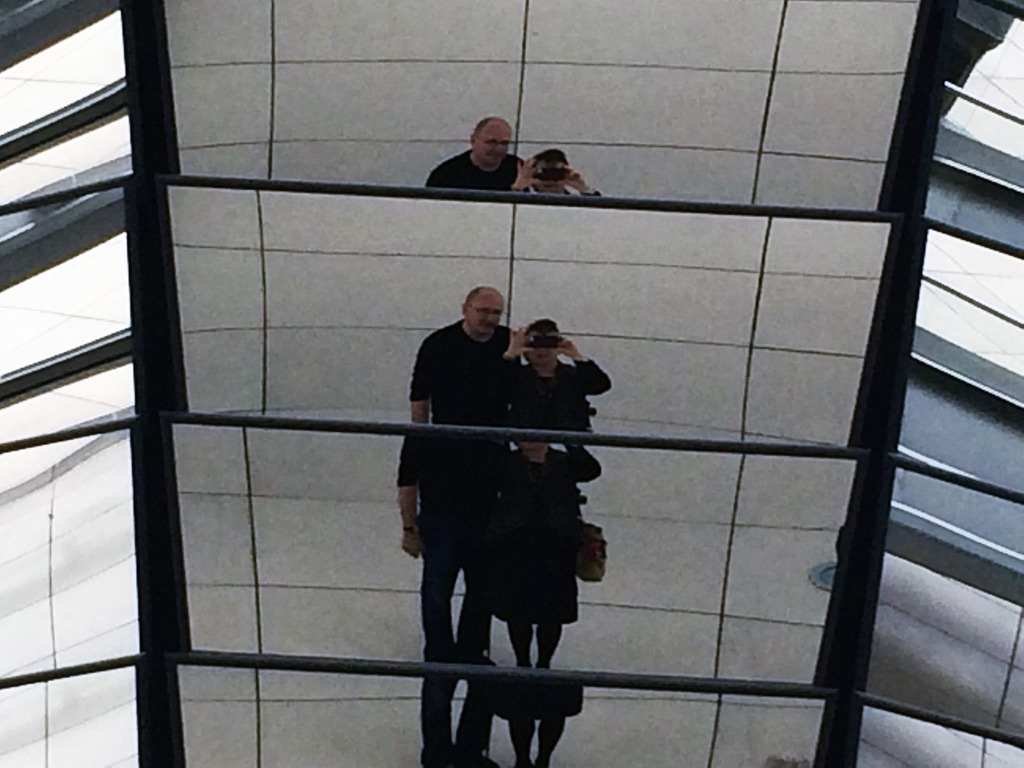
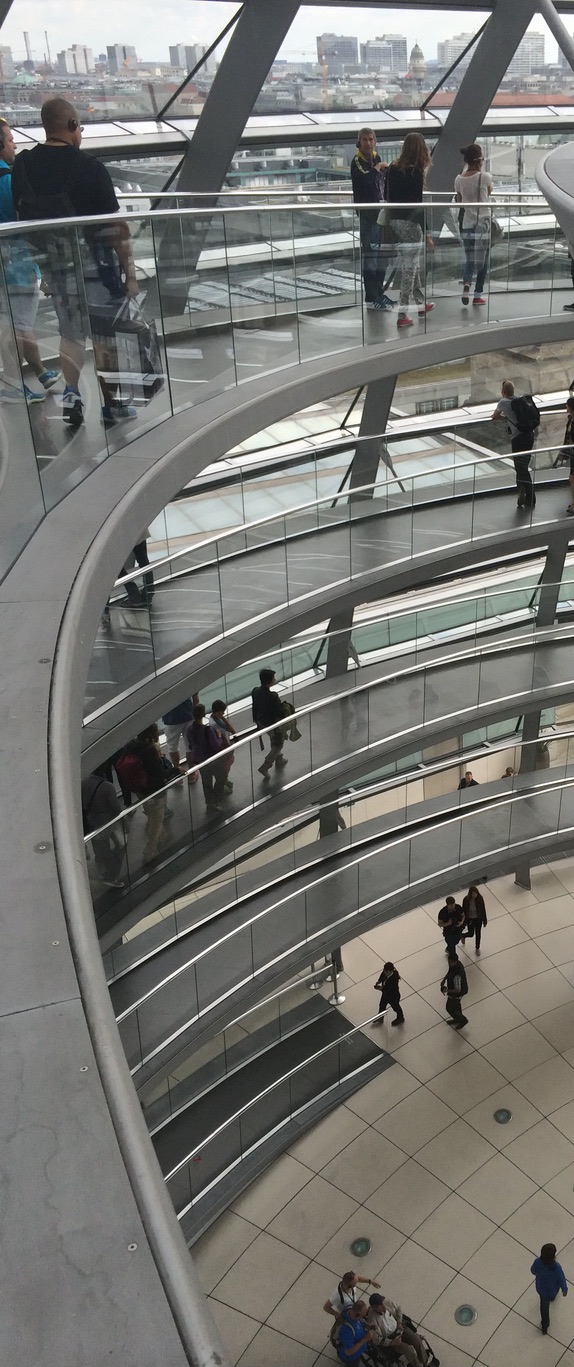
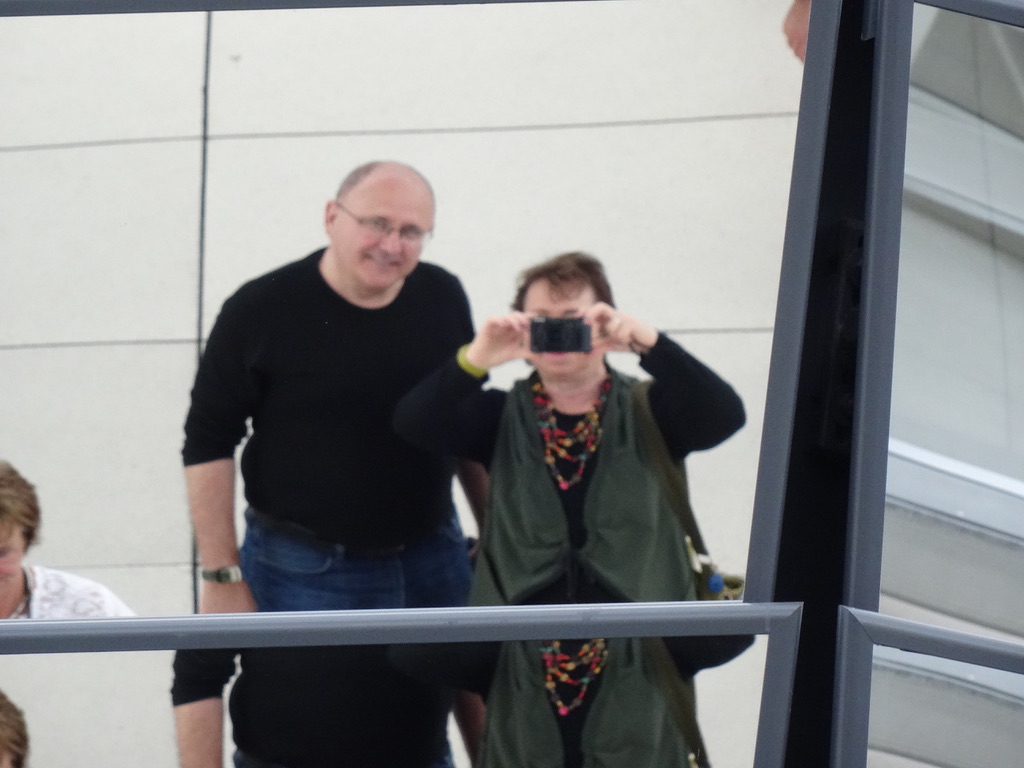
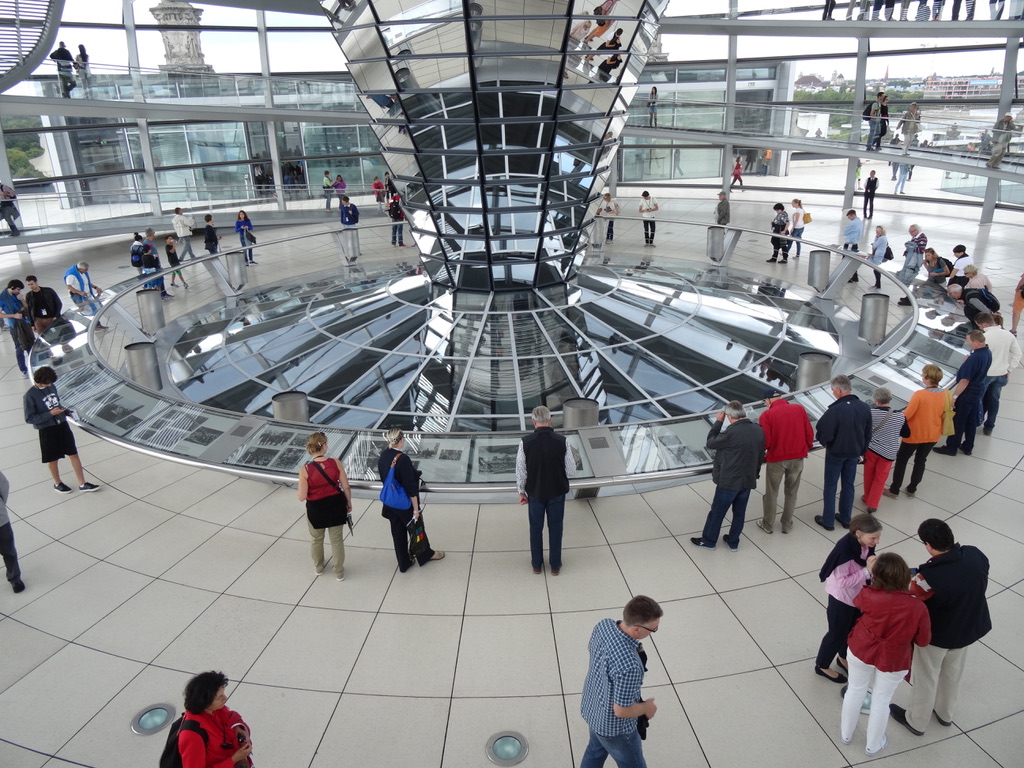
Anyway, we walked to the top.. took lots of fun pictures with all the reflections.. and then had lunch at the restaurant, which was quite good. Mike decided to hop a taxi back to the hotel to catch up on sleep, but I meandered back to the hotel on a leisurely stroll.. taking a different and much longer route back..

And then we headed out for dinner to meet up with Mike’s brother and sister-in-law — the real reason for the trip. For those of you who have not been in previous travel emails… We come every summer to somewhere (generally in Europe) to meet Richard and Elizabeth who live in Geneva and southern France… We generally meet up for about 4 days.. so it’s always a rushed trip. They make the selection as to where to meet — sometimes, like this year, based on where they do their annual house exchange. Last year it was Rome, year before was Provence, etc. Ate at a restaurant about a 20 minute walk from Soho House. Strolled back along the park and totally crashed!

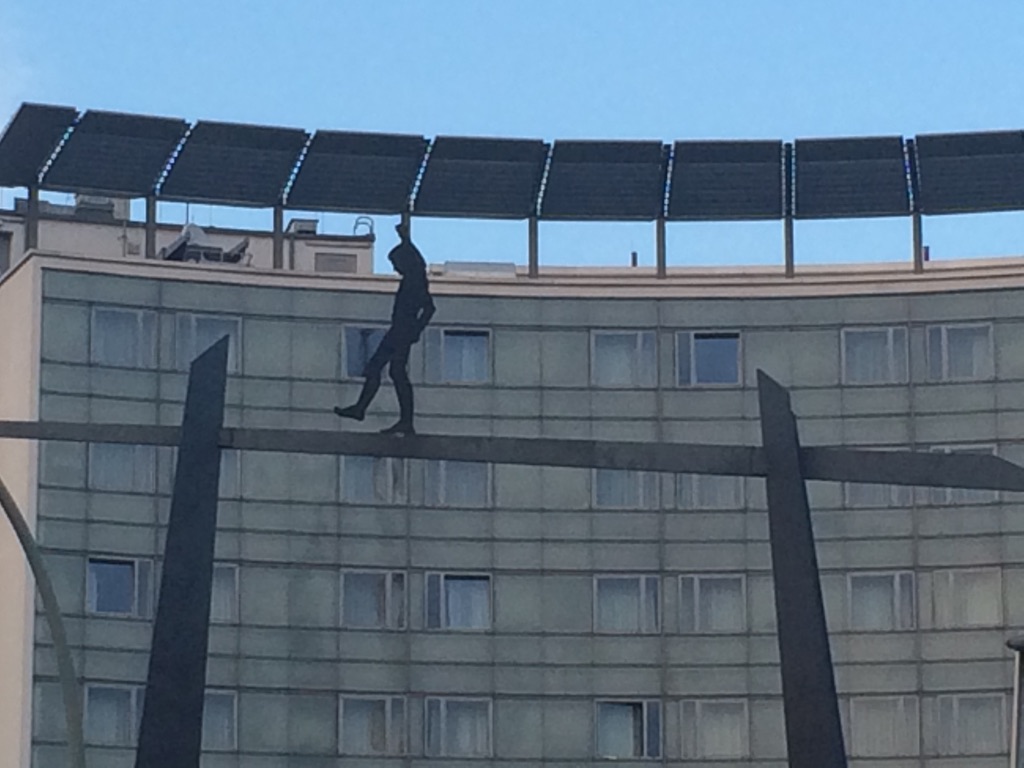
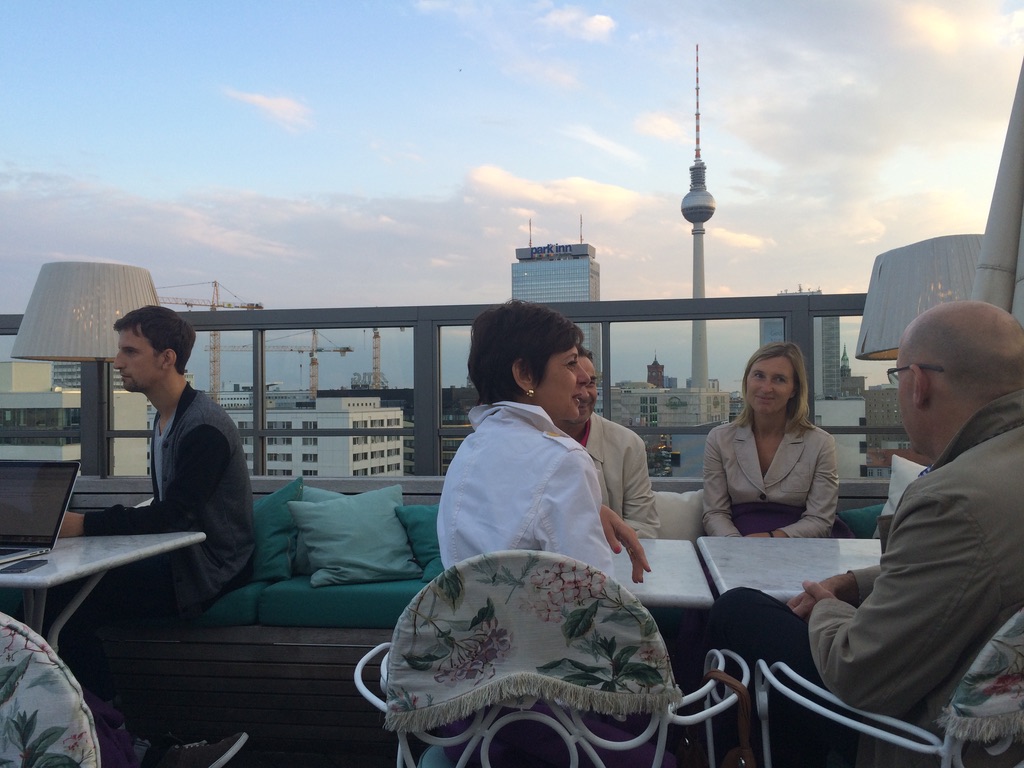
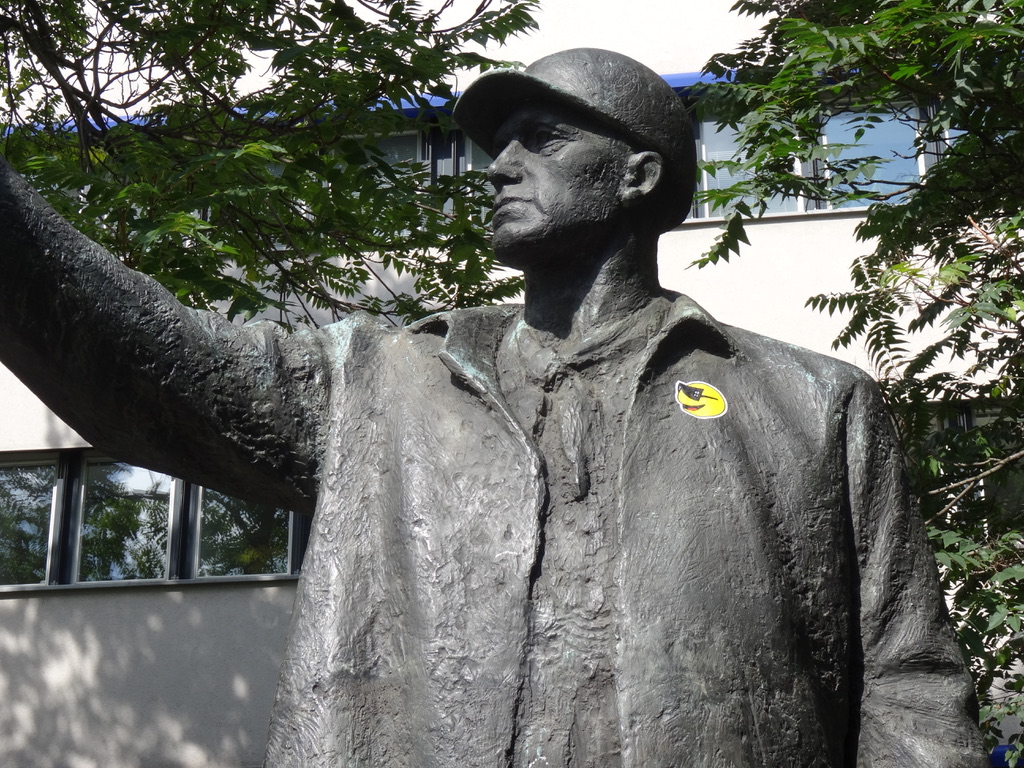
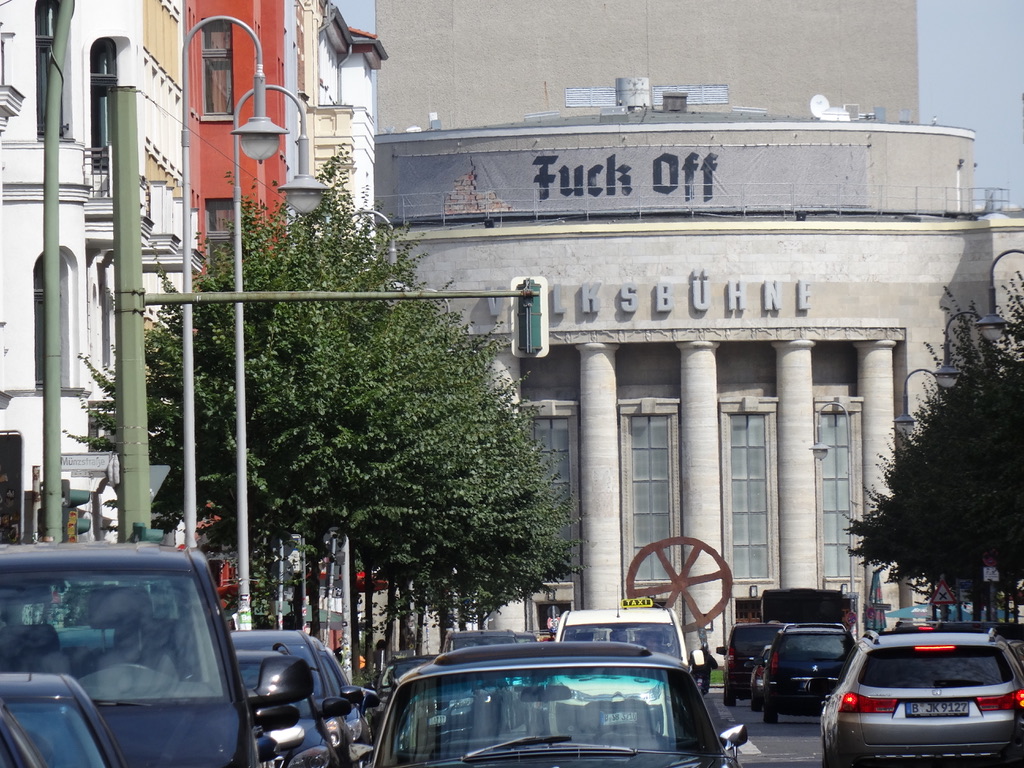
OK.. That’s it.. Tomorrow we are headed to the Kreuzberg Turkish Market.. or at least that’s the plan.
Aufweidersein
Fern
January 6, 2014 — Farewell to India

Greetings on our last night.. and final hours in Delhi — Homeward Bound!
January 6, 2014 — 10:30 pm in Delhi; 8:45 in California
We are leaving Delhi in a few hours; flights from India are always at strange times. Our flight leaves Delhi at 3 a.m. to Frankfurt and then Frankfurt to SFO.. All told about 28 hours I think.. maybe more. But we gain a lot of time en route.
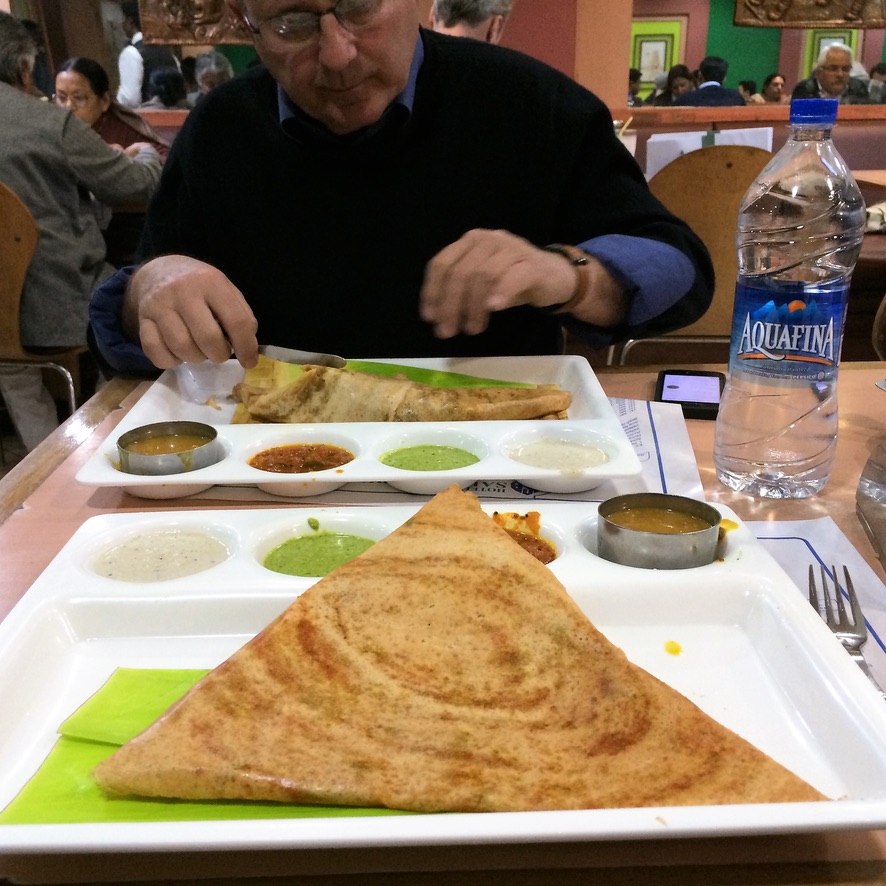
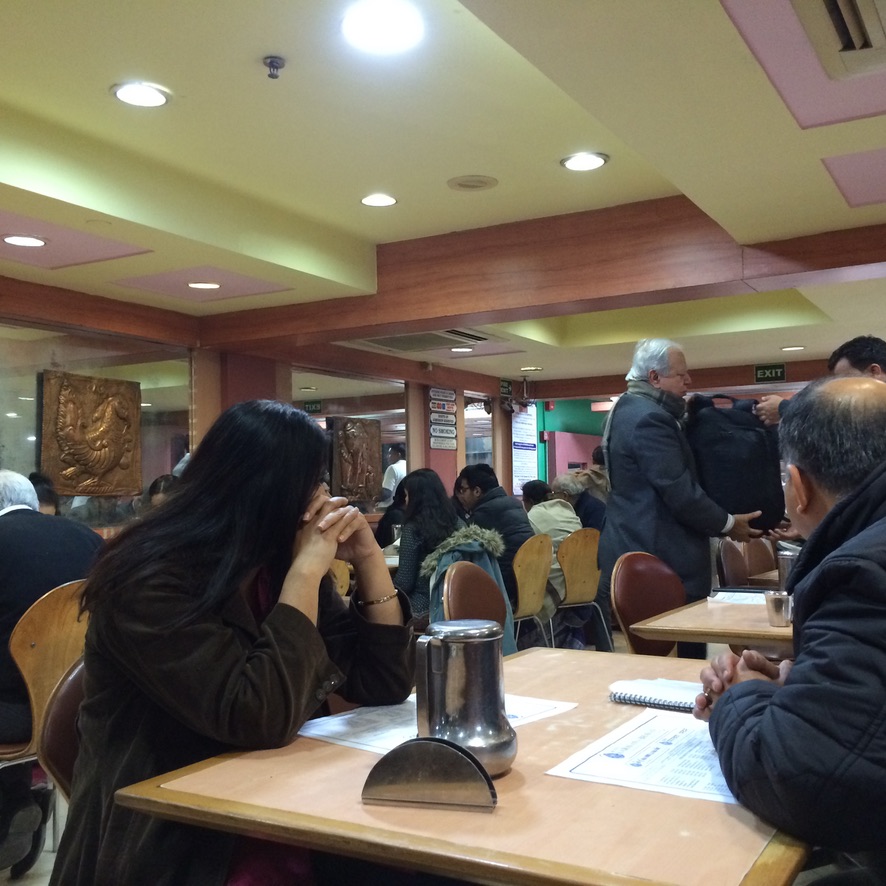
Decided to take it easy, given that it would be a very very long day and night and next day… So we slept in, had tea and muffins.. worked on our courses, to be prepared for classes later this week…. and then took a stroll down the street to eat at a little local joint called Servana Bhavan; they specialize in dosas. Ordered two different kinds (not really knowing what we were ordering). Everyone was Indian except us. Food was fine. Came on plastic platters.. and we drank (with some fear and trepidation about getting sick on the last day) water in tin cups washed with tap water. Oh well. Total cost for the lunch was about $3.

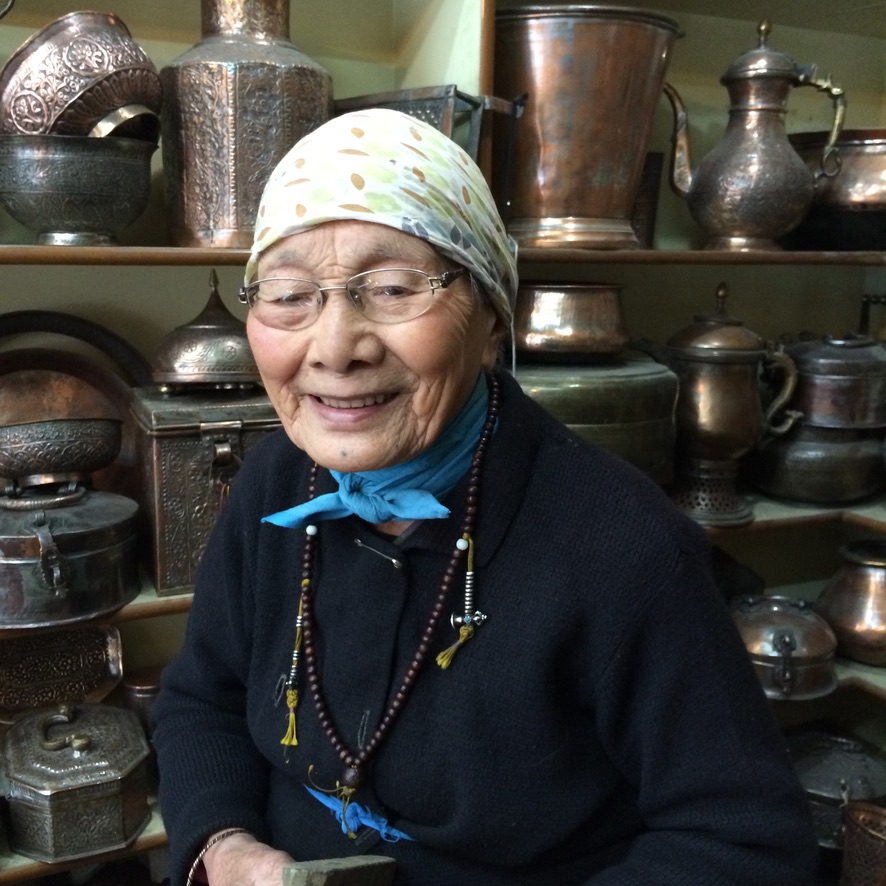
Then we strolled a bit, past little shops that are struggling because Delhi is building an extension to the Metro and many streets are blocked for the construction which has already lasted two years and will continue for another two.. We were taken by a little shop that sold copper goods and some wooden blocks used for stamping patterns on fabrics and walls. It appeared that no one was tending the shop, so we were about to leave when we heard a little voice say “I’m here!”… and lo and behold a woman about 4′ tall appeared. Turns out she’s Tibetan; came to Delhi 60 years ago — before the Chinese invaded Tibet. She was adorable. 88 years old; in seemingly good health; still working 7 days a week/10 hours each day in this little shop. Her English was remarkably good. She said she learned by working and talking to customers. She has one son who owns a little inn up north and she has three grandchildren — one of whom lives in Jersey City. He’s a dancer — not a good profession for a boy, she told us — it’s for girls. And she wrinkled her nose as she told us this information. She thinks he’s a little crazy.
We chatted a bit more as she told us that other shopkeepers just want to make money. She needs money too, but she cares more…
Came back to the hotel; packed and a little more work… and then it was time to head for dinner — This part is for the foodies.. Feel free to stop if you don’t care.
We had made reservations when we first arrived in Delhi to eat at Indian Accent — a restaurant that is listed everywhere as one of Delhi’s top five. We couldn’t get reservations for Friday, Saturday, or Sunday.. so Monday it was. We didn’t think much more about it — but when we asked for a taxi and told the concierge where we were headed, he said we were in for an amazing treat; similar comments from the chief bellman who got the taxi for us.. Off we went. It was a 30 minute drive (!!) that took nearly an hour; frankly we were ready to call it quits..



But despite unbelievable traffic (as always here in Delhi, especially early evening) and the lingering thick fog making visibility difficult — we charged on and arrived at a totally new neighborhood — looked rather upscale.. and then at the door of Indian Accent — which was sleek, chic, and modern; very tastefully put together. Nothing like anything else we had seen in Delhi (or even in prior trip through southern India).
We decided to go with the Chef’s Tasting Menu(s)… one being veggie and one being non-veggie.. and the wine pairings for each.. Mike and I shared, so we really tasted about 14 dishes.
OK.. Here’s the lineup.. with each being artfully constructed and plated on beautiful plates and serving dishes.
- mini naans stuffed with cheese
- mini cup of pea soup with a toasted something garnish dashing across the top of the very cylindrical cup
- Veggie and Non-Veggie – potato sphere chaat with white pea “ragda”; Thai pomelo segments with amla murabba reduction, and crispy garlic (served with champagne for the pairing)
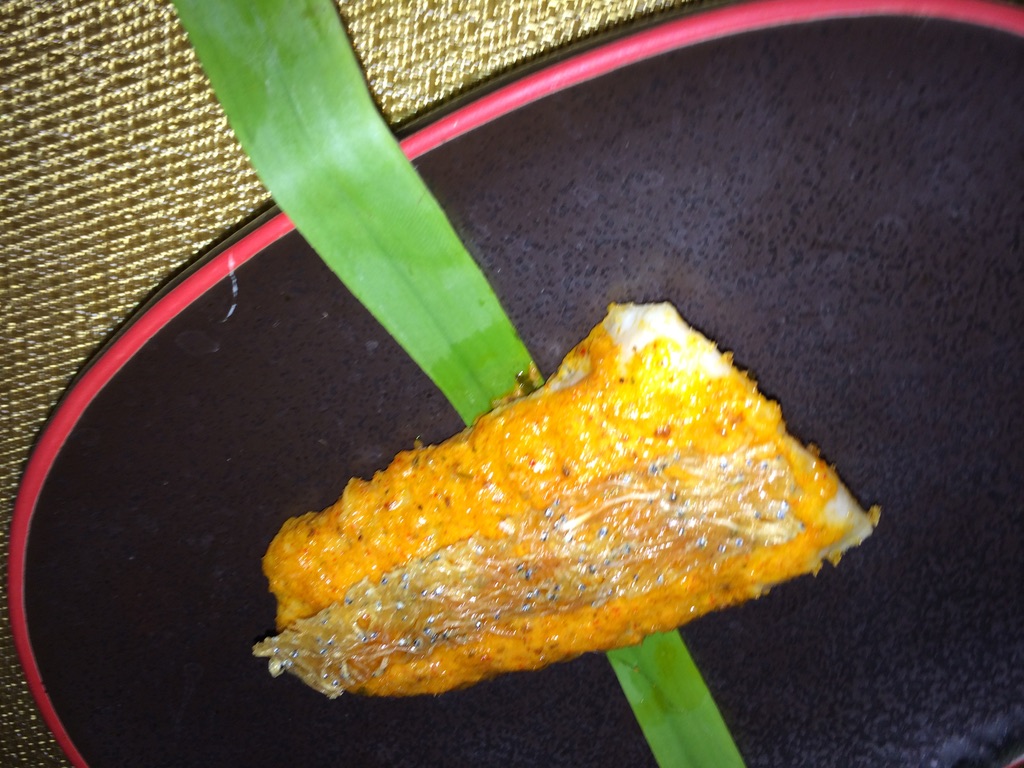
- Veggie – baked paneer pinwheel with coriander pesto; Non-Veggie – baked fish with masala butter and white bait papad (with sauvignon blanc)
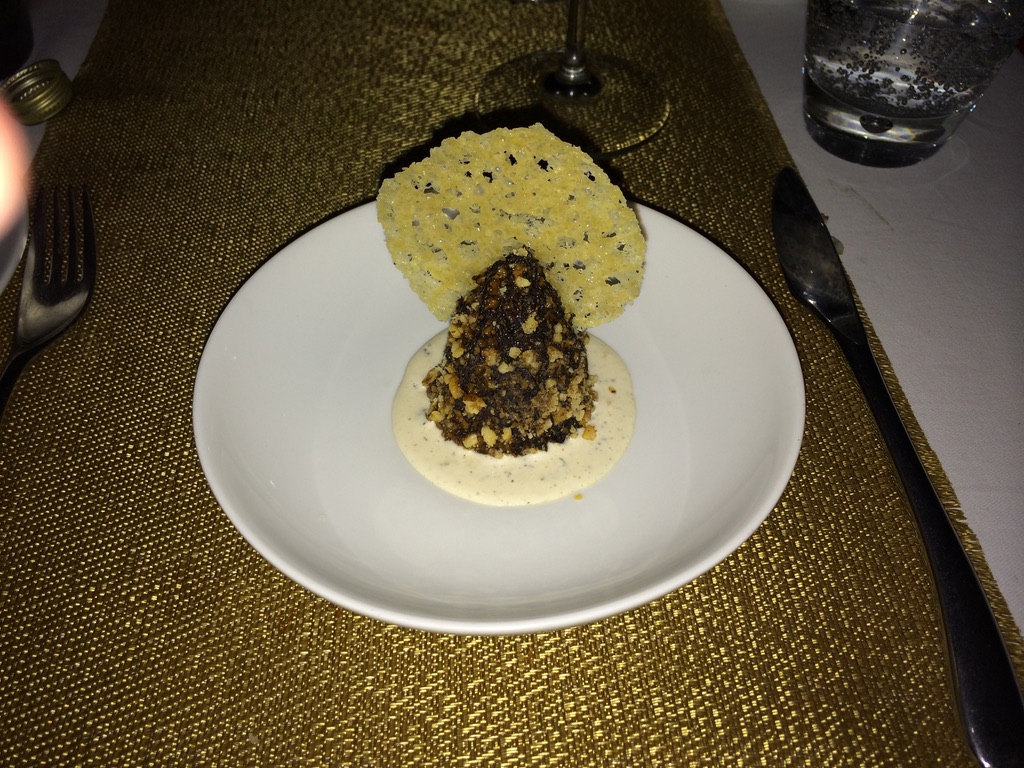
- Veggie – morel mushroom pinwheel with crushed walnut and parmesan papad; Non-Veggie – Chilean spare ribs coated in sun dried mango and toasted pumpkin seed (I think) (with shiraz)
- Palette Cleanser — kulfi sorbet (like pomegranate frozen ices on a tiny stick)
- Veggie – tadka vegetables, baby spinach, roasted sesame in a little pastry shell; Non-Veggie – an amazing lamb dish (with zinfandel and chianti)
- wasabi and cucumber raita/ black dairy dal/ special “kulcha”
- desserts – haji-ali inspired sitaphal cream.. sort of coriander crème brulee/ ginger ice cream/ doda burfi treacle tart (I think it’s an Indian version of fudge.. but much creamier.. (with muscatel from Spain)
- platter of all sorts of sweets…
OK.. it was beyond fabulous.. and definitely a wonderful way to end our stay in Delhi.. and also to ponder the extreme differences in the country — with people begging as soon as you get close to an area where they think foreigners might come.. and then this place. Well just so much to think about.
We’re crashing to finish packing now.. and we are off to the airport.. looks like it will be a 40 hour day.. But home soon.
Thanks for reading and sending so many notes.
fern
Delhi. January 5, 2014/ Agra: Taj Mahal and More
January 5, 2014
Greetings…
Made our way to meet the driver with whom we had contracted to take us on the three-hour drive to Agra to see the Taj Mahal… He was downstairs (in the parking area). When you’ve got some arrangement for a driver, you let the hotel guys at the door know and they have these walkie talkies and microphones that beam into the parking area where the drivers wait. When the “call” goes out, the driver then leaves the parking area and heads to the front of the hotel. Our guy (Ram) came — and off we went… sort of. Turns out that Ram had sub-contracted our ride to a friend named Krishna — so Krishna showed up out of nowhere and Ram took off, leaving us to Krishna. There must be layers and layers of the informal economy here in Delhi. We figure that Ram (who showed up at the end of the day as we returned to the hotel to collect the money) takes about 50% and gives Krishna 50%.. Maybe the percentage is even greater. Anyway, off we went to Agra with Krishna.
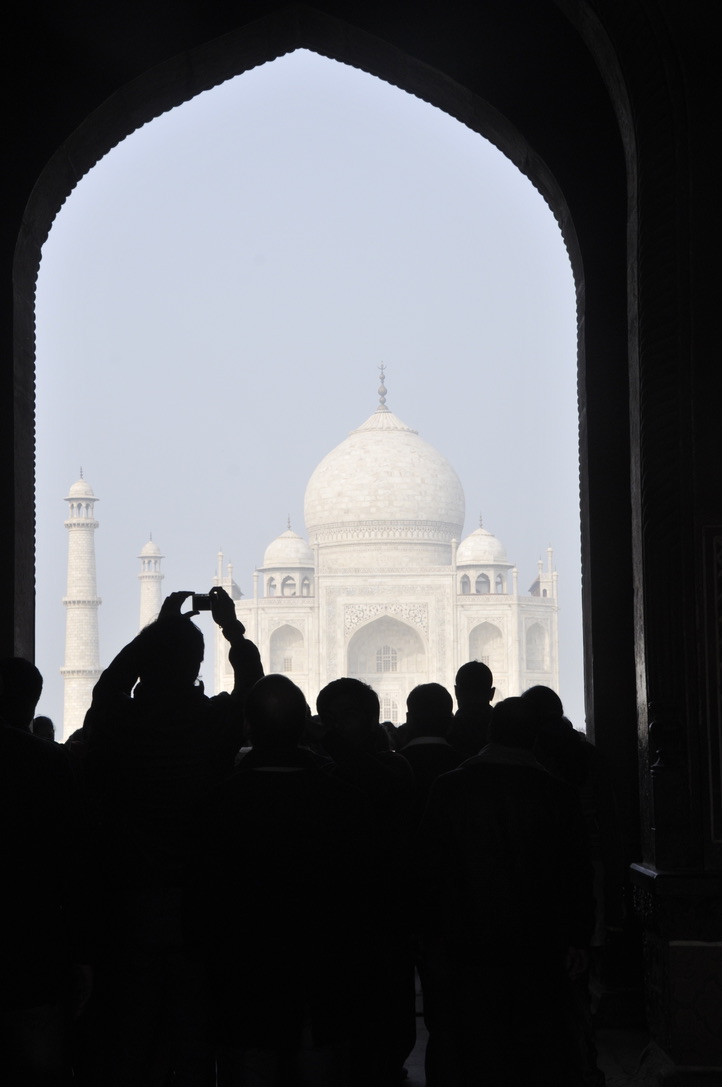
The weather was awful.. fog and some kind of inversion trapping all the pollution, making visibility near zero. It was actually pretty frightening at times with about 40 feet of visibility – max; couldn’t see anything in front of us or on either side for at least 45 minutes. We laughed saying that the title of today’s report might be “We went to see the Taj but it had disappeared.” It’s a five- or six-lane highway for most of the three-hour journey, and despite the unbelievable lack of visibility.. cars were honking and passing the whole way.
Agra sits on the banks of the Yamuna River. And as we approached Agra — a really dirty town with a population of about 1,700,000 — a mere village. Women are washing clothes in the river and laying everything out to dry on the edges of the water. Four and five people are sharing rickshaws that seat only two. And as you get closer, people are trying to sell you little Taj Majals.
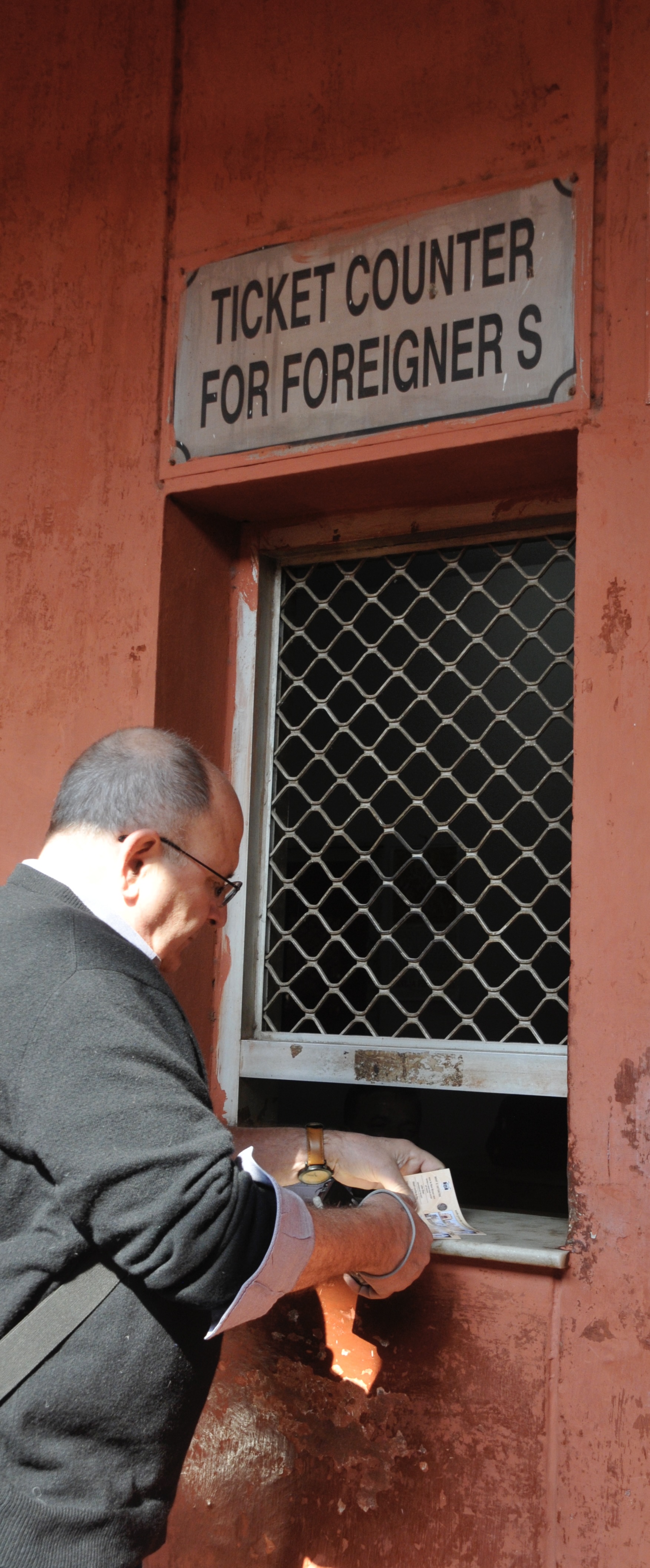
It took more than three hours given the fog— and we were beginning to worry whether or not we’d even see anything. Arrived in Agra and decided to have lunch before seeing the Taj. Went to a hotel and ate lunch.. and then took a pedal-powered rickshaw from the restaurant to the entrance of the Taj. India has an interesting approach to entry into its monuments. There’s a two-tiered fee structure: locals pay one rate and all foreigners pay a rate that is about 10 times greater. (Actually this part was the same in Nepal and Tibet, although not to such a great extent.) But once you get your “special” ticket, here in Delhi — you are referred to as a “high-value ticket holder” and you consistently go on different lines (actually adjacent lines) to the locals (who have the low-value tickets!).. So while the entry line snaked and snaked and probably would take about 30 minutes just to get to the front entry.. we were escorted right in.. no one on our lines. Again, though — a line for men and a line for women.. because of the security involved and the pat downs. So once again, I was in before Mike..

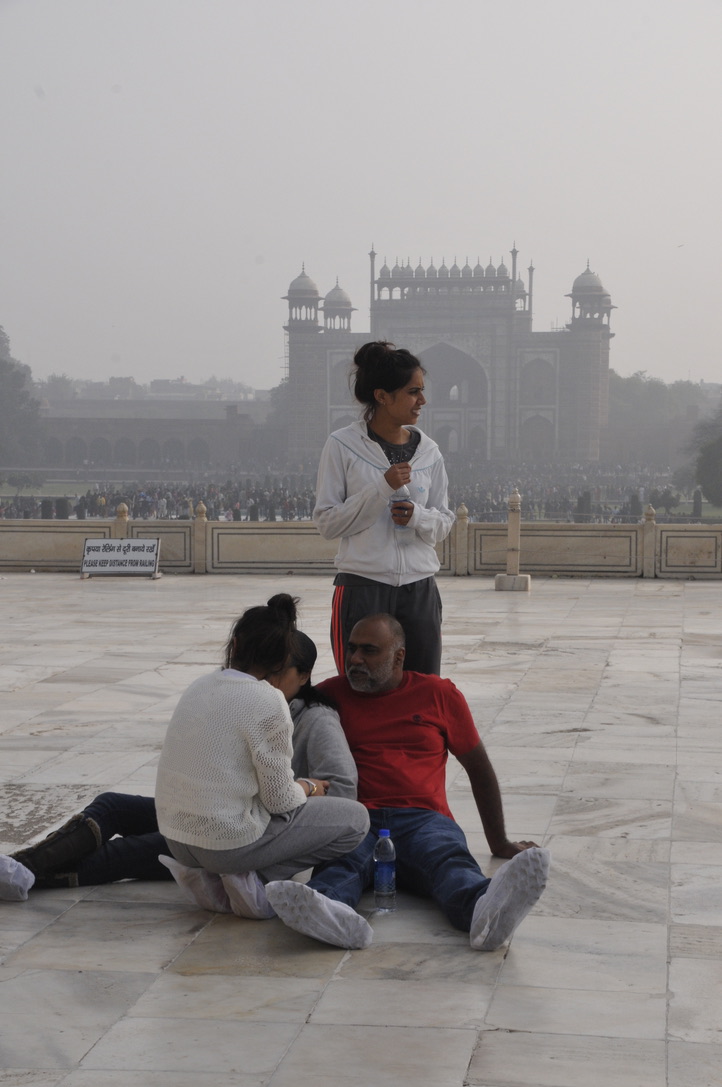
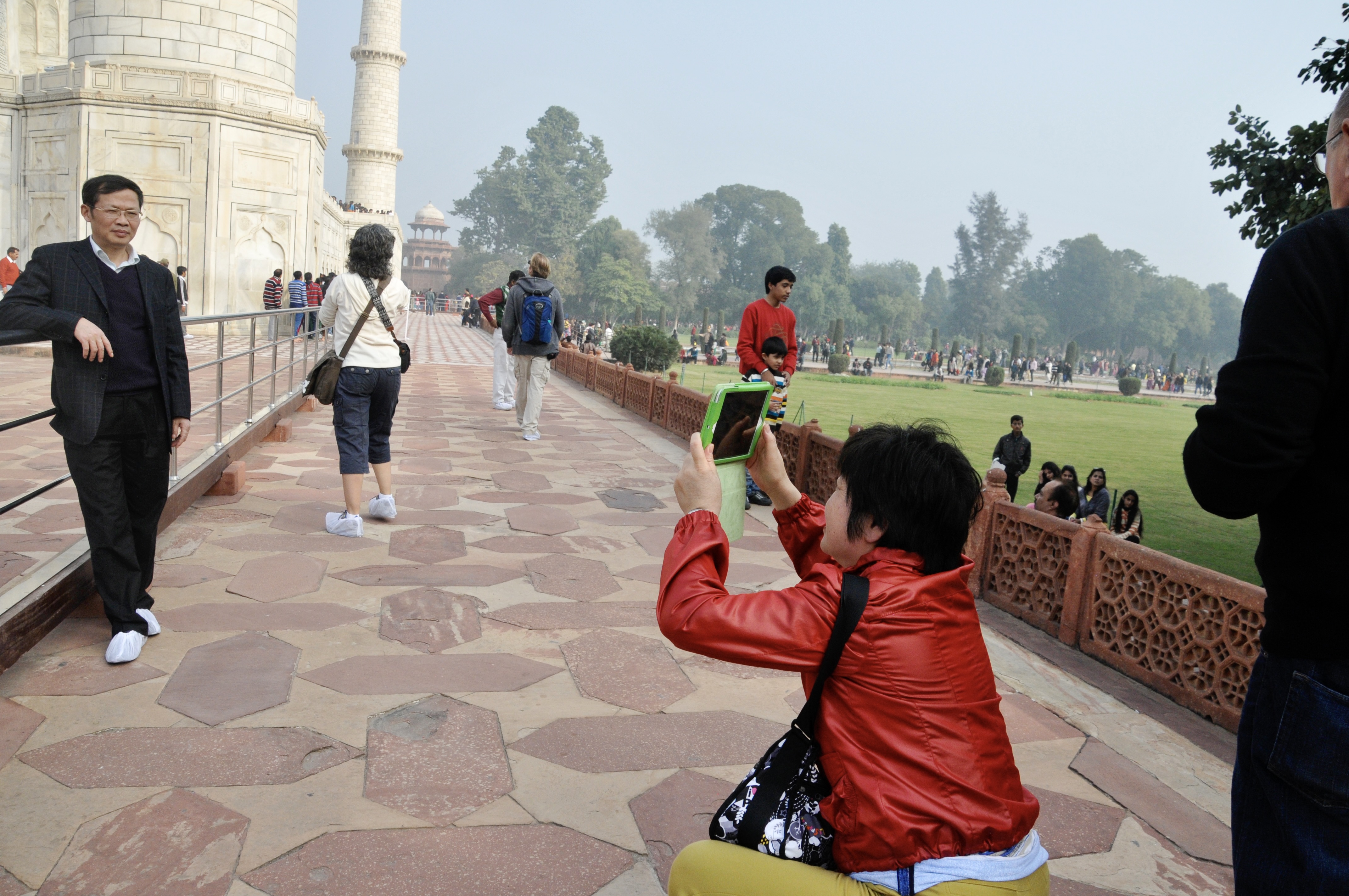
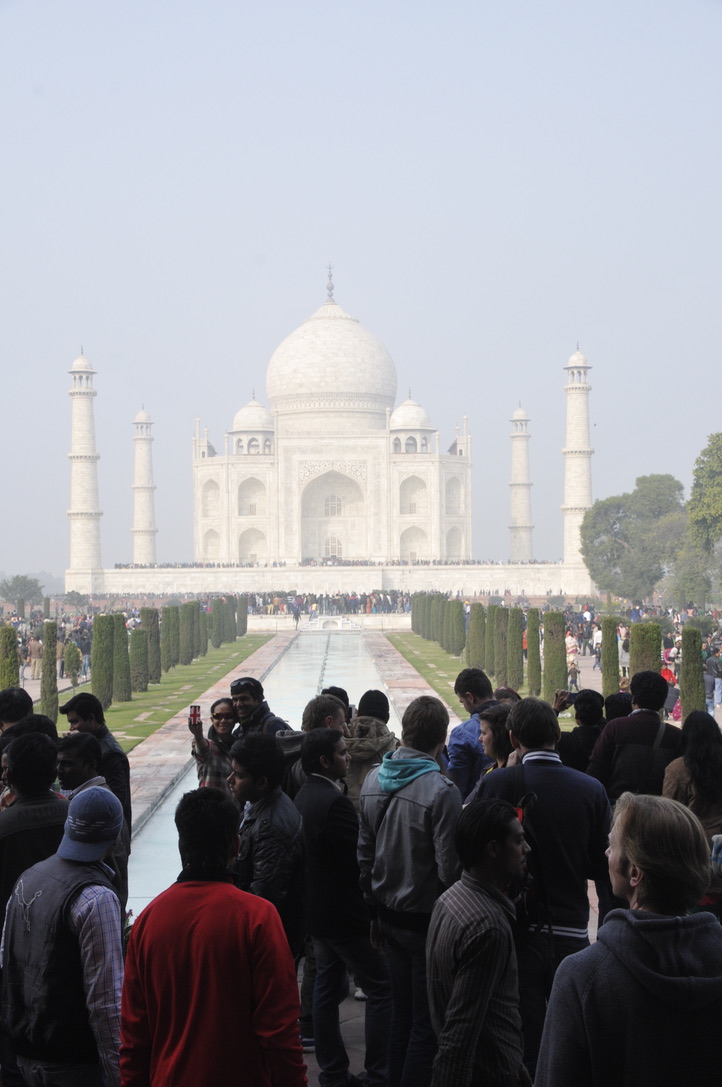
Hard to really describe the Taj and the grounds that surround it. It’s huge.. but basically it’s a white marble mausoleum built by the Mughal emperor to memorialize his third wife who died in childbirth delivering their 14th child!!! Don’t know how many other children were sired by the emperor with his two previous (or maybe simultaneous) wives. She died in 1631 and construction began in 1632 — and lasted for 20 years.. built by thousands of slaves and craftsmen. Supposedly about four million people visit the Taj Mahal annually. I think about 50% of them decided to come today.. despite the fog and mist which made the place both mysterious and mystical.. and also very “flat.” For all its grandeur, it’s sort of simple. Very unadorned; all shades of white and off white.. and just a small amount of inlaid color (muted) in some trim areas.
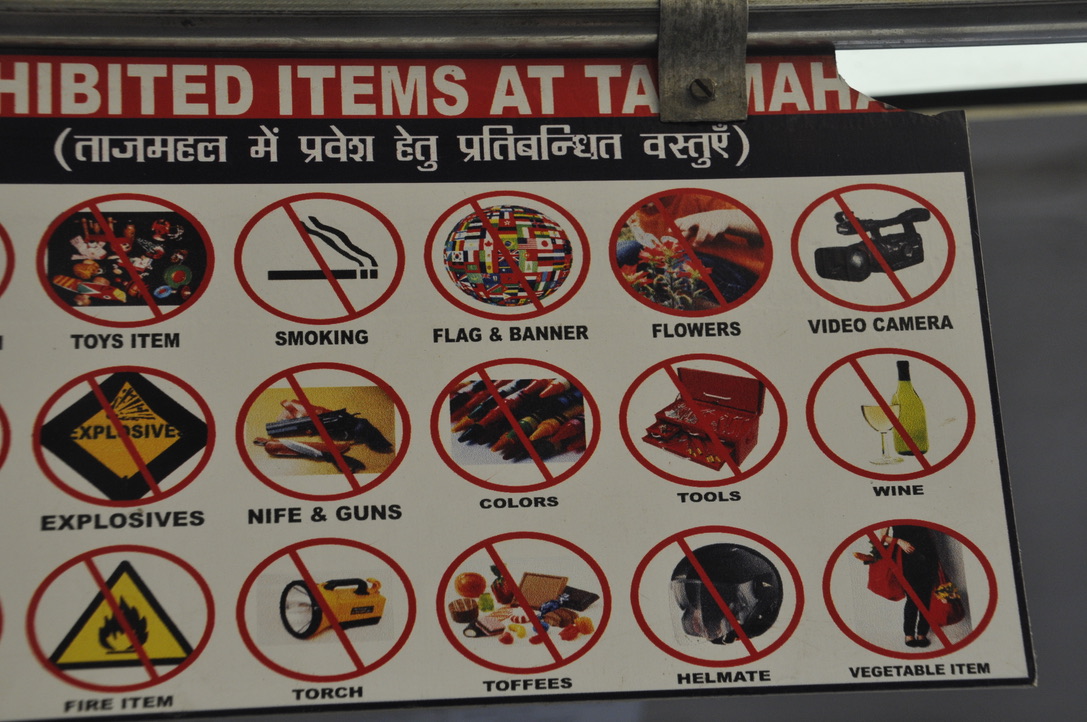
The walk to the building down paths with reflective pools on either side, is like trying to get into Nordstroms on a day when they’d have a 95% off sale!… but you’re walking between, among, behind, and next to everyone taking pictures — on smart phones, with cameras, with videos, etc. Then as you approach the huge edifice, once again, the high-value ticket holders go down one aisle and the others in a different aisle.. We get to the door very quickly and are also given little paper booties to cover our shoes; the other people have to take off their shoes and leave them in boxes along the way. But once you reach the actual entry arch the two lines merge and then it’s pretty chaotic. Inside the mausoleum it’s claustrophobic (at least for me as I don’t do well in tight spaces that are packed body to body with people).. and there’s only one way out. So you just have to hope that the crowds will not become uncontrollable.
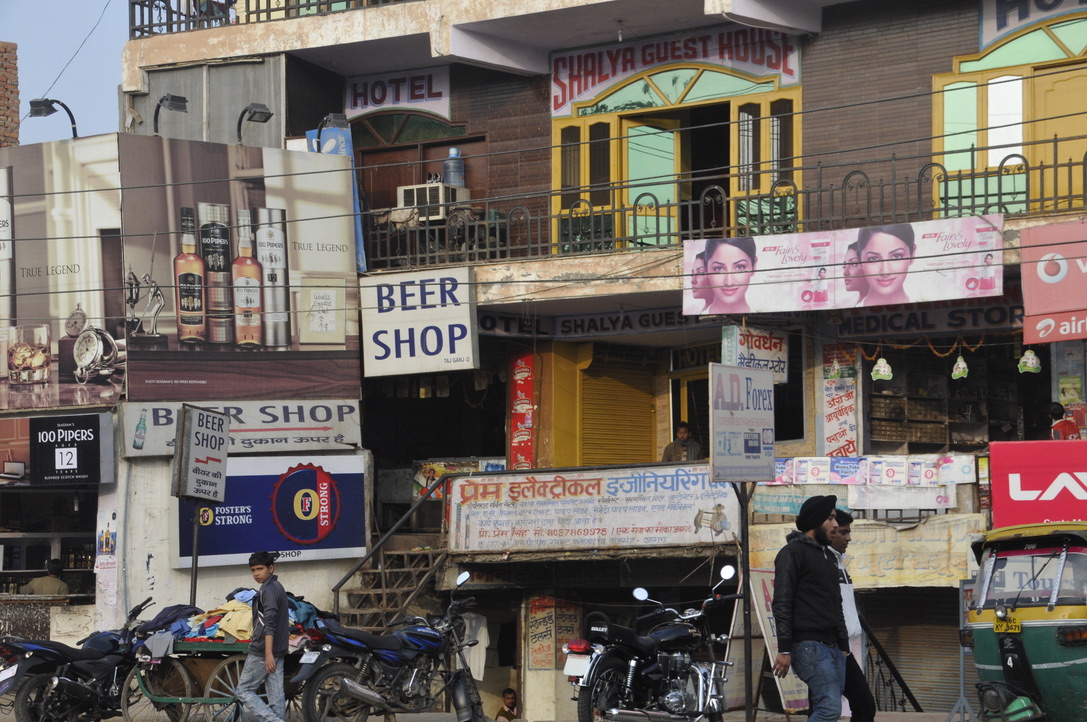
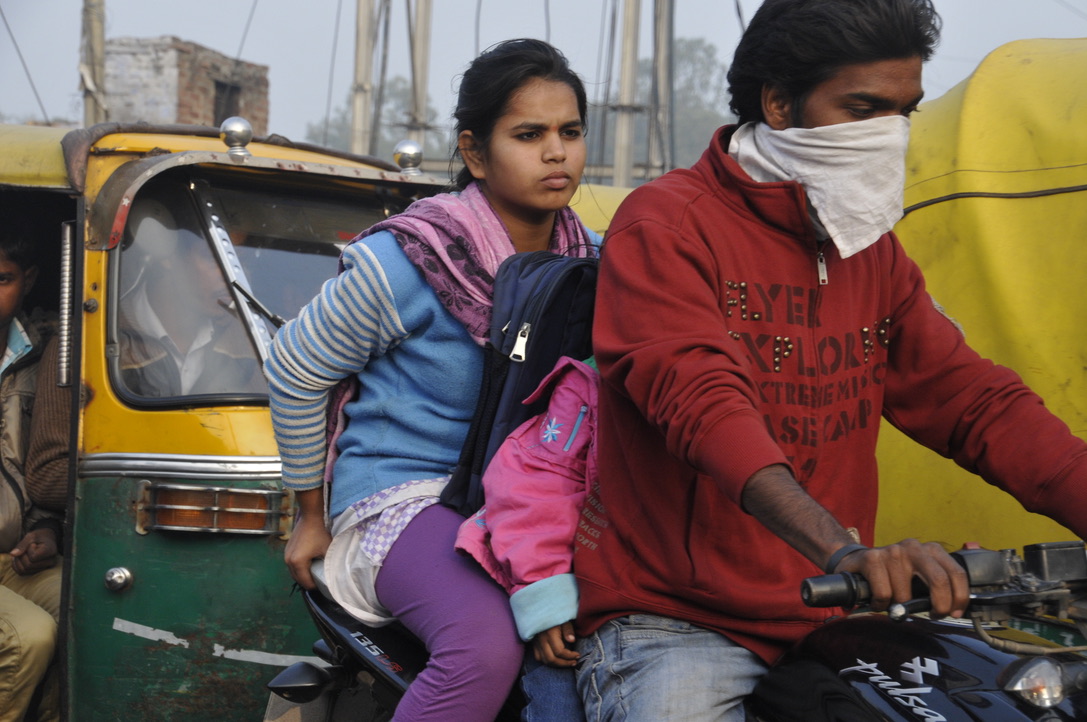
Made it out and back to the parking area to find Krishna. The drive back to Delhi (another three hours) was a tiny bit better but the fog was still incredibly thick.. and merging with pollution and with smoke from coal-burning plants making bricks (we think) that line the highway for a portion of the trip. With white knuckles, we sat quietly in the back of the car.. and hoped for the best. We thought we’d be back from the Taj at about 4pm… Made it back at 7 pm…


Quickly changed clothes and headed to Bukhara — a restaurant located in a hotel about 20 minutes from our hotel. It’s a very highly-rated restaurant and shows up in lots of magazine articles. While the hotel and the restaurant could not have been more poorly designed, the food was fantastic… A traditional Tandoor restaurant.. We shared a lamb kebab (with the lamb having been marinated and covered with all sorts of spices) and a half-order of a pepper stuffed with vegetables and a half-order of a potato stuffed with fruits and nuts… Topped the meal off with basmati rice pudding, Food was quite good..
That’s it for today.. Taj Mahal had been on the bucket list. Check. Check. Done.
Will write my last note tomorrow, just before we head to the airport — Our flight leaves at 3 am.. (so it’s either Monday night or Tuesday morning depending on how long you consider your day. I generally deal with the day as lasting as long as I’m awake.. So it will be Monday night for me; officially it will be Tuesday morning (India time ).
Until tomorrow –
Fern
January 4, 2014 — Amazing and Exhausting Day in Delhi
Saturday, January 4, 2014. Delhi
We got picked up at the hotel at 10:30 sharp, as planned, by Pradeep’s driver. Mike met Pradeep this past summer when he visited Mike’s office in Oakland. Pradeep is a friend of one of our friends (an American trained at Harvard and MIT, who went to India in the early 1970s to work as an architect and to create a school of planning at Ahmdebad. In the late 70s he established some kind of a center and also an architectural and planning firm in Pune). Pradeep came to Berkeley to drop off his son who is in the Graduate Landscape Architecture Program at UCB. Mike mentioned to Pradeep at that time that we would most likely be coming to Delhi at the end of the year.
Pradeep reached out several times to be certain that we would connect when in Delhi. So, Pradeep’s driver picked us up at the hotel and off we went to the outer edge of the southern part of Delhi to a very small village where Pradeep has built his nationally-known architectural and urban planning practice. The practice of having a “driver,” by the way, is very very common for professionals in India. (We had already experienced this when we visited friends in Mumbai more than 15 years ago.) Pradeep owns the car and Krishna drives the car. Most likely Pradeep never drives himself, although I cannot be certain. Driving in India is an absolute “art” and a skill that is probably best left to those who do it for a living.
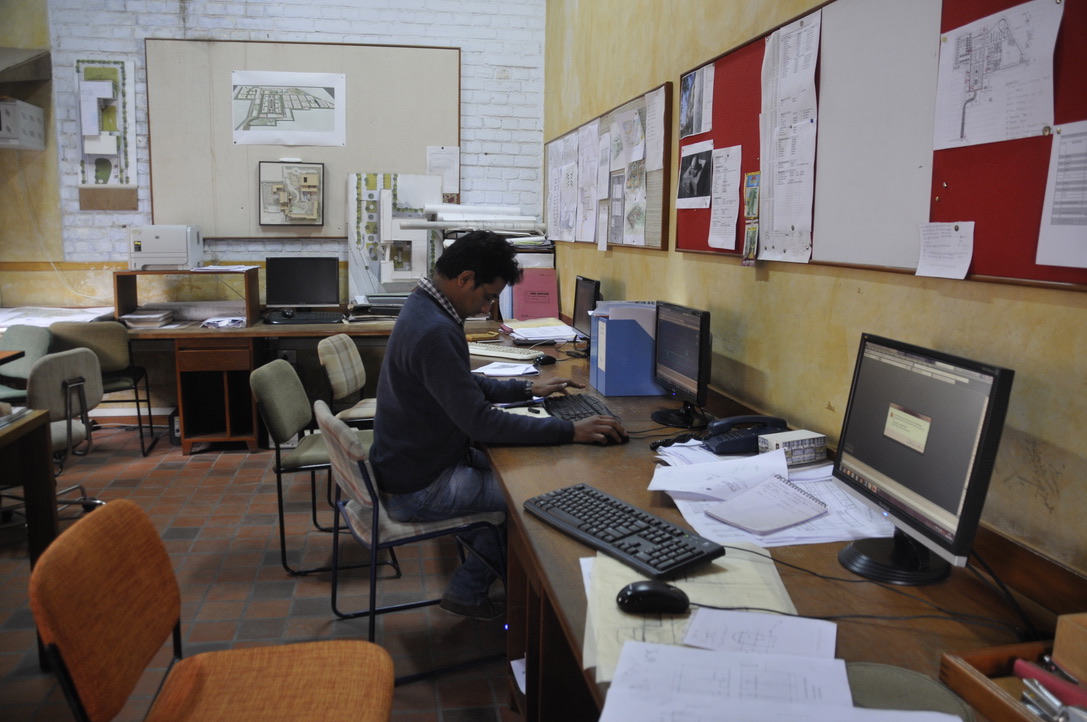
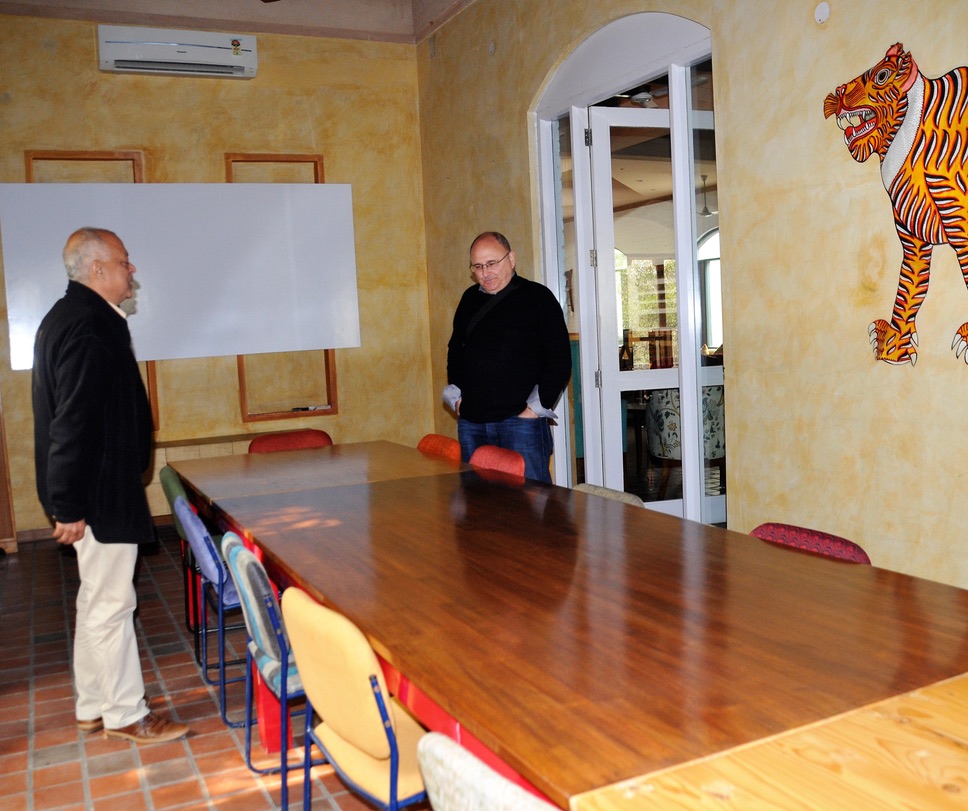
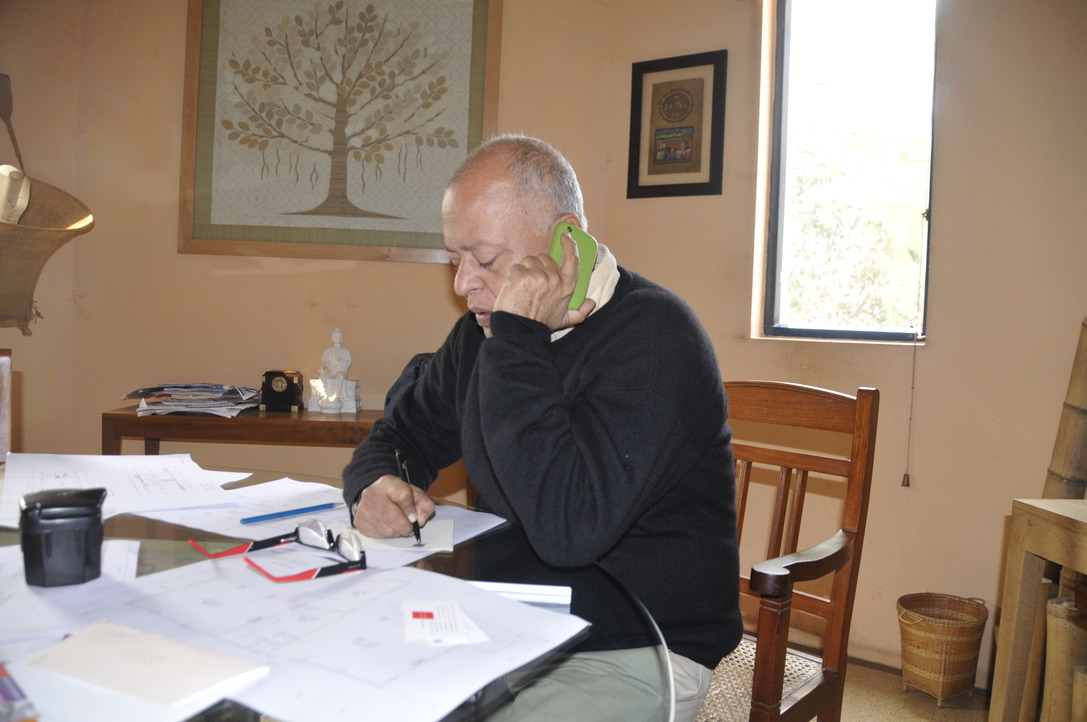
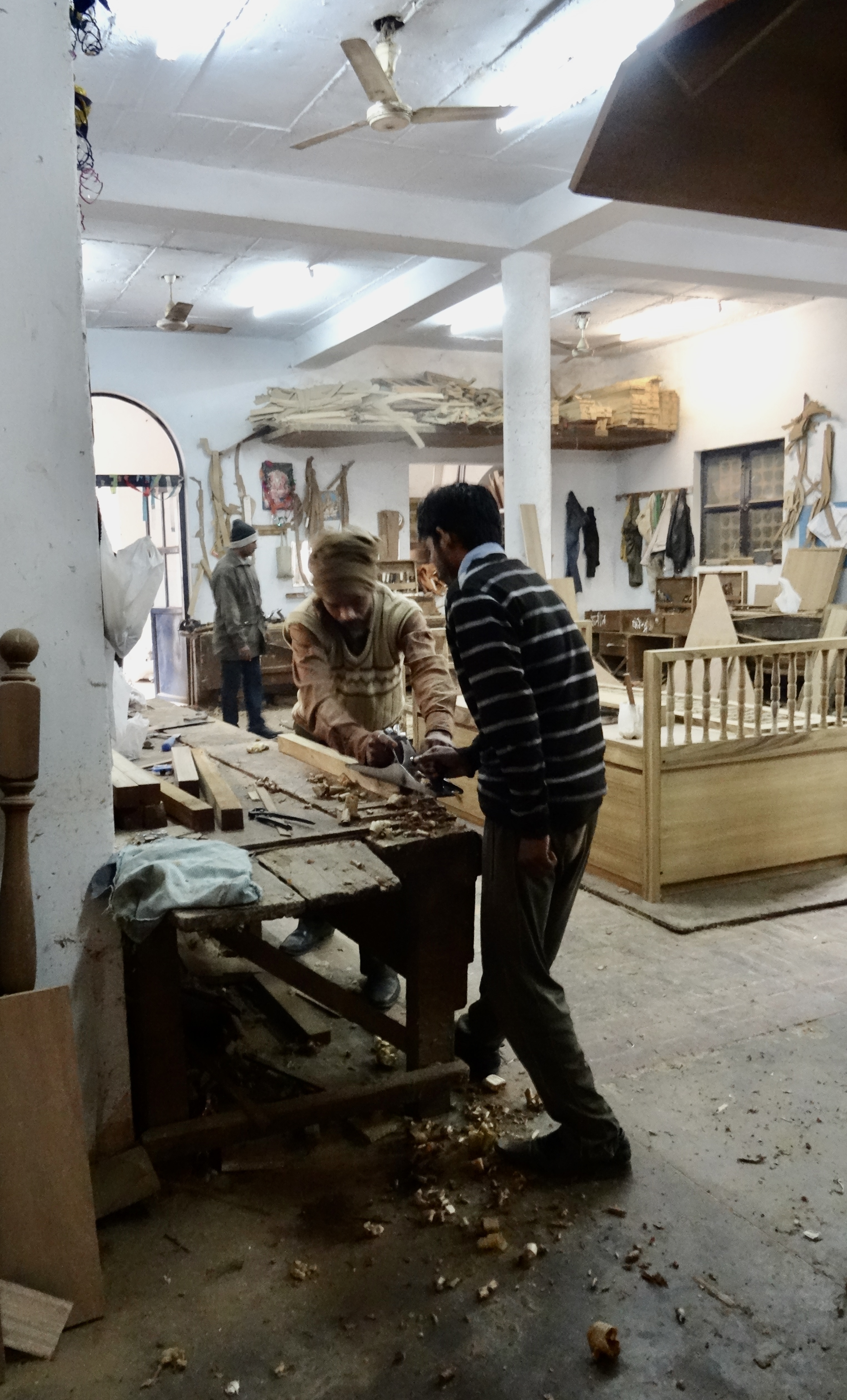
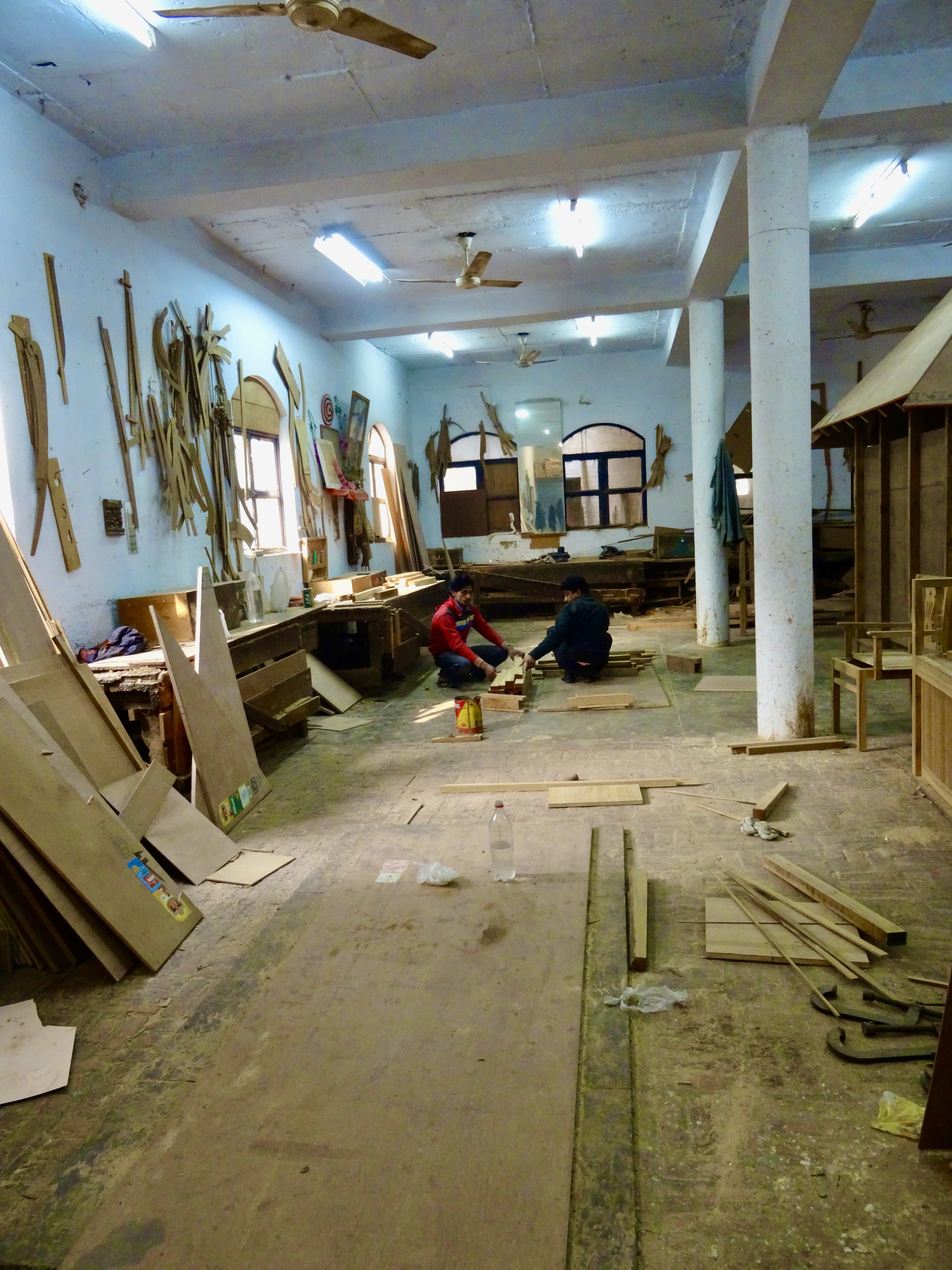
Anyway, the drive from the hotel to the small village of Aya Nagar took about an hour. The “village” is outside of the urban planning zone for the city of Delhi — meaning that Aya Nagar is sort of left on its own — garbage is only picked up when those newer residents complain; there are no guidelines for planning; there are no government offices that check construction. Essentially it is even more of a free-for-all than the rest of Delhi. Pradeep lives within the center of Delhi and “commutes” (with driver) daily about 40 minutes each way. Initially he opened his office in central Delhi, but about 15 years ago — as the prices of real estate and office space zoomed — he decided to look for larger space and also to create a workspace that met his many interests and needs. Somehow, he wound up buying property in Aya Nagar and built a rambling and wonderful complex that includes his architecture/planning firm (with about 30 employees); a wood shop downstairs where furniture is designed and built to order; a café-like space where staff eats together each day for lunch (with the food coming from an NGO in the town that is a training ground for women to get employment); an outdoor snaking channel of waters and fish ponds and plants that purifies their gray and black water that is eventually used for irrigation; a set of about 8 geese, some dogs, and more. The “building” is really a complex of several structures and you move from one to the other by a series of outdoor bridges that link the buildings at each floor level. We got the royal tour of the place and then went for a walk in the “village” — together with the cows, sleepy dogs, and village people — many of whom Pradeep knew.
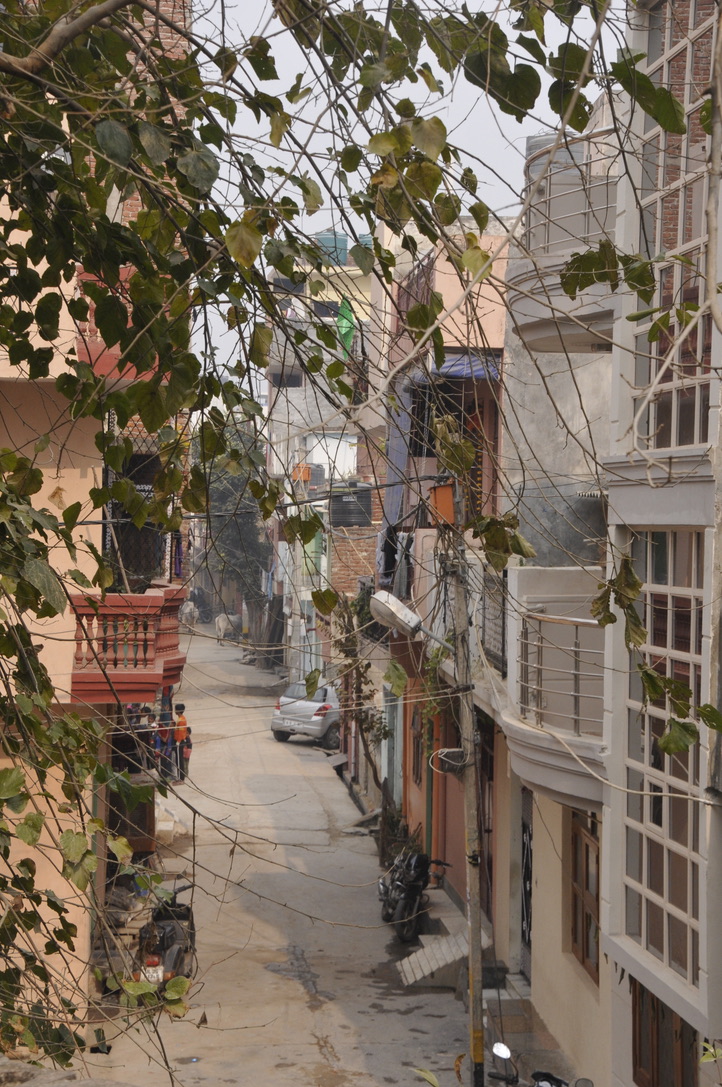

We stopped off to visit the NGO where the lunches are made, met the director, and watched a group of women making butterflies out of paper to sell at a craft fair coming up in February. Chatted a bit to better understand their funding structure and then continued our “stroll” in the completely unpaved, dusty village. According to Pradeep, 10 years ago there was virtually nothing in Aya Nagar and now it’s built up — of its own efforts. There are little shops everywhere, and people migrating from the south to Delhi — where there are more jobs — are coming to the town. Pradeep says that it will gradually be incorporated into the city of Delhi and then will have the usual restrictions… for the better and also for the worse.
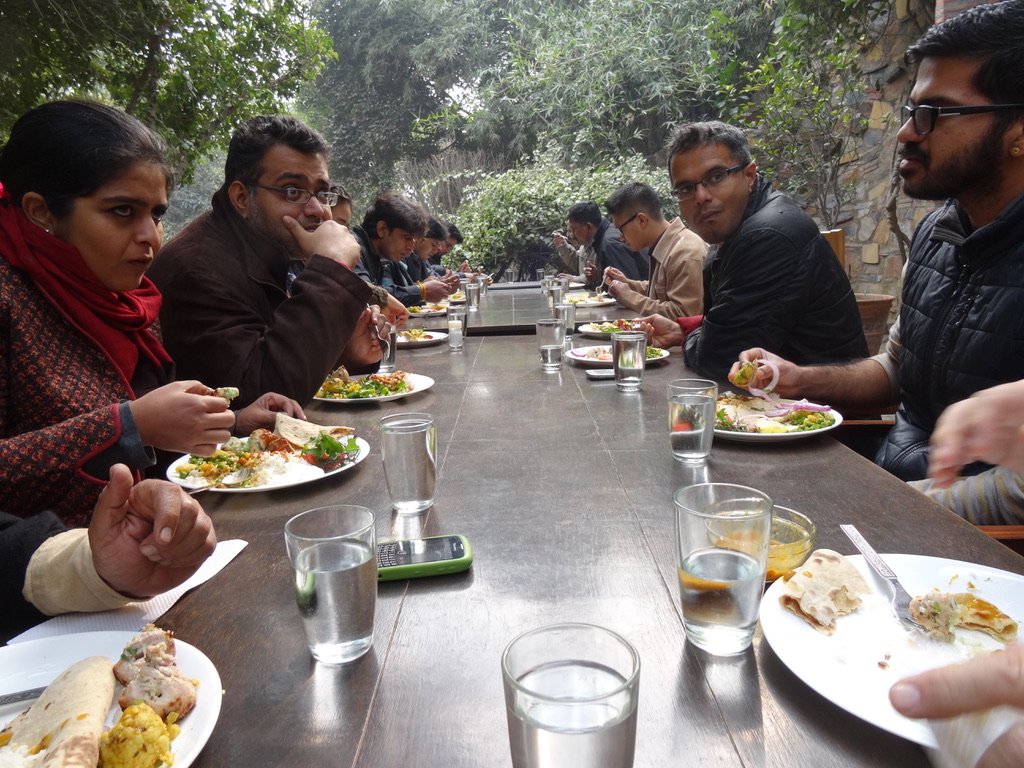
At the office, we were greeted by the whole staff (all Indians) — and also three other people — who are probably all in their early to mid-30s:
- Aditi – a furniture and interior designer trained at the National Institute for Design in India — a university begun by Charles and Ray Eames at the request of the highest level of Indian government in the late 1950s. The government wanted recommendations as to how best to develop a design training program that could help small industries throughout the country and that could preserve high quality Indian design of consumer goods. As I understand it (and I remember reading a bit of this history years ago), the Eameses came to India through Ford Foundation funding and stayed many months to prepare the recommendations. They traveled throughout India, studying different centers of design, handicrafts, and manufacturing, and eventually issued an important report which led to the establishment of the National Institute of Design in the very early 1960s. It was developed to be an autonomous national institution for research, service, and training in Industrial Design and Visual Communication. Once graduating, Aditi realized that her training was really not sensitive to India’s materials and needs.
- Her husband who is a documentary filmmaker (with a film airing on their public television station next week, I think).
- Pankaj, her brother who was visiting for a month — from Oakland!!! Turns out that he graduated in urban design in India and then went to MIT for his Masters in Urban Planning.. and stayed in Boston, later DC — working as a consultant to large companies. He began to realize that he had no interest serving the corporate class and headed to San Francisco where he briefly worked for the city of San Francisco’s environmental department.. and continued to search for what he considered to be a more “meaningful” position and something that matched his politics (left). So, for the past 18 months he has been part of the Arizmendi cooperative bakery, first in the Oakland branch and now in the Mission District. (As Pradeep described him — an MIT-trained baker!).. We had a lot to talk about, especially since Mike and I are big fans of Arizmendi. What a very very small world it is.
So, Aditi and her husband own and live in an amazing house down the road from Pradeep’s office, designed by Pradeep a few years ago. In it she has created her own little world — a great living space; a work space for her small staff who help her develop and produce her own line of wonderful bags and purses made of special fabrics that she sources from small villages throughout India; the staff are all village people, most of whom sat on the floor in tiny spaces working when we arrived; and a “showroom.” Aditi was trained much like me in a post-Bauhaus method so we had a lot in common — the good and the bad of this kind of aesthetic training. Her product line uses all sorts of recycled materials and she collects every scrap of fabric that is a “byproduct” of the bags. Then she takes these tiny, teeny scraps and the women in the village sew them together to make yet other bags using these “throw-away” pieces.
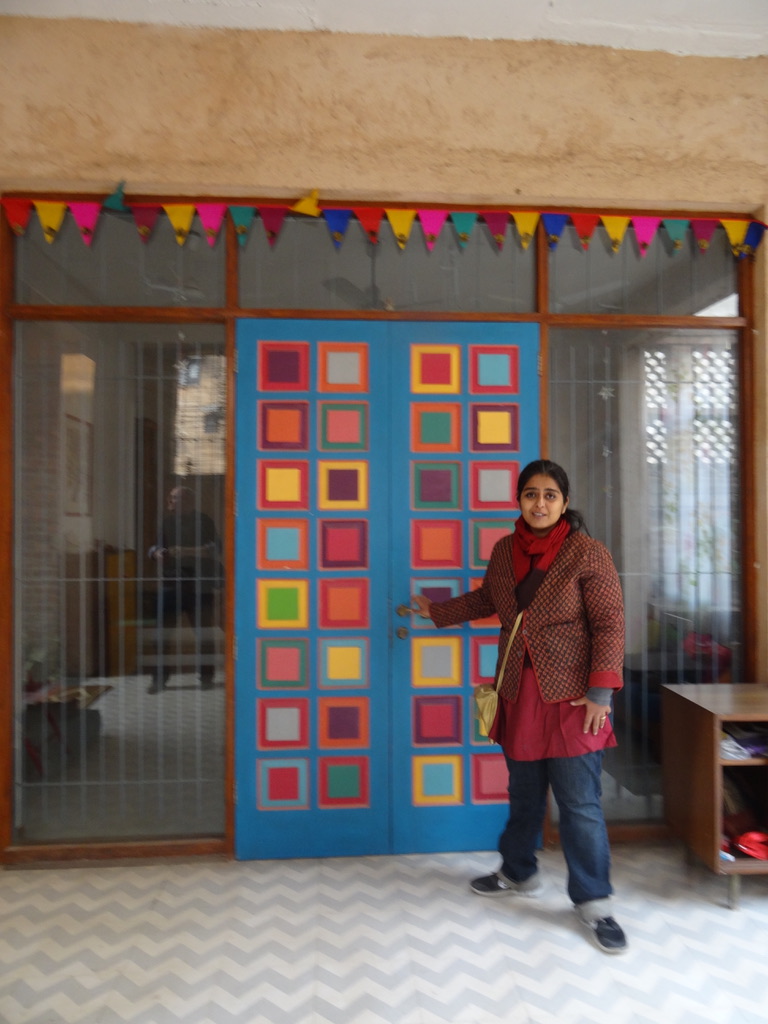
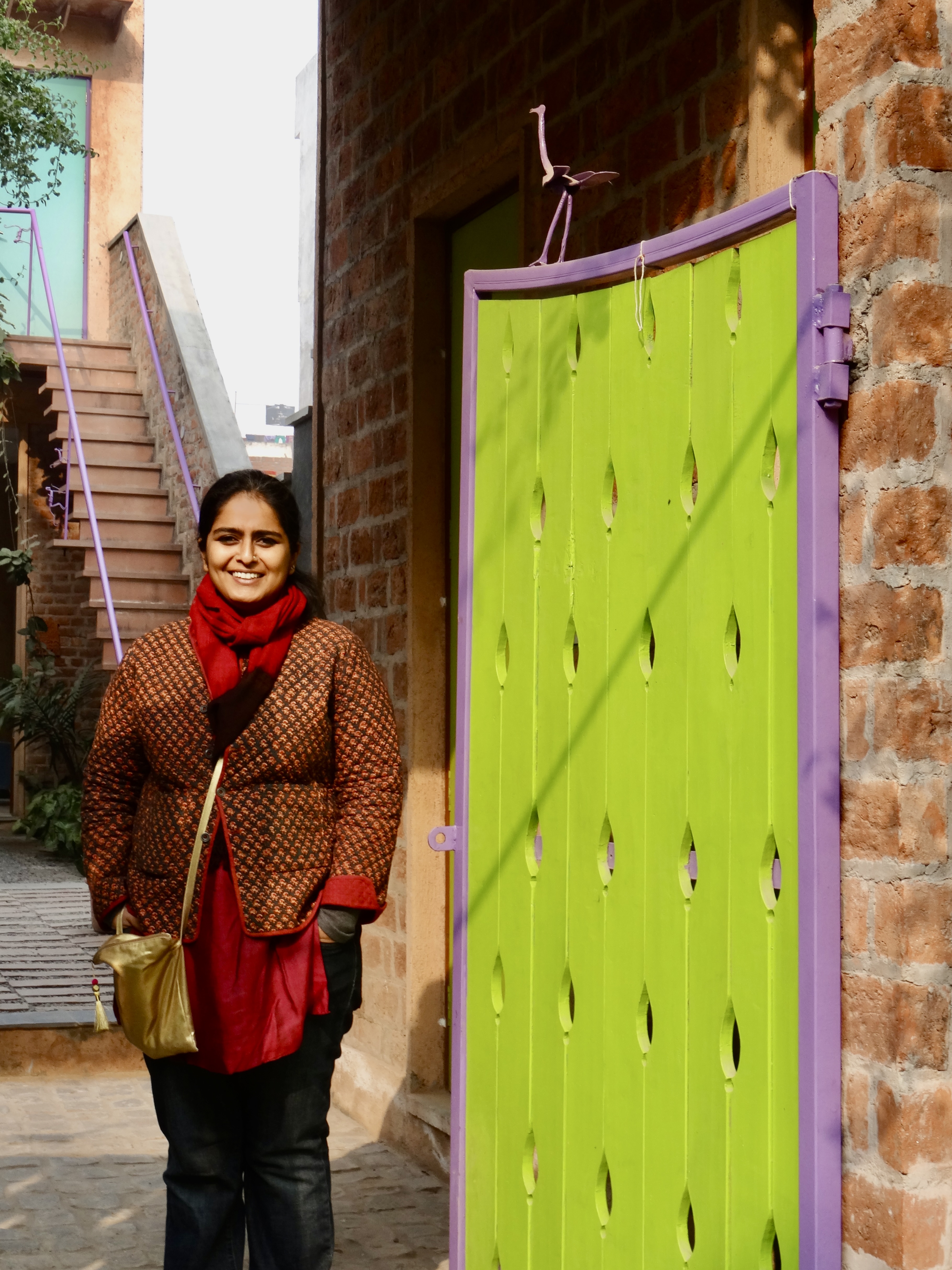
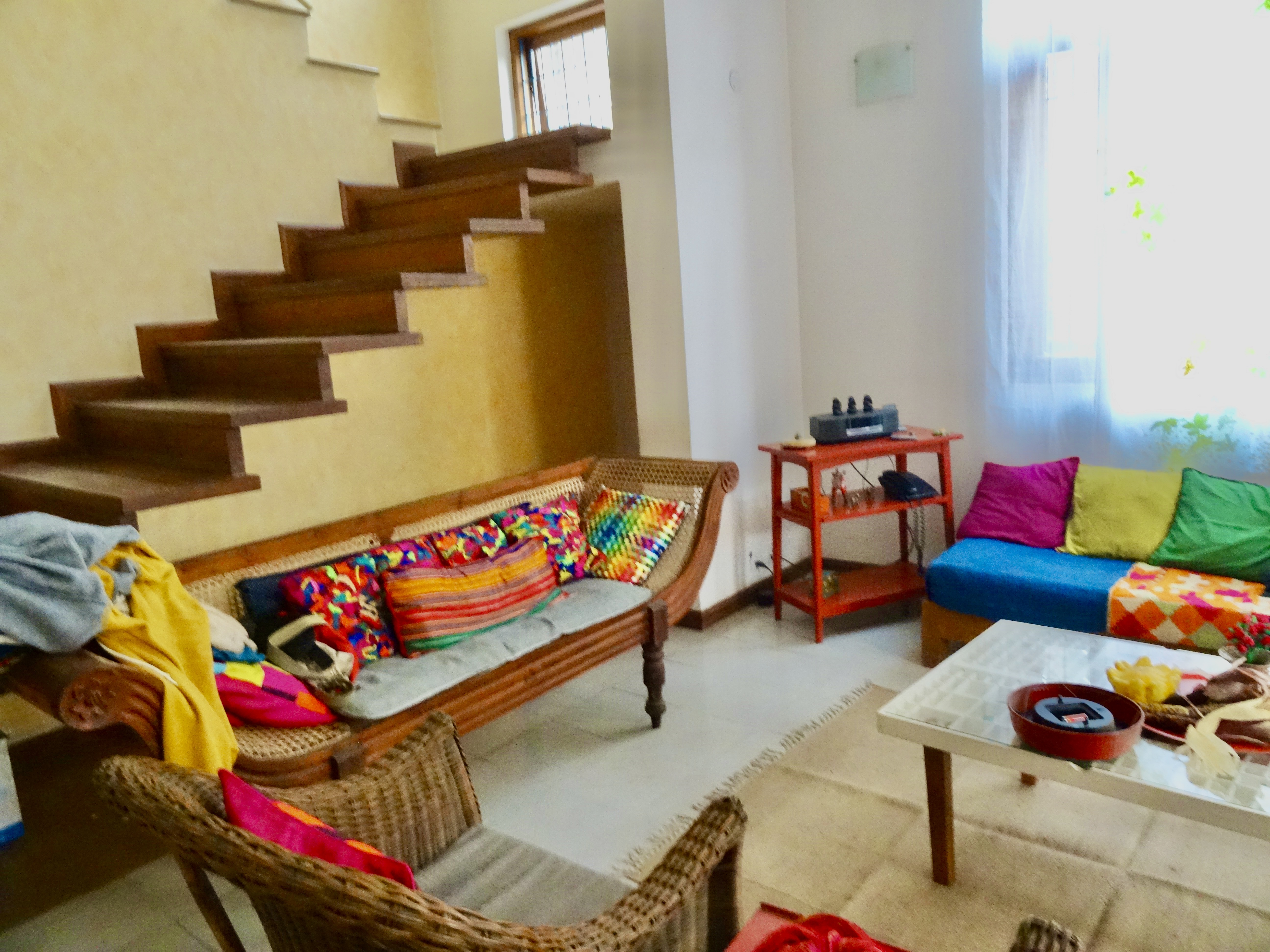
The brick house has all sorts of bright colored trim reflecting Aditi’s wonderful sense of style and taste — chartreuse doors and bright green edges, etc. There is a complex of three houses that Pradeep designed. Two of the others are owned by architects on his staff.
The office served us an Indian lunch (except for the carrot cake they had for dessert — made in India, but not very traditional — as a happy new year cake).. Everyone took lots of pictures — we of them, them of us, them with us, us with them.. seemed like everyone had a camera going at one time or another.
At about 3:30, they suggested that we go to a special craft exhibition and sale back in the city. Pradeep offered his driver again, but we insisted on taking the Delhi Metro (to try it out).. So the driver took us to the closest station (about 10 minutes from the office).. but of course Pradeep would not really let us on the Metro alone (in the end, it was probably a good decision). He sent a staffer with us who literally shepherded us into the train station, bought the Metro tickets, and went with us for about 30 minutes on the absolutely jam-packed train and then got off with us and walked us to the exhibit/open air craft center. Once safely inside the exhibit area, he bid us farewell.
The Metro line that we were on begins as an above ground line and eventually tunnels underground as it reaches deeper into the city.
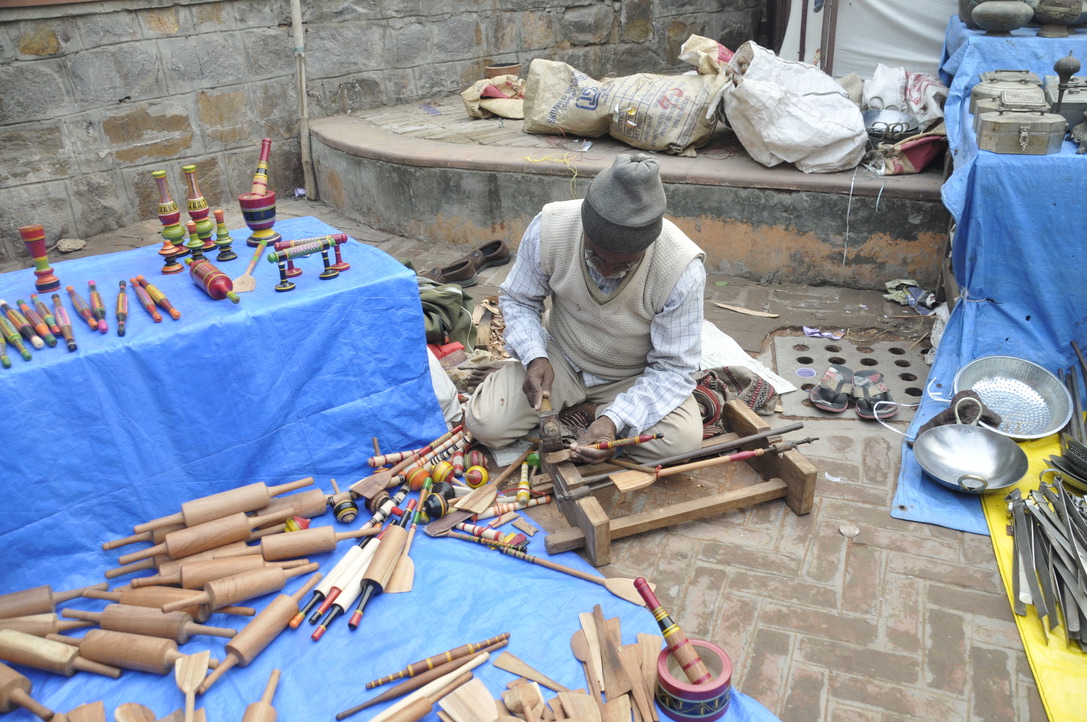
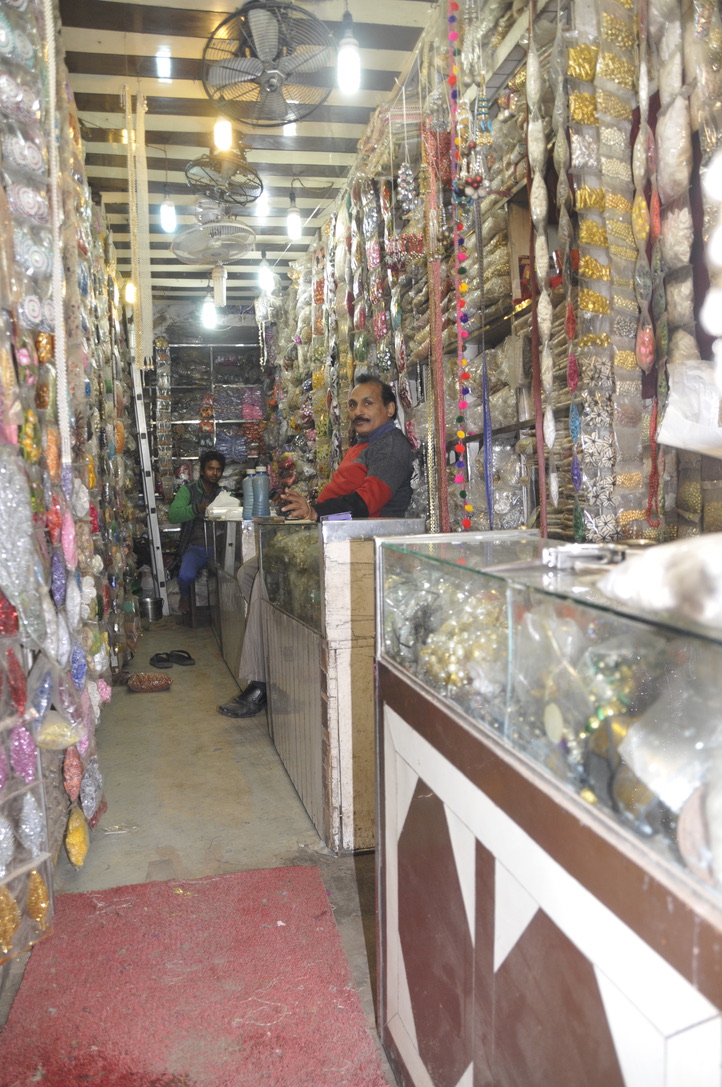
So, turns out that the exhibit and craft show/fair was organized on a huge urban space that Pradeep designed. The basic plan remains the same, but every two weeks the shopkeepers change so that crafts people from all over India have an opportunity to display and sell their goods. For these two weeks it was crafts from all over India, displayed in little stalls — curated by an Indian woman and friend of Pradeep who had just completed a book about craft in India! We were supposed to go up to meet her as she was giving a little speech but it was crowded so we walked the fair instead — and I’m afraid made way too many purchases.
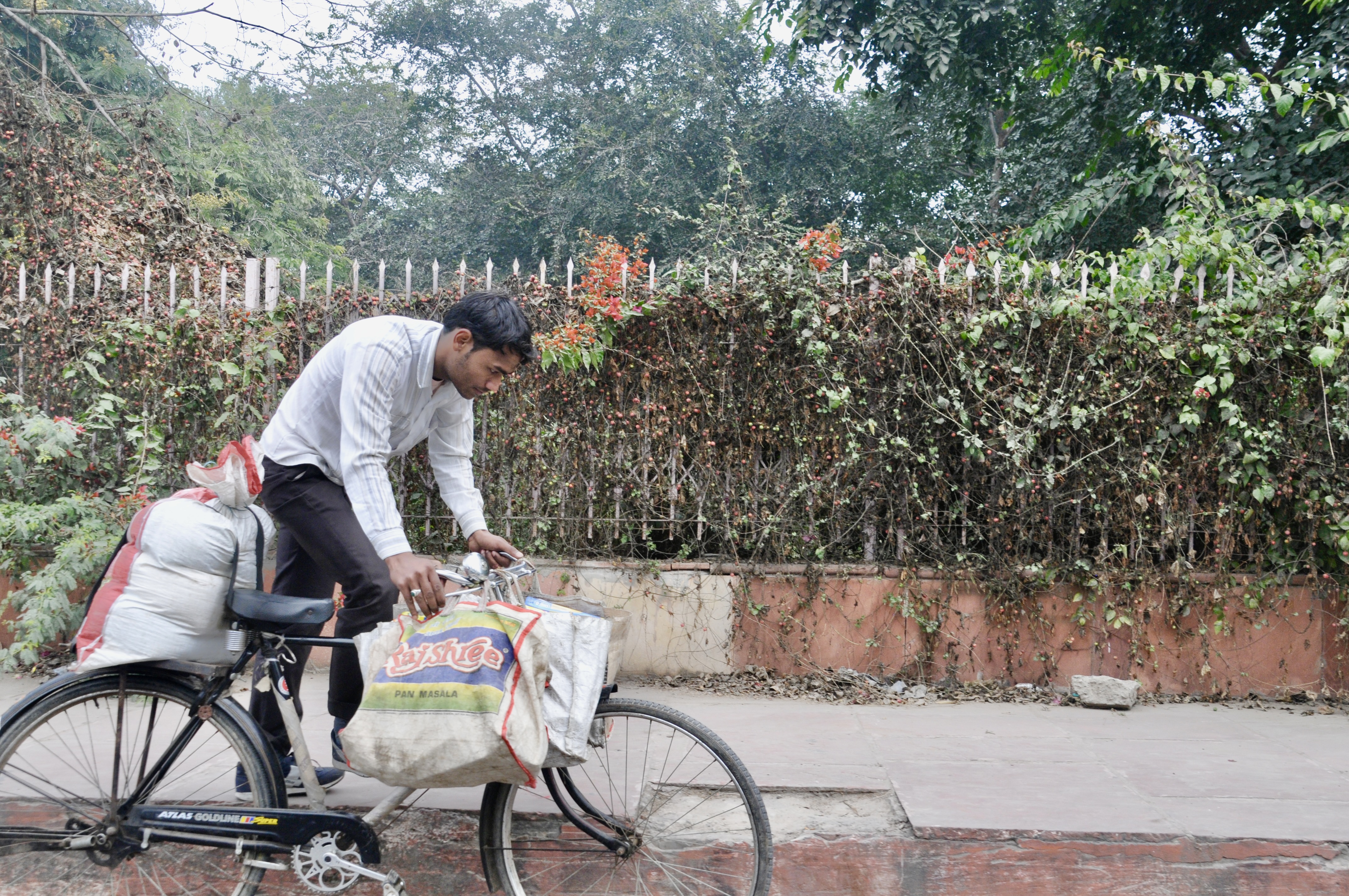
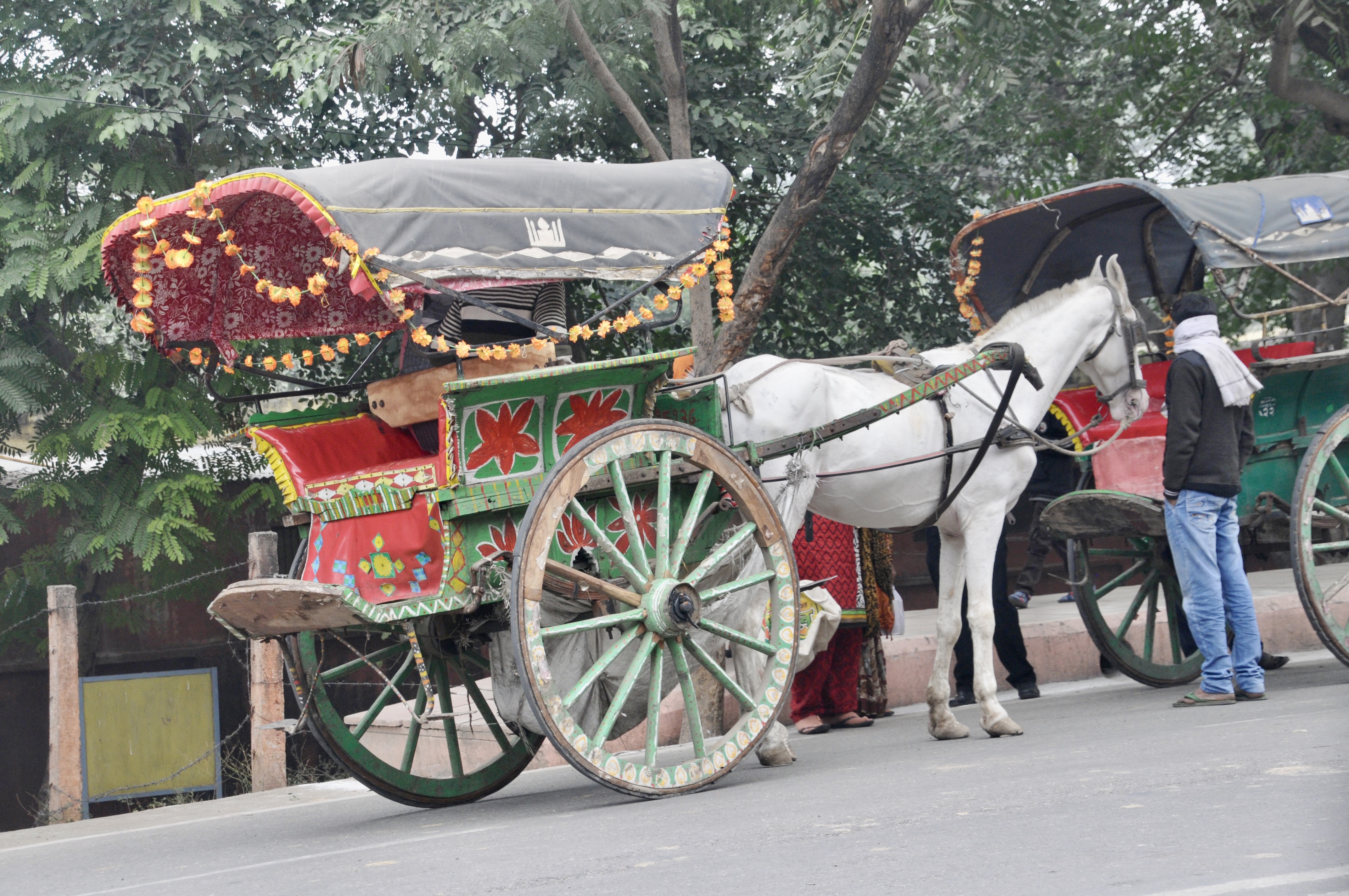
By the time we left the craft fair it was getting dark and cold, so we opted for a taxi.. and here we are at the hotel. Tomorrow we do the tourist bit — going to the Taj Mahal. We really considered skipping it, but that would be weird. We’ve linked up with one of the taxi drivers that we had a day or so ago… He’s coming in a “white car” — not the taxi; they refer a lot to “white cars” which I think are meant to describe more comfortable cars with good cushioned seats. The hotel also has a service for taking people to the Taj (which is a three-hour drive in each direction). But the hotel arrangements are a third more than our “deal.” So that’s tomorrow.. six hours in a car; two at the Taj and lunch somewhere in Agra (the city where the Taj is located). Then we’ve made reservations for dinner for tomorrow night at one of Delhi’s best restaurants (Bukhara).. It will be another exhausting day. We leave very late on Monday.. and have no plans for Monday except to get some work done to be prepared for our arrival on Tuesday and travel to Seattle on Wednesday.
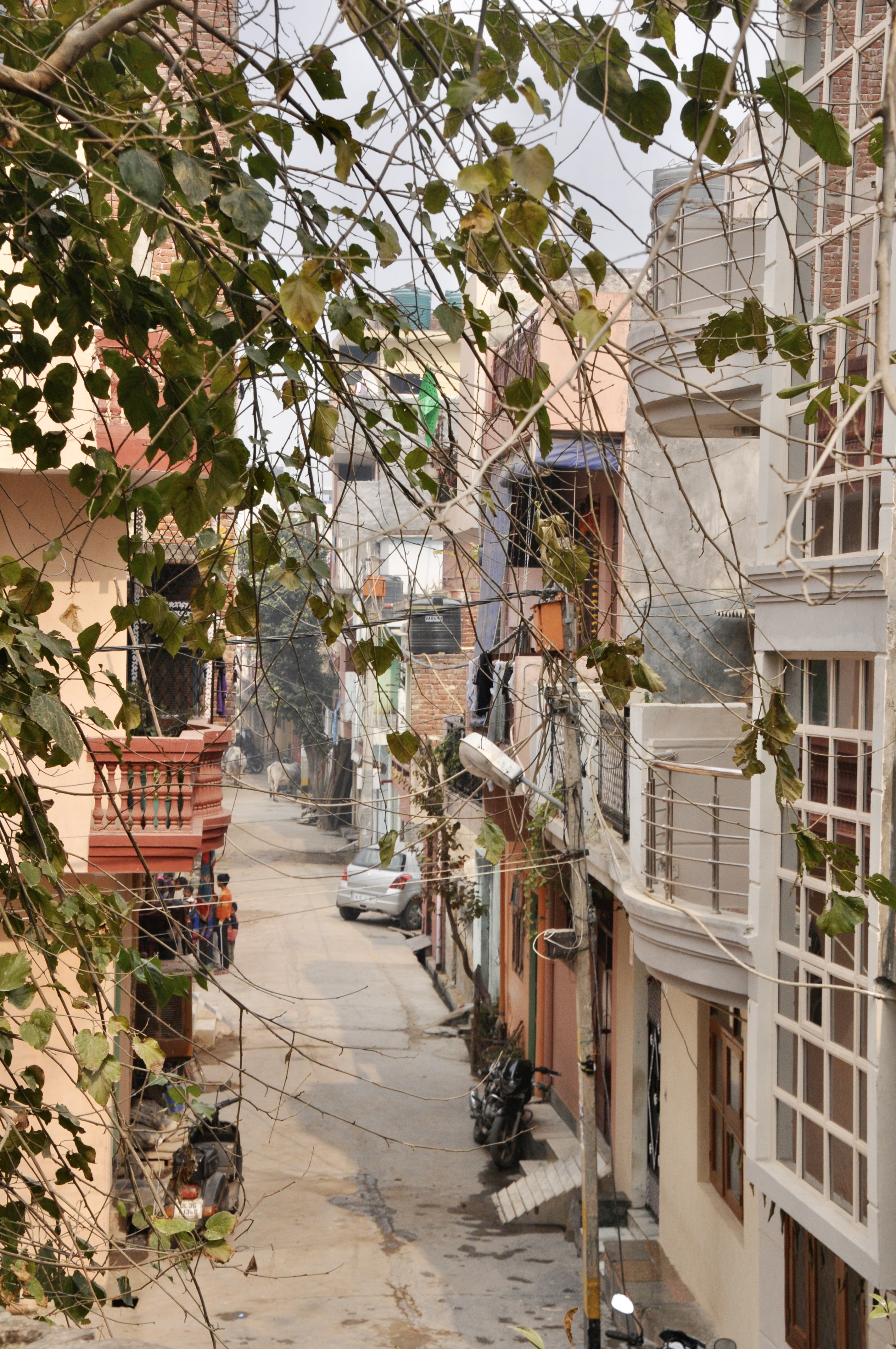
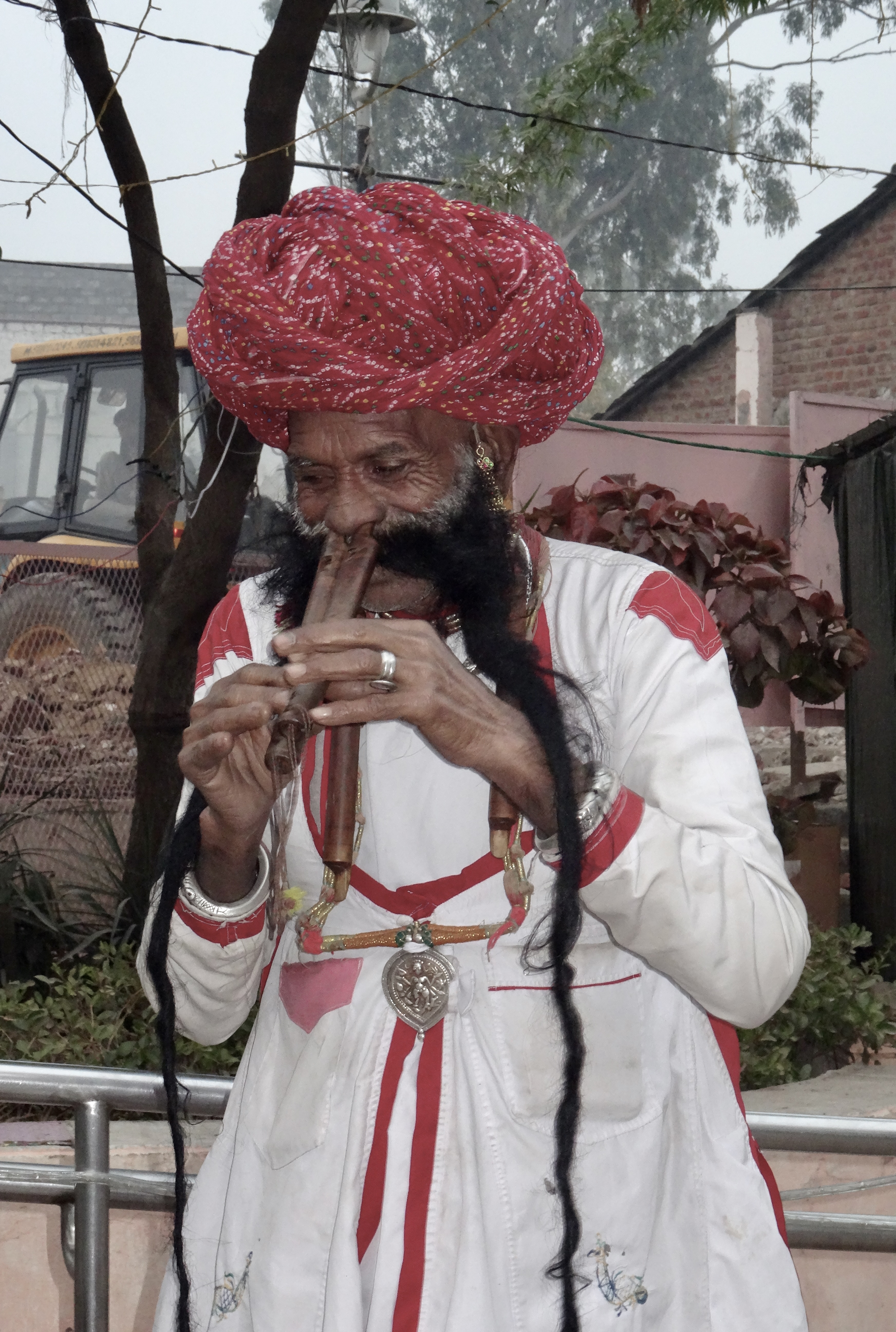
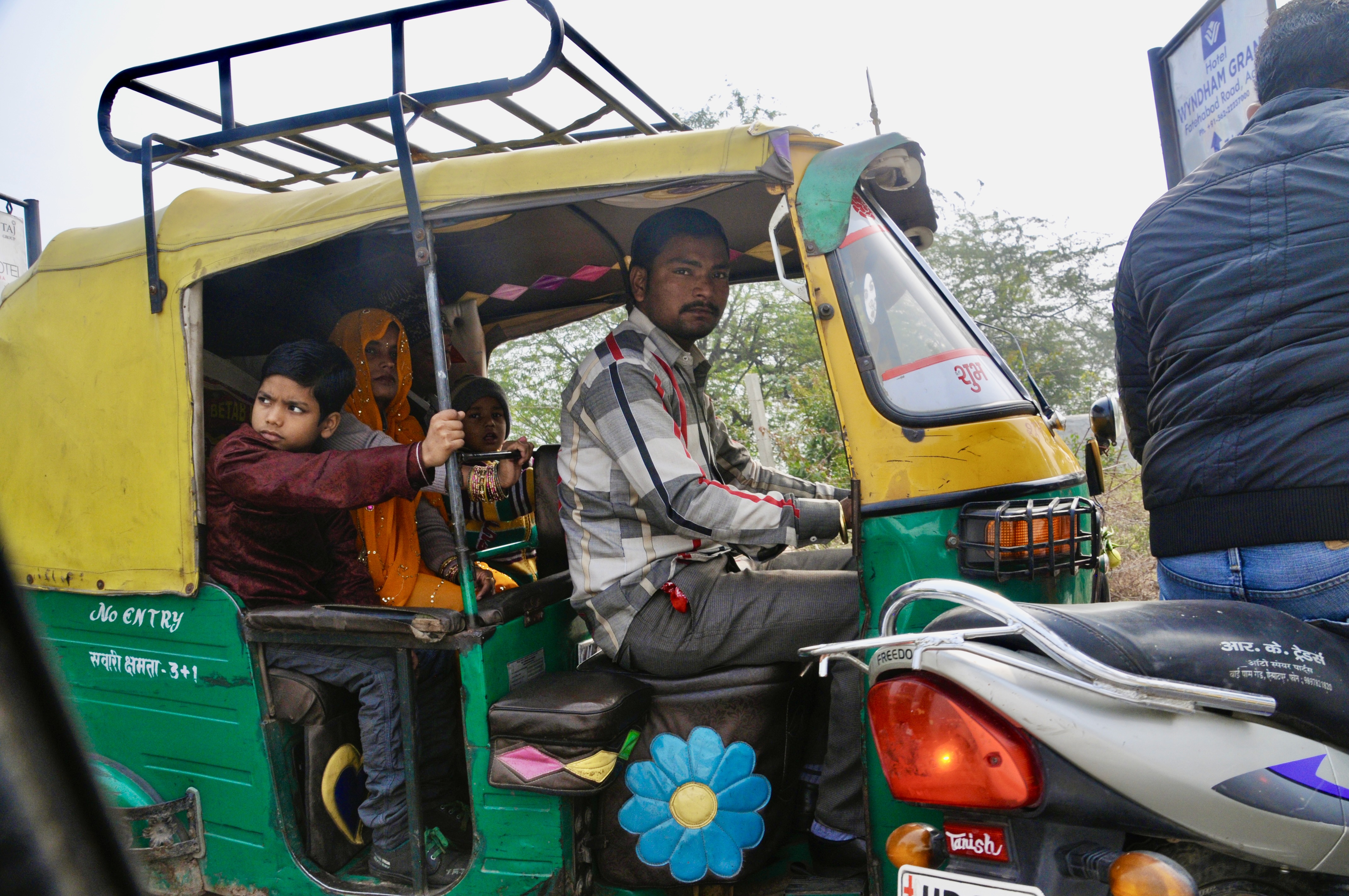
One last thing, I forgot to mention — everywhere you go — into the hotel, into shopping districts, into the craft exhibition, into monuments, into the Metro — you have to walk through security screening devices and also open your bags. When we come to the hotel by taxi, the taxi must open his trunk to be checked out. It’s all very casual and seems rather lax, but it’s there and done none the less.
Best — Fern
January 3, 2014 Delhi

Shubh sundhyaa… which I think means Good evening.
January 3, 2014. Delhi, India. 7:30 pm. Greetings from Delhi.
Today was a complicated and exhausting — but really great.
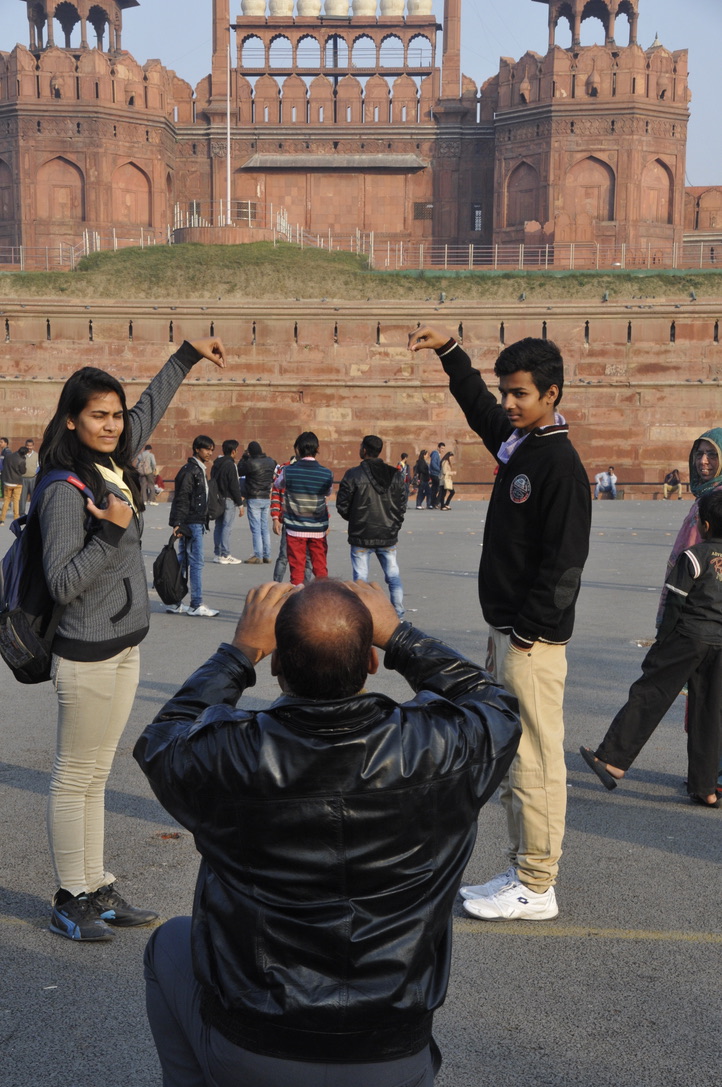
After breakfast we got a taxi and just told him to take us to the Red Fort (a destination we would only be at briefly, but it was the easiest way to get to a general area and then walk from there). We walked around the exterior of the Fort and went inside briefly… and then headed out to explore the city! (The Red Fort was constructed to be the fortified palace of Shahjahanabad in 1648. As you might imagine, the name represents the red sandstone walls. The structure is considered to reflect the height of creativity of this period… and while it was apparently planned according to Islamic models and plans it has a lot of elements that fuse other traditions.)
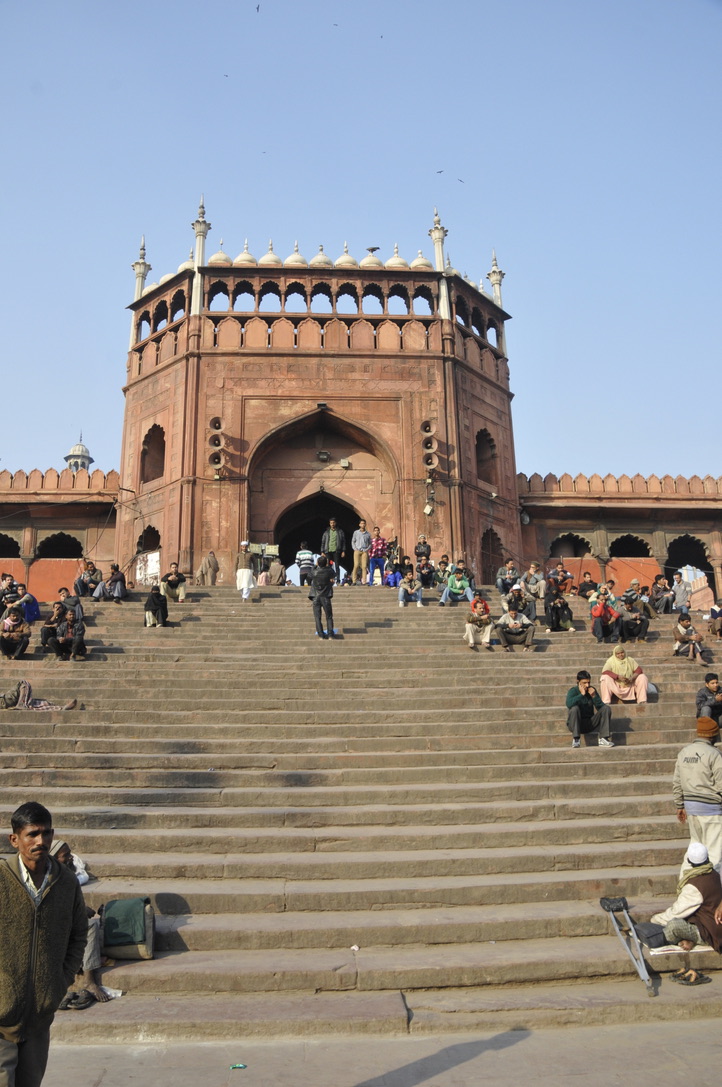
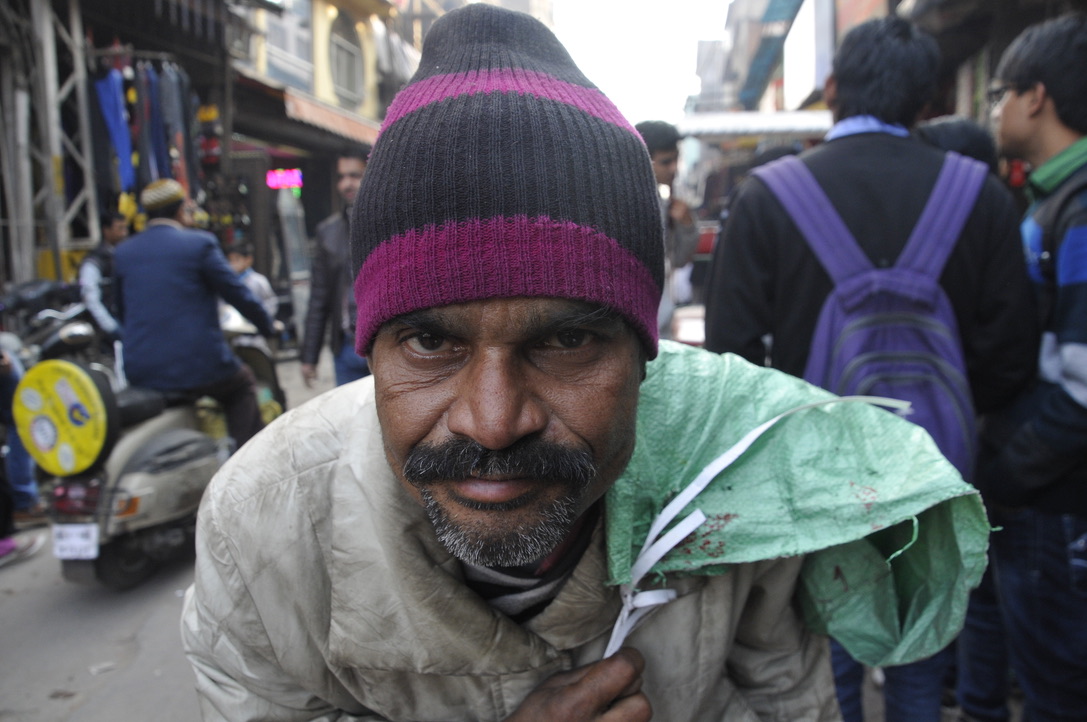
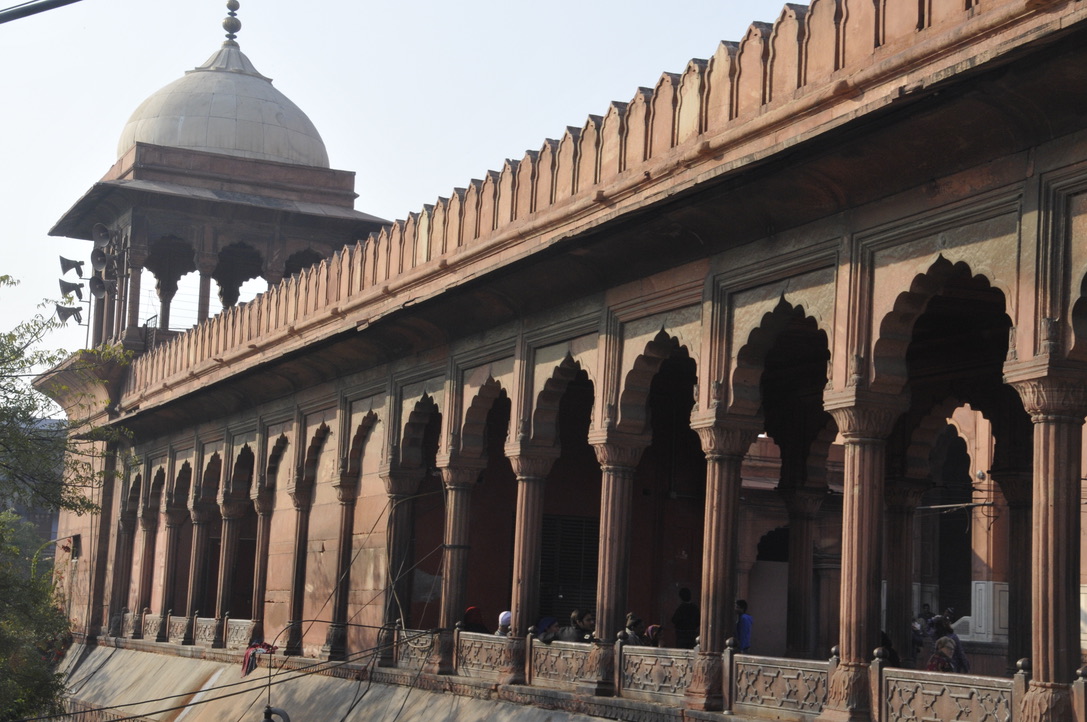
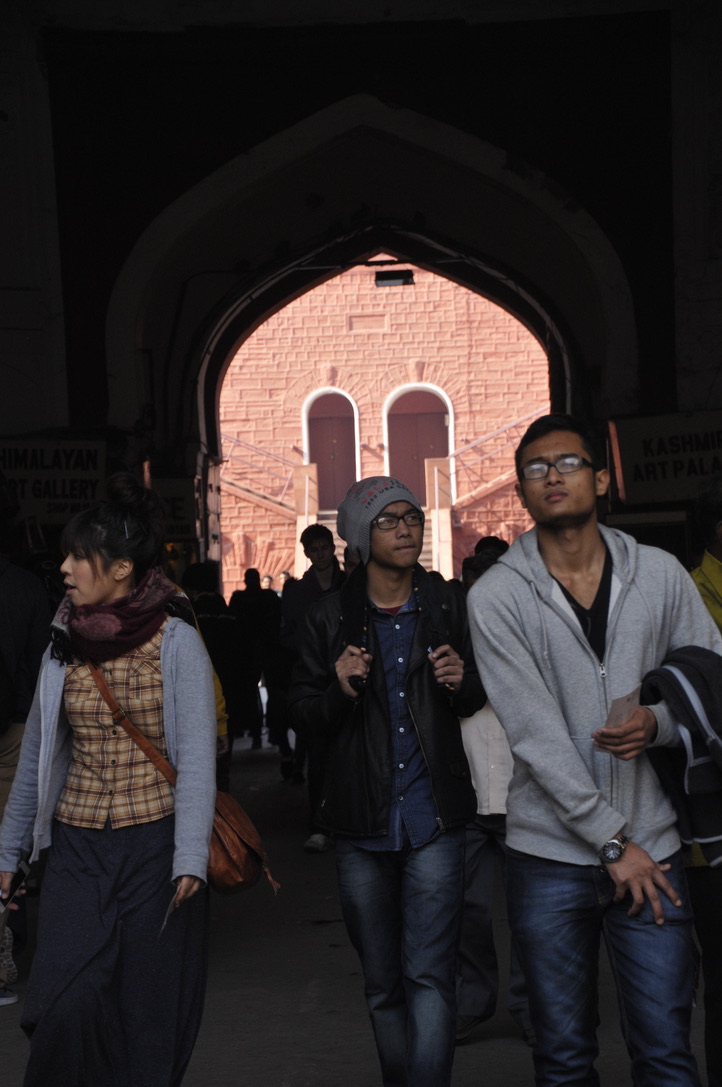
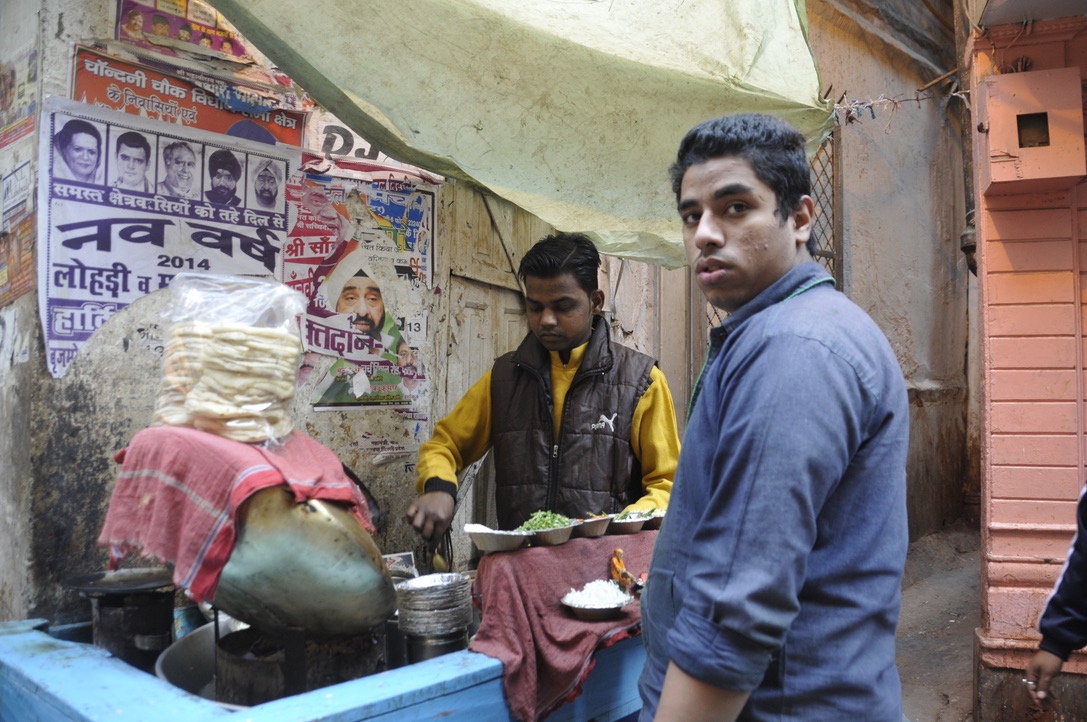
So, we quickly left the Fort (a little too touristy for us) and headed across the main street (a very very daring act — but we utilized all those skills we learned in Nepal, going together with Indians and never standing as the first person in the row that is trying to cross the street. Sometimes this is really an art, as the Indians seem to have the pace down pretty well and the pace changes if the majority of vehicles that you need to cross are cars, or buses, or motorcycles, or cycles, or rickshaws.
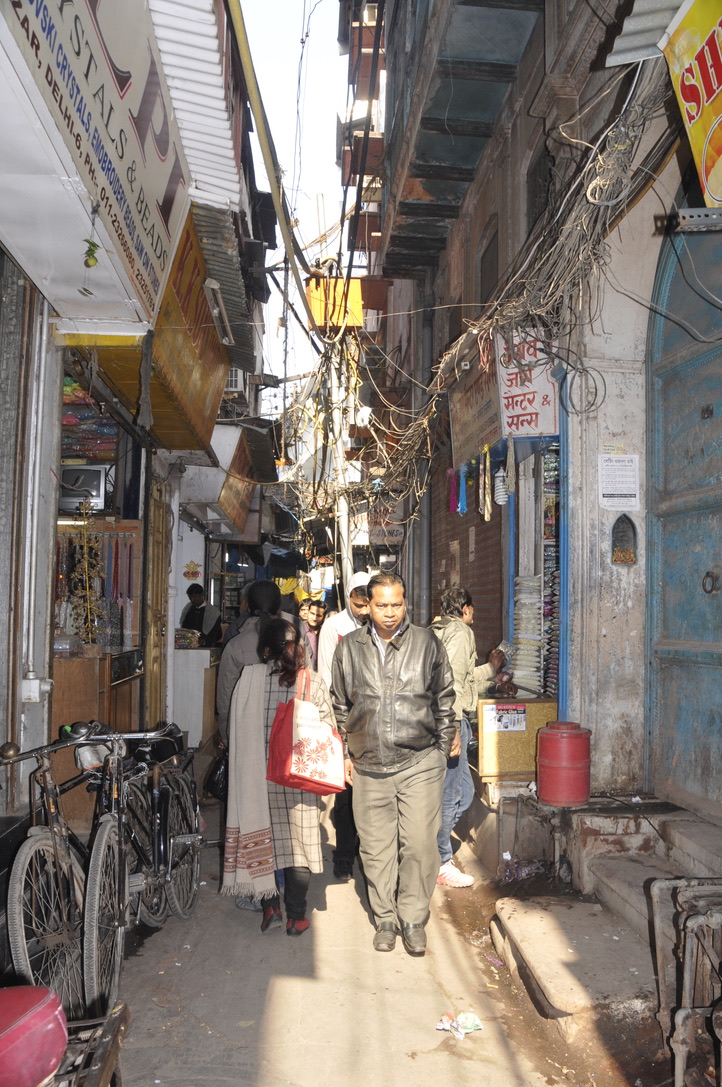
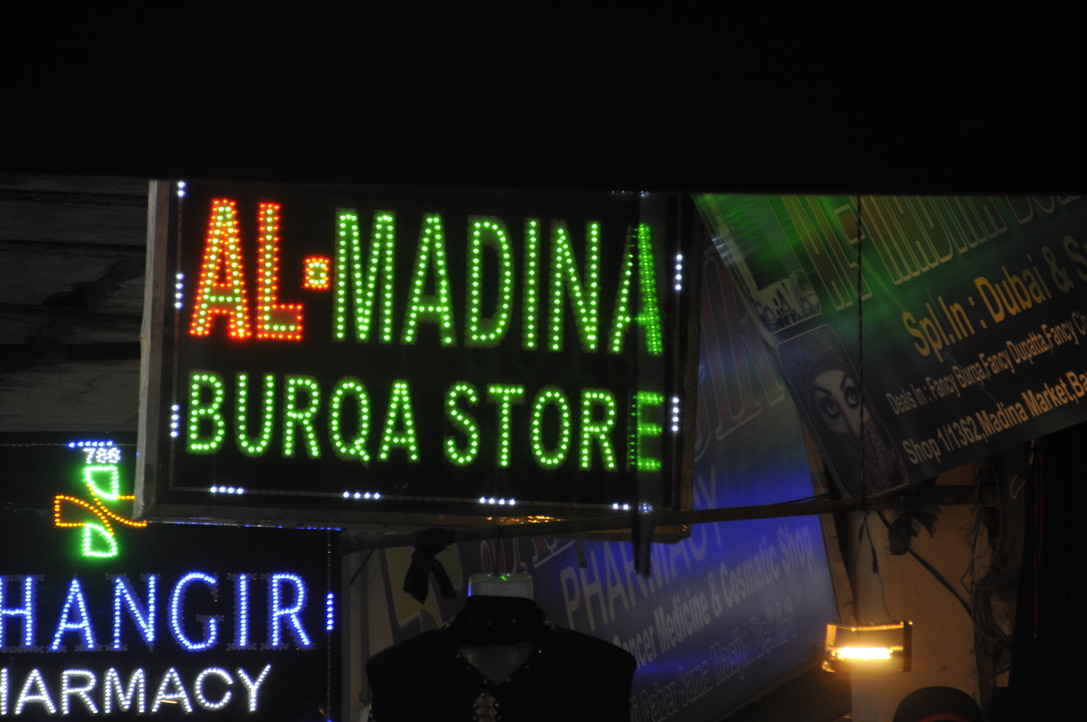
Anyway, we made it across and walked a few blocks and then headed into miles and miles of the most chaotic, busy, crowded, noisy series of bazaars you can imagine. Actually, there is order of a certain kind. You can walk through these very very narrow streets — varying from between 6 feet to 10 feet wide, with shops on both sides (really stalls) whose width is generally anywhere from 5 feet to 12 feet wide (and sometimes even more narrow) — and go for the equivalent of 20 blocks and all the shops are selling wedding saris, or go the equivalent of 8 blocks and everyone is selling used tires .. or decorative ribbon.. or burkhas… or fancy burkhas. So the organization is by “type” which is similar to how Hanoi streets in the old section are set up, too.. and as is the case in many other cities.
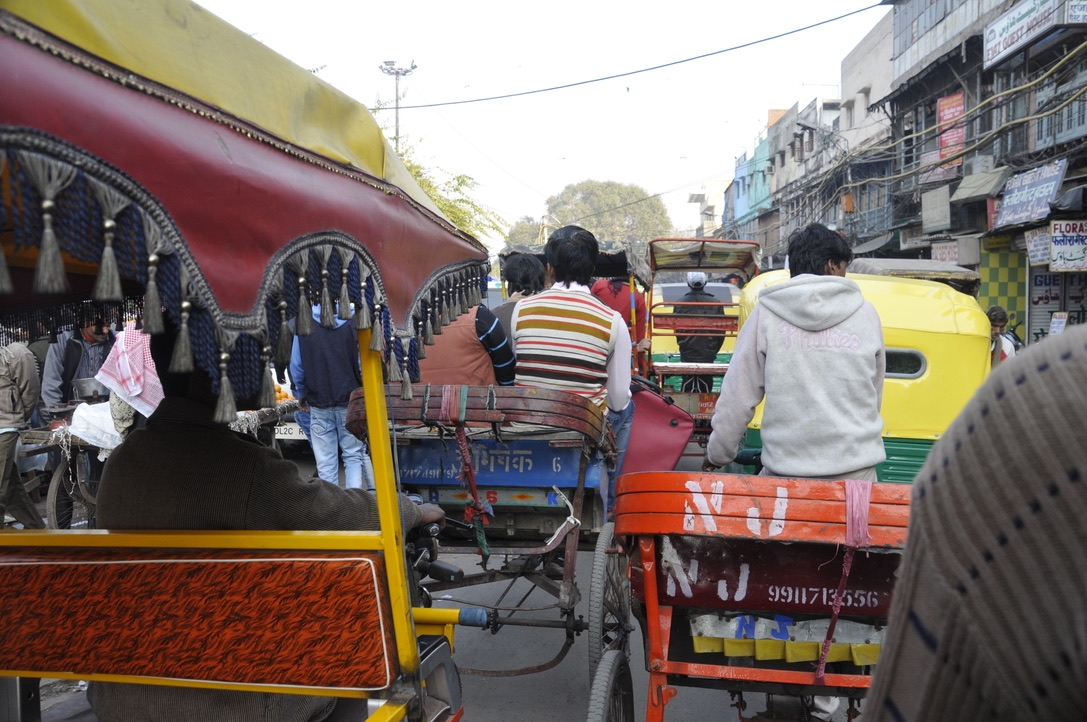
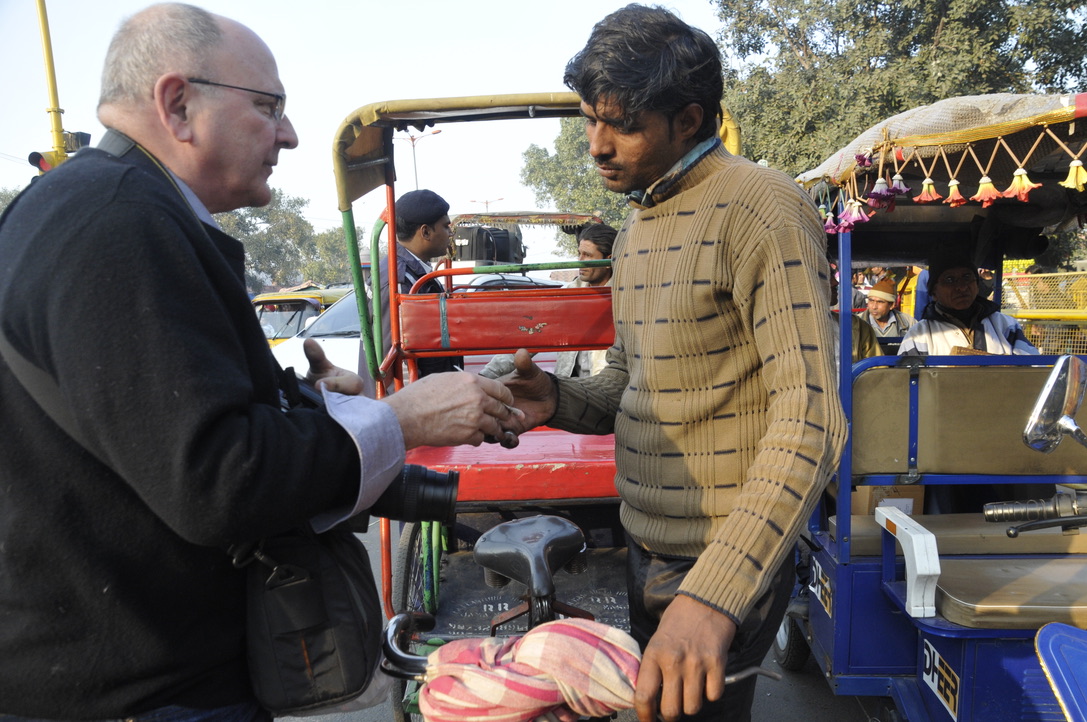
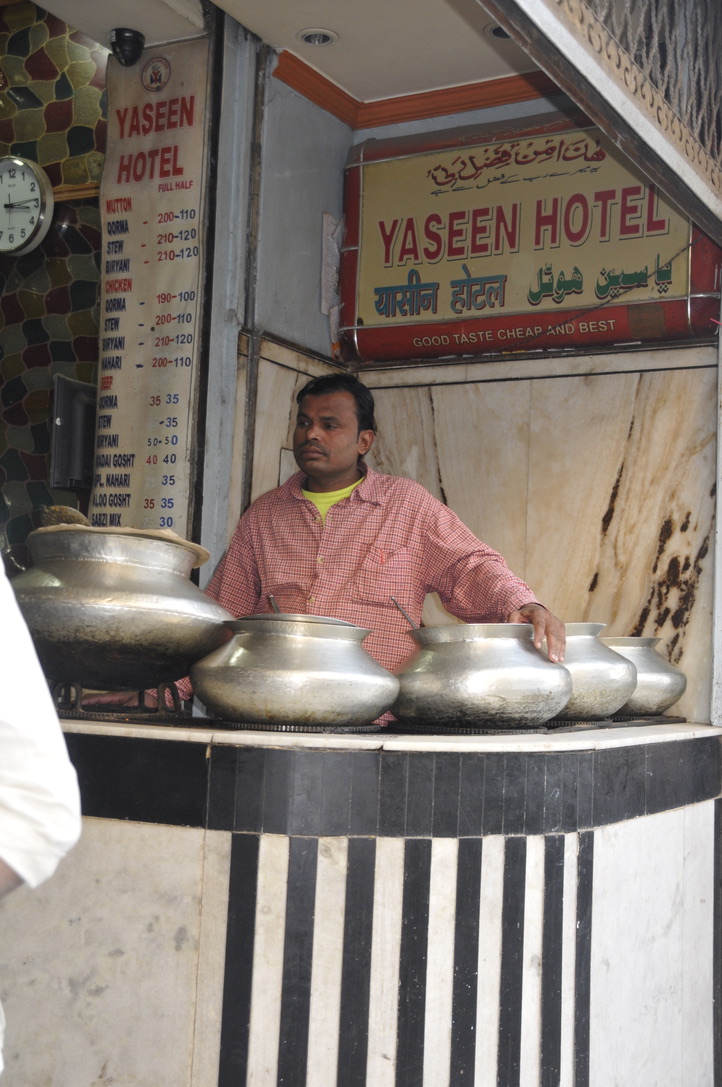
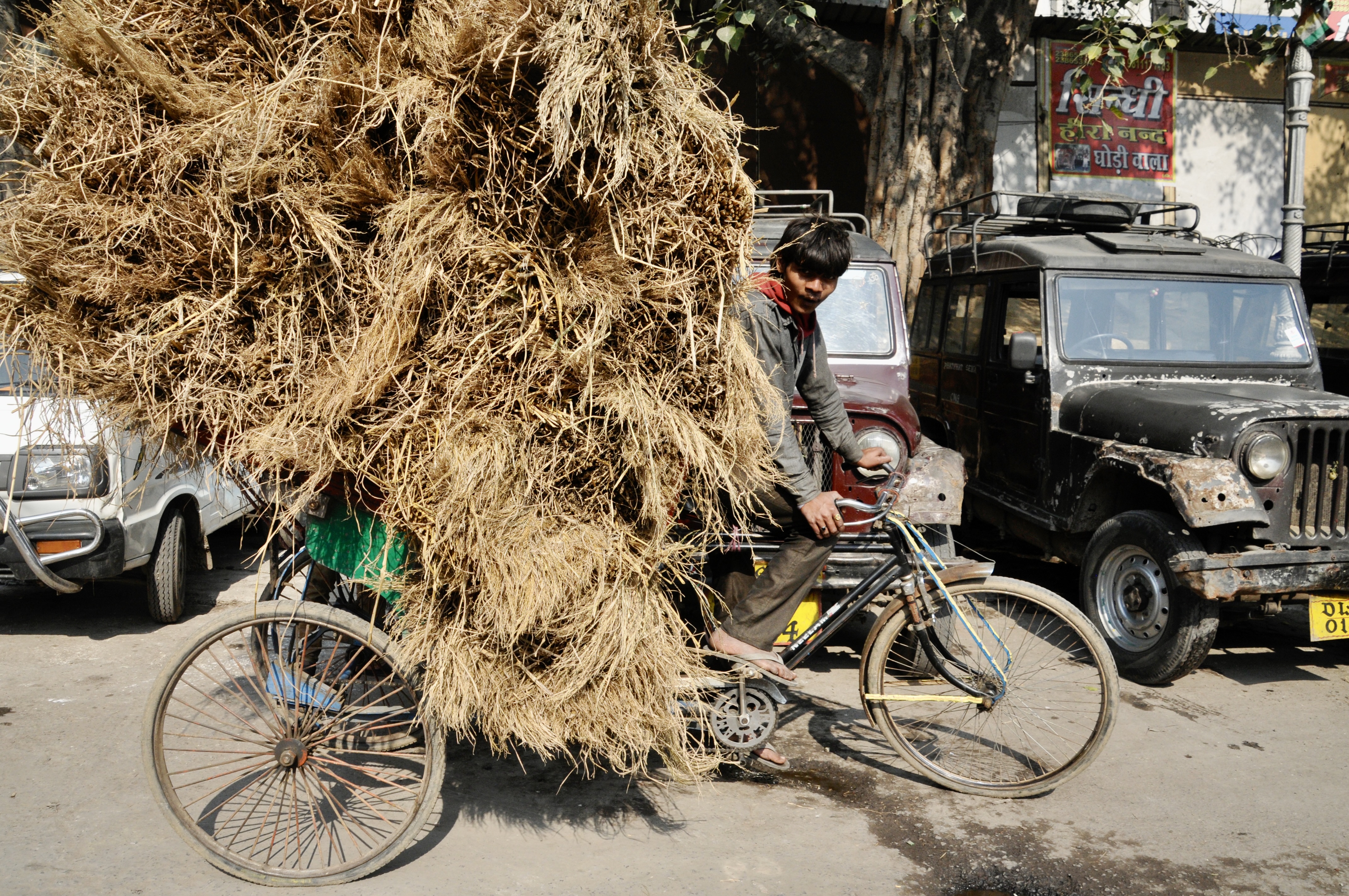
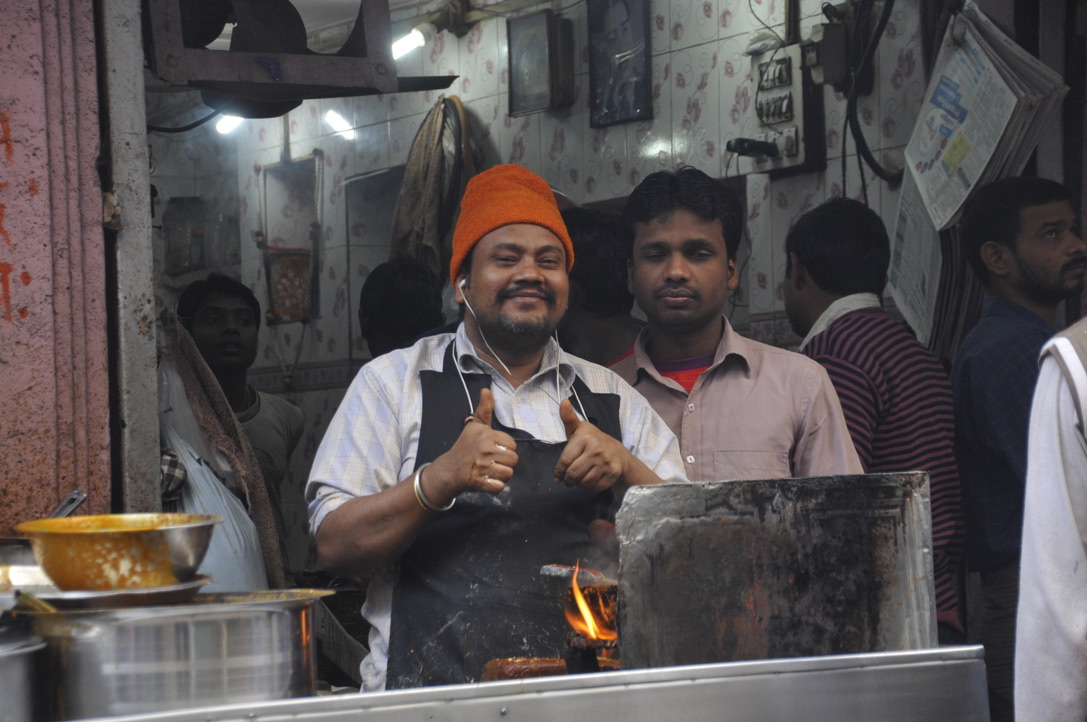
The activity is very intense. People everywhere — Indians, Muslims, Hindus, — some in western garb and many in Muslim outfits. And amid the people walking in these narrow streets are workers trying to deliver goods (being carried to and fro either on the heads of workers or in rickshaws (cycles) being driven by workers. And then there are the motorcycles, and the people being carted all over by someone else’s pedal power or by motor-driven rickshaws (including us after several hours of walking the streets of the bazaars!) There’s also a huge amount of food stalls.. one guy (and they all appear to be men) cooking at a stove and people lining up to grab a bite. Some of the food looked great, but we promised ourselves to be ultra-careful on these final days so as not to get sick (or any sicker than we already are). We started our walk at about 11 a.m. and at 2 decided we needed to eat something.
We had the name of a “restaurant” in this Chandni Chowk area — given to us by a landscape architect who had come to the states in the fall to visit Mike because his son was headed to Berkeley. He knew Mike through a mutual friend (a Harvard classmate of Mike’s) who is an American but who has lived in India for the last 40 years (that’s another story for another time). Anyway, we will meet up with this architect tomorrow morning, visit his office, and go see some of the slums of Delhi. So we hopped onto one of the pedal-powered rickshaws and once again a guy who probably weighs 120 lbs pedaled both of us for about 10 minutes in the middle of traffic, the narrow streets where two rickshaws can barely get by if they are side by side, potholes and garbage piles everywhere, etc… and he took us to the big mosque, which we knew was very close to “Karim” — the restaurant we were looking for. Sure enough, a few feet into an alley, there was a sign that said “Karim – inside restaurant” with an arrow. Karim must be quite an entrepreneur…
From what we read on the menu (they had an English version).. some ancestor was the head chef for the royal family in the 1700s.. and that employment ended in mid 1800s… when the last of that royal line was dethroned (?).. But the children and grandchildren inherited the cooking information.. and in 1911 during the coronation of King George V, the family moved back to Delhi and had the idea to open a “restaurant” with the idea that the foods of the royals should be available to common people.


So, Karim’s is a series of little spaces on both sides of the street (alley) — totaling about 6 structures. Each can probably seat about 20 people (in some cases on two floors). It’s very very basic. Formica tables, plastic dishes, only soup spoons (no forks).. and a straight- forward menu (which was in English, although the waiter couldn’t speak any English, but he knew the menu organization by heart so we could just point and he’d figure it out). We shared our table (with a young couple from Delhi; he was a lawyer, she’s in biotech) and at the end of the meal chatted with them. We got the half-order of chicken biryani and a half-order of tandoori chicken tika and some naan. They don’t serve any wine or beer; just coke and soda water (which comes in a paper cup). We ate “upstairs.” Food was good. And very cheap. The whole lunch costs us about $7.00 I think.
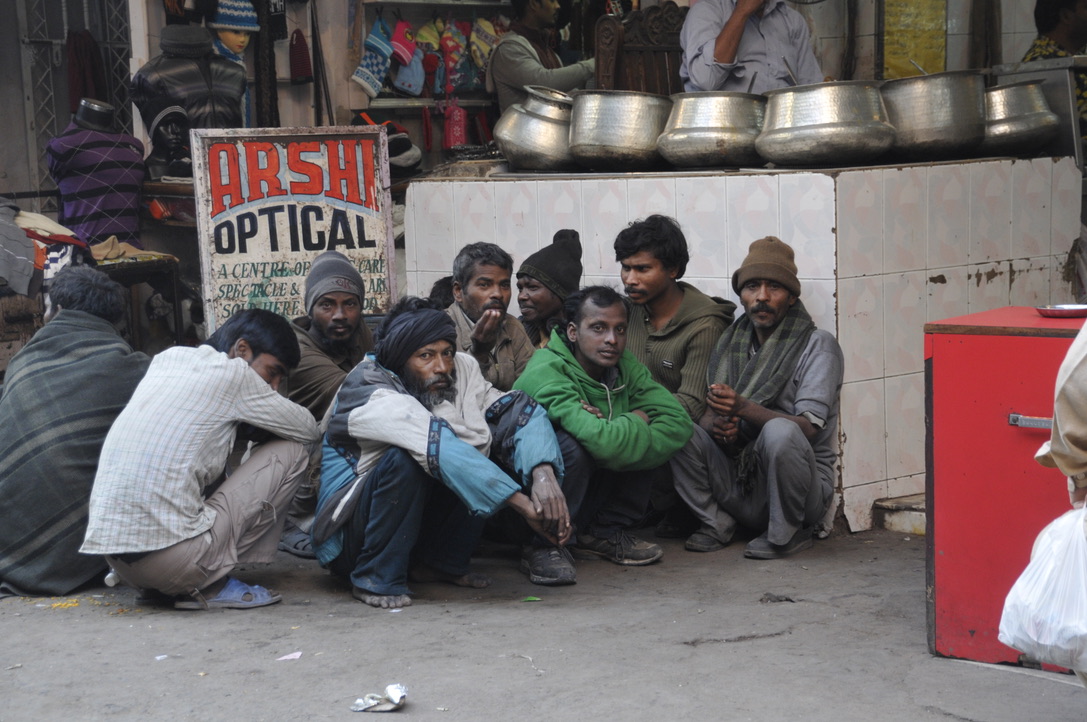
After lunch we continued our walk into the bazaar area — going even deeper into this maze. Most shops have generators out in the front of the shop, on the street, for their lights (about two naked light bulbs per shop), adding to the noise of the street. And we walked into a totally different section for about 45 minutes. Not really certain, but I think we were in a section that had Pakistani food and maybe Pakistani vendors. Wherever we walked in this section there would be groups of impoverished Pakistani people — about 20 or so to a group — squatting on the ground, very close to one another, and very close to particular stalls. We think that these particular restaurants give them scraps of food to eat after the lunch hour. As the hour became later we could see these groups — still on the ground — eating rice and other foods with their hands.
Another point — someone is always sweeping these little streets/alleys using a straw broom.. and they attempt to make piles of the dirt and garbage that is strewn in each little area. But the act of doing the sweeping and walking by it constantly was a real mess for our American sinuses. Not much one can do. It seems as if these little piles just stay there; not sure that they every get collected into any larger garbage zone.
After a total of about 4.5 hours of walking, we jumped into a pedal-driven rickshaw to get back to the Red Fort area where the original taxi driver was to meet us. He was there, although his car was blocked by a parked bus with no driver in sight.. But only a minor detail. Headed back to the hotel.. and then off to a “stand-alone” restaurant (as they refer to all restaurants that are not in hotels) called Veda.. a somewhat upscale tandoori place that had a mix of patrons — Germans, French (from what we could hear from eavesdropping) and mostly Indian (professional class we assume)… Good meal (appetizer was fried yogurt stuffed with figs with a mint sauce).. rest of meal was lamb.
That’s it.. signing off.
Fern
January 2, 2014 — short note. From Kathmandu to Delhi.
Hi All –
Very short note (and no photos) as today was really a travel day.
Dealt with packing and logistics this morning.. including our decision to ship our winter clothes to California and lighten our load. Actually, that was always the plan, but it was colder in Kathmandu than we anticipated so we needed those clothes there.. and then we thought it was just five more days so maybe just continue to carry everything. But since we are having a lot of trouble getting rid of these colds we decided to just go with the plan and ship the stuff. So we had to deal with a shipping company, getting a box, and weighing the goods to stay within the allotted amount of weight. Done!
Left Dwarikas midafternoon to tackle the Kathmandu Airport, which — much like everything I’ve described about the city — is a mess. The airport is located dead smack in the city.. We could practically walk from our hotel. It’s a run-down structure, with many security checks. We probably went through about six different inspections, two of which were “body searches”… men queue up on one line and woman on the other. Far fewer women traveling so I was always well ahead of Mike.
They even do a final body search (with your clothes on) and hand inspection of carry-on baggage as you are boarding the plane — at the base of the stairs — with little makeshift curtain areas.
The flight is only 90 minutes, but the checking and boarding process is longer than that. Flight uneventful although the movie was pretty funny — about a king and queen of India in medieval times, and their son who falls in love with a servant and tries to defy his father by wanting to either marry her or abandon his position as next king. Very melodramatic. The servant winds up in the dungeon twice and the king decides to send the prince (son) off to war where he will likely die (but with valor, according to the king). I think you can guess the ending (which I didn’t actually see since the plane landed before the concluding scene!).
Arrived in Delhi to a totally gleaming, huge, modern airport with multiple terminals — making New York airports pale in comparison. Terminal 3, the International Terminal where we arrived is 5 million sq. feet and handled 36 million passengers last year. After getting our baggage (easy!) we lined up to get a taxi to the hotel. Taxis are amazingly cheap! The hotel is about 40 minutes from the airport (sort of like Oakland to SFO) and the fare was about $10!
We were in India (southern part) 20 years ago, so we are looking at everything with comparative eyes. In any case, the road from the airport to the hotel (a sort of ring road highway) with six lanes was in good shape and the cars were new (except for the taxis which are pretty beat up) but the driving habits are as they have been throughout the rest of the trip— with everyone riding on someone’s bumper and cars weaving in and out of lanes and riding two lanes constantly.
Anyway, we are now situated in New Delhi and the adventure should pick up tomorrow. It’s a short stay — four days.. and we are now really feeling like the trip is ending and that it’s time to head home. Both of us are thinking about our offices, projects, teaching, and how to get everything done—more than thinking about where we want to go each day. So we’ll see how we fare.
I’m sure by morning we’ll be energized to see the city — but it’s clearly vast and difficult to navigate. It’s not a walking city, so you have to be pretty reliant on having a plan and then dealing with the transportation options to get you there (metro, taxi, tuk tuks, etc.)
Take care –
More tomorrow.
Fern
January 1, 2014. Last day in Nepal; tomorrow onwards to Delhi
Namaste –
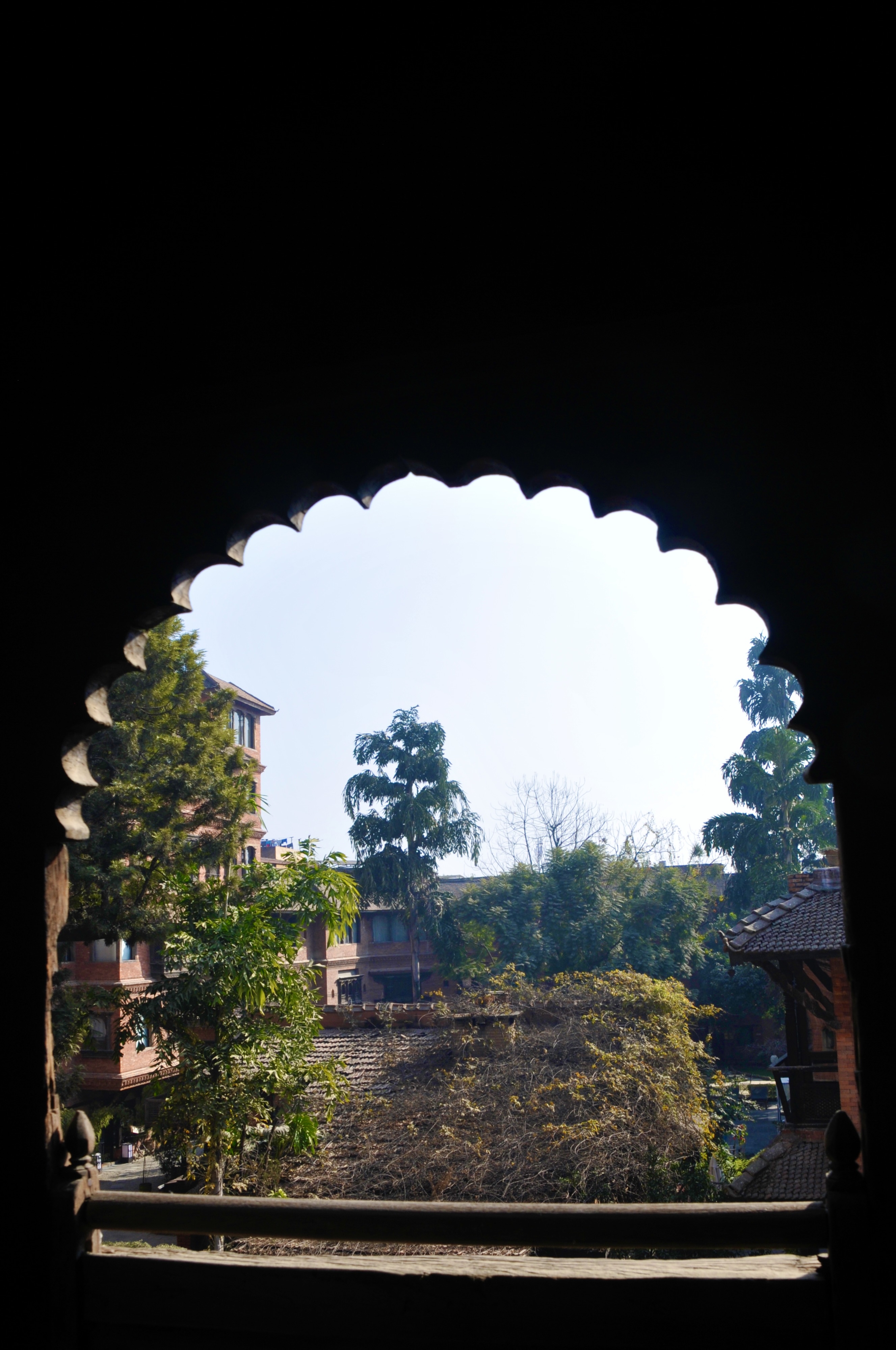
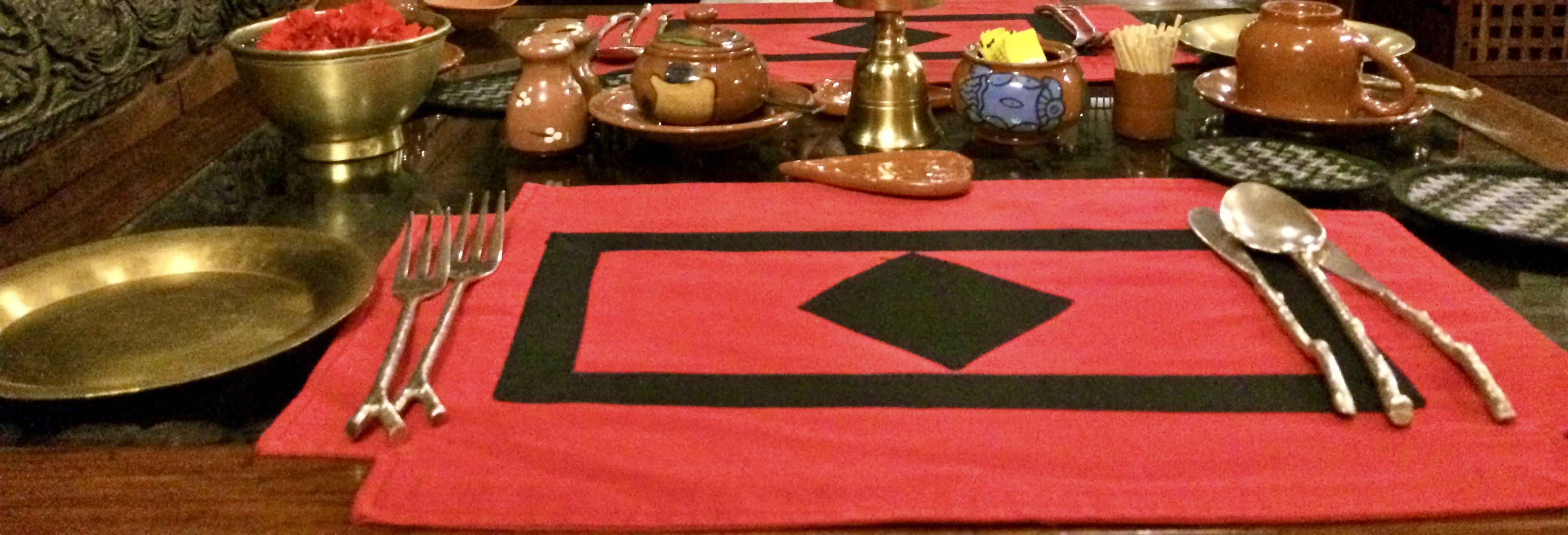
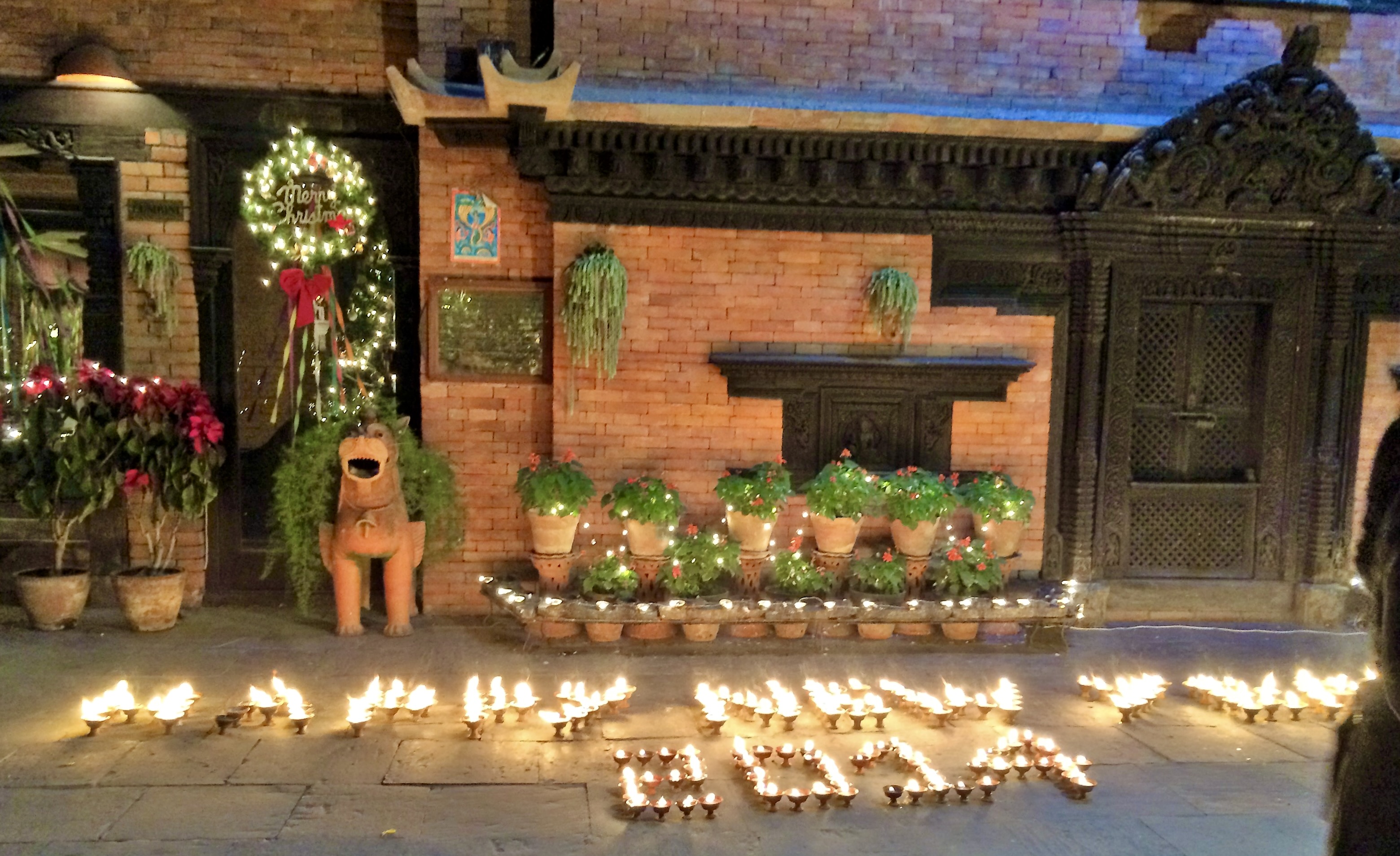
Went to Dwarika’s New Year’s dinner. They totally decked out the grounds of the hotel and the restaurant with thousands of little candles edging every conceivable nook and cranny on the grounds, making it a bit of a wonderland. From our room (before we left for dinner) we could see them creating the phrase “Happy New Year 2014” — in candles on the brick paving. Dinner was fine — as usual for New Year’s — not spectacular.* Finished around 11 pm and we opted not to go to the party being held at the bar and not go to the champagne countdown at the pool. Instead — Stayed up to watch the clock turn to midnight in many countries…
This morning, we decided to leave central Kathmandu for the day, and head about 15 miles east to a town called Bhaktapur (a somewhat random selection after looking at the map and the Internet and realizing that it was a medieval Newari town) that had an interesting temple — but more important it looked like a very interesting village — probably what Kathmandu looked like just 25 to 50 years ago.
The drive was once again filled with bumper to bumper traffic and cars within inches of motorcycles and bicycles, no traffic lights (they literally do not have more than about four in the whole city and those are not connected), dusty roads and lots of potholes and incomplete parts of the road. As I said before everything is in a state of either being built or being demolished.
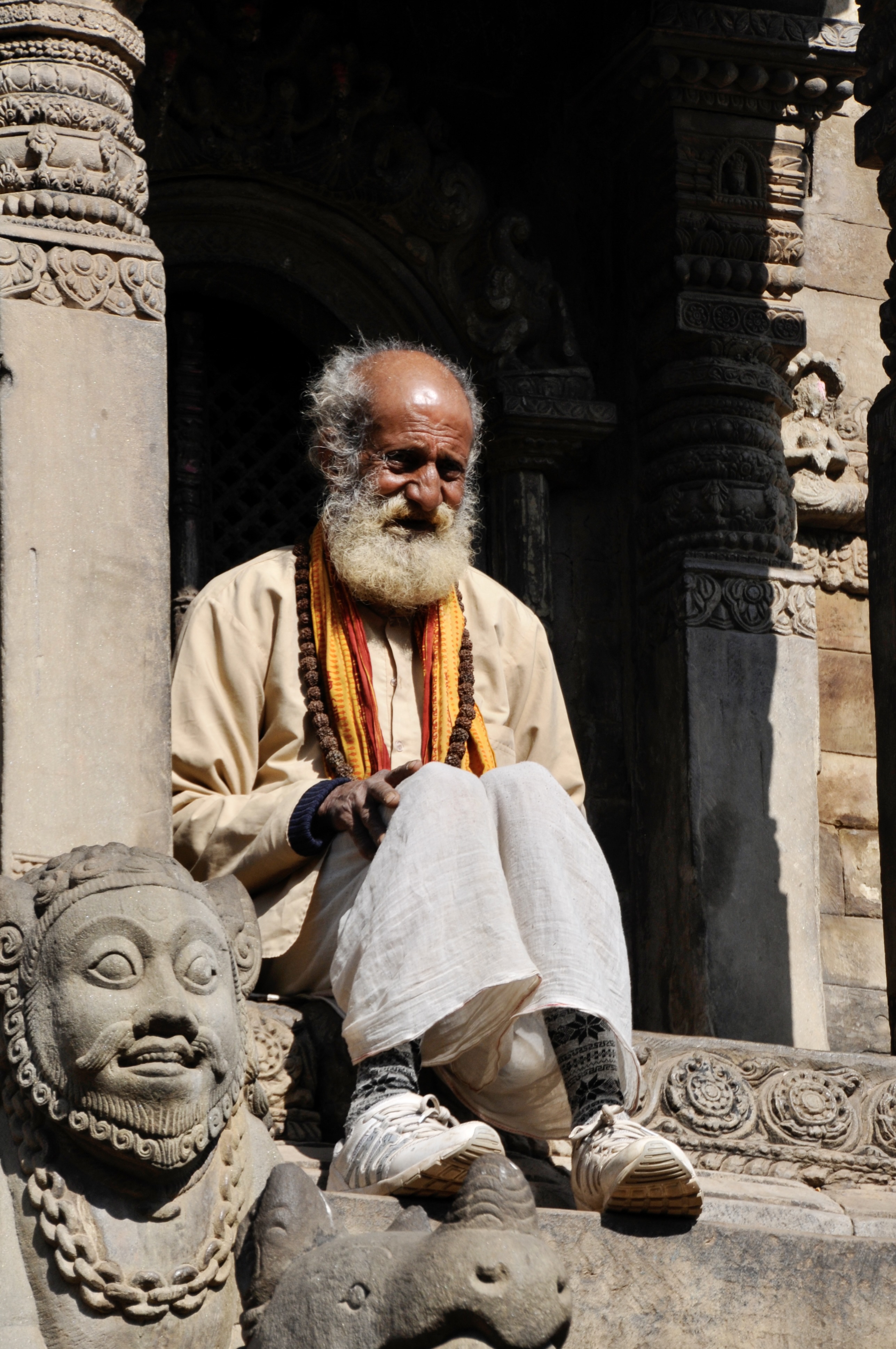
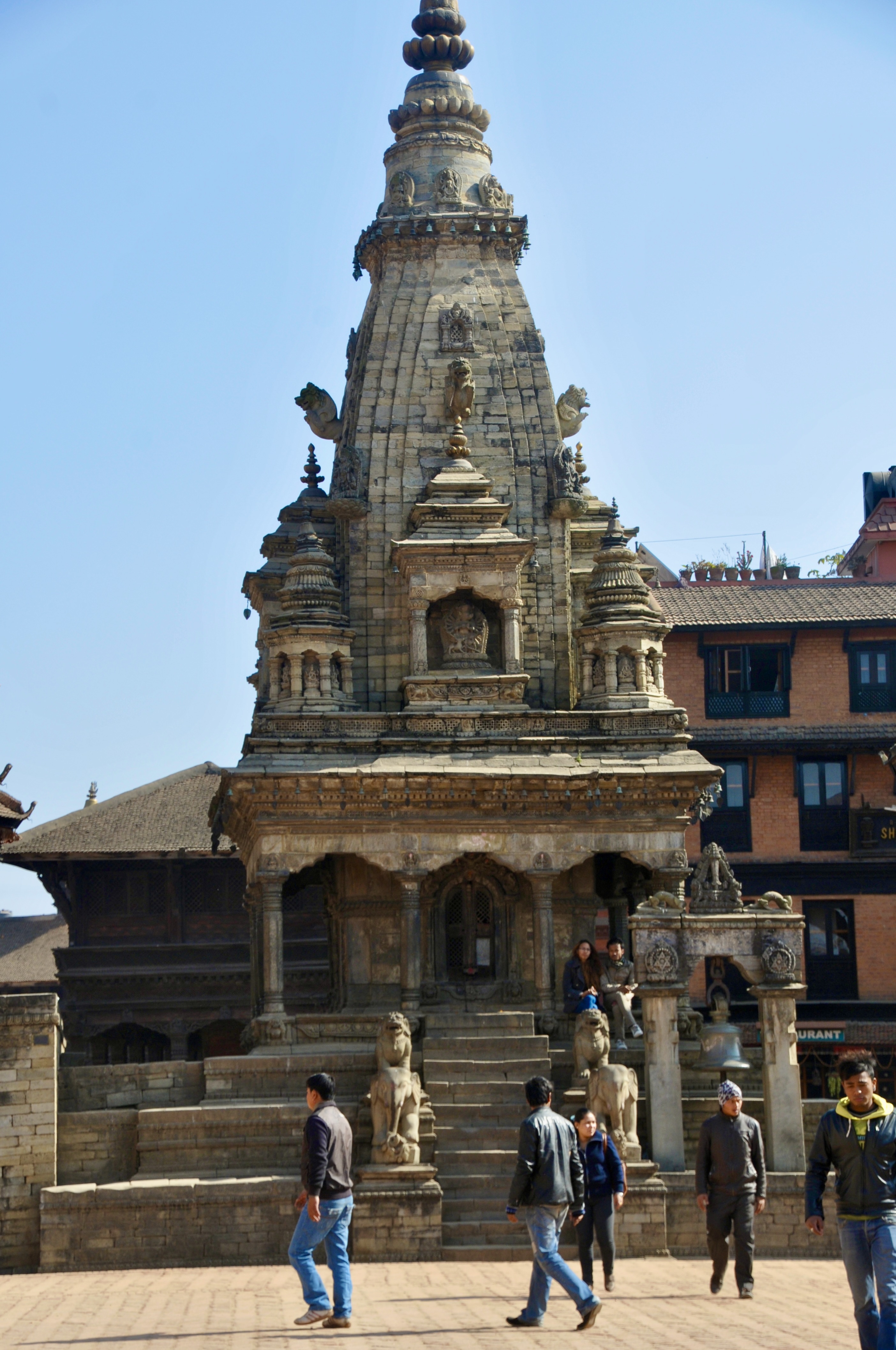
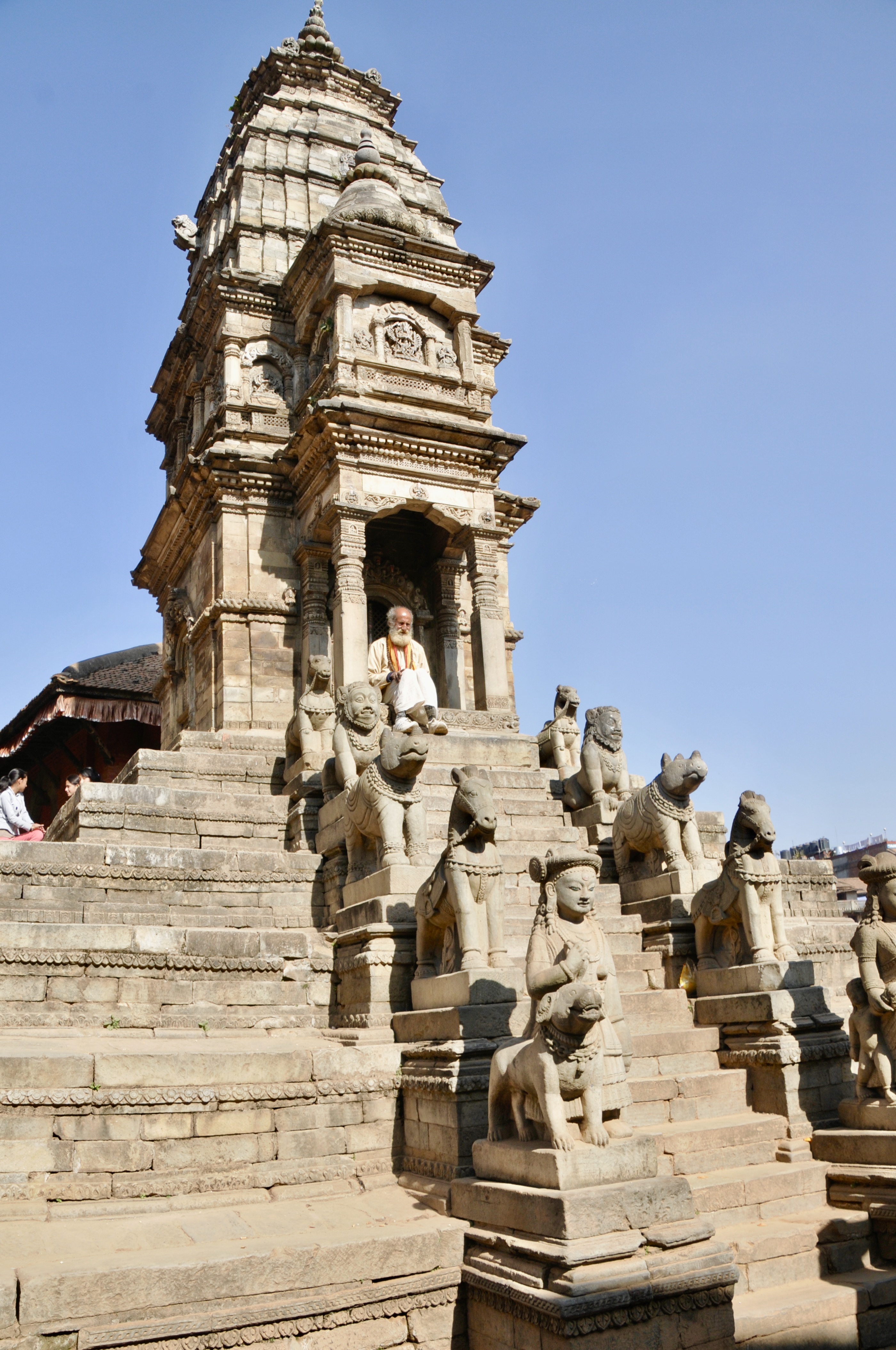
We arrived at Bhaktapur around 11:45 and walked into the main square where the Nayatapola temple sits — a grand 5-story pagoda, constructed around 1701 (supposedly in a 5-month period). It’s a really beautifully sculptured building and one of the tallest pagodas in Nepal. The workmanship is a good example of Newari architecture. It’s five stories with tiered roofs.. You can walk up a flight of stairs to the top..
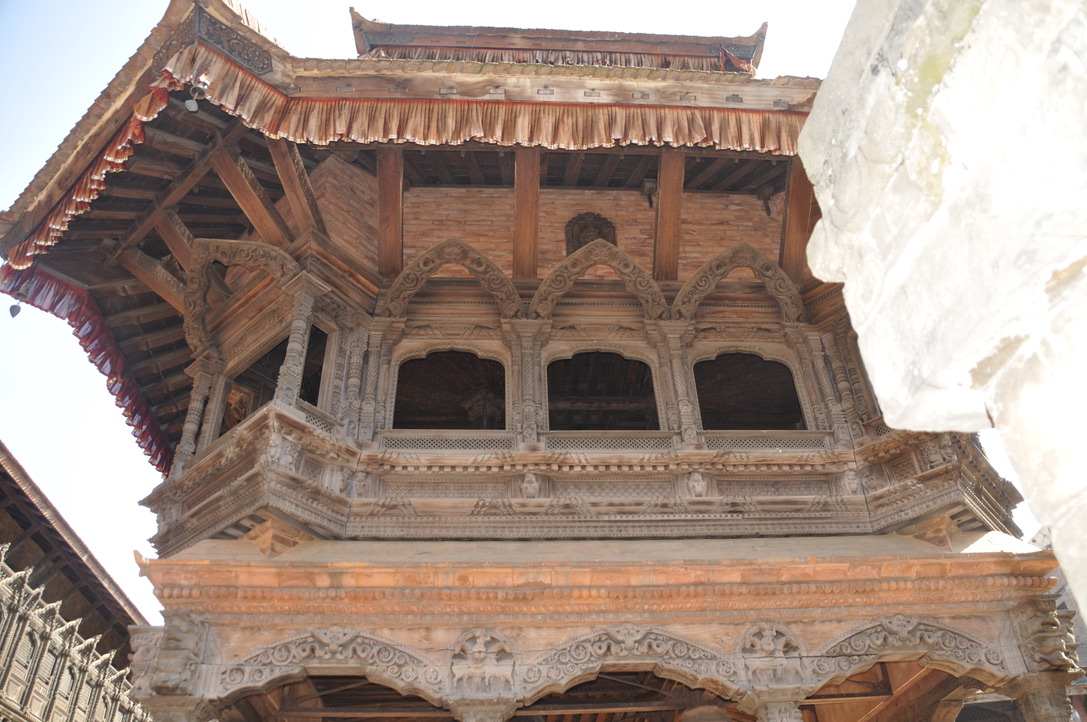
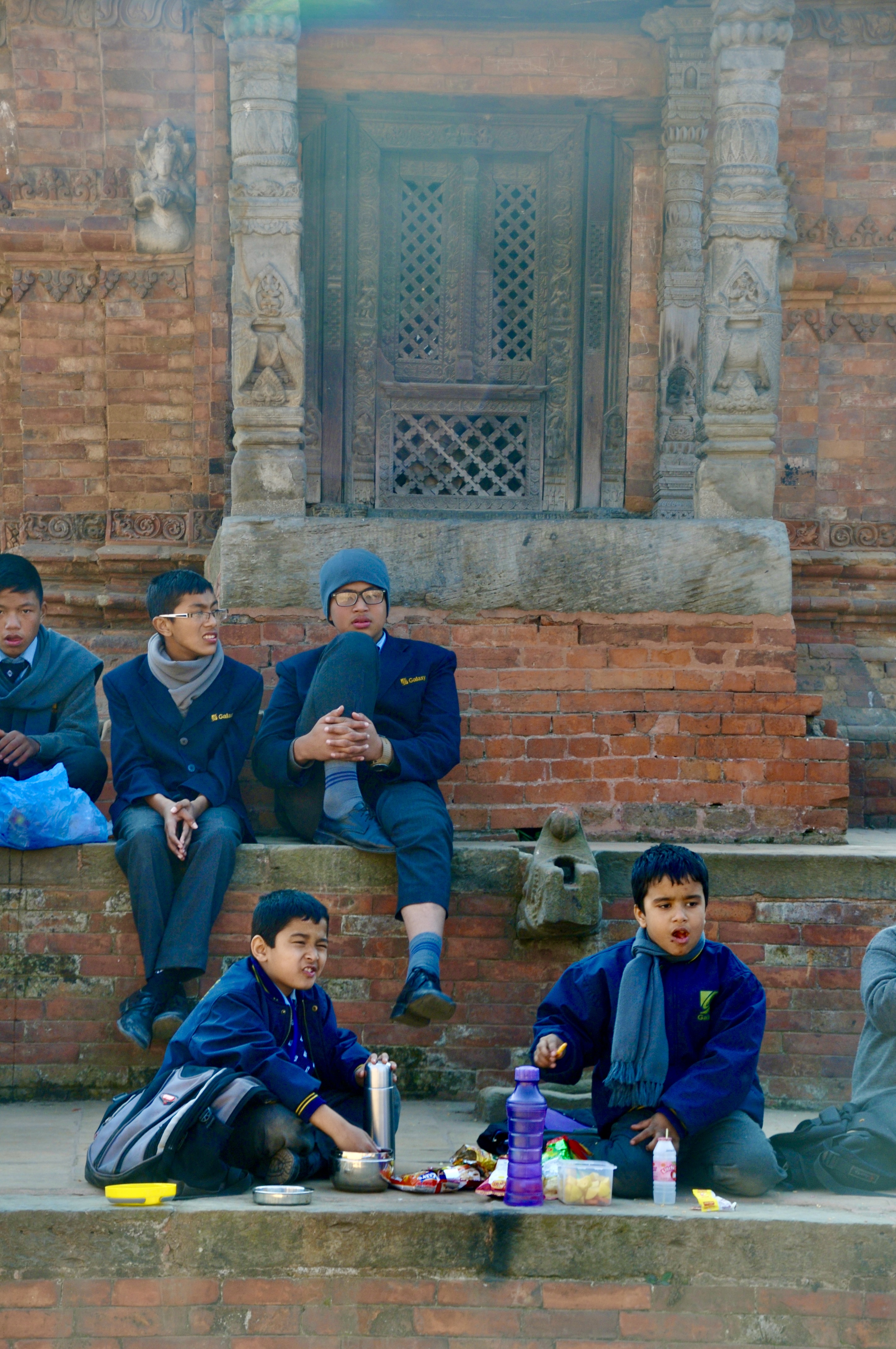
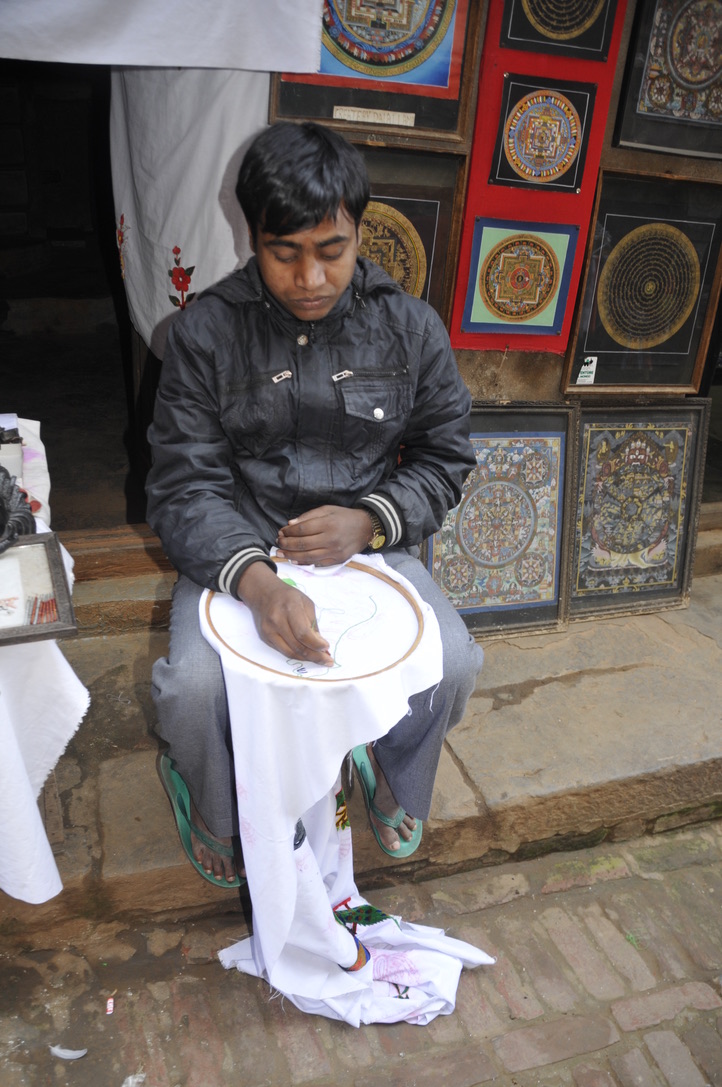
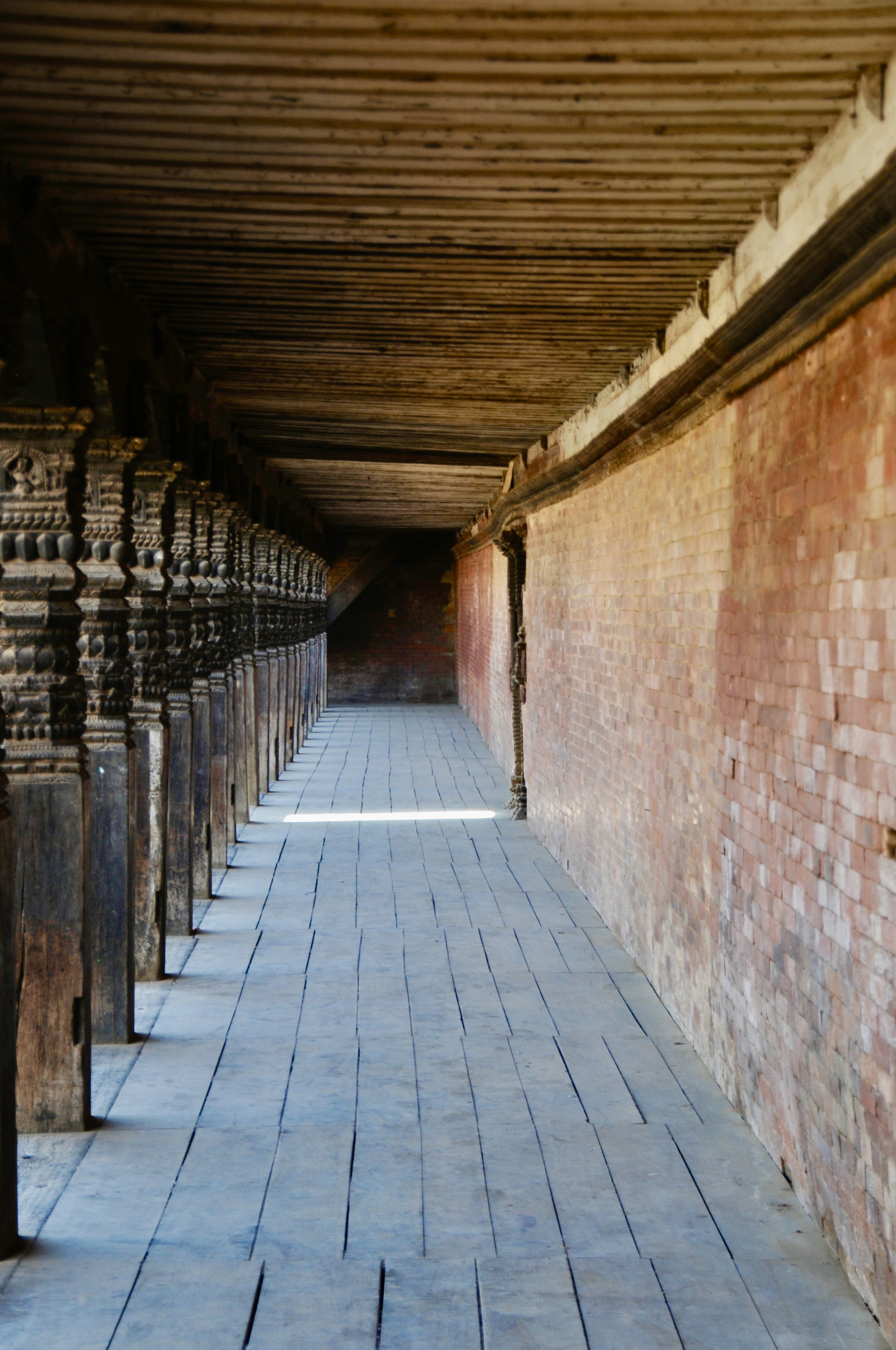
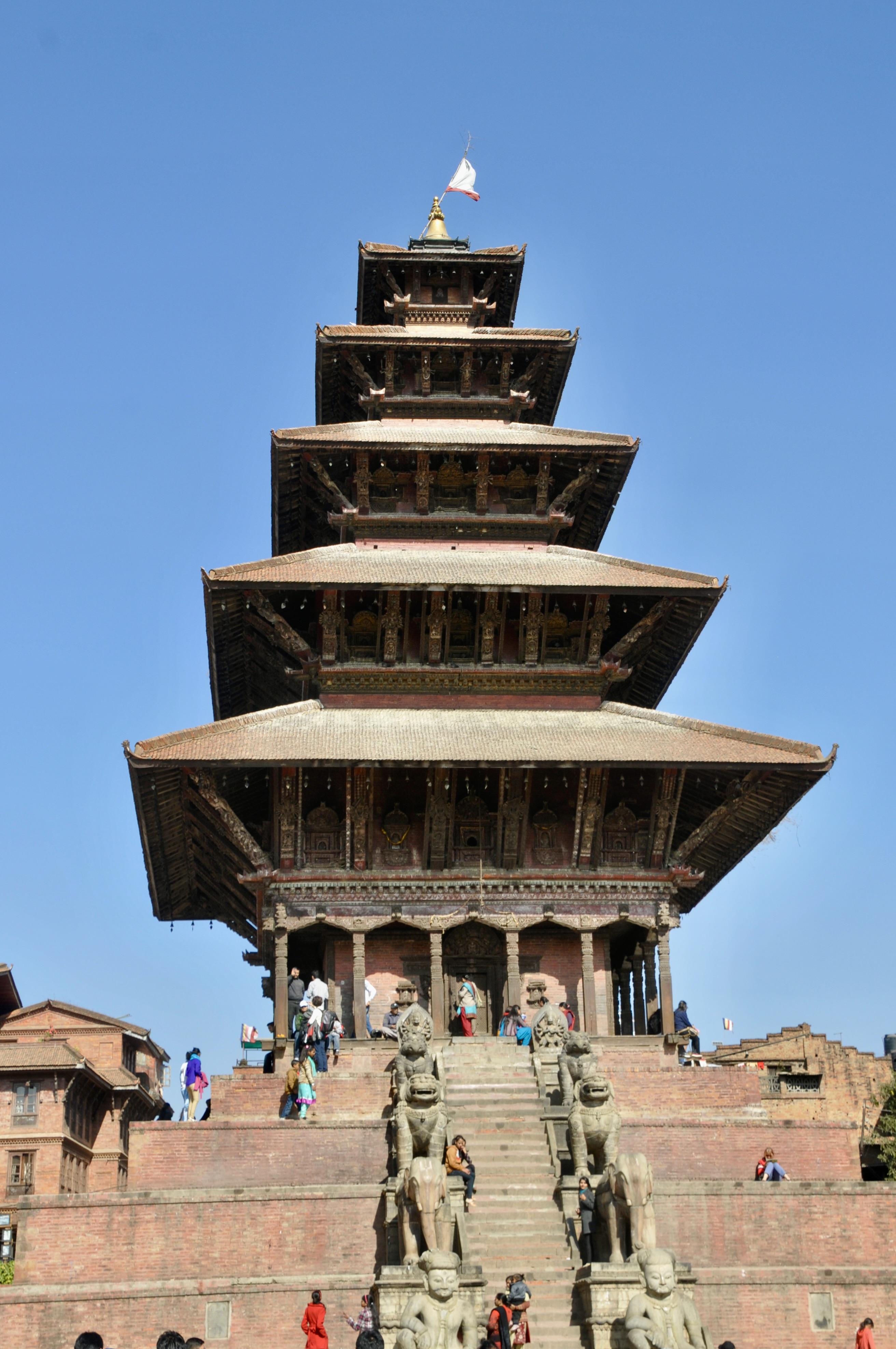
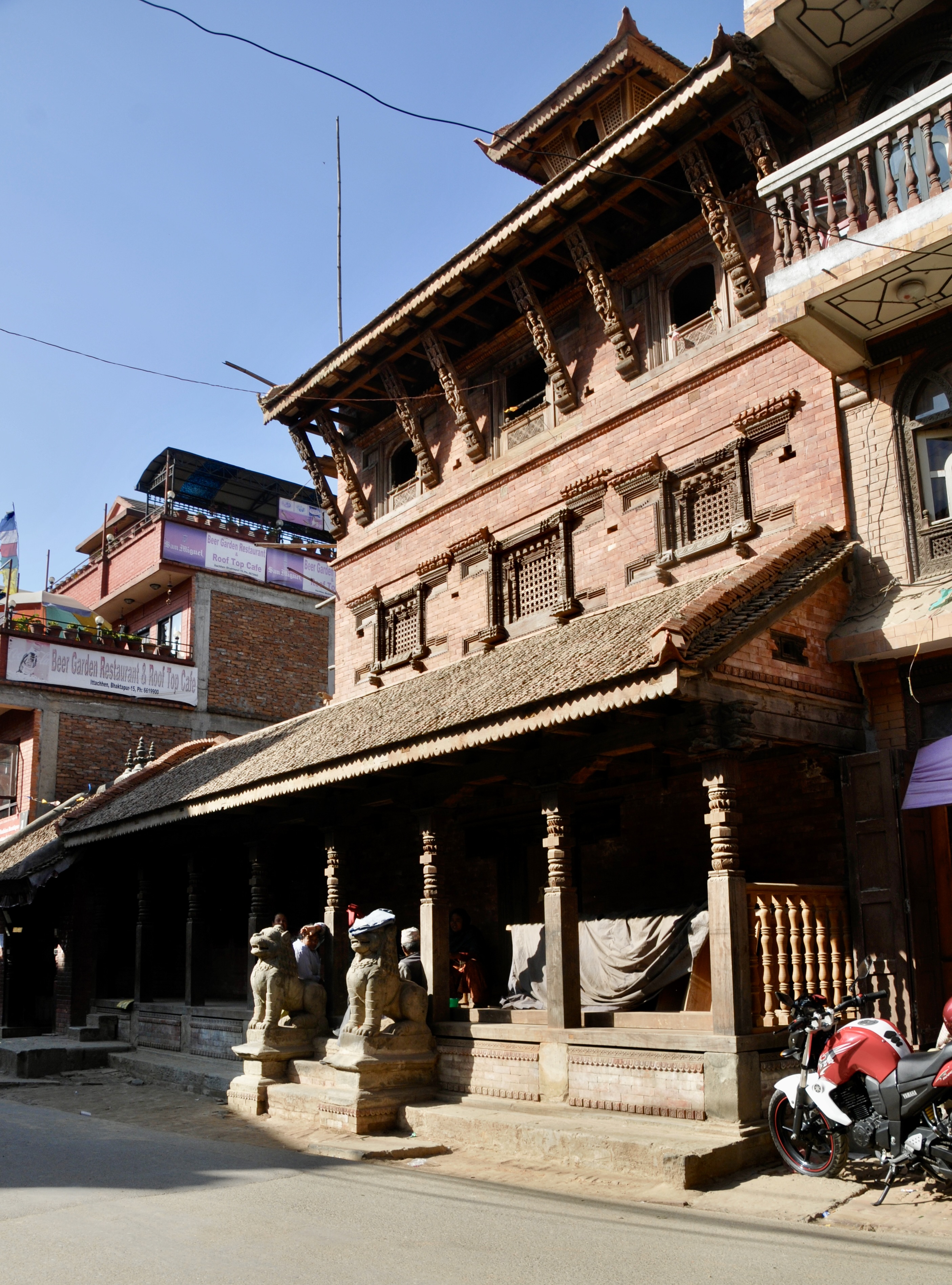
Bhaktapur means “city of devotees.” This ancient, 15th century medieval city is part of the UNESCO World Heritage sites, which records buildings that are of cultural and natural value universally. Bhaktapur is well preserved. In addition to the square with the Temple, there are several other major squares – also with temples. Some say that the finest religious architecture in the country is here in Bhaktapur.
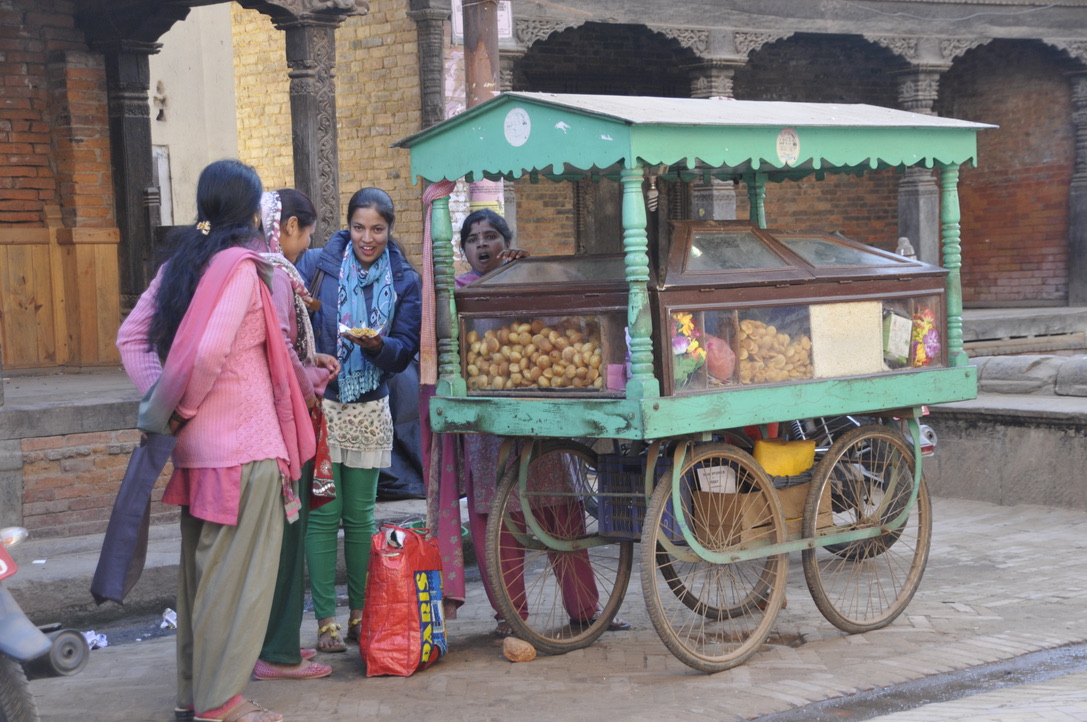
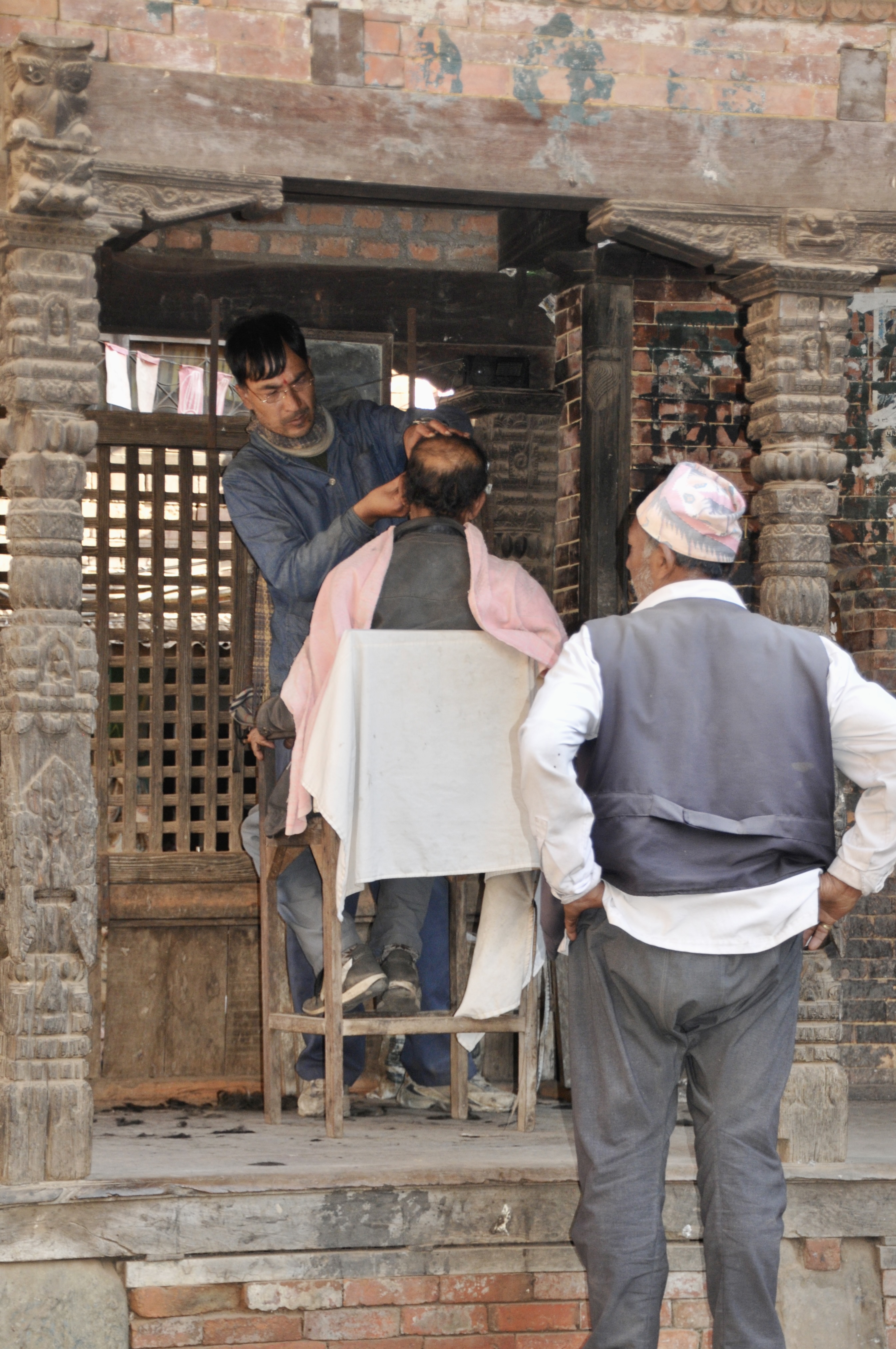
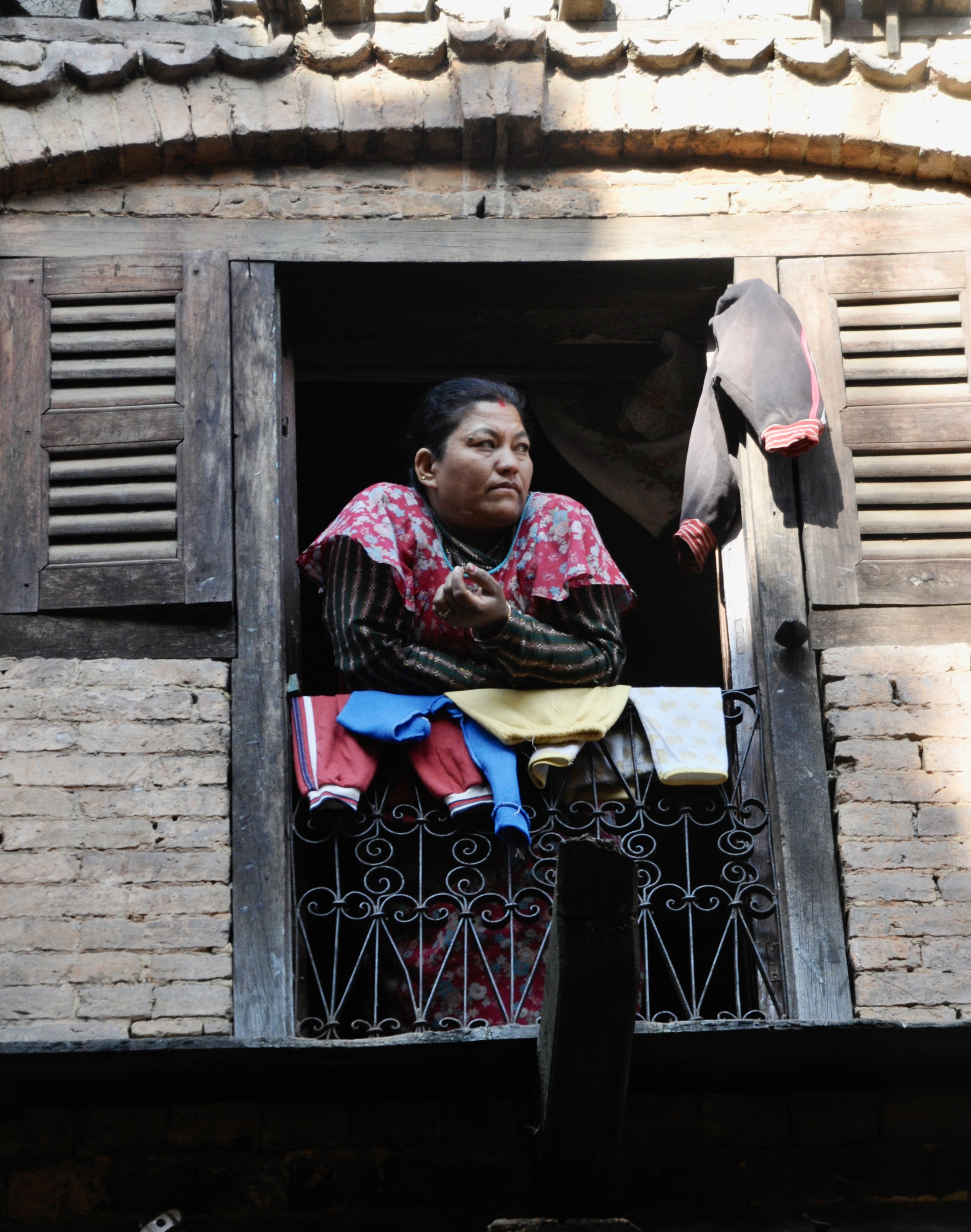
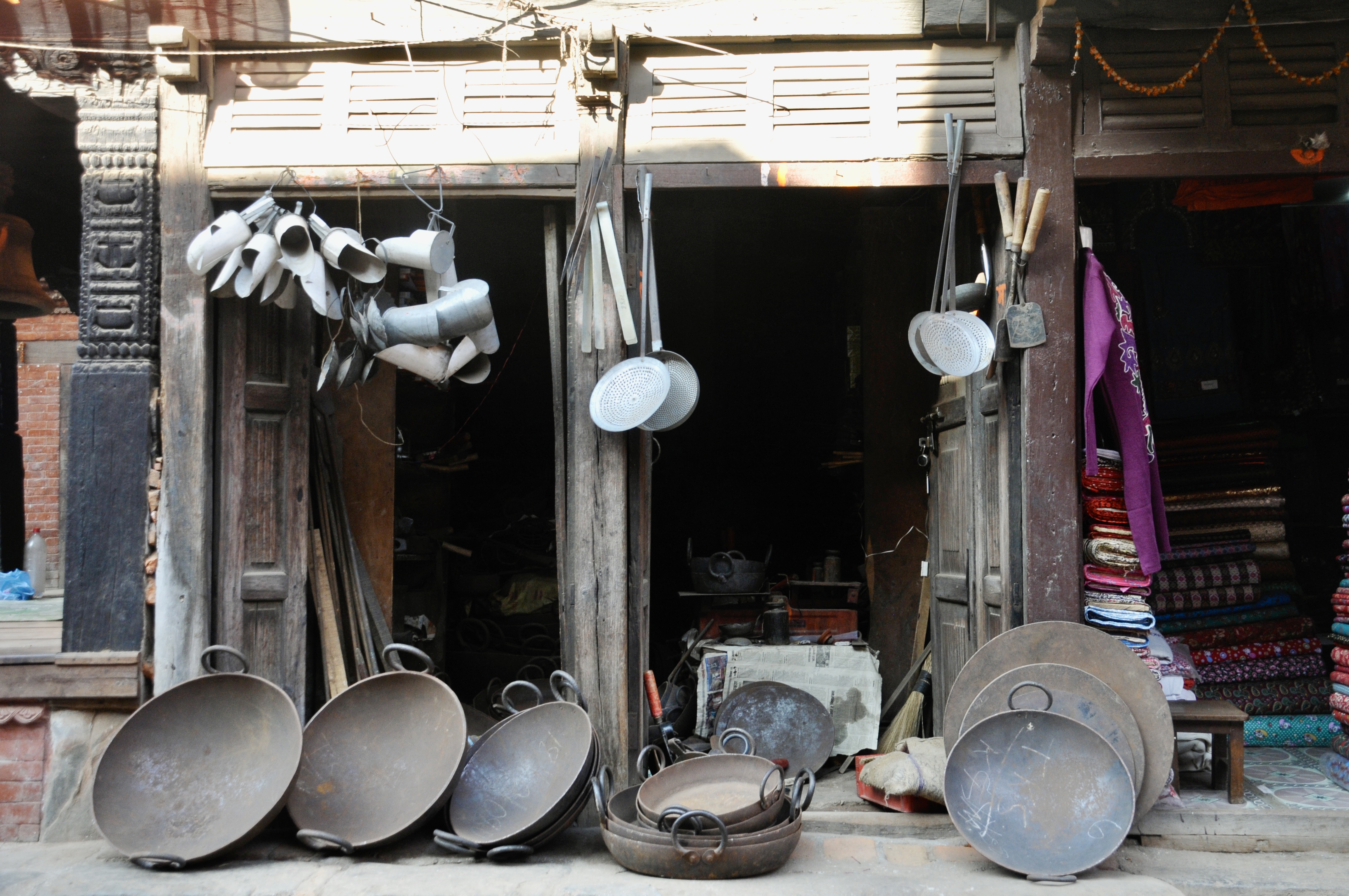
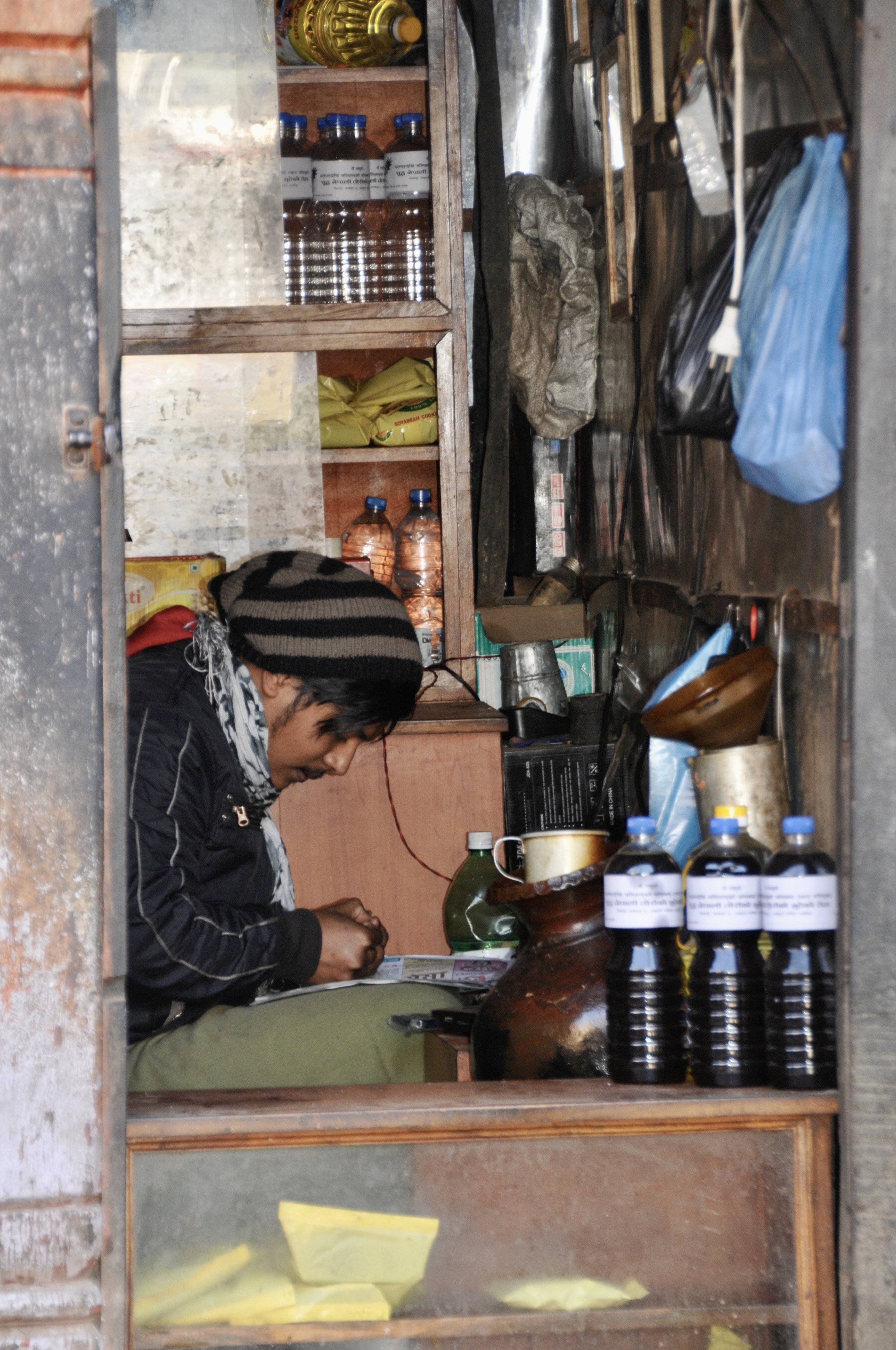
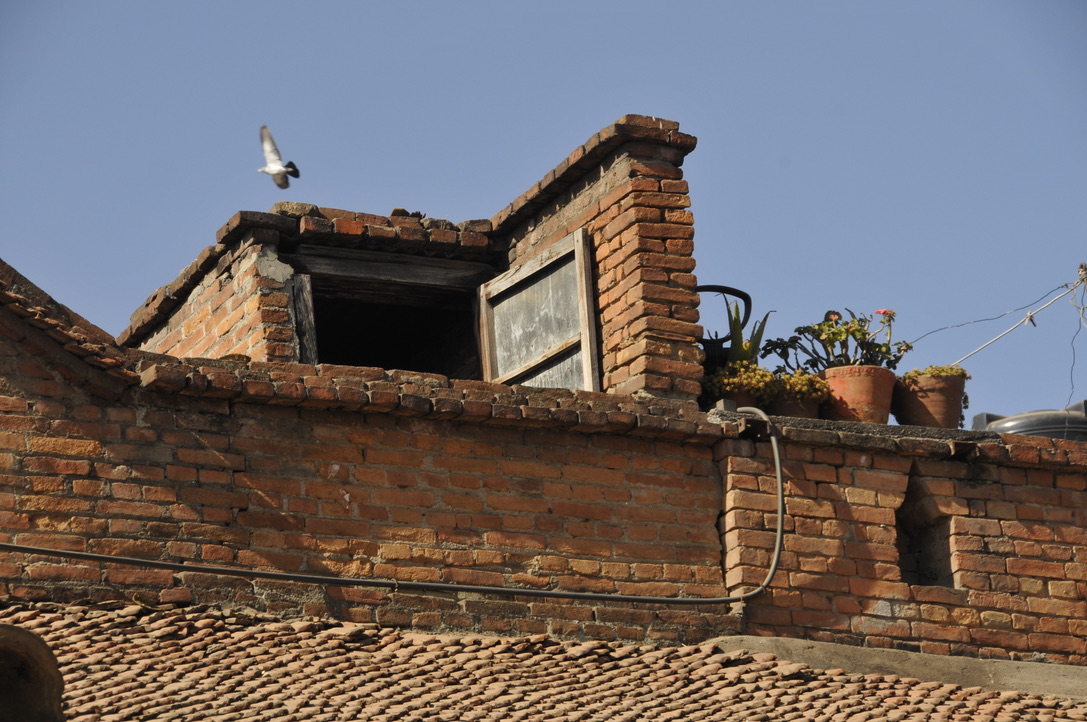
We wandered alone (and once we left the main square, where there were lots of tourists — Japanese, Chinese, Australians) away from the temple-center — down narrow cobblestone streets that meandered between red-brick houses, and courtyards that have temples, statues, cisterns, and wells. Frankly, you could spend days in Bhaktapur. The further we got from the temple, the more we saw typical life: women washing clothes on the streets in big rubber bowls, kids playing soccer, people at work making furniture and drying foods. Some of the buildings are just 12′ wide. Artisans weave cloth, knit gloves, chisel timber, and build furniture by the roadside, and locals seem to gather in communal courtyards to bathe, collect water, and socialize. There was a bit of begging near the temple, but once we moved outside that area no one approached us.
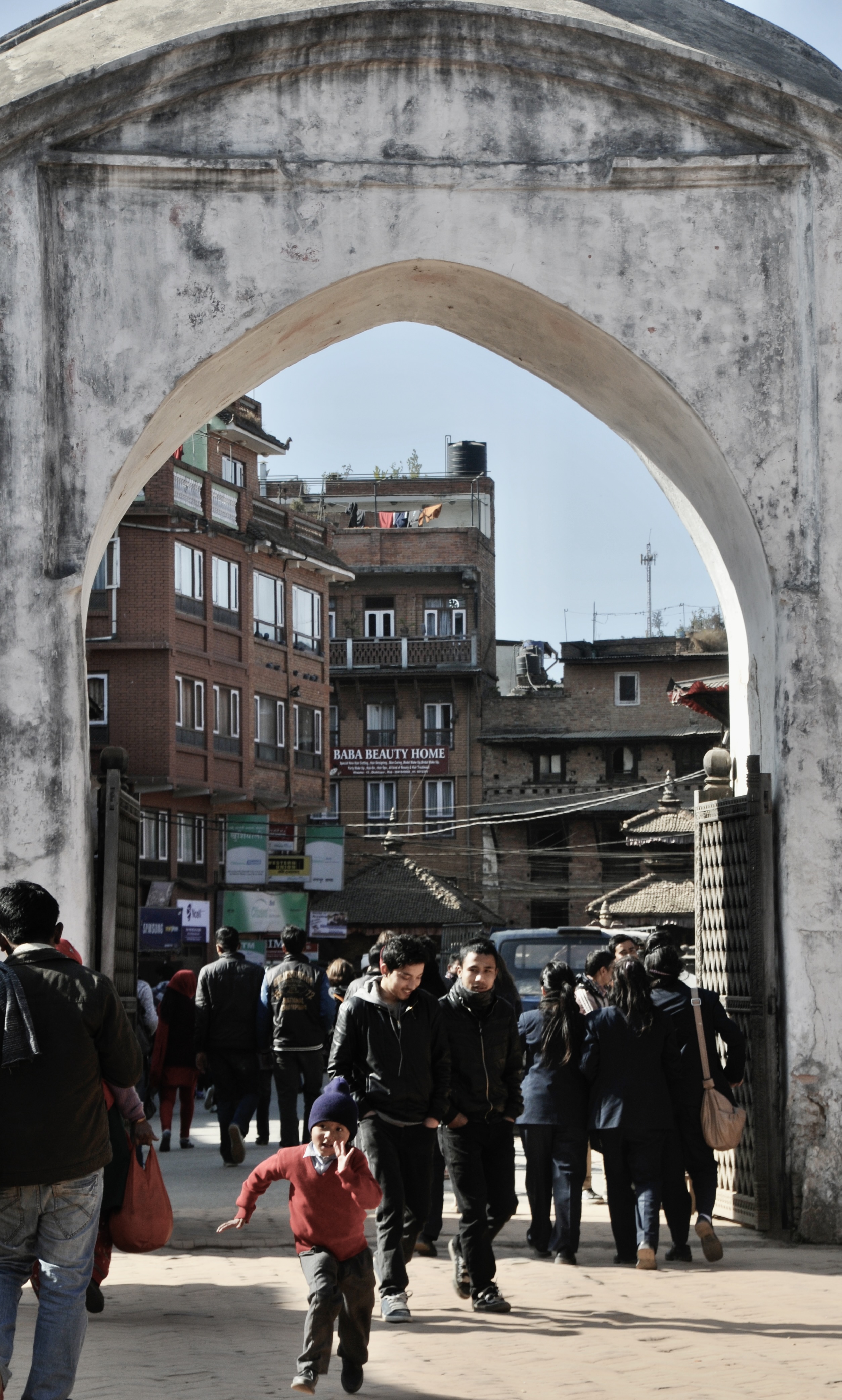
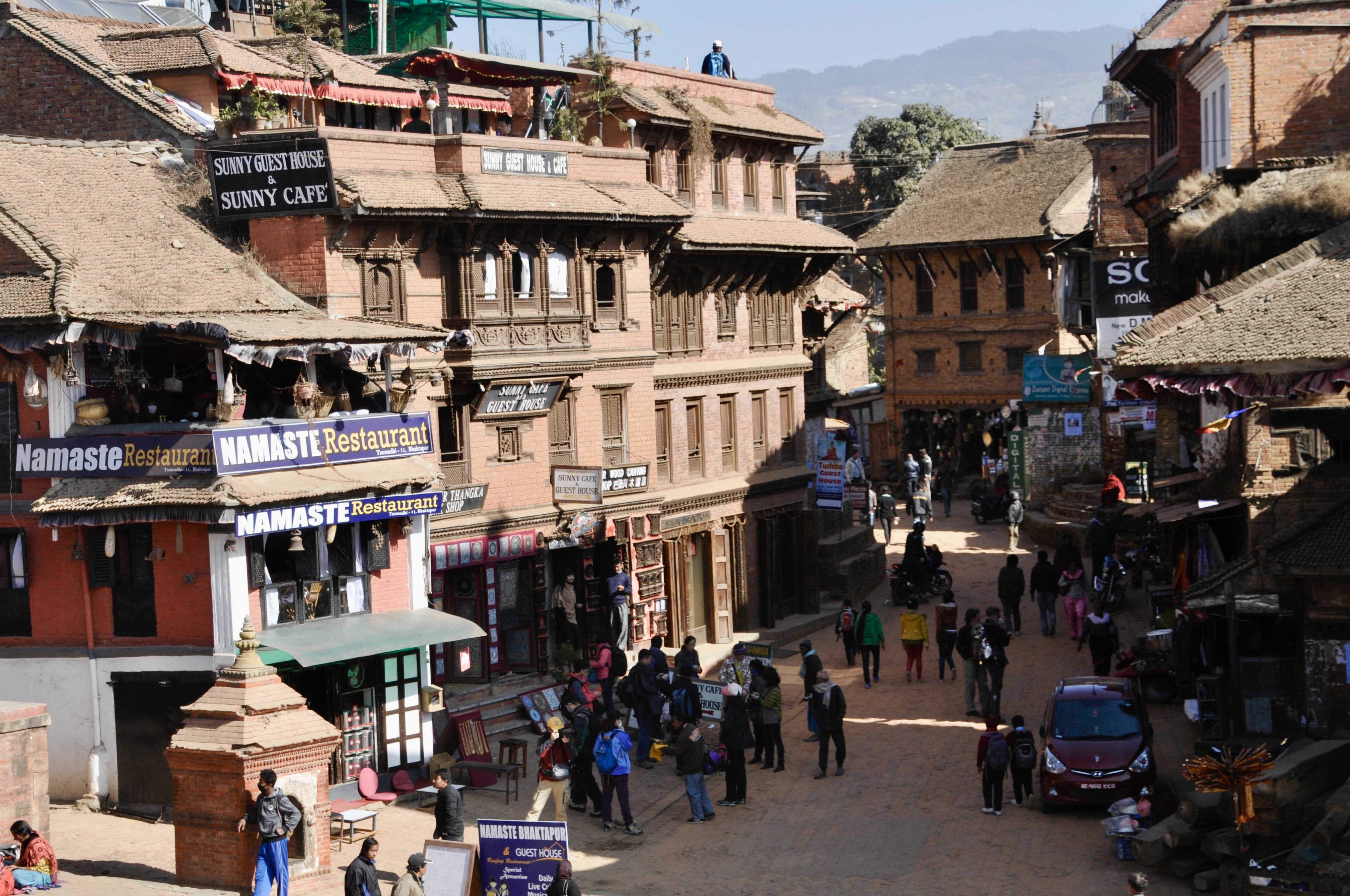
We stayed in Bhaktapur far longer than we expected — returning to the hotel at around 5 pm (after a very brief stop at the Garden of Dreams which is adjacent to the Thamel area). The Garden of Dreams is a neo-classical garden located right in the middle of Kathmandu. It was created in 1920 and was probably one of the most sophisticated private gardens at that time. It’s filled with pavilions and verandas and birdhouses. Once we got back we headed to the spa for massages — Mike got the “trekkers massage” (??) and I got the Nepalese foot massage with reflexology. The treatments made us extremely peaceful and also tired.. But about an hour or so after the massages, we headed for our last meal in Nepal — a traditional six-course series of little dishes. Sat on the floor, making it very difficult to get up after eating.
So, as we pack to leave Nepal for Delhi, there’s a lot to think about — especially comparisons between Kathmandu and Lhasa, with one having centralized control which also enables it to progress, to build an infrastructure, to create order.. and the other a big free-for-all and no way to even conceive of addressing things like systematic electrical connections, water, sewage, physical planning. Hard to know and so much more to consider that cannot be understood in such a short visit.
So, amid the many ganeshes and buddhas and other spiritual trappings and decorations – we bid farewell to Kathmandu (we leave the hotel around 12:30 pm for a 3:40 pm flight, and arrive in Delhi at about 5:00. Gotta finish packing. By the way, we’ve been on the phone with United Airlines several times and will try to deal with things when we get to Delhi. We are trying desperately to leave India one day early. We both have to fly to Seattle the day after we get to SF.. and we would just love to have that extra day. But alas, United is saying this will cost $2,000 each to make the change! So much for flying more than 100,000 miles with them each year.
Take care. Wishing you a very happy, healthy, peaceful new year. All my best – Fern
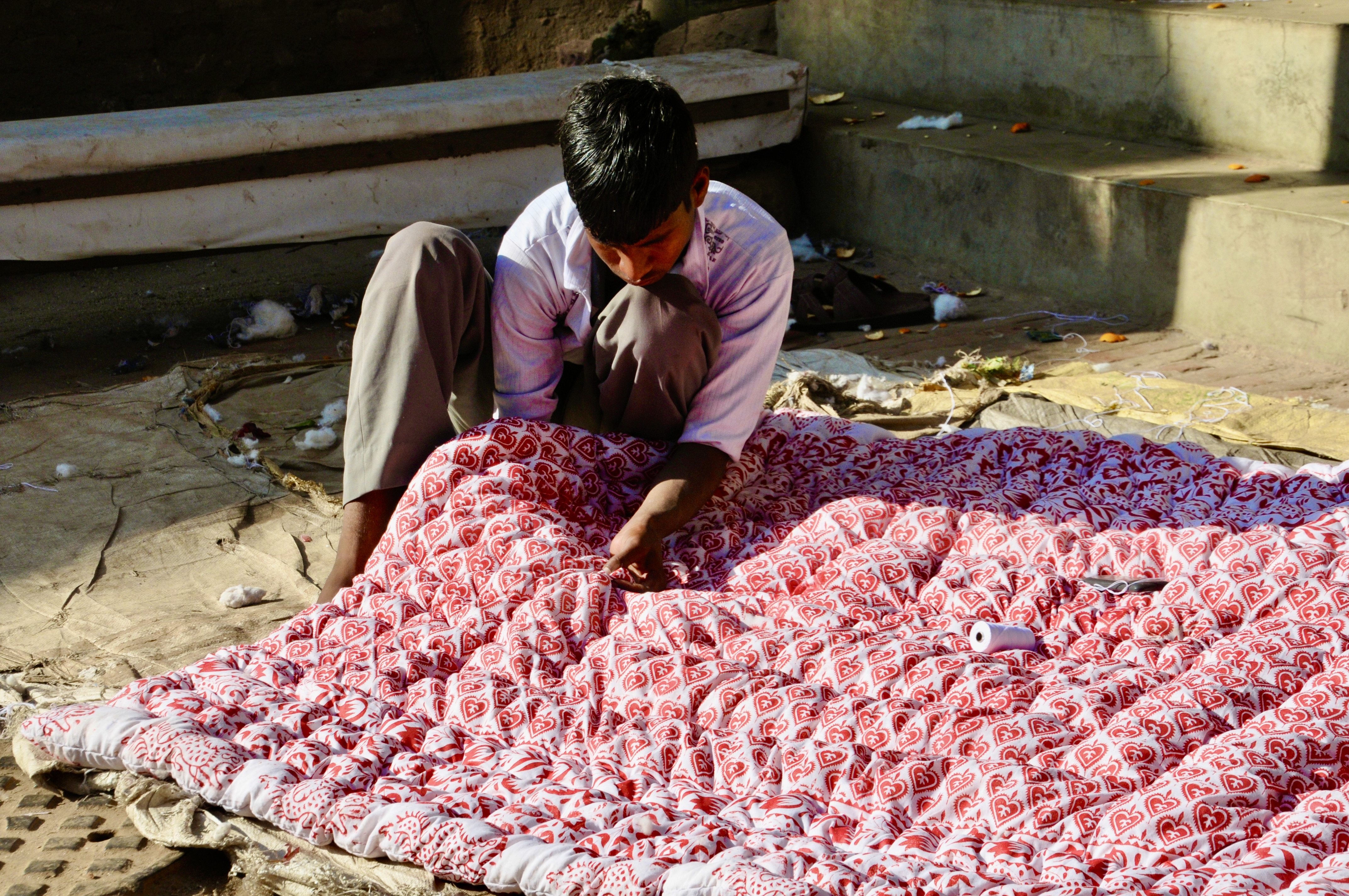
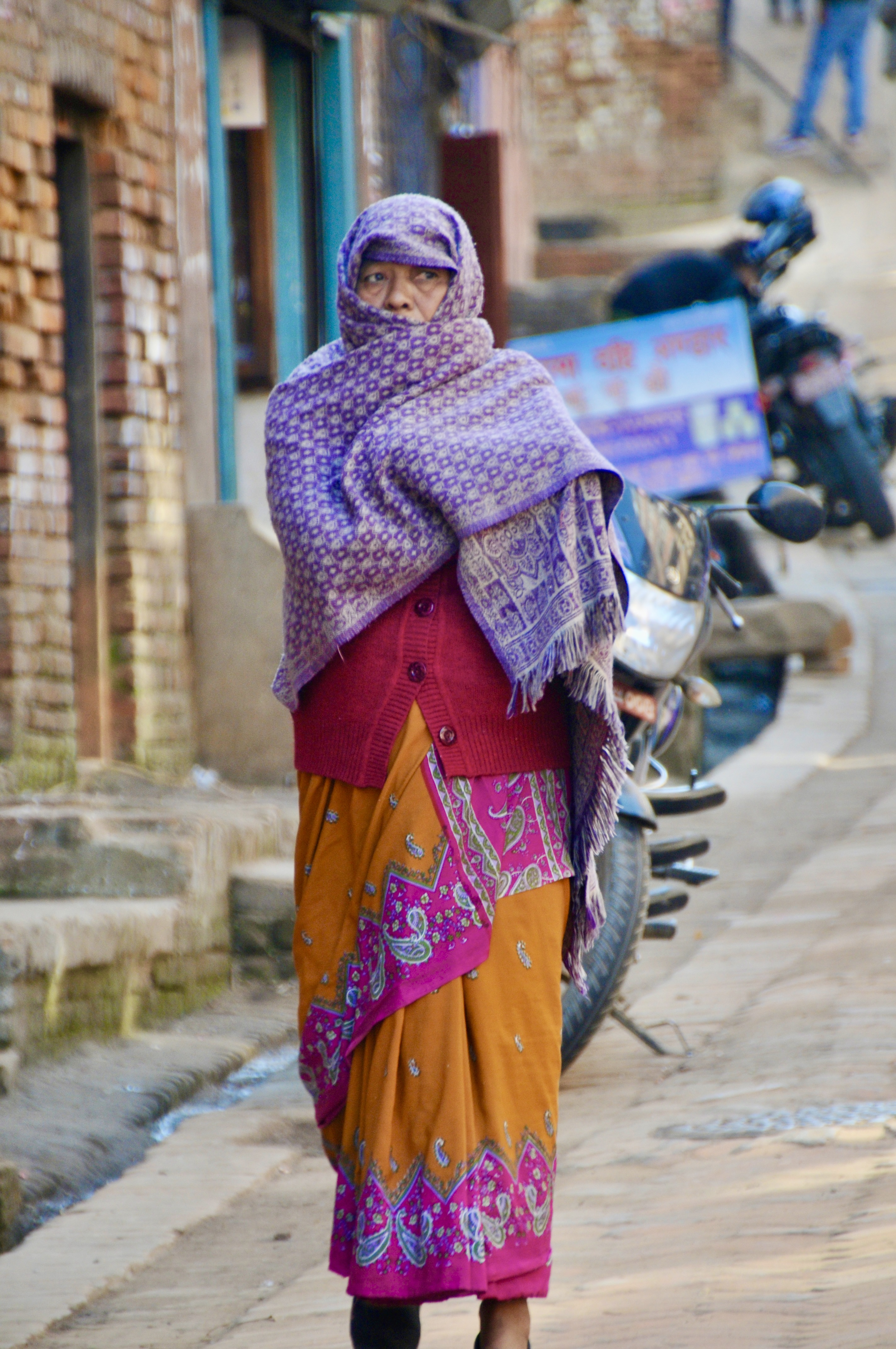
* For the foodies who want the details: Started with drinks and a roast duck appetizer (Mike had the mushroom dish – goat cheese stuffed shitakes with fruit salsa and homemade pesto), followed by a beetroot salad with edamame and avocado. Then came vichyssoise and the palette cleanser (a green vegetable granita). For the main course we both chose the rack of lamb (they use different cuts of meat). I think the lamb was cooked with pistachios and coriander.. came with vegetables. For dessert they served an apple crumble. OK… that was dinner.
December 31, 2013 — Year’s End in Kathmandu
December 31, 2013. Kathmandu Nepal
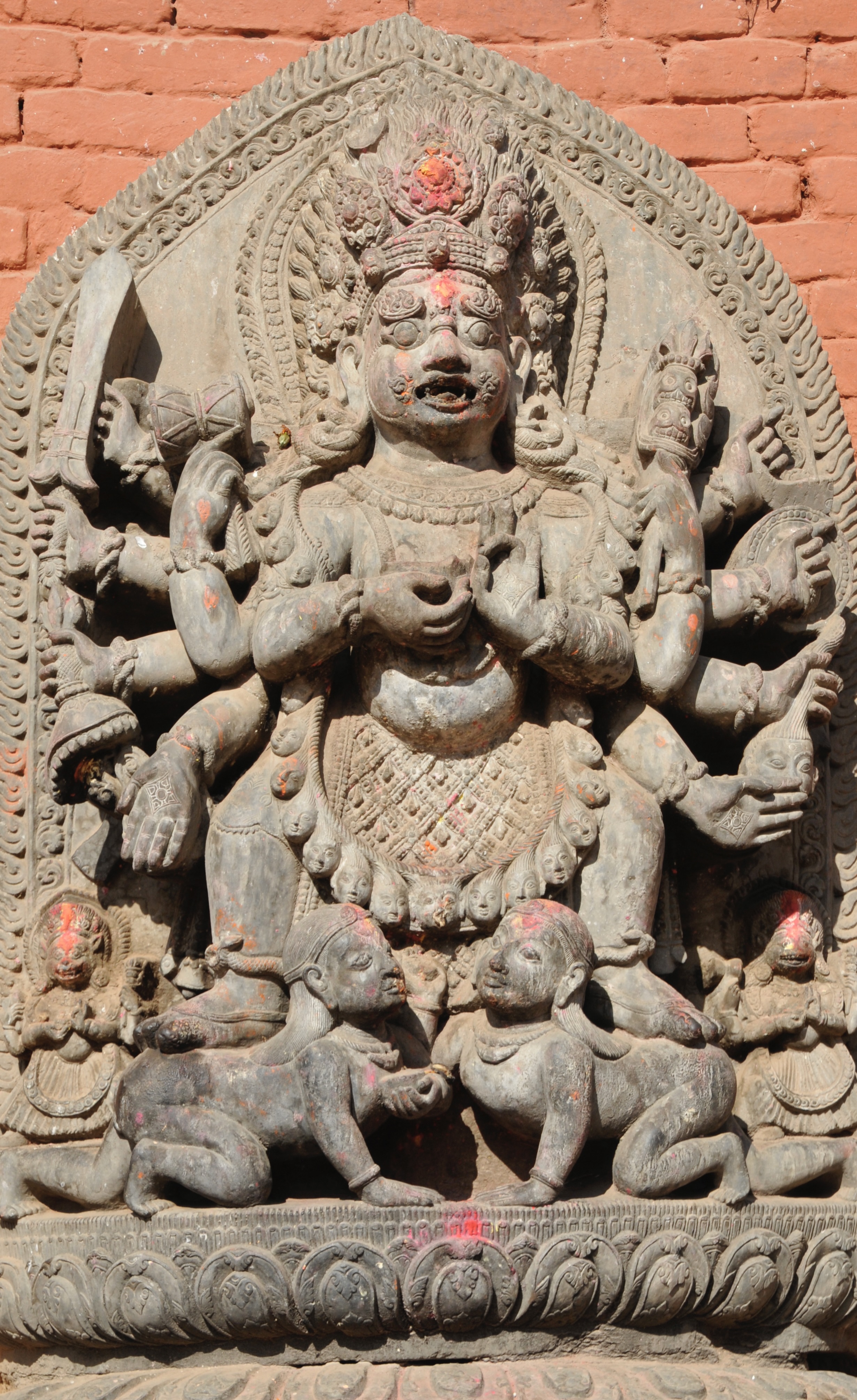

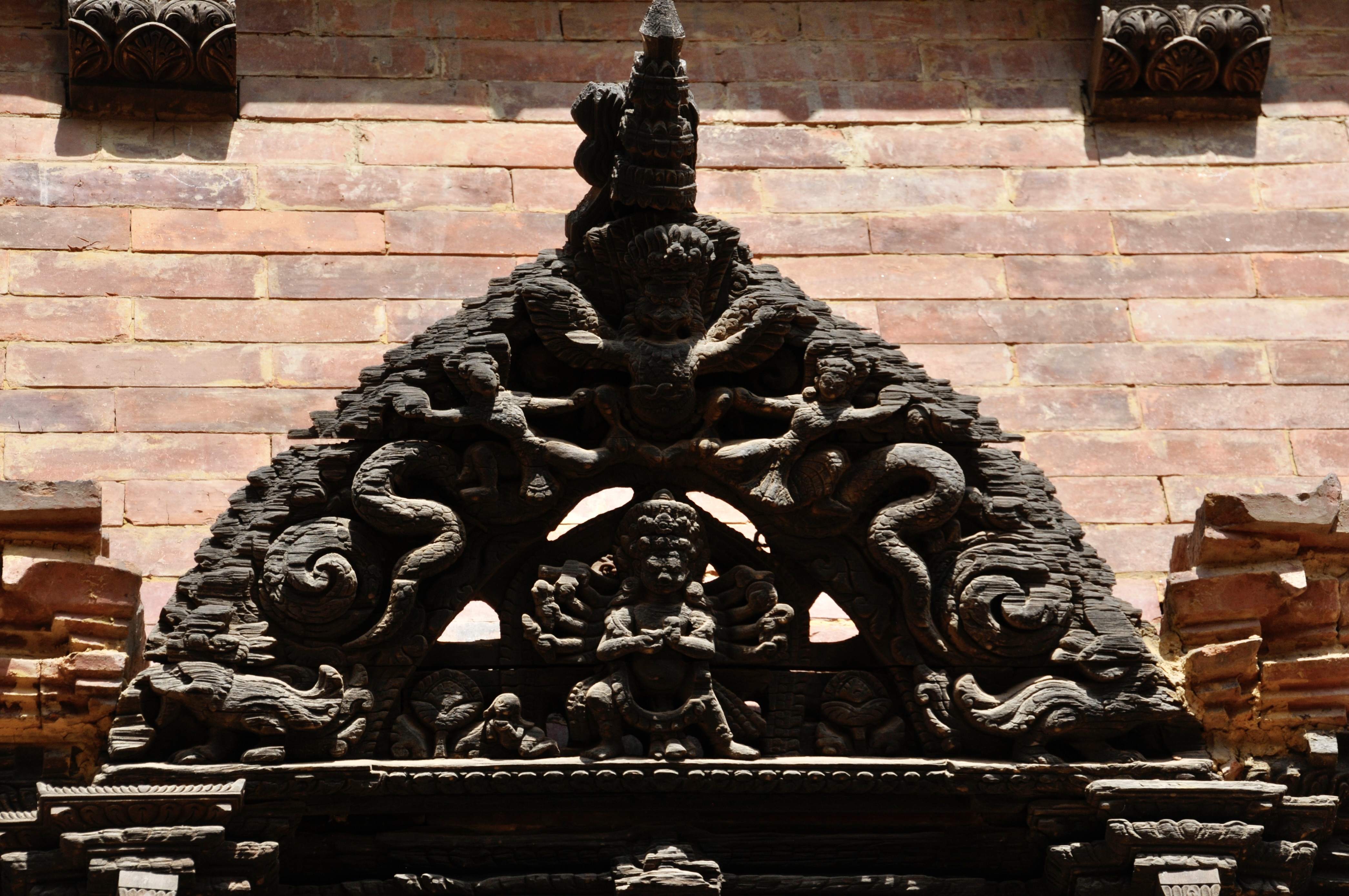
Namaste (Don’t know how to say Happy New Year, but maybe after tonight I will)
Went for dinner last night to an Indian Restaurant on the second floor of a very interesting complex called Baber Mahal Revisited — that honors Rana architecture (which was the period from mid 1800s to mid-1900s when the Ranas ruled Nepal and introduced a mixture of European, Indian, and local architecture). In 1996 one of the Rana descendants who owned the property decided to develop it himself with the help of a Harvard-trained architect who specialized in historic restoration. They created five courtyards with low buildings (one and two stories) surrounding each courtyard and each courtyard and building set depicting a particular pre-existing building or style in the Kathmandu Valley. Naturally, it attracted a set of upscale Nepalese restaurateurs and vendors who have a knack for finding unique items to sell.. and also some really good international cuisine. We ate at the Indian restaurant (called something like Buwarki) and were greeted by the owners’ son who surprised us with really good American English! We asked where he learned to speak English (since those Nepalese that speak English have Indian and British accents; his was distinctively American)… turns out he went to Wichita State University to study aeronautical engineering. Spent 6 years in Kansas, completed his degree… and in his own words, “became a redneck!”
The food was good, but way too much. Mike decided to order three starters and one main course, but the starters were big enough for a main course. Anyway, we checked out the shops in the complex but everything was closed so we put this on the list for today.
Got back to the hotel at around 10 pm and waited until midnight to call my office in Oakland to deal with year-end logistics (10 am in California) and then crashed.
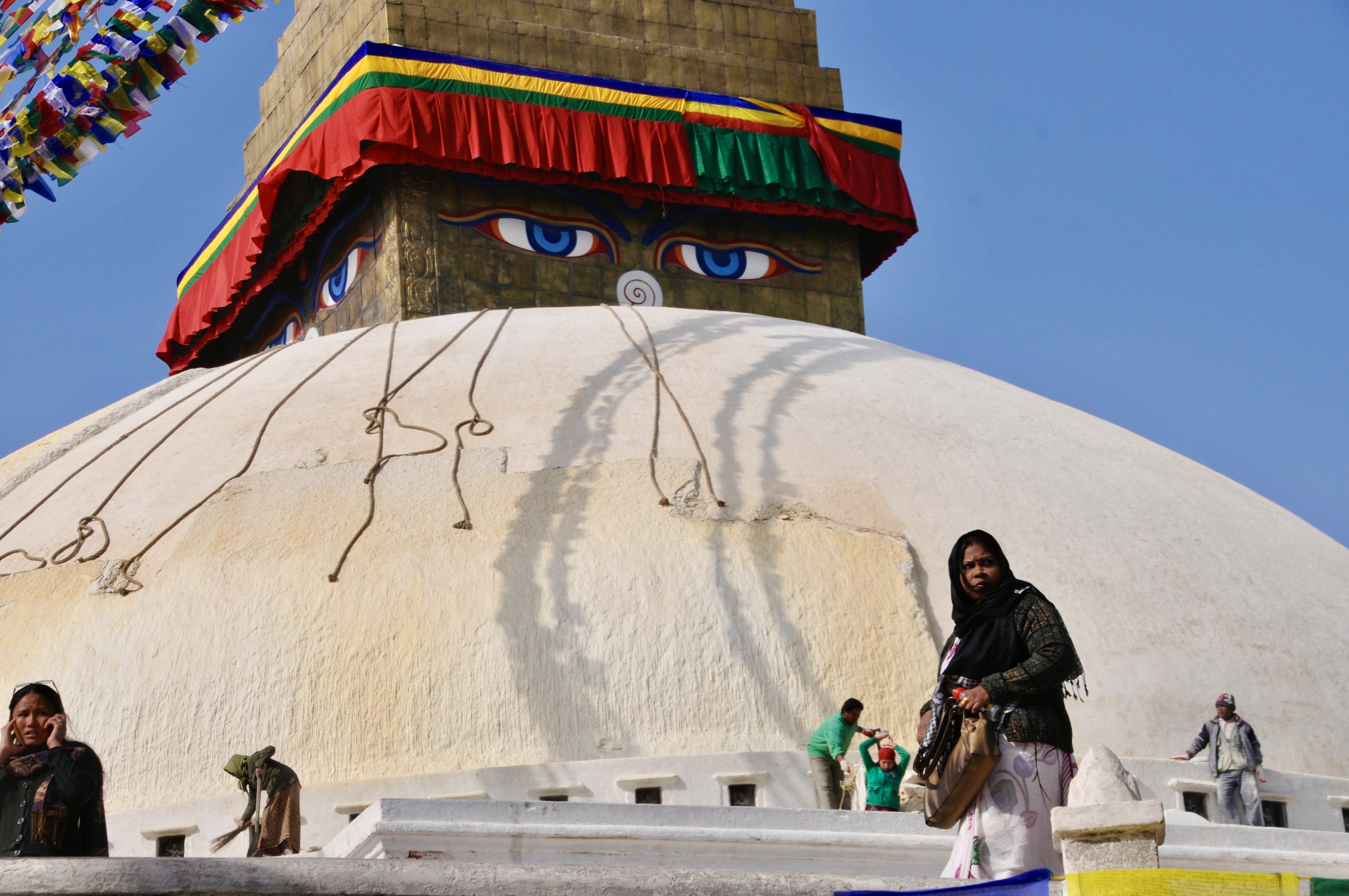
This morning after waking up to a wonderful surprise birthday present from Mike (a really beautiful opera-length gold necklace made of individual cylindrical links) and breakfast and discussions about how to navigate today’s plans — we headed out to Boudhananth – one of the holiest Buddhist sites in Kathmandu. It’s about 11 km from the center of town. The focus of the site is a huge stupa surrounded by a village-like presence with shops and buildings completely circling the structure. The Buddhist Boudhanath stupa dominates the skyline and is one of the largest in the world. Boudhanath, like so many other religious sites here in Kathmandu, is a UNESCO World Heritage site… and thus a popular destination, but given the time of year it wasn’t really crowded and we could stroll the whole complex easily and mingle with those coming for religious reasons. Boudhananth is apparently situated on the ancient trade route from Tibet which bypasses the center of Kathmandu. The stupa is supposed to contain the remains of one of the many Buddhas.

We used all the skills we learned yesterday – Get a taxi driver and sign him up for the day so that you don’t deal with finding new ones as you attempt to navigate the city and go from place to place (at fairly great distances); cross streets with groups of Nepalese and always stay in the middle of the group; etc. By the way, there aren’t any traffic lights in all of Nepal — so traffic just sort of flows or stops, and this is one of the reasons crossing the street is so difficult.
After strolling Boudhananth for about 90 minutes (actually it was a calm oasis, since there aren’t any cars — it’s sort of a pedestrian zone with shopping on your left and the stupa on your right), we asked to be dropped off in the Thamel neighborhood. I think this is probably a heavy tourist area in high season. It prides itself on having Wi-Fi everywhere and is probably where the hippies focused their time in the 60s, although I assume it’s a lot different now than it was then. (But still, some remnants of tie-dye and those classic Nepalese shirts and skirts with patchworks of cloth in different colors and patterns — the stuff I always wanted to wear but could never pull off!) Thamel has narrow streets crowded with shops and vendors and lots of cars and motorcycles. My guess is that you can buy anything here, but that there is a heavy concentration of pashmina stores, trinket stores, etc. It seemed upscale next to Indra Chok from yesterday… and while it may be a tourist haven in high season, we didn’t run into any Americans and only a handful of non-Nepalese.
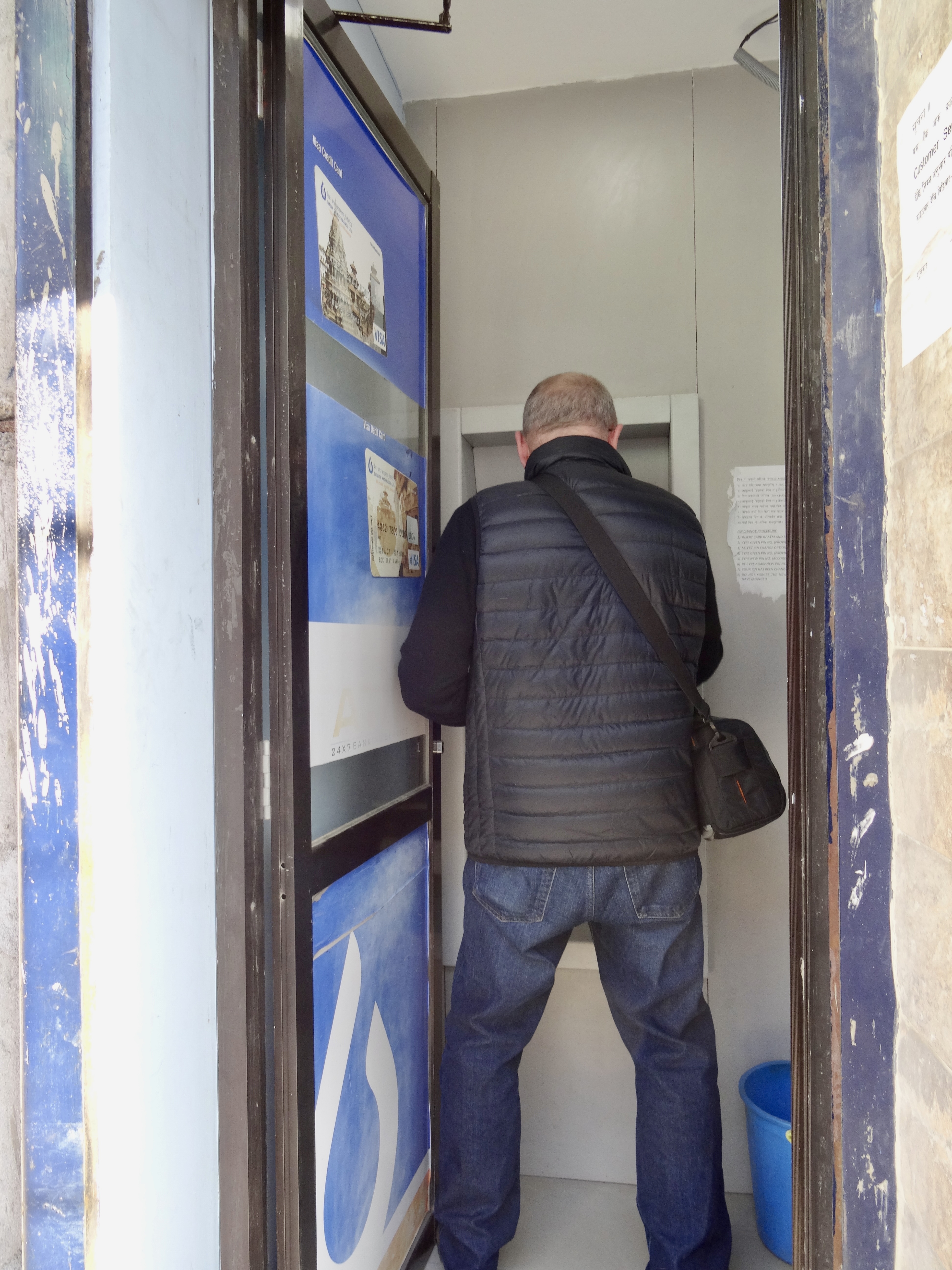
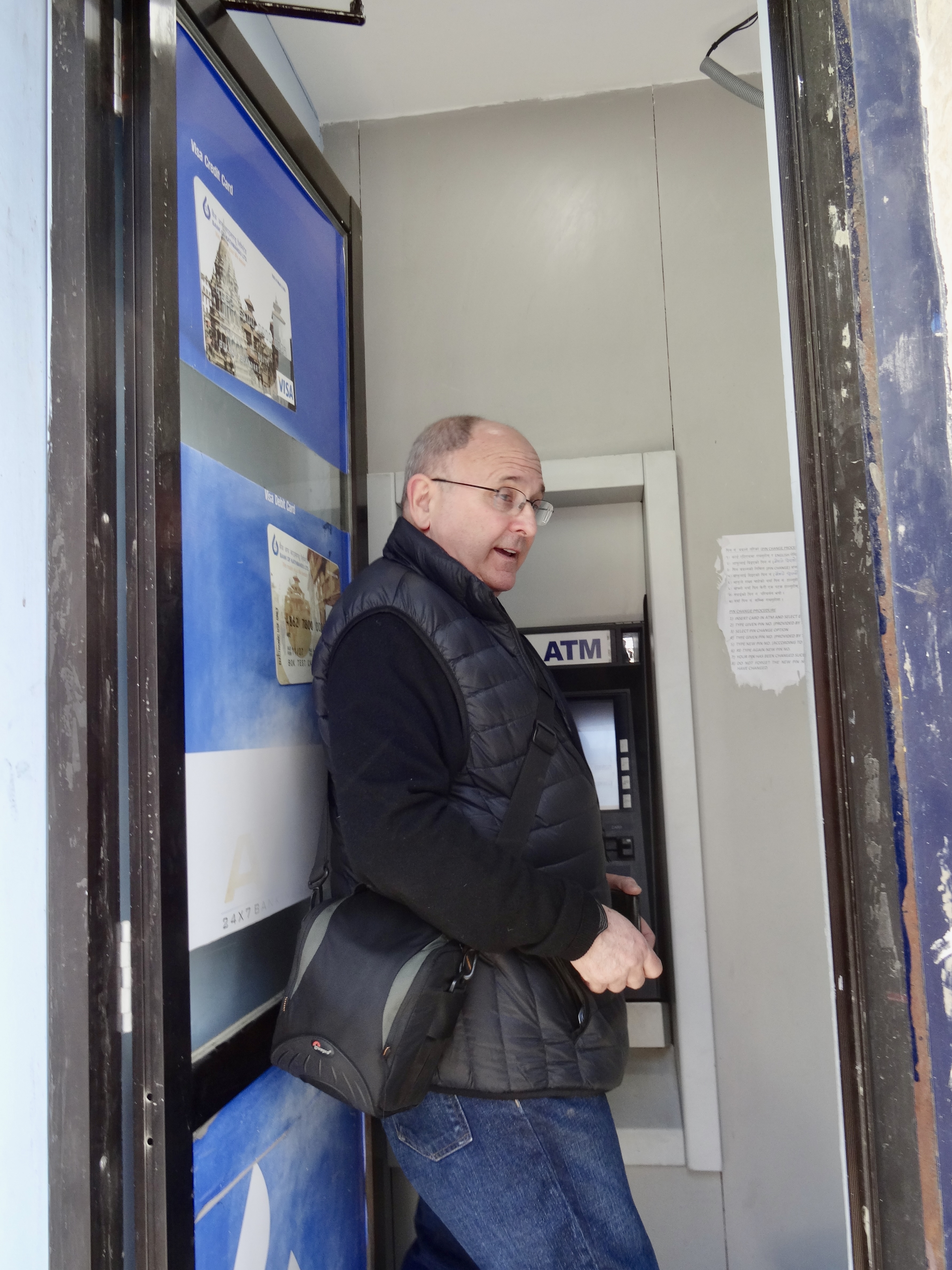
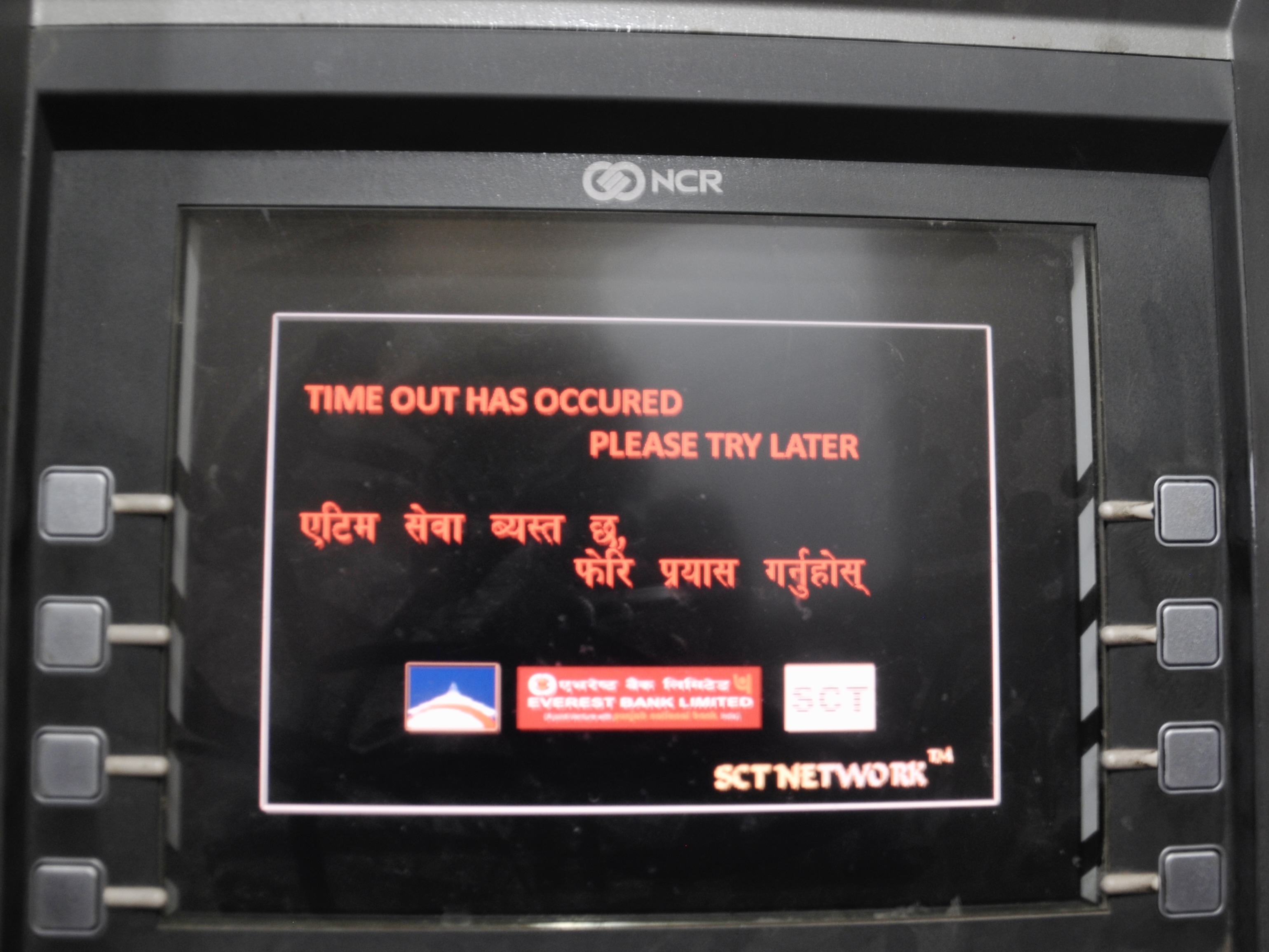
Thamel must be the pre-base camp for a lot of mountaineers, since there are a lot of gear shops and money exchanges. By the way, using an ATM here is interesting in that the ATMs are like little rooms, just big enough for one person, but fully enclosed. Generally they are up a few steps.. so it’s sort of like going up to a little apartment door, but when you get there and open the door it’s a very very small closet. Mike used one just fine, but my card didn’t work – twice. I’ll just wait for Delhi.
From Thamel we went back to Baber Mahal Revisited for lunch and a little higher-end shopping than what’s on the streets. When we were at the complex last night we spied a cute little café called Chez Caroline — so we headed there. We were in heaven – a little French café in a quiet courtyard, tastefully decorated with beautiful plates and settings. We each had the soup of the day – ginger carrot, and then Mike had the mushroom tart with walnut sauce, and I had the tomato/chevre tart; two glasses of good, inexpensive wine — all followed by a shared slice of ginger cake. Fantastic! We were also starving by then.
Strolled Baber Mahal Revisited for an hour or so — purchased just a few small items (but spied some other things that might be worth a trip back again, and certainly we are considering dinner there tomorrow night at one of the many restaurant options). Then we headed back to the hotel to rest and get ready for New Year’s dinner here; decided that it made most sense to just enjoy the hotel where a very special dinner and party is being prepared for tonight.
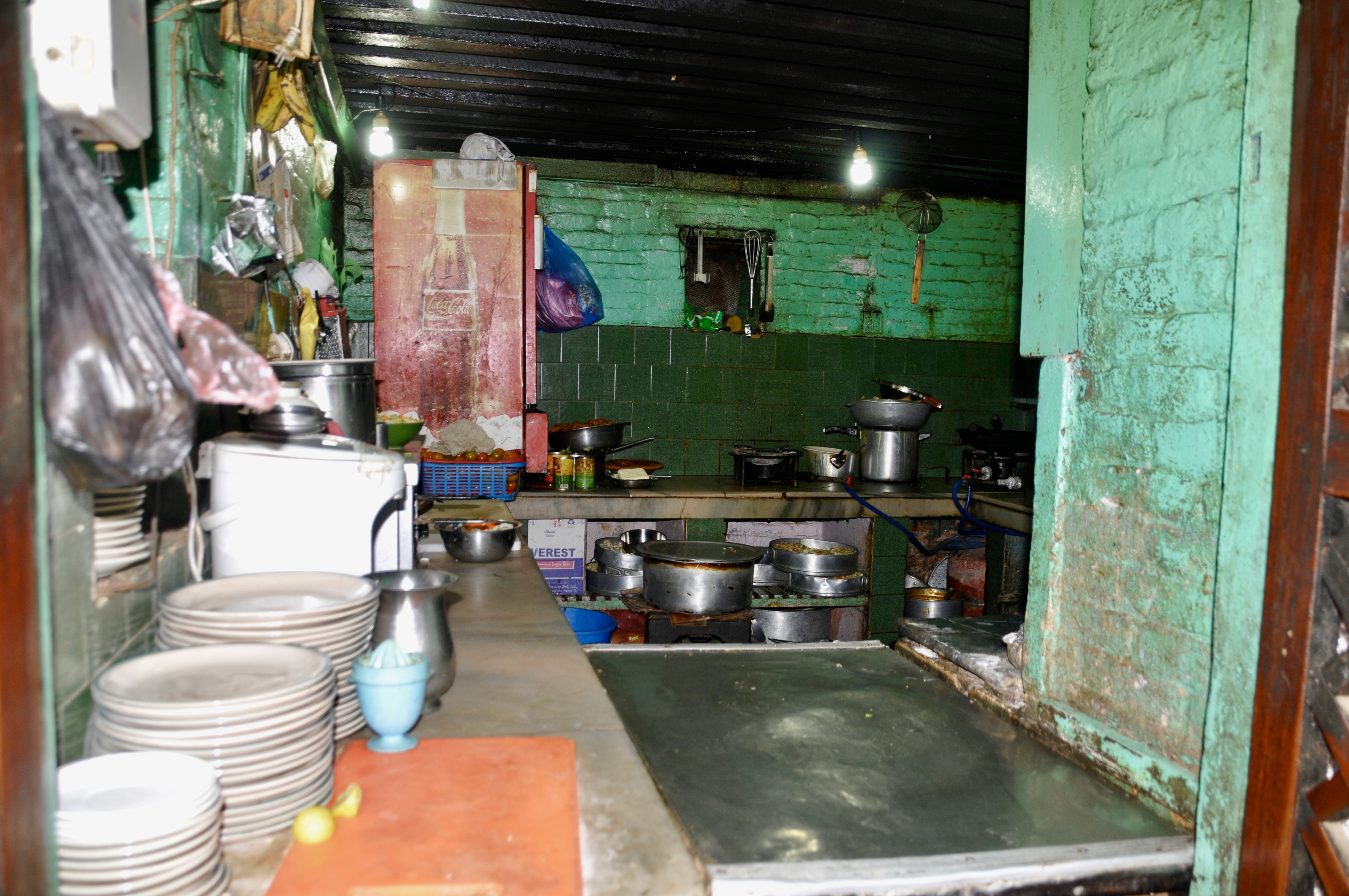

The streets at night are extremely dark and difficult to navigate given the preponderance of pot holes, unfinished or partially demolished sidewalks and roads, cyclists without any lights, the mist, street fires being used for cooking and heating, and more.
More tomorrow from Kathmandu (probably another temple — getting templed out, but frankly they are much easier to take than those in Tibet; less climbing; and the strange mixture of shopping and temple seeing because of the way these temples have been built within village-like settings. And then we’ll probably go to another neighborhood.
Best for 2014 – Fern
December 30, 2013 – Next to the last day of 2013
Kathmandu Nepal: Namaste –
Started out this morning with breakfast at Dwarikas; we’ve decided to do whatever necessary to get better and definitely not to get sicker — so this means straying from our usual more daring eating places and using the hotel as a backup; guaranteed cleanliness and less chance for additional germs. Lord only knows we are surrounding ourselves with absolute guck and germs as soon as we venture out of the hotel (which we do for the entire day and dinner)… so a little precaution at breakfast seemed wise.
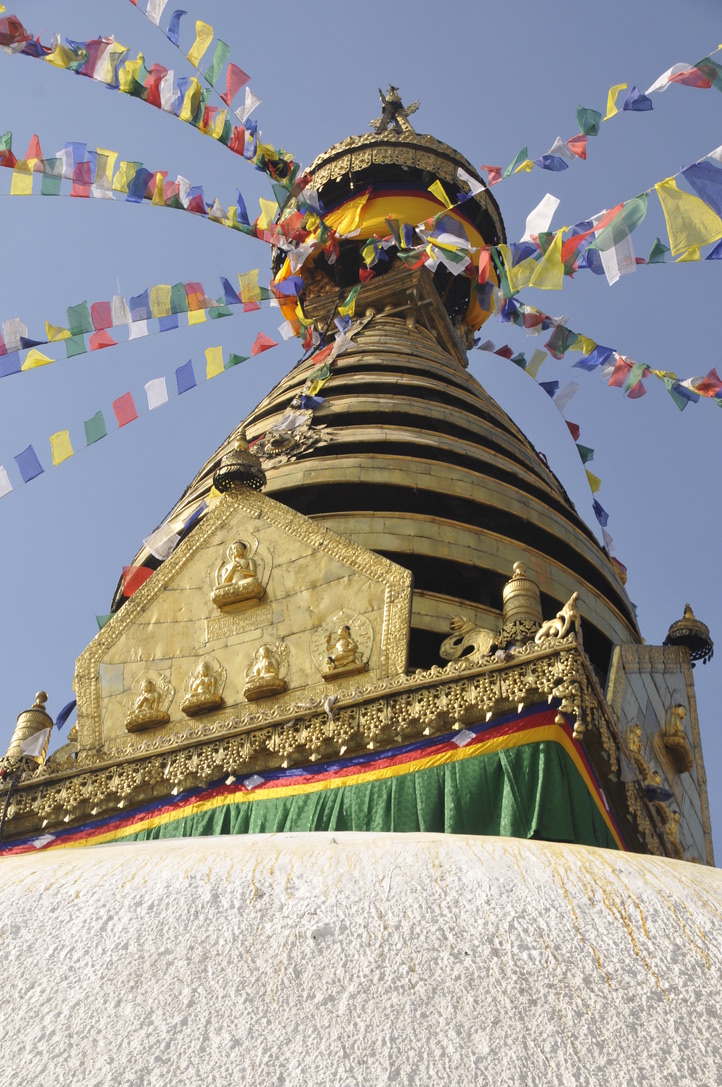
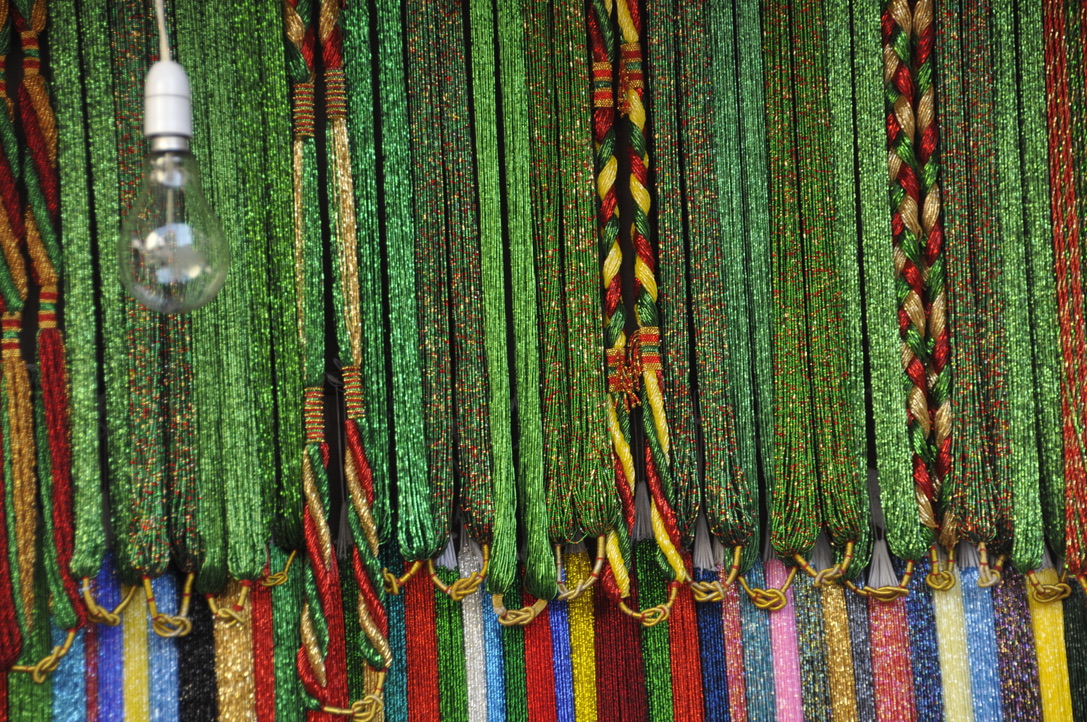
For those who have been asking, Dwarikas is quite wonderful with scores of hidden courtyards and spaces, lushly landscaped, and definitely worthy of its five stars. No complaints from us, except that the electrical outlets are a bit dorky and our connections (we have many) keep falling out of the sockets (with the converters). We are traveling with about 13 devices that require charging; 8 for me and 5 for Mike — so we are improvising and taking turns using the two sockets that seem to work with our cords. I can charge quite a few things from my computer, so that helps (but that means leaving the computer on which ties up one outlet). The only other thing Dwarikas needs to address are the closet doors — wood frame sliding doors that stick constantly. But these are pretty minor. Other than that, they’ve definitely got their act together. Oh, the other thing I’d eliminate if I were advising Dwarikas is the guy at the front door who is always saluting — anyone and everyone who shows up. Maybe it has a non-military meaning but we’re not so comfortable with it.. The Namaste greeting is much more comfortable for us.
Anyway, breakfast was good — Western — eggs, muesli, lots of great fruit and fruit juices (remember this item as the story proceeds), muffins, cinnamon yogurt, etc.
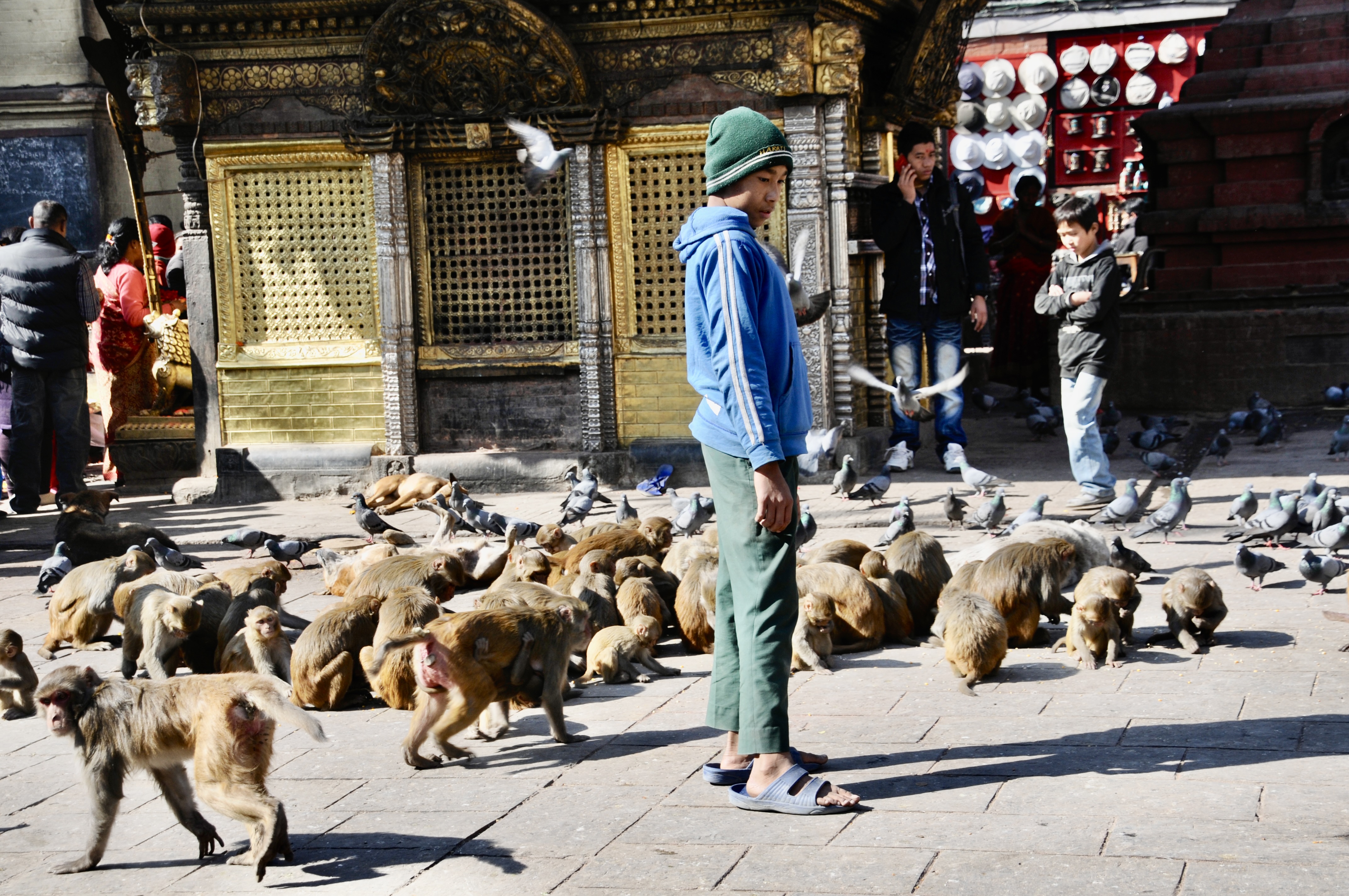
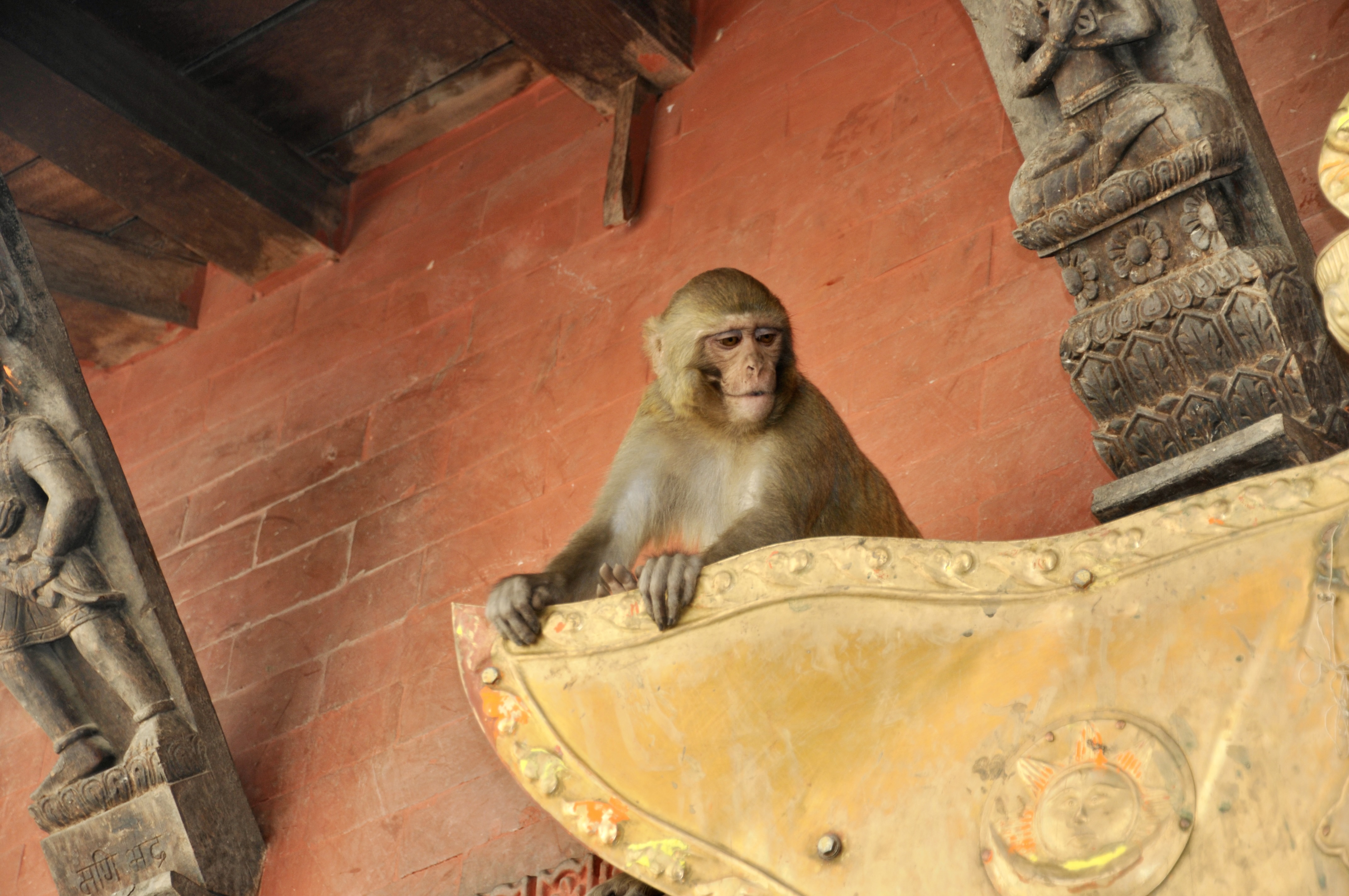
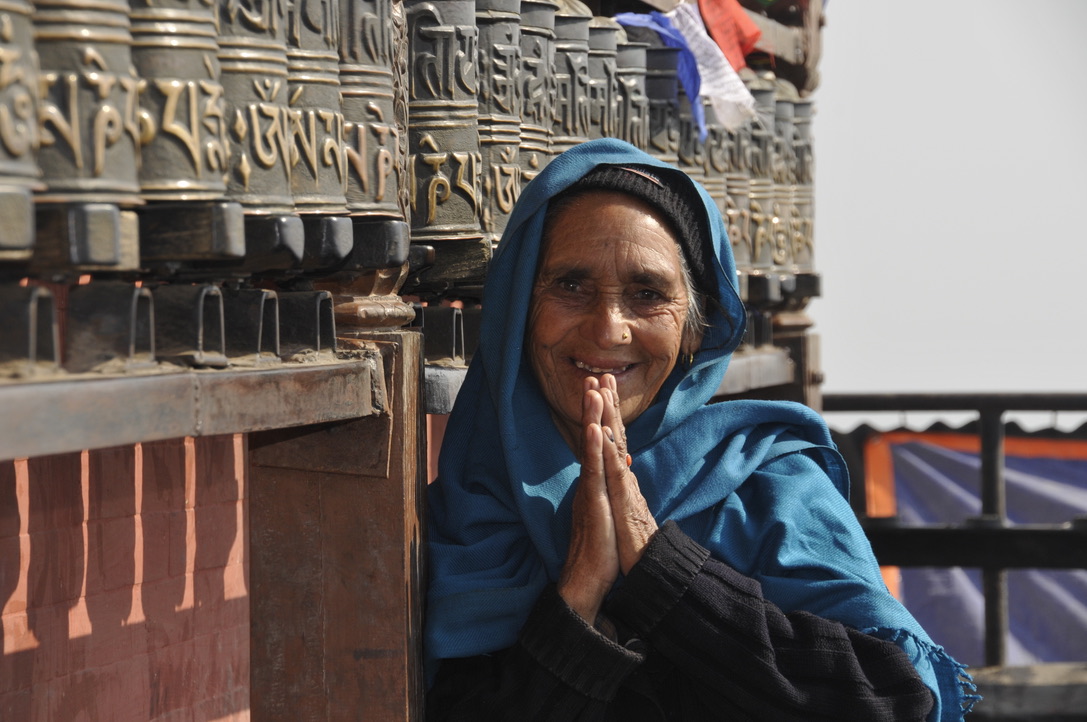
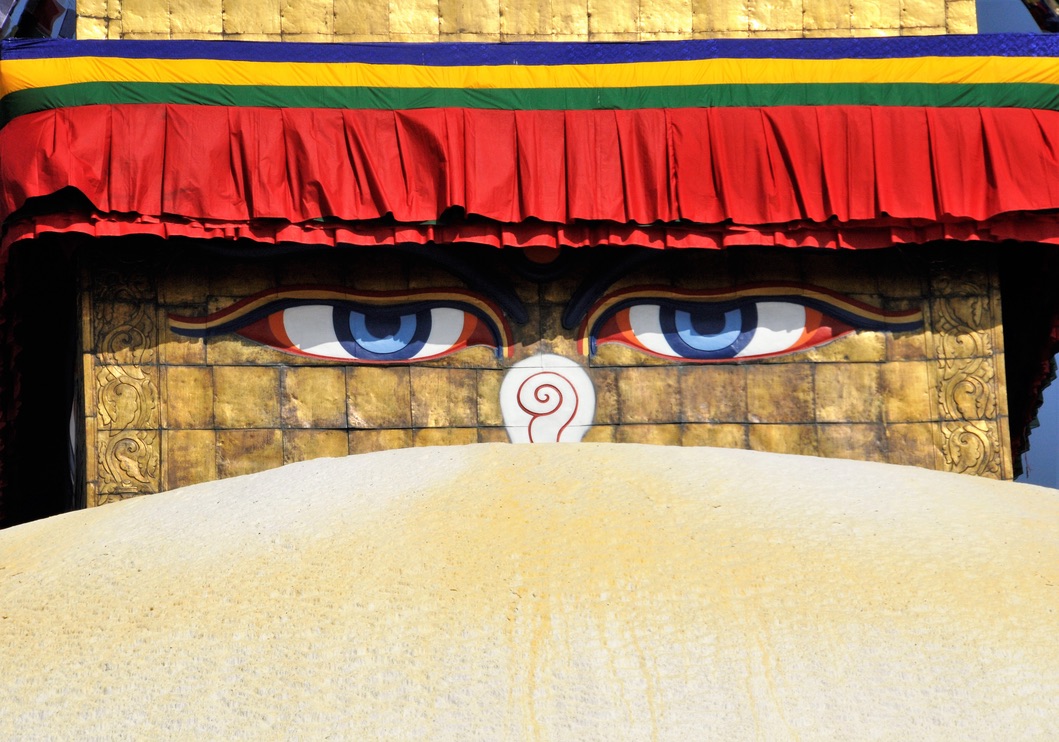
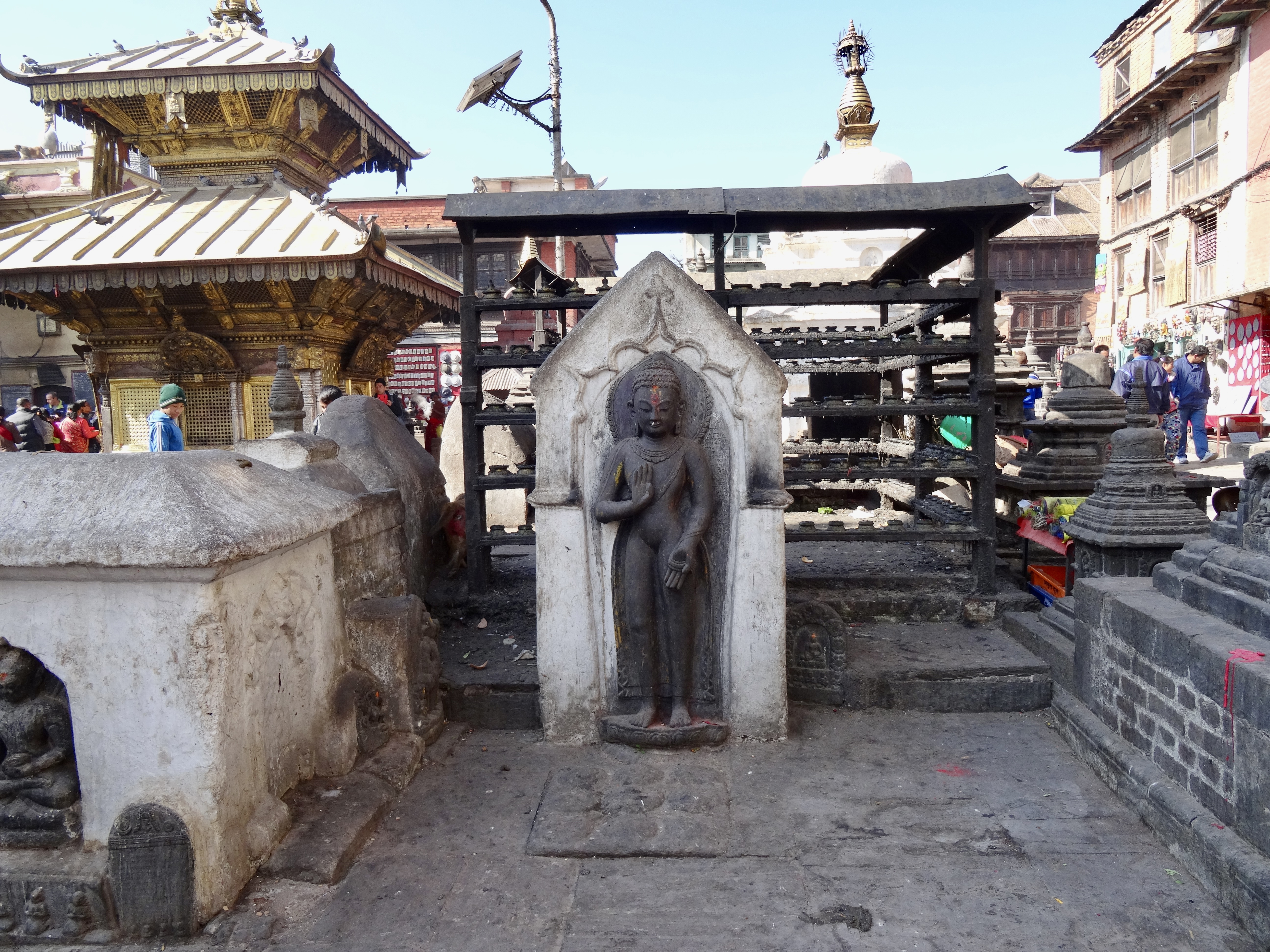
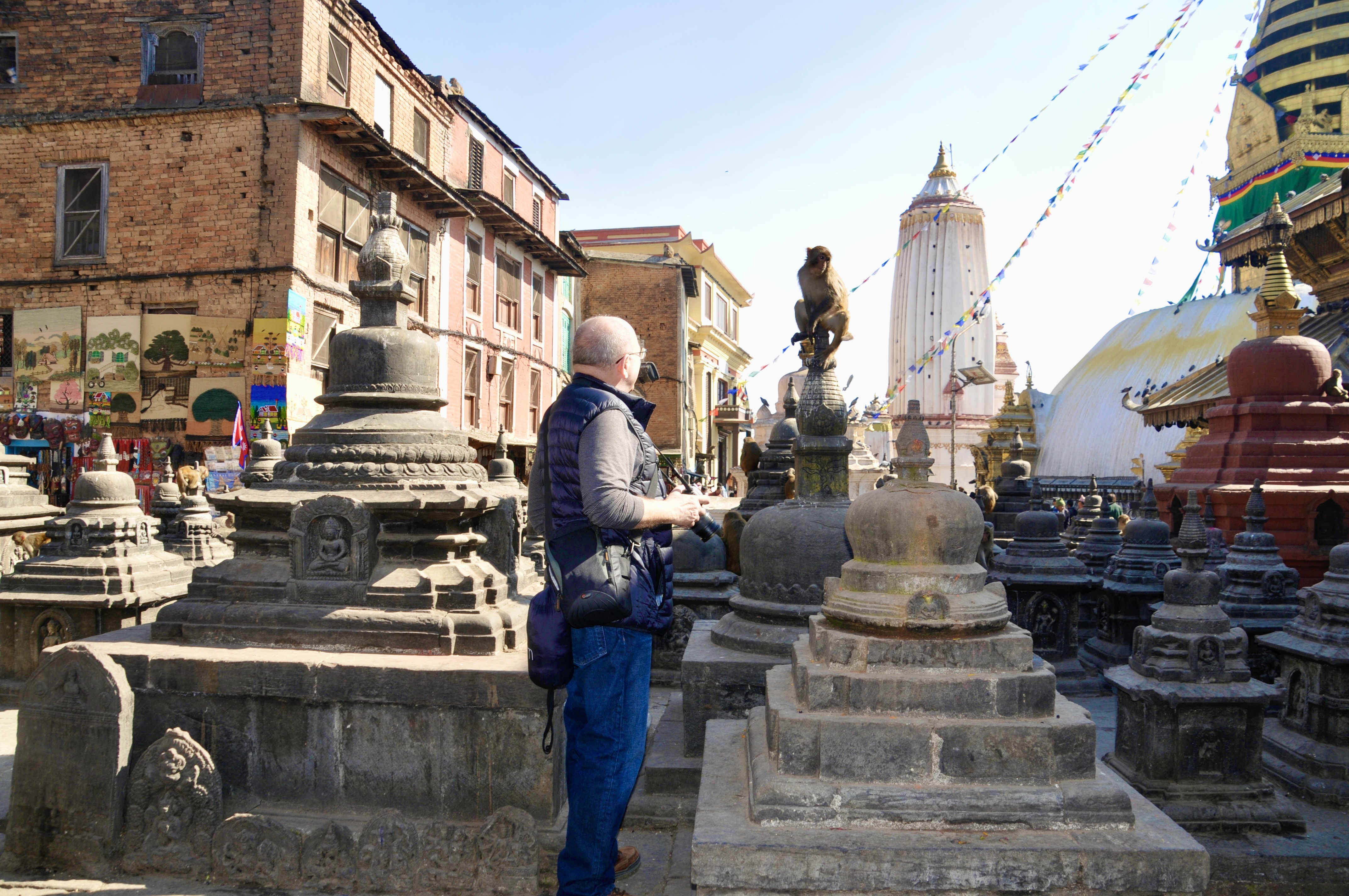
And then we headed out for the day — took a taxi to the Swayambunhath Temple (also known as Monkey Temple because of the unbelievable number of “holy” monkeys that treat the space as their own). It’s an ancient religious complex that sits high above Kathmandu Valley.. and it’s to the west of our hotel (about 25 minute drive). The complex includes a stupa, lots of shrines and temples… as well as a host of shops and restaurants which makes for a very strange scene with pilgrims worshiping and people “shopping” at the little stalls that literally line the entire place. It’s a challenging walk up the stairs from the base to the top. Our taxi driver was wise and asked if we wanted to do the short set of stairs or the long one and we jumped for the short one. Once at the top, we saw what the climb would have been like had we done the long route — probably equal to the climb we did in Tibet. Buddha’s eyes and eyebrows have been painted on the stupa. The monkeys are everywhere and they seem to rule the roost — climbing and jumping — now you see them now you don’t. There are hundreds of them. Monkeys do what monkeys do, including fornicating on top of a stupa.
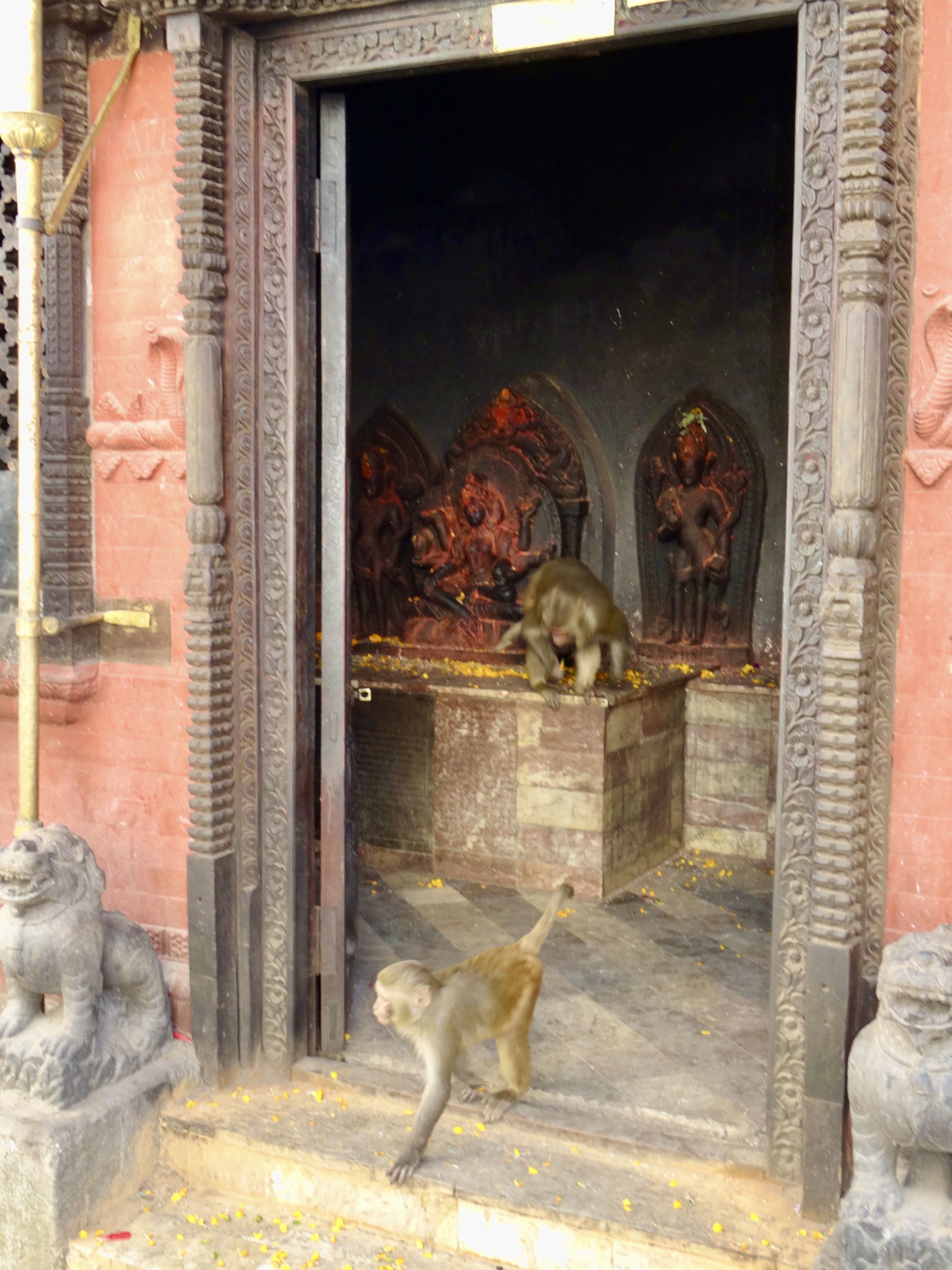
The taxi driver asked if he should wait and was willing to wait for us for an hour which we thought would be great and then we wouldn’t need to negotiate with another driver. By the way, unlike Lhasa the taxis are all rundown, beat up cars.. and as I mentioned yesterday, navigating driving would be like putting your life in your hands the first second behind the wheel. We’ve driven ourselves in a lot of strange places — Thailand, Ecuador, Honduras, Morocco, Tunisia — but this one takes the prize. Frankly, when we got out of the taxi, the only way we could cross the street was to find a group of Nepalese people navigating the crossing and weasel our way into the center of their group (they weren’t an organized group — just a bunch of people headed in the same direction) and then move the same way they do.. if they stop, we stop. There aren’t any lights. It’s total chaos. Makes Mexico City traffic look calm and very organized.
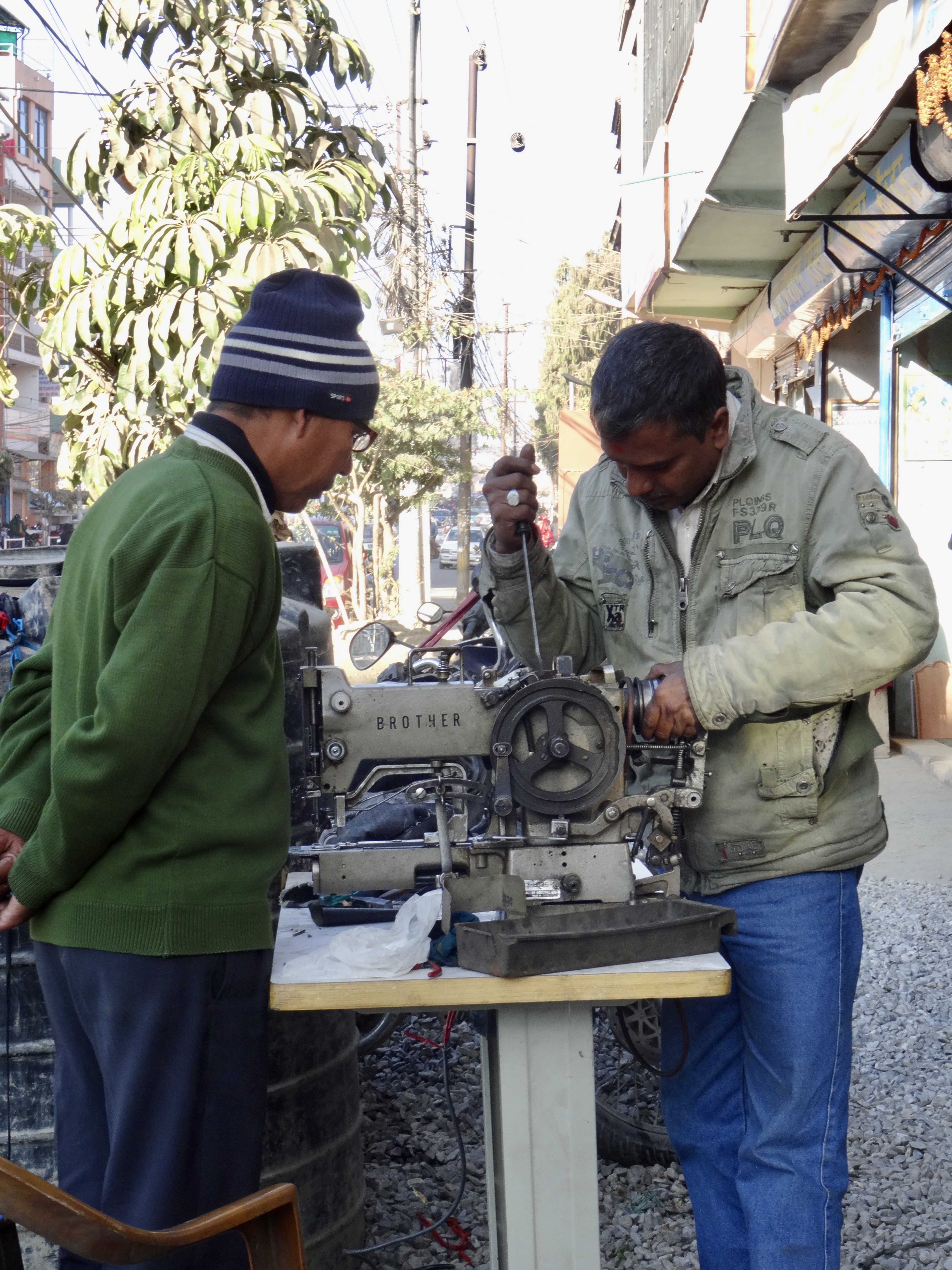
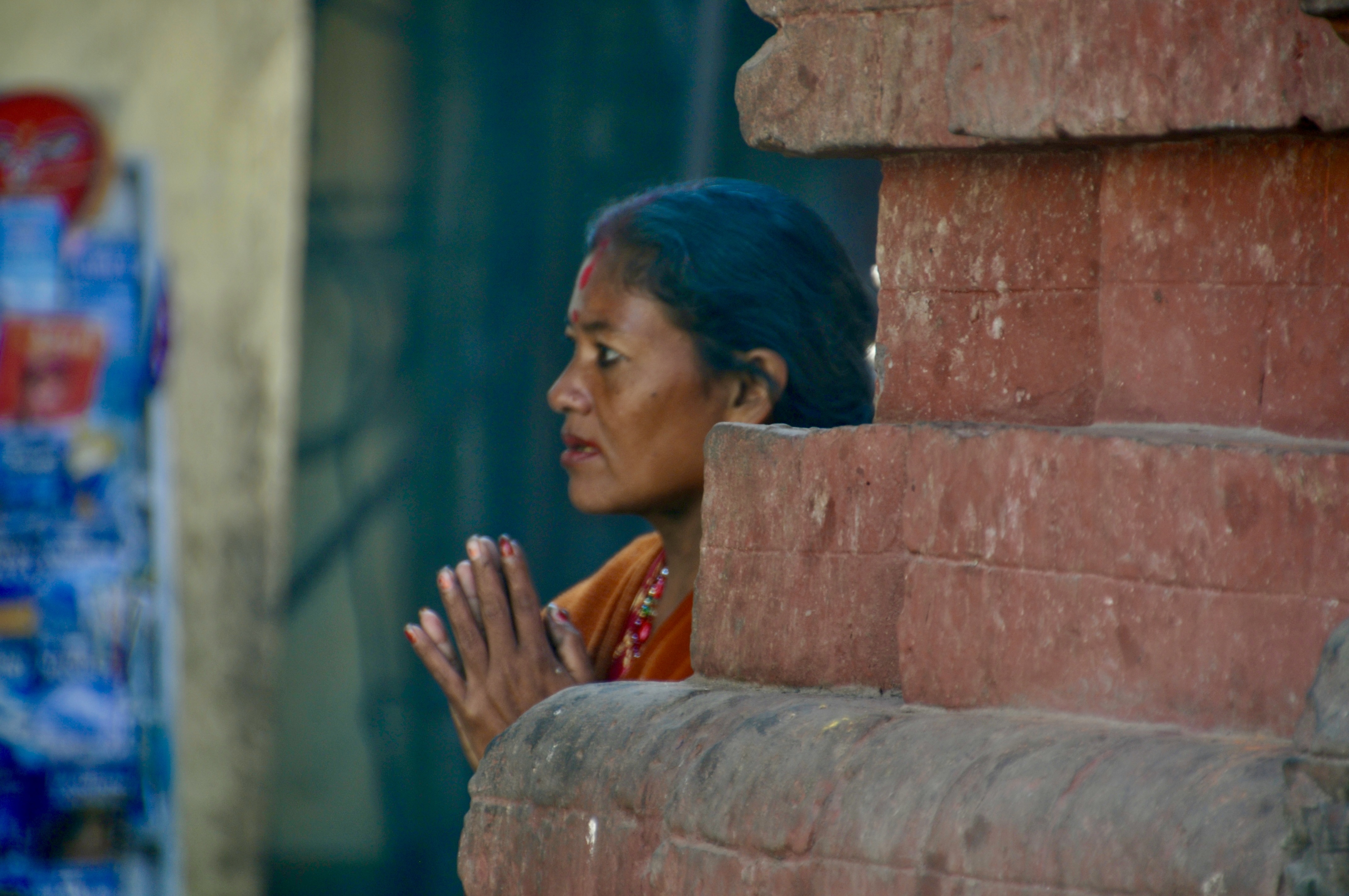
So after spending about an hour at the Temple, we met up with the taxi driver and asked if he could take us to Indra Chok – a set of ceremonial and market squares in the historic section of the city. It’s an old trade route with six different streets (really alleys) merging into the square. It’s almost impossible to describe the area. It probably covers about a half mile square.. and every inch — literally — is covered with people, teeny, tiny shops, little restaurants. All of the first floors of every single building are devoted to the tiny shops, and many shops are also on the second and third floors of these very unsturdy structures. Actually, here in Kathmandu, I’d say that everything from buildings to streets to whatever is in a constant state of either repair or tear-down and it’s difficult to know which is which. Amid all of this are the motorcycles, cars, rickshaws, small trucks, and pedestrians all vying for the same space (of about 10 – 20′) in the street. OK.. we loved it!

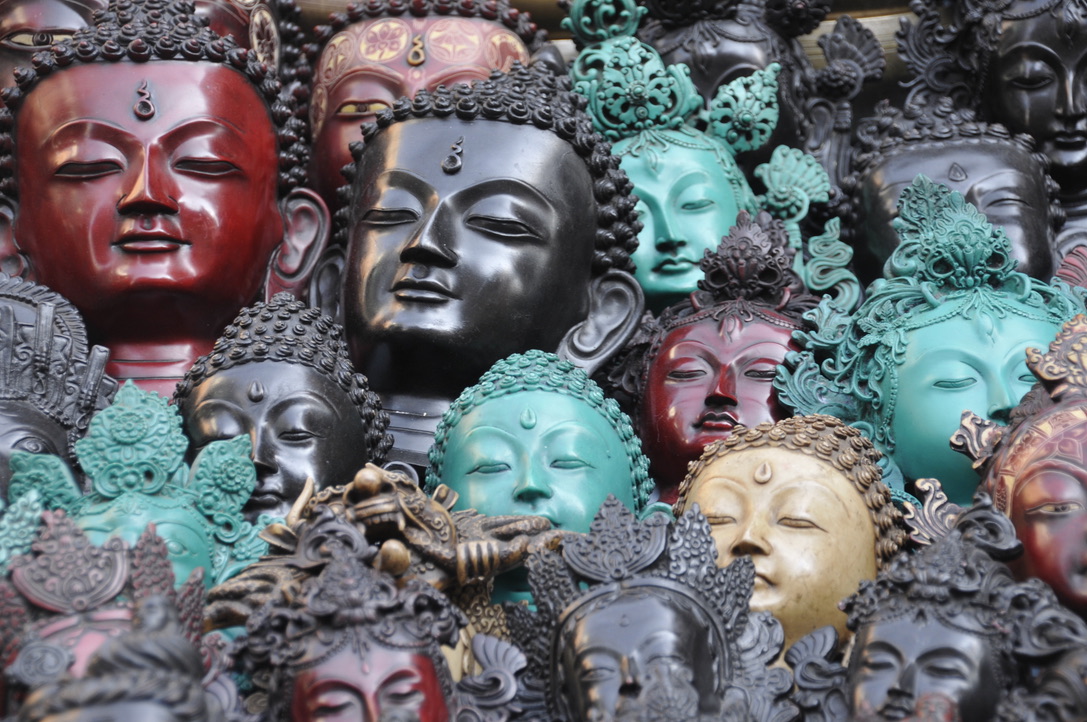
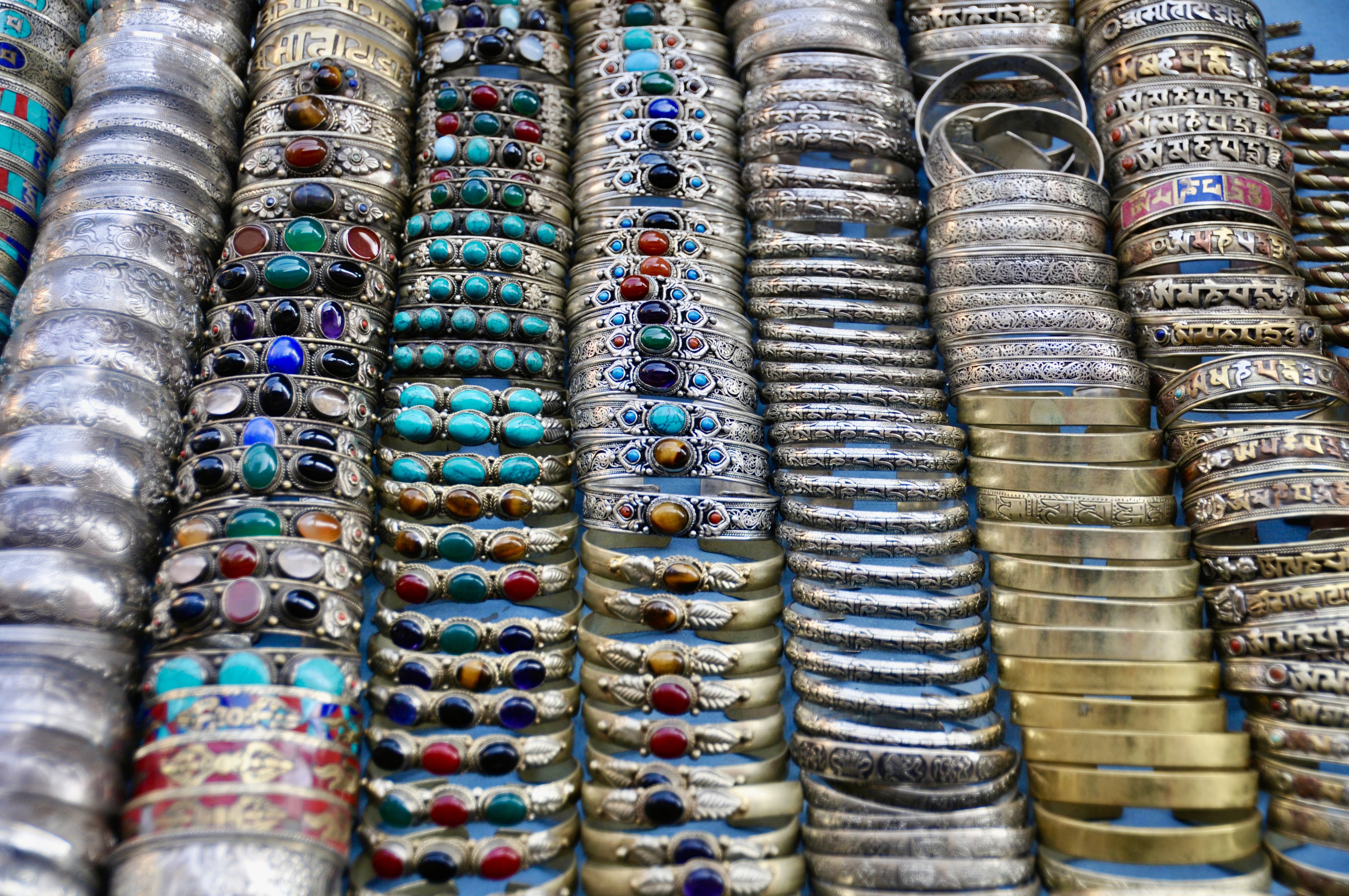
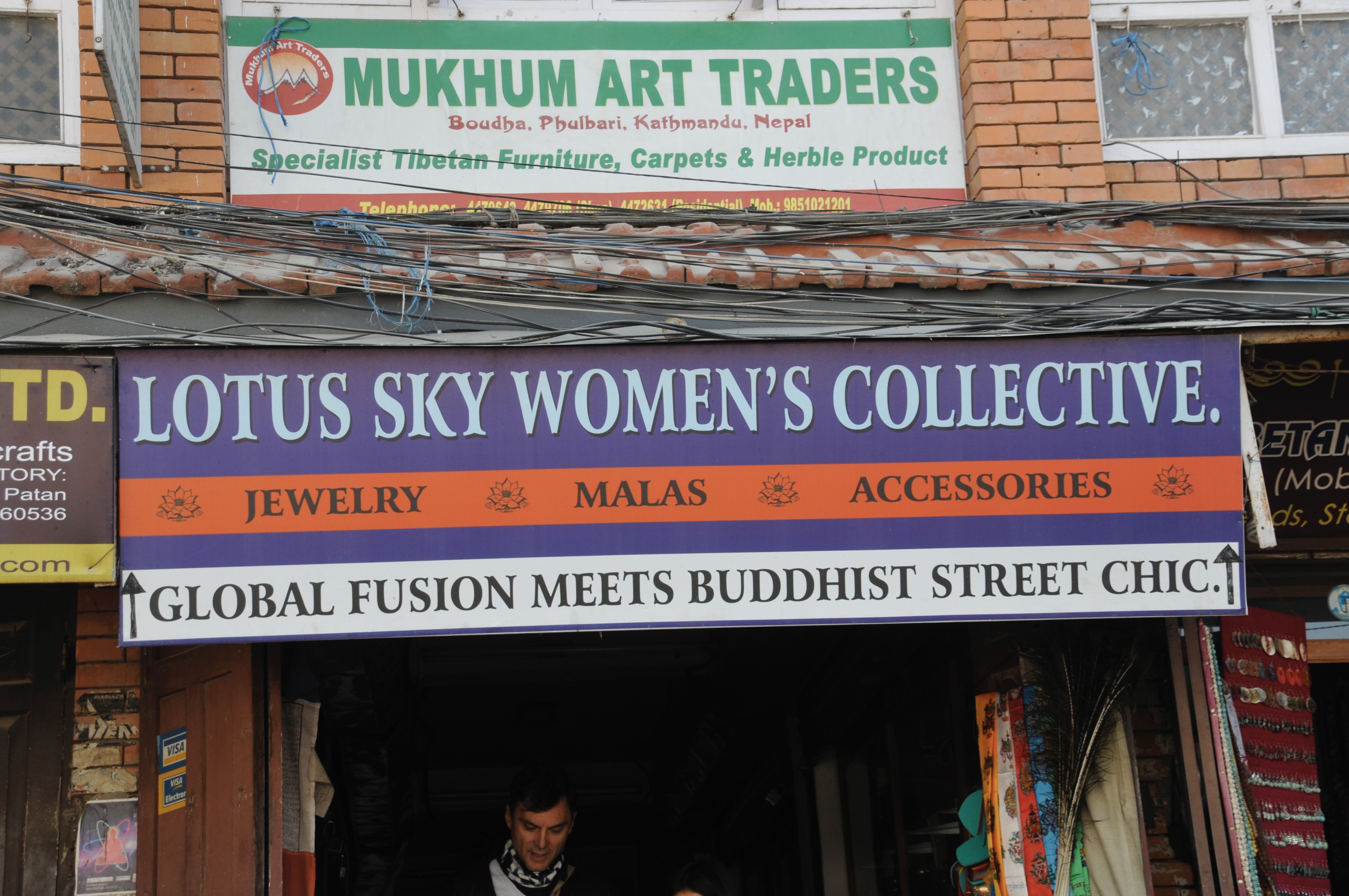
But then there was a little problem.
Remember about all the fruit for breakfast? Well, I suddenly realized — amid all of this cacophony of activity — that I really really needed to find a ladies room! There probably wasn’t a hotel or Western restaurant for miles around. And unlike China where there are clean and maintained public toilets everywhere (not that I used them) from the most upscale streets to shanty town areas — no such thing exists here in Kathmandu. It’s a free-for-all-economy — and every man for himself! But I was desperate. So, I hung out for a bit in a little area of a square near one of the many temples that are scattered about Indra Chok and I looked for a woman who might speak English and who would be a bit upscale (!) I found a woman and asked her where there might be a ladies toilet and she shook her head and said that there really weren’t any in that area.. but she went into a teeny shop nearby and asked them. Someone then gave her some directions which she relayed to us: Go down about two blocks, see a “supermarket” (really just a little grocery) and then I’d see a gold shop selling jewelry (there are thousands of gold shops). Inside the gold shop someone would give me the remaining directions! I was desperate. And the whole way, all I could think about was that it was going to be very very filthy (and did I have my little Purell container with me?) and it would be a squat toilet which is really complicated. But I had little choice.
So off we went — down the dusty, dirty streets amid all the traffic and honking horns; past hundreds of vendors; and lo and behold we saw a little grocery next to a gold shop. I went into the gold shop and asked about the toilet. At first they acted a bit annoyed (At that point, I would have bought a necklace or whatever just to get access to a bathroom). But then they deployed a guy from the shop to take me. We went to an adjacent building (totally under construction — or demolition — always hard to know) and followed him up four flights of stairs. There at the landing was a little door with a toilet.. a real toilet (not clean, but not squat-style). I had a wad of tissues with me for my cold so I did what I could to clean things up and to sit on tissues… The door did not close at all, so Mike needed to stand guard, just in case someone else knew of this hidden toilet. I emerged a new person — ready to be challenged by several more hours at Indra Chok.
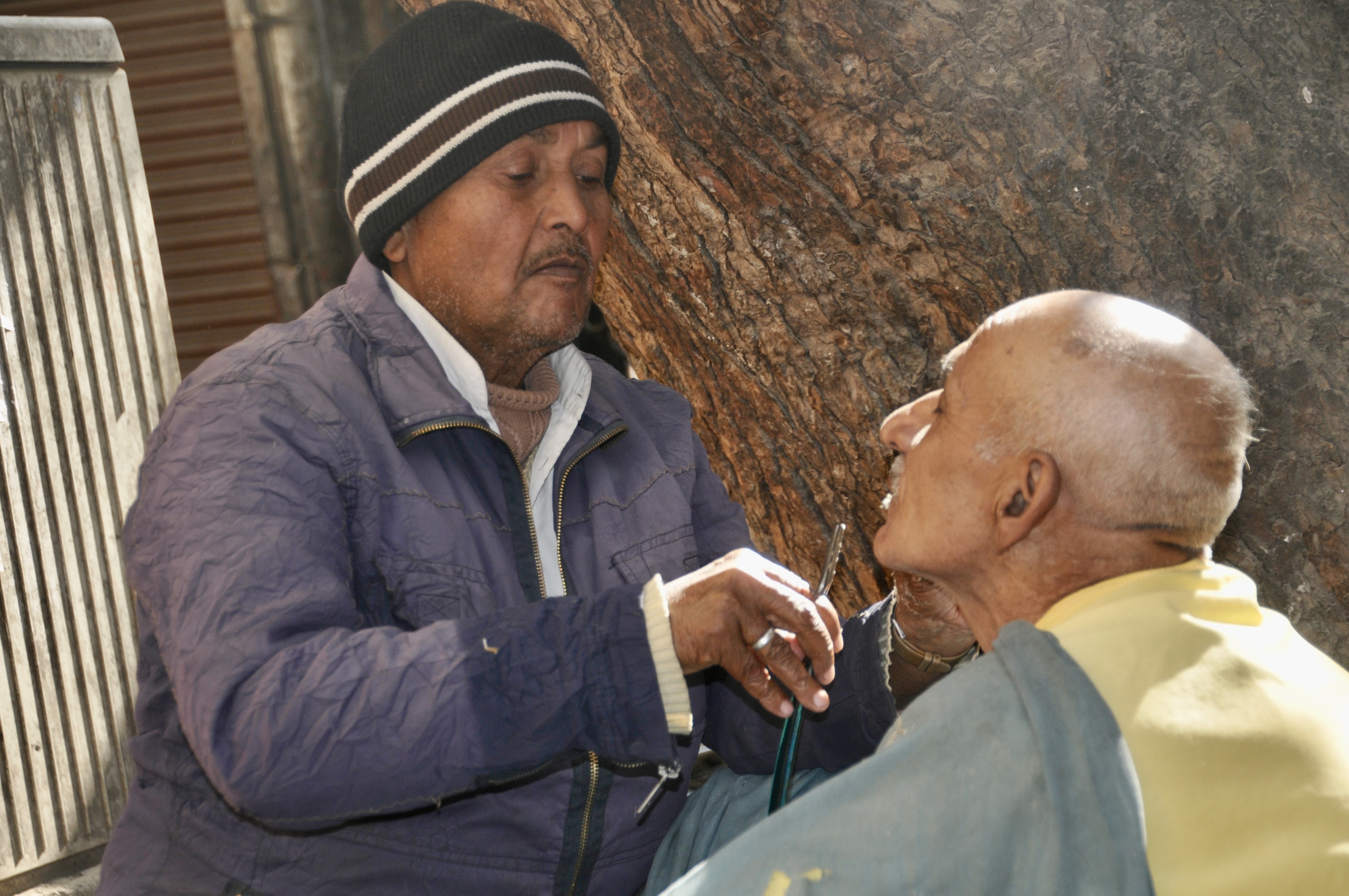
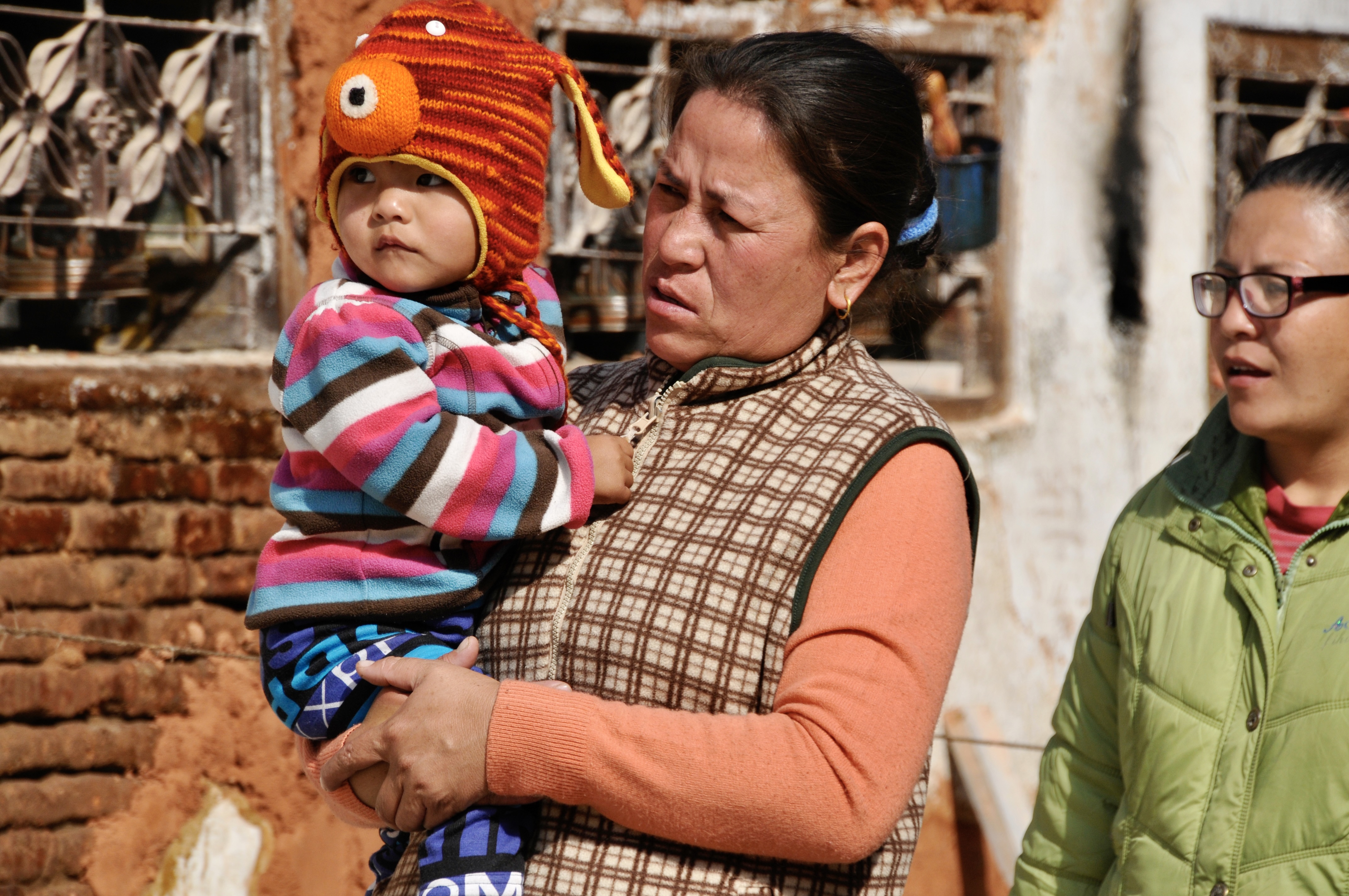
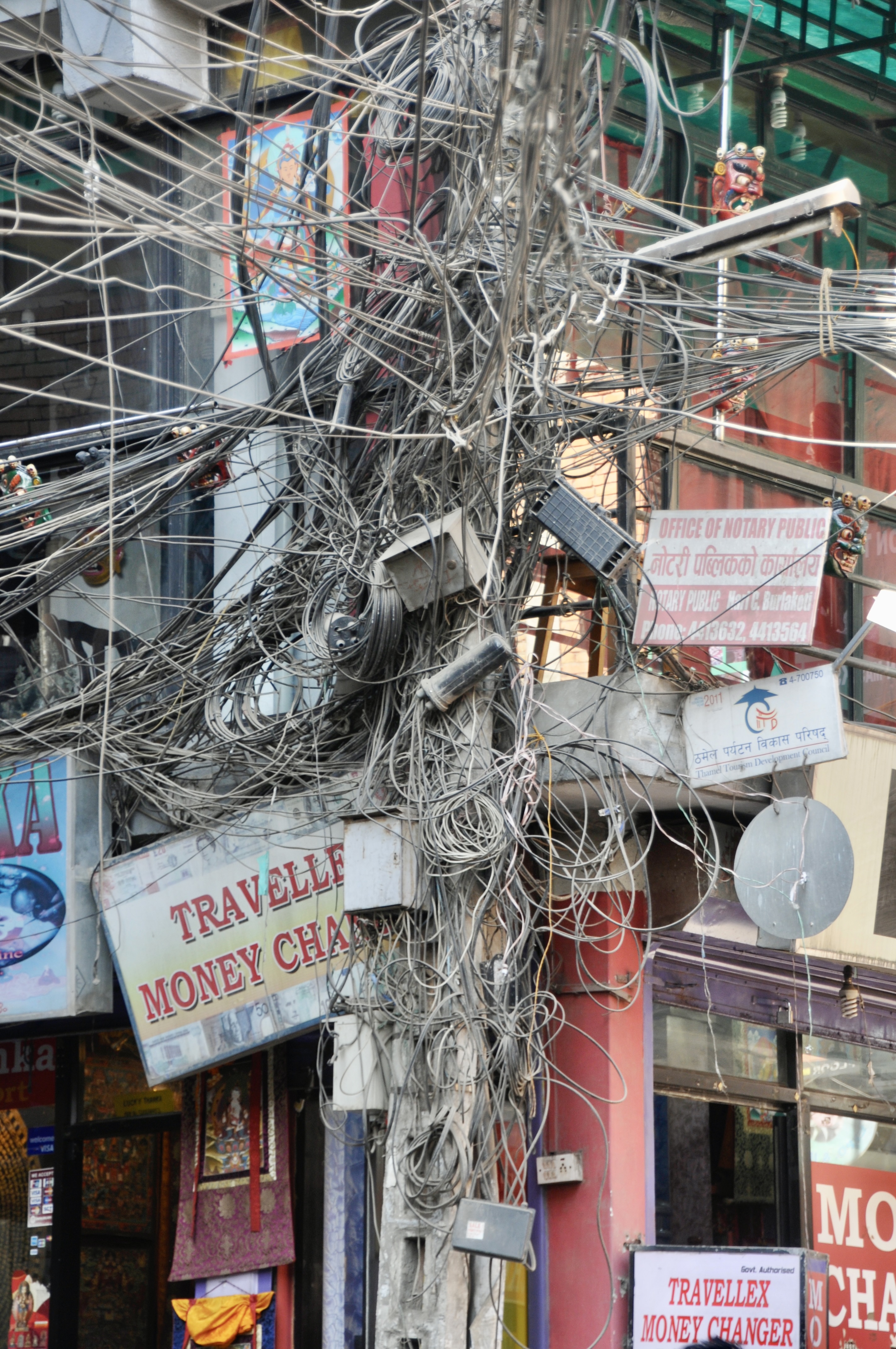
All in all spent about four hours at Indra Chok.
By the way, the mornings are cool and then if you’re in the sun late morning, early afternoon it’s about 65 degrees, but it suddenly really drops at about 4 pm and by dinner time it’s in the high 20s.. so the climate at this time of year is complicated (making dressing — even in layers — difficult).
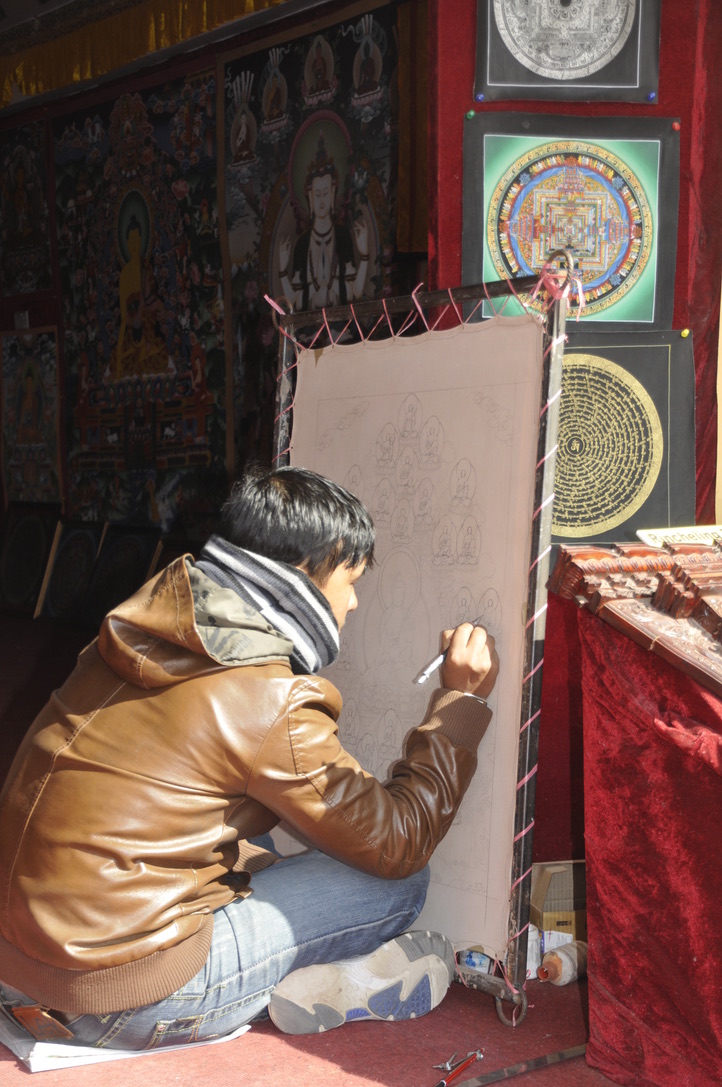
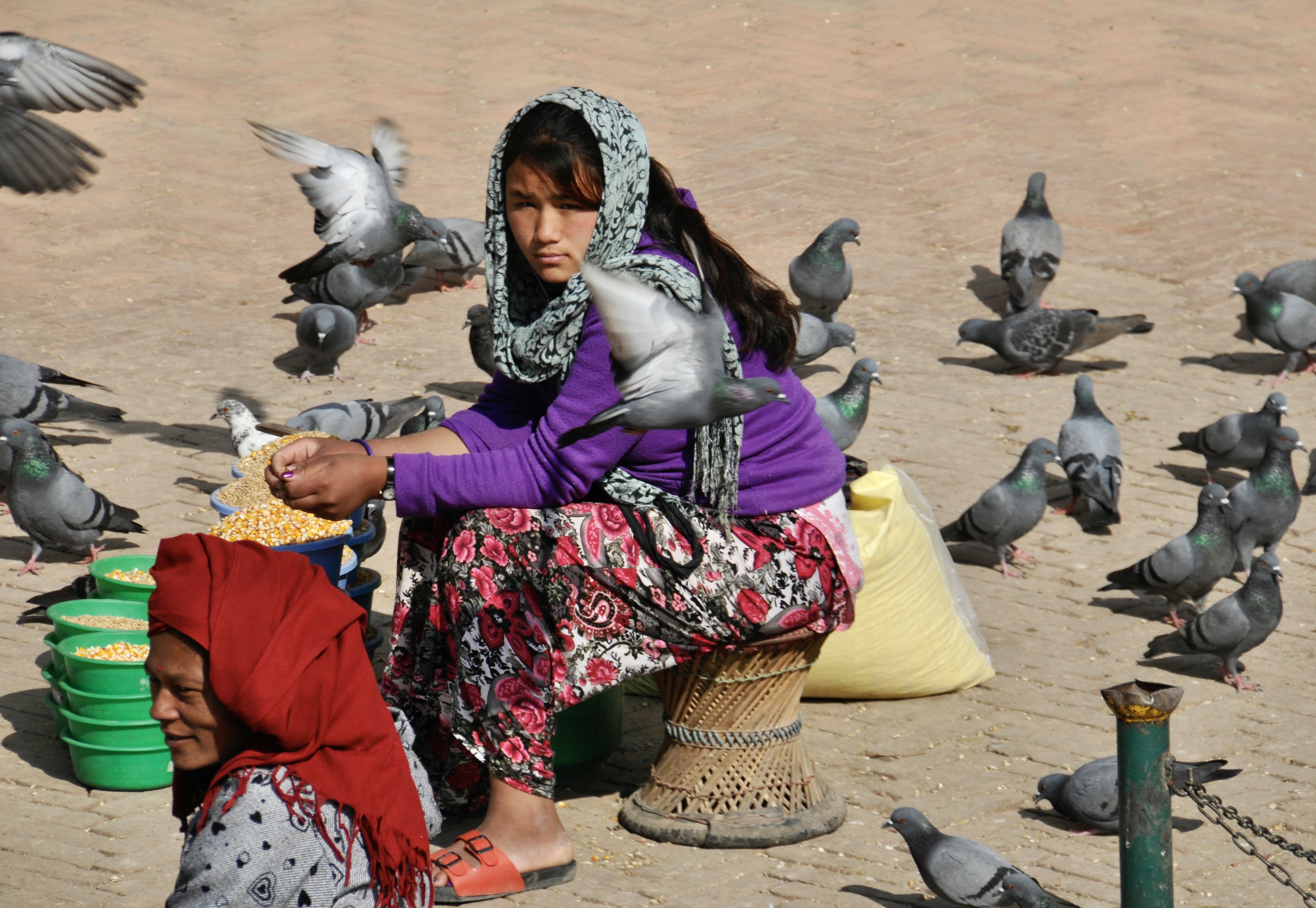
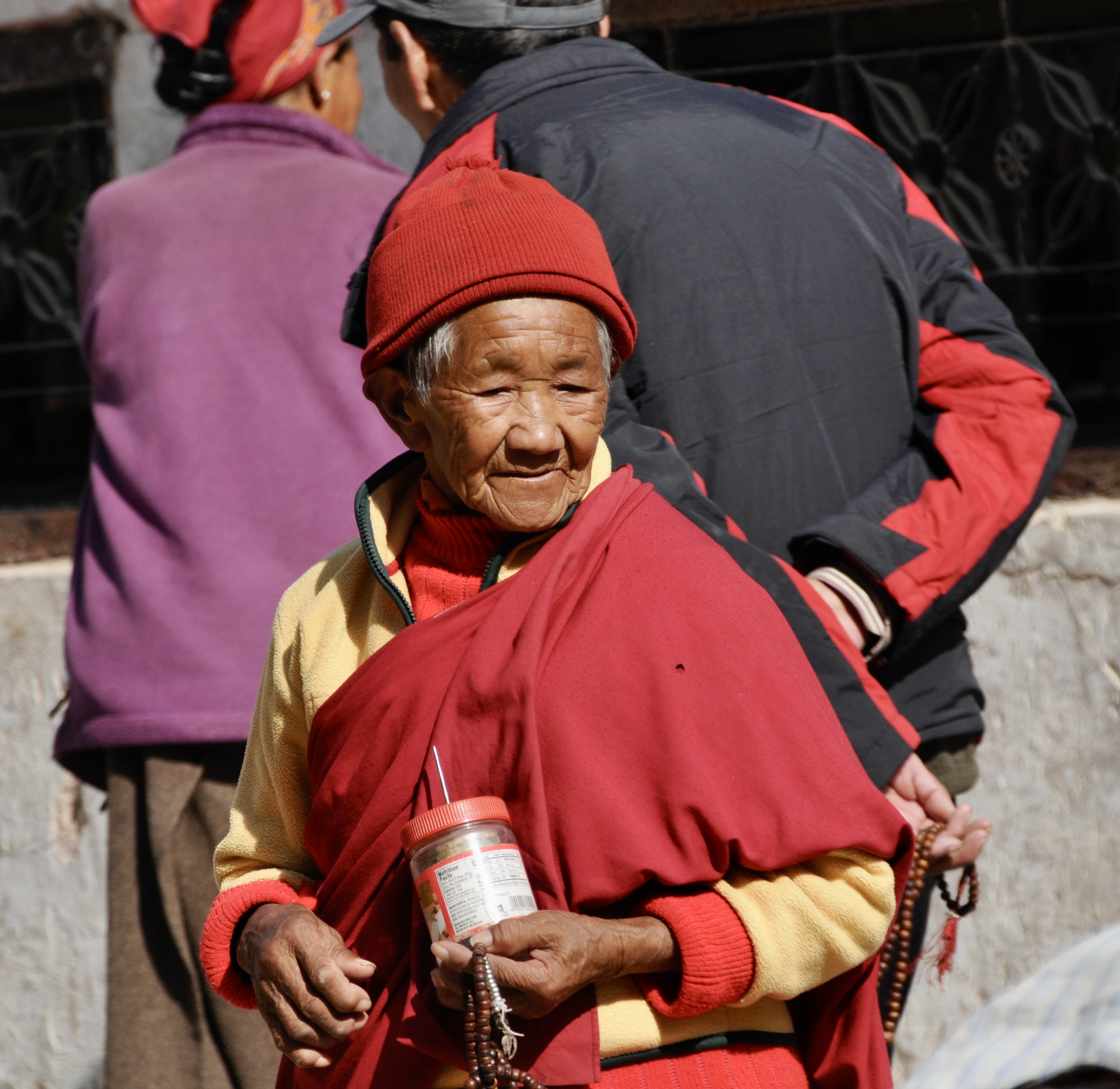
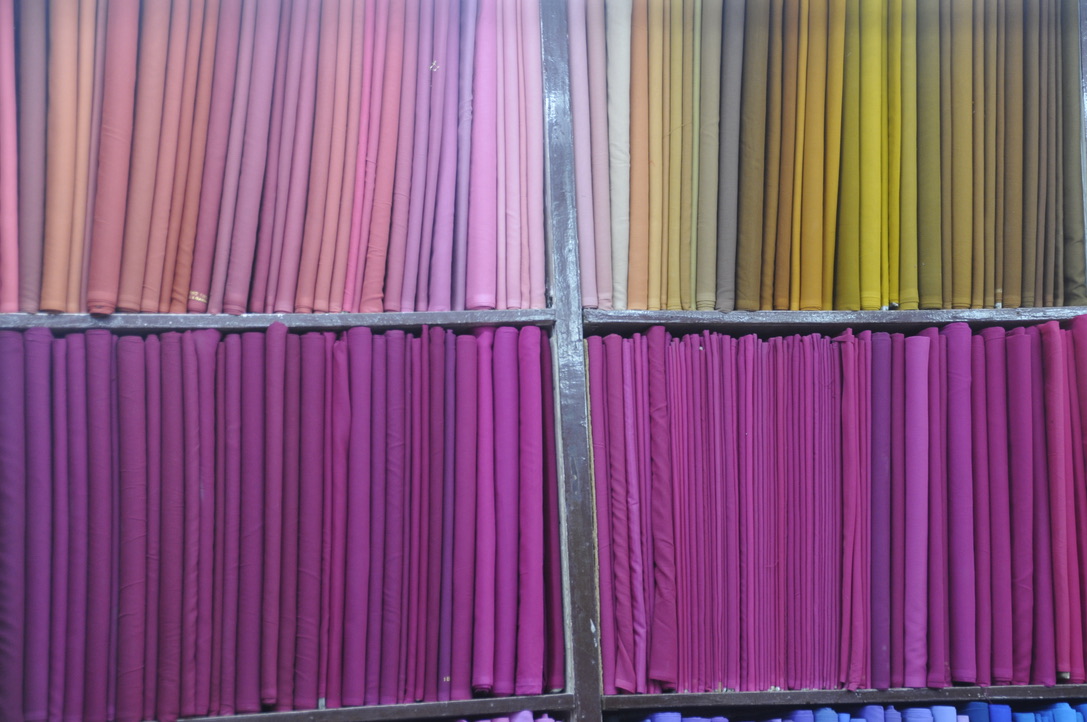
During our “stroll” in Indra Chok (where the shops might sell nothing but sequins or hair ornaments or plastic stoppers for sinks, or factory-made sweaters), I stumbled on a tiny, tiny shop with pashminas.. Very easy for my eye to get attracted to certain things. The guy’s “shop” was really well organized by color, so I stopped in to check out prices. He spoke fairly good English. As we “negotiated” my purchase, he asked where I was from and told me about his son who is graduating from university and wants to do an MBA in the US. He told me he is a very top student and is at one of the best Nepalese universities now. He wants to go into “finance.” At that point, I told him that Mike and I were both professors (Mike had long since disappeared, but I thought he’d re-surface soon) and that his son could write to us and maybe we could get him some information about applications. Within seconds, the man was on the phone to his son and he was handing me the phone to talk with his son. He seemed like a sweet kid; told me that he’s a good student – all As — but that it is very difficult to find guidance as to how to apply for US universities, especially if you need financial support. According to his father, the son is very shy — just goes to the university and comes home and studies. I did suggest he look into the Fulbright program, but repeated that I would be happy to send him some information. (My good deed for the day!) The father was very very grateful. I had already paid for the Pashminas so no additional break!
Oh one other funny thing I forgot to mention from Lhasa (especially for all of you sports fans getting this memo) — I was in a small shop in Lhasa and the shopkeeper’s English was fairly good (a big surprise in Tibet). So I asked where he learned English and he said he watches television in English and has been learning a lot; he said he liked sports and asked where I was from. I said California. And he asked if California was close to Los Angeles. I explained that Los Angeles was a city inside California. Then I said — Oh I guess you watch the Lakers! (All you sports folks — watch out, I know more than I let on). He said, yes, but he prefers the Golden State Warriors!!!!
That’s it — we are off to an Indian restaurant. More tomorrow.
Fern

