Albania Day Two. December 16, 2017
Greetings from Tirana –
First, why Albania? We were already heading to Europe rather than going on one of our more unusual and distant locations because Mike’s niece (who lives in Geneva) was having a baby in early December and we wanted to meet the newest member of the family. This shaped the trip and is naturally the centerpiece of the 2+ weeks. So we will be in Albania until Christmas Eve, then fly to Geneva in time for dinner, then head to Bordeaux for New Year’s Eve and back to the US. For us, this is a pretty relaxed trip.
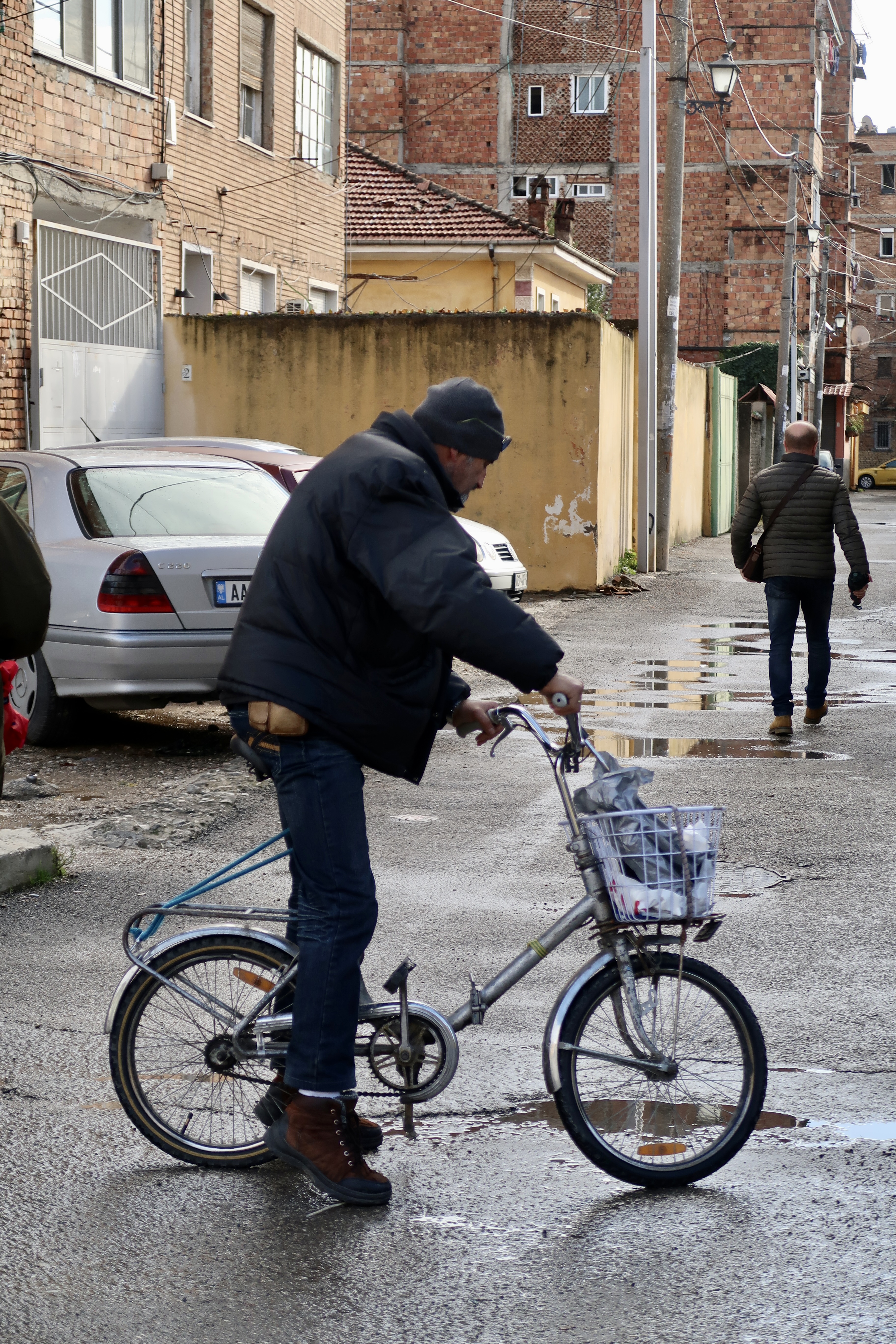
OK… So after breakfast on Saturday, we headed to the Blloku neighborhood (not mis-spelled, they use a lot of consonants bunched together! — tough language which is seen by many as an “isolated language”). Anyway, we walked (despite drizzling rain) along the Boulevard which is split into two parts –on either side of the Lana River, one going east and one going west. The city feels like it wants to be something special–lots of energy, people walking everywhere, shops open until 10 p.m., restaurants and cafes on every corner. Within Tirana city limits there are only 420,000 people (about the size of Oakland), and the greater metropolitan region has about 800,000 residents. The entire country only has about 3 million people.
It’s hard to imagine that within my lifetime, this little country has gone from being a communist state ruled by a dictator (Hoxha) for a 40-year period, in which he initially was loyal to the Soviet Union but then thought Krushchev was too much of a reformer and turned to Maoism (all of this was preceded by occupation by Italy under Mussolini) and then followed by 5 years of confusion and by the disintegration of the Hoxhaist state during the wider collapse of the Eastern Bloc in the late 1980s. By the early 1990s (and Hoxha’s death in 1985), a large diaspora fled to Italy, Greece, Switzerland, and North America. Somehow in 2009, Albania became a full member of NATO and is now trying to become part of EU. The history is complicated with murders of opposition leaders and the total quashing of the opposition under Hoxha.
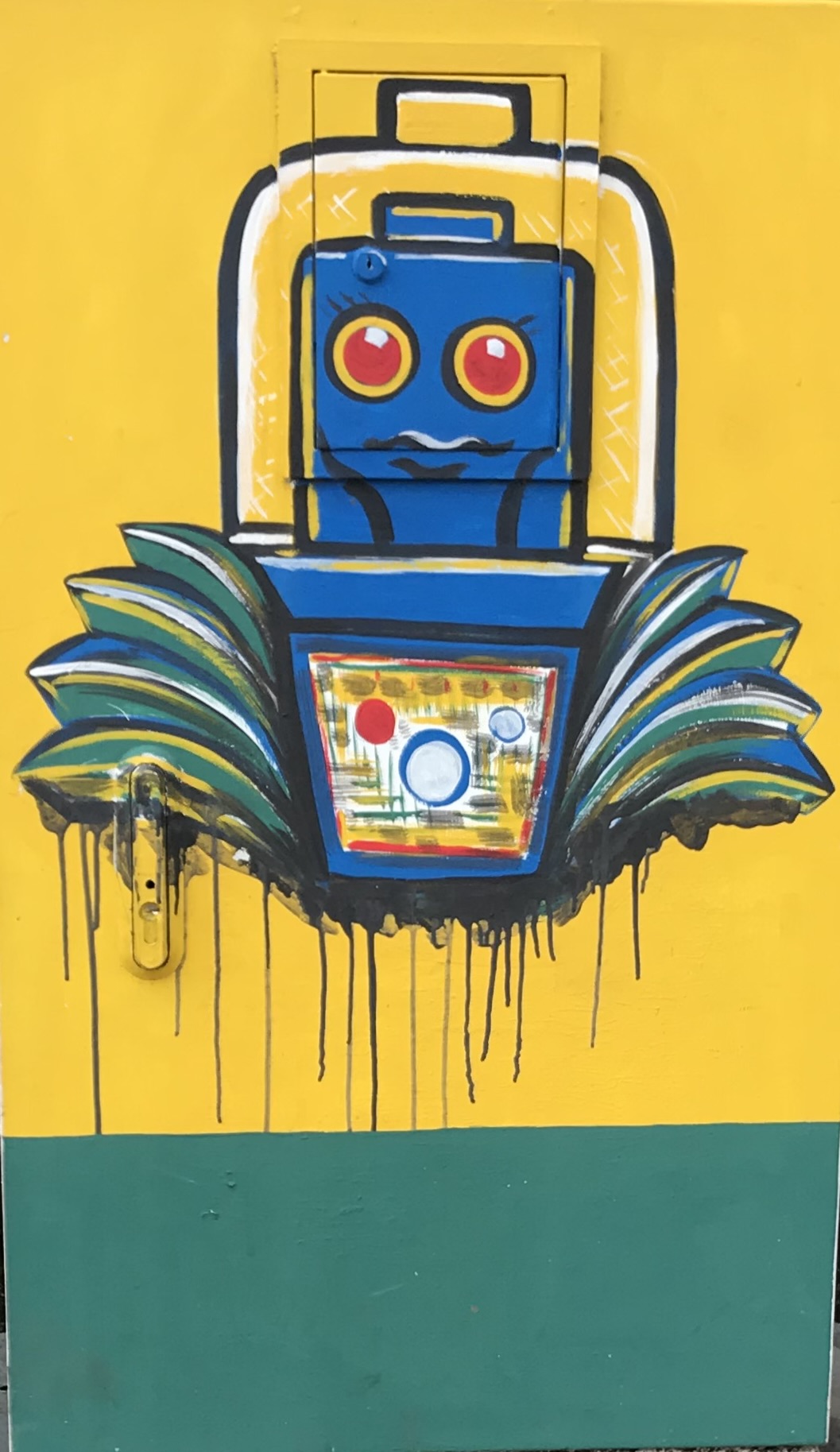
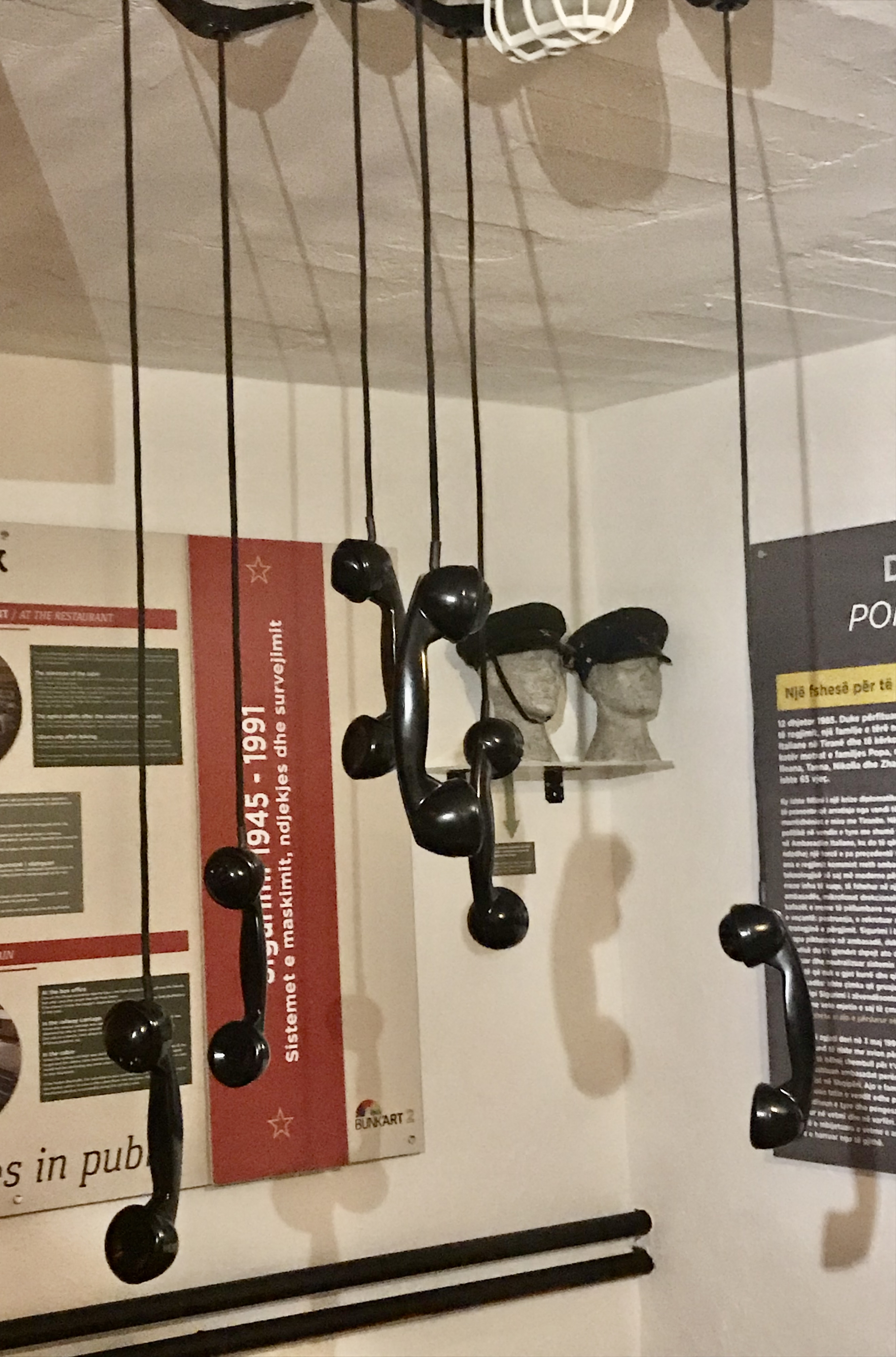
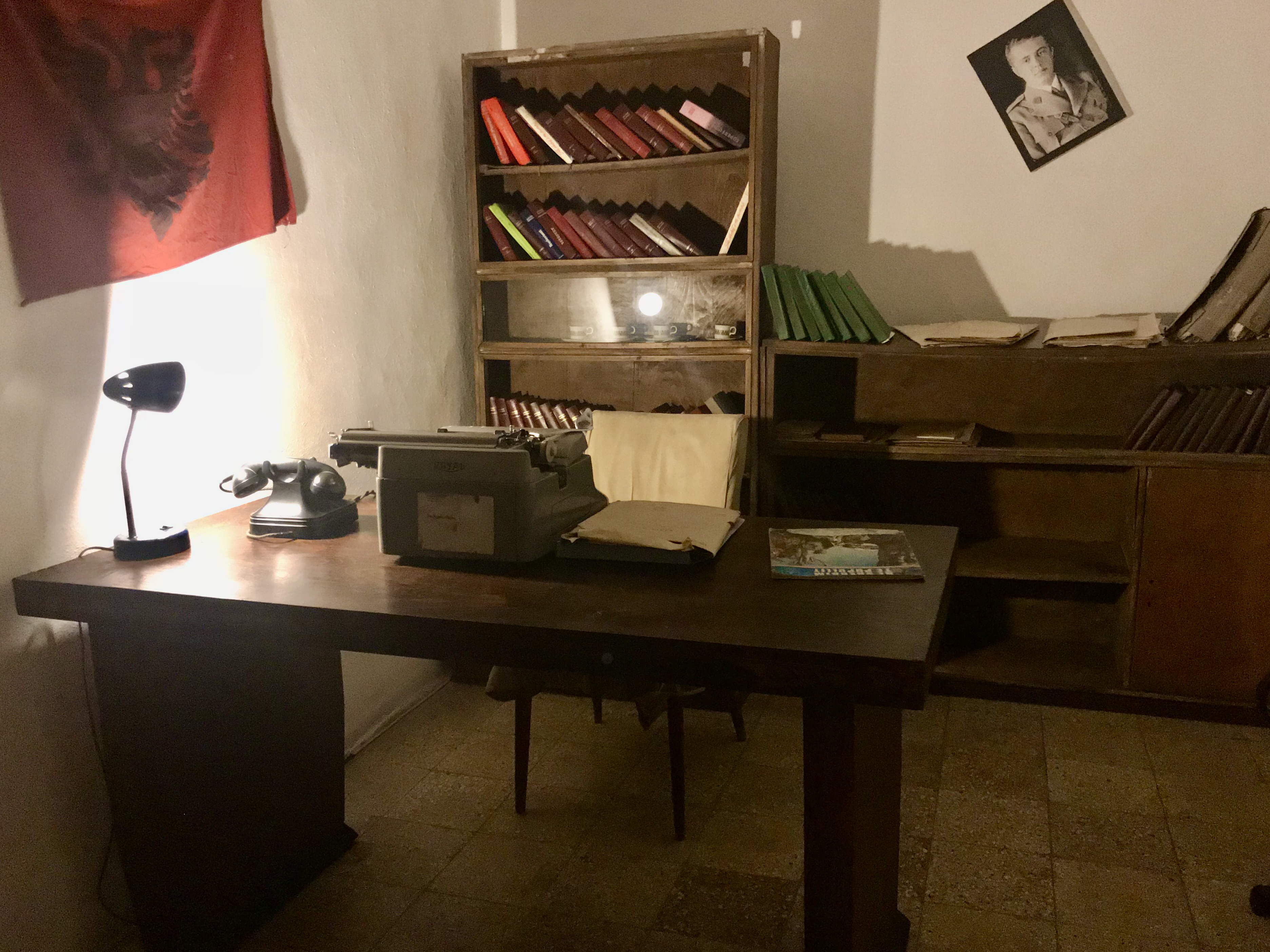
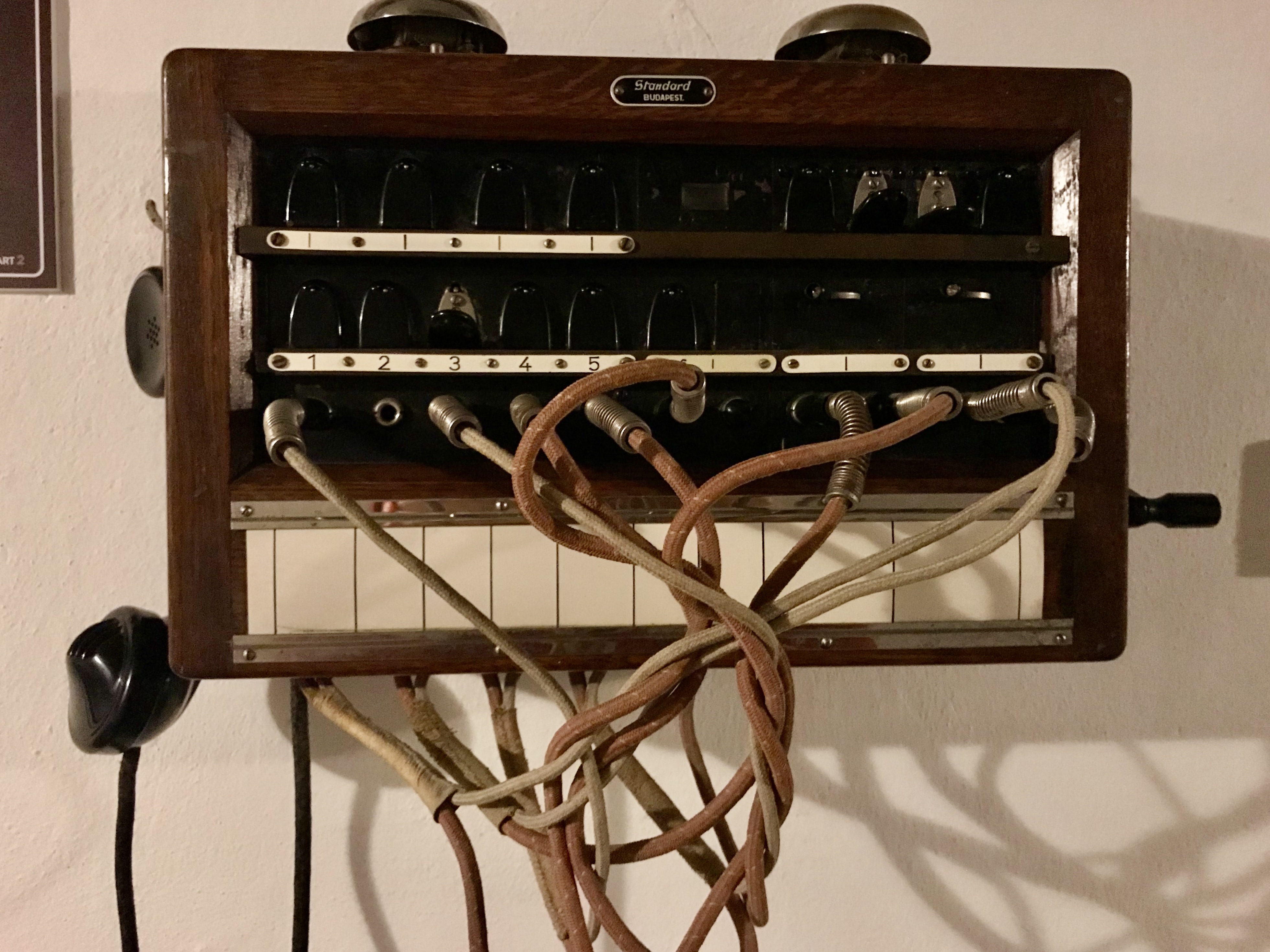
We saw this history vividly when we visited Bunk’Art2… a fascinating exhibit situated inside an abandoned bunker in the center of Tirana, utilizing all 24 rooms of the bunker. By the way, these abandoned bunkers (thousands of them) are scattered all over the country. Some have been turned into works of art – another interesting phenomenon in that Tirana is a very arts-oriented community creating a level of funk that is appealing and also creative.

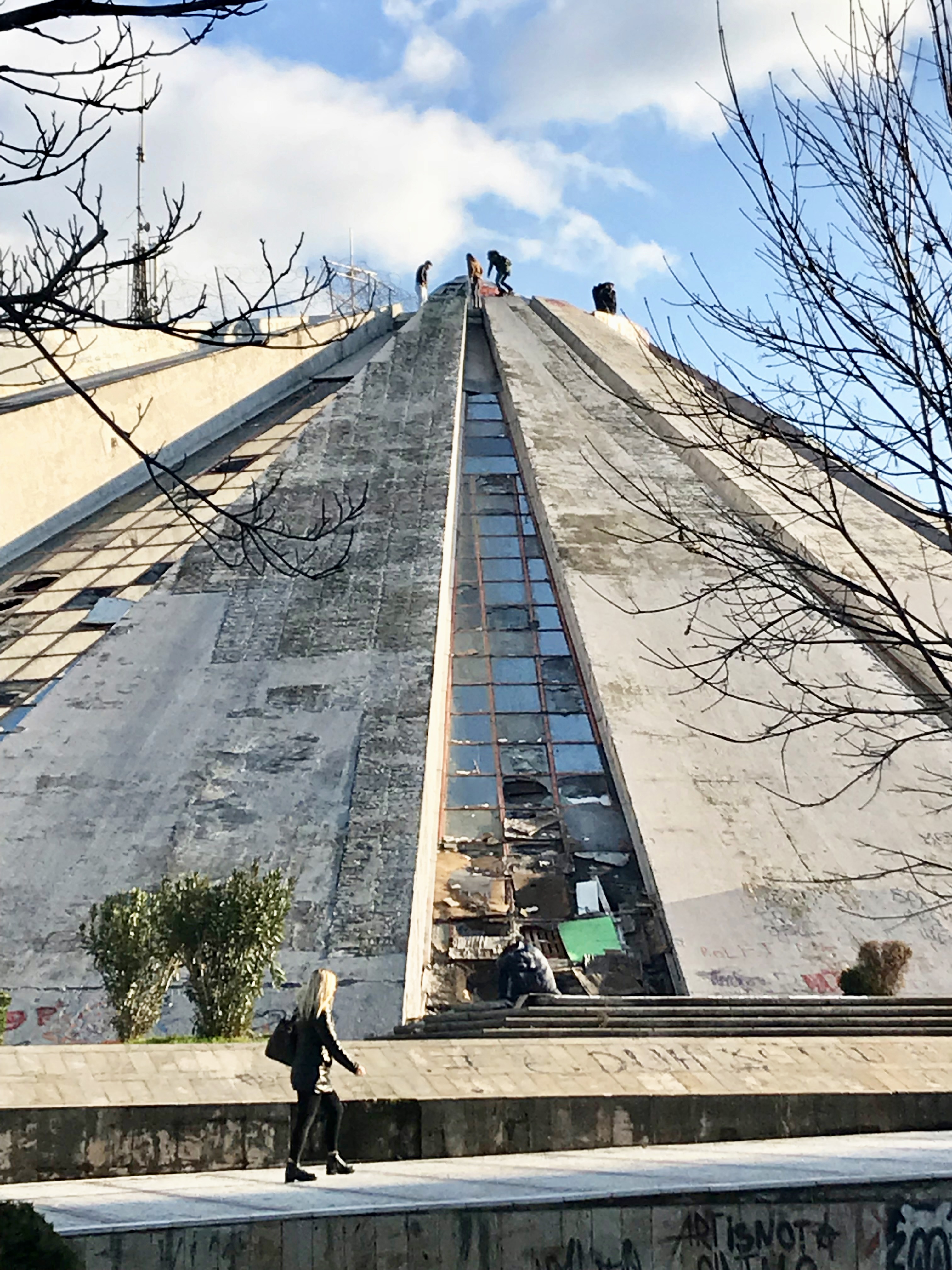
After the death of Hoxha, his daughter commissioned a building in his honor – a pyramid shape — that is now abandoned and in disrepair. But young people climb the sides of it to the top and then slide down sitting on plastic bags… The government is trying to have it demolished. But I must say it’s a bit of irony to see its use today, with lots of young people climbing and sliding – regardless of weather.

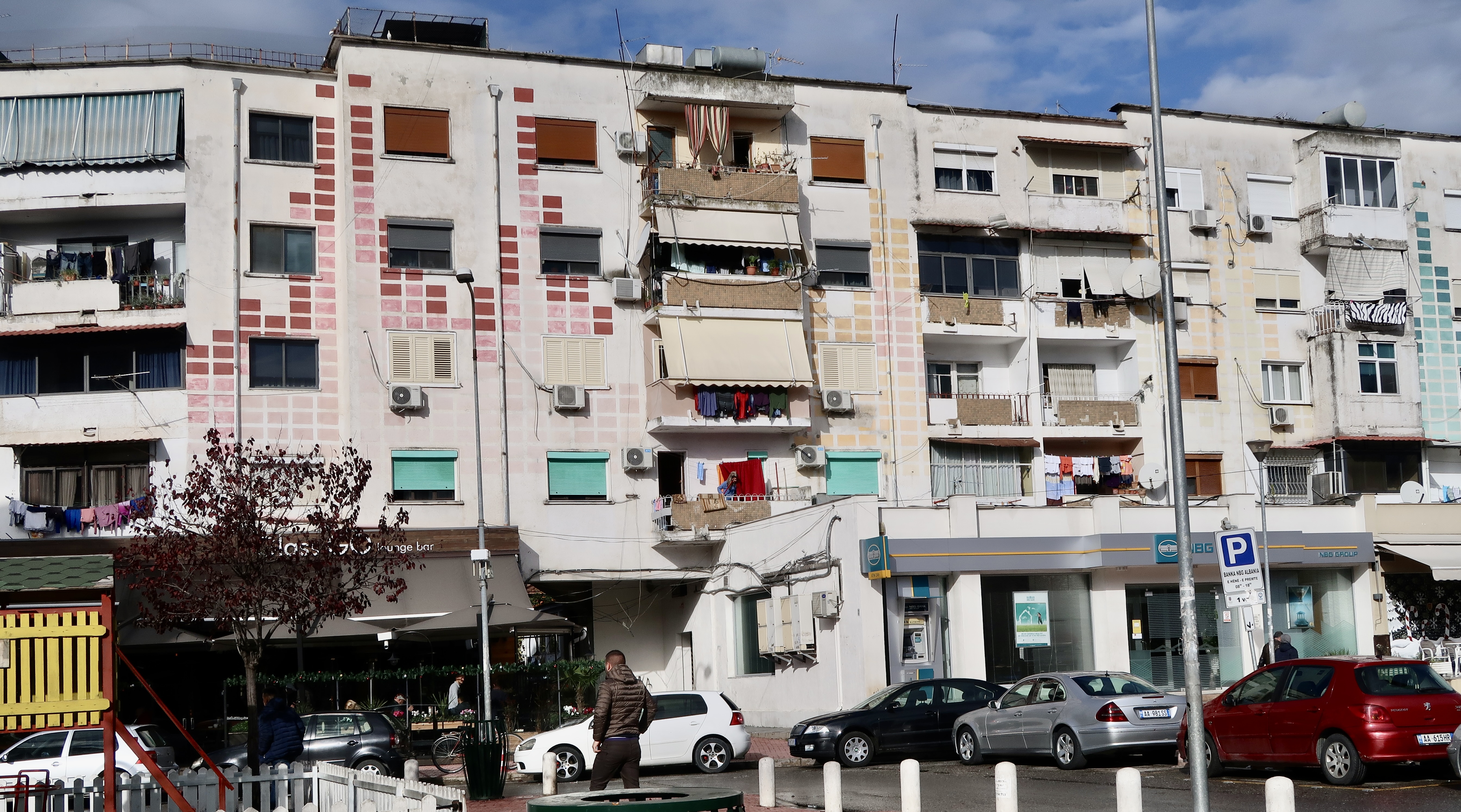
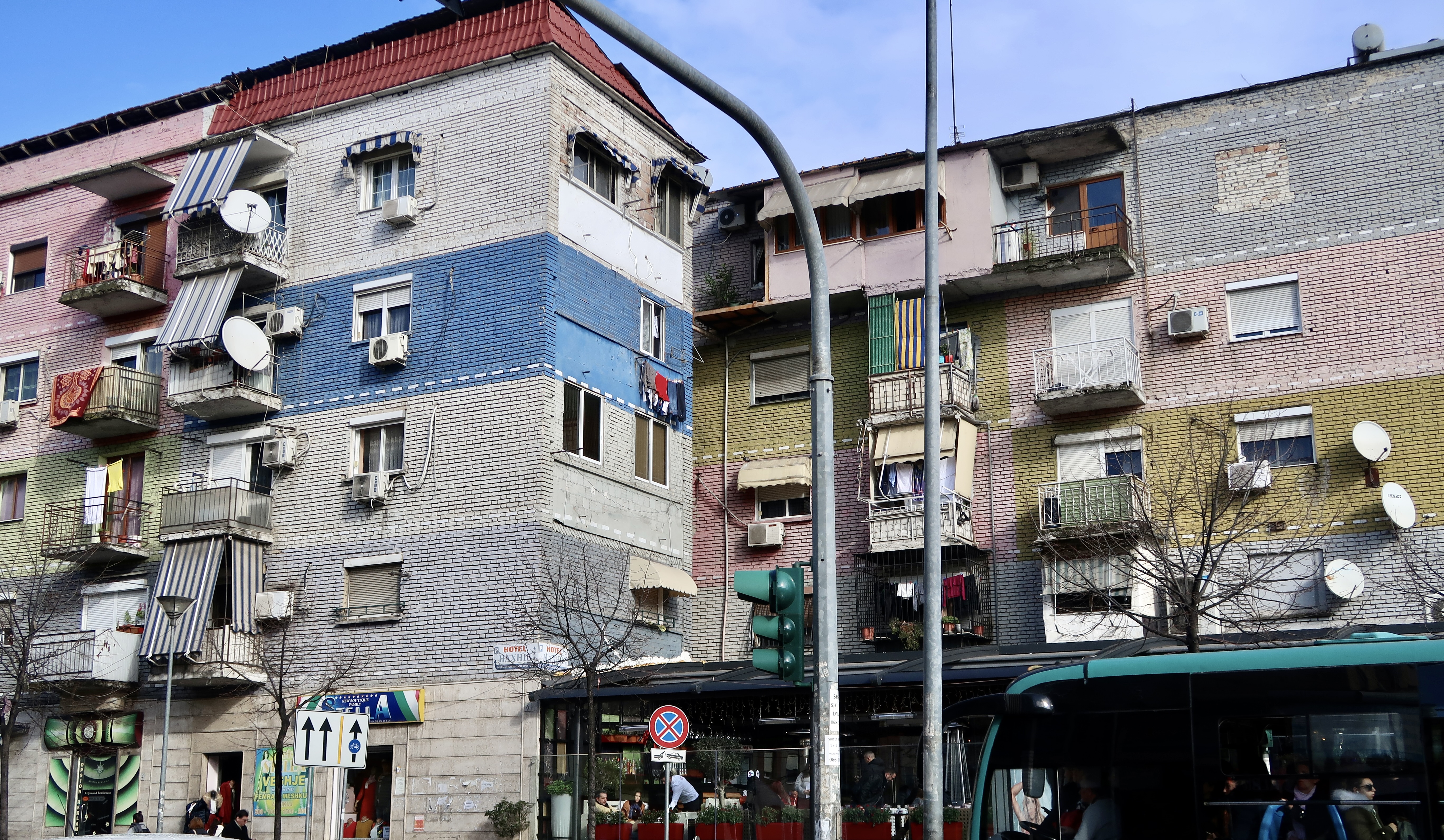
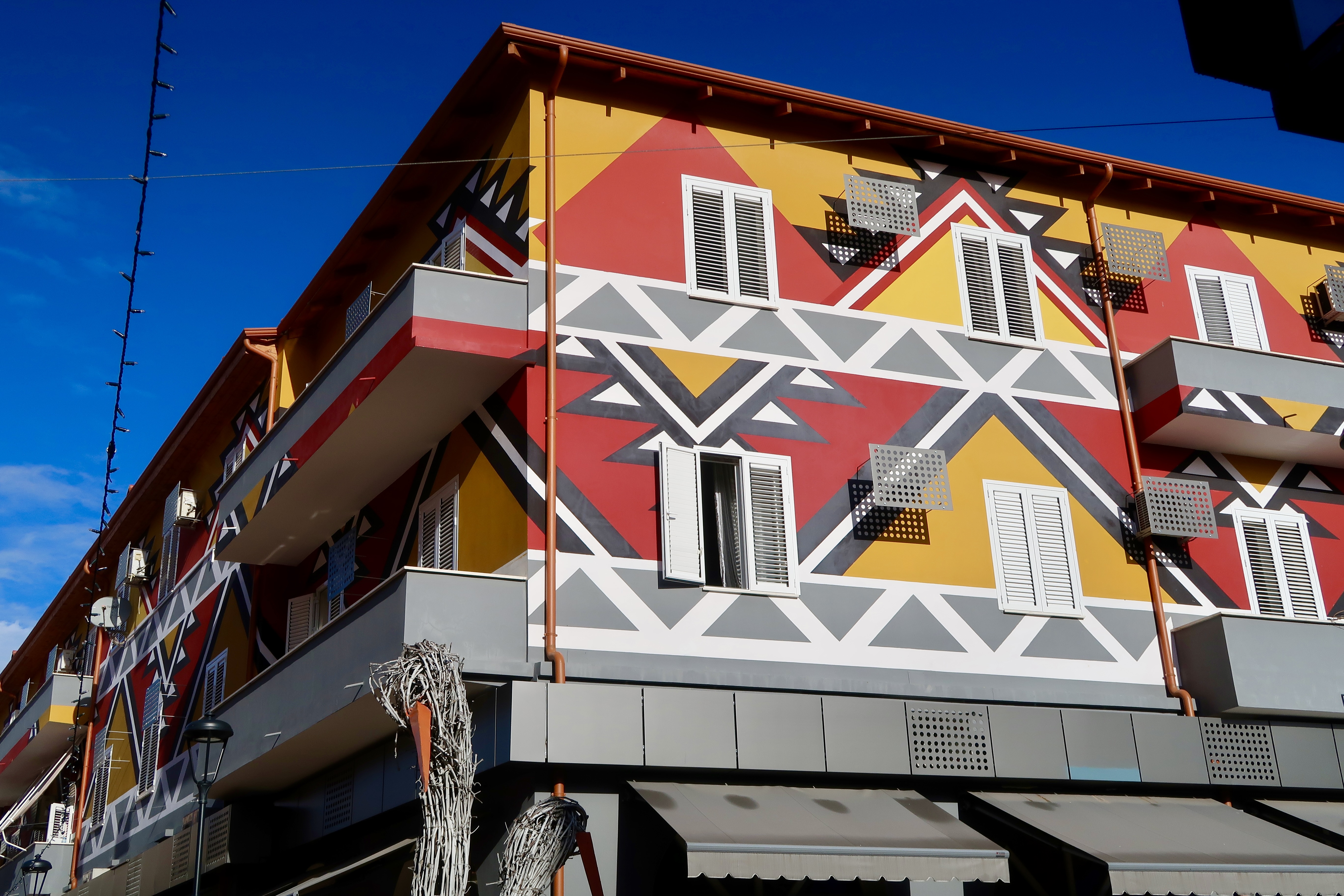
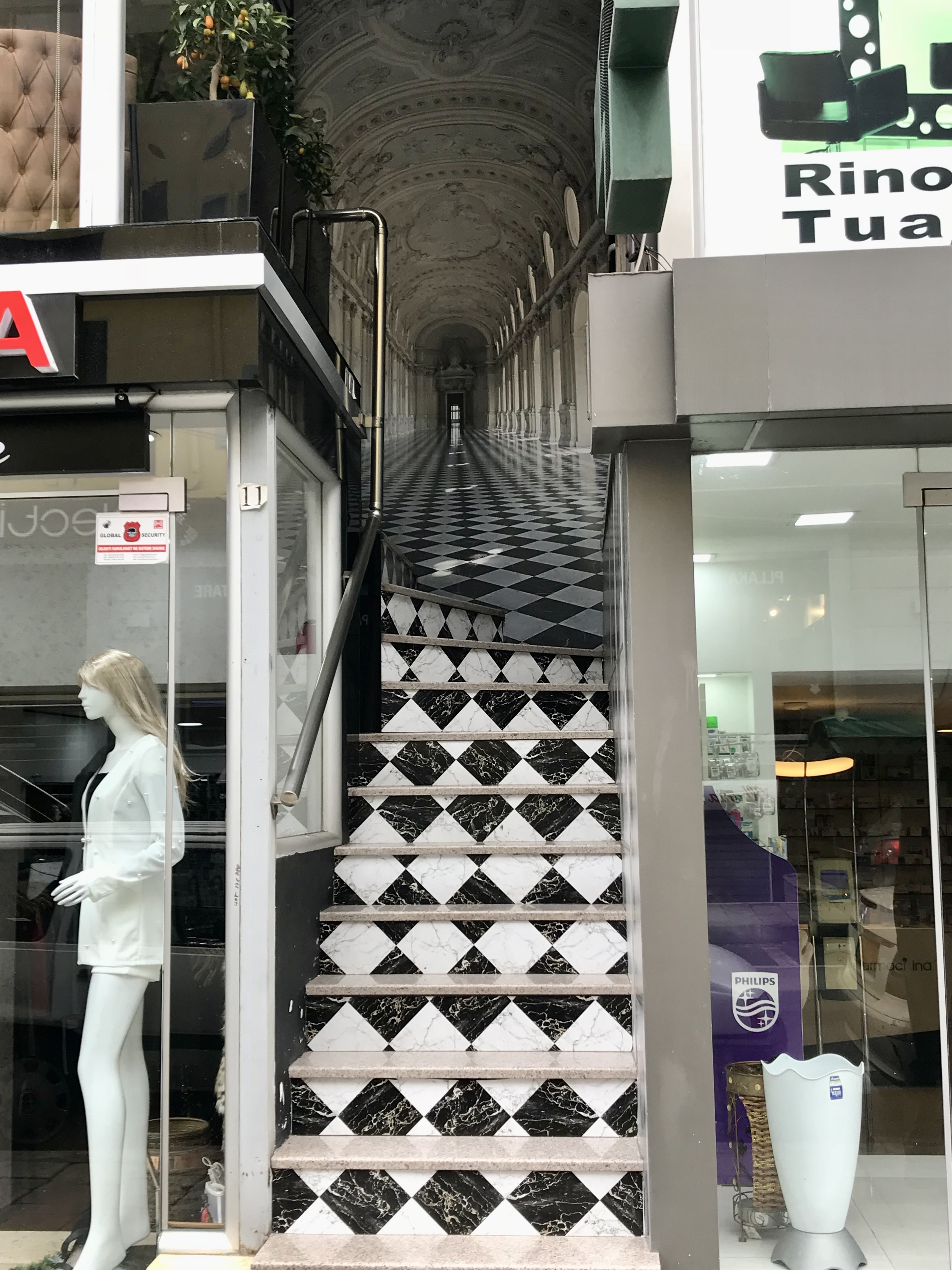
Anyway, to continue about Saturday… After walking past the pyramid, we ventured into the Bllilo neighborhood which is quite yuppified. Apparently under communism this was the area where party members lived and it is said that non-party members could not even walk here. We tried to walk between the raindrops venturing out to see the “painted buildings” that Tirana is known for… Story being that when the now-Prime Minister was the Mayor of Tirana, (and previous to that the Cultural Director) he realized that without any budget (the country is still one of the poorest in Europe) he couldn’t do much to address residents’ needs. But he was a trained artist (painter) and figured that he could change the dull grey Stalinist era housing complexes into joyous statements on the outside. I gather that residents were reluctant but agreed and after the work was completed were quite pleased. They say that crime decreased and neighborhood pride shot up. Today many of these buildings have weathered and the bright colors have faded. Everyone is clear, including the then-mayor and now prime minister, that nothing was done on the inside. We are having dinner with a very close confidant of the current prime minister tomorrow evening. Should prove very interesting.
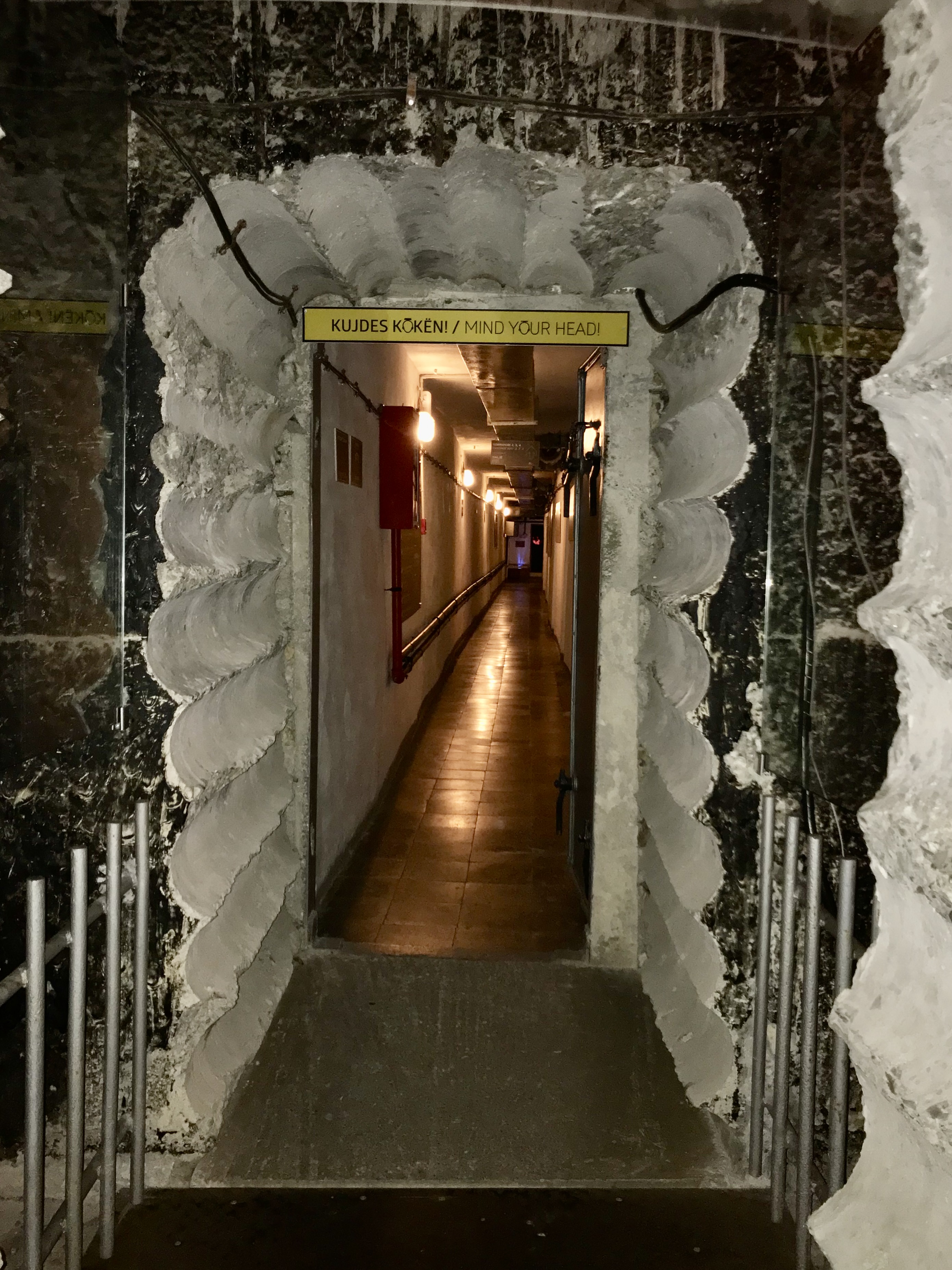

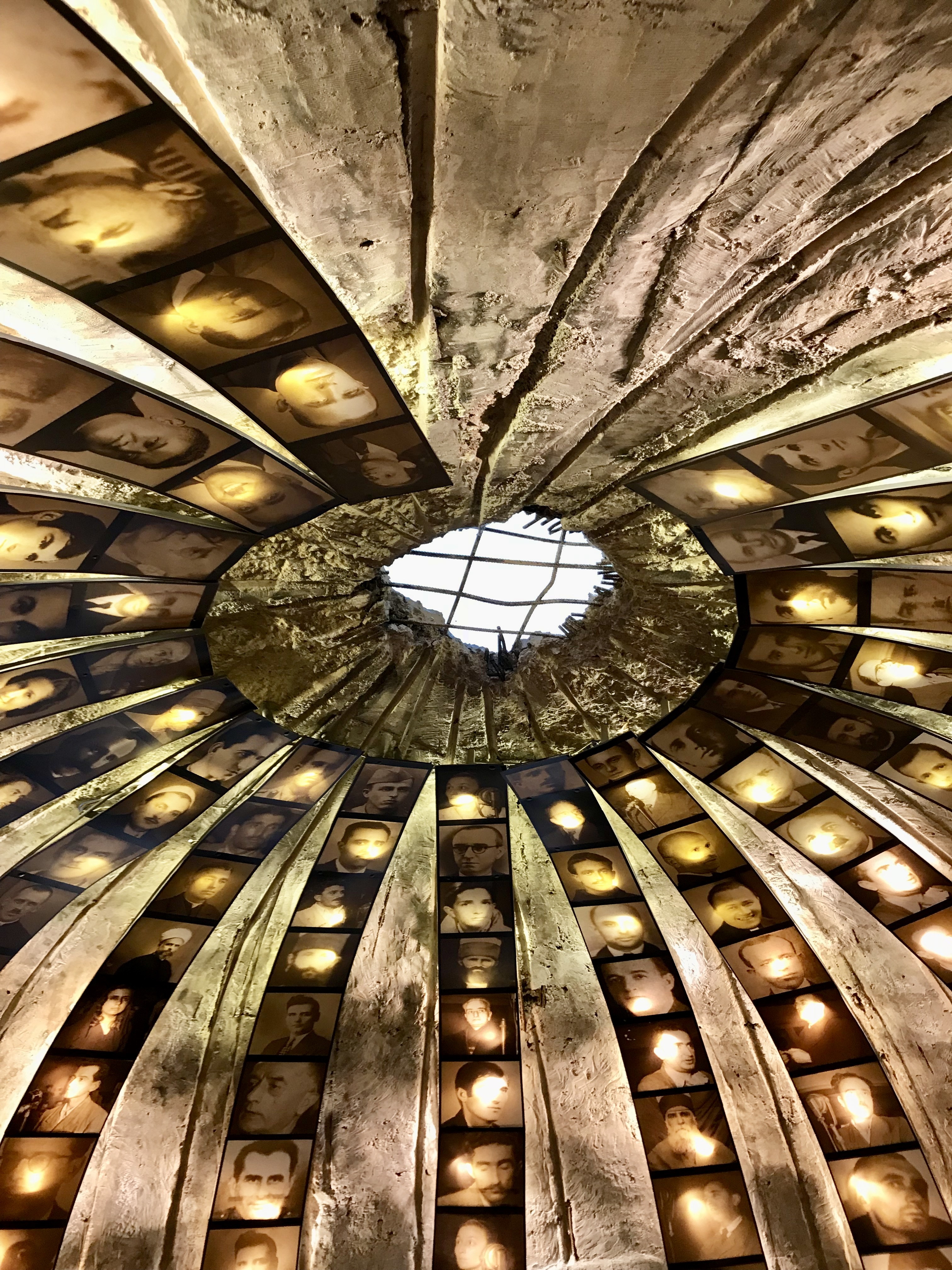
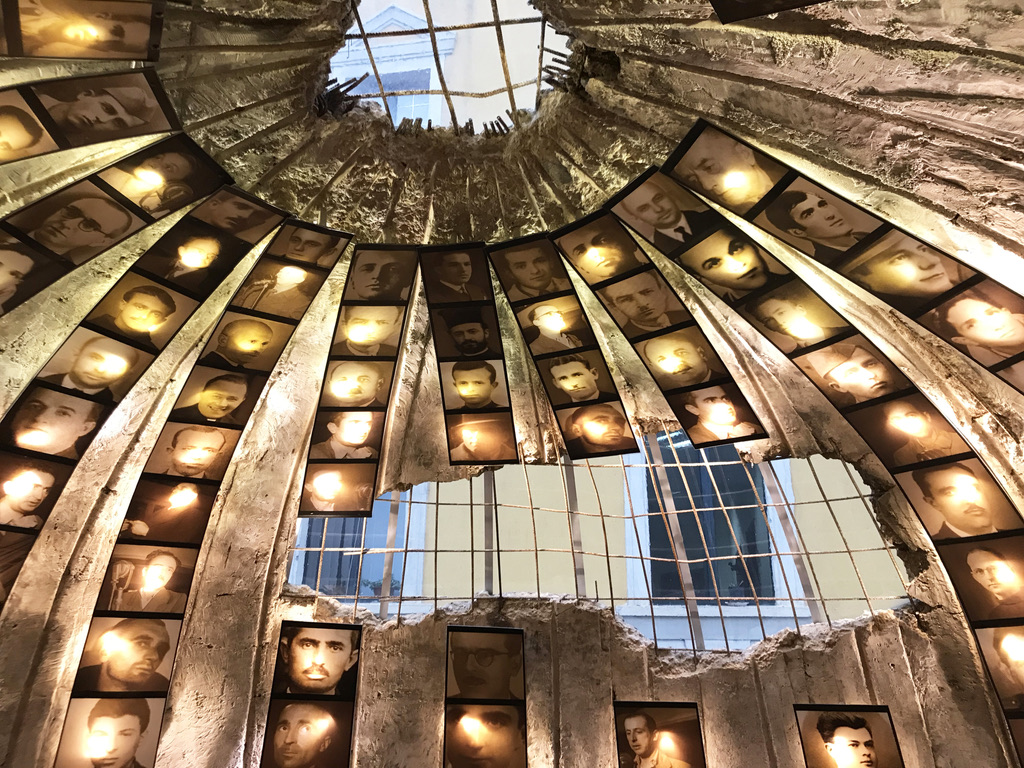
After Bllilo, we went to Bunk’Art, and by then it was pouring rain, so we hopped a taxi to the hotel so that I could get closer to my goal of grading papers, and also to finish each of our talks for Monday (we are woefully behind)…
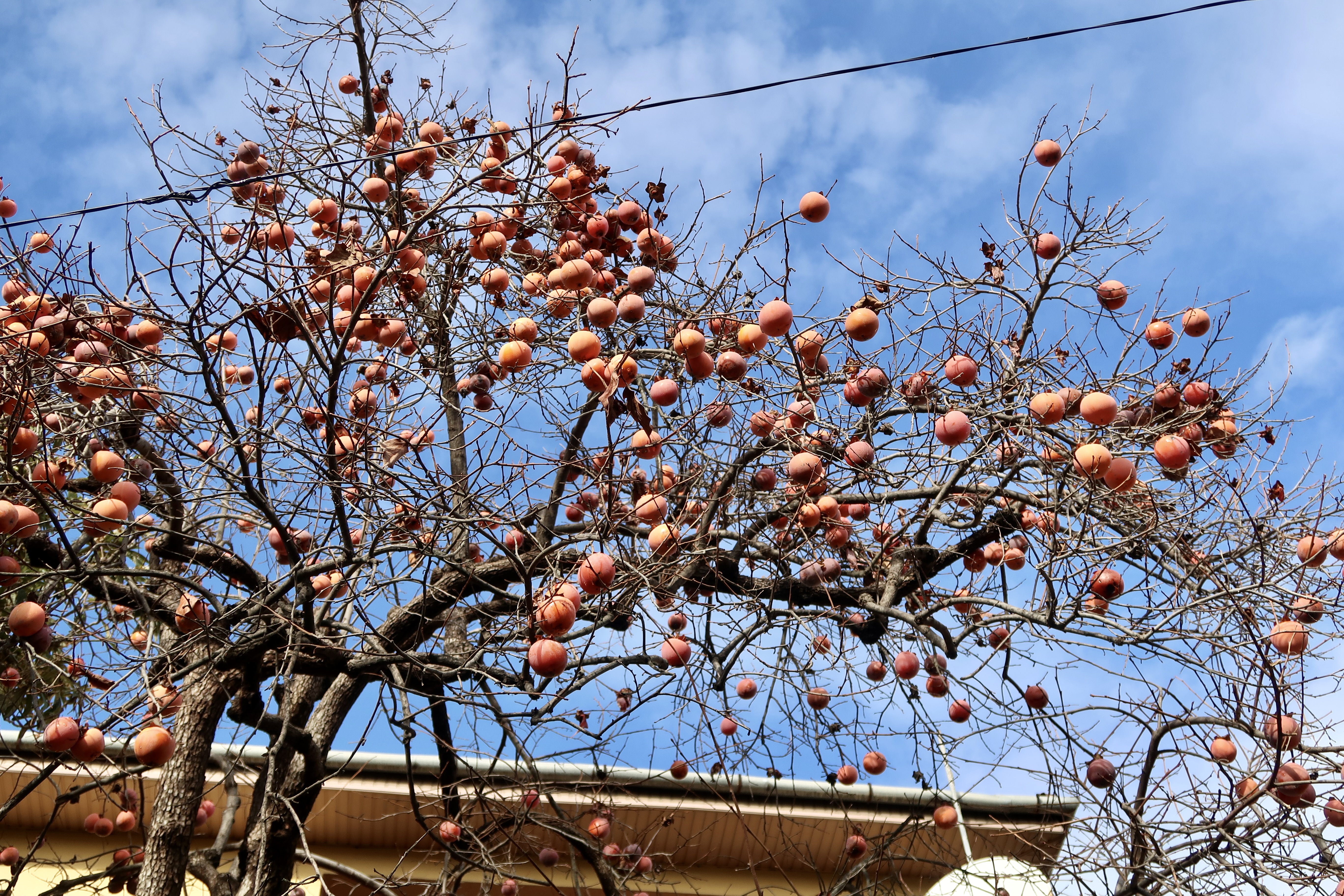
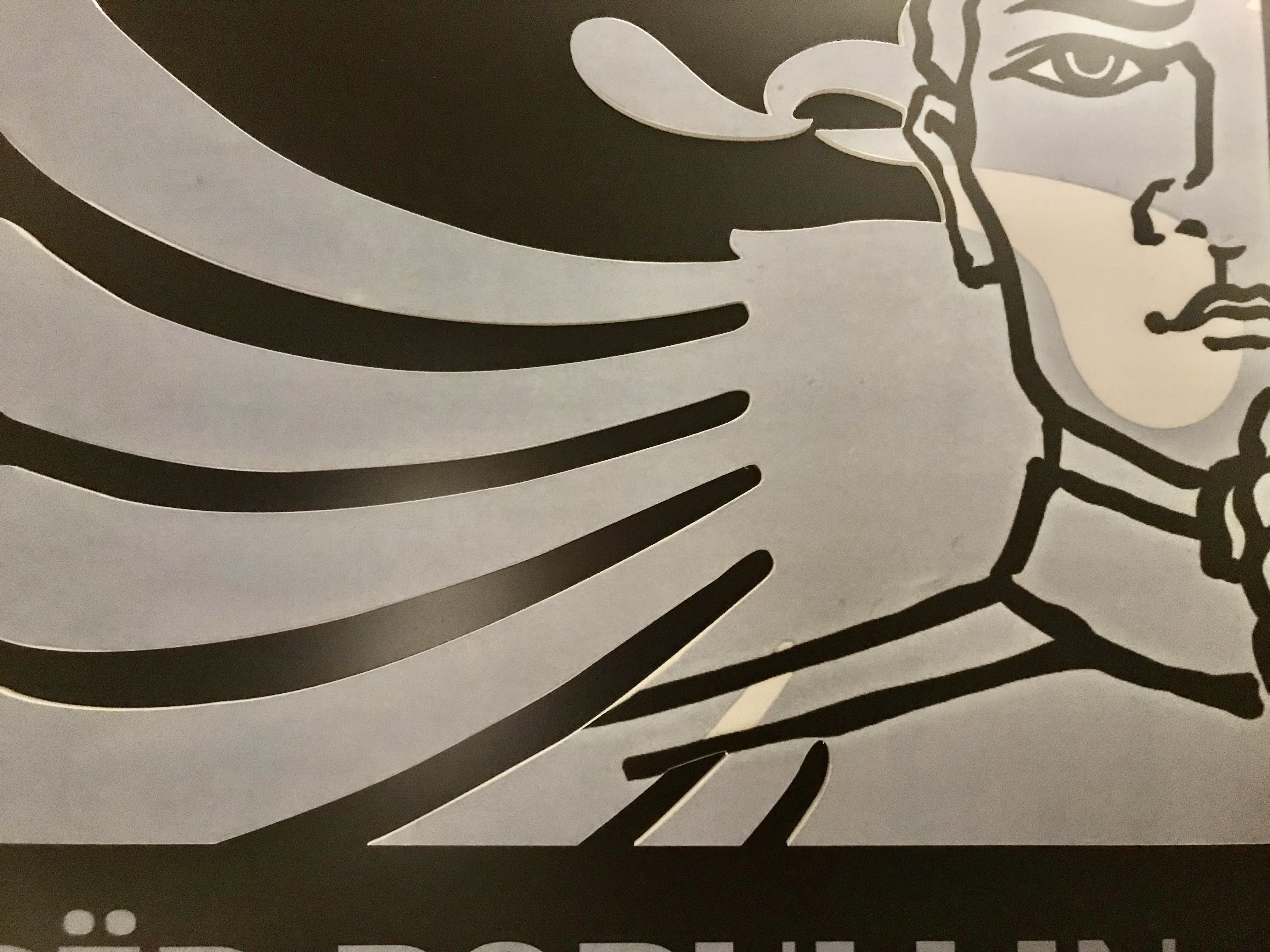
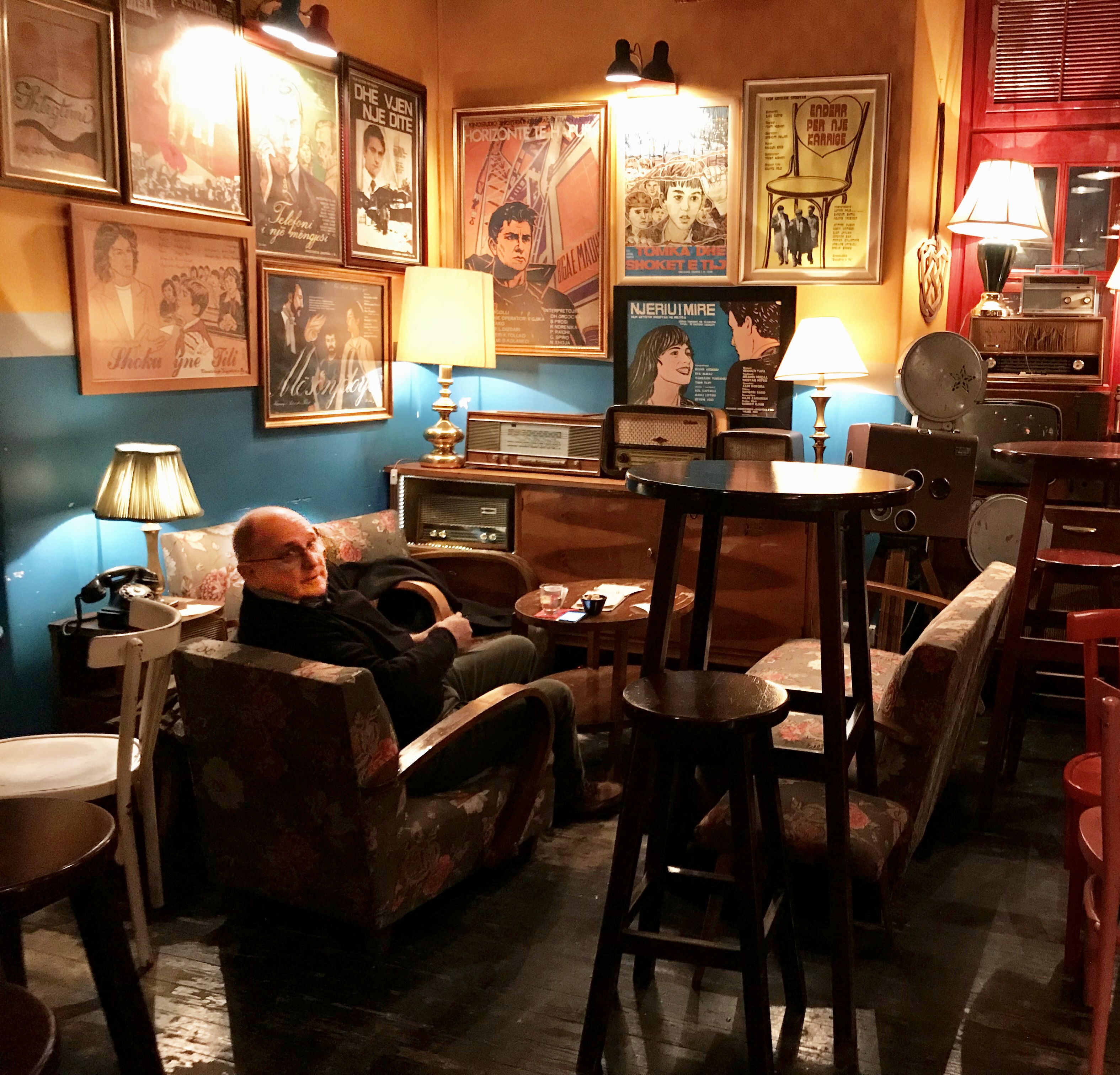
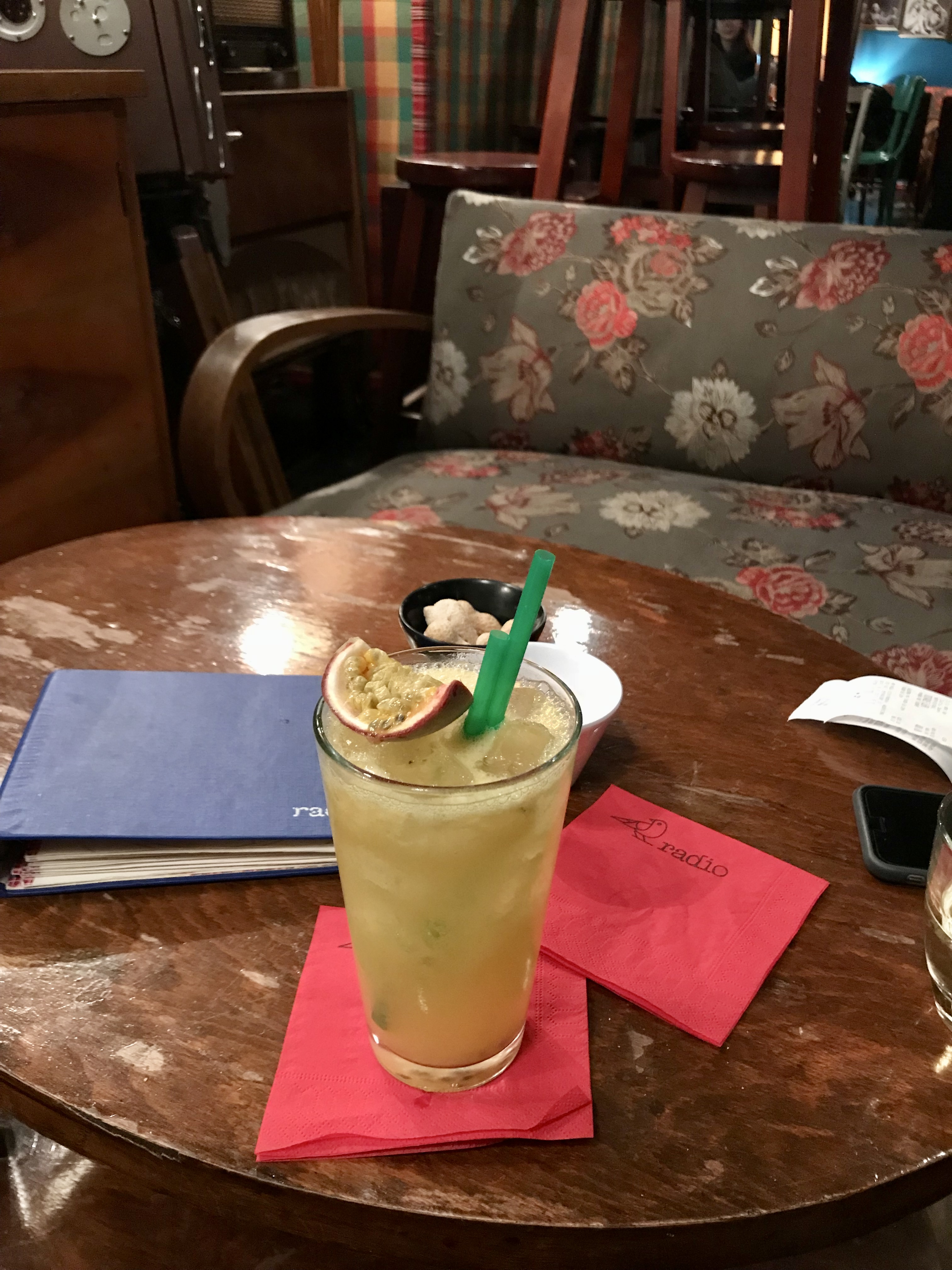
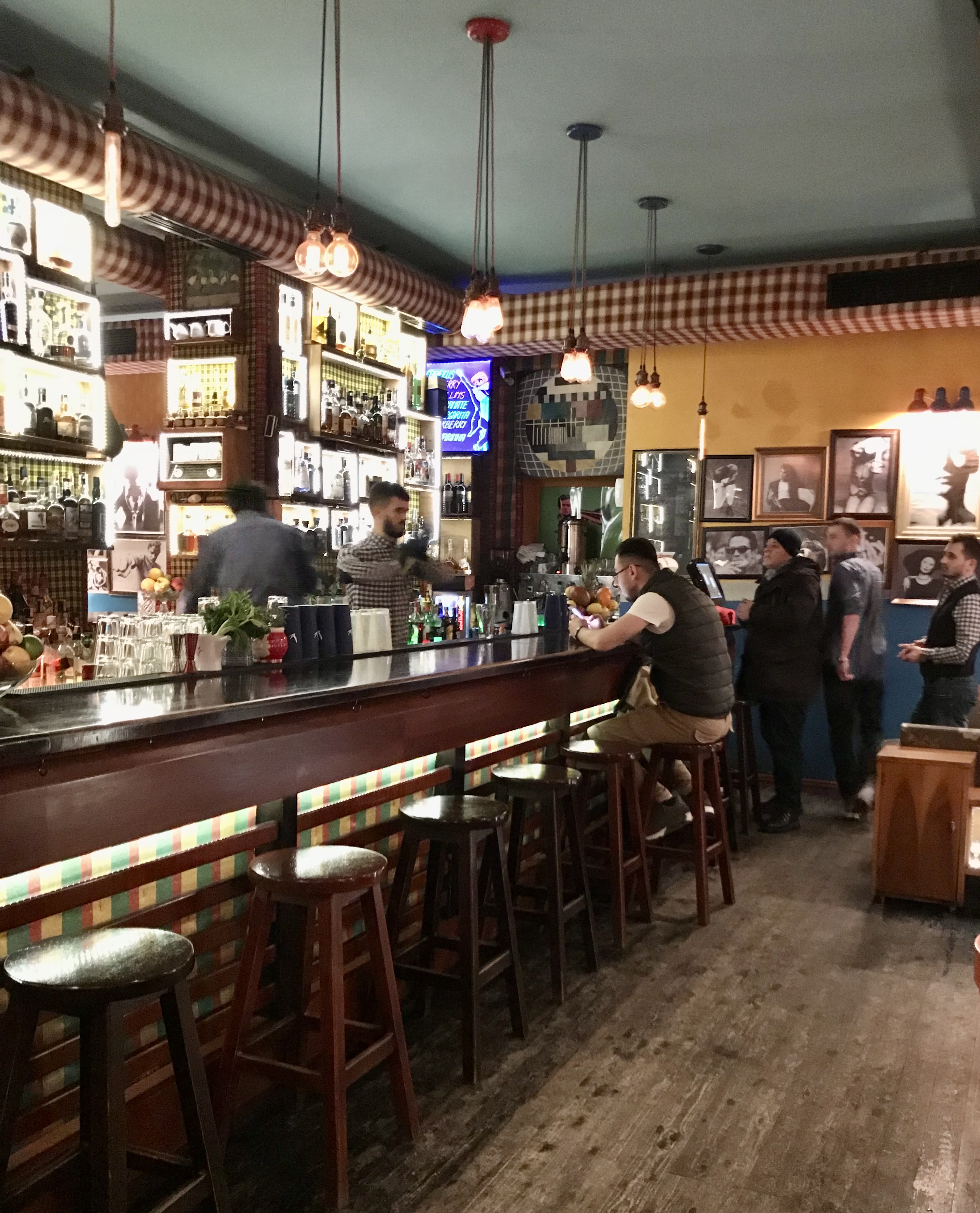
After about two hours of that, we headed over to a bar we heard about called Radio – it’s set back behind some apartment buildings. It’s a total trip – completely adorned with 1950s era posters, memorabilia from communism, and about 100 or more radios from the 1950s. I had their special house cocktail (whose name I forgot) but which is made with fresh persimmons, fresh passion fruit, and vodka… Quite the refresher (although it’s pretty cold and don’t need much refreshing).
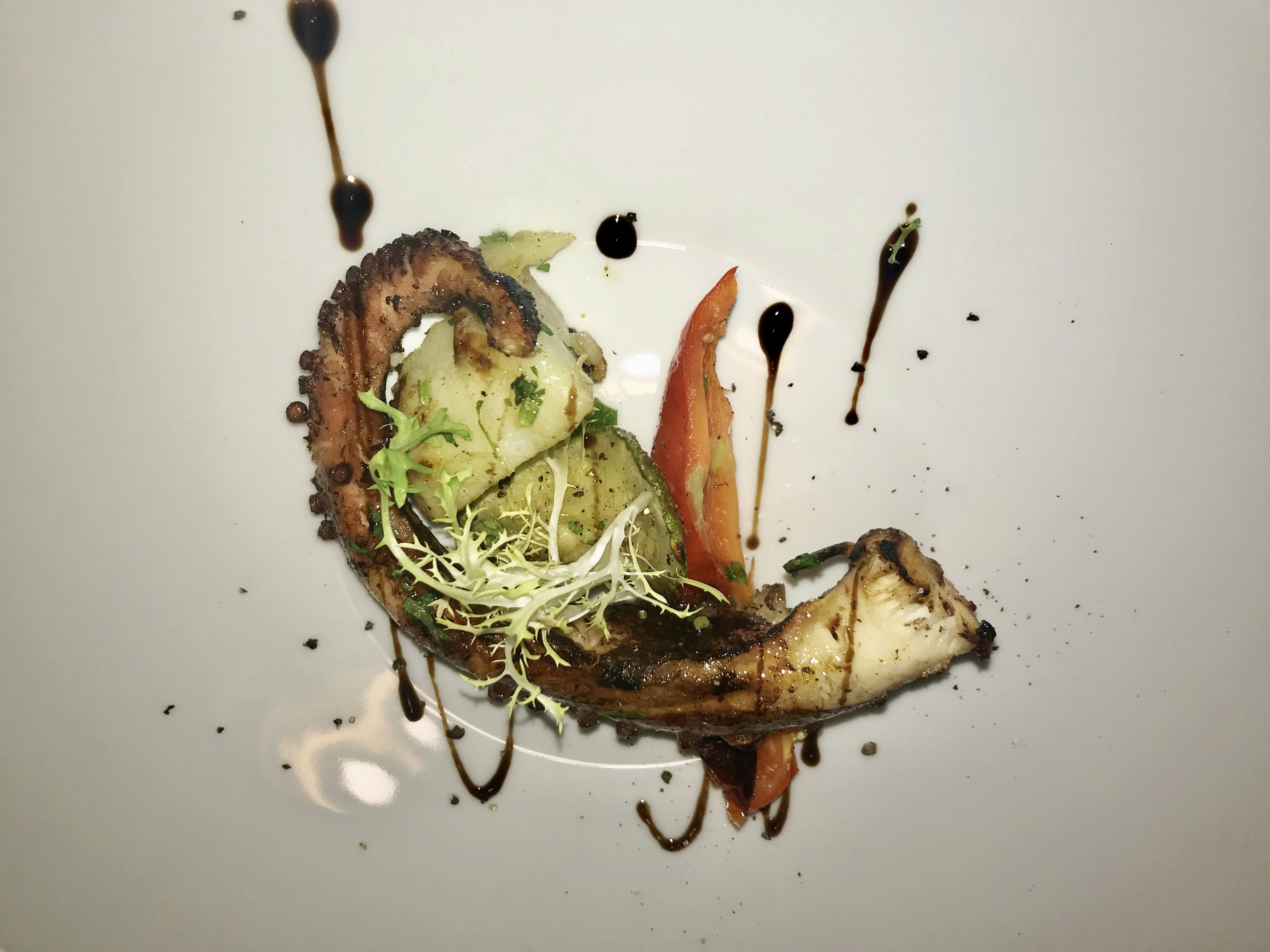
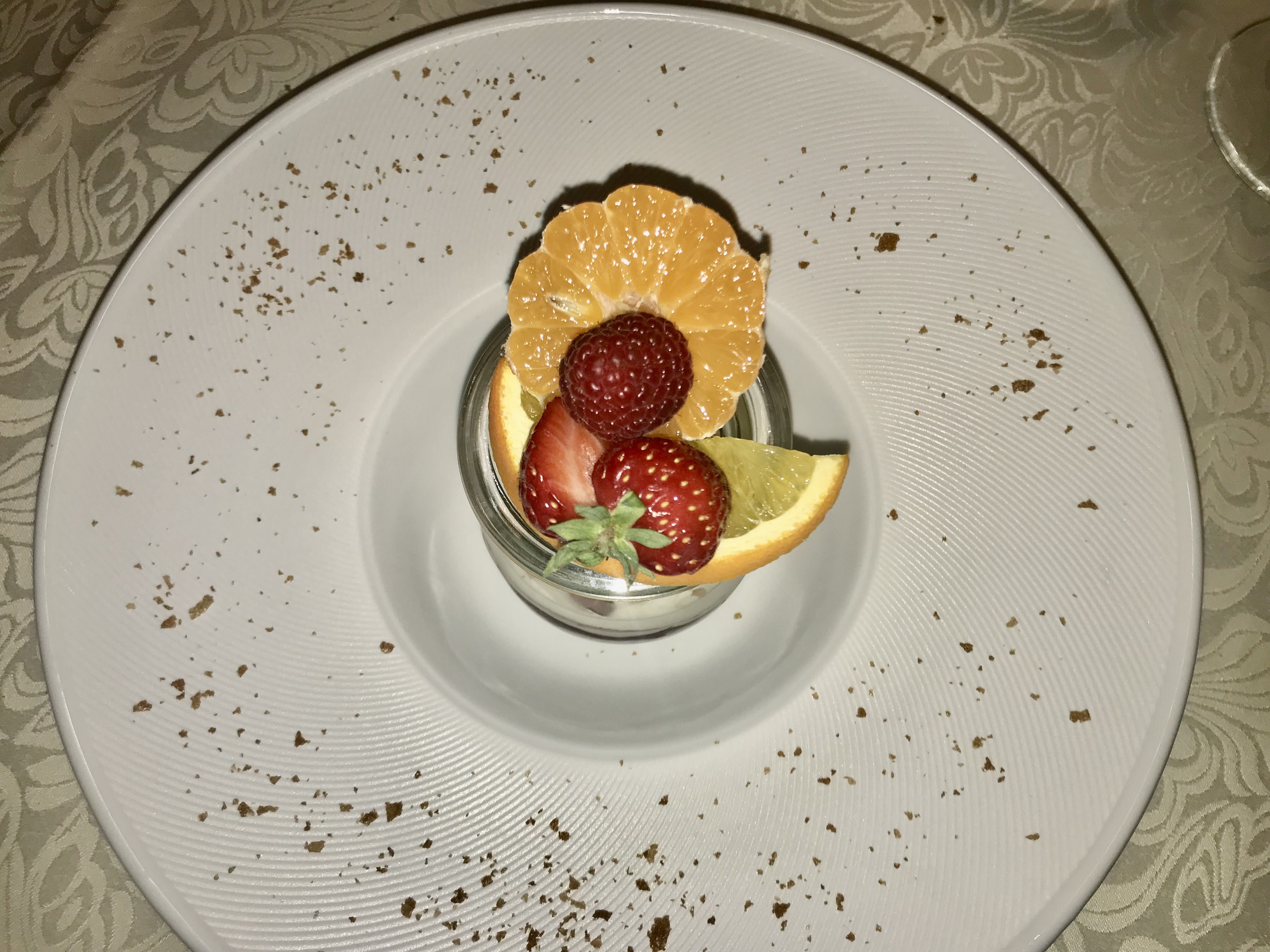
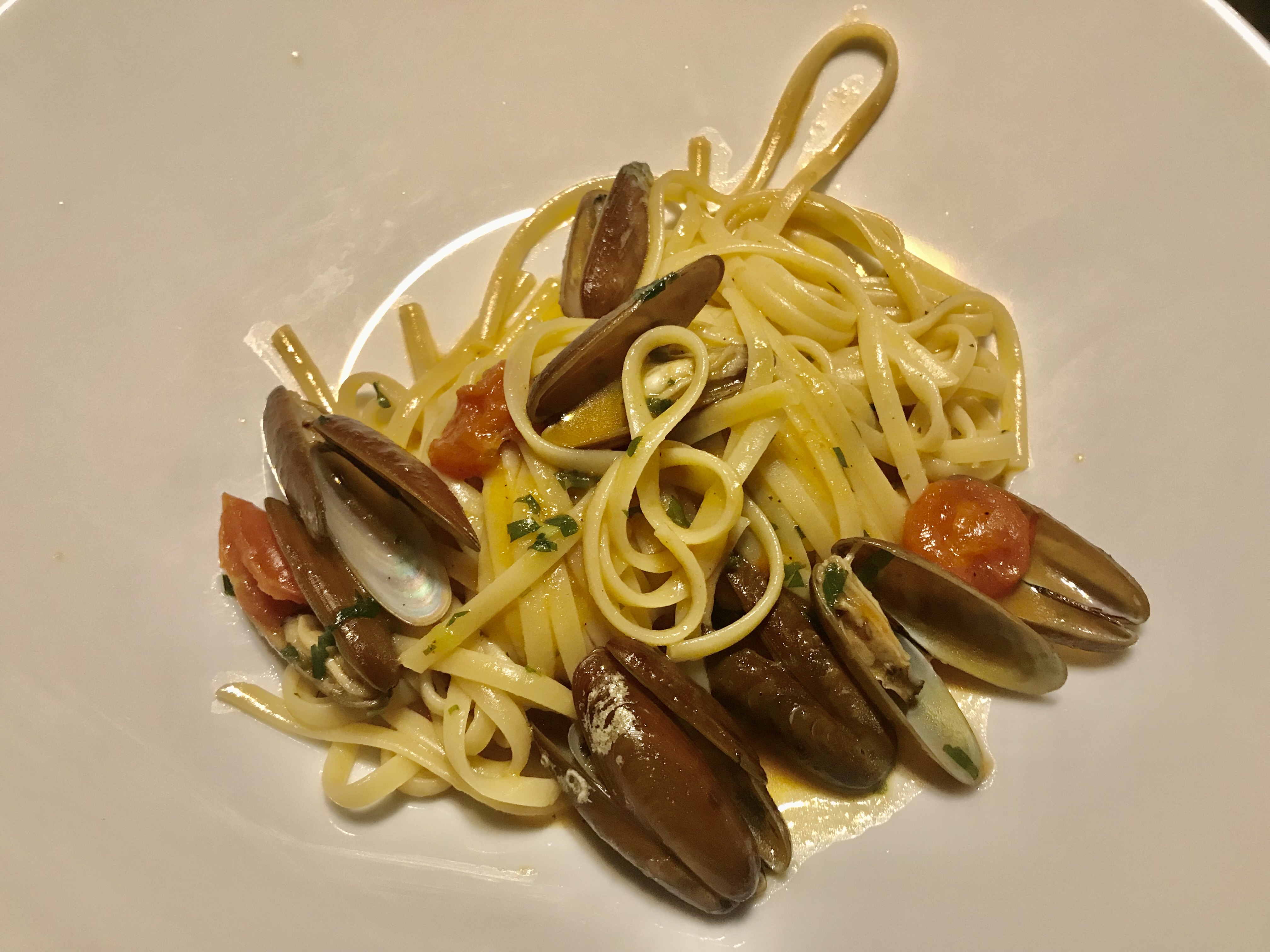
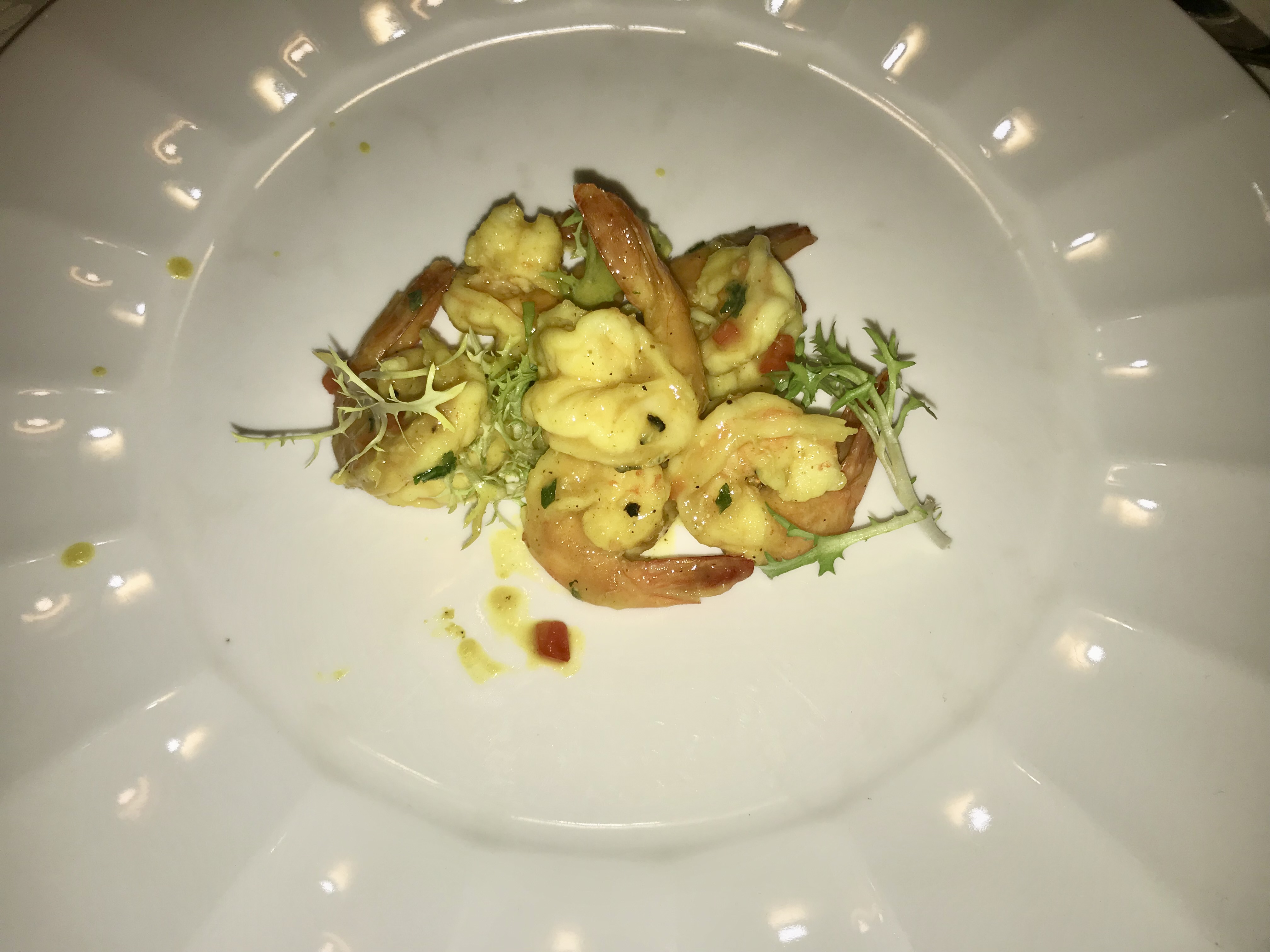
Then we headed to another of the recommended restaurants from these people we are meeting – called Tiko and Muto (described to us as upscale and very expensive for Albanians. It’s all fish… We started with a sea bass carpaccio, followed by a pasta (they eat pasta at every meal) with mussels, crab, and assorted other fish and cherry tomatoes (scrumptious) and then a scampi dish, and finally grilled octopus. We didn’t order any desert but the chef delivered two wonderful panna cottas with fresh oranges and raspberries to the table.. (I think the dinner bill including the wine was about $60.)
Because it was raining pretty hard by then, we taxied back to the hotel and crashed.

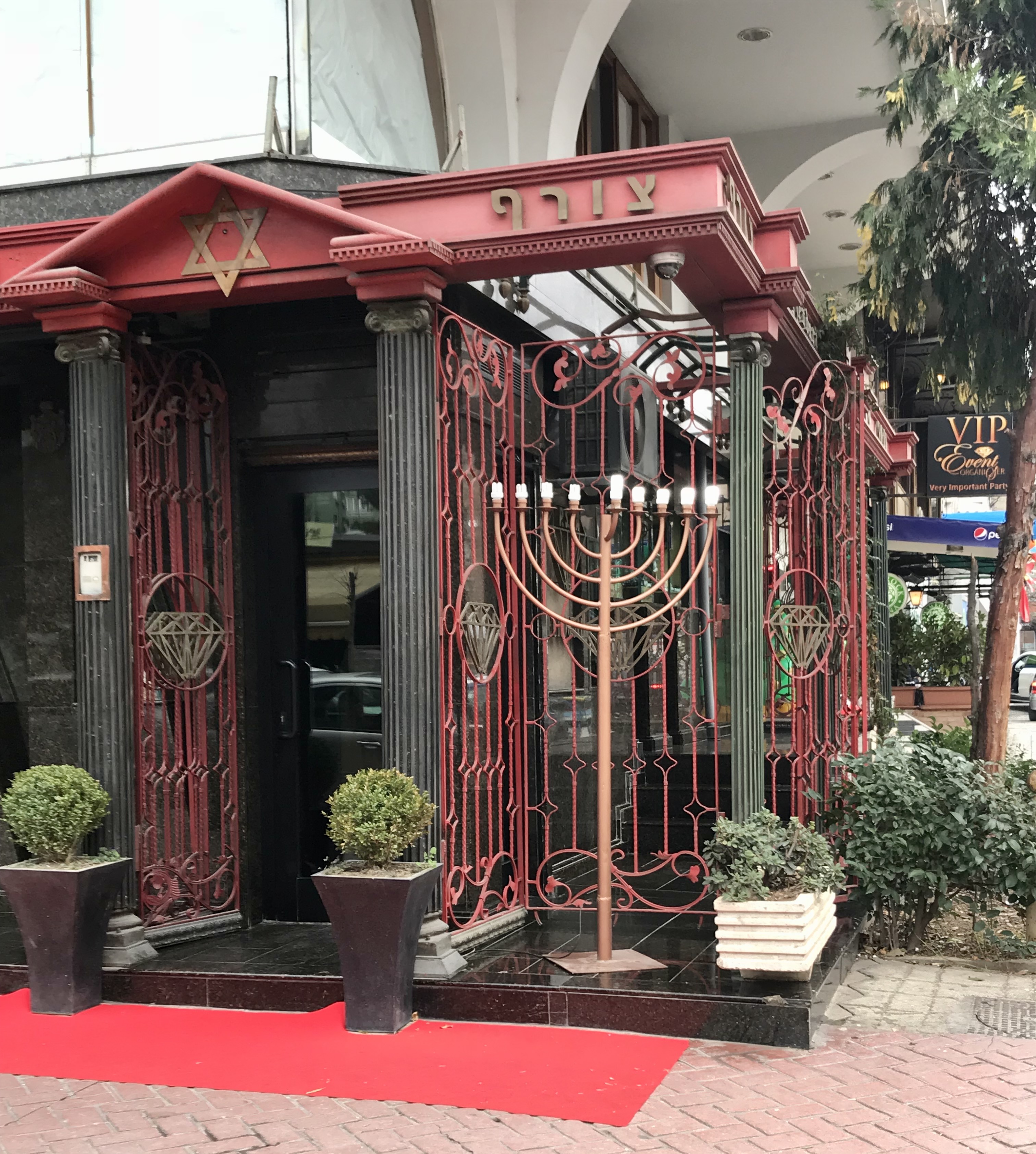
A few basic facts — 65% of the country is Muslim and you do hear the unmistakable call to prayer periodically, but it is rare to see any kind of hijab or even basic head scarf. Our hotel is directly across from the city’s largest mosque which is being rehabbed so we have not been able to go inside to see what we hear is an amazing dome. There is virtually no Jewish population here, but we stumbled on a jewelry store that was closed on Saturday and which proudly displayed the Hanukah menorah with electric candles lot for the correct number of days.
It is now compulsory to learn English beginning at age 8. This is new, so we are most often confronted with situations where people do not speak English (and our Albanian just isn’t what it used to be!!).
It feels quite homogeneous, with everyone being white and perhaps the darkest complexions are those of Greek origin.
Tomorrow I’ll tell you more about today (Sunday) – a long stroll to a new bazaar, through old neighborhoods, sun and also rain, a visit to the art museum, lunch, and another great dinner. I’m telling you that this is a great place to retire and where Social Security can go a long way..
Best for this fifth (?) day of Hanukah –
Fern
Albania Day One. December 15, 2017
As they say here in Albania —- Përshëndetje (Hello)
It’s now after midnight on Saturday night (Sunday morning) and we are in Tirana for the second night.
Arrived in Tirana last night (Friday) after a long, messy, and somewhat stressful trip involving three planes and four airports (SFO, Paris, Rome, Tirana). We had to have only carry-on baggage in spite of the fact that we were in first class from SFO to Paris. Packing that lightly was challenging considering the weather we were about to enter, so we needed to have boots, sweaters, heavy coat/jacket – in addition to computers, cameras, gear, etc. The issue was that we had to change planes and our carriers were not compatible, and our connection times were very tight—- thus we needed to do only carry-on if we were to make the timing work. Frankly, I’m not sure our connection times were legal.
It’s a given that we were up until the wee hours on Wednesday night packing and re-packing —- especially difficult for me since I am a bit of a clotheshorse. Mike had no trouble.. and I admit to having snuck a second pair of boots into his suitcase. Speaking of Mike’s suitcase (Tumi, but has had a lot of wear and tear)… the handle broke as he lifter the case onto the security device! Flight to Paris was a breeze. Being a status flier and getting into first class always helps. But once we landed at CDG, we were with the hoi polloi. Fortunately we were able to get to the Alitalia counter before changing planes and we each checked one suitcase. But this involved transferring some things from one suitcase to the other. Finally we were headed to Rome
As we landed at Fiumicino we realized that the connection for the flight to Tirana (Albania) was so tight that it was already boarding as we were landing. We were met at the gate by an Alitalia concierge who warned us that we needed to run to catch the flight. We ran and ran — 1.8 miles according to the app on the phone — and barely made it to the Tirana flight. Because we were so late, our bags did not fit on the plane and eventually, the flight attendants took the bags and got them loaded into cargo.
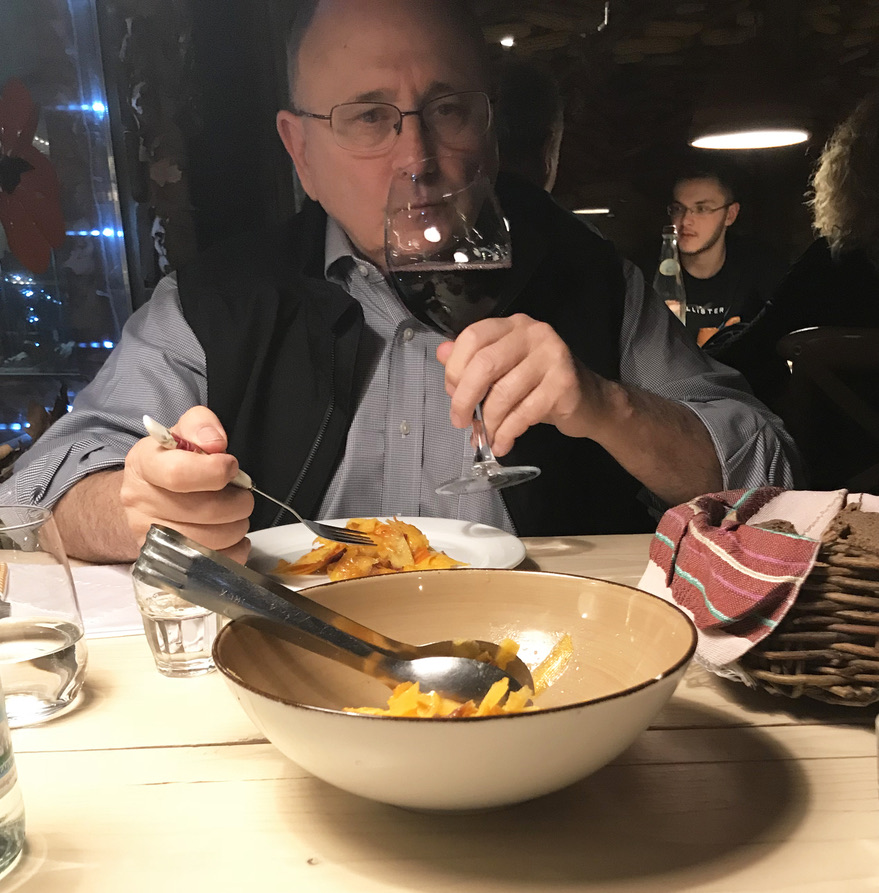
We landed in Tirana about 75 minutes later and took a taxi to our hotel (MonarC) which we booked online. It’s a sweet, small, very centrally located hotel (that lists as part of its amenities: toilet paper!). Actually, it’s quite modern and situated at the intersection of Boulevard and George W Bush Avenue (!!!). We literally dropped our bags, jumped in the shower, and headed to one of the recommended restaurants: Mullixhui (billed as fusion food)/ pronounced Mullee-gee-oh. The taxi had quite a problem finding it and we had to walk the last block and a half in the rain. But dinner was fantastic:
- Started with raki – an unsweetened alcohol made with fruits and very very strong (45% alcohol) as an aperitif
- Squash soup
- Pumpkin salad with cranberries and sundried tomatoes and some kind of pickled onions… Pumpkin was shredded very thin.. not sure what the dressing was, but it was fantastic
- Linguine with wild berries
- Goat accompanied by vegetables and potatoes
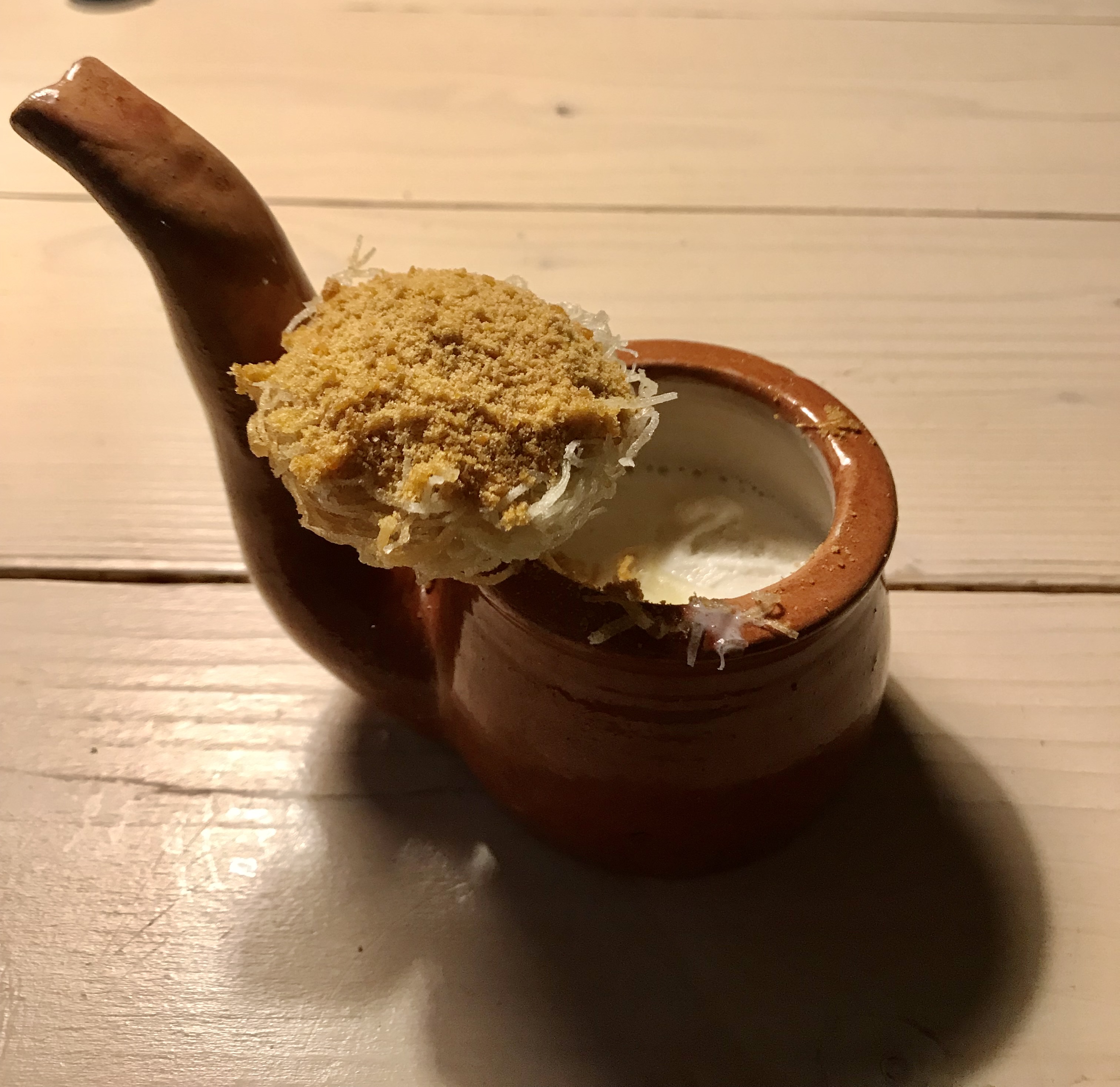
- Dessert was incredible – served in a ceramic vessel that had a spout; it had a birds nest kind of edible topping with graham cracker-ish grounds and some cream.. you eat this and then you drink from the spout what is sitting at the bottom of the vessel — some kind of yogurt-y liquid. Totally yummy.
Left there by taxi and crashed at the hotel!
I’ll get into what we did today (Saturday) tomorrow – will combine with Sunday events, I hope.
But for those who don’t know… Mike and I are here in Albania – a destination we didn’t exactly pick initially, but it probably is the only country in Europe that we have never been to. Anyway, turns out that a former student from ASU, on whose dissertation committee I sat had been here three times and he encouraged me to make the trip. Once we made the decision, he linked us up with all sorts of people and now our vacation has turned into part work as I’m lecturing at the university and also giving a talk to city staff here in Tirana. So far, first 36 hours — Tirana is a bustling city with lots to offer.. wish it wasn’t rainy season. But you can still sense the life and also the intensity of its history all around. It’s also phenomenally inexpensive. The meal I mentioned above cost about $25 including a very nice Albanian red wine and the aperitifs!! Maybe a good place to retire. Social Security would go a long way. They also have a socialist government – more on that later.
Best –
Fern
UW in Cape Town — September 20, 2017
Molweni on the last day in Cape Town (written on flight from Joburg to Frankfurt at about 2 am – so I think it is now the 21at – but still the 20th in California)
Started the day at the new favorite breakfast place with great shakshuka… and iced chai (while many places make chai.. iced chai seems to be difficult to comprehend, so often they make the chai and then put it in a blender with ice so it’s sort of like a smoothie!)
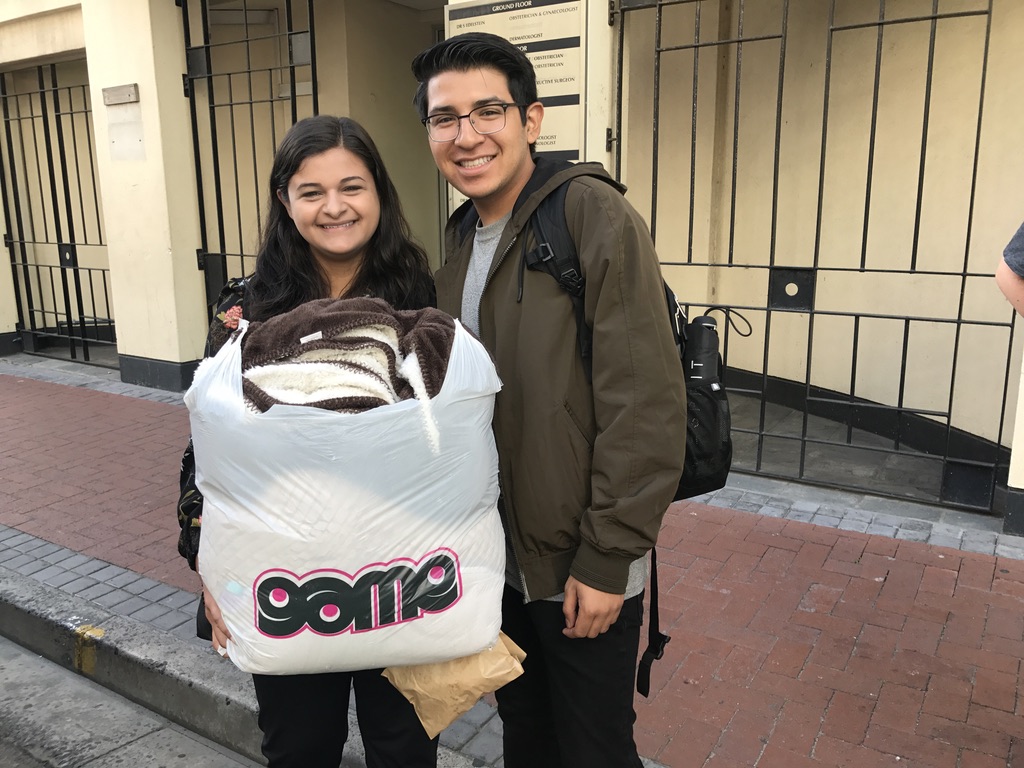
Then picked up the students who couldn’t get to Philippi on Monday because of the strike (the four students at CESVI and the two at Nalibali). As we approached Philippi we saw two shacks completely destroyed because the brakes on a trailer truck must have been malfunctioning and the truck went up on the sidewalk and into one of the shacks. Don’t know if anyone was in the shack. Also saw some remains of the strike activity.
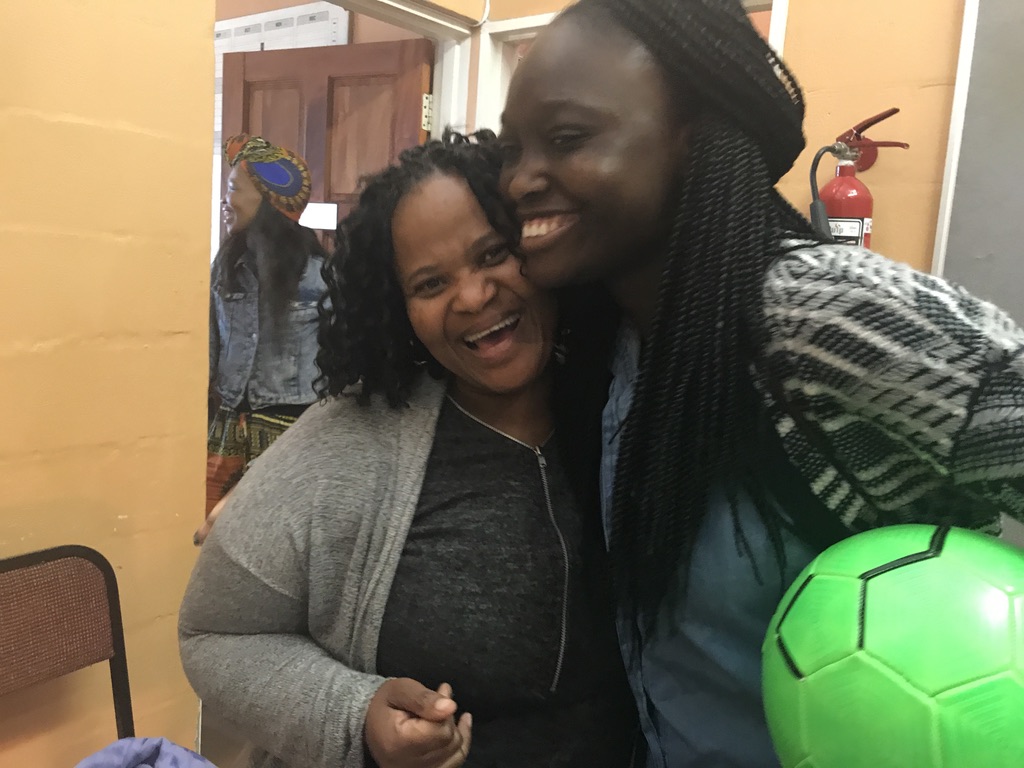
Dropped the Nalibali students at the local library to meet Thabisa who has become a big sister to the two students.. and we knew that goodbye was going to be pretty teary… They’ve met her family and have become quite close. Gave them some quiet time and Chris and I went with the CESVI students to say goodbye to Luvuyo and his staff. This had been one of the more challenging sites. It’s a struggling NGO with a lot of good ideas ,but limited resources. They also have never had study abroad students working with them so it was a bit directionless for the first few sessions, but I think it turned around and on this final day I think the students realized that they truly had an impact on the young people as well as on staff.
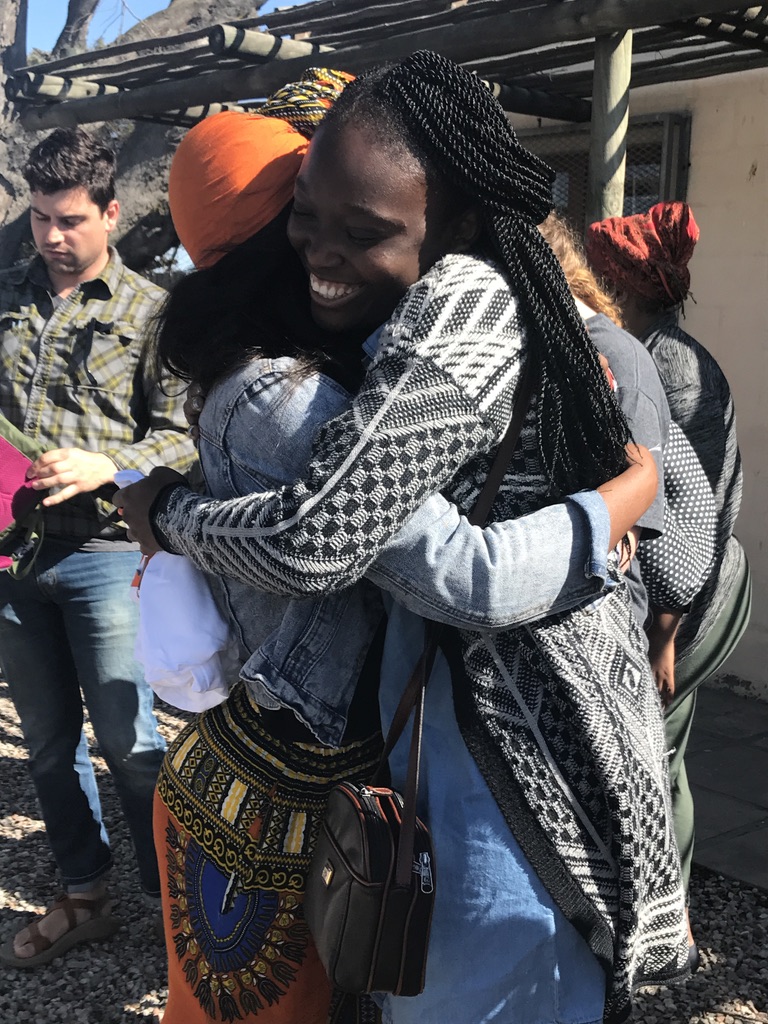
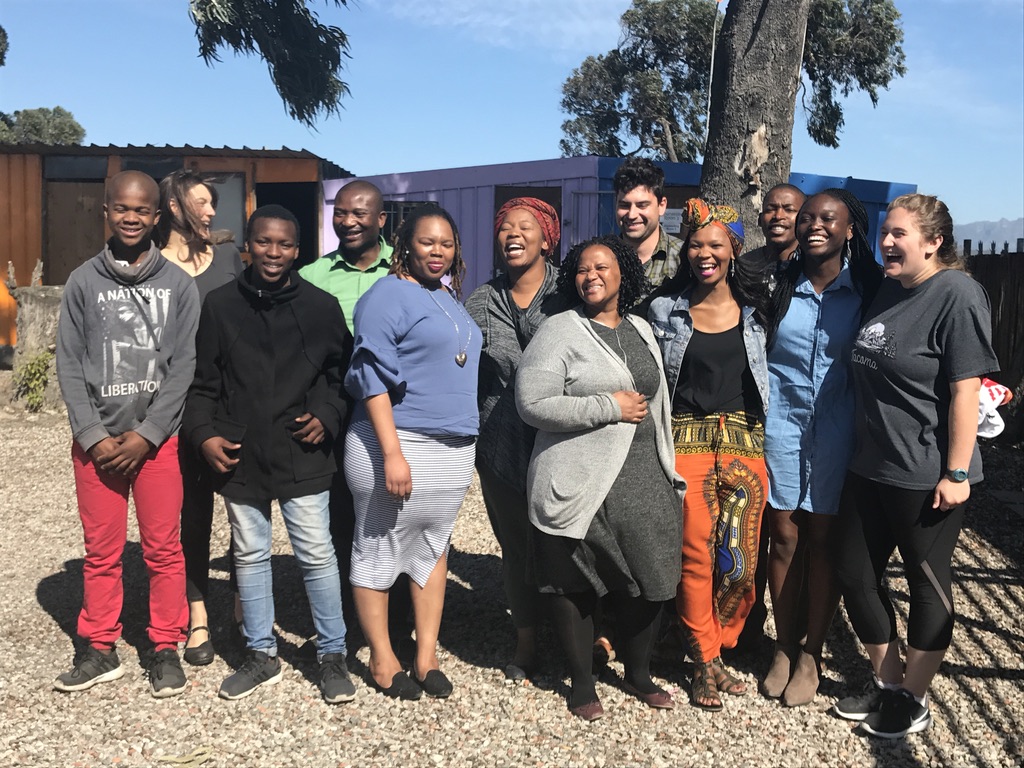
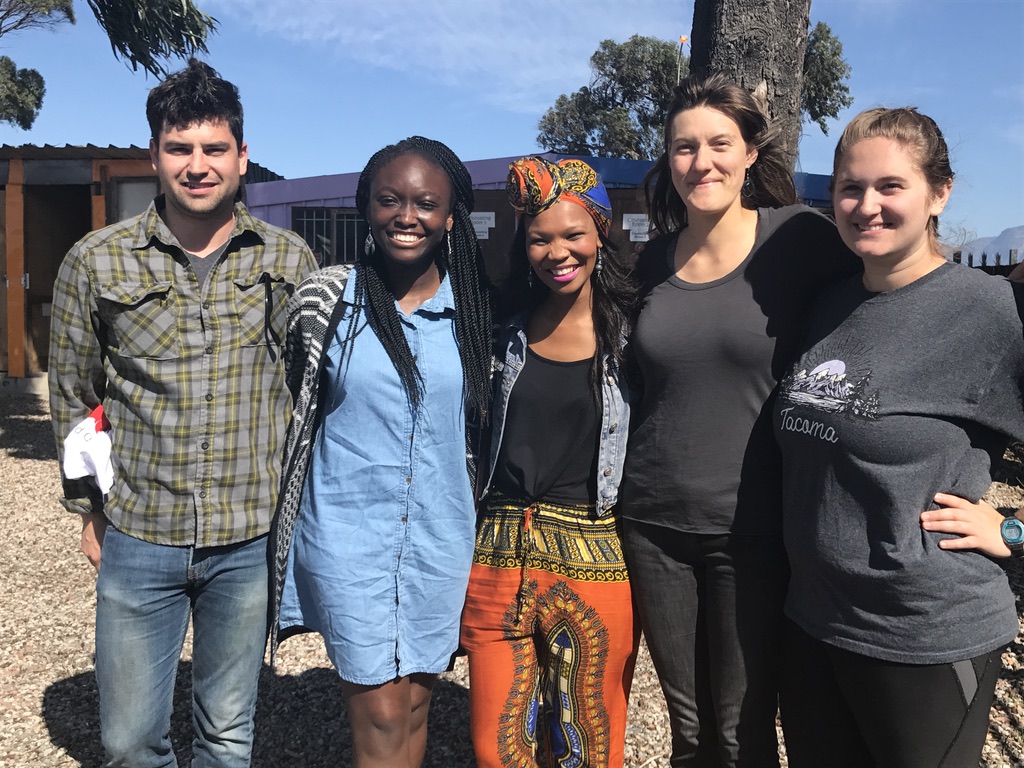
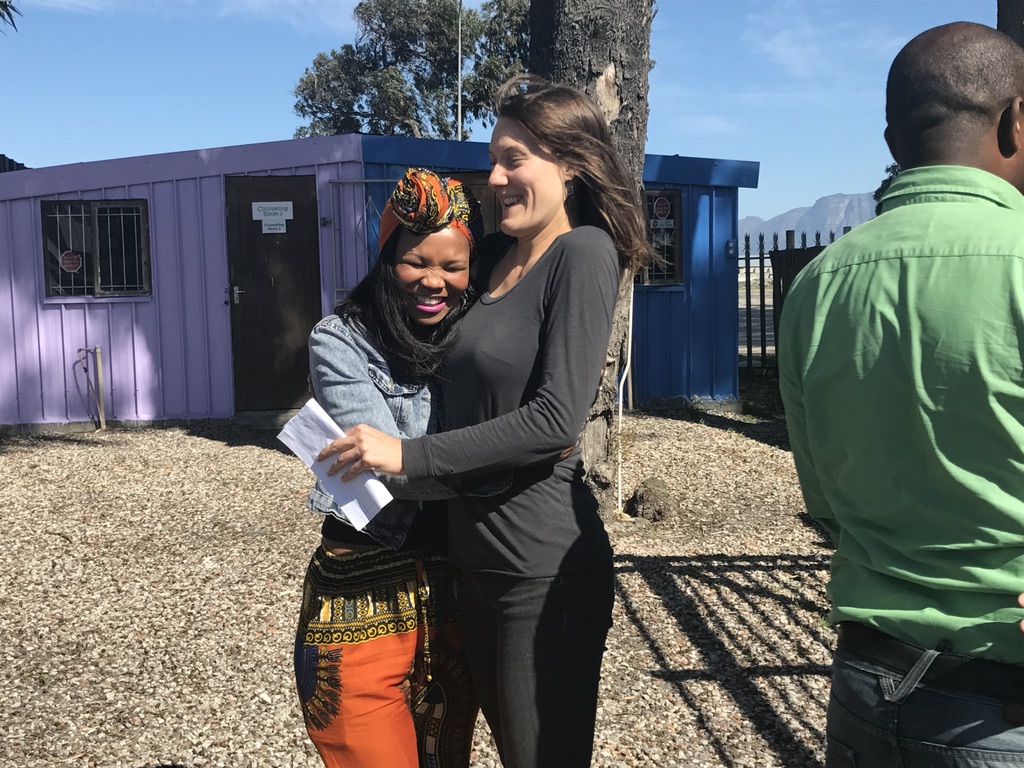
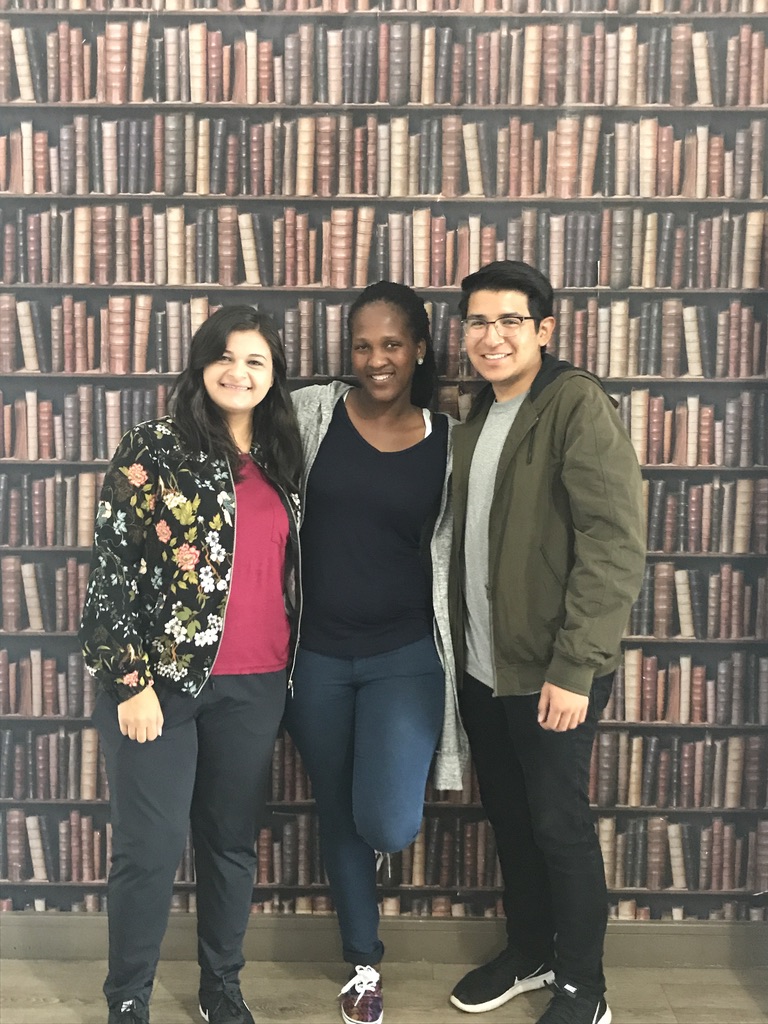

Students had all gotten presents for the people they worked with and for the organization as a whole. CESVI group had actually asked what they needed and they bought them a portable speaker system, a camera, and some other tech devices. I also donated the printer I had purchased for my use over the three weeks, and some assorted items like an extension cord I needed for my room. When we arrived the whole staff was there, along with several high school students who had worked with the UWT students.. and there were hugs (unending hugs – by the way, the South Africans like to hug… they hug when you come and when you leave and its very heartfelt) and there were tears. Staff made little speeches, as well as the high school students who were incredibly eloquent. And they gave us all tee shirts from the organization. We took pictures and then more hugs.. and they gave the students a letter (really a poem) written by one of the students who could not be there.
It was pretty emotional. Just three weeks, but several students made lasting connections (I believe)… And like in all of these situations, it’s always hard because while UWT students might return some day, the South Africans are very aware that they will never have the funds to come to the US.. so the continuity of the relationship rests heavily on the Americans.. We shall see. For sure Marcos and Autumn will remain forever attached to Thabisa.
Then we made a quick stop to say goodbye to Grace who owns the tiny lunch place in Philippi Village where we and students had many lunches and smoothies. She wanted to be sure that we tell everyone in the US to come to have lunch at her place. So, there it is… should you find yourself in Cape Town and in Philippi Township, be sure to go to Grace’s restaurant.
And then it was off to the airport to drop off three students with flights leaving around 1 pm… I went back to town, had another chai at the chocolate café.. and then I was off to the airport to catch my plane and gather my own thoughts about what this trip was about. I land around 1:00 (Thursday) and after a long shower will head to the office – if only to get the work I’ve done on the trip transferred to the server and get somewhat settled so that Friday can be a normal day.. I might also get an appointment to have my toe looked at.. although I’ve been walking about 4 miles a day for the past two days. I think it’s fine.. so I may have been the doctor here. Feels now like just a little bruise. Anyway, back at work for real on Friday… You can find me there and also on the weekend to catch up.
All good… many memories. And it was definitely different to travel with 13 other people… never traveled with more than one person, and often just alone. So this was a change. Also never been responsible for anyone while traveling. So that was all new.
Best
Fern
UW in South Africa — September 19, 2017
Greetings on the program’s last “full day” in Cape Town
Tuesday, September 19, 2017 (written on plane on September 20 – “Joburg” to Frankfurt)
Quick update: strike ended (for now) on Monday night and things went back to normal although townships saw destruction of property… and we heard that amid all the mess, some people had signs that said “Save the Penguins.” Shortly after breakfast at our newly discovered place (we’ve long given up on the muffins at the B&B) called Solo.. Incredible breakfasts daily.. from fresh oatmeal with poached peaches and cardamom to shakshuka to avo toast and a great assortment of egg dishes .. we left as a full group for yet another packed day. (Students generally eat breakfast at the hostel but many have been venturing out, bored with the options they get each day at 91 Loop. Actually, they have all done pretty well finding dinner places and small sets seem to have located their own favorites, with one group having discovered a bagel place that they say is fantastic.)

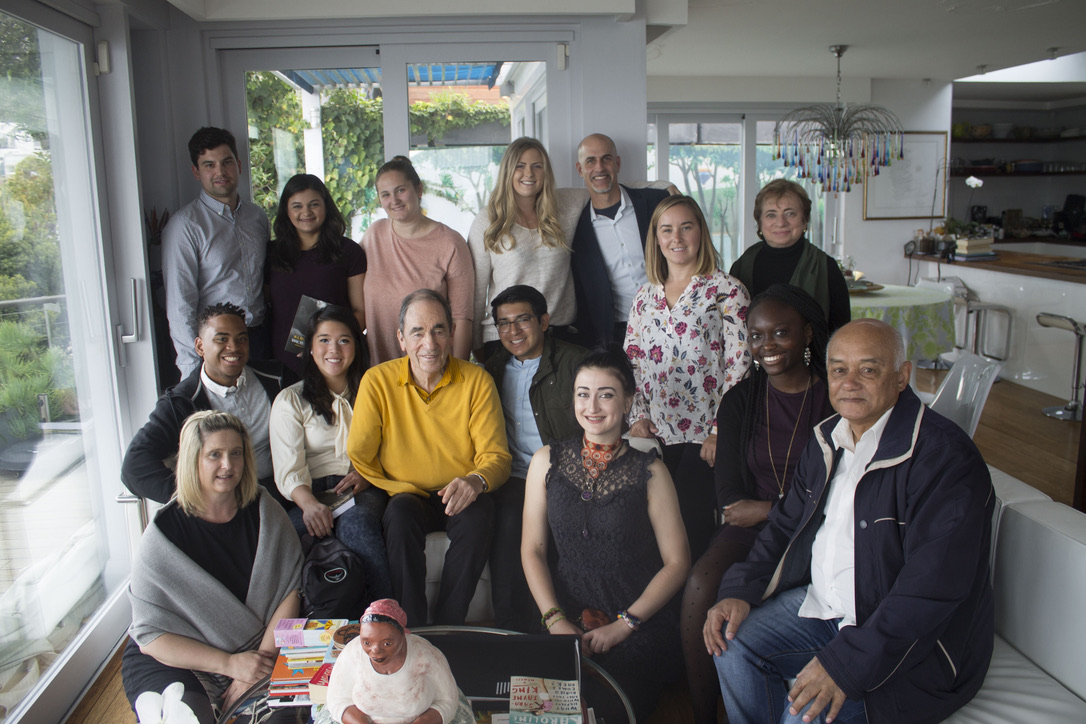
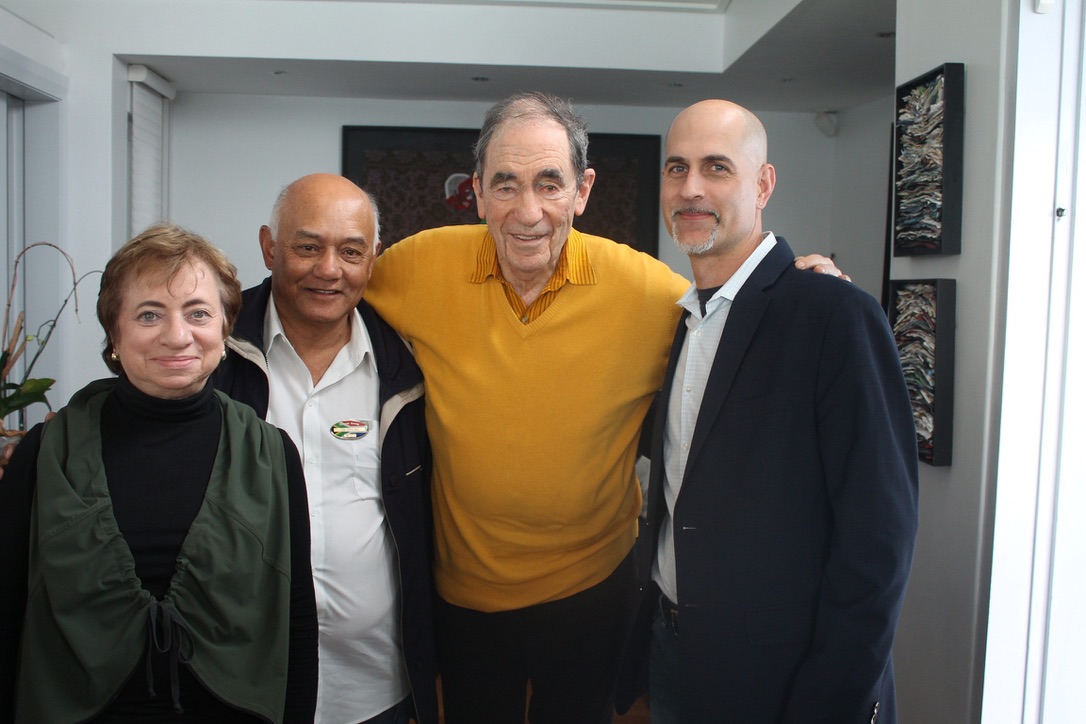
Anyway, we headed to meet the revered Albie Sachs – writer of the South African Constitution and a lifetime fighter to end apartheid. Long story… .Big shout-out to friend and filmmaker Abby Ginzberg who produced an award-winning film – “Soft Vengeance: Albie Sachs and the New South Africa” – who was the connecting link. I wrote a sappy letter to Albie several months ago explaining the program, and asking if he’d meet with the students. He responded positively and after I suggested we have a driver pick him up and bring him back home, he said it would be easier if the students came to his house – which was a totally treat. Students had already seen the film, and Abby came to one of our pre-departure sessions. They had also read the constitution and several articles about Albie, so meeting him was like meeting a star and a legend of the struggle. If you don’t know much about Albie you should try to see the film and/or do some research.
Albie sacrificed a huge amount, from being imprisoned and in isolation to losing his arm from a bomb that was planted in his car (intended to kill him) to being in exile… and finally to spending six years writing the constitution, and ending his active career as a member of the South African Constitutional Court (where he sat until six years ago) . A true elder of the movement and an amazing spokesperson for it – eloquent, humble, and with a great voice.
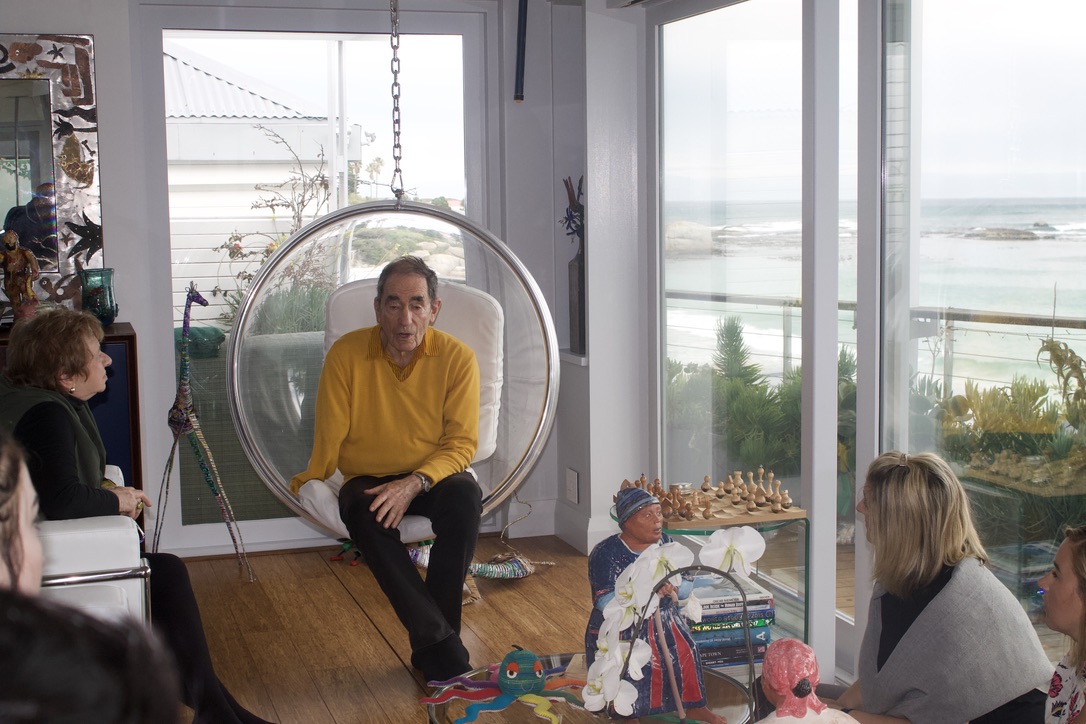
Albie now lives in Sea Point. He’s 83 years old and has an 11-year old son. The directions to his house were very detailed… and we had to follow blue signs that had a penguin on them – “iPhengwini Path” (which I take means “penguin”) and follow lots of steps until we were almost at the sea. His wife is an architect and they live in a house that was once part of a series of cottages – all of which have now been enlarged and renovated. His is quite exquisite with stunning views of the sea. He’s eloquent and very much into “the law.” Students sat on couches and the floor to fit into the front living room. Albie sat in a clear plastic hanging bubble chair.
Students introduced themselves and then Albie held court; followed by student questions which were pretty good. At one point as he explained some concept about race and mentioned Paul Robeson.. and then he broke into song – singing “I dreamed I saw Joe Hill Last Night” in a great baritone voice. Naturally students didn’t know who either Paul Robeson or Joe Hill were.. but they liked his story (and all said they would now “research” both people. I would have joined the singing but I’m tone deaf and would have totally messed up his performance. He talked about his history (going back to his law school days at University of Cape Town) and explained how he got into the struggle with words something like this… “I was torn by the contradiction that those in justice (law students and lawyers) believed in the law, but were not willing to give their lives for it… while the “people” hated the law (because of how it treated them) and were terrified by it, but they were the ones who gave their lives for justice…” (something like that). He talked about growing up in a Jewish family with parents (or maybe grandparents) who had emigrated from Lithuania (his father being a union leader). He told how when his brother was in medical school, Blacks could not be in the room if a White cadaver was brought into an anatomy class. And he talked about the present day South Africa – he’s optimistic, believing that the constitution provides the base for a new country, although admits that implementation has been difficult… At one point he summed it up pretty well: “Is this the country I was fighting for? Yes… Yes this is the country I was fighting for, but not the society it is now… We built a country, but we didn’t build a society….”
Students were polite and riveted, but deep down they really wanted to know about his thoughts about today’s inequities they had been seeing and studying; They asked about the township situation, but Albie referred back to the next step of building a society and also to the fact that people now have the rights they never had. He also said that one needed to understand what preceded today’s situation emphasizing that now they have a free press, they have children’s rights, they have eviction protections, and freedoms that never existed. I suppose “the law” is slow to make the kind of social changes students want. He also talked about South African college students who want to eliminate the dark history (tearing down statues) where he seems to think one needs to contextualize those statues.
The van driver came with us… and was beyond excited to meet Albie. He is “coloured” and lived through apartheid; he’s about 65 or so.. He couldn’t be more grateful for having been included. He’s the one who took the photos and is also in the close up of Chris and me with Albie.
It was a great session.. with students understanding a bit more (I hope) of the history, the people, the role of some Whites, and the deep challenges still to be dealt with.. We ended with a lot of pictures and students getting signed copies of Albie’s most recent book. Chris and I had already decided to buy them as a going away present. For most, maybe all, it’s their first autographed book.
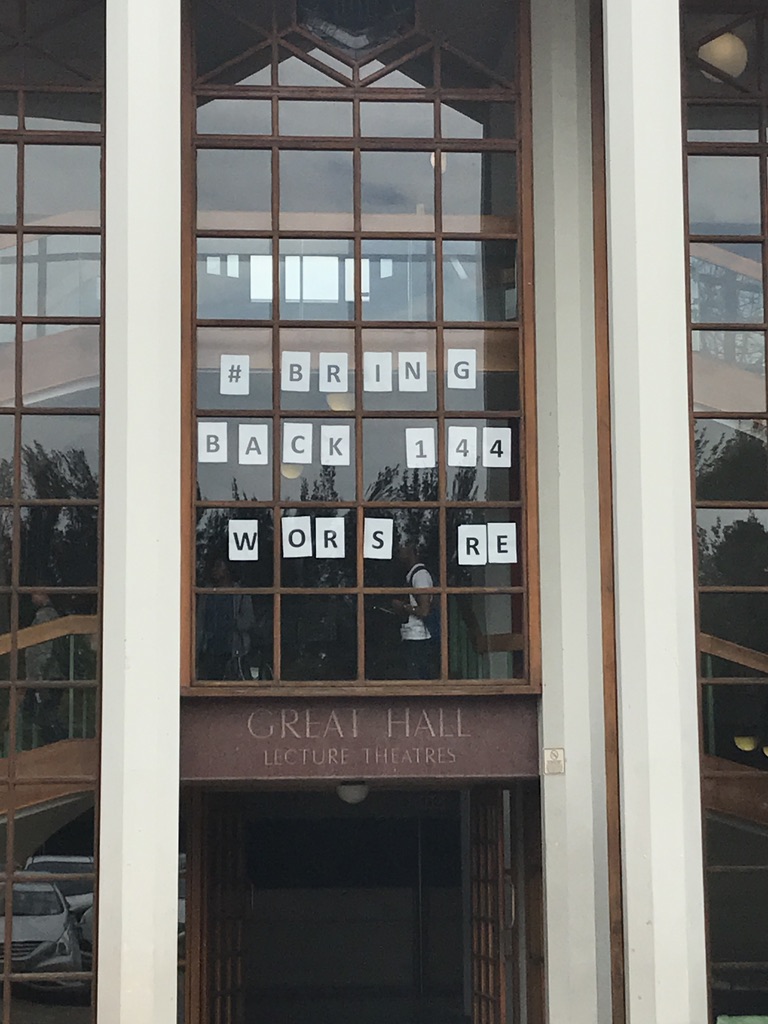


From there we headed to a quick take out lunch at a great deli in Greenpoint – Giovanni’s… where we all got sandwiches, and then on to University of Western Cape (UWC) where Chris gave a lecture in the Education Department – on his research into the inequities in education in South Africa (K-12 schools). UWC is predominantly a Black and “coloured” university, with some departments having White students (Dentistry, Physics). Even here one can see the differences. University of Cape Town, where I gave my lecture, is a spectacular campus at the top of the hill edging the mountain and having spectacular views of the whole city – Albie’s alma mater, which he described as “the ultimate ivory tower” – physically as well as in practice. UWC is on a flat site; it’s located only about 10 minutes from townships like Philippi, and its grounds and buildings look worn. After Chris’ talk, he and I met with some faculty and students from UWT met with students from UWC..
Then after a long day, we headed back to town so that Chris and I could reconcile the expenses before heading out… while we remembered what we spent money on.. and then met up with the students for our last dinner together at Anatoli’s… the great Turkish restaurant Chris and I had been to before. Lots of wonderful starters – followed by main course selections including lamb, lamb, more lamb, as well as chicken and a veggie dish..
Oh I haven’t mentioned much about the great wines (at very reasonable prices) everywhere… I’ve become a big fan of certain Pinotages and Cab Francs… as well as some great blends. And even a few white wines (although my leaning is always toward reds).
I think that’s it for the 19th. Tomorrow we go back to the township to say the good byes that couldn’t be done on Monday… More on that in a separate email – the last of the set.
All my best.
Fern
PS – One thing I keep forgetting to mention is that there are many funny signs around town – some casual and some clearly professional. There’s a serious drought in South Africa, so many buses have signs that say – Helping to save water… one dirty bus at a time…
UW in Cape Town — September 18, 2017
Wow.. Our days are beginning to wind down, but today was a killer.
Started out pretty normal… Chris headed out with three students in the car to go to the high school (where each has been doing classes and some tutoring, and lots of meetings with teachers). They always leave at 7:30 am to be at school by 8:00 for the morning teacher meeting “check-in.”
We’d heard that there might be (or would likely be) a taxi strike which would affect the townships (or “suburbs” as they are often referred to). There has been ongoing tension between buses and the formal and “informal” taxis in the township. Actually, a very complicated issue. As in many developing countries, the townships (which in some ways are almost like little countries) are not serviced well by public transport. There’s a train in some townships, but most likely if you take the train you need a bus and/or a taxi to get to your job downtown and also back home. (This chews into your salary by at least 30%.) Anyway, the formal taxis (cumbis) pay all sorts of fees and the informal taxis aren’t paying the fees that have been imposed. So this morning there was a strike of the taxis — making it virtually impossible for people to get into or out of the townships. As in many demonstrations many of us know about in the states, the poor wind up physically destroying or damaging their own communities because they have no place to unleash their anger. The taxi drivers are “organized.” They are frustrated at how the police treat them – they are pulled over frequently because they haven’t paid the fees imposed on them. Often many people (men) pool their money to buy a car to become a taxi (informal)..
So, the group that works at the school left as usual by car with Chris driving — to Sinethemba High School in Philippi. They left, as always at 7:30 am to get to the school at the starting time, 8:00 am. By about 7:30 am, I was getting lots of WhatsApp messages (everyone here uses WhatsApp instead of messaging and emails.. But that’s another story). First I heard from one of the NGOs that their staff could not get to the organization due to the strikes. Then I heard from another. Essentially, all were saying “do not come today.” I tried to find Chris and eventually heard from him that the drive in to Philippi was very complicated and he needed to keep turning around, that at least one bus had been torched and that people were throwing rocks at cars. Fortunately, he made it to the school where things appeared safe. But tensions were high at the school, including the issue of whether or not students were seriously taking the “matric” exams – tests that determine whether or not they will graduate and/or attend university. He told me that he was taking our students back to town at 10:00 am.. Usually they stay until 3 pm I had also been in touch with the leaders of two other NGOs who said that their staff could not come to the organization so they were pretty limited.
I decided that the other students would not go into the townships today and that we would have a meeting at 9:45. The meeting went fine although students were worried about their colleagues. I assured them all was well. We agreed to meet end of day at 4:00 pm– after students from the school would be back and those going to programs that were not in the townships would also be back… and once they could all come to grips with what was happening.
Chris returned with the students at about 11, but I was at one of the other organizations; we finally met up for a late lunch. He described the situation as “mounting rage” over the strike, the disruption, lack of services and so much more. In any case, one of the assistant principals at the school “escorted” Chris in his car out of the township, since I think a car filled with obvious foreigners and three white people was probably not the best of situations. Students took it pretty hard– to be expected since they witnessed violence and were pretty scared. Beyond that they saw the impact on the school in that many classrooms were only half filled and many teachers could not get to school. School closed at noon.
At 4:00 we held a debrief session with students sharing their sense of what happened… and ended with ice cream… always a good way to end a heavy meeting.
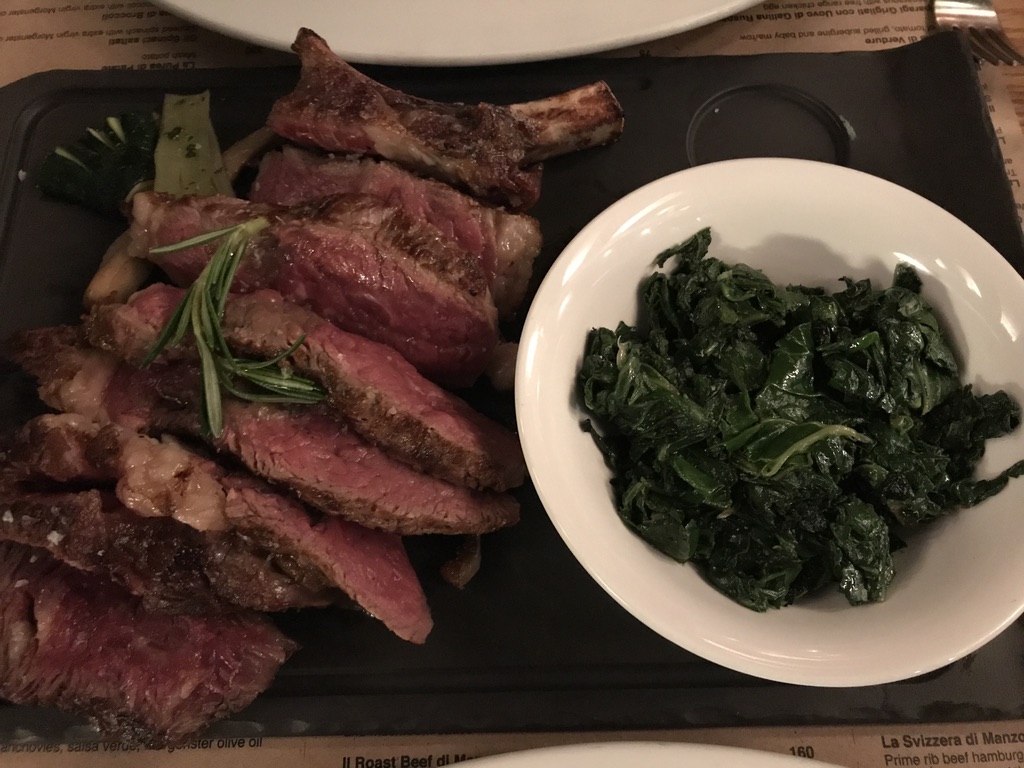


Chris and I had dinner at a place called Carne which sort of lets the steak tell its own story… as the wait persons (many wait persons in Cape Town are from the Congo — another story for another time) bring a huge platter of raw meats of different types to your table to make your selection– prime beef, lamb, venison, hanger steak, spider steak, prime rib on the bone. And even a 1.2 kg T-bone. Once you decide on your appetizers and the kind of meat you want, they bring a platter of many different sizes of that meat for you to select the actual portion you will have cooked for you. We started with an amazing steak tartare that came in three separate scoops.. one with anchovies, one with olive oil, one with a chili thing… all were fantastic, even though I really don’t like anchovies. We also had sweetbreads—simple in lemon and garlic… And then we shared one of the meats.. A good way to end such a messy day.
Tomorrow (Tuesday) we go to Albie Sachs’ house and then to Chris’ lecture at University of the Western Cape… and then end with a Turkish dinner with all the students. I head out on Wednesday afternoon… but even Wednesday (when the program is actually officially over) has turned into a complicated day… because we will take the students who didn’t get to Philippi on Monday to say their goodbyes to their NGOs… then whisk some students directly to the airport I will come back to town for lunch and then head to the airport…
My final report will be written at the airport or on the plane… So for now, I’m signing off…
See you all stateside!…
It’s been an intense, challenging, sometimes rewarding, sometimes frustrating, always interesting period…
So much more to say.
But stay tuned for tomorrow’s report… just might not get to you immediately – depending on wi-fi…
Fern
UW in Cape Town — September 17, 2017

Molweni –
Short and sweet today…
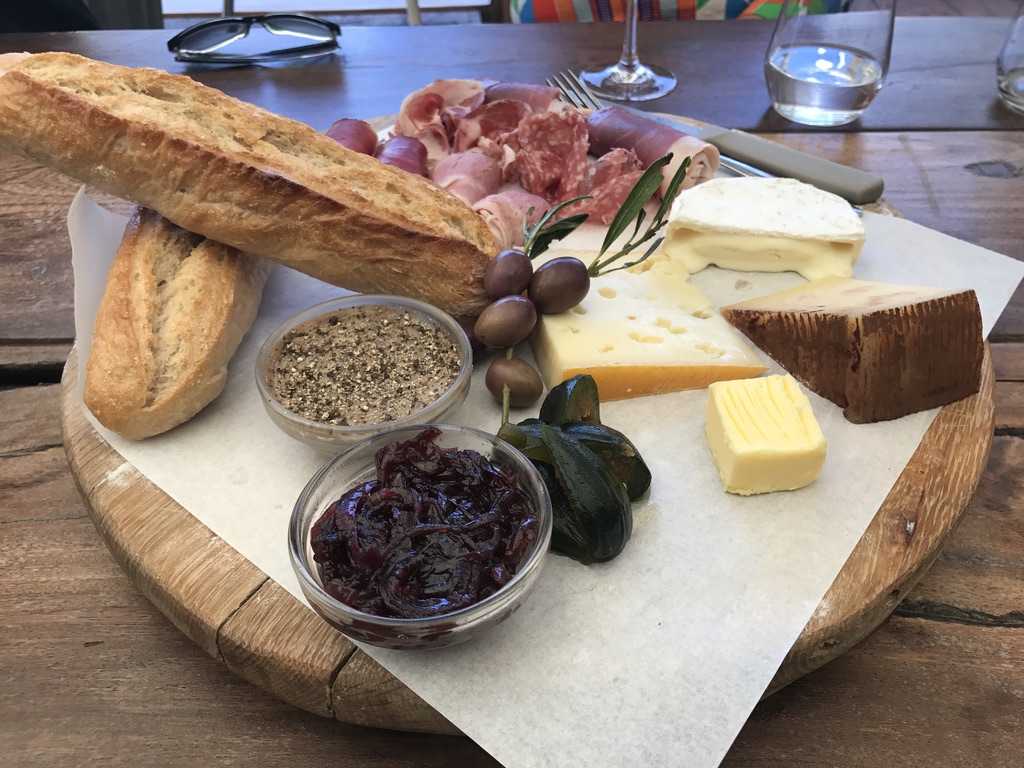
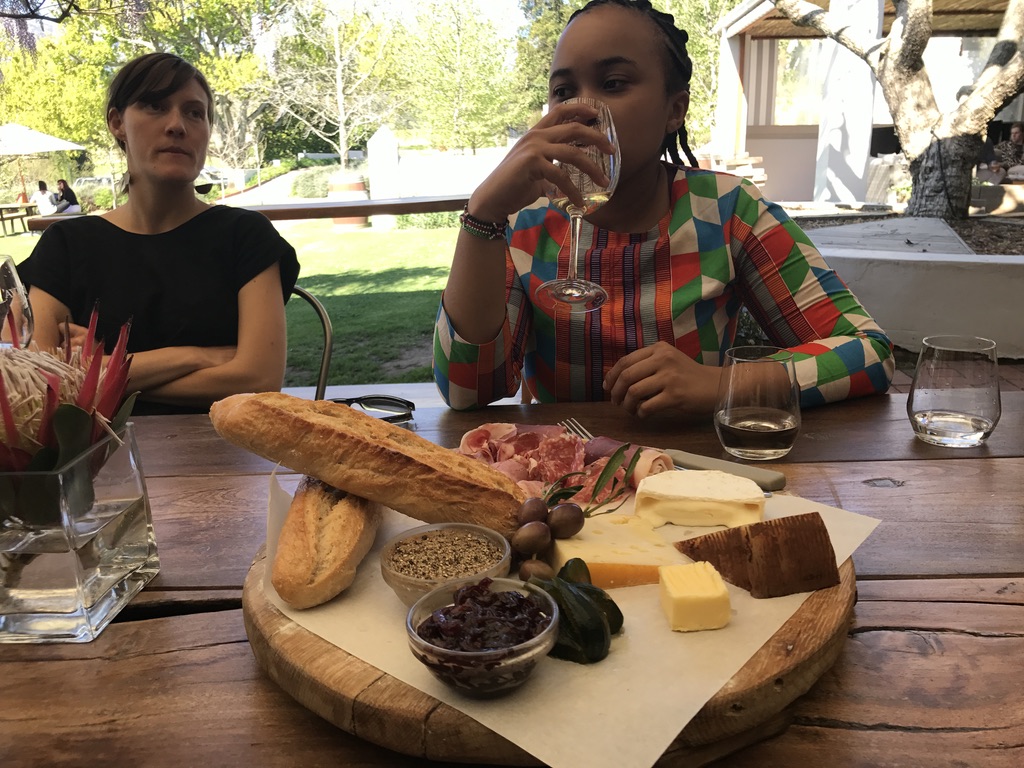
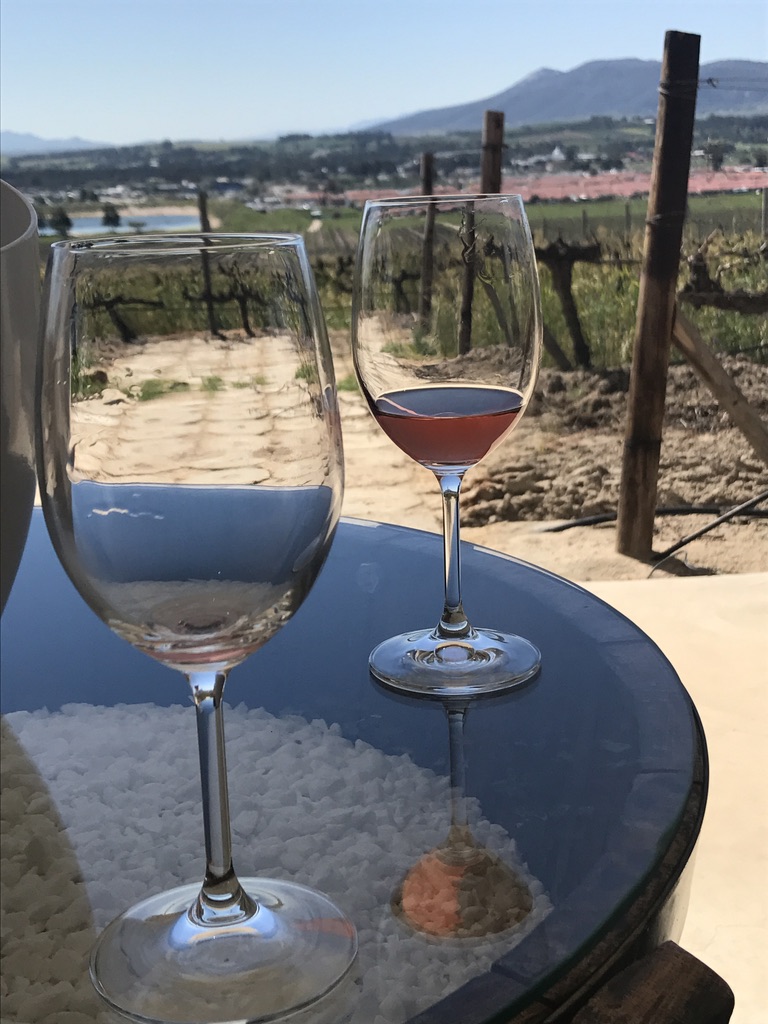
It was a free day for the students… and they each went to different places, and I think some just slept.. Chris and me and the graduate students went wine tasting… Hit up two wine farms (as they refer to vineyards)… with the second one being quite good… We did the wine flights and then ordered more wine… and had wonderful charcuterie platters and cheese platters.. . Sat outside overlooking the vineyards.. and the weather was fantastic. It’s truly another world and a world away from the townships. It was great, but strange in some ways. But still a good day.. and good way to begin the ending of the trip. Tomorrow students are back at the sites and Tuesday we meet with Albie Sachs and Chris does his lecture at University of the Western Cape (UWC).
All good… More tomorrow.. Off to get a salad.
See you all in just a few days.. Dreading that long flight home.
Fern
UW in Cape Town — September 16, 2017
Greetings…
Yet another interesting day – but peaceful and food filled.
Headed with the full group to !Kwan Ttu and then to Langenbaan – about an hour drive.. maybe 90 minutes..
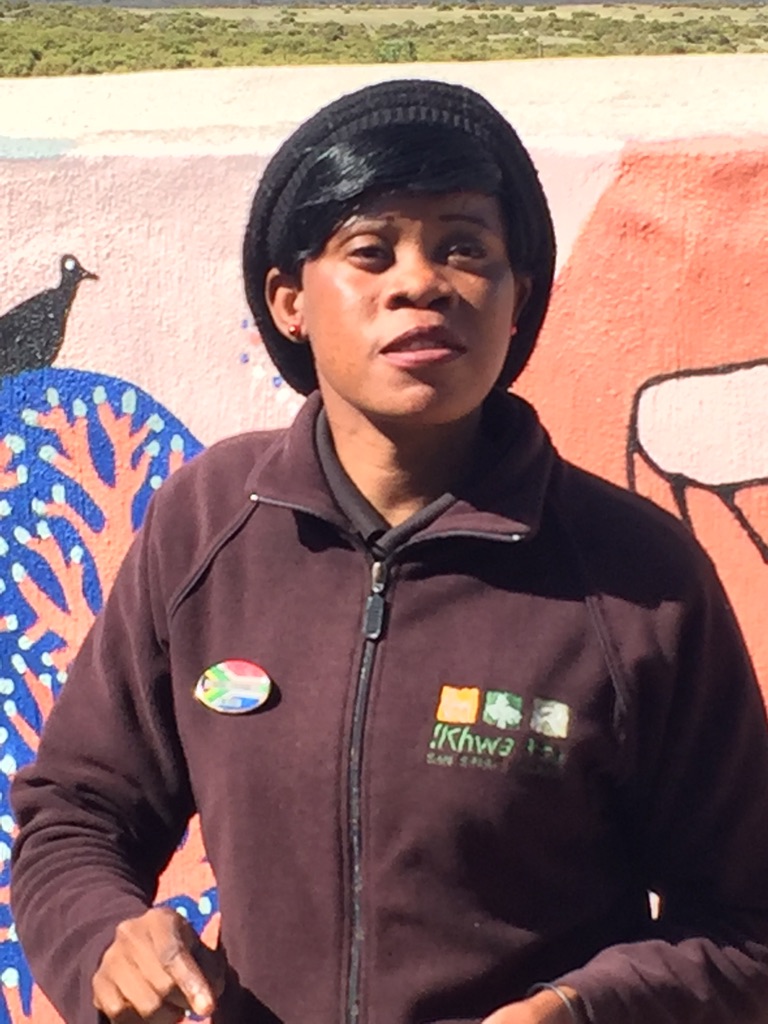
!Kwa Ttu is a center for the preservation of the Koi and San people of South Africa. They’ve created a replica village (a bit touristy, but for a good cause). So, despite the fact that there are 11 official languages in South Africa, many other African languages have been lost and/or are not recognized. There are only 300 people remaining who speak some of these languages and now there are efforts to try to preserve them so they do not get lost completely. I don’t think I mentioned that all of these languages use “clicks” in their pronunciation and there are many different clicks you have to learn. Some are dental clicks, some are palate clicks, etc. Our students have been trying hard to reproduce the correct sounds and a few have become pretty good at it.
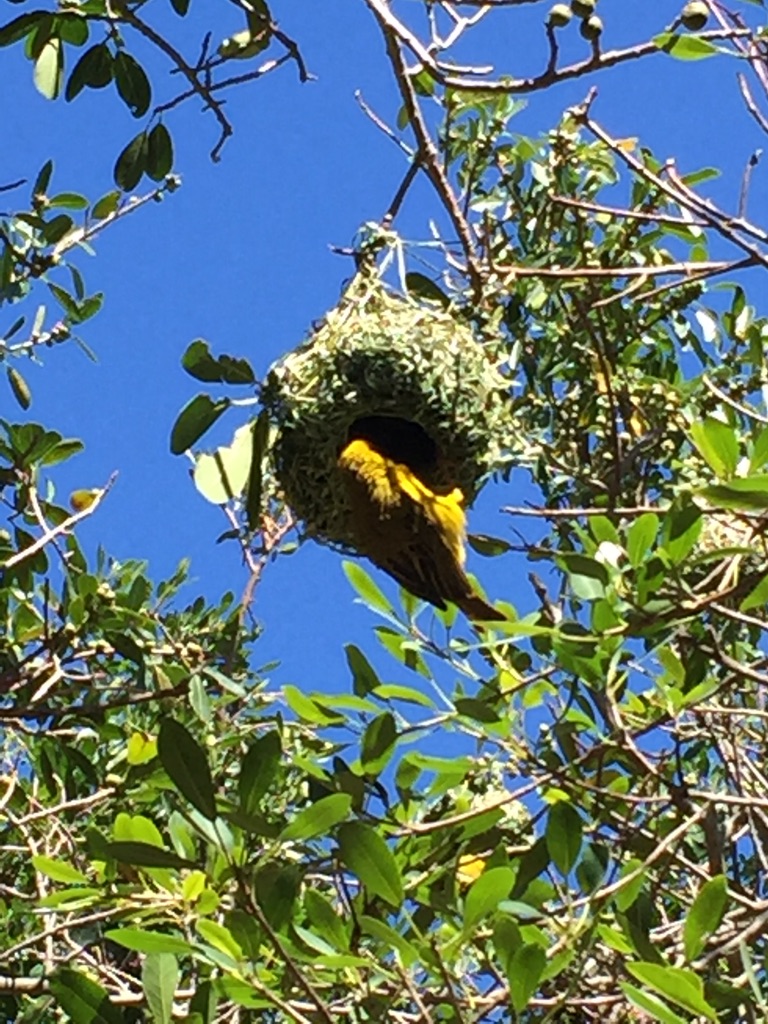
Anyway, at the entry of the center is an amazing tree that is inhabited by about 100 very interesting nests that house the yellow cape birds. In typical South Africa fashion, we had a time specific schedule for our tour of the San .. but the group before us came an hour late and had twice as many people as they registered, so our tour got delayed and we wound up doing a much shorter tour than expected. All good. By the way, they have this great system for the chickens… they actually lay their eggs in these file cabinet drawers that are open on one end (by the chicken patch) and the workers just open the drawer from the other side and get the eggs!
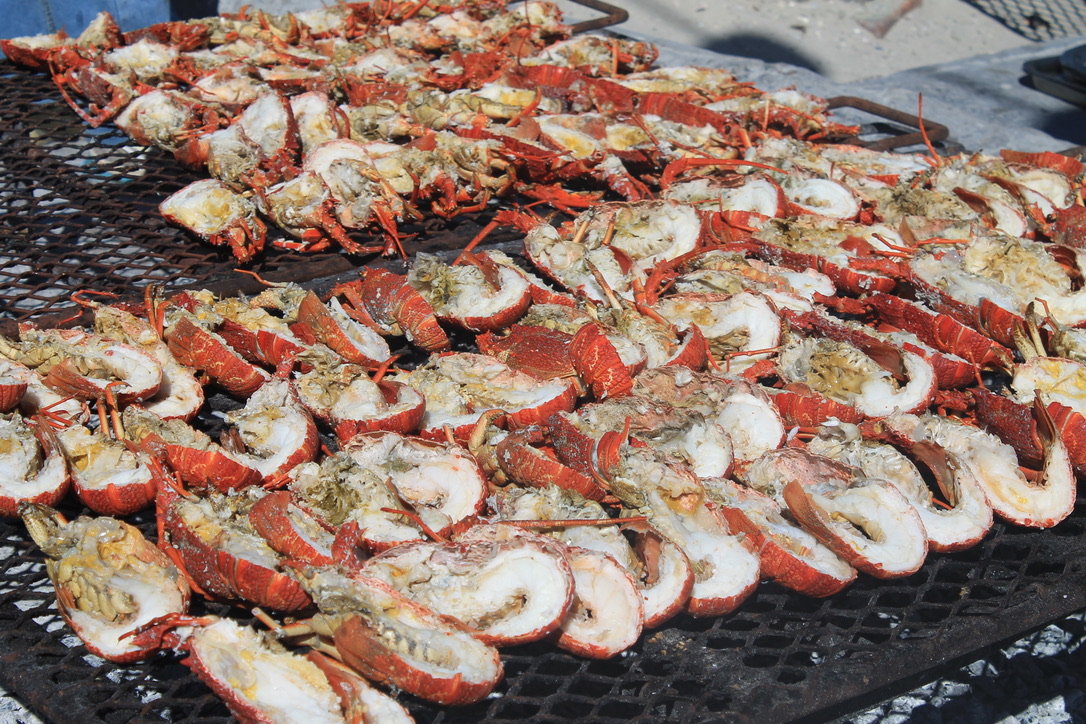
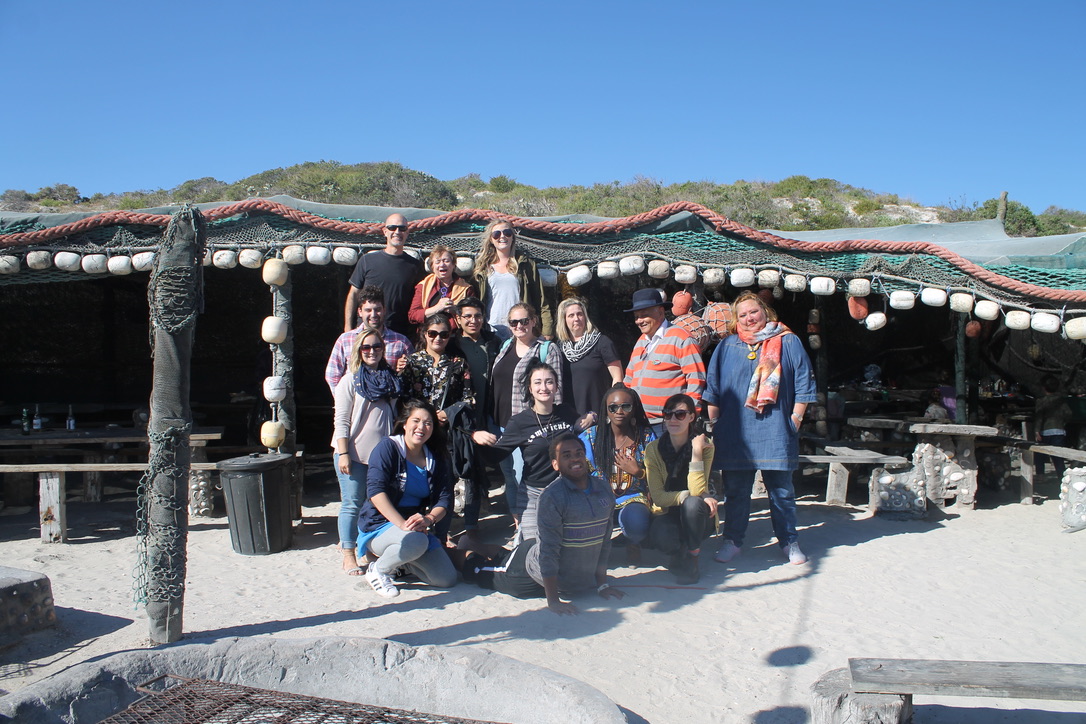
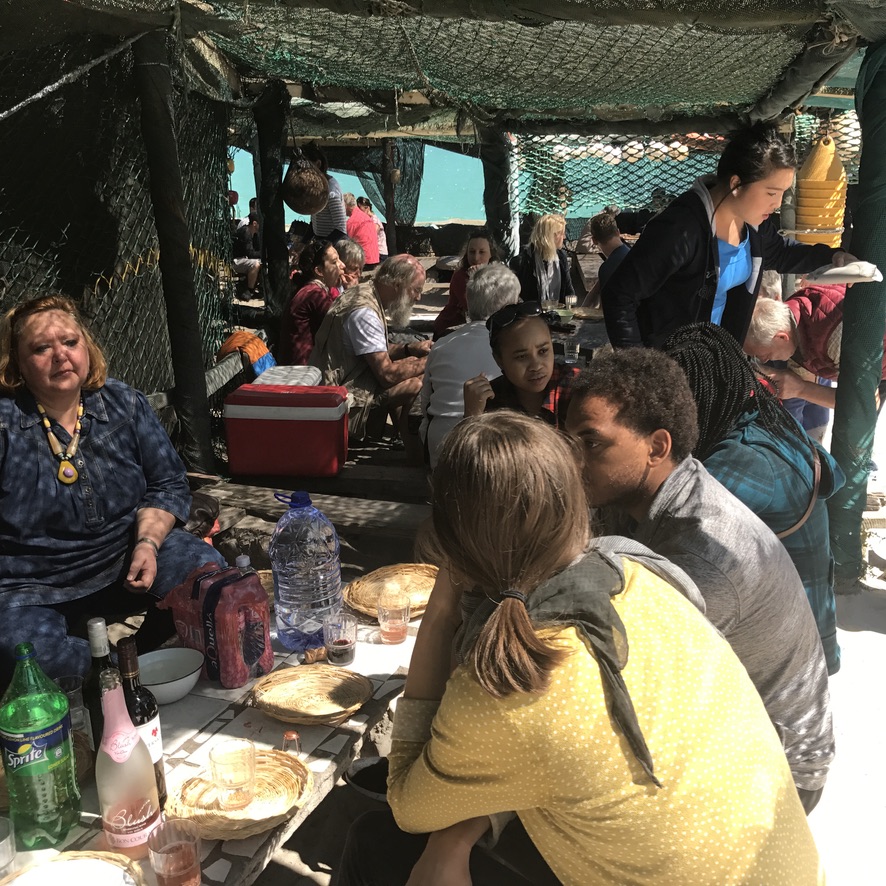
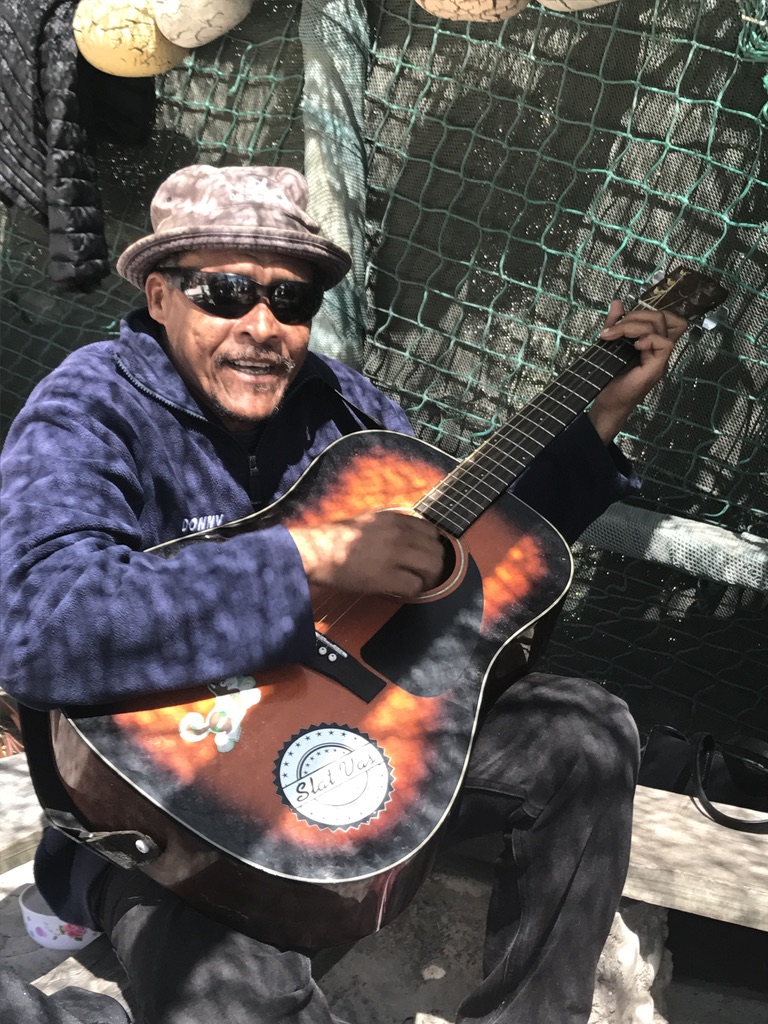
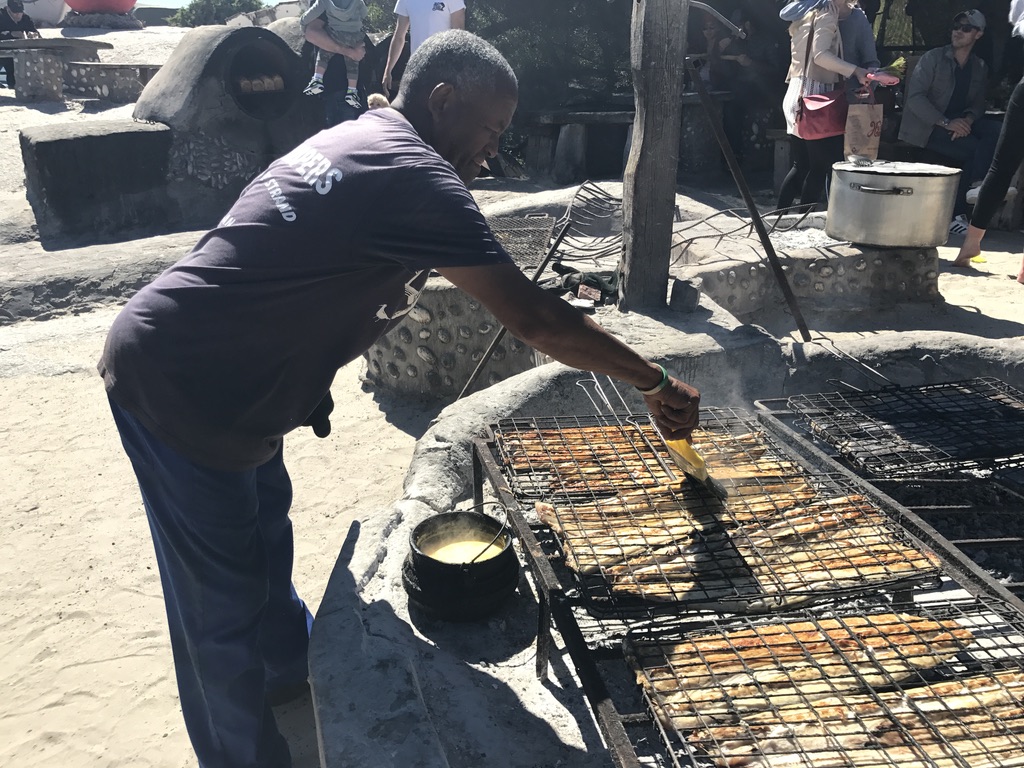
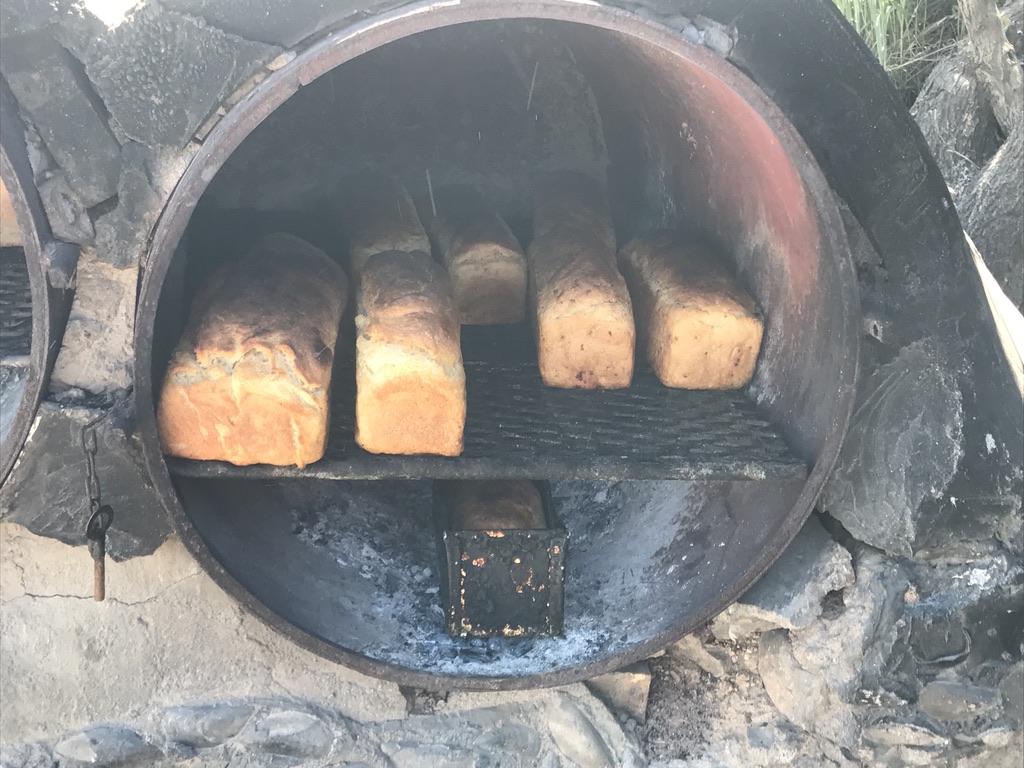
From there we drove to Strandloper – an outdoor, on the beach, restaurant that serves a 10-course seafood lunch served open-air, at the water’s edge, with a great view of Langebaan Lagoon. There’s live guitar music while you eat.. and the meal takes about four hours.. starting with mussels and ending with lobster (crayfish)…and includes fish curry, angel fish and snoek, grilled haarders, smoked angel fish, snoek with sweet and steamed potato, and more. We brought our own wine and soft drinks… It was great and delicious… except that I decided to take my shoes off and walk on the beach… and somehow I stubbed my little toe and I think I may have broken it.. It’s black and blue and pretty sore, but I put a bandaid on it.. and I’m sure I’ll live. Everyone was really exhausted with several students asleep on the van for the entire drive home.
But Chris and Samu and I let the food settle in and then went out to La Boheme in Sea Point for an array of tapas.. including amazing steak tartare, salad, abogados made from ostrich meat, and pumpkin gnocchi… Then we were all ready to turn in
Tomorrow is another day. The days here are really getting shorter. I’ll be back in the office end of the week.. hard to believe. I’ve got a lot on my plate when I return.. so I’m already obsessing about deadlines and how to get things done.. I suppose my 34 hours of travel and flight time will provide good quiet work time for me to set up shop!
Best — Fern…
UW in Cape Town — September 15, 2017
Moleweni – Friday, September 15, 2017
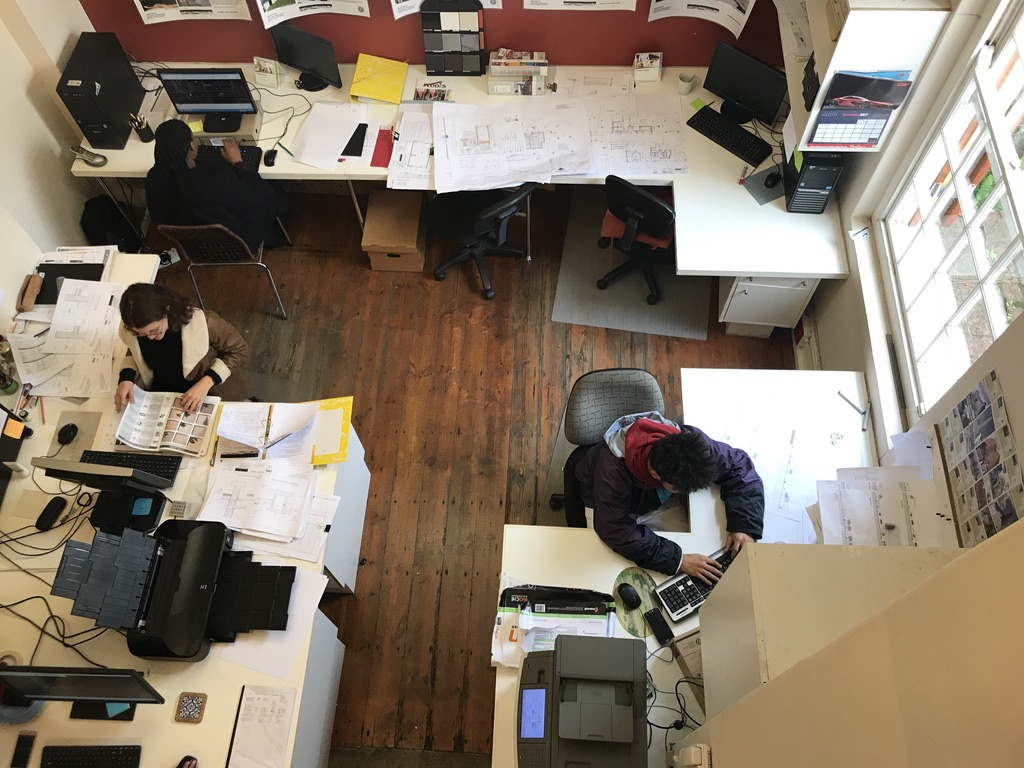
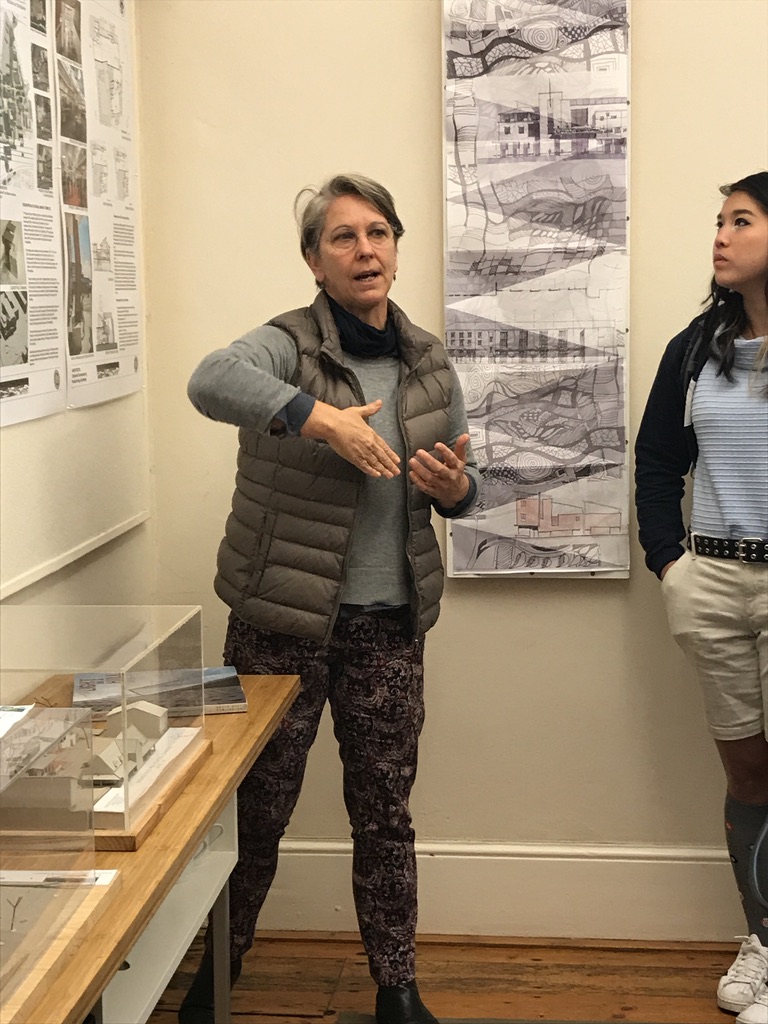
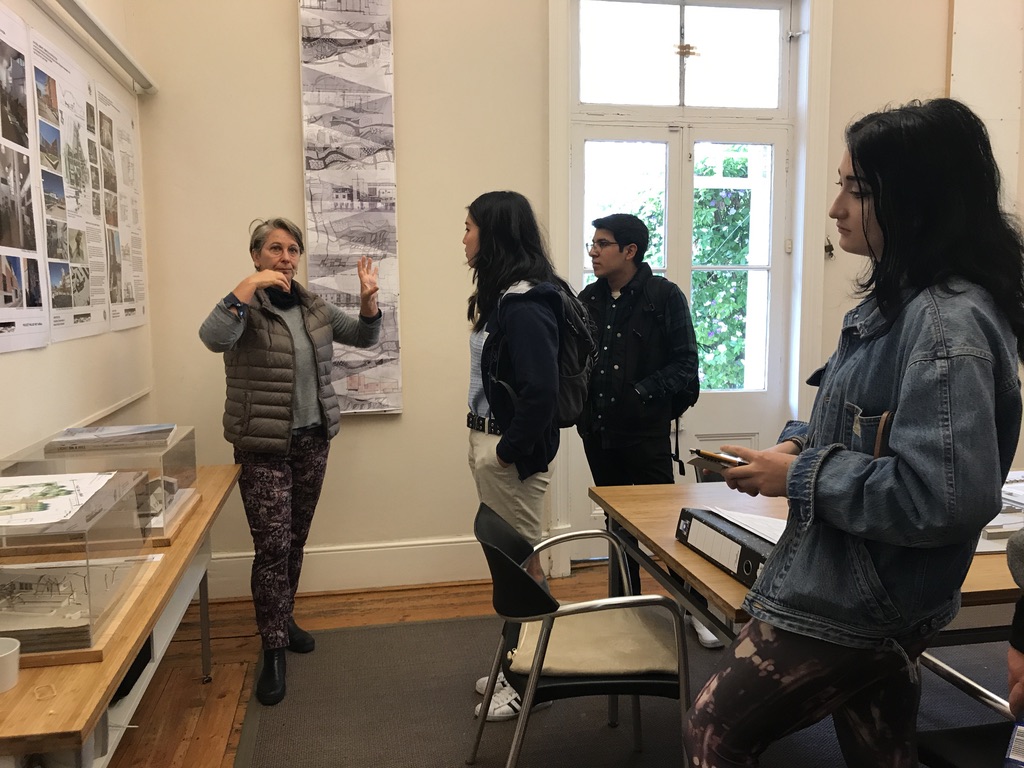
Started the day (after morning chai at my favorite café), by heading to Tarna and Nickie’s offices with all of our students. We got a little tour of their offices which are located in a nice part of Cape Town inside a house that includes an addition. The front half of the house is the office and the back part is where Nickie’s mom still resides. Apparently her dad was an architect (just passed away one month ago) and also a professional guitar maker (actually all string instruments). It’s the house Nickie grew up in and when she started her practice her parents said – “Why not save money and set up the office here in these front rooms,” which she did. Over the years she took over more space and they renovated so that the office and the house are really two separate but connected spaces… and at some time Tarna moved into a part of the space with her firm. They frequently collaborate on the same projects so it seems to have worked out well.
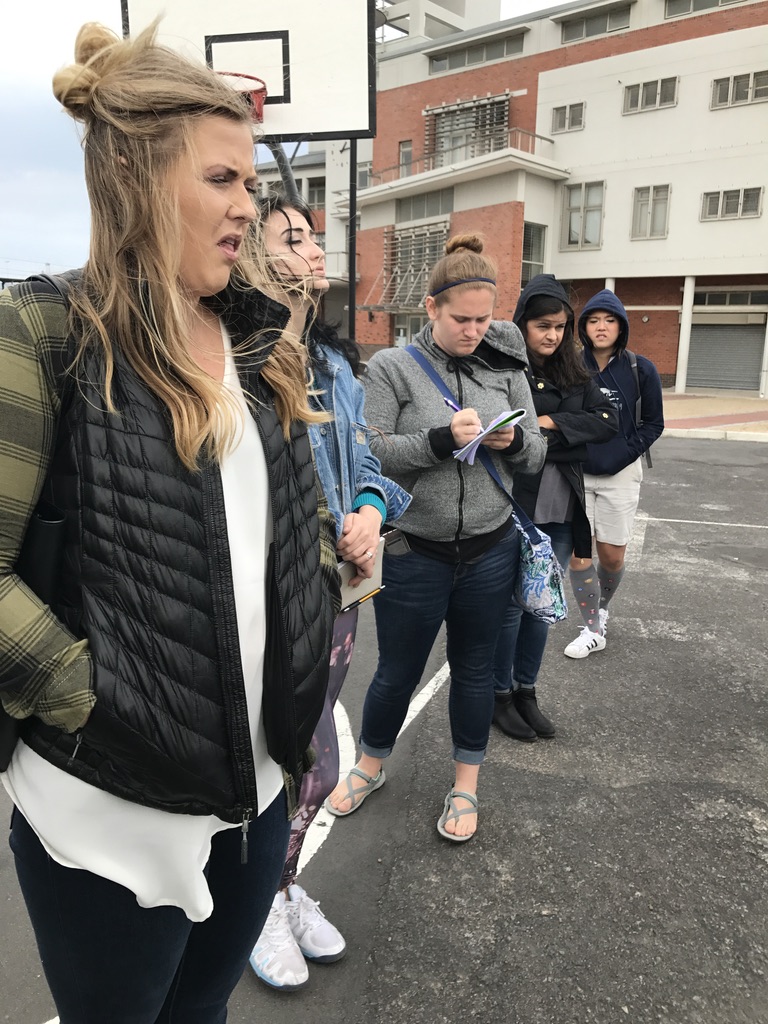
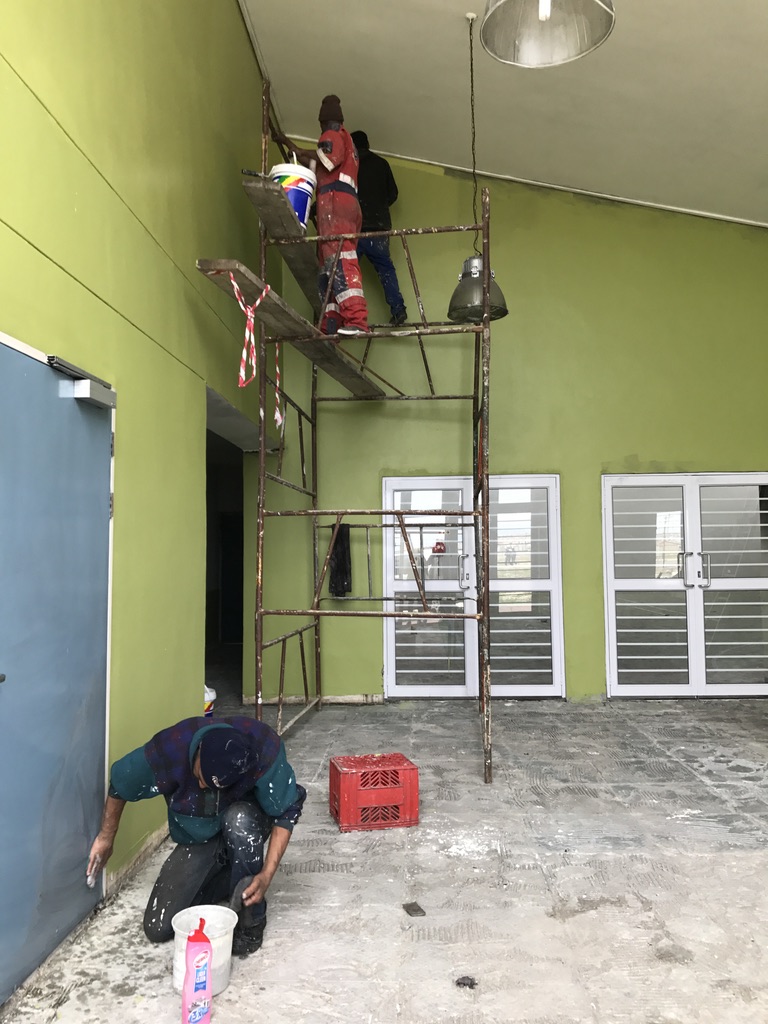
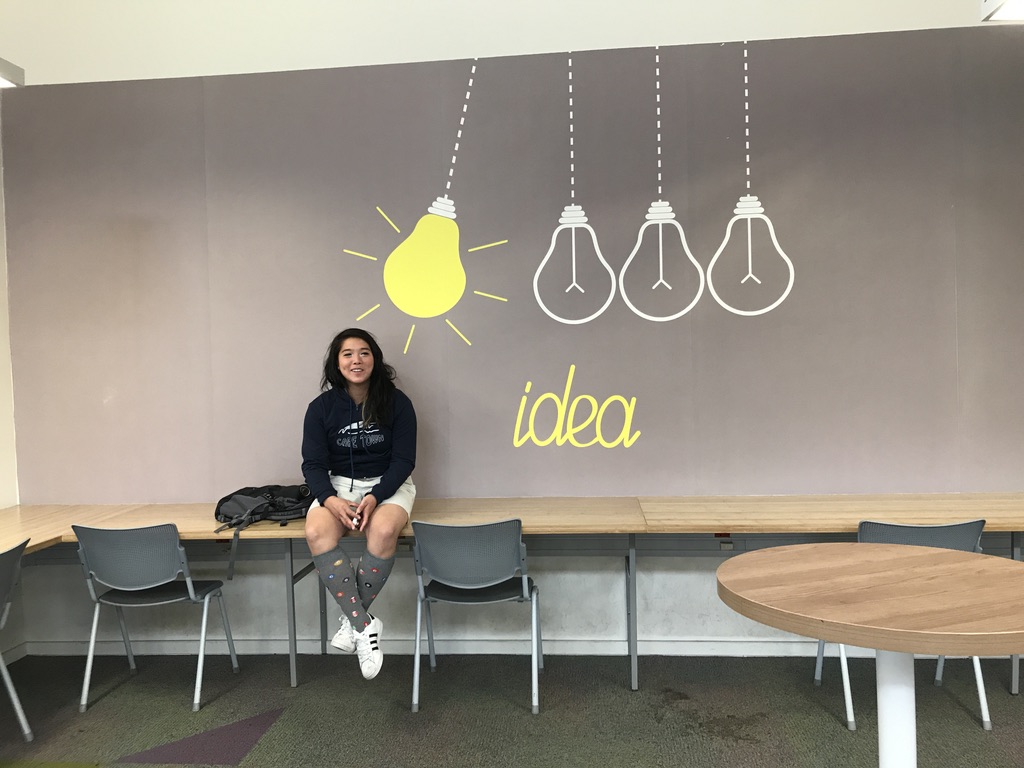
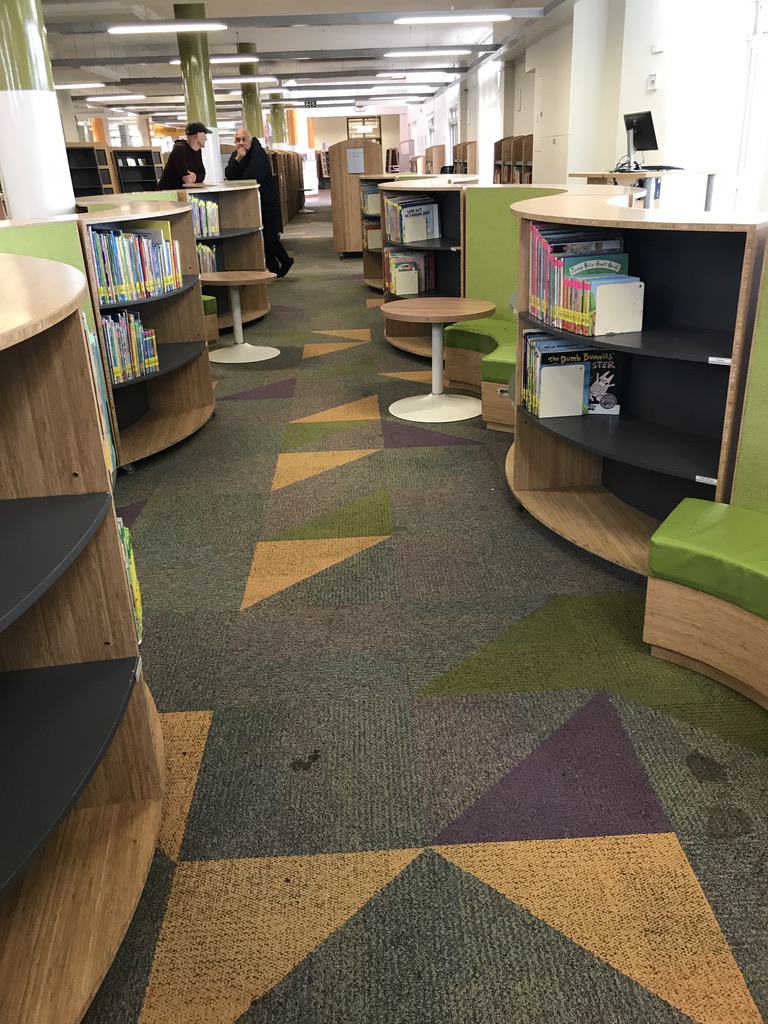
From there we headed to Khayelitsha (where they had designed two libraries). Khayelitsha is the largest Black township in Cape Town, with a population of somewhere between 500,000 and one million (depending on what resource you use or who you speak to – statistics here is another problem and the census is not accurate at all. Around 70% of residents live in shacks and people walk 200 meters or more to access water. Unemployment rates are huge (60-70% and those that work are earning about $1,500 per year or less. This is similar to other townships, except that the population is larger. Khayelitsha was created during apartheid as a residential area for migratory workers that were needed in the city.

Khayelitsha is also interesting because it has both “informal” housing (shacks) and “formal” housing (more substantial housing that was built recently by the government. The formal housing is structurally more sound but often – while it has a shower – doesn’t have water connections. We’ve also seen government housing with photovoltaic panels (one per house, which I assume is for hot water) but they are not necessarily connected and many are not facing the right way to capture the solar power. Khayelitsha is also a good place to understand how apartheid functioned from a physical standpoint. .It has a few main roads (I think just four) that enable access into the community and during apartheid those roads would get sealed and were guarded. In order to get out one needed a “pass.” The physical design enabled the closure of the whole community.
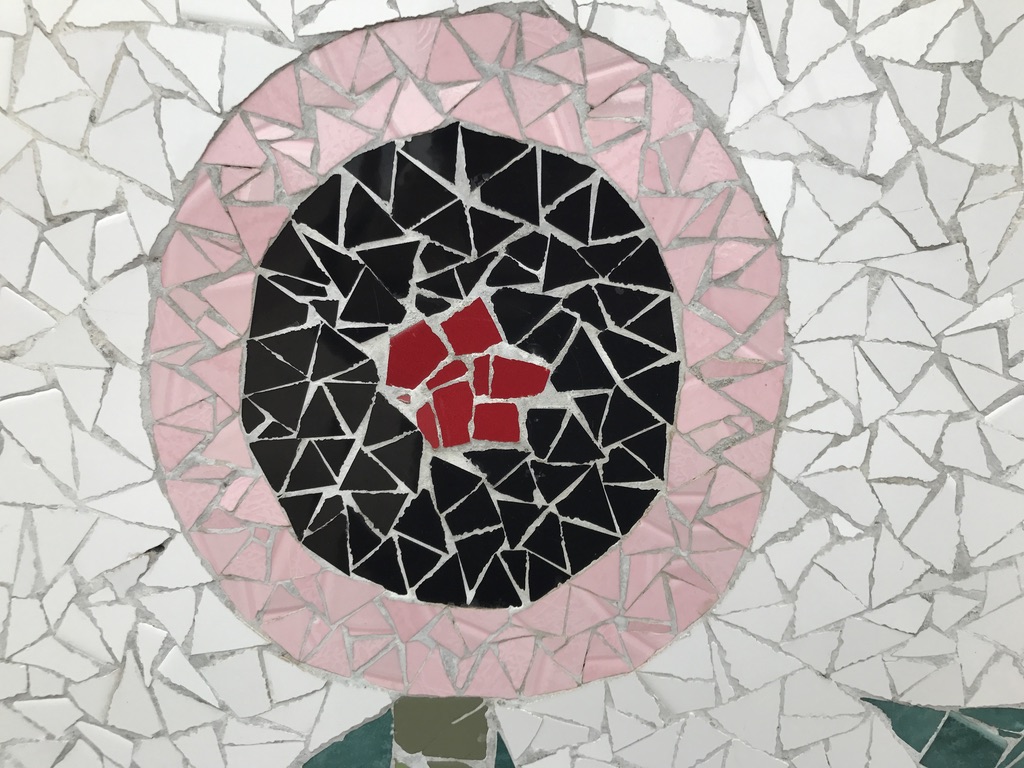
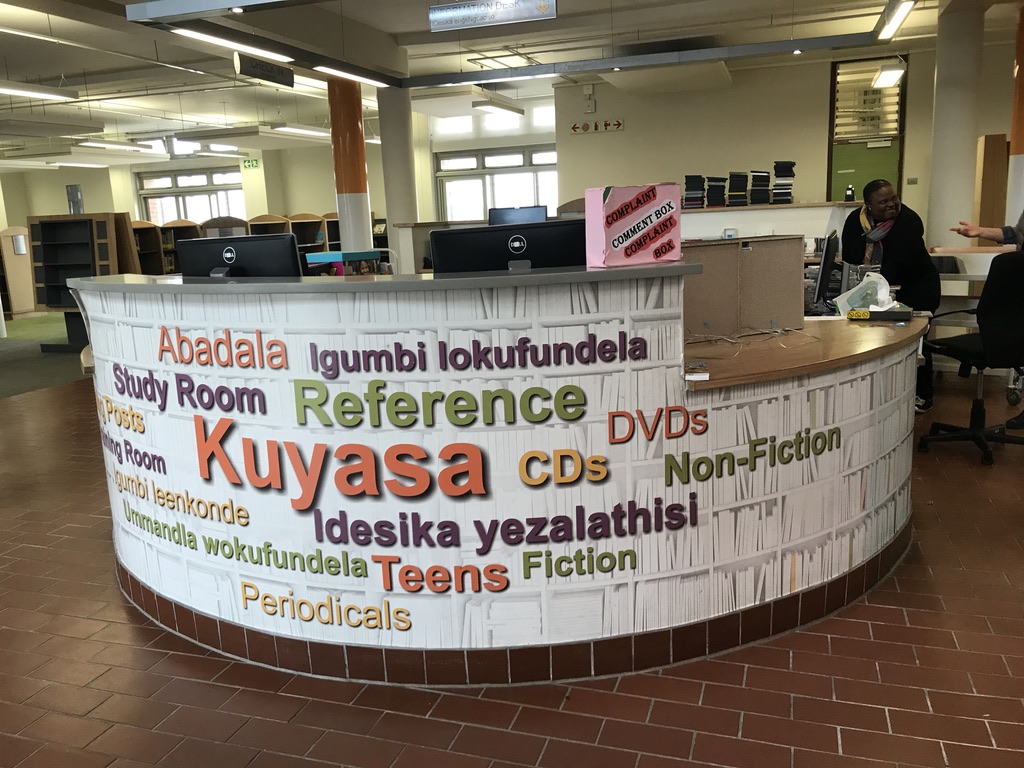
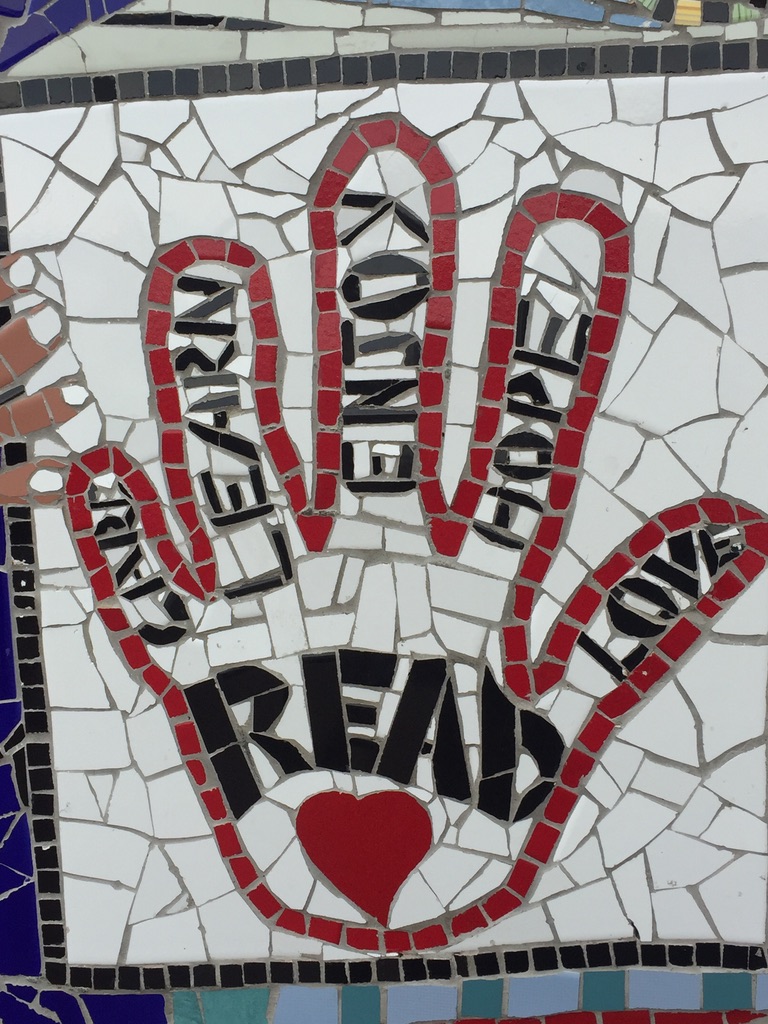
Tarna and Nicola took us to see the two libraries they had designed and explained a lot about the bureaucracy of working on government projects and the difficulty of getting innovative ideas implemented. They constantly mention that they believe that the work they are doing is “setting the bones for the beginning of a possibility!!” But they did a great job and the buildings are bright, energy-efficient (even if the maintenance people are having a hard time keeping things running), thoughtful about the users, and more. They also engaged local artists and artisans to do tile work and window screening which was great to see.
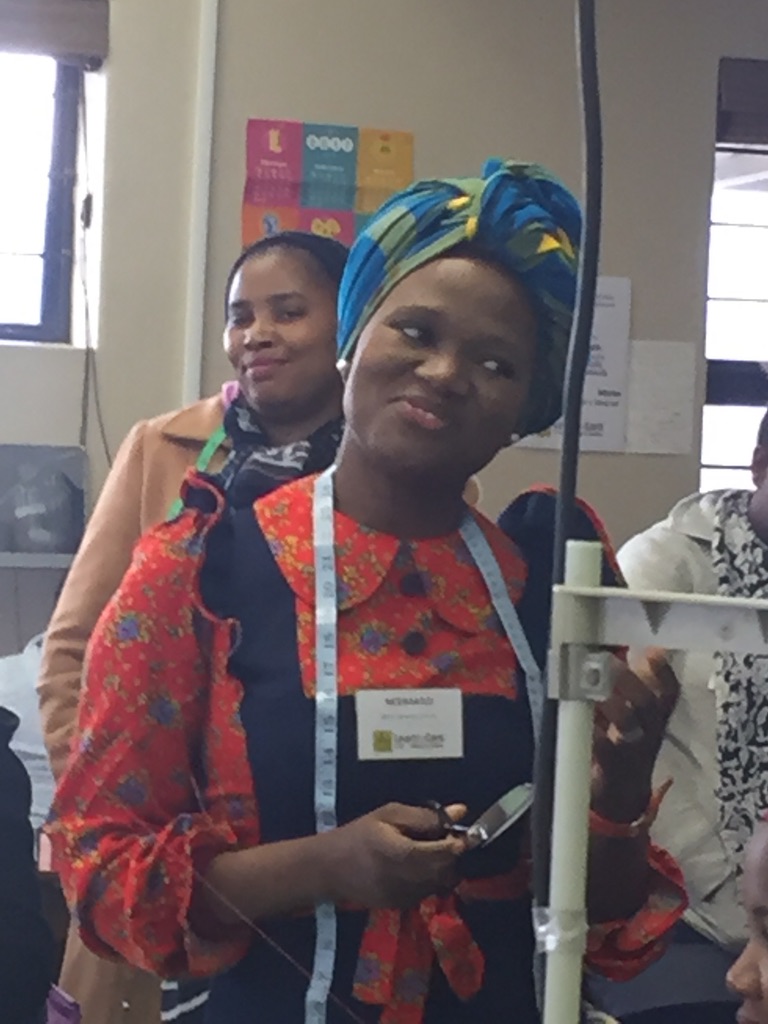
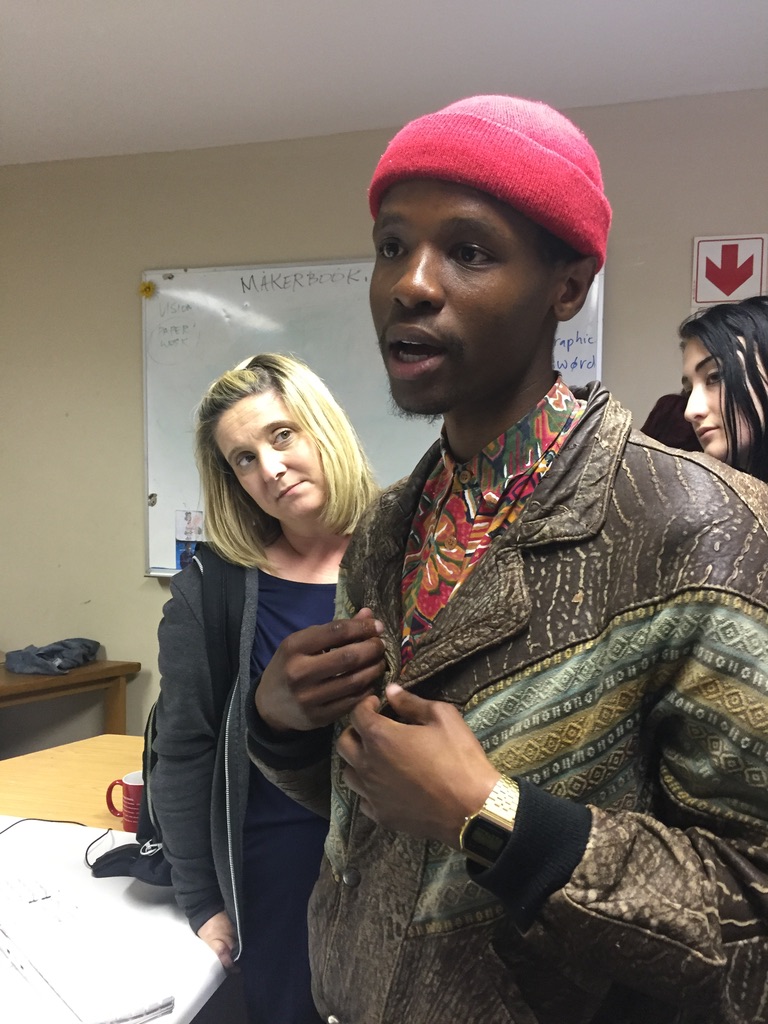
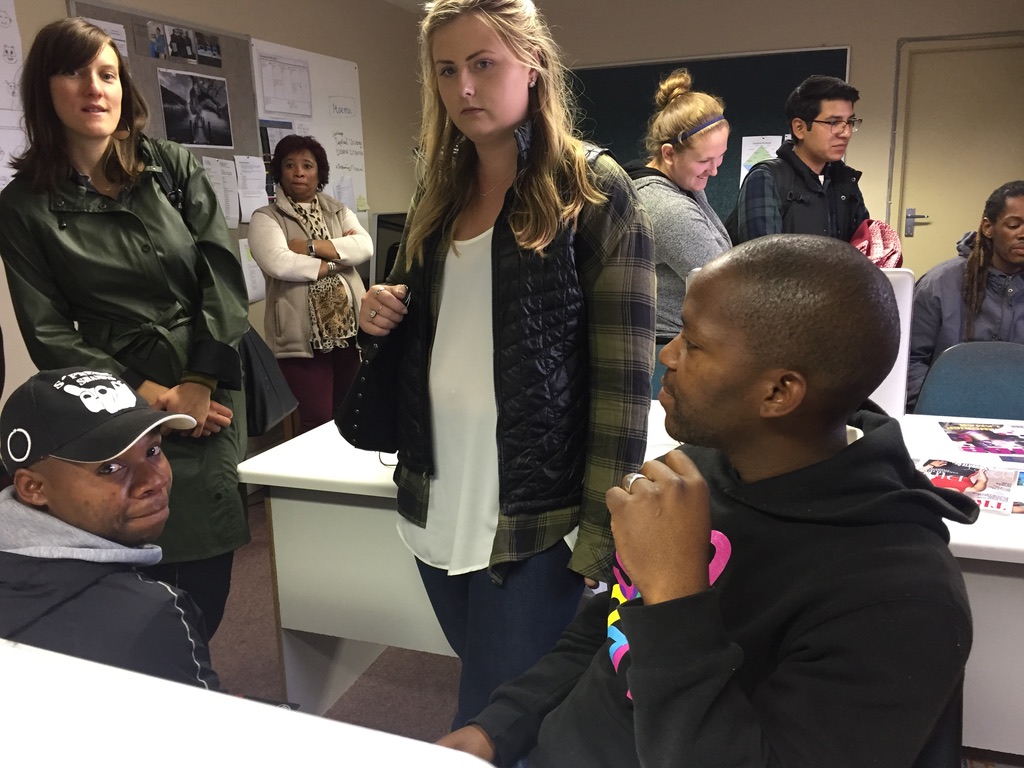
After we visited the libraries, Tarna and Nickie arranged for us to have lunch at Earn to Learn – a nonprofit that teaches job training skills to very low income people. We ate a great meal prepared by the woman who teaches restaurant skills… and then we got a tour of the whole operation. The teach graphic design (all male students), sewing (all female), baking (women), sewing production (women preparing for factory jobs) and woodworking (men). Still the organization is solid, has a good track record, and the products they produce and skills they learn are clearly top notch. Once we left Khayelitsha, we headed back to the CBD and then had dinner at a great Ethiopian restaurant (Addis) with the grad students. We were joined by Samu, an engineer who lives in Jo’burg and is a friend of Chris’. Samu lived in the US for two years as a Fulbright student doing graduate work at Washington State University.
Weather today was extremely windy, so much so that at times I needed to walk backwards
UW in Cape Town — September 14, 2017
Molweni –
Thursday, September 14….
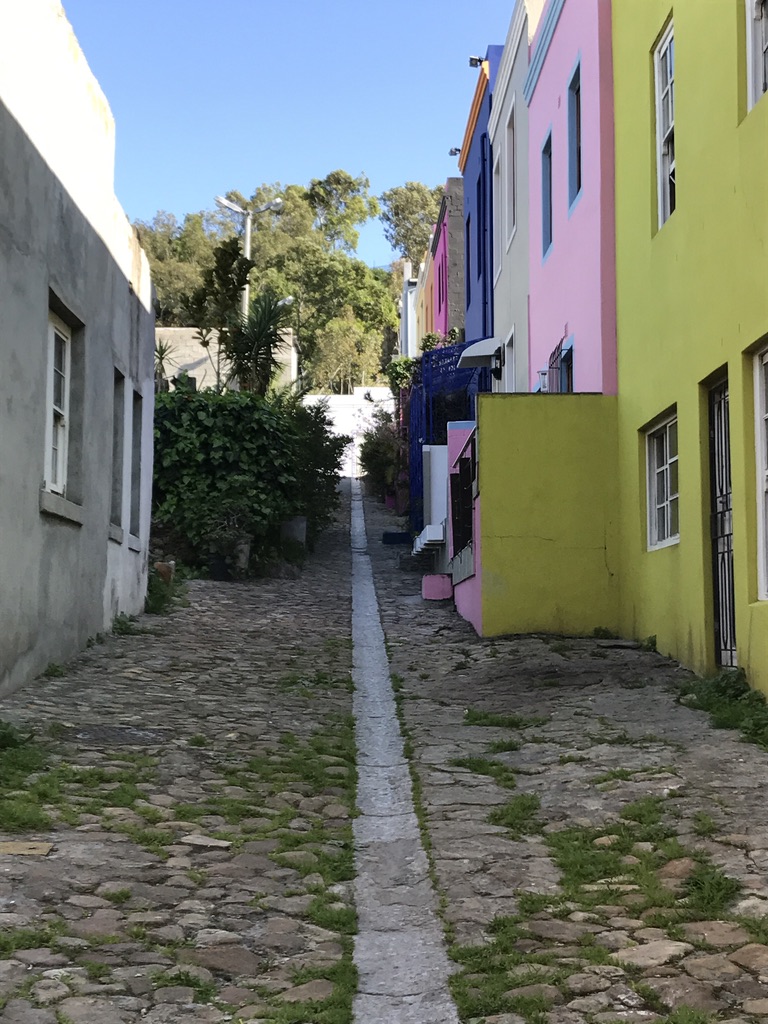
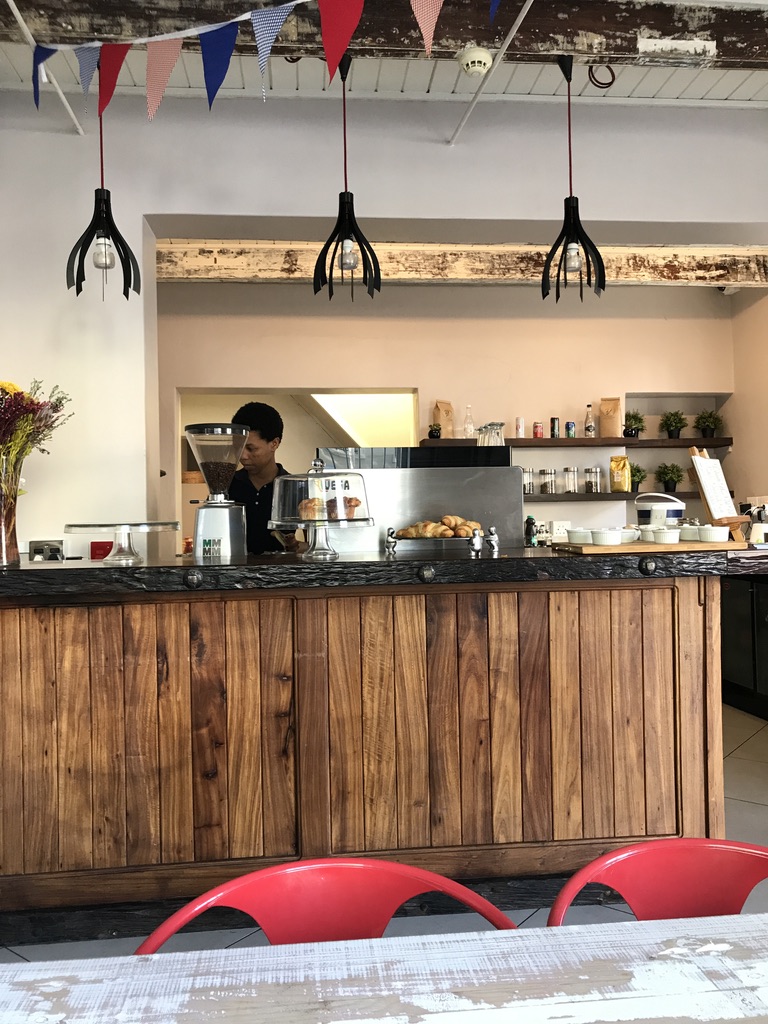
I had a somewhat leisurely morning since I didn’t go on the van to Philippi since I needed to get to University of Cape Town to meet faculty for lunch, before my talk. I strolled to the little café… I’m a regular now… for my chai and homemade muffin/scone..
I took a taxi to the University… which is huge.. about 30,000 students on an amazing campus that is divided into three parts – upper campus, mid-campus, and lower campus. The upper campus is nestled into the hillside and has spectacular views of the city. It is the original campus. It’s quite a trek from lower to upper campuses. Anyway, had lunch with faculty and chatted about my work and what they were doing.. My talk was in the architecture and planning departments. The talk went fine; a smaller than expected turnout though – it was midterm week and the architecture students were all in their studio classes. I think the vice chair of the department who was coordinating this hadn’t ever sponsored a speaker before and didn’t seem to know what time of day was best. Several students came up to me after and said the talk should have been at noon instead of 3:00, when students are in class. Anyway, at the end there were fairly good questions and conversation, and they said if I’m back next year, they would want me to speak at the African Center for Cities which hosts more public facing lectures and the turnouts there are good. Lesson learned.
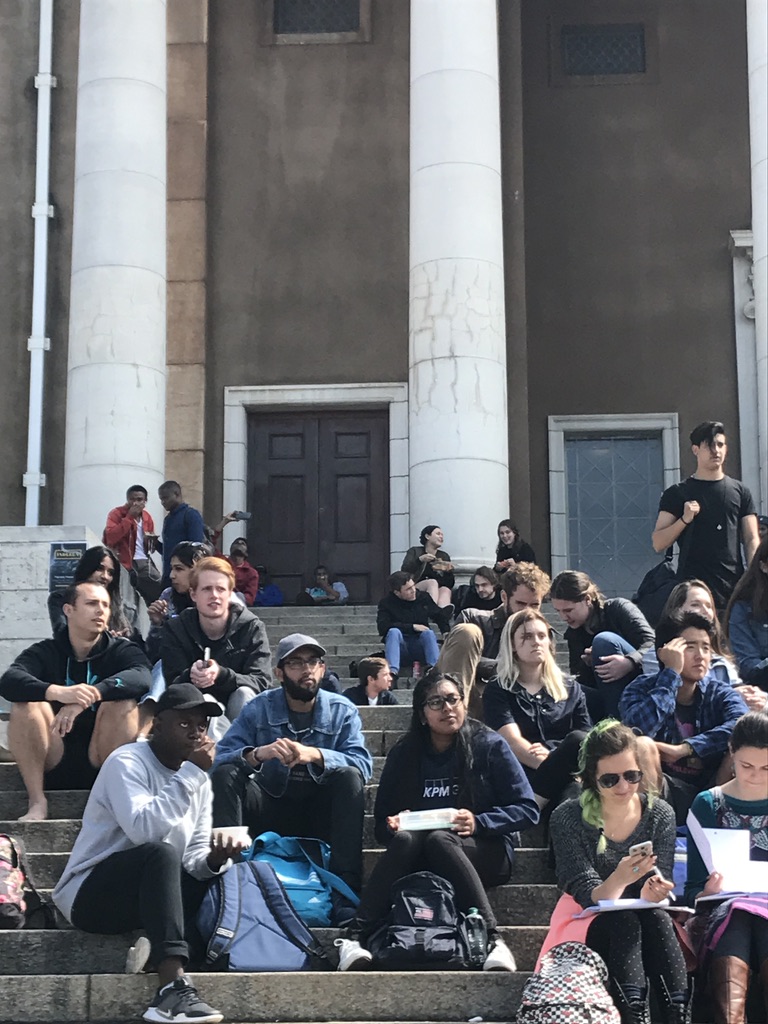
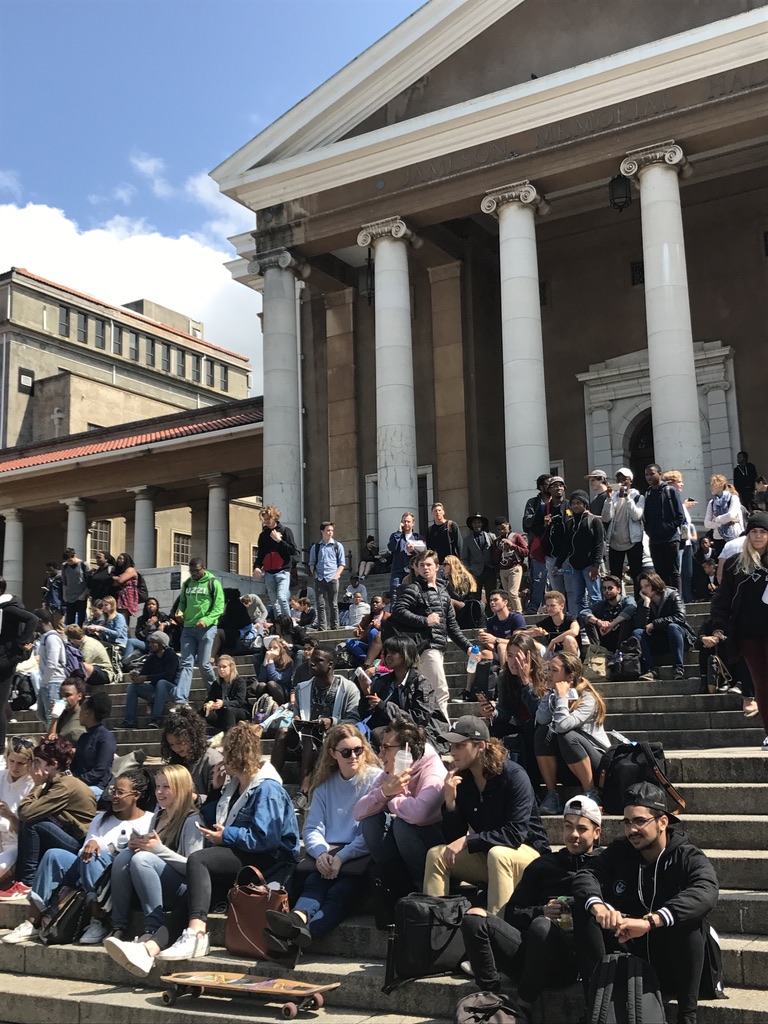
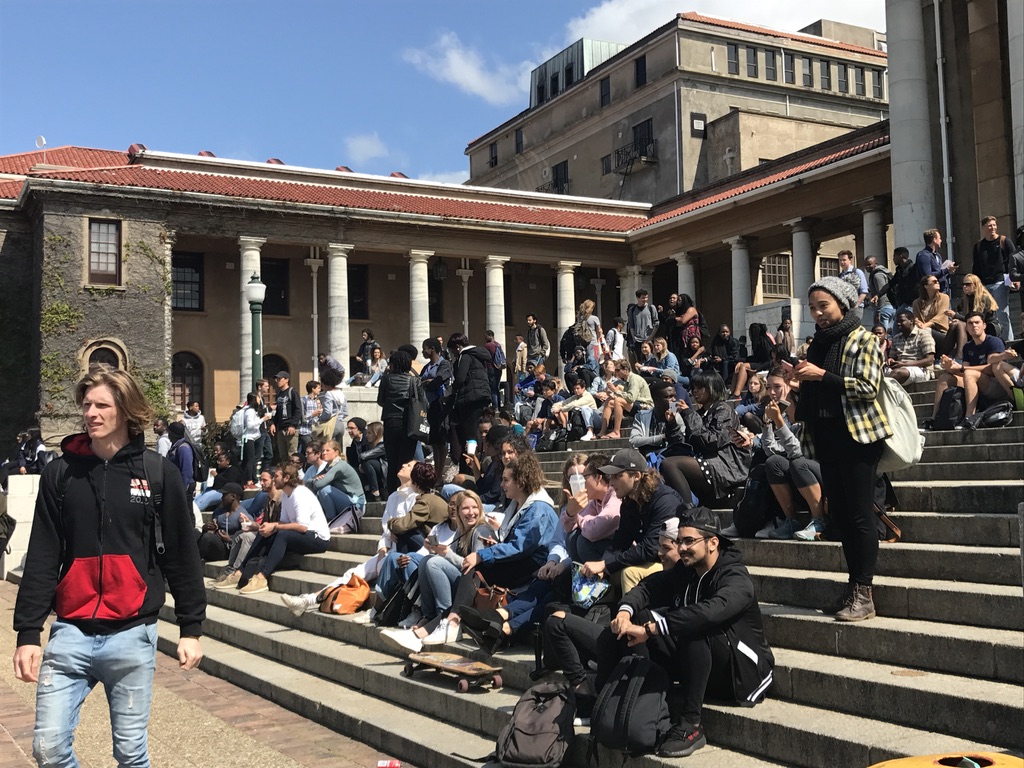
I did meet a few architecture faculty members who are working in townships, and I did learn an interesting fact: Because there is so much student upheaval, the likelihood of students shutting down the university in the 3rd quarter is very high (remember “Fees Must Fall!”), so faculty now “pack” the first two quarters so that if the university closes down for a month or two students are already ahead. In architecture they have created vertical studios so that students are getting more advanced work earlier. I guess the fees must fall movement has already had an impact. Lots more on this topic, but too much to explain in this note.
After the talk, and a brief moment of relaxation, Chris and I headed to Sea Point for dinner at the home of a landscape architect (Tarna) whom we had met in Seattle when she gave a talk there with her architect colleague (Nicola). They were both at my talk. Dinner got complicated, as they also had two young women who had just arrived in Cape Town, and spouses of both architects, as well as children and boyfriend of daughter. Tarna is Jewish (and sort of Orthodox – or at least she keeps kosher, and her children go to or graduated from one of the three private Jewish K-12 schools here in Cape Town). She initially had invited us for Friday dinner, but things got complicated and we said we couldn’t do that.. so Thursday became the alternative. She served a great meal and she has a wonderful and very lived-in house in the Sea Point neighborhood which is traditionally the Jewish area in Cape Town. There are about 60,000 Jews in all of South Africa and about 18,000 of those are in Cape Town. The history of the Jews in South Africa is complicated and probably more so because Israel was the only Western nation that did not take part in sanctions imposed on South Africa during Apartheid. And yet many Jews were involved in the struggle against apartheid in South Africa.. It is said that the number of South African Jews involved in the struggle against apartheid was disproportionate to the number of Whites involved in anti-apartheid political activities. Fourteen of the 23 whites involved in the 1956 Treason Trial were Jewish and all five whites of the 17 members of the African National Congress who were arrested for anti-apartheid activities in 1963 were Jewish. Jews for Justice (in Cape Town) and Jews for Social Justice (in Johannesburg) tried to reform South African society and build bridges between the white and black communities in the 1980s.
In any case, we kept the conversation focused on planning issues and architecture as well as on inequities and disparities here, since that is the main focus of our program. We had a great home-cooked meal, with lots of wine… and returned home around 11pm. I think that’s it for the 14th!
Best…
Fern
UW in South Africa. September 13, 2017
Greetings…
It’s really late and I’m supposed to be fine tuning my lecture for tomorrow at the University of Cape Town… so I’ll try to sum up quickly.
Started the day (after my now usual little chai and homemade scone at the little café down the street — tired and bored with the breakfast they leave for us at the B&B) by heading with the full group to Chrysalis Academy – a nonprofit located on spectacular grounds in the Newlands area of Cape Town. It’s about 15 years old and has established a comprehensive, 3-month residency program (followed by a variety of support mechanisms) to build physical, emotional, mental, and spiritual development for youth who have been subjected to violence, drugs, gangs, etc. We met staff and after they presented their program… our students explained what they were each doing. They were great! Then some open discussion about racism in South Africa and the US… and then they served a light lunch.
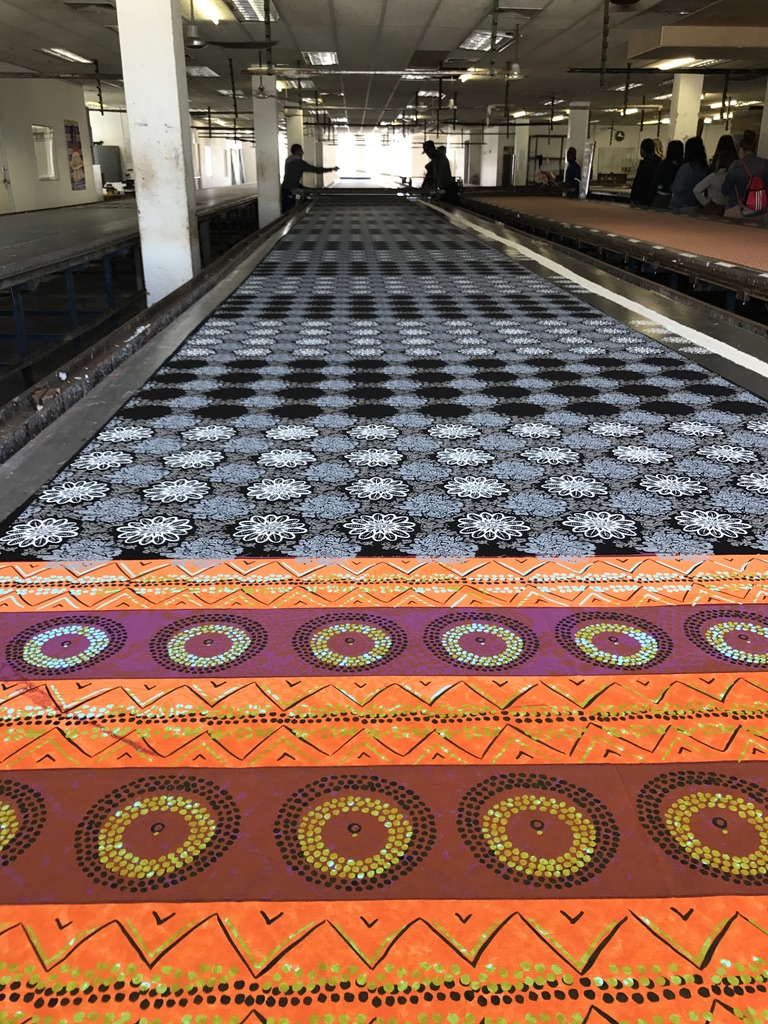
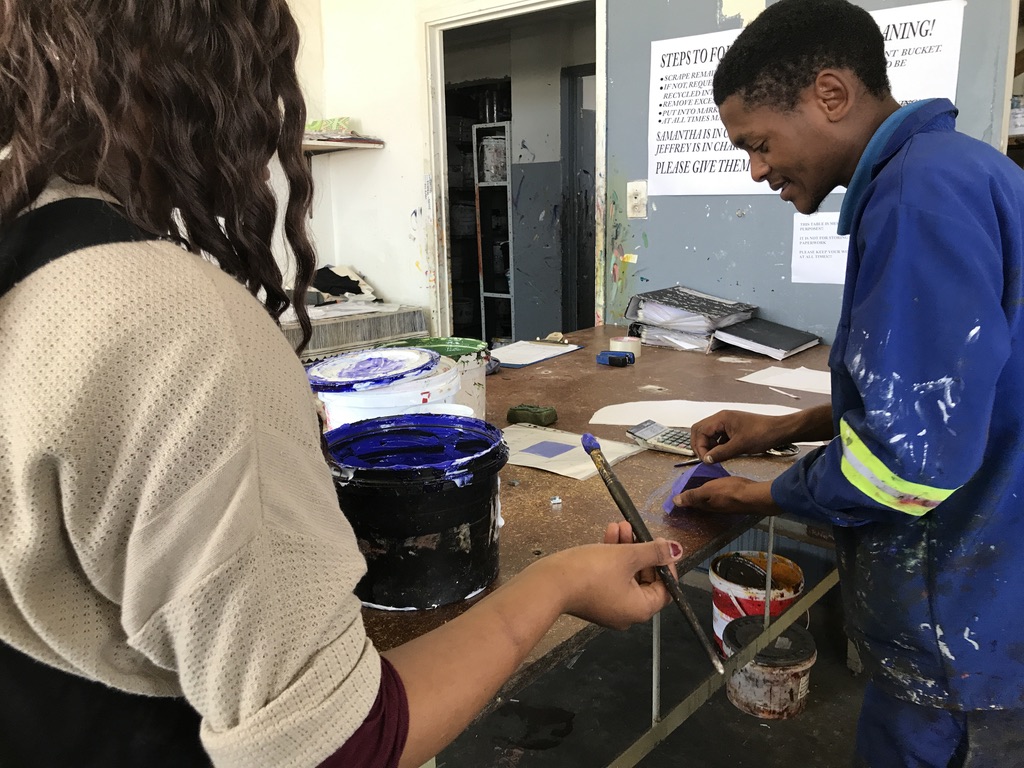
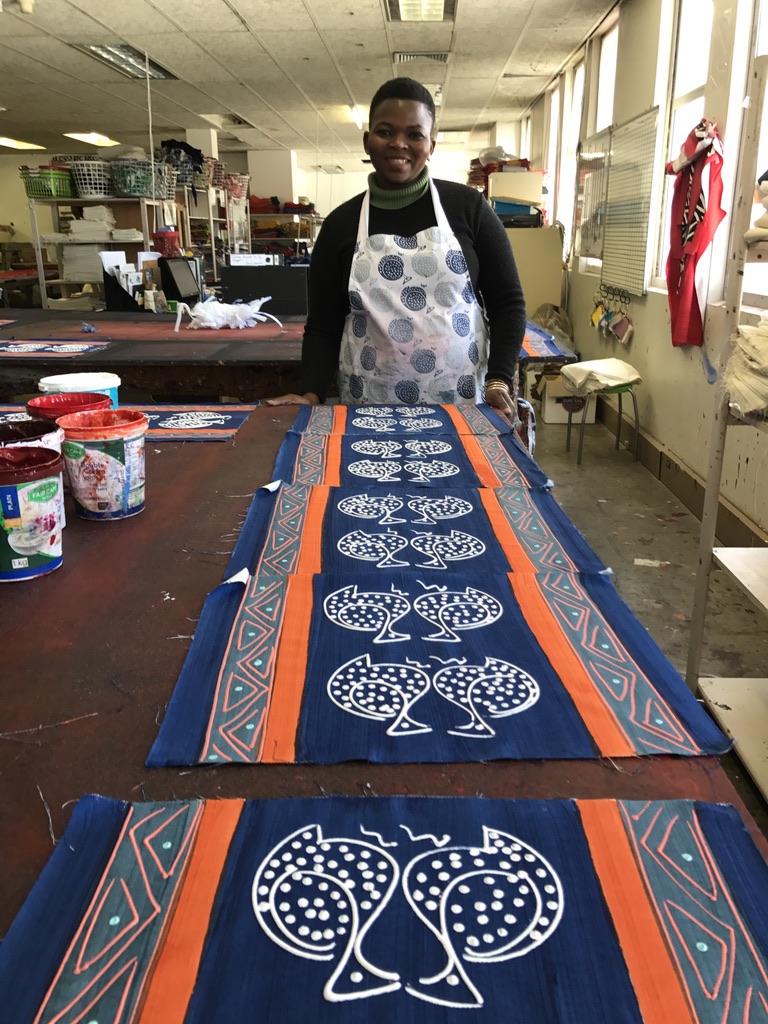
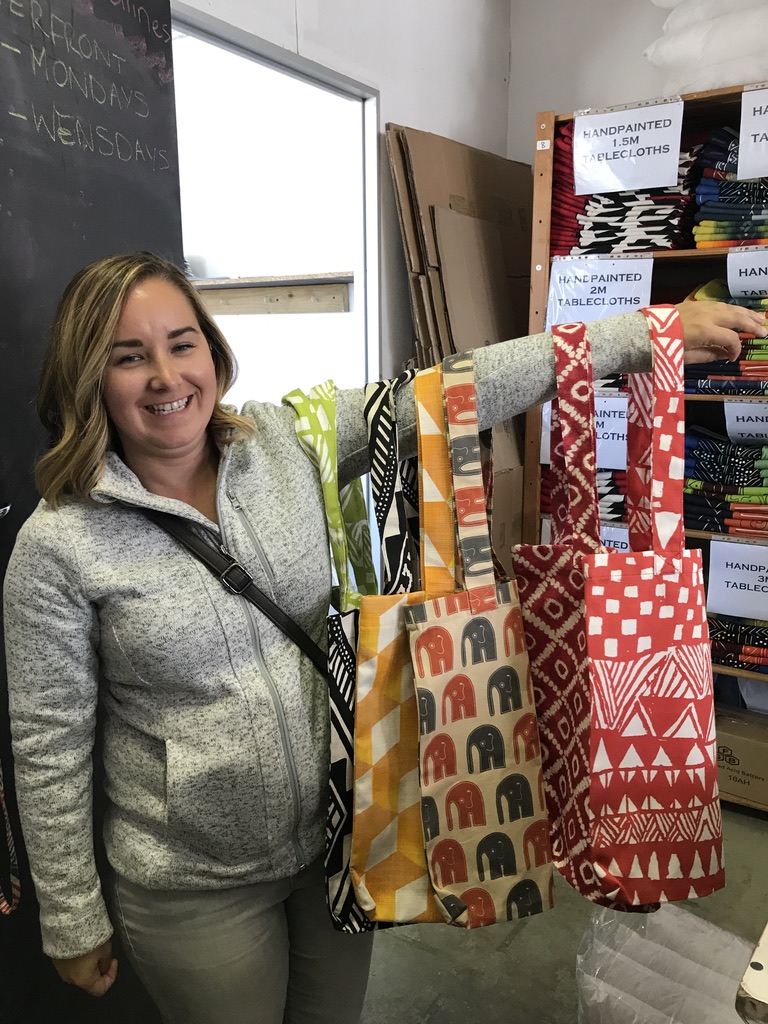
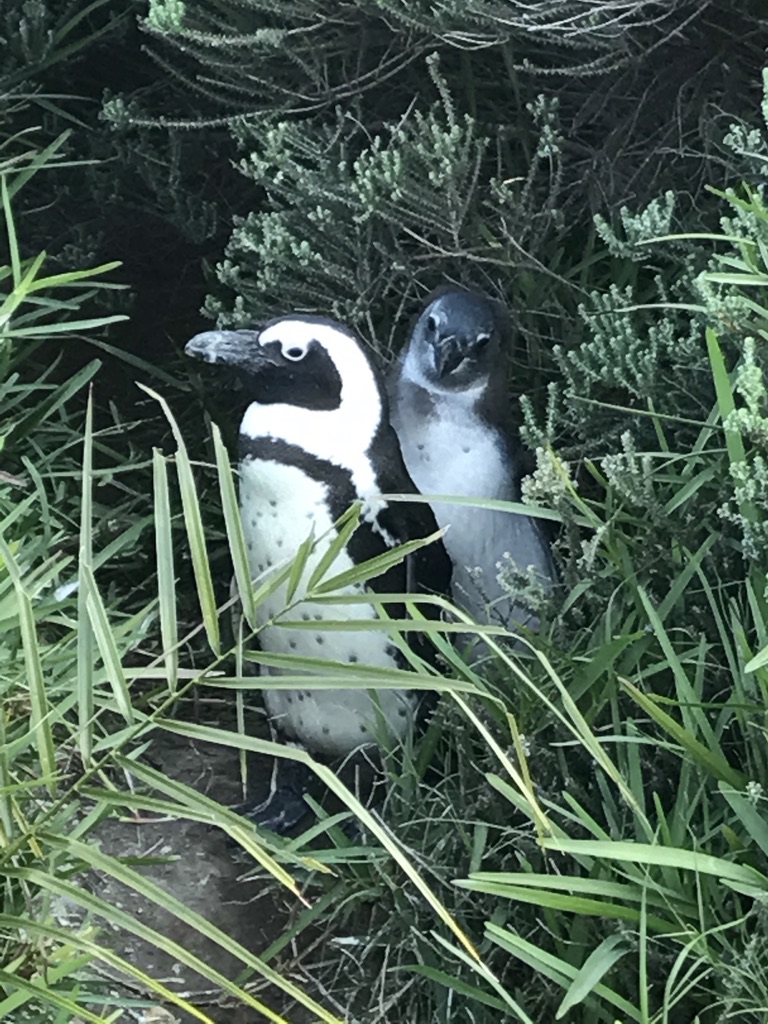
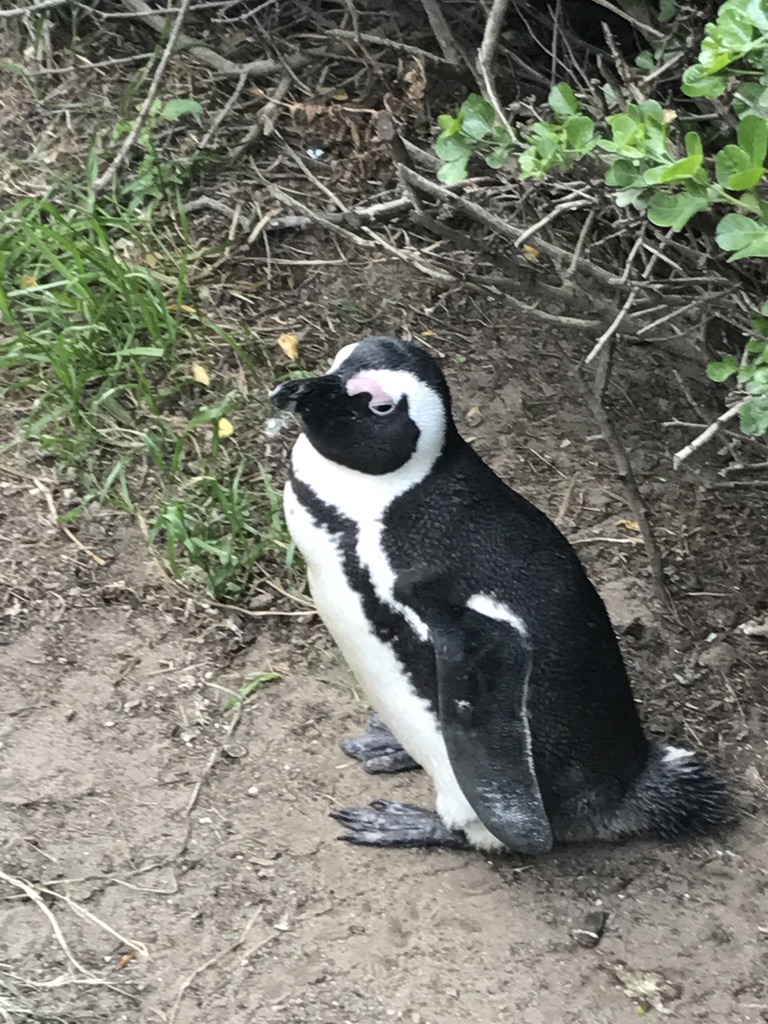
We then headed to Muizenberg and beyond. We stopped to see a factory that produced great silk-screened and hand-painted fabrics (sort of the Marimekko of Cape Town!). I had gone into a store in Cape Town the other day that sold this fabric and items made from the fabric. I asked about the production of the items.. and learned the factory was in Muizenberg where we would be headed, so I called to see if they would give us a quick tour. It was quite fascinating.. and then of course they had a make-shift store with lots of discounted items. This definitely showed the shoppers from the non-shoppers.. with me definitely in the former group. We all got great buys… and then we headed south to see the penguins! Students had a blast walking out on the rocks to the sea.. and watching and finding penguins everywhere ..
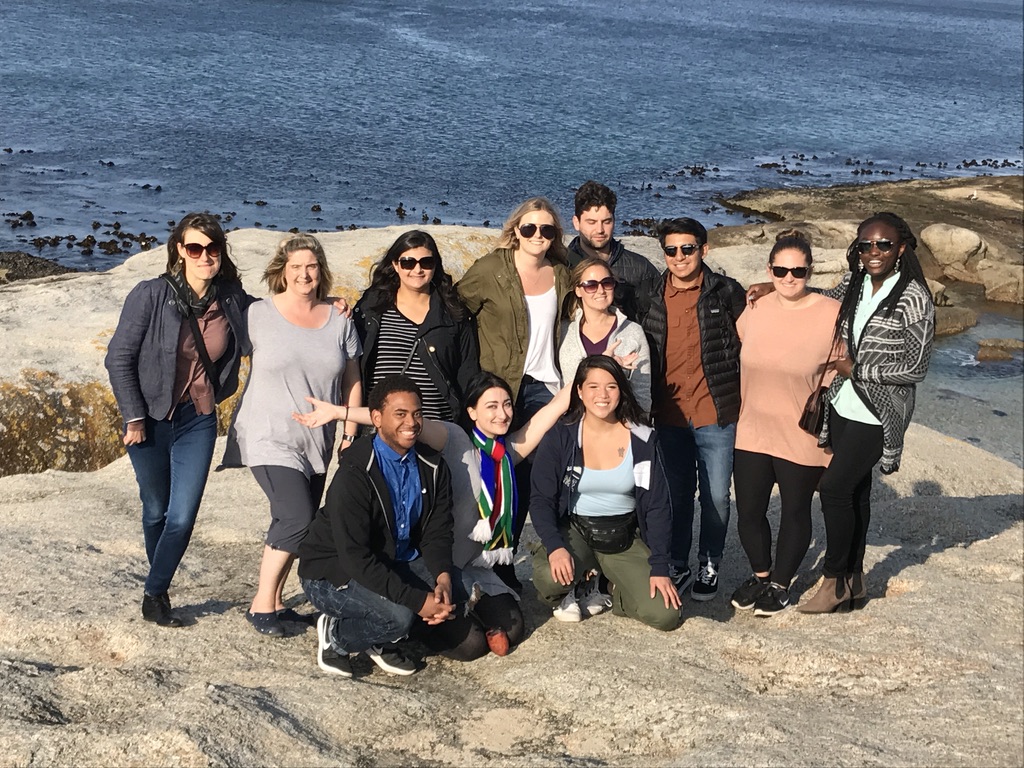
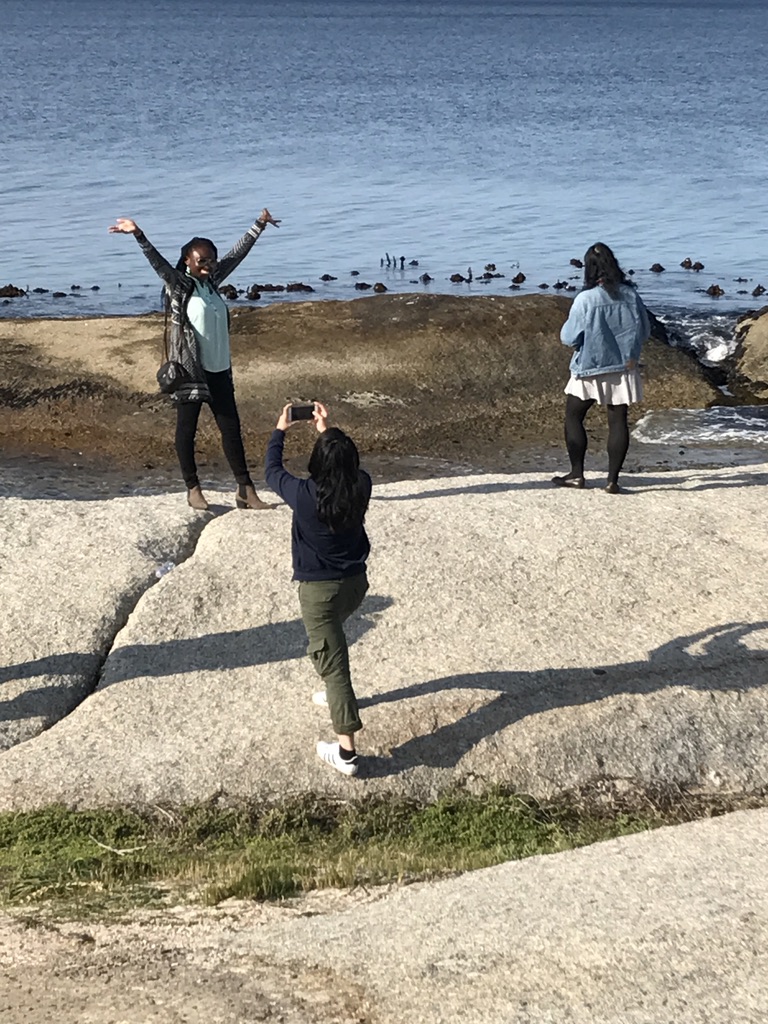
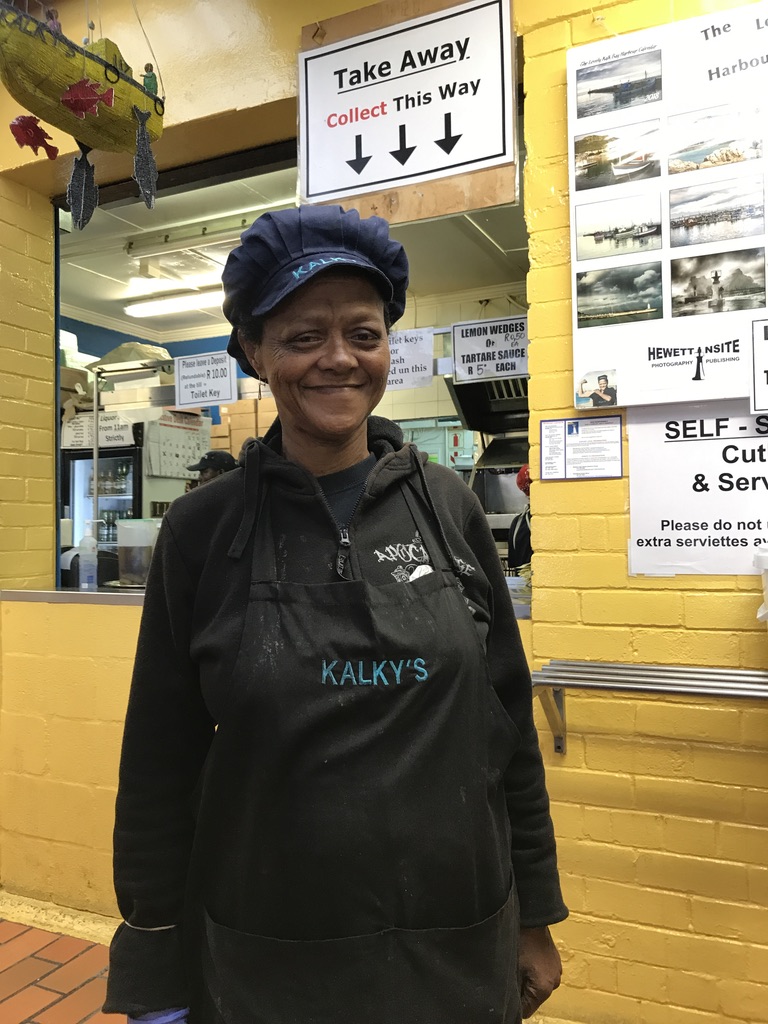
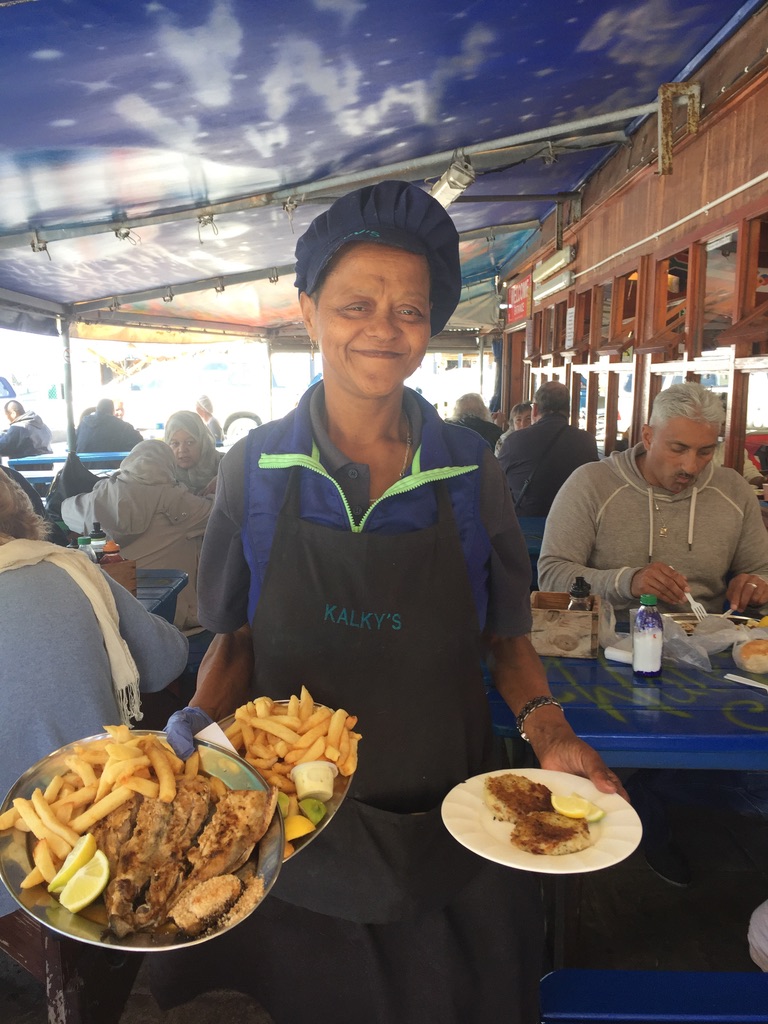
Following this, we headed to Kalk Bay to eat at Kalky’s – a sort of institution serving fish (many different kinds)and chips. It’s usually packed, but we lucked out and were able to get a big table for all 15 of us.. Calamari steak and fried calamari, peri peri prawns, yellowtail, hake. Lots of fries, salads.. and everyone devoured it all. The fish is served on steel platters and tin plates. The place has bright colored wooden tables.. sort of like painted picnic tables… and a great outdoor section, but it was too cold and windy so we ate inside. You line up to order and then they bring the food to the table.. not necessarily in a logical flow. Staff turnover must be low since everyone I photographed here a year ago was still here.. and I showed them the photos (they were on my iPhone).. and I took new ones.
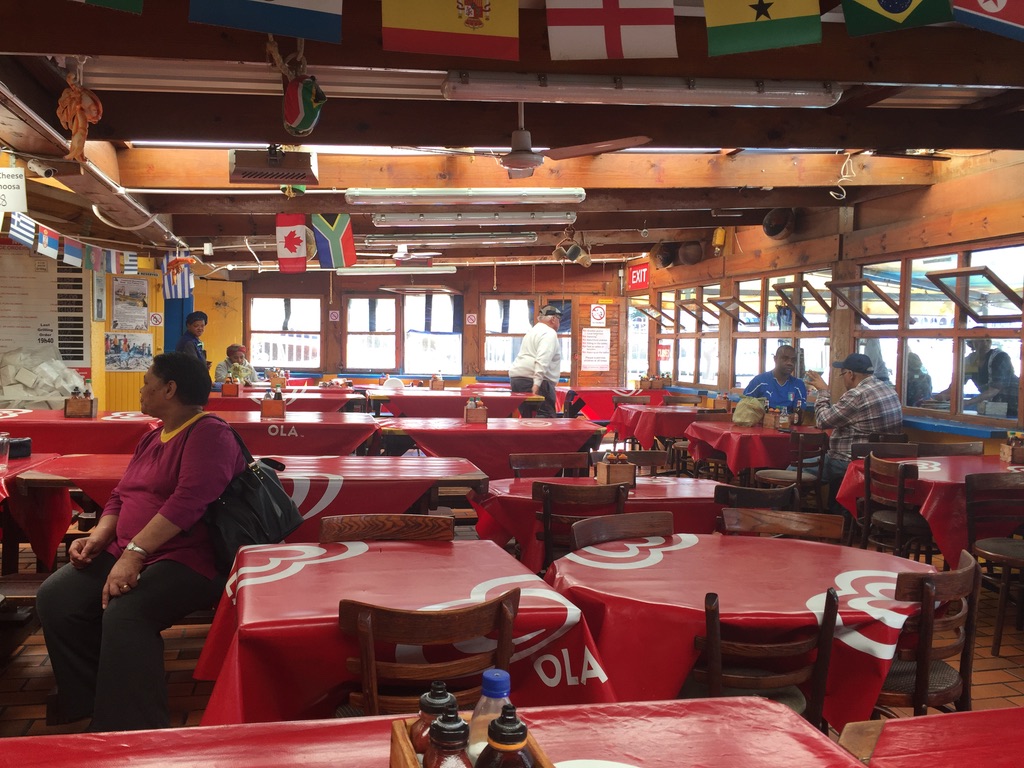
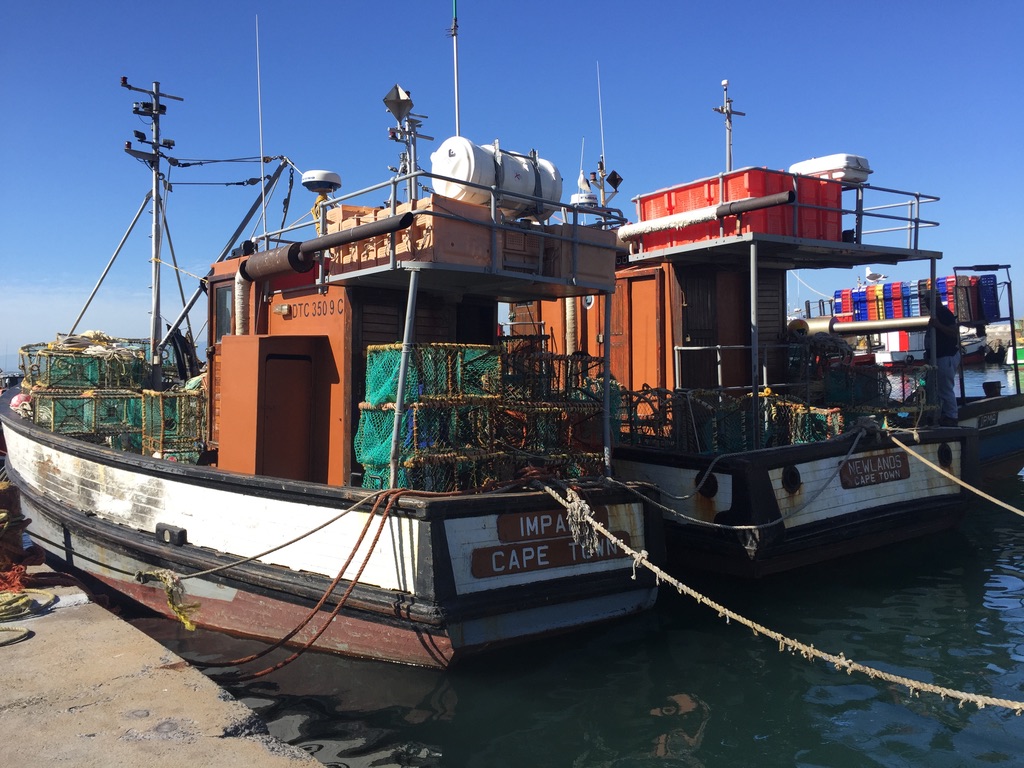
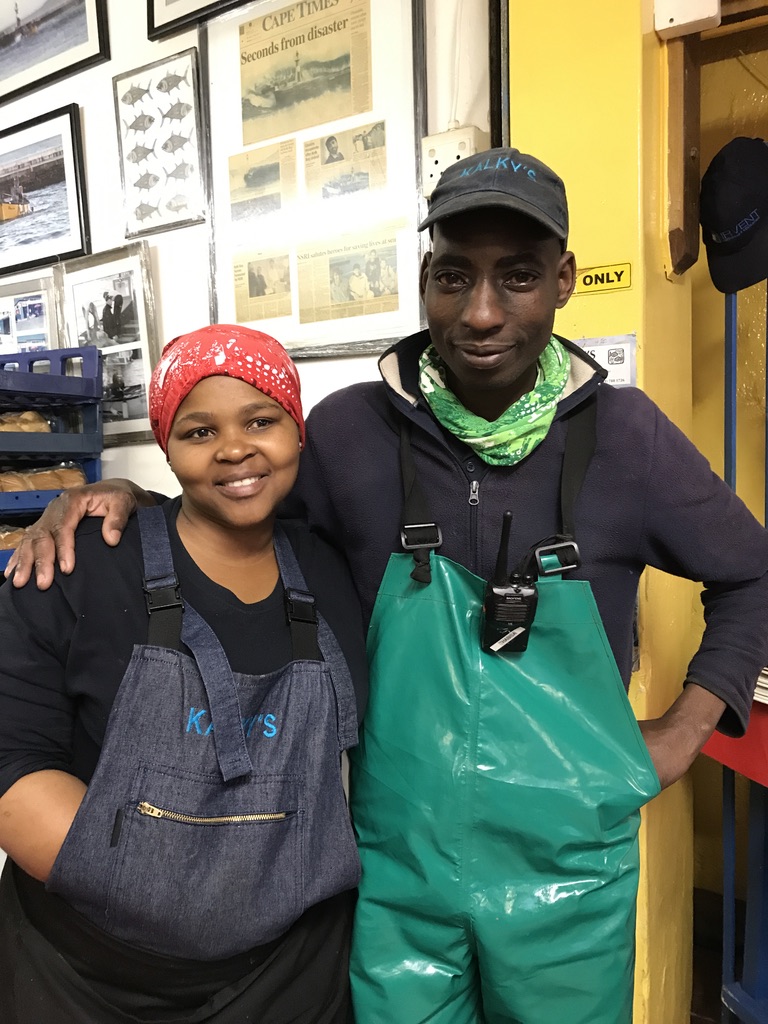
Funny story… A guy came up to our table and started talking with Chris and me.. He said his name was Kevin.. Chris chatted for a while and then he started talking to me… Strange dude. Turns out he was with this young couple who turn out to be from Jamaica; they are Jehovah’s Witness missionaries working in West Africa and here on vacation. Needless to say the conversation was brief, especially when they explained a woman’s role and a man’s role… Outta there!
Sorry, just finishing this up and it’s a day late.. It’s midnight here and I am fading. Lots to talk about in terms of my day today… but that will have to wait.
Best
Fern

