January 2, 2014 — short note. From Kathmandu to Delhi.
Hi All –
Very short note (and no photos) as today was really a travel day.
Dealt with packing and logistics this morning.. including our decision to ship our winter clothes to California and lighten our load. Actually, that was always the plan, but it was colder in Kathmandu than we anticipated so we needed those clothes there.. and then we thought it was just five more days so maybe just continue to carry everything. But since we are having a lot of trouble getting rid of these colds we decided to just go with the plan and ship the stuff. So we had to deal with a shipping company, getting a box, and weighing the goods to stay within the allotted amount of weight. Done!
Left Dwarikas midafternoon to tackle the Kathmandu Airport, which — much like everything I’ve described about the city — is a mess. The airport is located dead smack in the city.. We could practically walk from our hotel. It’s a run-down structure, with many security checks. We probably went through about six different inspections, two of which were “body searches”… men queue up on one line and woman on the other. Far fewer women traveling so I was always well ahead of Mike.
They even do a final body search (with your clothes on) and hand inspection of carry-on baggage as you are boarding the plane — at the base of the stairs — with little makeshift curtain areas.
The flight is only 90 minutes, but the checking and boarding process is longer than that. Flight uneventful although the movie was pretty funny — about a king and queen of India in medieval times, and their son who falls in love with a servant and tries to defy his father by wanting to either marry her or abandon his position as next king. Very melodramatic. The servant winds up in the dungeon twice and the king decides to send the prince (son) off to war where he will likely die (but with valor, according to the king). I think you can guess the ending (which I didn’t actually see since the plane landed before the concluding scene!).
Arrived in Delhi to a totally gleaming, huge, modern airport with multiple terminals — making New York airports pale in comparison. Terminal 3, the International Terminal where we arrived is 5 million sq. feet and handled 36 million passengers last year. After getting our baggage (easy!) we lined up to get a taxi to the hotel. Taxis are amazingly cheap! The hotel is about 40 minutes from the airport (sort of like Oakland to SFO) and the fare was about $10!
We were in India (southern part) 20 years ago, so we are looking at everything with comparative eyes. In any case, the road from the airport to the hotel (a sort of ring road highway) with six lanes was in good shape and the cars were new (except for the taxis which are pretty beat up) but the driving habits are as they have been throughout the rest of the trip— with everyone riding on someone’s bumper and cars weaving in and out of lanes and riding two lanes constantly.
Anyway, we are now situated in New Delhi and the adventure should pick up tomorrow. It’s a short stay — four days.. and we are now really feeling like the trip is ending and that it’s time to head home. Both of us are thinking about our offices, projects, teaching, and how to get everything done—more than thinking about where we want to go each day. So we’ll see how we fare.
I’m sure by morning we’ll be energized to see the city — but it’s clearly vast and difficult to navigate. It’s not a walking city, so you have to be pretty reliant on having a plan and then dealing with the transportation options to get you there (metro, taxi, tuk tuks, etc.)
Take care –
More tomorrow.
Fern
January 1, 2014. Last day in Nepal; tomorrow onwards to Delhi
Namaste –
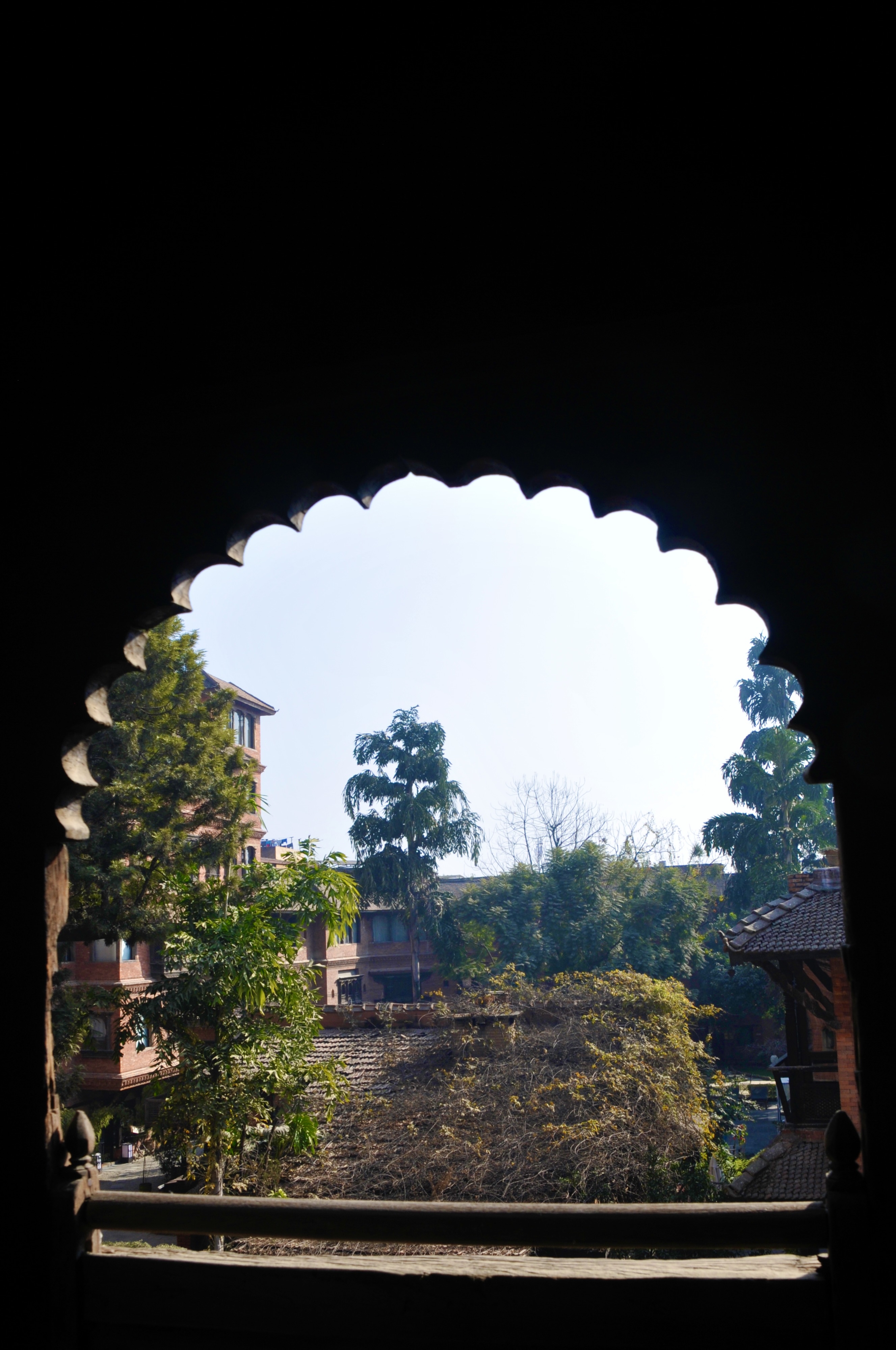
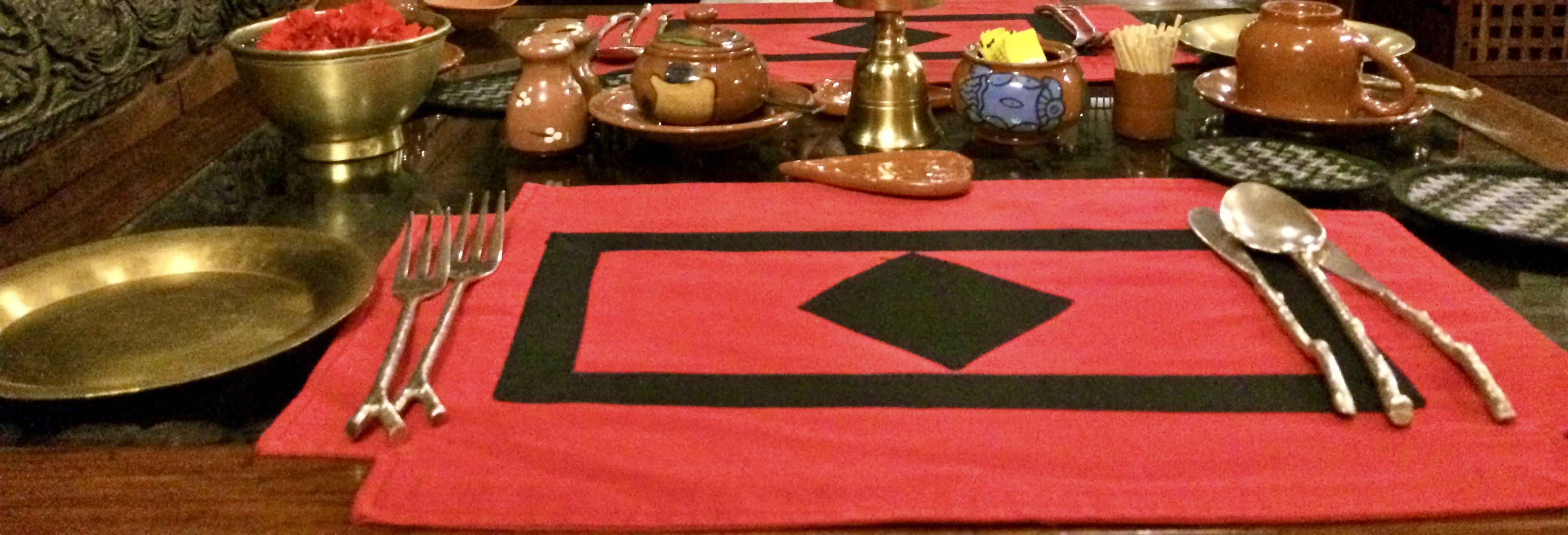
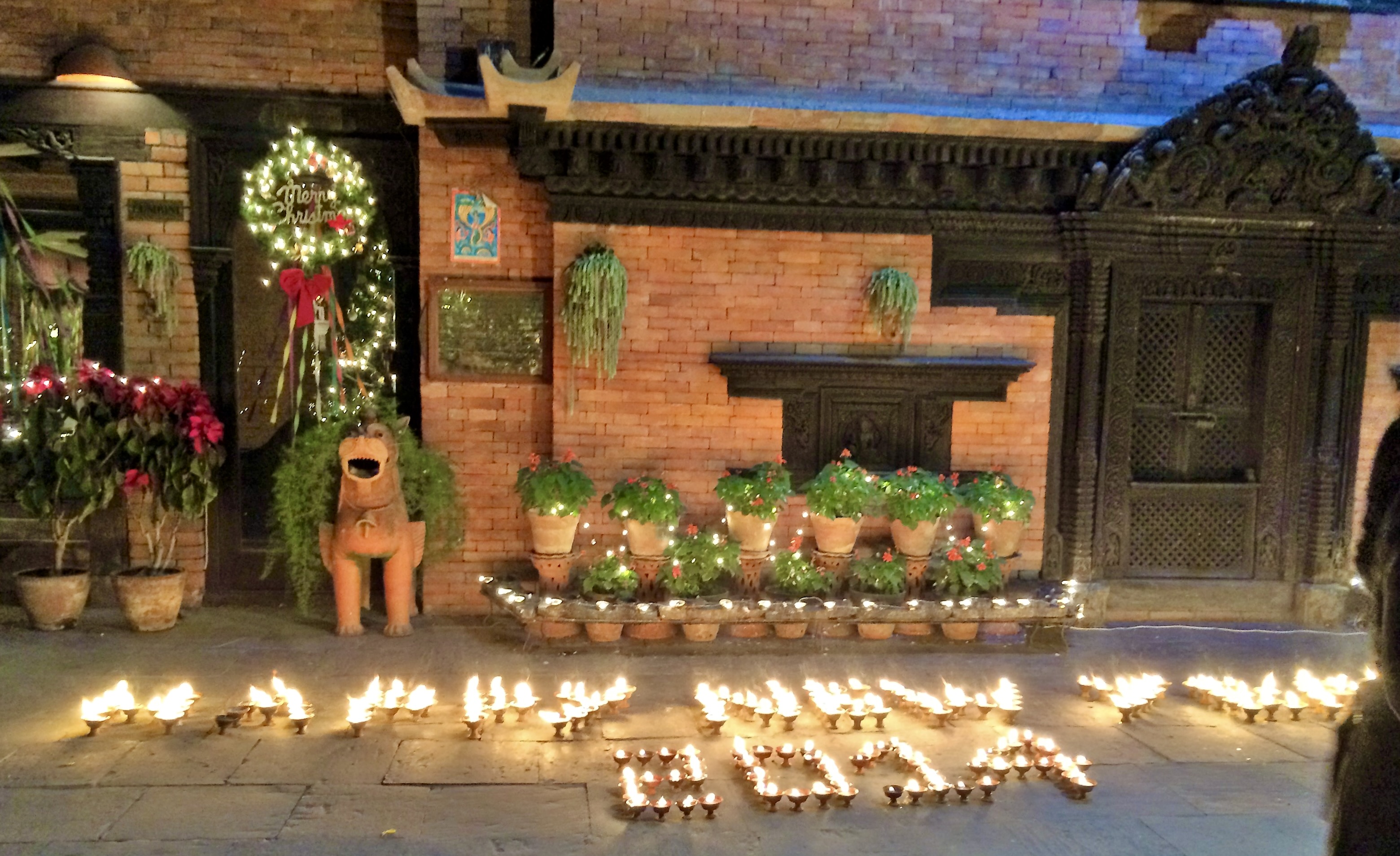
Went to Dwarika’s New Year’s dinner. They totally decked out the grounds of the hotel and the restaurant with thousands of little candles edging every conceivable nook and cranny on the grounds, making it a bit of a wonderland. From our room (before we left for dinner) we could see them creating the phrase “Happy New Year 2014” — in candles on the brick paving. Dinner was fine — as usual for New Year’s — not spectacular.* Finished around 11 pm and we opted not to go to the party being held at the bar and not go to the champagne countdown at the pool. Instead — Stayed up to watch the clock turn to midnight in many countries…
This morning, we decided to leave central Kathmandu for the day, and head about 15 miles east to a town called Bhaktapur (a somewhat random selection after looking at the map and the Internet and realizing that it was a medieval Newari town) that had an interesting temple — but more important it looked like a very interesting village — probably what Kathmandu looked like just 25 to 50 years ago.
The drive was once again filled with bumper to bumper traffic and cars within inches of motorcycles and bicycles, no traffic lights (they literally do not have more than about four in the whole city and those are not connected), dusty roads and lots of potholes and incomplete parts of the road. As I said before everything is in a state of either being built or being demolished.
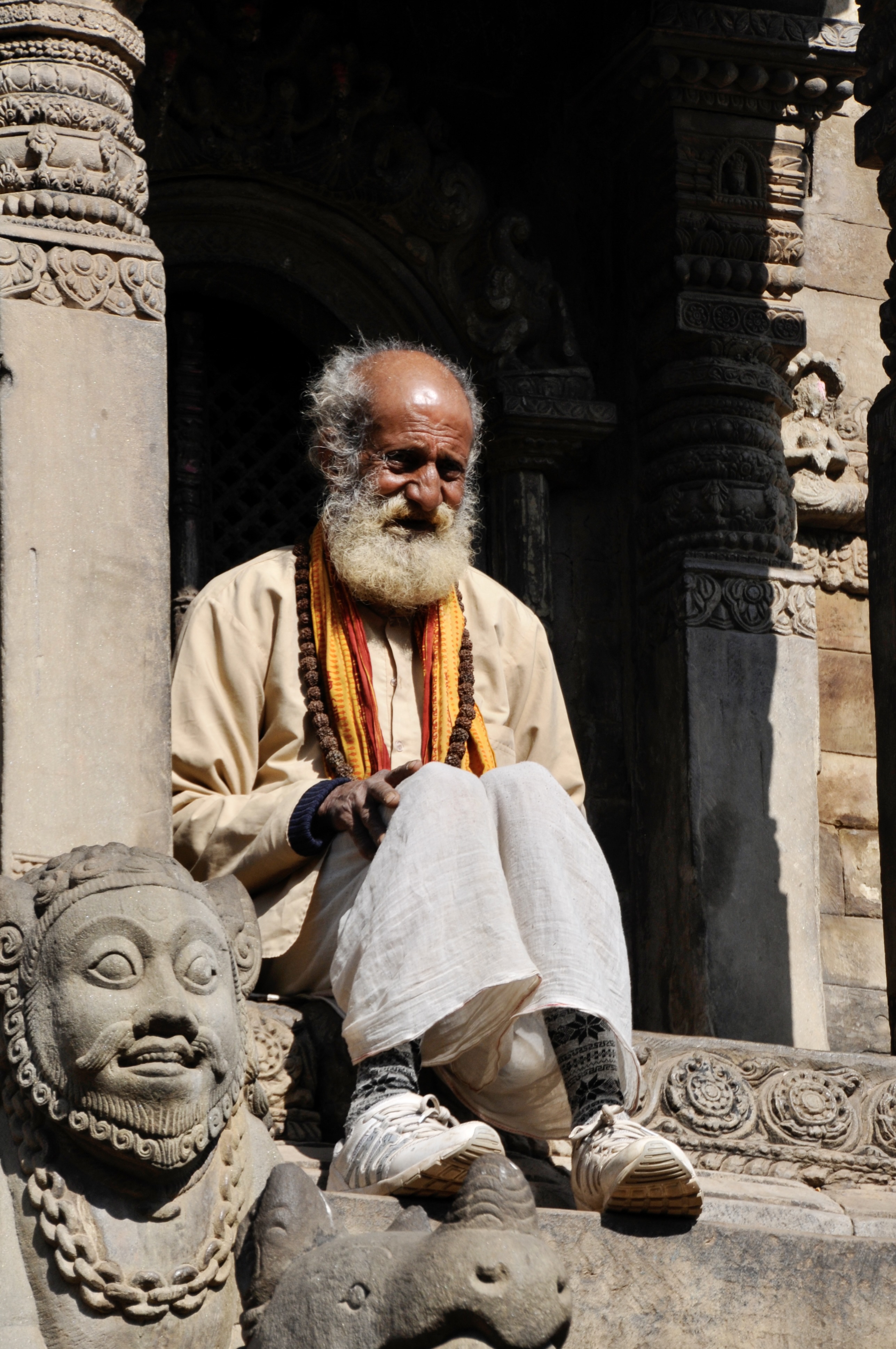
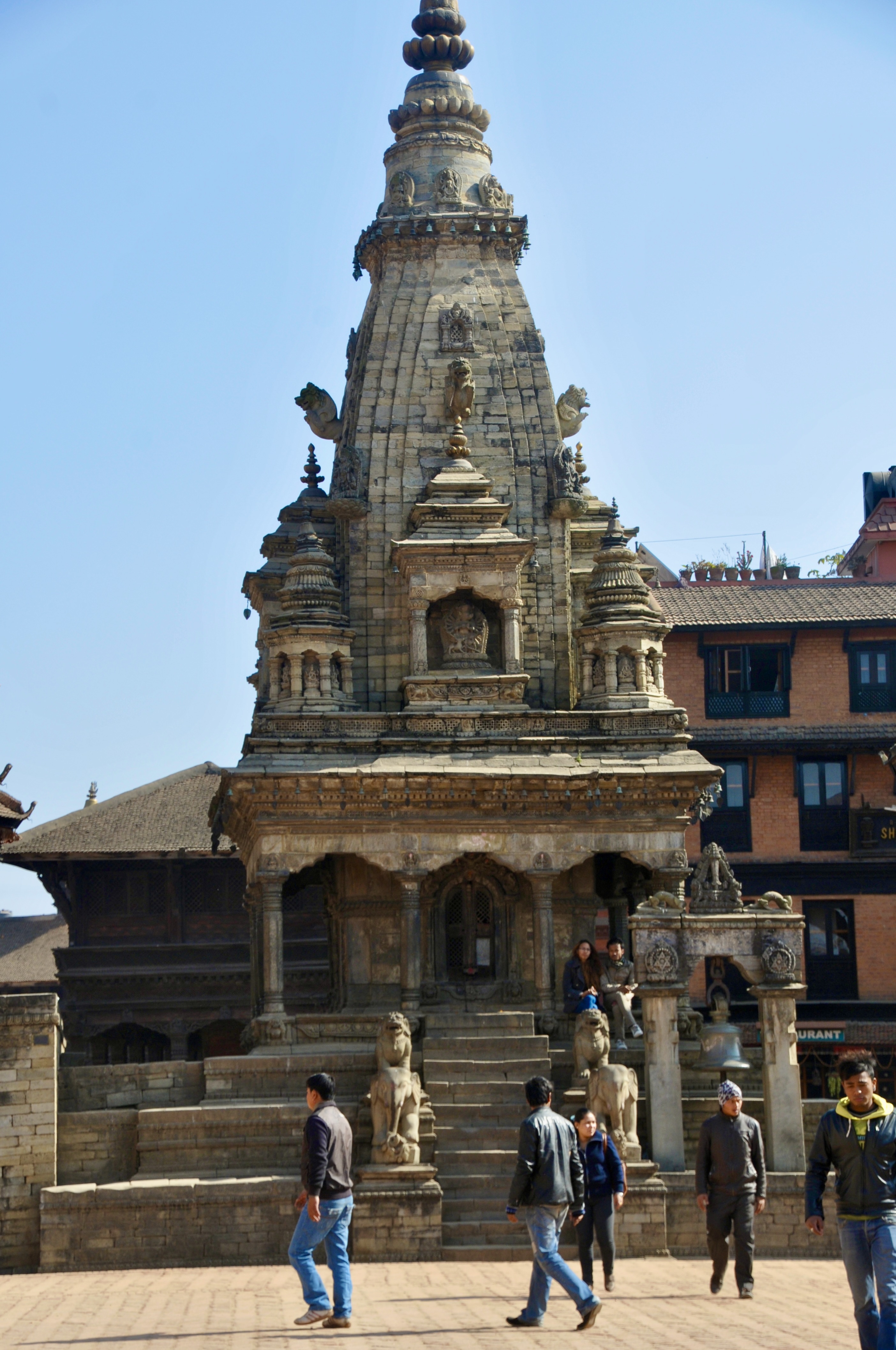
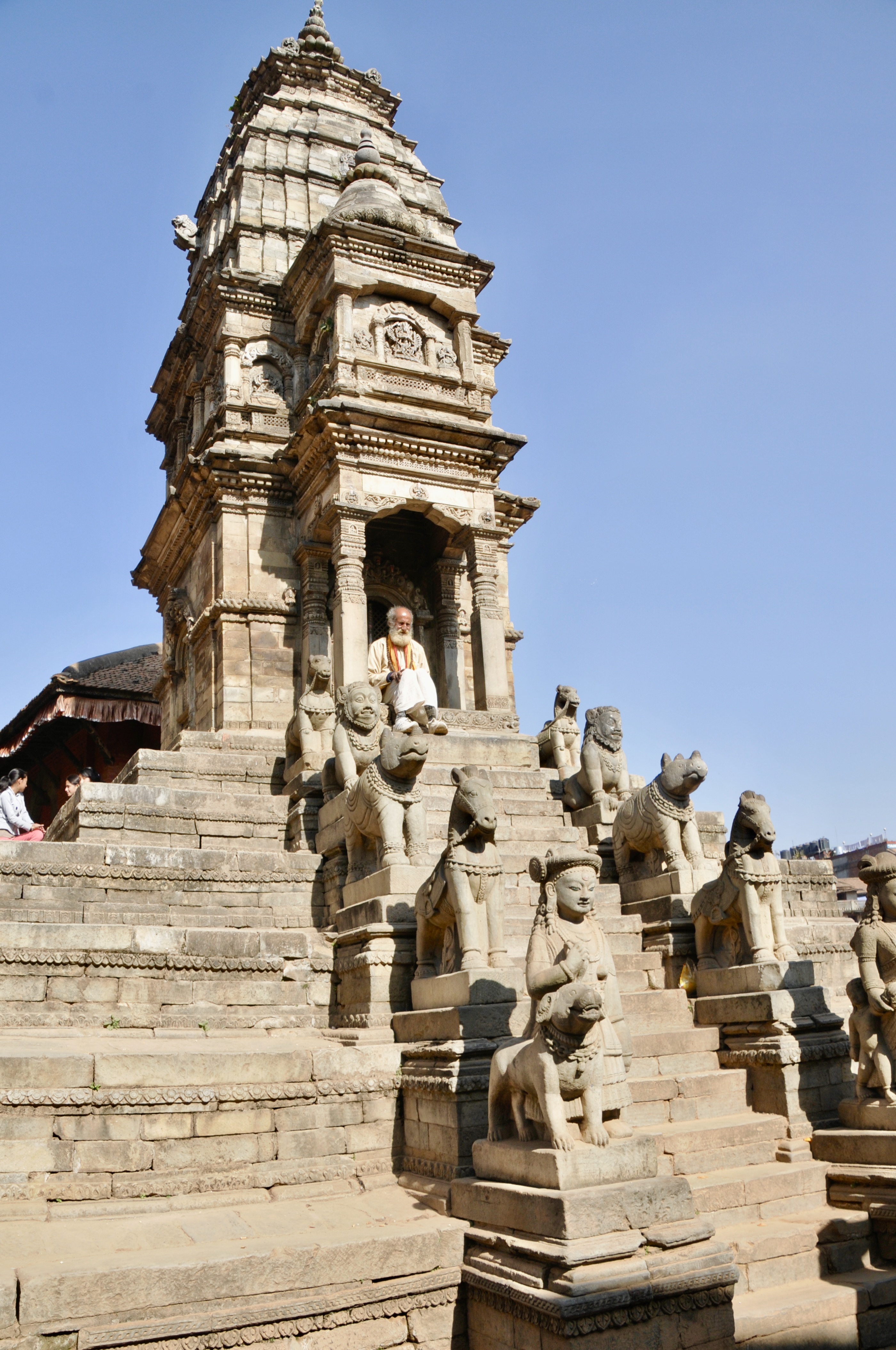
We arrived at Bhaktapur around 11:45 and walked into the main square where the Nayatapola temple sits — a grand 5-story pagoda, constructed around 1701 (supposedly in a 5-month period). It’s a really beautifully sculptured building and one of the tallest pagodas in Nepal. The workmanship is a good example of Newari architecture. It’s five stories with tiered roofs.. You can walk up a flight of stairs to the top..
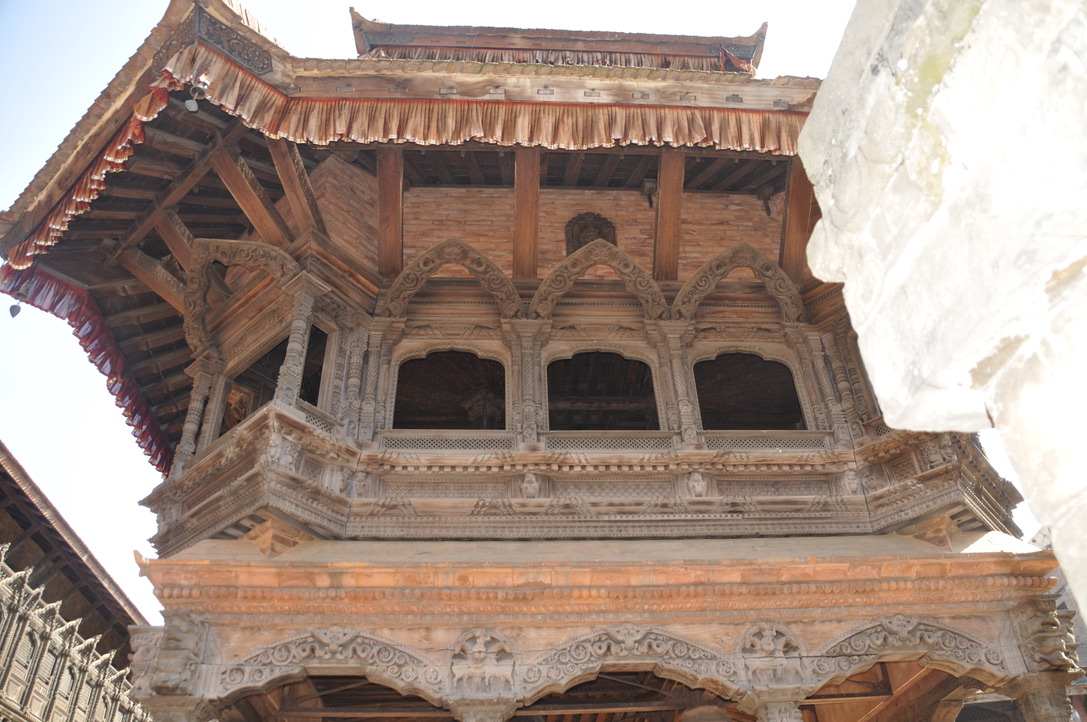
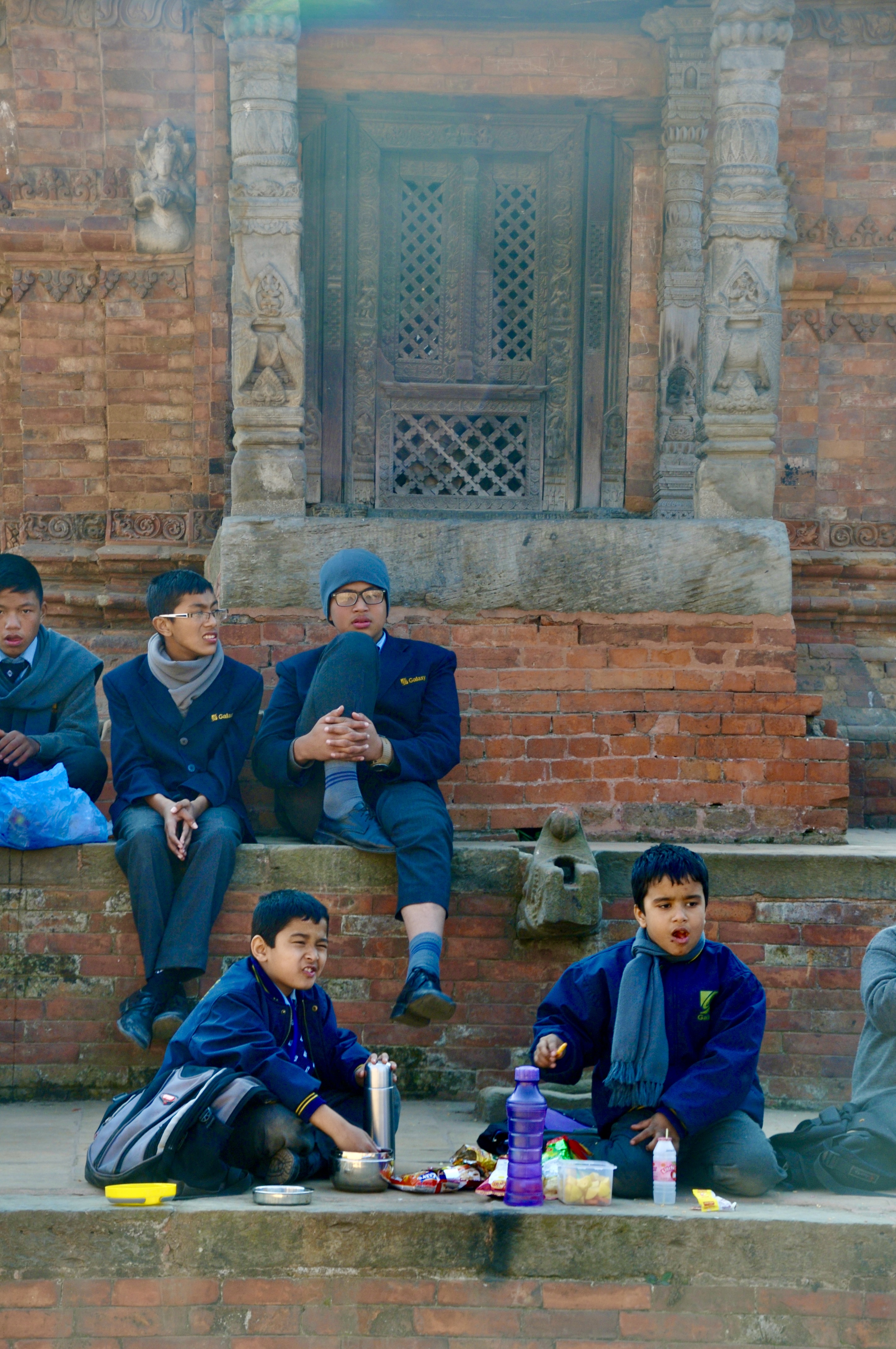
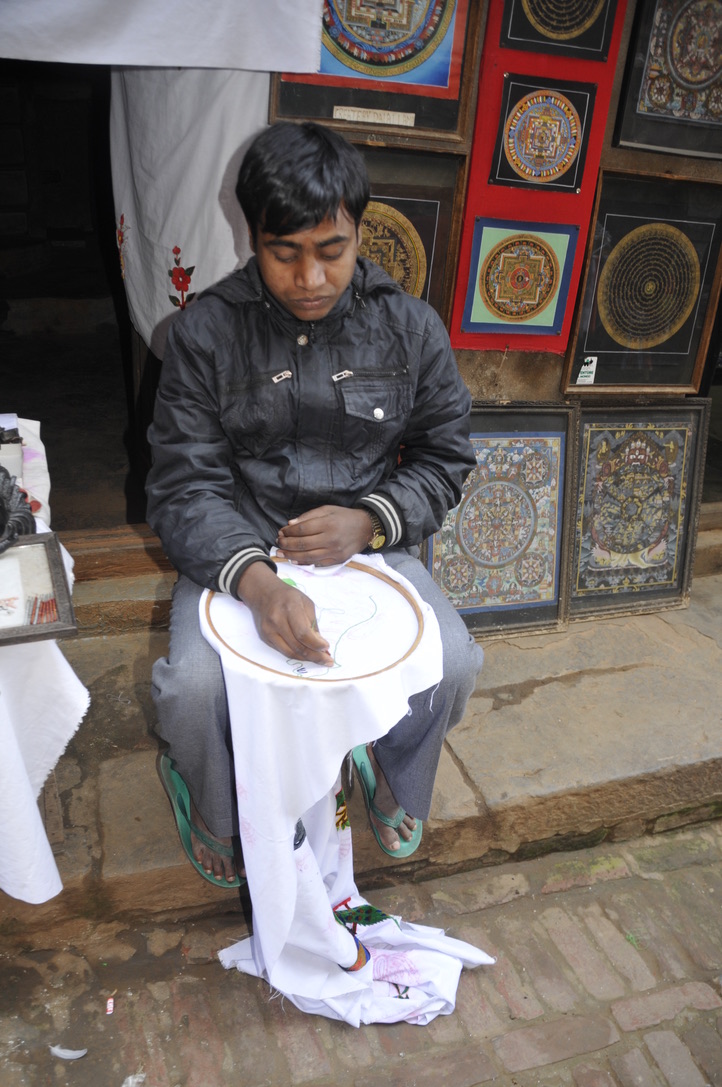
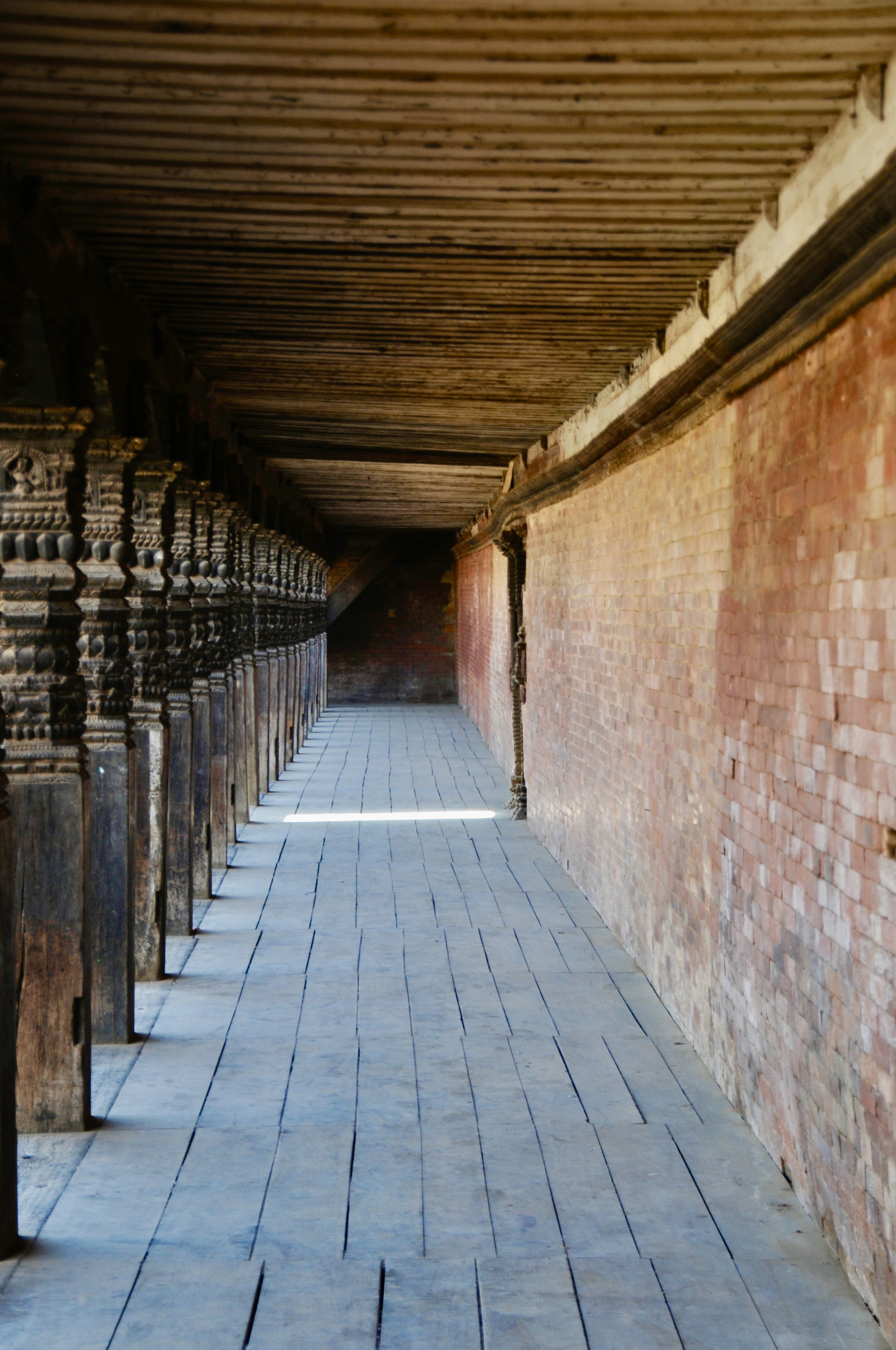
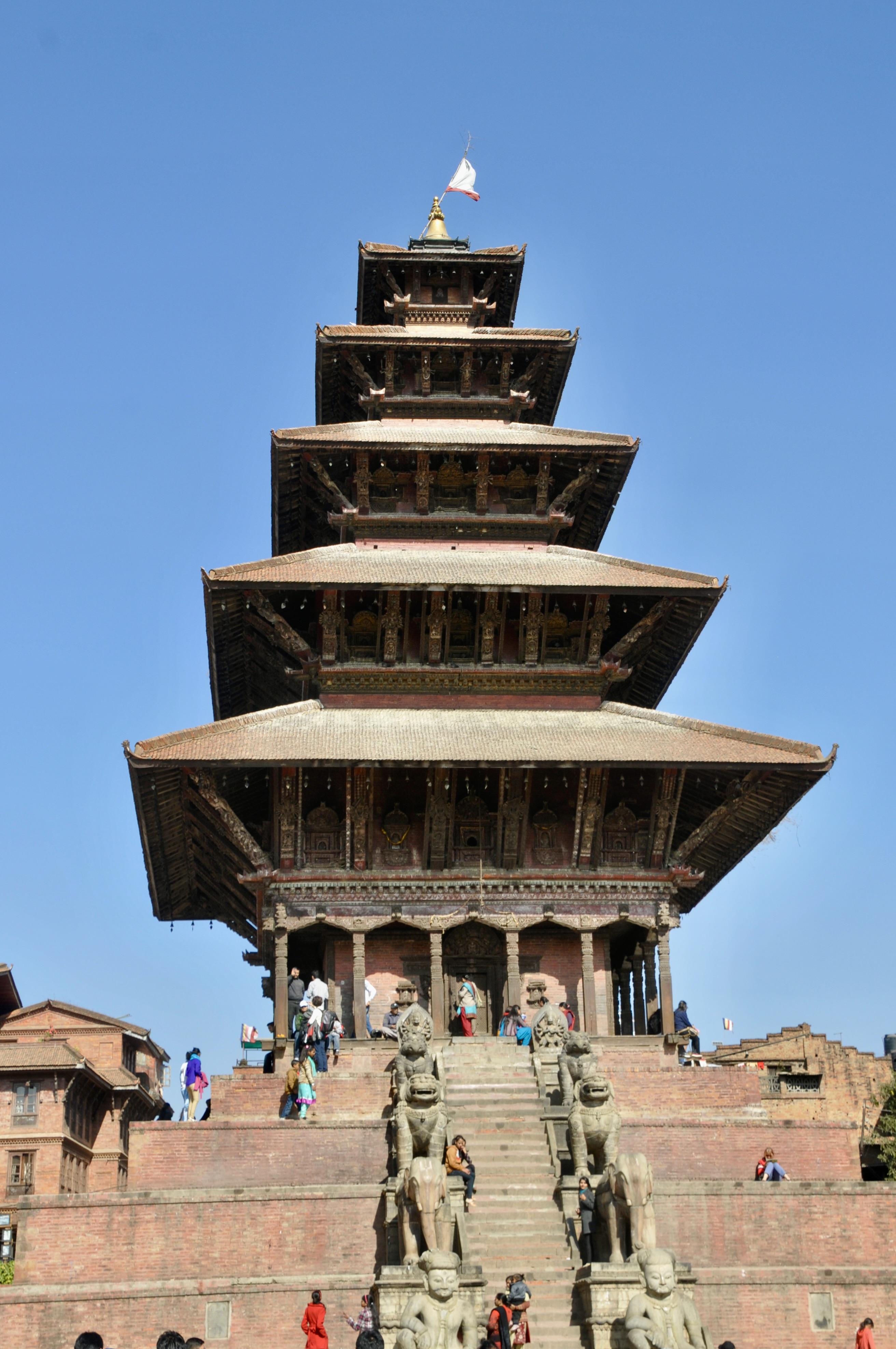
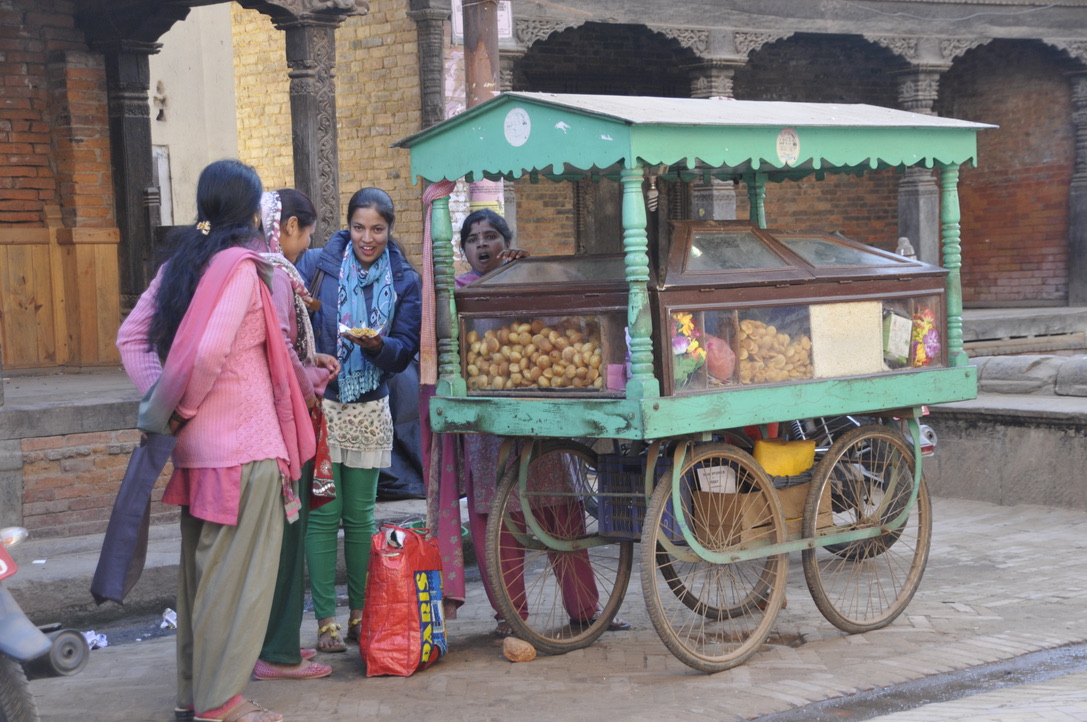
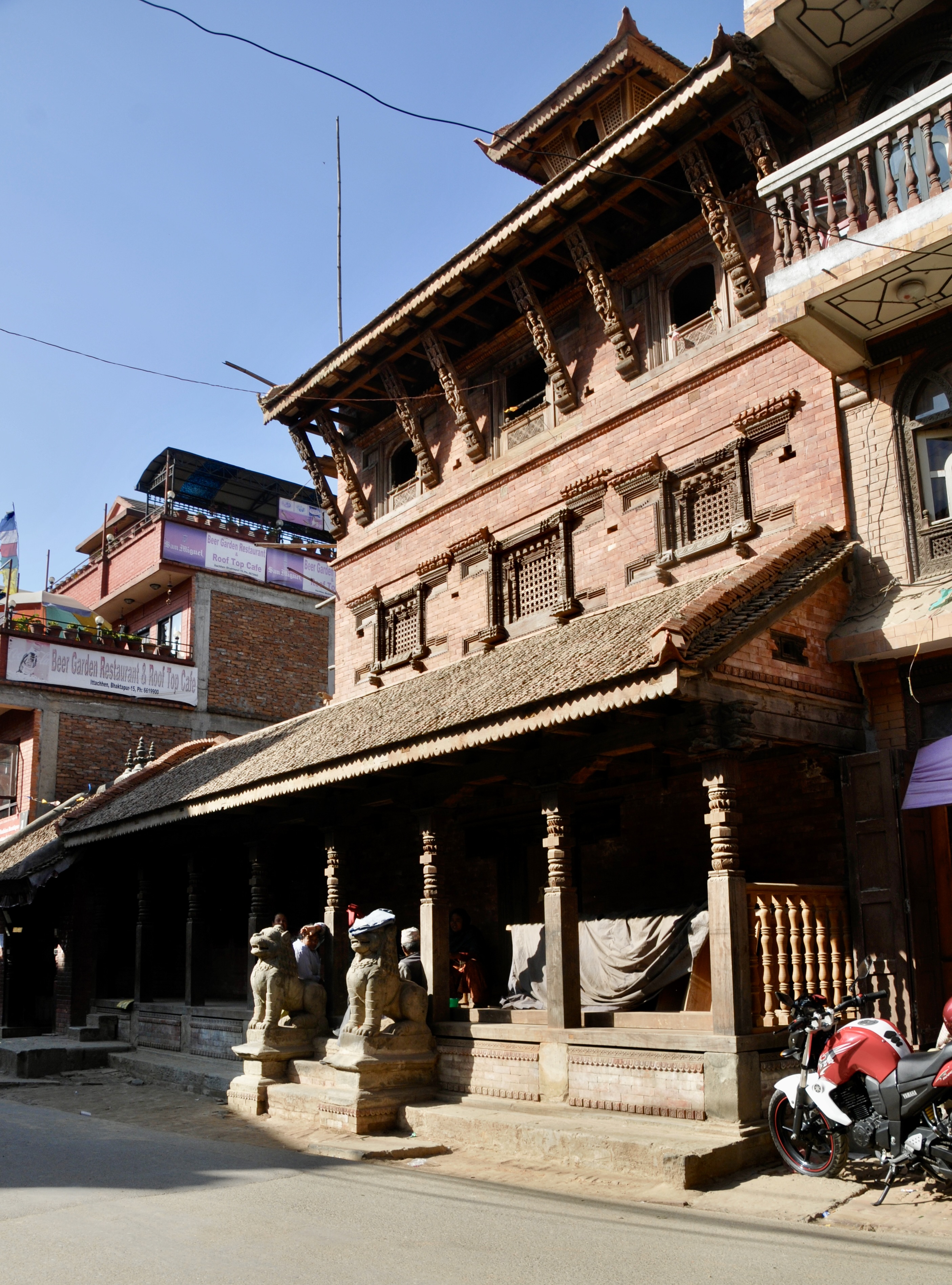
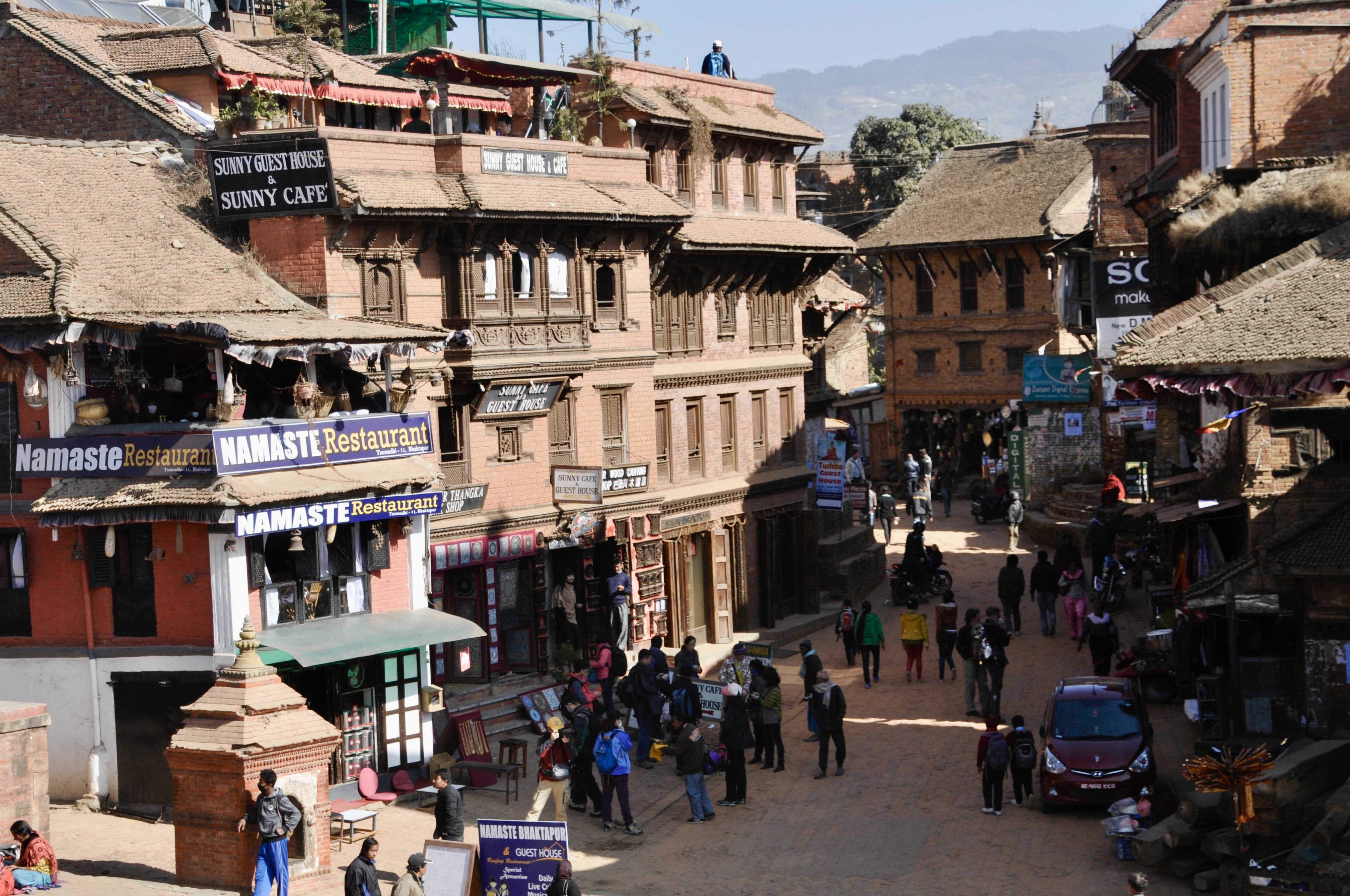
Bhaktapur means “city of devotees.” This ancient, 15th century medieval city is part of the UNESCO World Heritage sites, which records buildings that are of cultural and natural value universally. Bhaktapur is well preserved. In addition to the square with the Temple, there are several other major squares – also with temples. Some say that the finest religious architecture in the country is here in Bhaktapur.
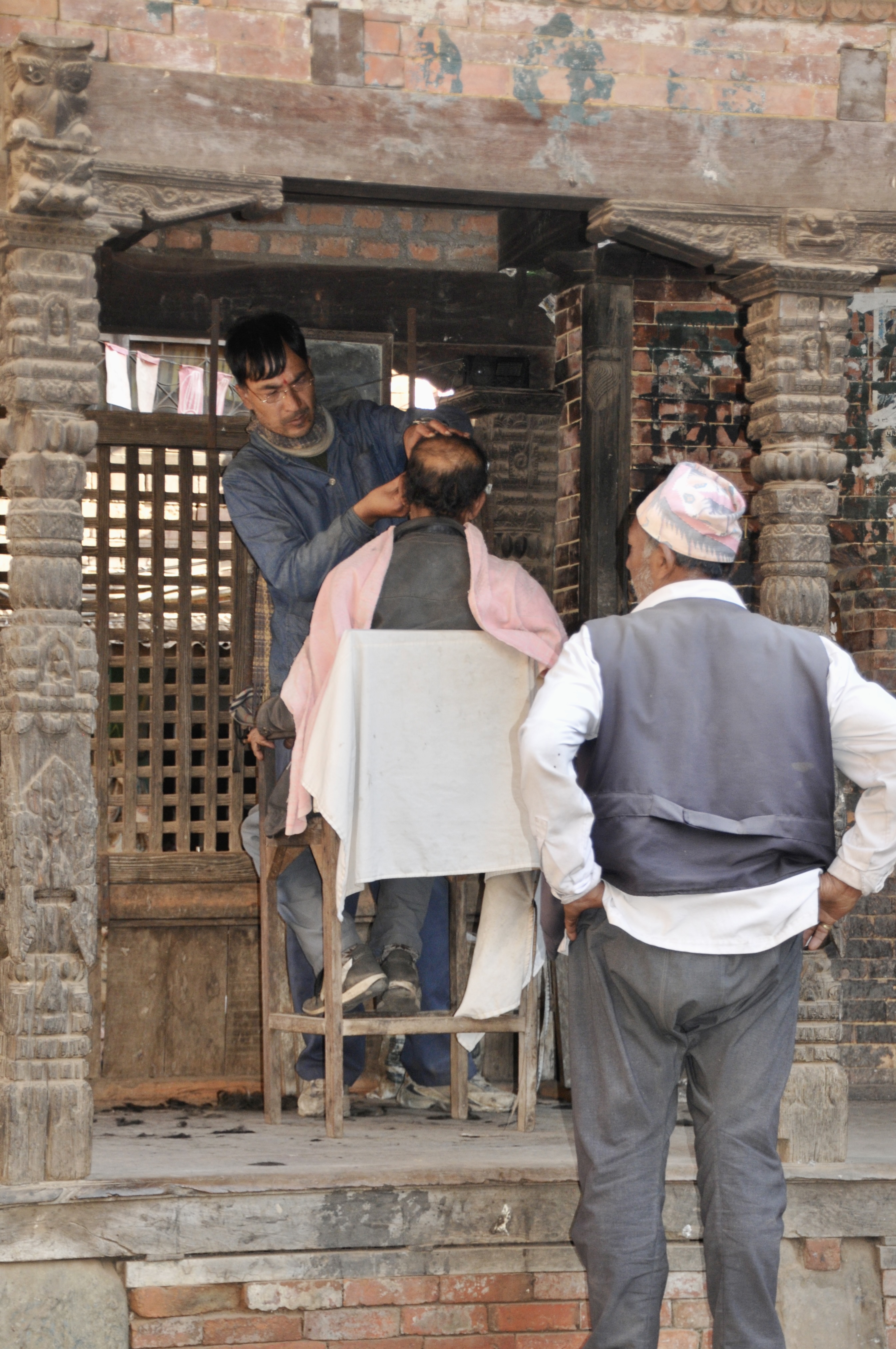
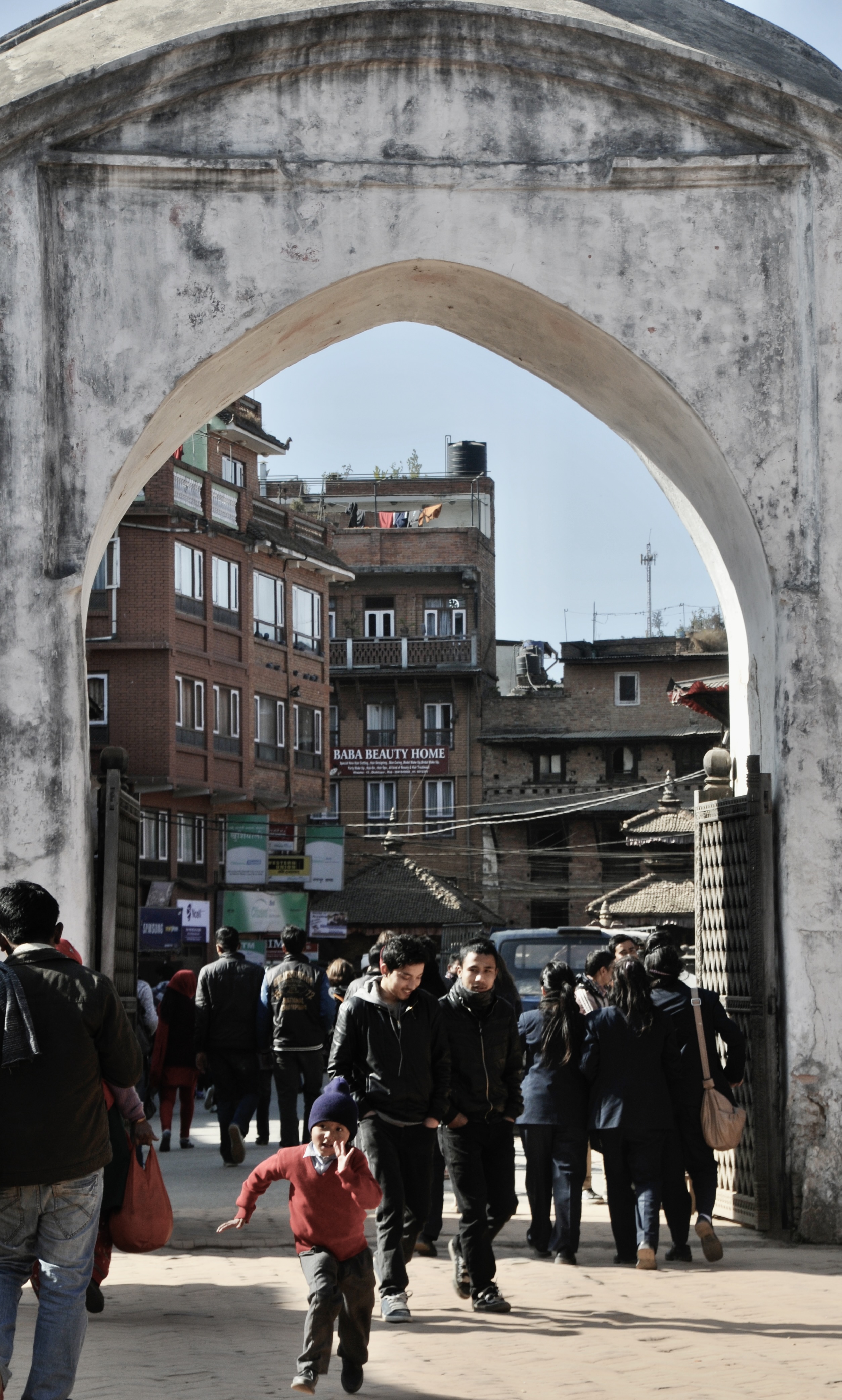
We wandered alone (and once we left the main square, where there were lots of tourists — Japanese, Chinese, Australians) away from the temple-center — down narrow cobblestone streets that meandered between red-brick houses, and courtyards that have temples, statues, cisterns, and wells. Frankly, you could spend days in Bhaktapur. The further we got from the temple, the more we saw typical life: women washing clothes on the streets in big rubber bowls, kids playing soccer, people at work making furniture and drying foods. Some of the buildings are just 12′ wide. Artisans weave cloth, knit gloves, chisel timber, and build furniture by the roadside, and locals seem to gather in communal courtyards to bathe, collect water, and socialize. There was a bit of begging near the temple, but once we moved outside that area no one approached us.
We stayed in Bhaktapur far longer than we expected — returning to the hotel at around 5 pm (after a very brief stop at the Garden of Dreams which is adjacent to the Thamel area). The Garden of Dreams is a neo-classical garden located right in the middle of Kathmandu. It was created in 1920 and was probably one of the most sophisticated private gardens at that time. It’s filled with pavilions and verandas and birdhouses. Once we got back we headed to the spa for massages — Mike got the “trekkers massage” (??) and I got the Nepalese foot massage with reflexology. The treatments made us extremely peaceful and also tired.. But about an hour or so after the massages, we headed for our last meal in Nepal — a traditional six-course series of little dishes. Sat on the floor, making it very difficult to get up after eating.
So, as we pack to leave Nepal for Delhi, there’s a lot to think about — especially comparisons between Kathmandu and Lhasa, with one having centralized control which also enables it to progress, to build an infrastructure, to create order.. and the other a big free-for-all and no way to even conceive of addressing things like systematic electrical connections, water, sewage, physical planning. Hard to know and so much more to consider that cannot be understood in such a short visit.
So, amid the many ganeshes and buddhas and other spiritual trappings and decorations – we bid farewell to Kathmandu (we leave the hotel around 12:30 pm for a 3:40 pm flight, and arrive in Delhi at about 5:00. Gotta finish packing. By the way, we’ve been on the phone with United Airlines several times and will try to deal with things when we get to Delhi. We are trying desperately to leave India one day early. We both have to fly to Seattle the day after we get to SF.. and we would just love to have that extra day. But alas, United is saying this will cost $2,000 each to make the change! So much for flying more than 100,000 miles with them each year.
Take care. Wishing you a very happy, healthy, peaceful new year. All my best – Fern
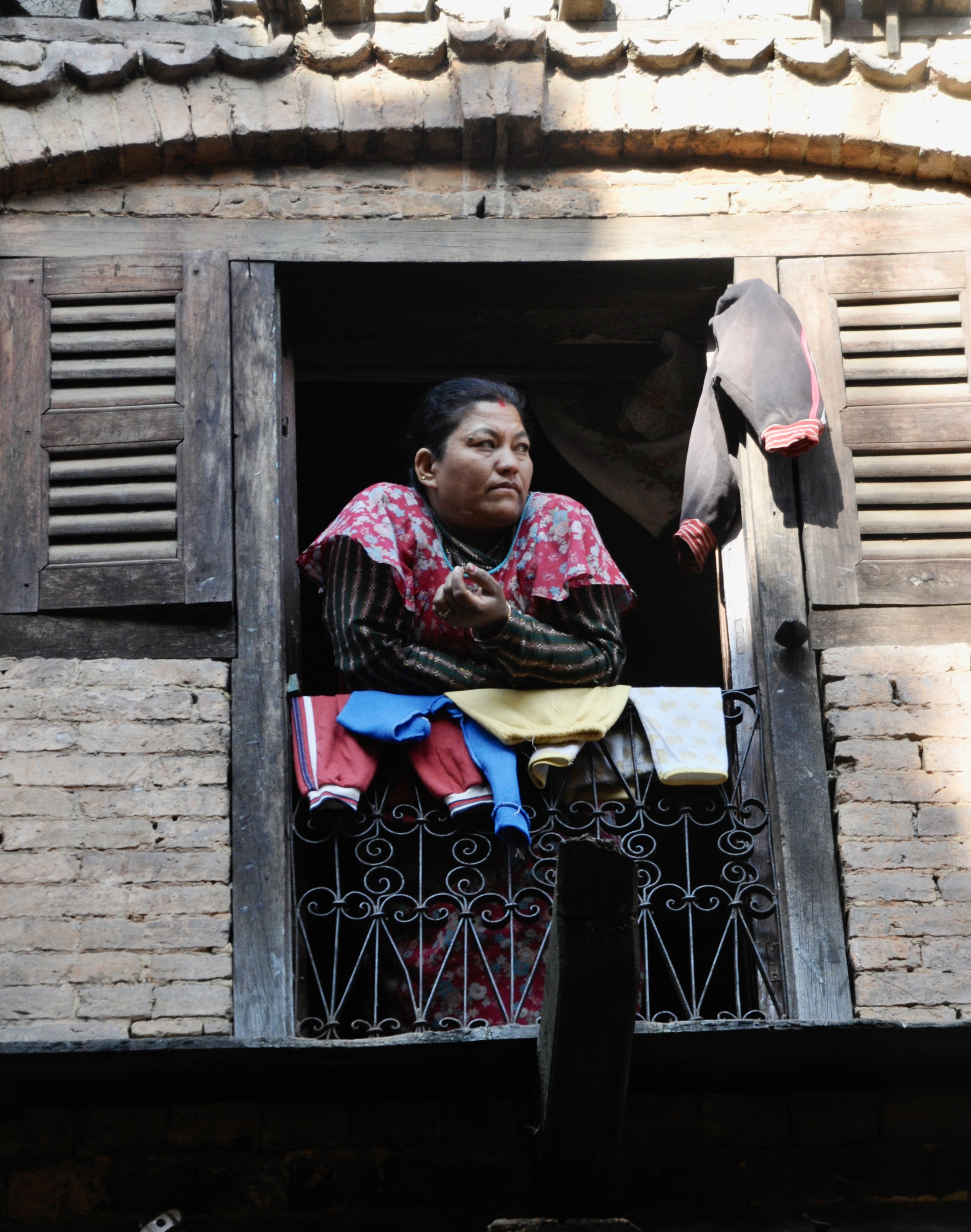
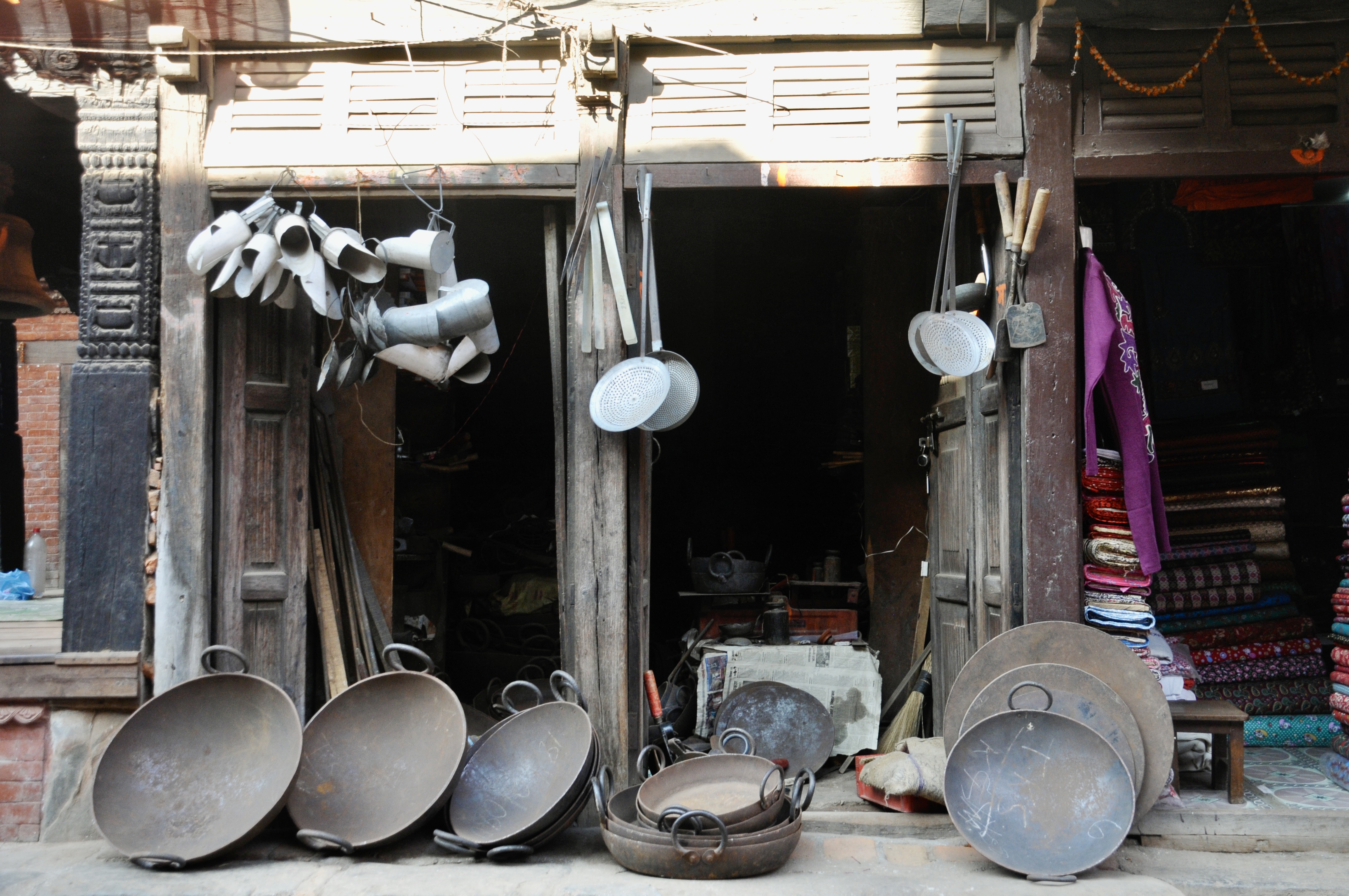
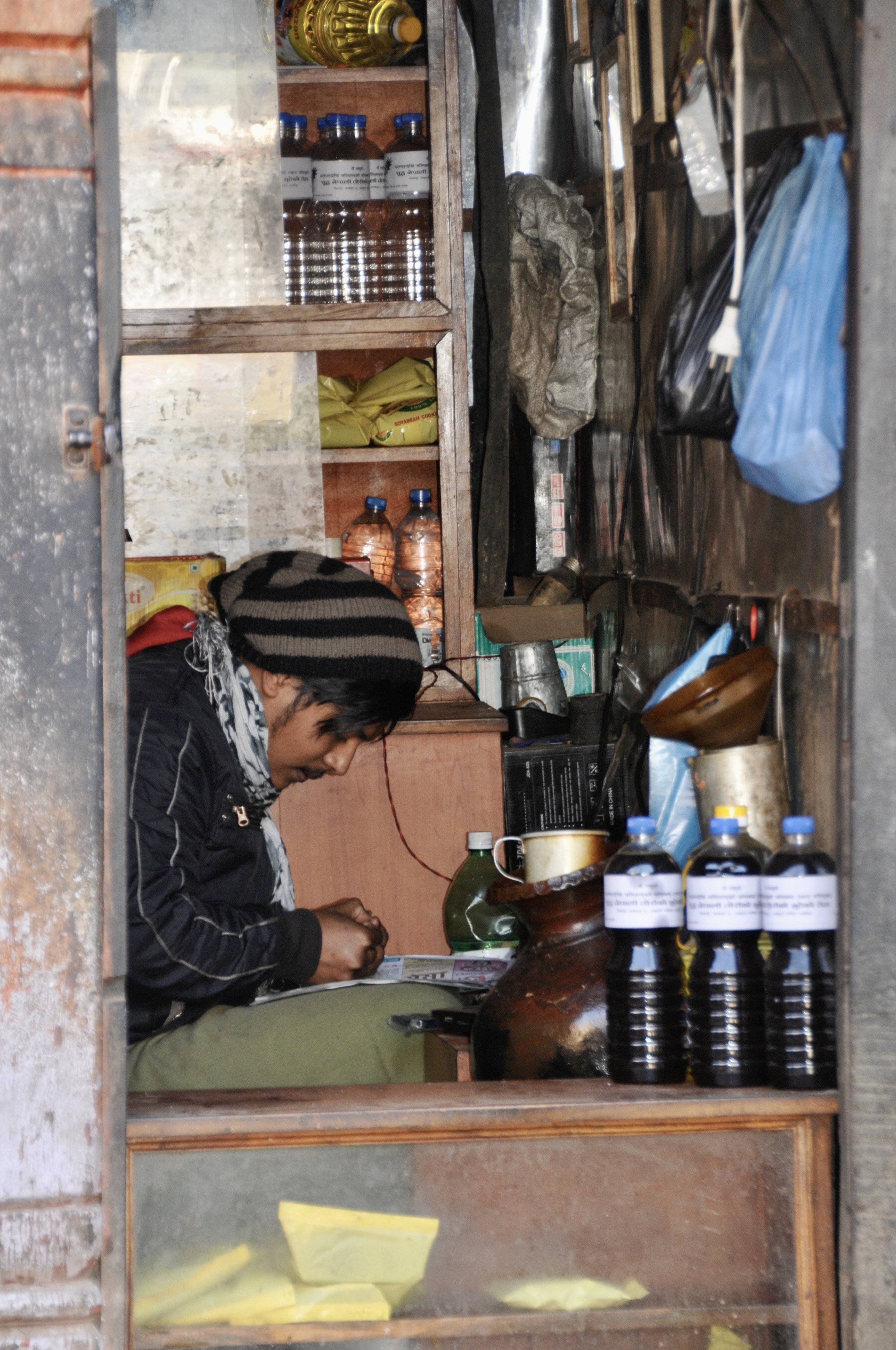
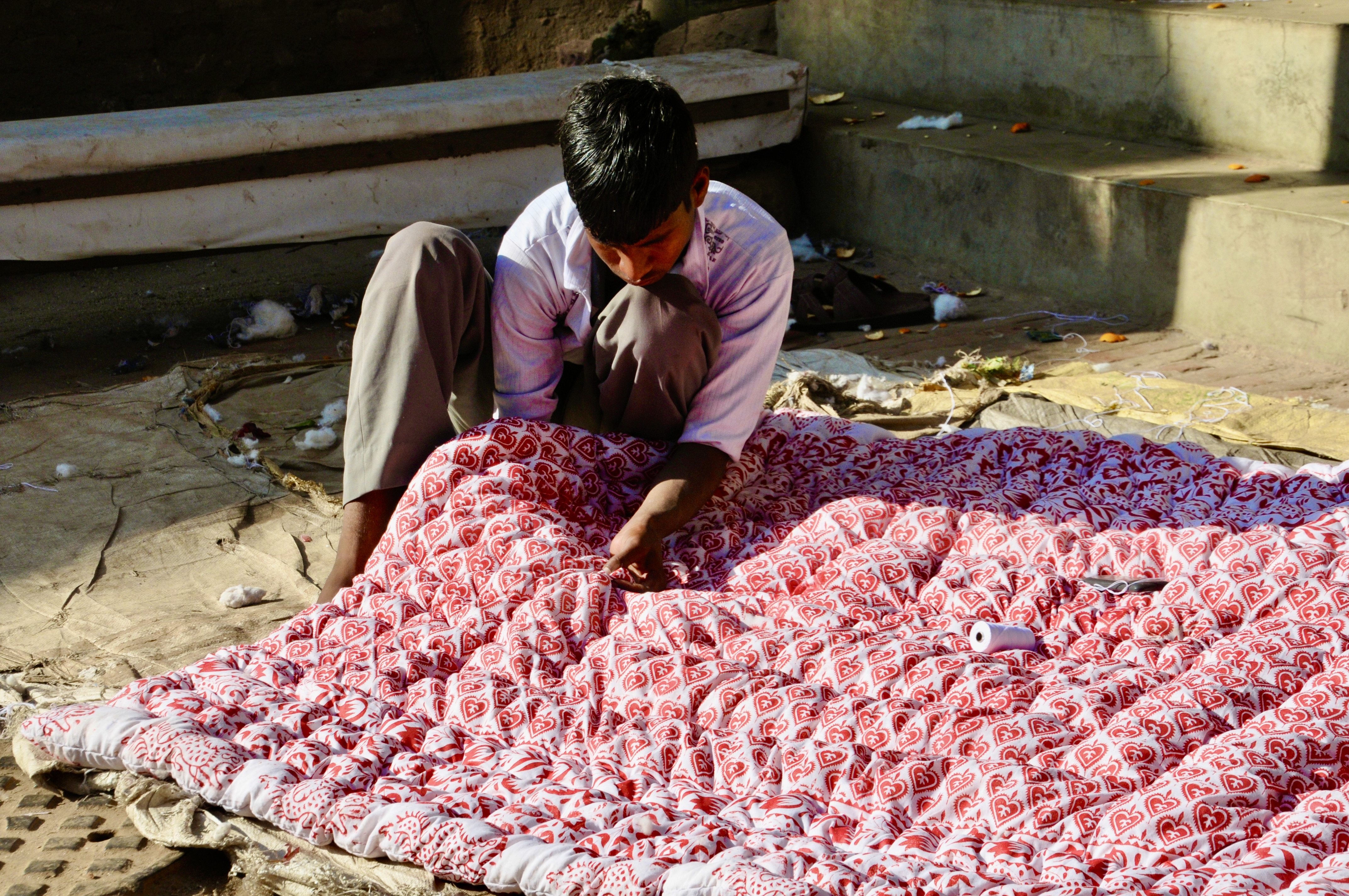
* For the foodies who want the details: Started with drinks and a roast duck appetizer (Mike had the mushroom dish – goat cheese stuffed shitakes with fruit salsa and homemade pesto), followed by a beetroot salad with edamame and avocado. Then came vichyssoise and the palette cleanser (a green vegetable granita). For the main course we both chose the rack of lamb (they use different cuts of meat). I think the lamb was cooked with pistachios and coriander.. came with vegetables. For dessert they served an apple crumble. OK… that was dinner.
December 31, 2013 — Year’s End in Kathmandu
December 31, 2013. Kathmandu Nepal

Namaste (Don’t know how to say Happy New Year, but maybe after tonight I will)
Went for dinner last night to an Indian Restaurant on the second floor of a very interesting complex called Baber Mahal Revisited — that honors Rana architecture (which was the period from mid 1800s to mid-1900s when the Ranas ruled Nepal and introduced a mixture of European, Indian, and local architecture). In 1996 one of the Rana descendants who owned the property decided to develop it himself with the help of a Harvard-trained architect who specialized in historic restoration. They created five courtyards with low buildings (one and two stories) surrounding each courtyard and each courtyard and building set depicting a particular pre-existing building or style in the Kathmandu Valley. Naturally, it attracted a set of upscale Nepalese restaurateurs and vendors who have a knack for finding unique items to sell.. and also some really good international cuisine. We ate at the Indian restaurant (called something like Buwarki) and were greeted by the owners’ son who surprised us with really good American English! We asked where he learned to speak English (since those Nepalese that speak English have Indian and British accents; his was distinctively American)… turns out he went to Wichita State University to study aeronautical engineering. Spent 6 years in Kansas, completed his degree… and in his own words, “became a redneck!”
The food was good, but way too much. Mike decided to order three starters and one main course, but the starters were big enough for a main course. Anyway, we checked out the shops in the complex but everything was closed so we put this on the list for today.
Got back to the hotel at around 10 pm and waited until midnight to call my office in Oakland to deal with year-end logistics (10 am in California) and then crashed.
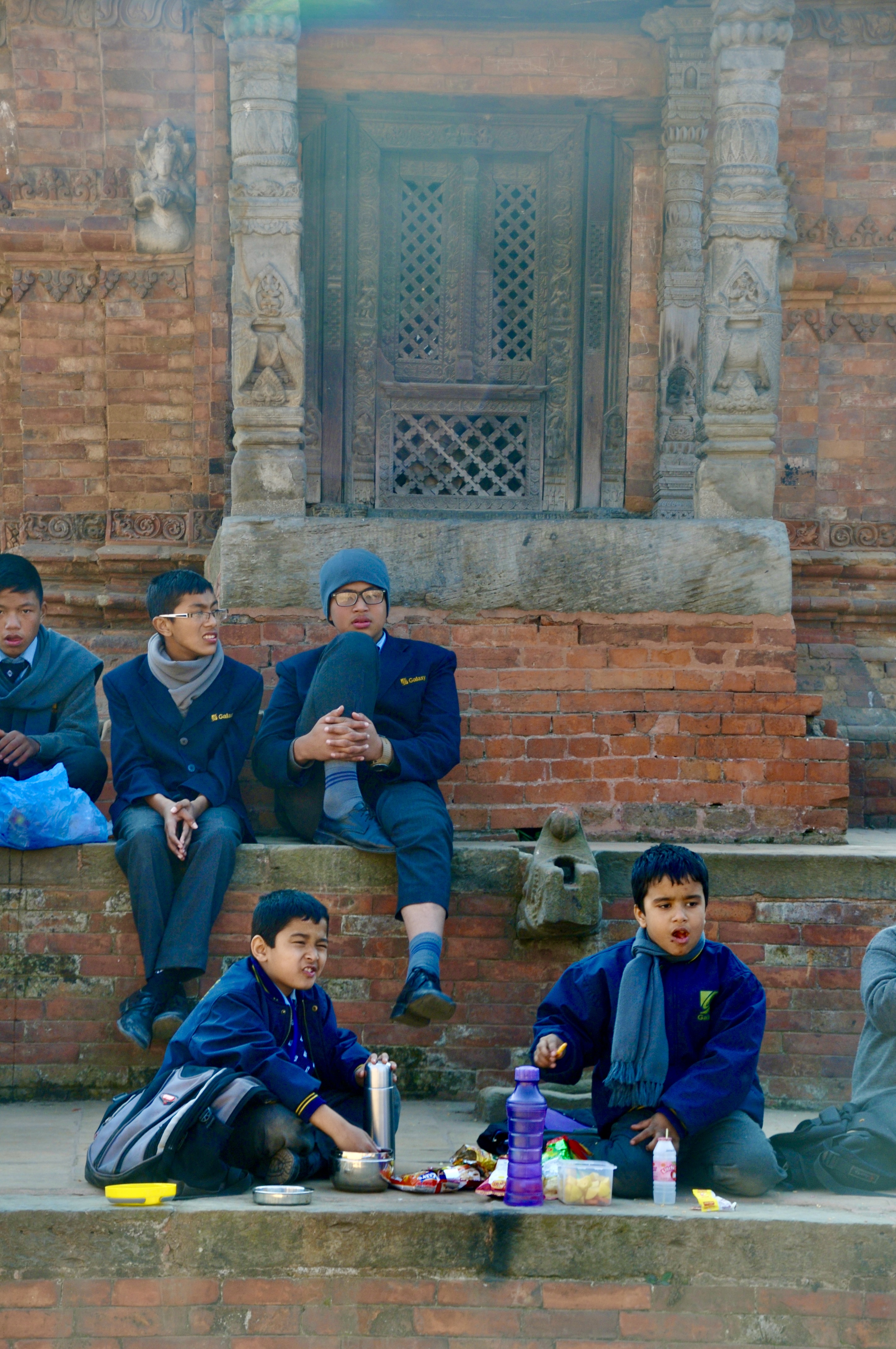
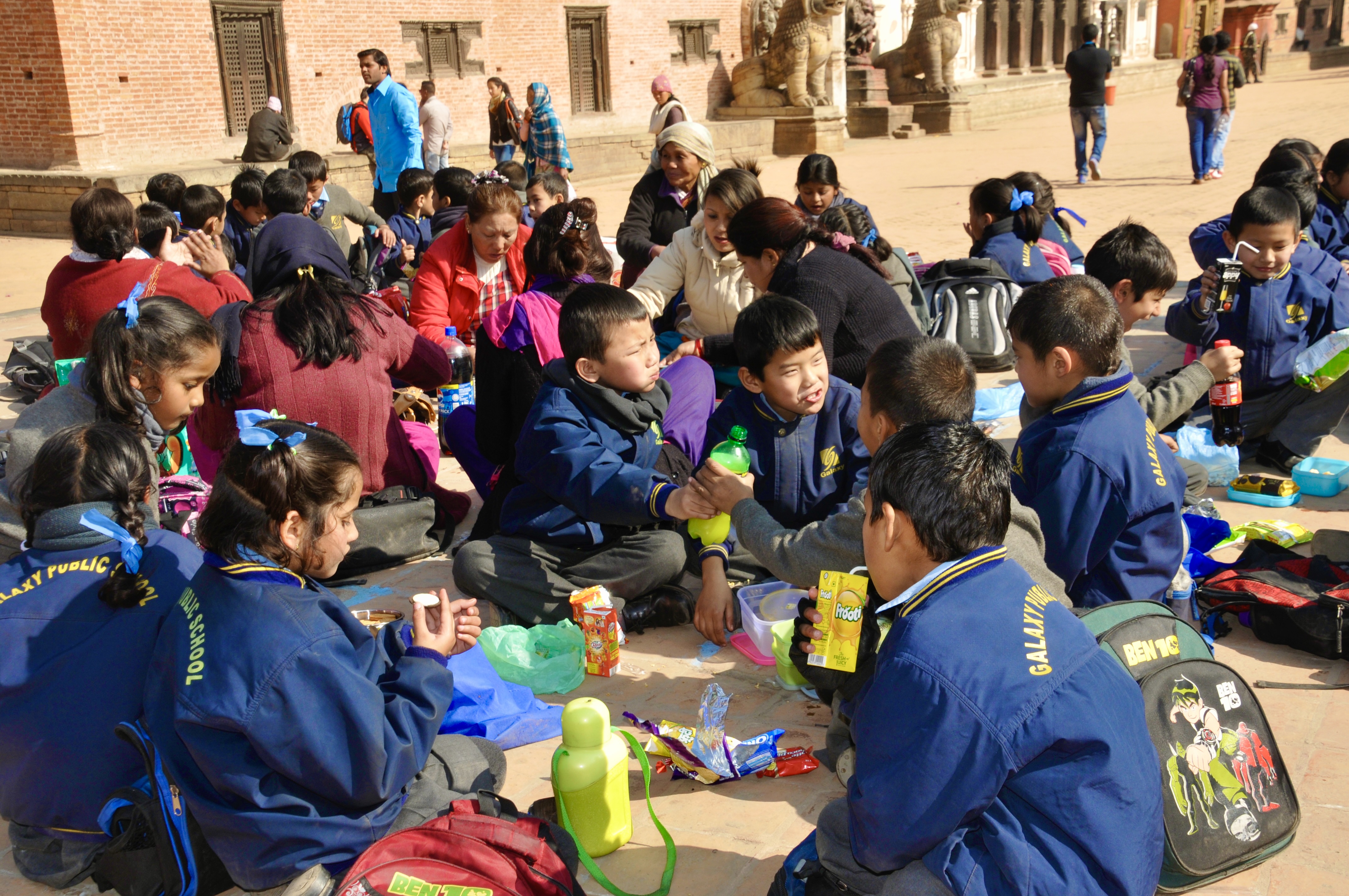
This morning after waking up to a wonderful surprise birthday present from Mike (a really beautiful opera-length gold necklace made of individual cylindrical links) and breakfast and discussions about how to navigate today’s plans — we headed out to Boudhananth – one of the holiest Buddhist sites in Kathmandu. It’s about 11 km from the center of town. The focus of the site is a huge stupa surrounded by a village-like presence with shops and buildings completely circling the structure. The Buddhist Boudhanath stupa dominates the skyline and is one of the largest in the world. Boudhanath, like so many other religious sites here in Kathmandu, is a UNESCO World Heritage site… and thus a popular destination, but given the time of year it wasn’t really crowded and we could stroll the whole complex easily and mingle with those coming for religious reasons. Boudhananth is apparently situated on the ancient trade route from Tibet which bypasses the center of Kathmandu. The stupa is supposed to contain the remains of one of the many Buddhas.
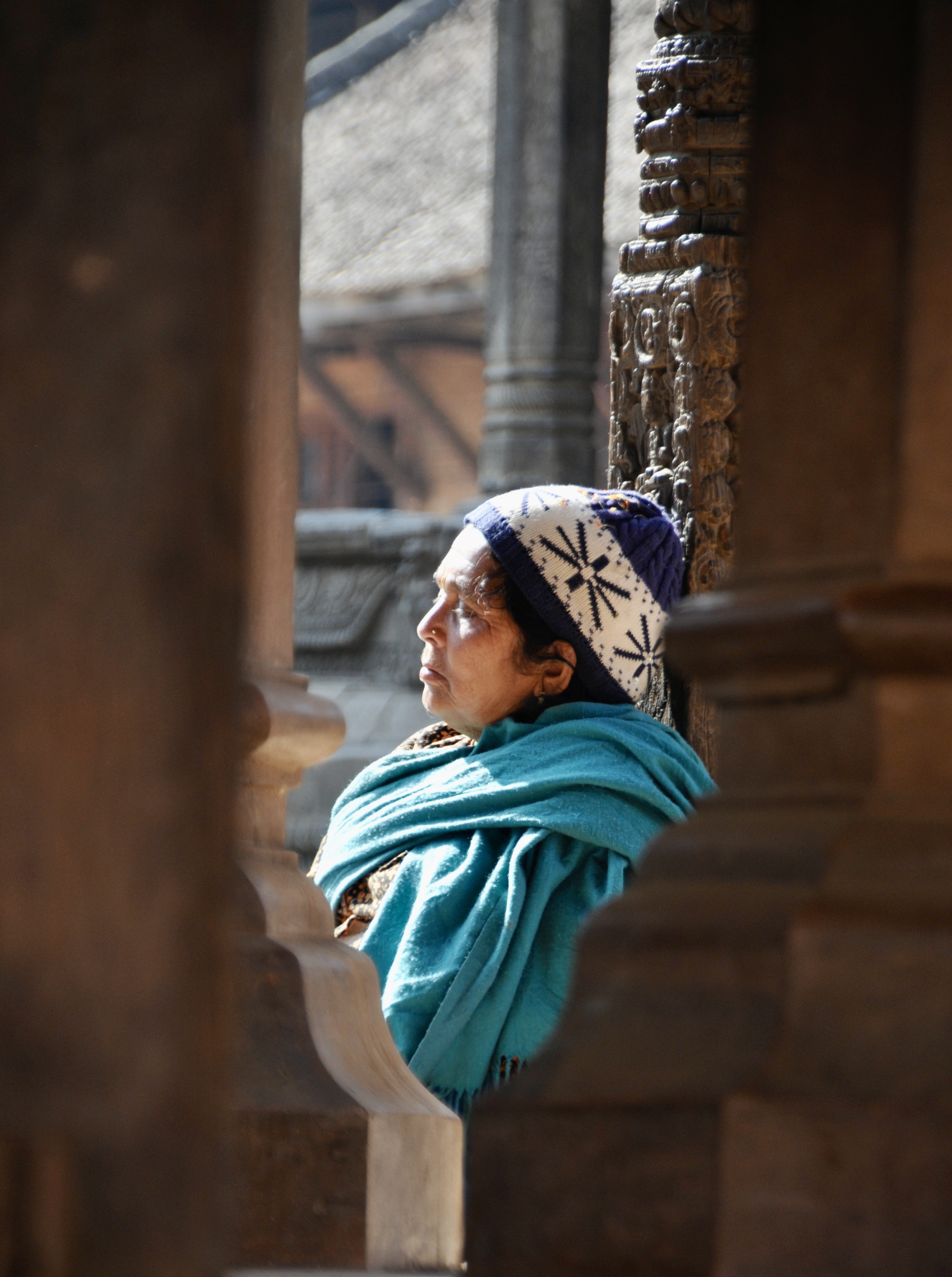
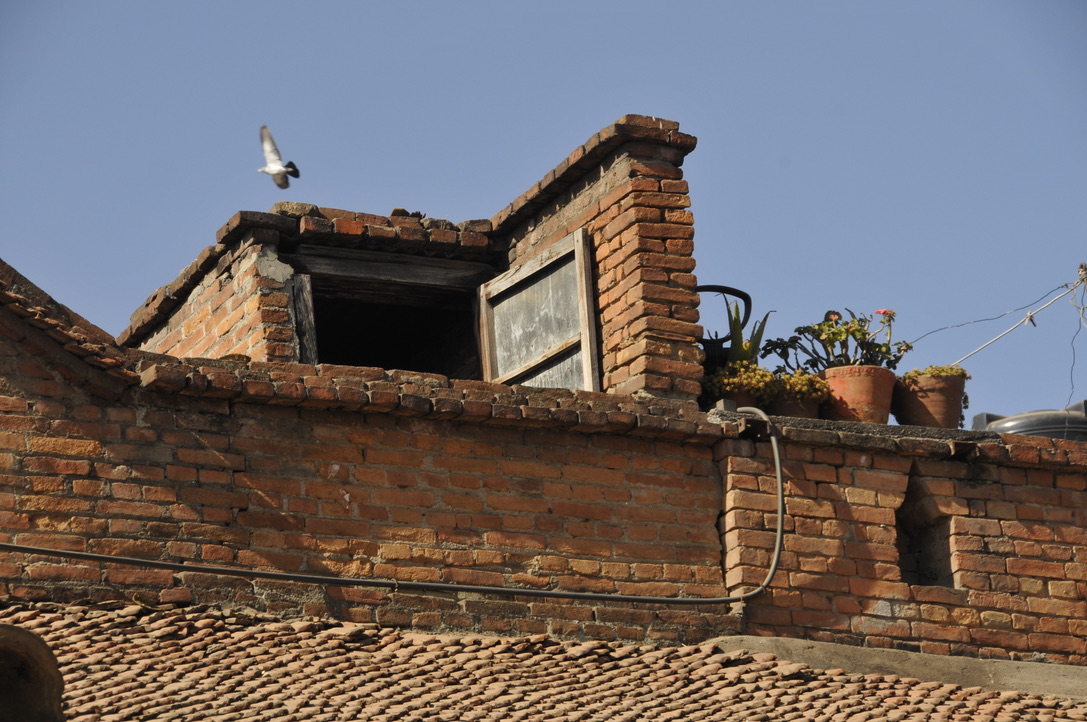

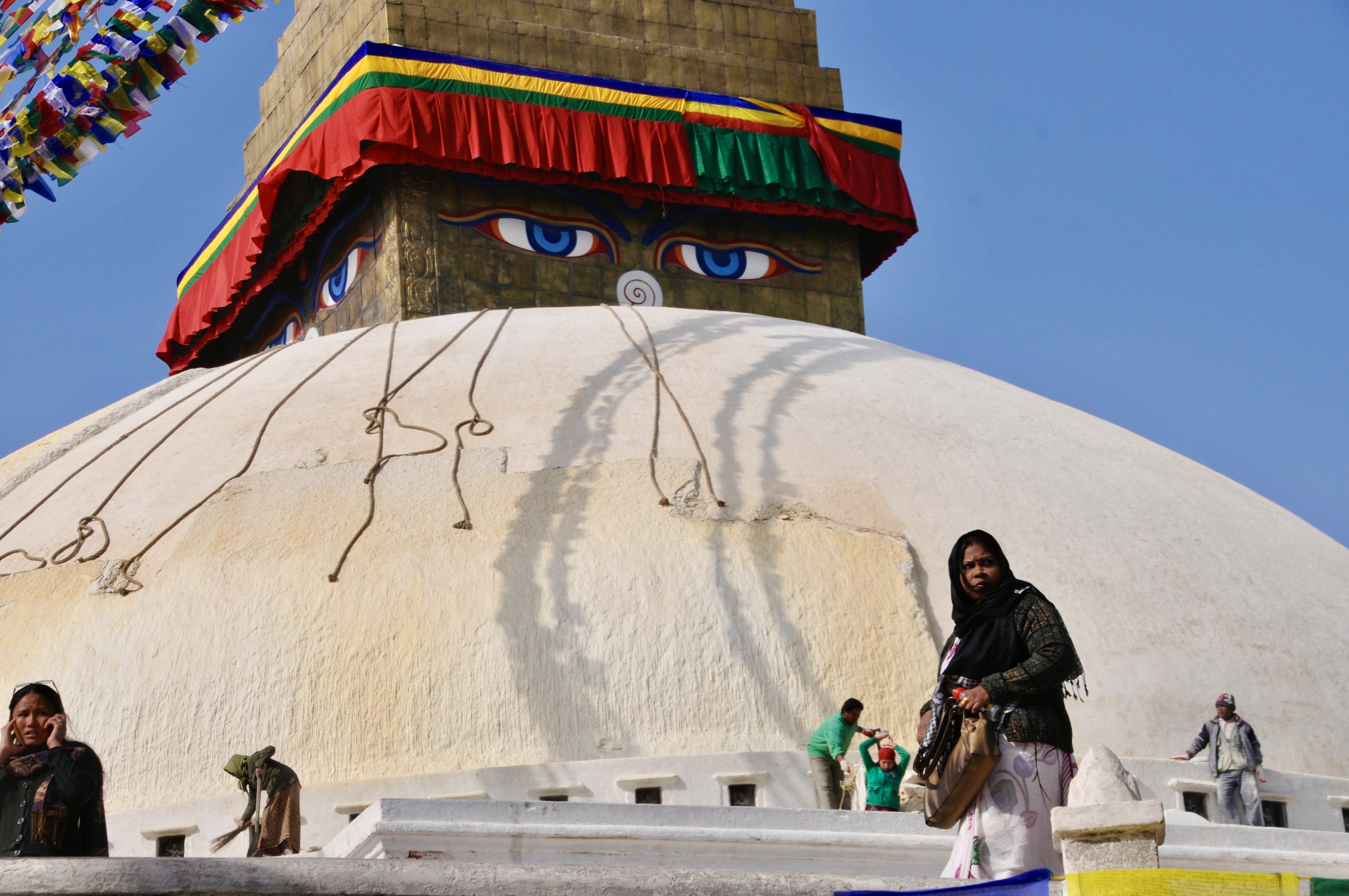
We used all the skills we learned yesterday – Get a taxi driver and sign him up for the day so that you don’t deal with finding new ones as you attempt to navigate the city and go from place to place (at fairly great distances); cross streets with groups of Nepalese and always stay in the middle of the group; etc. By the way, there aren’t any traffic lights in all of Nepal — so traffic just sort of flows or stops, and this is one of the reasons crossing the street is so difficult.
After strolling Boudhananth for about 90 minutes (actually it was a calm oasis, since there aren’t any cars — it’s sort of a pedestrian zone with shopping on your left and the stupa on your right), we asked to be dropped off in the Thamel neighborhood. I think this is probably a heavy tourist area in high season. It prides itself on having Wi-Fi everywhere and is probably where the hippies focused their time in the 60s, although I assume it’s a lot different now than it was then. (But still, some remnants of tie-dye and those classic Nepalese shirts and skirts with patchworks of cloth in different colors and patterns — the stuff I always wanted to wear but could never pull off!) Thamel has narrow streets crowded with shops and vendors and lots of cars and motorcycles. My guess is that you can buy anything here, but that there is a heavy concentration of pashmina stores, trinket stores, etc. It seemed upscale next to Indra Chok from yesterday… and while it may be a tourist haven in high season, we didn’t run into any Americans and only a handful of non-Nepalese.
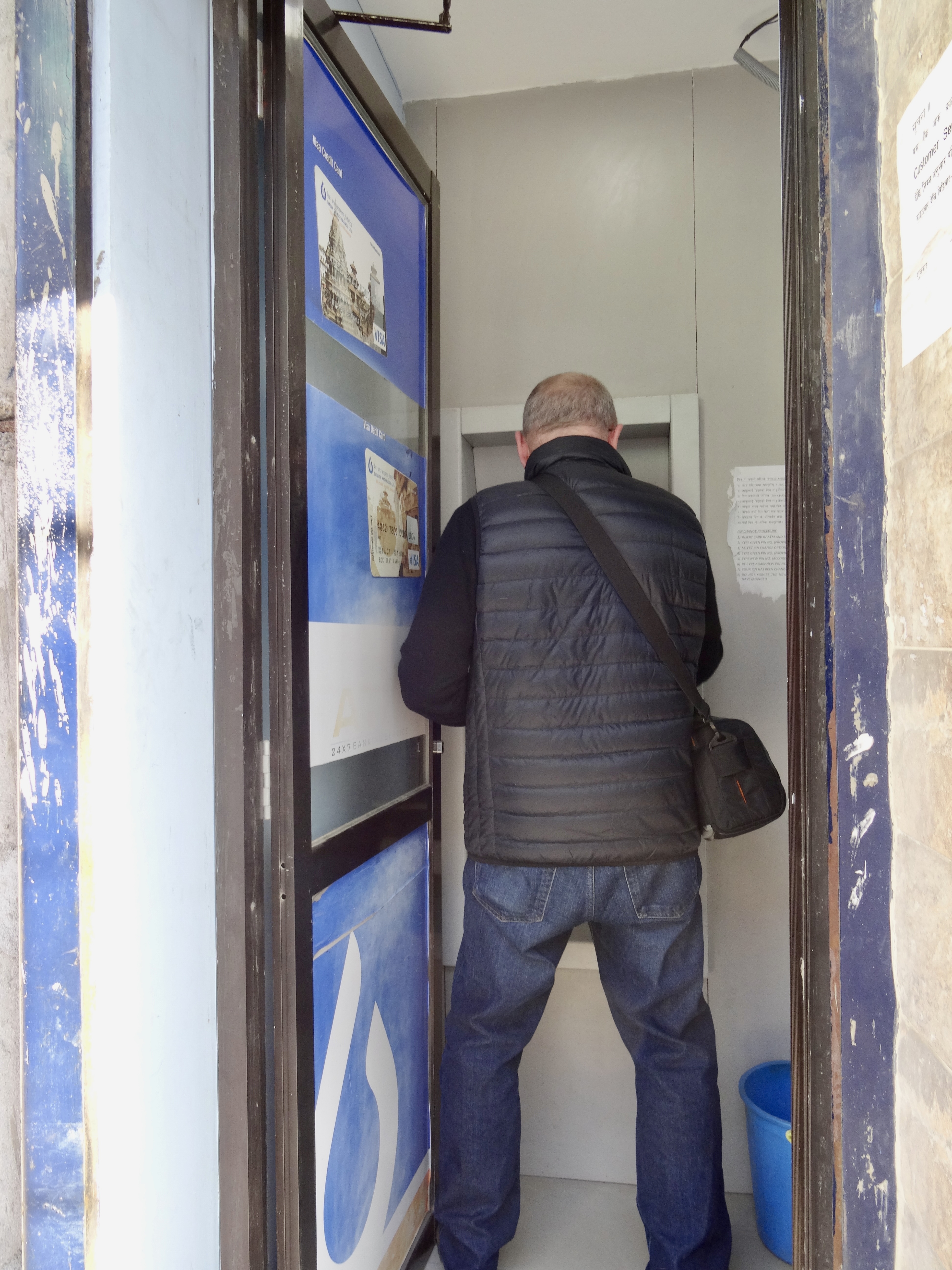
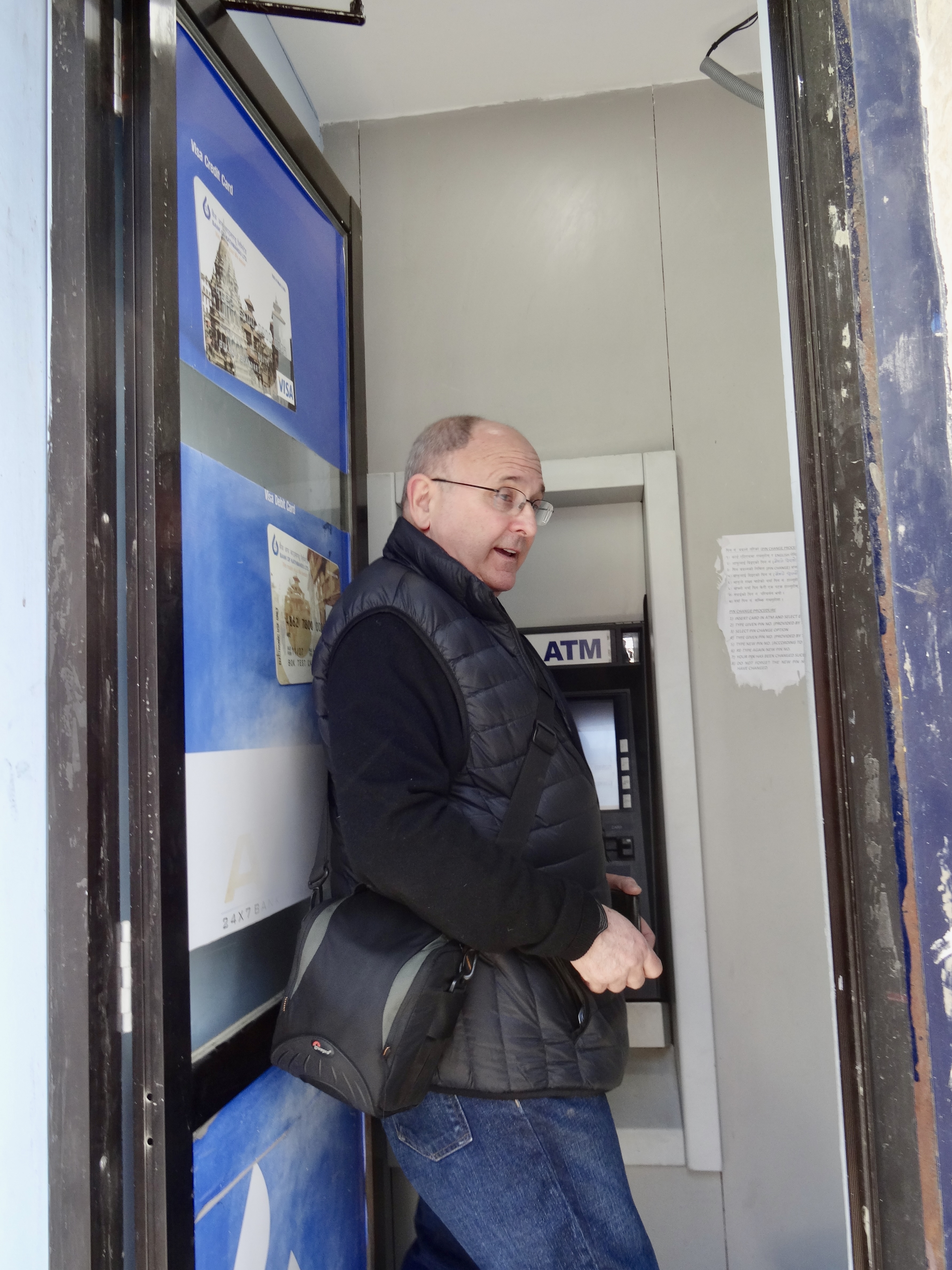
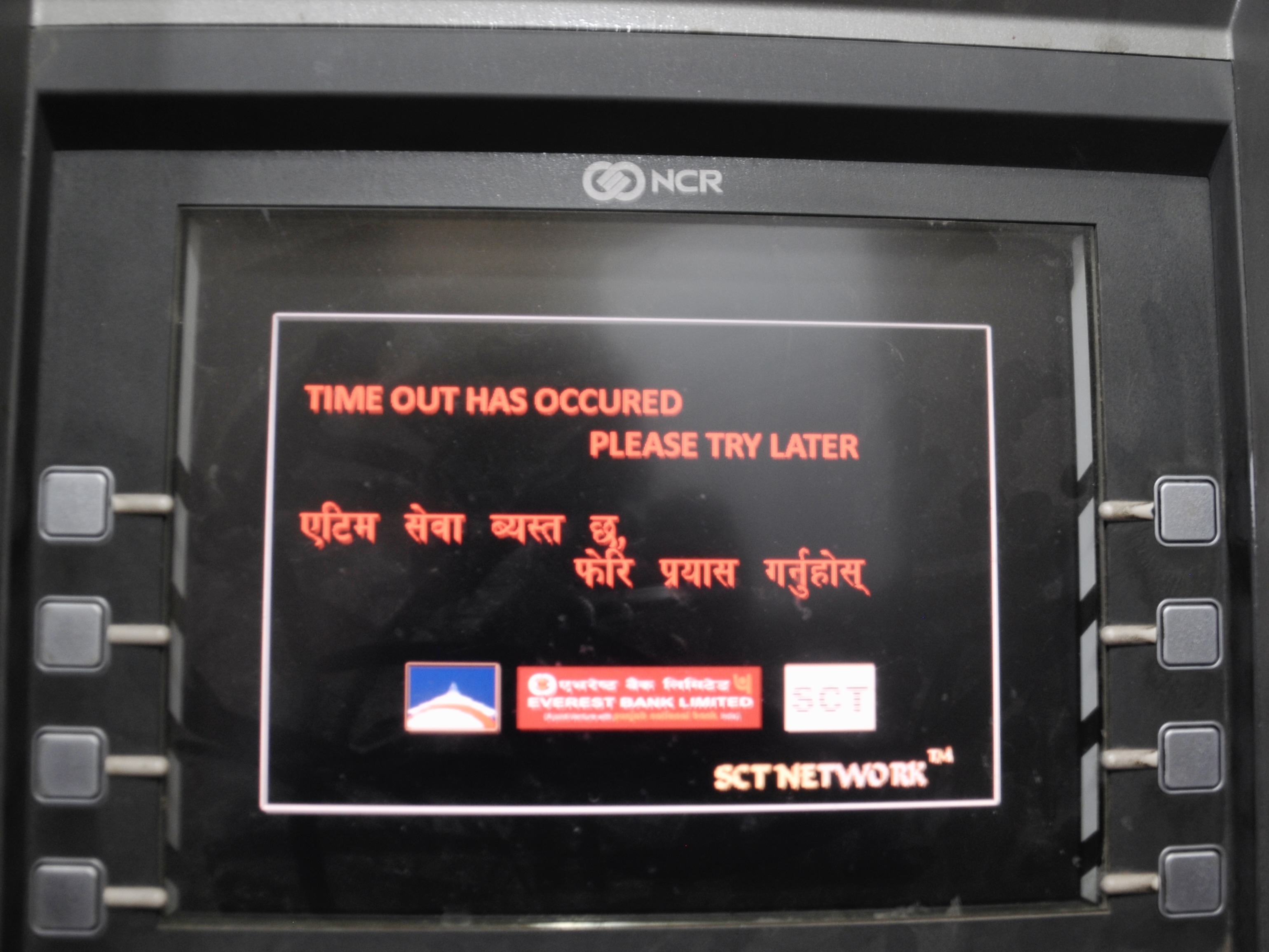
Thamel must be the pre-base camp for a lot of mountaineers, since there are a lot of gear shops and money exchanges. By the way, using an ATM here is interesting in that the ATMs are like little rooms, just big enough for one person, but fully enclosed. Generally they are up a few steps.. so it’s sort of like going up to a little apartment door, but when you get there and open the door it’s a very very small closet. Mike used one just fine, but my card didn’t work – twice. I’ll just wait for Delhi.
From Thamel we went back to Baber Mahal Revisited for lunch and a little higher-end shopping than what’s on the streets. When we were at the complex last night we spied a cute little café called Chez Caroline — so we headed there. We were in heaven – a little French café in a quiet courtyard, tastefully decorated with beautiful plates and settings. We each had the soup of the day – ginger carrot, and then Mike had the mushroom tart with walnut sauce, and I had the tomato/chevre tart; two glasses of good, inexpensive wine — all followed by a shared slice of ginger cake. Fantastic! We were also starving by then.
Strolled Baber Mahal Revisited for an hour or so — purchased just a few small items (but spied some other things that might be worth a trip back again, and certainly we are considering dinner there tomorrow night at one of the many restaurant options). Then we headed back to the hotel to rest and get ready for New Year’s dinner here; decided that it made most sense to just enjoy the hotel where a very special dinner and party is being prepared for tonight.
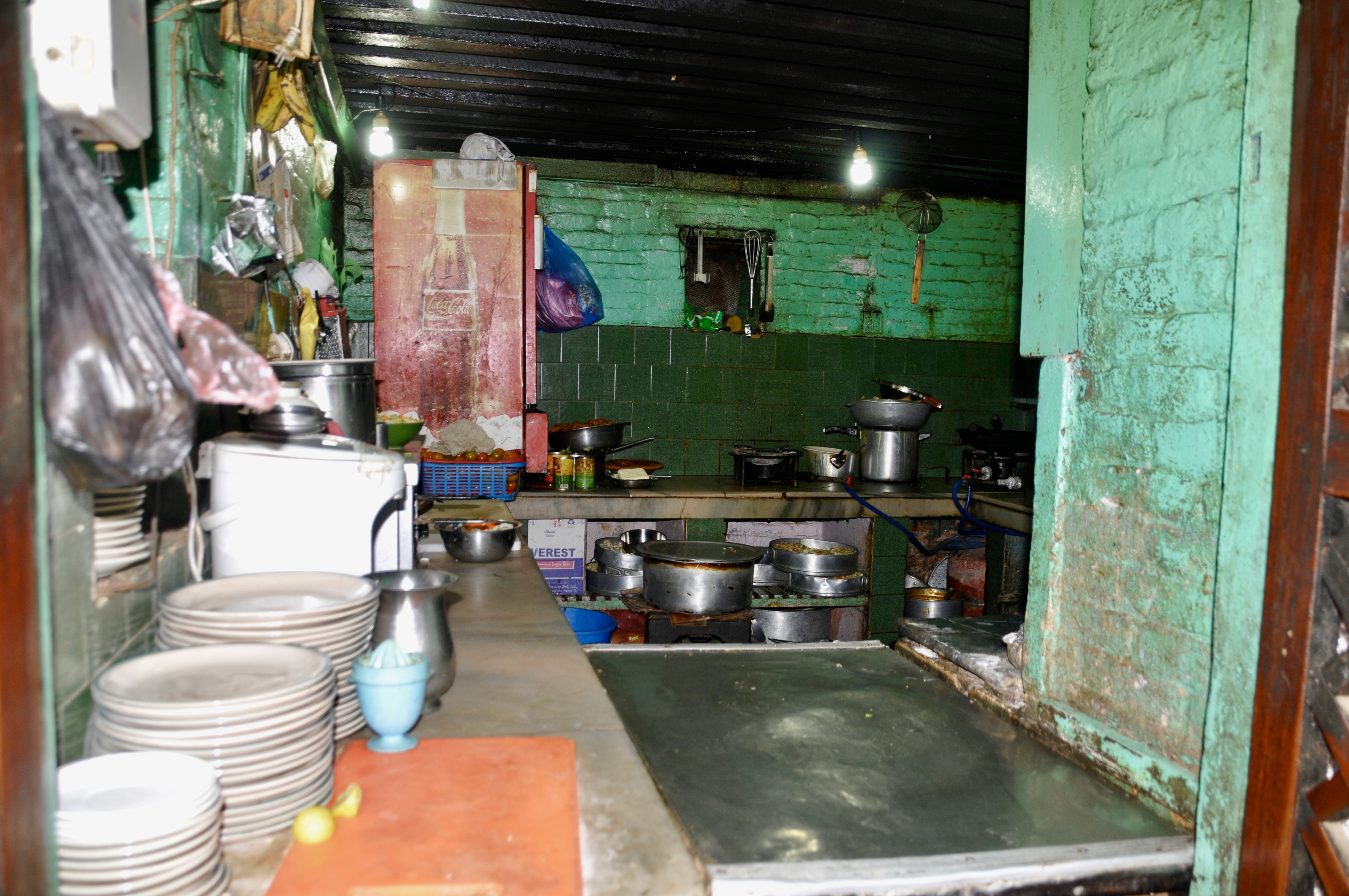

The streets at night are extremely dark and difficult to navigate given the preponderance of pot holes, unfinished or partially demolished sidewalks and roads, cyclists without any lights, the mist, street fires being used for cooking and heating, and more.
More tomorrow from Kathmandu (probably another temple — getting templed out, but frankly they are much easier to take than those in Tibet; less climbing; and the strange mixture of shopping and temple seeing because of the way these temples have been built within village-like settings. And then we’ll probably go to another neighborhood.
Best for 2014 – Fern
December 30, 2013 – Next to the last day of 2013
Kathmandu Nepal: Namaste –
Started out this morning with breakfast at Dwarikas; we’ve decided to do whatever necessary to get better and definitely not to get sicker — so this means straying from our usual more daring eating places and using the hotel as a backup; guaranteed cleanliness and less chance for additional germs. Lord only knows we are surrounding ourselves with absolute guck and germs as soon as we venture out of the hotel (which we do for the entire day and dinner)… so a little precaution at breakfast seemed wise.
For those who have been asking, Dwarikas is quite wonderful with scores of hidden courtyards and spaces, lushly landscaped, and definitely worthy of its five stars. No complaints from us, except that the electrical outlets are a bit dorky and our connections (we have many) keep falling out of the sockets (with the converters). We are traveling with about 13 devices that require charging; 8 for me and 5 for Mike — so we are improvising and taking turns using the two sockets that seem to work with our cords. I can charge quite a few things from my computer, so that helps (but that means leaving the computer on which ties up one outlet). The only other thing Dwarikas needs to address are the closet doors — wood frame sliding doors that stick constantly. But these are pretty minor. Other than that, they’ve definitely got their act together. Oh, the other thing I’d eliminate if I were advising Dwarikas is the guy at the front door who is always saluting — anyone and everyone who shows up. Maybe it has a non-military meaning but we’re not so comfortable with it.. The Namaste greeting is much more comfortable for us.
Anyway, breakfast was good — Western — eggs, muesli, lots of great fruit and fruit juices (remember this item as the story proceeds), muffins, cinnamon yogurt, etc.
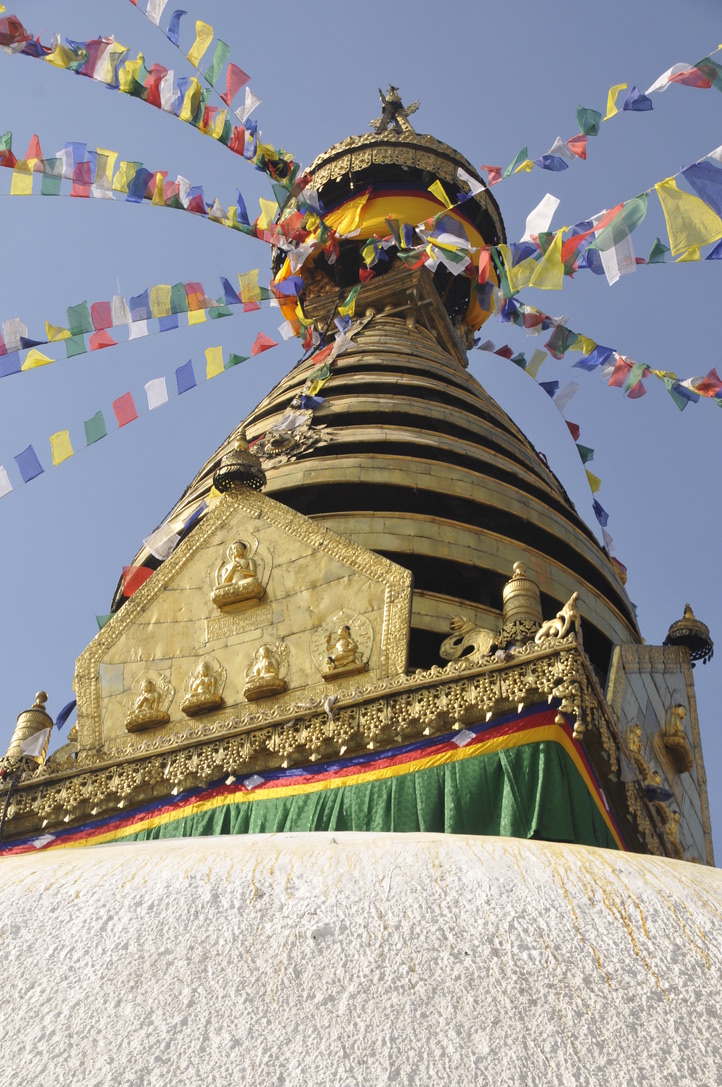
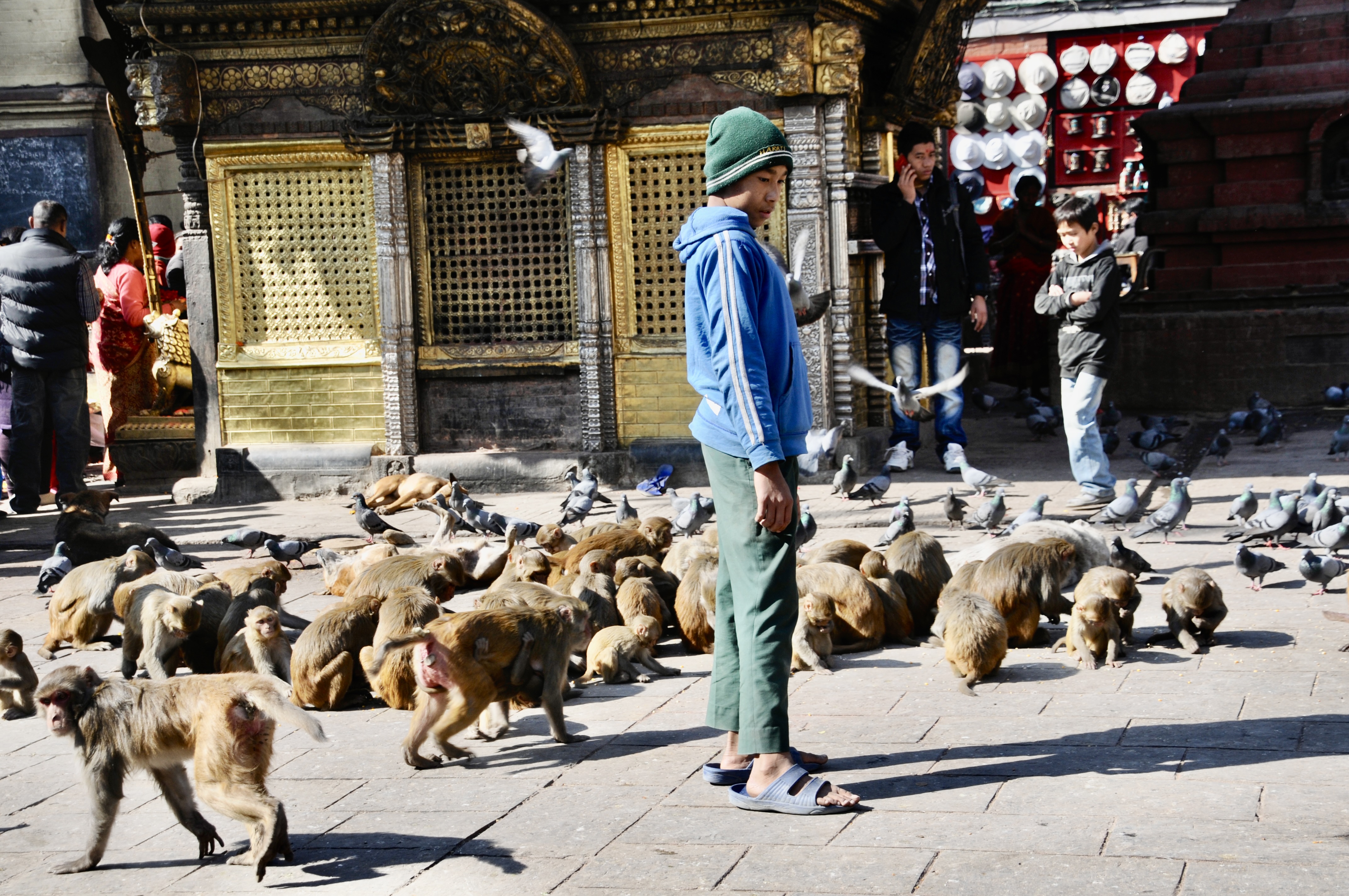
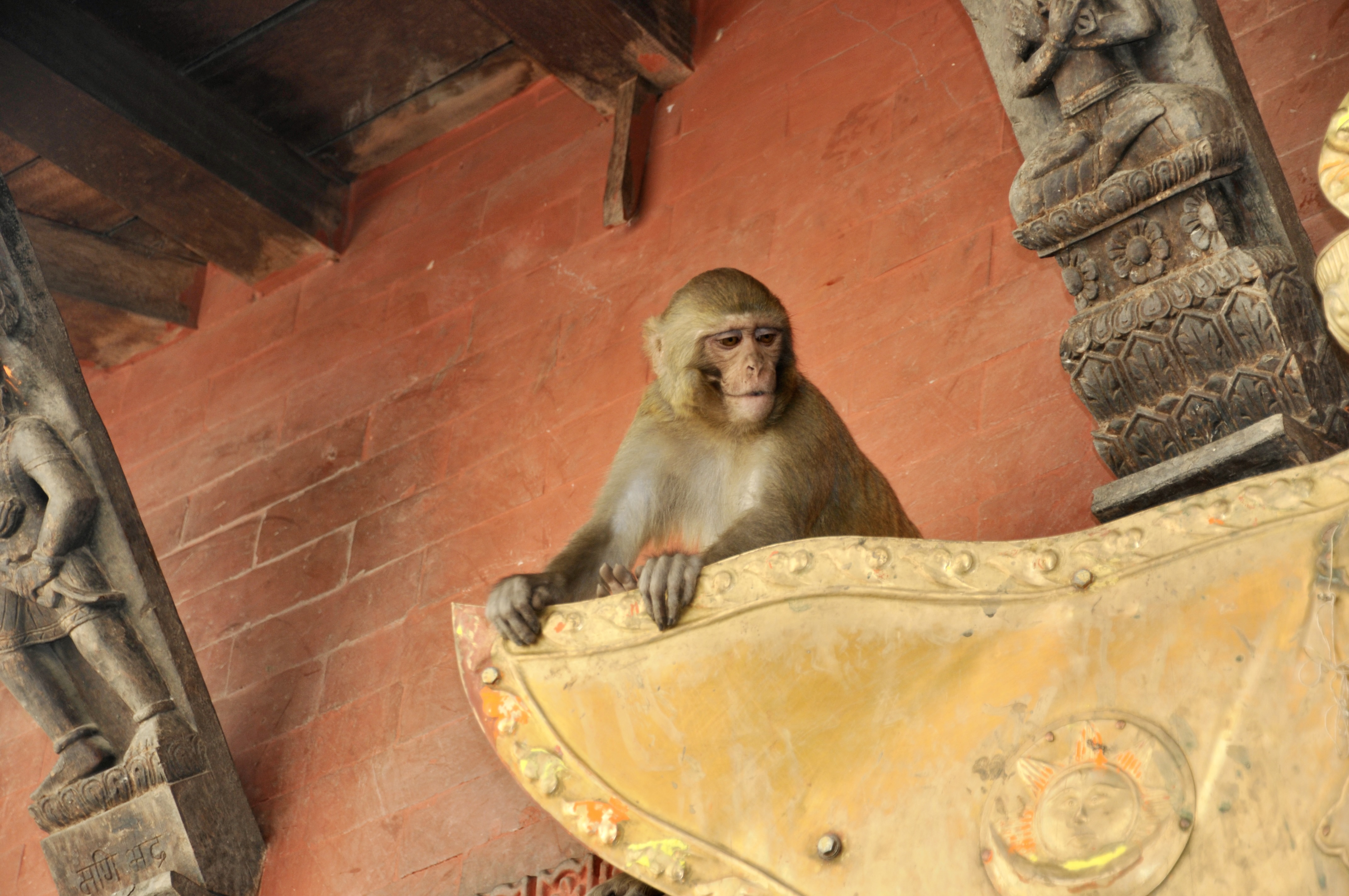
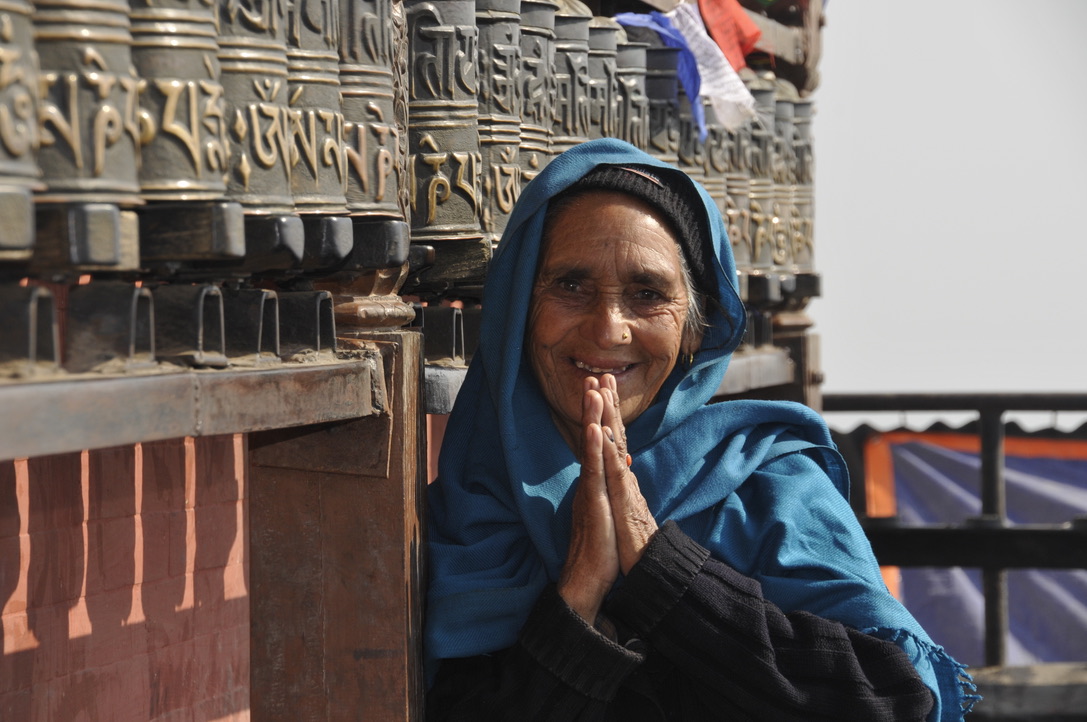
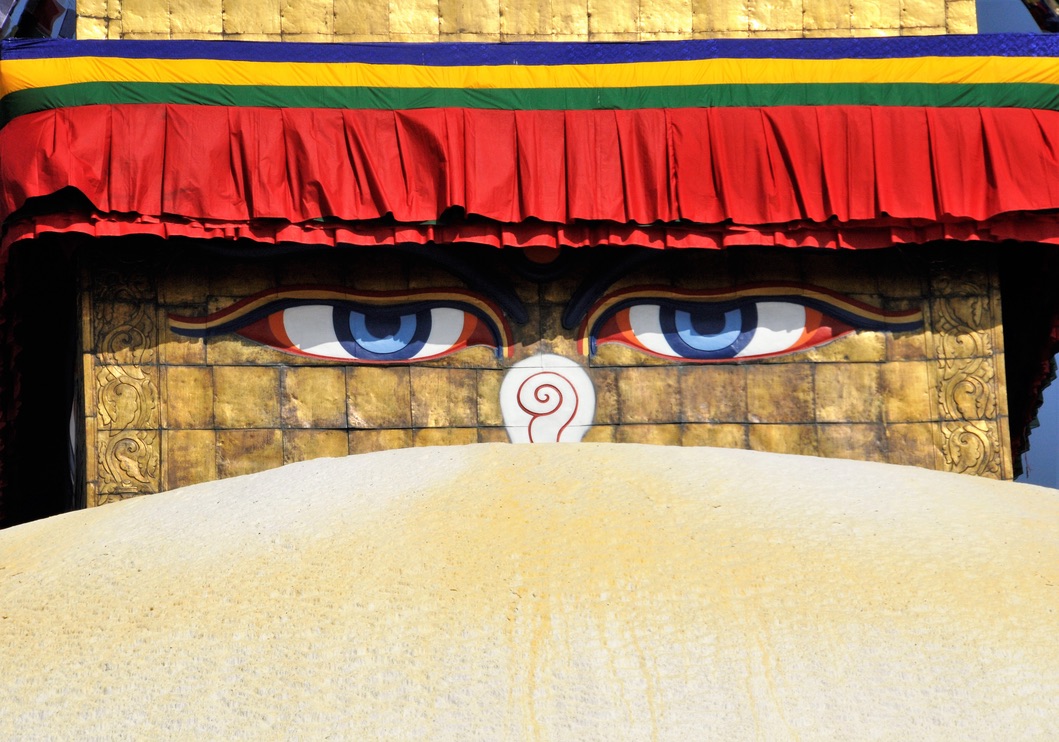
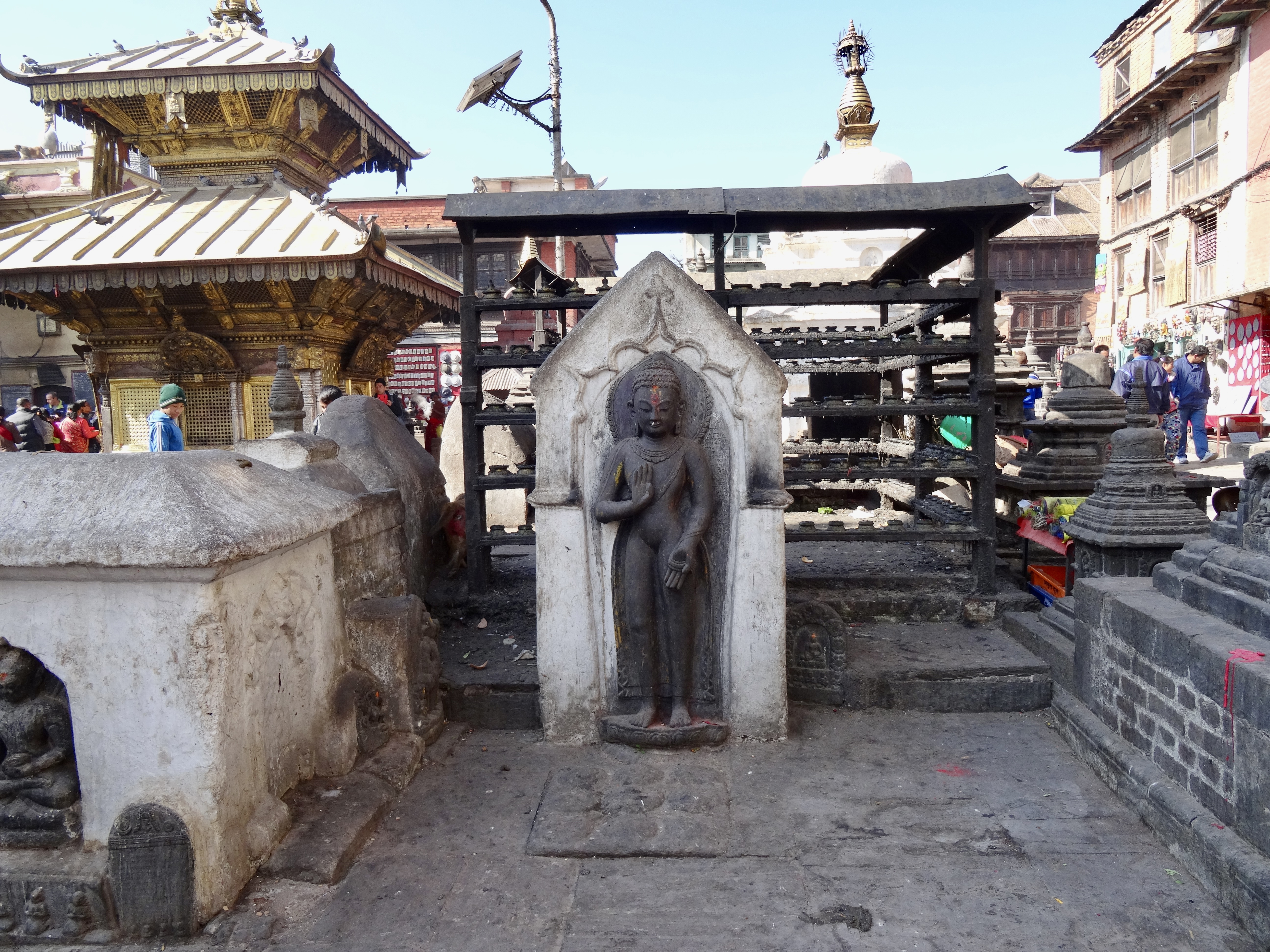
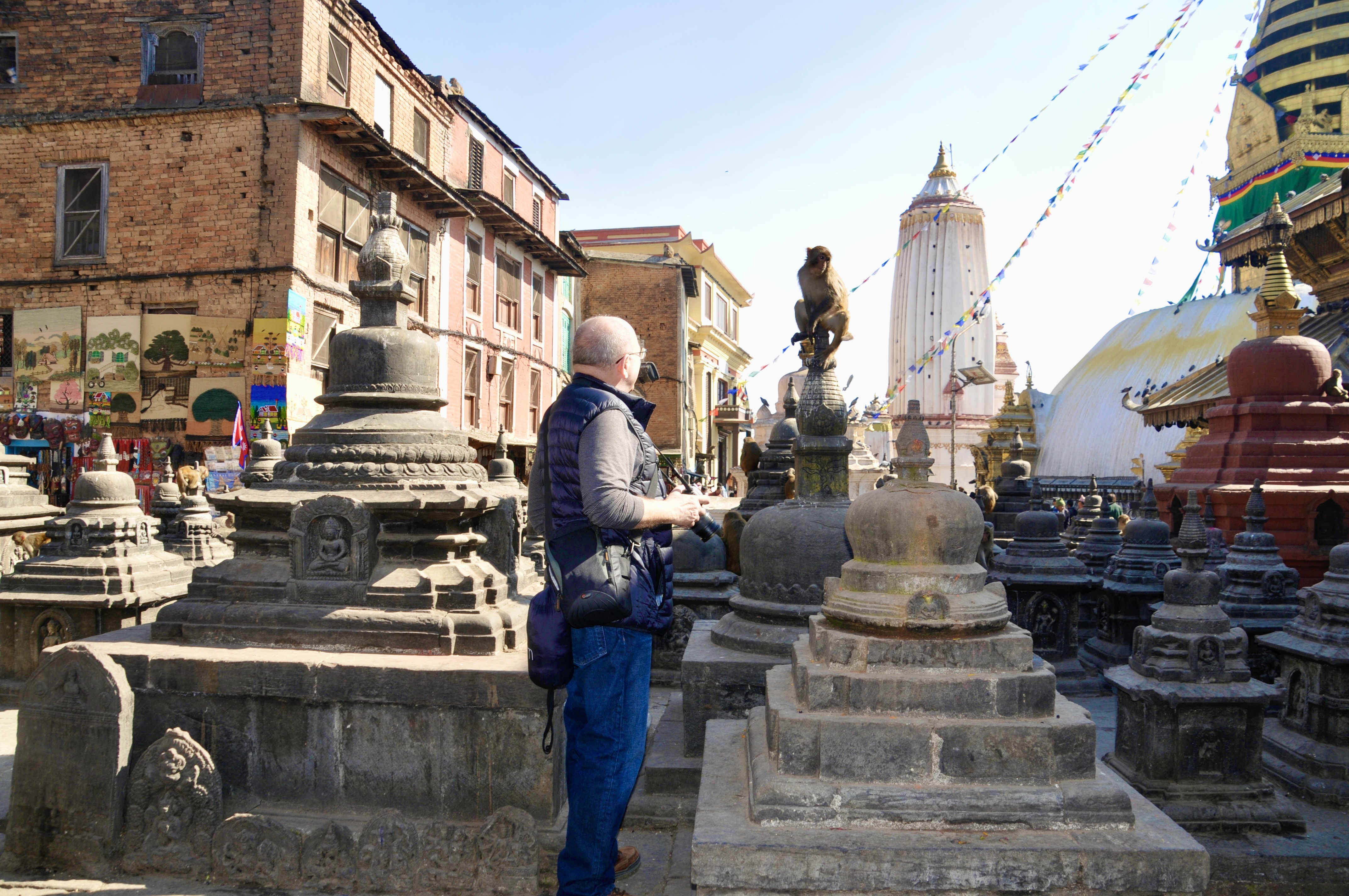
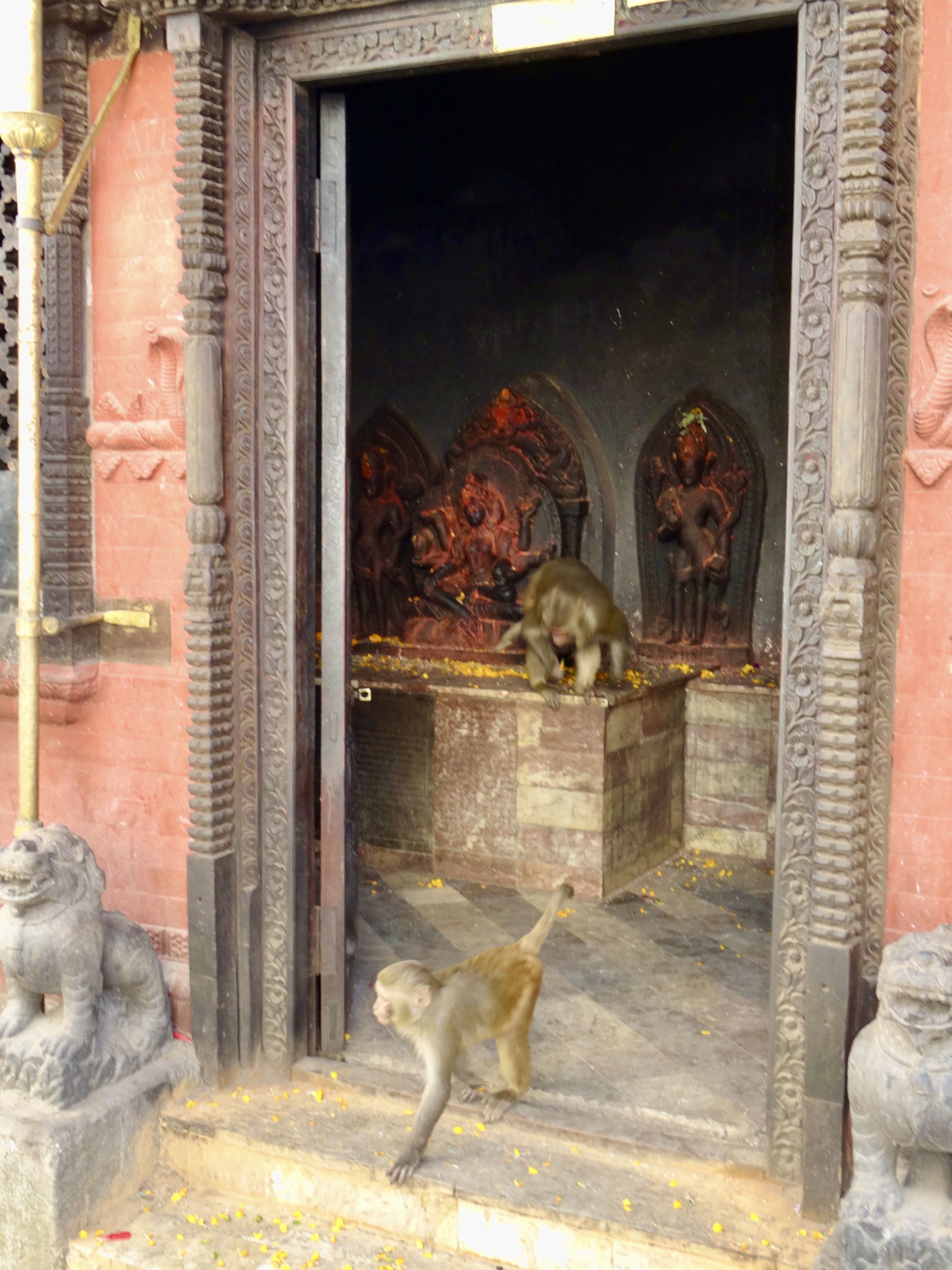
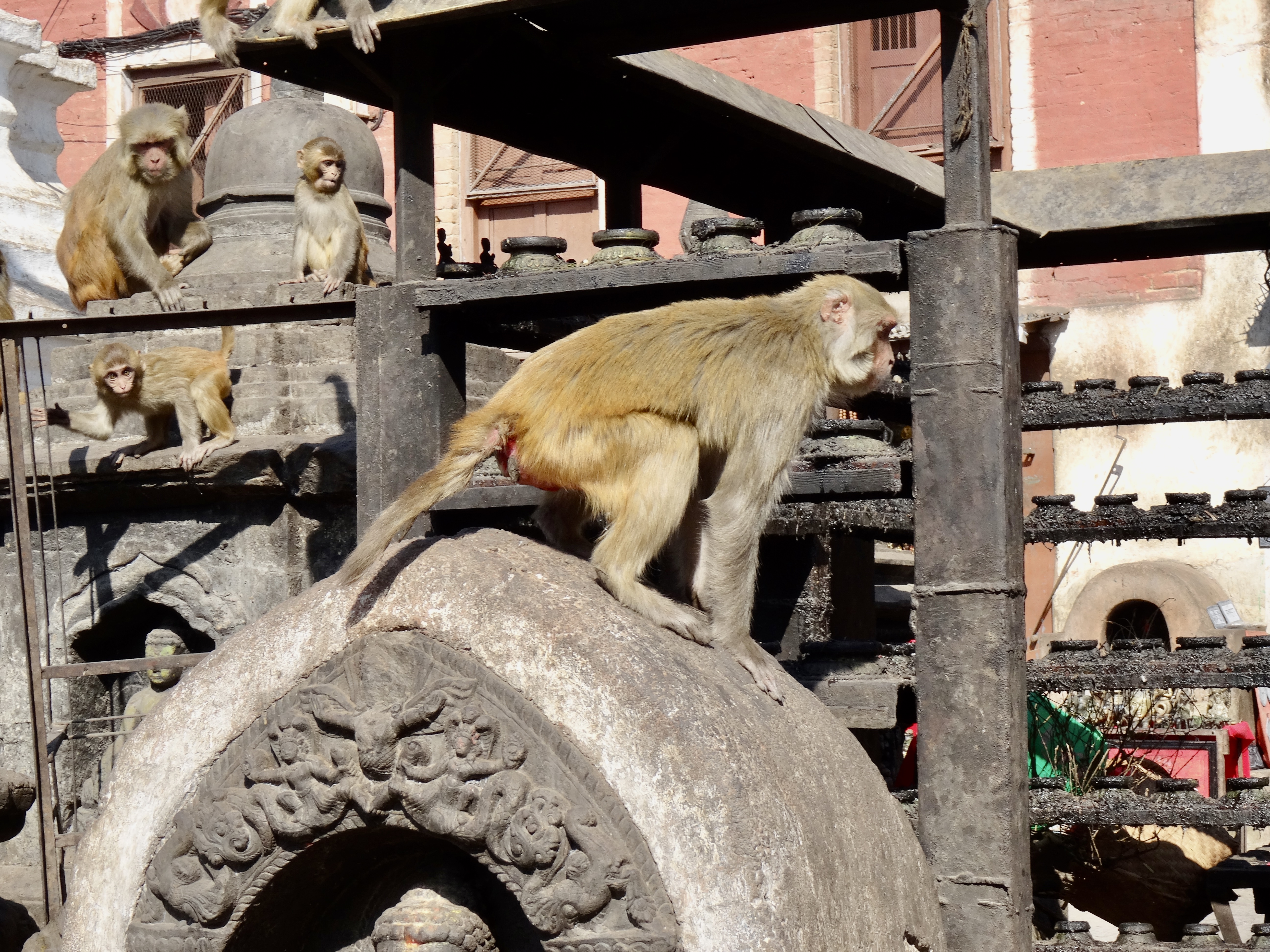
And then we headed out for the day — took a taxi to the Swayambunhath Temple (also known as Monkey Temple because of the unbelievable number of “holy” monkeys that treat the space as their own). It’s an ancient religious complex that sits high above Kathmandu Valley.. and it’s to the west of our hotel (about 25 minute drive). The complex includes a stupa, lots of shrines and temples… as well as a host of shops and restaurants which makes for a very strange scene with pilgrims worshiping and people “shopping” at the little stalls that literally line the entire place. It’s a challenging walk up the stairs from the base to the top. Our taxi driver was wise and asked if we wanted to do the short set of stairs or the long one and we jumped for the short one. Once at the top, we saw what the climb would have been like had we done the long route — probably equal to the climb we did in Tibet. Buddha’s eyes and eyebrows have been painted on the stupa. The monkeys are everywhere and they seem to rule the roost — climbing and jumping — now you see them now you don’t. There are hundreds of them. Monkeys do what monkeys do, including fornicating on top of a stupa.
The taxi driver asked if he should wait and was willing to wait for us for an hour which we thought would be great and then we wouldn’t need to negotiate with another driver. By the way, unlike Lhasa the taxis are all rundown, beat up cars.. and as I mentioned yesterday, navigating driving would be like putting your life in your hands the first second behind the wheel. We’ve driven ourselves in a lot of strange places — Thailand, Ecuador, Honduras, Morocco, Tunisia — but this one takes the prize. Frankly, when we got out of the taxi, the only way we could cross the street was to find a group of Nepalese people navigating the crossing and weasel our way into the center of their group (they weren’t an organized group — just a bunch of people headed in the same direction) and then move the same way they do.. if they stop, we stop. There aren’t any lights. It’s total chaos. Makes Mexico City traffic look calm and very organized.
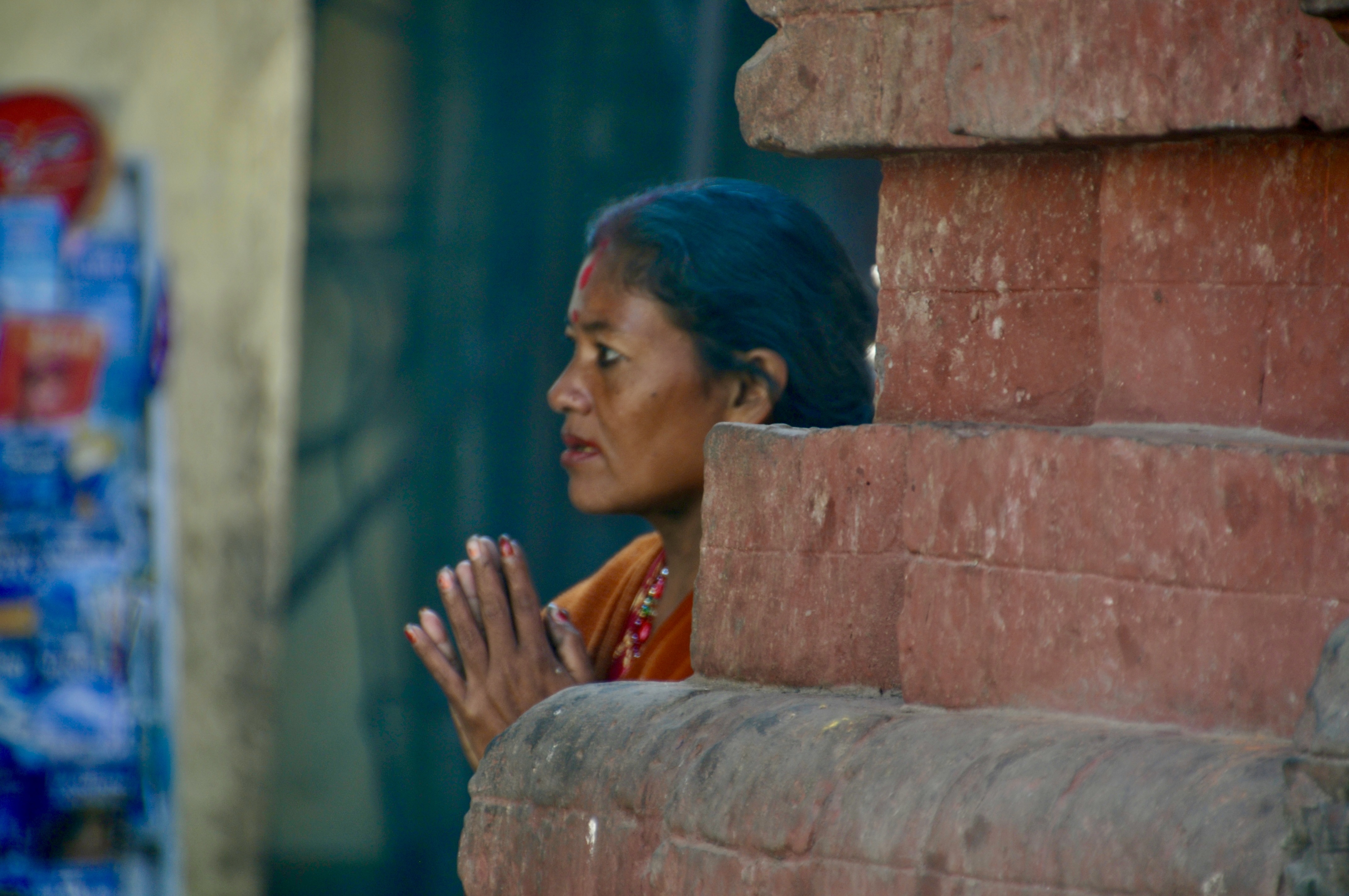
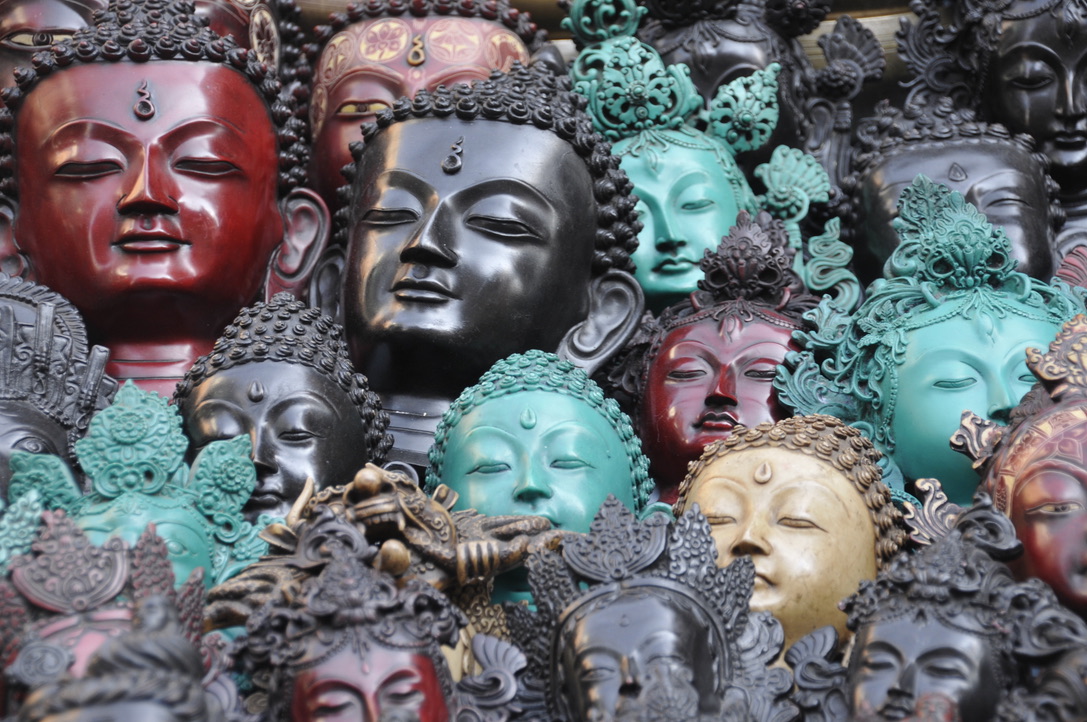
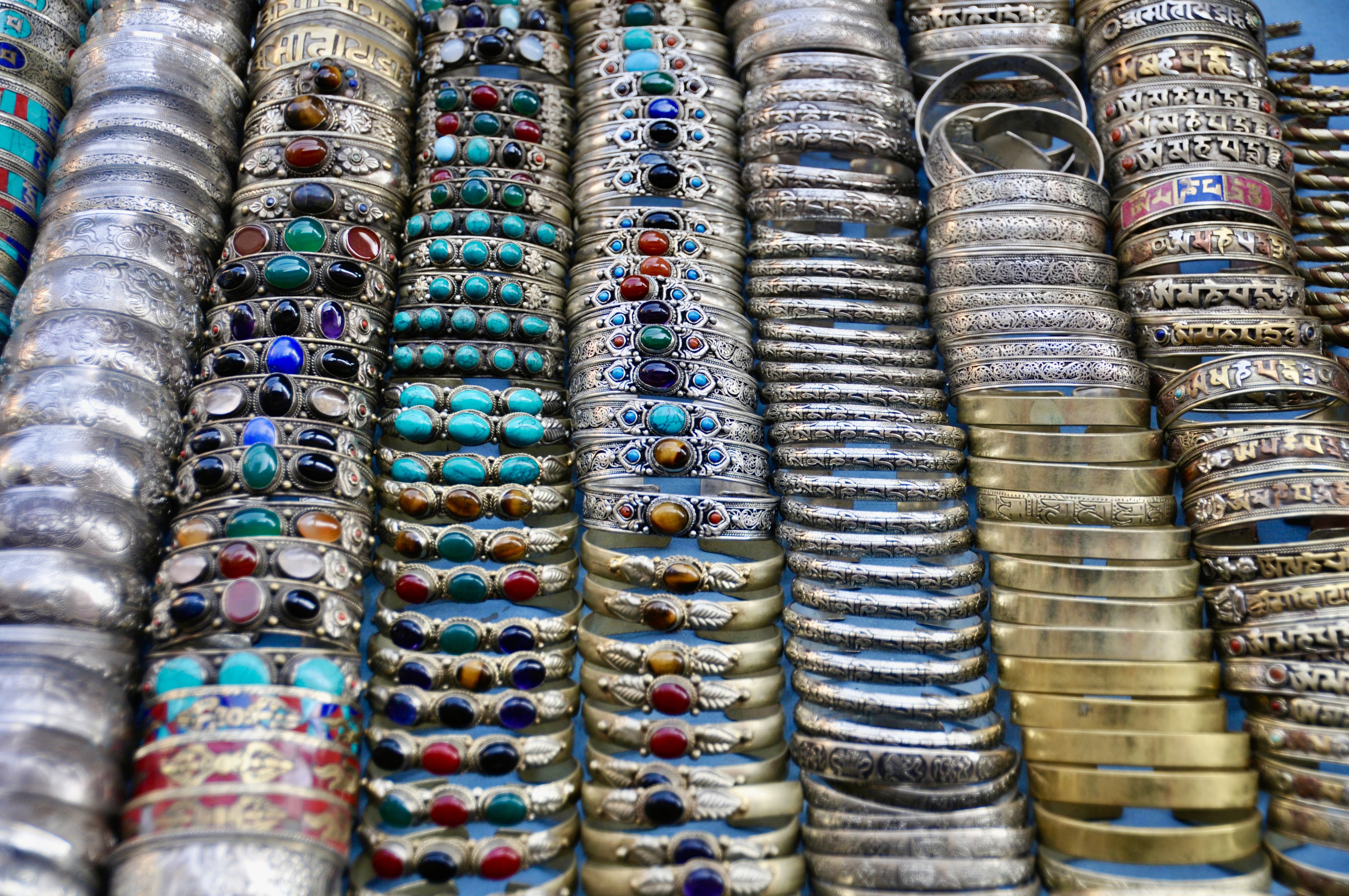
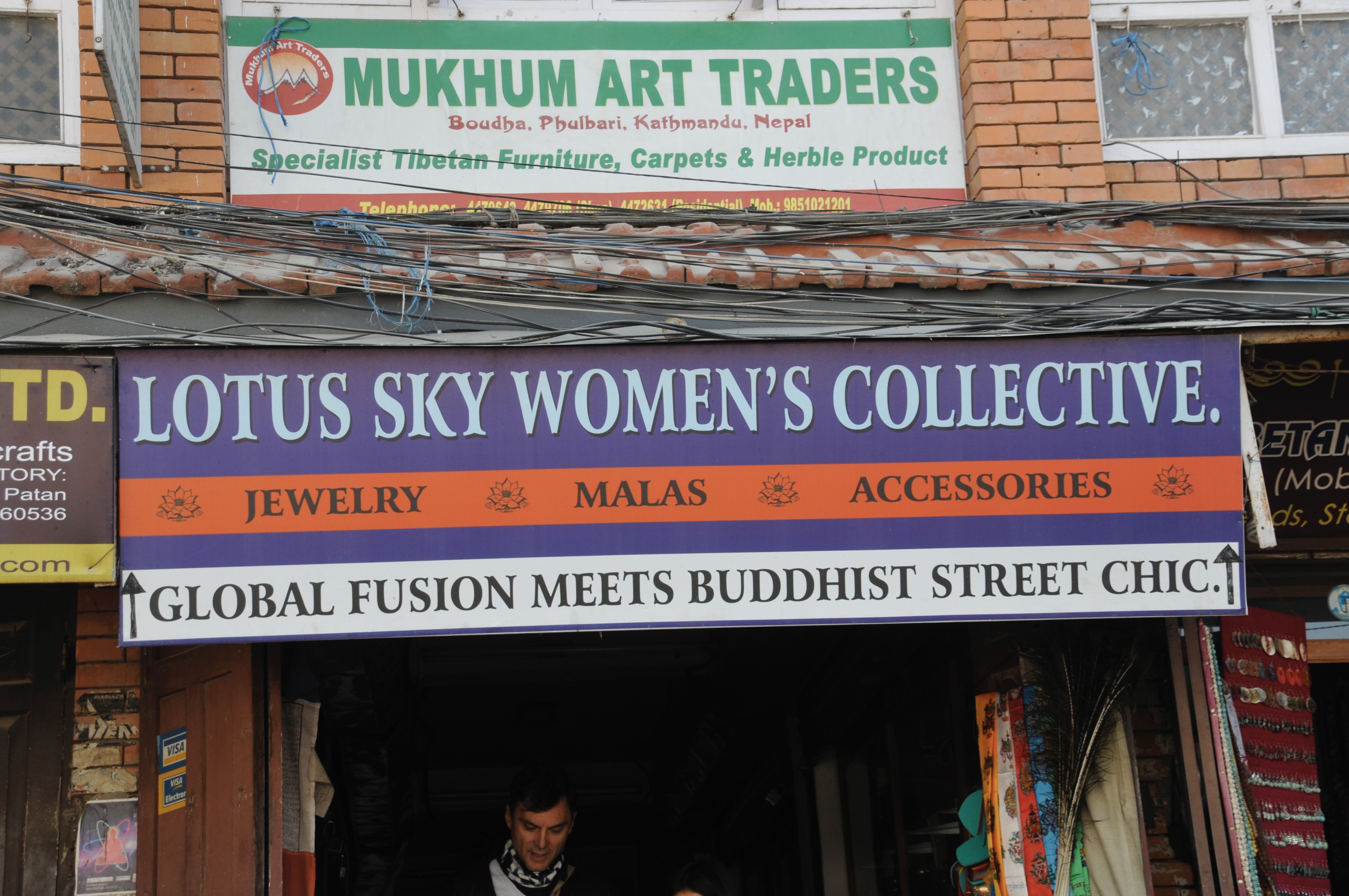
So after spending about an hour at the Temple, we met up with the taxi driver and asked if he could take us to Indra Chok – a set of ceremonial and market squares in the historic section of the city. It’s an old trade route with six different streets (really alleys) merging into the square. It’s almost impossible to describe the area. It probably covers about a half mile square.. and every inch — literally — is covered with people, teeny, tiny shops, little restaurants. All of the first floors of every single building are devoted to the tiny shops, and many shops are also on the second and third floors of these very unsturdy structures. Actually, here in Kathmandu, I’d say that everything from buildings to streets to whatever is in a constant state of either repair or tear-down and it’s difficult to know which is which. Amid all of this are the motorcycles, cars, rickshaws, small trucks, and pedestrians all vying for the same space (of about 10 – 20′) in the street. OK.. we loved it!

But then there was a little problem.
Remember about all the fruit for breakfast? Well, I suddenly realized — amid all of this cacophony of activity — that I really really needed to find a ladies room! There probably wasn’t a hotel or Western restaurant for miles around. And unlike China where there are clean and maintained public toilets everywhere (not that I used them) from the most upscale streets to shanty town areas — no such thing exists here in Kathmandu. It’s a free-for-all-economy — and every man for himself! But I was desperate. So, I hung out for a bit in a little area of a square near one of the many temples that are scattered about Indra Chok and I looked for a woman who might speak English and who would be a bit upscale (!) I found a woman and asked her where there might be a ladies toilet and she shook her head and said that there really weren’t any in that area.. but she went into a teeny shop nearby and asked them. Someone then gave her some directions which she relayed to us: Go down about two blocks, see a “supermarket” (really just a little grocery) and then I’d see a gold shop selling jewelry (there are thousands of gold shops). Inside the gold shop someone would give me the remaining directions! I was desperate. And the whole way, all I could think about was that it was going to be very very filthy (and did I have my little Purell container with me?) and it would be a squat toilet which is really complicated. But I had little choice.
So off we went — down the dusty, dirty streets amid all the traffic and honking horns; past hundreds of vendors; and lo and behold we saw a little grocery next to a gold shop. I went into the gold shop and asked about the toilet. At first they acted a bit annoyed (At that point, I would have bought a necklace or whatever just to get access to a bathroom). But then they deployed a guy from the shop to take me. We went to an adjacent building (totally under construction — or demolition — always hard to know) and followed him up four flights of stairs. There at the landing was a little door with a toilet.. a real toilet (not clean, but not squat-style). I had a wad of tissues with me for my cold so I did what I could to clean things up and to sit on tissues… The door did not close at all, so Mike needed to stand guard, just in case someone else knew of this hidden toilet. I emerged a new person — ready to be challenged by several more hours at Indra Chok.
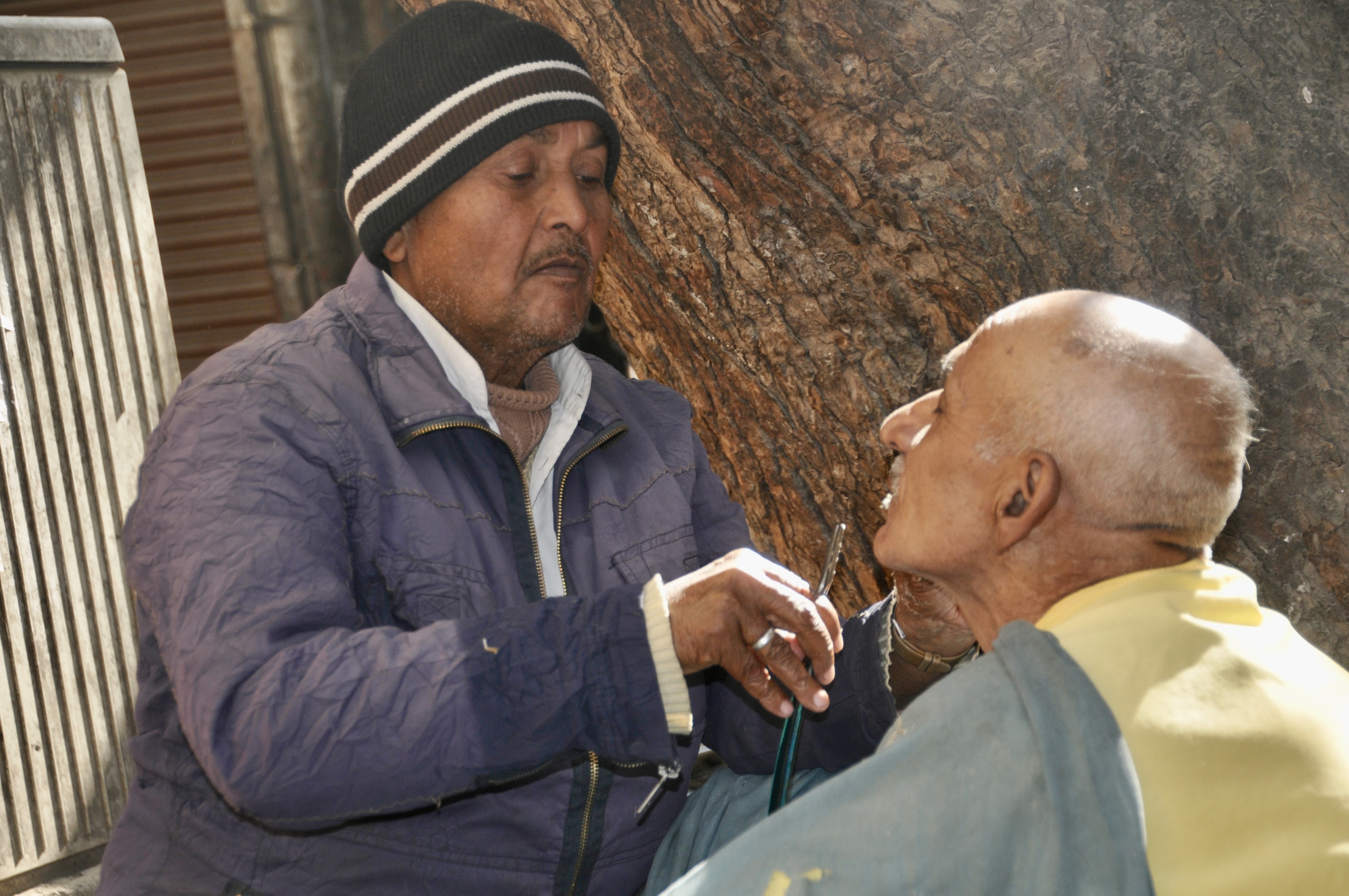
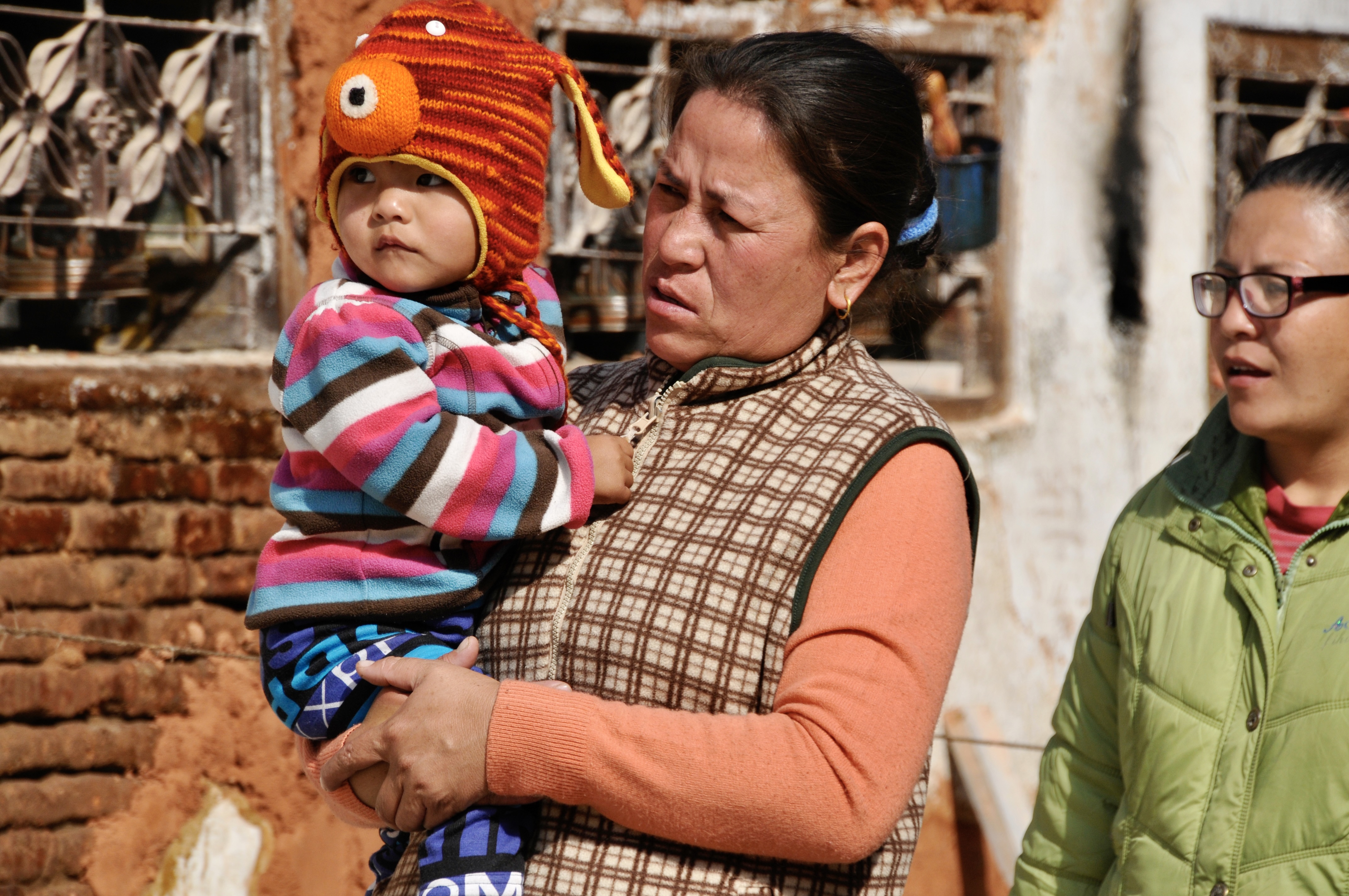
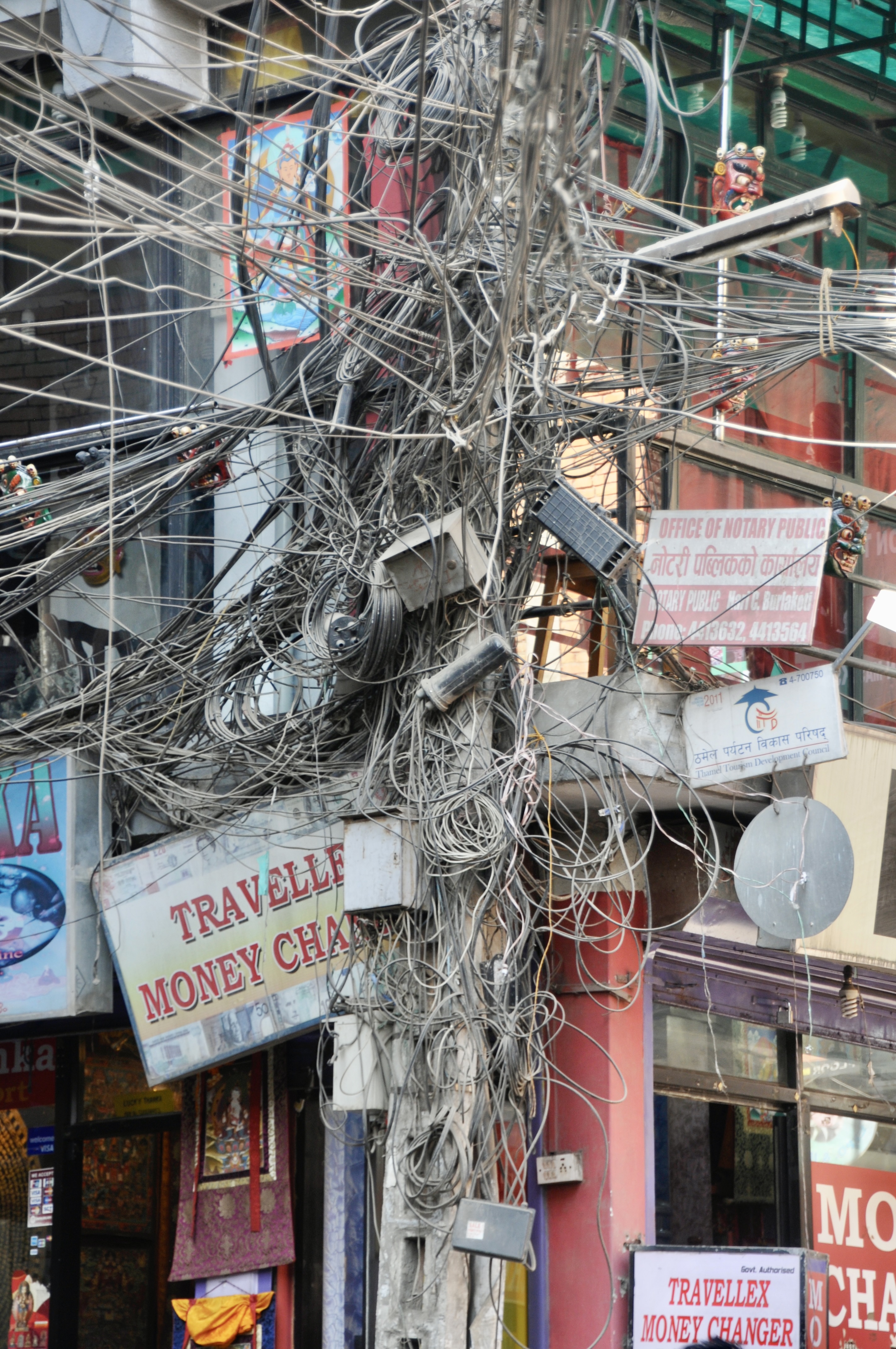
All in all spent about four hours at Indra Chok.
By the way, the mornings are cool and then if you’re in the sun late morning, early afternoon it’s about 65 degrees, but it suddenly really drops at about 4 pm and by dinner time it’s in the high 20s.. so the climate at this time of year is complicated (making dressing — even in layers — difficult).
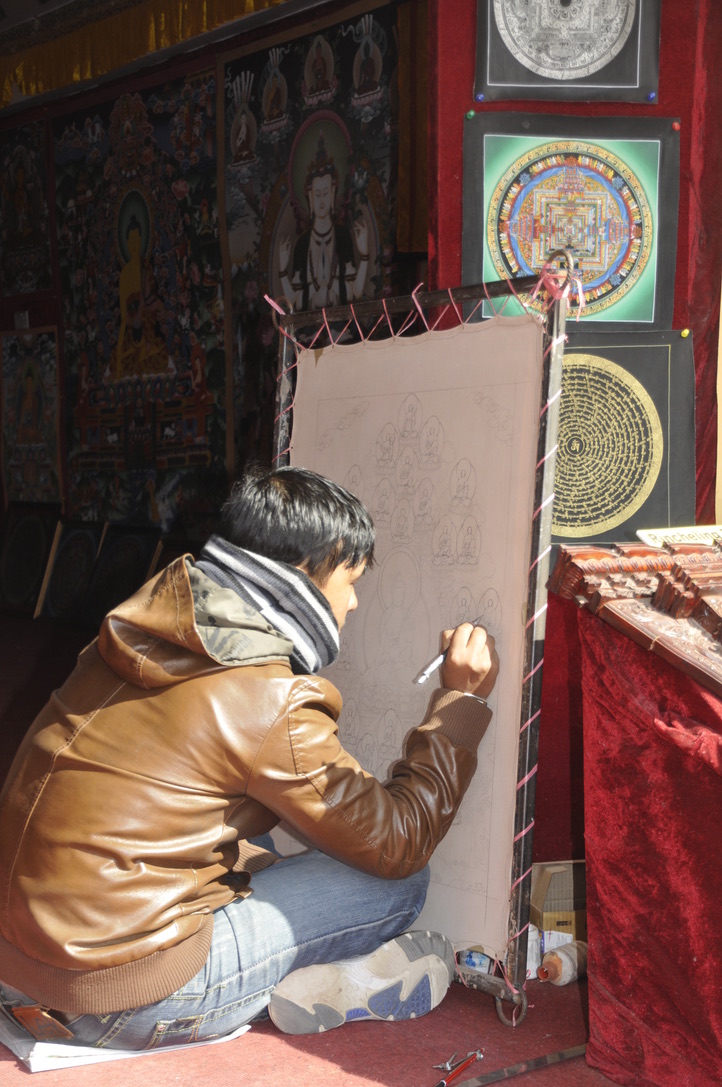
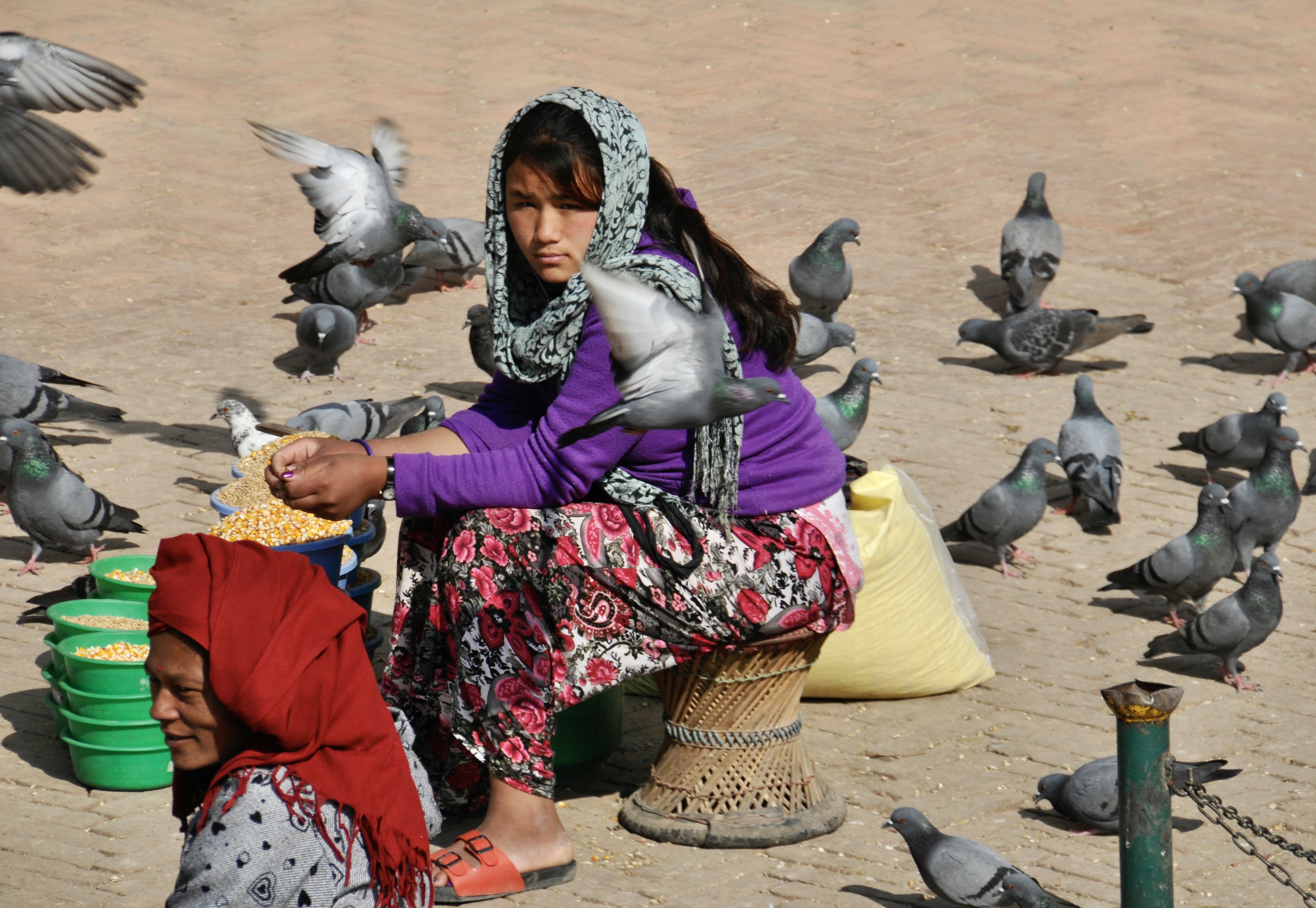
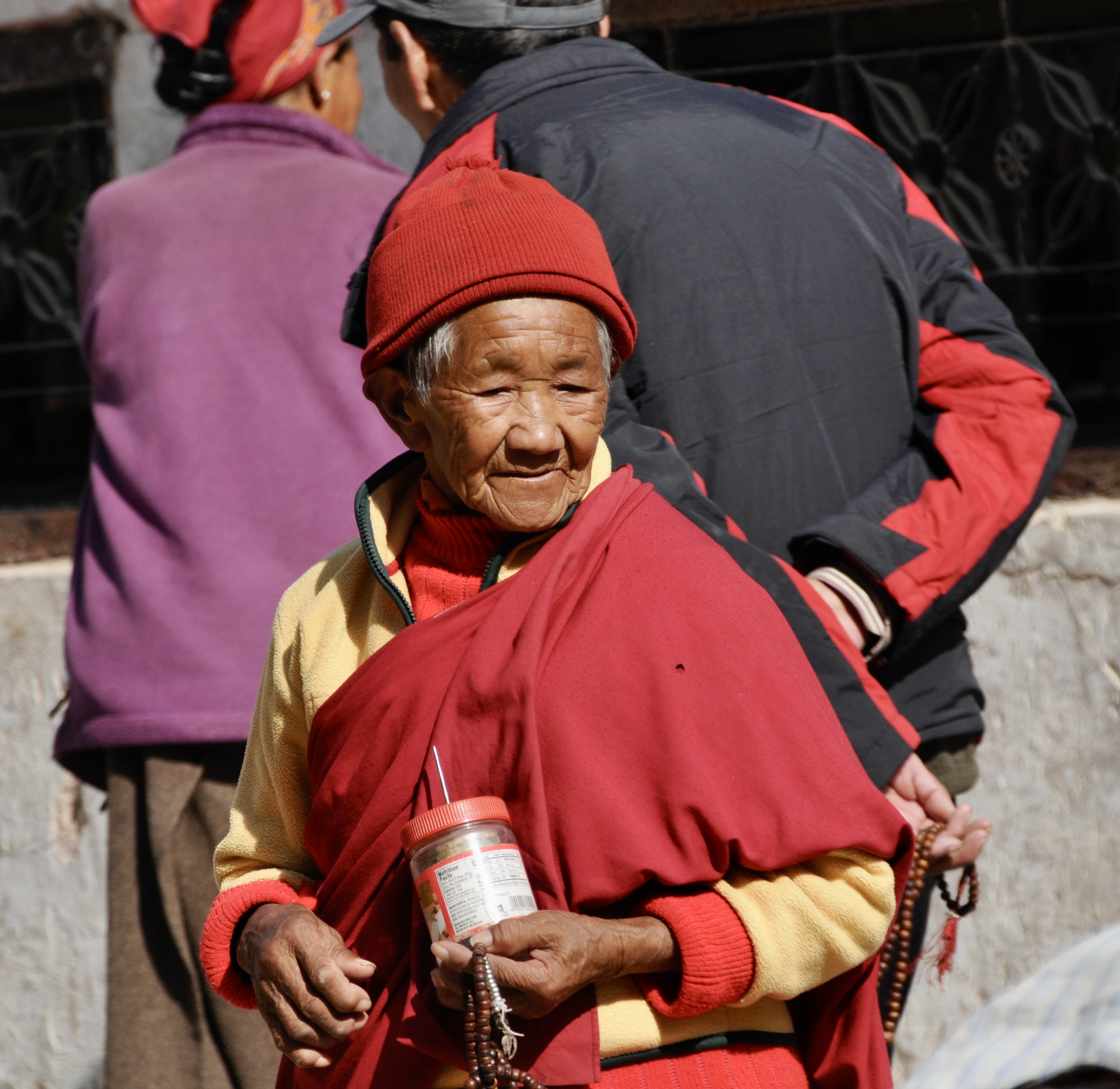
During our “stroll” in Indra Chok (where the shops might sell nothing but sequins or hair ornaments or plastic stoppers for sinks, or factory-made sweaters), I stumbled on a tiny, tiny shop with pashminas.. Very easy for my eye to get attracted to certain things. The guy’s “shop” was really well organized by color, so I stopped in to check out prices. He spoke fairly good English. As we “negotiated” my purchase, he asked where I was from and told me about his son who is graduating from university and wants to do an MBA in the US. He told me he is a very top student and is at one of the best Nepalese universities now. He wants to go into “finance.” At that point, I told him that Mike and I were both professors (Mike had long since disappeared, but I thought he’d re-surface soon) and that his son could write to us and maybe we could get him some information about applications. Within seconds, the man was on the phone to his son and he was handing me the phone to talk with his son. He seemed like a sweet kid; told me that he’s a good student – all As — but that it is very difficult to find guidance as to how to apply for US universities, especially if you need financial support. According to his father, the son is very shy — just goes to the university and comes home and studies. I did suggest he look into the Fulbright program, but repeated that I would be happy to send him some information. (My good deed for the day!) The father was very very grateful. I had already paid for the Pashminas so no additional break!
Oh one other funny thing I forgot to mention from Lhasa (especially for all of you sports fans getting this memo) — I was in a small shop in Lhasa and the shopkeeper’s English was fairly good (a big surprise in Tibet). So I asked where he learned English and he said he watches television in English and has been learning a lot; he said he liked sports and asked where I was from. I said California. And he asked if California was close to Los Angeles. I explained that Los Angeles was a city inside California. Then I said — Oh I guess you watch the Lakers! (All you sports folks — watch out, I know more than I let on). He said, yes, but he prefers the Golden State Warriors!!!!
That’s it — we are off to an Indian restaurant. More tomorrow.
Fern
December 29, 2013 — Tibet: Until we meet again. Onward to Kathmandu! On Our Own Again.
December 29, 2013. Kathmandu, Nepal
Namaste – Well.. we made it to Kathmandu.
Packed up and got ready for today’s journey. Pemba and Tashi (the driver) would pick us up at 9 for the hour-long drive to the Lhasa International Airport. In reality, the only thing “international” is the twice weekly flights that go to Kathmandu; all other flights are domestic (well to China). The drive to the airport was interesting, passing over the Lhasa River and realizing just how much new infrastructure has been created in Lhasa and the rest of Tibet in recent years (I assume this is the upside to the Chinese situation). The road was incredibly good, new bridges, and even the airport was fairly new (originally set up as a military airport and converted to commercial just a few years ago.)
I asked Pemba when the police substations that we saw all over the city were established and that was just done two years ago!
Leaving was bittersweet; we’d actually grown fond of Pemba (although his laugh drove Mike crazy). He was really eager to tell us about Tibet and very curious about the US. He lives in a strange situation — not being able to leave and ever-inquisitive about the places the people he shows around Lhasa come from. As we started to say goodbye, he reminded us that the Tibetans don’t say good-bye.. more like “until we meet again!” and he encouraged us to return in spring or autumn when the country looks so different.
Then the airport fun began. Started with a very quick inspection at the front door.. running the bags through an x-ray machine. By the way, no photos from inside the airport. A lot of guards and police and figured they would not appreciate photos.
Then we waited first on a very short line to go through step number one of the customs departure procedure. In front of us were two Belgians and two Germans, and us. That was it. But this little line never moved because no one was at the “post” to look at our paperwork. It was now about 10 am; the flight was at 11:55 am. At about 10:20, someone came to the desk and looked over our passports, our travel permits, and our departure cards and sent us to the counter to get our boarding passes (they do use e-tickets, but none of that online checking 24 hours in advance). So step number two – showed the same paperwork to the woman at this counter and she gave us our boarding passes; no window seats left because everyone wants to see Mount Everest (and those in the know are aware of which side of the plane to sit at; we were obviously unprepared so we got aisle seats on the wrong side of the plane… next time we’ll know better!) We each checked one bag and kept computer bag and camera bags as carry on. I was told I was ok to go to the next checkpoint, but Mike was told to go to where his bag was sitting on the conveyor belt; something in his bag was of concern. Turned out they couldn’t figure out what it was and just said to move on to the next point. Step three was a guy standing in the middle of the area, who just looked at the paperwork again. Asked where our group was and then seemed OK that we weren’t in a group. OK.. moving to step four.. lots of progress. It’s now about 11:10 am. Still just us, the Belgians, and the Germans.. and lots of airport personnel, military, etc.
Step Four is to get through security. We lined up behind the other four people and nothing happenned for about 10 minutes. Then the Belgian guy says that they told us all to just take a seat (no real chairs around), because they are having a computer problem that they have to fix before we can board the plane. They cannot scan our passports and paperwork until the computer is fixed. Now, remember that language is always challenging. So we all stood around and watched as several people opened different panels in front and under the counter. Then the airport folks appeared to have a solution and we saw them bring out a caulking gun! They loaded the caulking gun and adhered two parts together (they looked like rollers).. and then all was good. By then several large tour groups (mostly Chinese, but one Japanese) arrived and lined up as well.
Showed our papers yet again to the guy at the counter with the former computer glitch, and put our bags on the screening device. They made us take out more stuff (computers, cameras, etc.) and they wanded everyone (same staff regardless of gender). OK made it through security, and then off to Gate Number 1 in the “International” Terminal. It was now about 11:40. But time doesn’t really matter since it’s the only flight that goes that day. They can really just take off whenever they want. Given the large number of people in those tour groups it was clear that we weren’t leaving at 11:55, although no announcement was ever made of a delay and the board continued to say that we were leaving at 11:55!
They have a little shop in the waiting area with some rather good stuff. I decided to use up whatever remaining Chinese Yuan I had and it was funny to be negotiating prices at an airport store. So I purchased a lovely little hand-drawing and they proceeded to roll it up and put it into a really nice box.. But then when I was fishing for my money, they put a wad of scotch tape on the box so I asked if they could remove the tape as it really didn’t need anything to close the box. So they all had a little conversation and then one of the women got an implement from the drawer, which I thought was a pair of scissors — but it was a nail clipper which she used to crack the tape and then peel it off the box.
Finally boarded the plane at about 12:20. The Chinese, and especially the Japanese, were totally prepared to photograph Mount Everest — complete with huge telephoto lenses, multiple cameras, filters, etc. They all had the window seats on the correct side of the plane. Once we got to the viewpoint, you could understand why getting those seats was a gem. It’s definitely a moonscape with jutting and jagged snow-capped peaks everywhere – as far as the eye could see; some just a few thousand feet below the plane. It was pretty funny as everyone on the other side of the plane got up to peer out the windows from the aisles…. with the Japanese tourists using gigantic telephoto lenses to photograph. Can you imagine scores of passengers standing in the aisles – mid-air -on a United flight?
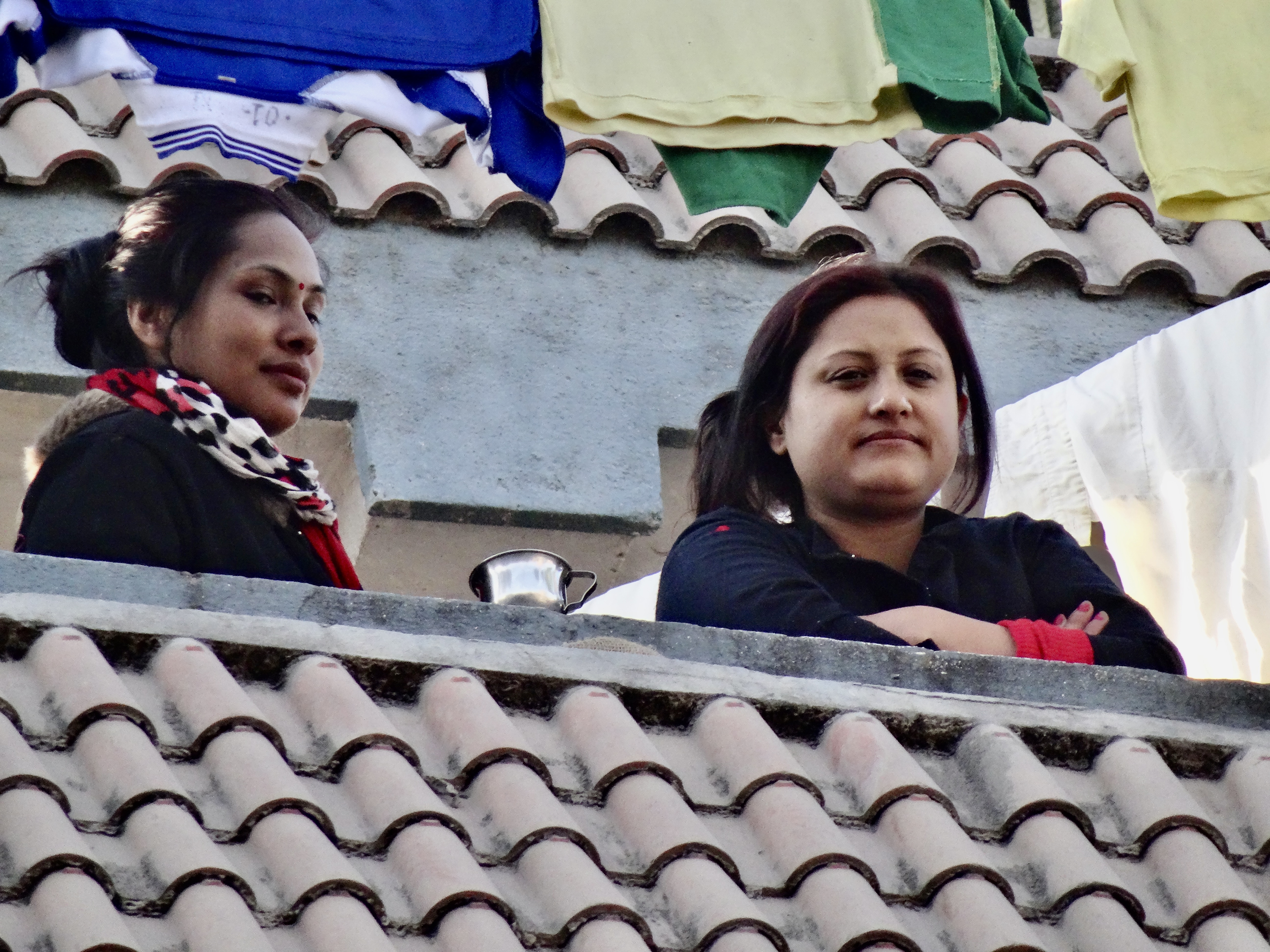
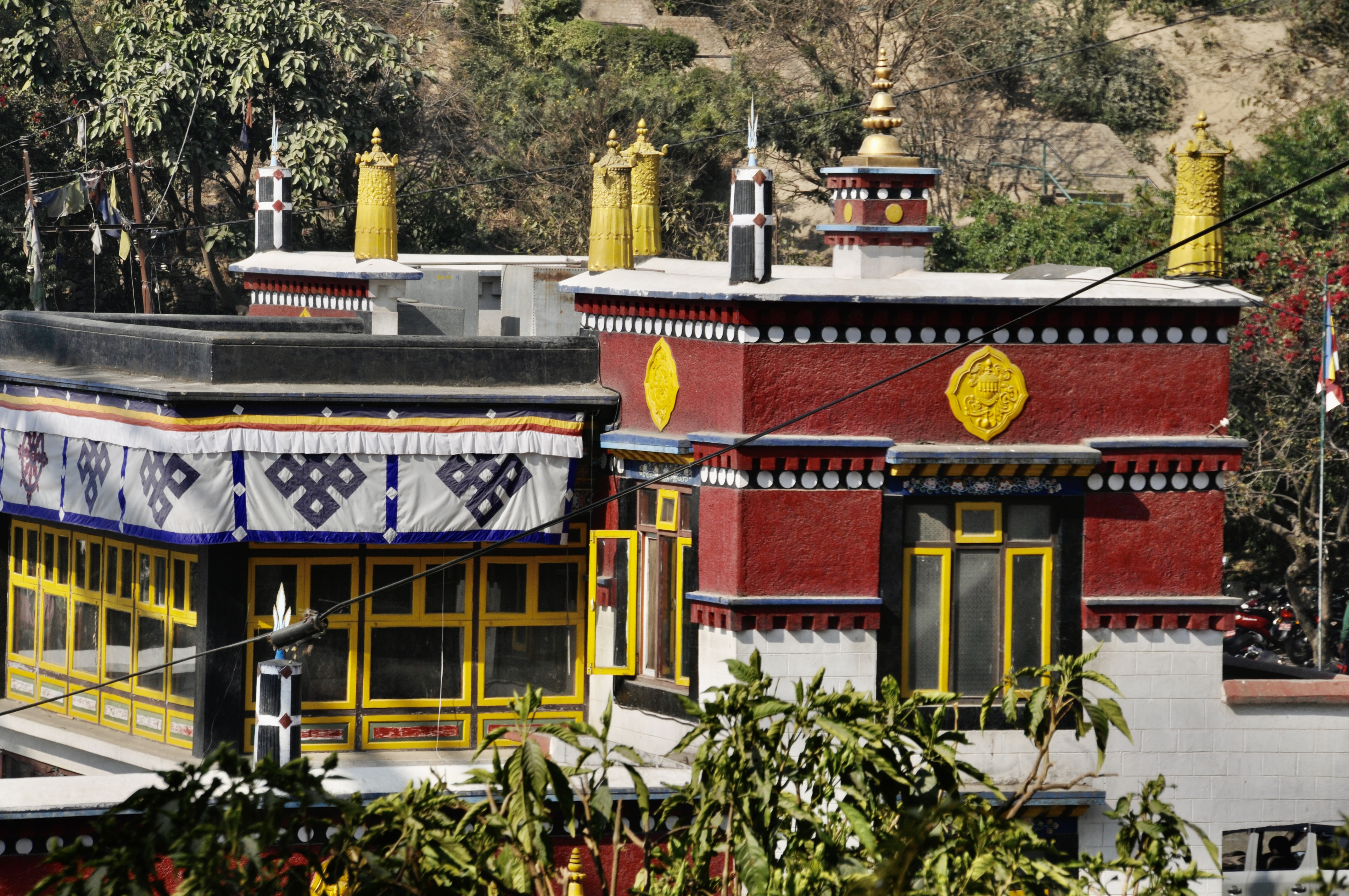
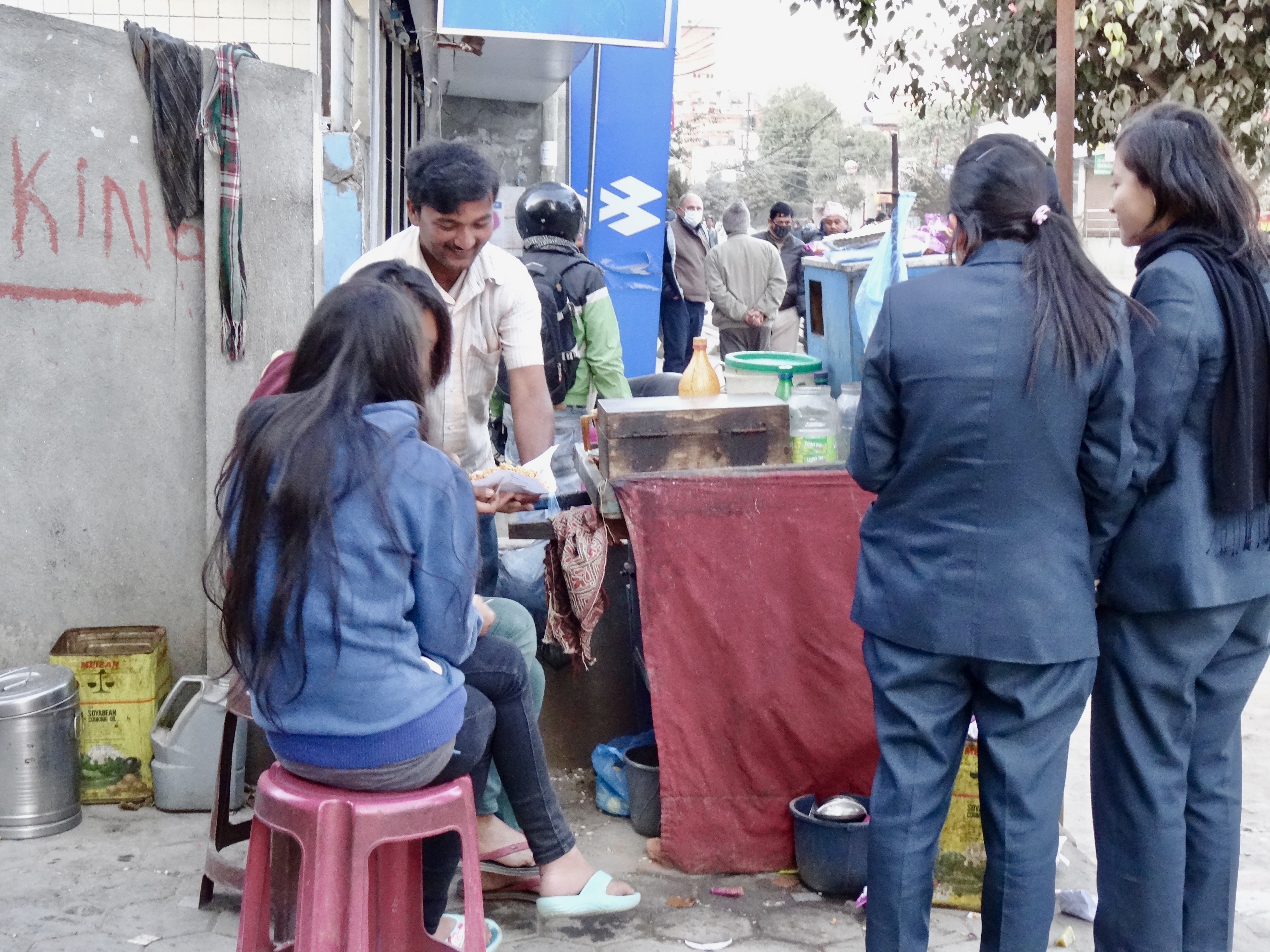
Landed in Kathmandu — with great signs throughout the airport, like “tallest peaks, shortest people;” “Nepalese take their time so chill out”, etc.; went through their rather gentle customs entry; got our bags; and off we went into the traffic, pollution, and hustle bustle of the city and its 2.5 million people. We were supposed to stay two nights in a small, very cheap hotel and two nights at Dwarikas which was clearly a very upscale and beautifully appointed hotel (that we found on the Internet). Given that we still were under the weather, last night we made a very last minute decision to stay at just one hotel instead of packing and unpacking after just two days. So naturally we picked Dwarikas.
It’s sort of a collection of several traditional Nepali houses surrounding courtyards. It has 76 rooms and apparently took more than 30 years to construct; it’s the winner of the UNESCO Asia-Pacific Heritage Award for Culture Heritage Conservation.
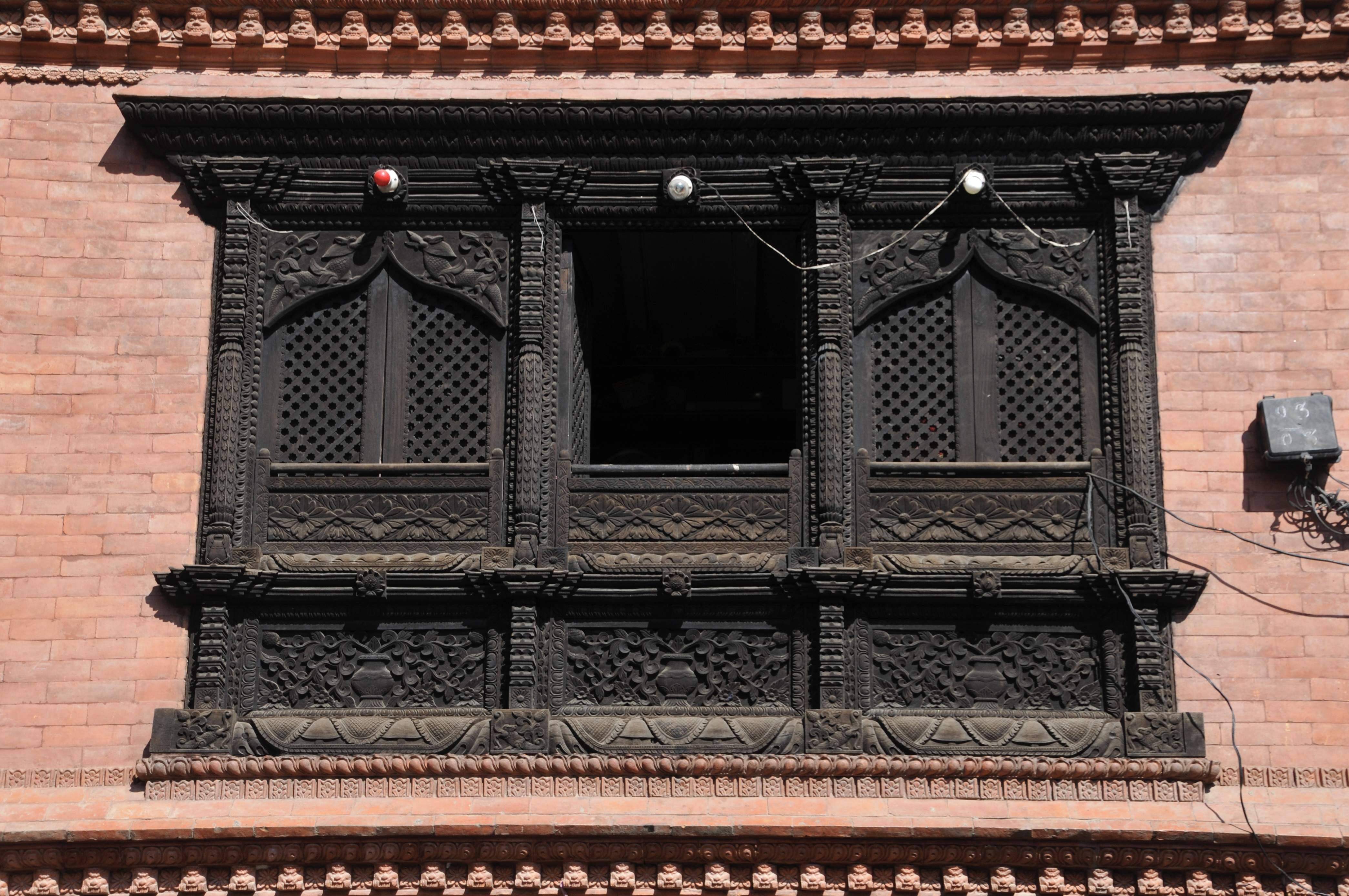
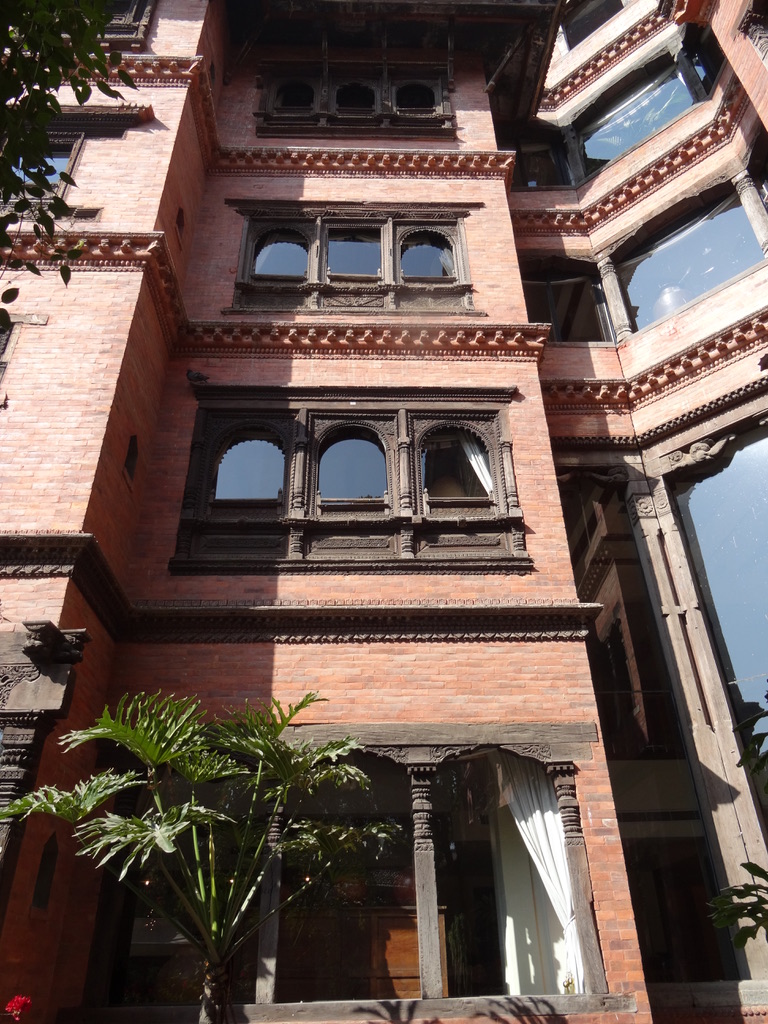

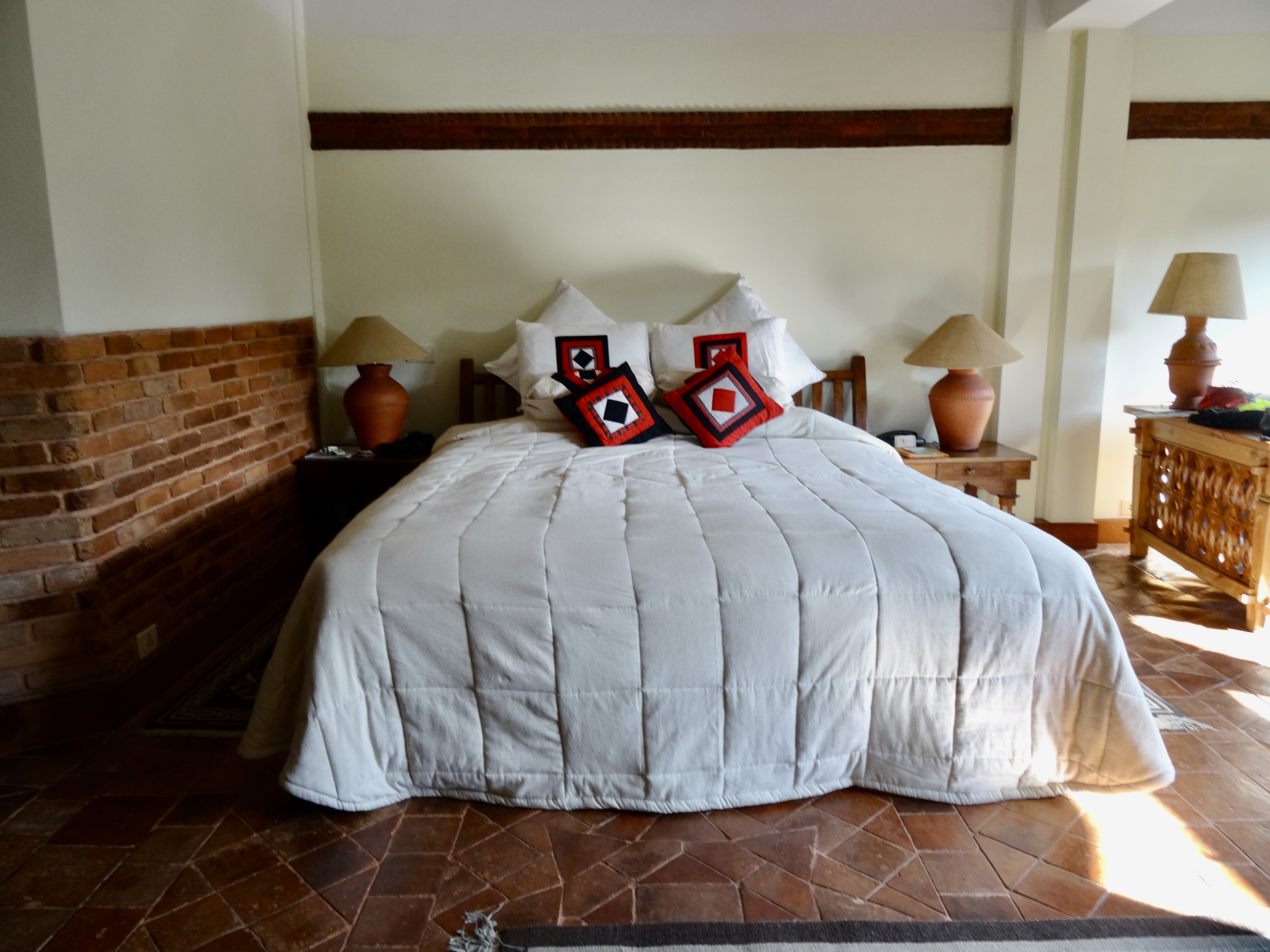
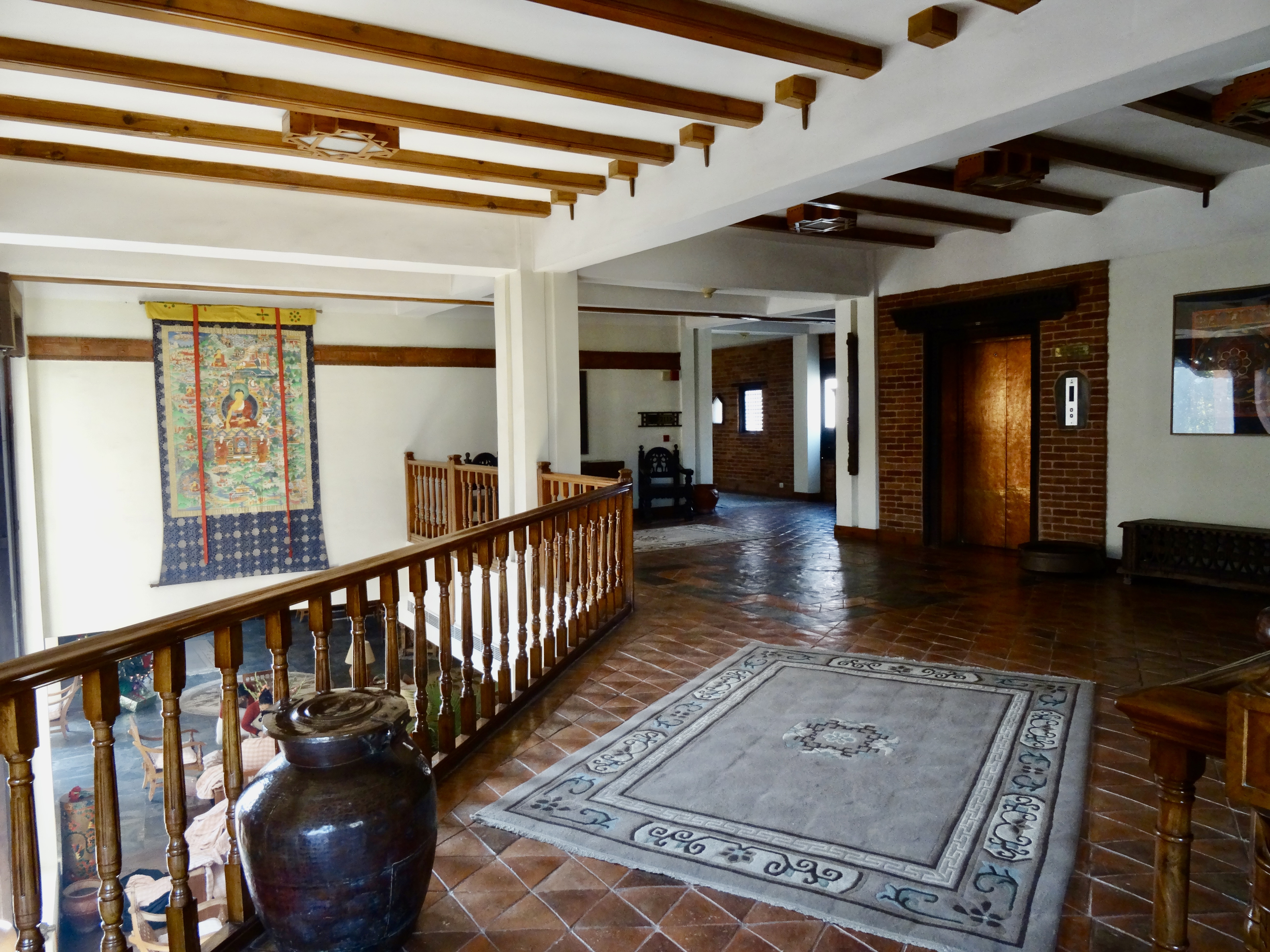
The founder Dwarika Das Shrestha supposedly decided — on impulse — to save old wood carvings from traditional Kathmandu buildings that would have been thrown away. And then the carvings drew a lot of interest and she decided to construct rooms that would house these traditional wood carvings, and apparently that is how the hotel began. Shrestha is also credited with reviving the traditional method of making carved bricks. The hotel is still managed by the family, and owns one of the biggest private woodwork collections in the world. The hotel meanders through the courtyards with several restaurants, a pool, a spa.. and probably more (although I’ve yet to walk the complete 5-acre site.) And, mind you, this hotel with this acreage is smack within the city.
On the drive from the airport to the hotel, we saw two monkeys balancing on electric wires above head height to avoid the growling street dogs below.
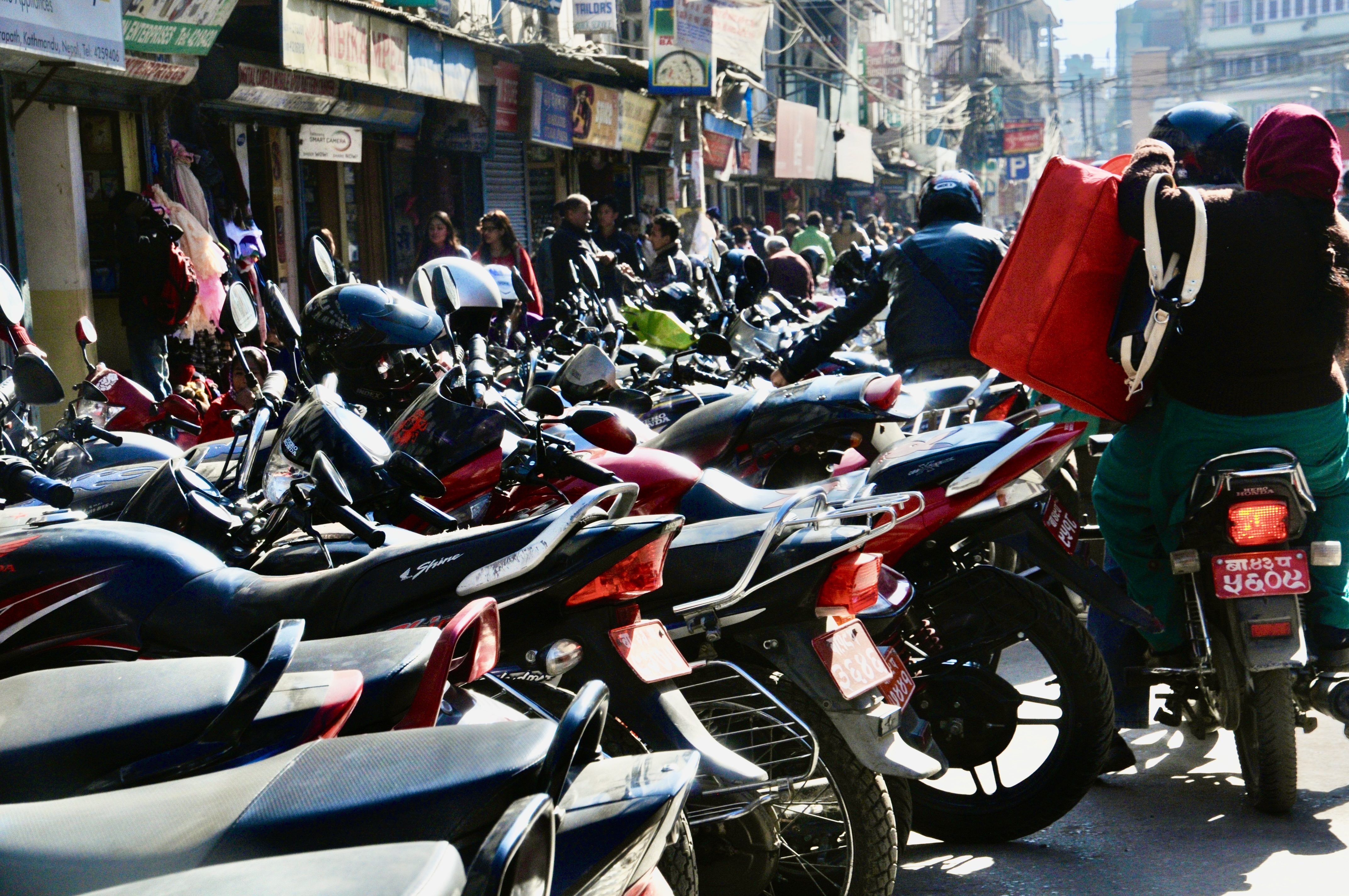
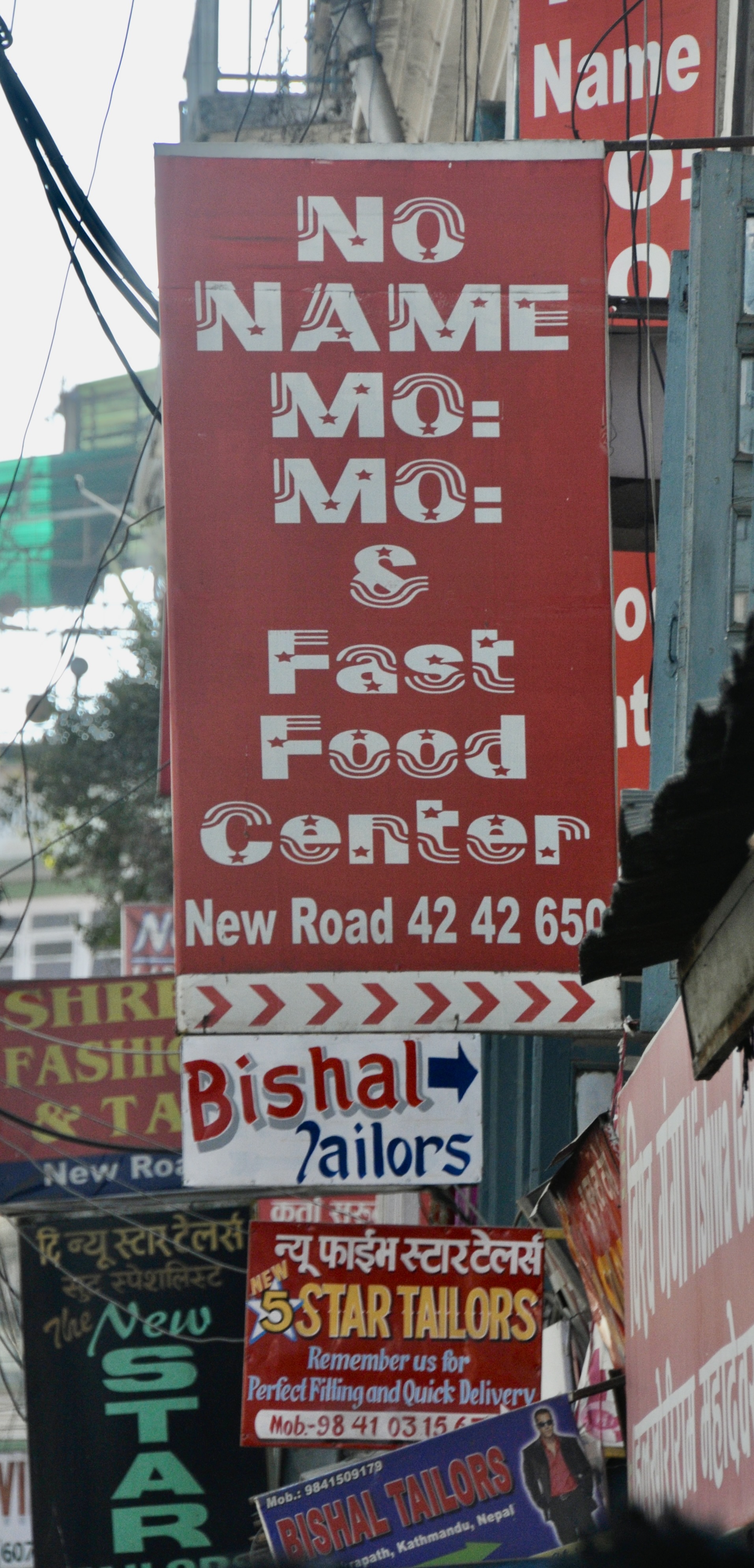
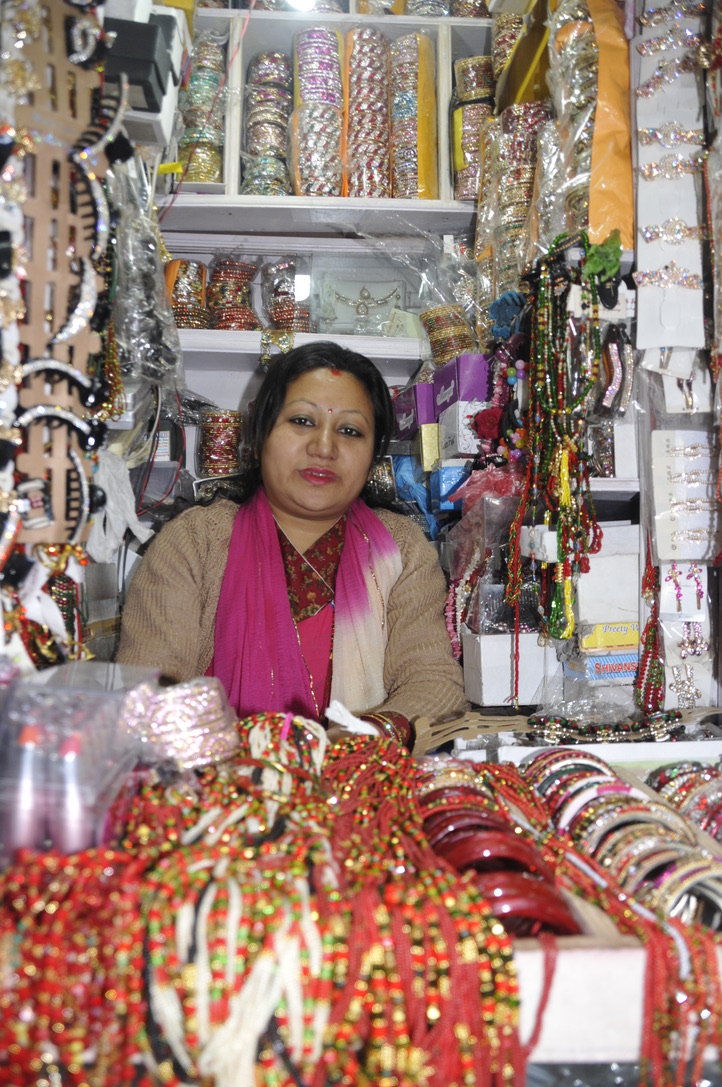
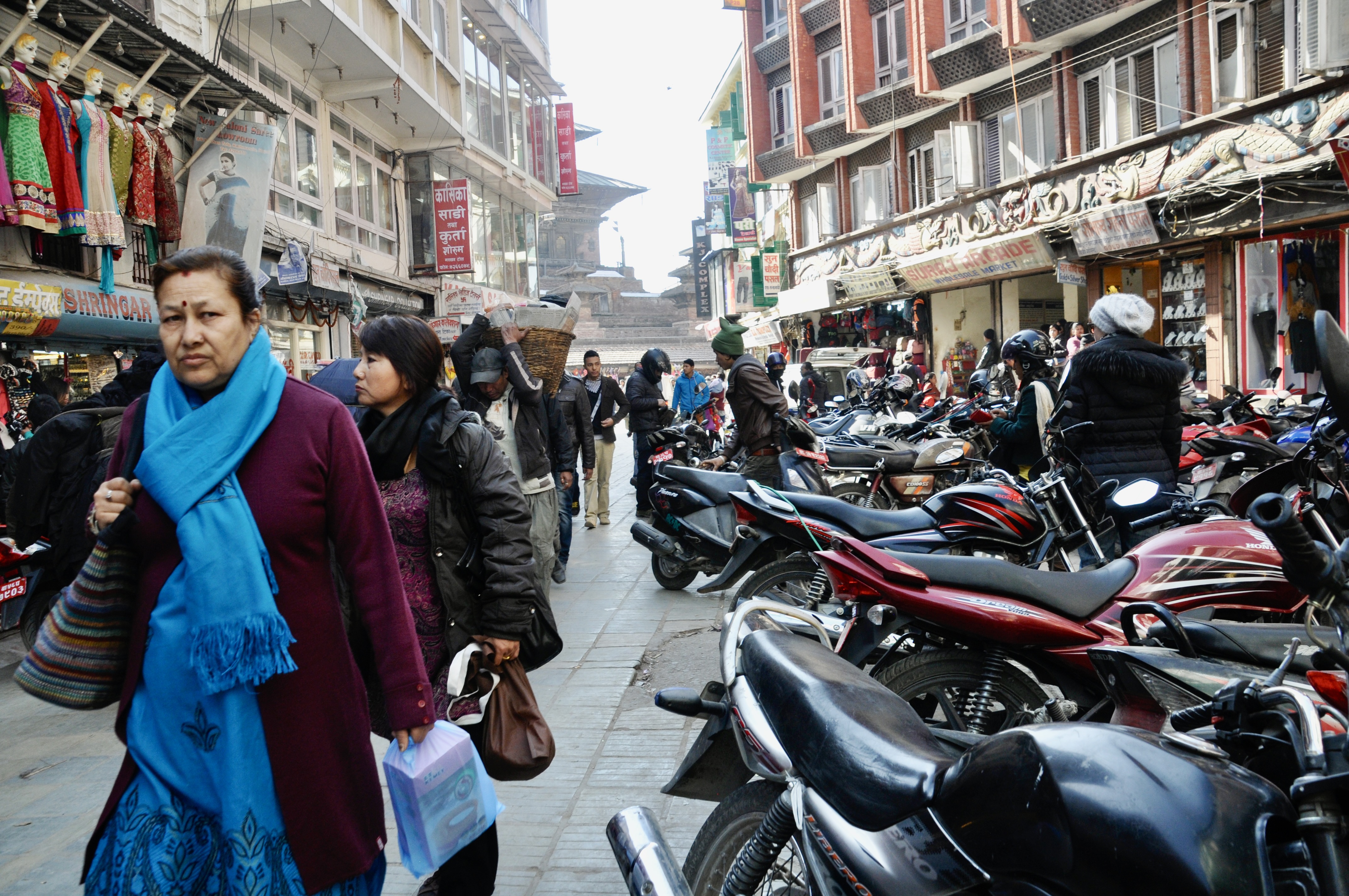
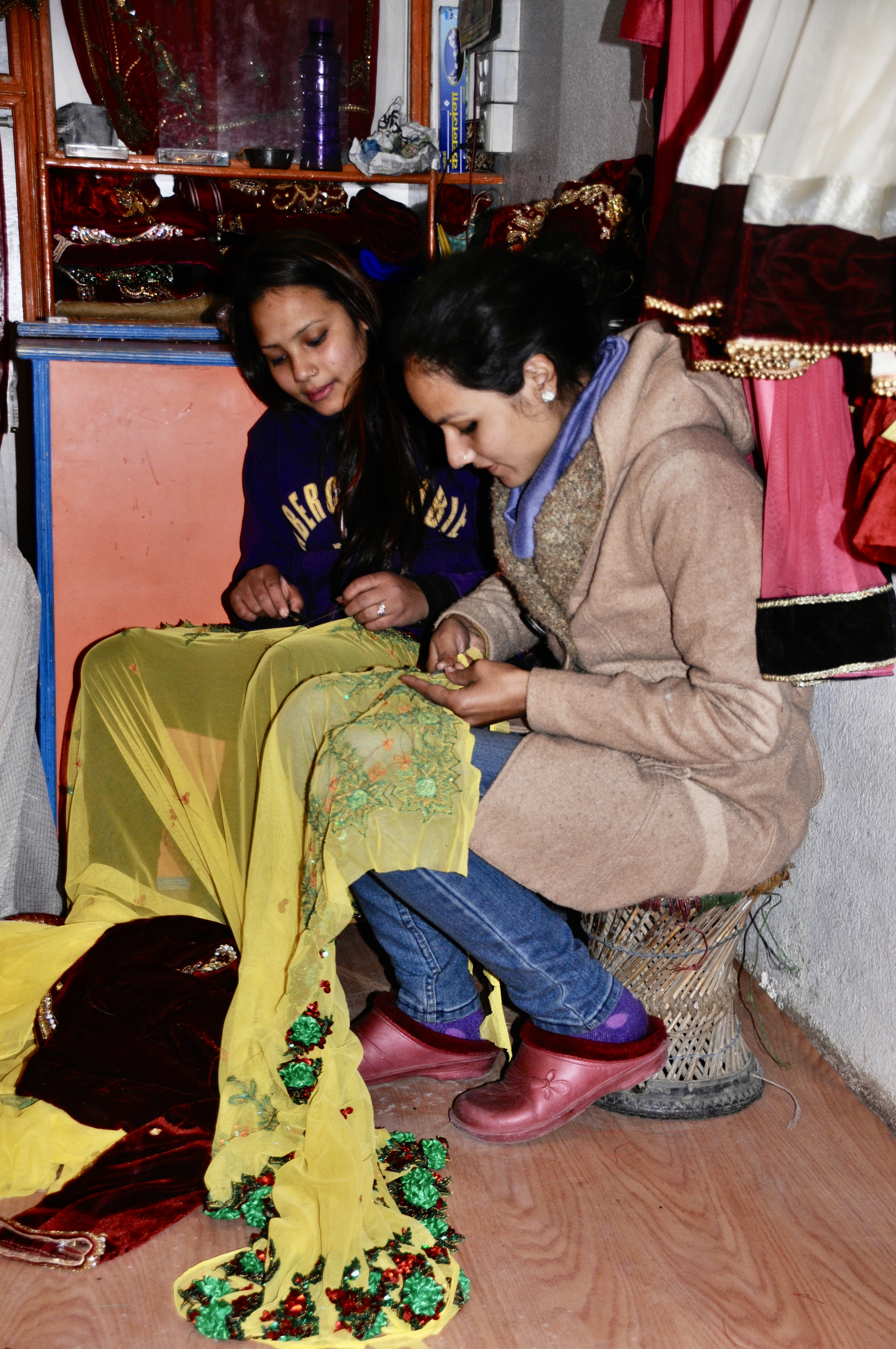

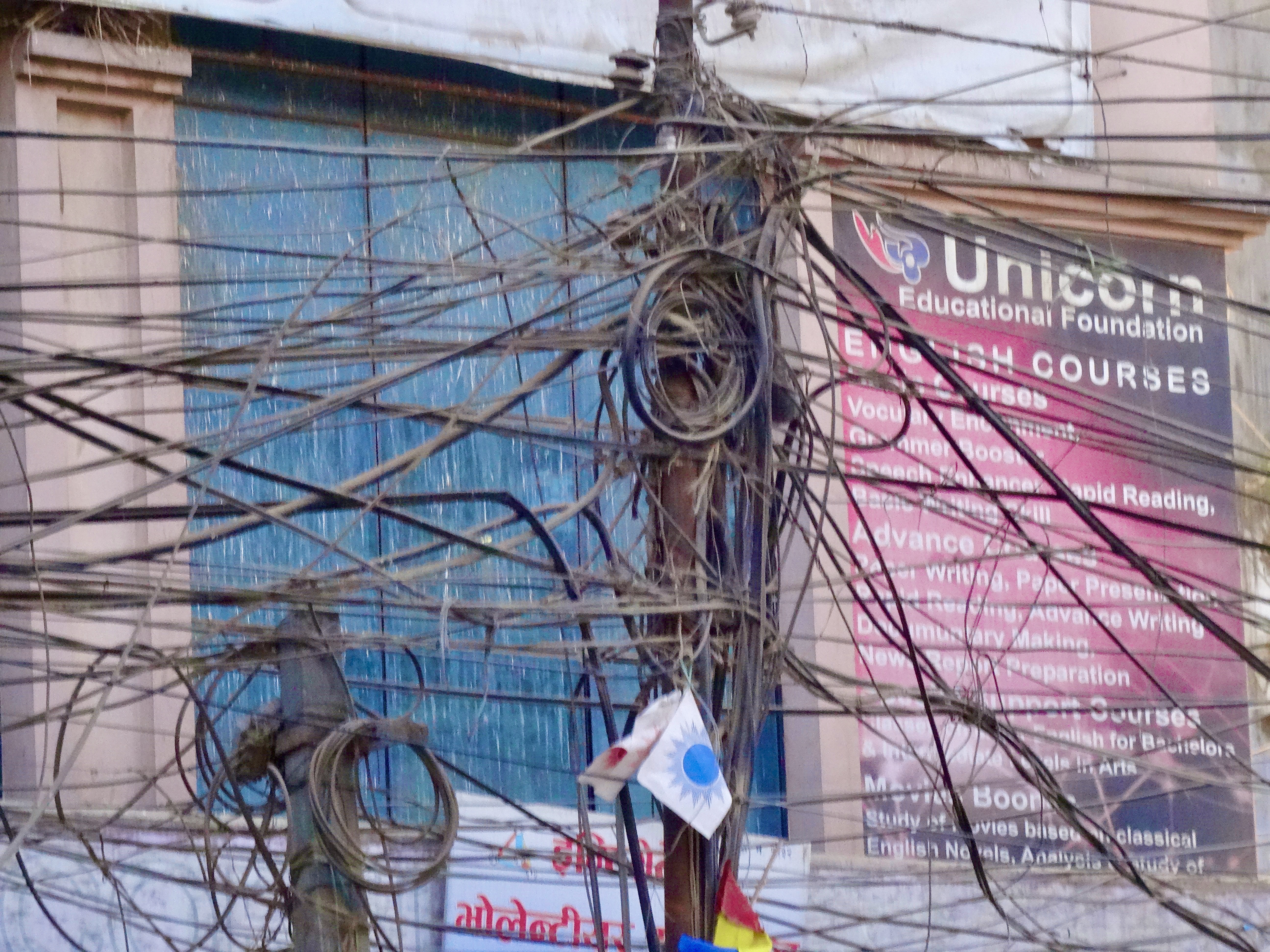
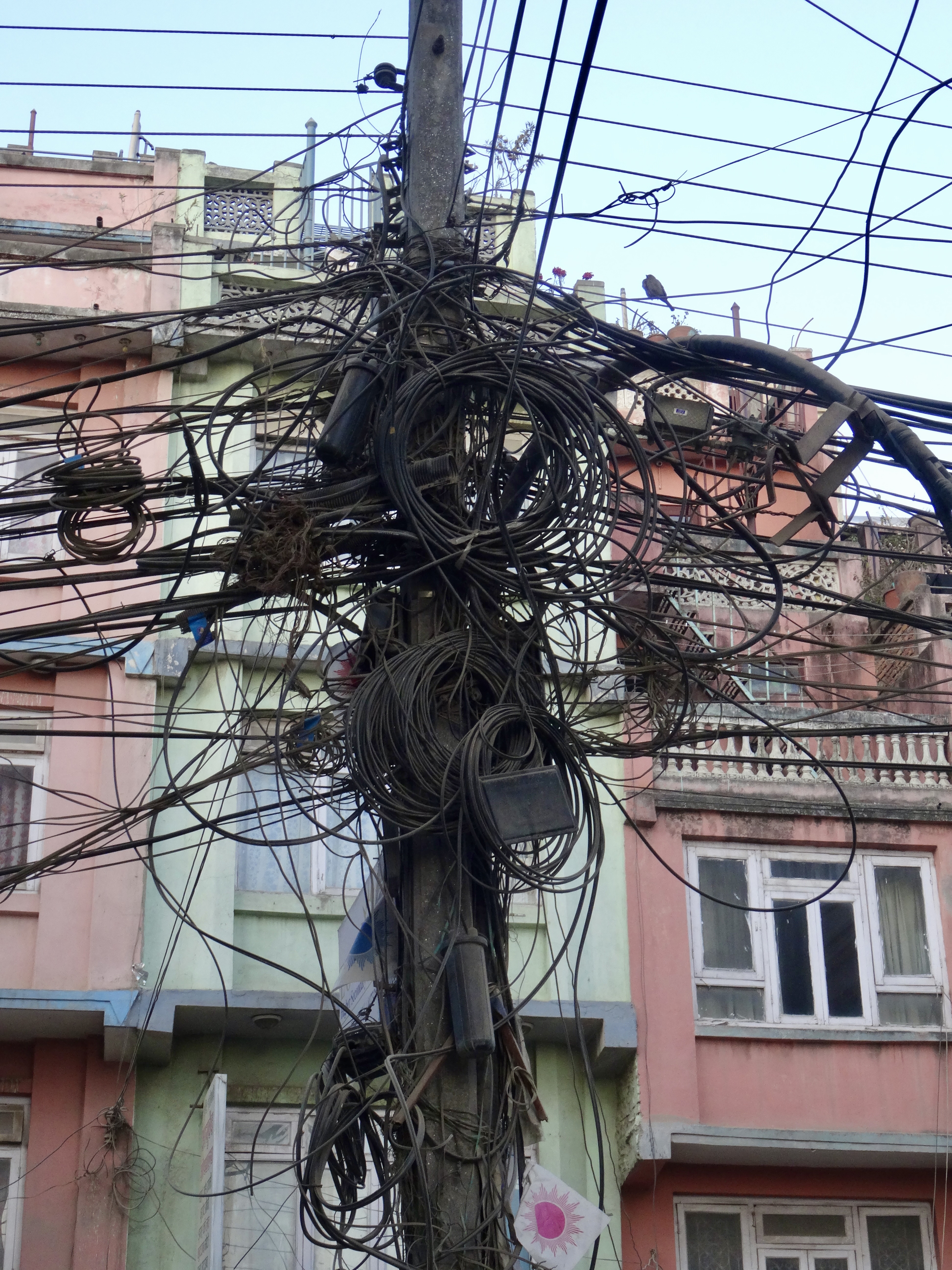
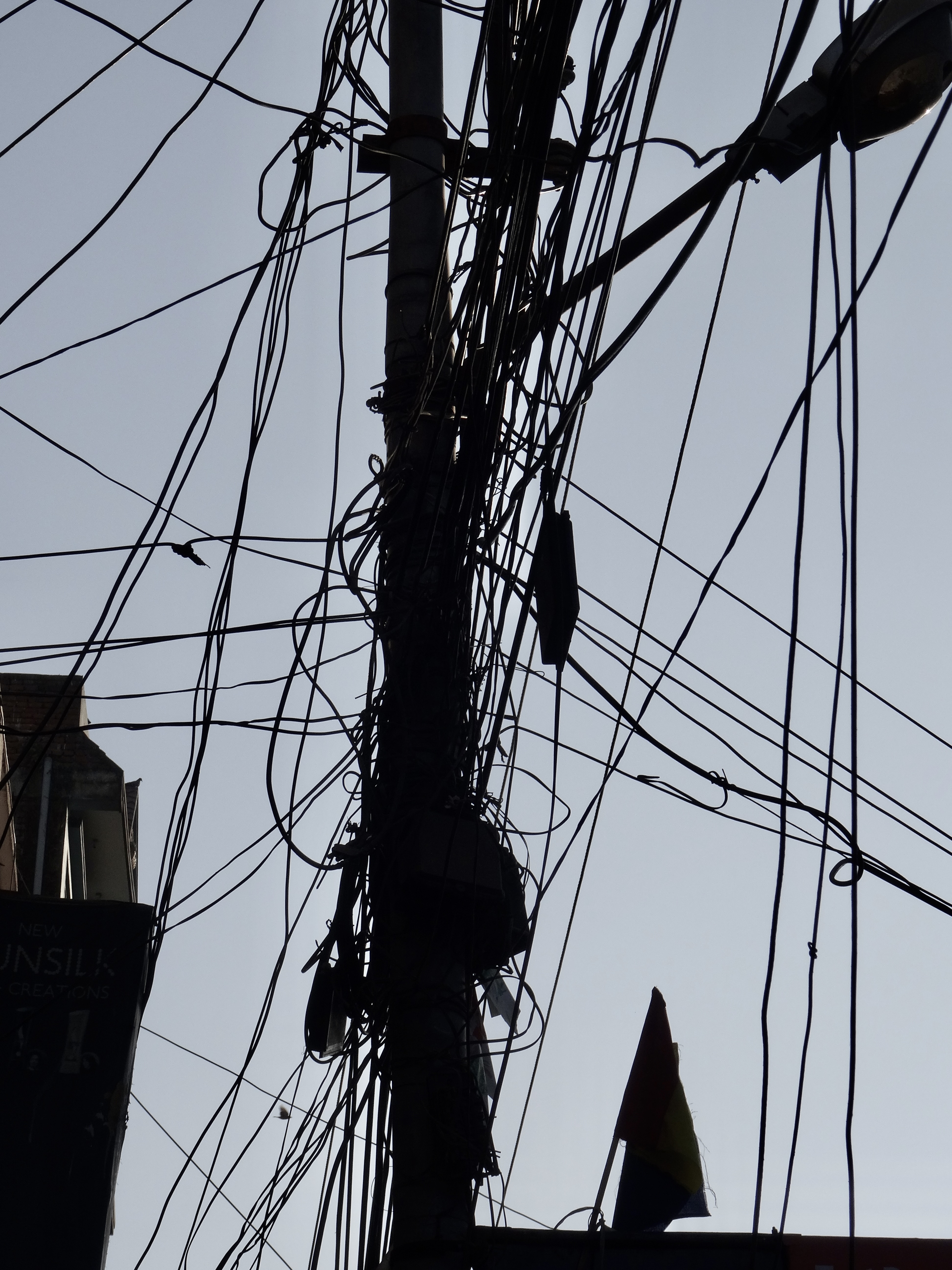
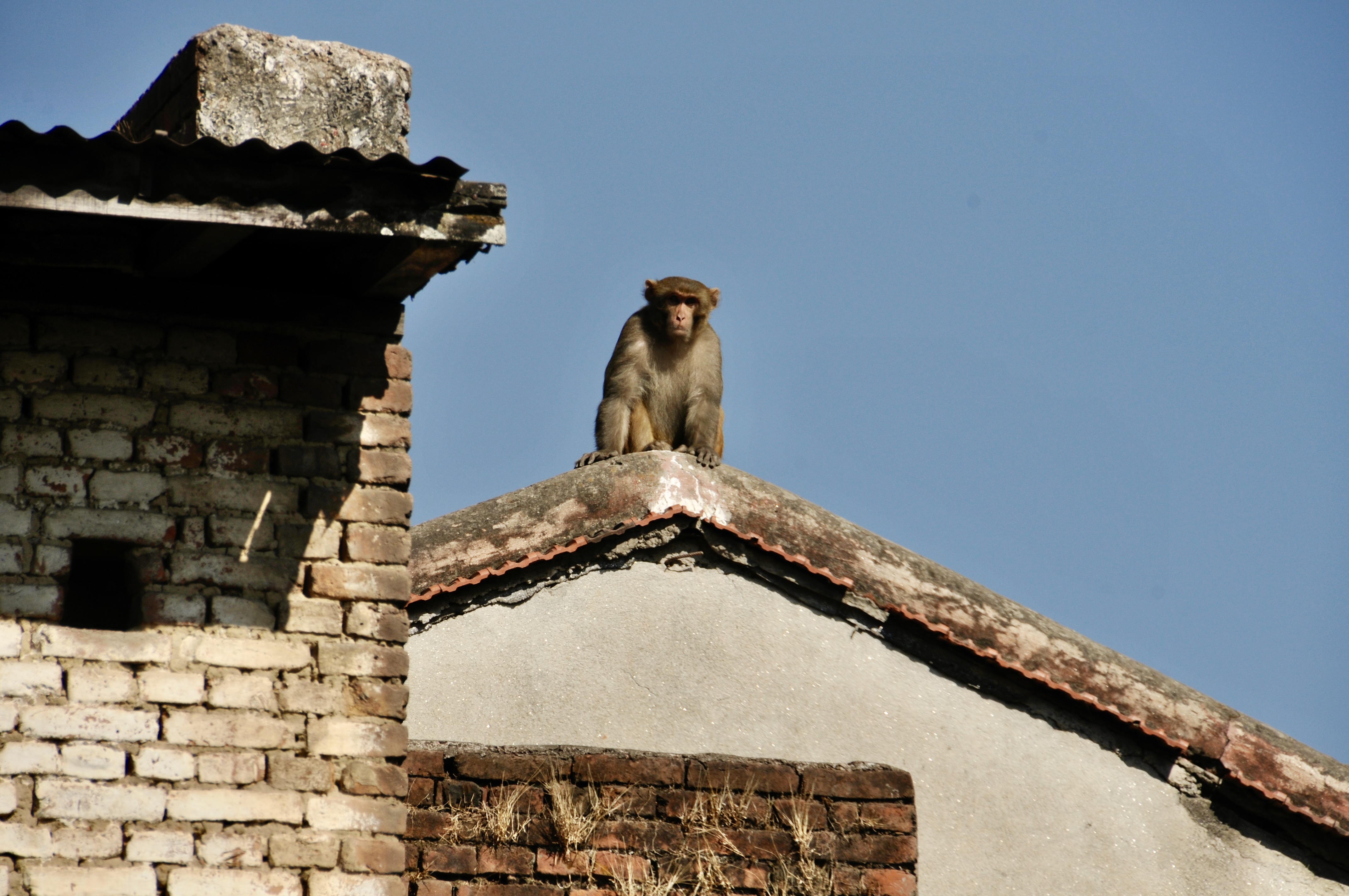
Had a light lunch at the hotel, outside in the sun (it was about 65 degrees!) and then set off to take a walk in the area near here, which is quite different from the hotel itself. Once you leave the nirvana of Dwarikas, it’s definitely a developing nation — a city with potholes that reach knee-deep on the sidewalks (?) without warning; buildings constructed ad hoc and torn down even more ad hoc; electric wires hanging down to my ankles and a cacophony of wires above — everywhere; piles of bricks just scattered about; motorcycles zipping down the streets making crossing from one side to the other a challenge. It’s a far cry from the orderliness and rules of Lhasa! From these first few hours another striking point is that we don’t see people on iPhones! We walked for about two hours and then settled into the hotel. Oh, and there are monkeys everywhere–on the wires, on buildings, walking about…everywhere.
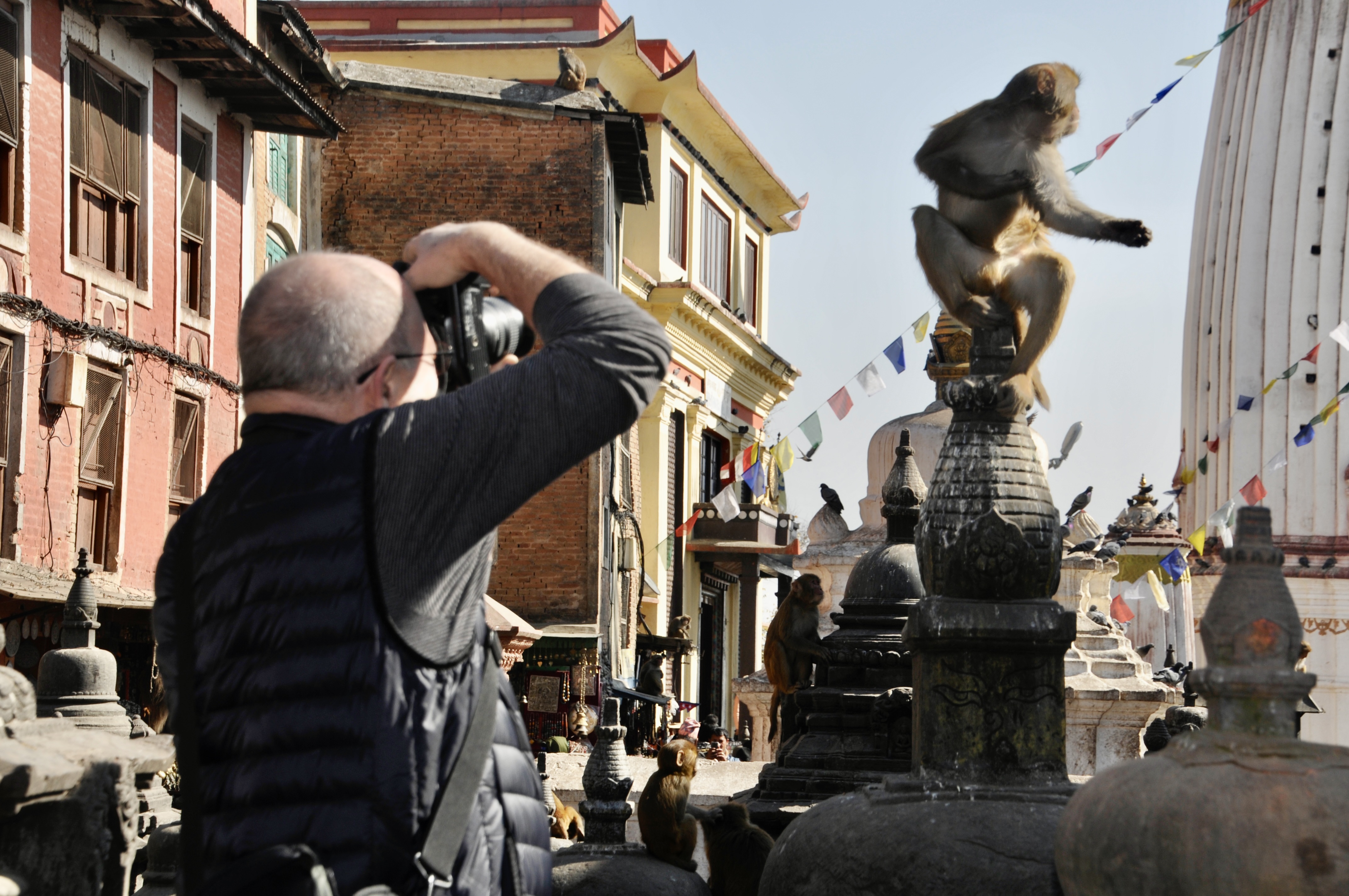
Then we walked to another part of town for Nepali food, a neighborhood joint (again we were the only westerners) where we had momos, and a “set” dinner — typically Nepalese with many different dishes and delicacies surrounding rice. Then back to the hotel.
More tomorrow.
Fern
Greetings from our last day in Lhasa –

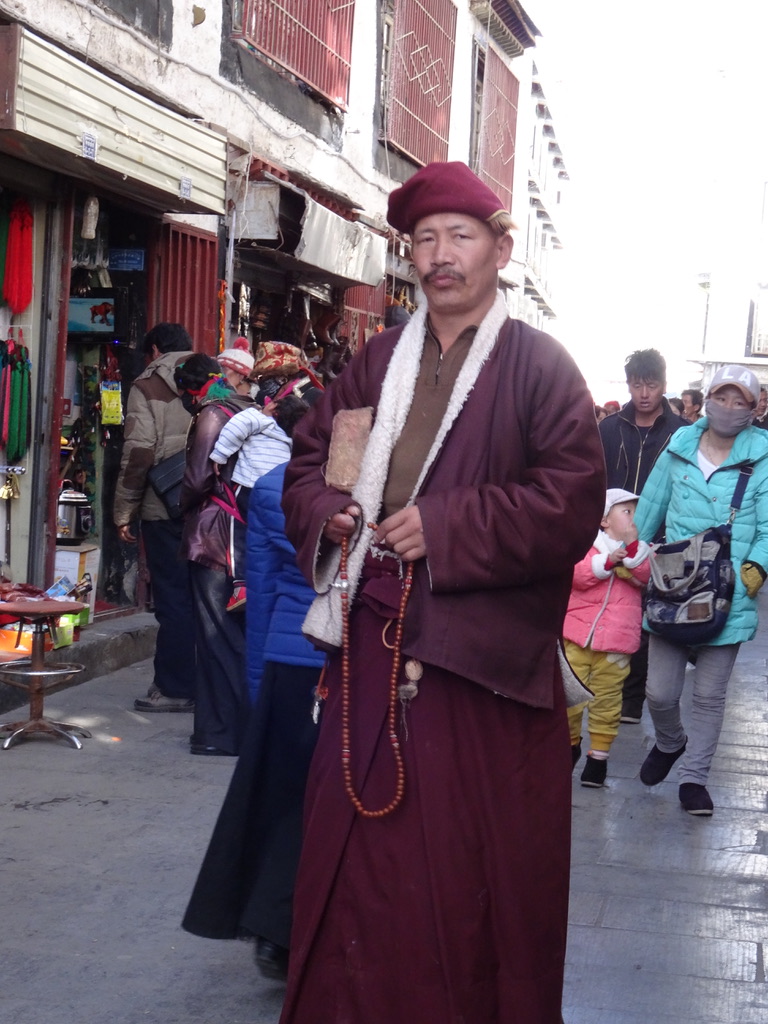
So, first our health; we’re both still under the weather.. I think Mike more so than me. He has started taking the American antibiotic (that we had with us, instead of the Chinese antibiotics since no one was able to explain how often to take it or for how long) which seemed to make him feel better this morning.. but by late afternoon he felt really miserable again and we have to fly tomorrow. I’m still stuffed up and have laryngitis. I haven’t taken anything other than sudafed and aspirin.. and some Chinese nasal spray. I think we’ll live.
Today we met up with Pemba again after breakfast and decided that we really weren’t that interested in seeing the Buddha in the cave, but that what we’d like to do is see a little of the rural area and perhaps a small village to get a sense of how people really live. We know from previous trips to other countries that it’s often easier to get that in a small town rather than in a city.
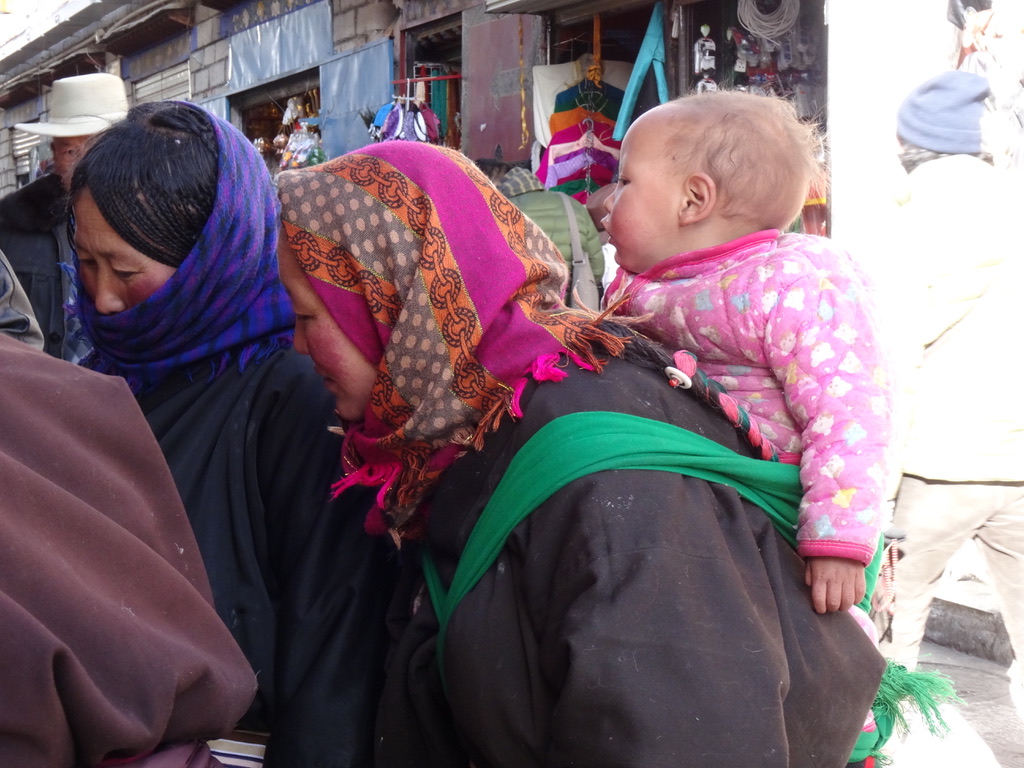
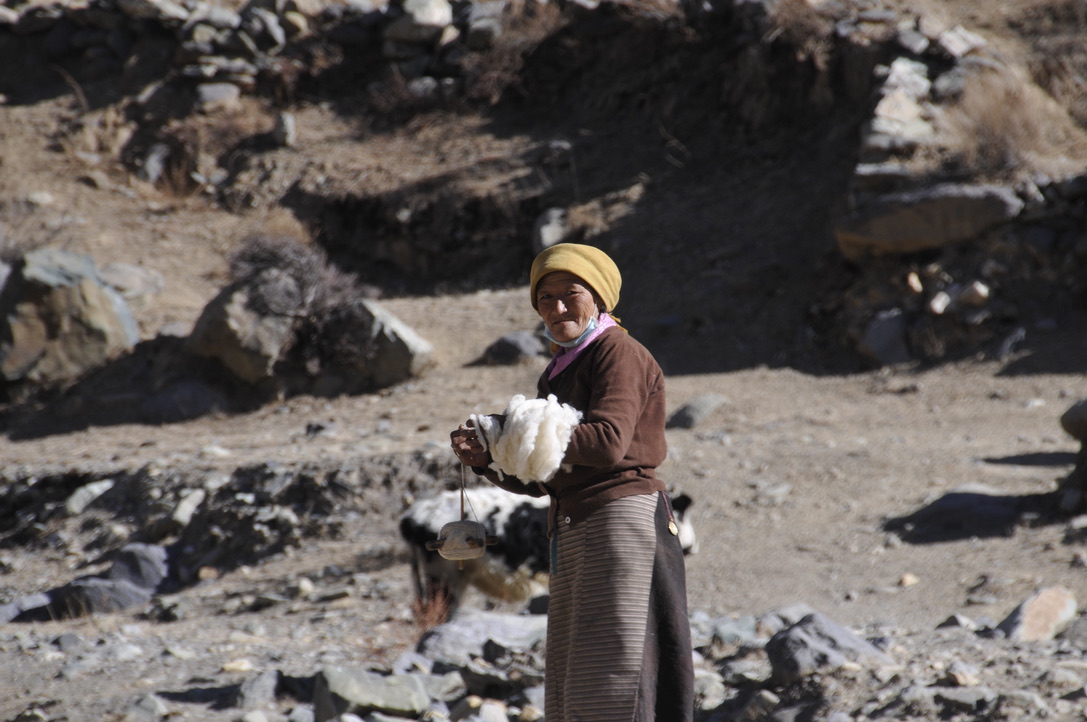
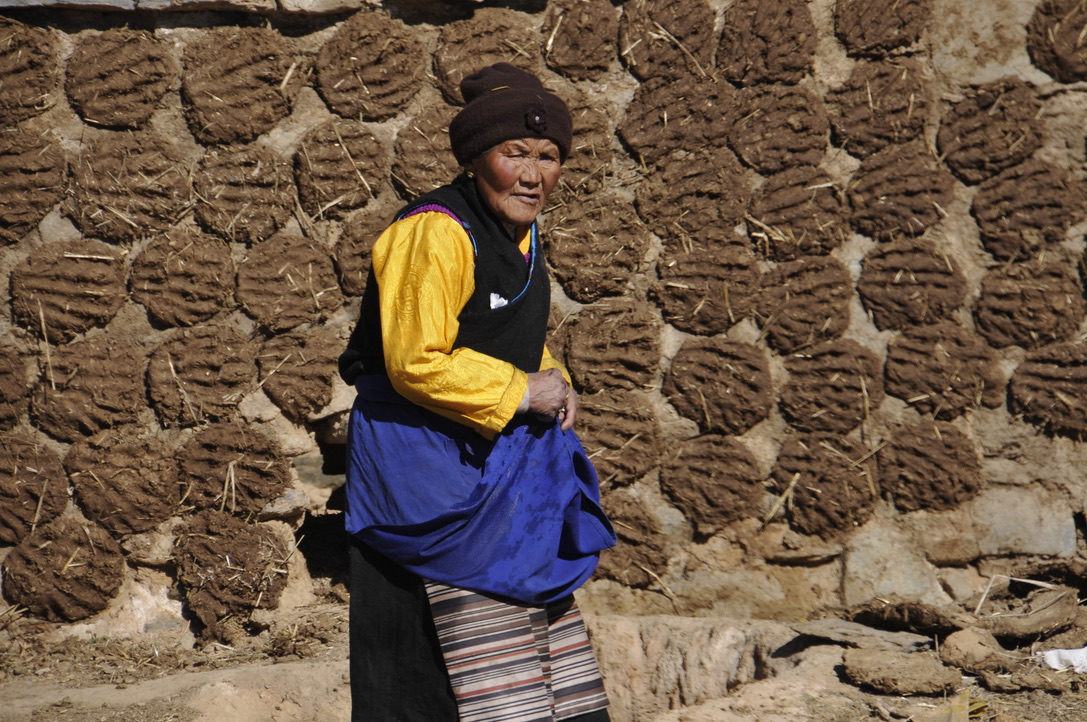
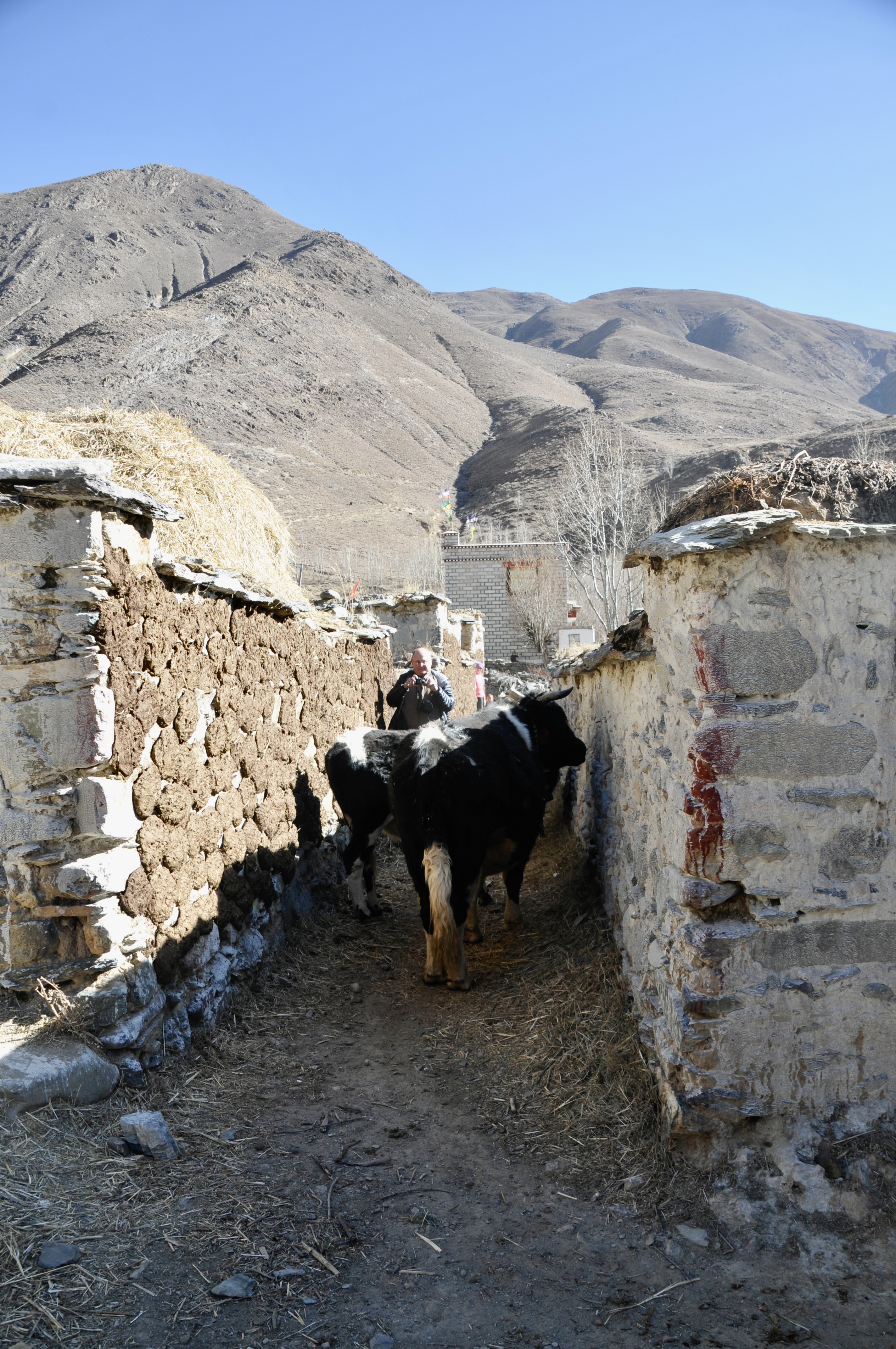
So off we went. The drive took us up about an additional 1,000 feet on a well-maintained road that felt a lot like driving Highway 1 in California, except no ocean. It was mountainous and I assume in the spring and summer it would be lush green, but at this time of year it was all pretty dry and brown. As we reached a major peak in the road, the prayer flags (colorful banner- and ribbon-like fabric) were strewn all over the hillside and across the road creating a sort of arch of color that stretched and stretched. Then we drove the winding road until we reached a little village with some women spinning wool and piles and piles of yak “pies” (think cow pies) drying for later use as fuel for heating and cooking.
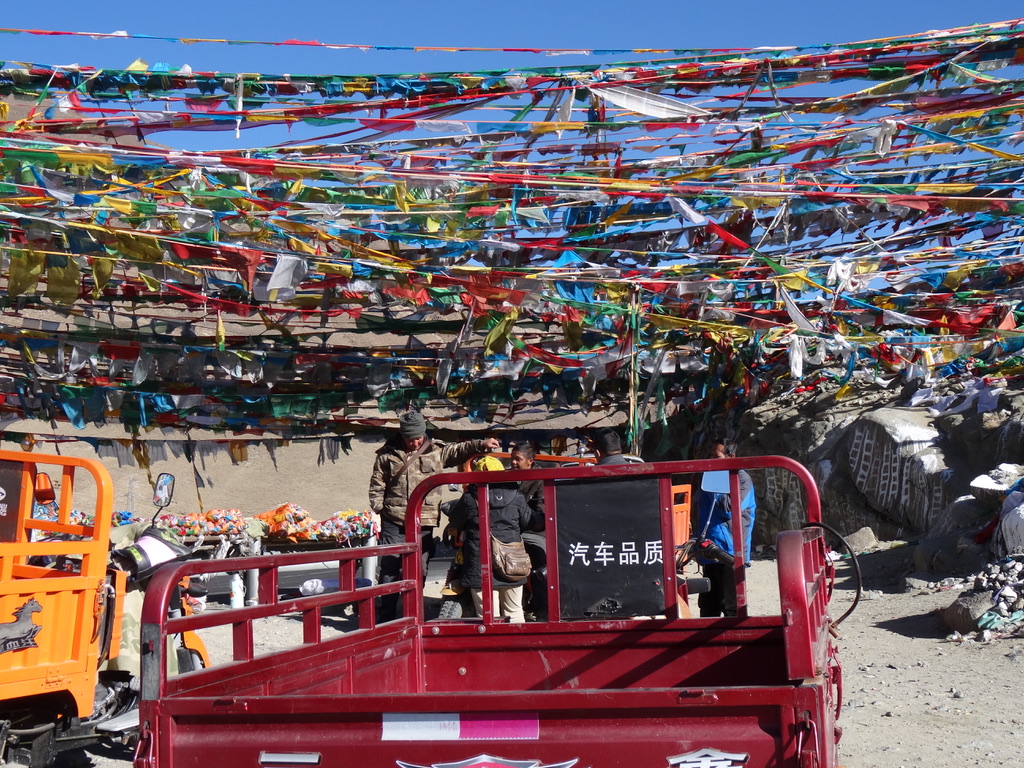
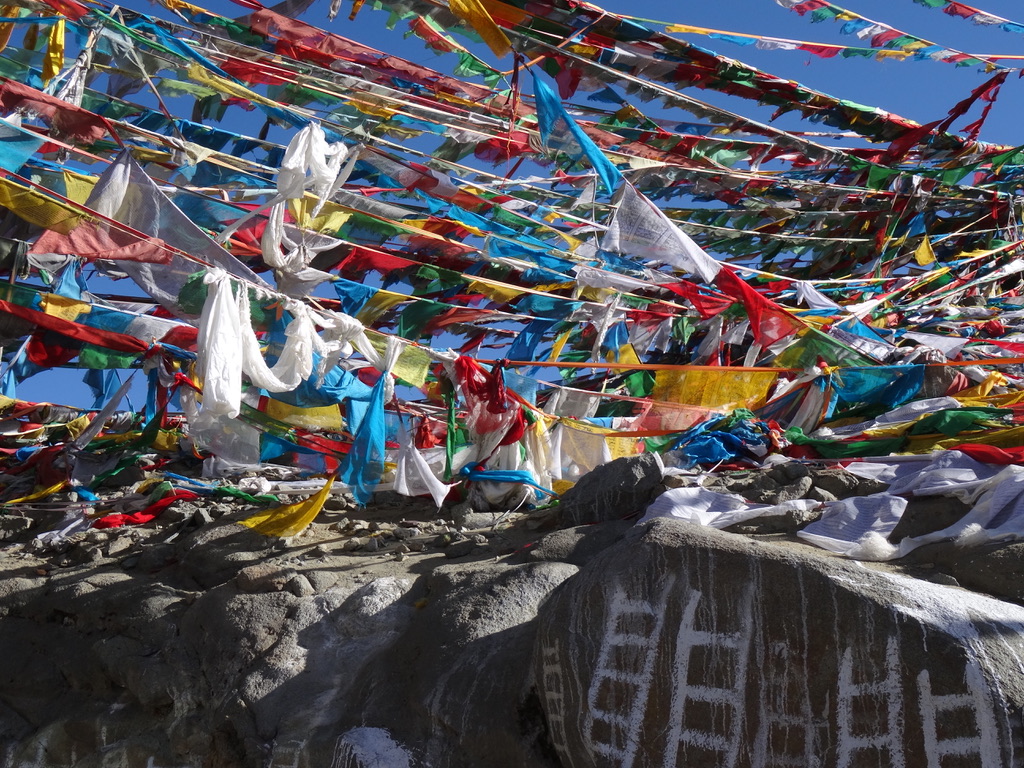
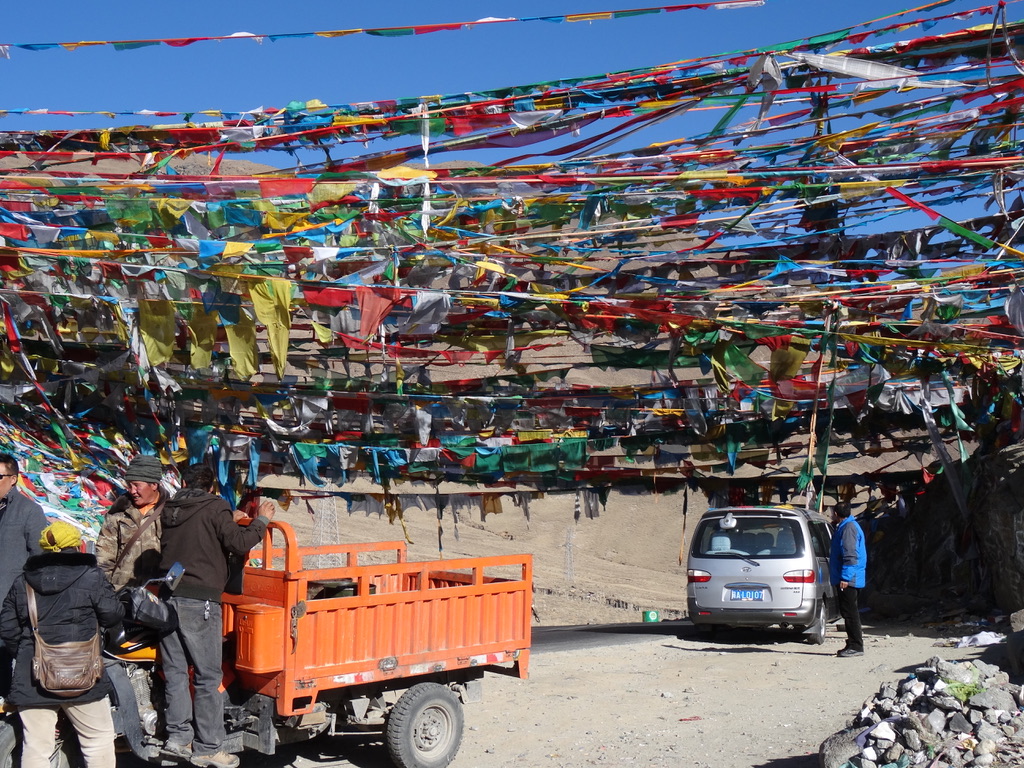
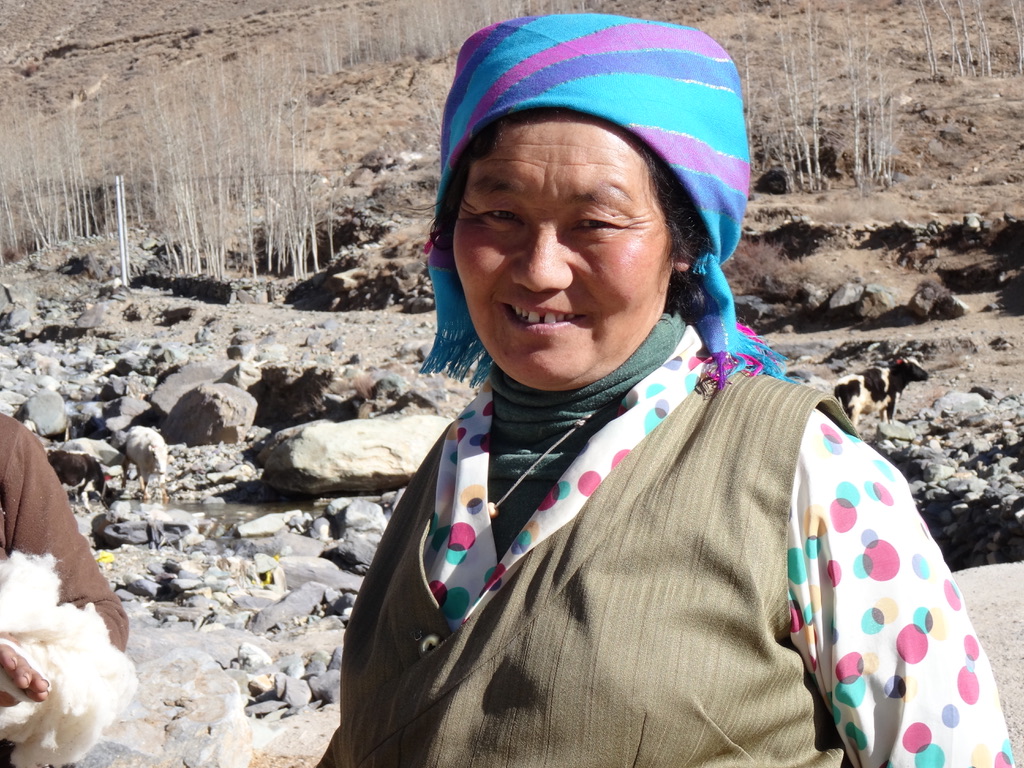
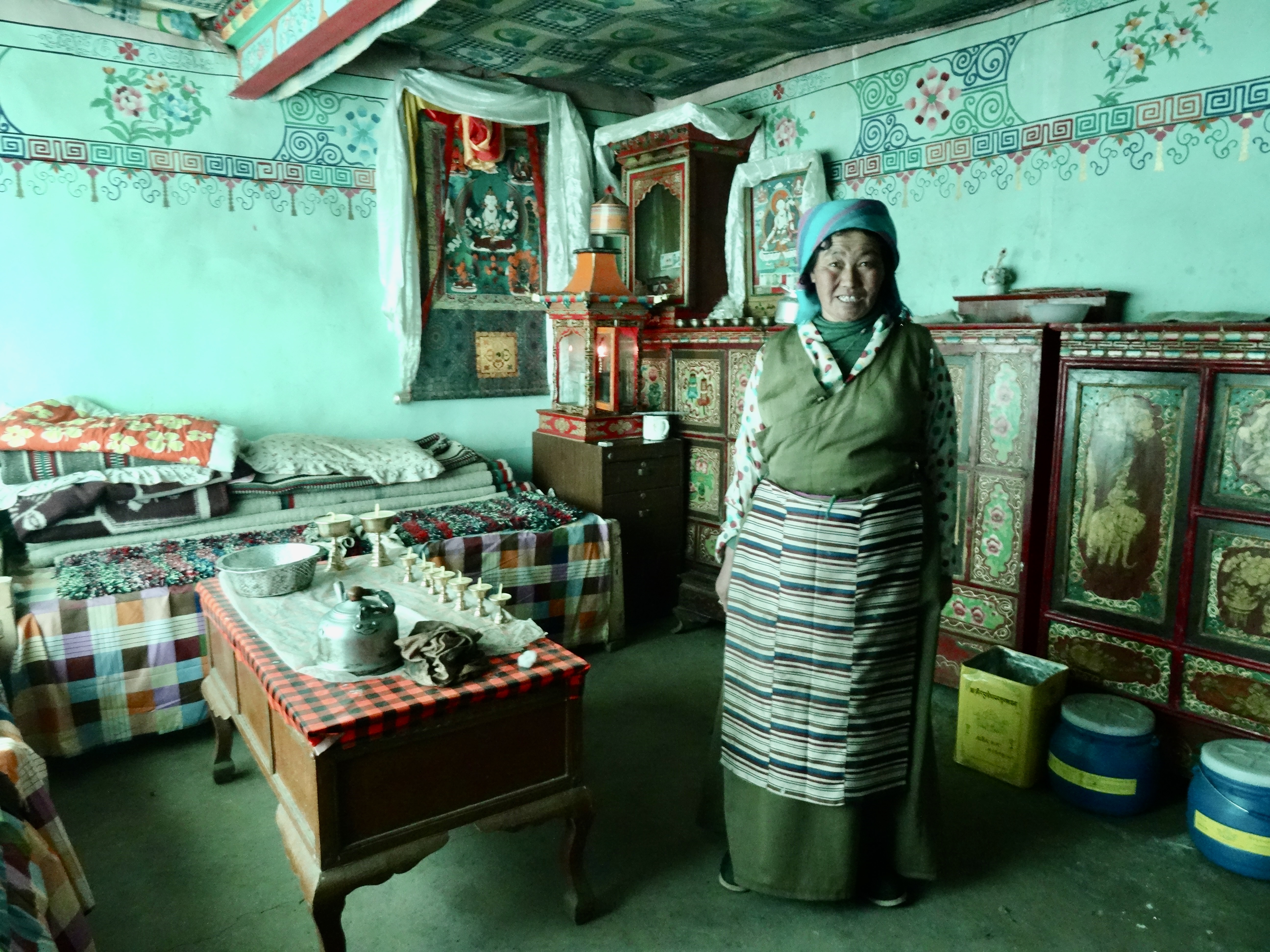
We got out of the car and Pemba spoke to the women who appeared to be about 70 or 80 years old (later found out just 49 years old) and one of the women said we could come to see her house. We followed her into her rambling “compound”… The house was made of some kind of Masonite painted in the traditional white with color trim.. We climbed a few stairs and were on her “deck” where more cow and yak pies were drying, and where she had a very clever, make-shift solar set-up to boil water… two metal arc shaped pieces that spanned about four feet and suspended between the two pieces was her teapot! She has a pump for water and a somewhat jerry-rigged electrical system, but she has cable television (no flat screen!) There’s a sleeping and sitting room, a kitchen, and a storage area where she keeps dry food for the animals. She’s widowed so she has to manage alone. She’s got cows and dogs and roosters. We walked to her “fields”.. and then for a while we got stuck in a passageway between her house and her field as the neighbors cows and bull were being walked to the road trying to use the same passageway. Oh, she also has a little meditation, prayer room set up with the typical yak butter candles.
We asked a lot of questions that Pemba translated and overall it was an interesting and very friendly encounter. We then headed back to town — talking a lot to Pemba about life in Lhasa and also the countryside, about the one child policy (which doesn’t apply in Tibet because they are a minority group), about education, the role of women (changing very very fast), cost of housing, cost of cars, who owns and who rents, etc. And he also asked us questions — like if we have animals on the road when cars are driving. He has learned everything he knows about the West from the tourists he shows around and from television. We went for lunch together and then Mike and I meandered around town for a few hours — probably stretching the limited strength we have.

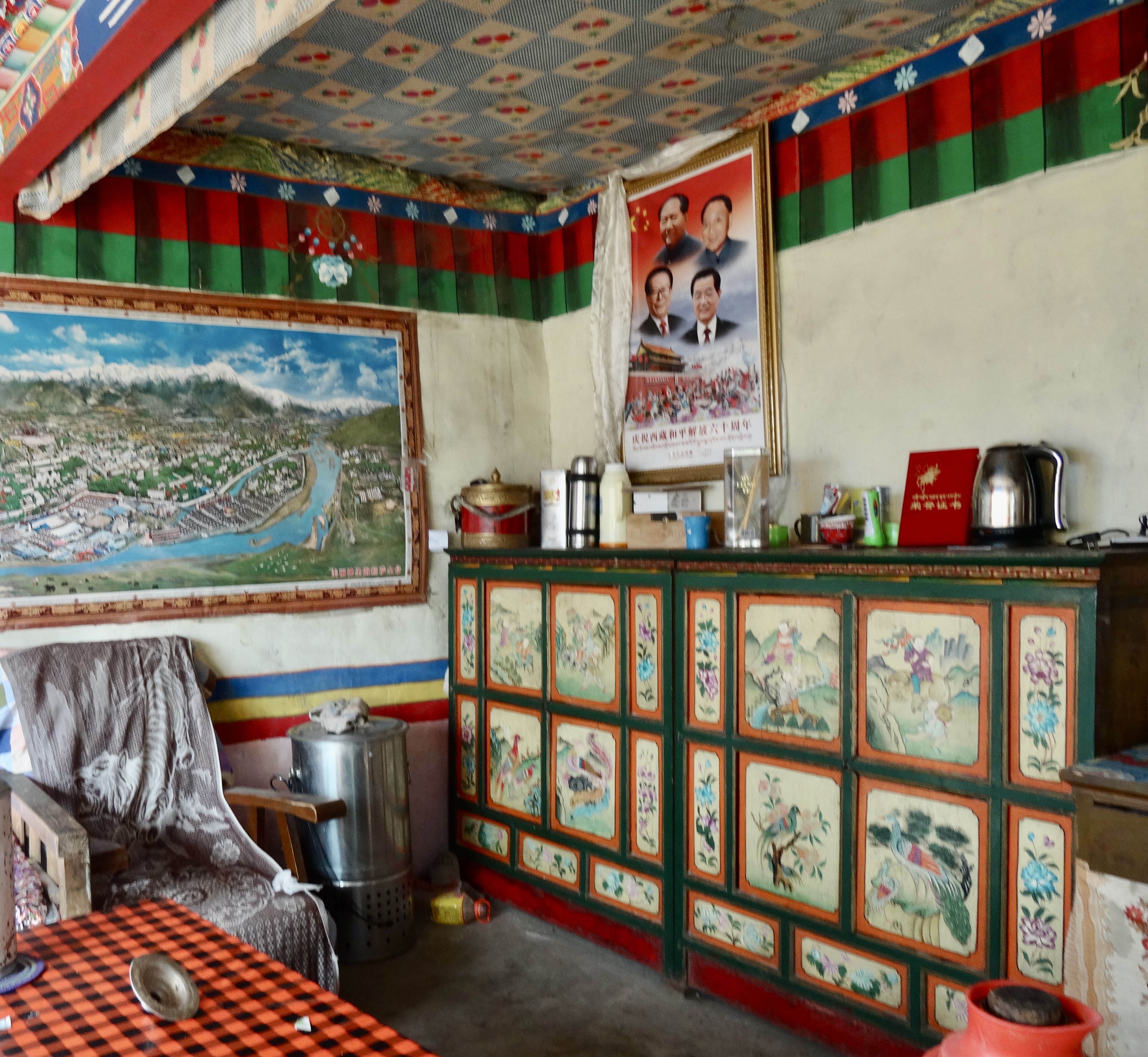
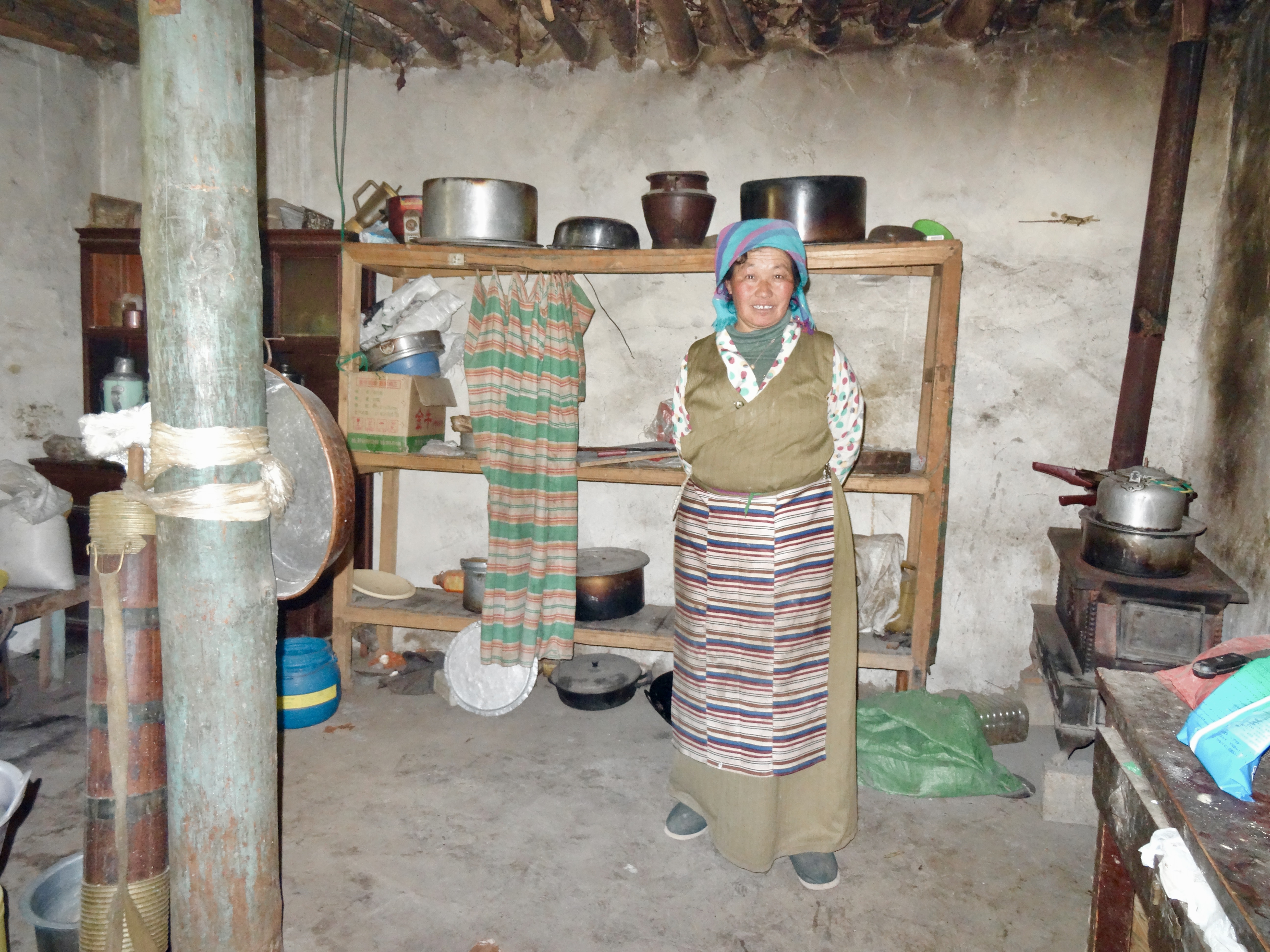
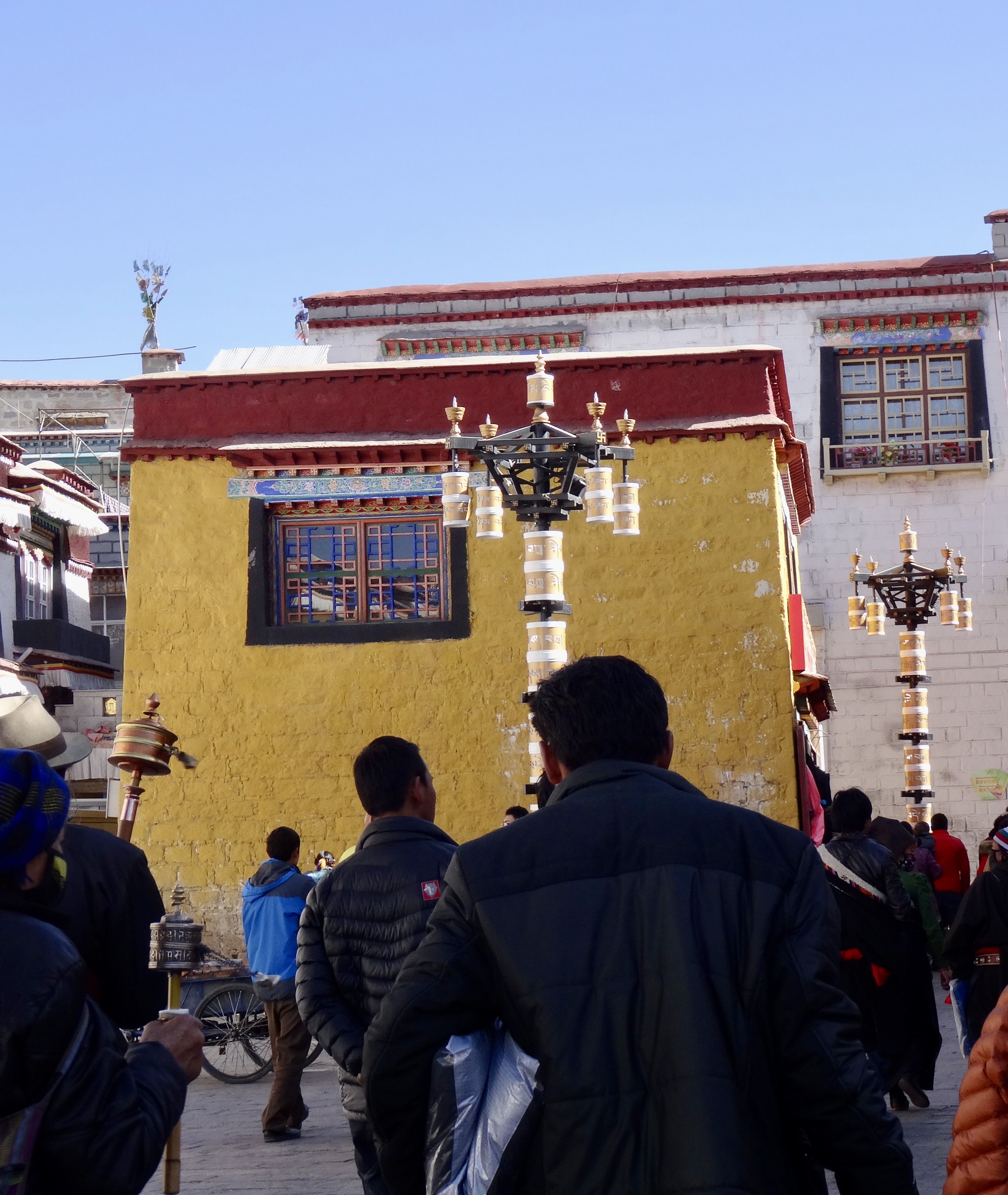
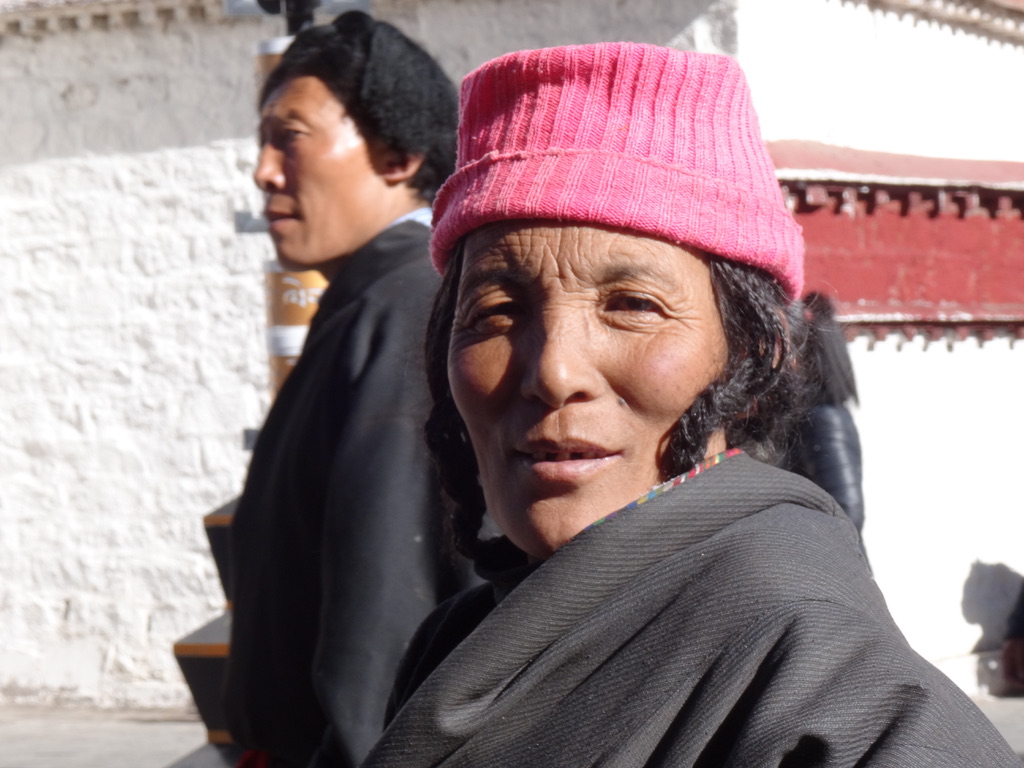
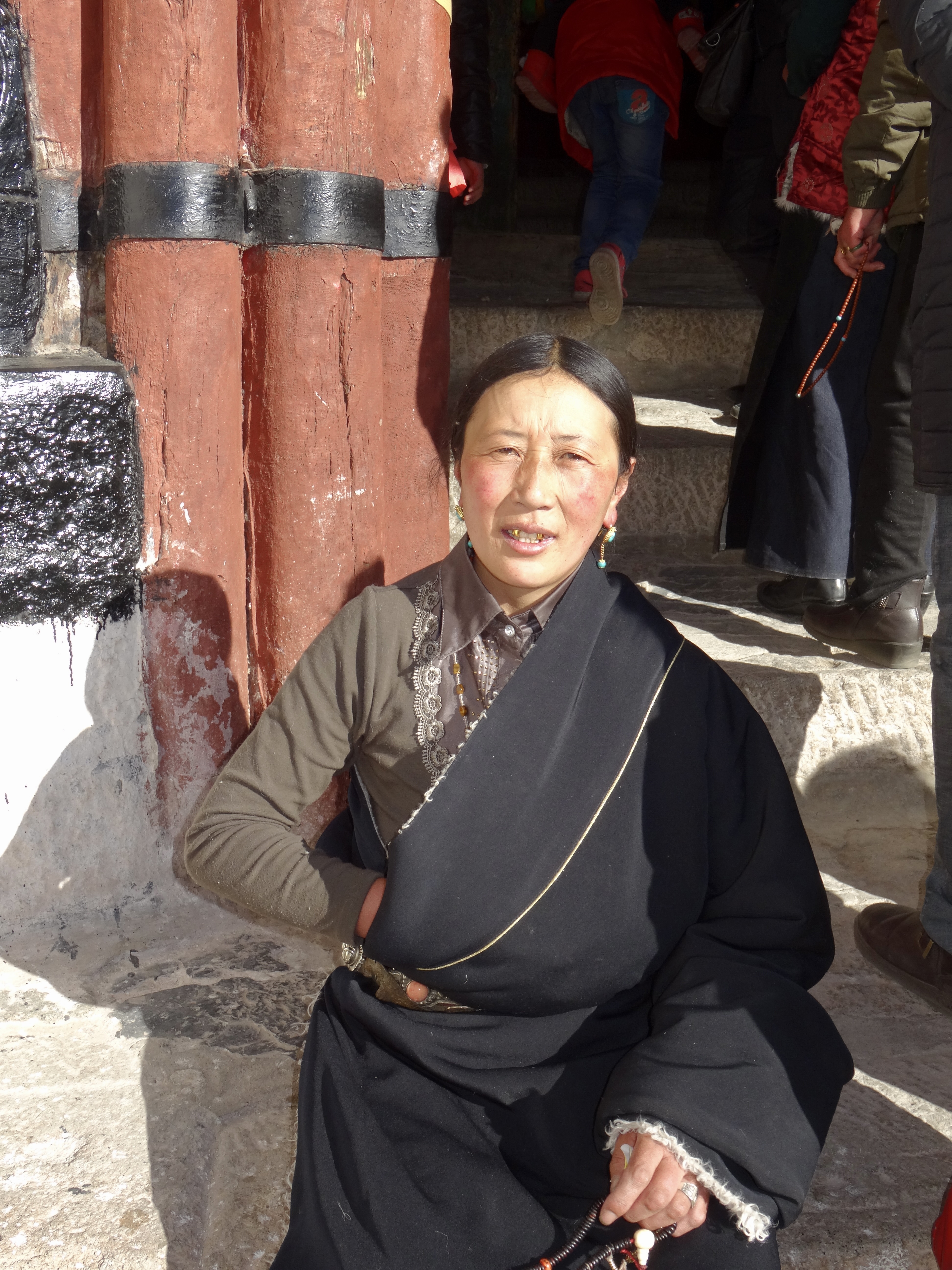
After our jaunt into the countryside and lunch with Pemba — we trekked again to our favorite walking area in the Barkor.. always something new to see, always different alleys to walk, and always mobs of people circumambulating the Jokang Temple (many stopping to lay on the floor in prayer — amazing they don’t get stepped on by the crowd behind), and always everyone chanting and spinning the metal prayer wheels. And everyone with cell phones! We walked and naturally got a bit lost, but eventually all roads lead to outside the Barkor.. and we headed back to the hotel for our last night. Still a bit under the weather — but feeling like the colds (or whatever the hell we both had) are possibly breaking — we opted for Szechuan food (always believing that those spices can fight germs).
We are hopeful that we’ll be miraculously recovered by the time we reach Kathmandu tomorrow.
More from Kathmandu.
Fern
December 26 – 27, 2013 Lhasa Tibet

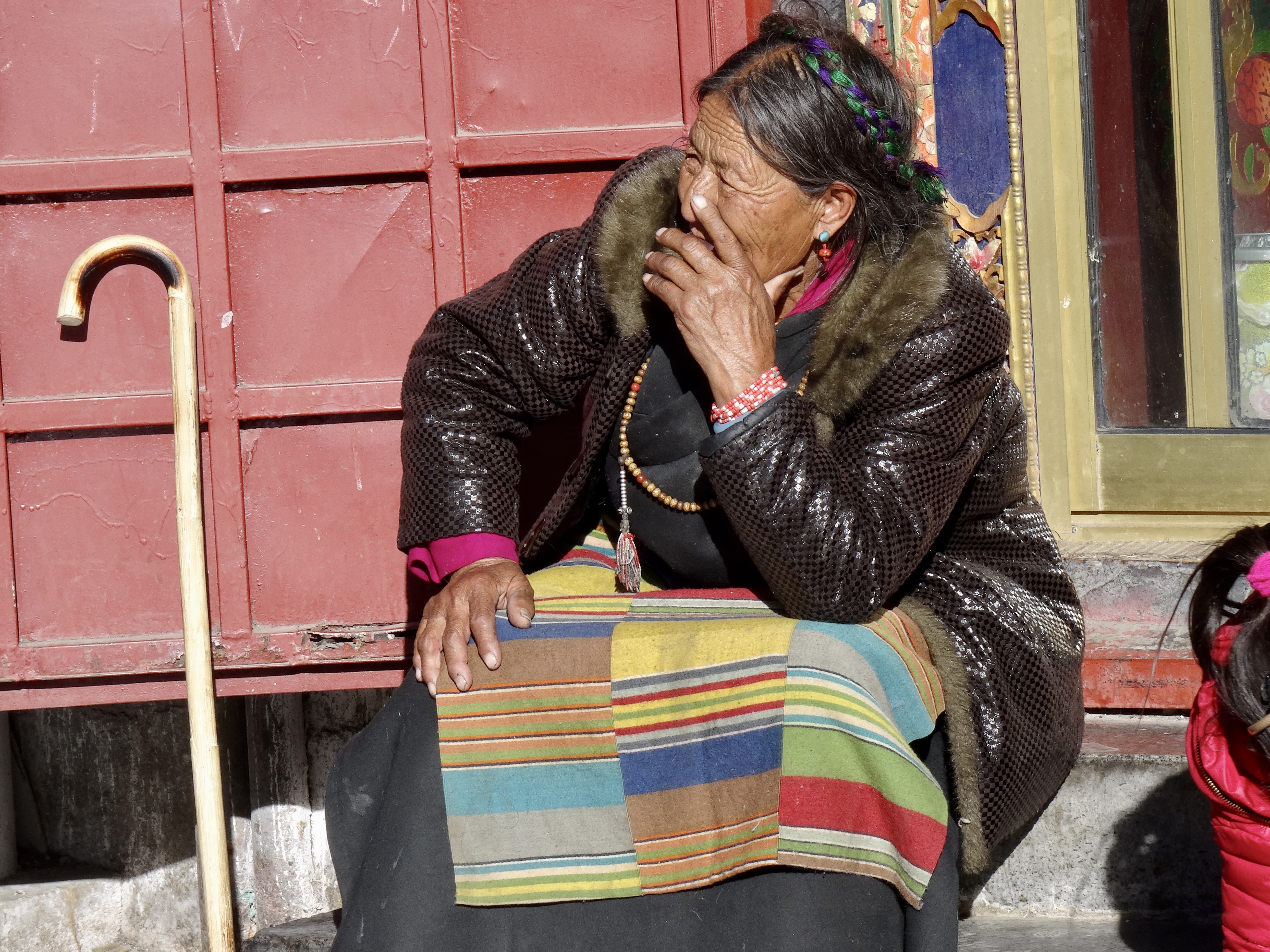
December 27, 2013. Lhasa Tibet – Tashi Delek
Thanks to all of you for asking what happened on December 26th since I didn’t issue any daily report (glad you noticed).
On the 25th, after coming back to the hotel (following the climb to the top of Potola Palace equivalent to climbing about a 30-story building up and then down again, and then walking for several hours in the little alleyways that comprise what’s known as Old Lhasa), we both felt pretty awful — congested, coughing, and weak. So we opted to have dinner in a very wonderful Chinese restaurant inside the hotel (well, it’s actually on the grounds of the hotel, but you need to go outside the hotel and in through another door) which was probably a wise choice. Hot and sour soup seemed to be a good antidote, followed by a lamb dish with rice and vegetables. After that we zonked out (for short periods as the coughing kept both of us up a bit).
On Thursday, December 26th — yesterday— Pemba was going to take us to some cave to see a giant Buddha (Frankly I was Buddha-ed out after the first hour at Potola), but we decided to decline and hang out at the hotel and maybe take a walk into the old section again on our own — just doing what we could without strain. The altitude really does take its toll. (I don’t recall having any trouble when we were at Machu Pichu with Cuzco being at 11,500 ft. and Machu Pichu being at about 10,000 ft., but I suppose we were about 15 years younger?)
So after a late breakfast, we did things like download photos (we’ve shot about 400 each already) and work on our courses for winter quarter, and catch up on CNN news, we decided that the hot and sour soup treatment should probably be repeated so we had it brought to our room. Then at about 8:00 pm we finally ventured outside the hotel walls… and headed for dinner at a place called Snowland. Pure Tibetan restaurants are really hard to find; most restaurants serve a combination of Tibetan, Nepali, and Chinese cuisines (with none of them being that fantastic). According to what we’ve read Tibetan food is pretty bland — barley based — so I think restaurants just combine these different cuisines. Many restaurants are closed now, because this is such a low tourist season. Additionally, yesterday and tonight are some kind of official holidays marking the death of some religious figure.
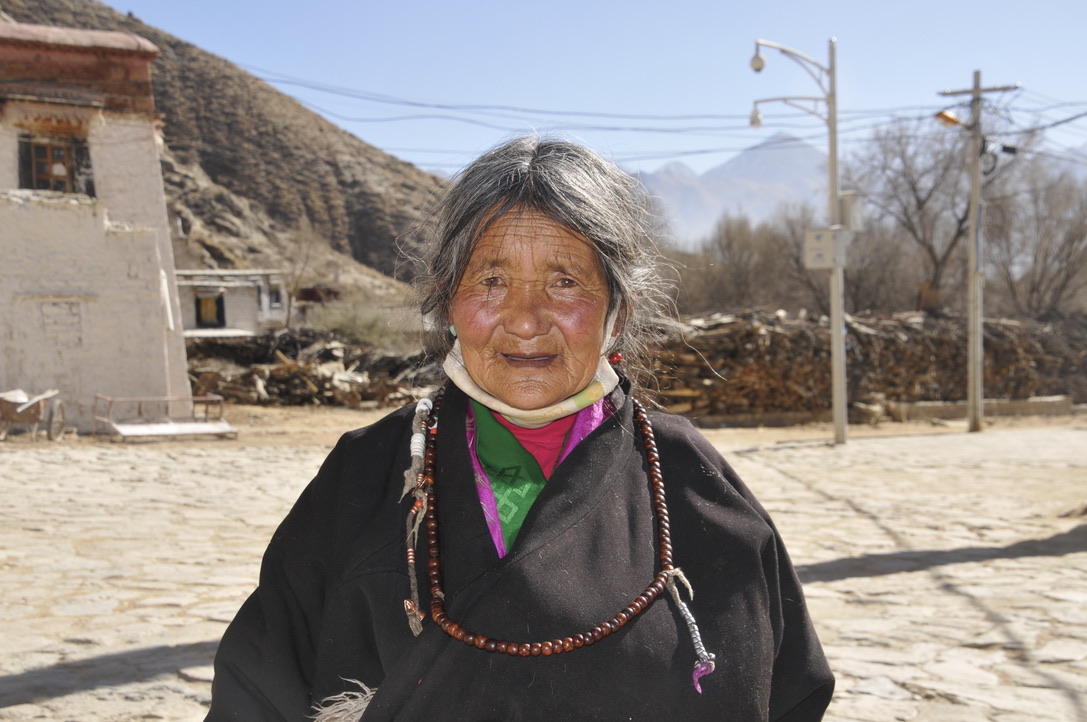
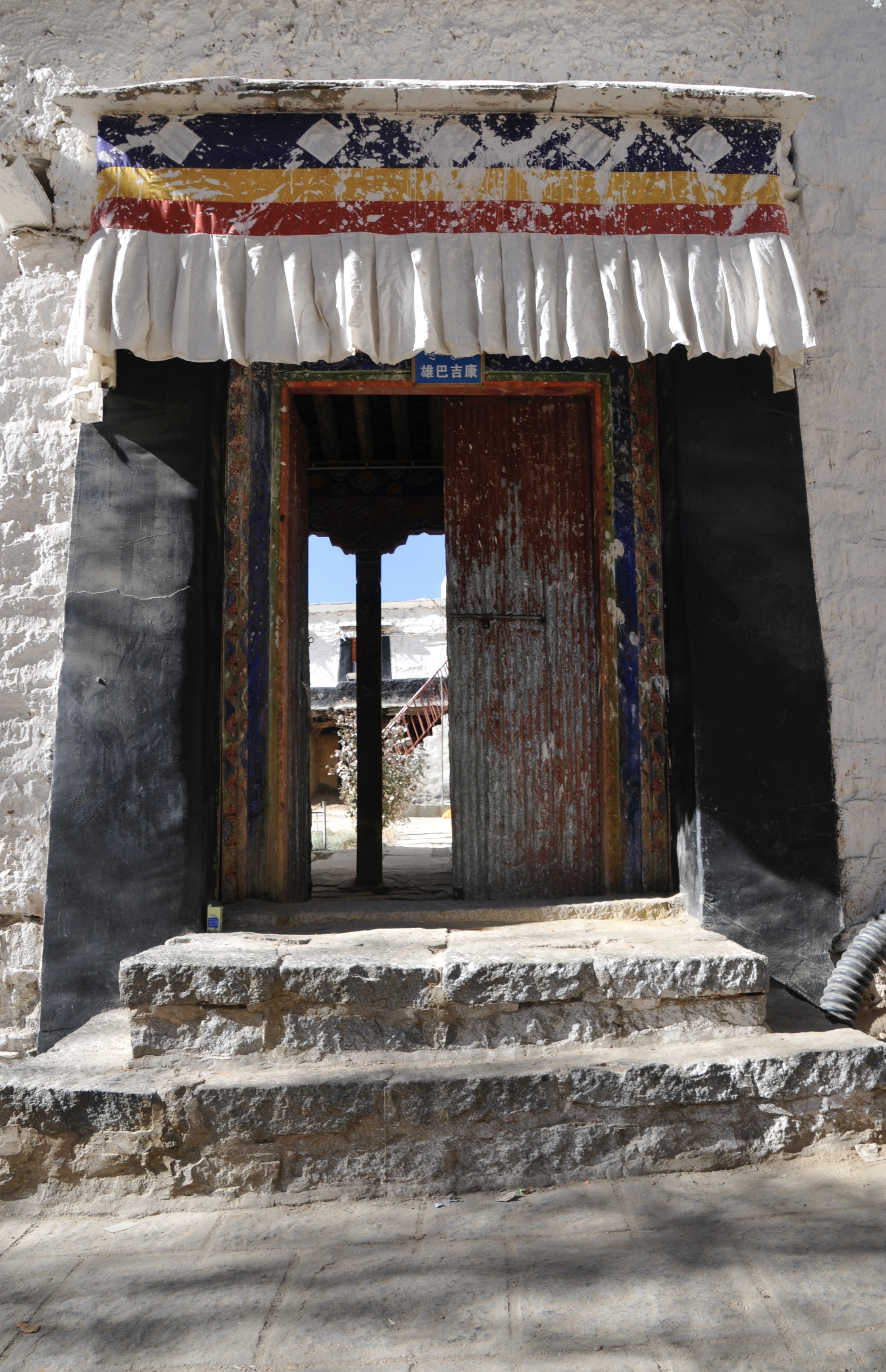
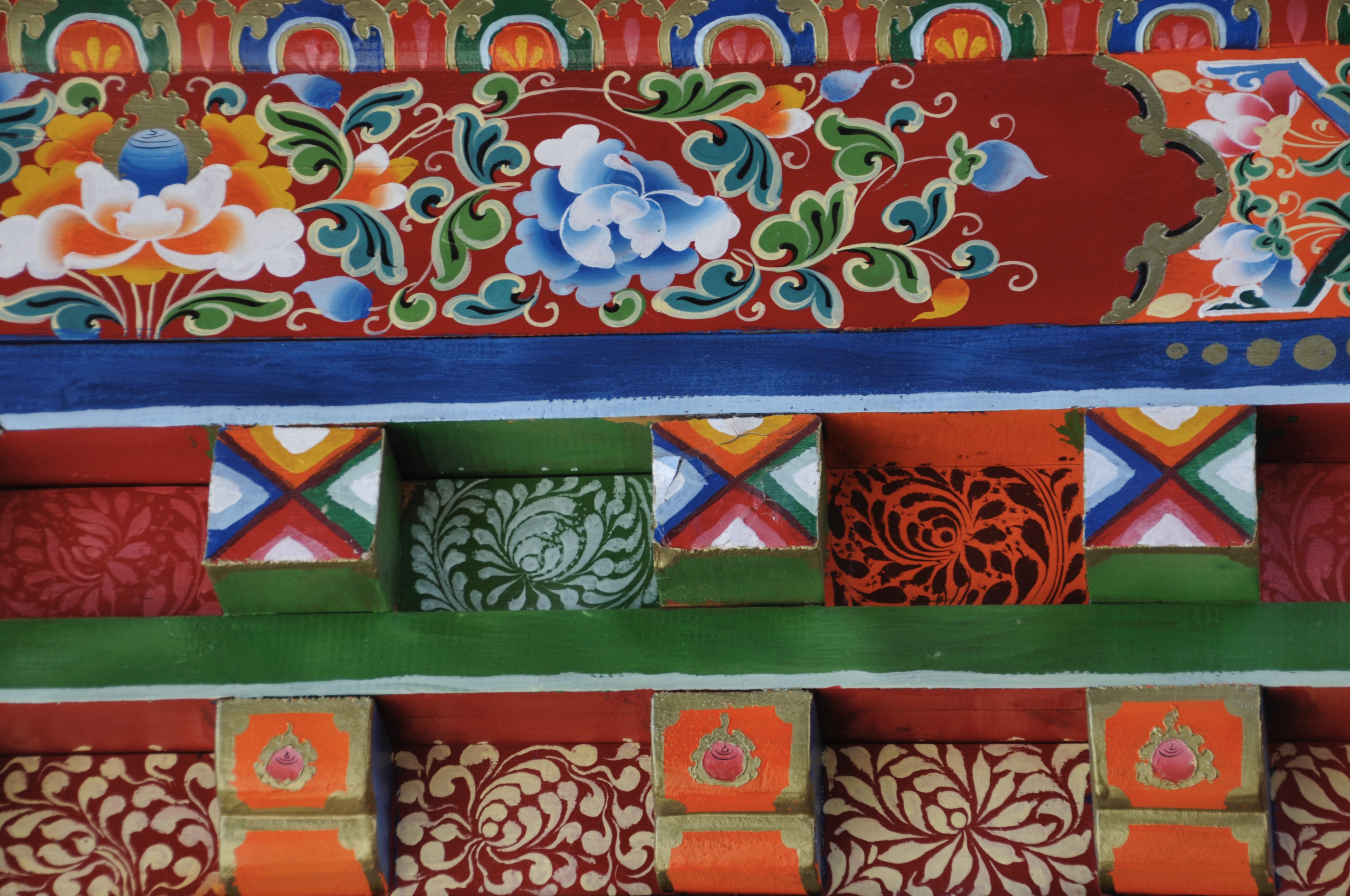
Anyway, last night we ventured out by rickshaw (our favorite transportation mode, and the only ones willing to pick us up) to a restaurant we had read about called Snowland, in a different part of town. Turns out it’s on a walking street, so even the rickshaw couldn’t get in so we walked down the street and found the place. Food was fair to middling, but lots of fun. Many young women working there or maybe some worked there and others were friends keeping the others company. Place was pretty empty; only about three other tables. While we ate, the girls played loud music (couldn’t discern the language) and they danced and danced — a little like a line dance; seemed to be having a great time.
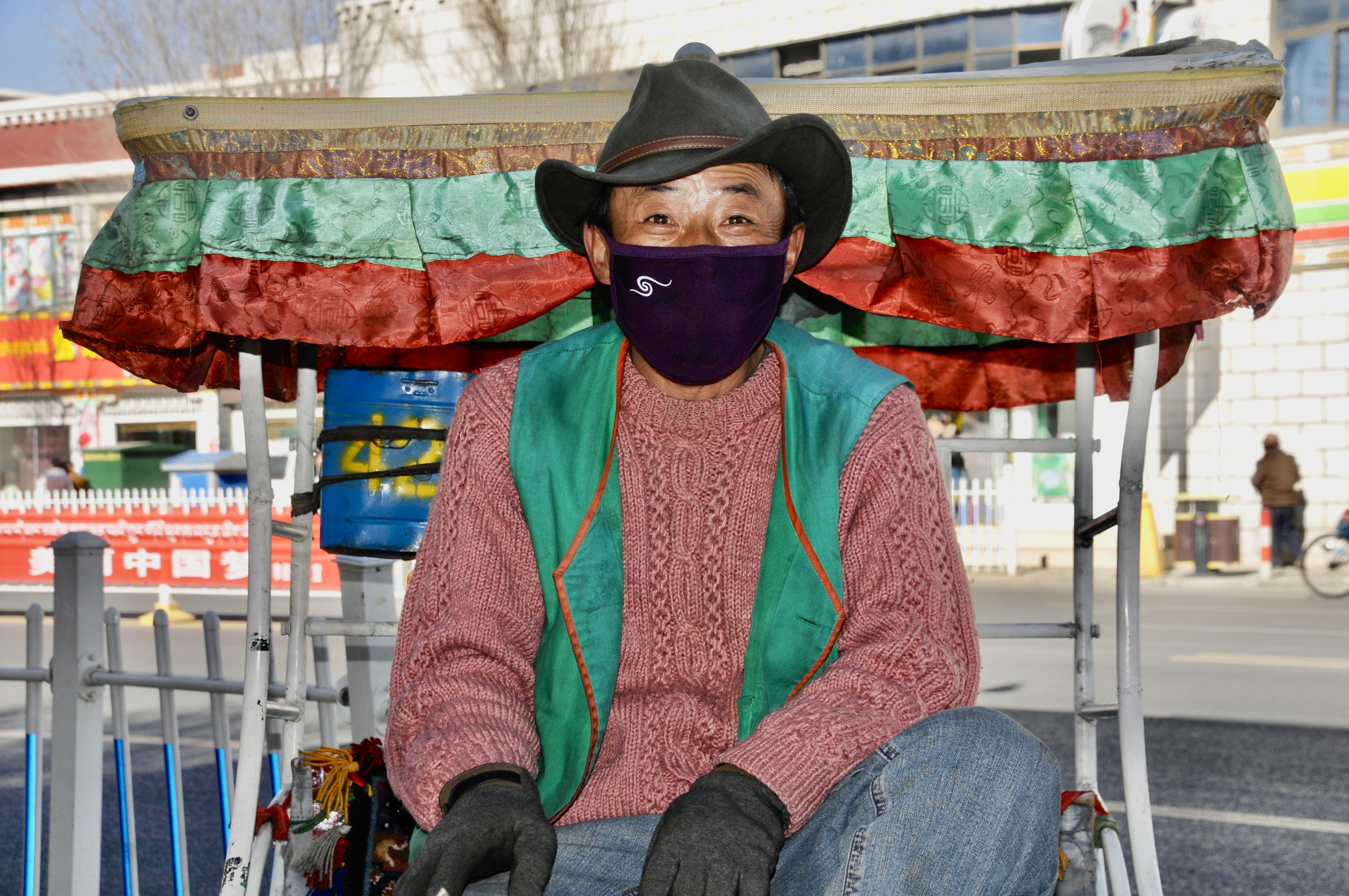

Then we ventured out to the main street to find a taxi, but wound up with a rickshaw again. Here’s what we’ve been told. Taxis don’t like to take just a single fare; they like to do “cab-sharing” where they let you into the cab and then in a few blocks they pick someone else up, but they think foreigners won’t do that so they just opt to say no to us. The rickshaw drivers can only fit two people so we are perfect customers. And although we have learned the bargaining tricks (which they love), at the end we are so guilt-ridden about having these guys pedal us around that we have been doubling the amounts. Since we are the only westerners we see, the other rickshaws are occupied by Tibetans. Trust me, the amounts are so low it really doesn’t matter. These guys have to cross four lanes of traffic, but they seem to be pros (although this morning we had some questions about the guy’s brakes as they screeched and moaned and groaned pretty badly — like a dying horse — whenever he tried to stop, which was often to avoid cars and trucks).
OK.. so that was last night (December 26).
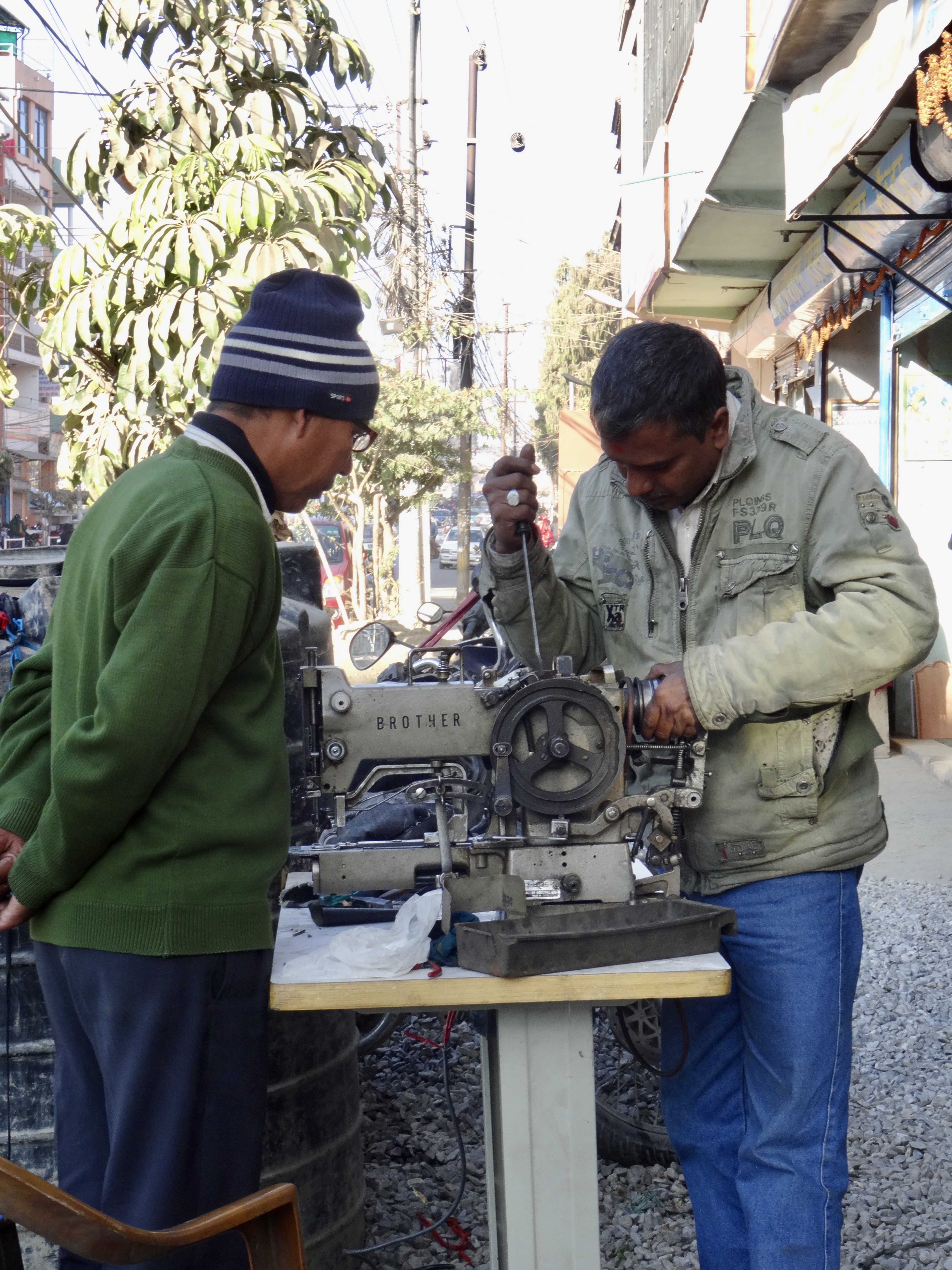
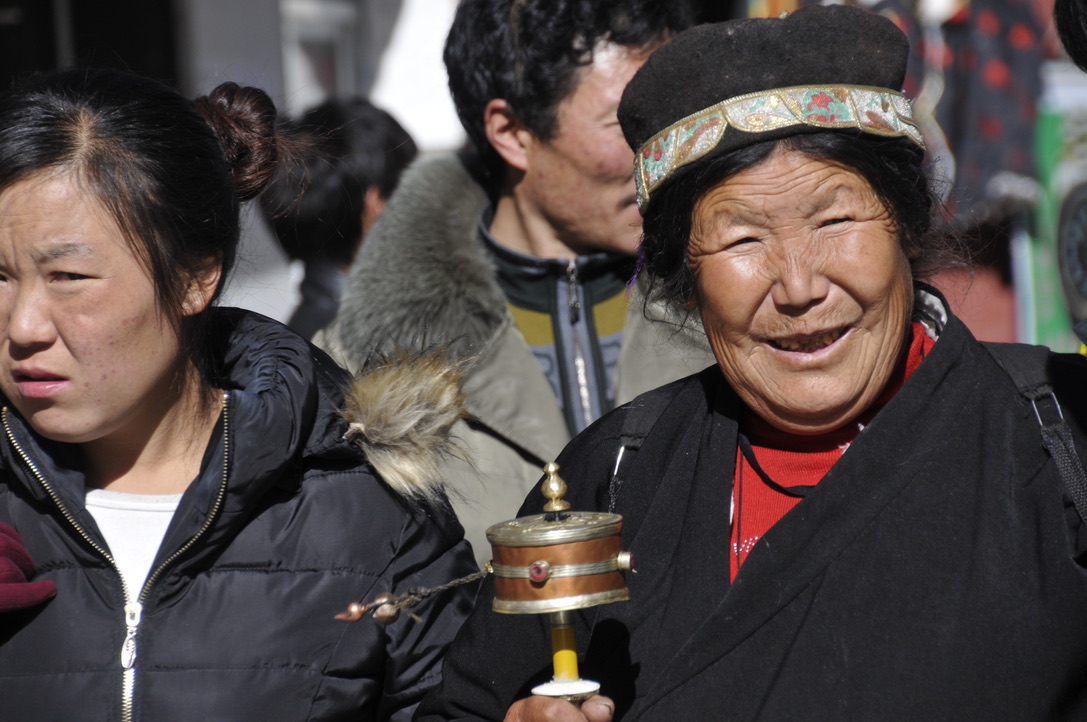
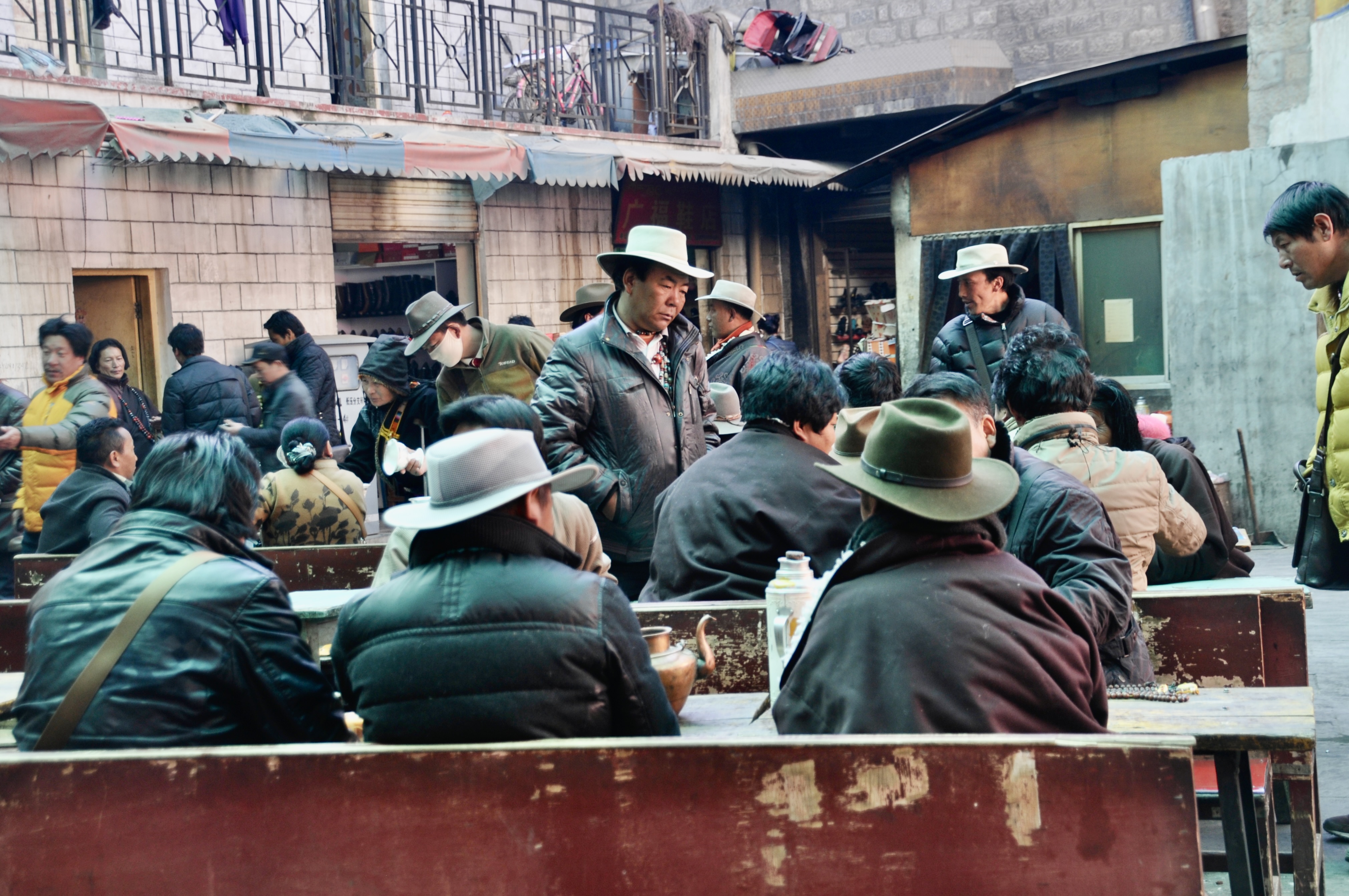
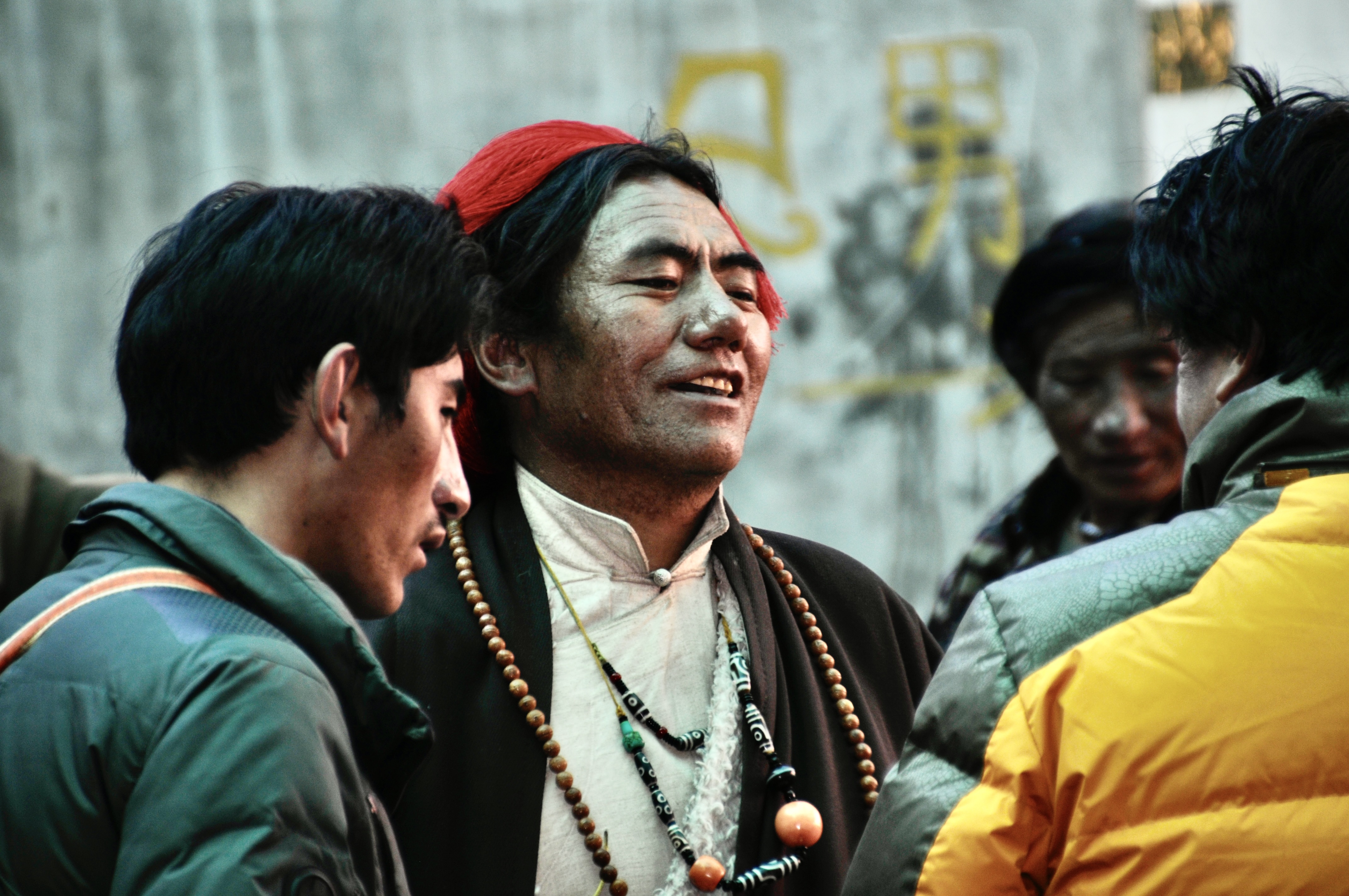
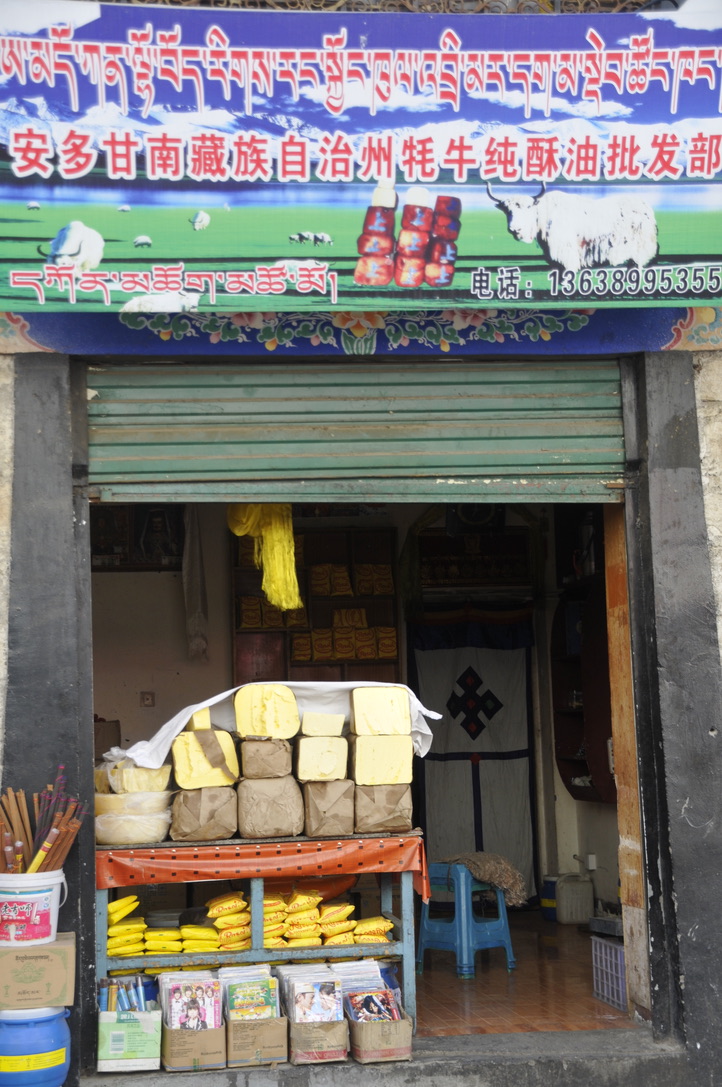
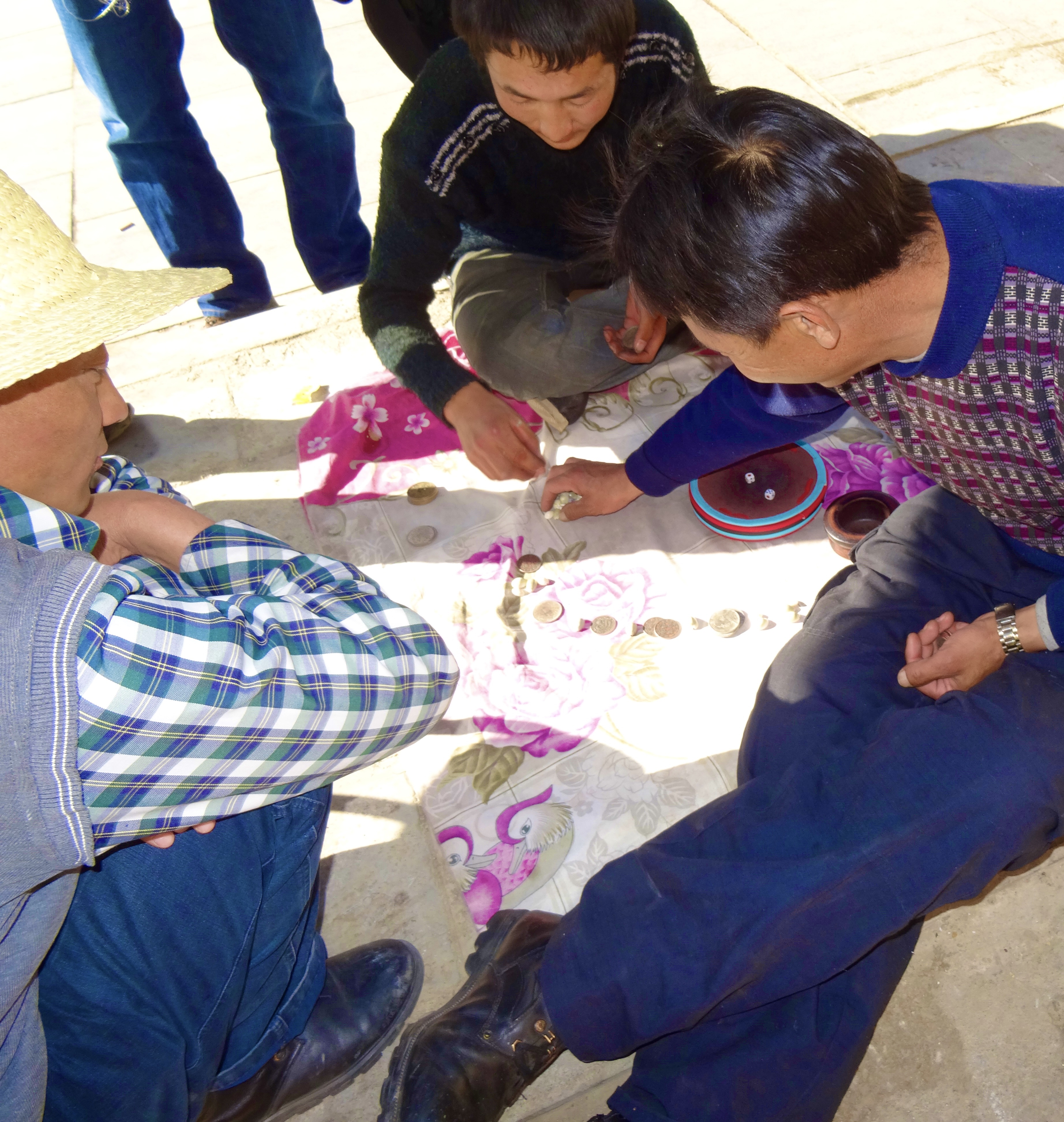
Woke up this morning and thought we were feeling a lot better (less coughing, still phlegm, but on the mend). So off we went to the old section to explore yet different alleys and passageways and see the life during the morning hours. Strolled the streets mingling with the people (many of whom are already circumambulating the Jokang Temple carrying their prayer wheels) and others just doing basic shopping. It’s a bizarre mix of teeny shops selling things like just yak butter (more on that later) or just cheese adjacent to shops selling commercially made boots and down coats (and some little stalls – really just a woman with an old-fashioned sewing machine – where you can have your down jacket mended). In the streets, men are bargaining for caterpillar worms which they feed to the yaks and also playing a game called Sho. Everyone was extremely friendly although no one can talk to us, but they smile and wave and some take our pictures with their iPhones, which seem to be ubiquitous. Naturally we find that pretty funny, but hey — we are the odd ones here.


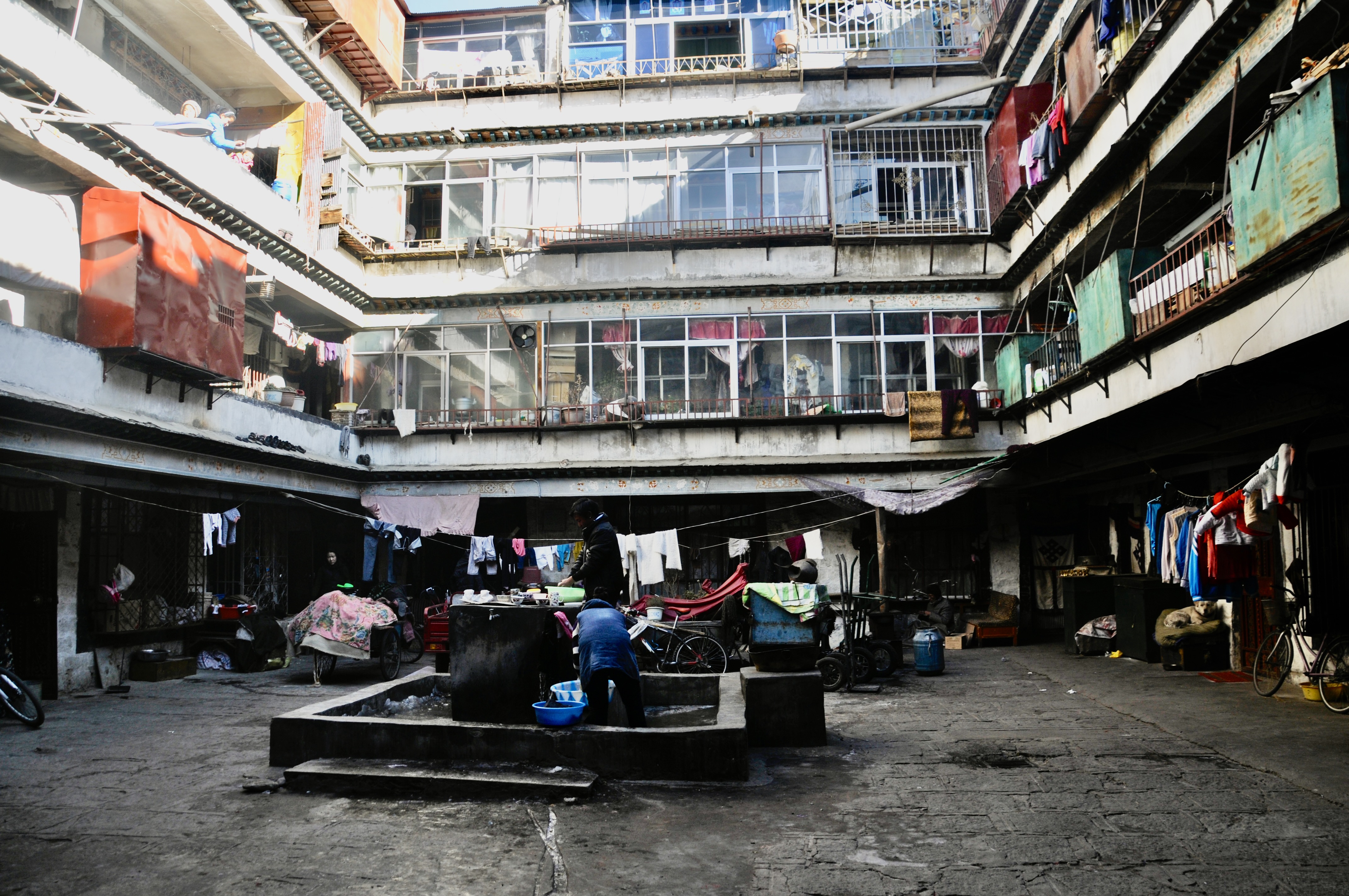
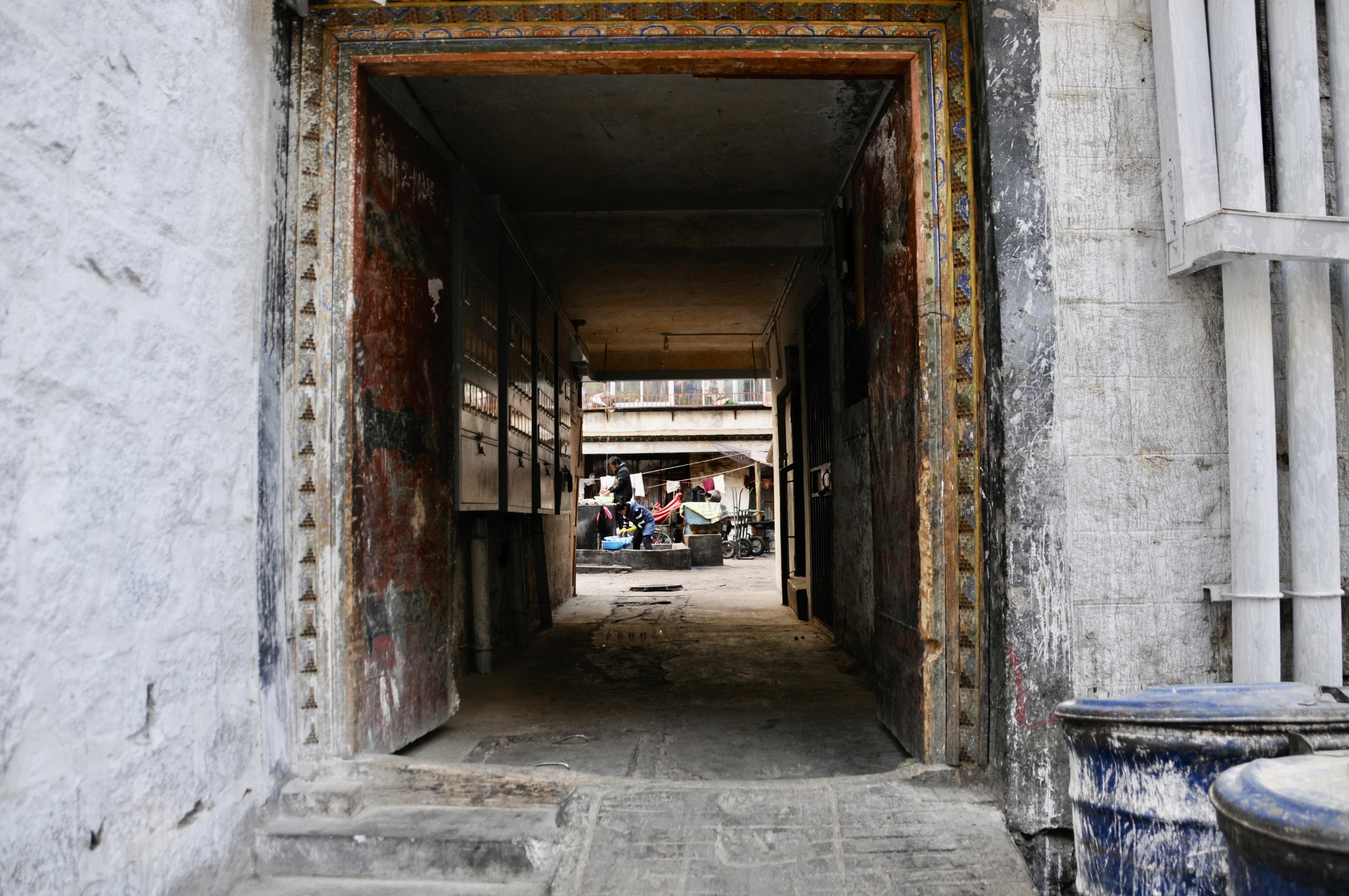
It’s also an amazing mix of people in traditional garb of all sorts and people wearing totally western clothing. Oh, and amid all of the shops are very frequent police (or army) outposts taking up shop space or just in temporary structures on the street. So, yes, there is an ever-present sense of “control.” Indeed there also appear to be spontaneous street blockages with police then checking people coming in and out (they leave us alone and just wave us on).
We eventually meandered to a main street outside the old section and got into — you guessed it — a rickshaw, because no taxi would stop. This was the guy with the very very bad brakes. Had a very quick lunch (hot and sour soup again — our medicine) and then Pemba picked us up at 2:15pm.
We then met up with Pemba and headed to the Sera Monastery — about 600 years old and built like a little village in the hill with a sprawling complex of structures — all whitewashed (as was Potola Palace — which gets re-whitewashed once a year… peasants go to the top of each section and just pour the paint which has some yak milk in it — as does everything else here .. and then a crew paints the trim). On most days, the monks (600 of them are at Sera now — but in its heyday it had 3,000?? ) do debates and they are open to the public. We had read about this. They debate what the “teacher” taught them that morning, so the topic is always changing. They are in small groups and when they get something right they clap one another’s hand.. and the teacher roams around with prayer beads and if you get something wrong spins the beads above your head and laughingly says you need to study more, or at least that is what we think it all means.
Anyway, we got to Sera Monastery, but there was no debate today (guess they don’t post the schedule on any website).. but it didn’t really matter.. It’s a renowned place of scholarly learning, and trains many scholars, many of whom are famous in other Buddhist nations. Like all of the monasteries, lots of pilgrims are strolling about — leaving money in every conceivable corner and at every shrine and fresco. We went to visit one of the four “colleges”.. and the large assembly hall. Oh, forgot to mention that you need to go through security devices for all the monasteries.. but no one seems to pay any attention since things are buzzing away all the time and the guards are playing games on their cell phones.
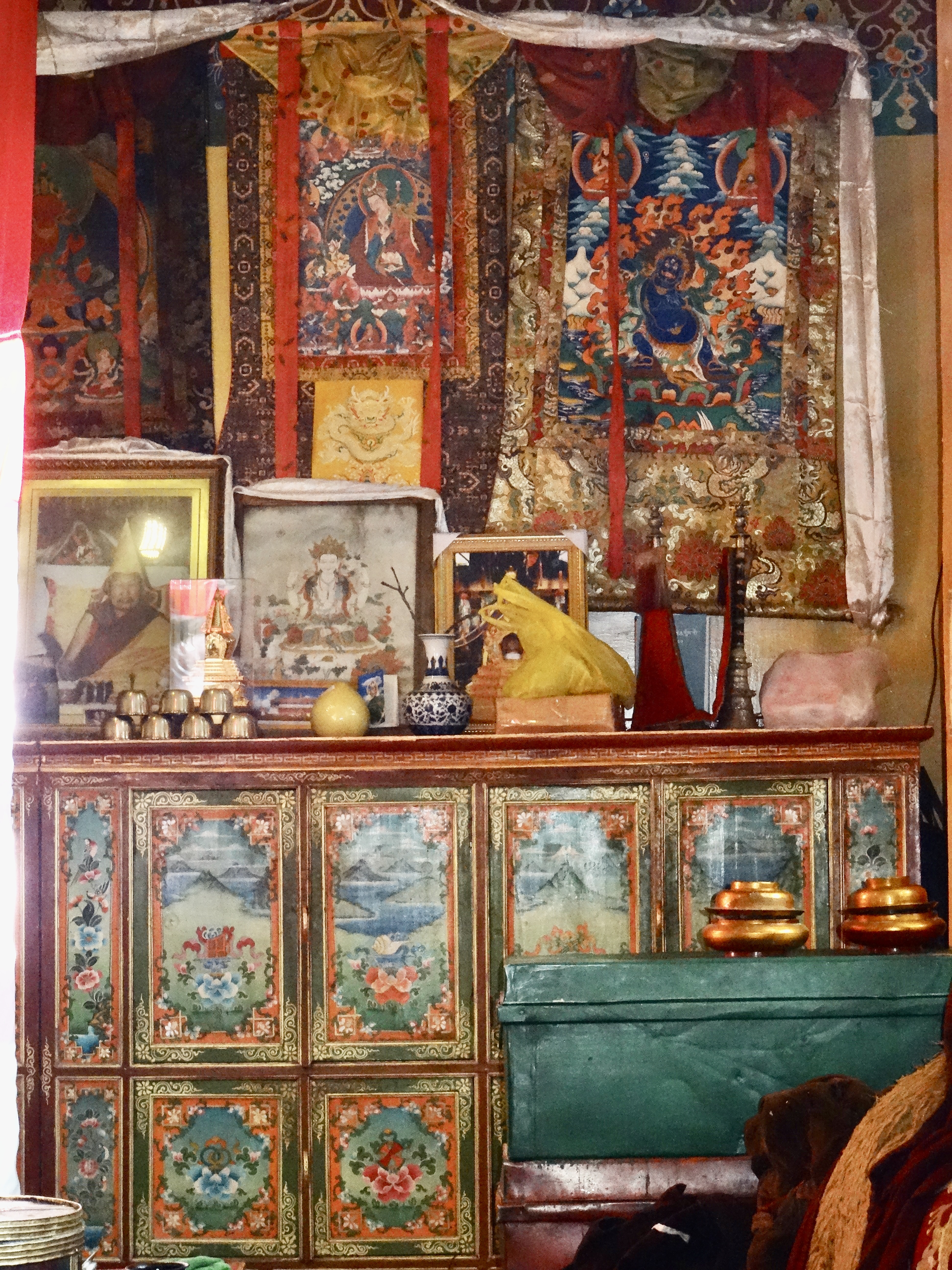
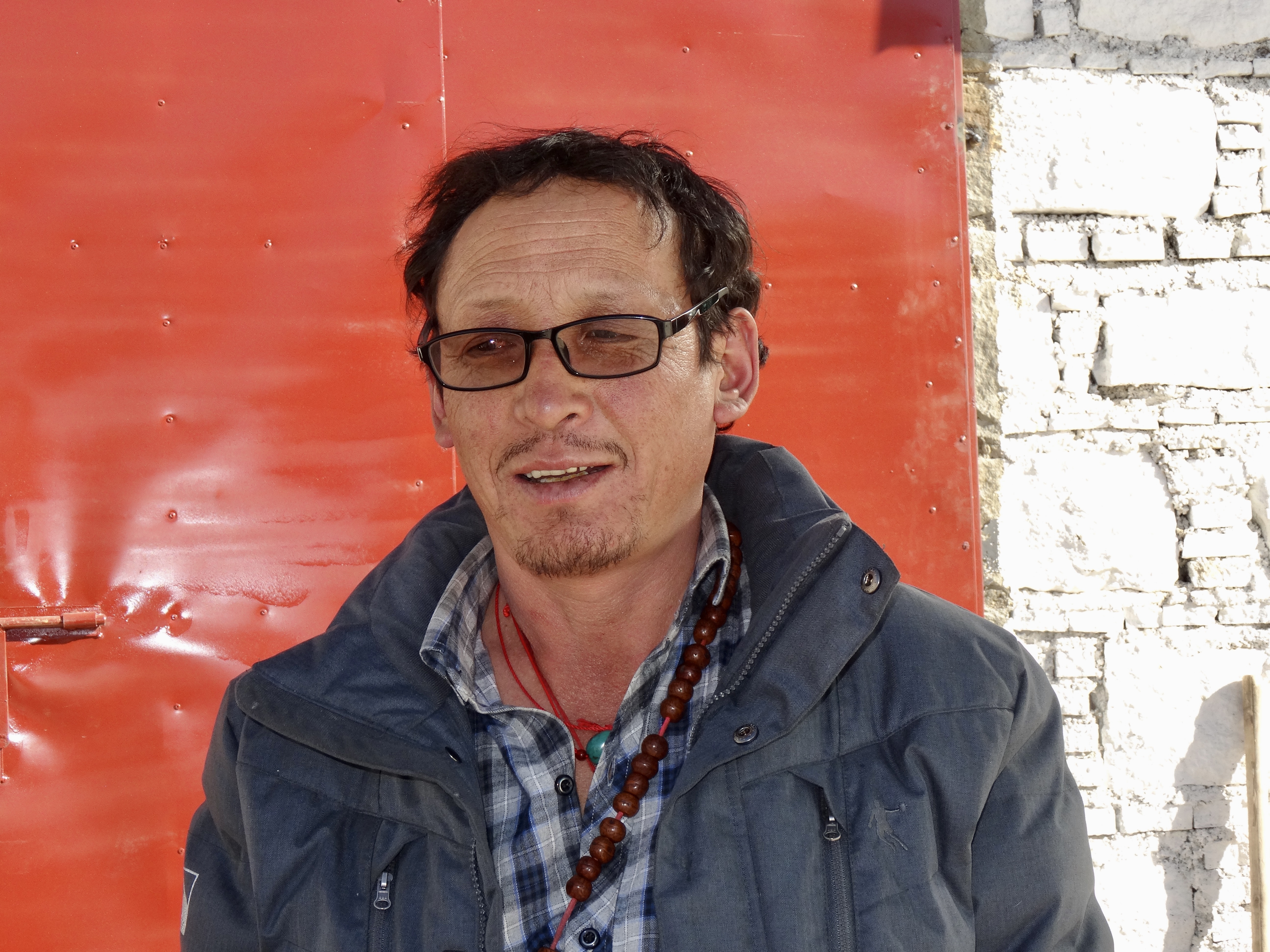
It turns out that Pemba went into that particular monastery (Sera Monastery) when he was just 5 years old and stayed for 14 years, leaving when he was 19, having learned English and other languages and having been outside the monastery numerous times. So, he kept running into monks he knew from his days there. After we finished walking through the complex (28 acres), he met up with a friend whom we didn’t realize was a monk at the monastery because he was in non-monk garb. Pemba told us he was the head of the kitchen and we could get a tour of the kitchen. Thought that would be cool (and hopefully no more Buddhas and religious statues), so we jumped at the chance. It was really great .. about 2,000 sq. ft. on a platform with wood ovens under the platform.. Scores of scoopers and pots hanging above and three very very large vats where most of the food is cooked and served. The vats are sunk into that platform. They now have an electric machine that churns the yak butter. The space had amazing light streaming in — very very photogenic with ceilings about 30′ high. Seeing we were very taken by the kitchen (that cooks for the 600 monks), the same monk invited us for yak butter tea in a little private room off the kitchen.
While I was very suspect of the yak butter tea, it seemed like a great adventure so naturally we said “yes.” We were escorted to a little rectangular room with about six monks.. two of whom were counting money! They served us the tea and when I asked what was in it they explained the yak butter and salt and water, but it was very very creamy. .. I told them I had high blood pressure and that neither the butter nor salt was good for me but that I’d have a little taste. Tasted like drinking melted butter. This prompted a big discussion about life expectancy in Tibet (80 years old they say) and very little cancer, no diabetes, and no problems with blood pressure !! They also have 3,000 hours of sunshine and no one uses sunblock and no one has skin cancer.
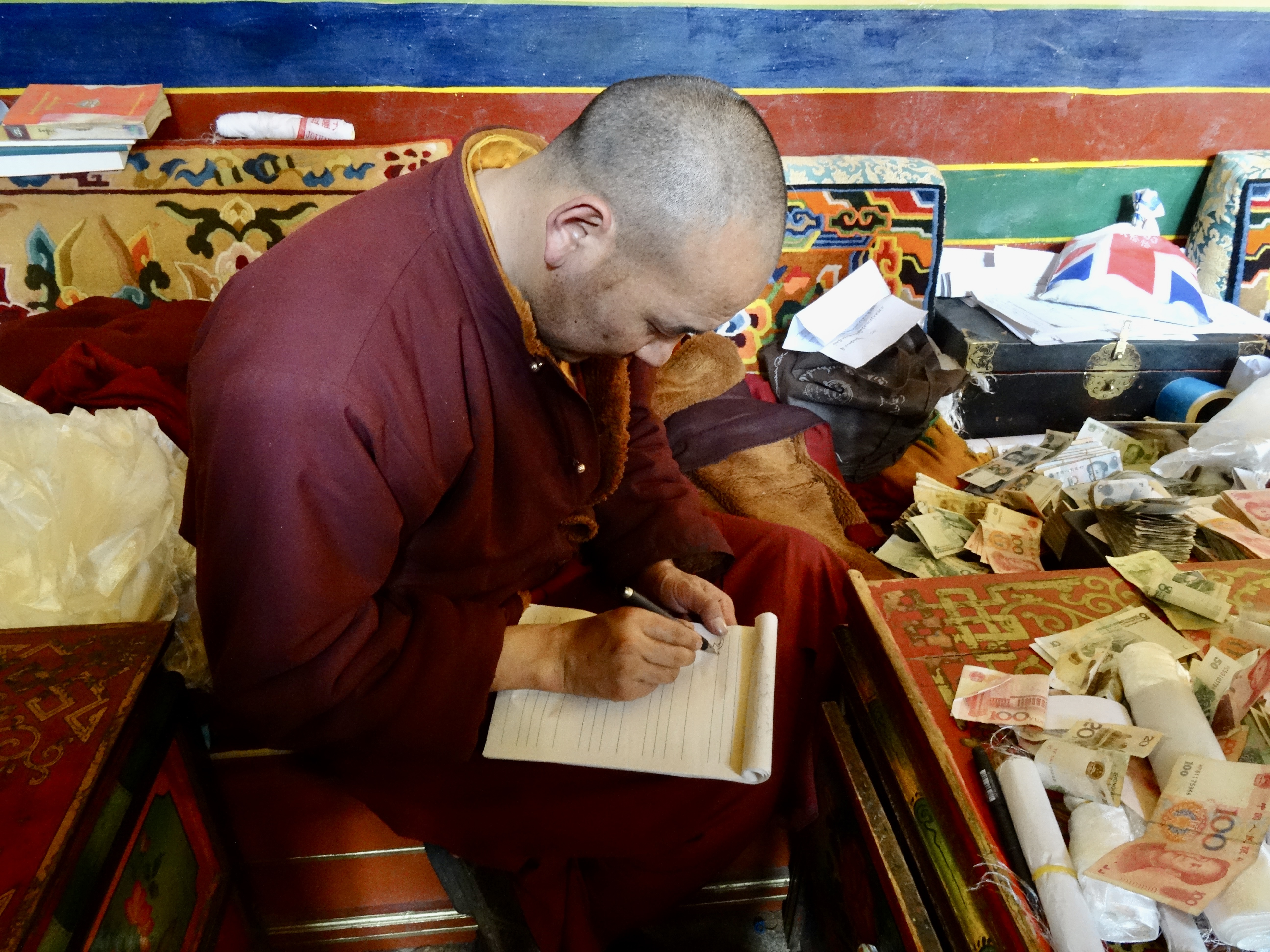
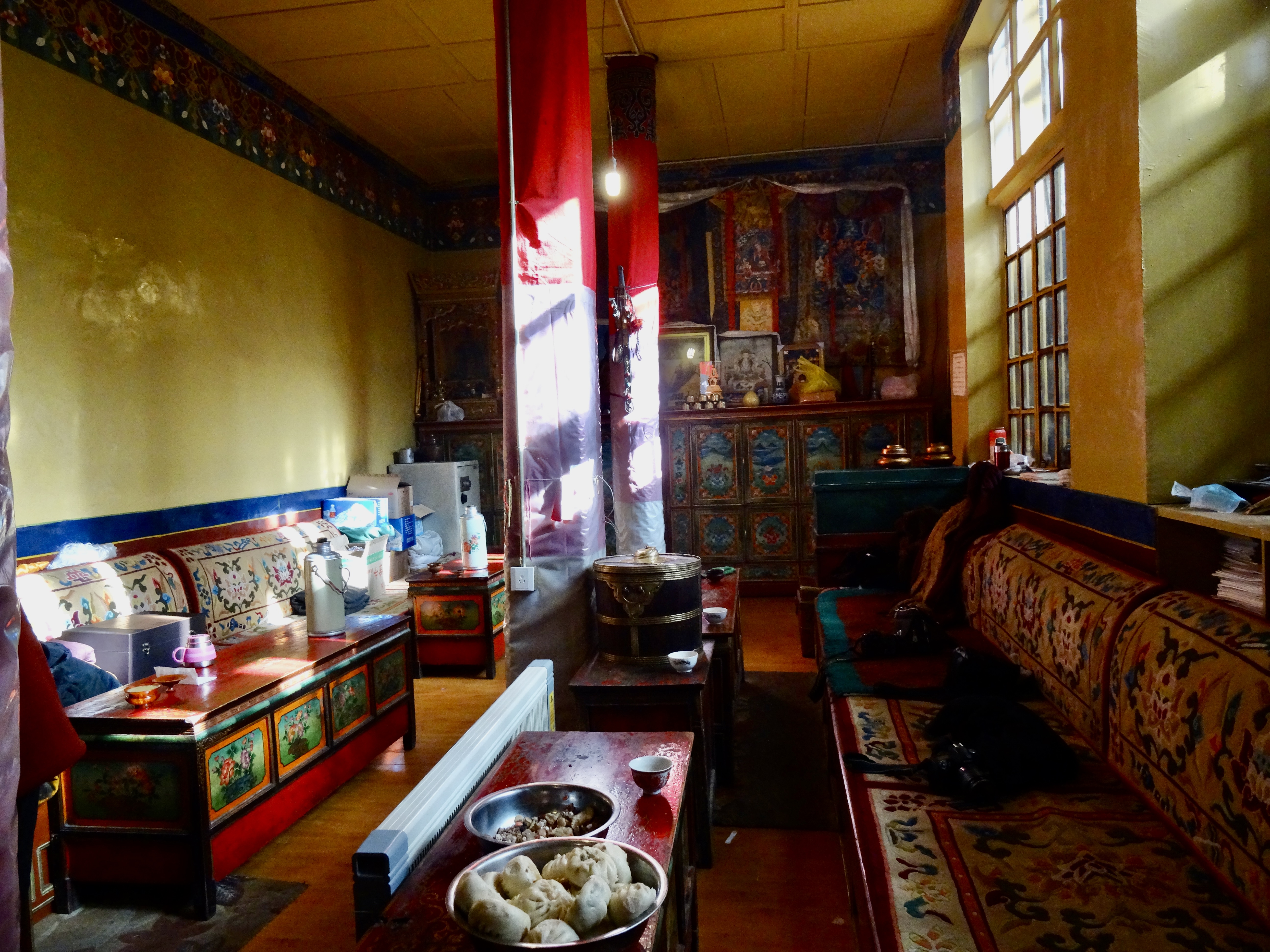


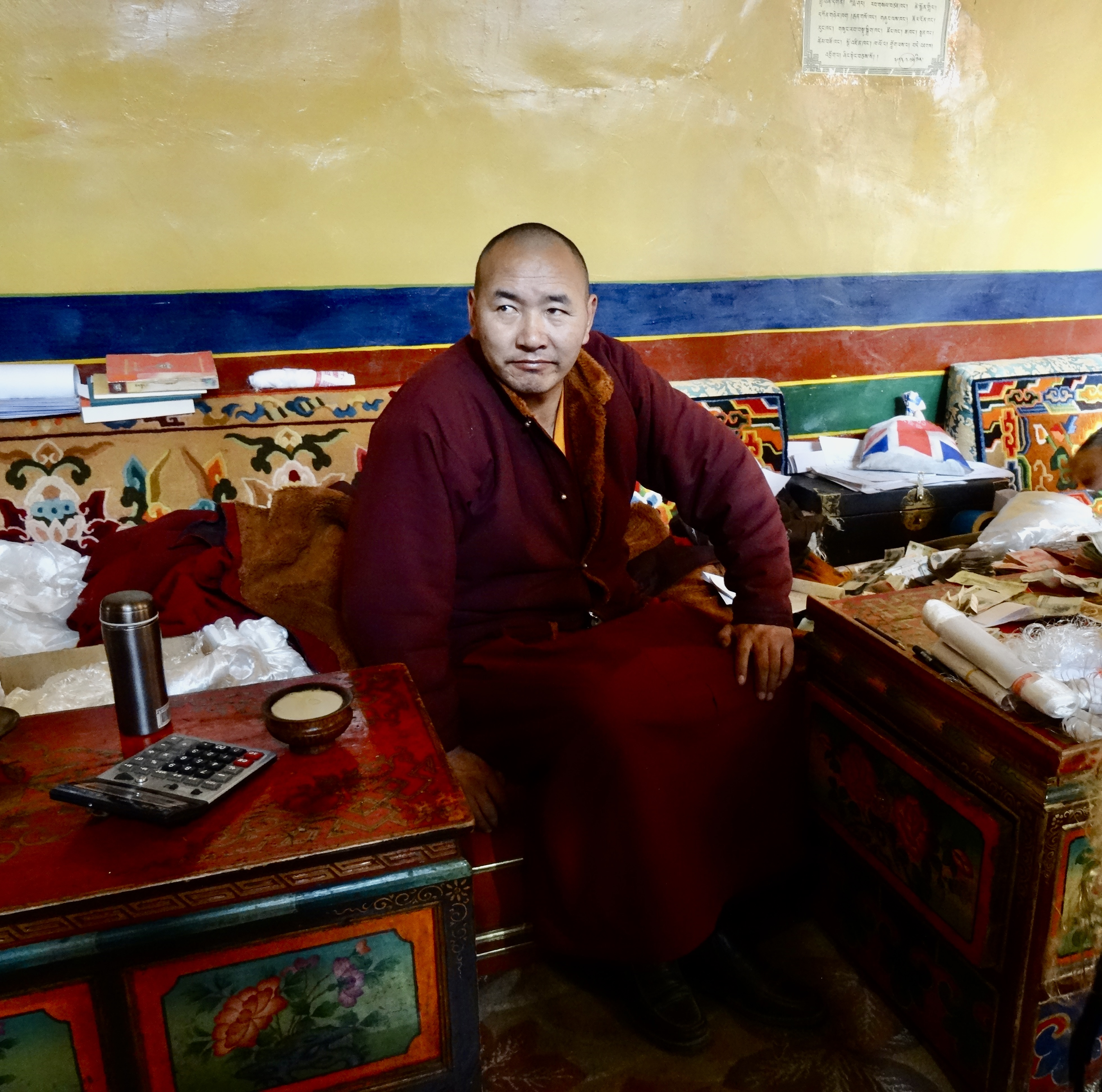
Anyway, we sat with the six monks for about 30 minutes and they were very friendly even broached some unusual topics. We also laughed because we spied the same medications that the pharmacy had given Mike in a little pile on one table — seems one of the monks has the same symptoms as Mike. We learned that the monasteries take in a lot of money from all of the “offerings” (natch) and they are substantial owners of real estate (and beginning to do some development); the individual monks get the monies that are donated by “sponsors” and also their share on each of the four monthly “ritual days.” People kept coming in one at a time to give the main monk money to pray for someone or celebrate a special occasion. Apparently they read the names of the people four times on a particular ritual day.
We decided to make an offering to pray for two friends with cancer.. while I’m definitely not a believer (as you all well know), I figured — can’t hurt! So, I’m hoping that all of the faith that Pemba and these monks have will come to bear.
After making the donation the head monk blessed us and wrapped the traditional white “silk” scarf around our necks in a particular way with a knot and bowed and we bowed with hands in prayer and said something in Tibetan that they taught us (momentarily. We told them to come to California; they laughed.
It was a great experience. And off we went back to the hotel, intending to head to a Szechuan restaurant on Baeku Road.. But Mike is really still under the weather, so we’ll eat dinner at the hotel. We now have three different Chinese medications from the pharmacy here.. and have talked with the pharmacist via the concierge (who is Swiss/Malaysian) and many Chinese and Tibetan assistant concierges. We’re a little concerned about what they suggested so we’re now in touch with our own doctor for advice as to whether or not to take any of the medications. I’m feeling a lot better so I’m opting to decline any medications. Mike is leaning toward taking one of the three, but which one is a dilemma.
Here’s to speedy recovery.
Best to everyone.
Fern
PS A few other tidbits — Tibetans rarely eat fish, because they think they could be eating their relatives as they put dead bodies in the waters and also in the forests.
December 25, 2013 – Christmas Day in Lhasa
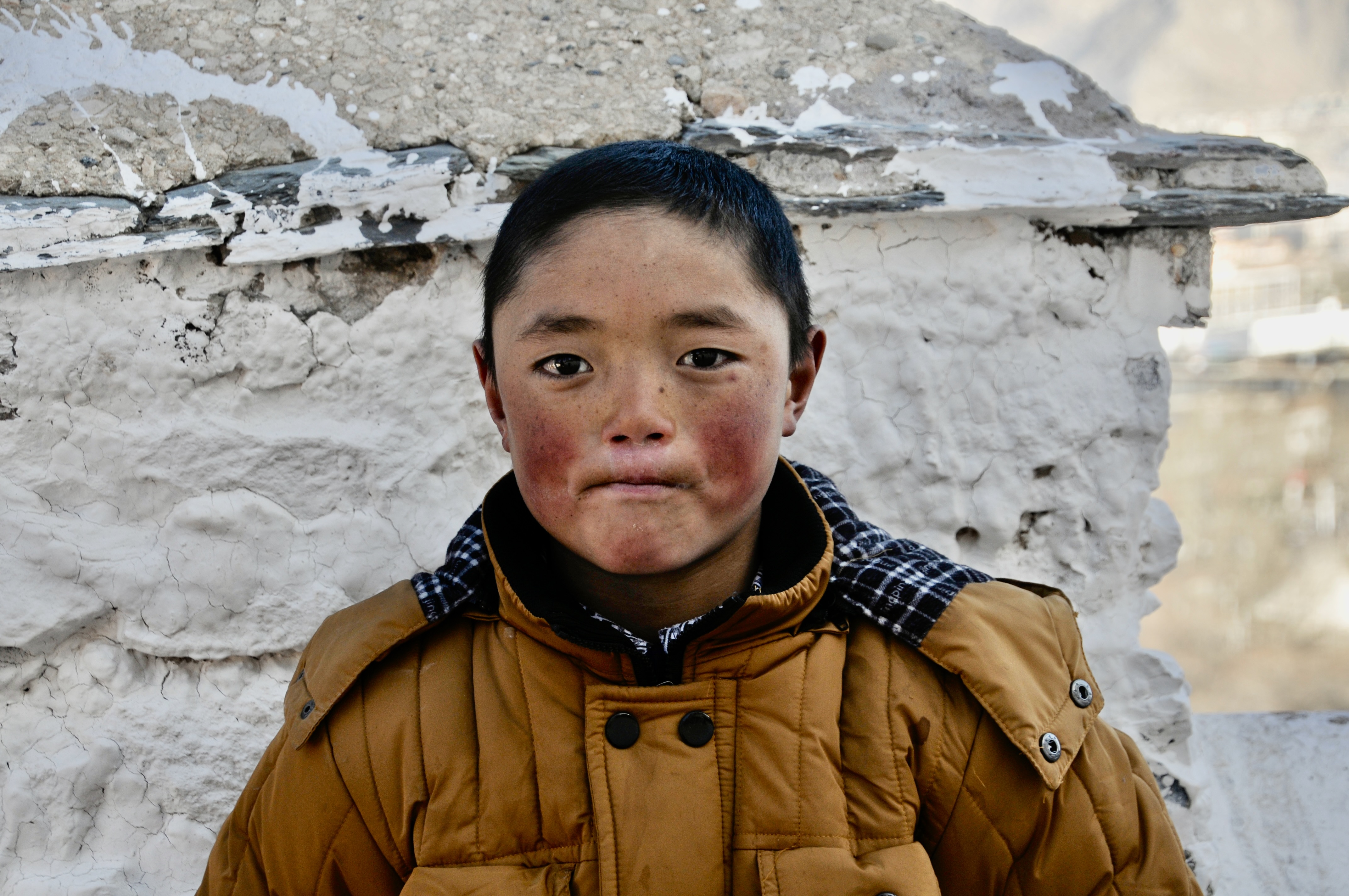
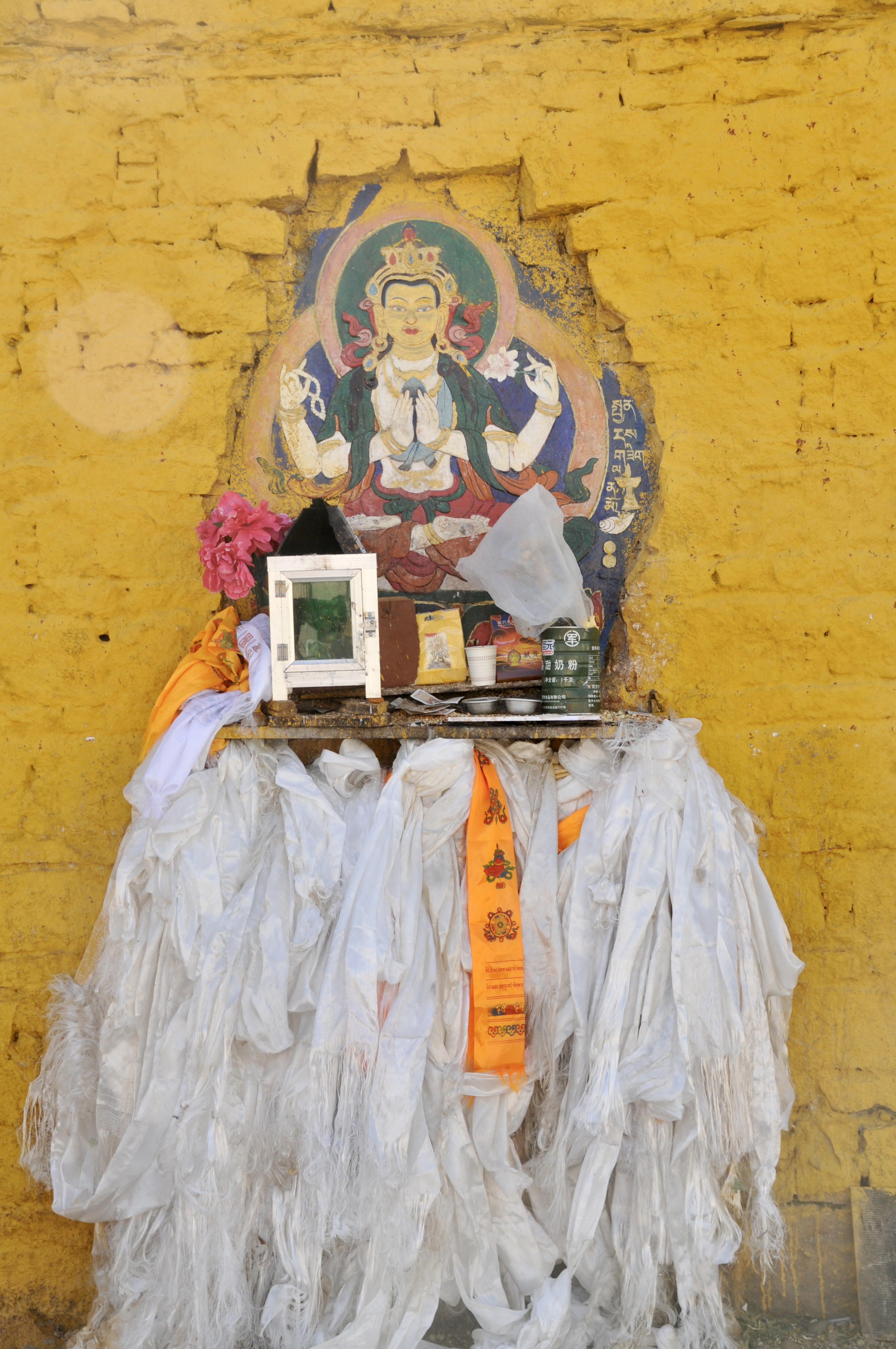
Merry, Merry — Tashi delek (Greetings). Thanks to everyone for all the medical advice..
Where to begin..?
Last night after settling into the hotel, we realized we were totally exhausted, so after a nap and shower (which by the way Pemba told us not to take a shower for another 24 hours since the water would stimulate too much circulation in the blood — advice we did not heed as I felt like I was never filthier), we opted to just eat at the hotel and then really sleep.
That was probably a mistake. There was some kind of Christmas Eve buffet going on (??) in the restaurant so we ate in the bar and the food was pretty awful… and service was slower than you can imagine. It took us more than 20 minutes to get soup. Anyway, we then unpacked and headed to bed…
Had breakfast and met up with Pemba. This is quite awkward for us as we’ve never had a guide before. But as I mentioned in an earlier note, our travel in and out of Tibet is really complicated and we were unable to get the Tibet Travel Permit without linking to a travel agent who then would only get us the permit if we used their guide. Trust me, we were in communication with more than 20 companies who could get the permit, but none would do it unless we used their guide. So this arrangement seemed the most benign — guide in the morning from 10-1 and then we are supposedly “napping” until 10am the next day (but obviously bopping around on our own!).
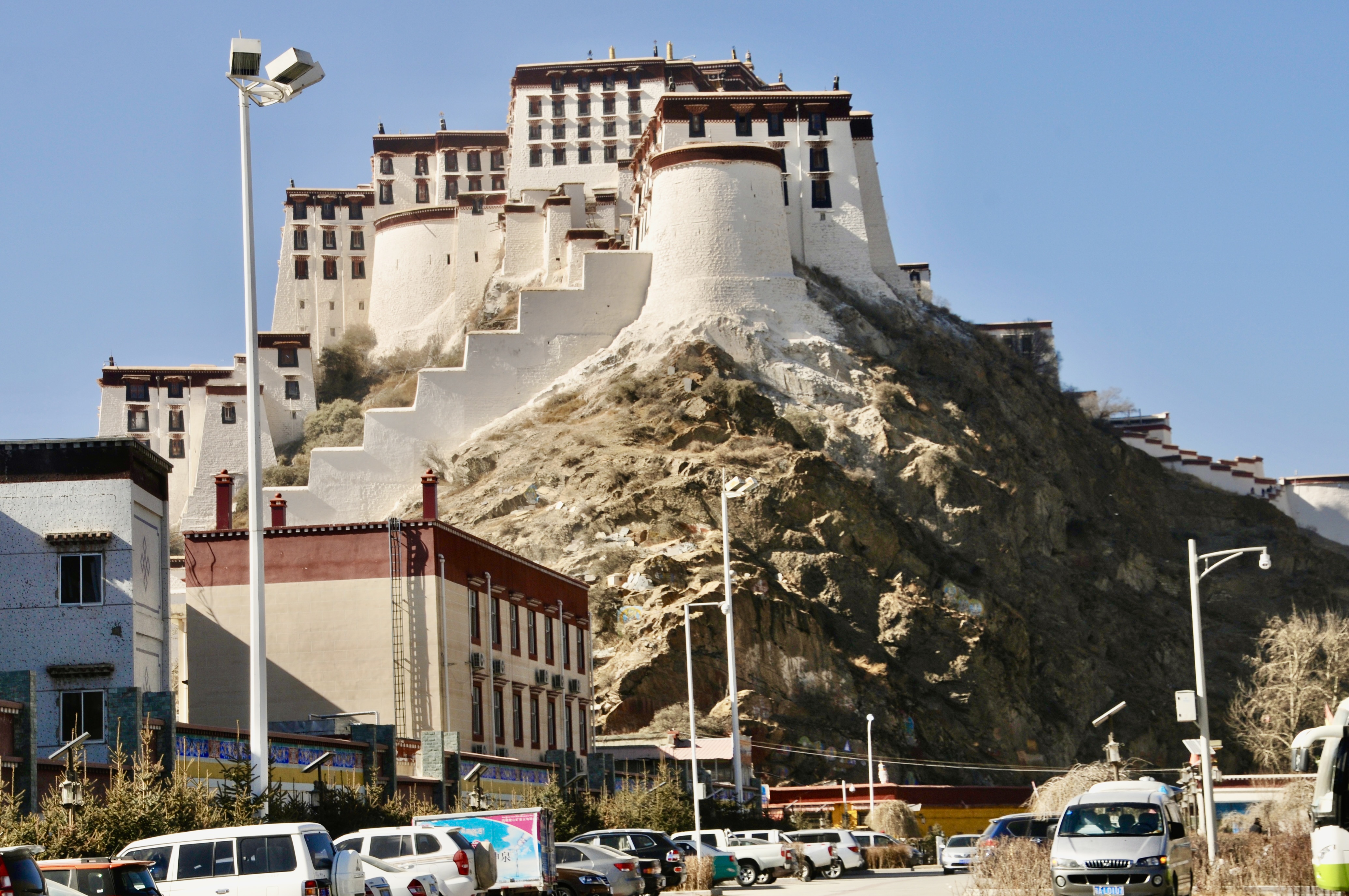
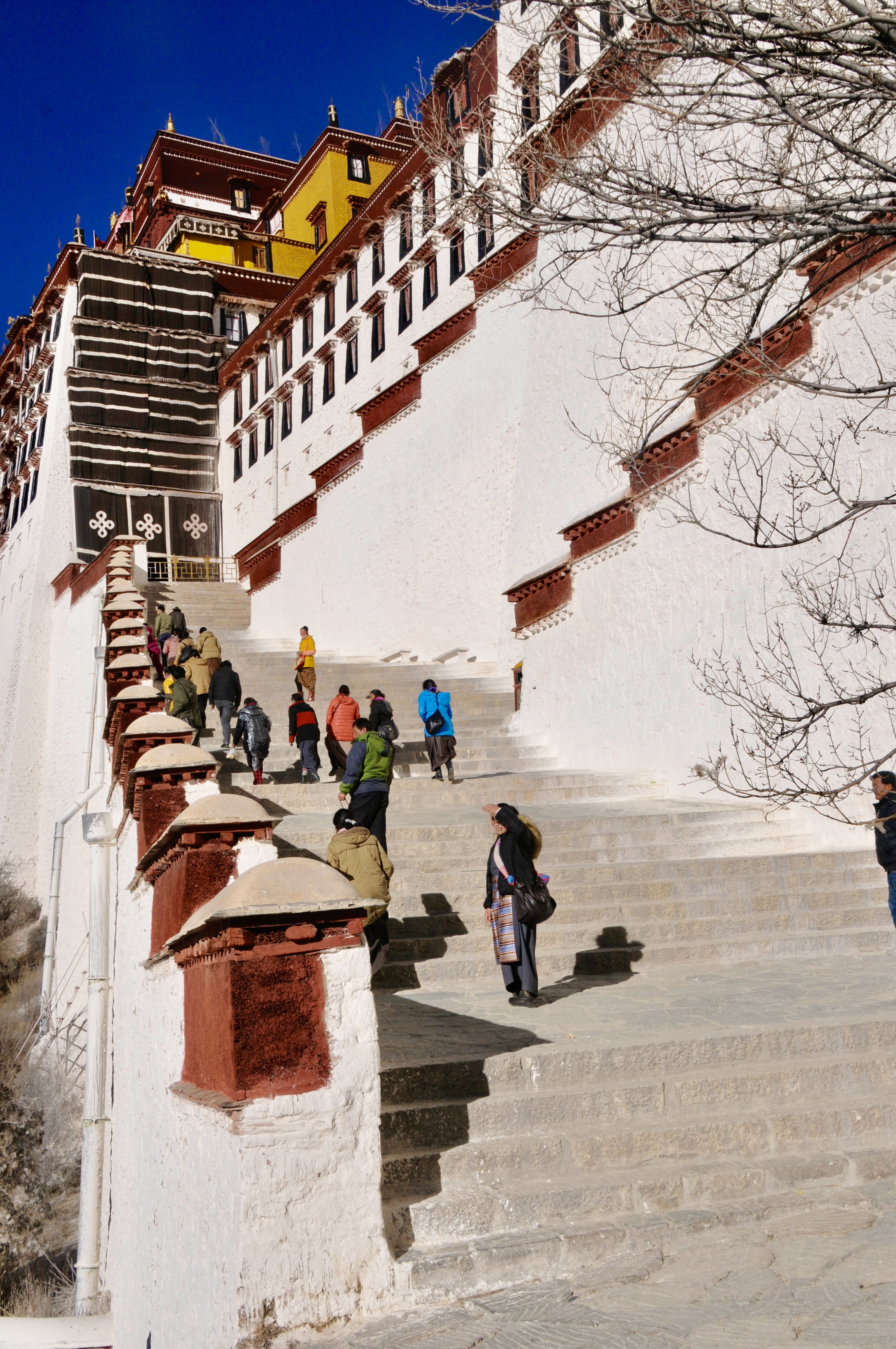
So at 10, off we went to Potola Palace — a towering structure that can be seen virtually from any spot in Lhasa. The story is that the Fifth Dalai Lama, started building the Palace in 1645 after one of his spiritual advisers said that the site was a perfect location for the seat of government — because it is situated between two monasteries and the old city of Lhasa. According to Pemba, it was built on top of the remains of an earlier fortress, from 637. Today, the Potala Palace is a museum, tended to by monks.
The building contains over 1,000 rooms, 10,000 shrines and about 200,000 statues – and is 384 ft. tall on top of a hill making it about 1,000 ft. in total above the valley floor. And yes we climbed to the top! In spite of altitude, thin air, pollution, etc. I thought I was going to die! Probably, I have to admit, that without Pemba’s encouragement, I for one would probably have stopped midway (or maybe even sooner)..
The Palace was designated a UNESCO World Heritage Site in 1994. At the time there were no buildings anywhere close to the palace, but now there are lots of buildings at the base of the hill. This concerned UNESCO, and the Chinese government enacted a height limit for the area. Significant UNESCO dollars have been pumped in for renovation.
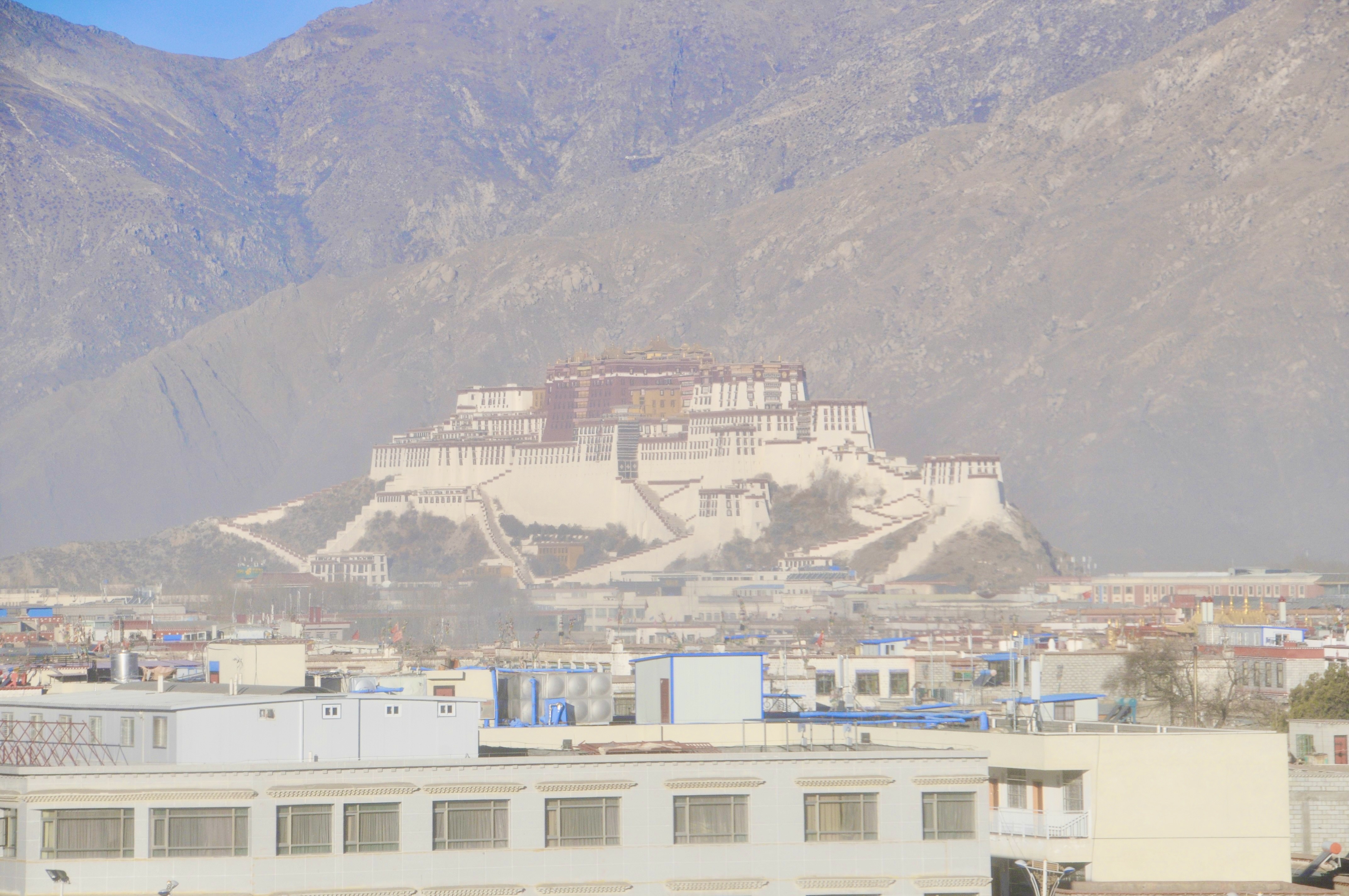
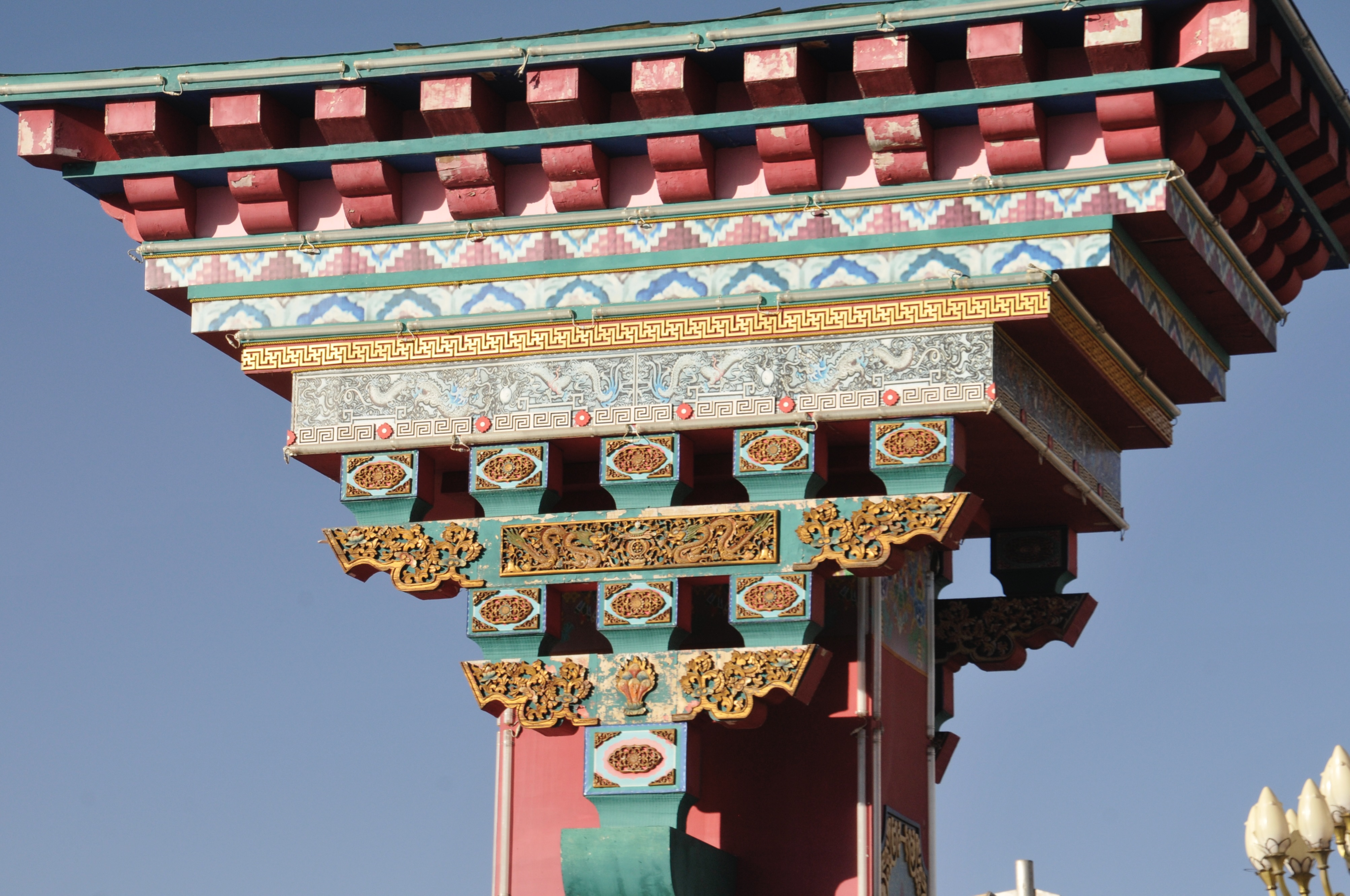

Anyway, once you reach about halfway you enter a “residential” portion on one side and the “religious” portion on the other. Frankly both looked very religious to me. Because it was winter and there were not many tourists other than pilgrims from the countryside, you are allowed to stay as long as you want. In the summer you get a short period (cannot even imagine doing the climb in any shorter time span). Tibetans bring offerings to the statues .. money.. yak butter (which is really like wax) and all throughout the place you see the yak butter with wicks burning. People also throw white silky scarves in certain places. No photography is allowed once you enter the inside of the structures.. which was incredibly difficult for us.. But we followed the rules. Most of all the pilgrims are farmers at this time of year because the harvest season is over. For some of these people it is an annual venture; for others it is a once-in-a lifetime experience. Some people prostate themselves periodically as they go through the temple.
One monk asked Pemba where we were from because he thought Mike was Russian and looked like Putin! (Mike said he was a much nicer person than Putin and the monk laughed.) People are very curious about us; they stare at us all the time and little kids say something that sounds like “hello.” One guy wanted his picture taken with Mike. Imagine that…. reverse tourism. Everyone has an iPhone. They worship Steve Jobs because he made iPhones with Tibetan characters. When Jobs died Tibetan people had some kind of ceremony. He’s like the second Dalai Lama.
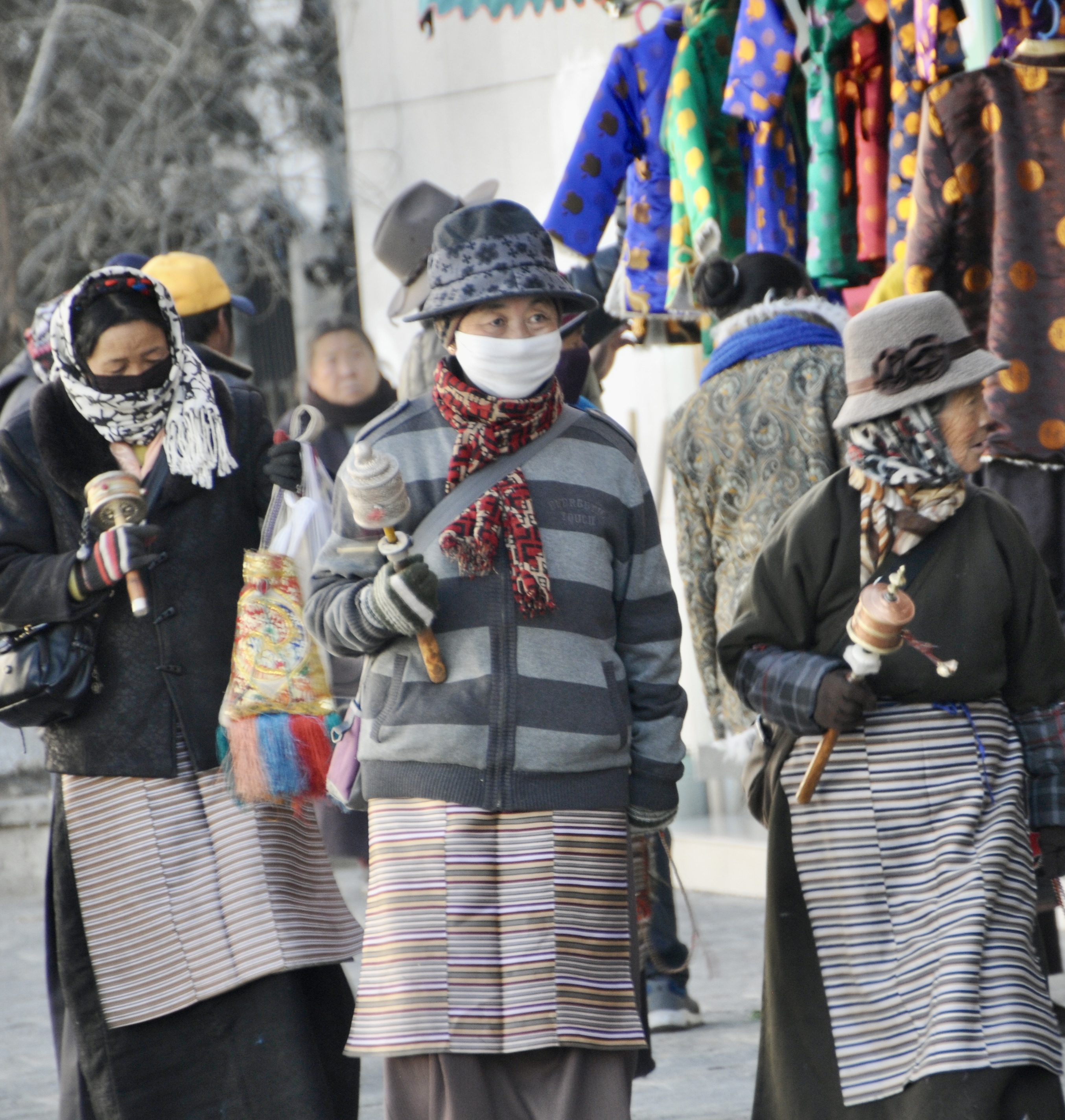

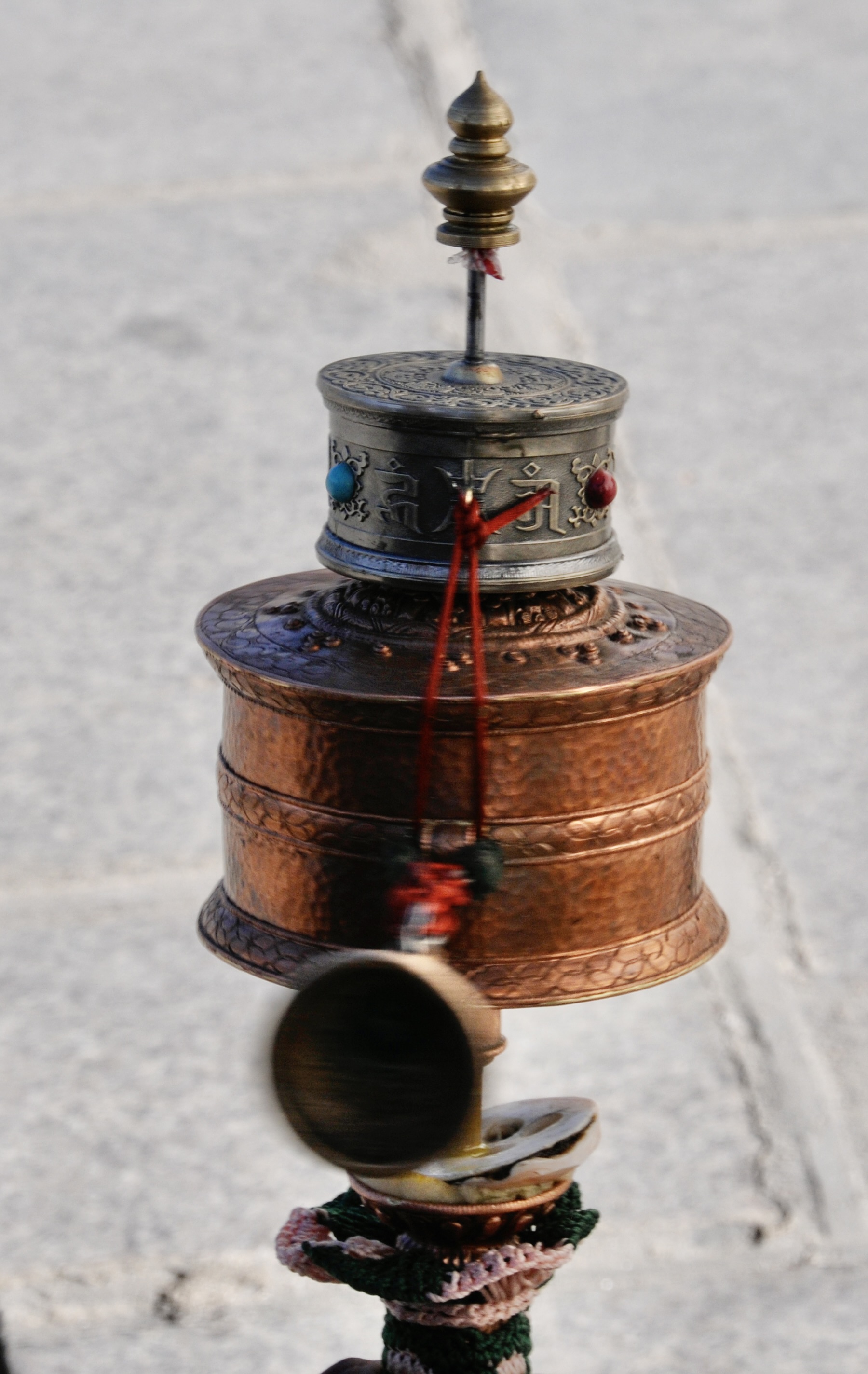
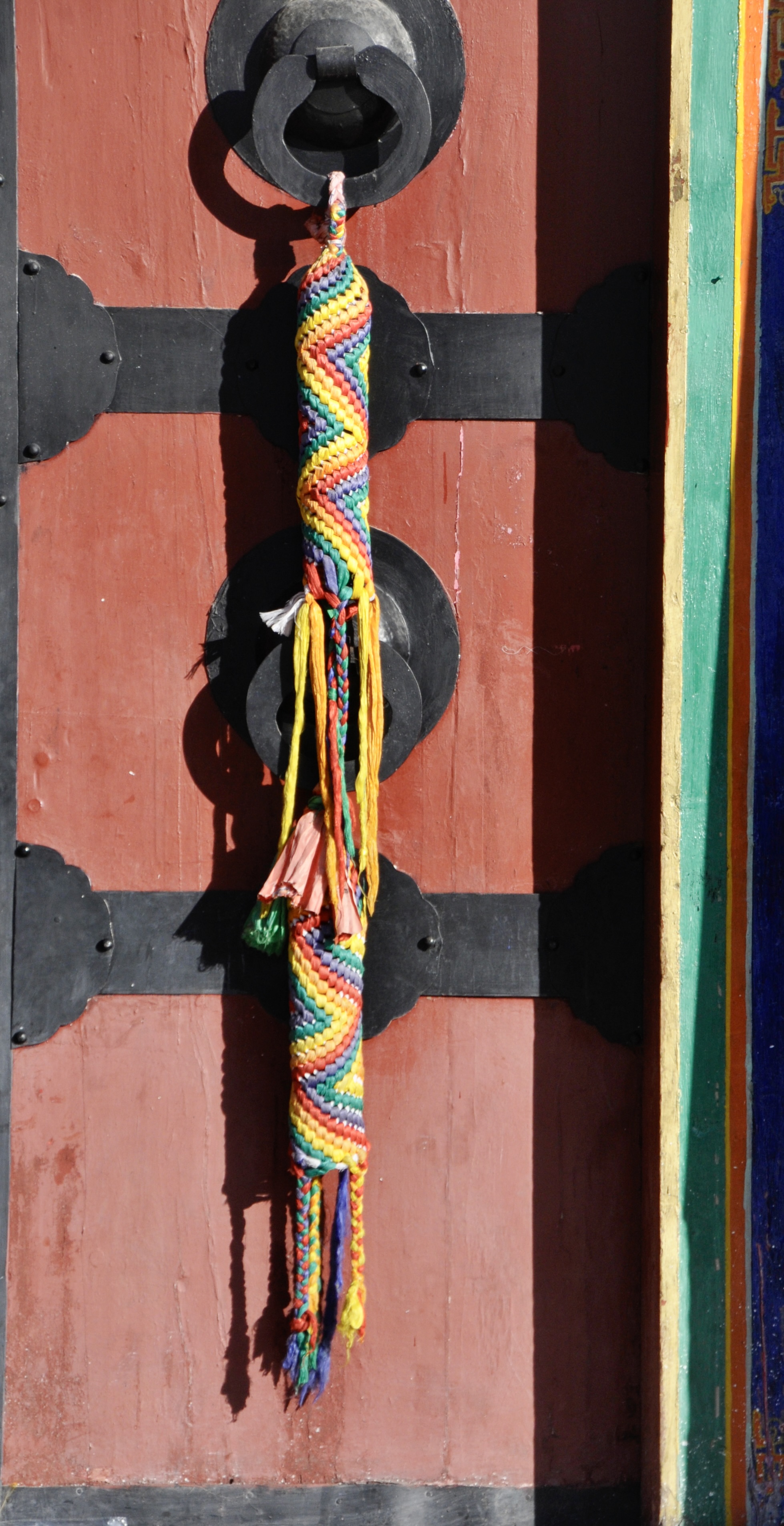
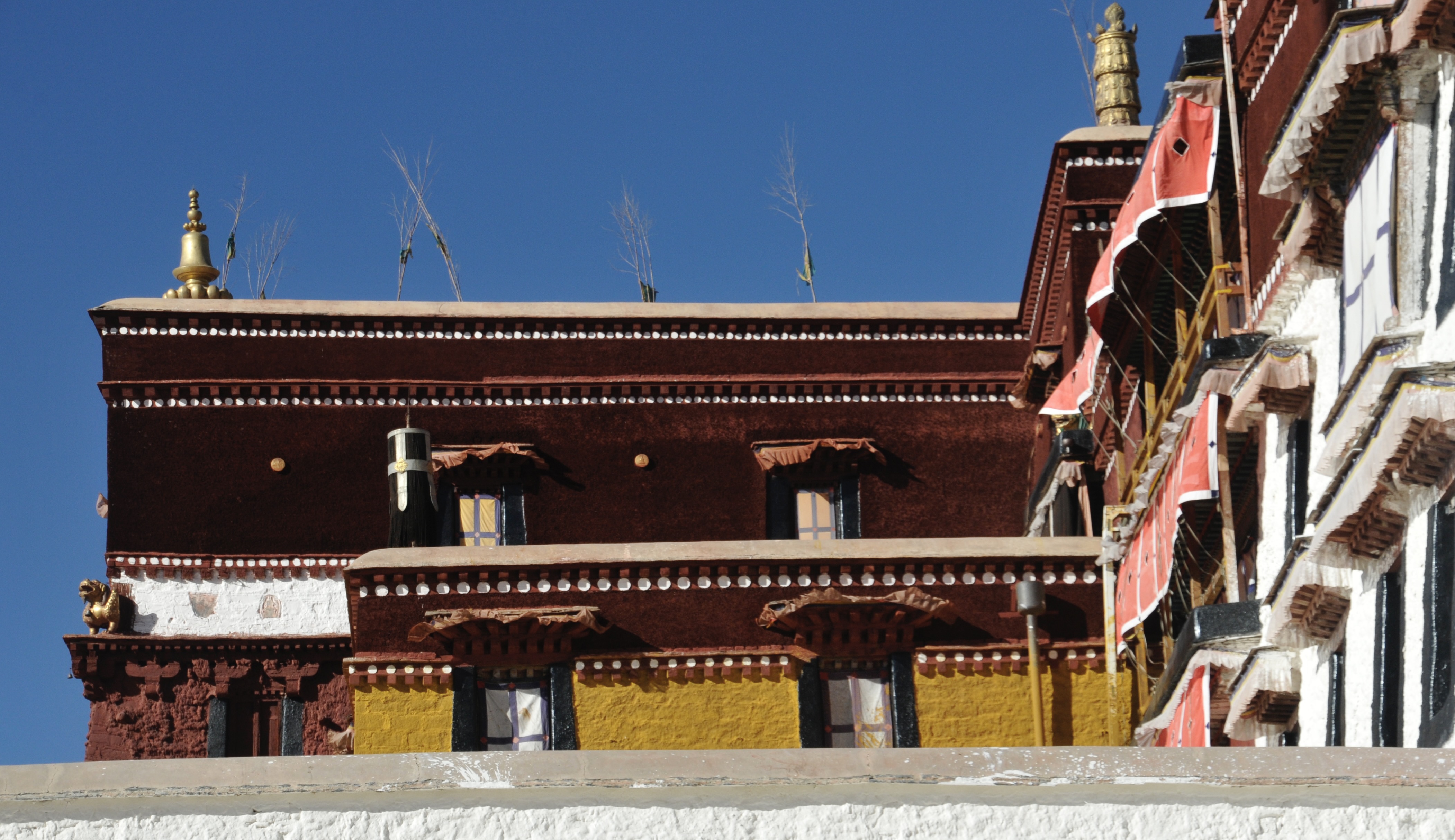

As we departed we were able to snap away as the pilgrim farmers circumambulated the Palace.
After this we went for lunch.. Mike had sizzling yak steak and I had momo stuffed with yak. And then we left Pemba (amid all of his warnings about our safety) and were off on our own (guide-less) to the old section of Lhasa.. and on a mission to find a shop called Dropenling that we had heard about where you can buy authentic Tibetan-made products and where the proceeds all go to support Tibetan village artisans. (We have researched these kinds of places in all of our travels to developing nations and it is always a big success.) No one at the hotel had ever heard of it, but they found it on the Internet (as had we) and explained (in general) where it was.. so off we went.. It was in the oldest section, close to the mosque and Muslim part of town. It took a while, but we did find the shop… It was closed.. But in that same area in a courtyard were lots of metal smiths hammering out parts to come together to make a statue of — what else — Buddha. We continued our walk and exploration down the narrow alleys.. and for a short time joined in with the pilgrims who walk around Barkor Street in the same direction circumnavigating Jokang Temple.. This happens daily at particular times of day..
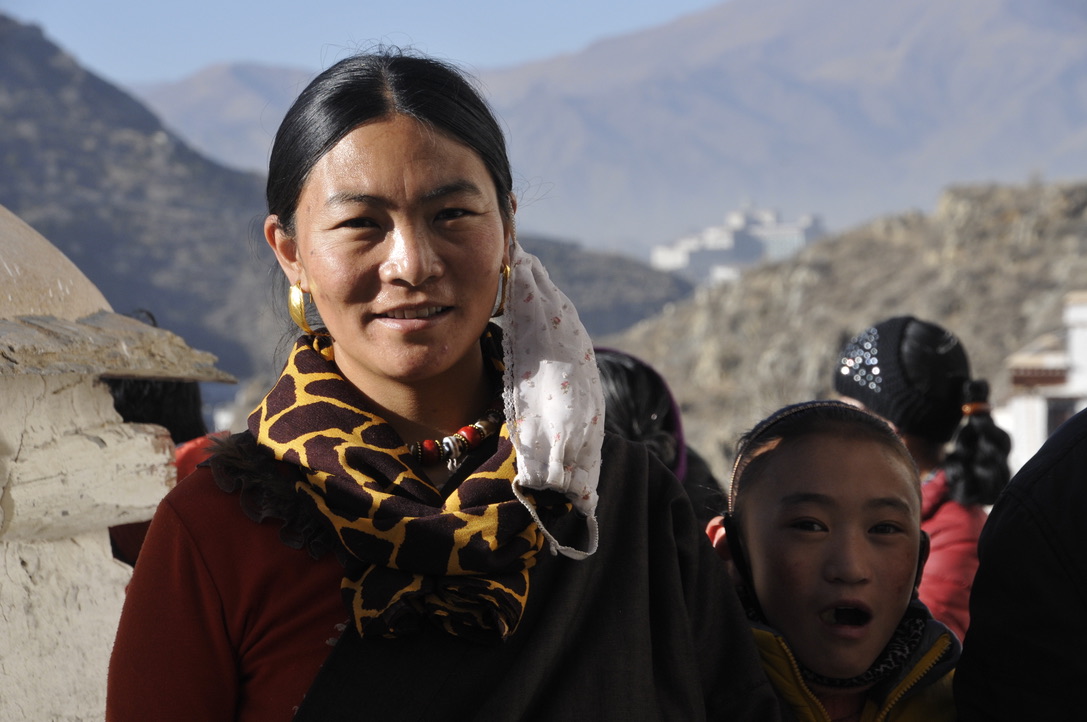
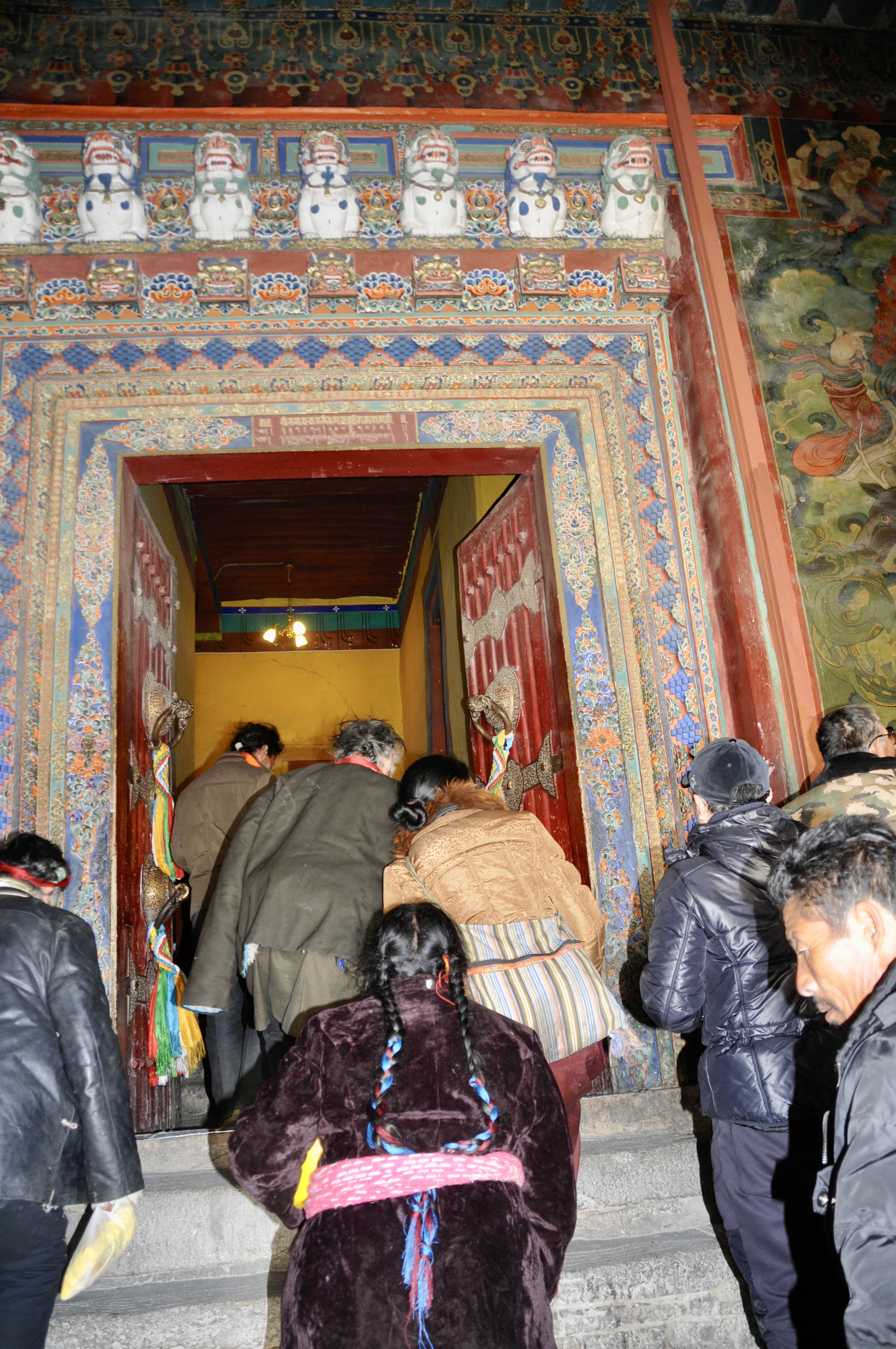

At about 5 we headed back to the hotel… to rest and figure out where dinner will be.

When we were about 5 minutes from the hotel we hopped into a pedal-driven rickshaw to get to the hotel… All the other rickshaw drivers were laughing and yelling something to our driver. We calculated that these two Americans with all their clothes and cameras and heavy gear and boots and winter clothing (and four tangerines that we purchased in a local stand) probably weighed about 300 lbs and the Tibetan driver probably weighed about 140 lbs. Fortunately it was a flat road.
That’s about it for today; tomorrow (and tonight) is another day. Again, morning with Pemba to some cave to see some big Buddha and then we are on our own again. By the way, Pemba’s parents walk around the Potala Palace at the base which is a hefty walk every morning at 8 am and then they do the climb to the top every month. They are 80 years old!!!
Kaleshu (Goodbye)
Fern
December 23 -24, 2013 from Xining to Lhasa. Trains, Altitude Climb, Arrival in Lhasa.
Greetings initially from Xining and then from the 25-hour Train to Lhasa, Tibet: Monday, December 23, 2013
Xining (morning)
Began the day in Xining… breakfast at the Sanwant Hotel.. a strange mixture of east and west with neither being too appetizing… congees, some very doughy steamed buns, fish salads, fried rice, noodles, lots of condiments, French toast that had ham in it, fruit, etc. We opted for lots of fruit (safe) and Mike had Cheerios which he said had less air in them than American Cheerios; I had some fried rice with veggies. Then we set off to do a little food shopping to take things on the train with us, since we are pretty unsure of food service en route. Our goal was cheese, bread, tomatoes, oranges… We lucked out on the oranges/tangerines; got some bread but really not sure if it will hold up; couldn’t find any cheese and never saw any vegetables (only fruit). We were in the downtown area close to the hotel and walked through a huge market that seemed to sell very random things and lots of stalls with the exact same stuff. Lots of spices, nuts, and fruit.. and whole carcasses of beef and pig… indeed they were carrying in whole cows to be carved (many lying on the ground waiting to be picked up for carving).. but no veggies. Must be on another street. But it’s really really cold here in Xining (coldest yet) and lots of pollution so we decided that we just may not have any proteins for 24 hours.. But I’m confident we’ll eat in the dining car. The travel books say that you need reservations for the dining car and that it is difficult to do this as a foreigner, but I’m assuming that’s in summer and fall.. not winter when there will be fewer travelers. We shall see.
Anyway, we then headed back to the hotel to pack things up and wait for the person who will take us to the train and give us all of our travel papers for Tibet. It’s a long and complicated story about the Tibet part of the trip.. but in a nutshell. You cannot get a “travel permit” to go to Tibet until you have a China Visa; you cannot get a China Visa until you show that you have a flight into China and a flight out of China and hotels throughout your stay. Since our hoped-for itinerary has us leaving China via Lhasa, Tibet we needed to get a plane ticket from Lhasa to Kathmandu, but they will not sell you a ticket for Lhasa-Kathmandu until you have a Tibet Travel Permit and you cannot get the Travel Permit until you have the China Visa.. and so it kept going.
So finally, we are hopeful that all will go smoothly.
I think I may have a mild case of frostbite since my fingers (tips) have this weird tingling sensation.. and also my cheeks (but to a lesser degree).. I just finished soaking my fingers but that only helped a little bit. At first I thought the tingling might be a reaction to the altitude pills we started taking yesterday (tingling started a few hours after that).. but now I think it could just be from taking gloves on and off all the time in order to photograph.
According to the Internet, weather in Lhasa should actually be warmer than what we had in Beijing during the day.. with temperatures hitting the 50s but dipping to the teens at night… We shall see.
Signing off now as we head to the train… If they really have WIFI (as advertised) I will continue this note from the train en route to Lhasa. If not, you’ll have a delay in information.
December 24, 2013. Written on the train — Xining to Lhasa. 3:30 a.m. (in the middle of nowhere)
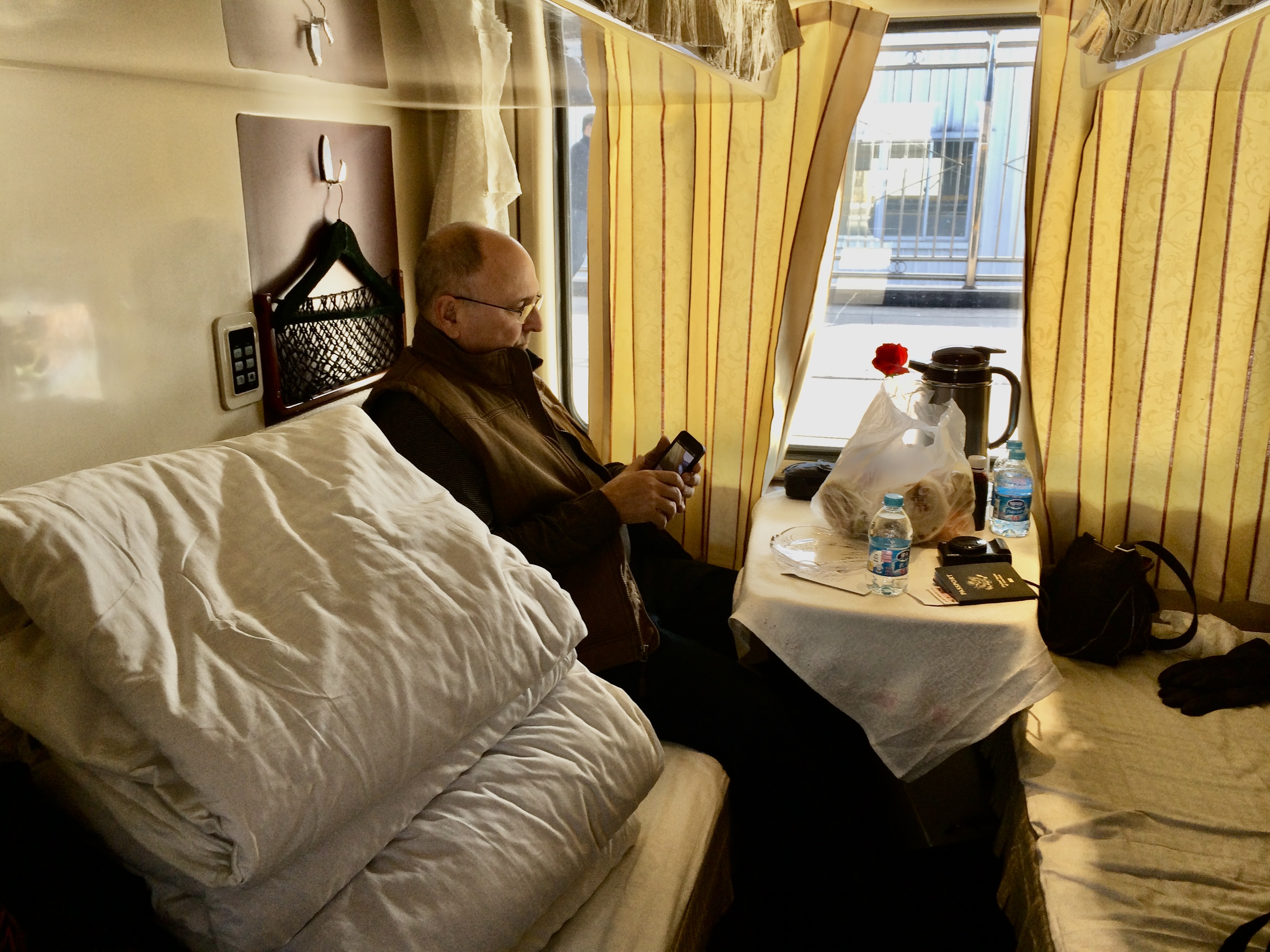
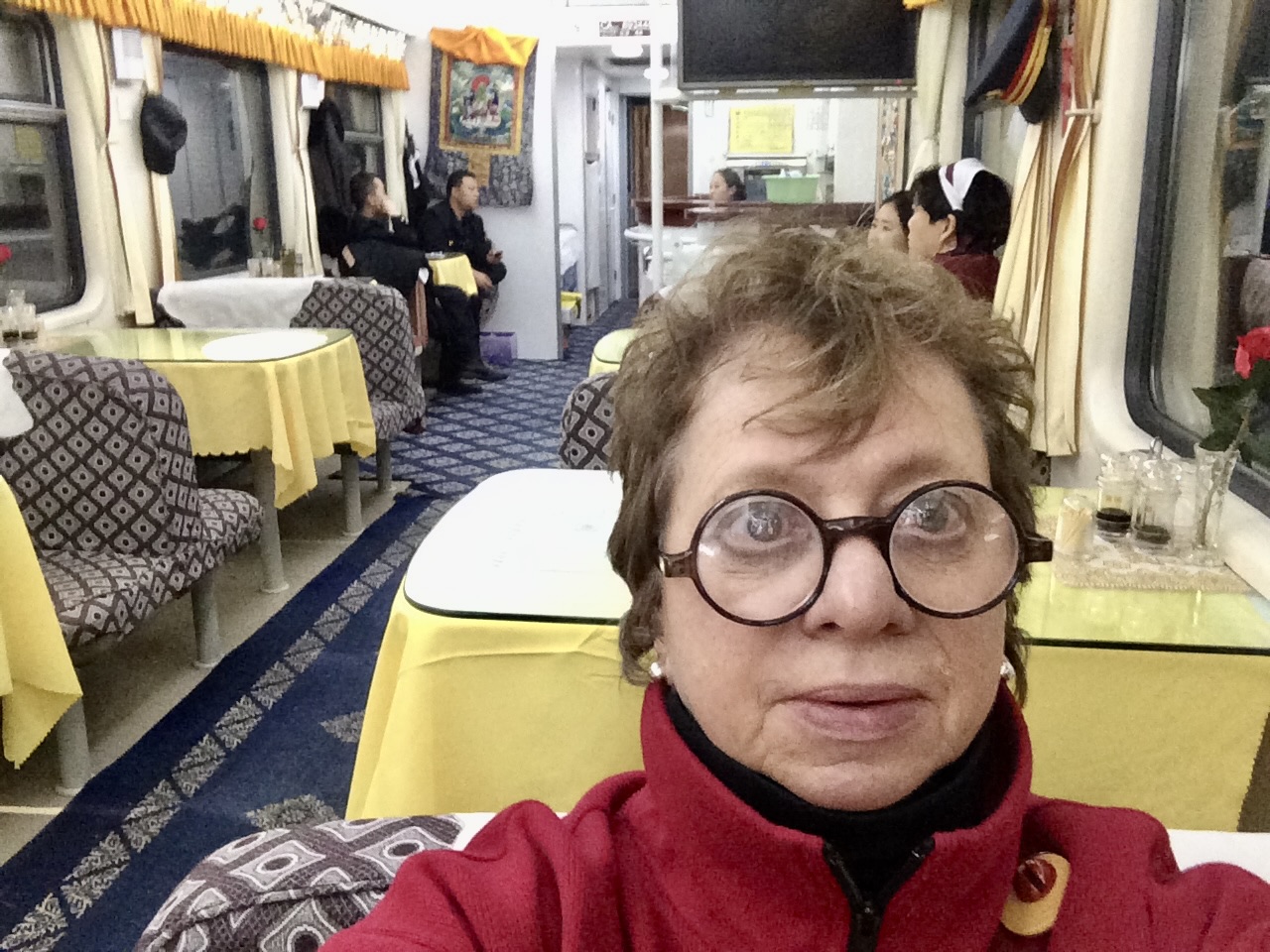
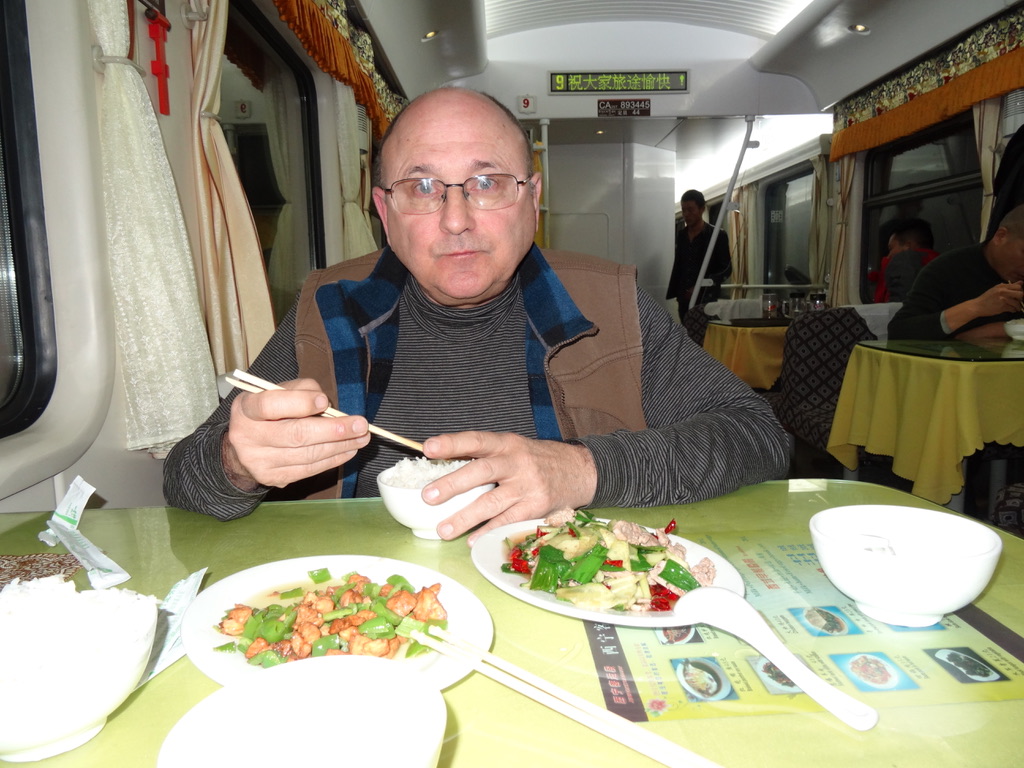
I’m writing this from our little 60sq ft. cabin on the train. It has two bunk beds, intended to sleep four but we purchased all four so that we’d have privacy. The two sets of bunk beds are separated by about a two-foot space. There is a little table between the beds at the window end and a mirror on the back of the cabin door. And that’s it. It’s smaller than most walk-in closets. And yes… no facilities inside the private cabins… everything down the hall, but that’s another story. I can’t believe we considered starting the train in Beijing which would have meant nearly 3 days on the train. Wisdom prevailed.
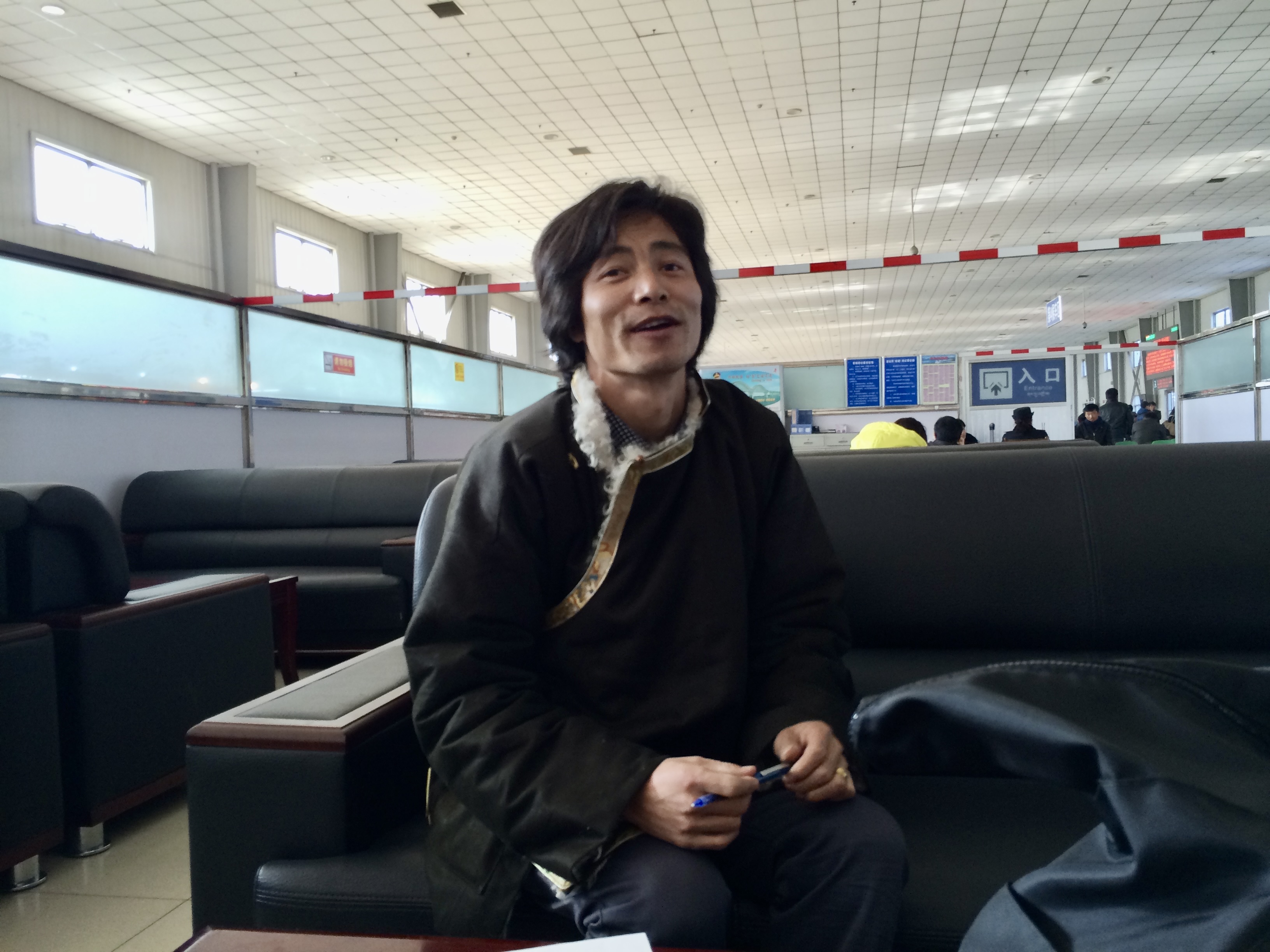
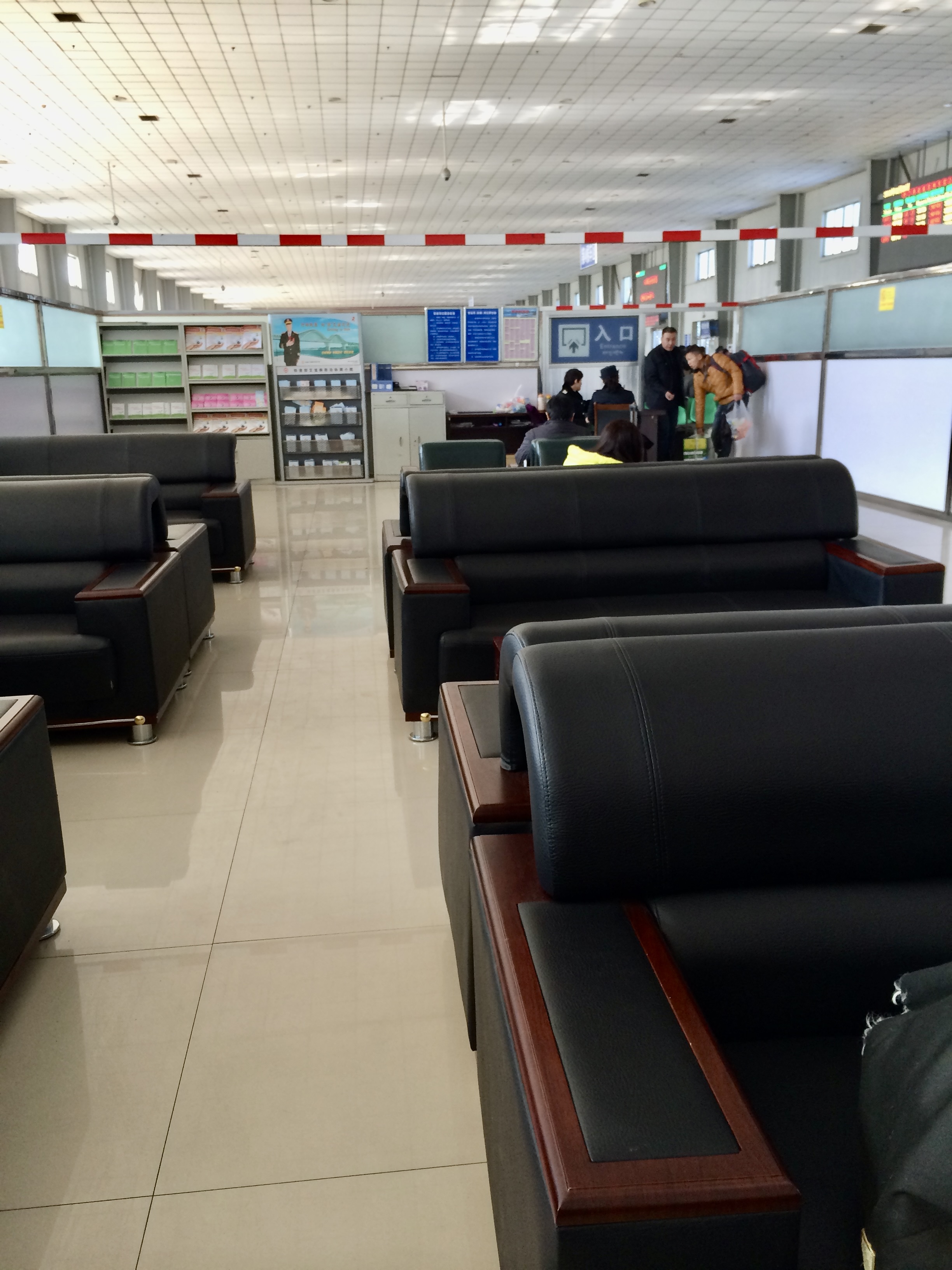
OK… “Bem” came to pick us up at the hotel to get us to the train (We had arranged this through a Chinese travel agency in San Francisco who had never before dealt with anyone who wasn’t traveling in a group.) He was to meet us in the lobby of the hotel and would have a sign with our names, but we all laughed since we were clearly the only non-Chinese people in the hotel. So off we went to the train station which was about 25 km from the center of town. It’s a huge sprawling place and apparently a temporary station as Xining awaits a brand new station to be inaugurated in 2014 – hopefully. Bem walked really fast and we ran to catch up.. and he led us to the VIP lounge where only people who have purchased “soft sleepers” can wait for the train. As we went through the station it was obvious that the majority of people waiting for the train were Tibetans headed home and just about everyone was Chinese except us.
We had about 90 minutes to wait so that gave us a lot of time to chat with Bem who was surprisingly open about the Tibetan situation, his family, and himself. His parents and brother are nomadic farmers or “animal grazers” — 100 sheep, 60 yak, a few horses and dogs.. and recently a motorcycle (which he called “Tibet’s new horse”). Since his family had two sons, it is expected that one will continue the family’s work (especially since working people seem to retire at around 50) and the other son will become a monk. So Bem was destined to be a monk, but there were problems with the monastery in his village — Monks are higher status than “ordinary people,” but if you leave the monastery then you are “lower class” than ordinary people. A lot of people were leaving the monastery at that time (he didn’t explain why) so his parents protected him and helped him leave Tibet to go the university in Xining. There, he studied Tibetan language and history and is qualified to be a teacher. But he decided to become a guide. He’s amazingly warm and friendly so it was probably a good idea to have made the link with him.
He talked a little about the issues facing Tibet and China. Apparently Tibet has 80% of the minerals that China needs. He is not from Lhasa. He described the train ride pretty well, except that he made it a lot more visually exciting than it is in reality. He helped us board the train which was a godsend as we probably would never have been able to figure out which car and cabin we were in (since everything is written in Chinese). He also explained that at the other end (once we reach Lhasa), the person who would meet us and take us to the hotel would not be inside the station or even just outside. Rather, he (I guess the officials are all “he”) would probably be about 100 meters from the station. (Again, no problem since no other Anglos were anywhere close to the station). Bem then left us, as we got settled on the train.
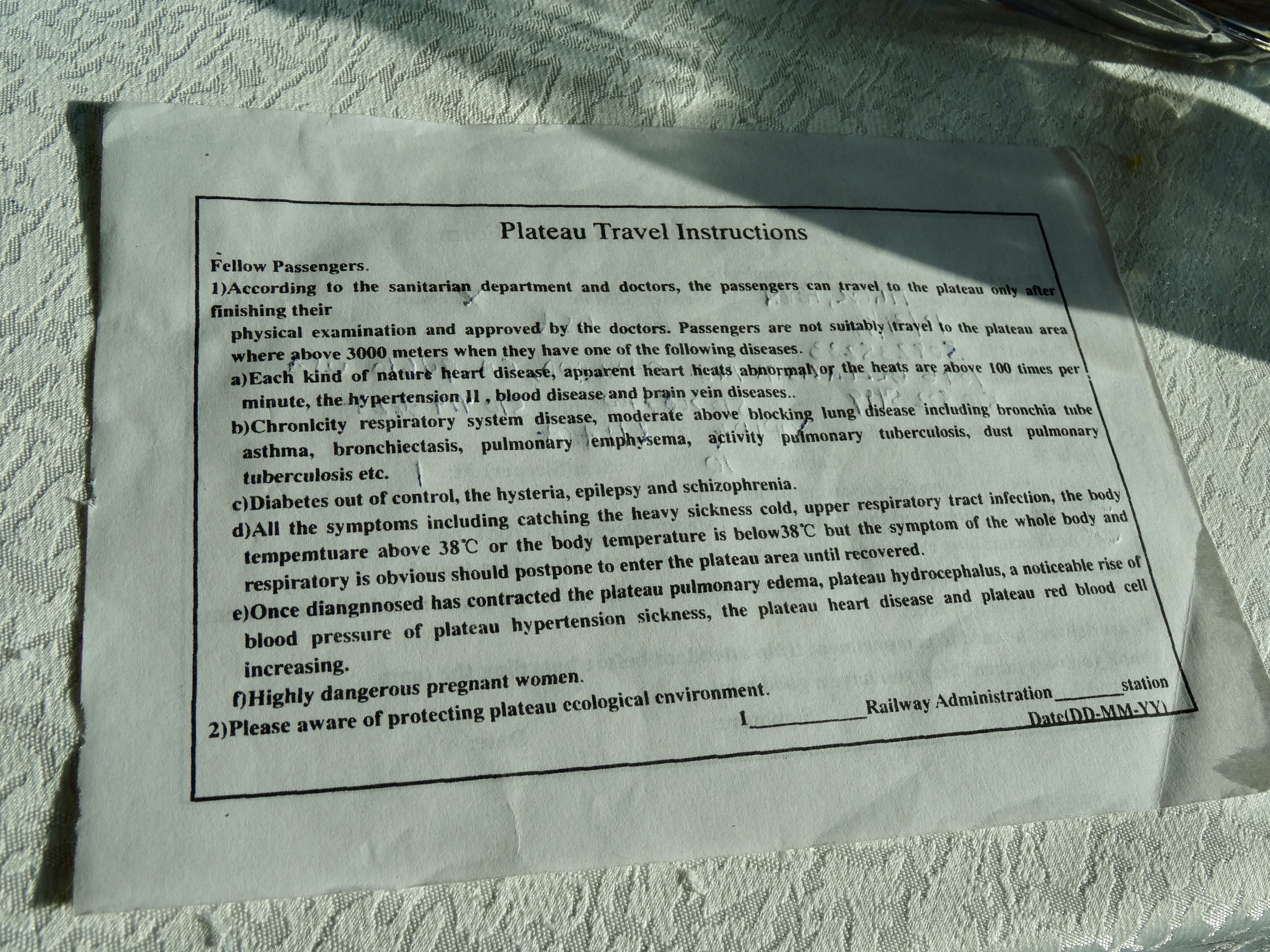
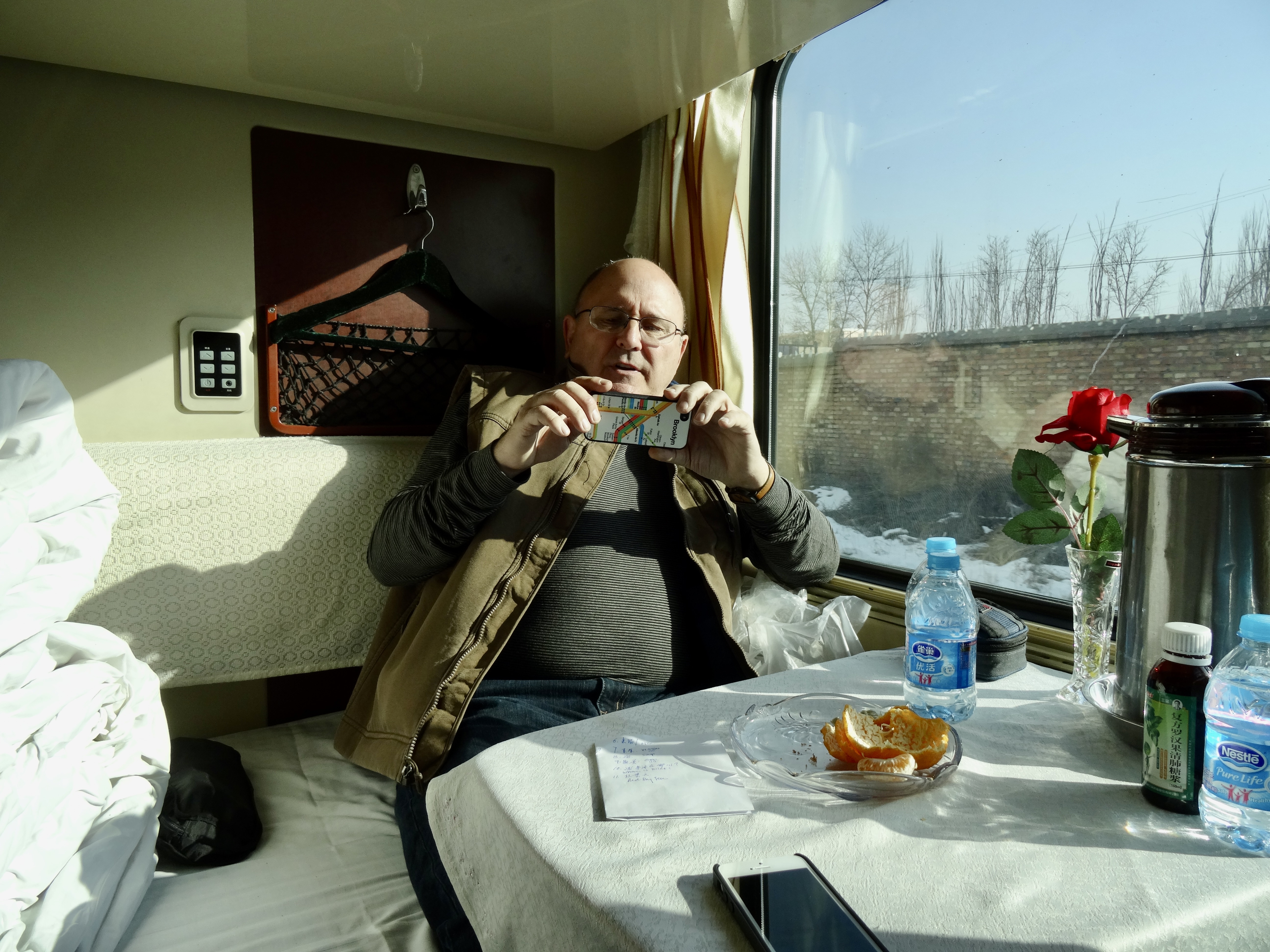
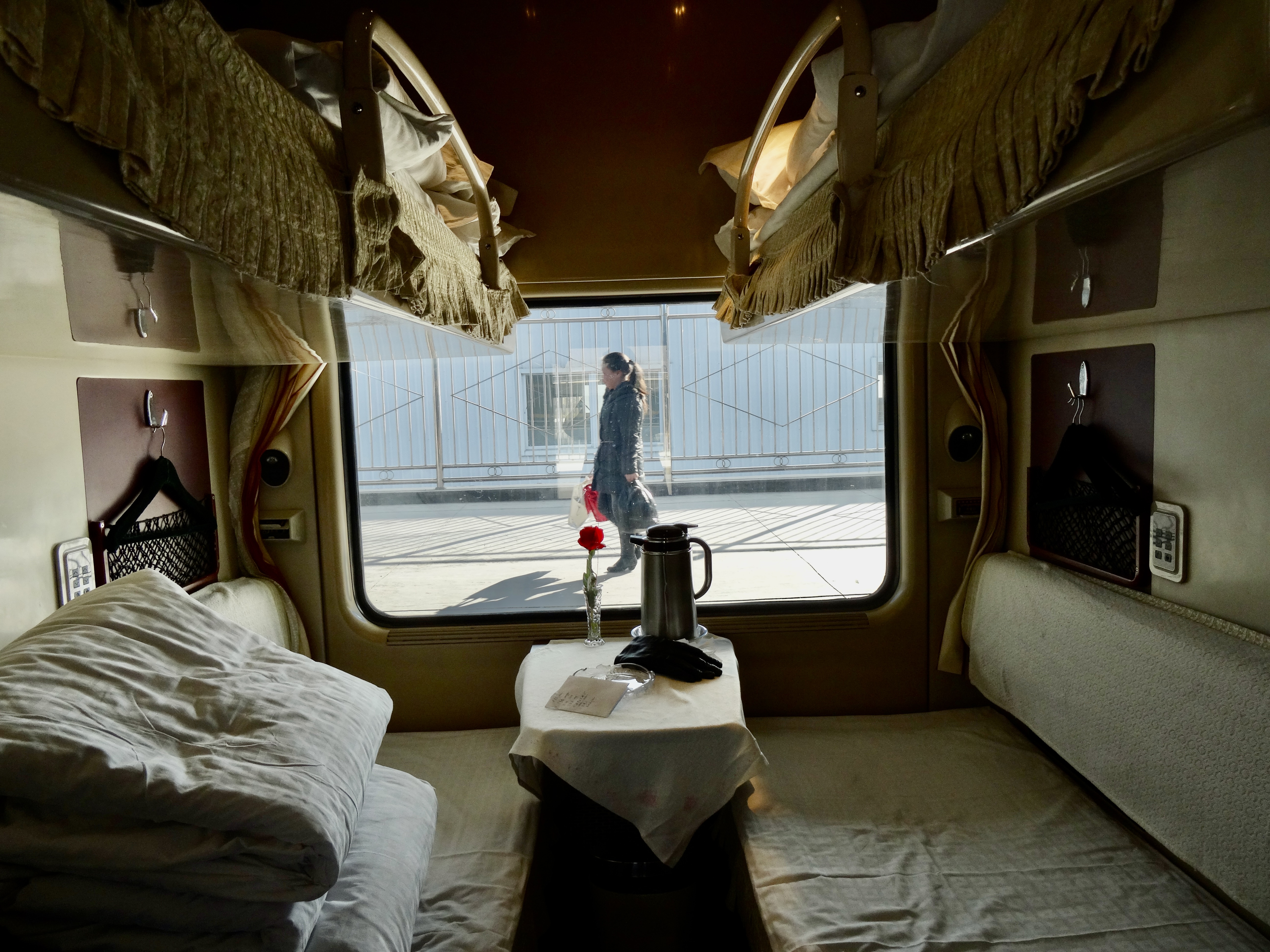
The system is a little strange. We got four tickets (one for each bed) although they only “checked” two of them because they count people not beds, I think. But we held tightly to all four tickets in case someone tried to come into the cabin and use one of the beds. Then once we were in the cabin (as described above) a woman in uniform (actually a lot of people in uniform on the train) came by with a leather book with slits and page She asked for the tickets and carefully placed the four tickets on one page in the slits and handed us plastic tickets sort of like credit cards. We didn’t really understand but in very few English words we think she said that at the end she gives us back the paper tickets and we give her the plastic ones. Seemed like a very unnecessary step, but a policing process. It was now about 3:30 pm.
Before Bem left, he wrote some useful phrases on a paper for us.. things like “I have a headache.” “Tea” “Rice” “chicken” “Where is the toilet?” etc. — many of which came in very useful. He also introduced us to Vong who is a waitress in the dining car. She said we should come for dinner at 7:00, which we did. Dinner was unexciting as you’d imagine… we had a chicken and pepper dish, a pork and scallion dish, some simple soup, and rice, and beer. Napkins are really rare to find (as is toilet paper and paper towels in the washroom).. really glad we had lots of tissues and Purell! We actually had brought tangerines and some bread and some excellent jam that was given to us as a gift by the Temple Restaurant in Beijing.. so we had a little lunch snack before dinner which was a lifesaver.
They said dinner was from 6 – 8 and we came at 7. At 7:30, we were shooed out of the dining car. Don’t know why, but we obeyed and went to our little cabin, where we stayed until morning. Never really slept soundly, but did nap on and off. Beds were hard, pillows hard and quilts very very heavy. We had both also developed little tingling feelings in our fingers which we attributed to the altitude pills, but after some research think it might be from the altitude itself. My cold continues but it’s less extreme… cough nearly gone; now just a little stuffed up and intermittent laryngitis. And Mike has a headache.
We went to the dining car for lunch; same menu as dinner. Finally, at about 2:30 pm the train pulled into Lhasa. Then getting from the train through the station to meet the new guy who would drive us to the hotel.. That was another story. We joined the mobs of people converging into some narrow doorways (everyone Tibetan and Chinese — and lots of people staring at us, especially the Tibetan kids who seemed totally fascinated by us — how we looked and what we were wearing).
As we approached the doorway with our Tibetan Travel Permit and US Passport in hand (and the little train ticket), the guard motioned for us to step aside and he took the travel permit from us. No one seemed to care about the train ticket. And they left us holding our passports which we were happy about. They pulled over other people as well, but we couldn’t figure out the logic. Some were Tibetans, some were foreigners from other parts of China.. and us. Then a woman who walked really really fast took all those papers and motioned for everyone to follow her into a little shed which we did. When we got inside (luggage and all) everyone was going into a second room, but they told us to wait in a different room which had a few chairs. After a few minutes they motioned for us to leave and gave us the papers. who knows!
Anyway, once we were about 100 meters from the station we found Pemba (the guy who will show us around each morning). Since Tibet requires non-Chinese and non-Tibetan visitors to have a guide, we had little choice but to oblige. However we requested to be left alone in the afternoons. We told the officials we needed to take a nap in the afternoon. We are required to have a guide and a list of places where we will go, so doing this every morning with Pemba will satisfy that. Our paperwork says that the afternoons we will nap and take walk leisurely by ourselves. That will give us time to explore on our own and to find places for dinner on our own.
Pemba and Tashi the driver took us to the hotel. We had planned to stay at Shambhala — a little 9-room place that seemed very funky and cute. But it, like all the small hotels in Lhasa, was closed for the season because there are too few tourists. So we booked ourselves into the Lhasa St. Regis! Initially, we were disappointed to have to stay in both a fancy and non-locally-owned place. But it turned out to be the perfect decision.
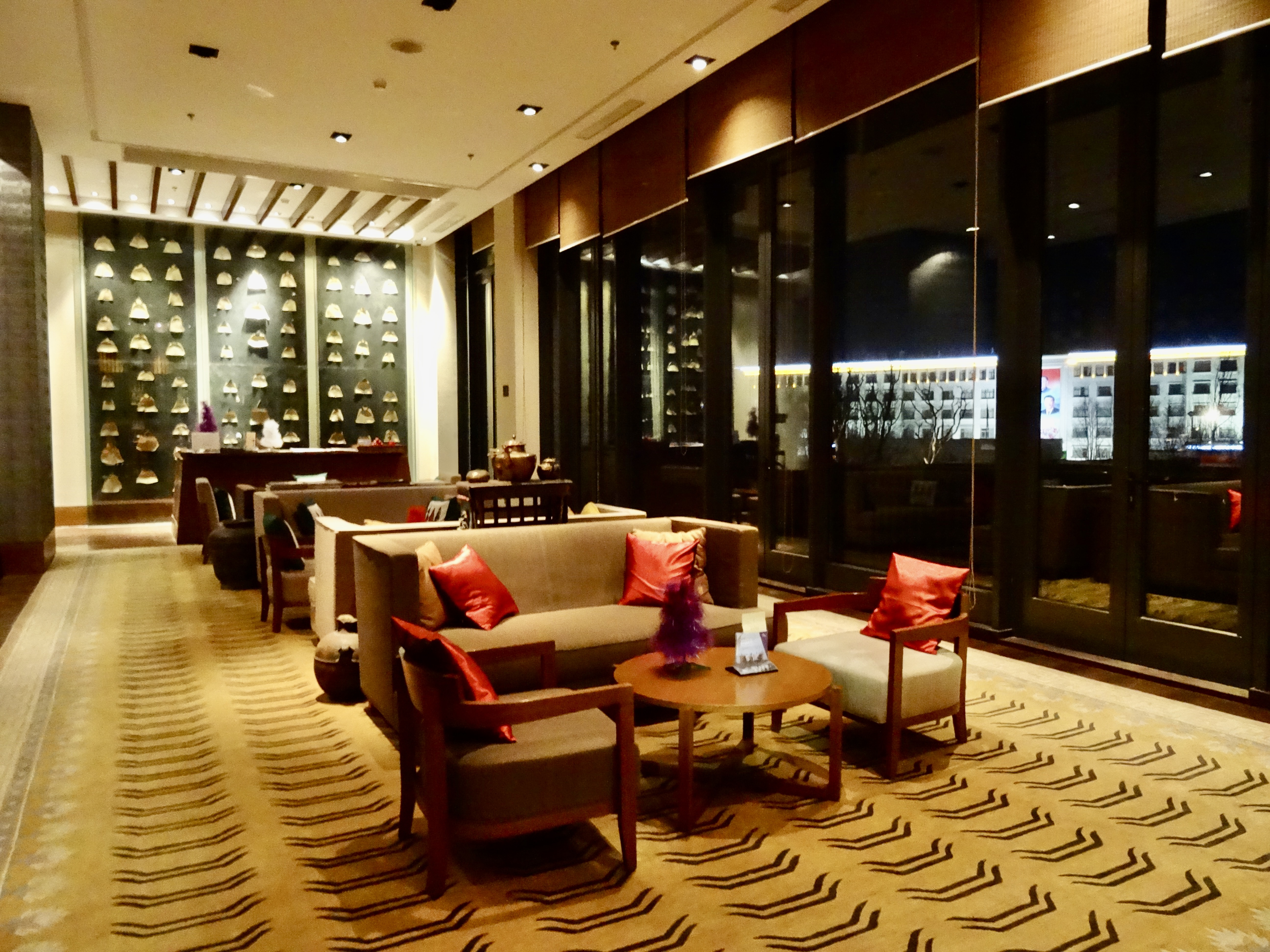
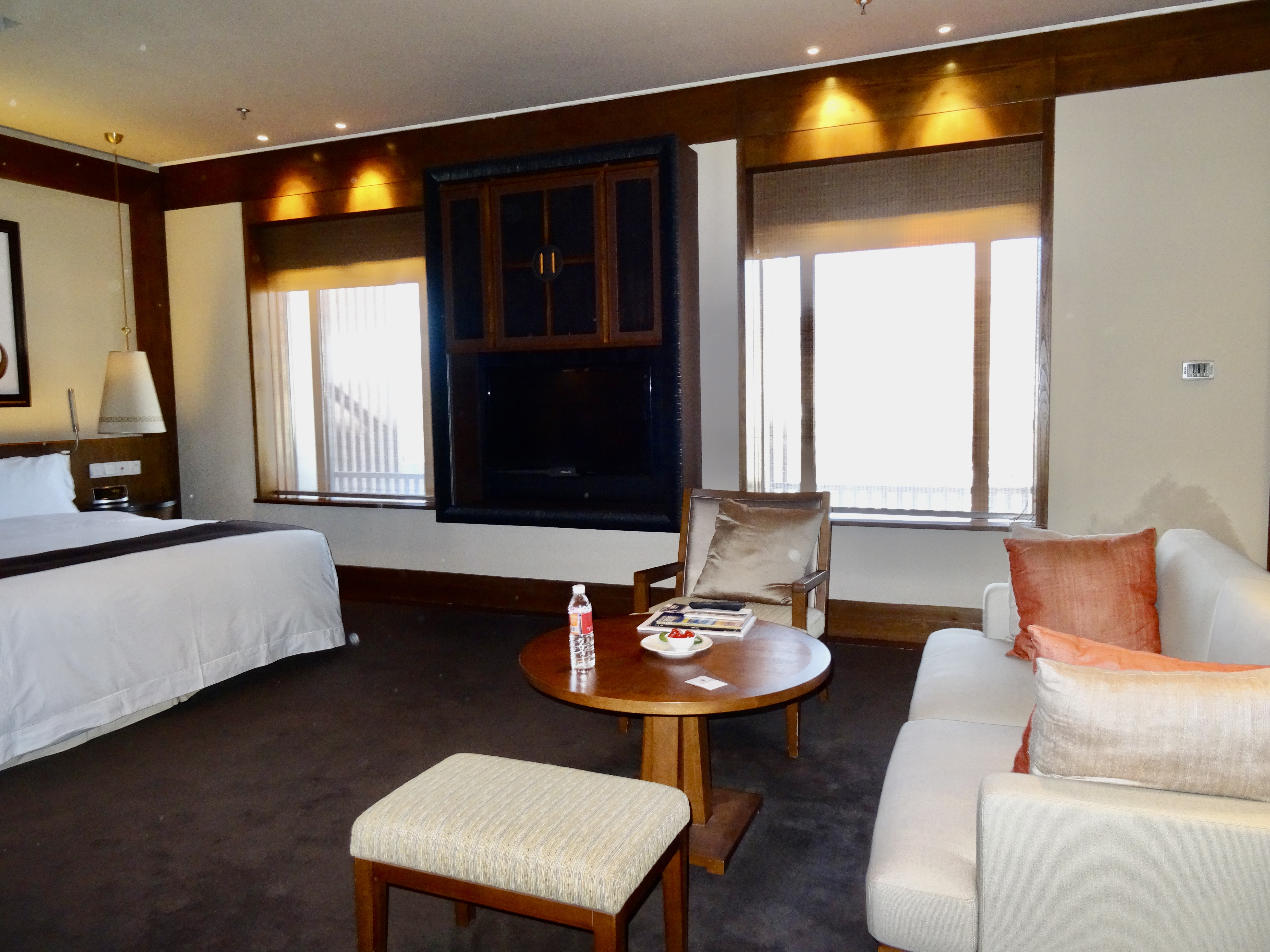
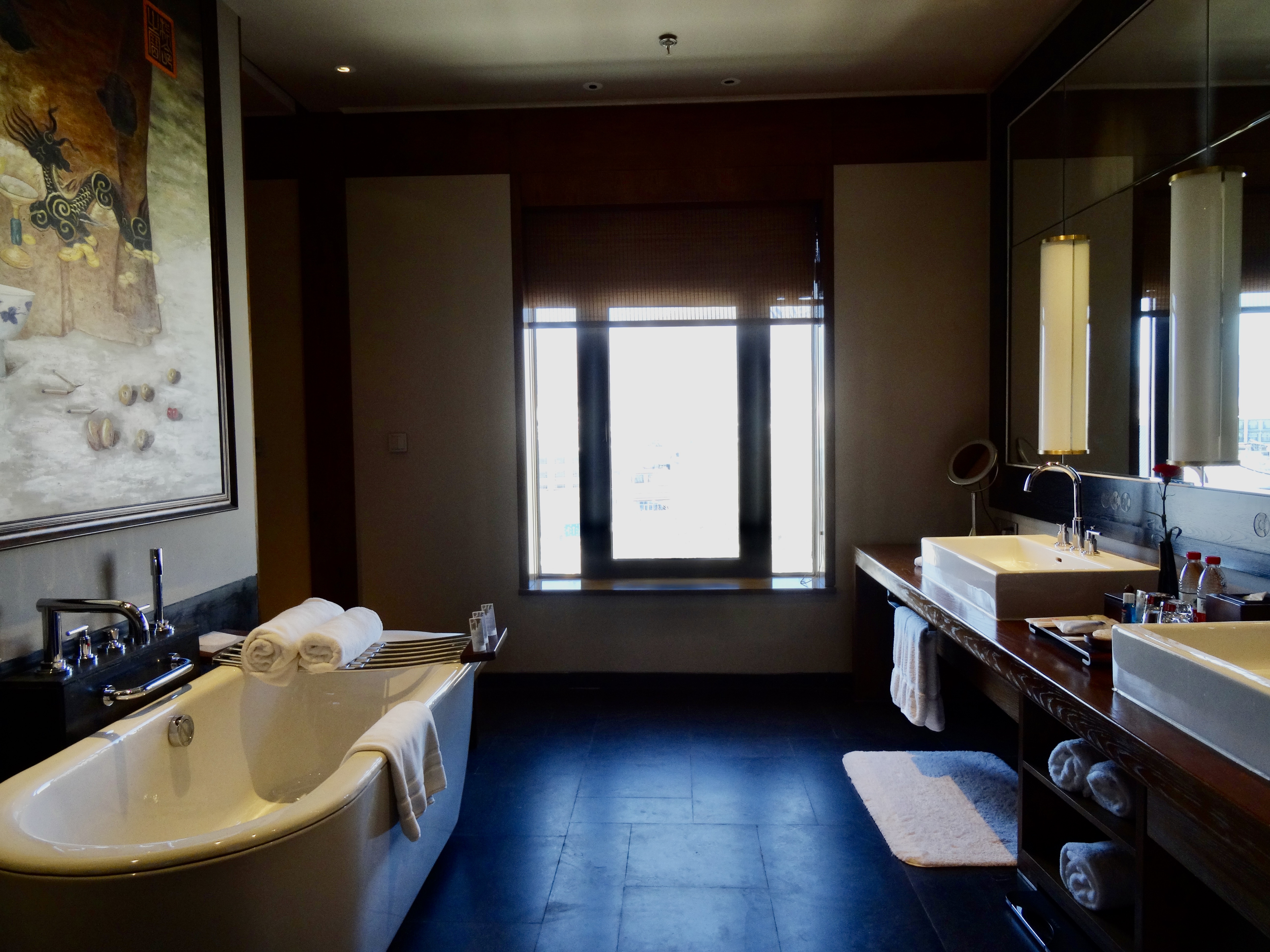
And here we are in a suite (they upgraded us because of my Starwood status and probably because the hotel is empty.) Our room overlooks the Portola Palace.. It’s about 1,200 sq. ft. which is about 20x as large as our train cabin… the bathroom suite alone is about 300 sq. ft.. Mike says he can house a family of about six in this room.
We are resting and then will take a walk and have dinner. But first, relaxing shower and much needed shampoo.
Fern
December 22 from Beijing to Xining
Nǐ hǎo. Sunday, December 22, 2013
Hope you are all enjoying the last weekend before Santa visits.
Christmas has definitely come to China — I suppose they realized how lucrative a deal it is … and the Chinese are real shoppers!
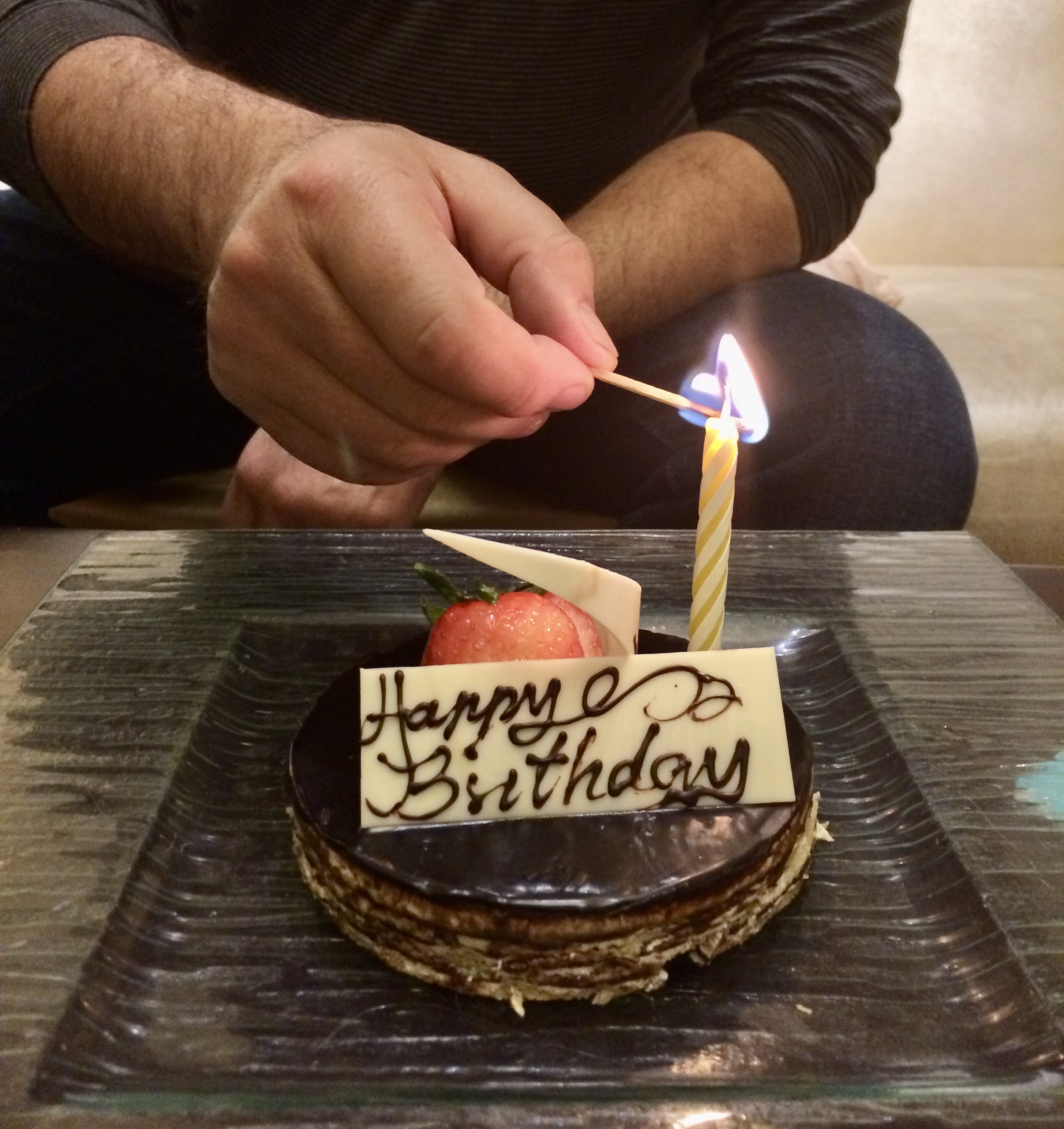
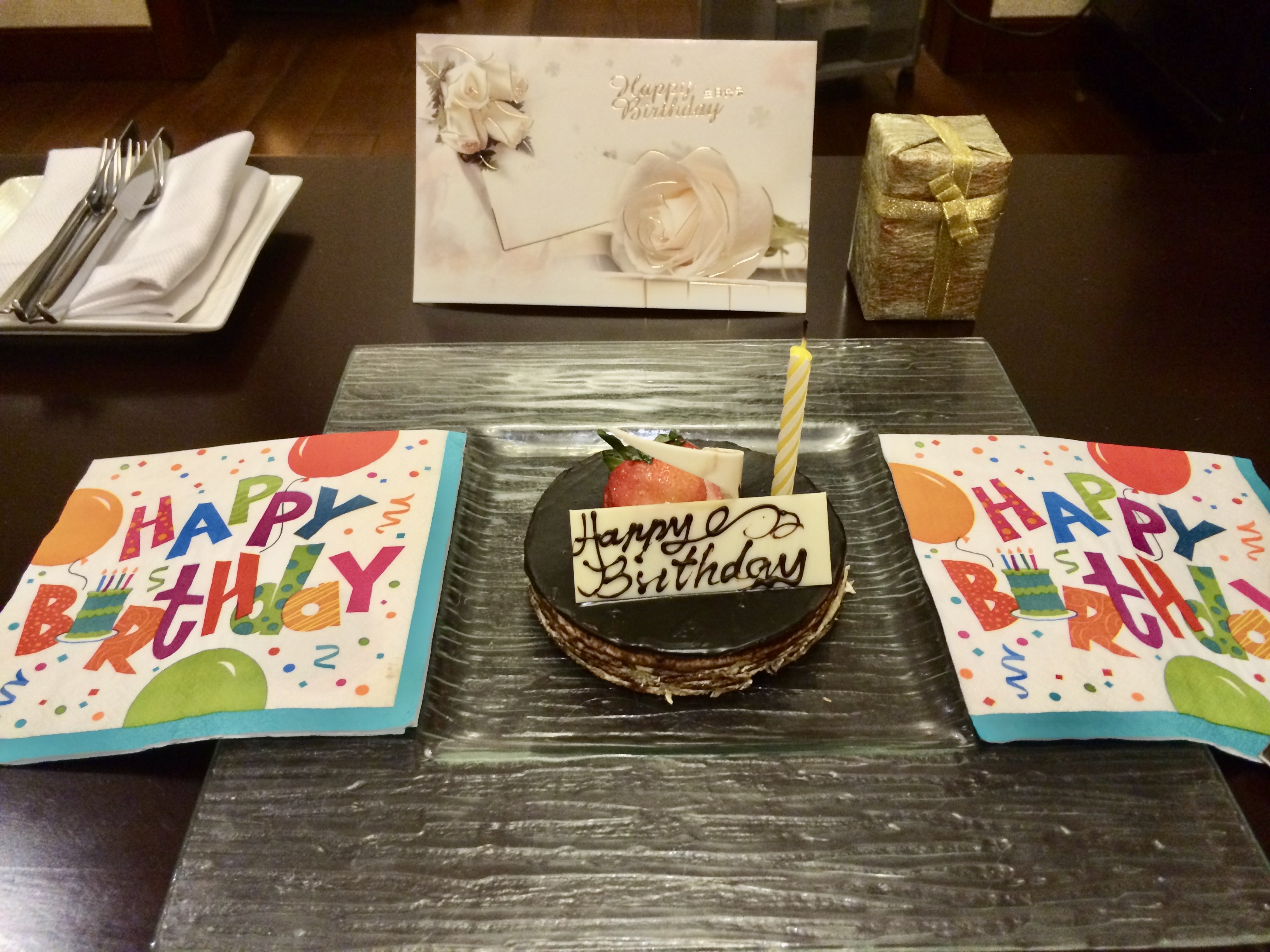
Last night we went to Duck de Chine for Mike’s birthday, but I think we were still so full from that incredible lunch at Temple Restaurant that we could barely finish one order of duck (shared by the two of us)… with some veggies on the side. We also had some soup which frankly would have been sufficient and hit the spot. But, they do make a big ceremony out of serving the duck which was interesting. They bang a gong whenever someone orders duck and as it is brought to your table and is then carved by what appeared to be a “duck artist.” We had a little problem finding a taxi after dinner as it seems as if all of Beijing is out and about on Saturday nights. So we sat for a while in the restaurant, staying warm, as they scrambled to get us a cab. All was well in about 15 minutes and we got back to the hotel… to find a small cake and candle in the room (a totally wonderful and beautifully done chocolate layered cake inscribed for Mike’s birthday), along with a card signed by several staff (!) and a little gift. I guess they noticed Mike’s birth date on his passport when we checked in.
So Raffle’s is a totally classy joint! Sage — one of the staff on the concierge floor who seemed to take a liking to us got this all organized and actually had been hoping for us to stop in the lounge before heading to dinner so that he could present it to us.
This morning (Sunday, December 22) we had a really early wakeup call and headed to the airport at around 8 am to catch our China Eastern Airlines flight to Xining — to begin our real journey. All airports are a real hassle.. and it’s always more complicated without the language and understanding the different security processes. So, here you go through a “customs-like” process before you get to security even though we were on a domestic flight.. and they actually photograph you at that point. (We probably do the same thing somewhere in our process but with hidden cameras!) But, we made it to the gate. They seem to “wand” everyone and also sent my carry-on bag back through the machine at least twice because it had so many electrical contraptions. They make you take out all cameras as well as computers and phones, etc… The lines are very long.. longer than we are accustomed to at US airports, and it seemed as if no one really knew what they needed to take out and what to take off.
Boarded the plane fairly easily and made it to Xining on time. Chinese planes (like the rest of the world except the U.S.) serve food on even short flights. So we had the usual rice and chicken, plus cake and cookies.. on the two-hour flight… very efficiently served and collected. When the plane landed passengers got out of their seats and opened the overhead bins well before the plane had stopped… which is what we had experienced in India on an earlier trip.

Taxied to the Sanwant Hotel in “downtown Xining.” Pollution was really bad today, combined with a low level haze making everything look pretty awful. It’s also colder than it was in Beijing. Xining has 1.2 million people — a mere village — and is at about 7,500 feet. It’s pronounced something like Shenen…
Xining appears to be a fairly bland city with buildings everywhere and overpasses to get across streets and little or no planning. Because of its location, the city boasts a good deal of diversity and a quick walk on the street reveals Muslims as well as Tibetans. For those of you who have followed these daily reports of our travels for years.. Xining is a hell of a lot better than Yong Ding (where we based ourselves in rural southern China a few years ago to see the toulans), but it’s pretty bland and certainly lacking the vibe of either Beijing or Shanghai or Xian and many other cities across China. That said, people are all well dressed, fashionable, and very busy shopping!
The Sanwant (or Sanwang — we’ve seen it spelled both ways in English) Hotel is pretty much what you’d expect — worn, tired, and probably not so great even in its heyday. But we have heat so it is a step up from some places we’ve stayed in while traveling in Asia. The staff tries really hard and I’m sure we are a real stretch because of the language issues. We asked about good places for dinner but that conversation didn’t really go anywhere… so we’ll hope for the best later tonight. Our room is on the 15th floor and we are serenaded constantly with honking horns and other street noises.. Good thing we are genuinely urban people.
Xining was never intended to be a real stop for us but in order to catch the train to Lhasa Tibet tomorrow we had to get here and were afraid to try to fly and go straight to the train station for fear that the plane might be late. So it’s all good. We packed pretty efficiently last night as we were leaving Beijing.. and I’m hoping that we don’t have to open our bags at all tonight or in the morning so that we are ready to go.
I may have mentioned in a previous note that I have a bit of laryngitis and a hacking cough that I’m trying to cure before getting to Tibet — thus far without success. I did get cough syrup in Beijing and just now went to a pharmacy here for more. It’s quite a scene — me going into the pharmacy without any Chinese and no one in the pharmacy speaking English.. So I pantomimed…did a great “cough performance” and they immediately showered me with options — mostly pills. So then I mimed drinking and out came the syrup. I also wanted some nasal spray so that was like Act Two for me.. And then “aspirin” which is clearly a universal word. Mike decided to get some lozenges and we mimed that .. so we are set. All of that came to about $6 !!
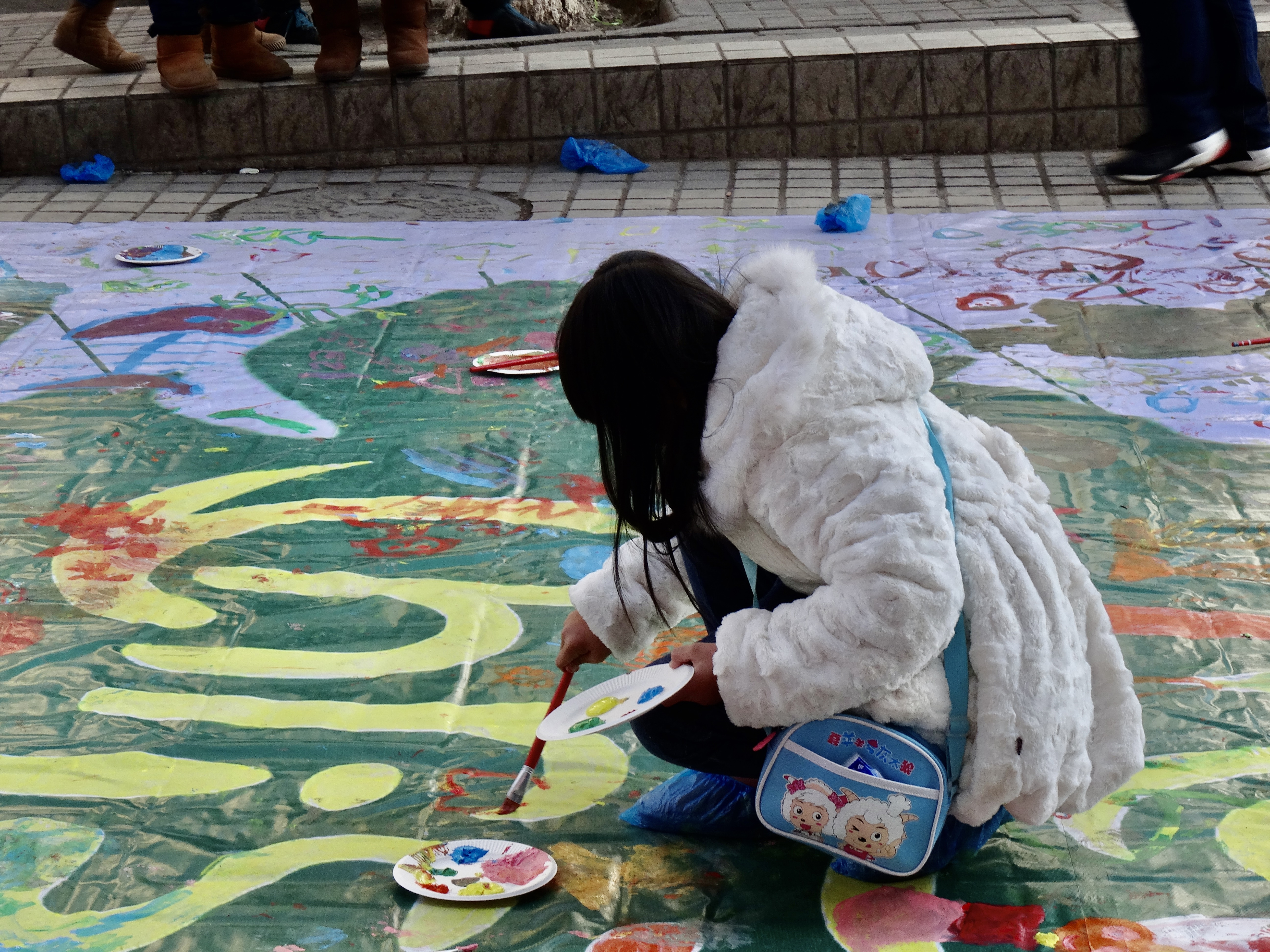
Walked around a bit; stumbled on a street painting activity for kids with lots of parents and children..
Made contact with the guy who is supposed to meet us in the lobby of the hotel tomorrow to give us our Tibet Travel Permit papers as well as our train tickets and airline information from Lhasa to Kathmandu. We’re hoping for the best on that one. It was funny. He said that maybe he should have a sign with our name tomorrow so he’ll find us in the lobby. I said the hotel didn’t seem crowded and I was sure he would spot us.. What I wanted to say was that I’m pretty sure we are the only two non-Asian people in the entire city!
After a short respite from the cold, pollution, and overall cacophony of noise, blinking lights, uneven sidewalks, and traffic — we headed out to dinner. Naturally we didn’t want to eat at the hotel (so wimpy and also looked terrible). Went online to see if there were any recommendations and all suggestions pointed to a Muslim restaurant (where we probably should have gone), but I really wanted to have a glass of wine or a beer with dinner and that eliminated the Muslim place. So we asked at the front desk. After a lot of discussion (among staff) and very very very little English (from just one person) they wrote the name down (in Chinese — we always need to have all destinations written in Chinese so that the taxi drivers can know where to go; we always need to have a card from the hotel with the name in Chinese so that we can get back). They said it was a Chinese restaurant about 10 minutes away.
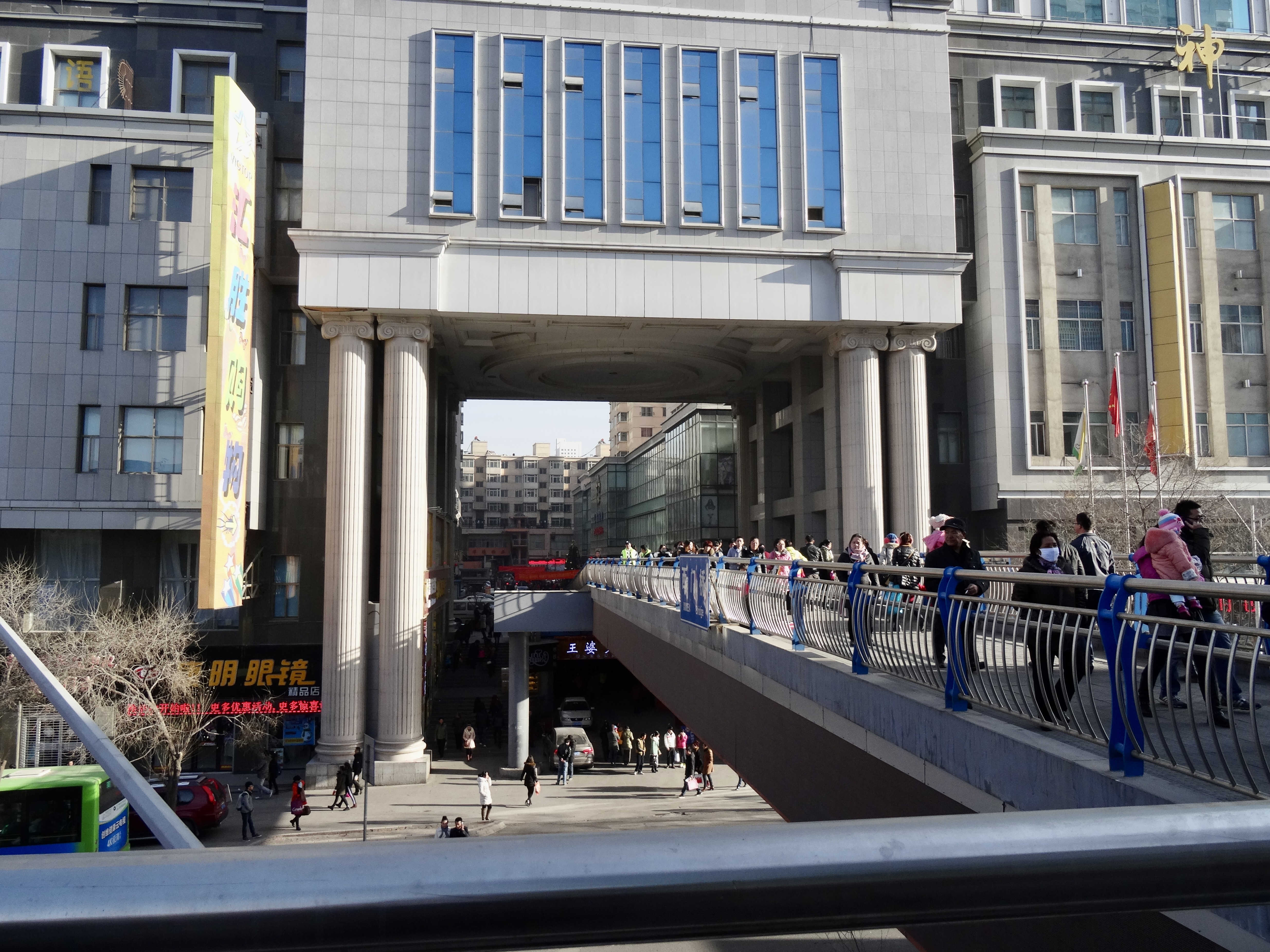
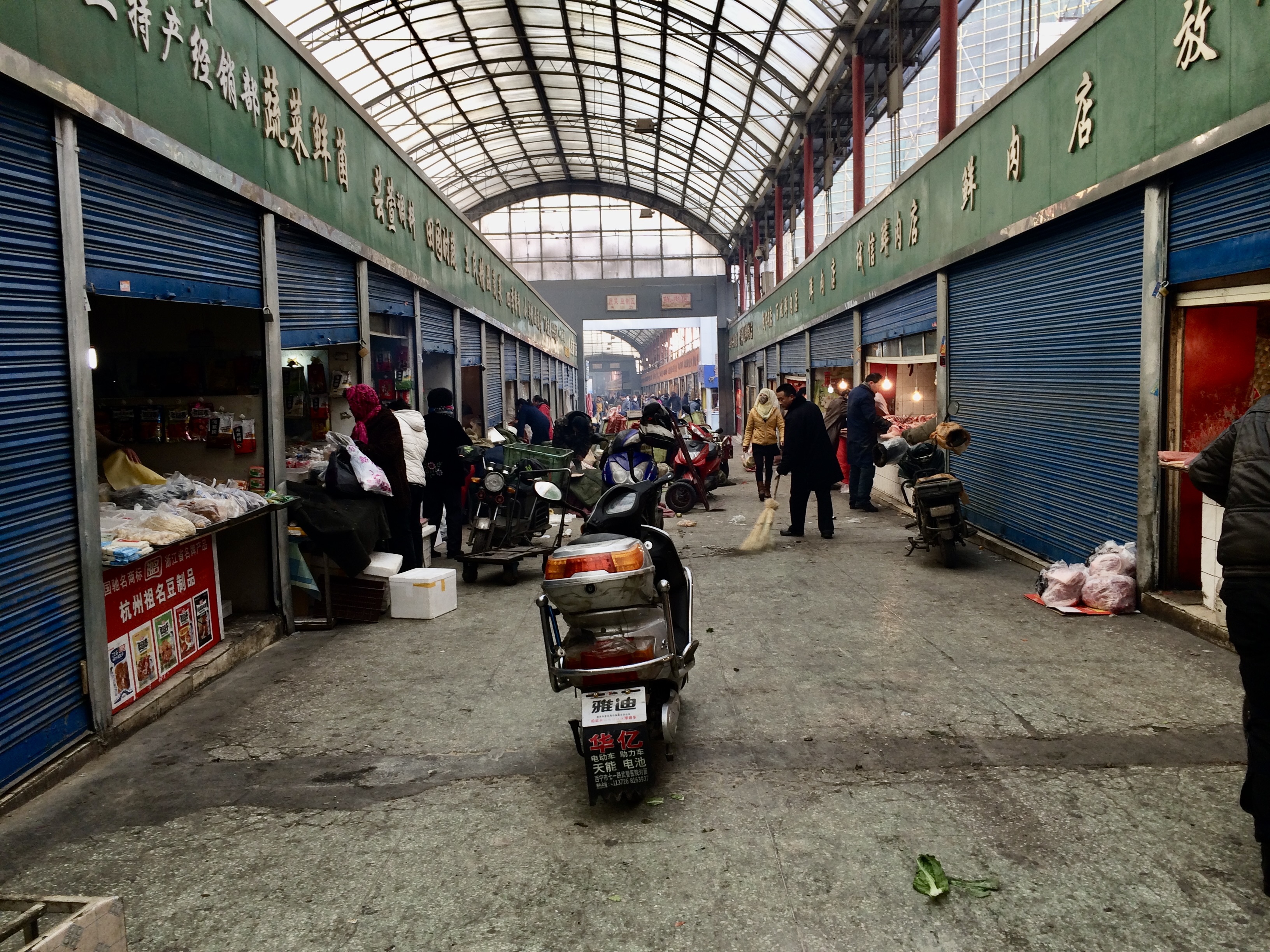
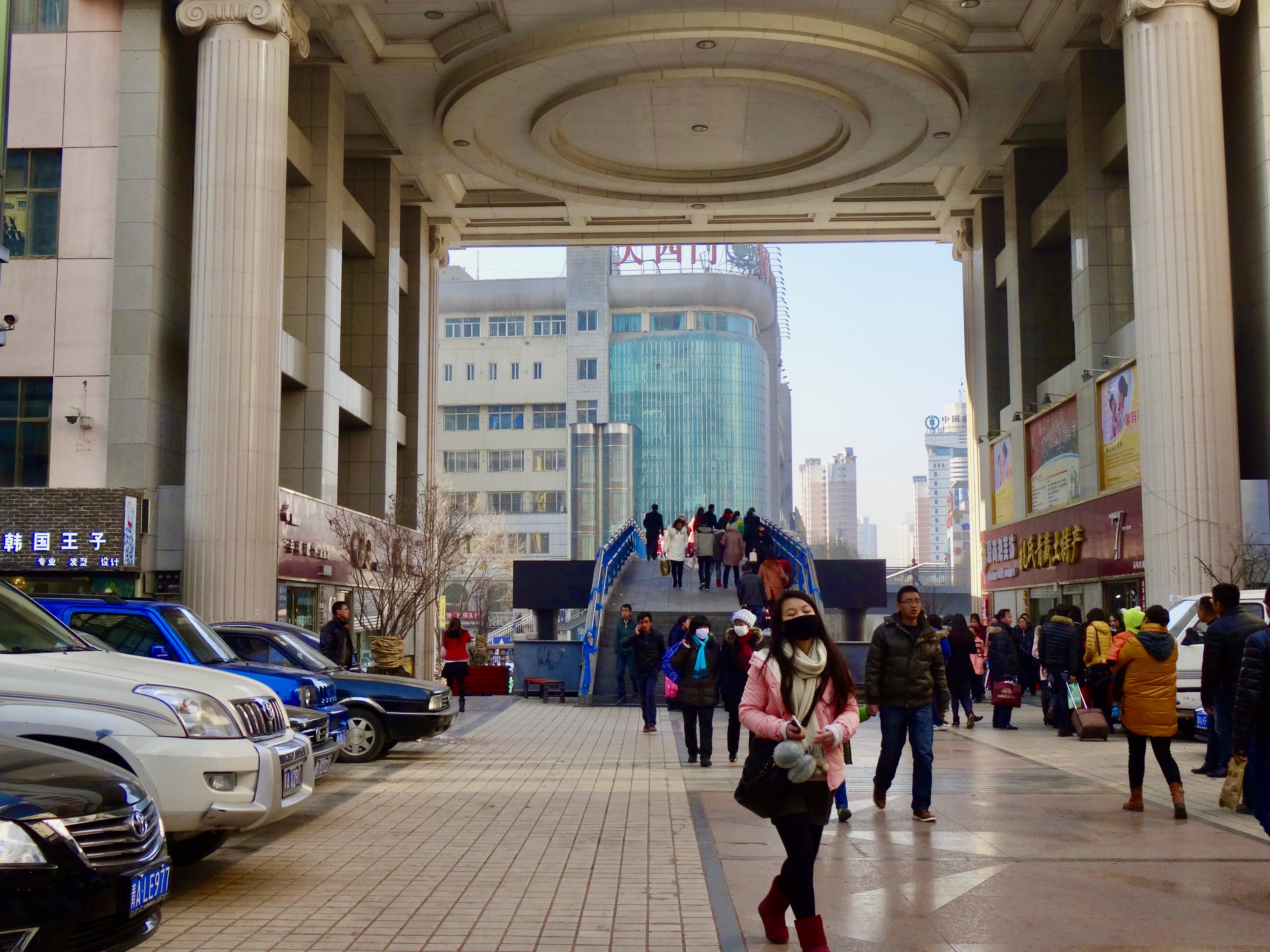
So off we went, after the hotel found us a taxi. It’s a little hard to describe, but the hotel is basically on a service-like road adjacent to a very very major street that is on an incline. Anyway the taxi somehow appeared and backed up onto the service road and off we went. He drove for about 15 minutes and it was clear he didn’t know where he was going. Unfortunately we were of no help as we didn’t even know the name of the restaurant as it was only written in Chinese. Then he seemed to talk to someone on his cell and double backed such that we basically passed the hotel and kept going.. Then he was on the cell again and we reversed course. Had we been able to talk with him, we probably would have said to just take us back to the hotel. But that was no longer an option. At one point he seemed to think he found the restaurant but we were driving on the elevated street (sort of like a viaduct) and he stopped on the highway to point out the restaurant to us, but didn’t know how to get there. He finally took an exit and another road that paralleled the major road and pulled into a parking area in front of a series of very large, very ugly, buildings. He motioned that “this was the place.” A bit unsure, but at that point ready to eat anywhere — and realizing that we were in for bright lights, bad food, and a big space — we entered the building. Two women were at a reception desk, but no English. We showed them the name of the restaurant in Chinese and they chatted with one another but never confirmed we were in the right place. At this point we weren’t even sure it was a restaurant. As we were trying to determine what to do a family appeared to be leaving the building and the woman spoke a little English.
She asked the problem and then started yelling at the reception people and told us to follow her. We went up a non-working escalator (!) and there was the big, ugly, brightly lit restaurant. She yelled again at some people and we sat down. She asked us about drinks and then seemed to yell to people to bring us some beers. Then off she went and we were left to order. Fortunately the menu was all pictures but it was really difficult to understand what was what. Using Google Translator I typed “chicken” and the waitress pointed to one of the pictures; I typed eggplant and she pointed to another picture– etc. Eventually we selected three things — pork, chicken, beef. Somehow the veggie options didn’t work. The food came a little chaotically.. and they were huge portions — a far cry from all of our other wonderful meals in Beijing.
So, dinner matched the expectations … terrible. Then it came time to leave and find a taxi. One of the women at the reception desk walked out ahead of us and we followed. She (and with us in tow) walked to a break in the fence that separates the parking area from the highway, down a little dirt slope, and onto the edge of the three lane road. Within minutes a taxi was there (stopping all traffic behind him) and we were off to the hotel. The trip back to the hotel took about three minutes (as compared with the drive from the hotel to the restaurant which took about 30 minutes).
OK.. tomorrow it’s the 28-hour train to Lhasa.. and the big climb to 16,000 feet.
Best to everyone.
Fern
 Fern's Travel Notes